window.__IS_SSR__=true
window.__INITIAL_STATE__={
"attachmentsReducer": {
"audio_0": {
"type": "attachments",
"id": "audio_0",
"imgSizes": {
"kqedFullSize": {
"file": "https://ww2.kqed.org/news/wp-content/themes/KQED-unified/img/audio_bgs/background0.jpg"
}
}
},
"audio_1": {
"type": "attachments",
"id": "audio_1",
"imgSizes": {
"kqedFullSize": {
"file": "https://ww2.kqed.org/news/wp-content/themes/KQED-unified/img/audio_bgs/background1.jpg"
}
}
},
"audio_2": {
"type": "attachments",
"id": "audio_2",
"imgSizes": {
"kqedFullSize": {
"file": "https://ww2.kqed.org/news/wp-content/themes/KQED-unified/img/audio_bgs/background2.jpg"
}
}
},
"audio_3": {
"type": "attachments",
"id": "audio_3",
"imgSizes": {
"kqedFullSize": {
"file": "https://ww2.kqed.org/news/wp-content/themes/KQED-unified/img/audio_bgs/background3.jpg"
}
}
},
"audio_4": {
"type": "attachments",
"id": "audio_4",
"imgSizes": {
"kqedFullSize": {
"file": "https://ww2.kqed.org/news/wp-content/themes/KQED-unified/img/audio_bgs/background4.jpg"
}
}
},
"placeholder": {
"type": "attachments",
"id": "placeholder",
"imgSizes": {
"thumbnail": {
"file": "https://cdn.kqed.org/wp-content/uploads/2024/12/KQED-Default-Image-816638274-2000x1333-1-160x107.jpg",
"width": 160,
"height": 107,
"mimeType": "image/jpeg"
},
"medium": {
"file": "https://cdn.kqed.org/wp-content/uploads/2024/12/KQED-Default-Image-816638274-2000x1333-1-800x533.jpg",
"width": 800,
"height": 533,
"mimeType": "image/jpeg"
},
"medium_large": {
"file": "https://cdn.kqed.org/wp-content/uploads/2024/12/KQED-Default-Image-816638274-2000x1333-1-768x512.jpg",
"width": 768,
"height": 512,
"mimeType": "image/jpeg"
},
"large": {
"file": "https://cdn.kqed.org/wp-content/uploads/2024/12/KQED-Default-Image-816638274-2000x1333-1-1020x680.jpg",
"width": 1020,
"height": 680,
"mimeType": "image/jpeg"
},
"1536x1536": {
"file": "https://cdn.kqed.org/wp-content/uploads/2024/12/KQED-Default-Image-816638274-2000x1333-1-1536x1024.jpg",
"width": 1536,
"height": 1024,
"mimeType": "image/jpeg"
},
"fd-lrg": {
"file": "https://cdn.kqed.org/wp-content/uploads/2024/12/KQED-Default-Image-816638274-2000x1333-1-1536x1024.jpg",
"width": 1536,
"height": 1024,
"mimeType": "image/jpeg"
},
"fd-med": {
"file": "https://cdn.kqed.org/wp-content/uploads/2024/12/KQED-Default-Image-816638274-2000x1333-1-1020x680.jpg",
"width": 1020,
"height": 680,
"mimeType": "image/jpeg"
},
"fd-sm": {
"file": "https://cdn.kqed.org/wp-content/uploads/2024/12/KQED-Default-Image-816638274-2000x1333-1-800x533.jpg",
"width": 800,
"height": 533,
"mimeType": "image/jpeg"
},
"post-thumbnail": {
"file": "https://cdn.kqed.org/wp-content/uploads/2024/12/KQED-Default-Image-816638274-2000x1333-1-672x372.jpg",
"width": 672,
"height": 372,
"mimeType": "image/jpeg"
},
"twentyfourteen-full-width": {
"file": "https://cdn.kqed.org/wp-content/uploads/2024/12/KQED-Default-Image-816638274-2000x1333-1-1038x576.jpg",
"width": 1038,
"height": 576,
"mimeType": "image/jpeg"
},
"xxsmall": {
"file": "https://cdn.kqed.org/wp-content/uploads/2024/12/KQED-Default-Image-816638274-2000x1333-1-160x107.jpg",
"width": 160,
"height": 107,
"mimeType": "image/jpeg"
},
"xsmall": {
"file": "https://cdn.kqed.org/wp-content/uploads/2024/12/KQED-Default-Image-816638274-2000x1333-1-672x372.jpg",
"width": 672,
"height": 372,
"mimeType": "image/jpeg"
},
"small": {
"file": "https://cdn.kqed.org/wp-content/uploads/2024/12/KQED-Default-Image-816638274-2000x1333-1-672x372.jpg",
"width": 672,
"height": 372,
"mimeType": "image/jpeg"
},
"xlarge": {
"file": "https://cdn.kqed.org/wp-content/uploads/2024/12/KQED-Default-Image-816638274-2000x1333-1-1020x680.jpg",
"width": 1020,
"height": 680,
"mimeType": "image/jpeg"
},
"full-width": {
"file": "https://cdn.kqed.org/wp-content/uploads/2024/12/KQED-Default-Image-816638274-2000x1333-1-1920x1280.jpg",
"width": 1920,
"height": 1280,
"mimeType": "image/jpeg"
},
"guest-author-32": {
"file": "https://cdn.kqed.org/wp-content/uploads/2025/01/KQED-Default-Image-816638274-1333x1333-1-160x160.jpg",
"width": 32,
"height": 32,
"mimeType": "image/jpeg"
},
"guest-author-50": {
"file": "https://cdn.kqed.org/wp-content/uploads/2025/01/KQED-Default-Image-816638274-1333x1333-1-160x160.jpg",
"width": 50,
"height": 50,
"mimeType": "image/jpeg"
},
"guest-author-64": {
"file": "https://cdn.kqed.org/wp-content/uploads/2025/01/KQED-Default-Image-816638274-1333x1333-1-160x160.jpg",
"width": 64,
"height": 64,
"mimeType": "image/jpeg"
},
"guest-author-96": {
"file": "https://cdn.kqed.org/wp-content/uploads/2025/01/KQED-Default-Image-816638274-1333x1333-1-160x160.jpg",
"width": 96,
"height": 96,
"mimeType": "image/jpeg"
},
"guest-author-128": {
"file": "https://cdn.kqed.org/wp-content/uploads/2025/01/KQED-Default-Image-816638274-1333x1333-1-160x160.jpg",
"width": 128,
"height": 128,
"mimeType": "image/jpeg"
},
"detail": {
"file": "https://cdn.kqed.org/wp-content/uploads/2025/01/KQED-Default-Image-816638274-1333x1333-1-160x160.jpg",
"width": 160,
"height": 160,
"mimeType": "image/jpeg"
},
"kqedFullSize": {
"file": "https://cdn.kqed.org/wp-content/uploads/2024/12/KQED-Default-Image-816638274-2000x1333-1.jpg",
"width": 2000,
"height": 1333
}
}
},
"news_11878189": {
"type": "attachments",
"id": "news_11878189",
"meta": {
"index": "attachments_1716263798",
"site": "news",
"id": "11878189",
"found": true
},
"parent": 11877801,
"imgSizes": {
"twentyfourteen-full-width": {
"file": "https://ww2.kqed.org/app/uploads/sites/10/2021/06/1997-300-1119-1038x576.jpg",
"width": 1038,
"mimeType": "image/jpeg",
"height": 576
},
"thumbnail": {
"file": "https://ww2.kqed.org/app/uploads/sites/10/2021/06/1997-300-1119-160x124.jpg",
"width": 160,
"mimeType": "image/jpeg",
"height": 124
},
"post-thumbnail": {
"file": "https://ww2.kqed.org/app/uploads/sites/10/2021/06/1997-300-1119-672x372.jpg",
"width": 672,
"mimeType": "image/jpeg",
"height": 372
},
"kqedFullSize": {
"file": "https://ww2.kqed.org/app/uploads/sites/10/2021/06/1997-300-1119-scaled.jpg",
"width": 2560,
"height": 1987
},
"2048x2048": {
"file": "https://ww2.kqed.org/app/uploads/sites/10/2021/06/1997-300-1119-2048x1589.jpg",
"width": 2048,
"mimeType": "image/jpeg",
"height": 1589
},
"large": {
"file": "https://ww2.kqed.org/app/uploads/sites/10/2021/06/1997-300-1119-1020x792.jpg",
"width": 1020,
"mimeType": "image/jpeg",
"height": 792
},
"1536x1536": {
"file": "https://ww2.kqed.org/app/uploads/sites/10/2021/06/1997-300-1119-1536x1192.jpg",
"width": 1536,
"mimeType": "image/jpeg",
"height": 1192
},
"full-width": {
"file": "https://ww2.kqed.org/app/uploads/sites/10/2021/06/1997-300-1119-1920x1490.jpg",
"width": 1920,
"mimeType": "image/jpeg",
"height": 1490
},
"medium": {
"file": "https://ww2.kqed.org/app/uploads/sites/10/2021/06/1997-300-1119-800x621.jpg",
"width": 800,
"mimeType": "image/jpeg",
"height": 621
}
},
"publishDate": 1623807648,
"modified": 1623807713,
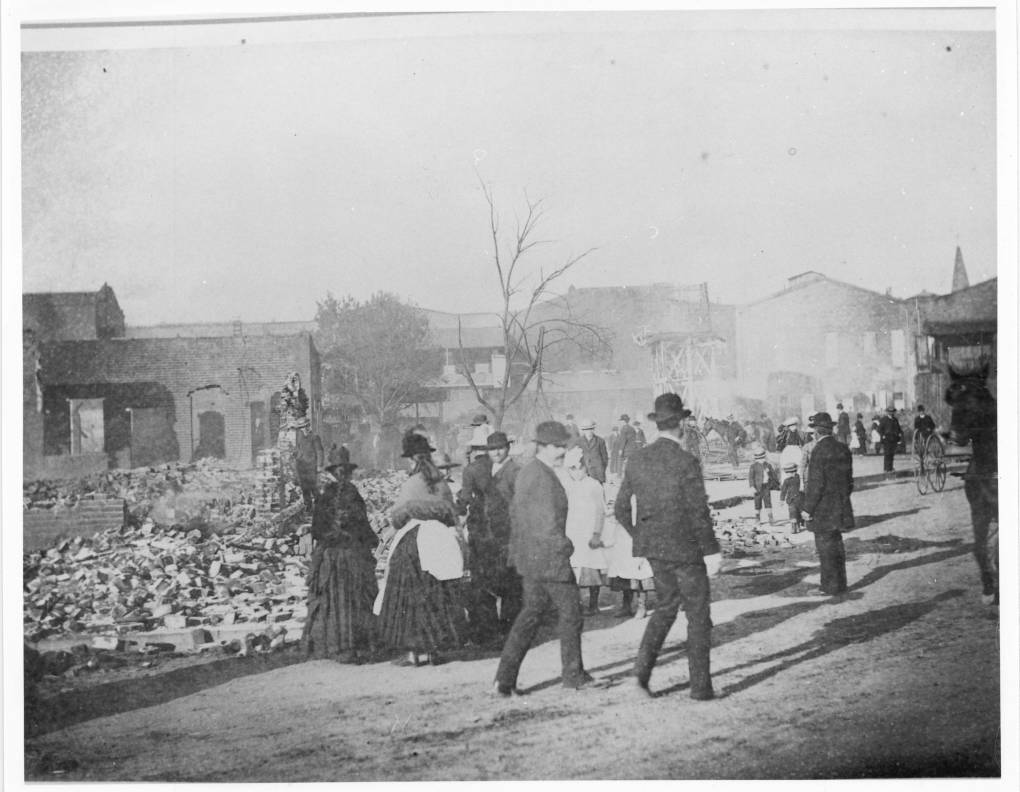
"caption": "Onlookers watch as a fire tears through the Second Market Street Chinatown. Most of the Chinatowns in San Jose were victims to arson.",
"description": null,
"title": "1997-300-1119",
"credit": "Courtesy of History San Jose",
"status": "inherit",
"altTag": null,
"isLoading": false,
"fetchFailed": false
},
"news_11875649": {
"type": "attachments",
"id": "news_11875649",
"meta": {
"index": "attachments_1716263798",
"site": "news",
"id": "11875649",
"found": true
},
"parent": 11875490,
"imgSizes": {
"twentyfourteen-full-width": {
"file": "https://ww2.kqed.org/app/uploads/sites/10/2021/05/GettyImages-1233126939-1024x576.jpg",
"width": 1024,
"mimeType": "image/jpeg",
"height": 576
},
"thumbnail": {
"file": "https://ww2.kqed.org/app/uploads/sites/10/2021/05/GettyImages-1233126939-160x107.jpg",
"width": 160,
"mimeType": "image/jpeg",
"height": 107
},
"post-thumbnail": {
"file": "https://ww2.kqed.org/app/uploads/sites/10/2021/05/GettyImages-1233126939-672x372.jpg",
"width": 672,
"mimeType": "image/jpeg",
"height": 372
},
"kqedFullSize": {
"file": "https://ww2.kqed.org/app/uploads/sites/10/2021/05/GettyImages-1233126939.jpg",
"width": 1024,
"height": 683
},
"large": {
"file": "https://ww2.kqed.org/app/uploads/sites/10/2021/05/GettyImages-1233126939-1020x680.jpg",
"width": 1020,
"mimeType": "image/jpeg",
"height": 680
},
"medium": {
"file": "https://ww2.kqed.org/app/uploads/sites/10/2021/05/GettyImages-1233126939-800x534.jpg",
"width": 800,
"mimeType": "image/jpeg",
"height": 534
}
},
"publishDate": 1622147140,
"modified": 1623458433,
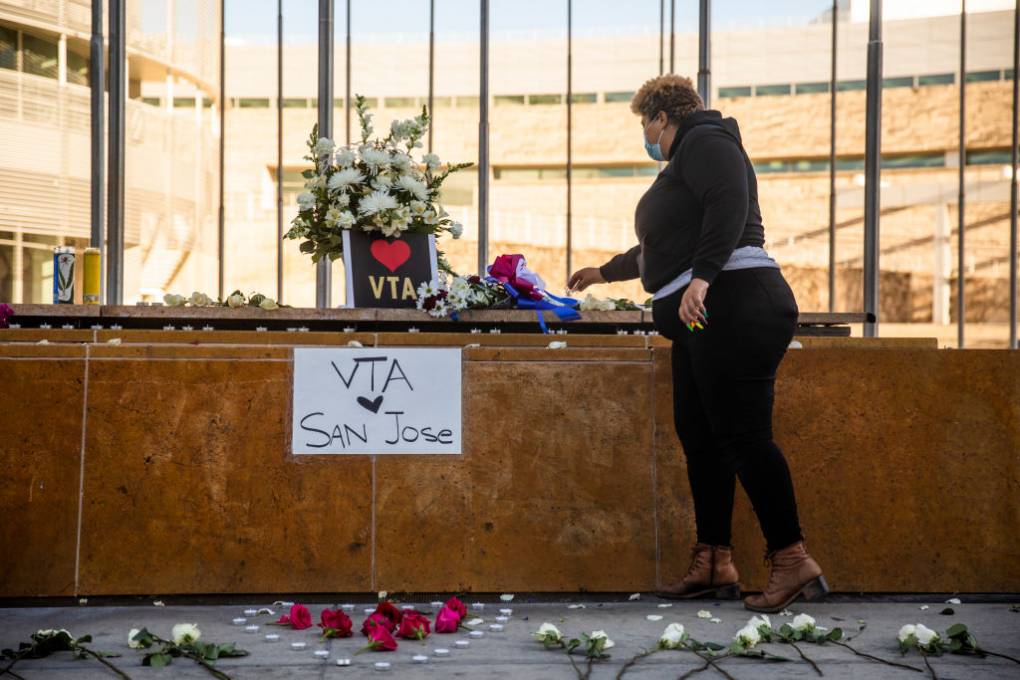
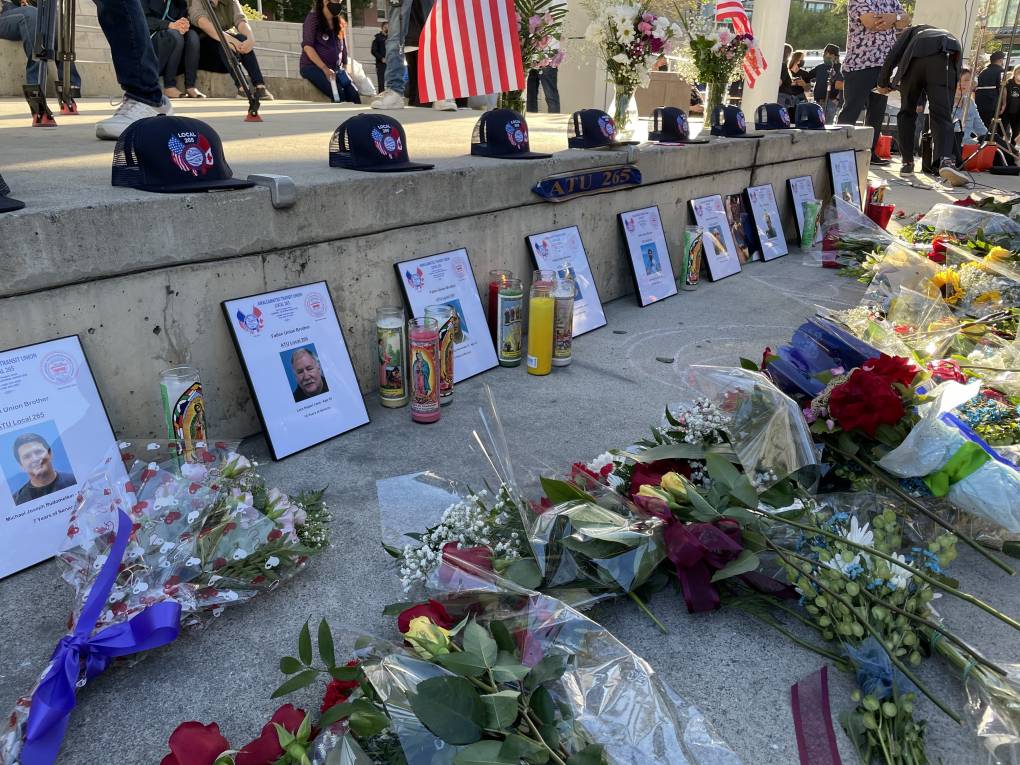
"caption": "HERO Tent President Kiana Simmons places a candle at a vigil organized by her group at San Jose City Hall on May 26, 2021, following a mass shooting at the Valley Transportation Authority light rail yard that left 10 people dead.",
"description": null,
"title": "Several People Reportedly Shot At Light Rail Yard In San Jose, CA",
"credit": "Philip Pacheco/Getty Images",
"status": "inherit",
"altTag": null,
"isLoading": false,
"fetchFailed": false
},
"news_11877789": {
"type": "attachments",
"id": "news_11877789",
"meta": {
"index": "attachments_1716263798",
"site": "news",
"id": "11877789",
"found": true
},
"parent": 11877552,
"imgSizes": {
"twentyfourteen-full-width": {
"file": "https://ww2.kqed.org/app/uploads/sites/10/2021/06/GettyImages-158731369-1024x576.jpg",
"width": 1024,
"mimeType": "image/jpeg",
"height": 576
},
"thumbnail": {
"file": "https://ww2.kqed.org/app/uploads/sites/10/2021/06/GettyImages-158731369-160x113.jpg",
"width": 160,
"mimeType": "image/jpeg",
"height": 113
},
"post-thumbnail": {
"file": "https://ww2.kqed.org/app/uploads/sites/10/2021/06/GettyImages-158731369-672x372.jpg",
"width": 672,
"mimeType": "image/jpeg",
"height": 372
},
"kqedFullSize": {
"file": "https://ww2.kqed.org/app/uploads/sites/10/2021/06/GettyImages-158731369.jpg",
"width": 1024,
"height": 722
},
"large": {
"file": "https://ww2.kqed.org/app/uploads/sites/10/2021/06/GettyImages-158731369-1020x719.jpg",
"width": 1020,
"mimeType": "image/jpeg",
"height": 719
},
"medium": {
"file": "https://ww2.kqed.org/app/uploads/sites/10/2021/06/GettyImages-158731369-800x564.jpg",
"width": 800,
"mimeType": "image/jpeg",
"height": 564
}
},
"publishDate": 1623450054,
"modified": 1653573120,
"caption": null,
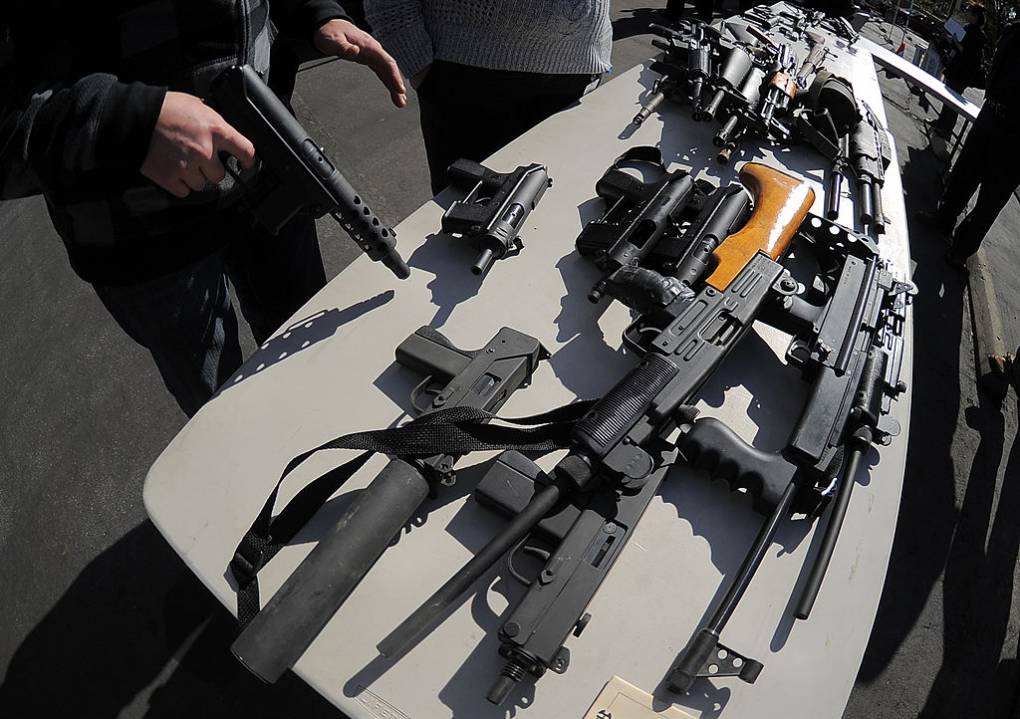
"description": "A table full of assault weapons collected during a Los Angeles Police Department no-questions-asked gun buyback event in the Van Nuys area of north Los Angeles on Dec. 26, 2012. ",
"title": "US-SHOOTING-GUNS-BUYBACK",
"credit": "Joe Klamar/AFP via Getty Images",
"status": "inherit",
"altTag": "guns",
"isLoading": false,
"fetchFailed": false
},
"news_11875829": {
"type": "attachments",
"id": "news_11875829",
"meta": {
"index": "attachments_1716263798",
"site": "news",
"id": "11875829",
"found": true
},
"parent": 11875802,
"imgSizes": {
"twentyfourteen-full-width": {
"file": "https://ww2.kqed.org/app/uploads/sites/10/2021/05/GettyImages-1233126939-1020x680-1-1020x576.jpg",
"width": 1020,
"mimeType": "image/jpeg",
"height": 576
},
"thumbnail": {
"file": "https://ww2.kqed.org/app/uploads/sites/10/2021/05/GettyImages-1233126939-1020x680-1-160x107.jpg",
"width": 160,
"mimeType": "image/jpeg",
"height": 107
},
"post-thumbnail": {
"file": "https://ww2.kqed.org/app/uploads/sites/10/2021/05/GettyImages-1233126939-1020x680-1-672x372.jpg",
"width": 672,
"mimeType": "image/jpeg",
"height": 372
},
"kqedFullSize": {
"file": "https://ww2.kqed.org/app/uploads/sites/10/2021/05/GettyImages-1233126939-1020x680-1.jpg",
"width": 1020,
"height": 680
},
"medium": {
"file": "https://ww2.kqed.org/app/uploads/sites/10/2021/05/GettyImages-1233126939-1020x680-1-800x533.jpg",
"width": 800,
"mimeType": "image/jpeg",
"height": 533
}
},
"publishDate": 1622222168,
"modified": 1622222200,
"caption": "Kiara Simmons, presidenta del grupo ‘HERO Tent’ coloca una vela en la vigilia organizada por su grupo un día después del tiroteo masivo en un plantel de tren ligeros del sistema VTA, afuera del Ayuntamiento de San José el 26 de mayo de 2021. Un empleado del VTA abrió fuego en el plantel y los informes de las autoridades indican que 10 personas murieron, entre ellas el pistolero.",
"description": "Kiara Simmons, presidenta del grupo ‘HERO Tent’ coloca una vela en la vigilia organizada por su grupo un día después del tiroteo masivo en un plantel de tren ligeros del sistema VTA, afuera del Ayuntamiento de San José el 26 de mayo de 2021. Un empleado del VTA abrió fuego en el plantel y los informes de las autoridades indican que 10 personas murieron, entre ellas el pistolero.",
"title": "GettyImages-1233126939-1020x680",
"credit": "Philip Pacheco/Getty Images",
"status": "inherit",
"altTag": "Una mujer coloca una vela en una ofrenda ubicada en las afueras del Ayuntamiento de San José",
"isLoading": false,
"fetchFailed": false
},
"news_11875761": {
"type": "attachments",
"id": "news_11875761",
"meta": {
"index": "attachments_1716263798",
"site": "news",
"id": "11875761",
"found": true
},
"parent": 11875686,
"imgSizes": {
"twentyfourteen-full-width": {
"file": "https://ww2.kqed.org/app/uploads/sites/10/2021/05/IMG_1228-1038x576.jpg",
"width": 1038,
"mimeType": "image/jpeg",
"height": 576
},
"thumbnail": {
"file": "https://ww2.kqed.org/app/uploads/sites/10/2021/05/IMG_1228-160x120.jpg",
"width": 160,
"mimeType": "image/jpeg",
"height": 120
},
"post-thumbnail": {
"file": "https://ww2.kqed.org/app/uploads/sites/10/2021/05/IMG_1228-672x372.jpg",
"width": 672,
"mimeType": "image/jpeg",
"height": 372
},
"kqedFullSize": {
"file": "https://ww2.kqed.org/app/uploads/sites/10/2021/05/IMG_1228-scaled-e1622172307380.jpg",
"width": 1920,
"height": 1440
},
"2048x2048": {
"file": "https://ww2.kqed.org/app/uploads/sites/10/2021/05/IMG_1228-2048x1536.jpg",
"width": 2048,
"mimeType": "image/jpeg",
"height": 1536
},
"large": {
"file": "https://ww2.kqed.org/app/uploads/sites/10/2021/05/IMG_1228-1020x765.jpg",
"width": 1020,
"mimeType": "image/jpeg",
"height": 765
},
"1536x1536": {
"file": "https://ww2.kqed.org/app/uploads/sites/10/2021/05/IMG_1228-1536x1152.jpg",
"width": 1536,
"mimeType": "image/jpeg",
"height": 1152
},
"full-width": {
"file": "https://ww2.kqed.org/app/uploads/sites/10/2021/05/IMG_1228-1920x1440.jpg",
"width": 1920,
"mimeType": "image/jpeg",
"height": 1440
},
"medium": {
"file": "https://ww2.kqed.org/app/uploads/sites/10/2021/05/IMG_1228-800x600.jpg",
"width": 800,
"mimeType": "image/jpeg",
"height": 600
}
},
"publishDate": 1622172226,
"modified": 1623192365,
"caption": "Following the mass shooting at a Valley Transportation Authority rail yard in San Jose, officials are wondering whether California's \"Red Flag\" gun law could have prevented the violence by taking away the shooter's guns.",
"description": "A vigil in San Jose memorializes the nine people who died at a mass shooting on Wednesday,",
"title": "IMG_1228",
"credit": "Marnette Federis/KQED",
"status": "inherit",
"altTag": null,
"isLoading": false,
"fetchFailed": false
},
"news_11875641": {
"type": "attachments",
"id": "news_11875641",
"meta": {
"index": "attachments_1716263798",
"site": "news",
"id": "11875641",
"found": true
},
"parent": 11875639,
"imgSizes": {
"thumbnail": {
"file": "https://ww2.kqed.org/app/uploads/sites/10/2021/05/E2aSbpaUYAERLTl-160x107.jpg",
"width": 160,
"mimeType": "image/jpeg",
"height": 107
},
"post-thumbnail": {
"file": "https://ww2.kqed.org/app/uploads/sites/10/2021/05/E2aSbpaUYAERLTl-672x372.jpg",
"width": 672,
"mimeType": "image/jpeg",
"height": 372
},
"kqedFullSize": {
"file": "https://ww2.kqed.org/app/uploads/sites/10/2021/05/E2aSbpaUYAERLTl.jpg",
"width": 818,
"height": 545
},
"medium": {
"file": "https://ww2.kqed.org/app/uploads/sites/10/2021/05/E2aSbpaUYAERLTl-800x533.jpg",
"width": 800,
"mimeType": "image/jpeg",
"height": 533
}
},
"publishDate": 1622143170,
"modified": 1622158464,
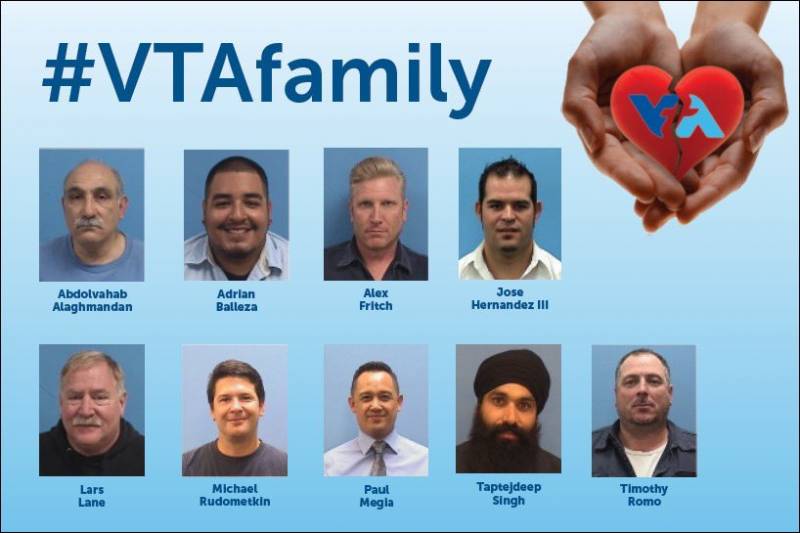
"caption": "On Wed, May 25, a gunman shot and killed 9 people who worked at Santa Clara County's Valley Transportation Authority (VTA). ",
"description": null,
"title": "E2aSbpaUYAERLTl",
"credit": "VTA",
"status": "inherit",
"altTag": null,
"isLoading": false,
"fetchFailed": false
},
"news_11875765": {
"type": "attachments",
"id": "news_11875765",
"meta": {
"index": "attachments_1716263798",
"site": "news",
"id": "11875765",
"found": true
},
"parent": 11875667,
"imgSizes": {
"twentyfourteen-full-width": {
"file": "https://ww2.kqed.org/app/uploads/sites/10/2021/05/Image-from-iOS-29-1038x576.jpg",
"width": 1038,
"mimeType": "image/jpeg",
"height": 576
},
"thumbnail": {
"file": "https://ww2.kqed.org/app/uploads/sites/10/2021/05/Image-from-iOS-29-160x120.jpg",
"width": 160,
"mimeType": "image/jpeg",
"height": 120
},
"post-thumbnail": {
"file": "https://ww2.kqed.org/app/uploads/sites/10/2021/05/Image-from-iOS-29-672x372.jpg",
"width": 672,
"mimeType": "image/jpeg",
"height": 372
},
"kqedFullSize": {
"file": "https://ww2.kqed.org/app/uploads/sites/10/2021/05/Image-from-iOS-29-scaled.jpg",
"width": 2560,
"height": 1920
},
"2048x2048": {
"file": "https://ww2.kqed.org/app/uploads/sites/10/2021/05/Image-from-iOS-29-2048x1536.jpg",
"width": 2048,
"mimeType": "image/jpeg",
"height": 1536
},
"large": {
"file": "https://ww2.kqed.org/app/uploads/sites/10/2021/05/Image-from-iOS-29-1020x765.jpg",
"width": 1020,
"mimeType": "image/jpeg",
"height": 765
},
"1536x1536": {
"file": "https://ww2.kqed.org/app/uploads/sites/10/2021/05/Image-from-iOS-29-1536x1152.jpg",
"width": 1536,
"mimeType": "image/jpeg",
"height": 1152
},
"full-width": {
"file": "https://ww2.kqed.org/app/uploads/sites/10/2021/05/Image-from-iOS-29-1920x1440.jpg",
"width": 1920,
"mimeType": "image/jpeg",
"height": 1440
},
"medium": {
"file": "https://ww2.kqed.org/app/uploads/sites/10/2021/05/Image-from-iOS-29-800x600.jpg",
"width": 800,
"mimeType": "image/jpeg",
"height": 600
}
},
"publishDate": 1622174841,
"modified": 1622222311,
"caption": "Attendees placed flowers at a vigil in San Jose Thursday night to honor the victims of a mass shooting at a Santa Clara Valley Transit Authority rail yard this week.",
"description": "Attendees placed flowers at a vigil in San Jose Thursday night to honor the victims of a mass shooting at a Santa Clara Valley Transit Authority rail yard this week.",
"title": "Image from iOS (29)",
"credit": "Julie Chang/KQED",
"status": "inherit",
"altTag": null,
"isLoading": false,
"fetchFailed": false
},
"news_11875603": {
"type": "attachments",
"id": "news_11875603",
"meta": {
"index": "attachments_1716263798",
"site": "news",
"id": "11875603",
"found": true
},
"parent": 11875602,
"imgSizes": {
"twentyfourteen-full-width": {
"file": "https://ww2.kqed.org/app/uploads/sites/10/2021/05/ap_21146605202057-d42dc63ad53bca04f809ddc1e00e078f4f9b761d-1038x576.jpg",
"width": 1038,
"mimeType": "image/jpeg",
"height": 576
},
"thumbnail": {
"file": "https://ww2.kqed.org/app/uploads/sites/10/2021/05/ap_21146605202057-d42dc63ad53bca04f809ddc1e00e078f4f9b761d-160x120.jpg",
"width": 160,
"mimeType": "image/jpeg",
"height": 120
},
"post-thumbnail": {
"file": "https://ww2.kqed.org/app/uploads/sites/10/2021/05/ap_21146605202057-d42dc63ad53bca04f809ddc1e00e078f4f9b761d-672x372.jpg",
"width": 672,
"mimeType": "image/jpeg",
"height": 372
},
"kqedFullSize": {
"file": "https://ww2.kqed.org/app/uploads/sites/10/2021/05/ap_21146605202057-d42dc63ad53bca04f809ddc1e00e078f4f9b761d-scaled-e1622136559352.jpg",
"width": 1920,
"height": 1440
},
"2048x2048": {
"file": "https://ww2.kqed.org/app/uploads/sites/10/2021/05/ap_21146605202057-d42dc63ad53bca04f809ddc1e00e078f4f9b761d-2048x1536.jpg",
"width": 2048,
"mimeType": "image/jpeg",
"height": 1536
},
"large": {
"file": "https://ww2.kqed.org/app/uploads/sites/10/2021/05/ap_21146605202057-d42dc63ad53bca04f809ddc1e00e078f4f9b761d-1020x765.jpg",
"width": 1020,
"mimeType": "image/jpeg",
"height": 765
},
"1536x1536": {
"file": "https://ww2.kqed.org/app/uploads/sites/10/2021/05/ap_21146605202057-d42dc63ad53bca04f809ddc1e00e078f4f9b761d-1536x1152.jpg",
"width": 1536,
"mimeType": "image/jpeg",
"height": 1152
},
"full-width": {
"file": "https://ww2.kqed.org/app/uploads/sites/10/2021/05/ap_21146605202057-d42dc63ad53bca04f809ddc1e00e078f4f9b761d-1920x1440.jpg",
"width": 1920,
"mimeType": "image/jpeg",
"height": 1440
},
"medium": {
"file": "https://ww2.kqed.org/app/uploads/sites/10/2021/05/ap_21146605202057-d42dc63ad53bca04f809ddc1e00e078f4f9b761d-800x600.jpg",
"width": 800,
"mimeType": "image/jpeg",
"height": 600
}
},
"publishDate": 1622134547,
"modified": 1622136696,
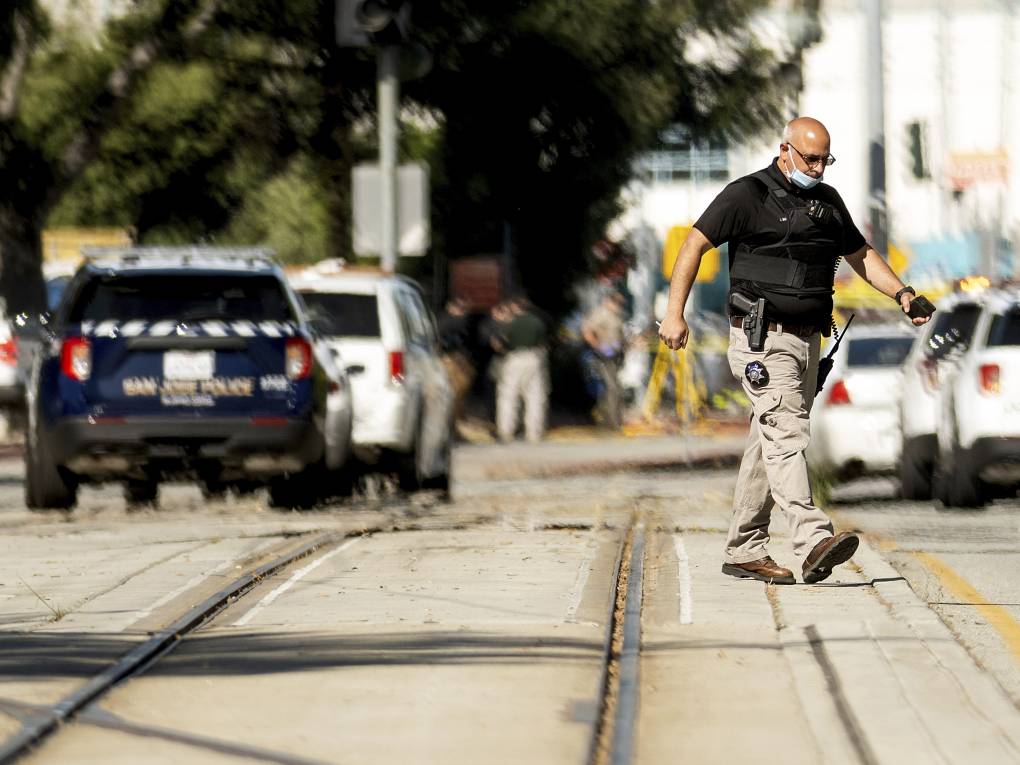
"caption": "Law enforcement officers respond to the scene of a shooting at a Santa Clara Valley Transportation Authority facility on Wednesday, May 26, 2021, in San Jose.",
"description": "Law enforcement officers respond to the scene of a shooting at a Santa Clara Valley Transportation Authority facility on Wednesday, May 26, 2021, in San Jose.",
"title": "Law enforcement officers respond to a mass shooting at a Santa Clara Valley Transportation Authority facility on Wednesday in San Jose, Calif. A Santa Clara County sheriff's spokesman said the rail yard shooting left multiple people, including the shooter, dead.",
"credit": "Noah Berger/AP",
"status": "inherit",
"altTag": null,
"isLoading": false,
"fetchFailed": false
},
"news_11875594": {
"type": "attachments",
"id": "news_11875594",
"meta": {
"index": "attachments_1716263798",
"site": "news",
"id": "11875594",
"found": true
},
"parent": 11875404,
"imgSizes": {
"twentyfourteen-full-width": {
"file": "https://ww2.kqed.org/app/uploads/sites/10/2021/05/RS49529_GettyImages-1233126903-qut-1038x576.jpg",
"width": 1038,
"mimeType": "image/jpeg",
"height": 576
},
"thumbnail": {
"file": "https://ww2.kqed.org/app/uploads/sites/10/2021/05/RS49529_GettyImages-1233126903-qut-160x107.jpg",
"width": 160,
"mimeType": "image/jpeg",
"height": 107
},
"post-thumbnail": {
"file": "https://ww2.kqed.org/app/uploads/sites/10/2021/05/RS49529_GettyImages-1233126903-qut-672x372.jpg",
"width": 672,
"mimeType": "image/jpeg",
"height": 372
},
"kqedFullSize": {
"file": "https://ww2.kqed.org/app/uploads/sites/10/2021/05/RS49529_GettyImages-1233126903-qut.jpg",
"width": 1920,
"height": 1280
},
"large": {
"file": "https://ww2.kqed.org/app/uploads/sites/10/2021/05/RS49529_GettyImages-1233126903-qut-1020x680.jpg",
"width": 1020,
"mimeType": "image/jpeg",
"height": 680
},
"1536x1536": {
"file": "https://ww2.kqed.org/app/uploads/sites/10/2021/05/RS49529_GettyImages-1233126903-qut-1536x1024.jpg",
"width": 1536,
"mimeType": "image/jpeg",
"height": 1024
},
"medium": {
"file": "https://ww2.kqed.org/app/uploads/sites/10/2021/05/RS49529_GettyImages-1233126903-qut-800x533.jpg",
"width": 800,
"mimeType": "image/jpeg",
"height": 533
}
},
"publishDate": 1622130203,
"modified": 1622139817,
"caption": "Kiana Simmons (L), and Amar Singh of San Jose (R), tend to a vigil organized by HERO Tent, following the mass shooting at the Valley Transportation Authority light rail yard, outside City Hall on May 26, 2021 in San Jose.",
"description": "Kiana Simmons (L), and Amar Singh of San Jose (R), tend to a vigil organized by HERO Tent, following the mass shooting at the Valley Transportation Authority light-rail yard, outside City Hall on May 26, 2021 in San Jose.",
"title": "Several People Reportedly Shot At Light Rail Yard In San Jose, CA",
"credit": "Philip Pacheco/Getty Images",
"status": "inherit",
"altTag": "Mourners lay flowers at a vigil for shooting victims",
"isLoading": false,
"fetchFailed": false
},
"news_11874403": {
"type": "attachments",
"id": "news_11874403",
"meta": {
"index": "attachments_1716263798",
"site": "news",
"id": "11874403",
"found": true
},
"parent": 11874397,
"imgSizes": {
"twentyfourteen-full-width": {
"file": "https://ww2.kqed.org/app/uploads/sites/10/2021/05/RS49136_GettyImages-519570732-qut-1038x576.jpg",
"width": 1038,
"mimeType": "image/jpeg",
"height": 576
},
"thumbnail": {
"file": "https://ww2.kqed.org/app/uploads/sites/10/2021/05/RS49136_GettyImages-519570732-qut-160x122.jpg",
"width": 160,
"mimeType": "image/jpeg",
"height": 122
},
"post-thumbnail": {
"file": "https://ww2.kqed.org/app/uploads/sites/10/2021/05/RS49136_GettyImages-519570732-qut-672x372.jpg",
"width": 672,
"mimeType": "image/jpeg",
"height": 372
},
"kqedFullSize": {
"file": "https://ww2.kqed.org/app/uploads/sites/10/2021/05/RS49136_GettyImages-519570732-qut.jpg",
"width": 1920,
"height": 1461
},
"large": {
"file": "https://ww2.kqed.org/app/uploads/sites/10/2021/05/RS49136_GettyImages-519570732-qut-1020x776.jpg",
"width": 1020,
"mimeType": "image/jpeg",
"height": 776
},
"1536x1536": {
"file": "https://ww2.kqed.org/app/uploads/sites/10/2021/05/RS49136_GettyImages-519570732-qut-1536x1169.jpg",
"width": 1536,
"mimeType": "image/jpeg",
"height": 1169
},
"medium": {
"file": "https://ww2.kqed.org/app/uploads/sites/10/2021/05/RS49136_GettyImages-519570732-qut-800x609.jpg",
"width": 800,
"mimeType": "image/jpeg",
"height": 609
}
},
"publishDate": 1621465648,
"modified": 1621465836,
"caption": "Lee Evans (center) crosses the finish line of the men's 400m final in 43.8 seconds, ahead of compatriots Larry James (right) and Ronald Freeman (left) at the Olympic Games in Mexico City on Oct. 19, 1968.",
"description": null,
"title": "OLY-1968-ATHLETICS",
"credit": "AFP via Getty Images",
"status": "inherit",
"altTag": "Lee Evans leans into finish line tape at 1968 Olympics",
"isLoading": false,
"fetchFailed": false
},
"news_11873411": {
"type": "attachments",
"id": "news_11873411",
"meta": {
"index": "attachments_1716263798",
"site": "news",
"id": "11873411",
"found": true
},
"parent": 11872941,
"imgSizes": {
"twentyfourteen-full-width": {
"file": "https://ww2.kqed.org/app/uploads/sites/10/2021/05/1920_VAR-Facebook-photo-1038x576.jpg",
"width": 1038,
"mimeType": "image/jpeg",
"height": 576
},
"thumbnail": {
"file": "https://ww2.kqed.org/app/uploads/sites/10/2021/05/1920_VAR-Facebook-photo-160x90.jpg",
"width": 160,
"mimeType": "image/jpeg",
"height": 90
},
"post-thumbnail": {
"file": "https://ww2.kqed.org/app/uploads/sites/10/2021/05/1920_VAR-Facebook-photo-672x372.jpg",
"width": 672,
"mimeType": "image/jpeg",
"height": 372
},
"kqedFullSize": {
"file": "https://ww2.kqed.org/app/uploads/sites/10/2021/05/1920_VAR-Facebook-photo.jpg",
"width": 1416,
"height": 796
},
"large": {
"file": "https://ww2.kqed.org/app/uploads/sites/10/2021/05/1920_VAR-Facebook-photo-1020x573.jpg",
"width": 1020,
"mimeType": "image/jpeg",
"height": 573
},
"medium": {
"file": "https://ww2.kqed.org/app/uploads/sites/10/2021/05/1920_VAR-Facebook-photo-800x450.jpg",
"width": 800,
"mimeType": "image/jpeg",
"height": 450
}
},
"publishDate": 1620855071,
"modified": 1620860772,
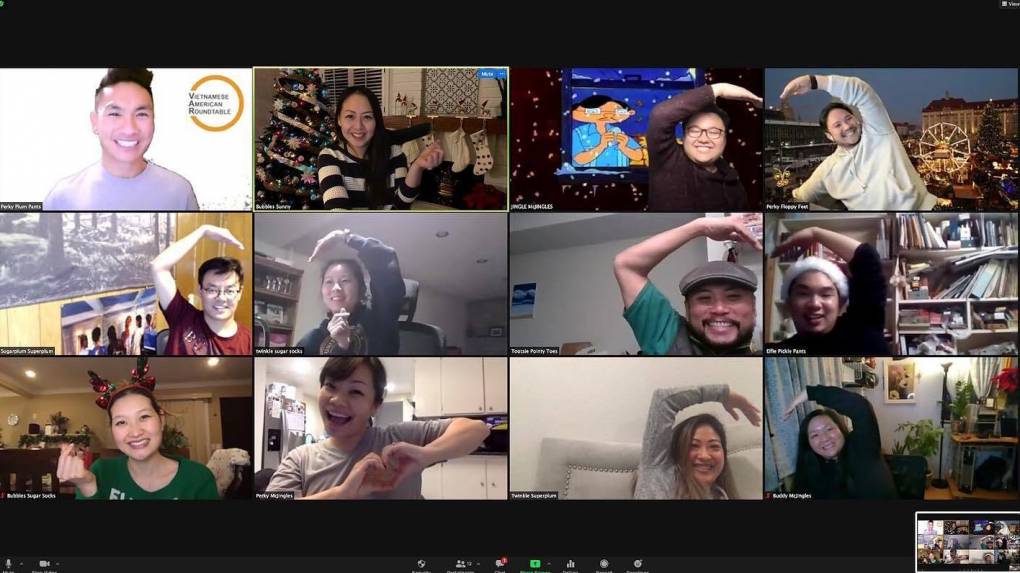
"caption": "The Vietnamese American Roundtable is an organization based in the South Bay, focused on serving the Vietnamese American community in the Bay Area. Since the pandemic started, VAR has been hosting webinars to educate their more than 3,000 followers on how to stay safe from COVID-19.",
"description": null,
"title": "1920_VAR Facebook photo",
"credit": "Photo courtesy of VAR",
"status": "inherit",
"altTag": null,
"isLoading": false,
"fetchFailed": false
}
},
"audioPlayerReducer": {
"postId": "stream_live",
"isPaused": true,
"isPlaying": false,
"pfsActive": false,
"pledgeModalIsOpen": true,
"playerDrawerIsOpen": false,
"liveAudioPlayStartedAt": 0,
"liveAudioPlayContext": ""
},
"authorsReducer": {
"byline_news_11875602": {
"type": "authors",
"id": "byline_news_11875602",
"meta": {
"override": true
},
"slug": "byline_news_11875602",
"name": "\u003ca href=\"https://www.npr.org/people/527855988/vanessa-romo\">Vanessa Romo\u003c/a>",
"isLoading": false
},
"kqednewsstaffandwires": {
"type": "authors",
"id": "237",
"meta": {
"index": "authors_1716337520",
"id": "237",
"found": true
},
"name": "KQED News Staff and Wires",
"firstName": "KQED News Staff and Wires",
"lastName": null,
"slug": "kqednewsstaffandwires",
"email": "onlinenewsstaff@kqed.org",
"display_author_email": false,
"staff_mastheads": [],
"title": null,
"bio": null,
"avatar": "https://secure.gravatar.com/avatar/72295af8ebbfbd19a4948f5271285664?s=600&d=blank&r=g",
"twitter": null,
"facebook": null,
"instagram": null,
"linkedin": null,
"sites": [
{
"site": "arts",
"roles": [
"contributor"
]
},
{
"site": "news",
"roles": [
"contributor"
]
},
{
"site": "lowdown",
"roles": [
"author"
]
},
{
"site": "stateofhealth",
"roles": [
"contributor"
]
},
{
"site": "food",
"roles": [
"author"
]
}
],
"headData": {
"title": "KQED News Staff and Wires | KQED",
"description": null,
"ogImgSrc": "https://secure.gravatar.com/avatar/72295af8ebbfbd19a4948f5271285664?s=600&d=blank&r=g",
"twImgSrc": "https://secure.gravatar.com/avatar/72295af8ebbfbd19a4948f5271285664?s=600&d=blank&r=g"
},
"isLoading": false,
"link": "/author/kqednewsstaffandwires"
},
"matthewgreen": {
"type": "authors",
"id": "1263",
"meta": {
"index": "authors_1716337520",
"id": "1263",
"found": true
},
"name": "Matthew Green",
"firstName": "Matthew",
"lastName": "Green",
"slug": "matthewgreen",
"email": "mgreen@kqed.org",
"display_author_email": false,
"staff_mastheads": [],
"title": "KQED Editor/Reporter",
"bio": "Matthew Green is a digital media producer for KQED News. He previously produced \u003ca href=\"http://www.kqed.org/lowdown\">The Lowdown\u003c/a>, KQED’s multimedia news education blog. Matthew's written for numerous Bay Area publications, including the Oakland Tribune and San Francisco Chronicle. He also taught journalism classes at Fremont High School in East Oakland.\r\n\r\nEmail: mgreen@kqed.org; Twitter: @MGreenKQED",
"avatar": "https://secure.gravatar.com/avatar/3bf498d1267ca02c8494f33d8cfc575e?s=600&d=blank&r=g",
"twitter": "MGreenKQED",
"facebook": null,
"instagram": null,
"linkedin": null,
"sites": [
{
"site": "news",
"roles": []
},
{
"site": "lowdown",
"roles": []
},
{
"site": "science",
"roles": []
},
{
"site": "education",
"roles": []
},
{
"site": "quest",
"roles": []
},
{
"site": "liveblog",
"roles": []
}
],
"headData": {
"title": "Matthew Green | KQED",
"description": "KQED Editor/Reporter",
"ogImgSrc": "https://secure.gravatar.com/avatar/3bf498d1267ca02c8494f33d8cfc575e?s=600&d=blank&r=g",
"twImgSrc": "https://secure.gravatar.com/avatar/3bf498d1267ca02c8494f33d8cfc575e?s=600&d=blank&r=g"
},
"isLoading": false,
"link": "/author/matthewgreen"
},
"dkatayama": {
"type": "authors",
"id": "7240",
"meta": {
"index": "authors_1716337520",
"id": "7240",
"found": true
},
"name": "Devin Katayama",
"firstName": "Devin",
"lastName": "Katayama",
"slug": "dkatayama",
"email": "dkatayama@kqed.org",
"display_author_email": true,
"staff_mastheads": [
"news"
],
"title": "Editor of Talent and Development",
"bio": "Devin Katayama is former Editor of Talent and Development for KQED. He supported our internship program and on-call staff by looking for equitable opportunities to improve the newsroom.\r\n\r\nHe previously hosted The Bay and American Suburb podcasts from KQED News. Prior to returning to the Bay Area in 2015, Devin was the education reporter for WFPL in Louisville and worked as a producer with radio stations in Chicago and Portland, OR. His work has appeared on NPR’s \u003cem>Morning Edition, All Things Considered, The Takeaway\u003c/em> and \u003cem>Here and Now.\u003c/em>\r\n\r\nDevin earned his MA in Journalism from Columbia College Chicago, where he was a Follett Fellow and the recipient of the 2011 Studs Terkel Community Media Workshop Scholarship for his story on Chicago's homeless youth. He won WBUR's 2014 Daniel Schorr award and a regional RTNDA Edward R. Murrow Award for his documentary \"At Risk\" that looked at issues facing some of Louisville's students. Devin has also received numerous local awards from the Associated Press and the Society of Professional Journalists.",
"avatar": "https://secure.gravatar.com/avatar/d0d2978a31002fb2de107921a8e18405?s=600&d=blank&r=g",
"twitter": "RadioDevin",
"facebook": null,
"instagram": null,
"linkedin": null,
"sites": [
{
"site": "arts",
"roles": []
},
{
"site": "news",
"roles": [
"author"
]
},
{
"site": "stateofhealth",
"roles": [
"author"
]
},
{
"site": "forum",
"roles": [
"editor"
]
},
{
"site": "perspectives",
"roles": [
"editor"
]
}
],
"headData": {
"title": "Devin Katayama | KQED",
"description": "Editor of Talent and Development",
"ogImgSrc": "https://secure.gravatar.com/avatar/d0d2978a31002fb2de107921a8e18405?s=600&d=blank&r=g",
"twImgSrc": "https://secure.gravatar.com/avatar/d0d2978a31002fb2de107921a8e18405?s=600&d=blank&r=g"
},
"isLoading": false,
"link": "/author/dkatayama"
},
"ecruzguevarra": {
"type": "authors",
"id": "8654",
"meta": {
"index": "authors_1716337520",
"id": "8654",
"found": true
},
"name": "Ericka Cruz Guevarra",
"firstName": "Ericka",
"lastName": "Cruz Guevarra",
"slug": "ecruzguevarra",
"email": "ecruzguevarra@kqed.org",
"display_author_email": true,
"staff_mastheads": [
"news"
],
"title": "Producer, The Bay Podcast",
"bio": "Ericka Cruz Guevarra is host of \u003ca href=\"https://www.kqed.org/podcasts/thebay\">\u003cem>The Bay\u003c/em>\u003c/a> podcast at KQED. Before host, she was the show’s producer. Her work in that capacity includes a three-part reported series on policing in Vallejo, which won a 2020 excellence in journalism award from the Society of Professional Journalists. Ericka has worked as a breaking news reporter at Oregon Public Broadcasting, helped produce the Code Switch podcast, and was KQED’s inaugural Raul Ramirez Diversity Fund intern. She’s also an alumna of NPR’s Next Generation Radio program. Send her an email if you have strong feelings about whether Fairfield and Suisun City are the Bay. Ericka is represented by SAG-AFTRA.",
"avatar": "https://secure.gravatar.com/avatar/accefc1de4bafc7e234b69bcb9b6f6536c130fd84709bc3069ef11a78787e1bb?s=600&d=blank&r=g",
"twitter": "NotoriousECG",
"bluesky": null,
"facebook": null,
"instagram": null,
"linkedin": null,
"sites": [
{
"site": "arts",
"roles": [
"subscriber"
]
},
{
"site": "news",
"roles": [
"editor",
"manage_categories"
]
},
{
"site": "futureofyou",
"roles": [
"subscriber"
]
},
{
"site": "stateofhealth",
"roles": [
"subscriber"
]
},
{
"site": "science",
"roles": [
"editor"
]
},
{
"site": "forum",
"roles": [
"subscriber"
]
}
],
"headData": {
"title": "Ericka Cruz Guevarra | KQED",
"description": "Producer, The Bay Podcast",
"ogImgSrc": "https://secure.gravatar.com/avatar/accefc1de4bafc7e234b69bcb9b6f6536c130fd84709bc3069ef11a78787e1bb?s=600&d=blank&r=g",
"twImgSrc": "https://secure.gravatar.com/avatar/accefc1de4bafc7e234b69bcb9b6f6536c130fd84709bc3069ef11a78787e1bb?s=600&d=blank&r=g"
},
"isLoading": false,
"link": "/author/ecruzguevarra"
},
"mfederis": {
"type": "authors",
"id": "11509",
"meta": {
"index": "authors_1716337520",
"id": "11509",
"found": true
},
"name": "Marnette Federis",
"firstName": "Marnette",
"lastName": "Federis",
"slug": "mfederis",
"email": "mfederis@kqed.org",
"display_author_email": false,
"staff_mastheads": [],
"title": "KQED Contributor",
"bio": null,
"avatar": "https://secure.gravatar.com/avatar/6553b16260501cef36787444651fa5ed?s=600&d=blank&r=g",
"twitter": null,
"facebook": null,
"instagram": null,
"linkedin": null,
"sites": [
{
"site": "news",
"roles": [
"editor"
]
},
{
"site": "mindshift",
"roles": [
"editor"
]
},
{
"site": "science",
"roles": [
"editor"
]
},
{
"site": "podcasts",
"roles": [
"editor"
]
}
],
"headData": {
"title": "Marnette Federis | KQED",
"description": "KQED Contributor",
"ogImgSrc": "https://secure.gravatar.com/avatar/6553b16260501cef36787444651fa5ed?s=600&d=blank&r=g",
"twImgSrc": "https://secure.gravatar.com/avatar/6553b16260501cef36787444651fa5ed?s=600&d=blank&r=g"
},
"isLoading": false,
"link": "/author/mfederis"
},
"mwiley": {
"type": "authors",
"id": "11526",
"meta": {
"index": "authors_1716337520",
"id": "11526",
"found": true
},
"name": "Michelle Wiley",
"firstName": "Michelle",
"lastName": "Wiley",
"slug": "mwiley",
"email": "mwiley@KQED.org",
"display_author_email": true,
"staff_mastheads": [],
"title": null,
"bio": "Michelle Wiley was the senior editor of weekends.",
"avatar": "https://secure.gravatar.com/avatar/3b897d82a09e8587e8e73fa69fbcc635?s=600&d=blank&r=g",
"twitter": "michelleewiley",
"facebook": null,
"instagram": null,
"linkedin": null,
"sites": [
{
"site": "",
"roles": [
"editor"
]
},
{
"site": "arts",
"roles": [
"editor"
]
},
{
"site": "news",
"roles": [
"subscriber"
]
},
{
"site": "lowdown",
"roles": [
"editor"
]
},
{
"site": "science",
"roles": [
"editor"
]
},
{
"site": "podcasts",
"roles": [
"editor"
]
}
],
"headData": {
"title": "Michelle Wiley | KQED",
"description": null,
"ogImgSrc": "https://secure.gravatar.com/avatar/3b897d82a09e8587e8e73fa69fbcc635?s=600&d=blank&r=g",
"twImgSrc": "https://secure.gravatar.com/avatar/3b897d82a09e8587e8e73fa69fbcc635?s=600&d=blank&r=g"
},
"isLoading": false,
"link": "/author/mwiley"
},
"lsarah": {
"type": "authors",
"id": "11626",
"meta": {
"index": "authors_1716337520",
"id": "11626",
"found": true
},
"name": "Lakshmi Sarah",
"firstName": "Lakshmi",
"lastName": "Sarah",
"slug": "lsarah",
"email": "lsarah@kqed.org",
"display_author_email": false,
"staff_mastheads": [],
"title": "Digital Producer",
"bio": "Lakshmi Sarah is an educator, author and journalist with a focus on innovative storytelling. She has worked with newspapers, radio and magazines from Ahmedabad, India to Los Angeles, California. She has written and produced for Die Zeit, Global Voices, AJ+, KQED, Fusion Media Group and the New York Times.",
"avatar": "https://secure.gravatar.com/avatar/652dcaecd8b28826fc17a8b2d6bb4e93?s=600&d=blank&r=g",
"twitter": "lakitalki",
"facebook": null,
"instagram": "https://www.instagram.com/laki.talki/",
"linkedin": "https://www.linkedin.com/in/lakisarah/",
"sites": [
{
"site": "arts",
"roles": []
},
{
"site": "news",
"roles": []
},
{
"site": "bayareabites",
"roles": []
},
{
"site": "science",
"roles": []
}
],
"headData": {
"title": "Lakshmi Sarah | KQED",
"description": "Digital Producer",
"ogImgSrc": "https://secure.gravatar.com/avatar/652dcaecd8b28826fc17a8b2d6bb4e93?s=600&d=blank&r=g",
"twImgSrc": "https://secure.gravatar.com/avatar/652dcaecd8b28826fc17a8b2d6bb4e93?s=600&d=blank&r=g"
},
"isLoading": false,
"link": "/author/lsarah"
},
"jchang": {
"type": "authors",
"id": "11642",
"meta": {
"index": "authors_1716337520",
"id": "11642",
"found": true
},
"name": "Julie Chang",
"firstName": "Julie",
"lastName": "Chang",
"slug": "jchang",
"email": "jchang@kqed.org",
"display_author_email": false,
"staff_mastheads": [
"news"
],
"title": "KQED Contributor",
"bio": "Julie Chang is a reporter and producer (and occasional anchor) with the radio and digital teams at KQED. Before KQED, she worked at WAMU 88.5 in Washington D.C. and 89.3 KPCC in Los Angeles County. Her work has been featured on NPR’s Morning Edition and All Things Considered, Here & Now, the New York Times, and more. Julie graduated from UC Berkeley’s Graduate School of Journalism. She previously taught English at Pasadena City College, Fullerton College and Cal Poly Pomona. Julie earned her M.A. in English from Cal Poly Pomona and her B.A. in English from UCI with a minor in criminology.",
"avatar": "https://secure.gravatar.com/avatar/a7afce94ef127082c5475116b4a3b77d?s=600&d=blank&r=g",
"twitter": "BayAreaJulie",
"facebook": null,
"instagram": null,
"linkedin": "https://www.linkedin.com/in/julieyc/",
"sites": [
{
"site": "",
"roles": [
"editor"
]
},
{
"site": "news",
"roles": [
"author"
]
},
{
"site": "science",
"roles": [
"editor"
]
}
],
"headData": {
"title": "Julie Chang | KQED",
"description": "KQED Contributor",
"ogImgSrc": "https://secure.gravatar.com/avatar/a7afce94ef127082c5475116b4a3b77d?s=600&d=blank&r=g",
"twImgSrc": "https://secure.gravatar.com/avatar/a7afce94ef127082c5475116b4a3b77d?s=600&d=blank&r=g"
},
"isLoading": false,
"link": "/author/jchang"
},
"amontecillo": {
"type": "authors",
"id": "11649",
"meta": {
"index": "authors_1716337520",
"id": "11649",
"found": true
},
"name": "Alan Montecillo",
"firstName": "Alan",
"lastName": "Montecillo",
"slug": "amontecillo",
"email": "amontecillo@kqed.org",
"display_author_email": false,
"staff_mastheads": [
"news"
],
"title": "KQED Contributor",
"bio": "Alan Montecillo is the senior editor of \u003cem>\u003ca href=\"http://kqed.org/thebay\">The Bay\u003c/a>, \u003c/em> KQED's local news podcast. Before moving to the Bay Area, he worked as a senior talk show producer for WILL in Champaign-Urbana, Illinois and at Oregon Public Broadcasting in Portland, Oregon. He has won journalism awards from the Society of Professional Journalists Northern California, the Public Media Journalists Association, The Signal Awards, and has also received a regional Edward R. Murrow award. Alan is a Filipino American from Hong Kong and a graduate of Reed College.",
"avatar": "https://secure.gravatar.com/avatar/268f53a2066899ea9efdd8a5900218b17c822d9862cbc9326cccec53ef41d349?s=600&d=blank&r=g",
"twitter": "alanmontecillo",
"bluesky": null,
"facebook": null,
"instagram": null,
"linkedin": null,
"sites": [
{
"site": "",
"roles": [
"editor"
]
},
{
"site": "news",
"roles": [
"editor",
"manage_categories"
]
}
],
"headData": {
"title": "Alan Montecillo | KQED",
"description": "KQED Contributor",
"ogImgSrc": "https://secure.gravatar.com/avatar/268f53a2066899ea9efdd8a5900218b17c822d9862cbc9326cccec53ef41d349?s=600&d=blank&r=g",
"twImgSrc": "https://secure.gravatar.com/avatar/268f53a2066899ea9efdd8a5900218b17c822d9862cbc9326cccec53ef41d349?s=600&d=blank&r=g"
},
"isLoading": false,
"link": "/author/amontecillo"
},
"abandlamudi": {
"type": "authors",
"id": "11672",
"meta": {
"index": "authors_1716337520",
"id": "11672",
"found": true
},
"name": "Adhiti Bandlamudi",
"firstName": "Adhiti",
"lastName": "Bandlamudi",
"slug": "abandlamudi",
"email": "abandlamudi@kqed.org",
"display_author_email": false,
"staff_mastheads": [
"news"
],
"title": "KQED Housing Reporter",
"bio": "Adhiti Bandlamudi reports for KQED's Housing desk. She focuses on how housing gets built across the Bay Area. Before joining KQED in 2020, she reported for WUNC in Durham, North Carolina, WABE in Atlanta, Georgia and Capital Public Radio in Sacramento. In 2017, she was awarded a Kroc Fellowship at NPR where she reported on everything from sprinkles to the Golden State Killer's arrest. When she's not reporting, she's baking new recipes in her kitchen or watching movies with friends and family. She's originally from Georgia and has strong opinions about Great British Bake Off.",
"avatar": "https://secure.gravatar.com/avatar/868129c8b257bb99a3500e2c86a65400?s=600&d=mm&r=g",
"twitter": "oddity_adhiti",
"facebook": null,
"instagram": null,
"linkedin": null,
"sites": [
{
"site": "arts",
"roles": [
"author"
]
},
{
"site": "news",
"roles": [
"editor"
]
},
{
"site": "liveblog",
"roles": [
"author"
]
}
],
"headData": {
"title": "Adhiti Bandlamudi | KQED",
"description": "KQED Housing Reporter",
"ogImgSrc": "https://secure.gravatar.com/avatar/868129c8b257bb99a3500e2c86a65400?s=600&d=mm&r=g",
"twImgSrc": "https://secure.gravatar.com/avatar/868129c8b257bb99a3500e2c86a65400?s=600&d=mm&r=g"
},
"isLoading": false,
"link": "/author/abandlamudi"
}
},
"pagesReducer": {
"news_tag_san-jose": {
"type": "terms",
"id": "news_18541",
"meta": {
"index": "terms_1716263798",
"site": "news",
"id": "18541",
"score": 8.005292
},
"featImg": null,
"name": "San Jose",
"description": null,
"taxonomy": "tag",
"headData": {
"twImgId": null,
"twTitle": null,
"ogTitle": null,
"ogImgId": null,
"twDescription": null,
"description": null,
"title": "San Jose Archives | KQED News",
"ogDescription": null
},
"ttid": 91,
"slug": "san-jose",
"isLoading": false,
"title": "San Jose",
"pageMeta": {
"site": "news",
"WpPageTemplate": "page-topic-editorial",
"currentPage": 30
},
"blocks": [
{
"blockName": "kqed/post-list",
"attrs": {
"layout": "cardArticle2",
"query": "posts/news?tag=san-jose",
"seeMore": false,
"paginated": true,
"page": 30
}
},
{
"blockName": "kqed/ad"
}
]
}
},
"pfsSessionReducer": {},
"postsReducer": {
"stream_live": {
"type": "live",
"id": "stream_live",
"audioUrl": "https://streams.kqed.org/kqedradio",
"title": "Live Stream",
"excerpt": "Live Stream information currently unavailable.",
"link": "/radio",
"featImg": "",
"label": {
"name": "KQED Live",
"link": "/"
}
},
"stream_kqedNewscast": {
"type": "posts",
"id": "stream_kqedNewscast",
"audioUrl": "https://www.kqed.org/.stream/anon/radio/RDnews/newscast.mp3?_=1",
"title": "KQED Newscast",
"featImg": "",
"label": {
"name": "88.5 FM",
"link": "/"
}
},
"news_11877801": {
"type": "posts",
"id": "news_11877801",
"meta": {
"index": "posts_1716263798",
"site": "news",
"id": "11877801",
"score": null,
"sort": [
1623924022000
]
},
"parent": 0,
"labelTerm": {},
"blocks": [],
"publishDate": 1623924022,
"format": "standard",
"title": "San Jose Had 5 Chinatowns. What Happened To Them?",
"headTitle": "San Jose Had 5 Chinatowns. What Happened To Them? | KQED",
"content": "\u003cp>On the West Coast, you can find Chinatowns from Seattle to San Diego. The Bay Area is home to two of the oldest Chinatowns, in San Francisco and Oakland.\u003c/p>\n\u003cp>San Jose also has a rich history of Chinatowns — there have been \u003cem>five\u003c/em> Chinatowns in its history. So, why doesn’t San Jose have a Chinatown today?\u003c/p>\n\u003cp>[baycuriouspodcastinfo]\u003c/p>\n\u003cp>The story starts in the 1850s, when the Gold Rush drew thousands of people to California, including Chinese immigrants.\u003c/p>\n\u003cp>“So many of those Chinese immigrants who came were working class,” said \u003ca href=\"https://www.scu.edu/cas/ethnic-studies/faculty--staff/james-s-lai/\">James Lai\u003c/a>, a professor of ethnic studies at Santa Clara University. “They came for the same reason why they still come this very day: for economic opportunity.”\u003c/p>\n\u003cp>[ad fullwidth]\u003c/p>\n\u003cp>When they arrived in California, the immigrants realized it was far from the dream of “Gold Mountain.” Some attempted mining for gold, but many others found work building the transcontinental railroad. Companies would pay for room, board and transportation, but the contracts for these jobs were short-term. When they ended, many of those men were left to fend for themselves.\u003c/p>\n\u003cp>“They had to continue on,” Lai said. “They had to find work in different ways.”\u003c/p>\n\u003cp>Some went to San Francisco and \u003ca href=\"https://www.google.com/url?q=https://immigrationtounitedstates.org/426-chinese-laundries.html&sa=D&source=editors&ust=1623801500851000&usg=AOvVaw1TmGNgd_eDe4NC3K-7Ep0B\">opened laundromats\u003c/a> and other businesses, while others built levees throughout the\u003ca href=\"https://www.google.com/url?q=https://www.jstor.org/stable/25154414?seq%3D1&sa=D&source=editors&ust=1623801500851000&usg=AOvVaw2ewXH_hfMFQjboyWdEBfmJ\"> Sacramento-San Joaquin Delta\u003c/a> and\u003ca href=\"https://www.google.com/url?q=https://books.google.com/books?id%3DQ3LT1Exiv2YC%26pg%3DPP43%26lpg%3DPP43%26dq%3DChinese%2Bimmigrants%2Bpicking%2Borchards%2Bsanta%2Bclara%2Bvalley%26source%3Dbl%26ots%3DmE1gJBaRRG%26sig%3DACfU3U3QhADwH3bvD5wIkKIatKHM6ueACw%26hl%3Den%26sa%3DX%26ved%3D2ahUKEwjmxpHNm6LwAhXMJDQIHWHzD50Q6AEwCXoECA0QAw%23v%3Donepage%26q%3DChinese%2520immigrants%2520picking%2520orchards%2520santa%2520clara%2520valley%26f%3Dfalse&sa=D&source=editors&ust=1623801500853000&usg=AOvVaw3GAPGVWoz63O4kmfFhF4lF\"> picked orchards in the Santa Clara Valley\u003c/a>.\u003c/p>\n\u003cp>When Chinese immigrants first arrived, they expected to do hard labor, make their earnings and return home to their families. A lot of Chinese men came over, leaving women and children behind.\u003c/p>\n\u003cp>“The ratio was roughly 26-to-1 Chinese American men to women, at this point,” Lai said. “They never achieved the wealth that they hoped they would achieve to be able to return back to their village and retire or help their families. So they stayed and they endured.”\u003c/p>\n\u003ch3>The First Chinatowns in San Jose\u003c/h3>\n\u003cp>\u003ca href=\"https://encyclopedia.densho.org/Alien_land_laws/\">Racist policies\u003c/a> kept Chinese immigrants from owning property and white people didn’t want them in their neighborhoods. So, they built their own communities. In San Jose, it began with the \u003ca href=\"https://www.google.com/url?q=https://www.google.com/books/edition/Chinese_in_San_Jose_and_the_Santa_Clara/Q1iXsBTZTPYC?hl%3Den%26gbpv%3D1%26dq%3Dfirst%2Bmarket%2Bstreet%2Bchinatown%2Bsan%2Bjose%26pg%3DPA10%26printsec%3Dfrontcover&sa=D&source=editors&ust=1623801500849000&usg=AOvVaw2cs3gxlaMLOeoNemjY7cB9\">First Market Street Chinatown\u003c/a>, which was built in 1866, but burned down a few years later in 1870. The community rebuilt a few blocks away and became known as \u003ca href=\"https://www.google.com/url?q=https://www.google.com/books/edition/Chinese_in_San_Jose_and_the_Santa_Clara/Q1iXsBTZTPYC?hl%3Den%26gbpv%3D1%26dq%3Dfirst%2Bmarket%2Bstreet%2Bchinatown%2Bsan%2Bjose%26pg%3DPA10%26printsec%3Dfrontcover&sa=D&source=editors&ust=1623801500850000&usg=AOvVaw08mjb_Uf57Oo197CxGFX73\">Vine Street Chinatown. \u003c/a>It too burned down in 1872.\u003c/p>\n\u003cfigure id=\"attachment_11878185\" class=\"wp-caption aligncenter\" style=\"max-width: 800px\">\u003cimg decoding=\"async\" loading=\"lazy\" class=\"size-medium wp-image-11878185\" src=\"https://ww2.kqed.org/app/uploads/sites/10/2021/06/1997-300-82-800x524.jpg\" alt=\"The First Market Street Chinatown in San Jose was built in 1866. In this photo, the towers of McKenzie Iron Foundry, the San Jose Brewery and San Jose waterworks is visible in the background.\" width=\"800\" height=\"524\" srcset=\"https://ww2.kqed.org/app/uploads/sites/10/2021/06/1997-300-82-800x524.jpg 800w, https://ww2.kqed.org/app/uploads/sites/10/2021/06/1997-300-82-1020x668.jpg 1020w, https://ww2.kqed.org/app/uploads/sites/10/2021/06/1997-300-82-160x105.jpg 160w, https://ww2.kqed.org/app/uploads/sites/10/2021/06/1997-300-82.jpg 1500w\" sizes=\"(max-width: 800px) 100vw, 800px\">\u003cfigcaption class=\"wp-caption-text\">The First Market Street Chinatown in San Jose was built in 1866. In this photo, the towers of McKenzie Iron Foundry, the San Jose Brewery and San Jose waterworks are visible in the background. \u003ccite>(Courtesy of History San Jose)\u003c/cite>\u003c/figcaption>\u003c/figure>\n\u003cp>From the moment Chinese immigrants started coming to America, they faced racism and violence. White residents wanted to send a message that they weren’t welcome and used arson to terrorize and destroy Chinese communities.\u003c/p>\n\u003cp>But Chinese immigrants kept rebuilding. Lai explains there wasn’t another option. “It was just simply to continue to try to plant your roots and the only way you could do it was through these kinds of Chinatowns,” he said.\u003c/p>\n\u003cp>And the community was growing fast. In 1872, the Second Market Street Chinatown was built in downtown San Jose, where the \u003ca href=\"https://www.sfgate.com/travel/article/Bay-Area-San-Jose-Chinatown-history-arson-16194117.php\">Fairmont Hotel is located today\u003c/a>. More than 1,400 people lived there, a far bigger population than the previous Chinatowns. There were shops, three restaurants, a theater and a temple. The people who lived in this Chinatown worked in factories, which manufactured cigars, shoes, clothing and furniture.\u003c/p>\n\u003ch3>The Second Market Street Chinatown\u003c/h3>\n\u003cp>\u003ca href=\"https://hiddenhistoriesjtown.org/personnel/connie-young-yu/\">Connie Young Yu\u003c/a> is a local South Bay historian whose ancestry traces back to this Chinatown. Her grandfather’s uncle was already living in San Jose and would travel back to China and tell family about the wonders of America.\u003c/p>\n\u003cfigure id=\"attachment_11878186\" class=\"wp-caption aligncenter\" style=\"max-width: 800px\">\u003cimg decoding=\"async\" loading=\"lazy\" class=\"size-medium wp-image-11878186\" src=\"https://ww2.kqed.org/app/uploads/sites/10/2021/06/1997-300-670-800x604.jpg\" alt=\"A rooftop view of San Jose's Second Market Street Chinatown. This Chinatown was much larger than any other Chinatown which came before it.\" width=\"800\" height=\"604\" srcset=\"https://ww2.kqed.org/app/uploads/sites/10/2021/06/1997-300-670-800x604.jpg 800w, https://ww2.kqed.org/app/uploads/sites/10/2021/06/1997-300-670-1020x770.jpg 1020w, https://ww2.kqed.org/app/uploads/sites/10/2021/06/1997-300-670-160x121.jpg 160w, https://ww2.kqed.org/app/uploads/sites/10/2021/06/1997-300-670.jpg 1500w\" sizes=\"(max-width: 800px) 100vw, 800px\">\u003cfigcaption class=\"wp-caption-text\">A rooftop view of San Jose’s Second Market Street Chinatown. This Chinatown was much larger than any other Chinatown which came before it. \u003ccite>(Courtesy of History San Jose)\u003c/cite>\u003c/figcaption>\u003c/figure>\n\u003cp>“[My grandfather’s] uncle was telling him about this beautiful area where you can work hard and there were good wages in Gum San,” Yu said. “America was called Gum San: Gold Mountain.”\u003c/p>\n\u003cp>Yu’s grandfather, Young Soong Quong, arrived in 1881 to the Second Market Street Chinatown when he was 11 years old. He stocked shelves and cleaned floors in his uncle’s shop, where many laborers came to eat, play cards and send money back home.\u003c/p>\n\u003cp>Eventually, a white family hired him as a houseboy, a job which required him to leave Chinatown. It was there where he experienced racial violence for the first time.\u003c/p>\n\u003cp>“When he would go back to the Market Street Chinatown, he’d have to run really fast because white kids would be throwing rocks at him,” Yu said. “This was a vivid memory he passed down to us kids.”\u003c/p>\n\u003ch3>The Anti-Chinese Movement in San Jose\u003c/h3>\n\u003cp>\u003ca href=\"https://anthropology.stanford.edu/people/barbara-voss\">Barbara Voss\u003c/a>, a historical archeologist at Stanford, is not surprised Young faced racial violence in San Jose.\u003c/p>\n\u003cp>“The anti-Chinese movement had been building throughout the western United States for about 20 years at this point,” Voss said.\u003c/p>\n\u003cp>In the late 1880s, an angry mob burned San Jose’s \u003ca href=\"https://www.mercurynews.com/2013/10/15/san-jose-pastor-helps-first-united-methodist-rise-from-the-ashes/\">First Methodist Episcopal Church\u003c/a> down when they learned the church did missionary work for Chinese immigrants and held a Sunday school service for Chinese children.\u003c/p>\n\u003cp>California had already enacted legislation that targeted Chinese immigrants, including the \u003ca href=\"https://shec.ashp.cuny.edu/items/show/1714#:~:text=In%201850%2C%20the%20California%20legislature,not%20forced%20to%20pay%20it.\">Foreign Miner’s License of 1848\u003c/a> which required miners who were not citizens to pay $20 a month for the right to mine in California. Congress passed the \u003ca href=\"https://immigrationhistory.org/item/page-act/\">Page Act of 1875\u003c/a>, which prohibited women, particularly Chinese women from immigrating to the country for “immoral purposes.”\u003c/p>\n\u003cp>In 1882, Congress passed the nation’s most restrictive immigration bill: \u003ca href=\"https://www.history.com/topics/immigration/chinese-exclusion-act-1882\">The Chinese Exclusion Act\u003c/a>. It prohibited all Chinese laborers from immigrating to the United States and prevented those that were here from becoming citizens.\u003c/p>\n\u003cp>These anti-Chinese laws passed at the federal and state level set the stage for San Jose to host the first statewide \u003ca href=\"https://www.google.com/url?q=https://cdnc.ucr.edu/?a%3Dd%26d%3DDAC18860205.2.86%26e%3D-------en--20--1--txt-txIN--------1&sa=D&source=editors&ust=1623801500843000&usg=AOvVaw0ji7eOUGpKp43IKpKoAD8d\">Anti-Chinese Convention in 1886\u003c/a>.\u003c/p>\n\u003cp>“There were motivational speakers who were arguing racist slogans; arguing that the Chinese must go; making arguments about why white people are superior to Chinese people; making arguments about what they perceived to be the negative impact of Chinese immigrants and Chinese Americans on the economy of San Jose,” Voss said.\u003c/p>\n\u003cp>Voss finds it eerie how similar some of the arguments made back then are to the anti-immigration arguments of today. The rally was well attended and was held just a few blocks away from the Second Market Street Chinatown.\u003c/p>\n\u003cp>“The Anti-Chinese movement in San Jose was as much about local boosterism as it was about racism,” Voss explained. “The leaders of this movement found that they could not promote San Jose as a place for business development and settlement if the Chinatown remained in downtown.”\u003c/p>\n\u003ch3>“Chinatown Must Go”\u003c/h3>\n\u003cp>A year after the convention, the San Jose Mercury News featured \u003ca href=\"https://www.google.com/url?q=https://cdnc.ucr.edu/?a%3Dd%26d%3DSJMN18861207.2.22%26srpos%3D53%26e%3D-------en--20-SJMN-41--txt-txIN-chinatown%252c%2BCharles%2BBreyfogle-------1&sa=D&source=editors&ust=1623801500844000&usg=AOvVaw3pVhMLKpkDQd7Gm6lhZCS3\">front page testimony\u003c/a> from city leaders including the fire and police chiefs, the street commissioner and the mayor with one message: Chinatown must go.\u003c/p>\n\u003cp>“It was of their opinion that the general condition of the locality in a sanitary point of view could not be worse and in an aesthetic or moral sense, it was revolting,” the testimony read.\u003c/p>\n\u003cp>Mayor Charles Breyfogle and the City Council voted unanimously to get rid of the Second Market Street Chinatown. But before any official action was taken, the Chinatown was burned down. That made it the third Chinatown in San Jose to succumb to arson.\u003c/p>\n\u003cfigure id=\"attachment_11878183\" class=\"wp-caption aligncenter\" style=\"max-width: 800px\">\u003cimg decoding=\"async\" loading=\"lazy\" class=\"size-medium wp-image-11878183\" src=\"https://ww2.kqed.org/app/uploads/sites/10/2021/06/1997-300-1683-800x591.jpg\" alt=\"The Second Market Street Chinatown burned down in an arson fire in 1887. There were no recorded casualties, but the entire Chinese community in San Jose was displaced.\" width=\"800\" height=\"591\" srcset=\"https://ww2.kqed.org/app/uploads/sites/10/2021/06/1997-300-1683-800x591.jpg 800w, https://ww2.kqed.org/app/uploads/sites/10/2021/06/1997-300-1683-1020x754.jpg 1020w, https://ww2.kqed.org/app/uploads/sites/10/2021/06/1997-300-1683-160x118.jpg 160w, https://ww2.kqed.org/app/uploads/sites/10/2021/06/1997-300-1683.jpg 1500w\" sizes=\"(max-width: 800px) 100vw, 800px\">\u003cfigcaption class=\"wp-caption-text\">The Second Market Street Chinatown burned down in an arson fire in 1887. There were no recorded casualties, but the entire Chinese community in San Jose was displaced. \u003ccite>(Courtesy of History San Jose)\u003c/cite>\u003c/figcaption>\u003c/figure>\n\u003cp>There were no recorded casualties, but homes and businesses were destroyed and the community was displaced again. There was another small Chinatown in San Jose called the Woolen Mills Chinatown around the same time. The property was owned by the San Jose Woolen Manufacturing Company and provided to workers as a living accommodation. But that Chinatown was too small to accommodate the much larger population of the Second Market Street Chinatown.\u003c/p>\n\u003cp>Before the fire, Chinese residents had already started moving out of San Jose. After the fire, even more left. “There are anecdotal accounts from descendants that people started considering whether or not to move back to China,” Voss said. “Some folks moved to more rural areas where they were out of the public eye.”\u003c/p>\n\u003cp>Connie Young Yu’s grandfather was among the immigrants who left for San Francisco. He didn’t return for a decade.\u003c/p>\n\u003ch3>The Rise of Heinlenville\u003c/h3>\n\u003cp>The community would rebuild with the help of another immigrant named John Heinlen. He moved with his wife and children from Ohio to farm in California. Yu said \u003ca href=\"https://web.stanford.edu/group/marketstreet/cgi-bin/wordpress/wp-content/uploads/2011/06/SJ_Chinatown_Heritagefair.pdf\">Heinlen’s family faced anti-German discrimination in the Midwest\u003c/a> and when he came to California, he saw Chinese immigrants facing discrimination and sympathized with them.\u003c/p>\n\u003cp>“He was a friend to the Chinese,” she said. “He had hired Chinese before [and] leased land to the Chinese in his other holdings in Fresno.”\u003c/p>\n\u003cp>A few months after the fire, news broke that Heinlen had leased some of his land to Chinese residents who lost their homes and land. He was going to build a new Chinatown.\u003c/p>\n\u003cp>“There was such an uproar among the citizens,” Yu said. “They said ‘Down with John Heinlen, he’s a traitor to his people\u003cstrong>.'”\u003c/strong>\u003c/p>\n\u003cp>Despite death threats, Heinlen finished construction of the new Chinatown in 1887, just months after the fire that destroyed the last Chinatown. Angry locals called the new Chinatown “Heinlenville,” and the name stuck.\u003c/p>\n\u003cp>“They couldn’t drive out Chinatown,” Yu said. “Chinatown was there to stay and John Heinlen, to protect the Chinese, he built an eight-foot-high fence.”\u003c/p>\n\u003cfigure id=\"attachment_11878188\" class=\"wp-caption aligncenter\" style=\"max-width: 800px\">\u003cimg decoding=\"async\" loading=\"lazy\" class=\"size-medium wp-image-11878188\" src=\"https://ww2.kqed.org/app/uploads/sites/10/2021/06/2005-32-4-800x507.jpg\" alt='A flag bearing the Chinese words \"Ng Shing Gung\" Temple of Five Gods, leads a procession outside the gates of Heinlenville. Residents of the Chinatown celebrated festivals with firecrackers and sparklers.' width=\"800\" height=\"507\" srcset=\"https://ww2.kqed.org/app/uploads/sites/10/2021/06/2005-32-4-800x507.jpg 800w, https://ww2.kqed.org/app/uploads/sites/10/2021/06/2005-32-4-1020x647.jpg 1020w, https://ww2.kqed.org/app/uploads/sites/10/2021/06/2005-32-4-160x101.jpg 160w, https://ww2.kqed.org/app/uploads/sites/10/2021/06/2005-32-4.jpg 1500w\" sizes=\"(max-width: 800px) 100vw, 800px\">\u003cfigcaption class=\"wp-caption-text\">A flag bearing the Chinese words “Ng Shing Gung” Temple of Five Gods, leads a procession outside the gates of Heinlenville. Residents of the Chinatown celebrated festivals with firecrackers and sparklers. \u003ccite>(Courtesy of History of San Jose)\u003c/cite>\u003c/figcaption>\u003c/figure>\n\u003cp>The fence had a gate which was locked every night, while foot patrols provided security. Eventually, Young Soong Quong, Connie Young Yu’s grandfather, became a partner at one of the shops in Heinlenville and was able to settle in San Jose.\u003c/p>\n\u003cp>“Heinlen gave him a chance for a new life in San Jose. He was a merchant and he was able to send for his wife in China,” she said.\u003c/p>\n\u003cp>They had been separated for 14 years. Yu’s grandmother arrived in California in 1910 and they had their first son, Ming Young. Two years later, Yu’s father, John, was born.\u003c/p>\n\u003cp>Heinlenville became a thriving community with 2,000 residents. Newspaper accounts said the\u003ca href=\"https://content.scu.edu/digital/collection/svhocdm/id/293/\"> Ng Shing Gung Temple\u003c/a>, a two story structure, was the center of the community. The upper floor housed an intricately carved and gilded altar with five deities. The lower floor was used as a town hall and as a Chinese school for the children who grew up in Heinlenville.\u003c/p>\n\u003ch3>San Jose’s Last Chinatown\u003c/h3>\n\u003cp>Heinlenville was San Jose’s longest established Chinatown,\u003ca href=\"https://www.google.com/url?q=https://books.google.com/books?id%3DQ1iXsBTZTPYC%26pg%3DPA10%26lpg%3DPA10%26dq%3Dheinlenville%2Bsan%2Bjose%2Blongest%2Bestablished%2Bchinatown%26source%3Dbl%26ots%3DIsm4WsmPWC%26sig%3DACfU3U15sWrVzpU4f4fX92YJ76wXULY88A%26hl%3Den%26sa%3DX%26ved%3D2ahUKEwi5ipuBt6LwAhW2CTQIHUuiAjwQ6AEwDHoECBIQAw%23v%3Donepage%26q%3Dheinlenville%2520san%2520jose%2520longest%2520established%2520chinatown%26f%3Dfalse&sa=D&source=editors&ust=1623801500848000&usg=AOvVaw3K2QL4it8fVfFJBq6zxuf1\"> lasting for 44 years\u003c/a>, until 1931.\u003c/p>\n\u003cp>Because the Chinese Exclusion Act was in place for many years, \u003ca href=\"https://www.google.com/url?q=http://chcp.org/heinlenville-chinatown/&sa=D&source=editors&ust=1623801500855000&usg=AOvVaw2g2_VaK7gzwnF7-g8QP3N3\">immigration from China slowly dwindled\u003c/a>. And many men weren’t as fortunate as Young Soong Quong, who could bring his wife to join him in America. Their families were still in China.\u003c/p>\n\u003cp>“The workers were getting kind of old and there were no new laborers coming in to work in the fields,” Yu said. Soon, there weren’t enough people left in Chinatown \u003ca href=\"https://chcp.org/Heinlenville-Chinatown/\">to keep it alive\u003c/a>.\u003c/p>\n\u003cp>The Great Depression took a toll on the Heinlen estate, which owned the land the Chinatown stood on. In 1931, the estate went bankrupt and Heinlenville became city property. All the buildings were eventually demolished.\u003c/p>\n\u003cp>Connie Young Yu has been working with the city to build a park where the last Chinatown once stood, not far from San Jose’s Japantown. The park will commemorate John Heinlen’s contributions to the city and highlight the history of San Jose’s Chinese community. It will be called Heinlenville Park.\u003c/p>\n\u003cp>[ad floatright]\u003c/p>\n\u003cp>[baycuriousquestion]\u003c/p>\n\n",
"stats": {
"hasVideo": false,
"hasChartOrMap": false,
"hasAudio": false,
"hasPolis": false,
"wordCount": 2096,
"hasGoogleForm": false,
"hasGallery": false,
"hasHearkenModule": true,
"iframeSrcs": [],
"paragraphCount": 52
},
"modified": 1700588262,
"excerpt": "San Jose has been home to five Chinatowns throughout its history, so why doesn't it have a Chinatown today? The answer lies in the city's dark and racist past. ",
"headData": {
"twImgId": "",
"twTitle": "",
"ogTitle": "",
"ogImgId": "",
"twDescription": "",
"description": "San Jose has been home to five Chinatowns throughout its history, so why doesn't it have a Chinatown today? The answer lies in the city's dark and racist past. ",
"title": "San Jose Had 5 Chinatowns. What Happened To Them? | KQED",
"ogDescription": "",
"schema": {
"@context": "https://schema.org",
"@type": "NewsArticle",
"headline": "San Jose Had 5 Chinatowns. What Happened To Them?",
"datePublished": "2021-06-17T03:00:22-07:00",
"dateModified": "2023-11-21T09:37:42-08:00",
"image": "https://cdn.kqed.org/wp-content/uploads/2020/02/KQED-OG-Image@1x.png",
"isAccessibleForFree": "True",
"publisher": {
"@type": "NewsMediaOrganization",
"@id": "https://www.kqed.org/#organization",
"name": "KQED",
"logo": "https://cdn.kqed.org/wp-content/uploads/2020/02/KQED-OG-Image@1x.png",
"url": "https://www.kqed.org",
"sameAs": [
"https://www.facebook.com/KQED",
"https://twitter.com/KQED",
"https://www.instagram.com/kqed/",
"https://www.tiktok.com/@kqedofficial",
"https://www.linkedin.com/company/kqed",
"https://www.youtube.com/channel/UCeC0IOo7i1P_61zVUWbJ4nw"
]
}
}
},
"guestAuthors": [],
"slug": "san-jose-had-5-chinatowns-why-did-they-vanish",
"status": "publish",
"sourceUrl": "https://www.kqed.org/podcasts/baycurious",
"audioUrl": "https://www.podtrac.com/pts/redirect.mp3/traffic.megaphone.fm/KQINC1046768796.mp3?updated=1623889996",
"source": "Bay Curious",
"path": "/news/11877801/san-jose-had-5-chinatowns-why-did-they-vanish",
"audioTrackLength": null,
"parsedContent": [
{
"type": "contentString",
"content": "\u003cdiv class=\"post-body\">\u003cp>\u003cp>On the West Coast, you can find Chinatowns from Seattle to San Diego. The Bay Area is home to two of the oldest Chinatowns, in San Francisco and Oakland.\u003c/p>\n\u003cp>San Jose also has a rich history of Chinatowns — there have been \u003cem>five\u003c/em> Chinatowns in its history. So, why doesn’t San Jose have a Chinatown today?\u003c/p>\n\u003cp>\u003c/p>\u003cp>\u003caside class=\"alignleft utils-parseShortcode-shortcodes-__bayCuriousPodcastShortcode__bayCurious\">\u003cimg src=https://cdn.kqed.org/wp-content/uploads/2023/02/bayCuriousLogo.png alt=\"Bay Curious Podcast\" loading=\"lazy\" />\n \u003ca href=\"/news/series/baycurious\">Bay Curious\u003c/a> is a podcast that answers your questions about the Bay Area.\n Subscribe on \u003ca href=\"https://itunes.apple.com/us/podcast/bay-curious/id1172473406\" target=\"_blank\" rel=\"noopener noreferrer\">Apple Podcasts\u003c/a>,\n \u003ca href=\"http://www.npr.org/podcasts/500557090/bay-curious\" target=\"_blank\" rel=\"noopener noreferrer\">NPR One\u003c/a> or your favorite podcast platform.\u003c/aside>\u003c/p>\u003cp>\u003c/p>\n\u003cp>The story starts in the 1850s, when the Gold Rush drew thousands of people to California, including Chinese immigrants.\u003c/p>\n\u003cp>“So many of those Chinese immigrants who came were working class,” said \u003ca href=\"https://www.scu.edu/cas/ethnic-studies/faculty--staff/james-s-lai/\">James Lai\u003c/a>, a professor of ethnic studies at Santa Clara University. “They came for the same reason why they still come this very day: for economic opportunity.”\u003c/p>\n\u003cp>\u003c/p>\u003c/div>",
"attributes": {
"named": {},
"numeric": []
}
},
{
"type": "component",
"content": "",
"name": "ad",
"attributes": {
"named": {
"label": "fullwidth"
},
"numeric": [
"fullwidth"
]
}
},
{
"type": "contentString",
"content": "\u003cdiv class=\"post-body\">\u003cp>\u003c/p>\n\u003cp>When they arrived in California, the immigrants realized it was far from the dream of “Gold Mountain.” Some attempted mining for gold, but many others found work building the transcontinental railroad. Companies would pay for room, board and transportation, but the contracts for these jobs were short-term. When they ended, many of those men were left to fend for themselves.\u003c/p>\n\u003cp>“They had to continue on,” Lai said. “They had to find work in different ways.”\u003c/p>\n\u003cp>Some went to San Francisco and \u003ca href=\"https://www.google.com/url?q=https://immigrationtounitedstates.org/426-chinese-laundries.html&sa=D&source=editors&ust=1623801500851000&usg=AOvVaw1TmGNgd_eDe4NC3K-7Ep0B\">opened laundromats\u003c/a> and other businesses, while others built levees throughout the\u003ca href=\"https://www.google.com/url?q=https://www.jstor.org/stable/25154414?seq%3D1&sa=D&source=editors&ust=1623801500851000&usg=AOvVaw2ewXH_hfMFQjboyWdEBfmJ\"> Sacramento-San Joaquin Delta\u003c/a> and\u003ca href=\"https://www.google.com/url?q=https://books.google.com/books?id%3DQ3LT1Exiv2YC%26pg%3DPP43%26lpg%3DPP43%26dq%3DChinese%2Bimmigrants%2Bpicking%2Borchards%2Bsanta%2Bclara%2Bvalley%26source%3Dbl%26ots%3DmE1gJBaRRG%26sig%3DACfU3U3QhADwH3bvD5wIkKIatKHM6ueACw%26hl%3Den%26sa%3DX%26ved%3D2ahUKEwjmxpHNm6LwAhXMJDQIHWHzD50Q6AEwCXoECA0QAw%23v%3Donepage%26q%3DChinese%2520immigrants%2520picking%2520orchards%2520santa%2520clara%2520valley%26f%3Dfalse&sa=D&source=editors&ust=1623801500853000&usg=AOvVaw3GAPGVWoz63O4kmfFhF4lF\"> picked orchards in the Santa Clara Valley\u003c/a>.\u003c/p>\n\u003cp>When Chinese immigrants first arrived, they expected to do hard labor, make their earnings and return home to their families. A lot of Chinese men came over, leaving women and children behind.\u003c/p>\n\u003cp>“The ratio was roughly 26-to-1 Chinese American men to women, at this point,” Lai said. “They never achieved the wealth that they hoped they would achieve to be able to return back to their village and retire or help their families. So they stayed and they endured.”\u003c/p>\n\u003ch3>The First Chinatowns in San Jose\u003c/h3>\n\u003cp>\u003ca href=\"https://encyclopedia.densho.org/Alien_land_laws/\">Racist policies\u003c/a> kept Chinese immigrants from owning property and white people didn’t want them in their neighborhoods. So, they built their own communities. In San Jose, it began with the \u003ca href=\"https://www.google.com/url?q=https://www.google.com/books/edition/Chinese_in_San_Jose_and_the_Santa_Clara/Q1iXsBTZTPYC?hl%3Den%26gbpv%3D1%26dq%3Dfirst%2Bmarket%2Bstreet%2Bchinatown%2Bsan%2Bjose%26pg%3DPA10%26printsec%3Dfrontcover&sa=D&source=editors&ust=1623801500849000&usg=AOvVaw2cs3gxlaMLOeoNemjY7cB9\">First Market Street Chinatown\u003c/a>, which was built in 1866, but burned down a few years later in 1870. The community rebuilt a few blocks away and became known as \u003ca href=\"https://www.google.com/url?q=https://www.google.com/books/edition/Chinese_in_San_Jose_and_the_Santa_Clara/Q1iXsBTZTPYC?hl%3Den%26gbpv%3D1%26dq%3Dfirst%2Bmarket%2Bstreet%2Bchinatown%2Bsan%2Bjose%26pg%3DPA10%26printsec%3Dfrontcover&sa=D&source=editors&ust=1623801500850000&usg=AOvVaw08mjb_Uf57Oo197CxGFX73\">Vine Street Chinatown. \u003c/a>It too burned down in 1872.\u003c/p>\n\u003cfigure id=\"attachment_11878185\" class=\"wp-caption aligncenter\" style=\"max-width: 800px\">\u003cimg decoding=\"async\" loading=\"lazy\" class=\"size-medium wp-image-11878185\" src=\"https://ww2.kqed.org/app/uploads/sites/10/2021/06/1997-300-82-800x524.jpg\" alt=\"The First Market Street Chinatown in San Jose was built in 1866. In this photo, the towers of McKenzie Iron Foundry, the San Jose Brewery and San Jose waterworks is visible in the background.\" width=\"800\" height=\"524\" srcset=\"https://ww2.kqed.org/app/uploads/sites/10/2021/06/1997-300-82-800x524.jpg 800w, https://ww2.kqed.org/app/uploads/sites/10/2021/06/1997-300-82-1020x668.jpg 1020w, https://ww2.kqed.org/app/uploads/sites/10/2021/06/1997-300-82-160x105.jpg 160w, https://ww2.kqed.org/app/uploads/sites/10/2021/06/1997-300-82.jpg 1500w\" sizes=\"(max-width: 800px) 100vw, 800px\">\u003cfigcaption class=\"wp-caption-text\">The First Market Street Chinatown in San Jose was built in 1866. In this photo, the towers of McKenzie Iron Foundry, the San Jose Brewery and San Jose waterworks are visible in the background. \u003ccite>(Courtesy of History San Jose)\u003c/cite>\u003c/figcaption>\u003c/figure>\n\u003cp>From the moment Chinese immigrants started coming to America, they faced racism and violence. White residents wanted to send a message that they weren’t welcome and used arson to terrorize and destroy Chinese communities.\u003c/p>\n\u003cp>But Chinese immigrants kept rebuilding. Lai explains there wasn’t another option. “It was just simply to continue to try to plant your roots and the only way you could do it was through these kinds of Chinatowns,” he said.\u003c/p>\n\u003cp>And the community was growing fast. In 1872, the Second Market Street Chinatown was built in downtown San Jose, where the \u003ca href=\"https://www.sfgate.com/travel/article/Bay-Area-San-Jose-Chinatown-history-arson-16194117.php\">Fairmont Hotel is located today\u003c/a>. More than 1,400 people lived there, a far bigger population than the previous Chinatowns. There were shops, three restaurants, a theater and a temple. The people who lived in this Chinatown worked in factories, which manufactured cigars, shoes, clothing and furniture.\u003c/p>\n\u003ch3>The Second Market Street Chinatown\u003c/h3>\n\u003cp>\u003ca href=\"https://hiddenhistoriesjtown.org/personnel/connie-young-yu/\">Connie Young Yu\u003c/a> is a local South Bay historian whose ancestry traces back to this Chinatown. Her grandfather’s uncle was already living in San Jose and would travel back to China and tell family about the wonders of America.\u003c/p>\n\u003cfigure id=\"attachment_11878186\" class=\"wp-caption aligncenter\" style=\"max-width: 800px\">\u003cimg decoding=\"async\" loading=\"lazy\" class=\"size-medium wp-image-11878186\" src=\"https://ww2.kqed.org/app/uploads/sites/10/2021/06/1997-300-670-800x604.jpg\" alt=\"A rooftop view of San Jose's Second Market Street Chinatown. This Chinatown was much larger than any other Chinatown which came before it.\" width=\"800\" height=\"604\" srcset=\"https://ww2.kqed.org/app/uploads/sites/10/2021/06/1997-300-670-800x604.jpg 800w, https://ww2.kqed.org/app/uploads/sites/10/2021/06/1997-300-670-1020x770.jpg 1020w, https://ww2.kqed.org/app/uploads/sites/10/2021/06/1997-300-670-160x121.jpg 160w, https://ww2.kqed.org/app/uploads/sites/10/2021/06/1997-300-670.jpg 1500w\" sizes=\"(max-width: 800px) 100vw, 800px\">\u003cfigcaption class=\"wp-caption-text\">A rooftop view of San Jose’s Second Market Street Chinatown. This Chinatown was much larger than any other Chinatown which came before it. \u003ccite>(Courtesy of History San Jose)\u003c/cite>\u003c/figcaption>\u003c/figure>\n\u003cp>“[My grandfather’s] uncle was telling him about this beautiful area where you can work hard and there were good wages in Gum San,” Yu said. “America was called Gum San: Gold Mountain.”\u003c/p>\n\u003cp>Yu’s grandfather, Young Soong Quong, arrived in 1881 to the Second Market Street Chinatown when he was 11 years old. He stocked shelves and cleaned floors in his uncle’s shop, where many laborers came to eat, play cards and send money back home.\u003c/p>\n\u003cp>Eventually, a white family hired him as a houseboy, a job which required him to leave Chinatown. It was there where he experienced racial violence for the first time.\u003c/p>\n\u003cp>“When he would go back to the Market Street Chinatown, he’d have to run really fast because white kids would be throwing rocks at him,” Yu said. “This was a vivid memory he passed down to us kids.”\u003c/p>\n\u003ch3>The Anti-Chinese Movement in San Jose\u003c/h3>\n\u003cp>\u003ca href=\"https://anthropology.stanford.edu/people/barbara-voss\">Barbara Voss\u003c/a>, a historical archeologist at Stanford, is not surprised Young faced racial violence in San Jose.\u003c/p>\n\u003cp>“The anti-Chinese movement had been building throughout the western United States for about 20 years at this point,” Voss said.\u003c/p>\n\u003cp>In the late 1880s, an angry mob burned San Jose’s \u003ca href=\"https://www.mercurynews.com/2013/10/15/san-jose-pastor-helps-first-united-methodist-rise-from-the-ashes/\">First Methodist Episcopal Church\u003c/a> down when they learned the church did missionary work for Chinese immigrants and held a Sunday school service for Chinese children.\u003c/p>\n\u003cp>California had already enacted legislation that targeted Chinese immigrants, including the \u003ca href=\"https://shec.ashp.cuny.edu/items/show/1714#:~:text=In%201850%2C%20the%20California%20legislature,not%20forced%20to%20pay%20it.\">Foreign Miner’s License of 1848\u003c/a> which required miners who were not citizens to pay $20 a month for the right to mine in California. Congress passed the \u003ca href=\"https://immigrationhistory.org/item/page-act/\">Page Act of 1875\u003c/a>, which prohibited women, particularly Chinese women from immigrating to the country for “immoral purposes.”\u003c/p>\n\u003cp>In 1882, Congress passed the nation’s most restrictive immigration bill: \u003ca href=\"https://www.history.com/topics/immigration/chinese-exclusion-act-1882\">The Chinese Exclusion Act\u003c/a>. It prohibited all Chinese laborers from immigrating to the United States and prevented those that were here from becoming citizens.\u003c/p>\n\u003cp>These anti-Chinese laws passed at the federal and state level set the stage for San Jose to host the first statewide \u003ca href=\"https://www.google.com/url?q=https://cdnc.ucr.edu/?a%3Dd%26d%3DDAC18860205.2.86%26e%3D-------en--20--1--txt-txIN--------1&sa=D&source=editors&ust=1623801500843000&usg=AOvVaw0ji7eOUGpKp43IKpKoAD8d\">Anti-Chinese Convention in 1886\u003c/a>.\u003c/p>\n\u003cp>“There were motivational speakers who were arguing racist slogans; arguing that the Chinese must go; making arguments about why white people are superior to Chinese people; making arguments about what they perceived to be the negative impact of Chinese immigrants and Chinese Americans on the economy of San Jose,” Voss said.\u003c/p>\n\u003cp>Voss finds it eerie how similar some of the arguments made back then are to the anti-immigration arguments of today. The rally was well attended and was held just a few blocks away from the Second Market Street Chinatown.\u003c/p>\n\u003cp>“The Anti-Chinese movement in San Jose was as much about local boosterism as it was about racism,” Voss explained. “The leaders of this movement found that they could not promote San Jose as a place for business development and settlement if the Chinatown remained in downtown.”\u003c/p>\n\u003ch3>“Chinatown Must Go”\u003c/h3>\n\u003cp>A year after the convention, the San Jose Mercury News featured \u003ca href=\"https://www.google.com/url?q=https://cdnc.ucr.edu/?a%3Dd%26d%3DSJMN18861207.2.22%26srpos%3D53%26e%3D-------en--20-SJMN-41--txt-txIN-chinatown%252c%2BCharles%2BBreyfogle-------1&sa=D&source=editors&ust=1623801500844000&usg=AOvVaw3pVhMLKpkDQd7Gm6lhZCS3\">front page testimony\u003c/a> from city leaders including the fire and police chiefs, the street commissioner and the mayor with one message: Chinatown must go.\u003c/p>\n\u003cp>“It was of their opinion that the general condition of the locality in a sanitary point of view could not be worse and in an aesthetic or moral sense, it was revolting,” the testimony read.\u003c/p>\n\u003cp>Mayor Charles Breyfogle and the City Council voted unanimously to get rid of the Second Market Street Chinatown. But before any official action was taken, the Chinatown was burned down. That made it the third Chinatown in San Jose to succumb to arson.\u003c/p>\n\u003cfigure id=\"attachment_11878183\" class=\"wp-caption aligncenter\" style=\"max-width: 800px\">\u003cimg decoding=\"async\" loading=\"lazy\" class=\"size-medium wp-image-11878183\" src=\"https://ww2.kqed.org/app/uploads/sites/10/2021/06/1997-300-1683-800x591.jpg\" alt=\"The Second Market Street Chinatown burned down in an arson fire in 1887. There were no recorded casualties, but the entire Chinese community in San Jose was displaced.\" width=\"800\" height=\"591\" srcset=\"https://ww2.kqed.org/app/uploads/sites/10/2021/06/1997-300-1683-800x591.jpg 800w, https://ww2.kqed.org/app/uploads/sites/10/2021/06/1997-300-1683-1020x754.jpg 1020w, https://ww2.kqed.org/app/uploads/sites/10/2021/06/1997-300-1683-160x118.jpg 160w, https://ww2.kqed.org/app/uploads/sites/10/2021/06/1997-300-1683.jpg 1500w\" sizes=\"(max-width: 800px) 100vw, 800px\">\u003cfigcaption class=\"wp-caption-text\">The Second Market Street Chinatown burned down in an arson fire in 1887. There were no recorded casualties, but the entire Chinese community in San Jose was displaced. \u003ccite>(Courtesy of History San Jose)\u003c/cite>\u003c/figcaption>\u003c/figure>\n\u003cp>There were no recorded casualties, but homes and businesses were destroyed and the community was displaced again. There was another small Chinatown in San Jose called the Woolen Mills Chinatown around the same time. The property was owned by the San Jose Woolen Manufacturing Company and provided to workers as a living accommodation. But that Chinatown was too small to accommodate the much larger population of the Second Market Street Chinatown.\u003c/p>\n\u003cp>Before the fire, Chinese residents had already started moving out of San Jose. After the fire, even more left. “There are anecdotal accounts from descendants that people started considering whether or not to move back to China,” Voss said. “Some folks moved to more rural areas where they were out of the public eye.”\u003c/p>\n\u003cp>Connie Young Yu’s grandfather was among the immigrants who left for San Francisco. He didn’t return for a decade.\u003c/p>\n\u003ch3>The Rise of Heinlenville\u003c/h3>\n\u003cp>The community would rebuild with the help of another immigrant named John Heinlen. He moved with his wife and children from Ohio to farm in California. Yu said \u003ca href=\"https://web.stanford.edu/group/marketstreet/cgi-bin/wordpress/wp-content/uploads/2011/06/SJ_Chinatown_Heritagefair.pdf\">Heinlen’s family faced anti-German discrimination in the Midwest\u003c/a> and when he came to California, he saw Chinese immigrants facing discrimination and sympathized with them.\u003c/p>\n\u003cp>“He was a friend to the Chinese,” she said. “He had hired Chinese before [and] leased land to the Chinese in his other holdings in Fresno.”\u003c/p>\n\u003cp>A few months after the fire, news broke that Heinlen had leased some of his land to Chinese residents who lost their homes and land. He was going to build a new Chinatown.\u003c/p>\n\u003cp>“There was such an uproar among the citizens,” Yu said. “They said ‘Down with John Heinlen, he’s a traitor to his people\u003cstrong>.'”\u003c/strong>\u003c/p>\n\u003cp>Despite death threats, Heinlen finished construction of the new Chinatown in 1887, just months after the fire that destroyed the last Chinatown. Angry locals called the new Chinatown “Heinlenville,” and the name stuck.\u003c/p>\n\u003cp>“They couldn’t drive out Chinatown,” Yu said. “Chinatown was there to stay and John Heinlen, to protect the Chinese, he built an eight-foot-high fence.”\u003c/p>\n\u003cfigure id=\"attachment_11878188\" class=\"wp-caption aligncenter\" style=\"max-width: 800px\">\u003cimg decoding=\"async\" loading=\"lazy\" class=\"size-medium wp-image-11878188\" src=\"https://ww2.kqed.org/app/uploads/sites/10/2021/06/2005-32-4-800x507.jpg\" alt='A flag bearing the Chinese words \"Ng Shing Gung\" Temple of Five Gods, leads a procession outside the gates of Heinlenville. Residents of the Chinatown celebrated festivals with firecrackers and sparklers.' width=\"800\" height=\"507\" srcset=\"https://ww2.kqed.org/app/uploads/sites/10/2021/06/2005-32-4-800x507.jpg 800w, https://ww2.kqed.org/app/uploads/sites/10/2021/06/2005-32-4-1020x647.jpg 1020w, https://ww2.kqed.org/app/uploads/sites/10/2021/06/2005-32-4-160x101.jpg 160w, https://ww2.kqed.org/app/uploads/sites/10/2021/06/2005-32-4.jpg 1500w\" sizes=\"(max-width: 800px) 100vw, 800px\">\u003cfigcaption class=\"wp-caption-text\">A flag bearing the Chinese words “Ng Shing Gung” Temple of Five Gods, leads a procession outside the gates of Heinlenville. Residents of the Chinatown celebrated festivals with firecrackers and sparklers. \u003ccite>(Courtesy of History of San Jose)\u003c/cite>\u003c/figcaption>\u003c/figure>\n\u003cp>The fence had a gate which was locked every night, while foot patrols provided security. Eventually, Young Soong Quong, Connie Young Yu’s grandfather, became a partner at one of the shops in Heinlenville and was able to settle in San Jose.\u003c/p>\n\u003cp>“Heinlen gave him a chance for a new life in San Jose. He was a merchant and he was able to send for his wife in China,” she said.\u003c/p>\n\u003cp>They had been separated for 14 years. Yu’s grandmother arrived in California in 1910 and they had their first son, Ming Young. Two years later, Yu’s father, John, was born.\u003c/p>\n\u003cp>Heinlenville became a thriving community with 2,000 residents. Newspaper accounts said the\u003ca href=\"https://content.scu.edu/digital/collection/svhocdm/id/293/\"> Ng Shing Gung Temple\u003c/a>, a two story structure, was the center of the community. The upper floor housed an intricately carved and gilded altar with five deities. The lower floor was used as a town hall and as a Chinese school for the children who grew up in Heinlenville.\u003c/p>\n\u003ch3>San Jose’s Last Chinatown\u003c/h3>\n\u003cp>Heinlenville was San Jose’s longest established Chinatown,\u003ca href=\"https://www.google.com/url?q=https://books.google.com/books?id%3DQ1iXsBTZTPYC%26pg%3DPA10%26lpg%3DPA10%26dq%3Dheinlenville%2Bsan%2Bjose%2Blongest%2Bestablished%2Bchinatown%26source%3Dbl%26ots%3DIsm4WsmPWC%26sig%3DACfU3U15sWrVzpU4f4fX92YJ76wXULY88A%26hl%3Den%26sa%3DX%26ved%3D2ahUKEwi5ipuBt6LwAhW2CTQIHUuiAjwQ6AEwDHoECBIQAw%23v%3Donepage%26q%3Dheinlenville%2520san%2520jose%2520longest%2520established%2520chinatown%26f%3Dfalse&sa=D&source=editors&ust=1623801500848000&usg=AOvVaw3K2QL4it8fVfFJBq6zxuf1\"> lasting for 44 years\u003c/a>, until 1931.\u003c/p>\n\u003cp>Because the Chinese Exclusion Act was in place for many years, \u003ca href=\"https://www.google.com/url?q=http://chcp.org/heinlenville-chinatown/&sa=D&source=editors&ust=1623801500855000&usg=AOvVaw2g2_VaK7gzwnF7-g8QP3N3\">immigration from China slowly dwindled\u003c/a>. And many men weren’t as fortunate as Young Soong Quong, who could bring his wife to join him in America. Their families were still in China.\u003c/p>\n\u003cp>“The workers were getting kind of old and there were no new laborers coming in to work in the fields,” Yu said. Soon, there weren’t enough people left in Chinatown \u003ca href=\"https://chcp.org/Heinlenville-Chinatown/\">to keep it alive\u003c/a>.\u003c/p>\n\u003cp>The Great Depression took a toll on the Heinlen estate, which owned the land the Chinatown stood on. In 1931, the estate went bankrupt and Heinlenville became city property. All the buildings were eventually demolished.\u003c/p>\n\u003cp>Connie Young Yu has been working with the city to build a park where the last Chinatown once stood, not far from San Jose’s Japantown. The park will commemorate John Heinlen’s contributions to the city and highlight the history of San Jose’s Chinese community. It will be called Heinlenville Park.\u003c/p>\n\u003cp>\u003c/p>\u003c/div>",
"attributes": {
"named": {},
"numeric": []
}
},
{
"type": "component",
"content": "",
"name": "ad",
"attributes": {
"named": {
"label": "floatright"
},
"numeric": [
"floatright"
]
}
},
{
"type": "contentString",
"content": "\u003cdiv class=\"post-body\">\u003cp>\u003c/p>\n\u003cp>\u003c/p>\u003c/div>",
"attributes": {
"named": {},
"numeric": []
}
},
{
"type": "component",
"content": "",
"name": "baycuriousquestion",
"attributes": {
"named": {
"label": ""
},
"numeric": []
}
},
{
"type": "contentString",
"content": "\u003cdiv class=\"post-body\">\u003cp>\u003c/p>\n\n\u003c/div>\u003c/p>",
"attributes": {
"named": {},
"numeric": []
}
}
],
"link": "/news/11877801/san-jose-had-5-chinatowns-why-did-they-vanish",
"authors": [
"11672"
],
"programs": [
"news_33523"
],
"series": [
"news_17986"
],
"categories": [
"news_28250",
"news_8",
"news_33520"
],
"tags": [
"news_29182",
"news_3631",
"news_393",
"news_23078",
"news_27626",
"news_19216",
"news_18541"
],
"featImg": "news_11878189",
"label": "source_news_11877801"
},
"news_11877570": {
"type": "posts",
"id": "news_11877570",
"meta": {
"index": "posts_1716263798",
"site": "news",
"id": "11877570",
"score": null,
"sort": [
1623506403000
]
},
"guestAuthors": [],
"slug": "why-californias-red-flag-gun-removal-law-is-so-hard-to-implement",
"title": "Why California's 'Red Flag' Gun Removal Law Is So Hard to Implement",
"publishDate": 1623506403,
"format": "audio",
"headTitle": "Why California’s ‘Red Flag’ Gun Removal Law Is So Hard to Implement | KQED",
"labelTerm": {
"term": 72,
"site": "news"
},
"content": "\u003cp>Shortly after a gunman in San Jose killed nine people and himself at a Santa Clara Valley Transportation Authority rail yard on May 26, local and state officials put a renewed focus on California’s “red flag” law, asking if it could have prevented the massacre.\u003c/p>\n\u003cp>Formally known as a gun violence restraining orders (GVRO), the law is designed to allow courts to take guns away from people who are deemed a danger to themselves or others. In 2014, California became one of the first states in the country to enact such legislation.\u003c/p>\n\u003cp>But not many law enforcement agencies have used the order, including those in Santa Clara County, where San Jose is located. Jeff Rosen, the county’s district attorney, says in the first few years after the law went into effect in 2016, few of his law enforcement officers knew about it.\u003c/p>\n\u003cp>“Police officers get phone calls — get 911 calls from neighbors, from family members, co-workers: ‘Hey, this person I know is threatening to kill themselves or others,’ ” Rosen said. “The police officers would respond and they wouldn’t know that they could get a gun violence restraining order and remove the guns.”\u003c/p>\n\u003cp>In 2018, Rosen worked with law enforcement officials in a handful of other California counties to streamline the filing process and improve how police are trained to use the law.\u003c/p>\n\u003cp>[ad fullwidth]\u003c/p>\n\u003cp>“When we taught and we trained all the police officers in our county, we saw a huge increase in the number of gun violence restraining orders we issued in our county,” Rosen said.\u003c/p>\n\u003cp>Santa Clara County, along with San Diego and Orange counties, now issue the \u003ca href=\"https://www.sfchronicle.com/projects/2021/california-gun-restraining-orders/\">most GVROs in the state\u003c/a>, at last count.\u003c/p>\n\u003cp>But Rosen says work still needs to be done to further raise public awareness.\u003c/p>\n\u003cp>“What I think this mass shooting at the VTA and San Jose shows us is that we now need to educate the public about gun violence restraining orders,” Rosen said. “Now, we’re taking the next step of public service announcements and trainings of businesses to educate them.”\u003c/p>\n\u003ch3>\u003cstrong>How Red Flag Laws Work\u003c/strong>\u003c/h3>\n\u003cp>The laws differ slightly in every state that has one. In California, if you’re afraid someone close to you may hurt themselves or others and has access to a firearm, you can call the police to request that a\u003ca href=\"https://www.courts.ca.gov/33961.htm?rdeLocaleAttr=en\"> GVRO be issued.\u003c/a> Your request will eventually make its way to a judge who will ask for evidence showing that the person in question is in danger or a threat to others.\u003c/p>\n\u003cp>In some instances, if a person is known to be in immediate danger, a judge can approve an ex parte hearing — one that can proceed without the person in attendance.\u003c/p>\n\u003cp>If a judge decides the evidence is sufficient to issue a GVRO to someone, that person will be required to surrender his or her firearms and ammunition for at least of 21 days, and up to five years.\u003c/p>\n\u003cp>In 2019, California’s law was expanded to allow co-workers, educators and employers to request the order, rather than just family members and law enforcement officers.\u003c/p>\n\u003cp>“We saw over and over again shootings occur at schools as well as at workplaces,” said Assemblymember Phil Ting, D-San Francisco, who introduced the \u003ca href=\"https://leginfo.legislature.ca.gov/faces/billNavClient.xhtml?bill_id=201920200AB61\">bill\u003c/a>. “It made sense to expand gun violence restraining orders beyond the people who could get them.”\u003c/p>\n\u003cp>https://www.youtube.com/watch?v=RdRrQNemFoQ\u003c/p>\n\u003ch3>\u003cstrong>A Tool, Not a Panacea\u003c/strong>\u003c/h3>\n\u003cp>Ting ties the general lack of awareness about the law’s full scope and potential to the fact that it was expanded shortly before the coronavirus pandemic.\u003c/p>\n\u003cp>“It’s hard to decipher or even understand all the new laws that were passed, especially if you are just a regular, ordinary citizen who is just going about their very busy life,” Ting said.\u003c/p>\n\u003cp>The same can be said for many law enforcement officers. Consider, for instance, that \u003ca href=\"https://www.wsj.com/articles/san-jose-shooter-was-previously-questioned-by-law-enforcement-over-hatred-of-workplace-11622142384\">U.S. Customs and Border Patrol agents\u003c/a> in 2016 detained the VTA shooter on his way back from a trip to the Philippines after finding books on terrorism in his possession, as well as hand-written notes professing his hatred for the VTA.\u003c/p>\n\u003cp>Ting acknowledges the law has its limits, and that it’s impossible to say whether it would have prevented the VTA shooting.\u003c/p>\n\u003cp>“Gun violence restraining orders are not a panacea. They’re a tool,” he said.\u003c/p>\n\u003cp>GVROs are actually most commonly used to prevent suicides — \u003ca href=\"https://maps.everytownresearch.org/wp-content/uploads/2020/04/Every-State-Fact-Sheet-2.0-042720-California.pdf\">which account for the majority of gun deaths\u003c/a> in California — and shootings in domestic violence cases. But the law doesn’t necessarily protect the person reporting the potential threat, according to Esther Peralez-Dieckmann, executive director of the San Jose nonprofit \u003ca href=\"https://www.nextdoorsolutions.org/\">Next Door Solutions to Domestic Violence\u003c/a>.\u003c/p>\n\u003cp>[aside label=\"related coverage\" tag=\"gun-control\"]“We find that people who perpetrate violence are very focused on hurting and abusing the victim,” she said. “They’re not necessarily concerned about the restraining order.”\u003c/p>\n\u003cp>She adds there are multiple reasons why a victim might not want to request this type of order. For one, the victim may be undocumented, or otherwise wary of interaction with law enforcement. Also, getting a GVRO approved by a judge requires evidence of abuse, something a survivor might not have available on hand.\u003c/p>\n\u003cp>Complicating matters further, the abuser may be in a profession that requires operating a firearm, Peralez-Dieckmann noted.\u003c/p>\n\u003cp>“That definitely is something in the mind of the survivor, because in many cases, the survivor is financially dependent on the person inflicting the abuse,” she said.\u003c/p>\n\u003cp>Peralez-Dieckmann says her goal is stopping the cycle of violence before it escalates to the point that someone feels the need to invoke the red flag law — or wishes they had after the fact.\u003c/p>\n\u003cp>\u003c/p>\n\u003cp>“How do you prevent violence?” Peralez-Dieckmann said. “Because it is a learned behavior. And what the studies show is that in some of these situations, perpetrators were exposed to violence much earlier in life. Either they were children who were somehow exposed to abuse or observed domestic violence.”\u003c/p>\n\n",
"blocks": [],
"excerpt": "If it had been used, California's expanded 'red flag' law could have potentially prevented the mass shooting in San Jose two weeks ago. But the law has proven difficult to implement. ",
"status": "publish",
"parent": 0,
"modified": 1721157324,
"stats": {
"hasAudio": false,
"hasVideo": true,
"hasChartOrMap": false,
"iframeSrcs": [],
"hasGoogleForm": false,
"hasGallery": false,
"hasHearkenModule": false,
"hasPolis": false,
"paragraphCount": 28,
"wordCount": 1047
},
"headData": {
"title": "Why California's 'Red Flag' Gun Removal Law Is So Hard to Implement | KQED",
"description": "If it had been used, California's expanded 'red flag' law could have potentially prevented the mass shooting in San Jose two weeks ago. But the law has proven difficult to implement. ",
"ogTitle": "",
"ogDescription": "",
"ogImgId": "",
"twTitle": "",
"twDescription": "",
"twImgId": "",
"schema": {
"@context": "https://schema.org",
"@type": "NewsArticle",
"headline": "Why California's 'Red Flag' Gun Removal Law Is So Hard to Implement",
"datePublished": "2021-06-12T07:00:03-07:00",
"dateModified": "2024-07-16T12:15:24-07:00",
"image": "https://cdn.kqed.org/wp-content/uploads/2020/02/KQED-OG-Image@1x.png",
"isAccessibleForFree": "True",
"publisher": {
"@type": "NewsMediaOrganization",
"@id": "https://www.kqed.org/#organization",
"name": "KQED",
"logo": "https://cdn.kqed.org/wp-content/uploads/2020/02/KQED-OG-Image@1x.png",
"url": "https://www.kqed.org",
"sameAs": [
"https://www.facebook.com/KQED",
"https://twitter.com/KQED",
"https://www.instagram.com/kqed/",
"https://www.tiktok.com/@kqedofficial",
"https://www.linkedin.com/company/kqed",
"https://www.youtube.com/channel/UCeC0IOo7i1P_61zVUWbJ4nw"
]
}
}
},
"audioUrl": "https://traffic.omny.fm/d/clips/0af137ef-751e-4b19-a055-aaef00d2d578/ffca7e9f-6831-41c5-bcaf-aaef00f5a073/95565601-3ffa-421e-bf94-ad43010e3163/audio.mp3",
"sticky": false,
"path": "/news/11877570/why-californias-red-flag-gun-removal-law-is-so-hard-to-implement",
"audioTrackLength": null,
"parsedContent": [
{
"type": "contentString",
"content": "\u003cdiv class=\"post-body\">\u003cp>\u003cp>Shortly after a gunman in San Jose killed nine people and himself at a Santa Clara Valley Transportation Authority rail yard on May 26, local and state officials put a renewed focus on California’s “red flag” law, asking if it could have prevented the massacre.\u003c/p>\n\u003cp>Formally known as a gun violence restraining orders (GVRO), the law is designed to allow courts to take guns away from people who are deemed a danger to themselves or others. In 2014, California became one of the first states in the country to enact such legislation.\u003c/p>\n\u003cp>But not many law enforcement agencies have used the order, including those in Santa Clara County, where San Jose is located. Jeff Rosen, the county’s district attorney, says in the first few years after the law went into effect in 2016, few of his law enforcement officers knew about it.\u003c/p>\n\u003cp>“Police officers get phone calls — get 911 calls from neighbors, from family members, co-workers: ‘Hey, this person I know is threatening to kill themselves or others,’ ” Rosen said. “The police officers would respond and they wouldn’t know that they could get a gun violence restraining order and remove the guns.”\u003c/p>\n\u003cp>In 2018, Rosen worked with law enforcement officials in a handful of other California counties to streamline the filing process and improve how police are trained to use the law.\u003c/p>\n\u003cp>\u003c/p>\u003c/div>",
"attributes": {
"named": {},
"numeric": []
}
},
{
"type": "component",
"content": "",
"name": "ad",
"attributes": {
"named": {
"label": "fullwidth"
},
"numeric": [
"fullwidth"
]
}
},
{
"type": "contentString",
"content": "\u003cdiv class=\"post-body\">\u003cp>\u003c/p>\n\u003cp>“When we taught and we trained all the police officers in our county, we saw a huge increase in the number of gun violence restraining orders we issued in our county,” Rosen said.\u003c/p>\n\u003cp>Santa Clara County, along with San Diego and Orange counties, now issue the \u003ca href=\"https://www.sfchronicle.com/projects/2021/california-gun-restraining-orders/\">most GVROs in the state\u003c/a>, at last count.\u003c/p>\n\u003cp>But Rosen says work still needs to be done to further raise public awareness.\u003c/p>\n\u003cp>“What I think this mass shooting at the VTA and San Jose shows us is that we now need to educate the public about gun violence restraining orders,” Rosen said. “Now, we’re taking the next step of public service announcements and trainings of businesses to educate them.”\u003c/p>\n\u003ch3>\u003cstrong>How Red Flag Laws Work\u003c/strong>\u003c/h3>\n\u003cp>The laws differ slightly in every state that has one. In California, if you’re afraid someone close to you may hurt themselves or others and has access to a firearm, you can call the police to request that a\u003ca href=\"https://www.courts.ca.gov/33961.htm?rdeLocaleAttr=en\"> GVRO be issued.\u003c/a> Your request will eventually make its way to a judge who will ask for evidence showing that the person in question is in danger or a threat to others.\u003c/p>\n\u003cp>In some instances, if a person is known to be in immediate danger, a judge can approve an ex parte hearing — one that can proceed without the person in attendance.\u003c/p>\n\u003cp>If a judge decides the evidence is sufficient to issue a GVRO to someone, that person will be required to surrender his or her firearms and ammunition for at least of 21 days, and up to five years.\u003c/p>\n\u003cp>In 2019, California’s law was expanded to allow co-workers, educators and employers to request the order, rather than just family members and law enforcement officers.\u003c/p>\n\u003cp>“We saw over and over again shootings occur at schools as well as at workplaces,” said Assemblymember Phil Ting, D-San Francisco, who introduced the \u003ca href=\"https://leginfo.legislature.ca.gov/faces/billNavClient.xhtml?bill_id=201920200AB61\">bill\u003c/a>. “It made sense to expand gun violence restraining orders beyond the people who could get them.”\u003c/p>\u003c/p>\u003cp>\u003cspan class='utils-parseShortcode-shortcodes-__youtubeShortcode__embedYoutube'>\n \u003cspan class='utils-parseShortcode-shortcodes-__youtubeShortcode__embedYoutubeInside'>\n \u003ciframe\n loading='lazy'\n class='utils-parseShortcode-shortcodes-__youtubeShortcode__youtubePlayer'\n type='text/html'\n src='//www.youtube.com/embed/RdRrQNemFoQ'\n title='//www.youtube.com/embed/RdRrQNemFoQ'\n allowfullscreen='true'\n style='border:0;'>\u003c/iframe>\n \u003c/span>\n \u003c/span>\u003c/p>\u003cp>\u003ch3>\u003cstrong>A Tool, Not a Panacea\u003c/strong>\u003c/h3>\n\u003cp>Ting ties the general lack of awareness about the law’s full scope and potential to the fact that it was expanded shortly before the coronavirus pandemic.\u003c/p>\n\u003cp>“It’s hard to decipher or even understand all the new laws that were passed, especially if you are just a regular, ordinary citizen who is just going about their very busy life,” Ting said.\u003c/p>\n\u003cp>The same can be said for many law enforcement officers. Consider, for instance, that \u003ca href=\"https://www.wsj.com/articles/san-jose-shooter-was-previously-questioned-by-law-enforcement-over-hatred-of-workplace-11622142384\">U.S. Customs and Border Patrol agents\u003c/a> in 2016 detained the VTA shooter on his way back from a trip to the Philippines after finding books on terrorism in his possession, as well as hand-written notes professing his hatred for the VTA.\u003c/p>\n\u003cp>Ting acknowledges the law has its limits, and that it’s impossible to say whether it would have prevented the VTA shooting.\u003c/p>\n\u003cp>“Gun violence restraining orders are not a panacea. They’re a tool,” he said.\u003c/p>\n\u003cp>GVROs are actually most commonly used to prevent suicides — \u003ca href=\"https://maps.everytownresearch.org/wp-content/uploads/2020/04/Every-State-Fact-Sheet-2.0-042720-California.pdf\">which account for the majority of gun deaths\u003c/a> in California — and shootings in domestic violence cases. But the law doesn’t necessarily protect the person reporting the potential threat, according to Esther Peralez-Dieckmann, executive director of the San Jose nonprofit \u003ca href=\"https://www.nextdoorsolutions.org/\">Next Door Solutions to Domestic Violence\u003c/a>.\u003c/p>\n\u003cp>\u003c/p>\u003c/div>",
"attributes": {
"named": {},
"numeric": []
}
},
{
"type": "component",
"content": "",
"name": "aside",
"attributes": {
"named": {
"label": "related coverage ",
"tag": "gun-control"
},
"numeric": []
}
},
{
"type": "contentString",
"content": "\u003cdiv class=\"post-body\">\u003cp>“We find that people who perpetrate violence are very focused on hurting and abusing the victim,” she said. “They’re not necessarily concerned about the restraining order.”\u003c/p>\n\u003cp>She adds there are multiple reasons why a victim might not want to request this type of order. For one, the victim may be undocumented, or otherwise wary of interaction with law enforcement. Also, getting a GVRO approved by a judge requires evidence of abuse, something a survivor might not have available on hand.\u003c/p>\n\u003cp>Complicating matters further, the abuser may be in a profession that requires operating a firearm, Peralez-Dieckmann noted.\u003c/p>\n\u003cp>“That definitely is something in the mind of the survivor, because in many cases, the survivor is financially dependent on the person inflicting the abuse,” she said.\u003c/p>\n\u003cp>Peralez-Dieckmann says her goal is stopping the cycle of violence before it escalates to the point that someone feels the need to invoke the red flag law — or wishes they had after the fact.\u003c/p>\n\u003cp>\u003c/p>\n\u003cp>“How do you prevent violence?” Peralez-Dieckmann said. “Because it is a learned behavior. And what the studies show is that in some of these situations, perpetrators were exposed to violence much earlier in life. Either they were children who were somehow exposed to abuse or observed domestic violence.”\u003c/p>\n\n\u003c/div>\u003c/p>",
"attributes": {
"named": {},
"numeric": []
}
}
],
"link": "/news/11877570/why-californias-red-flag-gun-removal-law-is-so-hard-to-implement",
"authors": [
"11672"
],
"programs": [
"news_72"
],
"categories": [
"news_6188",
"news_8",
"news_13"
],
"tags": [
"news_27626",
"news_2795",
"news_22711",
"news_26473",
"news_1103",
"news_18541",
"news_29553",
"news_4463"
],
"featImg": "news_11875649",
"label": "news_72"
},
"news_11877552": {
"type": "posts",
"id": "news_11877552",
"meta": {
"index": "posts_1716263798",
"site": "news",
"id": "11877552",
"score": null,
"sort": [
1623453913000
]
},
"parent": 0,
"labelTerm": {
"site": "news"
},
"blocks": [],
"publishDate": 1623453913,
"format": "standard",
"disqusTitle": "'America's Disease': Gun Violence, Gun Control and Where California Goes From Here",
"title": "'America's Disease': Gun Violence, Gun Control and Where California Goes From Here",
"headTitle": "KQED News",
"content": "\u003cp>In late May, a gunman opened fire at a Santa Clara Valley Transportation Authority light rail yard in San Jose, \u003ca href=\"https://www.kqed.org/news/11875404/official-multiple-people-killed-in-shooting-at-san-jose-vta-railyard\">killing nine workers\u003c/a> before turning the gun on himself.\u003c/p>\n\u003cp>The following week — on National Gun Violence Awareness Day — a federal judge in San Diego \u003ca href=\"https://www.npr.org/2021/06/05/1003545815/u-s-judge-overturns-californias-ban-on-assault-weapons\">overturned California's 32-year-old ban on assault weapons\u003c/a>, ruling it a violation of the constitutional right to bear arms.\u003c/p>\n\u003cp>In his controversial \u003ca href=\"https://d3n8a8pro7vhmx.cloudfront.net/firearmspolicycoalition/pages/5381/attachments/original/1622850515/Miller_v_Bonta_Opinion.pdf?1622850515\">94-page opinion\u003c/a> issued last Friday, U.S. District Judge Roger Benitez said the state’s definition of illegal military-style rifles unlawfully deprives law-abiding Californians of weapons commonly allowed in most other states. He likened the AR-15 assault rifle, the weapon used in some of the deadliest U.S. mass shootings, to a Swiss Army knife, describing it as “a perfect combination of home defense weapon and homeland defense equipment.”\u003c/p>\n\u003cp>[pullquote align=\"right\" size=\"medium\" citation=\"California Attorney General Rob Bonta\"]'There's no one panacea. There's no one cure to our gun violence epidemic and to America's disease. But every time we can take a step to make progress, we should.'[/pullquote]State Democratic leaders were quick to lambast the ruling as a none-too-subtle effort to get the issue before the conservative-leaning U.S. Supreme Court. Gov. Gavin Newsom, among others, slammed the judge as a puppet of gun rights groups.\u003c/p>\n\u003cp>“Judge Benitez is a stone-cold ideologue,” he said at a news conference Thursday at the San Francisco General Hospital and Trauma Center. Flanked by California Attorney Rob Bonta, San Francisco Mayor London Breed and anti-gun violence advocates, Newsom called the judge “a wholly owned subsidiary of the gun lobby and the National Rifle Association.”\u003c/p>\n\u003cp>At the briefing, Bonta announced his move to appeal the ruling, calling it “disturbing and troubling and of great concern.” He said he also intends to ask the U.S. 9th U.S. Circuit Court of Appeals to extend a hold on the decision throughout the entire appeals process.\u003c/p>\n\u003cp>“The ban on assault weapons will not put an end to gun violence, but is one important tool the state has to protect the safety of Californians while also respecting the rights of law-abiding residents who choose to possess firearms,” Bonta said.\u003c/p>\n\u003cp>During an hour-long KQED radio special this week on gun control and gun violence, hosted by Marisa Lagos and Katie Orr, Bonta said the judge's decision runs contrary to six previous federal court rulings upholding assault weapons bans.\u003c/p>\n\u003cp>“Not only do I disagree with the court's ruling, the overwhelming weight of the federal courts that have addressed this issue disagree with this judge's ruling,” he said.\u003c/p>\n\u003cp>Benitez is no stranger to California lawmakers: The state is already appealing both his 2017 ruling against its nearly two-decade-old ban on the sales and purchases of magazines holding more than 10 bullets, and his ruling last year blocking a 2019 state law requiring background checks for anyone buying ammunition.\u003c/p>\n\u003cp>Despite those challenges, Bonta said, California has passed and upheld some of the most important “common sense” gun laws in the nation, yielding one of the lowest levels of gun deaths, per capita.\u003c/p>\n\u003cp>Indeed, while gun violence claims the lives of roughly 3,000 Californians each year — the state, which has among the nation’s strictest gun laws — ranks 44th nationwide in per capita firearms deaths, according to the \u003ca href=\"https://www.cdc.gov/nchs/pressroom/sosmap/firearm_mortality/firearm.htm\">Centers for Disease Control and Prevention\u003c/a>.\u003c/p>\n\u003cp>“And so our assault weapons ban in California has been a cornerstone of our regime here to keep California safe for over three decades,” Bonta said.\u003c/p>\n\u003cp>But Benitez and other critics of California’s assault weapons ban argue that the target is misguided.\u003c/p>\n\u003cp>“I think the point the judge is trying to get across is that among the guns that are most dangerous, it's not these rifles, it’s handguns,” said Josh Blackman, a law professor at South Texas College of Law Houston, noting that \u003ca href=\"https://maps.everytownresearch.org/wp-content/uploads/2020/04/Every-State-Fact-Sheet-2.0-042720-California.pdf\">more than half\u003c/a> of gun deaths in California are suicides. Handguns are “far more dangerous than the AR-15 [semi-automatic rifle] in terms of total number of deaths and woundings. AR-15s are not used for suicides. It's very hard to shoot yourself with a rifle.”\u003c/p>\n\u003cp>The assault-style weapons typically used in mass shootings, Blackman said, draw the most public attention, but are far from the biggest concern.\u003c/p>\n\u003cp>“These guns are not responsible for a large share of gun deaths, but they're scary and they're useful for marketing purposes” for gun control groups, he said. “The issue of mass shootings captures the national zeitgeist. But if we can be candid for a moment, it's a very, very small percentage of gun deaths.”\u003c/p>\n\u003cp>That's an argument that Bonta and many other gun control advocates bristle at, particularly in the aftermath of horrific incidents like the one two weeks ago in San Jose.\u003c/p>\n\u003cp>“I think, statistically minimizing mass shootings does not really recognize the horror and the devastation of them and the fear that they create,” Bonta said.\u003c/p>\n\u003cp>“I mean, these are things, mass shootings, that are happening in everyday places, in schools and workplaces, in churches and movie theaters,\" he said. “And people are afraid to do everyday things because they think they can be a victim of mass shootings.”\u003c/p>\n\u003cp>Bonta said California’s gun control policies have proven effective in significantly reducing firearm deaths in the state. But he noted that more needs to be done, particularly in minimizing other types of gun deaths.\u003c/p>\n\u003cp>While he stopped short of advocating for any new state legislation, Bonta told KQED he planned to better promote and enforce existing rules that are too often underutilized, including the state’s so-called red flag law, which allows family members and police officers to ask a court to take firearms away from those believed to be a risk to themselves or others.\u003c/p>\n\u003cp>[ad fullwidth]“This is a multifaceted issue. There's no one panacea. There's no one cure to our gun violence epidemic and to America's disease,” Bonta said. “But every time we can take a step to make progress, we should.”\u003c/p>\n\u003cp>The fact that mass shootings only account for a small percentage of overall gun deaths in California is poor justification for deterring lawmakers from doing everything within their power to prevent them, Ari Freilich, state policy director for the Giffords Law Center, a gun control advocacy group, told KQED.\u003c/p>\n\u003cp>“Research is out there that shows that when assault weapon bans are in effect, even if shootings occur, they are less likely to be mass murder events,” he said. “This shouldn't be an either or. It is wrong when people murder and it is wrong when the state doesn't take really modest action to reduce the lethality and likelihood of those tragic events.”\u003c/p>\n\u003cp>Alongside that, he added, there’s an urgent need for “massively” increased investments in community-based gun violence prevention programs focused on reducing retaliatory violence and self-harm.\u003c/p>\n\u003cp>California could do much more to prevent gun violence, Freilich said, but because of the state's robust efforts, residents here \"are much, much safer than most Americans from gun violence, and that's not an accident.\"\u003c/p>\n\u003cp>He added, \"Definitely more work to do. But California is making progress at a time other states are seeing spikes in gun violence.”\u003c/p>\n\u003cp>But despite its strong gun control laws, California certainly has no shortage of guns. An estimated 4.2 million residents here own some 20 million firearms, including 9 million handguns, according to a \u003ca href=\"https://health.ucdavis.edu/vprp/UCFC/Fact_Sheets/CSaWSBrief_InjPrev_Kravitz-Wirtz.pdf\">2018 analysis\u003c/a> by the Firearm Violence Research Center at UC Davis. That amounts to one in four California adults who live in a gun-owning home.\u003c/p>\n\u003cp>[aside label=\"related coverage\" tag=\"gun-control\"]In addition to guns acquired lawfully in-state, a large number of the firearms in California are brought here illegally from neighboring states with looser restrictions, like Arizona and Nevada, explained Alain Stephens, West Coast correspondent for \u003ca href=\"https://www.thetrace.org/\">The Trace\u003c/a>, a publication that investigates gun violence in the U.S.\u003c/p>\n\u003cp>“California is very much an intake state because of our robust gun control laws,” he told KQED.\u003c/p>\n\u003cp>The state’s gun control efforts, Stephens added, have also been stymied by various other legally questionable means of obtaining firearms. That includes transactions like straw purchases, in which guns are bought legally and then resold to other people, along with ghost guns — made from kits — which can be purchased without a background and have no serial numbers, and so can’t be traced.\u003c/p>\n\u003cp>With his city still reeling from the recent mass shooting at the VTA rail yard, San Jose Mayor Sam Liccardo this week proposed a series of local measures aimed at reducing gun violence, including one that would crack down on gun straw purchases in the city, and another that aimed at banning ghost guns. Liccardo also proposed legislation — sure to be challenged in court if it passes — that would require all gun owners in the city to be insured and to pay a fee to “compensate the public” to help cover the steep cost of emergency services linked to gun violence.\u003c/p>\n\u003cp>“It's my strong belief that certainly the Second Amendment protects the right of individuals to own guns, but it doesn't require taxpayers to subsidize that right,” he said.\u003c/p>\n\u003cp>Liccardo said the recent tragedy in his city has thrust the gun control debate front and center.\u003c/p>\n\u003cp>“I think a lot of members of the community are just recognizing this really can happen anywhere,” he said.\u003c/p>\n\u003cp>Lawmakers aren’t looking to take firearms away from law-abiding gun owners, Liccardo insisted.\u003c/p>\n\u003cp>“What we're trying to do is recognizing that we live in a country with 300 million guns,\" he said. \"How can we make it safer?\"\u003c/p>\n\u003cp>\u003ci>KQED’s Marisa Lagos and Katie Orr conducted the interviews for this story.\u003c/i>\u003c/p>\n\u003cp>[ad floatright]\u003c/p>\n",
"disqusIdentifier": "11877552 https://ww2.kqed.org/news/?p=11877552",
"disqusUrl": "https://ww2.kqed.org/news/2021/06/11/americas-disease-gun-violence-gun-control-and-where-california-goes-from-here/",
"stats": {
"hasVideo": false,
"hasChartOrMap": false,
"hasAudio": false,
"hasPolis": false,
"wordCount": 1717,
"hasGoogleForm": false,
"hasGallery": false,
"hasHearkenModule": false,
"iframeSrcs": [],
"paragraphCount": 40
},
"modified": 1623790777,
"excerpt": "Following a mass shooting in San Jose last month that killed nine transit workers, and a judge's recent controversial ruling overturning California's assault weapons ban, KQED took up the fraught issue of gun control and gun violence in an hour-long radio special. ",
"headData": {
"twImgId": "",
"twTitle": "",
"ogTitle": "",
"ogImgId": "",
"twDescription": "",
"description": "Following a mass shooting in San Jose last month that killed nine transit workers, and a judge's recent controversial ruling overturning California's assault weapons ban, KQED took up the fraught issue of gun control and gun violence in an hour-long radio special. ",
"title": "'America's Disease': Gun Violence, Gun Control and Where California Goes From Here | KQED",
"ogDescription": "",
"schema": {
"@context": "https://schema.org",
"@type": "NewsArticle",
"headline": "'America's Disease': Gun Violence, Gun Control and Where California Goes From Here",
"datePublished": "2021-06-11T16:25:13-07:00",
"dateModified": "2021-06-15T13:59:37-07:00",
"image": "https://cdn.kqed.org/wp-content/uploads/2020/02/KQED-OG-Image@1x.png",
"isAccessibleForFree": "True",
"publisher": {
"@type": "NewsMediaOrganization",
"@id": "https://www.kqed.org/#organization",
"name": "KQED",
"logo": "https://cdn.kqed.org/wp-content/uploads/2020/02/KQED-OG-Image@1x.png",
"url": "https://www.kqed.org",
"sameAs": [
"https://www.facebook.com/KQED",
"https://twitter.com/KQED",
"https://www.instagram.com/kqed/",
"https://www.tiktok.com/@kqedofficial",
"https://www.linkedin.com/company/kqed",
"https://www.youtube.com/channel/UCeC0IOo7i1P_61zVUWbJ4nw"
]
}
}
},
"guestAuthors": [],
"slug": "americas-disease-gun-violence-gun-control-and-where-california-goes-from-here",
"status": "publish",
"audioUrl": "https://www.kqed.org/.stream/anon/radio/RDnews/2021/06/GunViolenceinCalifornia20210610.mp3",
"path": "/news/11877552/americas-disease-gun-violence-gun-control-and-where-california-goes-from-here",
"audioTrackLength": null,
"parsedContent": [
{
"type": "contentString",
"content": "\u003cdiv class=\"post-body\">\u003cp>\u003cp>In late May, a gunman opened fire at a Santa Clara Valley Transportation Authority light rail yard in San Jose, \u003ca href=\"https://www.kqed.org/news/11875404/official-multiple-people-killed-in-shooting-at-san-jose-vta-railyard\">killing nine workers\u003c/a> before turning the gun on himself.\u003c/p>\n\u003cp>The following week — on National Gun Violence Awareness Day — a federal judge in San Diego \u003ca href=\"https://www.npr.org/2021/06/05/1003545815/u-s-judge-overturns-californias-ban-on-assault-weapons\">overturned California's 32-year-old ban on assault weapons\u003c/a>, ruling it a violation of the constitutional right to bear arms.\u003c/p>\n\u003cp>In his controversial \u003ca href=\"https://d3n8a8pro7vhmx.cloudfront.net/firearmspolicycoalition/pages/5381/attachments/original/1622850515/Miller_v_Bonta_Opinion.pdf?1622850515\">94-page opinion\u003c/a> issued last Friday, U.S. District Judge Roger Benitez said the state’s definition of illegal military-style rifles unlawfully deprives law-abiding Californians of weapons commonly allowed in most other states. He likened the AR-15 assault rifle, the weapon used in some of the deadliest U.S. mass shootings, to a Swiss Army knife, describing it as “a perfect combination of home defense weapon and homeland defense equipment.”\u003c/p>\n\u003cp>\u003c/p>\u003c/div>",
"attributes": {
"named": {},
"numeric": []
}
},
{
"type": "component",
"content": "'There's no one panacea. There's no one cure to our gun violence epidemic and to America's disease. But every time we can take a step to make progress, we should.'",
"name": "pullquote",
"attributes": {
"named": {
"align": "right",
"size": "medium",
"citation": "California Attorney General Rob Bonta",
"label": ""
},
"numeric": []
}
},
{
"type": "contentString",
"content": "\u003cdiv class=\"post-body\">\u003cp>State Democratic leaders were quick to lambast the ruling as a none-too-subtle effort to get the issue before the conservative-leaning U.S. Supreme Court. Gov. Gavin Newsom, among others, slammed the judge as a puppet of gun rights groups.\u003c/p>\n\u003cp>“Judge Benitez is a stone-cold ideologue,” he said at a news conference Thursday at the San Francisco General Hospital and Trauma Center. Flanked by California Attorney Rob Bonta, San Francisco Mayor London Breed and anti-gun violence advocates, Newsom called the judge “a wholly owned subsidiary of the gun lobby and the National Rifle Association.”\u003c/p>\n\u003cp>At the briefing, Bonta announced his move to appeal the ruling, calling it “disturbing and troubling and of great concern.” He said he also intends to ask the U.S. 9th U.S. Circuit Court of Appeals to extend a hold on the decision throughout the entire appeals process.\u003c/p>\n\u003cp>“The ban on assault weapons will not put an end to gun violence, but is one important tool the state has to protect the safety of Californians while also respecting the rights of law-abiding residents who choose to possess firearms,” Bonta said.\u003c/p>\n\u003cp>During an hour-long KQED radio special this week on gun control and gun violence, hosted by Marisa Lagos and Katie Orr, Bonta said the judge's decision runs contrary to six previous federal court rulings upholding assault weapons bans.\u003c/p>\n\u003cp>“Not only do I disagree with the court's ruling, the overwhelming weight of the federal courts that have addressed this issue disagree with this judge's ruling,” he said.\u003c/p>\n\u003cp>Benitez is no stranger to California lawmakers: The state is already appealing both his 2017 ruling against its nearly two-decade-old ban on the sales and purchases of magazines holding more than 10 bullets, and his ruling last year blocking a 2019 state law requiring background checks for anyone buying ammunition.\u003c/p>\n\u003cp>Despite those challenges, Bonta said, California has passed and upheld some of the most important “common sense” gun laws in the nation, yielding one of the lowest levels of gun deaths, per capita.\u003c/p>\n\u003cp>Indeed, while gun violence claims the lives of roughly 3,000 Californians each year — the state, which has among the nation’s strictest gun laws — ranks 44th nationwide in per capita firearms deaths, according to the \u003ca href=\"https://www.cdc.gov/nchs/pressroom/sosmap/firearm_mortality/firearm.htm\">Centers for Disease Control and Prevention\u003c/a>.\u003c/p>\n\u003cp>“And so our assault weapons ban in California has been a cornerstone of our regime here to keep California safe for over three decades,” Bonta said.\u003c/p>\n\u003cp>But Benitez and other critics of California’s assault weapons ban argue that the target is misguided.\u003c/p>\n\u003cp>“I think the point the judge is trying to get across is that among the guns that are most dangerous, it's not these rifles, it’s handguns,” said Josh Blackman, a law professor at South Texas College of Law Houston, noting that \u003ca href=\"https://maps.everytownresearch.org/wp-content/uploads/2020/04/Every-State-Fact-Sheet-2.0-042720-California.pdf\">more than half\u003c/a> of gun deaths in California are suicides. Handguns are “far more dangerous than the AR-15 [semi-automatic rifle] in terms of total number of deaths and woundings. AR-15s are not used for suicides. It's very hard to shoot yourself with a rifle.”\u003c/p>\n\u003cp>The assault-style weapons typically used in mass shootings, Blackman said, draw the most public attention, but are far from the biggest concern.\u003c/p>\n\u003cp>“These guns are not responsible for a large share of gun deaths, but they're scary and they're useful for marketing purposes” for gun control groups, he said. “The issue of mass shootings captures the national zeitgeist. But if we can be candid for a moment, it's a very, very small percentage of gun deaths.”\u003c/p>\n\u003cp>That's an argument that Bonta and many other gun control advocates bristle at, particularly in the aftermath of horrific incidents like the one two weeks ago in San Jose.\u003c/p>\n\u003cp>“I think, statistically minimizing mass shootings does not really recognize the horror and the devastation of them and the fear that they create,” Bonta said.\u003c/p>\n\u003cp>“I mean, these are things, mass shootings, that are happening in everyday places, in schools and workplaces, in churches and movie theaters,\" he said. “And people are afraid to do everyday things because they think they can be a victim of mass shootings.”\u003c/p>\n\u003cp>Bonta said California’s gun control policies have proven effective in significantly reducing firearm deaths in the state. But he noted that more needs to be done, particularly in minimizing other types of gun deaths.\u003c/p>\n\u003cp>While he stopped short of advocating for any new state legislation, Bonta told KQED he planned to better promote and enforce existing rules that are too often underutilized, including the state’s so-called red flag law, which allows family members and police officers to ask a court to take firearms away from those believed to be a risk to themselves or others.\u003c/p>\n\u003cp>\u003c/p>\u003c/div>",
"attributes": {
"named": {},
"numeric": []
}
},
{
"type": "component",
"content": "",
"name": "ad",
"attributes": {
"named": {
"label": "fullwidth"
},
"numeric": [
"fullwidth"
]
}
},
{
"type": "contentString",
"content": "\u003cdiv class=\"post-body\">\u003cp>“This is a multifaceted issue. There's no one panacea. There's no one cure to our gun violence epidemic and to America's disease,” Bonta said. “But every time we can take a step to make progress, we should.”\u003c/p>\n\u003cp>The fact that mass shootings only account for a small percentage of overall gun deaths in California is poor justification for deterring lawmakers from doing everything within their power to prevent them, Ari Freilich, state policy director for the Giffords Law Center, a gun control advocacy group, told KQED.\u003c/p>\n\u003cp>“Research is out there that shows that when assault weapon bans are in effect, even if shootings occur, they are less likely to be mass murder events,” he said. “This shouldn't be an either or. It is wrong when people murder and it is wrong when the state doesn't take really modest action to reduce the lethality and likelihood of those tragic events.”\u003c/p>\n\u003cp>Alongside that, he added, there’s an urgent need for “massively” increased investments in community-based gun violence prevention programs focused on reducing retaliatory violence and self-harm.\u003c/p>\n\u003cp>California could do much more to prevent gun violence, Freilich said, but because of the state's robust efforts, residents here \"are much, much safer than most Americans from gun violence, and that's not an accident.\"\u003c/p>\n\u003cp>He added, \"Definitely more work to do. But California is making progress at a time other states are seeing spikes in gun violence.”\u003c/p>\n\u003cp>But despite its strong gun control laws, California certainly has no shortage of guns. An estimated 4.2 million residents here own some 20 million firearms, including 9 million handguns, according to a \u003ca href=\"https://health.ucdavis.edu/vprp/UCFC/Fact_Sheets/CSaWSBrief_InjPrev_Kravitz-Wirtz.pdf\">2018 analysis\u003c/a> by the Firearm Violence Research Center at UC Davis. That amounts to one in four California adults who live in a gun-owning home.\u003c/p>\n\u003cp>\u003c/p>\u003c/div>",
"attributes": {
"named": {},
"numeric": []
}
},
{
"type": "component",
"content": "",
"name": "aside",
"attributes": {
"named": {
"label": "related coverage ",
"tag": "gun-control"
},
"numeric": []
}
},
{
"type": "contentString",
"content": "\u003cdiv class=\"post-body\">\u003cp>In addition to guns acquired lawfully in-state, a large number of the firearms in California are brought here illegally from neighboring states with looser restrictions, like Arizona and Nevada, explained Alain Stephens, West Coast correspondent for \u003ca href=\"https://www.thetrace.org/\">The Trace\u003c/a>, a publication that investigates gun violence in the U.S.\u003c/p>\n\u003cp>“California is very much an intake state because of our robust gun control laws,” he told KQED.\u003c/p>\n\u003cp>The state’s gun control efforts, Stephens added, have also been stymied by various other legally questionable means of obtaining firearms. That includes transactions like straw purchases, in which guns are bought legally and then resold to other people, along with ghost guns — made from kits — which can be purchased without a background and have no serial numbers, and so can’t be traced.\u003c/p>\n\u003cp>With his city still reeling from the recent mass shooting at the VTA rail yard, San Jose Mayor Sam Liccardo this week proposed a series of local measures aimed at reducing gun violence, including one that would crack down on gun straw purchases in the city, and another that aimed at banning ghost guns. Liccardo also proposed legislation — sure to be challenged in court if it passes — that would require all gun owners in the city to be insured and to pay a fee to “compensate the public” to help cover the steep cost of emergency services linked to gun violence.\u003c/p>\n\u003cp>“It's my strong belief that certainly the Second Amendment protects the right of individuals to own guns, but it doesn't require taxpayers to subsidize that right,” he said.\u003c/p>\n\u003cp>Liccardo said the recent tragedy in his city has thrust the gun control debate front and center.\u003c/p>\n\u003cp>“I think a lot of members of the community are just recognizing this really can happen anywhere,” he said.\u003c/p>\n\u003cp>Lawmakers aren’t looking to take firearms away from law-abiding gun owners, Liccardo insisted.\u003c/p>\n\u003cp>“What we're trying to do is recognizing that we live in a country with 300 million guns,\" he said. \"How can we make it safer?\"\u003c/p>\n\u003cp>\u003ci>KQED’s Marisa Lagos and Katie Orr conducted the interviews for this story.\u003c/i>\u003c/p>\n\u003cp>\u003c/p>\u003c/div>",
"attributes": {
"named": {},
"numeric": []
}
},
{
"type": "component",
"content": "",
"name": "ad",
"attributes": {
"named": {
"label": "floatright"
},
"numeric": [
"floatright"
]
}
},
{
"type": "contentString",
"content": "\u003cdiv class=\"post-body\">\u003cp>\u003c/p>\n\u003c/div>\u003c/p>",
"attributes": {
"named": {},
"numeric": []
}
}
],
"link": "/news/11877552/americas-disease-gun-violence-gun-control-and-where-california-goes-from-here",
"authors": [
"1263"
],
"categories": [
"news_8"
],
"tags": [
"news_3607",
"news_2795",
"news_18246",
"news_3674",
"news_18541",
"news_29553"
],
"featImg": "news_11877789",
"label": "news"
},
"news_11875802": {
"type": "posts",
"id": "news_11875802",
"meta": {
"index": "posts_1716263798",
"site": "news",
"id": "11875802",
"score": null,
"sort": [
1622230384000
]
},
"guestAuthors": [],
"slug": "como-ayudar-a-las-victimas-del-tiroteo-masivo-en-san-jose-fondo-de-apoyo-y-asistencia-a-las-victimas",
"title": "Cómo ayudar a las víctimas del tiroteo masivo en San José: Fondo de apoyo y asistencia a las víctimas",
"publishDate": 1622230384,
"format": "standard",
"headTitle": "Cómo ayudar a las víctimas del tiroteo masivo en San José: Fondo de apoyo y asistencia a las víctimas | KQED",
"labelTerm": {},
"content": "\u003cp>\u003ca href=\"https://www.kqed.org/news/11875490/san-jose-vta-shooting-how-to-help-victims-families-and-those-personally-affected\">\u003cem>Read in English\u003c/em>\u003c/a>\u003c/p>\n\u003cp>\u003cstrong>Pase a las siguientes secciones:\u003c/strong>\u003c/p>\n\u003cul>\n\u003cli>\u003ca href=\"#usted\">¿\u003cstrong>Cómo encontrar apoyo para usted mismo\u003c/strong>\u003c/a>\u003c/li>\n\u003cli>\u003ca href=\"#formas\">¿\u003cstrong>Formas de ayudar a las víctimas y a otras personas afectadas\u003c/strong>\u003c/a>\u003c/li>\n\u003c/ul>\n\u003cp>Un día después del \u003ca href=\"https://www.kqed.org/news/11875404/official-multiple-people-killed-in-shooting-at-san-jose-vta-railyard\">tiroteo masivo\u003c/a> que dejó a 10 personas sin vida en San José, funcionarios afirmaron que lo que ahora toca es apoyar a las personas directamente afectadas por la tragedia.\u003c/p>\n\u003cp>En el programa Morning Edition (o ‘Edición Matutina’) de NPR, Sam Liccardo, alcalde de San José, dijo este jueves que la comunidad se sigue recuperando pero que aún \u003ca href=\"https://www.npr.org/2021/05/27/1000893749/san-jose-shooting-victims-names-released-gunman-set-fire-to-his-own-home\">se siente “entumecida”\u003c/a>.\u003c/p>\n\u003cp>“Tenemos a familias que han perdido a seres queridos y trabajadores que han perdido a sus amigos”, dijo Liccardo. “Y yo creo que nuestro deber ahora es hacer todo lo que podamos para apoyarlos y ayudarlos en su proceso de luto”.\u003cbr>\n[ad fullwidth]\u003c/p>\n\u003ch3>\u003ca id=\"usted\">\u003c/a>Cómo encontrar apoyo para usted o para los demás\u003c/h3>\n\u003cp>\u003cstrong>Centro de asistencia familiar\u003c/strong>\u003c/p>\n\u003cp>La oficina del fiscal del distrito del Condado de Santa Clara ha informado que el Centro de asistencia familiar (‘FAC’ por sus siglas en inglés) está listo para ayudar a las víctimas, familiares y empleados de la Agencia de Transporte del Valle de Santa Clara (mejor conocido como ‘VTA’ por sus siglas en inglés) y cualquier otra persona que se haya visto afectada por este incidente.\u003c/p>\n\u003cp>Puede llamar al (408) 209-8356. La fiscalía ha confirmado que habrá personal que habla español presente y que también una línea de ayuda en otros idiomas estará disponible.\u003c/p>\n\u003cp>Según Kasey Halcón, directora de la oficina de servicios para víctimas del condado, también es posible conectar con representantes del \u003ca href=\"https://www.cdcr.ca.gov/victim-services/restitution-vcgcb/\">programa de compensación para víctimas de California\u003c/a>. Ella menciona que los familiares normalmente pueden recibir ayuda de este programa para poder pagar los costos del funeral y entierro.\u003c/p>\n\u003cp>Los servicios son gratuitos y quienes necesiten apoyo no tendrán que compartir su estatus migratorio.\u003c/p>\n\u003cp>\u003cstrong>Otros tipos de apoyo disponibles\u003c/strong>\u003c/p>\n\u003cp>Miembros de la comunidad que estén buscando ayuda emocional pueden llamar a la línea de emergencia para la prevención del suicidio (puede marcar al: 1-855-278-4204) o a los \u003ca href=\"https://bhsd.sccgov.org/get-help/spanish-language-information\">servicios de salud mental del condado\u003c/a> (puede marcar al: 1-800-704-0900, opción 2).\u003c/p>\n\u003cp>También puede recibir apoyo si manda un mensaje de texto con la palabra RENEW al 741741 (servicios por mensaje de texto sólo están disponibles en inglés).\u003c/p>\n\u003cp>[aside label ='Más en español' tag='kqed-en-espanol']Los servicios de FAC están disponibles para quienes fueron directamente impactados por el incidente, lo cual incluye a quienes fueron testigo o huyeron de la escena. Pero Halcón dijo que esta ayuda también se ofrece a toda la comunidad. Esto incluye a personas que fueron afectadas por otros actos de violencia, por ejemplo, quienes se siguen recuperando del \u003ca href=\"https://www.kqed.org/news/11763883/active-shooting-reported-at-gilroy-garlic-festival\">tiroteo masivo de Gilroy\u003c/a> en 2019. Halcón afirma que después del ataque en las instalaciones del VTA, un grupo de consejeros fue desplegado al sur del Condado de Santa Clara para apoyar a los trabajadores de servicios de emergencia que respondieron al tiroteo en Gilroy y que fueron afectados al saber de esta más reciente balacera.\u003c/p>\n\u003cp>“Puede haber un tiroteo, puede pasar en la comunidad … y es posible que haya miles de personas profundamente impactadas por lo que pasó”, dijo Halcón.\u003c/p>\n\u003cp>Halcón agrega que el tiroteo en el VTA ocurre en un tiempo muy complicado, un año desde el inicio de la pandemia de coronavirus. Y la salud mental sigue siendo una cuestión que siguen enfrentando nuestras comunidades.\u003c/p>\n\u003cp>“Algo como un incidente de victimización masiva puede provocar a muchas personas de varias maneras en que ya no se sientan seguras. Puede ser que quieran aislarse”, dijo Halcón. “Hay consejería disponible. La consejería para la salud mental es muy importante. Y si necesitas ayuda, deberías pedirla. Todos merecemos tener un espacio seguro para ir”.\u003c/p>\n\u003cp>Un vocero del VTA agregó que el departamento de recursos humanos de la dependencia también estará contactando a las familias de las víctimas para ayudarlas a “navegar los varios beneficios y recursos que necesitarán para superar los siguientes días”.\u003c/p>\n\u003cp>En una rueda de prensa este jueves, la supervisora del Condado de Santa Clara Cindy Chávez elogió al departamento de salud mental del condado y el grupo que defiende los derechos de las víctimas de la fiscalía del distrito por ofrecer apoyo esencial momentos después de la tragedia.\u003c/p>\n\u003cp>“Sólo quiero decir a todos los que están escuchando, que si necesitan ayuda, la pidan. Hay muchas maneras de obtener servicios, y no queremos que ni una sola persona se quede sin los servicios que necesita”, dijo ella.\u003c/p>\n\u003ch3>\u003ca id=\"formas\">\u003c/a>Fondo de apoyo para las víctimas\u003c/h3>\n\u003cp>\u003cstrong>Ofrecer una donación\u003c/strong>\u003c/p>\n\u003cp>Se pueden hacer \u003ca href=\"https://act.wpusa.org/vta_victims_support_fund\">donaciones para apoyar a las víctimas y a sus familias\u003c/a> a través del programa ‘Union Community Resources’ (o ‘recursos unidos para la comunidad’) de la organización \u003ca href=\"https://act.wpusa.org/vta_victims_support_fund\">Working Partnerships USA\u003c/a>.\u003c/p>\n\u003cp>Working Partnerships es un grupo de activismo y política pública ubicado en el sur de la Bahía que está conectado con el movimiento en favor de los derechos laborales.\u003c/p>\n\u003cp>“Tenemos un programa que puede proveer ayuda financiera pero además contamos con consejería y apoyo”, dijo Jeff Barrera, director de comunicaciones para Working Partnership USA. “Durante tragedias como esta, utilizamos ese programa para poder ofrecer alivio de manera rápida y amplia”.\u003c/p>\n\u003cp>El fondo de Working Partnerships fue creado de parte de los trabajadores y sus familias. Barrera dice que este monto existe para proveer cualquier tipo de ayuda que necesiten las familias para superar esta crisis.\u003c/p>\n\u003cp>Working Partnerships USA ofrece una línea de ayuda en varios idiomas: (408) 809-2122.\u003c/p>\n\u003cp>Otro fondo disponible fue creado por el sindicato \u003ca href=\"https://www.atu.org/media/releases/help-atu-members-impacted-by-the-san-jose-shootings\">‘Amalgamated Transit Union’\u003c/a>, el cual representa a los trabajadores del VTA, lo que incluye a algunas de las víctimas. El grupo le ha pedido a sus integrantes que contribuyan al Fondo de alivio para desastres.\u003c/p>\n\u003cp>Actualmente existen varias páginas de GoFundMe que fueron creadas luego del incidente. Pero funcionarios piden al público que que si desean donar, que contacten a quienes están manejando la página antes de dar dinero.\u003c/p>\n\u003cp>Individuos también pueden donar a otras organizaciones sin fines de licro que proveen apoyo durante tiroteos masivos, como el \u003ca href=\"https://www.billwilsoncenter.org/\">Centro Bill Wilson\u003c/a>, una agencia independiente que ofrece alivio a víctimas, testigos y trabajadores de emergencia.\u003c/p>\n\u003cp>Donar sangre con la \u003ca href=\"https://www.redcrossblood.org/espanol/donar-sangre.html\">Cruz Roja\u003c/a> es otra manera de ayudar.\u003c/p>\n\u003cp>\u003cstrong>Vigilia para honrar las vidas perdidas\u003c/strong>\u003c/p>\n\u003cp>Se celebró una vigilia este jueves a las 6 p.m. en la plaza del Ayuntamiento de San José a las 6 p.m. este jueves para honrar a quienes perdieron su vida en el tiroteo. Funcionarios, líderes locales y otros miembros de la comunidad fueron invitados.\u003c/p>\n\u003cblockquote class=\"twitter-tweet\" data-lang=\"es\">\n\u003cp dir=\"ltr\" lang=\"en\">\u003ca href=\"https://twitter.com/hashtag/VTAfamily?src=hash&ref_src=twsrc%5Etfw\">#VTAfamily\u003c/a> gathers at \u003ca href=\"https://twitter.com/SJ_Downtown?ref_src=twsrc%5Etfw\">@SJ_Downtown\u003c/a> to honor our fallen co-workers. Thank you to our whole community for your love and support. \u003ca href=\"https://t.co/i3eOTk0lbc\">pic.twitter.com/i3eOTk0lbc\u003c/a>\u003c/p>\n\u003cp>— VTA (@VTA) \u003ca href=\"https://twitter.com/VTA/status/1398094418276614144?ref_src=twsrc%5Etfw\">28 de mayo de 2021\u003c/a>\u003c/p>\u003c/blockquote>\n\u003cp>\u003cem>Un tuit del servicio de transporte VTA: “La familia de VTA se une en el centro de San José para honrar a nuestros colegas caidos. Gracias a toda la comunidad por su amor y apoyo.\u003c/em>\u003c/p>\n\u003cp>\u003cem>\u003ca href=\"https://www.kqed.org/author/matthewgreen\">Matthew Green\u003c/a> contribuyó a este reportaje.\u003c/em>\u003c/p>\n\u003cp>\u003cem>Este artículo fue traducido por el periodista, \u003ca href=\"https://www.kqed.org/author/ccabreralomeli\">Carlos Cabrera-Lomelí\u003c/a> y editado por la periodista, \u003ca href=\"https://twitter.com/soytapatia\">María Peña\u003c/a>.\u003c/em>\u003cbr>\n[ad fullwidth]\u003c/p>\n\u003cp>[ad floatright]\u003c/p>\n",
"blocks": [],
"excerpt": "Diez personas murieron en un tiroteo masivo en San José, California esta semana. Aqui hay varias maneras para encontrar o dar apoyo.",
"status": "publish",
"parent": 0,
"modified": 1721126738,
"stats": {
"hasAudio": false,
"hasVideo": false,
"hasChartOrMap": false,
"iframeSrcs": [],
"hasGoogleForm": false,
"hasGallery": false,
"hasHearkenModule": false,
"hasPolis": false,
"paragraphCount": 37,
"wordCount": 1388
},
"headData": {
"title": "Cómo ayudar a las víctimas del tiroteo masivo en San José: Fondo de apoyo y asistencia a las víctimas | KQED",
"description": "Diez personas murieron en un tiroteo masivo en San José, California esta semana. Aqui hay varias maneras para encontrar o dar apoyo.",
"ogTitle": "",
"ogDescription": "",
"ogImgId": "",
"twTitle": "",
"twDescription": "",
"twImgId": "",
"schema": {
"@context": "https://schema.org",
"@type": "NewsArticle",
"headline": "Cómo ayudar a las víctimas del tiroteo masivo en San José: Fondo de apoyo y asistencia a las víctimas",
"datePublished": "2021-05-28T12:33:04-07:00",
"dateModified": "2024-07-16T03:45:38-07:00",
"image": "https://cdn.kqed.org/wp-content/uploads/2020/02/KQED-OG-Image@1x.png",
"isAccessibleForFree": "True",
"publisher": {
"@type": "NewsMediaOrganization",
"@id": "https://www.kqed.org/#organization",
"name": "KQED",
"logo": "https://cdn.kqed.org/wp-content/uploads/2020/02/KQED-OG-Image@1x.png",
"url": "https://www.kqed.org",
"sameAs": [
"https://www.facebook.com/KQED",
"https://twitter.com/KQED",
"https://www.instagram.com/kqed/",
"https://www.tiktok.com/@kqedofficial",
"https://www.linkedin.com/company/kqed",
"https://www.youtube.com/channel/UCeC0IOo7i1P_61zVUWbJ4nw"
]
}
}
},
"source": "KQED En Español",
"sourceUrl": "https://www.kqed.org/kqedenespanol",
"sticky": false,
"path": "/news/11875802/como-ayudar-a-las-victimas-del-tiroteo-masivo-en-san-jose-fondo-de-apoyo-y-asistencia-a-las-victimas",
"audioTrackLength": null,
"parsedContent": [
{
"type": "contentString",
"content": "\u003cdiv class=\"post-body\">\u003cp>\u003cp>\u003ca href=\"https://www.kqed.org/news/11875490/san-jose-vta-shooting-how-to-help-victims-families-and-those-personally-affected\">\u003cem>Read in English\u003c/em>\u003c/a>\u003c/p>\n\u003cp>\u003cstrong>Pase a las siguientes secciones:\u003c/strong>\u003c/p>\n\u003cul>\n\u003cli>\u003ca href=\"#usted\">¿\u003cstrong>Cómo encontrar apoyo para usted mismo\u003c/strong>\u003c/a>\u003c/li>\n\u003cli>\u003ca href=\"#formas\">¿\u003cstrong>Formas de ayudar a las víctimas y a otras personas afectadas\u003c/strong>\u003c/a>\u003c/li>\n\u003c/ul>\n\u003cp>Un día después del \u003ca href=\"https://www.kqed.org/news/11875404/official-multiple-people-killed-in-shooting-at-san-jose-vta-railyard\">tiroteo masivo\u003c/a> que dejó a 10 personas sin vida en San José, funcionarios afirmaron que lo que ahora toca es apoyar a las personas directamente afectadas por la tragedia.\u003c/p>\n\u003cp>En el programa Morning Edition (o ‘Edición Matutina’) de NPR, Sam Liccardo, alcalde de San José, dijo este jueves que la comunidad se sigue recuperando pero que aún \u003ca href=\"https://www.npr.org/2021/05/27/1000893749/san-jose-shooting-victims-names-released-gunman-set-fire-to-his-own-home\">se siente “entumecida”\u003c/a>.\u003c/p>\n\u003cp>“Tenemos a familias que han perdido a seres queridos y trabajadores que han perdido a sus amigos”, dijo Liccardo. “Y yo creo que nuestro deber ahora es hacer todo lo que podamos para apoyarlos y ayudarlos en su proceso de luto”.\u003cbr>\n\u003c/p>\u003c/div>",
"attributes": {
"named": {},
"numeric": []
}
},
{
"type": "component",
"content": "",
"name": "ad",
"attributes": {
"named": {
"label": "fullwidth"
},
"numeric": [
"fullwidth"
]
}
},
{
"type": "contentString",
"content": "\u003cdiv class=\"post-body\">\u003cp>\u003c/p>\n\u003ch3>\u003ca id=\"usted\">\u003c/a>Cómo encontrar apoyo para usted o para los demás\u003c/h3>\n\u003cp>\u003cstrong>Centro de asistencia familiar\u003c/strong>\u003c/p>\n\u003cp>La oficina del fiscal del distrito del Condado de Santa Clara ha informado que el Centro de asistencia familiar (‘FAC’ por sus siglas en inglés) está listo para ayudar a las víctimas, familiares y empleados de la Agencia de Transporte del Valle de Santa Clara (mejor conocido como ‘VTA’ por sus siglas en inglés) y cualquier otra persona que se haya visto afectada por este incidente.\u003c/p>\n\u003cp>Puede llamar al (408) 209-8356. La fiscalía ha confirmado que habrá personal que habla español presente y que también una línea de ayuda en otros idiomas estará disponible.\u003c/p>\n\u003cp>Según Kasey Halcón, directora de la oficina de servicios para víctimas del condado, también es posible conectar con representantes del \u003ca href=\"https://www.cdcr.ca.gov/victim-services/restitution-vcgcb/\">programa de compensación para víctimas de California\u003c/a>. Ella menciona que los familiares normalmente pueden recibir ayuda de este programa para poder pagar los costos del funeral y entierro.\u003c/p>\n\u003cp>Los servicios son gratuitos y quienes necesiten apoyo no tendrán que compartir su estatus migratorio.\u003c/p>\n\u003cp>\u003cstrong>Otros tipos de apoyo disponibles\u003c/strong>\u003c/p>\n\u003cp>Miembros de la comunidad que estén buscando ayuda emocional pueden llamar a la línea de emergencia para la prevención del suicidio (puede marcar al: 1-855-278-4204) o a los \u003ca href=\"https://bhsd.sccgov.org/get-help/spanish-language-information\">servicios de salud mental del condado\u003c/a> (puede marcar al: 1-800-704-0900, opción 2).\u003c/p>\n\u003cp>También puede recibir apoyo si manda un mensaje de texto con la palabra RENEW al 741741 (servicios por mensaje de texto sólo están disponibles en inglés).\u003c/p>\n\u003cp>\u003c/p>\u003c/div>",
"attributes": {
"named": {},
"numeric": []
}
},
{
"type": "component",
"content": "",
"name": "aside",
"attributes": {
"named": {
"label": "Más en español ",
"tag": "kqed-en-espanol"
},
"numeric": []
}
},
{
"type": "contentString",
"content": "\u003cdiv class=\"post-body\">\u003cp>Los servicios de FAC están disponibles para quienes fueron directamente impactados por el incidente, lo cual incluye a quienes fueron testigo o huyeron de la escena. Pero Halcón dijo que esta ayuda también se ofrece a toda la comunidad. Esto incluye a personas que fueron afectadas por otros actos de violencia, por ejemplo, quienes se siguen recuperando del \u003ca href=\"https://www.kqed.org/news/11763883/active-shooting-reported-at-gilroy-garlic-festival\">tiroteo masivo de Gilroy\u003c/a> en 2019. Halcón afirma que después del ataque en las instalaciones del VTA, un grupo de consejeros fue desplegado al sur del Condado de Santa Clara para apoyar a los trabajadores de servicios de emergencia que respondieron al tiroteo en Gilroy y que fueron afectados al saber de esta más reciente balacera.\u003c/p>\n\u003cp>“Puede haber un tiroteo, puede pasar en la comunidad … y es posible que haya miles de personas profundamente impactadas por lo que pasó”, dijo Halcón.\u003c/p>\n\u003cp>Halcón agrega que el tiroteo en el VTA ocurre en un tiempo muy complicado, un año desde el inicio de la pandemia de coronavirus. Y la salud mental sigue siendo una cuestión que siguen enfrentando nuestras comunidades.\u003c/p>\n\u003cp>“Algo como un incidente de victimización masiva puede provocar a muchas personas de varias maneras en que ya no se sientan seguras. Puede ser que quieran aislarse”, dijo Halcón. “Hay consejería disponible. La consejería para la salud mental es muy importante. Y si necesitas ayuda, deberías pedirla. Todos merecemos tener un espacio seguro para ir”.\u003c/p>\n\u003cp>Un vocero del VTA agregó que el departamento de recursos humanos de la dependencia también estará contactando a las familias de las víctimas para ayudarlas a “navegar los varios beneficios y recursos que necesitarán para superar los siguientes días”.\u003c/p>\n\u003cp>En una rueda de prensa este jueves, la supervisora del Condado de Santa Clara Cindy Chávez elogió al departamento de salud mental del condado y el grupo que defiende los derechos de las víctimas de la fiscalía del distrito por ofrecer apoyo esencial momentos después de la tragedia.\u003c/p>\n\u003cp>“Sólo quiero decir a todos los que están escuchando, que si necesitan ayuda, la pidan. Hay muchas maneras de obtener servicios, y no queremos que ni una sola persona se quede sin los servicios que necesita”, dijo ella.\u003c/p>\n\u003ch3>\u003ca id=\"formas\">\u003c/a>Fondo de apoyo para las víctimas\u003c/h3>\n\u003cp>\u003cstrong>Ofrecer una donación\u003c/strong>\u003c/p>\n\u003cp>Se pueden hacer \u003ca href=\"https://act.wpusa.org/vta_victims_support_fund\">donaciones para apoyar a las víctimas y a sus familias\u003c/a> a través del programa ‘Union Community Resources’ (o ‘recursos unidos para la comunidad’) de la organización \u003ca href=\"https://act.wpusa.org/vta_victims_support_fund\">Working Partnerships USA\u003c/a>.\u003c/p>\n\u003cp>Working Partnerships es un grupo de activismo y política pública ubicado en el sur de la Bahía que está conectado con el movimiento en favor de los derechos laborales.\u003c/p>\n\u003cp>“Tenemos un programa que puede proveer ayuda financiera pero además contamos con consejería y apoyo”, dijo Jeff Barrera, director de comunicaciones para Working Partnership USA. “Durante tragedias como esta, utilizamos ese programa para poder ofrecer alivio de manera rápida y amplia”.\u003c/p>\n\u003cp>El fondo de Working Partnerships fue creado de parte de los trabajadores y sus familias. Barrera dice que este monto existe para proveer cualquier tipo de ayuda que necesiten las familias para superar esta crisis.\u003c/p>\n\u003cp>Working Partnerships USA ofrece una línea de ayuda en varios idiomas: (408) 809-2122.\u003c/p>\n\u003cp>Otro fondo disponible fue creado por el sindicato \u003ca href=\"https://www.atu.org/media/releases/help-atu-members-impacted-by-the-san-jose-shootings\">‘Amalgamated Transit Union’\u003c/a>, el cual representa a los trabajadores del VTA, lo que incluye a algunas de las víctimas. El grupo le ha pedido a sus integrantes que contribuyan al Fondo de alivio para desastres.\u003c/p>\n\u003cp>Actualmente existen varias páginas de GoFundMe que fueron creadas luego del incidente. Pero funcionarios piden al público que que si desean donar, que contacten a quienes están manejando la página antes de dar dinero.\u003c/p>\n\u003cp>Individuos también pueden donar a otras organizaciones sin fines de licro que proveen apoyo durante tiroteos masivos, como el \u003ca href=\"https://www.billwilsoncenter.org/\">Centro Bill Wilson\u003c/a>, una agencia independiente que ofrece alivio a víctimas, testigos y trabajadores de emergencia.\u003c/p>\n\u003cp>Donar sangre con la \u003ca href=\"https://www.redcrossblood.org/espanol/donar-sangre.html\">Cruz Roja\u003c/a> es otra manera de ayudar.\u003c/p>\n\u003cp>\u003cstrong>Vigilia para honrar las vidas perdidas\u003c/strong>\u003c/p>\n\u003cp>Se celebró una vigilia este jueves a las 6 p.m. en la plaza del Ayuntamiento de San José a las 6 p.m. este jueves para honrar a quienes perdieron su vida en el tiroteo. Funcionarios, líderes locales y otros miembros de la comunidad fueron invitados.\u003c/p>\n\u003cblockquote class=\"twitter-tweet\" data-lang=\"es\">\n\u003cp dir=\"ltr\" lang=\"en\">\u003ca href=\"https://twitter.com/hashtag/VTAfamily?src=hash&ref_src=twsrc%5Etfw\">#VTAfamily\u003c/a> gathers at \u003ca href=\"https://twitter.com/SJ_Downtown?ref_src=twsrc%5Etfw\">@SJ_Downtown\u003c/a> to honor our fallen co-workers. Thank you to our whole community for your love and support. \u003ca href=\"https://t.co/i3eOTk0lbc\">pic.twitter.com/i3eOTk0lbc\u003c/a>\u003c/p>\n\u003cp>— VTA (@VTA) \u003ca href=\"https://twitter.com/VTA/status/1398094418276614144?ref_src=twsrc%5Etfw\">28 de mayo de 2021\u003c/a>\u003c/p>\u003c/blockquote>\n\u003cp>\u003cem>Un tuit del servicio de transporte VTA: “La familia de VTA se une en el centro de San José para honrar a nuestros colegas caidos. Gracias a toda la comunidad por su amor y apoyo.\u003c/em>\u003c/p>\n\u003cp>\u003cem>\u003ca href=\"https://www.kqed.org/author/matthewgreen\">Matthew Green\u003c/a> contribuyó a este reportaje.\u003c/em>\u003c/p>\n\u003cp>\u003cem>Este artículo fue traducido por el periodista, \u003ca href=\"https://www.kqed.org/author/ccabreralomeli\">Carlos Cabrera-Lomelí\u003c/a> y editado por la periodista, \u003ca href=\"https://twitter.com/soytapatia\">María Peña\u003c/a>.\u003c/em>\u003cbr>\n\u003c/p>\u003c/div>",
"attributes": {
"named": {},
"numeric": []
}
},
{
"type": "component",
"content": "",
"name": "ad",
"attributes": {
"named": {
"label": "fullwidth"
},
"numeric": [
"fullwidth"
]
}
},
{
"type": "contentString",
"content": "\u003cdiv class=\"post-body\">\u003cp>\u003c/p>\n\u003cp>\u003c/p>\u003c/div>",
"attributes": {
"named": {},
"numeric": []
}
},
{
"type": "component",
"content": "",
"name": "ad",
"attributes": {
"named": {
"label": "floatright"
},
"numeric": [
"floatright"
]
}
},
{
"type": "contentString",
"content": "\u003cdiv class=\"post-body\">\u003cp>\u003c/p>\n\u003c/div>\u003c/p>",
"attributes": {
"named": {},
"numeric": []
}
}
],
"link": "/news/11875802/como-ayudar-a-las-victimas-del-tiroteo-masivo-en-san-jose-fondo-de-apoyo-y-asistencia-a-las-victimas",
"authors": [
"11509",
"11626"
],
"categories": [
"news_28523"
],
"tags": [
"news_28586",
"news_29423",
"news_29517",
"news_27775",
"news_26702",
"news_28444",
"news_18541",
"news_29513",
"news_20675"
],
"featImg": "news_11875829",
"label": "source_news_11875802"
},
"news_11875686": {
"type": "posts",
"id": "news_11875686",
"meta": {
"index": "posts_1716263798",
"site": "news",
"id": "11875686",
"score": null,
"sort": [
1622224617000
]
},
"parent": 0,
"labelTerm": {
"site": "news"
},
"blocks": [],
"publishDate": 1622224617,
"format": "standard",
"disqusTitle": "‘I Love You Always’: Remembering the 9 Victims of the VTA Shooting",
"title": "‘I Love You Always’: Remembering the 9 Victims of the VTA Shooting",
"headTitle": "KQED News",
"content": "\u003cp>For many of them, it was more than just a job.\u003c/p>\n\u003cp>\"You know, many of these folks worked here for 20, 30 years. And so, yes, we do become a family,\" said George Sandoval, a maintenance operations manager at the Santa Clara County Valley Transit Authority light rail yard in San Jose, where \u003ca href=\"https://www.kqed.org/news/11875404/official-multiple-people-killed-in-shooting-at-san-jose-vta-railyard\">a gunman on Wednesday took the lives\u003c/a> of nine of his co-workers.[pullquote align=\"right\" size=\"medium\" citation=\"Raul Peralez, San Jose City Councilmember\"]'My heart is broken. And honestly, it’s gonna take a lot of time for all of us to be able to heal.'[/pullquote]Before naming all the victims and the jobs they performed to keep the trains running, Glenn Hendricks, chair of the VTA board of directors, emphasized how close-knit this community of workers has been.\u003c/p>\n\u003cp>\"To us here at VTA, they are friends and they are family. And we want to honor their memory,\" he said during a Thursday event at VTA headquarters to honor the victims.\u003c/p>\n\u003cp>\"I'm that unfortunate leader who lost my VTA family members,\" said Naunihal Singh, the superintendent of the rail yard. \"Words are not enough to justify the pain we are all going through.\"\u003c/p>\n\u003cp>He said his fallen workers demonstrated their strength and integrity right up until the end.\u003c/p>\n\u003cp>\"What I’m hearing from my peers about what happened yesterday, it shows the character of those guys,\" he said, \"how they tried to save others while going through that chaotic situation.\"\u003c/p>\n\u003cfigure id=\"attachment_11875687\" class=\"wp-caption aligncenter\" style=\"max-width: 1920px\">\u003ca href=\"https://ww2.kqed.org/app/uploads/sites/10/2021/05/post-graphic-victims.jpg\">\u003cimg class=\"size-full wp-image-11875687\" src=\"https://ww2.kqed.org/app/uploads/sites/10/2021/05/post-graphic-victims.jpg\" alt=\"Images of the victims\" width=\"1920\" height=\"1080\" srcset=\"https://ww2.kqed.org/app/uploads/sites/10/2021/05/post-graphic-victims.jpg 1920w, https://ww2.kqed.org/app/uploads/sites/10/2021/05/post-graphic-victims-800x450.jpg 800w, https://ww2.kqed.org/app/uploads/sites/10/2021/05/post-graphic-victims-1020x574.jpg 1020w, https://ww2.kqed.org/app/uploads/sites/10/2021/05/post-graphic-victims-160x90.jpg 160w, https://ww2.kqed.org/app/uploads/sites/10/2021/05/post-graphic-victims-1536x864.jpg 1536w\" sizes=\"(max-width: 1920px) 100vw, 1920px\">\u003c/a>\u003cfigcaption class=\"wp-caption-text\">The nine confirmed victims of a mass shooting at a VTA light rail yard in San Jose on May 26, 2021. All nine victims were VTA employees. \u003ccite>(Photos courtesy of VTA; designed by Anna Vignet/KQED)\u003c/cite>\u003c/figcaption>\u003c/figure>\n\u003cp>Evelynn Tran, VTA's acting general manager, said she was with some of the victims' families on Wednesday when they learned the fate of their loved ones.\u003c/p>\n\u003cp>\"Some of us get training on what to do when there is an active shooter event, but not about the aftermath,\" she said. \"I saw that aftermath and I saw the immense pain in the faces of the families and I heard their cries when they got the news. And it was utterly heart-wrenching. And I felt immensely helpless.\"\u003c/p>\n\u003cp>\"We get up every morning, safe in the belief that when we go to work, that we would come home to our family and our loved ones,\" Tran said. \"That did not happen for Abdolvahab, Adrian, Alex, Jose, Lars, Michael, Paul, Taptejdeep, Timothy.\"\u003c/p>\n\u003cp>What follows is a brief description of all nine victims and some memories of them that will endure. These descriptions will be updated as more information is gathered.\u003c/p>\n\u003cp>\u003cem>Two separate funds had been established to assist victims' families:\u003c/em>\u003c/p>\n\u003cul>\n\u003cli>\u003ca href=\"https://act.wpusa.org/vta_victims_support_fund\" target=\"_blank\" rel=\"noopener noreferrer\">Working Partnerships USA Union Community Resources\u003c/a>\u003c/li>\n\u003cli>\u003ca href=\"https://actionnetwork.org/fundraising/the-atu-disaster-relief-fund-4/\" target=\"_blank\" rel=\"noopener noreferrer\">Amalgamated Transit Union Disaster Relief Fund\u003c/a>\u003c/li>\n\u003c/ul>\n\u003cp>\u003cstrong>Paul Delacruz Megia, 42\u003c/strong>\u003c/p>\n\u003cp>\u003ca href=\"https://ww2.kqed.org/app/uploads/sites/10/2021/05/post-graphic-victims_8.jpg\">\u003cimg class=\"alignright size-thumbnail wp-image-11875841\" src=\"https://ww2.kqed.org/app/uploads/sites/10/2021/05/post-graphic-victims_8-160x232.jpg\" alt=\"\" width=\"160\" height=\"232\" srcset=\"https://ww2.kqed.org/app/uploads/sites/10/2021/05/post-graphic-victims_8-160x232.jpg 160w, https://ww2.kqed.org/app/uploads/sites/10/2021/05/post-graphic-victims_8.jpg 312w\" sizes=\"(max-width: 160px) 100vw, 160px\">\u003c/a>Megia always had a smile on his face, no matter what was thrown his way, said his supervisor Naunihal Singh, the rail yard's superintendent, who shared an office with him.\u003c/p>\n\u003cp>First hired in 2002 as a bus operator trainee, Megia went on to serve a light rail operator, climbing the ranks to eventually become the facility's assistant superintendent. He was known for embracing challenges on the job, said Singh.\u003c/p>\n\u003cp>\"Sometimes my demands could be unreasonable, but Paul always accepted it with a smile, always willing to help his employees,\" he said. \"They seemed to reach out to him for whatever their needs were.\"\u003c/p>\n\u003cp>\"He was a great friend, son, mentor to all. He was so proud of being an employee at VTA and all the accomplishments he made here,\" his wife Nicole said during a Thursday evening vigil at San Jose City Hall. \"God took my best friend too soon, and I wish I could give you one last hug and tell [you] how much I love you,\" she said, choking back tears. \"I love you always.\"\u003c/p>\n\u003cp>Megia had two sons, a daughter and a stepson, and was planning to take his family on Thursday to Disneyland, his father Leonard Megia told The New York Times. He said his son commuted to work from his home near Tracy, usually hitting the road by 4:30 a.m., but made sure to call his children every morning to check in before they started school.\u003c/p>\n\u003cp>\"He was a wonderful dad,” he said. “He’s my son and my best friend.\"\u003c/p>\n\u003cp>\u003cstrong>Taptejdeep Singh, 36\u003c/strong>\u003c/p>\n\u003cp>\u003ca href=\"https://ww2.kqed.org/app/uploads/sites/10/2021/05/post-graphic-victims_9.jpg\">\u003cimg class=\"alignright size-thumbnail wp-image-11875857\" src=\"https://ww2.kqed.org/app/uploads/sites/10/2021/05/post-graphic-victims_9-160x235.jpg\" alt=\"\" width=\"160\" height=\"235\" srcset=\"https://ww2.kqed.org/app/uploads/sites/10/2021/05/post-graphic-victims_9-160x235.jpg 160w, https://ww2.kqed.org/app/uploads/sites/10/2021/05/post-graphic-victims_9.jpg 303w\" sizes=\"(max-width: 160px) 100vw, 160px\">\u003c/a>Born in India, Singh joined VTA in 2014 as a bus operator trainee and later became a light rail operator.\u003c/p>\n\u003cp>He was a hard worker who was trying to build a future for his kids, said Anmol Dhillon, his cousin. He leaves behind a wife, a 3-year-old son and a 1 1/2-year-old daughter, whom he lived with in Union City.\u003c/p>\n\u003cp>\"He’s a great loss to the family, we can’t really get him back. At least he did what he loved,\" Dhillon said.\u003c/p>\n\u003cp>Singh, he said, was smart and generous. Religion was very important to him, Dhillon added, noting that he volunteered and was very involved at his local Sikh temple.\u003c/p>\n\u003cp>His surviving co-workers say Singh died helping them hide from the gunman.\u003c/p>\n\u003cp>“He told me he was with Paul (Delacruz Megia), another victim, at the time,” co-worker Sukhvir Singh, who is not related to him, said in a statement. “From what I’ve heard, he spent the last moments of his life making sure that others — in the building and elsewhere — would be able to stay safe.”\u003c/p>\n\u003cp>At Thursday's vigil, Karmen Singh said his older brother was always there to offer help to anyone in need.\u003c/p>\n\u003cp>\"Whatever trouble I'm in, he was my first call,\" Karmen said. \"Not just mine — any of my friends needed help, any of my colleagues needed help, I told them, 'Hey, you know, I can call my brother and get an answer for you.' And that was the type of person he was.\"\u003c/p>\n\u003cp>\"That's how he lived his whole life is helping others, whoever he met,\" he added.\u003c/p>\n\u003cp>Karmen extended that spirit to the families of the other victims.\u003c/p>\n\u003cp>\"I want to tell everybody — all the nine families that are here — that I'm here for them. That's what my brother would want me to do,\" Karmen said.\u003c/p>\n\u003cp>\u003cstrong>Adrian Balleza, 29\u003c/strong>\u003c/p>\n\u003cp>\u003ca href=\"https://ww2.kqed.org/app/uploads/sites/10/2021/05/post-graphic-victims_3.jpg\">\u003cimg class=\"alignright size-thumbnail wp-image-11875851\" src=\"https://ww2.kqed.org/app/uploads/sites/10/2021/05/post-graphic-victims_3-160x204.jpg\" alt=\"\" width=\"160\" height=\"204\" srcset=\"https://ww2.kqed.org/app/uploads/sites/10/2021/05/post-graphic-victims_3-160x204.jpg 160w, https://ww2.kqed.org/app/uploads/sites/10/2021/05/post-graphic-victims_3.jpg 318w\" sizes=\"(max-width: 160px) 100vw, 160px\">\u003c/a>Balleza began his career at VTA in 2014 as bus operator trainee, later becoming a maintenance worker and light rail operator. He was known as the guy who tried to make the workplace more fun for everyone, said Naunihal Singh, his supervisor.\u003c/p>\n\u003cp>\"What can I say about that gem of a person,\" he said. \"Very kindhearted.\"\u003c/p>\n\u003cp>Balleza is survived by his wife, Heather Balleza, and a 2-year-old son.\u003c/p>\n\u003cp>\"Our hearts are breaking over and over. Adrian was a kind, humble human being and he cared about everyone who surrounded him,\" Balleza's family said in statement, read by San Jose Mayor Sam Liccardo at Thursday's vigil.\u003c/p>\n\u003cp>\"He cared about everyone who surrounded him. He lit up the room with his big smile and his goofy jokes,\" Balleza's family said. \"His proudest moment was becoming a father. Joseph [his son] was his world. It breaks my heart that he won't able to watch him grow up, take him fishing, or to his first football game.\"\u003c/p>\n\u003cp>\"He had so much life left and things he wanted to do, and he was loved by so many people.\"\u003c/p>\n\u003cp>\u003cstrong>Alex Ward Fritch, 49\u003c/strong>\u003c/p>\n\u003cp>\u003ca href=\"https://ww2.kqed.org/app/uploads/sites/10/2021/05/Adobe_20210528_150208_3.png\">\u003cimg class=\"alignright size-thumbnail wp-image-11875893\" src=\"https://ww2.kqed.org/app/uploads/sites/10/2021/05/Adobe_20210528_150208_3-160x203.png\" alt=\"\" width=\"160\" height=\"203\" srcset=\"https://ww2.kqed.org/app/uploads/sites/10/2021/05/Adobe_20210528_150208_3-160x203.png 160w, https://ww2.kqed.org/app/uploads/sites/10/2021/05/Adobe_20210528_150208_3.png 318w\" sizes=\"(max-width: 160px) 100vw, 160px\">\u003c/a>A substation maintainer at the yard, Fritch died at a hospital late Wednesday, surrounded by his children and parents, said his wife, Terra Fritch of San Jose.\u003c/p>\n\u003cp>“He was our rock, my safe place to fall. He was the love of my life,” Terra told KTVU-TV.\u003c/p>\n\u003cp>The couple got married 20 years ago after having known each other for just six months. They were supposed to travel to Hawaii next September to renew their vows, she said.\u003c/p>\n\u003cp>According to a GoFundMe created by his wife, Fritch was an optimistic and passionate person who loved Tiki crawls, dirt bikes, Star Wars and his family. He was the sole provider for two teenage boys.\u003c/p>\n\u003cp>“He always tried to look on the bright side of things. He loved Mr. Rogers. He watched him all the time. He loved the documentaries. He loved movies,\" Terra said.\u003c/p>\n\u003cp>Terra told KTVU that she raced to the hospital after learning he had been shot. She said hospital staff moved him over in his bed so she could lie down with him.\u003c/p>\n\u003cp>“Alex was really fighting hard. He didn’t want to go anywhere, and I didn’t want him to go,\" she said.\u003c/p>\n\u003cp>\u003cstrong>Abdolvahab Alaghmandan, 63\u003cbr>\n\u003c/strong>\u003cbr>\n\u003ca href=\"https://ww2.kqed.org/app/uploads/sites/10/2021/05/post-graphic-victims_2.jpg\">\u003cimg class=\"alignright size-thumbnail wp-image-11875849\" src=\"https://ww2.kqed.org/app/uploads/sites/10/2021/05/post-graphic-victims_2-160x221.jpg\" alt=\"\" width=\"160\" height=\"221\" srcset=\"https://ww2.kqed.org/app/uploads/sites/10/2021/05/post-graphic-victims_2-160x221.jpg 160w, https://ww2.kqed.org/app/uploads/sites/10/2021/05/post-graphic-victims_2.jpg 327w\" sizes=\"(max-width: 160px) 100vw, 160px\">\u003c/a>Alaghmandan, a substation maintainer, had been with VTA for 20 years. He was dedicated to his job, his son Soheil Alaghmandan, 33, told The Mercury News.\u003c/p>\n\u003cp>“He worked overtime. He worked through the entire pandemic,” Soheil said of his father. “He’s a tinkerer. He can fix anything.”\u003c/p>\n\u003cp>When Megan Staker moved to San Francisco from Des Moines in 2018 with her boyfriend Soheil, he took her home to meet his parents at their Castro Valley home, she told the San Francisco Chronicle.\u003c/p>\n\u003cp>Right away Abdi, as Alaghmandan was known, “became like a second father to me,” she said. “He brought so much joy and laughter to our lives.”\u003c/p>\n\u003cp>“He was stolen from us,” she added. “Our hearts are broken forever.”\u003c/p>\n\u003cp>\u003cstrong>Jose Dejesus Hernandez III, 35\u003c/strong>\u003c/p>\n\u003cp>\u003ca href=\"https://ww2.kqed.org/app/uploads/sites/10/2021/05/post-graphic-victims_5.jpg\">\u003cimg class=\"alignright size-thumbnail wp-image-11875848\" src=\"https://ww2.kqed.org/app/uploads/sites/10/2021/05/post-graphic-victims_5-160x238.jpg\" alt=\"\" width=\"160\" height=\"238\" srcset=\"https://ww2.kqed.org/app/uploads/sites/10/2021/05/post-graphic-victims_5-160x238.jpg 160w, https://ww2.kqed.org/app/uploads/sites/10/2021/05/post-graphic-victims_5.jpg 301w\" sizes=\"(max-width: 160px) 100vw, 160px\">\u003c/a>Hernandez could fix anything, loved his hobbies and lived life with zest, according to his family.\u003c/p>\n\u003cp>\"He was somebody who was so fair. A very, very fair person and always leaning to the right side of things, always looking for the right thing to do,\" said his father, Jesus Hernandez II, a retired VTA employee. \"He was a really good guy, a great kid, and now he’s gone.\"\u003c/p>\n\u003cp>Jose’s former wife, Sarah, said waiting to find out what happened Wednesday was torturous. She tried to channel her former husband's logic and calm.\u003c/p>\n\u003cp>\"I just tried to be very logical and think, 'Thousands of people work there, there’s no way, let’s just wait to hear and not get worked up, I’m sure he’s fine, I’m sure he’s on scene and he can’t have his phone,'\" she said.\u003c/p>\n\u003cp>\u003cstrong>Michael Joseph Rudometkin, 40\u003c/strong>\u003c/p>\n\u003cp>\u003ca href=\"https://ww2.kqed.org/app/uploads/sites/10/2021/05/post-graphic-victims_7.jpg\">\u003cimg class=\"alignright size-thumbnail wp-image-11875856\" src=\"https://ww2.kqed.org/app/uploads/sites/10/2021/05/post-graphic-victims_7-160x229.jpg\" alt=\"\" width=\"160\" height=\"229\" srcset=\"https://ww2.kqed.org/app/uploads/sites/10/2021/05/post-graphic-victims_7-160x229.jpg 160w, https://ww2.kqed.org/app/uploads/sites/10/2021/05/post-graphic-victims_7.jpg 312w\" sizes=\"(max-width: 160px) 100vw, 160px\">\u003c/a>Known as \"Mikey\" to his close friends, Rudometkin started working for VTA in 2013 as a mechanic, later becoming an overhead line worker.\u003c/p>\n\u003cp>\"My heart is broken. And honestly, it’s gonna take a lot of time for all of us to be able to heal,” said Raul Peralez, a close friend.\u003c/p>\n\u003cp>Peralez, a San Jose City Councilmember, rushed to the rail yard on Wednesday morning, only to discover that Rudometkin was one of the victims of the deadly rampage.\u003c/p>\n\u003cp>In a \u003ca href=\"https://www.facebook.com/raulrperalez/\">Facebook message\u003c/a> posted later that day, Peralez said he and Rudometkin had been planning their next golfing outing together.\u003c/p>\n\u003cp>“Now that will never happen again,\" he said. “My family and I have lost a long-time great friend and there are no words to describe the heartache we are feeling right now, especially for his family.\"\u003c/p>\n\u003cp>\u003cstrong>Timothy Michael Romo, 49\u003c/strong>\u003c/p>\n\u003cp>\u003ca href=\"https://ww2.kqed.org/app/uploads/sites/10/2021/05/post-graphic-victims_10.jpg\">\u003cimg class=\"alignright size-thumbnail wp-image-11875847\" src=\"https://ww2.kqed.org/app/uploads/sites/10/2021/05/post-graphic-victims_10-160x244.jpg\" alt=\"\" width=\"160\" height=\"244\" srcset=\"https://ww2.kqed.org/app/uploads/sites/10/2021/05/post-graphic-victims_10-160x244.jpg 160w, https://ww2.kqed.org/app/uploads/sites/10/2021/05/post-graphic-victims_10.jpg 302w\" sizes=\"(max-width: 160px) 100vw, 160px\">\u003c/a>An overhead line worker, Romo had been at VTA for 20 years.\u003c/p>\n\u003cp>He grew up in the Central Coast town of Greenfield, where his father, Mike Romo, was the mayor and police chief for many years.\u003c/p>\n\u003cp>Romo is survived by his wife, Annette, and three children, Audrey, Scott and Tristan.\u003c/p>\n\u003cp>At Thursday's vigil, Romo's children conveyed how much their father meant to them.\u003c/p>\n\u003cp>\"All my friends loved being around him,\" said Audrey, his daughter. \"Almost every time I talked to my dad, he'd always say, 'Who is my favorite little girl?' And I'd always respond, 'I'm your only little girl.' \"\u003c/p>\n\u003cp>\"He was the funniest man I know,\" she added. \"I'm going to miss him every day.\"\u003c/p>\n\u003cp>Scott Romo described his dad as his hero.\u003c/p>\n\u003cp>\"[He was] everything I ever wanted to be as a man,\" he said. \"And he led by example with everything he did.\"\u003c/p>\n\u003cp>\u003cstrong>Lars Kepler Lane, 63\u003c/strong>\u003c/p>\n\u003cp>\u003ca href=\"https://ww2.kqed.org/app/uploads/sites/10/2021/05/post-graphic-victims_6.jpg\">\u003cimg class=\"alignright size-thumbnail wp-image-11875855\" src=\"https://ww2.kqed.org/app/uploads/sites/10/2021/05/post-graphic-victims_6-160x238.jpg\" alt=\"\" width=\"160\" height=\"238\" srcset=\"https://ww2.kqed.org/app/uploads/sites/10/2021/05/post-graphic-victims_6-160x238.jpg 160w, https://ww2.kqed.org/app/uploads/sites/10/2021/05/post-graphic-victims_6.jpg 298w\" sizes=\"(max-width: 160px) 100vw, 160px\">\u003c/a>Vicki Lane, Lars' wife, said he was her “soul mate” and the love of her life. They had been married for 22 years.\u003c/p>\n\u003cp>He came to VTA 20 years ago, working as an electro-mechanic and then an overhead line worker.\u003c/p>\n\u003cp>Lane leaves behind his four children, grandchildren and a dog he doted on, Vicki said.\u003c/p>\n\u003cp>His 64th birthday was this coming weekend.\u003c/p>\n\u003cp>[ad fullwidth]\u003c/p>\n\u003cp>\u003cem>This post includes reporting from KQED's Holly J. McDede, MJ Johnson, Ezra David Romero, Gabriella Frenes, Julie Chang and Michelle Wiley, with additional content from The Associated Press.\u003c/em>\u003c/p>\n\u003cp>[ad floatright]\u003c/p>\n",
"disqusIdentifier": "11875686 https://ww2.kqed.org/news/?p=11875686",
"disqusUrl": "https://ww2.kqed.org/news/2021/05/28/my-heart-is-broken-remembering-the-nine-victims-of-the-vta-shooting/",
"stats": {
"hasVideo": false,
"hasChartOrMap": false,
"hasAudio": false,
"hasPolis": false,
"wordCount": 2165,
"hasGoogleForm": false,
"hasGallery": false,
"hasHearkenModule": false,
"iframeSrcs": [],
"paragraphCount": 78
},
"modified": 1622242536,
"excerpt": "Who they were and what they leave behind: A compilation of brief descriptions of the nine VTA rail yard workers who lost their lives on the job this week.",
"headData": {
"twImgId": "",
"twTitle": "",
"ogTitle": "",
"ogImgId": "",
"twDescription": "",
"description": "Who they were and what they leave behind: A compilation of brief descriptions of the nine VTA rail yard workers who lost their lives on the job this week.",
"title": "‘I Love You Always’: Remembering the 9 Victims of the VTA Shooting | KQED",
"ogDescription": "",
"schema": {
"@context": "https://schema.org",
"@type": "NewsArticle",
"headline": "‘I Love You Always’: Remembering the 9 Victims of the VTA Shooting",
"datePublished": "2021-05-28T10:56:57-07:00",
"dateModified": "2021-05-28T15:55:36-07:00",
"image": "https://cdn.kqed.org/wp-content/uploads/2020/02/KQED-OG-Image@1x.png",
"isAccessibleForFree": "True",
"publisher": {
"@type": "NewsMediaOrganization",
"@id": "https://www.kqed.org/#organization",
"name": "KQED",
"logo": "https://cdn.kqed.org/wp-content/uploads/2020/02/KQED-OG-Image@1x.png",
"url": "https://www.kqed.org",
"sameAs": [
"https://www.facebook.com/KQED",
"https://twitter.com/KQED",
"https://www.instagram.com/kqed/",
"https://www.tiktok.com/@kqedofficial",
"https://www.linkedin.com/company/kqed",
"https://www.youtube.com/channel/UCeC0IOo7i1P_61zVUWbJ4nw"
]
}
}
},
"guestAuthors": [],
"slug": "my-heart-is-broken-remembering-the-nine-victims-of-the-vta-shooting",
"status": "publish",
"audioUrl": "https://www.kqed.org/.stream/anon/radio/RDnews/2021/05/ChangVigilSuperspot.mp3",
"path": "/news/11875686/my-heart-is-broken-remembering-the-nine-victims-of-the-vta-shooting",
"audioTrackLength": null,
"parsedContent": [
{
"type": "contentString",
"content": "\u003cdiv class=\"post-body\">\u003cp>\u003cp>For many of them, it was more than just a job.\u003c/p>\n\u003cp>\"You know, many of these folks worked here for 20, 30 years. And so, yes, we do become a family,\" said George Sandoval, a maintenance operations manager at the Santa Clara County Valley Transit Authority light rail yard in San Jose, where \u003ca href=\"https://www.kqed.org/news/11875404/official-multiple-people-killed-in-shooting-at-san-jose-vta-railyard\">a gunman on Wednesday took the lives\u003c/a> of nine of his co-workers.\u003c/p>\u003c/div>",
"attributes": {
"named": {},
"numeric": []
}
},
{
"type": "component",
"content": "'My heart is broken. And honestly, it’s gonna take a lot of time for all of us to be able to heal.'",
"name": "pullquote",
"attributes": {
"named": {
"align": "right",
"size": "medium",
"citation": "Raul Peralez, San Jose City Councilmember",
"label": ""
},
"numeric": []
}
},
{
"type": "contentString",
"content": "\u003cdiv class=\"post-body\">\u003cp>Before naming all the victims and the jobs they performed to keep the trains running, Glenn Hendricks, chair of the VTA board of directors, emphasized how close-knit this community of workers has been.\u003c/p>\n\u003cp>\"To us here at VTA, they are friends and they are family. And we want to honor their memory,\" he said during a Thursday event at VTA headquarters to honor the victims.\u003c/p>\n\u003cp>\"I'm that unfortunate leader who lost my VTA family members,\" said Naunihal Singh, the superintendent of the rail yard. \"Words are not enough to justify the pain we are all going through.\"\u003c/p>\n\u003cp>He said his fallen workers demonstrated their strength and integrity right up until the end.\u003c/p>\n\u003cp>\"What I’m hearing from my peers about what happened yesterday, it shows the character of those guys,\" he said, \"how they tried to save others while going through that chaotic situation.\"\u003c/p>\n\u003cfigure id=\"attachment_11875687\" class=\"wp-caption aligncenter\" style=\"max-width: 1920px\">\u003ca href=\"https://ww2.kqed.org/app/uploads/sites/10/2021/05/post-graphic-victims.jpg\">\u003cimg class=\"size-full wp-image-11875687\" src=\"https://ww2.kqed.org/app/uploads/sites/10/2021/05/post-graphic-victims.jpg\" alt=\"Images of the victims\" width=\"1920\" height=\"1080\" srcset=\"https://ww2.kqed.org/app/uploads/sites/10/2021/05/post-graphic-victims.jpg 1920w, https://ww2.kqed.org/app/uploads/sites/10/2021/05/post-graphic-victims-800x450.jpg 800w, https://ww2.kqed.org/app/uploads/sites/10/2021/05/post-graphic-victims-1020x574.jpg 1020w, https://ww2.kqed.org/app/uploads/sites/10/2021/05/post-graphic-victims-160x90.jpg 160w, https://ww2.kqed.org/app/uploads/sites/10/2021/05/post-graphic-victims-1536x864.jpg 1536w\" sizes=\"(max-width: 1920px) 100vw, 1920px\">\u003c/a>\u003cfigcaption class=\"wp-caption-text\">The nine confirmed victims of a mass shooting at a VTA light rail yard in San Jose on May 26, 2021. All nine victims were VTA employees. \u003ccite>(Photos courtesy of VTA; designed by Anna Vignet/KQED)\u003c/cite>\u003c/figcaption>\u003c/figure>\n\u003cp>Evelynn Tran, VTA's acting general manager, said she was with some of the victims' families on Wednesday when they learned the fate of their loved ones.\u003c/p>\n\u003cp>\"Some of us get training on what to do when there is an active shooter event, but not about the aftermath,\" she said. \"I saw that aftermath and I saw the immense pain in the faces of the families and I heard their cries when they got the news. And it was utterly heart-wrenching. And I felt immensely helpless.\"\u003c/p>\n\u003cp>\"We get up every morning, safe in the belief that when we go to work, that we would come home to our family and our loved ones,\" Tran said. \"That did not happen for Abdolvahab, Adrian, Alex, Jose, Lars, Michael, Paul, Taptejdeep, Timothy.\"\u003c/p>\n\u003cp>What follows is a brief description of all nine victims and some memories of them that will endure. These descriptions will be updated as more information is gathered.\u003c/p>\n\u003cp>\u003cem>Two separate funds had been established to assist victims' families:\u003c/em>\u003c/p>\n\u003cul>\n\u003cli>\u003ca href=\"https://act.wpusa.org/vta_victims_support_fund\" target=\"_blank\" rel=\"noopener noreferrer\">Working Partnerships USA Union Community Resources\u003c/a>\u003c/li>\n\u003cli>\u003ca href=\"https://actionnetwork.org/fundraising/the-atu-disaster-relief-fund-4/\" target=\"_blank\" rel=\"noopener noreferrer\">Amalgamated Transit Union Disaster Relief Fund\u003c/a>\u003c/li>\n\u003c/ul>\n\u003cp>\u003cstrong>Paul Delacruz Megia, 42\u003c/strong>\u003c/p>\n\u003cp>\u003ca href=\"https://ww2.kqed.org/app/uploads/sites/10/2021/05/post-graphic-victims_8.jpg\">\u003cimg class=\"alignright size-thumbnail wp-image-11875841\" src=\"https://ww2.kqed.org/app/uploads/sites/10/2021/05/post-graphic-victims_8-160x232.jpg\" alt=\"\" width=\"160\" height=\"232\" srcset=\"https://ww2.kqed.org/app/uploads/sites/10/2021/05/post-graphic-victims_8-160x232.jpg 160w, https://ww2.kqed.org/app/uploads/sites/10/2021/05/post-graphic-victims_8.jpg 312w\" sizes=\"(max-width: 160px) 100vw, 160px\">\u003c/a>Megia always had a smile on his face, no matter what was thrown his way, said his supervisor Naunihal Singh, the rail yard's superintendent, who shared an office with him.\u003c/p>\n\u003cp>First hired in 2002 as a bus operator trainee, Megia went on to serve a light rail operator, climbing the ranks to eventually become the facility's assistant superintendent. He was known for embracing challenges on the job, said Singh.\u003c/p>\n\u003cp>\"Sometimes my demands could be unreasonable, but Paul always accepted it with a smile, always willing to help his employees,\" he said. \"They seemed to reach out to him for whatever their needs were.\"\u003c/p>\n\u003cp>\"He was a great friend, son, mentor to all. He was so proud of being an employee at VTA and all the accomplishments he made here,\" his wife Nicole said during a Thursday evening vigil at San Jose City Hall. \"God took my best friend too soon, and I wish I could give you one last hug and tell [you] how much I love you,\" she said, choking back tears. \"I love you always.\"\u003c/p>\n\u003cp>Megia had two sons, a daughter and a stepson, and was planning to take his family on Thursday to Disneyland, his father Leonard Megia told The New York Times. He said his son commuted to work from his home near Tracy, usually hitting the road by 4:30 a.m., but made sure to call his children every morning to check in before they started school.\u003c/p>\n\u003cp>\"He was a wonderful dad,” he said. “He’s my son and my best friend.\"\u003c/p>\n\u003cp>\u003cstrong>Taptejdeep Singh, 36\u003c/strong>\u003c/p>\n\u003cp>\u003ca href=\"https://ww2.kqed.org/app/uploads/sites/10/2021/05/post-graphic-victims_9.jpg\">\u003cimg class=\"alignright size-thumbnail wp-image-11875857\" src=\"https://ww2.kqed.org/app/uploads/sites/10/2021/05/post-graphic-victims_9-160x235.jpg\" alt=\"\" width=\"160\" height=\"235\" srcset=\"https://ww2.kqed.org/app/uploads/sites/10/2021/05/post-graphic-victims_9-160x235.jpg 160w, https://ww2.kqed.org/app/uploads/sites/10/2021/05/post-graphic-victims_9.jpg 303w\" sizes=\"(max-width: 160px) 100vw, 160px\">\u003c/a>Born in India, Singh joined VTA in 2014 as a bus operator trainee and later became a light rail operator.\u003c/p>\n\u003cp>He was a hard worker who was trying to build a future for his kids, said Anmol Dhillon, his cousin. He leaves behind a wife, a 3-year-old son and a 1 1/2-year-old daughter, whom he lived with in Union City.\u003c/p>\n\u003cp>\"He’s a great loss to the family, we can’t really get him back. At least he did what he loved,\" Dhillon said.\u003c/p>\n\u003cp>Singh, he said, was smart and generous. Religion was very important to him, Dhillon added, noting that he volunteered and was very involved at his local Sikh temple.\u003c/p>\n\u003cp>His surviving co-workers say Singh died helping them hide from the gunman.\u003c/p>\n\u003cp>“He told me he was with Paul (Delacruz Megia), another victim, at the time,” co-worker Sukhvir Singh, who is not related to him, said in a statement. “From what I’ve heard, he spent the last moments of his life making sure that others — in the building and elsewhere — would be able to stay safe.”\u003c/p>\n\u003cp>At Thursday's vigil, Karmen Singh said his older brother was always there to offer help to anyone in need.\u003c/p>\n\u003cp>\"Whatever trouble I'm in, he was my first call,\" Karmen said. \"Not just mine — any of my friends needed help, any of my colleagues needed help, I told them, 'Hey, you know, I can call my brother and get an answer for you.' And that was the type of person he was.\"\u003c/p>\n\u003cp>\"That's how he lived his whole life is helping others, whoever he met,\" he added.\u003c/p>\n\u003cp>Karmen extended that spirit to the families of the other victims.\u003c/p>\n\u003cp>\"I want to tell everybody — all the nine families that are here — that I'm here for them. That's what my brother would want me to do,\" Karmen said.\u003c/p>\n\u003cp>\u003cstrong>Adrian Balleza, 29\u003c/strong>\u003c/p>\n\u003cp>\u003ca href=\"https://ww2.kqed.org/app/uploads/sites/10/2021/05/post-graphic-victims_3.jpg\">\u003cimg class=\"alignright size-thumbnail wp-image-11875851\" src=\"https://ww2.kqed.org/app/uploads/sites/10/2021/05/post-graphic-victims_3-160x204.jpg\" alt=\"\" width=\"160\" height=\"204\" srcset=\"https://ww2.kqed.org/app/uploads/sites/10/2021/05/post-graphic-victims_3-160x204.jpg 160w, https://ww2.kqed.org/app/uploads/sites/10/2021/05/post-graphic-victims_3.jpg 318w\" sizes=\"(max-width: 160px) 100vw, 160px\">\u003c/a>Balleza began his career at VTA in 2014 as bus operator trainee, later becoming a maintenance worker and light rail operator. He was known as the guy who tried to make the workplace more fun for everyone, said Naunihal Singh, his supervisor.\u003c/p>\n\u003cp>\"What can I say about that gem of a person,\" he said. \"Very kindhearted.\"\u003c/p>\n\u003cp>Balleza is survived by his wife, Heather Balleza, and a 2-year-old son.\u003c/p>\n\u003cp>\"Our hearts are breaking over and over. Adrian was a kind, humble human being and he cared about everyone who surrounded him,\" Balleza's family said in statement, read by San Jose Mayor Sam Liccardo at Thursday's vigil.\u003c/p>\n\u003cp>\"He cared about everyone who surrounded him. He lit up the room with his big smile and his goofy jokes,\" Balleza's family said. \"His proudest moment was becoming a father. Joseph [his son] was his world. It breaks my heart that he won't able to watch him grow up, take him fishing, or to his first football game.\"\u003c/p>\n\u003cp>\"He had so much life left and things he wanted to do, and he was loved by so many people.\"\u003c/p>\n\u003cp>\u003cstrong>Alex Ward Fritch, 49\u003c/strong>\u003c/p>\n\u003cp>\u003ca href=\"https://ww2.kqed.org/app/uploads/sites/10/2021/05/Adobe_20210528_150208_3.png\">\u003cimg class=\"alignright size-thumbnail wp-image-11875893\" src=\"https://ww2.kqed.org/app/uploads/sites/10/2021/05/Adobe_20210528_150208_3-160x203.png\" alt=\"\" width=\"160\" height=\"203\" srcset=\"https://ww2.kqed.org/app/uploads/sites/10/2021/05/Adobe_20210528_150208_3-160x203.png 160w, https://ww2.kqed.org/app/uploads/sites/10/2021/05/Adobe_20210528_150208_3.png 318w\" sizes=\"(max-width: 160px) 100vw, 160px\">\u003c/a>A substation maintainer at the yard, Fritch died at a hospital late Wednesday, surrounded by his children and parents, said his wife, Terra Fritch of San Jose.\u003c/p>\n\u003cp>“He was our rock, my safe place to fall. He was the love of my life,” Terra told KTVU-TV.\u003c/p>\n\u003cp>The couple got married 20 years ago after having known each other for just six months. They were supposed to travel to Hawaii next September to renew their vows, she said.\u003c/p>\n\u003cp>According to a GoFundMe created by his wife, Fritch was an optimistic and passionate person who loved Tiki crawls, dirt bikes, Star Wars and his family. He was the sole provider for two teenage boys.\u003c/p>\n\u003cp>“He always tried to look on the bright side of things. He loved Mr. Rogers. He watched him all the time. He loved the documentaries. He loved movies,\" Terra said.\u003c/p>\n\u003cp>Terra told KTVU that she raced to the hospital after learning he had been shot. She said hospital staff moved him over in his bed so she could lie down with him.\u003c/p>\n\u003cp>“Alex was really fighting hard. He didn’t want to go anywhere, and I didn’t want him to go,\" she said.\u003c/p>\n\u003cp>\u003cstrong>Abdolvahab Alaghmandan, 63\u003cbr>\n\u003c/strong>\u003cbr>\n\u003ca href=\"https://ww2.kqed.org/app/uploads/sites/10/2021/05/post-graphic-victims_2.jpg\">\u003cimg class=\"alignright size-thumbnail wp-image-11875849\" src=\"https://ww2.kqed.org/app/uploads/sites/10/2021/05/post-graphic-victims_2-160x221.jpg\" alt=\"\" width=\"160\" height=\"221\" srcset=\"https://ww2.kqed.org/app/uploads/sites/10/2021/05/post-graphic-victims_2-160x221.jpg 160w, https://ww2.kqed.org/app/uploads/sites/10/2021/05/post-graphic-victims_2.jpg 327w\" sizes=\"(max-width: 160px) 100vw, 160px\">\u003c/a>Alaghmandan, a substation maintainer, had been with VTA for 20 years. He was dedicated to his job, his son Soheil Alaghmandan, 33, told The Mercury News.\u003c/p>\n\u003cp>“He worked overtime. He worked through the entire pandemic,” Soheil said of his father. “He’s a tinkerer. He can fix anything.”\u003c/p>\n\u003cp>When Megan Staker moved to San Francisco from Des Moines in 2018 with her boyfriend Soheil, he took her home to meet his parents at their Castro Valley home, she told the San Francisco Chronicle.\u003c/p>\n\u003cp>Right away Abdi, as Alaghmandan was known, “became like a second father to me,” she said. “He brought so much joy and laughter to our lives.”\u003c/p>\n\u003cp>“He was stolen from us,” she added. “Our hearts are broken forever.”\u003c/p>\n\u003cp>\u003cstrong>Jose Dejesus Hernandez III, 35\u003c/strong>\u003c/p>\n\u003cp>\u003ca href=\"https://ww2.kqed.org/app/uploads/sites/10/2021/05/post-graphic-victims_5.jpg\">\u003cimg class=\"alignright size-thumbnail wp-image-11875848\" src=\"https://ww2.kqed.org/app/uploads/sites/10/2021/05/post-graphic-victims_5-160x238.jpg\" alt=\"\" width=\"160\" height=\"238\" srcset=\"https://ww2.kqed.org/app/uploads/sites/10/2021/05/post-graphic-victims_5-160x238.jpg 160w, https://ww2.kqed.org/app/uploads/sites/10/2021/05/post-graphic-victims_5.jpg 301w\" sizes=\"(max-width: 160px) 100vw, 160px\">\u003c/a>Hernandez could fix anything, loved his hobbies and lived life with zest, according to his family.\u003c/p>\n\u003cp>\"He was somebody who was so fair. A very, very fair person and always leaning to the right side of things, always looking for the right thing to do,\" said his father, Jesus Hernandez II, a retired VTA employee. \"He was a really good guy, a great kid, and now he’s gone.\"\u003c/p>\n\u003cp>Jose’s former wife, Sarah, said waiting to find out what happened Wednesday was torturous. She tried to channel her former husband's logic and calm.\u003c/p>\n\u003cp>\"I just tried to be very logical and think, 'Thousands of people work there, there’s no way, let’s just wait to hear and not get worked up, I’m sure he’s fine, I’m sure he’s on scene and he can’t have his phone,'\" she said.\u003c/p>\n\u003cp>\u003cstrong>Michael Joseph Rudometkin, 40\u003c/strong>\u003c/p>\n\u003cp>\u003ca href=\"https://ww2.kqed.org/app/uploads/sites/10/2021/05/post-graphic-victims_7.jpg\">\u003cimg class=\"alignright size-thumbnail wp-image-11875856\" src=\"https://ww2.kqed.org/app/uploads/sites/10/2021/05/post-graphic-victims_7-160x229.jpg\" alt=\"\" width=\"160\" height=\"229\" srcset=\"https://ww2.kqed.org/app/uploads/sites/10/2021/05/post-graphic-victims_7-160x229.jpg 160w, https://ww2.kqed.org/app/uploads/sites/10/2021/05/post-graphic-victims_7.jpg 312w\" sizes=\"(max-width: 160px) 100vw, 160px\">\u003c/a>Known as \"Mikey\" to his close friends, Rudometkin started working for VTA in 2013 as a mechanic, later becoming an overhead line worker.\u003c/p>\n\u003cp>\"My heart is broken. And honestly, it’s gonna take a lot of time for all of us to be able to heal,” said Raul Peralez, a close friend.\u003c/p>\n\u003cp>Peralez, a San Jose City Councilmember, rushed to the rail yard on Wednesday morning, only to discover that Rudometkin was one of the victims of the deadly rampage.\u003c/p>\n\u003cp>In a \u003ca href=\"https://www.facebook.com/raulrperalez/\">Facebook message\u003c/a> posted later that day, Peralez said he and Rudometkin had been planning their next golfing outing together.\u003c/p>\n\u003cp>“Now that will never happen again,\" he said. “My family and I have lost a long-time great friend and there are no words to describe the heartache we are feeling right now, especially for his family.\"\u003c/p>\n\u003cp>\u003cstrong>Timothy Michael Romo, 49\u003c/strong>\u003c/p>\n\u003cp>\u003ca href=\"https://ww2.kqed.org/app/uploads/sites/10/2021/05/post-graphic-victims_10.jpg\">\u003cimg class=\"alignright size-thumbnail wp-image-11875847\" src=\"https://ww2.kqed.org/app/uploads/sites/10/2021/05/post-graphic-victims_10-160x244.jpg\" alt=\"\" width=\"160\" height=\"244\" srcset=\"https://ww2.kqed.org/app/uploads/sites/10/2021/05/post-graphic-victims_10-160x244.jpg 160w, https://ww2.kqed.org/app/uploads/sites/10/2021/05/post-graphic-victims_10.jpg 302w\" sizes=\"(max-width: 160px) 100vw, 160px\">\u003c/a>An overhead line worker, Romo had been at VTA for 20 years.\u003c/p>\n\u003cp>He grew up in the Central Coast town of Greenfield, where his father, Mike Romo, was the mayor and police chief for many years.\u003c/p>\n\u003cp>Romo is survived by his wife, Annette, and three children, Audrey, Scott and Tristan.\u003c/p>\n\u003cp>At Thursday's vigil, Romo's children conveyed how much their father meant to them.\u003c/p>\n\u003cp>\"All my friends loved being around him,\" said Audrey, his daughter. \"Almost every time I talked to my dad, he'd always say, 'Who is my favorite little girl?' And I'd always respond, 'I'm your only little girl.' \"\u003c/p>\n\u003cp>\"He was the funniest man I know,\" she added. \"I'm going to miss him every day.\"\u003c/p>\n\u003cp>Scott Romo described his dad as his hero.\u003c/p>\n\u003cp>\"[He was] everything I ever wanted to be as a man,\" he said. \"And he led by example with everything he did.\"\u003c/p>\n\u003cp>\u003cstrong>Lars Kepler Lane, 63\u003c/strong>\u003c/p>\n\u003cp>\u003ca href=\"https://ww2.kqed.org/app/uploads/sites/10/2021/05/post-graphic-victims_6.jpg\">\u003cimg class=\"alignright size-thumbnail wp-image-11875855\" src=\"https://ww2.kqed.org/app/uploads/sites/10/2021/05/post-graphic-victims_6-160x238.jpg\" alt=\"\" width=\"160\" height=\"238\" srcset=\"https://ww2.kqed.org/app/uploads/sites/10/2021/05/post-graphic-victims_6-160x238.jpg 160w, https://ww2.kqed.org/app/uploads/sites/10/2021/05/post-graphic-victims_6.jpg 298w\" sizes=\"(max-width: 160px) 100vw, 160px\">\u003c/a>Vicki Lane, Lars' wife, said he was her “soul mate” and the love of her life. They had been married for 22 years.\u003c/p>\n\u003cp>He came to VTA 20 years ago, working as an electro-mechanic and then an overhead line worker.\u003c/p>\n\u003cp>Lane leaves behind his four children, grandchildren and a dog he doted on, Vicki said.\u003c/p>\n\u003cp>His 64th birthday was this coming weekend.\u003c/p>\n\u003cp>\u003c/p>\u003c/div>",
"attributes": {
"named": {},
"numeric": []
}
},
{
"type": "component",
"content": "",
"name": "ad",
"attributes": {
"named": {
"label": "fullwidth"
},
"numeric": [
"fullwidth"
]
}
},
{
"type": "contentString",
"content": "\u003cdiv class=\"post-body\">\u003cp>\u003c/p>\n\u003cp>\u003cem>This post includes reporting from KQED's Holly J. McDede, MJ Johnson, Ezra David Romero, Gabriella Frenes, Julie Chang and Michelle Wiley, with additional content from The Associated Press.\u003c/em>\u003c/p>\n\u003cp>\u003c/p>\u003c/div>",
"attributes": {
"named": {},
"numeric": []
}
},
{
"type": "component",
"content": "",
"name": "ad",
"attributes": {
"named": {
"label": "floatright"
},
"numeric": [
"floatright"
]
}
},
{
"type": "contentString",
"content": "\u003cdiv class=\"post-body\">\u003cp>\u003c/p>\n\u003c/div>\u003c/p>",
"attributes": {
"named": {},
"numeric": []
}
}
],
"link": "/news/11875686/my-heart-is-broken-remembering-the-nine-victims-of-the-vta-shooting",
"authors": [
"1263"
],
"categories": [
"news_8"
],
"tags": [
"news_27626",
"news_21721",
"news_18939",
"news_18541",
"news_29513",
"news_29087",
"news_20675"
],
"featImg": "news_11875761",
"label": "news"
},
"news_11875639": {
"type": "posts",
"id": "news_11875639",
"meta": {
"index": "posts_1716263798",
"site": "news",
"id": "11875639",
"score": null,
"sort": [
1622196058000
]
},
"parent": 0,
"labelTerm": {},
"blocks": [],
"publishDate": 1622196058,
"format": "audio",
"title": "The #VTAfamily is Mourning the Loss of Friends and Co-Workers",
"headTitle": "The #VTAfamily is Mourning the Loss of Friends and Co-Workers | KQED",
"content": "\u003cp>The deadliest mass shooting in Bay Area history happened Wednesday at a rail yard for the Valley Transportation Authority, the Santa Clara County transit agency made up of around 2,000 employees. The 9 victims who died were maintenance workers, light rail operators, mechanics and supervisors.\u003c/p>\n\u003cp>Public transit workers haven’t had the privilege of sheltering at home during the pandemic, and for the past year they’ve kept transit going. Now, VTA workers are mourning the loss of friends and colleagues who they’ve worked alongside for years.\u003c/p>\n\u003cp>\u003cb>Guest\u003c/b>: \u003ca href=\"https://twitter.com/NSavidge\">Nico Savidge\u003c/a>, transportation reporter for the San Jose Mercury News\u003c/p>\n\u003cp>\u003c!-- iframe plugin v.4.3 wordpress.org/plugins/iframe/ -->\u003cbr>\n\u003ciframe loading=\"lazy\" frameborder=\"0\" height=\"200\" scrolling=\"no\" src=\"https://playlist.megaphone.fm?e=KQINC4687622536\" width=\"100%\" class=\"iframe-class\">\u003c/iframe>\u003c/p>\n\u003cp>\u003cem>\u003cspan data-react-class=\"shared/components/HtmlEditor\" data-react-props='{\"sanitizedValue\":null,\"inputName\":\"episode[summary]\"}' data-react-cache-id=\"shared/components/HtmlEditor-0\">Click \u003ca href=\"https://www.kqed.org/news/11875490/san-jose-vta-shooting-how-to-help-victims-families-and-those-personally-affected\">here\u003c/a> to view efforts to support victims’ families. Episode transcript \u003ca href=\"https://bit.ly/3bZdKXP\">here\u003c/a>.\u003c/span>\u003c/em>\u003c/p>\n\u003cp>[ad fullwidth]\u003c/p>\n\u003cp>\u003cem>Subscribe to our newsletter \u003c/em>\u003ca href=\"https://docs.google.com/forms/d/e/1FAIpQLSfeiQTfCnzwvOkxyTf8kUNPHsaoishgMkbMpQ25W5UpHOn9bw/viewform\" target=\"_blank\" rel=\"noopener noreferrer\">\u003cem>here\u003c/em>\u003c/a>\u003cem>.\u003cbr>\n\u003c/em>\u003c/p>\n\u003cp>\u003c/p>\n\u003cp>\u003ci>Follow \u003c/i>\u003ca href=\"https://www.kqed.org/news/tag/the-bay\">\u003ci>The Bay\u003c/i>\u003c/a>\u003ci> to hear more local Bay Area stories like this one. New episodes are released Monday, Wednesday and Friday at 3 a.m. Find The Bay on \u003c/i>\u003ca href=\"https://podcasts.apple.com/us/podcast/the-bay/id1350043452?mt=2\">\u003ci>Apple Podcasts\u003c/i>\u003c/a>\u003ci>, \u003c/i>\u003ca href=\"https://open.spotify.com/show/4BIKBKIujizLHlIlBNaAqQ\">\u003ci>Spotify\u003c/i>\u003c/a>\u003ci>, \u003c/i>\u003ca href=\"https://www.stitcher.com/podcast/kqed/the-bay\">\u003ci>Stitcher\u003c/i>\u003c/a>\u003ci>, NPR One or via \u003c/i>\u003ca href=\"https://www.amazon.com/KQED-The-Bay-Flash-Briefing/dp/B07H6YYV23\">\u003ci>Alexa\u003c/i>\u003c/a>.\u003c/p>\n\n",
"stats": {
"hasVideo": false,
"hasChartOrMap": false,
"hasAudio": true,
"hasPolis": false,
"wordCount": 167,
"hasGoogleForm": false,
"hasGallery": false,
"hasHearkenModule": false,
"iframeSrcs": [],
"paragraphCount": 9
},
"modified": 1700692882,
"excerpt": null,
"headData": {
"twImgId": "",
"twTitle": "",
"ogTitle": "",
"ogImgId": "",
"twDescription": "",
"description": "The deadliest mass shooting in Bay Area history happened Wednesday at a rail yard for the Valley Transportation Authority, the Santa Clara County transit agency made up of around 2,000 employees. The 9 victims who died were maintenance workers, light rail operators, mechanics and supervisors. Public transit workers haven't had the privilege of sheltering at",
"title": "The #VTAfamily is Mourning the Loss of Friends and Co-Workers | KQED",
"ogDescription": "",
"schema": {
"@context": "https://schema.org",
"@type": "NewsArticle",
"headline": "The #VTAfamily is Mourning the Loss of Friends and Co-Workers",
"datePublished": "2021-05-28T03:00:58-07:00",
"dateModified": "2023-11-22T14:41:22-08:00",
"image": "https://cdn.kqed.org/wp-content/uploads/2020/02/KQED-OG-Image@1x.png",
"isAccessibleForFree": "True",
"publisher": {
"@type": "NewsMediaOrganization",
"@id": "https://www.kqed.org/#organization",
"name": "KQED",
"logo": "https://cdn.kqed.org/wp-content/uploads/2020/02/KQED-OG-Image@1x.png",
"url": "https://www.kqed.org",
"sameAs": [
"https://www.facebook.com/KQED",
"https://twitter.com/KQED",
"https://www.instagram.com/kqed/",
"https://www.tiktok.com/@kqedofficial",
"https://www.linkedin.com/company/kqed",
"https://www.youtube.com/channel/UCeC0IOo7i1P_61zVUWbJ4nw"
]
}
}
},
"guestAuthors": [],
"slug": "the-vtafamily-mourning-their-friends-and-co-workers",
"status": "publish",
"sourceUrl": "https://www.kqed.org/podcasts/thebay",
"audioUrl": "https://www.podtrac.com/pts/redirect.mp3/traffic.megaphone.fm/KQINC4687622536.mp3?updated=1622157680",
"source": "The Bay",
"path": "/news/11875639/the-vtafamily-mourning-their-friends-and-co-workers",
"audioTrackLength": null,
"parsedContent": [
{
"type": "contentString",
"content": "\u003cdiv class=\"post-body\">\u003cp>\u003cp>The deadliest mass shooting in Bay Area history happened Wednesday at a rail yard for the Valley Transportation Authority, the Santa Clara County transit agency made up of around 2,000 employees. The 9 victims who died were maintenance workers, light rail operators, mechanics and supervisors.\u003c/p>\n\u003cp>Public transit workers haven’t had the privilege of sheltering at home during the pandemic, and for the past year they’ve kept transit going. Now, VTA workers are mourning the loss of friends and colleagues who they’ve worked alongside for years.\u003c/p>\n\u003cp>\u003cb>Guest\u003c/b>: \u003ca href=\"https://twitter.com/NSavidge\">Nico Savidge\u003c/a>, transportation reporter for the San Jose Mercury News\u003c/p>\n\u003cp>\u003c!-- iframe plugin v.4.3 wordpress.org/plugins/iframe/ -->\u003cbr>\n\u003ciframe loading=\"lazy\" frameborder=\"0\" height=\"200\" scrolling=\"no\" src=\"https://playlist.megaphone.fm?e=KQINC4687622536\" width=\"100%\" class=\"iframe-class\">\u003c/iframe>\u003c/p>\n\u003cp>\u003cem>\u003cspan data-react-class=\"shared/components/HtmlEditor\" data-react-props='{\"sanitizedValue\":null,\"inputName\":\"episode[summary]\"}' data-react-cache-id=\"shared/components/HtmlEditor-0\">Click \u003ca href=\"https://www.kqed.org/news/11875490/san-jose-vta-shooting-how-to-help-victims-families-and-those-personally-affected\">here\u003c/a> to view efforts to support victims’ families. Episode transcript \u003ca href=\"https://bit.ly/3bZdKXP\">here\u003c/a>.\u003c/span>\u003c/em>\u003c/p>\n\u003cp>\u003c/p>\u003c/div>",
"attributes": {
"named": {},
"numeric": []
}
},
{
"type": "component",
"content": "",
"name": "ad",
"attributes": {
"named": {
"label": "fullwidth"
},
"numeric": [
"fullwidth"
]
}
},
{
"type": "contentString",
"content": "\u003cdiv class=\"post-body\">\u003cp>\u003c/p>\n\u003cp>\u003cem>Subscribe to our newsletter \u003c/em>\u003ca href=\"https://docs.google.com/forms/d/e/1FAIpQLSfeiQTfCnzwvOkxyTf8kUNPHsaoishgMkbMpQ25W5UpHOn9bw/viewform\" target=\"_blank\" rel=\"noopener noreferrer\">\u003cem>here\u003c/em>\u003c/a>\u003cem>.\u003cbr>\n\u003c/em>\u003c/p>\n\u003cp>\u003c/p>\n\u003cp>\u003ci>Follow \u003c/i>\u003ca href=\"https://www.kqed.org/news/tag/the-bay\">\u003ci>The Bay\u003c/i>\u003c/a>\u003ci> to hear more local Bay Area stories like this one. New episodes are released Monday, Wednesday and Friday at 3 a.m. Find The Bay on \u003c/i>\u003ca href=\"https://podcasts.apple.com/us/podcast/the-bay/id1350043452?mt=2\">\u003ci>Apple Podcasts\u003c/i>\u003c/a>\u003ci>, \u003c/i>\u003ca href=\"https://open.spotify.com/show/4BIKBKIujizLHlIlBNaAqQ\">\u003ci>Spotify\u003c/i>\u003c/a>\u003ci>, \u003c/i>\u003ca href=\"https://www.stitcher.com/podcast/kqed/the-bay\">\u003ci>Stitcher\u003c/i>\u003c/a>\u003ci>, NPR One or via \u003c/i>\u003ca href=\"https://www.amazon.com/KQED-The-Bay-Flash-Briefing/dp/B07H6YYV23\">\u003ci>Alexa\u003c/i>\u003c/a>.\u003c/p>\n\n\u003c/div>\u003c/p>",
"attributes": {
"named": {},
"numeric": []
}
}
],
"link": "/news/11875639/the-vtafamily-mourning-their-friends-and-co-workers",
"authors": [
"7240",
"8654",
"11649"
],
"programs": [
"news_28779"
],
"categories": [
"news_8",
"news_33520"
],
"tags": [
"news_18541",
"news_1102",
"news_22598",
"news_20675"
],
"featImg": "news_11875641",
"label": "source_news_11875639"
},
"news_11875667": {
"type": "posts",
"id": "news_11875667",
"meta": {
"index": "posts_1716263798",
"site": "news",
"id": "11875667",
"score": null,
"sort": [
1622184555000
]
},
"parent": 0,
"labelTerm": {
"site": "news"
},
"blocks": [],
"publishDate": 1622184555,
"format": "image",
"disqusTitle": "'We'll Heal Together': More Than 1,000 Gather in San Jose to Honor the Victims of the VTA Shooting",
"title": "'We'll Heal Together': More Than 1,000 Gather in San Jose to Honor the Victims of the VTA Shooting",
"headTitle": "KQED News",
"content": "\u003cp>Outside of San Jose City Hall Plaza Thursday evening, more than 1,000 people gathered to mourn the lives of nine individuals killed in a mass shooting earlier this week.\u003c/p>\n\u003cp>“We’ve been apart for more than a year, through a year of pandemic and isolation and tragedy. But today, we’re here together as one community,\" said San Jose Mayor Sam Liccardo.\u003c/p>\n\u003cp>Throughout the vigil, speakers highlighted the importance of the community coming together and supporting each other through this difficult time.\u003c/p>\n\u003cp>“Healing for many will be a long, difficult path,\" Liccardo said. \"We’re here to express our commitment to one another, to walk with our forlorn friends and family on that long road to healing. We’re here to express a singular message in our community: We will heal and we’ll heal together.\"\u003c/p>\n\u003cp>https://twitter.com/BayAreaJulie/status/1398076327681351686?s=20\u003c/p>\n\u003cp>Early Wednesday morning, a gunman opened fire at a Santa Clara Valley Transportation Authority rail yard in San Jose, killing at least nine employees before killing himself.\u003c/p>\n\u003cp>By late that evening, the Santa Clara County Office of the Medical Examiner-Coroner had identified the nine deceased victims — including 49-year-old Alex Fritch, who had been hospitalized in critical condition after the attack and later died from his injuries.\u003c/p>\n\u003cul>\n\u003cli>Paul Delacruz Megia, 42\u003c/li>\n\u003cli>Taptejdeep Singh, 36\u003c/li>\n\u003cli>Adrian Balleza, 29\u003c/li>\n\u003cli>Jose Dejesus Hernandez III, 35\u003c/li>\n\u003cli>Timothy Michael Romo, 49\u003c/li>\n\u003cli>Michael Joseph Rudometkin, 40\u003c/li>\n\u003cli>Abdolvahab Alaghmandan, 63\u003c/li>\n\u003cli>Lars Kepler Lane, 63\u003c/li>\n\u003cli>Alex Ward Fritch, 49\u003c/li>\n\u003c/ul>\n\u003cfigure id=\"attachment_11875777\" class=\"wp-caption alignright\" style=\"max-width: 1922px\">\u003cimg class=\"size-full wp-image-11875777\" src=\"https://ww2.kqed.org/app/uploads/sites/10/2021/05/IMG_2067-scaled.jpg\" alt=\"\" width=\"1922\" height=\"2560\" srcset=\"https://ww2.kqed.org/app/uploads/sites/10/2021/05/IMG_2067-scaled.jpg 1922w, https://ww2.kqed.org/app/uploads/sites/10/2021/05/IMG_2067-800x1066.jpg 800w, https://ww2.kqed.org/app/uploads/sites/10/2021/05/IMG_2067-1020x1359.jpg 1020w, https://ww2.kqed.org/app/uploads/sites/10/2021/05/IMG_2067-160x213.jpg 160w, https://ww2.kqed.org/app/uploads/sites/10/2021/05/IMG_2067-1153x1536.jpg 1153w, https://ww2.kqed.org/app/uploads/sites/10/2021/05/IMG_2067-1538x2048.jpg 1538w, https://ww2.kqed.org/app/uploads/sites/10/2021/05/IMG_2067-1920x2557.jpg 1920w\" sizes=\"(max-width: 1922px) 100vw, 1922px\">\u003cfigcaption class=\"wp-caption-text\">Timothy Romo's family embraces after speaking at a vigil Thursday night. Romo is survived by his wife and three children. \u003ccite>(Julie Chang/KQED)\u003c/cite>\u003c/figcaption>\u003c/figure>\n\u003cp>At the Thursday vigil, relatives of some of the victims spoke about their lives and the impact they had on everyone around them.\u003c/p>\n\u003cp>The family of Timothy Romo described him as the \"funniest\" and \"smartest\" person they knew.\u003c/p>\n\u003cp>\"Almost every time I'd talk to my dad, he'd always say, 'Who is my favorite little girl?' And I'd always respond, 'I'm your only little girl,' \" Romo's daughter Audrey said. \"I'm going to miss him every day.\"\u003c/p>\n\u003cp>In a statement read by Liccardo, Adrian Balleza's wife, Heather, and his family, said he was a \"kind, humble human being.\"\u003c/p>\n\u003cp>\"He had so much life left and things he wanted to do, and he was loved by so many people,\" the statement said. \"I want to reach out to the other families involved and let them know that we are grieving with you.\"\u003c/p>\n\u003cp>Taptejdeep Singh's brother, Karmen Singh, described his sibling as someone who could always be reached out to for help.\u003c/p>\n\u003cp>He said his older brother's colleagues told him that when Taptejdeep Singh heard gunshots, \"his first reaction was to tell other people, 'Hey, run to safety.' \" \u003c/p>\n\u003cp>\"That's who he was,\" Karmen Singh said. \"That's how he lived his whole life, is helping others.\"\u003c/p>\n\u003cp>And he extended that spirit to the families of the other victims.\u003c/p>\n\u003cp>\"I want to tell everybody — all the nine families that are here — that I'm here for them. That's what my brother would want me to do,\" Karmen Singh said.\u003c/p>\n\u003cfigure id=\"attachment_11875759\" class=\"wp-caption aligncenter\" style=\"max-width: 2560px\">\u003cimg class=\"size-full wp-image-11875759\" src=\"https://ww2.kqed.org/app/uploads/sites/10/2021/05/IMG_1208-scaled.jpg\" alt=\"\" width=\"2560\" height=\"1920\" srcset=\"https://ww2.kqed.org/app/uploads/sites/10/2021/05/IMG_1208-scaled.jpg 2560w, https://ww2.kqed.org/app/uploads/sites/10/2021/05/IMG_1208-800x600.jpg 800w, https://ww2.kqed.org/app/uploads/sites/10/2021/05/IMG_1208-1020x765.jpg 1020w, https://ww2.kqed.org/app/uploads/sites/10/2021/05/IMG_1208-160x120.jpg 160w, https://ww2.kqed.org/app/uploads/sites/10/2021/05/IMG_1208-1536x1152.jpg 1536w, https://ww2.kqed.org/app/uploads/sites/10/2021/05/IMG_1208-2048x1536.jpg 2048w, https://ww2.kqed.org/app/uploads/sites/10/2021/05/IMG_1208-1920x1440.jpg 1920w\" sizes=\"(max-width: 2560px) 100vw, 2560px\">\u003cfigcaption class=\"wp-caption-text\">Hundreds gather in San Jose Thursday night to mourn the lives of nine people who were killed in a mass shooting this week. \u003ccite>(Marnette Federis/KQED)\u003c/cite>\u003c/figcaption>\u003c/figure>\n\u003cp>San Jose resident Karla Chavez said she attended the vigil Thursday night to show support for the community. She said she used to ride the VTA and was shocked when she heard about the shooting.\u003c/p>\n\u003cp>\"You wake up every day thinking you're going to go to work, like a normal day and things like this happen,\" Chavez said. \"No one ever gets prepared to live something like this.\"\u003c/p>\n\u003cp>Elizabeth Whitfield, who grew up in San Jose, said she didn't know what else to do and wanted to be with her community.\u003c/p>\n\u003cp>\"I want the families to feel like they have support behind them and that we care because it matters,\" Whitfield said. \"To be honest with you, it feels really powerless when this kind of thing happens.\"\u003c/p>\n\u003cfigure id=\"attachment_11875773\" class=\"wp-caption aligncenter\" style=\"max-width: 1920px\">\u003cimg class=\"size-full wp-image-11875773\" src=\"https://ww2.kqed.org/app/uploads/sites/10/2021/05/Image-from-iOS-30-scaled-e1622180955354.jpg\" alt=\"Signs placed at the vigil highlight the impact of VTA employees in the community, and express solidarity with the victims' families\" width=\"1920\" height=\"1440\">\u003cfigcaption class=\"wp-caption-text\">Speakers at the vigil highlighted the need for the community to come together and support each other through this difficult time. \u003ccite>(Julie Chang/KQED)\u003c/cite>\u003c/figcaption>\u003c/figure>\n\u003cp>On Thursday afternoon, the Medical Examiner-Coroner's Office confirmed the identity of the shooter, also an employee at the VTA facility. No motive for the attack has been announced.\u003c/p>\n\u003cp>Around the same time the attack took place, firefighters rushed to the shooter's home to put out a two-alarm blaze. Authorities still have not confirmed if the two incidents are related. At the house, authorities said they found bomb-making materials, prompting a search of the entire VTA rail site.\u003c/p>\n\u003cp>The shooting began while a meeting for members of the union that represents VTA workers was taking place. Officials said it's unclear if the the attack was related to the meeting. More than 100 people were present at the facility at the time, officials said. [aside postID=news_11875490 hero='https://ww2.kqed.org/app/uploads/sites/10/2021/05/GettyImages-1233126939-1020x680.jpg']\u003c/p>\n\u003cp>Two funds have been established to assist victims’ families, including one hosted by \u003ca href=\"https://act.wpusa.org/vta_victims_support_fund\">Working Partnerships USA\u003c/a> and another organized by the \u003ca href=\"https://actionnetwork.org/fundraising/the-atu-disaster-relief-fund-4/\">Amalgamated Transit Union \u003c/a>, which represents many workers at the site, including a number of the victims.\u003c/p>\n\u003cp>During his remarks, ATU International President John A. Costa emphasized the importance of keeping this incident at the forefront of people's minds.\u003c/p>\n\u003cp>\"We have to honor our brothers today and not forget what has happened here and not let this happen again. We can't sweep this under the rug,\" he said.\u003c/p>\n\u003cp>The VTA has suspended service until further notice. [ad fullwidth]\u003c/p>\n\u003cp>\u003cem>KQED's Matthew Green and reporting from the Associated Press contributed to this story.\u003c/em>\u003c/p>\n\u003cp>\u003c/p>\n",
"disqusIdentifier": "11875667 https://ww2.kqed.org/news/?p=11875667",
"disqusUrl": "https://ww2.kqed.org/news/2021/05/27/well-heal-together-more-than-a-thousand-gather-in-san-jose-to-honor-the-victims-of-the-vta-shooting/",
"stats": {
"hasVideo": false,
"hasChartOrMap": false,
"hasAudio": false,
"hasPolis": false,
"wordCount": 979,
"hasGoogleForm": false,
"hasGallery": false,
"hasHearkenModule": false,
"iframeSrcs": [],
"paragraphCount": 29
},
"modified": 1622225356,
"excerpt": "Throughout the vigil Thursday night, speakers highlighted the importance of the community coming together and supporting each other through this difficult time.",
"headData": {
"twImgId": "",
"twTitle": "",
"ogTitle": "",
"ogImgId": "",
"twDescription": "",
"description": "Throughout the vigil Thursday night, speakers highlighted the importance of the community coming together and supporting each other through this difficult time.",
"title": "'We'll Heal Together': More Than 1,000 Gather in San Jose to Honor the Victims of the VTA Shooting | KQED",
"ogDescription": "",
"schema": {
"@context": "https://schema.org",
"@type": "NewsArticle",
"headline": "'We'll Heal Together': More Than 1,000 Gather in San Jose to Honor the Victims of the VTA Shooting",
"datePublished": "2021-05-27T23:49:15-07:00",
"dateModified": "2021-05-28T11:09:16-07:00",
"image": "https://cdn.kqed.org/wp-content/uploads/2020/02/KQED-OG-Image@1x.png",
"isAccessibleForFree": "True",
"publisher": {
"@type": "NewsMediaOrganization",
"@id": "https://www.kqed.org/#organization",
"name": "KQED",
"logo": "https://cdn.kqed.org/wp-content/uploads/2020/02/KQED-OG-Image@1x.png",
"url": "https://www.kqed.org",
"sameAs": [
"https://www.facebook.com/KQED",
"https://twitter.com/KQED",
"https://www.instagram.com/kqed/",
"https://www.tiktok.com/@kqedofficial",
"https://www.linkedin.com/company/kqed",
"https://www.youtube.com/channel/UCeC0IOo7i1P_61zVUWbJ4nw"
]
}
}
},
"guestAuthors": [],
"slug": "well-heal-together-more-than-a-thousand-gather-in-san-jose-to-honor-the-victims-of-the-vta-shooting",
"status": "publish",
"audioUrl": "https://www.kqed.org/.stream/anon/radio/RDnews/2021/05/ChangVigilSuperspot.mp3",
"path": "/news/11875667/well-heal-together-more-than-a-thousand-gather-in-san-jose-to-honor-the-victims-of-the-vta-shooting",
"audioDuration": 108000,
"audioTrackLength": null,
"parsedContent": [
{
"type": "contentString",
"content": "\u003cdiv class=\"post-body\">\u003cp>\u003cp>Outside of San Jose City Hall Plaza Thursday evening, more than 1,000 people gathered to mourn the lives of nine individuals killed in a mass shooting earlier this week.\u003c/p>\n\u003cp>“We’ve been apart for more than a year, through a year of pandemic and isolation and tragedy. But today, we’re here together as one community,\" said San Jose Mayor Sam Liccardo.\u003c/p>\n\u003cp>Throughout the vigil, speakers highlighted the importance of the community coming together and supporting each other through this difficult time.\u003c/p>\n\u003cp>“Healing for many will be a long, difficult path,\" Liccardo said. \"We’re here to express our commitment to one another, to walk with our forlorn friends and family on that long road to healing. We’re here to express a singular message in our community: We will heal and we’ll heal together.\"\u003c/p>\u003c/p>\u003c/div>",
"attributes": {
"named": {},
"numeric": []
}
},
{
"type": "component",
"content": "",
"name": "singleTwitterStatus",
"attributes": {
"named": {
"id": "1398076327681351686"
},
"numeric": []
}
},
{
"type": "contentString",
"content": "\u003cdiv class=\"post-body\">\u003cp>\n\u003cp>Early Wednesday morning, a gunman opened fire at a Santa Clara Valley Transportation Authority rail yard in San Jose, killing at least nine employees before killing himself.\u003c/p>\n\u003cp>By late that evening, the Santa Clara County Office of the Medical Examiner-Coroner had identified the nine deceased victims — including 49-year-old Alex Fritch, who had been hospitalized in critical condition after the attack and later died from his injuries.\u003c/p>\n\u003cul>\n\u003cli>Paul Delacruz Megia, 42\u003c/li>\n\u003cli>Taptejdeep Singh, 36\u003c/li>\n\u003cli>Adrian Balleza, 29\u003c/li>\n\u003cli>Jose Dejesus Hernandez III, 35\u003c/li>\n\u003cli>Timothy Michael Romo, 49\u003c/li>\n\u003cli>Michael Joseph Rudometkin, 40\u003c/li>\n\u003cli>Abdolvahab Alaghmandan, 63\u003c/li>\n\u003cli>Lars Kepler Lane, 63\u003c/li>\n\u003cli>Alex Ward Fritch, 49\u003c/li>\n\u003c/ul>\n\u003cfigure id=\"attachment_11875777\" class=\"wp-caption alignright\" style=\"max-width: 1922px\">\u003cimg class=\"size-full wp-image-11875777\" src=\"https://ww2.kqed.org/app/uploads/sites/10/2021/05/IMG_2067-scaled.jpg\" alt=\"\" width=\"1922\" height=\"2560\" srcset=\"https://ww2.kqed.org/app/uploads/sites/10/2021/05/IMG_2067-scaled.jpg 1922w, https://ww2.kqed.org/app/uploads/sites/10/2021/05/IMG_2067-800x1066.jpg 800w, https://ww2.kqed.org/app/uploads/sites/10/2021/05/IMG_2067-1020x1359.jpg 1020w, https://ww2.kqed.org/app/uploads/sites/10/2021/05/IMG_2067-160x213.jpg 160w, https://ww2.kqed.org/app/uploads/sites/10/2021/05/IMG_2067-1153x1536.jpg 1153w, https://ww2.kqed.org/app/uploads/sites/10/2021/05/IMG_2067-1538x2048.jpg 1538w, https://ww2.kqed.org/app/uploads/sites/10/2021/05/IMG_2067-1920x2557.jpg 1920w\" sizes=\"(max-width: 1922px) 100vw, 1922px\">\u003cfigcaption class=\"wp-caption-text\">Timothy Romo's family embraces after speaking at a vigil Thursday night. Romo is survived by his wife and three children. \u003ccite>(Julie Chang/KQED)\u003c/cite>\u003c/figcaption>\u003c/figure>\n\u003cp>At the Thursday vigil, relatives of some of the victims spoke about their lives and the impact they had on everyone around them.\u003c/p>\n\u003cp>The family of Timothy Romo described him as the \"funniest\" and \"smartest\" person they knew.\u003c/p>\n\u003cp>\"Almost every time I'd talk to my dad, he'd always say, 'Who is my favorite little girl?' And I'd always respond, 'I'm your only little girl,' \" Romo's daughter Audrey said. \"I'm going to miss him every day.\"\u003c/p>\n\u003cp>In a statement read by Liccardo, Adrian Balleza's wife, Heather, and his family, said he was a \"kind, humble human being.\"\u003c/p>\n\u003cp>\"He had so much life left and things he wanted to do, and he was loved by so many people,\" the statement said. \"I want to reach out to the other families involved and let them know that we are grieving with you.\"\u003c/p>\n\u003cp>Taptejdeep Singh's brother, Karmen Singh, described his sibling as someone who could always be reached out to for help.\u003c/p>\n\u003cp>He said his older brother's colleagues told him that when Taptejdeep Singh heard gunshots, \"his first reaction was to tell other people, 'Hey, run to safety.' \" \u003c/p>\n\u003cp>\"That's who he was,\" Karmen Singh said. \"That's how he lived his whole life, is helping others.\"\u003c/p>\n\u003cp>And he extended that spirit to the families of the other victims.\u003c/p>\n\u003cp>\"I want to tell everybody — all the nine families that are here — that I'm here for them. That's what my brother would want me to do,\" Karmen Singh said.\u003c/p>\n\u003cfigure id=\"attachment_11875759\" class=\"wp-caption aligncenter\" style=\"max-width: 2560px\">\u003cimg class=\"size-full wp-image-11875759\" src=\"https://ww2.kqed.org/app/uploads/sites/10/2021/05/IMG_1208-scaled.jpg\" alt=\"\" width=\"2560\" height=\"1920\" srcset=\"https://ww2.kqed.org/app/uploads/sites/10/2021/05/IMG_1208-scaled.jpg 2560w, https://ww2.kqed.org/app/uploads/sites/10/2021/05/IMG_1208-800x600.jpg 800w, https://ww2.kqed.org/app/uploads/sites/10/2021/05/IMG_1208-1020x765.jpg 1020w, https://ww2.kqed.org/app/uploads/sites/10/2021/05/IMG_1208-160x120.jpg 160w, https://ww2.kqed.org/app/uploads/sites/10/2021/05/IMG_1208-1536x1152.jpg 1536w, https://ww2.kqed.org/app/uploads/sites/10/2021/05/IMG_1208-2048x1536.jpg 2048w, https://ww2.kqed.org/app/uploads/sites/10/2021/05/IMG_1208-1920x1440.jpg 1920w\" sizes=\"(max-width: 2560px) 100vw, 2560px\">\u003cfigcaption class=\"wp-caption-text\">Hundreds gather in San Jose Thursday night to mourn the lives of nine people who were killed in a mass shooting this week. \u003ccite>(Marnette Federis/KQED)\u003c/cite>\u003c/figcaption>\u003c/figure>\n\u003cp>San Jose resident Karla Chavez said she attended the vigil Thursday night to show support for the community. She said she used to ride the VTA and was shocked when she heard about the shooting.\u003c/p>\n\u003cp>\"You wake up every day thinking you're going to go to work, like a normal day and things like this happen,\" Chavez said. \"No one ever gets prepared to live something like this.\"\u003c/p>\n\u003cp>Elizabeth Whitfield, who grew up in San Jose, said she didn't know what else to do and wanted to be with her community.\u003c/p>\n\u003cp>\"I want the families to feel like they have support behind them and that we care because it matters,\" Whitfield said. \"To be honest with you, it feels really powerless when this kind of thing happens.\"\u003c/p>\n\u003cfigure id=\"attachment_11875773\" class=\"wp-caption aligncenter\" style=\"max-width: 1920px\">\u003cimg class=\"size-full wp-image-11875773\" src=\"https://ww2.kqed.org/app/uploads/sites/10/2021/05/Image-from-iOS-30-scaled-e1622180955354.jpg\" alt=\"Signs placed at the vigil highlight the impact of VTA employees in the community, and express solidarity with the victims' families\" width=\"1920\" height=\"1440\">\u003cfigcaption class=\"wp-caption-text\">Speakers at the vigil highlighted the need for the community to come together and support each other through this difficult time. \u003ccite>(Julie Chang/KQED)\u003c/cite>\u003c/figcaption>\u003c/figure>\n\u003cp>On Thursday afternoon, the Medical Examiner-Coroner's Office confirmed the identity of the shooter, also an employee at the VTA facility. No motive for the attack has been announced.\u003c/p>\n\u003cp>Around the same time the attack took place, firefighters rushed to the shooter's home to put out a two-alarm blaze. Authorities still have not confirmed if the two incidents are related. At the house, authorities said they found bomb-making materials, prompting a search of the entire VTA rail site.\u003c/p>\n\u003cp>The shooting began while a meeting for members of the union that represents VTA workers was taking place. Officials said it's unclear if the the attack was related to the meeting. More than 100 people were present at the facility at the time, officials said. \u003c/p>\u003c/div>",
"attributes": {
"named": {},
"numeric": []
}
},
{
"type": "component",
"content": "",
"name": "aside",
"attributes": {
"named": {
"postid": "news_11875490",
"hero": "https://ww2.kqed.org/app/uploads/sites/10/2021/05/GettyImages-1233126939-1020x680.jpg",
"label": ""
},
"numeric": []
}
},
{
"type": "contentString",
"content": "\u003cdiv class=\"post-body\">\u003cp>\u003c/p>\n\u003cp>Two funds have been established to assist victims’ families, including one hosted by \u003ca href=\"https://act.wpusa.org/vta_victims_support_fund\">Working Partnerships USA\u003c/a> and another organized by the \u003ca href=\"https://actionnetwork.org/fundraising/the-atu-disaster-relief-fund-4/\">Amalgamated Transit Union \u003c/a>, which represents many workers at the site, including a number of the victims.\u003c/p>\n\u003cp>During his remarks, ATU International President John A. Costa emphasized the importance of keeping this incident at the forefront of people's minds.\u003c/p>\n\u003cp>\"We have to honor our brothers today and not forget what has happened here and not let this happen again. We can't sweep this under the rug,\" he said.\u003c/p>\n\u003cp>The VTA has suspended service until further notice. \u003c/p>\u003c/div>",
"attributes": {
"named": {},
"numeric": []
}
},
{
"type": "component",
"content": "",
"name": "ad",
"attributes": {
"named": {
"label": "fullwidth"
},
"numeric": [
"fullwidth"
]
}
},
{
"type": "contentString",
"content": "\u003cdiv class=\"post-body\">\u003cp>\u003c/p>\n\u003cp>\u003cem>KQED's Matthew Green and reporting from the Associated Press contributed to this story.\u003c/em>\u003c/p>\n\u003cp>\u003c/p>\n\u003c/div>\u003c/p>",
"attributes": {
"named": {},
"numeric": []
}
}
],
"link": "/news/11875667/well-heal-together-more-than-a-thousand-gather-in-san-jose-to-honor-the-victims-of-the-vta-shooting",
"authors": [
"11642",
"11526"
],
"categories": [
"news_8"
],
"tags": [
"news_27626",
"news_18246",
"news_18939",
"news_18541",
"news_29513",
"news_29087",
"news_20675"
],
"featImg": "news_11875765",
"label": "news"
},
"news_11875490": {
"type": "posts",
"id": "news_11875490",
"meta": {
"index": "posts_1716263798",
"site": "news",
"id": "11875490",
"score": null,
"sort": [
1622155756000
]
},
"parent": 0,
"labelTerm": {
"site": "news"
},
"blocks": [],
"publishDate": 1622155756,
"format": "standard",
"disqusTitle": "San Jose VTA Shooting: How to Help Victims, Families and Those Personally Affected",
"title": "San Jose VTA Shooting: How to Help Victims, Families and Those Personally Affected",
"headTitle": "KQED News",
"content": "\u003cp>\u003cstrong>Go to:\u003c/strong>\u003c/p>\n\u003cul>\n\u003cli>\u003cstrong>\u003ca href=\"#access\">How to find support for yourself\u003c/a>\u003c/strong>\u003c/li>\n\u003cli>\u003cstrong>\u003ca href=\"#help\">Ways to help victims and others who've been affected\u003c/a>\u003c/strong>\u003c/li>\n\u003c/ul>\n\u003cp>A day after \u003ca href=\"https://www.kqed.org/news/11875404/official-multiple-people-killed-in-shooting-at-san-jose-vta-railyard\">a mass shooting left 10 people dead in San Jose\u003c/a>, officials said the focus now needs to be on how to support those personally touched by the tragedy.\u003c/p>\n\u003cp>On NPR's Morning Edition, San Jose Mayor Sam Liccardo said \u003ca href=\"https://www.npr.org/2021/05/27/1000893749/san-jose-shooting-victims-names-released-gunman-set-fire-to-his-own-home\">the community is feeling \"numb.\"\u003c/a>\u003c/p>\n\u003cp>\"We've got families who have lost loved ones, and co-workers who have lost friends,\" said Liccardo. \"And I think our task now is to do everything we can to support them, and to help them begin the path of healing.\"\u003c/p>\n\u003cp>If you're personally seeking support after this event, or looking for ways to support people who've been directly impacted, read on for links to use and share. We'll continue to update these resources as we find them.\u003c/p>\n\u003ch3>\u003ca id=\"access\">\u003c/a>How to Find Support for Yourself or Others\u003c/h3>\n\u003cp>\u003cstrong>Family Assistance Center\u003c/strong>\u003c/p>\n\u003cp>The Victim Services Unit for the Santa Clara County District Attorney's Office has set up a Family Assistance Center (FAC), which is ready to assist victims, family members, Santa Clara Valley Transportation Authority employees and anyone else who has been impacted.\u003c/p>\n\u003cp>The FAC is open Thursday at the American Red Cross Silicon Valley Chapter at 2731 N. 1st St. in San Jose from 11 a.m. to 7 p.m. (408) 209-8356.\u003c/p>\n\u003cp>The San Jose district attorney has confirmed that there are Spanish speakers onsite, and a language line is available.\u003c/p>\n\u003cp>Services available include:\u003c/p>\n\u003cul>\n\u003cli>Counseling and other support services\u003c/li>\n\u003cli>Resources around accessing the \u003ca href=\"https://www.cdcr.ca.gov/victim-services/restitution-vcgcb/\">California Victim Compensation Program\u003c/a>\u003c/li>\n\u003c/ul>\n\u003cp>https://twitter.com/SantaClaraDA/status/1397945344709693444?s=20\u003c/p>\n\u003cp>Kasey Halcon, director of Victim Services, said there are crisis counselors, licensed clinicians, peer counselors and victim advocates at the FAC site. \u003c/p>\n\u003cp>\"The idea being that we want to co-locate collaborative resources in one center for victims and their families,\" said Halcon.\u003c/p>\n\u003cp>Representatives from the California Victim Compensation Program are also on-hand to provide support. Halcon said family members can typically tap into the program for assistance with funeral and burial costs. \u003c/p>\n\u003cp>The services are free and those seeking help will not be asked for their immigration status.\u003c/p>\n\u003cp>\u003cstrong>Other Support Services Available\u003c/strong>\u003c/p>\n\u003cp>Community members looking for emotional support can contact the Suicide and Crisis Hotline at 1-855-278-4204 or Santa Clara County \u003ca href=\"https://bhsd.sccgov.org/get-help/services-myself\">Behavioral Health Services\u003c/a> at 1-800-704-0900.\u003c/p>\n\u003cp>Support is also available by texting RENEW to 741741. (Text services available in English only).\u003c/p>\n\u003cp>The FAC is available to those who were directly impacted by the incident — including those who witnessed the shooting or who fled. But Halcon said it is also available to the community at large. This may include members of the community who have been impacted by other acts of violence, including those who are still recovering from the 2019 mass shooting in \u003ca href=\"https://www.kqed.org/news/11763883/active-shooting-reported-at-gilroy-garlic-festival\">Gilroy\u003c/a>. Halcon said counselors were deployed to south Santa Clara County to help the first responders who worked during the Gilroy incident and were triggered by the VTA shooting.\u003c/p>\n\u003cp>\"You can have a shooting, you can have it in the community.. [and] you can have thousands of people that are deeply impacted by the crime that occurred,\" said Halcon.\u003c/p>\n\u003cp>Halcon said the VTA shooting comes at an extremely challenging time — more than a year into the coronavirus pandemic. And mental health is an issue that communities are continuing to grapple with.\u003c/p>\n\u003cp>\"Something like a mass victimization incident can trigger people on different levels that can make them feel unsafe, it can make them want to isolate,\" said Halcon. \"Counseling is available. Mental health counseling is really important. And if you need help, you should ask for it. Everybody deserves to have a safe space to go to.\"\u003c/p>\n\u003cp>A VTA spokesperson said that the agency’s human resources department will also be reaching out to the families of all the victims to help them \"navigate the multiple benefits and resources that they will need to cope with the days ahead.\"\u003cspan style=\"font-weight: 400\">[aside postID=\"news_11764070\"]\u003c/span>\u003c/p>\n\u003cp>At a press event Thursday, Santa Clara County Supervisor Cindy Chavez commended the county’s behavioral health department and the district attorney’s victim advocates group for providing families with crucial support in the immediate aftermath of the tragedy, and urged the community to access the help they're entitled to.\u003c/p>\n\u003cp>\"I just want to say to everybody who’s listening, if you need help, reach out. There are so many ways to get services and we don’t want a single person to go without the services that they need,\" she said.\u003c/p>\n\u003ch3>\u003ca id=\"help\">\u003c/a>How to Support Victims and Others Who've Been Affected\u003c/h3>\n\u003cp>\u003cstrong>Make a Donation\u003c/strong>\u003c/p>\n\u003cp>\u003ca href=\"https://act.wpusa.org/vta_victims_support_fund\">Donations in support of victims and their families\u003c/a> can be made through \u003ca href=\"https://act.wpusa.org/vta_victims_support_fund\" target=\"_blank\" rel=\"noopener noreferrer\">Working Partnerships USA\u003c/a>'s Union Community Resources program, to their VTA Solidarity Fund.\u003c/p>\n\u003cp>Working Partnerships is a community public policy and organizing group based in the South Bay that works closely with the labor movement.\u003c/p>\n\u003cp>\"We have a program that can provide both financial assistance, but also counseling and support,\" said Jeff Barrera, communications director for Working Partnerships USA. \"During tragedies like this one, we can use that program to pretty quickly provide broader relief.\"\u003c/p>\n\u003cp>The Working Partnerships fund was created on behalf of the workers and their families. Barrera said it will provide whatever support and assistance is needed for families to get through this crisis.\u003c/p>\n\u003cp>Working Partnerships USA also offers a multilingual support line: (408) 809-2122.\u003c/p>\n\u003cp>Another fund is being set up by the \u003ca href=\"https://www.atu.org/media/releases/help-atu-members-impacted-by-the-san-jose-shootings\">Amalgamated Transit Union\u003c/a>, which represents workers at VTA, including some of the victims. The group called on its members and others to donate through its \u003ca href=\"https://www.atu.org/media/releases/help-atu-members-impacted-by-the-san-jose-shootings\">Disaster Relief Fund.\u003c/a>\u003c/p>\n\u003cp>There are currently fundraisers being shared online. But officials urge potential donors to vet the online fundraisers before giving money. GoFundMe has \u003ca href=\"https://www.gofundme.com/c/act/san-jose-shooting-fundraisers?pc=ig_social&utm_source=instagram&utm_medium=social&utm_campaign=bcgfm_ig_fund_san-jose-shooting-fundraisers\">a list of vetted fundraisers\u003c/a> posted on its website. \u003c/p>\n\u003cp>Community members can also donate to local nonprofits that provide support during mass shooting events. This includes the \u003ca href=\"https://www.billwilsoncenter.org/\">Bill Wilson Center\u003c/a>, a critical incident response agency providing support to victims, witnesses and first responders. \u003c/p>\n\u003cp>Donating blood to the \u003ca href=\"https://www.redcross.org/local/california/northern-california-coastal/about-us/locations/silicon-valley.html\">American Red Cross\u003c/a> is also another way to help. \u003c/p>\n\u003cp>\u003cstrong>Attend a Vigil\u003c/strong>\u003c/p>\n\u003cp>A vigil will be held at the San Jose City Hall Plaza on Thursday at 6 p.m. to honor those whose lives were lost to the shooting.\u003c/p>\n\u003cp>https://twitter.com/sliccardo/status/1397989666217873408\u003c/p>\n\u003cp>Elected officials, local leaders and other community members are expected to attend.\u003c/p>\n\u003cp>[ad fullwidth]\u003c/p>\n\u003cp>\u003cem>Matthew Green contributed to this post.\u003c/em>\u003c/p>\n\u003cp>[ad floatright]\u003c/p>\n",
"disqusIdentifier": "11875490 https://ww2.kqed.org/news/?p=11875490",
"disqusUrl": "https://ww2.kqed.org/news/2021/05/27/san-jose-vta-shooting-how-to-help-victims-families-and-those-personally-affected/",
"stats": {
"hasVideo": false,
"hasChartOrMap": false,
"hasAudio": false,
"hasPolis": false,
"wordCount": 1086,
"hasGoogleForm": false,
"hasGallery": false,
"hasHearkenModule": false,
"iframeSrcs": [],
"paragraphCount": 40
},
"modified": 1622238361,
"excerpt": "How to support the victims of Wednesday's VTA mass shootings, and how to access support for yourself.",
"headData": {
"twImgId": "",
"twTitle": "",
"ogTitle": "",
"ogImgId": "",
"twDescription": "",
"description": "How to support the victims of Wednesday's VTA mass shootings, and how to access support for yourself.",
"title": "San Jose VTA Shooting: How to Help Victims, Families and Those Personally Affected | KQED",
"ogDescription": "",
"schema": {
"@context": "https://schema.org",
"@type": "NewsArticle",
"headline": "San Jose VTA Shooting: How to Help Victims, Families and Those Personally Affected",
"datePublished": "2021-05-27T15:49:16-07:00",
"dateModified": "2021-05-28T14:46:01-07:00",
"image": "https://cdn.kqed.org/wp-content/uploads/2020/02/KQED-OG-Image@1x.png",
"isAccessibleForFree": "True",
"publisher": {
"@type": "NewsMediaOrganization",
"@id": "https://www.kqed.org/#organization",
"name": "KQED",
"logo": "https://cdn.kqed.org/wp-content/uploads/2020/02/KQED-OG-Image@1x.png",
"url": "https://www.kqed.org",
"sameAs": [
"https://www.facebook.com/KQED",
"https://twitter.com/KQED",
"https://www.instagram.com/kqed/",
"https://www.tiktok.com/@kqedofficial",
"https://www.linkedin.com/company/kqed",
"https://www.youtube.com/channel/UCeC0IOo7i1P_61zVUWbJ4nw"
]
}
}
},
"guestAuthors": [],
"slug": "san-jose-vta-shooting-how-to-help-victims-families-and-those-personally-affected",
"status": "publish",
"path": "/news/11875490/san-jose-vta-shooting-how-to-help-victims-families-and-those-personally-affected",
"audioTrackLength": null,
"parsedContent": [
{
"type": "contentString",
"content": "\u003cdiv class=\"post-body\">\u003cp>\u003cp>\u003cstrong>Go to:\u003c/strong>\u003c/p>\n\u003cul>\n\u003cli>\u003cstrong>\u003ca href=\"#access\">How to find support for yourself\u003c/a>\u003c/strong>\u003c/li>\n\u003cli>\u003cstrong>\u003ca href=\"#help\">Ways to help victims and others who've been affected\u003c/a>\u003c/strong>\u003c/li>\n\u003c/ul>\n\u003cp>A day after \u003ca href=\"https://www.kqed.org/news/11875404/official-multiple-people-killed-in-shooting-at-san-jose-vta-railyard\">a mass shooting left 10 people dead in San Jose\u003c/a>, officials said the focus now needs to be on how to support those personally touched by the tragedy.\u003c/p>\n\u003cp>On NPR's Morning Edition, San Jose Mayor Sam Liccardo said \u003ca href=\"https://www.npr.org/2021/05/27/1000893749/san-jose-shooting-victims-names-released-gunman-set-fire-to-his-own-home\">the community is feeling \"numb.\"\u003c/a>\u003c/p>\n\u003cp>\"We've got families who have lost loved ones, and co-workers who have lost friends,\" said Liccardo. \"And I think our task now is to do everything we can to support them, and to help them begin the path of healing.\"\u003c/p>\n\u003cp>If you're personally seeking support after this event, or looking for ways to support people who've been directly impacted, read on for links to use and share. We'll continue to update these resources as we find them.\u003c/p>\n\u003ch3>\u003ca id=\"access\">\u003c/a>How to Find Support for Yourself or Others\u003c/h3>\n\u003cp>\u003cstrong>Family Assistance Center\u003c/strong>\u003c/p>\n\u003cp>The Victim Services Unit for the Santa Clara County District Attorney's Office has set up a Family Assistance Center (FAC), which is ready to assist victims, family members, Santa Clara Valley Transportation Authority employees and anyone else who has been impacted.\u003c/p>\n\u003cp>The FAC is open Thursday at the American Red Cross Silicon Valley Chapter at 2731 N. 1st St. in San Jose from 11 a.m. to 7 p.m. (408) 209-8356.\u003c/p>\n\u003cp>The San Jose district attorney has confirmed that there are Spanish speakers onsite, and a language line is available.\u003c/p>\n\u003cp>Services available include:\u003c/p>\n\u003cul>\n\u003cli>Counseling and other support services\u003c/li>\n\u003cli>Resources around accessing the \u003ca href=\"https://www.cdcr.ca.gov/victim-services/restitution-vcgcb/\">California Victim Compensation Program\u003c/a>\u003c/li>\n\u003c/ul>\u003c/p>\u003c/div>",
"attributes": {
"named": {},
"numeric": []
}
},
{
"type": "component",
"content": "",
"name": "singleTwitterStatus",
"attributes": {
"named": {
"id": "1397945344709693444"
},
"numeric": []
}
},
{
"type": "contentString",
"content": "\u003cdiv class=\"post-body\">\u003cp>\n\u003cp>Kasey Halcon, director of Victim Services, said there are crisis counselors, licensed clinicians, peer counselors and victim advocates at the FAC site. \u003c/p>\n\u003cp>\"The idea being that we want to co-locate collaborative resources in one center for victims and their families,\" said Halcon.\u003c/p>\n\u003cp>Representatives from the California Victim Compensation Program are also on-hand to provide support. Halcon said family members can typically tap into the program for assistance with funeral and burial costs. \u003c/p>\n\u003cp>The services are free and those seeking help will not be asked for their immigration status.\u003c/p>\n\u003cp>\u003cstrong>Other Support Services Available\u003c/strong>\u003c/p>\n\u003cp>Community members looking for emotional support can contact the Suicide and Crisis Hotline at 1-855-278-4204 or Santa Clara County \u003ca href=\"https://bhsd.sccgov.org/get-help/services-myself\">Behavioral Health Services\u003c/a> at 1-800-704-0900.\u003c/p>\n\u003cp>Support is also available by texting RENEW to 741741. (Text services available in English only).\u003c/p>\n\u003cp>The FAC is available to those who were directly impacted by the incident — including those who witnessed the shooting or who fled. But Halcon said it is also available to the community at large. This may include members of the community who have been impacted by other acts of violence, including those who are still recovering from the 2019 mass shooting in \u003ca href=\"https://www.kqed.org/news/11763883/active-shooting-reported-at-gilroy-garlic-festival\">Gilroy\u003c/a>. Halcon said counselors were deployed to south Santa Clara County to help the first responders who worked during the Gilroy incident and were triggered by the VTA shooting.\u003c/p>\n\u003cp>\"You can have a shooting, you can have it in the community.. [and] you can have thousands of people that are deeply impacted by the crime that occurred,\" said Halcon.\u003c/p>\n\u003cp>Halcon said the VTA shooting comes at an extremely challenging time — more than a year into the coronavirus pandemic. And mental health is an issue that communities are continuing to grapple with.\u003c/p>\n\u003cp>\"Something like a mass victimization incident can trigger people on different levels that can make them feel unsafe, it can make them want to isolate,\" said Halcon. \"Counseling is available. Mental health counseling is really important. And if you need help, you should ask for it. Everybody deserves to have a safe space to go to.\"\u003c/p>\n\u003cp>A VTA spokesperson said that the agency’s human resources department will also be reaching out to the families of all the victims to help them \"navigate the multiple benefits and resources that they will need to cope with the days ahead.\"\u003cspan style=\"font-weight: 400\">\u003c/p>\u003c/div>",
"attributes": {
"named": {},
"numeric": []
}
},
{
"type": "component",
"content": "",
"name": "aside",
"attributes": {
"named": {
"postid": "news_11764070",
"label": ""
},
"numeric": []
}
},
{
"type": "contentString",
"content": "\u003cdiv class=\"post-body\">\u003cp>\u003c/span>\u003c/p>\n\u003cp>At a press event Thursday, Santa Clara County Supervisor Cindy Chavez commended the county’s behavioral health department and the district attorney’s victim advocates group for providing families with crucial support in the immediate aftermath of the tragedy, and urged the community to access the help they're entitled to.\u003c/p>\n\u003cp>\"I just want to say to everybody who’s listening, if you need help, reach out. There are so many ways to get services and we don’t want a single person to go without the services that they need,\" she said.\u003c/p>\n\u003ch3>\u003ca id=\"help\">\u003c/a>How to Support Victims and Others Who've Been Affected\u003c/h3>\n\u003cp>\u003cstrong>Make a Donation\u003c/strong>\u003c/p>\n\u003cp>\u003ca href=\"https://act.wpusa.org/vta_victims_support_fund\">Donations in support of victims and their families\u003c/a> can be made through \u003ca href=\"https://act.wpusa.org/vta_victims_support_fund\" target=\"_blank\" rel=\"noopener noreferrer\">Working Partnerships USA\u003c/a>'s Union Community Resources program, to their VTA Solidarity Fund.\u003c/p>\n\u003cp>Working Partnerships is a community public policy and organizing group based in the South Bay that works closely with the labor movement.\u003c/p>\n\u003cp>\"We have a program that can provide both financial assistance, but also counseling and support,\" said Jeff Barrera, communications director for Working Partnerships USA. \"During tragedies like this one, we can use that program to pretty quickly provide broader relief.\"\u003c/p>\n\u003cp>The Working Partnerships fund was created on behalf of the workers and their families. Barrera said it will provide whatever support and assistance is needed for families to get through this crisis.\u003c/p>\n\u003cp>Working Partnerships USA also offers a multilingual support line: (408) 809-2122.\u003c/p>\n\u003cp>Another fund is being set up by the \u003ca href=\"https://www.atu.org/media/releases/help-atu-members-impacted-by-the-san-jose-shootings\">Amalgamated Transit Union\u003c/a>, which represents workers at VTA, including some of the victims. The group called on its members and others to donate through its \u003ca href=\"https://www.atu.org/media/releases/help-atu-members-impacted-by-the-san-jose-shootings\">Disaster Relief Fund.\u003c/a>\u003c/p>\n\u003cp>There are currently fundraisers being shared online. But officials urge potential donors to vet the online fundraisers before giving money. GoFundMe has \u003ca href=\"https://www.gofundme.com/c/act/san-jose-shooting-fundraisers?pc=ig_social&utm_source=instagram&utm_medium=social&utm_campaign=bcgfm_ig_fund_san-jose-shooting-fundraisers\">a list of vetted fundraisers\u003c/a> posted on its website. \u003c/p>\n\u003cp>Community members can also donate to local nonprofits that provide support during mass shooting events. This includes the \u003ca href=\"https://www.billwilsoncenter.org/\">Bill Wilson Center\u003c/a>, a critical incident response agency providing support to victims, witnesses and first responders. \u003c/p>\n\u003cp>Donating blood to the \u003ca href=\"https://www.redcross.org/local/california/northern-california-coastal/about-us/locations/silicon-valley.html\">American Red Cross\u003c/a> is also another way to help. \u003c/p>\n\u003cp>\u003cstrong>Attend a Vigil\u003c/strong>\u003c/p>\n\u003cp>A vigil will be held at the San Jose City Hall Plaza on Thursday at 6 p.m. to honor those whose lives were lost to the shooting.\u003c/p>\u003c/p>\u003c/div>",
"attributes": {
"named": {},
"numeric": []
}
},
{
"type": "component",
"content": "",
"name": "singleTwitterStatus",
"attributes": {
"named": {
"id": "1397989666217873408"
},
"numeric": []
}
},
{
"type": "contentString",
"content": "\u003cdiv class=\"post-body\">\u003cp>\n\u003cp>Elected officials, local leaders and other community members are expected to attend.\u003c/p>\n\u003cp>\u003c/p>\u003c/div>",
"attributes": {
"named": {},
"numeric": []
}
},
{
"type": "component",
"content": "",
"name": "ad",
"attributes": {
"named": {
"label": "fullwidth"
},
"numeric": [
"fullwidth"
]
}
},
{
"type": "contentString",
"content": "\u003cdiv class=\"post-body\">\u003cp>\u003c/p>\n\u003cp>\u003cem>Matthew Green contributed to this post.\u003c/em>\u003c/p>\n\u003cp>\u003c/p>\u003c/div>",
"attributes": {
"named": {},
"numeric": []
}
},
{
"type": "component",
"content": "",
"name": "ad",
"attributes": {
"named": {
"label": "floatright"
},
"numeric": [
"floatright"
]
}
},
{
"type": "contentString",
"content": "\u003cdiv class=\"post-body\">\u003cp>\u003c/p>\n\u003c/div>\u003c/p>",
"attributes": {
"named": {},
"numeric": []
}
}
],
"link": "/news/11875490/san-jose-vta-shooting-how-to-help-victims-families-and-those-personally-affected",
"authors": [
"11509",
"11626"
],
"categories": [
"news_28250",
"news_8"
],
"tags": [
"news_27626",
"news_18541",
"news_29513"
],
"featImg": "news_11875649",
"label": "news"
},
"news_11875602": {
"type": "posts",
"id": "news_11875602",
"meta": {
"index": "posts_1716263798",
"site": "news",
"id": "11875602",
"score": null,
"sort": [
1622139541000
]
},
"parent": 0,
"labelTerm": {},
"blocks": [],
"publishDate": 1622139541,
"format": "standard",
"disqusTitle": "We're Seeing a Spike in Workplace Shootings. Here's Why",
"title": "We're Seeing a Spike in Workplace Shootings. Here's Why",
"headTitle": "KQED News",
"content": "\u003cp>Workplace mass shootings are rare, but the \u003ca href=\"https://www.kqed.org/news/11875404/official-multiple-people-killed-in-shooting-at-san-jose-vta-railyard\">killing of nine people\u003c/a> by a fellow employee at a San Jose rail yard on Wednesday marks the third such rampage in under two months.\u003c/p>\n\u003cp>That could foreshadow a rise in this type of violence after the nationwide shutdown of businesses resulting from the COVID-19 pandemic, says Jaclyn Schildkraut, associate professor of criminal justice at the State University of New York at Oswego.\u003c/p>\n\u003cp>However, Schildkraut stresses that while such shootings \"are increasing incrementally in frequency, they're still extremely statistically rare.\"\u003c/p>\n\u003cp>On Wednesday, authorities say, a public transit employee opened fire on co-workers at the Santa Clara Valley Transportation Authority, killing eight people and injuring others before taking his own life. A ninth victim who had been wounded and hospitalized in critical condition after the attack died late Wednesday. The suspect, who reportedly killed himself following the attack, was identified in multiple reports as a 57-year-old VTA employee. A motive is still unknown.\u003c/p>\n\u003cp>The attack comes on the heels of a similar shooting in Indianapolis on April 15 in which a former FedEx worker also \u003ca href=\"https://www.npr.org/2021/04/16/987929888/9-killed-others-injured-in-shooting-at-fedex-warehouse-in-indianapolis\">killed eight people\u003c/a> before killing himself. That was reported to be the deadliest workplace massacre since a brewery employee gunned down \u003ca href=\"https://www.npr.org/2020/02/26/809762360/multiple-fatalities-in-shooting-at-molson-coors-brewing-headquarters-in-milwauke\">five people\u003c/a> at the Molson Coors campus in Milwaukee in February 2020, shortly before the pandemic shutdown.\u003c/p>\n\u003cp>[ad fullwidth]\u003c/p>\n\u003cp>About a week before the Indiana shooting, a gunman killed one person and wounded five others in an ambush at a cabinet manufacturing facility in Bryan, Texas, where he worked. He survived and was arrested.\u003c/p>\n\u003ch3>More People Are Returning to Work\u003c/h3>\n\u003cp>A \u003ca href=\"https://www.usatoday.com/story/news/nation/2020/02/27/milwaukee-shooting-molson-coors-workplace-mass-shootings-rare/4890864002/\">database \u003c/a>compiled by The Associated Press, USA Today and Northeastern University found that between 2006 and February 2020, there had been 13 mass workplace shootings carried out by a current or former employee — roughly one a year on average.\u003c/p>\n\u003cp>\"The reason they seem more frequent right now is because we haven't had them really for the last year because of COVID,\" Schildkraut says. Such restrictions have also served to limit opportunities for potential shooters \"because it reduces the available targets for a person,\" she says.\u003c/p>\n\u003cp>\"Now that much of the country is returning to work, we're seeing an uptick in these events in the sense that they're now out there because people are back out there,\" she says.\u003c/p>\n\u003ch3>Shooters May Have Had Time to Plan\u003c/h3>\n\u003cp>Another reason we may see more workplace attacks is that potential perpetrators, who've likely been in isolation over the past year, have had time to plan, Schildkraut notes. \u003c/p>\n\u003cp>\"One of the things that we know about shooters, especially those who target schools or other specific public spaces, is that they don't usually wake up and snap.\"\u003c/p>\n\u003cp>There are as yet few details about the person who carried out the latest shooting in San Jose. But Schildkraut says, \"It's very unlikely that the individual woke up this morning and said, 'It's Wednesday, I'm going to go and commit a mass shooting.' \"\u003c/p>\n\u003cp>At the very least, some planning goes into committing these acts of violence, she says, \"and so when we think about the pandemic and this idea of opportunity, not only did we remove the opportunity for the crime to occur, but we gave them more opportunity to plan.\"\u003c/p>\n\u003cp>[aside label='Related Coverage' tag='san-jose-shooting']\u003c/p>\n\u003ch3>There's Been an Overall Rise in Shootings\u003c/h3>\n\u003cp>Although definitions vary by agency or organization, the independent research group\u003ca href=\"https://www.gunviolencearchive.org/\"> Gun Violence Archive\u003c/a> reports there have been 15 mass murders in 2021. But only the incidents already detailed were committed by an existing or former employee in the workplace. A third assault in an \u003ca href=\"https://www.npr.org/2021/04/01/983301503/4-killed-in-shooting-at-office-building-in-california\">office park\u003c/a> in Orange, California, involved a man who had a \"business and personal relationship\" with many of the nine people he killed, but he did not appear to have been directly affiliated with the company he targeted.\u003c/p>\n\u003cp>The archive \u003ca href=\"https://www.gunviolencearchive.org/methodology\">defines\u003c/a> mass murder as any instance in which four or more people are fatally shot in a single event, which is why it excludes the Texas shooting where only one person was killed. And it differentiates between mass murders and mass shootings, which it counts as when four or more individuals are shot or killed in a single event. According to those parameters, there have been 232 of those since the start of the year.\u003c/p>\n\u003cp>\"It appears as if a tsunami of gun violence has hit parts of the nation,\" Robert McCrie, deputy chair of the Department of Security, Fire and Emergency Management at John Jay College of Criminal Justice said, citing a national rise in shootings over the past year.\u003c/p>\n\u003cp>Like Schildkraut, McCrie — who has written about mass homicides in the workplace — believes the spike we've been experiencing can be attributed to the pandemic. \"It has had a pervasive effect on behavior, releasing inhibitions of fragile populations in ways that we have not seen before,\" McCrie said.\u003c/p>\n\u003ch3>They Follow a Similar Pattern\u003c/h3>\n\u003cp>Workplace mass shootings often follow a similar pattern, according to Seamus McGraw, author of \"From a Taller Tower: The Rise of the American Mass Shooter.\"\u003c/p>\n\u003cp>These shooters use multiple weapons that they have often acquired only shortly before a planned shooting, he says.\u003c/p>\n\u003cp>\"They're usually acquired within the last couple of months as part of the preparation for this sort of thing,\" McGraw says, adding that similar behavior extends to nearly all mass shooters. \"They either began or accelerated their collection of weapons\" when they started seriously planning the violent event.\u003c/p>\n\u003cp>Whether the shooters survive to explain the \"why\" of their actions or die without leaving behind an explicit rationalization, they tend to share similar motivations, according to Schildkraut.\u003c/p>\n\u003cp>\u003c/p>\n\u003cp>She says that typical \"precipitating factors\" are that the perpetrators \"feel ostracized by co-workers or maybe they feel like they've been bullied or slighted in some way or maybe passed up for promotion.\" \u003c/p>\n\u003cdiv class=\"fullattribution\">Copyright 2021 NPR. To see more, visit \u003ca href=\"https://www.npr.org\">NPR.org\u003c/a>.\u003cimg src=\"https://www.google-analytics.com/__utm.gif?utmac=UA-5828686-4&utmdt=We%27re+Seeing+A+Spike+In+Workplace+Shootings.+Here%27s+Why&utme=8(APIKey)9(MDAxOTAwOTE4MDEyMTkxMDAzNjczZDljZA004)\">\u003c/div>\n\n",
"disqusIdentifier": "11875602 https://ww2.kqed.org/news/?p=11875602",
"disqusUrl": "https://ww2.kqed.org/news/2021/05/27/were-seeing-a-spike-in-workplace-shootings-heres-why/",
"stats": {
"hasVideo": false,
"hasChartOrMap": false,
"hasAudio": false,
"hasPolis": false,
"wordCount": 991,
"hasGoogleForm": false,
"hasGallery": false,
"hasHearkenModule": false,
"iframeSrcs": [],
"paragraphCount": 25
},
"modified": 1622141617,
"excerpt": "Although they're still a statistical anomaly, one explanation for the latest uptick in killings is that with the COVID-19 pandemic, perpetrators have had time to plan their attacks, one expert says.",
"headData": {
"twImgId": "",
"twTitle": "",
"ogTitle": "",
"ogImgId": "",
"twDescription": "",
"description": "Although they're still a statistical anomaly, one explanation for the latest uptick in killings is that with the COVID-19 pandemic, perpetrators have had time to plan their attacks, one expert says.",
"title": "We're Seeing a Spike in Workplace Shootings. Here's Why | KQED",
"ogDescription": "",
"schema": {
"@context": "https://schema.org",
"@type": "NewsArticle",
"headline": "We're Seeing a Spike in Workplace Shootings. Here's Why",
"datePublished": "2021-05-27T11:19:01-07:00",
"dateModified": "2021-05-27T11:53:37-07:00",
"image": "https://cdn.kqed.org/wp-content/uploads/2020/02/KQED-OG-Image@1x.png",
"isAccessibleForFree": "True",
"publisher": {
"@type": "NewsMediaOrganization",
"@id": "https://www.kqed.org/#organization",
"name": "KQED",
"logo": "https://cdn.kqed.org/wp-content/uploads/2020/02/KQED-OG-Image@1x.png",
"url": "https://www.kqed.org",
"sameAs": [
"https://www.facebook.com/KQED",
"https://twitter.com/KQED",
"https://www.instagram.com/kqed/",
"https://www.tiktok.com/@kqedofficial",
"https://www.linkedin.com/company/kqed",
"https://www.youtube.com/channel/UCeC0IOo7i1P_61zVUWbJ4nw"
]
}
}
},
"guestAuthors": [],
"slug": "were-seeing-a-spike-in-workplace-shootings-heres-why",
"status": "publish",
"sourceUrl": "https://www.npr.org/",
"nprApiLink": "http://api.npr.org/query?id=1000745927&apiKey=MDAxOTAwOTE4MDEyMTkxMDAzNjczZDljZA004",
"nprByline": "\u003ca href=\"https://www.npr.org/people/527855988/vanessa-romo\">Vanessa Romo\u003c/a>",
"nprStoryDate": "Thu, 27 May 2021 06:47:36 -0400",
"nprLastModifiedDate": "Thu, 27 May 2021 12:23:03 -0400",
"nprHtmlLink": "https://www.npr.org/2021/05/27/1000745927/why-were-seeing-a-spike-in-workplace-shootings?ft=nprml&f=1000745927",
"nprImageAgency": "AP",
"nprImageCredit": "Noah Berger",
"source": "NPR",
"nprStoryId": "1000745927",
"nprRetrievedStory": "1",
"nprPubDate": "Thu, 27 May 2021 12:23:00 -0400",
"path": "/news/11875602/were-seeing-a-spike-in-workplace-shootings-heres-why",
"audioTrackLength": null,
"parsedContent": [
{
"type": "contentString",
"content": "\u003cdiv class=\"post-body\">\u003cp>\u003cp>Workplace mass shootings are rare, but the \u003ca href=\"https://www.kqed.org/news/11875404/official-multiple-people-killed-in-shooting-at-san-jose-vta-railyard\">killing of nine people\u003c/a> by a fellow employee at a San Jose rail yard on Wednesday marks the third such rampage in under two months.\u003c/p>\n\u003cp>That could foreshadow a rise in this type of violence after the nationwide shutdown of businesses resulting from the COVID-19 pandemic, says Jaclyn Schildkraut, associate professor of criminal justice at the State University of New York at Oswego.\u003c/p>\n\u003cp>However, Schildkraut stresses that while such shootings \"are increasing incrementally in frequency, they're still extremely statistically rare.\"\u003c/p>\n\u003cp>On Wednesday, authorities say, a public transit employee opened fire on co-workers at the Santa Clara Valley Transportation Authority, killing eight people and injuring others before taking his own life. A ninth victim who had been wounded and hospitalized in critical condition after the attack died late Wednesday. The suspect, who reportedly killed himself following the attack, was identified in multiple reports as a 57-year-old VTA employee. A motive is still unknown.\u003c/p>\n\u003cp>The attack comes on the heels of a similar shooting in Indianapolis on April 15 in which a former FedEx worker also \u003ca href=\"https://www.npr.org/2021/04/16/987929888/9-killed-others-injured-in-shooting-at-fedex-warehouse-in-indianapolis\">killed eight people\u003c/a> before killing himself. That was reported to be the deadliest workplace massacre since a brewery employee gunned down \u003ca href=\"https://www.npr.org/2020/02/26/809762360/multiple-fatalities-in-shooting-at-molson-coors-brewing-headquarters-in-milwauke\">five people\u003c/a> at the Molson Coors campus in Milwaukee in February 2020, shortly before the pandemic shutdown.\u003c/p>\n\u003cp>\u003c/p>\u003c/div>",
"attributes": {
"named": {},
"numeric": []
}
},
{
"type": "component",
"content": "",
"name": "ad",
"attributes": {
"named": {
"label": "fullwidth"
},
"numeric": [
"fullwidth"
]
}
},
{
"type": "contentString",
"content": "\u003cdiv class=\"post-body\">\u003cp>\u003c/p>\n\u003cp>About a week before the Indiana shooting, a gunman killed one person and wounded five others in an ambush at a cabinet manufacturing facility in Bryan, Texas, where he worked. He survived and was arrested.\u003c/p>\n\u003ch3>More People Are Returning to Work\u003c/h3>\n\u003cp>A \u003ca href=\"https://www.usatoday.com/story/news/nation/2020/02/27/milwaukee-shooting-molson-coors-workplace-mass-shootings-rare/4890864002/\">database \u003c/a>compiled by The Associated Press, USA Today and Northeastern University found that between 2006 and February 2020, there had been 13 mass workplace shootings carried out by a current or former employee — roughly one a year on average.\u003c/p>\n\u003cp>\"The reason they seem more frequent right now is because we haven't had them really for the last year because of COVID,\" Schildkraut says. Such restrictions have also served to limit opportunities for potential shooters \"because it reduces the available targets for a person,\" she says.\u003c/p>\n\u003cp>\"Now that much of the country is returning to work, we're seeing an uptick in these events in the sense that they're now out there because people are back out there,\" she says.\u003c/p>\n\u003ch3>Shooters May Have Had Time to Plan\u003c/h3>\n\u003cp>Another reason we may see more workplace attacks is that potential perpetrators, who've likely been in isolation over the past year, have had time to plan, Schildkraut notes. \u003c/p>\n\u003cp>\"One of the things that we know about shooters, especially those who target schools or other specific public spaces, is that they don't usually wake up and snap.\"\u003c/p>\n\u003cp>There are as yet few details about the person who carried out the latest shooting in San Jose. But Schildkraut says, \"It's very unlikely that the individual woke up this morning and said, 'It's Wednesday, I'm going to go and commit a mass shooting.' \"\u003c/p>\n\u003cp>At the very least, some planning goes into committing these acts of violence, she says, \"and so when we think about the pandemic and this idea of opportunity, not only did we remove the opportunity for the crime to occur, but we gave them more opportunity to plan.\"\u003c/p>\n\u003cp>\u003c/p>\u003c/div>",
"attributes": {
"named": {},
"numeric": []
}
},
{
"type": "component",
"content": "",
"name": "aside",
"attributes": {
"named": {
"label": "Related Coverage ",
"tag": "san-jose-shooting"
},
"numeric": []
}
},
{
"type": "contentString",
"content": "\u003cdiv class=\"post-body\">\u003cp>\u003c/p>\n\u003ch3>There's Been an Overall Rise in Shootings\u003c/h3>\n\u003cp>Although definitions vary by agency or organization, the independent research group\u003ca href=\"https://www.gunviolencearchive.org/\"> Gun Violence Archive\u003c/a> reports there have been 15 mass murders in 2021. But only the incidents already detailed were committed by an existing or former employee in the workplace. A third assault in an \u003ca href=\"https://www.npr.org/2021/04/01/983301503/4-killed-in-shooting-at-office-building-in-california\">office park\u003c/a> in Orange, California, involved a man who had a \"business and personal relationship\" with many of the nine people he killed, but he did not appear to have been directly affiliated with the company he targeted.\u003c/p>\n\u003cp>The archive \u003ca href=\"https://www.gunviolencearchive.org/methodology\">defines\u003c/a> mass murder as any instance in which four or more people are fatally shot in a single event, which is why it excludes the Texas shooting where only one person was killed. And it differentiates between mass murders and mass shootings, which it counts as when four or more individuals are shot or killed in a single event. According to those parameters, there have been 232 of those since the start of the year.\u003c/p>\n\u003cp>\"It appears as if a tsunami of gun violence has hit parts of the nation,\" Robert McCrie, deputy chair of the Department of Security, Fire and Emergency Management at John Jay College of Criminal Justice said, citing a national rise in shootings over the past year.\u003c/p>\n\u003cp>Like Schildkraut, McCrie — who has written about mass homicides in the workplace — believes the spike we've been experiencing can be attributed to the pandemic. \"It has had a pervasive effect on behavior, releasing inhibitions of fragile populations in ways that we have not seen before,\" McCrie said.\u003c/p>\n\u003ch3>They Follow a Similar Pattern\u003c/h3>\n\u003cp>Workplace mass shootings often follow a similar pattern, according to Seamus McGraw, author of \"From a Taller Tower: The Rise of the American Mass Shooter.\"\u003c/p>\n\u003cp>These shooters use multiple weapons that they have often acquired only shortly before a planned shooting, he says.\u003c/p>\n\u003cp>\"They're usually acquired within the last couple of months as part of the preparation for this sort of thing,\" McGraw says, adding that similar behavior extends to nearly all mass shooters. \"They either began or accelerated their collection of weapons\" when they started seriously planning the violent event.\u003c/p>\n\u003cp>Whether the shooters survive to explain the \"why\" of their actions or die without leaving behind an explicit rationalization, they tend to share similar motivations, according to Schildkraut.\u003c/p>\n\u003cp>\u003c/p>\n\u003cp>She says that typical \"precipitating factors\" are that the perpetrators \"feel ostracized by co-workers or maybe they feel like they've been bullied or slighted in some way or maybe passed up for promotion.\" \u003c/p>\n\u003cdiv class=\"fullattribution\">Copyright 2021 NPR. To see more, visit \u003ca href=\"https://www.npr.org\">NPR.org\u003c/a>.\u003cimg src=\"https://www.google-analytics.com/__utm.gif?utmac=UA-5828686-4&utmdt=We%27re+Seeing+A+Spike+In+Workplace+Shootings.+Here%27s+Why&utme=8(APIKey)9(MDAxOTAwOTE4MDEyMTkxMDAzNjczZDljZA004)\">\u003c/div>\n\n\u003c/div>\u003c/p>",
"attributes": {
"named": {},
"numeric": []
}
}
],
"link": "/news/11875602/were-seeing-a-spike-in-workplace-shootings-heres-why",
"authors": [
"byline_news_11875602"
],
"categories": [
"news_457",
"news_8"
],
"tags": [
"news_2795",
"news_18939",
"news_18541",
"news_29513",
"news_29087",
"news_20675"
],
"featImg": "news_11875603",
"label": "source_news_11875602"
},
"news_11875404": {
"type": "posts",
"id": "news_11875404",
"meta": {
"index": "posts_1716263798",
"site": "news",
"id": "11875404",
"score": null,
"sort": [
1622046064000
]
},
"parent": 0,
"labelTerm": {
"site": "news"
},
"blocks": [],
"publishDate": 1622046064,
"format": "standard",
"disqusTitle": "'A Horrible Tragedy': At Least 10 Killed in Mass Shooting at San Jose VTA Rail Yard",
"title": "'A Horrible Tragedy': At Least 10 Killed in Mass Shooting at San Jose VTA Rail Yard",
"headTitle": "KQED News",
"content": "\u003cp>\u003cem>Updated 4:30 p.m. Thursday\u003c/em>\u003c/p>\n\u003cp>Santa Clara County officials on Thursday confirmed the identity of a gunman who opened fire Wednesday morning at a Santa Clara Valley Transportation Authority rail yard in San Jose, killing at least nine VTA employees before turning the gun on himself. The Santa Clara County Office of the Medical Examiner-Coroner identified Samuel James Cassidy, 57, a VTA employee, as the shooter. Previous reports identifying Cassidy were attributed to unnamed law enforcement sources.\u003c/p>\n\u003cp>The shooting took place at a VTA light rail facility which includes a transit control center, parking for trains and a maintenance yard at 101 W. Younger Ave., across Highway 87 from San Jose International Airport. Officers from the Santa Clara County Sheriff's Office and San Jose Police Department rushed to the scene after receiving 911 calls of shots fired around 6:30 a.m., officials said.\u003c/p>\n\u003cp>[pullquote size=\"medium\" align=\"right\" citation=\"Glenn Hendricks, chair of the VTA board of directors\"]'A horrible tragedy has happened today ... VTA is a family. People in the organization know everyone. We will do everything that we can to help people get through this.'[/pullquote]\u003c/p>\n\u003cp>On Wednesday evening, the Medical Examiner-Coroner's Office initially identified eight of the deceased victims. Later that night, it confirmed the death of a ninth victim, who had been hospitalized in critical condition after the attack.\u003c/p>\n\u003cul>\n\u003cli>Paul Delacruz Megia, 42\u003c/li>\n\u003cli>Taptejdeep Singh, 36\u003c/li>\n\u003cli>Adrian Balleza, 29\u003c/li>\n\u003cli>Jose Dejesus Hernandez III, 35\u003c/li>\n\u003cli>Timothy Michael Romo, 49\u003c/li>\n\u003cli>Michael Joseph Rudometkin, 40\u003c/li>\n\u003cli>Abdolvahab Alaghmandan, 63\u003c/li>\n\u003cli>Lars Kepler Lane, 63\u003c/li>\n\u003cli>Alex Ward Fritch, 49\u003c/li>\n\u003c/ul>\n\u003cp>Their jobs included bus and light rail operators, mechanics, linemen and assistant superintendent. One had worked for the transit authority since 1999.\u003c/p>\n\u003cp>https://twitter.com/VTA/status/1397970095649878022?s=20\u003c/p>\n\u003cp>San Jose City Councilmember Raul Peralez said Michael Rudometkin, one of the victims, was a close friend.\u003c/p>\n\u003cp>\"There are no words to describe the heartache we are feeling right now, especially for his family,\" Peralez wrote on Facebook. \"Eight families are feeling this same sense of loss tonight and our entire community is mourning as well.\"\u003c/p>\n\u003cp>The gunman appeared to target some of the victims, Santa Clara County Sheriff Laurie Smith said on Thursday. She said he reportedly told at least one person: \"I’m not going to shoot you,\" before opening fire.\u003c/p>\n\u003cp>\"So I imagine there was some kind of thought on who he wanted to shoot,\" Smith said.\u003c/p>\n\u003cp>Members of a union representing VTA workers were meeting when the shooting began, officials said, but it’s unclear if the meeting was related to the attack. More than 100 people were reportedly in the facility at the time.\u003c/p>\n\u003cp>When transit authority mechanic Rochelle Hawkins heard shots, she said she dropped her phone and ran.\u003c/p>\n\u003cp>“I was running so fast, I just ran for my life,” she said. “I would hope everyone would just pray for the VTA family. Just pray for us.”\u003c/p>\n\u003cfigure id=\"attachment_11875449\" class=\"wp-caption aligncenter\" style=\"max-width: 1920px\">\u003cimg class=\"size-full wp-image-11875449\" src=\"https://ww2.kqed.org/app/uploads/sites/10/2021/05/RS49526_GettyImages-1233119987-qut.jpg\" alt=\"\" width=\"1920\" height=\"1280\" srcset=\"https://ww2.kqed.org/app/uploads/sites/10/2021/05/RS49526_GettyImages-1233119987-qut.jpg 1920w, https://ww2.kqed.org/app/uploads/sites/10/2021/05/RS49526_GettyImages-1233119987-qut-800x533.jpg 800w, https://ww2.kqed.org/app/uploads/sites/10/2021/05/RS49526_GettyImages-1233119987-qut-1020x680.jpg 1020w, https://ww2.kqed.org/app/uploads/sites/10/2021/05/RS49526_GettyImages-1233119987-qut-160x107.jpg 160w, https://ww2.kqed.org/app/uploads/sites/10/2021/05/RS49526_GettyImages-1233119987-qut-1536x1024.jpg 1536w\" sizes=\"(max-width: 1920px) 100vw, 1920px\" />\u003cfigcaption class=\"wp-caption-text\">Emergency responders gather at a Santa Clara Valley Transportation Authority rail yard in San Jose on May 26, 2021, where an early morning mass shooting left at least nine people dead, including the suspect. \u003ccite>(Amy Osborne/AFP via Getty Images)\u003c/cite>\u003c/figcaption>\u003c/figure>\n\u003cp>While there are no cameras inside the rail yard's two buildings, Smith said footage captured the gunman moving from one location to the next, with victims found in both buildings. It took deputies six minutes from the first 911 calls to find the body of the gunman on the third floor of one of the buildings, who she said had killed himself as deputies closed in.\u003c/p>\n\u003cp>\"When our deputies went through the door, initially [the shooter] was still firing rounds,\" Smith told reporters, noting that there was no exchange of gunfire with law enforcement. \"I know for sure that when the suspect knew that law enforcement was there, he took his own life.\"\u003c/p>\n\u003cp>Authorities do not yet know whether the gunman had worked regularly with any of the victims. Investigators were serving search warrants for his home and cellphone, seeking to determine what prompted the bloodshed, the sheriff said.\u003c/p>\n\u003cp>[aside postID=news_11875490 hero='https://ww2.kqed.org/app/uploads/sites/10/2021/05/GettyImages-1233126939-1020x680.jpg']The attacker used three handguns — all of which were legally registered to him — and likely fired dozens of rounds during the rampage, according to Craig D. Fair, an FBI agent based in San Francisco.\u003c/p>\n\u003cp>Fair told KQED Thursday that officers recovered 11 fully loaded magazines on the gunman's belt, and noted that multiple expended 15-round magazines were also found at the scene, which are illegal for civilian use in California.\u003c/p>\n\u003cp>Investigators, he said, are now examining five different areas within the facility that the gunman appears to have gone through during the attack.\u003c/p>\n\u003cp>\"There’s two primary buildings involved,\" Fair said. \"Victims were found in both of those buildings. Some of those rooms were very small.\"\u003c/p>\n\u003cp>\"At this point, we do not know what the motive is. We do not know conclusively what drove him to this act,” Fair said. “I think it’s important to note that in an active shooter scenario, very rarely does somebody just snap. There is a reasonably lengthy ramp-up period of mobilization, a period of planning, a period where they obtain weapons.\"\u003c/p>\n\u003cp>And during that process, long before the attack happens, Fair said, they are often showing “pre-attack indicators that are overt and they’re observable to the public, to the community, to law enforcement, to mental health professionals, to educators.”\u003c/p>\n\u003cp>Immediately after receiving the first 911 calls, multiple local agencies initiated a rescue task force as part of the county's active shooting protocol to assist victims and provide medical aid, said Deputy Russell Davis, a sheriff's spokesperson, on Wednesday. Federal agents from the FBI and the Bureau of Alcohol, Tobacco, Firearms and Explosives were also investigating the incident, he said.\u003c/p>\n\u003cp>While recognizing the enormity of the tragedy, Davis said many lives were saved due to the preparedness of local law enforcement agencies.\u003c/p>\n\u003cp>\"I'll tell you this, with the training that we've been doing with our active shooter protocol, this could have been a lot worse of a situation,\" he said.\u003c/p>\n\u003cfigure id=\"attachment_11875543\" class=\"wp-caption aligncenter\" style=\"max-width: 1492px\">\u003cimg class=\"size-full wp-image-11875543\" src=\"https://ww2.kqed.org/app/uploads/sites/10/2021/05/Image-from-iOS-7.jpg\" alt=\"\" width=\"1492\" height=\"995\" srcset=\"https://ww2.kqed.org/app/uploads/sites/10/2021/05/Image-from-iOS-7.jpg 1492w, https://ww2.kqed.org/app/uploads/sites/10/2021/05/Image-from-iOS-7-800x534.jpg 800w, https://ww2.kqed.org/app/uploads/sites/10/2021/05/Image-from-iOS-7-1020x680.jpg 1020w, https://ww2.kqed.org/app/uploads/sites/10/2021/05/Image-from-iOS-7-160x107.jpg 160w\" sizes=\"(max-width: 1492px) 100vw, 1492px\" />\u003cfigcaption class=\"wp-caption-text\">Deputy Russell Davis (center), a Santa Clara County Sheriff's Office spokesperson, prepares to speak during a press briefing on a shooting at a VTA rail yard in San Jose on Wednesday, May 26, 2021. \u003ccite>(Beth LaBerge/KQED)\u003c/cite>\u003c/figcaption>\u003c/figure>\n\u003cp>On Wednesday, a bomb squad had also been called in to search the entire rail complex after finding evidence of possible explosive devices, Davis added.\u003c/p>\n\u003cp>At nearly the same time the first 911 calls came in from the rail yard, \u003ca href=\"https://twitter.com/SJFD/status/1397555853360713731\">San Jose firefighters rushed\u003c/a> to a two-alarm fire at the gunman's home about 9 miles away.\u003c/p>\n\u003cp>Smith said the gunman also appeared to have set a timer or slow-burn device to set his home on fire.\u003c/p>\n\u003cp>\"I’m not sure we’ll ever actually find the real motive, but we’ll piece it together as much as we can from witnesses,\" Smith said.\u003c/p>\n\u003cp>Footage from a neighbor's security camera captured the gunman at 5:40 a.m. on Wednesday leaving his home and loading a large black duffel bag into his white pickup truck. He was wearing a uniform with reflective stripes.\u003c/p>\n\u003cp>His ex-wife, Cecilia Nelms, said he had a bad temper and would tell her that he wanted to kill people at work, \"but I never believed him, and it never happened. Until now.\"\u003c/p>\n\u003cp>Nelms, teary-eyed and shaken by the news, said her ex-husband would come home wound up and angry about things that happened at work. As he talked about it, \"he would get more mad,\" she said. \"He could dwell on things.\"\u003c/p>\n\u003cp>FBI and ATF agents on Wednesday said they expanded the safety perimeter around the gunman's home on the 1100 block of Angmar Court after finding ammunition inside, and were using robots to search for explosives.\u003c/p>\n\u003cfigure id=\"attachment_11875545\" class=\"wp-caption aligncenter\" style=\"max-width: 1920px\">\u003cimg class=\"size-full wp-image-11875545\" src=\"https://ww2.kqed.org/app/uploads/sites/10/2021/05/RS49528_GettyImages-1233121455-qut.jpg\" alt=\"\" width=\"1920\" height=\"1280\" srcset=\"https://ww2.kqed.org/app/uploads/sites/10/2021/05/RS49528_GettyImages-1233121455-qut.jpg 1920w, https://ww2.kqed.org/app/uploads/sites/10/2021/05/RS49528_GettyImages-1233121455-qut-800x533.jpg 800w, https://ww2.kqed.org/app/uploads/sites/10/2021/05/RS49528_GettyImages-1233121455-qut-1020x680.jpg 1020w, https://ww2.kqed.org/app/uploads/sites/10/2021/05/RS49528_GettyImages-1233121455-qut-160x107.jpg 160w, https://ww2.kqed.org/app/uploads/sites/10/2021/05/RS49528_GettyImages-1233121455-qut-1536x1024.jpg 1536w\" sizes=\"(max-width: 1920px) 100vw, 1920px\" />\u003cfigcaption class=\"wp-caption-text\">Emergency responders and the San Jose Bomb Squad deploy a robot to search for explosives at a home on the 1100 block of Angmar Court after finding ammunition inside following a two-alarm fire. \u003ccite>(AMY OSBORNE/AFP via Getty Images))\u003c/cite>\u003c/figcaption>\u003c/figure>\n\u003cp>The transit agency is arranging for grief counselors to assist employees and their families, said Glenn Hendricks, chair of the VTA board of directors.\u003c/p>\n\u003cp>Two funds have also been set up to assist victims’ families, including one hosted by \u003ca class=\"c-link\" href=\"https://act.wpusa.org/vta_victims_support_fund\" target=\"_blank\" rel=\"noopener noreferrer\" data-stringify-link=\"https://act.wpusa.org/vta_victims_support_fund\" data-sk=\"tooltip_parent\">Working Partnerships USA\u003c/a> and another organized by the \u003ca class=\"c-link\" href=\"https://actionnetwork.org/fundraising/the-atu-disaster-relief-fund-4/\" target=\"_blank\" rel=\"noopener noreferrer\" data-stringify-link=\"https://actionnetwork.org/fundraising/the-atu-disaster-relief-fund-4/\" data-sk=\"tooltip_parent\">Amalgamated Transit Union\u003c/a>, which represents many workers at the site, including a number of the victims.\u003c/p>\n\u003cp>\"A horrible tragedy has happened today,\" Hendricks said on Wednesday, fighting back tears. \"VTA is a family. People in the organization know everyone. We will do everything that we can to help people get through this.\"\u003c/p>\n\u003cfigure id=\"attachment_11875550\" class=\"wp-caption aligncenter\" style=\"max-width: 1138px\">\u003cimg class=\"size-full wp-image-11875550\" src=\"https://ww2.kqed.org/app/uploads/sites/10/2021/05/Hendricks-VTA-Shooting-Presser.jpg\" alt=\"\" width=\"1138\" height=\"759\" srcset=\"https://ww2.kqed.org/app/uploads/sites/10/2021/05/Hendricks-VTA-Shooting-Presser.jpg 1138w, https://ww2.kqed.org/app/uploads/sites/10/2021/05/Hendricks-VTA-Shooting-Presser-800x534.jpg 800w, https://ww2.kqed.org/app/uploads/sites/10/2021/05/Hendricks-VTA-Shooting-Presser-1020x680.jpg 1020w, https://ww2.kqed.org/app/uploads/sites/10/2021/05/Hendricks-VTA-Shooting-Presser-160x107.jpg 160w\" sizes=\"(max-width: 1138px) 100vw, 1138px\" />\u003cfigcaption class=\"wp-caption-text\">VTA board of directors Chair Glenn Hendricks speaks during a press conference across from the First Street VTA service yard where a mass shooting took place in San Jose on Wednesday, May 26, 2021. \u003ccite>(Beth LaBerge/KQED)\u003c/cite>\u003c/figcaption>\u003c/figure>\n\u003cp>Victims, family members and witnesses can access free mental health and grief counseling, among other services, at the Red Cross building at 2731 North First St. in San Jose, with more information available at 408-209-8356.\u003c/p>\n\u003cp>Hendricks also said a hotline had been set up exclusively for VTA employees and family members, who can call 408-321-7550 for additional assistance.\u003c/p>\n\u003cp>VTA light rail service, he added, would be suspended starting at noon Wednesday for the foreseeable future, with bus bridges put in place to provide limited service. AC Transit and SamTrans have both provided bus operators to enable additional service.\u003c/p>\n\u003cp>https://twitter.com/VTA/status/1397595826864590853\u003c/p>\n\u003cp>\"This is a very dark day for our city and for our community, but we've already seen how people are pulling together in this very, very tough time,\" said San Jose Mayor Sam Liccardo, who serves on the VTA board, at a press briefing on Wednesday. \"These are and were essential workers. These VTA employees helped us get through this horrific pandemic.\"\u003c/p>\n\u003cp>Liccardo said this is the time \"to understand what happened, to mourn and to help those who have suffered to heal.\" But he added he would soon turn his attention to \"ensuring we do everything possible to ensure this never happens again in our city,\" and said he plans to elaborate on those plans within the next 48 hours.\u003c/p>\n\u003cfigure id=\"attachment_11875551\" class=\"wp-caption aligncenter\" style=\"max-width: 1620px\">\u003cimg class=\"size-full wp-image-11875551\" src=\"https://ww2.kqed.org/app/uploads/sites/10/2021/05/Liccardo-VTA-Shooting-Presser.jpg\" alt=\"\" width=\"1620\" height=\"1080\" srcset=\"https://ww2.kqed.org/app/uploads/sites/10/2021/05/Liccardo-VTA-Shooting-Presser.jpg 1620w, https://ww2.kqed.org/app/uploads/sites/10/2021/05/Liccardo-VTA-Shooting-Presser-800x533.jpg 800w, https://ww2.kqed.org/app/uploads/sites/10/2021/05/Liccardo-VTA-Shooting-Presser-1020x680.jpg 1020w, https://ww2.kqed.org/app/uploads/sites/10/2021/05/Liccardo-VTA-Shooting-Presser-160x107.jpg 160w, https://ww2.kqed.org/app/uploads/sites/10/2021/05/Liccardo-VTA-Shooting-Presser-1536x1024.jpg 1536w\" sizes=\"(max-width: 1620px) 100vw, 1620px\" />\u003cfigcaption class=\"wp-caption-text\">San Jose Mayor Sam Liccardo speaks at a press conference following Wednesday's mass shooting at a VTA rail yard in San Jose. \u003ccite>(Beth LaBerge/KQED)\u003c/cite>\u003c/figcaption>\u003c/figure>\n\u003cp>\"These folks were heroes during COVID-19. The buses never stopped running, VTA didn’t stop running,\" said Santa Clara County Supervisor Cindy Chavez. \"They just kept at work, and now we’re really calling on them to be heroes a second time to survive such a terrible, terrible tragedy.\"\u003c/p>\n\u003cp>On Wednesday afternoon, Gov. Gavin Newsom joined local officials at a press briefing in front of a Santa Clara County office building, where flags flew at half-staff.\u003c/p>\n\u003cp>Visibly emotional, he said victims' relatives were \"waiting to hear from the coroner, waiting to hear from any of us, just desperate to find out if their brother, their son, their dad, their mom is still alive.\"\u003c/p>\n\u003cp>\"There's a numbness I imagine some of us are feeling about this, because there's a sameness to this,\" Newsom said. \"You know, anywhere USA. It just feels like this happens over and over and over again, rinse and repeat, rinse and repeat.\"\u003c/p>\n\u003cp>This marks the county’s second major mass shooting in less than two years, he said, referencing an attack in which a gunman killed three people before killing himself at the Gilroy Garlic Festival in July 2019.\u003c/p>\n\u003cfigure id=\"attachment_11875553\" class=\"wp-caption aligncenter\" style=\"max-width: 1321px\">\u003cimg class=\"size-full wp-image-11875553\" src=\"https://ww2.kqed.org/app/uploads/sites/10/2021/05/Newsom-VTA-Shooting-Presser.jpg\" alt=\"\" width=\"1321\" height=\"881\" srcset=\"https://ww2.kqed.org/app/uploads/sites/10/2021/05/Newsom-VTA-Shooting-Presser.jpg 1321w, https://ww2.kqed.org/app/uploads/sites/10/2021/05/Newsom-VTA-Shooting-Presser-800x534.jpg 800w, https://ww2.kqed.org/app/uploads/sites/10/2021/05/Newsom-VTA-Shooting-Presser-1020x680.jpg 1020w, https://ww2.kqed.org/app/uploads/sites/10/2021/05/Newsom-VTA-Shooting-Presser-160x107.jpg 160w\" sizes=\"(max-width: 1321px) 100vw, 1321px\" />\u003cfigcaption class=\"wp-caption-text\">Gov. Gavin Newsom speaks at a press briefing following Wednesday's mass shooting at a VTA rail yard in San Jose. \u003ccite>(Beth LaBerge/KQED)\u003c/cite>\u003c/figcaption>\u003c/figure>\n\u003cp>The bloodshed comes amid a recent rise in mass killings after the pandemic closed many public places and kept people confined to their homes last year.\u003c/p>\n\u003cp>Wednesday's attack is the 15th mass shooting so far in 2021, according to a database compiled by The Associated Press, USA Today and Northeastern University.\u003c/p>\n\u003cp>\"We're experiencing something [that] just is not experienced anywhere else in the world,\" Newsom said, calling it an epidemic. \"It begs the damn question, what the hell is going on in the United States of America? What the hell is wrong with us? And when are we going to come to grips with this?\"\u003c/p>\n\u003cp>At the White House, President Biden ordered flags to be flown at half-staff and urged Congress to act on legislation to curb gun violence.\u003c/p>\n\u003cp>\"Every life that is taken by a bullet pierces the soul of our nation,\" Biden said in a statement. \"We can, and we must, do more.\"\u003c/p>\n\u003cp>A vigil for the victims of the attack will be held on Thursday at 6 p.m. at City Hall Plaza in San Jose. Caltrain will be \u003ca href=\"https://www.caltrain.com/about/MediaRelations/news/Caltrain_to_Provide_Free_Rides_to_San_Jose_Vigil_Tonight.html\">providing free rides\u003c/a> to and from the event.\u003c/p>\n\u003cp>https://twitter.com/sliccardo/status/1397989666217873408?s=20\u003c/p>\n\u003cp>\u003cem>This post includes reporting from KQED's Julie Chang and The Associated Press.\u003c/em>\u003c/p>\n\u003cp>[ad fullwidth]\u003c/p>\n",
"disqusIdentifier": "11875404 https://ww2.kqed.org/news/?p=11875404",
"disqusUrl": "https://ww2.kqed.org/news/2021/05/26/official-multiple-people-killed-in-shooting-at-san-jose-vta-railyard/",
"stats": {
"hasVideo": false,
"hasChartOrMap": false,
"hasAudio": false,
"hasPolis": false,
"wordCount": 2193,
"hasGoogleForm": false,
"hasGallery": false,
"hasHearkenModule": false,
"iframeSrcs": [],
"paragraphCount": 54
},
"modified": 1622163814,
"excerpt": "Gunfire erupted Wednesday morning at a Santa Clara Valley Transportation Authority rail yard in San Jose, leaving at least 10 workers dead, including the gunman.",
"headData": {
"twImgId": "",
"twTitle": "",
"ogTitle": "",
"ogImgId": "",
"twDescription": "",
"description": "Gunfire erupted Wednesday morning at a Santa Clara Valley Transportation Authority rail yard in San Jose, leaving at least 10 workers dead, including the gunman.",
"title": "'A Horrible Tragedy': At Least 10 Killed in Mass Shooting at San Jose VTA Rail Yard | KQED",
"ogDescription": "",
"schema": {
"@context": "https://schema.org",
"@type": "NewsArticle",
"headline": "'A Horrible Tragedy': At Least 10 Killed in Mass Shooting at San Jose VTA Rail Yard",
"datePublished": "2021-05-26T09:21:04-07:00",
"dateModified": "2021-05-27T18:03:34-07:00",
"image": "https://cdn.kqed.org/wp-content/uploads/2020/02/KQED-OG-Image@1x.png",
"isAccessibleForFree": "True",
"publisher": {
"@type": "NewsMediaOrganization",
"@id": "https://www.kqed.org/#organization",
"name": "KQED",
"logo": "https://cdn.kqed.org/wp-content/uploads/2020/02/KQED-OG-Image@1x.png",
"url": "https://www.kqed.org",
"sameAs": [
"https://www.facebook.com/KQED",
"https://twitter.com/KQED",
"https://www.instagram.com/kqed/",
"https://www.tiktok.com/@kqedofficial",
"https://www.linkedin.com/company/kqed",
"https://www.youtube.com/channel/UCeC0IOo7i1P_61zVUWbJ4nw"
]
}
}
},
"guestAuthors": [],
"slug": "official-multiple-people-killed-in-shooting-at-san-jose-vta-railyard",
"status": "publish",
"path": "/news/11875404/official-multiple-people-killed-in-shooting-at-san-jose-vta-railyard",
"audioTrackLength": null,
"parsedContent": [
{
"type": "contentString",
"content": "\u003cdiv class=\"post-body\">\u003cp>\u003cp>\u003cem>Updated 4:30 p.m. Thursday\u003c/em>\u003c/p>\n\u003cp>Santa Clara County officials on Thursday confirmed the identity of a gunman who opened fire Wednesday morning at a Santa Clara Valley Transportation Authority rail yard in San Jose, killing at least nine VTA employees before turning the gun on himself. The Santa Clara County Office of the Medical Examiner-Coroner identified Samuel James Cassidy, 57, a VTA employee, as the shooter. Previous reports identifying Cassidy were attributed to unnamed law enforcement sources.\u003c/p>\n\u003cp>The shooting took place at a VTA light rail facility which includes a transit control center, parking for trains and a maintenance yard at 101 W. Younger Ave., across Highway 87 from San Jose International Airport. Officers from the Santa Clara County Sheriff's Office and San Jose Police Department rushed to the scene after receiving 911 calls of shots fired around 6:30 a.m., officials said.\u003c/p>\n\u003cp>\u003c/p>\u003c/div>",
"attributes": {
"named": {},
"numeric": []
}
},
{
"type": "component",
"content": "'A horrible tragedy has happened today ... VTA is a family. People in the organization know everyone. We will do everything that we can to help people get through this.'",
"name": "pullquote",
"attributes": {
"named": {
"size": "medium",
"align": "right",
"citation": "Glenn Hendricks, chair of the VTA board of directors",
"label": ""
},
"numeric": []
}
},
{
"type": "contentString",
"content": "\u003cdiv class=\"post-body\">\u003cp>\u003c/p>\n\u003cp>On Wednesday evening, the Medical Examiner-Coroner's Office initially identified eight of the deceased victims. Later that night, it confirmed the death of a ninth victim, who had been hospitalized in critical condition after the attack.\u003c/p>\n\u003cul>\n\u003cli>Paul Delacruz Megia, 42\u003c/li>\n\u003cli>Taptejdeep Singh, 36\u003c/li>\n\u003cli>Adrian Balleza, 29\u003c/li>\n\u003cli>Jose Dejesus Hernandez III, 35\u003c/li>\n\u003cli>Timothy Michael Romo, 49\u003c/li>\n\u003cli>Michael Joseph Rudometkin, 40\u003c/li>\n\u003cli>Abdolvahab Alaghmandan, 63\u003c/li>\n\u003cli>Lars Kepler Lane, 63\u003c/li>\n\u003cli>Alex Ward Fritch, 49\u003c/li>\n\u003c/ul>\n\u003cp>Their jobs included bus and light rail operators, mechanics, linemen and assistant superintendent. One had worked for the transit authority since 1999.\u003c/p>\u003c/p>\u003c/div>",
"attributes": {
"named": {},
"numeric": []
}
},
{
"type": "component",
"content": "",
"name": "singleTwitterStatus",
"attributes": {
"named": {
"id": "1397970095649878022"
},
"numeric": []
}
},
{
"type": "contentString",
"content": "\u003cdiv class=\"post-body\">\u003cp>\n\u003cp>San Jose City Councilmember Raul Peralez said Michael Rudometkin, one of the victims, was a close friend.\u003c/p>\n\u003cp>\"There are no words to describe the heartache we are feeling right now, especially for his family,\" Peralez wrote on Facebook. \"Eight families are feeling this same sense of loss tonight and our entire community is mourning as well.\"\u003c/p>\n\u003cp>The gunman appeared to target some of the victims, Santa Clara County Sheriff Laurie Smith said on Thursday. She said he reportedly told at least one person: \"I’m not going to shoot you,\" before opening fire.\u003c/p>\n\u003cp>\"So I imagine there was some kind of thought on who he wanted to shoot,\" Smith said.\u003c/p>\n\u003cp>Members of a union representing VTA workers were meeting when the shooting began, officials said, but it’s unclear if the meeting was related to the attack. More than 100 people were reportedly in the facility at the time.\u003c/p>\n\u003cp>When transit authority mechanic Rochelle Hawkins heard shots, she said she dropped her phone and ran.\u003c/p>\n\u003cp>“I was running so fast, I just ran for my life,” she said. “I would hope everyone would just pray for the VTA family. Just pray for us.”\u003c/p>\n\u003cfigure id=\"attachment_11875449\" class=\"wp-caption aligncenter\" style=\"max-width: 1920px\">\u003cimg class=\"size-full wp-image-11875449\" src=\"https://ww2.kqed.org/app/uploads/sites/10/2021/05/RS49526_GettyImages-1233119987-qut.jpg\" alt=\"\" width=\"1920\" height=\"1280\" srcset=\"https://ww2.kqed.org/app/uploads/sites/10/2021/05/RS49526_GettyImages-1233119987-qut.jpg 1920w, https://ww2.kqed.org/app/uploads/sites/10/2021/05/RS49526_GettyImages-1233119987-qut-800x533.jpg 800w, https://ww2.kqed.org/app/uploads/sites/10/2021/05/RS49526_GettyImages-1233119987-qut-1020x680.jpg 1020w, https://ww2.kqed.org/app/uploads/sites/10/2021/05/RS49526_GettyImages-1233119987-qut-160x107.jpg 160w, https://ww2.kqed.org/app/uploads/sites/10/2021/05/RS49526_GettyImages-1233119987-qut-1536x1024.jpg 1536w\" sizes=\"(max-width: 1920px) 100vw, 1920px\" />\u003cfigcaption class=\"wp-caption-text\">Emergency responders gather at a Santa Clara Valley Transportation Authority rail yard in San Jose on May 26, 2021, where an early morning mass shooting left at least nine people dead, including the suspect. \u003ccite>(Amy Osborne/AFP via Getty Images)\u003c/cite>\u003c/figcaption>\u003c/figure>\n\u003cp>While there are no cameras inside the rail yard's two buildings, Smith said footage captured the gunman moving from one location to the next, with victims found in both buildings. It took deputies six minutes from the first 911 calls to find the body of the gunman on the third floor of one of the buildings, who she said had killed himself as deputies closed in.\u003c/p>\n\u003cp>\"When our deputies went through the door, initially [the shooter] was still firing rounds,\" Smith told reporters, noting that there was no exchange of gunfire with law enforcement. \"I know for sure that when the suspect knew that law enforcement was there, he took his own life.\"\u003c/p>\n\u003cp>Authorities do not yet know whether the gunman had worked regularly with any of the victims. Investigators were serving search warrants for his home and cellphone, seeking to determine what prompted the bloodshed, the sheriff said.\u003c/p>\n\u003cp>\u003c/p>\u003c/div>",
"attributes": {
"named": {},
"numeric": []
}
},
{
"type": "component",
"content": "",
"name": "aside",
"attributes": {
"named": {
"postid": "news_11875490",
"hero": "https://ww2.kqed.org/app/uploads/sites/10/2021/05/GettyImages-1233126939-1020x680.jpg",
"label": ""
},
"numeric": []
}
},
{
"type": "contentString",
"content": "\u003cdiv class=\"post-body\">\u003cp>The attacker used three handguns — all of which were legally registered to him — and likely fired dozens of rounds during the rampage, according to Craig D. Fair, an FBI agent based in San Francisco.\u003c/p>\n\u003cp>Fair told KQED Thursday that officers recovered 11 fully loaded magazines on the gunman's belt, and noted that multiple expended 15-round magazines were also found at the scene, which are illegal for civilian use in California.\u003c/p>\n\u003cp>Investigators, he said, are now examining five different areas within the facility that the gunman appears to have gone through during the attack.\u003c/p>\n\u003cp>\"There’s two primary buildings involved,\" Fair said. \"Victims were found in both of those buildings. Some of those rooms were very small.\"\u003c/p>\n\u003cp>\"At this point, we do not know what the motive is. We do not know conclusively what drove him to this act,” Fair said. “I think it’s important to note that in an active shooter scenario, very rarely does somebody just snap. There is a reasonably lengthy ramp-up period of mobilization, a period of planning, a period where they obtain weapons.\"\u003c/p>\n\u003cp>And during that process, long before the attack happens, Fair said, they are often showing “pre-attack indicators that are overt and they’re observable to the public, to the community, to law enforcement, to mental health professionals, to educators.”\u003c/p>\n\u003cp>Immediately after receiving the first 911 calls, multiple local agencies initiated a rescue task force as part of the county's active shooting protocol to assist victims and provide medical aid, said Deputy Russell Davis, a sheriff's spokesperson, on Wednesday. Federal agents from the FBI and the Bureau of Alcohol, Tobacco, Firearms and Explosives were also investigating the incident, he said.\u003c/p>\n\u003cp>While recognizing the enormity of the tragedy, Davis said many lives were saved due to the preparedness of local law enforcement agencies.\u003c/p>\n\u003cp>\"I'll tell you this, with the training that we've been doing with our active shooter protocol, this could have been a lot worse of a situation,\" he said.\u003c/p>\n\u003cfigure id=\"attachment_11875543\" class=\"wp-caption aligncenter\" style=\"max-width: 1492px\">\u003cimg class=\"size-full wp-image-11875543\" src=\"https://ww2.kqed.org/app/uploads/sites/10/2021/05/Image-from-iOS-7.jpg\" alt=\"\" width=\"1492\" height=\"995\" srcset=\"https://ww2.kqed.org/app/uploads/sites/10/2021/05/Image-from-iOS-7.jpg 1492w, https://ww2.kqed.org/app/uploads/sites/10/2021/05/Image-from-iOS-7-800x534.jpg 800w, https://ww2.kqed.org/app/uploads/sites/10/2021/05/Image-from-iOS-7-1020x680.jpg 1020w, https://ww2.kqed.org/app/uploads/sites/10/2021/05/Image-from-iOS-7-160x107.jpg 160w\" sizes=\"(max-width: 1492px) 100vw, 1492px\" />\u003cfigcaption class=\"wp-caption-text\">Deputy Russell Davis (center), a Santa Clara County Sheriff's Office spokesperson, prepares to speak during a press briefing on a shooting at a VTA rail yard in San Jose on Wednesday, May 26, 2021. \u003ccite>(Beth LaBerge/KQED)\u003c/cite>\u003c/figcaption>\u003c/figure>\n\u003cp>On Wednesday, a bomb squad had also been called in to search the entire rail complex after finding evidence of possible explosive devices, Davis added.\u003c/p>\n\u003cp>At nearly the same time the first 911 calls came in from the rail yard, \u003ca href=\"https://twitter.com/SJFD/status/1397555853360713731\">San Jose firefighters rushed\u003c/a> to a two-alarm fire at the gunman's home about 9 miles away.\u003c/p>\n\u003cp>Smith said the gunman also appeared to have set a timer or slow-burn device to set his home on fire.\u003c/p>\n\u003cp>\"I’m not sure we’ll ever actually find the real motive, but we’ll piece it together as much as we can from witnesses,\" Smith said.\u003c/p>\n\u003cp>Footage from a neighbor's security camera captured the gunman at 5:40 a.m. on Wednesday leaving his home and loading a large black duffel bag into his white pickup truck. He was wearing a uniform with reflective stripes.\u003c/p>\n\u003cp>His ex-wife, Cecilia Nelms, said he had a bad temper and would tell her that he wanted to kill people at work, \"but I never believed him, and it never happened. Until now.\"\u003c/p>\n\u003cp>Nelms, teary-eyed and shaken by the news, said her ex-husband would come home wound up and angry about things that happened at work. As he talked about it, \"he would get more mad,\" she said. \"He could dwell on things.\"\u003c/p>\n\u003cp>FBI and ATF agents on Wednesday said they expanded the safety perimeter around the gunman's home on the 1100 block of Angmar Court after finding ammunition inside, and were using robots to search for explosives.\u003c/p>\n\u003cfigure id=\"attachment_11875545\" class=\"wp-caption aligncenter\" style=\"max-width: 1920px\">\u003cimg class=\"size-full wp-image-11875545\" src=\"https://ww2.kqed.org/app/uploads/sites/10/2021/05/RS49528_GettyImages-1233121455-qut.jpg\" alt=\"\" width=\"1920\" height=\"1280\" srcset=\"https://ww2.kqed.org/app/uploads/sites/10/2021/05/RS49528_GettyImages-1233121455-qut.jpg 1920w, https://ww2.kqed.org/app/uploads/sites/10/2021/05/RS49528_GettyImages-1233121455-qut-800x533.jpg 800w, https://ww2.kqed.org/app/uploads/sites/10/2021/05/RS49528_GettyImages-1233121455-qut-1020x680.jpg 1020w, https://ww2.kqed.org/app/uploads/sites/10/2021/05/RS49528_GettyImages-1233121455-qut-160x107.jpg 160w, https://ww2.kqed.org/app/uploads/sites/10/2021/05/RS49528_GettyImages-1233121455-qut-1536x1024.jpg 1536w\" sizes=\"(max-width: 1920px) 100vw, 1920px\" />\u003cfigcaption class=\"wp-caption-text\">Emergency responders and the San Jose Bomb Squad deploy a robot to search for explosives at a home on the 1100 block of Angmar Court after finding ammunition inside following a two-alarm fire. \u003ccite>(AMY OSBORNE/AFP via Getty Images))\u003c/cite>\u003c/figcaption>\u003c/figure>\n\u003cp>The transit agency is arranging for grief counselors to assist employees and their families, said Glenn Hendricks, chair of the VTA board of directors.\u003c/p>\n\u003cp>Two funds have also been set up to assist victims’ families, including one hosted by \u003ca class=\"c-link\" href=\"https://act.wpusa.org/vta_victims_support_fund\" target=\"_blank\" rel=\"noopener noreferrer\" data-stringify-link=\"https://act.wpusa.org/vta_victims_support_fund\" data-sk=\"tooltip_parent\">Working Partnerships USA\u003c/a> and another organized by the \u003ca class=\"c-link\" href=\"https://actionnetwork.org/fundraising/the-atu-disaster-relief-fund-4/\" target=\"_blank\" rel=\"noopener noreferrer\" data-stringify-link=\"https://actionnetwork.org/fundraising/the-atu-disaster-relief-fund-4/\" data-sk=\"tooltip_parent\">Amalgamated Transit Union\u003c/a>, which represents many workers at the site, including a number of the victims.\u003c/p>\n\u003cp>\"A horrible tragedy has happened today,\" Hendricks said on Wednesday, fighting back tears. \"VTA is a family. People in the organization know everyone. We will do everything that we can to help people get through this.\"\u003c/p>\n\u003cfigure id=\"attachment_11875550\" class=\"wp-caption aligncenter\" style=\"max-width: 1138px\">\u003cimg class=\"size-full wp-image-11875550\" src=\"https://ww2.kqed.org/app/uploads/sites/10/2021/05/Hendricks-VTA-Shooting-Presser.jpg\" alt=\"\" width=\"1138\" height=\"759\" srcset=\"https://ww2.kqed.org/app/uploads/sites/10/2021/05/Hendricks-VTA-Shooting-Presser.jpg 1138w, https://ww2.kqed.org/app/uploads/sites/10/2021/05/Hendricks-VTA-Shooting-Presser-800x534.jpg 800w, https://ww2.kqed.org/app/uploads/sites/10/2021/05/Hendricks-VTA-Shooting-Presser-1020x680.jpg 1020w, https://ww2.kqed.org/app/uploads/sites/10/2021/05/Hendricks-VTA-Shooting-Presser-160x107.jpg 160w\" sizes=\"(max-width: 1138px) 100vw, 1138px\" />\u003cfigcaption class=\"wp-caption-text\">VTA board of directors Chair Glenn Hendricks speaks during a press conference across from the First Street VTA service yard where a mass shooting took place in San Jose on Wednesday, May 26, 2021. \u003ccite>(Beth LaBerge/KQED)\u003c/cite>\u003c/figcaption>\u003c/figure>\n\u003cp>Victims, family members and witnesses can access free mental health and grief counseling, among other services, at the Red Cross building at 2731 North First St. in San Jose, with more information available at 408-209-8356.\u003c/p>\n\u003cp>Hendricks also said a hotline had been set up exclusively for VTA employees and family members, who can call 408-321-7550 for additional assistance.\u003c/p>\n\u003cp>VTA light rail service, he added, would be suspended starting at noon Wednesday for the foreseeable future, with bus bridges put in place to provide limited service. AC Transit and SamTrans have both provided bus operators to enable additional service.\u003c/p>\u003c/p>\u003c/div>",
"attributes": {
"named": {},
"numeric": []
}
},
{
"type": "component",
"content": "",
"name": "singleTwitterStatus",
"attributes": {
"named": {
"id": "1397595826864590853"
},
"numeric": []
}
},
{
"type": "contentString",
"content": "\u003cdiv class=\"post-body\">\u003cp>\n\u003cp>\"This is a very dark day for our city and for our community, but we've already seen how people are pulling together in this very, very tough time,\" said San Jose Mayor Sam Liccardo, who serves on the VTA board, at a press briefing on Wednesday. \"These are and were essential workers. These VTA employees helped us get through this horrific pandemic.\"\u003c/p>\n\u003cp>Liccardo said this is the time \"to understand what happened, to mourn and to help those who have suffered to heal.\" But he added he would soon turn his attention to \"ensuring we do everything possible to ensure this never happens again in our city,\" and said he plans to elaborate on those plans within the next 48 hours.\u003c/p>\n\u003cfigure id=\"attachment_11875551\" class=\"wp-caption aligncenter\" style=\"max-width: 1620px\">\u003cimg class=\"size-full wp-image-11875551\" src=\"https://ww2.kqed.org/app/uploads/sites/10/2021/05/Liccardo-VTA-Shooting-Presser.jpg\" alt=\"\" width=\"1620\" height=\"1080\" srcset=\"https://ww2.kqed.org/app/uploads/sites/10/2021/05/Liccardo-VTA-Shooting-Presser.jpg 1620w, https://ww2.kqed.org/app/uploads/sites/10/2021/05/Liccardo-VTA-Shooting-Presser-800x533.jpg 800w, https://ww2.kqed.org/app/uploads/sites/10/2021/05/Liccardo-VTA-Shooting-Presser-1020x680.jpg 1020w, https://ww2.kqed.org/app/uploads/sites/10/2021/05/Liccardo-VTA-Shooting-Presser-160x107.jpg 160w, https://ww2.kqed.org/app/uploads/sites/10/2021/05/Liccardo-VTA-Shooting-Presser-1536x1024.jpg 1536w\" sizes=\"(max-width: 1620px) 100vw, 1620px\" />\u003cfigcaption class=\"wp-caption-text\">San Jose Mayor Sam Liccardo speaks at a press conference following Wednesday's mass shooting at a VTA rail yard in San Jose. \u003ccite>(Beth LaBerge/KQED)\u003c/cite>\u003c/figcaption>\u003c/figure>\n\u003cp>\"These folks were heroes during COVID-19. The buses never stopped running, VTA didn’t stop running,\" said Santa Clara County Supervisor Cindy Chavez. \"They just kept at work, and now we’re really calling on them to be heroes a second time to survive such a terrible, terrible tragedy.\"\u003c/p>\n\u003cp>On Wednesday afternoon, Gov. Gavin Newsom joined local officials at a press briefing in front of a Santa Clara County office building, where flags flew at half-staff.\u003c/p>\n\u003cp>Visibly emotional, he said victims' relatives were \"waiting to hear from the coroner, waiting to hear from any of us, just desperate to find out if their brother, their son, their dad, their mom is still alive.\"\u003c/p>\n\u003cp>\"There's a numbness I imagine some of us are feeling about this, because there's a sameness to this,\" Newsom said. \"You know, anywhere USA. It just feels like this happens over and over and over again, rinse and repeat, rinse and repeat.\"\u003c/p>\n\u003cp>This marks the county’s second major mass shooting in less than two years, he said, referencing an attack in which a gunman killed three people before killing himself at the Gilroy Garlic Festival in July 2019.\u003c/p>\n\u003cfigure id=\"attachment_11875553\" class=\"wp-caption aligncenter\" style=\"max-width: 1321px\">\u003cimg class=\"size-full wp-image-11875553\" src=\"https://ww2.kqed.org/app/uploads/sites/10/2021/05/Newsom-VTA-Shooting-Presser.jpg\" alt=\"\" width=\"1321\" height=\"881\" srcset=\"https://ww2.kqed.org/app/uploads/sites/10/2021/05/Newsom-VTA-Shooting-Presser.jpg 1321w, https://ww2.kqed.org/app/uploads/sites/10/2021/05/Newsom-VTA-Shooting-Presser-800x534.jpg 800w, https://ww2.kqed.org/app/uploads/sites/10/2021/05/Newsom-VTA-Shooting-Presser-1020x680.jpg 1020w, https://ww2.kqed.org/app/uploads/sites/10/2021/05/Newsom-VTA-Shooting-Presser-160x107.jpg 160w\" sizes=\"(max-width: 1321px) 100vw, 1321px\" />\u003cfigcaption class=\"wp-caption-text\">Gov. Gavin Newsom speaks at a press briefing following Wednesday's mass shooting at a VTA rail yard in San Jose. \u003ccite>(Beth LaBerge/KQED)\u003c/cite>\u003c/figcaption>\u003c/figure>\n\u003cp>The bloodshed comes amid a recent rise in mass killings after the pandemic closed many public places and kept people confined to their homes last year.\u003c/p>\n\u003cp>Wednesday's attack is the 15th mass shooting so far in 2021, according to a database compiled by The Associated Press, USA Today and Northeastern University.\u003c/p>\n\u003cp>\"We're experiencing something [that] just is not experienced anywhere else in the world,\" Newsom said, calling it an epidemic. \"It begs the damn question, what the hell is going on in the United States of America? What the hell is wrong with us? And when are we going to come to grips with this?\"\u003c/p>\n\u003cp>At the White House, President Biden ordered flags to be flown at half-staff and urged Congress to act on legislation to curb gun violence.\u003c/p>\n\u003cp>\"Every life that is taken by a bullet pierces the soul of our nation,\" Biden said in a statement. \"We can, and we must, do more.\"\u003c/p>\n\u003cp>A vigil for the victims of the attack will be held on Thursday at 6 p.m. at City Hall Plaza in San Jose. Caltrain will be \u003ca href=\"https://www.caltrain.com/about/MediaRelations/news/Caltrain_to_Provide_Free_Rides_to_San_Jose_Vigil_Tonight.html\">providing free rides\u003c/a> to and from the event.\u003c/p>\u003c/p>\u003c/div>",
"attributes": {
"named": {},
"numeric": []
}
},
{
"type": "component",
"content": "",
"name": "singleTwitterStatus",
"attributes": {
"named": {
"id": "1397989666217873408"
},
"numeric": []
}
},
{
"type": "contentString",
"content": "\u003cdiv class=\"post-body\">\u003cp>\n\u003cp>\u003cem>This post includes reporting from KQED's Julie Chang and The Associated Press.\u003c/em>\u003c/p>\n\u003cp>\u003c/p>\u003c/div>",
"attributes": {
"named": {},
"numeric": []
}
},
{
"type": "component",
"content": "",
"name": "ad",
"attributes": {
"named": {
"label": "fullwidth"
},
"numeric": [
"fullwidth"
]
}
},
{
"type": "contentString",
"content": "\u003cdiv class=\"post-body\">\u003cp>\u003c/p>\n\u003c/div>\u003c/p>",
"attributes": {
"named": {},
"numeric": []
}
}
],
"link": "/news/11875404/official-multiple-people-killed-in-shooting-at-san-jose-vta-railyard",
"authors": [
"1263"
],
"categories": [
"news_6188",
"news_8"
],
"tags": [
"news_27626",
"news_18939",
"news_18541",
"news_29513",
"news_29087",
"news_20675"
],
"featImg": "news_11875594",
"label": "news"
},
"news_11874397": {
"type": "posts",
"id": "news_11874397",
"meta": {
"index": "posts_1716263798",
"site": "news",
"id": "11874397",
"score": null,
"sort": [
1621467936000
]
},
"guestAuthors": [],
"slug": "lee-evans-record-setting-san-jose-state-sprinter-and-olympic-champion-dies-at-74",
"title": "Lee Evans, Record-Setting San Jose State Sprinter and Olympic Champion, Dies at 74",
"publishDate": 1621467936,
"format": "standard",
"headTitle": "Lee Evans, Record-Setting San Jose State Sprinter and Olympic Champion, Dies at 74 | KQED",
"labelTerm": {
"site": "news"
},
"content": "\u003cp>Lee Evans, a record-setting sprinter and social justice activist who grew up in San Jose and won two gold medals at the 1968 Olympics, died Wednesday. He was 74.\u003c/p>\n\u003cp>USA Track & Field confirmed Evans’ death. Evans’ family had started a fundraiser in hopes of bringing him back to the U.S. from Nigeria, where he coached track, to receive medical care after he suffered a stroke last week, The Mercury News \u003ca href=\"https://www.mercurynews.com/2021/05/19/san-jose-state-olympic-track-legend-lee-evans-has-died/\">reported\u003c/a>.\u003c/p>\n\u003cp>Evans became the first man to crack 44 seconds in the 400 meters, winning the gold medal at the ’68 Mexico City Games with a time of 43.86. His victory came shortly after his teammates, Tommie Smith and John Carlos, were sent home from the Olympics for raising their fists on the medals stand.\u003c/p>\n\u003cp>[aside postID=news_11776340,news_11699649]\u003c/p>\n\u003cp>In later interviews, Evans said an official warned him not do anything similar. He and teammates Larry James and Ronnie Freeman took a different approach, wearing black berets to show support for the Black Panther Party and other civil rights organizations.\u003c/p>\n\u003cp>Smith and Carlos were \u003ca href=\"https://www.kqed.org/news/11776340/kicked-out-of-olympics-in-1968-for-racial-protest-sprinters-smith-and-carlos-now-going-to-hall-of-fame\">inducted\u003c/a> into the United States Olympic & Paralympic Committee’s Hall of Fame in 2019.\u003c/p>\n\u003cp>Like Smith and Carlos, Evans was a college star on the \u003ca href=\"https://theundefeated.com/features/san-jose-state-to-revive-its-fabled-speed-city-track-program/\">San Jose State University ‘Speed City’ track program\u003c/a> teams. He was also a high-profile member of the Olympic Project for Human Rights, which called attention to racial inequality and oppression and spearheaded the protests at the ’68 games.\u003c/p>\n\u003cp>“His legacy of contributions to sports and the struggle for social justice is indelible and enduring,” \u003ca href=\"https://twitter.com/drharryedwards/status/1395058926031282184?s=20\">tweeted\u003c/a> Harry Edwards, the architect of the movement.\u003c/p>\n\u003cfigure id=\"attachment_11874405\" class=\"wp-caption aligncenter\" style=\"max-width: 1920px\">\u003ca href=\"https://ww2.kqed.org/app/uploads/sites/10/2021/05/RS49137_GettyImages-3202401-qut.jpg\">\u003cimg loading=\"lazy\" decoding=\"async\" class=\"size-full wp-image-11874405\" src=\"https://ww2.kqed.org/app/uploads/sites/10/2021/05/RS49137_GettyImages-3202401-qut.jpg\" alt=\"\" width=\"1920\" height=\"2447\" srcset=\"https://cdn.kqed.org/wp-content/uploads/sites/10/2021/05/RS49137_GettyImages-3202401-qut.jpg 1920w, https://cdn.kqed.org/wp-content/uploads/sites/10/2021/05/RS49137_GettyImages-3202401-qut-800x1020.jpg 800w, https://cdn.kqed.org/wp-content/uploads/sites/10/2021/05/RS49137_GettyImages-3202401-qut-1020x1300.jpg 1020w, https://cdn.kqed.org/wp-content/uploads/sites/10/2021/05/RS49137_GettyImages-3202401-qut-160x204.jpg 160w, https://cdn.kqed.org/wp-content/uploads/sites/10/2021/05/RS49137_GettyImages-3202401-qut-1205x1536.jpg 1205w, https://cdn.kqed.org/wp-content/uploads/sites/10/2021/05/RS49137_GettyImages-3202401-qut-1607x2048.jpg 1607w\" sizes=\"(max-width: 1920px) 100vw, 1920px\">\u003c/a>\u003cfigcaption class=\"wp-caption-text\">Lee Evans, Larry James and Ronnie Freeman (left-right) wear black berets in solidarity with at their medal award ceremony at the ’68 Olympics in Mexico City. \u003ccite>(Agence France Presse/Getty Images)\u003c/cite>\u003c/figcaption>\u003c/figure>\n\u003cp>After running the 43.86, Evans anchored the U.S. 4×400 team to a world record of 2 minutes, 56.16 seconds. The 400 record stood for almost 20 years. The relay record stood for 24.\u003c/p>\n\u003cp>[ad fullwidth]\u003c/p>\n\u003cp>Evans won five U.S. titles at 400 meters and is a member of both the USATF and U.S. Olympic halls of fame.\u003c/p>\n\u003cp>After he stopped running competitively, Evans spent ample time in Africa, working for the United Nations and also coaching national teams in Nigeria and Saudi Arabia. The Mercury News said he was currently coaching high school track in Lagos.\u003c/p>\n\u003cp>\u003c/p>\n",
"blocks": [],
"excerpt": "Evans was also a high-profile member of the Olympic Project for Human Rights, which called attention to racial inequality and oppression and spearheaded the protests at the '68 games.",
"status": "publish",
"parent": 0,
"modified": 1721118610,
"stats": {
"hasAudio": false,
"hasVideo": false,
"hasChartOrMap": false,
"iframeSrcs": [],
"hasGoogleForm": false,
"hasGallery": false,
"hasHearkenModule": false,
"hasPolis": false,
"paragraphCount": 13,
"wordCount": 412
},
"headData": {
"title": "Lee Evans, Record-Setting San Jose State Sprinter and Olympic Champion, Dies at 74 | KQED",
"description": "Evans was also a high-profile member of the Olympic Project for Human Rights, which called attention to racial inequality and oppression and spearheaded the protests at the '68 games.",
"ogTitle": "",
"ogDescription": "",
"ogImgId": "",
"twTitle": "",
"twDescription": "",
"twImgId": "",
"schema": {
"@context": "https://schema.org",
"@type": "NewsArticle",
"headline": "Lee Evans, Record-Setting San Jose State Sprinter and Olympic Champion, Dies at 74",
"datePublished": "2021-05-19T16:45:36-07:00",
"dateModified": "2024-07-16T01:30:10-07:00",
"image": "https://cdn.kqed.org/wp-content/uploads/2020/02/KQED-OG-Image@1x.png",
"isAccessibleForFree": "True",
"publisher": {
"@type": "NewsMediaOrganization",
"@id": "https://www.kqed.org/#organization",
"name": "KQED",
"logo": "https://cdn.kqed.org/wp-content/uploads/2020/02/KQED-OG-Image@1x.png",
"url": "https://www.kqed.org",
"sameAs": [
"https://www.facebook.com/KQED",
"https://twitter.com/KQED",
"https://www.instagram.com/kqed/",
"https://www.tiktok.com/@kqedofficial",
"https://www.linkedin.com/company/kqed",
"https://www.youtube.com/channel/UCeC0IOo7i1P_61zVUWbJ4nw"
]
}
}
},
"sticky": false,
"path": "/news/11874397/lee-evans-record-setting-san-jose-state-sprinter-and-olympic-champion-dies-at-74",
"audioTrackLength": null,
"parsedContent": [
{
"type": "contentString",
"content": "\u003cdiv class=\"post-body\">\u003cp>\u003cp>Lee Evans, a record-setting sprinter and social justice activist who grew up in San Jose and won two gold medals at the 1968 Olympics, died Wednesday. He was 74.\u003c/p>\n\u003cp>USA Track & Field confirmed Evans’ death. Evans’ family had started a fundraiser in hopes of bringing him back to the U.S. from Nigeria, where he coached track, to receive medical care after he suffered a stroke last week, The Mercury News \u003ca href=\"https://www.mercurynews.com/2021/05/19/san-jose-state-olympic-track-legend-lee-evans-has-died/\">reported\u003c/a>.\u003c/p>\n\u003cp>Evans became the first man to crack 44 seconds in the 400 meters, winning the gold medal at the ’68 Mexico City Games with a time of 43.86. His victory came shortly after his teammates, Tommie Smith and John Carlos, were sent home from the Olympics for raising their fists on the medals stand.\u003c/p>\n\u003cp>\u003c/p>\u003c/div>",
"attributes": {
"named": {},
"numeric": []
}
},
{
"type": "component",
"content": "",
"name": "aside",
"attributes": {
"named": {
"postid": "news_11776340,news_11699649",
"label": ""
},
"numeric": []
}
},
{
"type": "contentString",
"content": "\u003cdiv class=\"post-body\">\u003cp>\u003c/p>\n\u003cp>In later interviews, Evans said an official warned him not do anything similar. He and teammates Larry James and Ronnie Freeman took a different approach, wearing black berets to show support for the Black Panther Party and other civil rights organizations.\u003c/p>\n\u003cp>Smith and Carlos were \u003ca href=\"https://www.kqed.org/news/11776340/kicked-out-of-olympics-in-1968-for-racial-protest-sprinters-smith-and-carlos-now-going-to-hall-of-fame\">inducted\u003c/a> into the United States Olympic & Paralympic Committee’s Hall of Fame in 2019.\u003c/p>\n\u003cp>Like Smith and Carlos, Evans was a college star on the \u003ca href=\"https://theundefeated.com/features/san-jose-state-to-revive-its-fabled-speed-city-track-program/\">San Jose State University ‘Speed City’ track program\u003c/a> teams. He was also a high-profile member of the Olympic Project for Human Rights, which called attention to racial inequality and oppression and spearheaded the protests at the ’68 games.\u003c/p>\n\u003cp>“His legacy of contributions to sports and the struggle for social justice is indelible and enduring,” \u003ca href=\"https://twitter.com/drharryedwards/status/1395058926031282184?s=20\">tweeted\u003c/a> Harry Edwards, the architect of the movement.\u003c/p>\n\u003cfigure id=\"attachment_11874405\" class=\"wp-caption aligncenter\" style=\"max-width: 1920px\">\u003ca href=\"https://ww2.kqed.org/app/uploads/sites/10/2021/05/RS49137_GettyImages-3202401-qut.jpg\">\u003cimg loading=\"lazy\" decoding=\"async\" class=\"size-full wp-image-11874405\" src=\"https://ww2.kqed.org/app/uploads/sites/10/2021/05/RS49137_GettyImages-3202401-qut.jpg\" alt=\"\" width=\"1920\" height=\"2447\" srcset=\"https://cdn.kqed.org/wp-content/uploads/sites/10/2021/05/RS49137_GettyImages-3202401-qut.jpg 1920w, https://cdn.kqed.org/wp-content/uploads/sites/10/2021/05/RS49137_GettyImages-3202401-qut-800x1020.jpg 800w, https://cdn.kqed.org/wp-content/uploads/sites/10/2021/05/RS49137_GettyImages-3202401-qut-1020x1300.jpg 1020w, https://cdn.kqed.org/wp-content/uploads/sites/10/2021/05/RS49137_GettyImages-3202401-qut-160x204.jpg 160w, https://cdn.kqed.org/wp-content/uploads/sites/10/2021/05/RS49137_GettyImages-3202401-qut-1205x1536.jpg 1205w, https://cdn.kqed.org/wp-content/uploads/sites/10/2021/05/RS49137_GettyImages-3202401-qut-1607x2048.jpg 1607w\" sizes=\"(max-width: 1920px) 100vw, 1920px\">\u003c/a>\u003cfigcaption class=\"wp-caption-text\">Lee Evans, Larry James and Ronnie Freeman (left-right) wear black berets in solidarity with at their medal award ceremony at the ’68 Olympics in Mexico City. \u003ccite>(Agence France Presse/Getty Images)\u003c/cite>\u003c/figcaption>\u003c/figure>\n\u003cp>After running the 43.86, Evans anchored the U.S. 4×400 team to a world record of 2 minutes, 56.16 seconds. The 400 record stood for almost 20 years. The relay record stood for 24.\u003c/p>\n\u003cp>\u003c/p>\u003c/div>",
"attributes": {
"named": {},
"numeric": []
}
},
{
"type": "component",
"content": "",
"name": "ad",
"attributes": {
"named": {
"label": "fullwidth"
},
"numeric": [
"fullwidth"
]
}
},
{
"type": "contentString",
"content": "\u003cdiv class=\"post-body\">\u003cp>\u003c/p>\n\u003cp>Evans won five U.S. titles at 400 meters and is a member of both the USATF and U.S. Olympic halls of fame.\u003c/p>\n\u003cp>After he stopped running competitively, Evans spent ample time in Africa, working for the United Nations and also coaching national teams in Nigeria and Saudi Arabia. The Mercury News said he was currently coaching high school track in Lagos.\u003c/p>\n\u003cp>\u003c/p>\n\u003c/div>\u003c/p>",
"attributes": {
"named": {},
"numeric": []
}
}
],
"link": "/news/11874397/lee-evans-record-setting-san-jose-state-sprinter-and-olympic-champion-dies-at-74",
"authors": [
"237"
],
"categories": [
"news_8",
"news_10"
],
"tags": [
"news_2808",
"news_18541"
],
"featImg": "news_11874403",
"label": "news"
},
"news_11872941": {
"type": "posts",
"id": "news_11872941",
"meta": {
"index": "posts_1716263798",
"site": "news",
"id": "11872941",
"score": null,
"sort": [
1620858446000
]
},
"guestAuthors": [],
"slug": "cultural-brokers-for-our-families-young-vietnamese-americans-fight-online-misinformation-for-the-community",
"title": "‘Cultural Brokers for Our Families’: Young Vietnamese Americans Fight Online Misinformation for the Community",
"publishDate": 1620858446,
"format": "audio",
"headTitle": "‘Cultural Brokers for Our Families’: Young Vietnamese Americans Fight Online Misinformation for the Community | KQED",
"labelTerm": {
"term": 72,
"site": "news"
},
"content": "\u003cp>Two years ago, Dr. Tung Nguyen launched \u003ca href=\"https://www.pivotnetwork.org/\" target=\"_blank\" rel=\"noopener noreferrer\">PIVOT\u003c/a>, a progressive nonprofit that provides information to Vietnamese readers about everything from politics to American culture. Then came the pandemic, and he noticed family members and people in his community spouting misinformation. [pullquote size=\"medium\" align=\"right\" citation=\"Christina Johnson, Vietnamese American Roundtable secretary\"]‘We’ve grown up being cultural brokers, informational brokers for our families. Now we’re really utilizing that skill and expanding it to do it for our communities.’[/pullquote]\u003c/p>\n\u003cp>“Particularly on YouTube, there are some very high trafficked [sites], and I’m not sure where they are coming from,” said Nguyen, an internal medicine specialist at UCSF. “They seem to have a lot of people listening to what they say, and a lot of what they say is not accurate.”\u003c/p>\n\u003cp>So in December, right before the vaccine became available for distribution, Nguyen launched an offshoot of PIVOT, \u003ca href=\"https://www.vietcovid.org/\" target=\"_blank\" rel=\"noopener noreferrer\">VietCOVID.org\u003c/a>, to share accurate information in Vietnamese about the virus, how it spreads and what people can do to protect themselves.\u003c/p>\n\u003cp>Many younger Vietnamese Americans with a limited grasp of medical vocabulary in Vietnamese, he explains, face a credibility gap speaking to their elders. “The younger people may know the science, but they can’t explain it in a way that actually makes them credible in Vietnamese. Of course, if they do it in English, the older people won’t know or care.”\u003c/p>\n\u003cp>Nguyen says his goal to help younger Vietnamese Americans speak with authority to their elders about the virus and the vaccine. “We create materials in both English and Vietnamese so that the English speaking people can read it and understand what it says and can point the Vietnamese part to their family members,” Nguyen said.\u003c/p>\n\u003cfigure id=\"attachment_11873175\" class=\"wp-caption aligncenter\" style=\"max-width: 800px\">\u003cimg loading=\"lazy\" decoding=\"async\" class=\"size-medium wp-image-11873175\" src=\"https://ww2.kqed.org/app/uploads/sites/10/2021/05/VietCovid-Facebook-Post-800x800.jpeg\" alt=\"VietCOVID.org presents information in both English and Vietnamese so that younger and older Vietnamese readers can understand the virus and the vaccine.\" width=\"800\" height=\"800\" srcset=\"https://cdn.kqed.org/wp-content/uploads/sites/10/2021/05/VietCovid-Facebook-Post-800x800.jpeg 800w, https://cdn.kqed.org/wp-content/uploads/sites/10/2021/05/VietCovid-Facebook-Post-1020x1020.jpeg 1020w, https://cdn.kqed.org/wp-content/uploads/sites/10/2021/05/VietCovid-Facebook-Post-160x160.jpeg 160w, https://cdn.kqed.org/wp-content/uploads/sites/10/2021/05/VietCovid-Facebook-Post.jpeg 1080w\" sizes=\"(max-width: 800px) 100vw, 800px\">\u003cfigcaption class=\"wp-caption-text\">VietCOVID.org presents information in both English and Vietnamese so that younger and older Vietnamese readers can understand the virus and the vaccine.\u003c/figcaption>\u003c/figure>\n\u003cp>San Jose is home to one of the largest Vietnamese American communities in the country, and it’s one of the \u003ca href=\"https://www.latimes.com/california/story/2020-12-31/filipino-vietnamese-americans-coronavirus-silicon-valley\" target=\"_blank\" rel=\"noopener noreferrer\">hardest hit by the COVID-19\u003c/a> pandemic.\u003c/p>\n\u003ch3>Misinformation and YouTube\u003c/h3>\n\u003cp>A YouTube spokeswoman told KQED the social media giant employs more than 20,000 content screeners globally, but declined to specify how many of those focus specifically on Vietnamese content, either in Vietnam or in the United States.\u003c/p>\n\u003cp>[ad fullwidth]\u003c/p>\n\u003cp>It’s not difficult to find YouTube channels spouting misinformation about the pandemic in Vietnamese – misinformation that’s often couched as personal opinion – to tens of thousands of subscribers. And YouTube’s \u003ca href=\"https://support.google.com/youtube/answer/9891785?hl=en&ref_topic=9282436\">community guidelines\u003c/a> don’t always stop certain channels from spreading harmful content.\u003c/p>\n\u003cp>KQED brought one such video in Vietnamese to YouTube’s attention. It was from a channel with more than 96,000 subscribers which has been suspended twice for violating YouTube’s content guidelines. YouTube didn’t remove the video from its website because a spokeswoman said it didn’t violate its guidelines.\u003c/p>\n\u003cp>But Nick Nguyen, a board member with PIVOT and a writer for Viet Fact Check, worries the video still spreads harmful misinformation. He argues YouTube’s promise to combat misinformation takes a back seat to its monetization of popular channels, especially when the channels operate in languages other than English. \u003c/p>\n\u003cp>“If they are responsive to our small community, then they will have to spend time and money on other groups who fairly ask, ‘Why aren’t you taking down this content in Farsi or Spanish?’ ” Nick Nguyen said.\u003c/p>\n\u003ch3>Cultural Brokers in a Pandemic\u003c/h3>\n\u003cp>In the absence of effective misinformation control, a number of young Vietnamese Americans have been taking matters into their own hands.\u003c/p>\n\u003cp>Peter Lai in Connecticut started an Instagram account called \u003ca href=\"https://www.instagram.com/viet.fake.news.buster/\" target=\"_blank\" rel=\"noopener noreferrer\">Viet Fake News Buster\u003c/a>, where he \u003ca href=\"https://www.instagram.com/p/CMdvek4hxtX/?utm_source=ig_web_copy_link\" target=\"_blank\" rel=\"noopener noreferrer\">pinpoints parts of YouTube videos\u003c/a> that spread misinformation and encourages his followers to flag the videos for YouTube to take down. In Southern California, young Vietnamese American volunteers translate news articles from English into Vietnamese for \u003ca href=\"https://www.the-interpreter.org\" target=\"_blank\" rel=\"noopener noreferrer\">The Interpreter\u003c/a>.\u003c/p>\n\u003cfigure id=\"attachment_11873355\" class=\"wp-caption aligncenter\" style=\"max-width: 500px\">\u003cimg loading=\"lazy\" decoding=\"async\" src=\"https://ww2.kqed.org/app/uploads/sites/10/2021/05/christina-johnson-1.jpeg\" alt=\"Christina Johnson, secretary for the Vietnamese American Roundtable, felt resources on the pandemic provided by local health officials weren't understandable to her community. So she created resources herself.\" width=\"500\" height=\"500\" class=\"size-full wp-image-11873355\" srcset=\"https://cdn.kqed.org/wp-content/uploads/sites/10/2021/05/christina-johnson-1.jpeg 500w, https://cdn.kqed.org/wp-content/uploads/sites/10/2021/05/christina-johnson-1-160x160.jpeg 160w\" sizes=\"(max-width: 500px) 100vw, 500px\">\u003cfigcaption class=\"wp-caption-text\">Christina Johnson, secretary for the Vietnamese American Roundtable, thought resources on the pandemic provided by local health officials weren’t understandable to her community. So she and the VAR team created them. \u003ccite>(Courtesy VAR)\u003c/cite>\u003c/figcaption>\u003c/figure>\n\u003cp>In the South Bay, there’s the \u003ca href=\"https://varoundtable.org/\" target=\"_blank\" rel=\"noopener noreferrer\">Vietnamese American Roundtable\u003c/a>, which had organized webinars for local Vietnamese American business owners on shelter-in-place guidelines on \u003ca href=\"https://www.facebook.com/VARoundtable/?ref=page_internal\" target=\"_blank\" rel=\"noopener noreferrer\"> Facebook\u003c/a>, and sent those who sign up for them vaccination alerts in Vietnamese.\u003c/p>\n\u003cp>“This information needs to be out in Vietnamese and there’s no one go-to, or yellow page, or a one-page resource for all our community that is translated into Vietnamese,” said Vietnamese American Roundtable Secretary Christina Johnson.\u003c/p>\n\u003cp>She added that the information needs to be more than accurate, but culturally nuanced, too. For instance, she points to Santa Clara County information about \u003ca href=\"https://covid19.sccgov.org/home-vietnamese\" target=\"_blank\" rel=\"noopener noreferrer\">COVID-19 and sheltering in place in Vietnamese\u003c/a> as technically accurate, but culturally “clumsy.” [aside tag=\"covid, vietnamese\" label=\"More COVID Stories\"]\u003c/p>\n\u003cp>Consider the word “census.” In Vietnamese, too, it means a count of people. \u003c/p>\n\u003cp>“But the word could also be used as investigation,” Johnson said. “When Vietnamese people, like older folks, hear the word ‘investigation,’ it harks back to the communist era. ‘Why are you investigating me? Why do you need to know this information? How is it going to be used?’ ”\u003c/p>\n\u003cp>“We’ve grown up being cultural brokers, informational brokers for our families,” Johnson said. “Now we’re really utilizing that skill and expanding it to do it for our communities.”\u003c/p>\n\u003cp>Regardless of misinformation, she says familiar peer pressure is a strong driver for vaccine skeptics to overcome their doubts and get the jab. \u003c/p>\n\u003cp>“After my husband got it, my grandparents got it, her sister and her brother got it. It was, like, “OK, people around me are getting it so now I’m going to get it,’ ” Johnson said.\u003c/p>\n\u003cp>\u003c/p>\n\u003cp>\u003cem>This story has been updated.\u003c/em>\u003c/p>\n\n",
"blocks": [],
"excerpt": "The internet is riddled with misinformation about COVID-19, in Vietnamese as well as English. Young Vietnamese Americans aren’t waiting for Big Tech to take an interest — they’re taking matters into their own hands. ",
"status": "publish",
"parent": 0,
"modified": 1729027900,
"stats": {
"hasAudio": false,
"hasVideo": false,
"hasChartOrMap": false,
"iframeSrcs": [],
"hasGoogleForm": false,
"hasGallery": false,
"hasHearkenModule": false,
"hasPolis": false,
"paragraphCount": 24,
"wordCount": 1023
},
"headData": {
"title": "‘Cultural Brokers for Our Families’: Young Vietnamese Americans Fight Online Misinformation for the Community | KQED",
"description": "The internet is riddled with misinformation about COVID-19, in Vietnamese as well as English. Young Vietnamese Americans aren’t waiting for Big Tech to take an interest — they’re taking matters into their own hands. ",
"ogTitle": "",
"ogDescription": "",
"ogImgId": "",
"twTitle": "",
"twDescription": "",
"twImgId": "",
"schema": {
"@context": "https://schema.org",
"@type": "NewsArticle",
"headline": "‘Cultural Brokers for Our Families’: Young Vietnamese Americans Fight Online Misinformation for the Community",
"datePublished": "2021-05-12T15:27:26-07:00",
"dateModified": "2024-10-15T14:31:40-07:00",
"image": "https://cdn.kqed.org/wp-content/uploads/2020/02/KQED-OG-Image@1x.png",
"isAccessibleForFree": "True",
"publisher": {
"@type": "NewsMediaOrganization",
"@id": "https://www.kqed.org/#organization",
"name": "KQED",
"logo": "https://cdn.kqed.org/wp-content/uploads/2020/02/KQED-OG-Image@1x.png",
"url": "https://www.kqed.org",
"sameAs": [
"https://www.facebook.com/KQED",
"https://twitter.com/KQED",
"https://www.instagram.com/kqed/",
"https://www.tiktok.com/@kqedofficial",
"https://www.linkedin.com/company/kqed",
"https://www.youtube.com/channel/UCeC0IOo7i1P_61zVUWbJ4nw"
]
}
}
},
"audioUrl": "https://traffic.omny.fm/d/clips/0af137ef-751e-4b19-a055-aaef00d2d578/ffca7e9f-6831-41c5-bcaf-aaef00f5a073/947fda3c-e47d-4a61-9ae9-ad2401099ca2/audio.mp3",
"sticky": false,
"path": "/news/11872941/cultural-brokers-for-our-families-young-vietnamese-americans-fight-online-misinformation-for-the-community",
"audioTrackLength": null,
"parsedContent": [
{
"type": "contentString",
"content": "\u003cdiv class=\"post-body\">\u003cp>\u003cp>Two years ago, Dr. Tung Nguyen launched \u003ca href=\"https://www.pivotnetwork.org/\" target=\"_blank\" rel=\"noopener noreferrer\">PIVOT\u003c/a>, a progressive nonprofit that provides information to Vietnamese readers about everything from politics to American culture. Then came the pandemic, and he noticed family members and people in his community spouting misinformation. \u003c/p>\u003c/div>",
"attributes": {
"named": {},
"numeric": []
}
},
{
"type": "component",
"content": "‘We’ve grown up being cultural brokers, informational brokers for our families. Now we’re really utilizing that skill and expanding it to do it for our communities.’",
"name": "pullquote",
"attributes": {
"named": {
"size": "medium",
"align": "right",
"citation": "Christina Johnson, Vietnamese American Roundtable secretary",
"label": ""
},
"numeric": []
}
},
{
"type": "contentString",
"content": "\u003cdiv class=\"post-body\">\u003cp>\u003c/p>\n\u003cp>“Particularly on YouTube, there are some very high trafficked [sites], and I’m not sure where they are coming from,” said Nguyen, an internal medicine specialist at UCSF. “They seem to have a lot of people listening to what they say, and a lot of what they say is not accurate.”\u003c/p>\n\u003cp>So in December, right before the vaccine became available for distribution, Nguyen launched an offshoot of PIVOT, \u003ca href=\"https://www.vietcovid.org/\" target=\"_blank\" rel=\"noopener noreferrer\">VietCOVID.org\u003c/a>, to share accurate information in Vietnamese about the virus, how it spreads and what people can do to protect themselves.\u003c/p>\n\u003cp>Many younger Vietnamese Americans with a limited grasp of medical vocabulary in Vietnamese, he explains, face a credibility gap speaking to their elders. “The younger people may know the science, but they can’t explain it in a way that actually makes them credible in Vietnamese. Of course, if they do it in English, the older people won’t know or care.”\u003c/p>\n\u003cp>Nguyen says his goal to help younger Vietnamese Americans speak with authority to their elders about the virus and the vaccine. “We create materials in both English and Vietnamese so that the English speaking people can read it and understand what it says and can point the Vietnamese part to their family members,” Nguyen said.\u003c/p>\n\u003cfigure id=\"attachment_11873175\" class=\"wp-caption aligncenter\" style=\"max-width: 800px\">\u003cimg loading=\"lazy\" decoding=\"async\" class=\"size-medium wp-image-11873175\" src=\"https://ww2.kqed.org/app/uploads/sites/10/2021/05/VietCovid-Facebook-Post-800x800.jpeg\" alt=\"VietCOVID.org presents information in both English and Vietnamese so that younger and older Vietnamese readers can understand the virus and the vaccine.\" width=\"800\" height=\"800\" srcset=\"https://cdn.kqed.org/wp-content/uploads/sites/10/2021/05/VietCovid-Facebook-Post-800x800.jpeg 800w, https://cdn.kqed.org/wp-content/uploads/sites/10/2021/05/VietCovid-Facebook-Post-1020x1020.jpeg 1020w, https://cdn.kqed.org/wp-content/uploads/sites/10/2021/05/VietCovid-Facebook-Post-160x160.jpeg 160w, https://cdn.kqed.org/wp-content/uploads/sites/10/2021/05/VietCovid-Facebook-Post.jpeg 1080w\" sizes=\"(max-width: 800px) 100vw, 800px\">\u003cfigcaption class=\"wp-caption-text\">VietCOVID.org presents information in both English and Vietnamese so that younger and older Vietnamese readers can understand the virus and the vaccine.\u003c/figcaption>\u003c/figure>\n\u003cp>San Jose is home to one of the largest Vietnamese American communities in the country, and it’s one of the \u003ca href=\"https://www.latimes.com/california/story/2020-12-31/filipino-vietnamese-americans-coronavirus-silicon-valley\" target=\"_blank\" rel=\"noopener noreferrer\">hardest hit by the COVID-19\u003c/a> pandemic.\u003c/p>\n\u003ch3>Misinformation and YouTube\u003c/h3>\n\u003cp>A YouTube spokeswoman told KQED the social media giant employs more than 20,000 content screeners globally, but declined to specify how many of those focus specifically on Vietnamese content, either in Vietnam or in the United States.\u003c/p>\n\u003cp>\u003c/p>\u003c/div>",
"attributes": {
"named": {},
"numeric": []
}
},
{
"type": "component",
"content": "",
"name": "ad",
"attributes": {
"named": {
"label": "fullwidth"
},
"numeric": [
"fullwidth"
]
}
},
{
"type": "contentString",
"content": "\u003cdiv class=\"post-body\">\u003cp>\u003c/p>\n\u003cp>It’s not difficult to find YouTube channels spouting misinformation about the pandemic in Vietnamese – misinformation that’s often couched as personal opinion – to tens of thousands of subscribers. And YouTube’s \u003ca href=\"https://support.google.com/youtube/answer/9891785?hl=en&ref_topic=9282436\">community guidelines\u003c/a> don’t always stop certain channels from spreading harmful content.\u003c/p>\n\u003cp>KQED brought one such video in Vietnamese to YouTube’s attention. It was from a channel with more than 96,000 subscribers which has been suspended twice for violating YouTube’s content guidelines. YouTube didn’t remove the video from its website because a spokeswoman said it didn’t violate its guidelines.\u003c/p>\n\u003cp>But Nick Nguyen, a board member with PIVOT and a writer for Viet Fact Check, worries the video still spreads harmful misinformation. He argues YouTube’s promise to combat misinformation takes a back seat to its monetization of popular channels, especially when the channels operate in languages other than English. \u003c/p>\n\u003cp>“If they are responsive to our small community, then they will have to spend time and money on other groups who fairly ask, ‘Why aren’t you taking down this content in Farsi or Spanish?’ ” Nick Nguyen said.\u003c/p>\n\u003ch3>Cultural Brokers in a Pandemic\u003c/h3>\n\u003cp>In the absence of effective misinformation control, a number of young Vietnamese Americans have been taking matters into their own hands.\u003c/p>\n\u003cp>Peter Lai in Connecticut started an Instagram account called \u003ca href=\"https://www.instagram.com/viet.fake.news.buster/\" target=\"_blank\" rel=\"noopener noreferrer\">Viet Fake News Buster\u003c/a>, where he \u003ca href=\"https://www.instagram.com/p/CMdvek4hxtX/?utm_source=ig_web_copy_link\" target=\"_blank\" rel=\"noopener noreferrer\">pinpoints parts of YouTube videos\u003c/a> that spread misinformation and encourages his followers to flag the videos for YouTube to take down. In Southern California, young Vietnamese American volunteers translate news articles from English into Vietnamese for \u003ca href=\"https://www.the-interpreter.org\" target=\"_blank\" rel=\"noopener noreferrer\">The Interpreter\u003c/a>.\u003c/p>\n\u003cfigure id=\"attachment_11873355\" class=\"wp-caption aligncenter\" style=\"max-width: 500px\">\u003cimg loading=\"lazy\" decoding=\"async\" src=\"https://ww2.kqed.org/app/uploads/sites/10/2021/05/christina-johnson-1.jpeg\" alt=\"Christina Johnson, secretary for the Vietnamese American Roundtable, felt resources on the pandemic provided by local health officials weren't understandable to her community. So she created resources herself.\" width=\"500\" height=\"500\" class=\"size-full wp-image-11873355\" srcset=\"https://cdn.kqed.org/wp-content/uploads/sites/10/2021/05/christina-johnson-1.jpeg 500w, https://cdn.kqed.org/wp-content/uploads/sites/10/2021/05/christina-johnson-1-160x160.jpeg 160w\" sizes=\"(max-width: 500px) 100vw, 500px\">\u003cfigcaption class=\"wp-caption-text\">Christina Johnson, secretary for the Vietnamese American Roundtable, thought resources on the pandemic provided by local health officials weren’t understandable to her community. So she and the VAR team created them. \u003ccite>(Courtesy VAR)\u003c/cite>\u003c/figcaption>\u003c/figure>\n\u003cp>In the South Bay, there’s the \u003ca href=\"https://varoundtable.org/\" target=\"_blank\" rel=\"noopener noreferrer\">Vietnamese American Roundtable\u003c/a>, which had organized webinars for local Vietnamese American business owners on shelter-in-place guidelines on \u003ca href=\"https://www.facebook.com/VARoundtable/?ref=page_internal\" target=\"_blank\" rel=\"noopener noreferrer\"> Facebook\u003c/a>, and sent those who sign up for them vaccination alerts in Vietnamese.\u003c/p>\n\u003cp>“This information needs to be out in Vietnamese and there’s no one go-to, or yellow page, or a one-page resource for all our community that is translated into Vietnamese,” said Vietnamese American Roundtable Secretary Christina Johnson.\u003c/p>\n\u003cp>She added that the information needs to be more than accurate, but culturally nuanced, too. For instance, she points to Santa Clara County information about \u003ca href=\"https://covid19.sccgov.org/home-vietnamese\" target=\"_blank\" rel=\"noopener noreferrer\">COVID-19 and sheltering in place in Vietnamese\u003c/a> as technically accurate, but culturally “clumsy.” \u003c/p>\u003c/div>",
"attributes": {
"named": {},
"numeric": []
}
},
{
"type": "component",
"content": "",
"name": "aside",
"attributes": {
"named": {
"tag": "covid, vietnamese",
"label": "More COVID Stories "
},
"numeric": []
}
},
{
"type": "contentString",
"content": "\u003cdiv class=\"post-body\">\u003cp>\u003c/p>\n\u003cp>Consider the word “census.” In Vietnamese, too, it means a count of people. \u003c/p>\n\u003cp>“But the word could also be used as investigation,” Johnson said. “When Vietnamese people, like older folks, hear the word ‘investigation,’ it harks back to the communist era. ‘Why are you investigating me? Why do you need to know this information? How is it going to be used?’ ”\u003c/p>\n\u003cp>“We’ve grown up being cultural brokers, informational brokers for our families,” Johnson said. “Now we’re really utilizing that skill and expanding it to do it for our communities.”\u003c/p>\n\u003cp>Regardless of misinformation, she says familiar peer pressure is a strong driver for vaccine skeptics to overcome their doubts and get the jab. \u003c/p>\n\u003cp>“After my husband got it, my grandparents got it, her sister and her brother got it. It was, like, “OK, people around me are getting it so now I’m going to get it,’ ” Johnson said.\u003c/p>\n\u003cp>\u003c/p>\n\u003cp>\u003cem>This story has been updated.\u003c/em>\u003c/p>\n\n\u003c/div>\u003c/p>",
"attributes": {
"named": {},
"numeric": []
}
}
],
"link": "/news/11872941/cultural-brokers-for-our-families-young-vietnamese-americans-fight-online-misinformation-for-the-community",
"authors": [
"11672"
],
"programs": [
"news_72"
],
"categories": [
"news_28250",
"news_8",
"news_33520",
"news_356",
"news_248"
],
"tags": [
"news_27510",
"news_27989",
"news_27504",
"news_26264",
"news_18371",
"news_18541",
"news_1631",
"news_20043",
"news_22585"
],
"featImg": "news_11873411",
"label": "news_72"
}
},
"podcastsReducer": {
"isFetching": false,
"fetchFailed": false,
"hasFetched": false,
"podcasts": {}
},
"radioProgramsReducer": {
"isFetching": false,
"fetchFailed": false,
"hasFetched": false,
"radioPrograms": {}
},
"radioSearchSegmentsReducer": {},
"programsReducer": {
"all-things-considered": {
"id": "all-things-considered",
"title": "All Things Considered",
"info": "Every weekday, \u003cem>All Things Considered\u003c/em> hosts Robert Siegel, Audie Cornish, Ari Shapiro, and Kelly McEvers present the program's trademark mix of news, interviews, commentaries, reviews, and offbeat features. Michel Martin hosts on the weekends.",
"airtime": "MON-FRI 1pm-2pm, 4:30pm-6:30pm\u003cbr />SAT-SUN 5pm-6pm",
"imageSrc": "https://cdn.kqed.org/wp-content/uploads/2024/04/All-Things-Considered-Podcast-Tile-360x360-1.jpg",
"officialWebsiteLink": "https://www.npr.org/programs/all-things-considered/",
"meta": {
"site": "news",
"source": "npr"
},
"link": "/radio/program/all-things-considered"
},
"american-suburb-podcast": {
"id": "american-suburb-podcast",
"title": "American Suburb: The Podcast",
"tagline": "The flip side of gentrification, told through one town",
"info": "Gentrification is changing cities across America, forcing people from neighborhoods they have long called home. Call them the displaced. Now those priced out of the Bay Area are looking for a better life in an unlikely place. American Suburb follows this migration to one California town along the Delta, 45 miles from San Francisco. But is this once sleepy suburb ready for them?",
"imageSrc": "https://cdn.kqed.org/wp-content/uploads/2024/04/American-Suburb-Podcast-Tile-703x703-1.jpg",
"officialWebsiteLink": "/news/series/american-suburb-podcast",
"meta": {
"site": "news",
"source": "kqed",
"order": 19
},
"link": "/news/series/american-suburb-podcast/",
"subscribe": {
"npr": "https://rpb3r.app.goo.gl/RBrW",
"apple": "https://itunes.apple.com/WebObjects/MZStore.woa/wa/viewPodcast?mt=2&id=1287748328",
"tuneIn": "https://tunein.com/radio/American-Suburb-p1086805/",
"rss": "https://ww2.kqed.org/news/series/american-suburb-podcast/feed/podcast",
"google": "https://podcasts.google.com/feed/aHR0cHM6Ly9mZWVkcy5tZWdhcGhvbmUuZm0vS1FJTkMzMDExODgxNjA5"
}
},
"baycurious": {
"id": "baycurious",
"title": "Bay Curious",
"tagline": "Exploring the Bay Area, one question at a time",
"info": "KQED’s new podcast, Bay Curious, gets to the bottom of the mysteries — both profound and peculiar — that give the Bay Area its unique identity. And we’ll do it with your help! You ask the questions. You decide what Bay Curious investigates. And you join us on the journey to find the answers.",
"imageSrc": "https://cdn.kqed.org/wp-content/uploads/2024/04/Bay-Curious-Podcast-Tile-703x703-1.jpg",
"imageAlt": "KQED Bay Curious",
"officialWebsiteLink": "/news/series/baycurious",
"meta": {
"site": "news",
"source": "kqed",
"order": 3
},
"link": "/podcasts/baycurious",
"subscribe": {
"apple": "https://podcasts.apple.com/us/podcast/bay-curious/id1172473406",
"npr": "https://www.npr.org/podcasts/500557090/bay-curious",
"rss": "https://ww2.kqed.org/news/category/bay-curious-podcast/feed/podcast",
"amazon": "https://music.amazon.com/podcasts/9a90d476-aa04-455d-9a4c-0871ed6216d4/bay-curious",
"stitcher": "https://www.stitcher.com/podcast/kqed/bay-curious",
"spotify": "https://open.spotify.com/show/6O76IdmhixfijmhTZLIJ8k"
}
},
"bbc-world-service": {
"id": "bbc-world-service",
"title": "BBC World Service",
"info": "The day's top stories from BBC News compiled twice daily in the week, once at weekends.",
"airtime": "MON-FRI 9pm-10pm, TUE-FRI 1am-2am",
"imageSrc": "https://cdn.kqed.org/wp-content/uploads/2024/04/BBC-World-Service-Podcast-Tile-360x360-1.jpg",
"officialWebsiteLink": "https://www.bbc.co.uk/sounds/play/live:bbc_world_service",
"meta": {
"site": "news",
"source": "BBC World Service"
},
"link": "/radio/program/bbc-world-service",
"subscribe": {
"apple": "https://itunes.apple.com/us/podcast/global-news-podcast/id135067274?mt=2",
"tuneIn": "https://tunein.com/radio/BBC-World-Service-p455581/",
"rss": "https://podcasts.files.bbci.co.uk/p02nq0gn.rss"
}
},
"californiareport": {
"id": "californiareport",
"title": "The California Report",
"tagline": "California, day by day",
"info": "KQED’s statewide radio news program providing daily coverage of issues, trends and public policy decisions.",
"imageSrc": "https://cdn.kqed.org/wp-content/uploads/2024/04/The-California-Report-Podcast-Tile-703x703-1.jpg",
"imageAlt": "KQED The California Report",
"officialWebsiteLink": "/californiareport",
"meta": {
"site": "news",
"source": "kqed",
"order": 8
},
"link": "/californiareport",
"subscribe": {
"apple": "https://podcasts.apple.com/us/podcast/kqeds-the-california-report/id79681292",
"amazon": "https://music.amazon.com/podcasts/26099305-72af-4542-9dde-ac1807fe36d5/kqed-s-the-california-report",
"npr": "https://www.npr.org/podcasts/432285393/the-california-report",
"stitcher": "https://www.stitcher.com/podcast/kqedfm-kqeds-the-california-report-podcast-8838",
"rss": "https://ww2.kqed.org/news/tag/tcram/feed/podcast"
}
},
"californiareportmagazine": {
"id": "californiareportmagazine",
"title": "The California Report Magazine",
"tagline": "Your state, your stories",
"info": "Every week, The California Report Magazine takes you on a road trip for the ears: to visit the places and meet the people who make California unique. The in-depth storytelling podcast from the California Report.",
"airtime": "FRI 4:30pm-5pm, 6:30pm-7pm, 11pm-11:30pm",
"imageSrc": "https://cdn.kqed.org/wp-content/uploads/2024/04/The-California-Report-Magazine-Podcast-Tile-703x703-1.jpg",
"imageAlt": "KQED The California Report Magazine",
"officialWebsiteLink": "/californiareportmagazine",
"meta": {
"site": "news",
"source": "kqed",
"order": 10
},
"link": "/californiareportmagazine",
"subscribe": {
"apple": "https://podcasts.apple.com/us/podcast/the-california-report-magazine/id1314750545",
"google": "https://podcasts.google.com/feed/aHR0cHM6Ly9mZWVkcy5tZWdhcGhvbmUuZm0vS1FJTkM3NjkwNjk1OTAz",
"npr": "https://www.npr.org/podcasts/564733126/the-california-report-magazine",
"stitcher": "https://www.stitcher.com/podcast/kqed/the-california-report-magazine",
"rss": "https://ww2.kqed.org/news/tag/tcrmag/feed/podcast"
}
},
"city-arts": {
"id": "city-arts",
"title": "City Arts & Lectures",
"info": "A one-hour radio program to hear celebrated writers, artists and thinkers address contemporary ideas and values, often discussing the creative process. Please note: tapes or transcripts are not available",
"imageSrc": "https://ww2.kqed.org/radio/wp-content/uploads/sites/50/2018/05/cityartsandlecture-300x300.jpg",
"officialWebsiteLink": "https://www.cityarts.net/",
"airtime": "SUN 1pm-2pm, TUE 10pm, WED 1am",
"meta": {
"site": "news",
"source": "City Arts & Lectures"
},
"link": "https://www.cityarts.net",
"subscribe": {
"tuneIn": "https://tunein.com/radio/City-Arts-and-Lectures-p692/",
"rss": "https://www.cityarts.net/feed/"
}
},
"closealltabs": {
"id": "closealltabs",
"title": "Close All Tabs",
"tagline": "Your irreverent guide to the trends redefining our world",
"info": "Close All Tabs breaks down how digital culture shapes our world through thoughtful insights and irreverent humor.",
"imageSrc": "https://cdn.kqed.org/wp-content/uploads/2025/02/CAT_2_Tile-scaled.jpg",
"imageAlt": "KQED Close All Tabs",
"officialWebsiteLink": "/podcasts/closealltabs",
"meta": {
"site": "news",
"source": "kqed",
"order": 1
},
"link": "/podcasts/closealltabs",
"subscribe": {
"apple": "https://podcasts.apple.com/us/podcast/close-all-tabs/id214663465",
"rss": "https://feeds.megaphone.fm/KQINC6993880386",
"amazon": "https://music.amazon.com/podcasts/92d9d4ac-67a3-4eed-b10a-fb45d45b1ef2/close-all-tabs",
"spotify": "https://open.spotify.com/show/6LAJFHnGK1pYXYzv6SIol6?si=deb0cae19813417c"
}
},
"code-switch-life-kit": {
"id": "code-switch-life-kit",
"title": "Code Switch / Life Kit",
"info": "\u003cem>Code Switch\u003c/em>, which listeners will hear in the first part of the hour, has fearless and much-needed conversations about race. Hosted by journalists of color, the show tackles the subject of race head-on, exploring how it impacts every part of society — from politics and pop culture to history, sports and more.\u003cbr />\u003cbr />\u003cem>Life Kit\u003c/em>, which will be in the second part of the hour, guides you through spaces and feelings no one prepares you for — from finances to mental health, from workplace microaggressions to imposter syndrome, from relationships to parenting. The show features experts with real world experience and shares their knowledge. Because everyone needs a little help being human.\u003cbr />\u003cbr />\u003ca href=\"https://www.npr.org/podcasts/510312/codeswitch\">\u003cem>Code Switch\u003c/em> offical site and podcast\u003c/a>\u003cbr />\u003ca href=\"https://www.npr.org/lifekit\">\u003cem>Life Kit\u003c/em> offical site and podcast\u003c/a>\u003cbr />",
"airtime": "SUN 9pm-10pm",
"imageSrc": "https://cdn.kqed.org/wp-content/uploads/2024/04/Code-Switch-Life-Kit-Podcast-Tile-360x360-1.jpg",
"meta": {
"site": "radio",
"source": "npr"
},
"link": "/radio/program/code-switch-life-kit",
"subscribe": {
"apple": "https://podcasts.apple.com/podcast/1112190608?mt=2&at=11l79Y&ct=nprdirectory",
"google": "https://podcasts.google.com/feed/aHR0cHM6Ly93d3cubnByLm9yZy9yc3MvcG9kY2FzdC5waHA_aWQ9NTEwMzEy",
"spotify": "https://open.spotify.com/show/3bExJ9JQpkwNhoHvaIIuyV",
"rss": "https://feeds.npr.org/510312/podcast.xml"
}
},
"commonwealth-club": {
"id": "commonwealth-club",
"title": "Commonwealth Club of California Podcast",
"info": "The Commonwealth Club of California is the nation's oldest and largest public affairs forum. As a non-partisan forum, The Club brings to the public airwaves diverse viewpoints on important topics. The Club's weekly radio broadcast - the oldest in the U.S., dating back to 1924 - is carried across the nation on public radio stations and is now podcasting. Our website archive features audio of our recent programs, as well as selected speeches from our long and distinguished history. This podcast feed is usually updated twice a week and is always un-edited.",
"airtime": "THU 10pm, FRI 1am",
"imageSrc": "https://cdn.kqed.org/wp-content/uploads/2024/04/Commonwealth-Club-Podcast-Tile-360x360-1.jpg",
"officialWebsiteLink": "https://www.commonwealthclub.org/podcasts",
"meta": {
"site": "news",
"source": "Commonwealth Club of California"
},
"link": "/radio/program/commonwealth-club",
"subscribe": {
"apple": "https://itunes.apple.com/us/podcast/commonwealth-club-of-california-podcast/id976334034?mt=2",
"google": "https://podcasts.google.com/feed/aHR0cDovL3d3dy5jb21tb253ZWFsdGhjbHViLm9yZy9hdWRpby9wb2RjYXN0L3dlZWtseS54bWw",
"tuneIn": "https://tunein.com/radio/Commonwealth-Club-of-California-p1060/"
}
},
"forum": {
"id": "forum",
"title": "Forum",
"tagline": "The conversation starts here",
"info": "KQED’s live call-in program discussing local, state, national and international issues, as well as in-depth interviews.",
"airtime": "MON-FRI 9am-11am, 10pm-11pm",
"imageSrc": "https://cdn.kqed.org/wp-content/uploads/2024/04/Forum-Podcast-Tile-703x703-1.jpg",
"imageAlt": "KQED Forum with Mina Kim and Alexis Madrigal",
"officialWebsiteLink": "/forum",
"meta": {
"site": "news",
"source": "kqed",
"order": 9
},
"link": "/forum",
"subscribe": {
"apple": "https://podcasts.apple.com/us/podcast/kqeds-forum/id73329719",
"google": "https://podcasts.google.com/feed/aHR0cHM6Ly9mZWVkcy5tZWdhcGhvbmUuZm0vS1FJTkM5NTU3MzgxNjMz",
"npr": "https://www.npr.org/podcasts/432307980/forum",
"stitcher": "https://www.stitcher.com/podcast/kqedfm-kqeds-forum-podcast",
"rss": "https://feeds.megaphone.fm/KQINC9557381633"
}
},
"freakonomics-radio": {
"id": "freakonomics-radio",
"title": "Freakonomics Radio",
"info": "Freakonomics Radio is a one-hour award-winning podcast and public-radio project hosted by Stephen Dubner, with co-author Steve Levitt as a regular guest. It is produced in partnership with WNYC.",
"imageSrc": "https://ww2.kqed.org/news/wp-content/uploads/sites/10/2018/05/freakonomicsRadio.png",
"officialWebsiteLink": "http://freakonomics.com/",
"airtime": "SUN 1am-2am, SAT 3pm-4pm",
"meta": {
"site": "radio",
"source": "WNYC"
},
"link": "/radio/program/freakonomics-radio",
"subscribe": {
"npr": "https://rpb3r.app.goo.gl/4s8b",
"apple": "https://itunes.apple.com/us/podcast/freakonomics-radio/id354668519",
"tuneIn": "https://tunein.com/podcasts/WNYC-Podcasts/Freakonomics-Radio-p272293/",
"rss": "https://feeds.feedburner.com/freakonomicsradio"
}
},
"fresh-air": {
"id": "fresh-air",
"title": "Fresh Air",
"info": "Hosted by Terry Gross, \u003cem>Fresh Air from WHYY\u003c/em> is the Peabody Award-winning weekday magazine of contemporary arts and issues. One of public radio's most popular programs, Fresh Air features intimate conversations with today's biggest luminaries.",
"airtime": "MON-FRI 7pm-8pm",
"imageSrc": "https://cdn.kqed.org/wp-content/uploads/2024/04/Fresh-Air-Podcast-Tile-360x360-1.jpg",
"officialWebsiteLink": "https://www.npr.org/programs/fresh-air/",
"meta": {
"site": "radio",
"source": "npr"
},
"link": "/radio/program/fresh-air",
"subscribe": {
"npr": "https://rpb3r.app.goo.gl/4s8b",
"apple": "https://itunes.apple.com/WebObjects/MZStore.woa/wa/viewPodcast?s=143441&mt=2&id=214089682&at=11l79Y&ct=nprdirectory",
"tuneIn": "https://tunein.com/radio/Fresh-Air-p17/",
"rss": "https://feeds.npr.org/381444908/podcast.xml"
}
},
"here-and-now": {
"id": "here-and-now",
"title": "Here & Now",
"info": "A live production of NPR and WBUR Boston, in collaboration with stations across the country, Here & Now reflects the fluid world of news as it's happening in the middle of the day, with timely, in-depth news, interviews and conversation. Hosted by Robin Young, Jeremy Hobson and Tonya Mosley.",
"airtime": "MON-THU 11am-12pm",
"imageSrc": "https://cdn.kqed.org/wp-content/uploads/2024/04/Here-And-Now-Podcast-Tile-360x360-1.jpg",
"officialWebsiteLink": "http://www.wbur.org/hereandnow",
"meta": {
"site": "news",
"source": "npr"
},
"link": "/radio/program/here-and-now",
"subsdcribe": {
"apple": "https://itunes.apple.com/WebObjects/MZStore.woa/wa/viewPodcast?mt=2&id=426698661",
"tuneIn": "https://tunein.com/radio/Here--Now-p211/",
"rss": "https://feeds.npr.org/510051/podcast.xml"
}
},
"hidden-brain": {
"id": "hidden-brain",
"title": "Hidden Brain",
"info": "Shankar Vedantam uses science and storytelling to reveal the unconscious patterns that drive human behavior, shape our choices and direct our relationships.",
"imageSrc": "https://ww2.kqed.org/radio/wp-content/uploads/sites/50/2018/05/hiddenbrain.jpg",
"officialWebsiteLink": "https://www.npr.org/series/423302056/hidden-brain",
"airtime": "SUN 7pm-8pm",
"meta": {
"site": "news",
"source": "NPR"
},
"link": "/radio/program/hidden-brain",
"subscribe": {
"apple": "https://itunes.apple.com/us/podcast/hidden-brain/id1028908750?mt=2",
"tuneIn": "https://tunein.com/podcasts/Science-Podcasts/Hidden-Brain-p787503/",
"rss": "https://feeds.npr.org/510308/podcast.xml"
}
},
"how-i-built-this": {
"id": "how-i-built-this",
"title": "How I Built This with Guy Raz",
"info": "Guy Raz dives into the stories behind some of the world's best known companies. How I Built This weaves a narrative journey about innovators, entrepreneurs and idealists—and the movements they built.",
"imageSrc": "https://ww2.kqed.org/news/wp-content/uploads/sites/10/2018/05/howIBuiltThis.png",
"officialWebsiteLink": "https://www.npr.org/podcasts/510313/how-i-built-this",
"airtime": "SUN 7:30pm-8pm",
"meta": {
"site": "news",
"source": "npr"
},
"link": "/radio/program/how-i-built-this",
"subscribe": {
"npr": "https://rpb3r.app.goo.gl/3zxy",
"apple": "https://itunes.apple.com/us/podcast/how-i-built-this-with-guy-raz/id1150510297?mt=2",
"tuneIn": "https://tunein.com/podcasts/Arts--Culture-Podcasts/How-I-Built-This-p910896/",
"rss": "https://feeds.npr.org/510313/podcast.xml"
}
},
"hyphenacion": {
"id": "hyphenacion",
"title": "Hyphenación",
"tagline": "Where conversation and cultura meet",
"info": "What kind of no sabo word is Hyphenación? For us, it’s about living within a hyphenation. Like being a third-gen Mexican-American from the Texas border now living that Bay Area Chicano life. Like Xorje! Each week we bring together a couple of hyphenated Latinos to talk all about personal life choices: family, careers, relationships, belonging … everything is on the table. ",
"imageSrc": "https://cdn.kqed.org/wp-content/uploads/2025/03/Hyphenacion_FinalAssets_PodcastTile.png",
"imageAlt": "KQED Hyphenación",
"officialWebsiteLink": "/podcasts/hyphenacion",
"meta": {
"site": "news",
"source": "kqed",
"order": 15
},
"link": "/podcasts/hyphenacion",
"subscribe": {
"apple": "https://podcasts.apple.com/us/podcast/hyphenaci%C3%B3n/id1191591838",
"spotify": "https://open.spotify.com/show/2p3Fifq96nw9BPcmFdIq0o?si=39209f7b25774f38",
"youtube": "https://www.youtube.com/c/kqedarts",
"amazon": "https://music.amazon.com/podcasts/6c3dd23c-93fb-4aab-97ba-1725fa6315f1/hyphenaci%C3%B3n",
"rss": "https://feeds.megaphone.fm/KQINC2275451163"
}
},
"jerrybrown": {
"id": "jerrybrown",
"title": "The Political Mind of Jerry Brown",
"tagline": "Lessons from a lifetime in politics",
"info": "The Political Mind of Jerry Brown brings listeners the wisdom of the former Governor, Mayor, and presidential candidate. Scott Shafer interviewed Brown for more than 40 hours, covering the former governor's life and half-century in the political game – and Brown has some lessons he'd like to share. ",
"imageSrc": "https://cdn.kqed.org/wp-content/uploads/2024/04/The-Political-Mind-of-Jerry-Brown-Podcast-Tile-703x703-1.jpg",
"imageAlt": "KQED The Political Mind of Jerry Brown",
"officialWebsiteLink": "/podcasts/jerrybrown",
"meta": {
"site": "news",
"source": "kqed",
"order": 18
},
"link": "/podcasts/jerrybrown",
"subscribe": {
"npr": "https://www.npr.org/podcasts/790253322/the-political-mind-of-jerry-brown",
"apple": "https://itunes.apple.com/us/podcast/id1492194549",
"rss": "https://ww2.kqed.org/news/series/jerrybrown/feed/podcast/",
"tuneIn": "http://tun.in/pjGcK",
"stitcher": "https://www.stitcher.com/podcast/kqed/the-political-mind-of-jerry-brown",
"spotify": "https://open.spotify.com/show/54C1dmuyFyKMFttY6X2j6r?si=K8SgRCoISNK6ZbjpXrX5-w",
"amazon": "https://music.amazon.com/podcasts/44420f75-3b0e-4301-ab3b-16da6b09e543/the-political-mind-of-jerry-brown"
}
},
"latino-usa": {
"id": "latino-usa",
"title": "Latino USA",
"airtime": "MON 1am-2am, SUN 6pm-7pm",
"info": "Latino USA, the radio journal of news and culture, is the only national, English-language radio program produced from a Latino perspective.",
"imageSrc": "https://ww2.kqed.org/radio/wp-content/uploads/sites/50/2018/04/latinoUsa.jpg",
"officialWebsiteLink": "http://latinousa.org/",
"meta": {
"site": "news",
"source": "npr"
},
"link": "/radio/program/latino-usa",
"subscribe": {
"npr": "https://rpb3r.app.goo.gl/xtTd",
"apple": "https://itunes.apple.com/WebObjects/MZStore.woa/wa/viewPodcast?s=143441&mt=2&id=79681317&at=11l79Y&ct=nprdirectory",
"tuneIn": "https://tunein.com/radio/Latino-USA-p621/",
"rss": "https://feeds.npr.org/510016/podcast.xml"
}
},
"marketplace": {
"id": "marketplace",
"title": "Marketplace",
"info": "Our flagship program, helmed by Kai Ryssdal, examines what the day in money delivered, through stories, conversations, newsworthy numbers and more. Updated Monday through Friday at about 3:30 p.m. PT.",
"airtime": "MON-FRI 4pm-4:30pm, MON-WED 6:30pm-7pm",
"imageSrc": "https://cdn.kqed.org/wp-content/uploads/2024/04/Marketplace-Podcast-Tile-360x360-1.jpg",
"officialWebsiteLink": "https://www.marketplace.org/",
"meta": {
"site": "news",
"source": "American Public Media"
},
"link": "/radio/program/marketplace",
"subscribe": {
"apple": "https://itunes.apple.com/WebObjects/MZStore.woa/wa/viewPodcast?s=143441&mt=2&id=201853034&at=11l79Y&ct=nprdirectory",
"tuneIn": "https://tunein.com/radio/APM-Marketplace-p88/",
"rss": "https://feeds.publicradio.org/public_feeds/marketplace-pm/rss/rss"
}
},
"masters-of-scale": {
"id": "masters-of-scale",
"title": "Masters of Scale",
"info": "Masters of Scale is an original podcast in which LinkedIn co-founder and Greylock Partner Reid Hoffman sets out to describe and prove theories that explain how great entrepreneurs take their companies from zero to a gazillion in ingenious fashion.",
"airtime": "Every other Wednesday June 12 through October 16 at 8pm (repeats Thursdays at 2am)",
"imageSrc": "https://cdn.kqed.org/wp-content/uploads/2024/04/Masters-of-Scale-Podcast-Tile-360x360-1.jpg",
"officialWebsiteLink": "https://mastersofscale.com/",
"meta": {
"site": "radio",
"source": "WaitWhat"
},
"link": "/radio/program/masters-of-scale",
"subscribe": {
"apple": "http://mastersofscale.app.link/",
"rss": "https://rss.art19.com/masters-of-scale"
}
},
"mindshift": {
"id": "mindshift",
"title": "MindShift",
"tagline": "A podcast about the future of learning and how we raise our kids",
"info": "The MindShift podcast explores the innovations in education that are shaping how kids learn. Hosts Ki Sung and Katrina Schwartz introduce listeners to educators, researchers, parents and students who are developing effective ways to improve how kids learn. We cover topics like how fed-up administrators are developing surprising tactics to deal with classroom disruptions; how listening to podcasts are helping kids develop reading skills; the consequences of overparenting; and why interdisciplinary learning can engage students on all ends of the traditional achievement spectrum. This podcast is part of the MindShift education site, a division of KQED News. KQED is an NPR/PBS member station based in San Francisco. You can also visit the MindShift website for episodes and supplemental blog posts or tweet us \u003ca href=\"https://twitter.com/MindShiftKQED\">@MindShiftKQED\u003c/a> or visit us at \u003ca href=\"/mindshift\">MindShift.KQED.org\u003c/a>",
"imageSrc": "https://cdn.kqed.org/wp-content/uploads/2024/04/Mindshift-Podcast-Tile-703x703-1.jpg",
"imageAlt": "KQED MindShift: How We Will Learn",
"officialWebsiteLink": "/mindshift/",
"meta": {
"site": "news",
"source": "kqed",
"order": 12
},
"link": "/podcasts/mindshift",
"subscribe": {
"apple": "https://podcasts.apple.com/us/podcast/mindshift-podcast/id1078765985",
"google": "https://podcasts.google.com/feed/aHR0cHM6Ly9mZWVkcy5tZWdhcGhvbmUuZm0vS1FJTkM1NzY0NjAwNDI5",
"npr": "https://www.npr.org/podcasts/464615685/mind-shift-podcast",
"stitcher": "https://www.stitcher.com/podcast/kqed/stories-teachers-share",
"spotify": "https://open.spotify.com/show/0MxSpNYZKNprFLCl7eEtyx"
}
},
"morning-edition": {
"id": "morning-edition",
"title": "Morning Edition",
"info": "\u003cem>Morning Edition\u003c/em> takes listeners around the country and the world with multi-faceted stories and commentaries every weekday. Hosts Steve Inskeep, David Greene and Rachel Martin bring you the latest breaking news and features to prepare you for the day.",
"airtime": "MON-FRI 3am-9am",
"imageSrc": "https://cdn.kqed.org/wp-content/uploads/2024/04/Morning-Edition-Podcast-Tile-360x360-1.jpg",
"officialWebsiteLink": "https://www.npr.org/programs/morning-edition/",
"meta": {
"site": "news",
"source": "npr"
},
"link": "/radio/program/morning-edition"
},
"onourwatch": {
"id": "onourwatch",
"title": "On Our Watch",
"tagline": "Deeply-reported investigative journalism",
"info": "For decades, the process for how police police themselves has been inconsistent – if not opaque. In some states, like California, these proceedings were completely hidden. After a new police transparency law unsealed scores of internal affairs files, our reporters set out to examine these cases and the shadow world of police discipline. On Our Watch brings listeners into the rooms where officers are questioned and witnesses are interrogated to find out who this system is really protecting. Is it the officers, or the public they've sworn to serve?",
"imageSrc": "https://cdn.kqed.org/wp-content/uploads/2024/04/On-Our-Watch-Podcast-Tile-703x703-1.jpg",
"imageAlt": "On Our Watch from NPR and KQED",
"officialWebsiteLink": "/podcasts/onourwatch",
"meta": {
"site": "news",
"source": "kqed",
"order": 11
},
"link": "/podcasts/onourwatch",
"subscribe": {
"apple": "https://podcasts.apple.com/podcast/id1567098962",
"google": "https://podcasts.google.com/feed/aHR0cHM6Ly9mZWVkcy5ucHIub3JnLzUxMDM2MC9wb2RjYXN0LnhtbD9zYz1nb29nbGVwb2RjYXN0cw",
"npr": "https://rpb3r.app.goo.gl/onourwatch",
"spotify": "https://open.spotify.com/show/0OLWoyizopu6tY1XiuX70x",
"tuneIn": "https://tunein.com/radio/On-Our-Watch-p1436229/",
"stitcher": "https://www.stitcher.com/show/on-our-watch",
"rss": "https://feeds.npr.org/510360/podcast.xml"
}
},
"on-the-media": {
"id": "on-the-media",
"title": "On The Media",
"info": "Our weekly podcast explores how the media 'sausage' is made, casts an incisive eye on fluctuations in the marketplace of ideas, and examines threats to the freedom of information and expression in America and abroad. For one hour a week, the show tries to lift the veil from the process of \"making media,\" especially news media, because it's through that lens that we see the world and the world sees us",
"airtime": "SUN 2pm-3pm, MON 12am-1am",
"imageSrc": "https://ww2.kqed.org/radio/wp-content/uploads/sites/50/2018/04/onTheMedia.png",
"officialWebsiteLink": "https://www.wnycstudios.org/shows/otm",
"meta": {
"site": "news",
"source": "wnyc"
},
"link": "/radio/program/on-the-media",
"subscribe": {
"apple": "https://itunes.apple.com/us/podcast/on-the-media/id73330715?mt=2",
"tuneIn": "https://tunein.com/radio/On-the-Media-p69/",
"rss": "http://feeds.wnyc.org/onthemedia"
}
},
"pbs-newshour": {
"id": "pbs-newshour",
"title": "PBS NewsHour",
"info": "Analysis, background reports and updates from the PBS NewsHour putting today's news in context.",
"airtime": "MON-FRI 3pm-4pm",
"imageSrc": "https://cdn.kqed.org/wp-content/uploads/2024/04/PBS-News-Hour-Podcast-Tile-360x360-1.jpg",
"officialWebsiteLink": "https://www.pbs.org/newshour/",
"meta": {
"site": "news",
"source": "pbs"
},
"link": "/radio/program/pbs-newshour",
"subscribe": {
"apple": "https://itunes.apple.com/us/podcast/pbs-newshour-full-show/id394432287?mt=2",
"tuneIn": "https://tunein.com/radio/PBS-NewsHour---Full-Show-p425698/",
"rss": "https://www.pbs.org/newshour/feeds/rss/podcasts/show"
}
},
"perspectives": {
"id": "perspectives",
"title": "Perspectives",
"tagline": "KQED's series of daily listener commentaries since 1991",
"info": "KQED's series of daily listener commentaries since 1991.",
"imageSrc": "https://cdn.kqed.org/wp-content/uploads/2025/01/Perspectives_Tile_Final.jpg",
"imageAlt": "KQED Perspectives",
"officialWebsiteLink": "/perspectives/",
"meta": {
"site": "radio",
"source": "kqed",
"order": 14
},
"link": "/perspectives",
"subscribe": {
"apple": "https://podcasts.apple.com/us/podcast/id73801135",
"npr": "https://www.npr.org/podcasts/432309616/perspectives",
"rss": "https://ww2.kqed.org/perspectives/category/perspectives/feed/",
"google": "https://podcasts.google.com/feed/aHR0cHM6Ly93dzIua3FlZC5vcmcvcGVyc3BlY3RpdmVzL2NhdGVnb3J5L3BlcnNwZWN0aXZlcy9mZWVkLw"
}
},
"planet-money": {
"id": "planet-money",
"title": "Planet Money",
"info": "The economy explained. Imagine you could call up a friend and say, Meet me at the bar and tell me what's going on with the economy. Now imagine that's actually a fun evening.",
"airtime": "SUN 3pm-4pm",
"imageSrc": "https://ww2.kqed.org/radio/wp-content/uploads/sites/50/2018/04/planetmoney.jpg",
"officialWebsiteLink": "https://www.npr.org/sections/money/",
"meta": {
"site": "news",
"source": "npr"
},
"link": "/radio/program/planet-money",
"subscribe": {
"npr": "https://rpb3r.app.goo.gl/M4f5",
"apple": "https://itunes.apple.com/us/podcast/planet-money/id290783428?mt=2",
"tuneIn": "https://tunein.com/podcasts/Business--Economics-Podcasts/Planet-Money-p164680/",
"rss": "https://feeds.npr.org/510289/podcast.xml"
}
},
"politicalbreakdown": {
"id": "politicalbreakdown",
"title": "Political Breakdown",
"tagline": "Politics from a personal perspective",
"info": "Political Breakdown is a new series that explores the political intersection of California and the nation. Each week hosts Scott Shafer and Marisa Lagos are joined with a new special guest to unpack politics -- with personality — and offer an insider’s glimpse at how politics happens.",
"airtime": "THU 6:30pm-7pm",
"imageSrc": "https://cdn.kqed.org/wp-content/uploads/2024/04/Political-Breakdown-2024-Podcast-Tile-703x703-1.jpg",
"imageAlt": "KQED Political Breakdown",
"officialWebsiteLink": "/podcasts/politicalbreakdown",
"meta": {
"site": "radio",
"source": "kqed",
"order": 5
},
"link": "/podcasts/politicalbreakdown",
"subscribe": {
"apple": "https://podcasts.apple.com/us/podcast/political-breakdown/id1327641087",
"amazon": "https://music.amazon.com/podcasts/e0c2d153-ad36-4c8d-901d-f1da6a724824/political-breakdown",
"npr": "https://www.npr.org/podcasts/572155894/political-breakdown",
"stitcher": "https://www.stitcher.com/podcast/kqed/political-breakdown",
"spotify": "https://open.spotify.com/show/07RVyIjIdk2WDuVehvBMoN",
"rss": "https://ww2.kqed.org/news/tag/political-breakdown/feed/podcast"
}
},
"possible": {
"id": "possible",
"title": "Possible",
"info": "Possible is hosted by entrepreneur Reid Hoffman and writer Aria Finger. Together in Possible, Hoffman and Finger lead enlightening discussions about building a brighter collective future. The show features interviews with visionary guests like Trevor Noah, Sam Altman and Janette Sadik-Khan. Possible paints an optimistic portrait of the world we can create through science, policy, business, art and our shared humanity. It asks: What if everything goes right for once? How can we get there? Each episode also includes a short fiction story generated by advanced AI GPT-4, serving as a thought-provoking springboard to speculate how humanity could leverage technology for good.",
"airtime": "SUN 2pm",
"imageSrc": "https://cdn.kqed.org/wp-content/uploads/2024/04/Possible-Podcast-Tile-360x360-1.jpg",
"officialWebsiteLink": "https://www.possible.fm/",
"meta": {
"site": "news",
"source": "Possible"
},
"link": "/radio/program/possible",
"subscribe": {
"apple": "https://podcasts.apple.com/us/podcast/possible/id1677184070",
"spotify": "https://open.spotify.com/show/730YpdUSNlMyPQwNnyjp4k"
}
},
"pri-the-world": {
"id": "pri-the-world",
"title": "PRI's The World: Latest Edition",
"info": "Each weekday, host Marco Werman and his team of producers bring you the world's most interesting stories in an hour of radio that reminds us just how small our planet really is.",
"airtime": "MON-FRI 2pm-3pm",
"imageSrc": "https://cdn.kqed.org/wp-content/uploads/2024/04/The-World-Podcast-Tile-360x360-1.jpg",
"officialWebsiteLink": "https://www.pri.org/programs/the-world",
"meta": {
"site": "news",
"source": "PRI"
},
"link": "/radio/program/pri-the-world",
"subscribe": {
"apple": "https://itunes.apple.com/us/podcast/pris-the-world-latest-edition/id278196007?mt=2",
"tuneIn": "https://tunein.com/podcasts/News--Politics-Podcasts/PRIs-The-World-p24/",
"rss": "http://feeds.feedburner.com/pri/theworld"
}
},
"radiolab": {
"id": "radiolab",
"title": "Radiolab",
"info": "A two-time Peabody Award-winner, Radiolab is an investigation told through sounds and stories, and centered around one big idea. In the Radiolab world, information sounds like music and science and culture collide. Hosted by Jad Abumrad and Robert Krulwich, the show is designed for listeners who demand skepticism, but appreciate wonder. WNYC Studios is the producer of other leading podcasts including Freakonomics Radio, Death, Sex & Money, On the Media and many more.",
"airtime": "SUN 12am-1am, SAT 2pm-3pm",
"imageSrc": "https://ww2.kqed.org/radio/wp-content/uploads/sites/50/2018/04/radiolab1400.png",
"officialWebsiteLink": "https://www.wnycstudios.org/shows/radiolab/",
"meta": {
"site": "science",
"source": "WNYC"
},
"link": "/radio/program/radiolab",
"subscribe": {
"apple": "https://itunes.apple.com/us/podcast/radiolab/id152249110?mt=2",
"tuneIn": "https://tunein.com/radio/RadioLab-p68032/",
"rss": "https://feeds.wnyc.org/radiolab"
}
},
"reveal": {
"id": "reveal",
"title": "Reveal",
"info": "Created by The Center for Investigative Reporting and PRX, Reveal is public radios first one-hour weekly radio show and podcast dedicated to investigative reporting. Credible, fact based and without a partisan agenda, Reveal combines the power and artistry of driveway moment storytelling with data-rich reporting on critically important issues. The result is stories that inform and inspire, arming our listeners with information to right injustices, hold the powerful accountable and improve lives.Reveal is hosted by Al Letson and showcases the award-winning work of CIR and newsrooms large and small across the nation. In a radio and podcast market crowded with choices, Reveal focuses on important and often surprising stories that illuminate the world for our listeners.",
"airtime": "SAT 4pm-5pm",
"imageSrc": "https://ww2.kqed.org/radio/wp-content/uploads/sites/50/2018/04/reveal300px.png",
"officialWebsiteLink": "https://www.revealnews.org/episodes/",
"meta": {
"site": "news",
"source": "npr"
},
"link": "/radio/program/reveal",
"subscribe": {
"apple": "https://itunes.apple.com/us/podcast/reveal/id886009669",
"tuneIn": "https://tunein.com/radio/Reveal-p679597/",
"rss": "http://feeds.revealradio.org/revealpodcast"
}
},
"rightnowish": {
"id": "rightnowish",
"title": "Rightnowish",
"tagline": "Art is where you find it",
"info": "Rightnowish digs into life in the Bay Area right now… ish. Journalist Pendarvis Harshaw takes us to galleries painted on the sides of liquor stores in West Oakland. We'll dance in warehouses in the Bayview, make smoothies with kids in South Berkeley, and listen to classical music in a 1984 Cutlass Supreme in Richmond. Every week, Pen talks to movers and shakers about how the Bay Area shapes what they create, and how they shape the place we call home.",
"imageSrc": "https://cdn.kqed.org/wp-content/uploads/2024/04/Rightnowish-Podcast-Tile-500x500-1.jpg",
"imageAlt": "KQED Rightnowish with Pendarvis Harshaw",
"officialWebsiteLink": "/podcasts/rightnowish",
"meta": {
"site": "arts",
"source": "kqed",
"order": 16
},
"link": "/podcasts/rightnowish",
"subscribe": {
"npr": "https://www.npr.org/podcasts/721590300/rightnowish",
"rss": "https://ww2.kqed.org/arts/programs/rightnowish/feed/podcast",
"apple": "https://podcasts.apple.com/us/podcast/rightnowish/id1482187648",
"stitcher": "https://www.stitcher.com/podcast/kqed/rightnowish",
"google": "https://podcasts.google.com/feed/aHR0cHM6Ly9mZWVkcy5tZWdhcGhvbmUuZm0vS1FJTkMxMjU5MTY3NDc4",
"spotify": "https://open.spotify.com/show/7kEJuafTzTVan7B78ttz1I"
}
},
"science-friday": {
"id": "science-friday",
"title": "Science Friday",
"info": "Science Friday is a weekly science talk show, broadcast live over public radio stations nationwide. Each week, the show focuses on science topics that are in the news and tries to bring an educated, balanced discussion to bear on the scientific issues at hand. Panels of expert guests join host Ira Flatow, a veteran science journalist, to discuss science and to take questions from listeners during the call-in portion of the program.",
"airtime": "FRI 11am-1pm",
"imageSrc": "https://cdn.kqed.org/wp-content/uploads/2024/04/Science-Friday-Podcast-Tile-360x360-1.jpg",
"officialWebsiteLink": "https://www.wnycstudios.org/shows/science-friday",
"meta": {
"site": "news",
"source": "npr"
},
"link": "/radio/program/science-friday",
"subscribe": {
"apple": "https://itunes.apple.com/WebObjects/MZStore.woa/wa/viewPodcast?s=143441&mt=2&id=73329284&at=11l79Y&ct=nprdirectory",
"tuneIn": "https://tunein.com/radio/Science-Friday-p394/",
"rss": "http://feeds.wnyc.org/science-friday"
}
},
"snap-judgment": {
"id": "snap-judgment",
"title": "Snap Judgment",
"tagline": "Real stories with killer beats",
"info": "The Snap Judgment radio show and podcast mixes real stories with killer beats to produce cinematic, dramatic radio. Snap's musical brand of storytelling dares listeners to see the world through the eyes of another. This is storytelling... with a BEAT!! Snap first aired on public radio stations nationwide in July 2010. Today, Snap Judgment airs on over 450 public radio stations and is brought to the airwaves by KQED & PRX.",
"airtime": "SAT 1pm-2pm, 9pm-10pm",
"imageSrc": "https://cdn.kqed.org/wp-content/uploads/2024/05/Snap-Judgment-Podcast-Tile-703x703-1.jpg",
"imageAlt": "KQED Snap Judgment",
"officialWebsiteLink": "https://snapjudgment.org",
"meta": {
"site": "arts",
"source": "kqed",
"order": 4
},
"link": "https://snapjudgment.org",
"subscribe": {
"apple": "https://podcasts.apple.com/us/podcast/snap-judgment/id283657561",
"npr": "https://www.npr.org/podcasts/449018144/snap-judgment",
"stitcher": "https://www.pandora.com/podcast/snap-judgment/PC:241?source=stitcher-sunset",
"spotify": "https://open.spotify.com/show/3Cct7ZWmxHNAtLgBTqjC5v",
"rss": "https://snap.feed.snapjudgment.org/"
}
},
"soldout": {
"id": "soldout",
"title": "SOLD OUT: Rethinking Housing in America",
"tagline": "A new future for housing",
"info": "Sold Out: Rethinking Housing in America",
"imageSrc": "https://cdn.kqed.org/wp-content/uploads/2024/04/Sold-Out-Podcast-Tile-703x703-1.jpg",
"imageAlt": "KQED Sold Out: Rethinking Housing in America",
"officialWebsiteLink": "/podcasts/soldout",
"meta": {
"site": "news",
"source": "kqed",
"order": 13
},
"link": "/podcasts/soldout",
"subscribe": {
"npr": "https://www.npr.org/podcasts/911586047/s-o-l-d-o-u-t-a-new-future-for-housing",
"apple": "https://podcasts.apple.com/us/podcast/introducing-sold-out-rethinking-housing-in-america/id1531354937",
"rss": "https://feeds.megaphone.fm/soldout",
"spotify": "https://open.spotify.com/show/38dTBSk2ISFoPiyYNoKn1X",
"stitcher": "https://www.stitcher.com/podcast/kqed/sold-out-rethinking-housing-in-america",
"tunein": "https://tunein.com/radio/SOLD-OUT-Rethinking-Housing-in-America-p1365871/"
}
},
"spooked": {
"id": "spooked",
"title": "Spooked",
"tagline": "True-life supernatural stories",
"info": "",
"imageSrc": "https://cdn.kqed.org/wp-content/uploads/2024/10/Spooked-Podcast-Tile-703x703-1.jpg",
"imageAlt": "KQED Spooked",
"officialWebsiteLink": "https://spookedpodcast.org/",
"meta": {
"site": "news",
"source": "kqed",
"order": 7
},
"link": "https://spookedpodcast.org/",
"subscribe": {
"apple": "https://podcasts.apple.com/us/podcast/spooked/id1279361017",
"npr": "https://www.npr.org/podcasts/549547848/snap-judgment-presents-spooked",
"spotify": "https://open.spotify.com/show/76571Rfl3m7PLJQZKQIGCT",
"rss": "https://feeds.simplecast.com/TBotaapn"
}
},
"tech-nation": {
"id": "tech-nation",
"title": "Tech Nation Radio Podcast",
"info": "Tech Nation is a weekly public radio program, hosted by Dr. Moira Gunn. Founded in 1993, it has grown from a simple interview show to a multi-faceted production, featuring conversations with noted technology and science leaders, and a weekly science and technology-related commentary.",
"airtime": "FRI 10pm",
"imageSrc": "https://cdn.kqed.org/wp-content/uploads/2024/04/Tech-Nation-Radio-Podcast-Tile-360x360-1.jpg",
"officialWebsiteLink": "http://technation.podomatic.com/",
"meta": {
"site": "science",
"source": "Tech Nation Media"
},
"link": "/radio/program/tech-nation",
"subscribe": {
"rss": "https://technation.podomatic.com/rss2.xml"
}
},
"ted-radio-hour": {
"id": "ted-radio-hour",
"title": "TED Radio Hour",
"info": "The TED Radio Hour is a journey through fascinating ideas, astonishing inventions, fresh approaches to old problems, and new ways to think and create.",
"airtime": "SUN 3pm-4pm, SAT 10pm-11pm",
"imageSrc": "https://ww2.kqed.org/radio/wp-content/uploads/sites/50/2018/04/tedRadioHour.jpg",
"officialWebsiteLink": "https://www.npr.org/programs/ted-radio-hour/?showDate=2018-06-22",
"meta": {
"site": "news",
"source": "npr"
},
"link": "/radio/program/ted-radio-hour",
"subscribe": {
"npr": "https://rpb3r.app.goo.gl/8vsS",
"apple": "https://itunes.apple.com/WebObjects/MZStore.woa/wa/viewPodcast?s=143441&mt=2&id=523121474&at=11l79Y&ct=nprdirectory",
"tuneIn": "https://tunein.com/radio/TED-Radio-Hour-p418021/",
"rss": "https://feeds.npr.org/510298/podcast.xml"
}
},
"thebay": {
"id": "thebay",
"title": "The Bay",
"tagline": "Local news to keep you rooted",
"info": "Host Devin Katayama walks you through the biggest story of the day with reporters and newsmakers.",
"imageSrc": "https://cdn.kqed.org/wp-content/uploads/2024/04/The-Bay-Podcast-Tile-703x703-1.jpg",
"imageAlt": "KQED The Bay",
"officialWebsiteLink": "/podcasts/thebay",
"meta": {
"site": "radio",
"source": "kqed",
"order": 2
},
"link": "/podcasts/thebay",
"subscribe": {
"apple": "https://podcasts.apple.com/us/podcast/the-bay/id1350043452",
"amazon": "https://music.amazon.com/podcasts/d800ea4c-7a2c-42f2-b861-edaf78a5db0b/the-bay",
"npr": "https://www.npr.org/podcasts/586725995/the-bay",
"stitcher": "https://www.stitcher.com/podcast/kqed/the-bay",
"spotify": "https://open.spotify.com/show/4BIKBKIujizLHlIlBNaAqQ",
"rss": "https://feeds.megaphone.fm/KQINC8259786327"
}
},
"thelatest": {
"id": "thelatest",
"title": "The Latest",
"tagline": "Trusted local news in real time",
"info": "",
"imageSrc": "https://cdn.kqed.org/wp-content/uploads/2025/05/The-Latest-2025-Podcast-Tile-703x703-1.jpg",
"imageAlt": "KQED The Latest",
"officialWebsiteLink": "/thelatest",
"meta": {
"site": "news",
"source": "kqed",
"order": 6
},
"link": "/thelatest",
"subscribe": {
"apple": "https://podcasts.apple.com/us/podcast/the-latest-from-kqed/id1197721799",
"npr": "https://www.npr.org/podcasts/1257949365/the-latest-from-k-q-e-d",
"spotify": "https://open.spotify.com/show/5KIIXMgM9GTi5AepwOYvIZ?si=bd3053fec7244dba",
"rss": "https://feeds.megaphone.fm/KQINC9137121918"
}
},
"theleap": {
"id": "theleap",
"title": "The Leap",
"tagline": "What if you closed your eyes, and jumped?",
"info": "Stories about people making dramatic, risky changes, told by award-winning public radio reporter Judy Campbell.",
"imageSrc": "https://cdn.kqed.org/wp-content/uploads/2024/04/The-Leap-Podcast-Tile-703x703-1.jpg",
"imageAlt": "KQED The Leap",
"officialWebsiteLink": "/podcasts/theleap",
"meta": {
"site": "news",
"source": "kqed",
"order": 17
},
"link": "/podcasts/theleap",
"subscribe": {
"apple": "https://podcasts.apple.com/us/podcast/the-leap/id1046668171",
"npr": "https://www.npr.org/podcasts/447248267/the-leap",
"stitcher": "https://www.stitcher.com/podcast/kqed/the-leap",
"spotify": "https://open.spotify.com/show/3sSlVHHzU0ytLwuGs1SD1U",
"rss": "https://ww2.kqed.org/news/programs/the-leap/feed/podcast"
}
},
"the-moth-radio-hour": {
"id": "the-moth-radio-hour",
"title": "The Moth Radio Hour",
"info": "Since its launch in 1997, The Moth has presented thousands of true stories, told live and without notes, to standing-room-only crowds worldwide. Moth storytellers stand alone, under a spotlight, with only a microphone and a roomful of strangers. The storyteller and the audience embark on a high-wire act of shared experience which is both terrifying and exhilarating. Since 2008, The Moth podcast has featured many of our favorite stories told live on Moth stages around the country. For information on all of our programs and live events, visit themoth.org.",
"airtime": "SAT 8pm-9pm and SUN 11am-12pm",
"imageSrc": "https://ww2.kqed.org/radio/wp-content/uploads/sites/50/2018/04/theMoth.jpg",
"officialWebsiteLink": "https://themoth.org/",
"meta": {
"site": "arts",
"source": "prx"
},
"link": "/radio/program/the-moth-radio-hour",
"subscribe": {
"apple": "https://itunes.apple.com/us/podcast/the-moth-podcast/id275699983?mt=2",
"tuneIn": "https://tunein.com/radio/The-Moth-p273888/",
"rss": "http://feeds.themoth.org/themothpodcast"
}
},
"the-new-yorker-radio-hour": {
"id": "the-new-yorker-radio-hour",
"title": "The New Yorker Radio Hour",
"info": "The New Yorker Radio Hour is a weekly program presented by the magazine's editor, David Remnick, and produced by WNYC Studios and The New Yorker. Each episode features a diverse mix of interviews, profiles, storytelling, and an occasional burst of humor inspired by the magazine, and shaped by its writers, artists, and editors. This isn't a radio version of a magazine, but something all its own, reflecting the rich possibilities of audio storytelling and conversation. Theme music for the show was composed and performed by Merrill Garbus of tUnE-YArDs.",
"airtime": "SAT 10am-11am",
"imageSrc": "https://cdn.kqed.org/wp-content/uploads/2024/04/The-New-Yorker-Podcast-Tile-360x360-1.jpg",
"officialWebsiteLink": "https://www.wnycstudios.org/shows/tnyradiohour",
"meta": {
"site": "arts",
"source": "WNYC"
},
"link": "/radio/program/the-new-yorker-radio-hour",
"subscribe": {
"apple": "https://itunes.apple.com/us/podcast/id1050430296",
"tuneIn": "https://tunein.com/podcasts/WNYC-Podcasts/New-Yorker-Radio-Hour-p803804/",
"rss": "https://feeds.feedburner.com/newyorkerradiohour"
}
},
"the-sam-sanders-show": {
"id": "the-sam-sanders-show",
"title": "The Sam Sanders Show",
"info": "One of public radio's most dynamic voices, Sam Sanders helped launch The NPR Politics Podcast and hosted NPR's hit show It's Been A Minute. Now, the award-winning host returns with something brand new, The Sam Sanders Show. Every week, Sam Sanders and friends dig into the culture that shapes our lives: what's driving the biggest trends, how artists really think, and even the memes you can't stop scrolling past. Sam is beloved for his way of unpacking the world and bringing you up close to fresh currents and engaging conversations. The Sam Sanders Show is smart, funny and always a good time.",
"airtime": "FRI 12-1pm AND SAT 11am-12pm",
"imageSrc": "https://cdn.kqed.org/wp-content/uploads/2025/11/The-Sam-Sanders-Show-Podcast-Tile-400x400-1.jpg",
"officialWebsiteLink": "https://www.kcrw.com/shows/the-sam-sanders-show/latest",
"meta": {
"site": "arts",
"source": "KCRW"
},
"link": "https://www.kcrw.com/shows/the-sam-sanders-show/latest",
"subscribe": {
"rss": "https://feed.cdnstream1.com/zjb/feed/download/ac/28/59/ac28594c-e1d0-4231-8728-61865cdc80e8.xml"
}
},
"the-splendid-table": {
"id": "the-splendid-table",
"title": "The Splendid Table",
"info": "\u003cem>The Splendid Table\u003c/em> hosts our nation's conversations about cooking, sustainability and food culture.",
"imageSrc": "https://cdn.kqed.org/wp-content/uploads/2024/04/The-Splendid-Table-Podcast-Tile-360x360-1.jpg",
"officialWebsiteLink": "https://www.splendidtable.org/",
"airtime": "SUN 10-11 pm",
"meta": {
"site": "radio",
"source": "npr"
},
"link": "/radio/program/the-splendid-table"
},
"this-american-life": {
"id": "this-american-life",
"title": "This American Life",
"info": "This American Life is a weekly public radio show, heard by 2.2 million people on more than 500 stations. Another 2.5 million people download the weekly podcast. It is hosted by Ira Glass, produced in collaboration with Chicago Public Media, delivered to stations by PRX The Public Radio Exchange, and has won all of the major broadcasting awards.",
"airtime": "SAT 12pm-1pm, 7pm-8pm",
"imageSrc": "https://ww2.kqed.org/radio/wp-content/uploads/sites/50/2018/04/thisAmericanLife.png",
"officialWebsiteLink": "https://www.thisamericanlife.org/",
"meta": {
"site": "news",
"source": "wbez"
},
"link": "/radio/program/this-american-life",
"subscribe": {
"apple": "https://itunes.apple.com/WebObjects/MZStore.woa/wa/viewPodcast?s=143441&mt=2&id=201671138&at=11l79Y&ct=nprdirectory",
"rss": "https://www.thisamericanlife.org/podcast/rss.xml"
}
},
"tinydeskradio": {
"id": "tinydeskradio",
"title": "Tiny Desk Radio",
"info": "We're bringing the best of Tiny Desk to the airwaves, only on public radio.",
"airtime": "SUN 8pm and SAT 9pm",
"imageSrc": "https://cdn.kqed.org/wp-content/uploads/2025/04/300x300-For-Member-Station-Logo-Tiny-Desk-Radio-@2x.png",
"officialWebsiteLink": "https://www.npr.org/series/g-s1-52030/tiny-desk-radio",
"meta": {
"site": "news",
"source": "npr"
},
"link": "/radio/program/tinydeskradio",
"subscribe": {
"rss": "https://feeds.npr.org/g-s1-52030/rss.xml"
}
},
"wait-wait-dont-tell-me": {
"id": "wait-wait-dont-tell-me",
"title": "Wait Wait... Don't Tell Me!",
"info": "Peter Sagal and Bill Kurtis host the weekly NPR News quiz show alongside some of the best and brightest news and entertainment personalities.",
"airtime": "SUN 10am-11am, SAT 11am-12pm, SAT 6pm-7pm",
"imageSrc": "https://cdn.kqed.org/wp-content/uploads/2024/04/Wait-Wait-Podcast-Tile-300x300-1.jpg",
"officialWebsiteLink": "https://www.npr.org/programs/wait-wait-dont-tell-me/",
"meta": {
"site": "news",
"source": "npr"
},
"link": "/radio/program/wait-wait-dont-tell-me",
"subscribe": {
"npr": "https://rpb3r.app.goo.gl/Xogv",
"apple": "https://itunes.apple.com/WebObjects/MZStore.woa/wa/viewPodcast?s=143441&mt=2&id=121493804&at=11l79Y&ct=nprdirectory",
"tuneIn": "https://tunein.com/radio/Wait-Wait-Dont-Tell-Me-p46/",
"rss": "https://feeds.npr.org/344098539/podcast.xml"
}
},
"weekend-edition-saturday": {
"id": "weekend-edition-saturday",
"title": "Weekend Edition Saturday",
"info": "Weekend Edition Saturday wraps up the week's news and offers a mix of analysis and features on a wide range of topics, including arts, sports, entertainment, and human interest stories. The two-hour program is hosted by NPR's Peabody Award-winning Scott Simon.",
"airtime": "SAT 5am-10am",
"imageSrc": "https://cdn.kqed.org/wp-content/uploads/2024/04/Weekend-Edition-Podcast-Tile-360x360-1.jpg",
"officialWebsiteLink": "https://www.npr.org/programs/weekend-edition-saturday/",
"meta": {
"site": "news",
"source": "npr"
},
"link": "/radio/program/weekend-edition-saturday"
},
"weekend-edition-sunday": {
"id": "weekend-edition-sunday",
"title": "Weekend Edition Sunday",
"info": "Weekend Edition Sunday features interviews with newsmakers, artists, scientists, politicians, musicians, writers, theologians and historians. The program has covered news events from Nelson Mandela's 1990 release from a South African prison to the capture of Saddam Hussein.",
"airtime": "SUN 5am-10am",
"imageSrc": "https://cdn.kqed.org/wp-content/uploads/2024/04/Weekend-Edition-Podcast-Tile-360x360-1.jpg",
"officialWebsiteLink": "https://www.npr.org/programs/weekend-edition-sunday/",
"meta": {
"site": "news",
"source": "npr"
},
"link": "/radio/program/weekend-edition-sunday"
}
},
"racesReducer": {},
"racesGenElectionReducer": {},
"racesGenElection2026Reducer": {},
"radioSchedulesReducer": {},
"listsReducer": {
"posts/news?tag=san-jose": {
"isFetching": false,
"latestQuery": {
"from": 348,
"size": 12
},
"vitalsOnly": false,
"totalRequested": 12,
"isLoading": false,
"isLoadingMore": true,
"total": {
"value": 687,
"relation": "eq"
},
"items": [
"news_11877801",
"news_11877570",
"news_11877552",
"news_11875802",
"news_11875686",
"news_11875639",
"news_11875667",
"news_11875490",
"news_11875602",
"news_11875404",
"news_11874397",
"news_11872941"
],
"complete": true
}
},
"recallGuideReducer": {
"intros": {},
"policy": {},
"candidates": {}
},
"savedArticleReducer": {
"articles": [],
"status": {}
},
"newslettersReducer": {
"isFetching": false,
"fetchFailed": false,
"hasFetched": false,
"newsletters": {},
"isSubscribing": false,
"isUnsubscribing": false,
"subscribedNewsletters": {}
},
"termsReducer": {
"about": {
"name": "About",
"type": "terms",
"id": "about",
"slug": "about",
"link": "/about",
"taxonomy": "site"
},
"arts": {
"name": "Arts & Culture",
"grouping": [
"arts",
"pop",
"trulyca"
],
"description": "KQED Arts provides daily in-depth coverage of the Bay Area's music, art, film, performing arts, literature and arts news, as well as cultural commentary and criticism.",
"type": "terms",
"id": "arts",
"slug": "arts",
"link": "/arts",
"taxonomy": "site"
},
"artschool": {
"name": "Art School",
"parent": "arts",
"type": "terms",
"id": "artschool",
"slug": "artschool",
"link": "/artschool",
"taxonomy": "site"
},
"bayareabites": {
"name": "KQED food",
"grouping": [
"food",
"bayareabites",
"checkplease"
],
"parent": "food",
"type": "terms",
"id": "bayareabites",
"slug": "bayareabites",
"link": "/food",
"taxonomy": "site"
},
"bayareahiphop": {
"name": "Bay Area Hiphop",
"type": "terms",
"id": "bayareahiphop",
"slug": "bayareahiphop",
"link": "/bayareahiphop",
"taxonomy": "site"
},
"campaign21": {
"name": "Campaign 21",
"type": "terms",
"id": "campaign21",
"slug": "campaign21",
"link": "/campaign21",
"taxonomy": "site"
},
"careers": {
"name": "Careers",
"type": "terms",
"id": "careers",
"slug": "careers",
"link": "/careers",
"taxonomy": "site"
},
"checkplease": {
"name": "KQED food",
"grouping": [
"food",
"bayareabites",
"checkplease"
],
"parent": "food",
"type": "terms",
"id": "checkplease",
"slug": "checkplease",
"link": "/food",
"taxonomy": "site"
},
"education": {
"name": "Education",
"grouping": [
"education"
],
"type": "terms",
"id": "education",
"slug": "education",
"link": "/education",
"taxonomy": "site"
},
"elections": {
"name": "Elections",
"type": "terms",
"id": "elections",
"slug": "elections",
"link": "/elections",
"taxonomy": "site"
},
"events": {
"name": "Events",
"type": "terms",
"id": "events",
"slug": "events",
"link": "/events",
"taxonomy": "site"
},
"event": {
"name": "Event",
"alias": "events",
"type": "terms",
"id": "event",
"slug": "event",
"link": "/event",
"taxonomy": "site"
},
"filmschoolshorts": {
"name": "Film School Shorts",
"type": "terms",
"id": "filmschoolshorts",
"slug": "filmschoolshorts",
"link": "/filmschoolshorts",
"taxonomy": "site"
},
"food": {
"name": "KQED food",
"grouping": [
"food",
"bayareabites",
"checkplease"
],
"type": "terms",
"id": "food",
"slug": "food",
"link": "/food",
"taxonomy": "site"
},
"forum": {
"name": "Forum",
"relatedContentQuery": "posts/forum?",
"parent": "news",
"type": "terms",
"id": "forum",
"slug": "forum",
"link": "/forum",
"taxonomy": "site"
},
"futureofyou": {
"name": "Future of You",
"grouping": [
"science",
"futureofyou"
],
"parent": "science",
"type": "terms",
"id": "futureofyou",
"slug": "futureofyou",
"link": "/futureofyou",
"taxonomy": "site"
},
"jpepinheart": {
"name": "KQED food",
"relatedContentQuery": "posts/food,bayareabites,checkplease",
"parent": "food",
"type": "terms",
"id": "jpepinheart",
"slug": "jpepinheart",
"link": "/food",
"taxonomy": "site"
},
"liveblog": {
"name": "Live Blog",
"type": "terms",
"id": "liveblog",
"slug": "liveblog",
"link": "/liveblog",
"taxonomy": "site"
},
"livetv": {
"name": "Live TV",
"parent": "tv",
"type": "terms",
"id": "livetv",
"slug": "livetv",
"link": "/livetv",
"taxonomy": "site"
},
"lowdown": {
"name": "The Lowdown",
"relatedContentQuery": "posts/lowdown?",
"parent": "news",
"type": "terms",
"id": "lowdown",
"slug": "lowdown",
"link": "/lowdown",
"taxonomy": "site"
},
"mindshift": {
"name": "Mindshift",
"parent": "news",
"description": "MindShift explores the future of education by highlighting the innovative – and sometimes counterintuitive – ways educators and parents are helping all children succeed.",
"type": "terms",
"id": "mindshift",
"slug": "mindshift",
"link": "/mindshift",
"taxonomy": "site"
},
"news": {
"name": "News",
"grouping": [
"news",
"forum"
],
"type": "terms",
"id": "news",
"slug": "news",
"link": "/news",
"taxonomy": "site"
},
"newsletters": {
"name": "newsletters",
"type": "terms",
"id": "newsletters",
"slug": "newsletters",
"link": "/newsletters",
"taxonomy": "site"
},
"perspectives": {
"name": "Perspectives",
"parent": "radio",
"type": "terms",
"id": "perspectives",
"slug": "perspectives",
"link": "/perspectives",
"taxonomy": "site"
},
"podcasts": {
"name": "Podcasts",
"type": "terms",
"id": "podcasts",
"slug": "podcasts",
"link": "/podcasts",
"taxonomy": "site"
},
"pop": {
"name": "Pop",
"parent": "arts",
"type": "terms",
"id": "pop",
"slug": "pop",
"link": "/pop",
"taxonomy": "site"
},
"pressroom": {
"name": "Pressroom",
"type": "terms",
"id": "pressroom",
"slug": "pressroom",
"link": "/pressroom",
"taxonomy": "site"
},
"quest": {
"name": "Quest",
"parent": "science",
"type": "terms",
"id": "quest",
"slug": "quest",
"link": "/quest",
"taxonomy": "site"
},
"radio": {
"name": "Radio",
"grouping": [
"forum",
"perspectives"
],
"description": "Listen to KQED Public Radio – home of Forum and The California Report – on 88.5 FM in San Francisco, 89.3 FM in Sacramento, 88.3 FM in Santa Rosa and 88.1 FM in Martinez.",
"type": "terms",
"id": "radio",
"slug": "radio",
"link": "/radio",
"taxonomy": "site"
},
"root": {
"name": "KQED",
"image": "https://ww2.kqed.org/app/uploads/2020/02/KQED-OG-Image@1x.png",
"imageWidth": 1200,
"imageHeight": 630,
"headData": {
"title": "KQED | News, Radio, Podcasts, TV | Public Media for Northern California",
"description": "KQED provides public radio, television, and independent reporting on issues that matter to the Bay Area. We’re the NPR and PBS member station for Northern California."
},
"type": "terms",
"id": "root",
"slug": "root",
"link": "/root",
"taxonomy": "site"
},
"science": {
"name": "Science",
"grouping": [
"science",
"futureofyou"
],
"description": "KQED Science brings you award-winning science and environment coverage from the Bay Area and beyond.",
"type": "terms",
"id": "science",
"slug": "science",
"link": "/science",
"taxonomy": "site"
},
"stateofhealth": {
"name": "State of Health",
"parent": "science",
"type": "terms",
"id": "stateofhealth",
"slug": "stateofhealth",
"link": "/stateofhealth",
"taxonomy": "site"
},
"support": {
"name": "Support",
"type": "terms",
"id": "support",
"slug": "support",
"link": "/support",
"taxonomy": "site"
},
"thedolist": {
"name": "The Do List",
"parent": "arts",
"type": "terms",
"id": "thedolist",
"slug": "thedolist",
"link": "/thedolist",
"taxonomy": "site"
},
"trulyca": {
"name": "Truly CA",
"grouping": [
"arts",
"pop",
"trulyca"
],
"parent": "arts",
"type": "terms",
"id": "trulyca",
"slug": "trulyca",
"link": "/trulyca",
"taxonomy": "site"
},
"tv": {
"name": "TV",
"type": "terms",
"id": "tv",
"slug": "tv",
"link": "/tv",
"taxonomy": "site"
},
"voterguide": {
"name": "Voter Guide",
"parent": "elections",
"alias": "elections",
"type": "terms",
"id": "voterguide",
"slug": "voterguide",
"link": "/voterguide",
"taxonomy": "site"
},
"guiaelectoral": {
"name": "Guia Electoral",
"parent": "elections",
"alias": "elections",
"type": "terms",
"id": "guiaelectoral",
"slug": "guiaelectoral",
"link": "/guiaelectoral",
"taxonomy": "site"
},
"news_tag_san-jose": {
"isLoading": true
},
"news_18541": {
"type": "terms",
"id": "news_18541",
"meta": {
"index": "terms_1716263798",
"site": "news",
"id": "18541",
"found": true
},
"relationships": {},
"featImg": null,
"name": "San Jose",
"description": null,
"taxonomy": "tag",
"headData": {
"twImgId": null,
"twTitle": null,
"ogTitle": null,
"ogImgId": null,
"twDescription": null,
"description": null,
"title": "San Jose Archives | KQED News",
"ogDescription": null
},
"ttid": 91,
"slug": "san-jose",
"isLoading": false,
"link": "/news/tag/san-jose"
},
"source_news_11877801": {
"type": "terms",
"id": "source_news_11877801",
"meta": {
"override": true
},
"name": "Bay Curious",
"link": "https://www.kqed.org/podcasts/baycurious",
"isLoading": false
},
"source_news_11875802": {
"type": "terms",
"id": "source_news_11875802",
"meta": {
"override": true
},
"name": "KQED En Español",
"link": "https://www.kqed.org/kqedenespanol",
"isLoading": false
},
"source_news_11875639": {
"type": "terms",
"id": "source_news_11875639",
"meta": {
"override": true
},
"name": "The Bay",
"link": "https://www.kqed.org/podcasts/thebay",
"isLoading": false
},
"source_news_11875602": {
"type": "terms",
"id": "source_news_11875602",
"meta": {
"override": true
},
"name": "NPR",
"link": "https://www.npr.org/",
"isLoading": false
},
"news_33523": {
"type": "terms",
"id": "news_33523",
"meta": {
"index": "terms_1716263798",
"site": "news",
"id": "33523",
"found": true
},
"relationships": {},
"featImg": null,
"name": "Bay Curious",
"description": null,
"taxonomy": "program",
"headData": {
"twImgId": null,
"twTitle": null,
"ogTitle": null,
"ogImgId": null,
"twDescription": null,
"description": null,
"title": "Bay Curious Archives | KQED News",
"ogDescription": null
},
"ttid": 33540,
"slug": "bay-curious",
"isLoading": false,
"link": "/news/program/bay-curious"
},
"news_17986": {
"type": "terms",
"id": "news_17986",
"meta": {
"index": "terms_1716263798",
"site": "news",
"id": "17986",
"found": true
},
"relationships": {},
"featImg": "https://ww2.kqed.org/app/uploads/sites/10/2016/11/BayCuriousLogoFinal01-e1493662037229.png",
"name": "Bay Curious",
"description": "\u003ch2>A podcast exploring the Bay Area one question at a time\u003c/h2>\r\n\r\n\u003caside>\r\n\u003cdiv style=\"width: 100%; padding-right: 20px;\">\r\n\r\nKQED’s \u003cstrong>Bay Curious\u003c/strong> gets to the bottom of the mysteries — both profound and peculiar — that give the Bay Area its unique identity. And we’ll do it with your help! You ask the questions. You decide what Bay Curious investigates. And you join us on the journey to find the answers.\r\n\u003cbr />\r\n\u003cspan class=\"alignleft\">\u003ca href=\"https://itunes.apple.com/us/podcast/id1172473406\">\u003cimg width=\"75px\" src=\"https://ww2.kqed.org/news/wp-content/uploads/sites/10/2016/11/DownloadOniTunes_100x100.png\">\u003c/a> \u003ca href=\"https://goo.gl/app/playmusic?ibi=com.google.PlayMusic&isi=691797987&ius=googleplaymusic&link=https://play.google.com/music/m/Ipi2mc5aqfen4nr2daayiziiyuy?t%3DBay_Curious\">\u003cimg width=\"75px\" src=\"https://ww2.kqed.org/news/wp-content/uploads/sites/10/2016/11/Google_Play_100x100.png\">\u003c/a>\u003c/span>\u003c/div>\r\n\u003c/aside> \r\n\u003ch2>What's your question?\u003c/h2>\r\n\u003cdiv id=\"huxq6\" class=\"curiosity-module\" data-pym-src=\"//modules.wearehearken.com/kqed/curiosity_modules/133\">\u003c/div>\r\n\u003cscript src=\"//assets.wearehearken.com/production/thirdparty/p.m.js\">\u003c/script>\r\n\u003ch2>Bay Curious monthly newsletter\u003c/h2>\r\nWe're launching it soon! \u003ca href=\"https://docs.google.com/forms/d/e/1FAIpQLSdEtzbyNbSQkRHCCAkKhoGiAl3Bd0zWxhk0ZseJ1KH_o_ZDjQ/viewform\" target=\"_blank\">Sign up\u003c/a> so you don't miss it when it drops.\r\n",
"taxonomy": "series",
"headData": {
"twImgId": null,
"twTitle": null,
"ogTitle": null,
"ogImgId": null,
"twDescription": null,
"description": "A podcast exploring the Bay Area one question at a time KQED’s Bay Curious gets to the bottom of the mysteries — both profound and peculiar — that give the Bay Area its unique identity. And we’ll do it with your help! You ask the questions. You decide what Bay Curious investigates. And you join us on the journey to find the answers. What's your question? Bay Curious monthly newsletter We're launching it soon! Sign up so you don't miss it when it drops.",
"title": "Bay Curious Archives | KQED News",
"ogDescription": null
},
"ttid": 18020,
"slug": "baycurious",
"isLoading": false,
"link": "/news/series/baycurious"
},
"news_28250": {
"type": "terms",
"id": "news_28250",
"meta": {
"index": "terms_1716263798",
"site": "news",
"id": "28250",
"found": true
},
"relationships": {},
"featImg": null,
"name": "Local",
"description": null,
"taxonomy": "category",
"headData": {
"twImgId": null,
"twTitle": null,
"ogTitle": null,
"ogImgId": null,
"twDescription": null,
"description": null,
"title": "Local Archives | KQED News",
"ogDescription": null
},
"ttid": 28267,
"slug": "local",
"isLoading": false,
"link": "/news/category/local"
},
"news_8": {
"type": "terms",
"id": "news_8",
"meta": {
"index": "terms_1716263798",
"site": "news",
"id": "8",
"found": true
},
"relationships": {},
"featImg": null,
"name": "News",
"description": null,
"taxonomy": "category",
"headData": {
"twImgId": null,
"twTitle": null,
"ogTitle": null,
"ogImgId": null,
"twDescription": null,
"description": null,
"title": "News Archives | KQED News",
"ogDescription": null
},
"ttid": 8,
"slug": "news",
"isLoading": false,
"link": "/news/category/news"
},
"news_33520": {
"type": "terms",
"id": "news_33520",
"meta": {
"index": "terms_1716263798",
"site": "news",
"id": "33520",
"found": true
},
"relationships": {},
"featImg": null,
"name": "Podcast",
"description": null,
"taxonomy": "category",
"headData": {
"twImgId": null,
"twTitle": null,
"ogTitle": null,
"ogImgId": null,
"twDescription": null,
"description": null,
"title": "Podcast Archives | KQED News",
"ogDescription": null
},
"ttid": 33537,
"slug": "podcast",
"isLoading": false,
"link": "/news/category/podcast"
},
"news_29182": {
"type": "terms",
"id": "news_29182",
"meta": {
"index": "terms_1716263798",
"site": "news",
"id": "29182",
"found": true
},
"relationships": {},
"featImg": null,
"name": "AAPI",
"description": null,
"taxonomy": "tag",
"headData": {
"twImgId": null,
"twTitle": null,
"ogTitle": null,
"ogImgId": null,
"twDescription": null,
"description": null,
"title": "AAPI Archives | KQED News",
"ogDescription": null
},
"ttid": 29199,
"slug": "aapi",
"isLoading": false,
"link": "/news/tag/aapi"
},
"news_3631": {
"type": "terms",
"id": "news_3631",
"meta": {
"index": "terms_1716263798",
"site": "news",
"id": "3631",
"found": true
},
"relationships": {},
"featImg": null,
"name": "Bay Area History",
"description": null,
"taxonomy": "tag",
"headData": {
"twImgId": null,
"twTitle": null,
"ogTitle": null,
"ogImgId": null,
"twDescription": null,
"description": null,
"title": "Bay Area History Archives | KQED News",
"ogDescription": null
},
"ttid": 3649,
"slug": "bay-area-history",
"isLoading": false,
"link": "/news/tag/bay-area-history"
},
"news_393": {
"type": "terms",
"id": "news_393",
"meta": {
"index": "terms_1716263798",
"site": "news",
"id": "393",
"found": true
},
"relationships": {},
"featImg": null,
"name": "Chinatown",
"description": null,
"taxonomy": "tag",
"headData": {
"twImgId": null,
"twTitle": null,
"ogTitle": null,
"ogImgId": null,
"twDescription": null,
"description": null,
"title": "Chinatown Archives | KQED News",
"ogDescription": null
},
"ttid": 401,
"slug": "chinatown",
"isLoading": false,
"link": "/news/tag/chinatown"
},
"news_23078": {
"type": "terms",
"id": "news_23078",
"meta": {
"index": "terms_1716263798",
"site": "news",
"id": "23078",
"found": true
},
"relationships": {},
"featImg": null,
"name": "Chinese Americans",
"description": null,
"taxonomy": "tag",
"headData": {
"twImgId": null,
"twTitle": null,
"ogTitle": null,
"ogImgId": null,
"twDescription": null,
"description": null,
"title": "Chinese Americans Archives | KQED News",
"ogDescription": null
},
"ttid": 23095,
"slug": "chinese-americans",
"isLoading": false,
"link": "/news/tag/chinese-americans"
},
"news_27626": {
"type": "terms",
"id": "news_27626",
"meta": {
"index": "terms_1716263798",
"site": "news",
"id": "27626",
"found": true
},
"relationships": {},
"featImg": null,
"name": "featured-news",
"description": null,
"taxonomy": "tag",
"headData": {
"twImgId": null,
"twTitle": null,
"ogTitle": null,
"ogImgId": null,
"twDescription": null,
"description": null,
"title": "featured-news Archives | KQED News",
"ogDescription": null
},
"ttid": 27643,
"slug": "featured-news",
"isLoading": false,
"link": "/news/tag/featured-news"
},
"news_19216": {
"type": "terms",
"id": "news_19216",
"meta": {
"index": "terms_1716263798",
"site": "news",
"id": "19216",
"found": true
},
"relationships": {},
"featImg": null,
"name": "racism",
"description": null,
"taxonomy": "tag",
"headData": {
"twImgId": null,
"twTitle": null,
"ogTitle": null,
"ogImgId": null,
"twDescription": null,
"description": null,
"title": "racism Archives | KQED News",
"ogDescription": null
},
"ttid": 19233,
"slug": "racism",
"isLoading": false,
"link": "/news/tag/racism"
},
"news_72": {
"type": "terms",
"id": "news_72",
"meta": {
"index": "terms_1716263798",
"site": "news",
"id": "72",
"found": true
},
"relationships": {},
"featImg": "https://ww2.kqed.org/app/uploads/sites/10/2014/10/TCR-2-Logo-Web-Banners-03.png",
"name": "The California Report",
"description": null,
"taxonomy": "program",
"headData": {
"twImgId": null,
"twTitle": null,
"ogTitle": null,
"ogImgId": null,
"twDescription": null,
"description": null,
"title": "The California Report Archives | KQED News",
"ogDescription": null
},
"ttid": 6969,
"slug": "the-california-report",
"isLoading": false,
"link": "/news/program/the-california-report"
},
"news_6188": {
"type": "terms",
"id": "news_6188",
"meta": {
"index": "terms_1716263798",
"site": "news",
"id": "6188",
"found": true
},
"relationships": {},
"featImg": null,
"name": "Law and Justice",
"description": null,
"taxonomy": "category",
"headData": {
"twImgId": null,
"twTitle": null,
"ogTitle": null,
"ogImgId": null,
"twDescription": null,
"description": null,
"title": "Law and Justice Archives | KQED News",
"ogDescription": null
},
"ttid": 6212,
"slug": "law-and-justice",
"isLoading": false,
"link": "/news/category/law-and-justice"
},
"news_13": {
"type": "terms",
"id": "news_13",
"meta": {
"index": "terms_1716263798",
"site": "news",
"id": "13",
"found": true
},
"relationships": {},
"name": "Politics",
"slug": "politics",
"taxonomy": "category",
"description": null,
"featImg": null,
"headData": {
"title": "Politics | KQED News",
"description": null,
"ogTitle": null,
"ogDescription": null,
"ogImgId": null,
"twTitle": null,
"twDescription": null,
"twImgId": null
},
"ttid": 13,
"isLoading": false,
"link": "/news/category/politics"
},
"news_2795": {
"type": "terms",
"id": "news_2795",
"meta": {
"index": "terms_1716263798",
"site": "news",
"id": "2795",
"found": true
},
"relationships": {},
"featImg": null,
"name": "gun control",
"description": null,
"taxonomy": "tag",
"headData": {
"twImgId": null,
"twTitle": null,
"ogTitle": null,
"ogImgId": null,
"twDescription": null,
"description": null,
"title": "gun control Archives | KQED News",
"ogDescription": null
},
"ttid": 2813,
"slug": "gun-control",
"isLoading": false,
"link": "/news/tag/gun-control"
},
"news_22711": {
"type": "terms",
"id": "news_22711",
"meta": {
"index": "terms_1716263798",
"site": "news",
"id": "22711",
"found": true
},
"relationships": {},
"featImg": null,
"name": "gun laws",
"description": null,
"taxonomy": "tag",
"headData": {
"twImgId": null,
"twTitle": null,
"ogTitle": null,
"ogImgId": null,
"twDescription": null,
"description": null,
"title": "gun laws Archives | KQED News",
"ogDescription": null
},
"ttid": 22728,
"slug": "gun-laws",
"isLoading": false,
"link": "/news/tag/gun-laws"
},
"news_26473": {
"type": "terms",
"id": "news_26473",
"meta": {
"index": "terms_1716263798",
"site": "news",
"id": "26473",
"found": true
},
"relationships": {},
"name": "gun violence restraining order",
"slug": "gun-violence-restraining-order",
"taxonomy": "tag",
"description": null,
"featImg": null,
"headData": {
"title": "gun violence restraining order | KQED News",
"description": null,
"ogTitle": null,
"ogDescription": null,
"ogImgId": null,
"twTitle": null,
"twDescription": null,
"twImgId": null,
"metaRobotsNoIndex": "noindex"
},
"ttid": 26490,
"isLoading": false,
"link": "/news/tag/gun-violence-restraining-order"
},
"news_1103": {
"type": "terms",
"id": "news_1103",
"meta": {
"index": "terms_1716263798",
"site": "news",
"id": "1103",
"found": true
},
"relationships": {},
"featImg": null,
"name": "guns",
"description": null,
"taxonomy": "tag",
"headData": {
"twImgId": null,
"twTitle": null,
"ogTitle": null,
"ogImgId": null,
"twDescription": null,
"description": null,
"title": "guns Archives | KQED News",
"ogDescription": null
},
"ttid": 1114,
"slug": "guns",
"isLoading": false,
"link": "/news/tag/guns"
},
"news_29553": {
"type": "terms",
"id": "news_29553",
"meta": {
"index": "terms_1716263798",
"site": "news",
"id": "29553",
"found": true
},
"relationships": {},
"featImg": null,
"name": "VTA shooting",
"description": null,
"taxonomy": "tag",
"headData": {
"twImgId": null,
"twTitle": null,
"ogTitle": null,
"ogImgId": null,
"twDescription": null,
"description": null,
"title": "VTA shooting Archives | KQED News",
"ogDescription": null
},
"ttid": 29570,
"slug": "vta-shooting",
"isLoading": false,
"link": "/news/tag/vta-shooting"
},
"news_4463": {
"type": "terms",
"id": "news_4463",
"meta": {
"index": "terms_1716263798",
"site": "news",
"id": "4463",
"found": true
},
"relationships": {},
"featImg": null,
"name": "wildfires",
"description": null,
"taxonomy": "tag",
"headData": {
"twImgId": null,
"twTitle": null,
"ogTitle": null,
"ogImgId": null,
"twDescription": null,
"description": null,
"title": "wildfires Archives | KQED News",
"ogDescription": null
},
"ttid": 4482,
"slug": "wildfires",
"isLoading": false,
"link": "/news/tag/wildfires"
},
"news_3607": {
"type": "terms",
"id": "news_3607",
"meta": {
"index": "terms_1716263798",
"site": "news",
"id": "3607",
"found": true
},
"relationships": {},
"featImg": null,
"name": "assault weapons ban",
"description": null,
"taxonomy": "tag",
"headData": {
"twImgId": null,
"twTitle": null,
"ogTitle": null,
"ogImgId": null,
"twDescription": null,
"description": null,
"title": "assault weapons ban Archives | KQED News",
"ogDescription": null
},
"ttid": 3625,
"slug": "assault-weapons-ban",
"isLoading": false,
"link": "/news/tag/assault-weapons-ban"
},
"news_3674": {
"type": "terms",
"id": "news_3674",
"meta": {
"index": "terms_1716263798",
"site": "news",
"id": "3674",
"found": true
},
"relationships": {},
"featImg": null,
"name": "Rob Bonta",
"description": null,
"taxonomy": "tag",
"headData": {
"twImgId": null,
"twTitle": null,
"ogTitle": null,
"ogImgId": null,
"twDescription": null,
"description": null,
"title": "Rob Bonta Archives | KQED News",
"ogDescription": null
},
"ttid": 3692,
"slug": "rob-bonta",
"isLoading": false,
"link": "/news/tag/rob-bonta"
},
"news_28523": {
"type": "terms",
"id": "news_28523",
"meta": {
"index": "terms_1716263798",
"site": "news",
"id": "28523",
"found": true
},
"relationships": {},
"featImg": null,
"name": "KQED en Español",
"description": null,
"taxonomy": "category",
"headData": {
"twImgId": null,
"twTitle": null,
"ogTitle": null,
"ogImgId": null,
"twDescription": null,
"description": null,
"title": "KQED en Español Archives | KQED News",
"ogDescription": null
},
"ttid": 28540,
"slug": "kqed-en-espanol",
"isLoading": false,
"link": "/news/category/kqed-en-espanol"
},
"news_28586": {
"type": "terms",
"id": "news_28586",
"meta": {
"index": "terms_1716263798",
"site": "news",
"id": "28586",
"found": true
},
"relationships": {},
"featImg": null,
"name": "en español",
"description": null,
"taxonomy": "tag",
"headData": {
"twImgId": null,
"twTitle": null,
"ogTitle": null,
"ogImgId": null,
"twDescription": null,
"description": null,
"title": "en español Archives | KQED News",
"ogDescription": null
},
"ttid": 28603,
"slug": "en-espanol",
"isLoading": false,
"link": "/news/tag/en-espanol"
},
"news_29423": {
"type": "terms",
"id": "news_29423",
"meta": {
"index": "terms_1716263798",
"site": "news",
"id": "29423",
"found": true
},
"relationships": {},
"featImg": null,
"name": "guia",
"description": null,
"taxonomy": "tag",
"headData": {
"twImgId": null,
"twTitle": null,
"ogTitle": null,
"ogImgId": null,
"twDescription": null,
"description": null,
"title": "guia Archives | KQED News",
"ogDescription": null
},
"ttid": 29440,
"slug": "guia",
"isLoading": false,
"link": "/news/tag/guia"
},
"news_29517": {
"type": "terms",
"id": "news_29517",
"meta": {
"index": "terms_1716263798",
"site": "news",
"id": "29517",
"found": true
},
"relationships": {},
"featImg": null,
"name": "guías",
"description": null,
"taxonomy": "tag",
"headData": {
"twImgId": null,
"twTitle": null,
"ogTitle": null,
"ogImgId": null,
"twDescription": null,
"description": null,
"title": "guías Archives | KQED News",
"ogDescription": null
},
"ttid": 29534,
"slug": "guias",
"isLoading": false,
"link": "/news/tag/guias"
},
"news_27775": {
"type": "terms",
"id": "news_27775",
"meta": {
"index": "terms_1716263798",
"site": "news",
"id": "27775",
"found": true
},
"relationships": {},
"featImg": null,
"name": "kqed en español",
"description": null,
"taxonomy": "tag",
"headData": {
"twImgId": null,
"twTitle": null,
"ogTitle": null,
"ogImgId": null,
"twDescription": null,
"description": null,
"title": "kqed en español Archives | KQED News",
"ogDescription": null
},
"ttid": 27792,
"slug": "kqed-en-espanol",
"isLoading": false,
"link": "/news/tag/kqed-en-espanol"
},
"news_26702": {
"type": "terms",
"id": "news_26702",
"meta": {
"index": "terms_1716263798",
"site": "news",
"id": "26702",
"found": true
},
"relationships": {},
"featImg": null,
"name": "KQED guides",
"description": null,
"taxonomy": "tag",
"headData": {
"twImgId": null,
"twTitle": null,
"ogTitle": null,
"ogImgId": null,
"twDescription": null,
"description": null,
"title": "KQED guides Archives | KQED News",
"ogDescription": null
},
"ttid": 26719,
"slug": "kqed-guides",
"isLoading": false,
"link": "/news/tag/kqed-guides"
},
"news_28444": {
"type": "terms",
"id": "news_28444",
"meta": {
"index": "terms_1716263798",
"site": "news",
"id": "28444",
"found": true
},
"relationships": {},
"featImg": null,
"name": "kqedenespanol",
"description": null,
"taxonomy": "tag",
"headData": {
"twImgId": null,
"twTitle": null,
"ogTitle": null,
"ogImgId": null,
"twDescription": null,
"description": null,
"title": "kqedenespanol Archives | KQED News",
"ogDescription": null
},
"ttid": 28461,
"slug": "kqedenespanol",
"isLoading": false,
"link": "/news/tag/kqedenespanol"
},
"news_29513": {
"type": "terms",
"id": "news_29513",
"meta": {
"index": "terms_1716263798",
"site": "news",
"id": "29513",
"found": true
},
"relationships": {},
"featImg": null,
"name": "san jose shooting",
"description": null,
"taxonomy": "tag",
"headData": {
"twImgId": null,
"twTitle": null,
"ogTitle": null,
"ogImgId": null,
"twDescription": null,
"description": null,
"title": "san jose shooting Archives | KQED News",
"ogDescription": null
},
"ttid": 29530,
"slug": "san-jose-shooting",
"isLoading": false,
"link": "/news/tag/san-jose-shooting"
},
"news_20675": {
"type": "terms",
"id": "news_20675",
"meta": {
"index": "terms_1716263798",
"site": "news",
"id": "20675",
"found": true
},
"relationships": {},
"featImg": null,
"name": "VTA",
"description": null,
"taxonomy": "tag",
"headData": {
"twImgId": null,
"twTitle": null,
"ogTitle": null,
"ogImgId": null,
"twDescription": null,
"description": null,
"title": "VTA Archives | KQED News",
"ogDescription": null
},
"ttid": 20692,
"slug": "vta",
"isLoading": false,
"link": "/news/tag/vta"
},
"news_21721": {
"type": "terms",
"id": "news_21721",
"meta": {
"index": "terms_1716263798",
"site": "news",
"id": "21721",
"found": true
},
"relationships": {},
"featImg": null,
"name": "mass shooting",
"description": null,
"taxonomy": "tag",
"headData": {
"twImgId": null,
"twTitle": null,
"ogTitle": null,
"ogImgId": null,
"twDescription": null,
"description": null,
"title": "mass shooting Archives | KQED News",
"ogDescription": null
},
"ttid": 21738,
"slug": "mass-shooting",
"isLoading": false,
"link": "/news/tag/mass-shooting"
},
"news_18939": {
"type": "terms",
"id": "news_18939",
"meta": {
"index": "terms_1716263798",
"site": "news",
"id": "18939",
"found": true
},
"relationships": {},
"featImg": null,
"name": "mass shootings",
"description": null,
"taxonomy": "tag",
"headData": {
"twImgId": null,
"twTitle": null,
"ogTitle": null,
"ogImgId": null,
"twDescription": null,
"description": null,
"title": "mass shootings Archives | KQED News",
"ogDescription": null
},
"ttid": 18956,
"slug": "mass-shootings",
"isLoading": false,
"link": "/news/tag/mass-shootings"
},
"news_29087": {
"type": "terms",
"id": "news_29087",
"meta": {
"index": "terms_1716263798",
"site": "news",
"id": "29087",
"found": true
},
"relationships": {},
"featImg": null,
"name": "Santa Clara Valley Transportation Authority",
"description": null,
"taxonomy": "tag",
"headData": {
"twImgId": null,
"twTitle": null,
"ogTitle": null,
"ogImgId": null,
"twDescription": null,
"description": null,
"title": "Santa Clara Valley Transportation Authority Archives | KQED News",
"ogDescription": null
},
"ttid": 29104,
"slug": "santa-clara-valley-transportation-authority",
"isLoading": false,
"link": "/news/tag/santa-clara-valley-transportation-authority"
},
"news_28779": {
"type": "terms",
"id": "news_28779",
"meta": {
"index": "terms_1716263798",
"site": "news",
"id": "28779",
"found": true
},
"relationships": {},
"featImg": null,
"name": "The Bay",
"description": null,
"taxonomy": "program",
"headData": {
"twImgId": null,
"twTitle": null,
"ogTitle": null,
"ogImgId": null,
"twDescription": null,
"description": "The Bay is a daily news and culture program from KQED that covers the latest headlines, trends, and stories that matter to the Bay Area.",
"title": "The Bay Area Archives | KQED",
"ogDescription": null
},
"ttid": 28796,
"slug": "the-bay",
"isLoading": false,
"link": "/news/program/the-bay"
},
"news_1102": {
"type": "terms",
"id": "news_1102",
"meta": {
"index": "terms_1716263798",
"site": "news",
"id": "1102",
"found": true
},
"relationships": {},
"featImg": null,
"name": "shooting",
"description": null,
"taxonomy": "tag",
"headData": {
"twImgId": null,
"twTitle": null,
"ogTitle": null,
"ogImgId": null,
"twDescription": null,
"description": null,
"title": "shooting Archives | KQED News",
"ogDescription": null
},
"ttid": 1113,
"slug": "shooting",
"isLoading": false,
"link": "/news/tag/shooting"
},
"news_22598": {
"type": "terms",
"id": "news_22598",
"meta": {
"index": "terms_1716263798",
"site": "news",
"id": "22598",
"found": true
},
"relationships": {},
"featImg": null,
"name": "The Bay",
"description": "\u003cimg class=\"alignnone size-medium wp-image-11638190\" src=\"https://ww2.kqed.org/news/wp-content/uploads/sites/10/2018/02/TheBay_1200x6301.png\" alt=\"\" />\r\n\u003cbr/>\r\n\r\nEvery good story starts local. So that’s where we start. \u003ci>The Bay\u003c/i> is storytelling for daily news. KQED host Devin Katayama talks with reporters to help us make sense of what’s happening in the Bay Area. One story. One conversation. One idea.\r\n\r\n\u003cstrong>Subscribe to The Bay:\u003c/strong>\r\n\r\n\u003ca href=\"https://itunes.apple.com/us/podcast/the-bay/id1350043452?mt=2\">\u003cimg src=\"https://ww2.kqed.org/news/wp-content/uploads/sites/10/2018/01/Listen_on_Apple_Podcasts_sRGB_US-e1515635079510.png\" />\u003c/a>",
"taxonomy": "tag",
"headData": {
"twImgId": null,
"twTitle": null,
"ogTitle": null,
"ogImgId": null,
"twDescription": null,
"description": "Every good story starts local. So that’s where we start. The Bay is storytelling for daily news. KQED host Devin Katayama talks with reporters to help us make sense of what’s happening in the Bay Area. One story. One conversation. One idea. Subscribe to The Bay:",
"title": "The Bay Archives | KQED News",
"ogDescription": null
},
"ttid": 22615,
"slug": "the-bay",
"isLoading": false,
"link": "/news/tag/the-bay"
},
"news_457": {
"type": "terms",
"id": "news_457",
"meta": {
"index": "terms_1716263798",
"site": "news",
"id": "457",
"found": true
},
"relationships": {},
"featImg": null,
"name": "Health",
"description": null,
"taxonomy": "category",
"headData": {
"twImgId": null,
"twTitle": null,
"ogTitle": null,
"ogImgId": null,
"twDescription": null,
"description": null,
"title": "Health Archives | KQED News",
"ogDescription": null
},
"ttid": 16998,
"slug": "health",
"isLoading": false,
"link": "/news/category/health"
},
"news_10": {
"type": "terms",
"id": "news_10",
"meta": {
"index": "terms_1716263798",
"site": "news",
"id": "10",
"found": true
},
"relationships": {},
"featImg": null,
"name": "Sports",
"description": null,
"taxonomy": "category",
"headData": {
"twImgId": null,
"twTitle": null,
"ogTitle": null,
"ogImgId": null,
"twDescription": null,
"description": null,
"title": "Sports Archives | KQED News",
"ogDescription": null
},
"ttid": 10,
"slug": "sports",
"isLoading": false,
"link": "/news/category/sports"
},
"news_2808": {
"type": "terms",
"id": "news_2808",
"meta": {
"index": "terms_1716263798",
"site": "news",
"id": "2808",
"found": true
},
"relationships": {},
"featImg": null,
"name": "Olympics",
"description": null,
"taxonomy": "tag",
"headData": {
"twImgId": null,
"twTitle": null,
"ogTitle": null,
"ogImgId": null,
"twDescription": null,
"description": null,
"title": "Olympics Archives | KQED News",
"ogDescription": null
},
"ttid": 2826,
"slug": "olympics",
"isLoading": false,
"link": "/news/tag/olympics"
},
"news_356": {
"type": "terms",
"id": "news_356",
"meta": {
"index": "terms_1716263798",
"site": "news",
"id": "356",
"found": true
},
"relationships": {},
"featImg": null,
"name": "Science",
"description": null,
"taxonomy": "category",
"headData": {
"twImgId": null,
"twTitle": null,
"ogTitle": null,
"ogImgId": null,
"twDescription": null,
"description": null,
"title": "Science Archives | KQED News",
"ogDescription": null
},
"ttid": 364,
"slug": "science",
"isLoading": false,
"link": "/news/category/science"
},
"news_248": {
"type": "terms",
"id": "news_248",
"meta": {
"index": "terms_1716263798",
"site": "news",
"id": "248",
"found": true
},
"relationships": {},
"featImg": null,
"name": "Technology",
"description": null,
"taxonomy": "category",
"headData": {
"twImgId": null,
"twTitle": null,
"ogTitle": null,
"ogImgId": null,
"twDescription": null,
"description": null,
"title": "Technology Archives | KQED News",
"ogDescription": null
},
"ttid": 256,
"slug": "technology",
"isLoading": false,
"link": "/news/category/technology"
},
"news_27510": {
"type": "terms",
"id": "news_27510",
"meta": {
"index": "terms_1716263798",
"site": "news",
"id": "27510",
"found": true
},
"relationships": {},
"featImg": null,
"name": "Adhiti Bandlamudi",
"description": null,
"taxonomy": "tag",
"headData": {
"twImgId": null,
"twTitle": null,
"ogTitle": null,
"ogImgId": null,
"twDescription": null,
"description": null,
"title": "Adhiti Bandlamudi Archives | KQED News",
"ogDescription": null
},
"ttid": 27527,
"slug": "adhiti-bandlamudi",
"isLoading": false,
"link": "/news/tag/adhiti-bandlamudi"
},
"news_27989": {
"type": "terms",
"id": "news_27989",
"meta": {
"index": "terms_1716263798",
"site": "news",
"id": "27989",
"found": true
},
"relationships": {},
"featImg": null,
"name": "covid",
"description": null,
"taxonomy": "tag",
"headData": {
"twImgId": null,
"twTitle": null,
"ogTitle": null,
"ogImgId": null,
"twDescription": null,
"description": null,
"title": "covid Archives | KQED News",
"ogDescription": null
},
"ttid": 28006,
"slug": "covid",
"isLoading": false,
"link": "/news/tag/covid"
},
"news_27504": {
"type": "terms",
"id": "news_27504",
"meta": {
"index": "terms_1716263798",
"site": "news",
"id": "27504",
"found": true
},
"relationships": {},
"featImg": null,
"name": "covid-19",
"description": null,
"taxonomy": "tag",
"headData": {
"twImgId": null,
"twTitle": null,
"ogTitle": null,
"ogImgId": null,
"twDescription": null,
"description": null,
"title": "covid-19 Archives | KQED News",
"ogDescription": null
},
"ttid": 27521,
"slug": "covid-19",
"isLoading": false,
"link": "/news/tag/covid-19"
},
"news_26264": {
"type": "terms",
"id": "news_26264",
"meta": {
"index": "terms_1716263798",
"site": "news",
"id": "26264",
"found": true
},
"relationships": {},
"featImg": null,
"name": "misinformation",
"description": null,
"taxonomy": "tag",
"headData": {
"twImgId": null,
"twTitle": null,
"ogTitle": null,
"ogImgId": null,
"twDescription": null,
"description": null,
"title": "misinformation Archives | KQED News",
"ogDescription": null
},
"ttid": 26281,
"slug": "misinformation",
"isLoading": false,
"link": "/news/tag/misinformation"
},
"news_18371": {
"type": "terms",
"id": "news_18371",
"meta": {
"index": "terms_1716263798",
"site": "news",
"id": "18371",
"found": true
},
"relationships": {},
"featImg": null,
"name": "orange county",
"description": null,
"taxonomy": "tag",
"headData": {
"twImgId": null,
"twTitle": null,
"ogTitle": null,
"ogImgId": null,
"twDescription": null,
"description": null,
"title": "orange county Archives | KQED News",
"ogDescription": null
},
"ttid": 18405,
"slug": "orange-county",
"isLoading": false,
"link": "/news/tag/orange-county"
},
"news_1631": {
"type": "terms",
"id": "news_1631",
"meta": {
"index": "terms_1716263798",
"site": "news",
"id": "1631",
"found": true
},
"relationships": {},
"name": "Technology",
"slug": "technology",
"taxonomy": "tag",
"description": null,
"featImg": null,
"headData": {
"title": "Technology | KQED News",
"description": null,
"ogTitle": null,
"ogDescription": null,
"ogImgId": null,
"twTitle": null,
"twDescription": null,
"twImgId": null
},
"ttid": 1643,
"isLoading": false,
"link": "/news/tag/technology"
},
"news_20043": {
"type": "terms",
"id": "news_20043",
"meta": {
"index": "terms_1716263798",
"site": "news",
"id": "20043",
"found": true
},
"relationships": {},
"featImg": null,
"name": "Vietnamese-Americans",
"description": null,
"taxonomy": "tag",
"headData": {
"twImgId": null,
"twTitle": null,
"ogTitle": null,
"ogImgId": null,
"twDescription": null,
"description": null,
"title": "Vietnamese-Americans Archives | KQED News",
"ogDescription": null
},
"ttid": 20060,
"slug": "vietnamese-americans",
"isLoading": false,
"link": "/news/tag/vietnamese-americans"
},
"news_22585": {
"type": "terms",
"id": "news_22585",
"meta": {
"index": "terms_1716263798",
"site": "news",
"id": "22585",
"found": true
},
"relationships": {},
"featImg": null,
"name": "YouTube",
"description": null,
"taxonomy": "tag",
"headData": {
"twImgId": null,
"twTitle": null,
"ogTitle": null,
"ogImgId": null,
"twDescription": null,
"description": null,
"title": "YouTube Archives | KQED News",
"ogDescription": null
},
"ttid": 22602,
"slug": "youtube",
"isLoading": false,
"link": "/news/tag/youtube"
}
},
"userPermissionsReducer": {
"wpLoggedIn": false
},
"eventsReducer": {},
"fssReducer": {},
"tvDailyScheduleReducer": {},
"tvWeeklyScheduleReducer": {},
"tvPrimetimeScheduleReducer": {},
"tvMonthlyScheduleReducer": {},
"userAccountReducer": {
"user": {
"email": null,
"emailStatus": "EMAIL_UNVALIDATED",
"loggedStatus": "LOGGED_OUT",
"loggingChecked": false,
"articles": [],
"firstName": null,
"lastName": null,
"phoneNumber": null,
"fetchingMembership": false,
"membershipError": false,
"memberships": [
{
"id": null,
"startDate": null,
"firstName": null,
"lastName": null,
"familyNumber": null,
"memberNumber": null,
"memberSince": null,
"expirationDate": null,
"pfsEligible": false,
"isSustaining": false,
"membershipLevel": "Prospect",
"membershipStatus": "Non Member",
"lastGiftDate": null,
"renewalDate": null,
"lastDonationAmount": null
}
]
},
"authModal": {
"isOpen": false,
"view": "LANDING_VIEW"
},
"error": null
},
"youthMediaReducer": {},
"checkPleaseReducer": {
"filterData": {
"region": {
"key": "Restaurant Region",
"filters": [
"Any Region"
]
},
"cuisine": {
"key": "Restaurant Cuisine",
"filters": [
"Any Cuisine"
]
}
},
"restaurantDataById": {},
"restaurantIdsSorted": [],
"error": null
},
"userAgentReducer": {
"userAgent": "Mozilla/5.0 AppleWebKit/537.36 (KHTML, like Gecko; compatible; ClaudeBot/1.0; +claudebot@anthropic.com)",
"isBot": true
},
"requestOutcomesReducer": {
"notFound": []
}
}