window.__IS_SSR__=true
window.__INITIAL_STATE__={
"attachmentsReducer": {
"audio_0": {
"type": "attachments",
"id": "audio_0",
"imgSizes": {
"kqedFullSize": {
"file": "https://ww2.kqed.org/news/wp-content/themes/KQED-unified/img/audio_bgs/background0.jpg"
}
}
},
"audio_1": {
"type": "attachments",
"id": "audio_1",
"imgSizes": {
"kqedFullSize": {
"file": "https://ww2.kqed.org/news/wp-content/themes/KQED-unified/img/audio_bgs/background1.jpg"
}
}
},
"audio_2": {
"type": "attachments",
"id": "audio_2",
"imgSizes": {
"kqedFullSize": {
"file": "https://ww2.kqed.org/news/wp-content/themes/KQED-unified/img/audio_bgs/background2.jpg"
}
}
},
"audio_3": {
"type": "attachments",
"id": "audio_3",
"imgSizes": {
"kqedFullSize": {
"file": "https://ww2.kqed.org/news/wp-content/themes/KQED-unified/img/audio_bgs/background3.jpg"
}
}
},
"audio_4": {
"type": "attachments",
"id": "audio_4",
"imgSizes": {
"kqedFullSize": {
"file": "https://ww2.kqed.org/news/wp-content/themes/KQED-unified/img/audio_bgs/background4.jpg"
}
}
},
"placeholder": {
"type": "attachments",
"id": "placeholder",
"imgSizes": {
"thumbnail": {
"file": "https://cdn.kqed.org/wp-content/uploads/2024/12/KQED-Default-Image-816638274-2000x1333-1-160x107.jpg",
"width": 160,
"height": 107,
"mimeType": "image/jpeg"
},
"medium": {
"file": "https://cdn.kqed.org/wp-content/uploads/2024/12/KQED-Default-Image-816638274-2000x1333-1-800x533.jpg",
"width": 800,
"height": 533,
"mimeType": "image/jpeg"
},
"medium_large": {
"file": "https://cdn.kqed.org/wp-content/uploads/2024/12/KQED-Default-Image-816638274-2000x1333-1-768x512.jpg",
"width": 768,
"height": 512,
"mimeType": "image/jpeg"
},
"large": {
"file": "https://cdn.kqed.org/wp-content/uploads/2024/12/KQED-Default-Image-816638274-2000x1333-1-1020x680.jpg",
"width": 1020,
"height": 680,
"mimeType": "image/jpeg"
},
"1536x1536": {
"file": "https://cdn.kqed.org/wp-content/uploads/2024/12/KQED-Default-Image-816638274-2000x1333-1-1536x1024.jpg",
"width": 1536,
"height": 1024,
"mimeType": "image/jpeg"
},
"fd-lrg": {
"file": "https://cdn.kqed.org/wp-content/uploads/2024/12/KQED-Default-Image-816638274-2000x1333-1-1536x1024.jpg",
"width": 1536,
"height": 1024,
"mimeType": "image/jpeg"
},
"fd-med": {
"file": "https://cdn.kqed.org/wp-content/uploads/2024/12/KQED-Default-Image-816638274-2000x1333-1-1020x680.jpg",
"width": 1020,
"height": 680,
"mimeType": "image/jpeg"
},
"fd-sm": {
"file": "https://cdn.kqed.org/wp-content/uploads/2024/12/KQED-Default-Image-816638274-2000x1333-1-800x533.jpg",
"width": 800,
"height": 533,
"mimeType": "image/jpeg"
},
"post-thumbnail": {
"file": "https://cdn.kqed.org/wp-content/uploads/2024/12/KQED-Default-Image-816638274-2000x1333-1-672x372.jpg",
"width": 672,
"height": 372,
"mimeType": "image/jpeg"
},
"twentyfourteen-full-width": {
"file": "https://cdn.kqed.org/wp-content/uploads/2024/12/KQED-Default-Image-816638274-2000x1333-1-1038x576.jpg",
"width": 1038,
"height": 576,
"mimeType": "image/jpeg"
},
"xxsmall": {
"file": "https://cdn.kqed.org/wp-content/uploads/2024/12/KQED-Default-Image-816638274-2000x1333-1-160x107.jpg",
"width": 160,
"height": 107,
"mimeType": "image/jpeg"
},
"xsmall": {
"file": "https://cdn.kqed.org/wp-content/uploads/2024/12/KQED-Default-Image-816638274-2000x1333-1-672x372.jpg",
"width": 672,
"height": 372,
"mimeType": "image/jpeg"
},
"small": {
"file": "https://cdn.kqed.org/wp-content/uploads/2024/12/KQED-Default-Image-816638274-2000x1333-1-672x372.jpg",
"width": 672,
"height": 372,
"mimeType": "image/jpeg"
},
"xlarge": {
"file": "https://cdn.kqed.org/wp-content/uploads/2024/12/KQED-Default-Image-816638274-2000x1333-1-1020x680.jpg",
"width": 1020,
"height": 680,
"mimeType": "image/jpeg"
},
"full-width": {
"file": "https://cdn.kqed.org/wp-content/uploads/2024/12/KQED-Default-Image-816638274-2000x1333-1-1920x1280.jpg",
"width": 1920,
"height": 1280,
"mimeType": "image/jpeg"
},
"guest-author-32": {
"file": "https://cdn.kqed.org/wp-content/uploads/2025/01/KQED-Default-Image-816638274-1333x1333-1-160x160.jpg",
"width": 32,
"height": 32,
"mimeType": "image/jpeg"
},
"guest-author-50": {
"file": "https://cdn.kqed.org/wp-content/uploads/2025/01/KQED-Default-Image-816638274-1333x1333-1-160x160.jpg",
"width": 50,
"height": 50,
"mimeType": "image/jpeg"
},
"guest-author-64": {
"file": "https://cdn.kqed.org/wp-content/uploads/2025/01/KQED-Default-Image-816638274-1333x1333-1-160x160.jpg",
"width": 64,
"height": 64,
"mimeType": "image/jpeg"
},
"guest-author-96": {
"file": "https://cdn.kqed.org/wp-content/uploads/2025/01/KQED-Default-Image-816638274-1333x1333-1-160x160.jpg",
"width": 96,
"height": 96,
"mimeType": "image/jpeg"
},
"guest-author-128": {
"file": "https://cdn.kqed.org/wp-content/uploads/2025/01/KQED-Default-Image-816638274-1333x1333-1-160x160.jpg",
"width": 128,
"height": 128,
"mimeType": "image/jpeg"
},
"detail": {
"file": "https://cdn.kqed.org/wp-content/uploads/2025/01/KQED-Default-Image-816638274-1333x1333-1-160x160.jpg",
"width": 160,
"height": 160,
"mimeType": "image/jpeg"
},
"kqedFullSize": {
"file": "https://cdn.kqed.org/wp-content/uploads/2024/12/KQED-Default-Image-816638274-2000x1333-1.jpg",
"width": 2000,
"height": 1333
}
}
},
"news_11897164": {
"type": "attachments",
"id": "news_11897164",
"meta": {
"index": "attachments_1716263798",
"site": "news",
"id": "11897164",
"found": true
},
"parent": 11897148,
"imgSizes": {
"twentyfourteen-full-width": {
"file": "https://ww2.kqed.org/app/uploads/sites/10/2021/11/Broadway_Plaza_Walnut_Creek_California_17_2017-04-29-1038x576.jpeg",
"width": 1038,
"mimeType": "image/jpeg",
"height": 576
},
"thumbnail": {
"file": "https://ww2.kqed.org/app/uploads/sites/10/2021/11/Broadway_Plaza_Walnut_Creek_California_17_2017-04-29-160x107.jpeg",
"width": 160,
"mimeType": "image/jpeg",
"height": 107
},
"post-thumbnail": {
"file": "https://ww2.kqed.org/app/uploads/sites/10/2021/11/Broadway_Plaza_Walnut_Creek_California_17_2017-04-29-672x372.jpeg",
"width": 672,
"mimeType": "image/jpeg",
"height": 372
},
"kqedFullSize": {
"file": "https://ww2.kqed.org/app/uploads/sites/10/2021/11/Broadway_Plaza_Walnut_Creek_California_17_2017-04-29.jpeg",
"width": 1920,
"height": 1280
},
"large": {
"file": "https://ww2.kqed.org/app/uploads/sites/10/2021/11/Broadway_Plaza_Walnut_Creek_California_17_2017-04-29-1020x680.jpeg",
"width": 1020,
"mimeType": "image/jpeg",
"height": 680
},
"1536x1536": {
"file": "https://ww2.kqed.org/app/uploads/sites/10/2021/11/Broadway_Plaza_Walnut_Creek_California_17_2017-04-29-1536x1024.jpeg",
"width": 1536,
"mimeType": "image/jpeg",
"height": 1024
},
"medium": {
"file": "https://ww2.kqed.org/app/uploads/sites/10/2021/11/Broadway_Plaza_Walnut_Creek_California_17_2017-04-29-800x533.jpeg",
"width": 800,
"mimeType": "image/jpeg",
"height": 533
}
},
"publishDate": 1637637602,
"modified": 1637641741,
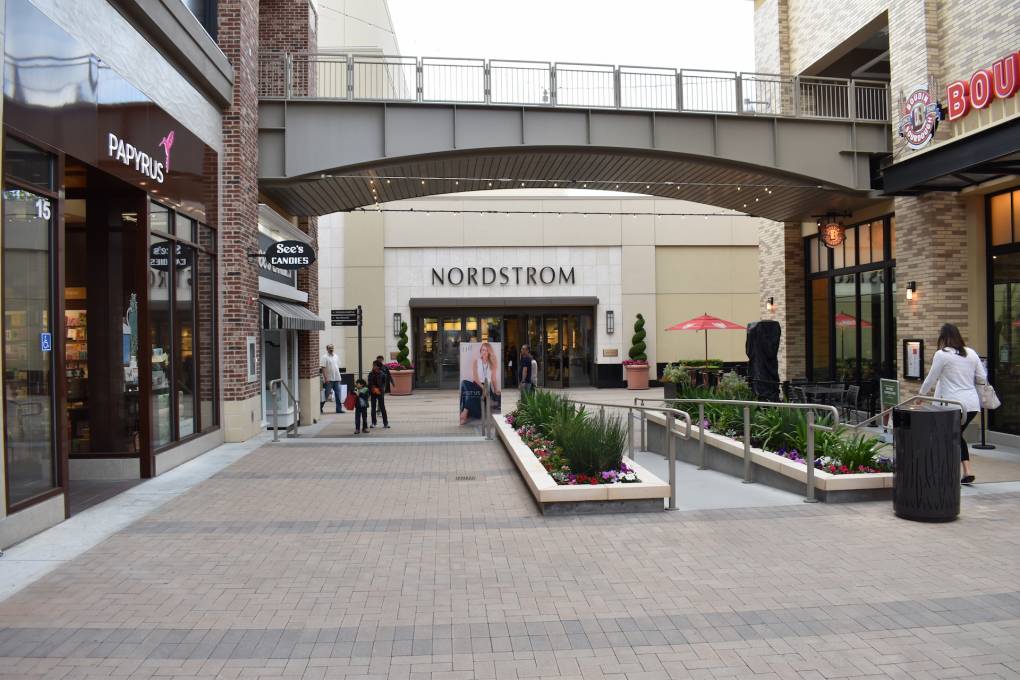
"caption": "The entrance to the Nordstrom store in Walnut Creek, where a group of some 80 people descended on Saturday, stealing thousands of dollars of merchandise. The incident was among a string of Bay Area thefts over the weekend that authorities say are organized robberies.",
"description": null,
"title": "Broadway_Plaza_(Walnut_Creek,_California)_17_2017-04-29",
"credit": "Courtesy Wikimedia",
"status": "inherit",
"altTag": "The entrance to a Nordstrom store in a shopping plaza.",
"isLoading": false,
"fetchFailed": false
},
"news_11891763": {
"type": "attachments",
"id": "news_11891763",
"meta": {
"index": "attachments_1716263798",
"site": "news",
"id": "11891763",
"found": true
},
"parent": 11889092,
"imgSizes": {
"twentyfourteen-full-width": {
"file": "https://ww2.kqed.org/app/uploads/sites/10/2021/10/GettyImages-1233144469-1038x576.jpg",
"width": 1038,
"mimeType": "image/jpeg",
"height": 576
},
"thumbnail": {
"file": "https://ww2.kqed.org/app/uploads/sites/10/2021/10/GettyImages-1233144469-160x107.jpg",
"width": 160,
"mimeType": "image/jpeg",
"height": 107
},
"post-thumbnail": {
"file": "https://ww2.kqed.org/app/uploads/sites/10/2021/10/GettyImages-1233144469-672x372.jpg",
"width": 672,
"mimeType": "image/jpeg",
"height": 372
},
"kqedFullSize": {
"file": "https://ww2.kqed.org/app/uploads/sites/10/2021/10/GettyImages-1233144469-scaled-e1633896843251.jpg",
"width": 1920,
"height": 1280
},
"2048x2048": {
"file": "https://ww2.kqed.org/app/uploads/sites/10/2021/10/GettyImages-1233144469-2048x1365.jpg",
"width": 2048,
"mimeType": "image/jpeg",
"height": 1365
},
"large": {
"file": "https://ww2.kqed.org/app/uploads/sites/10/2021/10/GettyImages-1233144469-1020x680.jpg",
"width": 1020,
"mimeType": "image/jpeg",
"height": 680
},
"1536x1536": {
"file": "https://ww2.kqed.org/app/uploads/sites/10/2021/10/GettyImages-1233144469-1536x1024.jpg",
"width": 1536,
"mimeType": "image/jpeg",
"height": 1024
},
"full-width": {
"file": "https://ww2.kqed.org/app/uploads/sites/10/2021/10/GettyImages-1233144469-1920x1280.jpg",
"width": 1920,
"mimeType": "image/jpeg",
"height": 1280
},
"medium": {
"file": "https://ww2.kqed.org/app/uploads/sites/10/2021/10/GettyImages-1233144469-800x533.jpg",
"width": 800,
"mimeType": "image/jpeg",
"height": 533
}
},
"publishDate": 1633896817,
"modified": 1633994702,
"caption": "VTA employees pay their respects at a memorial where family, friends and community members attend a vigil for the victims of a shooting, at San José City Hall in San José, California, on May 27, 2021. ",
"description": null,
"title": "US-SHOOTING-CALIFORNIA-CRIME",
"credit": "Photo by AMY OSBORNE/AFP via Getty Images",
"status": "inherit",
"altTag": "A line of people in uniform -- neon yellow jackets and dark blue pants with reflective stripes at the knees -- stand before a collection of flowers.",
"isLoading": false,
"fetchFailed": false
},
"news_11890357": {
"type": "attachments",
"id": "news_11890357",
"meta": {
"index": "attachments_1716263798",
"site": "news",
"id": "11890357",
"found": true
},
"parent": 11890341,
"imgSizes": {
"twentyfourteen-full-width": {
"file": "https://ww2.kqed.org/app/uploads/sites/10/2021/09/1997-300-1683-1020x754-1-1020x576.jpg",
"width": 1020,
"mimeType": "image/jpeg",
"height": 576
},
"thumbnail": {
"file": "https://ww2.kqed.org/app/uploads/sites/10/2021/09/1997-300-1683-1020x754-1-160x118.jpg",
"width": 160,
"mimeType": "image/jpeg",
"height": 118
},
"post-thumbnail": {
"file": "https://ww2.kqed.org/app/uploads/sites/10/2021/09/1997-300-1683-1020x754-1-672x372.jpg",
"width": 672,
"mimeType": "image/jpeg",
"height": 372
},
"kqedFullSize": {
"file": "https://ww2.kqed.org/app/uploads/sites/10/2021/09/1997-300-1683-1020x754-1.jpg",
"width": 1020,
"height": 754
},
"medium": {
"file": "https://ww2.kqed.org/app/uploads/sites/10/2021/09/1997-300-1683-1020x754-1-800x591.jpg",
"width": 800,
"mimeType": "image/jpeg",
"height": 591
}
},
"publishDate": 1632874194,
"modified": 1632941803,
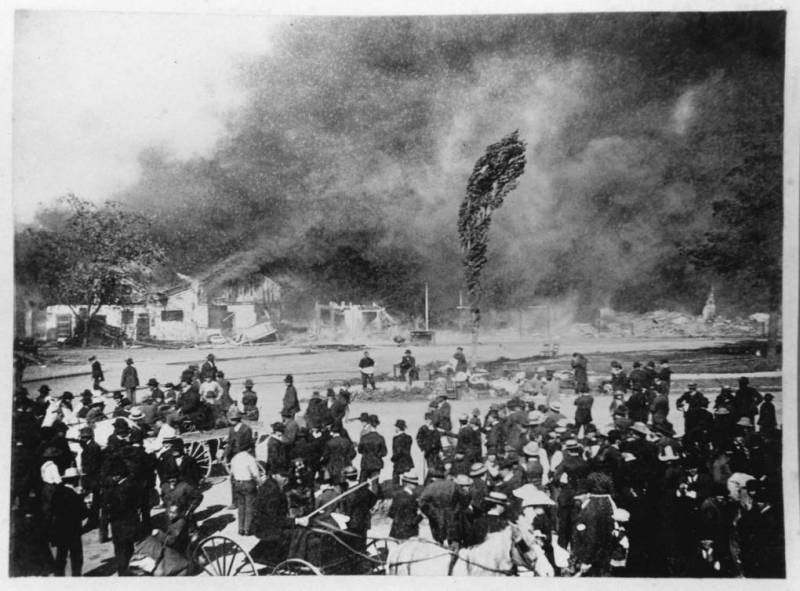
"caption": "The Second Market Street Chinatown burned down in an arson fire in 1887. There were no recorded casualties, but the entire Chinese community in San José was displaced.",
"description": "The Second Market Street Chinatown burned down in an arson fire in 1887. There were no recorded casualties, but the entire Chinese community in San Jose was displaced.",
"title": "1997-300-1683-1020x754",
"credit": "Courtesy of History San Jose",
"status": "inherit",
"altTag": "A black-and-white photo of a crowd watching as multiple structures burn down and a large cloud of smoke rises.",
"isLoading": false,
"fetchFailed": false
},
"news_11886964": {
"type": "attachments",
"id": "news_11886964",
"meta": {
"index": "attachments_1716263798",
"site": "news",
"id": "11886964",
"found": true
},
"parent": 11886880,
"imgSizes": {
"twentyfourteen-full-width": {
"file": "https://ww2.kqed.org/app/uploads/sites/10/2021/08/IMG_0781-1038x576.jpeg",
"width": 1038,
"mimeType": "image/jpeg",
"height": 576
},
"thumbnail": {
"file": "https://ww2.kqed.org/app/uploads/sites/10/2021/08/IMG_0781-160x121.jpeg",
"width": 160,
"mimeType": "image/jpeg",
"height": 121
},
"post-thumbnail": {
"file": "https://ww2.kqed.org/app/uploads/sites/10/2021/08/IMG_0781-672x372.jpeg",
"width": 672,
"mimeType": "image/jpeg",
"height": 372
},
"kqedFullSize": {
"file": "https://ww2.kqed.org/app/uploads/sites/10/2021/08/IMG_0781-scaled.jpeg",
"width": 2560,
"height": 1932
},
"2048x2048": {
"file": "https://ww2.kqed.org/app/uploads/sites/10/2021/08/IMG_0781-2048x1545.jpeg",
"width": 2048,
"mimeType": "image/jpeg",
"height": 1545
},
"large": {
"file": "https://ww2.kqed.org/app/uploads/sites/10/2021/08/IMG_0781-1020x770.jpeg",
"width": 1020,
"mimeType": "image/jpeg",
"height": 770
},
"1536x1536": {
"file": "https://ww2.kqed.org/app/uploads/sites/10/2021/08/IMG_0781-1536x1159.jpeg",
"width": 1536,
"mimeType": "image/jpeg",
"height": 1159
},
"full-width": {
"file": "https://ww2.kqed.org/app/uploads/sites/10/2021/08/IMG_0781-1920x1449.jpeg",
"width": 1920,
"mimeType": "image/jpeg",
"height": 1449
},
"medium": {
"file": "https://ww2.kqed.org/app/uploads/sites/10/2021/08/IMG_0781-800x604.jpeg",
"width": 800,
"mimeType": "image/jpeg",
"height": 604
}
},
"publishDate": 1630422876,
"modified": 1632530649,
"caption": "For close to 70 years, Shuei-Do Manju Shop has been delighting customers with its \"country-style\" mochi, so soft, so fresh, that eating one is like eating a baby cheek — but in a good way.",
"description": "For close to 70 years, Shuei-do Manju Shop has been delighting customers with its \"country-style\" mochi, so soft, so fresh, eating one is like eating a baby cheek, but in a good way.",
"title": "IMG_0781",
"credit": "Rachael Myrow/KQED",
"status": "inherit",
"altTag": "A box of six colorful mochi, with a plastic top and the shop's label on it.",
"isLoading": false,
"fetchFailed": false
},
"news_11886254": {
"type": "attachments",
"id": "news_11886254",
"meta": {
"index": "attachments_1716263798",
"site": "news",
"id": "11886254",
"found": true
},
"parent": 11882522,
"imgSizes": {
"twentyfourteen-full-width": {
"file": "https://ww2.kqed.org/app/uploads/sites/10/2021/08/RS51137_IMG_3259-qut-1038x576.jpg",
"width": 1038,
"mimeType": "image/jpeg",
"height": 576
},
"thumbnail": {
"file": "https://ww2.kqed.org/app/uploads/sites/10/2021/08/RS51137_IMG_3259-qut-160x120.jpg",
"width": 160,
"mimeType": "image/jpeg",
"height": 120
},
"post-thumbnail": {
"file": "https://ww2.kqed.org/app/uploads/sites/10/2021/08/RS51137_IMG_3259-qut-672x372.jpg",
"width": 672,
"mimeType": "image/jpeg",
"height": 372
},
"kqedFullSize": {
"file": "https://ww2.kqed.org/app/uploads/sites/10/2021/08/RS51137_IMG_3259-qut.jpg",
"width": 1920,
"height": 1440
},
"large": {
"file": "https://ww2.kqed.org/app/uploads/sites/10/2021/08/RS51137_IMG_3259-qut-1020x765.jpg",
"width": 1020,
"mimeType": "image/jpeg",
"height": 765
},
"1536x1536": {
"file": "https://ww2.kqed.org/app/uploads/sites/10/2021/08/RS51137_IMG_3259-qut-1536x1152.jpg",
"width": 1536,
"mimeType": "image/jpeg",
"height": 1152
},
"medium": {
"file": "https://ww2.kqed.org/app/uploads/sites/10/2021/08/RS51137_IMG_3259-qut-800x600.jpg",
"width": 800,
"mimeType": "image/jpeg",
"height": 600
}
},
"publishDate": 1629912180,
"modified": 1629912339,
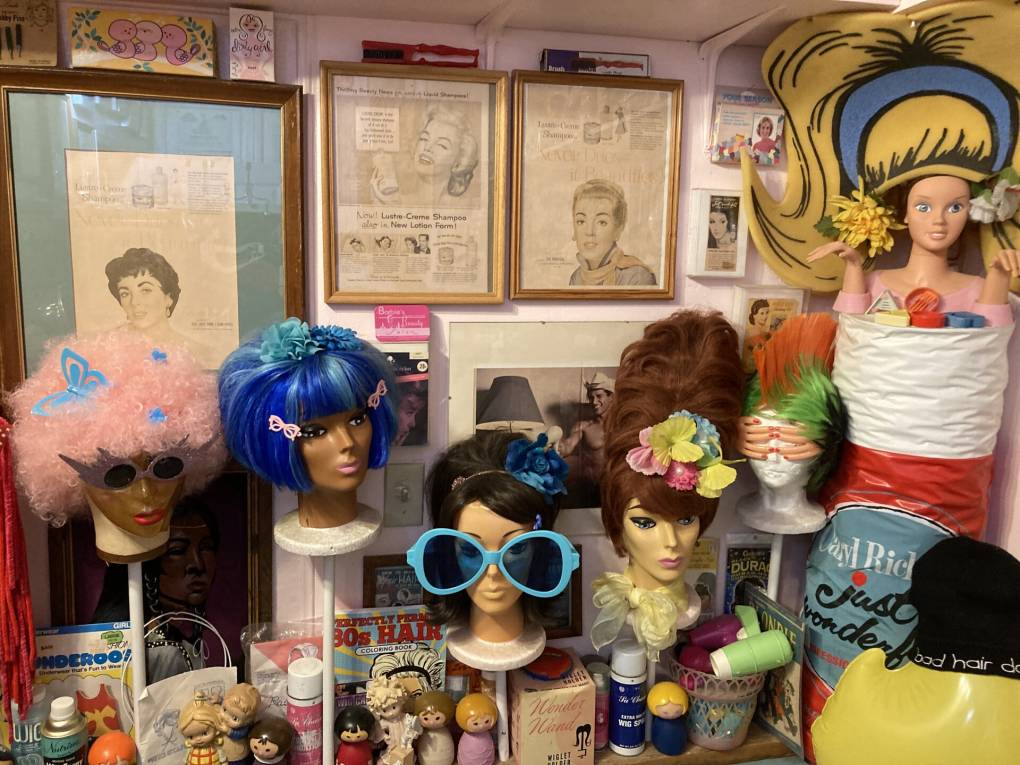
"caption": "Beauty Bubble is covered with vintage ephemera from floor to ceiling. ",
"description": null,
"title": "RS51137_IMG_3259-qut",
"credit": "Peter Gilstrap",
"status": "inherit",
"altTag": null,
"isLoading": false,
"fetchFailed": false
},
"news_11888018": {
"type": "attachments",
"id": "news_11888018",
"meta": {
"index": "attachments_1716263798",
"site": "news",
"id": "11888018",
"found": true
},
"parent": 11887630,
"imgSizes": {
"twentyfourteen-full-width": {
"file": "https://ww2.kqed.org/app/uploads/sites/10/2021/09/RS51406_021_Fremont_MaiwandMarket_08272021-qut-1038x576.jpg",
"width": 1038,
"mimeType": "image/jpeg",
"height": 576
},
"thumbnail": {
"file": "https://ww2.kqed.org/app/uploads/sites/10/2021/09/RS51406_021_Fremont_MaiwandMarket_08272021-qut-160x107.jpg",
"width": 160,
"mimeType": "image/jpeg",
"height": 107
},
"post-thumbnail": {
"file": "https://ww2.kqed.org/app/uploads/sites/10/2021/09/RS51406_021_Fremont_MaiwandMarket_08272021-qut-672x372.jpg",
"width": 672,
"mimeType": "image/jpeg",
"height": 372
},
"kqedFullSize": {
"file": "https://ww2.kqed.org/app/uploads/sites/10/2021/09/RS51406_021_Fremont_MaiwandMarket_08272021-qut.jpg",
"width": 1920,
"height": 1280
},
"large": {
"file": "https://ww2.kqed.org/app/uploads/sites/10/2021/09/RS51406_021_Fremont_MaiwandMarket_08272021-qut-1020x680.jpg",
"width": 1020,
"mimeType": "image/jpeg",
"height": 680
},
"1536x1536": {
"file": "https://ww2.kqed.org/app/uploads/sites/10/2021/09/RS51406_021_Fremont_MaiwandMarket_08272021-qut-1536x1024.jpg",
"width": 1536,
"mimeType": "image/jpeg",
"height": 1024
},
"medium": {
"file": "https://ww2.kqed.org/app/uploads/sites/10/2021/09/RS51406_021_Fremont_MaiwandMarket_08272021-qut-800x533.jpg",
"width": 800,
"mimeType": "image/jpeg",
"height": 533
}
},
"publishDate": 1631299404,
"modified": 1631308919,
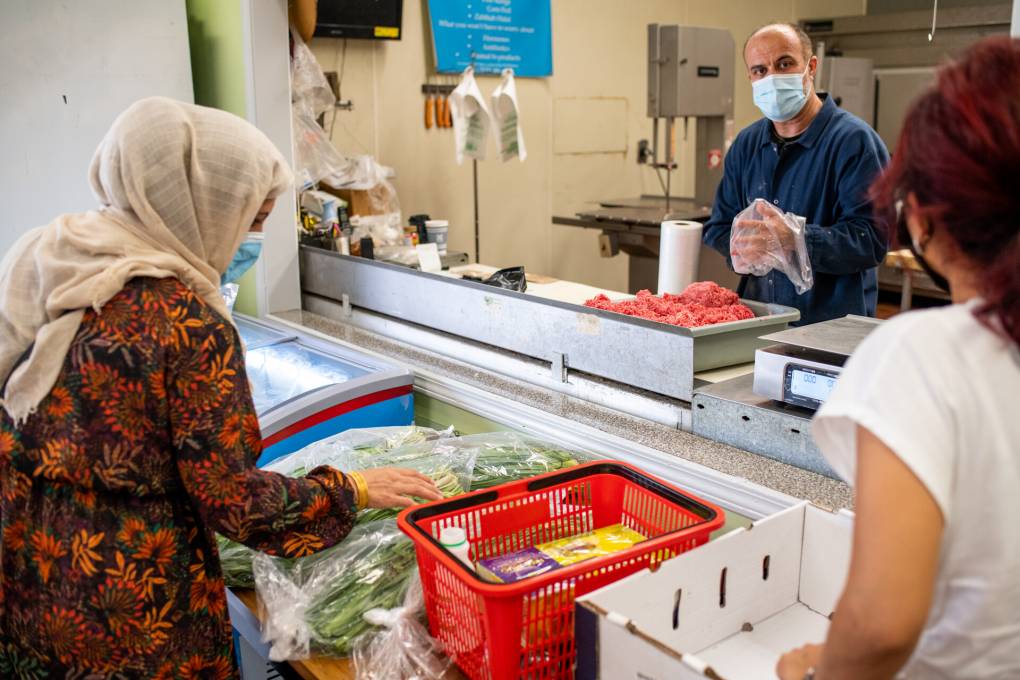
"caption": "A butcher helps customers at Maiwand Market in Fremont — a staple for many in the Afghan community — on Aug. 27, 2021.",
"description": "A butcher helps customers at Maiwand Market in Fremont – a staple for many in the Afghan community – on Aug. 27, 2021.",
"title": "RS51406_021_Fremont_MaiwandMarket_08272021-qut",
"credit": "Beth LaBerge/KQED",
"status": "inherit",
"altTag": null,
"isLoading": false,
"fetchFailed": false
},
"news_11885542": {
"type": "attachments",
"id": "news_11885542",
"meta": {
"index": "attachments_1716263798",
"site": "news",
"id": "11885542",
"found": true
},
"parent": 11885541,
"imgSizes": {
"twentyfourteen-full-width": {
"file": "https://ww2.kqed.org/app/uploads/sites/10/2021/08/RS49542_011_SanJose_VTAShootingPressBriefing_05262021-qut-1038x576.jpg",
"width": 1038,
"mimeType": "image/jpeg",
"height": 576
},
"thumbnail": {
"file": "https://ww2.kqed.org/app/uploads/sites/10/2021/08/RS49542_011_SanJose_VTAShootingPressBriefing_05262021-qut-160x107.jpg",
"width": 160,
"mimeType": "image/jpeg",
"height": 107
},
"post-thumbnail": {
"file": "https://ww2.kqed.org/app/uploads/sites/10/2021/08/RS49542_011_SanJose_VTAShootingPressBriefing_05262021-qut-672x372.jpg",
"width": 672,
"mimeType": "image/jpeg",
"height": 372
},
"kqedFullSize": {
"file": "https://ww2.kqed.org/app/uploads/sites/10/2021/08/RS49542_011_SanJose_VTAShootingPressBriefing_05262021-qut.jpg",
"width": 1920,
"height": 1280
},
"large": {
"file": "https://ww2.kqed.org/app/uploads/sites/10/2021/08/RS49542_011_SanJose_VTAShootingPressBriefing_05262021-qut-1020x680.jpg",
"width": 1020,
"mimeType": "image/jpeg",
"height": 680
},
"1536x1536": {
"file": "https://ww2.kqed.org/app/uploads/sites/10/2021/08/RS49542_011_SanJose_VTAShootingPressBriefing_05262021-qut-1536x1024.jpg",
"width": 1536,
"mimeType": "image/jpeg",
"height": 1024
},
"medium": {
"file": "https://ww2.kqed.org/app/uploads/sites/10/2021/08/RS49542_011_SanJose_VTAShootingPressBriefing_05262021-qut-800x533.jpg",
"width": 800,
"mimeType": "image/jpeg",
"height": 533
}
},
"publishDate": 1629308054,
"modified": 1629333527,
"caption": "Santa Clara County Sheriff Laurie Smith speaks during a press briefing across from the First Street VTA service yard in San José where a mass shooting took place on May 26, 2021. Several politicians in Santa Clara County called for investigations of Smith's office this week.",
"description": "Santa Clara County Sheriff Laurie Smith speaks during a press briefing across from the First Street VTA service yard in San Jose where a mass shooting took place on May 26, 2021.",
"title": "RS49542_011_SanJose_VTAShootingPressBriefing_05262021-qut",
"credit": "Beth LaBerge/KQED",
"status": "inherit",
"altTag": "A person with long, blonde hair speaks to a crowd. They are wearing law enforcement uniform and behind them are trees.",
"isLoading": false,
"fetchFailed": false
},
"news_11875603": {
"type": "attachments",
"id": "news_11875603",
"meta": {
"index": "attachments_1716263798",
"site": "news",
"id": "11875603",
"found": true
},
"parent": 11875602,
"imgSizes": {
"twentyfourteen-full-width": {
"file": "https://ww2.kqed.org/app/uploads/sites/10/2021/05/ap_21146605202057-d42dc63ad53bca04f809ddc1e00e078f4f9b761d-1038x576.jpg",
"width": 1038,
"mimeType": "image/jpeg",
"height": 576
},
"thumbnail": {
"file": "https://ww2.kqed.org/app/uploads/sites/10/2021/05/ap_21146605202057-d42dc63ad53bca04f809ddc1e00e078f4f9b761d-160x120.jpg",
"width": 160,
"mimeType": "image/jpeg",
"height": 120
},
"post-thumbnail": {
"file": "https://ww2.kqed.org/app/uploads/sites/10/2021/05/ap_21146605202057-d42dc63ad53bca04f809ddc1e00e078f4f9b761d-672x372.jpg",
"width": 672,
"mimeType": "image/jpeg",
"height": 372
},
"kqedFullSize": {
"file": "https://ww2.kqed.org/app/uploads/sites/10/2021/05/ap_21146605202057-d42dc63ad53bca04f809ddc1e00e078f4f9b761d-scaled-e1622136559352.jpg",
"width": 1920,
"height": 1440
},
"2048x2048": {
"file": "https://ww2.kqed.org/app/uploads/sites/10/2021/05/ap_21146605202057-d42dc63ad53bca04f809ddc1e00e078f4f9b761d-2048x1536.jpg",
"width": 2048,
"mimeType": "image/jpeg",
"height": 1536
},
"large": {
"file": "https://ww2.kqed.org/app/uploads/sites/10/2021/05/ap_21146605202057-d42dc63ad53bca04f809ddc1e00e078f4f9b761d-1020x765.jpg",
"width": 1020,
"mimeType": "image/jpeg",
"height": 765
},
"1536x1536": {
"file": "https://ww2.kqed.org/app/uploads/sites/10/2021/05/ap_21146605202057-d42dc63ad53bca04f809ddc1e00e078f4f9b761d-1536x1152.jpg",
"width": 1536,
"mimeType": "image/jpeg",
"height": 1152
},
"full-width": {
"file": "https://ww2.kqed.org/app/uploads/sites/10/2021/05/ap_21146605202057-d42dc63ad53bca04f809ddc1e00e078f4f9b761d-1920x1440.jpg",
"width": 1920,
"mimeType": "image/jpeg",
"height": 1440
},
"medium": {
"file": "https://ww2.kqed.org/app/uploads/sites/10/2021/05/ap_21146605202057-d42dc63ad53bca04f809ddc1e00e078f4f9b761d-800x600.jpg",
"width": 800,
"mimeType": "image/jpeg",
"height": 600
}
},
"publishDate": 1622134547,
"modified": 1622136696,
"caption": "Law enforcement officers respond to the scene of a shooting at a Santa Clara Valley Transportation Authority facility on Wednesday, May 26, 2021, in San Jose.",
"description": "Law enforcement officers respond to the scene of a shooting at a Santa Clara Valley Transportation Authority facility on Wednesday, May 26, 2021, in San Jose.",
"title": "Law enforcement officers respond to a mass shooting at a Santa Clara Valley Transportation Authority facility on Wednesday in San Jose, Calif. A Santa Clara County sheriff's spokesman said the rail yard shooting left multiple people, including the shooter, dead.",
"credit": "Noah Berger/AP",
"status": "inherit",
"altTag": null,
"isLoading": false,
"fetchFailed": false
},
"news_11875551": {
"type": "attachments",
"id": "news_11875551",
"meta": {
"index": "attachments_1716263798",
"site": "news",
"id": "11875551",
"found": true
},
"parent": 11875404,
"imgSizes": {
"twentyfourteen-full-width": {
"file": "https://ww2.kqed.org/app/uploads/sites/10/2021/05/Liccardo-VTA-Shooting-Presser-1038x576.jpg",
"width": 1038,
"mimeType": "image/jpeg",
"height": 576
},
"thumbnail": {
"file": "https://ww2.kqed.org/app/uploads/sites/10/2021/05/Liccardo-VTA-Shooting-Presser-160x107.jpg",
"width": 160,
"mimeType": "image/jpeg",
"height": 107
},
"post-thumbnail": {
"file": "https://ww2.kqed.org/app/uploads/sites/10/2021/05/Liccardo-VTA-Shooting-Presser-672x372.jpg",
"width": 672,
"mimeType": "image/jpeg",
"height": 372
},
"kqedFullSize": {
"file": "https://ww2.kqed.org/app/uploads/sites/10/2021/05/Liccardo-VTA-Shooting-Presser.jpg",
"width": 1620,
"height": 1080
},
"large": {
"file": "https://ww2.kqed.org/app/uploads/sites/10/2021/05/Liccardo-VTA-Shooting-Presser-1020x680.jpg",
"width": 1020,
"mimeType": "image/jpeg",
"height": 680
},
"1536x1536": {
"file": "https://ww2.kqed.org/app/uploads/sites/10/2021/05/Liccardo-VTA-Shooting-Presser-1536x1024.jpg",
"width": 1536,
"mimeType": "image/jpeg",
"height": 1024
},
"medium": {
"file": "https://ww2.kqed.org/app/uploads/sites/10/2021/05/Liccardo-VTA-Shooting-Presser-800x533.jpg",
"width": 800,
"mimeType": "image/jpeg",
"height": 533
}
},
"publishDate": 1622075134,
"modified": 1622075229,
"caption": "Mayor Sam Liccardo speaks at a press conference following Wednesday's mass shooting at a VTA rail yard in San Jose.",
"description": "Mayor Sam Liccardo speaks at a press conference following Wednesday's mass shooting at a VTA rail yard in San Jose.",
"title": "Liccardo-VTA-Shooting-Presser",
"credit": "Beth LaBerge/KQED",
"status": "inherit",
"altTag": null,
"isLoading": false,
"fetchFailed": false
},
"news_11879731": {
"type": "attachments",
"id": "news_11879731",
"meta": {
"index": "attachments_1716263798",
"site": "news",
"id": "11879731",
"found": true
},
"parent": 11879717,
"imgSizes": {
"twentyfourteen-full-width": {
"file": "https://ww2.kqed.org/app/uploads/sites/10/2021/06/RS49568_014_SanJose_FleaMarket_05262021-qut-1-1038x576.jpg",
"width": 1038,
"mimeType": "image/jpeg",
"height": 576
},
"thumbnail": {
"file": "https://ww2.kqed.org/app/uploads/sites/10/2021/06/RS49568_014_SanJose_FleaMarket_05262021-qut-1-160x107.jpg",
"width": 160,
"mimeType": "image/jpeg",
"height": 107
},
"post-thumbnail": {
"file": "https://ww2.kqed.org/app/uploads/sites/10/2021/06/RS49568_014_SanJose_FleaMarket_05262021-qut-1-672x372.jpg",
"width": 672,
"mimeType": "image/jpeg",
"height": 372
},
"kqedFullSize": {
"file": "https://ww2.kqed.org/app/uploads/sites/10/2021/06/RS49568_014_SanJose_FleaMarket_05262021-qut-1.jpg",
"width": 1920,
"height": 1280
},
"large": {
"file": "https://ww2.kqed.org/app/uploads/sites/10/2021/06/RS49568_014_SanJose_FleaMarket_05262021-qut-1-1020x680.jpg",
"width": 1020,
"mimeType": "image/jpeg",
"height": 680
},
"1536x1536": {
"file": "https://ww2.kqed.org/app/uploads/sites/10/2021/06/RS49568_014_SanJose_FleaMarket_05262021-qut-1-1536x1024.jpg",
"width": 1536,
"mimeType": "image/jpeg",
"height": 1024
},
"medium": {
"file": "https://ww2.kqed.org/app/uploads/sites/10/2021/06/RS49568_014_SanJose_FleaMarket_05262021-qut-1-800x533.jpg",
"width": 800,
"mimeType": "image/jpeg",
"height": 533
}
},
"publishDate": 1624993611,
"modified": 1625012203,
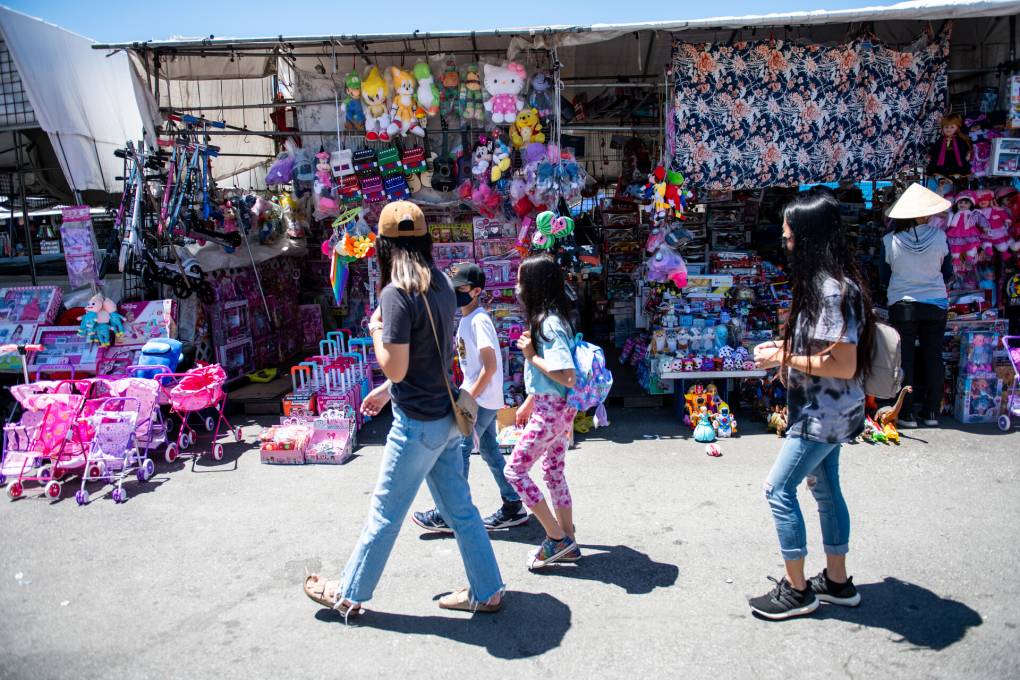
"caption": "A family walks past a stall selling toys at the San Jose Flea Market on May 26, 2021. On Tuesday, the City Council approved a plan to rezone the 60-acre property after its owners and vendors reached a deal.",
"description": "A family walks past a stall selling toys at the San Jose Flea Market on May 26, 2021.",
"title": "RS49568_014_SanJose_FleaMarket_05262021-qut (1)",
"credit": "Beth LaBerge/KQED",
"status": "inherit",
"altTag": null,
"isLoading": false,
"fetchFailed": false
},
"news_11878778": {
"type": "attachments",
"id": "news_11878778",
"meta": {
"index": "attachments_1716263798",
"site": "news",
"id": "11878778",
"found": true
},
"parent": 11878548,
"imgSizes": {
"twentyfourteen-full-width": {
"file": "https://ww2.kqed.org/app/uploads/sites/10/2021/06/20210528_134048-1038x576.jpg",
"width": 1038,
"mimeType": "image/jpeg",
"height": 576
},
"thumbnail": {
"file": "https://ww2.kqed.org/app/uploads/sites/10/2021/06/20210528_134048-160x107.jpg",
"width": 160,
"mimeType": "image/jpeg",
"height": 107
},
"post-thumbnail": {
"file": "https://ww2.kqed.org/app/uploads/sites/10/2021/06/20210528_134048-672x372.jpg",
"width": 672,
"mimeType": "image/jpeg",
"height": 372
},
"kqedFullSize": {
"file": "https://ww2.kqed.org/app/uploads/sites/10/2021/06/20210528_134048-scaled.jpg",
"width": 2560,
"height": 1710
},
"2048x2048": {
"file": "https://ww2.kqed.org/app/uploads/sites/10/2021/06/20210528_134048-2048x1368.jpg",
"width": 2048,
"mimeType": "image/jpeg",
"height": 1368
},
"large": {
"file": "https://ww2.kqed.org/app/uploads/sites/10/2021/06/20210528_134048-1020x681.jpg",
"width": 1020,
"mimeType": "image/jpeg",
"height": 681
},
"1536x1536": {
"file": "https://ww2.kqed.org/app/uploads/sites/10/2021/06/20210528_134048-1536x1026.jpg",
"width": 1536,
"mimeType": "image/jpeg",
"height": 1026
},
"full-width": {
"file": "https://ww2.kqed.org/app/uploads/sites/10/2021/06/20210528_134048-1920x1282.jpg",
"width": 1920,
"mimeType": "image/jpeg",
"height": 1282
},
"medium": {
"file": "https://ww2.kqed.org/app/uploads/sites/10/2021/06/20210528_134048-800x534.jpg",
"width": 800,
"mimeType": "image/jpeg",
"height": 534
}
},
"publishDate": 1624301829,
"modified": 1624558764,
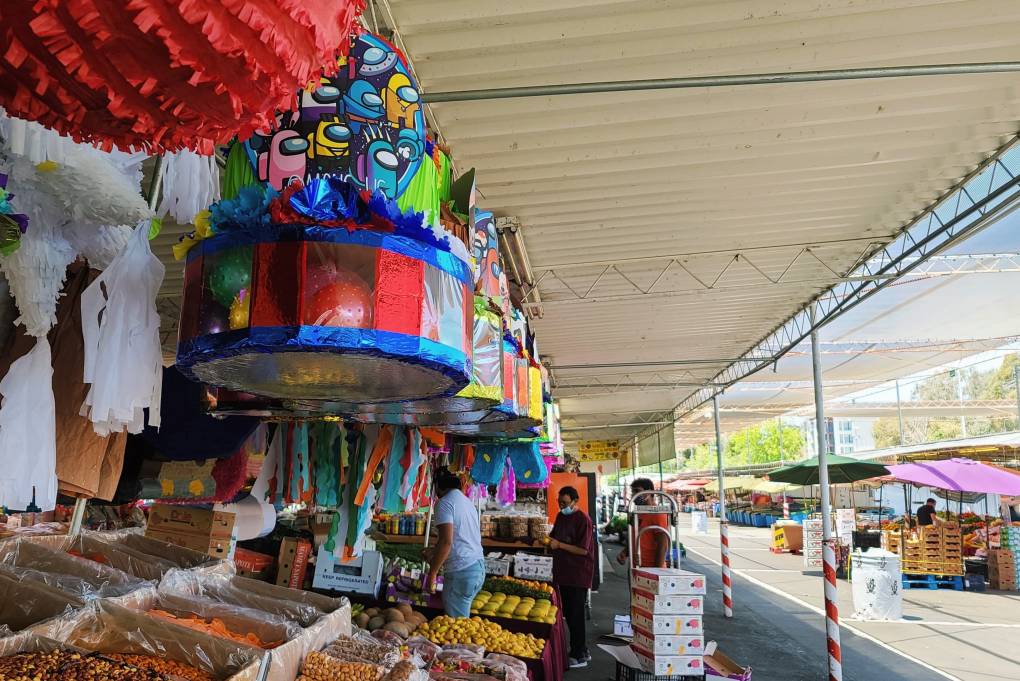
"caption": "A stall at the San Jose Flea Market on May 28, 2021 that sells piñatas, dry fruit, nuts, sweets and other snacks. La Pulga, as the outdoor market is known in Spanish, is home to hundreds of vendors. Many of them would likely be displaced if the property's owners get the go-ahead from the city to build a major new development on the site.",
"description": "A stall at the San Jose Flea Market that sells piñatas, dry fruit, nuts, sweets and other snacks on May 28, 2021. The San Jose Flea Market, or La Pulga as it's known in Spanish, is an outdoor market that sits on roughly 60 acres of land and is home to hundreds of of outdoor stalls that sell everything from furniture to vegetables to clothing.",
"title": "20210528_134048",
"credit": "Carlos Cabrera-Lomelí/KQED",
"status": "inherit",
"altTag": "A piñata stand, with piñatas all around, next to a fruit and vegetable stand, some workers are visible moving boxes in the background.",
"isLoading": false,
"fetchFailed": false
},
"news_11761257": {
"type": "attachments",
"id": "news_11761257",
"meta": {
"index": "attachments_1716263798",
"site": "news",
"id": "11761257",
"found": true
},
"parent": 11761244,
"imgSizes": {
"apple_news_ca_landscape_5_5": {
"file": "https://ww2.kqed.org/app/uploads/sites/10/2019/07/thumbnail_IMG_7650-1044x783.jpg",
"width": 1044,
"mimeType": "image/jpeg",
"height": 783
},
"apple_news_ca_square_4_0": {
"file": "https://ww2.kqed.org/app/uploads/sites/10/2019/07/thumbnail_IMG_7650-470x470.jpg",
"width": 470,
"mimeType": "image/jpeg",
"height": 470
},
"twentyfourteen-full-width": {
"file": "https://ww2.kqed.org/app/uploads/sites/10/2019/07/thumbnail_IMG_7650-1038x576.jpg",
"width": 1038,
"mimeType": "image/jpeg",
"height": 576
},
"thumbnail": {
"file": "https://ww2.kqed.org/app/uploads/sites/10/2019/07/thumbnail_IMG_7650-160x107.jpg",
"width": 160,
"mimeType": "image/jpeg",
"height": 107
},
"post-thumbnail": {
"file": "https://ww2.kqed.org/app/uploads/sites/10/2019/07/thumbnail_IMG_7650-672x372.jpg",
"width": 672,
"mimeType": "image/jpeg",
"height": 372
},
"kqedFullSize": {
"file": "https://ww2.kqed.org/app/uploads/sites/10/2019/07/thumbnail_IMG_7650.jpg",
"width": 1280,
"height": 853
},
"apple_news_ca_landscape_4_7": {
"file": "https://ww2.kqed.org/app/uploads/sites/10/2019/07/thumbnail_IMG_7650-632x474.jpg",
"width": 632,
"mimeType": "image/jpeg",
"height": 474
},
"large": {
"file": "https://ww2.kqed.org/app/uploads/sites/10/2019/07/thumbnail_IMG_7650-1020x680.jpg",
"width": 1020,
"mimeType": "image/jpeg",
"height": 680
},
"complete_open_graph": {
"file": "https://ww2.kqed.org/app/uploads/sites/10/2019/07/thumbnail_IMG_7650-1200x800.jpg",
"width": 1200,
"mimeType": "image/jpeg",
"height": 800
},
"apple_news_ca_landscape_4_0": {
"file": "https://ww2.kqed.org/app/uploads/sites/10/2019/07/thumbnail_IMG_7650-536x402.jpg",
"width": 536,
"mimeType": "image/jpeg",
"height": 402
},
"apple_news_ca_portrait_12_9": {
"file": "https://ww2.kqed.org/app/uploads/sites/10/2019/07/thumbnail_IMG_7650-1122x853.jpg",
"width": 1122,
"mimeType": "image/jpeg",
"height": 853
},
"medium": {
"file": "https://ww2.kqed.org/app/uploads/sites/10/2019/07/thumbnail_IMG_7650-800x533.jpg",
"width": 800,
"mimeType": "image/jpeg",
"height": 533
},
"apple_news_ca_portrait_4_0": {
"file": "https://ww2.kqed.org/app/uploads/sites/10/2019/07/thumbnail_IMG_7650-354x472.jpg",
"width": 354,
"mimeType": "image/jpeg",
"height": 472
},
"apple_news_ca_portrait_9_7": {
"file": "https://ww2.kqed.org/app/uploads/sites/10/2019/07/thumbnail_IMG_7650-840x853.jpg",
"width": 840,
"mimeType": "image/jpeg",
"height": 853
},
"apple_news_ca_square_9_7": {
"file": "https://ww2.kqed.org/app/uploads/sites/10/2019/07/thumbnail_IMG_7650-1104x853.jpg",
"width": 1104,
"mimeType": "image/jpeg",
"height": 853
},
"apple_news_ca_portrait_4_7": {
"file": "https://ww2.kqed.org/app/uploads/sites/10/2019/07/thumbnail_IMG_7650-414x552.jpg",
"width": 414,
"mimeType": "image/jpeg",
"height": 552
},
"apple_news_ca_portrait_5_5": {
"file": "https://ww2.kqed.org/app/uploads/sites/10/2019/07/thumbnail_IMG_7650-687x853.jpg",
"width": 687,
"mimeType": "image/jpeg",
"height": 853
},
"apple_news_ca_square_4_7": {
"file": "https://ww2.kqed.org/app/uploads/sites/10/2019/07/thumbnail_IMG_7650-550x550.jpg",
"width": 550,
"mimeType": "image/jpeg",
"height": 550
},
"apple_news_ca_square_5_5": {
"file": "https://ww2.kqed.org/app/uploads/sites/10/2019/07/thumbnail_IMG_7650-912x853.jpg",
"width": 912,
"mimeType": "image/jpeg",
"height": 853
}
},
"publishDate": 1563153050,
"modified": 1623967497,
"caption": "Produce vendor Ramon Garcia sells fruit at the San Jose Flea Market on July 14, 2019.",
"description": null,
"title": "thumbnail_IMG_7650",
"credit": "Sara Hossaini/KQED",
"status": "inherit",
"altTag": null,
"isLoading": false,
"fetchFailed": false
}
},
"audioPlayerReducer": {
"postId": "stream_live",
"isPaused": true,
"isPlaying": false,
"pfsActive": false,
"pledgeModalIsOpen": true,
"playerDrawerIsOpen": false,
"liveAudioPlayStartedAt": 0,
"liveAudioPlayContext": ""
},
"authorsReducer": {
"byline_news_11897148": {
"type": "authors",
"id": "byline_news_11897148",
"meta": {
"override": true
},
"slug": "byline_news_11897148",
"name": "Olga Rodriguez\u003cbr>Associated Press",
"isLoading": false
},
"byline_news_11890341": {
"type": "authors",
"id": "byline_news_11890341",
"meta": {
"override": true
},
"slug": "byline_news_11890341",
"name": "Olga R. Rodriguez\u003cbr>The Associated Press",
"isLoading": false
},
"byline_news_11880041": {
"type": "authors",
"id": "byline_news_11880041",
"meta": {
"override": true
},
"slug": "byline_news_11880041",
"name": "The Associated Press",
"isLoading": false
},
"rachael-myrow": {
"type": "authors",
"id": "251",
"meta": {
"index": "authors_1716337520",
"id": "251",
"found": true
},
"name": "Rachael Myrow",
"firstName": "Rachael",
"lastName": "Myrow",
"slug": "rachael-myrow",
"email": "rmyrow@kqed.org",
"display_author_email": true,
"staff_mastheads": [
"news"
],
"title": "Senior Editor of KQED's Silicon Valley News Desk",
"bio": "• I write and edit stories about how Silicon Valley power and policies shape everyday life in California. I’m also passionate about making Bay Area history and culture more accessible to a broad public. • I’ve been a journalist for most of my life, starting in high school with The Franklin Press in Los Angeles, where I grew up. While earning my first degree in English at UC Berkeley, I got my start in public radio at KALX-FM. After completing a second degree in journalism at Cal, I landed my first professional job at Marketplace, then moved on to KPCC (now LAist), and then KQED, where I hosted The California Report for more than seven years. • My reporting has appeared on NPR, The World, WBUR’s \u003ci>Here & Now\u003c/i>, and the BBC. I also guest host for KQED’s \u003ci>Forum\u003c/i>, as well as the Commonwealth Club in San Francisco. • I speak periodically on media, democracy and technology issues, and do voiceover work for documentaries and educational video projects. • Outside of the studio, you'll find me hiking Bay Area trails and whipping up Insta-ready meals in my kitchen. • I do not accept gifts, money, or favors from anyone connected to my reporting, I don't pay people for information, and I do not support or donate to political causes. • I strive to treat the people I report on with fairness, honesty, and respect. I also recognize there are often multiple sides to a story and work to verify information through multiple sources and documentation. If I get something wrong, I correct it.",
"avatar": "https://secure.gravatar.com/avatar/3ed8a3c5f26025e4a805ba634cda8cd764906b97438a6d9ce216b044e340da4e?s=600&d=blank&r=g",
"twitter": "rachaelmyrow",
"bluesky": null,
"facebook": null,
"instagram": null,
"linkedin": "https://www.linkedin.com/in/rachaelmyrow/",
"sites": [
{
"site": "arts",
"roles": [
"administrator"
]
},
{
"site": "news",
"roles": [
"edit_others_posts",
"editor"
]
},
{
"site": "futureofyou",
"roles": [
"editor"
]
},
{
"site": "bayareabites",
"roles": [
"editor"
]
},
{
"site": "stateofhealth",
"roles": [
"editor"
]
},
{
"site": "science",
"roles": [
"editor"
]
},
{
"site": "food",
"roles": [
"editor"
]
},
{
"site": "forum",
"roles": [
"editor"
]
},
{
"site": "liveblog",
"roles": [
"author"
]
}
],
"headData": {
"title": "Rachael Myrow | KQED",
"description": "Senior Editor of KQED's Silicon Valley News Desk",
"ogImgSrc": "https://secure.gravatar.com/avatar/3ed8a3c5f26025e4a805ba634cda8cd764906b97438a6d9ce216b044e340da4e?s=600&d=blank&r=g",
"twImgSrc": "https://secure.gravatar.com/avatar/3ed8a3c5f26025e4a805ba634cda8cd764906b97438a6d9ce216b044e340da4e?s=600&d=blank&r=g"
},
"isLoading": false,
"link": "/author/rachael-myrow"
},
"aemslie": {
"type": "authors",
"id": "3206",
"meta": {
"index": "authors_1716337520",
"id": "3206",
"found": true
},
"name": "Alex Emslie",
"firstName": "Alex",
"lastName": "Emslie",
"slug": "aemslie",
"email": "aemslie@kqed.org",
"display_author_email": true,
"staff_mastheads": [
"news"
],
"title": "KQED Senior Editor",
"bio": "Alex Emslie is senior editor of talent and development at KQED, where he manages dozens of early career journalists and oversees news department internships.\r\n\r\nHe is a former carpenter and proud graduate of City College of San Francisco and San Francisco State University, where he studied journalism and criminal justice before joining KQED in 2013.\r\n\r\nAlex produced investigative journalism focused on \u003ca href=\"https://www.kqed.org/news/11667594/the-trials-of-marvin-mutch-video\">criminal justice\u003c/a> and policing for most of a decade. He has broken major stories about \u003ca href=\"https://www.kqed.org/news/135682/amid-a-series-of-vallejo-police-shootings-one-officers-name-stands-out\">police use of deadly force\u003c/a>, \u003ca href=\"https://www.kqed.org/news/10454955/racist-texts-prompt-sfpd-internal-investigation\">officer misconduct\u003c/a> and \u003ca href=\"https://www.kqed.org/news/11712239/terrorist-or-troll-judge-to-weigh-whether-oakland-man-really-intended-to-attack-bay-area\">other\u003c/a> \u003ca href=\"https://www.kqed.org/news/11221414/hayward-paid-159000-to-husband-of-retired-police-chief-documents-show\">high\u003c/a>-\u003ca href=\"https://www.kqed.org/news/10622762/the-forgotten-tracking-two-homicides-in-san-francisco-public-housing\">profile\u003c/a> \u003ca href=\"https://www.kqed.org/news/11624516/federal-agency-promoted-ranger-just-months-after-his-gun-was-stolen-and-used-in-steinle-killing\">cases\u003c/a>. He co-founded the \u003ca href=\"https://projects.scpr.org/california-reporting-project/\">California Reporting Project\u003c/a> in 2019 to obtain and report on previously confidential police internal investigations. The effort produced well over 100 original stories and changed the course of multiple criminal cases.\r\n\r\nHis work has been recognized with numerous journalism awards, including a national Edward R. Murrow award for several years of \u003ca href=\"https://www.kqed.org/news/11688481/sfpd-officers-in-mario-woods-case-recount-shooting-in-newly-filed-depositions\">reporting\u003c/a> on the San Francisco Police shooting of Mario Woods. His \u003ca href=\"https://www.kqed.org/news/147854/half-of-those-killed-by-san-francisco-police-are-mentally-ill\">reporting\u003c/a> on police killings of people in psychiatric crisis was cited in amicus briefs before the U.S. Supreme Court.\r\n\r\nAlex now enjoys mentoring the next generation of journalists at KQED.",
"avatar": "https://secure.gravatar.com/avatar/e691e65209f20e9da202bd730ead5663?s=600&d=blank&r=g",
"twitter": "SFNewsReporter",
"facebook": null,
"instagram": null,
"linkedin": null,
"sites": [
{
"site": "arts",
"roles": [
"editor"
]
},
{
"site": "news",
"roles": [
"editor"
]
},
{
"site": "mindshift",
"roles": [
"editor"
]
},
{
"site": "stateofhealth",
"roles": [
"editor"
]
},
{
"site": "science",
"roles": [
"administrator"
]
}
],
"headData": {
"title": "Alex Emslie | KQED",
"description": "KQED Senior Editor",
"ogImgSrc": "https://secure.gravatar.com/avatar/e691e65209f20e9da202bd730ead5663?s=600&d=blank&r=g",
"twImgSrc": "https://secure.gravatar.com/avatar/e691e65209f20e9da202bd730ead5663?s=600&d=blank&r=g"
},
"isLoading": false,
"link": "/author/aemslie"
},
"dkatayama": {
"type": "authors",
"id": "7240",
"meta": {
"index": "authors_1716337520",
"id": "7240",
"found": true
},
"name": "Devin Katayama",
"firstName": "Devin",
"lastName": "Katayama",
"slug": "dkatayama",
"email": "dkatayama@kqed.org",
"display_author_email": true,
"staff_mastheads": [
"news"
],
"title": "Editor of Talent and Development",
"bio": "Devin Katayama is former Editor of Talent and Development for KQED. He supported our internship program and on-call staff by looking for equitable opportunities to improve the newsroom.\r\n\r\nHe previously hosted The Bay and American Suburb podcasts from KQED News. Prior to returning to the Bay Area in 2015, Devin was the education reporter for WFPL in Louisville and worked as a producer with radio stations in Chicago and Portland, OR. His work has appeared on NPR’s \u003cem>Morning Edition, All Things Considered, The Takeaway\u003c/em> and \u003cem>Here and Now.\u003c/em>\r\n\r\nDevin earned his MA in Journalism from Columbia College Chicago, where he was a Follett Fellow and the recipient of the 2011 Studs Terkel Community Media Workshop Scholarship for his story on Chicago's homeless youth. He won WBUR's 2014 Daniel Schorr award and a regional RTNDA Edward R. Murrow Award for his documentary \"At Risk\" that looked at issues facing some of Louisville's students. Devin has also received numerous local awards from the Associated Press and the Society of Professional Journalists.",
"avatar": "https://secure.gravatar.com/avatar/d0d2978a31002fb2de107921a8e18405?s=600&d=blank&r=g",
"twitter": "RadioDevin",
"facebook": null,
"instagram": null,
"linkedin": null,
"sites": [
{
"site": "arts",
"roles": []
},
{
"site": "news",
"roles": [
"author"
]
},
{
"site": "stateofhealth",
"roles": [
"author"
]
},
{
"site": "forum",
"roles": [
"editor"
]
},
{
"site": "perspectives",
"roles": [
"editor"
]
}
],
"headData": {
"title": "Devin Katayama | KQED",
"description": "Editor of Talent and Development",
"ogImgSrc": "https://secure.gravatar.com/avatar/d0d2978a31002fb2de107921a8e18405?s=600&d=blank&r=g",
"twImgSrc": "https://secure.gravatar.com/avatar/d0d2978a31002fb2de107921a8e18405?s=600&d=blank&r=g"
},
"isLoading": false,
"link": "/author/dkatayama"
},
"ecruzguevarra": {
"type": "authors",
"id": "8654",
"meta": {
"index": "authors_1716337520",
"id": "8654",
"found": true
},
"name": "Ericka Cruz Guevarra",
"firstName": "Ericka",
"lastName": "Cruz Guevarra",
"slug": "ecruzguevarra",
"email": "ecruzguevarra@kqed.org",
"display_author_email": true,
"staff_mastheads": [
"news"
],
"title": "Producer, The Bay Podcast",
"bio": "Ericka Cruz Guevarra is host of \u003ca href=\"https://www.kqed.org/podcasts/thebay\">\u003cem>The Bay\u003c/em>\u003c/a> podcast at KQED. Before host, she was the show’s producer. Her work in that capacity includes a three-part reported series on policing in Vallejo, which won a 2020 excellence in journalism award from the Society of Professional Journalists. Ericka has worked as a breaking news reporter at Oregon Public Broadcasting, helped produce the Code Switch podcast, and was KQED’s inaugural Raul Ramirez Diversity Fund intern. She’s also an alumna of NPR’s Next Generation Radio program. Send her an email if you have strong feelings about whether Fairfield and Suisun City are the Bay. Ericka is represented by SAG-AFTRA.",
"avatar": "https://secure.gravatar.com/avatar/accefc1de4bafc7e234b69bcb9b6f6536c130fd84709bc3069ef11a78787e1bb?s=600&d=blank&r=g",
"twitter": "NotoriousECG",
"bluesky": null,
"facebook": null,
"instagram": null,
"linkedin": null,
"sites": [
{
"site": "arts",
"roles": [
"subscriber"
]
},
{
"site": "news",
"roles": [
"editor",
"manage_categories"
]
},
{
"site": "futureofyou",
"roles": [
"subscriber"
]
},
{
"site": "stateofhealth",
"roles": [
"subscriber"
]
},
{
"site": "science",
"roles": [
"editor"
]
},
{
"site": "forum",
"roles": [
"subscriber"
]
}
],
"headData": {
"title": "Ericka Cruz Guevarra | KQED",
"description": "Producer, The Bay Podcast",
"ogImgSrc": "https://secure.gravatar.com/avatar/accefc1de4bafc7e234b69bcb9b6f6536c130fd84709bc3069ef11a78787e1bb?s=600&d=blank&r=g",
"twImgSrc": "https://secure.gravatar.com/avatar/accefc1de4bafc7e234b69bcb9b6f6536c130fd84709bc3069ef11a78787e1bb?s=600&d=blank&r=g"
},
"isLoading": false,
"link": "/author/ecruzguevarra"
},
"lsarah": {
"type": "authors",
"id": "11626",
"meta": {
"index": "authors_1716337520",
"id": "11626",
"found": true
},
"name": "Lakshmi Sarah",
"firstName": "Lakshmi",
"lastName": "Sarah",
"slug": "lsarah",
"email": "lsarah@kqed.org",
"display_author_email": false,
"staff_mastheads": [],
"title": "Digital Producer",
"bio": "Lakshmi Sarah is an educator, author and journalist with a focus on innovative storytelling. She has worked with newspapers, radio and magazines from Ahmedabad, India to Los Angeles, California. She has written and produced for Die Zeit, Global Voices, AJ+, KQED, Fusion Media Group and the New York Times.",
"avatar": "https://secure.gravatar.com/avatar/652dcaecd8b28826fc17a8b2d6bb4e93?s=600&d=blank&r=g",
"twitter": "lakitalki",
"facebook": null,
"instagram": "https://www.instagram.com/laki.talki/",
"linkedin": "https://www.linkedin.com/in/lakisarah/",
"sites": [
{
"site": "arts",
"roles": []
},
{
"site": "news",
"roles": []
},
{
"site": "bayareabites",
"roles": []
},
{
"site": "science",
"roles": []
}
],
"headData": {
"title": "Lakshmi Sarah | KQED",
"description": "Digital Producer",
"ogImgSrc": "https://secure.gravatar.com/avatar/652dcaecd8b28826fc17a8b2d6bb4e93?s=600&d=blank&r=g",
"twImgSrc": "https://secure.gravatar.com/avatar/652dcaecd8b28826fc17a8b2d6bb4e93?s=600&d=blank&r=g"
},
"isLoading": false,
"link": "/author/lsarah"
},
"amontecillo": {
"type": "authors",
"id": "11649",
"meta": {
"index": "authors_1716337520",
"id": "11649",
"found": true
},
"name": "Alan Montecillo",
"firstName": "Alan",
"lastName": "Montecillo",
"slug": "amontecillo",
"email": "amontecillo@kqed.org",
"display_author_email": false,
"staff_mastheads": [
"news"
],
"title": "KQED Contributor",
"bio": "Alan Montecillo is the senior editor of \u003cem>\u003ca href=\"http://kqed.org/thebay\">The Bay\u003c/a>, \u003c/em> KQED's local news podcast. Before moving to the Bay Area, he worked as a senior talk show producer for WILL in Champaign-Urbana, Illinois and at Oregon Public Broadcasting in Portland, Oregon. He has won journalism awards from the Society of Professional Journalists Northern California, the Public Media Journalists Association, The Signal Awards, and has also received a regional Edward R. Murrow award. Alan is a Filipino American from Hong Kong and a graduate of Reed College.",
"avatar": "https://secure.gravatar.com/avatar/268f53a2066899ea9efdd8a5900218b17c822d9862cbc9326cccec53ef41d349?s=600&d=blank&r=g",
"twitter": "alanmontecillo",
"bluesky": null,
"facebook": null,
"instagram": null,
"linkedin": null,
"sites": [
{
"site": "",
"roles": [
"editor"
]
},
{
"site": "news",
"roles": [
"editor",
"manage_categories"
]
}
],
"headData": {
"title": "Alan Montecillo | KQED",
"description": "KQED Contributor",
"ogImgSrc": "https://secure.gravatar.com/avatar/268f53a2066899ea9efdd8a5900218b17c822d9862cbc9326cccec53ef41d349?s=600&d=blank&r=g",
"twImgSrc": "https://secure.gravatar.com/avatar/268f53a2066899ea9efdd8a5900218b17c822d9862cbc9326cccec53ef41d349?s=600&d=blank&r=g"
},
"isLoading": false,
"link": "/author/amontecillo"
},
"nsparling": {
"type": "authors",
"id": "11655",
"meta": {
"index": "authors_1716337520",
"id": "11655",
"found": true
},
"name": "Nina Sparling",
"firstName": "Nina",
"lastName": "Sparling",
"slug": "nsparling",
"email": "nsparling@kqed.org",
"display_author_email": false,
"staff_mastheads": [],
"title": "KQED Contributor",
"bio": null,
"avatar": "https://secure.gravatar.com/avatar/4f605141f48bfba20520677de109f9bc?s=600&d=blank&r=g",
"twitter": null,
"facebook": null,
"instagram": null,
"linkedin": null,
"sites": [
{
"site": "",
"roles": [
"editor"
]
},
{
"site": "news",
"roles": [
"author"
]
},
{
"site": "forum",
"roles": [
"editor"
]
},
{
"site": "perspectives",
"roles": [
"editor"
]
}
],
"headData": {
"title": "Nina Sparling | KQED",
"description": "KQED Contributor",
"ogImgSrc": "https://secure.gravatar.com/avatar/4f605141f48bfba20520677de109f9bc?s=600&d=blank&r=g",
"twImgSrc": "https://secure.gravatar.com/avatar/4f605141f48bfba20520677de109f9bc?s=600&d=blank&r=g"
},
"isLoading": false,
"link": "/author/nsparling"
},
"abandlamudi": {
"type": "authors",
"id": "11672",
"meta": {
"index": "authors_1716337520",
"id": "11672",
"found": true
},
"name": "Adhiti Bandlamudi",
"firstName": "Adhiti",
"lastName": "Bandlamudi",
"slug": "abandlamudi",
"email": "abandlamudi@kqed.org",
"display_author_email": false,
"staff_mastheads": [
"news"
],
"title": "KQED Housing Reporter",
"bio": "Adhiti Bandlamudi reports for KQED's Housing desk. She focuses on how housing gets built across the Bay Area. Before joining KQED in 2020, she reported for WUNC in Durham, North Carolina, WABE in Atlanta, Georgia and Capital Public Radio in Sacramento. In 2017, she was awarded a Kroc Fellowship at NPR where she reported on everything from sprinkles to the Golden State Killer's arrest. When she's not reporting, she's baking new recipes in her kitchen or watching movies with friends and family. She's originally from Georgia and has strong opinions about Great British Bake Off.",
"avatar": "https://secure.gravatar.com/avatar/868129c8b257bb99a3500e2c86a65400?s=600&d=mm&r=g",
"twitter": "oddity_adhiti",
"facebook": null,
"instagram": null,
"linkedin": null,
"sites": [
{
"site": "arts",
"roles": [
"author"
]
},
{
"site": "news",
"roles": [
"editor"
]
},
{
"site": "liveblog",
"roles": [
"author"
]
}
],
"headData": {
"title": "Adhiti Bandlamudi | KQED",
"description": "KQED Housing Reporter",
"ogImgSrc": "https://secure.gravatar.com/avatar/868129c8b257bb99a3500e2c86a65400?s=600&d=mm&r=g",
"twImgSrc": "https://secure.gravatar.com/avatar/868129c8b257bb99a3500e2c86a65400?s=600&d=mm&r=g"
},
"isLoading": false,
"link": "/author/abandlamudi"
},
"jrodriguez": {
"type": "authors",
"id": "11690",
"meta": {
"index": "authors_1716337520",
"id": "11690",
"found": true
},
"name": "Joe Fitzgerald Rodriguez",
"firstName": "Joe",
"lastName": "Fitzgerald Rodriguez",
"slug": "jrodriguez",
"email": "jrodriguez@kqed.org",
"display_author_email": true,
"staff_mastheads": [
"news"
],
"title": "Reporter and Producer",
"bio": "Joe Fitzgerald Rodriguez is a reporter and digital producer for KQED covering politics. Joe most recently wrote for the \u003cem>San Francisco Examiner\u003c/em> as a political columnist covering The City. He was raised in San Francisco and has spent his reporting career in his beloved, foggy, city by the bay. Joe was 12-years-old when he conducted his first interview in journalism, grilling former San Francisco Mayor Willie Brown for the Marina Middle School newspaper, \u003cem>The Penguin Press, \u003c/em>and he continues to report on the San Francisco Bay Area to this day.",
"avatar": "https://secure.gravatar.com/avatar/2247beb0564c1e9c62228d5649d2edac?s=600&d=blank&r=g",
"twitter": "FitztheReporter",
"facebook": null,
"instagram": "https://www.instagram.com/fitzthereporter/",
"linkedin": null,
"sites": [
{
"site": "",
"roles": [
"editor"
]
},
{
"site": "arts",
"roles": [
"editor"
]
},
{
"site": "news",
"roles": [
"editor"
]
},
{
"site": "science",
"roles": [
"editor"
]
},
{
"site": "elections",
"roles": [
"editor"
]
},
{
"site": "liveblog",
"roles": [
"editor"
]
}
],
"headData": {
"title": "Joe Fitzgerald Rodriguez | KQED",
"description": "Reporter and Producer",
"ogImgSrc": "https://secure.gravatar.com/avatar/2247beb0564c1e9c62228d5649d2edac?s=600&d=blank&r=g",
"twImgSrc": "https://secure.gravatar.com/avatar/2247beb0564c1e9c62228d5649d2edac?s=600&d=blank&r=g"
},
"isLoading": false,
"link": "/author/jrodriguez"
},
"ccabreralomeli": {
"type": "authors",
"id": "11708",
"meta": {
"index": "authors_1716337520",
"id": "11708",
"found": true
},
"name": "Carlos Cabrera-Lomelí",
"firstName": "Carlos",
"lastName": "Cabrera-Lomelí",
"slug": "ccabreralomeli",
"email": "ccabreralomeli@KQED.org",
"display_author_email": true,
"staff_mastheads": [
"news"
],
"title": "Community Reporter",
"bio": "Carlos Cabrera-Lomelí is a community reporter with KQED's digital engagement team. He also reports and co-produces for KQED's bilingual news hub KQED en Español. He grew up in San Francisco's Mission District and has previously worked with Univision, 48 Hills and REFORMA in Mexico City.",
"avatar": "https://secure.gravatar.com/avatar/c309be9665e484f887b818c89e273ecc673004f426f36b24d00a4d813a2e0518?s=600&d=blank&r=g",
"twitter": "@LomeliCabrera",
"bluesky": null,
"facebook": null,
"instagram": null,
"linkedin": null,
"sites": [
{
"site": "arts",
"roles": [
"editor"
]
},
{
"site": "news",
"roles": [
"editor"
]
},
{
"site": "about",
"roles": [
"editor"
]
},
{
"site": "science",
"roles": [
"editor"
]
},
{
"site": "perspectives",
"roles": [
"editor"
]
},
{
"site": "elections",
"roles": [
"editor"
]
},
{
"site": "liveblog",
"roles": [
"contributor"
]
}
],
"headData": {
"title": "Carlos Cabrera-Lomelí | KQED",
"description": "Community Reporter",
"ogImgSrc": "https://secure.gravatar.com/avatar/c309be9665e484f887b818c89e273ecc673004f426f36b24d00a4d813a2e0518?s=600&d=blank&r=g",
"twImgSrc": "https://secure.gravatar.com/avatar/c309be9665e484f887b818c89e273ecc673004f426f36b24d00a4d813a2e0518?s=600&d=blank&r=g"
},
"isLoading": false,
"link": "/author/ccabreralomeli"
}
},
"pagesReducer": {
"news_tag_san-jose": {
"type": "terms",
"id": "news_18541",
"meta": {
"index": "terms_1716263798",
"site": "news",
"id": "18541",
"score": 8.005292
},
"featImg": null,
"name": "San Jose",
"description": null,
"taxonomy": "tag",
"headData": {
"twImgId": null,
"twTitle": null,
"ogTitle": null,
"ogImgId": null,
"twDescription": null,
"description": null,
"title": "San Jose Archives | KQED News",
"ogDescription": null
},
"ttid": 91,
"slug": "san-jose",
"isLoading": false,
"title": "San Jose",
"pageMeta": {
"site": "news",
"WpPageTemplate": "page-topic-editorial",
"currentPage": 29
},
"blocks": [
{
"blockName": "kqed/post-list",
"attrs": {
"layout": "cardArticle2",
"query": "posts/news?tag=san-jose",
"seeMore": false,
"paginated": true,
"page": 29
}
},
{
"blockName": "kqed/ad"
}
]
}
},
"pfsSessionReducer": {},
"postsReducer": {
"stream_live": {
"type": "live",
"id": "stream_live",
"audioUrl": "https://streams.kqed.org/kqedradio",
"title": "Live Stream",
"excerpt": "Live Stream information currently unavailable.",
"link": "/radio",
"featImg": "",
"label": {
"name": "KQED Live",
"link": "/"
}
},
"stream_kqedNewscast": {
"type": "posts",
"id": "stream_kqedNewscast",
"audioUrl": "https://www.kqed.org/.stream/anon/radio/RDnews/newscast.mp3?_=1",
"title": "KQED Newscast",
"featImg": "",
"label": {
"name": "88.5 FM",
"link": "/"
}
},
"news_11897148": {
"type": "posts",
"id": "news_11897148",
"meta": {
"index": "posts_1716263798",
"site": "news",
"id": "11897148",
"score": null,
"sort": [
1637637977000
]
},
"guestAuthors": [],
"slug": "rash-of-organized-weekend-robberies-target-luxury-stores-across-the-bay-area",
"title": "Rash of Organized Weekend Robberies Target Luxury Stores Across the Bay Area",
"publishDate": 1637637977,
"format": "standard",
"headTitle": "Rash of Organized Weekend Robberies Target Luxury Stores Across the Bay Area | KQED",
"labelTerm": {
"site": "news"
},
"content": "\u003cp>Groups of people, some carrying crowbars and hammers, smashed glass cases and window displays and ransacked high-end stores across the Bay Area over the weekend — including shops in San Francisco, Walnut Creek, San Jose and Hayward — stealing jewelry, sunglasses, suitcases and other merchandise before fleeing in waiting cars, among a series of incidents that sparked heightened safety concerns about the upcoming holiday shopping season.\u003c/p>\n\u003cp>The thefts are believed to be organized actions carried out by locally run criminal networks that recruit mainly young people to steal merchandise in stores throughout the country and then sell it in online marketplaces.\u003c/p>\n\u003cp>“We’re not talking about someone who needs money or needs food. These are people who go out and do this is for high profit, and for the thrill,” said Ben Dugan, president of the Coalition of Law Enforcement and Retail, a national trade group.\u003c/p>\n\u003cp>The weekend robberies started in San Francisco on Friday around 8 p.m., when a group of people broke into a handful of high-end retail shops in and around Union Square and the Westfield mall, a shopping district popular with tourists that was teeming with holiday shoppers. Louis Vuitton, Burberry and Bloomingdale’s were among the stores targeted.\u003c/p>\n\u003cp>Videos of the chaotic scene, \u003ca href=\"https://twitter.com/CARLITOSGUEY/status/1461920329731772418?ref_src=twsrc%5Etfw%7Ctwcamp%5Etweetembed%7Ctwterm%5E1461920329731772418%7Ctwgr%5E%7Ctwcon%5Es1_&ref_url=https%3A%2F%2Fwww.sfchronicle.com%2Fbayarea%2Farticle%2FS-F-police-respond-to-reports-of-possible-16637074.php\">posted on social media by witnesses\u003c/a>, showed police officers dragging one suspect from a waiting car and others running with merchandise in their arms or dragging suitcases.\u003c/p>\n\u003cp>[ad fullwidth]\u003c/p>\n\u003cp>The people who participate in the robberies get paid between $500 and $1,000 to take as much as they can back to organizers, who then send it to other parts of the country, Dugan said.\u003c/p>\n\u003cp>“Crew bosses organize them, they’ll give them the crowbars, and in some cases even rent them cars, or provide them with escape routes or a list of products to actually go out and steal. It looks very chaotic but it’s actually very well organized,” he said.\u003c/p>\n\u003cp>Jim Dudley, a criminal justice lecturer at SF State, and 32-year veteran of the San Francisco Police Department, said the smart-phone videos of the incidents, uploaded to social media platforms, appear to almost serve as “inadvertent training films.”\u003c/p>\n\u003cp>“People are seeing that it’s done fairly quickly, that the likelihood of success is high, that the merchandise, if selected carefully, can be in and out before a 911 call can get to police to get response there,” he said. “So it’s not surprising that it’s happened all over as we’ve seen it.”\u003c/p>\n\u003cp>Gov. Gavin Newsom said his office met with retailers over the weekend, who asked for more police patrols.\u003c/p>\n\u003cp>“You will see substantially more starting today, in and around areas that are highly trafficked and coming into the holiday season Black Friday in shopping malls,” he told reporters Monday at a San Francisco event.\u003c/p>\n\u003cp>[aside label=\"Related Stories\" postID=\"news_11892879,news_11892123,news_11889586\"]Newsom, \u003ca href=\"https://www.gov.ca.gov/2021/07/21/governor-newsom-joins-law-enforcement-leaders-and-big-13-mayors-to-discuss-state-efforts-to-reduce-crime-signs-legislation-targeting-organized-retail-theft/\">who recently signed legislation\u003c/a> targeting organized retail theft, said the California Highway Patrol immediately stepped up patrols along nearby highway corridors following this weekend’s thefts, and asked local officials how they could help.\u003c/p>\n\u003cp>He said this year’s state budget included millions of dollars for local officials to address retail theft, and his January budget proposal will include an “exponential increase of support to help cities and counties.”\u003c/p>\n\u003cp>“My business has been broken into three times this year,” said Newsom, who owns a wine store in San Francisco. “I have no empathy, no sympathy for these folks, and they must be held to account.”\u003c/p>\n\u003cp>Until recently, most organized robberies had been happening in suburban stores near highways where police response is often slower, said Dugan, of the Coalition of Law Enforcement and Retail. But last year, he said, groups of people took advantage of nationwide protests following the murder of George Floyd by police in Minneapolis and ransacked stores in a number of cities, including San Francisco and Oakland.\u003c/p>\n\u003cp>“It was meant to look like looting, but it really wasn’t. It’s a criminal entity employing other people to steal for them so they can profit by selling it online,” he said.\u003c/p>\n\u003cp>The National Retail Federation said a recent survey found stores nationwide are seeing an increase in organized thefts and aggressive behavior among perpetrators.\u003c/p>\n\u003cp>Following Friday’s thefts, San Francisco Police Chief Bill Scott said officers arrested six men and two women, all young adults, and seized two guns and two vehicles. Most are residents of the Bay Area and some are known to San Francisco police, Scott said at a news conference Saturday, adding that he expects more suspects will be arrested in the coming days.\u003c/p>\n\u003cp>Car access to the streets in Union Square will soon be limited and the area will be flooded with police officers, Scott said.\u003c/p>\n\u003cp>“We will do what we need to do to put an end to this madness,” he added.\u003c/p>\n\u003cp>The following day, about 80 people, some wearing ski masks and wielding crowbars, ransacked a Nordstrom at an outdoor mall in Walnut Creek, stealing as much merchandise as they could before fleeing in waiting cars, police and witnesses said.\u003c/p>\n\u003cp>Two employees were assaulted and one was hit with pepper spray during what police called a “clearly a planned event” Saturday in the city’s downtown shopping district. Walnut Creek police said they arrested two suspects and recovered a gun.\u003c/p>\n\u003cp>Similar scenes of young-looking people, clad in hoodies and masks, ransacking stores were repeated Sunday in jewelry, sunglasses and clothing stores in Hayward and San Jose, police said.\u003c/p>\n\u003cp>In Hayward, about 10 people walked into a jewelry store inside a mall Sunday evening, smashed glass cases, and stole items. Witnesses said the thieves then got into waiting cars.\u003c/p>\n\u003cp>Around the same time, a group of people ransacked a sunglasses shop and a Lululemon store in San Jose, stealing nearly $50,000 in merchandise, San Jose Police Sgt. Christian Camarillo said Monday.\u003c/p>\n\u003cp>“We’re not going to call this looting,” \u003ca href=\"https://www.petaluma360.com/article/news/thieves-hit-lululemon-in-san-jose-in-latest-bay-area-retail-looting/\">Camarillo told the Mercury News\u003c/a>. “This is organized robbery.”\u003c/p>\n\u003cp>The group that targeted the Lululemon store consisted of two women and two men, including one who had a “visible gun in his waistband,” he added.\u003c/p>\n\u003cp>[ad floatright]\u003c/p>\n\u003cp>\u003cem>This post includes reporting from KQED’s Natalia Navarro.\u003c/em>\u003c/p>\n\n",
"blocks": [],
"excerpt": "The thefts are believed to be organized actions carried out by locally run criminal networks that recruit mainly young people to steal merchandise in stores throughout the country and then sell it in online marketplaces.\r\n",
"status": "publish",
"parent": 0,
"modified": 1721131521,
"stats": {
"hasAudio": false,
"hasVideo": false,
"hasChartOrMap": false,
"iframeSrcs": [],
"hasGoogleForm": false,
"hasGallery": false,
"hasHearkenModule": false,
"hasPolis": false,
"paragraphCount": 30,
"wordCount": 1084
},
"headData": {
"title": "Rash of Organized Weekend Robberies Target Luxury Stores Across the Bay Area | KQED",
"description": "The thefts are believed to be organized actions carried out by locally run criminal networks that recruit mainly young people to steal merchandise in stores throughout the country and then sell it in online marketplaces.\r\n",
"ogTitle": "",
"ogDescription": "",
"ogImgId": "",
"twTitle": "",
"twDescription": "",
"twImgId": "",
"schema": {
"@context": "https://schema.org",
"@type": "NewsArticle",
"headline": "Rash of Organized Weekend Robberies Target Luxury Stores Across the Bay Area",
"datePublished": "2021-11-22T19:26:17-08:00",
"dateModified": "2024-07-16T05:05:21-07:00",
"image": "https://cdn.kqed.org/wp-content/uploads/2020/02/KQED-OG-Image@1x.png",
"isAccessibleForFree": "True",
"publisher": {
"@type": "NewsMediaOrganization",
"@id": "https://www.kqed.org/#organization",
"name": "KQED",
"logo": "https://cdn.kqed.org/wp-content/uploads/2020/02/KQED-OG-Image@1x.png",
"url": "https://www.kqed.org",
"sameAs": [
"https://www.facebook.com/KQED",
"https://twitter.com/KQED",
"https://www.instagram.com/kqed/",
"https://www.tiktok.com/@kqedofficial",
"https://www.linkedin.com/company/kqed",
"https://www.youtube.com/channel/UCeC0IOo7i1P_61zVUWbJ4nw"
]
}
}
},
"sticky": false,
"nprByline": "Olga Rodriguez\u003cbr>Associated Press",
"excludeFromSiteSearch": "Include",
"showOnAuthorArchivePages": "No",
"path": "/news/11897148/rash-of-organized-weekend-robberies-target-luxury-stores-across-the-bay-area",
"audioTrackLength": null,
"parsedContent": [
{
"type": "contentString",
"content": "\u003cdiv class=\"post-body\">\u003cp>\u003cp>Groups of people, some carrying crowbars and hammers, smashed glass cases and window displays and ransacked high-end stores across the Bay Area over the weekend — including shops in San Francisco, Walnut Creek, San Jose and Hayward — stealing jewelry, sunglasses, suitcases and other merchandise before fleeing in waiting cars, among a series of incidents that sparked heightened safety concerns about the upcoming holiday shopping season.\u003c/p>\n\u003cp>The thefts are believed to be organized actions carried out by locally run criminal networks that recruit mainly young people to steal merchandise in stores throughout the country and then sell it in online marketplaces.\u003c/p>\n\u003cp>“We’re not talking about someone who needs money or needs food. These are people who go out and do this is for high profit, and for the thrill,” said Ben Dugan, president of the Coalition of Law Enforcement and Retail, a national trade group.\u003c/p>\n\u003cp>The weekend robberies started in San Francisco on Friday around 8 p.m., when a group of people broke into a handful of high-end retail shops in and around Union Square and the Westfield mall, a shopping district popular with tourists that was teeming with holiday shoppers. Louis Vuitton, Burberry and Bloomingdale’s were among the stores targeted.\u003c/p>\n\u003cp>Videos of the chaotic scene, \u003ca href=\"https://twitter.com/CARLITOSGUEY/status/1461920329731772418?ref_src=twsrc%5Etfw%7Ctwcamp%5Etweetembed%7Ctwterm%5E1461920329731772418%7Ctwgr%5E%7Ctwcon%5Es1_&ref_url=https%3A%2F%2Fwww.sfchronicle.com%2Fbayarea%2Farticle%2FS-F-police-respond-to-reports-of-possible-16637074.php\">posted on social media by witnesses\u003c/a>, showed police officers dragging one suspect from a waiting car and others running with merchandise in their arms or dragging suitcases.\u003c/p>\n\u003cp>\u003c/p>\u003c/div>",
"attributes": {
"named": {},
"numeric": []
}
},
{
"type": "component",
"content": "",
"name": "ad",
"attributes": {
"named": {
"label": "fullwidth"
},
"numeric": [
"fullwidth"
]
}
},
{
"type": "contentString",
"content": "\u003cdiv class=\"post-body\">\u003cp>\u003c/p>\n\u003cp>The people who participate in the robberies get paid between $500 and $1,000 to take as much as they can back to organizers, who then send it to other parts of the country, Dugan said.\u003c/p>\n\u003cp>“Crew bosses organize them, they’ll give them the crowbars, and in some cases even rent them cars, or provide them with escape routes or a list of products to actually go out and steal. It looks very chaotic but it’s actually very well organized,” he said.\u003c/p>\n\u003cp>Jim Dudley, a criminal justice lecturer at SF State, and 32-year veteran of the San Francisco Police Department, said the smart-phone videos of the incidents, uploaded to social media platforms, appear to almost serve as “inadvertent training films.”\u003c/p>\n\u003cp>“People are seeing that it’s done fairly quickly, that the likelihood of success is high, that the merchandise, if selected carefully, can be in and out before a 911 call can get to police to get response there,” he said. “So it’s not surprising that it’s happened all over as we’ve seen it.”\u003c/p>\n\u003cp>Gov. Gavin Newsom said his office met with retailers over the weekend, who asked for more police patrols.\u003c/p>\n\u003cp>“You will see substantially more starting today, in and around areas that are highly trafficked and coming into the holiday season Black Friday in shopping malls,” he told reporters Monday at a San Francisco event.\u003c/p>\n\u003cp>\u003c/p>\u003c/div>",
"attributes": {
"named": {},
"numeric": []
}
},
{
"type": "component",
"content": "",
"name": "aside",
"attributes": {
"named": {
"label": "Related Stories ",
"postid": "news_11892879,news_11892123,news_11889586"
},
"numeric": []
}
},
{
"type": "contentString",
"content": "\u003cdiv class=\"post-body\">\u003cp>Newsom, \u003ca href=\"https://www.gov.ca.gov/2021/07/21/governor-newsom-joins-law-enforcement-leaders-and-big-13-mayors-to-discuss-state-efforts-to-reduce-crime-signs-legislation-targeting-organized-retail-theft/\">who recently signed legislation\u003c/a> targeting organized retail theft, said the California Highway Patrol immediately stepped up patrols along nearby highway corridors following this weekend’s thefts, and asked local officials how they could help.\u003c/p>\n\u003cp>He said this year’s state budget included millions of dollars for local officials to address retail theft, and his January budget proposal will include an “exponential increase of support to help cities and counties.”\u003c/p>\n\u003cp>“My business has been broken into three times this year,” said Newsom, who owns a wine store in San Francisco. “I have no empathy, no sympathy for these folks, and they must be held to account.”\u003c/p>\n\u003cp>Until recently, most organized robberies had been happening in suburban stores near highways where police response is often slower, said Dugan, of the Coalition of Law Enforcement and Retail. But last year, he said, groups of people took advantage of nationwide protests following the murder of George Floyd by police in Minneapolis and ransacked stores in a number of cities, including San Francisco and Oakland.\u003c/p>\n\u003cp>“It was meant to look like looting, but it really wasn’t. It’s a criminal entity employing other people to steal for them so they can profit by selling it online,” he said.\u003c/p>\n\u003cp>The National Retail Federation said a recent survey found stores nationwide are seeing an increase in organized thefts and aggressive behavior among perpetrators.\u003c/p>\n\u003cp>Following Friday’s thefts, San Francisco Police Chief Bill Scott said officers arrested six men and two women, all young adults, and seized two guns and two vehicles. Most are residents of the Bay Area and some are known to San Francisco police, Scott said at a news conference Saturday, adding that he expects more suspects will be arrested in the coming days.\u003c/p>\n\u003cp>Car access to the streets in Union Square will soon be limited and the area will be flooded with police officers, Scott said.\u003c/p>\n\u003cp>“We will do what we need to do to put an end to this madness,” he added.\u003c/p>\n\u003cp>The following day, about 80 people, some wearing ski masks and wielding crowbars, ransacked a Nordstrom at an outdoor mall in Walnut Creek, stealing as much merchandise as they could before fleeing in waiting cars, police and witnesses said.\u003c/p>\n\u003cp>Two employees were assaulted and one was hit with pepper spray during what police called a “clearly a planned event” Saturday in the city’s downtown shopping district. Walnut Creek police said they arrested two suspects and recovered a gun.\u003c/p>\n\u003cp>Similar scenes of young-looking people, clad in hoodies and masks, ransacking stores were repeated Sunday in jewelry, sunglasses and clothing stores in Hayward and San Jose, police said.\u003c/p>\n\u003cp>In Hayward, about 10 people walked into a jewelry store inside a mall Sunday evening, smashed glass cases, and stole items. Witnesses said the thieves then got into waiting cars.\u003c/p>\n\u003cp>Around the same time, a group of people ransacked a sunglasses shop and a Lululemon store in San Jose, stealing nearly $50,000 in merchandise, San Jose Police Sgt. Christian Camarillo said Monday.\u003c/p>\n\u003cp>“We’re not going to call this looting,” \u003ca href=\"https://www.petaluma360.com/article/news/thieves-hit-lululemon-in-san-jose-in-latest-bay-area-retail-looting/\">Camarillo told the Mercury News\u003c/a>. “This is organized robbery.”\u003c/p>\n\u003cp>The group that targeted the Lululemon store consisted of two women and two men, including one who had a “visible gun in his waistband,” he added.\u003c/p>\n\u003cp>\u003c/p>\u003c/div>",
"attributes": {
"named": {},
"numeric": []
}
},
{
"type": "component",
"content": "",
"name": "ad",
"attributes": {
"named": {
"label": "floatright"
},
"numeric": [
"floatright"
]
}
},
{
"type": "contentString",
"content": "\u003cdiv class=\"post-body\">\u003cp>\u003c/p>\n\u003cp>\u003cem>This post includes reporting from KQED’s Natalia Navarro.\u003c/em>\u003c/p>\n\n\u003c/div>\u003c/p>",
"attributes": {
"named": {},
"numeric": []
}
}
],
"link": "/news/11897148/rash-of-organized-weekend-robberies-target-luxury-stores-across-the-bay-area",
"authors": [
"byline_news_11897148"
],
"categories": [
"news_8"
],
"tags": [
"news_17725",
"news_38",
"news_18541",
"news_2281"
],
"featImg": "news_11897164",
"label": "news"
},
"news_11889092": {
"type": "posts",
"id": "news_11889092",
"meta": {
"index": "posts_1716263798",
"site": "news",
"id": "11889092",
"score": null,
"sort": [
1633898953000
]
},
"guestAuthors": [],
"slug": "in-the-wake-of-the-vta-mass-shooting-a-cultural-shift-to-mental-health-for-bus-and-train-workers",
"title": "In the Wake of the VTA Mass Shooting, a Cultural Shift to Mental Health for Bus and Train Workers",
"publishDate": 1633898953,
"format": "image",
"headTitle": "In the Wake of the VTA Mass Shooting, a Cultural Shift to Mental Health for Bus and Train Workers | KQED",
"labelTerm": {
"site": "news"
},
"content": "\u003cp>\u003cem>If you or someone you know is having suicidal thoughts, reach out for help. The \u003c/em>\u003ca href=\"https://suicidepreventionlifeline.org/\">\u003cem>National Suicide Prevention Lifeline\u003c/em>\u003c/a>\u003cem> is open 24 hours a day at (800) 273-8255.\u003c/em>\u003c/p>\n\u003cp>The mass shooting at a Valley Transportation Authority rail yard that left nine people dead in May was heartbreaking enough. But the tragedy also rippled throughout the region in other ways.\u003c/p>\n\u003cp>Valley transit riders waited as service gaps — intentionally created while train and bus operators took the necessary time to heal — were slowly restored over the course of months.\u003c/p>\n\u003cp>Five months later\u003cstrong>,\u003c/strong> with the return of the light-rail Green Line from Winchester Station to Old Ironsides Station\u003cstrong>,\u003c/strong> transit service systemwide was finally restored.\u003c/p>\n\u003cp>“We’ve been waiting for this,” said Iqbal Dhillon, a VTA train operator. Dhillon spoke to KQED in September, the day of the system-wide reopening and mere minutes before he hopped behind the controls of his train to ferry passengers on the newly restored Green Line.\u003c/p>\n\u003cfigure id=\"attachment_11891761\" class=\"wp-caption alignnone\" style=\"max-width: 800px\">\u003cimg loading=\"lazy\" decoding=\"async\" class=\"wp-image-11891761 size-medium\" src=\"https://ww2.kqed.org/app/uploads/sites/10/2021/10/VTA_Iqbal_2-800x600.jpg\" alt=\"A man wearing a blue work jacket with an American flag patch on the left shoulder sits at the controls of a train, looking through the windshield.\" width=\"800\" height=\"600\" srcset=\"https://cdn.kqed.org/wp-content/uploads/sites/10/2021/10/VTA_Iqbal_2-800x600.jpg 800w, https://cdn.kqed.org/wp-content/uploads/sites/10/2021/10/VTA_Iqbal_2-1020x765.jpg 1020w, https://cdn.kqed.org/wp-content/uploads/sites/10/2021/10/VTA_Iqbal_2-160x120.jpg 160w, https://cdn.kqed.org/wp-content/uploads/sites/10/2021/10/VTA_Iqbal_2-1536x1152.jpg 1536w, https://cdn.kqed.org/wp-content/uploads/sites/10/2021/10/VTA_Iqbal_2-1920x1440.jpg 1920w, https://cdn.kqed.org/wp-content/uploads/sites/10/2021/10/VTA_Iqbal_2.jpg 2016w\" sizes=\"(max-width: 800px) 100vw, 800px\">\u003cfigcaption class=\"wp-caption-text\">Iqbal Dhillon, a VTA train operator, hops behind the controls of a train on the Green Line the first day the route was fully back in service on Sept. 18, 2021. The day marked the first that all VTA routes were restored following the May mass shooting that led to the death of 9 VTA employees. \u003ccite>(Photo courtesy VTA)\u003c/cite>\u003c/figcaption>\u003c/figure>\n\u003cp>“There’s no words to express how I felt that day,” he said. The people who died, and the survivors, will forever be with him, Dhillon said. “There’s no day we are not remembering them. Every day we walk through those doors.”\u003c/p>\n\u003cp>While operators described the restoration of train service as a symbolic win, it isn’t a full return to normalcy. True healing will take time, effort and intentional mental health support.\u003c/p>\n\u003cp>That need to heal the hearts and minds of VTA employees may lead to a culture shift in the agency, its management and union told KQED, one that prioritizes mental health not just for traumatic incidents like May’s mass shooting, but the constant emotional challenges faced every day by workers who sit behind a wheel.\u003c/p>\n\u003cp>“Through this experience, this horrible experience, we’re starting to identify all the many traumas in our lives as bus operators and as train operators, as mechanics and maintenance folks who work in the public,” said John Courtney, head of Amalgamated Transit Union, or ATU, Local 265. “Every time that door opens we don’t know if we’re going to get assaulted, spat on, cursed at. These are little traumas, mini-traumas, that happen every single day.”[pullquote size=\"medium\" align=\"right\" citation=\"John Courtney, head of ATU Local 265\"]‘Every time that door opens we don’t know if we’re going to get assaulted, spat on, cursed at. These are little traumas, mini-traumas, that happen every single day.’[/pullquote]\u003c/p>\n\u003cp>ATU Local 265 represents VTA operators, and Courtney in particular is charged with charting a path forward for his members with a focus on their mental health.\u003c/p>\n\u003cp>“That’s where we’re at right now,” he said, “we need to figure out what’s long term for all of our people.”\u003c/p>\n\u003cp>Yet the agency’s mental health crossroads comes at a similar moment for the transit workers nationally. The COVID-19 pandemic has brought a strain on transit agencies from San Francisco to New York City, which is beginning to see workers’ unions respond to a rising need for mental health support.[aside postID=\"arts_13881725\" label=\"More resources\"]\u003c/p>\n\u003cp>From the ashes of tragedy, Courtney thinks that VTA can build a new future that prioritizes mental health, laying down tracks for the nation’s transit agencies to follow.\u003c/p>\n\u003ch3>\u003cstrong>Starting the process\u003c/strong>\u003c/h3>\n\u003cp>Courtney was raised in a row home in Philadelphia, from what he called a tough part of town. In that environment, he said, you’re taught not to tell people how you feel.\u003c/p>\n\u003cp>“I don’t even think I heard the word ‘feelings’ my whole life,” he said.\u003c/p>\n\u003cp>That’s the same culture VTA and other transit agencies still have, some officials said.\u003c/p>\n\u003cp>“It’s very kind of, you know, strap your boots up and go to work and get behind that wheel,” said Brandi Childress, a spokesperson for the VTA.\u003c/p>\n\u003cp>When it comes to getting work done, that kind of mentality can be a plus. But it doesn’t leave much room to discuss mental health, Courtney and others said.\u003c/p>\n\u003cp>That changed May 26, when Samuel James Cassidy, 57, a disgruntled VTA employee, opened fire at a Santa Clara Valley Transportation Authority rail yard in San José. He killed nine people, then fatally turned the gun on himself.\u003c/p>\n\u003cp>Courtney was there. So were at least another hundred of his union members.\u003c/p>\n\u003cp>“I watched,” he said.\u003c/p>\n\u003cp>It’s an enormous thing to go through. Courtney began to open up to the need for not only crisis counseling, but long-term therapy that may benefit all of his members.\u003c/p>\n\u003cp>Healing took time — or rather, is still taking time. And not everyone made it through that journey.\u003c/p>\n\u003cp>One of ATU 265’s board members, Henry Gonzales, \u003ca href=\"https://sanjosespotlight.com/san-jose-union-blames-vta-after-worker-suicide/\">took his own life three months after the shooting\u003c/a>, further highlighting the need to support the workers.\u003c/p>\n\u003cfigure id=\"attachment_11891764\" class=\"wp-caption alignnone\" style=\"max-width: 800px\">\u003cimg loading=\"lazy\" decoding=\"async\" class=\"wp-image-11891764 size-medium\" src=\"https://ww2.kqed.org/app/uploads/sites/10/2021/10/GettyImages-1233144756-800x533.jpg\" alt='A nighttime shot of dozens of glassed-in candles lining a low wall alongside a sign that reads, \"VTA [heart] San Jose.\"' width=\"800\" height=\"533\" srcset=\"https://cdn.kqed.org/wp-content/uploads/sites/10/2021/10/GettyImages-1233144756-800x533.jpg 800w, https://cdn.kqed.org/wp-content/uploads/sites/10/2021/10/GettyImages-1233144756-1020x680.jpg 1020w, https://cdn.kqed.org/wp-content/uploads/sites/10/2021/10/GettyImages-1233144756-160x107.jpg 160w, https://cdn.kqed.org/wp-content/uploads/sites/10/2021/10/GettyImages-1233144756-1536x1024.jpg 1536w, https://cdn.kqed.org/wp-content/uploads/sites/10/2021/10/GettyImages-1233144756-2048x1365.jpg 2048w, https://cdn.kqed.org/wp-content/uploads/sites/10/2021/10/GettyImages-1233144756-1920x1280.jpg 1920w\" sizes=\"(max-width: 800px) 100vw, 800px\">\u003cfigcaption class=\"wp-caption-text\">A memorial with candles for the victims of the San José VTA rail yard shooting is seen at San José City Hall in San José, California, on May 27, 2021. \u003ccite>(Amy Osborne / AFP) (Photo by AMY OSBORNE/AFP via Getty Images)\u003c/cite>\u003c/figcaption>\u003c/figure>\n\u003cp>“I’m fighting my own demons, and regarding Henry, that was so hard, because he was so strong, for so many. He was there immediately afterward, a pillar of strength. And we didn’t recognize it. There’s a level of, I don’t want to say guilt, but we didn’t recognize Henry’s pain, because he was so strong for others,” Courtney said.\u003c/p>\n\u003cp>VTA has ushered in resources for its employees: discussion and support groups, behavioral health clinicians, Kaiser psychiatry, support from the Bill Wilson Center’s Centre for Living with Dying and its Critical Incident Response, and onsite counseling. Employees who were at the Guadalupe Railyard, the site of the shooting, were reassigned to other VTA locations.\u003c/p>\n\u003cp>For Courtney, relief didn’t come until he took the time to directly address his own trauma. He, like many, was focused on supporting the healing of others — even at his own expense.\u003c/p>\n\u003cp>“I was trying to support my family, my wife and kids … and trying to be there for all of those folks. And I wasn’t dealing with my own demons,” he said.\u003c/p>\n\u003cp>But he buckled down and got help. Courtney went to a retreat in Florida and met with experts who specialize in acute post-traumatic stress disorder, which he has. And for someone who’d never been comfortable expressing his feelings, suddenly things started to click.\u003c/p>\n\u003cp>“The light bulb went on, you know, in my head about all the traumas that I’ve gone through in my lifetime — not only this one — and how they accumulate and cumulatively can really just kind of hold you back from being a complete person,” he said, “So definitely an awakening after this.”\u003c/p>\n\u003cp>But despite efforts from the VTA and amplified conversations around mental health, employees are still struggling. Workers have previously described \u003ca href=\"https://sanjosespotlight.com/vta-is-not-a-family-san-jose-transit-agency-seeks-help-to-fix-toxic-work-culture/\">VTA’s workplace culture as toxic\u003c/a>, according to a recent report from San José Spotlight, which obtained records where \u003ca href=\"https://sanjosespotlight.com/san-jose-fare-inspectors-faced-hostile-work-environment-vta-records-show/\" target=\"_blank\" rel=\"noopener noreferrer\">workers complained of a hostile environment\u003c/a>. In it, they claim that the VTA is “largely unresponsive” to complaints filed to the Office of Civil Rights, and some workers feel their concerns are being cast aside.\u003c/p>\n\u003cp>Part of the long-term work at VTA, then, is changing its culture, Courtney said.\u003c/p>\n\u003cp>“They’re trying to do the right thing,” he said. “They were so entrenched in their old ways.”\u003c/p>\n\u003cp>Investment is needed for that cultural change. State Sen. Dave Cortese and Assemblymember Ash Kalra obtained $20 million in state funding to make that process a reality.\u003c/p>\n\u003cp>Part of that funding may already have found a use. In August, Santa Clara County Supervisor Cindy Chavez, who is also a member of the VTA Board of Directors, proposed a new trauma center that would help VTA survivors with their mental health recovery, but also serve as a future recovery center for anyone facing stark trauma in the county.\u003c/p>\n\u003cp>While that trauma center is still going through an approval process, a joint union/management committee is determining how best to spend that $20 million toward worker mental health, and to change the agency’s work culture to wrap around emotional well-being. All of this money also brings a level of scrutiny to how the VTA figures out its worker support moving forward.\u003c/p>\n\u003cp>“It’s a blessing and a curse,” Childress, the VTA spokesperson, said. “Now we are under a microscope. We’re in a spotlight of how we figure this out.”\u003c/p>\n\u003cp>But, she said, no matter what disagreements may come, there is a lot of support toward their shared goal, both inside and outside VTA.\u003c/p>\n\u003cp>“There’s a lot of people who are really, you know, they’re really believing in this and they’re really supporting it,” she said.\u003c/p>\n\u003cp>With more than 400 employees who worked at the Guadalupe Rail Yard, the site of the shooting, the need was great, she said. Whereas before, protocol may only have centered on vehicle safety checks — necessary mechanical measures — now staffers are trying to check in on each other’s well-being as often as on the trains they operate. That includes a “red flag training” protocol, to ensure warning signs of future disgruntled employees are seen so interventions can happen sooner.\u003c/p>\n\u003cfigure id=\"attachment_11891772\" class=\"wp-caption alignnone\" style=\"max-width: 1920px\">\u003cimg loading=\"lazy\" decoding=\"async\" class=\"wp-image-11891772 size-full\" src=\"https://ww2.kqed.org/app/uploads/sites/10/2021/10/GettyImages-1233121565-1.jpg\" alt=\"A faraway shot of a rail yard with a line of trains, as a small crowd of people in tactical gear walk toward the camera. \" width=\"1920\" height=\"1280\" srcset=\"https://cdn.kqed.org/wp-content/uploads/sites/10/2021/10/GettyImages-1233121565-1.jpg 1920w, https://cdn.kqed.org/wp-content/uploads/sites/10/2021/10/GettyImages-1233121565-1-800x533.jpg 800w, https://cdn.kqed.org/wp-content/uploads/sites/10/2021/10/GettyImages-1233121565-1-1020x680.jpg 1020w, https://cdn.kqed.org/wp-content/uploads/sites/10/2021/10/GettyImages-1233121565-1-160x107.jpg 160w, https://cdn.kqed.org/wp-content/uploads/sites/10/2021/10/GettyImages-1233121565-1-1536x1024.jpg 1536w\" sizes=\"(max-width: 1920px) 100vw, 1920px\">\u003cfigcaption class=\"wp-caption-text\">Tactical law enforcement officers move through the Valley Transportation Authority (VTA) light-rail yard where a mass shooting occurred on May 26, 2021, in San José, California. \u003ccite>(Philip Pacheco/Getty Images)\u003c/cite>\u003c/figcaption>\u003c/figure>\n\u003cp>While these efforts are currently designed for those who experienced the trauma of the May shooting, Courtney says this kind of mental health support is needed nationally — not just for incidents like mass shootings, but for the everyday trauma experienced by transit workers.\u003c/p>\n\u003ch3>Everyday traumas\u003c/h3>\n\u003cp>Imagine a job where every day, a spat between you and another person is as regular as punching in your time card. You may get into a heated argument, punched from behind, sworn at, or even — yes, this has happened — \u003ca href=\"https://www.sfexaminer.com/news/muni-operators-tell-assault-stories-plead-for-safety/\">vomited on\u003c/a>.\u003c/p>\n\u003cp>Welcome to the life of a transit operator.[aside tag=\"vta, vta-shooting\" label=\"More Related Stories\"]\u003c/p>\n\u003cp>Those incidents, and the associated traumas, add up — day in, day out — forming emotional gunk in a person’s emotional framework that builds up over days, months and years, Courtney said.\u003c/p>\n\u003cp>“It’s cumulative,” Courtney said. “As a bus operator, I know that a lot of folks, when I drove a bus, they took out what they were going through on me.”\u003c/p>\n\u003cp>And that’s not just at VTA, it’s all over the country. Just ask Tony Utano, president of Transport Workers Union Local 100 in New York City.\u003c/p>\n\u003cp>“We’ve been getting assaulted, spit on, stabbed, punched, slapped,” he told KQED. “And you know, when that stuff happens, it’s traumatic. You go home, you think about it, and it’s a hard thing to get over. You need, in most cases, you need some psychiatric help to get over it.”\u003c/p>\n\u003cp>And, Utano said, mental health for transit workers has only gotten worse during the pandemic. In New York, they decided to study the extent of it.\u003c/p>\n\u003cp>An NYU School of Global Public Health Survey of nearly 700 New York transit operators \u003ca href=\"https://www.nyu.edu/about/news-publications/news/2020/october/transit-workers-covid-pilot-study.html\" target=\"_blank\" rel=\"noopener noreferrer\">found fear and work stress tied directly to the pandemic\u003c/a>. Nearly 70% of respondents feared for their safety at work, specifically due to riders not wearing masks, getting angry when asked to wear a mask, attacking them if asked to wear a mask or attacking them if they didn’t enforce mask use on other riders.\u003c/p>\n\u003cp>Utano said his union wants that study to go even deeper. He also noted some New York operators he’s spoken to have some of the same hesitancy to get the help they need that Courtney mentioned about San José.\u003c/p>\n\u003cp>“I can tell you from experience what people have said. ‘What are you depressed about? You got a good job. You got money. You’re doing well,'” Utano said.\u003c/p>\n\u003cp>That’s why speaking out about mental health can be so powerful. People who are suffering can recognize that they’re not alone, and punch through that culture of silence.\u003c/p>\n\u003cp>“They don’t have to hide it,” Utano said. “There’s millions of people who are having this problem.”\u003c/p>\n\u003cp>[ad fullwidth]\u003c/p>\n\u003ch3>Spreading the word\u003c/h3>\n\u003cp>Despite initial hesitancy, a new appreciation for mental health care may be spreading in the transit industry, Utano said. At the Transport Workers Union’s annual convention in Las Vegas last month, representatives from transit unions across the country convened and talked. And mental health was on the lips of some.\u003c/p>\n\u003cp>One of those union leaders in Las Vegas was Roger Marenco, the president of TWU Local 250A, representing familiar figures in Bay Area transit — \u003ca href=\"https://www.sfexaminer.com/news/muni-operators-tell-assault-stories-plead-for-safety/\" target=\"_blank\" rel=\"noopener noreferrer\">San Francisco Muni operators.\u003c/a>\u003c/p>\n\u003cp>Marenco thinks the self-care ethos being birthed at VTA, just 50 miles south, should make its way up the peninsula to the San Francisco Municipal Transportation Agency.\u003c/p>\n\u003cp>“In terms of mental health and wellness, we at TWU are fearful what happened with San José may happen in San Francisco with SFMTA because of the harassment, trauma and stress,” Marenco said.\u003c/p>\n\u003cp>While physical assault heals, mental trauma, Marenco said, “stays with them day after day, year after year.”\u003c/p>\n\u003cp>But, Marenco said, it doesn’t have to.\u003c/p>\n\u003ch3>\u003cstrong>More resources\u003c/strong>\u003c/h3>\n\u003cul>\n\u003cli>\u003ca href=\"https://www.kqed.org/news/11860611/covid-could-impact-mental-health-for-years-to-come-heres-how-to-cope\" target=\"_blank\" rel=\"noopener noreferrer\">COVID Could Impact Mental Health for Years to Come. Here’s How to Cope\u003c/a>\u003c/li>\n\u003cli>\u003ca href=\"https://www.kqed.org/arts/13881725/where-to-find-affordable-culturally-competent-therapy-in-bay-area-and-beyond\" target=\"_blank\" rel=\"noopener noreferrer\">Where to Find Affordable, Culturally Competent Therapy in Bay Area and Beyond\u003c/a>\u003c/li>\n\u003c/ul>\n\u003cp>\u003cem>If you or someone you know is having suicidal thoughts, reach out for help. The \u003c/em>\u003ca href=\"https://suicidepreventionlifeline.org/\" target=\"_blank\" rel=\"noopener noreferrer\">\u003cem>National Suicide Prevention Lifeline\u003c/em>\u003c/a>\u003cem> is open 24 hours a day at (800) 273-8255\u003c/em>\u003c/p>\n\u003cp>\u003cem>KQED’s Michelle Wiley contributed to this story.\u003c/em>\u003c/p>\n\u003cp>[ad floatright]\u003c/p>\n",
"blocks": [],
"excerpt": "Valley Transportation Authority workers are pushing for more mental health consideration in the workplace, while also hoping their culture change takes hold in transit agencies nationally.",
"status": "publish",
"parent": 0,
"modified": 1721128989,
"stats": {
"hasAudio": false,
"hasVideo": false,
"hasChartOrMap": false,
"iframeSrcs": [],
"hasGoogleForm": false,
"hasGallery": false,
"hasHearkenModule": false,
"hasPolis": false,
"paragraphCount": 63,
"wordCount": 2487
},
"headData": {
"title": "In the Wake of the VTA Mass Shooting, a Cultural Shift to Mental Health for Bus and Train Workers | KQED",
"description": "Valley Transportation Authority workers are pushing for more mental health consideration in the workplace, while also hoping their culture change takes hold in transit agencies nationally.",
"ogTitle": "",
"ogDescription": "",
"ogImgId": "",
"twTitle": "",
"twDescription": "",
"twImgId": "",
"schema": {
"@context": "https://schema.org",
"@type": "NewsArticle",
"headline": "In the Wake of the VTA Mass Shooting, a Cultural Shift to Mental Health for Bus and Train Workers",
"datePublished": "2021-10-10T13:49:13-07:00",
"dateModified": "2024-07-16T04:23:09-07:00",
"image": "https://cdn.kqed.org/wp-content/uploads/2020/02/KQED-OG-Image@1x.png",
"isAccessibleForFree": "True",
"publisher": {
"@type": "NewsMediaOrganization",
"@id": "https://www.kqed.org/#organization",
"name": "KQED",
"logo": "https://cdn.kqed.org/wp-content/uploads/2020/02/KQED-OG-Image@1x.png",
"url": "https://www.kqed.org",
"sameAs": [
"https://www.facebook.com/KQED",
"https://twitter.com/KQED",
"https://www.instagram.com/kqed/",
"https://www.tiktok.com/@kqedofficial",
"https://www.linkedin.com/company/kqed",
"https://www.youtube.com/channel/UCeC0IOo7i1P_61zVUWbJ4nw"
]
}
}
},
"sticky": false,
"path": "/news/11889092/in-the-wake-of-the-vta-mass-shooting-a-cultural-shift-to-mental-health-for-bus-and-train-workers",
"audioTrackLength": null,
"parsedContent": [
{
"type": "contentString",
"content": "\u003cdiv class=\"post-body\">\u003cp>\u003cp>\u003cem>If you or someone you know is having suicidal thoughts, reach out for help. The \u003c/em>\u003ca href=\"https://suicidepreventionlifeline.org/\">\u003cem>National Suicide Prevention Lifeline\u003c/em>\u003c/a>\u003cem> is open 24 hours a day at (800) 273-8255.\u003c/em>\u003c/p>\n\u003cp>The mass shooting at a Valley Transportation Authority rail yard that left nine people dead in May was heartbreaking enough. But the tragedy also rippled throughout the region in other ways.\u003c/p>\n\u003cp>Valley transit riders waited as service gaps — intentionally created while train and bus operators took the necessary time to heal — were slowly restored over the course of months.\u003c/p>\n\u003cp>Five months later\u003cstrong>,\u003c/strong> with the return of the light-rail Green Line from Winchester Station to Old Ironsides Station\u003cstrong>,\u003c/strong> transit service systemwide was finally restored.\u003c/p>\n\u003cp>“We’ve been waiting for this,” said Iqbal Dhillon, a VTA train operator. Dhillon spoke to KQED in September, the day of the system-wide reopening and mere minutes before he hopped behind the controls of his train to ferry passengers on the newly restored Green Line.\u003c/p>\n\u003cfigure id=\"attachment_11891761\" class=\"wp-caption alignnone\" style=\"max-width: 800px\">\u003cimg loading=\"lazy\" decoding=\"async\" class=\"wp-image-11891761 size-medium\" src=\"https://ww2.kqed.org/app/uploads/sites/10/2021/10/VTA_Iqbal_2-800x600.jpg\" alt=\"A man wearing a blue work jacket with an American flag patch on the left shoulder sits at the controls of a train, looking through the windshield.\" width=\"800\" height=\"600\" srcset=\"https://cdn.kqed.org/wp-content/uploads/sites/10/2021/10/VTA_Iqbal_2-800x600.jpg 800w, https://cdn.kqed.org/wp-content/uploads/sites/10/2021/10/VTA_Iqbal_2-1020x765.jpg 1020w, https://cdn.kqed.org/wp-content/uploads/sites/10/2021/10/VTA_Iqbal_2-160x120.jpg 160w, https://cdn.kqed.org/wp-content/uploads/sites/10/2021/10/VTA_Iqbal_2-1536x1152.jpg 1536w, https://cdn.kqed.org/wp-content/uploads/sites/10/2021/10/VTA_Iqbal_2-1920x1440.jpg 1920w, https://cdn.kqed.org/wp-content/uploads/sites/10/2021/10/VTA_Iqbal_2.jpg 2016w\" sizes=\"(max-width: 800px) 100vw, 800px\">\u003cfigcaption class=\"wp-caption-text\">Iqbal Dhillon, a VTA train operator, hops behind the controls of a train on the Green Line the first day the route was fully back in service on Sept. 18, 2021. The day marked the first that all VTA routes were restored following the May mass shooting that led to the death of 9 VTA employees. \u003ccite>(Photo courtesy VTA)\u003c/cite>\u003c/figcaption>\u003c/figure>\n\u003cp>“There’s no words to express how I felt that day,” he said. The people who died, and the survivors, will forever be with him, Dhillon said. “There’s no day we are not remembering them. Every day we walk through those doors.”\u003c/p>\n\u003cp>While operators described the restoration of train service as a symbolic win, it isn’t a full return to normalcy. True healing will take time, effort and intentional mental health support.\u003c/p>\n\u003cp>That need to heal the hearts and minds of VTA employees may lead to a culture shift in the agency, its management and union told KQED, one that prioritizes mental health not just for traumatic incidents like May’s mass shooting, but the constant emotional challenges faced every day by workers who sit behind a wheel.\u003c/p>\n\u003cp>“Through this experience, this horrible experience, we’re starting to identify all the many traumas in our lives as bus operators and as train operators, as mechanics and maintenance folks who work in the public,” said John Courtney, head of Amalgamated Transit Union, or ATU, Local 265. “Every time that door opens we don’t know if we’re going to get assaulted, spat on, cursed at. These are little traumas, mini-traumas, that happen every single day.”\u003c/p>\u003c/div>",
"attributes": {
"named": {},
"numeric": []
}
},
{
"type": "component",
"content": "‘Every time that door opens we don’t know if we’re going to get assaulted, spat on, cursed at. These are little traumas, mini-traumas, that happen every single day.’",
"name": "pullquote",
"attributes": {
"named": {
"size": "medium",
"align": "right",
"citation": "John Courtney, head of ATU Local 265",
"label": ""
},
"numeric": []
}
},
{
"type": "contentString",
"content": "\u003cdiv class=\"post-body\">\u003cp>\u003c/p>\n\u003cp>ATU Local 265 represents VTA operators, and Courtney in particular is charged with charting a path forward for his members with a focus on their mental health.\u003c/p>\n\u003cp>“That’s where we’re at right now,” he said, “we need to figure out what’s long term for all of our people.”\u003c/p>\n\u003cp>Yet the agency’s mental health crossroads comes at a similar moment for the transit workers nationally. The COVID-19 pandemic has brought a strain on transit agencies from San Francisco to New York City, which is beginning to see workers’ unions respond to a rising need for mental health support.\u003c/p>\u003c/div>",
"attributes": {
"named": {},
"numeric": []
}
},
{
"type": "component",
"content": "",
"name": "aside",
"attributes": {
"named": {
"postid": "arts_13881725",
"label": "More resources "
},
"numeric": []
}
},
{
"type": "contentString",
"content": "\u003cdiv class=\"post-body\">\u003cp>\u003c/p>\n\u003cp>From the ashes of tragedy, Courtney thinks that VTA can build a new future that prioritizes mental health, laying down tracks for the nation’s transit agencies to follow.\u003c/p>\n\u003ch3>\u003cstrong>Starting the process\u003c/strong>\u003c/h3>\n\u003cp>Courtney was raised in a row home in Philadelphia, from what he called a tough part of town. In that environment, he said, you’re taught not to tell people how you feel.\u003c/p>\n\u003cp>“I don’t even think I heard the word ‘feelings’ my whole life,” he said.\u003c/p>\n\u003cp>That’s the same culture VTA and other transit agencies still have, some officials said.\u003c/p>\n\u003cp>“It’s very kind of, you know, strap your boots up and go to work and get behind that wheel,” said Brandi Childress, a spokesperson for the VTA.\u003c/p>\n\u003cp>When it comes to getting work done, that kind of mentality can be a plus. But it doesn’t leave much room to discuss mental health, Courtney and others said.\u003c/p>\n\u003cp>That changed May 26, when Samuel James Cassidy, 57, a disgruntled VTA employee, opened fire at a Santa Clara Valley Transportation Authority rail yard in San José. He killed nine people, then fatally turned the gun on himself.\u003c/p>\n\u003cp>Courtney was there. So were at least another hundred of his union members.\u003c/p>\n\u003cp>“I watched,” he said.\u003c/p>\n\u003cp>It’s an enormous thing to go through. Courtney began to open up to the need for not only crisis counseling, but long-term therapy that may benefit all of his members.\u003c/p>\n\u003cp>Healing took time — or rather, is still taking time. And not everyone made it through that journey.\u003c/p>\n\u003cp>One of ATU 265’s board members, Henry Gonzales, \u003ca href=\"https://sanjosespotlight.com/san-jose-union-blames-vta-after-worker-suicide/\">took his own life three months after the shooting\u003c/a>, further highlighting the need to support the workers.\u003c/p>\n\u003cfigure id=\"attachment_11891764\" class=\"wp-caption alignnone\" style=\"max-width: 800px\">\u003cimg loading=\"lazy\" decoding=\"async\" class=\"wp-image-11891764 size-medium\" src=\"https://ww2.kqed.org/app/uploads/sites/10/2021/10/GettyImages-1233144756-800x533.jpg\" alt='A nighttime shot of dozens of glassed-in candles lining a low wall alongside a sign that reads, \"VTA [heart] San Jose.\"' width=\"800\" height=\"533\" srcset=\"https://cdn.kqed.org/wp-content/uploads/sites/10/2021/10/GettyImages-1233144756-800x533.jpg 800w, https://cdn.kqed.org/wp-content/uploads/sites/10/2021/10/GettyImages-1233144756-1020x680.jpg 1020w, https://cdn.kqed.org/wp-content/uploads/sites/10/2021/10/GettyImages-1233144756-160x107.jpg 160w, https://cdn.kqed.org/wp-content/uploads/sites/10/2021/10/GettyImages-1233144756-1536x1024.jpg 1536w, https://cdn.kqed.org/wp-content/uploads/sites/10/2021/10/GettyImages-1233144756-2048x1365.jpg 2048w, https://cdn.kqed.org/wp-content/uploads/sites/10/2021/10/GettyImages-1233144756-1920x1280.jpg 1920w\" sizes=\"(max-width: 800px) 100vw, 800px\">\u003cfigcaption class=\"wp-caption-text\">A memorial with candles for the victims of the San José VTA rail yard shooting is seen at San José City Hall in San José, California, on May 27, 2021. \u003ccite>(Amy Osborne / AFP) (Photo by AMY OSBORNE/AFP via Getty Images)\u003c/cite>\u003c/figcaption>\u003c/figure>\n\u003cp>“I’m fighting my own demons, and regarding Henry, that was so hard, because he was so strong, for so many. He was there immediately afterward, a pillar of strength. And we didn’t recognize it. There’s a level of, I don’t want to say guilt, but we didn’t recognize Henry’s pain, because he was so strong for others,” Courtney said.\u003c/p>\n\u003cp>VTA has ushered in resources for its employees: discussion and support groups, behavioral health clinicians, Kaiser psychiatry, support from the Bill Wilson Center’s Centre for Living with Dying and its Critical Incident Response, and onsite counseling. Employees who were at the Guadalupe Railyard, the site of the shooting, were reassigned to other VTA locations.\u003c/p>\n\u003cp>For Courtney, relief didn’t come until he took the time to directly address his own trauma. He, like many, was focused on supporting the healing of others — even at his own expense.\u003c/p>\n\u003cp>“I was trying to support my family, my wife and kids … and trying to be there for all of those folks. And I wasn’t dealing with my own demons,” he said.\u003c/p>\n\u003cp>But he buckled down and got help. Courtney went to a retreat in Florida and met with experts who specialize in acute post-traumatic stress disorder, which he has. And for someone who’d never been comfortable expressing his feelings, suddenly things started to click.\u003c/p>\n\u003cp>“The light bulb went on, you know, in my head about all the traumas that I’ve gone through in my lifetime — not only this one — and how they accumulate and cumulatively can really just kind of hold you back from being a complete person,” he said, “So definitely an awakening after this.”\u003c/p>\n\u003cp>But despite efforts from the VTA and amplified conversations around mental health, employees are still struggling. Workers have previously described \u003ca href=\"https://sanjosespotlight.com/vta-is-not-a-family-san-jose-transit-agency-seeks-help-to-fix-toxic-work-culture/\">VTA’s workplace culture as toxic\u003c/a>, according to a recent report from San José Spotlight, which obtained records where \u003ca href=\"https://sanjosespotlight.com/san-jose-fare-inspectors-faced-hostile-work-environment-vta-records-show/\" target=\"_blank\" rel=\"noopener noreferrer\">workers complained of a hostile environment\u003c/a>. In it, they claim that the VTA is “largely unresponsive” to complaints filed to the Office of Civil Rights, and some workers feel their concerns are being cast aside.\u003c/p>\n\u003cp>Part of the long-term work at VTA, then, is changing its culture, Courtney said.\u003c/p>\n\u003cp>“They’re trying to do the right thing,” he said. “They were so entrenched in their old ways.”\u003c/p>\n\u003cp>Investment is needed for that cultural change. State Sen. Dave Cortese and Assemblymember Ash Kalra obtained $20 million in state funding to make that process a reality.\u003c/p>\n\u003cp>Part of that funding may already have found a use. In August, Santa Clara County Supervisor Cindy Chavez, who is also a member of the VTA Board of Directors, proposed a new trauma center that would help VTA survivors with their mental health recovery, but also serve as a future recovery center for anyone facing stark trauma in the county.\u003c/p>\n\u003cp>While that trauma center is still going through an approval process, a joint union/management committee is determining how best to spend that $20 million toward worker mental health, and to change the agency’s work culture to wrap around emotional well-being. All of this money also brings a level of scrutiny to how the VTA figures out its worker support moving forward.\u003c/p>\n\u003cp>“It’s a blessing and a curse,” Childress, the VTA spokesperson, said. “Now we are under a microscope. We’re in a spotlight of how we figure this out.”\u003c/p>\n\u003cp>But, she said, no matter what disagreements may come, there is a lot of support toward their shared goal, both inside and outside VTA.\u003c/p>\n\u003cp>“There’s a lot of people who are really, you know, they’re really believing in this and they’re really supporting it,” she said.\u003c/p>\n\u003cp>With more than 400 employees who worked at the Guadalupe Rail Yard, the site of the shooting, the need was great, she said. Whereas before, protocol may only have centered on vehicle safety checks — necessary mechanical measures — now staffers are trying to check in on each other’s well-being as often as on the trains they operate. That includes a “red flag training” protocol, to ensure warning signs of future disgruntled employees are seen so interventions can happen sooner.\u003c/p>\n\u003cfigure id=\"attachment_11891772\" class=\"wp-caption alignnone\" style=\"max-width: 1920px\">\u003cimg loading=\"lazy\" decoding=\"async\" class=\"wp-image-11891772 size-full\" src=\"https://ww2.kqed.org/app/uploads/sites/10/2021/10/GettyImages-1233121565-1.jpg\" alt=\"A faraway shot of a rail yard with a line of trains, as a small crowd of people in tactical gear walk toward the camera. \" width=\"1920\" height=\"1280\" srcset=\"https://cdn.kqed.org/wp-content/uploads/sites/10/2021/10/GettyImages-1233121565-1.jpg 1920w, https://cdn.kqed.org/wp-content/uploads/sites/10/2021/10/GettyImages-1233121565-1-800x533.jpg 800w, https://cdn.kqed.org/wp-content/uploads/sites/10/2021/10/GettyImages-1233121565-1-1020x680.jpg 1020w, https://cdn.kqed.org/wp-content/uploads/sites/10/2021/10/GettyImages-1233121565-1-160x107.jpg 160w, https://cdn.kqed.org/wp-content/uploads/sites/10/2021/10/GettyImages-1233121565-1-1536x1024.jpg 1536w\" sizes=\"(max-width: 1920px) 100vw, 1920px\">\u003cfigcaption class=\"wp-caption-text\">Tactical law enforcement officers move through the Valley Transportation Authority (VTA) light-rail yard where a mass shooting occurred on May 26, 2021, in San José, California. \u003ccite>(Philip Pacheco/Getty Images)\u003c/cite>\u003c/figcaption>\u003c/figure>\n\u003cp>While these efforts are currently designed for those who experienced the trauma of the May shooting, Courtney says this kind of mental health support is needed nationally — not just for incidents like mass shootings, but for the everyday trauma experienced by transit workers.\u003c/p>\n\u003ch3>Everyday traumas\u003c/h3>\n\u003cp>Imagine a job where every day, a spat between you and another person is as regular as punching in your time card. You may get into a heated argument, punched from behind, sworn at, or even — yes, this has happened — \u003ca href=\"https://www.sfexaminer.com/news/muni-operators-tell-assault-stories-plead-for-safety/\">vomited on\u003c/a>.\u003c/p>\n\u003cp>Welcome to the life of a transit operator.\u003c/p>\u003c/div>",
"attributes": {
"named": {},
"numeric": []
}
},
{
"type": "component",
"content": "",
"name": "aside",
"attributes": {
"named": {
"tag": "vta, vta-shooting",
"label": "More Related Stories "
},
"numeric": []
}
},
{
"type": "contentString",
"content": "\u003cdiv class=\"post-body\">\u003cp>\u003c/p>\n\u003cp>Those incidents, and the associated traumas, add up — day in, day out — forming emotional gunk in a person’s emotional framework that builds up over days, months and years, Courtney said.\u003c/p>\n\u003cp>“It’s cumulative,” Courtney said. “As a bus operator, I know that a lot of folks, when I drove a bus, they took out what they were going through on me.”\u003c/p>\n\u003cp>And that’s not just at VTA, it’s all over the country. Just ask Tony Utano, president of Transport Workers Union Local 100 in New York City.\u003c/p>\n\u003cp>“We’ve been getting assaulted, spit on, stabbed, punched, slapped,” he told KQED. “And you know, when that stuff happens, it’s traumatic. You go home, you think about it, and it’s a hard thing to get over. You need, in most cases, you need some psychiatric help to get over it.”\u003c/p>\n\u003cp>And, Utano said, mental health for transit workers has only gotten worse during the pandemic. In New York, they decided to study the extent of it.\u003c/p>\n\u003cp>An NYU School of Global Public Health Survey of nearly 700 New York transit operators \u003ca href=\"https://www.nyu.edu/about/news-publications/news/2020/october/transit-workers-covid-pilot-study.html\" target=\"_blank\" rel=\"noopener noreferrer\">found fear and work stress tied directly to the pandemic\u003c/a>. Nearly 70% of respondents feared for their safety at work, specifically due to riders not wearing masks, getting angry when asked to wear a mask, attacking them if asked to wear a mask or attacking them if they didn’t enforce mask use on other riders.\u003c/p>\n\u003cp>Utano said his union wants that study to go even deeper. He also noted some New York operators he’s spoken to have some of the same hesitancy to get the help they need that Courtney mentioned about San José.\u003c/p>\n\u003cp>“I can tell you from experience what people have said. ‘What are you depressed about? You got a good job. You got money. You’re doing well,'” Utano said.\u003c/p>\n\u003cp>That’s why speaking out about mental health can be so powerful. People who are suffering can recognize that they’re not alone, and punch through that culture of silence.\u003c/p>\n\u003cp>“They don’t have to hide it,” Utano said. “There’s millions of people who are having this problem.”\u003c/p>\n\u003cp>\u003c/p>\u003c/div>",
"attributes": {
"named": {},
"numeric": []
}
},
{
"type": "component",
"content": "",
"name": "ad",
"attributes": {
"named": {
"label": "fullwidth"
},
"numeric": [
"fullwidth"
]
}
},
{
"type": "contentString",
"content": "\u003cdiv class=\"post-body\">\u003cp>\u003c/p>\n\u003ch3>Spreading the word\u003c/h3>\n\u003cp>Despite initial hesitancy, a new appreciation for mental health care may be spreading in the transit industry, Utano said. At the Transport Workers Union’s annual convention in Las Vegas last month, representatives from transit unions across the country convened and talked. And mental health was on the lips of some.\u003c/p>\n\u003cp>One of those union leaders in Las Vegas was Roger Marenco, the president of TWU Local 250A, representing familiar figures in Bay Area transit — \u003ca href=\"https://www.sfexaminer.com/news/muni-operators-tell-assault-stories-plead-for-safety/\" target=\"_blank\" rel=\"noopener noreferrer\">San Francisco Muni operators.\u003c/a>\u003c/p>\n\u003cp>Marenco thinks the self-care ethos being birthed at VTA, just 50 miles south, should make its way up the peninsula to the San Francisco Municipal Transportation Agency.\u003c/p>\n\u003cp>“In terms of mental health and wellness, we at TWU are fearful what happened with San José may happen in San Francisco with SFMTA because of the harassment, trauma and stress,” Marenco said.\u003c/p>\n\u003cp>While physical assault heals, mental trauma, Marenco said, “stays with them day after day, year after year.”\u003c/p>\n\u003cp>But, Marenco said, it doesn’t have to.\u003c/p>\n\u003ch3>\u003cstrong>More resources\u003c/strong>\u003c/h3>\n\u003cul>\n\u003cli>\u003ca href=\"https://www.kqed.org/news/11860611/covid-could-impact-mental-health-for-years-to-come-heres-how-to-cope\" target=\"_blank\" rel=\"noopener noreferrer\">COVID Could Impact Mental Health for Years to Come. Here’s How to Cope\u003c/a>\u003c/li>\n\u003cli>\u003ca href=\"https://www.kqed.org/arts/13881725/where-to-find-affordable-culturally-competent-therapy-in-bay-area-and-beyond\" target=\"_blank\" rel=\"noopener noreferrer\">Where to Find Affordable, Culturally Competent Therapy in Bay Area and Beyond\u003c/a>\u003c/li>\n\u003c/ul>\n\u003cp>\u003cem>If you or someone you know is having suicidal thoughts, reach out for help. The \u003c/em>\u003ca href=\"https://suicidepreventionlifeline.org/\" target=\"_blank\" rel=\"noopener noreferrer\">\u003cem>National Suicide Prevention Lifeline\u003c/em>\u003c/a>\u003cem> is open 24 hours a day at (800) 273-8255\u003c/em>\u003c/p>\n\u003cp>\u003cem>KQED’s Michelle Wiley contributed to this story.\u003c/em>\u003c/p>\n\u003cp>\u003c/p>\u003c/div>",
"attributes": {
"named": {},
"numeric": []
}
},
{
"type": "component",
"content": "",
"name": "ad",
"attributes": {
"named": {
"label": "floatright"
},
"numeric": [
"floatright"
]
}
},
{
"type": "contentString",
"content": "\u003cdiv class=\"post-body\">\u003cp>\u003c/p>\n\u003c/div>\u003c/p>",
"attributes": {
"named": {},
"numeric": []
}
}
],
"link": "/news/11889092/in-the-wake-of-the-vta-mass-shooting-a-cultural-shift-to-mental-health-for-bus-and-train-workers",
"authors": [
"11690"
],
"categories": [
"news_28250",
"news_8",
"news_1397"
],
"tags": [
"news_27626",
"news_38",
"news_18541",
"news_20517",
"news_20675"
],
"featImg": "news_11891763",
"label": "news"
},
"news_11890341": {
"type": "posts",
"id": "news_11890341",
"meta": {
"index": "posts_1716263798",
"site": "news",
"id": "11890341",
"score": null,
"sort": [
1632875792000
]
},
"guestAuthors": [],
"slug": "san-jose-to-apologize-for-the-1887-burning-of-the-citys-chinatown",
"title": "San José Formally Apologizes for the 1887 Burning of the City's Chinatown",
"publishDate": 1632875792,
"format": "standard",
"headTitle": "San José Formally Apologizes for the 1887 Burning of the City’s Chinatown | KQED",
"labelTerm": {
"site": "news"
},
"content": "\u003cp>The city of \u003ca href=\"https://www.kqed.org/news/11877801/san-jose-had-5-chinatowns-why-did-they-vanish\">San José once was home to one of the largest Chinatowns in California\u003c/a>. In the heart of downtown, it was the center of life for Chinese immigrants who worked on nearby farms and in orchards.\u003c/p>\n\u003cp>[aside postID=\"news_11877801\" hero=\"https://ww2.kqed.org/app/uploads/sites/10/2021/06/1997-300-1119-1020x792.jpg\"]More than a century after arsonists burned it to the ground in 1887, the \u003ca href=\"https://www.youtube.com/watch?v=sBzze0ZMYv4\">San José City Council approved in a unanimous vote a resolution on Tuesday afternoon to apologize to Chinese immigrants\u003c/a> and their descendants for the role the city played in “systemic and institutional racism, xenophobia, and discrimination.”\u003c/p>\n\u003cp>San José, with a population of over 1 million, is the largest city in the country to formally apologize to Chinese communities for its treatment of their ancestors. In May, the city of Antioch apologized for its mistreatment of Chinese immigrants, who built tunnels to get home from work because they were banned from walking the streets after sundown.\u003c/p>\n\u003cp>“It’s important that every generation express their own contrition,” San José Mayor Sam Liccardo said at Tuesday’s meeting. “We’ve seen [this history] repeat itself in our own community of San José.”\u003c/p>\n\u003cp>The apologies come amid a wave of attacks against Asian and Asian American communities since the start of the pandemic last year. A resolution ceremony, which will include a space for members of the Chinese American community to respond to the apology, is set to take place at noon on Wednesday.\u003c/p>\n\u003cp>[pullquote align=\"right\" size=\"medium\" citation=\"Sam Liccardo, mayor of San José\"]‘It’s important that every generation express their own contrition.’[/pullquote]Other cities, specifically in the Pacific Northwest, have issued apologies in decades past. California, too, apologized in 2009 to Chinese workers and Congress has apologized for the Chinese Exclusion Act, which was approved in 1882 and made Chinese residents the targets of the nation’s first law limiting immigration based on race or nationality\u003c/p>\n\u003cp>The city \u003ca href=\"https://www.kqed.org/news/11877801/san-jose-had-5-chinatowns-why-did-they-vanish\">had five Chinatowns, but the largest one was built in 1872\u003c/a>. But in 1877, The San José Mercury News featured front page testimony from city leaders including the fire and police chiefs, the street commissioner and the mayor with one message: Chinatown must go.\u003c/p>\n\u003cp>“It was of their opinion that the general condition of the locality in a sanitary point of view could not be worse and in an aesthetic or moral sense, it was revolting,” the testimony read.\u003cbr>\n[ad fullwidth]\u003cbr>\nThen-Mayor Charles Breyfogle and the city council voted unanimously to get rid of the Second Market Street Chinatown. But before any official action was taken, the Chinatown was burned down. That made it the third Chinatown in San José that residents burned down.\u003c/p>\n\u003cp>According to Tuesday’s resolution, hundreds of homes and businesses were destroyed and around 1,400 people were displaced.\u003c/p>\n\u003cp>“An apology for grievous injustices cannot erase the past, but admission of the historic wrongdoings committed can aid us in solving the critical problems of racial discrimination facing America today,” the resolution reads.\u003c/p>\n\u003cp>Chinese immigrants started coming to California in large numbers during the Gold Rush in the mid-1800s. They worked in mines, built the transcontinental railroad, toiled in farms and helped develop the abalone and shrimp industries. By 1870, there were about 63,000 Chinese people in the United States, 77% of them residing in California, according to the resolution.\u003c/p>\n\u003cp>Chinese immigrants faced racism and were forced out of towns. They were denied the right to own property, marry white people and attend public schools. They also were subjected to violence and intimidation and denied equal protection by the courts.\u003c/p>\n\u003cp>In San José, an Episcopal church where Chinese immigrants attended Sunday school was burned to the ground, Chinese laundries were condemned based on being housed in wooden buildings and the first state convention of the Anti-Chinese League was held in 1886, according to the resolution.\u003c/p>\n\u003cp>[pullquote align=\"right\" size=\"medium\" citation=\"Connie Young Yu, historian and author\"]‘This is beyond an apology. It is taking responsibility, which is a beautiful thing to me.’[/pullquote]Connie Young Yu, a historian and author of “Chinatown, San Jose, USA,” said her grandfather was a teenage refugee from the 1887 fire. Her father was born in the last existing Chinatown built in San José. The community was established in a new location with the help of German immigrant John Heinlen, despite threats to his life. But that Chinatown, known as Heninlenville, disappeared after the Chinese population dwindled.\u003c/p>\n\u003cp>Yu said the official apology gives her an “enormous sense of reconciliation and a sense of peace.”\u003c/p>\n\u003cp>“This is beyond an apology. It is taking responsibility, which is a beautiful thing to me,” Yu added.\u003c/p>\n\u003cp>[aside label ='More Stories from the South Bay' tag='san-jose']Gerrye Wong, who helped found the Chinese Historical and Cultural Project in San José, said she, Yu and other community members will formally accept the apology at a ceremony Wednesday near the Fairmont Hotel in downtown San José, which was built where the destroyed Chinatown once existed. In 1987, city officials dedicated a plaque at the site to mark the fire’s 100th anniversary.\u003c/p>\n\u003cp>Wong, a retired teacher, said the apology from the 10th largest city in the country is a teaching moment because this history was not in textbooks or taught in schools.\u003c/p>\n\u003cp>“As a fourth-generation Chinese American myself, I didn’t know any of this and Chinese people never talked about it,” she said.\u003c/p>\n\u003cp>“In this anti-Asian hate environment that we see today, it’s a great step forward because it will bring attention to not only our hardships but also what Chinese communities have contributed to this country,” she added.\u003c/p>\n\u003cp>\u003cem>This post includes reporting from KQED’s Adhiti Bandlamudi and Carlos Cabrera-Lomelí.\u003c/em>\u003cbr>\n[ad fullwidth]\u003c/p>\n\u003cp>\u003c/p>\n",
"blocks": [],
"excerpt": "San José is the largest city in the country to formally apologize to Chinese and Chinese American communities for its treatment of their ancestors.",
"status": "publish",
"parent": 0,
"modified": 1721157595,
"stats": {
"hasAudio": false,
"hasVideo": false,
"hasChartOrMap": false,
"iframeSrcs": [],
"hasGoogleForm": false,
"hasGallery": false,
"hasHearkenModule": false,
"hasPolis": false,
"paragraphCount": 22,
"wordCount": 1014
},
"headData": {
"title": "San José Formally Apologizes for the 1887 Burning of the City's Chinatown | KQED",
"description": "San José is the largest city in the country to formally apologize to Chinese and Chinese American communities for its treatment of their ancestors.",
"ogTitle": "San Jose Formally Apologizes for the 1887 Burning of the City's Chinatown",
"ogDescription": "",
"ogImgId": "",
"twTitle": "San Jose Formally Apologizes for the 1887 Burning of the City's Chinatown",
"twDescription": "",
"twImgId": "",
"schema": {
"@context": "https://schema.org",
"@type": "NewsArticle",
"headline": "San José Formally Apologizes for the 1887 Burning of the City's Chinatown",
"datePublished": "2021-09-28T17:36:32-07:00",
"dateModified": "2024-07-16T12:19:55-07:00",
"image": "https://cdn.kqed.org/wp-content/uploads/2020/02/KQED-OG-Image@1x.png",
"isAccessibleForFree": "True",
"publisher": {
"@type": "NewsMediaOrganization",
"@id": "https://www.kqed.org/#organization",
"name": "KQED",
"logo": "https://cdn.kqed.org/wp-content/uploads/2020/02/KQED-OG-Image@1x.png",
"url": "https://www.kqed.org",
"sameAs": [
"https://www.facebook.com/KQED",
"https://twitter.com/KQED",
"https://www.instagram.com/kqed/",
"https://www.tiktok.com/@kqedofficial",
"https://www.linkedin.com/company/kqed",
"https://www.youtube.com/channel/UCeC0IOo7i1P_61zVUWbJ4nw"
]
}
}
},
"sticky": false,
"nprByline": "Olga R. Rodriguez\u003cbr>The Associated Press",
"excludeFromSiteSearch": "Include",
"showOnAuthorArchivePages": "No",
"path": "/news/11890341/san-jose-to-apologize-for-the-1887-burning-of-the-citys-chinatown",
"audioTrackLength": null,
"parsedContent": [
{
"type": "contentString",
"content": "\u003cdiv class=\"post-body\">\u003cp>\u003cp>The city of \u003ca href=\"https://www.kqed.org/news/11877801/san-jose-had-5-chinatowns-why-did-they-vanish\">San José once was home to one of the largest Chinatowns in California\u003c/a>. In the heart of downtown, it was the center of life for Chinese immigrants who worked on nearby farms and in orchards.\u003c/p>\n\u003cp>\u003c/p>\u003c/div>",
"attributes": {
"named": {},
"numeric": []
}
},
{
"type": "component",
"content": "",
"name": "aside",
"attributes": {
"named": {
"postid": "news_11877801",
"hero": "https://ww2.kqed.org/app/uploads/sites/10/2021/06/1997-300-1119-1020x792.jpg",
"label": ""
},
"numeric": []
}
},
{
"type": "contentString",
"content": "\u003cdiv class=\"post-body\">\u003cp>More than a century after arsonists burned it to the ground in 1887, the \u003ca href=\"https://www.youtube.com/watch?v=sBzze0ZMYv4\">San José City Council approved in a unanimous vote a resolution on Tuesday afternoon to apologize to Chinese immigrants\u003c/a> and their descendants for the role the city played in “systemic and institutional racism, xenophobia, and discrimination.”\u003c/p>\n\u003cp>San José, with a population of over 1 million, is the largest city in the country to formally apologize to Chinese communities for its treatment of their ancestors. In May, the city of Antioch apologized for its mistreatment of Chinese immigrants, who built tunnels to get home from work because they were banned from walking the streets after sundown.\u003c/p>\n\u003cp>“It’s important that every generation express their own contrition,” San José Mayor Sam Liccardo said at Tuesday’s meeting. “We’ve seen [this history] repeat itself in our own community of San José.”\u003c/p>\n\u003cp>The apologies come amid a wave of attacks against Asian and Asian American communities since the start of the pandemic last year. A resolution ceremony, which will include a space for members of the Chinese American community to respond to the apology, is set to take place at noon on Wednesday.\u003c/p>\n\u003cp>\u003c/p>\u003c/div>",
"attributes": {
"named": {},
"numeric": []
}
},
{
"type": "component",
"content": "‘It’s important that every generation express their own contrition.’",
"name": "pullquote",
"attributes": {
"named": {
"align": "right",
"size": "medium",
"citation": "Sam Liccardo, mayor of San José",
"label": ""
},
"numeric": []
}
},
{
"type": "contentString",
"content": "\u003cdiv class=\"post-body\">\u003cp>Other cities, specifically in the Pacific Northwest, have issued apologies in decades past. California, too, apologized in 2009 to Chinese workers and Congress has apologized for the Chinese Exclusion Act, which was approved in 1882 and made Chinese residents the targets of the nation’s first law limiting immigration based on race or nationality\u003c/p>\n\u003cp>The city \u003ca href=\"https://www.kqed.org/news/11877801/san-jose-had-5-chinatowns-why-did-they-vanish\">had five Chinatowns, but the largest one was built in 1872\u003c/a>. But in 1877, The San José Mercury News featured front page testimony from city leaders including the fire and police chiefs, the street commissioner and the mayor with one message: Chinatown must go.\u003c/p>\n\u003cp>“It was of their opinion that the general condition of the locality in a sanitary point of view could not be worse and in an aesthetic or moral sense, it was revolting,” the testimony read.\u003cbr>\n\u003c/p>\u003c/div>",
"attributes": {
"named": {},
"numeric": []
}
},
{
"type": "component",
"content": "",
"name": "ad",
"attributes": {
"named": {
"label": "fullwidth"
},
"numeric": [
"fullwidth"
]
}
},
{
"type": "contentString",
"content": "\u003cdiv class=\"post-body\">\u003cp>\u003cbr>\nThen-Mayor Charles Breyfogle and the city council voted unanimously to get rid of the Second Market Street Chinatown. But before any official action was taken, the Chinatown was burned down. That made it the third Chinatown in San José that residents burned down.\u003c/p>\n\u003cp>According to Tuesday’s resolution, hundreds of homes and businesses were destroyed and around 1,400 people were displaced.\u003c/p>\n\u003cp>“An apology for grievous injustices cannot erase the past, but admission of the historic wrongdoings committed can aid us in solving the critical problems of racial discrimination facing America today,” the resolution reads.\u003c/p>\n\u003cp>Chinese immigrants started coming to California in large numbers during the Gold Rush in the mid-1800s. They worked in mines, built the transcontinental railroad, toiled in farms and helped develop the abalone and shrimp industries. By 1870, there were about 63,000 Chinese people in the United States, 77% of them residing in California, according to the resolution.\u003c/p>\n\u003cp>Chinese immigrants faced racism and were forced out of towns. They were denied the right to own property, marry white people and attend public schools. They also were subjected to violence and intimidation and denied equal protection by the courts.\u003c/p>\n\u003cp>In San José, an Episcopal church where Chinese immigrants attended Sunday school was burned to the ground, Chinese laundries were condemned based on being housed in wooden buildings and the first state convention of the Anti-Chinese League was held in 1886, according to the resolution.\u003c/p>\n\u003cp>\u003c/p>\u003c/div>",
"attributes": {
"named": {},
"numeric": []
}
},
{
"type": "component",
"content": "‘This is beyond an apology. It is taking responsibility, which is a beautiful thing to me.’",
"name": "pullquote",
"attributes": {
"named": {
"align": "right",
"size": "medium",
"citation": "Connie Young Yu, historian and author",
"label": ""
},
"numeric": []
}
},
{
"type": "contentString",
"content": "\u003cdiv class=\"post-body\">\u003cp>Connie Young Yu, a historian and author of “Chinatown, San Jose, USA,” said her grandfather was a teenage refugee from the 1887 fire. Her father was born in the last existing Chinatown built in San José. The community was established in a new location with the help of German immigrant John Heinlen, despite threats to his life. But that Chinatown, known as Heninlenville, disappeared after the Chinese population dwindled.\u003c/p>\n\u003cp>Yu said the official apology gives her an “enormous sense of reconciliation and a sense of peace.”\u003c/p>\n\u003cp>“This is beyond an apology. It is taking responsibility, which is a beautiful thing to me,” Yu added.\u003c/p>\n\u003cp>\u003c/p>\u003c/div>",
"attributes": {
"named": {},
"numeric": []
}
},
{
"type": "component",
"content": "",
"name": "aside",
"attributes": {
"named": {
"label": "More Stories from the South Bay ",
"tag": "san-jose"
},
"numeric": []
}
},
{
"type": "contentString",
"content": "\u003cdiv class=\"post-body\">\u003cp>Gerrye Wong, who helped found the Chinese Historical and Cultural Project in San José, said she, Yu and other community members will formally accept the apology at a ceremony Wednesday near the Fairmont Hotel in downtown San José, which was built where the destroyed Chinatown once existed. In 1987, city officials dedicated a plaque at the site to mark the fire’s 100th anniversary.\u003c/p>\n\u003cp>Wong, a retired teacher, said the apology from the 10th largest city in the country is a teaching moment because this history was not in textbooks or taught in schools.\u003c/p>\n\u003cp>“As a fourth-generation Chinese American myself, I didn’t know any of this and Chinese people never talked about it,” she said.\u003c/p>\n\u003cp>“In this anti-Asian hate environment that we see today, it’s a great step forward because it will bring attention to not only our hardships but also what Chinese communities have contributed to this country,” she added.\u003c/p>\n\u003cp>\u003cem>This post includes reporting from KQED’s Adhiti Bandlamudi and Carlos Cabrera-Lomelí.\u003c/em>\u003cbr>\n\u003c/p>\u003c/div>",
"attributes": {
"named": {},
"numeric": []
}
},
{
"type": "component",
"content": "",
"name": "ad",
"attributes": {
"named": {
"label": "fullwidth"
},
"numeric": [
"fullwidth"
]
}
},
{
"type": "contentString",
"content": "\u003cdiv class=\"post-body\">\u003cp>\u003c/p>\n\u003cp>\u003c/p>\n\u003c/div>\u003c/p>",
"attributes": {
"named": {},
"numeric": []
}
}
],
"link": "/news/11890341/san-jose-to-apologize-for-the-1887-burning-of-the-citys-chinatown",
"authors": [
"byline_news_11890341"
],
"categories": [
"news_28250",
"news_8"
],
"tags": [
"news_29711",
"news_393",
"news_23078",
"news_17725",
"news_4273",
"news_6413",
"news_18541",
"news_29159"
],
"featImg": "news_11890357",
"label": "news"
},
"news_11886880": {
"type": "posts",
"id": "news_11886880",
"meta": {
"index": "posts_1716263798",
"site": "news",
"id": "11886880",
"score": null,
"sort": [
1632571210000
]
},
"guestAuthors": [],
"slug": "how-shuei-do-manju-shop-in-san-jose-inspires-a-cult-following-with-its-soft-pillowy-mochi",
"title": "How Shuei-Do Manju Shop in San José Inspires a Cult Following With Its Soft, Pillowy Mochi",
"publishDate": 1632571210,
"format": "standard",
"headTitle": "How Shuei-Do Manju Shop in San José Inspires a Cult Following With Its Soft, Pillowy Mochi | KQED",
"labelTerm": {},
"content": "\u003cul>\n\u003cli>\u003cstrong>\u003ca href=\"https://www.kqed.org/news/tag/hidden-gems\">\u003cem>Read more from The California Report Magazine’s ‘Hidden Gems’ series.\u003c/em>\u003c/a>\u003c/strong>\u003c/li>\n\u003c/ul>\n\u003cp>To be honest, The Shuei-Do Manju Shop is not quite a \u003cem>hidden\u003c/em> gem. It was established in 1953, and word has been out for almost 70 years now. But hidden or not, it’s certainly a \u003cem>gem — \u003c/em>There’s almost always a line at this little shop on Jackson Street, the main drag in San José’s Japantown.\u003c/p>\n\u003cp>The mochi made here by hand is so soft, so pillowy, one Instagram follower described them as “baby cheeks,” and this journalist (cough) can confirm the description is accurate.\u003c/p>\n\u003cp>“They’re some of the best I’ve ever had. It’s always nice and fresh,” said Gene Takahashi from the Takahashi Market in San Mateo (\u003cem>another\u003c/em> hidden gem, by the way). “I have a legion of addicts that come shopping at my store, looking for this.” He drives down twice a week to pick up 40 pieces of mochi for his store on Thursdays, and 80 to 90 on Saturdays.\u003c/p>\n\u003cp>If Takahashi miscalculates demand, and the treats don’t sell out, he’ll be unable to resist eating what’s left, especially the Kinako (top row, center in the photo below): That’s the mochi filled with white lima bean paste, covered on the outside with a blizzard of soybean flour.\u003c/p>\n\u003cp>“There’s a trick to eating it,” Takahashi advised. “You have to make sure and take a breath first before you bite it, so you don’t inhale, and sneeze, and get brown powder in the air!”\u003c/p>\n\u003cfigure id=\"attachment_11886965\" class=\"wp-caption aligncenter\" style=\"max-width: 2560px\">\u003cimg loading=\"lazy\" decoding=\"async\" class=\"wp-image-11886965 size-full\" src=\"https://ww2.kqed.org/app/uploads/sites/10/2021/08/IMG_0783-scaled.jpeg\" alt=\"Six pieces of mochi, from top left, pink, sandy-colored with powder topping, white, dark gray, and two gray mochis with white sugar powder topping.\" width=\"2560\" height=\"1919\" srcset=\"https://cdn.kqed.org/wp-content/uploads/sites/10/2021/08/IMG_0783-scaled.jpeg 2560w, https://cdn.kqed.org/wp-content/uploads/sites/10/2021/08/IMG_0783-800x600.jpeg 800w, https://cdn.kqed.org/wp-content/uploads/sites/10/2021/08/IMG_0783-1020x765.jpeg 1020w, https://cdn.kqed.org/wp-content/uploads/sites/10/2021/08/IMG_0783-160x120.jpeg 160w, https://cdn.kqed.org/wp-content/uploads/sites/10/2021/08/IMG_0783-1536x1151.jpeg 1536w, https://cdn.kqed.org/wp-content/uploads/sites/10/2021/08/IMG_0783-2048x1535.jpeg 2048w, https://cdn.kqed.org/wp-content/uploads/sites/10/2021/08/IMG_0783-1920x1439.jpeg 1920w\" sizes=\"(max-width: 2560px) 100vw, 2560px\">\u003cfigcaption class=\"wp-caption-text\">Which to pick? There’s no wrong choice at Shuei-Do Manju Shop in San José’s Japantown. \u003ccite>(Rachael Myrow/KQED)\u003c/cite>\u003c/figcaption>\u003c/figure>\n\u003cp>Japanese teatime sweets are called \u003ca href=\"https://sakura.co/blog/what-is-japanese-wagashi/\" target=\"_blank\" rel=\"noopener noreferrer\">wagashi,\u003c/a> and there are hundreds of varieties, many regional and seasonal. Here in the U.S., much of what you’ll find in supermarkets has been shipped directly from Japan. There are even Japanese chains like \u003ca href=\"https://www.kitchoan.com/shop/all/in-store-pickup/\" target=\"_blank\" rel=\"noopener noreferrer\">K. Minamoto\u003c/a> that feature stores in California and beyond.\u003c/p>\n\u003cp>[ad fullwidth]\u003c/p>\n\u003cp>But stores run by Japanese Americans are a special breed, and there are a vanishing few. \u003ca href=\"http://www.benkyodocompany.com\" target=\"_blank\" rel=\"noopener noreferrer\">Benkyodo\u003c/a> in San Francisco’s Japantown is expected to close at the end of the year. More widely, \u003ca href=\"https://www.kqed.org/news/11837511/whats-lost-in-bay-area-asian-culture-when-sf-eviction-moratorium-ends\">the Japantown mall has had a rough pandemic\u003c/a>.\u003c/p>\n\u003cp>Tom and Judy Kumamaru, the owners at Shuei-Do, specialize in mochi. Those are the sweets made with glutinous rice pounded into a paste and steamed, sometimes flavored and cut into squares, more often molded into something the size of a golf ball, filled with white lima or red adzuki bean paste, and lightly dusted so they don’t stick to your hand or the little paper cups they come in.\u003c/p>\n\u003cp>The Kumamarus also make manju (baked) and chichi dango (made with rice flour, versus rice). On the day I visited, wobbly pink squares of strawberry chichi dango were the featured special.\u003c/p>\n\u003cp>Their kitchen is tiny, packed with ancient copper kettles, giant steaming baskets, a baker’s oven and a simple wooden table for assembly. The two of them move with steady, practiced ease: pinching off the mochi paste, pressing with fingers to make a space for the filling.\u003c/p>\n\u003cfigure id=\"attachment_11886968\" class=\"wp-caption aligncenter\" style=\"max-width: 2560px\">\u003cimg loading=\"lazy\" decoding=\"async\" class=\"wp-image-11886968 size-full\" src=\"https://ww2.kqed.org/app/uploads/sites/10/2021/08/Photo-Aug-19-9-06-20-AM-scaled.jpeg\" alt='A whiteboard details the treats at Shuei-Do, saying \"chichidango flavors\" in multicolored marker, with a drawing of a bear with a mask on top of a mochi pastry. ' width=\"2560\" height=\"1920\" srcset=\"https://cdn.kqed.org/wp-content/uploads/sites/10/2021/08/Photo-Aug-19-9-06-20-AM-scaled.jpeg 2560w, https://cdn.kqed.org/wp-content/uploads/sites/10/2021/08/Photo-Aug-19-9-06-20-AM-800x600.jpeg 800w, https://cdn.kqed.org/wp-content/uploads/sites/10/2021/08/Photo-Aug-19-9-06-20-AM-1020x765.jpeg 1020w, https://cdn.kqed.org/wp-content/uploads/sites/10/2021/08/Photo-Aug-19-9-06-20-AM-160x120.jpeg 160w, https://cdn.kqed.org/wp-content/uploads/sites/10/2021/08/Photo-Aug-19-9-06-20-AM-1536x1152.jpeg 1536w, https://cdn.kqed.org/wp-content/uploads/sites/10/2021/08/Photo-Aug-19-9-06-20-AM-2048x1536.jpeg 2048w, https://cdn.kqed.org/wp-content/uploads/sites/10/2021/08/Photo-Aug-19-9-06-20-AM-1920x1440.jpeg 1920w\" sizes=\"(max-width: 2560px) 100vw, 2560px\">\u003cfigcaption class=\"wp-caption-text\">The teatime treats at Shuei-Do are made fresh, sans preservatives. Plan to eat them within three days, presuming you make it home without having finished them all. \u003ccite>(Rachael Myrow/KQED)\u003c/cite>\u003c/figcaption>\u003c/figure>\n\u003cp>“There’s no real recipe. Everything is by look, feel and timing,” said Judy.\u003c/p>\n\u003cp>[aside postID=\"news_10459596,news_11636018,arts_13814125\" label=\"Related Coverage\"]The Kumamarus didn’t start out in sweets. Judy was a dental technician. Tom worked for an electronics company. It so happens, Judy’s parents were pals with the original husband-and-wife team, the Ozawas, who launched Shuei-Do Manju Shop in 1953. So when they were ready to retire, in the late 1980s, Judy’s parents lined up a transfer of ownership.\u003c/p>\n\u003cp>“The shop was well known,” Tom explained. “It was already established. No competition. No other shops are around, until you go to San Francisco or LA or Fresno.” In short, they knew there was already an established, loyal customer base.\u003c/p>\n\u003cp>But Tom and Judy had to say yes to taking over the business before the Ozawas taught them the trade, and it turns out to be a lot of work. “I get here about 5 [a.m.], and I don’t get home till 8, 9 [p.m.],” said Tom. The couple downsized the menu of varieties from around 20 to around a dozen, but still struggle to meet consumer demand. They pull all-nighters ahead of major holidays.\u003c/p>\n\u003cp>While there are \u003ca href=\"https://www.taiwantrade.com/product/commercial-mochi-maker-machine-high-quality-good-design-1142679.html#\">machines now that can churn out thousands of mochi in an hour\u003c/a>, the Kumamarus looked into them years ago, and decided against the mechanical mochi-makers. They didn’t like the prospect of just running a wholesale business, spending their days on the computer, on the phone, managing accounts.\u003c/p>\n\u003cfigure id=\"attachment_11886969\" class=\"wp-caption aligncenter\" style=\"max-width: 2560px\">\u003cimg loading=\"lazy\" decoding=\"async\" class=\"size-full wp-image-11886969\" src=\"https://ww2.kqed.org/app/uploads/sites/10/2021/08/Photo-Aug-19-9-58-20-AM-scaled.jpeg\" alt=\"Tom and Judy Kumamaru make the peanut butter mochi, introduced into their lineup by customer demand.\" width=\"2560\" height=\"1922\" srcset=\"https://cdn.kqed.org/wp-content/uploads/sites/10/2021/08/Photo-Aug-19-9-58-20-AM-scaled.jpeg 2560w, https://cdn.kqed.org/wp-content/uploads/sites/10/2021/08/Photo-Aug-19-9-58-20-AM-800x601.jpeg 800w, https://cdn.kqed.org/wp-content/uploads/sites/10/2021/08/Photo-Aug-19-9-58-20-AM-1020x766.jpeg 1020w, https://cdn.kqed.org/wp-content/uploads/sites/10/2021/08/Photo-Aug-19-9-58-20-AM-160x120.jpeg 160w, https://cdn.kqed.org/wp-content/uploads/sites/10/2021/08/Photo-Aug-19-9-58-20-AM-1536x1153.jpeg 1536w, https://cdn.kqed.org/wp-content/uploads/sites/10/2021/08/Photo-Aug-19-9-58-20-AM-2048x1538.jpeg 2048w, https://cdn.kqed.org/wp-content/uploads/sites/10/2021/08/Photo-Aug-19-9-58-20-AM-1920x1442.jpeg 1920w\" sizes=\"(max-width: 2560px) 100vw, 2560px\">\u003cfigcaption class=\"wp-caption-text\">Tom and Judy Kumamaru make the peanut butter mochi, introduced into their lineup by customer demand. \u003ccite>(Rachael Myrow/KQED)\u003c/cite>\u003c/figcaption>\u003c/figure>\n\u003cp>Also, in a world where many mochi can be prettier to look at than tasty to eat, it matters to the Kumamarus that their preservative-free, “country-style” mochi tastes the way they like it: soft, fresh, not too sweet. They’re so particular, so focused on quality, they get relatives in Japan to ship them specialty ingredients that aren’t available in the U.S.\u003c/p>\n\u003cp>The Kumamarus like the simple delight it brings customers. “I love it when someone bites into it and they just go, ‘Ooooh.’ They like it, you know?” said Judy. She added she’s seen people open their boxes right outside the store and down several mochi immediately, unable to wait until they get home. They get customers from Los Angeles and Japan. NHK, Japan’s public broadcaster, \u003ca href=\"https://www.facebook.com/shueidomanju/posts/flashbackfriday-when-former-us-secretary-of-transportation-norman-mineta-and-act/10158660461832679/\" target=\"_blank\" rel=\"noopener noreferrer\">profiled the shop\u003c/a> a few years back, delighting Judy’s relatives in Japan.\u003c/p>\n\u003cfigure id=\"attachment_11886974\" class=\"wp-caption aligncenter\" style=\"max-width: 1920px\">\u003cimg loading=\"lazy\" decoding=\"async\" class=\"wp-image-11886974\" src=\"https://ww2.kqed.org/app/uploads/sites/10/2021/08/Photo-Aug-19-10-43-06-AM-scaled.jpeg\" alt=\"The outside of Shuei-Do, a mochi shop, with its door wide open. It has blue awning and beige lettering. \" width=\"1920\" height=\"1334\" srcset=\"https://cdn.kqed.org/wp-content/uploads/sites/10/2021/08/Photo-Aug-19-10-43-06-AM-scaled.jpeg 2560w, https://cdn.kqed.org/wp-content/uploads/sites/10/2021/08/Photo-Aug-19-10-43-06-AM-800x556.jpeg 800w, https://cdn.kqed.org/wp-content/uploads/sites/10/2021/08/Photo-Aug-19-10-43-06-AM-1020x709.jpeg 1020w, https://cdn.kqed.org/wp-content/uploads/sites/10/2021/08/Photo-Aug-19-10-43-06-AM-160x111.jpeg 160w, https://cdn.kqed.org/wp-content/uploads/sites/10/2021/08/Photo-Aug-19-10-43-06-AM-1536x1068.jpeg 1536w, https://cdn.kqed.org/wp-content/uploads/sites/10/2021/08/Photo-Aug-19-10-43-06-AM-2048x1424.jpeg 2048w, https://cdn.kqed.org/wp-content/uploads/sites/10/2021/08/Photo-Aug-19-10-43-06-AM-1920x1335.jpeg 1920w\" sizes=\"(max-width: 1920px) 100vw, 1920px\">\u003cfigcaption class=\"wp-caption-text\">When they first started, Tom and Judy Kumamaru were open six days a week, from 9 a.m. to 6 p.m. Now, it’s four days a week, from 10 a.m. to 4 p.m. \u003ccite>(Rachael Myrow/KQED)\u003c/cite>\u003c/figcaption>\u003c/figure>\n\u003cp>Somehow, 34 years have passed since the Kumamarus started. The original owners, the Ozawas, lasted 35 years. Who is going to continue this critical community service if Tom and Judy can’t convince their kids to?\u003c/p>\n\u003cp>There are four kids to choose from. Like other family members, the Kumamaru “children” (they’re grown now) already help, when they aren’t busy with their own jobs. Like that \u003ca href=\"https://www.instagram.com/shueidomanju/\">Instagram account\u003c/a> keeping Shuei-Do current with younger foodies? That’s the kids. But it’s not a sure bet one of them wants do this for another 35 years.\u003c/p>\n\u003cp>[ad floatright]\u003c/p>\n\u003cp>“The minute we get in here, it’s nonstop till we close. It’s hard for just one to take over. You would need a few people, in order to get all this done. So it’s still up in the air. They’re still not saying!” Judy said.\u003c/p>\n\n",
"blocks": [],
"excerpt": "Shuei-Do (the name means \"gathering place\") is one of a handful of Japanese mochi makers left in the San Francisco Bay Area.",
"status": "publish",
"parent": 0,
"modified": 1721133204,
"stats": {
"hasAudio": false,
"hasVideo": false,
"hasChartOrMap": false,
"iframeSrcs": [],
"hasGoogleForm": false,
"hasGallery": false,
"hasHearkenModule": false,
"hasPolis": false,
"paragraphCount": 22,
"wordCount": 1238
},
"headData": {
"title": "How Shuei-Do Manju Shop in San José Inspires a Cult Following With Its Soft, Pillowy Mochi | KQED",
"description": "Shuei-Do (the name means "gathering place") is one of a handful of Japanese mochi makers left in the San Francisco Bay Area.",
"ogTitle": "",
"ogDescription": "",
"ogImgId": "",
"twTitle": "",
"twDescription": "",
"twImgId": "",
"schema": {
"@context": "https://schema.org",
"@type": "NewsArticle",
"headline": "How Shuei-Do Manju Shop in San José Inspires a Cult Following With Its Soft, Pillowy Mochi",
"datePublished": "2021-09-25T05:00:10-07:00",
"dateModified": "2024-07-16T05:33:24-07:00",
"image": "https://cdn.kqed.org/wp-content/uploads/2020/02/KQED-OG-Image@1x.png",
"isAccessibleForFree": "True",
"publisher": {
"@type": "NewsMediaOrganization",
"@id": "https://www.kqed.org/#organization",
"name": "KQED",
"logo": "https://cdn.kqed.org/wp-content/uploads/2020/02/KQED-OG-Image@1x.png",
"url": "https://www.kqed.org",
"sameAs": [
"https://www.facebook.com/KQED",
"https://twitter.com/KQED",
"https://www.instagram.com/kqed/",
"https://www.tiktok.com/@kqedofficial",
"https://www.linkedin.com/company/kqed",
"https://www.youtube.com/channel/UCeC0IOo7i1P_61zVUWbJ4nw"
]
}
}
},
"source": "Food",
"sourceUrl": "/food/",
"audioUrl": "https://ww2.kqed.org/app/uploads/sites/10/2021/09/TCRPM-20210924_Myrow_webLeveled_1.mp3",
"sticky": false,
"excludeFromSiteSearch": "Include",
"path": "/news/11886880/how-shuei-do-manju-shop-in-san-jose-inspires-a-cult-following-with-its-soft-pillowy-mochi",
"audioTrackLength": null,
"parsedContent": [
{
"type": "contentString",
"content": "\u003cdiv class=\"post-body\">\u003cp>\u003cul>\n\u003cli>\u003cstrong>\u003ca href=\"https://www.kqed.org/news/tag/hidden-gems\">\u003cem>Read more from The California Report Magazine’s ‘Hidden Gems’ series.\u003c/em>\u003c/a>\u003c/strong>\u003c/li>\n\u003c/ul>\n\u003cp>To be honest, The Shuei-Do Manju Shop is not quite a \u003cem>hidden\u003c/em> gem. It was established in 1953, and word has been out for almost 70 years now. But hidden or not, it’s certainly a \u003cem>gem — \u003c/em>There’s almost always a line at this little shop on Jackson Street, the main drag in San José’s Japantown.\u003c/p>\n\u003cp>The mochi made here by hand is so soft, so pillowy, one Instagram follower described them as “baby cheeks,” and this journalist (cough) can confirm the description is accurate.\u003c/p>\n\u003cp>“They’re some of the best I’ve ever had. It’s always nice and fresh,” said Gene Takahashi from the Takahashi Market in San Mateo (\u003cem>another\u003c/em> hidden gem, by the way). “I have a legion of addicts that come shopping at my store, looking for this.” He drives down twice a week to pick up 40 pieces of mochi for his store on Thursdays, and 80 to 90 on Saturdays.\u003c/p>\n\u003cp>If Takahashi miscalculates demand, and the treats don’t sell out, he’ll be unable to resist eating what’s left, especially the Kinako (top row, center in the photo below): That’s the mochi filled with white lima bean paste, covered on the outside with a blizzard of soybean flour.\u003c/p>\n\u003cp>“There’s a trick to eating it,” Takahashi advised. “You have to make sure and take a breath first before you bite it, so you don’t inhale, and sneeze, and get brown powder in the air!”\u003c/p>\n\u003cfigure id=\"attachment_11886965\" class=\"wp-caption aligncenter\" style=\"max-width: 2560px\">\u003cimg loading=\"lazy\" decoding=\"async\" class=\"wp-image-11886965 size-full\" src=\"https://ww2.kqed.org/app/uploads/sites/10/2021/08/IMG_0783-scaled.jpeg\" alt=\"Six pieces of mochi, from top left, pink, sandy-colored with powder topping, white, dark gray, and two gray mochis with white sugar powder topping.\" width=\"2560\" height=\"1919\" srcset=\"https://cdn.kqed.org/wp-content/uploads/sites/10/2021/08/IMG_0783-scaled.jpeg 2560w, https://cdn.kqed.org/wp-content/uploads/sites/10/2021/08/IMG_0783-800x600.jpeg 800w, https://cdn.kqed.org/wp-content/uploads/sites/10/2021/08/IMG_0783-1020x765.jpeg 1020w, https://cdn.kqed.org/wp-content/uploads/sites/10/2021/08/IMG_0783-160x120.jpeg 160w, https://cdn.kqed.org/wp-content/uploads/sites/10/2021/08/IMG_0783-1536x1151.jpeg 1536w, https://cdn.kqed.org/wp-content/uploads/sites/10/2021/08/IMG_0783-2048x1535.jpeg 2048w, https://cdn.kqed.org/wp-content/uploads/sites/10/2021/08/IMG_0783-1920x1439.jpeg 1920w\" sizes=\"(max-width: 2560px) 100vw, 2560px\">\u003cfigcaption class=\"wp-caption-text\">Which to pick? There’s no wrong choice at Shuei-Do Manju Shop in San José’s Japantown. \u003ccite>(Rachael Myrow/KQED)\u003c/cite>\u003c/figcaption>\u003c/figure>\n\u003cp>Japanese teatime sweets are called \u003ca href=\"https://sakura.co/blog/what-is-japanese-wagashi/\" target=\"_blank\" rel=\"noopener noreferrer\">wagashi,\u003c/a> and there are hundreds of varieties, many regional and seasonal. Here in the U.S., much of what you’ll find in supermarkets has been shipped directly from Japan. There are even Japanese chains like \u003ca href=\"https://www.kitchoan.com/shop/all/in-store-pickup/\" target=\"_blank\" rel=\"noopener noreferrer\">K. Minamoto\u003c/a> that feature stores in California and beyond.\u003c/p>\n\u003cp>\u003c/p>\u003c/div>",
"attributes": {
"named": {},
"numeric": []
}
},
{
"type": "component",
"content": "",
"name": "ad",
"attributes": {
"named": {
"label": "fullwidth"
},
"numeric": [
"fullwidth"
]
}
},
{
"type": "contentString",
"content": "\u003cdiv class=\"post-body\">\u003cp>\u003c/p>\n\u003cp>But stores run by Japanese Americans are a special breed, and there are a vanishing few. \u003ca href=\"http://www.benkyodocompany.com\" target=\"_blank\" rel=\"noopener noreferrer\">Benkyodo\u003c/a> in San Francisco’s Japantown is expected to close at the end of the year. More widely, \u003ca href=\"https://www.kqed.org/news/11837511/whats-lost-in-bay-area-asian-culture-when-sf-eviction-moratorium-ends\">the Japantown mall has had a rough pandemic\u003c/a>.\u003c/p>\n\u003cp>Tom and Judy Kumamaru, the owners at Shuei-Do, specialize in mochi. Those are the sweets made with glutinous rice pounded into a paste and steamed, sometimes flavored and cut into squares, more often molded into something the size of a golf ball, filled with white lima or red adzuki bean paste, and lightly dusted so they don’t stick to your hand or the little paper cups they come in.\u003c/p>\n\u003cp>The Kumamarus also make manju (baked) and chichi dango (made with rice flour, versus rice). On the day I visited, wobbly pink squares of strawberry chichi dango were the featured special.\u003c/p>\n\u003cp>Their kitchen is tiny, packed with ancient copper kettles, giant steaming baskets, a baker’s oven and a simple wooden table for assembly. The two of them move with steady, practiced ease: pinching off the mochi paste, pressing with fingers to make a space for the filling.\u003c/p>\n\u003cfigure id=\"attachment_11886968\" class=\"wp-caption aligncenter\" style=\"max-width: 2560px\">\u003cimg loading=\"lazy\" decoding=\"async\" class=\"wp-image-11886968 size-full\" src=\"https://ww2.kqed.org/app/uploads/sites/10/2021/08/Photo-Aug-19-9-06-20-AM-scaled.jpeg\" alt='A whiteboard details the treats at Shuei-Do, saying \"chichidango flavors\" in multicolored marker, with a drawing of a bear with a mask on top of a mochi pastry. ' width=\"2560\" height=\"1920\" srcset=\"https://cdn.kqed.org/wp-content/uploads/sites/10/2021/08/Photo-Aug-19-9-06-20-AM-scaled.jpeg 2560w, https://cdn.kqed.org/wp-content/uploads/sites/10/2021/08/Photo-Aug-19-9-06-20-AM-800x600.jpeg 800w, https://cdn.kqed.org/wp-content/uploads/sites/10/2021/08/Photo-Aug-19-9-06-20-AM-1020x765.jpeg 1020w, https://cdn.kqed.org/wp-content/uploads/sites/10/2021/08/Photo-Aug-19-9-06-20-AM-160x120.jpeg 160w, https://cdn.kqed.org/wp-content/uploads/sites/10/2021/08/Photo-Aug-19-9-06-20-AM-1536x1152.jpeg 1536w, https://cdn.kqed.org/wp-content/uploads/sites/10/2021/08/Photo-Aug-19-9-06-20-AM-2048x1536.jpeg 2048w, https://cdn.kqed.org/wp-content/uploads/sites/10/2021/08/Photo-Aug-19-9-06-20-AM-1920x1440.jpeg 1920w\" sizes=\"(max-width: 2560px) 100vw, 2560px\">\u003cfigcaption class=\"wp-caption-text\">The teatime treats at Shuei-Do are made fresh, sans preservatives. Plan to eat them within three days, presuming you make it home without having finished them all. \u003ccite>(Rachael Myrow/KQED)\u003c/cite>\u003c/figcaption>\u003c/figure>\n\u003cp>“There’s no real recipe. Everything is by look, feel and timing,” said Judy.\u003c/p>\n\u003cp>\u003c/p>\u003c/div>",
"attributes": {
"named": {},
"numeric": []
}
},
{
"type": "component",
"content": "",
"name": "aside",
"attributes": {
"named": {
"postid": "news_10459596,news_11636018,arts_13814125",
"label": "Related Coverage "
},
"numeric": []
}
},
{
"type": "contentString",
"content": "\u003cdiv class=\"post-body\">\u003cp>The Kumamarus didn’t start out in sweets. Judy was a dental technician. Tom worked for an electronics company. It so happens, Judy’s parents were pals with the original husband-and-wife team, the Ozawas, who launched Shuei-Do Manju Shop in 1953. So when they were ready to retire, in the late 1980s, Judy’s parents lined up a transfer of ownership.\u003c/p>\n\u003cp>“The shop was well known,” Tom explained. “It was already established. No competition. No other shops are around, until you go to San Francisco or LA or Fresno.” In short, they knew there was already an established, loyal customer base.\u003c/p>\n\u003cp>But Tom and Judy had to say yes to taking over the business before the Ozawas taught them the trade, and it turns out to be a lot of work. “I get here about 5 [a.m.], and I don’t get home till 8, 9 [p.m.],” said Tom. The couple downsized the menu of varieties from around 20 to around a dozen, but still struggle to meet consumer demand. They pull all-nighters ahead of major holidays.\u003c/p>\n\u003cp>While there are \u003ca href=\"https://www.taiwantrade.com/product/commercial-mochi-maker-machine-high-quality-good-design-1142679.html#\">machines now that can churn out thousands of mochi in an hour\u003c/a>, the Kumamarus looked into them years ago, and decided against the mechanical mochi-makers. They didn’t like the prospect of just running a wholesale business, spending their days on the computer, on the phone, managing accounts.\u003c/p>\n\u003cfigure id=\"attachment_11886969\" class=\"wp-caption aligncenter\" style=\"max-width: 2560px\">\u003cimg loading=\"lazy\" decoding=\"async\" class=\"size-full wp-image-11886969\" src=\"https://ww2.kqed.org/app/uploads/sites/10/2021/08/Photo-Aug-19-9-58-20-AM-scaled.jpeg\" alt=\"Tom and Judy Kumamaru make the peanut butter mochi, introduced into their lineup by customer demand.\" width=\"2560\" height=\"1922\" srcset=\"https://cdn.kqed.org/wp-content/uploads/sites/10/2021/08/Photo-Aug-19-9-58-20-AM-scaled.jpeg 2560w, https://cdn.kqed.org/wp-content/uploads/sites/10/2021/08/Photo-Aug-19-9-58-20-AM-800x601.jpeg 800w, https://cdn.kqed.org/wp-content/uploads/sites/10/2021/08/Photo-Aug-19-9-58-20-AM-1020x766.jpeg 1020w, https://cdn.kqed.org/wp-content/uploads/sites/10/2021/08/Photo-Aug-19-9-58-20-AM-160x120.jpeg 160w, https://cdn.kqed.org/wp-content/uploads/sites/10/2021/08/Photo-Aug-19-9-58-20-AM-1536x1153.jpeg 1536w, https://cdn.kqed.org/wp-content/uploads/sites/10/2021/08/Photo-Aug-19-9-58-20-AM-2048x1538.jpeg 2048w, https://cdn.kqed.org/wp-content/uploads/sites/10/2021/08/Photo-Aug-19-9-58-20-AM-1920x1442.jpeg 1920w\" sizes=\"(max-width: 2560px) 100vw, 2560px\">\u003cfigcaption class=\"wp-caption-text\">Tom and Judy Kumamaru make the peanut butter mochi, introduced into their lineup by customer demand. \u003ccite>(Rachael Myrow/KQED)\u003c/cite>\u003c/figcaption>\u003c/figure>\n\u003cp>Also, in a world where many mochi can be prettier to look at than tasty to eat, it matters to the Kumamarus that their preservative-free, “country-style” mochi tastes the way they like it: soft, fresh, not too sweet. They’re so particular, so focused on quality, they get relatives in Japan to ship them specialty ingredients that aren’t available in the U.S.\u003c/p>\n\u003cp>The Kumamarus like the simple delight it brings customers. “I love it when someone bites into it and they just go, ‘Ooooh.’ They like it, you know?” said Judy. She added she’s seen people open their boxes right outside the store and down several mochi immediately, unable to wait until they get home. They get customers from Los Angeles and Japan. NHK, Japan’s public broadcaster, \u003ca href=\"https://www.facebook.com/shueidomanju/posts/flashbackfriday-when-former-us-secretary-of-transportation-norman-mineta-and-act/10158660461832679/\" target=\"_blank\" rel=\"noopener noreferrer\">profiled the shop\u003c/a> a few years back, delighting Judy’s relatives in Japan.\u003c/p>\n\u003cfigure id=\"attachment_11886974\" class=\"wp-caption aligncenter\" style=\"max-width: 1920px\">\u003cimg loading=\"lazy\" decoding=\"async\" class=\"wp-image-11886974\" src=\"https://ww2.kqed.org/app/uploads/sites/10/2021/08/Photo-Aug-19-10-43-06-AM-scaled.jpeg\" alt=\"The outside of Shuei-Do, a mochi shop, with its door wide open. It has blue awning and beige lettering. \" width=\"1920\" height=\"1334\" srcset=\"https://cdn.kqed.org/wp-content/uploads/sites/10/2021/08/Photo-Aug-19-10-43-06-AM-scaled.jpeg 2560w, https://cdn.kqed.org/wp-content/uploads/sites/10/2021/08/Photo-Aug-19-10-43-06-AM-800x556.jpeg 800w, https://cdn.kqed.org/wp-content/uploads/sites/10/2021/08/Photo-Aug-19-10-43-06-AM-1020x709.jpeg 1020w, https://cdn.kqed.org/wp-content/uploads/sites/10/2021/08/Photo-Aug-19-10-43-06-AM-160x111.jpeg 160w, https://cdn.kqed.org/wp-content/uploads/sites/10/2021/08/Photo-Aug-19-10-43-06-AM-1536x1068.jpeg 1536w, https://cdn.kqed.org/wp-content/uploads/sites/10/2021/08/Photo-Aug-19-10-43-06-AM-2048x1424.jpeg 2048w, https://cdn.kqed.org/wp-content/uploads/sites/10/2021/08/Photo-Aug-19-10-43-06-AM-1920x1335.jpeg 1920w\" sizes=\"(max-width: 1920px) 100vw, 1920px\">\u003cfigcaption class=\"wp-caption-text\">When they first started, Tom and Judy Kumamaru were open six days a week, from 9 a.m. to 6 p.m. Now, it’s four days a week, from 10 a.m. to 4 p.m. \u003ccite>(Rachael Myrow/KQED)\u003c/cite>\u003c/figcaption>\u003c/figure>\n\u003cp>Somehow, 34 years have passed since the Kumamarus started. The original owners, the Ozawas, lasted 35 years. Who is going to continue this critical community service if Tom and Judy can’t convince their kids to?\u003c/p>\n\u003cp>There are four kids to choose from. Like other family members, the Kumamaru “children” (they’re grown now) already help, when they aren’t busy with their own jobs. Like that \u003ca href=\"https://www.instagram.com/shueidomanju/\">Instagram account\u003c/a> keeping Shuei-Do current with younger foodies? That’s the kids. But it’s not a sure bet one of them wants do this for another 35 years.\u003c/p>\n\u003cp>\u003c/p>\u003c/div>",
"attributes": {
"named": {},
"numeric": []
}
},
{
"type": "component",
"content": "",
"name": "ad",
"attributes": {
"named": {
"label": "floatright"
},
"numeric": [
"floatright"
]
}
},
{
"type": "contentString",
"content": "\u003cdiv class=\"post-body\">\u003cp>\u003c/p>\n\u003cp>“The minute we get in here, it’s nonstop till we close. It’s hard for just one to take over. You would need a few people, in order to get all this done. So it’s still up in the air. They’re still not saying!” Judy said.\u003c/p>\n\n\u003c/div>\u003c/p>",
"attributes": {
"named": {},
"numeric": []
}
}
],
"link": "/news/11886880/how-shuei-do-manju-shop-in-san-jose-inspires-a-cult-following-with-its-soft-pillowy-mochi",
"authors": [
"251"
],
"programs": [
"news_72"
],
"categories": [
"news_223",
"news_24114",
"news_8"
],
"tags": [
"news_333",
"news_19623",
"news_17856",
"news_23056",
"news_2011",
"news_18541"
],
"featImg": "news_11886964",
"label": "source_news_11886880"
},
"news_11889702": {
"type": "posts",
"id": "news_11889702",
"meta": {
"index": "posts_1716263798",
"site": "news",
"id": "11889702",
"score": null,
"sort": [
1632514722000
]
},
"guestAuthors": [],
"slug": "hidden-gems-a-journey-through-californias-best-kept-secrets",
"title": "Hidden Gems: A Journey Through California's Best Kept Secrets",
"publishDate": 1632514722,
"format": "standard",
"headTitle": "Hidden Gems: A Journey Through California’s Best Kept Secrets | KQED",
"labelTerm": {
"term": 26731,
"site": "news"
},
"content": "\u003cp>\u003cspan style=\"font-weight: 400\">Every year we highlight some of our favorite secret spots in California — places tourists and longtime residents alike might not know about. This week, we’re taking you all over the state of California, from a coveted food truck in the Central Valley to remote corners of Humboldt County. \u003c/span>\u003c/p>\n\u003cp>\u003ca href=\"https://www.kqed.org/news/11886264/fern-canyon-humboldts-soaring-emerald-palace\">\u003cb>A Fern Canyon Fit for a Stegosaurus\u003c/b>\u003c/a>\u003c/p>\n\u003cp>\u003cspan style=\"font-weight: 400\">In the heart of Humboldt County lies a canyon exploding in bright green ferns — it’s easy to imagine a dinosaur popping up from behind the densest thickets. California Report Magazine host Sasha Khokha introduces us to a corner of California that feels more like Jurassic Park than the Golden State.\u003c/span>\u003c/p>\n\u003cp>\u003ca href=\"https://www.kqed.org/news/11882522/the-beauty-bubble-brings-vintage-style-to-the-high-desert\">\u003cb>Finding More than Natural Beauty in Joshua Tree\u003c/b>\u003c/a>\u003c/p>\n\u003cp>\u003cspan style=\"font-weight: 400\">Landscapes, vistas, and knotted trees abound in Joshua Tree National Park. But those natural stunners are not the only beauty game in town. Reporter Peter Gilstrap takes us to the Beauty Bubble — a cool refuge from the desert sun, and a snapshot of another era.\u003c/span>\u003c/p>\n\u003cp>[ad fullwidth]\u003c/p>\n\u003cp>\u003cb>The Truth Behind One of the State’s Most Ubiquitous Bumper Stickers\u003c/b>\u003c/p>\n\u003cp>\u003cspan style=\"font-weight: 400\">We’ve all seen them before — the bright yellow bumper stickers that read “Mystery Spot” in black lettering. But what, actually, happens at the Mystery Spot? Reporter Amanda Font follows the story to the heart of the Santa Cruz mountains, to a place where perception appears to bend reality.\u003c/span>\u003c/p>\n\u003cp>\u003cb>“Pillowy Goodness” in a San Jose’s Japantown\u003c/b>\u003c/p>\n\u003cp>\u003cspan style=\"font-weight: 400\">The Shuei-Do Manju secret has been out for decades now. The San Jose shop makes mochi so soft one Instagram follower described them as “baby cheeks.” There’s almost always a line out the door at the tiny shop. KQED’s Rachael Myrow stopped by to sample\u003c/span>\u003c/p>\n\u003cp>\u003cb>Coming Back for More at Lady Chicken and Rice\u003c/b>\u003c/p>\n\u003cp>\u003cspan style=\"font-weight: 400\">Tucked away among the warehouses and farm supply stores that dot Highway 99 between Fresno and Bakersfield sits a jewel of a joint. Reporter Alice Daniel takes us to a food truck in Goshen, California featuring Lao cuisine, and a reputation that extends far beyond the local community. \u003c/span>\u003c/p>\n\u003cp>\u003cb>Where Water Falls from the Sky\u003c/b>\u003c/p>\n\u003cp>\u003c/p>\n\u003cp>\u003cspan style=\"font-weight: 400\">McArthur-Burney Falls Memorial State Park in Shasta County is the second oldest state park in California. The waterfall it’s named for might not be the largest in the state — but the California Report’s intern Hector Arzate thinks it might be the most beautiful.\u003c/span>\u003c/p>\n\n",
"blocks": [],
"excerpt": "Our annual \"Road Trip for Your Ears\" to secret spots even longtime Californians might not know about. ",
"status": "publish",
"parent": 0,
"modified": 1721157802,
"stats": {
"hasAudio": false,
"hasVideo": false,
"hasChartOrMap": false,
"iframeSrcs": [],
"hasGoogleForm": false,
"hasGallery": false,
"hasHearkenModule": false,
"hasPolis": false,
"paragraphCount": 15,
"wordCount": 410
},
"headData": {
"title": "Hidden Gems: A Journey Through California's Best Kept Secrets | KQED",
"description": "Our annual "Road Trip for Your Ears" to secret spots even longtime Californians might not know about. ",
"ogTitle": "",
"ogDescription": "",
"ogImgId": "",
"twTitle": "",
"twDescription": "",
"twImgId": "",
"schema": {
"@context": "https://schema.org",
"@type": "NewsArticle",
"headline": "Hidden Gems: A Journey Through California's Best Kept Secrets",
"datePublished": "2021-09-24T13:18:42-07:00",
"dateModified": "2024-07-16T12:23:22-07:00",
"image": "https://cdn.kqed.org/wp-content/uploads/2020/02/KQED-OG-Image@1x.png",
"isAccessibleForFree": "True",
"publisher": {
"@type": "NewsMediaOrganization",
"@id": "https://www.kqed.org/#organization",
"name": "KQED",
"logo": "https://cdn.kqed.org/wp-content/uploads/2020/02/KQED-OG-Image@1x.png",
"url": "https://www.kqed.org",
"sameAs": [
"https://www.facebook.com/KQED",
"https://twitter.com/KQED",
"https://www.instagram.com/kqed/",
"https://www.tiktok.com/@kqedofficial",
"https://www.linkedin.com/company/kqed",
"https://www.youtube.com/channel/UCeC0IOo7i1P_61zVUWbJ4nw"
]
}
}
},
"audioUrl": "https://www.podtrac.com/pts/redirect.mp3/traffic.megaphone.fm/KQINC9721560294.mp3?updated=1632513639",
"sticky": false,
"path": "/news/11889702/hidden-gems-a-journey-through-californias-best-kept-secrets",
"audioTrackLength": null,
"parsedContent": [
{
"type": "contentString",
"content": "\u003cdiv class=\"post-body\">\u003cp>\u003cp>\u003cspan style=\"font-weight: 400\">Every year we highlight some of our favorite secret spots in California — places tourists and longtime residents alike might not know about. This week, we’re taking you all over the state of California, from a coveted food truck in the Central Valley to remote corners of Humboldt County. \u003c/span>\u003c/p>\n\u003cp>\u003ca href=\"https://www.kqed.org/news/11886264/fern-canyon-humboldts-soaring-emerald-palace\">\u003cb>A Fern Canyon Fit for a Stegosaurus\u003c/b>\u003c/a>\u003c/p>\n\u003cp>\u003cspan style=\"font-weight: 400\">In the heart of Humboldt County lies a canyon exploding in bright green ferns — it’s easy to imagine a dinosaur popping up from behind the densest thickets. California Report Magazine host Sasha Khokha introduces us to a corner of California that feels more like Jurassic Park than the Golden State.\u003c/span>\u003c/p>\n\u003cp>\u003ca href=\"https://www.kqed.org/news/11882522/the-beauty-bubble-brings-vintage-style-to-the-high-desert\">\u003cb>Finding More than Natural Beauty in Joshua Tree\u003c/b>\u003c/a>\u003c/p>\n\u003cp>\u003cspan style=\"font-weight: 400\">Landscapes, vistas, and knotted trees abound in Joshua Tree National Park. But those natural stunners are not the only beauty game in town. Reporter Peter Gilstrap takes us to the Beauty Bubble — a cool refuge from the desert sun, and a snapshot of another era.\u003c/span>\u003c/p>\n\u003cp>\u003c/p>\u003c/div>",
"attributes": {
"named": {},
"numeric": []
}
},
{
"type": "component",
"content": "",
"name": "ad",
"attributes": {
"named": {
"label": "fullwidth"
},
"numeric": [
"fullwidth"
]
}
},
{
"type": "contentString",
"content": "\u003cdiv class=\"post-body\">\u003cp>\u003c/p>\n\u003cp>\u003cb>The Truth Behind One of the State’s Most Ubiquitous Bumper Stickers\u003c/b>\u003c/p>\n\u003cp>\u003cspan style=\"font-weight: 400\">We’ve all seen them before — the bright yellow bumper stickers that read “Mystery Spot” in black lettering. But what, actually, happens at the Mystery Spot? Reporter Amanda Font follows the story to the heart of the Santa Cruz mountains, to a place where perception appears to bend reality.\u003c/span>\u003c/p>\n\u003cp>\u003cb>“Pillowy Goodness” in a San Jose’s Japantown\u003c/b>\u003c/p>\n\u003cp>\u003cspan style=\"font-weight: 400\">The Shuei-Do Manju secret has been out for decades now. The San Jose shop makes mochi so soft one Instagram follower described them as “baby cheeks.” There’s almost always a line out the door at the tiny shop. KQED’s Rachael Myrow stopped by to sample\u003c/span>\u003c/p>\n\u003cp>\u003cb>Coming Back for More at Lady Chicken and Rice\u003c/b>\u003c/p>\n\u003cp>\u003cspan style=\"font-weight: 400\">Tucked away among the warehouses and farm supply stores that dot Highway 99 between Fresno and Bakersfield sits a jewel of a joint. Reporter Alice Daniel takes us to a food truck in Goshen, California featuring Lao cuisine, and a reputation that extends far beyond the local community. \u003c/span>\u003c/p>\n\u003cp>\u003cb>Where Water Falls from the Sky\u003c/b>\u003c/p>\n\u003cp>\u003c/p>\n\u003cp>\u003cspan style=\"font-weight: 400\">McArthur-Burney Falls Memorial State Park in Shasta County is the second oldest state park in California. The waterfall it’s named for might not be the largest in the state — but the California Report’s intern Hector Arzate thinks it might be the most beautiful.\u003c/span>\u003c/p>\n\n\u003c/div>\u003c/p>",
"attributes": {
"named": {},
"numeric": []
}
}
],
"link": "/news/11889702/hidden-gems-a-journey-through-californias-best-kept-secrets",
"authors": [
"11655"
],
"programs": [
"news_72",
"news_26731"
],
"series": [
"news_29825"
],
"categories": [
"news_223",
"news_8"
],
"tags": [
"news_20023",
"news_19623",
"news_5923",
"news_18541",
"news_721",
"news_21801",
"news_22895",
"news_29941"
],
"featImg": "news_11886254",
"label": "news_26731"
},
"news_11887630": {
"type": "posts",
"id": "news_11887630",
"meta": {
"index": "posts_1716263798",
"site": "news",
"id": "11887630",
"score": null,
"sort": [
1631303288000
]
},
"guestAuthors": [],
"slug": "welcome-to-america-afghan-arrivals-greeted-by-the-bay-area-and-its-high-cost-of-living",
"title": "'Welcome to America': Afghan Arrivals Greeted by the Bay Area – and Its High Cost of Living",
"publishDate": 1631303288,
"format": "standard",
"headTitle": "‘Welcome to America’: Afghan Arrivals Greeted by the Bay Area – and Its High Cost of Living | KQED",
"labelTerm": {
"site": "news"
},
"content": "\u003cp>“Welcome to America!” That’s how Mohammad, a special immigrant visa (SIV) holder, remembers being greeted upon his arrival in the Bay Area from Kabul, Afghanistan, in December 2020.\u003c/p>\n\u003cp>He fondly recalls the volunteers and others from \u003ca href=\"https://jfcs-eastbay.org/\" target=\"_blank\" rel=\"noopener noreferrer\">Jewish Family & Community Services, East Bay\u003c/a> who first greeted him when he arrived.\u003c/p>\n\u003cp>“I will always remember that,” he says. “My kids remember and ask, ‘Where is that lady?’ ” It was one of the volunteers from JFCS who first welcomed him and his family to the Bay Area.\u003c/p>\n\u003cp>In the wake of the Taliban \u003ca href=\"https://www.npr.org/2021/08/16/1028117811/taliban-takeover-kabul-what-we-know\" target=\"_blank\" rel=\"noopener noreferrer\">takeover of Kabul in mid-August\u003c/a>, JFCS has resettled 77 Afghans in the East Bay – about as many people as it typically resettles in six months. JFCS said in a recent \u003ca href=\"https://jfcs-eastbay.org/urgent-afghan-evacuation/\">update\u003c/a> that it expects September to be about the same. The organization has received an outpouring of community support for Afghan refugees in the form of volunteers, with 2,800 people in the Bay Area signing up to support resettlement efforts, from greeting families at the airport to connecting families to needed services – everything that goes into creating a new life in a new place.\u003c/p>\n\u003cp>[pullquote size=\"medium\" align=\"right\" citation=\"Mohammad, SIV holder now living in Concord\"]‘We should not forget Afghanistan and those who work shoulder to shoulder for democracy, for human rights.’[/pullquote]Mohammad, whose name KQED has changed due to fears of violence against his family still in Afghanistan, is now based in Concord with his wife, a former teacher, and their three kids. Prior to coming to the U.S., he worked as a technical advisor for an international organization doing development work in Afghanistan.\u003c/p>\n\u003cp>“We worked a lot to build our country,” he told KQED. “We struggled to develop it.”\u003c/p>\n\u003cp>But in the last year, Mohammad said the security situation was very bad. His organization was attacked and he was stopped several times and asked who he worked for. While he says he might have been able to continue working, Mohammad wanted to provide a better life for his kids.\u003c/p>\n\u003cp>“I decided to immigrate here. We are now happy that at least my kids will have a bright future,” he said.\u003c/p>\n\u003cp>[ad fullwidth]\u003c/p>\n\u003cp>He’s been working as a paralegal for a Fremont-based law firm assisting with immigrant asylum cases. He wanted to volunteer his services for other organizations that might need his help, but since his commute is 1.5 hours each way, he doesn’t have time.\u003c/p>\n\u003cp>Mohammad said he never would’ve imagined what has happened in Afghanistan. “A lot of people are left behind, and they need to have humanitarian aid,” he said – even “before the Taliban took over, the country was in a humanitarian crisis.”\u003c/p>\n\u003cp>“We should not forget Afghanistan and those who work shoulder to shoulder for democracy, for human rights,” Mohammad added.\u003c/p>\n\u003cp>For some Afghan refugees who arrived in California and the Bay Area prior to 2021, the adjustment was difficult, but not extremely unmanageable. For those arriving now – some with only the clothes they were wearing when they left – the trauma of waiting at the Kabul airport for hours amid a crumbling country and seeing violence take place in front of their children’s eyes makes the transition more challenging.\u003c/p>\n\u003cfigure id=\"attachment_11888021\" class=\"wp-caption aligncenter\" style=\"max-width: 1920px\">\u003cimg loading=\"lazy\" decoding=\"async\" class=\"size-full wp-image-11888021\" src=\"https://ww2.kqed.org/app/uploads/sites/10/2021/09/RS51403_018_Fremont_MaiwandMarket_08272021-qut.jpg\" alt=\"two men wearing masks talk in Afghan market in Fremont\" width=\"1920\" height=\"1280\" srcset=\"https://cdn.kqed.org/wp-content/uploads/sites/10/2021/09/RS51403_018_Fremont_MaiwandMarket_08272021-qut.jpg 1920w, https://cdn.kqed.org/wp-content/uploads/sites/10/2021/09/RS51403_018_Fremont_MaiwandMarket_08272021-qut-800x533.jpg 800w, https://cdn.kqed.org/wp-content/uploads/sites/10/2021/09/RS51403_018_Fremont_MaiwandMarket_08272021-qut-1020x680.jpg 1020w, https://cdn.kqed.org/wp-content/uploads/sites/10/2021/09/RS51403_018_Fremont_MaiwandMarket_08272021-qut-160x107.jpg 160w, https://cdn.kqed.org/wp-content/uploads/sites/10/2021/09/RS51403_018_Fremont_MaiwandMarket_08272021-qut-1536x1024.jpg 1536w\" sizes=\"(max-width: 1920px) 100vw, 1920px\">\u003cfigcaption class=\"wp-caption-text\">‘I sit here sometimes, and I look at my daughter and I’m like, man, how lucky are we to be here? And then I look at all those people, all the kids bleeding, crying … Like as a parent, you have no choice but to feel their pain, you know?’ said Kais (left) in Fremont, on Aug. 27, 2021, a day after a bomb blast killed over 100 people in Kabul. Kais runs Maiwand Market, a staple for many in the Afghan community. \u003ccite>(Beth LaBerge/KQED)\u003c/cite>\u003c/figcaption>\u003c/figure>\n\u003cp>\u003ca href=\"https://www.reftrans.org/\" target=\"_blank\" rel=\"noopener noreferrer\">Refugee & Immigrant Transitions\u003c/a>, an Oakland-based nonprofit, is “preparing for the arrival of hundreds of vulnerable Afghans as part of an emergency evacuation effort,” according to a \u003ca href=\"https://www.reftrans.org/publications-and-media/2021/8/19/stand-with-the-people-of-afghanistan#statement-from-rit-board-chair-malikyar-sills-\" target=\"_blank\" rel=\"noopener noreferrer\">statement from RIT Board Chair Malaak Malikyar Sills\u003c/a>, who fled Afghanistan at age 5.\u003c/p>\n\u003cp>While RIT normally focuses on what they call “post-resettlement” — everything after the first few months – they’re expecting to ramp up efforts to be able to welcome additional newcomers and support other Bay Area resettlement organizations. RIT will offer resettlement support in collaboration with the International Rescue Committee and JFCS. They’ll work to help families access necessary health services and public benefits, providing assistance with registering for school as well as post-resettlement support in the form of \u003ca href=\"https://www.reftrans.org/education\" target=\"_blank\" rel=\"noopener noreferrer\">education\u003c/a> and family engagement through field trips and support groups.\u003c/p>\n\u003cp>Some evacuees qualified for a visa under the \u003ca href=\"https://travel.state.gov/content/travel/en/us-visas/immigrate/special-immg-visa-afghans-employed-us-gov.html\" target=\"_blank\" rel=\"noopener noreferrer\">special immigrant visa\u003c/a> category — established in 2008 initially for Iraqi and Afghan translators and interpreters, but expanded in 2014 to include those employed on behalf of the U.S. government in Afghanistan. Others are arriving in the early stages of the visa application or via the \u003ca href=\"https://www.uscis.gov/humanitarian/humanitarian-or-significant-public-benefit-parole-for-individuals-outside-the-united-states\" target=\"_blank\" rel=\"noopener noreferrer\">humanitarian parole program\u003c/a>, which means they may need legal assistance in addition to support for basic needs since humanitarian parolees are \u003ca href=\"https://refugees.org/uscri-snapshot-humanitarian-parole-for-afghan-evacuees/\" target=\"_blank\" rel=\"noopener noreferrer\">ineligible for food assistance services like the Supplemental Nutrition Assistance Program, or SNAP\u003c/a>.\u003c/p>\n\u003cp>[aside postID=news_11885170 hero=\"https://ww2.kqed.org/app/uploads/sites/10/2021/08/RS51188_GettyImages-1336534302-qut-1020x681.jpg\"]In \u003ca href=\"https://www.dhs.gov/news/2021/09/03/secretary-mayorkas-delivers-remarks-operation-allies-welcome\" target=\"_blank\" rel=\"noopener noreferrer\">a Sept. 3 address\u003c/a>, Department of Homeland Security Secretary Alejandro N. Mayorkas said Afghan evacuees include “U.S. citizens, lawful permanent residents, special immigrant visa holders, individuals who have assisted the United States in Afghanistan, and all other vulnerable Afghans, such as journalists and vulnerable women and girls.”\u003c/p>\n\u003cp>Mayorkas said in the past few weeks that roughly 120,000 people have been evacuated from Kabul. “We have a moral imperative to protect them, to support those who have supported this nation,” he said.\u003c/p>\n\u003ch3>A sense of home\u003c/h3>\n\u003cp>For some Afghan families who may be used to a multigenerational family structure in which parents, kids and grandparents often live together, community is at the heart of a sense of home.\u003c/p>\n\u003cp>Also at the center of home is food. And for newly arrived Afghans, some East Bay cities offer both a sense of extended support within the already established Afghan community as well as access to Afghan food staples – like the homemade bread and halal meat from Fremont’s Maiwand Market.\u003c/p>\n\u003cp>Esmatullah Asadullah and his family, including his parents and three sisters, came to the Bay Area last year after first being placed in Louisville, Kentucky, with the help of the \u003ca href=\"https://www.rescue.org/topic/refugees-america\" target=\"_blank\" rel=\"noopener noreferrer\">International Rescue Committee\u003c/a>. “There were only 50 [Afghan] families,” he said. Asadullah, 20, said the IRC helped their family for around three to four months. They decided to move to San Jose to be among a larger Afghan community in 2020.\u003c/p>\n\u003cfigure id=\"attachment_11888019\" class=\"wp-caption aligncenter\" style=\"max-width: 1920px\">\u003cimg loading=\"lazy\" decoding=\"async\" class=\"size-full wp-image-11888019\" src=\"https://ww2.kqed.org/app/uploads/sites/10/2021/09/RS51392_006_Fremont_MaiwandMarket_08272021-qut.jpg\" alt=\"\" width=\"1920\" height=\"1280\" srcset=\"https://cdn.kqed.org/wp-content/uploads/sites/10/2021/09/RS51392_006_Fremont_MaiwandMarket_08272021-qut.jpg 1920w, https://cdn.kqed.org/wp-content/uploads/sites/10/2021/09/RS51392_006_Fremont_MaiwandMarket_08272021-qut-800x533.jpg 800w, https://cdn.kqed.org/wp-content/uploads/sites/10/2021/09/RS51392_006_Fremont_MaiwandMarket_08272021-qut-1020x680.jpg 1020w, https://cdn.kqed.org/wp-content/uploads/sites/10/2021/09/RS51392_006_Fremont_MaiwandMarket_08272021-qut-160x107.jpg 160w, https://cdn.kqed.org/wp-content/uploads/sites/10/2021/09/RS51392_006_Fremont_MaiwandMarket_08272021-qut-1536x1024.jpg 1536w\" sizes=\"(max-width: 1920px) 100vw, 1920px\">\u003cfigcaption class=\"wp-caption-text\">Esmatullah Asadullah’s father buys Afghan bread made at Maiwand Market in Fremont on Aug. 27, 2021. \u003ccite>(Beth LaBerge/KQED)\u003c/cite>\u003c/figcaption>\u003c/figure>\n\u003cp>“One of my mom’s friends lives here, and she really liked it,” Asadullah said. He’s now working for Tesla and going to school in San Jose. Watching what’s happening in Afghanistan from afar, he said, is difficult: “Like as an Afghan … it’s hard — it’s like all [of] Afghanistan is like my family.”\u003c/p>\n\u003cp>For others who are arriving more recently, the challenges are more complex.\u003c/p>\n\u003ch3>Housing costs ‘a constant challenge and shock’\u003c/h3>\n\u003cp>JFCS says housing is the biggest challenge in their resettlement efforts, since many property managers are reluctant to rent to new arrivals without a standard rental history or credit score.\u003c/p>\n\u003cp>“The high cost of housing is a constant challenge and shock for incoming refugees,” said Holly Taines White, director of development and community engagement at JFCS. “Finding an affordable, safe, appropriate place to live — especially one that is somewhat nearby family and friends – is one of the things JFCS assists with the most.”\u003c/p>\n\u003cp>She shared one example of how challenging the search can be for someone who has recently arrived: A family found a relatively affordable apartment for $2,500 per month in Walnut Creek — but the property manager required they show income of five times the monthly rent.\u003c/p>\n\u003cp>“That is not something that a newly arrived family can do,” White said. “In cases like this, we provide a lot of advocacy, trying to help property managers understand the situations that our clients are in.” They’re also matching families with community members who are willing to serve as co-signers on the lease.\u003c/p>\n\u003cp>[aside postID=news_11885908 hero='https://ww2.kqed.org/app/uploads/sites/10/2021/08/Demonstrators-Marching-East-on-Thorton-Ave-copy-1020x574.jpg']Christopher Cambises, \u003ca href=\"https://www.sanjoseca.gov/your-government/departments-offices/office-of-the-city-manager/racial-equity/immigrant-affairs/afghanistan-refugee-resources\" target=\"_blank\" rel=\"noopener noreferrer\">immigrant affairs manager at the Office of Racial Equity\u003c/a> for the city of San Jose, helps ensure refugees and immigrants are welcomed and able to connect to services in the city.\u003c/p>\n\u003cp>“Right now a major need is housing, and everyone recognizes that housing is a challenge in Silicon Valley, in California as a whole,” he said.\u003c/p>\n\u003cp>Beyond housing, there’s a need for everything else that comes with starting a new life in a new country — getting kids into schools, getting connected to mental health resources, and basic furniture and household goods.\u003c/p>\n\u003cp>Cambises, himself an immigrant from the United Kingdom, said there’s a shared sense of belonging amid displacement. “This is a city that has an extremely long history of welcoming refugees from around the world and fostering that sense of community belonging for new arrivals,” he said. “We’re tied together by a shared sense of displacement, relocation and resettlement.”\u003c/p>\n\u003ch3>From California to Afghanistan, and back\u003c/h3>\n\u003cp>“When I think about refugee resettlement, I think about housing,” said Shawn VanDiver, founder of the \u003ca href=\"https://www.trumanproject.org/index.html\" target=\"_blank\" rel=\"noopener noreferrer\">Truman National Security Project\u003c/a> San Diego chapter.\u003c/p>\n\u003cp>“We have a major housing crisis here,” VanDiver said. “But also California is a welcoming place.”\u003c/p>\n\u003cp>VanDiver, a 12-year Navy veteran, said he wants to make sure Afghans, specifically those who served the U.S., are welcomed. One of the people he worked with on civic engagement projects is a former Afghan interpreter named Lucky.\u003c/p>\n\u003cp>Lucky, a nickname given to him because he survived two improvised explosive device blasts (he prefers this name, for fear of what the Taliban might do to his family still in Afghanistan), received his SIV in 2016 after working as an interpreter for the U.S. for nearly 10 years. He now has a green card. Lucky had been living in San Diego for the past several years, but went back to Afghanistan in May to see his aging mother and to help her with care. While visiting his mother in the hospital, his brother told him the Taliban were attempting to take their village. Around Aug. 13, he went to help. Without enough people or ammunition to support the village, he said they had to surrender.\u003c/p>\n\u003cp>“I was stuck there,” Lucky said. He ended up pretending to be a truck driver to make his way back to Kabul, and then spent 12 hours at the airport, waiting for a flight with his wife and their 4-year-old and 7-month-old children.\u003c/p>\n\u003cp>In part, with the assistance of \u003ca href=\"https://afghanevac.org/\" target=\"_blank\" rel=\"noopener noreferrer\">Afghan Evac\u003c/a>, a San Diego-based initiative started by veterans, Lucky arrived back in the U.S. at the end of August.\u003c/p>\n\u003cp>“My kids, they just can’t sleep,” he said. “They have nightmares. … My daughter, she’s not letting me go. She’s still scared, she thinks she’s still in Afghanistan, and there’s going to be bombing.”\u003c/p>\n\u003cp>Lucky told KQED he was planning to move to Texas to be closer to family and because the cost of living is high in California.\u003c/p>\n\u003ch3>\u003cstrong>Bay Area organizations assisting with refugee services\u003c/strong>\u003c/h3>\n\u003cul>\n\u003cli>\u003ca href=\"https://jfcs-eastbay.org/\" target=\"_blank\" rel=\"noopener noreferrer\">Jewish Family & Community Services, East Bay\u003c/a>\u003c/li>\n\u003cli>\u003ca href=\"https://www.reftrans.org/\" target=\"_blank\" rel=\"noopener noreferrer\">Refugee & Immigrant Transitions\u003c/a>\u003c/li>\n\u003cli>\u003ca href=\"https://www.rescue.org/topic/refugees-america\" target=\"_blank\" rel=\"noopener noreferrer\">International Rescue Committee\u003c/a>\u003c/li>\n\u003c/ul>\n\u003cp>[ad floatright]\u003c/p>\n",
"blocks": [],
"excerpt": "Refugees arriving in the East Bay find support in Afghan communities here — but housing costs are a huge challenge they and the resettlement organizations working to help them face.",
"status": "publish",
"parent": 0,
"modified": 1721110369,
"stats": {
"hasAudio": false,
"hasVideo": false,
"hasChartOrMap": false,
"iframeSrcs": [],
"hasGoogleForm": false,
"hasGallery": false,
"hasHearkenModule": false,
"hasPolis": false,
"paragraphCount": 40,
"wordCount": 2051
},
"headData": {
"title": "'Welcome to America': Afghan Arrivals Greeted by the Bay Area – and Its High Cost of Living | KQED",
"description": "Refugees arriving in the East Bay find support in Afghan communities here — but housing costs are a huge challenge they and the resettlement organizations working to help them face.",
"ogTitle": "",
"ogDescription": "",
"ogImgId": "",
"twTitle": "",
"twDescription": "",
"twImgId": "",
"schema": {
"@context": "https://schema.org",
"@type": "NewsArticle",
"headline": "'Welcome to America': Afghan Arrivals Greeted by the Bay Area – and Its High Cost of Living",
"datePublished": "2021-09-10T12:48:08-07:00",
"dateModified": "2024-07-15T23:12:49-07:00",
"image": "https://cdn.kqed.org/wp-content/uploads/2020/02/KQED-OG-Image@1x.png",
"isAccessibleForFree": "True",
"publisher": {
"@type": "NewsMediaOrganization",
"@id": "https://www.kqed.org/#organization",
"name": "KQED",
"logo": "https://cdn.kqed.org/wp-content/uploads/2020/02/KQED-OG-Image@1x.png",
"url": "https://www.kqed.org",
"sameAs": [
"https://www.facebook.com/KQED",
"https://twitter.com/KQED",
"https://www.instagram.com/kqed/",
"https://www.tiktok.com/@kqedofficial",
"https://www.linkedin.com/company/kqed",
"https://www.youtube.com/channel/UCeC0IOo7i1P_61zVUWbJ4nw"
]
}
}
},
"sticky": false,
"path": "/news/11887630/welcome-to-america-afghan-arrivals-greeted-by-the-bay-area-and-its-high-cost-of-living",
"audioTrackLength": null,
"parsedContent": [
{
"type": "contentString",
"content": "\u003cdiv class=\"post-body\">\u003cp>\u003cp>“Welcome to America!” That’s how Mohammad, a special immigrant visa (SIV) holder, remembers being greeted upon his arrival in the Bay Area from Kabul, Afghanistan, in December 2020.\u003c/p>\n\u003cp>He fondly recalls the volunteers and others from \u003ca href=\"https://jfcs-eastbay.org/\" target=\"_blank\" rel=\"noopener noreferrer\">Jewish Family & Community Services, East Bay\u003c/a> who first greeted him when he arrived.\u003c/p>\n\u003cp>“I will always remember that,” he says. “My kids remember and ask, ‘Where is that lady?’ ” It was one of the volunteers from JFCS who first welcomed him and his family to the Bay Area.\u003c/p>\n\u003cp>In the wake of the Taliban \u003ca href=\"https://www.npr.org/2021/08/16/1028117811/taliban-takeover-kabul-what-we-know\" target=\"_blank\" rel=\"noopener noreferrer\">takeover of Kabul in mid-August\u003c/a>, JFCS has resettled 77 Afghans in the East Bay – about as many people as it typically resettles in six months. JFCS said in a recent \u003ca href=\"https://jfcs-eastbay.org/urgent-afghan-evacuation/\">update\u003c/a> that it expects September to be about the same. The organization has received an outpouring of community support for Afghan refugees in the form of volunteers, with 2,800 people in the Bay Area signing up to support resettlement efforts, from greeting families at the airport to connecting families to needed services – everything that goes into creating a new life in a new place.\u003c/p>\n\u003cp>\u003c/p>\u003c/div>",
"attributes": {
"named": {},
"numeric": []
}
},
{
"type": "component",
"content": "‘We should not forget Afghanistan and those who work shoulder to shoulder for democracy, for human rights.’",
"name": "pullquote",
"attributes": {
"named": {
"size": "medium",
"align": "right",
"citation": "Mohammad, SIV holder now living in Concord",
"label": ""
},
"numeric": []
}
},
{
"type": "contentString",
"content": "\u003cdiv class=\"post-body\">\u003cp>Mohammad, whose name KQED has changed due to fears of violence against his family still in Afghanistan, is now based in Concord with his wife, a former teacher, and their three kids. Prior to coming to the U.S., he worked as a technical advisor for an international organization doing development work in Afghanistan.\u003c/p>\n\u003cp>“We worked a lot to build our country,” he told KQED. “We struggled to develop it.”\u003c/p>\n\u003cp>But in the last year, Mohammad said the security situation was very bad. His organization was attacked and he was stopped several times and asked who he worked for. While he says he might have been able to continue working, Mohammad wanted to provide a better life for his kids.\u003c/p>\n\u003cp>“I decided to immigrate here. We are now happy that at least my kids will have a bright future,” he said.\u003c/p>\n\u003cp>\u003c/p>\u003c/div>",
"attributes": {
"named": {},
"numeric": []
}
},
{
"type": "component",
"content": "",
"name": "ad",
"attributes": {
"named": {
"label": "fullwidth"
},
"numeric": [
"fullwidth"
]
}
},
{
"type": "contentString",
"content": "\u003cdiv class=\"post-body\">\u003cp>\u003c/p>\n\u003cp>He’s been working as a paralegal for a Fremont-based law firm assisting with immigrant asylum cases. He wanted to volunteer his services for other organizations that might need his help, but since his commute is 1.5 hours each way, he doesn’t have time.\u003c/p>\n\u003cp>Mohammad said he never would’ve imagined what has happened in Afghanistan. “A lot of people are left behind, and they need to have humanitarian aid,” he said – even “before the Taliban took over, the country was in a humanitarian crisis.”\u003c/p>\n\u003cp>“We should not forget Afghanistan and those who work shoulder to shoulder for democracy, for human rights,” Mohammad added.\u003c/p>\n\u003cp>For some Afghan refugees who arrived in California and the Bay Area prior to 2021, the adjustment was difficult, but not extremely unmanageable. For those arriving now – some with only the clothes they were wearing when they left – the trauma of waiting at the Kabul airport for hours amid a crumbling country and seeing violence take place in front of their children’s eyes makes the transition more challenging.\u003c/p>\n\u003cfigure id=\"attachment_11888021\" class=\"wp-caption aligncenter\" style=\"max-width: 1920px\">\u003cimg loading=\"lazy\" decoding=\"async\" class=\"size-full wp-image-11888021\" src=\"https://ww2.kqed.org/app/uploads/sites/10/2021/09/RS51403_018_Fremont_MaiwandMarket_08272021-qut.jpg\" alt=\"two men wearing masks talk in Afghan market in Fremont\" width=\"1920\" height=\"1280\" srcset=\"https://cdn.kqed.org/wp-content/uploads/sites/10/2021/09/RS51403_018_Fremont_MaiwandMarket_08272021-qut.jpg 1920w, https://cdn.kqed.org/wp-content/uploads/sites/10/2021/09/RS51403_018_Fremont_MaiwandMarket_08272021-qut-800x533.jpg 800w, https://cdn.kqed.org/wp-content/uploads/sites/10/2021/09/RS51403_018_Fremont_MaiwandMarket_08272021-qut-1020x680.jpg 1020w, https://cdn.kqed.org/wp-content/uploads/sites/10/2021/09/RS51403_018_Fremont_MaiwandMarket_08272021-qut-160x107.jpg 160w, https://cdn.kqed.org/wp-content/uploads/sites/10/2021/09/RS51403_018_Fremont_MaiwandMarket_08272021-qut-1536x1024.jpg 1536w\" sizes=\"(max-width: 1920px) 100vw, 1920px\">\u003cfigcaption class=\"wp-caption-text\">‘I sit here sometimes, and I look at my daughter and I’m like, man, how lucky are we to be here? And then I look at all those people, all the kids bleeding, crying … Like as a parent, you have no choice but to feel their pain, you know?’ said Kais (left) in Fremont, on Aug. 27, 2021, a day after a bomb blast killed over 100 people in Kabul. Kais runs Maiwand Market, a staple for many in the Afghan community. \u003ccite>(Beth LaBerge/KQED)\u003c/cite>\u003c/figcaption>\u003c/figure>\n\u003cp>\u003ca href=\"https://www.reftrans.org/\" target=\"_blank\" rel=\"noopener noreferrer\">Refugee & Immigrant Transitions\u003c/a>, an Oakland-based nonprofit, is “preparing for the arrival of hundreds of vulnerable Afghans as part of an emergency evacuation effort,” according to a \u003ca href=\"https://www.reftrans.org/publications-and-media/2021/8/19/stand-with-the-people-of-afghanistan#statement-from-rit-board-chair-malikyar-sills-\" target=\"_blank\" rel=\"noopener noreferrer\">statement from RIT Board Chair Malaak Malikyar Sills\u003c/a>, who fled Afghanistan at age 5.\u003c/p>\n\u003cp>While RIT normally focuses on what they call “post-resettlement” — everything after the first few months – they’re expecting to ramp up efforts to be able to welcome additional newcomers and support other Bay Area resettlement organizations. RIT will offer resettlement support in collaboration with the International Rescue Committee and JFCS. They’ll work to help families access necessary health services and public benefits, providing assistance with registering for school as well as post-resettlement support in the form of \u003ca href=\"https://www.reftrans.org/education\" target=\"_blank\" rel=\"noopener noreferrer\">education\u003c/a> and family engagement through field trips and support groups.\u003c/p>\n\u003cp>Some evacuees qualified for a visa under the \u003ca href=\"https://travel.state.gov/content/travel/en/us-visas/immigrate/special-immg-visa-afghans-employed-us-gov.html\" target=\"_blank\" rel=\"noopener noreferrer\">special immigrant visa\u003c/a> category — established in 2008 initially for Iraqi and Afghan translators and interpreters, but expanded in 2014 to include those employed on behalf of the U.S. government in Afghanistan. Others are arriving in the early stages of the visa application or via the \u003ca href=\"https://www.uscis.gov/humanitarian/humanitarian-or-significant-public-benefit-parole-for-individuals-outside-the-united-states\" target=\"_blank\" rel=\"noopener noreferrer\">humanitarian parole program\u003c/a>, which means they may need legal assistance in addition to support for basic needs since humanitarian parolees are \u003ca href=\"https://refugees.org/uscri-snapshot-humanitarian-parole-for-afghan-evacuees/\" target=\"_blank\" rel=\"noopener noreferrer\">ineligible for food assistance services like the Supplemental Nutrition Assistance Program, or SNAP\u003c/a>.\u003c/p>\n\u003cp>\u003c/p>\u003c/div>",
"attributes": {
"named": {},
"numeric": []
}
},
{
"type": "component",
"content": "",
"name": "aside",
"attributes": {
"named": {
"postid": "news_11885170",
"hero": "https://ww2.kqed.org/app/uploads/sites/10/2021/08/RS51188_GettyImages-1336534302-qut-1020x681.jpg",
"label": ""
},
"numeric": []
}
},
{
"type": "contentString",
"content": "\u003cdiv class=\"post-body\">\u003cp>In \u003ca href=\"https://www.dhs.gov/news/2021/09/03/secretary-mayorkas-delivers-remarks-operation-allies-welcome\" target=\"_blank\" rel=\"noopener noreferrer\">a Sept. 3 address\u003c/a>, Department of Homeland Security Secretary Alejandro N. Mayorkas said Afghan evacuees include “U.S. citizens, lawful permanent residents, special immigrant visa holders, individuals who have assisted the United States in Afghanistan, and all other vulnerable Afghans, such as journalists and vulnerable women and girls.”\u003c/p>\n\u003cp>Mayorkas said in the past few weeks that roughly 120,000 people have been evacuated from Kabul. “We have a moral imperative to protect them, to support those who have supported this nation,” he said.\u003c/p>\n\u003ch3>A sense of home\u003c/h3>\n\u003cp>For some Afghan families who may be used to a multigenerational family structure in which parents, kids and grandparents often live together, community is at the heart of a sense of home.\u003c/p>\n\u003cp>Also at the center of home is food. And for newly arrived Afghans, some East Bay cities offer both a sense of extended support within the already established Afghan community as well as access to Afghan food staples – like the homemade bread and halal meat from Fremont’s Maiwand Market.\u003c/p>\n\u003cp>Esmatullah Asadullah and his family, including his parents and three sisters, came to the Bay Area last year after first being placed in Louisville, Kentucky, with the help of the \u003ca href=\"https://www.rescue.org/topic/refugees-america\" target=\"_blank\" rel=\"noopener noreferrer\">International Rescue Committee\u003c/a>. “There were only 50 [Afghan] families,” he said. Asadullah, 20, said the IRC helped their family for around three to four months. They decided to move to San Jose to be among a larger Afghan community in 2020.\u003c/p>\n\u003cfigure id=\"attachment_11888019\" class=\"wp-caption aligncenter\" style=\"max-width: 1920px\">\u003cimg loading=\"lazy\" decoding=\"async\" class=\"size-full wp-image-11888019\" src=\"https://ww2.kqed.org/app/uploads/sites/10/2021/09/RS51392_006_Fremont_MaiwandMarket_08272021-qut.jpg\" alt=\"\" width=\"1920\" height=\"1280\" srcset=\"https://cdn.kqed.org/wp-content/uploads/sites/10/2021/09/RS51392_006_Fremont_MaiwandMarket_08272021-qut.jpg 1920w, https://cdn.kqed.org/wp-content/uploads/sites/10/2021/09/RS51392_006_Fremont_MaiwandMarket_08272021-qut-800x533.jpg 800w, https://cdn.kqed.org/wp-content/uploads/sites/10/2021/09/RS51392_006_Fremont_MaiwandMarket_08272021-qut-1020x680.jpg 1020w, https://cdn.kqed.org/wp-content/uploads/sites/10/2021/09/RS51392_006_Fremont_MaiwandMarket_08272021-qut-160x107.jpg 160w, https://cdn.kqed.org/wp-content/uploads/sites/10/2021/09/RS51392_006_Fremont_MaiwandMarket_08272021-qut-1536x1024.jpg 1536w\" sizes=\"(max-width: 1920px) 100vw, 1920px\">\u003cfigcaption class=\"wp-caption-text\">Esmatullah Asadullah’s father buys Afghan bread made at Maiwand Market in Fremont on Aug. 27, 2021. \u003ccite>(Beth LaBerge/KQED)\u003c/cite>\u003c/figcaption>\u003c/figure>\n\u003cp>“One of my mom’s friends lives here, and she really liked it,” Asadullah said. He’s now working for Tesla and going to school in San Jose. Watching what’s happening in Afghanistan from afar, he said, is difficult: “Like as an Afghan … it’s hard — it’s like all [of] Afghanistan is like my family.”\u003c/p>\n\u003cp>For others who are arriving more recently, the challenges are more complex.\u003c/p>\n\u003ch3>Housing costs ‘a constant challenge and shock’\u003c/h3>\n\u003cp>JFCS says housing is the biggest challenge in their resettlement efforts, since many property managers are reluctant to rent to new arrivals without a standard rental history or credit score.\u003c/p>\n\u003cp>“The high cost of housing is a constant challenge and shock for incoming refugees,” said Holly Taines White, director of development and community engagement at JFCS. “Finding an affordable, safe, appropriate place to live — especially one that is somewhat nearby family and friends – is one of the things JFCS assists with the most.”\u003c/p>\n\u003cp>She shared one example of how challenging the search can be for someone who has recently arrived: A family found a relatively affordable apartment for $2,500 per month in Walnut Creek — but the property manager required they show income of five times the monthly rent.\u003c/p>\n\u003cp>“That is not something that a newly arrived family can do,” White said. “In cases like this, we provide a lot of advocacy, trying to help property managers understand the situations that our clients are in.” They’re also matching families with community members who are willing to serve as co-signers on the lease.\u003c/p>\n\u003cp>\u003c/p>\u003c/div>",
"attributes": {
"named": {},
"numeric": []
}
},
{
"type": "component",
"content": "",
"name": "aside",
"attributes": {
"named": {
"postid": "news_11885908",
"hero": "https://ww2.kqed.org/app/uploads/sites/10/2021/08/Demonstrators-Marching-East-on-Thorton-Ave-copy-1020x574.jpg",
"label": ""
},
"numeric": []
}
},
{
"type": "contentString",
"content": "\u003cdiv class=\"post-body\">\u003cp>Christopher Cambises, \u003ca href=\"https://www.sanjoseca.gov/your-government/departments-offices/office-of-the-city-manager/racial-equity/immigrant-affairs/afghanistan-refugee-resources\" target=\"_blank\" rel=\"noopener noreferrer\">immigrant affairs manager at the Office of Racial Equity\u003c/a> for the city of San Jose, helps ensure refugees and immigrants are welcomed and able to connect to services in the city.\u003c/p>\n\u003cp>“Right now a major need is housing, and everyone recognizes that housing is a challenge in Silicon Valley, in California as a whole,” he said.\u003c/p>\n\u003cp>Beyond housing, there’s a need for everything else that comes with starting a new life in a new country — getting kids into schools, getting connected to mental health resources, and basic furniture and household goods.\u003c/p>\n\u003cp>Cambises, himself an immigrant from the United Kingdom, said there’s a shared sense of belonging amid displacement. “This is a city that has an extremely long history of welcoming refugees from around the world and fostering that sense of community belonging for new arrivals,” he said. “We’re tied together by a shared sense of displacement, relocation and resettlement.”\u003c/p>\n\u003ch3>From California to Afghanistan, and back\u003c/h3>\n\u003cp>“When I think about refugee resettlement, I think about housing,” said Shawn VanDiver, founder of the \u003ca href=\"https://www.trumanproject.org/index.html\" target=\"_blank\" rel=\"noopener noreferrer\">Truman National Security Project\u003c/a> San Diego chapter.\u003c/p>\n\u003cp>“We have a major housing crisis here,” VanDiver said. “But also California is a welcoming place.”\u003c/p>\n\u003cp>VanDiver, a 12-year Navy veteran, said he wants to make sure Afghans, specifically those who served the U.S., are welcomed. One of the people he worked with on civic engagement projects is a former Afghan interpreter named Lucky.\u003c/p>\n\u003cp>Lucky, a nickname given to him because he survived two improvised explosive device blasts (he prefers this name, for fear of what the Taliban might do to his family still in Afghanistan), received his SIV in 2016 after working as an interpreter for the U.S. for nearly 10 years. He now has a green card. Lucky had been living in San Diego for the past several years, but went back to Afghanistan in May to see his aging mother and to help her with care. While visiting his mother in the hospital, his brother told him the Taliban were attempting to take their village. Around Aug. 13, he went to help. Without enough people or ammunition to support the village, he said they had to surrender.\u003c/p>\n\u003cp>“I was stuck there,” Lucky said. He ended up pretending to be a truck driver to make his way back to Kabul, and then spent 12 hours at the airport, waiting for a flight with his wife and their 4-year-old and 7-month-old children.\u003c/p>\n\u003cp>In part, with the assistance of \u003ca href=\"https://afghanevac.org/\" target=\"_blank\" rel=\"noopener noreferrer\">Afghan Evac\u003c/a>, a San Diego-based initiative started by veterans, Lucky arrived back in the U.S. at the end of August.\u003c/p>\n\u003cp>“My kids, they just can’t sleep,” he said. “They have nightmares. … My daughter, she’s not letting me go. She’s still scared, she thinks she’s still in Afghanistan, and there’s going to be bombing.”\u003c/p>\n\u003cp>Lucky told KQED he was planning to move to Texas to be closer to family and because the cost of living is high in California.\u003c/p>\n\u003ch3>\u003cstrong>Bay Area organizations assisting with refugee services\u003c/strong>\u003c/h3>\n\u003cul>\n\u003cli>\u003ca href=\"https://jfcs-eastbay.org/\" target=\"_blank\" rel=\"noopener noreferrer\">Jewish Family & Community Services, East Bay\u003c/a>\u003c/li>\n\u003cli>\u003ca href=\"https://www.reftrans.org/\" target=\"_blank\" rel=\"noopener noreferrer\">Refugee & Immigrant Transitions\u003c/a>\u003c/li>\n\u003cli>\u003ca href=\"https://www.rescue.org/topic/refugees-america\" target=\"_blank\" rel=\"noopener noreferrer\">International Rescue Committee\u003c/a>\u003c/li>\n\u003c/ul>\n\u003cp>\u003c/p>\u003c/div>",
"attributes": {
"named": {},
"numeric": []
}
},
{
"type": "component",
"content": "",
"name": "ad",
"attributes": {
"named": {
"label": "floatright"
},
"numeric": [
"floatright"
]
}
},
{
"type": "contentString",
"content": "\u003cdiv class=\"post-body\">\u003cp>\u003c/p>\n\u003c/div>\u003c/p>",
"attributes": {
"named": {},
"numeric": []
}
}
],
"link": "/news/11887630/welcome-to-america-afghan-arrivals-greeted-by-the-bay-area-and-its-high-cost-of-living",
"authors": [
"11626"
],
"categories": [
"news_6266",
"news_1169",
"news_28250",
"news_8"
],
"tags": [
"news_29800",
"news_19537",
"news_66",
"news_20202",
"news_25296",
"news_20463",
"news_18541"
],
"featImg": "news_11888018",
"label": "news"
},
"news_11885541": {
"type": "posts",
"id": "news_11885541",
"meta": {
"index": "posts_1716263798",
"site": "news",
"id": "11885541",
"score": null,
"sort": [
1629320719000
]
},
"guestAuthors": [],
"slug": "amid-accusations-of-jail-abuse-and-calls-for-resignation-santa-clara-county-sheriff-refuses-to-step-down",
"title": "Amid Accusations of Jail Abuse and Calls for Resignation, Santa Clara County Sheriff Refuses to Step Down",
"publishDate": 1629320719,
"format": "standard",
"headTitle": "Amid Accusations of Jail Abuse and Calls for Resignation, Santa Clara County Sheriff Refuses to Step Down | KQED",
"labelTerm": {
"site": "news"
},
"content": "\u003cp>The Santa Clara County Board of Supervisors voted unanimously Tuesday to call for multiple investigations of Sheriff Laurie Smith and her office, questioning whether “political influence” affected discipline in cases of people with mental illness severely injured in custody.\u003c/p>\n\u003cp>Smith said that she welcomes probes called for by supervisors, including from the U.S. and state justice departments, the state Fair Political Practices Commission and the county civil grand jury.\u003c/p>\n\u003cp>[aside postID=\"news_11884772\" hero=\"https://ww2.kqed.org/app/uploads/sites/10/2016/01/RS14214_iStock_000012526327_Large-qut1-1440x1080.jpg\"]“Since there continues to be a lot of speculation and certainly inferences, I welcome any and all investigations,” Smith said at a press conference Tuesday. She also suggested the FBI should investigate her office.\u003c/p>\n\u003cp>Supervisors also voted for the \u003ca href=\"https://www.kqed.org/news/11884772/horrific-incidents-in-jails-prompt-santa-clara-county-supervisors-call-for-investigations-of-sheriff\">public release of information related to the case of Andrew Hogan\u003c/a>, a man with schizoaffective disorder who in 2018 suffered a traumatic brain injury in sheriff’s custody. The county settled a legal claim in the case \u003ca href=\"https://www.documentcloud.org/documents/21041082-2020-0316-hogan-andrew-settlement-agreement\">for over $10 million last year\u003c/a>.\u003c/p>\n\u003cp>In a so-called \u003ca href=\"https://www.documentcloud.org/documents/21041080-2021-08-17-public-safety-and-justice-referral\">legislative referral passed on Tuesday\u003c/a>, supervisors question the “appearance of impropriety” in the aftermath of Hogan’s injuries. It notes the promotion of former sheriff’s Captain Amy Le three months after she was present at the Hogan incident. She was also president of the correctional officers union at the time, which raised over $300,000 for \u003ca href=\"https://www.kqed.org/news/11703698/incumbent-santa-clara-county-sheriff-laurie-smith-takes-big-lead-in-early-returns\">Smith’s 2018 reelection campaign\u003c/a>.\u003c/p>\n\u003cp>County Supervisor Joe Simitian criticized a lack of transparency in that and other cases, calling for “a fuller understanding of what is and isn’t happening, what consequences there have or have not been.”\u003c/p>\n\u003cp>He said the sheriff’s office has stonewalled the county’s relatively new oversight office.\u003c/p>\n\u003cp>[pullquote align=\"right\" size=\"medium\" citation=\"Otto Lee, Santa Clara County Supervisor\"]‘Change is long overdue. The issue is over the lack of oversight, accountability and transparency in our sheriff’s office and our county jail.’[/pullquote]“The sheriff has repeatedly declined, over the course of more than a year now, to enter into an information sharing agreement with our Office of Correction and Law Enforcement Monitoring,” Simitian said. “I just don’t see that we’ve been left with any other choice.”\u003c/p>\n\u003cp>Supervisors directed the oversight office to prepare reports, video and audio files from the Hogan case for public release by Sept. 14.\u003c/p>\n\u003cp>“Change is long overdue. The issue is over the lack of oversight, accountability and transparency in our sheriff’s office and our county jail,” Supervisor Otto Lee said. “Let’s not let these tragedies continue.”\u003c/p>\n\u003cp>Raj Jayadev, head of social justice nonprofit Silicon Valley De-Bug, called for Smith to resign and stop the proposed construction on a new 535-bed jail, which he said will only allow for continued abuse of incarcerated people.\u003c/p>\n\u003cp>“The resistance from the sheriff to be transparent or cooperative with independent oversight has left us stuck as a county but is also indicative of the lack of accountability that is inherent to jails,” Jayadev said during a public comment session. “This call for transparency and accountability in jails is the right step, but ultimately, we will find ourselves in the cycle again.”\u003c/p>\n\u003cp>[pullquote align=\"right\" size=\"medium\" citation=\"Sheriff Laurie Smith, Santa Clara County\"]‘There’s a lot still to be done.’[/pullquote]On Monday San José Mayor Sam Liccardo called for Smith to step down, and voiced support for the investigations requested by county supervisors.\u003c/p>\n\u003cp>“Regardless of whether corruption or incompetence best explains Sheriff Smith’s failures, either suffices to compel her resignation,” Liccardo said.\u003cbr>\n[ad fullwidth]\u003cbr>\nLast year, Smith refused to testify in a Santa Clara County criminal grand jury probe investigating an alleged scheme to trade concealed weapons permits for campaign donations to reelect the sheriff in 2018. Liccardo said that alone should raise red flags to the public.\u003c/p>\n\u003cp>“That should disqualify anyone from serving in any law enforcement capacity, let alone the highest ranking,” he said.\u003c/p>\n\u003cp>Smith said she does not plan to resign.\u003c/p>\n\u003cp>“Or to quote a general, ‘Nuts,’” she said. “There’s a lot still to be done.”\u003c/p>\n\u003cp>Smith defended her refusal to testify before the grand jury.\u003c/p>\n\u003cp>“That is my right, and I’m glad that I did it,” she said.\u003c/p>\n\u003cp>In that probe undersheriff Rick Sung and Captain James Jensen were indicted, as were others outside the sheriff’s office. Smith has not been charged in the case.\u003c/p>\n\u003cp>At Tuesday’s press conference, Smith defended jail reforms instituted under a pair of court-ordered consent decrees and in the aftermath of the 2015 murder of Michael Tyree in a jail cell by three sheriff’s officers.\u003c/p>\n\u003cp>[aside postID=\"news_11777176,news_11285099,news_10875665\" Label=\"Santa Clara County Jails\" target=\"blank\"]“We have made meaningful change,” she said, citing millions of dollars spent to upgrade facilities, decreased use of solitary confinement and an updated use-of-force policy. She said construction of a new jail, as well as more staffing, is needed to better care for people with mental illness who are arrested.\u003c/p>\n\u003cp>Attorney Paula Canny, who represents Andrew Hogan and his parents, joined the sheriff at the press conference to caution against the immediate release of video from the case. She said Hogan and his family should have a chance to see it first.\u003c/p>\n\u003cp>Canny said the sheriff has been “super responsive” in trying to improve conditions for people with mental illness held in jails, but any long-term solution goes beyond law enforcement.\u003c/p>\n\u003cp>“Hurting Sheriff Smith doesn’t help mentally ill people,” she said. “The only thing that’s going to help mentally ill people is to fund public health mental health facilities. That’s what’s going to solve this problem.”\u003cbr>\n[ad fullwidth]\u003c/p>\n\u003cp>\u003c/p>\n",
"blocks": [],
"excerpt": "At a press conference on Tuesday, Sheriff Laurie Smith defended her accomplishments amid growing pressure from Santa Clara County officials for her to step down.",
"status": "publish",
"parent": 0,
"modified": 1721157623,
"stats": {
"hasAudio": false,
"hasVideo": false,
"hasChartOrMap": false,
"iframeSrcs": [],
"hasGoogleForm": false,
"hasGallery": false,
"hasHearkenModule": false,
"hasPolis": false,
"paragraphCount": 26,
"wordCount": 1014
},
"headData": {
"title": "Amid Accusations of Jail Abuse and Calls for Resignation, Santa Clara County Sheriff Refuses to Step Down | KQED",
"description": "At a press conference on Tuesday, Sheriff Laurie Smith defended her accomplishments amid growing pressure from Santa Clara County officials for her to step down.",
"ogTitle": "",
"ogDescription": "",
"ogImgId": "",
"twTitle": "",
"twDescription": "",
"twImgId": "",
"schema": {
"@context": "https://schema.org",
"@type": "NewsArticle",
"headline": "Amid Accusations of Jail Abuse and Calls for Resignation, Santa Clara County Sheriff Refuses to Step Down",
"datePublished": "2021-08-18T14:05:19-07:00",
"dateModified": "2024-07-16T12:20:23-07:00",
"image": "https://cdn.kqed.org/wp-content/uploads/2020/02/KQED-OG-Image@1x.png",
"isAccessibleForFree": "True",
"publisher": {
"@type": "NewsMediaOrganization",
"@id": "https://www.kqed.org/#organization",
"name": "KQED",
"logo": "https://cdn.kqed.org/wp-content/uploads/2020/02/KQED-OG-Image@1x.png",
"url": "https://www.kqed.org",
"sameAs": [
"https://www.facebook.com/KQED",
"https://twitter.com/KQED",
"https://www.instagram.com/kqed/",
"https://www.tiktok.com/@kqedofficial",
"https://www.linkedin.com/company/kqed",
"https://www.youtube.com/channel/UCeC0IOo7i1P_61zVUWbJ4nw"
]
}
}
},
"sticky": false,
"path": "/news/11885541/amid-accusations-of-jail-abuse-and-calls-for-resignation-santa-clara-county-sheriff-refuses-to-step-down",
"audioTrackLength": null,
"parsedContent": [
{
"type": "contentString",
"content": "\u003cdiv class=\"post-body\">\u003cp>\u003cp>The Santa Clara County Board of Supervisors voted unanimously Tuesday to call for multiple investigations of Sheriff Laurie Smith and her office, questioning whether “political influence” affected discipline in cases of people with mental illness severely injured in custody.\u003c/p>\n\u003cp>Smith said that she welcomes probes called for by supervisors, including from the U.S. and state justice departments, the state Fair Political Practices Commission and the county civil grand jury.\u003c/p>\n\u003cp>\u003c/p>\u003c/div>",
"attributes": {
"named": {},
"numeric": []
}
},
{
"type": "component",
"content": "",
"name": "aside",
"attributes": {
"named": {
"postid": "news_11884772",
"hero": "https://ww2.kqed.org/app/uploads/sites/10/2016/01/RS14214_iStock_000012526327_Large-qut1-1440x1080.jpg",
"label": ""
},
"numeric": []
}
},
{
"type": "contentString",
"content": "\u003cdiv class=\"post-body\">\u003cp>“Since there continues to be a lot of speculation and certainly inferences, I welcome any and all investigations,” Smith said at a press conference Tuesday. She also suggested the FBI should investigate her office.\u003c/p>\n\u003cp>Supervisors also voted for the \u003ca href=\"https://www.kqed.org/news/11884772/horrific-incidents-in-jails-prompt-santa-clara-county-supervisors-call-for-investigations-of-sheriff\">public release of information related to the case of Andrew Hogan\u003c/a>, a man with schizoaffective disorder who in 2018 suffered a traumatic brain injury in sheriff’s custody. The county settled a legal claim in the case \u003ca href=\"https://www.documentcloud.org/documents/21041082-2020-0316-hogan-andrew-settlement-agreement\">for over $10 million last year\u003c/a>.\u003c/p>\n\u003cp>In a so-called \u003ca href=\"https://www.documentcloud.org/documents/21041080-2021-08-17-public-safety-and-justice-referral\">legislative referral passed on Tuesday\u003c/a>, supervisors question the “appearance of impropriety” in the aftermath of Hogan’s injuries. It notes the promotion of former sheriff’s Captain Amy Le three months after she was present at the Hogan incident. She was also president of the correctional officers union at the time, which raised over $300,000 for \u003ca href=\"https://www.kqed.org/news/11703698/incumbent-santa-clara-county-sheriff-laurie-smith-takes-big-lead-in-early-returns\">Smith’s 2018 reelection campaign\u003c/a>.\u003c/p>\n\u003cp>County Supervisor Joe Simitian criticized a lack of transparency in that and other cases, calling for “a fuller understanding of what is and isn’t happening, what consequences there have or have not been.”\u003c/p>\n\u003cp>He said the sheriff’s office has stonewalled the county’s relatively new oversight office.\u003c/p>\n\u003cp>\u003c/p>\u003c/div>",
"attributes": {
"named": {},
"numeric": []
}
},
{
"type": "component",
"content": "‘Change is long overdue. The issue is over the lack of oversight, accountability and transparency in our sheriff’s office and our county jail.’",
"name": "pullquote",
"attributes": {
"named": {
"align": "right",
"size": "medium",
"citation": "Otto Lee, Santa Clara County Supervisor",
"label": ""
},
"numeric": []
}
},
{
"type": "contentString",
"content": "\u003cdiv class=\"post-body\">\u003cp>“The sheriff has repeatedly declined, over the course of more than a year now, to enter into an information sharing agreement with our Office of Correction and Law Enforcement Monitoring,” Simitian said. “I just don’t see that we’ve been left with any other choice.”\u003c/p>\n\u003cp>Supervisors directed the oversight office to prepare reports, video and audio files from the Hogan case for public release by Sept. 14.\u003c/p>\n\u003cp>“Change is long overdue. The issue is over the lack of oversight, accountability and transparency in our sheriff’s office and our county jail,” Supervisor Otto Lee said. “Let’s not let these tragedies continue.”\u003c/p>\n\u003cp>Raj Jayadev, head of social justice nonprofit Silicon Valley De-Bug, called for Smith to resign and stop the proposed construction on a new 535-bed jail, which he said will only allow for continued abuse of incarcerated people.\u003c/p>\n\u003cp>“The resistance from the sheriff to be transparent or cooperative with independent oversight has left us stuck as a county but is also indicative of the lack of accountability that is inherent to jails,” Jayadev said during a public comment session. “This call for transparency and accountability in jails is the right step, but ultimately, we will find ourselves in the cycle again.”\u003c/p>\n\u003cp>\u003c/p>\u003c/div>",
"attributes": {
"named": {},
"numeric": []
}
},
{
"type": "component",
"content": "‘There’s a lot still to be done.’",
"name": "pullquote",
"attributes": {
"named": {
"align": "right",
"size": "medium",
"citation": "Sheriff Laurie Smith, Santa Clara County",
"label": ""
},
"numeric": []
}
},
{
"type": "contentString",
"content": "\u003cdiv class=\"post-body\">\u003cp>On Monday San José Mayor Sam Liccardo called for Smith to step down, and voiced support for the investigations requested by county supervisors.\u003c/p>\n\u003cp>“Regardless of whether corruption or incompetence best explains Sheriff Smith’s failures, either suffices to compel her resignation,” Liccardo said.\u003cbr>\n\u003c/p>\u003c/div>",
"attributes": {
"named": {},
"numeric": []
}
},
{
"type": "component",
"content": "",
"name": "ad",
"attributes": {
"named": {
"label": "fullwidth"
},
"numeric": [
"fullwidth"
]
}
},
{
"type": "contentString",
"content": "\u003cdiv class=\"post-body\">\u003cp>\u003cbr>\nLast year, Smith refused to testify in a Santa Clara County criminal grand jury probe investigating an alleged scheme to trade concealed weapons permits for campaign donations to reelect the sheriff in 2018. Liccardo said that alone should raise red flags to the public.\u003c/p>\n\u003cp>“That should disqualify anyone from serving in any law enforcement capacity, let alone the highest ranking,” he said.\u003c/p>\n\u003cp>Smith said she does not plan to resign.\u003c/p>\n\u003cp>“Or to quote a general, ‘Nuts,’” she said. “There’s a lot still to be done.”\u003c/p>\n\u003cp>Smith defended her refusal to testify before the grand jury.\u003c/p>\n\u003cp>“That is my right, and I’m glad that I did it,” she said.\u003c/p>\n\u003cp>In that probe undersheriff Rick Sung and Captain James Jensen were indicted, as were others outside the sheriff’s office. Smith has not been charged in the case.\u003c/p>\n\u003cp>At Tuesday’s press conference, Smith defended jail reforms instituted under a pair of court-ordered consent decrees and in the aftermath of the 2015 murder of Michael Tyree in a jail cell by three sheriff’s officers.\u003c/p>\n\u003cp>\u003c/p>\u003c/div>",
"attributes": {
"named": {},
"numeric": []
}
},
{
"type": "component",
"content": "",
"name": "aside",
"attributes": {
"named": {
"postid": "news_11777176,news_11285099,news_10875665",
"label": "Santa Clara County Jails ",
"target": "blank"
},
"numeric": []
}
},
{
"type": "contentString",
"content": "\u003cdiv class=\"post-body\">\u003cp>“We have made meaningful change,” she said, citing millions of dollars spent to upgrade facilities, decreased use of solitary confinement and an updated use-of-force policy. She said construction of a new jail, as well as more staffing, is needed to better care for people with mental illness who are arrested.\u003c/p>\n\u003cp>Attorney Paula Canny, who represents Andrew Hogan and his parents, joined the sheriff at the press conference to caution against the immediate release of video from the case. She said Hogan and his family should have a chance to see it first.\u003c/p>\n\u003cp>Canny said the sheriff has been “super responsive” in trying to improve conditions for people with mental illness held in jails, but any long-term solution goes beyond law enforcement.\u003c/p>\n\u003cp>“Hurting Sheriff Smith doesn’t help mentally ill people,” she said. “The only thing that’s going to help mentally ill people is to fund public health mental health facilities. That’s what’s going to solve this problem.”\u003cbr>\n\u003c/p>\u003c/div>",
"attributes": {
"named": {},
"numeric": []
}
},
{
"type": "component",
"content": "",
"name": "ad",
"attributes": {
"named": {
"label": "fullwidth"
},
"numeric": [
"fullwidth"
]
}
},
{
"type": "contentString",
"content": "\u003cdiv class=\"post-body\">\u003cp>\u003c/p>\n\u003cp>\u003c/p>\n\u003c/div>\u003c/p>",
"attributes": {
"named": {},
"numeric": []
}
}
],
"link": "/news/11885541/amid-accusations-of-jail-abuse-and-calls-for-resignation-santa-clara-county-sheriff-refuses-to-step-down",
"authors": [
"11672",
"3206"
],
"categories": [
"news_6188",
"news_28250",
"news_8"
],
"tags": [
"news_27626",
"news_29808",
"news_6413",
"news_18541",
"news_25766",
"news_24466",
"news_21034"
],
"featImg": "news_11885542",
"label": "news"
},
"news_11881070": {
"type": "posts",
"id": "news_11881070",
"meta": {
"index": "posts_1716263798",
"site": "news",
"id": "11881070",
"score": null,
"sort": [
1626354038000
]
},
"guestAuthors": [],
"slug": "san-jose-has-big-ambitions-for-gun-control-but-how-would-the-measures-actually-work",
"title": "San Jose Has Big Ambitions for Gun Control, But How Would the Measures Actually Work?",
"publishDate": 1626354038,
"format": "standard",
"headTitle": "San Jose Has Big Ambitions for Gun Control, But How Would the Measures Actually Work? | KQED",
"labelTerm": {
"site": "news"
},
"content": "\u003cp>This week, San Jose Mayor Sam Liccardo was among six local government leaders sitting at a \u003ca href=\"https://www.whitehouse.gov/briefing-room/statements-releases/2021/06/23/fact-sheet-biden-harris-administration-announces-comprehensive-strategy-to-prevent-and-respond-to-gun-crime-and-ensure-public-safety/\">roundtable discussion\u003c/a> with President Biden and other White House officials to discuss their plans to reduce gun violence in their cities.\u003c/p>\n\u003cp>Mayor Sam Liccardo has pushed for gun control laws that would curb gun violence and crimes in San Jose since before the Gilroy Garlic Festival mass shooting in 2019. Following another one this year that left 10 dead at a VTA rail yard near downtown San Jose, Liccardo’s multi-point platform that would further regulate gun ownership has gained political traction. The question now is whether local municipal ordinances can survive inevitable challenges in the courts.\u003c/p>\n\u003cp>[pullquote size=\"medium\" align=\"right\" citation=\"Ted Miller, researcher at Pacific Institute for Research and Evaluation\"]‘Many taxpayers don’t even realize that most emergency medical response is paid for by their local government, not by insurance.’[/pullquote]\u003cbr>\n“The President demonstrated a genuine commitment to partnering with cities to stem the tide of gun violence, and to scaling innovative solutions that are emerging in our cities,” Liccardo said. “I look forward to rolling up our sleeves with our federal partners. We have much work to do, and lives hang in the balance.”\u003c/p>\n\u003cp>San Jose is looking to spend $20 million from Biden’s American Rescue Plan and Federal Emergency Management Agency dollars to fund the \u003ca href=\"https://www.sanjoseca.gov/your-government/departments-offices/mayor-and-city-council/mayor-s-office/our-work/resilience-corps\" target=\"_blank\" rel=\"noopener noreferrer\">Resilience Corps Program\u003c/a>, which would provide employment for at-risk youth in the city. The U.S. Department of Justice is also launching a gun trafficking strike force with Liccardo’s support centered on the Bay Area in San Jose to stem the flow of guns used in crimes.\u003c/p>\n\u003ch3>An Ambitious Vision for Gun Control\u003c/h3>\n\u003cp>The gun control ordinances \u003ca href=\"https://www.kqed.org/news/11880041/san-jose-to-require-gun-owners-to-carry-liability-insurance\">City Council passed\u003c/a> last month include various strategies to combat gun violence and crime, including requiring licensed gun dealers to videotape their sales. City officials believe this could mitigate straw purchases, which is when someone legally buys a firearm on behalf of someone who cannot legally make that purchase themselves.\u003c/p>\n\u003cp>Two other proposals, in particular, have gained national attention because they’ve never been tried before:\u003c/p>\n\u003cul>\n\u003cli>Mandating gun liability insurance for gun owners to incentivize owners to take safety classes, store their firearms safely and to practice safe behavior with their guns.\u003c/li>\n\u003cli>Requiring gun owners to pay an annual fee to offset what taxpayers spend in the aftermath of gun violence.\u003c/li>\n\u003c/ul>\n\u003cp>Ted Miller, a researcher with the \u003ca href=\"https://www.pire.org/\">Pacific Institute for Research and Evaluation\u003c/a> (PIRE), has been working with the city to draft the measures. His \u003ca href=\"https://everytownresearch.org/report/the-economic-cost-of-gun-violence/#executive-summary\">preliminary research\u003c/a> found San Jose taxpayers spent $442 million between 2013 and 2019 on costs associated with gun violence, including emergency response, victim support and tax revenue lost when a victim can’t work.\u003c/p>\n\u003cp>“Taxpayers don’t think about it that way,” Miller said. “Many taxpayers don’t even realize that most emergency medical response is paid for by their local government, not by insurance.”\u003c/p>\n\u003cp>[ad fullwidth]\u003c/p>\n\u003cp>But because these proposals have never been tried before, there are real questions about how they’ll be enforced. For example, California\u003ca href=\"https://leginfo.legislature.ca.gov/faces/codes_displaySection.xhtml?lawCode=PEN§ionNum=28205.\"> law\u003c/a> requires most gun sales to go through licensed firearms dealers who are required to electronically report information about sales and transactions to the California DOJ. But that information doesn’t include private sales or guns that might have been stolen. Moreover, there isn’t a gun registry where officials can look up who has what gun in their home, which means enforcing that annual fee gun owners would have to pay or making sure every gun owner has insurance for their firearms could become nearly impossible to enforce.\u003c/p>\n\u003cp>https://twitter.com/POTUS/status/1414766114228383746\u003c/p>\n\u003cp>\u003cem>In the Tweet above, San Jose Mayor Sam Liccardo (third from left) meets with President Joe Biden to discuss gun crimes.\u003c/em>\u003c/p>\n\u003cp>“There are practical questions about whether this system can operate in the absence of that type of gun registry,” said John Donohue, an economist and professor of law at Stanford Law School. “If you’ve got a system that is only enforceable through police contact, then you might be shifting the burden of the particular regulation.”\u003c/p>\n\u003cp>San Jose police have \u003ca href=\"https://www.nbcbayarea.com/news/local/south-bay/city-of-san-jose-approves-gun-control-plan-imposing-gun-owner-fee-liability-insurance/2582624/\">said\u003c/a> they won’t be knocking on people’s doors and asking to see registration for firearms. Instead, if police come across a firearm in a search, they will ask to see insurance papers.\u003c/p>\n\u003ch3>How Gun Owners of Color Could Be Affected\u003c/h3>\n\u003cp>Enforcing these laws purely through a police contact concerns P.B. Gomez, the founder of the \u003ca href=\"http://latinorifleassociation.org/\">Latino Rifle Association (LRA)\u003c/a>. He worries that because people of color and low-income people disproportionately encounter police more than other groups, they could be pinched for these laws more than affluent or white gun owners.\u003c/p>\n\u003cp>Gomez, a Mexican American, is keenly aware of how people of color are perceived in some circles in gun ownership communities. He created the group in April of 2020, during the height of the pandemic.\u003c/p>\n\u003cp>[aside label=\"related coverage\" tag=\"gun-control\"]“You were seeing, across the country, rising rates of gun ownership,” Gomez said. “Most interestingly, \u003ca href=\"https://www.npr.org/2020/09/06/910194857/black-gun-ownership-rises-amid-pandemic-protests-for-racial-justice\">rising rates of gun ownership\u003c/a> for demographics who didn’t traditionally embrace gun ownership: Black people, Latino people.”\u003c/p>\n\u003cp>Gomez wanted to create a space for people new to the world of firearms to ask questions freely and educate themselves. Gomez said he’s skeptical about San Jose’s proposals.\u003c/p>\n\u003cp>“They’re trying to shrink, by any means, the [number] of gun owners and to make gun ownership more of an inconvenience. That will dissuade people from pursuing it,” Gomez said.\u003c/p>\n\u003cp>Gomez is concerned that this kind of enforcement strategy will impact the poorest residents and people of color by providing police with one more excuse to search people, charge them with minor offenses and then confiscate their weapons.\u003c/p>\n\u003cp>San Jose’s proposal does include a waiver for that annual fee and the insurance plan if some gun owners can’t afford it. And in the event a gun owner doesn’t have their insurance or hasn’t paid their annual fee, they would receive a fine and a misdemeanor. City officials argue that, while it hasn’t been tried before, a gun liability insurance mandate is a common-sense measure.\u003c/p>\n\u003cp>https://twitter.com/MestizoLeftist/status/1412243582065405963\u003c/p>\n\u003cp>\u003cem>In the Tweet above, P.B. Gomez takes issue with the rising cost of gun laws.\u003c/em>\u003c/p>\n\u003cp>\u003ca href=\"https://www.deltadefense.com/offers/60da23d5cdfc4/join-the-uscca-today?tID=5f6e270aea094&expid=GAX1.2.2JdFxlUjS6Sl4XRGOCN1Vw.18882.0%21ybJlqX6JROmyZBrXY8uuZQ.18908.2&_gl=1%2Ac7vuh8%2A_ga%2AMjgzMTc2NzA1LjE2MjU4NzA3MzI.%2A_ga_MFZ3H4HBX9%2AMTYyNjI5NzU5MC4yLjAuMTYyNjI5NzU5MC42MA..&_ga=2.162948287.224880330.1626297590-283176705.1625870732\">Myriad\u003c/a> \u003ca href=\"https://ccwsafe.com/\">companies\u003c/a> have offered this kind of insurance to gun owners, particularly those with concealed carry permits, for many years. For a few hundred dollars a year, gun owners can purchase liability insurance for their firearms.\u003c/p>\n\u003cp>Still, Gomez doesn’t think it makes sense for people on the lower end of the economic spectrum.\u003c/p>\n\u003cp>“Working-class people in America cannot afford it. It’s just a de facto ban on people owning guns below a certain income level,” Gomez said.\u003c/p>\n\u003ch3>The Inevitable Legal Challenges\u003c/h3>\n\u003cp>But some experts wonder whether the nuances of how these laws will be enforced matter if these laws can’t survive the courts.\u003c/p>\n\u003cp>\u003ca href=\"https://sanjosespotlight.com/up-in-arms-over-san-jose-gun-rules-activists-promise-lawsuits/\">Gun rights activists\u003c/a> have already threatened legal challenges to these ordinances if they pass.\u003c/p>\n\u003cp>[pullquote size=\"medium\" align=\"right\" citation=\"P.B. Gomez, founder of the Latino Rifle Association\"]‘It’s just a de facto ban on people owning guns below a certain income level.’[/pullquote]“We recognize that we’re going to face litigation,” Mayor Liccardo said. “We know that in the world of reasonable gun regulation, no good deed goes unlitigated.”\u003c/p>\n\u003cp>If the legal challenges reach the U.S. Supreme Court, John Donohue isn’t counting on the proposals holding up, especially against the National Rifle Association.\u003c/p>\n\u003cp>“The justices that Donald Trump put on the court were carefully vetted by the NRA and sometimes very strongly proposed to Trump by the NRA,” Donohue said. “Can [the proposals] be adopted into law and will [they] survive the inevitable challenges?”\u003c/p>\n\u003cp>San Jose’s city attorney is working on making the proposals as legally air-tight as possible before they go before the City Council in September for a final vote.\u003c/p>\n\u003cp>[ad floatright]\u003c/p>\n",
"blocks": [],
"excerpt": "San Jose has gotten a lot of national attention lately for its ambitious gun control ordinances, not yet signed into law. ",
"status": "publish",
"parent": 0,
"modified": 1729884163,
"stats": {
"hasAudio": false,
"hasVideo": false,
"hasChartOrMap": false,
"iframeSrcs": [],
"hasGoogleForm": false,
"hasGallery": false,
"hasHearkenModule": false,
"hasPolis": false,
"paragraphCount": 31,
"wordCount": 1394
},
"headData": {
"title": "San Jose Has Big Ambitions for Gun Control, But How Would the Measures Actually Work? | KQED",
"description": "San Jose has gotten a lot of national attention lately for its ambitious gun control ordinances, not yet signed into law. ",
"ogTitle": "",
"ogDescription": "",
"ogImgId": "",
"twTitle": "",
"twDescription": "",
"twImgId": "",
"schema": {
"@context": "https://schema.org",
"@type": "NewsArticle",
"headline": "San Jose Has Big Ambitions for Gun Control, But How Would the Measures Actually Work?",
"datePublished": "2021-07-15T06:00:38-07:00",
"dateModified": "2024-10-25T12:22:43-07:00",
"image": "https://cdn.kqed.org/wp-content/uploads/2020/02/KQED-OG-Image@1x.png",
"isAccessibleForFree": "True",
"publisher": {
"@type": "NewsMediaOrganization",
"@id": "https://www.kqed.org/#organization",
"name": "KQED",
"logo": "https://cdn.kqed.org/wp-content/uploads/2020/02/KQED-OG-Image@1x.png",
"url": "https://www.kqed.org",
"sameAs": [
"https://www.facebook.com/KQED",
"https://twitter.com/KQED",
"https://www.instagram.com/kqed/",
"https://www.tiktok.com/@kqedofficial",
"https://www.linkedin.com/company/kqed",
"https://www.youtube.com/channel/UCeC0IOo7i1P_61zVUWbJ4nw"
]
}
}
},
"audioUrl": "https://traffic.omny.fm/d/clips/0af137ef-751e-4b19-a055-aaef00d2d578/ffca7e9f-6831-41c5-bcaf-aaef00f5a073/58577587-bedc-478a-b08a-ad640120bed9/audio.mp3",
"sticky": false,
"path": "/news/11881070/san-jose-has-big-ambitions-for-gun-control-but-how-would-the-measures-actually-work",
"audioTrackLength": null,
"parsedContent": [
{
"type": "contentString",
"content": "\u003cdiv class=\"post-body\">\u003cp>\u003cp>This week, San Jose Mayor Sam Liccardo was among six local government leaders sitting at a \u003ca href=\"https://www.whitehouse.gov/briefing-room/statements-releases/2021/06/23/fact-sheet-biden-harris-administration-announces-comprehensive-strategy-to-prevent-and-respond-to-gun-crime-and-ensure-public-safety/\">roundtable discussion\u003c/a> with President Biden and other White House officials to discuss their plans to reduce gun violence in their cities.\u003c/p>\n\u003cp>Mayor Sam Liccardo has pushed for gun control laws that would curb gun violence and crimes in San Jose since before the Gilroy Garlic Festival mass shooting in 2019. Following another one this year that left 10 dead at a VTA rail yard near downtown San Jose, Liccardo’s multi-point platform that would further regulate gun ownership has gained political traction. The question now is whether local municipal ordinances can survive inevitable challenges in the courts.\u003c/p>\n\u003cp>\u003c/p>\u003c/div>",
"attributes": {
"named": {},
"numeric": []
}
},
{
"type": "component",
"content": "‘Many taxpayers don’t even realize that most emergency medical response is paid for by their local government, not by insurance.’",
"name": "pullquote",
"attributes": {
"named": {
"size": "medium",
"align": "right",
"citation": "Ted Miller, researcher at Pacific Institute for Research and Evaluation",
"label": ""
},
"numeric": []
}
},
{
"type": "contentString",
"content": "\u003cdiv class=\"post-body\">\u003cp>\u003cbr>\n“The President demonstrated a genuine commitment to partnering with cities to stem the tide of gun violence, and to scaling innovative solutions that are emerging in our cities,” Liccardo said. “I look forward to rolling up our sleeves with our federal partners. We have much work to do, and lives hang in the balance.”\u003c/p>\n\u003cp>San Jose is looking to spend $20 million from Biden’s American Rescue Plan and Federal Emergency Management Agency dollars to fund the \u003ca href=\"https://www.sanjoseca.gov/your-government/departments-offices/mayor-and-city-council/mayor-s-office/our-work/resilience-corps\" target=\"_blank\" rel=\"noopener noreferrer\">Resilience Corps Program\u003c/a>, which would provide employment for at-risk youth in the city. The U.S. Department of Justice is also launching a gun trafficking strike force with Liccardo’s support centered on the Bay Area in San Jose to stem the flow of guns used in crimes.\u003c/p>\n\u003ch3>An Ambitious Vision for Gun Control\u003c/h3>\n\u003cp>The gun control ordinances \u003ca href=\"https://www.kqed.org/news/11880041/san-jose-to-require-gun-owners-to-carry-liability-insurance\">City Council passed\u003c/a> last month include various strategies to combat gun violence and crime, including requiring licensed gun dealers to videotape their sales. City officials believe this could mitigate straw purchases, which is when someone legally buys a firearm on behalf of someone who cannot legally make that purchase themselves.\u003c/p>\n\u003cp>Two other proposals, in particular, have gained national attention because they’ve never been tried before:\u003c/p>\n\u003cul>\n\u003cli>Mandating gun liability insurance for gun owners to incentivize owners to take safety classes, store their firearms safely and to practice safe behavior with their guns.\u003c/li>\n\u003cli>Requiring gun owners to pay an annual fee to offset what taxpayers spend in the aftermath of gun violence.\u003c/li>\n\u003c/ul>\n\u003cp>Ted Miller, a researcher with the \u003ca href=\"https://www.pire.org/\">Pacific Institute for Research and Evaluation\u003c/a> (PIRE), has been working with the city to draft the measures. His \u003ca href=\"https://everytownresearch.org/report/the-economic-cost-of-gun-violence/#executive-summary\">preliminary research\u003c/a> found San Jose taxpayers spent $442 million between 2013 and 2019 on costs associated with gun violence, including emergency response, victim support and tax revenue lost when a victim can’t work.\u003c/p>\n\u003cp>“Taxpayers don’t think about it that way,” Miller said. “Many taxpayers don’t even realize that most emergency medical response is paid for by their local government, not by insurance.”\u003c/p>\n\u003cp>\u003c/p>\u003c/div>",
"attributes": {
"named": {},
"numeric": []
}
},
{
"type": "component",
"content": "",
"name": "ad",
"attributes": {
"named": {
"label": "fullwidth"
},
"numeric": [
"fullwidth"
]
}
},
{
"type": "contentString",
"content": "\u003cdiv class=\"post-body\">\u003cp>\u003c/p>\n\u003cp>But because these proposals have never been tried before, there are real questions about how they’ll be enforced. For example, California\u003ca href=\"https://leginfo.legislature.ca.gov/faces/codes_displaySection.xhtml?lawCode=PEN§ionNum=28205.\"> law\u003c/a> requires most gun sales to go through licensed firearms dealers who are required to electronically report information about sales and transactions to the California DOJ. But that information doesn’t include private sales or guns that might have been stolen. Moreover, there isn’t a gun registry where officials can look up who has what gun in their home, which means enforcing that annual fee gun owners would have to pay or making sure every gun owner has insurance for their firearms could become nearly impossible to enforce.\u003c/p>\u003c/p>\u003c/div>",
"attributes": {
"named": {},
"numeric": []
}
},
{
"type": "component",
"content": "",
"name": "singleTwitterStatus",
"attributes": {
"named": {
"id": "1414766114228383746"
},
"numeric": []
}
},
{
"type": "contentString",
"content": "\u003cdiv class=\"post-body\">\u003cp>\n\u003cp>\u003cem>In the Tweet above, San Jose Mayor Sam Liccardo (third from left) meets with President Joe Biden to discuss gun crimes.\u003c/em>\u003c/p>\n\u003cp>“There are practical questions about whether this system can operate in the absence of that type of gun registry,” said John Donohue, an economist and professor of law at Stanford Law School. “If you’ve got a system that is only enforceable through police contact, then you might be shifting the burden of the particular regulation.”\u003c/p>\n\u003cp>San Jose police have \u003ca href=\"https://www.nbcbayarea.com/news/local/south-bay/city-of-san-jose-approves-gun-control-plan-imposing-gun-owner-fee-liability-insurance/2582624/\">said\u003c/a> they won’t be knocking on people’s doors and asking to see registration for firearms. Instead, if police come across a firearm in a search, they will ask to see insurance papers.\u003c/p>\n\u003ch3>How Gun Owners of Color Could Be Affected\u003c/h3>\n\u003cp>Enforcing these laws purely through a police contact concerns P.B. Gomez, the founder of the \u003ca href=\"http://latinorifleassociation.org/\">Latino Rifle Association (LRA)\u003c/a>. He worries that because people of color and low-income people disproportionately encounter police more than other groups, they could be pinched for these laws more than affluent or white gun owners.\u003c/p>\n\u003cp>Gomez, a Mexican American, is keenly aware of how people of color are perceived in some circles in gun ownership communities. He created the group in April of 2020, during the height of the pandemic.\u003c/p>\n\u003cp>\u003c/p>\u003c/div>",
"attributes": {
"named": {},
"numeric": []
}
},
{
"type": "component",
"content": "",
"name": "aside",
"attributes": {
"named": {
"label": "related coverage ",
"tag": "gun-control"
},
"numeric": []
}
},
{
"type": "contentString",
"content": "\u003cdiv class=\"post-body\">\u003cp>“You were seeing, across the country, rising rates of gun ownership,” Gomez said. “Most interestingly, \u003ca href=\"https://www.npr.org/2020/09/06/910194857/black-gun-ownership-rises-amid-pandemic-protests-for-racial-justice\">rising rates of gun ownership\u003c/a> for demographics who didn’t traditionally embrace gun ownership: Black people, Latino people.”\u003c/p>\n\u003cp>Gomez wanted to create a space for people new to the world of firearms to ask questions freely and educate themselves. Gomez said he’s skeptical about San Jose’s proposals.\u003c/p>\n\u003cp>“They’re trying to shrink, by any means, the [number] of gun owners and to make gun ownership more of an inconvenience. That will dissuade people from pursuing it,” Gomez said.\u003c/p>\n\u003cp>Gomez is concerned that this kind of enforcement strategy will impact the poorest residents and people of color by providing police with one more excuse to search people, charge them with minor offenses and then confiscate their weapons.\u003c/p>\n\u003cp>San Jose’s proposal does include a waiver for that annual fee and the insurance plan if some gun owners can’t afford it. And in the event a gun owner doesn’t have their insurance or hasn’t paid their annual fee, they would receive a fine and a misdemeanor. City officials argue that, while it hasn’t been tried before, a gun liability insurance mandate is a common-sense measure.\u003c/p>\u003c/p>\u003c/div>",
"attributes": {
"named": {},
"numeric": []
}
},
{
"type": "component",
"content": "",
"name": "singleTwitterStatus",
"attributes": {
"named": {
"id": "1412243582065405963"
},
"numeric": []
}
},
{
"type": "contentString",
"content": "\u003cdiv class=\"post-body\">\u003cp>\n\u003cp>\u003cem>In the Tweet above, P.B. Gomez takes issue with the rising cost of gun laws.\u003c/em>\u003c/p>\n\u003cp>\u003ca href=\"https://www.deltadefense.com/offers/60da23d5cdfc4/join-the-uscca-today?tID=5f6e270aea094&expid=GAX1.2.2JdFxlUjS6Sl4XRGOCN1Vw.18882.0%21ybJlqX6JROmyZBrXY8uuZQ.18908.2&_gl=1%2Ac7vuh8%2A_ga%2AMjgzMTc2NzA1LjE2MjU4NzA3MzI.%2A_ga_MFZ3H4HBX9%2AMTYyNjI5NzU5MC4yLjAuMTYyNjI5NzU5MC42MA..&_ga=2.162948287.224880330.1626297590-283176705.1625870732\">Myriad\u003c/a> \u003ca href=\"https://ccwsafe.com/\">companies\u003c/a> have offered this kind of insurance to gun owners, particularly those with concealed carry permits, for many years. For a few hundred dollars a year, gun owners can purchase liability insurance for their firearms.\u003c/p>\n\u003cp>Still, Gomez doesn’t think it makes sense for people on the lower end of the economic spectrum.\u003c/p>\n\u003cp>“Working-class people in America cannot afford it. It’s just a de facto ban on people owning guns below a certain income level,” Gomez said.\u003c/p>\n\u003ch3>The Inevitable Legal Challenges\u003c/h3>\n\u003cp>But some experts wonder whether the nuances of how these laws will be enforced matter if these laws can’t survive the courts.\u003c/p>\n\u003cp>\u003ca href=\"https://sanjosespotlight.com/up-in-arms-over-san-jose-gun-rules-activists-promise-lawsuits/\">Gun rights activists\u003c/a> have already threatened legal challenges to these ordinances if they pass.\u003c/p>\n\u003cp>\u003c/p>\u003c/div>",
"attributes": {
"named": {},
"numeric": []
}
},
{
"type": "component",
"content": "‘It’s just a de facto ban on people owning guns below a certain income level.’",
"name": "pullquote",
"attributes": {
"named": {
"size": "medium",
"align": "right",
"citation": "P.B. Gomez, founder of the Latino Rifle Association",
"label": ""
},
"numeric": []
}
},
{
"type": "contentString",
"content": "\u003cdiv class=\"post-body\">\u003cp>“We recognize that we’re going to face litigation,” Mayor Liccardo said. “We know that in the world of reasonable gun regulation, no good deed goes unlitigated.”\u003c/p>\n\u003cp>If the legal challenges reach the U.S. Supreme Court, John Donohue isn’t counting on the proposals holding up, especially against the National Rifle Association.\u003c/p>\n\u003cp>“The justices that Donald Trump put on the court were carefully vetted by the NRA and sometimes very strongly proposed to Trump by the NRA,” Donohue said. “Can [the proposals] be adopted into law and will [they] survive the inevitable challenges?”\u003c/p>\n\u003cp>San Jose’s city attorney is working on making the proposals as legally air-tight as possible before they go before the City Council in September for a final vote.\u003c/p>\n\u003cp>\u003c/p>\u003c/div>",
"attributes": {
"named": {},
"numeric": []
}
},
{
"type": "component",
"content": "",
"name": "ad",
"attributes": {
"named": {
"label": "floatright"
},
"numeric": [
"floatright"
]
}
},
{
"type": "contentString",
"content": "\u003cdiv class=\"post-body\">\u003cp>\u003c/p>\n\u003c/div>\u003c/p>",
"attributes": {
"named": {},
"numeric": []
}
}
],
"link": "/news/11881070/san-jose-has-big-ambitions-for-gun-control-but-how-would-the-measures-actually-work",
"authors": [
"11672"
],
"categories": [
"news_8",
"news_13",
"news_248"
],
"tags": [
"news_27510",
"news_27626",
"news_2795",
"news_22711",
"news_1103",
"news_22610",
"news_6413",
"news_18541",
"news_1631"
],
"featImg": "news_11875603",
"label": "news"
},
"news_11880041": {
"type": "posts",
"id": "news_11880041",
"meta": {
"index": "posts_1716263798",
"site": "news",
"id": "11880041",
"score": null,
"sort": [
1625099184000
]
},
"parent": 0,
"labelTerm": {},
"blocks": [],
"publishDate": 1625099184,
"format": "standard",
"disqusTitle": "San Jose to Require Gun Owners to Carry Liability Insurance",
"title": "San Jose to Require Gun Owners to Carry Liability Insurance",
"headTitle": "KQED News",
"content": "\u003cp>\u003cem>Updated, July 1, 7:40 p.m.\u003c/em>\u003c/p>\n\u003cp>San Jose officials moved a step closer to being the first city in the nation to require gun owners to carry liability insurance and pay a fee to cover taxpayers’ costs associated with gun violence.\u003c/p>\n\u003cp>A draft ordinance was unanimously approved by the City Council on Tuesday, a month after a disgruntled Santa Clara Valley Transportation Authority employee fatally shot nine of his co-workers and then himself, the San Francisco Chronicle reported.\u003c/p>\n\u003cp>Mayor Sam Liccardo praised the measure and said gun owners who do not comply with the new rules shouldn’t have guns.\u003c/p>\n\u003cp>\"We won’t magically end gun violence, but we stop paying for it,\" Liccardo said in a statement.\u003c/p>\n\u003cp>[ad fullwidth]\u003c/p>\n\u003cp>The measure is part of a 10-point gun control plan that Liccardo unveiled following the May 26 mass shooting at the VTA light rail yard in San Jose.\u003c/p>\n\u003cp>The plan now heads to the Rules Committee where more details will be ironed out. For example, officials need to determine how much gun owners would have to pay, or how to enforce the rule. The city attorney’s office also has to make sure the ordinances are defensible in court. The council is expected to hear the proposal again in September for a final vote. \u003c/p>\n\u003cp>[aside label=\"Related Stories\" tag=\"vta-shooting\"]\u003c/p>\n\u003cp>The fees from gun owners would be used to cover the direct costs of gun violence to city taxpayers for services that include police response, ambulance transport and gunshot-related medical treatment for victims. Details on the fees would be determined upon completion of a gun harm study from the Pacific Institute for Research and Evaluation, a group that promotes individual and public health, welfare and safety.\u003c/p>\n\u003cp>In a preliminary report released ahead of the vote Tuesday, the institute estimated that gun-related homicides, suicides and other shootings cost San Jose around $63 million annually. A more thorough study is expected to be completed in the fall.\u003c/p>\n\u003cp>City officials know how many guns were purchased in San Jose since 2001, Liccardo said, but the city has no gun registry and no way to track gun owners.\u003c/p>\n\u003cp>Earlier this month, city lawmakers passed another measure requiring all retailers to record video and audio of all firearm purchases. San Jose would be the largest California city with such a rule.\u003c/p>\n\u003cp>\u003cem>Correction: This story clarifies that San Jose officials approved Mayor Sam Liccardo's plan and directed city staff to draft an ordinance that would require liability insurance for gun owners. The council will vote on whether the draft ordinance should be law in September.\u003c/em> \u003c/p>\n\u003cp>\u003c/p>\n\u003cp>\u003cem>KQED's Adhiti Bandlamudi contributed to this report.\u003c/em>\u003c/p>\n\n",
"disqusIdentifier": "11880041 https://ww2.kqed.org/news/?p=11880041",
"disqusUrl": "https://ww2.kqed.org/news/2021/06/30/san-jose-to-require-gun-owners-to-carry-liability-insurance/",
"stats": {
"hasVideo": false,
"hasChartOrMap": false,
"hasAudio": false,
"hasPolis": false,
"wordCount": 448,
"hasGoogleForm": false,
"hasGallery": false,
"hasHearkenModule": false,
"iframeSrcs": [],
"paragraphCount": 16
},
"modified": 1625262054,
"excerpt": "San Jose officials moved a step closer to requiring gun owners to carry liability insurance and pay a fee to cover taxpayers’ costs associated with gun violence.",
"headData": {
"twImgId": "",
"twTitle": "",
"ogTitle": "",
"ogImgId": "",
"twDescription": "",
"description": "San Jose officials moved a step closer to requiring gun owners to carry liability insurance and pay a fee to cover taxpayers’ costs associated with gun violence.",
"title": "San Jose to Require Gun Owners to Carry Liability Insurance | KQED",
"ogDescription": "",
"schema": {
"@context": "https://schema.org",
"@type": "NewsArticle",
"headline": "San Jose to Require Gun Owners to Carry Liability Insurance",
"datePublished": "2021-06-30T17:26:24-07:00",
"dateModified": "2021-07-02T14:40:54-07:00",
"image": "https://cdn.kqed.org/wp-content/uploads/2020/02/KQED-OG-Image@1x.png",
"isAccessibleForFree": "True",
"publisher": {
"@type": "NewsMediaOrganization",
"@id": "https://www.kqed.org/#organization",
"name": "KQED",
"logo": "https://cdn.kqed.org/wp-content/uploads/2020/02/KQED-OG-Image@1x.png",
"url": "https://www.kqed.org",
"sameAs": [
"https://www.facebook.com/KQED",
"https://twitter.com/KQED",
"https://www.instagram.com/kqed/",
"https://www.tiktok.com/@kqedofficial",
"https://www.linkedin.com/company/kqed",
"https://www.youtube.com/channel/UCeC0IOo7i1P_61zVUWbJ4nw"
]
}
}
},
"guestAuthors": [],
"slug": "san-jose-to-require-gun-owners-to-carry-liability-insurance",
"status": "publish",
"sourceUrl": "https://newsroom.ap.org/detail/SanJosetorequiregunownerstocarryliabilityinsurance/14f56241774fb3fb277b1ec09e168481/text?Query=San%20Jose%20to%20require%20gun%20owners%20to%20carry%20liability%20insurance&mediaType=text&sortBy=arrivaldatetime:desc&dateRange=Anytime&totalCount=7127¤tItemNo=0",
"nprByline": "The Associated Press",
"source": "The Associated Press",
"path": "/news/11880041/san-jose-to-require-gun-owners-to-carry-liability-insurance",
"audioTrackLength": null,
"parsedContent": [
{
"type": "contentString",
"content": "\u003cdiv class=\"post-body\">\u003cp>\u003cp>\u003cem>Updated, July 1, 7:40 p.m.\u003c/em>\u003c/p>\n\u003cp>San Jose officials moved a step closer to being the first city in the nation to require gun owners to carry liability insurance and pay a fee to cover taxpayers’ costs associated with gun violence.\u003c/p>\n\u003cp>A draft ordinance was unanimously approved by the City Council on Tuesday, a month after a disgruntled Santa Clara Valley Transportation Authority employee fatally shot nine of his co-workers and then himself, the San Francisco Chronicle reported.\u003c/p>\n\u003cp>Mayor Sam Liccardo praised the measure and said gun owners who do not comply with the new rules shouldn’t have guns.\u003c/p>\n\u003cp>\"We won’t magically end gun violence, but we stop paying for it,\" Liccardo said in a statement.\u003c/p>\n\u003cp>\u003c/p>\u003c/div>",
"attributes": {
"named": {},
"numeric": []
}
},
{
"type": "component",
"content": "",
"name": "ad",
"attributes": {
"named": {
"label": "fullwidth"
},
"numeric": [
"fullwidth"
]
}
},
{
"type": "contentString",
"content": "\u003cdiv class=\"post-body\">\u003cp>\u003c/p>\n\u003cp>The measure is part of a 10-point gun control plan that Liccardo unveiled following the May 26 mass shooting at the VTA light rail yard in San Jose.\u003c/p>\n\u003cp>The plan now heads to the Rules Committee where more details will be ironed out. For example, officials need to determine how much gun owners would have to pay, or how to enforce the rule. The city attorney’s office also has to make sure the ordinances are defensible in court. The council is expected to hear the proposal again in September for a final vote. \u003c/p>\n\u003cp>\u003c/p>\u003c/div>",
"attributes": {
"named": {},
"numeric": []
}
},
{
"type": "component",
"content": "",
"name": "aside",
"attributes": {
"named": {
"label": "Related Stories ",
"tag": "vta-shooting"
},
"numeric": []
}
},
{
"type": "contentString",
"content": "\u003cdiv class=\"post-body\">\u003cp>\u003c/p>\n\u003cp>The fees from gun owners would be used to cover the direct costs of gun violence to city taxpayers for services that include police response, ambulance transport and gunshot-related medical treatment for victims. Details on the fees would be determined upon completion of a gun harm study from the Pacific Institute for Research and Evaluation, a group that promotes individual and public health, welfare and safety.\u003c/p>\n\u003cp>In a preliminary report released ahead of the vote Tuesday, the institute estimated that gun-related homicides, suicides and other shootings cost San Jose around $63 million annually. A more thorough study is expected to be completed in the fall.\u003c/p>\n\u003cp>City officials know how many guns were purchased in San Jose since 2001, Liccardo said, but the city has no gun registry and no way to track gun owners.\u003c/p>\n\u003cp>Earlier this month, city lawmakers passed another measure requiring all retailers to record video and audio of all firearm purchases. San Jose would be the largest California city with such a rule.\u003c/p>\n\u003cp>\u003cem>Correction: This story clarifies that San Jose officials approved Mayor Sam Liccardo's plan and directed city staff to draft an ordinance that would require liability insurance for gun owners. The council will vote on whether the draft ordinance should be law in September.\u003c/em> \u003c/p>\n\u003cp>\u003c/p>\n\u003cp>\u003cem>KQED's Adhiti Bandlamudi contributed to this report.\u003c/em>\u003c/p>\n\n\u003c/div>\u003c/p>",
"attributes": {
"named": {},
"numeric": []
}
}
],
"link": "/news/11880041/san-jose-to-require-gun-owners-to-carry-liability-insurance",
"authors": [
"byline_news_11880041"
],
"categories": [
"news_8",
"news_13"
],
"tags": [
"news_2795",
"news_22711",
"news_6413",
"news_18541",
"news_29553"
],
"featImg": "news_11875551",
"label": "source_news_11880041"
},
"news_11879717": {
"type": "posts",
"id": "news_11879717",
"meta": {
"index": "posts_1716263798",
"site": "news",
"id": "11879717",
"score": null,
"sort": [
1625020193000
]
},
"guestAuthors": [],
"slug": "san-jose-approves-plan-to-radically-transform-flea-market-site",
"title": "San Jose Approves Plan to Radically Transform Flea Market Site",
"publishDate": 1625020193,
"format": "standard",
"headTitle": "San Jose Approves Plan to Radically Transform Flea Market Site | KQED",
"labelTerm": {
"site": "news"
},
"content": "\u003cp>\u003cem>Updated 6:30 p.m. Wednesday\u003c/em>\u003c/p>\n\u003cp>In a unanimous vote, the San Jose City Council on Tuesday approved a plan to rezone the 60 acres where the city’s decades-old flea market, one of the biggest in the state, now stands.\u003c/p>\n\u003cp>The decision comes after six days of tense negotiations between the owners of the property, who want to develop the area into a living and commercial complex, and leaders of La Pulga — as the San Jose Flea Market is known in Spanish — who for months have fought to prevent the displacement of hundreds of small businesses.\u003c/p>\n\u003cp>“We didn’t get the whole cake that we wanted, but we got a slice and we’re at the table now. That’s what we’ve been fighting for,” Roberto González, president of the Berryessa Flea Market Vendors Association, said Tuesday after the council’s vote.\u003c/p>\n\u003cp>[pullquote align=\"right\" size=\"medium\" citation=\"Roberto González, BFVA president\"]‘Whenever there is an issue, we have to band together, fight together and make sure that our input is sought after.’[/pullquote] A main concern, he said, was the lack of input from vendors in the process of deciding what the new development would look like.\u003c/p>\n\u003cp>[ad fullwidth]\u003c/p>\n\u003cp>“We got a whole lot farther than where we were six months ago, when we were going to get a kick in the butt and a ‘see you later,’ González said. “Whenever there is an issue, we have to band together, fight together and make sure that our input is sought after.”\u003c/p>\n\u003cp>The city’s approval of the rezoning plan comes after a surprise last-minute offer from the Bumb family, the long-time owners of the property, of a $5 million vendor-support fund. The market has been operating on the family’s property since 1960.\u003c/p>\n\u003cp>Erik Schoennauer, a land-use consultant who represents the family, noted in a statement that the new offer is twice as much as what was originally put on the table earlier this month.\u003c/p>\n\u003cp>Like the previous offer, the new deal sets aside 5 acres of the development for an “urban market” that would house some but not all of the businesses in the current marketplace, which sprawls across 18 acres.\u003c/p>\n\u003cp>[aside label=\"related coverage\" tag=\"la-pulga\"]“We have also agreed to offer six-month rent agreements to any existing vendor who wants to opt in,” Schoennauer said in his statement.\u003c/p>\n\u003cp>These guarantees strike a different tone from what Schoennauer said last week, when he warned wavering city officials that any delay in the vote would force property owners to revert to an earlier development plan that did not include any space for vendors.\u003c/p>\n\u003cp>Despite the threat, councilmembers approved a continuance, delaying the vote by a week to allow for further negotiations.\u003c/p>\n\u003cp>“We were extremely afraid that being the 98% of the way there, we would potentially lose that agreement with those extra six days,” said Lam Nguyen, a spokesperson for Councilmember David Cohen, who represents District 4, where La Pulga is located. “We at least didn’t feel at the moment that the 2% was worth it.”\u003c/p>\n\u003cp>With little time left to spare, the owners agreed to restart negotiations with the BFVA and several city officials, including Cohen, who by the end of the week had ironed out the details of a new deal.\u003c/p>\n\u003cp>In addition to the $5 million allowance, the agreement guarantees that vendors can stay where they are for three years, before construction begins. The deal also establishes an advisory committee made up of vendors, city officials and the property owners, to manage the $5 million transition fund and provide guidance on the design of the new 5-acre market site.\u003c/p>\n\u003cp>However, the agreement still requires that the flea market make way for the proposed development, dubbed the Berryessa BART Urban Village, which includes 3 million square feet of office and retail space, and some 3,400 housing units.\u003c/p>\n\u003cp>“Everybody has memories in La Pulga,” said Councilmember Magdalena Carrasco, who worked with the vendors during the negotiations and ultimately voted in favor of Tuesday’s plan, even while acknowledging it would irrevocably change the iconic South Bay space. “No matter how we change it, it’s going to be painful.”\u003c/p>\n\u003cp>The additional concessions from the owners give Carrasco hope that vendors will have significant input in the future design and governance of the new market site.\u003c/p>\n\u003cp>“We were able to get some these things across the finish line, not exactly everything that we wanted, but it at least is a beginning,” she said.\u003c/p>\n\u003cfigure id=\"attachment_11878757\" class=\"wp-caption alignnone\" style=\"max-width: 2560px\">\u003cimg loading=\"lazy\" decoding=\"async\" class=\"size-full wp-image-11878757\" src=\"https://ww2.kqed.org/app/uploads/sites/10/2021/06/Image-from-iOS-1-1-scaled.jpg\" alt=\"A stand at the San Jose Flea Market full of nuts, candies and sweets of many textures and colors.\" width=\"2560\" height=\"1707\" srcset=\"https://cdn.kqed.org/wp-content/uploads/sites/10/2021/06/Image-from-iOS-1-1-scaled.jpg 2560w, https://cdn.kqed.org/wp-content/uploads/sites/10/2021/06/Image-from-iOS-1-1-800x533.jpg 800w, https://cdn.kqed.org/wp-content/uploads/sites/10/2021/06/Image-from-iOS-1-1-1020x680.jpg 1020w, https://cdn.kqed.org/wp-content/uploads/sites/10/2021/06/Image-from-iOS-1-1-160x107.jpg 160w, https://cdn.kqed.org/wp-content/uploads/sites/10/2021/06/Image-from-iOS-1-1-1536x1024.jpg 1536w, https://cdn.kqed.org/wp-content/uploads/sites/10/2021/06/Image-from-iOS-1-1-2048x1366.jpg 2048w, https://cdn.kqed.org/wp-content/uploads/sites/10/2021/06/Image-from-iOS-1-1-1920x1280.jpg 1920w\" sizes=\"auto, (max-width: 2560px) 100vw, 2560px\">\u003cfigcaption class=\"wp-caption-text\">A stall at the San Jose Flea Market that sells dry fruit, nuts, sweets and other snacks. \u003ccite>(Adhiti Bandlamudi/KQED)\u003c/cite>\u003c/figcaption>\u003c/figure>\n\u003cp>For many vendors, some of whom worked at the flea market for decades, this is a bittersweet moment.\u003c/p>\n\u003cp>[pullquote align=\"right\" size=\"medium\" citation=\"Cayetano Araújo, La Pulga vendor\"]‘The prosperity and progress of La Pulga must go hand in hand with that of its vendors.’[/pullquote]Cayetano Araújo, 65, has sold dry fruits, peanuts and other snacks at his stall for 30 years, and feels frustrated that La Pulga’s winding rows of stalls and wide spaces will disappear in several years.\u003c/p>\n\u003cp>“The prosperity and progress of La Pulga must go hand in hand with that of its vendors,” Araújo said in Spanish.\u003c/p>\n\u003cp>He hopes vendors in the new market will be able to successfully run their own businesses without the fear of being displaced.\u003c/p>\n\u003cp>“Our fight is to save our businesses and to have a space where we have dignity,” he said, adding that he and other vendors will continue to organize until they have “freedom to lead the market and independence to keep working.”\u003c/p>\n\u003cp>“These were our requests yesterday,” Araújo said. “Today they are our demands.”\u003c/p>\n\u003cp>\u003c/p>\n\u003cp>\u003cem>This post was updated to include that Councilmember David Cohen represents District 4 of San Jose, not District 3 as the previous version stated.\u003c/em>\u003c/p>\n\n",
"blocks": [],
"excerpt": "Leaders of La Pulga, as the market is known in Spanish, have fought for months against the redevelopment plan, which they fear could displace hundreds of small businesses.",
"status": "publish",
"parent": 0,
"modified": 1767830212,
"stats": {
"hasAudio": false,
"hasVideo": false,
"hasChartOrMap": false,
"iframeSrcs": [],
"hasGoogleForm": false,
"hasGallery": false,
"hasHearkenModule": false,
"hasPolis": false,
"paragraphCount": 28,
"wordCount": 1043
},
"headData": {
"title": "San Jose Approves Plan to Radically Transform Flea Market Site | KQED",
"description": "Leaders of La Pulga, as the market is known in Spanish, have fought for months against the redevelopment plan, which they fear could displace hundreds of small businesses.",
"ogTitle": "",
"ogDescription": "",
"ogImgId": "",
"twTitle": "",
"twDescription": "",
"twImgId": "",
"schema": {
"@context": "https://schema.org",
"@type": "NewsArticle",
"headline": "San Jose Approves Plan to Radically Transform Flea Market Site",
"datePublished": "2021-06-29T19:29:53-07:00",
"dateModified": "2026-01-07T15:56:52-08:00",
"image": "https://cdn.kqed.org/wp-content/uploads/2020/02/KQED-OG-Image@1x.png",
"isAccessibleForFree": "True",
"publisher": {
"@type": "NewsMediaOrganization",
"@id": "https://www.kqed.org/#organization",
"name": "KQED",
"logo": "https://cdn.kqed.org/wp-content/uploads/2020/02/KQED-OG-Image@1x.png",
"url": "https://www.kqed.org",
"sameAs": [
"https://www.facebook.com/KQED",
"https://twitter.com/KQED",
"https://www.instagram.com/kqed/",
"https://www.tiktok.com/@kqedofficial",
"https://www.linkedin.com/company/kqed",
"https://www.youtube.com/channel/UCeC0IOo7i1P_61zVUWbJ4nw"
]
}
}
},
"primaryCategory": {
"termId": 8,
"slug": "news",
"name": "News"
},
"sticky": false,
"templateType": "standard",
"featuredImageType": "standard",
"excludeFromSiteSearch": "Include",
"articleAge": "0",
"path": "/news/11879717/san-jose-approves-plan-to-radically-transform-flea-market-site",
"audioTrackLength": null,
"parsedContent": [
{
"type": "contentString",
"content": "\u003cdiv class=\"post-body\">\u003cp>\u003cp>\u003cem>Updated 6:30 p.m. Wednesday\u003c/em>\u003c/p>\n\u003cp>In a unanimous vote, the San Jose City Council on Tuesday approved a plan to rezone the 60 acres where the city’s decades-old flea market, one of the biggest in the state, now stands.\u003c/p>\n\u003cp>The decision comes after six days of tense negotiations between the owners of the property, who want to develop the area into a living and commercial complex, and leaders of La Pulga — as the San Jose Flea Market is known in Spanish — who for months have fought to prevent the displacement of hundreds of small businesses.\u003c/p>\n\u003cp>“We didn’t get the whole cake that we wanted, but we got a slice and we’re at the table now. That’s what we’ve been fighting for,” Roberto González, president of the Berryessa Flea Market Vendors Association, said Tuesday after the council’s vote.\u003c/p>\n\u003cp>\u003c/p>\u003c/div>",
"attributes": {
"named": {},
"numeric": []
}
},
{
"type": "component",
"content": "‘Whenever there is an issue, we have to band together, fight together and make sure that our input is sought after.’",
"name": "pullquote",
"attributes": {
"named": {
"align": "right",
"size": "medium",
"citation": "Roberto González, BFVA president",
"label": ""
},
"numeric": []
}
},
{
"type": "contentString",
"content": "\u003cdiv class=\"post-body\">\u003cp> A main concern, he said, was the lack of input from vendors in the process of deciding what the new development would look like.\u003c/p>\n\u003cp>\u003c/p>\u003c/div>",
"attributes": {
"named": {},
"numeric": []
}
},
{
"type": "component",
"content": "",
"name": "ad",
"attributes": {
"named": {
"label": "fullwidth"
},
"numeric": [
"fullwidth"
]
}
},
{
"type": "contentString",
"content": "\u003cdiv class=\"post-body\">\u003cp>\u003c/p>\n\u003cp>“We got a whole lot farther than where we were six months ago, when we were going to get a kick in the butt and a ‘see you later,’ González said. “Whenever there is an issue, we have to band together, fight together and make sure that our input is sought after.”\u003c/p>\n\u003cp>The city’s approval of the rezoning plan comes after a surprise last-minute offer from the Bumb family, the long-time owners of the property, of a $5 million vendor-support fund. The market has been operating on the family’s property since 1960.\u003c/p>\n\u003cp>Erik Schoennauer, a land-use consultant who represents the family, noted in a statement that the new offer is twice as much as what was originally put on the table earlier this month.\u003c/p>\n\u003cp>Like the previous offer, the new deal sets aside 5 acres of the development for an “urban market” that would house some but not all of the businesses in the current marketplace, which sprawls across 18 acres.\u003c/p>\n\u003cp>\u003c/p>\u003c/div>",
"attributes": {
"named": {},
"numeric": []
}
},
{
"type": "component",
"content": "",
"name": "aside",
"attributes": {
"named": {
"label": "related coverage ",
"tag": "la-pulga"
},
"numeric": []
}
},
{
"type": "contentString",
"content": "\u003cdiv class=\"post-body\">\u003cp>“We have also agreed to offer six-month rent agreements to any existing vendor who wants to opt in,” Schoennauer said in his statement.\u003c/p>\n\u003cp>These guarantees strike a different tone from what Schoennauer said last week, when he warned wavering city officials that any delay in the vote would force property owners to revert to an earlier development plan that did not include any space for vendors.\u003c/p>\n\u003cp>Despite the threat, councilmembers approved a continuance, delaying the vote by a week to allow for further negotiations.\u003c/p>\n\u003cp>“We were extremely afraid that being the 98% of the way there, we would potentially lose that agreement with those extra six days,” said Lam Nguyen, a spokesperson for Councilmember David Cohen, who represents District 4, where La Pulga is located. “We at least didn’t feel at the moment that the 2% was worth it.”\u003c/p>\n\u003cp>With little time left to spare, the owners agreed to restart negotiations with the BFVA and several city officials, including Cohen, who by the end of the week had ironed out the details of a new deal.\u003c/p>\n\u003cp>In addition to the $5 million allowance, the agreement guarantees that vendors can stay where they are for three years, before construction begins. The deal also establishes an advisory committee made up of vendors, city officials and the property owners, to manage the $5 million transition fund and provide guidance on the design of the new 5-acre market site.\u003c/p>\n\u003cp>However, the agreement still requires that the flea market make way for the proposed development, dubbed the Berryessa BART Urban Village, which includes 3 million square feet of office and retail space, and some 3,400 housing units.\u003c/p>\n\u003cp>“Everybody has memories in La Pulga,” said Councilmember Magdalena Carrasco, who worked with the vendors during the negotiations and ultimately voted in favor of Tuesday’s plan, even while acknowledging it would irrevocably change the iconic South Bay space. “No matter how we change it, it’s going to be painful.”\u003c/p>\n\u003cp>The additional concessions from the owners give Carrasco hope that vendors will have significant input in the future design and governance of the new market site.\u003c/p>\n\u003cp>“We were able to get some these things across the finish line, not exactly everything that we wanted, but it at least is a beginning,” she said.\u003c/p>\n\u003cfigure id=\"attachment_11878757\" class=\"wp-caption alignnone\" style=\"max-width: 2560px\">\u003cimg loading=\"lazy\" decoding=\"async\" class=\"size-full wp-image-11878757\" src=\"https://ww2.kqed.org/app/uploads/sites/10/2021/06/Image-from-iOS-1-1-scaled.jpg\" alt=\"A stand at the San Jose Flea Market full of nuts, candies and sweets of many textures and colors.\" width=\"2560\" height=\"1707\" srcset=\"https://cdn.kqed.org/wp-content/uploads/sites/10/2021/06/Image-from-iOS-1-1-scaled.jpg 2560w, https://cdn.kqed.org/wp-content/uploads/sites/10/2021/06/Image-from-iOS-1-1-800x533.jpg 800w, https://cdn.kqed.org/wp-content/uploads/sites/10/2021/06/Image-from-iOS-1-1-1020x680.jpg 1020w, https://cdn.kqed.org/wp-content/uploads/sites/10/2021/06/Image-from-iOS-1-1-160x107.jpg 160w, https://cdn.kqed.org/wp-content/uploads/sites/10/2021/06/Image-from-iOS-1-1-1536x1024.jpg 1536w, https://cdn.kqed.org/wp-content/uploads/sites/10/2021/06/Image-from-iOS-1-1-2048x1366.jpg 2048w, https://cdn.kqed.org/wp-content/uploads/sites/10/2021/06/Image-from-iOS-1-1-1920x1280.jpg 1920w\" sizes=\"auto, (max-width: 2560px) 100vw, 2560px\">\u003cfigcaption class=\"wp-caption-text\">A stall at the San Jose Flea Market that sells dry fruit, nuts, sweets and other snacks. \u003ccite>(Adhiti Bandlamudi/KQED)\u003c/cite>\u003c/figcaption>\u003c/figure>\n\u003cp>For many vendors, some of whom worked at the flea market for decades, this is a bittersweet moment.\u003c/p>\n\u003cp>\u003c/p>\u003c/div>",
"attributes": {
"named": {},
"numeric": []
}
},
{
"type": "component",
"content": "‘The prosperity and progress of La Pulga must go hand in hand with that of its vendors.’",
"name": "pullquote",
"attributes": {
"named": {
"align": "right",
"size": "medium",
"citation": "Cayetano Araújo, La Pulga vendor",
"label": ""
},
"numeric": []
}
},
{
"type": "contentString",
"content": "\u003cdiv class=\"post-body\">\u003cp>Cayetano Araújo, 65, has sold dry fruits, peanuts and other snacks at his stall for 30 years, and feels frustrated that La Pulga’s winding rows of stalls and wide spaces will disappear in several years.\u003c/p>\n\u003cp>“The prosperity and progress of La Pulga must go hand in hand with that of its vendors,” Araújo said in Spanish.\u003c/p>\n\u003cp>He hopes vendors in the new market will be able to successfully run their own businesses without the fear of being displaced.\u003c/p>\n\u003cp>“Our fight is to save our businesses and to have a space where we have dignity,” he said, adding that he and other vendors will continue to organize until they have “freedom to lead the market and independence to keep working.”\u003c/p>\n\u003cp>“These were our requests yesterday,” Araújo said. “Today they are our demands.”\u003c/p>\n\u003cp>\u003c/p>\n\u003cp>\u003cem>This post was updated to include that Councilmember David Cohen represents District 4 of San Jose, not District 3 as the previous version stated.\u003c/em>\u003c/p>\n\n\u003c/div>\u003c/p>",
"attributes": {
"named": {},
"numeric": []
}
}
],
"link": "/news/11879717/san-jose-approves-plan-to-radically-transform-flea-market-site",
"authors": [
"11708",
"11672"
],
"categories": [
"news_1758",
"news_8"
],
"tags": [
"news_269",
"news_4613",
"news_29596",
"news_18541",
"news_29632",
"news_25372"
],
"featImg": "news_11879731",
"label": "news"
},
"news_11878548": {
"type": "posts",
"id": "news_11878548",
"meta": {
"index": "posts_1716263798",
"site": "news",
"id": "11878548",
"score": null,
"sort": [
1624536008000
]
},
"guestAuthors": [],
"slug": "san-jose-flea-market-leaders-end-hunger-strike-but-future-of-la-pulga-still-hangs-in-the-balance",
"title": "San Jose Flea Market Leaders End Hunger Strike, But Future of La Pulga Still Hangs in the Balance",
"publishDate": 1624536008,
"format": "audio",
"headTitle": "San Jose Flea Market Leaders End Hunger Strike, But Future of La Pulga Still Hangs in the Balance | KQED",
"labelTerm": {
"site": "news"
},
"content": "\u003cp>With a piece of bread, Roberto González, Mariana Mejía and Kaled Escobedo Vega broke their hunger strike on Wednesday afternoon, standing victoriously in front of San Jose City Hall.\u003c/p>\n\u003cp>They hadn’t eaten since early Monday morning.[pullquote align=\"right\" size=\"medium\" citation=\"Ana Vázquez, a La Pulga vendor\"]‘At our age, it’s not easy finding a new job. It will be really difficult to get through this, for me and for so many others that depend on the flea market.’[/pullquote]“¡Sí se pudo! ¡Sí se puede!” they cheered as they chewed their first bites.\u003c/p>\n\u003cp>The celebratory breaking of bread came after the San Jose City Council on Wednesday agreed to a weeklong postponement of a vote on whether to allow the rezoning of a 60-acre site in the northern part of the city where a storied, sprawling outdoor flea market has operated for more than 70 years.\u003c/p>\n\u003cp>Hundreds of small businesses run stalls at the San Jose Flea Market, or La Pulga, as it’s known in Spanish. But the proposed development, dubbed the Berryessa BART Urban Village, which would be built next to the city’s new and only BART station, would radically alter the property — and the market — to make way for more than 3 million square feet of office and retail space, and some 3,400 housing units.\u003c/p>\n\u003cp>[ad fullwidth]The hunger strike was organized by the Berryessa Flea Market Vendors Association (BFVA), a group created late last year in opposition to the proposed development. While its leaders initially demanded the vote be delayed by 90 days, González, the group’s president and a vendor at the market, said the extra week is enough time to reach a new deal.\u003c/p>\n\u003cp>“This was a great victory for us today,” he said. “The struggle is not over. We will continue on till we find those securities and those assurances for every single vendor and for all of our small businesses.”\u003c/p>\n\u003cp>The landowners’ proposal includes a concession of five acres for a new “urban market” set aside for La Pulga vendors. But that would shrink the flea market to less than a third of its current size, falling far short of accommodating the majority of its vendors. And the construction process alone could displace vendors for years.\u003c/p>\n\u003cfigure id=\"attachment_11878773\" class=\"wp-caption aligncenter\" style=\"max-width: 1920px\">\u003cimg loading=\"lazy\" decoding=\"async\" class=\"wp-image-11878773 size-full\" src=\"https://ww2.kqed.org/app/uploads/sites/10/2021/06/637577159581730000.jpg\" alt=\"The concept map created by the both the developers and owners of the Flea Market site that shows what the property could look like with an urban village if San Jose approves its rezoning request. The Berryessa/North San Jose BART station is visible on the upper part of the map.\" width=\"1920\" height=\"1279\" srcset=\"https://cdn.kqed.org/wp-content/uploads/sites/10/2021/06/637577159581730000.jpg 1920w, https://cdn.kqed.org/wp-content/uploads/sites/10/2021/06/637577159581730000-800x533.jpg 800w, https://cdn.kqed.org/wp-content/uploads/sites/10/2021/06/637577159581730000-1020x679.jpg 1020w, https://cdn.kqed.org/wp-content/uploads/sites/10/2021/06/637577159581730000-160x107.jpg 160w, https://cdn.kqed.org/wp-content/uploads/sites/10/2021/06/637577159581730000-1536x1023.jpg 1536w\" sizes=\"auto, (max-width: 1920px) 100vw, 1920px\">\u003cfigcaption class=\"wp-caption-text\">A concept map of the proposed new development, which would abut the Berryessa/North San Jose BART station. \u003ccite>(Courtesy of the city of San Jose)\u003c/cite>\u003c/figcaption>\u003c/figure>\n\u003cp>While the Bumb family, which has owned the land for generations, offered $2 million earlier this month toward a fund to support vendors if the rezoning plan is approved, vendors point out that once this amount is divided among hundreds of business owners and their employees, each person would receive about $4,000 — not nearly enough to make it through multiple months without any additional income.\u003c/p>\n\u003cp>“We let the city know that these plans were insufficient for the most part,” González explained. “We need direct involvement with the community and with the vendors to find a good solution to this issue.”\u003c/p>\n\u003cp>The BFVA later responded with its own set of demands, including five-year leases for all vendors and $2 million for an extensive third-party analysis to determine how the market could sustainably operate in the future and where it could potentially relocate.\u003c/p>\n\u003cp>But at Wednesday’s council meeting, Erik Schoennauer, a land-use consultant who represents the Bumb family, warned council members that if they delayed the vote, his clients would take everything they’re currently offering off the table.\u003c/p>\n\u003cp>“Either approve the urban village plan and the new project that is before you or we move forward and develop the project that’s already approved,” Schoennauer told councilmembers, referring to a previous rezoning plan authorized in 2007 that includes no vendor space or affordable housing units.\u003c/p>\n\u003cp>“Any delay, any denial, and we simply build [that] project,” he added.\u003c/p>\n\u003cp>Although some city leaders, including Mayor Sam Liccardo, have signaled the city has too much to lose if the Bumb family pulls out on its current proposal, others aren’t buying the threat.\u003c/p>\n\u003cp>“I think it’s absolutely posturing,” said Councilmember Raul Peralez after voting Wednesday in favor of the continuance. “I don’t think they’re going to walk away at all. There’s a lot at stake for them as well and I think we will come to an agreement next week.”\u003c/p>\n\u003ch3>‘Something I’m Proud of’\u003c/h3>\n\u003cp>On a recent day at La Pulga, rows of piñatas hang over the entrance to Ana Vázquez’s stall, gently greeting visitors with a tap on their heads. She carefully sets down a clay pot, painted and glazed with leaves, flowers and geometric designs, next to a jar full of almond-powder candy.\u003c/p>\n\u003cp>For more than 30 years, Vázquez has taken care of her stall, one of the roughly 750 that make up the the flea market, among the biggest swap meets in California.\u003c/p>\n\u003cp>“People from all over come to find goods here, like clay jugs or candy,” Vázquez said in Spanish, noting that many of the items in her stall can only be found in Mexico and Central America.\u003c/p>\n\u003cp>“I have clients who send dulce de leche all the way to their children who now live in New York,” she said, referring to the popular Latin American dessert made of sweetened condensed milk. “This is something I’m proud of. It makes me proud when I hear folks say, ‘Let’s go to the tiendita.’ ”\u003c/p>\n\u003cfigure id=\"attachment_11878759\" class=\"wp-caption aligncenter\" style=\"max-width: 1920px\">\u003cimg loading=\"lazy\" decoding=\"async\" class=\"wp-image-11878759\" src=\"https://ww2.kqed.org/app/uploads/sites/10/2021/06/Image-from-iOS-2-1-scaled.jpg\" alt=\"Ana Vázquez, a merchant at the San Jose Flea Market, stands next to her stall.\" width=\"1920\" height=\"1280\" srcset=\"https://cdn.kqed.org/wp-content/uploads/sites/10/2021/06/Image-from-iOS-2-1-scaled.jpg 2560w, https://cdn.kqed.org/wp-content/uploads/sites/10/2021/06/Image-from-iOS-2-1-800x533.jpg 800w, https://cdn.kqed.org/wp-content/uploads/sites/10/2021/06/Image-from-iOS-2-1-1020x680.jpg 1020w, https://cdn.kqed.org/wp-content/uploads/sites/10/2021/06/Image-from-iOS-2-1-160x107.jpg 160w, https://cdn.kqed.org/wp-content/uploads/sites/10/2021/06/Image-from-iOS-2-1-1536x1024.jpg 1536w, https://cdn.kqed.org/wp-content/uploads/sites/10/2021/06/Image-from-iOS-2-1-2048x1365.jpg 2048w, https://cdn.kqed.org/wp-content/uploads/sites/10/2021/06/Image-from-iOS-2-1-1920x1280.jpg 1920w\" sizes=\"auto, (max-width: 1920px) 100vw, 1920px\">\u003cfigcaption class=\"wp-caption-text\">Ana Vázquez, a merchant at the San Jose Flea Market, stands next to her stall on May 28, 2021, where she and her family have sold sweets, craftwork and other artisan goods from Mexico and Central America for more than 30 years. \u003ccite>(Adhiti Bandlamudi/KQED)\u003c/cite>\u003c/figcaption>\u003c/figure>\n\u003cp>La Pulga first opened up in 1960, when farms crisscrossed the northern part of the city. La Pulga, as the market is also known in Spanish, had plenty of space to expand.\u003c/p>\n\u003cp>But northern San Jose is no longer the agricultural area it once was.\u003c/p>\n\u003cp>Urban villages and condominium developments have popped up where orchards once stood. Almost every 15 minutes, BART trains roll into the Berryessa/North San Jose station, which opened up in June 2020. The arrival of BART into the city seemed to mark a new chapter in San Jose’s transformation into a major metropolitan hub.\u003c/p>\n\u003cp>For a while now, Vázquez has feared that the flea market would be surrounded, and eventually replaced, by luxury condominium developments, pushing out hundreds of businesses.\u003c/p>\n\u003cp>“Our only income comes from here,” said Vazquez, pointing to her stall. “At our age, it’s not easy finding a new job. It will be really difficult to get through this, for me and for so many others that depend on the flea market.”\u003c/p>\n\u003cfigure id=\"attachment_11878762\" class=\"wp-caption aligncenter\" style=\"max-width: 1920px\">\u003cimg loading=\"lazy\" decoding=\"async\" class=\"wp-image-11878762\" src=\"https://ww2.kqed.org/app/uploads/sites/10/2021/06/20210528_143919-scaled.jpg\" alt=\"Chau Nguyen stands next to her stall covered in the luggage bags and backpacks she sells.\" width=\"1920\" height=\"1282\" srcset=\"https://cdn.kqed.org/wp-content/uploads/sites/10/2021/06/20210528_143919-scaled.jpg 2560w, https://cdn.kqed.org/wp-content/uploads/sites/10/2021/06/20210528_143919-800x534.jpg 800w, https://cdn.kqed.org/wp-content/uploads/sites/10/2021/06/20210528_143919-1020x681.jpg 1020w, https://cdn.kqed.org/wp-content/uploads/sites/10/2021/06/20210528_143919-160x107.jpg 160w, https://cdn.kqed.org/wp-content/uploads/sites/10/2021/06/20210528_143919-1536x1025.jpg 1536w, https://cdn.kqed.org/wp-content/uploads/sites/10/2021/06/20210528_143919-2048x1367.jpg 2048w, https://cdn.kqed.org/wp-content/uploads/sites/10/2021/06/20210528_143919-1920x1282.jpg 1920w\" sizes=\"auto, (max-width: 1920px) 100vw, 1920px\">\u003cfigcaption class=\"wp-caption-text\">Chau Nguyen stands in front of her luggage and backpack stall at La Pulga on May 28, 2021. She has worked here for 28 years, starting her stall just a few months after she arrived in the U.S. \u003ccite>(Carlos Cabrera-Lomelí/KQED)\u003c/cite>\u003c/figcaption>\u003c/figure>\n\u003cp>Chau Nguyen, 70, has sold luggage and handbags at her stall at La Pulga since 1993, starting the business just a few months after arriving in the U.S. from Vietnam. If the flea market closes during construction of the new development, or if her stall isn’t included in the proposed smaller market, she doesn’t know what she’ll do to make ends meet.\u003c/p>\n\u003cp>“It’s my job,” she said. “Even though I’m over 70 years old … I still like to work.”\u003c/p>\n\u003cp>Nguyen doesn’t receive Social Security benefits, so whatever she earns from her business is what keeps her and husband afloat. She also has family still in Vietnam that she tries to send money to when she can.\u003c/p>\n\u003cp>La Pulga vendors have formed networks across the Bay Area of suppliers and other small businesses who depend on the flea market, even if they don’t work there themselves.\u003c/p>\n\u003cfigure id=\"attachment_11878769\" class=\"wp-caption aligncenter\" style=\"max-width: 1920px\">\u003cimg loading=\"lazy\" decoding=\"async\" class=\"wp-image-11878769\" src=\"https://ww2.kqed.org/app/uploads/sites/10/2021/06/20210528_145400-scaled.jpg\" alt=\"Mario Davila stands in front of his stall that is covered in jerseys of different soccer teams in all different sizes. They hang next to him, on top of him, all around him.\" width=\"1920\" height=\"1282\" srcset=\"https://cdn.kqed.org/wp-content/uploads/sites/10/2021/06/20210528_145400-scaled.jpg 2560w, https://cdn.kqed.org/wp-content/uploads/sites/10/2021/06/20210528_145400-800x534.jpg 800w, https://cdn.kqed.org/wp-content/uploads/sites/10/2021/06/20210528_145400-1020x681.jpg 1020w, https://cdn.kqed.org/wp-content/uploads/sites/10/2021/06/20210528_145400-160x107.jpg 160w, https://cdn.kqed.org/wp-content/uploads/sites/10/2021/06/20210528_145400-1536x1026.jpg 1536w, https://cdn.kqed.org/wp-content/uploads/sites/10/2021/06/20210528_145400-2048x1367.jpg 2048w, https://cdn.kqed.org/wp-content/uploads/sites/10/2021/06/20210528_145400-1920x1282.jpg 1920w\" sizes=\"auto, (max-width: 1920px) 100vw, 1920px\">\u003cfigcaption class=\"wp-caption-text\">With family in Peru that depend on him financially, Mario Davila — seen here on May 28, 2021 — has a lot at stake in the future of La Pulga. He’s owned his sporting goods business for over a decade and has recently joined other merchants to demand the city delay its vote on whether to rezone the property. \u003ccite>(Carlos Cabrera-Lomelí/KQED)\u003c/cite>\u003c/figcaption>\u003c/figure>\n\u003cp>Mario Davila, 50, loves soccer, perhaps as much as he loves being at La Pulga. He’s worked there for 21 years, and for him, it’s irreplaceable. “We want people to come and spend their Sunday here, for them to find food, have fun,” he said.\u003c/p>\n\u003cp>[pullquote align=\"right\" size=\"medium\" citation=\"Cayetano Araújo, a La Pulga vendor\"]‘We are not opposed to [the developers’] plans but we’re against not being included in the plans.’[/pullquote]Davila supports his family in Peru with his earnings, and for him, like other vendors at the market, the stakes of the pending land-use decision are high. “It’s not easy finding a job outside,” he said. “We’re not a burden to anyone.”\u003c/p>\n\u003cp>[aside label=\"related coverage\" tag=\"la-pulga\"]Cayetano Araújo, 65, who sells dry fruits, peanuts and other snacks at La Pulga, says that if his business doesn’t survive the market’s transformation, it will be more than just his family who are impacted.\u003c/p>\n\u003cp>“Behind me there are my suppliers. Those are three different families,” he said in Spanish.\u003c/p>\n\u003cp>“We are not opposed to [the developers’] plans but we’re against not being included in the plans,” he added, contending that the perspective of vendors has never really been taken into consideration during the years-long process.\u003c/p>\n\u003cp>Even if all the vendors can squeeze inside the proposed smaller market space, Araújo says it would change the essence of La Pulga, a place where visitors are encouraged to move around freely through the massive market.\u003c/p>\n\u003cp>“So many families come to stroll around with their kids. This is a flea market for relaxing and moving around, amusement, strolling around, enjoying a snack, a beverage, all of that,” he said. “This tradition of 80 or so years would be lost in one moment.”\u003c/p>\n\u003cfigure id=\"attachment_11878767\" class=\"wp-caption aligncenter\" style=\"max-width: 1920px\">\u003cimg loading=\"lazy\" decoding=\"async\" class=\"wp-image-11878767 size-full\" src=\"https://ww2.kqed.org/app/uploads/sites/10/2021/06/RS49561_007_SanJose_FleaMarket_05262021-qut.jpg\" alt=\"Cayetano Araújo speaks with a customer that is wearing a cowboy hat at his stall on Wednesday, May 26, 2021.\" width=\"1920\" height=\"1280\" srcset=\"https://cdn.kqed.org/wp-content/uploads/sites/10/2021/06/RS49561_007_SanJose_FleaMarket_05262021-qut.jpg 1920w, https://cdn.kqed.org/wp-content/uploads/sites/10/2021/06/RS49561_007_SanJose_FleaMarket_05262021-qut-800x533.jpg 800w, https://cdn.kqed.org/wp-content/uploads/sites/10/2021/06/RS49561_007_SanJose_FleaMarket_05262021-qut-1020x680.jpg 1020w, https://cdn.kqed.org/wp-content/uploads/sites/10/2021/06/RS49561_007_SanJose_FleaMarket_05262021-qut-160x107.jpg 160w, https://cdn.kqed.org/wp-content/uploads/sites/10/2021/06/RS49561_007_SanJose_FleaMarket_05262021-qut-1536x1024.jpg 1536w\" sizes=\"auto, (max-width: 1920px) 100vw, 1920px\">\u003cfigcaption class=\"wp-caption-text\">Cayetano Araújo speaks with a customer at his dried fruit and snack stall on May 26, 2021 at La Pulga. \u003ccite>(Beth LaBerge/KQED)\u003c/cite>\u003c/figcaption>\u003c/figure>\n\u003ch3>Two Possible Futures for San Jose\u003c/h3>\n\u003cp>But the sprawl exemplified by La Pulga and the surrounding area has increasingly fallen out of favor with San Jose officials.\u003c/p>\n\u003cp>In 2011, the city adopted its master plan, \u003ca href=\"https://www.sanjoseca.gov/home/showpublisheddocument/22359/637394795874170000\">Envision San Jose 2040\u003c/a>, that encourages the development of higher-density, mixed-use urban villages built near transportation sites, with the goal of reducing traffic congestion and carbon emissions and increasing housing supply near the city center.\u003c/p>\n\u003cp>The plan prioritizes development in northern San Jose, specifically the Berryessa area, where the new BART station was built.\u003c/p>\n\u003cp>“Having a transit hub at the end-of-the-line BART station … getting a dense urban village there is important,” said David Cohen, a San Jose city councilmember for District 4, which includes the area in question. He voted against Wednesday’s continuance.\u003c/p>\n\u003cp>“Building transit-oriented development is the only way that we can sustain our Bay Area environment for the future,” Cohen said.\u003c/p>\n\u003cp>Vignesh Swaminathan, a South Bay native and civil engineer who heads Crossroad Labs, a consulting firm, says San Jose has to choose between fully embracing transit-oriented development or seeing the city continue to sprawl.\u003c/p>\n\u003cp>“Already in San Jose, people are driving two to four hours just to get to work because of financial displacement,” he said.\u003c/p>\n\u003cp>“If we don’t build densely and decide that we’re going to build a development a few blocks away [from the BART station], then that extra 10-15 minutes to walk from the BART station to that development will be the decision factor for someone not to take BART,” Swaminathan said.\u003c/p>\n\u003cp>But he acknowledges that while these strategies are meant to reduce congestion and sprawl, they may also inadvertently end up hurting some residents and businesses.\u003c/p>\n\u003cp>“That’s why the flea market is such a complex issue,” he said. “It’s following all the best practices that the city and agencies have been trying to do to try and plan properly. But for the folks who are trying to fight gentrification, fight displacement and accommodate culture, it’s not enough for what we need.”\u003c/p>\n\u003cp>[ad floatright]\u003c/p>\n",
"blocks": [],
"excerpt": "The San Jose City Council on Wednesday moved to postpone its vote, for a week, on whether to approve a proposed major development, dubbed the Berryessa BART Urban Village, on a large site where the city's huge famed flea market has long operated.\r\n\r\n",
"status": "publish",
"parent": 0,
"modified": 1767830196,
"stats": {
"hasAudio": false,
"hasVideo": false,
"hasChartOrMap": false,
"iframeSrcs": [],
"hasGoogleForm": false,
"hasGallery": false,
"hasHearkenModule": false,
"hasPolis": false,
"paragraphCount": 46,
"wordCount": 2218
},
"headData": {
"title": "San Jose Flea Market Leaders End Hunger Strike, But Future of La Pulga Still Hangs in the Balance | KQED",
"description": "The San Jose City Council on Wednesday moved to postpone its vote, for a week, on whether to approve a proposed major development, dubbed the Berryessa BART Urban Village, on a large site where the city's huge famed flea market has long operated.\r\n\r\n",
"ogTitle": "",
"ogDescription": "",
"ogImgId": "",
"twTitle": "",
"twDescription": "",
"twImgId": "",
"schema": {
"@context": "https://schema.org",
"@type": "NewsArticle",
"headline": "San Jose Flea Market Leaders End Hunger Strike, But Future of La Pulga Still Hangs in the Balance",
"datePublished": "2021-06-24T05:00:08-07:00",
"dateModified": "2026-01-07T15:56:36-08:00",
"image": "https://cdn.kqed.org/wp-content/uploads/2020/02/KQED-OG-Image@1x.png",
"isAccessibleForFree": "True",
"publisher": {
"@type": "NewsMediaOrganization",
"@id": "https://www.kqed.org/#organization",
"name": "KQED",
"logo": "https://cdn.kqed.org/wp-content/uploads/2020/02/KQED-OG-Image@1x.png",
"url": "https://www.kqed.org",
"sameAs": [
"https://www.facebook.com/KQED",
"https://twitter.com/KQED",
"https://www.instagram.com/kqed/",
"https://www.tiktok.com/@kqedofficial",
"https://www.linkedin.com/company/kqed",
"https://www.youtube.com/channel/UCeC0IOo7i1P_61zVUWbJ4nw"
]
}
}
},
"primaryCategory": {
"termId": 8,
"slug": "news",
"name": "News"
},
"audioUrl": "https://traffic.omny.fm/d/clips/0af137ef-751e-4b19-a055-aaef00d2d578/ffca7e9f-6831-4[…]f-aaef00f5a073/dff9a416-2299-455d-b823-ad49011f25eb/audio.mp3",
"sticky": false,
"templateType": "standard",
"featuredImageType": "standard",
"excludeFromSiteSearch": "Include",
"articleAge": "0",
"path": "/news/11878548/san-jose-flea-market-leaders-end-hunger-strike-but-future-of-la-pulga-still-hangs-in-the-balance",
"audioTrackLength": null,
"parsedContent": [
{
"type": "contentString",
"content": "\u003cdiv class=\"post-body\">\u003cp>\u003cp>With a piece of bread, Roberto González, Mariana Mejía and Kaled Escobedo Vega broke their hunger strike on Wednesday afternoon, standing victoriously in front of San Jose City Hall.\u003c/p>\n\u003cp>They hadn’t eaten since early Monday morning.\u003c/p>\u003c/div>",
"attributes": {
"named": {},
"numeric": []
}
},
{
"type": "component",
"content": "‘At our age, it’s not easy finding a new job. It will be really difficult to get through this, for me and for so many others that depend on the flea market.’",
"name": "pullquote",
"attributes": {
"named": {
"align": "right",
"size": "medium",
"citation": "Ana Vázquez, a La Pulga vendor",
"label": ""
},
"numeric": []
}
},
{
"type": "contentString",
"content": "\u003cdiv class=\"post-body\">\u003cp>“¡Sí se pudo! ¡Sí se puede!” they cheered as they chewed their first bites.\u003c/p>\n\u003cp>The celebratory breaking of bread came after the San Jose City Council on Wednesday agreed to a weeklong postponement of a vote on whether to allow the rezoning of a 60-acre site in the northern part of the city where a storied, sprawling outdoor flea market has operated for more than 70 years.\u003c/p>\n\u003cp>Hundreds of small businesses run stalls at the San Jose Flea Market, or La Pulga, as it’s known in Spanish. But the proposed development, dubbed the Berryessa BART Urban Village, which would be built next to the city’s new and only BART station, would radically alter the property — and the market — to make way for more than 3 million square feet of office and retail space, and some 3,400 housing units.\u003c/p>\n\u003cp>\u003c/p>\u003c/div>",
"attributes": {
"named": {},
"numeric": []
}
},
{
"type": "component",
"content": "",
"name": "ad",
"attributes": {
"named": {
"label": "fullwidth"
},
"numeric": [
"fullwidth"
]
}
},
{
"type": "contentString",
"content": "\u003cdiv class=\"post-body\">\u003cp>The hunger strike was organized by the Berryessa Flea Market Vendors Association (BFVA), a group created late last year in opposition to the proposed development. While its leaders initially demanded the vote be delayed by 90 days, González, the group’s president and a vendor at the market, said the extra week is enough time to reach a new deal.\u003c/p>\n\u003cp>“This was a great victory for us today,” he said. “The struggle is not over. We will continue on till we find those securities and those assurances for every single vendor and for all of our small businesses.”\u003c/p>\n\u003cp>The landowners’ proposal includes a concession of five acres for a new “urban market” set aside for La Pulga vendors. But that would shrink the flea market to less than a third of its current size, falling far short of accommodating the majority of its vendors. And the construction process alone could displace vendors for years.\u003c/p>\n\u003cfigure id=\"attachment_11878773\" class=\"wp-caption aligncenter\" style=\"max-width: 1920px\">\u003cimg loading=\"lazy\" decoding=\"async\" class=\"wp-image-11878773 size-full\" src=\"https://ww2.kqed.org/app/uploads/sites/10/2021/06/637577159581730000.jpg\" alt=\"The concept map created by the both the developers and owners of the Flea Market site that shows what the property could look like with an urban village if San Jose approves its rezoning request. The Berryessa/North San Jose BART station is visible on the upper part of the map.\" width=\"1920\" height=\"1279\" srcset=\"https://cdn.kqed.org/wp-content/uploads/sites/10/2021/06/637577159581730000.jpg 1920w, https://cdn.kqed.org/wp-content/uploads/sites/10/2021/06/637577159581730000-800x533.jpg 800w, https://cdn.kqed.org/wp-content/uploads/sites/10/2021/06/637577159581730000-1020x679.jpg 1020w, https://cdn.kqed.org/wp-content/uploads/sites/10/2021/06/637577159581730000-160x107.jpg 160w, https://cdn.kqed.org/wp-content/uploads/sites/10/2021/06/637577159581730000-1536x1023.jpg 1536w\" sizes=\"auto, (max-width: 1920px) 100vw, 1920px\">\u003cfigcaption class=\"wp-caption-text\">A concept map of the proposed new development, which would abut the Berryessa/North San Jose BART station. \u003ccite>(Courtesy of the city of San Jose)\u003c/cite>\u003c/figcaption>\u003c/figure>\n\u003cp>While the Bumb family, which has owned the land for generations, offered $2 million earlier this month toward a fund to support vendors if the rezoning plan is approved, vendors point out that once this amount is divided among hundreds of business owners and their employees, each person would receive about $4,000 — not nearly enough to make it through multiple months without any additional income.\u003c/p>\n\u003cp>“We let the city know that these plans were insufficient for the most part,” González explained. “We need direct involvement with the community and with the vendors to find a good solution to this issue.”\u003c/p>\n\u003cp>The BFVA later responded with its own set of demands, including five-year leases for all vendors and $2 million for an extensive third-party analysis to determine how the market could sustainably operate in the future and where it could potentially relocate.\u003c/p>\n\u003cp>But at Wednesday’s council meeting, Erik Schoennauer, a land-use consultant who represents the Bumb family, warned council members that if they delayed the vote, his clients would take everything they’re currently offering off the table.\u003c/p>\n\u003cp>“Either approve the urban village plan and the new project that is before you or we move forward and develop the project that’s already approved,” Schoennauer told councilmembers, referring to a previous rezoning plan authorized in 2007 that includes no vendor space or affordable housing units.\u003c/p>\n\u003cp>“Any delay, any denial, and we simply build [that] project,” he added.\u003c/p>\n\u003cp>Although some city leaders, including Mayor Sam Liccardo, have signaled the city has too much to lose if the Bumb family pulls out on its current proposal, others aren’t buying the threat.\u003c/p>\n\u003cp>“I think it’s absolutely posturing,” said Councilmember Raul Peralez after voting Wednesday in favor of the continuance. “I don’t think they’re going to walk away at all. There’s a lot at stake for them as well and I think we will come to an agreement next week.”\u003c/p>\n\u003ch3>‘Something I’m Proud of’\u003c/h3>\n\u003cp>On a recent day at La Pulga, rows of piñatas hang over the entrance to Ana Vázquez’s stall, gently greeting visitors with a tap on their heads. She carefully sets down a clay pot, painted and glazed with leaves, flowers and geometric designs, next to a jar full of almond-powder candy.\u003c/p>\n\u003cp>For more than 30 years, Vázquez has taken care of her stall, one of the roughly 750 that make up the the flea market, among the biggest swap meets in California.\u003c/p>\n\u003cp>“People from all over come to find goods here, like clay jugs or candy,” Vázquez said in Spanish, noting that many of the items in her stall can only be found in Mexico and Central America.\u003c/p>\n\u003cp>“I have clients who send dulce de leche all the way to their children who now live in New York,” she said, referring to the popular Latin American dessert made of sweetened condensed milk. “This is something I’m proud of. It makes me proud when I hear folks say, ‘Let’s go to the tiendita.’ ”\u003c/p>\n\u003cfigure id=\"attachment_11878759\" class=\"wp-caption aligncenter\" style=\"max-width: 1920px\">\u003cimg loading=\"lazy\" decoding=\"async\" class=\"wp-image-11878759\" src=\"https://ww2.kqed.org/app/uploads/sites/10/2021/06/Image-from-iOS-2-1-scaled.jpg\" alt=\"Ana Vázquez, a merchant at the San Jose Flea Market, stands next to her stall.\" width=\"1920\" height=\"1280\" srcset=\"https://cdn.kqed.org/wp-content/uploads/sites/10/2021/06/Image-from-iOS-2-1-scaled.jpg 2560w, https://cdn.kqed.org/wp-content/uploads/sites/10/2021/06/Image-from-iOS-2-1-800x533.jpg 800w, https://cdn.kqed.org/wp-content/uploads/sites/10/2021/06/Image-from-iOS-2-1-1020x680.jpg 1020w, https://cdn.kqed.org/wp-content/uploads/sites/10/2021/06/Image-from-iOS-2-1-160x107.jpg 160w, https://cdn.kqed.org/wp-content/uploads/sites/10/2021/06/Image-from-iOS-2-1-1536x1024.jpg 1536w, https://cdn.kqed.org/wp-content/uploads/sites/10/2021/06/Image-from-iOS-2-1-2048x1365.jpg 2048w, https://cdn.kqed.org/wp-content/uploads/sites/10/2021/06/Image-from-iOS-2-1-1920x1280.jpg 1920w\" sizes=\"auto, (max-width: 1920px) 100vw, 1920px\">\u003cfigcaption class=\"wp-caption-text\">Ana Vázquez, a merchant at the San Jose Flea Market, stands next to her stall on May 28, 2021, where she and her family have sold sweets, craftwork and other artisan goods from Mexico and Central America for more than 30 years. \u003ccite>(Adhiti Bandlamudi/KQED)\u003c/cite>\u003c/figcaption>\u003c/figure>\n\u003cp>La Pulga first opened up in 1960, when farms crisscrossed the northern part of the city. La Pulga, as the market is also known in Spanish, had plenty of space to expand.\u003c/p>\n\u003cp>But northern San Jose is no longer the agricultural area it once was.\u003c/p>\n\u003cp>Urban villages and condominium developments have popped up where orchards once stood. Almost every 15 minutes, BART trains roll into the Berryessa/North San Jose station, which opened up in June 2020. The arrival of BART into the city seemed to mark a new chapter in San Jose’s transformation into a major metropolitan hub.\u003c/p>\n\u003cp>For a while now, Vázquez has feared that the flea market would be surrounded, and eventually replaced, by luxury condominium developments, pushing out hundreds of businesses.\u003c/p>\n\u003cp>“Our only income comes from here,” said Vazquez, pointing to her stall. “At our age, it’s not easy finding a new job. It will be really difficult to get through this, for me and for so many others that depend on the flea market.”\u003c/p>\n\u003cfigure id=\"attachment_11878762\" class=\"wp-caption aligncenter\" style=\"max-width: 1920px\">\u003cimg loading=\"lazy\" decoding=\"async\" class=\"wp-image-11878762\" src=\"https://ww2.kqed.org/app/uploads/sites/10/2021/06/20210528_143919-scaled.jpg\" alt=\"Chau Nguyen stands next to her stall covered in the luggage bags and backpacks she sells.\" width=\"1920\" height=\"1282\" srcset=\"https://cdn.kqed.org/wp-content/uploads/sites/10/2021/06/20210528_143919-scaled.jpg 2560w, https://cdn.kqed.org/wp-content/uploads/sites/10/2021/06/20210528_143919-800x534.jpg 800w, https://cdn.kqed.org/wp-content/uploads/sites/10/2021/06/20210528_143919-1020x681.jpg 1020w, https://cdn.kqed.org/wp-content/uploads/sites/10/2021/06/20210528_143919-160x107.jpg 160w, https://cdn.kqed.org/wp-content/uploads/sites/10/2021/06/20210528_143919-1536x1025.jpg 1536w, https://cdn.kqed.org/wp-content/uploads/sites/10/2021/06/20210528_143919-2048x1367.jpg 2048w, https://cdn.kqed.org/wp-content/uploads/sites/10/2021/06/20210528_143919-1920x1282.jpg 1920w\" sizes=\"auto, (max-width: 1920px) 100vw, 1920px\">\u003cfigcaption class=\"wp-caption-text\">Chau Nguyen stands in front of her luggage and backpack stall at La Pulga on May 28, 2021. She has worked here for 28 years, starting her stall just a few months after she arrived in the U.S. \u003ccite>(Carlos Cabrera-Lomelí/KQED)\u003c/cite>\u003c/figcaption>\u003c/figure>\n\u003cp>Chau Nguyen, 70, has sold luggage and handbags at her stall at La Pulga since 1993, starting the business just a few months after arriving in the U.S. from Vietnam. If the flea market closes during construction of the new development, or if her stall isn’t included in the proposed smaller market, she doesn’t know what she’ll do to make ends meet.\u003c/p>\n\u003cp>“It’s my job,” she said. “Even though I’m over 70 years old … I still like to work.”\u003c/p>\n\u003cp>Nguyen doesn’t receive Social Security benefits, so whatever she earns from her business is what keeps her and husband afloat. She also has family still in Vietnam that she tries to send money to when she can.\u003c/p>\n\u003cp>La Pulga vendors have formed networks across the Bay Area of suppliers and other small businesses who depend on the flea market, even if they don’t work there themselves.\u003c/p>\n\u003cfigure id=\"attachment_11878769\" class=\"wp-caption aligncenter\" style=\"max-width: 1920px\">\u003cimg loading=\"lazy\" decoding=\"async\" class=\"wp-image-11878769\" src=\"https://ww2.kqed.org/app/uploads/sites/10/2021/06/20210528_145400-scaled.jpg\" alt=\"Mario Davila stands in front of his stall that is covered in jerseys of different soccer teams in all different sizes. They hang next to him, on top of him, all around him.\" width=\"1920\" height=\"1282\" srcset=\"https://cdn.kqed.org/wp-content/uploads/sites/10/2021/06/20210528_145400-scaled.jpg 2560w, https://cdn.kqed.org/wp-content/uploads/sites/10/2021/06/20210528_145400-800x534.jpg 800w, https://cdn.kqed.org/wp-content/uploads/sites/10/2021/06/20210528_145400-1020x681.jpg 1020w, https://cdn.kqed.org/wp-content/uploads/sites/10/2021/06/20210528_145400-160x107.jpg 160w, https://cdn.kqed.org/wp-content/uploads/sites/10/2021/06/20210528_145400-1536x1026.jpg 1536w, https://cdn.kqed.org/wp-content/uploads/sites/10/2021/06/20210528_145400-2048x1367.jpg 2048w, https://cdn.kqed.org/wp-content/uploads/sites/10/2021/06/20210528_145400-1920x1282.jpg 1920w\" sizes=\"auto, (max-width: 1920px) 100vw, 1920px\">\u003cfigcaption class=\"wp-caption-text\">With family in Peru that depend on him financially, Mario Davila — seen here on May 28, 2021 — has a lot at stake in the future of La Pulga. He’s owned his sporting goods business for over a decade and has recently joined other merchants to demand the city delay its vote on whether to rezone the property. \u003ccite>(Carlos Cabrera-Lomelí/KQED)\u003c/cite>\u003c/figcaption>\u003c/figure>\n\u003cp>Mario Davila, 50, loves soccer, perhaps as much as he loves being at La Pulga. He’s worked there for 21 years, and for him, it’s irreplaceable. “We want people to come and spend their Sunday here, for them to find food, have fun,” he said.\u003c/p>\n\u003cp>\u003c/p>\u003c/div>",
"attributes": {
"named": {},
"numeric": []
}
},
{
"type": "component",
"content": "‘We are not opposed to [the developers’] plans but we’re against not being included in the plans.’",
"name": "pullquote",
"attributes": {
"named": {
"align": "right",
"size": "medium",
"citation": "Cayetano Araújo, a La Pulga vendor",
"label": ""
},
"numeric": []
}
},
{
"type": "contentString",
"content": "\u003cdiv class=\"post-body\">\u003cp>Davila supports his family in Peru with his earnings, and for him, like other vendors at the market, the stakes of the pending land-use decision are high. “It’s not easy finding a job outside,” he said. “We’re not a burden to anyone.”\u003c/p>\n\u003cp>\u003c/p>\u003c/div>",
"attributes": {
"named": {},
"numeric": []
}
},
{
"type": "component",
"content": "",
"name": "aside",
"attributes": {
"named": {
"label": "related coverage ",
"tag": "la-pulga"
},
"numeric": []
}
},
{
"type": "contentString",
"content": "\u003cdiv class=\"post-body\">\u003cp>Cayetano Araújo, 65, who sells dry fruits, peanuts and other snacks at La Pulga, says that if his business doesn’t survive the market’s transformation, it will be more than just his family who are impacted.\u003c/p>\n\u003cp>“Behind me there are my suppliers. Those are three different families,” he said in Spanish.\u003c/p>\n\u003cp>“We are not opposed to [the developers’] plans but we’re against not being included in the plans,” he added, contending that the perspective of vendors has never really been taken into consideration during the years-long process.\u003c/p>\n\u003cp>Even if all the vendors can squeeze inside the proposed smaller market space, Araújo says it would change the essence of La Pulga, a place where visitors are encouraged to move around freely through the massive market.\u003c/p>\n\u003cp>“So many families come to stroll around with their kids. This is a flea market for relaxing and moving around, amusement, strolling around, enjoying a snack, a beverage, all of that,” he said. “This tradition of 80 or so years would be lost in one moment.”\u003c/p>\n\u003cfigure id=\"attachment_11878767\" class=\"wp-caption aligncenter\" style=\"max-width: 1920px\">\u003cimg loading=\"lazy\" decoding=\"async\" class=\"wp-image-11878767 size-full\" src=\"https://ww2.kqed.org/app/uploads/sites/10/2021/06/RS49561_007_SanJose_FleaMarket_05262021-qut.jpg\" alt=\"Cayetano Araújo speaks with a customer that is wearing a cowboy hat at his stall on Wednesday, May 26, 2021.\" width=\"1920\" height=\"1280\" srcset=\"https://cdn.kqed.org/wp-content/uploads/sites/10/2021/06/RS49561_007_SanJose_FleaMarket_05262021-qut.jpg 1920w, https://cdn.kqed.org/wp-content/uploads/sites/10/2021/06/RS49561_007_SanJose_FleaMarket_05262021-qut-800x533.jpg 800w, https://cdn.kqed.org/wp-content/uploads/sites/10/2021/06/RS49561_007_SanJose_FleaMarket_05262021-qut-1020x680.jpg 1020w, https://cdn.kqed.org/wp-content/uploads/sites/10/2021/06/RS49561_007_SanJose_FleaMarket_05262021-qut-160x107.jpg 160w, https://cdn.kqed.org/wp-content/uploads/sites/10/2021/06/RS49561_007_SanJose_FleaMarket_05262021-qut-1536x1024.jpg 1536w\" sizes=\"auto, (max-width: 1920px) 100vw, 1920px\">\u003cfigcaption class=\"wp-caption-text\">Cayetano Araújo speaks with a customer at his dried fruit and snack stall on May 26, 2021 at La Pulga. \u003ccite>(Beth LaBerge/KQED)\u003c/cite>\u003c/figcaption>\u003c/figure>\n\u003ch3>Two Possible Futures for San Jose\u003c/h3>\n\u003cp>But the sprawl exemplified by La Pulga and the surrounding area has increasingly fallen out of favor with San Jose officials.\u003c/p>\n\u003cp>In 2011, the city adopted its master plan, \u003ca href=\"https://www.sanjoseca.gov/home/showpublisheddocument/22359/637394795874170000\">Envision San Jose 2040\u003c/a>, that encourages the development of higher-density, mixed-use urban villages built near transportation sites, with the goal of reducing traffic congestion and carbon emissions and increasing housing supply near the city center.\u003c/p>\n\u003cp>The plan prioritizes development in northern San Jose, specifically the Berryessa area, where the new BART station was built.\u003c/p>\n\u003cp>“Having a transit hub at the end-of-the-line BART station … getting a dense urban village there is important,” said David Cohen, a San Jose city councilmember for District 4, which includes the area in question. He voted against Wednesday’s continuance.\u003c/p>\n\u003cp>“Building transit-oriented development is the only way that we can sustain our Bay Area environment for the future,” Cohen said.\u003c/p>\n\u003cp>Vignesh Swaminathan, a South Bay native and civil engineer who heads Crossroad Labs, a consulting firm, says San Jose has to choose between fully embracing transit-oriented development or seeing the city continue to sprawl.\u003c/p>\n\u003cp>“Already in San Jose, people are driving two to four hours just to get to work because of financial displacement,” he said.\u003c/p>\n\u003cp>“If we don’t build densely and decide that we’re going to build a development a few blocks away [from the BART station], then that extra 10-15 minutes to walk from the BART station to that development will be the decision factor for someone not to take BART,” Swaminathan said.\u003c/p>\n\u003cp>But he acknowledges that while these strategies are meant to reduce congestion and sprawl, they may also inadvertently end up hurting some residents and businesses.\u003c/p>\n\u003cp>“That’s why the flea market is such a complex issue,” he said. “It’s following all the best practices that the city and agencies have been trying to do to try and plan properly. But for the folks who are trying to fight gentrification, fight displacement and accommodate culture, it’s not enough for what we need.”\u003c/p>\n\u003cp>\u003c/p>\u003c/div>",
"attributes": {
"named": {},
"numeric": []
}
},
{
"type": "component",
"content": "",
"name": "ad",
"attributes": {
"named": {
"label": "floatright"
},
"numeric": [
"floatright"
]
}
},
{
"type": "contentString",
"content": "\u003cdiv class=\"post-body\">\u003cp>\u003c/p>\n\u003c/div>\u003c/p>",
"attributes": {
"named": {},
"numeric": []
}
}
],
"link": "/news/11878548/san-jose-flea-market-leaders-end-hunger-strike-but-future-of-la-pulga-still-hangs-in-the-balance",
"authors": [
"11672",
"11708"
],
"categories": [
"news_8"
],
"tags": [
"news_269",
"news_27626",
"news_4613",
"news_29596",
"news_18541",
"news_25372"
],
"featImg": "news_11878778",
"label": "news"
},
"news_11878500": {
"type": "posts",
"id": "news_11878500",
"meta": {
"index": "posts_1716263798",
"site": "news",
"id": "11878500",
"score": null,
"sort": [
1624010412000
]
},
"guestAuthors": [],
"slug": "the-uncertain-future-of-la-pulga-in-san-jose",
"title": "The Uncertain Future of La Pulga in San Jose",
"publishDate": 1624010412,
"format": "audio",
"headTitle": "The Uncertain Future of La Pulga in San Jose | KQED",
"labelTerm": {},
"content": "\u003cp>On Tuesday, San Jose’s City Council will vote on a plan to rezone parts of the Flea Market on Berryessa Road, where hundreds of immigrant vendors have set up shop for more than 60 years.\u003c/p>\n\u003cp>The new development would include commercial and residential space near transit, including some affordable housing units. But it would also shrink the space for vendors dramatically, so much so that many fear they will lose their businesses altogether.\u003c/p>\n\u003cp>\u003cb>Guests: \u003c/b>\u003ca href=\"https://twitter.com/oddity_adhiti\">Adhiti Bandlamudi\u003c/a>, KQED Silicon Valley reporter and \u003ca href=\"https://twitter.com/LomeliCabrera\">Carlos Cabrera-Lomeli\u003c/a>, KQED en \u003cspan class=\"css-901oao css-16my406 r-poiln3 r-bcqeeo r-qvutc0\">Español\u003c/span> reporter\u003c/p>\n\u003cp>Episode transcript \u003ca href=\"https://bit.ly/2Uh1JH7\">here\u003c/a>.\u003c/p>\n\u003cp id=\"embed-code\" class=\"inconsolata\">\n\u003c!-- iframe plugin v.4.3 wordpress.org/plugins/iframe/ -->\u003cbr>\n\u003ciframe loading=\"lazy\" frameborder=\"0\" height=\"200\" scrolling=\"no\" src=\"https://playlist.megaphone.fm?e=KQINC4186425101\" width=\"100%\" class=\"iframe-class\">\u003c/iframe>\n\u003c/p>\n\u003cp>[ad fullwidth]\u003c/p>\n\u003cp>\u003c/p>\n\u003cp>\u003ci>Follow \u003c/i>\u003ca href=\"https://www.kqed.org/news/tag/the-bay\">\u003ci>The Bay\u003c/i>\u003c/a>\u003ci> to hear more local Bay Area stories like this one. New episodes are released Monday, Wednesday and Friday at 3 a.m. Find The Bay on \u003c/i>\u003ca href=\"https://podcasts.apple.com/us/podcast/the-bay/id1350043452?mt=2\">\u003ci>Apple Podcasts\u003c/i>\u003c/a>\u003ci>, \u003c/i>\u003ca href=\"https://open.spotify.com/show/4BIKBKIujizLHlIlBNaAqQ\">\u003ci>Spotify\u003c/i>\u003c/a>\u003ci>, \u003c/i>\u003ca href=\"https://www.stitcher.com/podcast/kqed/the-bay\">\u003ci>Stitcher\u003c/i>\u003c/a>\u003ci>, NPR One or via \u003c/i>\u003ca href=\"https://www.amazon.com/KQED-The-Bay-Flash-Briefing/dp/B07H6YYV23\">\u003ci>Alexa\u003c/i>\u003c/a>.\u003c/p>\n\n",
"blocks": [],
"excerpt": null,
"status": "publish",
"parent": 0,
"modified": 1721157379,
"stats": {
"hasAudio": true,
"hasVideo": false,
"hasChartOrMap": false,
"iframeSrcs": [],
"hasGoogleForm": false,
"hasGallery": false,
"hasHearkenModule": false,
"hasPolis": false,
"paragraphCount": 7,
"wordCount": 135
},
"headData": {
"title": "The Uncertain Future of La Pulga in San Jose | KQED",
"description": "On Tuesday, San Jose’s City Council will vote on a plan to rezone parts of the Flea Market on Berryessa Road, where hundreds of immigrant vendors have set up shop for more than 60 years. The new development would include commercial and residential space near transit, including some affordable housing units. But it would also",
"ogTitle": "",
"ogDescription": "",
"ogImgId": "",
"twTitle": "",
"twDescription": "",
"twImgId": "",
"schema": {
"@context": "https://schema.org",
"@type": "NewsArticle",
"headline": "The Uncertain Future of La Pulga in San Jose",
"datePublished": "2021-06-18T03:00:12-07:00",
"dateModified": "2024-07-16T12:16:19-07:00",
"image": "https://cdn.kqed.org/wp-content/uploads/2020/02/KQED-OG-Image@1x.png",
"isAccessibleForFree": "True",
"publisher": {
"@type": "NewsMediaOrganization",
"@id": "https://www.kqed.org/#organization",
"name": "KQED",
"logo": "https://cdn.kqed.org/wp-content/uploads/2020/02/KQED-OG-Image@1x.png",
"url": "https://www.kqed.org",
"sameAs": [
"https://www.facebook.com/KQED",
"https://twitter.com/KQED",
"https://www.instagram.com/kqed/",
"https://www.tiktok.com/@kqedofficial",
"https://www.linkedin.com/company/kqed",
"https://www.youtube.com/channel/UCeC0IOo7i1P_61zVUWbJ4nw"
]
}
}
},
"source": "The Bay",
"sourceUrl": "https://www.kqed.org/podcasts/thebay",
"audioUrl": "https://www.podtrac.com/pts/redirect.mp3/traffic.megaphone.fm/KQINC4186425101.mp3?updated=1623981705",
"sticky": false,
"path": "/news/11878500/the-uncertain-future-of-la-pulga-in-san-jose",
"audioTrackLength": null,
"parsedContent": [
{
"type": "contentString",
"content": "\u003cdiv class=\"post-body\">\u003cp>\u003cp>On Tuesday, San Jose’s City Council will vote on a plan to rezone parts of the Flea Market on Berryessa Road, where hundreds of immigrant vendors have set up shop for more than 60 years.\u003c/p>\n\u003cp>The new development would include commercial and residential space near transit, including some affordable housing units. But it would also shrink the space for vendors dramatically, so much so that many fear they will lose their businesses altogether.\u003c/p>\n\u003cp>\u003cb>Guests: \u003c/b>\u003ca href=\"https://twitter.com/oddity_adhiti\">Adhiti Bandlamudi\u003c/a>, KQED Silicon Valley reporter and \u003ca href=\"https://twitter.com/LomeliCabrera\">Carlos Cabrera-Lomeli\u003c/a>, KQED en \u003cspan class=\"css-901oao css-16my406 r-poiln3 r-bcqeeo r-qvutc0\">Español\u003c/span> reporter\u003c/p>\n\u003cp>Episode transcript \u003ca href=\"https://bit.ly/2Uh1JH7\">here\u003c/a>.\u003c/p>\n\u003cp id=\"embed-code\" class=\"inconsolata\">\n\u003c!-- iframe plugin v.4.3 wordpress.org/plugins/iframe/ -->\u003cbr>\n\u003ciframe loading=\"lazy\" frameborder=\"0\" height=\"200\" scrolling=\"no\" src=\"https://playlist.megaphone.fm?e=KQINC4186425101\" width=\"100%\" class=\"iframe-class\">\u003c/iframe>\n\u003c/p>\n\u003cp>\u003c/p>\u003c/div>",
"attributes": {
"named": {},
"numeric": []
}
},
{
"type": "component",
"content": "",
"name": "ad",
"attributes": {
"named": {
"label": "fullwidth"
},
"numeric": [
"fullwidth"
]
}
},
{
"type": "contentString",
"content": "\u003cdiv class=\"post-body\">\u003cp>\u003c/p>\n\u003cp>\u003c/p>\n\u003cp>\u003ci>Follow \u003c/i>\u003ca href=\"https://www.kqed.org/news/tag/the-bay\">\u003ci>The Bay\u003c/i>\u003c/a>\u003ci> to hear more local Bay Area stories like this one. New episodes are released Monday, Wednesday and Friday at 3 a.m. Find The Bay on \u003c/i>\u003ca href=\"https://podcasts.apple.com/us/podcast/the-bay/id1350043452?mt=2\">\u003ci>Apple Podcasts\u003c/i>\u003c/a>\u003ci>, \u003c/i>\u003ca href=\"https://open.spotify.com/show/4BIKBKIujizLHlIlBNaAqQ\">\u003ci>Spotify\u003c/i>\u003c/a>\u003ci>, \u003c/i>\u003ca href=\"https://www.stitcher.com/podcast/kqed/the-bay\">\u003ci>Stitcher\u003c/i>\u003c/a>\u003ci>, NPR One or via \u003c/i>\u003ca href=\"https://www.amazon.com/KQED-The-Bay-Flash-Briefing/dp/B07H6YYV23\">\u003ci>Alexa\u003c/i>\u003c/a>.\u003c/p>\n\n\u003c/div>\u003c/p>",
"attributes": {
"named": {},
"numeric": []
}
}
],
"link": "/news/11878500/the-uncertain-future-of-la-pulga-in-san-jose",
"authors": [
"7240",
"11708",
"11672",
"8654",
"11649"
],
"programs": [
"news_28779"
],
"categories": [
"news_8",
"news_33520"
],
"tags": [
"news_29596",
"news_18541",
"news_22598"
],
"featImg": "news_11761257",
"label": "source_news_11878500"
}
},
"podcastsReducer": {
"isFetching": false,
"fetchFailed": false,
"hasFetched": false,
"podcasts": {}
},
"radioProgramsReducer": {
"isFetching": false,
"fetchFailed": false,
"hasFetched": false,
"radioPrograms": {}
},
"radioSearchSegmentsReducer": {},
"programsReducer": {
"all-things-considered": {
"id": "all-things-considered",
"title": "All Things Considered",
"info": "Every weekday, \u003cem>All Things Considered\u003c/em> hosts Robert Siegel, Audie Cornish, Ari Shapiro, and Kelly McEvers present the program's trademark mix of news, interviews, commentaries, reviews, and offbeat features. Michel Martin hosts on the weekends.",
"airtime": "MON-FRI 1pm-2pm, 4:30pm-6:30pm\u003cbr />SAT-SUN 5pm-6pm",
"imageSrc": "https://cdn.kqed.org/wp-content/uploads/2024/04/All-Things-Considered-Podcast-Tile-360x360-1.jpg",
"officialWebsiteLink": "https://www.npr.org/programs/all-things-considered/",
"meta": {
"site": "news",
"source": "npr"
},
"link": "/radio/program/all-things-considered"
},
"american-suburb-podcast": {
"id": "american-suburb-podcast",
"title": "American Suburb: The Podcast",
"tagline": "The flip side of gentrification, told through one town",
"info": "Gentrification is changing cities across America, forcing people from neighborhoods they have long called home. Call them the displaced. Now those priced out of the Bay Area are looking for a better life in an unlikely place. American Suburb follows this migration to one California town along the Delta, 45 miles from San Francisco. But is this once sleepy suburb ready for them?",
"imageSrc": "https://cdn.kqed.org/wp-content/uploads/2024/04/American-Suburb-Podcast-Tile-703x703-1.jpg",
"officialWebsiteLink": "/news/series/american-suburb-podcast",
"meta": {
"site": "news",
"source": "kqed",
"order": 19
},
"link": "/news/series/american-suburb-podcast/",
"subscribe": {
"npr": "https://rpb3r.app.goo.gl/RBrW",
"apple": "https://itunes.apple.com/WebObjects/MZStore.woa/wa/viewPodcast?mt=2&id=1287748328",
"tuneIn": "https://tunein.com/radio/American-Suburb-p1086805/",
"rss": "https://ww2.kqed.org/news/series/american-suburb-podcast/feed/podcast",
"google": "https://podcasts.google.com/feed/aHR0cHM6Ly9mZWVkcy5tZWdhcGhvbmUuZm0vS1FJTkMzMDExODgxNjA5"
}
},
"baycurious": {
"id": "baycurious",
"title": "Bay Curious",
"tagline": "Exploring the Bay Area, one question at a time",
"info": "KQED’s new podcast, Bay Curious, gets to the bottom of the mysteries — both profound and peculiar — that give the Bay Area its unique identity. And we’ll do it with your help! You ask the questions. You decide what Bay Curious investigates. And you join us on the journey to find the answers.",
"imageSrc": "https://cdn.kqed.org/wp-content/uploads/2024/04/Bay-Curious-Podcast-Tile-703x703-1.jpg",
"imageAlt": "KQED Bay Curious",
"officialWebsiteLink": "/news/series/baycurious",
"meta": {
"site": "news",
"source": "kqed",
"order": 3
},
"link": "/podcasts/baycurious",
"subscribe": {
"apple": "https://podcasts.apple.com/us/podcast/bay-curious/id1172473406",
"npr": "https://www.npr.org/podcasts/500557090/bay-curious",
"rss": "https://ww2.kqed.org/news/category/bay-curious-podcast/feed/podcast",
"amazon": "https://music.amazon.com/podcasts/9a90d476-aa04-455d-9a4c-0871ed6216d4/bay-curious",
"stitcher": "https://www.stitcher.com/podcast/kqed/bay-curious",
"spotify": "https://open.spotify.com/show/6O76IdmhixfijmhTZLIJ8k"
}
},
"bbc-world-service": {
"id": "bbc-world-service",
"title": "BBC World Service",
"info": "The day's top stories from BBC News compiled twice daily in the week, once at weekends.",
"airtime": "MON-FRI 9pm-10pm, TUE-FRI 1am-2am",
"imageSrc": "https://cdn.kqed.org/wp-content/uploads/2024/04/BBC-World-Service-Podcast-Tile-360x360-1.jpg",
"officialWebsiteLink": "https://www.bbc.co.uk/sounds/play/live:bbc_world_service",
"meta": {
"site": "news",
"source": "BBC World Service"
},
"link": "/radio/program/bbc-world-service",
"subscribe": {
"apple": "https://itunes.apple.com/us/podcast/global-news-podcast/id135067274?mt=2",
"tuneIn": "https://tunein.com/radio/BBC-World-Service-p455581/",
"rss": "https://podcasts.files.bbci.co.uk/p02nq0gn.rss"
}
},
"californiareport": {
"id": "californiareport",
"title": "The California Report",
"tagline": "California, day by day",
"info": "KQED’s statewide radio news program providing daily coverage of issues, trends and public policy decisions.",
"imageSrc": "https://cdn.kqed.org/wp-content/uploads/2024/04/The-California-Report-Podcast-Tile-703x703-1.jpg",
"imageAlt": "KQED The California Report",
"officialWebsiteLink": "/californiareport",
"meta": {
"site": "news",
"source": "kqed",
"order": 8
},
"link": "/californiareport",
"subscribe": {
"apple": "https://podcasts.apple.com/us/podcast/kqeds-the-california-report/id79681292",
"amazon": "https://music.amazon.com/podcasts/26099305-72af-4542-9dde-ac1807fe36d5/kqed-s-the-california-report",
"npr": "https://www.npr.org/podcasts/432285393/the-california-report",
"stitcher": "https://www.stitcher.com/podcast/kqedfm-kqeds-the-california-report-podcast-8838",
"rss": "https://ww2.kqed.org/news/tag/tcram/feed/podcast"
}
},
"californiareportmagazine": {
"id": "californiareportmagazine",
"title": "The California Report Magazine",
"tagline": "Your state, your stories",
"info": "Every week, The California Report Magazine takes you on a road trip for the ears: to visit the places and meet the people who make California unique. The in-depth storytelling podcast from the California Report.",
"airtime": "FRI 4:30pm-5pm, 6:30pm-7pm, 11pm-11:30pm",
"imageSrc": "https://cdn.kqed.org/wp-content/uploads/2024/04/The-California-Report-Magazine-Podcast-Tile-703x703-1.jpg",
"imageAlt": "KQED The California Report Magazine",
"officialWebsiteLink": "/californiareportmagazine",
"meta": {
"site": "news",
"source": "kqed",
"order": 10
},
"link": "/californiareportmagazine",
"subscribe": {
"apple": "https://podcasts.apple.com/us/podcast/the-california-report-magazine/id1314750545",
"google": "https://podcasts.google.com/feed/aHR0cHM6Ly9mZWVkcy5tZWdhcGhvbmUuZm0vS1FJTkM3NjkwNjk1OTAz",
"npr": "https://www.npr.org/podcasts/564733126/the-california-report-magazine",
"stitcher": "https://www.stitcher.com/podcast/kqed/the-california-report-magazine",
"rss": "https://ww2.kqed.org/news/tag/tcrmag/feed/podcast"
}
},
"city-arts": {
"id": "city-arts",
"title": "City Arts & Lectures",
"info": "A one-hour radio program to hear celebrated writers, artists and thinkers address contemporary ideas and values, often discussing the creative process. Please note: tapes or transcripts are not available",
"imageSrc": "https://ww2.kqed.org/radio/wp-content/uploads/sites/50/2018/05/cityartsandlecture-300x300.jpg",
"officialWebsiteLink": "https://www.cityarts.net/",
"airtime": "SUN 1pm-2pm, TUE 10pm, WED 1am",
"meta": {
"site": "news",
"source": "City Arts & Lectures"
},
"link": "https://www.cityarts.net",
"subscribe": {
"tuneIn": "https://tunein.com/radio/City-Arts-and-Lectures-p692/",
"rss": "https://www.cityarts.net/feed/"
}
},
"closealltabs": {
"id": "closealltabs",
"title": "Close All Tabs",
"tagline": "Your irreverent guide to the trends redefining our world",
"info": "Close All Tabs breaks down how digital culture shapes our world through thoughtful insights and irreverent humor.",
"imageSrc": "https://cdn.kqed.org/wp-content/uploads/2025/02/CAT_2_Tile-scaled.jpg",
"imageAlt": "KQED Close All Tabs",
"officialWebsiteLink": "/podcasts/closealltabs",
"meta": {
"site": "news",
"source": "kqed",
"order": 1
},
"link": "/podcasts/closealltabs",
"subscribe": {
"apple": "https://podcasts.apple.com/us/podcast/close-all-tabs/id214663465",
"rss": "https://feeds.megaphone.fm/KQINC6993880386",
"amazon": "https://music.amazon.com/podcasts/92d9d4ac-67a3-4eed-b10a-fb45d45b1ef2/close-all-tabs",
"spotify": "https://open.spotify.com/show/6LAJFHnGK1pYXYzv6SIol6?si=deb0cae19813417c"
}
},
"code-switch-life-kit": {
"id": "code-switch-life-kit",
"title": "Code Switch / Life Kit",
"info": "\u003cem>Code Switch\u003c/em>, which listeners will hear in the first part of the hour, has fearless and much-needed conversations about race. Hosted by journalists of color, the show tackles the subject of race head-on, exploring how it impacts every part of society — from politics and pop culture to history, sports and more.\u003cbr />\u003cbr />\u003cem>Life Kit\u003c/em>, which will be in the second part of the hour, guides you through spaces and feelings no one prepares you for — from finances to mental health, from workplace microaggressions to imposter syndrome, from relationships to parenting. The show features experts with real world experience and shares their knowledge. Because everyone needs a little help being human.\u003cbr />\u003cbr />\u003ca href=\"https://www.npr.org/podcasts/510312/codeswitch\">\u003cem>Code Switch\u003c/em> offical site and podcast\u003c/a>\u003cbr />\u003ca href=\"https://www.npr.org/lifekit\">\u003cem>Life Kit\u003c/em> offical site and podcast\u003c/a>\u003cbr />",
"airtime": "SUN 9pm-10pm",
"imageSrc": "https://cdn.kqed.org/wp-content/uploads/2024/04/Code-Switch-Life-Kit-Podcast-Tile-360x360-1.jpg",
"meta": {
"site": "radio",
"source": "npr"
},
"link": "/radio/program/code-switch-life-kit",
"subscribe": {
"apple": "https://podcasts.apple.com/podcast/1112190608?mt=2&at=11l79Y&ct=nprdirectory",
"google": "https://podcasts.google.com/feed/aHR0cHM6Ly93d3cubnByLm9yZy9yc3MvcG9kY2FzdC5waHA_aWQ9NTEwMzEy",
"spotify": "https://open.spotify.com/show/3bExJ9JQpkwNhoHvaIIuyV",
"rss": "https://feeds.npr.org/510312/podcast.xml"
}
},
"commonwealth-club": {
"id": "commonwealth-club",
"title": "Commonwealth Club of California Podcast",
"info": "The Commonwealth Club of California is the nation's oldest and largest public affairs forum. As a non-partisan forum, The Club brings to the public airwaves diverse viewpoints on important topics. The Club's weekly radio broadcast - the oldest in the U.S., dating back to 1924 - is carried across the nation on public radio stations and is now podcasting. Our website archive features audio of our recent programs, as well as selected speeches from our long and distinguished history. This podcast feed is usually updated twice a week and is always un-edited.",
"airtime": "THU 10pm, FRI 1am",
"imageSrc": "https://cdn.kqed.org/wp-content/uploads/2024/04/Commonwealth-Club-Podcast-Tile-360x360-1.jpg",
"officialWebsiteLink": "https://www.commonwealthclub.org/podcasts",
"meta": {
"site": "news",
"source": "Commonwealth Club of California"
},
"link": "/radio/program/commonwealth-club",
"subscribe": {
"apple": "https://itunes.apple.com/us/podcast/commonwealth-club-of-california-podcast/id976334034?mt=2",
"google": "https://podcasts.google.com/feed/aHR0cDovL3d3dy5jb21tb253ZWFsdGhjbHViLm9yZy9hdWRpby9wb2RjYXN0L3dlZWtseS54bWw",
"tuneIn": "https://tunein.com/radio/Commonwealth-Club-of-California-p1060/"
}
},
"forum": {
"id": "forum",
"title": "Forum",
"tagline": "The conversation starts here",
"info": "KQED’s live call-in program discussing local, state, national and international issues, as well as in-depth interviews.",
"airtime": "MON-FRI 9am-11am, 10pm-11pm",
"imageSrc": "https://cdn.kqed.org/wp-content/uploads/2024/04/Forum-Podcast-Tile-703x703-1.jpg",
"imageAlt": "KQED Forum with Mina Kim and Alexis Madrigal",
"officialWebsiteLink": "/forum",
"meta": {
"site": "news",
"source": "kqed",
"order": 9
},
"link": "/forum",
"subscribe": {
"apple": "https://podcasts.apple.com/us/podcast/kqeds-forum/id73329719",
"google": "https://podcasts.google.com/feed/aHR0cHM6Ly9mZWVkcy5tZWdhcGhvbmUuZm0vS1FJTkM5NTU3MzgxNjMz",
"npr": "https://www.npr.org/podcasts/432307980/forum",
"stitcher": "https://www.stitcher.com/podcast/kqedfm-kqeds-forum-podcast",
"rss": "https://feeds.megaphone.fm/KQINC9557381633"
}
},
"freakonomics-radio": {
"id": "freakonomics-radio",
"title": "Freakonomics Radio",
"info": "Freakonomics Radio is a one-hour award-winning podcast and public-radio project hosted by Stephen Dubner, with co-author Steve Levitt as a regular guest. It is produced in partnership with WNYC.",
"imageSrc": "https://ww2.kqed.org/news/wp-content/uploads/sites/10/2018/05/freakonomicsRadio.png",
"officialWebsiteLink": "http://freakonomics.com/",
"airtime": "SUN 1am-2am, SAT 3pm-4pm",
"meta": {
"site": "radio",
"source": "WNYC"
},
"link": "/radio/program/freakonomics-radio",
"subscribe": {
"npr": "https://rpb3r.app.goo.gl/4s8b",
"apple": "https://itunes.apple.com/us/podcast/freakonomics-radio/id354668519",
"tuneIn": "https://tunein.com/podcasts/WNYC-Podcasts/Freakonomics-Radio-p272293/",
"rss": "https://feeds.feedburner.com/freakonomicsradio"
}
},
"fresh-air": {
"id": "fresh-air",
"title": "Fresh Air",
"info": "Hosted by Terry Gross, \u003cem>Fresh Air from WHYY\u003c/em> is the Peabody Award-winning weekday magazine of contemporary arts and issues. One of public radio's most popular programs, Fresh Air features intimate conversations with today's biggest luminaries.",
"airtime": "MON-FRI 7pm-8pm",
"imageSrc": "https://cdn.kqed.org/wp-content/uploads/2024/04/Fresh-Air-Podcast-Tile-360x360-1.jpg",
"officialWebsiteLink": "https://www.npr.org/programs/fresh-air/",
"meta": {
"site": "radio",
"source": "npr"
},
"link": "/radio/program/fresh-air",
"subscribe": {
"npr": "https://rpb3r.app.goo.gl/4s8b",
"apple": "https://itunes.apple.com/WebObjects/MZStore.woa/wa/viewPodcast?s=143441&mt=2&id=214089682&at=11l79Y&ct=nprdirectory",
"tuneIn": "https://tunein.com/radio/Fresh-Air-p17/",
"rss": "https://feeds.npr.org/381444908/podcast.xml"
}
},
"here-and-now": {
"id": "here-and-now",
"title": "Here & Now",
"info": "A live production of NPR and WBUR Boston, in collaboration with stations across the country, Here & Now reflects the fluid world of news as it's happening in the middle of the day, with timely, in-depth news, interviews and conversation. Hosted by Robin Young, Jeremy Hobson and Tonya Mosley.",
"airtime": "MON-THU 11am-12pm",
"imageSrc": "https://cdn.kqed.org/wp-content/uploads/2024/04/Here-And-Now-Podcast-Tile-360x360-1.jpg",
"officialWebsiteLink": "http://www.wbur.org/hereandnow",
"meta": {
"site": "news",
"source": "npr"
},
"link": "/radio/program/here-and-now",
"subsdcribe": {
"apple": "https://itunes.apple.com/WebObjects/MZStore.woa/wa/viewPodcast?mt=2&id=426698661",
"tuneIn": "https://tunein.com/radio/Here--Now-p211/",
"rss": "https://feeds.npr.org/510051/podcast.xml"
}
},
"hidden-brain": {
"id": "hidden-brain",
"title": "Hidden Brain",
"info": "Shankar Vedantam uses science and storytelling to reveal the unconscious patterns that drive human behavior, shape our choices and direct our relationships.",
"imageSrc": "https://ww2.kqed.org/radio/wp-content/uploads/sites/50/2018/05/hiddenbrain.jpg",
"officialWebsiteLink": "https://www.npr.org/series/423302056/hidden-brain",
"airtime": "SUN 7pm-8pm",
"meta": {
"site": "news",
"source": "NPR"
},
"link": "/radio/program/hidden-brain",
"subscribe": {
"apple": "https://itunes.apple.com/us/podcast/hidden-brain/id1028908750?mt=2",
"tuneIn": "https://tunein.com/podcasts/Science-Podcasts/Hidden-Brain-p787503/",
"rss": "https://feeds.npr.org/510308/podcast.xml"
}
},
"how-i-built-this": {
"id": "how-i-built-this",
"title": "How I Built This with Guy Raz",
"info": "Guy Raz dives into the stories behind some of the world's best known companies. How I Built This weaves a narrative journey about innovators, entrepreneurs and idealists—and the movements they built.",
"imageSrc": "https://ww2.kqed.org/news/wp-content/uploads/sites/10/2018/05/howIBuiltThis.png",
"officialWebsiteLink": "https://www.npr.org/podcasts/510313/how-i-built-this",
"airtime": "SUN 7:30pm-8pm",
"meta": {
"site": "news",
"source": "npr"
},
"link": "/radio/program/how-i-built-this",
"subscribe": {
"npr": "https://rpb3r.app.goo.gl/3zxy",
"apple": "https://itunes.apple.com/us/podcast/how-i-built-this-with-guy-raz/id1150510297?mt=2",
"tuneIn": "https://tunein.com/podcasts/Arts--Culture-Podcasts/How-I-Built-This-p910896/",
"rss": "https://feeds.npr.org/510313/podcast.xml"
}
},
"hyphenacion": {
"id": "hyphenacion",
"title": "Hyphenación",
"tagline": "Where conversation and cultura meet",
"info": "What kind of no sabo word is Hyphenación? For us, it’s about living within a hyphenation. Like being a third-gen Mexican-American from the Texas border now living that Bay Area Chicano life. Like Xorje! Each week we bring together a couple of hyphenated Latinos to talk all about personal life choices: family, careers, relationships, belonging … everything is on the table. ",
"imageSrc": "https://cdn.kqed.org/wp-content/uploads/2025/03/Hyphenacion_FinalAssets_PodcastTile.png",
"imageAlt": "KQED Hyphenación",
"officialWebsiteLink": "/podcasts/hyphenacion",
"meta": {
"site": "news",
"source": "kqed",
"order": 15
},
"link": "/podcasts/hyphenacion",
"subscribe": {
"apple": "https://podcasts.apple.com/us/podcast/hyphenaci%C3%B3n/id1191591838",
"spotify": "https://open.spotify.com/show/2p3Fifq96nw9BPcmFdIq0o?si=39209f7b25774f38",
"youtube": "https://www.youtube.com/c/kqedarts",
"amazon": "https://music.amazon.com/podcasts/6c3dd23c-93fb-4aab-97ba-1725fa6315f1/hyphenaci%C3%B3n",
"rss": "https://feeds.megaphone.fm/KQINC2275451163"
}
},
"jerrybrown": {
"id": "jerrybrown",
"title": "The Political Mind of Jerry Brown",
"tagline": "Lessons from a lifetime in politics",
"info": "The Political Mind of Jerry Brown brings listeners the wisdom of the former Governor, Mayor, and presidential candidate. Scott Shafer interviewed Brown for more than 40 hours, covering the former governor's life and half-century in the political game – and Brown has some lessons he'd like to share. ",
"imageSrc": "https://cdn.kqed.org/wp-content/uploads/2024/04/The-Political-Mind-of-Jerry-Brown-Podcast-Tile-703x703-1.jpg",
"imageAlt": "KQED The Political Mind of Jerry Brown",
"officialWebsiteLink": "/podcasts/jerrybrown",
"meta": {
"site": "news",
"source": "kqed",
"order": 18
},
"link": "/podcasts/jerrybrown",
"subscribe": {
"npr": "https://www.npr.org/podcasts/790253322/the-political-mind-of-jerry-brown",
"apple": "https://itunes.apple.com/us/podcast/id1492194549",
"rss": "https://ww2.kqed.org/news/series/jerrybrown/feed/podcast/",
"tuneIn": "http://tun.in/pjGcK",
"stitcher": "https://www.stitcher.com/podcast/kqed/the-political-mind-of-jerry-brown",
"spotify": "https://open.spotify.com/show/54C1dmuyFyKMFttY6X2j6r?si=K8SgRCoISNK6ZbjpXrX5-w",
"amazon": "https://music.amazon.com/podcasts/44420f75-3b0e-4301-ab3b-16da6b09e543/the-political-mind-of-jerry-brown"
}
},
"latino-usa": {
"id": "latino-usa",
"title": "Latino USA",
"airtime": "MON 1am-2am, SUN 6pm-7pm",
"info": "Latino USA, the radio journal of news and culture, is the only national, English-language radio program produced from a Latino perspective.",
"imageSrc": "https://ww2.kqed.org/radio/wp-content/uploads/sites/50/2018/04/latinoUsa.jpg",
"officialWebsiteLink": "http://latinousa.org/",
"meta": {
"site": "news",
"source": "npr"
},
"link": "/radio/program/latino-usa",
"subscribe": {
"npr": "https://rpb3r.app.goo.gl/xtTd",
"apple": "https://itunes.apple.com/WebObjects/MZStore.woa/wa/viewPodcast?s=143441&mt=2&id=79681317&at=11l79Y&ct=nprdirectory",
"tuneIn": "https://tunein.com/radio/Latino-USA-p621/",
"rss": "https://feeds.npr.org/510016/podcast.xml"
}
},
"marketplace": {
"id": "marketplace",
"title": "Marketplace",
"info": "Our flagship program, helmed by Kai Ryssdal, examines what the day in money delivered, through stories, conversations, newsworthy numbers and more. Updated Monday through Friday at about 3:30 p.m. PT.",
"airtime": "MON-FRI 4pm-4:30pm, MON-WED 6:30pm-7pm",
"imageSrc": "https://cdn.kqed.org/wp-content/uploads/2024/04/Marketplace-Podcast-Tile-360x360-1.jpg",
"officialWebsiteLink": "https://www.marketplace.org/",
"meta": {
"site": "news",
"source": "American Public Media"
},
"link": "/radio/program/marketplace",
"subscribe": {
"apple": "https://itunes.apple.com/WebObjects/MZStore.woa/wa/viewPodcast?s=143441&mt=2&id=201853034&at=11l79Y&ct=nprdirectory",
"tuneIn": "https://tunein.com/radio/APM-Marketplace-p88/",
"rss": "https://feeds.publicradio.org/public_feeds/marketplace-pm/rss/rss"
}
},
"masters-of-scale": {
"id": "masters-of-scale",
"title": "Masters of Scale",
"info": "Masters of Scale is an original podcast in which LinkedIn co-founder and Greylock Partner Reid Hoffman sets out to describe and prove theories that explain how great entrepreneurs take their companies from zero to a gazillion in ingenious fashion.",
"airtime": "Every other Wednesday June 12 through October 16 at 8pm (repeats Thursdays at 2am)",
"imageSrc": "https://cdn.kqed.org/wp-content/uploads/2024/04/Masters-of-Scale-Podcast-Tile-360x360-1.jpg",
"officialWebsiteLink": "https://mastersofscale.com/",
"meta": {
"site": "radio",
"source": "WaitWhat"
},
"link": "/radio/program/masters-of-scale",
"subscribe": {
"apple": "http://mastersofscale.app.link/",
"rss": "https://rss.art19.com/masters-of-scale"
}
},
"mindshift": {
"id": "mindshift",
"title": "MindShift",
"tagline": "A podcast about the future of learning and how we raise our kids",
"info": "The MindShift podcast explores the innovations in education that are shaping how kids learn. Hosts Ki Sung and Katrina Schwartz introduce listeners to educators, researchers, parents and students who are developing effective ways to improve how kids learn. We cover topics like how fed-up administrators are developing surprising tactics to deal with classroom disruptions; how listening to podcasts are helping kids develop reading skills; the consequences of overparenting; and why interdisciplinary learning can engage students on all ends of the traditional achievement spectrum. This podcast is part of the MindShift education site, a division of KQED News. KQED is an NPR/PBS member station based in San Francisco. You can also visit the MindShift website for episodes and supplemental blog posts or tweet us \u003ca href=\"https://twitter.com/MindShiftKQED\">@MindShiftKQED\u003c/a> or visit us at \u003ca href=\"/mindshift\">MindShift.KQED.org\u003c/a>",
"imageSrc": "https://cdn.kqed.org/wp-content/uploads/2024/04/Mindshift-Podcast-Tile-703x703-1.jpg",
"imageAlt": "KQED MindShift: How We Will Learn",
"officialWebsiteLink": "/mindshift/",
"meta": {
"site": "news",
"source": "kqed",
"order": 12
},
"link": "/podcasts/mindshift",
"subscribe": {
"apple": "https://podcasts.apple.com/us/podcast/mindshift-podcast/id1078765985",
"google": "https://podcasts.google.com/feed/aHR0cHM6Ly9mZWVkcy5tZWdhcGhvbmUuZm0vS1FJTkM1NzY0NjAwNDI5",
"npr": "https://www.npr.org/podcasts/464615685/mind-shift-podcast",
"stitcher": "https://www.stitcher.com/podcast/kqed/stories-teachers-share",
"spotify": "https://open.spotify.com/show/0MxSpNYZKNprFLCl7eEtyx"
}
},
"morning-edition": {
"id": "morning-edition",
"title": "Morning Edition",
"info": "\u003cem>Morning Edition\u003c/em> takes listeners around the country and the world with multi-faceted stories and commentaries every weekday. Hosts Steve Inskeep, David Greene and Rachel Martin bring you the latest breaking news and features to prepare you for the day.",
"airtime": "MON-FRI 3am-9am",
"imageSrc": "https://cdn.kqed.org/wp-content/uploads/2024/04/Morning-Edition-Podcast-Tile-360x360-1.jpg",
"officialWebsiteLink": "https://www.npr.org/programs/morning-edition/",
"meta": {
"site": "news",
"source": "npr"
},
"link": "/radio/program/morning-edition"
},
"onourwatch": {
"id": "onourwatch",
"title": "On Our Watch",
"tagline": "Deeply-reported investigative journalism",
"info": "For decades, the process for how police police themselves has been inconsistent – if not opaque. In some states, like California, these proceedings were completely hidden. After a new police transparency law unsealed scores of internal affairs files, our reporters set out to examine these cases and the shadow world of police discipline. On Our Watch brings listeners into the rooms where officers are questioned and witnesses are interrogated to find out who this system is really protecting. Is it the officers, or the public they've sworn to serve?",
"imageSrc": "https://cdn.kqed.org/wp-content/uploads/2024/04/On-Our-Watch-Podcast-Tile-703x703-1.jpg",
"imageAlt": "On Our Watch from NPR and KQED",
"officialWebsiteLink": "/podcasts/onourwatch",
"meta": {
"site": "news",
"source": "kqed",
"order": 11
},
"link": "/podcasts/onourwatch",
"subscribe": {
"apple": "https://podcasts.apple.com/podcast/id1567098962",
"google": "https://podcasts.google.com/feed/aHR0cHM6Ly9mZWVkcy5ucHIub3JnLzUxMDM2MC9wb2RjYXN0LnhtbD9zYz1nb29nbGVwb2RjYXN0cw",
"npr": "https://rpb3r.app.goo.gl/onourwatch",
"spotify": "https://open.spotify.com/show/0OLWoyizopu6tY1XiuX70x",
"tuneIn": "https://tunein.com/radio/On-Our-Watch-p1436229/",
"stitcher": "https://www.stitcher.com/show/on-our-watch",
"rss": "https://feeds.npr.org/510360/podcast.xml"
}
},
"on-the-media": {
"id": "on-the-media",
"title": "On The Media",
"info": "Our weekly podcast explores how the media 'sausage' is made, casts an incisive eye on fluctuations in the marketplace of ideas, and examines threats to the freedom of information and expression in America and abroad. For one hour a week, the show tries to lift the veil from the process of \"making media,\" especially news media, because it's through that lens that we see the world and the world sees us",
"airtime": "SUN 2pm-3pm, MON 12am-1am",
"imageSrc": "https://ww2.kqed.org/radio/wp-content/uploads/sites/50/2018/04/onTheMedia.png",
"officialWebsiteLink": "https://www.wnycstudios.org/shows/otm",
"meta": {
"site": "news",
"source": "wnyc"
},
"link": "/radio/program/on-the-media",
"subscribe": {
"apple": "https://itunes.apple.com/us/podcast/on-the-media/id73330715?mt=2",
"tuneIn": "https://tunein.com/radio/On-the-Media-p69/",
"rss": "http://feeds.wnyc.org/onthemedia"
}
},
"pbs-newshour": {
"id": "pbs-newshour",
"title": "PBS NewsHour",
"info": "Analysis, background reports and updates from the PBS NewsHour putting today's news in context.",
"airtime": "MON-FRI 3pm-4pm",
"imageSrc": "https://cdn.kqed.org/wp-content/uploads/2024/04/PBS-News-Hour-Podcast-Tile-360x360-1.jpg",
"officialWebsiteLink": "https://www.pbs.org/newshour/",
"meta": {
"site": "news",
"source": "pbs"
},
"link": "/radio/program/pbs-newshour",
"subscribe": {
"apple": "https://itunes.apple.com/us/podcast/pbs-newshour-full-show/id394432287?mt=2",
"tuneIn": "https://tunein.com/radio/PBS-NewsHour---Full-Show-p425698/",
"rss": "https://www.pbs.org/newshour/feeds/rss/podcasts/show"
}
},
"perspectives": {
"id": "perspectives",
"title": "Perspectives",
"tagline": "KQED's series of daily listener commentaries since 1991",
"info": "KQED's series of daily listener commentaries since 1991.",
"imageSrc": "https://cdn.kqed.org/wp-content/uploads/2025/01/Perspectives_Tile_Final.jpg",
"imageAlt": "KQED Perspectives",
"officialWebsiteLink": "/perspectives/",
"meta": {
"site": "radio",
"source": "kqed",
"order": 14
},
"link": "/perspectives",
"subscribe": {
"apple": "https://podcasts.apple.com/us/podcast/id73801135",
"npr": "https://www.npr.org/podcasts/432309616/perspectives",
"rss": "https://ww2.kqed.org/perspectives/category/perspectives/feed/",
"google": "https://podcasts.google.com/feed/aHR0cHM6Ly93dzIua3FlZC5vcmcvcGVyc3BlY3RpdmVzL2NhdGVnb3J5L3BlcnNwZWN0aXZlcy9mZWVkLw"
}
},
"planet-money": {
"id": "planet-money",
"title": "Planet Money",
"info": "The economy explained. Imagine you could call up a friend and say, Meet me at the bar and tell me what's going on with the economy. Now imagine that's actually a fun evening.",
"airtime": "SUN 3pm-4pm",
"imageSrc": "https://ww2.kqed.org/radio/wp-content/uploads/sites/50/2018/04/planetmoney.jpg",
"officialWebsiteLink": "https://www.npr.org/sections/money/",
"meta": {
"site": "news",
"source": "npr"
},
"link": "/radio/program/planet-money",
"subscribe": {
"npr": "https://rpb3r.app.goo.gl/M4f5",
"apple": "https://itunes.apple.com/us/podcast/planet-money/id290783428?mt=2",
"tuneIn": "https://tunein.com/podcasts/Business--Economics-Podcasts/Planet-Money-p164680/",
"rss": "https://feeds.npr.org/510289/podcast.xml"
}
},
"politicalbreakdown": {
"id": "politicalbreakdown",
"title": "Political Breakdown",
"tagline": "Politics from a personal perspective",
"info": "Political Breakdown is a new series that explores the political intersection of California and the nation. Each week hosts Scott Shafer and Marisa Lagos are joined with a new special guest to unpack politics -- with personality — and offer an insider’s glimpse at how politics happens.",
"airtime": "THU 6:30pm-7pm",
"imageSrc": "https://cdn.kqed.org/wp-content/uploads/2024/04/Political-Breakdown-2024-Podcast-Tile-703x703-1.jpg",
"imageAlt": "KQED Political Breakdown",
"officialWebsiteLink": "/podcasts/politicalbreakdown",
"meta": {
"site": "radio",
"source": "kqed",
"order": 5
},
"link": "/podcasts/politicalbreakdown",
"subscribe": {
"apple": "https://podcasts.apple.com/us/podcast/political-breakdown/id1327641087",
"amazon": "https://music.amazon.com/podcasts/e0c2d153-ad36-4c8d-901d-f1da6a724824/political-breakdown",
"npr": "https://www.npr.org/podcasts/572155894/political-breakdown",
"stitcher": "https://www.stitcher.com/podcast/kqed/political-breakdown",
"spotify": "https://open.spotify.com/show/07RVyIjIdk2WDuVehvBMoN",
"rss": "https://ww2.kqed.org/news/tag/political-breakdown/feed/podcast"
}
},
"possible": {
"id": "possible",
"title": "Possible",
"info": "Possible is hosted by entrepreneur Reid Hoffman and writer Aria Finger. Together in Possible, Hoffman and Finger lead enlightening discussions about building a brighter collective future. The show features interviews with visionary guests like Trevor Noah, Sam Altman and Janette Sadik-Khan. Possible paints an optimistic portrait of the world we can create through science, policy, business, art and our shared humanity. It asks: What if everything goes right for once? How can we get there? Each episode also includes a short fiction story generated by advanced AI GPT-4, serving as a thought-provoking springboard to speculate how humanity could leverage technology for good.",
"airtime": "SUN 2pm",
"imageSrc": "https://cdn.kqed.org/wp-content/uploads/2024/04/Possible-Podcast-Tile-360x360-1.jpg",
"officialWebsiteLink": "https://www.possible.fm/",
"meta": {
"site": "news",
"source": "Possible"
},
"link": "/radio/program/possible",
"subscribe": {
"apple": "https://podcasts.apple.com/us/podcast/possible/id1677184070",
"spotify": "https://open.spotify.com/show/730YpdUSNlMyPQwNnyjp4k"
}
},
"pri-the-world": {
"id": "pri-the-world",
"title": "PRI's The World: Latest Edition",
"info": "Each weekday, host Marco Werman and his team of producers bring you the world's most interesting stories in an hour of radio that reminds us just how small our planet really is.",
"airtime": "MON-FRI 2pm-3pm",
"imageSrc": "https://cdn.kqed.org/wp-content/uploads/2024/04/The-World-Podcast-Tile-360x360-1.jpg",
"officialWebsiteLink": "https://www.pri.org/programs/the-world",
"meta": {
"site": "news",
"source": "PRI"
},
"link": "/radio/program/pri-the-world",
"subscribe": {
"apple": "https://itunes.apple.com/us/podcast/pris-the-world-latest-edition/id278196007?mt=2",
"tuneIn": "https://tunein.com/podcasts/News--Politics-Podcasts/PRIs-The-World-p24/",
"rss": "http://feeds.feedburner.com/pri/theworld"
}
},
"radiolab": {
"id": "radiolab",
"title": "Radiolab",
"info": "A two-time Peabody Award-winner, Radiolab is an investigation told through sounds and stories, and centered around one big idea. In the Radiolab world, information sounds like music and science and culture collide. Hosted by Jad Abumrad and Robert Krulwich, the show is designed for listeners who demand skepticism, but appreciate wonder. WNYC Studios is the producer of other leading podcasts including Freakonomics Radio, Death, Sex & Money, On the Media and many more.",
"airtime": "SUN 12am-1am, SAT 2pm-3pm",
"imageSrc": "https://ww2.kqed.org/radio/wp-content/uploads/sites/50/2018/04/radiolab1400.png",
"officialWebsiteLink": "https://www.wnycstudios.org/shows/radiolab/",
"meta": {
"site": "science",
"source": "WNYC"
},
"link": "/radio/program/radiolab",
"subscribe": {
"apple": "https://itunes.apple.com/us/podcast/radiolab/id152249110?mt=2",
"tuneIn": "https://tunein.com/radio/RadioLab-p68032/",
"rss": "https://feeds.wnyc.org/radiolab"
}
},
"reveal": {
"id": "reveal",
"title": "Reveal",
"info": "Created by The Center for Investigative Reporting and PRX, Reveal is public radios first one-hour weekly radio show and podcast dedicated to investigative reporting. Credible, fact based and without a partisan agenda, Reveal combines the power and artistry of driveway moment storytelling with data-rich reporting on critically important issues. The result is stories that inform and inspire, arming our listeners with information to right injustices, hold the powerful accountable and improve lives.Reveal is hosted by Al Letson and showcases the award-winning work of CIR and newsrooms large and small across the nation. In a radio and podcast market crowded with choices, Reveal focuses on important and often surprising stories that illuminate the world for our listeners.",
"airtime": "SAT 4pm-5pm",
"imageSrc": "https://ww2.kqed.org/radio/wp-content/uploads/sites/50/2018/04/reveal300px.png",
"officialWebsiteLink": "https://www.revealnews.org/episodes/",
"meta": {
"site": "news",
"source": "npr"
},
"link": "/radio/program/reveal",
"subscribe": {
"apple": "https://itunes.apple.com/us/podcast/reveal/id886009669",
"tuneIn": "https://tunein.com/radio/Reveal-p679597/",
"rss": "http://feeds.revealradio.org/revealpodcast"
}
},
"rightnowish": {
"id": "rightnowish",
"title": "Rightnowish",
"tagline": "Art is where you find it",
"info": "Rightnowish digs into life in the Bay Area right now… ish. Journalist Pendarvis Harshaw takes us to galleries painted on the sides of liquor stores in West Oakland. We'll dance in warehouses in the Bayview, make smoothies with kids in South Berkeley, and listen to classical music in a 1984 Cutlass Supreme in Richmond. Every week, Pen talks to movers and shakers about how the Bay Area shapes what they create, and how they shape the place we call home.",
"imageSrc": "https://cdn.kqed.org/wp-content/uploads/2024/04/Rightnowish-Podcast-Tile-500x500-1.jpg",
"imageAlt": "KQED Rightnowish with Pendarvis Harshaw",
"officialWebsiteLink": "/podcasts/rightnowish",
"meta": {
"site": "arts",
"source": "kqed",
"order": 16
},
"link": "/podcasts/rightnowish",
"subscribe": {
"npr": "https://www.npr.org/podcasts/721590300/rightnowish",
"rss": "https://ww2.kqed.org/arts/programs/rightnowish/feed/podcast",
"apple": "https://podcasts.apple.com/us/podcast/rightnowish/id1482187648",
"stitcher": "https://www.stitcher.com/podcast/kqed/rightnowish",
"google": "https://podcasts.google.com/feed/aHR0cHM6Ly9mZWVkcy5tZWdhcGhvbmUuZm0vS1FJTkMxMjU5MTY3NDc4",
"spotify": "https://open.spotify.com/show/7kEJuafTzTVan7B78ttz1I"
}
},
"science-friday": {
"id": "science-friday",
"title": "Science Friday",
"info": "Science Friday is a weekly science talk show, broadcast live over public radio stations nationwide. Each week, the show focuses on science topics that are in the news and tries to bring an educated, balanced discussion to bear on the scientific issues at hand. Panels of expert guests join host Ira Flatow, a veteran science journalist, to discuss science and to take questions from listeners during the call-in portion of the program.",
"airtime": "FRI 11am-1pm",
"imageSrc": "https://cdn.kqed.org/wp-content/uploads/2024/04/Science-Friday-Podcast-Tile-360x360-1.jpg",
"officialWebsiteLink": "https://www.wnycstudios.org/shows/science-friday",
"meta": {
"site": "news",
"source": "npr"
},
"link": "/radio/program/science-friday",
"subscribe": {
"apple": "https://itunes.apple.com/WebObjects/MZStore.woa/wa/viewPodcast?s=143441&mt=2&id=73329284&at=11l79Y&ct=nprdirectory",
"tuneIn": "https://tunein.com/radio/Science-Friday-p394/",
"rss": "http://feeds.wnyc.org/science-friday"
}
},
"snap-judgment": {
"id": "snap-judgment",
"title": "Snap Judgment",
"tagline": "Real stories with killer beats",
"info": "The Snap Judgment radio show and podcast mixes real stories with killer beats to produce cinematic, dramatic radio. Snap's musical brand of storytelling dares listeners to see the world through the eyes of another. This is storytelling... with a BEAT!! Snap first aired on public radio stations nationwide in July 2010. Today, Snap Judgment airs on over 450 public radio stations and is brought to the airwaves by KQED & PRX.",
"airtime": "SAT 1pm-2pm, 9pm-10pm",
"imageSrc": "https://cdn.kqed.org/wp-content/uploads/2024/05/Snap-Judgment-Podcast-Tile-703x703-1.jpg",
"imageAlt": "KQED Snap Judgment",
"officialWebsiteLink": "https://snapjudgment.org",
"meta": {
"site": "arts",
"source": "kqed",
"order": 4
},
"link": "https://snapjudgment.org",
"subscribe": {
"apple": "https://podcasts.apple.com/us/podcast/snap-judgment/id283657561",
"npr": "https://www.npr.org/podcasts/449018144/snap-judgment",
"stitcher": "https://www.pandora.com/podcast/snap-judgment/PC:241?source=stitcher-sunset",
"spotify": "https://open.spotify.com/show/3Cct7ZWmxHNAtLgBTqjC5v",
"rss": "https://snap.feed.snapjudgment.org/"
}
},
"soldout": {
"id": "soldout",
"title": "SOLD OUT: Rethinking Housing in America",
"tagline": "A new future for housing",
"info": "Sold Out: Rethinking Housing in America",
"imageSrc": "https://cdn.kqed.org/wp-content/uploads/2024/04/Sold-Out-Podcast-Tile-703x703-1.jpg",
"imageAlt": "KQED Sold Out: Rethinking Housing in America",
"officialWebsiteLink": "/podcasts/soldout",
"meta": {
"site": "news",
"source": "kqed",
"order": 13
},
"link": "/podcasts/soldout",
"subscribe": {
"npr": "https://www.npr.org/podcasts/911586047/s-o-l-d-o-u-t-a-new-future-for-housing",
"apple": "https://podcasts.apple.com/us/podcast/introducing-sold-out-rethinking-housing-in-america/id1531354937",
"rss": "https://feeds.megaphone.fm/soldout",
"spotify": "https://open.spotify.com/show/38dTBSk2ISFoPiyYNoKn1X",
"stitcher": "https://www.stitcher.com/podcast/kqed/sold-out-rethinking-housing-in-america",
"tunein": "https://tunein.com/radio/SOLD-OUT-Rethinking-Housing-in-America-p1365871/"
}
},
"spooked": {
"id": "spooked",
"title": "Spooked",
"tagline": "True-life supernatural stories",
"info": "",
"imageSrc": "https://cdn.kqed.org/wp-content/uploads/2024/10/Spooked-Podcast-Tile-703x703-1.jpg",
"imageAlt": "KQED Spooked",
"officialWebsiteLink": "https://spookedpodcast.org/",
"meta": {
"site": "news",
"source": "kqed",
"order": 7
},
"link": "https://spookedpodcast.org/",
"subscribe": {
"apple": "https://podcasts.apple.com/us/podcast/spooked/id1279361017",
"npr": "https://www.npr.org/podcasts/549547848/snap-judgment-presents-spooked",
"spotify": "https://open.spotify.com/show/76571Rfl3m7PLJQZKQIGCT",
"rss": "https://feeds.simplecast.com/TBotaapn"
}
},
"tech-nation": {
"id": "tech-nation",
"title": "Tech Nation Radio Podcast",
"info": "Tech Nation is a weekly public radio program, hosted by Dr. Moira Gunn. Founded in 1993, it has grown from a simple interview show to a multi-faceted production, featuring conversations with noted technology and science leaders, and a weekly science and technology-related commentary.",
"airtime": "FRI 10pm",
"imageSrc": "https://cdn.kqed.org/wp-content/uploads/2024/04/Tech-Nation-Radio-Podcast-Tile-360x360-1.jpg",
"officialWebsiteLink": "http://technation.podomatic.com/",
"meta": {
"site": "science",
"source": "Tech Nation Media"
},
"link": "/radio/program/tech-nation",
"subscribe": {
"rss": "https://technation.podomatic.com/rss2.xml"
}
},
"ted-radio-hour": {
"id": "ted-radio-hour",
"title": "TED Radio Hour",
"info": "The TED Radio Hour is a journey through fascinating ideas, astonishing inventions, fresh approaches to old problems, and new ways to think and create.",
"airtime": "SUN 3pm-4pm, SAT 10pm-11pm",
"imageSrc": "https://ww2.kqed.org/radio/wp-content/uploads/sites/50/2018/04/tedRadioHour.jpg",
"officialWebsiteLink": "https://www.npr.org/programs/ted-radio-hour/?showDate=2018-06-22",
"meta": {
"site": "news",
"source": "npr"
},
"link": "/radio/program/ted-radio-hour",
"subscribe": {
"npr": "https://rpb3r.app.goo.gl/8vsS",
"apple": "https://itunes.apple.com/WebObjects/MZStore.woa/wa/viewPodcast?s=143441&mt=2&id=523121474&at=11l79Y&ct=nprdirectory",
"tuneIn": "https://tunein.com/radio/TED-Radio-Hour-p418021/",
"rss": "https://feeds.npr.org/510298/podcast.xml"
}
},
"thebay": {
"id": "thebay",
"title": "The Bay",
"tagline": "Local news to keep you rooted",
"info": "Host Devin Katayama walks you through the biggest story of the day with reporters and newsmakers.",
"imageSrc": "https://cdn.kqed.org/wp-content/uploads/2024/04/The-Bay-Podcast-Tile-703x703-1.jpg",
"imageAlt": "KQED The Bay",
"officialWebsiteLink": "/podcasts/thebay",
"meta": {
"site": "radio",
"source": "kqed",
"order": 2
},
"link": "/podcasts/thebay",
"subscribe": {
"apple": "https://podcasts.apple.com/us/podcast/the-bay/id1350043452",
"amazon": "https://music.amazon.com/podcasts/d800ea4c-7a2c-42f2-b861-edaf78a5db0b/the-bay",
"npr": "https://www.npr.org/podcasts/586725995/the-bay",
"stitcher": "https://www.stitcher.com/podcast/kqed/the-bay",
"spotify": "https://open.spotify.com/show/4BIKBKIujizLHlIlBNaAqQ",
"rss": "https://feeds.megaphone.fm/KQINC8259786327"
}
},
"thelatest": {
"id": "thelatest",
"title": "The Latest",
"tagline": "Trusted local news in real time",
"info": "",
"imageSrc": "https://cdn.kqed.org/wp-content/uploads/2025/05/The-Latest-2025-Podcast-Tile-703x703-1.jpg",
"imageAlt": "KQED The Latest",
"officialWebsiteLink": "/thelatest",
"meta": {
"site": "news",
"source": "kqed",
"order": 6
},
"link": "/thelatest",
"subscribe": {
"apple": "https://podcasts.apple.com/us/podcast/the-latest-from-kqed/id1197721799",
"npr": "https://www.npr.org/podcasts/1257949365/the-latest-from-k-q-e-d",
"spotify": "https://open.spotify.com/show/5KIIXMgM9GTi5AepwOYvIZ?si=bd3053fec7244dba",
"rss": "https://feeds.megaphone.fm/KQINC9137121918"
}
},
"theleap": {
"id": "theleap",
"title": "The Leap",
"tagline": "What if you closed your eyes, and jumped?",
"info": "Stories about people making dramatic, risky changes, told by award-winning public radio reporter Judy Campbell.",
"imageSrc": "https://cdn.kqed.org/wp-content/uploads/2024/04/The-Leap-Podcast-Tile-703x703-1.jpg",
"imageAlt": "KQED The Leap",
"officialWebsiteLink": "/podcasts/theleap",
"meta": {
"site": "news",
"source": "kqed",
"order": 17
},
"link": "/podcasts/theleap",
"subscribe": {
"apple": "https://podcasts.apple.com/us/podcast/the-leap/id1046668171",
"npr": "https://www.npr.org/podcasts/447248267/the-leap",
"stitcher": "https://www.stitcher.com/podcast/kqed/the-leap",
"spotify": "https://open.spotify.com/show/3sSlVHHzU0ytLwuGs1SD1U",
"rss": "https://ww2.kqed.org/news/programs/the-leap/feed/podcast"
}
},
"the-moth-radio-hour": {
"id": "the-moth-radio-hour",
"title": "The Moth Radio Hour",
"info": "Since its launch in 1997, The Moth has presented thousands of true stories, told live and without notes, to standing-room-only crowds worldwide. Moth storytellers stand alone, under a spotlight, with only a microphone and a roomful of strangers. The storyteller and the audience embark on a high-wire act of shared experience which is both terrifying and exhilarating. Since 2008, The Moth podcast has featured many of our favorite stories told live on Moth stages around the country. For information on all of our programs and live events, visit themoth.org.",
"airtime": "SAT 8pm-9pm and SUN 11am-12pm",
"imageSrc": "https://ww2.kqed.org/radio/wp-content/uploads/sites/50/2018/04/theMoth.jpg",
"officialWebsiteLink": "https://themoth.org/",
"meta": {
"site": "arts",
"source": "prx"
},
"link": "/radio/program/the-moth-radio-hour",
"subscribe": {
"apple": "https://itunes.apple.com/us/podcast/the-moth-podcast/id275699983?mt=2",
"tuneIn": "https://tunein.com/radio/The-Moth-p273888/",
"rss": "http://feeds.themoth.org/themothpodcast"
}
},
"the-new-yorker-radio-hour": {
"id": "the-new-yorker-radio-hour",
"title": "The New Yorker Radio Hour",
"info": "The New Yorker Radio Hour is a weekly program presented by the magazine's editor, David Remnick, and produced by WNYC Studios and The New Yorker. Each episode features a diverse mix of interviews, profiles, storytelling, and an occasional burst of humor inspired by the magazine, and shaped by its writers, artists, and editors. This isn't a radio version of a magazine, but something all its own, reflecting the rich possibilities of audio storytelling and conversation. Theme music for the show was composed and performed by Merrill Garbus of tUnE-YArDs.",
"airtime": "SAT 10am-11am",
"imageSrc": "https://cdn.kqed.org/wp-content/uploads/2024/04/The-New-Yorker-Podcast-Tile-360x360-1.jpg",
"officialWebsiteLink": "https://www.wnycstudios.org/shows/tnyradiohour",
"meta": {
"site": "arts",
"source": "WNYC"
},
"link": "/radio/program/the-new-yorker-radio-hour",
"subscribe": {
"apple": "https://itunes.apple.com/us/podcast/id1050430296",
"tuneIn": "https://tunein.com/podcasts/WNYC-Podcasts/New-Yorker-Radio-Hour-p803804/",
"rss": "https://feeds.feedburner.com/newyorkerradiohour"
}
},
"the-sam-sanders-show": {
"id": "the-sam-sanders-show",
"title": "The Sam Sanders Show",
"info": "One of public radio's most dynamic voices, Sam Sanders helped launch The NPR Politics Podcast and hosted NPR's hit show It's Been A Minute. Now, the award-winning host returns with something brand new, The Sam Sanders Show. Every week, Sam Sanders and friends dig into the culture that shapes our lives: what's driving the biggest trends, how artists really think, and even the memes you can't stop scrolling past. Sam is beloved for his way of unpacking the world and bringing you up close to fresh currents and engaging conversations. The Sam Sanders Show is smart, funny and always a good time.",
"airtime": "FRI 12-1pm AND SAT 11am-12pm",
"imageSrc": "https://cdn.kqed.org/wp-content/uploads/2025/11/The-Sam-Sanders-Show-Podcast-Tile-400x400-1.jpg",
"officialWebsiteLink": "https://www.kcrw.com/shows/the-sam-sanders-show/latest",
"meta": {
"site": "arts",
"source": "KCRW"
},
"link": "https://www.kcrw.com/shows/the-sam-sanders-show/latest",
"subscribe": {
"rss": "https://feed.cdnstream1.com/zjb/feed/download/ac/28/59/ac28594c-e1d0-4231-8728-61865cdc80e8.xml"
}
},
"the-splendid-table": {
"id": "the-splendid-table",
"title": "The Splendid Table",
"info": "\u003cem>The Splendid Table\u003c/em> hosts our nation's conversations about cooking, sustainability and food culture.",
"imageSrc": "https://cdn.kqed.org/wp-content/uploads/2024/04/The-Splendid-Table-Podcast-Tile-360x360-1.jpg",
"officialWebsiteLink": "https://www.splendidtable.org/",
"airtime": "SUN 10-11 pm",
"meta": {
"site": "radio",
"source": "npr"
},
"link": "/radio/program/the-splendid-table"
},
"this-american-life": {
"id": "this-american-life",
"title": "This American Life",
"info": "This American Life is a weekly public radio show, heard by 2.2 million people on more than 500 stations. Another 2.5 million people download the weekly podcast. It is hosted by Ira Glass, produced in collaboration with Chicago Public Media, delivered to stations by PRX The Public Radio Exchange, and has won all of the major broadcasting awards.",
"airtime": "SAT 12pm-1pm, 7pm-8pm",
"imageSrc": "https://ww2.kqed.org/radio/wp-content/uploads/sites/50/2018/04/thisAmericanLife.png",
"officialWebsiteLink": "https://www.thisamericanlife.org/",
"meta": {
"site": "news",
"source": "wbez"
},
"link": "/radio/program/this-american-life",
"subscribe": {
"apple": "https://itunes.apple.com/WebObjects/MZStore.woa/wa/viewPodcast?s=143441&mt=2&id=201671138&at=11l79Y&ct=nprdirectory",
"rss": "https://www.thisamericanlife.org/podcast/rss.xml"
}
},
"tinydeskradio": {
"id": "tinydeskradio",
"title": "Tiny Desk Radio",
"info": "We're bringing the best of Tiny Desk to the airwaves, only on public radio.",
"airtime": "SUN 8pm and SAT 9pm",
"imageSrc": "https://cdn.kqed.org/wp-content/uploads/2025/04/300x300-For-Member-Station-Logo-Tiny-Desk-Radio-@2x.png",
"officialWebsiteLink": "https://www.npr.org/series/g-s1-52030/tiny-desk-radio",
"meta": {
"site": "news",
"source": "npr"
},
"link": "/radio/program/tinydeskradio",
"subscribe": {
"rss": "https://feeds.npr.org/g-s1-52030/rss.xml"
}
},
"wait-wait-dont-tell-me": {
"id": "wait-wait-dont-tell-me",
"title": "Wait Wait... Don't Tell Me!",
"info": "Peter Sagal and Bill Kurtis host the weekly NPR News quiz show alongside some of the best and brightest news and entertainment personalities.",
"airtime": "SUN 10am-11am, SAT 11am-12pm, SAT 6pm-7pm",
"imageSrc": "https://cdn.kqed.org/wp-content/uploads/2024/04/Wait-Wait-Podcast-Tile-300x300-1.jpg",
"officialWebsiteLink": "https://www.npr.org/programs/wait-wait-dont-tell-me/",
"meta": {
"site": "news",
"source": "npr"
},
"link": "/radio/program/wait-wait-dont-tell-me",
"subscribe": {
"npr": "https://rpb3r.app.goo.gl/Xogv",
"apple": "https://itunes.apple.com/WebObjects/MZStore.woa/wa/viewPodcast?s=143441&mt=2&id=121493804&at=11l79Y&ct=nprdirectory",
"tuneIn": "https://tunein.com/radio/Wait-Wait-Dont-Tell-Me-p46/",
"rss": "https://feeds.npr.org/344098539/podcast.xml"
}
},
"weekend-edition-saturday": {
"id": "weekend-edition-saturday",
"title": "Weekend Edition Saturday",
"info": "Weekend Edition Saturday wraps up the week's news and offers a mix of analysis and features on a wide range of topics, including arts, sports, entertainment, and human interest stories. The two-hour program is hosted by NPR's Peabody Award-winning Scott Simon.",
"airtime": "SAT 5am-10am",
"imageSrc": "https://cdn.kqed.org/wp-content/uploads/2024/04/Weekend-Edition-Podcast-Tile-360x360-1.jpg",
"officialWebsiteLink": "https://www.npr.org/programs/weekend-edition-saturday/",
"meta": {
"site": "news",
"source": "npr"
},
"link": "/radio/program/weekend-edition-saturday"
},
"weekend-edition-sunday": {
"id": "weekend-edition-sunday",
"title": "Weekend Edition Sunday",
"info": "Weekend Edition Sunday features interviews with newsmakers, artists, scientists, politicians, musicians, writers, theologians and historians. The program has covered news events from Nelson Mandela's 1990 release from a South African prison to the capture of Saddam Hussein.",
"airtime": "SUN 5am-10am",
"imageSrc": "https://cdn.kqed.org/wp-content/uploads/2024/04/Weekend-Edition-Podcast-Tile-360x360-1.jpg",
"officialWebsiteLink": "https://www.npr.org/programs/weekend-edition-sunday/",
"meta": {
"site": "news",
"source": "npr"
},
"link": "/radio/program/weekend-edition-sunday"
}
},
"racesReducer": {},
"racesGenElectionReducer": {},
"racesGenElection2026Reducer": {},
"radioSchedulesReducer": {},
"listsReducer": {
"posts/news?tag=san-jose": {
"isFetching": false,
"latestQuery": {
"from": 336,
"size": 12
},
"vitalsOnly": false,
"totalRequested": 12,
"isLoading": false,
"isLoadingMore": true,
"total": {
"value": 687,
"relation": "eq"
},
"items": [
"news_11897148",
"news_11889092",
"news_11890341",
"news_11886880",
"news_11889702",
"news_11887630",
"news_11885541",
"news_11881070",
"news_11880041",
"news_11879717",
"news_11878548",
"news_11878500"
],
"complete": true
}
},
"recallGuideReducer": {
"intros": {},
"policy": {},
"candidates": {}
},
"savedArticleReducer": {
"articles": [],
"status": {}
},
"newslettersReducer": {
"isFetching": false,
"fetchFailed": false,
"hasFetched": false,
"newsletters": {},
"isSubscribing": false,
"isUnsubscribing": false,
"subscribedNewsletters": {}
},
"termsReducer": {
"about": {
"name": "About",
"type": "terms",
"id": "about",
"slug": "about",
"link": "/about",
"taxonomy": "site"
},
"arts": {
"name": "Arts & Culture",
"grouping": [
"arts",
"pop",
"trulyca"
],
"description": "KQED Arts provides daily in-depth coverage of the Bay Area's music, art, film, performing arts, literature and arts news, as well as cultural commentary and criticism.",
"type": "terms",
"id": "arts",
"slug": "arts",
"link": "/arts",
"taxonomy": "site"
},
"artschool": {
"name": "Art School",
"parent": "arts",
"type": "terms",
"id": "artschool",
"slug": "artschool",
"link": "/artschool",
"taxonomy": "site"
},
"bayareabites": {
"name": "KQED food",
"grouping": [
"food",
"bayareabites",
"checkplease"
],
"parent": "food",
"type": "terms",
"id": "bayareabites",
"slug": "bayareabites",
"link": "/food",
"taxonomy": "site"
},
"bayareahiphop": {
"name": "Bay Area Hiphop",
"type": "terms",
"id": "bayareahiphop",
"slug": "bayareahiphop",
"link": "/bayareahiphop",
"taxonomy": "site"
},
"campaign21": {
"name": "Campaign 21",
"type": "terms",
"id": "campaign21",
"slug": "campaign21",
"link": "/campaign21",
"taxonomy": "site"
},
"careers": {
"name": "Careers",
"type": "terms",
"id": "careers",
"slug": "careers",
"link": "/careers",
"taxonomy": "site"
},
"checkplease": {
"name": "KQED food",
"grouping": [
"food",
"bayareabites",
"checkplease"
],
"parent": "food",
"type": "terms",
"id": "checkplease",
"slug": "checkplease",
"link": "/food",
"taxonomy": "site"
},
"education": {
"name": "Education",
"grouping": [
"education"
],
"type": "terms",
"id": "education",
"slug": "education",
"link": "/education",
"taxonomy": "site"
},
"elections": {
"name": "Elections",
"type": "terms",
"id": "elections",
"slug": "elections",
"link": "/elections",
"taxonomy": "site"
},
"events": {
"name": "Events",
"type": "terms",
"id": "events",
"slug": "events",
"link": "/events",
"taxonomy": "site"
},
"event": {
"name": "Event",
"alias": "events",
"type": "terms",
"id": "event",
"slug": "event",
"link": "/event",
"taxonomy": "site"
},
"filmschoolshorts": {
"name": "Film School Shorts",
"type": "terms",
"id": "filmschoolshorts",
"slug": "filmschoolshorts",
"link": "/filmschoolshorts",
"taxonomy": "site"
},
"food": {
"name": "KQED food",
"grouping": [
"food",
"bayareabites",
"checkplease"
],
"type": "terms",
"id": "food",
"slug": "food",
"link": "/food",
"taxonomy": "site"
},
"forum": {
"name": "Forum",
"relatedContentQuery": "posts/forum?",
"parent": "news",
"type": "terms",
"id": "forum",
"slug": "forum",
"link": "/forum",
"taxonomy": "site"
},
"futureofyou": {
"name": "Future of You",
"grouping": [
"science",
"futureofyou"
],
"parent": "science",
"type": "terms",
"id": "futureofyou",
"slug": "futureofyou",
"link": "/futureofyou",
"taxonomy": "site"
},
"jpepinheart": {
"name": "KQED food",
"relatedContentQuery": "posts/food,bayareabites,checkplease",
"parent": "food",
"type": "terms",
"id": "jpepinheart",
"slug": "jpepinheart",
"link": "/food",
"taxonomy": "site"
},
"liveblog": {
"name": "Live Blog",
"type": "terms",
"id": "liveblog",
"slug": "liveblog",
"link": "/liveblog",
"taxonomy": "site"
},
"livetv": {
"name": "Live TV",
"parent": "tv",
"type": "terms",
"id": "livetv",
"slug": "livetv",
"link": "/livetv",
"taxonomy": "site"
},
"lowdown": {
"name": "The Lowdown",
"relatedContentQuery": "posts/lowdown?",
"parent": "news",
"type": "terms",
"id": "lowdown",
"slug": "lowdown",
"link": "/lowdown",
"taxonomy": "site"
},
"mindshift": {
"name": "Mindshift",
"parent": "news",
"description": "MindShift explores the future of education by highlighting the innovative – and sometimes counterintuitive – ways educators and parents are helping all children succeed.",
"type": "terms",
"id": "mindshift",
"slug": "mindshift",
"link": "/mindshift",
"taxonomy": "site"
},
"news": {
"name": "News",
"grouping": [
"news",
"forum"
],
"type": "terms",
"id": "news",
"slug": "news",
"link": "/news",
"taxonomy": "site"
},
"newsletters": {
"name": "newsletters",
"type": "terms",
"id": "newsletters",
"slug": "newsletters",
"link": "/newsletters",
"taxonomy": "site"
},
"perspectives": {
"name": "Perspectives",
"parent": "radio",
"type": "terms",
"id": "perspectives",
"slug": "perspectives",
"link": "/perspectives",
"taxonomy": "site"
},
"podcasts": {
"name": "Podcasts",
"type": "terms",
"id": "podcasts",
"slug": "podcasts",
"link": "/podcasts",
"taxonomy": "site"
},
"pop": {
"name": "Pop",
"parent": "arts",
"type": "terms",
"id": "pop",
"slug": "pop",
"link": "/pop",
"taxonomy": "site"
},
"pressroom": {
"name": "Pressroom",
"type": "terms",
"id": "pressroom",
"slug": "pressroom",
"link": "/pressroom",
"taxonomy": "site"
},
"quest": {
"name": "Quest",
"parent": "science",
"type": "terms",
"id": "quest",
"slug": "quest",
"link": "/quest",
"taxonomy": "site"
},
"radio": {
"name": "Radio",
"grouping": [
"forum",
"perspectives"
],
"description": "Listen to KQED Public Radio – home of Forum and The California Report – on 88.5 FM in San Francisco, 89.3 FM in Sacramento, 88.3 FM in Santa Rosa and 88.1 FM in Martinez.",
"type": "terms",
"id": "radio",
"slug": "radio",
"link": "/radio",
"taxonomy": "site"
},
"root": {
"name": "KQED",
"image": "https://ww2.kqed.org/app/uploads/2020/02/KQED-OG-Image@1x.png",
"imageWidth": 1200,
"imageHeight": 630,
"headData": {
"title": "KQED | News, Radio, Podcasts, TV | Public Media for Northern California",
"description": "KQED provides public radio, television, and independent reporting on issues that matter to the Bay Area. We’re the NPR and PBS member station for Northern California."
},
"type": "terms",
"id": "root",
"slug": "root",
"link": "/root",
"taxonomy": "site"
},
"science": {
"name": "Science",
"grouping": [
"science",
"futureofyou"
],
"description": "KQED Science brings you award-winning science and environment coverage from the Bay Area and beyond.",
"type": "terms",
"id": "science",
"slug": "science",
"link": "/science",
"taxonomy": "site"
},
"stateofhealth": {
"name": "State of Health",
"parent": "science",
"type": "terms",
"id": "stateofhealth",
"slug": "stateofhealth",
"link": "/stateofhealth",
"taxonomy": "site"
},
"support": {
"name": "Support",
"type": "terms",
"id": "support",
"slug": "support",
"link": "/support",
"taxonomy": "site"
},
"thedolist": {
"name": "The Do List",
"parent": "arts",
"type": "terms",
"id": "thedolist",
"slug": "thedolist",
"link": "/thedolist",
"taxonomy": "site"
},
"trulyca": {
"name": "Truly CA",
"grouping": [
"arts",
"pop",
"trulyca"
],
"parent": "arts",
"type": "terms",
"id": "trulyca",
"slug": "trulyca",
"link": "/trulyca",
"taxonomy": "site"
},
"tv": {
"name": "TV",
"type": "terms",
"id": "tv",
"slug": "tv",
"link": "/tv",
"taxonomy": "site"
},
"voterguide": {
"name": "Voter Guide",
"parent": "elections",
"alias": "elections",
"type": "terms",
"id": "voterguide",
"slug": "voterguide",
"link": "/voterguide",
"taxonomy": "site"
},
"guiaelectoral": {
"name": "Guia Electoral",
"parent": "elections",
"alias": "elections",
"type": "terms",
"id": "guiaelectoral",
"slug": "guiaelectoral",
"link": "/guiaelectoral",
"taxonomy": "site"
},
"news_tag_san-jose": {
"isLoading": true
},
"news_18541": {
"type": "terms",
"id": "news_18541",
"meta": {
"index": "terms_1716263798",
"site": "news",
"id": "18541",
"found": true
},
"relationships": {},
"featImg": null,
"name": "San Jose",
"description": null,
"taxonomy": "tag",
"headData": {
"twImgId": null,
"twTitle": null,
"ogTitle": null,
"ogImgId": null,
"twDescription": null,
"description": null,
"title": "San Jose Archives | KQED News",
"ogDescription": null
},
"ttid": 91,
"slug": "san-jose",
"isLoading": false,
"link": "/news/tag/san-jose"
},
"source_news_11886880": {
"type": "terms",
"id": "source_news_11886880",
"meta": {
"override": true
},
"name": "Food",
"link": "/food/",
"isLoading": false
},
"source_news_11880041": {
"type": "terms",
"id": "source_news_11880041",
"meta": {
"override": true
},
"name": "The Associated Press",
"link": "https://newsroom.ap.org/detail/SanJosetorequiregunownerstocarryliabilityinsurance/14f56241774fb3fb277b1ec09e168481/text?Query=San%20Jose%20to%20require%20gun%20owners%20to%20carry%20liability%20insurance&mediaType=text&sortBy=arrivaldatetime:desc&dateRange=Anytime&totalCount=7127¤tItemNo=0",
"isLoading": false
},
"source_news_11878500": {
"type": "terms",
"id": "source_news_11878500",
"meta": {
"override": true
},
"name": "The Bay",
"link": "https://www.kqed.org/podcasts/thebay",
"isLoading": false
},
"news_8": {
"type": "terms",
"id": "news_8",
"meta": {
"index": "terms_1716263798",
"site": "news",
"id": "8",
"found": true
},
"relationships": {},
"featImg": null,
"name": "News",
"description": null,
"taxonomy": "category",
"headData": {
"twImgId": null,
"twTitle": null,
"ogTitle": null,
"ogImgId": null,
"twDescription": null,
"description": null,
"title": "News Archives | KQED News",
"ogDescription": null
},
"ttid": 8,
"slug": "news",
"isLoading": false,
"link": "/news/category/news"
},
"news_17725": {
"type": "terms",
"id": "news_17725",
"meta": {
"index": "terms_1716263798",
"site": "news",
"id": "17725",
"found": true
},
"relationships": {},
"featImg": null,
"name": "criminal justice",
"description": null,
"taxonomy": "tag",
"headData": {
"twImgId": null,
"twTitle": null,
"ogTitle": null,
"ogImgId": null,
"twDescription": null,
"description": null,
"title": "criminal justice Archives | KQED News",
"ogDescription": null
},
"ttid": 17759,
"slug": "criminal-justice",
"isLoading": false,
"link": "/news/tag/criminal-justice"
},
"news_38": {
"type": "terms",
"id": "news_38",
"meta": {
"index": "terms_1716263798",
"site": "news",
"id": "38",
"found": true
},
"relationships": {},
"featImg": null,
"name": "San Francisco",
"description": null,
"taxonomy": "tag",
"headData": {
"twImgId": null,
"twTitle": null,
"ogTitle": null,
"ogImgId": null,
"twDescription": null,
"description": null,
"title": "San Francisco Archives | KQED News",
"ogDescription": null
},
"ttid": 58,
"slug": "san-francisco",
"isLoading": false,
"link": "/news/tag/san-francisco"
},
"news_2281": {
"type": "terms",
"id": "news_2281",
"meta": {
"index": "terms_1716263798",
"site": "news",
"id": "2281",
"found": true
},
"relationships": {},
"featImg": null,
"name": "Walnut Creek",
"description": null,
"taxonomy": "tag",
"headData": {
"twImgId": null,
"twTitle": null,
"ogTitle": null,
"ogImgId": null,
"twDescription": null,
"description": null,
"title": "Walnut Creek Archives | KQED News",
"ogDescription": null
},
"ttid": 2296,
"slug": "walnut-creek",
"isLoading": false,
"link": "/news/tag/walnut-creek"
},
"news_28250": {
"type": "terms",
"id": "news_28250",
"meta": {
"index": "terms_1716263798",
"site": "news",
"id": "28250",
"found": true
},
"relationships": {},
"featImg": null,
"name": "Local",
"description": null,
"taxonomy": "category",
"headData": {
"twImgId": null,
"twTitle": null,
"ogTitle": null,
"ogImgId": null,
"twDescription": null,
"description": null,
"title": "Local Archives | KQED News",
"ogDescription": null
},
"ttid": 28267,
"slug": "local",
"isLoading": false,
"link": "/news/category/local"
},
"news_1397": {
"type": "terms",
"id": "news_1397",
"meta": {
"index": "terms_1716263798",
"site": "news",
"id": "1397",
"found": true
},
"relationships": {},
"featImg": null,
"name": "Transportation",
"description": null,
"taxonomy": "category",
"headData": {
"twImgId": null,
"twTitle": null,
"ogTitle": null,
"ogImgId": null,
"twDescription": null,
"description": null,
"title": "Transportation Archives | KQED News",
"ogDescription": null
},
"ttid": 1409,
"slug": "transportation",
"isLoading": false,
"link": "/news/category/transportation"
},
"news_27626": {
"type": "terms",
"id": "news_27626",
"meta": {
"index": "terms_1716263798",
"site": "news",
"id": "27626",
"found": true
},
"relationships": {},
"featImg": null,
"name": "featured-news",
"description": null,
"taxonomy": "tag",
"headData": {
"twImgId": null,
"twTitle": null,
"ogTitle": null,
"ogImgId": null,
"twDescription": null,
"description": null,
"title": "featured-news Archives | KQED News",
"ogDescription": null
},
"ttid": 27643,
"slug": "featured-news",
"isLoading": false,
"link": "/news/tag/featured-news"
},
"news_20517": {
"type": "terms",
"id": "news_20517",
"meta": {
"index": "terms_1716263798",
"site": "news",
"id": "20517",
"found": true
},
"relationships": {},
"featImg": null,
"name": "transportation",
"description": null,
"taxonomy": "tag",
"headData": {
"twImgId": null,
"twTitle": null,
"ogTitle": null,
"ogImgId": null,
"twDescription": null,
"description": null,
"title": "transportation Archives | KQED News",
"ogDescription": null
},
"ttid": 20534,
"slug": "transportation",
"isLoading": false,
"link": "/news/tag/transportation"
},
"news_20675": {
"type": "terms",
"id": "news_20675",
"meta": {
"index": "terms_1716263798",
"site": "news",
"id": "20675",
"found": true
},
"relationships": {},
"featImg": null,
"name": "VTA",
"description": null,
"taxonomy": "tag",
"headData": {
"twImgId": null,
"twTitle": null,
"ogTitle": null,
"ogImgId": null,
"twDescription": null,
"description": null,
"title": "VTA Archives | KQED News",
"ogDescription": null
},
"ttid": 20692,
"slug": "vta",
"isLoading": false,
"link": "/news/tag/vta"
},
"news_29711": {
"type": "terms",
"id": "news_29711",
"meta": {
"index": "terms_1716263798",
"site": "news",
"id": "29711",
"found": true
},
"relationships": {},
"name": "aapi violence",
"slug": "aapi-violence",
"taxonomy": "tag",
"description": null,
"featImg": null,
"headData": {
"title": "aapi violence | KQED News",
"description": null,
"ogTitle": null,
"ogDescription": null,
"ogImgId": null,
"twTitle": null,
"twDescription": null,
"twImgId": null,
"metaRobotsNoIndex": "noindex"
},
"ttid": 29728,
"isLoading": false,
"link": "/news/tag/aapi-violence"
},
"news_393": {
"type": "terms",
"id": "news_393",
"meta": {
"index": "terms_1716263798",
"site": "news",
"id": "393",
"found": true
},
"relationships": {},
"featImg": null,
"name": "Chinatown",
"description": null,
"taxonomy": "tag",
"headData": {
"twImgId": null,
"twTitle": null,
"ogTitle": null,
"ogImgId": null,
"twDescription": null,
"description": null,
"title": "Chinatown Archives | KQED News",
"ogDescription": null
},
"ttid": 401,
"slug": "chinatown",
"isLoading": false,
"link": "/news/tag/chinatown"
},
"news_23078": {
"type": "terms",
"id": "news_23078",
"meta": {
"index": "terms_1716263798",
"site": "news",
"id": "23078",
"found": true
},
"relationships": {},
"featImg": null,
"name": "Chinese Americans",
"description": null,
"taxonomy": "tag",
"headData": {
"twImgId": null,
"twTitle": null,
"ogTitle": null,
"ogImgId": null,
"twDescription": null,
"description": null,
"title": "Chinese Americans Archives | KQED News",
"ogDescription": null
},
"ttid": 23095,
"slug": "chinese-americans",
"isLoading": false,
"link": "/news/tag/chinese-americans"
},
"news_4273": {
"type": "terms",
"id": "news_4273",
"meta": {
"index": "terms_1716263798",
"site": "news",
"id": "4273",
"found": true
},
"relationships": {},
"featImg": null,
"name": "hate crimes",
"description": null,
"taxonomy": "tag",
"headData": {
"twImgId": null,
"twTitle": null,
"ogTitle": null,
"ogImgId": null,
"twDescription": null,
"description": null,
"title": "hate crimes Archives | KQED News",
"ogDescription": null
},
"ttid": 4292,
"slug": "hate-crimes",
"isLoading": false,
"link": "/news/tag/hate-crimes"
},
"news_6413": {
"type": "terms",
"id": "news_6413",
"meta": {
"index": "terms_1716263798",
"site": "news",
"id": "6413",
"found": true
},
"relationships": {},
"featImg": null,
"name": "Sam Liccardo",
"description": null,
"taxonomy": "tag",
"headData": {
"twImgId": null,
"twTitle": null,
"ogTitle": null,
"ogImgId": null,
"twDescription": null,
"description": null,
"title": "Sam Liccardo Archives | KQED News",
"ogDescription": null
},
"ttid": 6437,
"slug": "sam-liccardo",
"isLoading": false,
"link": "/news/tag/sam-liccardo"
},
"news_29159": {
"type": "terms",
"id": "news_29159",
"meta": {
"index": "terms_1716263798",
"site": "news",
"id": "29159",
"found": true
},
"relationships": {},
"featImg": null,
"name": "stop aapi hate",
"description": null,
"taxonomy": "tag",
"headData": {
"twImgId": null,
"twTitle": null,
"ogTitle": null,
"ogImgId": null,
"twDescription": null,
"description": null,
"title": "stop aapi hate Archives | KQED News",
"ogDescription": null
},
"ttid": 29176,
"slug": "stop-aapi-hate",
"isLoading": false,
"link": "/news/tag/stop-aapi-hate"
},
"news_72": {
"type": "terms",
"id": "news_72",
"meta": {
"index": "terms_1716263798",
"site": "news",
"id": "72",
"found": true
},
"relationships": {},
"featImg": "https://ww2.kqed.org/app/uploads/sites/10/2014/10/TCR-2-Logo-Web-Banners-03.png",
"name": "The California Report",
"description": null,
"taxonomy": "program",
"headData": {
"twImgId": null,
"twTitle": null,
"ogTitle": null,
"ogImgId": null,
"twDescription": null,
"description": null,
"title": "The California Report Archives | KQED News",
"ogDescription": null
},
"ttid": 6969,
"slug": "the-california-report",
"isLoading": false,
"link": "/news/program/the-california-report"
},
"news_223": {
"type": "terms",
"id": "news_223",
"meta": {
"index": "terms_1716263798",
"site": "news",
"id": "223",
"found": true
},
"relationships": {},
"featImg": null,
"name": "Arts and Culture",
"description": null,
"taxonomy": "category",
"headData": {
"twImgId": null,
"twTitle": null,
"ogTitle": null,
"ogImgId": null,
"twDescription": null,
"description": null,
"title": "Arts and Culture Archives | KQED News",
"ogDescription": null
},
"ttid": 231,
"slug": "arts-and-culture",
"isLoading": false,
"link": "/news/category/arts-and-culture"
},
"news_24114": {
"type": "terms",
"id": "news_24114",
"meta": {
"index": "terms_1716263798",
"site": "news",
"id": "24114",
"found": true
},
"relationships": {},
"featImg": null,
"name": "Food",
"description": null,
"taxonomy": "category",
"headData": {
"twImgId": null,
"twTitle": null,
"ogTitle": null,
"ogImgId": null,
"twDescription": null,
"description": null,
"title": "Food Archives | KQED News",
"ogDescription": null
},
"ttid": 24131,
"slug": "food",
"isLoading": false,
"link": "/news/category/food"
},
"news_333": {
"type": "terms",
"id": "news_333",
"meta": {
"index": "terms_1716263798",
"site": "news",
"id": "333",
"found": true
},
"relationships": {},
"featImg": null,
"name": "Food",
"description": null,
"taxonomy": "tag",
"headData": {
"twImgId": null,
"twTitle": null,
"ogTitle": null,
"ogImgId": null,
"twDescription": null,
"description": null,
"title": "Food Archives | KQED News",
"ogDescription": null
},
"ttid": 341,
"slug": "food",
"isLoading": false,
"link": "/news/tag/food"
},
"news_19623": {
"type": "terms",
"id": "news_19623",
"meta": {
"index": "terms_1716263798",
"site": "news",
"id": "19623",
"found": true
},
"relationships": {},
"featImg": "https://ww2.kqed.org/app/uploads/sites/10/2016/07/Ten-Commandments.jpg",
"name": "Hidden Gems",
"description": "A roller skating rink in a church, a Prohibition-era bowling alley, and a movie set tucked into dunes along the Central Coast. We’ve put together a list of hidden gems in California. ",
"taxonomy": "tag",
"headData": {
"twImgId": null,
"twTitle": null,
"ogTitle": null,
"ogImgId": null,
"twDescription": null,
"description": "A roller skating rink in a church, a Prohibition-era bowling alley, and a movie set tucked into dunes along the Central Coast. We’ve put together a list of hidden gems in California.",
"title": "Hidden Gems Archives | KQED News",
"ogDescription": null
},
"ttid": 19640,
"slug": "hidden-gems",
"isLoading": false,
"link": "/news/tag/hidden-gems"
},
"news_17856": {
"type": "terms",
"id": "news_17856",
"meta": {
"index": "terms_1716263798",
"site": "news",
"id": "17856",
"found": true
},
"relationships": {},
"featImg": null,
"name": "Japanese Americans",
"description": null,
"taxonomy": "tag",
"headData": {
"twImgId": null,
"twTitle": null,
"ogTitle": null,
"ogImgId": null,
"twDescription": null,
"description": null,
"title": "Japanese Americans Archives | KQED News",
"ogDescription": null
},
"ttid": 17890,
"slug": "japanese-americans",
"isLoading": false,
"link": "/news/tag/japanese-americans"
},
"news_23056": {
"type": "terms",
"id": "news_23056",
"meta": {
"index": "terms_1716263798",
"site": "news",
"id": "23056",
"found": true
},
"relationships": {},
"featImg": null,
"name": "japantown",
"description": null,
"taxonomy": "tag",
"headData": {
"twImgId": null,
"twTitle": null,
"ogTitle": null,
"ogImgId": null,
"twDescription": null,
"description": null,
"title": "japantown Archives | KQED News",
"ogDescription": null
},
"ttid": 23073,
"slug": "japantown",
"isLoading": false,
"link": "/news/tag/japantown"
},
"news_2011": {
"type": "terms",
"id": "news_2011",
"meta": {
"index": "terms_1716263798",
"site": "news",
"id": "2011",
"found": true
},
"relationships": {},
"featImg": null,
"name": "Rachael Myrow",
"description": null,
"taxonomy": "tag",
"headData": {
"twImgId": null,
"twTitle": null,
"ogTitle": null,
"ogImgId": null,
"twDescription": null,
"description": null,
"title": "Rachael Myrow Archives | KQED News",
"ogDescription": null
},
"ttid": 2026,
"slug": "rachael-myrow-2",
"isLoading": false,
"link": "/news/tag/rachael-myrow-2"
},
"news_26731": {
"type": "terms",
"id": "news_26731",
"meta": {
"index": "terms_1716263798",
"site": "news",
"id": "26731",
"found": true
},
"relationships": {},
"featImg": null,
"name": "The California Report Magazine",
"description": null,
"taxonomy": "program",
"headData": {
"twImgId": null,
"twTitle": null,
"ogTitle": null,
"ogImgId": null,
"twDescription": null,
"description": null,
"title": "The California Report Magazine Archives | KQED News",
"ogDescription": null
},
"ttid": 26748,
"slug": "the-california-report-magazine",
"isLoading": false,
"link": "/news/program/the-california-report-magazine"
},
"news_29825": {
"type": "terms",
"id": "news_29825",
"meta": {
"index": "terms_1716263798",
"site": "news",
"id": "29825",
"found": true
},
"relationships": {},
"featImg": null,
"name": "Hidden Gems",
"description": null,
"taxonomy": "series",
"headData": {
"twImgId": null,
"twTitle": null,
"ogTitle": null,
"ogImgId": null,
"twDescription": null,
"description": null,
"title": "Hidden Gems Archives | KQED News",
"ogDescription": null
},
"ttid": 29842,
"slug": "hidden-gems",
"isLoading": false,
"link": "/news/series/hidden-gems"
},
"news_20023": {
"type": "terms",
"id": "news_20023",
"meta": {
"index": "terms_1716263798",
"site": "news",
"id": "20023",
"found": true
},
"relationships": {},
"featImg": null,
"name": "environment",
"description": null,
"taxonomy": "tag",
"headData": {
"twImgId": null,
"twTitle": null,
"ogTitle": null,
"ogImgId": null,
"twDescription": null,
"description": null,
"title": "environment Archives | KQED News",
"ogDescription": null
},
"ttid": 20040,
"slug": "environment",
"isLoading": false,
"link": "/news/tag/environment"
},
"news_5923": {
"type": "terms",
"id": "news_5923",
"meta": {
"index": "terms_1716263798",
"site": "news",
"id": "5923",
"found": true
},
"relationships": {},
"featImg": null,
"name": "Humboldt County",
"description": null,
"taxonomy": "tag",
"headData": {
"twImgId": null,
"twTitle": null,
"ogTitle": null,
"ogImgId": null,
"twDescription": null,
"description": null,
"title": "Humboldt County Archives | KQED News",
"ogDescription": null
},
"ttid": 5947,
"slug": "humboldt-county",
"isLoading": false,
"link": "/news/tag/humboldt-county"
},
"news_721": {
"type": "terms",
"id": "news_721",
"meta": {
"index": "terms_1716263798",
"site": "news",
"id": "721",
"found": true
},
"relationships": {},
"featImg": null,
"name": "Santa Cruz",
"description": null,
"taxonomy": "tag",
"headData": {
"twImgId": null,
"twTitle": null,
"ogTitle": null,
"ogImgId": null,
"twDescription": null,
"description": null,
"title": "Santa Cruz Archives | KQED News",
"ogDescription": null
},
"ttid": 730,
"slug": "santa-cruz",
"isLoading": false,
"link": "/news/tag/santa-cruz"
},
"news_21801": {
"type": "terms",
"id": "news_21801",
"meta": {
"index": "terms_1716263798",
"site": "news",
"id": "21801",
"found": true
},
"relationships": {},
"featImg": null,
"name": "Santa Cruz Mountains",
"description": null,
"taxonomy": "tag",
"headData": {
"twImgId": null,
"twTitle": null,
"ogTitle": null,
"ogImgId": null,
"twDescription": null,
"description": null,
"title": "Santa Cruz Mountains Archives | KQED News",
"ogDescription": null
},
"ttid": 21818,
"slug": "santa-cruz-mountains",
"isLoading": false,
"link": "/news/tag/santa-cruz-mountains"
},
"news_22895": {
"type": "terms",
"id": "news_22895",
"meta": {
"index": "terms_1716263798",
"site": "news",
"id": "22895",
"found": true
},
"relationships": {},
"featImg": null,
"name": "Shasta County",
"description": null,
"taxonomy": "tag",
"headData": {
"twImgId": null,
"twTitle": null,
"ogTitle": null,
"ogImgId": null,
"twDescription": null,
"description": null,
"title": "Shasta County Archives | KQED News",
"ogDescription": null
},
"ttid": 22912,
"slug": "shasta-county",
"isLoading": false,
"link": "/news/tag/shasta-county"
},
"news_29941": {
"type": "terms",
"id": "news_29941",
"meta": {
"index": "terms_1716263798",
"site": "news",
"id": "29941",
"found": true
},
"relationships": {},
"featImg": null,
"name": "Tulare County",
"description": null,
"taxonomy": "tag",
"headData": {
"twImgId": null,
"twTitle": null,
"ogTitle": null,
"ogImgId": null,
"twDescription": null,
"description": null,
"title": "Tulare County Archives | KQED News",
"ogDescription": null
},
"ttid": 29958,
"slug": "tulare-county",
"isLoading": false,
"link": "/news/tag/tulare-county"
},
"news_6266": {
"type": "terms",
"id": "news_6266",
"meta": {
"index": "terms_1716263798",
"site": "news",
"id": "6266",
"found": true
},
"relationships": {},
"featImg": null,
"name": "Housing",
"description": null,
"taxonomy": "category",
"headData": {
"twImgId": null,
"twTitle": null,
"ogTitle": null,
"ogImgId": null,
"twDescription": null,
"description": null,
"title": "Housing Archives | KQED News",
"ogDescription": null
},
"ttid": 6290,
"slug": "housing",
"isLoading": false,
"link": "/news/category/housing"
},
"news_1169": {
"type": "terms",
"id": "news_1169",
"meta": {
"index": "terms_1716263798",
"site": "news",
"id": "1169",
"found": true
},
"relationships": {},
"featImg": null,
"name": "Immigration",
"description": null,
"taxonomy": "category",
"headData": {
"twImgId": null,
"twTitle": null,
"ogTitle": null,
"ogImgId": null,
"twDescription": null,
"description": null,
"title": "Immigration Archives | KQED News",
"ogDescription": null
},
"ttid": 1180,
"slug": "immigration",
"isLoading": false,
"link": "/news/category/immigration"
},
"news_29800": {
"type": "terms",
"id": "news_29800",
"meta": {
"index": "terms_1716263798",
"site": "news",
"id": "29800",
"found": true
},
"relationships": {},
"name": "afghan american",
"slug": "afghan-american",
"taxonomy": "tag",
"description": null,
"featImg": null,
"headData": {
"title": "afghan american | KQED News",
"description": null,
"ogTitle": null,
"ogDescription": null,
"ogImgId": null,
"twTitle": null,
"twDescription": null,
"twImgId": null,
"metaRobotsNoIndex": "noindex"
},
"ttid": 29817,
"isLoading": false,
"link": "/news/tag/afghan-american"
},
"news_19537": {
"type": "terms",
"id": "news_19537",
"meta": {
"index": "terms_1716263798",
"site": "news",
"id": "19537",
"found": true
},
"relationships": {},
"featImg": null,
"name": "Afghanistan",
"description": null,
"taxonomy": "tag",
"headData": {
"twImgId": null,
"twTitle": null,
"ogTitle": null,
"ogImgId": null,
"twDescription": null,
"description": null,
"title": "Afghanistan Archives | KQED News",
"ogDescription": null
},
"ttid": 19554,
"slug": "afghanistan",
"isLoading": false,
"link": "/news/tag/afghanistan"
},
"news_66": {
"type": "terms",
"id": "news_66",
"meta": {
"index": "terms_1716263798",
"site": "news",
"id": "66",
"found": true
},
"relationships": {},
"featImg": null,
"name": "Fremont",
"description": null,
"taxonomy": "tag",
"headData": {
"twImgId": null,
"twTitle": null,
"ogTitle": null,
"ogImgId": null,
"twDescription": null,
"description": null,
"title": "Fremont Archives | KQED News",
"ogDescription": null
},
"ttid": 67,
"slug": "fremont",
"isLoading": false,
"link": "/news/tag/fremont"
},
"news_20202": {
"type": "terms",
"id": "news_20202",
"meta": {
"index": "terms_1716263798",
"site": "news",
"id": "20202",
"found": true
},
"relationships": {},
"featImg": null,
"name": "immigration",
"description": null,
"taxonomy": "tag",
"headData": {
"twImgId": null,
"twTitle": null,
"ogTitle": null,
"ogImgId": null,
"twDescription": null,
"description": null,
"title": "immigration Archives | KQED News",
"ogDescription": null
},
"ttid": 20219,
"slug": "immigration",
"isLoading": false,
"link": "/news/tag/immigration"
},
"news_25296": {
"type": "terms",
"id": "news_25296",
"meta": {
"index": "terms_1716263798",
"site": "news",
"id": "25296",
"found": true
},
"relationships": {},
"featImg": null,
"name": "migration",
"description": null,
"taxonomy": "tag",
"headData": {
"twImgId": null,
"twTitle": null,
"ogTitle": null,
"ogImgId": null,
"twDescription": null,
"description": null,
"title": "migration Archives | KQED News",
"ogDescription": null
},
"ttid": 25313,
"slug": "migration",
"isLoading": false,
"link": "/news/tag/migration"
},
"news_20463": {
"type": "terms",
"id": "news_20463",
"meta": {
"index": "terms_1716263798",
"site": "news",
"id": "20463",
"found": true
},
"relationships": {},
"featImg": null,
"name": "refugee",
"description": null,
"taxonomy": "tag",
"headData": {
"twImgId": null,
"twTitle": null,
"ogTitle": null,
"ogImgId": null,
"twDescription": null,
"description": null,
"title": "refugee Archives | KQED News",
"ogDescription": null
},
"ttid": 20480,
"slug": "refugee",
"isLoading": false,
"link": "/news/tag/refugee"
},
"news_6188": {
"type": "terms",
"id": "news_6188",
"meta": {
"index": "terms_1716263798",
"site": "news",
"id": "6188",
"found": true
},
"relationships": {},
"featImg": null,
"name": "Law and Justice",
"description": null,
"taxonomy": "category",
"headData": {
"twImgId": null,
"twTitle": null,
"ogTitle": null,
"ogImgId": null,
"twDescription": null,
"description": null,
"title": "Law and Justice Archives | KQED News",
"ogDescription": null
},
"ttid": 6212,
"slug": "law-and-justice",
"isLoading": false,
"link": "/news/category/law-and-justice"
},
"news_29808": {
"type": "terms",
"id": "news_29808",
"meta": {
"index": "terms_1716263798",
"site": "news",
"id": "29808",
"found": true
},
"relationships": {},
"featImg": null,
"name": "Joe Simitian",
"description": null,
"taxonomy": "tag",
"headData": {
"twImgId": null,
"twTitle": null,
"ogTitle": null,
"ogImgId": null,
"twDescription": null,
"description": null,
"title": "Joe Simitian Archives | KQED News",
"ogDescription": null
},
"ttid": 29825,
"slug": "joe-simitian",
"isLoading": false,
"link": "/news/tag/joe-simitian"
},
"news_25766": {
"type": "terms",
"id": "news_25766",
"meta": {
"index": "terms_1716263798",
"site": "news",
"id": "25766",
"found": true
},
"relationships": {},
"featImg": null,
"name": "Santa Clara County Board of Supervisors",
"description": null,
"taxonomy": "tag",
"headData": {
"twImgId": null,
"twTitle": null,
"ogTitle": null,
"ogImgId": null,
"twDescription": null,
"description": null,
"title": "Santa Clara County Board of Supervisors Archives | KQED News",
"ogDescription": null
},
"ttid": 25783,
"slug": "santa-clara-county-board-of-supervisors",
"isLoading": false,
"link": "/news/tag/santa-clara-county-board-of-supervisors"
},
"news_24466": {
"type": "terms",
"id": "news_24466",
"meta": {
"index": "terms_1716263798",
"site": "news",
"id": "24466",
"found": true
},
"relationships": {},
"featImg": null,
"name": "Santa Clara County Sheriff",
"description": null,
"taxonomy": "tag",
"headData": {
"twImgId": null,
"twTitle": null,
"ogTitle": null,
"ogImgId": null,
"twDescription": null,
"description": null,
"title": "Santa Clara County Sheriff Archives | KQED News",
"ogDescription": null
},
"ttid": 24483,
"slug": "santa-clara-county-sheriff",
"isLoading": false,
"link": "/news/tag/santa-clara-county-sheriff"
},
"news_21034": {
"type": "terms",
"id": "news_21034",
"meta": {
"index": "terms_1716263798",
"site": "news",
"id": "21034",
"found": true
},
"relationships": {},
"featImg": null,
"name": "Santa Clara County Sheriff's Office",
"description": null,
"taxonomy": "tag",
"headData": {
"twImgId": null,
"twTitle": null,
"ogTitle": null,
"ogImgId": null,
"twDescription": null,
"description": null,
"title": "Santa Clara County Sheriff's Office Archives | KQED News",
"ogDescription": null
},
"ttid": 21051,
"slug": "santa-clara-county-sheriffs-office",
"isLoading": false,
"link": "/news/tag/santa-clara-county-sheriffs-office"
},
"news_13": {
"type": "terms",
"id": "news_13",
"meta": {
"index": "terms_1716263798",
"site": "news",
"id": "13",
"found": true
},
"relationships": {},
"name": "Politics",
"slug": "politics",
"taxonomy": "category",
"description": null,
"featImg": null,
"headData": {
"title": "Politics | KQED News",
"description": null,
"ogTitle": null,
"ogDescription": null,
"ogImgId": null,
"twTitle": null,
"twDescription": null,
"twImgId": null
},
"ttid": 13,
"isLoading": false,
"link": "/news/category/politics"
},
"news_248": {
"type": "terms",
"id": "news_248",
"meta": {
"index": "terms_1716263798",
"site": "news",
"id": "248",
"found": true
},
"relationships": {},
"featImg": null,
"name": "Technology",
"description": null,
"taxonomy": "category",
"headData": {
"twImgId": null,
"twTitle": null,
"ogTitle": null,
"ogImgId": null,
"twDescription": null,
"description": null,
"title": "Technology Archives | KQED News",
"ogDescription": null
},
"ttid": 256,
"slug": "technology",
"isLoading": false,
"link": "/news/category/technology"
},
"news_27510": {
"type": "terms",
"id": "news_27510",
"meta": {
"index": "terms_1716263798",
"site": "news",
"id": "27510",
"found": true
},
"relationships": {},
"featImg": null,
"name": "Adhiti Bandlamudi",
"description": null,
"taxonomy": "tag",
"headData": {
"twImgId": null,
"twTitle": null,
"ogTitle": null,
"ogImgId": null,
"twDescription": null,
"description": null,
"title": "Adhiti Bandlamudi Archives | KQED News",
"ogDescription": null
},
"ttid": 27527,
"slug": "adhiti-bandlamudi",
"isLoading": false,
"link": "/news/tag/adhiti-bandlamudi"
},
"news_2795": {
"type": "terms",
"id": "news_2795",
"meta": {
"index": "terms_1716263798",
"site": "news",
"id": "2795",
"found": true
},
"relationships": {},
"featImg": null,
"name": "gun control",
"description": null,
"taxonomy": "tag",
"headData": {
"twImgId": null,
"twTitle": null,
"ogTitle": null,
"ogImgId": null,
"twDescription": null,
"description": null,
"title": "gun control Archives | KQED News",
"ogDescription": null
},
"ttid": 2813,
"slug": "gun-control",
"isLoading": false,
"link": "/news/tag/gun-control"
},
"news_22711": {
"type": "terms",
"id": "news_22711",
"meta": {
"index": "terms_1716263798",
"site": "news",
"id": "22711",
"found": true
},
"relationships": {},
"featImg": null,
"name": "gun laws",
"description": null,
"taxonomy": "tag",
"headData": {
"twImgId": null,
"twTitle": null,
"ogTitle": null,
"ogImgId": null,
"twDescription": null,
"description": null,
"title": "gun laws Archives | KQED News",
"ogDescription": null
},
"ttid": 22728,
"slug": "gun-laws",
"isLoading": false,
"link": "/news/tag/gun-laws"
},
"news_1103": {
"type": "terms",
"id": "news_1103",
"meta": {
"index": "terms_1716263798",
"site": "news",
"id": "1103",
"found": true
},
"relationships": {},
"featImg": null,
"name": "guns",
"description": null,
"taxonomy": "tag",
"headData": {
"twImgId": null,
"twTitle": null,
"ogTitle": null,
"ogImgId": null,
"twDescription": null,
"description": null,
"title": "guns Archives | KQED News",
"ogDescription": null
},
"ttid": 1114,
"slug": "guns",
"isLoading": false,
"link": "/news/tag/guns"
},
"news_22610": {
"type": "terms",
"id": "news_22610",
"meta": {
"index": "terms_1716263798",
"site": "news",
"id": "22610",
"found": true
},
"relationships": {},
"featImg": null,
"name": "National Rifle Association",
"description": null,
"taxonomy": "tag",
"headData": {
"twImgId": null,
"twTitle": null,
"ogTitle": null,
"ogImgId": null,
"twDescription": null,
"description": null,
"title": "National Rifle Association Archives | KQED News",
"ogDescription": null
},
"ttid": 22627,
"slug": "national-rifle-association",
"isLoading": false,
"link": "/news/tag/national-rifle-association"
},
"news_1631": {
"type": "terms",
"id": "news_1631",
"meta": {
"index": "terms_1716263798",
"site": "news",
"id": "1631",
"found": true
},
"relationships": {},
"name": "Technology",
"slug": "technology",
"taxonomy": "tag",
"description": null,
"featImg": null,
"headData": {
"title": "Technology | KQED News",
"description": null,
"ogTitle": null,
"ogDescription": null,
"ogImgId": null,
"twTitle": null,
"twDescription": null,
"twImgId": null
},
"ttid": 1643,
"isLoading": false,
"link": "/news/tag/technology"
},
"news_29553": {
"type": "terms",
"id": "news_29553",
"meta": {
"index": "terms_1716263798",
"site": "news",
"id": "29553",
"found": true
},
"relationships": {},
"featImg": null,
"name": "VTA shooting",
"description": null,
"taxonomy": "tag",
"headData": {
"twImgId": null,
"twTitle": null,
"ogTitle": null,
"ogImgId": null,
"twDescription": null,
"description": null,
"title": "VTA shooting Archives | KQED News",
"ogDescription": null
},
"ttid": 29570,
"slug": "vta-shooting",
"isLoading": false,
"link": "/news/tag/vta-shooting"
},
"news_1758": {
"type": "terms",
"id": "news_1758",
"meta": {
"index": "terms_1716263798",
"site": "news",
"id": "1758",
"found": true
},
"relationships": {},
"featImg": null,
"name": "Economy",
"description": null,
"taxonomy": "category",
"headData": {
"twImgId": null,
"twTitle": null,
"ogTitle": null,
"ogImgId": null,
"twDescription": null,
"description": "Full coverage of the economy",
"title": "Economy Archives | KQED News",
"ogDescription": null
},
"ttid": 2648,
"slug": "economy",
"isLoading": false,
"link": "/news/category/economy"
},
"news_269": {
"type": "terms",
"id": "news_269",
"meta": {
"index": "terms_1716263798",
"site": "news",
"id": "269",
"found": true
},
"relationships": {},
"featImg": null,
"name": "BART",
"description": null,
"taxonomy": "tag",
"headData": {
"twImgId": null,
"twTitle": null,
"ogTitle": null,
"ogImgId": null,
"twDescription": null,
"description": null,
"title": "BART Archives | KQED News",
"ogDescription": null
},
"ttid": 277,
"slug": "bart",
"isLoading": false,
"link": "/news/tag/bart"
},
"news_4613": {
"type": "terms",
"id": "news_4613",
"meta": {
"index": "terms_1716263798",
"site": "news",
"id": "4613",
"found": true
},
"relationships": {},
"featImg": null,
"name": "gentrification",
"description": null,
"taxonomy": "tag",
"headData": {
"twImgId": null,
"twTitle": null,
"ogTitle": null,
"ogImgId": null,
"twDescription": null,
"description": null,
"title": "gentrification Archives | KQED News",
"ogDescription": null
},
"ttid": 4632,
"slug": "gentrification",
"isLoading": false,
"link": "/news/tag/gentrification"
},
"news_29596": {
"type": "terms",
"id": "news_29596",
"meta": {
"index": "terms_1716263798",
"site": "news",
"id": "29596",
"found": true
},
"relationships": {},
"featImg": null,
"name": "la pulga",
"description": null,
"taxonomy": "tag",
"headData": {
"twImgId": null,
"twTitle": null,
"ogTitle": null,
"ogImgId": null,
"twDescription": null,
"description": null,
"title": "la pulga Archives | KQED News",
"ogDescription": null
},
"ttid": 29613,
"slug": "la-pulga",
"isLoading": false,
"link": "/news/tag/la-pulga"
},
"news_29632": {
"type": "terms",
"id": "news_29632",
"meta": {
"index": "terms_1716263798",
"site": "news",
"id": "29632",
"found": true
},
"relationships": {},
"name": "san jose flea market",
"slug": "san-jose-flea-market",
"taxonomy": "tag",
"description": null,
"featImg": null,
"headData": {
"title": "san jose flea market | KQED News",
"description": null,
"ogTitle": null,
"ogDescription": null,
"ogImgId": null,
"twTitle": null,
"twDescription": null,
"twImgId": null,
"metaRobotsNoIndex": "noindex"
},
"ttid": 29649,
"isLoading": false,
"link": "/news/tag/san-jose-flea-market"
},
"news_25372": {
"type": "terms",
"id": "news_25372",
"meta": {
"index": "terms_1716263798",
"site": "news",
"id": "25372",
"found": true
},
"relationships": {},
"featImg": null,
"name": "zoning",
"description": null,
"taxonomy": "tag",
"headData": {
"twImgId": null,
"twTitle": null,
"ogTitle": null,
"ogImgId": null,
"twDescription": null,
"description": null,
"title": "zoning Archives | KQED News",
"ogDescription": null
},
"ttid": 25389,
"slug": "zoning",
"isLoading": false,
"link": "/news/tag/zoning"
},
"news_28779": {
"type": "terms",
"id": "news_28779",
"meta": {
"index": "terms_1716263798",
"site": "news",
"id": "28779",
"found": true
},
"relationships": {},
"featImg": null,
"name": "The Bay",
"description": null,
"taxonomy": "program",
"headData": {
"twImgId": null,
"twTitle": null,
"ogTitle": null,
"ogImgId": null,
"twDescription": null,
"description": "The Bay is a daily news and culture program from KQED that covers the latest headlines, trends, and stories that matter to the Bay Area.",
"title": "The Bay Area Archives | KQED",
"ogDescription": null
},
"ttid": 28796,
"slug": "the-bay",
"isLoading": false,
"link": "/news/program/the-bay"
},
"news_33520": {
"type": "terms",
"id": "news_33520",
"meta": {
"index": "terms_1716263798",
"site": "news",
"id": "33520",
"found": true
},
"relationships": {},
"featImg": null,
"name": "Podcast",
"description": null,
"taxonomy": "category",
"headData": {
"twImgId": null,
"twTitle": null,
"ogTitle": null,
"ogImgId": null,
"twDescription": null,
"description": null,
"title": "Podcast Archives | KQED News",
"ogDescription": null
},
"ttid": 33537,
"slug": "podcast",
"isLoading": false,
"link": "/news/category/podcast"
},
"news_22598": {
"type": "terms",
"id": "news_22598",
"meta": {
"index": "terms_1716263798",
"site": "news",
"id": "22598",
"found": true
},
"relationships": {},
"featImg": null,
"name": "The Bay",
"description": "\u003cimg class=\"alignnone size-medium wp-image-11638190\" src=\"https://ww2.kqed.org/news/wp-content/uploads/sites/10/2018/02/TheBay_1200x6301.png\" alt=\"\" />\r\n\u003cbr/>\r\n\r\nEvery good story starts local. So that’s where we start. \u003ci>The Bay\u003c/i> is storytelling for daily news. KQED host Devin Katayama talks with reporters to help us make sense of what’s happening in the Bay Area. One story. One conversation. One idea.\r\n\r\n\u003cstrong>Subscribe to The Bay:\u003c/strong>\r\n\r\n\u003ca href=\"https://itunes.apple.com/us/podcast/the-bay/id1350043452?mt=2\">\u003cimg src=\"https://ww2.kqed.org/news/wp-content/uploads/sites/10/2018/01/Listen_on_Apple_Podcasts_sRGB_US-e1515635079510.png\" />\u003c/a>",
"taxonomy": "tag",
"headData": {
"twImgId": null,
"twTitle": null,
"ogTitle": null,
"ogImgId": null,
"twDescription": null,
"description": "Every good story starts local. So that’s where we start. The Bay is storytelling for daily news. KQED host Devin Katayama talks with reporters to help us make sense of what’s happening in the Bay Area. One story. One conversation. One idea. Subscribe to The Bay:",
"title": "The Bay Archives | KQED News",
"ogDescription": null
},
"ttid": 22615,
"slug": "the-bay",
"isLoading": false,
"link": "/news/tag/the-bay"
}
},
"userPermissionsReducer": {
"wpLoggedIn": false
},
"eventsReducer": {},
"fssReducer": {},
"tvDailyScheduleReducer": {},
"tvWeeklyScheduleReducer": {},
"tvPrimetimeScheduleReducer": {},
"tvMonthlyScheduleReducer": {},
"userAccountReducer": {
"user": {
"email": null,
"emailStatus": "EMAIL_UNVALIDATED",
"loggedStatus": "LOGGED_OUT",
"loggingChecked": false,
"articles": [],
"firstName": null,
"lastName": null,
"phoneNumber": null,
"fetchingMembership": false,
"membershipError": false,
"memberships": [
{
"id": null,
"startDate": null,
"firstName": null,
"lastName": null,
"familyNumber": null,
"memberNumber": null,
"memberSince": null,
"expirationDate": null,
"pfsEligible": false,
"isSustaining": false,
"membershipLevel": "Prospect",
"membershipStatus": "Non Member",
"lastGiftDate": null,
"renewalDate": null,
"lastDonationAmount": null
}
]
},
"authModal": {
"isOpen": false,
"view": "LANDING_VIEW"
},
"error": null
},
"youthMediaReducer": {},
"checkPleaseReducer": {
"filterData": {
"region": {
"key": "Restaurant Region",
"filters": [
"Any Region"
]
},
"cuisine": {
"key": "Restaurant Cuisine",
"filters": [
"Any Cuisine"
]
}
},
"restaurantDataById": {},
"restaurantIdsSorted": [],
"error": null
},
"userAgentReducer": {
"userAgent": "Mozilla/5.0 AppleWebKit/537.36 (KHTML, like Gecko; compatible; ClaudeBot/1.0; +claudebot@anthropic.com)",
"isBot": true
},
"requestOutcomesReducer": {
"notFound": []
}
}