window.__IS_SSR__=true
window.__INITIAL_STATE__={
"attachmentsReducer": {
"audio_0": {
"type": "attachments",
"id": "audio_0",
"imgSizes": {
"kqedFullSize": {
"file": "https://ww2.kqed.org/news/wp-content/themes/KQED-unified/img/audio_bgs/background0.jpg"
}
}
},
"audio_1": {
"type": "attachments",
"id": "audio_1",
"imgSizes": {
"kqedFullSize": {
"file": "https://ww2.kqed.org/news/wp-content/themes/KQED-unified/img/audio_bgs/background1.jpg"
}
}
},
"audio_2": {
"type": "attachments",
"id": "audio_2",
"imgSizes": {
"kqedFullSize": {
"file": "https://ww2.kqed.org/news/wp-content/themes/KQED-unified/img/audio_bgs/background2.jpg"
}
}
},
"audio_3": {
"type": "attachments",
"id": "audio_3",
"imgSizes": {
"kqedFullSize": {
"file": "https://ww2.kqed.org/news/wp-content/themes/KQED-unified/img/audio_bgs/background3.jpg"
}
}
},
"audio_4": {
"type": "attachments",
"id": "audio_4",
"imgSizes": {
"kqedFullSize": {
"file": "https://ww2.kqed.org/news/wp-content/themes/KQED-unified/img/audio_bgs/background4.jpg"
}
}
},
"placeholder": {
"type": "attachments",
"id": "placeholder",
"imgSizes": {
"thumbnail": {
"file": "https://cdn.kqed.org/wp-content/uploads/2024/12/KQED-Default-Image-816638274-2000x1333-1-160x107.jpg",
"width": 160,
"height": 107,
"mimeType": "image/jpeg"
},
"medium": {
"file": "https://cdn.kqed.org/wp-content/uploads/2024/12/KQED-Default-Image-816638274-2000x1333-1-800x533.jpg",
"width": 800,
"height": 533,
"mimeType": "image/jpeg"
},
"medium_large": {
"file": "https://cdn.kqed.org/wp-content/uploads/2024/12/KQED-Default-Image-816638274-2000x1333-1-768x512.jpg",
"width": 768,
"height": 512,
"mimeType": "image/jpeg"
},
"large": {
"file": "https://cdn.kqed.org/wp-content/uploads/2024/12/KQED-Default-Image-816638274-2000x1333-1-1020x680.jpg",
"width": 1020,
"height": 680,
"mimeType": "image/jpeg"
},
"1536x1536": {
"file": "https://cdn.kqed.org/wp-content/uploads/2024/12/KQED-Default-Image-816638274-2000x1333-1-1536x1024.jpg",
"width": 1536,
"height": 1024,
"mimeType": "image/jpeg"
},
"fd-lrg": {
"file": "https://cdn.kqed.org/wp-content/uploads/2024/12/KQED-Default-Image-816638274-2000x1333-1-1536x1024.jpg",
"width": 1536,
"height": 1024,
"mimeType": "image/jpeg"
},
"fd-med": {
"file": "https://cdn.kqed.org/wp-content/uploads/2024/12/KQED-Default-Image-816638274-2000x1333-1-1020x680.jpg",
"width": 1020,
"height": 680,
"mimeType": "image/jpeg"
},
"fd-sm": {
"file": "https://cdn.kqed.org/wp-content/uploads/2024/12/KQED-Default-Image-816638274-2000x1333-1-800x533.jpg",
"width": 800,
"height": 533,
"mimeType": "image/jpeg"
},
"post-thumbnail": {
"file": "https://cdn.kqed.org/wp-content/uploads/2024/12/KQED-Default-Image-816638274-2000x1333-1-672x372.jpg",
"width": 672,
"height": 372,
"mimeType": "image/jpeg"
},
"twentyfourteen-full-width": {
"file": "https://cdn.kqed.org/wp-content/uploads/2024/12/KQED-Default-Image-816638274-2000x1333-1-1038x576.jpg",
"width": 1038,
"height": 576,
"mimeType": "image/jpeg"
},
"xxsmall": {
"file": "https://cdn.kqed.org/wp-content/uploads/2024/12/KQED-Default-Image-816638274-2000x1333-1-160x107.jpg",
"width": 160,
"height": 107,
"mimeType": "image/jpeg"
},
"xsmall": {
"file": "https://cdn.kqed.org/wp-content/uploads/2024/12/KQED-Default-Image-816638274-2000x1333-1-672x372.jpg",
"width": 672,
"height": 372,
"mimeType": "image/jpeg"
},
"small": {
"file": "https://cdn.kqed.org/wp-content/uploads/2024/12/KQED-Default-Image-816638274-2000x1333-1-672x372.jpg",
"width": 672,
"height": 372,
"mimeType": "image/jpeg"
},
"xlarge": {
"file": "https://cdn.kqed.org/wp-content/uploads/2024/12/KQED-Default-Image-816638274-2000x1333-1-1020x680.jpg",
"width": 1020,
"height": 680,
"mimeType": "image/jpeg"
},
"full-width": {
"file": "https://cdn.kqed.org/wp-content/uploads/2024/12/KQED-Default-Image-816638274-2000x1333-1-1920x1280.jpg",
"width": 1920,
"height": 1280,
"mimeType": "image/jpeg"
},
"guest-author-32": {
"file": "https://cdn.kqed.org/wp-content/uploads/2025/01/KQED-Default-Image-816638274-1333x1333-1-160x160.jpg",
"width": 32,
"height": 32,
"mimeType": "image/jpeg"
},
"guest-author-50": {
"file": "https://cdn.kqed.org/wp-content/uploads/2025/01/KQED-Default-Image-816638274-1333x1333-1-160x160.jpg",
"width": 50,
"height": 50,
"mimeType": "image/jpeg"
},
"guest-author-64": {
"file": "https://cdn.kqed.org/wp-content/uploads/2025/01/KQED-Default-Image-816638274-1333x1333-1-160x160.jpg",
"width": 64,
"height": 64,
"mimeType": "image/jpeg"
},
"guest-author-96": {
"file": "https://cdn.kqed.org/wp-content/uploads/2025/01/KQED-Default-Image-816638274-1333x1333-1-160x160.jpg",
"width": 96,
"height": 96,
"mimeType": "image/jpeg"
},
"guest-author-128": {
"file": "https://cdn.kqed.org/wp-content/uploads/2025/01/KQED-Default-Image-816638274-1333x1333-1-160x160.jpg",
"width": 128,
"height": 128,
"mimeType": "image/jpeg"
},
"detail": {
"file": "https://cdn.kqed.org/wp-content/uploads/2025/01/KQED-Default-Image-816638274-1333x1333-1-160x160.jpg",
"width": 160,
"height": 160,
"mimeType": "image/jpeg"
},
"kqedFullSize": {
"file": "https://cdn.kqed.org/wp-content/uploads/2024/12/KQED-Default-Image-816638274-2000x1333-1.jpg",
"width": 2000,
"height": 1333
}
}
},
"news_11877911": {
"type": "attachments",
"id": "news_11877911",
"meta": {
"index": "attachments_1716263798",
"site": "news",
"id": "11877911",
"found": true
},
"parent": 11877885,
"imgSizes": {
"twentyfourteen-full-width": {
"file": "https://ww2.kqed.org/app/uploads/sites/10/2021/06/GettyImages-1233142034-1-1038x576.jpg",
"width": 1038,
"mimeType": "image/jpeg",
"height": 576
},
"thumbnail": {
"file": "https://ww2.kqed.org/app/uploads/sites/10/2021/06/GettyImages-1233142034-1-160x107.jpg",
"width": 160,
"mimeType": "image/jpeg",
"height": 107
},
"post-thumbnail": {
"file": "https://ww2.kqed.org/app/uploads/sites/10/2021/06/GettyImages-1233142034-1-672x372.jpg",
"width": 672,
"mimeType": "image/jpeg",
"height": 372
},
"kqedFullSize": {
"file": "https://ww2.kqed.org/app/uploads/sites/10/2021/06/GettyImages-1233142034-1-scaled.jpg",
"width": 2560,
"height": 1706
},
"2048x2048": {
"file": "https://ww2.kqed.org/app/uploads/sites/10/2021/06/GettyImages-1233142034-1-2048x1365.jpg",
"width": 2048,
"mimeType": "image/jpeg",
"height": 1365
},
"large": {
"file": "https://ww2.kqed.org/app/uploads/sites/10/2021/06/GettyImages-1233142034-1-1020x680.jpg",
"width": 1020,
"mimeType": "image/jpeg",
"height": 680
},
"1536x1536": {
"file": "https://ww2.kqed.org/app/uploads/sites/10/2021/06/GettyImages-1233142034-1-1536x1024.jpg",
"width": 1536,
"mimeType": "image/jpeg",
"height": 1024
},
"full-width": {
"file": "https://ww2.kqed.org/app/uploads/sites/10/2021/06/GettyImages-1233142034-1-1920x1279.jpg",
"width": 1920,
"mimeType": "image/jpeg",
"height": 1279
},
"medium": {
"file": "https://ww2.kqed.org/app/uploads/sites/10/2021/06/GettyImages-1233142034-1-800x533.jpg",
"width": 800,
"mimeType": "image/jpeg",
"height": 533
}
},
"publishDate": 1623702901,
"modified": 1623712943,
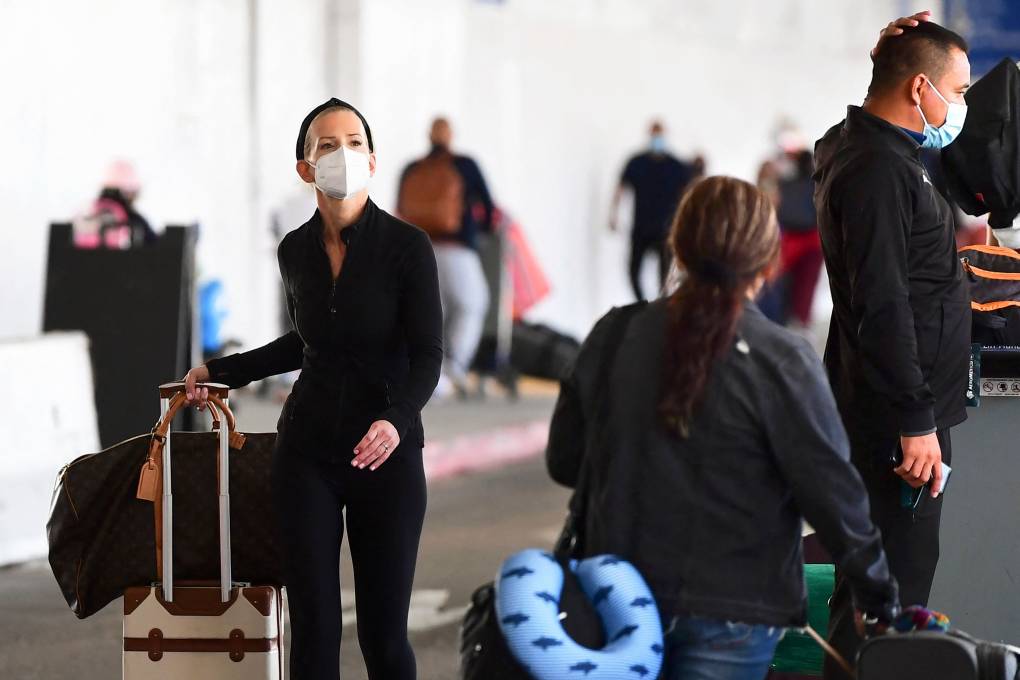
"caption": "Travelers await ground transport on arrival at Los Angeles International Airport (LAX) on May 27, 2021 in Los Angeles. Airports will be one of the spaces in California where the use of face masks will still be required after June 15.",
"description": "Travelers await ground transport on arrival at Los Angeles International Airport (LAX) on May 27, 2021 in Los Angeles. Airports will be one of the spaces in California where the use of facemasks will still be required after June 15.",
"title": "US-TRAVEL-HOLIDAYS-MEMORIAL",
"credit": "Frederic J. Brown/AFP via Getty Images",
"status": "inherit",
"altTag": "A person wearing a facemask walks through an airport.",
"isLoading": false,
"fetchFailed": false
},
"news_11802422": {
"type": "attachments",
"id": "news_11802422",
"meta": {
"index": "attachments_1716263798",
"site": "news",
"id": "11802422",
"found": true
},
"parent": 11802408,
"imgSizes": {
"apple_news_ca_landscape_5_5": {
"file": "https://ww2.kqed.org/app/uploads/sites/10/2020/02/pardon_021920_final-1044x783.png",
"width": 1044,
"mimeType": "image/png",
"height": 783
},
"apple_news_ca_square_4_0": {
"file": "https://ww2.kqed.org/app/uploads/sites/10/2020/02/pardon_021920_final-470x470.png",
"width": 470,
"mimeType": "image/png",
"height": 470
},
"twentyfourteen-full-width": {
"file": "https://ww2.kqed.org/app/uploads/sites/10/2020/02/pardon_021920_final-1038x576.png",
"width": 1038,
"mimeType": "image/png",
"height": 576
},
"thumbnail": {
"file": "https://ww2.kqed.org/app/uploads/sites/10/2020/02/pardon_021920_final-160x108.png",
"width": 160,
"mimeType": "image/png",
"height": 108
},
"post-thumbnail": {
"file": "https://ww2.kqed.org/app/uploads/sites/10/2020/02/pardon_021920_final-672x372.png",
"width": 672,
"mimeType": "image/png",
"height": 372
},
"kqedFullSize": {
"file": "https://ww2.kqed.org/app/uploads/sites/10/2020/02/pardon_021920_final.png",
"width": 1920,
"height": 1297
},
"apple_news_ca_landscape_4_7": {
"file": "https://ww2.kqed.org/app/uploads/sites/10/2020/02/pardon_021920_final-632x474.png",
"width": 632,
"mimeType": "image/png",
"height": 474
},
"large": {
"file": "https://ww2.kqed.org/app/uploads/sites/10/2020/02/pardon_021920_final-1020x689.png",
"width": 1020,
"mimeType": "image/png",
"height": 689
},
"apple_news_ca_landscape_4_0": {
"file": "https://ww2.kqed.org/app/uploads/sites/10/2020/02/pardon_021920_final-536x402.png",
"width": 536,
"mimeType": "image/png",
"height": 402
},
"apple_news_ca_portrait_12_9": {
"file": "https://ww2.kqed.org/app/uploads/sites/10/2020/02/pardon_021920_final-1122x1297.png",
"width": 1122,
"mimeType": "image/png",
"height": 1297
},
"medium": {
"file": "https://ww2.kqed.org/app/uploads/sites/10/2020/02/pardon_021920_final-800x540.png",
"width": 800,
"mimeType": "image/png",
"height": 540
},
"apple_news_ca_portrait_4_0": {
"file": "https://ww2.kqed.org/app/uploads/sites/10/2020/02/pardon_021920_final-354x472.png",
"width": 354,
"mimeType": "image/png",
"height": 472
},
"apple_news_ca_portrait_9_7": {
"file": "https://ww2.kqed.org/app/uploads/sites/10/2020/02/pardon_021920_final-840x1120.png",
"width": 840,
"mimeType": "image/png",
"height": 1120
},
"apple_news_ca_landscape_12_9": {
"file": "https://ww2.kqed.org/app/uploads/sites/10/2020/02/pardon_021920_final-1832x1297.png",
"width": 1832,
"mimeType": "image/png",
"height": 1297
},
"apple_news_ca_square_9_7": {
"file": "https://ww2.kqed.org/app/uploads/sites/10/2020/02/pardon_021920_final-1104x1104.png",
"width": 1104,
"mimeType": "image/png",
"height": 1104
},
"apple_news_ca_portrait_4_7": {
"file": "https://ww2.kqed.org/app/uploads/sites/10/2020/02/pardon_021920_final-414x552.png",
"width": 414,
"mimeType": "image/png",
"height": 552
},
"apple_news_ca_square_12_9": {
"file": "https://ww2.kqed.org/app/uploads/sites/10/2020/02/pardon_021920_final-1472x1297.png",
"width": 1472,
"mimeType": "image/png",
"height": 1297
},
"apple_news_ca_portrait_5_5": {
"file": "https://ww2.kqed.org/app/uploads/sites/10/2020/02/pardon_021920_final-687x916.png",
"width": 687,
"mimeType": "image/png",
"height": 916
},
"full-width": {
"file": "https://ww2.kqed.org/app/uploads/sites/10/2020/02/pardon_021920_final-1920x1297.png",
"width": 1920,
"mimeType": "image/png",
"height": 1297
},
"apple_news_ca_square_4_7": {
"file": "https://ww2.kqed.org/app/uploads/sites/10/2020/02/pardon_021920_final-550x550.png",
"width": 550,
"mimeType": "image/png",
"height": 550
},
"apple_news_ca_landscape_9_7": {
"file": "https://ww2.kqed.org/app/uploads/sites/10/2020/02/pardon_021920_final-1376x1032.png",
"width": 1376,
"mimeType": "image/png",
"height": 1032
},
"apple_news_ca_square_5_5": {
"file": "https://ww2.kqed.org/app/uploads/sites/10/2020/02/pardon_021920_final-912x912.png",
"width": 912,
"mimeType": "image/png",
"height": 912
}
},
"publishDate": 1582142468,
"modified": 1582142504,
"caption": null,
"description": null,
"title": "pardon_021920_final",
"credit": null,
"status": "inherit",
"isLoading": false,
"fetchFailed": false
},
"news_11800606": {
"type": "attachments",
"id": "news_11800606",
"meta": {
"index": "attachments_1716263798",
"site": "news",
"id": "11800606",
"found": true
},
"parent": 11798447,
"imgSizes": {
"apple_news_ca_landscape_5_5": {
"file": "https://ww2.kqed.org/app/uploads/sites/10/2020/01/Mohammed-Nuru-1044x783.jpg",
"width": 1044,
"mimeType": "image/jpeg",
"height": 783
},
"apple_news_ca_square_4_0": {
"file": "https://ww2.kqed.org/app/uploads/sites/10/2020/01/Mohammed-Nuru-470x470.jpg",
"width": 470,
"mimeType": "image/jpeg",
"height": 470
},
"twentyfourteen-full-width": {
"file": "https://ww2.kqed.org/app/uploads/sites/10/2020/01/Mohammed-Nuru-1038x576.jpg",
"width": 1038,
"mimeType": "image/jpeg",
"height": 576
},
"thumbnail": {
"file": "https://ww2.kqed.org/app/uploads/sites/10/2020/01/Mohammed-Nuru-160x104.jpg",
"width": 160,
"mimeType": "image/jpeg",
"height": 104
},
"post-thumbnail": {
"file": "https://ww2.kqed.org/app/uploads/sites/10/2020/01/Mohammed-Nuru-672x372.jpg",
"width": 672,
"mimeType": "image/jpeg",
"height": 372
},
"kqedFullSize": {
"file": "https://ww2.kqed.org/app/uploads/sites/10/2020/01/Mohammed-Nuru.jpg",
"width": 1920,
"height": 1249
},
"apple_news_ca_landscape_4_7": {
"file": "https://ww2.kqed.org/app/uploads/sites/10/2020/01/Mohammed-Nuru-632x474.jpg",
"width": 632,
"mimeType": "image/jpeg",
"height": 474
},
"large": {
"file": "https://ww2.kqed.org/app/uploads/sites/10/2020/01/Mohammed-Nuru-1020x664.jpg",
"width": 1020,
"mimeType": "image/jpeg",
"height": 664
},
"apple_news_ca_landscape_4_0": {
"file": "https://ww2.kqed.org/app/uploads/sites/10/2020/01/Mohammed-Nuru-536x402.jpg",
"width": 536,
"mimeType": "image/jpeg",
"height": 402
},
"apple_news_ca_portrait_12_9": {
"file": "https://ww2.kqed.org/app/uploads/sites/10/2020/01/Mohammed-Nuru-1122x1249.jpg",
"width": 1122,
"mimeType": "image/jpeg",
"height": 1249
},
"medium": {
"file": "https://ww2.kqed.org/app/uploads/sites/10/2020/01/Mohammed-Nuru-800x520.jpg",
"width": 800,
"mimeType": "image/jpeg",
"height": 520
},
"apple_news_ca_portrait_4_0": {
"file": "https://ww2.kqed.org/app/uploads/sites/10/2020/01/Mohammed-Nuru-354x472.jpg",
"width": 354,
"mimeType": "image/jpeg",
"height": 472
},
"apple_news_ca_portrait_9_7": {
"file": "https://ww2.kqed.org/app/uploads/sites/10/2020/01/Mohammed-Nuru-840x1120.jpg",
"width": 840,
"mimeType": "image/jpeg",
"height": 1120
},
"apple_news_ca_landscape_12_9": {
"file": "https://ww2.kqed.org/app/uploads/sites/10/2020/01/Mohammed-Nuru-1832x1249.jpg",
"width": 1832,
"mimeType": "image/jpeg",
"height": 1249
},
"apple_news_ca_square_9_7": {
"file": "https://ww2.kqed.org/app/uploads/sites/10/2020/01/Mohammed-Nuru-1104x1104.jpg",
"width": 1104,
"mimeType": "image/jpeg",
"height": 1104
},
"apple_news_ca_portrait_4_7": {
"file": "https://ww2.kqed.org/app/uploads/sites/10/2020/01/Mohammed-Nuru-414x552.jpg",
"width": 414,
"mimeType": "image/jpeg",
"height": 552
},
"apple_news_ca_square_12_9": {
"file": "https://ww2.kqed.org/app/uploads/sites/10/2020/01/Mohammed-Nuru-1472x1249.jpg",
"width": 1472,
"mimeType": "image/jpeg",
"height": 1249
},
"apple_news_ca_portrait_5_5": {
"file": "https://ww2.kqed.org/app/uploads/sites/10/2020/01/Mohammed-Nuru-687x916.jpg",
"width": 687,
"mimeType": "image/jpeg",
"height": 916
},
"full-width": {
"file": "https://ww2.kqed.org/app/uploads/sites/10/2020/01/Mohammed-Nuru-1920x1249.jpg",
"width": 1920,
"mimeType": "image/jpeg",
"height": 1249
},
"apple_news_ca_square_4_7": {
"file": "https://ww2.kqed.org/app/uploads/sites/10/2020/01/Mohammed-Nuru-550x550.jpg",
"width": 550,
"mimeType": "image/jpeg",
"height": 550
},
"apple_news_ca_landscape_9_7": {
"file": "https://ww2.kqed.org/app/uploads/sites/10/2020/01/Mohammed-Nuru-1376x1032.jpg",
"width": 1376,
"mimeType": "image/jpeg",
"height": 1032
},
"apple_news_ca_square_5_5": {
"file": "https://ww2.kqed.org/app/uploads/sites/10/2020/01/Mohammed-Nuru-912x912.jpg",
"width": 912,
"mimeType": "image/jpeg",
"height": 912
}
},
"publishDate": 1581037632,
"modified": 1581037779,
"caption": "San Francisco Director of Public Works Mohammed Nuru speaks before a tour of the Transbay Terminal by Gov. Gavin Newsom on Jan. 22. Nuru was arrested on Monday by the FBI.",
"description": "San Francisco Director of Public Works Mohammed Nuru speaks before a tour of the Transbay Terminal by Gov. Gavin Newsom on Jan. 22. Nuru was arrested on Monday by the FBI.",
"title": "Mohammed-Nuru",
"credit": "Beth LaBerge/KQED",
"status": "inherit",
"isLoading": false,
"fetchFailed": false
},
"news_11798354": {
"type": "attachments",
"id": "news_11798354",
"meta": {
"index": "attachments_1716263798",
"site": "news",
"id": "11798354",
"found": true
},
"parent": 11798264,
"imgSizes": {
"apple_news_ca_landscape_5_5": {
"file": "https://ww2.kqed.org/app/uploads/sites/10/2020/01/RS40941_003_KQED_CoronavirusPressConference_01272020_9033-qut-1044x783.jpg",
"width": 1044,
"mimeType": "image/jpeg",
"height": 783
},
"apple_news_ca_square_4_0": {
"file": "https://ww2.kqed.org/app/uploads/sites/10/2020/01/RS40941_003_KQED_CoronavirusPressConference_01272020_9033-qut-470x470.jpg",
"width": 470,
"mimeType": "image/jpeg",
"height": 470
},
"twentyfourteen-full-width": {
"file": "https://ww2.kqed.org/app/uploads/sites/10/2020/01/RS40941_003_KQED_CoronavirusPressConference_01272020_9033-qut-1038x576.jpg",
"width": 1038,
"mimeType": "image/jpeg",
"height": 576
},
"thumbnail": {
"file": "https://ww2.kqed.org/app/uploads/sites/10/2020/01/RS40941_003_KQED_CoronavirusPressConference_01272020_9033-qut-160x107.jpg",
"width": 160,
"mimeType": "image/jpeg",
"height": 107
},
"post-thumbnail": {
"file": "https://ww2.kqed.org/app/uploads/sites/10/2020/01/RS40941_003_KQED_CoronavirusPressConference_01272020_9033-qut-672x372.jpg",
"width": 672,
"mimeType": "image/jpeg",
"height": 372
},
"kqedFullSize": {
"file": "https://ww2.kqed.org/app/uploads/sites/10/2020/01/RS40941_003_KQED_CoronavirusPressConference_01272020_9033-qut.jpg",
"width": 1920,
"height": 1280
},
"apple_news_ca_landscape_4_7": {
"file": "https://ww2.kqed.org/app/uploads/sites/10/2020/01/RS40941_003_KQED_CoronavirusPressConference_01272020_9033-qut-632x474.jpg",
"width": 632,
"mimeType": "image/jpeg",
"height": 474
},
"large": {
"file": "https://ww2.kqed.org/app/uploads/sites/10/2020/01/RS40941_003_KQED_CoronavirusPressConference_01272020_9033-qut-1020x680.jpg",
"width": 1020,
"mimeType": "image/jpeg",
"height": 680
},
"apple_news_ca_landscape_4_0": {
"file": "https://ww2.kqed.org/app/uploads/sites/10/2020/01/RS40941_003_KQED_CoronavirusPressConference_01272020_9033-qut-536x402.jpg",
"width": 536,
"mimeType": "image/jpeg",
"height": 402
},
"apple_news_ca_portrait_12_9": {
"file": "https://ww2.kqed.org/app/uploads/sites/10/2020/01/RS40941_003_KQED_CoronavirusPressConference_01272020_9033-qut-1122x1280.jpg",
"width": 1122,
"mimeType": "image/jpeg",
"height": 1280
},
"medium": {
"file": "https://ww2.kqed.org/app/uploads/sites/10/2020/01/RS40941_003_KQED_CoronavirusPressConference_01272020_9033-qut-800x533.jpg",
"width": 800,
"mimeType": "image/jpeg",
"height": 533
},
"apple_news_ca_portrait_4_0": {
"file": "https://ww2.kqed.org/app/uploads/sites/10/2020/01/RS40941_003_KQED_CoronavirusPressConference_01272020_9033-qut-354x472.jpg",
"width": 354,
"mimeType": "image/jpeg",
"height": 472
},
"apple_news_ca_portrait_9_7": {
"file": "https://ww2.kqed.org/app/uploads/sites/10/2020/01/RS40941_003_KQED_CoronavirusPressConference_01272020_9033-qut-840x1120.jpg",
"width": 840,
"mimeType": "image/jpeg",
"height": 1120
},
"apple_news_ca_landscape_12_9": {
"file": "https://ww2.kqed.org/app/uploads/sites/10/2020/01/RS40941_003_KQED_CoronavirusPressConference_01272020_9033-qut-1832x1280.jpg",
"width": 1832,
"mimeType": "image/jpeg",
"height": 1280
},
"apple_news_ca_square_9_7": {
"file": "https://ww2.kqed.org/app/uploads/sites/10/2020/01/RS40941_003_KQED_CoronavirusPressConference_01272020_9033-qut-1104x1104.jpg",
"width": 1104,
"mimeType": "image/jpeg",
"height": 1104
},
"apple_news_ca_portrait_4_7": {
"file": "https://ww2.kqed.org/app/uploads/sites/10/2020/01/RS40941_003_KQED_CoronavirusPressConference_01272020_9033-qut-414x552.jpg",
"width": 414,
"mimeType": "image/jpeg",
"height": 552
},
"apple_news_ca_square_12_9": {
"file": "https://ww2.kqed.org/app/uploads/sites/10/2020/01/RS40941_003_KQED_CoronavirusPressConference_01272020_9033-qut-1472x1280.jpg",
"width": 1472,
"mimeType": "image/jpeg",
"height": 1280
},
"apple_news_ca_portrait_5_5": {
"file": "https://ww2.kqed.org/app/uploads/sites/10/2020/01/RS40941_003_KQED_CoronavirusPressConference_01272020_9033-qut-687x916.jpg",
"width": 687,
"mimeType": "image/jpeg",
"height": 916
},
"full-width": {
"file": "https://ww2.kqed.org/app/uploads/sites/10/2020/01/RS40941_003_KQED_CoronavirusPressConference_01272020_9033-qut-1920x1280.jpg",
"width": 1920,
"mimeType": "image/jpeg",
"height": 1280
},
"apple_news_ca_square_4_7": {
"file": "https://ww2.kqed.org/app/uploads/sites/10/2020/01/RS40941_003_KQED_CoronavirusPressConference_01272020_9033-qut-550x550.jpg",
"width": 550,
"mimeType": "image/jpeg",
"height": 550
},
"apple_news_ca_landscape_9_7": {
"file": "https://ww2.kqed.org/app/uploads/sites/10/2020/01/RS40941_003_KQED_CoronavirusPressConference_01272020_9033-qut-1376x1032.jpg",
"width": 1376,
"mimeType": "image/jpeg",
"height": 1032
},
"apple_news_ca_square_5_5": {
"file": "https://ww2.kqed.org/app/uploads/sites/10/2020/01/RS40941_003_KQED_CoronavirusPressConference_01272020_9033-qut-912x912.jpg",
"width": 912,
"mimeType": "image/jpeg",
"height": 912
}
},
"publishDate": 1580171733,
"modified": 1580175399,
"caption": "San Francisco Mayor London Breed speaks to reporters on Monday about the city's preparedness in case of an outbreak of the coronavirus.",
"description": "San Francisco Mayor London Breed speaks at a press conference about the city's preparedness in the case of an outbreak of the coronavirus, at the Department of Emergency Management in San Francisco on January 27, 2020.",
"title": "RS40941_003_KQED_CoronavirusPressConference_01272020_9033-qut",
"credit": "Beth LaBerge/KQED",
"status": "inherit",
"isLoading": false,
"fetchFailed": false
},
"news_11797349": {
"type": "attachments",
"id": "news_11797349",
"meta": {
"index": "attachments_1716263798",
"site": "news",
"id": "11797349",
"found": true
},
"parent": 0,
"imgSizes": {
"apple_news_ca_landscape_5_5": {
"file": "https://ww2.kqed.org/app/uploads/sites/10/2020/01/RS40841_GettyImages-1195290490-1-qut-1044x783.jpg",
"width": 1044,
"mimeType": "image/jpeg",
"height": 783
},
"apple_news_ca_square_4_0": {
"file": "https://ww2.kqed.org/app/uploads/sites/10/2020/01/RS40841_GettyImages-1195290490-1-qut-470x470.jpg",
"width": 470,
"mimeType": "image/jpeg",
"height": 470
},
"twentyfourteen-full-width": {
"file": "https://ww2.kqed.org/app/uploads/sites/10/2020/01/RS40841_GettyImages-1195290490-1-qut-1038x576.jpg",
"width": 1038,
"mimeType": "image/jpeg",
"height": 576
},
"thumbnail": {
"file": "https://ww2.kqed.org/app/uploads/sites/10/2020/01/RS40841_GettyImages-1195290490-1-qut-160x107.jpg",
"width": 160,
"mimeType": "image/jpeg",
"height": 107
},
"post-thumbnail": {
"file": "https://ww2.kqed.org/app/uploads/sites/10/2020/01/RS40841_GettyImages-1195290490-1-qut-672x372.jpg",
"width": 672,
"mimeType": "image/jpeg",
"height": 372
},
"kqedFullSize": {
"file": "https://ww2.kqed.org/app/uploads/sites/10/2020/01/RS40841_GettyImages-1195290490-1-qut.jpg",
"width": 1920,
"height": 1280
},
"apple_news_ca_landscape_4_7": {
"file": "https://ww2.kqed.org/app/uploads/sites/10/2020/01/RS40841_GettyImages-1195290490-1-qut-632x474.jpg",
"width": 632,
"mimeType": "image/jpeg",
"height": 474
},
"large": {
"file": "https://ww2.kqed.org/app/uploads/sites/10/2020/01/RS40841_GettyImages-1195290490-1-qut-1020x680.jpg",
"width": 1020,
"mimeType": "image/jpeg",
"height": 680
},
"apple_news_ca_landscape_4_0": {
"file": "https://ww2.kqed.org/app/uploads/sites/10/2020/01/RS40841_GettyImages-1195290490-1-qut-536x402.jpg",
"width": 536,
"mimeType": "image/jpeg",
"height": 402
},
"apple_news_ca_portrait_12_9": {
"file": "https://ww2.kqed.org/app/uploads/sites/10/2020/01/RS40841_GettyImages-1195290490-1-qut-1122x1280.jpg",
"width": 1122,
"mimeType": "image/jpeg",
"height": 1280
},
"medium": {
"file": "https://ww2.kqed.org/app/uploads/sites/10/2020/01/RS40841_GettyImages-1195290490-1-qut-800x533.jpg",
"width": 800,
"mimeType": "image/jpeg",
"height": 533
},
"apple_news_ca_portrait_4_0": {
"file": "https://ww2.kqed.org/app/uploads/sites/10/2020/01/RS40841_GettyImages-1195290490-1-qut-354x472.jpg",
"width": 354,
"mimeType": "image/jpeg",
"height": 472
},
"apple_news_ca_portrait_9_7": {
"file": "https://ww2.kqed.org/app/uploads/sites/10/2020/01/RS40841_GettyImages-1195290490-1-qut-840x1120.jpg",
"width": 840,
"mimeType": "image/jpeg",
"height": 1120
},
"apple_news_ca_landscape_12_9": {
"file": "https://ww2.kqed.org/app/uploads/sites/10/2020/01/RS40841_GettyImages-1195290490-1-qut-1832x1280.jpg",
"width": 1832,
"mimeType": "image/jpeg",
"height": 1280
},
"apple_news_ca_square_9_7": {
"file": "https://ww2.kqed.org/app/uploads/sites/10/2020/01/RS40841_GettyImages-1195290490-1-qut-1104x1104.jpg",
"width": 1104,
"mimeType": "image/jpeg",
"height": 1104
},
"apple_news_ca_portrait_4_7": {
"file": "https://ww2.kqed.org/app/uploads/sites/10/2020/01/RS40841_GettyImages-1195290490-1-qut-414x552.jpg",
"width": 414,
"mimeType": "image/jpeg",
"height": 552
},
"apple_news_ca_square_12_9": {
"file": "https://ww2.kqed.org/app/uploads/sites/10/2020/01/RS40841_GettyImages-1195290490-1-qut-1472x1280.jpg",
"width": 1472,
"mimeType": "image/jpeg",
"height": 1280
},
"apple_news_ca_portrait_5_5": {
"file": "https://ww2.kqed.org/app/uploads/sites/10/2020/01/RS40841_GettyImages-1195290490-1-qut-687x916.jpg",
"width": 687,
"mimeType": "image/jpeg",
"height": 916
},
"full-width": {
"file": "https://ww2.kqed.org/app/uploads/sites/10/2020/01/RS40841_GettyImages-1195290490-1-qut-1920x1280.jpg",
"width": 1920,
"mimeType": "image/jpeg",
"height": 1280
},
"apple_news_ca_square_4_7": {
"file": "https://ww2.kqed.org/app/uploads/sites/10/2020/01/RS40841_GettyImages-1195290490-1-qut-550x550.jpg",
"width": 550,
"mimeType": "image/jpeg",
"height": 550
},
"apple_news_ca_landscape_9_7": {
"file": "https://ww2.kqed.org/app/uploads/sites/10/2020/01/RS40841_GettyImages-1195290490-1-qut-1376x1032.jpg",
"width": 1376,
"mimeType": "image/jpeg",
"height": 1032
},
"apple_news_ca_square_5_5": {
"file": "https://ww2.kqed.org/app/uploads/sites/10/2020/01/RS40841_GettyImages-1195290490-1-qut-912x912.jpg",
"width": 912,
"mimeType": "image/jpeg",
"height": 912
}
},
"publishDate": 1579732551,
"modified": 1579742918,
"caption": "Chinese state media said the city of Wuhan is stopping outbound flights as the country battles the spread of a new coronavirus virus.",
"description": "Chinese state media said the city of Wuhan is stopping outbound flights as the country battles the spread of a new coronavirus virus.",
"title": "SINGAPORE-HEALTH-VIRUS",
"credit": "Roslan Rahman/AFP via Getty Images",
"status": "inherit",
"isLoading": false,
"fetchFailed": false
},
"science_1956032": {
"type": "attachments",
"id": "science_1956032",
"meta": {
"index": "attachments_1716263798",
"site": "science",
"id": "1956032",
"found": true
},
"parent": 1956030,
"imgSizes": {
"twentyfourteen-full-width": {
"file": "https://ww2.kqed.org/app/uploads/sites/35/2020/01/IMG_3599-1038x576.jpg",
"width": 1038,
"mimeType": "image/jpeg",
"height": 576
},
"thumbnail": {
"file": "https://ww2.kqed.org/app/uploads/sites/35/2020/01/IMG_3599-160x120.jpg",
"width": 160,
"mimeType": "image/jpeg",
"height": 120
},
"post-thumbnail": {
"file": "https://ww2.kqed.org/app/uploads/sites/35/2020/01/IMG_3599-672x372.jpg",
"width": 672,
"mimeType": "image/jpeg",
"height": 372
},
"kqedFullSize": {
"file": "https://ww2.kqed.org/app/uploads/sites/35/2020/01/IMG_3599-e1579739212230.jpg",
"width": 1920,
"height": 1440
},
"large": {
"file": "https://ww2.kqed.org/app/uploads/sites/35/2020/01/IMG_3599-1020x765.jpg",
"width": 1020,
"mimeType": "image/jpeg",
"height": 765
},
"complete_open_graph": {
"file": "https://ww2.kqed.org/app/uploads/sites/35/2020/01/IMG_3599-1200x900.jpg",
"width": 1200,
"mimeType": "image/jpeg",
"height": 900
},
"full-width": {
"file": "https://ww2.kqed.org/app/uploads/sites/35/2020/01/IMG_3599-1920x1440.jpg",
"width": 1920,
"mimeType": "image/jpeg",
"height": 1440
},
"medium": {
"file": "https://ww2.kqed.org/app/uploads/sites/35/2020/01/IMG_3599-800x600.jpg",
"width": 800,
"mimeType": "image/jpeg",
"height": 600
},
"medium_large": {
"file": "https://ww2.kqed.org/app/uploads/sites/35/2020/01/IMG_3599-768x576.jpg",
"width": 768,
"mimeType": "image/jpeg",
"height": 576
}
},
"publishDate": 1579739158,
"modified": 1617315232,
"caption": "A woman arrives at San Francisco International Airport from Wuhan, China, on Jan. 21, 2020.",
"description": null,
"title": "IMG_3599",
"credit": "Lesley McClurg/ KQED",
"status": "inherit",
"altTag": null,
"isLoading": false,
"fetchFailed": false
},
"news_11796671": {
"type": "attachments",
"id": "news_11796671",
"meta": {
"index": "attachments_1716263798",
"site": "news",
"id": "11796671",
"found": true
},
"parent": 11796670,
"imgSizes": {
"apple_news_ca_landscape_5_5": {
"file": "https://ww2.kqed.org/app/uploads/sites/10/2020/01/gettyimages-1192512277_custom-a54eb96ca91565874ff00a083c71aabd265ac7fb-1044x783.jpg",
"width": 1044,
"mimeType": "image/jpeg",
"height": 783
},
"apple_news_ca_square_4_0": {
"file": "https://ww2.kqed.org/app/uploads/sites/10/2020/01/gettyimages-1192512277_custom-a54eb96ca91565874ff00a083c71aabd265ac7fb-470x470.jpg",
"width": 470,
"mimeType": "image/jpeg",
"height": 470
},
"twentyfourteen-full-width": {
"file": "https://ww2.kqed.org/app/uploads/sites/10/2020/01/gettyimages-1192512277_custom-a54eb96ca91565874ff00a083c71aabd265ac7fb-1038x576.jpg",
"width": 1038,
"mimeType": "image/jpeg",
"height": 576
},
"thumbnail": {
"file": "https://ww2.kqed.org/app/uploads/sites/10/2020/01/gettyimages-1192512277_custom-a54eb96ca91565874ff00a083c71aabd265ac7fb-160x107.jpg",
"width": 160,
"mimeType": "image/jpeg",
"height": 107
},
"post-thumbnail": {
"file": "https://ww2.kqed.org/app/uploads/sites/10/2020/01/gettyimages-1192512277_custom-a54eb96ca91565874ff00a083c71aabd265ac7fb-672x372.jpg",
"width": 672,
"mimeType": "image/jpeg",
"height": 372
},
"kqedFullSize": {
"file": "https://ww2.kqed.org/app/uploads/sites/10/2020/01/gettyimages-1192512277_custom-a54eb96ca91565874ff00a083c71aabd265ac7fb-e1579291461365.jpg",
"width": 1920,
"height": 1280
},
"apple_news_ca_landscape_4_7": {
"file": "https://ww2.kqed.org/app/uploads/sites/10/2020/01/gettyimages-1192512277_custom-a54eb96ca91565874ff00a083c71aabd265ac7fb-632x474.jpg",
"width": 632,
"mimeType": "image/jpeg",
"height": 474
},
"large": {
"file": "https://ww2.kqed.org/app/uploads/sites/10/2020/01/gettyimages-1192512277_custom-a54eb96ca91565874ff00a083c71aabd265ac7fb-1020x680.jpg",
"width": 1020,
"mimeType": "image/jpeg",
"height": 680
},
"apple_news_ca_landscape_4_0": {
"file": "https://ww2.kqed.org/app/uploads/sites/10/2020/01/gettyimages-1192512277_custom-a54eb96ca91565874ff00a083c71aabd265ac7fb-536x402.jpg",
"width": 536,
"mimeType": "image/jpeg",
"height": 402
},
"apple_news_ca_portrait_12_9": {
"file": "https://ww2.kqed.org/app/uploads/sites/10/2020/01/gettyimages-1192512277_custom-a54eb96ca91565874ff00a083c71aabd265ac7fb-1122x1496.jpg",
"width": 1122,
"mimeType": "image/jpeg",
"height": 1496
},
"medium": {
"file": "https://ww2.kqed.org/app/uploads/sites/10/2020/01/gettyimages-1192512277_custom-a54eb96ca91565874ff00a083c71aabd265ac7fb-800x533.jpg",
"width": 800,
"mimeType": "image/jpeg",
"height": 533
},
"apple_news_ca_portrait_4_0": {
"file": "https://ww2.kqed.org/app/uploads/sites/10/2020/01/gettyimages-1192512277_custom-a54eb96ca91565874ff00a083c71aabd265ac7fb-354x472.jpg",
"width": 354,
"mimeType": "image/jpeg",
"height": 472
},
"apple_news_ca_portrait_9_7": {
"file": "https://ww2.kqed.org/app/uploads/sites/10/2020/01/gettyimages-1192512277_custom-a54eb96ca91565874ff00a083c71aabd265ac7fb-840x1120.jpg",
"width": 840,
"mimeType": "image/jpeg",
"height": 1120
},
"apple_news_ca_landscape_12_9": {
"file": "https://ww2.kqed.org/app/uploads/sites/10/2020/01/gettyimages-1192512277_custom-a54eb96ca91565874ff00a083c71aabd265ac7fb-1832x1374.jpg",
"width": 1832,
"mimeType": "image/jpeg",
"height": 1374
},
"apple_news_ca_square_9_7": {
"file": "https://ww2.kqed.org/app/uploads/sites/10/2020/01/gettyimages-1192512277_custom-a54eb96ca91565874ff00a083c71aabd265ac7fb-1104x1104.jpg",
"width": 1104,
"mimeType": "image/jpeg",
"height": 1104
},
"apple_news_ca_portrait_4_7": {
"file": "https://ww2.kqed.org/app/uploads/sites/10/2020/01/gettyimages-1192512277_custom-a54eb96ca91565874ff00a083c71aabd265ac7fb-414x552.jpg",
"width": 414,
"mimeType": "image/jpeg",
"height": 552
},
"apple_news_ca_square_12_9": {
"file": "https://ww2.kqed.org/app/uploads/sites/10/2020/01/gettyimages-1192512277_custom-a54eb96ca91565874ff00a083c71aabd265ac7fb-1472x1472.jpg",
"width": 1472,
"mimeType": "image/jpeg",
"height": 1472
},
"apple_news_ca_portrait_5_5": {
"file": "https://ww2.kqed.org/app/uploads/sites/10/2020/01/gettyimages-1192512277_custom-a54eb96ca91565874ff00a083c71aabd265ac7fb-687x916.jpg",
"width": 687,
"mimeType": "image/jpeg",
"height": 916
},
"full-width": {
"file": "https://ww2.kqed.org/app/uploads/sites/10/2020/01/gettyimages-1192512277_custom-a54eb96ca91565874ff00a083c71aabd265ac7fb-1920x1280.jpg",
"width": 1920,
"mimeType": "image/jpeg",
"height": 1280
},
"apple_news_ca_square_4_7": {
"file": "https://ww2.kqed.org/app/uploads/sites/10/2020/01/gettyimages-1192512277_custom-a54eb96ca91565874ff00a083c71aabd265ac7fb-550x550.jpg",
"width": 550,
"mimeType": "image/jpeg",
"height": 550
},
"apple_news_ca_landscape_9_7": {
"file": "https://ww2.kqed.org/app/uploads/sites/10/2020/01/gettyimages-1192512277_custom-a54eb96ca91565874ff00a083c71aabd265ac7fb-1376x1032.jpg",
"width": 1376,
"mimeType": "image/jpeg",
"height": 1032
},
"apple_news_ca_square_5_5": {
"file": "https://ww2.kqed.org/app/uploads/sites/10/2020/01/gettyimages-1192512277_custom-a54eb96ca91565874ff00a083c71aabd265ac7fb-912x912.jpg",
"width": 912,
"mimeType": "image/jpeg",
"height": 912
}
},
"publishDate": 1579290234,
"modified": 1579291503,
"caption": null,
"description": "SFO, LAX and JFK are now screening passengers from Wuhan, China, for coronavirus. ",
"title": "Three U.S. airports are now screening passengers from Wuhan, China, for coronavirus. Above: Public health officials hand out disease-monitoring information after performing thermal scans on passengers arriving from Wuhan at the international airport in Bangkok, Thailand.",
"credit": "Lauren DeCicca/Getty Images",
"status": "inherit",
"isLoading": false,
"fetchFailed": false
},
"news_11772413": {
"type": "attachments",
"id": "news_11772413",
"meta": {
"index": "attachments_1716263798",
"site": "news",
"id": "11772413",
"found": true
},
"parent": 11772407,
"imgSizes": {
"apple_news_ca_landscape_5_5": {
"file": "https://ww2.kqed.org/app/uploads/sites/10/2019/09/RS3592_IMG_4264-1044x783.jpg",
"width": 1044,
"mimeType": "image/jpeg",
"height": 783
},
"apple_news_ca_square_4_0": {
"file": "https://ww2.kqed.org/app/uploads/sites/10/2019/09/RS3592_IMG_4264-470x470.jpg",
"width": 470,
"mimeType": "image/jpeg",
"height": 470
},
"twentyfourteen-full-width": {
"file": "https://ww2.kqed.org/app/uploads/sites/10/2019/09/RS3592_IMG_4264-1038x576.jpg",
"width": 1038,
"mimeType": "image/jpeg",
"height": 576
},
"thumbnail": {
"file": "https://ww2.kqed.org/app/uploads/sites/10/2019/09/RS3592_IMG_4264-160x120.jpg",
"width": 160,
"mimeType": "image/jpeg",
"height": 120
},
"post-thumbnail": {
"file": "https://ww2.kqed.org/app/uploads/sites/10/2019/09/RS3592_IMG_4264-672x372.jpg",
"width": 672,
"mimeType": "image/jpeg",
"height": 372
},
"kqedFullSize": {
"file": "https://ww2.kqed.org/app/uploads/sites/10/2019/09/RS3592_IMG_4264-e1568821719557.jpg",
"width": 1920,
"height": 1440
},
"apple_news_ca_landscape_4_7": {
"file": "https://ww2.kqed.org/app/uploads/sites/10/2019/09/RS3592_IMG_4264-632x474.jpg",
"width": 632,
"mimeType": "image/jpeg",
"height": 474
},
"large": {
"file": "https://ww2.kqed.org/app/uploads/sites/10/2019/09/RS3592_IMG_4264-1020x765.jpg",
"width": 1020,
"mimeType": "image/jpeg",
"height": 765
},
"complete_open_graph": {
"file": "https://ww2.kqed.org/app/uploads/sites/10/2019/09/RS3592_IMG_4264-1200x900.jpg",
"width": 1200,
"mimeType": "image/jpeg",
"height": 900
},
"apple_news_ca_landscape_4_0": {
"file": "https://ww2.kqed.org/app/uploads/sites/10/2019/09/RS3592_IMG_4264-536x402.jpg",
"width": 536,
"mimeType": "image/jpeg",
"height": 402
},
"apple_news_ca_portrait_12_9": {
"file": "https://ww2.kqed.org/app/uploads/sites/10/2019/09/RS3592_IMG_4264-1122x1496.jpg",
"width": 1122,
"mimeType": "image/jpeg",
"height": 1496
},
"medium": {
"file": "https://ww2.kqed.org/app/uploads/sites/10/2019/09/RS3592_IMG_4264-800x600.jpg",
"width": 800,
"mimeType": "image/jpeg",
"height": 600
},
"apple_news_ca_portrait_4_0": {
"file": "https://ww2.kqed.org/app/uploads/sites/10/2019/09/RS3592_IMG_4264-354x472.jpg",
"width": 354,
"mimeType": "image/jpeg",
"height": 472
},
"apple_news_ca_portrait_9_7": {
"file": "https://ww2.kqed.org/app/uploads/sites/10/2019/09/RS3592_IMG_4264-840x1120.jpg",
"width": 840,
"mimeType": "image/jpeg",
"height": 1120
},
"apple_news_ca_landscape_12_9": {
"file": "https://ww2.kqed.org/app/uploads/sites/10/2019/09/RS3592_IMG_4264-1832x1374.jpg",
"width": 1832,
"mimeType": "image/jpeg",
"height": 1374
},
"apple_news_ca_square_9_7": {
"file": "https://ww2.kqed.org/app/uploads/sites/10/2019/09/RS3592_IMG_4264-1104x1104.jpg",
"width": 1104,
"mimeType": "image/jpeg",
"height": 1104
},
"apple_news_ca_portrait_4_7": {
"file": "https://ww2.kqed.org/app/uploads/sites/10/2019/09/RS3592_IMG_4264-414x552.jpg",
"width": 414,
"mimeType": "image/jpeg",
"height": 552
},
"apple_news_ca_square_12_9": {
"file": "https://ww2.kqed.org/app/uploads/sites/10/2019/09/RS3592_IMG_4264-1472x1472.jpg",
"width": 1472,
"mimeType": "image/jpeg",
"height": 1472
},
"apple_news_ca_portrait_5_5": {
"file": "https://ww2.kqed.org/app/uploads/sites/10/2019/09/RS3592_IMG_4264-687x916.jpg",
"width": 687,
"mimeType": "image/jpeg",
"height": 916
},
"full-width": {
"file": "https://ww2.kqed.org/app/uploads/sites/10/2019/09/RS3592_IMG_4264-1920x1440.jpg",
"width": 1920,
"mimeType": "image/jpeg",
"height": 1440
},
"apple_news_ca_square_4_7": {
"file": "https://ww2.kqed.org/app/uploads/sites/10/2019/09/RS3592_IMG_4264-550x550.jpg",
"width": 550,
"mimeType": "image/jpeg",
"height": 550
},
"apple_news_ca_landscape_9_7": {
"file": "https://ww2.kqed.org/app/uploads/sites/10/2019/09/RS3592_IMG_4264-1376x1032.jpg",
"width": 1376,
"mimeType": "image/jpeg",
"height": 1032
},
"apple_news_ca_square_5_5": {
"file": "https://ww2.kqed.org/app/uploads/sites/10/2019/09/RS3592_IMG_4264-912x912.jpg",
"width": 912,
"mimeType": "image/jpeg",
"height": 912
}
},
"publishDate": 1567719431,
"modified": 1568821735,
"caption": "A aerial view of SFO.",
"description": "A scenic view of SFO.",
"title": "Molly Samuel/KQED",
"credit": "Molly Samuel/KQED",
"status": "inherit",
"isLoading": false,
"fetchFailed": false
},
"news_11772412": {
"type": "attachments",
"id": "news_11772412",
"meta": {
"index": "attachments_1716263798",
"site": "news",
"id": "11772412",
"found": true
},
"parent": 11772407,
"imgSizes": {
"apple_news_ca_landscape_5_5": {
"file": "https://ww2.kqed.org/app/uploads/sites/10/2019/09/GettyImages-463788546-1044x783.jpg",
"width": 1044,
"mimeType": "image/jpeg",
"height": 783
},
"apple_news_ca_square_4_0": {
"file": "https://ww2.kqed.org/app/uploads/sites/10/2019/09/GettyImages-463788546-470x470.jpg",
"width": 470,
"mimeType": "image/jpeg",
"height": 470
},
"twentyfourteen-full-width": {
"file": "https://ww2.kqed.org/app/uploads/sites/10/2019/09/GettyImages-463788546-1038x576.jpg",
"width": 1038,
"mimeType": "image/jpeg",
"height": 576
},
"thumbnail": {
"file": "https://ww2.kqed.org/app/uploads/sites/10/2019/09/GettyImages-463788546-160x100.jpg",
"width": 160,
"mimeType": "image/jpeg",
"height": 100
},
"post-thumbnail": {
"file": "https://ww2.kqed.org/app/uploads/sites/10/2019/09/GettyImages-463788546-672x372.jpg",
"width": 672,
"mimeType": "image/jpeg",
"height": 372
},
"kqedFullSize": {
"file": "https://ww2.kqed.org/app/uploads/sites/10/2019/09/GettyImages-463788546.jpg",
"width": 2048,
"height": 1286
},
"apple_news_ca_landscape_4_7": {
"file": "https://ww2.kqed.org/app/uploads/sites/10/2019/09/GettyImages-463788546-632x474.jpg",
"width": 632,
"mimeType": "image/jpeg",
"height": 474
},
"large": {
"file": "https://ww2.kqed.org/app/uploads/sites/10/2019/09/GettyImages-463788546-1020x641.jpg",
"width": 1020,
"mimeType": "image/jpeg",
"height": 641
},
"complete_open_graph": {
"file": "https://ww2.kqed.org/app/uploads/sites/10/2019/09/GettyImages-463788546-1200x754.jpg",
"width": 1200,
"mimeType": "image/jpeg",
"height": 754
},
"apple_news_ca_landscape_4_0": {
"file": "https://ww2.kqed.org/app/uploads/sites/10/2019/09/GettyImages-463788546-536x402.jpg",
"width": 536,
"mimeType": "image/jpeg",
"height": 402
},
"apple_news_ca_portrait_12_9": {
"file": "https://ww2.kqed.org/app/uploads/sites/10/2019/09/GettyImages-463788546-1122x1496.jpg",
"width": 1122,
"mimeType": "image/jpeg",
"height": 1496
},
"medium": {
"file": "https://ww2.kqed.org/app/uploads/sites/10/2019/09/GettyImages-463788546-800x502.jpg",
"width": 800,
"mimeType": "image/jpeg",
"height": 502
},
"apple_news_ca_portrait_4_0": {
"file": "https://ww2.kqed.org/app/uploads/sites/10/2019/09/GettyImages-463788546-354x472.jpg",
"width": 354,
"mimeType": "image/jpeg",
"height": 472
},
"apple_news_ca_portrait_9_7": {
"file": "https://ww2.kqed.org/app/uploads/sites/10/2019/09/GettyImages-463788546-840x1120.jpg",
"width": 840,
"mimeType": "image/jpeg",
"height": 1120
},
"apple_news_ca_landscape_12_9": {
"file": "https://ww2.kqed.org/app/uploads/sites/10/2019/09/GettyImages-463788546-1832x1374.jpg",
"width": 1832,
"mimeType": "image/jpeg",
"height": 1374
},
"apple_news_ca_square_9_7": {
"file": "https://ww2.kqed.org/app/uploads/sites/10/2019/09/GettyImages-463788546-1104x1104.jpg",
"width": 1104,
"mimeType": "image/jpeg",
"height": 1104
},
"apple_news_ca_portrait_4_7": {
"file": "https://ww2.kqed.org/app/uploads/sites/10/2019/09/GettyImages-463788546-414x552.jpg",
"width": 414,
"mimeType": "image/jpeg",
"height": 552
},
"apple_news_ca_square_12_9": {
"file": "https://ww2.kqed.org/app/uploads/sites/10/2019/09/GettyImages-463788546-1472x1472.jpg",
"width": 1472,
"mimeType": "image/jpeg",
"height": 1472
},
"apple_news_ca_portrait_5_5": {
"file": "https://ww2.kqed.org/app/uploads/sites/10/2019/09/GettyImages-463788546-687x916.jpg",
"width": 687,
"mimeType": "image/jpeg",
"height": 916
},
"full-width": {
"file": "https://ww2.kqed.org/app/uploads/sites/10/2019/09/GettyImages-463788546-1920x1206.jpg",
"width": 1920,
"mimeType": "image/jpeg",
"height": 1206
},
"apple_news_ca_square_4_7": {
"file": "https://ww2.kqed.org/app/uploads/sites/10/2019/09/GettyImages-463788546-550x550.jpg",
"width": 550,
"mimeType": "image/jpeg",
"height": 550
},
"apple_news_ca_landscape_9_7": {
"file": "https://ww2.kqed.org/app/uploads/sites/10/2019/09/GettyImages-463788546-1376x1032.jpg",
"width": 1376,
"mimeType": "image/jpeg",
"height": 1032
},
"apple_news_ca_square_5_5": {
"file": "https://ww2.kqed.org/app/uploads/sites/10/2019/09/GettyImages-463788546-912x912.jpg",
"width": 912,
"mimeType": "image/jpeg",
"height": 912
}
},
"publishDate": 1567719278,
"modified": 1567719366,
"caption": "Planes landing at SFO.",
"description": "Planes landing at SFO.",
"title": "Planes landing at SFO.",
"credit": "Justin Sullivan/Getty Images",
"status": "inherit",
"isLoading": false,
"fetchFailed": false
},
"news_11773269": {
"type": "attachments",
"id": "news_11773269",
"meta": {
"index": "attachments_1716263798",
"site": "news",
"id": "11773269",
"found": true
},
"parent": 11773215,
"imgSizes": {
"apple_news_ca_landscape_5_5": {
"file": "https://ww2.kqed.org/app/uploads/sites/10/2019/09/GettyImages-1173445531-1044x783.jpg",
"width": 1044,
"mimeType": "image/jpeg",
"height": 783
},
"apple_news_ca_square_4_0": {
"file": "https://ww2.kqed.org/app/uploads/sites/10/2019/09/GettyImages-1173445531-470x470.jpg",
"width": 470,
"mimeType": "image/jpeg",
"height": 470
},
"twentyfourteen-full-width": {
"file": "https://ww2.kqed.org/app/uploads/sites/10/2019/09/GettyImages-1173445531-1038x576.jpg",
"width": 1038,
"mimeType": "image/jpeg",
"height": 576
},
"thumbnail": {
"file": "https://ww2.kqed.org/app/uploads/sites/10/2019/09/GettyImages-1173445531-160x108.jpg",
"width": 160,
"mimeType": "image/jpeg",
"height": 108
},
"post-thumbnail": {
"file": "https://ww2.kqed.org/app/uploads/sites/10/2019/09/GettyImages-1173445531-672x372.jpg",
"width": 672,
"mimeType": "image/jpeg",
"height": 372
},
"kqedFullSize": {
"file": "https://ww2.kqed.org/app/uploads/sites/10/2019/09/GettyImages-1173445531-e1568069785908.jpg",
"width": 1920,
"height": 1298
},
"apple_news_ca_landscape_4_7": {
"file": "https://ww2.kqed.org/app/uploads/sites/10/2019/09/GettyImages-1173445531-632x474.jpg",
"width": 632,
"mimeType": "image/jpeg",
"height": 474
},
"large": {
"file": "https://ww2.kqed.org/app/uploads/sites/10/2019/09/GettyImages-1173445531-1020x690.jpg",
"width": 1020,
"mimeType": "image/jpeg",
"height": 690
},
"complete_open_graph": {
"file": "https://ww2.kqed.org/app/uploads/sites/10/2019/09/GettyImages-1173445531-1200x811.jpg",
"width": 1200,
"mimeType": "image/jpeg",
"height": 811
},
"apple_news_ca_landscape_4_0": {
"file": "https://ww2.kqed.org/app/uploads/sites/10/2019/09/GettyImages-1173445531-536x402.jpg",
"width": 536,
"mimeType": "image/jpeg",
"height": 402
},
"apple_news_ca_portrait_12_9": {
"file": "https://ww2.kqed.org/app/uploads/sites/10/2019/09/GettyImages-1173445531-1122x1496.jpg",
"width": 1122,
"mimeType": "image/jpeg",
"height": 1496
},
"medium": {
"file": "https://ww2.kqed.org/app/uploads/sites/10/2019/09/GettyImages-1173445531-800x541.jpg",
"width": 800,
"mimeType": "image/jpeg",
"height": 541
},
"apple_news_ca_portrait_4_0": {
"file": "https://ww2.kqed.org/app/uploads/sites/10/2019/09/GettyImages-1173445531-354x472.jpg",
"width": 354,
"mimeType": "image/jpeg",
"height": 472
},
"apple_news_ca_portrait_9_7": {
"file": "https://ww2.kqed.org/app/uploads/sites/10/2019/09/GettyImages-1173445531-840x1120.jpg",
"width": 840,
"mimeType": "image/jpeg",
"height": 1120
},
"apple_news_ca_landscape_12_9": {
"file": "https://ww2.kqed.org/app/uploads/sites/10/2019/09/GettyImages-1173445531-1832x1374.jpg",
"width": 1832,
"mimeType": "image/jpeg",
"height": 1374
},
"apple_news_ca_square_9_7": {
"file": "https://ww2.kqed.org/app/uploads/sites/10/2019/09/GettyImages-1173445531-1104x1104.jpg",
"width": 1104,
"mimeType": "image/jpeg",
"height": 1104
},
"apple_news_ca_portrait_4_7": {
"file": "https://ww2.kqed.org/app/uploads/sites/10/2019/09/GettyImages-1173445531-414x552.jpg",
"width": 414,
"mimeType": "image/jpeg",
"height": 552
},
"apple_news_ca_square_12_9": {
"file": "https://ww2.kqed.org/app/uploads/sites/10/2019/09/GettyImages-1173445531-1472x1472.jpg",
"width": 1472,
"mimeType": "image/jpeg",
"height": 1472
},
"apple_news_ca_portrait_5_5": {
"file": "https://ww2.kqed.org/app/uploads/sites/10/2019/09/GettyImages-1173445531-687x916.jpg",
"width": 687,
"mimeType": "image/jpeg",
"height": 916
},
"full-width": {
"file": "https://ww2.kqed.org/app/uploads/sites/10/2019/09/GettyImages-1173445531-1920x1298.jpg",
"width": 1920,
"mimeType": "image/jpeg",
"height": 1298
},
"apple_news_ca_square_4_7": {
"file": "https://ww2.kqed.org/app/uploads/sites/10/2019/09/GettyImages-1173445531-550x550.jpg",
"width": 550,
"mimeType": "image/jpeg",
"height": 550
},
"apple_news_ca_landscape_9_7": {
"file": "https://ww2.kqed.org/app/uploads/sites/10/2019/09/GettyImages-1173445531-1376x1032.jpg",
"width": 1376,
"mimeType": "image/jpeg",
"height": 1032
},
"apple_news_ca_square_5_5": {
"file": "https://ww2.kqed.org/app/uploads/sites/10/2019/09/GettyImages-1173445531-912x912.jpg",
"width": 912,
"mimeType": "image/jpeg",
"height": 912
}
},
"publishDate": 1568069751,
"modified": 1568075172,
"caption": "Travelers look at a departures board that displays canceled flights at San Francisco International Airport on Sept. 9, 2019. ",
"description": null,
"title": "Hundreds Of Flights In And Out Of San Francisco International Airport Delayed, As The Airport Works To Update Its Busiest Runway",
"credit": "Justin Sullivan/Getty Images",
"status": "inherit",
"isLoading": false,
"fetchFailed": false
},
"news_11767311": {
"type": "attachments",
"id": "news_11767311",
"meta": {
"index": "attachments_1716263798",
"site": "news",
"id": "11767311",
"found": true
},
"parent": 11767220,
"imgSizes": {
"apple_news_ca_landscape_5_5": {
"file": "https://ww2.kqed.org/app/uploads/sites/10/2019/08/Roberto-Alvarez-1044x783.jpg",
"width": 1044,
"mimeType": "image/jpeg",
"height": 783
},
"apple_news_ca_square_4_0": {
"file": "https://ww2.kqed.org/app/uploads/sites/10/2019/08/Roberto-Alvarez-470x470.jpg",
"width": 470,
"mimeType": "image/jpeg",
"height": 470
},
"twentyfourteen-full-width": {
"file": "https://ww2.kqed.org/app/uploads/sites/10/2019/08/Roberto-Alvarez-1038x576.jpg",
"width": 1038,
"mimeType": "image/jpeg",
"height": 576
},
"thumbnail": {
"file": "https://ww2.kqed.org/app/uploads/sites/10/2019/08/Roberto-Alvarez-160x97.jpg",
"width": 160,
"mimeType": "image/jpeg",
"height": 97
},
"post-thumbnail": {
"file": "https://ww2.kqed.org/app/uploads/sites/10/2019/08/Roberto-Alvarez-672x372.jpg",
"width": 672,
"mimeType": "image/jpeg",
"height": 372
},
"kqedFullSize": {
"file": "https://ww2.kqed.org/app/uploads/sites/10/2019/08/Roberto-Alvarez.jpg",
"width": 1906,
"height": 1152
},
"apple_news_ca_landscape_4_7": {
"file": "https://ww2.kqed.org/app/uploads/sites/10/2019/08/Roberto-Alvarez-632x474.jpg",
"width": 632,
"mimeType": "image/jpeg",
"height": 474
},
"large": {
"file": "https://ww2.kqed.org/app/uploads/sites/10/2019/08/Roberto-Alvarez-1020x616.jpg",
"width": 1020,
"mimeType": "image/jpeg",
"height": 616
},
"complete_open_graph": {
"file": "https://ww2.kqed.org/app/uploads/sites/10/2019/08/Roberto-Alvarez-1200x725.jpg",
"width": 1200,
"mimeType": "image/jpeg",
"height": 725
},
"apple_news_ca_landscape_4_0": {
"file": "https://ww2.kqed.org/app/uploads/sites/10/2019/08/Roberto-Alvarez-536x402.jpg",
"width": 536,
"mimeType": "image/jpeg",
"height": 402
},
"apple_news_ca_portrait_12_9": {
"file": "https://ww2.kqed.org/app/uploads/sites/10/2019/08/Roberto-Alvarez-1122x1152.jpg",
"width": 1122,
"mimeType": "image/jpeg",
"height": 1152
},
"medium": {
"file": "https://ww2.kqed.org/app/uploads/sites/10/2019/08/Roberto-Alvarez-800x484.jpg",
"width": 800,
"mimeType": "image/jpeg",
"height": 484
},
"apple_news_ca_portrait_4_0": {
"file": "https://ww2.kqed.org/app/uploads/sites/10/2019/08/Roberto-Alvarez-354x472.jpg",
"width": 354,
"mimeType": "image/jpeg",
"height": 472
},
"apple_news_ca_portrait_9_7": {
"file": "https://ww2.kqed.org/app/uploads/sites/10/2019/08/Roberto-Alvarez-840x1120.jpg",
"width": 840,
"mimeType": "image/jpeg",
"height": 1120
},
"apple_news_ca_landscape_12_9": {
"file": "https://ww2.kqed.org/app/uploads/sites/10/2019/08/Roberto-Alvarez-1832x1152.jpg",
"width": 1832,
"mimeType": "image/jpeg",
"height": 1152
},
"apple_news_ca_square_9_7": {
"file": "https://ww2.kqed.org/app/uploads/sites/10/2019/08/Roberto-Alvarez-1104x1104.jpg",
"width": 1104,
"mimeType": "image/jpeg",
"height": 1104
},
"apple_news_ca_portrait_4_7": {
"file": "https://ww2.kqed.org/app/uploads/sites/10/2019/08/Roberto-Alvarez-414x552.jpg",
"width": 414,
"mimeType": "image/jpeg",
"height": 552
},
"apple_news_ca_square_12_9": {
"file": "https://ww2.kqed.org/app/uploads/sites/10/2019/08/Roberto-Alvarez-1472x1152.jpg",
"width": 1472,
"mimeType": "image/jpeg",
"height": 1152
},
"apple_news_ca_portrait_5_5": {
"file": "https://ww2.kqed.org/app/uploads/sites/10/2019/08/Roberto-Alvarez-687x916.jpg",
"width": 687,
"mimeType": "image/jpeg",
"height": 916
},
"apple_news_ca_square_4_7": {
"file": "https://ww2.kqed.org/app/uploads/sites/10/2019/08/Roberto-Alvarez-550x550.jpg",
"width": 550,
"mimeType": "image/jpeg",
"height": 550
},
"apple_news_ca_landscape_9_7": {
"file": "https://ww2.kqed.org/app/uploads/sites/10/2019/08/Roberto-Alvarez-1376x1032.jpg",
"width": 1376,
"mimeType": "image/jpeg",
"height": 1032
},
"apple_news_ca_square_5_5": {
"file": "https://ww2.kqed.org/app/uploads/sites/10/2019/08/Roberto-Alvarez-912x912.jpg",
"width": 912,
"mimeType": "image/jpeg",
"height": 912
}
},
"publishDate": 1565727239,
"modified": 1565727404,
"caption": "SFO loader Roberto Alvarez joins a union protest blocking an entrance to American Airlines' headquarters on Tuesday. Four SFO workers, including Alvarez, were arrested.",
"description": "SFO loader Roberto Alvarez joins a union protest blocking an entrance to American Airlines' headquarters on Tuesday. Four SFO workers, including Alvarez, were arrested.",
"title": "Roberto-Alvarez",
"credit": "Courtesy Unite Here Local 2",
"status": "inherit",
"isLoading": false,
"fetchFailed": false
},
"news_11717570": {
"type": "attachments",
"id": "news_11717570",
"meta": {
"index": "attachments_1716263798",
"site": "news",
"id": "11717570",
"found": true
},
"parent": 11717442,
"imgSizes": {
"twentyfourteen-full-width": {
"file": "https://ww2.kqed.org/app/uploads/sites/10/2019/01/ATCTowerViewSFO-1038x576.jpg",
"width": 1038,
"mimeType": "image/jpeg",
"height": 576
},
"thumbnail": {
"file": "https://ww2.kqed.org/app/uploads/sites/10/2019/01/ATCTowerViewSFO-160x113.jpg",
"width": 160,
"mimeType": "image/jpeg",
"height": 113
},
"post-thumbnail": {
"file": "https://ww2.kqed.org/app/uploads/sites/10/2019/01/ATCTowerViewSFO-672x372.jpg",
"width": 672,
"mimeType": "image/jpeg",
"height": 372
},
"kqedFullSize": {
"file": "https://ww2.kqed.org/app/uploads/sites/10/2019/01/ATCTowerViewSFO.jpg",
"width": 1920,
"height": 1357
},
"large": {
"file": "https://ww2.kqed.org/app/uploads/sites/10/2019/01/ATCTowerViewSFO-1020x721.jpg",
"width": 1020,
"mimeType": "image/jpeg",
"height": 721
},
"complete_open_graph": {
"file": "https://ww2.kqed.org/app/uploads/sites/10/2019/01/ATCTowerViewSFO-1200x848.jpg",
"width": 1200,
"mimeType": "image/jpeg",
"height": 848
},
"guest-author-50": {
"file": "https://ww2.kqed.org/app/uploads/sites/10/2019/01/ATCTowerViewSFO-50x50.jpg",
"width": 50,
"mimeType": "image/jpeg",
"height": 50
},
"guest-author-96": {
"file": "https://ww2.kqed.org/app/uploads/sites/10/2019/01/ATCTowerViewSFO-96x96.jpg",
"width": 96,
"mimeType": "image/jpeg",
"height": 96
},
"medium": {
"file": "https://ww2.kqed.org/app/uploads/sites/10/2019/01/ATCTowerViewSFO-800x565.jpg",
"width": 800,
"mimeType": "image/jpeg",
"height": 565
},
"guest-author-64": {
"file": "https://ww2.kqed.org/app/uploads/sites/10/2019/01/ATCTowerViewSFO-64x64.jpg",
"width": 64,
"mimeType": "image/jpeg",
"height": 64
},
"guest-author-32": {
"file": "https://ww2.kqed.org/app/uploads/sites/10/2019/01/ATCTowerViewSFO-32x32.jpg",
"width": 32,
"mimeType": "image/jpeg",
"height": 32
},
"full-width": {
"file": "https://ww2.kqed.org/app/uploads/sites/10/2019/01/ATCTowerViewSFO-1920x1357.jpg",
"width": 1920,
"mimeType": "image/jpeg",
"height": 1357
},
"detail": {
"file": "https://ww2.kqed.org/app/uploads/sites/10/2019/01/ATCTowerViewSFO-150x150.jpg",
"width": 150,
"mimeType": "image/jpeg",
"height": 150
},
"guest-author-128": {
"file": "https://ww2.kqed.org/app/uploads/sites/10/2019/01/ATCTowerViewSFO-128x128.jpg",
"width": 128,
"mimeType": "image/jpeg",
"height": 128
}
},
"publishDate": 1547172655,
"modified": 1555007777,
"caption": "An air traffic controller's view looking northwest from San Francisco International Airport's control tower. ",
"description": "An air traffic controller's view looking northwest from San Francisco International Airport's control tower. Air traffic controllers at SFO and across the nation won't receive a paycheck on Friday due to the partial government shutdown.",
"title": "ATCTowerViewSFO",
"credit": "Courtesy of Frederick Naujoks",
"status": "inherit",
"isLoading": false,
"fetchFailed": false
}
},
"audioPlayerReducer": {
"postId": "stream_live",
"isPaused": true,
"isPlaying": false,
"pfsActive": false,
"pledgeModalIsOpen": true,
"playerDrawerIsOpen": false,
"liveAudioPlayStartedAt": 0,
"liveAudioPlayContext": ""
},
"authorsReducer": {
"byline_news_11877885": {
"type": "authors",
"id": "byline_news_11877885",
"meta": {
"override": true
},
"slug": "byline_news_11877885",
"name": "Fran Kritz",
"isLoading": false
},
"byline_news_11796670": {
"type": "authors",
"id": "byline_news_11796670",
"meta": {
"override": true
},
"slug": "byline_news_11796670",
"name": "\u003ca href=\"https://www.npr.org/people/729920828/pien-huang\"> Pien Huang \u003ca />",
"isLoading": false
},
"byline_news_11772407": {
"type": "authors",
"id": "byline_news_11772407",
"meta": {
"override": true
},
"slug": "byline_news_11772407",
"name": "Maggie Galloway",
"isLoading": false
},
"dclyde": {
"type": "authors",
"id": "104",
"meta": {
"index": "authors_1716337520",
"id": "104",
"found": true
},
"name": "Don Clyde",
"firstName": "Don",
"lastName": "Clyde",
"slug": "dclyde",
"email": "dclyde@kqed.org",
"display_author_email": false,
"staff_mastheads": [],
"title": "KQED Contributor",
"bio": "Don Clyde is an online producer, reporter and copy editor for KQED News. Before venturing into journalism, he worked as a medical device engineer and scientist for nearly a decade after earning a degree in physics from UC Berkeley. He loves travel, reading, living in Oakland, and most importantly, a good walk. Email him at dclyde@kqed.org or follow him @clydedon.",
"avatar": "https://secure.gravatar.com/avatar/decd3e640c3eedbd0a574275aebb2d19?s=600&d=blank&r=g",
"twitter": "clydedon",
"facebook": null,
"instagram": null,
"linkedin": null,
"sites": [
{
"site": "artschool",
"roles": [
"editor"
]
},
{
"site": "news",
"roles": [
"administrator"
]
},
{
"site": "futureofyou",
"roles": [
"editor"
]
},
{
"site": "about",
"roles": [
"editor"
]
},
{
"site": "mindshift",
"roles": [
"contributor"
]
},
{
"site": "bayareabites",
"roles": [
"contributor"
]
},
{
"site": "lowdown",
"roles": [
"editor"
]
},
{
"site": "stateofhealth",
"roles": [
"administrator"
]
},
{
"site": "spark",
"roles": [
"administrator"
]
},
{
"site": "trulyca",
"roles": [
"administrator"
]
},
{
"site": "imagemakers",
"roles": [
"administrator"
]
},
{
"site": "science",
"roles": []
},
{
"site": "education",
"roles": [
"editor"
]
},
{
"site": "quest",
"roles": [
"subscriber"
]
},
{
"site": "checkplease",
"roles": [
"subscriber"
]
},
{
"site": "forum",
"roles": [
"editor"
]
},
{
"site": "perspectives",
"roles": [
"editor"
]
}
],
"headData": {
"title": "Don Clyde | KQED",
"description": "KQED Contributor",
"ogImgSrc": "https://secure.gravatar.com/avatar/decd3e640c3eedbd0a574275aebb2d19?s=600&d=blank&r=g",
"twImgSrc": "https://secure.gravatar.com/avatar/decd3e640c3eedbd0a574275aebb2d19?s=600&d=blank&r=g"
},
"isLoading": false,
"link": "/author/dclyde"
},
"tgoldberg": {
"type": "authors",
"id": "258",
"meta": {
"index": "authors_1716337520",
"id": "258",
"found": true
},
"name": "Ted Goldberg",
"firstName": "Ted",
"lastName": "Goldberg",
"slug": "tgoldberg",
"email": "tgoldberg@kqed.org",
"display_author_email": true,
"staff_mastheads": [
"news"
],
"title": "KQED Managing Editor, News and Newscasts",
"bio": "Ted Goldberg is Managing Editor of News and Newscasts at KQED. His main reporting beat is the Bay Area's oil refining industry.\r\n\r\nPrior to joining KQED in 2014, Ted worked at CBS News and WCBS AM in New York and Bay City News and KCBS Radio in San Francisco. He graduated from Oberlin College in Ohio in 1998.",
"avatar": "https://secure.gravatar.com/avatar/30ce2e4fe89135e104f89be2394d16225b9d36c121b5b3cb7651ce642978b96f?s=600&d=blank&r=g",
"twitter": "TedrickG",
"bluesky": null,
"facebook": null,
"instagram": null,
"linkedin": null,
"sites": [
{
"site": "news",
"roles": [
"editor"
]
},
{
"site": "science",
"roles": [
"editor"
]
}
],
"headData": {
"title": "Ted Goldberg | KQED",
"description": "KQED Managing Editor, News and Newscasts",
"ogImgSrc": "https://secure.gravatar.com/avatar/30ce2e4fe89135e104f89be2394d16225b9d36c121b5b3cb7651ce642978b96f?s=600&d=blank&r=g",
"twImgSrc": "https://secure.gravatar.com/avatar/30ce2e4fe89135e104f89be2394d16225b9d36c121b5b3cb7651ce642978b96f?s=600&d=blank&r=g"
},
"isLoading": false,
"link": "/author/tgoldberg"
},
"matthewgreen": {
"type": "authors",
"id": "1263",
"meta": {
"index": "authors_1716337520",
"id": "1263",
"found": true
},
"name": "Matthew Green",
"firstName": "Matthew",
"lastName": "Green",
"slug": "matthewgreen",
"email": "mgreen@kqed.org",
"display_author_email": false,
"staff_mastheads": [],
"title": "KQED Editor/Reporter",
"bio": "Matthew Green is a digital media producer for KQED News. He previously produced \u003ca href=\"http://www.kqed.org/lowdown\">The Lowdown\u003c/a>, KQED’s multimedia news education blog. Matthew's written for numerous Bay Area publications, including the Oakland Tribune and San Francisco Chronicle. He also taught journalism classes at Fremont High School in East Oakland.\r\n\r\nEmail: mgreen@kqed.org; Twitter: @MGreenKQED",
"avatar": "https://secure.gravatar.com/avatar/3bf498d1267ca02c8494f33d8cfc575e?s=600&d=blank&r=g",
"twitter": "MGreenKQED",
"facebook": null,
"instagram": null,
"linkedin": null,
"sites": [
{
"site": "news",
"roles": []
},
{
"site": "lowdown",
"roles": []
},
{
"site": "science",
"roles": []
},
{
"site": "education",
"roles": []
},
{
"site": "quest",
"roles": []
},
{
"site": "liveblog",
"roles": []
}
],
"headData": {
"title": "Matthew Green | KQED",
"description": "KQED Editor/Reporter",
"ogImgSrc": "https://secure.gravatar.com/avatar/3bf498d1267ca02c8494f33d8cfc575e?s=600&d=blank&r=g",
"twImgSrc": "https://secure.gravatar.com/avatar/3bf498d1267ca02c8494f33d8cfc575e?s=600&d=blank&r=g"
},
"isLoading": false,
"link": "/author/matthewgreen"
},
"markfiore": {
"type": "authors",
"id": "3236",
"meta": {
"index": "authors_1716337520",
"id": "3236",
"found": true
},
"name": "Mark Fiore",
"firstName": "Mark",
"lastName": "Fiore",
"slug": "markfiore",
"email": "mark@markfiore.com",
"display_author_email": false,
"staff_mastheads": [
"news"
],
"title": "KQED News Cartoonist",
"bio": "\u003ca href=\"http://www.MarkFiore.com\">MarkFiore.com\u003c/a> | \u003ca href=\"https://twitter.com/markfiore\">Follow on Twitter\u003c/a> | \u003ca href=\"https://www.facebook.com/pages/Mark-Fiore-Animated-Political-Cartoons/94451707396?ref=bookmarks\">Facebook\u003c/a> | \u003ca href=\"mailto:mark@markfiore.com\">email\u003c/a>\r\n\r\nPulitzer Prize-winner, Mark Fiore, who the Wall Street Journal has called “the undisputed guru of the form,” creates animated political cartoons in San Francisco, where his work has been featured regularly on the San Francisco Chronicle’s web site, SFGate.com. His work has appeared on Newsweek.com, Slate.com, CBSNews.com, MotherJones.com, DailyKos.com and NPR’s web site. Fiore’s political animation has appeared on CNN, Frontline, Bill Moyers Journal, Salon.com and cable and broadcast outlets across the globe.\r\n\r\nBeginning his professional life by drawing traditional political cartoons for newspapers, Fiore’s work appeared in publications ranging from the Washington Post to the Los Angeles Times. In the late 1990s, he began to experiment with animating political cartoons and, after a short stint at the San Jose Mercury News as their staff cartoonist, Fiore devoted all his energies to animation.\r\nGrowing up in California, Fiore also spent a good portion of his life in the backwoods of Idaho. It was this combination that shaped him politically. Mark majored in political science at Colorado College, where, in a perfect send-off for a cartoonist, he received his diploma in 1991 as commencement speaker Dick Cheney smiled approvingly.\r\nMark Fiore was awarded the Pulitzer Prize for political cartooning in 2010, a Robert F. Kennedy Journalism Award in 2004 and has twice received an Online Journalism Award for commentary from the Online News Association (2002, 2008). Fiore has received two awards for his work in new media from the National Cartoonists Society (2001, 2002), and in 2006 received The James Madison Freedom of Information Award from The Society of Professional Journalists.",
"avatar": "https://secure.gravatar.com/avatar/fc4e2a612b15b67bad0c6f0e1db4ca9b?s=600&d=blank&r=g",
"twitter": "MarkFiore",
"facebook": null,
"instagram": "https://www.instagram.com/markfiore/?hl=en",
"linkedin": null,
"sites": [
{
"site": "arts",
"roles": [
"contributor"
]
},
{
"site": "news",
"roles": [
"editor"
]
},
{
"site": "futureofyou",
"roles": [
"editor"
]
},
{
"site": "science",
"roles": [
"editor"
]
}
],
"headData": {
"title": "Mark Fiore | KQED",
"description": "KQED News Cartoonist",
"ogImgSrc": "https://secure.gravatar.com/avatar/fc4e2a612b15b67bad0c6f0e1db4ca9b?s=600&d=blank&r=g",
"twImgSrc": "https://secure.gravatar.com/avatar/fc4e2a612b15b67bad0c6f0e1db4ca9b?s=600&d=blank&r=g"
},
"isLoading": false,
"link": "/author/markfiore"
},
"mlagos": {
"type": "authors",
"id": "3239",
"meta": {
"index": "authors_1716337520",
"id": "3239",
"found": true
},
"name": "Marisa Lagos",
"firstName": "Marisa",
"lastName": "Lagos",
"slug": "mlagos",
"email": "mlagos@kqed.org",
"display_author_email": false,
"staff_mastheads": [
"news"
],
"title": "KQED Contributor",
"bio": "Marisa Lagos is a correspondent for KQED’s California Politics and Government Desk and co-hosts the award-winning show and podcast, Political Breakdown. At KQED, Lagos also conducts reporting, analysis and investigations into state, local and national politics for radio, TV, online and onstage. In 2022, she and co-host, Scott Shafer, moderated the only gubernatorial debate in California. In 2020, the \u003ci>Washington Post\u003c/i> named her one of the top political journalists in California; she was nominated for a Peabody and won several other awards for her work investigating the 2017 California wildfires. She has worked at the \u003ci>San Francisco Chronicle\u003c/i>, \u003ci>San Francisco Examiner\u003c/i> and \u003ci>Los Angeles Times\u003c/i>. A UC Santa Barbara graduate, she lives in San Francisco with her two sons and husband.",
"avatar": "https://secure.gravatar.com/avatar/a261a0d3696fc066871ef96b85b5e7d2?s=600&d=blank&r=g",
"twitter": "@mlagos",
"facebook": null,
"instagram": null,
"linkedin": null,
"sites": [
{
"site": "arts",
"roles": [
"author"
]
},
{
"site": "news",
"roles": [
"editor"
]
},
{
"site": "science",
"roles": [
"editor"
]
},
{
"site": "forum",
"roles": [
"author"
]
},
{
"site": "liveblog",
"roles": [
"author"
]
}
],
"headData": {
"title": "Marisa Lagos | KQED",
"description": "KQED Contributor",
"ogImgSrc": "https://secure.gravatar.com/avatar/a261a0d3696fc066871ef96b85b5e7d2?s=600&d=blank&r=g",
"twImgSrc": "https://secure.gravatar.com/avatar/a261a0d3696fc066871ef96b85b5e7d2?s=600&d=blank&r=g"
},
"isLoading": false,
"link": "/author/mlagos"
},
"lesleymcclurg": {
"type": "authors",
"id": "11229",
"meta": {
"index": "authors_1716337520",
"id": "11229",
"found": true
},
"name": "Lesley McClurg",
"firstName": "Lesley",
"lastName": "McClurg",
"slug": "lesleymcclurg",
"email": "lmcclurg@KQED.org",
"display_author_email": false,
"staff_mastheads": [],
"title": "KQED Health Correspondent",
"bio": "Lesley McClurg is a health correspondent and fill-in host whose work is regularly rebroadcast on NPR and PBS programs. She’s earned multiple regional Emmy awards, a national and a regional Edward R. Murrow award, and was named Best Beat Reporter by the Association of Health Care Journalists. The Society of Professional Journalists has recognized her work several times, and the Society of Environmental Journalists spotlighted her coverage of California’s historic drought.\r\n\r\nBefore joining KQED in 2016, Lesley covered food and sustainability for Capital Public Radio, environmental issues for Colorado Public Radio, and reported for KUOW and KCTS 9 in Seattle. Away from the newsroom, she loves skiing with her daughter, mountain biking with her partner, and playing with Ollie, the family’s goldendoodle. On deadline, she runs almost entirely on chocolate chips.\r\n\r\n ",
"avatar": "https://secure.gravatar.com/avatar/bab49e972ea10c774fe0f5e29dba1722b158f7c0d58a360923d1389d380b2978?s=600&d=blank&r=g",
"twitter": "lesleywmcclurg",
"bluesky": null,
"facebook": null,
"instagram": null,
"linkedin": null,
"sites": [
{
"site": "arts",
"roles": [
"subscriber"
]
},
{
"site": "news",
"roles": [
"subscriber"
]
},
{
"site": "futureofyou",
"roles": [
"subscriber"
]
},
{
"site": "stateofhealth",
"roles": [
"subscriber"
]
},
{
"site": "science",
"roles": [
"subscriber"
]
},
{
"site": "quest",
"roles": [
"subscriber"
]
},
{
"site": "forum",
"roles": [
"subscriber"
]
},
{
"site": "liveblog",
"roles": [
"subscriber"
]
}
],
"headData": {
"title": "Lesley McClurg | KQED",
"description": "KQED Health Correspondent",
"ogImgSrc": "https://secure.gravatar.com/avatar/bab49e972ea10c774fe0f5e29dba1722b158f7c0d58a360923d1389d380b2978?s=600&d=blank&r=g",
"twImgSrc": "https://secure.gravatar.com/avatar/bab49e972ea10c774fe0f5e29dba1722b158f7c0d58a360923d1389d380b2978?s=600&d=blank&r=g"
},
"isLoading": false,
"link": "/author/lesleymcclurg"
},
"agarces": {
"type": "authors",
"id": "11367",
"meta": {
"index": "authors_1716337520",
"id": "11367",
"found": true
},
"name": "Audrey Garces",
"firstName": "Audrey",
"lastName": "Garces",
"slug": "agarces",
"email": "agarces@kqed.org",
"display_author_email": false,
"staff_mastheads": [
"news"
],
"title": "Digital Producer",
"bio": "Audrey is a former digital producer at KQED News. Previously, she was a KQED Raul Ramirez Diversity Fund intern where she developed stories that focused on highlighting diverse voices in journalism. Prior to her work at KQED, she worked as a news intern at the San Francisco Examiner. Audrey graduated from San Francisco State University with a B.A. in journalism and a minor in political science.",
"avatar": "https://secure.gravatar.com/avatar/5211bc2e6a809b9956da169e35ce63d5?s=600&d=blank&r=g",
"twitter": "audgar",
"facebook": null,
"instagram": null,
"linkedin": null,
"sites": [
{
"site": "arts",
"roles": []
},
{
"site": "news",
"roles": [
"subscriber"
]
},
{
"site": "science",
"roles": [
"editor"
]
},
{
"site": "forum",
"roles": [
"editor"
]
},
{
"site": "perspectives",
"roles": [
"administrator"
]
}
],
"headData": {
"title": "Audrey Garces | KQED",
"description": "Digital Producer",
"ogImgSrc": "https://secure.gravatar.com/avatar/5211bc2e6a809b9956da169e35ce63d5?s=600&d=blank&r=g",
"twImgSrc": "https://secure.gravatar.com/avatar/5211bc2e6a809b9956da169e35ce63d5?s=600&d=blank&r=g"
},
"isLoading": false,
"link": "/author/agarces"
},
"mwiley": {
"type": "authors",
"id": "11526",
"meta": {
"index": "authors_1716337520",
"id": "11526",
"found": true
},
"name": "Michelle Wiley",
"firstName": "Michelle",
"lastName": "Wiley",
"slug": "mwiley",
"email": "mwiley@KQED.org",
"display_author_email": true,
"staff_mastheads": [],
"title": null,
"bio": "Michelle Wiley was the senior editor of weekends.",
"avatar": "https://secure.gravatar.com/avatar/3b897d82a09e8587e8e73fa69fbcc635?s=600&d=blank&r=g",
"twitter": "michelleewiley",
"facebook": null,
"instagram": null,
"linkedin": null,
"sites": [
{
"site": "",
"roles": [
"editor"
]
},
{
"site": "arts",
"roles": [
"editor"
]
},
{
"site": "news",
"roles": [
"subscriber"
]
},
{
"site": "lowdown",
"roles": [
"editor"
]
},
{
"site": "science",
"roles": [
"editor"
]
},
{
"site": "podcasts",
"roles": [
"editor"
]
}
],
"headData": {
"title": "Michelle Wiley | KQED",
"description": null,
"ogImgSrc": "https://secure.gravatar.com/avatar/3b897d82a09e8587e8e73fa69fbcc635?s=600&d=blank&r=g",
"twImgSrc": "https://secure.gravatar.com/avatar/3b897d82a09e8587e8e73fa69fbcc635?s=600&d=blank&r=g"
},
"isLoading": false,
"link": "/author/mwiley"
}
},
"pagesReducer": {
"news_tag_san-francisco-international-airport": {
"type": "terms",
"id": "news_2767",
"meta": {
"index": "terms_1716263798",
"site": "news",
"id": "2767",
"score": 9.896935
},
"featImg": null,
"name": "San Francisco international Airport",
"description": null,
"taxonomy": "tag",
"headData": {
"twImgId": null,
"twTitle": null,
"ogTitle": null,
"ogImgId": null,
"twDescription": null,
"description": null,
"title": "San Francisco international Airport Archives | KQED News",
"ogDescription": null
},
"ttid": 2785,
"slug": "san-francisco-international-airport",
"isLoading": false,
"title": "San Francisco international Airport",
"pageMeta": {
"site": "news",
"WpPageTemplate": "page-topic-editorial",
"currentPage": 4
},
"blocks": [
{
"blockName": "kqed/post-list",
"attrs": {
"layout": "cardArticle2",
"query": "posts/news?tag=san-francisco-international-airport",
"seeMore": false,
"paginated": true,
"page": 4
}
},
{
"blockName": "kqed/ad"
}
]
}
},
"pfsSessionReducer": {},
"postsReducer": {
"stream_live": {
"type": "live",
"id": "stream_live",
"audioUrl": "https://hls.kqed.org/hls/kqed_app/playlist.m3u8",
"title": "Live Stream",
"excerpt": "Live Stream information currently unavailable.",
"link": "/radio",
"featImg": "",
"label": {
"name": "KQED Live",
"link": "/"
}
},
"stream_kqedNewscast": {
"type": "posts",
"id": "stream_kqedNewscast",
"audioUrl": "https://www.kqed.org/.stream/anon/radio/RDnews/newscast.mp3?_=1",
"title": "KQED Newscast",
"featImg": "",
"label": {
"name": "88.5 FM",
"link": "/"
}
},
"news_11877885": {
"type": "posts",
"id": "news_11877885",
"meta": {
"index": "posts_1716263798",
"site": "news",
"id": "11877885",
"score": null,
"sort": [
1623709811000
]
},
"guestAuthors": [],
"slug": "traveling-internationally-what-to-know-about-flying-abroad-with-covid-19-in-mind-this-summer",
"title": "Traveling Internationally? What to Know About Flying Abroad With COVID-19 in Mind This Summer",
"publishDate": 1623709811,
"format": "standard",
"headTitle": "Traveling Internationally? What to Know About Flying Abroad With COVID-19 in Mind This Summer | KQED",
"labelTerm": {
"site": "news"
},
"content": "\u003cp>This Tuesday, California will scrap its social distancing requirements and allow businesses to operate at full capacity. The mask mandate will also end as well, but there are a few exceptions. If you’re planning to travel soon, keep in mind that COVID-19 health restrictions change depending on how you travel, where and when.\u003c/p>\n\u003cfigure id=\"attachment_11877910\" class=\"wp-caption alignnone\" style=\"max-width: 1024px\">\u003cimg loading=\"lazy\" decoding=\"async\" class=\"size-full wp-image-11877910\" src=\"https://ww2.kqed.org/app/uploads/sites/10/2021/06/233791-full.jpg\" alt=\"Cartoon versions of some of the restrictions one can expect when traveling to either Sierra Leone, Peru, the United States, Egypt, Samoa or Thailand.\" width=\"1024\" height=\"576\" srcset=\"https://cdn.kqed.org/wp-content/uploads/sites/10/2021/06/233791-full.jpg 1024w, https://cdn.kqed.org/wp-content/uploads/sites/10/2021/06/233791-full-800x450.jpg 800w, https://cdn.kqed.org/wp-content/uploads/sites/10/2021/06/233791-full-1020x574.jpg 1020w, https://cdn.kqed.org/wp-content/uploads/sites/10/2021/06/233791-full-160x90.jpg 160w\" sizes=\"(max-width: 1024px) 100vw, 1024px\">\u003cfigcaption class=\"wp-caption-text\">While most health restrictions will soon be lifted in California, it’s important to remember when planning to travel that each country has a distinct approach to controlling the pandemic. \u003ccite>(Malaka Gharib/NPR)\u003c/cite>\u003c/figcaption>\u003c/figure>\n\u003ch3>What do I need to know about international air travel at this stage of pandemic?\u003c/h3>\n\u003cp>First of all, you have plenty of company. International air travel is expected to surge this summer. Americans are thinking of European vacations again. “We’ve had people asking a lot about Europe,” says Chicago-area travel adviser Kendra Thornton of Royal Travel & Tours. “Not necessarily booking but wanting to keep tabs on it.”\u003c/p>\n\u003cp>In addition, residents of the U.S. with family members in other countries are eager for a reunion after pandemic-enforced separations. People may be traveling abroad for work as well.\u003c/p>\n\u003cp>They’ll run into quite a range of travel restrictions and entry requirements.\u003c/p>\n\u003cp>NPR correspondent Jason Beaubien was surprised to see his face on a giant screen in an airport in Sierra Leone, where thermal scanners take the temperature of everyone in the crowd simultaneously. Airport personnel take aside anyone who registers a fever for evaluation.\u003c/p>\n\u003cp>Travelers headed to Peru should pack a face shield. You have to wear it \u003ca href=\"https://pe.usembassy.gov/health-alert-government-of-peru-announces-new-business-hours-and-face-shield-requirements-april-19-2021/\">in crowded spaces such as an airport\u003c/a>.\u003c/p>\n\u003cp>What’s more, the protocols may change as new variants, such as the \u003ca href=\"https://www.npr.org/sections/coronavirus-live-updates/2021/06/08/1004597294/the-highly-contagious-delta-variant-of-covid-is-on-the-rise-in-the-u-s\">highly contagious Delta variant\u003c/a>, spread and take hold in different countries.\u003c/p>\n\u003cp>So if you’re itching to travel abroad or have already booked a trip, you probably have a lot of questions. Here are some guidelines that might help you deal with the new rules of international flight:\u003c/p>\n\u003cp>\u003cstrong>The Centers for Disease Control and Prevention says to get vaccinated before you go.\u003c/strong>\u003c/p>\n\u003cp>Air travelers should be fully vaccinated regardless of the risk level in the country you’re visiting, according to the health agency. There’s still a lot of virus circulating.\u003c/p>\n\u003cp>\u003cstrong>Keep track of the ever-changing guidelines and restrictions for your destination.\u003c/strong>\u003c/p>\n\u003cp>You can check specific travel requirements through the \u003ca href=\"https://travel.state.gov/content/travel/en/traveladvisories/COVID-19-Country-Specific-Information.html\">U.S. State Department website\u003c/a> or your destination’s Office of Foreign Affairs or Ministry of Health.\u003c/p>\n\u003cp>In addition, the CDC provides \u003ca href=\"https://www.cdc.gov/coronavirus/2019-ncov/travelers/map-and-travel-notices.html\">guidance on travel to other countries\u003c/a>, which are ranked from “very high” risk of COVID-19 transmission to “low” (among them China, Iceland and Rwanda).\u003c/p>\n\u003cp>\u003cstrong>Avoid countries in the “very high” category unless it is essential travel.\u003c/strong>\u003c/p>\n\u003cp>There are 60 countries on this list, ranging from Argentina to Yemen.\u003c/p>\n\u003cp>\u003cstrong>Some countries are closed to visitors but make exceptions.\u003c/strong>\u003c/p>\n\u003cp>Belgium, Canada, the United Kingdom and Uruguay are a few examples. But some of these “no visitor” countries may make exceptions for the death or serious illness of a family member. If those are your circumstances, you may be able to visit. But the authorities might not/will not take your word for it. Expect to have to show proof of the reason for the visit, such as a death certificate or a doctor’s note about a family member’s illness. You can inquire about rules in your destination by contacting the American Embassy or Consulate there, or the country’s embassy in the United States.\u003c/p>\n\u003cp>And changes occur almost daily in this matter, so it’s good to keep an eye on the State Department’s or the country’s official website for updates.\u003c/p>\n\u003cfigure id=\"attachment_11877917\" class=\"wp-caption alignnone\" style=\"max-width: 2560px\">\u003cimg loading=\"lazy\" decoding=\"async\" class=\"size-full wp-image-11877917\" src=\"https://ww2.kqed.org/app/uploads/sites/10/2021/06/GettyImages-1232312321-scaled.jpg\" alt=\"Photo of a COVID-19 vaccination card\" width=\"2560\" height=\"1707\" srcset=\"https://cdn.kqed.org/wp-content/uploads/sites/10/2021/06/GettyImages-1232312321-scaled.jpg 2560w, https://cdn.kqed.org/wp-content/uploads/sites/10/2021/06/GettyImages-1232312321-800x533.jpg 800w, https://cdn.kqed.org/wp-content/uploads/sites/10/2021/06/GettyImages-1232312321-1020x680.jpg 1020w, https://cdn.kqed.org/wp-content/uploads/sites/10/2021/06/GettyImages-1232312321-160x107.jpg 160w, https://cdn.kqed.org/wp-content/uploads/sites/10/2021/06/GettyImages-1232312321-1536x1024.jpg 1536w, https://cdn.kqed.org/wp-content/uploads/sites/10/2021/06/GettyImages-1232312321-2048x1365.jpg 2048w, https://cdn.kqed.org/wp-content/uploads/sites/10/2021/06/GettyImages-1232312321-1920x1280.jpg 1920w\" sizes=\"(max-width: 2560px) 100vw, 2560px\">\u003cfigcaption class=\"wp-caption-text\">Some travel advisers suggest to make a copy of your COVID-19 vaccination card or have a photo on your phone as backup when traveling. \u003ccite>(Chandan Khanna/AFP via Getty Images)\u003c/cite>\u003c/figcaption>\u003c/figure>\n\u003cp>\u003cstrong>Bring your vaccination card.\u003c/strong>\u003c/p>\n\u003cp>Some countries want to see your vaccination card, so make sure your official CDC vaccination card is filled out with the date of your dose or doses (if you received a two-dose vaccine). It’s a good idea to make a copy of the card or have a photo on your phone as backup, suggests Thornton, the travel adviser.\u003c/p>\n\u003cp>\u003cstrong>Lost your card?\u003c/strong>\u003c/p>\n\u003cp>Reach out to your vaccination provider or contact your state health department’s immunization information system.\u003c/p>\n\u003cp>You can also present the World Health Organization international certificate of vaccination, also known as a yellow card. You can ask your vaccine provider to add your COVID-19 vaccination info if you already have a card. Or if you need one, you can purchase it through the U.S. Government Bookstore, which tells NPR it has seen a 55% increase in sales in the last six months.\u003c/p>\n\u003cp>Cards are on back order but should be available by the end of June. Or you can purchase one from the WHO, which means waiting at least a week for shipment from Switzerland.\u003c/p>\n\u003cfigure id=\"attachment_11877918\" class=\"wp-caption alignnone\" style=\"max-width: 2560px\">\u003cimg loading=\"lazy\" decoding=\"async\" class=\"size-full wp-image-11877918\" src=\"https://ww2.kqed.org/app/uploads/sites/10/2021/06/GettyImages-1323218766-scaled.jpg\" alt=\"A photo of the WHO international certificate of vaccination.\" width=\"2560\" height=\"1785\" srcset=\"https://cdn.kqed.org/wp-content/uploads/sites/10/2021/06/GettyImages-1323218766-scaled.jpg 2560w, https://cdn.kqed.org/wp-content/uploads/sites/10/2021/06/GettyImages-1323218766-800x558.jpg 800w, https://cdn.kqed.org/wp-content/uploads/sites/10/2021/06/GettyImages-1323218766-1020x711.jpg 1020w, https://cdn.kqed.org/wp-content/uploads/sites/10/2021/06/GettyImages-1323218766-160x112.jpg 160w, https://cdn.kqed.org/wp-content/uploads/sites/10/2021/06/GettyImages-1323218766-1536x1071.jpg 1536w, https://cdn.kqed.org/wp-content/uploads/sites/10/2021/06/GettyImages-1323218766-2048x1428.jpg 2048w, https://cdn.kqed.org/wp-content/uploads/sites/10/2021/06/GettyImages-1323218766-1920x1338.jpg 1920w\" sizes=\"(max-width: 2560px) 100vw, 2560px\">\u003cfigcaption class=\"wp-caption-text\">The WHO international certificate of vaccination, also known as a yellow card, is another way to verify that you received the COVID-19 vaccine. You can ask your vaccine provider to add your COVID-19 vaccination info if you already have a card. \u003ccite>(Sean Gallup/Getty Images)\u003c/cite>\u003c/figcaption>\u003c/figure>\n\u003ch3>What about vaccine apps?\u003c/h3>\n\u003cp>Vaccine apps that show your record could be accepted as well, but there’s no guarantee that border control will accept these as proof, so bringing a paper record is a good idea.\u003c/p>\n\u003cp>Citizens of the European Union will soon have a Digital COVID Certificate system that provides a scannable QR code to verify vaccination status and coronavirus test results. This should smooth travel between member states but won’t help a vaccinated tourist from outside the EU.\u003c/p>\n\u003cp>Airlines are trying to help their customers meet the vaccination and testing requirements of various countries by developing their own apps. The International Air Transport Association has rolled out its own IATA Travel Pass, which many major airlines around the world will use.\u003c/p>\n\u003cp>But officials say calling it a vaccine passport, as many people are, is a bit of a misnomer.\u003c/p>\n\u003cp>“It’s more of a digital credential associated with your vaccination or testing profile,” the IATA’s Nick Careen says. “So the consumer can use that to help them through their passenger journey.”\u003c/p>\n\u003cp>British Airways, Japan Airlines, Qatar Airways and Emirates are among the global airlines running trials of IATA’s travel pass app, which is expected to go live soon.\u003c/p>\n\u003cp>Other airlines, including American, will be using an app called VeriFly.\u003c/p>\n\u003cp>American’s Preston Peterson told NPR that “because the requirements for entry differ by almost every single country and, in some cases, by the region within a country,” the app will give the customer “the peace of mind to know that they comply with those different regulations.”\u003c/p>\n\u003cp>“A customer can submit their documentation, have it verified and then they receive a green check mark, or effectively, an OK to travel status, that we as the airline trust, the customer can trust and then they know they’re ready to go,” Peterson says, adding that the app will update in real time as entry requirements for various destinations change.\u003c/p>\n\u003cfigure id=\"attachment_11877919\" class=\"wp-caption alignnone\" style=\"max-width: 2560px\">\u003cimg loading=\"lazy\" decoding=\"async\" class=\"size-full wp-image-11877919\" src=\"https://ww2.kqed.org/app/uploads/sites/10/2021/06/GettyImages-1230974343-scaled.jpg\" alt=\"A coronavirus testing sign at Los Angeles International Airport (LAX) on February 4, 2021 in Los Angeles.\" width=\"2560\" height=\"1707\" srcset=\"https://cdn.kqed.org/wp-content/uploads/sites/10/2021/06/GettyImages-1230974343-scaled.jpg 2560w, https://cdn.kqed.org/wp-content/uploads/sites/10/2021/06/GettyImages-1230974343-800x533.jpg 800w, https://cdn.kqed.org/wp-content/uploads/sites/10/2021/06/GettyImages-1230974343-1020x680.jpg 1020w, https://cdn.kqed.org/wp-content/uploads/sites/10/2021/06/GettyImages-1230974343-160x107.jpg 160w, https://cdn.kqed.org/wp-content/uploads/sites/10/2021/06/GettyImages-1230974343-1536x1024.jpg 1536w, https://cdn.kqed.org/wp-content/uploads/sites/10/2021/06/GettyImages-1230974343-2048x1365.jpg 2048w, https://cdn.kqed.org/wp-content/uploads/sites/10/2021/06/GettyImages-1230974343-1920x1280.jpg 1920w\" sizes=\"(max-width: 2560px) 100vw, 2560px\">\u003cfigcaption class=\"wp-caption-text\">A coronavirus testing sign at Los Angeles International Airport (LAX) on Feb. 4, 2021 in Los Angeles. \u003ccite>(Patrick Fallon/AFP via Getty Images)\u003c/cite>\u003c/figcaption>\u003c/figure>\n\u003ch3>But even proof of vaccination may not be sufficient to ease your entry.\u003c/h3>\n\u003cp>Some countries don’t care if you have a vaccine card, as they can be easily faked or forged, or a digital vaccine pass on an app. They’ll still insist on a PCR test to determine if you’re infected several days before flying into and out of their airports. Most countries are asking airline personnel to verify the test. A positive result means the trip is off. That’s the case in Egypt, some European countries and Israel. And you can’t leave Ben Gurion Airport in Tel Aviv, Israel, after arrival in the country without taking a coronavirus test; airport personnel usher everyone to the clinic tent right after baggage claim.\u003c/p>\n\u003cp>Even if you’re vaccinated and tested negative for the coronavirus, you may have to quarantine. Samoa, for example, requires a minimum 21-day quarantine for all incoming passengers.\u003c/p>\n\u003cp>[aside postID=\"news_11874128\" hero=\"https://ww2.kqed.org/app/uploads/sites/10/2021/05/RS49056_GettyImages-1218880487-qut-1020x680.jpg\"]Keep up on testing requirements before your departure. They definitely change. Because of the high rate of cases, Namibia on June 1 changed its visitor entry rules from a simple self-test for the coronavirus to a typically more expensive laboratory test conducted before leaving your home country and not older than seven days before your arrival.\u003c/p>\n\u003cp>The State Department site dates its updates so you can see when a change was made, and it also provides links to specific country guidelines provided by U.S. consulates and embassies.\u003c/p>\n\u003cp>Check the latest requirements three days before your flight just to make sure. In the Bay Area, all three major airports offer COVID-19 testing on-site. Oakland International Airport is the only one that \u003ca href=\"https://www.oaklandairport.com/oakland-airport-offering-free-rapid-result-covid-19-airport-testing-program/\">provides free testing\u003c/a>, conducted by CityHealth. And airport testing sites might have limited hours, so check before you head to the airport.\u003c/p>\n\u003cp>\u003cstrong>Get alerted.\u003c/strong>\u003c/p>\n\u003cp>It’s a good idea to sign up for notices on international travel from the State Department, says Zane Kerby, president of the American Society of Travel Advisors. In Portugal, for example, increased cases of the COVID-19 variant known as Delta, identified as likely more transmissible and causing more severe disease, has put the country at a higher risk level.\u003c/p>\n\u003cp>Bring proof of health insurance. Even if you’re a veteran traveler who knows that your insurance carrier covers you overseas, be sure to check on COVID-19 coverage before you leave. Some countries, such as Argentina, require that you have a notice from your health insurer that specifically mentions COVID-19 coverage as proof that you are covered for the virus. Cambodia requires all foreigners to purchase insurance from the government on arrival: $90 for 20 days of coverage. Also check to see if your policy covers medical evacuation insurance, or consider buying a separate policy if not. Travel specialists say it’s a wise investment during a pandemic.\u003c/p>\n\u003cp>The CDC offers great background information on health insurance and foreign travel on its site. If you buy a supplemental plan, the State Department site recommends looking for one that will pay for care directly rather than reimburse you so out-of-pocket expenses are limited.\u003c/p>\n\u003cfigure id=\"attachment_11877921\" class=\"wp-caption alignnone\" style=\"max-width: 2560px\">\u003cimg loading=\"lazy\" decoding=\"async\" class=\"size-full wp-image-11877921\" src=\"https://ww2.kqed.org/app/uploads/sites/10/2021/06/GettyImages-1229672390-1-scaled.jpg\" alt=\"A traveler receives an in-airport Covid-19 nasal swab test a day before his flight to Hawaii at Los Angeles International Airport (LAX) in Los Angeles on Nov. 18, 2020.\" width=\"2560\" height=\"1707\" srcset=\"https://cdn.kqed.org/wp-content/uploads/sites/10/2021/06/GettyImages-1229672390-1-scaled.jpg 2560w, https://cdn.kqed.org/wp-content/uploads/sites/10/2021/06/GettyImages-1229672390-1-800x533.jpg 800w, https://cdn.kqed.org/wp-content/uploads/sites/10/2021/06/GettyImages-1229672390-1-1020x680.jpg 1020w, https://cdn.kqed.org/wp-content/uploads/sites/10/2021/06/GettyImages-1229672390-1-160x107.jpg 160w, https://cdn.kqed.org/wp-content/uploads/sites/10/2021/06/GettyImages-1229672390-1-1536x1024.jpg 1536w, https://cdn.kqed.org/wp-content/uploads/sites/10/2021/06/GettyImages-1229672390-1-2048x1365.jpg 2048w, https://cdn.kqed.org/wp-content/uploads/sites/10/2021/06/GettyImages-1229672390-1-1920x1280.jpg 1920w\" sizes=\"(max-width: 2560px) 100vw, 2560px\">\u003cfigcaption class=\"wp-caption-text\">A traveler receives an in-airport COVID-19 nasal swab test a day before his flight to Hawaii at Los Angeles International Airport (LAX) in Los Angeles on Nov. 18, 2020. \u003ccite>(Patrick Fallon/AFP via Getty Images)\u003c/cite>\u003c/figcaption>\u003c/figure>\n\u003ch3>Brush up on testing requirements.\u003c/h3>\n\u003cp>All air passengers coming to the United States — residents who have traveled abroad and visitors as well — are required to have a negative coronavirus viral test no more than three days before travel or documentation of recovery from COVID-19 in the past three months before they will be allowed to board a flight to the United States.\u003c/p>\n\u003cp>That test can be either a so-called molecular test done at a laboratory that can detect specific genetic material from the virus and is the most precise test, or an antigen test — which can be done as a self-test — which detects proteins on the surface of the virus if you were infected.\u003c/p>\n\u003cp>[aside label ='Related Coverage' tag='coronavirus']Embassy and consular notes on the State Department’s travel website offer detailed information on locations for a molecular test in each country if available. In some countries, the test is free. Or it could cost up to $200. Check the State Department travel site, which offers frequently updated, detailed testing requirements and resources for many countries.\u003c/p>\n\u003cp>Self-tests are a limited option. Right now, only two airlines are making self-tests easily available: United and American – and you need to be able to perform the self-test while conducting a telehealth visit with a designated clinic. For more information, contact United or American if you will be returning home on either carrier, or eMed.com, a telehealth company handling the testing to see if you qualify for the self-test, even if you’re on another carrier.\u003c/p>\n\u003cp>If you’re not vaccinated, though, you may want to choose a lab test rather than the self-test for reentry, “especially if you’re returning from a country experiencing high rates of COVID-19,” says Matthew Binnicker, vice chair of practice in the Department of Laboratory Medicine and Pathology at the Mayo Clinic. That’s because the lab test can be more accurate than the self-test, according to guidelines published by the Infectious Diseases Society of America.\u003c/p>\n\u003cp>Don’t forget your mask. While some jurisdictions around the world are beginning to loosen COVID-19 restrictions, the Transportation Security Administration in late April extended its mask requirement to Sept. 13 (and could extend it further) for U.S. airports and on board U.S. airlines. Many foreign carriers have the same rule.\u003c/p>\n\u003chr>\n\u003cp>\u003cem>\u003ca href=\"https://twitter.com/fkritz\">Fran Kritz\u003c/a> is a health policy reporter based in Washington, D.C., who has contributed to The Washington Post and Kaiser Health News.\u003c/em>\u003c/p>\n\u003cp>Each week, NPR answers frequently asked questions about life during the coronavirus crisis. If you have a question you’d like NPR to consider for a future post, email goatsandsoda@npr.org with the subject line: “Weekly Coronavirus Questions.” See an archive of \u003ca href=\"https://www.npr.org/tags/926361810/coronavirus-faqs\">past FAQs here\u003c/a>.\u003cbr>\n[ad fullwidth]\u003c/p>\n\u003cp>[ad floatright]\u003c/p>\n",
"blocks": [],
"excerpt": "Traveling abroad during the pandemic changes depending on the country you travel to. If you are traveling from California, keep in mind that you still have to follow some health restrictions even after June 15.",
"status": "publish",
"parent": 0,
"modified": 1721156368,
"stats": {
"hasAudio": false,
"hasVideo": false,
"hasChartOrMap": false,
"iframeSrcs": [],
"hasGoogleForm": false,
"hasGallery": false,
"hasHearkenModule": false,
"hasPolis": false,
"paragraphCount": 51,
"wordCount": 2330
},
"headData": {
"title": "Traveling Internationally? What to Know About Flying Abroad With COVID-19 in Mind This Summer | KQED",
"description": "Traveling abroad during the pandemic changes depending on the country you travel to. If you are traveling from California, keep in mind that you still have to follow some health restrictions even after June 15.",
"ogTitle": "",
"ogDescription": "",
"ogImgId": "",
"twTitle": "",
"twDescription": "",
"twImgId": "",
"schema": {
"@context": "https://schema.org",
"@type": "NewsArticle",
"headline": "Traveling Internationally? What to Know About Flying Abroad With COVID-19 in Mind This Summer",
"datePublished": "2021-06-14T15:30:11-07:00",
"dateModified": "2024-07-16T11:59:28-07:00",
"image": "https://cdn.kqed.org/wp-content/uploads/2020/02/KQED-OG-Image@1x.png",
"isAccessibleForFree": "True",
"publisher": {
"@type": "NewsMediaOrganization",
"@id": "https://www.kqed.org/#organization",
"name": "KQED",
"logo": "https://cdn.kqed.org/wp-content/uploads/2020/02/KQED-OG-Image@1x.png",
"url": "https://www.kqed.org",
"sameAs": [
"https://www.facebook.com/KQED",
"https://twitter.com/KQED",
"https://www.instagram.com/kqed/",
"https://www.tiktok.com/@kqedofficial",
"https://www.linkedin.com/company/kqed",
"https://www.youtube.com/channel/UCeC0IOo7i1P_61zVUWbJ4nw"
]
}
}
},
"sticky": false,
"nprByline": "Fran Kritz",
"path": "/news/11877885/traveling-internationally-what-to-know-about-flying-abroad-with-covid-19-in-mind-this-summer",
"audioTrackLength": null,
"parsedContent": [
{
"type": "contentString",
"content": "\u003cdiv class=\"post-body\">\u003cp>\u003cp>This Tuesday, California will scrap its social distancing requirements and allow businesses to operate at full capacity. The mask mandate will also end as well, but there are a few exceptions. If you’re planning to travel soon, keep in mind that COVID-19 health restrictions change depending on how you travel, where and when.\u003c/p>\n\u003cfigure id=\"attachment_11877910\" class=\"wp-caption alignnone\" style=\"max-width: 1024px\">\u003cimg loading=\"lazy\" decoding=\"async\" class=\"size-full wp-image-11877910\" src=\"https://ww2.kqed.org/app/uploads/sites/10/2021/06/233791-full.jpg\" alt=\"Cartoon versions of some of the restrictions one can expect when traveling to either Sierra Leone, Peru, the United States, Egypt, Samoa or Thailand.\" width=\"1024\" height=\"576\" srcset=\"https://cdn.kqed.org/wp-content/uploads/sites/10/2021/06/233791-full.jpg 1024w, https://cdn.kqed.org/wp-content/uploads/sites/10/2021/06/233791-full-800x450.jpg 800w, https://cdn.kqed.org/wp-content/uploads/sites/10/2021/06/233791-full-1020x574.jpg 1020w, https://cdn.kqed.org/wp-content/uploads/sites/10/2021/06/233791-full-160x90.jpg 160w\" sizes=\"(max-width: 1024px) 100vw, 1024px\">\u003cfigcaption class=\"wp-caption-text\">While most health restrictions will soon be lifted in California, it’s important to remember when planning to travel that each country has a distinct approach to controlling the pandemic. \u003ccite>(Malaka Gharib/NPR)\u003c/cite>\u003c/figcaption>\u003c/figure>\n\u003ch3>What do I need to know about international air travel at this stage of pandemic?\u003c/h3>\n\u003cp>First of all, you have plenty of company. International air travel is expected to surge this summer. Americans are thinking of European vacations again. “We’ve had people asking a lot about Europe,” says Chicago-area travel adviser Kendra Thornton of Royal Travel & Tours. “Not necessarily booking but wanting to keep tabs on it.”\u003c/p>\n\u003cp>In addition, residents of the U.S. with family members in other countries are eager for a reunion after pandemic-enforced separations. People may be traveling abroad for work as well.\u003c/p>\n\u003cp>They’ll run into quite a range of travel restrictions and entry requirements.\u003c/p>\n\u003cp>NPR correspondent Jason Beaubien was surprised to see his face on a giant screen in an airport in Sierra Leone, where thermal scanners take the temperature of everyone in the crowd simultaneously. Airport personnel take aside anyone who registers a fever for evaluation.\u003c/p>\n\u003cp>Travelers headed to Peru should pack a face shield. You have to wear it \u003ca href=\"https://pe.usembassy.gov/health-alert-government-of-peru-announces-new-business-hours-and-face-shield-requirements-april-19-2021/\">in crowded spaces such as an airport\u003c/a>.\u003c/p>\n\u003cp>What’s more, the protocols may change as new variants, such as the \u003ca href=\"https://www.npr.org/sections/coronavirus-live-updates/2021/06/08/1004597294/the-highly-contagious-delta-variant-of-covid-is-on-the-rise-in-the-u-s\">highly contagious Delta variant\u003c/a>, spread and take hold in different countries.\u003c/p>\n\u003cp>So if you’re itching to travel abroad or have already booked a trip, you probably have a lot of questions. Here are some guidelines that might help you deal with the new rules of international flight:\u003c/p>\n\u003cp>\u003cstrong>The Centers for Disease Control and Prevention says to get vaccinated before you go.\u003c/strong>\u003c/p>\n\u003cp>Air travelers should be fully vaccinated regardless of the risk level in the country you’re visiting, according to the health agency. There’s still a lot of virus circulating.\u003c/p>\n\u003cp>\u003cstrong>Keep track of the ever-changing guidelines and restrictions for your destination.\u003c/strong>\u003c/p>\n\u003cp>You can check specific travel requirements through the \u003ca href=\"https://travel.state.gov/content/travel/en/traveladvisories/COVID-19-Country-Specific-Information.html\">U.S. State Department website\u003c/a> or your destination’s Office of Foreign Affairs or Ministry of Health.\u003c/p>\n\u003cp>In addition, the CDC provides \u003ca href=\"https://www.cdc.gov/coronavirus/2019-ncov/travelers/map-and-travel-notices.html\">guidance on travel to other countries\u003c/a>, which are ranked from “very high” risk of COVID-19 transmission to “low” (among them China, Iceland and Rwanda).\u003c/p>\n\u003cp>\u003cstrong>Avoid countries in the “very high” category unless it is essential travel.\u003c/strong>\u003c/p>\n\u003cp>There are 60 countries on this list, ranging from Argentina to Yemen.\u003c/p>\n\u003cp>\u003cstrong>Some countries are closed to visitors but make exceptions.\u003c/strong>\u003c/p>\n\u003cp>Belgium, Canada, the United Kingdom and Uruguay are a few examples. But some of these “no visitor” countries may make exceptions for the death or serious illness of a family member. If those are your circumstances, you may be able to visit. But the authorities might not/will not take your word for it. Expect to have to show proof of the reason for the visit, such as a death certificate or a doctor’s note about a family member’s illness. You can inquire about rules in your destination by contacting the American Embassy or Consulate there, or the country’s embassy in the United States.\u003c/p>\n\u003cp>And changes occur almost daily in this matter, so it’s good to keep an eye on the State Department’s or the country’s official website for updates.\u003c/p>\n\u003cfigure id=\"attachment_11877917\" class=\"wp-caption alignnone\" style=\"max-width: 2560px\">\u003cimg loading=\"lazy\" decoding=\"async\" class=\"size-full wp-image-11877917\" src=\"https://ww2.kqed.org/app/uploads/sites/10/2021/06/GettyImages-1232312321-scaled.jpg\" alt=\"Photo of a COVID-19 vaccination card\" width=\"2560\" height=\"1707\" srcset=\"https://cdn.kqed.org/wp-content/uploads/sites/10/2021/06/GettyImages-1232312321-scaled.jpg 2560w, https://cdn.kqed.org/wp-content/uploads/sites/10/2021/06/GettyImages-1232312321-800x533.jpg 800w, https://cdn.kqed.org/wp-content/uploads/sites/10/2021/06/GettyImages-1232312321-1020x680.jpg 1020w, https://cdn.kqed.org/wp-content/uploads/sites/10/2021/06/GettyImages-1232312321-160x107.jpg 160w, https://cdn.kqed.org/wp-content/uploads/sites/10/2021/06/GettyImages-1232312321-1536x1024.jpg 1536w, https://cdn.kqed.org/wp-content/uploads/sites/10/2021/06/GettyImages-1232312321-2048x1365.jpg 2048w, https://cdn.kqed.org/wp-content/uploads/sites/10/2021/06/GettyImages-1232312321-1920x1280.jpg 1920w\" sizes=\"(max-width: 2560px) 100vw, 2560px\">\u003cfigcaption class=\"wp-caption-text\">Some travel advisers suggest to make a copy of your COVID-19 vaccination card or have a photo on your phone as backup when traveling. \u003ccite>(Chandan Khanna/AFP via Getty Images)\u003c/cite>\u003c/figcaption>\u003c/figure>\n\u003cp>\u003cstrong>Bring your vaccination card.\u003c/strong>\u003c/p>\n\u003cp>Some countries want to see your vaccination card, so make sure your official CDC vaccination card is filled out with the date of your dose or doses (if you received a two-dose vaccine). It’s a good idea to make a copy of the card or have a photo on your phone as backup, suggests Thornton, the travel adviser.\u003c/p>\n\u003cp>\u003cstrong>Lost your card?\u003c/strong>\u003c/p>\n\u003cp>Reach out to your vaccination provider or contact your state health department’s immunization information system.\u003c/p>\n\u003cp>You can also present the World Health Organization international certificate of vaccination, also known as a yellow card. You can ask your vaccine provider to add your COVID-19 vaccination info if you already have a card. Or if you need one, you can purchase it through the U.S. Government Bookstore, which tells NPR it has seen a 55% increase in sales in the last six months.\u003c/p>\n\u003cp>Cards are on back order but should be available by the end of June. Or you can purchase one from the WHO, which means waiting at least a week for shipment from Switzerland.\u003c/p>\n\u003cfigure id=\"attachment_11877918\" class=\"wp-caption alignnone\" style=\"max-width: 2560px\">\u003cimg loading=\"lazy\" decoding=\"async\" class=\"size-full wp-image-11877918\" src=\"https://ww2.kqed.org/app/uploads/sites/10/2021/06/GettyImages-1323218766-scaled.jpg\" alt=\"A photo of the WHO international certificate of vaccination.\" width=\"2560\" height=\"1785\" srcset=\"https://cdn.kqed.org/wp-content/uploads/sites/10/2021/06/GettyImages-1323218766-scaled.jpg 2560w, https://cdn.kqed.org/wp-content/uploads/sites/10/2021/06/GettyImages-1323218766-800x558.jpg 800w, https://cdn.kqed.org/wp-content/uploads/sites/10/2021/06/GettyImages-1323218766-1020x711.jpg 1020w, https://cdn.kqed.org/wp-content/uploads/sites/10/2021/06/GettyImages-1323218766-160x112.jpg 160w, https://cdn.kqed.org/wp-content/uploads/sites/10/2021/06/GettyImages-1323218766-1536x1071.jpg 1536w, https://cdn.kqed.org/wp-content/uploads/sites/10/2021/06/GettyImages-1323218766-2048x1428.jpg 2048w, https://cdn.kqed.org/wp-content/uploads/sites/10/2021/06/GettyImages-1323218766-1920x1338.jpg 1920w\" sizes=\"(max-width: 2560px) 100vw, 2560px\">\u003cfigcaption class=\"wp-caption-text\">The WHO international certificate of vaccination, also known as a yellow card, is another way to verify that you received the COVID-19 vaccine. You can ask your vaccine provider to add your COVID-19 vaccination info if you already have a card. \u003ccite>(Sean Gallup/Getty Images)\u003c/cite>\u003c/figcaption>\u003c/figure>\n\u003ch3>What about vaccine apps?\u003c/h3>\n\u003cp>Vaccine apps that show your record could be accepted as well, but there’s no guarantee that border control will accept these as proof, so bringing a paper record is a good idea.\u003c/p>\n\u003cp>Citizens of the European Union will soon have a Digital COVID Certificate system that provides a scannable QR code to verify vaccination status and coronavirus test results. This should smooth travel between member states but won’t help a vaccinated tourist from outside the EU.\u003c/p>\n\u003cp>Airlines are trying to help their customers meet the vaccination and testing requirements of various countries by developing their own apps. The International Air Transport Association has rolled out its own IATA Travel Pass, which many major airlines around the world will use.\u003c/p>\n\u003cp>But officials say calling it a vaccine passport, as many people are, is a bit of a misnomer.\u003c/p>\n\u003cp>“It’s more of a digital credential associated with your vaccination or testing profile,” the IATA’s Nick Careen says. “So the consumer can use that to help them through their passenger journey.”\u003c/p>\n\u003cp>British Airways, Japan Airlines, Qatar Airways and Emirates are among the global airlines running trials of IATA’s travel pass app, which is expected to go live soon.\u003c/p>\n\u003cp>Other airlines, including American, will be using an app called VeriFly.\u003c/p>\n\u003cp>American’s Preston Peterson told NPR that “because the requirements for entry differ by almost every single country and, in some cases, by the region within a country,” the app will give the customer “the peace of mind to know that they comply with those different regulations.”\u003c/p>\n\u003cp>“A customer can submit their documentation, have it verified and then they receive a green check mark, or effectively, an OK to travel status, that we as the airline trust, the customer can trust and then they know they’re ready to go,” Peterson says, adding that the app will update in real time as entry requirements for various destinations change.\u003c/p>\n\u003cfigure id=\"attachment_11877919\" class=\"wp-caption alignnone\" style=\"max-width: 2560px\">\u003cimg loading=\"lazy\" decoding=\"async\" class=\"size-full wp-image-11877919\" src=\"https://ww2.kqed.org/app/uploads/sites/10/2021/06/GettyImages-1230974343-scaled.jpg\" alt=\"A coronavirus testing sign at Los Angeles International Airport (LAX) on February 4, 2021 in Los Angeles.\" width=\"2560\" height=\"1707\" srcset=\"https://cdn.kqed.org/wp-content/uploads/sites/10/2021/06/GettyImages-1230974343-scaled.jpg 2560w, https://cdn.kqed.org/wp-content/uploads/sites/10/2021/06/GettyImages-1230974343-800x533.jpg 800w, https://cdn.kqed.org/wp-content/uploads/sites/10/2021/06/GettyImages-1230974343-1020x680.jpg 1020w, https://cdn.kqed.org/wp-content/uploads/sites/10/2021/06/GettyImages-1230974343-160x107.jpg 160w, https://cdn.kqed.org/wp-content/uploads/sites/10/2021/06/GettyImages-1230974343-1536x1024.jpg 1536w, https://cdn.kqed.org/wp-content/uploads/sites/10/2021/06/GettyImages-1230974343-2048x1365.jpg 2048w, https://cdn.kqed.org/wp-content/uploads/sites/10/2021/06/GettyImages-1230974343-1920x1280.jpg 1920w\" sizes=\"(max-width: 2560px) 100vw, 2560px\">\u003cfigcaption class=\"wp-caption-text\">A coronavirus testing sign at Los Angeles International Airport (LAX) on Feb. 4, 2021 in Los Angeles. \u003ccite>(Patrick Fallon/AFP via Getty Images)\u003c/cite>\u003c/figcaption>\u003c/figure>\n\u003ch3>But even proof of vaccination may not be sufficient to ease your entry.\u003c/h3>\n\u003cp>Some countries don’t care if you have a vaccine card, as they can be easily faked or forged, or a digital vaccine pass on an app. They’ll still insist on a PCR test to determine if you’re infected several days before flying into and out of their airports. Most countries are asking airline personnel to verify the test. A positive result means the trip is off. That’s the case in Egypt, some European countries and Israel. And you can’t leave Ben Gurion Airport in Tel Aviv, Israel, after arrival in the country without taking a coronavirus test; airport personnel usher everyone to the clinic tent right after baggage claim.\u003c/p>\n\u003cp>Even if you’re vaccinated and tested negative for the coronavirus, you may have to quarantine. Samoa, for example, requires a minimum 21-day quarantine for all incoming passengers.\u003c/p>\n\u003cp>\u003c/p>\u003c/div>",
"attributes": {
"named": {},
"numeric": []
}
},
{
"type": "component",
"content": "",
"name": "aside",
"attributes": {
"named": {
"postid": "news_11874128",
"hero": "https://ww2.kqed.org/app/uploads/sites/10/2021/05/RS49056_GettyImages-1218880487-qut-1020x680.jpg",
"label": ""
},
"numeric": []
}
},
{
"type": "contentString",
"content": "\u003cdiv class=\"post-body\">\u003cp>Keep up on testing requirements before your departure. They definitely change. Because of the high rate of cases, Namibia on June 1 changed its visitor entry rules from a simple self-test for the coronavirus to a typically more expensive laboratory test conducted before leaving your home country and not older than seven days before your arrival.\u003c/p>\n\u003cp>The State Department site dates its updates so you can see when a change was made, and it also provides links to specific country guidelines provided by U.S. consulates and embassies.\u003c/p>\n\u003cp>Check the latest requirements three days before your flight just to make sure. In the Bay Area, all three major airports offer COVID-19 testing on-site. Oakland International Airport is the only one that \u003ca href=\"https://www.oaklandairport.com/oakland-airport-offering-free-rapid-result-covid-19-airport-testing-program/\">provides free testing\u003c/a>, conducted by CityHealth. And airport testing sites might have limited hours, so check before you head to the airport.\u003c/p>\n\u003cp>\u003cstrong>Get alerted.\u003c/strong>\u003c/p>\n\u003cp>It’s a good idea to sign up for notices on international travel from the State Department, says Zane Kerby, president of the American Society of Travel Advisors. In Portugal, for example, increased cases of the COVID-19 variant known as Delta, identified as likely more transmissible and causing more severe disease, has put the country at a higher risk level.\u003c/p>\n\u003cp>Bring proof of health insurance. Even if you’re a veteran traveler who knows that your insurance carrier covers you overseas, be sure to check on COVID-19 coverage before you leave. Some countries, such as Argentina, require that you have a notice from your health insurer that specifically mentions COVID-19 coverage as proof that you are covered for the virus. Cambodia requires all foreigners to purchase insurance from the government on arrival: $90 for 20 days of coverage. Also check to see if your policy covers medical evacuation insurance, or consider buying a separate policy if not. Travel specialists say it’s a wise investment during a pandemic.\u003c/p>\n\u003cp>The CDC offers great background information on health insurance and foreign travel on its site. If you buy a supplemental plan, the State Department site recommends looking for one that will pay for care directly rather than reimburse you so out-of-pocket expenses are limited.\u003c/p>\n\u003cfigure id=\"attachment_11877921\" class=\"wp-caption alignnone\" style=\"max-width: 2560px\">\u003cimg loading=\"lazy\" decoding=\"async\" class=\"size-full wp-image-11877921\" src=\"https://ww2.kqed.org/app/uploads/sites/10/2021/06/GettyImages-1229672390-1-scaled.jpg\" alt=\"A traveler receives an in-airport Covid-19 nasal swab test a day before his flight to Hawaii at Los Angeles International Airport (LAX) in Los Angeles on Nov. 18, 2020.\" width=\"2560\" height=\"1707\" srcset=\"https://cdn.kqed.org/wp-content/uploads/sites/10/2021/06/GettyImages-1229672390-1-scaled.jpg 2560w, https://cdn.kqed.org/wp-content/uploads/sites/10/2021/06/GettyImages-1229672390-1-800x533.jpg 800w, https://cdn.kqed.org/wp-content/uploads/sites/10/2021/06/GettyImages-1229672390-1-1020x680.jpg 1020w, https://cdn.kqed.org/wp-content/uploads/sites/10/2021/06/GettyImages-1229672390-1-160x107.jpg 160w, https://cdn.kqed.org/wp-content/uploads/sites/10/2021/06/GettyImages-1229672390-1-1536x1024.jpg 1536w, https://cdn.kqed.org/wp-content/uploads/sites/10/2021/06/GettyImages-1229672390-1-2048x1365.jpg 2048w, https://cdn.kqed.org/wp-content/uploads/sites/10/2021/06/GettyImages-1229672390-1-1920x1280.jpg 1920w\" sizes=\"(max-width: 2560px) 100vw, 2560px\">\u003cfigcaption class=\"wp-caption-text\">A traveler receives an in-airport COVID-19 nasal swab test a day before his flight to Hawaii at Los Angeles International Airport (LAX) in Los Angeles on Nov. 18, 2020. \u003ccite>(Patrick Fallon/AFP via Getty Images)\u003c/cite>\u003c/figcaption>\u003c/figure>\n\u003ch3>Brush up on testing requirements.\u003c/h3>\n\u003cp>All air passengers coming to the United States — residents who have traveled abroad and visitors as well — are required to have a negative coronavirus viral test no more than three days before travel or documentation of recovery from COVID-19 in the past three months before they will be allowed to board a flight to the United States.\u003c/p>\n\u003cp>That test can be either a so-called molecular test done at a laboratory that can detect specific genetic material from the virus and is the most precise test, or an antigen test — which can be done as a self-test — which detects proteins on the surface of the virus if you were infected.\u003c/p>\n\u003cp>\u003c/p>\u003c/div>",
"attributes": {
"named": {},
"numeric": []
}
},
{
"type": "component",
"content": "",
"name": "aside",
"attributes": {
"named": {
"label": "Related Coverage ",
"tag": "coronavirus"
},
"numeric": []
}
},
{
"type": "contentString",
"content": "\u003cdiv class=\"post-body\">\u003cp>Embassy and consular notes on the State Department’s travel website offer detailed information on locations for a molecular test in each country if available. In some countries, the test is free. Or it could cost up to $200. Check the State Department travel site, which offers frequently updated, detailed testing requirements and resources for many countries.\u003c/p>\n\u003cp>Self-tests are a limited option. Right now, only two airlines are making self-tests easily available: United and American – and you need to be able to perform the self-test while conducting a telehealth visit with a designated clinic. For more information, contact United or American if you will be returning home on either carrier, or eMed.com, a telehealth company handling the testing to see if you qualify for the self-test, even if you’re on another carrier.\u003c/p>\n\u003cp>If you’re not vaccinated, though, you may want to choose a lab test rather than the self-test for reentry, “especially if you’re returning from a country experiencing high rates of COVID-19,” says Matthew Binnicker, vice chair of practice in the Department of Laboratory Medicine and Pathology at the Mayo Clinic. That’s because the lab test can be more accurate than the self-test, according to guidelines published by the Infectious Diseases Society of America.\u003c/p>\n\u003cp>Don’t forget your mask. While some jurisdictions around the world are beginning to loosen COVID-19 restrictions, the Transportation Security Administration in late April extended its mask requirement to Sept. 13 (and could extend it further) for U.S. airports and on board U.S. airlines. Many foreign carriers have the same rule.\u003c/p>\n\u003chr>\n\u003cp>\u003cem>\u003ca href=\"https://twitter.com/fkritz\">Fran Kritz\u003c/a> is a health policy reporter based in Washington, D.C., who has contributed to The Washington Post and Kaiser Health News.\u003c/em>\u003c/p>\n\u003cp>Each week, NPR answers frequently asked questions about life during the coronavirus crisis. If you have a question you’d like NPR to consider for a future post, email goatsandsoda@npr.org with the subject line: “Weekly Coronavirus Questions.” See an archive of \u003ca href=\"https://www.npr.org/tags/926361810/coronavirus-faqs\">past FAQs here\u003c/a>.\u003cbr>\n\u003c/p>\u003c/div>",
"attributes": {
"named": {},
"numeric": []
}
},
{
"type": "component",
"content": "",
"name": "ad",
"attributes": {
"named": {
"label": "fullwidth"
},
"numeric": [
"fullwidth"
]
}
},
{
"type": "contentString",
"content": "\u003cdiv class=\"post-body\">\u003cp>\u003c/p>\n\u003cp>\u003c/p>\u003c/div>",
"attributes": {
"named": {},
"numeric": []
}
},
{
"type": "component",
"content": "",
"name": "ad",
"attributes": {
"named": {
"label": "floatright"
},
"numeric": [
"floatright"
]
}
},
{
"type": "contentString",
"content": "\u003cdiv class=\"post-body\">\u003cp>\u003c/p>\n\u003c/div>\u003c/p>",
"attributes": {
"named": {},
"numeric": []
}
}
],
"link": "/news/11877885/traveling-internationally-what-to-know-about-flying-abroad-with-covid-19-in-mind-this-summer",
"authors": [
"byline_news_11877885"
],
"categories": [
"news_8"
],
"tags": [
"news_20281",
"news_27350",
"news_27504",
"news_508",
"news_2767",
"news_20112",
"news_1855"
],
"featImg": "news_11877911",
"label": "news"
},
"news_11802408": {
"type": "posts",
"id": "news_11802408",
"meta": {
"index": "posts_1716263798",
"site": "news",
"id": "11802408",
"score": null,
"sort": [
1582143687000
]
},
"guestAuthors": [],
"slug": "beg-your-pardon",
"title": "Beg Your Pardon?",
"publishDate": 1582143687,
"format": "standard",
"headTitle": "Beg Your Pardon? | KQED",
"labelTerm": {
"term": 18515,
"site": "news"
},
"content": "\u003cp>He built a football dynasty, then he paid a $400,000 bribe to get a Louisiana casino license.\u003c/p>\n\u003cp>On Tuesday, \u003ca href=\"http://bit.ly/fioredebartolopardon\" target=\"_blank\" rel=\"noopener noreferrer\">President Trump pardoned\u003c/a> former 49ers owner Eddie DeBartolo Jr.\u003c/p>\n\u003cp>The billionaire real estate developer was able to avoid prison time, but paid a $1 million fine and was on probation for two years in the late 1990s.\u003c/p>\n\u003cp>In a nod to a \u003ca href=\"https://www.kqed.org/news/11798447/sf-public-works-director-mohammed-nuru-arrested-by-fbi\" target=\"_blank\" rel=\"noopener noreferrer\">more current local scandal\u003c/a>, remember that DeBartolo Jr. handed over a briefcase with $400,000 in $100 bills at San Francisco International Airport.\u003c/p>\n\u003cp>DeBartolo Jr. was just one of 11 people — largely involved in \u003ca href=\"https://www.vox.com/2020/2/19/21142836/trump-blagojevich-kerik-milken-negron-debartolo-pardons-corruption\" target=\"_blank\" rel=\"noopener noreferrer\">corruption-related crimes\u003c/a> — granted commutations or pardons by the president on Tuesday.\u003c/p>\n\u003cp>[ad fullwidth]\u003c/p>\n\u003cp>\u003c/p>\n",
"blocks": [],
"excerpt": "He built a football dynasty, then he paid a $400,000 bribe to get a Louisiana casino license. On Tuesday, President Trump pardoned former 49ers owner Eddie DeBartolo Jr. ",
"status": "publish",
"parent": 0,
"modified": 1721120075,
"stats": {
"hasAudio": false,
"hasVideo": false,
"hasChartOrMap": false,
"iframeSrcs": [],
"hasGoogleForm": false,
"hasGallery": false,
"hasHearkenModule": false,
"hasPolis": false,
"paragraphCount": 7,
"wordCount": 112
},
"headData": {
"title": "Beg Your Pardon? | KQED",
"description": "He built a football dynasty, then he paid a $400,000 bribe to get a Louisiana casino license. On Tuesday, President Trump pardoned former 49ers owner Eddie DeBartolo Jr. ",
"ogTitle": "",
"ogDescription": "",
"ogImgId": "",
"twTitle": "",
"twDescription": "",
"twImgId": "",
"schema": {
"@context": "https://schema.org",
"@type": "NewsArticle",
"headline": "Beg Your Pardon?",
"datePublished": "2020-02-19T12:21:27-08:00",
"dateModified": "2024-07-16T01:54:35-07:00",
"image": "https://cdn.kqed.org/wp-content/uploads/2020/02/KQED-OG-Image@1x.png",
"isAccessibleForFree": "True",
"publisher": {
"@type": "NewsMediaOrganization",
"@id": "https://www.kqed.org/#organization",
"name": "KQED",
"logo": "https://cdn.kqed.org/wp-content/uploads/2020/02/KQED-OG-Image@1x.png",
"url": "https://www.kqed.org",
"sameAs": [
"https://www.facebook.com/KQED",
"https://twitter.com/KQED",
"https://www.instagram.com/kqed/",
"https://www.tiktok.com/@kqedofficial",
"https://www.linkedin.com/company/kqed",
"https://www.youtube.com/channel/UCeC0IOo7i1P_61zVUWbJ4nw"
]
}
}
},
"sticky": false,
"path": "/news/11802408/beg-your-pardon",
"audioTrackLength": null,
"parsedContent": [
{
"type": "contentString",
"content": "\u003cdiv class=\"post-body\">\u003cp>\u003cp>He built a football dynasty, then he paid a $400,000 bribe to get a Louisiana casino license.\u003c/p>\n\u003cp>On Tuesday, \u003ca href=\"http://bit.ly/fioredebartolopardon\" target=\"_blank\" rel=\"noopener noreferrer\">President Trump pardoned\u003c/a> former 49ers owner Eddie DeBartolo Jr.\u003c/p>\n\u003cp>The billionaire real estate developer was able to avoid prison time, but paid a $1 million fine and was on probation for two years in the late 1990s.\u003c/p>\n\u003cp>In a nod to a \u003ca href=\"https://www.kqed.org/news/11798447/sf-public-works-director-mohammed-nuru-arrested-by-fbi\" target=\"_blank\" rel=\"noopener noreferrer\">more current local scandal\u003c/a>, remember that DeBartolo Jr. handed over a briefcase with $400,000 in $100 bills at San Francisco International Airport.\u003c/p>\n\u003cp>DeBartolo Jr. was just one of 11 people — largely involved in \u003ca href=\"https://www.vox.com/2020/2/19/21142836/trump-blagojevich-kerik-milken-negron-debartolo-pardons-corruption\" target=\"_blank\" rel=\"noopener noreferrer\">corruption-related crimes\u003c/a> — granted commutations or pardons by the president on Tuesday.\u003c/p>\n\u003cp>\u003c/p>\u003c/div>",
"attributes": {
"named": {},
"numeric": []
}
},
{
"type": "component",
"content": "",
"name": "ad",
"attributes": {
"named": {
"label": "fullwidth"
},
"numeric": [
"fullwidth"
]
}
},
{
"type": "contentString",
"content": "\u003cdiv class=\"post-body\">\u003cp>\u003c/p>\n\u003cp>\u003c/p>\n\u003c/div>\u003c/p>",
"attributes": {
"named": {},
"numeric": []
}
}
],
"link": "/news/11802408/beg-your-pardon",
"authors": [
"3236"
],
"series": [
"news_18515"
],
"categories": [
"news_6188",
"news_8",
"news_13"
],
"tags": [
"news_17681",
"news_19522",
"news_17725",
"news_1323",
"news_20949",
"news_17968",
"news_505",
"news_2767",
"news_451"
],
"featImg": "news_11802422",
"label": "news_18515"
},
"news_11798447": {
"type": "posts",
"id": "news_11798447",
"meta": {
"index": "posts_1716263798",
"site": "news",
"id": "11798447",
"score": null,
"sort": [
1580235664000
]
},
"parent": 0,
"labelTerm": {
"site": "news",
"term": 72
},
"blocks": [],
"publishDate": 1580235664,
"format": "standard",
"disqusTitle": "SF Public Works Director Mohammed Nuru Arrested by FBI",
"title": "SF Public Works Director Mohammed Nuru Arrested by FBI",
"headTitle": "The California Report | KQED News",
"content": "\u003cp>\u003cstrong>Updated 2:37 p.m. Tuesday\u003c/strong>\u003c/p>\n\u003cp>The charismatic head of San Francisco’s Public Works department was arrested Monday by the FBI on public corruption charges including allegations that he attempted to bribe a San Francisco International Airport official to secure a contract for a restaurant space at the airport.\u003c/p>\n\u003cp>Mohammed Nuru, 57, and San Francisco restaurateur Nick Bovis, 56, are both charged with corruption in connection with a series of alleged schemes involving public agency contracts, according to federal officials.\u003c/p>\n\u003cp>Nuru, who was first arrested on Jan. 21, was also charged with making false statements to the FBI after allegedly promising to cooperate with the probe and then lying to investigators. He was arrested again Monday, along with Bovis, 56, owner of the baseball-themed Lefty O'Doul's bar.\u003c/p>\n\u003cp>Nuru and Bovis were freed on $2 million bail each and will return to court Feb. 6.\u003c/p>\n\u003cp>U.S. Attorney David Anderson said that Nuru and Bovis could face up to 20 years in prison if convicted on the corruption charges. Nuru could face another five years if found guilty of lying to investigators.\u003c/p>\n\u003cp>[pullquote size=\"medium\" align=\"right\" citation=\"Mayor London Breed\"]'It is of course important that we work with the city attorney and our controller's office to fully cooperate with the FBI on this particular investigation to ensure public trust and full transparency.'[/pullquote]\u003c/p>\n\u003cp>\"The complaint alleges corruption, bribery and side deals by one of San Francisco's highest-ranking public employees,\" Anderson said at a news conference announcing the charges. \"Federal law gives the citizens of San Francisco a right to honest service from their public officials. San Francisco has been deprived of that right.\"\u003c/p>\n\u003cp>A 75-page complaint filed by the U.S. Attorney's Office details five \"schemes\" in which Nuru is alleged to have taken advantage of his position to benefit himself and others. Bovis is charged in three of the alleged deals.\u003c/p>\n\u003cp>One allegation charges that Nuru used his position as chair of the board of directors of the Transbay Joint Powers Authority, the agency that owns and operates the Transbay Transit Center, to get a favorable lease for Bovis. Another accuses Nuru of feeding Bovis inside information on a city contract to provide portable toilets and \"tiny homes\" for homeless San Franciscans. Yet another says the Public Works director got contractors doing work for the city to work on a vacation home in the Colusa County community of Stonyford.\u003c/p>\n\u003cp>In a statement, an attorney for Nuru said he \"looks forward to addressing these charges in court.\"\u003c/p>\n\u003cp>“Mohammed Nuru, a father of five, has been a dedicated public servant in San Francisco for decades. Before joining Public Works, he served the city through his years-long service at a nonprofit. He is grateful to have worked alongside the many committed and talented individuals of Public Works,\" said Nuru’s lawyer, Ismail Ramsey, in the statement.\u003c/p>\n\u003cp>[documentcloud url=\"https://www.documentcloud.org/documents/6705040-Usa-v-Nuru-and-Bovis.html\" responsive=true height=800]\u003c/p>\n\u003cp>The centerpiece of the allegation is that Nuru and Bovis attempted to bribe an SFO commissioner in 2018 with $5,000 and a free trip so that a restaurant associated with Bovis could secure an airport contract. The alleged bribery scheme was not actually completed, according to federal officials.\u003c/p>\n\u003cp>Anderson said the alleged SFO bribery is the core of the case against the two men, who are charged with honest services wire fraud.\u003c/p>\n\u003cp>Among the other charges, prosecutors allege that Nuru was provided gifts — including a trip to China and a $2,000 bottle of wine — by a \"billionaire developer from China\" who was promised help with the permitting process in San Francisco for a \"large multimillion-dollar mixed-use project.\"\u003c/p>\n\u003cp>The complaint alleges that Nuru failed to disclose the gifts, as required by law.\u003c/p>\n\u003cp>Anderson said Nuru used construction contractors who have business with Public Works in order to get free work done on his vacation home in Stonyford. The Colusa County hamlet is about 110 miles north of San Francisco — about a 3.5-hour drive.\u003c/p>\n\u003cp>\"Contractors doing work for city of San Francisco provided Nuru free and discounted labor, materials and a John Deere tractor,\" Anderson said.\u003c/p>\n\u003cp>The complaint filed in federal court also noted the unusual circumstance of Bay Area workers traveling to a remote location to work.\u003c/p>\n\u003cp>\"Currently in San Francisco and the Bay Area, construction and remodels are very common,\" the complaint observes. \"Local contractors typically have more work than they can handle in the immediate Bay Area. ln this economic climate and given the considerable extra expense to a customer, it is remarkable that Nuru has contractors from San Francisco driving three and a half hours one way to work on his vacation home.\"\u003c/p>\n\u003cp>[aside tag=\"mohammed-nuru\" label=\"related coverage\"]\u003c/p>\n\u003cp>In a statement, San Francisco Mayor London Breed called the allegations \"extremely serious\" and pledged that the city will \"cooperate fully with any investigation.\" Breed added that Nuru was placed on administrative leave Monday.\u003c/p>\n\u003cp>“I’m asking the city attorney and the controller to conduct a thorough review of any implicated city contracts or other decisions and to investigate any suspected violations of the law or the stringent guidelines and rules that ensure the integrity of our contracting process,\" Breed said in the statement.\u003c/p>\n\u003cp>Breed added that \"nothing matters more than the public trust.\"\u003c/p>\n\u003cp>\"Each and every one of us who works for the city must hold ourselves to the highest standard,\" she said. \"I accept nothing less for myself or for those who serve in this administration, and I will do everything I can to ensure that those who fail to uphold that standard are held accountable.”\u003c/p>\n\u003cp>Nuru, a well-connected bureaucrat, was appointed director of Public Works by the late Mayor Ed Lee in 2011. Overseeing an agency with about 1,670 employees and a budget of $500 million, his base salary in 2019 was $273,406.\u003c/p>\n\u003cp>Despite his high profile in city government, Nuru has been \u003ca href=\"https://www.sfgate.com/politics/article/Cleanup-wizard-in-a-messy-scandal-DPW-aide-has-2795062.php#\" target=\"_blank\" rel=\"noopener noreferrer\">dogged by past allegations\u003c/a> of abusing public resources.\u003c/p>\n\u003cp>In 2004, San Francisco City Attorney Dennis Herrera \u003ca href=\"https://www.sfgate.com/politics/article/Campaign-probe-names-S-F-official-Workers-2640653.php\" target=\"_blank\" rel=\"noopener noreferrer\">launched an investigation\u003c/a> after complaints that Nuru threatened city contractors with loss of pay if they didn't campaign for now Gov. Gavin Newsom, who was then running for mayor.\u003c/p>\n\u003cp>Nuru first met former Mayor Willie Brown after volunteering on his 1995 mayoral campaign. Brown hired Nuru in 2000, and the two remain close. Nuru and many of Brown's other proteges are still leading city departments.\u003c/p>\n\u003cp>\u003cem>This is a developing story; check back for updates.\u003c/em>\u003cbr>\n[ad fullwidth]\u003c/p>\n\u003cp>[ad floatright]\u003c/p>\n",
"disqusIdentifier": "11798447 https://ww2.kqed.org/news/?p=11798447",
"disqusUrl": "https://ww2.kqed.org/news/2020/01/28/sf-public-works-director-mohammed-nuru-arrested-by-fbi/",
"stats": {
"hasVideo": false,
"hasChartOrMap": false,
"hasAudio": false,
"hasPolis": false,
"wordCount": 1107,
"hasGoogleForm": false,
"hasGallery": false,
"hasHearkenModule": false,
"iframeSrcs": [],
"paragraphCount": 32
},
"modified": 1581037784,
"excerpt": "The FBI arrested Mohammed Nuru in connection with a public corruption investigation. Records show he was booked into San Francisco County Jail on Monday, but has since been released.",
"headData": {
"twImgId": "",
"twTitle": "",
"ogTitle": "",
"ogImgId": "",
"twDescription": "",
"description": "The FBI arrested Mohammed Nuru in connection with a public corruption investigation. Records show he was booked into San Francisco County Jail on Monday, but has since been released.",
"title": "SF Public Works Director Mohammed Nuru Arrested by FBI | KQED",
"ogDescription": "",
"schema": {
"@context": "https://schema.org",
"@type": "NewsArticle",
"headline": "SF Public Works Director Mohammed Nuru Arrested by FBI",
"datePublished": "2020-01-28T10:21:04-08:00",
"dateModified": "2020-02-06T17:09:44-08:00",
"image": "https://cdn.kqed.org/wp-content/uploads/2020/02/KQED-OG-Image@1x.png",
"isAccessibleForFree": "True",
"publisher": {
"@type": "NewsMediaOrganization",
"@id": "https://www.kqed.org/#organization",
"name": "KQED",
"logo": "https://cdn.kqed.org/wp-content/uploads/2020/02/KQED-OG-Image@1x.png",
"url": "https://www.kqed.org",
"sameAs": [
"https://www.facebook.com/KQED",
"https://twitter.com/KQED",
"https://www.instagram.com/kqed/",
"https://www.tiktok.com/@kqedofficial",
"https://www.linkedin.com/company/kqed",
"https://www.youtube.com/channel/UCeC0IOo7i1P_61zVUWbJ4nw"
]
}
}
},
"guestAuthors": [],
"slug": "sf-public-works-director-mohammed-nuru-arrested-by-fbi",
"status": "publish",
"audioTrackLength": 65,
"path": "/news/11798447/sf-public-works-director-mohammed-nuru-arrested-by-fbi",
"audioUrl": "https://traffic.omny.fm/d/clips/0af137ef-751e-4b19-a055-aaef00d2d578/ffca7e9f-6831-41c5-bcaf-aaef00f5a073/d028b72e-34fd-44d8-b8d0-ab51015e3e8c/audio.mp3",
"audioDuration": 65000,
"parsedContent": [
{
"type": "contentString",
"content": "\u003cdiv class=\"post-body\">\u003cp>\u003cp>\u003cstrong>Updated 2:37 p.m. Tuesday\u003c/strong>\u003c/p>\n\u003cp>The charismatic head of San Francisco’s Public Works department was arrested Monday by the FBI on public corruption charges including allegations that he attempted to bribe a San Francisco International Airport official to secure a contract for a restaurant space at the airport.\u003c/p>\n\u003cp>Mohammed Nuru, 57, and San Francisco restaurateur Nick Bovis, 56, are both charged with corruption in connection with a series of alleged schemes involving public agency contracts, according to federal officials.\u003c/p>\n\u003cp>Nuru, who was first arrested on Jan. 21, was also charged with making false statements to the FBI after allegedly promising to cooperate with the probe and then lying to investigators. He was arrested again Monday, along with Bovis, 56, owner of the baseball-themed Lefty O'Doul's bar.\u003c/p>\n\u003cp>Nuru and Bovis were freed on $2 million bail each and will return to court Feb. 6.\u003c/p>\n\u003cp>U.S. Attorney David Anderson said that Nuru and Bovis could face up to 20 years in prison if convicted on the corruption charges. Nuru could face another five years if found guilty of lying to investigators.\u003c/p>\n\u003cp>\u003c/p>\u003c/div>",
"attributes": {
"named": {},
"numeric": []
}
},
{
"type": "component",
"content": "'It is of course important that we work with the city attorney and our controller's office to fully cooperate with the FBI on this particular investigation to ensure public trust and full transparency.'",
"name": "pullquote",
"attributes": {
"named": {
"size": "medium",
"align": "right",
"citation": "Mayor London Breed",
"label": ""
},
"numeric": []
}
},
{
"type": "contentString",
"content": "\u003cdiv class=\"post-body\">\u003cp>\u003c/p>\n\u003cp>\"The complaint alleges corruption, bribery and side deals by one of San Francisco's highest-ranking public employees,\" Anderson said at a news conference announcing the charges. \"Federal law gives the citizens of San Francisco a right to honest service from their public officials. San Francisco has been deprived of that right.\"\u003c/p>\n\u003cp>A 75-page complaint filed by the U.S. Attorney's Office details five \"schemes\" in which Nuru is alleged to have taken advantage of his position to benefit himself and others. Bovis is charged in three of the alleged deals.\u003c/p>\n\u003cp>One allegation charges that Nuru used his position as chair of the board of directors of the Transbay Joint Powers Authority, the agency that owns and operates the Transbay Transit Center, to get a favorable lease for Bovis. Another accuses Nuru of feeding Bovis inside information on a city contract to provide portable toilets and \"tiny homes\" for homeless San Franciscans. Yet another says the Public Works director got contractors doing work for the city to work on a vacation home in the Colusa County community of Stonyford.\u003c/p>\n\u003cp>In a statement, an attorney for Nuru said he \"looks forward to addressing these charges in court.\"\u003c/p>\n\u003cp>“Mohammed Nuru, a father of five, has been a dedicated public servant in San Francisco for decades. Before joining Public Works, he served the city through his years-long service at a nonprofit. He is grateful to have worked alongside the many committed and talented individuals of Public Works,\" said Nuru’s lawyer, Ismail Ramsey, in the statement.\u003c/p>\n\u003cp>\u003c/p>\u003c/div>",
"attributes": {
"named": {},
"numeric": []
}
},
{
"type": "component",
"content": "",
"name": "documentcloud",
"attributes": {
"named": {
"url": "https://www.documentcloud.org/documents/6705040-Usa-v-Nuru-and-Bovis.html",
"responsive": "true",
"height": "800",
"label": ""
},
"numeric": []
}
},
{
"type": "contentString",
"content": "\u003cdiv class=\"post-body\">\u003cp>\u003c/p>\n\u003cp>The centerpiece of the allegation is that Nuru and Bovis attempted to bribe an SFO commissioner in 2018 with $5,000 and a free trip so that a restaurant associated with Bovis could secure an airport contract. The alleged bribery scheme was not actually completed, according to federal officials.\u003c/p>\n\u003cp>Anderson said the alleged SFO bribery is the core of the case against the two men, who are charged with honest services wire fraud.\u003c/p>\n\u003cp>Among the other charges, prosecutors allege that Nuru was provided gifts — including a trip to China and a $2,000 bottle of wine — by a \"billionaire developer from China\" who was promised help with the permitting process in San Francisco for a \"large multimillion-dollar mixed-use project.\"\u003c/p>\n\u003cp>The complaint alleges that Nuru failed to disclose the gifts, as required by law.\u003c/p>\n\u003cp>Anderson said Nuru used construction contractors who have business with Public Works in order to get free work done on his vacation home in Stonyford. The Colusa County hamlet is about 110 miles north of San Francisco — about a 3.5-hour drive.\u003c/p>\n\u003cp>\"Contractors doing work for city of San Francisco provided Nuru free and discounted labor, materials and a John Deere tractor,\" Anderson said.\u003c/p>\n\u003cp>The complaint filed in federal court also noted the unusual circumstance of Bay Area workers traveling to a remote location to work.\u003c/p>\n\u003cp>\"Currently in San Francisco and the Bay Area, construction and remodels are very common,\" the complaint observes. \"Local contractors typically have more work than they can handle in the immediate Bay Area. ln this economic climate and given the considerable extra expense to a customer, it is remarkable that Nuru has contractors from San Francisco driving three and a half hours one way to work on his vacation home.\"\u003c/p>\n\u003cp>\u003c/p>\u003c/div>",
"attributes": {
"named": {},
"numeric": []
}
},
{
"type": "component",
"content": "",
"name": "aside",
"attributes": {
"named": {
"tag": "mohammed-nuru",
"label": "related coverage "
},
"numeric": []
}
},
{
"type": "contentString",
"content": "\u003cdiv class=\"post-body\">\u003cp>\u003c/p>\n\u003cp>In a statement, San Francisco Mayor London Breed called the allegations \"extremely serious\" and pledged that the city will \"cooperate fully with any investigation.\" Breed added that Nuru was placed on administrative leave Monday.\u003c/p>\n\u003cp>“I’m asking the city attorney and the controller to conduct a thorough review of any implicated city contracts or other decisions and to investigate any suspected violations of the law or the stringent guidelines and rules that ensure the integrity of our contracting process,\" Breed said in the statement.\u003c/p>\n\u003cp>Breed added that \"nothing matters more than the public trust.\"\u003c/p>\n\u003cp>\"Each and every one of us who works for the city must hold ourselves to the highest standard,\" she said. \"I accept nothing less for myself or for those who serve in this administration, and I will do everything I can to ensure that those who fail to uphold that standard are held accountable.”\u003c/p>\n\u003cp>Nuru, a well-connected bureaucrat, was appointed director of Public Works by the late Mayor Ed Lee in 2011. Overseeing an agency with about 1,670 employees and a budget of $500 million, his base salary in 2019 was $273,406.\u003c/p>\n\u003cp>Despite his high profile in city government, Nuru has been \u003ca href=\"https://www.sfgate.com/politics/article/Cleanup-wizard-in-a-messy-scandal-DPW-aide-has-2795062.php#\" target=\"_blank\" rel=\"noopener noreferrer\">dogged by past allegations\u003c/a> of abusing public resources.\u003c/p>\n\u003cp>In 2004, San Francisco City Attorney Dennis Herrera \u003ca href=\"https://www.sfgate.com/politics/article/Campaign-probe-names-S-F-official-Workers-2640653.php\" target=\"_blank\" rel=\"noopener noreferrer\">launched an investigation\u003c/a> after complaints that Nuru threatened city contractors with loss of pay if they didn't campaign for now Gov. Gavin Newsom, who was then running for mayor.\u003c/p>\n\u003cp>Nuru first met former Mayor Willie Brown after volunteering on his 1995 mayoral campaign. Brown hired Nuru in 2000, and the two remain close. Nuru and many of Brown's other proteges are still leading city departments.\u003c/p>\n\u003cp>\u003cem>This is a developing story; check back for updates.\u003c/em>\u003cbr>\n\u003c/p>\u003c/div>",
"attributes": {
"named": {},
"numeric": []
}
},
{
"type": "component",
"content": "",
"name": "ad",
"attributes": {
"named": {
"label": "fullwidth"
},
"numeric": [
"fullwidth"
]
}
},
{
"type": "contentString",
"content": "\u003cdiv class=\"post-body\">\u003cp>\u003c/p>\n\u003cp>\u003c/p>\u003c/div>",
"attributes": {
"named": {},
"numeric": []
}
},
{
"type": "component",
"content": "",
"name": "ad",
"attributes": {
"named": {
"label": "floatright"
},
"numeric": [
"floatright"
]
}
},
{
"type": "contentString",
"content": "\u003cdiv class=\"post-body\">\u003cp>\u003c/p>\n\u003c/div>\u003c/p>",
"attributes": {
"named": {},
"numeric": []
}
}
],
"link": "/news/11798447/sf-public-works-director-mohammed-nuru-arrested-by-fbi",
"authors": [
"3239"
],
"programs": [
"news_72"
],
"categories": [
"news_6188",
"news_8"
],
"tags": [
"news_19542",
"news_27404",
"news_2767",
"news_26379"
],
"featImg": "news_11800606",
"label": "news_72"
},
"news_11798264": {
"type": "posts",
"id": "news_11798264",
"meta": {
"index": "posts_1716263798",
"site": "news",
"id": "11798264",
"score": null,
"sort": [
1580175240000
]
},
"guestAuthors": [],
"slug": "diplomatic-flight-from-wuhan-no-longer-landing-in-san-francisco",
"title": "Previously Scheduled Diplomatic Flight From Wuhan, China No Longer Landing at SFO",
"publishDate": 1580175240,
"format": "standard",
"headTitle": "Previously Scheduled Diplomatic Flight From Wuhan, China No Longer Landing at SFO | KQED",
"labelTerm": {
"term": 72,
"site": "news"
},
"content": "\u003cp>No flights are currently scheduled to arrive in San Francisco from Wuhan, China — the origin of the deadly coronavirus — despite \u003ca href=\"https://china.usembassy-china.org.cn/health-alert-update-novel-coronavirus-in-china-6/\" target=\"_blank\" rel=\"noopener noreferrer\">previously announced\u003c/a> plans by the U.S. government to transport American citizens and diplomats there to San Francisco International Airport this week, Mayor London Breed said on Monday.\u003c/p>\n\u003cp>“I know that there have been a number of rumors coming out of a flight coming to San Francisco with diplomats from China,” Breed said at a press conference addressing the city’s preparedness for an outbreak. “And our latest understanding is that there are no incoming flights that we have been made aware of.”\u003c/p>\n\u003cp>That flight, of 201 Americans, is now scheduled to go through Anchorage, Alaska, before landing at March Air Reserve Base, about 60 miles east of Los Angeles, on Wednesday (rather than in Ontario, California, where it had previously been scheduled to arrive).\u003c/p>\n\u003cp>The trip will include three health checks at each stage of the flight, according to San Francisco health officials.\u003c/p>\n\u003cp>“This issue is rapidly evolving and changing. It’s important to recognize that there are no confirmed cases in San Francisco at this time,” said Tomás Aragón, the city’s public health officer, at Monday’s briefing. He noted, however, that officials “are actively preparing for the possibility of confirmed cases.”\u003c/p>\n\u003cp>Additionally, all commercial flights between San Francisco and Wuhan will remain canceled this week, although officials from the U.S. Centers for Disease Control and Prevention will still be at the airport in the coming days, according to SFO spokesman Doug Yakel.\u003c/p>\n\u003cp>There have been \u003ca href=\"https://www.kqed.org/news/11798062/southern-california-coronavirus\" target=\"_blank\" rel=\"noopener noreferrer\">five confirmed cases\u003c/a> of coronavirus in the U.S., including two Southern California cases confirmed on Sunday — in Los Angeles and Orange counties. All five infected people had recently traveled to Wuhan.\u003cbr>\n[ad fullwidth]\u003c/p>\n\u003ch3>How to Protect Yourself\u003c/h3>\n\u003cp>By Monday evening, the number of \u003ca href=\"https://www.nytimes.com/2020/01/27/world/asia/china-coronavirus.html\" target=\"_blank\" rel=\"noopener noreferrer\">confirmed cases\u003c/a> of coronavirus had risen to nearly 3,000, including 81 deaths. Some patients in Wuhan were linked to Wuhan South China Seafood City, a market that has been identified as a possible source for the current outbreak, but cases have continued to be identified since the market’s closure on Jan. 1. According to a \u003ca href=\"https://www.cdc.gov/coronavirus/2019-ncov/summary.html\" target=\"_blank\" rel=\"noopener noreferrer\">CDC alert\u003c/a>, this indicates that “some person-to-person spread is occurring, though it’s unclear how easily this virus is spreading between people.”\u003c/p>\n\u003cp>[aside tag=\"coronavirus\" label=\"related coverage\"]Symptoms of the illness include fever, coughing and difficulty breathing. But health officials clarified on Monday that simply exhibiting those symptoms doesn’t necessarily mean someone is infected with this specific strain of coronavirus.\u003c/p>\n\u003cp>“We won’t be able to tell just from the symptoms,” Aragón said. “That’s why the history of where that person has been is the most important factor.”\u003c/p>\n\u003cp>There is no vaccine to protect against coronavirus. Other strains of the virus are known to spread through human contact, and the CDC recommends frequently washing hands with soap and water for at least 20 seconds, avoiding touching eyes, nose or mouth with unwashed hands and avoiding close contact with people who are sick.\u003c/p>\n\u003cp>Aragón noted that residents in the Bay Area are at low-risk of contracting the coronavirus unless they have recently traveled to Wuhan or come into contact with someone who is a confirmed case.\u003c/p>\n\u003cp>“It’s not too late to get the flu shot and to help prevent illness and symptoms similar to the novel coronavirus,” he said.\u003c/p>\n\u003cp>The CDC said that although the virus is a serious public health threat, the immediate health risk to the U.S. general public is still considered low, based on current information.\u003c/p>\n\u003cp>\u003cem>KQED’s Lesley McClurg contributed to this report.\u003c/em>\u003c/p>\n\u003cp>\u003c/p>\n",
"blocks": [],
"excerpt": "The flight is now scheduled to go through Anchorage and then land in Ontario, California, and will include three health checks during each leg of the trip.",
"status": "publish",
"parent": 0,
"modified": 1726007391,
"stats": {
"hasAudio": false,
"hasVideo": false,
"hasChartOrMap": false,
"iframeSrcs": [],
"hasGoogleForm": false,
"hasGallery": false,
"hasHearkenModule": false,
"hasPolis": false,
"paragraphCount": 16,
"wordCount": 644
},
"headData": {
"title": "Previously Scheduled Diplomatic Flight From Wuhan, China No Longer Landing at SFO | KQED",
"description": "The flight is now scheduled to go through Anchorage and then land in Ontario, California, and will include three health checks during each leg of the trip.",
"ogTitle": "",
"ogDescription": "",
"ogImgId": "",
"twTitle": "",
"twDescription": "",
"twImgId": "",
"schema": {
"@context": "https://schema.org",
"@type": "NewsArticle",
"headline": "Previously Scheduled Diplomatic Flight From Wuhan, China No Longer Landing at SFO",
"datePublished": "2020-01-27T17:34:00-08:00",
"dateModified": "2024-09-10T15:29:51-07:00",
"image": "https://cdn.kqed.org/wp-content/uploads/2020/02/KQED-OG-Image@1x.png",
"isAccessibleForFree": "True",
"publisher": {
"@type": "NewsMediaOrganization",
"@id": "https://www.kqed.org/#organization",
"name": "KQED",
"logo": "https://cdn.kqed.org/wp-content/uploads/2020/02/KQED-OG-Image@1x.png",
"url": "https://www.kqed.org",
"sameAs": [
"https://www.facebook.com/KQED",
"https://twitter.com/KQED",
"https://www.instagram.com/kqed/",
"https://www.tiktok.com/@kqedofficial",
"https://www.linkedin.com/company/kqed",
"https://www.youtube.com/channel/UCeC0IOo7i1P_61zVUWbJ4nw"
]
}
}
},
"sticky": false,
"path": "/news/11798264/diplomatic-flight-from-wuhan-no-longer-landing-in-san-francisco",
"audioTrackLength": null,
"parsedContent": [
{
"type": "contentString",
"content": "\u003cdiv class=\"post-body\">\u003cp>\u003cp>No flights are currently scheduled to arrive in San Francisco from Wuhan, China — the origin of the deadly coronavirus — despite \u003ca href=\"https://china.usembassy-china.org.cn/health-alert-update-novel-coronavirus-in-china-6/\" target=\"_blank\" rel=\"noopener noreferrer\">previously announced\u003c/a> plans by the U.S. government to transport American citizens and diplomats there to San Francisco International Airport this week, Mayor London Breed said on Monday.\u003c/p>\n\u003cp>“I know that there have been a number of rumors coming out of a flight coming to San Francisco with diplomats from China,” Breed said at a press conference addressing the city’s preparedness for an outbreak. “And our latest understanding is that there are no incoming flights that we have been made aware of.”\u003c/p>\n\u003cp>That flight, of 201 Americans, is now scheduled to go through Anchorage, Alaska, before landing at March Air Reserve Base, about 60 miles east of Los Angeles, on Wednesday (rather than in Ontario, California, where it had previously been scheduled to arrive).\u003c/p>\n\u003cp>The trip will include three health checks at each stage of the flight, according to San Francisco health officials.\u003c/p>\n\u003cp>“This issue is rapidly evolving and changing. It’s important to recognize that there are no confirmed cases in San Francisco at this time,” said Tomás Aragón, the city’s public health officer, at Monday’s briefing. He noted, however, that officials “are actively preparing for the possibility of confirmed cases.”\u003c/p>\n\u003cp>Additionally, all commercial flights between San Francisco and Wuhan will remain canceled this week, although officials from the U.S. Centers for Disease Control and Prevention will still be at the airport in the coming days, according to SFO spokesman Doug Yakel.\u003c/p>\n\u003cp>There have been \u003ca href=\"https://www.kqed.org/news/11798062/southern-california-coronavirus\" target=\"_blank\" rel=\"noopener noreferrer\">five confirmed cases\u003c/a> of coronavirus in the U.S., including two Southern California cases confirmed on Sunday — in Los Angeles and Orange counties. All five infected people had recently traveled to Wuhan.\u003cbr>\n\u003c/p>\u003c/div>",
"attributes": {
"named": {},
"numeric": []
}
},
{
"type": "component",
"content": "",
"name": "ad",
"attributes": {
"named": {
"label": "fullwidth"
},
"numeric": [
"fullwidth"
]
}
},
{
"type": "contentString",
"content": "\u003cdiv class=\"post-body\">\u003cp>\u003c/p>\n\u003ch3>How to Protect Yourself\u003c/h3>\n\u003cp>By Monday evening, the number of \u003ca href=\"https://www.nytimes.com/2020/01/27/world/asia/china-coronavirus.html\" target=\"_blank\" rel=\"noopener noreferrer\">confirmed cases\u003c/a> of coronavirus had risen to nearly 3,000, including 81 deaths. Some patients in Wuhan were linked to Wuhan South China Seafood City, a market that has been identified as a possible source for the current outbreak, but cases have continued to be identified since the market’s closure on Jan. 1. According to a \u003ca href=\"https://www.cdc.gov/coronavirus/2019-ncov/summary.html\" target=\"_blank\" rel=\"noopener noreferrer\">CDC alert\u003c/a>, this indicates that “some person-to-person spread is occurring, though it’s unclear how easily this virus is spreading between people.”\u003c/p>\n\u003cp>\u003c/p>\u003c/div>",
"attributes": {
"named": {},
"numeric": []
}
},
{
"type": "component",
"content": "",
"name": "aside",
"attributes": {
"named": {
"tag": "coronavirus",
"label": "related coverage "
},
"numeric": []
}
},
{
"type": "contentString",
"content": "\u003cdiv class=\"post-body\">\u003cp>Symptoms of the illness include fever, coughing and difficulty breathing. But health officials clarified on Monday that simply exhibiting those symptoms doesn’t necessarily mean someone is infected with this specific strain of coronavirus.\u003c/p>\n\u003cp>“We won’t be able to tell just from the symptoms,” Aragón said. “That’s why the history of where that person has been is the most important factor.”\u003c/p>\n\u003cp>There is no vaccine to protect against coronavirus. Other strains of the virus are known to spread through human contact, and the CDC recommends frequently washing hands with soap and water for at least 20 seconds, avoiding touching eyes, nose or mouth with unwashed hands and avoiding close contact with people who are sick.\u003c/p>\n\u003cp>Aragón noted that residents in the Bay Area are at low-risk of contracting the coronavirus unless they have recently traveled to Wuhan or come into contact with someone who is a confirmed case.\u003c/p>\n\u003cp>“It’s not too late to get the flu shot and to help prevent illness and symptoms similar to the novel coronavirus,” he said.\u003c/p>\n\u003cp>The CDC said that although the virus is a serious public health threat, the immediate health risk to the U.S. general public is still considered low, based on current information.\u003c/p>\n\u003cp>\u003cem>KQED’s Lesley McClurg contributed to this report.\u003c/em>\u003c/p>\n\u003cp>\u003c/p>\n\u003c/div>\u003c/p>",
"attributes": {
"named": {},
"numeric": []
}
}
],
"link": "/news/11798264/diplomatic-flight-from-wuhan-no-longer-landing-in-san-francisco",
"authors": [
"11367",
"11526"
],
"programs": [
"news_72"
],
"categories": [
"news_457",
"news_8",
"news_356"
],
"tags": [
"news_27350",
"news_18543",
"news_6931",
"news_2767",
"news_27369"
],
"featImg": "news_11798354",
"label": "news_72"
},
"news_11797366": {
"type": "posts",
"id": "news_11797366",
"meta": {
"index": "posts_1716263798",
"site": "news",
"id": "11797366",
"score": null,
"sort": [
1579743524000
]
},
"guestAuthors": [],
"slug": "china-halts-outbound-flights-as-coronavirus-spreads-status-of-flights-to-sfo-unclear",
"title": "SFO Flights Impacted After China Halts Departures From Wuhan to Fight Coronavirus",
"publishDate": 1579743524,
"format": "standard",
"headTitle": "SFO Flights Impacted After China Halts Departures From Wuhan to Fight Coronavirus | KQED",
"labelTerm": {
"term": 72,
"site": "news"
},
"content": "\u003cp>Chinese state media said the city of Wuhan is stopping outbound flights as the country battles the spread of a new coronavirus that has sickened hundreds and killed 17.\u003c/p>\n\u003cp>This comes after the Centers for Disease Control and Prevention announced Tuesday the \u003ca href=\"https://www.kqed.org/science/1955988/first-u-s-case-of-new-coronavirus-detected-in-washington-state\" target=\"_blank\" rel=\"noopener noreferrer\">first detection of the virus\u003c/a> in the U.S. in a man who had returned from Wuhan before the CDC initiated public health screenings at five U.S. airports, including Los Angeles International Airport (LAX) and San Francisco International Airport (SFO).\u003c/p>\n\u003cp>SFO expected \u003ca href=\"https://www.flightstats.com/v2/flight-details/CZ/659?year=2020&month=1&date=23&flightId=1028795449\" target=\"_blank\" rel=\"noopener noreferrer\">one departing\u003c/a> and \u003ca href=\"https://www.flightstats.com/v2/flight-details/CZ/660\" target=\"_blank\" rel=\"noopener noreferrer\">one arriving\u003c/a> flight from Wuhan Thursday. Both flights have been canceled, according to SFO spokesperson Doug Yakel Thursday morning.\u003c/p>\n\u003cp>State officials have shut down all transportation into and out of Wuhan, including the airport and train stations. Buses, subways, ferries and long-distance shuttle buses were also temporarily halted. The state-owned People’s Daily newspaper said no one would be allowed to leave the city, while the government press office Xinhua News Agency said people would not be permitted to leave without a specific reason.\u003c/p>\n\u003cp>Symptoms of the illness include fever, coughing and difficulty breathing.\u003c/p>\n\u003cp>[ad fullwidth]\u003c/p>\n\u003cp>Some patients in Wuhan were linked to Wuhan South China Seafood City, a market that has been identified as a possible source for the current outbreak, but more cases have been identified since the market’s closure on Jan. 1.\u003ca href=\"https://wwwnc.cdc.gov/travel/notices/alert/novel-coronavirus-china\" target=\"_blank\" rel=\"noopener noreferrer\"> According to a CDC alert\u003c/a>, this indicates that “some person-to-person spread is occurring, though it’s unclear how easily this virus is spreading between people.”\u003c/p>\n\u003ch3>What’s Going on at SFO?\u003c/h3>\n\u003cp>The CDC’s public health screenings, which began Jan. 17 at SFO, include a symptom questionnaire and a temperature check, according to Martin Cetron, the CDC’s director for the division of global migration and quarantine, \u003ca href=\"https://www.cdc.gov/media/releases/2020/t0121-Telebriefing-Coronavirus.html\" target=\"_blank\" rel=\"noopener noreferrer\">in a press briefing Tuesday\u003c/a>. Travelers that are showing symptoms are further evaluated.\u003c/p>\n\u003cp>[aside tag=\"coronavirus\" label=\"related coverage\"]\u003c/p>\n\u003cp>Flights regularly arrive at SFO directly from Wuhan on Tuesdays, Thursdays and Saturdays every week, according to SFO’s Yakel. During the past year, an average of 150 passengers arrived on each nonstop flight from Wuhan to San Francisco, according to the airport.\u003c/p>\n\u003cp>The canceled inbound flight from Wuhan, China Southern Airlines 659, was scheduled to depart Wednesday at 11:20 p.m. California time and to arrive Thursday morning at 10:55 a.m. China Southern Airlines Flight 660 was also scheduled to depart SFO for Wuhan at 12:55 p.m., but Yakel confirmed both Thursday flights are canceled.\u003c/p>\n\u003cp>The next direct flights to and from Wuhan are scheduled for Saturday, but SFO does not know if they will be canceled and how long the Wuhan airport will be shutdown.\u003c/p>\n\u003cp>The CDC said Tuesday that 1,200 passengers from Wuhan have been screened since Jan. 17 at SFO, LAX and John F. Kennedy International airport. No individuals carrying the virus have yet been detected through these screenings.\u003c/p>\n\u003cp>However, the World Health Organization \u003ca href=\"https://www.kqed.org/science/1956030/efficacy-of-sfo-screenings-for-new-virus-questioned\" target=\"_blank\" rel=\"noopener noreferrer\">recommends against\u003c/a> traveler screening. “It is generally considered that entry screening offers little benefit, while requiring considerable resources,” said WHO officials in a \u003ca href=\"https://www.who.int/ith/2020-0901_outbreak_of_Pneumonia_caused_by_a_new_coronavirus_in_C/en/\">press release\u003c/a> on Jan. 10.\u003c/p>\n\u003cp>The first U.S. case of coronavirus was confirmed in a man who had returned from Wuhan on an indirect flight on Jan. 15 and was not experiencing symptoms at the time. After the patient sought medical care, the CDC conducted lab testing that confirmed the diagnosis.\u003c/p>\n\u003cp>There is currently no vaccine for the virus, which requires a lab test to confirm. The CDC hopes to make testing faster and more accessible by sharing the test with partners across the country and worldwide in the coming days and weeks.\u003c/p>\n\u003cp>The WHO Director-General Tedros Adhanom Ghebreyesus said Thursday at a press conference that while the epidemic was clearly a crisis in China, “it has not yet become a global health emergency. It may yet become one.” The organization defines a global emergency as an “extraordinary event” that constitutes a risk to other countries and requires a coordinated international response.\u003c/p>\n\u003cp>\u003c/p>\n\u003cp>\u003cem>The Associated Press contributed to this report.\u003c/em>\u003c/p>\n\n",
"blocks": [],
"excerpt": "Flights regularly arrive at SFO directly from Wuhan on Tuesdays, Thursdays and Saturdays every week, with an average of 150 passengers per flight.",
"status": "publish",
"parent": 0,
"modified": 1726007407,
"stats": {
"hasAudio": false,
"hasVideo": false,
"hasChartOrMap": false,
"iframeSrcs": [],
"hasGoogleForm": false,
"hasGallery": false,
"hasHearkenModule": false,
"hasPolis": false,
"paragraphCount": 19,
"wordCount": 689
},
"headData": {
"title": "SFO Flights Impacted After China Halts Departures From Wuhan to Fight Coronavirus | KQED",
"description": "Flights regularly arrive at SFO directly from Wuhan on Tuesdays, Thursdays and Saturdays every week, with an average of 150 passengers per flight.",
"ogTitle": "",
"ogDescription": "",
"ogImgId": "",
"twTitle": "",
"twDescription": "",
"twImgId": "",
"schema": {
"@context": "https://schema.org",
"@type": "NewsArticle",
"headline": "SFO Flights Impacted After China Halts Departures From Wuhan to Fight Coronavirus",
"datePublished": "2020-01-22T17:38:44-08:00",
"dateModified": "2024-09-10T15:30:07-07:00",
"image": "https://cdn.kqed.org/wp-content/uploads/2020/02/KQED-OG-Image@1x.png",
"isAccessibleForFree": "True",
"publisher": {
"@type": "NewsMediaOrganization",
"@id": "https://www.kqed.org/#organization",
"name": "KQED",
"logo": "https://cdn.kqed.org/wp-content/uploads/2020/02/KQED-OG-Image@1x.png",
"url": "https://www.kqed.org",
"sameAs": [
"https://www.facebook.com/KQED",
"https://twitter.com/KQED",
"https://www.instagram.com/kqed/",
"https://www.tiktok.com/@kqedofficial",
"https://www.linkedin.com/company/kqed",
"https://www.youtube.com/channel/UCeC0IOo7i1P_61zVUWbJ4nw"
]
}
}
},
"sticky": false,
"path": "/news/11797366/china-halts-outbound-flights-as-coronavirus-spreads-status-of-flights-to-sfo-unclear",
"audioTrackLength": null,
"parsedContent": [
{
"type": "contentString",
"content": "\u003cdiv class=\"post-body\">\u003cp>\u003cp>Chinese state media said the city of Wuhan is stopping outbound flights as the country battles the spread of a new coronavirus that has sickened hundreds and killed 17.\u003c/p>\n\u003cp>This comes after the Centers for Disease Control and Prevention announced Tuesday the \u003ca href=\"https://www.kqed.org/science/1955988/first-u-s-case-of-new-coronavirus-detected-in-washington-state\" target=\"_blank\" rel=\"noopener noreferrer\">first detection of the virus\u003c/a> in the U.S. in a man who had returned from Wuhan before the CDC initiated public health screenings at five U.S. airports, including Los Angeles International Airport (LAX) and San Francisco International Airport (SFO).\u003c/p>\n\u003cp>SFO expected \u003ca href=\"https://www.flightstats.com/v2/flight-details/CZ/659?year=2020&month=1&date=23&flightId=1028795449\" target=\"_blank\" rel=\"noopener noreferrer\">one departing\u003c/a> and \u003ca href=\"https://www.flightstats.com/v2/flight-details/CZ/660\" target=\"_blank\" rel=\"noopener noreferrer\">one arriving\u003c/a> flight from Wuhan Thursday. Both flights have been canceled, according to SFO spokesperson Doug Yakel Thursday morning.\u003c/p>\n\u003cp>State officials have shut down all transportation into and out of Wuhan, including the airport and train stations. Buses, subways, ferries and long-distance shuttle buses were also temporarily halted. The state-owned People’s Daily newspaper said no one would be allowed to leave the city, while the government press office Xinhua News Agency said people would not be permitted to leave without a specific reason.\u003c/p>\n\u003cp>Symptoms of the illness include fever, coughing and difficulty breathing.\u003c/p>\n\u003cp>\u003c/p>\u003c/div>",
"attributes": {
"named": {},
"numeric": []
}
},
{
"type": "component",
"content": "",
"name": "ad",
"attributes": {
"named": {
"label": "fullwidth"
},
"numeric": [
"fullwidth"
]
}
},
{
"type": "contentString",
"content": "\u003cdiv class=\"post-body\">\u003cp>\u003c/p>\n\u003cp>Some patients in Wuhan were linked to Wuhan South China Seafood City, a market that has been identified as a possible source for the current outbreak, but more cases have been identified since the market’s closure on Jan. 1.\u003ca href=\"https://wwwnc.cdc.gov/travel/notices/alert/novel-coronavirus-china\" target=\"_blank\" rel=\"noopener noreferrer\"> According to a CDC alert\u003c/a>, this indicates that “some person-to-person spread is occurring, though it’s unclear how easily this virus is spreading between people.”\u003c/p>\n\u003ch3>What’s Going on at SFO?\u003c/h3>\n\u003cp>The CDC’s public health screenings, which began Jan. 17 at SFO, include a symptom questionnaire and a temperature check, according to Martin Cetron, the CDC’s director for the division of global migration and quarantine, \u003ca href=\"https://www.cdc.gov/media/releases/2020/t0121-Telebriefing-Coronavirus.html\" target=\"_blank\" rel=\"noopener noreferrer\">in a press briefing Tuesday\u003c/a>. Travelers that are showing symptoms are further evaluated.\u003c/p>\n\u003cp>\u003c/p>\u003c/div>",
"attributes": {
"named": {},
"numeric": []
}
},
{
"type": "component",
"content": "",
"name": "aside",
"attributes": {
"named": {
"tag": "coronavirus",
"label": "related coverage "
},
"numeric": []
}
},
{
"type": "contentString",
"content": "\u003cdiv class=\"post-body\">\u003cp>\u003c/p>\n\u003cp>Flights regularly arrive at SFO directly from Wuhan on Tuesdays, Thursdays and Saturdays every week, according to SFO’s Yakel. During the past year, an average of 150 passengers arrived on each nonstop flight from Wuhan to San Francisco, according to the airport.\u003c/p>\n\u003cp>The canceled inbound flight from Wuhan, China Southern Airlines 659, was scheduled to depart Wednesday at 11:20 p.m. California time and to arrive Thursday morning at 10:55 a.m. China Southern Airlines Flight 660 was also scheduled to depart SFO for Wuhan at 12:55 p.m., but Yakel confirmed both Thursday flights are canceled.\u003c/p>\n\u003cp>The next direct flights to and from Wuhan are scheduled for Saturday, but SFO does not know if they will be canceled and how long the Wuhan airport will be shutdown.\u003c/p>\n\u003cp>The CDC said Tuesday that 1,200 passengers from Wuhan have been screened since Jan. 17 at SFO, LAX and John F. Kennedy International airport. No individuals carrying the virus have yet been detected through these screenings.\u003c/p>\n\u003cp>However, the World Health Organization \u003ca href=\"https://www.kqed.org/science/1956030/efficacy-of-sfo-screenings-for-new-virus-questioned\" target=\"_blank\" rel=\"noopener noreferrer\">recommends against\u003c/a> traveler screening. “It is generally considered that entry screening offers little benefit, while requiring considerable resources,” said WHO officials in a \u003ca href=\"https://www.who.int/ith/2020-0901_outbreak_of_Pneumonia_caused_by_a_new_coronavirus_in_C/en/\">press release\u003c/a> on Jan. 10.\u003c/p>\n\u003cp>The first U.S. case of coronavirus was confirmed in a man who had returned from Wuhan on an indirect flight on Jan. 15 and was not experiencing symptoms at the time. After the patient sought medical care, the CDC conducted lab testing that confirmed the diagnosis.\u003c/p>\n\u003cp>There is currently no vaccine for the virus, which requires a lab test to confirm. The CDC hopes to make testing faster and more accessible by sharing the test with partners across the country and worldwide in the coming days and weeks.\u003c/p>\n\u003cp>The WHO Director-General Tedros Adhanom Ghebreyesus said Thursday at a press conference that while the epidemic was clearly a crisis in China, “it has not yet become a global health emergency. It may yet become one.” The organization defines a global emergency as an “extraordinary event” that constitutes a risk to other countries and requires a coordinated international response.\u003c/p>\n\u003cp>\u003c/p>\n\u003cp>\u003cem>The Associated Press contributed to this report.\u003c/em>\u003c/p>\n\n\u003c/div>\u003c/p>",
"attributes": {
"named": {},
"numeric": []
}
}
],
"link": "/news/11797366/china-halts-outbound-flights-as-coronavirus-spreads-status-of-flights-to-sfo-unclear",
"authors": [
"11367"
],
"programs": [
"news_72"
],
"categories": [
"news_457",
"news_8",
"news_356"
],
"tags": [
"news_27350",
"news_18543",
"news_2767"
],
"featImg": "news_11797349",
"label": "news_72"
},
"science_1956030": {
"type": "posts",
"id": "science_1956030",
"meta": {
"index": "posts_1716263798",
"site": "science",
"id": "1956030",
"score": null,
"sort": [
1579742344000
]
},
"parent": 0,
"labelTerm": {},
"blocks": [],
"publishDate": 1579742344,
"format": "standard",
"title": "Screening for Virus at Airports Is Ineffective, Some Experts Say",
"headTitle": "Screening for Virus at Airports Is Ineffective, Some Experts Say | KQED",
"content": "\u003cp>\u003cspan style=\"font-weight: 400\">Chinese state media is reporting that flights leaving Wuhan, China will be canceled starting Thursday morning, in response to the virus thought to have originated in that city. The goal is to stop the spread of the bug, a newly discovered coronavirus that has sickened more than 500 people and killed at least 17 in China. Public health officials are calling it the novel coronavirus. \u003c/span>\u003c/p>\n\u003cp>\u003cspan style=\"font-weight: 400\">On Tuesday, U.S. authorities announced the first domestic case in Washington state, and \u003c/span>\u003cspan style=\"font-weight: 400\">officials \u003c/span>\u003cspan style=\"font-weight: 400\">are still conducting \u003c/span>\u003ca href=\"https://www.flysfo.com/passengers-arriving-wuhan-china-are-being-screened-novel-coronavirus\">\u003cspan style=\"font-weight: 400\">health screenings\u003c/span>\u003c/a> \u003cspan style=\"font-weight: 400\">for passengers flying to the U.S. from Wuhan. The screenings began during the weekend at San Francisco International Airport, Los Angeles International Airport and New York City’s John F. Kennedy\u003c/span>\u003cspan style=\"font-weight: 400\">. \u003c/span>\u003cspan style=\"font-weight: 400\">On Wednesday, airport screening began at Chicago’s O’Hare airport and Hartsfield-Jackson Atlanta International Airport. \u003c/span>\u003c/p>\n\u003cp>\u003cspan style=\"font-weight: 400\">The illness which triggers coughing, fever, respiratory struggles and pneumonia has spread to regions of China, South Korea, Japan, Thailand and Taiwan. \u003c/span>\u003c/p>\n\u003cp>\u003cspan style=\"font-weight: 400\">Dr. Martin Cetron, director for the Division of Global Migration and Quarantine for the federal Centers for Disease Control and Prevention, says entry screening is a good precautionary measure to identify and target sick passengers potentially infected with the new virus. At the same time, he acknowledged that “no system is foolproof.” \u003c/span>\u003c/p>\n\u003cp>\u003cspan style=\"font-weight: 400\">The World Health Organization, by contrast, recommends against traveler screening. “\u003c/span>\u003cspan style=\"font-weight: 400\">It is generally considered that entry screening offers little benefit, while requiring considerable resources,” WHO officials said in a Jan. 10 \u003c/span>\u003ca href=\"https://www.who.int/ith/2020-0901_outbreak_of_Pneumonia_caused_by_a_new_coronavirus_in_C/en/\">\u003cspan style=\"font-weight: 400\">release\u003c/span>\u003c/a>\u003cspan style=\"font-weight: 400\"> .\u003c/span>\u003c/p>\n\u003cp>[ad fullwidth]\u003c/p>\n\u003cp>\u003cspan style=\"font-weight: 400\">Josh Michaud, associate director for Global Health Policy at the Kaiser Family Foundation, compares airport screening to seeking a needle in a haystack. \u003c/span>\u003c/p>\n\u003cp>\u003cspan style=\"font-weight: 400\">“If the goal is to identify new cases of an emerging disease like the novel coronavirus, then airport screenings have been historically poor methods to identify new cases based off of studies,” Michaud said. \u003c/span>\u003c/p>\n\u003cp>\u003cspan style=\"font-weight: 400\">He points to a \u003c/span>\u003ca href=\"https://www.ncbi.nlm.nih.gov/pmc/articles/PMC3294328/\">\u003cspan style=\"font-weight: 400\">report\u003c/span>\u003c/a>\u003cspan style=\"font-weight: 400\"> noting the failure of airport screenings in Canada to detect a single case of severe acute respiratory syndrome, or SARS. In 2003 that disease killed 774 people, including 43 Canadians. Both SARS and the new Chinese bug are coronaviruses.\u003c/span>\u003c/p>\n\u003cp>\u003cspan style=\"font-weight: 400\">Michaud also referred to a \u003c/span>\u003ca href=\"https://www.ncbi.nlm.nih.gov/pubmed/19215720\">\u003cspan style=\"font-weight: 400\">study\u003c/span>\u003c/a>\u003cspan style=\"font-weight: 400\"> criticizing the effectiveness of using temperature scanners at U.S. airports to detect infectious disease. The study’s authors say thermometers offer passengers emotional reassurance, a signal that government is doing \u003c/span>\u003ci>\u003cspan style=\"font-weight: 400\">something\u003c/span>\u003c/i>\u003cspan style=\"font-weight: 400\"> in response to the outbreak, even if they don’t provide medically sound information. \u003c/span>\u003c/p>\n\u003cp>\u003cspan style=\"font-weight: 400\">Detecting a rare disease among thousands or potentially millions of passengers is very difficult, Michaud said. For example, the screening could easily miss infected people without symptoms. He would rather see more resources allocated to places like \u003ca href=\"https://www.cdc.gov.tw/En/Bulletin/Detail/pVg_jRVvtHhp94C6GShRkQ?typeid=158\">Taiwan\u003c/a> or \u003ca href=\"https://www.who.int/news-room/detail/13-01-2020-who-statement-on-novel-coronavirus-in-thailand\">Thailand\u003c/a> that are experiencing new cases. \u003c/span>\u003c/p>\n\u003cp>\u003cspan style=\"font-weight: 400\">“Make sure that those systems are functioning well,” Michaud said, “that the providers are well-educated, that they know what to do and how to report those cases.”\u003c/span>\u003c/p>\n\u003cp>\u003cspan style=\"font-weight: 400\">This view has not dissuaded authorities from checking people where they can. \u003c/span>\u003cspan style=\"font-weight: 400\">Bei Bei Tong, \u003c/span>\u003cspan style=\"font-weight: 400\">a young woman wearing gold spectacles and bright red lipstick,\u003c/span>\u003cspan style=\"font-weight: 400\"> arrived recently at SFO from Wuhan.\u003c/span>\u003cspan style=\"font-weight: 400\"> Like most of the arriving passengers, she’s visiting the Bay Area for the Lunar New Year celebrations that begin this weekend.\u003c/span>\u003c/p>\n\u003cp>\u003cspan style=\"font-weight: 400\">Tong says Chinese health officials checked her temperature before she boarded the plane in Wuhan. When she landed, U.S. health officials checked her temperature again and scanned a health questionnaire that asked if she’d coughed, felt feverish or experienced other signs of illness. If a passenger’s temperature is above 100 F, screeners will pull that person aside for extra tests like a chest x-ray beyond the airport. As of Wednesday evening, public health screeners at SFO had not flagged any passengers for more testing. \u003c/span>\u003c/p>\n\u003cp>\u003cspan style=\"font-weight: 400\">Despite multiple screenings before she cleared U.S. Customs, Tong said she’s too excited \u003c/span>\u003cspan style=\"font-weight: 400\">to worry about getting sick. She was on her first trip outside of China, and she believes her home country has its citizens’ best interests in mind. \u003c/span>\u003c/p>\n\u003cp>\u003cspan style=\"font-weight: 400\">“I believe my government,” Tong said. “They do many things to protect ourselves.”\u003c/span>\u003c/p>\n\u003cp>\u003c/p>\n\u003cp> \u003c/p>\n\n",
"stats": {
"hasVideo": false,
"hasChartOrMap": false,
"hasAudio": false,
"hasPolis": false,
"wordCount": 698,
"hasGoogleForm": false,
"hasGallery": false,
"hasHearkenModule": false,
"iframeSrcs": [],
"paragraphCount": 17
},
"modified": 1704847882,
"excerpt": "Authorities have been taking the temperatures of passengers from Wuhan, China in hopes of detecting the potentially fatal novel coronavirus. But the World Health Organization says such screenings offer 'little benefit.'",
"headData": {
"twImgId": "",
"twTitle": "",
"ogTitle": "",
"ogImgId": "",
"twDescription": "",
"description": "Authorities have been taking the temperatures of passengers from Wuhan, China in hopes of detecting the potentially fatal novel coronavirus. But the World Health Organization says such screenings offer 'little benefit.'",
"title": "Screening for Virus at Airports Is Ineffective, Some Experts Say | KQED",
"ogDescription": "",
"schema": {
"@context": "https://schema.org",
"@type": "Article",
"headline": "Screening for Virus at Airports Is Ineffective, Some Experts Say",
"datePublished": "2020-01-22T17:19:04-08:00",
"dateModified": "2024-01-09T16:51:22-08:00",
"image": "https://cdn.kqed.org/wp-content/uploads/2020/02/KQED-OG-Image@1x.png"
}
},
"guestAuthors": [],
"slug": "efficacy-of-sfo-screenings-for-new-virus-questioned",
"status": "publish",
"sticky": false,
"audioTrackLength": 73,
"source": "Health",
"path": "/science/1956030/efficacy-of-sfo-screenings-for-new-virus-questioned",
"audioUrl": "https://www.kqed.org/.stream/anon/radio/tcr/2020/01/McClurgCoronavirus.mp3",
"audioDuration": 69000,
"parsedContent": [
{
"type": "contentString",
"content": "\u003cdiv class=\"post-body\">\u003cp>\u003cp>\u003cspan style=\"font-weight: 400\">Chinese state media is reporting that flights leaving Wuhan, China will be canceled starting Thursday morning, in response to the virus thought to have originated in that city. The goal is to stop the spread of the bug, a newly discovered coronavirus that has sickened more than 500 people and killed at least 17 in China. Public health officials are calling it the novel coronavirus. \u003c/span>\u003c/p>\n\u003cp>\u003cspan style=\"font-weight: 400\">On Tuesday, U.S. authorities announced the first domestic case in Washington state, and \u003c/span>\u003cspan style=\"font-weight: 400\">officials \u003c/span>\u003cspan style=\"font-weight: 400\">are still conducting \u003c/span>\u003ca href=\"https://www.flysfo.com/passengers-arriving-wuhan-china-are-being-screened-novel-coronavirus\">\u003cspan style=\"font-weight: 400\">health screenings\u003c/span>\u003c/a> \u003cspan style=\"font-weight: 400\">for passengers flying to the U.S. from Wuhan. The screenings began during the weekend at San Francisco International Airport, Los Angeles International Airport and New York City’s John F. Kennedy\u003c/span>\u003cspan style=\"font-weight: 400\">. \u003c/span>\u003cspan style=\"font-weight: 400\">On Wednesday, airport screening began at Chicago’s O’Hare airport and Hartsfield-Jackson Atlanta International Airport. \u003c/span>\u003c/p>\n\u003cp>\u003cspan style=\"font-weight: 400\">The illness which triggers coughing, fever, respiratory struggles and pneumonia has spread to regions of China, South Korea, Japan, Thailand and Taiwan. \u003c/span>\u003c/p>\n\u003cp>\u003cspan style=\"font-weight: 400\">Dr. Martin Cetron, director for the Division of Global Migration and Quarantine for the federal Centers for Disease Control and Prevention, says entry screening is a good precautionary measure to identify and target sick passengers potentially infected with the new virus. At the same time, he acknowledged that “no system is foolproof.” \u003c/span>\u003c/p>\n\u003cp>\u003cspan style=\"font-weight: 400\">The World Health Organization, by contrast, recommends against traveler screening. “\u003c/span>\u003cspan style=\"font-weight: 400\">It is generally considered that entry screening offers little benefit, while requiring considerable resources,” WHO officials said in a Jan. 10 \u003c/span>\u003ca href=\"https://www.who.int/ith/2020-0901_outbreak_of_Pneumonia_caused_by_a_new_coronavirus_in_C/en/\">\u003cspan style=\"font-weight: 400\">release\u003c/span>\u003c/a>\u003cspan style=\"font-weight: 400\"> .\u003c/span>\u003c/p>\n\u003cp>\u003c/p>\u003c/div>",
"attributes": {
"named": {},
"numeric": []
}
},
{
"type": "component",
"content": "",
"name": "ad",
"attributes": {
"named": {
"label": "fullwidth"
},
"numeric": [
"fullwidth"
]
}
},
{
"type": "contentString",
"content": "\u003cdiv class=\"post-body\">\u003cp>\u003c/p>\n\u003cp>\u003cspan style=\"font-weight: 400\">Josh Michaud, associate director for Global Health Policy at the Kaiser Family Foundation, compares airport screening to seeking a needle in a haystack. \u003c/span>\u003c/p>\n\u003cp>\u003cspan style=\"font-weight: 400\">“If the goal is to identify new cases of an emerging disease like the novel coronavirus, then airport screenings have been historically poor methods to identify new cases based off of studies,” Michaud said. \u003c/span>\u003c/p>\n\u003cp>\u003cspan style=\"font-weight: 400\">He points to a \u003c/span>\u003ca href=\"https://www.ncbi.nlm.nih.gov/pmc/articles/PMC3294328/\">\u003cspan style=\"font-weight: 400\">report\u003c/span>\u003c/a>\u003cspan style=\"font-weight: 400\"> noting the failure of airport screenings in Canada to detect a single case of severe acute respiratory syndrome, or SARS. In 2003 that disease killed 774 people, including 43 Canadians. Both SARS and the new Chinese bug are coronaviruses.\u003c/span>\u003c/p>\n\u003cp>\u003cspan style=\"font-weight: 400\">Michaud also referred to a \u003c/span>\u003ca href=\"https://www.ncbi.nlm.nih.gov/pubmed/19215720\">\u003cspan style=\"font-weight: 400\">study\u003c/span>\u003c/a>\u003cspan style=\"font-weight: 400\"> criticizing the effectiveness of using temperature scanners at U.S. airports to detect infectious disease. The study’s authors say thermometers offer passengers emotional reassurance, a signal that government is doing \u003c/span>\u003ci>\u003cspan style=\"font-weight: 400\">something\u003c/span>\u003c/i>\u003cspan style=\"font-weight: 400\"> in response to the outbreak, even if they don’t provide medically sound information. \u003c/span>\u003c/p>\n\u003cp>\u003cspan style=\"font-weight: 400\">Detecting a rare disease among thousands or potentially millions of passengers is very difficult, Michaud said. For example, the screening could easily miss infected people without symptoms. He would rather see more resources allocated to places like \u003ca href=\"https://www.cdc.gov.tw/En/Bulletin/Detail/pVg_jRVvtHhp94C6GShRkQ?typeid=158\">Taiwan\u003c/a> or \u003ca href=\"https://www.who.int/news-room/detail/13-01-2020-who-statement-on-novel-coronavirus-in-thailand\">Thailand\u003c/a> that are experiencing new cases. \u003c/span>\u003c/p>\n\u003cp>\u003cspan style=\"font-weight: 400\">“Make sure that those systems are functioning well,” Michaud said, “that the providers are well-educated, that they know what to do and how to report those cases.”\u003c/span>\u003c/p>\n\u003cp>\u003cspan style=\"font-weight: 400\">This view has not dissuaded authorities from checking people where they can. \u003c/span>\u003cspan style=\"font-weight: 400\">Bei Bei Tong, \u003c/span>\u003cspan style=\"font-weight: 400\">a young woman wearing gold spectacles and bright red lipstick,\u003c/span>\u003cspan style=\"font-weight: 400\"> arrived recently at SFO from Wuhan.\u003c/span>\u003cspan style=\"font-weight: 400\"> Like most of the arriving passengers, she’s visiting the Bay Area for the Lunar New Year celebrations that begin this weekend.\u003c/span>\u003c/p>\n\u003cp>\u003cspan style=\"font-weight: 400\">Tong says Chinese health officials checked her temperature before she boarded the plane in Wuhan. When she landed, U.S. health officials checked her temperature again and scanned a health questionnaire that asked if she’d coughed, felt feverish or experienced other signs of illness. If a passenger’s temperature is above 100 F, screeners will pull that person aside for extra tests like a chest x-ray beyond the airport. As of Wednesday evening, public health screeners at SFO had not flagged any passengers for more testing. \u003c/span>\u003c/p>\n\u003cp>\u003cspan style=\"font-weight: 400\">Despite multiple screenings before she cleared U.S. Customs, Tong said she’s too excited \u003c/span>\u003cspan style=\"font-weight: 400\">to worry about getting sick. She was on her first trip outside of China, and she believes her home country has its citizens’ best interests in mind. \u003c/span>\u003c/p>\n\u003cp>\u003cspan style=\"font-weight: 400\">“I believe my government,” Tong said. “They do many things to protect ourselves.”\u003c/span>\u003c/p>\n\u003cp>\u003c/p>\n\u003cp> \u003c/p>\n\n\u003c/div>\u003c/p>",
"attributes": {
"named": {},
"numeric": []
}
}
],
"link": "/science/1956030/efficacy-of-sfo-screenings-for-new-virus-questioned",
"authors": [
"11229"
],
"categories": [
"science_39",
"science_40"
],
"tags": [
"science_3643",
"science_4329",
"science_3370",
"science_1520"
],
"featImg": "science_1956032",
"label": "source_science_1956030"
},
"news_11796670": {
"type": "posts",
"id": "news_11796670",
"meta": {
"index": "posts_1716263798",
"site": "news",
"id": "11796670",
"score": null,
"sort": [
1579293090000
]
},
"guestAuthors": [],
"slug": "sfo-and-lax-to-screen-airline-passengers-for-new-strain-of-coronavirus",
"title": "SFO and LAX to Screen Some Passengers From China for New Strain of Coronavirus",
"publishDate": 1579293090,
"format": "standard",
"headTitle": "SFO and LAX to Screen Some Passengers From China for New Strain of Coronavirus | KQED",
"labelTerm": {},
"content": "\u003cp>A new strain of coronavirus — named \u003ca href=\"https://www.cdc.gov/coronavirus/novel-coronavirus-2019.html\" target=\"_blank\" rel=\"noopener noreferrer\">2019-nCoV\u003c/a> — has been discovered in China. \u003ca href=\"https://www.who.int/china/news/detail/09-01-2020-who-statement-regarding-cluster-of-pneumonia-cases-in-wuhan-china\" target=\"_blank\" rel=\"noopener noreferrer\">Health officials\u003c/a> say it’s the culprit in a pneumonia outbreak in the central city of Wuhan, where more than \u003ca href=\"https://www.cdc.gov/coronavirus/novel-coronavirus-2019.html\" target=\"_blank\" rel=\"noopener noreferrer\">40 people\u003c/a> have been diagnosed with mysterious viral lung infections since early December. Two cases have been identified in \u003ca href=\"https://www.who.int/news-room/detail/13-01-2020-who-statement-on-novel-coronavirus-in-thailand\" target=\"_blank\" rel=\"noopener noreferrer\">Thailand\u003c/a>, and one in \u003ca href=\"https://www.reuters.com/article/us-china-health-pneumonia-japan/japan-confirms-case-of-new-chinese-virus-spread-is-concerning-idUSKBN1ZF02Z\" target=\"_blank\" rel=\"noopener noreferrer\">Japan\u003c/a>, from travelers who had recently come from Wuhan. \u003ca href=\"https://www.cdc.gov/coronavirus/novel-coronavirus-2019.html\" target=\"_blank\" rel=\"noopener noreferrer\">Two deaths\u003c/a> have been reported in Wuhan.\u003c/p>\n\u003cp>Chinese researchers say they sequenced the new coronavirus’s genome from one patient’s samples and matched it to others in the outbreak.\u003c/p>\n\u003cp>Concern about the potential for spread has prompted a number of international airports to begin screening passengers from Wuhan. On Friday, the Centers for Disease Control and Prevention announced that three U.S. airports — JFK in New York, SFO in San Francisco and LAX in Los Angeles — will screen for symptoms.\u003c/p>\n\u003cp>The CDC will begin screening the first passengers arriving at SFO from Wuhan on Saturday morning.\u003c/p>\n\u003cp>[pullquote size=\"medium\" align=\"right\" citation=\"Vineet Menachery, a virologist at the University of Texas Medical Branch at Galveston\"]‘Viruses that emerge from animals need some time to become an epidemic strain. The faster you find them, the faster you limit the spread.’[/pullquote]\u003c/p>\n\u003cp>The New York and San Francisco airports each receive three direct flights from Wuhan each week, said Dr. Martin Cetron. Los Angeles International gets significant numbers of passengers who start their journeys in Wuhan but change planes in Beijing.\u003c/p>\n\u003cp>Some, but not all, of the cases appear to be linked to a large seafood market in the city, which also sells live animals for meat. Experts think the infection probably came from people touching or eating animals that carry the virus. These individuals then developed viral\u003ca href=\"https://www.who.int/csr/don/05-january-2020-pneumonia-of-unkown-cause-china/en/\" target=\"_blank\" rel=\"noopener noreferrer\"> symptoms\u003c/a> including fever, breathing issues and lesions on their lungs.\u003c/p>\n\u003cp>The coronavirus family includes six other strains known to infect humans. All share a signature look under a strong microscope: a circle with spikes coming off the surface, ending with small blobs — hence the “corona.”\u003c/p>\n\u003cp>“Kind of looks like the peaks of a crown,” says \u003ca href=\"https://cellbio.jhmi.edu/people/faculty/carolyn-machamer-phd\" target=\"_blank\" rel=\"noopener noreferrer\">Carolyn Machamer\u003c/a>, a virologist and cell biologist at the Johns Hopkins University School of Medicine.\u003c/p>\n\u003cp>Four of those strains cause common colds, and two — SARS and MERS — have caused major pandemics. So how concerned should you be about this new disease?\u003c/p>\n\u003cp>Virologists watching the outbreak are asking three main questions to assess the severity of this coronavirus, on the scale of sniffles to severe threat:\u003c/p>\n\u003ch3>\u003cstrong>1. Is it Contagious? \u003c/strong>\u003c/h3>\n\u003cp>Chinese authorities \u003ca href=\"https://www.who.int/china/news/detail/09-01-2020-who-statement-regarding-cluster-of-pneumonia-cases-in-wuhan-china\" target=\"_blank\" rel=\"noopener noreferrer\">say\u003c/a> the virus does not transmit easily between people.\u003c/p>\n\u003cp>Since health workers treating patients don’t seem to have fallen sick, it’s reasonable to believe that the virus doesn’t spread efficiently, says \u003ca href=\"https://microbiology.utmb.edu/faculty/vineet-d-menachery-phd\" target=\"_blank\" rel=\"noopener noreferrer\">Vineet Menachery\u003c/a>, a virologist at the University of Texas Medical Branch at Galveston.\u003c/p>\n\u003cp>The ease of person-to-person spread rests on several factors, including how well the virus replicates in a person and where in the body the infection is located.\u003c/p>\n\u003cp>“If it’s in the nose or the upper airways, it potentially could be breathed or coughed out easier” compared with a deeper lung infection, says \u003ca href=\"https://www.medschool.umaryland.edu/profiles/Frieman-Matthew/\" target=\"_blank\" rel=\"noopener noreferrer\">Matthew Frieman\u003c/a>, a virologist at the University of Maryland School of Medicine.\u003c/p>\n\u003cp>The SARS virus spread readily through close person-to-person contact. The SARS pandemic originated in southern China in 2002, infected more than 8,000 people globally and caused some 800 deaths before the outbreak ended the following year.\u003c/p>\n\u003cp>\u003ca href=\"https://www.who.int/emergencies/mers-cov/en/\">MERS\u003c/a>, which emerged in 2012 in Saudi Arabia, appears to spread less easily between people but to be more lethal. To date, it has infected around 2,500 people and caused around 850 deaths.\u003c/p>\n\u003ch3>\u003cstrong>2. Is it Lethal?\u003c/strong>\u003c/h3>\n\u003cp>Chinese health authorities have reported \u003ca href=\"https://www.cdc.gov/coronavirus/novel-coronavirus-2019.html\" target=\"_blank\" rel=\"noopener noreferrer\">two deaths\u003c/a> from the virus in Wuhan: a 61-year-old man, described as a frequent visitor to the market, died last week, and a 69-year-old man, who became ill on New Year’s Eve, died Wednesday.\u003c/p>\n\u003cp>About half-a-dozen patients were in critical condition. Other patients have been treated and discharged.\u003c/p>\n\u003cp>The fact that people seem able to fight off the infection and recover is a good sign, says Machamer of Johns Hopkins.\u003c/p>\n\u003cp>“It’s a serious-enough infection, but not like SARS or MERS,” she says.\u003c/p>\n\u003cp>Health authorities are monitoring the patients in Wuhan and their close contacts to help manage the outbreak.\u003c/p>\n\u003ch3>\u003cstrong>3. Is it Contained? \u003c/strong>\u003c/h3>\n\u003cp>So far, three cases of coronavirus have been confirmed outside of China, in travelers from Wuhan.\u003ca href=\"https://www.who.int/thailand/news/detail/13-01-2020-thailand-responding-to-the-novel-coronavirus\"> Two Chinese tourists\u003c/a> in Thailand and a Japanese man who returned from a trip to Wuhan were all confirmed to have the coronavirus. The World Health Organization says it’s “\u003ca href=\"https://www.who.int/health-topics/coronavirus\" target=\"_blank\" rel=\"noopener noreferrer\">not unexpected\u003c/a>” for cases to be found elsewhere and called on other countries to monitor for signs.\u003cbr>\n[aside tag=\"infectious-disease\" label=\"Related coverage\"]\u003cbr>\nEarlier this month, authorities\u003ca href=\"https://www.chinadaily.com.cn/a/202001/01/WS5e0c6a49a310cf3e35581e30.html\" target=\"_blank\" rel=\"noopener noreferrer\"> closed\u003c/a> the seafood and live animal market linked to the pneumonia cases for cleaning and investigations. It’s a step from the post-SARS playbook on containing outbreaks.\u003c/p>\n\u003cp>“Viruses that emerge from animals need some time to become an epidemic strain,” says Menachery. “The faster you find them, the faster you limit the spread.”\u003c/p>\n\u003cp>He says that closing live animal markets in China and implementing strict quarantine procedures helped end the SARS outbreak globally.\u003c/p>\n\u003cp>CDC will add about 100 staff to the three U.S. airports where screening will take place at its quarantine stations.\u003c/p>\n\u003cp>People with symptoms who seem like they might be infected will undergo testing for flu or other possible causes. Specimens can be sent to CDC for specialized testing for the new virus, though it can take a day for those results to come back, CDC officials said.\u003c/p>\n\u003cp>As more information about the virus comes to light, CDC says it will “reassess entry screening measures and could scale activities up or down accordingly.”\u003c/p>\n\u003cp>On the “scared or not scared” scale, Frieman says his concern level for this outbreak is 4 out of 10. Signs point to an infection that’s not very lethal and doesn’t spread easily between people.\u003c/p>\n\u003cp>But until the source of the infection is found, there’s no guarantee that the problem has been contained.\u003c/p>\n\u003cp>Several of the cases appear to be in people who did not visit the market that was closed, suggesting that animals from the same infected population may have been sold at other live markets or that, in some cases, it can spread between people.\u003c/p>\n\u003cp>If the number of cases increase, or more people start dying, he’ll worry more. And if the virus shows signs of mutating and becomes easily transmitted between people, he says virologists will become very concerned — that’s a historic warning sign for pandemics.\u003c/p>\n\u003cp>\u003cem>The Associated Press contributed to this report.\u003c/em>\u003c/p>\n\u003cdiv class=\"fullattribution\">\u003cem>Copyright 2020 NPR. To see more, visit https://www.npr.org.\u003cimg decoding=\"async\" src=\"https://www.google-analytics.com/__utm.gif?utmac=UA-5828686-4&utmdt=CDC+To+Screen+For+New+Strain+Of+Coronavirus+At+3+U.S.+Airports&utme=8(APIKey)9(MDAxOTAwOTE4MDEyMTkxMDAzNjczZDljZA004)\">\u003c/em>\u003c/div>\n\u003cdiv>[ad fullwidth]\u003c/div>\n\u003cp>[ad floatright]\u003c/p>\n",
"blocks": [],
"excerpt": "The strain, discovered in China, has been reported in the city of Wuhan and in two other countries. On Saturday morning, the CDC will begin screening the first passengers arriving at San Francisco National Airport from Wuhan.",
"status": "publish",
"parent": 0,
"modified": 1726007418,
"stats": {
"hasAudio": false,
"hasVideo": false,
"hasChartOrMap": false,
"iframeSrcs": [],
"hasGoogleForm": false,
"hasGallery": false,
"hasHearkenModule": false,
"hasPolis": false,
"paragraphCount": 34,
"wordCount": 1177
},
"headData": {
"title": "SFO and LAX to Screen Some Passengers From China for New Strain of Coronavirus | KQED",
"description": "The strain, discovered in China, has been reported in the city of Wuhan and in two other countries. On Saturday morning, the CDC will begin screening the first passengers arriving at San Francisco National Airport from Wuhan.",
"ogTitle": "",
"ogDescription": "",
"ogImgId": "",
"twTitle": "",
"twDescription": "",
"twImgId": "",
"schema": {
"@context": "https://schema.org",
"@type": "NewsArticle",
"headline": "SFO and LAX to Screen Some Passengers From China for New Strain of Coronavirus",
"datePublished": "2020-01-17T12:31:30-08:00",
"dateModified": "2024-09-10T15:30:18-07:00",
"image": "https://cdn.kqed.org/wp-content/uploads/2020/02/KQED-OG-Image@1x.png",
"isAccessibleForFree": "True",
"publisher": {
"@type": "NewsMediaOrganization",
"@id": "https://www.kqed.org/#organization",
"name": "KQED",
"logo": "https://cdn.kqed.org/wp-content/uploads/2020/02/KQED-OG-Image@1x.png",
"url": "https://www.kqed.org",
"sameAs": [
"https://www.facebook.com/KQED",
"https://twitter.com/KQED",
"https://www.instagram.com/kqed/",
"https://www.tiktok.com/@kqedofficial",
"https://www.linkedin.com/company/kqed",
"https://www.youtube.com/channel/UCeC0IOo7i1P_61zVUWbJ4nw"
]
}
}
},
"source": "NPR",
"sourceUrl": "npr.org",
"sticky": false,
"nprImageCredit": "Lauren DeCicca",
"nprByline": "\u003ca href=\"https://www.npr.org/people/729920828/pien-huang\"> Pien Huang \u003ca />",
"nprImageAgency": "Getty Images",
"nprStoryId": "795343026",
"nprApiLink": "http://api.npr.org/query?id=795343026&apiKey=MDAxOTAwOTE4MDEyMTkxMDAzNjczZDljZA004",
"nprHtmlLink": "https://www.npr.org/sections/goatsandsoda/2020/01/10/795343026/chinese-virologists-are-fighting-a-new-outbreak-heres-what-they-re-looking-for?ft=nprml&f=795343026",
"nprRetrievedStory": "1",
"nprPubDate": "Fri, 17 Jan 2020 14:35:00 -0500",
"nprStoryDate": "Fri, 10 Jan 2020 15:58:00 -0500",
"nprLastModifiedDate": "Fri, 17 Jan 2020 14:35:18 -0500",
"path": "/news/11796670/sfo-and-lax-to-screen-airline-passengers-for-new-strain-of-coronavirus",
"audioTrackLength": null,
"parsedContent": [
{
"type": "contentString",
"content": "\u003cdiv class=\"post-body\">\u003cp>\u003cp>A new strain of coronavirus — named \u003ca href=\"https://www.cdc.gov/coronavirus/novel-coronavirus-2019.html\" target=\"_blank\" rel=\"noopener noreferrer\">2019-nCoV\u003c/a> — has been discovered in China. \u003ca href=\"https://www.who.int/china/news/detail/09-01-2020-who-statement-regarding-cluster-of-pneumonia-cases-in-wuhan-china\" target=\"_blank\" rel=\"noopener noreferrer\">Health officials\u003c/a> say it’s the culprit in a pneumonia outbreak in the central city of Wuhan, where more than \u003ca href=\"https://www.cdc.gov/coronavirus/novel-coronavirus-2019.html\" target=\"_blank\" rel=\"noopener noreferrer\">40 people\u003c/a> have been diagnosed with mysterious viral lung infections since early December. Two cases have been identified in \u003ca href=\"https://www.who.int/news-room/detail/13-01-2020-who-statement-on-novel-coronavirus-in-thailand\" target=\"_blank\" rel=\"noopener noreferrer\">Thailand\u003c/a>, and one in \u003ca href=\"https://www.reuters.com/article/us-china-health-pneumonia-japan/japan-confirms-case-of-new-chinese-virus-spread-is-concerning-idUSKBN1ZF02Z\" target=\"_blank\" rel=\"noopener noreferrer\">Japan\u003c/a>, from travelers who had recently come from Wuhan. \u003ca href=\"https://www.cdc.gov/coronavirus/novel-coronavirus-2019.html\" target=\"_blank\" rel=\"noopener noreferrer\">Two deaths\u003c/a> have been reported in Wuhan.\u003c/p>\n\u003cp>Chinese researchers say they sequenced the new coronavirus’s genome from one patient’s samples and matched it to others in the outbreak.\u003c/p>\n\u003cp>Concern about the potential for spread has prompted a number of international airports to begin screening passengers from Wuhan. On Friday, the Centers for Disease Control and Prevention announced that three U.S. airports — JFK in New York, SFO in San Francisco and LAX in Los Angeles — will screen for symptoms.\u003c/p>\n\u003cp>The CDC will begin screening the first passengers arriving at SFO from Wuhan on Saturday morning.\u003c/p>\n\u003cp>\u003c/p>\u003c/div>",
"attributes": {
"named": {},
"numeric": []
}
},
{
"type": "component",
"content": "‘Viruses that emerge from animals need some time to become an epidemic strain. The faster you find them, the faster you limit the spread.’",
"name": "pullquote",
"attributes": {
"named": {
"size": "medium",
"align": "right",
"citation": "Vineet Menachery, a virologist at the University of Texas Medical Branch at Galveston",
"label": ""
},
"numeric": []
}
},
{
"type": "contentString",
"content": "\u003cdiv class=\"post-body\">\u003cp>\u003c/p>\n\u003cp>The New York and San Francisco airports each receive three direct flights from Wuhan each week, said Dr. Martin Cetron. Los Angeles International gets significant numbers of passengers who start their journeys in Wuhan but change planes in Beijing.\u003c/p>\n\u003cp>Some, but not all, of the cases appear to be linked to a large seafood market in the city, which also sells live animals for meat. Experts think the infection probably came from people touching or eating animals that carry the virus. These individuals then developed viral\u003ca href=\"https://www.who.int/csr/don/05-january-2020-pneumonia-of-unkown-cause-china/en/\" target=\"_blank\" rel=\"noopener noreferrer\"> symptoms\u003c/a> including fever, breathing issues and lesions on their lungs.\u003c/p>\n\u003cp>The coronavirus family includes six other strains known to infect humans. All share a signature look under a strong microscope: a circle with spikes coming off the surface, ending with small blobs — hence the “corona.”\u003c/p>\n\u003cp>“Kind of looks like the peaks of a crown,” says \u003ca href=\"https://cellbio.jhmi.edu/people/faculty/carolyn-machamer-phd\" target=\"_blank\" rel=\"noopener noreferrer\">Carolyn Machamer\u003c/a>, a virologist and cell biologist at the Johns Hopkins University School of Medicine.\u003c/p>\n\u003cp>Four of those strains cause common colds, and two — SARS and MERS — have caused major pandemics. So how concerned should you be about this new disease?\u003c/p>\n\u003cp>Virologists watching the outbreak are asking three main questions to assess the severity of this coronavirus, on the scale of sniffles to severe threat:\u003c/p>\n\u003ch3>\u003cstrong>1. Is it Contagious? \u003c/strong>\u003c/h3>\n\u003cp>Chinese authorities \u003ca href=\"https://www.who.int/china/news/detail/09-01-2020-who-statement-regarding-cluster-of-pneumonia-cases-in-wuhan-china\" target=\"_blank\" rel=\"noopener noreferrer\">say\u003c/a> the virus does not transmit easily between people.\u003c/p>\n\u003cp>Since health workers treating patients don’t seem to have fallen sick, it’s reasonable to believe that the virus doesn’t spread efficiently, says \u003ca href=\"https://microbiology.utmb.edu/faculty/vineet-d-menachery-phd\" target=\"_blank\" rel=\"noopener noreferrer\">Vineet Menachery\u003c/a>, a virologist at the University of Texas Medical Branch at Galveston.\u003c/p>\n\u003cp>The ease of person-to-person spread rests on several factors, including how well the virus replicates in a person and where in the body the infection is located.\u003c/p>\n\u003cp>“If it’s in the nose or the upper airways, it potentially could be breathed or coughed out easier” compared with a deeper lung infection, says \u003ca href=\"https://www.medschool.umaryland.edu/profiles/Frieman-Matthew/\" target=\"_blank\" rel=\"noopener noreferrer\">Matthew Frieman\u003c/a>, a virologist at the University of Maryland School of Medicine.\u003c/p>\n\u003cp>The SARS virus spread readily through close person-to-person contact. The SARS pandemic originated in southern China in 2002, infected more than 8,000 people globally and caused some 800 deaths before the outbreak ended the following year.\u003c/p>\n\u003cp>\u003ca href=\"https://www.who.int/emergencies/mers-cov/en/\">MERS\u003c/a>, which emerged in 2012 in Saudi Arabia, appears to spread less easily between people but to be more lethal. To date, it has infected around 2,500 people and caused around 850 deaths.\u003c/p>\n\u003ch3>\u003cstrong>2. Is it Lethal?\u003c/strong>\u003c/h3>\n\u003cp>Chinese health authorities have reported \u003ca href=\"https://www.cdc.gov/coronavirus/novel-coronavirus-2019.html\" target=\"_blank\" rel=\"noopener noreferrer\">two deaths\u003c/a> from the virus in Wuhan: a 61-year-old man, described as a frequent visitor to the market, died last week, and a 69-year-old man, who became ill on New Year’s Eve, died Wednesday.\u003c/p>\n\u003cp>About half-a-dozen patients were in critical condition. Other patients have been treated and discharged.\u003c/p>\n\u003cp>The fact that people seem able to fight off the infection and recover is a good sign, says Machamer of Johns Hopkins.\u003c/p>\n\u003cp>“It’s a serious-enough infection, but not like SARS or MERS,” she says.\u003c/p>\n\u003cp>Health authorities are monitoring the patients in Wuhan and their close contacts to help manage the outbreak.\u003c/p>\n\u003ch3>\u003cstrong>3. Is it Contained? \u003c/strong>\u003c/h3>\n\u003cp>So far, three cases of coronavirus have been confirmed outside of China, in travelers from Wuhan.\u003ca href=\"https://www.who.int/thailand/news/detail/13-01-2020-thailand-responding-to-the-novel-coronavirus\"> Two Chinese tourists\u003c/a> in Thailand and a Japanese man who returned from a trip to Wuhan were all confirmed to have the coronavirus. The World Health Organization says it’s “\u003ca href=\"https://www.who.int/health-topics/coronavirus\" target=\"_blank\" rel=\"noopener noreferrer\">not unexpected\u003c/a>” for cases to be found elsewhere and called on other countries to monitor for signs.\u003cbr>\n\u003c/p>\u003c/div>",
"attributes": {
"named": {},
"numeric": []
}
},
{
"type": "component",
"content": "",
"name": "aside",
"attributes": {
"named": {
"tag": "infectious-disease",
"label": "Related coverage "
},
"numeric": []
}
},
{
"type": "contentString",
"content": "\u003cdiv class=\"post-body\">\u003cp>\u003cbr>\nEarlier this month, authorities\u003ca href=\"https://www.chinadaily.com.cn/a/202001/01/WS5e0c6a49a310cf3e35581e30.html\" target=\"_blank\" rel=\"noopener noreferrer\"> closed\u003c/a> the seafood and live animal market linked to the pneumonia cases for cleaning and investigations. It’s a step from the post-SARS playbook on containing outbreaks.\u003c/p>\n\u003cp>“Viruses that emerge from animals need some time to become an epidemic strain,” says Menachery. “The faster you find them, the faster you limit the spread.”\u003c/p>\n\u003cp>He says that closing live animal markets in China and implementing strict quarantine procedures helped end the SARS outbreak globally.\u003c/p>\n\u003cp>CDC will add about 100 staff to the three U.S. airports where screening will take place at its quarantine stations.\u003c/p>\n\u003cp>People with symptoms who seem like they might be infected will undergo testing for flu or other possible causes. Specimens can be sent to CDC for specialized testing for the new virus, though it can take a day for those results to come back, CDC officials said.\u003c/p>\n\u003cp>As more information about the virus comes to light, CDC says it will “reassess entry screening measures and could scale activities up or down accordingly.”\u003c/p>\n\u003cp>On the “scared or not scared” scale, Frieman says his concern level for this outbreak is 4 out of 10. Signs point to an infection that’s not very lethal and doesn’t spread easily between people.\u003c/p>\n\u003cp>But until the source of the infection is found, there’s no guarantee that the problem has been contained.\u003c/p>\n\u003cp>Several of the cases appear to be in people who did not visit the market that was closed, suggesting that animals from the same infected population may have been sold at other live markets or that, in some cases, it can spread between people.\u003c/p>\n\u003cp>If the number of cases increase, or more people start dying, he’ll worry more. And if the virus shows signs of mutating and becomes easily transmitted between people, he says virologists will become very concerned — that’s a historic warning sign for pandemics.\u003c/p>\n\u003cp>\u003cem>The Associated Press contributed to this report.\u003c/em>\u003c/p>\n\u003cdiv class=\"fullattribution\">\u003cem>Copyright 2020 NPR. To see more, visit https://www.npr.org.\u003cimg decoding=\"async\" src=\"https://www.google-analytics.com/__utm.gif?utmac=UA-5828686-4&utmdt=CDC+To+Screen+For+New+Strain+Of+Coronavirus+At+3+U.S.+Airports&utme=8(APIKey)9(MDAxOTAwOTE4MDEyMTkxMDAzNjczZDljZA004)\">\u003c/em>\u003c/div>\n\u003cdiv>\u003c/p>\u003c/div>",
"attributes": {
"named": {},
"numeric": []
}
},
{
"type": "component",
"content": "",
"name": "ad",
"attributes": {
"named": {
"label": "fullwidth"
},
"numeric": [
"fullwidth"
]
}
},
{
"type": "contentString",
"content": "\u003cdiv class=\"post-body\">\u003cp>\u003c/div>\n\u003cp>\u003c/p>\u003c/div>",
"attributes": {
"named": {},
"numeric": []
}
},
{
"type": "component",
"content": "",
"name": "ad",
"attributes": {
"named": {
"label": "floatright"
},
"numeric": [
"floatright"
]
}
},
{
"type": "contentString",
"content": "\u003cdiv class=\"post-body\">\u003cp>\u003c/p>\n\u003c/div>\u003c/p>",
"attributes": {
"named": {},
"numeric": []
}
}
],
"link": "/news/11796670/sfo-and-lax-to-screen-airline-passengers-for-new-strain-of-coronavirus",
"authors": [
"byline_news_11796670"
],
"programs": [
"news_72"
],
"categories": [
"news_457",
"news_8",
"news_1397"
],
"tags": [
"news_27350",
"news_18543",
"news_2767",
"news_20517"
],
"affiliates": [
"news_253"
],
"featImg": "news_11796671",
"label": "source_news_11796670"
},
"news_11774895": {
"type": "posts",
"id": "news_11774895",
"meta": {
"index": "posts_1716263798",
"site": "news",
"id": "11774895",
"score": null,
"sort": [
1568827981000
]
},
"parent": 0,
"labelTerm": {
"site": "news"
},
"blocks": [],
"publishDate": 1568827981,
"format": "standard",
"disqusTitle": "SFO Runway Project to Finish a Week Early",
"title": "SFO Runway Project to Finish a Week Early",
"headTitle": "KQED News",
"content": "\u003cp>San Francisco International Airport officials said Wednesday the runway reconstruction work that's led to thousands of flight delays or cancellations will be completed a week early.\u003c/p>\n\u003cp>The $16.2 million job on runway 28L began on Sept. 7 and was initially slated to be finished at the end of the month. SFO officials now say they will reopen all runways Thursday at 9 p.m.\u003c/p>\n\u003cp>Crews completed installing a new base layer on the runway and are currently repaving and repainting its surface.\u003c/p>\n\u003cp>SFO Director Ivar C. Satero acknowledged in a statement the inconvenience the work has caused travelers.\u003c/p>\n\u003cp>\"Most importantly, I would like to acknowledge the inconvenience this work caused to our customers, and thank them for their patience during this critical project, which will ensure the long-term reliability of our runway system at SFO,\" Satero said.\u003c/p>\n\u003cp>[ad fullwidth]\u003c/p>\n\u003cp>This was the \u003ca href=\"https://www.kqed.org/news/11773957/sfo-runway-reconstruction-project-is-ahead-of-schedule\" target=\"_blank\" rel=\"noopener\">second announcement\u003c/a> that the project would finish earlier than scheduled. SFO officials announced last Thursday they expected completion of the base layer on Sept. 25, two days earlier than the originally anticipated completion date.\u003c/p>\n\u003cp>The airport is repairing SFO's second longest runway, because it showed signs of wear and tear where it intersects with two other runways. This area is the busiest section of the airport's runway system, and more than 68% of flights crossed over it in 2018, according to \u003ca href=\"https://www.flysfo.com/28l-reconstruction-faqs\" target=\"_blank\" rel=\"noopener\">SFO's website\u003c/a>.\u003c/p>\n\u003cp>[aside postID='news_11772407,news_11773215' label='Related Coverage']\u003c/p>\n\u003cp>Crews had been working 24 hours a day since the project began just after midnight on Sept. 7, according to airport officials. The construction team had built additional time into the schedule to allow for unknown conditions below the base layer, which would have required additional work. But crews found the soil below the base layer to be stable, allowing them to immediately begin installation of the new pavement structure, according to SFO.\u003c/p>\n\u003cp>The project rebuilt approximately 1,900 feet of the 11,381-foot-long runway 28L, replacing lighting and drainage infrastructure.\u003c/p>\n\u003cp>SFO officials are still advising travelers to continue to expect delays and potential cancellations. They recommend travelers contact their airline directly for updates.\u003c/p>\n\u003cp>SFO spokesman Doug Yakel said Wednesday \"there will still probably be some residual delays for the remainder of Thursday night\" after runway 28L reopens.\u003c/p>\n\u003cp>\"Really, where we'll hit the reset button is going into Friday morning,\" Yakel said. So barring our normal weather, Friday morning is a good opportunity for us to return to what we would consider normal operations.\"\u003c/p>\n\u003cp>\u003c/p>\n\u003cp>\u003cem>KQED's Tara Siler contributed to this report.\u003c/em>\u003c/p>\n\n",
"disqusIdentifier": "11774895 https://ww2.kqed.org/news/?p=11774895",
"disqusUrl": "https://ww2.kqed.org/news/2019/09/18/sfo-runway-project-to-finish-a-week-early/",
"stats": {
"hasVideo": false,
"hasChartOrMap": false,
"hasAudio": false,
"hasPolis": false,
"wordCount": 423,
"hasGoogleForm": false,
"hasGallery": false,
"hasHearkenModule": false,
"iframeSrcs": [],
"paragraphCount": 16
},
"modified": 1568841689,
"excerpt": "The $16.2 million job to replace a section of base layer on runway 28L was initially slated to be finished at the end of the month, but SFO officials now say they will reopen all runways Thursday night at 9 p.m.",
"headData": {
"twImgId": "",
"twTitle": "",
"ogTitle": "",
"ogImgId": "",
"twDescription": "",
"description": "The $16.2 million job to replace a section of base layer on runway 28L was initially slated to be finished at the end of the month, but SFO officials now say they will reopen all runways Thursday night at 9 p.m.",
"title": "SFO Runway Project to Finish a Week Early | KQED",
"ogDescription": "",
"schema": {
"@context": "https://schema.org",
"@type": "NewsArticle",
"headline": "SFO Runway Project to Finish a Week Early",
"datePublished": "2019-09-18T10:33:01-07:00",
"dateModified": "2019-09-18T14:21:29-07:00",
"image": "https://cdn.kqed.org/wp-content/uploads/2020/02/KQED-OG-Image@1x.png",
"isAccessibleForFree": "True",
"publisher": {
"@type": "NewsMediaOrganization",
"@id": "https://www.kqed.org/#organization",
"name": "KQED",
"logo": "https://cdn.kqed.org/wp-content/uploads/2020/02/KQED-OG-Image@1x.png",
"url": "https://www.kqed.org",
"sameAs": [
"https://www.facebook.com/KQED",
"https://twitter.com/KQED",
"https://www.instagram.com/kqed/",
"https://www.tiktok.com/@kqedofficial",
"https://www.linkedin.com/company/kqed",
"https://www.youtube.com/channel/UCeC0IOo7i1P_61zVUWbJ4nw"
]
}
}
},
"guestAuthors": [],
"slug": "sfo-runway-project-to-finish-a-week-early",
"status": "publish",
"path": "/news/11774895/sfo-runway-project-to-finish-a-week-early",
"audioTrackLength": null,
"parsedContent": [
{
"type": "contentString",
"content": "\u003cdiv class=\"post-body\">\u003cp>\u003cp>San Francisco International Airport officials said Wednesday the runway reconstruction work that's led to thousands of flight delays or cancellations will be completed a week early.\u003c/p>\n\u003cp>The $16.2 million job on runway 28L began on Sept. 7 and was initially slated to be finished at the end of the month. SFO officials now say they will reopen all runways Thursday at 9 p.m.\u003c/p>\n\u003cp>Crews completed installing a new base layer on the runway and are currently repaving and repainting its surface.\u003c/p>\n\u003cp>SFO Director Ivar C. Satero acknowledged in a statement the inconvenience the work has caused travelers.\u003c/p>\n\u003cp>\"Most importantly, I would like to acknowledge the inconvenience this work caused to our customers, and thank them for their patience during this critical project, which will ensure the long-term reliability of our runway system at SFO,\" Satero said.\u003c/p>\n\u003cp>\u003c/p>\u003c/div>",
"attributes": {
"named": {},
"numeric": []
}
},
{
"type": "component",
"content": "",
"name": "ad",
"attributes": {
"named": {
"label": "fullwidth"
},
"numeric": [
"fullwidth"
]
}
},
{
"type": "contentString",
"content": "\u003cdiv class=\"post-body\">\u003cp>\u003c/p>\n\u003cp>This was the \u003ca href=\"https://www.kqed.org/news/11773957/sfo-runway-reconstruction-project-is-ahead-of-schedule\" target=\"_blank\" rel=\"noopener\">second announcement\u003c/a> that the project would finish earlier than scheduled. SFO officials announced last Thursday they expected completion of the base layer on Sept. 25, two days earlier than the originally anticipated completion date.\u003c/p>\n\u003cp>The airport is repairing SFO's second longest runway, because it showed signs of wear and tear where it intersects with two other runways. This area is the busiest section of the airport's runway system, and more than 68% of flights crossed over it in 2018, according to \u003ca href=\"https://www.flysfo.com/28l-reconstruction-faqs\" target=\"_blank\" rel=\"noopener\">SFO's website\u003c/a>.\u003c/p>\n\u003cp>\u003c/p>\u003c/div>",
"attributes": {
"named": {},
"numeric": []
}
},
{
"type": "component",
"content": "",
"name": "aside",
"attributes": {
"named": {
"postid": "news_11772407,news_11773215",
"label": "Related Coverage "
},
"numeric": []
}
},
{
"type": "contentString",
"content": "\u003cdiv class=\"post-body\">\u003cp>\u003c/p>\n\u003cp>Crews had been working 24 hours a day since the project began just after midnight on Sept. 7, according to airport officials. The construction team had built additional time into the schedule to allow for unknown conditions below the base layer, which would have required additional work. But crews found the soil below the base layer to be stable, allowing them to immediately begin installation of the new pavement structure, according to SFO.\u003c/p>\n\u003cp>The project rebuilt approximately 1,900 feet of the 11,381-foot-long runway 28L, replacing lighting and drainage infrastructure.\u003c/p>\n\u003cp>SFO officials are still advising travelers to continue to expect delays and potential cancellations. They recommend travelers contact their airline directly for updates.\u003c/p>\n\u003cp>SFO spokesman Doug Yakel said Wednesday \"there will still probably be some residual delays for the remainder of Thursday night\" after runway 28L reopens.\u003c/p>\n\u003cp>\"Really, where we'll hit the reset button is going into Friday morning,\" Yakel said. So barring our normal weather, Friday morning is a good opportunity for us to return to what we would consider normal operations.\"\u003c/p>\n\u003cp>\u003c/p>\n\u003cp>\u003cem>KQED's Tara Siler contributed to this report.\u003c/em>\u003c/p>\n\n\u003c/div>\u003c/p>",
"attributes": {
"named": {},
"numeric": []
}
}
],
"link": "/news/11774895/sfo-runway-project-to-finish-a-week-early",
"authors": [
"104"
],
"categories": [
"news_8",
"news_1397"
],
"tags": [
"news_2767",
"news_451"
],
"featImg": "news_11772413",
"label": "news"
},
"news_11772407": {
"type": "posts",
"id": "news_11772407",
"meta": {
"index": "posts_1716263798",
"site": "news",
"id": "11772407",
"score": null,
"sort": [
1568282430000
]
},
"parent": 0,
"labelTerm": {},
"blocks": [],
"publishDate": 1568282430,
"format": "standard",
"title": "Why SFO Is Notorious for Delays",
"headTitle": "Why SFO Is Notorious for Delays | KQED",
"content": "\u003cp>It might seem like everyone thinks their local airport is the worst of them all: the longest security lines, the worst food, the most delays.\u003c/p>\n\u003cp>[baycuriouspodcastinfo]\u003c/p>\n\u003cp>But we in the Bay Area have good reason to complain. According to the \u003ca href=\"https://www.bts.gov/\">Bureau of Transportation Statistics\u003c/a>, in 2018 \u003ca href=\"https://www.bts.gov/node/224131\">SFO was the third-most-delayed major airport in the U.S. in terms of arrivals\u003c/a>, with about 26 percent of arriving flights delayed. And that’s not unique to last year. Since 2010, SFO has consistently ranked in the top four of the most delayed airports, some years dipping as low as 69 percent of flights arriving on time.\u003c/p>\n\u003cp>So what is it about SFO? It all boils down to three things: fog, runways and air traffic.\u003c/p>\n\u003cp>[ad fullwidth]\u003c/p>\n\u003ch3>Curse you, Karl!\u003c/h3>\n\u003cp>While San Francisco might not have blizzards or hurricanes, it turns out a little bit of fog can go a long way to hinder operations at SFO.\u003c/p>\n\u003cp>“On a clear day, aircraft at SFO can land side by side, because the two pilots on each aircraft are able to look out the window, see each other and maintain separation,” says SFO spokesman Doug Yakel. “The problem is when it becomes foggy, and those two aircraft can no longer see one another.”\u003c/p>\n\u003cp>When pilots can’t visually maintain distance from other planes, they must rely on instruments. According to the Federal Aviation Administration (FAA), aircraft must maintain a distance of 4,300 feet when landing side by side in periods of low visibility. However, the two runways primarily used for landings at SFO are only 750 feet apart.\u003c/p>\n\u003cfigure id=\"attachment_11772413\" class=\"wp-caption aligncenter\" style=\"max-width: 800px\">\u003cimg decoding=\"async\" loading=\"lazy\" class=\"wp-image-11772413 size-medium\" src=\"https://ww2.kqed.org/news/wp-content/uploads/sites/10/2019/09/RS3592_IMG_4264-800x600.jpg\" alt=\"A scenic view of SFO.\" width=\"800\" height=\"600\">\u003cfigcaption class=\"wp-caption-text\">A scenic view of SFO. \u003ccite>(Molly Samuel/KQED)\u003c/cite>\u003c/figcaption>\u003c/figure>\n\u003cp>So when it’s too foggy, aircraft can’t land side by side at SFO anymore. Instead of landing 60 planes in 60 minutes, like SFO can do on a clear day, they can land about half that number.\u003c/p>\n\u003cp>The FAA also employs a\u003ca href=\"https://www.fly.faa.gov/Products/AIS_ORIGINAL/shortmessage.html\"> Ground Delay Program,\u003c/a> where flights destined for SFO are held at their originating airports until they are given clearance to take off.\u003c/p>\n\u003cp>“Think about metering lights going on to a bridge, for example, where you need to meter the traffic that’s going into that area, because there’s more demand than there is space,” says Yakel. “That’s essentially what happens in bad weather at SFO.”\u003c/p>\n\u003cp>SFO’s runways were built so close together because they were constructed in the 1940s, when there was much less air traffic. As air travel has become more popular, the distance between runways has made weather more of a limiting factor.\u003c/p>\n\u003ch3>Busiest in the Bay\u003c/h3>\n\u003cp>The fog doesn’t delay planes at other local airports nearly as much. In 2018, San Jose International Airport’s (SJC) arrivals were 82 percent on time, while those at Oakland International Airport were 81 percent on time.\u003c/p>\n\u003cp>SFO is the seventh-busiest airport in the United States, \u003ca href=\"https://www.bts.gov/airport-rankings-2018\">boarding almost 28 million passengers\u003c/a>. According to Yakel, two-thirds of the Bay Area’s air traffic goes through SFO, with OAK and SJC essentially splitting the remaining third.\u003c/p>\n\u003cp>“If SFO had the same level of flight activity as [the Oakland or San Jose airports], weather probably won’t be as much of a factor,” he says.\u003c/p>\n\u003ch3>The Deal with Departures\u003c/h3>\n\u003cp>While Yakel says fog doesn’t directly affect departures, its effect on arrivals does trickle down. At the very beginning of the day, all of the planes departing SFO have been kept there overnight. So even if it’s foggy, their departures shouldn’t be affected.\u003c/p>\n\u003cp>But for the rest of the day, most departing planes depend on an arriving plane, so it can load up passengers and head to the next destination. If the arriving flight is delayed, perhaps by fog, then the departing flight will be delayed as well.\u003c/p>\n\u003ch3>Improvements on the Horizon\u003c/h3>\n\u003cp>Yakel says that SFO is working with the FAA to address the delays and they are already seeing improvements. On low-visibility days SFO could once land only 27 planes per hour. Recently they’ve gotten that number into the high 30s.\u003c/p>\n\u003cp>“Twenty years ago it would have taken additional runways,” he says. “In the years to come, technology is going to address this issue.”\u003c/p>\n\u003cp>The FAA has been\u003ca href=\"https://www.faa.gov/nextgen/\"> overhauling the nation’s air transportation system\u003c/a> in an attempt to make air travel more efficient and precise.\u003c/p>\n\u003ch3>Fun Facts\u003c/h3>\n\u003cul>\n\u003cli style=\"font-weight: 400;\">\u003cspan style=\"font-weight: 400;\">Consider doing carry-on when flying American Airlines. It currently rakes in \u003c/span>\u003ca href=\"https://www.bts.gov/node/221236\">\u003cspan style=\"font-weight: 400;\">the most revenue from baggage fees\u003c/span>\u003c/a>\u003cspan style=\"font-weight: 400;\"> and has one of the \u003c/span>\u003ca href=\"https://www.transportation.gov/sites/dot.gov/files/docs/resources/individuals/aviation-consumer-protection/346301/august-2019-atcrr.pdf\">\u003cspan style=\"font-weight: 400;\">highest rates of mishandled baggage.\u003c/span>\u003c/a>\u003c/li>\n\u003cli style=\"font-weight: 400;\">\u003cspan style=\"font-weight: 400;\">Trying to be on time? You might not want to fly Frontier Airlines. It was\u003c/span>\u003ca href=\"https://www.transtats.bts.gov/Oneway.asp?Display_Flag=0&Percent_Flag=0\">\u003cspan style=\"font-weight: 400;\"> the most delayed airline in 2018\u003c/span>\u003c/a>\u003cspan style=\"font-weight: 400;\">.\u003c/span>\u003c/li>\n\u003cli style=\"font-weight: 400;\">\u003cspan style=\"font-weight: 400;\">The busiest airport in the world is \u003c/span>\u003cspan style=\"font-weight: 400;\">Hartsfield-Jackson Atlanta Airport (ATL), \u003c/span>\u003ca href=\"https://aci.aero/news/2019/03/13/preliminary-world-airport-traffic-rankings-released/\">\u003cspan style=\"font-weight: 400;\">handling over 107 million passengers\u003c/span>\u003c/a>\u003cspan style=\"font-weight: 400;\">\u003cspan style=\"font-weight: 400;\">.\u003c/span>\u003c/span>\u003c/li>\n\u003c/ul>\n\u003cp>[baycuriousquestion]\u003c/p>\n\u003cp>\u003c/p>\n",
"stats": {
"hasVideo": false,
"hasChartOrMap": false,
"hasAudio": false,
"hasPolis": false,
"wordCount": 821,
"hasGoogleForm": false,
"hasGallery": false,
"hasHearkenModule": true,
"iframeSrcs": [],
"paragraphCount": 22
},
"modified": 1700591019,
"excerpt": "In 2018 SFO was the third-most-delayed major airport in the U.S. in terms of arrivals. Find out if Karl the Fog has anything to do with it.",
"headData": {
"twImgId": "",
"twTitle": "",
"ogTitle": "",
"ogImgId": "",
"twDescription": "",
"description": "In 2018 SFO was the third-most-delayed major airport in the U.S. in terms of arrivals. Find out if Karl the Fog has anything to do with it.",
"title": "Why SFO Is Notorious for Delays | KQED",
"ogDescription": "",
"schema": {
"@context": "https://schema.org",
"@type": "NewsArticle",
"headline": "Why SFO Is Notorious for Delays",
"datePublished": "2019-09-12T03:00:30-07:00",
"dateModified": "2023-11-21T10:23:39-08:00",
"image": "https://cdn.kqed.org/wp-content/uploads/2020/02/KQED-OG-Image@1x.png",
"isAccessibleForFree": "True",
"publisher": {
"@type": "NewsMediaOrganization",
"@id": "https://www.kqed.org/#organization",
"name": "KQED",
"logo": "https://cdn.kqed.org/wp-content/uploads/2020/02/KQED-OG-Image@1x.png",
"url": "https://www.kqed.org",
"sameAs": [
"https://www.facebook.com/KQED",
"https://twitter.com/KQED",
"https://www.instagram.com/kqed/",
"https://www.tiktok.com/@kqedofficial",
"https://www.linkedin.com/company/kqed",
"https://www.youtube.com/channel/UCeC0IOo7i1P_61zVUWbJ4nw"
]
}
}
},
"guestAuthors": [],
"slug": "why-is-sfo-so-delayed",
"status": "publish",
"sourceUrl": "https://www.kqed.org/news/series/baycurious",
"audioUrl": "https://www.kqed.org/.stream/anon/radio/new-bay-curious/2019/09/SanFranciscoInternational.mp3",
"nprByline": "Maggie Galloway",
"audioTrackLength": 566,
"source": "Bay Curious",
"path": "/news/11772407/why-is-sfo-so-delayed",
"parsedContent": [
{
"type": "contentString",
"content": "\u003cdiv class=\"post-body\">\u003cp>\u003cp>It might seem like everyone thinks their local airport is the worst of them all: the longest security lines, the worst food, the most delays.\u003c/p>\n\u003cp>\u003c/p>\u003cp>\u003caside class=\"alignleft utils-parseShortcode-shortcodes-__bayCuriousPodcastShortcode__bayCurious\">\u003cimg src=https://cdn.kqed.org/wp-content/uploads/2023/02/bayCuriousLogo.png alt=\"Bay Curious Podcast\" loading=\"lazy\" />\n \u003ca href=\"/news/series/baycurious\">Bay Curious\u003c/a> is a podcast that answers your questions about the Bay Area.\n Subscribe on \u003ca href=\"https://itunes.apple.com/us/podcast/bay-curious/id1172473406\" target=\"_blank\" rel=\"noopener noreferrer\">Apple Podcasts\u003c/a>,\n \u003ca href=\"http://www.npr.org/podcasts/500557090/bay-curious\" target=\"_blank\" rel=\"noopener noreferrer\">NPR One\u003c/a> or your favorite podcast platform.\u003c/aside>\u003c/p>\u003cp>\u003c/p>\n\u003cp>But we in the Bay Area have good reason to complain. According to the \u003ca href=\"https://www.bts.gov/\">Bureau of Transportation Statistics\u003c/a>, in 2018 \u003ca href=\"https://www.bts.gov/node/224131\">SFO was the third-most-delayed major airport in the U.S. in terms of arrivals\u003c/a>, with about 26 percent of arriving flights delayed. And that’s not unique to last year. Since 2010, SFO has consistently ranked in the top four of the most delayed airports, some years dipping as low as 69 percent of flights arriving on time.\u003c/p>\n\u003cp>So what is it about SFO? It all boils down to three things: fog, runways and air traffic.\u003c/p>\n\u003cp>\u003c/p>\u003c/div>",
"attributes": {
"named": {},
"numeric": []
}
},
{
"type": "component",
"content": "",
"name": "ad",
"attributes": {
"named": {
"label": "fullwidth"
},
"numeric": [
"fullwidth"
]
}
},
{
"type": "contentString",
"content": "\u003cdiv class=\"post-body\">\u003cp>\u003c/p>\n\u003ch3>Curse you, Karl!\u003c/h3>\n\u003cp>While San Francisco might not have blizzards or hurricanes, it turns out a little bit of fog can go a long way to hinder operations at SFO.\u003c/p>\n\u003cp>“On a clear day, aircraft at SFO can land side by side, because the two pilots on each aircraft are able to look out the window, see each other and maintain separation,” says SFO spokesman Doug Yakel. “The problem is when it becomes foggy, and those two aircraft can no longer see one another.”\u003c/p>\n\u003cp>When pilots can’t visually maintain distance from other planes, they must rely on instruments. According to the Federal Aviation Administration (FAA), aircraft must maintain a distance of 4,300 feet when landing side by side in periods of low visibility. However, the two runways primarily used for landings at SFO are only 750 feet apart.\u003c/p>\n\u003cfigure id=\"attachment_11772413\" class=\"wp-caption aligncenter\" style=\"max-width: 800px\">\u003cimg decoding=\"async\" loading=\"lazy\" class=\"wp-image-11772413 size-medium\" src=\"https://ww2.kqed.org/news/wp-content/uploads/sites/10/2019/09/RS3592_IMG_4264-800x600.jpg\" alt=\"A scenic view of SFO.\" width=\"800\" height=\"600\">\u003cfigcaption class=\"wp-caption-text\">A scenic view of SFO. \u003ccite>(Molly Samuel/KQED)\u003c/cite>\u003c/figcaption>\u003c/figure>\n\u003cp>So when it’s too foggy, aircraft can’t land side by side at SFO anymore. Instead of landing 60 planes in 60 minutes, like SFO can do on a clear day, they can land about half that number.\u003c/p>\n\u003cp>The FAA also employs a\u003ca href=\"https://www.fly.faa.gov/Products/AIS_ORIGINAL/shortmessage.html\"> Ground Delay Program,\u003c/a> where flights destined for SFO are held at their originating airports until they are given clearance to take off.\u003c/p>\n\u003cp>“Think about metering lights going on to a bridge, for example, where you need to meter the traffic that’s going into that area, because there’s more demand than there is space,” says Yakel. “That’s essentially what happens in bad weather at SFO.”\u003c/p>\n\u003cp>SFO’s runways were built so close together because they were constructed in the 1940s, when there was much less air traffic. As air travel has become more popular, the distance between runways has made weather more of a limiting factor.\u003c/p>\n\u003ch3>Busiest in the Bay\u003c/h3>\n\u003cp>The fog doesn’t delay planes at other local airports nearly as much. In 2018, San Jose International Airport’s (SJC) arrivals were 82 percent on time, while those at Oakland International Airport were 81 percent on time.\u003c/p>\n\u003cp>SFO is the seventh-busiest airport in the United States, \u003ca href=\"https://www.bts.gov/airport-rankings-2018\">boarding almost 28 million passengers\u003c/a>. According to Yakel, two-thirds of the Bay Area’s air traffic goes through SFO, with OAK and SJC essentially splitting the remaining third.\u003c/p>\n\u003cp>“If SFO had the same level of flight activity as [the Oakland or San Jose airports], weather probably won’t be as much of a factor,” he says.\u003c/p>\n\u003ch3>The Deal with Departures\u003c/h3>\n\u003cp>While Yakel says fog doesn’t directly affect departures, its effect on arrivals does trickle down. At the very beginning of the day, all of the planes departing SFO have been kept there overnight. So even if it’s foggy, their departures shouldn’t be affected.\u003c/p>\n\u003cp>But for the rest of the day, most departing planes depend on an arriving plane, so it can load up passengers and head to the next destination. If the arriving flight is delayed, perhaps by fog, then the departing flight will be delayed as well.\u003c/p>\n\u003ch3>Improvements on the Horizon\u003c/h3>\n\u003cp>Yakel says that SFO is working with the FAA to address the delays and they are already seeing improvements. On low-visibility days SFO could once land only 27 planes per hour. Recently they’ve gotten that number into the high 30s.\u003c/p>\n\u003cp>“Twenty years ago it would have taken additional runways,” he says. “In the years to come, technology is going to address this issue.”\u003c/p>\n\u003cp>The FAA has been\u003ca href=\"https://www.faa.gov/nextgen/\"> overhauling the nation’s air transportation system\u003c/a> in an attempt to make air travel more efficient and precise.\u003c/p>\n\u003ch3>Fun Facts\u003c/h3>\n\u003cul>\n\u003cli style=\"font-weight: 400;\">\u003cspan style=\"font-weight: 400;\">Consider doing carry-on when flying American Airlines. It currently rakes in \u003c/span>\u003ca href=\"https://www.bts.gov/node/221236\">\u003cspan style=\"font-weight: 400;\">the most revenue from baggage fees\u003c/span>\u003c/a>\u003cspan style=\"font-weight: 400;\"> and has one of the \u003c/span>\u003ca href=\"https://www.transportation.gov/sites/dot.gov/files/docs/resources/individuals/aviation-consumer-protection/346301/august-2019-atcrr.pdf\">\u003cspan style=\"font-weight: 400;\">highest rates of mishandled baggage.\u003c/span>\u003c/a>\u003c/li>\n\u003cli style=\"font-weight: 400;\">\u003cspan style=\"font-weight: 400;\">Trying to be on time? You might not want to fly Frontier Airlines. It was\u003c/span>\u003ca href=\"https://www.transtats.bts.gov/Oneway.asp?Display_Flag=0&Percent_Flag=0\">\u003cspan style=\"font-weight: 400;\"> the most delayed airline in 2018\u003c/span>\u003c/a>\u003cspan style=\"font-weight: 400;\">.\u003c/span>\u003c/li>\n\u003cli style=\"font-weight: 400;\">\u003cspan style=\"font-weight: 400;\">The busiest airport in the world is \u003c/span>\u003cspan style=\"font-weight: 400;\">Hartsfield-Jackson Atlanta Airport (ATL), \u003c/span>\u003ca href=\"https://aci.aero/news/2019/03/13/preliminary-world-airport-traffic-rankings-released/\">\u003cspan style=\"font-weight: 400;\">handling over 107 million passengers\u003c/span>\u003c/a>\u003cspan style=\"font-weight: 400;\">\u003cspan style=\"font-weight: 400;\">.\u003c/span>\u003c/span>\u003c/li>\n\u003c/ul>\n\u003cp>\u003c/p>\u003c/div>",
"attributes": {
"named": {},
"numeric": []
}
},
{
"type": "component",
"content": "",
"name": "baycuriousquestion",
"attributes": {
"named": {
"label": ""
},
"numeric": []
}
},
{
"type": "contentString",
"content": "\u003cdiv class=\"post-body\">\u003cp>\u003c/p>\n\u003cp>\u003c/p>\n\u003c/div>\u003c/p>",
"attributes": {
"named": {},
"numeric": []
}
}
],
"link": "/news/11772407/why-is-sfo-so-delayed",
"authors": [
"byline_news_11772407"
],
"programs": [
"news_33523"
],
"series": [
"news_17986"
],
"categories": [
"news_8",
"news_33520",
"news_1397"
],
"tags": [
"news_18426",
"news_24374",
"news_23785",
"news_2767",
"news_451"
],
"featImg": "news_11772412",
"label": "source_news_11772407"
},
"news_11773215": {
"type": "posts",
"id": "news_11773215",
"meta": {
"index": "posts_1716263798",
"site": "news",
"id": "11773215",
"score": null,
"sort": [
1568073901000
]
},
"guestAuthors": [],
"slug": "hundreds-of-flight-delays-and-cancellations-at-sfo-heres-what-to-expect",
"title": "Thousands of Flight Delays and Cancellations at SFO: Here's What to Expect",
"publishDate": 1568073901,
"format": "standard",
"headTitle": "Thousands of Flight Delays and Cancellations at SFO: Here’s What to Expect | KQED",
"labelTerm": {
"site": "news"
},
"content": "\u003cp>\u003cem>Updated Thursday at 9:25 a.m.:\u003c/em>\u003c/p>\n\u003cp>More than 2,400 flights have been delayed or canceled at San Francisco International Airport since crews began repairing the base layer of a runway on Sept. 7.\u003c/p>\n\u003cp>As of Thursday morning, \u003ca href=\"https://flightaware.com/live/cancelled/today/KSFO\" target=\"_blank\" rel=\"noopener\">Flight Aware\u003c/a> said 1,765 flights have been delayed and 663 canceled during the six-day period, but the numbers continue to rise.\u003c/p>\n\u003cp>The Federal Aviation Administration’s \u003ca href=\"https://www.fly.faa.gov/flyfaa/flyfaaindex.jsp?ARPT=SFO&p=0\" target=\"_blank\" rel=\"noopener\">website reported\u003c/a> some arriving flights may “be delayed an average of two hours and 34 minutes,” which has decreased since earlier in the week.\u003c/p>\n\u003cp>“The project is on track, exactly where we expect to be at this stage,” SFO spokesman Doug Yakel wrote in an email to KQED.\u003c/p>\n\u003cp>But some industry analysts are critical of the number of travel disruptions.\u003c/p>\n\u003cp>“There is plenty of responsibility for the problems to go around,” said Henry Harteveldt, travel industry analyst at \u003ca href=\"https://atmosphereresearch.com\" target=\"_blank\" rel=\"noopener\">Atmosphere Research Group\u003c/a> in San Francisco. “The airport, I think was very clear in what was going to happen, but I think the challenge is either the airlines did not fully understand the impact that this might have, or that they chose not to understand.”\u003c/p>\n\u003cp>Other major airports that have undergone runway construction — such as John F. Kennedy International Airport, Fort Lauderdale-Hollywood International Airport and Los Angeles International Airport — “somehow managed these projects better,” Harteveldt said.\u003c/p>\n\u003cp>\u003cstrong>Original story:\u003c/strong>\u003c/p>\n\u003cp>Flight delays and cancellations at San Francisco International Airport continue this week after crews began repairing the base layer of a runway over the weekend.\u003c/p>\n\u003cp>Since Saturday, 800 flights have been delayed and 375 canceled, according to SFO spokesman Doug Yakel.\u003c/p>\n\u003cp>As of Monday morning, the Federal Aviation Administration’s \u003ca href=\"https://www.fly.faa.gov/flyfaa/flyfaaindex.jsp?ARPT=SFO&p=0\" target=\"_blank\" rel=\"noopener\">website reported\u003c/a> some arriving flights may “be delayed an average of 3 hours and 45 minutes” due to the ongoing reconstruction.\u003c/p>\n\u003cp>“The vast majority of those are flights that were canceled in advance of this closure,” Yakel said. “There are still some day-of cancellations that we’re seeing, but most of those occurred in advance, in anticipation of this project.”\u003c/p>\n\u003cp>[ad fullwidth]\u003c/p>\n\u003ch2>Why is this happening?\u003c/h2>\n\u003cp>Runway 28L, SFO’s second-longest runway, has been showing signs of wear and tear where it intersects with two other runways. This area is the busiest section of the airport’s runway system, and more than 68% of flights crossed over it in 2018, according to \u003ca href=\"https://www.flysfo.com/28l-reconstruction-faqs\" target=\"_blank\" rel=\"noopener\">SFO’s website\u003c/a>.\u003c/p>\n\u003cp>Deep pavement repair requires two of the airport’s four runways to be closed at all times and is typically done only twice a century, according to Yakel.\u003c/p>\n\u003cp>But this isn’t the first time SFO has repaired this runway in recent years. In 2017, the airport repaved its entire top layer, which should last eight to 10 years, but discovered the base layer’s fatigue during the process.\u003c/p>\n\u003cp>After additional investigation, airport staff decided the best solution would be to excavate a 1,900-foot section of the runway to ensure long-term reliability. The federally-funded project is expected to cost $16.2 million.\u003c/p>\n\u003cp>The runway will be closed for 20 days, and the airport is expected to resume normal operations on Sept. 27.\u003c/p>\n\u003cp>“This is a terrible time for SFO to do this work. It is the start of the business travel season,” said Harteveldt, the travel industry analyst. “I am concerned that there could be a long negative hangover in terms of how people view San Francisco International Airport and San Francisco itself.”\u003c/p>\n\u003cp>But the project team stated it selected the three-week time period from Sept. 7-27 after input from airlines at SFO, hoping to avoid busy summer and holiday travel seasons. The time period also has a low probability for rain, which could affect the asphalt paving.\u003c/p>\n\u003cfigure id=\"attachment_11773273\" class=\"wp-caption aligncenter\" style=\"max-width: 1920px\">\u003cimg loading=\"lazy\" decoding=\"async\" class=\"size-full wp-image-11773273\" src=\"https://ww2.kqed.org/news/wp-content/uploads/sites/10/2019/09/GettyImages-1173446765-e1568069919612.jpg\" alt=\"\" width=\"1920\" height=\"1283\">\u003cfigcaption class=\"wp-caption-text\">Travelers sit on a bench at San Francisco International Airport on Sept. 9, 2019. \u003ccite>(Justin Sullivan/Getty Images)\u003c/cite>\u003c/figcaption>\u003c/figure>\n\u003ch2>How can you avoid flight delays or cancellations?\u003c/h2>\n\u003cp>If you’ve already booked a flight at SFO during the next several weeks, you can ask your airline about a fee waiver to reschedule your flight.\u003c/p>\n\u003cp>United Airlines is already \u003ca href=\"https://www.united.com/CMS/en-US/travel/news/Pages/travelnotices.aspx\" target=\"_blank\" rel=\"noopener\">offering fee waivers\u003c/a> for travelers to change their flights or connect in a different city.\u003c/p>\n\u003cp>Naturally, travelers on Twitter started expressing their frustration within the first few days of the reconstruction.\u003c/p>\n\u003cp>https://twitter.com/zekyl314/status/1170397637515907073\u003c/p>\n\u003cp>https://twitter.com/Ketgirl123/status/1170842553022697472\u003c/p>\n\u003cp>https://twitter.com/oallenprice/status/1171100542925279232\u003c/p>\n\u003cp>If you can’t avoid a trip between now and Sept. 27, it might be a better idea to fly out of another major Bay Area airport, such as Oakland or San Jose.\u003c/p>\n\u003cp>For travelers who must fly out of SFO, the airport suggests you book an early-morning flight before 9 a.m. for the best chance at avoiding long delays.\u003c/p>\n\u003cp>\u003cem>KQED’s Sara Hossaini and Angela Corral contributed to this report.\u003c/em>\u003cbr>\n\u003cem>\u003cbr>\nCorrection: The article identified the number of delays as of Tuesday afternoon as 1,1154. It was 1,154. We regret the error.\u003c/em>\u003c/p>\n\u003cp>\u003c/p>\n",
"blocks": [],
"excerpt": "Flight delays and cancellations at San Francisco International Airport continue this week after crews began repairing the base layer of a main runway.",
"status": "publish",
"parent": 0,
"modified": 1721120891,
"stats": {
"hasAudio": false,
"hasVideo": false,
"hasChartOrMap": false,
"iframeSrcs": [],
"hasGoogleForm": false,
"hasGallery": false,
"hasHearkenModule": false,
"hasPolis": false,
"paragraphCount": 28,
"wordCount": 857
},
"headData": {
"title": "Thousands of Flight Delays and Cancellations at SFO: Here's What to Expect | KQED",
"description": "Flight delays and cancellations at San Francisco International Airport continue this week after crews began repairing the base layer of a main runway.",
"ogTitle": "",
"ogDescription": "",
"ogImgId": "",
"twTitle": "",
"twDescription": "",
"twImgId": "",
"schema": {
"@context": "https://schema.org",
"@type": "NewsArticle",
"headline": "Thousands of Flight Delays and Cancellations at SFO: Here's What to Expect",
"datePublished": "2019-09-09T17:05:01-07:00",
"dateModified": "2024-07-16T02:08:11-07:00",
"image": "https://cdn.kqed.org/wp-content/uploads/2020/02/KQED-OG-Image@1x.png",
"isAccessibleForFree": "True",
"publisher": {
"@type": "NewsMediaOrganization",
"@id": "https://www.kqed.org/#organization",
"name": "KQED",
"logo": "https://cdn.kqed.org/wp-content/uploads/2020/02/KQED-OG-Image@1x.png",
"url": "https://www.kqed.org",
"sameAs": [
"https://www.facebook.com/KQED",
"https://twitter.com/KQED",
"https://www.instagram.com/kqed/",
"https://www.tiktok.com/@kqedofficial",
"https://www.linkedin.com/company/kqed",
"https://www.youtube.com/channel/UCeC0IOo7i1P_61zVUWbJ4nw"
]
}
}
},
"sticky": false,
"path": "/news/11773215/hundreds-of-flight-delays-and-cancellations-at-sfo-heres-what-to-expect",
"audioTrackLength": null,
"parsedContent": [
{
"type": "contentString",
"content": "\u003cdiv class=\"post-body\">\u003cp>\u003cp>\u003cem>Updated Thursday at 9:25 a.m.:\u003c/em>\u003c/p>\n\u003cp>More than 2,400 flights have been delayed or canceled at San Francisco International Airport since crews began repairing the base layer of a runway on Sept. 7.\u003c/p>\n\u003cp>As of Thursday morning, \u003ca href=\"https://flightaware.com/live/cancelled/today/KSFO\" target=\"_blank\" rel=\"noopener\">Flight Aware\u003c/a> said 1,765 flights have been delayed and 663 canceled during the six-day period, but the numbers continue to rise.\u003c/p>\n\u003cp>The Federal Aviation Administration’s \u003ca href=\"https://www.fly.faa.gov/flyfaa/flyfaaindex.jsp?ARPT=SFO&p=0\" target=\"_blank\" rel=\"noopener\">website reported\u003c/a> some arriving flights may “be delayed an average of two hours and 34 minutes,” which has decreased since earlier in the week.\u003c/p>\n\u003cp>“The project is on track, exactly where we expect to be at this stage,” SFO spokesman Doug Yakel wrote in an email to KQED.\u003c/p>\n\u003cp>But some industry analysts are critical of the number of travel disruptions.\u003c/p>\n\u003cp>“There is plenty of responsibility for the problems to go around,” said Henry Harteveldt, travel industry analyst at \u003ca href=\"https://atmosphereresearch.com\" target=\"_blank\" rel=\"noopener\">Atmosphere Research Group\u003c/a> in San Francisco. “The airport, I think was very clear in what was going to happen, but I think the challenge is either the airlines did not fully understand the impact that this might have, or that they chose not to understand.”\u003c/p>\n\u003cp>Other major airports that have undergone runway construction — such as John F. Kennedy International Airport, Fort Lauderdale-Hollywood International Airport and Los Angeles International Airport — “somehow managed these projects better,” Harteveldt said.\u003c/p>\n\u003cp>\u003cstrong>Original story:\u003c/strong>\u003c/p>\n\u003cp>Flight delays and cancellations at San Francisco International Airport continue this week after crews began repairing the base layer of a runway over the weekend.\u003c/p>\n\u003cp>Since Saturday, 800 flights have been delayed and 375 canceled, according to SFO spokesman Doug Yakel.\u003c/p>\n\u003cp>As of Monday morning, the Federal Aviation Administration’s \u003ca href=\"https://www.fly.faa.gov/flyfaa/flyfaaindex.jsp?ARPT=SFO&p=0\" target=\"_blank\" rel=\"noopener\">website reported\u003c/a> some arriving flights may “be delayed an average of 3 hours and 45 minutes” due to the ongoing reconstruction.\u003c/p>\n\u003cp>“The vast majority of those are flights that were canceled in advance of this closure,” Yakel said. “There are still some day-of cancellations that we’re seeing, but most of those occurred in advance, in anticipation of this project.”\u003c/p>\n\u003cp>\u003c/p>\u003c/div>",
"attributes": {
"named": {},
"numeric": []
}
},
{
"type": "component",
"content": "",
"name": "ad",
"attributes": {
"named": {
"label": "fullwidth"
},
"numeric": [
"fullwidth"
]
}
},
{
"type": "contentString",
"content": "\u003cdiv class=\"post-body\">\u003cp>\u003c/p>\n\u003ch2>Why is this happening?\u003c/h2>\n\u003cp>Runway 28L, SFO’s second-longest runway, has been showing signs of wear and tear where it intersects with two other runways. This area is the busiest section of the airport’s runway system, and more than 68% of flights crossed over it in 2018, according to \u003ca href=\"https://www.flysfo.com/28l-reconstruction-faqs\" target=\"_blank\" rel=\"noopener\">SFO’s website\u003c/a>.\u003c/p>\n\u003cp>Deep pavement repair requires two of the airport’s four runways to be closed at all times and is typically done only twice a century, according to Yakel.\u003c/p>\n\u003cp>But this isn’t the first time SFO has repaired this runway in recent years. In 2017, the airport repaved its entire top layer, which should last eight to 10 years, but discovered the base layer’s fatigue during the process.\u003c/p>\n\u003cp>After additional investigation, airport staff decided the best solution would be to excavate a 1,900-foot section of the runway to ensure long-term reliability. The federally-funded project is expected to cost $16.2 million.\u003c/p>\n\u003cp>The runway will be closed for 20 days, and the airport is expected to resume normal operations on Sept. 27.\u003c/p>\n\u003cp>“This is a terrible time for SFO to do this work. It is the start of the business travel season,” said Harteveldt, the travel industry analyst. “I am concerned that there could be a long negative hangover in terms of how people view San Francisco International Airport and San Francisco itself.”\u003c/p>\n\u003cp>But the project team stated it selected the three-week time period from Sept. 7-27 after input from airlines at SFO, hoping to avoid busy summer and holiday travel seasons. The time period also has a low probability for rain, which could affect the asphalt paving.\u003c/p>\n\u003cfigure id=\"attachment_11773273\" class=\"wp-caption aligncenter\" style=\"max-width: 1920px\">\u003cimg loading=\"lazy\" decoding=\"async\" class=\"size-full wp-image-11773273\" src=\"https://ww2.kqed.org/news/wp-content/uploads/sites/10/2019/09/GettyImages-1173446765-e1568069919612.jpg\" alt=\"\" width=\"1920\" height=\"1283\">\u003cfigcaption class=\"wp-caption-text\">Travelers sit on a bench at San Francisco International Airport on Sept. 9, 2019. \u003ccite>(Justin Sullivan/Getty Images)\u003c/cite>\u003c/figcaption>\u003c/figure>\n\u003ch2>How can you avoid flight delays or cancellations?\u003c/h2>\n\u003cp>If you’ve already booked a flight at SFO during the next several weeks, you can ask your airline about a fee waiver to reschedule your flight.\u003c/p>\n\u003cp>United Airlines is already \u003ca href=\"https://www.united.com/CMS/en-US/travel/news/Pages/travelnotices.aspx\" target=\"_blank\" rel=\"noopener\">offering fee waivers\u003c/a> for travelers to change their flights or connect in a different city.\u003c/p>\n\u003cp>Naturally, travelers on Twitter started expressing their frustration within the first few days of the reconstruction.\u003c/p>\u003c/p>\u003c/div>",
"attributes": {
"named": {},
"numeric": []
}
},
{
"type": "component",
"content": "",
"name": "singleTwitterStatus",
"attributes": {
"named": {
"id": "1170397637515907073"
},
"numeric": []
}
},
{
"type": "contentString",
"content": "\u003cdiv class=\"post-body\">\u003cp>\u003c/p>\u003c/div>",
"attributes": {
"named": {},
"numeric": []
}
},
{
"type": "component",
"content": "",
"name": "singleTwitterStatus",
"attributes": {
"named": {
"id": "1170842553022697472"
},
"numeric": []
}
},
{
"type": "contentString",
"content": "\u003cdiv class=\"post-body\">\u003cp>\u003c/p>\u003c/div>",
"attributes": {
"named": {},
"numeric": []
}
},
{
"type": "component",
"content": "",
"name": "singleTwitterStatus",
"attributes": {
"named": {
"id": "1171100542925279232"
},
"numeric": []
}
},
{
"type": "contentString",
"content": "\u003cdiv class=\"post-body\">\u003cp>\n\u003cp>If you can’t avoid a trip between now and Sept. 27, it might be a better idea to fly out of another major Bay Area airport, such as Oakland or San Jose.\u003c/p>\n\u003cp>For travelers who must fly out of SFO, the airport suggests you book an early-morning flight before 9 a.m. for the best chance at avoiding long delays.\u003c/p>\n\u003cp>\u003cem>KQED’s Sara Hossaini and Angela Corral contributed to this report.\u003c/em>\u003cbr>\n\u003cem>\u003cbr>\nCorrection: The article identified the number of delays as of Tuesday afternoon as 1,1154. It was 1,154. We regret the error.\u003c/em>\u003c/p>\n\u003cp>\u003c/p>\n\u003c/div>\u003c/p>",
"attributes": {
"named": {},
"numeric": []
}
}
],
"link": "/news/11773215/hundreds-of-flight-delays-and-cancellations-at-sfo-heres-what-to-expect",
"authors": [
"11367"
],
"categories": [
"news_8",
"news_1397"
],
"tags": [
"news_5647",
"news_2767",
"news_451",
"news_1855"
],
"featImg": "news_11773269",
"label": "news"
},
"news_11767220": {
"type": "posts",
"id": "news_11767220",
"meta": {
"index": "posts_1716263798",
"site": "news",
"id": "11767220",
"score": null,
"sort": [
1565728113000
]
},
"guestAuthors": [],
"slug": "decrying-poverty-wages-sfo-catering-workers-arrested-at-union-protest-in-texas",
"title": "Decrying 'Poverty Wages,' SFO Catering Workers Arrested at Union Protest in Texas",
"publishDate": 1565728113,
"format": "standard",
"headTitle": "Decrying ‘Poverty Wages,’ SFO Catering Workers Arrested at Union Protest in Texas | KQED",
"labelTerm": {},
"content": "\u003cp>Four members of Unite Here Local 2 — the local union threatening to strike against catering companies at San Francisco International Airport — were among dozens arrested during a labor protest at American Airlines’ Fort Worth, Texas headquarters on Tuesday.\u003c/p>\n\u003cp>Airline catering workers represented by Unite Here blocked an entrance to the company’s offices in an act of civil disobedience aimed at drawing increased attention to a nationwide labor dispute.\u003c/p>\n\u003cp>[pullquote size='medium' align='right' citation=\"Roberto Alvarez, SFO loader\"]‘I took arrest today because even though I load carts full of food and beverage for American Airlines flights, I’m uninsured and have to go to a free clinic.’[/pullquote]\u003c/p>\n\u003cp>“I don’t make enough and there’s people who make less than I do, and American Airlines makes billions of dollars in profit,” said Roberto Alvarez, a loader at SFO, in a phone interview from the scene of the protest. “I’m willing to do this to send a message to American Airlines that we need better pay and health care.”\u003c/p>\n\u003cp>Alvarez, Unite Here Local 2 President Ananda Singh, the unit’s food service director Lorraine Powell and another worker, Linda Fajarado, were among those arrested, according to a union spokesman.\u003c/p>\n\u003cp>In all, 58 people were arrested at the demonstration, said Forth Worth Police Officer J. Pollani. The protesters face a charge of obstructing streets and sidewalks and a $274 fine, Pollani said in an email.\u003c/p>\n\u003cfigure id=\"attachment_11767285\" class=\"wp-caption aligncenter\" style=\"max-width: 800px\">\u003cimg loading=\"lazy\" decoding=\"async\" src=\"https://ww2.kqed.org/news/wp-content/uploads/sites/10/2019/08/Unite-Here-Protest-American-Airlines-Texas-800x454.jpg\" alt=\"Airline catering workers represented by the Unite Here union block an entrance to American Airlines' corporate headquarters in Fort Worth, Texas on Tuesday.\" width=\"800\" height=\"454\" class=\"size-medium wp-image-11767285\" srcset=\"https://cdn.kqed.org/wp-content/uploads/sites/10/2019/08/Unite-Here-Protest-American-Airlines-Texas-800x454.jpg 800w, https://cdn.kqed.org/wp-content/uploads/sites/10/2019/08/Unite-Here-Protest-American-Airlines-Texas-160x91.jpg 160w, https://cdn.kqed.org/wp-content/uploads/sites/10/2019/08/Unite-Here-Protest-American-Airlines-Texas-1020x579.jpg 1020w, https://cdn.kqed.org/wp-content/uploads/sites/10/2019/08/Unite-Here-Protest-American-Airlines-Texas-1200x681.jpg 1200w, https://cdn.kqed.org/wp-content/uploads/sites/10/2019/08/Unite-Here-Protest-American-Airlines-Texas.jpg 1920w\" sizes=\"(max-width: 800px) 100vw, 800px\">\u003cfigcaption class=\"wp-caption-text\">Airline catering workers represented by the Unite Here union block an entrance to American Airlines’ corporate headquarters in Fort Worth, Texas on Tuesday. \u003ccite>(Courtesy Unite Here Local 2)\u003c/cite>\u003c/figcaption>\u003c/figure>\n\u003cp>“I took arrest today because even though I load carts full of food and beverage for American Airlines flights, I’m uninsured and have to go to a free clinic,” Alvarez said in a union statement following his arrest. \u003c/p>\n\u003cp>“My company insurance is so expensive that I can’t afford it, and I don’t think that’s right. I’m going to do whatever it takes to make one job enough.” \u003c/p>\n\u003cp>The demonstration comes two months after an overwhelming majority of the nearly 1,600 Unite Here Local 2 workers at SFO employed by airline contractors Sky Chefs and Gate Gourmet \u003ca href=\"https://www.kqed.org/news/11754988/sfo-airline-catering-workers-vote-yes-to-authorize-strike\" target=\"_blank\" rel=\"noopener\">voted to authorize their union leadership to call a strike\u003c/a>. The companies provide food and beverage services to several airlines, including American.\u003c/p>\n\u003cp>https://twitter.com/unitehere/status/1161293685813702656?s=20\u003c/p>\n\u003cp>Unite Here, which staged \u003ca href=\"https://www.kqed.org/news/11709707/tentative-deal-reached-to-end-san-francisco-marriott-strike\" target=\"_blank\" rel=\"noopener\">a months-long strike at Marriott hotels\u003c/a> in the Bay Area and across the country last fall, say catering workers at local divisions at 32 other airports have authorized walkouts as well.\u003c/p>\n\u003cp>Through a spokesman, Sky Chefs said that since May the firm had been working with a federal mediator in talks with Unite Here.\u003c/p>\n\u003cp>[aside label=\"Related Coverage\" tag=\"unite-here\"]\u003c/p>\n\u003cp>“Our company has offered improvements in wages, and is discussing numerous other issues covered by our collective bargaining agreement,” Sky Chefs said in a statement Tuesday. “While this is a short period of time to negotiate a complex labor agreement, we feel progress is being made with the help of the federal monitor. We remain committed to negotiating in good faith, and we hope that union members will act lawfully as they exercise their right to demonstrate or protest.”\u003c/p>\n\u003cp>Gate Gourmet issued a similar message: “Gate Gourmet continues to work in good faith with the union and federally appointed mediator to make improvements for our people across wages and benefits as we have in the past,” the company said.\u003c/p>\n\u003cp>American Airlines said it hoped the two sides would come to a deal soon and said it expected that agreement would cost it more.\u003c/p>\n\u003cp>[ad fullwidth]\u003c/p>\n\u003cp>“We believe in the collective bargaining process, and so we are confident that LSG Sky Chefs and Unite Here will come to an agreement that increases pay and benefits for LSG’s employees and ensures LSG can continue to operate successfully,” the airline said in a statement.\u003c/p>\n\u003cp>“We understand that a new contract will, ultimately, increase the costs to LSG Sky Chef’s customers, including American. While we are not part of the ongoing negotiations, we urge both LSG Sky Chefs and Unite Here to bargain in good faith and get a deal done,” the company said.\u003c/p>\n\u003cp>Unite Here says the median wage for catering workers at SFO is $18.66 an hour, and its members pay an average monthly premium of $800 for family health coverage.\u003c/p>\n\u003cp>The union’s members are not allowed to strike unless they receive permission from the National Mediation Board. Because the employees are employed at an airport, they need authorization from the independent federal agency to walk off the job.\u003c/p>\n\u003cp>Unite Here has submitted a formal application to the board to strike against Sky Chefs, but has yet to do so in its dispute with Gate Gourmet, according to a union spokesman. A mediation board representative did not return a request for comment.\u003c/p>\n\u003cp>\u003c/p>\n",
"blocks": [],
"excerpt": "A labor dispute involving 1,600 San Francisco International Airport catering workers intensified Tuesday at American Airlines' headquarters in Fort Worth, Texas.",
"status": "publish",
"parent": 0,
"modified": 1721122275,
"stats": {
"hasAudio": false,
"hasVideo": false,
"hasChartOrMap": false,
"iframeSrcs": [],
"hasGoogleForm": false,
"hasGallery": false,
"hasHearkenModule": false,
"hasPolis": false,
"paragraphCount": 22,
"wordCount": 859
},
"headData": {
"title": "Decrying 'Poverty Wages,' SFO Catering Workers Arrested at Union Protest in Texas | KQED",
"description": "A labor dispute involving 1,600 San Francisco International Airport catering workers intensified Tuesday at American Airlines' headquarters in Fort Worth, Texas.",
"ogTitle": "",
"ogDescription": "",
"ogImgId": "",
"twTitle": "",
"twDescription": "",
"twImgId": "",
"schema": {
"@context": "https://schema.org",
"@type": "NewsArticle",
"headline": "Decrying 'Poverty Wages,' SFO Catering Workers Arrested at Union Protest in Texas",
"datePublished": "2019-08-13T13:28:33-07:00",
"dateModified": "2024-07-16T02:31:15-07:00",
"image": "https://cdn.kqed.org/wp-content/uploads/2020/02/KQED-OG-Image@1x.png",
"isAccessibleForFree": "True",
"publisher": {
"@type": "NewsMediaOrganization",
"@id": "https://www.kqed.org/#organization",
"name": "KQED",
"logo": "https://cdn.kqed.org/wp-content/uploads/2020/02/KQED-OG-Image@1x.png",
"url": "https://www.kqed.org",
"sameAs": [
"https://www.facebook.com/KQED",
"https://twitter.com/KQED",
"https://www.instagram.com/kqed/",
"https://www.tiktok.com/@kqedofficial",
"https://www.linkedin.com/company/kqed",
"https://www.youtube.com/channel/UCeC0IOo7i1P_61zVUWbJ4nw"
]
}
}
},
"source": "News",
"sourceUrl": "https://www.kqed.org/news/",
"sticky": false,
"path": "/news/11767220/decrying-poverty-wages-sfo-catering-workers-arrested-at-union-protest-in-texas",
"audioTrackLength": null,
"parsedContent": [
{
"type": "contentString",
"content": "\u003cdiv class=\"post-body\">\u003cp>\u003cp>Four members of Unite Here Local 2 — the local union threatening to strike against catering companies at San Francisco International Airport — were among dozens arrested during a labor protest at American Airlines’ Fort Worth, Texas headquarters on Tuesday.\u003c/p>\n\u003cp>Airline catering workers represented by Unite Here blocked an entrance to the company’s offices in an act of civil disobedience aimed at drawing increased attention to a nationwide labor dispute.\u003c/p>\n\u003cp>\u003c/p>\u003c/div>",
"attributes": {
"named": {},
"numeric": []
}
},
{
"type": "component",
"content": "‘I took arrest today because even though I load carts full of food and beverage for American Airlines flights, I’m uninsured and have to go to a free clinic.’",
"name": "pullquote",
"attributes": {
"named": {
"size": "medium",
"align": "right",
"citation": "Roberto Alvarez, SFO loader",
"label": ""
},
"numeric": []
}
},
{
"type": "contentString",
"content": "\u003cdiv class=\"post-body\">\u003cp>\u003c/p>\n\u003cp>“I don’t make enough and there’s people who make less than I do, and American Airlines makes billions of dollars in profit,” said Roberto Alvarez, a loader at SFO, in a phone interview from the scene of the protest. “I’m willing to do this to send a message to American Airlines that we need better pay and health care.”\u003c/p>\n\u003cp>Alvarez, Unite Here Local 2 President Ananda Singh, the unit’s food service director Lorraine Powell and another worker, Linda Fajarado, were among those arrested, according to a union spokesman.\u003c/p>\n\u003cp>In all, 58 people were arrested at the demonstration, said Forth Worth Police Officer J. Pollani. The protesters face a charge of obstructing streets and sidewalks and a $274 fine, Pollani said in an email.\u003c/p>\n\u003cfigure id=\"attachment_11767285\" class=\"wp-caption aligncenter\" style=\"max-width: 800px\">\u003cimg loading=\"lazy\" decoding=\"async\" src=\"https://ww2.kqed.org/news/wp-content/uploads/sites/10/2019/08/Unite-Here-Protest-American-Airlines-Texas-800x454.jpg\" alt=\"Airline catering workers represented by the Unite Here union block an entrance to American Airlines' corporate headquarters in Fort Worth, Texas on Tuesday.\" width=\"800\" height=\"454\" class=\"size-medium wp-image-11767285\" srcset=\"https://cdn.kqed.org/wp-content/uploads/sites/10/2019/08/Unite-Here-Protest-American-Airlines-Texas-800x454.jpg 800w, https://cdn.kqed.org/wp-content/uploads/sites/10/2019/08/Unite-Here-Protest-American-Airlines-Texas-160x91.jpg 160w, https://cdn.kqed.org/wp-content/uploads/sites/10/2019/08/Unite-Here-Protest-American-Airlines-Texas-1020x579.jpg 1020w, https://cdn.kqed.org/wp-content/uploads/sites/10/2019/08/Unite-Here-Protest-American-Airlines-Texas-1200x681.jpg 1200w, https://cdn.kqed.org/wp-content/uploads/sites/10/2019/08/Unite-Here-Protest-American-Airlines-Texas.jpg 1920w\" sizes=\"(max-width: 800px) 100vw, 800px\">\u003cfigcaption class=\"wp-caption-text\">Airline catering workers represented by the Unite Here union block an entrance to American Airlines’ corporate headquarters in Fort Worth, Texas on Tuesday. \u003ccite>(Courtesy Unite Here Local 2)\u003c/cite>\u003c/figcaption>\u003c/figure>\n\u003cp>“I took arrest today because even though I load carts full of food and beverage for American Airlines flights, I’m uninsured and have to go to a free clinic,” Alvarez said in a union statement following his arrest. \u003c/p>\n\u003cp>“My company insurance is so expensive that I can’t afford it, and I don’t think that’s right. I’m going to do whatever it takes to make one job enough.” \u003c/p>\n\u003cp>The demonstration comes two months after an overwhelming majority of the nearly 1,600 Unite Here Local 2 workers at SFO employed by airline contractors Sky Chefs and Gate Gourmet \u003ca href=\"https://www.kqed.org/news/11754988/sfo-airline-catering-workers-vote-yes-to-authorize-strike\" target=\"_blank\" rel=\"noopener\">voted to authorize their union leadership to call a strike\u003c/a>. The companies provide food and beverage services to several airlines, including American.\u003c/p>\u003c/p>\u003c/div>",
"attributes": {
"named": {},
"numeric": []
}
},
{
"type": "component",
"content": "",
"name": "singleTwitterStatus",
"attributes": {
"named": {
"id": "1161293685813702656"
},
"numeric": []
}
},
{
"type": "contentString",
"content": "\u003cdiv class=\"post-body\">\u003cp>\n\u003cp>Unite Here, which staged \u003ca href=\"https://www.kqed.org/news/11709707/tentative-deal-reached-to-end-san-francisco-marriott-strike\" target=\"_blank\" rel=\"noopener\">a months-long strike at Marriott hotels\u003c/a> in the Bay Area and across the country last fall, say catering workers at local divisions at 32 other airports have authorized walkouts as well.\u003c/p>\n\u003cp>Through a spokesman, Sky Chefs said that since May the firm had been working with a federal mediator in talks with Unite Here.\u003c/p>\n\u003cp>\u003c/p>\u003c/div>",
"attributes": {
"named": {},
"numeric": []
}
},
{
"type": "component",
"content": "",
"name": "aside",
"attributes": {
"named": {
"label": "Related Coverage ",
"tag": "unite-here"
},
"numeric": []
}
},
{
"type": "contentString",
"content": "\u003cdiv class=\"post-body\">\u003cp>\u003c/p>\n\u003cp>“Our company has offered improvements in wages, and is discussing numerous other issues covered by our collective bargaining agreement,” Sky Chefs said in a statement Tuesday. “While this is a short period of time to negotiate a complex labor agreement, we feel progress is being made with the help of the federal monitor. We remain committed to negotiating in good faith, and we hope that union members will act lawfully as they exercise their right to demonstrate or protest.”\u003c/p>\n\u003cp>Gate Gourmet issued a similar message: “Gate Gourmet continues to work in good faith with the union and federally appointed mediator to make improvements for our people across wages and benefits as we have in the past,” the company said.\u003c/p>\n\u003cp>American Airlines said it hoped the two sides would come to a deal soon and said it expected that agreement would cost it more.\u003c/p>\n\u003cp>\u003c/p>\u003c/div>",
"attributes": {
"named": {},
"numeric": []
}
},
{
"type": "component",
"content": "",
"name": "ad",
"attributes": {
"named": {
"label": "fullwidth"
},
"numeric": [
"fullwidth"
]
}
},
{
"type": "contentString",
"content": "\u003cdiv class=\"post-body\">\u003cp>\u003c/p>\n\u003cp>“We believe in the collective bargaining process, and so we are confident that LSG Sky Chefs and Unite Here will come to an agreement that increases pay and benefits for LSG’s employees and ensures LSG can continue to operate successfully,” the airline said in a statement.\u003c/p>\n\u003cp>“We understand that a new contract will, ultimately, increase the costs to LSG Sky Chef’s customers, including American. While we are not part of the ongoing negotiations, we urge both LSG Sky Chefs and Unite Here to bargain in good faith and get a deal done,” the company said.\u003c/p>\n\u003cp>Unite Here says the median wage for catering workers at SFO is $18.66 an hour, and its members pay an average monthly premium of $800 for family health coverage.\u003c/p>\n\u003cp>The union’s members are not allowed to strike unless they receive permission from the National Mediation Board. Because the employees are employed at an airport, they need authorization from the independent federal agency to walk off the job.\u003c/p>\n\u003cp>Unite Here has submitted a formal application to the board to strike against Sky Chefs, but has yet to do so in its dispute with Gate Gourmet, according to a union spokesman. A mediation board representative did not return a request for comment.\u003c/p>\n\u003cp>\u003c/p>\n\u003c/div>\u003c/p>",
"attributes": {
"named": {},
"numeric": []
}
}
],
"link": "/news/11767220/decrying-poverty-wages-sfo-catering-workers-arrested-at-union-protest-in-texas",
"authors": [
"258"
],
"programs": [
"news_72"
],
"categories": [
"news_1758",
"news_24114",
"news_8"
],
"tags": [
"news_21405",
"news_19542",
"news_1054",
"news_19904",
"news_1585",
"news_2767",
"news_451",
"news_794",
"news_24103"
],
"featImg": "news_11767311",
"label": "source_news_11767220"
},
"news_11739394": {
"type": "posts",
"id": "news_11739394",
"meta": {
"index": "posts_1716263798",
"site": "news",
"id": "11739394",
"score": null,
"sort": [
1555008071000
]
},
"guestAuthors": [],
"slug": "bumpy-ride-pothole-shuts-down-major-runway-at-sfo",
"title": "Bumpy Ride: Pothole Shuts Down Major Runway at SFO",
"publishDate": 1555008071,
"format": "audio",
"headTitle": "Bumpy Ride: Pothole Shuts Down Major Runway at SFO | KQED",
"labelTerm": {
"site": "news"
},
"content": "\u003cp>The most heavily traveled section of runway at San Francisco International Airport was unexpectedly shut down early Thursday after the discovery of a large pothole, causing a spate of flight delays.\u003c/p>\n\u003cp>“We are currently making unscheduled repairs to a 12-inch area of Runway 28L right now, which will cause delays for the next few hours,” SFO spokesperson Doug Yakel told KQED at 9 a.m. “During that time, we may experience delays similar to those we see during bad weather.”\u003c/p>\n\u003cp>https://twitter.com/flySFO/status/1116370333215313920\u003c/p>\n\u003cp>Yakel said the runway would likely reopen by mid-afternoon. About 10 to 12 percent of flights were experiencing delays, he added, averaging about 55 minutes.\u003c/p>\n\u003cp>The area where the roughly 3-inch deep depression was discovered is the most heavily-traveled section of SFO’s entire runway network, Yakel said, noting that over two-thirds of all flights traverse it.\u003c/p>\n\u003cp>“This is one of the primary runways that’s used for landing, so arriving aircraft are really the ones experiencing delays,” he said. “Every couple of months we may encounter a kind of an unplanned situation like this. We also repave our entire runways every few years and in between those complete repavings, we do patches of this nature.”\u003c/p>\n\u003cp>Yakel said if a plane had rolled over the depression on takeoff or landing, passengers would have simply felt a “thump.”\u003c/p>\n\u003cp>Runway 1R was also closed during the morning repair and reopened just before noon.\u003c/p>\n\u003cp>https://twitter.com/BrendanNWeber/status/1116379459504836609\u003c/p>\n\u003cp>[ad fullwidth]\u003c/p>\n\u003cp>\u003c/p>\n",
"blocks": [],
"excerpt": "Crews scrambled to fix a pothole on the most heavily traveled section of runway at San Francisco International Airport on Thursday.",
"status": "publish",
"parent": 0,
"modified": 1721109976,
"stats": {
"hasAudio": false,
"hasVideo": false,
"hasChartOrMap": false,
"iframeSrcs": [],
"hasGoogleForm": false,
"hasGallery": false,
"hasHearkenModule": false,
"hasPolis": false,
"paragraphCount": 9,
"wordCount": 262
},
"headData": {
"title": "Bumpy Ride: Pothole Shuts Down Major Runway at SFO | KQED",
"description": "Crews scrambled to fix a pothole on the most heavily traveled section of runway at San Francisco International Airport on Thursday.",
"ogTitle": "",
"ogDescription": "",
"ogImgId": "",
"twTitle": "",
"twDescription": "",
"twImgId": "",
"schema": {
"@context": "https://schema.org",
"@type": "NewsArticle",
"headline": "Bumpy Ride: Pothole Shuts Down Major Runway at SFO",
"datePublished": "2019-04-11T11:41:11-07:00",
"dateModified": "2024-07-15T23:06:16-07:00",
"image": "https://cdn.kqed.org/wp-content/uploads/2020/02/KQED-OG-Image@1x.png",
"isAccessibleForFree": "True",
"publisher": {
"@type": "NewsMediaOrganization",
"@id": "https://www.kqed.org/#organization",
"name": "KQED",
"logo": "https://cdn.kqed.org/wp-content/uploads/2020/02/KQED-OG-Image@1x.png",
"url": "https://www.kqed.org",
"sameAs": [
"https://www.facebook.com/KQED",
"https://twitter.com/KQED",
"https://www.instagram.com/kqed/",
"https://www.tiktok.com/@kqedofficial",
"https://www.linkedin.com/company/kqed",
"https://www.youtube.com/channel/UCeC0IOo7i1P_61zVUWbJ4nw"
]
}
}
},
"audioUrl": "https://www.kqed.org/.stream/anon/radio/RDnews/2019/04/SFORunwayClosure.mp3",
"sticky": false,
"audioTrackLength": 34,
"path": "/news/11739394/bumpy-ride-pothole-shuts-down-major-runway-at-sfo",
"audioDuration": 34000,
"parsedContent": [
{
"type": "contentString",
"content": "\u003cdiv class=\"post-body\">\u003cp>\u003cp>The most heavily traveled section of runway at San Francisco International Airport was unexpectedly shut down early Thursday after the discovery of a large pothole, causing a spate of flight delays.\u003c/p>\n\u003cp>“We are currently making unscheduled repairs to a 12-inch area of Runway 28L right now, which will cause delays for the next few hours,” SFO spokesperson Doug Yakel told KQED at 9 a.m. “During that time, we may experience delays similar to those we see during bad weather.”\u003c/p>\u003c/p>\u003c/div>",
"attributes": {
"named": {},
"numeric": []
}
},
{
"type": "component",
"content": "",
"name": "singleTwitterStatus",
"attributes": {
"named": {
"id": "1116370333215313920"
},
"numeric": []
}
},
{
"type": "contentString",
"content": "\u003cdiv class=\"post-body\">\u003cp>\n\u003cp>Yakel said the runway would likely reopen by mid-afternoon. About 10 to 12 percent of flights were experiencing delays, he added, averaging about 55 minutes.\u003c/p>\n\u003cp>The area where the roughly 3-inch deep depression was discovered is the most heavily-traveled section of SFO’s entire runway network, Yakel said, noting that over two-thirds of all flights traverse it.\u003c/p>\n\u003cp>“This is one of the primary runways that’s used for landing, so arriving aircraft are really the ones experiencing delays,” he said. “Every couple of months we may encounter a kind of an unplanned situation like this. We also repave our entire runways every few years and in between those complete repavings, we do patches of this nature.”\u003c/p>\n\u003cp>Yakel said if a plane had rolled over the depression on takeoff or landing, passengers would have simply felt a “thump.”\u003c/p>\n\u003cp>Runway 1R was also closed during the morning repair and reopened just before noon.\u003c/p>\u003c/p>\u003c/div>",
"attributes": {
"named": {},
"numeric": []
}
},
{
"type": "component",
"content": "",
"name": "singleTwitterStatus",
"attributes": {
"named": {
"id": "1116379459504836609"
},
"numeric": []
}
},
{
"type": "contentString",
"content": "\u003cdiv class=\"post-body\">\u003cp>\n\u003cp>\u003c/p>\u003c/div>",
"attributes": {
"named": {},
"numeric": []
}
},
{
"type": "component",
"content": "",
"name": "ad",
"attributes": {
"named": {
"label": "fullwidth"
},
"numeric": [
"fullwidth"
]
}
},
{
"type": "contentString",
"content": "\u003cdiv class=\"post-body\">\u003cp>\u003c/p>\n\u003cp>\u003c/p>\n\u003c/div>\u003c/p>",
"attributes": {
"named": {},
"numeric": []
}
}
],
"link": "/news/11739394/bumpy-ride-pothole-shuts-down-major-runway-at-sfo",
"authors": [
"1263"
],
"categories": [
"news_8",
"news_1397"
],
"tags": [
"news_21043",
"news_2767",
"news_451",
"news_20517"
],
"featImg": "news_11717570",
"label": "news"
}
},
"podcastsReducer": {
"isFetching": false,
"fetchFailed": false,
"hasFetched": false,
"podcasts": {}
},
"radioProgramsReducer": {
"isFetching": false,
"fetchFailed": false,
"hasFetched": false,
"radioPrograms": {}
},
"radioSearchSegmentsReducer": {},
"programsReducer": {
"all-things-considered": {
"id": "all-things-considered",
"title": "All Things Considered",
"info": "Every weekday, \u003cem>All Things Considered\u003c/em> hosts Robert Siegel, Audie Cornish, Ari Shapiro, and Kelly McEvers present the program's trademark mix of news, interviews, commentaries, reviews, and offbeat features. Michel Martin hosts on the weekends.",
"airtime": "MON-FRI 1pm-2pm, 4:30pm-6:30pm\u003cbr />SAT-SUN 5pm-6pm",
"imageSrc": "https://cdn.kqed.org/wp-content/uploads/2024/04/All-Things-Considered-Podcast-Tile-360x360-1.jpg",
"officialWebsiteLink": "https://www.npr.org/programs/all-things-considered/",
"meta": {
"site": "news",
"source": "npr"
},
"link": "/radio/program/all-things-considered"
},
"american-suburb-podcast": {
"id": "american-suburb-podcast",
"title": "American Suburb: The Podcast",
"tagline": "The flip side of gentrification, told through one town",
"info": "Gentrification is changing cities across America, forcing people from neighborhoods they have long called home. Call them the displaced. Now those priced out of the Bay Area are looking for a better life in an unlikely place. American Suburb follows this migration to one California town along the Delta, 45 miles from San Francisco. But is this once sleepy suburb ready for them?",
"imageSrc": "https://cdn.kqed.org/wp-content/uploads/2024/04/American-Suburb-Podcast-Tile-703x703-1.jpg",
"officialWebsiteLink": "/news/series/american-suburb-podcast",
"meta": {
"site": "news",
"source": "kqed",
"order": 19
},
"link": "/news/series/american-suburb-podcast/",
"subscribe": {
"npr": "https://rpb3r.app.goo.gl/RBrW",
"apple": "https://itunes.apple.com/WebObjects/MZStore.woa/wa/viewPodcast?mt=2&id=1287748328",
"tuneIn": "https://tunein.com/radio/American-Suburb-p1086805/",
"rss": "https://ww2.kqed.org/news/series/american-suburb-podcast/feed/podcast",
"google": "https://podcasts.google.com/feed/aHR0cHM6Ly9mZWVkcy5tZWdhcGhvbmUuZm0vS1FJTkMzMDExODgxNjA5"
}
},
"baycurious": {
"id": "baycurious",
"title": "Bay Curious",
"tagline": "Exploring the Bay Area, one question at a time",
"info": "KQED’s new podcast, Bay Curious, gets to the bottom of the mysteries — both profound and peculiar — that give the Bay Area its unique identity. And we’ll do it with your help! You ask the questions. You decide what Bay Curious investigates. And you join us on the journey to find the answers.",
"imageSrc": "https://cdn.kqed.org/wp-content/uploads/2024/04/Bay-Curious-Podcast-Tile-703x703-1.jpg",
"imageAlt": "KQED Bay Curious",
"officialWebsiteLink": "/news/series/baycurious",
"meta": {
"site": "news",
"source": "kqed",
"order": 3
},
"link": "/podcasts/baycurious",
"subscribe": {
"apple": "https://podcasts.apple.com/us/podcast/bay-curious/id1172473406",
"npr": "https://www.npr.org/podcasts/500557090/bay-curious",
"rss": "https://ww2.kqed.org/news/category/bay-curious-podcast/feed/podcast",
"amazon": "https://music.amazon.com/podcasts/9a90d476-aa04-455d-9a4c-0871ed6216d4/bay-curious",
"stitcher": "https://www.stitcher.com/podcast/kqed/bay-curious",
"spotify": "https://open.spotify.com/show/6O76IdmhixfijmhTZLIJ8k"
}
},
"bbc-world-service": {
"id": "bbc-world-service",
"title": "BBC World Service",
"info": "The day's top stories from BBC News compiled twice daily in the week, once at weekends.",
"airtime": "MON-FRI 9pm-10pm, TUE-FRI 1am-2am",
"imageSrc": "https://cdn.kqed.org/wp-content/uploads/2024/04/BBC-World-Service-Podcast-Tile-360x360-1.jpg",
"officialWebsiteLink": "https://www.bbc.co.uk/sounds/play/live:bbc_world_service",
"meta": {
"site": "news",
"source": "BBC World Service"
},
"link": "/radio/program/bbc-world-service",
"subscribe": {
"apple": "https://itunes.apple.com/us/podcast/global-news-podcast/id135067274?mt=2",
"tuneIn": "https://tunein.com/radio/BBC-World-Service-p455581/",
"rss": "https://podcasts.files.bbci.co.uk/p02nq0gn.rss"
}
},
"californiareport": {
"id": "californiareport",
"title": "The California Report",
"tagline": "California, day by day",
"info": "KQED’s statewide radio news program providing daily coverage of issues, trends and public policy decisions.",
"imageSrc": "https://cdn.kqed.org/wp-content/uploads/2024/04/The-California-Report-Podcast-Tile-703x703-1.jpg",
"imageAlt": "KQED The California Report",
"officialWebsiteLink": "/californiareport",
"meta": {
"site": "news",
"source": "kqed",
"order": 8
},
"link": "/californiareport",
"subscribe": {
"apple": "https://podcasts.apple.com/us/podcast/kqeds-the-california-report/id79681292",
"amazon": "https://music.amazon.com/podcasts/26099305-72af-4542-9dde-ac1807fe36d5/kqed-s-the-california-report",
"npr": "https://www.npr.org/podcasts/432285393/the-california-report",
"stitcher": "https://www.stitcher.com/podcast/kqedfm-kqeds-the-california-report-podcast-8838",
"rss": "https://ww2.kqed.org/news/tag/tcram/feed/podcast"
}
},
"californiareportmagazine": {
"id": "californiareportmagazine",
"title": "The California Report Magazine",
"tagline": "Your state, your stories",
"info": "Every week, The California Report Magazine takes you on a road trip for the ears: to visit the places and meet the people who make California unique. The in-depth storytelling podcast from the California Report.",
"airtime": "FRI 4:30pm-5pm, 6:30pm-7pm, 11pm-11:30pm",
"imageSrc": "https://cdn.kqed.org/wp-content/uploads/2024/04/The-California-Report-Magazine-Podcast-Tile-703x703-1.jpg",
"imageAlt": "KQED The California Report Magazine",
"officialWebsiteLink": "/californiareportmagazine",
"meta": {
"site": "news",
"source": "kqed",
"order": 10
},
"link": "/californiareportmagazine",
"subscribe": {
"apple": "https://podcasts.apple.com/us/podcast/the-california-report-magazine/id1314750545",
"google": "https://podcasts.google.com/feed/aHR0cHM6Ly9mZWVkcy5tZWdhcGhvbmUuZm0vS1FJTkM3NjkwNjk1OTAz",
"npr": "https://www.npr.org/podcasts/564733126/the-california-report-magazine",
"stitcher": "https://www.stitcher.com/podcast/kqed/the-california-report-magazine",
"rss": "https://ww2.kqed.org/news/tag/tcrmag/feed/podcast"
}
},
"city-arts": {
"id": "city-arts",
"title": "City Arts & Lectures",
"info": "A one-hour radio program to hear celebrated writers, artists and thinkers address contemporary ideas and values, often discussing the creative process. Please note: tapes or transcripts are not available",
"imageSrc": "https://ww2.kqed.org/radio/wp-content/uploads/sites/50/2018/05/cityartsandlecture-300x300.jpg",
"officialWebsiteLink": "https://www.cityarts.net/",
"airtime": "SUN 1pm-2pm, TUE 10pm, WED 1am",
"meta": {
"site": "news",
"source": "City Arts & Lectures"
},
"link": "https://www.cityarts.net",
"subscribe": {
"tuneIn": "https://tunein.com/radio/City-Arts-and-Lectures-p692/",
"rss": "https://www.cityarts.net/feed/"
}
},
"closealltabs": {
"id": "closealltabs",
"title": "Close All Tabs",
"tagline": "Your irreverent guide to the trends redefining our world",
"info": "Close All Tabs breaks down how digital culture shapes our world through thoughtful insights and irreverent humor.",
"imageSrc": "https://cdn.kqed.org/wp-content/uploads/2025/02/CAT_2_Tile-scaled.jpg",
"imageAlt": "KQED Close All Tabs",
"officialWebsiteLink": "/podcasts/closealltabs",
"meta": {
"site": "news",
"source": "kqed",
"order": 1
},
"link": "/podcasts/closealltabs",
"subscribe": {
"apple": "https://podcasts.apple.com/us/podcast/close-all-tabs/id214663465",
"rss": "https://feeds.megaphone.fm/KQINC6993880386",
"amazon": "https://music.amazon.com/podcasts/92d9d4ac-67a3-4eed-b10a-fb45d45b1ef2/close-all-tabs",
"spotify": "https://open.spotify.com/show/6LAJFHnGK1pYXYzv6SIol6?si=deb0cae19813417c"
}
},
"code-switch-life-kit": {
"id": "code-switch-life-kit",
"title": "Code Switch / Life Kit",
"info": "\u003cem>Code Switch\u003c/em>, which listeners will hear in the first part of the hour, has fearless and much-needed conversations about race. Hosted by journalists of color, the show tackles the subject of race head-on, exploring how it impacts every part of society — from politics and pop culture to history, sports and more.\u003cbr />\u003cbr />\u003cem>Life Kit\u003c/em>, which will be in the second part of the hour, guides you through spaces and feelings no one prepares you for — from finances to mental health, from workplace microaggressions to imposter syndrome, from relationships to parenting. The show features experts with real world experience and shares their knowledge. Because everyone needs a little help being human.\u003cbr />\u003cbr />\u003ca href=\"https://www.npr.org/podcasts/510312/codeswitch\">\u003cem>Code Switch\u003c/em> offical site and podcast\u003c/a>\u003cbr />\u003ca href=\"https://www.npr.org/lifekit\">\u003cem>Life Kit\u003c/em> offical site and podcast\u003c/a>\u003cbr />",
"airtime": "SUN 9pm-10pm",
"imageSrc": "https://cdn.kqed.org/wp-content/uploads/2024/04/Code-Switch-Life-Kit-Podcast-Tile-360x360-1.jpg",
"meta": {
"site": "radio",
"source": "npr"
},
"link": "/radio/program/code-switch-life-kit",
"subscribe": {
"apple": "https://podcasts.apple.com/podcast/1112190608?mt=2&at=11l79Y&ct=nprdirectory",
"google": "https://podcasts.google.com/feed/aHR0cHM6Ly93d3cubnByLm9yZy9yc3MvcG9kY2FzdC5waHA_aWQ9NTEwMzEy",
"spotify": "https://open.spotify.com/show/3bExJ9JQpkwNhoHvaIIuyV",
"rss": "https://feeds.npr.org/510312/podcast.xml"
}
},
"commonwealth-club": {
"id": "commonwealth-club",
"title": "Commonwealth Club of California Podcast",
"info": "The Commonwealth Club of California is the nation's oldest and largest public affairs forum. As a non-partisan forum, The Club brings to the public airwaves diverse viewpoints on important topics. The Club's weekly radio broadcast - the oldest in the U.S., dating back to 1924 - is carried across the nation on public radio stations and is now podcasting. Our website archive features audio of our recent programs, as well as selected speeches from our long and distinguished history. This podcast feed is usually updated twice a week and is always un-edited.",
"airtime": "THU 10pm, FRI 1am",
"imageSrc": "https://cdn.kqed.org/wp-content/uploads/2024/04/Commonwealth-Club-Podcast-Tile-360x360-1.jpg",
"officialWebsiteLink": "https://www.commonwealthclub.org/podcasts",
"meta": {
"site": "news",
"source": "Commonwealth Club of California"
},
"link": "/radio/program/commonwealth-club",
"subscribe": {
"apple": "https://itunes.apple.com/us/podcast/commonwealth-club-of-california-podcast/id976334034?mt=2",
"google": "https://podcasts.google.com/feed/aHR0cDovL3d3dy5jb21tb253ZWFsdGhjbHViLm9yZy9hdWRpby9wb2RjYXN0L3dlZWtseS54bWw",
"tuneIn": "https://tunein.com/radio/Commonwealth-Club-of-California-p1060/"
}
},
"forum": {
"id": "forum",
"title": "Forum",
"tagline": "The conversation starts here",
"info": "KQED’s live call-in program discussing local, state, national and international issues, as well as in-depth interviews.",
"airtime": "MON-FRI 9am-11am, 10pm-11pm",
"imageSrc": "https://cdn.kqed.org/wp-content/uploads/2024/04/Forum-Podcast-Tile-703x703-1.jpg",
"imageAlt": "KQED Forum with Mina Kim and Alexis Madrigal",
"officialWebsiteLink": "/forum",
"meta": {
"site": "news",
"source": "kqed",
"order": 9
},
"link": "/forum",
"subscribe": {
"apple": "https://podcasts.apple.com/us/podcast/kqeds-forum/id73329719",
"google": "https://podcasts.google.com/feed/aHR0cHM6Ly9mZWVkcy5tZWdhcGhvbmUuZm0vS1FJTkM5NTU3MzgxNjMz",
"npr": "https://www.npr.org/podcasts/432307980/forum",
"stitcher": "https://www.stitcher.com/podcast/kqedfm-kqeds-forum-podcast",
"rss": "https://feeds.megaphone.fm/KQINC9557381633"
}
},
"freakonomics-radio": {
"id": "freakonomics-radio",
"title": "Freakonomics Radio",
"info": "Freakonomics Radio is a one-hour award-winning podcast and public-radio project hosted by Stephen Dubner, with co-author Steve Levitt as a regular guest. It is produced in partnership with WNYC.",
"imageSrc": "https://ww2.kqed.org/news/wp-content/uploads/sites/10/2018/05/freakonomicsRadio.png",
"officialWebsiteLink": "http://freakonomics.com/",
"airtime": "SUN 1am-2am, SAT 3pm-4pm",
"meta": {
"site": "radio",
"source": "WNYC"
},
"link": "/radio/program/freakonomics-radio",
"subscribe": {
"npr": "https://rpb3r.app.goo.gl/4s8b",
"apple": "https://itunes.apple.com/us/podcast/freakonomics-radio/id354668519",
"tuneIn": "https://tunein.com/podcasts/WNYC-Podcasts/Freakonomics-Radio-p272293/",
"rss": "https://feeds.feedburner.com/freakonomicsradio"
}
},
"fresh-air": {
"id": "fresh-air",
"title": "Fresh Air",
"info": "Hosted by Terry Gross, \u003cem>Fresh Air from WHYY\u003c/em> is the Peabody Award-winning weekday magazine of contemporary arts and issues. One of public radio's most popular programs, Fresh Air features intimate conversations with today's biggest luminaries.",
"airtime": "MON-FRI 7pm-8pm",
"imageSrc": "https://cdn.kqed.org/wp-content/uploads/2024/04/Fresh-Air-Podcast-Tile-360x360-1.jpg",
"officialWebsiteLink": "https://www.npr.org/programs/fresh-air/",
"meta": {
"site": "radio",
"source": "npr"
},
"link": "/radio/program/fresh-air",
"subscribe": {
"npr": "https://rpb3r.app.goo.gl/4s8b",
"apple": "https://itunes.apple.com/WebObjects/MZStore.woa/wa/viewPodcast?s=143441&mt=2&id=214089682&at=11l79Y&ct=nprdirectory",
"tuneIn": "https://tunein.com/radio/Fresh-Air-p17/",
"rss": "https://feeds.npr.org/381444908/podcast.xml"
}
},
"here-and-now": {
"id": "here-and-now",
"title": "Here & Now",
"info": "A live production of NPR and WBUR Boston, in collaboration with stations across the country, Here & Now reflects the fluid world of news as it's happening in the middle of the day, with timely, in-depth news, interviews and conversation. Hosted by Robin Young, Jeremy Hobson and Tonya Mosley.",
"airtime": "MON-THU 11am-12pm",
"imageSrc": "https://cdn.kqed.org/wp-content/uploads/2024/04/Here-And-Now-Podcast-Tile-360x360-1.jpg",
"officialWebsiteLink": "http://www.wbur.org/hereandnow",
"meta": {
"site": "news",
"source": "npr"
},
"link": "/radio/program/here-and-now",
"subsdcribe": {
"apple": "https://itunes.apple.com/WebObjects/MZStore.woa/wa/viewPodcast?mt=2&id=426698661",
"tuneIn": "https://tunein.com/radio/Here--Now-p211/",
"rss": "https://feeds.npr.org/510051/podcast.xml"
}
},
"hidden-brain": {
"id": "hidden-brain",
"title": "Hidden Brain",
"info": "Shankar Vedantam uses science and storytelling to reveal the unconscious patterns that drive human behavior, shape our choices and direct our relationships.",
"imageSrc": "https://ww2.kqed.org/radio/wp-content/uploads/sites/50/2018/05/hiddenbrain.jpg",
"officialWebsiteLink": "https://www.npr.org/series/423302056/hidden-brain",
"airtime": "SUN 7pm-8pm",
"meta": {
"site": "news",
"source": "NPR"
},
"link": "/radio/program/hidden-brain",
"subscribe": {
"apple": "https://itunes.apple.com/us/podcast/hidden-brain/id1028908750?mt=2",
"tuneIn": "https://tunein.com/podcasts/Science-Podcasts/Hidden-Brain-p787503/",
"rss": "https://feeds.npr.org/510308/podcast.xml"
}
},
"how-i-built-this": {
"id": "how-i-built-this",
"title": "How I Built This with Guy Raz",
"info": "Guy Raz dives into the stories behind some of the world's best known companies. How I Built This weaves a narrative journey about innovators, entrepreneurs and idealists—and the movements they built.",
"imageSrc": "https://ww2.kqed.org/news/wp-content/uploads/sites/10/2018/05/howIBuiltThis.png",
"officialWebsiteLink": "https://www.npr.org/podcasts/510313/how-i-built-this",
"airtime": "SUN 7:30pm-8pm",
"meta": {
"site": "news",
"source": "npr"
},
"link": "/radio/program/how-i-built-this",
"subscribe": {
"npr": "https://rpb3r.app.goo.gl/3zxy",
"apple": "https://itunes.apple.com/us/podcast/how-i-built-this-with-guy-raz/id1150510297?mt=2",
"tuneIn": "https://tunein.com/podcasts/Arts--Culture-Podcasts/How-I-Built-This-p910896/",
"rss": "https://feeds.npr.org/510313/podcast.xml"
}
},
"hyphenacion": {
"id": "hyphenacion",
"title": "Hyphenación",
"tagline": "Where conversation and cultura meet",
"info": "What kind of no sabo word is Hyphenación? For us, it’s about living within a hyphenation. Like being a third-gen Mexican-American from the Texas border now living that Bay Area Chicano life. Like Xorje! Each week we bring together a couple of hyphenated Latinos to talk all about personal life choices: family, careers, relationships, belonging … everything is on the table. ",
"imageSrc": "https://cdn.kqed.org/wp-content/uploads/2025/03/Hyphenacion_FinalAssets_PodcastTile.png",
"imageAlt": "KQED Hyphenación",
"officialWebsiteLink": "/podcasts/hyphenacion",
"meta": {
"site": "news",
"source": "kqed",
"order": 15
},
"link": "/podcasts/hyphenacion",
"subscribe": {
"apple": "https://podcasts.apple.com/us/podcast/hyphenaci%C3%B3n/id1191591838",
"spotify": "https://open.spotify.com/show/2p3Fifq96nw9BPcmFdIq0o?si=39209f7b25774f38",
"youtube": "https://www.youtube.com/c/kqedarts",
"amazon": "https://music.amazon.com/podcasts/6c3dd23c-93fb-4aab-97ba-1725fa6315f1/hyphenaci%C3%B3n",
"rss": "https://feeds.megaphone.fm/KQINC2275451163"
}
},
"jerrybrown": {
"id": "jerrybrown",
"title": "The Political Mind of Jerry Brown",
"tagline": "Lessons from a lifetime in politics",
"info": "The Political Mind of Jerry Brown brings listeners the wisdom of the former Governor, Mayor, and presidential candidate. Scott Shafer interviewed Brown for more than 40 hours, covering the former governor's life and half-century in the political game – and Brown has some lessons he'd like to share. ",
"imageSrc": "https://cdn.kqed.org/wp-content/uploads/2024/04/The-Political-Mind-of-Jerry-Brown-Podcast-Tile-703x703-1.jpg",
"imageAlt": "KQED The Political Mind of Jerry Brown",
"officialWebsiteLink": "/podcasts/jerrybrown",
"meta": {
"site": "news",
"source": "kqed",
"order": 18
},
"link": "/podcasts/jerrybrown",
"subscribe": {
"npr": "https://www.npr.org/podcasts/790253322/the-political-mind-of-jerry-brown",
"apple": "https://itunes.apple.com/us/podcast/id1492194549",
"rss": "https://ww2.kqed.org/news/series/jerrybrown/feed/podcast/",
"tuneIn": "http://tun.in/pjGcK",
"stitcher": "https://www.stitcher.com/podcast/kqed/the-political-mind-of-jerry-brown",
"spotify": "https://open.spotify.com/show/54C1dmuyFyKMFttY6X2j6r?si=K8SgRCoISNK6ZbjpXrX5-w",
"amazon": "https://music.amazon.com/podcasts/44420f75-3b0e-4301-ab3b-16da6b09e543/the-political-mind-of-jerry-brown"
}
},
"latino-usa": {
"id": "latino-usa",
"title": "Latino USA",
"airtime": "MON 1am-2am, SUN 6pm-7pm",
"info": "Latino USA, the radio journal of news and culture, is the only national, English-language radio program produced from a Latino perspective.",
"imageSrc": "https://ww2.kqed.org/radio/wp-content/uploads/sites/50/2018/04/latinoUsa.jpg",
"officialWebsiteLink": "http://latinousa.org/",
"meta": {
"site": "news",
"source": "npr"
},
"link": "/radio/program/latino-usa",
"subscribe": {
"npr": "https://rpb3r.app.goo.gl/xtTd",
"apple": "https://itunes.apple.com/WebObjects/MZStore.woa/wa/viewPodcast?s=143441&mt=2&id=79681317&at=11l79Y&ct=nprdirectory",
"tuneIn": "https://tunein.com/radio/Latino-USA-p621/",
"rss": "https://feeds.npr.org/510016/podcast.xml"
}
},
"marketplace": {
"id": "marketplace",
"title": "Marketplace",
"info": "Our flagship program, helmed by Kai Ryssdal, examines what the day in money delivered, through stories, conversations, newsworthy numbers and more. Updated Monday through Friday at about 3:30 p.m. PT.",
"airtime": "MON-FRI 4pm-4:30pm, MON-WED 6:30pm-7pm",
"imageSrc": "https://cdn.kqed.org/wp-content/uploads/2024/04/Marketplace-Podcast-Tile-360x360-1.jpg",
"officialWebsiteLink": "https://www.marketplace.org/",
"meta": {
"site": "news",
"source": "American Public Media"
},
"link": "/radio/program/marketplace",
"subscribe": {
"apple": "https://itunes.apple.com/WebObjects/MZStore.woa/wa/viewPodcast?s=143441&mt=2&id=201853034&at=11l79Y&ct=nprdirectory",
"tuneIn": "https://tunein.com/radio/APM-Marketplace-p88/",
"rss": "https://feeds.publicradio.org/public_feeds/marketplace-pm/rss/rss"
}
},
"masters-of-scale": {
"id": "masters-of-scale",
"title": "Masters of Scale",
"info": "Masters of Scale is an original podcast in which LinkedIn co-founder and Greylock Partner Reid Hoffman sets out to describe and prove theories that explain how great entrepreneurs take their companies from zero to a gazillion in ingenious fashion.",
"airtime": "Every other Wednesday June 12 through October 16 at 8pm (repeats Thursdays at 2am)",
"imageSrc": "https://cdn.kqed.org/wp-content/uploads/2024/04/Masters-of-Scale-Podcast-Tile-360x360-1.jpg",
"officialWebsiteLink": "https://mastersofscale.com/",
"meta": {
"site": "radio",
"source": "WaitWhat"
},
"link": "/radio/program/masters-of-scale",
"subscribe": {
"apple": "http://mastersofscale.app.link/",
"rss": "https://rss.art19.com/masters-of-scale"
}
},
"mindshift": {
"id": "mindshift",
"title": "MindShift",
"tagline": "A podcast about the future of learning and how we raise our kids",
"info": "The MindShift podcast explores the innovations in education that are shaping how kids learn. Hosts Ki Sung and Katrina Schwartz introduce listeners to educators, researchers, parents and students who are developing effective ways to improve how kids learn. We cover topics like how fed-up administrators are developing surprising tactics to deal with classroom disruptions; how listening to podcasts are helping kids develop reading skills; the consequences of overparenting; and why interdisciplinary learning can engage students on all ends of the traditional achievement spectrum. This podcast is part of the MindShift education site, a division of KQED News. KQED is an NPR/PBS member station based in San Francisco. You can also visit the MindShift website for episodes and supplemental blog posts or tweet us \u003ca href=\"https://twitter.com/MindShiftKQED\">@MindShiftKQED\u003c/a> or visit us at \u003ca href=\"/mindshift\">MindShift.KQED.org\u003c/a>",
"imageSrc": "https://cdn.kqed.org/wp-content/uploads/2024/04/Mindshift-Podcast-Tile-703x703-1.jpg",
"imageAlt": "KQED MindShift: How We Will Learn",
"officialWebsiteLink": "/mindshift/",
"meta": {
"site": "news",
"source": "kqed",
"order": 12
},
"link": "/podcasts/mindshift",
"subscribe": {
"apple": "https://podcasts.apple.com/us/podcast/mindshift-podcast/id1078765985",
"google": "https://podcasts.google.com/feed/aHR0cHM6Ly9mZWVkcy5tZWdhcGhvbmUuZm0vS1FJTkM1NzY0NjAwNDI5",
"npr": "https://www.npr.org/podcasts/464615685/mind-shift-podcast",
"stitcher": "https://www.stitcher.com/podcast/kqed/stories-teachers-share",
"spotify": "https://open.spotify.com/show/0MxSpNYZKNprFLCl7eEtyx"
}
},
"morning-edition": {
"id": "morning-edition",
"title": "Morning Edition",
"info": "\u003cem>Morning Edition\u003c/em> takes listeners around the country and the world with multi-faceted stories and commentaries every weekday. Hosts Steve Inskeep, David Greene and Rachel Martin bring you the latest breaking news and features to prepare you for the day.",
"airtime": "MON-FRI 3am-9am",
"imageSrc": "https://cdn.kqed.org/wp-content/uploads/2024/04/Morning-Edition-Podcast-Tile-360x360-1.jpg",
"officialWebsiteLink": "https://www.npr.org/programs/morning-edition/",
"meta": {
"site": "news",
"source": "npr"
},
"link": "/radio/program/morning-edition"
},
"onourwatch": {
"id": "onourwatch",
"title": "On Our Watch",
"tagline": "Deeply-reported investigative journalism",
"info": "For decades, the process for how police police themselves has been inconsistent – if not opaque. In some states, like California, these proceedings were completely hidden. After a new police transparency law unsealed scores of internal affairs files, our reporters set out to examine these cases and the shadow world of police discipline. On Our Watch brings listeners into the rooms where officers are questioned and witnesses are interrogated to find out who this system is really protecting. Is it the officers, or the public they've sworn to serve?",
"imageSrc": "https://cdn.kqed.org/wp-content/uploads/2024/04/On-Our-Watch-Podcast-Tile-703x703-1.jpg",
"imageAlt": "On Our Watch from NPR and KQED",
"officialWebsiteLink": "/podcasts/onourwatch",
"meta": {
"site": "news",
"source": "kqed",
"order": 11
},
"link": "/podcasts/onourwatch",
"subscribe": {
"apple": "https://podcasts.apple.com/podcast/id1567098962",
"google": "https://podcasts.google.com/feed/aHR0cHM6Ly9mZWVkcy5ucHIub3JnLzUxMDM2MC9wb2RjYXN0LnhtbD9zYz1nb29nbGVwb2RjYXN0cw",
"npr": "https://rpb3r.app.goo.gl/onourwatch",
"spotify": "https://open.spotify.com/show/0OLWoyizopu6tY1XiuX70x",
"tuneIn": "https://tunein.com/radio/On-Our-Watch-p1436229/",
"stitcher": "https://www.stitcher.com/show/on-our-watch",
"rss": "https://feeds.npr.org/510360/podcast.xml"
}
},
"on-the-media": {
"id": "on-the-media",
"title": "On The Media",
"info": "Our weekly podcast explores how the media 'sausage' is made, casts an incisive eye on fluctuations in the marketplace of ideas, and examines threats to the freedom of information and expression in America and abroad. For one hour a week, the show tries to lift the veil from the process of \"making media,\" especially news media, because it's through that lens that we see the world and the world sees us",
"airtime": "SUN 2pm-3pm, MON 12am-1am",
"imageSrc": "https://ww2.kqed.org/radio/wp-content/uploads/sites/50/2018/04/onTheMedia.png",
"officialWebsiteLink": "https://www.wnycstudios.org/shows/otm",
"meta": {
"site": "news",
"source": "wnyc"
},
"link": "/radio/program/on-the-media",
"subscribe": {
"apple": "https://itunes.apple.com/us/podcast/on-the-media/id73330715?mt=2",
"tuneIn": "https://tunein.com/radio/On-the-Media-p69/",
"rss": "http://feeds.wnyc.org/onthemedia"
}
},
"pbs-newshour": {
"id": "pbs-newshour",
"title": "PBS NewsHour",
"info": "Analysis, background reports and updates from the PBS NewsHour putting today's news in context.",
"airtime": "MON-FRI 3pm-4pm",
"imageSrc": "https://cdn.kqed.org/wp-content/uploads/2024/04/PBS-News-Hour-Podcast-Tile-360x360-1.jpg",
"officialWebsiteLink": "https://www.pbs.org/newshour/",
"meta": {
"site": "news",
"source": "pbs"
},
"link": "/radio/program/pbs-newshour",
"subscribe": {
"apple": "https://itunes.apple.com/us/podcast/pbs-newshour-full-show/id394432287?mt=2",
"tuneIn": "https://tunein.com/radio/PBS-NewsHour---Full-Show-p425698/",
"rss": "https://www.pbs.org/newshour/feeds/rss/podcasts/show"
}
},
"perspectives": {
"id": "perspectives",
"title": "Perspectives",
"tagline": "KQED's series of daily listener commentaries since 1991",
"info": "KQED's series of daily listener commentaries since 1991.",
"imageSrc": "https://cdn.kqed.org/wp-content/uploads/2025/01/Perspectives_Tile_Final.jpg",
"imageAlt": "KQED Perspectives",
"officialWebsiteLink": "/perspectives/",
"meta": {
"site": "radio",
"source": "kqed",
"order": 14
},
"link": "/perspectives",
"subscribe": {
"apple": "https://podcasts.apple.com/us/podcast/id73801135",
"npr": "https://www.npr.org/podcasts/432309616/perspectives",
"rss": "https://ww2.kqed.org/perspectives/category/perspectives/feed/",
"google": "https://podcasts.google.com/feed/aHR0cHM6Ly93dzIua3FlZC5vcmcvcGVyc3BlY3RpdmVzL2NhdGVnb3J5L3BlcnNwZWN0aXZlcy9mZWVkLw"
}
},
"planet-money": {
"id": "planet-money",
"title": "Planet Money",
"info": "The economy explained. Imagine you could call up a friend and say, Meet me at the bar and tell me what's going on with the economy. Now imagine that's actually a fun evening.",
"airtime": "SUN 3pm-4pm",
"imageSrc": "https://ww2.kqed.org/radio/wp-content/uploads/sites/50/2018/04/planetmoney.jpg",
"officialWebsiteLink": "https://www.npr.org/sections/money/",
"meta": {
"site": "news",
"source": "npr"
},
"link": "/radio/program/planet-money",
"subscribe": {
"npr": "https://rpb3r.app.goo.gl/M4f5",
"apple": "https://itunes.apple.com/us/podcast/planet-money/id290783428?mt=2",
"tuneIn": "https://tunein.com/podcasts/Business--Economics-Podcasts/Planet-Money-p164680/",
"rss": "https://feeds.npr.org/510289/podcast.xml"
}
},
"politicalbreakdown": {
"id": "politicalbreakdown",
"title": "Political Breakdown",
"tagline": "Politics from a personal perspective",
"info": "Political Breakdown is a new series that explores the political intersection of California and the nation. Each week hosts Scott Shafer and Marisa Lagos are joined with a new special guest to unpack politics -- with personality — and offer an insider’s glimpse at how politics happens.",
"airtime": "THU 6:30pm-7pm",
"imageSrc": "https://cdn.kqed.org/wp-content/uploads/2024/04/Political-Breakdown-2024-Podcast-Tile-703x703-1.jpg",
"imageAlt": "KQED Political Breakdown",
"officialWebsiteLink": "/podcasts/politicalbreakdown",
"meta": {
"site": "radio",
"source": "kqed",
"order": 5
},
"link": "/podcasts/politicalbreakdown",
"subscribe": {
"apple": "https://podcasts.apple.com/us/podcast/political-breakdown/id1327641087",
"amazon": "https://music.amazon.com/podcasts/e0c2d153-ad36-4c8d-901d-f1da6a724824/political-breakdown",
"npr": "https://www.npr.org/podcasts/572155894/political-breakdown",
"stitcher": "https://www.stitcher.com/podcast/kqed/political-breakdown",
"spotify": "https://open.spotify.com/show/07RVyIjIdk2WDuVehvBMoN",
"rss": "https://ww2.kqed.org/news/tag/political-breakdown/feed/podcast"
}
},
"possible": {
"id": "possible",
"title": "Possible",
"info": "Possible is hosted by entrepreneur Reid Hoffman and writer Aria Finger. Together in Possible, Hoffman and Finger lead enlightening discussions about building a brighter collective future. The show features interviews with visionary guests like Trevor Noah, Sam Altman and Janette Sadik-Khan. Possible paints an optimistic portrait of the world we can create through science, policy, business, art and our shared humanity. It asks: What if everything goes right for once? How can we get there? Each episode also includes a short fiction story generated by advanced AI GPT-4, serving as a thought-provoking springboard to speculate how humanity could leverage technology for good.",
"airtime": "SUN 2pm",
"imageSrc": "https://cdn.kqed.org/wp-content/uploads/2024/04/Possible-Podcast-Tile-360x360-1.jpg",
"officialWebsiteLink": "https://www.possible.fm/",
"meta": {
"site": "news",
"source": "Possible"
},
"link": "/radio/program/possible",
"subscribe": {
"apple": "https://podcasts.apple.com/us/podcast/possible/id1677184070",
"spotify": "https://open.spotify.com/show/730YpdUSNlMyPQwNnyjp4k"
}
},
"pri-the-world": {
"id": "pri-the-world",
"title": "PRI's The World: Latest Edition",
"info": "Each weekday, host Marco Werman and his team of producers bring you the world's most interesting stories in an hour of radio that reminds us just how small our planet really is.",
"airtime": "MON-FRI 2pm-3pm",
"imageSrc": "https://cdn.kqed.org/wp-content/uploads/2024/04/The-World-Podcast-Tile-360x360-1.jpg",
"officialWebsiteLink": "https://www.pri.org/programs/the-world",
"meta": {
"site": "news",
"source": "PRI"
},
"link": "/radio/program/pri-the-world",
"subscribe": {
"apple": "https://itunes.apple.com/us/podcast/pris-the-world-latest-edition/id278196007?mt=2",
"tuneIn": "https://tunein.com/podcasts/News--Politics-Podcasts/PRIs-The-World-p24/",
"rss": "http://feeds.feedburner.com/pri/theworld"
}
},
"radiolab": {
"id": "radiolab",
"title": "Radiolab",
"info": "A two-time Peabody Award-winner, Radiolab is an investigation told through sounds and stories, and centered around one big idea. In the Radiolab world, information sounds like music and science and culture collide. Hosted by Jad Abumrad and Robert Krulwich, the show is designed for listeners who demand skepticism, but appreciate wonder. WNYC Studios is the producer of other leading podcasts including Freakonomics Radio, Death, Sex & Money, On the Media and many more.",
"airtime": "SUN 12am-1am, SAT 2pm-3pm",
"imageSrc": "https://ww2.kqed.org/radio/wp-content/uploads/sites/50/2018/04/radiolab1400.png",
"officialWebsiteLink": "https://www.wnycstudios.org/shows/radiolab/",
"meta": {
"site": "science",
"source": "WNYC"
},
"link": "/radio/program/radiolab",
"subscribe": {
"apple": "https://itunes.apple.com/us/podcast/radiolab/id152249110?mt=2",
"tuneIn": "https://tunein.com/radio/RadioLab-p68032/",
"rss": "https://feeds.wnyc.org/radiolab"
}
},
"reveal": {
"id": "reveal",
"title": "Reveal",
"info": "Created by The Center for Investigative Reporting and PRX, Reveal is public radios first one-hour weekly radio show and podcast dedicated to investigative reporting. Credible, fact based and without a partisan agenda, Reveal combines the power and artistry of driveway moment storytelling with data-rich reporting on critically important issues. The result is stories that inform and inspire, arming our listeners with information to right injustices, hold the powerful accountable and improve lives.Reveal is hosted by Al Letson and showcases the award-winning work of CIR and newsrooms large and small across the nation. In a radio and podcast market crowded with choices, Reveal focuses on important and often surprising stories that illuminate the world for our listeners.",
"airtime": "SAT 4pm-5pm",
"imageSrc": "https://ww2.kqed.org/radio/wp-content/uploads/sites/50/2018/04/reveal300px.png",
"officialWebsiteLink": "https://www.revealnews.org/episodes/",
"meta": {
"site": "news",
"source": "npr"
},
"link": "/radio/program/reveal",
"subscribe": {
"apple": "https://itunes.apple.com/us/podcast/reveal/id886009669",
"tuneIn": "https://tunein.com/radio/Reveal-p679597/",
"rss": "http://feeds.revealradio.org/revealpodcast"
}
},
"rightnowish": {
"id": "rightnowish",
"title": "Rightnowish",
"tagline": "Art is where you find it",
"info": "Rightnowish digs into life in the Bay Area right now… ish. Journalist Pendarvis Harshaw takes us to galleries painted on the sides of liquor stores in West Oakland. We'll dance in warehouses in the Bayview, make smoothies with kids in South Berkeley, and listen to classical music in a 1984 Cutlass Supreme in Richmond. Every week, Pen talks to movers and shakers about how the Bay Area shapes what they create, and how they shape the place we call home.",
"imageSrc": "https://cdn.kqed.org/wp-content/uploads/2024/04/Rightnowish-Podcast-Tile-500x500-1.jpg",
"imageAlt": "KQED Rightnowish with Pendarvis Harshaw",
"officialWebsiteLink": "/podcasts/rightnowish",
"meta": {
"site": "arts",
"source": "kqed",
"order": 16
},
"link": "/podcasts/rightnowish",
"subscribe": {
"npr": "https://www.npr.org/podcasts/721590300/rightnowish",
"rss": "https://ww2.kqed.org/arts/programs/rightnowish/feed/podcast",
"apple": "https://podcasts.apple.com/us/podcast/rightnowish/id1482187648",
"stitcher": "https://www.stitcher.com/podcast/kqed/rightnowish",
"google": "https://podcasts.google.com/feed/aHR0cHM6Ly9mZWVkcy5tZWdhcGhvbmUuZm0vS1FJTkMxMjU5MTY3NDc4",
"spotify": "https://open.spotify.com/show/7kEJuafTzTVan7B78ttz1I"
}
},
"science-friday": {
"id": "science-friday",
"title": "Science Friday",
"info": "Science Friday is a weekly science talk show, broadcast live over public radio stations nationwide. Each week, the show focuses on science topics that are in the news and tries to bring an educated, balanced discussion to bear on the scientific issues at hand. Panels of expert guests join host Ira Flatow, a veteran science journalist, to discuss science and to take questions from listeners during the call-in portion of the program.",
"airtime": "FRI 11am-1pm",
"imageSrc": "https://cdn.kqed.org/wp-content/uploads/2024/04/Science-Friday-Podcast-Tile-360x360-1.jpg",
"officialWebsiteLink": "https://www.wnycstudios.org/shows/science-friday",
"meta": {
"site": "news",
"source": "npr"
},
"link": "/radio/program/science-friday",
"subscribe": {
"apple": "https://itunes.apple.com/WebObjects/MZStore.woa/wa/viewPodcast?s=143441&mt=2&id=73329284&at=11l79Y&ct=nprdirectory",
"tuneIn": "https://tunein.com/radio/Science-Friday-p394/",
"rss": "http://feeds.wnyc.org/science-friday"
}
},
"snap-judgment": {
"id": "snap-judgment",
"title": "Snap Judgment",
"tagline": "Real stories with killer beats",
"info": "The Snap Judgment radio show and podcast mixes real stories with killer beats to produce cinematic, dramatic radio. Snap's musical brand of storytelling dares listeners to see the world through the eyes of another. This is storytelling... with a BEAT!! Snap first aired on public radio stations nationwide in July 2010. Today, Snap Judgment airs on over 450 public radio stations and is brought to the airwaves by KQED & PRX.",
"airtime": "SAT 1pm-2pm, 9pm-10pm",
"imageSrc": "https://cdn.kqed.org/wp-content/uploads/2024/05/Snap-Judgment-Podcast-Tile-703x703-1.jpg",
"imageAlt": "KQED Snap Judgment",
"officialWebsiteLink": "https://snapjudgment.org",
"meta": {
"site": "arts",
"source": "kqed",
"order": 4
},
"link": "https://snapjudgment.org",
"subscribe": {
"apple": "https://podcasts.apple.com/us/podcast/snap-judgment/id283657561",
"npr": "https://www.npr.org/podcasts/449018144/snap-judgment",
"stitcher": "https://www.pandora.com/podcast/snap-judgment/PC:241?source=stitcher-sunset",
"spotify": "https://open.spotify.com/show/3Cct7ZWmxHNAtLgBTqjC5v",
"rss": "https://snap.feed.snapjudgment.org/"
}
},
"soldout": {
"id": "soldout",
"title": "SOLD OUT: Rethinking Housing in America",
"tagline": "A new future for housing",
"info": "Sold Out: Rethinking Housing in America",
"imageSrc": "https://cdn.kqed.org/wp-content/uploads/2024/04/Sold-Out-Podcast-Tile-703x703-1.jpg",
"imageAlt": "KQED Sold Out: Rethinking Housing in America",
"officialWebsiteLink": "/podcasts/soldout",
"meta": {
"site": "news",
"source": "kqed",
"order": 13
},
"link": "/podcasts/soldout",
"subscribe": {
"npr": "https://www.npr.org/podcasts/911586047/s-o-l-d-o-u-t-a-new-future-for-housing",
"apple": "https://podcasts.apple.com/us/podcast/introducing-sold-out-rethinking-housing-in-america/id1531354937",
"rss": "https://feeds.megaphone.fm/soldout",
"spotify": "https://open.spotify.com/show/38dTBSk2ISFoPiyYNoKn1X",
"stitcher": "https://www.stitcher.com/podcast/kqed/sold-out-rethinking-housing-in-america",
"tunein": "https://tunein.com/radio/SOLD-OUT-Rethinking-Housing-in-America-p1365871/"
}
},
"spooked": {
"id": "spooked",
"title": "Spooked",
"tagline": "True-life supernatural stories",
"info": "",
"imageSrc": "https://cdn.kqed.org/wp-content/uploads/2024/10/Spooked-Podcast-Tile-703x703-1.jpg",
"imageAlt": "KQED Spooked",
"officialWebsiteLink": "https://spookedpodcast.org/",
"meta": {
"site": "news",
"source": "kqed",
"order": 7
},
"link": "https://spookedpodcast.org/",
"subscribe": {
"apple": "https://podcasts.apple.com/us/podcast/spooked/id1279361017",
"npr": "https://www.npr.org/podcasts/549547848/snap-judgment-presents-spooked",
"spotify": "https://open.spotify.com/show/76571Rfl3m7PLJQZKQIGCT",
"rss": "https://feeds.simplecast.com/TBotaapn"
}
},
"tech-nation": {
"id": "tech-nation",
"title": "Tech Nation Radio Podcast",
"info": "Tech Nation is a weekly public radio program, hosted by Dr. Moira Gunn. Founded in 1993, it has grown from a simple interview show to a multi-faceted production, featuring conversations with noted technology and science leaders, and a weekly science and technology-related commentary.",
"airtime": "FRI 10pm",
"imageSrc": "https://cdn.kqed.org/wp-content/uploads/2024/04/Tech-Nation-Radio-Podcast-Tile-360x360-1.jpg",
"officialWebsiteLink": "http://technation.podomatic.com/",
"meta": {
"site": "science",
"source": "Tech Nation Media"
},
"link": "/radio/program/tech-nation",
"subscribe": {
"rss": "https://technation.podomatic.com/rss2.xml"
}
},
"ted-radio-hour": {
"id": "ted-radio-hour",
"title": "TED Radio Hour",
"info": "The TED Radio Hour is a journey through fascinating ideas, astonishing inventions, fresh approaches to old problems, and new ways to think and create.",
"airtime": "SUN 3pm-4pm, SAT 10pm-11pm",
"imageSrc": "https://ww2.kqed.org/radio/wp-content/uploads/sites/50/2018/04/tedRadioHour.jpg",
"officialWebsiteLink": "https://www.npr.org/programs/ted-radio-hour/?showDate=2018-06-22",
"meta": {
"site": "news",
"source": "npr"
},
"link": "/radio/program/ted-radio-hour",
"subscribe": {
"npr": "https://rpb3r.app.goo.gl/8vsS",
"apple": "https://itunes.apple.com/WebObjects/MZStore.woa/wa/viewPodcast?s=143441&mt=2&id=523121474&at=11l79Y&ct=nprdirectory",
"tuneIn": "https://tunein.com/radio/TED-Radio-Hour-p418021/",
"rss": "https://feeds.npr.org/510298/podcast.xml"
}
},
"thebay": {
"id": "thebay",
"title": "The Bay",
"tagline": "Local news to keep you rooted",
"info": "Host Devin Katayama walks you through the biggest story of the day with reporters and newsmakers.",
"imageSrc": "https://cdn.kqed.org/wp-content/uploads/2024/04/The-Bay-Podcast-Tile-703x703-1.jpg",
"imageAlt": "KQED The Bay",
"officialWebsiteLink": "/podcasts/thebay",
"meta": {
"site": "radio",
"source": "kqed",
"order": 2
},
"link": "/podcasts/thebay",
"subscribe": {
"apple": "https://podcasts.apple.com/us/podcast/the-bay/id1350043452",
"amazon": "https://music.amazon.com/podcasts/d800ea4c-7a2c-42f2-b861-edaf78a5db0b/the-bay",
"npr": "https://www.npr.org/podcasts/586725995/the-bay",
"stitcher": "https://www.stitcher.com/podcast/kqed/the-bay",
"spotify": "https://open.spotify.com/show/4BIKBKIujizLHlIlBNaAqQ",
"rss": "https://feeds.megaphone.fm/KQINC8259786327"
}
},
"thelatest": {
"id": "thelatest",
"title": "The Latest",
"tagline": "Trusted local news in real time",
"info": "",
"imageSrc": "https://cdn.kqed.org/wp-content/uploads/2025/05/The-Latest-2025-Podcast-Tile-703x703-1.jpg",
"imageAlt": "KQED The Latest",
"officialWebsiteLink": "/thelatest",
"meta": {
"site": "news",
"source": "kqed",
"order": 6
},
"link": "/thelatest",
"subscribe": {
"apple": "https://podcasts.apple.com/us/podcast/the-latest-from-kqed/id1197721799",
"npr": "https://www.npr.org/podcasts/1257949365/the-latest-from-k-q-e-d",
"spotify": "https://open.spotify.com/show/5KIIXMgM9GTi5AepwOYvIZ?si=bd3053fec7244dba",
"rss": "https://feeds.megaphone.fm/KQINC9137121918"
}
},
"theleap": {
"id": "theleap",
"title": "The Leap",
"tagline": "What if you closed your eyes, and jumped?",
"info": "Stories about people making dramatic, risky changes, told by award-winning public radio reporter Judy Campbell.",
"imageSrc": "https://cdn.kqed.org/wp-content/uploads/2024/04/The-Leap-Podcast-Tile-703x703-1.jpg",
"imageAlt": "KQED The Leap",
"officialWebsiteLink": "/podcasts/theleap",
"meta": {
"site": "news",
"source": "kqed",
"order": 17
},
"link": "/podcasts/theleap",
"subscribe": {
"apple": "https://podcasts.apple.com/us/podcast/the-leap/id1046668171",
"npr": "https://www.npr.org/podcasts/447248267/the-leap",
"stitcher": "https://www.stitcher.com/podcast/kqed/the-leap",
"spotify": "https://open.spotify.com/show/3sSlVHHzU0ytLwuGs1SD1U",
"rss": "https://ww2.kqed.org/news/programs/the-leap/feed/podcast"
}
},
"the-moth-radio-hour": {
"id": "the-moth-radio-hour",
"title": "The Moth Radio Hour",
"info": "Since its launch in 1997, The Moth has presented thousands of true stories, told live and without notes, to standing-room-only crowds worldwide. Moth storytellers stand alone, under a spotlight, with only a microphone and a roomful of strangers. The storyteller and the audience embark on a high-wire act of shared experience which is both terrifying and exhilarating. Since 2008, The Moth podcast has featured many of our favorite stories told live on Moth stages around the country. For information on all of our programs and live events, visit themoth.org.",
"airtime": "SAT 8pm-9pm and SUN 11am-12pm",
"imageSrc": "https://ww2.kqed.org/radio/wp-content/uploads/sites/50/2018/04/theMoth.jpg",
"officialWebsiteLink": "https://themoth.org/",
"meta": {
"site": "arts",
"source": "prx"
},
"link": "/radio/program/the-moth-radio-hour",
"subscribe": {
"apple": "https://itunes.apple.com/us/podcast/the-moth-podcast/id275699983?mt=2",
"tuneIn": "https://tunein.com/radio/The-Moth-p273888/",
"rss": "http://feeds.themoth.org/themothpodcast"
}
},
"the-new-yorker-radio-hour": {
"id": "the-new-yorker-radio-hour",
"title": "The New Yorker Radio Hour",
"info": "The New Yorker Radio Hour is a weekly program presented by the magazine's editor, David Remnick, and produced by WNYC Studios and The New Yorker. Each episode features a diverse mix of interviews, profiles, storytelling, and an occasional burst of humor inspired by the magazine, and shaped by its writers, artists, and editors. This isn't a radio version of a magazine, but something all its own, reflecting the rich possibilities of audio storytelling and conversation. Theme music for the show was composed and performed by Merrill Garbus of tUnE-YArDs.",
"airtime": "SAT 10am-11am",
"imageSrc": "https://cdn.kqed.org/wp-content/uploads/2024/04/The-New-Yorker-Podcast-Tile-360x360-1.jpg",
"officialWebsiteLink": "https://www.wnycstudios.org/shows/tnyradiohour",
"meta": {
"site": "arts",
"source": "WNYC"
},
"link": "/radio/program/the-new-yorker-radio-hour",
"subscribe": {
"apple": "https://itunes.apple.com/us/podcast/id1050430296",
"tuneIn": "https://tunein.com/podcasts/WNYC-Podcasts/New-Yorker-Radio-Hour-p803804/",
"rss": "https://feeds.feedburner.com/newyorkerradiohour"
}
},
"the-sam-sanders-show": {
"id": "the-sam-sanders-show",
"title": "The Sam Sanders Show",
"info": "One of public radio's most dynamic voices, Sam Sanders helped launch The NPR Politics Podcast and hosted NPR's hit show It's Been A Minute. Now, the award-winning host returns with something brand new, The Sam Sanders Show. Every week, Sam Sanders and friends dig into the culture that shapes our lives: what's driving the biggest trends, how artists really think, and even the memes you can't stop scrolling past. Sam is beloved for his way of unpacking the world and bringing you up close to fresh currents and engaging conversations. The Sam Sanders Show is smart, funny and always a good time.",
"airtime": "FRI 12-1pm AND SAT 11am-12pm",
"imageSrc": "https://cdn.kqed.org/wp-content/uploads/2025/11/The-Sam-Sanders-Show-Podcast-Tile-400x400-1.jpg",
"officialWebsiteLink": "https://www.kcrw.com/shows/the-sam-sanders-show/latest",
"meta": {
"site": "arts",
"source": "KCRW"
},
"link": "https://www.kcrw.com/shows/the-sam-sanders-show/latest",
"subscribe": {
"rss": "https://feed.cdnstream1.com/zjb/feed/download/ac/28/59/ac28594c-e1d0-4231-8728-61865cdc80e8.xml"
}
},
"the-splendid-table": {
"id": "the-splendid-table",
"title": "The Splendid Table",
"info": "\u003cem>The Splendid Table\u003c/em> hosts our nation's conversations about cooking, sustainability and food culture.",
"imageSrc": "https://cdn.kqed.org/wp-content/uploads/2024/04/The-Splendid-Table-Podcast-Tile-360x360-1.jpg",
"officialWebsiteLink": "https://www.splendidtable.org/",
"airtime": "SUN 10-11 pm",
"meta": {
"site": "radio",
"source": "npr"
},
"link": "/radio/program/the-splendid-table"
},
"this-american-life": {
"id": "this-american-life",
"title": "This American Life",
"info": "This American Life is a weekly public radio show, heard by 2.2 million people on more than 500 stations. Another 2.5 million people download the weekly podcast. It is hosted by Ira Glass, produced in collaboration with Chicago Public Media, delivered to stations by PRX The Public Radio Exchange, and has won all of the major broadcasting awards.",
"airtime": "SAT 12pm-1pm, 7pm-8pm",
"imageSrc": "https://ww2.kqed.org/radio/wp-content/uploads/sites/50/2018/04/thisAmericanLife.png",
"officialWebsiteLink": "https://www.thisamericanlife.org/",
"meta": {
"site": "news",
"source": "wbez"
},
"link": "/radio/program/this-american-life",
"subscribe": {
"apple": "https://itunes.apple.com/WebObjects/MZStore.woa/wa/viewPodcast?s=143441&mt=2&id=201671138&at=11l79Y&ct=nprdirectory",
"rss": "https://www.thisamericanlife.org/podcast/rss.xml"
}
},
"tinydeskradio": {
"id": "tinydeskradio",
"title": "Tiny Desk Radio",
"info": "We're bringing the best of Tiny Desk to the airwaves, only on public radio.",
"airtime": "SUN 8pm and SAT 9pm",
"imageSrc": "https://cdn.kqed.org/wp-content/uploads/2025/04/300x300-For-Member-Station-Logo-Tiny-Desk-Radio-@2x.png",
"officialWebsiteLink": "https://www.npr.org/series/g-s1-52030/tiny-desk-radio",
"meta": {
"site": "news",
"source": "npr"
},
"link": "/radio/program/tinydeskradio",
"subscribe": {
"rss": "https://feeds.npr.org/g-s1-52030/rss.xml"
}
},
"wait-wait-dont-tell-me": {
"id": "wait-wait-dont-tell-me",
"title": "Wait Wait... Don't Tell Me!",
"info": "Peter Sagal and Bill Kurtis host the weekly NPR News quiz show alongside some of the best and brightest news and entertainment personalities.",
"airtime": "SUN 10am-11am, SAT 11am-12pm, SAT 6pm-7pm",
"imageSrc": "https://cdn.kqed.org/wp-content/uploads/2024/04/Wait-Wait-Podcast-Tile-300x300-1.jpg",
"officialWebsiteLink": "https://www.npr.org/programs/wait-wait-dont-tell-me/",
"meta": {
"site": "news",
"source": "npr"
},
"link": "/radio/program/wait-wait-dont-tell-me",
"subscribe": {
"npr": "https://rpb3r.app.goo.gl/Xogv",
"apple": "https://itunes.apple.com/WebObjects/MZStore.woa/wa/viewPodcast?s=143441&mt=2&id=121493804&at=11l79Y&ct=nprdirectory",
"tuneIn": "https://tunein.com/radio/Wait-Wait-Dont-Tell-Me-p46/",
"rss": "https://feeds.npr.org/344098539/podcast.xml"
}
},
"weekend-edition-saturday": {
"id": "weekend-edition-saturday",
"title": "Weekend Edition Saturday",
"info": "Weekend Edition Saturday wraps up the week's news and offers a mix of analysis and features on a wide range of topics, including arts, sports, entertainment, and human interest stories. The two-hour program is hosted by NPR's Peabody Award-winning Scott Simon.",
"airtime": "SAT 5am-10am",
"imageSrc": "https://cdn.kqed.org/wp-content/uploads/2024/04/Weekend-Edition-Podcast-Tile-360x360-1.jpg",
"officialWebsiteLink": "https://www.npr.org/programs/weekend-edition-saturday/",
"meta": {
"site": "news",
"source": "npr"
},
"link": "/radio/program/weekend-edition-saturday"
},
"weekend-edition-sunday": {
"id": "weekend-edition-sunday",
"title": "Weekend Edition Sunday",
"info": "Weekend Edition Sunday features interviews with newsmakers, artists, scientists, politicians, musicians, writers, theologians and historians. The program has covered news events from Nelson Mandela's 1990 release from a South African prison to the capture of Saddam Hussein.",
"airtime": "SUN 5am-10am",
"imageSrc": "https://cdn.kqed.org/wp-content/uploads/2024/04/Weekend-Edition-Podcast-Tile-360x360-1.jpg",
"officialWebsiteLink": "https://www.npr.org/programs/weekend-edition-sunday/",
"meta": {
"site": "news",
"source": "npr"
},
"link": "/radio/program/weekend-edition-sunday"
}
},
"racesReducer": {},
"racesGenElectionReducer": {},
"racesGenElection2026Reducer": {},
"racesGeneralEl2026Reducer": {},
"radioSchedulesReducer": {},
"listsReducer": {
"posts/news?tag=san-francisco-international-airport": {
"isFetching": false,
"latestQuery": {
"from": 36,
"size": 12
},
"vitalsOnly": false,
"totalRequested": 12,
"isLoading": false,
"isLoadingMore": true,
"total": {
"value": 68,
"relation": "eq"
},
"items": [
"news_11877885",
"news_11802408",
"news_11798447",
"news_11798264",
"news_11797366",
"science_1956030",
"news_11796670",
"news_11774895",
"news_11772407",
"news_11773215",
"news_11767220",
"news_11739394"
],
"complete": true
}
},
"recallGuideReducer": {
"intros": {},
"policy": {},
"candidates": {}
},
"savedArticleReducer": {
"articles": [],
"status": {}
},
"newslettersReducer": {
"isFetching": false,
"fetchFailed": false,
"hasFetched": false,
"newsletters": {},
"isSubscribing": false,
"isUnsubscribing": false,
"subscribedNewsletters": {}
},
"termsReducer": {
"about": {
"name": "About",
"type": "terms",
"id": "about",
"slug": "about",
"link": "/about",
"taxonomy": "site"
},
"arts": {
"name": "Arts & Culture",
"grouping": [
"arts",
"pop",
"trulyca"
],
"description": "KQED Arts provides daily in-depth coverage of the Bay Area's music, art, film, performing arts, literature and arts news, as well as cultural commentary and criticism.",
"type": "terms",
"id": "arts",
"slug": "arts",
"link": "/arts",
"taxonomy": "site"
},
"artschool": {
"name": "Art School",
"parent": "arts",
"type": "terms",
"id": "artschool",
"slug": "artschool",
"link": "/artschool",
"taxonomy": "site"
},
"bayareabites": {
"name": "KQED food",
"grouping": [
"food",
"bayareabites",
"checkplease"
],
"parent": "food",
"type": "terms",
"id": "bayareabites",
"slug": "bayareabites",
"link": "/food",
"taxonomy": "site"
},
"bayareahiphop": {
"name": "Bay Area Hiphop",
"type": "terms",
"id": "bayareahiphop",
"slug": "bayareahiphop",
"link": "/bayareahiphop",
"taxonomy": "site"
},
"campaign21": {
"name": "Campaign 21",
"type": "terms",
"id": "campaign21",
"slug": "campaign21",
"link": "/campaign21",
"taxonomy": "site"
},
"careers": {
"name": "Careers",
"type": "terms",
"id": "careers",
"slug": "careers",
"link": "/careers",
"taxonomy": "site"
},
"checkplease": {
"name": "KQED food",
"grouping": [
"food",
"bayareabites",
"checkplease"
],
"parent": "food",
"type": "terms",
"id": "checkplease",
"slug": "checkplease",
"link": "/food",
"taxonomy": "site"
},
"education": {
"name": "Education",
"grouping": [
"education"
],
"type": "terms",
"id": "education",
"slug": "education",
"link": "/education",
"taxonomy": "site"
},
"elections": {
"name": "Elections",
"type": "terms",
"id": "elections",
"slug": "elections",
"link": "/elections",
"taxonomy": "site"
},
"events": {
"name": "Events",
"type": "terms",
"id": "events",
"slug": "events",
"link": "/events",
"taxonomy": "site"
},
"event": {
"name": "Event",
"alias": "events",
"type": "terms",
"id": "event",
"slug": "event",
"link": "/event",
"taxonomy": "site"
},
"filmschoolshorts": {
"name": "Film School Shorts",
"type": "terms",
"id": "filmschoolshorts",
"slug": "filmschoolshorts",
"link": "/filmschoolshorts",
"taxonomy": "site"
},
"food": {
"name": "KQED food",
"grouping": [
"food",
"bayareabites",
"checkplease"
],
"type": "terms",
"id": "food",
"slug": "food",
"link": "/food",
"taxonomy": "site"
},
"forum": {
"name": "Forum",
"relatedContentQuery": "posts/forum?",
"parent": "news",
"type": "terms",
"id": "forum",
"slug": "forum",
"link": "/forum",
"taxonomy": "site"
},
"futureofyou": {
"name": "Future of You",
"grouping": [
"science",
"futureofyou"
],
"parent": "science",
"type": "terms",
"id": "futureofyou",
"slug": "futureofyou",
"link": "/futureofyou",
"taxonomy": "site"
},
"jpepinheart": {
"name": "KQED food",
"relatedContentQuery": "posts/food,bayareabites,checkplease",
"parent": "food",
"type": "terms",
"id": "jpepinheart",
"slug": "jpepinheart",
"link": "/food",
"taxonomy": "site"
},
"liveblog": {
"name": "Live Blog",
"type": "terms",
"id": "liveblog",
"slug": "liveblog",
"link": "/liveblog",
"taxonomy": "site"
},
"livetv": {
"name": "Live TV",
"parent": "tv",
"type": "terms",
"id": "livetv",
"slug": "livetv",
"link": "/livetv",
"taxonomy": "site"
},
"lowdown": {
"name": "The Lowdown",
"relatedContentQuery": "posts/lowdown?",
"parent": "news",
"type": "terms",
"id": "lowdown",
"slug": "lowdown",
"link": "/lowdown",
"taxonomy": "site"
},
"mindshift": {
"name": "Mindshift",
"parent": "news",
"description": "MindShift explores the future of education by highlighting the innovative – and sometimes counterintuitive – ways educators and parents are helping all children succeed.",
"type": "terms",
"id": "mindshift",
"slug": "mindshift",
"link": "/mindshift",
"taxonomy": "site"
},
"news": {
"name": "News",
"grouping": [
"news",
"forum"
],
"type": "terms",
"id": "news",
"slug": "news",
"link": "/news",
"taxonomy": "site"
},
"newsletters": {
"name": "newsletters",
"type": "terms",
"id": "newsletters",
"slug": "newsletters",
"link": "/newsletters",
"taxonomy": "site"
},
"perspectives": {
"name": "Perspectives",
"parent": "radio",
"type": "terms",
"id": "perspectives",
"slug": "perspectives",
"link": "/perspectives",
"taxonomy": "site"
},
"podcasts": {
"name": "Podcasts",
"type": "terms",
"id": "podcasts",
"slug": "podcasts",
"link": "/podcasts",
"taxonomy": "site"
},
"pop": {
"name": "Pop",
"parent": "arts",
"type": "terms",
"id": "pop",
"slug": "pop",
"link": "/pop",
"taxonomy": "site"
},
"pressroom": {
"name": "Pressroom",
"type": "terms",
"id": "pressroom",
"slug": "pressroom",
"link": "/pressroom",
"taxonomy": "site"
},
"quest": {
"name": "Quest",
"parent": "science",
"type": "terms",
"id": "quest",
"slug": "quest",
"link": "/quest",
"taxonomy": "site"
},
"radio": {
"name": "Radio",
"grouping": [
"forum",
"perspectives"
],
"description": "Listen to KQED Public Radio – home of Forum and The California Report – on 88.5 FM in San Francisco, 89.3 FM in Sacramento, 88.3 FM in Santa Rosa and 88.1 FM in Martinez.",
"type": "terms",
"id": "radio",
"slug": "radio",
"link": "/radio",
"taxonomy": "site"
},
"root": {
"name": "KQED",
"image": "https://ww2.kqed.org/app/uploads/2020/02/KQED-OG-Image@1x.png",
"imageWidth": 1200,
"imageHeight": 630,
"headData": {
"title": "KQED | News, Radio, Podcasts, TV | Public Media for Northern California",
"description": "KQED provides public radio, television, and independent reporting on issues that matter to the Bay Area. We’re the NPR and PBS member station for Northern California."
},
"type": "terms",
"id": "root",
"slug": "root",
"link": "/root",
"taxonomy": "site"
},
"science": {
"name": "Science",
"grouping": [
"science",
"futureofyou"
],
"description": "KQED Science brings you award-winning science and environment coverage from the Bay Area and beyond.",
"type": "terms",
"id": "science",
"slug": "science",
"link": "/science",
"taxonomy": "site"
},
"stateofhealth": {
"name": "State of Health",
"parent": "science",
"type": "terms",
"id": "stateofhealth",
"slug": "stateofhealth",
"link": "/stateofhealth",
"taxonomy": "site"
},
"support": {
"name": "Support",
"type": "terms",
"id": "support",
"slug": "support",
"link": "/support",
"taxonomy": "site"
},
"thedolist": {
"name": "The Do List",
"parent": "arts",
"type": "terms",
"id": "thedolist",
"slug": "thedolist",
"link": "/thedolist",
"taxonomy": "site"
},
"trulyca": {
"name": "Truly CA",
"grouping": [
"arts",
"pop",
"trulyca"
],
"parent": "arts",
"type": "terms",
"id": "trulyca",
"slug": "trulyca",
"link": "/trulyca",
"taxonomy": "site"
},
"tv": {
"name": "TV",
"type": "terms",
"id": "tv",
"slug": "tv",
"link": "/tv",
"taxonomy": "site"
},
"voterguide": {
"name": "Voter Guide",
"parent": "elections",
"alias": "elections",
"type": "terms",
"id": "voterguide",
"slug": "voterguide",
"link": "/voterguide",
"taxonomy": "site"
},
"guiaelectoral": {
"name": "Guia Electoral",
"parent": "elections",
"alias": "elections",
"type": "terms",
"id": "guiaelectoral",
"slug": "guiaelectoral",
"link": "/guiaelectoral",
"taxonomy": "site"
},
"news_tag_san-francisco-international-airport": {
"isLoading": true
},
"news_2767": {
"type": "terms",
"id": "news_2767",
"meta": {
"index": "terms_1716263798",
"site": "news",
"id": "2767",
"found": true
},
"relationships": {},
"featImg": null,
"name": "San Francisco international Airport",
"description": null,
"taxonomy": "tag",
"headData": {
"twImgId": null,
"twTitle": null,
"ogTitle": null,
"ogImgId": null,
"twDescription": null,
"description": null,
"title": "San Francisco international Airport Archives | KQED News",
"ogDescription": null
},
"ttid": 2785,
"slug": "san-francisco-international-airport",
"isLoading": false,
"link": "/news/tag/san-francisco-international-airport"
},
"source_science_1956030": {
"type": "terms",
"id": "source_science_1956030",
"meta": {
"override": true
},
"name": "Health",
"isLoading": false
},
"source_news_11796670": {
"type": "terms",
"id": "source_news_11796670",
"meta": {
"override": true
},
"name": "NPR",
"link": "npr.org",
"isLoading": false
},
"source_news_11772407": {
"type": "terms",
"id": "source_news_11772407",
"meta": {
"override": true
},
"name": "Bay Curious",
"link": "https://www.kqed.org/news/series/baycurious",
"isLoading": false
},
"source_news_11767220": {
"type": "terms",
"id": "source_news_11767220",
"meta": {
"override": true
},
"name": "News",
"link": "https://www.kqed.org/news/",
"isLoading": false
},
"news_8": {
"type": "terms",
"id": "news_8",
"meta": {
"index": "terms_1716263798",
"site": "news",
"id": "8",
"found": true
},
"relationships": {},
"featImg": null,
"name": "News",
"description": null,
"taxonomy": "category",
"headData": {
"twImgId": null,
"twTitle": null,
"ogTitle": null,
"ogImgId": null,
"twDescription": null,
"description": null,
"title": "News Archives | KQED News",
"ogDescription": null
},
"ttid": 8,
"slug": "news",
"isLoading": false,
"link": "/news/category/news"
},
"news_20281": {
"type": "terms",
"id": "news_20281",
"meta": {
"index": "terms_1716263798",
"site": "news",
"id": "20281",
"found": true
},
"relationships": {},
"featImg": null,
"name": "air travel",
"description": null,
"taxonomy": "tag",
"headData": {
"twImgId": null,
"twTitle": null,
"ogTitle": null,
"ogImgId": null,
"twDescription": null,
"description": null,
"title": "air travel Archives | KQED News",
"ogDescription": null
},
"ttid": 20298,
"slug": "air-travel",
"isLoading": false,
"link": "/news/tag/air-travel"
},
"news_27350": {
"type": "terms",
"id": "news_27350",
"meta": {
"index": "terms_1716263798",
"site": "news",
"id": "27350",
"found": true
},
"relationships": {},
"featImg": null,
"name": "coronavirus",
"description": null,
"taxonomy": "tag",
"headData": {
"twImgId": null,
"twTitle": null,
"ogTitle": null,
"ogImgId": null,
"twDescription": null,
"description": null,
"title": "coronavirus Archives | KQED News",
"ogDescription": null
},
"ttid": 27367,
"slug": "coronavirus",
"isLoading": false,
"link": "/news/tag/coronavirus"
},
"news_27504": {
"type": "terms",
"id": "news_27504",
"meta": {
"index": "terms_1716263798",
"site": "news",
"id": "27504",
"found": true
},
"relationships": {},
"featImg": null,
"name": "covid-19",
"description": null,
"taxonomy": "tag",
"headData": {
"twImgId": null,
"twTitle": null,
"ogTitle": null,
"ogImgId": null,
"twDescription": null,
"description": null,
"title": "covid-19 Archives | KQED News",
"ogDescription": null
},
"ttid": 27521,
"slug": "covid-19",
"isLoading": false,
"link": "/news/tag/covid-19"
},
"news_508": {
"type": "terms",
"id": "news_508",
"meta": {
"index": "terms_1716263798",
"site": "news",
"id": "508",
"found": true
},
"relationships": {},
"featImg": null,
"name": "San Francisco Airport",
"description": null,
"taxonomy": "tag",
"headData": {
"twImgId": null,
"twTitle": null,
"ogTitle": null,
"ogImgId": null,
"twDescription": null,
"description": null,
"title": "San Francisco Airport Archives | KQED News",
"ogDescription": null
},
"ttid": 517,
"slug": "san-francisco-airport",
"isLoading": false,
"link": "/news/tag/san-francisco-airport"
},
"news_20112": {
"type": "terms",
"id": "news_20112",
"meta": {
"index": "terms_1716263798",
"site": "news",
"id": "20112",
"found": true
},
"relationships": {},
"name": "San Jose International Airport",
"slug": "san-jose-international-airport",
"taxonomy": "tag",
"description": null,
"featImg": null,
"headData": {
"title": "San Jose International Airport | KQED News",
"description": null,
"ogTitle": null,
"ogDescription": null,
"ogImgId": null,
"twTitle": null,
"twDescription": null,
"twImgId": null,
"metaRobotsNoIndex": "noindex"
},
"ttid": 20129,
"isLoading": false,
"link": "/news/tag/san-jose-international-airport"
},
"news_1855": {
"type": "terms",
"id": "news_1855",
"meta": {
"index": "terms_1716263798",
"site": "news",
"id": "1855",
"found": true
},
"relationships": {},
"featImg": null,
"name": "travel",
"description": null,
"taxonomy": "tag",
"headData": {
"twImgId": null,
"twTitle": null,
"ogTitle": null,
"ogImgId": null,
"twDescription": null,
"description": null,
"title": "travel Archives | KQED News",
"ogDescription": null
},
"ttid": 1870,
"slug": "travel",
"isLoading": false,
"link": "/news/tag/travel"
},
"news_18515": {
"type": "terms",
"id": "news_18515",
"meta": {
"index": "terms_1716263798",
"site": "news",
"id": "18515",
"found": true
},
"relationships": {},
"featImg": "https://ww2.kqed.org/app/uploads/sites/10/2015/09/DrawnBayHeader.jpg",
"name": "Mark Fiore: Drawn to the Bay",
"description": "\"Mark Fiore: Drawn to the Bay\" is a look at the Bay Area through the eyes of a longtime local cartoonist. Sometimes current, sometimes quirky, always interesting and engaging, you can find Drawn to the Bay here and on KQED’s Facebook, Twitter and Instagram feeds Monday through Friday. Mark Fiore is a Pulitzer Prize-winning political animator and cartoonist who hatched in California before the Intertubes were even invented.\r\n",
"taxonomy": "series",
"headData": {
"twImgId": null,
"twTitle": null,
"ogTitle": null,
"ogImgId": null,
"twDescription": null,
"description": "\"Mark Fiore: Drawn to the Bay\" is a look at the Bay Area through the eyes of a longtime local cartoonist. Sometimes current, sometimes quirky, always interesting and engaging, you can find Drawn to the Bay here and on KQED’s Facebook, Twitter and Instagram feeds Monday through Friday. Mark Fiore is a Pulitzer Prize-winning political animator and cartoonist who hatched in California before the Intertubes were even invented.",
"title": "Mark Fiore: Drawn to the Bay Archives | KQED News",
"ogDescription": null
},
"ttid": 18549,
"slug": "mark-fiore-drawn-to-the-bay",
"isLoading": false,
"link": "/news/series/mark-fiore-drawn-to-the-bay"
},
"news_6188": {
"type": "terms",
"id": "news_6188",
"meta": {
"index": "terms_1716263798",
"site": "news",
"id": "6188",
"found": true
},
"relationships": {},
"featImg": null,
"name": "Law and Justice",
"description": null,
"taxonomy": "category",
"headData": {
"twImgId": null,
"twTitle": null,
"ogTitle": null,
"ogImgId": null,
"twDescription": null,
"description": null,
"title": "Law and Justice Archives | KQED News",
"ogDescription": null
},
"ttid": 6212,
"slug": "law-and-justice",
"isLoading": false,
"link": "/news/category/law-and-justice"
},
"news_13": {
"type": "terms",
"id": "news_13",
"meta": {
"index": "terms_1716263798",
"site": "news",
"id": "13",
"found": true
},
"relationships": {},
"name": "Politics",
"slug": "politics",
"taxonomy": "category",
"description": null,
"featImg": null,
"headData": {
"title": "Politics | KQED News",
"description": null,
"ogTitle": null,
"ogDescription": null,
"ogImgId": null,
"twTitle": null,
"twDescription": null,
"twImgId": null
},
"ttid": 13,
"isLoading": false,
"link": "/news/category/politics"
},
"news_17681": {
"type": "terms",
"id": "news_17681",
"meta": {
"index": "terms_1716263798",
"site": "news",
"id": "17681",
"found": true
},
"relationships": {},
"name": "49ers",
"slug": "49ers",
"taxonomy": "tag",
"description": null,
"featImg": null,
"headData": {
"title": "49ers | KQED News",
"description": null,
"ogTitle": null,
"ogDescription": null,
"ogImgId": null,
"twTitle": null,
"twDescription": null,
"twImgId": null
},
"ttid": 17715,
"isLoading": false,
"link": "/news/tag/49ers"
},
"news_19522": {
"type": "terms",
"id": "news_19522",
"meta": {
"index": "terms_1716263798",
"site": "news",
"id": "19522",
"found": true
},
"relationships": {},
"featImg": null,
"name": "corruption",
"description": null,
"taxonomy": "tag",
"headData": {
"twImgId": null,
"twTitle": null,
"ogTitle": null,
"ogImgId": null,
"twDescription": null,
"description": null,
"title": "corruption Archives | KQED News",
"ogDescription": null
},
"ttid": 19539,
"slug": "corruption",
"isLoading": false,
"link": "/news/tag/corruption"
},
"news_17725": {
"type": "terms",
"id": "news_17725",
"meta": {
"index": "terms_1716263798",
"site": "news",
"id": "17725",
"found": true
},
"relationships": {},
"featImg": null,
"name": "criminal justice",
"description": null,
"taxonomy": "tag",
"headData": {
"twImgId": null,
"twTitle": null,
"ogTitle": null,
"ogImgId": null,
"twDescription": null,
"description": null,
"title": "criminal justice Archives | KQED News",
"ogDescription": null
},
"ttid": 17759,
"slug": "criminal-justice",
"isLoading": false,
"link": "/news/tag/criminal-justice"
},
"news_1323": {
"type": "terms",
"id": "news_1323",
"meta": {
"index": "terms_1716263798",
"site": "news",
"id": "1323",
"found": true
},
"relationships": {},
"featImg": null,
"name": "Donald Trump",
"description": null,
"taxonomy": "tag",
"headData": {
"twImgId": null,
"twTitle": null,
"ogTitle": null,
"ogImgId": null,
"twDescription": null,
"description": null,
"title": "Donald Trump Archives | KQED News",
"ogDescription": null
},
"ttid": 1335,
"slug": "donald-trump",
"isLoading": false,
"link": "/news/tag/donald-trump"
},
"news_20949": {
"type": "terms",
"id": "news_20949",
"meta": {
"index": "terms_1716263798",
"site": "news",
"id": "20949",
"found": true
},
"relationships": {},
"featImg": null,
"name": "mark-fiore-drawn-to-the-bay-featured",
"description": null,
"taxonomy": "tag",
"headData": {
"twImgId": null,
"twTitle": null,
"ogTitle": null,
"ogImgId": null,
"twDescription": null,
"description": null,
"title": "mark-fiore-drawn-to-the-bay-featured Archives | KQED News",
"ogDescription": null
},
"ttid": 20966,
"slug": "mark-fiore-drawn-to-the-bay-featured",
"isLoading": false,
"link": "/news/tag/mark-fiore-drawn-to-the-bay-featured"
},
"news_17968": {
"type": "terms",
"id": "news_17968",
"meta": {
"index": "terms_1716263798",
"site": "news",
"id": "17968",
"found": true
},
"relationships": {},
"name": "Politics",
"slug": "politics",
"taxonomy": "tag",
"description": null,
"featImg": null,
"headData": {
"title": "Politics | KQED News",
"description": null,
"ogTitle": null,
"ogDescription": null,
"ogImgId": null,
"twTitle": null,
"twDescription": null,
"twImgId": null
},
"ttid": 18002,
"isLoading": false,
"link": "/news/tag/politics"
},
"news_505": {
"type": "terms",
"id": "news_505",
"meta": {
"index": "terms_1716263798",
"site": "news",
"id": "505",
"found": true
},
"relationships": {},
"featImg": null,
"name": "San Francisco 49ers",
"description": null,
"taxonomy": "tag",
"headData": {
"twImgId": null,
"twTitle": null,
"ogTitle": null,
"ogImgId": null,
"twDescription": null,
"description": null,
"title": "San Francisco 49ers Archives | KQED News",
"ogDescription": null
},
"ttid": 514,
"slug": "san-francisco-49ers",
"isLoading": false,
"link": "/news/tag/san-francisco-49ers"
},
"news_451": {
"type": "terms",
"id": "news_451",
"meta": {
"index": "terms_1716263798",
"site": "news",
"id": "451",
"found": true
},
"relationships": {},
"featImg": null,
"name": "SFO",
"description": null,
"taxonomy": "tag",
"headData": {
"twImgId": null,
"twTitle": null,
"ogTitle": null,
"ogImgId": null,
"twDescription": null,
"description": null,
"title": "SFO Archives | KQED News",
"ogDescription": null
},
"ttid": 460,
"slug": "sfo",
"isLoading": false,
"link": "/news/tag/sfo"
},
"news_72": {
"type": "terms",
"id": "news_72",
"meta": {
"index": "terms_1716263798",
"site": "news",
"id": "72",
"found": true
},
"relationships": {},
"featImg": "https://ww2.kqed.org/app/uploads/sites/10/2014/10/TCR-2-Logo-Web-Banners-03.png",
"name": "The California Report",
"description": null,
"taxonomy": "program",
"headData": {
"twImgId": null,
"twTitle": null,
"ogTitle": null,
"ogImgId": null,
"twDescription": null,
"description": null,
"title": "The California Report Archives | KQED News",
"ogDescription": null
},
"ttid": 6969,
"slug": "the-california-report",
"isLoading": false,
"link": "/news/program/the-california-report"
},
"news_19542": {
"type": "terms",
"id": "news_19542",
"meta": {
"index": "terms_1716263798",
"site": "news",
"id": "19542",
"found": true
},
"relationships": {},
"featImg": null,
"name": "featured",
"description": null,
"taxonomy": "tag",
"headData": {
"twImgId": null,
"twTitle": null,
"ogTitle": null,
"ogImgId": null,
"twDescription": null,
"description": null,
"title": "featured Archives | KQED News",
"ogDescription": null
},
"ttid": 19559,
"slug": "featured",
"isLoading": false,
"link": "/news/tag/featured"
},
"news_27404": {
"type": "terms",
"id": "news_27404",
"meta": {
"index": "terms_1716263798",
"site": "news",
"id": "27404",
"found": true
},
"relationships": {},
"featImg": null,
"name": "mohammed nuru",
"description": null,
"taxonomy": "tag",
"headData": {
"twImgId": null,
"twTitle": null,
"ogTitle": null,
"ogImgId": null,
"twDescription": null,
"description": null,
"title": "mohammed nuru Archives | KQED News",
"ogDescription": null
},
"ttid": 27421,
"slug": "mohammed-nuru",
"isLoading": false,
"link": "/news/tag/mohammed-nuru"
},
"news_26379": {
"type": "terms",
"id": "news_26379",
"meta": {
"index": "terms_1716263798",
"site": "news",
"id": "26379",
"found": true
},
"relationships": {},
"featImg": null,
"name": "San Francisco Public Works",
"description": null,
"taxonomy": "tag",
"headData": {
"twImgId": null,
"twTitle": null,
"ogTitle": null,
"ogImgId": null,
"twDescription": null,
"description": null,
"title": "San Francisco Public Works Archives | KQED News",
"ogDescription": null
},
"ttid": 26396,
"slug": "san-francisco-public-works",
"isLoading": false,
"link": "/news/tag/san-francisco-public-works"
},
"news_457": {
"type": "terms",
"id": "news_457",
"meta": {
"index": "terms_1716263798",
"site": "news",
"id": "457",
"found": true
},
"relationships": {},
"featImg": null,
"name": "Health",
"description": null,
"taxonomy": "category",
"headData": {
"twImgId": null,
"twTitle": null,
"ogTitle": null,
"ogImgId": null,
"twDescription": null,
"description": null,
"title": "Health Archives | KQED News",
"ogDescription": null
},
"ttid": 16998,
"slug": "health",
"isLoading": false,
"link": "/news/category/health"
},
"news_356": {
"type": "terms",
"id": "news_356",
"meta": {
"index": "terms_1716263798",
"site": "news",
"id": "356",
"found": true
},
"relationships": {},
"featImg": null,
"name": "Science",
"description": null,
"taxonomy": "category",
"headData": {
"twImgId": null,
"twTitle": null,
"ogTitle": null,
"ogImgId": null,
"twDescription": null,
"description": null,
"title": "Science Archives | KQED News",
"ogDescription": null
},
"ttid": 364,
"slug": "science",
"isLoading": false,
"link": "/news/category/science"
},
"news_18543": {
"type": "terms",
"id": "news_18543",
"meta": {
"index": "terms_1716263798",
"site": "news",
"id": "18543",
"found": true
},
"relationships": {},
"featImg": null,
"name": "Health",
"description": null,
"taxonomy": "tag",
"headData": {
"twImgId": null,
"twTitle": null,
"ogTitle": null,
"ogImgId": null,
"twDescription": null,
"description": null,
"title": "Health Archives | KQED News",
"ogDescription": null
},
"ttid": 466,
"slug": "health",
"isLoading": false,
"link": "/news/tag/health"
},
"news_6931": {
"type": "terms",
"id": "news_6931",
"meta": {
"index": "terms_1716263798",
"site": "news",
"id": "6931",
"found": true
},
"relationships": {},
"featImg": null,
"name": "London Breed",
"description": null,
"taxonomy": "tag",
"headData": {
"twImgId": null,
"twTitle": null,
"ogTitle": null,
"ogImgId": null,
"twDescription": null,
"description": null,
"title": "London Breed Archives | KQED News",
"ogDescription": null
},
"ttid": 6955,
"slug": "london-breed",
"isLoading": false,
"link": "/news/tag/london-breed"
},
"news_27369": {
"type": "terms",
"id": "news_27369",
"meta": {
"index": "terms_1716263798",
"site": "news",
"id": "27369",
"found": true
},
"relationships": {},
"featImg": null,
"name": "wuhan",
"description": null,
"taxonomy": "tag",
"headData": {
"twImgId": null,
"twTitle": null,
"ogTitle": null,
"ogImgId": null,
"twDescription": null,
"description": null,
"title": "wuhan Archives | KQED News",
"ogDescription": null
},
"ttid": 27386,
"slug": "wuhan",
"isLoading": false,
"link": "/news/tag/wuhan"
},
"science_39": {
"type": "terms",
"id": "science_39",
"meta": {
"index": "terms_1716263798",
"site": "science",
"id": "39",
"found": true
},
"relationships": {},
"featImg": null,
"name": "Health",
"description": null,
"taxonomy": "category",
"headData": {
"twImgId": null,
"twTitle": null,
"ogTitle": null,
"ogImgId": null,
"twDescription": null,
"description": null,
"title": "Health Archives | KQED Science",
"ogDescription": null
},
"ttid": 41,
"slug": "health",
"isLoading": false,
"link": "/science/category/health"
},
"science_40": {
"type": "terms",
"id": "science_40",
"meta": {
"index": "terms_1716263798",
"site": "science",
"id": "40",
"found": true
},
"relationships": {},
"featImg": null,
"name": "News",
"description": null,
"taxonomy": "category",
"headData": {
"twImgId": null,
"twTitle": null,
"ogTitle": null,
"ogImgId": null,
"twDescription": null,
"description": null,
"title": "News Archives | KQED Science",
"ogDescription": null
},
"ttid": 42,
"slug": "news",
"isLoading": false,
"link": "/science/category/news"
},
"science_3643": {
"type": "terms",
"id": "science_3643",
"meta": {
"index": "terms_1716263798",
"site": "science",
"id": "3643",
"found": true
},
"relationships": {},
"featImg": null,
"name": "CDC",
"description": null,
"taxonomy": "tag",
"headData": {
"twImgId": null,
"twTitle": null,
"ogTitle": null,
"ogImgId": null,
"twDescription": null,
"description": null,
"title": "CDC Archives | KQED Science",
"ogDescription": null
},
"ttid": 3643,
"slug": "cdc",
"isLoading": false,
"link": "/science/tag/cdc"
},
"science_4329": {
"type": "terms",
"id": "science_4329",
"meta": {
"index": "terms_1716263798",
"site": "science",
"id": "4329",
"found": true
},
"relationships": {},
"featImg": null,
"name": "Coronavirus",
"description": null,
"taxonomy": "tag",
"headData": {
"twImgId": null,
"twTitle": null,
"ogTitle": null,
"ogImgId": null,
"twDescription": null,
"description": null,
"title": "Coronavirus Archives | KQED Science",
"ogDescription": null
},
"ttid": 4329,
"slug": "coronavirus",
"isLoading": false,
"link": "/science/tag/coronavirus"
},
"science_3370": {
"type": "terms",
"id": "science_3370",
"meta": {
"index": "terms_1716263798",
"site": "science",
"id": "3370",
"found": true
},
"relationships": {},
"featImg": null,
"name": "featured",
"description": null,
"taxonomy": "tag",
"headData": {
"twImgId": null,
"twTitle": null,
"ogTitle": null,
"ogImgId": null,
"twDescription": null,
"description": null,
"title": "featured Archives | KQED Science",
"ogDescription": null
},
"ttid": 3370,
"slug": "featured",
"isLoading": false,
"link": "/science/tag/featured"
},
"science_1520": {
"type": "terms",
"id": "science_1520",
"meta": {
"index": "terms_1716263798",
"site": "science",
"id": "1520",
"found": true
},
"relationships": {},
"featImg": null,
"name": "pandemic",
"description": null,
"taxonomy": "tag",
"headData": {
"twImgId": null,
"twTitle": null,
"ogTitle": null,
"ogImgId": null,
"twDescription": null,
"description": null,
"title": "pandemic Archives | KQED Science",
"ogDescription": null
},
"ttid": 1529,
"slug": "pandemic",
"isLoading": false,
"link": "/science/tag/pandemic"
},
"news_1397": {
"type": "terms",
"id": "news_1397",
"meta": {
"index": "terms_1716263798",
"site": "news",
"id": "1397",
"found": true
},
"relationships": {},
"featImg": null,
"name": "Transportation",
"description": null,
"taxonomy": "category",
"headData": {
"twImgId": null,
"twTitle": null,
"ogTitle": null,
"ogImgId": null,
"twDescription": null,
"description": null,
"title": "Transportation Archives | KQED News",
"ogDescription": null
},
"ttid": 1409,
"slug": "transportation",
"isLoading": false,
"link": "/news/category/transportation"
},
"news_20517": {
"type": "terms",
"id": "news_20517",
"meta": {
"index": "terms_1716263798",
"site": "news",
"id": "20517",
"found": true
},
"relationships": {},
"featImg": null,
"name": "transportation",
"description": null,
"taxonomy": "tag",
"headData": {
"twImgId": null,
"twTitle": null,
"ogTitle": null,
"ogImgId": null,
"twDescription": null,
"description": null,
"title": "transportation Archives | KQED News",
"ogDescription": null
},
"ttid": 20534,
"slug": "transportation",
"isLoading": false,
"link": "/news/tag/transportation"
},
"news_253": {
"type": "terms",
"id": "news_253",
"meta": {
"index": "terms_1716263798",
"site": "news",
"id": "253",
"found": true
},
"relationships": {},
"featImg": null,
"name": "NPR",
"description": null,
"taxonomy": "affiliate",
"headData": {
"twImgId": null,
"twTitle": null,
"ogTitle": null,
"ogImgId": null,
"twDescription": null,
"description": "KQED is the NPR station for the Bay Area, providing award-winning news, programming, and community engagement.",
"title": "NPR Archives - Get the Latest News and Reports from California | KQED",
"ogDescription": null
},
"ttid": 7083,
"slug": "npr",
"isLoading": false,
"link": "/news/affiliate/npr"
},
"news_33523": {
"type": "terms",
"id": "news_33523",
"meta": {
"index": "terms_1716263798",
"site": "news",
"id": "33523",
"found": true
},
"relationships": {},
"featImg": null,
"name": "Bay Curious",
"description": null,
"taxonomy": "program",
"headData": {
"twImgId": null,
"twTitle": null,
"ogTitle": null,
"ogImgId": null,
"twDescription": null,
"description": null,
"title": "Bay Curious Archives | KQED News",
"ogDescription": null
},
"ttid": 33540,
"slug": "bay-curious",
"isLoading": false,
"link": "/news/program/bay-curious"
},
"news_17986": {
"type": "terms",
"id": "news_17986",
"meta": {
"index": "terms_1716263798",
"site": "news",
"id": "17986",
"found": true
},
"relationships": {},
"featImg": "https://ww2.kqed.org/app/uploads/sites/10/2016/11/BayCuriousLogoFinal01-e1493662037229.png",
"name": "Bay Curious",
"description": "\u003ch2>A podcast exploring the Bay Area one question at a time\u003c/h2>\r\n\r\n\u003caside>\r\n\u003cdiv style=\"width: 100%; padding-right: 20px;\">\r\n\r\nKQED’s \u003cstrong>Bay Curious\u003c/strong> gets to the bottom of the mysteries — both profound and peculiar — that give the Bay Area its unique identity. And we’ll do it with your help! You ask the questions. You decide what Bay Curious investigates. And you join us on the journey to find the answers.\r\n\u003cbr />\r\n\u003cspan class=\"alignleft\">\u003ca href=\"https://itunes.apple.com/us/podcast/id1172473406\">\u003cimg width=\"75px\" src=\"https://ww2.kqed.org/news/wp-content/uploads/sites/10/2016/11/DownloadOniTunes_100x100.png\">\u003c/a> \u003ca href=\"https://goo.gl/app/playmusic?ibi=com.google.PlayMusic&isi=691797987&ius=googleplaymusic&link=https://play.google.com/music/m/Ipi2mc5aqfen4nr2daayiziiyuy?t%3DBay_Curious\">\u003cimg width=\"75px\" src=\"https://ww2.kqed.org/news/wp-content/uploads/sites/10/2016/11/Google_Play_100x100.png\">\u003c/a>\u003c/span>\u003c/div>\r\n\u003c/aside> \r\n\u003ch2>What's your question?\u003c/h2>\r\n\u003cdiv id=\"huxq6\" class=\"curiosity-module\" data-pym-src=\"//modules.wearehearken.com/kqed/curiosity_modules/133\">\u003c/div>\r\n\u003cscript src=\"//assets.wearehearken.com/production/thirdparty/p.m.js\">\u003c/script>\r\n\u003ch2>Bay Curious monthly newsletter\u003c/h2>\r\nWe're launching it soon! \u003ca href=\"https://docs.google.com/forms/d/e/1FAIpQLSdEtzbyNbSQkRHCCAkKhoGiAl3Bd0zWxhk0ZseJ1KH_o_ZDjQ/viewform\" target=\"_blank\">Sign up\u003c/a> so you don't miss it when it drops.\r\n",
"taxonomy": "series",
"headData": {
"twImgId": null,
"twTitle": null,
"ogTitle": null,
"ogImgId": null,
"twDescription": null,
"description": "A podcast exploring the Bay Area one question at a time KQED’s Bay Curious gets to the bottom of the mysteries — both profound and peculiar — that give the Bay Area its unique identity. And we’ll do it with your help! You ask the questions. You decide what Bay Curious investigates. And you join us on the journey to find the answers. What's your question? Bay Curious monthly newsletter We're launching it soon! Sign up so you don't miss it when it drops.",
"title": "Bay Curious Archives | KQED News",
"ogDescription": null
},
"ttid": 18020,
"slug": "baycurious",
"isLoading": false,
"link": "/news/series/baycurious"
},
"news_33520": {
"type": "terms",
"id": "news_33520",
"meta": {
"index": "terms_1716263798",
"site": "news",
"id": "33520",
"found": true
},
"relationships": {},
"featImg": null,
"name": "Podcast",
"description": null,
"taxonomy": "category",
"headData": {
"twImgId": null,
"twTitle": null,
"ogTitle": null,
"ogImgId": null,
"twDescription": null,
"description": null,
"title": "Podcast Archives | KQED News",
"ogDescription": null
},
"ttid": 33537,
"slug": "podcast",
"isLoading": false,
"link": "/news/category/podcast"
},
"news_18426": {
"type": "terms",
"id": "news_18426",
"meta": {
"index": "terms_1716263798",
"site": "news",
"id": "18426",
"found": true
},
"relationships": {},
"featImg": null,
"name": "Bay Curious",
"description": null,
"taxonomy": "tag",
"headData": {
"twImgId": null,
"twTitle": null,
"ogTitle": null,
"ogImgId": null,
"twDescription": null,
"description": null,
"title": "Bay Curious Archives | KQED News",
"ogDescription": null
},
"ttid": 18460,
"slug": "bay-curious",
"isLoading": false,
"link": "/news/tag/bay-curious"
},
"news_24374": {
"type": "terms",
"id": "news_24374",
"meta": {
"index": "terms_1716263798",
"site": "news",
"id": "24374",
"found": true
},
"relationships": {},
"featImg": null,
"name": "Bay Curious featured",
"description": null,
"taxonomy": "tag",
"headData": {
"twImgId": null,
"twTitle": null,
"ogTitle": null,
"ogImgId": null,
"twDescription": null,
"description": null,
"title": "Bay Curious featured Archives | KQED News",
"ogDescription": null
},
"ttid": 24391,
"slug": "bay-curious-featured",
"isLoading": false,
"link": "/news/tag/bay-curious-featured"
},
"news_23785": {
"type": "terms",
"id": "news_23785",
"meta": {
"index": "terms_1716263798",
"site": "news",
"id": "23785",
"found": true
},
"relationships": {},
"name": "Karl the Fog",
"slug": "karl-the-fog",
"taxonomy": "tag",
"description": null,
"featImg": null,
"headData": {
"title": "Karl the Fog | KQED News",
"description": null,
"ogTitle": null,
"ogDescription": null,
"ogImgId": null,
"twTitle": null,
"twDescription": null,
"twImgId": null,
"metaRobotsNoIndex": "noindex"
},
"ttid": 23802,
"isLoading": false,
"link": "/news/tag/karl-the-fog"
},
"news_5647": {
"type": "terms",
"id": "news_5647",
"meta": {
"index": "terms_1716263798",
"site": "news",
"id": "5647",
"found": true
},
"relationships": {},
"featImg": null,
"name": "FAA",
"description": null,
"taxonomy": "tag",
"headData": {
"twImgId": null,
"twTitle": null,
"ogTitle": null,
"ogImgId": null,
"twDescription": null,
"description": null,
"title": "FAA Archives | KQED News",
"ogDescription": null
},
"ttid": 5671,
"slug": "faa",
"isLoading": false,
"link": "/news/tag/faa"
},
"news_1758": {
"type": "terms",
"id": "news_1758",
"meta": {
"index": "terms_1716263798",
"site": "news",
"id": "1758",
"found": true
},
"relationships": {},
"featImg": null,
"name": "Economy",
"description": null,
"taxonomy": "category",
"headData": {
"twImgId": null,
"twTitle": null,
"ogTitle": null,
"ogImgId": null,
"twDescription": null,
"description": "Full coverage of the economy",
"title": "Economy Archives | KQED News",
"ogDescription": null
},
"ttid": 2648,
"slug": "economy",
"isLoading": false,
"link": "/news/category/economy"
},
"news_24114": {
"type": "terms",
"id": "news_24114",
"meta": {
"index": "terms_1716263798",
"site": "news",
"id": "24114",
"found": true
},
"relationships": {},
"featImg": null,
"name": "Food",
"description": null,
"taxonomy": "category",
"headData": {
"twImgId": null,
"twTitle": null,
"ogTitle": null,
"ogImgId": null,
"twDescription": null,
"description": null,
"title": "Food Archives | KQED News",
"ogDescription": null
},
"ttid": 24131,
"slug": "food",
"isLoading": false,
"link": "/news/category/food"
},
"news_21405": {
"type": "terms",
"id": "news_21405",
"meta": {
"index": "terms_1716263798",
"site": "news",
"id": "21405",
"found": true
},
"relationships": {},
"featImg": null,
"name": "equity",
"description": null,
"taxonomy": "tag",
"headData": {
"twImgId": null,
"twTitle": null,
"ogTitle": null,
"ogImgId": null,
"twDescription": null,
"description": null,
"title": "equity Archives | KQED News",
"ogDescription": null
},
"ttid": 21422,
"slug": "equity",
"isLoading": false,
"link": "/news/tag/equity"
},
"news_1054": {
"type": "terms",
"id": "news_1054",
"meta": {
"index": "terms_1716263798",
"site": "news",
"id": "1054",
"found": true
},
"relationships": {},
"featImg": null,
"name": "health insurance",
"description": null,
"taxonomy": "tag",
"headData": {
"twImgId": null,
"twTitle": null,
"ogTitle": null,
"ogImgId": null,
"twDescription": null,
"description": null,
"title": "health insurance Archives | KQED News",
"ogDescription": null
},
"ttid": 1065,
"slug": "health-insurance",
"isLoading": false,
"link": "/news/tag/health-insurance"
},
"news_19904": {
"type": "terms",
"id": "news_19904",
"meta": {
"index": "terms_1716263798",
"site": "news",
"id": "19904",
"found": true
},
"relationships": {},
"name": "Labor",
"slug": "labor",
"taxonomy": "tag",
"description": null,
"featImg": null,
"headData": {
"title": "Labor | KQED News",
"description": null,
"ogTitle": null,
"ogDescription": null,
"ogImgId": null,
"twTitle": null,
"twDescription": null,
"twImgId": null
},
"ttid": 19921,
"isLoading": false,
"link": "/news/tag/labor"
},
"news_1585": {
"type": "terms",
"id": "news_1585",
"meta": {
"index": "terms_1716263798",
"site": "news",
"id": "1585",
"found": true
},
"relationships": {},
"featImg": null,
"name": "poverty",
"description": null,
"taxonomy": "tag",
"headData": {
"twImgId": null,
"twTitle": null,
"ogTitle": null,
"ogImgId": null,
"twDescription": null,
"description": null,
"title": "poverty Archives | KQED News",
"ogDescription": null
},
"ttid": 1597,
"slug": "poverty",
"isLoading": false,
"link": "/news/tag/poverty"
},
"news_794": {
"type": "terms",
"id": "news_794",
"meta": {
"index": "terms_1716263798",
"site": "news",
"id": "794",
"found": true
},
"relationships": {},
"name": "Unions",
"slug": "unions",
"taxonomy": "tag",
"description": null,
"featImg": null,
"headData": {
"title": "Unions | KQED News",
"description": null,
"ogTitle": null,
"ogDescription": null,
"ogImgId": null,
"twTitle": null,
"twDescription": null,
"twImgId": null
},
"ttid": 804,
"isLoading": false,
"link": "/news/tag/unions"
},
"news_24103": {
"type": "terms",
"id": "news_24103",
"meta": {
"index": "terms_1716263798",
"site": "news",
"id": "24103",
"found": true
},
"relationships": {},
"featImg": null,
"name": "Unite Here Local 2",
"description": null,
"taxonomy": "tag",
"headData": {
"twImgId": null,
"twTitle": null,
"ogTitle": null,
"ogImgId": null,
"twDescription": null,
"description": null,
"title": "Unite Here Local 2 Archives | KQED News",
"ogDescription": null
},
"ttid": 24120,
"slug": "unite-here-local-2",
"isLoading": false,
"link": "/news/tag/unite-here-local-2"
},
"news_21043": {
"type": "terms",
"id": "news_21043",
"meta": {
"index": "terms_1716263798",
"site": "news",
"id": "21043",
"found": true
},
"relationships": {},
"featImg": null,
"name": "aviation",
"description": null,
"taxonomy": "tag",
"headData": {
"twImgId": null,
"twTitle": null,
"ogTitle": null,
"ogImgId": null,
"twDescription": null,
"description": null,
"title": "aviation Archives | KQED News",
"ogDescription": null
},
"ttid": 21060,
"slug": "aviation",
"isLoading": false,
"link": "/news/tag/aviation"
}
},
"userPermissionsReducer": {
"wpLoggedIn": false
},
"eventsReducer": {},
"fssReducer": {},
"tvDailyScheduleReducer": {},
"tvWeeklyScheduleReducer": {},
"tvPrimetimeScheduleReducer": {},
"tvMonthlyScheduleReducer": {},
"userAccountReducer": {
"user": {
"email": null,
"emailStatus": "EMAIL_UNVALIDATED",
"loggedStatus": "LOGGED_OUT",
"loggingChecked": false,
"articles": [],
"firstName": null,
"lastName": null,
"phoneNumber": null,
"fetchingMembership": false,
"membershipError": false,
"memberships": [
{
"id": null,
"startDate": null,
"firstName": null,
"lastName": null,
"familyNumber": null,
"memberNumber": null,
"memberSince": null,
"expirationDate": null,
"pfsEligible": false,
"isSustaining": false,
"membershipLevel": "Prospect",
"membershipStatus": "Non Member",
"lastGiftDate": null,
"renewalDate": null,
"lastDonationAmount": null
}
]
},
"authModal": {
"isOpen": false,
"view": "LANDING_VIEW"
},
"error": null
},
"youthMediaReducer": {},
"checkPleaseReducer": {
"filterData": {
"region": {
"key": "Restaurant Region",
"filters": [
"Any Region"
]
},
"cuisine": {
"key": "Restaurant Cuisine",
"filters": [
"Any Cuisine"
]
}
},
"restaurantDataById": {},
"restaurantIdsSorted": [],
"error": null
},
"userAgentReducer": {
"userAgent": "Mozilla/5.0 AppleWebKit/537.36 (KHTML, like Gecko; compatible; ClaudeBot/1.0; +claudebot@anthropic.com)",
"isBot": true
},
"requestOutcomesReducer": {
"notFound": []
},
"navPromosReducer": {
"isFetching": false,
"fetchFailed": false,
"hasFetched": true,
"promos": {
"news": {},
"podcasts-radio": {},
"video-tv": {},
"events": {},
"support": {
"name": "Shop exclusive Bay Area offers",
"link": "https://shop.kqed.org/",
"imageURL": "https://cdn.kqed.org/wp-content/uploads/2026/11/Nav-Support-KQED-Marketplace@2x-e29b8111.png",
"description": "100% of net proceeds go to support KQED’s mission."
}
}
}
}