window.__IS_SSR__=true
window.__INITIAL_STATE__={
"attachmentsReducer": {
"audio_0": {
"type": "attachments",
"id": "audio_0",
"imgSizes": {
"kqedFullSize": {
"file": "https://ww2.kqed.org/news/wp-content/themes/KQED-unified/img/audio_bgs/background0.jpg"
}
}
},
"audio_1": {
"type": "attachments",
"id": "audio_1",
"imgSizes": {
"kqedFullSize": {
"file": "https://ww2.kqed.org/news/wp-content/themes/KQED-unified/img/audio_bgs/background1.jpg"
}
}
},
"audio_2": {
"type": "attachments",
"id": "audio_2",
"imgSizes": {
"kqedFullSize": {
"file": "https://ww2.kqed.org/news/wp-content/themes/KQED-unified/img/audio_bgs/background2.jpg"
}
}
},
"audio_3": {
"type": "attachments",
"id": "audio_3",
"imgSizes": {
"kqedFullSize": {
"file": "https://ww2.kqed.org/news/wp-content/themes/KQED-unified/img/audio_bgs/background3.jpg"
}
}
},
"audio_4": {
"type": "attachments",
"id": "audio_4",
"imgSizes": {
"kqedFullSize": {
"file": "https://ww2.kqed.org/news/wp-content/themes/KQED-unified/img/audio_bgs/background4.jpg"
}
}
},
"placeholder": {
"type": "attachments",
"id": "placeholder",
"imgSizes": {
"thumbnail": {
"file": "https://cdn.kqed.org/wp-content/uploads/2024/12/KQED-Default-Image-816638274-2000x1333-1-160x107.jpg",
"width": 160,
"height": 107,
"mimeType": "image/jpeg"
},
"medium": {
"file": "https://cdn.kqed.org/wp-content/uploads/2024/12/KQED-Default-Image-816638274-2000x1333-1-800x533.jpg",
"width": 800,
"height": 533,
"mimeType": "image/jpeg"
},
"medium_large": {
"file": "https://cdn.kqed.org/wp-content/uploads/2024/12/KQED-Default-Image-816638274-2000x1333-1-768x512.jpg",
"width": 768,
"height": 512,
"mimeType": "image/jpeg"
},
"large": {
"file": "https://cdn.kqed.org/wp-content/uploads/2024/12/KQED-Default-Image-816638274-2000x1333-1-1020x680.jpg",
"width": 1020,
"height": 680,
"mimeType": "image/jpeg"
},
"1536x1536": {
"file": "https://cdn.kqed.org/wp-content/uploads/2024/12/KQED-Default-Image-816638274-2000x1333-1-1536x1024.jpg",
"width": 1536,
"height": 1024,
"mimeType": "image/jpeg"
},
"fd-lrg": {
"file": "https://cdn.kqed.org/wp-content/uploads/2024/12/KQED-Default-Image-816638274-2000x1333-1-1536x1024.jpg",
"width": 1536,
"height": 1024,
"mimeType": "image/jpeg"
},
"fd-med": {
"file": "https://cdn.kqed.org/wp-content/uploads/2024/12/KQED-Default-Image-816638274-2000x1333-1-1020x680.jpg",
"width": 1020,
"height": 680,
"mimeType": "image/jpeg"
},
"fd-sm": {
"file": "https://cdn.kqed.org/wp-content/uploads/2024/12/KQED-Default-Image-816638274-2000x1333-1-800x533.jpg",
"width": 800,
"height": 533,
"mimeType": "image/jpeg"
},
"post-thumbnail": {
"file": "https://cdn.kqed.org/wp-content/uploads/2024/12/KQED-Default-Image-816638274-2000x1333-1-672x372.jpg",
"width": 672,
"height": 372,
"mimeType": "image/jpeg"
},
"twentyfourteen-full-width": {
"file": "https://cdn.kqed.org/wp-content/uploads/2024/12/KQED-Default-Image-816638274-2000x1333-1-1038x576.jpg",
"width": 1038,
"height": 576,
"mimeType": "image/jpeg"
},
"xxsmall": {
"file": "https://cdn.kqed.org/wp-content/uploads/2024/12/KQED-Default-Image-816638274-2000x1333-1-160x107.jpg",
"width": 160,
"height": 107,
"mimeType": "image/jpeg"
},
"xsmall": {
"file": "https://cdn.kqed.org/wp-content/uploads/2024/12/KQED-Default-Image-816638274-2000x1333-1-672x372.jpg",
"width": 672,
"height": 372,
"mimeType": "image/jpeg"
},
"small": {
"file": "https://cdn.kqed.org/wp-content/uploads/2024/12/KQED-Default-Image-816638274-2000x1333-1-672x372.jpg",
"width": 672,
"height": 372,
"mimeType": "image/jpeg"
},
"xlarge": {
"file": "https://cdn.kqed.org/wp-content/uploads/2024/12/KQED-Default-Image-816638274-2000x1333-1-1020x680.jpg",
"width": 1020,
"height": 680,
"mimeType": "image/jpeg"
},
"full-width": {
"file": "https://cdn.kqed.org/wp-content/uploads/2024/12/KQED-Default-Image-816638274-2000x1333-1-1920x1280.jpg",
"width": 1920,
"height": 1280,
"mimeType": "image/jpeg"
},
"guest-author-32": {
"file": "https://cdn.kqed.org/wp-content/uploads/2025/01/KQED-Default-Image-816638274-1333x1333-1-160x160.jpg",
"width": 32,
"height": 32,
"mimeType": "image/jpeg"
},
"guest-author-50": {
"file": "https://cdn.kqed.org/wp-content/uploads/2025/01/KQED-Default-Image-816638274-1333x1333-1-160x160.jpg",
"width": 50,
"height": 50,
"mimeType": "image/jpeg"
},
"guest-author-64": {
"file": "https://cdn.kqed.org/wp-content/uploads/2025/01/KQED-Default-Image-816638274-1333x1333-1-160x160.jpg",
"width": 64,
"height": 64,
"mimeType": "image/jpeg"
},
"guest-author-96": {
"file": "https://cdn.kqed.org/wp-content/uploads/2025/01/KQED-Default-Image-816638274-1333x1333-1-160x160.jpg",
"width": 96,
"height": 96,
"mimeType": "image/jpeg"
},
"guest-author-128": {
"file": "https://cdn.kqed.org/wp-content/uploads/2025/01/KQED-Default-Image-816638274-1333x1333-1-160x160.jpg",
"width": 128,
"height": 128,
"mimeType": "image/jpeg"
},
"detail": {
"file": "https://cdn.kqed.org/wp-content/uploads/2025/01/KQED-Default-Image-816638274-1333x1333-1-160x160.jpg",
"width": 160,
"height": 160,
"mimeType": "image/jpeg"
},
"kqedFullSize": {
"file": "https://cdn.kqed.org/wp-content/uploads/2024/12/KQED-Default-Image-816638274-2000x1333-1.jpg",
"width": 2000,
"height": 1333
}
}
},
"news_11955370": {
"type": "attachments",
"id": "news_11955370",
"meta": {
"index": "attachments_1716263798",
"site": "news",
"id": "11955370",
"found": true
},
"parent": 0,
"imgSizes": {
"twentyfourteen-full-width": {
"file": "https://ww2.kqed.org/app/uploads/sites/10/2023/07/230711-DOLORES-HILL-BOMBING-GETTY-TC-KQED-1038x576.jpg",
"width": 1038,
"mimeType": "image/jpeg",
"height": 576
},
"thumbnail": {
"file": "https://ww2.kqed.org/app/uploads/sites/10/2023/07/230711-DOLORES-HILL-BOMBING-GETTY-TC-KQED-160x107.jpg",
"width": 160,
"mimeType": "image/jpeg",
"height": 107
},
"post-thumbnail": {
"file": "https://ww2.kqed.org/app/uploads/sites/10/2023/07/230711-DOLORES-HILL-BOMBING-GETTY-TC-KQED-672x372.jpg",
"width": 672,
"mimeType": "image/jpeg",
"height": 372
},
"kqedFullSize": {
"file": "https://ww2.kqed.org/app/uploads/sites/10/2023/07/230711-DOLORES-HILL-BOMBING-GETTY-TC-KQED.jpg",
"width": 2000,
"height": 1333
},
"large": {
"file": "https://ww2.kqed.org/app/uploads/sites/10/2023/07/230711-DOLORES-HILL-BOMBING-GETTY-TC-KQED-1020x680.jpg",
"width": 1020,
"mimeType": "image/jpeg",
"height": 680
},
"1536x1536": {
"file": "https://ww2.kqed.org/app/uploads/sites/10/2023/07/230711-DOLORES-HILL-BOMBING-GETTY-TC-KQED-1536x1024.jpg",
"width": 1536,
"mimeType": "image/jpeg",
"height": 1024
},
"full-width": {
"file": "https://ww2.kqed.org/app/uploads/sites/10/2023/07/230711-DOLORES-HILL-BOMBING-GETTY-TC-KQED-1920x1280.jpg",
"width": 1920,
"mimeType": "image/jpeg",
"height": 1280
},
"medium": {
"file": "https://ww2.kqed.org/app/uploads/sites/10/2023/07/230711-DOLORES-HILL-BOMBING-GETTY-TC-KQED-800x533.jpg",
"width": 800,
"mimeType": "image/jpeg",
"height": 533
}
},
"publishDate": 1689097947,
"modified": 1689193151,
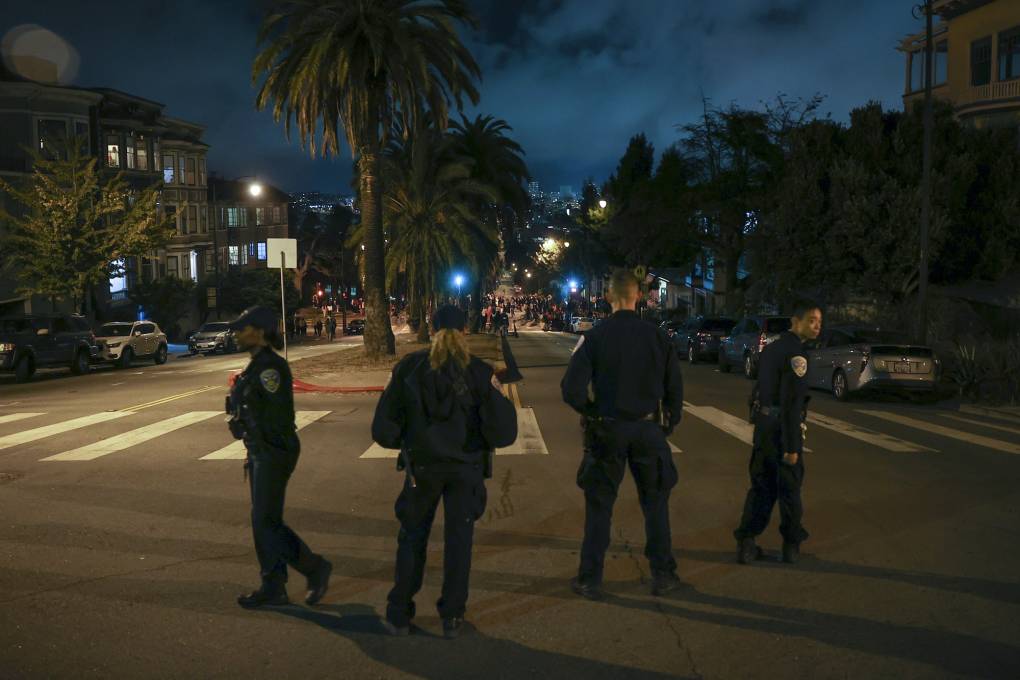
"caption": "Police officers watch as hundreds of young people gather on Dolores and 20th streets amid fighting, stabbing and the lighting of smoke bombs on Oct. 31, 2022, in San Francisco.",
"description": null,
"title": "Stabbing, fighting at Dolores Park Halloween âHill Bombâ in San Francisco",
"credit": "Tayfun Coskun/Anadolu Agency via Getty Images",
"status": "inherit",
"altTag": "Four police officers watch a crowd of people in the middle of an intersection a block away at night.",
"isLoading": false,
"fetchFailed": false
},
"news_11952787": {
"type": "attachments",
"id": "news_11952787",
"meta": {
"index": "attachments_1716263798",
"site": "news",
"id": "11952787",
"found": true
},
"parent": 0,
"imgSizes": {
"twentyfourteen-full-width": {
"file": "https://ww2.kqed.org/app/uploads/sites/10/2023/06/IMG_3867-scaled-e1686587568851-1038x576.jpeg",
"width": 1038,
"mimeType": "image/jpeg",
"height": 576
},
"thumbnail": {
"file": "https://ww2.kqed.org/app/uploads/sites/10/2023/06/IMG_3867-scaled-e1686587568851-160x120.jpeg",
"width": 160,
"mimeType": "image/jpeg",
"height": 120
},
"post-thumbnail": {
"file": "https://ww2.kqed.org/app/uploads/sites/10/2023/06/IMG_3867-scaled-e1686587568851-672x372.jpeg",
"width": 672,
"mimeType": "image/jpeg",
"height": 372
},
"kqedFullSize": {
"file": "https://ww2.kqed.org/app/uploads/sites/10/2023/06/IMG_3867-scaled-e1686587568851.jpeg",
"width": 1920,
"height": 1440
},
"large": {
"file": "https://ww2.kqed.org/app/uploads/sites/10/2023/06/IMG_3867-scaled-e1686587568851-1020x765.jpeg",
"width": 1020,
"mimeType": "image/jpeg",
"height": 765
},
"1536x1536": {
"file": "https://ww2.kqed.org/app/uploads/sites/10/2023/06/IMG_3867-scaled-e1686587568851-1536x1152.jpeg",
"width": 1536,
"mimeType": "image/jpeg",
"height": 1152
},
"medium": {
"file": "https://ww2.kqed.org/app/uploads/sites/10/2023/06/IMG_3867-scaled-e1686587568851-800x600.jpeg",
"width": 800,
"mimeType": "image/jpeg",
"height": 600
}
},
"publishDate": 1686587771,
"modified": 1686592498,
"caption": "The corner of 24th Street and Treat Avenue just next to the Dying Breed/Mission Skateboards store where the block party was held Friday night.",
"description": null,
"title": "IMG_3867-scaled-e1686587568851",
"credit": "Elize Manoukian/KQED",
"status": "inherit",
"altTag": null,
"isLoading": false,
"fetchFailed": false
},
"news_11940532": {
"type": "attachments",
"id": "news_11940532",
"meta": {
"index": "attachments_1716263798",
"site": "news",
"id": "11940532",
"found": true
},
"parent": 11940452,
"imgSizes": {
"twentyfourteen-full-width": {
"file": "https://ww2.kqed.org/app/uploads/sites/10/2023/02/RRR-Featured-Image-1038x576.jpg",
"width": 1038,
"mimeType": "image/jpeg",
"height": 576
},
"thumbnail": {
"file": "https://ww2.kqed.org/app/uploads/sites/10/2023/02/RRR-Featured-Image-160x69.jpg",
"width": 160,
"mimeType": "image/jpeg",
"height": 69
},
"post-thumbnail": {
"file": "https://ww2.kqed.org/app/uploads/sites/10/2023/02/RRR-Featured-Image-672x372.jpg",
"width": 672,
"mimeType": "image/jpeg",
"height": 372
},
"kqedFullSize": {
"file": "https://ww2.kqed.org/app/uploads/sites/10/2023/02/RRR-Featured-Image.jpg",
"width": 1920,
"height": 825
},
"large": {
"file": "https://ww2.kqed.org/app/uploads/sites/10/2023/02/RRR-Featured-Image-1020x438.jpg",
"width": 1020,
"mimeType": "image/jpeg",
"height": 438
},
"1536x1536": {
"file": "https://ww2.kqed.org/app/uploads/sites/10/2023/02/RRR-Featured-Image-1536x660.jpg",
"width": 1536,
"mimeType": "image/jpeg",
"height": 660
},
"medium": {
"file": "https://ww2.kqed.org/app/uploads/sites/10/2023/02/RRR-Featured-Image-800x344.jpg",
"width": 800,
"mimeType": "image/jpeg",
"height": 344
}
},
"publishDate": 1675904660,
"modified": 1676402549,
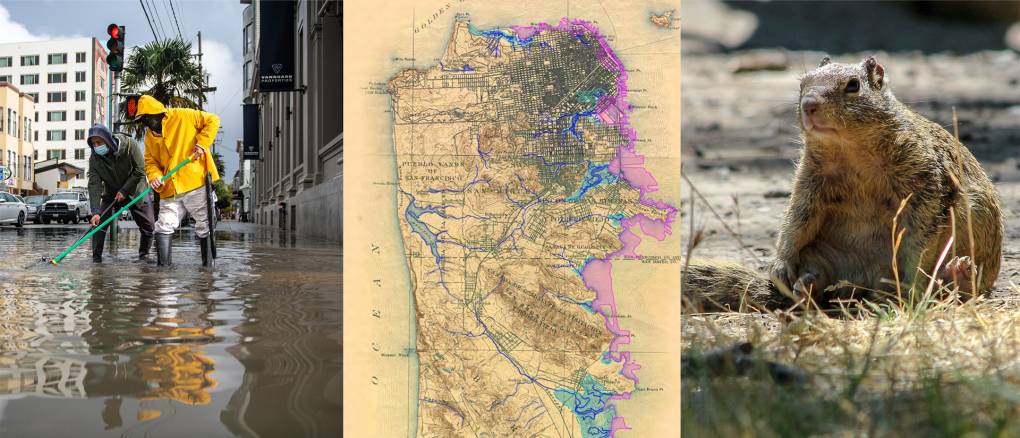
"caption": "Mission District residents work to unclog a drain; a map of the San Francisco shoreline in 1895; a rotund California ground squirrel in Briones Regional Park.",
"description": null,
"title": "RRR Featured Image",
"credit": "Beth LaBerge, KQED/Courtesy of Oakland Museum of California/Courtesy of Erin Person",
"status": "inherit",
"altTag": "Three images in a triptych, one features two people standing in a flooded street, next is a map of San Francisco with color coded areas that have been filled in, the third is a fat ground squirrel sitting back on its haunches.",
"isLoading": false,
"fetchFailed": false
},
"news_11925894": {
"type": "attachments",
"id": "news_11925894",
"meta": {
"index": "attachments_1716263798",
"site": "news",
"id": "11925894",
"found": true
},
"parent": 11925850,
"imgSizes": {
"twentyfourteen-full-width": {
"file": "https://ww2.kqed.org/app/uploads/sites/10/2022/09/IMG_0858-1038x576.jpg",
"width": 1038,
"mimeType": "image/jpeg",
"height": 576
},
"thumbnail": {
"file": "https://ww2.kqed.org/app/uploads/sites/10/2022/09/IMG_0858-160x120.jpg",
"width": 160,
"mimeType": "image/jpeg",
"height": 120
},
"post-thumbnail": {
"file": "https://ww2.kqed.org/app/uploads/sites/10/2022/09/IMG_0858-672x372.jpg",
"width": 672,
"mimeType": "image/jpeg",
"height": 372
},
"kqedFullSize": {
"file": "https://ww2.kqed.org/app/uploads/sites/10/2022/09/IMG_0858-scaled.jpg",
"width": 2560,
"height": 1920
},
"2048x2048": {
"file": "https://ww2.kqed.org/app/uploads/sites/10/2022/09/IMG_0858-2048x1536.jpg",
"width": 2048,
"mimeType": "image/jpeg",
"height": 1536
},
"large": {
"file": "https://ww2.kqed.org/app/uploads/sites/10/2022/09/IMG_0858-1020x765.jpg",
"width": 1020,
"mimeType": "image/jpeg",
"height": 765
},
"1536x1536": {
"file": "https://ww2.kqed.org/app/uploads/sites/10/2022/09/IMG_0858-1536x1152.jpg",
"width": 1536,
"mimeType": "image/jpeg",
"height": 1152
},
"full-width": {
"file": "https://ww2.kqed.org/app/uploads/sites/10/2022/09/IMG_0858-1920x1440.jpg",
"width": 1920,
"mimeType": "image/jpeg",
"height": 1440
},
"medium": {
"file": "https://ww2.kqed.org/app/uploads/sites/10/2022/09/IMG_0858-800x600.jpg",
"width": 800,
"mimeType": "image/jpeg",
"height": 600
}
},
"publishDate": 1663288066,
"modified": 1663288066,
"caption": null,
"description": null,
"title": "IMG_0858",
"credit": null,
"status": "inherit",
"altTag": null,
"isLoading": false,
"fetchFailed": false
},
"news_11923295": {
"type": "attachments",
"id": "news_11923295",
"meta": {
"index": "attachments_1716263798",
"site": "news",
"id": "11923295",
"found": true
},
"parent": 11923292,
"imgSizes": {
"twentyfourteen-full-width": {
"file": "https://ww2.kqed.org/app/uploads/sites/10/2022/08/RS57805_021_24thMissionVendors_08112022-qut-1038x576.jpg",
"width": 1038,
"mimeType": "image/jpeg",
"height": 576
},
"thumbnail": {
"file": "https://ww2.kqed.org/app/uploads/sites/10/2022/08/RS57805_021_24thMissionVendors_08112022-qut-160x107.jpg",
"width": 160,
"mimeType": "image/jpeg",
"height": 107
},
"post-thumbnail": {
"file": "https://ww2.kqed.org/app/uploads/sites/10/2022/08/RS57805_021_24thMissionVendors_08112022-qut-672x372.jpg",
"width": 672,
"mimeType": "image/jpeg",
"height": 372
},
"kqedFullSize": {
"file": "https://ww2.kqed.org/app/uploads/sites/10/2022/08/RS57805_021_24thMissionVendors_08112022-qut.jpg",
"width": 1920,
"height": 1280
},
"large": {
"file": "https://ww2.kqed.org/app/uploads/sites/10/2022/08/RS57805_021_24thMissionVendors_08112022-qut-1020x680.jpg",
"width": 1020,
"mimeType": "image/jpeg",
"height": 680
},
"1536x1536": {
"file": "https://ww2.kqed.org/app/uploads/sites/10/2022/08/RS57805_021_24thMissionVendors_08112022-qut-1536x1024.jpg",
"width": 1536,
"mimeType": "image/jpeg",
"height": 1024
},
"medium": {
"file": "https://ww2.kqed.org/app/uploads/sites/10/2022/08/RS57805_021_24thMissionVendors_08112022-qut-800x533.jpg",
"width": 800,
"mimeType": "image/jpeg",
"height": 533
}
},
"publishDate": 1661290158,
"modified": 1661290185,
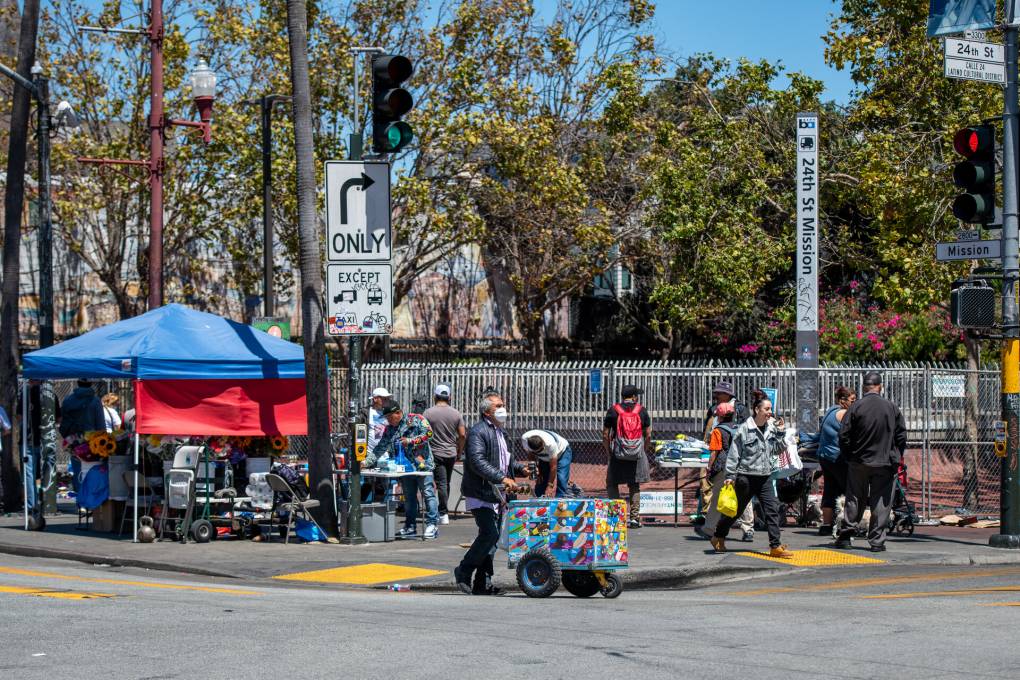
"caption": "Vendors sell goods on 24th and Mission Streets in San Francisco on Aug. 11, 2022.",
"description": null,
"title": "RS57805_021_24thMissionVendors_08112022-qut",
"credit": "Beth LaBerge",
"status": "inherit",
"altTag": null,
"isLoading": false,
"fetchFailed": false
},
"news_11917358": {
"type": "attachments",
"id": "news_11917358",
"meta": {
"index": "attachments_1716263798",
"site": "news",
"id": "11917358",
"found": true
},
"parent": 11917356,
"imgSizes": {
"twentyfourteen-full-width": {
"file": "https://ww2.kqed.org/app/uploads/sites/10/2022/06/Warriors_GettyImages-1241364247-1024x576.jpg",
"width": 1024,
"mimeType": "image/jpeg",
"height": 576
},
"thumbnail": {
"file": "https://ww2.kqed.org/app/uploads/sites/10/2022/06/Warriors_GettyImages-1241364247-160x113.jpg",
"width": 160,
"mimeType": "image/jpeg",
"height": 113
},
"post-thumbnail": {
"file": "https://ww2.kqed.org/app/uploads/sites/10/2022/06/Warriors_GettyImages-1241364247-672x372.jpg",
"width": 672,
"mimeType": "image/jpeg",
"height": 372
},
"kqedFullSize": {
"file": "https://ww2.kqed.org/app/uploads/sites/10/2022/06/Warriors_GettyImages-1241364247.jpg",
"width": 1024,
"height": 724
},
"large": {
"file": "https://ww2.kqed.org/app/uploads/sites/10/2022/06/Warriors_GettyImages-1241364247-1020x721.jpg",
"width": 1020,
"mimeType": "image/jpeg",
"height": 721
},
"medium": {
"file": "https://ww2.kqed.org/app/uploads/sites/10/2022/06/Warriors_GettyImages-1241364247-800x566.jpg",
"width": 800,
"mimeType": "image/jpeg",
"height": 566
}
},
"publishDate": 1655507838,
"modified": 1655507866,
"caption": null,
"description": "Boston - June 16: Golden State Warriors guard Stephen Curry (30) lifting the Finals MVP trophy while teammate Klay Thompson holds the Championship Trophy after they defeated the Boston Celtics 103-90. The Boston Celtics hosted the Golden State Warriors for Game Six of the NBA Finals at the TD Garden in Boston on June 17, 2022. (Photo by Matthew J. Lee/The Boston Globe via Getty Images)",
"title": "Golden State Warriors Vs Boston Celtics At TD Garden",
"credit": "Matthew J. Lee/The Boston Globe via Getty Images",
"status": "inherit",
"altTag": null,
"isLoading": false,
"fetchFailed": false
},
"news_11906031": {
"type": "attachments",
"id": "news_11906031",
"meta": {
"index": "attachments_1716263798",
"site": "news",
"id": "11906031",
"found": true
},
"parent": 11906012,
"imgSizes": {
"twentyfourteen-full-width": {
"file": "https://ww2.kqed.org/app/uploads/sites/10/2022/02/50447982486_b339b002dd_o-1038x576.jpg",
"width": 1038,
"mimeType": "image/jpeg",
"height": 576
},
"thumbnail": {
"file": "https://ww2.kqed.org/app/uploads/sites/10/2022/02/50447982486_b339b002dd_o-160x107.jpg",
"width": 160,
"mimeType": "image/jpeg",
"height": 107
},
"post-thumbnail": {
"file": "https://ww2.kqed.org/app/uploads/sites/10/2022/02/50447982486_b339b002dd_o-672x372.jpg",
"width": 672,
"mimeType": "image/jpeg",
"height": 372
},
"kqedFullSize": {
"file": "https://ww2.kqed.org/app/uploads/sites/10/2022/02/50447982486_b339b002dd_o-scaled.jpg",
"width": 2560,
"height": 1707
},
"2048x2048": {
"file": "https://ww2.kqed.org/app/uploads/sites/10/2022/02/50447982486_b339b002dd_o-2048x1365.jpg",
"width": 2048,
"mimeType": "image/jpeg",
"height": 1365
},
"large": {
"file": "https://ww2.kqed.org/app/uploads/sites/10/2022/02/50447982486_b339b002dd_o-1020x680.jpg",
"width": 1020,
"mimeType": "image/jpeg",
"height": 680
},
"1536x1536": {
"file": "https://ww2.kqed.org/app/uploads/sites/10/2022/02/50447982486_b339b002dd_o-1536x1024.jpg",
"width": 1536,
"mimeType": "image/jpeg",
"height": 1024
},
"full-width": {
"file": "https://ww2.kqed.org/app/uploads/sites/10/2022/02/50447982486_b339b002dd_o-1920x1280.jpg",
"width": 1920,
"mimeType": "image/jpeg",
"height": 1280
},
"medium": {
"file": "https://ww2.kqed.org/app/uploads/sites/10/2022/02/50447982486_b339b002dd_o-800x533.jpg",
"width": 800,
"mimeType": "image/jpeg",
"height": 533
}
},
"publishDate": 1645557071,
"modified": 1647537874,
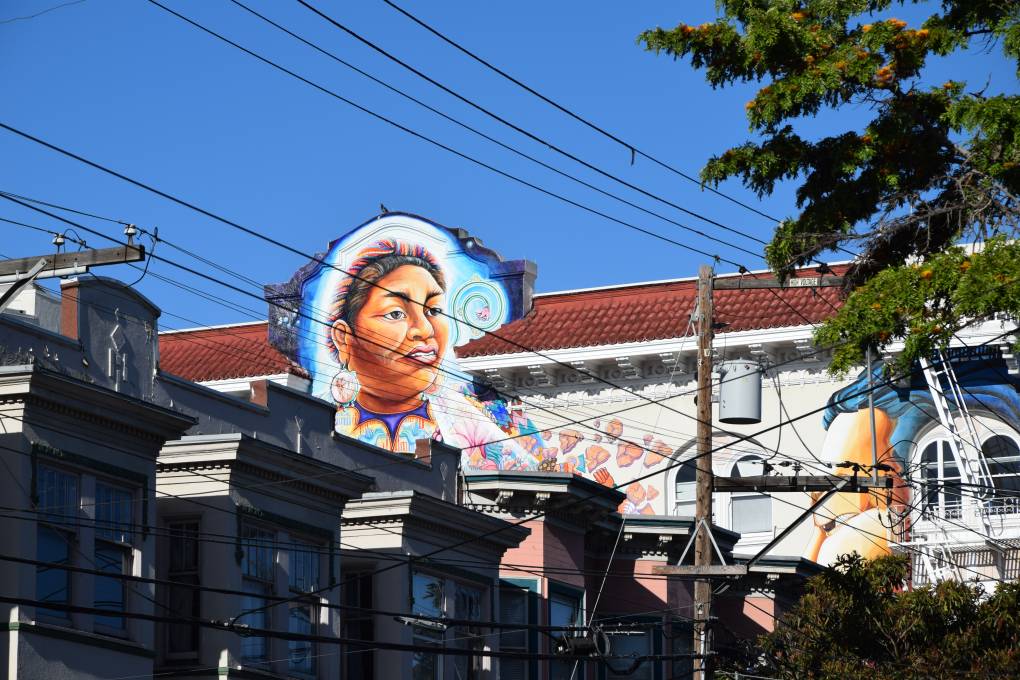
"caption": "\"MaestraPeace\" mural on the Women's Building overlooks homes on 18th Street in the Mission District, San Francisco.",
"description": null,
"title": "50447982486_b339b002dd_o",
"credit": "CTG/SF/Flickr",
"status": "inherit",
"altTag": null,
"isLoading": false,
"fetchFailed": false
},
"news_11878329": {
"type": "attachments",
"id": "news_11878329",
"meta": {
"index": "attachments_1716263798",
"site": "news",
"id": "11878329",
"found": true
},
"parent": 11878318,
"imgSizes": {
"twentyfourteen-full-width": {
"file": "https://ww2.kqed.org/app/uploads/sites/10/2021/06/RS46106_014_KQED_SanFrancisco_COVIDTesting_11302020-qut-1038x576.jpg",
"width": 1038,
"mimeType": "image/jpeg",
"height": 576
},
"thumbnail": {
"file": "https://ww2.kqed.org/app/uploads/sites/10/2021/06/RS46106_014_KQED_SanFrancisco_COVIDTesting_11302020-qut-160x107.jpg",
"width": 160,
"mimeType": "image/jpeg",
"height": 107
},
"post-thumbnail": {
"file": "https://ww2.kqed.org/app/uploads/sites/10/2021/06/RS46106_014_KQED_SanFrancisco_COVIDTesting_11302020-qut-672x372.jpg",
"width": 672,
"mimeType": "image/jpeg",
"height": 372
},
"kqedFullSize": {
"file": "https://ww2.kqed.org/app/uploads/sites/10/2021/06/RS46106_014_KQED_SanFrancisco_COVIDTesting_11302020-qut.jpg",
"width": 1920,
"height": 1280
},
"large": {
"file": "https://ww2.kqed.org/app/uploads/sites/10/2021/06/RS46106_014_KQED_SanFrancisco_COVIDTesting_11302020-qut-1020x680.jpg",
"width": 1020,
"mimeType": "image/jpeg",
"height": 680
},
"1536x1536": {
"file": "https://ww2.kqed.org/app/uploads/sites/10/2021/06/RS46106_014_KQED_SanFrancisco_COVIDTesting_11302020-qut-1536x1024.jpg",
"width": 1536,
"mimeType": "image/jpeg",
"height": 1024
},
"medium": {
"file": "https://ww2.kqed.org/app/uploads/sites/10/2021/06/RS46106_014_KQED_SanFrancisco_COVIDTesting_11302020-qut-800x533.jpg",
"width": 800,
"mimeType": "image/jpeg",
"height": 533
}
},
"publishDate": 1623893220,
"modified": 1640643412,
"caption": "Health care worker Olga Duran tests a patient for COVID-19 at a Unidos en Salud (United in Health) testing site on 24th and Mission streets in San Francisco on Nov. 30, 2020. The effort is a collaboration between UCSF and the SF Latino Task Force to help vulnerable populations during the pandemic.",
"description": null,
"title": "RS46106_014_KQED_SanFrancisco_COVIDTesting_11302020-qut",
"credit": "Beth LaBerge/KQED",
"status": "inherit",
"altTag": "A healthcare worker in blue scrubs swabs a man whose back is turned to the camera.",
"isLoading": false,
"fetchFailed": false
},
"news_11862423": {
"type": "attachments",
"id": "news_11862423",
"meta": {
"index": "attachments_1716263798",
"site": "news",
"id": "11862423",
"found": true
},
"parent": 11862295,
"imgSizes": {
"apple_news_ca_landscape_5_5": {
"file": "https://ww2.kqed.org/app/uploads/sites/10/2021/02/MARQUEE-818-1044x720.jpg",
"width": 1044,
"mimeType": "image/jpeg",
"height": 720
},
"apple_news_ca_square_4_0": {
"file": "https://ww2.kqed.org/app/uploads/sites/10/2021/02/MARQUEE-818-470x470.jpg",
"width": 470,
"mimeType": "image/jpeg",
"height": 470
},
"twentyfourteen-full-width": {
"file": "https://ww2.kqed.org/app/uploads/sites/10/2021/02/MARQUEE-818-1038x576.jpg",
"width": 1038,
"mimeType": "image/jpeg",
"height": 576
},
"thumbnail": {
"file": "https://ww2.kqed.org/app/uploads/sites/10/2021/02/MARQUEE-818-160x90.jpg",
"width": 160,
"mimeType": "image/jpeg",
"height": 90
},
"post-thumbnail": {
"file": "https://ww2.kqed.org/app/uploads/sites/10/2021/02/MARQUEE-818-672x372.jpg",
"width": 672,
"mimeType": "image/jpeg",
"height": 372
},
"kqedFullSize": {
"file": "https://ww2.kqed.org/app/uploads/sites/10/2021/02/MARQUEE-818.jpg",
"width": 1280,
"height": 720
},
"apple_news_ca_landscape_4_7": {
"file": "https://ww2.kqed.org/app/uploads/sites/10/2021/02/MARQUEE-818-632x474.jpg",
"width": 632,
"mimeType": "image/jpeg",
"height": 474
},
"large": {
"file": "https://ww2.kqed.org/app/uploads/sites/10/2021/02/MARQUEE-818-1020x574.jpg",
"width": 1020,
"mimeType": "image/jpeg",
"height": 574
},
"apple_news_ca_landscape_4_0": {
"file": "https://ww2.kqed.org/app/uploads/sites/10/2021/02/MARQUEE-818-536x402.jpg",
"width": 536,
"mimeType": "image/jpeg",
"height": 402
},
"apple_news_ca_portrait_12_9": {
"file": "https://ww2.kqed.org/app/uploads/sites/10/2021/02/MARQUEE-818-1122x720.jpg",
"width": 1122,
"mimeType": "image/jpeg",
"height": 720
},
"medium": {
"file": "https://ww2.kqed.org/app/uploads/sites/10/2021/02/MARQUEE-818-800x450.jpg",
"width": 800,
"mimeType": "image/jpeg",
"height": 450
},
"apple_news_ca_portrait_4_0": {
"file": "https://ww2.kqed.org/app/uploads/sites/10/2021/02/MARQUEE-818-354x472.jpg",
"width": 354,
"mimeType": "image/jpeg",
"height": 472
},
"apple_news_ca_portrait_9_7": {
"file": "https://ww2.kqed.org/app/uploads/sites/10/2021/02/MARQUEE-818-840x720.jpg",
"width": 840,
"mimeType": "image/jpeg",
"height": 720
},
"apple_news_ca_square_9_7": {
"file": "https://ww2.kqed.org/app/uploads/sites/10/2021/02/MARQUEE-818-1104x720.jpg",
"width": 1104,
"mimeType": "image/jpeg",
"height": 720
},
"apple_news_ca_portrait_4_7": {
"file": "https://ww2.kqed.org/app/uploads/sites/10/2021/02/MARQUEE-818-414x552.jpg",
"width": 414,
"mimeType": "image/jpeg",
"height": 552
},
"apple_news_ca_portrait_5_5": {
"file": "https://ww2.kqed.org/app/uploads/sites/10/2021/02/MARQUEE-818-687x720.jpg",
"width": 687,
"mimeType": "image/jpeg",
"height": 720
},
"apple_news_ca_square_4_7": {
"file": "https://ww2.kqed.org/app/uploads/sites/10/2021/02/MARQUEE-818-550x550.jpg",
"width": 550,
"mimeType": "image/jpeg",
"height": 550
},
"apple_news_ca_square_5_5": {
"file": "https://ww2.kqed.org/app/uploads/sites/10/2021/02/MARQUEE-818-912x720.jpg",
"width": 912,
"mimeType": "image/jpeg",
"height": 720
}
},
"publishDate": 1614389768,
"modified": 1614389768,
"caption": null,
"description": null,
"title": "MARQUEE 818",
"credit": null,
"status": "inherit",
"altTag": null,
"isLoading": false,
"fetchFailed": false
},
"news_11854363": {
"type": "attachments",
"id": "news_11854363",
"meta": {
"index": "attachments_1716263798",
"site": "news",
"id": "11854363",
"found": true
},
"parent": 11854353,
"imgSizes": {
"apple_news_ca_landscape_5_5": {
"file": "https://ww2.kqed.org/app/uploads/sites/10/2021/01/screen_shot_2021-01-06_at_2.02.48_pm-1-1044x783.png",
"width": 1044,
"mimeType": "image/png",
"height": 783
},
"apple_news_ca_square_4_0": {
"file": "https://ww2.kqed.org/app/uploads/sites/10/2021/01/screen_shot_2021-01-06_at_2.02.48_pm-1-470x470.png",
"width": 470,
"mimeType": "image/png",
"height": 470
},
"twentyfourteen-full-width": {
"file": "https://ww2.kqed.org/app/uploads/sites/10/2021/01/screen_shot_2021-01-06_at_2.02.48_pm-1-1038x576.png",
"width": 1038,
"mimeType": "image/png",
"height": 576
},
"thumbnail": {
"file": "https://ww2.kqed.org/app/uploads/sites/10/2021/01/screen_shot_2021-01-06_at_2.02.48_pm-1-160x90.png",
"width": 160,
"mimeType": "image/png",
"height": 90
},
"post-thumbnail": {
"file": "https://ww2.kqed.org/app/uploads/sites/10/2021/01/screen_shot_2021-01-06_at_2.02.48_pm-1-672x372.png",
"width": 672,
"mimeType": "image/png",
"height": 372
},
"kqedFullSize": {
"file": "https://ww2.kqed.org/app/uploads/sites/10/2021/01/screen_shot_2021-01-06_at_2.02.48_pm-1.png",
"width": 3254,
"height": 1826
},
"2048x2048": {
"file": "https://ww2.kqed.org/app/uploads/sites/10/2021/01/screen_shot_2021-01-06_at_2.02.48_pm-1-2048x1149.png",
"width": 2048,
"mimeType": "image/png",
"height": 1149
},
"apple_news_ca_landscape_4_7": {
"file": "https://ww2.kqed.org/app/uploads/sites/10/2021/01/screen_shot_2021-01-06_at_2.02.48_pm-1-632x474.png",
"width": 632,
"mimeType": "image/png",
"height": 474
},
"large": {
"file": "https://ww2.kqed.org/app/uploads/sites/10/2021/01/screen_shot_2021-01-06_at_2.02.48_pm-1-1020x572.png",
"width": 1020,
"mimeType": "image/png",
"height": 572
},
"apple_news_ca_landscape_4_0": {
"file": "https://ww2.kqed.org/app/uploads/sites/10/2021/01/screen_shot_2021-01-06_at_2.02.48_pm-1-536x402.png",
"width": 536,
"mimeType": "image/png",
"height": 402
},
"apple_news_ca_portrait_12_9": {
"file": "https://ww2.kqed.org/app/uploads/sites/10/2021/01/screen_shot_2021-01-06_at_2.02.48_pm-1-1122x1496.png",
"width": 1122,
"mimeType": "image/png",
"height": 1496
},
"medium": {
"file": "https://ww2.kqed.org/app/uploads/sites/10/2021/01/screen_shot_2021-01-06_at_2.02.48_pm-1-800x449.png",
"width": 800,
"mimeType": "image/png",
"height": 449
},
"apple_news_ca_portrait_4_0": {
"file": "https://ww2.kqed.org/app/uploads/sites/10/2021/01/screen_shot_2021-01-06_at_2.02.48_pm-1-354x472.png",
"width": 354,
"mimeType": "image/png",
"height": 472
},
"apple_news_ca_portrait_9_7": {
"file": "https://ww2.kqed.org/app/uploads/sites/10/2021/01/screen_shot_2021-01-06_at_2.02.48_pm-1-840x1120.png",
"width": 840,
"mimeType": "image/png",
"height": 1120
},
"apple_news_ca_landscape_12_9": {
"file": "https://ww2.kqed.org/app/uploads/sites/10/2021/01/screen_shot_2021-01-06_at_2.02.48_pm-1-1832x1374.png",
"width": 1832,
"mimeType": "image/png",
"height": 1374
},
"apple_news_ca_square_9_7": {
"file": "https://ww2.kqed.org/app/uploads/sites/10/2021/01/screen_shot_2021-01-06_at_2.02.48_pm-1-1104x1104.png",
"width": 1104,
"mimeType": "image/png",
"height": 1104
},
"1536x1536": {
"file": "https://ww2.kqed.org/app/uploads/sites/10/2021/01/screen_shot_2021-01-06_at_2.02.48_pm-1-1536x862.png",
"width": 1536,
"mimeType": "image/png",
"height": 862
},
"apple_news_ca_portrait_4_7": {
"file": "https://ww2.kqed.org/app/uploads/sites/10/2021/01/screen_shot_2021-01-06_at_2.02.48_pm-1-414x552.png",
"width": 414,
"mimeType": "image/png",
"height": 552
},
"apple_news_ca_square_12_9": {
"file": "https://ww2.kqed.org/app/uploads/sites/10/2021/01/screen_shot_2021-01-06_at_2.02.48_pm-1-1472x1472.png",
"width": 1472,
"mimeType": "image/png",
"height": 1472
},
"apple_news_ca_portrait_5_5": {
"file": "https://ww2.kqed.org/app/uploads/sites/10/2021/01/screen_shot_2021-01-06_at_2.02.48_pm-1-687x916.png",
"width": 687,
"mimeType": "image/png",
"height": 916
},
"full-width": {
"file": "https://ww2.kqed.org/app/uploads/sites/10/2021/01/screen_shot_2021-01-06_at_2.02.48_pm-1-1920x1077.png",
"width": 1920,
"mimeType": "image/png",
"height": 1077
},
"apple_news_ca_square_4_7": {
"file": "https://ww2.kqed.org/app/uploads/sites/10/2021/01/screen_shot_2021-01-06_at_2.02.48_pm-1-550x550.png",
"width": 550,
"mimeType": "image/png",
"height": 550
},
"apple_news_ca_landscape_9_7": {
"file": "https://ww2.kqed.org/app/uploads/sites/10/2021/01/screen_shot_2021-01-06_at_2.02.48_pm-1-1376x1032.png",
"width": 1376,
"mimeType": "image/png",
"height": 1032
},
"apple_news_ca_square_5_5": {
"file": "https://ww2.kqed.org/app/uploads/sites/10/2021/01/screen_shot_2021-01-06_at_2.02.48_pm-1-912x912.png",
"width": 912,
"mimeType": "image/png",
"height": 912
}
},
"publishDate": 1610070288,
"modified": 1610070756,
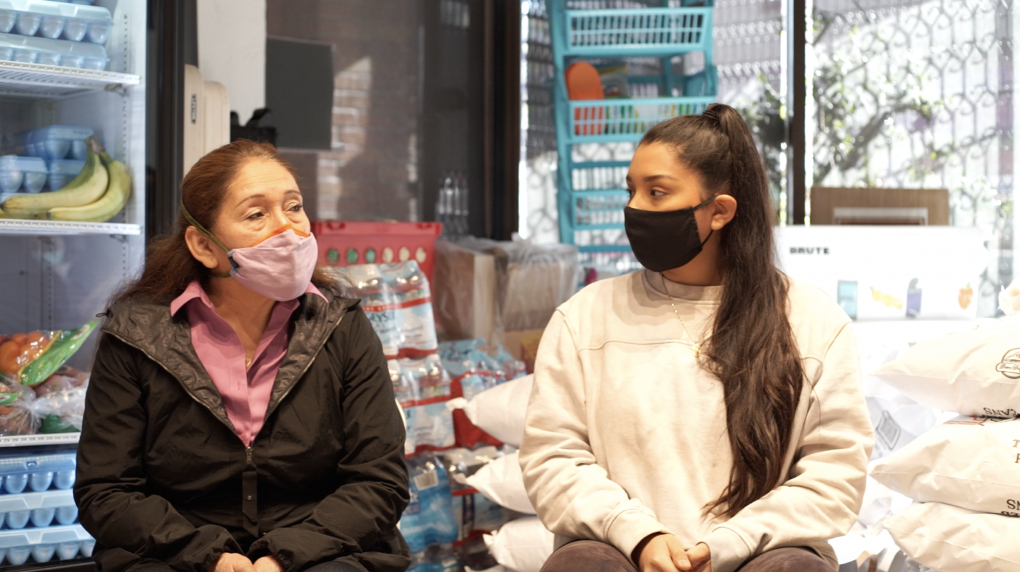
"caption": "Gabriela Alemán (a la derecha), una de las fundadoras de 'Mission Meals Coalition', con su madre Gabriela Ramírez. ",
"description": null,
"title": "screen_shot_2021-01-06_at_2.02.48_pm",
"credit": "Anna Vignet/KQED",
"status": "inherit",
"altTag": null,
"isLoading": false,
"fetchFailed": false
},
"news_11854077": {
"type": "attachments",
"id": "news_11854077",
"meta": {
"index": "attachments_1716263798",
"site": "news",
"id": "11854077",
"found": true
},
"parent": 11853703,
"imgSizes": {
"apple_news_ca_landscape_5_5": {
"file": "https://ww2.kqed.org/app/uploads/sites/10/2021/01/screen_shot_2021-01-06_at_2.02.48_pm-1044x783.png",
"width": 1044,
"mimeType": "image/png",
"height": 783
},
"apple_news_ca_square_4_0": {
"file": "https://ww2.kqed.org/app/uploads/sites/10/2021/01/screen_shot_2021-01-06_at_2.02.48_pm-470x470.png",
"width": 470,
"mimeType": "image/png",
"height": 470
},
"twentyfourteen-full-width": {
"file": "https://ww2.kqed.org/app/uploads/sites/10/2021/01/screen_shot_2021-01-06_at_2.02.48_pm-1038x576.png",
"width": 1038,
"mimeType": "image/png",
"height": 576
},
"thumbnail": {
"file": "https://ww2.kqed.org/app/uploads/sites/10/2021/01/screen_shot_2021-01-06_at_2.02.48_pm-160x90.png",
"width": 160,
"mimeType": "image/png",
"height": 90
},
"post-thumbnail": {
"file": "https://ww2.kqed.org/app/uploads/sites/10/2021/01/screen_shot_2021-01-06_at_2.02.48_pm-672x372.png",
"width": 672,
"mimeType": "image/png",
"height": 372
},
"kqedFullSize": {
"file": "https://ww2.kqed.org/app/uploads/sites/10/2021/01/screen_shot_2021-01-06_at_2.02.48_pm.png",
"width": 3254,
"height": 1826
},
"2048x2048": {
"file": "https://ww2.kqed.org/app/uploads/sites/10/2021/01/screen_shot_2021-01-06_at_2.02.48_pm-2048x1149.png",
"width": 2048,
"mimeType": "image/png",
"height": 1149
},
"apple_news_ca_landscape_4_7": {
"file": "https://ww2.kqed.org/app/uploads/sites/10/2021/01/screen_shot_2021-01-06_at_2.02.48_pm-632x474.png",
"width": 632,
"mimeType": "image/png",
"height": 474
},
"large": {
"file": "https://ww2.kqed.org/app/uploads/sites/10/2021/01/screen_shot_2021-01-06_at_2.02.48_pm-1020x572.png",
"width": 1020,
"mimeType": "image/png",
"height": 572
},
"apple_news_ca_landscape_4_0": {
"file": "https://ww2.kqed.org/app/uploads/sites/10/2021/01/screen_shot_2021-01-06_at_2.02.48_pm-536x402.png",
"width": 536,
"mimeType": "image/png",
"height": 402
},
"apple_news_ca_portrait_12_9": {
"file": "https://ww2.kqed.org/app/uploads/sites/10/2021/01/screen_shot_2021-01-06_at_2.02.48_pm-1122x1496.png",
"width": 1122,
"mimeType": "image/png",
"height": 1496
},
"medium": {
"file": "https://ww2.kqed.org/app/uploads/sites/10/2021/01/screen_shot_2021-01-06_at_2.02.48_pm-800x449.png",
"width": 800,
"mimeType": "image/png",
"height": 449
},
"apple_news_ca_portrait_4_0": {
"file": "https://ww2.kqed.org/app/uploads/sites/10/2021/01/screen_shot_2021-01-06_at_2.02.48_pm-354x472.png",
"width": 354,
"mimeType": "image/png",
"height": 472
},
"apple_news_ca_portrait_9_7": {
"file": "https://ww2.kqed.org/app/uploads/sites/10/2021/01/screen_shot_2021-01-06_at_2.02.48_pm-840x1120.png",
"width": 840,
"mimeType": "image/png",
"height": 1120
},
"apple_news_ca_landscape_12_9": {
"file": "https://ww2.kqed.org/app/uploads/sites/10/2021/01/screen_shot_2021-01-06_at_2.02.48_pm-1832x1374.png",
"width": 1832,
"mimeType": "image/png",
"height": 1374
},
"apple_news_ca_square_9_7": {
"file": "https://ww2.kqed.org/app/uploads/sites/10/2021/01/screen_shot_2021-01-06_at_2.02.48_pm-1104x1104.png",
"width": 1104,
"mimeType": "image/png",
"height": 1104
},
"1536x1536": {
"file": "https://ww2.kqed.org/app/uploads/sites/10/2021/01/screen_shot_2021-01-06_at_2.02.48_pm-1536x862.png",
"width": 1536,
"mimeType": "image/png",
"height": 862
},
"apple_news_ca_portrait_4_7": {
"file": "https://ww2.kqed.org/app/uploads/sites/10/2021/01/screen_shot_2021-01-06_at_2.02.48_pm-414x552.png",
"width": 414,
"mimeType": "image/png",
"height": 552
},
"apple_news_ca_square_12_9": {
"file": "https://ww2.kqed.org/app/uploads/sites/10/2021/01/screen_shot_2021-01-06_at_2.02.48_pm-1472x1472.png",
"width": 1472,
"mimeType": "image/png",
"height": 1472
},
"apple_news_ca_portrait_5_5": {
"file": "https://ww2.kqed.org/app/uploads/sites/10/2021/01/screen_shot_2021-01-06_at_2.02.48_pm-687x916.png",
"width": 687,
"mimeType": "image/png",
"height": 916
},
"full-width": {
"file": "https://ww2.kqed.org/app/uploads/sites/10/2021/01/screen_shot_2021-01-06_at_2.02.48_pm-1920x1077.png",
"width": 1920,
"mimeType": "image/png",
"height": 1077
},
"apple_news_ca_square_4_7": {
"file": "https://ww2.kqed.org/app/uploads/sites/10/2021/01/screen_shot_2021-01-06_at_2.02.48_pm-550x550.png",
"width": 550,
"mimeType": "image/png",
"height": 550
},
"apple_news_ca_landscape_9_7": {
"file": "https://ww2.kqed.org/app/uploads/sites/10/2021/01/screen_shot_2021-01-06_at_2.02.48_pm-1376x1032.png",
"width": 1376,
"mimeType": "image/png",
"height": 1032
},
"apple_news_ca_square_5_5": {
"file": "https://ww2.kqed.org/app/uploads/sites/10/2021/01/screen_shot_2021-01-06_at_2.02.48_pm-912x912.png",
"width": 912,
"mimeType": "image/png",
"height": 912
}
},
"publishDate": 1609985910,
"modified": 1610048249,
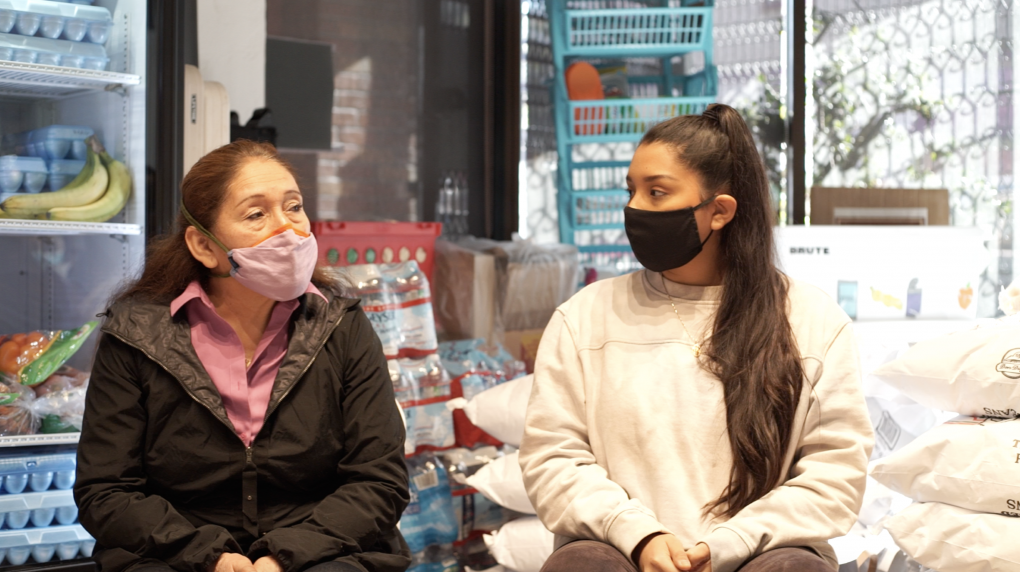
"caption": "Gabriela Alemán (right), co-founder of Mission Meals Coalition, with her mother Gabriela Ramírez. ",
"description": null,
"title": "screen_shot_2021-01-06_at_2.02.48_pm",
"credit": "Anna Vignet/KQED",
"status": "inherit",
"altTag": null,
"isLoading": false,
"fetchFailed": false
},
"news_11849393": {
"type": "attachments",
"id": "news_11849393",
"meta": {
"index": "attachments_1716263798",
"site": "news",
"id": "11849393",
"found": true
},
"parent": 11848986,
"imgSizes": {
"apple_news_ca_square_4_0": {
"file": "https://ww2.kqed.org/app/uploads/sites/10/2020/12/fridaanddiego-470x470.png",
"width": 470,
"mimeType": "image/png",
"height": 470
},
"twentyfourteen-full-width": {
"file": "https://ww2.kqed.org/app/uploads/sites/10/2020/12/fridaanddiego-906x576.png",
"width": 906,
"mimeType": "image/png",
"height": 576
},
"thumbnail": {
"file": "https://ww2.kqed.org/app/uploads/sites/10/2020/12/fridaanddiego-160x114.png",
"width": 160,
"mimeType": "image/png",
"height": 114
},
"post-thumbnail": {
"file": "https://ww2.kqed.org/app/uploads/sites/10/2020/12/fridaanddiego-672x372.png",
"width": 672,
"mimeType": "image/png",
"height": 372
},
"kqedFullSize": {
"file": "https://ww2.kqed.org/app/uploads/sites/10/2020/12/fridaanddiego.png",
"width": 906,
"height": 647
},
"apple_news_ca_landscape_4_7": {
"file": "https://ww2.kqed.org/app/uploads/sites/10/2020/12/fridaanddiego-632x474.png",
"width": 632,
"mimeType": "image/png",
"height": 474
},
"apple_news_ca_landscape_4_0": {
"file": "https://ww2.kqed.org/app/uploads/sites/10/2020/12/fridaanddiego-536x402.png",
"width": 536,
"mimeType": "image/png",
"height": 402
},
"medium": {
"file": "https://ww2.kqed.org/app/uploads/sites/10/2020/12/fridaanddiego-800x571.png",
"width": 800,
"mimeType": "image/png",
"height": 571
},
"apple_news_ca_portrait_4_0": {
"file": "https://ww2.kqed.org/app/uploads/sites/10/2020/12/fridaanddiego-354x472.png",
"width": 354,
"mimeType": "image/png",
"height": 472
},
"apple_news_ca_portrait_9_7": {
"file": "https://ww2.kqed.org/app/uploads/sites/10/2020/12/fridaanddiego-840x647.png",
"width": 840,
"mimeType": "image/png",
"height": 647
},
"apple_news_ca_portrait_4_7": {
"file": "https://ww2.kqed.org/app/uploads/sites/10/2020/12/fridaanddiego-414x552.png",
"width": 414,
"mimeType": "image/png",
"height": 552
},
"apple_news_ca_portrait_5_5": {
"file": "https://ww2.kqed.org/app/uploads/sites/10/2020/12/fridaanddiego-687x647.png",
"width": 687,
"mimeType": "image/png",
"height": 647
},
"apple_news_ca_square_4_7": {
"file": "https://ww2.kqed.org/app/uploads/sites/10/2020/12/fridaanddiego-550x550.png",
"width": 550,
"mimeType": "image/png",
"height": 550
}
},
"publishDate": 1606947203,
"modified": 1606947226,
"caption": "Frida Kahlo and Diego Rivera lived in the studio of sculptor Ralph Stackpole, on Montgomery Street, San Francisco. ",
"description": null,
"title": "fridaanddiego",
"credit": "Paul A. Juley/Archives of American Art, Smithsonian Institution",
"status": "inherit",
"altTag": null,
"isLoading": false,
"fetchFailed": false
}
},
"audioPlayerReducer": {
"postId": "stream_live",
"isPaused": true,
"isPlaying": false,
"pfsActive": false,
"pledgeModalIsOpen": true,
"playerDrawerIsOpen": false,
"liveAudioPlayStartedAt": 0,
"liveAudioPlayContext": ""
},
"authorsReducer": {
"byline_news_11878318": {
"type": "authors",
"id": "byline_news_11878318",
"meta": {
"override": true
},
"slug": "byline_news_11878318",
"name": "Marisa Lagos (KQED) and Caitie Switalski Muñoz (WLRN)",
"isLoading": false
},
"kqed": {
"type": "authors",
"id": "236",
"meta": {
"index": "authors_1716337520",
"id": "236",
"found": true
},
"name": "KQED News Staff",
"firstName": "KQED News Staff",
"lastName": null,
"slug": "kqed",
"email": "faq@kqed.org",
"display_author_email": false,
"staff_mastheads": [],
"title": null,
"bio": null,
"avatar": "https://secure.gravatar.com/avatar/ef0e801a68c4c54afa9180db14084167?s=600&d=blank&r=g",
"twitter": null,
"facebook": null,
"instagram": null,
"linkedin": null,
"sites": [
{
"site": "arts",
"roles": [
"contributor"
]
},
{
"site": "news",
"roles": [
"editor"
]
},
{
"site": "futureofyou",
"roles": [
"author"
]
}
],
"headData": {
"title": "KQED News Staff | KQED",
"description": null,
"ogImgSrc": "https://secure.gravatar.com/avatar/ef0e801a68c4c54afa9180db14084167?s=600&d=blank&r=g",
"twImgSrc": "https://secure.gravatar.com/avatar/ef0e801a68c4c54afa9180db14084167?s=600&d=blank&r=g"
},
"isLoading": false,
"link": "/author/kqed"
},
"kqednewsstaffandwires": {
"type": "authors",
"id": "237",
"meta": {
"index": "authors_1716337520",
"id": "237",
"found": true
},
"name": "KQED News Staff and Wires",
"firstName": "KQED News Staff and Wires",
"lastName": null,
"slug": "kqednewsstaffandwires",
"email": "onlinenewsstaff@kqed.org",
"display_author_email": false,
"staff_mastheads": [],
"title": null,
"bio": null,
"avatar": "https://secure.gravatar.com/avatar/72295af8ebbfbd19a4948f5271285664?s=600&d=blank&r=g",
"twitter": null,
"facebook": null,
"instagram": null,
"linkedin": null,
"sites": [
{
"site": "arts",
"roles": [
"contributor"
]
},
{
"site": "news",
"roles": [
"contributor"
]
},
{
"site": "lowdown",
"roles": [
"author"
]
},
{
"site": "stateofhealth",
"roles": [
"contributor"
]
},
{
"site": "food",
"roles": [
"author"
]
}
],
"headData": {
"title": "KQED News Staff and Wires | KQED",
"description": null,
"ogImgSrc": "https://secure.gravatar.com/avatar/72295af8ebbfbd19a4948f5271285664?s=600&d=blank&r=g",
"twImgSrc": "https://secure.gravatar.com/avatar/72295af8ebbfbd19a4948f5271285664?s=600&d=blank&r=g"
},
"isLoading": false,
"link": "/author/kqednewsstaffandwires"
},
"afont": {
"type": "authors",
"id": "8637",
"meta": {
"index": "authors_1716337520",
"id": "8637",
"found": true
},
"name": "Amanda Font",
"firstName": "Amanda",
"lastName": "Font",
"slug": "afont",
"email": "afont@kqed.org",
"display_author_email": false,
"staff_mastheads": [],
"title": "KQED Contributor",
"bio": "Amanda Font is a producer on \u003cem>The Latest\u003c/em> podcast, and the host and co-producer of the series \u003cem>Audible Cosmos\u003c/em>. She has previously worked as a producer and reporter on the \u003cem>Bay Curious\u003c/em> podcast, and director of \u003cem>The California Report Magazine\u003c/em>. She grew up in the deserts of Southern California and moved north for the trees. Amanda earned a B.A. from the BECA program at San Francisco State, where she worked in the university's radio station. Amanda Font is represented by SAG-AFTRA.",
"avatar": "https://secure.gravatar.com/avatar/d9e81cf0117d5849b9cfb7ab4b1422f1?s=600&d=blank&r=g",
"twitter": null,
"facebook": null,
"instagram": null,
"linkedin": null,
"sites": [
{
"site": "news",
"roles": [
"add_users",
"create_users"
]
},
{
"site": "science",
"roles": []
},
{
"site": "forum",
"roles": [
"administrator"
]
},
{
"site": "perspectives",
"roles": [
"administrator"
]
},
{
"site": "radio",
"roles": [
"administrator"
]
}
],
"headData": {
"title": "Amanda Font | KQED",
"description": "KQED Contributor",
"ogImgSrc": "https://secure.gravatar.com/avatar/d9e81cf0117d5849b9cfb7ab4b1422f1?s=600&d=blank&r=g",
"twImgSrc": "https://secure.gravatar.com/avatar/d9e81cf0117d5849b9cfb7ab4b1422f1?s=600&d=blank&r=g"
},
"isLoading": false,
"link": "/author/afont"
},
"ecruzguevarra": {
"type": "authors",
"id": "8654",
"meta": {
"index": "authors_1716337520",
"id": "8654",
"found": true
},
"name": "Ericka Cruz Guevarra",
"firstName": "Ericka",
"lastName": "Cruz Guevarra",
"slug": "ecruzguevarra",
"email": "ecruzguevarra@kqed.org",
"display_author_email": true,
"staff_mastheads": [
"news"
],
"title": "Producer, The Bay Podcast",
"bio": "Ericka Cruz Guevarra is host of \u003ca href=\"https://www.kqed.org/podcasts/thebay\">\u003cem>The Bay\u003c/em>\u003c/a> podcast at KQED. Before host, she was the show’s producer. Her work in that capacity includes a three-part reported series on policing in Vallejo, which won a 2020 excellence in journalism award from the Society of Professional Journalists. Ericka has worked as a breaking news reporter at Oregon Public Broadcasting, helped produce the Code Switch podcast, and was KQED’s inaugural Raul Ramirez Diversity Fund intern. She’s also an alumna of NPR’s Next Generation Radio program. Send her an email if you have strong feelings about whether Fairfield and Suisun City are the Bay. Ericka is represented by SAG-AFTRA.",
"avatar": "https://secure.gravatar.com/avatar/accefc1de4bafc7e234b69bcb9b6f6536c130fd84709bc3069ef11a78787e1bb?s=600&d=blank&r=g",
"twitter": "NotoriousECG",
"bluesky": null,
"facebook": null,
"instagram": null,
"linkedin": null,
"sites": [
{
"site": "arts",
"roles": [
"subscriber"
]
},
{
"site": "news",
"roles": [
"editor",
"manage_categories"
]
},
{
"site": "futureofyou",
"roles": [
"subscriber"
]
},
{
"site": "stateofhealth",
"roles": [
"subscriber"
]
},
{
"site": "science",
"roles": [
"editor"
]
},
{
"site": "forum",
"roles": [
"subscriber"
]
}
],
"headData": {
"title": "Ericka Cruz Guevarra | KQED",
"description": "Producer, The Bay Podcast",
"ogImgSrc": "https://secure.gravatar.com/avatar/accefc1de4bafc7e234b69bcb9b6f6536c130fd84709bc3069ef11a78787e1bb?s=600&d=blank&r=g",
"twImgSrc": "https://secure.gravatar.com/avatar/accefc1de4bafc7e234b69bcb9b6f6536c130fd84709bc3069ef11a78787e1bb?s=600&d=blank&r=g"
},
"isLoading": false,
"link": "/author/ecruzguevarra"
},
"mmedina": {
"type": "authors",
"id": "11528",
"meta": {
"index": "authors_1716337520",
"id": "11528",
"found": true
},
"name": "Marisol Medina-Cadena",
"firstName": "Marisol",
"lastName": "Medina-Cadena",
"slug": "mmedina",
"email": "mmedina@KQED.org",
"display_author_email": true,
"staff_mastheads": [],
"title": "Producer, Rightnowish Podcast",
"bio": "Marisol Medina-Cadena is a radio reporter and podcast producer. Before working at KQED, she produced for PBS member station, KCET, in Los Angeles. In 2017, Marisol won an Emmy Award for her work on the televised documentary, \u003cem>City Rising\u003c/em>, examining California's affordable housing crisis and the historical roots of gentrification.",
"avatar": "https://secure.gravatar.com/avatar/6c3db46a1cabb5e1fe9a365b5f4e681e?s=600&d=blank&r=g",
"twitter": "marisolreports",
"facebook": null,
"instagram": null,
"linkedin": null,
"sites": [
{
"site": "arts",
"roles": []
},
{
"site": "news",
"roles": [
"edit_others_posts"
]
}
],
"headData": {
"title": "Marisol Medina-Cadena | KQED",
"description": "Producer, Rightnowish Podcast",
"ogImgSrc": "https://secure.gravatar.com/avatar/6c3db46a1cabb5e1fe9a365b5f4e681e?s=600&d=blank&r=g",
"twImgSrc": "https://secure.gravatar.com/avatar/6c3db46a1cabb5e1fe9a365b5f4e681e?s=600&d=blank&r=g"
},
"isLoading": false,
"link": "/author/mmedina"
},
"amontecillo": {
"type": "authors",
"id": "11649",
"meta": {
"index": "authors_1716337520",
"id": "11649",
"found": true
},
"name": "Alan Montecillo",
"firstName": "Alan",
"lastName": "Montecillo",
"slug": "amontecillo",
"email": "amontecillo@kqed.org",
"display_author_email": false,
"staff_mastheads": [
"news"
],
"title": "KQED Contributor",
"bio": "Alan Montecillo is the senior editor of \u003cem>\u003ca href=\"http://kqed.org/thebay\">The Bay\u003c/a>, \u003c/em> KQED's local news podcast. Before moving to the Bay Area, he worked as a senior talk show producer for WILL in Champaign-Urbana, Illinois and at Oregon Public Broadcasting in Portland, Oregon. He has won journalism awards from the Society of Professional Journalists Northern California, the Public Media Journalists Association, The Signal Awards, and has also received a regional Edward R. Murrow award. Alan is a Filipino American from Hong Kong and a graduate of Reed College.",
"avatar": "https://secure.gravatar.com/avatar/268f53a2066899ea9efdd8a5900218b17c822d9862cbc9326cccec53ef41d349?s=600&d=blank&r=g",
"twitter": "alanmontecillo",
"bluesky": null,
"facebook": null,
"instagram": null,
"linkedin": null,
"sites": [
{
"site": "",
"roles": [
"editor"
]
},
{
"site": "news",
"roles": [
"editor",
"manage_categories"
]
}
],
"headData": {
"title": "Alan Montecillo | KQED",
"description": "KQED Contributor",
"ogImgSrc": "https://secure.gravatar.com/avatar/268f53a2066899ea9efdd8a5900218b17c822d9862cbc9326cccec53ef41d349?s=600&d=blank&r=g",
"twImgSrc": "https://secure.gravatar.com/avatar/268f53a2066899ea9efdd8a5900218b17c822d9862cbc9326cccec53ef41d349?s=600&d=blank&r=g"
},
"isLoading": false,
"link": "/author/amontecillo"
},
"ccabreralomeli": {
"type": "authors",
"id": "11708",
"meta": {
"index": "authors_1716337520",
"id": "11708",
"found": true
},
"name": "Carlos Cabrera-Lomelí",
"firstName": "Carlos",
"lastName": "Cabrera-Lomelí",
"slug": "ccabreralomeli",
"email": "ccabreralomeli@KQED.org",
"display_author_email": true,
"staff_mastheads": [
"news"
],
"title": "Community Reporter",
"bio": "Carlos Cabrera-Lomelí is a community reporter with KQED's digital engagement team. He also reports and co-produces for KQED's bilingual news hub KQED en Español. He grew up in San Francisco's Mission District and has previously worked with Univision, 48 Hills and REFORMA in Mexico City.",
"avatar": "https://secure.gravatar.com/avatar/c309be9665e484f887b818c89e273ecc673004f426f36b24d00a4d813a2e0518?s=600&d=blank&r=g",
"twitter": "@LomeliCabrera",
"bluesky": null,
"facebook": null,
"instagram": null,
"linkedin": null,
"sites": [
{
"site": "arts",
"roles": [
"editor"
]
},
{
"site": "news",
"roles": [
"editor"
]
},
{
"site": "about",
"roles": [
"editor"
]
},
{
"site": "science",
"roles": [
"editor"
]
},
{
"site": "perspectives",
"roles": [
"editor"
]
},
{
"site": "elections",
"roles": [
"editor"
]
},
{
"site": "liveblog",
"roles": [
"contributor"
]
}
],
"headData": {
"title": "Carlos Cabrera-Lomelí | KQED",
"description": "Community Reporter",
"ogImgSrc": "https://secure.gravatar.com/avatar/c309be9665e484f887b818c89e273ecc673004f426f36b24d00a4d813a2e0518?s=600&d=blank&r=g",
"twImgSrc": "https://secure.gravatar.com/avatar/c309be9665e484f887b818c89e273ecc673004f426f36b24d00a4d813a2e0518?s=600&d=blank&r=g"
},
"isLoading": false,
"link": "/author/ccabreralomeli"
},
"sminobucheli": {
"type": "authors",
"id": "11764",
"meta": {
"index": "authors_1716337520",
"id": "11764",
"found": true
},
"name": "Sebastian Miño-Bucheli",
"firstName": "Sebastian",
"lastName": "Miño-Bucheli",
"slug": "sminobucheli",
"email": "sminobucheli@kqed.org",
"display_author_email": false,
"staff_mastheads": [],
"title": "KQED Contributor",
"bio": "Sebastian Miño-Bucheli is a bilingual multimedia reporter and contributor to KQED Digital News. His reporting has been featured for Bay Curious, the California Report Magazine and KQED Arts. ",
"avatar": "https://secure.gravatar.com/avatar/4d433e33876cb631fbbe1ab7b9ddf7a1616f5e270c709b89ee147c0489875612?s=600&d=blank&r=g",
"twitter": "@BucheliMino",
"bluesky": null,
"facebook": null,
"instagram": null,
"linkedin": null,
"sites": [
{
"site": "arts",
"roles": [
"subscriber"
]
},
{
"site": "news",
"roles": [
"subscriber"
]
}
],
"headData": {
"title": "Sebastian Miño-Bucheli | KQED",
"description": "KQED Contributor",
"ogImgSrc": "https://secure.gravatar.com/avatar/4d433e33876cb631fbbe1ab7b9ddf7a1616f5e270c709b89ee147c0489875612?s=600&d=blank&r=g",
"twImgSrc": "https://secure.gravatar.com/avatar/4d433e33876cb631fbbe1ab7b9ddf7a1616f5e270c709b89ee147c0489875612?s=600&d=blank&r=g"
},
"isLoading": false,
"link": "/author/sminobucheli"
},
"adahlstromeckman": {
"type": "authors",
"id": "11785",
"meta": {
"index": "authors_1716337520",
"id": "11785",
"found": true
},
"name": "Azul Dahlstrom-Eckman",
"firstName": "Azul",
"lastName": "Dahlstrom-Eckman",
"slug": "adahlstromeckman",
"email": "adahlstrom-eckman@kqed.org",
"display_author_email": true,
"staff_mastheads": [],
"title": "Reporter",
"bio": "Azul is a reporter for KQED focusing on transportation and features. He joined KQED in 2021 as an alumna of KALW's Audio Academy radio journalism training program.",
"avatar": "https://secure.gravatar.com/avatar/9cb750298435add7815a777f55bf1f46845c1386bb8452555c60a7b820b5aba3?s=600&d=blank&r=g",
"twitter": "@zuliemann",
"bluesky": "@azul415.bsky.social",
"facebook": null,
"instagram": null,
"linkedin": null,
"sites": [
{
"site": "arts",
"roles": [
"editor"
]
},
{
"site": "news",
"roles": [
"editor"
]
},
{
"site": "science",
"roles": [
"editor"
]
},
{
"site": "liveblog",
"roles": [
"author"
]
}
],
"headData": {
"title": "Azul Dahlstrom-Eckman | KQED",
"description": "Reporter",
"ogImgSrc": "https://secure.gravatar.com/avatar/9cb750298435add7815a777f55bf1f46845c1386bb8452555c60a7b820b5aba3?s=600&d=blank&r=g",
"twImgSrc": "https://secure.gravatar.com/avatar/9cb750298435add7815a777f55bf1f46845c1386bb8452555c60a7b820b5aba3?s=600&d=blank&r=g"
},
"isLoading": false,
"link": "/author/adahlstromeckman"
},
"mesquinca": {
"type": "authors",
"id": "11802",
"meta": {
"index": "authors_1716337520",
"id": "11802",
"found": true
},
"name": "Maria Esquinca",
"firstName": "Maria",
"lastName": "Esquinca",
"slug": "mesquinca",
"email": "mesquinca@kqed.org",
"display_author_email": false,
"staff_mastheads": [],
"title": "Producer, The Bay",
"bio": "María Esquinca is a producer of The Bay. Before that, she was a New York Women’s Foundation IGNITE Fellow at Latino USA. She worked at Radio Bilingue where she covered the San Joaquin Valley. Maria has interned at WLRN, News 21, The New York Times Student Journalism Institute and at Crain’s Detroit Business as a Dow Jones News Fund Business Reporting Intern. She is an MFA graduate from the University of Miami. In 2017, she graduated from the Walter Cronkite School of Journalism and Mass Communication with a Master of Mass Communication. A fronteriza, she was born in Ciudad Juárez, Chihuahua, Mexico and grew up in El Paso, Texas.",
"avatar": "https://secure.gravatar.com/avatar/77cedba18aae91da775038ba06dcd8d0?s=600&d=blank&r=g",
"twitter": "@m_esquinca",
"facebook": null,
"instagram": null,
"linkedin": null,
"sites": [
{
"site": "news",
"roles": []
}
],
"headData": {
"title": "Maria Esquinca | KQED",
"description": "Producer, The Bay",
"ogImgSrc": "https://secure.gravatar.com/avatar/77cedba18aae91da775038ba06dcd8d0?s=600&d=blank&r=g",
"twImgSrc": "https://secure.gravatar.com/avatar/77cedba18aae91da775038ba06dcd8d0?s=600&d=blank&r=g"
},
"isLoading": false,
"link": "/author/mesquinca"
},
"sjohnson": {
"type": "authors",
"id": "11840",
"meta": {
"index": "authors_1716337520",
"id": "11840",
"found": true
},
"name": "Sydney Johnson",
"firstName": "Sydney",
"lastName": "Johnson",
"slug": "sjohnson",
"email": "sjohnson@kqed.org",
"display_author_email": false,
"staff_mastheads": [
"news"
],
"title": "KQED Reporter",
"bio": "Sydney Johnson is a general assignment reporter at KQED. She previously reported on public health and city government at the San Francisco Examiner, and before that, she covered statewide education policy for EdSource. Her reporting has won multiple local, state and national awards. Sydney is a graduate of the University of California, Berkeley and lives in San Francisco.",
"avatar": "https://secure.gravatar.com/avatar/97855f2719b72ad6190b7c535fe642c8?s=600&d=blank&r=g",
"twitter": "sydneyfjohnson",
"facebook": null,
"instagram": null,
"linkedin": null,
"sites": [
{
"site": "news",
"roles": [
"editor"
]
}
],
"headData": {
"title": "Sydney Johnson | KQED",
"description": "KQED Reporter",
"ogImgSrc": "https://secure.gravatar.com/avatar/97855f2719b72ad6190b7c535fe642c8?s=600&d=blank&r=g",
"twImgSrc": "https://secure.gravatar.com/avatar/97855f2719b72ad6190b7c535fe642c8?s=600&d=blank&r=g"
},
"isLoading": false,
"link": "/author/sjohnson"
}
},
"pagesReducer": {
"news_tag_mission-district": {
"type": "terms",
"id": "news_5270",
"meta": {
"index": "terms_1716263798",
"site": "news",
"id": "5270",
"score": 8.668813
},
"featImg": null,
"name": "Mission District",
"description": null,
"taxonomy": "tag",
"headData": {
"twImgId": null,
"twTitle": null,
"ogTitle": null,
"ogImgId": null,
"twDescription": null,
"description": null,
"title": "Mission District Archives | KQED News",
"ogDescription": null
},
"ttid": 5292,
"slug": "mission-district",
"isLoading": false,
"title": "Mission District",
"pageMeta": {
"site": "news",
"WpPageTemplate": "page-topic-editorial",
"currentPage": 3
},
"blocks": [
{
"blockName": "kqed/post-list",
"attrs": {
"layout": "cardArticle2",
"query": "posts/news?tag=mission-district",
"seeMore": false,
"paginated": true,
"page": 3
}
},
{
"blockName": "kqed/ad"
}
]
}
},
"pfsSessionReducer": {},
"postsReducer": {
"stream_live": {
"type": "live",
"id": "stream_live",
"audioUrl": "https://streams.kqed.org/kqedradio",
"title": "Live Stream",
"excerpt": "Live Stream information currently unavailable.",
"link": "/radio",
"featImg": "",
"label": {
"name": "KQED Live",
"link": "/"
}
},
"stream_kqedNewscast": {
"type": "posts",
"id": "stream_kqedNewscast",
"audioUrl": "https://www.kqed.org/.stream/anon/radio/RDnews/newscast.mp3?_=1",
"title": "KQED Newscast",
"featImg": "",
"label": {
"name": "88.5 FM",
"link": "/"
}
},
"news_11955479": {
"type": "posts",
"id": "news_11955479",
"meta": {
"index": "posts_1716263798",
"site": "news",
"id": "11955479",
"score": null,
"sort": [
1689193186000
]
},
"parent": 0,
"labelTerm": {
"site": "news"
},
"blocks": [],
"publishDate": 1689193186,
"format": "standard",
"title": "'A Step Backward': SF Police Commission Questions Mass Arrest at Skateboarding Event",
"headTitle": "‘A Step Backward’: SF Police Commission Questions Mass Arrest at Skateboarding Event | KQED",
"content": "\u003cp>The San Francisco Police Commission tonight will likely probe Saturday’s mass arrests of primarily youth at a skateboarding event at Dolores Park.\u003c/p>\n\u003cp>More than 110 people were detained on Saturday night after an annual “hill bomb” skateboarding event in the Mission District was shut down by police. Many people have since criticized the forceful police tactics used to respond to the youth-led event.\u003c/p>\n\u003cp>[pullquote size=\"medium\" align=\"right\" citation=\"Kevin Benedicto, San Francisco police commissioner\"]‘I think there’s a consensus that events like this need to be made more safe. But I question whether what we saw made this more safe.’[/pullquote]A total of 81 juveniles and 32 adults were arrested for “inciting a riot” according to police, as well as for remaining present at an unlawful assembly and conspiracy.\u003c/p>\n\u003cp>Officials tasked with reviewing the city’s police department are questioning the force tactics officers employed, including pointing less-lethal rifles at teenagers to deter the activity.\u003c/p>\n\u003cp>One San Francisco police commissioner said the police response was “troubling, to say the least.”\u003c/p>\n\u003cp>[ad fullwidth]\u003c/p>\n\u003cp>“I think there’s a consensus that events like this need to be made more safe. But I question whether what we saw made this more safe,” said Kevin Benedicto, a San Francisco police commissioner, who said \u003ca href=\"https://sf.gov/meeting/july-12-2023/july-12-2023-police-commission-meeting\">he plans to discuss the actions at tonight’s commission meeting\u003c/a>. The police commission oversees police department policy and disciplinary hearings on police misconduct.\u003c/p>\n\u003cp>“The department has made a lot of progress in recent years on sort of modernizing the way it deals with juveniles and with youth,” Benedicto said. “And this seems a little bit like a step backward.”\u003c/p>\n\u003cp>The annual hill bomb, which is not city-sanctioned, attracts hundreds of people to watch skateboarders of all ages fly down Dolores Street, and resulting injuries are not uncommon. But at this year’s event, scenes of a blocked Muni train covered in graffiti, small fires and teenagers running from police in riot gear overshadowed the gravity-defying runs down Dolores Street.\u003c/p>\n\u003cp>At least one attorney is exploring a lawsuit on behalf of the youth and families who believe they were wrongfully detained at the skateboarding event.\u003c/p>\n\u003cp>“There’s a lot of interest in suing and challenging this police misconduct to prevent something like this from happening again,” said Rachel Lederman, senior counsel at the Partnership for Civil Justice Fund. “Parents in particular are outraged at how they were treated.”\u003c/p>\n\u003cp>Lederman said she has spoken with children as young as 13 and adults in their 30s who were swept up in Saturday’s mass arrest. She plans to hold a meeting next week with the affected families, and didn’t have a timeline for when a lawsuit could be filed.\u003c/p>\n\u003cp>Some parents waited four to six hours to reconnect with their children after they were detained at the event, Lederman said. “They were held as it became dark and cold. A lot of kids said they were freezing. They weren’t allowed to go to the bathroom, their phones were taken.”\u003c/p>\n\u003cp>San Francisco Public Defender Mano Raju echoed some of the concerns in a public statement Monday.\u003c/p>\n\u003cp>“The militarized police response to a youth-led skateboarding event was a tremendous overreach that escalated tensions, endangered young people and onlookers, and violated people’s rights,” he said.\u003c/p>\n\u003cp>Raju said his office has heard from several parents of kids who were detained on Saturday for hours, and some were transported to San Francisco General Hospital “for unknown reasons” before reuniting with their parents. One child who was detained was not attending the skate event at all, but got swept up in the arrests while riding a scooter to his friend’s house, \u003ca href=\"https://missionlocal.org/2023/07/teens-trapped-injured-by-sfpd-in-dolores-arrests-parents-say/\">Mission Local\u003c/a> reported.\u003c/p>\n\u003cp>“We have heard from at least one family whose child was detained on their way home despite having no skateboard or any affiliation with the event,” Raju said.\u003c/p>\n\u003cp>The event was organized largely through word of mouth and social media.\u003c/p>\n\u003cp>To many participants and onlookers, the hill bomb is a celebration of the city’s skate culture, youth and daredevil spirit. But it’s no doubt dangerous: Bruises and broken bones are a common occurrence. In 2020, a cyclist died in a collision with one of the skateboarders at the hill bomb event.\u003c/p>\n\u003cp>Pointing to violent outcomes in the event’s history, Supervisor Rafael Mandelman said that this year’s event was “\u003ca href=\"https://twitter.com/RafaelMandelman/status/1678098260114944000\">safer than last year\u003c/a>” and said that the overall approach by police to shut down the event was warranted.\u003c/p>\n\u003cp>“There may be individuals who got caught up in it who should not have been. But overall, this was a mob engaged in destructive and dangerous activities,” Mandelman told KQED. “I believe that they were provided significant advance notice that arrests were going to happen if the crowd did not disperse.”\u003c/p>\n\u003cp>He suggested another approach the city could take would be to create a city-sanctioned event for skateboarders.\u003c/p>\n\u003cp>This year, police reported that some teenagers threw glass bottles and fireworks at the officers. SFPD was aware of the event beforehand and placed barricades on Dolores Street for traffic safety. Additional officers were also assigned to the area.\u003c/p>\n\u003cp>According to police, an officer was assaulted while attempting to detain a 16-year-old after he spat at the officer’s face. The officer was taken to the hospital, and photos show he had a cut on his forehead.\u003c/p>\n\u003cp>Meanwhile, a Muni vehicle on Church and 17th streets was blocked by the crowd, and some youth began climbing on top of the vehicle and spray-painting the sides of the car, video footage and police reports show. Shortly after, the park was ordered to close and the fire department arrived on scene to extinguish fires caused by fireworks.\u003c/p>\n\u003cp>Mass arrests began around 8 p.m. when the crowd did not comply with orders to disperse, and police kettled a large group of teenagers in the street.\u003c/p>\n\u003cp>“This dangerous and unlawful behavior put members of the public and our officers at risk of serious injury or worse,” said San Francisco Police Chief Bill Scott. “This behavior will not be tolerated in our city and I thank our officers for taking action to hold those accountable who brazenly engaged in reckless and dangerous behavior and violated the law.”\u003c/p>\n\u003cp>Mayor London Breed also backed the police response.\u003c/p>\n\u003cp>“This was an unpermitted event that has led to serious problems in the past, including property destruction and physical injury. The last time it was held, someone died. In San Francisco, we welcome public events that are conducted safely. This event was not that. People assaulted police officers, set fires, and vandalized property, including Muni vehicles,” a spokesperson from the Mayor’s office said in an email to KQED. “No one at this event was arrested for skateboarding.”\u003c/p>\n\u003cp>But others criticized the militarized approach police took to try to control the activity, saying it escalated frustration and violence.\u003c/p>\n\u003cp>“This is posturing from Mayor Breed to appear tough on crime, and these kids were used as pawns in a political game to make it seem like they are doing something about crime,” said Lederman, who lives in the Mission District. “These are children and skateboarders, not criminals.”\u003c/p>\n\u003cp>[ad floatright]\u003c/p>\n\u003cp>\u003cem>KQED reporter Alex Hall contributed to this story.\u003c/em>\u003c/p>\n\n",
"stats": {
"hasVideo": false,
"hasChartOrMap": false,
"hasAudio": false,
"hasPolis": false,
"wordCount": 1270,
"hasGoogleForm": false,
"hasGallery": false,
"hasHearkenModule": false,
"iframeSrcs": [],
"paragraphCount": 33
},
"modified": 1689193186,
"excerpt": "More than 110 people, mostly youth, were detained after an annual 'hill bomb' skateboarding event in the Mission District on Saturday.",
"headData": {
"twImgId": "",
"twTitle": "",
"ogTitle": "",
"ogImgId": "",
"twDescription": "",
"description": "More than 110 people, mostly youth, were detained after an annual 'hill bomb' skateboarding event in the Mission District on Saturday.",
"title": "'A Step Backward': SF Police Commission Questions Mass Arrest at Skateboarding Event | KQED",
"ogDescription": "",
"schema": {
"@context": "https://schema.org",
"@type": "NewsArticle",
"headline": "'A Step Backward': SF Police Commission Questions Mass Arrest at Skateboarding Event",
"datePublished": "2023-07-12T13:19:46-07:00",
"dateModified": "2023-07-12T13:19:46-07:00",
"image": "https://cdn.kqed.org/wp-content/uploads/2020/02/KQED-OG-Image@1x.png",
"isAccessibleForFree": "True",
"publisher": {
"@type": "NewsMediaOrganization",
"@id": "https://www.kqed.org/#organization",
"name": "KQED",
"logo": "https://cdn.kqed.org/wp-content/uploads/2020/02/KQED-OG-Image@1x.png",
"url": "https://www.kqed.org",
"sameAs": [
"https://www.facebook.com/KQED",
"https://twitter.com/KQED",
"https://www.instagram.com/kqed/",
"https://www.tiktok.com/@kqedofficial",
"https://www.linkedin.com/company/kqed",
"https://www.youtube.com/channel/UCeC0IOo7i1P_61zVUWbJ4nw"
]
}
}
},
"guestAuthors": [],
"slug": "a-step-backward-sf-police-commission-questions-mass-arrest-at-skateboarding-event",
"status": "publish",
"excludeFromSiteSearch": "Include",
"articleAge": "0",
"path": "/news/11955479/a-step-backward-sf-police-commission-questions-mass-arrest-at-skateboarding-event",
"audioTrackLength": null,
"parsedContent": [
{
"type": "contentString",
"content": "\u003cdiv class=\"post-body\">\u003cp>\u003cp>The San Francisco Police Commission tonight will likely probe Saturday’s mass arrests of primarily youth at a skateboarding event at Dolores Park.\u003c/p>\n\u003cp>More than 110 people were detained on Saturday night after an annual “hill bomb” skateboarding event in the Mission District was shut down by police. Many people have since criticized the forceful police tactics used to respond to the youth-led event.\u003c/p>\n\u003cp>\u003c/p>\u003c/div>",
"attributes": {
"named": {},
"numeric": []
}
},
{
"type": "component",
"content": "‘I think there’s a consensus that events like this need to be made more safe. But I question whether what we saw made this more safe.’",
"name": "pullquote",
"attributes": {
"named": {
"size": "medium",
"align": "right",
"citation": "Kevin Benedicto, San Francisco police commissioner",
"label": ""
},
"numeric": []
}
},
{
"type": "contentString",
"content": "\u003cdiv class=\"post-body\">\u003cp>A total of 81 juveniles and 32 adults were arrested for “inciting a riot” according to police, as well as for remaining present at an unlawful assembly and conspiracy.\u003c/p>\n\u003cp>Officials tasked with reviewing the city’s police department are questioning the force tactics officers employed, including pointing less-lethal rifles at teenagers to deter the activity.\u003c/p>\n\u003cp>One San Francisco police commissioner said the police response was “troubling, to say the least.”\u003c/p>\n\u003cp>\u003c/p>\u003c/div>",
"attributes": {
"named": {},
"numeric": []
}
},
{
"type": "component",
"content": "",
"name": "ad",
"attributes": {
"named": {
"label": "fullwidth"
},
"numeric": [
"fullwidth"
]
}
},
{
"type": "contentString",
"content": "\u003cdiv class=\"post-body\">\u003cp>\u003c/p>\n\u003cp>“I think there’s a consensus that events like this need to be made more safe. But I question whether what we saw made this more safe,” said Kevin Benedicto, a San Francisco police commissioner, who said \u003ca href=\"https://sf.gov/meeting/july-12-2023/july-12-2023-police-commission-meeting\">he plans to discuss the actions at tonight’s commission meeting\u003c/a>. The police commission oversees police department policy and disciplinary hearings on police misconduct.\u003c/p>\n\u003cp>“The department has made a lot of progress in recent years on sort of modernizing the way it deals with juveniles and with youth,” Benedicto said. “And this seems a little bit like a step backward.”\u003c/p>\n\u003cp>The annual hill bomb, which is not city-sanctioned, attracts hundreds of people to watch skateboarders of all ages fly down Dolores Street, and resulting injuries are not uncommon. But at this year’s event, scenes of a blocked Muni train covered in graffiti, small fires and teenagers running from police in riot gear overshadowed the gravity-defying runs down Dolores Street.\u003c/p>\n\u003cp>At least one attorney is exploring a lawsuit on behalf of the youth and families who believe they were wrongfully detained at the skateboarding event.\u003c/p>\n\u003cp>“There’s a lot of interest in suing and challenging this police misconduct to prevent something like this from happening again,” said Rachel Lederman, senior counsel at the Partnership for Civil Justice Fund. “Parents in particular are outraged at how they were treated.”\u003c/p>\n\u003cp>Lederman said she has spoken with children as young as 13 and adults in their 30s who were swept up in Saturday’s mass arrest. She plans to hold a meeting next week with the affected families, and didn’t have a timeline for when a lawsuit could be filed.\u003c/p>\n\u003cp>Some parents waited four to six hours to reconnect with their children after they were detained at the event, Lederman said. “They were held as it became dark and cold. A lot of kids said they were freezing. They weren’t allowed to go to the bathroom, their phones were taken.”\u003c/p>\n\u003cp>San Francisco Public Defender Mano Raju echoed some of the concerns in a public statement Monday.\u003c/p>\n\u003cp>“The militarized police response to a youth-led skateboarding event was a tremendous overreach that escalated tensions, endangered young people and onlookers, and violated people’s rights,” he said.\u003c/p>\n\u003cp>Raju said his office has heard from several parents of kids who were detained on Saturday for hours, and some were transported to San Francisco General Hospital “for unknown reasons” before reuniting with their parents. One child who was detained was not attending the skate event at all, but got swept up in the arrests while riding a scooter to his friend’s house, \u003ca href=\"https://missionlocal.org/2023/07/teens-trapped-injured-by-sfpd-in-dolores-arrests-parents-say/\">Mission Local\u003c/a> reported.\u003c/p>\n\u003cp>“We have heard from at least one family whose child was detained on their way home despite having no skateboard or any affiliation with the event,” Raju said.\u003c/p>\n\u003cp>The event was organized largely through word of mouth and social media.\u003c/p>\n\u003cp>To many participants and onlookers, the hill bomb is a celebration of the city’s skate culture, youth and daredevil spirit. But it’s no doubt dangerous: Bruises and broken bones are a common occurrence. In 2020, a cyclist died in a collision with one of the skateboarders at the hill bomb event.\u003c/p>\n\u003cp>Pointing to violent outcomes in the event’s history, Supervisor Rafael Mandelman said that this year’s event was “\u003ca href=\"https://twitter.com/RafaelMandelman/status/1678098260114944000\">safer than last year\u003c/a>” and said that the overall approach by police to shut down the event was warranted.\u003c/p>\n\u003cp>“There may be individuals who got caught up in it who should not have been. But overall, this was a mob engaged in destructive and dangerous activities,” Mandelman told KQED. “I believe that they were provided significant advance notice that arrests were going to happen if the crowd did not disperse.”\u003c/p>\n\u003cp>He suggested another approach the city could take would be to create a city-sanctioned event for skateboarders.\u003c/p>\n\u003cp>This year, police reported that some teenagers threw glass bottles and fireworks at the officers. SFPD was aware of the event beforehand and placed barricades on Dolores Street for traffic safety. Additional officers were also assigned to the area.\u003c/p>\n\u003cp>According to police, an officer was assaulted while attempting to detain a 16-year-old after he spat at the officer’s face. The officer was taken to the hospital, and photos show he had a cut on his forehead.\u003c/p>\n\u003cp>Meanwhile, a Muni vehicle on Church and 17th streets was blocked by the crowd, and some youth began climbing on top of the vehicle and spray-painting the sides of the car, video footage and police reports show. Shortly after, the park was ordered to close and the fire department arrived on scene to extinguish fires caused by fireworks.\u003c/p>\n\u003cp>Mass arrests began around 8 p.m. when the crowd did not comply with orders to disperse, and police kettled a large group of teenagers in the street.\u003c/p>\n\u003cp>“This dangerous and unlawful behavior put members of the public and our officers at risk of serious injury or worse,” said San Francisco Police Chief Bill Scott. “This behavior will not be tolerated in our city and I thank our officers for taking action to hold those accountable who brazenly engaged in reckless and dangerous behavior and violated the law.”\u003c/p>\n\u003cp>Mayor London Breed also backed the police response.\u003c/p>\n\u003cp>“This was an unpermitted event that has led to serious problems in the past, including property destruction and physical injury. The last time it was held, someone died. In San Francisco, we welcome public events that are conducted safely. This event was not that. People assaulted police officers, set fires, and vandalized property, including Muni vehicles,” a spokesperson from the Mayor’s office said in an email to KQED. “No one at this event was arrested for skateboarding.”\u003c/p>\n\u003cp>But others criticized the militarized approach police took to try to control the activity, saying it escalated frustration and violence.\u003c/p>\n\u003cp>“This is posturing from Mayor Breed to appear tough on crime, and these kids were used as pawns in a political game to make it seem like they are doing something about crime,” said Lederman, who lives in the Mission District. “These are children and skateboarders, not criminals.”\u003c/p>\n\u003cp>\u003c/p>\u003c/div>",
"attributes": {
"named": {},
"numeric": []
}
},
{
"type": "component",
"content": "",
"name": "ad",
"attributes": {
"named": {
"label": "floatright"
},
"numeric": [
"floatright"
]
}
},
{
"type": "contentString",
"content": "\u003cdiv class=\"post-body\">\u003cp>\u003c/p>\n\u003cp>\u003cem>KQED reporter Alex Hall contributed to this story.\u003c/em>\u003c/p>\n\n\u003c/div>\u003c/p>",
"attributes": {
"named": {},
"numeric": []
}
}
],
"link": "/news/11955479/a-step-backward-sf-police-commission-questions-mass-arrest-at-skateboarding-event",
"authors": [
"11840"
],
"categories": [
"news_8"
],
"tags": [
"news_27626",
"news_32905",
"news_32906",
"news_5270",
"news_20331",
"news_6576",
"news_32907"
],
"featImg": "news_11955370",
"label": "news"
},
"news_11952740": {
"type": "posts",
"id": "news_11952740",
"meta": {
"index": "posts_1716263798",
"site": "news",
"id": "11952740",
"score": null,
"sort": [
1686444346000
]
},
"parent": 0,
"labelTerm": {
"site": "news"
},
"blocks": [],
"publishDate": 1686444346,
"format": "standard",
"title": "Mission District Residents Reeling After Friday Night Shooting Leaves 9 Injured",
"headTitle": "Mission District Residents Reeling After Friday Night Shooting Leaves 9 Injured | KQED",
"content": "\u003cp>Residents of San Francisco’s Mission District were in shock Saturday morning after nine people were shot and injured at a Friday night party outside a skate shop and clothing store at the intersection of 24th Street and Treat Avenue.\u003c/p>\n\u003cp>Area resident Warden Lawlor, who says he’s lived in the Mission District for 20 years, said the store where the block party and shooting occurred — which is shared between clothing company Dying Breed and Mission Skateboards — has never been a problem in the past.\u003c/p>\n\u003cp>“From what I understand, there were families there and it was kind of like this open house situation that some promoter was putting on,” said Lawlor. “So it was nice and people were out and about and it’s a shame that that happened, because it puts us in the national headlines and, you know, more mass shootings.”\u003c/p>\n\u003cp>Mission District resident Mark, who declined to give his last name because of fear for his safety in the wake of the shooting, was at a bar across the street when the shooting happened.\u003c/p>\n\u003cp>“None of this makes sense at all … Everyone was surprised,” said Mark, “They’ve (Mission Skateboards) been doing a lot of different events. Everything was going good. People were selling food, deejays, it was a beautiful scene. There were kids here, dogs, families and all that. And then all of a sudden, the gunshots broke out.” Mark said his family has been living in the Mission for six generations. He said he didn’t think the shooting was related to the business.\u003c/p>\n\u003cp>But another resident who lives near the skateboard and clothing store, and who declined to give his name for the same reasons, said the parties the store throws, like the one on Friday night, have been a problem in the past.\u003c/p>\n\u003cp>“This is not the first time that they have these block parties,” said the man. “It was bound to happen someday, sooner or later … It always gets out of hand … The police never show up if you call them. Or if they do, they drive by.”\u003c/p>\n\u003cp>[ad fullwidth]\u003c/p>\n\u003cp>The Police Department \u003ca href=\"https://twitter.com/SFPD/status/1667417523338510337\">tweeted\u003c/a> Friday night that “the incident appears to be targeted and isolated,” but said Saturday afternoon that they could not confirm reports that they had identified a suspect.\u003c/p>\n\u003cp>“I know there are a lot of questions and concerns in the community, and people want answers,” Mayor London Breed said on Twitter. “We are still working to understand exactly what happened and why and we will share information as soon as we can.”\u003c/p>\n\u003cblockquote class=\"twitter-tweet\" data-width=\"550\" data-dnt=\"true\">\n\u003cp lang=\"en\" dir=\"ltr\">Last night's shooting in the Mission is still under investigation. I know there are a lot of questions and concerns in the community, and people want answers. \u003c/p>\n\u003cp>We are still working to understand exactly what happened and why and we will share information as soon as we can.\u003c/p>\n\u003cp>— London Breed (@LondonBreed) \u003ca href=\"https://twitter.com/LondonBreed/status/1667585585639481344?ref_src=twsrc%5Etfw\">June 10, 2023\u003c/a>\u003c/p>\u003c/blockquote>\n\u003cp>\u003cscript async src=\"https://platform.twitter.com/widgets.js\" charset=\"utf-8\">\u003c/script>\u003c/p>\n\u003cp>In a statement, San Francisco Supervisor Hillary Ronen, who represents District 9, where the shooting happened, said that all nine victims, who ranged in age from 19 to 35, were expected to survive their injuries.\u003c/p>\n\u003cp>“My staff and I are in communication with SFPD and SFFD and we will provide support to the community to address the impacts of this traumatizing though reportedly isolated and targeted shooting,” said Ronen.\u003c/p>\n\u003cfigure id=\"attachment_11952742\" class=\"wp-caption alignnone\" style=\"max-width: 2560px\">\u003cimg decoding=\"async\" loading=\"lazy\" class=\"size-full wp-image-11952742\" src=\"https://ww2.kqed.org/app/uploads/sites/10/2023/06/IMG_3855-scaled.jpg\" alt='A closed storefront with \"Mission\" written over the main window, and a man with a toddler walking by.' width=\"2560\" height=\"1920\" srcset=\"https://ww2.kqed.org/app/uploads/sites/10/2023/06/IMG_3855-scaled.jpg 2560w, https://ww2.kqed.org/app/uploads/sites/10/2023/06/IMG_3855-800x600.jpg 800w, https://ww2.kqed.org/app/uploads/sites/10/2023/06/IMG_3855-1020x765.jpg 1020w, https://ww2.kqed.org/app/uploads/sites/10/2023/06/IMG_3855-160x120.jpg 160w, https://ww2.kqed.org/app/uploads/sites/10/2023/06/IMG_3855-1536x1152.jpg 1536w, https://ww2.kqed.org/app/uploads/sites/10/2023/06/IMG_3855-2048x1536.jpg 2048w, https://ww2.kqed.org/app/uploads/sites/10/2023/06/IMG_3855-1920x1440.jpg 1920w\" sizes=\"(max-width: 2560px) 100vw, 2560px\">\u003cfigcaption class=\"wp-caption-text\">The Dying Breed/Mission Skateboards store on 3045 24th Street in the Mission District of San Francisco on June 10, 2023. \u003ccite>(Elize Manoukian/KQED)\u003c/cite>\u003c/figcaption>\u003c/figure>\n\u003cp>In a \u003ca href=\"https://www.facebook.com/MissionSkateboards\">statement on Facebook\u003c/a>, Mission Skateboards said they were still in disbelief and expressed their gratitude to “selfless” friends and neighbors who tended to the wounded, adding that it was hard to make sense of what happened.\u003c/p>\n\u003cp>\u003cem>KQED’s Attila Pelit, Elize Manoukian and Azul Dahlstrom-Eckman contributed to this story, which will be updated.\u003c/em>\u003c/p>\n\u003cp>\u003c/p>\n",
"stats": {
"hasVideo": false,
"hasChartOrMap": false,
"hasAudio": false,
"hasPolis": false,
"wordCount": 665,
"hasGoogleForm": false,
"hasGallery": false,
"hasHearkenModule": false,
"iframeSrcs": [],
"paragraphCount": 18
},
"modified": 1686702669,
"excerpt": "A shooting at a block party on the intersection of 24th Street and Treat Avenue in San Francisco's Mission District leaves 9 injured Friday night, with Mayor London Breed saying the incident is under investigation. ",
"headData": {
"twImgId": "",
"twTitle": "",
"ogTitle": "",
"ogImgId": "",
"twDescription": "",
"description": "A shooting at a block party on the intersection of 24th Street and Treat Avenue in San Francisco's Mission District leaves 9 injured Friday night, with Mayor London Breed saying the incident is under investigation. ",
"title": "Mission District Residents Reeling After Friday Night Shooting Leaves 9 Injured | KQED",
"ogDescription": "",
"schema": {
"@context": "https://schema.org",
"@type": "NewsArticle",
"headline": "Mission District Residents Reeling After Friday Night Shooting Leaves 9 Injured",
"datePublished": "2023-06-10T17:45:46-07:00",
"dateModified": "2023-06-13T17:31:09-07:00",
"image": "https://cdn.kqed.org/wp-content/uploads/2020/02/KQED-OG-Image@1x.png",
"isAccessibleForFree": "True",
"publisher": {
"@type": "NewsMediaOrganization",
"@id": "https://www.kqed.org/#organization",
"name": "KQED",
"logo": "https://cdn.kqed.org/wp-content/uploads/2020/02/KQED-OG-Image@1x.png",
"url": "https://www.kqed.org",
"sameAs": [
"https://www.facebook.com/KQED",
"https://twitter.com/KQED",
"https://www.instagram.com/kqed/",
"https://www.tiktok.com/@kqedofficial",
"https://www.linkedin.com/company/kqed",
"https://www.youtube.com/channel/UCeC0IOo7i1P_61zVUWbJ4nw"
]
}
}
},
"guestAuthors": [],
"slug": "mission-district-residents-reeling-after-friday-night-shooting-leaves-9-injured",
"status": "publish",
"excludeFromSiteSearch": "Include",
"articleAge": "0",
"path": "/news/11952740/mission-district-residents-reeling-after-friday-night-shooting-leaves-9-injured",
"audioTrackLength": null,
"parsedContent": [
{
"type": "contentString",
"content": "\u003cdiv class=\"post-body\">\u003cp>\u003cp>Residents of San Francisco’s Mission District were in shock Saturday morning after nine people were shot and injured at a Friday night party outside a skate shop and clothing store at the intersection of 24th Street and Treat Avenue.\u003c/p>\n\u003cp>Area resident Warden Lawlor, who says he’s lived in the Mission District for 20 years, said the store where the block party and shooting occurred — which is shared between clothing company Dying Breed and Mission Skateboards — has never been a problem in the past.\u003c/p>\n\u003cp>“From what I understand, there were families there and it was kind of like this open house situation that some promoter was putting on,” said Lawlor. “So it was nice and people were out and about and it’s a shame that that happened, because it puts us in the national headlines and, you know, more mass shootings.”\u003c/p>\n\u003cp>Mission District resident Mark, who declined to give his last name because of fear for his safety in the wake of the shooting, was at a bar across the street when the shooting happened.\u003c/p>\n\u003cp>“None of this makes sense at all … Everyone was surprised,” said Mark, “They’ve (Mission Skateboards) been doing a lot of different events. Everything was going good. People were selling food, deejays, it was a beautiful scene. There were kids here, dogs, families and all that. And then all of a sudden, the gunshots broke out.” Mark said his family has been living in the Mission for six generations. He said he didn’t think the shooting was related to the business.\u003c/p>\n\u003cp>But another resident who lives near the skateboard and clothing store, and who declined to give his name for the same reasons, said the parties the store throws, like the one on Friday night, have been a problem in the past.\u003c/p>\n\u003cp>“This is not the first time that they have these block parties,” said the man. “It was bound to happen someday, sooner or later … It always gets out of hand … The police never show up if you call them. Or if they do, they drive by.”\u003c/p>\n\u003cp>\u003c/p>\u003c/div>",
"attributes": {
"named": {},
"numeric": []
}
},
{
"type": "component",
"content": "",
"name": "ad",
"attributes": {
"named": {
"label": "fullwidth"
},
"numeric": [
"fullwidth"
]
}
},
{
"type": "contentString",
"content": "\u003cdiv class=\"post-body\">\u003cp>\u003c/p>\n\u003cp>The Police Department \u003ca href=\"https://twitter.com/SFPD/status/1667417523338510337\">tweeted\u003c/a> Friday night that “the incident appears to be targeted and isolated,” but said Saturday afternoon that they could not confirm reports that they had identified a suspect.\u003c/p>\n\u003cp>“I know there are a lot of questions and concerns in the community, and people want answers,” Mayor London Breed said on Twitter. “We are still working to understand exactly what happened and why and we will share information as soon as we can.”\u003c/p>\n\u003cblockquote class=\"twitter-tweet\" data-width=\"550\" data-dnt=\"true\">\n\u003cp lang=\"en\" dir=\"ltr\">Last night's shooting in the Mission is still under investigation. I know there are a lot of questions and concerns in the community, and people want answers. \u003c/p>\n\u003cp>We are still working to understand exactly what happened and why and we will share information as soon as we can.\u003c/p>\n\u003cp>— London Breed (@LondonBreed) \u003ca href=\"https://twitter.com/LondonBreed/status/1667585585639481344?ref_src=twsrc%5Etfw\">June 10, 2023\u003c/a>\u003c/p>\u003c/blockquote>\n\u003cp>\u003cscript async src=\"https://platform.twitter.com/widgets.js\" charset=\"utf-8\">\u003c/script>\u003c/p>\n\u003cp>In a statement, San Francisco Supervisor Hillary Ronen, who represents District 9, where the shooting happened, said that all nine victims, who ranged in age from 19 to 35, were expected to survive their injuries.\u003c/p>\n\u003cp>“My staff and I are in communication with SFPD and SFFD and we will provide support to the community to address the impacts of this traumatizing though reportedly isolated and targeted shooting,” said Ronen.\u003c/p>\n\u003cfigure id=\"attachment_11952742\" class=\"wp-caption alignnone\" style=\"max-width: 2560px\">\u003cimg decoding=\"async\" loading=\"lazy\" class=\"size-full wp-image-11952742\" src=\"https://ww2.kqed.org/app/uploads/sites/10/2023/06/IMG_3855-scaled.jpg\" alt='A closed storefront with \"Mission\" written over the main window, and a man with a toddler walking by.' width=\"2560\" height=\"1920\" srcset=\"https://ww2.kqed.org/app/uploads/sites/10/2023/06/IMG_3855-scaled.jpg 2560w, https://ww2.kqed.org/app/uploads/sites/10/2023/06/IMG_3855-800x600.jpg 800w, https://ww2.kqed.org/app/uploads/sites/10/2023/06/IMG_3855-1020x765.jpg 1020w, https://ww2.kqed.org/app/uploads/sites/10/2023/06/IMG_3855-160x120.jpg 160w, https://ww2.kqed.org/app/uploads/sites/10/2023/06/IMG_3855-1536x1152.jpg 1536w, https://ww2.kqed.org/app/uploads/sites/10/2023/06/IMG_3855-2048x1536.jpg 2048w, https://ww2.kqed.org/app/uploads/sites/10/2023/06/IMG_3855-1920x1440.jpg 1920w\" sizes=\"(max-width: 2560px) 100vw, 2560px\">\u003cfigcaption class=\"wp-caption-text\">The Dying Breed/Mission Skateboards store on 3045 24th Street in the Mission District of San Francisco on June 10, 2023. \u003ccite>(Elize Manoukian/KQED)\u003c/cite>\u003c/figcaption>\u003c/figure>\n\u003cp>In a \u003ca href=\"https://www.facebook.com/MissionSkateboards\">statement on Facebook\u003c/a>, Mission Skateboards said they were still in disbelief and expressed their gratitude to “selfless” friends and neighbors who tended to the wounded, adding that it was hard to make sense of what happened.\u003c/p>\n\u003cp>\u003cem>KQED’s Attila Pelit, Elize Manoukian and Azul Dahlstrom-Eckman contributed to this story, which will be updated.\u003c/em>\u003c/p>\n\u003cp>\u003c/p>\n\u003c/div>\u003c/p>",
"attributes": {
"named": {},
"numeric": []
}
}
],
"link": "/news/11952740/mission-district-residents-reeling-after-friday-night-shooting-leaves-9-injured",
"authors": [
"236"
],
"categories": [
"news_28250",
"news_8"
],
"tags": [
"news_32813",
"news_27626",
"news_18246",
"news_21721",
"news_5270",
"news_32811",
"news_32814",
"news_32812"
],
"featImg": "news_11952787",
"label": "news"
},
"news_11940452": {
"type": "posts",
"id": "news_11940452",
"meta": {
"index": "posts_1716263798",
"site": "news",
"id": "11940452",
"score": null,
"sort": [
1675972851000
]
},
"guestAuthors": [],
"slug": "rodents-rivers-and-runoff-why-parts-of-the-bay-area-flood-where-the-water-goes-and-how-animals-adapt",
"title": "Rodents, Rivers and Runoff: Why Parts of the Bay Area Flood, Where the Water Goes and How Animals Adapt",
"publishDate": 1675972851,
"format": "audio",
"headTitle": "Rodents, Rivers and Runoff: Why Parts of the Bay Area Flood, Where the Water Goes and How Animals Adapt | KQED",
"labelTerm": {
"term": 33523,
"site": "news"
},
"content": "\u003cp>\u003ca href=\"http://bit.ly/3YiEvfS\">\u003cem>Read a transcript of this episode here.\u003c/em>\u003c/a>\u003c/p>\n\u003cp>Rain — California has seen a lot of it so far this year in the form of multiple atmospheric river storms that have hammered the Bay Area. That got the Bay Curious team wondering about some of the questions we’ve received over the years about water — where it flows and how we’re affected by it. This week we have a three-question lightning round.\u003c/p>\n\u003ch2>1. When it rains in the Bay Area, and the water runs to the gutter, does it go directly into the bay?\u003c/h2>\n\u003cp>This question came to us from listener Eric Bauer. For most cities in the Bay Area, the answer is yes. Depending on where you live, gutters in your street will take stormwater or other runoff to creeks that lead out to the bay without any kind of treatment. Instead, many cities put signs on the curb urging residents not to put pollutants in the drain.\u003c/p>\n\u003cp>[baycuriouspodcastinfo]\u003c/p>\n\u003cp>The one exception to that is San Francisco. The city has what’s called a \u003ca href=\"https://www.sfpuc.org/about-us/our-systems/sewer-system/our-combined-sewer\">combined sewer system\u003c/a>, and other than a section of Old Sacramento, it’s the only one in California. This means rainwater and runoff go into the sewer system, along with whatever is coming from the pipes in our homes, and is subject to the same level of water treatment before it is released.\u003c/p>\n\u003cp>[ad fullwidth]\u003c/p>\n\u003cp>The vast majority of the time, this system works great, and the environment is spared from the chemicals, oil and other unsavory substances that get washed from San Francisco streets. During normal conditions, the system can handle a lot of water — up to 500 million gallons of sewage plus runoff, with an additional 200 million gallons of storage.\u003c/p>\n\u003cfigure id=\"attachment_11940547\" class=\"wp-caption aligncenter\" style=\"max-width: 800px\">\u003ca href=\"https://ww2.kqed.org/app/uploads/sites/10/2023/02/RS61878_010_KQED_BombCyloneStorm_01052023-qut.jpg\">\u003cimg loading=\"lazy\" decoding=\"async\" class=\"wp-image-11940547 size-medium\" src=\"https://ww2.kqed.org/app/uploads/sites/10/2023/02/RS61878_010_KQED_BombCyloneStorm_01052023-qut-800x533.jpg\" alt=\"Close up image of a storm drain on a street corner. Someone is sweeping debris away from it.\" width=\"800\" height=\"533\" srcset=\"https://cdn.kqed.org/wp-content/uploads/sites/10/2023/02/RS61878_010_KQED_BombCyloneStorm_01052023-qut-800x533.jpg 800w, https://cdn.kqed.org/wp-content/uploads/sites/10/2023/02/RS61878_010_KQED_BombCyloneStorm_01052023-qut-1020x680.jpg 1020w, https://cdn.kqed.org/wp-content/uploads/sites/10/2023/02/RS61878_010_KQED_BombCyloneStorm_01052023-qut-160x107.jpg 160w, https://cdn.kqed.org/wp-content/uploads/sites/10/2023/02/RS61878_010_KQED_BombCyloneStorm_01052023-qut-1536x1024.jpg 1536w, https://cdn.kqed.org/wp-content/uploads/sites/10/2023/02/RS61878_010_KQED_BombCyloneStorm_01052023-qut.jpg 1920w\" sizes=\"(max-width: 800px) 100vw, 800px\">\u003c/a>\u003cfigcaption class=\"wp-caption-text\">Stormwater drains are part of San Francisco’s combined sewer system, which treats both sewage and storm runoff. \u003ccite>(Beth LaBerge/KQED)\u003c/cite>\u003c/figcaption>\u003c/figure>\n\u003cp>But every system has its limits. On the most recent New Year’s Eve, a storm dropped 5.46 inches of rain on San Francisco in one day, equivalent to over 4 billion gallons of water. That led to some sewage being discharged without full treatment — not just in San Francisco, but throughout the Bay Area. Collectively, the nine counties \u003ca href=\"https://www.kqed.org/news/11938273/our-worst-nightmare-as-storms-raged-millions-of-gallons-of-sewage-spilled-into-bay-area-waterways-streets-and-yards\">discharged some 62 million gallons\u003c/a> of raw or partially treated sewage into waterways.\u003c/p>\n\u003cp>How do we keep that from happening again, as storms like these become more common as the climate changes? One idea is creating more “green infrastructure” by capturing or diverting some of that water before it gets into the sewer system. That could be in the form of cisterns to collect water for use in drier times, opening up more green space or creating permeable asphalt to allow water to soak into the soil below.\u003c/p>\n\u003ch2>2. Are there really underground rivers in San Francisco?\u003c/h2>\n\u003cp>A listener named Norm wrote to us asking about an oft-repeated story about San Francisco’s secret, underground rivers. He mentioned \u003ca href=\"https://sfist.com/2021/09/29/central-subway-construction-is-98-done-but-you-wont-be-allowed-in-until-next-spring-or-summer/#:~:text=%22We%20did%20not%20know%20that%20we%20would%20hit%20an%20underground%20river%20that%20we%20would%20have%20to%20contend%20with.\">a 2021 quote from the director of the San Francisco Municipal Transportation Agency citing an “underground river”\u003c/a> as part of the reason the city’s Central Subway completion was delayed.\u003c/p>\n\u003cp>By definition, a creek or river is free-flowing water that follows a channel, like a creek bed, either on the surface or in an underground cave. So are rivers really down there?\u003c/p>\n\u003cp>Time to do some myth-busting.\u003c/p>\n\u003cp>“We don’t have caves underground for creeks to flow through, other than the sewer,” says writer and natural history educator \u003ca href=\"https://www.joelpomerantz.com/\">Joel Pomerantz\u003c/a>. “So really, the misimpression that there’s an old creek here and it’s still down there somewhere is not accurate.”\u003c/p>\n\u003cfigure id=\"attachment_11940515\" class=\"wp-caption aligncenter\" style=\"max-width: 800px\">\u003ca href=\"https://ww2.kqed.org/app/uploads/sites/10/2023/02/Joel-Pomerantz.jpg\">\u003cimg loading=\"lazy\" decoding=\"async\" class=\"wp-image-11940515 size-medium\" src=\"https://ww2.kqed.org/app/uploads/sites/10/2023/02/Joel-Pomerantz-800x608.jpg\" alt=\"A man wearing blue jeans, a sweater and a knitted cap leans forward on a railing, with a colorful mural on the wall behind him.\" width=\"800\" height=\"608\" srcset=\"https://cdn.kqed.org/wp-content/uploads/sites/10/2023/02/Joel-Pomerantz-800x608.jpg 800w, https://cdn.kqed.org/wp-content/uploads/sites/10/2023/02/Joel-Pomerantz-1020x775.jpg 1020w, https://cdn.kqed.org/wp-content/uploads/sites/10/2023/02/Joel-Pomerantz-160x122.jpg 160w, https://cdn.kqed.org/wp-content/uploads/sites/10/2023/02/Joel-Pomerantz-1536x1166.jpg 1536w, https://cdn.kqed.org/wp-content/uploads/sites/10/2023/02/Joel-Pomerantz.jpg 1920w\" sizes=\"(max-width: 800px) 100vw, 800px\">\u003c/a>\u003cfigcaption class=\"wp-caption-text\">Joel Pomerantz stands near Mission Playground. In the early days of the city, this area held a large freshwater marsh and estuary. \u003ccite>(Amanda Font/KQED)\u003c/cite>\u003c/figcaption>\u003c/figure>\n\u003cp>But there is a connection between areas that are prone to flooding and where creeks \u003cem>used to\u003c/em> flow.\u003c/p>\n\u003cp>It’s no secret that \u003ca href=\"https://www.kqed.org/news/11799297/large-parts-of-the-bay-area-are-built-on-fill-why-and-where\">much of San Francisco is built on fill\u003c/a>, and the most visible of those areas are along the edges of the city. But inland waterways have been covered up over time, too. A few years ago, Pomerantz created the “\u003ca href=\"http://seepcity.org/index.html\">Seep City\u003c/a>” map, which traces waterways that existed when San Francisco first became a city. That includes the bays, but also numerous creeks and large areas of marshland and estuaries.\u003c/p>\n\u003cp>At one time, much of the Mission District was marshland fed by the Arroyo Dolores, a waterway that ran from Twin Peaks down the center of 18th Street and through the northern corner of modern-day Dolores Park. That led to a larger saltwater marsh and slough that fed into Mission Bay.\u003c/p>\n\u003cp>Those waterways have since been filled, but the topography of the land hasn’t changed.\u003c/p>\n\u003cp>“I mean, if you think of the shape of the land,” says Pomerantz, “and if you’re a bicyclist, especially, like I am, you notice the shape of the land because you’re avoiding the hills. That’s what the water does.”\u003c/p>\n\u003cp>[baycuriousbug] In addition to gravity leading rainwater down to those lower-lying sections of the city in the form of storm runoff, groundwater is also seeping through the soil to pool in those areas.\u003c/p>\n\u003cp>So when it’s raining really hard, says Pomerantz, the combination causes flooding. San Francisco’s large concentration of groundwater, coupled with increasing atmospheric river storms and the potential for sea level rise, could pose a big problem for the city. A new study finds that \u003ca href=\"https://www.kqed.org/news/11938215/new-study-finds-rising-groundwater-is-a-major-bay-area-flooding-risk\">rising groundwater has huge implications for future flooding events\u003c/a>.\u003c/p>\n\u003ch2>3. What happens to the ground squirrels when it floods? Do they drown?\u003c/h2>\n\u003cp>Our final question comes from listener Emily Robertson. In light of the massive flooding many cities have dealt with recently, Emily was worried that California ground squirrels might be getting flooded out of their burrows — or worse, drowning.\u003c/p>\n\u003cp>For the answer to this question, we turned to \u003ca href=\"https://www.jenniferelainesmith.com/\">Jennifer Smith\u003c/a>, a behavioral ecologist who studies social mammals, and specializes in squirrel behavior. For nearly a decade, Smith has been leading a research team in a long-term study of California ground squirrels in Briones Regional Park in Martinez. The team safely traps and marks the fur of individual animals so they can study their behavior and social patterns over time.\u003c/p>\n\u003cfigure id=\"attachment_11940549\" class=\"wp-caption aligncenter\" style=\"max-width: 800px\">\u003ca href=\"https://ww2.kqed.org/app/uploads/sites/10/2023/02/IMG_8118-scaled.jpg\">\u003cimg loading=\"lazy\" decoding=\"async\" class=\"wp-image-11940549 size-medium\" src=\"https://ww2.kqed.org/app/uploads/sites/10/2023/02/IMG_8118-800x600.jpg\" alt=\"A small, fuzzy, and very cute juvenile ground squirrel pops out of a burrow. Another squirrel is partially visible behind it.\" width=\"800\" height=\"600\" srcset=\"https://cdn.kqed.org/wp-content/uploads/sites/10/2023/02/IMG_8118-800x600.jpg 800w, https://cdn.kqed.org/wp-content/uploads/sites/10/2023/02/IMG_8118-1020x765.jpg 1020w, https://cdn.kqed.org/wp-content/uploads/sites/10/2023/02/IMG_8118-160x120.jpg 160w, https://cdn.kqed.org/wp-content/uploads/sites/10/2023/02/IMG_8118-1536x1152.jpg 1536w, https://cdn.kqed.org/wp-content/uploads/sites/10/2023/02/IMG_8118-2048x1536.jpg 2048w, https://cdn.kqed.org/wp-content/uploads/sites/10/2023/02/IMG_8118-1920x1440.jpg 1920w\" sizes=\"(max-width: 800px) 100vw, 800px\">\u003c/a>\u003cfigcaption class=\"wp-caption-text\">A young California ground squirrel peers out of its burrow in Briones Regional Park. \u003ccite>(Courtesy of Jenn Smith)\u003c/cite>\u003c/figcaption>\u003c/figure>\n\u003cp>They’ve also been able to map what the ground squirrel’s burrows look like. It turns out they’re well-prepared for the possibility of flooding.\u003c/p>\n\u003cp>“It may look like that burrow entrance will go directly down, and it might go a foot down or something, but it actually spreads out underground,” says Smith. “And part of the design is to have horizontal rather than vertical burrows. The horizontal nature of the underground structure is quite resistant to rainfall.”\u003c/p>\n\u003cp>The burrows branch out into numerous sections that can be extended if they become wet. So when the rains are thundering above, the ground squirrels stay nice and dry in their complex, multilevel burrows. They’re even good at withstanding intentional flooding: People who consider ground squirrels pests may stick a hose in the burrow to attempt to drive the squirrels from their home. But observations show that doesn’t really work.\u003c/p>\n\u003cp>“The squirrels are very, very faithful to their home,” says Smith. “They’ve invested a lot. They’ve constructed it, and they’ll usually stay. So we know from those types of studies that’s not a very effective method.”\u003c/p>\n\u003cp>In fact, because ground squirrels typically live in family groups, a family may stay in the same burrow for many generations.\u003c/p>\n\u003cp>\u003cem>Note: In researching this story, we asked if you had any questions about squirrels in the Bay Area. So many of you did that we’re working on an episode all about squirrels! It’s not too late to get your squirrel questions in. Submit them in the Bay Curious question box below. \u003c/em>\u003c/p>\n\u003cp>[ad floatright]\u003c/p>\n\u003cp>[baycuriousquestion]\u003c/p>\n\n",
"blocks": [],
"excerpt": "It's rained a LOT so far this year. Bay Curious answers three questions related to water and how we deal with it.",
"status": "publish",
"parent": 0,
"modified": 1721145598,
"stats": {
"hasAudio": false,
"hasVideo": false,
"hasChartOrMap": false,
"iframeSrcs": [],
"hasGoogleForm": false,
"hasGallery": false,
"hasHearkenModule": true,
"hasPolis": false,
"paragraphCount": 30,
"wordCount": 1382
},
"headData": {
"title": "Rodents, Rivers and Runoff: Why Parts of the Bay Area Flood, Where the Water Goes and How Animals Adapt | KQED",
"description": "It's rained a LOT so far this year. Bay Curious answers three questions related to water and how we deal with it.",
"ogTitle": "",
"ogDescription": "",
"ogImgId": "",
"twTitle": "",
"twDescription": "",
"twImgId": "",
"schema": {
"@context": "https://schema.org",
"@type": "NewsArticle",
"headline": "Rodents, Rivers and Runoff: Why Parts of the Bay Area Flood, Where the Water Goes and How Animals Adapt",
"datePublished": "2023-02-09T12:00:51-08:00",
"dateModified": "2024-07-16T08:59:58-07:00",
"image": "https://cdn.kqed.org/wp-content/uploads/2020/02/KQED-OG-Image@1x.png",
"isAccessibleForFree": "True",
"publisher": {
"@type": "NewsMediaOrganization",
"@id": "https://www.kqed.org/#organization",
"name": "KQED",
"logo": "https://cdn.kqed.org/wp-content/uploads/2020/02/KQED-OG-Image@1x.png",
"url": "https://www.kqed.org",
"sameAs": [
"https://www.facebook.com/KQED",
"https://twitter.com/KQED",
"https://www.instagram.com/kqed/",
"https://www.tiktok.com/@kqedofficial",
"https://www.linkedin.com/company/kqed",
"https://www.youtube.com/channel/UCeC0IOo7i1P_61zVUWbJ4nw"
]
}
}
},
"audioUrl": "https://www.podtrac.com/pts/redirect.mp3/chrt.fm/track/EBCBFA/traffic.megaphone.fm/KQINC5635923314.mp3?updated=1675918161",
"sticky": false,
"excludeFromSiteSearch": "Include",
"articleAge": "0",
"path": "/news/11940452/rodents-rivers-and-runoff-why-parts-of-the-bay-area-flood-where-the-water-goes-and-how-animals-adapt",
"audioTrackLength": null,
"parsedContent": [
{
"type": "contentString",
"content": "\u003cdiv class=\"post-body\">\u003cp>\u003cp>\u003ca href=\"http://bit.ly/3YiEvfS\">\u003cem>Read a transcript of this episode here.\u003c/em>\u003c/a>\u003c/p>\n\u003cp>Rain — California has seen a lot of it so far this year in the form of multiple atmospheric river storms that have hammered the Bay Area. That got the Bay Curious team wondering about some of the questions we’ve received over the years about water — where it flows and how we’re affected by it. This week we have a three-question lightning round.\u003c/p>\n\u003ch2>1. When it rains in the Bay Area, and the water runs to the gutter, does it go directly into the bay?\u003c/h2>\n\u003cp>This question came to us from listener Eric Bauer. For most cities in the Bay Area, the answer is yes. Depending on where you live, gutters in your street will take stormwater or other runoff to creeks that lead out to the bay without any kind of treatment. Instead, many cities put signs on the curb urging residents not to put pollutants in the drain.\u003c/p>\n\u003cp>\u003c/p>\u003cp>\u003caside class=\"alignleft utils-parseShortcode-shortcodes-__bayCuriousPodcastShortcode__bayCurious\">\u003cimg src=https://cdn.kqed.org/wp-content/uploads/2023/02/bayCuriousLogo.png alt=\"Bay Curious Podcast\" loading=\"lazy\" />\n \u003ca href=\"/news/series/baycurious\">Bay Curious\u003c/a> is a podcast that answers your questions about the Bay Area.\n Subscribe on \u003ca href=\"https://itunes.apple.com/us/podcast/bay-curious/id1172473406\" target=\"_blank\" rel=\"noopener noreferrer\">Apple Podcasts\u003c/a>,\n \u003ca href=\"http://www.npr.org/podcasts/500557090/bay-curious\" target=\"_blank\" rel=\"noopener noreferrer\">NPR One\u003c/a> or your favorite podcast platform.\u003c/aside>\u003c/p>\u003cp>\u003c/p>\n\u003cp>The one exception to that is San Francisco. The city has what’s called a \u003ca href=\"https://www.sfpuc.org/about-us/our-systems/sewer-system/our-combined-sewer\">combined sewer system\u003c/a>, and other than a section of Old Sacramento, it’s the only one in California. This means rainwater and runoff go into the sewer system, along with whatever is coming from the pipes in our homes, and is subject to the same level of water treatment before it is released.\u003c/p>\n\u003cp>\u003c/p>\u003c/div>",
"attributes": {
"named": {},
"numeric": []
}
},
{
"type": "component",
"content": "",
"name": "ad",
"attributes": {
"named": {
"label": "fullwidth"
},
"numeric": [
"fullwidth"
]
}
},
{
"type": "contentString",
"content": "\u003cdiv class=\"post-body\">\u003cp>\u003c/p>\n\u003cp>The vast majority of the time, this system works great, and the environment is spared from the chemicals, oil and other unsavory substances that get washed from San Francisco streets. During normal conditions, the system can handle a lot of water — up to 500 million gallons of sewage plus runoff, with an additional 200 million gallons of storage.\u003c/p>\n\u003cfigure id=\"attachment_11940547\" class=\"wp-caption aligncenter\" style=\"max-width: 800px\">\u003ca href=\"https://ww2.kqed.org/app/uploads/sites/10/2023/02/RS61878_010_KQED_BombCyloneStorm_01052023-qut.jpg\">\u003cimg loading=\"lazy\" decoding=\"async\" class=\"wp-image-11940547 size-medium\" src=\"https://ww2.kqed.org/app/uploads/sites/10/2023/02/RS61878_010_KQED_BombCyloneStorm_01052023-qut-800x533.jpg\" alt=\"Close up image of a storm drain on a street corner. Someone is sweeping debris away from it.\" width=\"800\" height=\"533\" srcset=\"https://cdn.kqed.org/wp-content/uploads/sites/10/2023/02/RS61878_010_KQED_BombCyloneStorm_01052023-qut-800x533.jpg 800w, https://cdn.kqed.org/wp-content/uploads/sites/10/2023/02/RS61878_010_KQED_BombCyloneStorm_01052023-qut-1020x680.jpg 1020w, https://cdn.kqed.org/wp-content/uploads/sites/10/2023/02/RS61878_010_KQED_BombCyloneStorm_01052023-qut-160x107.jpg 160w, https://cdn.kqed.org/wp-content/uploads/sites/10/2023/02/RS61878_010_KQED_BombCyloneStorm_01052023-qut-1536x1024.jpg 1536w, https://cdn.kqed.org/wp-content/uploads/sites/10/2023/02/RS61878_010_KQED_BombCyloneStorm_01052023-qut.jpg 1920w\" sizes=\"(max-width: 800px) 100vw, 800px\">\u003c/a>\u003cfigcaption class=\"wp-caption-text\">Stormwater drains are part of San Francisco’s combined sewer system, which treats both sewage and storm runoff. \u003ccite>(Beth LaBerge/KQED)\u003c/cite>\u003c/figcaption>\u003c/figure>\n\u003cp>But every system has its limits. On the most recent New Year’s Eve, a storm dropped 5.46 inches of rain on San Francisco in one day, equivalent to over 4 billion gallons of water. That led to some sewage being discharged without full treatment — not just in San Francisco, but throughout the Bay Area. Collectively, the nine counties \u003ca href=\"https://www.kqed.org/news/11938273/our-worst-nightmare-as-storms-raged-millions-of-gallons-of-sewage-spilled-into-bay-area-waterways-streets-and-yards\">discharged some 62 million gallons\u003c/a> of raw or partially treated sewage into waterways.\u003c/p>\n\u003cp>How do we keep that from happening again, as storms like these become more common as the climate changes? One idea is creating more “green infrastructure” by capturing or diverting some of that water before it gets into the sewer system. That could be in the form of cisterns to collect water for use in drier times, opening up more green space or creating permeable asphalt to allow water to soak into the soil below.\u003c/p>\n\u003ch2>2. Are there really underground rivers in San Francisco?\u003c/h2>\n\u003cp>A listener named Norm wrote to us asking about an oft-repeated story about San Francisco’s secret, underground rivers. He mentioned \u003ca href=\"https://sfist.com/2021/09/29/central-subway-construction-is-98-done-but-you-wont-be-allowed-in-until-next-spring-or-summer/#:~:text=%22We%20did%20not%20know%20that%20we%20would%20hit%20an%20underground%20river%20that%20we%20would%20have%20to%20contend%20with.\">a 2021 quote from the director of the San Francisco Municipal Transportation Agency citing an “underground river”\u003c/a> as part of the reason the city’s Central Subway completion was delayed.\u003c/p>\n\u003cp>By definition, a creek or river is free-flowing water that follows a channel, like a creek bed, either on the surface or in an underground cave. So are rivers really down there?\u003c/p>\n\u003cp>Time to do some myth-busting.\u003c/p>\n\u003cp>“We don’t have caves underground for creeks to flow through, other than the sewer,” says writer and natural history educator \u003ca href=\"https://www.joelpomerantz.com/\">Joel Pomerantz\u003c/a>. “So really, the misimpression that there’s an old creek here and it’s still down there somewhere is not accurate.”\u003c/p>\n\u003cfigure id=\"attachment_11940515\" class=\"wp-caption aligncenter\" style=\"max-width: 800px\">\u003ca href=\"https://ww2.kqed.org/app/uploads/sites/10/2023/02/Joel-Pomerantz.jpg\">\u003cimg loading=\"lazy\" decoding=\"async\" class=\"wp-image-11940515 size-medium\" src=\"https://ww2.kqed.org/app/uploads/sites/10/2023/02/Joel-Pomerantz-800x608.jpg\" alt=\"A man wearing blue jeans, a sweater and a knitted cap leans forward on a railing, with a colorful mural on the wall behind him.\" width=\"800\" height=\"608\" srcset=\"https://cdn.kqed.org/wp-content/uploads/sites/10/2023/02/Joel-Pomerantz-800x608.jpg 800w, https://cdn.kqed.org/wp-content/uploads/sites/10/2023/02/Joel-Pomerantz-1020x775.jpg 1020w, https://cdn.kqed.org/wp-content/uploads/sites/10/2023/02/Joel-Pomerantz-160x122.jpg 160w, https://cdn.kqed.org/wp-content/uploads/sites/10/2023/02/Joel-Pomerantz-1536x1166.jpg 1536w, https://cdn.kqed.org/wp-content/uploads/sites/10/2023/02/Joel-Pomerantz.jpg 1920w\" sizes=\"(max-width: 800px) 100vw, 800px\">\u003c/a>\u003cfigcaption class=\"wp-caption-text\">Joel Pomerantz stands near Mission Playground. In the early days of the city, this area held a large freshwater marsh and estuary. \u003ccite>(Amanda Font/KQED)\u003c/cite>\u003c/figcaption>\u003c/figure>\n\u003cp>But there is a connection between areas that are prone to flooding and where creeks \u003cem>used to\u003c/em> flow.\u003c/p>\n\u003cp>It’s no secret that \u003ca href=\"https://www.kqed.org/news/11799297/large-parts-of-the-bay-area-are-built-on-fill-why-and-where\">much of San Francisco is built on fill\u003c/a>, and the most visible of those areas are along the edges of the city. But inland waterways have been covered up over time, too. A few years ago, Pomerantz created the “\u003ca href=\"http://seepcity.org/index.html\">Seep City\u003c/a>” map, which traces waterways that existed when San Francisco first became a city. That includes the bays, but also numerous creeks and large areas of marshland and estuaries.\u003c/p>\n\u003cp>At one time, much of the Mission District was marshland fed by the Arroyo Dolores, a waterway that ran from Twin Peaks down the center of 18th Street and through the northern corner of modern-day Dolores Park. That led to a larger saltwater marsh and slough that fed into Mission Bay.\u003c/p>\n\u003cp>Those waterways have since been filled, but the topography of the land hasn’t changed.\u003c/p>\n\u003cp>“I mean, if you think of the shape of the land,” says Pomerantz, “and if you’re a bicyclist, especially, like I am, you notice the shape of the land because you’re avoiding the hills. That’s what the water does.”\u003c/p>\n\u003cp>\u003c/p>\u003cp>\u003caside class=\"alignleft utils-parseShortcode-shortcodes-__bayCuriousPodcastShortcode__bayCurious\">\u003cimg src=https://cdn.kqed.org/wp-content/uploads/2023/02/bayCuriousLogo.png alt=\"Bay Curious Podcast\" loading=\"lazy\" />\n What do you wonder about the Bay Area, its culture or people that you want KQED to investigate?\n \u003ca href=\"/news/series/baycurious\">Ask Bay Curious.\u003c/a>\u003c/aside>\u003c/p>\u003cp> In addition to gravity leading rainwater down to those lower-lying sections of the city in the form of storm runoff, groundwater is also seeping through the soil to pool in those areas.\u003c/p>\n\u003cp>So when it’s raining really hard, says Pomerantz, the combination causes flooding. San Francisco’s large concentration of groundwater, coupled with increasing atmospheric river storms and the potential for sea level rise, could pose a big problem for the city. A new study finds that \u003ca href=\"https://www.kqed.org/news/11938215/new-study-finds-rising-groundwater-is-a-major-bay-area-flooding-risk\">rising groundwater has huge implications for future flooding events\u003c/a>.\u003c/p>\n\u003ch2>3. What happens to the ground squirrels when it floods? Do they drown?\u003c/h2>\n\u003cp>Our final question comes from listener Emily Robertson. In light of the massive flooding many cities have dealt with recently, Emily was worried that California ground squirrels might be getting flooded out of their burrows — or worse, drowning.\u003c/p>\n\u003cp>For the answer to this question, we turned to \u003ca href=\"https://www.jenniferelainesmith.com/\">Jennifer Smith\u003c/a>, a behavioral ecologist who studies social mammals, and specializes in squirrel behavior. For nearly a decade, Smith has been leading a research team in a long-term study of California ground squirrels in Briones Regional Park in Martinez. The team safely traps and marks the fur of individual animals so they can study their behavior and social patterns over time.\u003c/p>\n\u003cfigure id=\"attachment_11940549\" class=\"wp-caption aligncenter\" style=\"max-width: 800px\">\u003ca href=\"https://ww2.kqed.org/app/uploads/sites/10/2023/02/IMG_8118-scaled.jpg\">\u003cimg loading=\"lazy\" decoding=\"async\" class=\"wp-image-11940549 size-medium\" src=\"https://ww2.kqed.org/app/uploads/sites/10/2023/02/IMG_8118-800x600.jpg\" alt=\"A small, fuzzy, and very cute juvenile ground squirrel pops out of a burrow. Another squirrel is partially visible behind it.\" width=\"800\" height=\"600\" srcset=\"https://cdn.kqed.org/wp-content/uploads/sites/10/2023/02/IMG_8118-800x600.jpg 800w, https://cdn.kqed.org/wp-content/uploads/sites/10/2023/02/IMG_8118-1020x765.jpg 1020w, https://cdn.kqed.org/wp-content/uploads/sites/10/2023/02/IMG_8118-160x120.jpg 160w, https://cdn.kqed.org/wp-content/uploads/sites/10/2023/02/IMG_8118-1536x1152.jpg 1536w, https://cdn.kqed.org/wp-content/uploads/sites/10/2023/02/IMG_8118-2048x1536.jpg 2048w, https://cdn.kqed.org/wp-content/uploads/sites/10/2023/02/IMG_8118-1920x1440.jpg 1920w\" sizes=\"(max-width: 800px) 100vw, 800px\">\u003c/a>\u003cfigcaption class=\"wp-caption-text\">A young California ground squirrel peers out of its burrow in Briones Regional Park. \u003ccite>(Courtesy of Jenn Smith)\u003c/cite>\u003c/figcaption>\u003c/figure>\n\u003cp>They’ve also been able to map what the ground squirrel’s burrows look like. It turns out they’re well-prepared for the possibility of flooding.\u003c/p>\n\u003cp>“It may look like that burrow entrance will go directly down, and it might go a foot down or something, but it actually spreads out underground,” says Smith. “And part of the design is to have horizontal rather than vertical burrows. The horizontal nature of the underground structure is quite resistant to rainfall.”\u003c/p>\n\u003cp>The burrows branch out into numerous sections that can be extended if they become wet. So when the rains are thundering above, the ground squirrels stay nice and dry in their complex, multilevel burrows. They’re even good at withstanding intentional flooding: People who consider ground squirrels pests may stick a hose in the burrow to attempt to drive the squirrels from their home. But observations show that doesn’t really work.\u003c/p>\n\u003cp>“The squirrels are very, very faithful to their home,” says Smith. “They’ve invested a lot. They’ve constructed it, and they’ll usually stay. So we know from those types of studies that’s not a very effective method.”\u003c/p>\n\u003cp>In fact, because ground squirrels typically live in family groups, a family may stay in the same burrow for many generations.\u003c/p>\n\u003cp>\u003cem>Note: In researching this story, we asked if you had any questions about squirrels in the Bay Area. So many of you did that we’re working on an episode all about squirrels! It’s not too late to get your squirrel questions in. Submit them in the Bay Curious question box below. \u003c/em>\u003c/p>\n\u003cp>\u003c/p>\u003c/div>",
"attributes": {
"named": {},
"numeric": []
}
},
{
"type": "component",
"content": "",
"name": "ad",
"attributes": {
"named": {
"label": "floatright"
},
"numeric": [
"floatright"
]
}
},
{
"type": "contentString",
"content": "\u003cdiv class=\"post-body\">\u003cp>\u003c/p>\n\u003cp>\u003c/p>\u003c/div>",
"attributes": {
"named": {},
"numeric": []
}
},
{
"type": "component",
"content": "",
"name": "baycuriousquestion",
"attributes": {
"named": {
"label": ""
},
"numeric": []
}
},
{
"type": "contentString",
"content": "\u003cdiv class=\"post-body\">\u003cp>\u003c/p>\n\n\u003c/div>\u003c/p>",
"attributes": {
"named": {},
"numeric": []
}
}
],
"link": "/news/11940452/rodents-rivers-and-runoff-why-parts-of-the-bay-area-flood-where-the-water-goes-and-how-animals-adapt",
"authors": [
"8637"
],
"programs": [
"news_33523"
],
"series": [
"news_17986"
],
"categories": [
"news_8",
"news_33520"
],
"tags": [
"news_20447",
"news_20023",
"news_5270",
"news_38",
"news_32382",
"news_3",
"news_1421"
],
"featImg": "news_11940532",
"label": "news_33523"
},
"news_11925850": {
"type": "posts",
"id": "news_11925850",
"meta": {
"index": "posts_1716263798",
"site": "news",
"id": "11925850",
"score": null,
"sort": [
1663322458000
]
},
"parent": 0,
"labelTerm": {},
"blocks": [],
"publishDate": 1663322458,
"format": "audio",
"title": "Poetry, Burritos, and The Border: Meet Our Producer, Maria Esquinca!",
"headTitle": "Poetry, Burritos, and The Border: Meet Our Producer, Maria Esquinca! | KQED",
"content": "\u003cp>\u003cspan style=\"font-weight: 400\">Maria Esquinca is the newest producer for The Bay, taking over after Ericka Cruz Guevarra left the position to become the host of the show. \u003c/span>\u003c/p>\n\u003cp>\u003cspan style=\"font-weight: 400\">In this episode we get to know Maria a little bit more. We talk about her hometown of El Paso, Texas (a border town nestled next to Ciudad Juárez, Chihuahua, Mexico) burritos, poetry, and finding home in the Bay Area.\u003c/span>\u003c/p>\n\u003cp>\u003cspan style=\"font-weight: 400\">KQED reporter Carlos Cabrera-Lomeli also takes us on a brief tour of the Mission, a neighborhood in the Bay Area that reminds Maria of home.\u003c/span>\u003c/p>\n\u003cp>\u003cspan style=\"font-weight: 400\">\u003cstrong>Guests:\u003c/strong> Maria Esquinca, producer of The Bay, and Carlos Cabrera-Lomeli, community engagement reporter for KQED\u003c/span>\u003c/p>\n\u003cdiv class=\"card card--enclosed grey\">\n\u003cp id=\"embed-code\" class=\"inconsolata\">\n\u003c!-- iframe plugin v.4.3 wordpress.org/plugins/iframe/ -->\u003cbr>\n\u003ciframe loading=\"lazy\" frameborder=\"0\" height=\"200\" scrolling=\"no\" src=\"https://playlist.megaphone.fm?e=KQINC2866329565&light=true\" width=\"100%\" class=\"iframe-class\">\u003c/iframe>\n\u003c/p>\n\u003c/div>\n\u003cp>\u003ca href=\"https://bit.ly/3eYJ1hS\">\u003cem>Read the transcript\u003c/em>\u003c/a>\u003c/p>\n\u003cp>[ad fullwidth]\u003c/p>\n\u003cp>\u003cspan style=\"font-weight: 400\">Links: \u003c/span>\u003c/p>\n\u003cul>\n\u003cli style=\"list-style-type: none\">\n\u003cul>\n\u003cli style=\"font-weight: 400\">\u003ca href=\"https://www.acentosreview.com/May2019/maria-esquinca.html\">\u003cspan style=\"font-weight: 400\">Pocha Poem \u003c/span>\u003c/a>\u003c/li>\n\u003cli style=\"font-weight: 400\">\u003ca href=\"https://sites.lsa.umich.edu/mqr/2022/02/the-hispanic-invasion-of-texas/\">\u003cspan style=\"font-weight: 400\">The Hispanic Invasion of Texas \u003c/span>\u003c/a>\u003c/li>\n\u003cli style=\"font-weight: 400\">\u003ca href=\"http://www.glass-poetry.com/journal/2019/august/esquinca-border.html\">\u003cspan style=\"font-weight: 400\">The US Mexico Border Replaces Itself \u003c/span>\u003c/a>\u003c/li>\n\u003cli style=\"font-weight: 400\">\u003ca href=\"https://mariaesquinca.com/poetry-more/\">\u003cspan style=\"font-weight: 400\">Other poems by Maria \u003c/span>\u003c/a>\u003c/li>\n\u003c/ul>\n\u003c/li>\n\u003c/ul>\n\u003cp>\u003c/p>\n\u003cp>\u003cem>Your support makes KQED podcasts possible. You can show your love by going to \u003ca href=\"https://kqed.org/donate/podcasts\" target=\"_blank\" rel=\"noopener noreferrer\">\u003cspan class=\"s1\">https://kqed.org/donate/podcasts.\u003c/span>\u003c/a>\u003c/em>\u003c/p>\n\n",
"stats": {
"hasVideo": false,
"hasChartOrMap": false,
"hasAudio": true,
"hasPolis": false,
"wordCount": 158,
"hasGoogleForm": false,
"hasGallery": false,
"hasHearkenModule": false,
"iframeSrcs": [],
"paragraphCount": 9
},
"modified": 1700690333,
"excerpt": null,
"headData": {
"twImgId": "",
"twTitle": "",
"ogTitle": "",
"ogImgId": "",
"twDescription": "",
"description": "Maria Esquinca is the newest producer for The Bay, taking over after Ericka Cruz Guevarra left the position to become the host of the show. In this episode we get to know Maria a little bit more. We talk about her hometown of El Paso, Texas (a border town nestled next to Ciudad Juárez, Chihuahua,",
"title": "Poetry, Burritos, and The Border: Meet Our Producer, Maria Esquinca! | KQED",
"ogDescription": "",
"schema": {
"@context": "https://schema.org",
"@type": "NewsArticle",
"headline": "Poetry, Burritos, and The Border: Meet Our Producer, Maria Esquinca!",
"datePublished": "2022-09-16T03:00:58-07:00",
"dateModified": "2023-11-22T13:58:53-08:00",
"image": "https://cdn.kqed.org/wp-content/uploads/2020/02/KQED-OG-Image@1x.png",
"isAccessibleForFree": "True",
"publisher": {
"@type": "NewsMediaOrganization",
"@id": "https://www.kqed.org/#organization",
"name": "KQED",
"logo": "https://cdn.kqed.org/wp-content/uploads/2020/02/KQED-OG-Image@1x.png",
"url": "https://www.kqed.org",
"sameAs": [
"https://www.facebook.com/KQED",
"https://twitter.com/KQED",
"https://www.instagram.com/kqed/",
"https://www.tiktok.com/@kqedofficial",
"https://www.linkedin.com/company/kqed",
"https://www.youtube.com/channel/UCeC0IOo7i1P_61zVUWbJ4nw"
]
}
}
},
"guestAuthors": [],
"slug": "poetry-burritos-and-the-border-meet-our-producer-maria-esquinca",
"status": "publish",
"sourceUrl": "https://www.kqed.org/podcasts/thebay",
"audioUrl": "https://www.podtrac.com/pts/redirect.mp3/traffic.megaphone.fm/KQINC2866329565.mp3?updated=1663283092",
"excludeFromSiteSearch": "Include",
"source": "The Bay",
"path": "/news/11925850/poetry-burritos-and-the-border-meet-our-producer-maria-esquinca",
"audioTrackLength": null,
"parsedContent": [
{
"type": "contentString",
"content": "\u003cdiv class=\"post-body\">\u003cp>\u003cp>\u003cspan style=\"font-weight: 400\">Maria Esquinca is the newest producer for The Bay, taking over after Ericka Cruz Guevarra left the position to become the host of the show. \u003c/span>\u003c/p>\n\u003cp>\u003cspan style=\"font-weight: 400\">In this episode we get to know Maria a little bit more. We talk about her hometown of El Paso, Texas (a border town nestled next to Ciudad Juárez, Chihuahua, Mexico) burritos, poetry, and finding home in the Bay Area.\u003c/span>\u003c/p>\n\u003cp>\u003cspan style=\"font-weight: 400\">KQED reporter Carlos Cabrera-Lomeli also takes us on a brief tour of the Mission, a neighborhood in the Bay Area that reminds Maria of home.\u003c/span>\u003c/p>\n\u003cp>\u003cspan style=\"font-weight: 400\">\u003cstrong>Guests:\u003c/strong> Maria Esquinca, producer of The Bay, and Carlos Cabrera-Lomeli, community engagement reporter for KQED\u003c/span>\u003c/p>\n\u003cdiv class=\"card card--enclosed grey\">\n\u003cp id=\"embed-code\" class=\"inconsolata\">\n\u003c!-- iframe plugin v.4.3 wordpress.org/plugins/iframe/ -->\u003cbr>\n\u003ciframe loading=\"lazy\" frameborder=\"0\" height=\"200\" scrolling=\"no\" src=\"https://playlist.megaphone.fm?e=KQINC2866329565&light=true\" width=\"100%\" class=\"iframe-class\">\u003c/iframe>\n\u003c/p>\n\u003c/div>\n\u003cp>\u003ca href=\"https://bit.ly/3eYJ1hS\">\u003cem>Read the transcript\u003c/em>\u003c/a>\u003c/p>\n\u003cp>\u003c/p>\u003c/div>",
"attributes": {
"named": {},
"numeric": []
}
},
{
"type": "component",
"content": "",
"name": "ad",
"attributes": {
"named": {
"label": "fullwidth"
},
"numeric": [
"fullwidth"
]
}
},
{
"type": "contentString",
"content": "\u003cdiv class=\"post-body\">\u003cp>\u003c/p>\n\u003cp>\u003cspan style=\"font-weight: 400\">Links: \u003c/span>\u003c/p>\n\u003cul>\n\u003cli style=\"list-style-type: none\">\n\u003cul>\n\u003cli style=\"font-weight: 400\">\u003ca href=\"https://www.acentosreview.com/May2019/maria-esquinca.html\">\u003cspan style=\"font-weight: 400\">Pocha Poem \u003c/span>\u003c/a>\u003c/li>\n\u003cli style=\"font-weight: 400\">\u003ca href=\"https://sites.lsa.umich.edu/mqr/2022/02/the-hispanic-invasion-of-texas/\">\u003cspan style=\"font-weight: 400\">The Hispanic Invasion of Texas \u003c/span>\u003c/a>\u003c/li>\n\u003cli style=\"font-weight: 400\">\u003ca href=\"http://www.glass-poetry.com/journal/2019/august/esquinca-border.html\">\u003cspan style=\"font-weight: 400\">The US Mexico Border Replaces Itself \u003c/span>\u003c/a>\u003c/li>\n\u003cli style=\"font-weight: 400\">\u003ca href=\"https://mariaesquinca.com/poetry-more/\">\u003cspan style=\"font-weight: 400\">Other poems by Maria \u003c/span>\u003c/a>\u003c/li>\n\u003c/ul>\n\u003c/li>\n\u003c/ul>\n\u003cp>\u003c/p>\n\u003cp>\u003cem>Your support makes KQED podcasts possible. You can show your love by going to \u003ca href=\"https://kqed.org/donate/podcasts\" target=\"_blank\" rel=\"noopener noreferrer\">\u003cspan class=\"s1\">https://kqed.org/donate/podcasts.\u003c/span>\u003c/a>\u003c/em>\u003c/p>\n\n\u003c/div>\u003c/p>",
"attributes": {
"named": {},
"numeric": []
}
}
],
"link": "/news/11925850/poetry-burritos-and-the-border-meet-our-producer-maria-esquinca",
"authors": [
"8654",
"11802",
"11708",
"11649"
],
"programs": [
"news_28779"
],
"categories": [
"news_8",
"news_33520"
],
"tags": [
"news_1386",
"news_5270",
"news_22598"
],
"featImg": "news_11925894",
"label": "source_news_11925850"
},
"news_11923292": {
"type": "posts",
"id": "news_11923292",
"meta": {
"index": "posts_1716263798",
"site": "news",
"id": "11923292",
"score": null,
"sort": [
1661335215000
]
},
"guestAuthors": [],
"slug": "the-future-of-street-vending-at-the-24th-street-mission-bart-plaza",
"title": "The Future of Street Vending at the 24th Street Mission BART Plaza",
"publishDate": 1661335215,
"format": "audio",
"headTitle": "The Future of Street Vending at the 24th Street Mission BART Plaza | KQED",
"labelTerm": {},
"content": "\u003cp>\u003cspan style=\"font-weight: 400\">Over the weekend, protesters tore down a fence that had been put up around the 24th Street Mission BART plaza at the request of San Francisco Supervisor Hilary Ronen. \u003c/span>\u003c/p>\n\u003cp>\u003cspan style=\"font-weight: 400\">Proponents of the fence said it was necessary to curb the sale of stolen goods and improve safety. \u003c/span>\u003cspan style=\"font-weight: 400\">Opponents said it further marginalized people who were already struggling and who relied on the public space to make a living.\u003c/span>\u003c/p>\n\u003cp>\u003cspan style=\"font-weight: 400\">The fence was supposed to be a temporary measure before the city finishes setting up a new street vending permitting system. But the fence — and whether or not it should have ever been there — has sparked a heated debate about what this public space should be. \u003c/span>\u003c/p>\n\u003cp>\u003cb>Guest: \u003c/b>\u003cspan style=\"font-weight: 400\">\u003ca href=\"https://twitter.com/zuliemann\">Azul Dahlstrom-Eckman\u003c/a>, KQED reporter and editor\u003c/span>\u003c/p>\n\u003cp>\u003ca href=\"https://bit.ly/3CsGdmI\">\u003cem>Read the transcript\u003c/em>\u003c/a>\u003c/p>\n\u003cdiv class=\"card card--enclosed grey\">\n\u003cp id=\"embed-code\" class=\"inconsolata\">\n\u003c!-- iframe plugin v.4.3 wordpress.org/plugins/iframe/ -->\u003cbr>\n\u003ciframe loading=\"lazy\" frameborder=\"0\" height=\"200\" scrolling=\"no\" src=\"https://playlist.megaphone.fm?e=KQINC1960174643&light=true\" width=\"100%\" class=\"iframe-class\">\u003c/iframe>\n\u003c/p>\n\u003c/div>\n\u003cp>[ad fullwidth]\u003c/p>\u003cp>\u003c/p>\n",
"blocks": [],
"excerpt": null,
"status": "publish",
"parent": 0,
"modified": 1721129407,
"stats": {
"hasAudio": true,
"hasVideo": false,
"hasChartOrMap": false,
"iframeSrcs": [],
"hasGoogleForm": false,
"hasGallery": false,
"hasHearkenModule": false,
"hasPolis": false,
"paragraphCount": 7,
"wordCount": 131
},
"headData": {
"title": "The Future of Street Vending at the 24th Street Mission BART Plaza | KQED",
"description": "Over the weekend, protesters tore down a fence that had been put up around the 24th Street Mission BART plaza at the request of San Francisco Supervisor Hilary Ronen. Proponents of the fence said it was necessary to curb the sale of stolen goods and improve safety. Opponents said it further marginalized people who were already",
"ogTitle": "",
"ogDescription": "",
"ogImgId": "",
"twTitle": "",
"twDescription": "",
"twImgId": "",
"schema": {
"@context": "https://schema.org",
"@type": "NewsArticle",
"headline": "The Future of Street Vending at the 24th Street Mission BART Plaza",
"datePublished": "2022-08-24T03:00:15-07:00",
"dateModified": "2024-07-16T04:30:07-07:00",
"image": "https://cdn.kqed.org/wp-content/uploads/2020/02/KQED-OG-Image@1x.png",
"isAccessibleForFree": "True",
"publisher": {
"@type": "NewsMediaOrganization",
"@id": "https://www.kqed.org/#organization",
"name": "KQED",
"logo": "https://cdn.kqed.org/wp-content/uploads/2020/02/KQED-OG-Image@1x.png",
"url": "https://www.kqed.org",
"sameAs": [
"https://www.facebook.com/KQED",
"https://twitter.com/KQED",
"https://www.instagram.com/kqed/",
"https://www.tiktok.com/@kqedofficial",
"https://www.linkedin.com/company/kqed",
"https://www.youtube.com/channel/UCeC0IOo7i1P_61zVUWbJ4nw"
]
}
}
},
"source": "The Bay",
"sourceUrl": "https://www.kqed.org/podcasts/thebay",
"audioUrl": "https://www.podtrac.com/pts/redirect.mp3/traffic.megaphone.fm/KQINC1960174643.mp3?updated=1661291143",
"sticky": false,
"excludeFromSiteSearch": "Include",
"path": "/news/11923292/the-future-of-street-vending-at-the-24th-street-mission-bart-plaza",
"audioTrackLength": null,
"parsedContent": [
{
"type": "contentString",
"content": "\u003cdiv class=\"post-body\">\u003cp>\u003cp>\u003cspan style=\"font-weight: 400\">Over the weekend, protesters tore down a fence that had been put up around the 24th Street Mission BART plaza at the request of San Francisco Supervisor Hilary Ronen. \u003c/span>\u003c/p>\n\u003cp>\u003cspan style=\"font-weight: 400\">Proponents of the fence said it was necessary to curb the sale of stolen goods and improve safety. \u003c/span>\u003cspan style=\"font-weight: 400\">Opponents said it further marginalized people who were already struggling and who relied on the public space to make a living.\u003c/span>\u003c/p>\n\u003cp>\u003cspan style=\"font-weight: 400\">The fence was supposed to be a temporary measure before the city finishes setting up a new street vending permitting system. But the fence — and whether or not it should have ever been there — has sparked a heated debate about what this public space should be. \u003c/span>\u003c/p>\n\u003cp>\u003cb>Guest: \u003c/b>\u003cspan style=\"font-weight: 400\">\u003ca href=\"https://twitter.com/zuliemann\">Azul Dahlstrom-Eckman\u003c/a>, KQED reporter and editor\u003c/span>\u003c/p>\n\u003cp>\u003ca href=\"https://bit.ly/3CsGdmI\">\u003cem>Read the transcript\u003c/em>\u003c/a>\u003c/p>\n\u003cdiv class=\"card card--enclosed grey\">\n\u003cp id=\"embed-code\" class=\"inconsolata\">\n\u003c!-- iframe plugin v.4.3 wordpress.org/plugins/iframe/ -->\u003cbr>\n\u003ciframe loading=\"lazy\" frameborder=\"0\" height=\"200\" scrolling=\"no\" src=\"https://playlist.megaphone.fm?e=KQINC1960174643&light=true\" width=\"100%\" class=\"iframe-class\">\u003c/iframe>\n\u003c/p>\n\u003c/div>\n\u003cp>\u003c/p>\u003c/div>",
"attributes": {
"named": {},
"numeric": []
}
},
{
"type": "component",
"content": "",
"name": "ad",
"attributes": {
"named": {
"label": "fullwidth"
},
"numeric": [
"fullwidth"
]
}
},
{
"type": "contentString",
"content": "\u003cdiv class=\"post-body\">\u003cp>\u003c/p>\u003cp>\u003c/p>\n\u003c/div>\u003c/p>",
"attributes": {
"named": {},
"numeric": []
}
}
],
"link": "/news/11923292/the-future-of-street-vending-at-the-24th-street-mission-bart-plaza",
"authors": [
"8654",
"11785",
"11802",
"11649"
],
"programs": [
"news_28779"
],
"categories": [
"news_8",
"news_33520"
],
"tags": [
"news_19904",
"news_5270",
"news_22598"
],
"featImg": "news_11923295",
"label": "source_news_11923292"
},
"news_11917356": {
"type": "posts",
"id": "news_11917356",
"meta": {
"index": "posts_1716263798",
"site": "news",
"id": "11917356",
"score": null,
"sort": [
1655509279000
]
},
"guestAuthors": [],
"slug": "golden-state-champions-this-week-in-ca-news",
"title": "Golden State Champions | This Week in CA News",
"publishDate": 1655509279,
"format": "video",
"headTitle": "Golden State Champions | This Week in CA News | KQED",
"labelTerm": {
"term": 7052,
"site": "news"
},
"content": "\u003cp>\u003cb>NBA Finals: Golden State Warriors vs. Boston Celtics\u003c/b>\u003c/p>\n\u003cp>\u003cspan style=\"font-weight: 400\">Last night the Golden State Warriors beat the Boston Celtics in the 2022 NBA Finals, giving the Warriors their fourth championship in eight years. We discuss the latest with 95.7 The Game host Mark Willard: Where do the Warriors go from here?\u003c/span>\u003c/p>\n\u003cp>\u003cb>This Week in California News and Politics\u003c/b>\u003c/p>\n\u003cp>\u003cspan style=\"font-weight: 400\">Last weekend, men believed to be members of the far-right group the Proud Boys interrupted the Drag Queen Story Hour at the San Lorenzo Library. The men shouted slurs at the host of the event, forcing librarians to call the police. \u003c/span>\u003cspan style=\"font-weight: 400\">Our news panel digs into this story as well as another recent threat of violence, this time against a local politician.\u003c/span>\u003c/p>\n\u003cp>\u003cspan style=\"font-weight: 400\">Guests: \u003c/span>\u003c/p>\n\u003cul>\n\u003cli style=\"font-weight: 400\">\u003cspan style=\"font-weight: 400\">Joe Fitzgerald Rodriguez, KQED producer and reporter\u003c/span>\u003c/li>\n\u003cli style=\"font-weight: 400\">\u003cspan style=\"font-weight: 400\">Otis R. Taylor Jr., KQED managing editor\u003c/span>\u003c/li>\n\u003c/ul>\n\u003cp>\u003cb>Something Beautiful: Clarion Alley\u003c/b>\u003c/p>\n\u003cp>[ad fullwidth]\u003c/p>\n\u003cp>\u003c/p>\n\u003cp>\u003cspan style=\"font-weight: 400\">We visit a beautiful alley hidden away in the Mission District of San Francisco, notable for its rich history with the Bay Area’s arts community and its colorful murals.\u003c/span>\u003c/p>\n\n",
"blocks": [],
"excerpt": null,
"status": "publish",
"parent": 0,
"modified": 1721156888,
"stats": {
"hasAudio": false,
"hasVideo": false,
"hasChartOrMap": false,
"iframeSrcs": [],
"hasGoogleForm": false,
"hasGallery": false,
"hasHearkenModule": false,
"hasPolis": false,
"paragraphCount": 9,
"wordCount": 174
},
"headData": {
"title": "Golden State Champions | This Week in CA News | KQED",
"description": "NBA Finals: Golden State Warriors vs. Boston Celtics Last night the Golden State Warriors beat the Boston Celtics in the 2022 NBA Finals, giving the Warriors their fourth championship in eight years. We discuss the latest with 95.7 The Game host Mark Willard: Where do the Warriors go from here? This Week in California News",
"ogTitle": "",
"ogDescription": "",
"ogImgId": "",
"twTitle": "",
"twDescription": "",
"twImgId": "",
"schema": {
"@context": "https://schema.org",
"@type": "NewsArticle",
"headline": "Golden State Champions | This Week in CA News",
"datePublished": "2022-06-17T16:41:19-07:00",
"dateModified": "2024-07-16T12:08:08-07:00",
"image": "https://cdn.kqed.org/wp-content/uploads/2020/02/KQED-OG-Image@1x.png",
"isAccessibleForFree": "True",
"publisher": {
"@type": "NewsMediaOrganization",
"@id": "https://www.kqed.org/#organization",
"name": "KQED",
"logo": "https://cdn.kqed.org/wp-content/uploads/2020/02/KQED-OG-Image@1x.png",
"url": "https://www.kqed.org",
"sameAs": [
"https://www.facebook.com/KQED",
"https://twitter.com/KQED",
"https://www.instagram.com/kqed/",
"https://www.tiktok.com/@kqedofficial",
"https://www.linkedin.com/company/kqed",
"https://www.youtube.com/channel/UCeC0IOo7i1P_61zVUWbJ4nw"
]
}
}
},
"videoEmbed": "https://youtu.be/dapitXn-f7M",
"sticky": false,
"excludeFromSiteSearch": "Include",
"path": "/news/11917356/golden-state-champions-this-week-in-ca-news",
"audioTrackLength": null,
"parsedContent": [
{
"type": "contentString",
"content": "\u003cdiv class=\"post-body\">\u003cp>\u003cp>\u003cb>NBA Finals: Golden State Warriors vs. Boston Celtics\u003c/b>\u003c/p>\n\u003cp>\u003cspan style=\"font-weight: 400\">Last night the Golden State Warriors beat the Boston Celtics in the 2022 NBA Finals, giving the Warriors their fourth championship in eight years. We discuss the latest with 95.7 The Game host Mark Willard: Where do the Warriors go from here?\u003c/span>\u003c/p>\n\u003cp>\u003cb>This Week in California News and Politics\u003c/b>\u003c/p>\n\u003cp>\u003cspan style=\"font-weight: 400\">Last weekend, men believed to be members of the far-right group the Proud Boys interrupted the Drag Queen Story Hour at the San Lorenzo Library. The men shouted slurs at the host of the event, forcing librarians to call the police. \u003c/span>\u003cspan style=\"font-weight: 400\">Our news panel digs into this story as well as another recent threat of violence, this time against a local politician.\u003c/span>\u003c/p>\n\u003cp>\u003cspan style=\"font-weight: 400\">Guests: \u003c/span>\u003c/p>\n\u003cul>\n\u003cli style=\"font-weight: 400\">\u003cspan style=\"font-weight: 400\">Joe Fitzgerald Rodriguez, KQED producer and reporter\u003c/span>\u003c/li>\n\u003cli style=\"font-weight: 400\">\u003cspan style=\"font-weight: 400\">Otis R. Taylor Jr., KQED managing editor\u003c/span>\u003c/li>\n\u003c/ul>\n\u003cp>\u003cb>Something Beautiful: Clarion Alley\u003c/b>\u003c/p>\n\u003cp>\u003c/p>\u003c/div>",
"attributes": {
"named": {},
"numeric": []
}
},
{
"type": "component",
"content": "",
"name": "ad",
"attributes": {
"named": {
"label": "fullwidth"
},
"numeric": [
"fullwidth"
]
}
},
{
"type": "contentString",
"content": "\u003cdiv class=\"post-body\">\u003cp>\u003c/p>\n\u003cp>\u003c/p>\n\u003cp>\u003cspan style=\"font-weight: 400\">We visit a beautiful alley hidden away in the Mission District of San Francisco, notable for its rich history with the Bay Area’s arts community and its colorful murals.\u003c/span>\u003c/p>\n\n\u003c/div>\u003c/p>",
"attributes": {
"named": {},
"numeric": []
}
}
],
"link": "/news/11917356/golden-state-champions-this-week-in-ca-news",
"authors": [
"237"
],
"programs": [
"news_7052"
],
"categories": [
"news_223",
"news_28250",
"news_8",
"news_10"
],
"tags": [
"news_30452",
"news_29204",
"news_935",
"news_5270",
"news_19539",
"news_38",
"news_163",
"news_34078"
],
"featImg": "news_11917358",
"label": "news_7052"
},
"news_11906012": {
"type": "posts",
"id": "news_11906012",
"meta": {
"index": "posts_1716263798",
"site": "news",
"id": "11906012",
"score": null,
"sort": [
1647511223000
]
},
"guestAuthors": [],
"slug": "latinos-in-la-mision-a-story-of-resistance-and-community",
"title": "Latinos in La Misión: A Story of Resistance and Community",
"publishDate": 1647511223,
"format": "standard",
"headTitle": "Latinos in La Misión: A Story of Resistance and Community | KQED",
"labelTerm": {},
"content": "\u003cp>If you walk down 24th Street today, you’ll see colorful murals and papel picado hanging overhead, and smell Latinx food being cooked. How did this area come to be the center of Latinx life and community in San Francisco?\u003c/p>\n\u003cp>The Mission wasn’t always this way. It’s actually one of the oldest neighborhoods in the city and has been home to many different people. It was home to the Yelamu, who spoke the Ramaytush language and were one of more than 50 Ohlone groups to live in the Bay Area for hundreds of years before Europeans came. In 1770, the Spanish arrived and chose the Mission for their settlement. But as with most California history, when gold was found in 1848 it changed everything.\u003c/p>\n\u003cp>[baycuriouspodcastinfo]\u003c/p>\n\u003cp>The news about the gold rush spread internationally, and people with mining experience from places like Mexico, Chile and Peru came looking for a shot at fortune. When they arrived, many established homes near present-day North Beach, along Broadway.\u003c/p>\n\u003cp>“That’s what the people will call, in so many ways, the Latin Quarter,” said Carlos Cordova, professor emeritus at San Francisco State University. “That was really the hub where people in the community would do their economic business.”\u003c/p>\n\u003ch2>The shift from gold mines to factories\u003c/h2>\n\u003cp>By the 1860s, fewer and fewer miners were striking it rich in the gold fields. But people kept coming to San Francisco for new jobs being created here. Emigrants with capital started businesses, and San Francisco’s deep-water harbor was a thriving port. The city was growing and work was plentiful.\u003c/p>\n\u003cp>[ad fullwidth]\u003c/p>\n\u003cp>San Francisco’s early Latinx residents made their mark on the city in many ways. Take the Potrero Hill neighborhood: “Potrero” is a Spanish word.\u003c/p>\n\u003cfigure id=\"attachment_11908448\" class=\"wp-caption aligncenter\" style=\"max-width: 2646px\">\u003cimg loading=\"lazy\" decoding=\"async\" class=\"size-full wp-image-11908448\" src=\"https://ww2.kqed.org/app/uploads/sites/10/2022/03/1891-mission.png\" alt=\"Two black and white photos. The on top shows the Mission District without much development. The bottom photo was taken 35 years later and far more houses dot the horizon.\" width=\"2646\" height=\"930\" srcset=\"https://cdn.kqed.org/wp-content/uploads/sites/10/2022/03/1891-mission.png 2646w, https://cdn.kqed.org/wp-content/uploads/sites/10/2022/03/1891-mission-800x281.png 800w, https://cdn.kqed.org/wp-content/uploads/sites/10/2022/03/1891-mission-1020x359.png 1020w, https://cdn.kqed.org/wp-content/uploads/sites/10/2022/03/1891-mission-160x56.png 160w, https://cdn.kqed.org/wp-content/uploads/sites/10/2022/03/1891-mission-1536x540.png 1536w, https://cdn.kqed.org/wp-content/uploads/sites/10/2022/03/1891-mission-2048x720.png 2048w, https://cdn.kqed.org/wp-content/uploads/sites/10/2022/03/1891-mission-1920x675.png 1920w\" sizes=\"(max-width: 2646px) 100vw, 2646px\">\u003cfigcaption class=\"wp-caption-text\">Two photos of the Mission District. The top image is from 1856, the bottom from 1891. Both were taken near Harrison and 16th streets. \u003ccite>(San Francisco History Center, San Francisco Public Library)\u003c/cite>\u003c/figcaption>\u003c/figure>\n\u003cp>“That means the place where you keep the horses and other animals, four-legged animals, cattle,” Cordova said. “And there were many slaughterhouses in that area.”\u003c/p>\n\u003cp>Tanneries and shoe factories opened in Potrero Hill, too. A lot of Latinx residents living in the Latin Quarter got jobs at those slaughterhouses and factories and moved to the neighborhood.\u003c/p>\n\u003cp>Across town, coffee brands like Hills Brothers and Folgers established warehouses along the Embarcadero and near Rincon Hill. They’d import the coffee from Central and South America and employ Latinx people living here who knew their way around coffee production. These large employers meant that at the end of the 1800s and during the turn of the 20th century, most of San Francisco’s Latinx residents lived in what we now know as North Beach, in Potrero Hill and near Rincon Hill. Soon more manufacturing would emerge in the Mission District.\u003c/p>\n\u003cp>“One of the oldest companies here in San Francisco was Levi Strauss,” Cordova said. “And many Latinos, African Americans and Asian women actually worked there as seamstresses.”\u003c/p>\n\u003cp>Even though Latinx folk were employed at the Levi Strauss factory at 14th and Valencia streets in the Mission, they didn’t live in the neighborhood yet. Most of the homes were owned by Irish, Italian and Russian immigrants who had settled in the Mission earlier. Twenty-Fourth Street, now the beating heart of latinidad in San Francisco, was an Irish stronghold in the early part of the 20th century, said Cordoba.\u003c/p>\n\u003cp>It wasn’t until the 1930s that the Mission District as we’ve come to know it began to take shape. Families were trickling into the area for jobs already, but the trickle became a flood when work began on the Bay Bridge in 1933. One of the massive pillars was built right through the area where many Latinx residents lived, a place known as Rincon Annex. The project forced people to relocate their homes and businesses. First they moved to the Fillmore, and eventually into the Mission District. The makings of the barrio had begun.\u003c/p>\n\u003ch2>San Francisco booming (1940s-1950s)\u003c/h2>\n\u003cp>World War II was a boom time throughout the Bay Area, especially in shipbuilding and other war efforts. People from all over the country and world once again saw San Francisco as a place to find a good job, including people from Latin America.\u003c/p>\n\u003cp>“We had already the connections,” said Cordoba. “People follow their relatives.” This is called a social migration network: People follow their friends and relatives to new opportunities in foreign lands. The new arrivals to San Francisco needed places to live, and they found vacancies in the Mission.[emailsignup newslettername=\"baycurious\" align=\"right\"]After World War II, there was a housing crisis. Soldiers returning from war needed places to live, and there wasn’t enough housing. Housing developers built large tracts of homes on the west side of San Francisco, in places like the Sunset District and Daly City.\u003c/p>\n\u003cp>Many people who had been living in the Mission moved to these newly built neighborhoods. Latinx families, on the other hand, did not have the same opportunity. Redlining prevented them from buying in many places, and racist lending policies made it difficult for them to get the low-interest loans that white borrowers received. “The Irish and other white ethnic groups moved from the Mission, and then Latinos came to the Mission,” said Cordova.\u003c/p>\n\u003cp>The final factor pushing San Francisco’s Latinx residents into the Mission was the Broadway Tunnel. Its construction forced Latinx business owners to relocate their shops. Important businesses like Casa Sanchez and its tortilla chips — still a thriving business today — had to move.\u003c/p>\n\u003ch2>When the Mission became a barrio (1960s-1970s)\u003c/h2>\n\u003cp>As Latinx folks were moving to the Mission and forming a community, they were watching another community in San Francisco be destroyed: the Fillmore.\u003c/p>\n\u003cp>\u003cspan style=\"font-weight: 400\">San Francisco City Hall had a thirst for “\u003c/span>\u003cspan style=\"font-weight: 400\">urban renewal,”\u003c/span>\u003cspan style=\"font-weight: 400\"> the practice of \u003ca href=\"https://www.foundsf.org/index.php?title=Fillmore_Redevelopment\">tearing down so-called “slums”\u003c/a> to make way for new development. Fillmore residents — part of a vibrant African American community — were forced out of their homes, often without much warning or adequate compensation from the city. They had to find new places to live, and many left San Francisco all together.\u003c/span>\u003c/p>\n\u003cp>“Quite candidly, [the city] lied to the African American community,” said Roberto Hernandez, who was born and raised in the Mission, and remembers the destruction of the neighborhood.\u003c/p>\n\u003cp>Though the city had promised Fillmore residents they could move back after the neighborhood was rebuilt, it didn’t work out that way. High-cost condominiums and studio spaces were built in the neighborhood, and homes owned by Black families were destroyed. Black residents either couldn’t afford to move back, or had moved on with their lives. The Fillmore was never the same.\u003c/p>\n\u003cp>In the mid-’60s, textile factories were leaving the Mission for Asia or Latin America, where labor was cheaper. That exodus left the Mission spotted with empty lots and buildings. The city’s redevelopment agency targeted it for “improvement.”\u003c/p>\n\u003cfigure id=\"attachment_11908241\" class=\"wp-caption alignnone\" style=\"max-width: 800px\">\u003cimg loading=\"lazy\" decoding=\"async\" class=\"wp-image-11908241 size-medium\" src=\"https://ww2.kqed.org/app/uploads/sites/10/2022/03/24thStreet-800x432.jpg\" alt=\"\" width=\"800\" height=\"432\" srcset=\"https://cdn.kqed.org/wp-content/uploads/sites/10/2022/03/24thStreet-800x432.jpg 800w, https://cdn.kqed.org/wp-content/uploads/sites/10/2022/03/24thStreet-1020x551.jpg 1020w, https://cdn.kqed.org/wp-content/uploads/sites/10/2022/03/24thStreet-160x86.jpg 160w, https://cdn.kqed.org/wp-content/uploads/sites/10/2022/03/24thStreet.jpg 1321w\" sizes=\"(max-width: 800px) 100vw, 800px\">\u003cfigcaption class=\"wp-caption-text\">Mission District Urban Design Study: 24th Street Station area section (1966) \u003ccite>(Erica Fischer/Flickr)\u003c/cite>\u003c/figcaption>\u003c/figure>\n\u003cp>The city had a plan to introduce two BART stations along Mission Street. They planned to build massive high-rises with housing and offices and a plaza for commercial use. This urban-renewal plan was a red flag to Mission residents who didn’t want to see what happened in the Fillmore happen to them. Residents began organizing to fight the city.\u003c/p>\n\u003cp>The Mission Coalition Organization helped organize the community into “block clubs,” ready to mobilize with a word from their block captains. The block clubs became the foundation of a larger movement for Mission residents to decide what support their community needed and how to work together to get it.\u003c/p>\n\u003cp>“It was a beautiful time to see how well-organized the whole neighborhood [was],” Hernandez said. “I felt like it was like Godzilla vs. Bambi because of the power that their redevelopment had at the time was to come in and literally wipe out communities.”\u003c/p>\n\u003cp>[baycuriouspodcastinfo]\u003c/p>\n\u003cp>This form of organizing was a huge success. It brought the community together and got everyone involved. And the Mission community needed that unity to fight the city over the redevelopment plan. Ultimately, the mayor at the time, Joe Alioto, gave into their sustained protests, and he listened to the Mission organizers who had their own ideas about what would help revitalize the community and support its residents. Winning the fight not only saved the Mission from redevelopment, it solidified a feeling of unity among residents proudly displaying their cultural identities.\u003c/p>\n\u003ch2>The Mission of now\u003c/h2>\n\u003cfigure id=\"attachment_11908471\" class=\"wp-caption aligncenter\" style=\"max-width: 1920px\">\u003cimg loading=\"lazy\" decoding=\"async\" class=\"size-full wp-image-11908471\" src=\"https://ww2.kqed.org/app/uploads/sites/10/2022/03/la-victoria.jpg\" alt=\"A neon sign reading La Victoria flickers above a glass window with rows of baked goods layed out behind it. A yellow, green and red sign sticks out from the corner of the building advertising abarrotes y reposteria.\" width=\"1920\" height=\"1080\" srcset=\"https://cdn.kqed.org/wp-content/uploads/sites/10/2022/03/la-victoria.jpg 1920w, https://cdn.kqed.org/wp-content/uploads/sites/10/2022/03/la-victoria-800x450.jpg 800w, https://cdn.kqed.org/wp-content/uploads/sites/10/2022/03/la-victoria-1020x574.jpg 1020w, https://cdn.kqed.org/wp-content/uploads/sites/10/2022/03/la-victoria-160x90.jpg 160w, https://cdn.kqed.org/wp-content/uploads/sites/10/2022/03/la-victoria-1536x864.jpg 1536w\" sizes=\"(max-width: 1920px) 100vw, 1920px\">\u003cfigcaption class=\"wp-caption-text\">Panaderías, or bakeries, like La Victoria are a staple in the Mission District now. \u003ccite>(Sara Bloomberg/KQED)\u003c/cite>\u003c/figcaption>\u003c/figure>\n\u003cp>Two BART stations were built in the Mission, and homes and businesses were destroyed to make room for the 16th and 24th street stations. A McDonald’s opened at the corner of Mission and 24th. But a majority of the Mission survived.\u003c/p>\n\u003cp>“It’s even more meaningful because [of] knowing what we as a community were able to stop,” Hernandez said, referring to the destruction of the Fillmore District. “And unfortunately, when we look today at how it wiped out the African American community, we would have been wiped out.”\u003c/p>\n\u003cp>The residents of the Mission had pushed for the right to decide what happened in their community and won. That power carried them forward as they developed plans to invest in the well-being of its people.\u003c/p>\n\u003cp>The neighborhood also got federal funding through the Model Cities Program, which helped support the projects they’d outlined to city leaders. They used the funding for employment, education, and legal and housing services. Important Mission organizations still working to support the community, like the Mission Hiring Hall and the Mission Housing Development Corporation, got their start.\u003c/p>\n\u003cp>After winning the redevelopment fight, the Mission has continued to grow and change. New immigrants arrived, notably Salvadorans and Nicaraguans who were fleeing wars at home. Organizers like Hernandez created public celebrations of Latinx identity that brought neighbors from different backgrounds together to celebrate their unique identities. Cinco de Mayo, Carnival and Fiesta de las Americas all bring the city to the Mission in celebration.\u003c/p>\n\u003cfigure id=\"attachment_11908239\" class=\"wp-caption alignnone\" style=\"max-width: 800px\">\u003cimg loading=\"lazy\" decoding=\"async\" class=\"wp-image-11908239 size-medium\" src=\"https://ww2.kqed.org/app/uploads/sites/10/2022/03/IMG_9034-800x576.jpg\" alt=\"\" width=\"800\" height=\"576\" srcset=\"https://cdn.kqed.org/wp-content/uploads/sites/10/2022/03/IMG_9034-800x576.jpg 800w, https://cdn.kqed.org/wp-content/uploads/sites/10/2022/03/IMG_9034-1020x735.jpg 1020w, https://cdn.kqed.org/wp-content/uploads/sites/10/2022/03/IMG_9034-160x115.jpg 160w, https://cdn.kqed.org/wp-content/uploads/sites/10/2022/03/IMG_9034-1536x1106.jpg 1536w, https://cdn.kqed.org/wp-content/uploads/sites/10/2022/03/IMG_9034-2048x1475.jpg 2048w, https://cdn.kqed.org/wp-content/uploads/sites/10/2022/03/IMG_9034-1920x1383.jpg 1920w\" sizes=\"(max-width: 800px) 100vw, 800px\">\u003cfigcaption class=\"wp-caption-text\">An Aztec dancer looks above the trees on 24th Street, during a blessing of the altars on 24th and Folsom streets to start Día de los Muertos in the Mission District, San Francisco, on Sunday, Nov. 1, 2020. \u003ccite>(Sebastian Miño-Bucheli/KQED)\u003c/cite>\u003c/figcaption>\u003c/figure>\n\u003cp>When I travel to the Mission District today, and I walk up the BART stairs, I’m grateful for my elders who fought to preserve this community. I love when I catch a glimpse of a lowrider, or hear snippets of cumbia music floating out from the shops. The smells, the colors, the sound of Spanish being spoken — this is where I can express my latinidad proudly. This is the Mission to me.\u003c/p>\n\u003cp>But even this version isn’t safe. The Mission District is gentrifying, Hernandez said, and it’s time to get organized once again in defense of home. But for now, this barrio still stands, strong and loud.\u003c/p>\n\u003cp>[ad floatright]\u003c/p>\n\u003cp>[baycuriousquestion]\u003c/p>\n\n",
"blocks": [],
"excerpt": "San Francisco's Mission District is one of the oldest neighborhoods in the city. Many people have lived there, including the Yelamu native people, Spanish missionaries and waves of European immigrants. It's now the heart of the Latino community. How did that happen?",
"status": "publish",
"parent": 0,
"modified": 1721125626,
"stats": {
"hasAudio": false,
"hasVideo": false,
"hasChartOrMap": false,
"iframeSrcs": [],
"hasGoogleForm": false,
"hasGallery": false,
"hasHearkenModule": true,
"hasPolis": false,
"paragraphCount": 37,
"wordCount": 1919
},
"headData": {
"title": "Latinos in La Misión: A Story of Resistance and Community | KQED",
"description": "Dia de los Muertos, Carnival, Mission Murals and Latinx food. The Mission District is the heart of Latinx life in San Francisco but it wasn't always this way. Take a trip through history and see where it all began.",
"ogTitle": "",
"ogDescription": "",
"ogImgId": "",
"twTitle": "",
"twDescription": "",
"twImgId": "",
"socialDescription": "Dia de los Muertos, Carnival, Mission Murals and Latinx food. The Mission District is the heart of Latinx life in San Francisco but it wasn't always this way. Take a trip through history and see where it all began.",
"schema": {
"@context": "https://schema.org",
"@type": "NewsArticle",
"headline": "Latinos in La Misión: A Story of Resistance and Community",
"datePublished": "2022-03-17T03:00:23-07:00",
"dateModified": "2024-07-16T03:27:06-07:00",
"image": "https://cdn.kqed.org/wp-content/uploads/2020/02/KQED-OG-Image@1x.png",
"isAccessibleForFree": "True",
"publisher": {
"@type": "NewsMediaOrganization",
"@id": "https://www.kqed.org/#organization",
"name": "KQED",
"logo": "https://cdn.kqed.org/wp-content/uploads/2020/02/KQED-OG-Image@1x.png",
"url": "https://www.kqed.org",
"sameAs": [
"https://www.facebook.com/KQED",
"https://twitter.com/KQED",
"https://www.instagram.com/kqed/",
"https://www.tiktok.com/@kqedofficial",
"https://www.linkedin.com/company/kqed",
"https://www.youtube.com/channel/UCeC0IOo7i1P_61zVUWbJ4nw"
]
}
}
},
"source": "Bay Curious",
"sourceUrl": "https://www.kqed.org/podcasts/baycurious",
"audioUrl": "https://dcs.megaphone.fm/KQINC8768775885.mp3?key=0b1ed292c7bc43cd8b3d8660f63a237e",
"sticky": false,
"subhead": "How S.F.'s Mission District became a Latino stronghold, and fought redevelopment.",
"excludeFromSiteSearch": "Include",
"path": "/news/11906012/latinos-in-la-mision-a-story-of-resistance-and-community",
"audioTrackLength": null,
"parsedContent": [
{
"type": "contentString",
"content": "\u003cdiv class=\"post-body\">\u003cp>\u003cp>If you walk down 24th Street today, you’ll see colorful murals and papel picado hanging overhead, and smell Latinx food being cooked. How did this area come to be the center of Latinx life and community in San Francisco?\u003c/p>\n\u003cp>The Mission wasn’t always this way. It’s actually one of the oldest neighborhoods in the city and has been home to many different people. It was home to the Yelamu, who spoke the Ramaytush language and were one of more than 50 Ohlone groups to live in the Bay Area for hundreds of years before Europeans came. In 1770, the Spanish arrived and chose the Mission for their settlement. But as with most California history, when gold was found in 1848 it changed everything.\u003c/p>\n\u003cp>\u003c/p>\u003cp>\u003caside class=\"alignleft utils-parseShortcode-shortcodes-__bayCuriousPodcastShortcode__bayCurious\">\u003cimg src=https://cdn.kqed.org/wp-content/uploads/2023/02/bayCuriousLogo.png alt=\"Bay Curious Podcast\" loading=\"lazy\" />\n \u003ca href=\"/news/series/baycurious\">Bay Curious\u003c/a> is a podcast that answers your questions about the Bay Area.\n Subscribe on \u003ca href=\"https://itunes.apple.com/us/podcast/bay-curious/id1172473406\" target=\"_blank\" rel=\"noopener noreferrer\">Apple Podcasts\u003c/a>,\n \u003ca href=\"http://www.npr.org/podcasts/500557090/bay-curious\" target=\"_blank\" rel=\"noopener noreferrer\">NPR One\u003c/a> or your favorite podcast platform.\u003c/aside>\u003c/p>\u003cp>\u003c/p>\n\u003cp>The news about the gold rush spread internationally, and people with mining experience from places like Mexico, Chile and Peru came looking for a shot at fortune. When they arrived, many established homes near present-day North Beach, along Broadway.\u003c/p>\n\u003cp>“That’s what the people will call, in so many ways, the Latin Quarter,” said Carlos Cordova, professor emeritus at San Francisco State University. “That was really the hub where people in the community would do their economic business.”\u003c/p>\n\u003ch2>The shift from gold mines to factories\u003c/h2>\n\u003cp>By the 1860s, fewer and fewer miners were striking it rich in the gold fields. But people kept coming to San Francisco for new jobs being created here. Emigrants with capital started businesses, and San Francisco’s deep-water harbor was a thriving port. The city was growing and work was plentiful.\u003c/p>\n\u003cp>\u003c/p>\u003c/div>",
"attributes": {
"named": {},
"numeric": []
}
},
{
"type": "component",
"content": "",
"name": "ad",
"attributes": {
"named": {
"label": "fullwidth"
},
"numeric": [
"fullwidth"
]
}
},
{
"type": "contentString",
"content": "\u003cdiv class=\"post-body\">\u003cp>\u003c/p>\n\u003cp>San Francisco’s early Latinx residents made their mark on the city in many ways. Take the Potrero Hill neighborhood: “Potrero” is a Spanish word.\u003c/p>\n\u003cfigure id=\"attachment_11908448\" class=\"wp-caption aligncenter\" style=\"max-width: 2646px\">\u003cimg loading=\"lazy\" decoding=\"async\" class=\"size-full wp-image-11908448\" src=\"https://ww2.kqed.org/app/uploads/sites/10/2022/03/1891-mission.png\" alt=\"Two black and white photos. The on top shows the Mission District without much development. The bottom photo was taken 35 years later and far more houses dot the horizon.\" width=\"2646\" height=\"930\" srcset=\"https://cdn.kqed.org/wp-content/uploads/sites/10/2022/03/1891-mission.png 2646w, https://cdn.kqed.org/wp-content/uploads/sites/10/2022/03/1891-mission-800x281.png 800w, https://cdn.kqed.org/wp-content/uploads/sites/10/2022/03/1891-mission-1020x359.png 1020w, https://cdn.kqed.org/wp-content/uploads/sites/10/2022/03/1891-mission-160x56.png 160w, https://cdn.kqed.org/wp-content/uploads/sites/10/2022/03/1891-mission-1536x540.png 1536w, https://cdn.kqed.org/wp-content/uploads/sites/10/2022/03/1891-mission-2048x720.png 2048w, https://cdn.kqed.org/wp-content/uploads/sites/10/2022/03/1891-mission-1920x675.png 1920w\" sizes=\"(max-width: 2646px) 100vw, 2646px\">\u003cfigcaption class=\"wp-caption-text\">Two photos of the Mission District. The top image is from 1856, the bottom from 1891. Both were taken near Harrison and 16th streets. \u003ccite>(San Francisco History Center, San Francisco Public Library)\u003c/cite>\u003c/figcaption>\u003c/figure>\n\u003cp>“That means the place where you keep the horses and other animals, four-legged animals, cattle,” Cordova said. “And there were many slaughterhouses in that area.”\u003c/p>\n\u003cp>Tanneries and shoe factories opened in Potrero Hill, too. A lot of Latinx residents living in the Latin Quarter got jobs at those slaughterhouses and factories and moved to the neighborhood.\u003c/p>\n\u003cp>Across town, coffee brands like Hills Brothers and Folgers established warehouses along the Embarcadero and near Rincon Hill. They’d import the coffee from Central and South America and employ Latinx people living here who knew their way around coffee production. These large employers meant that at the end of the 1800s and during the turn of the 20th century, most of San Francisco’s Latinx residents lived in what we now know as North Beach, in Potrero Hill and near Rincon Hill. Soon more manufacturing would emerge in the Mission District.\u003c/p>\n\u003cp>“One of the oldest companies here in San Francisco was Levi Strauss,” Cordova said. “And many Latinos, African Americans and Asian women actually worked there as seamstresses.”\u003c/p>\n\u003cp>Even though Latinx folk were employed at the Levi Strauss factory at 14th and Valencia streets in the Mission, they didn’t live in the neighborhood yet. Most of the homes were owned by Irish, Italian and Russian immigrants who had settled in the Mission earlier. Twenty-Fourth Street, now the beating heart of latinidad in San Francisco, was an Irish stronghold in the early part of the 20th century, said Cordoba.\u003c/p>\n\u003cp>It wasn’t until the 1930s that the Mission District as we’ve come to know it began to take shape. Families were trickling into the area for jobs already, but the trickle became a flood when work began on the Bay Bridge in 1933. One of the massive pillars was built right through the area where many Latinx residents lived, a place known as Rincon Annex. The project forced people to relocate their homes and businesses. First they moved to the Fillmore, and eventually into the Mission District. The makings of the barrio had begun.\u003c/p>\n\u003ch2>San Francisco booming (1940s-1950s)\u003c/h2>\n\u003cp>World War II was a boom time throughout the Bay Area, especially in shipbuilding and other war efforts. People from all over the country and world once again saw San Francisco as a place to find a good job, including people from Latin America.\u003c/p>\n\u003cp>“We had already the connections,” said Cordoba. “People follow their relatives.” This is called a social migration network: People follow their friends and relatives to new opportunities in foreign lands. The new arrivals to San Francisco needed places to live, and they found vacancies in the Mission.\u003c/p>\u003c/div>",
"attributes": {
"named": {},
"numeric": []
}
},
{
"type": "component",
"content": "",
"name": "emailsignup",
"attributes": {
"named": {
"newslettername": "baycurious",
"align": "right",
"label": ""
},
"numeric": []
}
},
{
"type": "contentString",
"content": "\u003cdiv class=\"post-body\">\u003cp>After World War II, there was a housing crisis. Soldiers returning from war needed places to live, and there wasn’t enough housing. Housing developers built large tracts of homes on the west side of San Francisco, in places like the Sunset District and Daly City.\u003c/p>\n\u003cp>Many people who had been living in the Mission moved to these newly built neighborhoods. Latinx families, on the other hand, did not have the same opportunity. Redlining prevented them from buying in many places, and racist lending policies made it difficult for them to get the low-interest loans that white borrowers received. “The Irish and other white ethnic groups moved from the Mission, and then Latinos came to the Mission,” said Cordova.\u003c/p>\n\u003cp>The final factor pushing San Francisco’s Latinx residents into the Mission was the Broadway Tunnel. Its construction forced Latinx business owners to relocate their shops. Important businesses like Casa Sanchez and its tortilla chips — still a thriving business today — had to move.\u003c/p>\n\u003ch2>When the Mission became a barrio (1960s-1970s)\u003c/h2>\n\u003cp>As Latinx folks were moving to the Mission and forming a community, they were watching another community in San Francisco be destroyed: the Fillmore.\u003c/p>\n\u003cp>\u003cspan style=\"font-weight: 400\">San Francisco City Hall had a thirst for “\u003c/span>\u003cspan style=\"font-weight: 400\">urban renewal,”\u003c/span>\u003cspan style=\"font-weight: 400\"> the practice of \u003ca href=\"https://www.foundsf.org/index.php?title=Fillmore_Redevelopment\">tearing down so-called “slums”\u003c/a> to make way for new development. Fillmore residents — part of a vibrant African American community — were forced out of their homes, often without much warning or adequate compensation from the city. They had to find new places to live, and many left San Francisco all together.\u003c/span>\u003c/p>\n\u003cp>“Quite candidly, [the city] lied to the African American community,” said Roberto Hernandez, who was born and raised in the Mission, and remembers the destruction of the neighborhood.\u003c/p>\n\u003cp>Though the city had promised Fillmore residents they could move back after the neighborhood was rebuilt, it didn’t work out that way. High-cost condominiums and studio spaces were built in the neighborhood, and homes owned by Black families were destroyed. Black residents either couldn’t afford to move back, or had moved on with their lives. The Fillmore was never the same.\u003c/p>\n\u003cp>In the mid-’60s, textile factories were leaving the Mission for Asia or Latin America, where labor was cheaper. That exodus left the Mission spotted with empty lots and buildings. The city’s redevelopment agency targeted it for “improvement.”\u003c/p>\n\u003cfigure id=\"attachment_11908241\" class=\"wp-caption alignnone\" style=\"max-width: 800px\">\u003cimg loading=\"lazy\" decoding=\"async\" class=\"wp-image-11908241 size-medium\" src=\"https://ww2.kqed.org/app/uploads/sites/10/2022/03/24thStreet-800x432.jpg\" alt=\"\" width=\"800\" height=\"432\" srcset=\"https://cdn.kqed.org/wp-content/uploads/sites/10/2022/03/24thStreet-800x432.jpg 800w, https://cdn.kqed.org/wp-content/uploads/sites/10/2022/03/24thStreet-1020x551.jpg 1020w, https://cdn.kqed.org/wp-content/uploads/sites/10/2022/03/24thStreet-160x86.jpg 160w, https://cdn.kqed.org/wp-content/uploads/sites/10/2022/03/24thStreet.jpg 1321w\" sizes=\"(max-width: 800px) 100vw, 800px\">\u003cfigcaption class=\"wp-caption-text\">Mission District Urban Design Study: 24th Street Station area section (1966) \u003ccite>(Erica Fischer/Flickr)\u003c/cite>\u003c/figcaption>\u003c/figure>\n\u003cp>The city had a plan to introduce two BART stations along Mission Street. They planned to build massive high-rises with housing and offices and a plaza for commercial use. This urban-renewal plan was a red flag to Mission residents who didn’t want to see what happened in the Fillmore happen to them. Residents began organizing to fight the city.\u003c/p>\n\u003cp>The Mission Coalition Organization helped organize the community into “block clubs,” ready to mobilize with a word from their block captains. The block clubs became the foundation of a larger movement for Mission residents to decide what support their community needed and how to work together to get it.\u003c/p>\n\u003cp>“It was a beautiful time to see how well-organized the whole neighborhood [was],” Hernandez said. “I felt like it was like Godzilla vs. Bambi because of the power that their redevelopment had at the time was to come in and literally wipe out communities.”\u003c/p>\n\u003cp>\u003c/p>\u003cp>\u003caside class=\"alignleft utils-parseShortcode-shortcodes-__bayCuriousPodcastShortcode__bayCurious\">\u003cimg src=https://cdn.kqed.org/wp-content/uploads/2023/02/bayCuriousLogo.png alt=\"Bay Curious Podcast\" loading=\"lazy\" />\n \u003ca href=\"/news/series/baycurious\">Bay Curious\u003c/a> is a podcast that answers your questions about the Bay Area.\n Subscribe on \u003ca href=\"https://itunes.apple.com/us/podcast/bay-curious/id1172473406\" target=\"_blank\" rel=\"noopener noreferrer\">Apple Podcasts\u003c/a>,\n \u003ca href=\"http://www.npr.org/podcasts/500557090/bay-curious\" target=\"_blank\" rel=\"noopener noreferrer\">NPR One\u003c/a> or your favorite podcast platform.\u003c/aside>\u003c/p>\u003cp>\u003c/p>\n\u003cp>This form of organizing was a huge success. It brought the community together and got everyone involved. And the Mission community needed that unity to fight the city over the redevelopment plan. Ultimately, the mayor at the time, Joe Alioto, gave into their sustained protests, and he listened to the Mission organizers who had their own ideas about what would help revitalize the community and support its residents. Winning the fight not only saved the Mission from redevelopment, it solidified a feeling of unity among residents proudly displaying their cultural identities.\u003c/p>\n\u003ch2>The Mission of now\u003c/h2>\n\u003cfigure id=\"attachment_11908471\" class=\"wp-caption aligncenter\" style=\"max-width: 1920px\">\u003cimg loading=\"lazy\" decoding=\"async\" class=\"size-full wp-image-11908471\" src=\"https://ww2.kqed.org/app/uploads/sites/10/2022/03/la-victoria.jpg\" alt=\"A neon sign reading La Victoria flickers above a glass window with rows of baked goods layed out behind it. A yellow, green and red sign sticks out from the corner of the building advertising abarrotes y reposteria.\" width=\"1920\" height=\"1080\" srcset=\"https://cdn.kqed.org/wp-content/uploads/sites/10/2022/03/la-victoria.jpg 1920w, https://cdn.kqed.org/wp-content/uploads/sites/10/2022/03/la-victoria-800x450.jpg 800w, https://cdn.kqed.org/wp-content/uploads/sites/10/2022/03/la-victoria-1020x574.jpg 1020w, https://cdn.kqed.org/wp-content/uploads/sites/10/2022/03/la-victoria-160x90.jpg 160w, https://cdn.kqed.org/wp-content/uploads/sites/10/2022/03/la-victoria-1536x864.jpg 1536w\" sizes=\"(max-width: 1920px) 100vw, 1920px\">\u003cfigcaption class=\"wp-caption-text\">Panaderías, or bakeries, like La Victoria are a staple in the Mission District now. \u003ccite>(Sara Bloomberg/KQED)\u003c/cite>\u003c/figcaption>\u003c/figure>\n\u003cp>Two BART stations were built in the Mission, and homes and businesses were destroyed to make room for the 16th and 24th street stations. A McDonald’s opened at the corner of Mission and 24th. But a majority of the Mission survived.\u003c/p>\n\u003cp>“It’s even more meaningful because [of] knowing what we as a community were able to stop,” Hernandez said, referring to the destruction of the Fillmore District. “And unfortunately, when we look today at how it wiped out the African American community, we would have been wiped out.”\u003c/p>\n\u003cp>The residents of the Mission had pushed for the right to decide what happened in their community and won. That power carried them forward as they developed plans to invest in the well-being of its people.\u003c/p>\n\u003cp>The neighborhood also got federal funding through the Model Cities Program, which helped support the projects they’d outlined to city leaders. They used the funding for employment, education, and legal and housing services. Important Mission organizations still working to support the community, like the Mission Hiring Hall and the Mission Housing Development Corporation, got their start.\u003c/p>\n\u003cp>After winning the redevelopment fight, the Mission has continued to grow and change. New immigrants arrived, notably Salvadorans and Nicaraguans who were fleeing wars at home. Organizers like Hernandez created public celebrations of Latinx identity that brought neighbors from different backgrounds together to celebrate their unique identities. Cinco de Mayo, Carnival and Fiesta de las Americas all bring the city to the Mission in celebration.\u003c/p>\n\u003cfigure id=\"attachment_11908239\" class=\"wp-caption alignnone\" style=\"max-width: 800px\">\u003cimg loading=\"lazy\" decoding=\"async\" class=\"wp-image-11908239 size-medium\" src=\"https://ww2.kqed.org/app/uploads/sites/10/2022/03/IMG_9034-800x576.jpg\" alt=\"\" width=\"800\" height=\"576\" srcset=\"https://cdn.kqed.org/wp-content/uploads/sites/10/2022/03/IMG_9034-800x576.jpg 800w, https://cdn.kqed.org/wp-content/uploads/sites/10/2022/03/IMG_9034-1020x735.jpg 1020w, https://cdn.kqed.org/wp-content/uploads/sites/10/2022/03/IMG_9034-160x115.jpg 160w, https://cdn.kqed.org/wp-content/uploads/sites/10/2022/03/IMG_9034-1536x1106.jpg 1536w, https://cdn.kqed.org/wp-content/uploads/sites/10/2022/03/IMG_9034-2048x1475.jpg 2048w, https://cdn.kqed.org/wp-content/uploads/sites/10/2022/03/IMG_9034-1920x1383.jpg 1920w\" sizes=\"(max-width: 800px) 100vw, 800px\">\u003cfigcaption class=\"wp-caption-text\">An Aztec dancer looks above the trees on 24th Street, during a blessing of the altars on 24th and Folsom streets to start Día de los Muertos in the Mission District, San Francisco, on Sunday, Nov. 1, 2020. \u003ccite>(Sebastian Miño-Bucheli/KQED)\u003c/cite>\u003c/figcaption>\u003c/figure>\n\u003cp>When I travel to the Mission District today, and I walk up the BART stairs, I’m grateful for my elders who fought to preserve this community. I love when I catch a glimpse of a lowrider, or hear snippets of cumbia music floating out from the shops. The smells, the colors, the sound of Spanish being spoken — this is where I can express my latinidad proudly. This is the Mission to me.\u003c/p>\n\u003cp>But even this version isn’t safe. The Mission District is gentrifying, Hernandez said, and it’s time to get organized once again in defense of home. But for now, this barrio still stands, strong and loud.\u003c/p>\n\u003cp>\u003c/p>\u003c/div>",
"attributes": {
"named": {},
"numeric": []
}
},
{
"type": "component",
"content": "",
"name": "ad",
"attributes": {
"named": {
"label": "floatright"
},
"numeric": [
"floatright"
]
}
},
{
"type": "contentString",
"content": "\u003cdiv class=\"post-body\">\u003cp>\u003c/p>\n\u003cp>\u003c/p>\u003c/div>",
"attributes": {
"named": {},
"numeric": []
}
},
{
"type": "component",
"content": "",
"name": "baycuriousquestion",
"attributes": {
"named": {
"label": ""
},
"numeric": []
}
},
{
"type": "contentString",
"content": "\u003cdiv class=\"post-body\">\u003cp>\u003c/p>\n\n\u003c/div>\u003c/p>",
"attributes": {
"named": {},
"numeric": []
}
}
],
"link": "/news/11906012/latinos-in-la-mision-a-story-of-resistance-and-community",
"authors": [
"11764"
],
"programs": [
"news_33523"
],
"series": [
"news_17986"
],
"categories": [
"news_8",
"news_33520"
],
"tags": [
"news_27626",
"news_160",
"news_18142",
"news_25409",
"news_5270",
"news_519"
],
"featImg": "news_11906031",
"label": "source_news_11906012"
},
"news_11878318": {
"type": "posts",
"id": "news_11878318",
"meta": {
"index": "posts_1716263798",
"site": "news",
"id": "11878318",
"score": null,
"sort": [
1623949960000
]
},
"guestAuthors": [],
"slug": "california-and-florida-took-dramatically-divergent-pandemic-paths-who-did-better",
"title": "California and Florida Took Dramatically Divergent Pandemic Paths. Who Did Better?",
"publishDate": 1623949960,
"format": "standard",
"headTitle": "California and Florida Took Dramatically Divergent Pandemic Paths. Who Did Better? | KQED",
"labelTerm": {
"site": "news"
},
"content": "\u003cp>From the outset of the coronavirus pandemic, the governors of California and Florida have taken almost polar opposite approaches to managing an unprecedented health crisis: California Gov. Gavin Newsom shut down his state early, prioritizing public health; Florida Gov. Ron DeSantis largely kept his state open for business, prioritizing the economy.\u003c/p>\n\u003cp>California just fully reopened on Tuesday, while Florida has been open all year, save for a short lockdown last spring.\u003c/p>\n\u003cp>The split mirrors the political divisions that have bedeviled the United States during the pandemic — with both sides claiming victory at various times. But now, more than a year of data is offering some clear takeaways on which state’s approach has produced better outcomes on a number of fronts.[pullquote align=\"right\" size=\"medium\" citation=\"Jon Jacobo, SF Latino Task Force health committee chair\"]‘We recruited volunteers. We knocked on 1,400 doors over four days and registered people at the door, handed out fliers. We phone-banked — treated it like a traditional political campaign.’[/pullquote]In short, thousands more people per capita in Florida have been infected with, and died from, COVID-19 than in California. And while unemployment remains about twice as high in California, some economists are now \u003ca href=\"https://www.latimes.com/business/story/2021-06-02/la-fi-california-economy-recovery-ucla-forecast-june-2021\">predicting a faster overall recovery\u003c/a> in states like California that locked down early and kept those restrictions in place.\u003c/p>\n\u003cp>Still, given the two states’ widely contrasting approaches to the pandemic, some experts say they would have expected even more disparate health outcomes.\u003c/p>\n\u003cp>“I think most public health officials would say that Florida humbles us and makes us realize there are parts of this that we understand and there are parts of this that we don’t exactly understand,” said Dr. Bob Wachter, a leading epidemiologist and chair of the Department of Medicine at UCSF.\u003c/p>\n\u003cp>“It’s easy to criticize California,” Wachter added. “The overall numbers of cases and deaths are so high. But that’s irrelevant, really. You have to look at the per capita rates because California is so much bigger than any other state.”\u003c/p>\n\u003cp>By Wachter’s math, if Florida’s COVID-19 death rate had been closer to California’s, there would have been nearly 2,400 fewer people dead there. As of this week, \u003ca href=\"https://covid.cdc.gov/covid-data-tracker/#cases_casesper100klast7days\">transmission rates in Florida remain five times higher than in California\u003c/a>, according to the Centers for Disease Control and Prevention. In all, 57% of all Californians have received at least one dose of the vaccine, compared to about 48% of all Floridians.\u003c/p>\n\u003cp>And beyond health and economic impacts, there have been other trade-offs each state made, with outcomes that may take years to fully evaluate: For one, most Florida kids have been back in school since the fall; most California students did not return until this spring, and even then, not always full time.\u003c/p>\n\u003cp>For Wachter, assessing the success or failure of each state is complicated — and to some extent subjective.\u003c/p>\n\u003cp>“I mean, I think some of that will come down to how you value human life,” he said. “I don’t want to sugarcoat it. The number of deaths in Florida per capita is significantly higher than they are in California.”\u003c/p>\n\u003cp>For community leaders on the ground in both states, the decisions made by DeSantis and Newsom had far-reaching implications — especially for communities of color, who were generally hardest hit by the pandemic.\u003c/p>\n\u003cp>One year \u003ca href=\"https://revealnews.org/article/how-a-national-health-crisis-fell-on-the-backs-of-local-leaders/\">after we first compared these two states\u003c/a>, in a collaboration between KQED in San Francisco, \u003ca href=\"https://www.wlrn.org/\">WLRN\u003c/a> in Miami and \u003ca href=\"https://revealnews.org/\">Reveal\u003c/a>, we visited communities in each state: the Mission District in San Francisco and the city of Miami Gardens in Florida.\u003c/p>\n\u003ch3>The Mission District\u003c/h3>\n\u003cp>Last spring, as the coronavirus was spreading across the nation, and the world, community leaders in San Francisco’s heavily Latino Mission District realized things were poised to get bad — quickly.\u003c/p>\n\u003cp>Although heavily gentrified in pockets, the Mission is still a largely working-class neighborhood. It’s home to many low-income families who often live in homes shared by multiple generations, allowing little room to quarantine if needed.\u003c/p>\n\u003cp>Jon Jacobo, who grew up here and is active in local politics, said he and others watched with concern in March 2020 as San Francisco officials, and then state leaders, announced some of the nation’s first stay-at home orders — even as spring break continued to draw tourists to Florida.\u003c/p>\n\u003cfigure id=\"attachment_11878395\" class=\"wp-caption aligncenter\" style=\"max-width: 1920px\">\u003ca href=\"https://ww2.kqed.org/app/uploads/sites/10/2021/06/RS46114_022_KQED_SanFrancisco_COVIDTesting_11302020-qut.jpg\">\u003cimg loading=\"lazy\" decoding=\"async\" class=\"size-full wp-image-11878395\" src=\"https://ww2.kqed.org/app/uploads/sites/10/2021/06/RS46114_022_KQED_SanFrancisco_COVIDTesting_11302020-qut.jpg\" alt=\"\" width=\"1920\" height=\"1280\" srcset=\"https://cdn.kqed.org/wp-content/uploads/sites/10/2021/06/RS46114_022_KQED_SanFrancisco_COVIDTesting_11302020-qut.jpg 1920w, https://cdn.kqed.org/wp-content/uploads/sites/10/2021/06/RS46114_022_KQED_SanFrancisco_COVIDTesting_11302020-qut-800x533.jpg 800w, https://cdn.kqed.org/wp-content/uploads/sites/10/2021/06/RS46114_022_KQED_SanFrancisco_COVIDTesting_11302020-qut-1020x680.jpg 1020w, https://cdn.kqed.org/wp-content/uploads/sites/10/2021/06/RS46114_022_KQED_SanFrancisco_COVIDTesting_11302020-qut-160x107.jpg 160w, https://cdn.kqed.org/wp-content/uploads/sites/10/2021/06/RS46114_022_KQED_SanFrancisco_COVIDTesting_11302020-qut-1536x1024.jpg 1536w\" sizes=\"auto, (max-width: 1920px) 100vw, 1920px\">\u003c/a>\u003cfigcaption class=\"wp-caption-text\">Volunteers from the San Francisco Latino Task Force help register people at a COVID-19 testing site on 24th and Mission streets in San Francisco on Nov. 30, 2020. \u003ccite>(Beth LaBerge/KQED)\u003c/cite>\u003c/figcaption>\u003c/figure>\n\u003cp>“The immediate thoughts, I think, for everybody were, ‘What is going to happen to the folks that are going to lose their jobs? … What’s going to happen to the individuals that have to go to work?’ ” he said. “Because there’s a lot of people that don’t have that luxury or that privilege.”\u003c/p>\n\u003cp>Jacobo and other volunteers — many of them Latino community members themselves — banded together to create what they called the Latino Task Force. Fearful of a coming wave of infections, they started asking the city for resources, including testing, tracing, rental assistance and food donations.\u003c/p>\n\u003cp>But at the time, tests were in short supply and the virus was spreading rapidly — more so in this neighborhood, it seemed to them, than in other nearby communities. So in April 2020, the Latino Task Force and other community leaders partnered with UCSF to set up a testing site in the neighborhood and put some numbers behind their hunch.\u003c/p>\n\u003cp>“We recruited volunteers. We knocked on 1,400 doors over four days and registered people at the door, handed out fliers. We phone-banked — treated it like a traditional political campaign,” Jacobo said.\u003c/p>\n\u003cp>In the end, over 4,000 people came to get tested. About 40% were Latino.\u003c/p>\n\u003cp>“The people that were positive — \u003ca href=\"https://www.ucsf.edu/news/2020/05/417356/initial-results-mission-district-covid-19-testing-announced\">it was 95% Latino, it was 100% people of color,\u003c/a>” Jacobo said.\u003c/p>\n\u003cp>[aside label=\"related coverage\" tag=\"coronavirus\"]In response, the city expanded testing opportunities and other help for people of color and essential workers throughout the city — in partnership with existing groups like the Latino Task Force, who already had deep ties to city neighborhoods. It’s a lesson San Francisco learned decades ago during the AIDS crisis: The best way to get to hard-to-reach populations, people who might distrust the government, is to use the networks they already trust.\u003c/p>\n\u003cp>The Latino Task Force did this in the Mission by not only focusing on testing: They set up a resource hub at a large building at 701 Alabama St. Funded by the city, the street outside morphs every Thursday into a pop-up COVID-19 testing site, and now, a place where people can make vaccine appointments.\u003c/p>\n\u003cp>But it’s also offering all the other things low-income residents have needed during the pandemic. For more than a year, the site has handed out groceries — serving as many as 9,000 families each week. There is also a community wellness team on-site that partners with families when someone tests positive to make sure they have the resources to survive quarantine. Mental health services and job training — all offered in multiple languages — are available as well.\u003c/p>\n\u003cp>San Francisco Mayor London Breed called the collaboration — one of many across the city — a game changer.\u003c/p>\n\u003cp>“Part of working with the Latino Task Force had everything to do with making people feel comfortable about getting tested, no questions asked,” she said recently.\u003c/p>\n\u003cp>All this government and community support didn’t erase the disproportionate burden of COVID-19 cases on Latinos in San Francisco during its summer and winter surges. But Jacobo said it did offer a safety net for vulnerable residents — and it left the city and community with a playbook when the vaccines started to roll out.\u003c/p>\n\u003cp>“We have a community health team providing info on what the vaccine is or what the vaccine isn’t. And we’ll literally sign you up for your appointment here,” Jacobo said. “So you don’t have to do anything.”\u003c/p>\n\u003cp>https://twitter.com/LondonBreed/status/1403425020303396865\u003c/p>\n\u003cp>It worked: By early June, San Francisco reported that \u003ca href=\"https://data.sfgov.org/stories/s/COVID-19-Vaccinations-Maps/uue2-6gdn/\">more than 70% of residents in the neighborhood\u003c/a> had received at least one dose. Citywide, more than two-thirds of Latinos are vaccinated. And as California lifts nearly all COVID-19 restrictions — San Francisco officials this week announced more 80% of residents have received at least one dose.\u003c/p>\n\u003cp>Breed credits San Franciscans for trusting the science, the data and one another.\u003c/p>\n\u003cp>“I must say, I am really proud of how San Franciscans, for the most part, handled this crisis, because if people didn’t comply and didn’t trust the information, we wouldn’t be here,” she said.\u003c/p>\n\u003cp>The same cannot be said across the country in Miami Gardens.\u003c/p>\n\u003ch3>Miami Gardens\u003c/h3>\n\u003cp>Located in Miami-Dade County, Miami Gardens is the largest Black-majority city in Florida — African Americans make up roughly 71% of the population. And like the Latino community in San Francisco’s Mission District, it is not a monolithic group — there are Bahamians, Jamaicans, Afro-Cubans, residents from West African countries like Nigeria and Ghana; some are Florida natives, some are immigrants.\u003c/p>\n\u003cp>Overall, Miami-Dade County is doing pretty well when it comes to vaccines: About 58% of the total population has received at least one dose, according to county data from June 3.\u003c/p>\n\u003cfigure id=\"attachment_11878385\" class=\"wp-caption aligncenter\" style=\"max-width: 1760px\">\u003ca href=\"https://ww2.kqed.org/app/uploads/sites/10/2021/06/Miami-G.jpeg\">\u003cimg loading=\"lazy\" decoding=\"async\" class=\"size-full wp-image-11878385\" src=\"https://ww2.kqed.org/app/uploads/sites/10/2021/06/Miami-G.jpeg\" alt=\"\" width=\"1760\" height=\"1320\" srcset=\"https://cdn.kqed.org/wp-content/uploads/sites/10/2021/06/Miami-G.jpeg 1760w, https://cdn.kqed.org/wp-content/uploads/sites/10/2021/06/Miami-G-800x600.jpeg 800w, https://cdn.kqed.org/wp-content/uploads/sites/10/2021/06/Miami-G-1020x765.jpeg 1020w, https://cdn.kqed.org/wp-content/uploads/sites/10/2021/06/Miami-G-160x120.jpeg 160w, https://cdn.kqed.org/wp-content/uploads/sites/10/2021/06/Miami-G-1536x1152.jpeg 1536w\" sizes=\"auto, (max-width: 1760px) 100vw, 1760px\">\u003c/a>\u003cfigcaption class=\"wp-caption-text\">On a Friday in May, only four or five people came to receive COVID-19 vaccinations at the Brentwood Pool vaccination site in Miami Gardens, Florida. \u003ccite>(Caitie Switalski Muñoz/WLRN)\u003c/cite>\u003c/figcaption>\u003c/figure>\n\u003cp>However, that number plummets among the county’s Black residents, only about 20% of whom have received at least one shot.\u003c/p>\n\u003cp>The vice mayor of Miami Gardens, Reggie Leon, said he feels that disparity is probably due to a combination of inaccessibility and mistrust.\u003c/p>\n\u003cp>“We knew that people of color had some trust issues, especially with vaccines. So [my office] started reaching out,” said Leon, who is Black. “We started reaching out to different groups.”\u003c/p>\n\u003cp>One of the major vaccination sites was a state-run location at the Hard Rock Stadium in the city — home to the Miami Dolphins and where the 2020 Super Bowl was held shortly before the coronavirus hit.\u003c/p>\n\u003cp>Despite the state previously offering testing at the site, Leon said the location just didn’t work for many residents of his city.\u003c/p>\n\u003cp>“The stadium wasn’t enough because you had people coming from everywhere to get into the stadium and the stadium didn’t have the flexibility for walk-ups and they didn’t have the flexibility for those people that didn’t have transportation,” he said.\u003c/p>\n\u003cp>It wasn’t just about access, said Dr. Dwight Reynolds, an emergency physician working with the city of Miami Gardens. Many Black men like him were uncomfortable with the stadium site, he said, noting that it was set up by the state with help from the National Guard, and had a lot of security.\u003c/p>\n\u003cp>“Imagine for a moment that you are a male of color. You go into a place where you see white officers — let’s tell it like it is — with guns,” Reynolds said. “OK, would you feel comfortable pulling up to that site although it’s free? Probably not.”\u003c/p>\n\u003cp>https://twitter.com/NPR/status/1394293659441500160\u003c/p>\n\u003cp>So to try to increase vaccination rates among residents, the city partnered with a Black-owned company to open its own pop-up vaccination site at Brentwood Community Pool, about 2 miles away from the Hard Rock Stadium. At its pop-up site, the city offers doses of the Moderna vaccine, with Black nurses and doctors, including Reynolds.\u003c/p>\n\u003cp>Reynolds said he regularly hears from Black Floridians that they feel more comfortable with him holding the needle.\u003c/p>\n\u003cp>“To have people that look like you, talk like you, that’s kind of important,” he said. “We look like them. We talk like them. And guess what? We are them.”\u003c/p>\n\u003cp>Faith Heywood, a Black nurse herself, got her first shot there in mid-May.\u003c/p>\n\u003cp>“I’ve been looking online and it’s, you know, very complicated,” she said. “I’m ready today. I don’t want to think about Monday or Tuesday.”\u003c/p>\n\u003cp>[ad fullwidth]Despite the location and ease, though, it’s been hard to attract people: On one Friday in May only about four or five people came for a shot all day.\u003c/p>\n\u003cp>Reynolds said he’s often been in the difficult position of deciding whether or not to open a vial — and risk having doses go bad.\u003c/p>\n\u003cp>“Let’s say at 3 o’clock, 4 o’clock — if you … can’t move those ones that you have left, then you end up having problems,” he said, adding he’s taken to driving extra doses as far as Coral Springs — some 30 miles away.\u003c/p>\n\u003cp>It’s been slower going here than in San Francisco, where a deeper level of trust had already been established in some lower-income communities by the time the vaccines arrived.\u003c/p>\n\u003cp>Local leaders in both Miami Gardens and San Francisco’s Mission District have centered their efforts around building trust on the ground, but say they have been both helped and stymied by the decisions made at their own state capitols.\u003c/p>\n\u003ch3>‘I Would Not Declare Victory Now’\u003c/h3>\n\u003cp>In Florida, Gov. DeSantis followed the lead of his ally, former President Donald Trump: He refused to institute many restrictions recommended by health experts, like a statewide mask mandate.\u003c/p>\n\u003cp>And by spring 2021, DeSantis also made it harder for local governments to enforce their own COVID-19 safety rules. In March, for example, he overturned fines cities and counties administered to individuals and businesses for breaking health restrictions.\u003c/p>\n\u003cp>Epidemiologists in both states agree that while the two governors’ decisions did influence health outcomes, so did the individual decisions of the millions of residents in each state — who sometimes acted in spite of their leaders’ examples.\u003c/p>\n\u003cp>Cindy Prins, a University of Florida epidemiologist, said that’s probably one reason why things aren’t as bad in Florida as some experts predicted they would be.\u003c/p>\n\u003cp>“I think a lot of people continued to wear masks, not go to restaurants, physically distance in some cases, in spite of the fact that things were opened up,” Prins said.[pullquote align=\"right\" size=\"medium\" citation=\"Dr. Dwight Reynolds, emergency physician in Miami Gardens, Florida\"]‘To have people that look like you, talk like you, that’s kind of important. We look like them. We talk like them. And guess what? We are them.’[/pullquote]“It’s very hard to judge success because we don’t have the comparison group of what would have happened if everything was open the whole time,” she continued. “What’s the comparison if everything’s closed?”\u003c/p>\n\u003cp>Still, Wachter, from UCSF, stressed that this pandemic isn’t over.\u003c/p>\n\u003cp>“I don’t think the Florida story is fully written yet,” he said. “There’s a lot of the variants down there. The variants are nastier. So I would not declare victory now in Florida.”\u003c/p>\n\u003cp>Meanwhile, the actions of individual Californians — especially at family gatherings over the holiday season — prompted a major winter surge. Yet Wachter said those outbreaks were notably worse in the southern half of the state, showing that Newsom’s restrictions only went so far.\u003c/p>\n\u003cp>“The state had the same rules and standards. But people in L.A. and people in some of the other southern counties were acting differently than the people in the Bay Area were tending to. And you saw a divergence,” he said.\u003c/p>\n\u003cp>This was the \u003ca href=\"https://revealnews.org/article/how-a-national-health-crisis-fell-on-the-backs-of-local-leaders/\">major finding\u003c/a> of our collaboration last spring, early in the pandemic: the huge significance of individual actions, particularly in the absence of a coordinated national response. We all ended up being the Dr. Fauci of our own homes, so to speak.\u003c/p>\n\u003ch3>Where We Go From Here\u003c/h3>\n\u003cp>Now, with vaccines widespread, the U.S. is entering a new phase of this pandemic.\u003c/p>\n\u003cp>But even now, DeSantis and Newsom are still being guided by their opposing ideologies.\u003c/p>\n\u003cp>After 15 months, California lifted nearly all restrictions Tuesday, but counties are still permitted to enforce their own, and all unvaccinated residents are still being asked to mask in most public spaces. Attendees at indoor events with more than 5,000 people will have to either show they’re fully vaccinated or provide a recent negative COVID-19 test result; and Newsom’s administration is in the process of creating a digital “vaccine verification system,” allowing businesses to more easily check people’s vaccination status (though he’s quick to stress that using it is not required).\u003c/p>\n\u003cfigure id=\"attachment_11878398\" class=\"wp-caption aligncenter\" style=\"max-width: 1920px\">\u003ca href=\"https://ww2.kqed.org/app/uploads/sites/10/2021/06/RS46130_038_KQED_SanFrancisco_COVIDTesting_11302020-qut.jpg\">\u003cimg loading=\"lazy\" decoding=\"async\" class=\"size-full wp-image-11878398\" src=\"https://ww2.kqed.org/app/uploads/sites/10/2021/06/RS46130_038_KQED_SanFrancisco_COVIDTesting_11302020-qut.jpg\" alt=\"\" width=\"1920\" height=\"1280\" srcset=\"https://cdn.kqed.org/wp-content/uploads/sites/10/2021/06/RS46130_038_KQED_SanFrancisco_COVIDTesting_11302020-qut.jpg 1920w, https://cdn.kqed.org/wp-content/uploads/sites/10/2021/06/RS46130_038_KQED_SanFrancisco_COVIDTesting_11302020-qut-800x533.jpg 800w, https://cdn.kqed.org/wp-content/uploads/sites/10/2021/06/RS46130_038_KQED_SanFrancisco_COVIDTesting_11302020-qut-1020x680.jpg 1020w, https://cdn.kqed.org/wp-content/uploads/sites/10/2021/06/RS46130_038_KQED_SanFrancisco_COVIDTesting_11302020-qut-160x107.jpg 160w, https://cdn.kqed.org/wp-content/uploads/sites/10/2021/06/RS46130_038_KQED_SanFrancisco_COVIDTesting_11302020-qut-1536x1024.jpg 1536w\" sizes=\"auto, (max-width: 1920px) 100vw, 1920px\">\u003c/a>\u003cfigcaption class=\"wp-caption-text\">Health care worker Jaden Anderson tests a child for COVID-19 at a Unidos en Salud testing site on 24th and Mission streets in San Francisco on Nov. 30, 2020. \u003ccite>(Beth LaBerge/KQED)\u003c/cite>\u003c/figcaption>\u003c/figure>\n\u003cp>Meanwhile, in Florida, DeSantis recently \u003ca href=\"//www.miamiherald.com/news/coronavirus/article251147909.html\">overrode\u003c/a> all remaining local emergency pandemic-related orders and restrictions. He also signed a bill making it illegal for businesses, schools and governments to require proof of vaccination. Recently, he’s been in a legal battle with the CDC over requiring vaccines on cruises.\u003c/p>\n\u003cp>In many ways, each governor is playing to his political base — with mixed results.\u003c/p>\n\u003cp>Despite better health outcomes in California, Newsom is facing a recall attempt largely fueled by anger over his strict lockdowns. Yet just months after the recall qualified, Newsom is looking increasingly strong as his state emerges from the pandemic.\u003c/p>\n\u003cp>Meanwhile, DeSantis’ star is also on the rise in the GOP — even though, or maybe because, he flouted many public health guidelines.\u003c/p>\n\u003cp>The coming months will be crucial from a public health perspective. But the debate over whether DeSantis or Newsom best led his state through this crisis will likely drag on, especially given the two governors’ ambitious political aspirations: Both are thought to have presidential hopes.\u003c/p>\n\u003cp>\u003cb>Correction\u003c/b>: Dr. Bob Wachter’s initial estimate of how many fewer COVID-19 deaths there would have been in Florida if it had the same death rate as in California was miscalculated. The original version of this story states: \u003c/p>\n\u003cp>\u003ci>By Wachter’s math, if Florida’s COVID-19 death rate had been closer to California’s, there would have been roughly 5,000 fewer people dead there.\u003c/i>\u003c/p>\n\u003cp>In fact, the correct estimate of fewer deaths (based on each state’s COVID death rate at the time of publication) is less than half that: 2,389. \u003c/p>\n\u003cp>\u003cem>WLRN’s Verónica Zaragovia contributed to this story.\u003c/em>\u003c/p>\n\u003cp>[ad floatright]\u003c/p>\n",
"blocks": [],
"excerpt": "A year ago, KQED and WLRN in Miami collaborated to document the dramatically contrasting policy decisions their state leaders made at the beginning of the pandemic. A year later, we evaluate how those decisions impacted public health and economic outcomes in each state.",
"status": "publish",
"parent": 0,
"modified": 1740615518,
"stats": {
"hasAudio": false,
"hasVideo": false,
"hasChartOrMap": false,
"iframeSrcs": [],
"hasGoogleForm": false,
"hasGallery": false,
"hasHearkenModule": false,
"hasPolis": false,
"paragraphCount": 75,
"wordCount": 3241
},
"headData": {
"title": "California and Florida Took Dramatically Divergent Pandemic Paths. Who Did Better? | KQED",
"description": "A year ago, KQED and WLRN in Miami collaborated to document the dramatically contrasting policy decisions their state leaders made at the beginning of the pandemic. A year later, we evaluate how those decisions impacted public health and economic outcomes in each state.",
"ogTitle": "",
"ogDescription": "",
"ogImgId": "",
"twTitle": "",
"twDescription": "",
"twImgId": "",
"schema": {
"@context": "https://schema.org",
"@type": "NewsArticle",
"headline": "California and Florida Took Dramatically Divergent Pandemic Paths. Who Did Better?",
"datePublished": "2021-06-17T10:12:40-07:00",
"dateModified": "2025-02-26T16:18:38-08:00",
"image": "https://cdn.kqed.org/wp-content/uploads/2020/02/KQED-OG-Image@1x.png",
"isAccessibleForFree": "True",
"publisher": {
"@type": "NewsMediaOrganization",
"@id": "https://www.kqed.org/#organization",
"name": "KQED",
"logo": "https://cdn.kqed.org/wp-content/uploads/2020/02/KQED-OG-Image@1x.png",
"url": "https://www.kqed.org",
"sameAs": [
"https://www.facebook.com/KQED",
"https://twitter.com/KQED",
"https://www.instagram.com/kqed/",
"https://www.tiktok.com/@kqedofficial",
"https://www.linkedin.com/company/kqed",
"https://www.youtube.com/channel/UCeC0IOo7i1P_61zVUWbJ4nw"
]
}
}
},
"audioUrl": "https://traffic.omny.fm/d/clips/0af137ef-751e-4b19-a055-aaef00d2d578/ffca7e9f-6831-4[…]f-aaef00f5a073/bc880a48-abac-44a2-8339-ad4a0122971e/audio.mp3",
"sticky": false,
"nprByline": "Marisa Lagos (KQED) and Caitie Switalski Muñoz (WLRN)",
"path": "/news/11878318/california-and-florida-took-dramatically-divergent-pandemic-paths-who-did-better",
"audioTrackLength": null,
"parsedContent": [
{
"type": "contentString",
"content": "\u003cdiv class=\"post-body\">\u003cp>\u003cp>From the outset of the coronavirus pandemic, the governors of California and Florida have taken almost polar opposite approaches to managing an unprecedented health crisis: California Gov. Gavin Newsom shut down his state early, prioritizing public health; Florida Gov. Ron DeSantis largely kept his state open for business, prioritizing the economy.\u003c/p>\n\u003cp>California just fully reopened on Tuesday, while Florida has been open all year, save for a short lockdown last spring.\u003c/p>\n\u003cp>The split mirrors the political divisions that have bedeviled the United States during the pandemic — with both sides claiming victory at various times. But now, more than a year of data is offering some clear takeaways on which state’s approach has produced better outcomes on a number of fronts.\u003c/p>\u003c/div>",
"attributes": {
"named": {},
"numeric": []
}
},
{
"type": "component",
"content": "‘We recruited volunteers. We knocked on 1,400 doors over four days and registered people at the door, handed out fliers. We phone-banked — treated it like a traditional political campaign.’",
"name": "pullquote",
"attributes": {
"named": {
"align": "right",
"size": "medium",
"citation": "Jon Jacobo, SF Latino Task Force health committee chair",
"label": ""
},
"numeric": []
}
},
{
"type": "contentString",
"content": "\u003cdiv class=\"post-body\">\u003cp>In short, thousands more people per capita in Florida have been infected with, and died from, COVID-19 than in California. And while unemployment remains about twice as high in California, some economists are now \u003ca href=\"https://www.latimes.com/business/story/2021-06-02/la-fi-california-economy-recovery-ucla-forecast-june-2021\">predicting a faster overall recovery\u003c/a> in states like California that locked down early and kept those restrictions in place.\u003c/p>\n\u003cp>Still, given the two states’ widely contrasting approaches to the pandemic, some experts say they would have expected even more disparate health outcomes.\u003c/p>\n\u003cp>“I think most public health officials would say that Florida humbles us and makes us realize there are parts of this that we understand and there are parts of this that we don’t exactly understand,” said Dr. Bob Wachter, a leading epidemiologist and chair of the Department of Medicine at UCSF.\u003c/p>\n\u003cp>“It’s easy to criticize California,” Wachter added. “The overall numbers of cases and deaths are so high. But that’s irrelevant, really. You have to look at the per capita rates because California is so much bigger than any other state.”\u003c/p>\n\u003cp>By Wachter’s math, if Florida’s COVID-19 death rate had been closer to California’s, there would have been nearly 2,400 fewer people dead there. As of this week, \u003ca href=\"https://covid.cdc.gov/covid-data-tracker/#cases_casesper100klast7days\">transmission rates in Florida remain five times higher than in California\u003c/a>, according to the Centers for Disease Control and Prevention. In all, 57% of all Californians have received at least one dose of the vaccine, compared to about 48% of all Floridians.\u003c/p>\n\u003cp>And beyond health and economic impacts, there have been other trade-offs each state made, with outcomes that may take years to fully evaluate: For one, most Florida kids have been back in school since the fall; most California students did not return until this spring, and even then, not always full time.\u003c/p>\n\u003cp>For Wachter, assessing the success or failure of each state is complicated — and to some extent subjective.\u003c/p>\n\u003cp>“I mean, I think some of that will come down to how you value human life,” he said. “I don’t want to sugarcoat it. The number of deaths in Florida per capita is significantly higher than they are in California.”\u003c/p>\n\u003cp>For community leaders on the ground in both states, the decisions made by DeSantis and Newsom had far-reaching implications — especially for communities of color, who were generally hardest hit by the pandemic.\u003c/p>\n\u003cp>One year \u003ca href=\"https://revealnews.org/article/how-a-national-health-crisis-fell-on-the-backs-of-local-leaders/\">after we first compared these two states\u003c/a>, in a collaboration between KQED in San Francisco, \u003ca href=\"https://www.wlrn.org/\">WLRN\u003c/a> in Miami and \u003ca href=\"https://revealnews.org/\">Reveal\u003c/a>, we visited communities in each state: the Mission District in San Francisco and the city of Miami Gardens in Florida.\u003c/p>\n\u003ch3>The Mission District\u003c/h3>\n\u003cp>Last spring, as the coronavirus was spreading across the nation, and the world, community leaders in San Francisco’s heavily Latino Mission District realized things were poised to get bad — quickly.\u003c/p>\n\u003cp>Although heavily gentrified in pockets, the Mission is still a largely working-class neighborhood. It’s home to many low-income families who often live in homes shared by multiple generations, allowing little room to quarantine if needed.\u003c/p>\n\u003cp>Jon Jacobo, who grew up here and is active in local politics, said he and others watched with concern in March 2020 as San Francisco officials, and then state leaders, announced some of the nation’s first stay-at home orders — even as spring break continued to draw tourists to Florida.\u003c/p>\n\u003cfigure id=\"attachment_11878395\" class=\"wp-caption aligncenter\" style=\"max-width: 1920px\">\u003ca href=\"https://ww2.kqed.org/app/uploads/sites/10/2021/06/RS46114_022_KQED_SanFrancisco_COVIDTesting_11302020-qut.jpg\">\u003cimg loading=\"lazy\" decoding=\"async\" class=\"size-full wp-image-11878395\" src=\"https://ww2.kqed.org/app/uploads/sites/10/2021/06/RS46114_022_KQED_SanFrancisco_COVIDTesting_11302020-qut.jpg\" alt=\"\" width=\"1920\" height=\"1280\" srcset=\"https://cdn.kqed.org/wp-content/uploads/sites/10/2021/06/RS46114_022_KQED_SanFrancisco_COVIDTesting_11302020-qut.jpg 1920w, https://cdn.kqed.org/wp-content/uploads/sites/10/2021/06/RS46114_022_KQED_SanFrancisco_COVIDTesting_11302020-qut-800x533.jpg 800w, https://cdn.kqed.org/wp-content/uploads/sites/10/2021/06/RS46114_022_KQED_SanFrancisco_COVIDTesting_11302020-qut-1020x680.jpg 1020w, https://cdn.kqed.org/wp-content/uploads/sites/10/2021/06/RS46114_022_KQED_SanFrancisco_COVIDTesting_11302020-qut-160x107.jpg 160w, https://cdn.kqed.org/wp-content/uploads/sites/10/2021/06/RS46114_022_KQED_SanFrancisco_COVIDTesting_11302020-qut-1536x1024.jpg 1536w\" sizes=\"auto, (max-width: 1920px) 100vw, 1920px\">\u003c/a>\u003cfigcaption class=\"wp-caption-text\">Volunteers from the San Francisco Latino Task Force help register people at a COVID-19 testing site on 24th and Mission streets in San Francisco on Nov. 30, 2020. \u003ccite>(Beth LaBerge/KQED)\u003c/cite>\u003c/figcaption>\u003c/figure>\n\u003cp>“The immediate thoughts, I think, for everybody were, ‘What is going to happen to the folks that are going to lose their jobs? … What’s going to happen to the individuals that have to go to work?’ ” he said. “Because there’s a lot of people that don’t have that luxury or that privilege.”\u003c/p>\n\u003cp>Jacobo and other volunteers — many of them Latino community members themselves — banded together to create what they called the Latino Task Force. Fearful of a coming wave of infections, they started asking the city for resources, including testing, tracing, rental assistance and food donations.\u003c/p>\n\u003cp>But at the time, tests were in short supply and the virus was spreading rapidly — more so in this neighborhood, it seemed to them, than in other nearby communities. So in April 2020, the Latino Task Force and other community leaders partnered with UCSF to set up a testing site in the neighborhood and put some numbers behind their hunch.\u003c/p>\n\u003cp>“We recruited volunteers. We knocked on 1,400 doors over four days and registered people at the door, handed out fliers. We phone-banked — treated it like a traditional political campaign,” Jacobo said.\u003c/p>\n\u003cp>In the end, over 4,000 people came to get tested. About 40% were Latino.\u003c/p>\n\u003cp>“The people that were positive — \u003ca href=\"https://www.ucsf.edu/news/2020/05/417356/initial-results-mission-district-covid-19-testing-announced\">it was 95% Latino, it was 100% people of color,\u003c/a>” Jacobo said.\u003c/p>\n\u003cp>\u003c/p>\u003c/div>",
"attributes": {
"named": {},
"numeric": []
}
},
{
"type": "component",
"content": "",
"name": "aside",
"attributes": {
"named": {
"label": "related coverage ",
"tag": "coronavirus"
},
"numeric": []
}
},
{
"type": "contentString",
"content": "\u003cdiv class=\"post-body\">\u003cp>In response, the city expanded testing opportunities and other help for people of color and essential workers throughout the city — in partnership with existing groups like the Latino Task Force, who already had deep ties to city neighborhoods. It’s a lesson San Francisco learned decades ago during the AIDS crisis: The best way to get to hard-to-reach populations, people who might distrust the government, is to use the networks they already trust.\u003c/p>\n\u003cp>The Latino Task Force did this in the Mission by not only focusing on testing: They set up a resource hub at a large building at 701 Alabama St. Funded by the city, the street outside morphs every Thursday into a pop-up COVID-19 testing site, and now, a place where people can make vaccine appointments.\u003c/p>\n\u003cp>But it’s also offering all the other things low-income residents have needed during the pandemic. For more than a year, the site has handed out groceries — serving as many as 9,000 families each week. There is also a community wellness team on-site that partners with families when someone tests positive to make sure they have the resources to survive quarantine. Mental health services and job training — all offered in multiple languages — are available as well.\u003c/p>\n\u003cp>San Francisco Mayor London Breed called the collaboration — one of many across the city — a game changer.\u003c/p>\n\u003cp>“Part of working with the Latino Task Force had everything to do with making people feel comfortable about getting tested, no questions asked,” she said recently.\u003c/p>\n\u003cp>All this government and community support didn’t erase the disproportionate burden of COVID-19 cases on Latinos in San Francisco during its summer and winter surges. But Jacobo said it did offer a safety net for vulnerable residents — and it left the city and community with a playbook when the vaccines started to roll out.\u003c/p>\n\u003cp>“We have a community health team providing info on what the vaccine is or what the vaccine isn’t. And we’ll literally sign you up for your appointment here,” Jacobo said. “So you don’t have to do anything.”\u003c/p>\u003c/p>\u003c/div>",
"attributes": {
"named": {},
"numeric": []
}
},
{
"type": "component",
"content": "",
"name": "singleTwitterStatus",
"attributes": {
"named": {
"id": "1403425020303396865"
},
"numeric": []
}
},
{
"type": "contentString",
"content": "\u003cdiv class=\"post-body\">\u003cp>\n\u003cp>It worked: By early June, San Francisco reported that \u003ca href=\"https://data.sfgov.org/stories/s/COVID-19-Vaccinations-Maps/uue2-6gdn/\">more than 70% of residents in the neighborhood\u003c/a> had received at least one dose. Citywide, more than two-thirds of Latinos are vaccinated. And as California lifts nearly all COVID-19 restrictions — San Francisco officials this week announced more 80% of residents have received at least one dose.\u003c/p>\n\u003cp>Breed credits San Franciscans for trusting the science, the data and one another.\u003c/p>\n\u003cp>“I must say, I am really proud of how San Franciscans, for the most part, handled this crisis, because if people didn’t comply and didn’t trust the information, we wouldn’t be here,” she said.\u003c/p>\n\u003cp>The same cannot be said across the country in Miami Gardens.\u003c/p>\n\u003ch3>Miami Gardens\u003c/h3>\n\u003cp>Located in Miami-Dade County, Miami Gardens is the largest Black-majority city in Florida — African Americans make up roughly 71% of the population. And like the Latino community in San Francisco’s Mission District, it is not a monolithic group — there are Bahamians, Jamaicans, Afro-Cubans, residents from West African countries like Nigeria and Ghana; some are Florida natives, some are immigrants.\u003c/p>\n\u003cp>Overall, Miami-Dade County is doing pretty well when it comes to vaccines: About 58% of the total population has received at least one dose, according to county data from June 3.\u003c/p>\n\u003cfigure id=\"attachment_11878385\" class=\"wp-caption aligncenter\" style=\"max-width: 1760px\">\u003ca href=\"https://ww2.kqed.org/app/uploads/sites/10/2021/06/Miami-G.jpeg\">\u003cimg loading=\"lazy\" decoding=\"async\" class=\"size-full wp-image-11878385\" src=\"https://ww2.kqed.org/app/uploads/sites/10/2021/06/Miami-G.jpeg\" alt=\"\" width=\"1760\" height=\"1320\" srcset=\"https://cdn.kqed.org/wp-content/uploads/sites/10/2021/06/Miami-G.jpeg 1760w, https://cdn.kqed.org/wp-content/uploads/sites/10/2021/06/Miami-G-800x600.jpeg 800w, https://cdn.kqed.org/wp-content/uploads/sites/10/2021/06/Miami-G-1020x765.jpeg 1020w, https://cdn.kqed.org/wp-content/uploads/sites/10/2021/06/Miami-G-160x120.jpeg 160w, https://cdn.kqed.org/wp-content/uploads/sites/10/2021/06/Miami-G-1536x1152.jpeg 1536w\" sizes=\"auto, (max-width: 1760px) 100vw, 1760px\">\u003c/a>\u003cfigcaption class=\"wp-caption-text\">On a Friday in May, only four or five people came to receive COVID-19 vaccinations at the Brentwood Pool vaccination site in Miami Gardens, Florida. \u003ccite>(Caitie Switalski Muñoz/WLRN)\u003c/cite>\u003c/figcaption>\u003c/figure>\n\u003cp>However, that number plummets among the county’s Black residents, only about 20% of whom have received at least one shot.\u003c/p>\n\u003cp>The vice mayor of Miami Gardens, Reggie Leon, said he feels that disparity is probably due to a combination of inaccessibility and mistrust.\u003c/p>\n\u003cp>“We knew that people of color had some trust issues, especially with vaccines. So [my office] started reaching out,” said Leon, who is Black. “We started reaching out to different groups.”\u003c/p>\n\u003cp>One of the major vaccination sites was a state-run location at the Hard Rock Stadium in the city — home to the Miami Dolphins and where the 2020 Super Bowl was held shortly before the coronavirus hit.\u003c/p>\n\u003cp>Despite the state previously offering testing at the site, Leon said the location just didn’t work for many residents of his city.\u003c/p>\n\u003cp>“The stadium wasn’t enough because you had people coming from everywhere to get into the stadium and the stadium didn’t have the flexibility for walk-ups and they didn’t have the flexibility for those people that didn’t have transportation,” he said.\u003c/p>\n\u003cp>It wasn’t just about access, said Dr. Dwight Reynolds, an emergency physician working with the city of Miami Gardens. Many Black men like him were uncomfortable with the stadium site, he said, noting that it was set up by the state with help from the National Guard, and had a lot of security.\u003c/p>\n\u003cp>“Imagine for a moment that you are a male of color. You go into a place where you see white officers — let’s tell it like it is — with guns,” Reynolds said. “OK, would you feel comfortable pulling up to that site although it’s free? Probably not.”\u003c/p>\u003c/p>\u003c/div>",
"attributes": {
"named": {},
"numeric": []
}
},
{
"type": "component",
"content": "",
"name": "singleTwitterStatus",
"attributes": {
"named": {
"id": "1394293659441500160"
},
"numeric": []
}
},
{
"type": "contentString",
"content": "\u003cdiv class=\"post-body\">\u003cp>\n\u003cp>So to try to increase vaccination rates among residents, the city partnered with a Black-owned company to open its own pop-up vaccination site at Brentwood Community Pool, about 2 miles away from the Hard Rock Stadium. At its pop-up site, the city offers doses of the Moderna vaccine, with Black nurses and doctors, including Reynolds.\u003c/p>\n\u003cp>Reynolds said he regularly hears from Black Floridians that they feel more comfortable with him holding the needle.\u003c/p>\n\u003cp>“To have people that look like you, talk like you, that’s kind of important,” he said. “We look like them. We talk like them. And guess what? We are them.”\u003c/p>\n\u003cp>Faith Heywood, a Black nurse herself, got her first shot there in mid-May.\u003c/p>\n\u003cp>“I’ve been looking online and it’s, you know, very complicated,” she said. “I’m ready today. I don’t want to think about Monday or Tuesday.”\u003c/p>\n\u003cp>\u003c/p>\u003c/div>",
"attributes": {
"named": {},
"numeric": []
}
},
{
"type": "component",
"content": "",
"name": "ad",
"attributes": {
"named": {
"label": "fullwidth"
},
"numeric": [
"fullwidth"
]
}
},
{
"type": "contentString",
"content": "\u003cdiv class=\"post-body\">\u003cp>Despite the location and ease, though, it’s been hard to attract people: On one Friday in May only about four or five people came for a shot all day.\u003c/p>\n\u003cp>Reynolds said he’s often been in the difficult position of deciding whether or not to open a vial — and risk having doses go bad.\u003c/p>\n\u003cp>“Let’s say at 3 o’clock, 4 o’clock — if you … can’t move those ones that you have left, then you end up having problems,” he said, adding he’s taken to driving extra doses as far as Coral Springs — some 30 miles away.\u003c/p>\n\u003cp>It’s been slower going here than in San Francisco, where a deeper level of trust had already been established in some lower-income communities by the time the vaccines arrived.\u003c/p>\n\u003cp>Local leaders in both Miami Gardens and San Francisco’s Mission District have centered their efforts around building trust on the ground, but say they have been both helped and stymied by the decisions made at their own state capitols.\u003c/p>\n\u003ch3>‘I Would Not Declare Victory Now’\u003c/h3>\n\u003cp>In Florida, Gov. DeSantis followed the lead of his ally, former President Donald Trump: He refused to institute many restrictions recommended by health experts, like a statewide mask mandate.\u003c/p>\n\u003cp>And by spring 2021, DeSantis also made it harder for local governments to enforce their own COVID-19 safety rules. In March, for example, he overturned fines cities and counties administered to individuals and businesses for breaking health restrictions.\u003c/p>\n\u003cp>Epidemiologists in both states agree that while the two governors’ decisions did influence health outcomes, so did the individual decisions of the millions of residents in each state — who sometimes acted in spite of their leaders’ examples.\u003c/p>\n\u003cp>Cindy Prins, a University of Florida epidemiologist, said that’s probably one reason why things aren’t as bad in Florida as some experts predicted they would be.\u003c/p>\n\u003cp>“I think a lot of people continued to wear masks, not go to restaurants, physically distance in some cases, in spite of the fact that things were opened up,” Prins said.\u003c/p>\u003c/div>",
"attributes": {
"named": {},
"numeric": []
}
},
{
"type": "component",
"content": "‘To have people that look like you, talk like you, that’s kind of important. We look like them. We talk like them. And guess what? We are them.’",
"name": "pullquote",
"attributes": {
"named": {
"align": "right",
"size": "medium",
"citation": "Dr. Dwight Reynolds, emergency physician in Miami Gardens, Florida",
"label": ""
},
"numeric": []
}
},
{
"type": "contentString",
"content": "\u003cdiv class=\"post-body\">\u003cp>“It’s very hard to judge success because we don’t have the comparison group of what would have happened if everything was open the whole time,” she continued. “What’s the comparison if everything’s closed?”\u003c/p>\n\u003cp>Still, Wachter, from UCSF, stressed that this pandemic isn’t over.\u003c/p>\n\u003cp>“I don’t think the Florida story is fully written yet,” he said. “There’s a lot of the variants down there. The variants are nastier. So I would not declare victory now in Florida.”\u003c/p>\n\u003cp>Meanwhile, the actions of individual Californians — especially at family gatherings over the holiday season — prompted a major winter surge. Yet Wachter said those outbreaks were notably worse in the southern half of the state, showing that Newsom’s restrictions only went so far.\u003c/p>\n\u003cp>“The state had the same rules and standards. But people in L.A. and people in some of the other southern counties were acting differently than the people in the Bay Area were tending to. And you saw a divergence,” he said.\u003c/p>\n\u003cp>This was the \u003ca href=\"https://revealnews.org/article/how-a-national-health-crisis-fell-on-the-backs-of-local-leaders/\">major finding\u003c/a> of our collaboration last spring, early in the pandemic: the huge significance of individual actions, particularly in the absence of a coordinated national response. We all ended up being the Dr. Fauci of our own homes, so to speak.\u003c/p>\n\u003ch3>Where We Go From Here\u003c/h3>\n\u003cp>Now, with vaccines widespread, the U.S. is entering a new phase of this pandemic.\u003c/p>\n\u003cp>But even now, DeSantis and Newsom are still being guided by their opposing ideologies.\u003c/p>\n\u003cp>After 15 months, California lifted nearly all restrictions Tuesday, but counties are still permitted to enforce their own, and all unvaccinated residents are still being asked to mask in most public spaces. Attendees at indoor events with more than 5,000 people will have to either show they’re fully vaccinated or provide a recent negative COVID-19 test result; and Newsom’s administration is in the process of creating a digital “vaccine verification system,” allowing businesses to more easily check people’s vaccination status (though he’s quick to stress that using it is not required).\u003c/p>\n\u003cfigure id=\"attachment_11878398\" class=\"wp-caption aligncenter\" style=\"max-width: 1920px\">\u003ca href=\"https://ww2.kqed.org/app/uploads/sites/10/2021/06/RS46130_038_KQED_SanFrancisco_COVIDTesting_11302020-qut.jpg\">\u003cimg loading=\"lazy\" decoding=\"async\" class=\"size-full wp-image-11878398\" src=\"https://ww2.kqed.org/app/uploads/sites/10/2021/06/RS46130_038_KQED_SanFrancisco_COVIDTesting_11302020-qut.jpg\" alt=\"\" width=\"1920\" height=\"1280\" srcset=\"https://cdn.kqed.org/wp-content/uploads/sites/10/2021/06/RS46130_038_KQED_SanFrancisco_COVIDTesting_11302020-qut.jpg 1920w, https://cdn.kqed.org/wp-content/uploads/sites/10/2021/06/RS46130_038_KQED_SanFrancisco_COVIDTesting_11302020-qut-800x533.jpg 800w, https://cdn.kqed.org/wp-content/uploads/sites/10/2021/06/RS46130_038_KQED_SanFrancisco_COVIDTesting_11302020-qut-1020x680.jpg 1020w, https://cdn.kqed.org/wp-content/uploads/sites/10/2021/06/RS46130_038_KQED_SanFrancisco_COVIDTesting_11302020-qut-160x107.jpg 160w, https://cdn.kqed.org/wp-content/uploads/sites/10/2021/06/RS46130_038_KQED_SanFrancisco_COVIDTesting_11302020-qut-1536x1024.jpg 1536w\" sizes=\"auto, (max-width: 1920px) 100vw, 1920px\">\u003c/a>\u003cfigcaption class=\"wp-caption-text\">Health care worker Jaden Anderson tests a child for COVID-19 at a Unidos en Salud testing site on 24th and Mission streets in San Francisco on Nov. 30, 2020. \u003ccite>(Beth LaBerge/KQED)\u003c/cite>\u003c/figcaption>\u003c/figure>\n\u003cp>Meanwhile, in Florida, DeSantis recently \u003ca href=\"//www.miamiherald.com/news/coronavirus/article251147909.html\">overrode\u003c/a> all remaining local emergency pandemic-related orders and restrictions. He also signed a bill making it illegal for businesses, schools and governments to require proof of vaccination. Recently, he’s been in a legal battle with the CDC over requiring vaccines on cruises.\u003c/p>\n\u003cp>In many ways, each governor is playing to his political base — with mixed results.\u003c/p>\n\u003cp>Despite better health outcomes in California, Newsom is facing a recall attempt largely fueled by anger over his strict lockdowns. Yet just months after the recall qualified, Newsom is looking increasingly strong as his state emerges from the pandemic.\u003c/p>\n\u003cp>Meanwhile, DeSantis’ star is also on the rise in the GOP — even though, or maybe because, he flouted many public health guidelines.\u003c/p>\n\u003cp>The coming months will be crucial from a public health perspective. But the debate over whether DeSantis or Newsom best led his state through this crisis will likely drag on, especially given the two governors’ ambitious political aspirations: Both are thought to have presidential hopes.\u003c/p>\n\u003cp>\u003cb>Correction\u003c/b>: Dr. Bob Wachter’s initial estimate of how many fewer COVID-19 deaths there would have been in Florida if it had the same death rate as in California was miscalculated. The original version of this story states: \u003c/p>\n\u003cp>\u003ci>By Wachter’s math, if Florida’s COVID-19 death rate had been closer to California’s, there would have been roughly 5,000 fewer people dead there.\u003c/i>\u003c/p>\n\u003cp>In fact, the correct estimate of fewer deaths (based on each state’s COVID death rate at the time of publication) is less than half that: 2,389. \u003c/p>\n\u003cp>\u003cem>WLRN’s Verónica Zaragovia contributed to this story.\u003c/em>\u003c/p>\n\u003cp>\u003c/p>\u003c/div>",
"attributes": {
"named": {},
"numeric": []
}
},
{
"type": "component",
"content": "",
"name": "ad",
"attributes": {
"named": {
"label": "floatright"
},
"numeric": [
"floatright"
]
}
},
{
"type": "contentString",
"content": "\u003cdiv class=\"post-body\">\u003cp>\u003c/p>\n\u003c/div>\u003c/p>",
"attributes": {
"named": {},
"numeric": []
}
}
],
"link": "/news/11878318/california-and-florida-took-dramatically-divergent-pandemic-paths-who-did-better",
"authors": [
"byline_news_11878318"
],
"categories": [
"news_457",
"news_8",
"news_13"
],
"tags": [
"news_27350",
"news_28801",
"news_27504",
"news_27626",
"news_22608",
"news_16",
"news_20605",
"news_5270",
"news_17968",
"news_29586",
"news_38"
],
"featImg": "news_11878329",
"label": "news"
},
"news_11862295": {
"type": "posts",
"id": "news_11862295",
"meta": {
"index": "posts_1716263798",
"site": "news",
"id": "11862295",
"score": null,
"sort": [
1614389995000
]
},
"guestAuthors": [],
"slug": "sf-da-chesa-boudin-california-schools-struggle-to-reopen",
"title": "SF DA Chesa Boudin, California Schools Struggle to Reopen",
"publishDate": 1614389995,
"format": "video",
"headTitle": "SF DA Chesa Boudin, California Schools Struggle to Reopen | KQED",
"labelTerm": {
"term": 7052,
"site": "news"
},
"content": "\u003cp>\u003cb>California Schools Struggle to Reopen\u003cbr>\n\u003c/b>\u003cspan style=\"font-weight: 400\">The pressure to reopen schools that have been shuttered for almost a year by the pandemic is reaching a boiling point. State lawmakers, the governor and powerful teachers unions have been wrangling over how to safely get kids back in classrooms, while some school boards are facing lawsuits and even recall campaigns over not moving quickly enough. This week, Gov. Gavin Newsom announced plans to further prioritize getting vaccines to teachers.\u003c/span>\u003c/p>\n\u003cp>\u003cb>Guests:\u003c/b>\u003c/p>\n\u003cul>\n\u003cli style=\"font-weight: 400\">\u003cspan style=\"font-weight: 400\">Julia McEvoy, KQED senior editor of education and equity \u003c/span>\u003c/li>\n\u003cli style=\"font-weight: 400\">\u003cspan style=\"font-weight: 400\">Ashley McBride, The Oaklandside education and equity reporter\u003c/span>\u003c/li>\n\u003c/ul>\n\u003cp>\u003cb>San Francisco District Attorney Chesa Boudin\u003cbr>\n\u003c/b>\u003cspan style=\"font-weight: 400\">Another elected official with a recall effort building against him is San Francisco District Attorney Chesa Boudin. Boudin was a deputy public defender before getting voted into this job in a narrow Election Day win. Over the past year, Boudin has made history as the first district attorney in modern history to charge a police officer with homicide. He was also the first in the nation to eliminate cash bail in criminal cases.\u003c/span>\u003c/p>\n\u003cp>\u003cb>Guest:\u003c/b>\u003c/p>\n\u003cul>\n\u003cli style=\"font-weight: 400\">\u003cspan style=\"font-weight: 400\">Chesa Boudin, San Francisco district attorney\u003c/span>\u003c/li>\n\u003c/ul>\n\u003cp>\u003cb>Something Beautiful: SF Mission District Murals\u003cbr>\n\u003c/b>\u003cspan style=\"font-weight: 400\">Murals have become part of our urban landscape, adding culture and history to streets and sidewalks. The murals of Clarion and Balmy alleys in San Francisco are in the spotlight in this week’s look at Something Beautiful.\u003c/span>\u003c/p>\n\u003cp>[ad fullwidth]\u003c/p>\u003cp>\u003c/p>\n",
"blocks": [],
"excerpt": null,
"status": "publish",
"parent": 0,
"modified": 1721128717,
"stats": {
"hasAudio": false,
"hasVideo": false,
"hasChartOrMap": false,
"iframeSrcs": [],
"hasGoogleForm": false,
"hasGallery": false,
"hasHearkenModule": false,
"hasPolis": false,
"paragraphCount": 7,
"wordCount": 228
},
"headData": {
"title": "SF DA Chesa Boudin, California Schools Struggle to Reopen | KQED",
"description": "California Schools Struggle to Reopen The pressure to reopen schools that have been shuttered for almost a year by the pandemic is reaching a boiling point. State lawmakers, the governor and powerful teachers unions have been wrangling over how to safely get kids back in classrooms, while some school boards are facing lawsuits and even",
"ogTitle": "",
"ogDescription": "",
"ogImgId": "",
"twTitle": "",
"twDescription": "",
"twImgId": "",
"schema": {
"@context": "https://schema.org",
"@type": "NewsArticle",
"headline": "SF DA Chesa Boudin, California Schools Struggle to Reopen",
"datePublished": "2021-02-26T17:39:55-08:00",
"dateModified": "2024-07-16T04:18:37-07:00",
"image": "https://cdn.kqed.org/wp-content/uploads/2020/02/KQED-OG-Image@1x.png",
"isAccessibleForFree": "True",
"publisher": {
"@type": "NewsMediaOrganization",
"@id": "https://www.kqed.org/#organization",
"name": "KQED",
"logo": "https://cdn.kqed.org/wp-content/uploads/2020/02/KQED-OG-Image@1x.png",
"url": "https://www.kqed.org",
"sameAs": [
"https://www.facebook.com/KQED",
"https://twitter.com/KQED",
"https://www.instagram.com/kqed/",
"https://www.tiktok.com/@kqedofficial",
"https://www.linkedin.com/company/kqed",
"https://www.youtube.com/channel/UCeC0IOo7i1P_61zVUWbJ4nw"
]
}
}
},
"videoEmbed": "https://youtu.be/pxemhAj6bm0 ",
"sticky": false,
"path": "/news/11862295/sf-da-chesa-boudin-california-schools-struggle-to-reopen",
"audioTrackLength": null,
"parsedContent": [
{
"type": "contentString",
"content": "\u003cdiv class=\"post-body\">\u003cp>\u003cp>\u003cb>California Schools Struggle to Reopen\u003cbr>\n\u003c/b>\u003cspan style=\"font-weight: 400\">The pressure to reopen schools that have been shuttered for almost a year by the pandemic is reaching a boiling point. State lawmakers, the governor and powerful teachers unions have been wrangling over how to safely get kids back in classrooms, while some school boards are facing lawsuits and even recall campaigns over not moving quickly enough. This week, Gov. Gavin Newsom announced plans to further prioritize getting vaccines to teachers.\u003c/span>\u003c/p>\n\u003cp>\u003cb>Guests:\u003c/b>\u003c/p>\n\u003cul>\n\u003cli style=\"font-weight: 400\">\u003cspan style=\"font-weight: 400\">Julia McEvoy, KQED senior editor of education and equity \u003c/span>\u003c/li>\n\u003cli style=\"font-weight: 400\">\u003cspan style=\"font-weight: 400\">Ashley McBride, The Oaklandside education and equity reporter\u003c/span>\u003c/li>\n\u003c/ul>\n\u003cp>\u003cb>San Francisco District Attorney Chesa Boudin\u003cbr>\n\u003c/b>\u003cspan style=\"font-weight: 400\">Another elected official with a recall effort building against him is San Francisco District Attorney Chesa Boudin. Boudin was a deputy public defender before getting voted into this job in a narrow Election Day win. Over the past year, Boudin has made history as the first district attorney in modern history to charge a police officer with homicide. He was also the first in the nation to eliminate cash bail in criminal cases.\u003c/span>\u003c/p>\n\u003cp>\u003cb>Guest:\u003c/b>\u003c/p>\n\u003cul>\n\u003cli style=\"font-weight: 400\">\u003cspan style=\"font-weight: 400\">Chesa Boudin, San Francisco district attorney\u003c/span>\u003c/li>\n\u003c/ul>\n\u003cp>\u003cb>Something Beautiful: SF Mission District Murals\u003cbr>\n\u003c/b>\u003cspan style=\"font-weight: 400\">Murals have become part of our urban landscape, adding culture and history to streets and sidewalks. The murals of Clarion and Balmy alleys in San Francisco are in the spotlight in this week’s look at Something Beautiful.\u003c/span>\u003c/p>\n\u003cp>\u003c/p>\u003c/div>",
"attributes": {
"named": {},
"numeric": []
}
},
{
"type": "component",
"content": "",
"name": "ad",
"attributes": {
"named": {
"label": "fullwidth"
},
"numeric": [
"fullwidth"
]
}
},
{
"type": "contentString",
"content": "\u003cdiv class=\"post-body\">\u003cp>\u003c/p>\u003cp>\u003c/p>\n\u003c/div>\u003c/p>",
"attributes": {
"named": {},
"numeric": []
}
}
],
"link": "/news/11862295/sf-da-chesa-boudin-california-schools-struggle-to-reopen",
"authors": [
"236"
],
"programs": [
"news_7052"
],
"categories": [
"news_223",
"news_18540",
"news_6188",
"news_28250",
"news_8",
"news_13"
],
"tags": [
"news_19133",
"news_24162",
"news_29204",
"news_24539",
"news_20297",
"news_19177",
"news_5270",
"news_1826",
"news_3946",
"news_28267"
],
"featImg": "news_11862423",
"label": "news_7052"
},
"news_11854353": {
"type": "posts",
"id": "news_11854353",
"meta": {
"index": "posts_1716263798",
"site": "news",
"id": "11854353",
"score": null,
"sort": [
1610133368000
]
},
"guestAuthors": [],
"slug": "el-apoyo-es-la-fuerza-la-ayuda-mutua-impulsa-a-la-coalicion-de-alimentos-de-la-mision",
"title": "'El apoyo es la fuerza': La ayuda mutua impulsa a la Coalición de alimentos de la Misión",
"publishDate": 1610133368,
"format": "image",
"headTitle": "‘El apoyo es la fuerza’: La ayuda mutua impulsa a la Coalición de alimentos de la Misión | KQED",
"labelTerm": {},
"content": "\u003cp>\u003ca href=\"https://www.kqed.org/news/11853703/support-is-the-force-at-family-led-mission-meals-coalition-serving-the-community-runs-deep\">Read in English\u003c/a>\u003c/p>\n\u003cp>\u003cspan style=\"font-weight: 400\">[dropcap]P[/dropcap]\u003c/span>ara Gabriela Alemán, gran parte de su labor social se encuentra dentro de las cuatro paredes de la tienda de su madre, ubicada en la cuadra de las calles 20 y Misión en San Francisco.\u003c/p>\n\u003cp>“Esta tienda ha existido por casi el 90% de mi vida”, dijo Alemán.\u003c/p>\n\u003cp>Su madre, Gabriela Ramírez, ha sido la dueña de un pequeño comercio que alquila sillas y mesas desde el 2005. “Esto lo empezamos bien pequeñitas, caminábamos y veníamos, poniendo flyers en las lavanderías”, recuerda Ramírez.\u003c/p>\n\u003cp>Ella caminaba a lo largo del distrito de la Misión junto con sus tres niñas para avisarle a los residentes de la zona sobre su negocio. A medida que la pequeña empresa de Ramírez crecía, más de sus amistades y vecinos la buscaban cuando alguien en la comunidad necesitaba ayuda.\u003c/p>\n\u003cp>Ahora Alemán, de 26 años, y Ramírez trabajan juntas para llevar a cabo los servicios de la organización ‘Mission Meals Coalition’ (MCC por sus siglas en inglés o en español, la Coalición de alimentos de la Misión). Este grupo de ayuda mutua \u003ca href=\"https://missionmealscoalition.org/faq\">colabora con voluntarios y pequeños negocios\u003c/a> para proveer comidas e ingredientes frescos a familias, adultos mayores y otras iniciativas de justicia alimentaria por toda el Área de la Bahía.\u003c/p>\n\u003cp>Mientras tanto, el local de Ramírez se ha convertido en el hogar de uno de los servicios más ambiciosos de la MMC para ayudar con las necesidades del vecindario: una nevera comunitaria.\u003c/p>\n\u003cfigure id=\"attachment_11854382\" class=\"wp-caption alignnone\" style=\"max-width: 800px\">\u003cimg loading=\"lazy\" decoding=\"async\" class=\"size-medium wp-image-11854382\" src=\"https://ww2.kqed.org/app/uploads/sites/10/2021/01/20201220-DSC00449-1-800x534.jpg\" alt=\"\" width=\"800\" height=\"534\" srcset=\"https://cdn.kqed.org/wp-content/uploads/sites/10/2021/01/20201220-DSC00449-1-800x534.jpg 800w, https://cdn.kqed.org/wp-content/uploads/sites/10/2021/01/20201220-DSC00449-1-1020x681.jpg 1020w, https://cdn.kqed.org/wp-content/uploads/sites/10/2021/01/20201220-DSC00449-1-160x107.jpg 160w, https://cdn.kqed.org/wp-content/uploads/sites/10/2021/01/20201220-DSC00449-1-1536x1026.jpg 1536w, https://cdn.kqed.org/wp-content/uploads/sites/10/2021/01/20201220-DSC00449-1-2048x1368.jpg 2048w, https://cdn.kqed.org/wp-content/uploads/sites/10/2021/01/20201220-DSC00449-1-1920x1282.jpg 1920w\" sizes=\"(max-width: 800px) 100vw, 800px\">\u003cfigcaption class=\"wp-caption-text\">Gabriela Ramírez, madre de Gabriela Alemán, forma parte de la MMC y ha sido un vínculo entre la organización y la comunidad inmigrante en el distrito de la Misión. \u003ccite>(Anna Vignet/KQED)\u003c/cite>\u003c/figcaption>\u003c/figure>\n\u003ch3>Conectando con ‘la refri’\u003c/h3>\n\u003cp>Repleto de frutas y verduras frescas, leche, huevos y harina, esta nevera (la cual lleva el apodo de ‘la refri’) le ha dado de comer a cientos de residentes desde que apareció por primera vez en las calles de la Misión el verano pasado.\u003c/p>\n\u003cul>\n\u003cli>\u003ca href=\"https://missionmealscoalition.org/\">\u003cstrong>Información sobre cómo acceder a los servicios de ‘Mission Meals Coalition’ o \u003c/strong>\u003cstrong>cómo apoyar a la organización.\u003c/strong>\u003c/a>\u003c/li>\n\u003c/ul>\n\u003cp>Anteriormente la nevera se encontraba afuera de la \u003ca href=\"http://www.adobebooks.com/\">librería Adobe\u003c/a> en la calle 24 pero Alemán decidió cambiar el sitio al negocio de su madre luego de que la ciudad experimentara varias semanas de pésima calidad de aire y la llegada de la temporada de lluvias.\u003c/p>\n\u003cp>Cualquier persona puede pasar para tomar lo que necesite durante los siete días de la semana. No hay un límite de la cantidad de comida que se puede tomar y está disponible para cualquier persona, sin importar dónde vive o su estatus migratorio, en la dirección 2390 Mission Street. [aside postID=\"news_11847820\"]\u003c/p>\n\u003cp>Alemán, junto con las otras cofundadoras de la MMC, su hermana Xiomara y su amiga María Castro Noboa, cuidan de la nevera. Pero ‘la refri’ es tan solo uno de la gran cantidad de apoyos ofrecidos por la MMC.\u003c/p>\n\u003cp>La organización primero comenzó en marzo de 2020, regalando platillos preparados y despensas al inicio de la pandemia. Entre 400 a 700 personas reciben alimentos cada semana, los cuales pueden ser recogidos en la tienda de Ramírez o entregados a domicilio. En los fines de semana, la MMC distribuye entre 100 a 200 platillos de comida caliente, todos preparados por pequeños negocios.\u003c/p>\n\u003cp>https://www.youtube.com/watch?v=qW9yCPmJRn4&feature=youtu.be\u003c/p>\n\u003cp>Cuando llegó la hora de abrir ‘la refri’ por primera vez, Alemán sabía que no podían hacer aparecer la nevera como por arte de magia.\u003c/p>\n\u003cp>“¿Qué dirías tú si vieras una nevera de repente en tu comunidad? ¿Qué dirían los miembros de tu comunidad y tus amistades?” cuestionó Alemán.\u003c/p>\n\u003cp>Para saber la respuesta a estas preguntas, Alemán analizó la situación junto a su madre, quien sugirió que regresaran a los mismos lugares donde ella formó su propia red de apoyo: las lavanderías y los grupos de WhatsApp.\u003c/p>\n\u003cp>“En verdad todo esto se debe al hecho de que tenemos con nosotros los mayores de nuestra comunidad, quienes son nuestras anclas e impulsan las conexiones con nuestra comunidad y promueven una conocimiento cultural. De esta manera, las personas no sienten cómo que tienen que pedir comida o que están mendigando”, Alemán dijo .\u003c/p>\n\u003cp>“No es caridad”, agregó. “Tratamos a quienes ayudamos como si fueran nuestros vecinos”.\u003c/p>\n\u003cfigure id=\"attachment_11854377\" class=\"wp-caption alignnone\" style=\"max-width: 800px\">\u003cimg loading=\"lazy\" decoding=\"async\" class=\"size-medium wp-image-11854377\" src=\"https://ww2.kqed.org/app/uploads/sites/10/2021/01/136714286_825198988044498_6448379546138488440_n-800x534.jpg\" alt=\"\" width=\"800\" height=\"534\" srcset=\"https://cdn.kqed.org/wp-content/uploads/sites/10/2021/01/136714286_825198988044498_6448379546138488440_n-800x534.jpg 800w, https://cdn.kqed.org/wp-content/uploads/sites/10/2021/01/136714286_825198988044498_6448379546138488440_n-1020x681.jpg 1020w, https://cdn.kqed.org/wp-content/uploads/sites/10/2021/01/136714286_825198988044498_6448379546138488440_n-160x107.jpg 160w, https://cdn.kqed.org/wp-content/uploads/sites/10/2021/01/136714286_825198988044498_6448379546138488440_n-1536x1026.jpg 1536w, https://cdn.kqed.org/wp-content/uploads/sites/10/2021/01/136714286_825198988044498_6448379546138488440_n-2048x1368.jpg 2048w, https://cdn.kqed.org/wp-content/uploads/sites/10/2021/01/136714286_825198988044498_6448379546138488440_n-1920x1282.jpg 1920w\" sizes=\"(max-width: 800px) 100vw, 800px\">\u003cfigcaption class=\"wp-caption-text\">En los 27 años que ha vivido en San Francisco, Gabriela Ramírez ha mantenido una profunda relación con su familia y amigos en El Salvador, su país de origen. Siempre que puede, les envía cajas con comida o ropa, algo que motivó a sus hijas a formar la MMC. \u003ccite>(Anna Vignet/KQED)\u003c/cite>\u003c/figcaption>\u003c/figure>\n\u003ch3>\u003cstrong>‘Un granito para que nazca’\u003c/strong>\u003c/h3>\n\u003cp>Durante su infancia, Alemán vio como Ramírez transformaba su local en un espacio para recaudar ayuda para su familia y amigos que vivían lejos de la ciudad.\u003c/p>\n\u003cp>“Cuando ya comenzamos a trabajar con el negocio, y yo de lo que ganábamos para esto mismo recolectaba como dinero para poder comprar de todo para mandar a El Salvador, a la comunidad de mi familia y ellos lo compartían con las demás personas que necesitaban”, explica Ramírez.\u003c/p>\n\u003cp>Ella hacía sus envíos por uno de los muchos negocios en la calle Misión que ofrecen mandar cajas llenas de ropa, juguetes o comida enlatada al país originario de un migrante. Pedacitos de una nueva vida logran cruzar fronteras y océanos, formando una red de ayuda.[pullquote size='medium' align='right' citation=\"Gabriela Alemán, cofundadora de la Coalición de alimentos de la Misión\"]‘No es caridad, tratamos a quienes ayudamos como si fueran nuestros vecinos.’[/pullquote]\u003c/p>\n\u003cp>Estas cajas no sólo beneficiaban a su familia en El Salvador. También les llegaban a sus amistades, vecinos y hasta a gente que nunca había conocido. Le llenaba de alegría poder ayudar a seres queridos incluso cuando tenía muy poco a su nombre.\u003c/p>\n\u003cfigure id=\"attachment_11854378\" class=\"wp-caption alignnone\" style=\"max-width: 800px\">\u003cimg loading=\"lazy\" decoding=\"async\" class=\"size-medium wp-image-11854378\" src=\"https://ww2.kqed.org/app/uploads/sites/10/2021/01/mission-meals2-1-800x545.png\" alt=\"\" width=\"800\" height=\"545\" srcset=\"https://cdn.kqed.org/wp-content/uploads/sites/10/2021/01/mission-meals2-1-800x545.png 800w, https://cdn.kqed.org/wp-content/uploads/sites/10/2021/01/mission-meals2-1-1020x695.png 1020w, https://cdn.kqed.org/wp-content/uploads/sites/10/2021/01/mission-meals2-1-160x109.png 160w, https://cdn.kqed.org/wp-content/uploads/sites/10/2021/01/mission-meals2-1-1536x1047.png 1536w, https://cdn.kqed.org/wp-content/uploads/sites/10/2021/01/mission-meals2-1.png 1920w\" sizes=\"(max-width: 800px) 100vw, 800px\">\u003cfigcaption class=\"wp-caption-text\">Gabriela Ramírez entrega una bolsa de alimentos de la MMC a un miembro de la comunidad. \u003ccite>(Anna Vignet/KQED)\u003c/cite>\u003c/figcaption>\u003c/figure>\n\u003cp>“Vienen naciendo más ideas, como cuando uno pone un granito para que nazca, vienen otros y otros detrás y pienso que vino esto”, dijo Ramírez, haciendo referencia a la nevera de la MMC.\u003c/p>\n\u003cp>[ad fullwidth]\u003c/p>\n\u003ch3>\u003cstrong>‘El conocimiento cultural no sólo es algo que decimos’\u003c/strong>\u003c/h3>\n\u003cp>Algunas de las despensas que la MMC regala fueron compradas por la organización pero la gran parte son donaciones. Los integrantes de la MMC inspeccionan cada artículo de comida que llega, asegurándose que no sólo sea seguro para comer pero que también sea apto para las cocinas de los beneficiarios.\u003c/p>\n\u003cp>“Hay tantas diferencias entre la diáspora latina. Tenemos aquí miembros de la comunidad que vienen de Sudamérica, Centroamérica y Norteamérica, todos juntos”, aclara Alemán.\u003c/p>\n\u003cp>Apoyando a una comunidad tan extensa como la de la Misión requiere conocimiento y educación sobre los múltiples platillos y tradiciones culinarias que existen a lo largo de Latinoamérica.[pullquote size='medium' align='right' citation=\"Gabriela Alemán\"]‘Trabajamos mucho para asegurarnos que el conocimiento cultural no sólo es algo que decimos pero algo que practicamos de manera consistente.’[/pullquote]\u003c/p>\n\u003cp>Tomemos como ejemplo el frijol. Alemán explica que al ser criada en un hogar centroamericano, ella se acostumbró a un tipo específico de frijoles en sus platillos. Pese a que son similares, estos frijoles y la manera en que se cocinan, son distintos a los que se usan en cocinas mexicanas y sudamericanas.\u003c/p>\n\u003cp>Tomando en cuenta estas distinciones gastronómicas forma parte de lo que Alemán considera el conocimiento cultural de la MMC. “Trabajamos mucho para asegurarnos que el conocimiento cultural no sólo es algo que decimos pero algo que practicamos de manera consistente”, dijo.\u003c/p>\n\u003cfigure id=\"attachment_11854379\" class=\"wp-caption alignnone\" style=\"max-width: 800px\">\u003cimg loading=\"lazy\" decoding=\"async\" class=\"size-medium wp-image-11854379\" src=\"https://ww2.kqed.org/app/uploads/sites/10/2021/01/136489745_116326796944130_1507411534381827309_n-1-800x534.jpg\" alt=\"\" width=\"800\" height=\"534\" srcset=\"https://cdn.kqed.org/wp-content/uploads/sites/10/2021/01/136489745_116326796944130_1507411534381827309_n-1-800x534.jpg 800w, https://cdn.kqed.org/wp-content/uploads/sites/10/2021/01/136489745_116326796944130_1507411534381827309_n-1-1020x681.jpg 1020w, https://cdn.kqed.org/wp-content/uploads/sites/10/2021/01/136489745_116326796944130_1507411534381827309_n-1-160x107.jpg 160w, https://cdn.kqed.org/wp-content/uploads/sites/10/2021/01/136489745_116326796944130_1507411534381827309_n-1-1536x1025.jpg 1536w, https://cdn.kqed.org/wp-content/uploads/sites/10/2021/01/136489745_116326796944130_1507411534381827309_n-1-1920x1282.jpg 1920w, https://cdn.kqed.org/wp-content/uploads/sites/10/2021/01/136489745_116326796944130_1507411534381827309_n-1.jpg 2048w\" sizes=\"(max-width: 800px) 100vw, 800px\">\u003cfigcaption class=\"wp-caption-text\">Desde marzo de 2020, la MMC ha alimentado a cientos de familias en todo el Área de la Bahía, utilizando un modelo de ayuda mutua para realizar este trabajo. Una de las fundadoras de la MMC, Xiomara Alemán se prepara para una distribución de comida. \u003ccite>(Anna Vignet/KQED)\u003c/cite>\u003c/figcaption>\u003c/figure>\n\u003ch3>\u003cstrong>“Si uno quiere, uno puede”\u003c/strong>\u003c/h3>\n\u003cp>A medida que crece que la MMC, Alemán tiene que decidir con mucho cuidado cómo invertir el recurso más útil del grupo: el tiempo.\u003c/p>\n\u003cp>Para poder proveer más despensas, ella ha tenido que reducir el número de horas disponibles para recibir donaciones. “Antes lo hacíamos los siete días de la semana. Ahora lo recortamos a dos días, o algunas veces hasta a uno, para que tengamos suficiente tiempo para preparar la comida porque la fila [para la despensas] puede llegar a…50 hasta 200 personas”, ella dijo.\u003c/p>\n\u003cp>También se ha hecho más diligente en cómo usa su propio tiempo, asegurándose de conservar su energía. Como muchos otros, ella nunca se imaginó que la pandemia duraría tanto tiempo.[aside postID=\"news_11851195\"]\u003c/p>\n\u003cp>“Al hacer este trabajo que se enfoca mucho en lo colectivo, es tan importante apartar tiempo para ser un individuo”, explicó Alemán. “Hay que apartar tiempo para leer o quizás hasta para dormir un poco. Tener estructura para mi horario y yo misma ha sido algo muy útil para cuidarme”, dijo.\u003c/p>\n\u003cp>Mientras que Alemán describe los retos que conlleva esta labor social, su madre la escucha, sentada a su lado. Ramírez conoce bien el sentimiento cuando se acerca la hora de comer y no tienes nada en la casa para alimentar a tu familia.\u003c/p>\n\u003cp>Antes de comenzar su negocio, Ramírez ganaba muy poco para poder pagar la renta y tener lo suficiente para comprar comida, incluso cuando tenía múltiples empleos. Sin embargo, ella afirma, “Yo siempre, siempre he tenido una fuerza “.\u003c/p>\n\u003cp>“Les he dicho a ellas, a veces uno cree que algo es difícil yo siempre les digo, si uno quiere, uno puede”, agregó.\u003c/p>\n\u003cp>Ramírez también sabe que sin el apoyo de sus amistades, familiares y organizaciones comunitarias que la aconsejaron, su negocio no hubiera podido desarrollarse. Ella dice, “el \u003cem>support\u003c/em> [apoyo] es la fuerza de hacer cualquier cosa, para ayudarse”.\u003c/p>\n\u003cp>“A cualquier mujer, yo le doy fuerza y le digo usted puede. Si usted quiere, puede llegar hasta donde usted quiera’. Porque Dios nos ha dado tanto al hombre, con mucho respeto, tanto al hombre como a la mujer, las dos manos y uno puede”, dijo Ramírez.\u003c/p>\n\u003cfigure id=\"attachment_11854380\" class=\"wp-caption alignnone\" style=\"max-width: 800px\">\u003cimg loading=\"lazy\" decoding=\"async\" class=\"wp-image-11854380 size-medium\" src=\"https://ww2.kqed.org/app/uploads/sites/10/2021/01/20201220-DSC00417-800x534.jpg\" alt=\"\" width=\"800\" height=\"534\" srcset=\"https://cdn.kqed.org/wp-content/uploads/sites/10/2021/01/20201220-DSC00417-800x534.jpg 800w, https://cdn.kqed.org/wp-content/uploads/sites/10/2021/01/20201220-DSC00417-1020x681.jpg 1020w, https://cdn.kqed.org/wp-content/uploads/sites/10/2021/01/20201220-DSC00417-160x107.jpg 160w, https://cdn.kqed.org/wp-content/uploads/sites/10/2021/01/20201220-DSC00417-1536x1026.jpg 1536w, https://cdn.kqed.org/wp-content/uploads/sites/10/2021/01/20201220-DSC00417-2048x1368.jpg 2048w, https://cdn.kqed.org/wp-content/uploads/sites/10/2021/01/20201220-DSC00417-1920x1282.jpg 1920w\" sizes=\"(max-width: 800px) 100vw, 800px\">\u003cfigcaption class=\"wp-caption-text\">Cuando la MMC distribuye despensas, le otorga a los beneficiarios un menú de opciones para elegir de lo que está disponible. Xiomara Alemán le explica a un beneficiario lo que se ofrece ese día. \u003ccite>(Anna Vignet/KQED)\u003c/cite>\u003c/figcaption>\u003c/figure>\n\u003ch3>‘La ayuda mutua ha sido cómo hemos podido sobrevivir’\u003c/h3>\n\u003cp>En San Francisco, la probabilidad que un residente Latino contraiga el COVID-19 es cinco veces más alta que la de un residente que no es Latino, de acuerdo con \u003ca href=\"https://missionlocal.org/2020/12/covid-19-san-franciscos-latinos-are-infected-at-higher-rates-than-latinos-in-even-harder-hit-cities/\">Mission Local\u003c/a>.\u003c/p>\n\u003cp>Esta diferencia es aún mayor cuando comparamos específicamente a la población Latina con la población blanca (que no se considera Latina). Entre los Latinos de la ciudad, se registran 8 mil 665 casos de coronavirus por cada 100 mil habitantes latinos. Por otro lado, por cada 100 mil habitantes blancos que no son latinos, se cuentan mil 463 contagios.\u003c/p>\n\u003cp>“Oímos tantas veces cómo este ha sido el peor año para tantas personas. Para nuestras comunidades, cada año ha sido difícil”, dice Alemán.\u003c/p>\n\u003cp>“Hay que tener en cuenta todo cuando enfrentamos la pobreza, ya que estás hablando de la escasez de comida, la inestabilidad de la vivienda, falta de acceso al cuidado de salud. Esto no es algo nuevo”, dijo.\u003c/p>\n\u003cp>De la misma manera que estos retos no son nuevos, las soluciones también han existido por mucho tiempo. Alemán señala que a pesar de todo, “la ayuda mutua no es algo nuevo”.\u003c/p>\n\u003cp>Pese a que este término se ha vuelto más popular a lo largo de la pandemia, Alemán recalca que la ayuda mutua (o en inglés, “mutual aid”) es tan solo un nuevo nombre para la tradición de solidaridad que ha existido dentro de la población inmigrante por décadas. “‘Mutual aid’ es algo que existe fuera del idioma inglés”, ella dijo, dando como ejemplo a las redes de ayuda que su madre y otros inmigrantes han formado desde que llegaron a EE.UU.[pullquote size='medium' align='right' citation=\"Gabriela Alemán\"]‘Cuando hablamos de la experiencia de nuestra comunidad en este país, la ayuda mutua ha sido cómo hemos podido sobrevivir.’[/pullquote]\u003c/p>\n\u003cp>“Cuando hablamos de la experiencia de nuestra comunidad en este país, la ayuda mutua ha sido cómo hemos podido sobrevivir”, dijo Alemán, “ha sido una parte integral de eso, aunque ahora usemos estos nuevos términos”.\u003c/p>\n\u003cp>Esta frase quizás no explica por completo las raíces históricas de este tipo de trabajo social, sin embargo, Alemán y otros líderes comunitarios la aplican cuando solicitan recursos locales para financiar sus organizaciones. Aún así, no es tan fácil convencer a las autoridades que les distribuyan fondos.\u003c/p>\n\u003cfigure id=\"attachment_11854383\" class=\"wp-caption alignnone\" style=\"max-width: 800px\">\u003cimg loading=\"lazy\" decoding=\"async\" class=\"size-medium wp-image-11854383\" src=\"https://ww2.kqed.org/app/uploads/sites/10/2021/01/RS46154_063_KQED_SanFrancisco_COVIDTesting_11302020-qut-800x533.jpg\" alt=\"\" width=\"800\" height=\"533\" srcset=\"https://cdn.kqed.org/wp-content/uploads/sites/10/2021/01/RS46154_063_KQED_SanFrancisco_COVIDTesting_11302020-qut-800x533.jpg 800w, https://cdn.kqed.org/wp-content/uploads/sites/10/2021/01/RS46154_063_KQED_SanFrancisco_COVIDTesting_11302020-qut-1020x680.jpg 1020w, https://cdn.kqed.org/wp-content/uploads/sites/10/2021/01/RS46154_063_KQED_SanFrancisco_COVIDTesting_11302020-qut-160x107.jpg 160w, https://cdn.kqed.org/wp-content/uploads/sites/10/2021/01/RS46154_063_KQED_SanFrancisco_COVIDTesting_11302020-qut-1536x1024.jpg 1536w, https://cdn.kqed.org/wp-content/uploads/sites/10/2021/01/RS46154_063_KQED_SanFrancisco_COVIDTesting_11302020-qut.jpg 1920w\" sizes=\"(max-width: 800px) 100vw, 800px\">\u003cfigcaption class=\"wp-caption-text\">Un sitio de pruebas de COVID-19 en la plaza de la estación de BART en las calles 24 y Misión en San Francisco el 30 de noviembre de 2020. Este centro es parte de la iniciativa Unidos En Salud, una colaboración entre UCSF y la iniciativa ‘Latino Task Force’ en respuesta al rápido aumento de casos en la ciudad. \u003ccite>(Beth LaBerge/KQED)\u003c/cite>\u003c/figcaption>\u003c/figure>\n\u003cp>“Poder hablar con las autoridades locales, siendo un grupo de ayuda mutua, ha sido algo extremadamente difícil”, dijo Alemán. Ella explica que, “puede ser algo bonito decir que hay grupos de ayuda mutua en tu comunidad, distrito o vecindario. Pero cuando tienes que pedir fondos y otros tipos de apoyo, se vuelve mucho más difícil”.\u003c/p>\n\u003cp>El pasado mes de septiembre, la alcaldesa London Breed anunció que $28.5 millones habían sido asignados para aumentar las pruebas de coronavirus disponibles en los distritos con una población sustancial de latinos, y también para aliviar los estragos económicos de la pandemia entre esta comunidad. Entre estos fondos, $3.6 millones fueron apartados para apoyar a \u003ca href=\"https://sfmayor.org/article/mayor-london-breed-announces-over-28-million-expanded-covid-19-support-san-franciscos-latino\">bancos y centros de comida\u003c/a> que operan en zonas Latinas como la Misión.\u003c/p>\n\u003cp>Además, la Ciudad reporta que ya ha otorgado alrededor de $2 millones entre las organizaciones ‘\u003ca href=\"https://www.missionfoodhub.org/\">Mission Food Hub\u003c/a>‘ y ‘\u003ca href=\"https://www.homey-sf.org\">HOMEY\u003c/a>‘, las cuales también operan en la Misión y realizan distribuciones de comida cada semana. HOMEY recibió $98,800 y un poco más de $1.9 millones fue otorgado a Mission Food Hub.\u003c/p>\n\u003cp>Por su parte, la MMC no ha recibido parte de estos $2 millones. Y esto preocupa Alemán, ya que no quiere que el gobierno de la ciudad pase por alto a grupos de apoyo más pequeños, que quizás no atraen tanta atención de los medios de comunicación pero también atienden a las mismas necesidades de la comunidad.[pullquote size='medium' align='right' citation=\"Gabriela Ramírez\"]‘El support [apoyo] es la fuerza de hacer cualquier cosa, para ayudarse.’[/pullquote]\u003c/p>\n\u003cp>“Estamos viendo que la ciudad, en particular, y otras dependencias también, le están dando la prioridad a…los mismos espacios”, dijo Alemán.\u003c/p>\n\u003cp>Señala que la MMC ha desarrollado su propia red de apoyo durante la pandemia, pero quienes hacen donaciones también enfrentan sus propias dificultades financieras y esto, en ocasiones, afecta cuánta ayuda pueden proporcionar.\u003c/p>\n\u003cp>A pesar de todo, el hambre y la escasez no cesan. Tanto Alemán como Ramírez predicen que esta crisis durará por mucho más, incluso hasta después que la vacuna contra el coronavirus sea disponible para el público en general.\u003c/p>\n\u003cp>“Nuestra intención es seguir este trabajo. Poco a poco estamos creciendo y pronto ya no vamos a caber en este espacio entonces esperamos un día tener un hogar permanente aquí en la Misión”, dijo Alemán.\u003c/p>\n\u003cp>Tanto hija como madre comparten el objetivo de establecer una relación entre la comunidad y la MMC que dure más allá de cuando se termine la pandemia.\u003c/p>\n\u003cp>“Tenemos que hacer fuerza, de todas maneras, de cada una de ellas, de ver dónde se va a colectar o cómo se va a hacer, pero para que la gente reciba lo que se les pueda ayudar”, Ramírez dijo.\u003c/p>\n\u003cul>\n\u003cli>\u003cstrong>¿Quiere saber cómo usted o un ser querido puede acceder a los servicios de la MMC, o quiere apoyar su trabajo usted mismo? Encuentre información \u003ca href=\"https://missionmealscoalition.org/\">en su sitio web\u003c/a>.\u003c/strong>\u003c/li>\n\u003c/ul>\n\u003cp>[ad floatright]\u003c/p>\n",
"blocks": [],
"excerpt": "Cuando la pandemia llegó a San Francisco, Gabriela Alemán y su red de amigos y familaires iniciaron una organización de ayuda mutua para llevar alimentos a quienes los necesitaban. Casi un año después, todavía siguen adelante, a pesar de los desafíos.",
"status": "publish",
"parent": 0,
"modified": 1721127728,
"stats": {
"hasAudio": false,
"hasVideo": true,
"hasChartOrMap": false,
"iframeSrcs": [],
"hasGoogleForm": false,
"hasGallery": false,
"hasHearkenModule": false,
"hasPolis": false,
"paragraphCount": 56,
"wordCount": 3209
},
"headData": {
"title": "'El apoyo es la fuerza': La ayuda mutua impulsa a la Coalición de alimentos de la Misión | KQED",
"description": "Cuando la pandemia llegó a San Francisco, Gabriela Alemán y su red de amigos y familaires iniciaron una organización de ayuda mutua para llevar alimentos a quienes los necesitaban. Casi un año después, todavía siguen adelante, a pesar de los desafíos.",
"ogTitle": "",
"ogDescription": "",
"ogImgId": "",
"twTitle": "",
"twDescription": "",
"twImgId": "",
"schema": {
"@context": "https://schema.org",
"@type": "NewsArticle",
"headline": "'El apoyo es la fuerza': La ayuda mutua impulsa a la Coalición de alimentos de la Misión",
"datePublished": "2021-01-08T11:16:08-08:00",
"dateModified": "2024-07-16T04:02:08-07:00",
"image": "https://cdn.kqed.org/wp-content/uploads/2020/02/KQED-OG-Image@1x.png",
"isAccessibleForFree": "True",
"publisher": {
"@type": "NewsMediaOrganization",
"@id": "https://www.kqed.org/#organization",
"name": "KQED",
"logo": "https://cdn.kqed.org/wp-content/uploads/2020/02/KQED-OG-Image@1x.png",
"url": "https://www.kqed.org",
"sameAs": [
"https://www.facebook.com/KQED",
"https://twitter.com/KQED",
"https://www.instagram.com/kqed/",
"https://www.tiktok.com/@kqedofficial",
"https://www.linkedin.com/company/kqed",
"https://www.youtube.com/channel/UCeC0IOo7i1P_61zVUWbJ4nw"
]
}
}
},
"source": "KQED en Español",
"sourceUrl": "https://www.kqed.org/kqedenespanol",
"sticky": false,
"path": "/news/11854353/el-apoyo-es-la-fuerza-la-ayuda-mutua-impulsa-a-la-coalicion-de-alimentos-de-la-mision",
"audioTrackLength": null,
"parsedContent": [
{
"type": "contentString",
"content": "\u003cdiv class=\"post-body\">\u003cp>\u003cp>\u003ca href=\"https://www.kqed.org/news/11853703/support-is-the-force-at-family-led-mission-meals-coalition-serving-the-community-runs-deep\">Read in English\u003c/a>\u003c/p>\n\u003cp>\u003cspan style=\"font-weight: 400\">\u003c/p>\u003cp>\u003cspan class=\"utils-parseShortcode-shortcodes-__dropcapShortcode__dropcap\">P\u003c/span>\u003c/p>\u003cp>\u003c/span>ara Gabriela Alemán, gran parte de su labor social se encuentra dentro de las cuatro paredes de la tienda de su madre, ubicada en la cuadra de las calles 20 y Misión en San Francisco.\u003c/p>\n\u003cp>“Esta tienda ha existido por casi el 90% de mi vida”, dijo Alemán.\u003c/p>\n\u003cp>Su madre, Gabriela Ramírez, ha sido la dueña de un pequeño comercio que alquila sillas y mesas desde el 2005. “Esto lo empezamos bien pequeñitas, caminábamos y veníamos, poniendo flyers en las lavanderías”, recuerda Ramírez.\u003c/p>\n\u003cp>Ella caminaba a lo largo del distrito de la Misión junto con sus tres niñas para avisarle a los residentes de la zona sobre su negocio. A medida que la pequeña empresa de Ramírez crecía, más de sus amistades y vecinos la buscaban cuando alguien en la comunidad necesitaba ayuda.\u003c/p>\n\u003cp>Ahora Alemán, de 26 años, y Ramírez trabajan juntas para llevar a cabo los servicios de la organización ‘Mission Meals Coalition’ (MCC por sus siglas en inglés o en español, la Coalición de alimentos de la Misión). Este grupo de ayuda mutua \u003ca href=\"https://missionmealscoalition.org/faq\">colabora con voluntarios y pequeños negocios\u003c/a> para proveer comidas e ingredientes frescos a familias, adultos mayores y otras iniciativas de justicia alimentaria por toda el Área de la Bahía.\u003c/p>\n\u003cp>Mientras tanto, el local de Ramírez se ha convertido en el hogar de uno de los servicios más ambiciosos de la MMC para ayudar con las necesidades del vecindario: una nevera comunitaria.\u003c/p>\n\u003cfigure id=\"attachment_11854382\" class=\"wp-caption alignnone\" style=\"max-width: 800px\">\u003cimg loading=\"lazy\" decoding=\"async\" class=\"size-medium wp-image-11854382\" src=\"https://ww2.kqed.org/app/uploads/sites/10/2021/01/20201220-DSC00449-1-800x534.jpg\" alt=\"\" width=\"800\" height=\"534\" srcset=\"https://cdn.kqed.org/wp-content/uploads/sites/10/2021/01/20201220-DSC00449-1-800x534.jpg 800w, https://cdn.kqed.org/wp-content/uploads/sites/10/2021/01/20201220-DSC00449-1-1020x681.jpg 1020w, https://cdn.kqed.org/wp-content/uploads/sites/10/2021/01/20201220-DSC00449-1-160x107.jpg 160w, https://cdn.kqed.org/wp-content/uploads/sites/10/2021/01/20201220-DSC00449-1-1536x1026.jpg 1536w, https://cdn.kqed.org/wp-content/uploads/sites/10/2021/01/20201220-DSC00449-1-2048x1368.jpg 2048w, https://cdn.kqed.org/wp-content/uploads/sites/10/2021/01/20201220-DSC00449-1-1920x1282.jpg 1920w\" sizes=\"(max-width: 800px) 100vw, 800px\">\u003cfigcaption class=\"wp-caption-text\">Gabriela Ramírez, madre de Gabriela Alemán, forma parte de la MMC y ha sido un vínculo entre la organización y la comunidad inmigrante en el distrito de la Misión. \u003ccite>(Anna Vignet/KQED)\u003c/cite>\u003c/figcaption>\u003c/figure>\n\u003ch3>Conectando con ‘la refri’\u003c/h3>\n\u003cp>Repleto de frutas y verduras frescas, leche, huevos y harina, esta nevera (la cual lleva el apodo de ‘la refri’) le ha dado de comer a cientos de residentes desde que apareció por primera vez en las calles de la Misión el verano pasado.\u003c/p>\n\u003cul>\n\u003cli>\u003ca href=\"https://missionmealscoalition.org/\">\u003cstrong>Información sobre cómo acceder a los servicios de ‘Mission Meals Coalition’ o \u003c/strong>\u003cstrong>cómo apoyar a la organización.\u003c/strong>\u003c/a>\u003c/li>\n\u003c/ul>\n\u003cp>Anteriormente la nevera se encontraba afuera de la \u003ca href=\"http://www.adobebooks.com/\">librería Adobe\u003c/a> en la calle 24 pero Alemán decidió cambiar el sitio al negocio de su madre luego de que la ciudad experimentara varias semanas de pésima calidad de aire y la llegada de la temporada de lluvias.\u003c/p>\n\u003cp>Cualquier persona puede pasar para tomar lo que necesite durante los siete días de la semana. No hay un límite de la cantidad de comida que se puede tomar y está disponible para cualquier persona, sin importar dónde vive o su estatus migratorio, en la dirección 2390 Mission Street. \u003c/p>\u003c/div>",
"attributes": {
"named": {},
"numeric": []
}
},
{
"type": "component",
"content": "",
"name": "aside",
"attributes": {
"named": {
"postid": "news_11847820",
"label": ""
},
"numeric": []
}
},
{
"type": "contentString",
"content": "\u003cdiv class=\"post-body\">\u003cp>\u003c/p>\n\u003cp>Alemán, junto con las otras cofundadoras de la MMC, su hermana Xiomara y su amiga María Castro Noboa, cuidan de la nevera. Pero ‘la refri’ es tan solo uno de la gran cantidad de apoyos ofrecidos por la MMC.\u003c/p>\n\u003cp>La organización primero comenzó en marzo de 2020, regalando platillos preparados y despensas al inicio de la pandemia. Entre 400 a 700 personas reciben alimentos cada semana, los cuales pueden ser recogidos en la tienda de Ramírez o entregados a domicilio. En los fines de semana, la MMC distribuye entre 100 a 200 platillos de comida caliente, todos preparados por pequeños negocios.\u003c/p>\u003c/p>\u003cp>\u003cspan class='utils-parseShortcode-shortcodes-__youtubeShortcode__embedYoutube'>\n \u003cspan class='utils-parseShortcode-shortcodes-__youtubeShortcode__embedYoutubeInside'>\n \u003ciframe\n loading='lazy'\n class='utils-parseShortcode-shortcodes-__youtubeShortcode__youtubePlayer'\n type='text/html'\n src='//www.youtube.com/embed/qW9yCPmJRn4'\n title='//www.youtube.com/embed/qW9yCPmJRn4'\n allowfullscreen='true'\n style='border:0;'>\u003c/iframe>\n \u003c/span>\n \u003c/span>\u003c/p>\u003cp>\u003cp>Cuando llegó la hora de abrir ‘la refri’ por primera vez, Alemán sabía que no podían hacer aparecer la nevera como por arte de magia.\u003c/p>\n\u003cp>“¿Qué dirías tú si vieras una nevera de repente en tu comunidad? ¿Qué dirían los miembros de tu comunidad y tus amistades?” cuestionó Alemán.\u003c/p>\n\u003cp>Para saber la respuesta a estas preguntas, Alemán analizó la situación junto a su madre, quien sugirió que regresaran a los mismos lugares donde ella formó su propia red de apoyo: las lavanderías y los grupos de WhatsApp.\u003c/p>\n\u003cp>“En verdad todo esto se debe al hecho de que tenemos con nosotros los mayores de nuestra comunidad, quienes son nuestras anclas e impulsan las conexiones con nuestra comunidad y promueven una conocimiento cultural. De esta manera, las personas no sienten cómo que tienen que pedir comida o que están mendigando”, Alemán dijo .\u003c/p>\n\u003cp>“No es caridad”, agregó. “Tratamos a quienes ayudamos como si fueran nuestros vecinos”.\u003c/p>\n\u003cfigure id=\"attachment_11854377\" class=\"wp-caption alignnone\" style=\"max-width: 800px\">\u003cimg loading=\"lazy\" decoding=\"async\" class=\"size-medium wp-image-11854377\" src=\"https://ww2.kqed.org/app/uploads/sites/10/2021/01/136714286_825198988044498_6448379546138488440_n-800x534.jpg\" alt=\"\" width=\"800\" height=\"534\" srcset=\"https://cdn.kqed.org/wp-content/uploads/sites/10/2021/01/136714286_825198988044498_6448379546138488440_n-800x534.jpg 800w, https://cdn.kqed.org/wp-content/uploads/sites/10/2021/01/136714286_825198988044498_6448379546138488440_n-1020x681.jpg 1020w, https://cdn.kqed.org/wp-content/uploads/sites/10/2021/01/136714286_825198988044498_6448379546138488440_n-160x107.jpg 160w, https://cdn.kqed.org/wp-content/uploads/sites/10/2021/01/136714286_825198988044498_6448379546138488440_n-1536x1026.jpg 1536w, https://cdn.kqed.org/wp-content/uploads/sites/10/2021/01/136714286_825198988044498_6448379546138488440_n-2048x1368.jpg 2048w, https://cdn.kqed.org/wp-content/uploads/sites/10/2021/01/136714286_825198988044498_6448379546138488440_n-1920x1282.jpg 1920w\" sizes=\"(max-width: 800px) 100vw, 800px\">\u003cfigcaption class=\"wp-caption-text\">En los 27 años que ha vivido en San Francisco, Gabriela Ramírez ha mantenido una profunda relación con su familia y amigos en El Salvador, su país de origen. Siempre que puede, les envía cajas con comida o ropa, algo que motivó a sus hijas a formar la MMC. \u003ccite>(Anna Vignet/KQED)\u003c/cite>\u003c/figcaption>\u003c/figure>\n\u003ch3>\u003cstrong>‘Un granito para que nazca’\u003c/strong>\u003c/h3>\n\u003cp>Durante su infancia, Alemán vio como Ramírez transformaba su local en un espacio para recaudar ayuda para su familia y amigos que vivían lejos de la ciudad.\u003c/p>\n\u003cp>“Cuando ya comenzamos a trabajar con el negocio, y yo de lo que ganábamos para esto mismo recolectaba como dinero para poder comprar de todo para mandar a El Salvador, a la comunidad de mi familia y ellos lo compartían con las demás personas que necesitaban”, explica Ramírez.\u003c/p>\n\u003cp>Ella hacía sus envíos por uno de los muchos negocios en la calle Misión que ofrecen mandar cajas llenas de ropa, juguetes o comida enlatada al país originario de un migrante. Pedacitos de una nueva vida logran cruzar fronteras y océanos, formando una red de ayuda.\u003c/p>\u003c/div>",
"attributes": {
"named": {},
"numeric": []
}
},
{
"type": "component",
"content": "‘No es caridad, tratamos a quienes ayudamos como si fueran nuestros vecinos.’",
"name": "pullquote",
"attributes": {
"named": {
"size": "medium",
"align": "right",
"citation": "Gabriela Alemán, cofundadora de la Coalición de alimentos de la Misión",
"label": ""
},
"numeric": []
}
},
{
"type": "contentString",
"content": "\u003cdiv class=\"post-body\">\u003cp>\u003c/p>\n\u003cp>Estas cajas no sólo beneficiaban a su familia en El Salvador. También les llegaban a sus amistades, vecinos y hasta a gente que nunca había conocido. Le llenaba de alegría poder ayudar a seres queridos incluso cuando tenía muy poco a su nombre.\u003c/p>\n\u003cfigure id=\"attachment_11854378\" class=\"wp-caption alignnone\" style=\"max-width: 800px\">\u003cimg loading=\"lazy\" decoding=\"async\" class=\"size-medium wp-image-11854378\" src=\"https://ww2.kqed.org/app/uploads/sites/10/2021/01/mission-meals2-1-800x545.png\" alt=\"\" width=\"800\" height=\"545\" srcset=\"https://cdn.kqed.org/wp-content/uploads/sites/10/2021/01/mission-meals2-1-800x545.png 800w, https://cdn.kqed.org/wp-content/uploads/sites/10/2021/01/mission-meals2-1-1020x695.png 1020w, https://cdn.kqed.org/wp-content/uploads/sites/10/2021/01/mission-meals2-1-160x109.png 160w, https://cdn.kqed.org/wp-content/uploads/sites/10/2021/01/mission-meals2-1-1536x1047.png 1536w, https://cdn.kqed.org/wp-content/uploads/sites/10/2021/01/mission-meals2-1.png 1920w\" sizes=\"(max-width: 800px) 100vw, 800px\">\u003cfigcaption class=\"wp-caption-text\">Gabriela Ramírez entrega una bolsa de alimentos de la MMC a un miembro de la comunidad. \u003ccite>(Anna Vignet/KQED)\u003c/cite>\u003c/figcaption>\u003c/figure>\n\u003cp>“Vienen naciendo más ideas, como cuando uno pone un granito para que nazca, vienen otros y otros detrás y pienso que vino esto”, dijo Ramírez, haciendo referencia a la nevera de la MMC.\u003c/p>\n\u003cp>\u003c/p>\u003c/div>",
"attributes": {
"named": {},
"numeric": []
}
},
{
"type": "component",
"content": "",
"name": "ad",
"attributes": {
"named": {
"label": "fullwidth"
},
"numeric": [
"fullwidth"
]
}
},
{
"type": "contentString",
"content": "\u003cdiv class=\"post-body\">\u003cp>\u003c/p>\n\u003ch3>\u003cstrong>‘El conocimiento cultural no sólo es algo que decimos’\u003c/strong>\u003c/h3>\n\u003cp>Algunas de las despensas que la MMC regala fueron compradas por la organización pero la gran parte son donaciones. Los integrantes de la MMC inspeccionan cada artículo de comida que llega, asegurándose que no sólo sea seguro para comer pero que también sea apto para las cocinas de los beneficiarios.\u003c/p>\n\u003cp>“Hay tantas diferencias entre la diáspora latina. Tenemos aquí miembros de la comunidad que vienen de Sudamérica, Centroamérica y Norteamérica, todos juntos”, aclara Alemán.\u003c/p>\n\u003cp>Apoyando a una comunidad tan extensa como la de la Misión requiere conocimiento y educación sobre los múltiples platillos y tradiciones culinarias que existen a lo largo de Latinoamérica.\u003c/p>\u003c/div>",
"attributes": {
"named": {},
"numeric": []
}
},
{
"type": "component",
"content": "‘Trabajamos mucho para asegurarnos que el conocimiento cultural no sólo es algo que decimos pero algo que practicamos de manera consistente.’",
"name": "pullquote",
"attributes": {
"named": {
"size": "medium",
"align": "right",
"citation": "Gabriela Alemán",
"label": ""
},
"numeric": []
}
},
{
"type": "contentString",
"content": "\u003cdiv class=\"post-body\">\u003cp>\u003c/p>\n\u003cp>Tomemos como ejemplo el frijol. Alemán explica que al ser criada en un hogar centroamericano, ella se acostumbró a un tipo específico de frijoles en sus platillos. Pese a que son similares, estos frijoles y la manera en que se cocinan, son distintos a los que se usan en cocinas mexicanas y sudamericanas.\u003c/p>\n\u003cp>Tomando en cuenta estas distinciones gastronómicas forma parte de lo que Alemán considera el conocimiento cultural de la MMC. “Trabajamos mucho para asegurarnos que el conocimiento cultural no sólo es algo que decimos pero algo que practicamos de manera consistente”, dijo.\u003c/p>\n\u003cfigure id=\"attachment_11854379\" class=\"wp-caption alignnone\" style=\"max-width: 800px\">\u003cimg loading=\"lazy\" decoding=\"async\" class=\"size-medium wp-image-11854379\" src=\"https://ww2.kqed.org/app/uploads/sites/10/2021/01/136489745_116326796944130_1507411534381827309_n-1-800x534.jpg\" alt=\"\" width=\"800\" height=\"534\" srcset=\"https://cdn.kqed.org/wp-content/uploads/sites/10/2021/01/136489745_116326796944130_1507411534381827309_n-1-800x534.jpg 800w, https://cdn.kqed.org/wp-content/uploads/sites/10/2021/01/136489745_116326796944130_1507411534381827309_n-1-1020x681.jpg 1020w, https://cdn.kqed.org/wp-content/uploads/sites/10/2021/01/136489745_116326796944130_1507411534381827309_n-1-160x107.jpg 160w, https://cdn.kqed.org/wp-content/uploads/sites/10/2021/01/136489745_116326796944130_1507411534381827309_n-1-1536x1025.jpg 1536w, https://cdn.kqed.org/wp-content/uploads/sites/10/2021/01/136489745_116326796944130_1507411534381827309_n-1-1920x1282.jpg 1920w, https://cdn.kqed.org/wp-content/uploads/sites/10/2021/01/136489745_116326796944130_1507411534381827309_n-1.jpg 2048w\" sizes=\"(max-width: 800px) 100vw, 800px\">\u003cfigcaption class=\"wp-caption-text\">Desde marzo de 2020, la MMC ha alimentado a cientos de familias en todo el Área de la Bahía, utilizando un modelo de ayuda mutua para realizar este trabajo. Una de las fundadoras de la MMC, Xiomara Alemán se prepara para una distribución de comida. \u003ccite>(Anna Vignet/KQED)\u003c/cite>\u003c/figcaption>\u003c/figure>\n\u003ch3>\u003cstrong>“Si uno quiere, uno puede”\u003c/strong>\u003c/h3>\n\u003cp>A medida que crece que la MMC, Alemán tiene que decidir con mucho cuidado cómo invertir el recurso más útil del grupo: el tiempo.\u003c/p>\n\u003cp>Para poder proveer más despensas, ella ha tenido que reducir el número de horas disponibles para recibir donaciones. “Antes lo hacíamos los siete días de la semana. Ahora lo recortamos a dos días, o algunas veces hasta a uno, para que tengamos suficiente tiempo para preparar la comida porque la fila [para la despensas] puede llegar a…50 hasta 200 personas”, ella dijo.\u003c/p>\n\u003cp>También se ha hecho más diligente en cómo usa su propio tiempo, asegurándose de conservar su energía. Como muchos otros, ella nunca se imaginó que la pandemia duraría tanto tiempo.\u003c/p>\u003c/div>",
"attributes": {
"named": {},
"numeric": []
}
},
{
"type": "component",
"content": "",
"name": "aside",
"attributes": {
"named": {
"postid": "news_11851195",
"label": ""
},
"numeric": []
}
},
{
"type": "contentString",
"content": "\u003cdiv class=\"post-body\">\u003cp>\u003c/p>\n\u003cp>“Al hacer este trabajo que se enfoca mucho en lo colectivo, es tan importante apartar tiempo para ser un individuo”, explicó Alemán. “Hay que apartar tiempo para leer o quizás hasta para dormir un poco. Tener estructura para mi horario y yo misma ha sido algo muy útil para cuidarme”, dijo.\u003c/p>\n\u003cp>Mientras que Alemán describe los retos que conlleva esta labor social, su madre la escucha, sentada a su lado. Ramírez conoce bien el sentimiento cuando se acerca la hora de comer y no tienes nada en la casa para alimentar a tu familia.\u003c/p>\n\u003cp>Antes de comenzar su negocio, Ramírez ganaba muy poco para poder pagar la renta y tener lo suficiente para comprar comida, incluso cuando tenía múltiples empleos. Sin embargo, ella afirma, “Yo siempre, siempre he tenido una fuerza “.\u003c/p>\n\u003cp>“Les he dicho a ellas, a veces uno cree que algo es difícil yo siempre les digo, si uno quiere, uno puede”, agregó.\u003c/p>\n\u003cp>Ramírez también sabe que sin el apoyo de sus amistades, familiares y organizaciones comunitarias que la aconsejaron, su negocio no hubiera podido desarrollarse. Ella dice, “el \u003cem>support\u003c/em> [apoyo] es la fuerza de hacer cualquier cosa, para ayudarse”.\u003c/p>\n\u003cp>“A cualquier mujer, yo le doy fuerza y le digo usted puede. Si usted quiere, puede llegar hasta donde usted quiera’. Porque Dios nos ha dado tanto al hombre, con mucho respeto, tanto al hombre como a la mujer, las dos manos y uno puede”, dijo Ramírez.\u003c/p>\n\u003cfigure id=\"attachment_11854380\" class=\"wp-caption alignnone\" style=\"max-width: 800px\">\u003cimg loading=\"lazy\" decoding=\"async\" class=\"wp-image-11854380 size-medium\" src=\"https://ww2.kqed.org/app/uploads/sites/10/2021/01/20201220-DSC00417-800x534.jpg\" alt=\"\" width=\"800\" height=\"534\" srcset=\"https://cdn.kqed.org/wp-content/uploads/sites/10/2021/01/20201220-DSC00417-800x534.jpg 800w, https://cdn.kqed.org/wp-content/uploads/sites/10/2021/01/20201220-DSC00417-1020x681.jpg 1020w, https://cdn.kqed.org/wp-content/uploads/sites/10/2021/01/20201220-DSC00417-160x107.jpg 160w, https://cdn.kqed.org/wp-content/uploads/sites/10/2021/01/20201220-DSC00417-1536x1026.jpg 1536w, https://cdn.kqed.org/wp-content/uploads/sites/10/2021/01/20201220-DSC00417-2048x1368.jpg 2048w, https://cdn.kqed.org/wp-content/uploads/sites/10/2021/01/20201220-DSC00417-1920x1282.jpg 1920w\" sizes=\"(max-width: 800px) 100vw, 800px\">\u003cfigcaption class=\"wp-caption-text\">Cuando la MMC distribuye despensas, le otorga a los beneficiarios un menú de opciones para elegir de lo que está disponible. Xiomara Alemán le explica a un beneficiario lo que se ofrece ese día. \u003ccite>(Anna Vignet/KQED)\u003c/cite>\u003c/figcaption>\u003c/figure>\n\u003ch3>‘La ayuda mutua ha sido cómo hemos podido sobrevivir’\u003c/h3>\n\u003cp>En San Francisco, la probabilidad que un residente Latino contraiga el COVID-19 es cinco veces más alta que la de un residente que no es Latino, de acuerdo con \u003ca href=\"https://missionlocal.org/2020/12/covid-19-san-franciscos-latinos-are-infected-at-higher-rates-than-latinos-in-even-harder-hit-cities/\">Mission Local\u003c/a>.\u003c/p>\n\u003cp>Esta diferencia es aún mayor cuando comparamos específicamente a la población Latina con la población blanca (que no se considera Latina). Entre los Latinos de la ciudad, se registran 8 mil 665 casos de coronavirus por cada 100 mil habitantes latinos. Por otro lado, por cada 100 mil habitantes blancos que no son latinos, se cuentan mil 463 contagios.\u003c/p>\n\u003cp>“Oímos tantas veces cómo este ha sido el peor año para tantas personas. Para nuestras comunidades, cada año ha sido difícil”, dice Alemán.\u003c/p>\n\u003cp>“Hay que tener en cuenta todo cuando enfrentamos la pobreza, ya que estás hablando de la escasez de comida, la inestabilidad de la vivienda, falta de acceso al cuidado de salud. Esto no es algo nuevo”, dijo.\u003c/p>\n\u003cp>De la misma manera que estos retos no son nuevos, las soluciones también han existido por mucho tiempo. Alemán señala que a pesar de todo, “la ayuda mutua no es algo nuevo”.\u003c/p>\n\u003cp>Pese a que este término se ha vuelto más popular a lo largo de la pandemia, Alemán recalca que la ayuda mutua (o en inglés, “mutual aid”) es tan solo un nuevo nombre para la tradición de solidaridad que ha existido dentro de la población inmigrante por décadas. “‘Mutual aid’ es algo que existe fuera del idioma inglés”, ella dijo, dando como ejemplo a las redes de ayuda que su madre y otros inmigrantes han formado desde que llegaron a EE.UU.\u003c/p>\u003c/div>",
"attributes": {
"named": {},
"numeric": []
}
},
{
"type": "component",
"content": "‘Cuando hablamos de la experiencia de nuestra comunidad en este país, la ayuda mutua ha sido cómo hemos podido sobrevivir.’",
"name": "pullquote",
"attributes": {
"named": {
"size": "medium",
"align": "right",
"citation": "Gabriela Alemán",
"label": ""
},
"numeric": []
}
},
{
"type": "contentString",
"content": "\u003cdiv class=\"post-body\">\u003cp>\u003c/p>\n\u003cp>“Cuando hablamos de la experiencia de nuestra comunidad en este país, la ayuda mutua ha sido cómo hemos podido sobrevivir”, dijo Alemán, “ha sido una parte integral de eso, aunque ahora usemos estos nuevos términos”.\u003c/p>\n\u003cp>Esta frase quizás no explica por completo las raíces históricas de este tipo de trabajo social, sin embargo, Alemán y otros líderes comunitarios la aplican cuando solicitan recursos locales para financiar sus organizaciones. Aún así, no es tan fácil convencer a las autoridades que les distribuyan fondos.\u003c/p>\n\u003cfigure id=\"attachment_11854383\" class=\"wp-caption alignnone\" style=\"max-width: 800px\">\u003cimg loading=\"lazy\" decoding=\"async\" class=\"size-medium wp-image-11854383\" src=\"https://ww2.kqed.org/app/uploads/sites/10/2021/01/RS46154_063_KQED_SanFrancisco_COVIDTesting_11302020-qut-800x533.jpg\" alt=\"\" width=\"800\" height=\"533\" srcset=\"https://cdn.kqed.org/wp-content/uploads/sites/10/2021/01/RS46154_063_KQED_SanFrancisco_COVIDTesting_11302020-qut-800x533.jpg 800w, https://cdn.kqed.org/wp-content/uploads/sites/10/2021/01/RS46154_063_KQED_SanFrancisco_COVIDTesting_11302020-qut-1020x680.jpg 1020w, https://cdn.kqed.org/wp-content/uploads/sites/10/2021/01/RS46154_063_KQED_SanFrancisco_COVIDTesting_11302020-qut-160x107.jpg 160w, https://cdn.kqed.org/wp-content/uploads/sites/10/2021/01/RS46154_063_KQED_SanFrancisco_COVIDTesting_11302020-qut-1536x1024.jpg 1536w, https://cdn.kqed.org/wp-content/uploads/sites/10/2021/01/RS46154_063_KQED_SanFrancisco_COVIDTesting_11302020-qut.jpg 1920w\" sizes=\"(max-width: 800px) 100vw, 800px\">\u003cfigcaption class=\"wp-caption-text\">Un sitio de pruebas de COVID-19 en la plaza de la estación de BART en las calles 24 y Misión en San Francisco el 30 de noviembre de 2020. Este centro es parte de la iniciativa Unidos En Salud, una colaboración entre UCSF y la iniciativa ‘Latino Task Force’ en respuesta al rápido aumento de casos en la ciudad. \u003ccite>(Beth LaBerge/KQED)\u003c/cite>\u003c/figcaption>\u003c/figure>\n\u003cp>“Poder hablar con las autoridades locales, siendo un grupo de ayuda mutua, ha sido algo extremadamente difícil”, dijo Alemán. Ella explica que, “puede ser algo bonito decir que hay grupos de ayuda mutua en tu comunidad, distrito o vecindario. Pero cuando tienes que pedir fondos y otros tipos de apoyo, se vuelve mucho más difícil”.\u003c/p>\n\u003cp>El pasado mes de septiembre, la alcaldesa London Breed anunció que $28.5 millones habían sido asignados para aumentar las pruebas de coronavirus disponibles en los distritos con una población sustancial de latinos, y también para aliviar los estragos económicos de la pandemia entre esta comunidad. Entre estos fondos, $3.6 millones fueron apartados para apoyar a \u003ca href=\"https://sfmayor.org/article/mayor-london-breed-announces-over-28-million-expanded-covid-19-support-san-franciscos-latino\">bancos y centros de comida\u003c/a> que operan en zonas Latinas como la Misión.\u003c/p>\n\u003cp>Además, la Ciudad reporta que ya ha otorgado alrededor de $2 millones entre las organizaciones ‘\u003ca href=\"https://www.missionfoodhub.org/\">Mission Food Hub\u003c/a>‘ y ‘\u003ca href=\"https://www.homey-sf.org\">HOMEY\u003c/a>‘, las cuales también operan en la Misión y realizan distribuciones de comida cada semana. HOMEY recibió $98,800 y un poco más de $1.9 millones fue otorgado a Mission Food Hub.\u003c/p>\n\u003cp>Por su parte, la MMC no ha recibido parte de estos $2 millones. Y esto preocupa Alemán, ya que no quiere que el gobierno de la ciudad pase por alto a grupos de apoyo más pequeños, que quizás no atraen tanta atención de los medios de comunicación pero también atienden a las mismas necesidades de la comunidad.\u003c/p>\u003c/div>",
"attributes": {
"named": {},
"numeric": []
}
},
{
"type": "component",
"content": "‘El support [apoyo] es la fuerza de hacer cualquier cosa, para ayudarse.’",
"name": "pullquote",
"attributes": {
"named": {
"size": "medium",
"align": "right",
"citation": "Gabriela Ramírez",
"label": ""
},
"numeric": []
}
},
{
"type": "contentString",
"content": "\u003cdiv class=\"post-body\">\u003cp>\u003c/p>\n\u003cp>“Estamos viendo que la ciudad, en particular, y otras dependencias también, le están dando la prioridad a…los mismos espacios”, dijo Alemán.\u003c/p>\n\u003cp>Señala que la MMC ha desarrollado su propia red de apoyo durante la pandemia, pero quienes hacen donaciones también enfrentan sus propias dificultades financieras y esto, en ocasiones, afecta cuánta ayuda pueden proporcionar.\u003c/p>\n\u003cp>A pesar de todo, el hambre y la escasez no cesan. Tanto Alemán como Ramírez predicen que esta crisis durará por mucho más, incluso hasta después que la vacuna contra el coronavirus sea disponible para el público en general.\u003c/p>\n\u003cp>“Nuestra intención es seguir este trabajo. Poco a poco estamos creciendo y pronto ya no vamos a caber en este espacio entonces esperamos un día tener un hogar permanente aquí en la Misión”, dijo Alemán.\u003c/p>\n\u003cp>Tanto hija como madre comparten el objetivo de establecer una relación entre la comunidad y la MMC que dure más allá de cuando se termine la pandemia.\u003c/p>\n\u003cp>“Tenemos que hacer fuerza, de todas maneras, de cada una de ellas, de ver dónde se va a colectar o cómo se va a hacer, pero para que la gente reciba lo que se les pueda ayudar”, Ramírez dijo.\u003c/p>\n\u003cul>\n\u003cli>\u003cstrong>¿Quiere saber cómo usted o un ser querido puede acceder a los servicios de la MMC, o quiere apoyar su trabajo usted mismo? Encuentre información \u003ca href=\"https://missionmealscoalition.org/\">en su sitio web\u003c/a>.\u003c/strong>\u003c/li>\n\u003c/ul>\n\u003cp>\u003c/p>\u003c/div>",
"attributes": {
"named": {},
"numeric": []
}
},
{
"type": "component",
"content": "",
"name": "ad",
"attributes": {
"named": {
"label": "floatright"
},
"numeric": [
"floatright"
]
}
},
{
"type": "contentString",
"content": "\u003cdiv class=\"post-body\">\u003cp>\u003c/p>\n\u003c/div>\u003c/p>",
"attributes": {
"named": {},
"numeric": []
}
}
],
"link": "/news/11854353/el-apoyo-es-la-fuerza-la-ayuda-mutua-impulsa-a-la-coalicion-de-alimentos-de-la-mision",
"authors": [
"11708"
],
"categories": [
"news_28523"
],
"tags": [
"news_28586",
"news_20337",
"news_27775",
"news_28444",
"news_5270"
],
"featImg": "news_11854363",
"label": "source_news_11854353"
},
"news_11853703": {
"type": "posts",
"id": "news_11853703",
"meta": {
"index": "posts_1716263798",
"site": "news",
"id": "11853703",
"score": null,
"sort": [
1610127022000
]
},
"parent": 0,
"labelTerm": {
"site": "news"
},
"blocks": [],
"publishDate": 1610127022,
"format": "image",
"disqusTitle": "'Support Is the Force': At Family-Led Mission Meals Coalition, Serving the Community Runs Deep",
"title": "'Support Is the Force': At Family-Led Mission Meals Coalition, Serving the Community Runs Deep",
"headTitle": "KQED News",
"content": "\u003cp>\u003cem>\u003ca href=\"https://www.kqed.org/news/11854353/el-apoyo-es-la-fuerza-la-ayuda-mutua-impulsa-a-la-coalicion-de-alimentos-de-la-mision\">Leer en español\u003c/a>\u003c/em>\u003c/p>\n\u003cp>\u003cspan style=\"font-weight: 400\">[dropcap]F[/dropcap]\u003c/span>or Gabriela Alemán, much of her life's work can be traced back to her mom's shop on the corner of 20th and Mission streets in San Francisco.\u003c/p>\n\u003cp>“It’s been around 90% of my life,” Alemán said.\u003c/p>\n\u003cp>Her mother, Gabriela Ramírez, has owned this small chair and table rental business since 2005. “We started this so small. There we were walking around, placing flyers in laundromats,” Ramírez remembers.\u003c/p>\n\u003cp>She recalls walking through the Mission District in those early days, bringing along her three small daughters, to let residents know about her business. And as Ramírez’s business grew, more and more friends and neighbors in the community began to seek her out when someone close was in need.\u003c/p>\n\u003cp>Years later, Alemán — now 26 — and Ramírez are now united in their work for Mission Meals Coalition, a mutual aid group that \u003ca href=\"https://missionmealscoalition.org/faq\">partners with community volunteers and small businesses\u003c/a> to provide warm meals and fresh ingredients to families, seniors and other food justice organizations across the Bay Area.\u003c/p>\n\u003cp>And Ramírez’s shop is now home to one of MMC's offerings to residents fighting to get through the pandemic: a community fridge.\u003c/p>\n\u003cp>https://youtu.be/hcINqeLO6B4\u003c/p>\n\u003ch3>Bringing Out La Refri\u003c/h3>\n\u003cp>Stocked with fresh fruit and vegetables, milk, eggs and flour, this single fridge — about the size of one you might find in somebody's home — has fed hundreds of residents since it \u003ca href=\"https://48hills.org/2020/08/a-free-fridge-opens-in-the-mission/\">first showed up\u003c/a> in the streets of the Mission last summer.\u003c/p>\n\u003cul>\n\u003cli>\u003ca href=\"https://missionmealscoalition.org/\">\u003cstrong>Information about how to access Mission Meals Coalition's services, or support their work yourself\u003c/strong>\u003c/a>\u003c/li>\n\u003c/ul>\n\u003cp>Initially placed outside of \u003ca href=\"http://www.adobebooks.com/\">Adobe Books\u003c/a> on 24th Street, the fridge was later transferred to Ramírez’s business — after weeks of bad air quality during the fall and the start of the rainy season convinced Alemán to move the fridge indoors.\u003c/p>\n\u003cp>Anyone can pass by and take what they need during the day, seven days a week. There's no limit on how much food someone can take, and anyone can come in, regardless of where they live or immigration status, to the fridge's home at 2390 Mission St.[aside postID=\"news_11847203\"]\u003c/p>\n\u003cp>Alemán and her MMC co-founders — her sister Xiomara and friend María Castro Noboa — maintain the fridge. But the fridge, known as la refri to the community, is just one service offered by MMC.\u003c/p>\n\u003cp>Mission Meals Coalition began as a grocery and hot meal delivery service back in March 2020 as a response to the start of the pandemic. Each week, between 400 to 700 people still receive groceries from MMC — which recipients can either pick up in boxes from Ramírez’s shop or have them delivered to their home. On the weekends, the coalition delivers between 100 to 200 hot meals, all prepared by small businesses.\u003c/p>\n\u003cfigure id=\"attachment_11854075\" class=\"wp-caption alignnone\" style=\"max-width: 2560px\">\u003cimg class=\"size-full wp-image-11854075\" src=\"https://ww2.kqed.org/app/uploads/sites/10/2021/01/20201220-DSC00449-scaled.jpg\" alt=\"\" width=\"2560\" height=\"1710\" srcset=\"https://ww2.kqed.org/app/uploads/sites/10/2021/01/20201220-DSC00449-scaled.jpg 2560w, https://ww2.kqed.org/app/uploads/sites/10/2021/01/20201220-DSC00449-800x534.jpg 800w, https://ww2.kqed.org/app/uploads/sites/10/2021/01/20201220-DSC00449-1020x681.jpg 1020w, https://ww2.kqed.org/app/uploads/sites/10/2021/01/20201220-DSC00449-160x107.jpg 160w, https://ww2.kqed.org/app/uploads/sites/10/2021/01/20201220-DSC00449-1536x1026.jpg 1536w, https://ww2.kqed.org/app/uploads/sites/10/2021/01/20201220-DSC00449-2048x1368.jpg 2048w, https://ww2.kqed.org/app/uploads/sites/10/2021/01/20201220-DSC00449-1920x1282.jpg 1920w\" sizes=\"(max-width: 2560px) 100vw, 2560px\">\u003cfigcaption class=\"wp-caption-text\">Gabriela Ramírez, mother of Gabriela Alemán, forms part of MMC and has served as the link between MMC and the immigrant community in the Mission District. \u003ccite>(Anna Vignet/KQED)\u003c/cite>\u003c/figcaption>\u003c/figure>\n\u003cp>When it came to adding the fridge to MMC's services, Alemán knew it wasn't as simple as making it just \u003cem>appear\u003c/em> one day.\u003c/p>\n\u003cp>“What would you do if you saw a random fridge in the community? What would your community members and friends say about that?” said Alemán.\u003c/p>\n\u003cp>To answer these questions, Alemán sought out her mom’s advice, who suggested they return to the places where she formed her own network: laundromats and WhatsApp groups.\u003c/p>\n\u003cp>“It’s really because we have our elders, our anchors, who drive community engagement and who drive the cultural humility that we are able to do this work in a way that people don’t feel like they’re asking for food or that they’re begging for anything,” Alemán said.\u003c/p>\n\u003cp>“It’s not charity,” she added. “We treat them just like we would treat any other neighbor.”\u003c/p>\n\u003cfigure id=\"attachment_11854068\" class=\"wp-caption alignnone\" style=\"max-width: 800px\">\u003cimg class=\"wp-image-11854068 size-medium\" src=\"https://ww2.kqed.org/app/uploads/sites/10/2021/01/20201220-DSC00377-800x534.jpg\" alt=\"\" width=\"800\" height=\"534\" srcset=\"https://ww2.kqed.org/app/uploads/sites/10/2021/01/20201220-DSC00377-800x534.jpg 800w, https://ww2.kqed.org/app/uploads/sites/10/2021/01/20201220-DSC00377-1020x681.jpg 1020w, https://ww2.kqed.org/app/uploads/sites/10/2021/01/20201220-DSC00377-160x107.jpg 160w, https://ww2.kqed.org/app/uploads/sites/10/2021/01/20201220-DSC00377-1536x1026.jpg 1536w, https://ww2.kqed.org/app/uploads/sites/10/2021/01/20201220-DSC00377-2048x1368.jpg 2048w, https://ww2.kqed.org/app/uploads/sites/10/2021/01/20201220-DSC00377-1920x1282.jpg 1920w\" sizes=\"(max-width: 800px) 100vw, 800px\">\u003cfigcaption class=\"wp-caption-text\">In the 27 years she's lived in San Francisco, Gabriela Ramírez has kept a close relationship with her family and friends back in El Salvador, her country of origin. Whenever she can, she sends boxes with food or clothing back to them, something that motivated her daughters to set up MMC. \u003ccite>(Anna Vignet/KQED)\u003c/cite>\u003c/figcaption>\u003c/figure>\n\u003ch3>'A Small Seed'\u003c/h3>\n\u003cp>Growing up, Alemán saw how Ramírez would use her shop as a space to gather support for her family and friends from afar.\u003c/p>\n\u003cp>“We started to make a little bit of money and from this, I would set aside a small amount to buy many things to send to El Salvador, to my family’s community,\" Ramírez explains. \"And they would share what I sent with other people, based on what they needed.\"\u003c/p>\n\u003cp>Ramírez sent her deliveries through one of the several businesses up and down Mission Street that offer a way to send boxes full of clothes, toys or dry food to a migrant’s community back in their country of origin. Bits and pieces of a new life in the U.S., moving across oceans and national borders.[pullquote size='medium' align='right' citation=\"Gabriela Alemán, co-founder of Mission Meals Coalition\"]'It’s not charity. We treat them just like we would treat any other neighbor.'[/pullquote]\u003c/p>\n\u003cp>These boxes wouldn’t just go to her family in El Salvador, Ramírez notes. Friends, neighbors and even people she hadn’t met would get a bit of what she sent. She was happy that she could help her loved ones even when she had very little.\u003c/p>\n\u003cfigure id=\"attachment_11854178\" class=\"wp-caption alignnone\" style=\"max-width: 1920px\">\u003cimg class=\"size-full wp-image-11854178\" src=\"https://ww2.kqed.org/app/uploads/sites/10/2021/01/mission-meals2.png\" alt=\"\" width=\"1920\" height=\"1309\" srcset=\"https://ww2.kqed.org/app/uploads/sites/10/2021/01/mission-meals2.png 1920w, https://ww2.kqed.org/app/uploads/sites/10/2021/01/mission-meals2-800x545.png 800w, https://ww2.kqed.org/app/uploads/sites/10/2021/01/mission-meals2-1020x695.png 1020w, https://ww2.kqed.org/app/uploads/sites/10/2021/01/mission-meals2-160x109.png 160w, https://ww2.kqed.org/app/uploads/sites/10/2021/01/mission-meals2-1536x1047.png 1536w\" sizes=\"(max-width: 1920px) 100vw, 1920px\">\u003cfigcaption class=\"wp-caption-text\">Gabriela Ramírez gives a bag of Mission Meals Coalition food supplies to a community member. \u003ccite>(Anna Vignet/KQED)\u003c/cite>\u003c/figcaption>\u003c/figure>\n\u003cp>“This gave light to more ideas, the same way that one plants a small seed, many more come after,” Ramírez said, referencing the MMC community fridge standing next to her in her shop.\u003c/p>\n\u003cp>[ad fullwidth]\u003c/p>\n\u003ch3>'Cultural Competency Isn’t Just Something We Say'\u003c/h3>\n\u003cp>While the Mission Meals Coalition buys some of the groceries it gives away, most of what comes in are donations. Alemán and other MMC members inspect every item that comes in, making sure that it’s not just safe to eat but also something that will be recognized and welcomed by the recipients.\u003c/p>\n\u003cp>“The Latinx diaspora is so nuanced. We have South American, Central American and North American community members together,” Alemán points out.\u003c/p>\n\u003cp>Serving a community as expansive as the Mission requires awareness and knowledge of the multiple palates and culinary ingredients present across Latin America.[pullquote size='medium' align='right' citation=\"Gabriela Alemán\"]'Cultural competency isn’t just something we say but something that we do.'[/pullquote]\u003c/p>\n\u003cp>Take the bean for example. Alemán explained that growing up in a Central American household, she grew accustomed to a specific set of beans in her cuisine. While similar, these beans, and the way they are cooked, are distinct from those used in Mexican and South American kitchens.\u003c/p>\n\u003cp>Respecting each culinary tradition forms part of what Alemán refers to as the 'cultural competency' of MMC's work. “We do a really strong, centralized effort to ensure that cultural competency isn’t just something we say but something that we do consistently,” she said.\u003c/p>\n\u003cfigure id=\"attachment_11854061\" class=\"wp-caption alignnone\" style=\"max-width: 2048px\">\u003cimg class=\"size-full wp-image-11854061\" src=\"https://ww2.kqed.org/app/uploads/sites/10/2021/01/136489745_116326796944130_1507411534381827309_n.jpg\" alt=\"\" width=\"2048\" height=\"1367\" srcset=\"https://ww2.kqed.org/app/uploads/sites/10/2021/01/136489745_116326796944130_1507411534381827309_n.jpg 2048w, https://ww2.kqed.org/app/uploads/sites/10/2021/01/136489745_116326796944130_1507411534381827309_n-800x534.jpg 800w, https://ww2.kqed.org/app/uploads/sites/10/2021/01/136489745_116326796944130_1507411534381827309_n-1020x681.jpg 1020w, https://ww2.kqed.org/app/uploads/sites/10/2021/01/136489745_116326796944130_1507411534381827309_n-160x107.jpg 160w, https://ww2.kqed.org/app/uploads/sites/10/2021/01/136489745_116326796944130_1507411534381827309_n-1536x1025.jpg 1536w, https://ww2.kqed.org/app/uploads/sites/10/2021/01/136489745_116326796944130_1507411534381827309_n-1920x1282.jpg 1920w\" sizes=\"(max-width: 2048px) 100vw, 2048px\">\u003cfigcaption class=\"wp-caption-text\">Since its inception in March of 2020, the Mission Meals Coalition has fed hundreds of families throughout the Bay Area, relying on a model of mutual aid to support their work. One of the founders of MMC, Xiomara Alemán prepares for a food distribution at her mother's shop in San Francisco's Mission District. \u003ccite>(Anna Vignet/KQED)\u003c/cite>\u003c/figcaption>\u003c/figure>\n\u003ch3>'If You Want It, You Can Do It'\u003c/h3>\n\u003cp>As the impact of Mission Meals Coalition grows, Alemán finds herself faced with decisions over how to use one of the coalition’s most precious resources: time.\u003c/p>\n\u003cp>In order to serve more groceries, she’s had to cut back on the hours to receive donations. “We used to be seven days a week. We’ve now minimized it to two, or sometimes to one day, so we have enough time to source enough food because the line [for groceries] will sometimes be ... from 50 to 200 people,” she said.\u003c/p>\n\u003cp>She’s also become more selective with her own time, making sure to carefully ration her energy. Like so many others, she had no idea that the pandemic would last this long.[aside postID=\"news_11847820\"]\u003c/p>\n\u003cp>“In doing work that is so collective, finding times to be an individual is so important,” Alemán explained. “Finding times to read and literally to just nap, to have structure for myself has been the most helpful to take care of myself.”\u003c/p>\n\u003cp>As Alemán describes the challenges that come with doing food work, her mom listens next to her. Ramírez knows well the feeling of not knowing whether she’ll have something to give her family when dinner time rolls around.\u003c/p>\n\u003cp>Before starting her business, Ramírez struggled to make enough money, even when she worked several jobs at the same time, to cover rent and have enough left over to bring food home. Yet, “I always, always have had a certain strength,\" she said. \"And I tell them, my daughters, that sometimes you may think something is hard. If you want it, you can do it.\"\u003c/p>\n\u003cp>Ramírez also knows that without the support of her friends, family and community organizations that provided mentoring, Ramírez’s business would not have taken off, she said. “Support is the force needed to do anything, to help oneself,” she added.\u003c/p>\n\u003cp>“To any woman, I give her strength and I tell her, 'You can do it. If you want to, you can go as far as you want to.' Because God has given both men and women the same two hands. One can do it,” Ramírez said.\u003c/p>\n\u003cfigure id=\"attachment_11854078\" class=\"wp-caption alignnone\" style=\"max-width: 800px\">\u003cimg class=\"size-medium wp-image-11854078\" src=\"https://ww2.kqed.org/app/uploads/sites/10/2021/01/136676434_132569911931782_5086078437904190575_n-800x534.jpg\" alt=\"\" width=\"800\" height=\"534\" srcset=\"https://ww2.kqed.org/app/uploads/sites/10/2021/01/136676434_132569911931782_5086078437904190575_n-800x534.jpg 800w, https://ww2.kqed.org/app/uploads/sites/10/2021/01/136676434_132569911931782_5086078437904190575_n-1020x681.jpg 1020w, https://ww2.kqed.org/app/uploads/sites/10/2021/01/136676434_132569911931782_5086078437904190575_n-160x107.jpg 160w, https://ww2.kqed.org/app/uploads/sites/10/2021/01/136676434_132569911931782_5086078437904190575_n-1536x1026.jpg 1536w, https://ww2.kqed.org/app/uploads/sites/10/2021/01/136676434_132569911931782_5086078437904190575_n-2048x1368.jpg 2048w, https://ww2.kqed.org/app/uploads/sites/10/2021/01/136676434_132569911931782_5086078437904190575_n-1920x1282.jpg 1920w\" sizes=\"(max-width: 800px) 100vw, 800px\">\u003cfigcaption class=\"wp-caption-text\">'We do a really strong, centralized effort to ensure that cultural competency isn’t just something we say but something that we do consistently,' Gabriela Alemán says. During its food distributions, MMC allows recipients to choose what they would like to receive from a menu of options. Xiomara Alemán, shown, explains to a recipient what is available at the moment. \u003ccite>(Anna Vignet/KQED)\u003c/cite>\u003c/figcaption>\u003c/figure>\n\u003ch3>'Mutual Aid Is How We’ve Been Able to Survive'\u003c/h3>\n\u003cp>In San Francisco, the probability for a Latino resident to contract COVID-19 is five times higher than non-Latino residents, according to data compiled by \u003ca href=\"https://missionlocal.org/2020/12/covid-19-san-franciscos-latinos-are-infected-at-higher-rates-than-latinos-in-even-harder-hit-cities/\">Mission Local\u003c/a>.\u003c/p>\n\u003cp>That number is even more stark when you compare Latinos with white people who are not Latinos. There have been 8,665 recorded COVID-19 cases in San Francisco per 100,000 Latino residents. While there have been 1,463 recorded COVID-19 cases per 100,000 white, non-Latino residents.\u003c/p>\n\u003cp>“We keep hearing how this has been the worst year of so many people’s lives. And for our communities it’s more like every year sucks,” Alemán asserts.\u003c/p>\n\u003cp>“In so many ways when you’re dealing with poverty and you’re dealing with food insecurity, housing instability, no access to health care. It’s not new in any other way,” she said.\u003c/p>\n\u003cp>And just like the challenges to her community are not new, neither are the solutions. After all, as Alemán said, \"Mutual aid isn’t new.\"\u003c/p>\n\u003cp>The term has become more mainstream during the pandemic, but Alemán reminds us that mutual aid is just a new term for a tradition of solidarity within immigrant populations that has existed for decades. “Mutual aid exists outside of the English language,” she adds, and references the circles of support her mother and other immigrants organize to help those that have just arrived in the U.S.[pullquote size='medium' align='right' citation=\"Gabriela Alemán\"]'In our community’s experiences in this country, mutual aid is how we’ve been able to survive throughout our time here and experiences here.'[/pullquote]\u003c/p>\n\u003cp>“In our community’s experiences in this country, mutual aid is how we’ve been able to survive throughout our time here and experiences here,\" Alemán said. \"It’s been an integral part of that, although it is new in using this language.”\u003c/p>\n\u003cp>While the phrase may not fully acknowledge the historical roots of this type of social work, it can, however, lend itself to Alemán and other organizers as a recognizable term when asking local and state authorities to finance this type of organizing. Which isn't to say that obtaining this kind of support is simple.\u003c/p>\n\u003cfigure id=\"attachment_11849488\" class=\"wp-caption alignnone\" style=\"max-width: 1920px\">\u003cimg class=\"size-full wp-image-11849488\" src=\"https://ww2.kqed.org/app/uploads/sites/10/2020/12/RS46154_063_KQED_SanFrancisco_COVIDTesting_11302020-qut.jpg\" alt=\"\" width=\"1920\" height=\"1280\" srcset=\"https://ww2.kqed.org/app/uploads/sites/10/2020/12/RS46154_063_KQED_SanFrancisco_COVIDTesting_11302020-qut.jpg 1920w, https://ww2.kqed.org/app/uploads/sites/10/2020/12/RS46154_063_KQED_SanFrancisco_COVIDTesting_11302020-qut-800x533.jpg 800w, https://ww2.kqed.org/app/uploads/sites/10/2020/12/RS46154_063_KQED_SanFrancisco_COVIDTesting_11302020-qut-1020x680.jpg 1020w, https://ww2.kqed.org/app/uploads/sites/10/2020/12/RS46154_063_KQED_SanFrancisco_COVIDTesting_11302020-qut-160x107.jpg 160w, https://ww2.kqed.org/app/uploads/sites/10/2020/12/RS46154_063_KQED_SanFrancisco_COVIDTesting_11302020-qut-1536x1024.jpg 1536w\" sizes=\"(max-width: 1920px) 100vw, 1920px\">\u003cfigcaption class=\"wp-caption-text\">A pop-up COVID-19 testing site near the BART station on 24th and Mission streets in San Francisco on Nov. 30, 2020. The site is part of the Unidos En Salud initiative, a collaboration between UCSF and the city's Latino Task Force, in response to the city's rapidly rising case rates. \u003ccite>(Beth LaBerge/KQED)\u003c/cite>\u003c/figcaption>\u003c/figure>\n\u003cp>“Getting our local officials to listen to us, as mutual aid groups, has been incredibly difficult,” Alemán said. “Mainly because on paper, it’s great to say that you have mutual aid groups in your community, district or neighborhood. But when it comes to putting funding and support into that, it’s really, really hard.”\u003c/p>\n\u003cp>Last September, Mayor London Breed announced $28.5 million to improve testing access and alleviate the economic impacts of the pandemic for the city’s Latino population. And $3.6 million was originally \u003ca href=\"https://sfmayor.org/article/mayor-london-breed-announces-over-28-million-expanded-covid-19-support-san-franciscos-latino\">designated to go to food banks and hubs operating in predominantly Latino neighborhoods\u003c/a>.\u003c/p>\n\u003cp>Additionally, the city reports that it allocated a separate fund of approximately $2 million between the \u003ca href=\"https://www.missionfoodhub.org/\">Mission Food Hub\u003c/a> and \u003ca href=\"https://www.homey-sf.org/\">HOMEY\u003c/a>, two other Mission-based organizations that carry out weekly food distributions. (HOMEY received $98,800, and $1.9 million went to the Mission Food Hub.)\u003c/p>\n\u003cp>Mission Meals Coalition has not received any part of this $2 million. And Alemán worries that city authorities are overlooking smaller collectives that don’t attract a lot of media attention, but still do a lot of the heavy lifting in providing food to residents.[pullquote size='medium' align='right' citation=\"Gabriela Ramírez\"]'Support is the force needed to do anything, to help oneself.'[/pullquote]\u003c/p>\n\u003cp>“We are seeing that the city, in particular, and other larger agencies are just funneling a lot of resources into ... the same spaces,” Alemán said.\u003c/p>\n\u003cp>She points out that while MMC has built a network of community support throughout the pandemic, those who are making and routing donations face their own financial difficulties, which trickles down to the organizations they receive.\u003c/p>\n\u003cp>But throughout it all, the need for food doesn’t stop. And both Alemán and Ramírez predict it will continue far into the future, even after the COVID-19 vaccine has been made widely available.\u003c/p>\n\u003cp>“We plan to continue this work. We are currently slowly outgrowing this space so we hope to have a permanent home one day here in the Mission,” Alemán said.\u003c/p>\n\u003cp>One of the objectives she and her mom share is to firmly establish the relationship between MMC and the community it serves so that it outlasts the pandemic.\u003c/p>\n\u003cp>“We have to be strong, regardless of other things. Each of the girls has to keep looking for support or ways we can make this happen. But we have to keep helping the people,” Ramírez said.\u003c/p>\n\u003cul>\n\u003cli>\u003cstrong>Want to find out how you or a loved one can access the services of the Mission Meals Coalition, or want to support their work yourself? Find information on \u003ca href=\"https://missionmealscoalition.org/\">their website\u003c/a>.\u003c/strong>\u003c/li>\n\u003c/ul>\n\u003cp>[ad floatright]\u003c/p>\n",
"disqusIdentifier": "11853703 https://ww2.kqed.org/news/?p=11853703",
"disqusUrl": "https://ww2.kqed.org/news/2021/01/08/support-is-the-force-at-family-led-mission-meals-coalition-serving-the-community-runs-deep/",
"stats": {
"hasVideo": false,
"hasChartOrMap": false,
"hasAudio": false,
"hasPolis": false,
"wordCount": 2749,
"hasGoogleForm": false,
"hasGallery": false,
"hasHearkenModule": false,
"iframeSrcs": [],
"paragraphCount": 55
},
"modified": 1611117924,
"excerpt": "When the pandemic hit San Francisco, Gabriela Alemán and her network started a mutual aid organization bringing food to those who needed it. Almost a year on, they're still going strong — but not without challenges.",
"headData": {
"twImgId": "",
"twTitle": "",
"ogTitle": "",
"ogImgId": "",
"twDescription": "",
"description": "When the pandemic hit San Francisco, Gabriela Alemán and her network started a mutual aid organization bringing food to those who needed it.",
"title": "'Support Is the Force': At Family-Led Mission Meals Coalition, Serving the Community Runs Deep | KQED",
"ogDescription": "",
"schema": {
"@context": "https://schema.org",
"@type": "NewsArticle",
"headline": "'Support Is the Force': At Family-Led Mission Meals Coalition, Serving the Community Runs Deep",
"datePublished": "2021-01-08T09:30:22-08:00",
"dateModified": "2021-01-19T20:45:24-08:00",
"image": "https://cdn.kqed.org/wp-content/uploads/2020/02/KQED-OG-Image@1x.png",
"isAccessibleForFree": "True",
"publisher": {
"@type": "NewsMediaOrganization",
"@id": "https://www.kqed.org/#organization",
"name": "KQED",
"logo": "https://cdn.kqed.org/wp-content/uploads/2020/02/KQED-OG-Image@1x.png",
"url": "https://www.kqed.org",
"sameAs": [
"https://www.facebook.com/KQED",
"https://twitter.com/KQED",
"https://www.instagram.com/kqed/",
"https://www.tiktok.com/@kqedofficial",
"https://www.linkedin.com/company/kqed",
"https://www.youtube.com/channel/UCeC0IOo7i1P_61zVUWbJ4nw"
]
}
}
},
"guestAuthors": [],
"slug": "support-is-the-force-at-family-led-mission-meals-coalition-serving-the-community-runs-deep",
"status": "publish",
"path": "/news/11853703/support-is-the-force-at-family-led-mission-meals-coalition-serving-the-community-runs-deep",
"audioTrackLength": null,
"parsedContent": [
{
"type": "contentString",
"content": "\u003cdiv class=\"post-body\">\u003cp>\u003cp>\u003cem>\u003ca href=\"https://www.kqed.org/news/11854353/el-apoyo-es-la-fuerza-la-ayuda-mutua-impulsa-a-la-coalicion-de-alimentos-de-la-mision\">Leer en español\u003c/a>\u003c/em>\u003c/p>\n\u003cp>\u003cspan style=\"font-weight: 400\">\u003c/p>\u003cp>\u003cspan class=\"utils-parseShortcode-shortcodes-__dropcapShortcode__dropcap\">F\u003c/span>\u003c/p>\u003cp>\u003c/span>or Gabriela Alemán, much of her life's work can be traced back to her mom's shop on the corner of 20th and Mission streets in San Francisco.\u003c/p>\n\u003cp>“It’s been around 90% of my life,” Alemán said.\u003c/p>\n\u003cp>Her mother, Gabriela Ramírez, has owned this small chair and table rental business since 2005. “We started this so small. There we were walking around, placing flyers in laundromats,” Ramírez remembers.\u003c/p>\n\u003cp>She recalls walking through the Mission District in those early days, bringing along her three small daughters, to let residents know about her business. And as Ramírez’s business grew, more and more friends and neighbors in the community began to seek her out when someone close was in need.\u003c/p>\n\u003cp>Years later, Alemán — now 26 — and Ramírez are now united in their work for Mission Meals Coalition, a mutual aid group that \u003ca href=\"https://missionmealscoalition.org/faq\">partners with community volunteers and small businesses\u003c/a> to provide warm meals and fresh ingredients to families, seniors and other food justice organizations across the Bay Area.\u003c/p>\n\u003cp>And Ramírez’s shop is now home to one of MMC's offerings to residents fighting to get through the pandemic: a community fridge.\u003c/p>\u003c/p>\u003cp>\u003cspan class='utils-parseShortcode-shortcodes-__youtubeShortcode__embedYoutube'>\n \u003cspan class='utils-parseShortcode-shortcodes-__youtubeShortcode__embedYoutubeInside'>\n \u003ciframe\n loading='lazy'\n class='utils-parseShortcode-shortcodes-__youtubeShortcode__youtubePlayer'\n type='text/html'\n src='//www.youtube.com/embed/hcINqeLO6B4'\n title='//www.youtube.com/embed/hcINqeLO6B4'\n allowfullscreen='true'\n style='border:0;'>\u003c/iframe>\n \u003c/span>\n \u003c/span>\u003c/p>\u003cp>\u003ch3>Bringing Out La Refri\u003c/h3>\n\u003cp>Stocked with fresh fruit and vegetables, milk, eggs and flour, this single fridge — about the size of one you might find in somebody's home — has fed hundreds of residents since it \u003ca href=\"https://48hills.org/2020/08/a-free-fridge-opens-in-the-mission/\">first showed up\u003c/a> in the streets of the Mission last summer.\u003c/p>\n\u003cul>\n\u003cli>\u003ca href=\"https://missionmealscoalition.org/\">\u003cstrong>Information about how to access Mission Meals Coalition's services, or support their work yourself\u003c/strong>\u003c/a>\u003c/li>\n\u003c/ul>\n\u003cp>Initially placed outside of \u003ca href=\"http://www.adobebooks.com/\">Adobe Books\u003c/a> on 24th Street, the fridge was later transferred to Ramírez’s business — after weeks of bad air quality during the fall and the start of the rainy season convinced Alemán to move the fridge indoors.\u003c/p>\n\u003cp>Anyone can pass by and take what they need during the day, seven days a week. There's no limit on how much food someone can take, and anyone can come in, regardless of where they live or immigration status, to the fridge's home at 2390 Mission St.\u003c/p>\u003c/div>",
"attributes": {
"named": {},
"numeric": []
}
},
{
"type": "component",
"content": "",
"name": "aside",
"attributes": {
"named": {
"postid": "news_11847203",
"label": ""
},
"numeric": []
}
},
{
"type": "contentString",
"content": "\u003cdiv class=\"post-body\">\u003cp>\u003c/p>\n\u003cp>Alemán and her MMC co-founders — her sister Xiomara and friend María Castro Noboa — maintain the fridge. But the fridge, known as la refri to the community, is just one service offered by MMC.\u003c/p>\n\u003cp>Mission Meals Coalition began as a grocery and hot meal delivery service back in March 2020 as a response to the start of the pandemic. Each week, between 400 to 700 people still receive groceries from MMC — which recipients can either pick up in boxes from Ramírez’s shop or have them delivered to their home. On the weekends, the coalition delivers between 100 to 200 hot meals, all prepared by small businesses.\u003c/p>\n\u003cfigure id=\"attachment_11854075\" class=\"wp-caption alignnone\" style=\"max-width: 2560px\">\u003cimg class=\"size-full wp-image-11854075\" src=\"https://ww2.kqed.org/app/uploads/sites/10/2021/01/20201220-DSC00449-scaled.jpg\" alt=\"\" width=\"2560\" height=\"1710\" srcset=\"https://ww2.kqed.org/app/uploads/sites/10/2021/01/20201220-DSC00449-scaled.jpg 2560w, https://ww2.kqed.org/app/uploads/sites/10/2021/01/20201220-DSC00449-800x534.jpg 800w, https://ww2.kqed.org/app/uploads/sites/10/2021/01/20201220-DSC00449-1020x681.jpg 1020w, https://ww2.kqed.org/app/uploads/sites/10/2021/01/20201220-DSC00449-160x107.jpg 160w, https://ww2.kqed.org/app/uploads/sites/10/2021/01/20201220-DSC00449-1536x1026.jpg 1536w, https://ww2.kqed.org/app/uploads/sites/10/2021/01/20201220-DSC00449-2048x1368.jpg 2048w, https://ww2.kqed.org/app/uploads/sites/10/2021/01/20201220-DSC00449-1920x1282.jpg 1920w\" sizes=\"(max-width: 2560px) 100vw, 2560px\">\u003cfigcaption class=\"wp-caption-text\">Gabriela Ramírez, mother of Gabriela Alemán, forms part of MMC and has served as the link between MMC and the immigrant community in the Mission District. \u003ccite>(Anna Vignet/KQED)\u003c/cite>\u003c/figcaption>\u003c/figure>\n\u003cp>When it came to adding the fridge to MMC's services, Alemán knew it wasn't as simple as making it just \u003cem>appear\u003c/em> one day.\u003c/p>\n\u003cp>“What would you do if you saw a random fridge in the community? What would your community members and friends say about that?” said Alemán.\u003c/p>\n\u003cp>To answer these questions, Alemán sought out her mom’s advice, who suggested they return to the places where she formed her own network: laundromats and WhatsApp groups.\u003c/p>\n\u003cp>“It’s really because we have our elders, our anchors, who drive community engagement and who drive the cultural humility that we are able to do this work in a way that people don’t feel like they’re asking for food or that they’re begging for anything,” Alemán said.\u003c/p>\n\u003cp>“It’s not charity,” she added. “We treat them just like we would treat any other neighbor.”\u003c/p>\n\u003cfigure id=\"attachment_11854068\" class=\"wp-caption alignnone\" style=\"max-width: 800px\">\u003cimg class=\"wp-image-11854068 size-medium\" src=\"https://ww2.kqed.org/app/uploads/sites/10/2021/01/20201220-DSC00377-800x534.jpg\" alt=\"\" width=\"800\" height=\"534\" srcset=\"https://ww2.kqed.org/app/uploads/sites/10/2021/01/20201220-DSC00377-800x534.jpg 800w, https://ww2.kqed.org/app/uploads/sites/10/2021/01/20201220-DSC00377-1020x681.jpg 1020w, https://ww2.kqed.org/app/uploads/sites/10/2021/01/20201220-DSC00377-160x107.jpg 160w, https://ww2.kqed.org/app/uploads/sites/10/2021/01/20201220-DSC00377-1536x1026.jpg 1536w, https://ww2.kqed.org/app/uploads/sites/10/2021/01/20201220-DSC00377-2048x1368.jpg 2048w, https://ww2.kqed.org/app/uploads/sites/10/2021/01/20201220-DSC00377-1920x1282.jpg 1920w\" sizes=\"(max-width: 800px) 100vw, 800px\">\u003cfigcaption class=\"wp-caption-text\">In the 27 years she's lived in San Francisco, Gabriela Ramírez has kept a close relationship with her family and friends back in El Salvador, her country of origin. Whenever she can, she sends boxes with food or clothing back to them, something that motivated her daughters to set up MMC. \u003ccite>(Anna Vignet/KQED)\u003c/cite>\u003c/figcaption>\u003c/figure>\n\u003ch3>'A Small Seed'\u003c/h3>\n\u003cp>Growing up, Alemán saw how Ramírez would use her shop as a space to gather support for her family and friends from afar.\u003c/p>\n\u003cp>“We started to make a little bit of money and from this, I would set aside a small amount to buy many things to send to El Salvador, to my family’s community,\" Ramírez explains. \"And they would share what I sent with other people, based on what they needed.\"\u003c/p>\n\u003cp>Ramírez sent her deliveries through one of the several businesses up and down Mission Street that offer a way to send boxes full of clothes, toys or dry food to a migrant’s community back in their country of origin. Bits and pieces of a new life in the U.S., moving across oceans and national borders.\u003c/p>\u003c/div>",
"attributes": {
"named": {},
"numeric": []
}
},
{
"type": "component",
"content": "'It’s not charity. We treat them just like we would treat any other neighbor.'",
"name": "pullquote",
"attributes": {
"named": {
"size": "medium",
"align": "right",
"citation": "Gabriela Alemán, co-founder of Mission Meals Coalition",
"label": ""
},
"numeric": []
}
},
{
"type": "contentString",
"content": "\u003cdiv class=\"post-body\">\u003cp>\u003c/p>\n\u003cp>These boxes wouldn’t just go to her family in El Salvador, Ramírez notes. Friends, neighbors and even people she hadn’t met would get a bit of what she sent. She was happy that she could help her loved ones even when she had very little.\u003c/p>\n\u003cfigure id=\"attachment_11854178\" class=\"wp-caption alignnone\" style=\"max-width: 1920px\">\u003cimg class=\"size-full wp-image-11854178\" src=\"https://ww2.kqed.org/app/uploads/sites/10/2021/01/mission-meals2.png\" alt=\"\" width=\"1920\" height=\"1309\" srcset=\"https://ww2.kqed.org/app/uploads/sites/10/2021/01/mission-meals2.png 1920w, https://ww2.kqed.org/app/uploads/sites/10/2021/01/mission-meals2-800x545.png 800w, https://ww2.kqed.org/app/uploads/sites/10/2021/01/mission-meals2-1020x695.png 1020w, https://ww2.kqed.org/app/uploads/sites/10/2021/01/mission-meals2-160x109.png 160w, https://ww2.kqed.org/app/uploads/sites/10/2021/01/mission-meals2-1536x1047.png 1536w\" sizes=\"(max-width: 1920px) 100vw, 1920px\">\u003cfigcaption class=\"wp-caption-text\">Gabriela Ramírez gives a bag of Mission Meals Coalition food supplies to a community member. \u003ccite>(Anna Vignet/KQED)\u003c/cite>\u003c/figcaption>\u003c/figure>\n\u003cp>“This gave light to more ideas, the same way that one plants a small seed, many more come after,” Ramírez said, referencing the MMC community fridge standing next to her in her shop.\u003c/p>\n\u003cp>\u003c/p>\u003c/div>",
"attributes": {
"named": {},
"numeric": []
}
},
{
"type": "component",
"content": "",
"name": "ad",
"attributes": {
"named": {
"label": "fullwidth"
},
"numeric": [
"fullwidth"
]
}
},
{
"type": "contentString",
"content": "\u003cdiv class=\"post-body\">\u003cp>\u003c/p>\n\u003ch3>'Cultural Competency Isn’t Just Something We Say'\u003c/h3>\n\u003cp>While the Mission Meals Coalition buys some of the groceries it gives away, most of what comes in are donations. Alemán and other MMC members inspect every item that comes in, making sure that it’s not just safe to eat but also something that will be recognized and welcomed by the recipients.\u003c/p>\n\u003cp>“The Latinx diaspora is so nuanced. We have South American, Central American and North American community members together,” Alemán points out.\u003c/p>\n\u003cp>Serving a community as expansive as the Mission requires awareness and knowledge of the multiple palates and culinary ingredients present across Latin America.\u003c/p>\u003c/div>",
"attributes": {
"named": {},
"numeric": []
}
},
{
"type": "component",
"content": "'Cultural competency isn’t just something we say but something that we do.'",
"name": "pullquote",
"attributes": {
"named": {
"size": "medium",
"align": "right",
"citation": "Gabriela Alemán",
"label": ""
},
"numeric": []
}
},
{
"type": "contentString",
"content": "\u003cdiv class=\"post-body\">\u003cp>\u003c/p>\n\u003cp>Take the bean for example. Alemán explained that growing up in a Central American household, she grew accustomed to a specific set of beans in her cuisine. While similar, these beans, and the way they are cooked, are distinct from those used in Mexican and South American kitchens.\u003c/p>\n\u003cp>Respecting each culinary tradition forms part of what Alemán refers to as the 'cultural competency' of MMC's work. “We do a really strong, centralized effort to ensure that cultural competency isn’t just something we say but something that we do consistently,” she said.\u003c/p>\n\u003cfigure id=\"attachment_11854061\" class=\"wp-caption alignnone\" style=\"max-width: 2048px\">\u003cimg class=\"size-full wp-image-11854061\" src=\"https://ww2.kqed.org/app/uploads/sites/10/2021/01/136489745_116326796944130_1507411534381827309_n.jpg\" alt=\"\" width=\"2048\" height=\"1367\" srcset=\"https://ww2.kqed.org/app/uploads/sites/10/2021/01/136489745_116326796944130_1507411534381827309_n.jpg 2048w, https://ww2.kqed.org/app/uploads/sites/10/2021/01/136489745_116326796944130_1507411534381827309_n-800x534.jpg 800w, https://ww2.kqed.org/app/uploads/sites/10/2021/01/136489745_116326796944130_1507411534381827309_n-1020x681.jpg 1020w, https://ww2.kqed.org/app/uploads/sites/10/2021/01/136489745_116326796944130_1507411534381827309_n-160x107.jpg 160w, https://ww2.kqed.org/app/uploads/sites/10/2021/01/136489745_116326796944130_1507411534381827309_n-1536x1025.jpg 1536w, https://ww2.kqed.org/app/uploads/sites/10/2021/01/136489745_116326796944130_1507411534381827309_n-1920x1282.jpg 1920w\" sizes=\"(max-width: 2048px) 100vw, 2048px\">\u003cfigcaption class=\"wp-caption-text\">Since its inception in March of 2020, the Mission Meals Coalition has fed hundreds of families throughout the Bay Area, relying on a model of mutual aid to support their work. One of the founders of MMC, Xiomara Alemán prepares for a food distribution at her mother's shop in San Francisco's Mission District. \u003ccite>(Anna Vignet/KQED)\u003c/cite>\u003c/figcaption>\u003c/figure>\n\u003ch3>'If You Want It, You Can Do It'\u003c/h3>\n\u003cp>As the impact of Mission Meals Coalition grows, Alemán finds herself faced with decisions over how to use one of the coalition’s most precious resources: time.\u003c/p>\n\u003cp>In order to serve more groceries, she’s had to cut back on the hours to receive donations. “We used to be seven days a week. We’ve now minimized it to two, or sometimes to one day, so we have enough time to source enough food because the line [for groceries] will sometimes be ... from 50 to 200 people,” she said.\u003c/p>\n\u003cp>She’s also become more selective with her own time, making sure to carefully ration her energy. Like so many others, she had no idea that the pandemic would last this long.\u003c/p>\u003c/div>",
"attributes": {
"named": {},
"numeric": []
}
},
{
"type": "component",
"content": "",
"name": "aside",
"attributes": {
"named": {
"postid": "news_11847820",
"label": ""
},
"numeric": []
}
},
{
"type": "contentString",
"content": "\u003cdiv class=\"post-body\">\u003cp>\u003c/p>\n\u003cp>“In doing work that is so collective, finding times to be an individual is so important,” Alemán explained. “Finding times to read and literally to just nap, to have structure for myself has been the most helpful to take care of myself.”\u003c/p>\n\u003cp>As Alemán describes the challenges that come with doing food work, her mom listens next to her. Ramírez knows well the feeling of not knowing whether she’ll have something to give her family when dinner time rolls around.\u003c/p>\n\u003cp>Before starting her business, Ramírez struggled to make enough money, even when she worked several jobs at the same time, to cover rent and have enough left over to bring food home. Yet, “I always, always have had a certain strength,\" she said. \"And I tell them, my daughters, that sometimes you may think something is hard. If you want it, you can do it.\"\u003c/p>\n\u003cp>Ramírez also knows that without the support of her friends, family and community organizations that provided mentoring, Ramírez’s business would not have taken off, she said. “Support is the force needed to do anything, to help oneself,” she added.\u003c/p>\n\u003cp>“To any woman, I give her strength and I tell her, 'You can do it. If you want to, you can go as far as you want to.' Because God has given both men and women the same two hands. One can do it,” Ramírez said.\u003c/p>\n\u003cfigure id=\"attachment_11854078\" class=\"wp-caption alignnone\" style=\"max-width: 800px\">\u003cimg class=\"size-medium wp-image-11854078\" src=\"https://ww2.kqed.org/app/uploads/sites/10/2021/01/136676434_132569911931782_5086078437904190575_n-800x534.jpg\" alt=\"\" width=\"800\" height=\"534\" srcset=\"https://ww2.kqed.org/app/uploads/sites/10/2021/01/136676434_132569911931782_5086078437904190575_n-800x534.jpg 800w, https://ww2.kqed.org/app/uploads/sites/10/2021/01/136676434_132569911931782_5086078437904190575_n-1020x681.jpg 1020w, https://ww2.kqed.org/app/uploads/sites/10/2021/01/136676434_132569911931782_5086078437904190575_n-160x107.jpg 160w, https://ww2.kqed.org/app/uploads/sites/10/2021/01/136676434_132569911931782_5086078437904190575_n-1536x1026.jpg 1536w, https://ww2.kqed.org/app/uploads/sites/10/2021/01/136676434_132569911931782_5086078437904190575_n-2048x1368.jpg 2048w, https://ww2.kqed.org/app/uploads/sites/10/2021/01/136676434_132569911931782_5086078437904190575_n-1920x1282.jpg 1920w\" sizes=\"(max-width: 800px) 100vw, 800px\">\u003cfigcaption class=\"wp-caption-text\">'We do a really strong, centralized effort to ensure that cultural competency isn’t just something we say but something that we do consistently,' Gabriela Alemán says. During its food distributions, MMC allows recipients to choose what they would like to receive from a menu of options. Xiomara Alemán, shown, explains to a recipient what is available at the moment. \u003ccite>(Anna Vignet/KQED)\u003c/cite>\u003c/figcaption>\u003c/figure>\n\u003ch3>'Mutual Aid Is How We’ve Been Able to Survive'\u003c/h3>\n\u003cp>In San Francisco, the probability for a Latino resident to contract COVID-19 is five times higher than non-Latino residents, according to data compiled by \u003ca href=\"https://missionlocal.org/2020/12/covid-19-san-franciscos-latinos-are-infected-at-higher-rates-than-latinos-in-even-harder-hit-cities/\">Mission Local\u003c/a>.\u003c/p>\n\u003cp>That number is even more stark when you compare Latinos with white people who are not Latinos. There have been 8,665 recorded COVID-19 cases in San Francisco per 100,000 Latino residents. While there have been 1,463 recorded COVID-19 cases per 100,000 white, non-Latino residents.\u003c/p>\n\u003cp>“We keep hearing how this has been the worst year of so many people’s lives. And for our communities it’s more like every year sucks,” Alemán asserts.\u003c/p>\n\u003cp>“In so many ways when you’re dealing with poverty and you’re dealing with food insecurity, housing instability, no access to health care. It’s not new in any other way,” she said.\u003c/p>\n\u003cp>And just like the challenges to her community are not new, neither are the solutions. After all, as Alemán said, \"Mutual aid isn’t new.\"\u003c/p>\n\u003cp>The term has become more mainstream during the pandemic, but Alemán reminds us that mutual aid is just a new term for a tradition of solidarity within immigrant populations that has existed for decades. “Mutual aid exists outside of the English language,” she adds, and references the circles of support her mother and other immigrants organize to help those that have just arrived in the U.S.\u003c/p>\u003c/div>",
"attributes": {
"named": {},
"numeric": []
}
},
{
"type": "component",
"content": "'In our community’s experiences in this country, mutual aid is how we’ve been able to survive throughout our time here and experiences here.'",
"name": "pullquote",
"attributes": {
"named": {
"size": "medium",
"align": "right",
"citation": "Gabriela Alemán",
"label": ""
},
"numeric": []
}
},
{
"type": "contentString",
"content": "\u003cdiv class=\"post-body\">\u003cp>\u003c/p>\n\u003cp>“In our community’s experiences in this country, mutual aid is how we’ve been able to survive throughout our time here and experiences here,\" Alemán said. \"It’s been an integral part of that, although it is new in using this language.”\u003c/p>\n\u003cp>While the phrase may not fully acknowledge the historical roots of this type of social work, it can, however, lend itself to Alemán and other organizers as a recognizable term when asking local and state authorities to finance this type of organizing. Which isn't to say that obtaining this kind of support is simple.\u003c/p>\n\u003cfigure id=\"attachment_11849488\" class=\"wp-caption alignnone\" style=\"max-width: 1920px\">\u003cimg class=\"size-full wp-image-11849488\" src=\"https://ww2.kqed.org/app/uploads/sites/10/2020/12/RS46154_063_KQED_SanFrancisco_COVIDTesting_11302020-qut.jpg\" alt=\"\" width=\"1920\" height=\"1280\" srcset=\"https://ww2.kqed.org/app/uploads/sites/10/2020/12/RS46154_063_KQED_SanFrancisco_COVIDTesting_11302020-qut.jpg 1920w, https://ww2.kqed.org/app/uploads/sites/10/2020/12/RS46154_063_KQED_SanFrancisco_COVIDTesting_11302020-qut-800x533.jpg 800w, https://ww2.kqed.org/app/uploads/sites/10/2020/12/RS46154_063_KQED_SanFrancisco_COVIDTesting_11302020-qut-1020x680.jpg 1020w, https://ww2.kqed.org/app/uploads/sites/10/2020/12/RS46154_063_KQED_SanFrancisco_COVIDTesting_11302020-qut-160x107.jpg 160w, https://ww2.kqed.org/app/uploads/sites/10/2020/12/RS46154_063_KQED_SanFrancisco_COVIDTesting_11302020-qut-1536x1024.jpg 1536w\" sizes=\"(max-width: 1920px) 100vw, 1920px\">\u003cfigcaption class=\"wp-caption-text\">A pop-up COVID-19 testing site near the BART station on 24th and Mission streets in San Francisco on Nov. 30, 2020. The site is part of the Unidos En Salud initiative, a collaboration between UCSF and the city's Latino Task Force, in response to the city's rapidly rising case rates. \u003ccite>(Beth LaBerge/KQED)\u003c/cite>\u003c/figcaption>\u003c/figure>\n\u003cp>“Getting our local officials to listen to us, as mutual aid groups, has been incredibly difficult,” Alemán said. “Mainly because on paper, it’s great to say that you have mutual aid groups in your community, district or neighborhood. But when it comes to putting funding and support into that, it’s really, really hard.”\u003c/p>\n\u003cp>Last September, Mayor London Breed announced $28.5 million to improve testing access and alleviate the economic impacts of the pandemic for the city’s Latino population. And $3.6 million was originally \u003ca href=\"https://sfmayor.org/article/mayor-london-breed-announces-over-28-million-expanded-covid-19-support-san-franciscos-latino\">designated to go to food banks and hubs operating in predominantly Latino neighborhoods\u003c/a>.\u003c/p>\n\u003cp>Additionally, the city reports that it allocated a separate fund of approximately $2 million between the \u003ca href=\"https://www.missionfoodhub.org/\">Mission Food Hub\u003c/a> and \u003ca href=\"https://www.homey-sf.org/\">HOMEY\u003c/a>, two other Mission-based organizations that carry out weekly food distributions. (HOMEY received $98,800, and $1.9 million went to the Mission Food Hub.)\u003c/p>\n\u003cp>Mission Meals Coalition has not received any part of this $2 million. And Alemán worries that city authorities are overlooking smaller collectives that don’t attract a lot of media attention, but still do a lot of the heavy lifting in providing food to residents.\u003c/p>\u003c/div>",
"attributes": {
"named": {},
"numeric": []
}
},
{
"type": "component",
"content": "'Support is the force needed to do anything, to help oneself.'",
"name": "pullquote",
"attributes": {
"named": {
"size": "medium",
"align": "right",
"citation": "Gabriela Ramírez",
"label": ""
},
"numeric": []
}
},
{
"type": "contentString",
"content": "\u003cdiv class=\"post-body\">\u003cp>\u003c/p>\n\u003cp>“We are seeing that the city, in particular, and other larger agencies are just funneling a lot of resources into ... the same spaces,” Alemán said.\u003c/p>\n\u003cp>She points out that while MMC has built a network of community support throughout the pandemic, those who are making and routing donations face their own financial difficulties, which trickles down to the organizations they receive.\u003c/p>\n\u003cp>But throughout it all, the need for food doesn’t stop. And both Alemán and Ramírez predict it will continue far into the future, even after the COVID-19 vaccine has been made widely available.\u003c/p>\n\u003cp>“We plan to continue this work. We are currently slowly outgrowing this space so we hope to have a permanent home one day here in the Mission,” Alemán said.\u003c/p>\n\u003cp>One of the objectives she and her mom share is to firmly establish the relationship between MMC and the community it serves so that it outlasts the pandemic.\u003c/p>\n\u003cp>“We have to be strong, regardless of other things. Each of the girls has to keep looking for support or ways we can make this happen. But we have to keep helping the people,” Ramírez said.\u003c/p>\n\u003cul>\n\u003cli>\u003cstrong>Want to find out how you or a loved one can access the services of the Mission Meals Coalition, or want to support their work yourself? Find information on \u003ca href=\"https://missionmealscoalition.org/\">their website\u003c/a>.\u003c/strong>\u003c/li>\n\u003c/ul>\n\u003cp>\u003c/p>\u003c/div>",
"attributes": {
"named": {},
"numeric": []
}
},
{
"type": "component",
"content": "",
"name": "ad",
"attributes": {
"named": {
"label": "floatright"
},
"numeric": [
"floatright"
]
}
},
{
"type": "contentString",
"content": "\u003cdiv class=\"post-body\">\u003cp>\u003c/p>\n\u003c/div>\u003c/p>",
"attributes": {
"named": {},
"numeric": []
}
}
],
"link": "/news/11853703/support-is-the-force-at-family-led-mission-meals-coalition-serving-the-community-runs-deep",
"authors": [
"11708"
],
"categories": [
"news_24114",
"news_457",
"news_8"
],
"tags": [
"news_28978",
"news_27626",
"news_20337",
"news_28977",
"news_5270",
"news_28508",
"news_38"
],
"featImg": "news_11854077",
"label": "news"
},
"news_11848986": {
"type": "posts",
"id": "news_11848986",
"meta": {
"index": "posts_1716263798",
"site": "news",
"id": "11848986",
"score": null,
"sort": [
1606993254000
]
},
"guestAuthors": [],
"slug": "inside-frida-kahlo-and-diego-riveras-life-in-san-francisco",
"title": "Inside Frida Kahlo and Diego Rivera's Life in San Francisco",
"publishDate": 1606993254,
"format": "standard",
"headTitle": "Inside Frida Kahlo and Diego Rivera’s Life in San Francisco | KQED",
"labelTerm": {},
"content": "\u003cp>\u003cem>\u003ca href=\"https://www.kqed.org/podcasts/baycurious\">Bay Curious\u003c/a> listener Erin Al Gwaiz wrote us asking to learn more about Frida Kahlo and Diego Rivera’s time spent in San Francisco and their lasting impact on the arts scene here. This story originally ran on Dec. 3, 2020.\u003c/em>\u003c/p>\n\u003cp>[dropcap]T[/dropcap]hese days, Frida Kahlo’s image is all around us. Her iconic eyebrows and piercing gaze have been immortalized on T-shirts, tote bags and tequila bottles. There’s even a \u003ca href=\"https://barbie.mattel.com/shop/en-us/ba/inspiring-women-series/barbie-inspiring-women-series-frida-kahlo-doll-fjh65\">Frida Barbie doll\u003c/a>.\u003c/p>\n\u003cp>But before her image became so commercialized and ubiquitous, Kahlo was just a budding artist waiting for her big break. Married to the older and already famous artist Diego Rivera, Kahlo was determined to make a name for herself, and her time in San Francisco would help her do that.\u003c/p>\n\u003ch3>Frida and Diego Come to San Francisco\u003c/h3>\n\u003cp>It was a place she called “the city of the world,” and she often dreamed of it as a teenager, says University of San Francisco professor and author of \u003cem>\u003ca href=\"http://fridakahlojourney.com/index.html\">Frida in America\u003c/a>\u003c/em>, Celia Stahr. As she and Rivera make their way to San Francisco in 1930, she doodles a portrait of herself set against a backdrop of how she imagined the city to be.\u003c/p>\n\u003cp>“When they get to San Francisco, she shows it to Diego and he just marvels at how much it looks like what they’re seeing before them, kind of like she already knew what it was going to look like even though she’d never been [here],” says Stahr. “So there’s a sense of destiny that she was supposed to come here.”\u003c/p>\n\u003cp>[baycuriouspodcastinfo]\u003c/p>\n\u003cp>Despite the fact that it was the Great Depression and paid work opportunities for American artists were scarce, Rivera landed two prestigious mural commissions: one at the \u003ca href=\"https://www.sfai.edu/about-sfai/diego-rivera-mural\">San Francisco Art Institute\u003c/a> and another at the Pacific Stock Exchange building, now called the City Club of San Francisco. His patrons hoped that Rivera’s fame would bring prestige to the local art scene and help jump-start a mural movement in the bay.\u003c/p>\n\u003cp>But Rivera was a controversial pick for the Stock Exchange. As a member of the Mexican Communist Party, Rivera imbued his politics in his large-scale public murals. Many San Francisco artists were outraged that an outspoken communist would paint in the city’s “citadel of capitalism” and took to the newspaper to express their opposition.\u003c/p>\n\u003cfigure id=\"attachment_11848996\" class=\"wp-caption alignright\" style=\"max-width: 383px\">\u003cimg loading=\"lazy\" decoding=\"async\" class=\"wp-image-11848996 size-full\" src=\"https://ww2.kqed.org/app/uploads/sites/10/2020/11/AAK-0313.jpg\" alt=\"\" width=\"383\" height=\"400\" srcset=\"https://cdn.kqed.org/wp-content/uploads/sites/10/2020/11/AAK-0313.jpg 383w, https://cdn.kqed.org/wp-content/uploads/sites/10/2020/11/AAK-0313-160x167.jpg 160w\" sizes=\"(max-width: 383px) 100vw, 383px\">\u003cfigcaption class=\"wp-caption-text\">Rivera at work on the ‘Allegory of California’ mural at the Pacific Stock Exchange. \u003ccite>(San Francisco History Center, San Francisco Public Library)\u003c/cite>\u003c/figcaption>\u003c/figure>\n\u003cp>“I believe he is the greatest living artist in the world and we would do well to have an example of his work in a public building in San Francisco. But he is not the man for the Stock Exchange building,” argued painter Maynard Dixon.\u003c/p>\n\u003cp>Where his critics saw offense, his supporters saw beauty. Rivera’s masterful use of the fresco technique, applying pigment to wet plaster, fascinated local artists who eagerly wanted to learn the craft.\u003c/p>\n\u003cp>In one of the many letters Kahlo wrote to her family about the Bay Area, she notes the nonstop attention Rivera attracted. “The poor guy can’t even go to the bathroom in peace because they’re bugging him all day,” she wrote.\u003c/p>\n\u003cp>The 23-year-old Kahlo had only been painting for five years, and the local press merely regarded her as the wife of the famous Mexican muralist.\u003c/p>\n\u003cp>“She hasn’t had that much experience. She hasn’t really found her artistic voice quite yet,” explains Celia Stahr.\u003c/p>\n\u003cp>[ad fullwidth]\u003c/p>\n\u003ch3>Soirees, Sketching and Sightseeing\u003c/h3>\n\u003cp>In their new home at 716 Montgomery St., not far from North Beach and Chinatown, Kahlo was surrounded by artists who energized her creative process, says Stahr. For six months, the couple stayed at the studio of Rivera’s old classmate and friend, sculptor Ralph Stackpole, who introduced them to an eclectic group of writers, painters and photographers.\u003c/p>\n\u003cfigure id=\"attachment_11848997\" class=\"wp-caption aligncenter\" style=\"max-width: 800px\">\u003cimg loading=\"lazy\" decoding=\"async\" class=\"wp-image-11848997 size-medium\" src=\"https://ww2.kqed.org/app/uploads/sites/10/2020/11/RS46092_AAA-AAA_packemmy_65269-qut-800x820.jpg\" alt=\"\" width=\"800\" height=\"820\" srcset=\"https://cdn.kqed.org/wp-content/uploads/sites/10/2020/11/RS46092_AAA-AAA_packemmy_65269-qut-800x820.jpg 800w, https://cdn.kqed.org/wp-content/uploads/sites/10/2020/11/RS46092_AAA-AAA_packemmy_65269-qut-160x164.jpg 160w, https://cdn.kqed.org/wp-content/uploads/sites/10/2020/11/RS46092_AAA-AAA_packemmy_65269-qut.jpg 858w\" sizes=\"(max-width: 800px) 100vw, 800px\">\u003cfigcaption class=\"wp-caption-text\">Rivera and Kahlo stay at the studio of sculptor Ralph Stackpole while living in San Francisco between 1930-1931. \u003ccite>(Archives of American Art, Smithsonian Institution)\u003c/cite>\u003c/figcaption>\u003c/figure>\n\u003cp>Among the many Bay Area-based artists they befriended included Dorothea Lange and her husband Maynard Dixon (who had warmed to Rivera by this point).\u003c/p>\n\u003cp>“The foursome talked art, politics, and the bleak times,” writes Stahr. “Dorothea’s need to respond to these desperate times appealed to Frida and Diego’s working-class sympathies.”\u003c/p>\n\u003cp>Part of Kahlo’s routine was getting together with \u003ca href=\"https://en.wikipedia.org/wiki/Pele_de_Lappe\">Pele deLappe\u003c/a> and \u003ca href=\"https://en.wikipedia.org/wiki/Lucile_Blanch\">Lucile Blanch\u003c/a> to make art.\u003c/p>\n\u003cp>“We would draw these composite drawings where each one would start on a particular sheet of paper and then trade them off and pass them around,” recalled deLappe in an interview \u003ca href=\"https://archive.org/details/pele-frieda\">recorded in 2001\u003c/a>. “[The sketches] were usually very obscene or horrendous and bloody or sensuous in some way.”\u003c/p>\n\u003cp>Art historian Celia Stahr says these hangouts were helpful for Kahlo’s artistic development.\u003c/p>\n\u003cp>When she and Rivera weren’t busy painting, they made plenty of time for sightseeing around San Francisco.\u003c/p>\n\u003cp>“In the Russia colony they dress as they do in Russia, and the girls dance on the hills. The Greek colony is also very interesting and the Japanese, but most of all the Chinese,” Frida wrote in a letter to her mother.\u003c/p>\n\u003cp>“She just gushes about Chinatown and she writes about it quite a bit. It reminded her very much, she said, of home. She writes about how she’s convinced that the Mexican people and the Chinese people are connected to one another,” says Stahr.\u003c/p>\n\u003cp>Letters detail how the firecrackers during Chinese New Year festivities reminded Kahlo of street fairs back in Mexico. Silks and other handmade fabrics sold in the shops of Chinatown also caught her eye. She purchased a few to embellish her red leather boots and make into Mexican-style skirts.\u003c/p>\n\u003cp>Kahlo’s style definitely caught the attention of San Franciscans. Her indigenous dress, influenced by the Zapotec women of Tehuantepec, stirred so much excitement on the streets of San Francisco that she reportedly stopped traffic.\u003c/p>\n\u003cfigure id=\"attachment_11848998\" class=\"wp-caption alignright\" style=\"max-width: 345px\">\u003cimg loading=\"lazy\" decoding=\"async\" class=\"wp-image-11848998 size-full\" src=\"https://ww2.kqed.org/app/uploads/sites/10/2020/11/AAF-0633.jpg\" alt=\"\" width=\"345\" height=\"400\" srcset=\"https://cdn.kqed.org/wp-content/uploads/sites/10/2020/11/AAF-0633.jpg 345w, https://cdn.kqed.org/wp-content/uploads/sites/10/2020/11/AAF-0633-160x186.jpg 160w\" sizes=\"(max-width: 345px) 100vw, 345px\">\u003cfigcaption class=\"wp-caption-text\">Kahlo painting a portrait of Mrs. Jean Wight in San Francisco \u003ccite>(San Francisco History Center, San Francisco Public Library )\u003c/cite>\u003c/figcaption>\u003c/figure>\n\u003cp>“The gringas seem to like me a lot and they are really impressed by all the dresses and rebozos I brought with me, they gape at the jade necklaces and all the painters want me to model for the portraits,” Kahlo wrote to her mother.\u003c/p>\n\u003cp>Her bold look catches the attention of well-known photographers Imogen Cunningham and Edward Weston, who ask her to pose for them in San Francisco. Since Kahlo was the daughter of a photographer, she was a natural in front of the camera. A local writer also pens a play about her and Rivera called “\u003ca href=\"https://www.si.edu/object/AAADCD_item_766\">The Queen of Montgomery Street\u003c/a>.”\u003c/p>\n\u003cp>This recognition adds to Frida’s growing artist persona and helped plant the seeds for her eventual rise to icon status.\u003c/p>\n\u003cp>But underneath her colorful garments, Kahlo’s body ached. At 18 she had suffered a horrific street car accident that severely damaged most of her body and exacerbated the chronic pain of her polio leg. Her long walks around San Francisco began to take a toll on her.\u003c/p>\n\u003ch3>New Friends, New Places and New Ideas\u003c/h3>\n\u003cp>That changed when she met \u003ca href=\"https://www.wikiart.org/en/frida-kahlo/portrait-of-dr-leo-eloesser-1931\">Dr. Leo Eloesser\u003c/a>, who would ultimately have a big impact on her life. Eloesser was the chief of thoracic surgery at San Francisco General Hospital and he went above and beyond to treat Kahlo’s foot and leg pain, even showing up at her doorstep when she’d miss her appointments.\u003c/p>\n\u003cp>Beyond his thorough care, he connected with Kahlo and Rivera on a creative level.\u003c/p>\n\u003cp>“Leo was a musician. He played viola and he would have weekly soirees at his flat. And so he was a doctor, but you could say he had the soul of an artist,” said Stahr.\u003c/p>\n\u003cp>The three of them even traveled around Northern California together. One time, Eloesser took Kahlo on her first plane ride. They flew from Oakland to Sacramento to meet up with Rivera who was busy sketching mines and dredgers for his \u003ca href=\"https://www.wikiart.org/en/diego-rivera/allegory-of-california-1931\">“Allegory of California” \u003c/a>mural. One of these excursions proved to be a major turning point for Kahlo’s art.\u003c/p>\n\u003cp>On a trip to Santa Rosa, Rivera and Kahlo visited the garden of the famous horticulturist Luther Burbank, known as “the wizard of horticulture.” He developed more than 800 varieties of fruits, vegetables and plants by cross breeding two kinds together.\u003c/p>\n\u003cfigure id=\"attachment_11849000\" class=\"wp-caption aligncenter\" style=\"max-width: 640px\">\u003cimg loading=\"lazy\" decoding=\"async\" class=\"wp-image-11849000 size-large\" src=\"https://ww2.kqed.org/app/uploads/sites/10/2020/11/RS46089_castrbhg_pho_1178_01-qut-1020x1424.jpg\" alt=\"\" width=\"640\" height=\"893\" srcset=\"https://cdn.kqed.org/wp-content/uploads/sites/10/2020/11/RS46089_castrbhg_pho_1178_01-qut-1020x1424.jpg 1020w, https://cdn.kqed.org/wp-content/uploads/sites/10/2020/11/RS46089_castrbhg_pho_1178_01-qut-800x1117.jpg 800w, https://cdn.kqed.org/wp-content/uploads/sites/10/2020/11/RS46089_castrbhg_pho_1178_01-qut-160x223.jpg 160w, https://cdn.kqed.org/wp-content/uploads/sites/10/2020/11/RS46089_castrbhg_pho_1178_01-qut-1100x1536.jpg 1100w, https://cdn.kqed.org/wp-content/uploads/sites/10/2020/11/RS46089_castrbhg_pho_1178_01-qut-1467x2048.jpg 1467w, https://cdn.kqed.org/wp-content/uploads/sites/10/2020/11/RS46089_castrbhg_pho_1178_01-qut-scaled.jpg 1833w\" sizes=\"(max-width: 640px) 100vw, 640px\">\u003cfigcaption class=\"wp-caption-text\">Diego Rivera and Frida Kahlo at the garden of Luther Burbank in Santa Rosa \u003ccite>(Luther Burbank Home & Gardens Collection--Sonoma County Library Digital Collections)\u003c/cite>\u003c/figcaption>\u003c/figure>\n\u003cp>Seeing how Burbank literally fused together two organisms to create something brand new mesmerized Kahlo. She applies Burbank’s hybrid technique to her art, and what comes out is a \u003ca href=\"https://artsandculture.google.com/story/portrait-of-luther-burbank/fwJiOmp7mtPdLA\">portrait of the horticulturist\u003c/a> as part human and part tree trunk with roots connecting to his buried corpse.\u003c/p>\n\u003cp>[emailsignup newslettername=\"baycurious\" align=\"right\"]\u003c/p>\n\u003cp>“This is really her first major breakthrough creatively, in terms of creating a new style that was very different from what she’d been working on,” explains Stahr.\u003c/p>\n\u003cp>From this point on, Kahlo continued to play with imagery of \u003ca href=\"https://www.wikiart.org/en/frida-kahlo/roots-1943\">roots\u003c/a>, plants and \u003ca href=\"https://www.wikiart.org/en/frida-kahlo/the-wounded-deer-1946\">hybrid bodies\u003c/a> to portray themes of life and death. It’s a duality that was already part of her Mexican upbringing, says Stahr, but a visual style that was honed here in the Bay Area.\u003c/p>\n\u003cp>When Rivera completed his two murals in 1931, the couple briefly went back to Mexico before returning to the U.S. to paint in New York City and Detroit. But it wouldn’t be the last time they visited San Francisco.\u003c/p>\n\u003ch3>Frida and Diego Take on San Francisco a Second Time\u003c/h3>\n\u003cp>When they return a decade later, Kahlo and Rivera are divorced, and they arrive following dramatic circumstances.\u003c/p>\n\u003cp>First came Rivera, who fled Mexican authorities who wanted to question him about the attempted assassination of his former friend and exiled Russian revolutionary, Leon Trotsky.\u003c/p>\n\u003cp>Kahlo wasn’t so lucky. Months later, when Trotsky was actually assassinated, the police detained her for questioning, believing she was an accomplice. (Years prior, she and Rivera offered their Casa Azul to Trotsky and his wife for political asylum). The brief experience in jail left her traumatized.\u003c/p>\n\u003cp>“She was in a terrible emotional state. Physically, she wasn’t doing well. She complained of back and leg pain,” says Stahr.\u003c/p>\n\u003cfigure id=\"attachment_11849008\" class=\"wp-caption alignleft\" style=\"max-width: 599px\">\u003cimg loading=\"lazy\" decoding=\"async\" class=\"wp-image-11849008 size-full\" src=\"https://ww2.kqed.org/app/uploads/sites/10/2020/11/AAA-AAA_packemmy_24693-1.jpg\" alt=\"\" width=\"599\" height=\"1280\" srcset=\"https://cdn.kqed.org/wp-content/uploads/sites/10/2020/11/AAA-AAA_packemmy_24693-1.jpg 599w, https://cdn.kqed.org/wp-content/uploads/sites/10/2020/11/AAA-AAA_packemmy_24693-1-160x342.jpg 160w\" sizes=\"(max-width: 599px) 100vw, 599px\">\u003cfigcaption class=\"wp-caption-text\">A letter Kahlo wrote to Rivera while hospitalized at St. Luke’s \u003ccite>(Archives of American Art)\u003c/cite>\u003c/figcaption>\u003c/figure>\n\u003cp>In response, her doctors in Mexico advised her to undergo more surgeries. But her friend and trusted doctor, Leo Eloesser, didn’t agree. He felt her emotional health needed tending to, so he prescribed her a better diet, less drinking and advised her to reconcile with Rivera in San Francisco.\u003c/p>\n\u003cp>“[Eloesser] played this important role in their marriage. He was really the go between with their relationship,” explains Stahr.\u003c/p>\n\u003cp>Kahlo took his advice and when she arrived, she resided with Rivera at 42 Calhoun Terrace in Telegraph Hill before letting Eloesser admit her to St. Luke’s Hospital in the Mission District.\u003c/p>\n\u003cp>Meanwhile, Rivera was busy working on his \u003ca href=\"https://www.ccsf.edu/campus-life/arts-ccsf/pan-american-unity-mural\">largest single standing mural\u003c/a>, known as the “Pan American Unity” mural. For months he and his assistants painted in front of a public audience at Treasure Island during the Golden Gate International Exposition. (\u003ca href=\"https://diva.sfsu.edu/collections/sfbatv/bundles/187038\">Watch this video clip\u003c/a> of Rivera and his team painting at Treasure Island.)\u003c/p>\n\u003cp>Once again, Rivera’s art sparked controversy. Not because he painted his communist politics but because he portrayed the cruelty of Nazi Germany. It was his way of urging the U.S. to intervene in World War II and protect all of the Americas, including Mexico.\u003c/p>\n\u003cp>When Kahlo was discharged from the hospital and felt physically and emotionally stronger, she and Rivera remarried at San Francisco City Hall on Rivera’s 54th birthday.\u003c/p>\n\u003cp>The Oakland Tribune snaps a photograph of the couple and this time acknowledges Kahlo as “an artist in her own right.”\u003c/p>\n\u003cfigure id=\"attachment_11848999\" class=\"wp-caption alignright\" style=\"max-width: 477px\">\u003cimg loading=\"lazy\" decoding=\"async\" class=\"size-full wp-image-11848999\" src=\"https://ww2.kqed.org/app/uploads/sites/10/2020/11/AAD-2975.jpg\" alt=\"\" width=\"477\" height=\"400\" srcset=\"https://cdn.kqed.org/wp-content/uploads/sites/10/2020/11/AAD-2975.jpg 477w, https://cdn.kqed.org/wp-content/uploads/sites/10/2020/11/AAD-2975-160x134.jpg 160w\" sizes=\"(max-width: 477px) 100vw, 477px\">\u003cfigcaption class=\"wp-caption-text\">Kahlo and Rivera remarry at San Francisco City Hall in 1940 \u003ccite>(San Francisco History Center, San Francisco Public Library )\u003c/cite>\u003c/figcaption>\u003c/figure>\n\u003cp>“By 1940 she has achieved quite a bit. You might say she’s at the height of her career at that time,” says Stahr.\u003c/p>\n\u003cp>Her art was exhibited at the World’s Fair on Treasure Island, the Legion of Honor and landed in the hands of an important collector, Albert Bender, who was affiliated with San Francisco Museum of Modern Art — all things that helped give Kahlo wider exposure around the U.S.\u003c/p>\n\u003cp>“You have no idea how marvelous the city is, it helped me a lot to come because it opened my eyes and I’ve seen lots of swell new things,” wrote Kahlo to a friend.*\u003c/p>\n\u003ch3>A Legacy That Keeps Evolving\u003c/h3>\n\u003cp>As much as the Bay Area provided Kahlo and Rivera a platform to create and thrive, the couple also gave San Francisco a lasting blueprint for creativity.\u003c/p>\n\u003cp>“In fact, Coit Tower and the murals there emerge because of Diego’s influence,” says Stahr. Some of the Coit Tower muralists actually trained under Rivera, following in his footsteps by painting large-scale fresco murals that focus on workers and class issues.\u003c/p>\n\u003cp>His work also emboldened muralists at the \u003ca href=\"https://www.atlasobscura.com/places/beach-chalet-wpa-murals\">Beach Chalet\u003c/a> and \u003ca href=\"https://www.foundsf.org/index.php?title=UCSF%27s_Depression-Era_Medical_History_Murals\">UCSF\u003c/a>. Ultimately, his patron’s desire for a mural movement to take off in San Francisco came to fruition.\u003c/p>\n\u003cfigure id=\"attachment_11848992\" class=\"wp-caption aligncenter\" style=\"max-width: 800px\">\u003cimg loading=\"lazy\" decoding=\"async\" class=\"wp-image-11848992 size-medium\" src=\"https://ww2.kqed.org/app/uploads/sites/10/2020/11/RS46091_s7uB6jO5-qut-800x1167.jpg\" alt=\"\" width=\"800\" height=\"1167\" srcset=\"https://cdn.kqed.org/wp-content/uploads/sites/10/2020/11/RS46091_s7uB6jO5-qut-800x1167.jpg 800w, https://cdn.kqed.org/wp-content/uploads/sites/10/2020/11/RS46091_s7uB6jO5-qut-160x233.jpg 160w, https://cdn.kqed.org/wp-content/uploads/sites/10/2020/11/RS46091_s7uB6jO5-qut.jpg 941w\" sizes=\"(max-width: 800px) 100vw, 800px\">\u003cfigcaption class=\"wp-caption-text\">Starting in the 1970s, exhibits and events at La Galería de la Raza in the Mission District helped generate interest and appreciation for Kahlo’s life. \u003ccite>(Courtesy of Rio Yañez)\u003c/cite>\u003c/figcaption>\u003c/figure>\n\u003cp>Kahlo’s body of work also had a monumental impact on Bay Area artists, starting in the 1970s.\u003c/p>\n\u003cp>As many Chicanos and Latinos continued the fight for civil rights and representation, local artists like \u003ca href=\"https://en.wikipedia.org/wiki/Amalia_Mesa-Bains\">Amalia Mesa-Bains\u003c/a> turned to Kahlo and Rivera’s art as a source of empowerment and cultural pride.\u003c/p>\n\u003cp>“We had experienced racism and discrimination and so we needed to reclaim our sense of belonging. Frida and Diego became in many ways models for us, that an artist could be at the same time political and cultural,” says Mesa-Bains.\u003c/p>\n\u003cfigure id=\"attachment_11848993\" class=\"wp-caption alignright\" style=\"max-width: 328px\">\u003cimg loading=\"lazy\" decoding=\"async\" class=\"wp-image-11848993\" src=\"https://ww2.kqed.org/app/uploads/sites/10/2020/11/RS46088_1RZDDcSJ-qut-160x209.jpg\" alt=\"\" width=\"328\" height=\"429\" srcset=\"https://cdn.kqed.org/wp-content/uploads/sites/10/2020/11/RS46088_1RZDDcSJ-qut-160x209.jpg 160w, https://cdn.kqed.org/wp-content/uploads/sites/10/2020/11/RS46088_1RZDDcSJ-qut.jpg 791w\" sizes=\"(max-width: 328px) 100vw, 328px\">\u003cfigcaption class=\"wp-caption-text\">Poster designed by Rupert Garcia for the seminal 1978 exhibition. \u003ccite>(Courtesy of Rio Yañez)\u003c/cite>\u003c/figcaption>\u003c/figure>\n\u003cp>Mesa-Bains and other Chicana/o artists were so moved by Kahlo’s complicated and bold art that they curated an exhibition called “Homenaje a Frida Kahlo” at the\u003ca href=\"http://www.galeriadelaraza.org/\"> Galería de la Raza\u003c/a> in 1978.\u003c/p>\n\u003cp>Artists created works inspired by Kahlo and those who personally knew the couple in San Francisco, such as \u003ca href=\"https://en.wikipedia.org/wiki/Emmy_Lou_Packard\">Emmy Lou Packard\u003c/a>, were invited to share memories of them.\u003c/p>\n\u003cp>This exhibit came at a time when there was very little published about Kahlo’s life and work, so it was seminal to introducing Kahlo to a wider audience before Frida-mania ensued.\u003c/p>\n\u003cp>Today, local artists continue to pay tribute to the two Mexican artists. Rio Yañez’s series, “\u003ca href=\"https://www.flickr.com/photos/elrio/sets/72157594566662293/\">Ghetto Frida\u003c/a>,” imagines Kahlo as a sort of comic book character hanging out at various spots in the pre-gentrified Mission District. And the political ethos of street art in the Bay hearkens back to Rivera’s masterpieces.\u003c/p>\n\u003cp>In 2018, San Francisco city officials renamed a street after Frida Kahlo in front of City College of San Francisco’s main campus, also the permanent home of Diego Rivera’s “\u003ca href=\"https://riveramural.org/\">Pan American Unity” mural\u003c/a>.\u003c/p>\n\u003cp>In what Kahlo called the “city of the world” the lasting brush strokes of Mexico’s most known artists are as vibrant as ever.\u003c/p>\n\u003cfigure id=\"attachment_11848991\" class=\"wp-caption aligncenter\" style=\"max-width: 800px\">\u003cimg loading=\"lazy\" decoding=\"async\" class=\"wp-image-11848991 size-medium\" src=\"https://ww2.kqed.org/app/uploads/sites/10/2020/11/RS46090_2009MissionMemories-qut-800x640.jpg\" alt=\"\" width=\"800\" height=\"640\" srcset=\"https://cdn.kqed.org/wp-content/uploads/sites/10/2020/11/RS46090_2009MissionMemories-qut-800x640.jpg 800w, https://cdn.kqed.org/wp-content/uploads/sites/10/2020/11/RS46090_2009MissionMemories-qut-1020x816.jpg 1020w, https://cdn.kqed.org/wp-content/uploads/sites/10/2020/11/RS46090_2009MissionMemories-qut-160x128.jpg 160w, https://cdn.kqed.org/wp-content/uploads/sites/10/2020/11/RS46090_2009MissionMemories-qut-1536x1229.jpg 1536w, https://cdn.kqed.org/wp-content/uploads/sites/10/2020/11/RS46090_2009MissionMemories-qut.jpg 1920w\" sizes=\"(max-width: 800px) 100vw, 800px\">\u003cfigcaption class=\"wp-caption-text\">In 2009, Rio Yañez created Ghetto Frida’s ‘Mission Memories’ to pay tribute to the iconic artist and favorite spots growing up in the Mission district. \u003ccite>(Rio Yañez)\u003c/cite>\u003c/figcaption>\u003c/figure>\n\u003cp>\u003cem>The translated quotes from Kahlo’s letters to her family that appear in this article have been sourced from Celia Stahr’s book, “\u003ca href=\"https://us.macmillan.com/books/9781250113399\">Frida in America: The Creative Awakening of a Great Artist\u003c/a>.”\u003c/em>\u003c/p>\n\u003cp>\u003cem>* Letter to Kahlos’s friend appears in Frida by Frida collected by Raquel Tibol\u003c/em>\u003c/p>\n\u003cp>[ad floatright]\u003c/p>\n",
"blocks": [],
"excerpt": "The Bay Area provided Kahlo and Rivera a place to create and thrive, and they gave San Francisco a lasting blueprint for creativity. ",
"status": "publish",
"parent": 0,
"modified": 1721147564,
"stats": {
"hasAudio": false,
"hasVideo": false,
"hasChartOrMap": false,
"iframeSrcs": [],
"hasGoogleForm": false,
"hasGallery": false,
"hasHearkenModule": false,
"hasPolis": false,
"paragraphCount": 68,
"wordCount": 2773
},
"headData": {
"title": "Inside Frida Kahlo and Diego Rivera's Life in San Francisco | KQED",
"description": "The Bay Area provided Kahlo and Rivera a place to create and thrive, and they gave San Francisco a lasting blueprint for creativity. ",
"ogTitle": "",
"ogDescription": "",
"ogImgId": "",
"twTitle": "",
"twDescription": "",
"twImgId": "",
"schema": {
"@context": "https://schema.org",
"@type": "NewsArticle",
"headline": "Inside Frida Kahlo and Diego Rivera's Life in San Francisco",
"datePublished": "2020-12-03T03:00:54-08:00",
"dateModified": "2024-07-16T09:32:44-07:00",
"image": "https://cdn.kqed.org/wp-content/uploads/2020/02/KQED-OG-Image@1x.png",
"isAccessibleForFree": "True",
"publisher": {
"@type": "NewsMediaOrganization",
"@id": "https://www.kqed.org/#organization",
"name": "KQED",
"logo": "https://cdn.kqed.org/wp-content/uploads/2020/02/KQED-OG-Image@1x.png",
"url": "https://www.kqed.org",
"sameAs": [
"https://www.facebook.com/KQED",
"https://twitter.com/KQED",
"https://www.instagram.com/kqed/",
"https://www.tiktok.com/@kqedofficial",
"https://www.linkedin.com/company/kqed",
"https://www.youtube.com/channel/UCeC0IOo7i1P_61zVUWbJ4nw"
]
}
}
},
"source": "Bay Curious",
"sourceUrl": "https://www.kqed.org/podcasts/baycurious",
"audioUrl": "https://www.podtrac.com/pts/redirect.mp3/traffic.megaphone.fm/KQINC4452216207.mp3?updated=1660796816",
"sticky": false,
"excludeFromSiteSearch": "Include",
"path": "/news/11848986/inside-frida-kahlo-and-diego-riveras-life-in-san-francisco",
"audioTrackLength": null,
"parsedContent": [
{
"type": "contentString",
"content": "\u003cdiv class=\"post-body\">\u003cp>\u003cp>\u003cem>\u003ca href=\"https://www.kqed.org/podcasts/baycurious\">Bay Curious\u003c/a> listener Erin Al Gwaiz wrote us asking to learn more about Frida Kahlo and Diego Rivera’s time spent in San Francisco and their lasting impact on the arts scene here. This story originally ran on Dec. 3, 2020.\u003c/em>\u003c/p>\n\u003cp>\u003c/p>\u003cp>\u003cspan class=\"utils-parseShortcode-shortcodes-__dropcapShortcode__dropcap\">T\u003c/span>\u003c/p>\u003cp>hese days, Frida Kahlo’s image is all around us. Her iconic eyebrows and piercing gaze have been immortalized on T-shirts, tote bags and tequila bottles. There’s even a \u003ca href=\"https://barbie.mattel.com/shop/en-us/ba/inspiring-women-series/barbie-inspiring-women-series-frida-kahlo-doll-fjh65\">Frida Barbie doll\u003c/a>.\u003c/p>\n\u003cp>But before her image became so commercialized and ubiquitous, Kahlo was just a budding artist waiting for her big break. Married to the older and already famous artist Diego Rivera, Kahlo was determined to make a name for herself, and her time in San Francisco would help her do that.\u003c/p>\n\u003ch3>Frida and Diego Come to San Francisco\u003c/h3>\n\u003cp>It was a place she called “the city of the world,” and she often dreamed of it as a teenager, says University of San Francisco professor and author of \u003cem>\u003ca href=\"http://fridakahlojourney.com/index.html\">Frida in America\u003c/a>\u003c/em>, Celia Stahr. As she and Rivera make their way to San Francisco in 1930, she doodles a portrait of herself set against a backdrop of how she imagined the city to be.\u003c/p>\n\u003cp>“When they get to San Francisco, she shows it to Diego and he just marvels at how much it looks like what they’re seeing before them, kind of like she already knew what it was going to look like even though she’d never been [here],” says Stahr. “So there’s a sense of destiny that she was supposed to come here.”\u003c/p>\n\u003cp>\u003c/p>\u003cp>\u003caside class=\"alignleft utils-parseShortcode-shortcodes-__bayCuriousPodcastShortcode__bayCurious\">\u003cimg src=https://cdn.kqed.org/wp-content/uploads/2023/02/bayCuriousLogo.png alt=\"Bay Curious Podcast\" loading=\"lazy\" />\n \u003ca href=\"/news/series/baycurious\">Bay Curious\u003c/a> is a podcast that answers your questions about the Bay Area.\n Subscribe on \u003ca href=\"https://itunes.apple.com/us/podcast/bay-curious/id1172473406\" target=\"_blank\" rel=\"noopener noreferrer\">Apple Podcasts\u003c/a>,\n \u003ca href=\"http://www.npr.org/podcasts/500557090/bay-curious\" target=\"_blank\" rel=\"noopener noreferrer\">NPR One\u003c/a> or your favorite podcast platform.\u003c/aside>\u003c/p>\u003cp>\u003c/p>\n\u003cp>Despite the fact that it was the Great Depression and paid work opportunities for American artists were scarce, Rivera landed two prestigious mural commissions: one at the \u003ca href=\"https://www.sfai.edu/about-sfai/diego-rivera-mural\">San Francisco Art Institute\u003c/a> and another at the Pacific Stock Exchange building, now called the City Club of San Francisco. His patrons hoped that Rivera’s fame would bring prestige to the local art scene and help jump-start a mural movement in the bay.\u003c/p>\n\u003cp>But Rivera was a controversial pick for the Stock Exchange. As a member of the Mexican Communist Party, Rivera imbued his politics in his large-scale public murals. Many San Francisco artists were outraged that an outspoken communist would paint in the city’s “citadel of capitalism” and took to the newspaper to express their opposition.\u003c/p>\n\u003cfigure id=\"attachment_11848996\" class=\"wp-caption alignright\" style=\"max-width: 383px\">\u003cimg loading=\"lazy\" decoding=\"async\" class=\"wp-image-11848996 size-full\" src=\"https://ww2.kqed.org/app/uploads/sites/10/2020/11/AAK-0313.jpg\" alt=\"\" width=\"383\" height=\"400\" srcset=\"https://cdn.kqed.org/wp-content/uploads/sites/10/2020/11/AAK-0313.jpg 383w, https://cdn.kqed.org/wp-content/uploads/sites/10/2020/11/AAK-0313-160x167.jpg 160w\" sizes=\"(max-width: 383px) 100vw, 383px\">\u003cfigcaption class=\"wp-caption-text\">Rivera at work on the ‘Allegory of California’ mural at the Pacific Stock Exchange. \u003ccite>(San Francisco History Center, San Francisco Public Library)\u003c/cite>\u003c/figcaption>\u003c/figure>\n\u003cp>“I believe he is the greatest living artist in the world and we would do well to have an example of his work in a public building in San Francisco. But he is not the man for the Stock Exchange building,” argued painter Maynard Dixon.\u003c/p>\n\u003cp>Where his critics saw offense, his supporters saw beauty. Rivera’s masterful use of the fresco technique, applying pigment to wet plaster, fascinated local artists who eagerly wanted to learn the craft.\u003c/p>\n\u003cp>In one of the many letters Kahlo wrote to her family about the Bay Area, she notes the nonstop attention Rivera attracted. “The poor guy can’t even go to the bathroom in peace because they’re bugging him all day,” she wrote.\u003c/p>\n\u003cp>The 23-year-old Kahlo had only been painting for five years, and the local press merely regarded her as the wife of the famous Mexican muralist.\u003c/p>\n\u003cp>“She hasn’t had that much experience. She hasn’t really found her artistic voice quite yet,” explains Celia Stahr.\u003c/p>\n\u003cp>\u003c/p>\u003c/div>",
"attributes": {
"named": {},
"numeric": []
}
},
{
"type": "component",
"content": "",
"name": "ad",
"attributes": {
"named": {
"label": "fullwidth"
},
"numeric": [
"fullwidth"
]
}
},
{
"type": "contentString",
"content": "\u003cdiv class=\"post-body\">\u003cp>\u003c/p>\n\u003ch3>Soirees, Sketching and Sightseeing\u003c/h3>\n\u003cp>In their new home at 716 Montgomery St., not far from North Beach and Chinatown, Kahlo was surrounded by artists who energized her creative process, says Stahr. For six months, the couple stayed at the studio of Rivera’s old classmate and friend, sculptor Ralph Stackpole, who introduced them to an eclectic group of writers, painters and photographers.\u003c/p>\n\u003cfigure id=\"attachment_11848997\" class=\"wp-caption aligncenter\" style=\"max-width: 800px\">\u003cimg loading=\"lazy\" decoding=\"async\" class=\"wp-image-11848997 size-medium\" src=\"https://ww2.kqed.org/app/uploads/sites/10/2020/11/RS46092_AAA-AAA_packemmy_65269-qut-800x820.jpg\" alt=\"\" width=\"800\" height=\"820\" srcset=\"https://cdn.kqed.org/wp-content/uploads/sites/10/2020/11/RS46092_AAA-AAA_packemmy_65269-qut-800x820.jpg 800w, https://cdn.kqed.org/wp-content/uploads/sites/10/2020/11/RS46092_AAA-AAA_packemmy_65269-qut-160x164.jpg 160w, https://cdn.kqed.org/wp-content/uploads/sites/10/2020/11/RS46092_AAA-AAA_packemmy_65269-qut.jpg 858w\" sizes=\"(max-width: 800px) 100vw, 800px\">\u003cfigcaption class=\"wp-caption-text\">Rivera and Kahlo stay at the studio of sculptor Ralph Stackpole while living in San Francisco between 1930-1931. \u003ccite>(Archives of American Art, Smithsonian Institution)\u003c/cite>\u003c/figcaption>\u003c/figure>\n\u003cp>Among the many Bay Area-based artists they befriended included Dorothea Lange and her husband Maynard Dixon (who had warmed to Rivera by this point).\u003c/p>\n\u003cp>“The foursome talked art, politics, and the bleak times,” writes Stahr. “Dorothea’s need to respond to these desperate times appealed to Frida and Diego’s working-class sympathies.”\u003c/p>\n\u003cp>Part of Kahlo’s routine was getting together with \u003ca href=\"https://en.wikipedia.org/wiki/Pele_de_Lappe\">Pele deLappe\u003c/a> and \u003ca href=\"https://en.wikipedia.org/wiki/Lucile_Blanch\">Lucile Blanch\u003c/a> to make art.\u003c/p>\n\u003cp>“We would draw these composite drawings where each one would start on a particular sheet of paper and then trade them off and pass them around,” recalled deLappe in an interview \u003ca href=\"https://archive.org/details/pele-frieda\">recorded in 2001\u003c/a>. “[The sketches] were usually very obscene or horrendous and bloody or sensuous in some way.”\u003c/p>\n\u003cp>Art historian Celia Stahr says these hangouts were helpful for Kahlo’s artistic development.\u003c/p>\n\u003cp>When she and Rivera weren’t busy painting, they made plenty of time for sightseeing around San Francisco.\u003c/p>\n\u003cp>“In the Russia colony they dress as they do in Russia, and the girls dance on the hills. The Greek colony is also very interesting and the Japanese, but most of all the Chinese,” Frida wrote in a letter to her mother.\u003c/p>\n\u003cp>“She just gushes about Chinatown and she writes about it quite a bit. It reminded her very much, she said, of home. She writes about how she’s convinced that the Mexican people and the Chinese people are connected to one another,” says Stahr.\u003c/p>\n\u003cp>Letters detail how the firecrackers during Chinese New Year festivities reminded Kahlo of street fairs back in Mexico. Silks and other handmade fabrics sold in the shops of Chinatown also caught her eye. She purchased a few to embellish her red leather boots and make into Mexican-style skirts.\u003c/p>\n\u003cp>Kahlo’s style definitely caught the attention of San Franciscans. Her indigenous dress, influenced by the Zapotec women of Tehuantepec, stirred so much excitement on the streets of San Francisco that she reportedly stopped traffic.\u003c/p>\n\u003cfigure id=\"attachment_11848998\" class=\"wp-caption alignright\" style=\"max-width: 345px\">\u003cimg loading=\"lazy\" decoding=\"async\" class=\"wp-image-11848998 size-full\" src=\"https://ww2.kqed.org/app/uploads/sites/10/2020/11/AAF-0633.jpg\" alt=\"\" width=\"345\" height=\"400\" srcset=\"https://cdn.kqed.org/wp-content/uploads/sites/10/2020/11/AAF-0633.jpg 345w, https://cdn.kqed.org/wp-content/uploads/sites/10/2020/11/AAF-0633-160x186.jpg 160w\" sizes=\"(max-width: 345px) 100vw, 345px\">\u003cfigcaption class=\"wp-caption-text\">Kahlo painting a portrait of Mrs. Jean Wight in San Francisco \u003ccite>(San Francisco History Center, San Francisco Public Library )\u003c/cite>\u003c/figcaption>\u003c/figure>\n\u003cp>“The gringas seem to like me a lot and they are really impressed by all the dresses and rebozos I brought with me, they gape at the jade necklaces and all the painters want me to model for the portraits,” Kahlo wrote to her mother.\u003c/p>\n\u003cp>Her bold look catches the attention of well-known photographers Imogen Cunningham and Edward Weston, who ask her to pose for them in San Francisco. Since Kahlo was the daughter of a photographer, she was a natural in front of the camera. A local writer also pens a play about her and Rivera called “\u003ca href=\"https://www.si.edu/object/AAADCD_item_766\">The Queen of Montgomery Street\u003c/a>.”\u003c/p>\n\u003cp>This recognition adds to Frida’s growing artist persona and helped plant the seeds for her eventual rise to icon status.\u003c/p>\n\u003cp>But underneath her colorful garments, Kahlo’s body ached. At 18 she had suffered a horrific street car accident that severely damaged most of her body and exacerbated the chronic pain of her polio leg. Her long walks around San Francisco began to take a toll on her.\u003c/p>\n\u003ch3>New Friends, New Places and New Ideas\u003c/h3>\n\u003cp>That changed when she met \u003ca href=\"https://www.wikiart.org/en/frida-kahlo/portrait-of-dr-leo-eloesser-1931\">Dr. Leo Eloesser\u003c/a>, who would ultimately have a big impact on her life. Eloesser was the chief of thoracic surgery at San Francisco General Hospital and he went above and beyond to treat Kahlo’s foot and leg pain, even showing up at her doorstep when she’d miss her appointments.\u003c/p>\n\u003cp>Beyond his thorough care, he connected with Kahlo and Rivera on a creative level.\u003c/p>\n\u003cp>“Leo was a musician. He played viola and he would have weekly soirees at his flat. And so he was a doctor, but you could say he had the soul of an artist,” said Stahr.\u003c/p>\n\u003cp>The three of them even traveled around Northern California together. One time, Eloesser took Kahlo on her first plane ride. They flew from Oakland to Sacramento to meet up with Rivera who was busy sketching mines and dredgers for his \u003ca href=\"https://www.wikiart.org/en/diego-rivera/allegory-of-california-1931\">“Allegory of California” \u003c/a>mural. One of these excursions proved to be a major turning point for Kahlo’s art.\u003c/p>\n\u003cp>On a trip to Santa Rosa, Rivera and Kahlo visited the garden of the famous horticulturist Luther Burbank, known as “the wizard of horticulture.” He developed more than 800 varieties of fruits, vegetables and plants by cross breeding two kinds together.\u003c/p>\n\u003cfigure id=\"attachment_11849000\" class=\"wp-caption aligncenter\" style=\"max-width: 640px\">\u003cimg loading=\"lazy\" decoding=\"async\" class=\"wp-image-11849000 size-large\" src=\"https://ww2.kqed.org/app/uploads/sites/10/2020/11/RS46089_castrbhg_pho_1178_01-qut-1020x1424.jpg\" alt=\"\" width=\"640\" height=\"893\" srcset=\"https://cdn.kqed.org/wp-content/uploads/sites/10/2020/11/RS46089_castrbhg_pho_1178_01-qut-1020x1424.jpg 1020w, https://cdn.kqed.org/wp-content/uploads/sites/10/2020/11/RS46089_castrbhg_pho_1178_01-qut-800x1117.jpg 800w, https://cdn.kqed.org/wp-content/uploads/sites/10/2020/11/RS46089_castrbhg_pho_1178_01-qut-160x223.jpg 160w, https://cdn.kqed.org/wp-content/uploads/sites/10/2020/11/RS46089_castrbhg_pho_1178_01-qut-1100x1536.jpg 1100w, https://cdn.kqed.org/wp-content/uploads/sites/10/2020/11/RS46089_castrbhg_pho_1178_01-qut-1467x2048.jpg 1467w, https://cdn.kqed.org/wp-content/uploads/sites/10/2020/11/RS46089_castrbhg_pho_1178_01-qut-scaled.jpg 1833w\" sizes=\"(max-width: 640px) 100vw, 640px\">\u003cfigcaption class=\"wp-caption-text\">Diego Rivera and Frida Kahlo at the garden of Luther Burbank in Santa Rosa \u003ccite>(Luther Burbank Home & Gardens Collection--Sonoma County Library Digital Collections)\u003c/cite>\u003c/figcaption>\u003c/figure>\n\u003cp>Seeing how Burbank literally fused together two organisms to create something brand new mesmerized Kahlo. She applies Burbank’s hybrid technique to her art, and what comes out is a \u003ca href=\"https://artsandculture.google.com/story/portrait-of-luther-burbank/fwJiOmp7mtPdLA\">portrait of the horticulturist\u003c/a> as part human and part tree trunk with roots connecting to his buried corpse.\u003c/p>\n\u003cp>\u003c/p>\u003c/div>",
"attributes": {
"named": {},
"numeric": []
}
},
{
"type": "component",
"content": "",
"name": "emailsignup",
"attributes": {
"named": {
"newslettername": "baycurious",
"align": "right",
"label": ""
},
"numeric": []
}
},
{
"type": "contentString",
"content": "\u003cdiv class=\"post-body\">\u003cp>\u003c/p>\n\u003cp>“This is really her first major breakthrough creatively, in terms of creating a new style that was very different from what she’d been working on,” explains Stahr.\u003c/p>\n\u003cp>From this point on, Kahlo continued to play with imagery of \u003ca href=\"https://www.wikiart.org/en/frida-kahlo/roots-1943\">roots\u003c/a>, plants and \u003ca href=\"https://www.wikiart.org/en/frida-kahlo/the-wounded-deer-1946\">hybrid bodies\u003c/a> to portray themes of life and death. It’s a duality that was already part of her Mexican upbringing, says Stahr, but a visual style that was honed here in the Bay Area.\u003c/p>\n\u003cp>When Rivera completed his two murals in 1931, the couple briefly went back to Mexico before returning to the U.S. to paint in New York City and Detroit. But it wouldn’t be the last time they visited San Francisco.\u003c/p>\n\u003ch3>Frida and Diego Take on San Francisco a Second Time\u003c/h3>\n\u003cp>When they return a decade later, Kahlo and Rivera are divorced, and they arrive following dramatic circumstances.\u003c/p>\n\u003cp>First came Rivera, who fled Mexican authorities who wanted to question him about the attempted assassination of his former friend and exiled Russian revolutionary, Leon Trotsky.\u003c/p>\n\u003cp>Kahlo wasn’t so lucky. Months later, when Trotsky was actually assassinated, the police detained her for questioning, believing she was an accomplice. (Years prior, she and Rivera offered their Casa Azul to Trotsky and his wife for political asylum). The brief experience in jail left her traumatized.\u003c/p>\n\u003cp>“She was in a terrible emotional state. Physically, she wasn’t doing well. She complained of back and leg pain,” says Stahr.\u003c/p>\n\u003cfigure id=\"attachment_11849008\" class=\"wp-caption alignleft\" style=\"max-width: 599px\">\u003cimg loading=\"lazy\" decoding=\"async\" class=\"wp-image-11849008 size-full\" src=\"https://ww2.kqed.org/app/uploads/sites/10/2020/11/AAA-AAA_packemmy_24693-1.jpg\" alt=\"\" width=\"599\" height=\"1280\" srcset=\"https://cdn.kqed.org/wp-content/uploads/sites/10/2020/11/AAA-AAA_packemmy_24693-1.jpg 599w, https://cdn.kqed.org/wp-content/uploads/sites/10/2020/11/AAA-AAA_packemmy_24693-1-160x342.jpg 160w\" sizes=\"(max-width: 599px) 100vw, 599px\">\u003cfigcaption class=\"wp-caption-text\">A letter Kahlo wrote to Rivera while hospitalized at St. Luke’s \u003ccite>(Archives of American Art)\u003c/cite>\u003c/figcaption>\u003c/figure>\n\u003cp>In response, her doctors in Mexico advised her to undergo more surgeries. But her friend and trusted doctor, Leo Eloesser, didn’t agree. He felt her emotional health needed tending to, so he prescribed her a better diet, less drinking and advised her to reconcile with Rivera in San Francisco.\u003c/p>\n\u003cp>“[Eloesser] played this important role in their marriage. He was really the go between with their relationship,” explains Stahr.\u003c/p>\n\u003cp>Kahlo took his advice and when she arrived, she resided with Rivera at 42 Calhoun Terrace in Telegraph Hill before letting Eloesser admit her to St. Luke’s Hospital in the Mission District.\u003c/p>\n\u003cp>Meanwhile, Rivera was busy working on his \u003ca href=\"https://www.ccsf.edu/campus-life/arts-ccsf/pan-american-unity-mural\">largest single standing mural\u003c/a>, known as the “Pan American Unity” mural. For months he and his assistants painted in front of a public audience at Treasure Island during the Golden Gate International Exposition. (\u003ca href=\"https://diva.sfsu.edu/collections/sfbatv/bundles/187038\">Watch this video clip\u003c/a> of Rivera and his team painting at Treasure Island.)\u003c/p>\n\u003cp>Once again, Rivera’s art sparked controversy. Not because he painted his communist politics but because he portrayed the cruelty of Nazi Germany. It was his way of urging the U.S. to intervene in World War II and protect all of the Americas, including Mexico.\u003c/p>\n\u003cp>When Kahlo was discharged from the hospital and felt physically and emotionally stronger, she and Rivera remarried at San Francisco City Hall on Rivera’s 54th birthday.\u003c/p>\n\u003cp>The Oakland Tribune snaps a photograph of the couple and this time acknowledges Kahlo as “an artist in her own right.”\u003c/p>\n\u003cfigure id=\"attachment_11848999\" class=\"wp-caption alignright\" style=\"max-width: 477px\">\u003cimg loading=\"lazy\" decoding=\"async\" class=\"size-full wp-image-11848999\" src=\"https://ww2.kqed.org/app/uploads/sites/10/2020/11/AAD-2975.jpg\" alt=\"\" width=\"477\" height=\"400\" srcset=\"https://cdn.kqed.org/wp-content/uploads/sites/10/2020/11/AAD-2975.jpg 477w, https://cdn.kqed.org/wp-content/uploads/sites/10/2020/11/AAD-2975-160x134.jpg 160w\" sizes=\"(max-width: 477px) 100vw, 477px\">\u003cfigcaption class=\"wp-caption-text\">Kahlo and Rivera remarry at San Francisco City Hall in 1940 \u003ccite>(San Francisco History Center, San Francisco Public Library )\u003c/cite>\u003c/figcaption>\u003c/figure>\n\u003cp>“By 1940 she has achieved quite a bit. You might say she’s at the height of her career at that time,” says Stahr.\u003c/p>\n\u003cp>Her art was exhibited at the World’s Fair on Treasure Island, the Legion of Honor and landed in the hands of an important collector, Albert Bender, who was affiliated with San Francisco Museum of Modern Art — all things that helped give Kahlo wider exposure around the U.S.\u003c/p>\n\u003cp>“You have no idea how marvelous the city is, it helped me a lot to come because it opened my eyes and I’ve seen lots of swell new things,” wrote Kahlo to a friend.*\u003c/p>\n\u003ch3>A Legacy That Keeps Evolving\u003c/h3>\n\u003cp>As much as the Bay Area provided Kahlo and Rivera a platform to create and thrive, the couple also gave San Francisco a lasting blueprint for creativity.\u003c/p>\n\u003cp>“In fact, Coit Tower and the murals there emerge because of Diego’s influence,” says Stahr. Some of the Coit Tower muralists actually trained under Rivera, following in his footsteps by painting large-scale fresco murals that focus on workers and class issues.\u003c/p>\n\u003cp>His work also emboldened muralists at the \u003ca href=\"https://www.atlasobscura.com/places/beach-chalet-wpa-murals\">Beach Chalet\u003c/a> and \u003ca href=\"https://www.foundsf.org/index.php?title=UCSF%27s_Depression-Era_Medical_History_Murals\">UCSF\u003c/a>. Ultimately, his patron’s desire for a mural movement to take off in San Francisco came to fruition.\u003c/p>\n\u003cfigure id=\"attachment_11848992\" class=\"wp-caption aligncenter\" style=\"max-width: 800px\">\u003cimg loading=\"lazy\" decoding=\"async\" class=\"wp-image-11848992 size-medium\" src=\"https://ww2.kqed.org/app/uploads/sites/10/2020/11/RS46091_s7uB6jO5-qut-800x1167.jpg\" alt=\"\" width=\"800\" height=\"1167\" srcset=\"https://cdn.kqed.org/wp-content/uploads/sites/10/2020/11/RS46091_s7uB6jO5-qut-800x1167.jpg 800w, https://cdn.kqed.org/wp-content/uploads/sites/10/2020/11/RS46091_s7uB6jO5-qut-160x233.jpg 160w, https://cdn.kqed.org/wp-content/uploads/sites/10/2020/11/RS46091_s7uB6jO5-qut.jpg 941w\" sizes=\"(max-width: 800px) 100vw, 800px\">\u003cfigcaption class=\"wp-caption-text\">Starting in the 1970s, exhibits and events at La Galería de la Raza in the Mission District helped generate interest and appreciation for Kahlo’s life. \u003ccite>(Courtesy of Rio Yañez)\u003c/cite>\u003c/figcaption>\u003c/figure>\n\u003cp>Kahlo’s body of work also had a monumental impact on Bay Area artists, starting in the 1970s.\u003c/p>\n\u003cp>As many Chicanos and Latinos continued the fight for civil rights and representation, local artists like \u003ca href=\"https://en.wikipedia.org/wiki/Amalia_Mesa-Bains\">Amalia Mesa-Bains\u003c/a> turned to Kahlo and Rivera’s art as a source of empowerment and cultural pride.\u003c/p>\n\u003cp>“We had experienced racism and discrimination and so we needed to reclaim our sense of belonging. Frida and Diego became in many ways models for us, that an artist could be at the same time political and cultural,” says Mesa-Bains.\u003c/p>\n\u003cfigure id=\"attachment_11848993\" class=\"wp-caption alignright\" style=\"max-width: 328px\">\u003cimg loading=\"lazy\" decoding=\"async\" class=\"wp-image-11848993\" src=\"https://ww2.kqed.org/app/uploads/sites/10/2020/11/RS46088_1RZDDcSJ-qut-160x209.jpg\" alt=\"\" width=\"328\" height=\"429\" srcset=\"https://cdn.kqed.org/wp-content/uploads/sites/10/2020/11/RS46088_1RZDDcSJ-qut-160x209.jpg 160w, https://cdn.kqed.org/wp-content/uploads/sites/10/2020/11/RS46088_1RZDDcSJ-qut.jpg 791w\" sizes=\"(max-width: 328px) 100vw, 328px\">\u003cfigcaption class=\"wp-caption-text\">Poster designed by Rupert Garcia for the seminal 1978 exhibition. \u003ccite>(Courtesy of Rio Yañez)\u003c/cite>\u003c/figcaption>\u003c/figure>\n\u003cp>Mesa-Bains and other Chicana/o artists were so moved by Kahlo’s complicated and bold art that they curated an exhibition called “Homenaje a Frida Kahlo” at the\u003ca href=\"http://www.galeriadelaraza.org/\"> Galería de la Raza\u003c/a> in 1978.\u003c/p>\n\u003cp>Artists created works inspired by Kahlo and those who personally knew the couple in San Francisco, such as \u003ca href=\"https://en.wikipedia.org/wiki/Emmy_Lou_Packard\">Emmy Lou Packard\u003c/a>, were invited to share memories of them.\u003c/p>\n\u003cp>This exhibit came at a time when there was very little published about Kahlo’s life and work, so it was seminal to introducing Kahlo to a wider audience before Frida-mania ensued.\u003c/p>\n\u003cp>Today, local artists continue to pay tribute to the two Mexican artists. Rio Yañez’s series, “\u003ca href=\"https://www.flickr.com/photos/elrio/sets/72157594566662293/\">Ghetto Frida\u003c/a>,” imagines Kahlo as a sort of comic book character hanging out at various spots in the pre-gentrified Mission District. And the political ethos of street art in the Bay hearkens back to Rivera’s masterpieces.\u003c/p>\n\u003cp>In 2018, San Francisco city officials renamed a street after Frida Kahlo in front of City College of San Francisco’s main campus, also the permanent home of Diego Rivera’s “\u003ca href=\"https://riveramural.org/\">Pan American Unity” mural\u003c/a>.\u003c/p>\n\u003cp>In what Kahlo called the “city of the world” the lasting brush strokes of Mexico’s most known artists are as vibrant as ever.\u003c/p>\n\u003cfigure id=\"attachment_11848991\" class=\"wp-caption aligncenter\" style=\"max-width: 800px\">\u003cimg loading=\"lazy\" decoding=\"async\" class=\"wp-image-11848991 size-medium\" src=\"https://ww2.kqed.org/app/uploads/sites/10/2020/11/RS46090_2009MissionMemories-qut-800x640.jpg\" alt=\"\" width=\"800\" height=\"640\" srcset=\"https://cdn.kqed.org/wp-content/uploads/sites/10/2020/11/RS46090_2009MissionMemories-qut-800x640.jpg 800w, https://cdn.kqed.org/wp-content/uploads/sites/10/2020/11/RS46090_2009MissionMemories-qut-1020x816.jpg 1020w, https://cdn.kqed.org/wp-content/uploads/sites/10/2020/11/RS46090_2009MissionMemories-qut-160x128.jpg 160w, https://cdn.kqed.org/wp-content/uploads/sites/10/2020/11/RS46090_2009MissionMemories-qut-1536x1229.jpg 1536w, https://cdn.kqed.org/wp-content/uploads/sites/10/2020/11/RS46090_2009MissionMemories-qut.jpg 1920w\" sizes=\"(max-width: 800px) 100vw, 800px\">\u003cfigcaption class=\"wp-caption-text\">In 2009, Rio Yañez created Ghetto Frida’s ‘Mission Memories’ to pay tribute to the iconic artist and favorite spots growing up in the Mission district. \u003ccite>(Rio Yañez)\u003c/cite>\u003c/figcaption>\u003c/figure>\n\u003cp>\u003cem>The translated quotes from Kahlo’s letters to her family that appear in this article have been sourced from Celia Stahr’s book, “\u003ca href=\"https://us.macmillan.com/books/9781250113399\">Frida in America: The Creative Awakening of a Great Artist\u003c/a>.”\u003c/em>\u003c/p>\n\u003cp>\u003cem>* Letter to Kahlos’s friend appears in Frida by Frida collected by Raquel Tibol\u003c/em>\u003c/p>\n\u003cp>\u003c/p>\u003c/div>",
"attributes": {
"named": {},
"numeric": []
}
},
{
"type": "component",
"content": "",
"name": "ad",
"attributes": {
"named": {
"label": "floatright"
},
"numeric": [
"floatright"
]
}
},
{
"type": "contentString",
"content": "\u003cdiv class=\"post-body\">\u003cp>\u003c/p>\n\u003c/div>\u003c/p>",
"attributes": {
"named": {},
"numeric": []
}
}
],
"link": "/news/11848986/inside-frida-kahlo-and-diego-riveras-life-in-san-francisco",
"authors": [
"11528"
],
"programs": [
"news_33523"
],
"series": [
"news_17986"
],
"categories": [
"news_223",
"news_8",
"news_33520"
],
"tags": [
"news_21334",
"news_27626",
"news_5270",
"news_1247",
"news_1279"
],
"featImg": "news_11849393",
"label": "source_news_11848986"
}
},
"podcastsReducer": {
"isFetching": false,
"fetchFailed": false,
"hasFetched": false,
"podcasts": {}
},
"radioProgramsReducer": {
"isFetching": false,
"fetchFailed": false,
"hasFetched": false,
"radioPrograms": {}
},
"radioSearchSegmentsReducer": {},
"programsReducer": {
"all-things-considered": {
"id": "all-things-considered",
"title": "All Things Considered",
"info": "Every weekday, \u003cem>All Things Considered\u003c/em> hosts Robert Siegel, Audie Cornish, Ari Shapiro, and Kelly McEvers present the program's trademark mix of news, interviews, commentaries, reviews, and offbeat features. Michel Martin hosts on the weekends.",
"airtime": "MON-FRI 1pm-2pm, 4:30pm-6:30pm\u003cbr />SAT-SUN 5pm-6pm",
"imageSrc": "https://cdn.kqed.org/wp-content/uploads/2024/04/All-Things-Considered-Podcast-Tile-360x360-1.jpg",
"officialWebsiteLink": "https://www.npr.org/programs/all-things-considered/",
"meta": {
"site": "news",
"source": "npr"
},
"link": "/radio/program/all-things-considered"
},
"american-suburb-podcast": {
"id": "american-suburb-podcast",
"title": "American Suburb: The Podcast",
"tagline": "The flip side of gentrification, told through one town",
"info": "Gentrification is changing cities across America, forcing people from neighborhoods they have long called home. Call them the displaced. Now those priced out of the Bay Area are looking for a better life in an unlikely place. American Suburb follows this migration to one California town along the Delta, 45 miles from San Francisco. But is this once sleepy suburb ready for them?",
"imageSrc": "https://cdn.kqed.org/wp-content/uploads/2024/04/American-Suburb-Podcast-Tile-703x703-1.jpg",
"officialWebsiteLink": "/news/series/american-suburb-podcast",
"meta": {
"site": "news",
"source": "kqed",
"order": 19
},
"link": "/news/series/american-suburb-podcast/",
"subscribe": {
"npr": "https://rpb3r.app.goo.gl/RBrW",
"apple": "https://itunes.apple.com/WebObjects/MZStore.woa/wa/viewPodcast?mt=2&id=1287748328",
"tuneIn": "https://tunein.com/radio/American-Suburb-p1086805/",
"rss": "https://ww2.kqed.org/news/series/american-suburb-podcast/feed/podcast",
"google": "https://podcasts.google.com/feed/aHR0cHM6Ly9mZWVkcy5tZWdhcGhvbmUuZm0vS1FJTkMzMDExODgxNjA5"
}
},
"baycurious": {
"id": "baycurious",
"title": "Bay Curious",
"tagline": "Exploring the Bay Area, one question at a time",
"info": "KQED’s new podcast, Bay Curious, gets to the bottom of the mysteries — both profound and peculiar — that give the Bay Area its unique identity. And we’ll do it with your help! You ask the questions. You decide what Bay Curious investigates. And you join us on the journey to find the answers.",
"imageSrc": "https://cdn.kqed.org/wp-content/uploads/2024/04/Bay-Curious-Podcast-Tile-703x703-1.jpg",
"imageAlt": "KQED Bay Curious",
"officialWebsiteLink": "/news/series/baycurious",
"meta": {
"site": "news",
"source": "kqed",
"order": 3
},
"link": "/podcasts/baycurious",
"subscribe": {
"apple": "https://podcasts.apple.com/us/podcast/bay-curious/id1172473406",
"npr": "https://www.npr.org/podcasts/500557090/bay-curious",
"rss": "https://ww2.kqed.org/news/category/bay-curious-podcast/feed/podcast",
"amazon": "https://music.amazon.com/podcasts/9a90d476-aa04-455d-9a4c-0871ed6216d4/bay-curious",
"stitcher": "https://www.stitcher.com/podcast/kqed/bay-curious",
"spotify": "https://open.spotify.com/show/6O76IdmhixfijmhTZLIJ8k"
}
},
"bbc-world-service": {
"id": "bbc-world-service",
"title": "BBC World Service",
"info": "The day's top stories from BBC News compiled twice daily in the week, once at weekends.",
"airtime": "MON-FRI 9pm-10pm, TUE-FRI 1am-2am",
"imageSrc": "https://cdn.kqed.org/wp-content/uploads/2024/04/BBC-World-Service-Podcast-Tile-360x360-1.jpg",
"officialWebsiteLink": "https://www.bbc.co.uk/sounds/play/live:bbc_world_service",
"meta": {
"site": "news",
"source": "BBC World Service"
},
"link": "/radio/program/bbc-world-service",
"subscribe": {
"apple": "https://itunes.apple.com/us/podcast/global-news-podcast/id135067274?mt=2",
"tuneIn": "https://tunein.com/radio/BBC-World-Service-p455581/",
"rss": "https://podcasts.files.bbci.co.uk/p02nq0gn.rss"
}
},
"californiareport": {
"id": "californiareport",
"title": "The California Report",
"tagline": "California, day by day",
"info": "KQED’s statewide radio news program providing daily coverage of issues, trends and public policy decisions.",
"imageSrc": "https://cdn.kqed.org/wp-content/uploads/2024/04/The-California-Report-Podcast-Tile-703x703-1.jpg",
"imageAlt": "KQED The California Report",
"officialWebsiteLink": "/californiareport",
"meta": {
"site": "news",
"source": "kqed",
"order": 8
},
"link": "/californiareport",
"subscribe": {
"apple": "https://podcasts.apple.com/us/podcast/kqeds-the-california-report/id79681292",
"amazon": "https://music.amazon.com/podcasts/26099305-72af-4542-9dde-ac1807fe36d5/kqed-s-the-california-report",
"npr": "https://www.npr.org/podcasts/432285393/the-california-report",
"stitcher": "https://www.stitcher.com/podcast/kqedfm-kqeds-the-california-report-podcast-8838",
"rss": "https://ww2.kqed.org/news/tag/tcram/feed/podcast"
}
},
"californiareportmagazine": {
"id": "californiareportmagazine",
"title": "The California Report Magazine",
"tagline": "Your state, your stories",
"info": "Every week, The California Report Magazine takes you on a road trip for the ears: to visit the places and meet the people who make California unique. The in-depth storytelling podcast from the California Report.",
"airtime": "FRI 4:30pm-5pm, 6:30pm-7pm, 11pm-11:30pm",
"imageSrc": "https://cdn.kqed.org/wp-content/uploads/2024/04/The-California-Report-Magazine-Podcast-Tile-703x703-1.jpg",
"imageAlt": "KQED The California Report Magazine",
"officialWebsiteLink": "/californiareportmagazine",
"meta": {
"site": "news",
"source": "kqed",
"order": 10
},
"link": "/californiareportmagazine",
"subscribe": {
"apple": "https://podcasts.apple.com/us/podcast/the-california-report-magazine/id1314750545",
"google": "https://podcasts.google.com/feed/aHR0cHM6Ly9mZWVkcy5tZWdhcGhvbmUuZm0vS1FJTkM3NjkwNjk1OTAz",
"npr": "https://www.npr.org/podcasts/564733126/the-california-report-magazine",
"stitcher": "https://www.stitcher.com/podcast/kqed/the-california-report-magazine",
"rss": "https://ww2.kqed.org/news/tag/tcrmag/feed/podcast"
}
},
"city-arts": {
"id": "city-arts",
"title": "City Arts & Lectures",
"info": "A one-hour radio program to hear celebrated writers, artists and thinkers address contemporary ideas and values, often discussing the creative process. Please note: tapes or transcripts are not available",
"imageSrc": "https://ww2.kqed.org/radio/wp-content/uploads/sites/50/2018/05/cityartsandlecture-300x300.jpg",
"officialWebsiteLink": "https://www.cityarts.net/",
"airtime": "SUN 1pm-2pm, TUE 10pm, WED 1am",
"meta": {
"site": "news",
"source": "City Arts & Lectures"
},
"link": "https://www.cityarts.net",
"subscribe": {
"tuneIn": "https://tunein.com/radio/City-Arts-and-Lectures-p692/",
"rss": "https://www.cityarts.net/feed/"
}
},
"closealltabs": {
"id": "closealltabs",
"title": "Close All Tabs",
"tagline": "Your irreverent guide to the trends redefining our world",
"info": "Close All Tabs breaks down how digital culture shapes our world through thoughtful insights and irreverent humor.",
"imageSrc": "https://cdn.kqed.org/wp-content/uploads/2025/02/CAT_2_Tile-scaled.jpg",
"imageAlt": "KQED Close All Tabs",
"officialWebsiteLink": "/podcasts/closealltabs",
"meta": {
"site": "news",
"source": "kqed",
"order": 1
},
"link": "/podcasts/closealltabs",
"subscribe": {
"apple": "https://podcasts.apple.com/us/podcast/close-all-tabs/id214663465",
"rss": "https://feeds.megaphone.fm/KQINC6993880386",
"amazon": "https://music.amazon.com/podcasts/92d9d4ac-67a3-4eed-b10a-fb45d45b1ef2/close-all-tabs",
"spotify": "https://open.spotify.com/show/6LAJFHnGK1pYXYzv6SIol6?si=deb0cae19813417c"
}
},
"code-switch-life-kit": {
"id": "code-switch-life-kit",
"title": "Code Switch / Life Kit",
"info": "\u003cem>Code Switch\u003c/em>, which listeners will hear in the first part of the hour, has fearless and much-needed conversations about race. Hosted by journalists of color, the show tackles the subject of race head-on, exploring how it impacts every part of society — from politics and pop culture to history, sports and more.\u003cbr />\u003cbr />\u003cem>Life Kit\u003c/em>, which will be in the second part of the hour, guides you through spaces and feelings no one prepares you for — from finances to mental health, from workplace microaggressions to imposter syndrome, from relationships to parenting. The show features experts with real world experience and shares their knowledge. Because everyone needs a little help being human.\u003cbr />\u003cbr />\u003ca href=\"https://www.npr.org/podcasts/510312/codeswitch\">\u003cem>Code Switch\u003c/em> offical site and podcast\u003c/a>\u003cbr />\u003ca href=\"https://www.npr.org/lifekit\">\u003cem>Life Kit\u003c/em> offical site and podcast\u003c/a>\u003cbr />",
"airtime": "SUN 9pm-10pm",
"imageSrc": "https://cdn.kqed.org/wp-content/uploads/2024/04/Code-Switch-Life-Kit-Podcast-Tile-360x360-1.jpg",
"meta": {
"site": "radio",
"source": "npr"
},
"link": "/radio/program/code-switch-life-kit",
"subscribe": {
"apple": "https://podcasts.apple.com/podcast/1112190608?mt=2&at=11l79Y&ct=nprdirectory",
"google": "https://podcasts.google.com/feed/aHR0cHM6Ly93d3cubnByLm9yZy9yc3MvcG9kY2FzdC5waHA_aWQ9NTEwMzEy",
"spotify": "https://open.spotify.com/show/3bExJ9JQpkwNhoHvaIIuyV",
"rss": "https://feeds.npr.org/510312/podcast.xml"
}
},
"commonwealth-club": {
"id": "commonwealth-club",
"title": "Commonwealth Club of California Podcast",
"info": "The Commonwealth Club of California is the nation's oldest and largest public affairs forum. As a non-partisan forum, The Club brings to the public airwaves diverse viewpoints on important topics. The Club's weekly radio broadcast - the oldest in the U.S., dating back to 1924 - is carried across the nation on public radio stations and is now podcasting. Our website archive features audio of our recent programs, as well as selected speeches from our long and distinguished history. This podcast feed is usually updated twice a week and is always un-edited.",
"airtime": "THU 10pm, FRI 1am",
"imageSrc": "https://cdn.kqed.org/wp-content/uploads/2024/04/Commonwealth-Club-Podcast-Tile-360x360-1.jpg",
"officialWebsiteLink": "https://www.commonwealthclub.org/podcasts",
"meta": {
"site": "news",
"source": "Commonwealth Club of California"
},
"link": "/radio/program/commonwealth-club",
"subscribe": {
"apple": "https://itunes.apple.com/us/podcast/commonwealth-club-of-california-podcast/id976334034?mt=2",
"google": "https://podcasts.google.com/feed/aHR0cDovL3d3dy5jb21tb253ZWFsdGhjbHViLm9yZy9hdWRpby9wb2RjYXN0L3dlZWtseS54bWw",
"tuneIn": "https://tunein.com/radio/Commonwealth-Club-of-California-p1060/"
}
},
"forum": {
"id": "forum",
"title": "Forum",
"tagline": "The conversation starts here",
"info": "KQED’s live call-in program discussing local, state, national and international issues, as well as in-depth interviews.",
"airtime": "MON-FRI 9am-11am, 10pm-11pm",
"imageSrc": "https://cdn.kqed.org/wp-content/uploads/2024/04/Forum-Podcast-Tile-703x703-1.jpg",
"imageAlt": "KQED Forum with Mina Kim and Alexis Madrigal",
"officialWebsiteLink": "/forum",
"meta": {
"site": "news",
"source": "kqed",
"order": 9
},
"link": "/forum",
"subscribe": {
"apple": "https://podcasts.apple.com/us/podcast/kqeds-forum/id73329719",
"google": "https://podcasts.google.com/feed/aHR0cHM6Ly9mZWVkcy5tZWdhcGhvbmUuZm0vS1FJTkM5NTU3MzgxNjMz",
"npr": "https://www.npr.org/podcasts/432307980/forum",
"stitcher": "https://www.stitcher.com/podcast/kqedfm-kqeds-forum-podcast",
"rss": "https://feeds.megaphone.fm/KQINC9557381633"
}
},
"freakonomics-radio": {
"id": "freakonomics-radio",
"title": "Freakonomics Radio",
"info": "Freakonomics Radio is a one-hour award-winning podcast and public-radio project hosted by Stephen Dubner, with co-author Steve Levitt as a regular guest. It is produced in partnership with WNYC.",
"imageSrc": "https://ww2.kqed.org/news/wp-content/uploads/sites/10/2018/05/freakonomicsRadio.png",
"officialWebsiteLink": "http://freakonomics.com/",
"airtime": "SUN 1am-2am, SAT 3pm-4pm",
"meta": {
"site": "radio",
"source": "WNYC"
},
"link": "/radio/program/freakonomics-radio",
"subscribe": {
"npr": "https://rpb3r.app.goo.gl/4s8b",
"apple": "https://itunes.apple.com/us/podcast/freakonomics-radio/id354668519",
"tuneIn": "https://tunein.com/podcasts/WNYC-Podcasts/Freakonomics-Radio-p272293/",
"rss": "https://feeds.feedburner.com/freakonomicsradio"
}
},
"fresh-air": {
"id": "fresh-air",
"title": "Fresh Air",
"info": "Hosted by Terry Gross, \u003cem>Fresh Air from WHYY\u003c/em> is the Peabody Award-winning weekday magazine of contemporary arts and issues. One of public radio's most popular programs, Fresh Air features intimate conversations with today's biggest luminaries.",
"airtime": "MON-FRI 7pm-8pm",
"imageSrc": "https://cdn.kqed.org/wp-content/uploads/2024/04/Fresh-Air-Podcast-Tile-360x360-1.jpg",
"officialWebsiteLink": "https://www.npr.org/programs/fresh-air/",
"meta": {
"site": "radio",
"source": "npr"
},
"link": "/radio/program/fresh-air",
"subscribe": {
"npr": "https://rpb3r.app.goo.gl/4s8b",
"apple": "https://itunes.apple.com/WebObjects/MZStore.woa/wa/viewPodcast?s=143441&mt=2&id=214089682&at=11l79Y&ct=nprdirectory",
"tuneIn": "https://tunein.com/radio/Fresh-Air-p17/",
"rss": "https://feeds.npr.org/381444908/podcast.xml"
}
},
"here-and-now": {
"id": "here-and-now",
"title": "Here & Now",
"info": "A live production of NPR and WBUR Boston, in collaboration with stations across the country, Here & Now reflects the fluid world of news as it's happening in the middle of the day, with timely, in-depth news, interviews and conversation. Hosted by Robin Young, Jeremy Hobson and Tonya Mosley.",
"airtime": "MON-THU 11am-12pm",
"imageSrc": "https://cdn.kqed.org/wp-content/uploads/2024/04/Here-And-Now-Podcast-Tile-360x360-1.jpg",
"officialWebsiteLink": "http://www.wbur.org/hereandnow",
"meta": {
"site": "news",
"source": "npr"
},
"link": "/radio/program/here-and-now",
"subsdcribe": {
"apple": "https://itunes.apple.com/WebObjects/MZStore.woa/wa/viewPodcast?mt=2&id=426698661",
"tuneIn": "https://tunein.com/radio/Here--Now-p211/",
"rss": "https://feeds.npr.org/510051/podcast.xml"
}
},
"hidden-brain": {
"id": "hidden-brain",
"title": "Hidden Brain",
"info": "Shankar Vedantam uses science and storytelling to reveal the unconscious patterns that drive human behavior, shape our choices and direct our relationships.",
"imageSrc": "https://ww2.kqed.org/radio/wp-content/uploads/sites/50/2018/05/hiddenbrain.jpg",
"officialWebsiteLink": "https://www.npr.org/series/423302056/hidden-brain",
"airtime": "SUN 7pm-8pm",
"meta": {
"site": "news",
"source": "NPR"
},
"link": "/radio/program/hidden-brain",
"subscribe": {
"apple": "https://itunes.apple.com/us/podcast/hidden-brain/id1028908750?mt=2",
"tuneIn": "https://tunein.com/podcasts/Science-Podcasts/Hidden-Brain-p787503/",
"rss": "https://feeds.npr.org/510308/podcast.xml"
}
},
"how-i-built-this": {
"id": "how-i-built-this",
"title": "How I Built This with Guy Raz",
"info": "Guy Raz dives into the stories behind some of the world's best known companies. How I Built This weaves a narrative journey about innovators, entrepreneurs and idealists—and the movements they built.",
"imageSrc": "https://ww2.kqed.org/news/wp-content/uploads/sites/10/2018/05/howIBuiltThis.png",
"officialWebsiteLink": "https://www.npr.org/podcasts/510313/how-i-built-this",
"airtime": "SUN 7:30pm-8pm",
"meta": {
"site": "news",
"source": "npr"
},
"link": "/radio/program/how-i-built-this",
"subscribe": {
"npr": "https://rpb3r.app.goo.gl/3zxy",
"apple": "https://itunes.apple.com/us/podcast/how-i-built-this-with-guy-raz/id1150510297?mt=2",
"tuneIn": "https://tunein.com/podcasts/Arts--Culture-Podcasts/How-I-Built-This-p910896/",
"rss": "https://feeds.npr.org/510313/podcast.xml"
}
},
"hyphenacion": {
"id": "hyphenacion",
"title": "Hyphenación",
"tagline": "Where conversation and cultura meet",
"info": "What kind of no sabo word is Hyphenación? For us, it’s about living within a hyphenation. Like being a third-gen Mexican-American from the Texas border now living that Bay Area Chicano life. Like Xorje! Each week we bring together a couple of hyphenated Latinos to talk all about personal life choices: family, careers, relationships, belonging … everything is on the table. ",
"imageSrc": "https://cdn.kqed.org/wp-content/uploads/2025/03/Hyphenacion_FinalAssets_PodcastTile.png",
"imageAlt": "KQED Hyphenación",
"officialWebsiteLink": "/podcasts/hyphenacion",
"meta": {
"site": "news",
"source": "kqed",
"order": 15
},
"link": "/podcasts/hyphenacion",
"subscribe": {
"apple": "https://podcasts.apple.com/us/podcast/hyphenaci%C3%B3n/id1191591838",
"spotify": "https://open.spotify.com/show/2p3Fifq96nw9BPcmFdIq0o?si=39209f7b25774f38",
"youtube": "https://www.youtube.com/c/kqedarts",
"amazon": "https://music.amazon.com/podcasts/6c3dd23c-93fb-4aab-97ba-1725fa6315f1/hyphenaci%C3%B3n",
"rss": "https://feeds.megaphone.fm/KQINC2275451163"
}
},
"jerrybrown": {
"id": "jerrybrown",
"title": "The Political Mind of Jerry Brown",
"tagline": "Lessons from a lifetime in politics",
"info": "The Political Mind of Jerry Brown brings listeners the wisdom of the former Governor, Mayor, and presidential candidate. Scott Shafer interviewed Brown for more than 40 hours, covering the former governor's life and half-century in the political game – and Brown has some lessons he'd like to share. ",
"imageSrc": "https://cdn.kqed.org/wp-content/uploads/2024/04/The-Political-Mind-of-Jerry-Brown-Podcast-Tile-703x703-1.jpg",
"imageAlt": "KQED The Political Mind of Jerry Brown",
"officialWebsiteLink": "/podcasts/jerrybrown",
"meta": {
"site": "news",
"source": "kqed",
"order": 18
},
"link": "/podcasts/jerrybrown",
"subscribe": {
"npr": "https://www.npr.org/podcasts/790253322/the-political-mind-of-jerry-brown",
"apple": "https://itunes.apple.com/us/podcast/id1492194549",
"rss": "https://ww2.kqed.org/news/series/jerrybrown/feed/podcast/",
"tuneIn": "http://tun.in/pjGcK",
"stitcher": "https://www.stitcher.com/podcast/kqed/the-political-mind-of-jerry-brown",
"spotify": "https://open.spotify.com/show/54C1dmuyFyKMFttY6X2j6r?si=K8SgRCoISNK6ZbjpXrX5-w",
"amazon": "https://music.amazon.com/podcasts/44420f75-3b0e-4301-ab3b-16da6b09e543/the-political-mind-of-jerry-brown"
}
},
"latino-usa": {
"id": "latino-usa",
"title": "Latino USA",
"airtime": "MON 1am-2am, SUN 6pm-7pm",
"info": "Latino USA, the radio journal of news and culture, is the only national, English-language radio program produced from a Latino perspective.",
"imageSrc": "https://ww2.kqed.org/radio/wp-content/uploads/sites/50/2018/04/latinoUsa.jpg",
"officialWebsiteLink": "http://latinousa.org/",
"meta": {
"site": "news",
"source": "npr"
},
"link": "/radio/program/latino-usa",
"subscribe": {
"npr": "https://rpb3r.app.goo.gl/xtTd",
"apple": "https://itunes.apple.com/WebObjects/MZStore.woa/wa/viewPodcast?s=143441&mt=2&id=79681317&at=11l79Y&ct=nprdirectory",
"tuneIn": "https://tunein.com/radio/Latino-USA-p621/",
"rss": "https://feeds.npr.org/510016/podcast.xml"
}
},
"marketplace": {
"id": "marketplace",
"title": "Marketplace",
"info": "Our flagship program, helmed by Kai Ryssdal, examines what the day in money delivered, through stories, conversations, newsworthy numbers and more. Updated Monday through Friday at about 3:30 p.m. PT.",
"airtime": "MON-FRI 4pm-4:30pm, MON-WED 6:30pm-7pm",
"imageSrc": "https://cdn.kqed.org/wp-content/uploads/2024/04/Marketplace-Podcast-Tile-360x360-1.jpg",
"officialWebsiteLink": "https://www.marketplace.org/",
"meta": {
"site": "news",
"source": "American Public Media"
},
"link": "/radio/program/marketplace",
"subscribe": {
"apple": "https://itunes.apple.com/WebObjects/MZStore.woa/wa/viewPodcast?s=143441&mt=2&id=201853034&at=11l79Y&ct=nprdirectory",
"tuneIn": "https://tunein.com/radio/APM-Marketplace-p88/",
"rss": "https://feeds.publicradio.org/public_feeds/marketplace-pm/rss/rss"
}
},
"masters-of-scale": {
"id": "masters-of-scale",
"title": "Masters of Scale",
"info": "Masters of Scale is an original podcast in which LinkedIn co-founder and Greylock Partner Reid Hoffman sets out to describe and prove theories that explain how great entrepreneurs take their companies from zero to a gazillion in ingenious fashion.",
"airtime": "Every other Wednesday June 12 through October 16 at 8pm (repeats Thursdays at 2am)",
"imageSrc": "https://cdn.kqed.org/wp-content/uploads/2024/04/Masters-of-Scale-Podcast-Tile-360x360-1.jpg",
"officialWebsiteLink": "https://mastersofscale.com/",
"meta": {
"site": "radio",
"source": "WaitWhat"
},
"link": "/radio/program/masters-of-scale",
"subscribe": {
"apple": "http://mastersofscale.app.link/",
"rss": "https://rss.art19.com/masters-of-scale"
}
},
"mindshift": {
"id": "mindshift",
"title": "MindShift",
"tagline": "A podcast about the future of learning and how we raise our kids",
"info": "The MindShift podcast explores the innovations in education that are shaping how kids learn. Hosts Ki Sung and Katrina Schwartz introduce listeners to educators, researchers, parents and students who are developing effective ways to improve how kids learn. We cover topics like how fed-up administrators are developing surprising tactics to deal with classroom disruptions; how listening to podcasts are helping kids develop reading skills; the consequences of overparenting; and why interdisciplinary learning can engage students on all ends of the traditional achievement spectrum. This podcast is part of the MindShift education site, a division of KQED News. KQED is an NPR/PBS member station based in San Francisco. You can also visit the MindShift website for episodes and supplemental blog posts or tweet us \u003ca href=\"https://twitter.com/MindShiftKQED\">@MindShiftKQED\u003c/a> or visit us at \u003ca href=\"/mindshift\">MindShift.KQED.org\u003c/a>",
"imageSrc": "https://cdn.kqed.org/wp-content/uploads/2024/04/Mindshift-Podcast-Tile-703x703-1.jpg",
"imageAlt": "KQED MindShift: How We Will Learn",
"officialWebsiteLink": "/mindshift/",
"meta": {
"site": "news",
"source": "kqed",
"order": 12
},
"link": "/podcasts/mindshift",
"subscribe": {
"apple": "https://podcasts.apple.com/us/podcast/mindshift-podcast/id1078765985",
"google": "https://podcasts.google.com/feed/aHR0cHM6Ly9mZWVkcy5tZWdhcGhvbmUuZm0vS1FJTkM1NzY0NjAwNDI5",
"npr": "https://www.npr.org/podcasts/464615685/mind-shift-podcast",
"stitcher": "https://www.stitcher.com/podcast/kqed/stories-teachers-share",
"spotify": "https://open.spotify.com/show/0MxSpNYZKNprFLCl7eEtyx"
}
},
"morning-edition": {
"id": "morning-edition",
"title": "Morning Edition",
"info": "\u003cem>Morning Edition\u003c/em> takes listeners around the country and the world with multi-faceted stories and commentaries every weekday. Hosts Steve Inskeep, David Greene and Rachel Martin bring you the latest breaking news and features to prepare you for the day.",
"airtime": "MON-FRI 3am-9am",
"imageSrc": "https://cdn.kqed.org/wp-content/uploads/2024/04/Morning-Edition-Podcast-Tile-360x360-1.jpg",
"officialWebsiteLink": "https://www.npr.org/programs/morning-edition/",
"meta": {
"site": "news",
"source": "npr"
},
"link": "/radio/program/morning-edition"
},
"onourwatch": {
"id": "onourwatch",
"title": "On Our Watch",
"tagline": "Deeply-reported investigative journalism",
"info": "For decades, the process for how police police themselves has been inconsistent – if not opaque. In some states, like California, these proceedings were completely hidden. After a new police transparency law unsealed scores of internal affairs files, our reporters set out to examine these cases and the shadow world of police discipline. On Our Watch brings listeners into the rooms where officers are questioned and witnesses are interrogated to find out who this system is really protecting. Is it the officers, or the public they've sworn to serve?",
"imageSrc": "https://cdn.kqed.org/wp-content/uploads/2024/04/On-Our-Watch-Podcast-Tile-703x703-1.jpg",
"imageAlt": "On Our Watch from NPR and KQED",
"officialWebsiteLink": "/podcasts/onourwatch",
"meta": {
"site": "news",
"source": "kqed",
"order": 11
},
"link": "/podcasts/onourwatch",
"subscribe": {
"apple": "https://podcasts.apple.com/podcast/id1567098962",
"google": "https://podcasts.google.com/feed/aHR0cHM6Ly9mZWVkcy5ucHIub3JnLzUxMDM2MC9wb2RjYXN0LnhtbD9zYz1nb29nbGVwb2RjYXN0cw",
"npr": "https://rpb3r.app.goo.gl/onourwatch",
"spotify": "https://open.spotify.com/show/0OLWoyizopu6tY1XiuX70x",
"tuneIn": "https://tunein.com/radio/On-Our-Watch-p1436229/",
"stitcher": "https://www.stitcher.com/show/on-our-watch",
"rss": "https://feeds.npr.org/510360/podcast.xml"
}
},
"on-the-media": {
"id": "on-the-media",
"title": "On The Media",
"info": "Our weekly podcast explores how the media 'sausage' is made, casts an incisive eye on fluctuations in the marketplace of ideas, and examines threats to the freedom of information and expression in America and abroad. For one hour a week, the show tries to lift the veil from the process of \"making media,\" especially news media, because it's through that lens that we see the world and the world sees us",
"airtime": "SUN 2pm-3pm, MON 12am-1am",
"imageSrc": "https://ww2.kqed.org/radio/wp-content/uploads/sites/50/2018/04/onTheMedia.png",
"officialWebsiteLink": "https://www.wnycstudios.org/shows/otm",
"meta": {
"site": "news",
"source": "wnyc"
},
"link": "/radio/program/on-the-media",
"subscribe": {
"apple": "https://itunes.apple.com/us/podcast/on-the-media/id73330715?mt=2",
"tuneIn": "https://tunein.com/radio/On-the-Media-p69/",
"rss": "http://feeds.wnyc.org/onthemedia"
}
},
"pbs-newshour": {
"id": "pbs-newshour",
"title": "PBS NewsHour",
"info": "Analysis, background reports and updates from the PBS NewsHour putting today's news in context.",
"airtime": "MON-FRI 3pm-4pm",
"imageSrc": "https://cdn.kqed.org/wp-content/uploads/2024/04/PBS-News-Hour-Podcast-Tile-360x360-1.jpg",
"officialWebsiteLink": "https://www.pbs.org/newshour/",
"meta": {
"site": "news",
"source": "pbs"
},
"link": "/radio/program/pbs-newshour",
"subscribe": {
"apple": "https://itunes.apple.com/us/podcast/pbs-newshour-full-show/id394432287?mt=2",
"tuneIn": "https://tunein.com/radio/PBS-NewsHour---Full-Show-p425698/",
"rss": "https://www.pbs.org/newshour/feeds/rss/podcasts/show"
}
},
"perspectives": {
"id": "perspectives",
"title": "Perspectives",
"tagline": "KQED's series of daily listener commentaries since 1991",
"info": "KQED's series of daily listener commentaries since 1991.",
"imageSrc": "https://cdn.kqed.org/wp-content/uploads/2025/01/Perspectives_Tile_Final.jpg",
"imageAlt": "KQED Perspectives",
"officialWebsiteLink": "/perspectives/",
"meta": {
"site": "radio",
"source": "kqed",
"order": 14
},
"link": "/perspectives",
"subscribe": {
"apple": "https://podcasts.apple.com/us/podcast/id73801135",
"npr": "https://www.npr.org/podcasts/432309616/perspectives",
"rss": "https://ww2.kqed.org/perspectives/category/perspectives/feed/",
"google": "https://podcasts.google.com/feed/aHR0cHM6Ly93dzIua3FlZC5vcmcvcGVyc3BlY3RpdmVzL2NhdGVnb3J5L3BlcnNwZWN0aXZlcy9mZWVkLw"
}
},
"planet-money": {
"id": "planet-money",
"title": "Planet Money",
"info": "The economy explained. Imagine you could call up a friend and say, Meet me at the bar and tell me what's going on with the economy. Now imagine that's actually a fun evening.",
"airtime": "SUN 3pm-4pm",
"imageSrc": "https://ww2.kqed.org/radio/wp-content/uploads/sites/50/2018/04/planetmoney.jpg",
"officialWebsiteLink": "https://www.npr.org/sections/money/",
"meta": {
"site": "news",
"source": "npr"
},
"link": "/radio/program/planet-money",
"subscribe": {
"npr": "https://rpb3r.app.goo.gl/M4f5",
"apple": "https://itunes.apple.com/us/podcast/planet-money/id290783428?mt=2",
"tuneIn": "https://tunein.com/podcasts/Business--Economics-Podcasts/Planet-Money-p164680/",
"rss": "https://feeds.npr.org/510289/podcast.xml"
}
},
"politicalbreakdown": {
"id": "politicalbreakdown",
"title": "Political Breakdown",
"tagline": "Politics from a personal perspective",
"info": "Political Breakdown is a new series that explores the political intersection of California and the nation. Each week hosts Scott Shafer and Marisa Lagos are joined with a new special guest to unpack politics -- with personality — and offer an insider’s glimpse at how politics happens.",
"airtime": "THU 6:30pm-7pm",
"imageSrc": "https://cdn.kqed.org/wp-content/uploads/2024/04/Political-Breakdown-2024-Podcast-Tile-703x703-1.jpg",
"imageAlt": "KQED Political Breakdown",
"officialWebsiteLink": "/podcasts/politicalbreakdown",
"meta": {
"site": "radio",
"source": "kqed",
"order": 5
},
"link": "/podcasts/politicalbreakdown",
"subscribe": {
"apple": "https://podcasts.apple.com/us/podcast/political-breakdown/id1327641087",
"amazon": "https://music.amazon.com/podcasts/e0c2d153-ad36-4c8d-901d-f1da6a724824/political-breakdown",
"npr": "https://www.npr.org/podcasts/572155894/political-breakdown",
"stitcher": "https://www.stitcher.com/podcast/kqed/political-breakdown",
"spotify": "https://open.spotify.com/show/07RVyIjIdk2WDuVehvBMoN",
"rss": "https://ww2.kqed.org/news/tag/political-breakdown/feed/podcast"
}
},
"possible": {
"id": "possible",
"title": "Possible",
"info": "Possible is hosted by entrepreneur Reid Hoffman and writer Aria Finger. Together in Possible, Hoffman and Finger lead enlightening discussions about building a brighter collective future. The show features interviews with visionary guests like Trevor Noah, Sam Altman and Janette Sadik-Khan. Possible paints an optimistic portrait of the world we can create through science, policy, business, art and our shared humanity. It asks: What if everything goes right for once? How can we get there? Each episode also includes a short fiction story generated by advanced AI GPT-4, serving as a thought-provoking springboard to speculate how humanity could leverage technology for good.",
"airtime": "SUN 2pm",
"imageSrc": "https://cdn.kqed.org/wp-content/uploads/2024/04/Possible-Podcast-Tile-360x360-1.jpg",
"officialWebsiteLink": "https://www.possible.fm/",
"meta": {
"site": "news",
"source": "Possible"
},
"link": "/radio/program/possible",
"subscribe": {
"apple": "https://podcasts.apple.com/us/podcast/possible/id1677184070",
"spotify": "https://open.spotify.com/show/730YpdUSNlMyPQwNnyjp4k"
}
},
"pri-the-world": {
"id": "pri-the-world",
"title": "PRI's The World: Latest Edition",
"info": "Each weekday, host Marco Werman and his team of producers bring you the world's most interesting stories in an hour of radio that reminds us just how small our planet really is.",
"airtime": "MON-FRI 2pm-3pm",
"imageSrc": "https://cdn.kqed.org/wp-content/uploads/2024/04/The-World-Podcast-Tile-360x360-1.jpg",
"officialWebsiteLink": "https://www.pri.org/programs/the-world",
"meta": {
"site": "news",
"source": "PRI"
},
"link": "/radio/program/pri-the-world",
"subscribe": {
"apple": "https://itunes.apple.com/us/podcast/pris-the-world-latest-edition/id278196007?mt=2",
"tuneIn": "https://tunein.com/podcasts/News--Politics-Podcasts/PRIs-The-World-p24/",
"rss": "http://feeds.feedburner.com/pri/theworld"
}
},
"radiolab": {
"id": "radiolab",
"title": "Radiolab",
"info": "A two-time Peabody Award-winner, Radiolab is an investigation told through sounds and stories, and centered around one big idea. In the Radiolab world, information sounds like music and science and culture collide. Hosted by Jad Abumrad and Robert Krulwich, the show is designed for listeners who demand skepticism, but appreciate wonder. WNYC Studios is the producer of other leading podcasts including Freakonomics Radio, Death, Sex & Money, On the Media and many more.",
"airtime": "SUN 12am-1am, SAT 2pm-3pm",
"imageSrc": "https://ww2.kqed.org/radio/wp-content/uploads/sites/50/2018/04/radiolab1400.png",
"officialWebsiteLink": "https://www.wnycstudios.org/shows/radiolab/",
"meta": {
"site": "science",
"source": "WNYC"
},
"link": "/radio/program/radiolab",
"subscribe": {
"apple": "https://itunes.apple.com/us/podcast/radiolab/id152249110?mt=2",
"tuneIn": "https://tunein.com/radio/RadioLab-p68032/",
"rss": "https://feeds.wnyc.org/radiolab"
}
},
"reveal": {
"id": "reveal",
"title": "Reveal",
"info": "Created by The Center for Investigative Reporting and PRX, Reveal is public radios first one-hour weekly radio show and podcast dedicated to investigative reporting. Credible, fact based and without a partisan agenda, Reveal combines the power and artistry of driveway moment storytelling with data-rich reporting on critically important issues. The result is stories that inform and inspire, arming our listeners with information to right injustices, hold the powerful accountable and improve lives.Reveal is hosted by Al Letson and showcases the award-winning work of CIR and newsrooms large and small across the nation. In a radio and podcast market crowded with choices, Reveal focuses on important and often surprising stories that illuminate the world for our listeners.",
"airtime": "SAT 4pm-5pm",
"imageSrc": "https://ww2.kqed.org/radio/wp-content/uploads/sites/50/2018/04/reveal300px.png",
"officialWebsiteLink": "https://www.revealnews.org/episodes/",
"meta": {
"site": "news",
"source": "npr"
},
"link": "/radio/program/reveal",
"subscribe": {
"apple": "https://itunes.apple.com/us/podcast/reveal/id886009669",
"tuneIn": "https://tunein.com/radio/Reveal-p679597/",
"rss": "http://feeds.revealradio.org/revealpodcast"
}
},
"rightnowish": {
"id": "rightnowish",
"title": "Rightnowish",
"tagline": "Art is where you find it",
"info": "Rightnowish digs into life in the Bay Area right now… ish. Journalist Pendarvis Harshaw takes us to galleries painted on the sides of liquor stores in West Oakland. We'll dance in warehouses in the Bayview, make smoothies with kids in South Berkeley, and listen to classical music in a 1984 Cutlass Supreme in Richmond. Every week, Pen talks to movers and shakers about how the Bay Area shapes what they create, and how they shape the place we call home.",
"imageSrc": "https://cdn.kqed.org/wp-content/uploads/2024/04/Rightnowish-Podcast-Tile-500x500-1.jpg",
"imageAlt": "KQED Rightnowish with Pendarvis Harshaw",
"officialWebsiteLink": "/podcasts/rightnowish",
"meta": {
"site": "arts",
"source": "kqed",
"order": 16
},
"link": "/podcasts/rightnowish",
"subscribe": {
"npr": "https://www.npr.org/podcasts/721590300/rightnowish",
"rss": "https://ww2.kqed.org/arts/programs/rightnowish/feed/podcast",
"apple": "https://podcasts.apple.com/us/podcast/rightnowish/id1482187648",
"stitcher": "https://www.stitcher.com/podcast/kqed/rightnowish",
"google": "https://podcasts.google.com/feed/aHR0cHM6Ly9mZWVkcy5tZWdhcGhvbmUuZm0vS1FJTkMxMjU5MTY3NDc4",
"spotify": "https://open.spotify.com/show/7kEJuafTzTVan7B78ttz1I"
}
},
"science-friday": {
"id": "science-friday",
"title": "Science Friday",
"info": "Science Friday is a weekly science talk show, broadcast live over public radio stations nationwide. Each week, the show focuses on science topics that are in the news and tries to bring an educated, balanced discussion to bear on the scientific issues at hand. Panels of expert guests join host Ira Flatow, a veteran science journalist, to discuss science and to take questions from listeners during the call-in portion of the program.",
"airtime": "FRI 11am-1pm",
"imageSrc": "https://cdn.kqed.org/wp-content/uploads/2024/04/Science-Friday-Podcast-Tile-360x360-1.jpg",
"officialWebsiteLink": "https://www.wnycstudios.org/shows/science-friday",
"meta": {
"site": "news",
"source": "npr"
},
"link": "/radio/program/science-friday",
"subscribe": {
"apple": "https://itunes.apple.com/WebObjects/MZStore.woa/wa/viewPodcast?s=143441&mt=2&id=73329284&at=11l79Y&ct=nprdirectory",
"tuneIn": "https://tunein.com/radio/Science-Friday-p394/",
"rss": "http://feeds.wnyc.org/science-friday"
}
},
"snap-judgment": {
"id": "snap-judgment",
"title": "Snap Judgment",
"tagline": "Real stories with killer beats",
"info": "The Snap Judgment radio show and podcast mixes real stories with killer beats to produce cinematic, dramatic radio. Snap's musical brand of storytelling dares listeners to see the world through the eyes of another. This is storytelling... with a BEAT!! Snap first aired on public radio stations nationwide in July 2010. Today, Snap Judgment airs on over 450 public radio stations and is brought to the airwaves by KQED & PRX.",
"airtime": "SAT 1pm-2pm, 9pm-10pm",
"imageSrc": "https://cdn.kqed.org/wp-content/uploads/2024/05/Snap-Judgment-Podcast-Tile-703x703-1.jpg",
"imageAlt": "KQED Snap Judgment",
"officialWebsiteLink": "https://snapjudgment.org",
"meta": {
"site": "arts",
"source": "kqed",
"order": 4
},
"link": "https://snapjudgment.org",
"subscribe": {
"apple": "https://podcasts.apple.com/us/podcast/snap-judgment/id283657561",
"npr": "https://www.npr.org/podcasts/449018144/snap-judgment",
"stitcher": "https://www.pandora.com/podcast/snap-judgment/PC:241?source=stitcher-sunset",
"spotify": "https://open.spotify.com/show/3Cct7ZWmxHNAtLgBTqjC5v",
"rss": "https://snap.feed.snapjudgment.org/"
}
},
"soldout": {
"id": "soldout",
"title": "SOLD OUT: Rethinking Housing in America",
"tagline": "A new future for housing",
"info": "Sold Out: Rethinking Housing in America",
"imageSrc": "https://cdn.kqed.org/wp-content/uploads/2024/04/Sold-Out-Podcast-Tile-703x703-1.jpg",
"imageAlt": "KQED Sold Out: Rethinking Housing in America",
"officialWebsiteLink": "/podcasts/soldout",
"meta": {
"site": "news",
"source": "kqed",
"order": 13
},
"link": "/podcasts/soldout",
"subscribe": {
"npr": "https://www.npr.org/podcasts/911586047/s-o-l-d-o-u-t-a-new-future-for-housing",
"apple": "https://podcasts.apple.com/us/podcast/introducing-sold-out-rethinking-housing-in-america/id1531354937",
"rss": "https://feeds.megaphone.fm/soldout",
"spotify": "https://open.spotify.com/show/38dTBSk2ISFoPiyYNoKn1X",
"stitcher": "https://www.stitcher.com/podcast/kqed/sold-out-rethinking-housing-in-america",
"tunein": "https://tunein.com/radio/SOLD-OUT-Rethinking-Housing-in-America-p1365871/"
}
},
"spooked": {
"id": "spooked",
"title": "Spooked",
"tagline": "True-life supernatural stories",
"info": "",
"imageSrc": "https://cdn.kqed.org/wp-content/uploads/2024/10/Spooked-Podcast-Tile-703x703-1.jpg",
"imageAlt": "KQED Spooked",
"officialWebsiteLink": "https://spookedpodcast.org/",
"meta": {
"site": "news",
"source": "kqed",
"order": 7
},
"link": "https://spookedpodcast.org/",
"subscribe": {
"apple": "https://podcasts.apple.com/us/podcast/spooked/id1279361017",
"npr": "https://www.npr.org/podcasts/549547848/snap-judgment-presents-spooked",
"spotify": "https://open.spotify.com/show/76571Rfl3m7PLJQZKQIGCT",
"rss": "https://feeds.simplecast.com/TBotaapn"
}
},
"tech-nation": {
"id": "tech-nation",
"title": "Tech Nation Radio Podcast",
"info": "Tech Nation is a weekly public radio program, hosted by Dr. Moira Gunn. Founded in 1993, it has grown from a simple interview show to a multi-faceted production, featuring conversations with noted technology and science leaders, and a weekly science and technology-related commentary.",
"airtime": "FRI 10pm",
"imageSrc": "https://cdn.kqed.org/wp-content/uploads/2024/04/Tech-Nation-Radio-Podcast-Tile-360x360-1.jpg",
"officialWebsiteLink": "http://technation.podomatic.com/",
"meta": {
"site": "science",
"source": "Tech Nation Media"
},
"link": "/radio/program/tech-nation",
"subscribe": {
"rss": "https://technation.podomatic.com/rss2.xml"
}
},
"ted-radio-hour": {
"id": "ted-radio-hour",
"title": "TED Radio Hour",
"info": "The TED Radio Hour is a journey through fascinating ideas, astonishing inventions, fresh approaches to old problems, and new ways to think and create.",
"airtime": "SUN 3pm-4pm, SAT 10pm-11pm",
"imageSrc": "https://ww2.kqed.org/radio/wp-content/uploads/sites/50/2018/04/tedRadioHour.jpg",
"officialWebsiteLink": "https://www.npr.org/programs/ted-radio-hour/?showDate=2018-06-22",
"meta": {
"site": "news",
"source": "npr"
},
"link": "/radio/program/ted-radio-hour",
"subscribe": {
"npr": "https://rpb3r.app.goo.gl/8vsS",
"apple": "https://itunes.apple.com/WebObjects/MZStore.woa/wa/viewPodcast?s=143441&mt=2&id=523121474&at=11l79Y&ct=nprdirectory",
"tuneIn": "https://tunein.com/radio/TED-Radio-Hour-p418021/",
"rss": "https://feeds.npr.org/510298/podcast.xml"
}
},
"thebay": {
"id": "thebay",
"title": "The Bay",
"tagline": "Local news to keep you rooted",
"info": "Host Devin Katayama walks you through the biggest story of the day with reporters and newsmakers.",
"imageSrc": "https://cdn.kqed.org/wp-content/uploads/2024/04/The-Bay-Podcast-Tile-703x703-1.jpg",
"imageAlt": "KQED The Bay",
"officialWebsiteLink": "/podcasts/thebay",
"meta": {
"site": "radio",
"source": "kqed",
"order": 2
},
"link": "/podcasts/thebay",
"subscribe": {
"apple": "https://podcasts.apple.com/us/podcast/the-bay/id1350043452",
"amazon": "https://music.amazon.com/podcasts/d800ea4c-7a2c-42f2-b861-edaf78a5db0b/the-bay",
"npr": "https://www.npr.org/podcasts/586725995/the-bay",
"stitcher": "https://www.stitcher.com/podcast/kqed/the-bay",
"spotify": "https://open.spotify.com/show/4BIKBKIujizLHlIlBNaAqQ",
"rss": "https://feeds.megaphone.fm/KQINC8259786327"
}
},
"thelatest": {
"id": "thelatest",
"title": "The Latest",
"tagline": "Trusted local news in real time",
"info": "",
"imageSrc": "https://cdn.kqed.org/wp-content/uploads/2025/05/The-Latest-2025-Podcast-Tile-703x703-1.jpg",
"imageAlt": "KQED The Latest",
"officialWebsiteLink": "/thelatest",
"meta": {
"site": "news",
"source": "kqed",
"order": 6
},
"link": "/thelatest",
"subscribe": {
"apple": "https://podcasts.apple.com/us/podcast/the-latest-from-kqed/id1197721799",
"npr": "https://www.npr.org/podcasts/1257949365/the-latest-from-k-q-e-d",
"spotify": "https://open.spotify.com/show/5KIIXMgM9GTi5AepwOYvIZ?si=bd3053fec7244dba",
"rss": "https://feeds.megaphone.fm/KQINC9137121918"
}
},
"theleap": {
"id": "theleap",
"title": "The Leap",
"tagline": "What if you closed your eyes, and jumped?",
"info": "Stories about people making dramatic, risky changes, told by award-winning public radio reporter Judy Campbell.",
"imageSrc": "https://cdn.kqed.org/wp-content/uploads/2024/04/The-Leap-Podcast-Tile-703x703-1.jpg",
"imageAlt": "KQED The Leap",
"officialWebsiteLink": "/podcasts/theleap",
"meta": {
"site": "news",
"source": "kqed",
"order": 17
},
"link": "/podcasts/theleap",
"subscribe": {
"apple": "https://podcasts.apple.com/us/podcast/the-leap/id1046668171",
"npr": "https://www.npr.org/podcasts/447248267/the-leap",
"stitcher": "https://www.stitcher.com/podcast/kqed/the-leap",
"spotify": "https://open.spotify.com/show/3sSlVHHzU0ytLwuGs1SD1U",
"rss": "https://ww2.kqed.org/news/programs/the-leap/feed/podcast"
}
},
"the-moth-radio-hour": {
"id": "the-moth-radio-hour",
"title": "The Moth Radio Hour",
"info": "Since its launch in 1997, The Moth has presented thousands of true stories, told live and without notes, to standing-room-only crowds worldwide. Moth storytellers stand alone, under a spotlight, with only a microphone and a roomful of strangers. The storyteller and the audience embark on a high-wire act of shared experience which is both terrifying and exhilarating. Since 2008, The Moth podcast has featured many of our favorite stories told live on Moth stages around the country. For information on all of our programs and live events, visit themoth.org.",
"airtime": "SAT 8pm-9pm and SUN 11am-12pm",
"imageSrc": "https://ww2.kqed.org/radio/wp-content/uploads/sites/50/2018/04/theMoth.jpg",
"officialWebsiteLink": "https://themoth.org/",
"meta": {
"site": "arts",
"source": "prx"
},
"link": "/radio/program/the-moth-radio-hour",
"subscribe": {
"apple": "https://itunes.apple.com/us/podcast/the-moth-podcast/id275699983?mt=2",
"tuneIn": "https://tunein.com/radio/The-Moth-p273888/",
"rss": "http://feeds.themoth.org/themothpodcast"
}
},
"the-new-yorker-radio-hour": {
"id": "the-new-yorker-radio-hour",
"title": "The New Yorker Radio Hour",
"info": "The New Yorker Radio Hour is a weekly program presented by the magazine's editor, David Remnick, and produced by WNYC Studios and The New Yorker. Each episode features a diverse mix of interviews, profiles, storytelling, and an occasional burst of humor inspired by the magazine, and shaped by its writers, artists, and editors. This isn't a radio version of a magazine, but something all its own, reflecting the rich possibilities of audio storytelling and conversation. Theme music for the show was composed and performed by Merrill Garbus of tUnE-YArDs.",
"airtime": "SAT 10am-11am",
"imageSrc": "https://cdn.kqed.org/wp-content/uploads/2024/04/The-New-Yorker-Podcast-Tile-360x360-1.jpg",
"officialWebsiteLink": "https://www.wnycstudios.org/shows/tnyradiohour",
"meta": {
"site": "arts",
"source": "WNYC"
},
"link": "/radio/program/the-new-yorker-radio-hour",
"subscribe": {
"apple": "https://itunes.apple.com/us/podcast/id1050430296",
"tuneIn": "https://tunein.com/podcasts/WNYC-Podcasts/New-Yorker-Radio-Hour-p803804/",
"rss": "https://feeds.feedburner.com/newyorkerradiohour"
}
},
"the-sam-sanders-show": {
"id": "the-sam-sanders-show",
"title": "The Sam Sanders Show",
"info": "One of public radio's most dynamic voices, Sam Sanders helped launch The NPR Politics Podcast and hosted NPR's hit show It's Been A Minute. Now, the award-winning host returns with something brand new, The Sam Sanders Show. Every week, Sam Sanders and friends dig into the culture that shapes our lives: what's driving the biggest trends, how artists really think, and even the memes you can't stop scrolling past. Sam is beloved for his way of unpacking the world and bringing you up close to fresh currents and engaging conversations. The Sam Sanders Show is smart, funny and always a good time.",
"airtime": "FRI 12-1pm AND SAT 11am-12pm",
"imageSrc": "https://cdn.kqed.org/wp-content/uploads/2025/11/The-Sam-Sanders-Show-Podcast-Tile-400x400-1.jpg",
"officialWebsiteLink": "https://www.kcrw.com/shows/the-sam-sanders-show/latest",
"meta": {
"site": "arts",
"source": "KCRW"
},
"link": "https://www.kcrw.com/shows/the-sam-sanders-show/latest",
"subscribe": {
"rss": "https://feed.cdnstream1.com/zjb/feed/download/ac/28/59/ac28594c-e1d0-4231-8728-61865cdc80e8.xml"
}
},
"the-splendid-table": {
"id": "the-splendid-table",
"title": "The Splendid Table",
"info": "\u003cem>The Splendid Table\u003c/em> hosts our nation's conversations about cooking, sustainability and food culture.",
"imageSrc": "https://cdn.kqed.org/wp-content/uploads/2024/04/The-Splendid-Table-Podcast-Tile-360x360-1.jpg",
"officialWebsiteLink": "https://www.splendidtable.org/",
"airtime": "SUN 10-11 pm",
"meta": {
"site": "radio",
"source": "npr"
},
"link": "/radio/program/the-splendid-table"
},
"this-american-life": {
"id": "this-american-life",
"title": "This American Life",
"info": "This American Life is a weekly public radio show, heard by 2.2 million people on more than 500 stations. Another 2.5 million people download the weekly podcast. It is hosted by Ira Glass, produced in collaboration with Chicago Public Media, delivered to stations by PRX The Public Radio Exchange, and has won all of the major broadcasting awards.",
"airtime": "SAT 12pm-1pm, 7pm-8pm",
"imageSrc": "https://ww2.kqed.org/radio/wp-content/uploads/sites/50/2018/04/thisAmericanLife.png",
"officialWebsiteLink": "https://www.thisamericanlife.org/",
"meta": {
"site": "news",
"source": "wbez"
},
"link": "/radio/program/this-american-life",
"subscribe": {
"apple": "https://itunes.apple.com/WebObjects/MZStore.woa/wa/viewPodcast?s=143441&mt=2&id=201671138&at=11l79Y&ct=nprdirectory",
"rss": "https://www.thisamericanlife.org/podcast/rss.xml"
}
},
"tinydeskradio": {
"id": "tinydeskradio",
"title": "Tiny Desk Radio",
"info": "We're bringing the best of Tiny Desk to the airwaves, only on public radio.",
"airtime": "SUN 8pm and SAT 9pm",
"imageSrc": "https://cdn.kqed.org/wp-content/uploads/2025/04/300x300-For-Member-Station-Logo-Tiny-Desk-Radio-@2x.png",
"officialWebsiteLink": "https://www.npr.org/series/g-s1-52030/tiny-desk-radio",
"meta": {
"site": "news",
"source": "npr"
},
"link": "/radio/program/tinydeskradio",
"subscribe": {
"rss": "https://feeds.npr.org/g-s1-52030/rss.xml"
}
},
"wait-wait-dont-tell-me": {
"id": "wait-wait-dont-tell-me",
"title": "Wait Wait... Don't Tell Me!",
"info": "Peter Sagal and Bill Kurtis host the weekly NPR News quiz show alongside some of the best and brightest news and entertainment personalities.",
"airtime": "SUN 10am-11am, SAT 11am-12pm, SAT 6pm-7pm",
"imageSrc": "https://cdn.kqed.org/wp-content/uploads/2024/04/Wait-Wait-Podcast-Tile-300x300-1.jpg",
"officialWebsiteLink": "https://www.npr.org/programs/wait-wait-dont-tell-me/",
"meta": {
"site": "news",
"source": "npr"
},
"link": "/radio/program/wait-wait-dont-tell-me",
"subscribe": {
"npr": "https://rpb3r.app.goo.gl/Xogv",
"apple": "https://itunes.apple.com/WebObjects/MZStore.woa/wa/viewPodcast?s=143441&mt=2&id=121493804&at=11l79Y&ct=nprdirectory",
"tuneIn": "https://tunein.com/radio/Wait-Wait-Dont-Tell-Me-p46/",
"rss": "https://feeds.npr.org/344098539/podcast.xml"
}
},
"weekend-edition-saturday": {
"id": "weekend-edition-saturday",
"title": "Weekend Edition Saturday",
"info": "Weekend Edition Saturday wraps up the week's news and offers a mix of analysis and features on a wide range of topics, including arts, sports, entertainment, and human interest stories. The two-hour program is hosted by NPR's Peabody Award-winning Scott Simon.",
"airtime": "SAT 5am-10am",
"imageSrc": "https://cdn.kqed.org/wp-content/uploads/2024/04/Weekend-Edition-Podcast-Tile-360x360-1.jpg",
"officialWebsiteLink": "https://www.npr.org/programs/weekend-edition-saturday/",
"meta": {
"site": "news",
"source": "npr"
},
"link": "/radio/program/weekend-edition-saturday"
},
"weekend-edition-sunday": {
"id": "weekend-edition-sunday",
"title": "Weekend Edition Sunday",
"info": "Weekend Edition Sunday features interviews with newsmakers, artists, scientists, politicians, musicians, writers, theologians and historians. The program has covered news events from Nelson Mandela's 1990 release from a South African prison to the capture of Saddam Hussein.",
"airtime": "SUN 5am-10am",
"imageSrc": "https://cdn.kqed.org/wp-content/uploads/2024/04/Weekend-Edition-Podcast-Tile-360x360-1.jpg",
"officialWebsiteLink": "https://www.npr.org/programs/weekend-edition-sunday/",
"meta": {
"site": "news",
"source": "npr"
},
"link": "/radio/program/weekend-edition-sunday"
}
},
"racesReducer": {},
"racesGenElectionReducer": {},
"racesGenElection2026Reducer": {},
"radioSchedulesReducer": {},
"listsReducer": {
"posts/news?tag=mission-district": {
"isFetching": false,
"latestQuery": {
"from": 24,
"size": 12
},
"vitalsOnly": false,
"totalRequested": 12,
"isLoading": false,
"isLoadingMore": true,
"total": {
"value": 112,
"relation": "eq"
},
"items": [
"news_11955479",
"news_11952740",
"news_11940452",
"news_11925850",
"news_11923292",
"news_11917356",
"news_11906012",
"news_11878318",
"news_11862295",
"news_11854353",
"news_11853703",
"news_11848986"
],
"complete": true
}
},
"recallGuideReducer": {
"intros": {},
"policy": {},
"candidates": {}
},
"savedArticleReducer": {
"articles": [],
"status": {}
},
"newslettersReducer": {
"isFetching": false,
"fetchFailed": false,
"hasFetched": false,
"newsletters": {},
"isSubscribing": false,
"isUnsubscribing": false,
"subscribedNewsletters": {}
},
"termsReducer": {
"about": {
"name": "About",
"type": "terms",
"id": "about",
"slug": "about",
"link": "/about",
"taxonomy": "site"
},
"arts": {
"name": "Arts & Culture",
"grouping": [
"arts",
"pop",
"trulyca"
],
"description": "KQED Arts provides daily in-depth coverage of the Bay Area's music, art, film, performing arts, literature and arts news, as well as cultural commentary and criticism.",
"type": "terms",
"id": "arts",
"slug": "arts",
"link": "/arts",
"taxonomy": "site"
},
"artschool": {
"name": "Art School",
"parent": "arts",
"type": "terms",
"id": "artschool",
"slug": "artschool",
"link": "/artschool",
"taxonomy": "site"
},
"bayareabites": {
"name": "KQED food",
"grouping": [
"food",
"bayareabites",
"checkplease"
],
"parent": "food",
"type": "terms",
"id": "bayareabites",
"slug": "bayareabites",
"link": "/food",
"taxonomy": "site"
},
"bayareahiphop": {
"name": "Bay Area Hiphop",
"type": "terms",
"id": "bayareahiphop",
"slug": "bayareahiphop",
"link": "/bayareahiphop",
"taxonomy": "site"
},
"campaign21": {
"name": "Campaign 21",
"type": "terms",
"id": "campaign21",
"slug": "campaign21",
"link": "/campaign21",
"taxonomy": "site"
},
"careers": {
"name": "Careers",
"type": "terms",
"id": "careers",
"slug": "careers",
"link": "/careers",
"taxonomy": "site"
},
"checkplease": {
"name": "KQED food",
"grouping": [
"food",
"bayareabites",
"checkplease"
],
"parent": "food",
"type": "terms",
"id": "checkplease",
"slug": "checkplease",
"link": "/food",
"taxonomy": "site"
},
"education": {
"name": "Education",
"grouping": [
"education"
],
"type": "terms",
"id": "education",
"slug": "education",
"link": "/education",
"taxonomy": "site"
},
"elections": {
"name": "Elections",
"type": "terms",
"id": "elections",
"slug": "elections",
"link": "/elections",
"taxonomy": "site"
},
"events": {
"name": "Events",
"type": "terms",
"id": "events",
"slug": "events",
"link": "/events",
"taxonomy": "site"
},
"event": {
"name": "Event",
"alias": "events",
"type": "terms",
"id": "event",
"slug": "event",
"link": "/event",
"taxonomy": "site"
},
"filmschoolshorts": {
"name": "Film School Shorts",
"type": "terms",
"id": "filmschoolshorts",
"slug": "filmschoolshorts",
"link": "/filmschoolshorts",
"taxonomy": "site"
},
"food": {
"name": "KQED food",
"grouping": [
"food",
"bayareabites",
"checkplease"
],
"type": "terms",
"id": "food",
"slug": "food",
"link": "/food",
"taxonomy": "site"
},
"forum": {
"name": "Forum",
"relatedContentQuery": "posts/forum?",
"parent": "news",
"type": "terms",
"id": "forum",
"slug": "forum",
"link": "/forum",
"taxonomy": "site"
},
"futureofyou": {
"name": "Future of You",
"grouping": [
"science",
"futureofyou"
],
"parent": "science",
"type": "terms",
"id": "futureofyou",
"slug": "futureofyou",
"link": "/futureofyou",
"taxonomy": "site"
},
"jpepinheart": {
"name": "KQED food",
"relatedContentQuery": "posts/food,bayareabites,checkplease",
"parent": "food",
"type": "terms",
"id": "jpepinheart",
"slug": "jpepinheart",
"link": "/food",
"taxonomy": "site"
},
"liveblog": {
"name": "Live Blog",
"type": "terms",
"id": "liveblog",
"slug": "liveblog",
"link": "/liveblog",
"taxonomy": "site"
},
"livetv": {
"name": "Live TV",
"parent": "tv",
"type": "terms",
"id": "livetv",
"slug": "livetv",
"link": "/livetv",
"taxonomy": "site"
},
"lowdown": {
"name": "The Lowdown",
"relatedContentQuery": "posts/lowdown?",
"parent": "news",
"type": "terms",
"id": "lowdown",
"slug": "lowdown",
"link": "/lowdown",
"taxonomy": "site"
},
"mindshift": {
"name": "Mindshift",
"parent": "news",
"description": "MindShift explores the future of education by highlighting the innovative – and sometimes counterintuitive – ways educators and parents are helping all children succeed.",
"type": "terms",
"id": "mindshift",
"slug": "mindshift",
"link": "/mindshift",
"taxonomy": "site"
},
"news": {
"name": "News",
"grouping": [
"news",
"forum"
],
"type": "terms",
"id": "news",
"slug": "news",
"link": "/news",
"taxonomy": "site"
},
"newsletters": {
"name": "newsletters",
"type": "terms",
"id": "newsletters",
"slug": "newsletters",
"link": "/newsletters",
"taxonomy": "site"
},
"perspectives": {
"name": "Perspectives",
"parent": "radio",
"type": "terms",
"id": "perspectives",
"slug": "perspectives",
"link": "/perspectives",
"taxonomy": "site"
},
"podcasts": {
"name": "Podcasts",
"type": "terms",
"id": "podcasts",
"slug": "podcasts",
"link": "/podcasts",
"taxonomy": "site"
},
"pop": {
"name": "Pop",
"parent": "arts",
"type": "terms",
"id": "pop",
"slug": "pop",
"link": "/pop",
"taxonomy": "site"
},
"pressroom": {
"name": "Pressroom",
"type": "terms",
"id": "pressroom",
"slug": "pressroom",
"link": "/pressroom",
"taxonomy": "site"
},
"quest": {
"name": "Quest",
"parent": "science",
"type": "terms",
"id": "quest",
"slug": "quest",
"link": "/quest",
"taxonomy": "site"
},
"radio": {
"name": "Radio",
"grouping": [
"forum",
"perspectives"
],
"description": "Listen to KQED Public Radio – home of Forum and The California Report – on 88.5 FM in San Francisco, 89.3 FM in Sacramento, 88.3 FM in Santa Rosa and 88.1 FM in Martinez.",
"type": "terms",
"id": "radio",
"slug": "radio",
"link": "/radio",
"taxonomy": "site"
},
"root": {
"name": "KQED",
"image": "https://ww2.kqed.org/app/uploads/2020/02/KQED-OG-Image@1x.png",
"imageWidth": 1200,
"imageHeight": 630,
"headData": {
"title": "KQED | News, Radio, Podcasts, TV | Public Media for Northern California",
"description": "KQED provides public radio, television, and independent reporting on issues that matter to the Bay Area. We’re the NPR and PBS member station for Northern California."
},
"type": "terms",
"id": "root",
"slug": "root",
"link": "/root",
"taxonomy": "site"
},
"science": {
"name": "Science",
"grouping": [
"science",
"futureofyou"
],
"description": "KQED Science brings you award-winning science and environment coverage from the Bay Area and beyond.",
"type": "terms",
"id": "science",
"slug": "science",
"link": "/science",
"taxonomy": "site"
},
"stateofhealth": {
"name": "State of Health",
"parent": "science",
"type": "terms",
"id": "stateofhealth",
"slug": "stateofhealth",
"link": "/stateofhealth",
"taxonomy": "site"
},
"support": {
"name": "Support",
"type": "terms",
"id": "support",
"slug": "support",
"link": "/support",
"taxonomy": "site"
},
"thedolist": {
"name": "The Do List",
"parent": "arts",
"type": "terms",
"id": "thedolist",
"slug": "thedolist",
"link": "/thedolist",
"taxonomy": "site"
},
"trulyca": {
"name": "Truly CA",
"grouping": [
"arts",
"pop",
"trulyca"
],
"parent": "arts",
"type": "terms",
"id": "trulyca",
"slug": "trulyca",
"link": "/trulyca",
"taxonomy": "site"
},
"tv": {
"name": "TV",
"type": "terms",
"id": "tv",
"slug": "tv",
"link": "/tv",
"taxonomy": "site"
},
"voterguide": {
"name": "Voter Guide",
"parent": "elections",
"alias": "elections",
"type": "terms",
"id": "voterguide",
"slug": "voterguide",
"link": "/voterguide",
"taxonomy": "site"
},
"guiaelectoral": {
"name": "Guia Electoral",
"parent": "elections",
"alias": "elections",
"type": "terms",
"id": "guiaelectoral",
"slug": "guiaelectoral",
"link": "/guiaelectoral",
"taxonomy": "site"
},
"news_tag_mission-district": {
"isLoading": true
},
"news_5270": {
"type": "terms",
"id": "news_5270",
"meta": {
"index": "terms_1716263798",
"site": "news",
"id": "5270",
"found": true
},
"relationships": {},
"featImg": null,
"name": "Mission District",
"description": null,
"taxonomy": "tag",
"headData": {
"twImgId": null,
"twTitle": null,
"ogTitle": null,
"ogImgId": null,
"twDescription": null,
"description": null,
"title": "Mission District Archives | KQED News",
"ogDescription": null
},
"ttid": 5292,
"slug": "mission-district",
"isLoading": false,
"link": "/news/tag/mission-district"
},
"source_news_11925850": {
"type": "terms",
"id": "source_news_11925850",
"meta": {
"override": true
},
"name": "The Bay",
"link": "https://www.kqed.org/podcasts/thebay",
"isLoading": false
},
"source_news_11923292": {
"type": "terms",
"id": "source_news_11923292",
"meta": {
"override": true
},
"name": "The Bay",
"link": "https://www.kqed.org/podcasts/thebay",
"isLoading": false
},
"source_news_11906012": {
"type": "terms",
"id": "source_news_11906012",
"meta": {
"override": true
},
"name": "Bay Curious",
"link": "https://www.kqed.org/podcasts/baycurious",
"isLoading": false
},
"source_news_11854353": {
"type": "terms",
"id": "source_news_11854353",
"meta": {
"override": true
},
"name": "KQED en Español",
"link": "https://www.kqed.org/kqedenespanol",
"isLoading": false
},
"source_news_11848986": {
"type": "terms",
"id": "source_news_11848986",
"meta": {
"override": true
},
"name": "Bay Curious",
"link": "https://www.kqed.org/podcasts/baycurious",
"isLoading": false
},
"news_8": {
"type": "terms",
"id": "news_8",
"meta": {
"index": "terms_1716263798",
"site": "news",
"id": "8",
"found": true
},
"relationships": {},
"featImg": null,
"name": "News",
"description": null,
"taxonomy": "category",
"headData": {
"twImgId": null,
"twTitle": null,
"ogTitle": null,
"ogImgId": null,
"twDescription": null,
"description": null,
"title": "News Archives | KQED News",
"ogDescription": null
},
"ttid": 8,
"slug": "news",
"isLoading": false,
"link": "/news/category/news"
},
"news_27626": {
"type": "terms",
"id": "news_27626",
"meta": {
"index": "terms_1716263798",
"site": "news",
"id": "27626",
"found": true
},
"relationships": {},
"featImg": null,
"name": "featured-news",
"description": null,
"taxonomy": "tag",
"headData": {
"twImgId": null,
"twTitle": null,
"ogTitle": null,
"ogImgId": null,
"twDescription": null,
"description": null,
"title": "featured-news Archives | KQED News",
"ogDescription": null
},
"ttid": 27643,
"slug": "featured-news",
"isLoading": false,
"link": "/news/tag/featured-news"
},
"news_32905": {
"type": "terms",
"id": "news_32905",
"meta": {
"index": "terms_1716263798",
"site": "news",
"id": "32905",
"found": true
},
"relationships": {},
"name": "hill bomb",
"slug": "hill-bomb",
"taxonomy": "tag",
"description": null,
"featImg": null,
"headData": {
"title": "hill bomb | KQED News",
"description": null,
"ogTitle": null,
"ogDescription": null,
"ogImgId": null,
"twTitle": null,
"twDescription": null,
"twImgId": null,
"metaRobotsNoIndex": "noindex"
},
"ttid": 32922,
"isLoading": false,
"link": "/news/tag/hill-bomb"
},
"news_32906": {
"type": "terms",
"id": "news_32906",
"meta": {
"index": "terms_1716263798",
"site": "news",
"id": "32906",
"found": true
},
"relationships": {},
"featImg": null,
"name": "mass arrests",
"description": null,
"taxonomy": "tag",
"headData": {
"twImgId": null,
"twTitle": null,
"ogTitle": null,
"ogImgId": null,
"twDescription": null,
"description": null,
"title": "mass arrests Archives | KQED News",
"ogDescription": null
},
"ttid": 32923,
"slug": "mass-arrests",
"isLoading": false,
"link": "/news/tag/mass-arrests"
},
"news_20331": {
"type": "terms",
"id": "news_20331",
"meta": {
"index": "terms_1716263798",
"site": "news",
"id": "20331",
"found": true
},
"relationships": {},
"featImg": null,
"name": "SFPD",
"description": null,
"taxonomy": "tag",
"headData": {
"twImgId": null,
"twTitle": null,
"ogTitle": null,
"ogImgId": null,
"twDescription": null,
"description": null,
"title": "SFPD Archives | KQED News",
"ogDescription": null
},
"ttid": 20348,
"slug": "sfpd",
"isLoading": false,
"link": "/news/tag/sfpd"
},
"news_6576": {
"type": "terms",
"id": "news_6576",
"meta": {
"index": "terms_1716263798",
"site": "news",
"id": "6576",
"found": true
},
"relationships": {},
"featImg": null,
"name": "skateboarding",
"description": null,
"taxonomy": "tag",
"headData": {
"twImgId": null,
"twTitle": null,
"ogTitle": null,
"ogImgId": null,
"twDescription": null,
"description": null,
"title": "skateboarding Archives | KQED News",
"ogDescription": null
},
"ttid": 6600,
"slug": "skateboarding",
"isLoading": false,
"link": "/news/tag/skateboarding"
},
"news_28250": {
"type": "terms",
"id": "news_28250",
"meta": {
"index": "terms_1716263798",
"site": "news",
"id": "28250",
"found": true
},
"relationships": {},
"featImg": null,
"name": "Local",
"description": null,
"taxonomy": "category",
"headData": {
"twImgId": null,
"twTitle": null,
"ogTitle": null,
"ogImgId": null,
"twDescription": null,
"description": null,
"title": "Local Archives | KQED News",
"ogDescription": null
},
"ttid": 28267,
"slug": "local",
"isLoading": false,
"link": "/news/category/local"
},
"news_21721": {
"type": "terms",
"id": "news_21721",
"meta": {
"index": "terms_1716263798",
"site": "news",
"id": "21721",
"found": true
},
"relationships": {},
"featImg": null,
"name": "mass shooting",
"description": null,
"taxonomy": "tag",
"headData": {
"twImgId": null,
"twTitle": null,
"ogTitle": null,
"ogImgId": null,
"twDescription": null,
"description": null,
"title": "mass shooting Archives | KQED News",
"ogDescription": null
},
"ttid": 21738,
"slug": "mass-shooting",
"isLoading": false,
"link": "/news/tag/mass-shooting"
},
"news_33523": {
"type": "terms",
"id": "news_33523",
"meta": {
"index": "terms_1716263798",
"site": "news",
"id": "33523",
"found": true
},
"relationships": {},
"featImg": null,
"name": "Bay Curious",
"description": null,
"taxonomy": "program",
"headData": {
"twImgId": null,
"twTitle": null,
"ogTitle": null,
"ogImgId": null,
"twDescription": null,
"description": null,
"title": "Bay Curious Archives | KQED News",
"ogDescription": null
},
"ttid": 33540,
"slug": "bay-curious",
"isLoading": false,
"link": "/news/program/bay-curious"
},
"news_17986": {
"type": "terms",
"id": "news_17986",
"meta": {
"index": "terms_1716263798",
"site": "news",
"id": "17986",
"found": true
},
"relationships": {},
"featImg": "https://ww2.kqed.org/app/uploads/sites/10/2016/11/BayCuriousLogoFinal01-e1493662037229.png",
"name": "Bay Curious",
"description": "\u003ch2>A podcast exploring the Bay Area one question at a time\u003c/h2>\r\n\r\n\u003caside>\r\n\u003cdiv style=\"width: 100%; padding-right: 20px;\">\r\n\r\nKQED’s \u003cstrong>Bay Curious\u003c/strong> gets to the bottom of the mysteries — both profound and peculiar — that give the Bay Area its unique identity. And we’ll do it with your help! You ask the questions. You decide what Bay Curious investigates. And you join us on the journey to find the answers.\r\n\u003cbr />\r\n\u003cspan class=\"alignleft\">\u003ca href=\"https://itunes.apple.com/us/podcast/id1172473406\">\u003cimg width=\"75px\" src=\"https://ww2.kqed.org/news/wp-content/uploads/sites/10/2016/11/DownloadOniTunes_100x100.png\">\u003c/a> \u003ca href=\"https://goo.gl/app/playmusic?ibi=com.google.PlayMusic&isi=691797987&ius=googleplaymusic&link=https://play.google.com/music/m/Ipi2mc5aqfen4nr2daayiziiyuy?t%3DBay_Curious\">\u003cimg width=\"75px\" src=\"https://ww2.kqed.org/news/wp-content/uploads/sites/10/2016/11/Google_Play_100x100.png\">\u003c/a>\u003c/span>\u003c/div>\r\n\u003c/aside> \r\n\u003ch2>What's your question?\u003c/h2>\r\n\u003cdiv id=\"huxq6\" class=\"curiosity-module\" data-pym-src=\"//modules.wearehearken.com/kqed/curiosity_modules/133\">\u003c/div>\r\n\u003cscript src=\"//assets.wearehearken.com/production/thirdparty/p.m.js\">\u003c/script>\r\n\u003ch2>Bay Curious monthly newsletter\u003c/h2>\r\nWe're launching it soon! \u003ca href=\"https://docs.google.com/forms/d/e/1FAIpQLSdEtzbyNbSQkRHCCAkKhoGiAl3Bd0zWxhk0ZseJ1KH_o_ZDjQ/viewform\" target=\"_blank\">Sign up\u003c/a> so you don't miss it when it drops.\r\n",
"taxonomy": "series",
"headData": {
"twImgId": null,
"twTitle": null,
"ogTitle": null,
"ogImgId": null,
"twDescription": null,
"description": "A podcast exploring the Bay Area one question at a time KQED’s Bay Curious gets to the bottom of the mysteries — both profound and peculiar — that give the Bay Area its unique identity. And we’ll do it with your help! You ask the questions. You decide what Bay Curious investigates. And you join us on the journey to find the answers. What's your question? Bay Curious monthly newsletter We're launching it soon! Sign up so you don't miss it when it drops.",
"title": "Bay Curious Archives | KQED News",
"ogDescription": null
},
"ttid": 18020,
"slug": "baycurious",
"isLoading": false,
"link": "/news/series/baycurious"
},
"news_33520": {
"type": "terms",
"id": "news_33520",
"meta": {
"index": "terms_1716263798",
"site": "news",
"id": "33520",
"found": true
},
"relationships": {},
"featImg": null,
"name": "Podcast",
"description": null,
"taxonomy": "category",
"headData": {
"twImgId": null,
"twTitle": null,
"ogTitle": null,
"ogImgId": null,
"twDescription": null,
"description": null,
"title": "Podcast Archives | KQED News",
"ogDescription": null
},
"ttid": 33537,
"slug": "podcast",
"isLoading": false,
"link": "/news/category/podcast"
},
"news_20447": {
"type": "terms",
"id": "news_20447",
"meta": {
"index": "terms_1716263798",
"site": "news",
"id": "20447",
"found": true
},
"relationships": {},
"featImg": null,
"name": "California water",
"description": null,
"taxonomy": "tag",
"headData": {
"twImgId": null,
"twTitle": null,
"ogTitle": null,
"ogImgId": null,
"twDescription": null,
"description": null,
"title": "California water Archives | KQED News",
"ogDescription": null
},
"ttid": 20464,
"slug": "california-water",
"isLoading": false,
"link": "/news/tag/california-water"
},
"news_20023": {
"type": "terms",
"id": "news_20023",
"meta": {
"index": "terms_1716263798",
"site": "news",
"id": "20023",
"found": true
},
"relationships": {},
"featImg": null,
"name": "environment",
"description": null,
"taxonomy": "tag",
"headData": {
"twImgId": null,
"twTitle": null,
"ogTitle": null,
"ogImgId": null,
"twDescription": null,
"description": null,
"title": "environment Archives | KQED News",
"ogDescription": null
},
"ttid": 20040,
"slug": "environment",
"isLoading": false,
"link": "/news/tag/environment"
},
"news_38": {
"type": "terms",
"id": "news_38",
"meta": {
"index": "terms_1716263798",
"site": "news",
"id": "38",
"found": true
},
"relationships": {},
"featImg": null,
"name": "San Francisco",
"description": null,
"taxonomy": "tag",
"headData": {
"twImgId": null,
"twTitle": null,
"ogTitle": null,
"ogImgId": null,
"twDescription": null,
"description": null,
"title": "San Francisco Archives | KQED News",
"ogDescription": null
},
"ttid": 58,
"slug": "san-francisco",
"isLoading": false,
"link": "/news/tag/san-francisco"
},
"news_32382": {
"type": "terms",
"id": "news_32382",
"meta": {
"index": "terms_1716263798",
"site": "news",
"id": "32382",
"found": true
},
"relationships": {},
"name": "squirrels",
"slug": "squirrels",
"taxonomy": "tag",
"description": null,
"featImg": null,
"headData": {
"title": "squirrels | KQED News",
"description": null,
"ogTitle": null,
"ogDescription": null,
"ogImgId": null,
"twTitle": null,
"twDescription": null,
"twImgId": null,
"metaRobotsNoIndex": "noindex"
},
"ttid": 32399,
"isLoading": false,
"link": "/news/tag/squirrels"
},
"news_3": {
"type": "terms",
"id": "news_3",
"meta": {
"index": "terms_1716263798",
"site": "news",
"id": "3",
"found": true
},
"relationships": {},
"featImg": null,
"name": "weather",
"description": null,
"taxonomy": "tag",
"headData": {
"twImgId": null,
"twTitle": null,
"ogTitle": null,
"ogImgId": null,
"twDescription": null,
"description": null,
"title": "weather Archives | KQED News",
"ogDescription": null
},
"ttid": 3,
"slug": "weather",
"isLoading": false,
"link": "/news/tag/weather"
},
"news_1421": {
"type": "terms",
"id": "news_1421",
"meta": {
"index": "terms_1716263798",
"site": "news",
"id": "1421",
"found": true
},
"relationships": {},
"featImg": null,
"name": "wildlife",
"description": null,
"taxonomy": "tag",
"headData": {
"twImgId": null,
"twTitle": null,
"ogTitle": null,
"ogImgId": null,
"twDescription": null,
"description": null,
"title": "wildlife Archives | KQED News",
"ogDescription": null
},
"ttid": 1433,
"slug": "wildlife",
"isLoading": false,
"link": "/news/tag/wildlife"
},
"news_28779": {
"type": "terms",
"id": "news_28779",
"meta": {
"index": "terms_1716263798",
"site": "news",
"id": "28779",
"found": true
},
"relationships": {},
"featImg": null,
"name": "The Bay",
"description": null,
"taxonomy": "program",
"headData": {
"twImgId": null,
"twTitle": null,
"ogTitle": null,
"ogImgId": null,
"twDescription": null,
"description": "The Bay is a daily news and culture program from KQED that covers the latest headlines, trends, and stories that matter to the Bay Area.",
"title": "The Bay Area Archives | KQED",
"ogDescription": null
},
"ttid": 28796,
"slug": "the-bay",
"isLoading": false,
"link": "/news/program/the-bay"
},
"news_1386": {
"type": "terms",
"id": "news_1386",
"meta": {
"index": "terms_1716263798",
"site": "news",
"id": "1386",
"found": true
},
"relationships": {},
"featImg": null,
"name": "Bay Area",
"description": null,
"taxonomy": "tag",
"headData": {
"twImgId": null,
"twTitle": null,
"ogTitle": null,
"ogImgId": null,
"twDescription": null,
"description": null,
"title": "Bay Area Archives | KQED News",
"ogDescription": null
},
"ttid": 1398,
"slug": "bay-area",
"isLoading": false,
"link": "/news/tag/bay-area"
},
"news_22598": {
"type": "terms",
"id": "news_22598",
"meta": {
"index": "terms_1716263798",
"site": "news",
"id": "22598",
"found": true
},
"relationships": {},
"featImg": null,
"name": "The Bay",
"description": "\u003cimg class=\"alignnone size-medium wp-image-11638190\" src=\"https://ww2.kqed.org/news/wp-content/uploads/sites/10/2018/02/TheBay_1200x6301.png\" alt=\"\" />\r\n\u003cbr/>\r\n\r\nEvery good story starts local. So that’s where we start. \u003ci>The Bay\u003c/i> is storytelling for daily news. KQED host Devin Katayama talks with reporters to help us make sense of what’s happening in the Bay Area. One story. One conversation. One idea.\r\n\r\n\u003cstrong>Subscribe to The Bay:\u003c/strong>\r\n\r\n\u003ca href=\"https://itunes.apple.com/us/podcast/the-bay/id1350043452?mt=2\">\u003cimg src=\"https://ww2.kqed.org/news/wp-content/uploads/sites/10/2018/01/Listen_on_Apple_Podcasts_sRGB_US-e1515635079510.png\" />\u003c/a>",
"taxonomy": "tag",
"headData": {
"twImgId": null,
"twTitle": null,
"ogTitle": null,
"ogImgId": null,
"twDescription": null,
"description": "Every good story starts local. So that’s where we start. The Bay is storytelling for daily news. KQED host Devin Katayama talks with reporters to help us make sense of what’s happening in the Bay Area. One story. One conversation. One idea. Subscribe to The Bay:",
"title": "The Bay Archives | KQED News",
"ogDescription": null
},
"ttid": 22615,
"slug": "the-bay",
"isLoading": false,
"link": "/news/tag/the-bay"
},
"news_19904": {
"type": "terms",
"id": "news_19904",
"meta": {
"index": "terms_1716263798",
"site": "news",
"id": "19904",
"found": true
},
"relationships": {},
"name": "Labor",
"slug": "labor",
"taxonomy": "tag",
"description": null,
"featImg": null,
"headData": {
"title": "Labor | KQED News",
"description": null,
"ogTitle": null,
"ogDescription": null,
"ogImgId": null,
"twTitle": null,
"twDescription": null,
"twImgId": null
},
"ttid": 19921,
"isLoading": false,
"link": "/news/tag/labor"
},
"news_7052": {
"type": "terms",
"id": "news_7052",
"meta": {
"index": "terms_1716263798",
"site": "news",
"id": "7052",
"found": true
},
"relationships": {
"ogImgId": {
"data": {
"type": "attachments",
"id": "news_117396"
}
}
},
"featImg": "https://ww2.kqed.org/app/uploads/sites/10/2014/10/KQED-Newsroom-Logo-Web-Banners-051.png",
"name": "KQED Newsroom",
"description": null,
"taxonomy": "program",
"headData": {
"twImgId": null,
"twTitle": null,
"ogTitle": "KQED Newsroom",
"ogImgId": "news_117396",
"twDescription": null,
"description": "KQED Newsroom airs every Friday on KQED-9",
"title": "KQED Newsroom | KQED Arts",
"ogDescription": "KQED Newsroom is our weekly show highlighting the issues that matter most to the people of Northern California."
},
"ttid": 7078,
"slug": "kqed-newsroom",
"isLoading": false,
"link": "/news/program/kqed-newsroom"
},
"news_223": {
"type": "terms",
"id": "news_223",
"meta": {
"index": "terms_1716263798",
"site": "news",
"id": "223",
"found": true
},
"relationships": {},
"featImg": null,
"name": "Arts and Culture",
"description": null,
"taxonomy": "category",
"headData": {
"twImgId": null,
"twTitle": null,
"ogTitle": null,
"ogImgId": null,
"twDescription": null,
"description": null,
"title": "Arts and Culture Archives | KQED News",
"ogDescription": null
},
"ttid": 231,
"slug": "arts-and-culture",
"isLoading": false,
"link": "/news/category/arts-and-culture"
},
"news_10": {
"type": "terms",
"id": "news_10",
"meta": {
"index": "terms_1716263798",
"site": "news",
"id": "10",
"found": true
},
"relationships": {},
"featImg": null,
"name": "Sports",
"description": null,
"taxonomy": "category",
"headData": {
"twImgId": null,
"twTitle": null,
"ogTitle": null,
"ogImgId": null,
"twDescription": null,
"description": null,
"title": "Sports Archives | KQED News",
"ogDescription": null
},
"ttid": 10,
"slug": "sports",
"isLoading": false,
"link": "/news/category/sports"
},
"news_30452": {
"type": "terms",
"id": "news_30452",
"meta": {
"index": "terms_1716263798",
"site": "news",
"id": "30452",
"found": true
},
"relationships": {},
"name": "2022",
"slug": "2022",
"taxonomy": "tag",
"description": null,
"featImg": null,
"headData": {
"title": "2022 | KQED News",
"description": null,
"ogTitle": null,
"ogDescription": null,
"ogImgId": null,
"twTitle": null,
"twDescription": null,
"twImgId": null,
"metaRobotsNoIndex": "noindex"
},
"ttid": 30469,
"isLoading": false,
"link": "/news/tag/2022"
},
"news_29204": {
"type": "terms",
"id": "news_29204",
"meta": {
"index": "terms_1716263798",
"site": "news",
"id": "29204",
"found": true
},
"relationships": {},
"name": "Clarion Alley",
"slug": "clarion-alley",
"taxonomy": "tag",
"description": null,
"featImg": null,
"headData": {
"title": "Clarion Alley | KQED News",
"description": null,
"ogTitle": null,
"ogDescription": null,
"ogImgId": null,
"twTitle": null,
"twDescription": null,
"twImgId": null,
"metaRobotsNoIndex": "noindex"
},
"ttid": 29221,
"isLoading": false,
"link": "/news/tag/clarion-alley"
},
"news_935": {
"type": "terms",
"id": "news_935",
"meta": {
"index": "terms_1716263798",
"site": "news",
"id": "935",
"found": true
},
"relationships": {},
"featImg": null,
"name": "golden state warriors",
"description": null,
"taxonomy": "tag",
"headData": {
"twImgId": null,
"twTitle": null,
"ogTitle": null,
"ogImgId": null,
"twDescription": null,
"description": null,
"title": "golden state warriors Archives | KQED News",
"ogDescription": null
},
"ttid": 945,
"slug": "golden-state-warriors",
"isLoading": false,
"link": "/news/tag/golden-state-warriors"
},
"news_19539": {
"type": "terms",
"id": "news_19539",
"meta": {
"index": "terms_1716263798",
"site": "news",
"id": "19539",
"found": true
},
"relationships": {},
"featImg": null,
"name": "NBA Finals",
"description": null,
"taxonomy": "tag",
"headData": {
"twImgId": null,
"twTitle": null,
"ogTitle": null,
"ogImgId": null,
"twDescription": null,
"description": null,
"title": "NBA Finals Archives | KQED News",
"ogDescription": null
},
"ttid": 19556,
"slug": "nba-finals",
"isLoading": false,
"link": "/news/tag/nba-finals"
},
"news_163": {
"type": "terms",
"id": "news_163",
"meta": {
"index": "terms_1716263798",
"site": "news",
"id": "163",
"found": true
},
"relationships": {},
"featImg": null,
"name": "Scott Shafer",
"description": null,
"taxonomy": "tag",
"headData": {
"twImgId": null,
"twTitle": null,
"ogTitle": null,
"ogImgId": null,
"twDescription": null,
"description": null,
"title": "Scott Shafer Archives | KQED News",
"ogDescription": null
},
"ttid": 170,
"slug": "scott-shafer",
"isLoading": false,
"link": "/news/tag/scott-shafer"
},
"news_34078": {
"type": "terms",
"id": "news_34078",
"meta": {
"index": "terms_1716263798",
"site": "news",
"id": "34078",
"found": true
},
"relationships": {},
"featImg": null,
"name": "sports",
"description": null,
"taxonomy": "tag",
"headData": {
"twImgId": null,
"twTitle": null,
"ogTitle": null,
"ogImgId": null,
"twDescription": null,
"description": null,
"title": "sports Archives | KQED News",
"ogDescription": null
},
"ttid": 34095,
"slug": "sports",
"isLoading": false,
"link": "/news/tag/sports"
},
"news_160": {
"type": "terms",
"id": "news_160",
"meta": {
"index": "terms_1716263798",
"site": "news",
"id": "160",
"found": true
},
"relationships": {},
"featImg": null,
"name": "history",
"description": null,
"taxonomy": "tag",
"headData": {
"twImgId": null,
"twTitle": null,
"ogTitle": null,
"ogImgId": null,
"twDescription": null,
"description": null,
"title": "history Archives | KQED News",
"ogDescription": null
},
"ttid": 167,
"slug": "history",
"isLoading": false,
"link": "/news/tag/history"
},
"news_18142": {
"type": "terms",
"id": "news_18142",
"meta": {
"index": "terms_1716263798",
"site": "news",
"id": "18142",
"found": true
},
"relationships": {},
"featImg": null,
"name": "Latinos",
"description": null,
"taxonomy": "tag",
"headData": {
"twImgId": null,
"twTitle": null,
"ogTitle": null,
"ogImgId": null,
"twDescription": null,
"description": null,
"title": "Latinos Archives | KQED News",
"ogDescription": null
},
"ttid": 18176,
"slug": "latinos",
"isLoading": false,
"link": "/news/tag/latinos"
},
"news_25409": {
"type": "terms",
"id": "news_25409",
"meta": {
"index": "terms_1716263798",
"site": "news",
"id": "25409",
"found": true
},
"relationships": {},
"featImg": null,
"name": "Latinx",
"description": null,
"taxonomy": "tag",
"headData": {
"twImgId": null,
"twTitle": null,
"ogTitle": null,
"ogImgId": null,
"twDescription": null,
"description": null,
"title": "Latinx Archives | KQED News",
"ogDescription": null
},
"ttid": 25426,
"slug": "latinx",
"isLoading": false,
"link": "/news/tag/latinx"
},
"news_519": {
"type": "terms",
"id": "news_519",
"meta": {
"index": "terms_1716263798",
"site": "news",
"id": "519",
"found": true
},
"relationships": {},
"featImg": null,
"name": "the Mission",
"description": null,
"taxonomy": "tag",
"headData": {
"twImgId": null,
"twTitle": null,
"ogTitle": null,
"ogImgId": null,
"twDescription": null,
"description": null,
"title": "the Mission Archives | KQED News",
"ogDescription": null
},
"ttid": 528,
"slug": "the-mission",
"isLoading": false,
"link": "/news/tag/the-mission"
},
"news_457": {
"type": "terms",
"id": "news_457",
"meta": {
"index": "terms_1716263798",
"site": "news",
"id": "457",
"found": true
},
"relationships": {},
"featImg": null,
"name": "Health",
"description": null,
"taxonomy": "category",
"headData": {
"twImgId": null,
"twTitle": null,
"ogTitle": null,
"ogImgId": null,
"twDescription": null,
"description": null,
"title": "Health Archives | KQED News",
"ogDescription": null
},
"ttid": 16998,
"slug": "health",
"isLoading": false,
"link": "/news/category/health"
},
"news_13": {
"type": "terms",
"id": "news_13",
"meta": {
"index": "terms_1716263798",
"site": "news",
"id": "13",
"found": true
},
"relationships": {},
"name": "Politics",
"slug": "politics",
"taxonomy": "category",
"description": null,
"featImg": null,
"headData": {
"title": "Politics | KQED News",
"description": null,
"ogTitle": null,
"ogDescription": null,
"ogImgId": null,
"twTitle": null,
"twDescription": null,
"twImgId": null
},
"ttid": 13,
"isLoading": false,
"link": "/news/category/politics"
},
"news_27350": {
"type": "terms",
"id": "news_27350",
"meta": {
"index": "terms_1716263798",
"site": "news",
"id": "27350",
"found": true
},
"relationships": {},
"featImg": null,
"name": "coronavirus",
"description": null,
"taxonomy": "tag",
"headData": {
"twImgId": null,
"twTitle": null,
"ogTitle": null,
"ogImgId": null,
"twDescription": null,
"description": null,
"title": "coronavirus Archives | KQED News",
"ogDescription": null
},
"ttid": 27367,
"slug": "coronavirus",
"isLoading": false,
"link": "/news/tag/coronavirus"
},
"news_28801": {
"type": "terms",
"id": "news_28801",
"meta": {
"index": "terms_1716263798",
"site": "news",
"id": "28801",
"found": true
},
"relationships": {},
"name": "COVID vaccines",
"slug": "covid-vaccines",
"taxonomy": "tag",
"description": null,
"featImg": null,
"headData": {
"title": "COVID vaccines | KQED News",
"description": null,
"ogTitle": null,
"ogDescription": null,
"ogImgId": null,
"twTitle": null,
"twDescription": null,
"twImgId": null
},
"ttid": 28818,
"isLoading": false,
"link": "/news/tag/covid-vaccines"
},
"news_27504": {
"type": "terms",
"id": "news_27504",
"meta": {
"index": "terms_1716263798",
"site": "news",
"id": "27504",
"found": true
},
"relationships": {},
"featImg": null,
"name": "covid-19",
"description": null,
"taxonomy": "tag",
"headData": {
"twImgId": null,
"twTitle": null,
"ogTitle": null,
"ogImgId": null,
"twDescription": null,
"description": null,
"title": "covid-19 Archives | KQED News",
"ogDescription": null
},
"ttid": 27521,
"slug": "covid-19",
"isLoading": false,
"link": "/news/tag/covid-19"
},
"news_22608": {
"type": "terms",
"id": "news_22608",
"meta": {
"index": "terms_1716263798",
"site": "news",
"id": "22608",
"found": true
},
"relationships": {},
"featImg": null,
"name": "Florida",
"description": null,
"taxonomy": "tag",
"headData": {
"twImgId": null,
"twTitle": null,
"ogTitle": null,
"ogImgId": null,
"twDescription": null,
"description": null,
"title": "Florida Archives | KQED News",
"ogDescription": null
},
"ttid": 22625,
"slug": "florida",
"isLoading": false,
"link": "/news/tag/florida"
},
"news_16": {
"type": "terms",
"id": "news_16",
"meta": {
"index": "terms_1716263798",
"site": "news",
"id": "16",
"found": true
},
"relationships": {},
"featImg": null,
"name": "Gavin Newsom",
"description": null,
"taxonomy": "tag",
"headData": {
"twImgId": null,
"twTitle": null,
"ogTitle": null,
"ogImgId": null,
"twDescription": null,
"description": null,
"title": "Gavin Newsom Archives | KQED News",
"ogDescription": null
},
"ttid": 16,
"slug": "gavin-newsom",
"isLoading": false,
"link": "/news/tag/gavin-newsom"
},
"news_20605": {
"type": "terms",
"id": "news_20605",
"meta": {
"index": "terms_1716263798",
"site": "news",
"id": "20605",
"found": true
},
"relationships": {},
"featImg": null,
"name": "Latino",
"description": null,
"taxonomy": "tag",
"headData": {
"twImgId": null,
"twTitle": null,
"ogTitle": null,
"ogImgId": null,
"twDescription": null,
"description": null,
"title": "Latino Archives | KQED News",
"ogDescription": null
},
"ttid": 20622,
"slug": "latino",
"isLoading": false,
"link": "/news/tag/latino"
},
"news_17968": {
"type": "terms",
"id": "news_17968",
"meta": {
"index": "terms_1716263798",
"site": "news",
"id": "17968",
"found": true
},
"relationships": {},
"name": "Politics",
"slug": "politics",
"taxonomy": "tag",
"description": null,
"featImg": null,
"headData": {
"title": "Politics | KQED News",
"description": null,
"ogTitle": null,
"ogDescription": null,
"ogImgId": null,
"twTitle": null,
"twDescription": null,
"twImgId": null
},
"ttid": 18002,
"isLoading": false,
"link": "/news/tag/politics"
},
"news_29586": {
"type": "terms",
"id": "news_29586",
"meta": {
"index": "terms_1716263798",
"site": "news",
"id": "29586",
"found": true
},
"relationships": {},
"featImg": null,
"name": "ron desantis",
"description": null,
"taxonomy": "tag",
"headData": {
"twImgId": null,
"twTitle": null,
"ogTitle": null,
"ogImgId": null,
"twDescription": null,
"description": null,
"title": "ron desantis Archives | KQED News",
"ogDescription": null
},
"ttid": 29603,
"slug": "ron-desantis",
"isLoading": false,
"link": "/news/tag/ron-desantis"
},
"news_18540": {
"type": "terms",
"id": "news_18540",
"meta": {
"index": "terms_1716263798",
"site": "news",
"id": "18540",
"found": true
},
"relationships": {},
"featImg": null,
"name": "Education",
"description": null,
"taxonomy": "category",
"headData": {
"twImgId": null,
"twTitle": null,
"ogTitle": null,
"ogImgId": null,
"twDescription": null,
"description": null,
"title": "Education Archives | KQED News",
"ogDescription": null
},
"ttid": 2595,
"slug": "education",
"isLoading": false,
"link": "/news/category/education"
},
"news_6188": {
"type": "terms",
"id": "news_6188",
"meta": {
"index": "terms_1716263798",
"site": "news",
"id": "6188",
"found": true
},
"relationships": {},
"featImg": null,
"name": "Law and Justice",
"description": null,
"taxonomy": "category",
"headData": {
"twImgId": null,
"twTitle": null,
"ogTitle": null,
"ogImgId": null,
"twDescription": null,
"description": null,
"title": "Law and Justice Archives | KQED News",
"ogDescription": null
},
"ttid": 6212,
"slug": "law-and-justice",
"isLoading": false,
"link": "/news/category/law-and-justice"
},
"news_19133": {
"type": "terms",
"id": "news_19133",
"meta": {
"index": "terms_1716263798",
"site": "news",
"id": "19133",
"found": true
},
"relationships": {},
"featImg": null,
"name": "Arts",
"description": null,
"taxonomy": "tag",
"headData": {
"twImgId": null,
"twTitle": null,
"ogTitle": null,
"ogImgId": null,
"twDescription": null,
"description": null,
"title": "Arts Archives | KQED News",
"ogDescription": null
},
"ttid": 19150,
"slug": "arts",
"isLoading": false,
"link": "/news/tag/arts"
},
"news_24162": {
"type": "terms",
"id": "news_24162",
"meta": {
"index": "terms_1716263798",
"site": "news",
"id": "24162",
"found": true
},
"relationships": {},
"featImg": null,
"name": "Chesa Boudin",
"description": null,
"taxonomy": "tag",
"headData": {
"twImgId": null,
"twTitle": null,
"ogTitle": null,
"ogImgId": null,
"twDescription": null,
"description": null,
"title": "Chesa Boudin Archives | KQED News",
"ogDescription": null
},
"ttid": 24179,
"slug": "chesa-boudin",
"isLoading": false,
"link": "/news/tag/chesa-boudin"
},
"news_24539": {
"type": "terms",
"id": "news_24539",
"meta": {
"index": "terms_1716263798",
"site": "news",
"id": "24539",
"found": true
},
"relationships": {},
"featImg": null,
"name": "Julia McEvoy",
"description": null,
"taxonomy": "tag",
"headData": {
"twImgId": null,
"twTitle": null,
"ogTitle": null,
"ogImgId": null,
"twDescription": null,
"description": null,
"title": "Julia McEvoy Archives | KQED News",
"ogDescription": null
},
"ttid": 24556,
"slug": "julia-mcevoy",
"isLoading": false,
"link": "/news/tag/julia-mcevoy"
},
"news_20297": {
"type": "terms",
"id": "news_20297",
"meta": {
"index": "terms_1716263798",
"site": "news",
"id": "20297",
"found": true
},
"relationships": {},
"featImg": "https://ww2.kqed.org/app/uploads/sites/10/2014/10/KQED-Newsroom-Logo-Web-Banners-051.png",
"name": "KQED Newsroom Full Episodes",
"description": null,
"taxonomy": "tag",
"headData": {
"twImgId": null,
"twTitle": null,
"ogTitle": null,
"ogImgId": null,
"twDescription": null,
"description": null,
"title": "KQED Newsroom Full Episodes Archives | KQED News",
"ogDescription": null
},
"ttid": 20314,
"slug": "kqed-newsroom-episode",
"isLoading": false,
"link": "/news/tag/kqed-newsroom-episode"
},
"news_19177": {
"type": "terms",
"id": "news_19177",
"meta": {
"index": "terms_1716263798",
"site": "news",
"id": "19177",
"found": true
},
"relationships": {},
"featImg": null,
"name": "kqed-newsroom-featured",
"description": null,
"taxonomy": "tag",
"headData": {
"twImgId": null,
"twTitle": null,
"ogTitle": null,
"ogImgId": null,
"twDescription": null,
"description": null,
"title": "kqed-newsroom-featured Archives | KQED News",
"ogDescription": null
},
"ttid": 19194,
"slug": "kqed-newsroom-featured",
"isLoading": false,
"link": "/news/tag/kqed-newsroom-featured"
},
"news_1826": {
"type": "terms",
"id": "news_1826",
"meta": {
"index": "terms_1716263798",
"site": "news",
"id": "1826",
"found": true
},
"relationships": {},
"featImg": null,
"name": "Oakland Unified School District",
"description": null,
"taxonomy": "tag",
"headData": {
"twImgId": null,
"twTitle": null,
"ogTitle": null,
"ogImgId": null,
"twDescription": null,
"description": null,
"title": "Oakland Unified School District Archives | KQED News",
"ogDescription": null
},
"ttid": 1841,
"slug": "oakland-unified-school-district",
"isLoading": false,
"link": "/news/tag/oakland-unified-school-district"
},
"news_3946": {
"type": "terms",
"id": "news_3946",
"meta": {
"index": "terms_1716263798",
"site": "news",
"id": "3946",
"found": true
},
"relationships": {},
"featImg": null,
"name": "San Francisco Unified School District",
"description": null,
"taxonomy": "tag",
"headData": {
"twImgId": null,
"twTitle": null,
"ogTitle": null,
"ogImgId": null,
"twDescription": null,
"description": null,
"title": "San Francisco Unified School District Archives | KQED News",
"ogDescription": null
},
"ttid": 3965,
"slug": "san-francisco-unified-school-district",
"isLoading": false,
"link": "/news/tag/san-francisco-unified-school-district"
},
"news_28267": {
"type": "terms",
"id": "news_28267",
"meta": {
"index": "terms_1716263798",
"site": "news",
"id": "28267",
"found": true
},
"relationships": {},
"featImg": null,
"name": "school reopening",
"description": null,
"taxonomy": "tag",
"headData": {
"twImgId": null,
"twTitle": null,
"ogTitle": null,
"ogImgId": null,
"twDescription": null,
"description": null,
"title": "school reopening Archives | KQED News",
"ogDescription": null
},
"ttid": 28284,
"slug": "school-reopening",
"isLoading": false,
"link": "/news/tag/school-reopening"
},
"news_28523": {
"type": "terms",
"id": "news_28523",
"meta": {
"index": "terms_1716263798",
"site": "news",
"id": "28523",
"found": true
},
"relationships": {},
"featImg": null,
"name": "KQED en Español",
"description": null,
"taxonomy": "category",
"headData": {
"twImgId": null,
"twTitle": null,
"ogTitle": null,
"ogImgId": null,
"twDescription": null,
"description": null,
"title": "KQED en Español Archives | KQED News",
"ogDescription": null
},
"ttid": 28540,
"slug": "kqed-en-espanol",
"isLoading": false,
"link": "/news/category/kqed-en-espanol"
},
"news_28586": {
"type": "terms",
"id": "news_28586",
"meta": {
"index": "terms_1716263798",
"site": "news",
"id": "28586",
"found": true
},
"relationships": {},
"featImg": null,
"name": "en español",
"description": null,
"taxonomy": "tag",
"headData": {
"twImgId": null,
"twTitle": null,
"ogTitle": null,
"ogImgId": null,
"twDescription": null,
"description": null,
"title": "en español Archives | KQED News",
"ogDescription": null
},
"ttid": 28603,
"slug": "en-espanol",
"isLoading": false,
"link": "/news/tag/en-espanol"
},
"news_20337": {
"type": "terms",
"id": "news_20337",
"meta": {
"index": "terms_1716263798",
"site": "news",
"id": "20337",
"found": true
},
"relationships": {},
"featImg": null,
"name": "food banks",
"description": null,
"taxonomy": "tag",
"headData": {
"twImgId": null,
"twTitle": null,
"ogTitle": null,
"ogImgId": null,
"twDescription": null,
"description": null,
"title": "food banks Archives | KQED News",
"ogDescription": null
},
"ttid": 20354,
"slug": "food-banks",
"isLoading": false,
"link": "/news/tag/food-banks"
},
"news_27775": {
"type": "terms",
"id": "news_27775",
"meta": {
"index": "terms_1716263798",
"site": "news",
"id": "27775",
"found": true
},
"relationships": {},
"featImg": null,
"name": "kqed en español",
"description": null,
"taxonomy": "tag",
"headData": {
"twImgId": null,
"twTitle": null,
"ogTitle": null,
"ogImgId": null,
"twDescription": null,
"description": null,
"title": "kqed en español Archives | KQED News",
"ogDescription": null
},
"ttid": 27792,
"slug": "kqed-en-espanol",
"isLoading": false,
"link": "/news/tag/kqed-en-espanol"
},
"news_28444": {
"type": "terms",
"id": "news_28444",
"meta": {
"index": "terms_1716263798",
"site": "news",
"id": "28444",
"found": true
},
"relationships": {},
"featImg": null,
"name": "kqedenespanol",
"description": null,
"taxonomy": "tag",
"headData": {
"twImgId": null,
"twTitle": null,
"ogTitle": null,
"ogImgId": null,
"twDescription": null,
"description": null,
"title": "kqedenespanol Archives | KQED News",
"ogDescription": null
},
"ttid": 28461,
"slug": "kqedenespanol",
"isLoading": false,
"link": "/news/tag/kqedenespanol"
},
"news_24114": {
"type": "terms",
"id": "news_24114",
"meta": {
"index": "terms_1716263798",
"site": "news",
"id": "24114",
"found": true
},
"relationships": {},
"featImg": null,
"name": "Food",
"description": null,
"taxonomy": "category",
"headData": {
"twImgId": null,
"twTitle": null,
"ogTitle": null,
"ogImgId": null,
"twDescription": null,
"description": null,
"title": "Food Archives | KQED News",
"ogDescription": null
},
"ttid": 24131,
"slug": "food",
"isLoading": false,
"link": "/news/category/food"
},
"news_28508": {
"type": "terms",
"id": "news_28508",
"meta": {
"index": "terms_1716263798",
"site": "news",
"id": "28508",
"found": true
},
"relationships": {},
"featImg": null,
"name": "mutual aid",
"description": null,
"taxonomy": "tag",
"headData": {
"twImgId": null,
"twTitle": null,
"ogTitle": null,
"ogImgId": null,
"twDescription": null,
"description": null,
"title": "mutual aid Archives | KQED News",
"ogDescription": null
},
"ttid": 28525,
"slug": "mutual-aid",
"isLoading": false,
"link": "/news/tag/mutual-aid"
},
"news_21334": {
"type": "terms",
"id": "news_21334",
"meta": {
"index": "terms_1716263798",
"site": "news",
"id": "21334",
"found": true
},
"relationships": {},
"featImg": null,
"name": "artists",
"description": null,
"taxonomy": "tag",
"headData": {
"twImgId": null,
"twTitle": null,
"ogTitle": null,
"ogImgId": null,
"twDescription": null,
"description": null,
"title": "artists Archives | KQED News",
"ogDescription": null
},
"ttid": 21351,
"slug": "artists",
"isLoading": false,
"link": "/news/tag/artists"
},
"news_1247": {
"type": "terms",
"id": "news_1247",
"meta": {
"index": "terms_1716263798",
"site": "news",
"id": "1247",
"found": true
},
"relationships": {},
"featImg": null,
"name": "mural",
"description": null,
"taxonomy": "tag",
"headData": {
"twImgId": null,
"twTitle": null,
"ogTitle": null,
"ogImgId": null,
"twDescription": null,
"description": null,
"title": "mural Archives | KQED News",
"ogDescription": null
},
"ttid": 1259,
"slug": "mural",
"isLoading": false,
"link": "/news/tag/mural"
},
"news_1279": {
"type": "terms",
"id": "news_1279",
"meta": {
"index": "terms_1716263798",
"site": "news",
"id": "1279",
"found": true
},
"relationships": {},
"featImg": null,
"name": "Treasure Island",
"description": null,
"taxonomy": "tag",
"headData": {
"twImgId": null,
"twTitle": null,
"ogTitle": null,
"ogImgId": null,
"twDescription": null,
"description": null,
"title": "Treasure Island Archives | KQED News",
"ogDescription": null
},
"ttid": 1291,
"slug": "treasure-island",
"isLoading": false,
"link": "/news/tag/treasure-island"
}
},
"userPermissionsReducer": {
"wpLoggedIn": false
},
"eventsReducer": {},
"fssReducer": {},
"tvDailyScheduleReducer": {},
"tvWeeklyScheduleReducer": {},
"tvPrimetimeScheduleReducer": {},
"tvMonthlyScheduleReducer": {},
"userAccountReducer": {
"user": {
"email": null,
"emailStatus": "EMAIL_UNVALIDATED",
"loggedStatus": "LOGGED_OUT",
"loggingChecked": false,
"articles": [],
"firstName": null,
"lastName": null,
"phoneNumber": null,
"fetchingMembership": false,
"membershipError": false,
"memberships": [
{
"id": null,
"startDate": null,
"firstName": null,
"lastName": null,
"familyNumber": null,
"memberNumber": null,
"memberSince": null,
"expirationDate": null,
"pfsEligible": false,
"isSustaining": false,
"membershipLevel": "Prospect",
"membershipStatus": "Non Member",
"lastGiftDate": null,
"renewalDate": null,
"lastDonationAmount": null
}
]
},
"authModal": {
"isOpen": false,
"view": "LANDING_VIEW"
},
"error": null
},
"youthMediaReducer": {},
"checkPleaseReducer": {
"filterData": {
"region": {
"key": "Restaurant Region",
"filters": [
"Any Region"
]
},
"cuisine": {
"key": "Restaurant Cuisine",
"filters": [
"Any Cuisine"
]
}
},
"restaurantDataById": {},
"restaurantIdsSorted": [],
"error": null
},
"userAgentReducer": {
"userAgent": "Mozilla/5.0 AppleWebKit/537.36 (KHTML, like Gecko; compatible; ClaudeBot/1.0; +claudebot@anthropic.com)",
"isBot": true
},
"requestOutcomesReducer": {
"notFound": []
}
}