window.__IS_SSR__=true
window.__INITIAL_STATE__={
"attachmentsReducer": {
"audio_0": {
"type": "attachments",
"id": "audio_0",
"imgSizes": {
"kqedFullSize": {
"file": "https://ww2.kqed.org/news/wp-content/themes/KQED-unified/img/audio_bgs/background0.jpg"
}
}
},
"audio_1": {
"type": "attachments",
"id": "audio_1",
"imgSizes": {
"kqedFullSize": {
"file": "https://ww2.kqed.org/news/wp-content/themes/KQED-unified/img/audio_bgs/background1.jpg"
}
}
},
"audio_2": {
"type": "attachments",
"id": "audio_2",
"imgSizes": {
"kqedFullSize": {
"file": "https://ww2.kqed.org/news/wp-content/themes/KQED-unified/img/audio_bgs/background2.jpg"
}
}
},
"audio_3": {
"type": "attachments",
"id": "audio_3",
"imgSizes": {
"kqedFullSize": {
"file": "https://ww2.kqed.org/news/wp-content/themes/KQED-unified/img/audio_bgs/background3.jpg"
}
}
},
"audio_4": {
"type": "attachments",
"id": "audio_4",
"imgSizes": {
"kqedFullSize": {
"file": "https://ww2.kqed.org/news/wp-content/themes/KQED-unified/img/audio_bgs/background4.jpg"
}
}
},
"placeholder": {
"type": "attachments",
"id": "placeholder",
"imgSizes": {
"thumbnail": {
"file": "https://cdn.kqed.org/wp-content/uploads/2024/12/KQED-Default-Image-816638274-2000x1333-1-160x107.jpg",
"width": 160,
"height": 107,
"mimeType": "image/jpeg"
},
"medium": {
"file": "https://cdn.kqed.org/wp-content/uploads/2024/12/KQED-Default-Image-816638274-2000x1333-1-800x533.jpg",
"width": 800,
"height": 533,
"mimeType": "image/jpeg"
},
"medium_large": {
"file": "https://cdn.kqed.org/wp-content/uploads/2024/12/KQED-Default-Image-816638274-2000x1333-1-768x512.jpg",
"width": 768,
"height": 512,
"mimeType": "image/jpeg"
},
"large": {
"file": "https://cdn.kqed.org/wp-content/uploads/2024/12/KQED-Default-Image-816638274-2000x1333-1-1020x680.jpg",
"width": 1020,
"height": 680,
"mimeType": "image/jpeg"
},
"1536x1536": {
"file": "https://cdn.kqed.org/wp-content/uploads/2024/12/KQED-Default-Image-816638274-2000x1333-1-1536x1024.jpg",
"width": 1536,
"height": 1024,
"mimeType": "image/jpeg"
},
"fd-lrg": {
"file": "https://cdn.kqed.org/wp-content/uploads/2024/12/KQED-Default-Image-816638274-2000x1333-1-1536x1024.jpg",
"width": 1536,
"height": 1024,
"mimeType": "image/jpeg"
},
"fd-med": {
"file": "https://cdn.kqed.org/wp-content/uploads/2024/12/KQED-Default-Image-816638274-2000x1333-1-1020x680.jpg",
"width": 1020,
"height": 680,
"mimeType": "image/jpeg"
},
"fd-sm": {
"file": "https://cdn.kqed.org/wp-content/uploads/2024/12/KQED-Default-Image-816638274-2000x1333-1-800x533.jpg",
"width": 800,
"height": 533,
"mimeType": "image/jpeg"
},
"post-thumbnail": {
"file": "https://cdn.kqed.org/wp-content/uploads/2024/12/KQED-Default-Image-816638274-2000x1333-1-672x372.jpg",
"width": 672,
"height": 372,
"mimeType": "image/jpeg"
},
"twentyfourteen-full-width": {
"file": "https://cdn.kqed.org/wp-content/uploads/2024/12/KQED-Default-Image-816638274-2000x1333-1-1038x576.jpg",
"width": 1038,
"height": 576,
"mimeType": "image/jpeg"
},
"xxsmall": {
"file": "https://cdn.kqed.org/wp-content/uploads/2024/12/KQED-Default-Image-816638274-2000x1333-1-160x107.jpg",
"width": 160,
"height": 107,
"mimeType": "image/jpeg"
},
"xsmall": {
"file": "https://cdn.kqed.org/wp-content/uploads/2024/12/KQED-Default-Image-816638274-2000x1333-1-672x372.jpg",
"width": 672,
"height": 372,
"mimeType": "image/jpeg"
},
"small": {
"file": "https://cdn.kqed.org/wp-content/uploads/2024/12/KQED-Default-Image-816638274-2000x1333-1-672x372.jpg",
"width": 672,
"height": 372,
"mimeType": "image/jpeg"
},
"xlarge": {
"file": "https://cdn.kqed.org/wp-content/uploads/2024/12/KQED-Default-Image-816638274-2000x1333-1-1020x680.jpg",
"width": 1020,
"height": 680,
"mimeType": "image/jpeg"
},
"full-width": {
"file": "https://cdn.kqed.org/wp-content/uploads/2024/12/KQED-Default-Image-816638274-2000x1333-1-1920x1280.jpg",
"width": 1920,
"height": 1280,
"mimeType": "image/jpeg"
},
"guest-author-32": {
"file": "https://cdn.kqed.org/wp-content/uploads/2025/01/KQED-Default-Image-816638274-1333x1333-1-160x160.jpg",
"width": 32,
"height": 32,
"mimeType": "image/jpeg"
},
"guest-author-50": {
"file": "https://cdn.kqed.org/wp-content/uploads/2025/01/KQED-Default-Image-816638274-1333x1333-1-160x160.jpg",
"width": 50,
"height": 50,
"mimeType": "image/jpeg"
},
"guest-author-64": {
"file": "https://cdn.kqed.org/wp-content/uploads/2025/01/KQED-Default-Image-816638274-1333x1333-1-160x160.jpg",
"width": 64,
"height": 64,
"mimeType": "image/jpeg"
},
"guest-author-96": {
"file": "https://cdn.kqed.org/wp-content/uploads/2025/01/KQED-Default-Image-816638274-1333x1333-1-160x160.jpg",
"width": 96,
"height": 96,
"mimeType": "image/jpeg"
},
"guest-author-128": {
"file": "https://cdn.kqed.org/wp-content/uploads/2025/01/KQED-Default-Image-816638274-1333x1333-1-160x160.jpg",
"width": 128,
"height": 128,
"mimeType": "image/jpeg"
},
"detail": {
"file": "https://cdn.kqed.org/wp-content/uploads/2025/01/KQED-Default-Image-816638274-1333x1333-1-160x160.jpg",
"width": 160,
"height": 160,
"mimeType": "image/jpeg"
},
"kqedFullSize": {
"file": "https://cdn.kqed.org/wp-content/uploads/2024/12/KQED-Default-Image-816638274-2000x1333-1.jpg",
"width": 2000,
"height": 1333
}
}
},
"news_10466122": {
"type": "attachments",
"id": "news_10466122",
"meta": {
"index": "attachments_1716263798",
"site": "news",
"id": "10466122",
"found": true
},
"parent": 10465873,
"imgSizes": {
"twentyfourteen-full-width": {
"file": "https://ww2.kqed.org/app/uploads/sites/10/2015/03/SFPD-sized-1038x576.jpg",
"width": 1038,
"mimeType": "image/jpeg",
"height": 576
},
"thumbnail": {
"file": "https://ww2.kqed.org/app/uploads/sites/10/2015/03/SFPD-sized-400x300.jpg",
"width": 400,
"mimeType": "image/jpeg",
"height": 300
},
"fd-sm": {
"file": "https://ww2.kqed.org/app/uploads/sites/10/2015/03/SFPD-sized-320x240.jpg",
"width": 320,
"mimeType": "image/jpeg",
"height": 240
},
"post-thumbnail": {
"file": "https://ww2.kqed.org/app/uploads/sites/10/2015/03/SFPD-sized-672x372.jpg",
"width": 672,
"mimeType": "image/jpeg",
"height": 372
},
"kqedFullSize": {
"file": "https://ww2.kqed.org/app/uploads/sites/10/2015/03/SFPD-sized.jpg",
"width": 1920,
"height": 1438
},
"large": {
"file": "https://ww2.kqed.org/app/uploads/sites/10/2015/03/SFPD-sized-1440x1079.jpg",
"width": 1440,
"mimeType": "image/jpeg",
"height": 1079
},
"guest-author-96": {
"file": "https://ww2.kqed.org/app/uploads/sites/10/2015/03/SFPD-sized-96x96.jpg",
"width": 96,
"mimeType": "image/jpeg",
"height": 96
},
"medium": {
"file": "https://ww2.kqed.org/app/uploads/sites/10/2015/03/SFPD-sized-800x599.jpg",
"width": 800,
"mimeType": "image/jpeg",
"height": 599
},
"guest-author-64": {
"file": "https://ww2.kqed.org/app/uploads/sites/10/2015/03/SFPD-sized-64x64.jpg",
"width": 64,
"mimeType": "image/jpeg",
"height": 64
},
"guest-author-32": {
"file": "https://ww2.kqed.org/app/uploads/sites/10/2015/03/SFPD-sized-32x32.jpg",
"width": 32,
"mimeType": "image/jpeg",
"height": 32
},
"fd-lrg": {
"file": "https://ww2.kqed.org/app/uploads/sites/10/2015/03/SFPD-sized-1180x884.jpg",
"width": 1180,
"mimeType": "image/jpeg",
"height": 884
},
"fd-med": {
"file": "https://ww2.kqed.org/app/uploads/sites/10/2015/03/SFPD-sized-768x575.jpg",
"width": 768,
"mimeType": "image/jpeg",
"height": 575
},
"detail": {
"file": "https://ww2.kqed.org/app/uploads/sites/10/2015/03/SFPD-sized-75x75.jpg",
"width": 75,
"mimeType": "image/jpeg",
"height": 75
},
"guest-author-128": {
"file": "https://ww2.kqed.org/app/uploads/sites/10/2015/03/SFPD-sized-128x128.jpg",
"width": 128,
"mimeType": "image/jpeg",
"height": 128
}
},
"publishDate": 1427329545,
"modified": 1430412358,
"caption": "A San Francisco police patrol car. One person was fatally shot Thursday night near 16th Street and San Bruno Avenue. The killing comes after police said San Francisco’s homicide rate hit a 70-year low in 2025.",
"description": "A complaint filed March 25 alleges a San Francisco Police Department officer violated city law through improperly participating in an FBI investigation.",
"title": "San Francisco Police",
"credit": "Alex Emslie/KQED",
"status": "inherit",
"isLoading": false,
"fetchFailed": false
},
"news_12058982": {
"type": "attachments",
"id": "news_12058982",
"meta": {
"index": "attachments_1716263798",
"site": "news",
"id": "12058982",
"found": true
},
"title": "251002-DRCOLOR_00168_TV-KQED",
"publishDate": 1759868987,
"status": "inherit",
"parent": 0,
"modified": 1760040948,
"caption": "Bob Buckter poses for a portrait in his home in the Mission district in San Francisco on Oct. 2, 2025. Buckter, aka Dr. Color, has designed and painted more than 23,000 homes in San Francisco and other projects in the city and beyond.",
"credit": "Tâm Vũ/KQED",
"altTag": null,
"description": null,
"imgSizes": {
"thumbnail": {
"file": "https://cdn.kqed.org/wp-content/uploads/sites/10/2025/10/251002-DRCOLOR_00168_TV-KQED-160x107.jpg",
"width": 160,
"height": 107,
"mimeType": "image/jpeg"
},
"1536x1536": {
"file": "https://cdn.kqed.org/wp-content/uploads/sites/10/2025/10/251002-DRCOLOR_00168_TV-KQED-1536x1024.jpg",
"width": 1536,
"height": 1024,
"mimeType": "image/jpeg"
},
"post-thumbnail": {
"file": "https://cdn.kqed.org/wp-content/uploads/sites/10/2025/10/251002-DRCOLOR_00168_TV-KQED-672x372.jpg",
"width": 672,
"height": 372,
"mimeType": "image/jpeg"
},
"twentyfourteen-full-width": {
"file": "https://cdn.kqed.org/wp-content/uploads/sites/10/2025/10/251002-DRCOLOR_00168_TV-KQED-1038x576.jpg",
"width": 1038,
"height": 576,
"mimeType": "image/jpeg"
},
"kqedFullSize": {
"file": "https://cdn.kqed.org/wp-content/uploads/sites/10/2025/10/251002-DRCOLOR_00168_TV-KQED.jpg",
"width": 2000,
"height": 1333
}
},
"isLoading": false,
"fetchFailed": false
},
"news_12055049": {
"type": "attachments",
"id": "news_12055049",
"meta": {
"index": "attachments_1716263798",
"site": "news",
"id": "12055049",
"found": true
},
"title": "250904_K ONDA SEPTEMBER NAIL ARTIST-_GH-2-KQED",
"publishDate": 1757336009,
"status": "inherit",
"parent": 0,
"modified": 1758581875,
"caption": "Laysa Cazares, a Hayward native and nail artist, at Sparkle SF studio in San Francisco on Sept. 4, 2025. Known for three-dimensional, airbrushed and hand-painted designs, Cazares draws on fashion and her Mexican heritage to transform manicures into art.",
"credit": "Gustavo Hernandez/KQED",
"altTag": null,
"description": null,
"imgSizes": {
"thumbnail": {
"file": "https://cdn.kqed.org/wp-content/uploads/sites/10/2025/09/250904_K-ONDA-SEPTEMBER-NAIL-ARTIST-_GH-2-KQED-160x107.jpg",
"width": 160,
"height": 107,
"mimeType": "image/jpeg"
},
"1536x1536": {
"file": "https://cdn.kqed.org/wp-content/uploads/sites/10/2025/09/250904_K-ONDA-SEPTEMBER-NAIL-ARTIST-_GH-2-KQED-1536x1024.jpg",
"width": 1536,
"height": 1024,
"mimeType": "image/jpeg"
},
"post-thumbnail": {
"file": "https://cdn.kqed.org/wp-content/uploads/sites/10/2025/09/250904_K-ONDA-SEPTEMBER-NAIL-ARTIST-_GH-2-KQED-672x372.jpg",
"width": 672,
"height": 372,
"mimeType": "image/jpeg"
},
"twentyfourteen-full-width": {
"file": "https://cdn.kqed.org/wp-content/uploads/sites/10/2025/09/250904_K-ONDA-SEPTEMBER-NAIL-ARTIST-_GH-2-KQED-1038x576.jpg",
"width": 1038,
"height": 576,
"mimeType": "image/jpeg"
},
"kqedFullSize": {
"file": "https://cdn.kqed.org/wp-content/uploads/sites/10/2025/09/250904_K-ONDA-SEPTEMBER-NAIL-ARTIST-_GH-2-KQED.jpg",
"width": 2000,
"height": 1333
}
},
"isLoading": false,
"fetchFailed": false
},
"news_12033647": {
"type": "attachments",
"id": "news_12033647",
"meta": {
"index": "attachments_1716263798",
"site": "news",
"id": "12033647",
"found": true
},
"title": "20250326_SFBarber_GC-15_qed",
"publishDate": 1743203866,
"status": "inherit",
"parent": 12033501,
"modified": 1743203921,
"caption": "Santana 'Twinks' Vasquez cuts Angel Filimoehala’s hair at Steel and Strand barbershop in San Francisco on March 26, 2025. ",
"credit": "Gina Castro/KQED",
"altTag": null,
"description": null,
"imgSizes": {
"medium": {
"file": "https://cdn.kqed.org/wp-content/uploads/sites/10/2025/03/20250326_SFBarber_GC-15_qed-800x533.jpg",
"width": 800,
"height": 533,
"mimeType": "image/jpeg"
},
"large": {
"file": "https://cdn.kqed.org/wp-content/uploads/sites/10/2025/03/20250326_SFBarber_GC-15_qed-1020x680.jpg",
"width": 1020,
"height": 680,
"mimeType": "image/jpeg"
},
"thumbnail": {
"file": "https://cdn.kqed.org/wp-content/uploads/sites/10/2025/03/20250326_SFBarber_GC-15_qed-160x107.jpg",
"width": 160,
"height": 107,
"mimeType": "image/jpeg"
},
"1536x1536": {
"file": "https://cdn.kqed.org/wp-content/uploads/sites/10/2025/03/20250326_SFBarber_GC-15_qed-1536x1024.jpg",
"width": 1536,
"height": 1024,
"mimeType": "image/jpeg"
},
"post-thumbnail": {
"file": "https://cdn.kqed.org/wp-content/uploads/sites/10/2025/03/20250326_SFBarber_GC-15_qed-672x372.jpg",
"width": 672,
"height": 372,
"mimeType": "image/jpeg"
},
"twentyfourteen-full-width": {
"file": "https://cdn.kqed.org/wp-content/uploads/sites/10/2025/03/20250326_SFBarber_GC-15_qed-1038x576.jpg",
"width": 1038,
"height": 576,
"mimeType": "image/jpeg"
},
"full-width": {
"file": "https://cdn.kqed.org/wp-content/uploads/sites/10/2025/03/20250326_SFBarber_GC-15_qed-1920x1280.jpg",
"width": 1920,
"height": 1280,
"mimeType": "image/jpeg"
},
"kqedFullSize": {
"file": "https://cdn.kqed.org/wp-content/uploads/sites/10/2025/03/20250326_SFBarber_GC-15_qed.jpg",
"width": 2000,
"height": 1333
}
},
"isLoading": false,
"fetchFailed": false
},
"news_12029901": {
"type": "attachments",
"id": "news_12029901",
"meta": {
"index": "attachments_1716263798",
"site": "news",
"id": "12029901",
"found": true
},
"title": "20250305_TARIFFSIMPACT_GC-6-KQED",
"publishDate": 1741216483,
"status": "inherit",
"parent": 0,
"modified": 1741288968,
"caption": "An employee, who did not want to be named, hangs up bags for sale at Luz de Luna, a gift store on 24th Street in San Francisco, on March 5, 2025. Owner Denise Gonzales says about 70% of the products sold in her store are imported from Mexico.",
"credit": "Gina Castro/KQED",
"altTag": null,
"description": null,
"imgSizes": {
"medium": {
"file": "https://cdn.kqed.org/wp-content/uploads/sites/10/2025/03/20250305_TARIFFSIMPACT_GC-6-KQED-800x533.jpg",
"width": 800,
"height": 533,
"mimeType": "image/jpeg"
},
"large": {
"file": "https://cdn.kqed.org/wp-content/uploads/sites/10/2025/03/20250305_TARIFFSIMPACT_GC-6-KQED-1020x680.jpg",
"width": 1020,
"height": 680,
"mimeType": "image/jpeg"
},
"thumbnail": {
"file": "https://cdn.kqed.org/wp-content/uploads/sites/10/2025/03/20250305_TARIFFSIMPACT_GC-6-KQED-160x107.jpg",
"width": 160,
"height": 107,
"mimeType": "image/jpeg"
},
"1536x1536": {
"file": "https://cdn.kqed.org/wp-content/uploads/sites/10/2025/03/20250305_TARIFFSIMPACT_GC-6-KQED-1536x1024.jpg",
"width": 1536,
"height": 1024,
"mimeType": "image/jpeg"
},
"post-thumbnail": {
"file": "https://cdn.kqed.org/wp-content/uploads/sites/10/2025/03/20250305_TARIFFSIMPACT_GC-6-KQED-672x372.jpg",
"width": 672,
"height": 372,
"mimeType": "image/jpeg"
},
"twentyfourteen-full-width": {
"file": "https://cdn.kqed.org/wp-content/uploads/sites/10/2025/03/20250305_TARIFFSIMPACT_GC-6-KQED-1038x576.jpg",
"width": 1038,
"height": 576,
"mimeType": "image/jpeg"
},
"full-width": {
"file": "https://cdn.kqed.org/wp-content/uploads/sites/10/2025/03/20250305_TARIFFSIMPACT_GC-6-KQED-1920x1280.jpg",
"width": 1920,
"height": 1280,
"mimeType": "image/jpeg"
},
"kqedFullSize": {
"file": "https://cdn.kqed.org/wp-content/uploads/sites/10/2025/03/20250305_TARIFFSIMPACT_GC-6-KQED.jpg",
"width": 2000,
"height": 1333
}
},
"isLoading": false,
"fetchFailed": false
},
"news_12024430": {
"type": "attachments",
"id": "news_12024430",
"meta": {
"index": "attachments_1716263798",
"site": "news",
"id": "12024430",
"found": true
},
"title": "250128-SFImmigration-08-BL",
"publishDate": 1738105102,
"status": "inherit",
"parent": 12024325,
"modified": 1742325555,
"caption": "A group of elected and public safety officials, labor leaders, and community members fill the steps in front of City Hall in San Francisco on Jan. 28, 2025, during a press conference to reaffirm San Francisco’s commitment to being a Sanctuary City.",
"credit": "Beth LaBerge/KQED",
"altTag": null,
"description": null,
"imgSizes": {
"medium": {
"file": "https://cdn.kqed.org/wp-content/uploads/sites/10/2025/01/250128-SFImmigration-08-BL-800x533.jpg",
"width": 800,
"height": 533,
"mimeType": "image/jpeg"
},
"large": {
"file": "https://cdn.kqed.org/wp-content/uploads/sites/10/2025/01/250128-SFImmigration-08-BL-1020x680.jpg",
"width": 1020,
"height": 680,
"mimeType": "image/jpeg"
},
"thumbnail": {
"file": "https://cdn.kqed.org/wp-content/uploads/sites/10/2025/01/250128-SFImmigration-08-BL-160x107.jpg",
"width": 160,
"height": 107,
"mimeType": "image/jpeg"
},
"1536x1536": {
"file": "https://cdn.kqed.org/wp-content/uploads/sites/10/2025/01/250128-SFImmigration-08-BL-1536x1024.jpg",
"width": 1536,
"height": 1024,
"mimeType": "image/jpeg"
},
"post-thumbnail": {
"file": "https://cdn.kqed.org/wp-content/uploads/sites/10/2025/01/250128-SFImmigration-08-BL-672x372.jpg",
"width": 672,
"height": 372,
"mimeType": "image/jpeg"
},
"twentyfourteen-full-width": {
"file": "https://cdn.kqed.org/wp-content/uploads/sites/10/2025/01/250128-SFImmigration-08-BL-1038x576.jpg",
"width": 1038,
"height": 576,
"mimeType": "image/jpeg"
},
"full-width": {
"file": "https://cdn.kqed.org/wp-content/uploads/sites/10/2025/01/250128-SFImmigration-08-BL-1920x1280.jpg",
"width": 1920,
"height": 1280,
"mimeType": "image/jpeg"
},
"kqedFullSize": {
"file": "https://cdn.kqed.org/wp-content/uploads/sites/10/2025/01/250128-SFImmigration-08-BL.jpg",
"width": 2000,
"height": 1333
}
},
"isLoading": false,
"fetchFailed": false
},
"news_12018591": {
"type": "attachments",
"id": "news_12018591",
"meta": {
"index": "attachments_1716263798",
"site": "news",
"id": "12018591",
"found": true
},
"title": "20241216_SFStormCleanup_GC-17",
"publishDate": 1734399275,
"status": "inherit",
"parent": 0,
"modified": 1734437888,
"caption": "Dianna Stammerjohn searches for an owl’s nest at the site of a fallen pine tree, caused by last weekend’s storm, by the Bison Paddock, in the Outter Richmond neighborhood of San Francisco’s Golden Gate Park on Dec. 16, 2024. Stammerjohn said the owls had been nesting there for years.",
"credit": "Gina Castro/KQED",
"altTag": null,
"description": null,
"imgSizes": {
"medium": {
"file": "https://cdn.kqed.org/wp-content/uploads/sites/10/2024/12/20241216_SFStormCleanup_GC-17-800x533.jpg",
"width": 800,
"height": 533,
"mimeType": "image/jpeg"
},
"large": {
"file": "https://cdn.kqed.org/wp-content/uploads/sites/10/2024/12/20241216_SFStormCleanup_GC-17-1020x679.jpg",
"width": 1020,
"height": 679,
"mimeType": "image/jpeg"
},
"thumbnail": {
"file": "https://cdn.kqed.org/wp-content/uploads/sites/10/2024/12/20241216_SFStormCleanup_GC-17-160x107.jpg",
"width": 160,
"height": 107,
"mimeType": "image/jpeg"
},
"1536x1536": {
"file": "https://cdn.kqed.org/wp-content/uploads/sites/10/2024/12/20241216_SFStormCleanup_GC-17-1536x1023.jpg",
"width": 1536,
"height": 1023,
"mimeType": "image/jpeg"
},
"post-thumbnail": {
"file": "https://cdn.kqed.org/wp-content/uploads/sites/10/2024/12/20241216_SFStormCleanup_GC-17-672x372.jpg",
"width": 672,
"height": 372,
"mimeType": "image/jpeg"
},
"twentyfourteen-full-width": {
"file": "https://cdn.kqed.org/wp-content/uploads/sites/10/2024/12/20241216_SFStormCleanup_GC-17-1038x576.jpg",
"width": 1038,
"height": 576,
"mimeType": "image/jpeg"
},
"full-width": {
"file": "https://cdn.kqed.org/wp-content/uploads/sites/10/2024/12/20241216_SFStormCleanup_GC-17-1920x1279.jpg",
"width": 1920,
"height": 1279,
"mimeType": "image/jpeg"
},
"kqedFullSize": {
"file": "https://cdn.kqed.org/wp-content/uploads/sites/10/2024/12/20241216_SFStormCleanup_GC-17.jpg",
"width": 2000,
"height": 1332
}
},
"isLoading": false,
"fetchFailed": false
},
"news_11990371": {
"type": "attachments",
"id": "news_11990371",
"meta": {
"index": "attachments_1716263798",
"site": "news",
"id": "11990371",
"found": true
},
"title": "DEMONSTRATORS PICTURE",
"publishDate": 1718337373,
"status": "inherit",
"parent": 11990370,
"modified": 1718337398,
"caption": "Manifestantes contra la reelección del presidente salvadoreño Nayib Bukele en San Francisco el día de su toma de posesión el 1 de junio de 2024.",
"credit": "Gina Castro/KQED",
"altTag": null,
"description": null,
"imgSizes": {
"medium": {
"file": "https://cdn.kqed.org/wp-content/uploads/sites/10/2024/06/DEMONSTRATORS-PICTURE-800x533.jpg",
"width": 800,
"height": 533,
"mimeType": "image/jpeg"
},
"thumbnail": {
"file": "https://cdn.kqed.org/wp-content/uploads/sites/10/2024/06/DEMONSTRATORS-PICTURE-160x107.jpg",
"width": 160,
"height": 107,
"mimeType": "image/jpeg"
},
"post-thumbnail": {
"file": "https://cdn.kqed.org/wp-content/uploads/sites/10/2024/06/DEMONSTRATORS-PICTURE-672x372.jpg",
"width": 672,
"height": 372,
"mimeType": "image/jpeg"
},
"twentyfourteen-full-width": {
"file": "https://cdn.kqed.org/wp-content/uploads/sites/10/2024/06/DEMONSTRATORS-PICTURE-1020x576.jpg",
"width": 1020,
"height": 576,
"mimeType": "image/jpeg"
},
"kqedFullSize": {
"file": "https://cdn.kqed.org/wp-content/uploads/sites/10/2024/06/DEMONSTRATORS-PICTURE.jpg",
"width": 1020,
"height": 680
}
},
"isLoading": false,
"fetchFailed": false
},
"news_11987244": {
"type": "attachments",
"id": "news_11987244",
"meta": {
"index": "attachments_1716263798",
"site": "news",
"id": "11987244",
"found": true
},
"title": "sf-carnaval-parade-mission-st",
"publishDate": 1716336854,
"status": "inherit",
"parent": 0,
"modified": 1718736858,
"caption": "Carnaval San Francisco's Grand Parade moves through Mission Street on Sunday, May 29, 2022. Thousands of dancers, musicians and artisans work together year-long to create dozens of incredibly elaborate floats.\n",
"credit": "Carlos Cabrera-Lomelí",
"altTag": null,
"description": null,
"imgSizes": {
"medium": {
"file": "https://cdn.kqed.org/wp-content/uploads/sites/10/2024/05/20220529_135016_qut-800x450.jpg",
"width": 800,
"height": 450,
"mimeType": "image/jpeg"
},
"large": {
"file": "https://cdn.kqed.org/wp-content/uploads/sites/10/2024/05/20220529_135016_qut-1020x574.jpg",
"width": 1020,
"height": 574,
"mimeType": "image/jpeg"
},
"thumbnail": {
"file": "https://cdn.kqed.org/wp-content/uploads/sites/10/2024/05/20220529_135016_qut-160x90.jpg",
"width": 160,
"height": 90,
"mimeType": "image/jpeg"
},
"1536x1536": {
"file": "https://cdn.kqed.org/wp-content/uploads/sites/10/2024/05/20220529_135016_qut-1536x865.jpg",
"width": 1536,
"height": 865,
"mimeType": "image/jpeg"
},
"post-thumbnail": {
"file": "https://cdn.kqed.org/wp-content/uploads/sites/10/2024/05/20220529_135016_qut-672x372.jpg",
"width": 672,
"height": 372,
"mimeType": "image/jpeg"
},
"twentyfourteen-full-width": {
"file": "https://cdn.kqed.org/wp-content/uploads/sites/10/2024/05/20220529_135016_qut-1038x576.jpg",
"width": 1038,
"height": 576,
"mimeType": "image/jpeg"
},
"kqedFullSize": {
"file": "https://cdn.kqed.org/wp-content/uploads/sites/10/2024/05/20220529_135016_qut.jpg",
"width": 1920,
"height": 1081
}
},
"isLoading": false,
"fetchFailed": false
},
"news_11975800": {
"type": "attachments",
"id": "news_11975800",
"meta": {
"index": "attachments_1716263798",
"site": "news",
"id": "11975800",
"found": true
},
"parent": 11975756,
"imgSizes": {
"twentyfourteen-full-width": {
"file": "https://cdn.kqed.org/wp-content/uploads/sites/10/2024/02/cease-1038x576.jpeg",
"width": 1038,
"mimeType": "image/jpeg",
"height": 576
},
"thumbnail": {
"file": "https://cdn.kqed.org/wp-content/uploads/sites/10/2024/02/cease-160x112.jpeg",
"width": 160,
"mimeType": "image/jpeg",
"height": 112
},
"post-thumbnail": {
"file": "https://cdn.kqed.org/wp-content/uploads/sites/10/2024/02/cease-672x372.jpeg",
"width": 672,
"mimeType": "image/jpeg",
"height": 372
},
"kqedFullSize": {
"file": "https://cdn.kqed.org/wp-content/uploads/sites/10/2024/02/cease.jpeg",
"width": 1715,
"height": 1203
},
"large": {
"file": "https://cdn.kqed.org/wp-content/uploads/sites/10/2024/02/cease-1020x715.jpeg",
"width": 1020,
"mimeType": "image/jpeg",
"height": 715
},
"1536x1536": {
"file": "https://cdn.kqed.org/wp-content/uploads/sites/10/2024/02/cease-1536x1077.jpeg",
"width": 1536,
"mimeType": "image/jpeg",
"height": 1077
},
"medium": {
"file": "https://cdn.kqed.org/wp-content/uploads/sites/10/2024/02/cease-800x561.jpeg",
"width": 800,
"mimeType": "image/jpeg",
"height": 561
}
},
"publishDate": 1707869508,
"modified": 1707869520,
"caption": null,
"description": null,
"title": "cease",
"credit": "Mission Local",
"status": "inherit",
"altTag": null,
"isLoading": false,
"fetchFailed": false
},
"news_11968474": {
"type": "attachments",
"id": "news_11968474",
"meta": {
"index": "attachments_1716263798",
"site": "news",
"id": "11968474",
"found": true
},
"parent": 11968382,
"imgSizes": {
"twentyfourteen-full-width": {
"file": "https://ww2.kqed.org/app/uploads/sites/10/2023/11/231127-VendorRally-31-BL-qut-1038x576.jpg",
"width": 1038,
"mimeType": "image/jpeg",
"height": 576
},
"thumbnail": {
"file": "https://ww2.kqed.org/app/uploads/sites/10/2023/11/231127-VendorRally-31-BL-qut-160x107.jpg",
"width": 160,
"mimeType": "image/jpeg",
"height": 107
},
"post-thumbnail": {
"file": "https://ww2.kqed.org/app/uploads/sites/10/2023/11/231127-VendorRally-31-BL-qut-672x372.jpg",
"width": 672,
"mimeType": "image/jpeg",
"height": 372
},
"kqedFullSize": {
"file": "https://ww2.kqed.org/app/uploads/sites/10/2023/11/231127-VendorRally-31-BL-qut.jpg",
"width": 1920,
"height": 1280
},
"large": {
"file": "https://ww2.kqed.org/app/uploads/sites/10/2023/11/231127-VendorRally-31-BL-qut-1020x680.jpg",
"width": 1020,
"mimeType": "image/jpeg",
"height": 680
},
"1536x1536": {
"file": "https://ww2.kqed.org/app/uploads/sites/10/2023/11/231127-VendorRally-31-BL-qut-1536x1024.jpg",
"width": 1536,
"mimeType": "image/jpeg",
"height": 1024
},
"medium": {
"file": "https://ww2.kqed.org/app/uploads/sites/10/2023/11/231127-VendorRally-31-BL-qut-800x533.jpg",
"width": 800,
"mimeType": "image/jpeg",
"height": 533
}
},
"publishDate": 1701204135,
"modified": 1701207278,
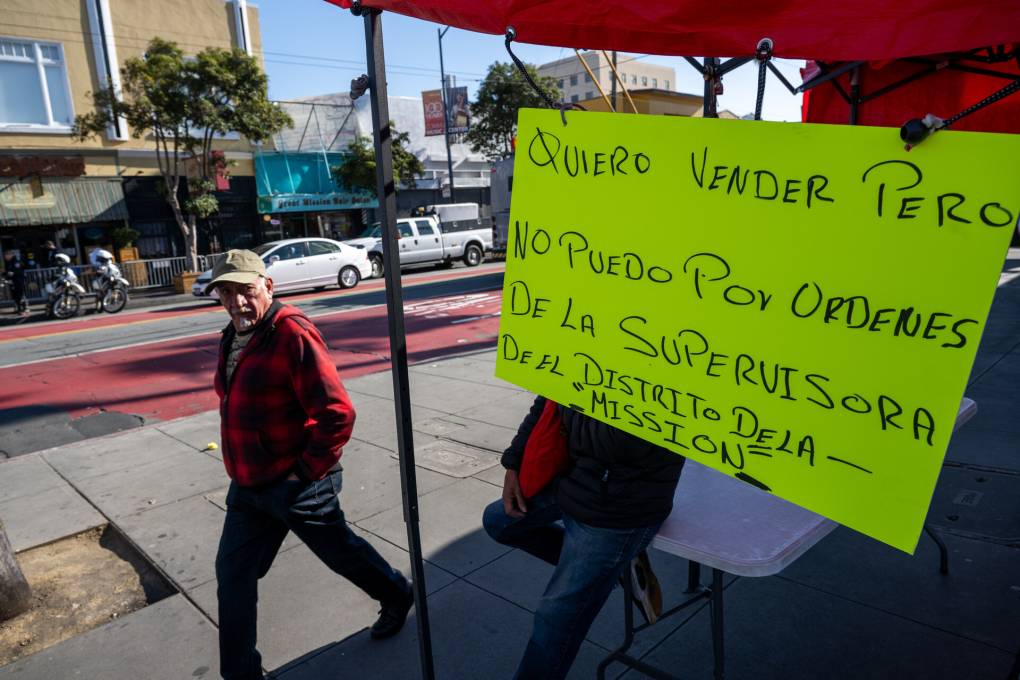
"caption": "Shelters and tables set up by street vendors sit empty near the 24th Street BART plaza on Nov. 27, 2023, the first day of a 90-day street vending ban in the area, which vendors showed up to protest. The sign in Spanish says: 'I want to sell, but I can't due to orders from the supervisor of the Mission District.'",
"description": null,
"title": "231127-VendorRally-31-BL-qut",
"credit": "Beth LaBerge/KQED",
"status": "inherit",
"altTag": "A yellow sign in Spanish hangs from an empty temporary shelter on the street.",
"isLoading": false,
"fetchFailed": false
},
"news_11961193": {
"type": "attachments",
"id": "news_11961193",
"meta": {
"index": "attachments_1716263798",
"site": "news",
"id": "11961193",
"found": true
},
"parent": 11961178,
"imgSizes": {
"twentyfourteen-full-width": {
"file": "https://ww2.kqed.org/app/uploads/sites/10/2023/09/La-Taqueria-e1694719808236-1038x576.jpg",
"width": 1038,
"mimeType": "image/jpeg",
"height": 576
},
"thumbnail": {
"file": "https://ww2.kqed.org/app/uploads/sites/10/2023/09/La-Taqueria-e1694719808236-160x120.jpg",
"width": 160,
"mimeType": "image/jpeg",
"height": 120
},
"post-thumbnail": {
"file": "https://ww2.kqed.org/app/uploads/sites/10/2023/09/La-Taqueria-e1694719808236-672x372.jpg",
"width": 672,
"mimeType": "image/jpeg",
"height": 372
},
"kqedFullSize": {
"file": "https://ww2.kqed.org/app/uploads/sites/10/2023/09/La-Taqueria-e1694719808236.jpg",
"width": 1920,
"height": 1440
},
"large": {
"file": "https://ww2.kqed.org/app/uploads/sites/10/2023/09/La-Taqueria-e1694719808236-1020x765.jpg",
"width": 1020,
"mimeType": "image/jpeg",
"height": 765
},
"1536x1536": {
"file": "https://ww2.kqed.org/app/uploads/sites/10/2023/09/La-Taqueria-e1694719808236-1536x1152.jpg",
"width": 1536,
"mimeType": "image/jpeg",
"height": 1152
},
"full-width": {
"file": "https://ww2.kqed.org/app/uploads/sites/10/2023/09/La-Taqueria-1920x1440.jpg",
"width": 1920,
"mimeType": "image/jpeg",
"height": 1440
},
"medium": {
"file": "https://ww2.kqed.org/app/uploads/sites/10/2023/09/La-Taqueria-e1694719808236-800x600.jpg",
"width": 800,
"mimeType": "image/jpeg",
"height": 600
}
},
"publishDate": 1694719789,
"modified": 1694719994,
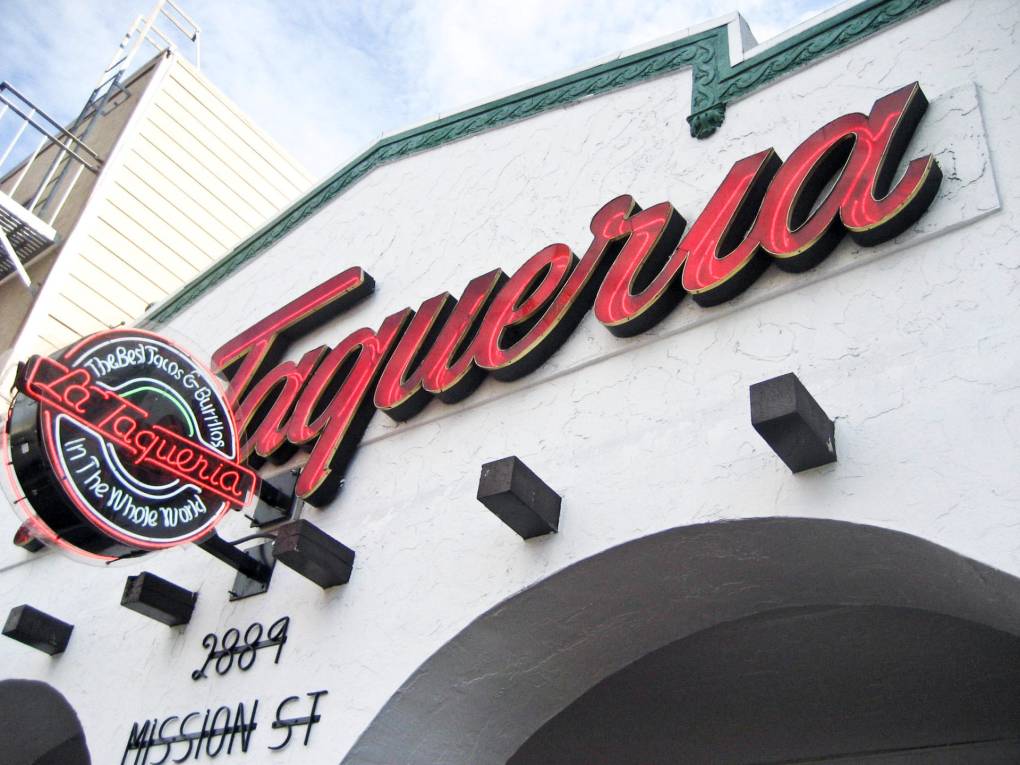
"caption": "La Taqueria, in San Francisco's Mission District, has been serving up tacos and burritos for 50 years. ",
"description": null,
"title": "La Taqueria",
"credit": "Todd Lappin/flickr",
"status": "inherit",
"altTag": "Facade of a building in white stucco. A large red sign reads \"La Taqueria,\" and a smaller neon sign says \"La Taqueria. The best tacos and burritos in the whole world.\"",
"isLoading": false,
"fetchFailed": false
}
},
"audioPlayerReducer": {
"postId": "stream_live",
"isPaused": true,
"isPlaying": false,
"pfsActive": false,
"pledgeModalIsOpen": true,
"playerDrawerIsOpen": false,
"liveAudioPlayStartedAt": 0,
"liveAudioPlayContext": ""
},
"authorsReducer": {
"byline_news_11990370": {
"type": "authors",
"id": "byline_news_11990370",
"meta": {
"override": true
},
"slug": "byline_news_11990370",
"name": "\u003ca href=\"https://twitter.com/latinidan\">Daniel Eduardo Hernández\u003c/a>",
"isLoading": false
},
"mlagos": {
"type": "authors",
"id": "3239",
"meta": {
"index": "authors_1716337520",
"id": "3239",
"found": true
},
"name": "Marisa Lagos",
"firstName": "Marisa",
"lastName": "Lagos",
"slug": "mlagos",
"email": "mlagos@kqed.org",
"display_author_email": false,
"staff_mastheads": [
"news"
],
"title": "KQED Contributor",
"bio": "Marisa Lagos is a correspondent for KQED’s California Politics and Government Desk and co-hosts the award-winning show and podcast, Political Breakdown. At KQED, Lagos also conducts reporting, analysis and investigations into state, local and national politics for radio, TV, online and onstage. In 2022, she and co-host, Scott Shafer, moderated the only gubernatorial debate in California. In 2020, the \u003ci>Washington Post\u003c/i> named her one of the top political journalists in California; she was nominated for a Peabody and won several other awards for her work investigating the 2017 California wildfires. She has worked at the \u003ci>San Francisco Chronicle\u003c/i>, \u003ci>San Francisco Examiner\u003c/i> and \u003ci>Los Angeles Times\u003c/i>. A UC Santa Barbara graduate, she lives in San Francisco with her two sons and husband.",
"avatar": "https://secure.gravatar.com/avatar/a261a0d3696fc066871ef96b85b5e7d2?s=600&d=blank&r=g",
"twitter": "@mlagos",
"facebook": null,
"instagram": null,
"linkedin": null,
"sites": [
{
"site": "arts",
"roles": [
"author"
]
},
{
"site": "news",
"roles": [
"editor"
]
},
{
"site": "science",
"roles": [
"editor"
]
},
{
"site": "forum",
"roles": [
"author"
]
},
{
"site": "liveblog",
"roles": [
"author"
]
}
],
"headData": {
"title": "Marisa Lagos | KQED",
"description": "KQED Contributor",
"ogImgSrc": "https://secure.gravatar.com/avatar/a261a0d3696fc066871ef96b85b5e7d2?s=600&d=blank&r=g",
"twImgSrc": "https://secure.gravatar.com/avatar/a261a0d3696fc066871ef96b85b5e7d2?s=600&d=blank&r=g"
},
"isLoading": false,
"link": "/author/mlagos"
},
"ecruzguevarra": {
"type": "authors",
"id": "8654",
"meta": {
"index": "authors_1716337520",
"id": "8654",
"found": true
},
"name": "Ericka Cruz Guevarra",
"firstName": "Ericka",
"lastName": "Cruz Guevarra",
"slug": "ecruzguevarra",
"email": "ecruzguevarra@kqed.org",
"display_author_email": true,
"staff_mastheads": [
"news"
],
"title": "Producer, The Bay Podcast",
"bio": "Ericka Cruz Guevarra is host of \u003ca href=\"https://www.kqed.org/podcasts/thebay\">\u003cem>The Bay\u003c/em>\u003c/a> podcast at KQED. Before host, she was the show’s producer. Her work in that capacity includes a three-part reported series on policing in Vallejo, which won a 2020 excellence in journalism award from the Society of Professional Journalists. Ericka has worked as a breaking news reporter at Oregon Public Broadcasting, helped produce the Code Switch podcast, and was KQED’s inaugural Raul Ramirez Diversity Fund intern. She’s also an alumna of NPR’s Next Generation Radio program. Send her an email if you have strong feelings about whether Fairfield and Suisun City are the Bay. Ericka is represented by SAG-AFTRA.",
"avatar": "https://secure.gravatar.com/avatar/accefc1de4bafc7e234b69bcb9b6f6536c130fd84709bc3069ef11a78787e1bb?s=600&d=blank&r=g",
"twitter": "NotoriousECG",
"bluesky": null,
"facebook": null,
"instagram": null,
"linkedin": null,
"sites": [
{
"site": "arts",
"roles": [
"subscriber"
]
},
{
"site": "news",
"roles": [
"editor",
"manage_categories"
]
},
{
"site": "futureofyou",
"roles": [
"subscriber"
]
},
{
"site": "stateofhealth",
"roles": [
"subscriber"
]
},
{
"site": "science",
"roles": [
"editor"
]
},
{
"site": "forum",
"roles": [
"subscriber"
]
}
],
"headData": {
"title": "Ericka Cruz Guevarra | KQED",
"description": "Producer, The Bay Podcast",
"ogImgSrc": "https://secure.gravatar.com/avatar/accefc1de4bafc7e234b69bcb9b6f6536c130fd84709bc3069ef11a78787e1bb?s=600&d=blank&r=g",
"twImgSrc": "https://secure.gravatar.com/avatar/accefc1de4bafc7e234b69bcb9b6f6536c130fd84709bc3069ef11a78787e1bb?s=600&d=blank&r=g"
},
"isLoading": false,
"link": "/author/ecruzguevarra"
},
"csaldana": {
"type": "authors",
"id": "11301",
"meta": {
"index": "authors_1716337520",
"id": "11301",
"found": true
},
"name": "Cesar Saldaña",
"firstName": "Cesar",
"lastName": "Saldaña",
"slug": "csaldana",
"email": "csaldana@kqed.org",
"display_author_email": false,
"staff_mastheads": [
"news"
],
"title": "KQED Contributor",
"bio": null,
"avatar": "https://secure.gravatar.com/avatar/04e89425007fe7102f750c79e76274bc?s=600&d=mm&r=g",
"twitter": null,
"facebook": null,
"instagram": null,
"linkedin": null,
"sites": [
{
"site": "news",
"roles": []
},
{
"site": "perspectives",
"roles": []
}
],
"headData": {
"title": "Cesar Saldaña | KQED",
"description": "KQED Contributor",
"ogImgSrc": "https://secure.gravatar.com/avatar/04e89425007fe7102f750c79e76274bc?s=600&d=mm&r=g",
"twImgSrc": "https://secure.gravatar.com/avatar/04e89425007fe7102f750c79e76274bc?s=600&d=mm&r=g"
},
"isLoading": false,
"link": "/author/csaldana"
},
"amontecillo": {
"type": "authors",
"id": "11649",
"meta": {
"index": "authors_1716337520",
"id": "11649",
"found": true
},
"name": "Alan Montecillo",
"firstName": "Alan",
"lastName": "Montecillo",
"slug": "amontecillo",
"email": "amontecillo@kqed.org",
"display_author_email": false,
"staff_mastheads": [
"news"
],
"title": "KQED Contributor",
"bio": "Alan Montecillo is the senior editor of \u003cem>\u003ca href=\"http://kqed.org/thebay\">The Bay\u003c/a>, \u003c/em> KQED's local news podcast. Before moving to the Bay Area, he worked as a senior talk show producer for WILL in Champaign-Urbana, Illinois and at Oregon Public Broadcasting in Portland, Oregon. He has won journalism awards from the Society of Professional Journalists Northern California, the Public Media Journalists Association, The Signal Awards, and has also received a regional Edward R. Murrow award. Alan is a Filipino American from Hong Kong and a graduate of Reed College.",
"avatar": "https://secure.gravatar.com/avatar/268f53a2066899ea9efdd8a5900218b17c822d9862cbc9326cccec53ef41d349?s=600&d=blank&r=g",
"twitter": "alanmontecillo",
"bluesky": null,
"facebook": null,
"instagram": null,
"linkedin": null,
"sites": [
{
"site": "",
"roles": [
"editor"
]
},
{
"site": "news",
"roles": [
"editor",
"manage_categories"
]
}
],
"headData": {
"title": "Alan Montecillo | KQED",
"description": "KQED Contributor",
"ogImgSrc": "https://secure.gravatar.com/avatar/268f53a2066899ea9efdd8a5900218b17c822d9862cbc9326cccec53ef41d349?s=600&d=blank&r=g",
"twImgSrc": "https://secure.gravatar.com/avatar/268f53a2066899ea9efdd8a5900218b17c822d9862cbc9326cccec53ef41d349?s=600&d=blank&r=g"
},
"isLoading": false,
"link": "/author/amontecillo"
},
"btorres": {
"type": "authors",
"id": "11666",
"meta": {
"index": "authors_1716337520",
"id": "11666",
"found": true
},
"name": "Blanca Torres",
"firstName": "Blanca",
"lastName": "Torres",
"slug": "btorres",
"email": "btorres@kqed.org",
"display_author_email": true,
"staff_mastheads": [
"news"
],
"title": "Producer, Forum",
"bio": "Blanca Torres brings sharp news judgement and keen sense of lively conversation to her work as producer for Forum. She loves producing shows that leave listeners feeling like they heard distinctive voices, learned something new and gained a fresh perspective.\r\n\r\nShe joined KQED in January of 2020 after 16 years of working as a newspaper reporter most recently at the \u003cem>San Francisco Business Times,\u003c/em> where she wrote about real estate and economic development. Before that, she covered a variety of beats including crime, education, retail, workplace, the economy, consumer issues, and small business for the \u003cem>Contra Costa Times, Baltimore Sun\u003c/em> and\u003cem> The Seattle Times\u003c/em>. In addition to reporting, she worked as an editorial writer and columnist for the \u003cem>Seattle Times\u003c/em>. From 2017 to 2020, Blanca won a total of ten awards from the National Association of Real Estate Editors and won first place for land use reporting from the California News Publishers Association two years in a row. She is also a member and former board member for the National Association of Hispanic Journalists.\r\n\r\nA native of the Pacific Northwest, Blanca earned her bachelor's degree from Vanderbilt University in Nashville and a master's in fine arts in creative writing at Mills College. She lives in the East Bay with her family.",
"avatar": "https://secure.gravatar.com/avatar/50b49d19b14a1eed34f26ebf4681152cdd81574ed21851100871ccd29e578cdc?s=600&d=blank&r=g",
"twitter": "@blancawrites",
"bluesky": null,
"facebook": null,
"instagram": null,
"linkedin": null,
"sites": [
{
"site": "arts",
"roles": [
"editor"
]
},
{
"site": "news",
"roles": [
"editor"
]
},
{
"site": "forum",
"roles": [
"editor"
]
}
],
"headData": {
"title": "Blanca Torres | KQED",
"description": "Producer, Forum",
"ogImgSrc": "https://secure.gravatar.com/avatar/50b49d19b14a1eed34f26ebf4681152cdd81574ed21851100871ccd29e578cdc?s=600&d=blank&r=g",
"twImgSrc": "https://secure.gravatar.com/avatar/50b49d19b14a1eed34f26ebf4681152cdd81574ed21851100871ccd29e578cdc?s=600&d=blank&r=g"
},
"isLoading": false,
"link": "/author/btorres"
},
"ccabreralomeli": {
"type": "authors",
"id": "11708",
"meta": {
"index": "authors_1716337520",
"id": "11708",
"found": true
},
"name": "Carlos Cabrera-Lomelí",
"firstName": "Carlos",
"lastName": "Cabrera-Lomelí",
"slug": "ccabreralomeli",
"email": "ccabreralomeli@KQED.org",
"display_author_email": true,
"staff_mastheads": [
"news"
],
"title": "Community Reporter",
"bio": "Carlos Cabrera-Lomelí is a community reporter with KQED's digital engagement team. He also reports and co-produces for KQED's bilingual news hub KQED en Español. He grew up in San Francisco's Mission District and has previously worked with Univision, 48 Hills and REFORMA in Mexico City.",
"avatar": "https://secure.gravatar.com/avatar/c309be9665e484f887b818c89e273ecc673004f426f36b24d00a4d813a2e0518?s=600&d=blank&r=g",
"twitter": "@LomeliCabrera",
"bluesky": null,
"facebook": null,
"instagram": null,
"linkedin": null,
"sites": [
{
"site": "arts",
"roles": [
"editor"
]
},
{
"site": "news",
"roles": [
"editor"
]
},
{
"site": "about",
"roles": [
"editor"
]
},
{
"site": "science",
"roles": [
"editor"
]
},
{
"site": "perspectives",
"roles": [
"editor"
]
},
{
"site": "elections",
"roles": [
"editor"
]
},
{
"site": "liveblog",
"roles": [
"contributor"
]
}
],
"headData": {
"title": "Carlos Cabrera-Lomelí | KQED",
"description": "Community Reporter",
"ogImgSrc": "https://secure.gravatar.com/avatar/c309be9665e484f887b818c89e273ecc673004f426f36b24d00a4d813a2e0518?s=600&d=blank&r=g",
"twImgSrc": "https://secure.gravatar.com/avatar/c309be9665e484f887b818c89e273ecc673004f426f36b24d00a4d813a2e0518?s=600&d=blank&r=g"
},
"isLoading": false,
"link": "/author/ccabreralomeli"
},
"agonzalez": {
"type": "authors",
"id": "11724",
"meta": {
"index": "authors_1716337520",
"id": "11724",
"found": true
},
"name": "Alexander Gonzalez",
"firstName": "Alexander",
"lastName": "Gonzalez",
"slug": "agonzalez",
"email": "AlexanderGonzalez@KQED.org",
"display_author_email": false,
"staff_mastheads": [
"news"
],
"title": "KQED Contributor",
"bio": null,
"avatar": "https://secure.gravatar.com/avatar/9e291ed34e154df4c662edf858b641d70b4859939bfe40be478408f9dfd057d2?s=600&d=blank&r=g",
"twitter": null,
"bluesky": null,
"facebook": null,
"instagram": null,
"linkedin": null,
"sites": [
{
"site": "arts",
"roles": [
"editor"
]
},
{
"site": "news",
"roles": [
"editor"
]
},
{
"site": "science",
"roles": [
"editor"
]
}
],
"headData": {
"title": "Alexander Gonzalez | KQED",
"description": "KQED Contributor",
"ogImgSrc": "https://secure.gravatar.com/avatar/9e291ed34e154df4c662edf858b641d70b4859939bfe40be478408f9dfd057d2?s=600&d=blank&r=g",
"twImgSrc": "https://secure.gravatar.com/avatar/9e291ed34e154df4c662edf858b641d70b4859939bfe40be478408f9dfd057d2?s=600&d=blank&r=g"
},
"isLoading": false,
"link": "/author/agonzalez"
},
"mesquinca": {
"type": "authors",
"id": "11802",
"meta": {
"index": "authors_1716337520",
"id": "11802",
"found": true
},
"name": "Maria Esquinca",
"firstName": "Maria",
"lastName": "Esquinca",
"slug": "mesquinca",
"email": "mesquinca@kqed.org",
"display_author_email": false,
"staff_mastheads": [],
"title": "Producer, The Bay",
"bio": "María Esquinca is a producer of The Bay. Before that, she was a New York Women’s Foundation IGNITE Fellow at Latino USA. She worked at Radio Bilingue where she covered the San Joaquin Valley. Maria has interned at WLRN, News 21, The New York Times Student Journalism Institute and at Crain’s Detroit Business as a Dow Jones News Fund Business Reporting Intern. She is an MFA graduate from the University of Miami. In 2017, she graduated from the Walter Cronkite School of Journalism and Mass Communication with a Master of Mass Communication. A fronteriza, she was born in Ciudad Juárez, Chihuahua, Mexico and grew up in El Paso, Texas.",
"avatar": "https://secure.gravatar.com/avatar/77cedba18aae91da775038ba06dcd8d0?s=600&d=blank&r=g",
"twitter": "@m_esquinca",
"facebook": null,
"instagram": null,
"linkedin": null,
"sites": [
{
"site": "news",
"roles": []
}
],
"headData": {
"title": "Maria Esquinca | KQED",
"description": "Producer, The Bay",
"ogImgSrc": "https://secure.gravatar.com/avatar/77cedba18aae91da775038ba06dcd8d0?s=600&d=blank&r=g",
"twImgSrc": "https://secure.gravatar.com/avatar/77cedba18aae91da775038ba06dcd8d0?s=600&d=blank&r=g"
},
"isLoading": false,
"link": "/author/mesquinca"
},
"jessicakariisa": {
"type": "authors",
"id": "11831",
"meta": {
"index": "authors_1716337520",
"id": "11831",
"found": true
},
"name": "Jessica Kariisa",
"firstName": "Jessica",
"lastName": "Kariisa",
"slug": "jessicakariisa",
"email": "jkariisa@kqed.org",
"display_author_email": false,
"staff_mastheads": [],
"title": "Producer, The Bay",
"bio": "Jessica Kariisa is the producer of The Bay. She first joined KQED as an intern for The California Report Magazine, after which she became an on-call producer. She reported a Bay Curious episode on the use of rap lyrics in criminal trials which won a Society of Professional Journalists award in 2023 for Excellence in Features Journalism and the 2023 Signal Award for Best Conversation Starter. She’s worked on podcasts for Snap Judgment and American Public Media. Before embarking on her audio career, she was a music journalist.\r\n\r\nJessica Kariisa is represented by SAG-AFTRA.",
"avatar": "https://secure.gravatar.com/avatar/522e97b28ac0b3d411621c0fde8f3419c7b71ea2c5c262c57c4bb600963f328c?s=600&d=blank&r=g",
"twitter": null,
"bluesky": null,
"facebook": null,
"instagram": null,
"linkedin": null,
"sites": [
{
"site": "arts",
"roles": [
"author"
]
},
{
"site": "news",
"roles": [
"editor",
"manage_categories"
]
}
],
"headData": {
"title": "Jessica Kariisa | KQED",
"description": "Producer, The Bay",
"ogImgSrc": "https://secure.gravatar.com/avatar/522e97b28ac0b3d411621c0fde8f3419c7b71ea2c5c262c57c4bb600963f328c?s=600&d=blank&r=g",
"twImgSrc": "https://secure.gravatar.com/avatar/522e97b28ac0b3d411621c0fde8f3419c7b71ea2c5c262c57c4bb600963f328c?s=600&d=blank&r=g"
},
"isLoading": false,
"link": "/author/jessicakariisa"
},
"sjohnson": {
"type": "authors",
"id": "11840",
"meta": {
"index": "authors_1716337520",
"id": "11840",
"found": true
},
"name": "Sydney Johnson",
"firstName": "Sydney",
"lastName": "Johnson",
"slug": "sjohnson",
"email": "sjohnson@kqed.org",
"display_author_email": false,
"staff_mastheads": [
"news"
],
"title": "KQED Reporter",
"bio": "Sydney Johnson is a general assignment reporter at KQED. She previously reported on public health and city government at the San Francisco Examiner, and before that, she covered statewide education policy for EdSource. Her reporting has won multiple local, state and national awards. Sydney is a graduate of the University of California, Berkeley and lives in San Francisco.",
"avatar": "https://secure.gravatar.com/avatar/97855f2719b72ad6190b7c535fe642c8?s=600&d=blank&r=g",
"twitter": "sydneyfjohnson",
"facebook": null,
"instagram": null,
"linkedin": null,
"sites": [
{
"site": "news",
"roles": [
"editor"
]
}
],
"headData": {
"title": "Sydney Johnson | KQED",
"description": "KQED Reporter",
"ogImgSrc": "https://secure.gravatar.com/avatar/97855f2719b72ad6190b7c535fe642c8?s=600&d=blank&r=g",
"twImgSrc": "https://secure.gravatar.com/avatar/97855f2719b72ad6190b7c535fe642c8?s=600&d=blank&r=g"
},
"isLoading": false,
"link": "/author/sjohnson"
},
"naltenberg": {
"type": "authors",
"id": "11896",
"meta": {
"index": "authors_1716337520",
"id": "11896",
"found": true
},
"name": "Nik Altenberg",
"firstName": "Nik",
"lastName": "Altenberg",
"slug": "naltenberg",
"email": "naltenberg@kqed.org",
"display_author_email": false,
"staff_mastheads": [],
"title": "KQED Contributor",
"bio": "Nik Altenberg is an on-call reporter for KQED and a copy editor and fact checker for Santa Cruz Local. Nik’s reporting interests include policing, public health, environment, immigration, housing and the places where these issues intersect.",
"avatar": "https://secure.gravatar.com/avatar/e391b3a18ce4a53a7ca3f3065c74418b?s=600&d=blank&r=g",
"twitter": null,
"facebook": null,
"instagram": "https://www.instagram.com/nikaltenberg/",
"linkedin": null,
"sites": [
{
"site": "news",
"roles": []
}
],
"headData": {
"title": "Nik Altenberg | KQED",
"description": "KQED Contributor",
"ogImgSrc": "https://secure.gravatar.com/avatar/e391b3a18ce4a53a7ca3f3065c74418b?s=600&d=blank&r=g",
"twImgSrc": "https://secure.gravatar.com/avatar/e391b3a18ce4a53a7ca3f3065c74418b?s=600&d=blank&r=g"
},
"isLoading": false,
"link": "/author/naltenberg"
},
"eprickettmorgan": {
"type": "authors",
"id": "11898",
"meta": {
"index": "authors_1716337520",
"id": "11898",
"found": true
},
"name": "Ellie Prickett-Morgan",
"firstName": "Ellie",
"lastName": "Prickett-Morgan",
"slug": "eprickettmorgan",
"email": "eprickettmorgan@kqed.org",
"display_author_email": false,
"staff_mastheads": [],
"title": "KQED Contributor",
"bio": null,
"avatar": "https://secure.gravatar.com/avatar/fb236cba85704b1a64dc213889cd2886?s=600&d=blank&r=g",
"twitter": null,
"facebook": null,
"instagram": null,
"linkedin": null,
"sites": [
{
"site": "news",
"roles": []
}
],
"headData": {
"title": "Ellie Prickett-Morgan | KQED",
"description": "KQED Contributor",
"ogImgSrc": "https://secure.gravatar.com/avatar/fb236cba85704b1a64dc213889cd2886?s=600&d=blank&r=g",
"twImgSrc": "https://secure.gravatar.com/avatar/fb236cba85704b1a64dc213889cd2886?s=600&d=blank&r=g"
},
"isLoading": false,
"link": "/author/eprickettmorgan"
},
"kdebenedetti": {
"type": "authors",
"id": "11913",
"meta": {
"index": "authors_1716337520",
"id": "11913",
"found": true
},
"name": "Katie DeBenedetti",
"firstName": "Katie",
"lastName": "DeBenedetti",
"slug": "kdebenedetti",
"email": "kdebenedetti@kqed.org",
"display_author_email": false,
"staff_mastheads": [
"news",
"science"
],
"title": "KQED Contributor",
"bio": "Katie DeBenedetti is a digital reporter covering daily news for the Express Desk. Prior to joining KQED as a culture reporting intern in January 2024, she covered education and city government for the Napa Valley Register.",
"avatar": "https://secure.gravatar.com/avatar/6e31073cb8f7e4214ab03f42771d0f45?s=600&d=blank&r=g",
"twitter": null,
"facebook": null,
"instagram": null,
"linkedin": null,
"sites": [
{
"site": "news",
"roles": [
"author"
]
},
{
"site": "science",
"roles": [
"author"
]
},
{
"site": "liveblog",
"roles": [
"author"
]
}
],
"headData": {
"title": "Katie DeBenedetti | KQED",
"description": "KQED Contributor",
"ogImgSrc": "https://secure.gravatar.com/avatar/6e31073cb8f7e4214ab03f42771d0f45?s=600&d=blank&r=g",
"twImgSrc": "https://secure.gravatar.com/avatar/6e31073cb8f7e4214ab03f42771d0f45?s=600&d=blank&r=g"
},
"isLoading": false,
"link": "/author/kdebenedetti"
},
"mvelasquez": {
"type": "authors",
"id": "11939",
"meta": {
"index": "authors_1716337520",
"id": "11939",
"found": true
},
"name": "Mel Velasquez",
"firstName": "Mel",
"lastName": "Velasquez",
"slug": "mvelasquez",
"email": "mvelasquez@kqed.org",
"display_author_email": false,
"staff_mastheads": [],
"title": "KQED Contributor",
"bio": null,
"avatar": "https://secure.gravatar.com/avatar/409094312d56fab09fef4251e949ffa6?s=600&d=blank&r=g",
"twitter": null,
"facebook": null,
"instagram": null,
"linkedin": "www.linkedin.com/in/melanievelasquezz",
"sites": [
{
"site": "news",
"roles": [
"editor"
]
}
],
"headData": {
"title": "Mel Velasquez | KQED",
"description": "KQED Contributor",
"ogImgSrc": "https://secure.gravatar.com/avatar/409094312d56fab09fef4251e949ffa6?s=600&d=blank&r=g",
"twImgSrc": "https://secure.gravatar.com/avatar/409094312d56fab09fef4251e949ffa6?s=600&d=blank&r=g"
},
"isLoading": false,
"link": "/author/mvelasquez"
}
},
"pagesReducer": {
"news_tag_mission-district": {
"type": "terms",
"id": "news_5270",
"meta": {
"index": "terms_1716263798",
"site": "news",
"id": "5270",
"score": 8.668813
},
"featImg": null,
"name": "Mission District",
"description": null,
"taxonomy": "tag",
"headData": {
"twImgId": null,
"twTitle": null,
"ogTitle": null,
"ogImgId": null,
"twDescription": null,
"description": null,
"title": "Mission District Archives | KQED News",
"ogDescription": null
},
"ttid": 5292,
"slug": "mission-district",
"isLoading": false,
"title": "Mission District",
"pageMeta": {
"site": "news",
"WpPageTemplate": "page-topic-editorial",
"currentPage": 2
},
"blocks": [
{
"blockName": "kqed/post-list",
"attrs": {
"layout": "cardArticle2",
"query": "posts/news?tag=mission-district",
"seeMore": false,
"paginated": true,
"page": 2
}
},
{
"blockName": "kqed/ad"
}
]
}
},
"pfsSessionReducer": {},
"postsReducer": {
"stream_live": {
"type": "live",
"id": "stream_live",
"audioUrl": "https://streams.kqed.org/kqedradio",
"title": "Live Stream",
"excerpt": "Live Stream information currently unavailable.",
"link": "/radio",
"featImg": "",
"label": {
"name": "KQED Live",
"link": "/"
}
},
"stream_kqedNewscast": {
"type": "posts",
"id": "stream_kqedNewscast",
"audioUrl": "https://www.kqed.org/.stream/anon/radio/RDnews/newscast.mp3?_=1",
"title": "KQED Newscast",
"featImg": "",
"label": {
"name": "88.5 FM",
"link": "/"
}
},
"news_12070146": {
"type": "posts",
"id": "news_12070146",
"meta": {
"index": "posts_1716263798",
"site": "news",
"id": "12070146",
"score": null,
"sort": [
1768586455000
]
},
"guestAuthors": [],
"slug": "mission-district-shooting-marks-san-franciscos-first-killing-of-2026",
"title": "Mission District Shooting Marks San Francisco’s First Killing of 2026",
"publishDate": 1768586455,
"format": "standard",
"headTitle": "Mission District Shooting Marks San Francisco’s First Killing of 2026 | KQED",
"labelTerm": {
"site": "news"
},
"content": "\u003cp>One person was fatally shot in San Francisco’s \u003ca href=\"https://www.kqed.org/news/tag/mission-district\">Mission District\u003c/a> on Thursday night, marking the city’s first homicide of 2026.\u003c/p>\n\u003cp>The San Francisco Police Department said officers responded to the area of 16th Street and San Bruno Avenue around 9:40 p.m. and found a victim suffering from an apparent gunshot wound.\u003c/p>\n\u003cp>[ad fullwidth]\u003c/p>\n\u003cp>Officers rendered aid, including CPR, and paramedics were called to the scene, but “despite the lifesaving efforts of first responders, the victim was declared deceased on scene,” the department said in a statement.\u003c/p>\n\u003cp>The fatal shooting is the first in the city this year, and comes weeks after police officials announced that San Francisco’s homicide rate \u003ca href=\"https://www.sanfranciscopolice.org/news/san-francisco-has-lowest-homicide-rate-70-years-declines\">hit a 70-year low\u003c/a> in 2025.\u003c/p>\n\u003cp>Last year, the city recorded 28 homicides, a 20% year-over-year reduction. SFPD said its homicide detail was leading an investigation into the incident. Additional information about the identities of the victim or any suspects was not available on Friday morning.\u003c/p>\n\u003cp>\u003c/p>\n",
"blocks": [],
"excerpt": "One person was fatally shot Thursday night near 16th Street and San Bruno Avenue. The killing comes after police said San Francisco’s homicide rate hit a 70-year low in 2025.",
"status": "publish",
"parent": 0,
"modified": 1768588737,
"stats": {
"hasAudio": false,
"hasVideo": false,
"hasChartOrMap": false,
"iframeSrcs": [],
"hasGoogleForm": false,
"hasGallery": false,
"hasHearkenModule": false,
"hasPolis": false,
"paragraphCount": 7,
"wordCount": 168
},
"headData": {
"title": "Mission District Shooting Marks San Francisco’s First Killing of 2026 | KQED",
"description": "One person was fatally shot Thursday night near 16th Street and San Bruno Avenue. The killing comes after police said San Francisco’s homicide rate hit a 70-year low in 2025.",
"ogTitle": "",
"ogDescription": "",
"ogImgId": "",
"twTitle": "",
"twDescription": "",
"twImgId": "",
"schema": {
"@context": "https://schema.org",
"@type": "NewsArticle",
"headline": "Mission District Shooting Marks San Francisco’s First Killing of 2026",
"datePublished": "2026-01-16T10:00:55-08:00",
"dateModified": "2026-01-16T10:38:57-08:00",
"image": "https://cdn.kqed.org/wp-content/uploads/2020/02/KQED-OG-Image@1x.png",
"isAccessibleForFree": "True",
"publisher": {
"@type": "NewsMediaOrganization",
"@id": "https://www.kqed.org/#organization",
"name": "KQED",
"logo": "https://cdn.kqed.org/wp-content/uploads/2020/02/KQED-OG-Image@1x.png",
"url": "https://www.kqed.org",
"sameAs": [
"https://www.facebook.com/KQED",
"https://twitter.com/KQED",
"https://www.instagram.com/kqed/",
"https://www.tiktok.com/@kqedofficial",
"https://www.linkedin.com/company/kqed",
"https://www.youtube.com/channel/UCeC0IOo7i1P_61zVUWbJ4nw"
]
}
}
},
"primaryCategory": {
"termId": 28250,
"slug": "local",
"name": "Local"
},
"sticky": false,
"nprStoryId": "kqed-12070146",
"templateType": "standard",
"featuredImageType": "standard",
"excludeFromSiteSearch": "Include",
"articleAge": "0",
"path": "/news/12070146/mission-district-shooting-marks-san-franciscos-first-killing-of-2026",
"audioTrackLength": null,
"parsedContent": [
{
"type": "contentString",
"content": "\u003cdiv class=\"post-body\">\u003cp>\u003cp>One person was fatally shot in San Francisco’s \u003ca href=\"https://www.kqed.org/news/tag/mission-district\">Mission District\u003c/a> on Thursday night, marking the city’s first homicide of 2026.\u003c/p>\n\u003cp>The San Francisco Police Department said officers responded to the area of 16th Street and San Bruno Avenue around 9:40 p.m. and found a victim suffering from an apparent gunshot wound.\u003c/p>\n\u003cp>\u003c/p>\u003c/div>",
"attributes": {
"named": {},
"numeric": []
}
},
{
"type": "component",
"content": "",
"name": "ad",
"attributes": {
"named": {
"label": "fullwidth"
},
"numeric": [
"fullwidth"
]
}
},
{
"type": "contentString",
"content": "\u003cdiv class=\"post-body\">\u003cp>\u003c/p>\n\u003cp>Officers rendered aid, including CPR, and paramedics were called to the scene, but “despite the lifesaving efforts of first responders, the victim was declared deceased on scene,” the department said in a statement.\u003c/p>\n\u003cp>The fatal shooting is the first in the city this year, and comes weeks after police officials announced that San Francisco’s homicide rate \u003ca href=\"https://www.sanfranciscopolice.org/news/san-francisco-has-lowest-homicide-rate-70-years-declines\">hit a 70-year low\u003c/a> in 2025.\u003c/p>\n\u003cp>Last year, the city recorded 28 homicides, a 20% year-over-year reduction. SFPD said its homicide detail was leading an investigation into the incident. Additional information about the identities of the victim or any suspects was not available on Friday morning.\u003c/p>\n\u003cp>\u003c/p>\n\u003c/div>\u003c/p>",
"attributes": {
"named": {},
"numeric": []
}
}
],
"link": "/news/12070146/mission-district-shooting-marks-san-franciscos-first-killing-of-2026",
"authors": [
"11913"
],
"categories": [
"news_31795",
"news_28250",
"news_8"
],
"tags": [
"news_17626",
"news_1393",
"news_5270",
"news_17996",
"news_38"
],
"featImg": "news_10466122",
"label": "news"
},
"news_12059299": {
"type": "posts",
"id": "news_12059299",
"meta": {
"index": "posts_1716263798",
"site": "news",
"id": "12059299",
"score": null,
"sort": [
1764791431000
]
},
"guestAuthors": [],
"slug": "hes-painted-thousands-of-san-franciscos-iconic-victorian-homes-meet-dr-color",
"title": "He’s Painted Thousands of San Francisco’s Iconic Victorian Homes. Meet Dr. Color",
"publishDate": 1764791431,
"format": "standard",
"headTitle": "He’s Painted Thousands of San Francisco’s Iconic Victorian Homes. Meet Dr. Color | KQED",
"labelTerm": {
"site": "news"
},
"content": "\u003cp>A hot pink nail salon. A yellow taqueria. A periwinkle Edwardian with red trim.\u003c/p>\n\u003cp>Block after block along \u003ca href=\"https://www.kqed.org/news/tag/san-francisco\">San Francisco\u003c/a>’s bustling 24th Street, architectural gems mimic the vibrant papel picado strung up in windowfronts across the historic \u003ca href=\"https://www.kqed.org/news/tag/mission-district\">Mission District\u003c/a> corridor.\u003c/p>\n\u003cp>Less eye-catching, however, are the small signs affixed to the sides of these buildings, an understated acknowledgment of the man who painted thousands of technicolor buildings and helped shape the city’s iconic skyline in the process: Bob Buckter, better known as Dr. Color.\u003c/p>\n\u003cp>[ad fullwidth]\u003c/p>\n\u003cp>San Francisco is widely known for its colorful architectural landscape, particularly the rainbow of Victorians dotting its hillsides. Much of it can be attributed to Buckter, who has painted and consulted on color design for tens of thousands of Victorian homes, churches, commercial buildings and more for nearly 60 years.\u003c/p>\n\u003cp>“There’s another job with my sign on it,” Buckter said on a recent fall afternoon, gesturing to the left as he drove down 24th Street in his royal blue pickup truck, a license plate that reads “DRCOLOR” on the back bumper.\u003c/p>\n\u003cp>“The guy wanted the wildest pink I could come up with, and there it is,” Buckter said.\u003c/p>\n\u003cfigure id=\"attachment_12059298\" class=\"wp-caption aligncenter\" style=\"max-width: 2000px\">\u003cimg loading=\"lazy\" decoding=\"async\" class=\"size-full wp-image-12059298\" src=\"https://cdn.kqed.org/wp-content/uploads/sites/10/2025/10/251008-drcolor_01283_TV_qed.jpg\" alt=\"\" width=\"2000\" height=\"1333\" srcset=\"https://cdn.kqed.org/wp-content/uploads/sites/10/2025/10/251008-drcolor_01283_TV_qed.jpg 2000w, https://cdn.kqed.org/wp-content/uploads/sites/10/2025/10/251008-drcolor_01283_TV_qed-160x107.jpg 160w, https://cdn.kqed.org/wp-content/uploads/sites/10/2025/10/251008-drcolor_01283_TV_qed-1536x1024.jpg 1536w\" sizes=\"auto, (max-width: 2000px) 100vw, 2000px\">\u003cfigcaption class=\"wp-caption-text\">A building painted by Bob Buckter, also known as Dr. Color, is seen at 1102 Treat Ave., in San Francisco’s Mission District on Oct. 8, 2025. Buckter has designed and painted more than 23,000 homes, along with other projects in San Francisco and beyond. \u003ccite>(Tâm Vũ/KQED)\u003c/cite>\u003c/figcaption>\u003c/figure>\n\u003cp>The 78-year-old’s work uses different colors to highlight the ornate details of a building’s facade, generating the polychromatic architectural backdrop that draws so many people to the City by the Bay.\u003c/p>\n\u003cp>“San Francisco is the leader of the identity of Victorian architecture across the West Coast. I would probably venture to say even across the nation,” said Clark Thenhaus, associate professor of architecture at California College of the Arts in San Francisco.\u003c/p>\n\u003cp>Victorian-style architecture in the United States was first popularized on the East Coast, where these homes were constructed with natural materials like stone and brick, giving them more neutral earth-tone colors, like softer grays and browns.[aside postID=news_12057037 hero='https://cdn.kqed.org/wp-content/uploads/sites/10/2025/09/250904_K-ONDA-SEPTEMBER-NAIL-ARTIST-_GH-2-KQED.jpg']As the style moved toward the West Coast, timber became the primary building material for Victorians. Wood exterior made a better canvas for paint, and soon the multicolored facades could be found across California, from Santa Cruz to Nevada City in the Sierra foothills and Eureka along the coast in Humboldt County.\u003c/p>\n\u003cp>“What you find is actually a whole new way of thinking about color, because now it’s not derivative of a specific material. It’s actually applied to something,” Thenhaus said. “That’s when you start to see the Victorians kind of change their clothing from this earthen material to something that’s much more vibrant and bright.”\u003c/p>\n\u003cp>Buckter started painting houses in the 1970s after graduating from San Francisco State University with a degree in social sciences and a minor in business, cultivating his passion at the cusp of the city’s psychedelic era. After doing a couple of paint jobs for a friend, he placed an ad in a local newspaper offering house painting services to earn some extra cash while pursuing a career in real estate.\u003c/p>\n\u003cp>He never completed any formal art or color theory training, but after he landed his first home painting gig, clients kept coming. After retiring from painting homes himself in his thirties, color consulting became his full-time work.\u003c/p>\n\u003cfigure id=\"attachment_12058967\" class=\"wp-caption aligncenter\" style=\"max-width: 2500px\">\u003cimg loading=\"lazy\" decoding=\"async\" class=\"size-full wp-image-12058967\" src=\"https://cdn.kqed.org/wp-content/uploads/sites/10/2025/10/251002-drcolor_DIPTYCH-01_TV.jpg\" alt=\"\" width=\"2500\" height=\"840\" srcset=\"https://cdn.kqed.org/wp-content/uploads/sites/10/2025/10/251002-drcolor_DIPTYCH-01_TV.jpg 2500w, https://cdn.kqed.org/wp-content/uploads/sites/10/2025/10/251002-drcolor_DIPTYCH-01_TV-2000x672.jpg 2000w, https://cdn.kqed.org/wp-content/uploads/sites/10/2025/10/251002-drcolor_DIPTYCH-01_TV-160x54.jpg 160w, https://cdn.kqed.org/wp-content/uploads/sites/10/2025/10/251002-drcolor_DIPTYCH-01_TV-1536x516.jpg 1536w, https://cdn.kqed.org/wp-content/uploads/sites/10/2025/10/251002-drcolor_DIPTYCH-01_TV-2048x688.jpg 2048w\" sizes=\"auto, (max-width: 2500px) 100vw, 2500px\">\u003cfigcaption class=\"wp-caption-text\">A home Bob Buckler painted is located in the Dolores Heights neighborhood in San Francisco on Oct. 2, 2025. \u003ccite>(Tâm Vũ/KQED)\u003c/cite>\u003c/figcaption>\u003c/figure>\n\u003cp>“I just learned everything the hard way,” Buckter said. “I made sure people would be happy, even when I was trying new things, and I learned a lot doing that.”\u003c/p>\n\u003cp>Maria Diaz Bobillo, who lives in a yellow accessory dwelling unit that Buckter designed across from Dolores Park, chose the unit specifically for its sunny hues.\u003c/p>\n\u003cp>“A friend sent me the Craigslist ad, and she was like, ‘It speaks to you, it has your colors,” she said. “It has this deep yellow, and I had friends who used to call me Yellow Maria because my whole wardrobe was yellow. It was meant to be, you know? And it’s very beautiful.”\u003c/p>\n\u003cp>In front of her cottage stands another one of Buckter’s jewels, a three-story Victorian that features 11 colors in total. A yellow and gold face with blue, green and purple trimmings, plus a stained glass feature next to the front staircase.\u003c/p>\n\u003cfigure id=\"attachment_12059318\" class=\"wp-caption aligncenter\" style=\"max-width: 2000px\">\u003cimg loading=\"lazy\" decoding=\"async\" class=\"size-full wp-image-12059318\" src=\"https://cdn.kqed.org/wp-content/uploads/sites/10/2025/10/251002-drcolor_00466_TV_qed.jpg\" alt=\"\" width=\"2000\" height=\"1333\" srcset=\"https://cdn.kqed.org/wp-content/uploads/sites/10/2025/10/251002-drcolor_00466_TV_qed.jpg 2000w, https://cdn.kqed.org/wp-content/uploads/sites/10/2025/10/251002-drcolor_00466_TV_qed-160x107.jpg 160w, https://cdn.kqed.org/wp-content/uploads/sites/10/2025/10/251002-drcolor_00466_TV_qed-1536x1024.jpg 1536w\" sizes=\"auto, (max-width: 2000px) 100vw, 2000px\">\u003cfigcaption class=\"wp-caption-text\">A molding design adorned with gold leaf, a decorative style specialized by Bob Buckter, stands in the Dolores Heights neighborhood on Oct. 2, 2025. \u003ccite>(Tâm Vũ/KQED)\u003c/cite>\u003c/figcaption>\u003c/figure>\n\u003cp>“This is a big part of my life, this building,” Buckter said, using a green laser pointer to identify elements of the design.\u003c/p>\n\u003cp>Dr. Color himself lived in the building before moving to his current residence, a periwinkle Edwardian with gold leaf finish on Vermont Street. And he remembers every detail that went into both homes.\u003c/p>\n\u003cp>“I rigged this whole thing with my own scaffolding, you know, a plank that goes all the way across with hooks and ropes, and I did all the work up there myself,” he said, pointing to a hand-stenciled ribbon feature lining the top of his yellow building at Dolores Park.\u003c/p>\n\u003cp>Buckter rattled off memories of living there, like hot tub ragers on the roof overlooking the city’s skyline. “Lots of parties, and before all those buildings were built, this had a view of the Bay Bridge,” he said, pointing to Salesforce Tower in the distance. “Now you can’t see it, but what am I going to do? Just enjoy it, I guess.”\u003c/p>\n\u003cfigure id=\"attachment_12058968\" class=\"wp-caption aligncenter\" style=\"max-width: 2500px\">\u003cimg loading=\"lazy\" decoding=\"async\" class=\"size-full wp-image-12058968\" src=\"https://cdn.kqed.org/wp-content/uploads/sites/10/2025/10/251002-drcolor_DIPTYCH-02_TV.jpg\" alt=\"\" width=\"2500\" height=\"840\" srcset=\"https://cdn.kqed.org/wp-content/uploads/sites/10/2025/10/251002-drcolor_DIPTYCH-02_TV.jpg 2500w, https://cdn.kqed.org/wp-content/uploads/sites/10/2025/10/251002-drcolor_DIPTYCH-02_TV-2000x672.jpg 2000w, https://cdn.kqed.org/wp-content/uploads/sites/10/2025/10/251002-drcolor_DIPTYCH-02_TV-160x54.jpg 160w, https://cdn.kqed.org/wp-content/uploads/sites/10/2025/10/251002-drcolor_DIPTYCH-02_TV-1536x516.jpg 1536w, https://cdn.kqed.org/wp-content/uploads/sites/10/2025/10/251002-drcolor_DIPTYCH-02_TV-2048x688.jpg 2048w\" sizes=\"auto, (max-width: 2500px) 100vw, 2500px\">\u003cfigcaption class=\"wp-caption-text\">Bob Buckler’s home is located in the Mission District in San Francisco on Oct. 2, 2025. \u003ccite>(Tâm Vũ/KQED)\u003c/cite>\u003c/figcaption>\u003c/figure>\n\u003cp>For many years, Buckter, a second-generation San Franciscan who was born in the Mission District and grew up in the Sunset District, worked right alongside the painting crew on scaffolds, highlighting all the nooks and crannies with multiple colors that make it impossible not to stop and stare.\u003c/p>\n\u003cp>They never had a major accident, but they did take a few chances.\u003c/p>\n\u003cp>“One day, one of the guys that put the hooks up on the building for the plants said, ‘Hey, there’s a bunch of marijuana on this roof drying out. Send me up a brown paper bag.’ So I sent that up, we smoked it and this stuff was out of this world,” he laughed. “In retrospect, it might’ve been mixed with some bad stuff, but the good thing is everyone is still alive and healthy. So we had a lot of fun.”\u003c/p>\n\u003cp>Several artists and other “colorists” began experimenting with home exterior colors in the 1960s, inspiring one another’s work. Buckter himself did the color for two of the best-known Victorians on Steiner Street overlooking Alamo Square Park, called the “Painted Ladies,” but those have since been repainted. His work is mentioned throughout the 1978 book, \u003cem>Painted Ladies – San Francisco’s Resplendent Victorians\u003c/em>, which coined the term.\u003c/p>\n\u003cfigure id=\"attachment_12058963\" class=\"wp-caption aligncenter\" style=\"max-width: 2000px\">\u003cimg loading=\"lazy\" decoding=\"async\" class=\"wp-image-12058963 size-full\" src=\"https://cdn.kqed.org/wp-content/uploads/sites/10/2025/10/251002-DRCOLOR_00228_TV-KQED.jpg\" alt=\"\" width=\"2000\" height=\"1333\" srcset=\"https://cdn.kqed.org/wp-content/uploads/sites/10/2025/10/251002-DRCOLOR_00228_TV-KQED.jpg 2000w, https://cdn.kqed.org/wp-content/uploads/sites/10/2025/10/251002-DRCOLOR_00228_TV-KQED-160x107.jpg 160w, https://cdn.kqed.org/wp-content/uploads/sites/10/2025/10/251002-DRCOLOR_00228_TV-KQED-1536x1024.jpg 1536w\" sizes=\"auto, (max-width: 2000px) 100vw, 2000px\">\u003cfigcaption class=\"wp-caption-text\">Bob Buckter’s color swatches for a new project sit on his desk in his home in the Mission District in San Francisco on Oct. 2, 2025. \u003ccite>(Tâm Vũ/KQED)\u003c/cite>\u003c/figcaption>\u003c/figure>\n\u003cp>These days, Buckter primarily provides color consulting services where he’ll advise clients on palettes and types of paint for homes and businesses across the country.\u003c/p>\n\u003cp>He recently released his own book, which he said is his first and last, on all of the signature work he’s done in the city and beyond.\u003c/p>\n\u003cp>“I’m still doing commercial and industrial work; however, my labor of love and what I really enjoy best is historic homes,” Buckter said.\u003c/p>\n\u003cp>Victorians are more than just a pretty sidewalk attraction, though, Thenhaus said. They represent eras of history, social movements and changes across the city at large.\u003c/p>\n\u003cp>In the 1960s and ’70s, “most of the Victorians were more like a commune back in the day. These were like sex, drug and rock ‘n’ roll places. There were a lot of people living there, and they were inexpensive at that time,” Thenhaus said.\u003c/p>\n\u003cfigure id=\"attachment_12059296\" class=\"wp-caption aligncenter\" style=\"max-width: 2000px\">\u003cimg loading=\"lazy\" decoding=\"async\" class=\"size-full wp-image-12059296\" src=\"https://cdn.kqed.org/wp-content/uploads/sites/10/2025/10/251008-drcolor_01126_TV_qed.jpg\" alt=\"\" width=\"2000\" height=\"1333\" srcset=\"https://cdn.kqed.org/wp-content/uploads/sites/10/2025/10/251008-drcolor_01126_TV_qed.jpg 2000w, https://cdn.kqed.org/wp-content/uploads/sites/10/2025/10/251008-drcolor_01126_TV_qed-160x107.jpg 160w, https://cdn.kqed.org/wp-content/uploads/sites/10/2025/10/251008-drcolor_01126_TV_qed-1536x1024.jpg 1536w\" sizes=\"auto, (max-width: 2000px) 100vw, 2000px\">\u003cfigcaption class=\"wp-caption-text\">A building Bob Buckter painted is located in the Mission District at 3033 24th Street in San Francisco on Oct. 8, 2025. \u003ccite>(Tâm Vũ/KQED)\u003c/cite>\u003c/figcaption>\u003c/figure>\n\u003cp>Former homes of groups like the Cockettes, an avant-garde theater and drag group, or the Grateful Dead, still draw crowds of tourists to this day. The groovy ethos of those eras inspired their colors, but they were also a visual tool of the counter-cultural and civil rights movements of their time.\u003c/p>\n\u003cp>Brightly colored Victorians in the Castro, for example, signaled safe spaces for thousands of gay men who moved to San Francisco during World War II, after being discharged and denied G.I. benefits from the U.S. military due to their sexuality.\u003c/p>\n\u003cp>These homes also serve as a marker of some of the city’s darker histories, like the numerous Victorian homes that were placed on trucks and physically moved out of the historically African American Fillmore District and into other neighborhoods like Pacific Heights around the 1970s, displacing thousands of Black residents.\u003c/p>\n\u003cp>Today, efforts to preserve the city’s Victorian image in some ways belie the history that made them so culturally significant.\u003c/p>\n\u003cp>“They’re often now the most expensive real estate in the city, and often they are single-family homes or carved up into apartments,” Thenhaus said. “In a way, it is just preserving an image of them, but not necessarily with the kind of counter-cultural revolution that came with what led to them being so brightly painted and ornate.”\u003c/p>\n\u003cfigure id=\"attachment_12058966\" class=\"wp-caption aligncenter\" style=\"max-width: 2000px\">\u003cimg loading=\"lazy\" decoding=\"async\" class=\"size-full wp-image-12058966\" src=\"https://cdn.kqed.org/wp-content/uploads/sites/10/2025/10/251002-DRCOLOR_00383_TV-KQED.jpg\" alt=\"\" width=\"2000\" height=\"1333\" srcset=\"https://cdn.kqed.org/wp-content/uploads/sites/10/2025/10/251002-DRCOLOR_00383_TV-KQED.jpg 2000w, https://cdn.kqed.org/wp-content/uploads/sites/10/2025/10/251002-DRCOLOR_00383_TV-KQED-160x107.jpg 160w, https://cdn.kqed.org/wp-content/uploads/sites/10/2025/10/251002-DRCOLOR_00383_TV-KQED-1536x1024.jpg 1536w\" sizes=\"auto, (max-width: 2000px) 100vw, 2000px\">\u003cfigcaption class=\"wp-caption-text\">A home Bob Buckler painted is located in the Dolores Heights neighborhood in San Francisco on Oct. 2, 2025. \u003ccite>(Tâm Vũ/KQED)\u003c/cite>\u003c/figcaption>\u003c/figure>\n\u003cp>As the city faces a pressing housing crisis, pouring money, time and effort into preserving Victorians strikes some as out of line with residents’ more utilitarian need for shelter.\u003c/p>\n\u003cp>“You have this real conflict of what is the priority from a city planning standpoint: the imageability of the city and its popular appeal for tourism to see these houses juxtaposed by the growing need for more housing, probably better housing, and ways of thinking about the kind of equitable structure of the housing market,” Thenhaus said.\u003c/p>\n\u003cp>Nevertheless, Victorians have stood tall throughout the city’s many boom and bust cycles. Clients still come to Dr. Color with their own ideas and preferences, and he steers people toward combinations he thinks will bring out the best of the building’s architecture, drawing on elements of the surrounding area and environment.\u003c/p>\n\u003cp>Color fads also come and go. One trend you won’t see Buckter getting enthusiastic over is monochrome, such as the all-black or all-white Victorians some homeowners are going with these days.\u003c/p>\n\u003cfigure id=\"attachment_12059320\" class=\"wp-caption aligncenter\" style=\"max-width: 2000px\">\u003cimg loading=\"lazy\" decoding=\"async\" class=\"size-full wp-image-12059320\" src=\"https://cdn.kqed.org/wp-content/uploads/sites/10/2025/10/251008-drcolor_01180_TV_qed.jpg\" alt=\"\" width=\"2000\" height=\"1333\" srcset=\"https://cdn.kqed.org/wp-content/uploads/sites/10/2025/10/251008-drcolor_01180_TV_qed.jpg 2000w, https://cdn.kqed.org/wp-content/uploads/sites/10/2025/10/251008-drcolor_01180_TV_qed-160x107.jpg 160w, https://cdn.kqed.org/wp-content/uploads/sites/10/2025/10/251008-drcolor_01180_TV_qed-1536x1024.jpg 1536w\" sizes=\"auto, (max-width: 2000px) 100vw, 2000px\">\u003cfigcaption class=\"wp-caption-text\">A building Bob Buckter painted is located in the Mission District at 3033 24th St., in San Francisco, on Oct. 8, 2025. \u003ccite>(Tâm Vũ/KQED)\u003c/cite>\u003c/figcaption>\u003c/figure>\n\u003cp>“In my opinion, that is an ignorant approach to decorating your facade, because the owners are ignoring the architecture. They aren’t paying attention to what the building has. I do,” he said.\u003c/p>\n\u003cp>Thenhaus said the single-color approach is part of a wider trend in fashion, a sort of “clean girl” aesthetic that’s crept into architecture and design. But it also harkens back to some of the city’s earliest Victorian homes, like the Queen Annes erected in San Francisco after the Gold Rush, which were often painted all white to cover up their wooden exterior.\u003c/p>\n\u003cp>“We’ve seen it where a lot of fashion went to a kind of monochrome. I don’t know that I read it at this point anyway as being a political statement or reaction or anything like that,” the architecture professor said. “My take on it is it’s actually a way of differentiating from the plethora of colors out there, like, here’s an all-black, here’s an all-white.”\u003c/p>\n\u003cp>Buckter has had more freedom to be creative in San Francisco than he would in many other places. City officials say they rarely step in to regulate a building’s color. Some exceptions include if a building is a designated landmark or located in certain areas like the Jackson Square Historic District, downtown’s conservation district or the Northeast Waterfront Historic District.\u003c/p>\n\u003cfigure id=\"attachment_12058964\" class=\"wp-caption aligncenter\" style=\"max-width: 2000px\">\u003cimg loading=\"lazy\" decoding=\"async\" class=\"size-full wp-image-12058964\" src=\"https://cdn.kqed.org/wp-content/uploads/sites/10/2025/10/251002-DRCOLOR_00257_TV-KQED.jpg\" alt=\"\" width=\"2000\" height=\"1333\" srcset=\"https://cdn.kqed.org/wp-content/uploads/sites/10/2025/10/251002-DRCOLOR_00257_TV-KQED.jpg 2000w, https://cdn.kqed.org/wp-content/uploads/sites/10/2025/10/251002-DRCOLOR_00257_TV-KQED-160x107.jpg 160w, https://cdn.kqed.org/wp-content/uploads/sites/10/2025/10/251002-DRCOLOR_00257_TV-KQED-1536x1024.jpg 1536w\" sizes=\"auto, (max-width: 2000px) 100vw, 2000px\">\u003cfigcaption class=\"wp-caption-text\">Bob Buckter poses for a portrait at his home in the Mission District in San Francisco on Oct. 2, 2025. \u003ccite>(Tâm Vũ/KQED)\u003c/cite>\u003c/figcaption>\u003c/figure>\n\u003cp>Buckter is well known around town. When this reporter contacted the Planning Department for information on color regulations, the response was immediate.\u003c/p>\n\u003cp>“You wouldn’t be talking about Bob Buckter by any chance, would you? Only asking because his name is the one that came to mind,” Daniel Sider, chief of staff for San Francisco Planning, wrote in an email to KQED. “I’m familiar with him because — to be totally honest — my HOA hired him when we repainted my building.”\u003c/p>\n\u003cp>Sider’s building went with a sky blue face with white, beige and navy blue details — Dr. Color’s personal favorites.\u003c/p>\n\u003cp>“I like blue,” Buckter said. “My truck is blue and I’ve got a couple old Mercedes-Benz collector cars that are also blue and gray.”\u003c/p>\n\u003cp>But most anything goes for Dr. Color, if it’s what the client wants. His approach and inspiration, he said, “is to have people happy about what I’m doing, something they personally like, and that will appeal to the widest range of people so they can look up and see something that is in very good taste.”\u003c/p>\n\u003cp>[ad floatright]\u003c/p>\n",
"blocks": [],
"excerpt": "Bob Buckter has contributed to the city’s colorful architectural backdrop for decades, and continues to draw people to the City by the Bay.",
"status": "publish",
"parent": 0,
"modified": 1764791416,
"stats": {
"hasAudio": false,
"hasVideo": false,
"hasChartOrMap": false,
"iframeSrcs": [],
"hasGoogleForm": false,
"hasGallery": false,
"hasHearkenModule": false,
"hasPolis": false,
"paragraphCount": 49,
"wordCount": 2453
},
"headData": {
"title": "He’s Painted Thousands of San Francisco’s Iconic Victorian Homes. Meet Dr. Color | KQED",
"description": "Bob Buckter has contributed to the city’s colorful architectural backdrop for decades, and continues to draw people to the City by the Bay.",
"ogTitle": "",
"ogDescription": "",
"ogImgId": "",
"twTitle": "",
"twDescription": "",
"twImgId": "",
"schema": {
"@context": "https://schema.org",
"@type": "NewsArticle",
"headline": "He’s Painted Thousands of San Francisco’s Iconic Victorian Homes. Meet Dr. Color",
"datePublished": "2025-12-03T11:50:31-08:00",
"dateModified": "2025-12-03T11:50:16-08:00",
"image": "https://cdn.kqed.org/wp-content/uploads/2020/02/KQED-OG-Image@1x.png",
"isAccessibleForFree": "True",
"publisher": {
"@type": "NewsMediaOrganization",
"@id": "https://www.kqed.org/#organization",
"name": "KQED",
"logo": "https://cdn.kqed.org/wp-content/uploads/2020/02/KQED-OG-Image@1x.png",
"url": "https://www.kqed.org",
"sameAs": [
"https://www.facebook.com/KQED",
"https://twitter.com/KQED",
"https://www.instagram.com/kqed/",
"https://www.tiktok.com/@kqedofficial",
"https://www.linkedin.com/company/kqed",
"https://www.youtube.com/channel/UCeC0IOo7i1P_61zVUWbJ4nw"
]
}
}
},
"primaryCategory": {
"termId": 29992,
"slug": "arts",
"name": "Arts"
},
"audioUrl": "https://traffic.omny.fm/d/clips/0af137ef-751e-4b19-a055-aaef00d2d578/ffca7e9f-6831-41c5-bcaf-aaef00f5a073/ab4b7e37-1928-4489-959d-b3a8011e6c89/audio.mp3",
"sticky": false,
"nprStoryId": "kqed-12059299",
"templateType": "standard",
"featuredImageType": "standard",
"excludeFromSiteSearch": "Include",
"articleAge": "0",
"path": "/news/12059299/hes-painted-thousands-of-san-franciscos-iconic-victorian-homes-meet-dr-color",
"audioTrackLength": null,
"parsedContent": [
{
"type": "contentString",
"content": "\u003cdiv class=\"post-body\">\u003cp>\u003cp>A hot pink nail salon. A yellow taqueria. A periwinkle Edwardian with red trim.\u003c/p>\n\u003cp>Block after block along \u003ca href=\"https://www.kqed.org/news/tag/san-francisco\">San Francisco\u003c/a>’s bustling 24th Street, architectural gems mimic the vibrant papel picado strung up in windowfronts across the historic \u003ca href=\"https://www.kqed.org/news/tag/mission-district\">Mission District\u003c/a> corridor.\u003c/p>\n\u003cp>Less eye-catching, however, are the small signs affixed to the sides of these buildings, an understated acknowledgment of the man who painted thousands of technicolor buildings and helped shape the city’s iconic skyline in the process: Bob Buckter, better known as Dr. Color.\u003c/p>\n\u003cp>\u003c/p>\u003c/div>",
"attributes": {
"named": {},
"numeric": []
}
},
{
"type": "component",
"content": "",
"name": "ad",
"attributes": {
"named": {
"label": "fullwidth"
},
"numeric": [
"fullwidth"
]
}
},
{
"type": "contentString",
"content": "\u003cdiv class=\"post-body\">\u003cp>\u003c/p>\n\u003cp>San Francisco is widely known for its colorful architectural landscape, particularly the rainbow of Victorians dotting its hillsides. Much of it can be attributed to Buckter, who has painted and consulted on color design for tens of thousands of Victorian homes, churches, commercial buildings and more for nearly 60 years.\u003c/p>\n\u003cp>“There’s another job with my sign on it,” Buckter said on a recent fall afternoon, gesturing to the left as he drove down 24th Street in his royal blue pickup truck, a license plate that reads “DRCOLOR” on the back bumper.\u003c/p>\n\u003cp>“The guy wanted the wildest pink I could come up with, and there it is,” Buckter said.\u003c/p>\n\u003cfigure id=\"attachment_12059298\" class=\"wp-caption aligncenter\" style=\"max-width: 2000px\">\u003cimg loading=\"lazy\" decoding=\"async\" class=\"size-full wp-image-12059298\" src=\"https://cdn.kqed.org/wp-content/uploads/sites/10/2025/10/251008-drcolor_01283_TV_qed.jpg\" alt=\"\" width=\"2000\" height=\"1333\" srcset=\"https://cdn.kqed.org/wp-content/uploads/sites/10/2025/10/251008-drcolor_01283_TV_qed.jpg 2000w, https://cdn.kqed.org/wp-content/uploads/sites/10/2025/10/251008-drcolor_01283_TV_qed-160x107.jpg 160w, https://cdn.kqed.org/wp-content/uploads/sites/10/2025/10/251008-drcolor_01283_TV_qed-1536x1024.jpg 1536w\" sizes=\"auto, (max-width: 2000px) 100vw, 2000px\">\u003cfigcaption class=\"wp-caption-text\">A building painted by Bob Buckter, also known as Dr. Color, is seen at 1102 Treat Ave., in San Francisco’s Mission District on Oct. 8, 2025. Buckter has designed and painted more than 23,000 homes, along with other projects in San Francisco and beyond. \u003ccite>(Tâm Vũ/KQED)\u003c/cite>\u003c/figcaption>\u003c/figure>\n\u003cp>The 78-year-old’s work uses different colors to highlight the ornate details of a building’s facade, generating the polychromatic architectural backdrop that draws so many people to the City by the Bay.\u003c/p>\n\u003cp>“San Francisco is the leader of the identity of Victorian architecture across the West Coast. I would probably venture to say even across the nation,” said Clark Thenhaus, associate professor of architecture at California College of the Arts in San Francisco.\u003c/p>\n\u003cp>Victorian-style architecture in the United States was first popularized on the East Coast, where these homes were constructed with natural materials like stone and brick, giving them more neutral earth-tone colors, like softer grays and browns.\u003c/p>\u003c/div>",
"attributes": {
"named": {},
"numeric": []
}
},
{
"type": "component",
"content": "",
"name": "aside",
"attributes": {
"named": {
"postid": "news_12057037",
"hero": "https://cdn.kqed.org/wp-content/uploads/sites/10/2025/09/250904_K-ONDA-SEPTEMBER-NAIL-ARTIST-_GH-2-KQED.jpg",
"label": ""
},
"numeric": []
}
},
{
"type": "contentString",
"content": "\u003cdiv class=\"post-body\">\u003cp>As the style moved toward the West Coast, timber became the primary building material for Victorians. Wood exterior made a better canvas for paint, and soon the multicolored facades could be found across California, from Santa Cruz to Nevada City in the Sierra foothills and Eureka along the coast in Humboldt County.\u003c/p>\n\u003cp>“What you find is actually a whole new way of thinking about color, because now it’s not derivative of a specific material. It’s actually applied to something,” Thenhaus said. “That’s when you start to see the Victorians kind of change their clothing from this earthen material to something that’s much more vibrant and bright.”\u003c/p>\n\u003cp>Buckter started painting houses in the 1970s after graduating from San Francisco State University with a degree in social sciences and a minor in business, cultivating his passion at the cusp of the city’s psychedelic era. After doing a couple of paint jobs for a friend, he placed an ad in a local newspaper offering house painting services to earn some extra cash while pursuing a career in real estate.\u003c/p>\n\u003cp>He never completed any formal art or color theory training, but after he landed his first home painting gig, clients kept coming. After retiring from painting homes himself in his thirties, color consulting became his full-time work.\u003c/p>\n\u003cfigure id=\"attachment_12058967\" class=\"wp-caption aligncenter\" style=\"max-width: 2500px\">\u003cimg loading=\"lazy\" decoding=\"async\" class=\"size-full wp-image-12058967\" src=\"https://cdn.kqed.org/wp-content/uploads/sites/10/2025/10/251002-drcolor_DIPTYCH-01_TV.jpg\" alt=\"\" width=\"2500\" height=\"840\" srcset=\"https://cdn.kqed.org/wp-content/uploads/sites/10/2025/10/251002-drcolor_DIPTYCH-01_TV.jpg 2500w, https://cdn.kqed.org/wp-content/uploads/sites/10/2025/10/251002-drcolor_DIPTYCH-01_TV-2000x672.jpg 2000w, https://cdn.kqed.org/wp-content/uploads/sites/10/2025/10/251002-drcolor_DIPTYCH-01_TV-160x54.jpg 160w, https://cdn.kqed.org/wp-content/uploads/sites/10/2025/10/251002-drcolor_DIPTYCH-01_TV-1536x516.jpg 1536w, https://cdn.kqed.org/wp-content/uploads/sites/10/2025/10/251002-drcolor_DIPTYCH-01_TV-2048x688.jpg 2048w\" sizes=\"auto, (max-width: 2500px) 100vw, 2500px\">\u003cfigcaption class=\"wp-caption-text\">A home Bob Buckler painted is located in the Dolores Heights neighborhood in San Francisco on Oct. 2, 2025. \u003ccite>(Tâm Vũ/KQED)\u003c/cite>\u003c/figcaption>\u003c/figure>\n\u003cp>“I just learned everything the hard way,” Buckter said. “I made sure people would be happy, even when I was trying new things, and I learned a lot doing that.”\u003c/p>\n\u003cp>Maria Diaz Bobillo, who lives in a yellow accessory dwelling unit that Buckter designed across from Dolores Park, chose the unit specifically for its sunny hues.\u003c/p>\n\u003cp>“A friend sent me the Craigslist ad, and she was like, ‘It speaks to you, it has your colors,” she said. “It has this deep yellow, and I had friends who used to call me Yellow Maria because my whole wardrobe was yellow. It was meant to be, you know? And it’s very beautiful.”\u003c/p>\n\u003cp>In front of her cottage stands another one of Buckter’s jewels, a three-story Victorian that features 11 colors in total. A yellow and gold face with blue, green and purple trimmings, plus a stained glass feature next to the front staircase.\u003c/p>\n\u003cfigure id=\"attachment_12059318\" class=\"wp-caption aligncenter\" style=\"max-width: 2000px\">\u003cimg loading=\"lazy\" decoding=\"async\" class=\"size-full wp-image-12059318\" src=\"https://cdn.kqed.org/wp-content/uploads/sites/10/2025/10/251002-drcolor_00466_TV_qed.jpg\" alt=\"\" width=\"2000\" height=\"1333\" srcset=\"https://cdn.kqed.org/wp-content/uploads/sites/10/2025/10/251002-drcolor_00466_TV_qed.jpg 2000w, https://cdn.kqed.org/wp-content/uploads/sites/10/2025/10/251002-drcolor_00466_TV_qed-160x107.jpg 160w, https://cdn.kqed.org/wp-content/uploads/sites/10/2025/10/251002-drcolor_00466_TV_qed-1536x1024.jpg 1536w\" sizes=\"auto, (max-width: 2000px) 100vw, 2000px\">\u003cfigcaption class=\"wp-caption-text\">A molding design adorned with gold leaf, a decorative style specialized by Bob Buckter, stands in the Dolores Heights neighborhood on Oct. 2, 2025. \u003ccite>(Tâm Vũ/KQED)\u003c/cite>\u003c/figcaption>\u003c/figure>\n\u003cp>“This is a big part of my life, this building,” Buckter said, using a green laser pointer to identify elements of the design.\u003c/p>\n\u003cp>Dr. Color himself lived in the building before moving to his current residence, a periwinkle Edwardian with gold leaf finish on Vermont Street. And he remembers every detail that went into both homes.\u003c/p>\n\u003cp>“I rigged this whole thing with my own scaffolding, you know, a plank that goes all the way across with hooks and ropes, and I did all the work up there myself,” he said, pointing to a hand-stenciled ribbon feature lining the top of his yellow building at Dolores Park.\u003c/p>\n\u003cp>Buckter rattled off memories of living there, like hot tub ragers on the roof overlooking the city’s skyline. “Lots of parties, and before all those buildings were built, this had a view of the Bay Bridge,” he said, pointing to Salesforce Tower in the distance. “Now you can’t see it, but what am I going to do? Just enjoy it, I guess.”\u003c/p>\n\u003cfigure id=\"attachment_12058968\" class=\"wp-caption aligncenter\" style=\"max-width: 2500px\">\u003cimg loading=\"lazy\" decoding=\"async\" class=\"size-full wp-image-12058968\" src=\"https://cdn.kqed.org/wp-content/uploads/sites/10/2025/10/251002-drcolor_DIPTYCH-02_TV.jpg\" alt=\"\" width=\"2500\" height=\"840\" srcset=\"https://cdn.kqed.org/wp-content/uploads/sites/10/2025/10/251002-drcolor_DIPTYCH-02_TV.jpg 2500w, https://cdn.kqed.org/wp-content/uploads/sites/10/2025/10/251002-drcolor_DIPTYCH-02_TV-2000x672.jpg 2000w, https://cdn.kqed.org/wp-content/uploads/sites/10/2025/10/251002-drcolor_DIPTYCH-02_TV-160x54.jpg 160w, https://cdn.kqed.org/wp-content/uploads/sites/10/2025/10/251002-drcolor_DIPTYCH-02_TV-1536x516.jpg 1536w, https://cdn.kqed.org/wp-content/uploads/sites/10/2025/10/251002-drcolor_DIPTYCH-02_TV-2048x688.jpg 2048w\" sizes=\"auto, (max-width: 2500px) 100vw, 2500px\">\u003cfigcaption class=\"wp-caption-text\">Bob Buckler’s home is located in the Mission District in San Francisco on Oct. 2, 2025. \u003ccite>(Tâm Vũ/KQED)\u003c/cite>\u003c/figcaption>\u003c/figure>\n\u003cp>For many years, Buckter, a second-generation San Franciscan who was born in the Mission District and grew up in the Sunset District, worked right alongside the painting crew on scaffolds, highlighting all the nooks and crannies with multiple colors that make it impossible not to stop and stare.\u003c/p>\n\u003cp>They never had a major accident, but they did take a few chances.\u003c/p>\n\u003cp>“One day, one of the guys that put the hooks up on the building for the plants said, ‘Hey, there’s a bunch of marijuana on this roof drying out. Send me up a brown paper bag.’ So I sent that up, we smoked it and this stuff was out of this world,” he laughed. “In retrospect, it might’ve been mixed with some bad stuff, but the good thing is everyone is still alive and healthy. So we had a lot of fun.”\u003c/p>\n\u003cp>Several artists and other “colorists” began experimenting with home exterior colors in the 1960s, inspiring one another’s work. Buckter himself did the color for two of the best-known Victorians on Steiner Street overlooking Alamo Square Park, called the “Painted Ladies,” but those have since been repainted. His work is mentioned throughout the 1978 book, \u003cem>Painted Ladies – San Francisco’s Resplendent Victorians\u003c/em>, which coined the term.\u003c/p>\n\u003cfigure id=\"attachment_12058963\" class=\"wp-caption aligncenter\" style=\"max-width: 2000px\">\u003cimg loading=\"lazy\" decoding=\"async\" class=\"wp-image-12058963 size-full\" src=\"https://cdn.kqed.org/wp-content/uploads/sites/10/2025/10/251002-DRCOLOR_00228_TV-KQED.jpg\" alt=\"\" width=\"2000\" height=\"1333\" srcset=\"https://cdn.kqed.org/wp-content/uploads/sites/10/2025/10/251002-DRCOLOR_00228_TV-KQED.jpg 2000w, https://cdn.kqed.org/wp-content/uploads/sites/10/2025/10/251002-DRCOLOR_00228_TV-KQED-160x107.jpg 160w, https://cdn.kqed.org/wp-content/uploads/sites/10/2025/10/251002-DRCOLOR_00228_TV-KQED-1536x1024.jpg 1536w\" sizes=\"auto, (max-width: 2000px) 100vw, 2000px\">\u003cfigcaption class=\"wp-caption-text\">Bob Buckter’s color swatches for a new project sit on his desk in his home in the Mission District in San Francisco on Oct. 2, 2025. \u003ccite>(Tâm Vũ/KQED)\u003c/cite>\u003c/figcaption>\u003c/figure>\n\u003cp>These days, Buckter primarily provides color consulting services where he’ll advise clients on palettes and types of paint for homes and businesses across the country.\u003c/p>\n\u003cp>He recently released his own book, which he said is his first and last, on all of the signature work he’s done in the city and beyond.\u003c/p>\n\u003cp>“I’m still doing commercial and industrial work; however, my labor of love and what I really enjoy best is historic homes,” Buckter said.\u003c/p>\n\u003cp>Victorians are more than just a pretty sidewalk attraction, though, Thenhaus said. They represent eras of history, social movements and changes across the city at large.\u003c/p>\n\u003cp>In the 1960s and ’70s, “most of the Victorians were more like a commune back in the day. These were like sex, drug and rock ‘n’ roll places. There were a lot of people living there, and they were inexpensive at that time,” Thenhaus said.\u003c/p>\n\u003cfigure id=\"attachment_12059296\" class=\"wp-caption aligncenter\" style=\"max-width: 2000px\">\u003cimg loading=\"lazy\" decoding=\"async\" class=\"size-full wp-image-12059296\" src=\"https://cdn.kqed.org/wp-content/uploads/sites/10/2025/10/251008-drcolor_01126_TV_qed.jpg\" alt=\"\" width=\"2000\" height=\"1333\" srcset=\"https://cdn.kqed.org/wp-content/uploads/sites/10/2025/10/251008-drcolor_01126_TV_qed.jpg 2000w, https://cdn.kqed.org/wp-content/uploads/sites/10/2025/10/251008-drcolor_01126_TV_qed-160x107.jpg 160w, https://cdn.kqed.org/wp-content/uploads/sites/10/2025/10/251008-drcolor_01126_TV_qed-1536x1024.jpg 1536w\" sizes=\"auto, (max-width: 2000px) 100vw, 2000px\">\u003cfigcaption class=\"wp-caption-text\">A building Bob Buckter painted is located in the Mission District at 3033 24th Street in San Francisco on Oct. 8, 2025. \u003ccite>(Tâm Vũ/KQED)\u003c/cite>\u003c/figcaption>\u003c/figure>\n\u003cp>Former homes of groups like the Cockettes, an avant-garde theater and drag group, or the Grateful Dead, still draw crowds of tourists to this day. The groovy ethos of those eras inspired their colors, but they were also a visual tool of the counter-cultural and civil rights movements of their time.\u003c/p>\n\u003cp>Brightly colored Victorians in the Castro, for example, signaled safe spaces for thousands of gay men who moved to San Francisco during World War II, after being discharged and denied G.I. benefits from the U.S. military due to their sexuality.\u003c/p>\n\u003cp>These homes also serve as a marker of some of the city’s darker histories, like the numerous Victorian homes that were placed on trucks and physically moved out of the historically African American Fillmore District and into other neighborhoods like Pacific Heights around the 1970s, displacing thousands of Black residents.\u003c/p>\n\u003cp>Today, efforts to preserve the city’s Victorian image in some ways belie the history that made them so culturally significant.\u003c/p>\n\u003cp>“They’re often now the most expensive real estate in the city, and often they are single-family homes or carved up into apartments,” Thenhaus said. “In a way, it is just preserving an image of them, but not necessarily with the kind of counter-cultural revolution that came with what led to them being so brightly painted and ornate.”\u003c/p>\n\u003cfigure id=\"attachment_12058966\" class=\"wp-caption aligncenter\" style=\"max-width: 2000px\">\u003cimg loading=\"lazy\" decoding=\"async\" class=\"size-full wp-image-12058966\" src=\"https://cdn.kqed.org/wp-content/uploads/sites/10/2025/10/251002-DRCOLOR_00383_TV-KQED.jpg\" alt=\"\" width=\"2000\" height=\"1333\" srcset=\"https://cdn.kqed.org/wp-content/uploads/sites/10/2025/10/251002-DRCOLOR_00383_TV-KQED.jpg 2000w, https://cdn.kqed.org/wp-content/uploads/sites/10/2025/10/251002-DRCOLOR_00383_TV-KQED-160x107.jpg 160w, https://cdn.kqed.org/wp-content/uploads/sites/10/2025/10/251002-DRCOLOR_00383_TV-KQED-1536x1024.jpg 1536w\" sizes=\"auto, (max-width: 2000px) 100vw, 2000px\">\u003cfigcaption class=\"wp-caption-text\">A home Bob Buckler painted is located in the Dolores Heights neighborhood in San Francisco on Oct. 2, 2025. \u003ccite>(Tâm Vũ/KQED)\u003c/cite>\u003c/figcaption>\u003c/figure>\n\u003cp>As the city faces a pressing housing crisis, pouring money, time and effort into preserving Victorians strikes some as out of line with residents’ more utilitarian need for shelter.\u003c/p>\n\u003cp>“You have this real conflict of what is the priority from a city planning standpoint: the imageability of the city and its popular appeal for tourism to see these houses juxtaposed by the growing need for more housing, probably better housing, and ways of thinking about the kind of equitable structure of the housing market,” Thenhaus said.\u003c/p>\n\u003cp>Nevertheless, Victorians have stood tall throughout the city’s many boom and bust cycles. Clients still come to Dr. Color with their own ideas and preferences, and he steers people toward combinations he thinks will bring out the best of the building’s architecture, drawing on elements of the surrounding area and environment.\u003c/p>\n\u003cp>Color fads also come and go. One trend you won’t see Buckter getting enthusiastic over is monochrome, such as the all-black or all-white Victorians some homeowners are going with these days.\u003c/p>\n\u003cfigure id=\"attachment_12059320\" class=\"wp-caption aligncenter\" style=\"max-width: 2000px\">\u003cimg loading=\"lazy\" decoding=\"async\" class=\"size-full wp-image-12059320\" src=\"https://cdn.kqed.org/wp-content/uploads/sites/10/2025/10/251008-drcolor_01180_TV_qed.jpg\" alt=\"\" width=\"2000\" height=\"1333\" srcset=\"https://cdn.kqed.org/wp-content/uploads/sites/10/2025/10/251008-drcolor_01180_TV_qed.jpg 2000w, https://cdn.kqed.org/wp-content/uploads/sites/10/2025/10/251008-drcolor_01180_TV_qed-160x107.jpg 160w, https://cdn.kqed.org/wp-content/uploads/sites/10/2025/10/251008-drcolor_01180_TV_qed-1536x1024.jpg 1536w\" sizes=\"auto, (max-width: 2000px) 100vw, 2000px\">\u003cfigcaption class=\"wp-caption-text\">A building Bob Buckter painted is located in the Mission District at 3033 24th St., in San Francisco, on Oct. 8, 2025. \u003ccite>(Tâm Vũ/KQED)\u003c/cite>\u003c/figcaption>\u003c/figure>\n\u003cp>“In my opinion, that is an ignorant approach to decorating your facade, because the owners are ignoring the architecture. They aren’t paying attention to what the building has. I do,” he said.\u003c/p>\n\u003cp>Thenhaus said the single-color approach is part of a wider trend in fashion, a sort of “clean girl” aesthetic that’s crept into architecture and design. But it also harkens back to some of the city’s earliest Victorian homes, like the Queen Annes erected in San Francisco after the Gold Rush, which were often painted all white to cover up their wooden exterior.\u003c/p>\n\u003cp>“We’ve seen it where a lot of fashion went to a kind of monochrome. I don’t know that I read it at this point anyway as being a political statement or reaction or anything like that,” the architecture professor said. “My take on it is it’s actually a way of differentiating from the plethora of colors out there, like, here’s an all-black, here’s an all-white.”\u003c/p>\n\u003cp>Buckter has had more freedom to be creative in San Francisco than he would in many other places. City officials say they rarely step in to regulate a building’s color. Some exceptions include if a building is a designated landmark or located in certain areas like the Jackson Square Historic District, downtown’s conservation district or the Northeast Waterfront Historic District.\u003c/p>\n\u003cfigure id=\"attachment_12058964\" class=\"wp-caption aligncenter\" style=\"max-width: 2000px\">\u003cimg loading=\"lazy\" decoding=\"async\" class=\"size-full wp-image-12058964\" src=\"https://cdn.kqed.org/wp-content/uploads/sites/10/2025/10/251002-DRCOLOR_00257_TV-KQED.jpg\" alt=\"\" width=\"2000\" height=\"1333\" srcset=\"https://cdn.kqed.org/wp-content/uploads/sites/10/2025/10/251002-DRCOLOR_00257_TV-KQED.jpg 2000w, https://cdn.kqed.org/wp-content/uploads/sites/10/2025/10/251002-DRCOLOR_00257_TV-KQED-160x107.jpg 160w, https://cdn.kqed.org/wp-content/uploads/sites/10/2025/10/251002-DRCOLOR_00257_TV-KQED-1536x1024.jpg 1536w\" sizes=\"auto, (max-width: 2000px) 100vw, 2000px\">\u003cfigcaption class=\"wp-caption-text\">Bob Buckter poses for a portrait at his home in the Mission District in San Francisco on Oct. 2, 2025. \u003ccite>(Tâm Vũ/KQED)\u003c/cite>\u003c/figcaption>\u003c/figure>\n\u003cp>Buckter is well known around town. When this reporter contacted the Planning Department for information on color regulations, the response was immediate.\u003c/p>\n\u003cp>“You wouldn’t be talking about Bob Buckter by any chance, would you? Only asking because his name is the one that came to mind,” Daniel Sider, chief of staff for San Francisco Planning, wrote in an email to KQED. “I’m familiar with him because — to be totally honest — my HOA hired him when we repainted my building.”\u003c/p>\n\u003cp>Sider’s building went with a sky blue face with white, beige and navy blue details — Dr. Color’s personal favorites.\u003c/p>\n\u003cp>“I like blue,” Buckter said. “My truck is blue and I’ve got a couple old Mercedes-Benz collector cars that are also blue and gray.”\u003c/p>\n\u003cp>But most anything goes for Dr. Color, if it’s what the client wants. His approach and inspiration, he said, “is to have people happy about what I’m doing, something they personally like, and that will appeal to the widest range of people so they can look up and see something that is in very good taste.”\u003c/p>\n\u003cp>\u003c/p>\u003c/div>",
"attributes": {
"named": {},
"numeric": []
}
},
{
"type": "component",
"content": "",
"name": "ad",
"attributes": {
"named": {
"label": "floatright"
},
"numeric": [
"floatright"
]
}
},
{
"type": "contentString",
"content": "\u003cdiv class=\"post-body\">\u003cp>\u003c/p>\n\u003c/div>\u003c/p>",
"attributes": {
"named": {},
"numeric": []
}
}
],
"link": "/news/12059299/hes-painted-thousands-of-san-franciscos-iconic-victorian-homes-meet-dr-color",
"authors": [
"11840"
],
"categories": [
"news_29992",
"news_223",
"news_31795",
"news_6266",
"news_28250",
"news_8"
],
"tags": [
"news_17657",
"news_19133",
"news_32662",
"news_1386",
"news_27626",
"news_1775",
"news_5270",
"news_2672",
"news_38",
"news_6627"
],
"featImg": "news_12058982",
"label": "news"
},
"news_12057037": {
"type": "posts",
"id": "news_12057037",
"meta": {
"index": "posts_1716263798",
"site": "news",
"id": "12057037",
"score": null,
"sort": [
1758648616000
]
},
"guestAuthors": [],
"slug": "san-francisco-nail-artist-turns-manicures-into-wearable-art-rooted-in-mexican-heritage",
"title": "San Francisco Nail Artist Turns Manicures Into Wearable Art Rooted in Mexican Heritage",
"publishDate": 1758648616,
"format": "standard",
"headTitle": "San Francisco Nail Artist Turns Manicures Into Wearable Art Rooted in Mexican Heritage | KQED",
"labelTerm": {
"site": "news"
},
"content": "\u003cp>\u003cem>Sign up for K Onda KQED, a monthly newsletter focused on the Bay Area’s Latinx community. \u003c/em>\u003ca href=\"https://www.kqed.org/newsletters/k-onda\">\u003cem>Click here to subscribe.\u003c/em>\u003c/a>\u003c/p>\n\u003cp>Against a sky blue backdrop, Laysa Cazares painted a series of \u003ca href=\"https://www.kqed.org/news/tag/california\">California\u003c/a> poppies. With a tiny brush, she used shades of orange to create petals just a few millimeters wide that looked like they were fluttering in a breeze.\u003c/p>\n\u003cp>A lifelong artist, Cazares’ favorite medium may seem unusual: fingernails.\u003c/p>\n\u003cp>“It’s a little canvas where you can put whatever you want, and it’s wearable art, which I think is really cool,” the 29-year-old said.\u003c/p>\n\u003cp>[ad fullwidth]\u003c/p>\n\u003cp>Cazares, raised in Manteca and now based in San Francisco, is among a growing number of high-end nail artists elevating traditional manicures into works of art amid the booming multibillion-dollar beauty industry. She has built a following for her three-dimensional, airbrushed and hand-painted nail designs that incorporate fashion, her Mexican heritage and meticulous artistry.\u003c/p>\n\u003cp>On a recent morning, her right hand featured metallic charcoal gray adorned with polka dots, which she said are trending. Her left hand showed a light blue-hued design with three-dimensional spheres inspired by a bubble bath.\u003c/p>\n\u003cfigure id=\"attachment_12055054\" class=\"wp-caption aligncenter\" style=\"max-width: 2000px\">\u003cimg loading=\"lazy\" decoding=\"async\" class=\"size-full wp-image-12055054\" src=\"https://cdn.kqed.org/wp-content/uploads/sites/10/2025/09/250904_K-ONDA-SEPTEMBER-NAIL-ARTIST-_GH-KQED.jpg\" alt=\"\" width=\"2000\" height=\"1333\" srcset=\"https://cdn.kqed.org/wp-content/uploads/sites/10/2025/09/250904_K-ONDA-SEPTEMBER-NAIL-ARTIST-_GH-KQED.jpg 2000w, https://cdn.kqed.org/wp-content/uploads/sites/10/2025/09/250904_K-ONDA-SEPTEMBER-NAIL-ARTIST-_GH-KQED-160x107.jpg 160w, https://cdn.kqed.org/wp-content/uploads/sites/10/2025/09/250904_K-ONDA-SEPTEMBER-NAIL-ARTIST-_GH-KQED-1536x1024.jpg 1536w\" sizes=\"auto, (max-width: 2000px) 100vw, 2000px\">\u003cfigcaption class=\"wp-caption-text\">Laysa Cazares pulls gel from a container during a nail-sculpting class at Sparkle SF in San Francisco on Sept. 4, 2025. Cazares, a Hayward native, is known for her detailed, three-dimensional nail art. \u003ccite>(Gustavo Hernandez/KQED)\u003c/cite>\u003c/figcaption>\u003c/figure>\n\u003cp>Cazares, who goes by the moniker \u003ca href=\"https://www.instagram.com/nailbruja/\">Nail Bruja\u003c/a> — “nail witch” in Spanglish — uses a variety of gels to layer on clients’ nails, create longer nails and sculpt 3D objects from scratch. She then applies paints and polishes to create intricate designs and effects like a cat-eye shimmer or reflective shine.\u003c/p>\n\u003cp>For one client, she created a tiny cat that looked like it was poking out from behind a nail. For another, she shaped long, pointy nails to resemble plant leaves dotted with 3D ladybugs and raindrops.\u003c/p>\n\u003cp>“It’s almost like clay, so you can just mold it and then you paint it and you can do whatever,” she said. “That wasn’t a thing 10 years ago until recently, so it’s really cool to be able to make whatever you want on your nail.”[aside postID=arts_13981143 hero='https://cdn.kqed.org/wp-content/uploads/sites/2/2024/09/240916_ElGrito_EG_007-1020x680.jpg']Her love affair with nails started early. She remembers waking up early — and sometimes being late — because she painted her nails in the morning to match her outfit. She credits her older sister for introducing her to painting, ceramics and other crafts.\u003c/p>\n\u003cp>After high school, Cazares decided against college but wanted a career in art. She didn’t see a clear path until her sister suggested she become a licensed nail technician, which she did in 2015.\u003c/p>\n\u003cp>Her parents were skeptical at first, questioning how she could earn a living wage doing manicures and pedicures. Nail technicians \u003ca href=\"https://www.bls.gov/ooh/personal-care-and-service/manicurists-and-pedicurists.htm\">made an average\u003c/a> of $16.66 per hour or about $34,660 a year in 2024, according to the U.S. Bureau of Labor Statistics. The industry has a \u003ca href=\"https://www.kqed.org/news/11275303/nail-salon-workers-allege-wage-theft-indicate-larger-exploitation\">history of labor exploitation\u003c/a>.\u003c/p>\n\u003cp>“I have immigrant parents, they’re from Mexico, and my mom, one of her favorite sayings, ‘I didn’t cross a country for you to not be successful,’” Cazeres said. That made her more determined to pursue nail art in a way that would be lucrative.\u003c/p>\n\u003cp>Six years ago, she immersed herself in nail art while working at a Fremont salon specializing in designs with long acrylic tips, which were popular at the time.\u003c/p>\n\u003cp>“I had a full clientele and it just clicked like, ‘Oh, I really could actually live off of this and have it be my career full time,” she said. “Sometimes I’m like, ‘Oh, maybe going to school would have been cool, too.’ But I love nails and I love art. So being a nail artist just works. I get to combine both.”\u003c/p>\n\u003cp>In 2022, she moved to Miami, which also has a robust nail industry. She returned to California last December and now works at Sparkle SF, a salon in San Francisco’s Mission District.\u003c/p>\n\u003cfigure id=\"attachment_12055050\" class=\"wp-caption aligncenter\" style=\"max-width: 2000px\">\u003cimg loading=\"lazy\" decoding=\"async\" class=\"size-full wp-image-12055050\" src=\"https://cdn.kqed.org/wp-content/uploads/sites/10/2025/09/250904_K-ONDA-SEPTEMBER-NAIL-ARTIST-_GH-5-KQED.jpg\" alt=\"\" width=\"2000\" height=\"1333\" srcset=\"https://cdn.kqed.org/wp-content/uploads/sites/10/2025/09/250904_K-ONDA-SEPTEMBER-NAIL-ARTIST-_GH-5-KQED.jpg 2000w, https://cdn.kqed.org/wp-content/uploads/sites/10/2025/09/250904_K-ONDA-SEPTEMBER-NAIL-ARTIST-_GH-5-KQED-160x107.jpg 160w, https://cdn.kqed.org/wp-content/uploads/sites/10/2025/09/250904_K-ONDA-SEPTEMBER-NAIL-ARTIST-_GH-5-KQED-1536x1024.jpg 1536w\" sizes=\"auto, (max-width: 2000px) 100vw, 2000px\">\u003cfigcaption class=\"wp-caption-text\">Polaroids of staff and visitors decorate a wall inside Sparkle SF in San Francisco on Sept. 4, 2025. The studio doubles as both a workplace and a creative hub for nail art. \u003ccite>(Gustavo Hernandez/KQED)\u003c/cite>\u003c/figcaption>\u003c/figure>\n\u003cp>“San Francisco is just such a fun, quirky, unique place where even the older generations are into nail art,” she said. “Younger people will do all the crazy stuff, and they’re not scared to get 3D. They’re not scared to like chrome or airbrush or anything. They’re down to try it all.”\u003c/p>\n\u003cp>Sparke SF is strictly for nail art and doesn’t offer pedicures, massages or facials, said owner Mia Rubie, who started the salon more than a decade ago and has watched nail art continuously evolve.\u003c/p>\n\u003cp>“Now, there’s so many possibilities with nail art,” thanks in part to social media, she said. Clients “are making it a very personalized experience, like something tailored to their own interests or something that they’re into or dedicating nails to somebody else or things like that. People are discovering that you can use it as a valid expression of art.”\u003c/p>\n\u003cp>“The history of nails is very multicultural,” said Jillian Hernandez, a professor of women’s studies at the University of Florida who leads the Full Set Project, a team of scholars researching the nail industry. The intricate nail designs innovated by Vietnamese nail techs caught on with Black and Latina women, who helped turn long, brightly decorated nails into bold fashion statements.\u003c/p>\n\u003cp>Her team plans to release a documentary, \u003ca href=\"https://historymiami.org/event/film-screening-panel-discussion-full-set-a-celebration-of-miami-nail-artistry/\">\u003cem>Nail Tech: Portrait of an Artist\u003c/em>\u003c/a>, in December, chronicling the career of Miami-based nail artist Kro Vargas.\u003c/p>\n\u003cfigure id=\"attachment_12055053\" class=\"wp-caption aligncenter\" style=\"max-width: 2000px\">\u003cimg loading=\"lazy\" decoding=\"async\" class=\"size-full wp-image-12055053\" src=\"https://cdn.kqed.org/wp-content/uploads/sites/10/2025/09/250904_K-ONDA-SEPTEMBER-NAIL-ARTIST-_GH-21-KQED.jpg\" alt=\"\" width=\"2000\" height=\"1333\" srcset=\"https://cdn.kqed.org/wp-content/uploads/sites/10/2025/09/250904_K-ONDA-SEPTEMBER-NAIL-ARTIST-_GH-21-KQED.jpg 2000w, https://cdn.kqed.org/wp-content/uploads/sites/10/2025/09/250904_K-ONDA-SEPTEMBER-NAIL-ARTIST-_GH-21-KQED-160x107.jpg 160w, https://cdn.kqed.org/wp-content/uploads/sites/10/2025/09/250904_K-ONDA-SEPTEMBER-NAIL-ARTIST-_GH-21-KQED-1536x1024.jpg 1536w\" sizes=\"auto, (max-width: 2000px) 100vw, 2000px\">\u003cfigcaption class=\"wp-caption-text\">An assortment of intricate nail designs displayed at Sparkle SF in San Francisco on Sept. 4, 2025. The salon is known for showcasing bold, colorful and three-dimensional nail artistry. \u003ccite>(Gustavo Hernandez/KQED)\u003c/cite>\u003c/figcaption>\u003c/figure>\n\u003cp>“Over the last decade, particularly the last five years since COVID, there was increasing interest in self-care practices, but also famous women of color like Cardi B, for example, entered the mainstream and also entered spaces of fashion and brought their own aesthetics to these spaces,” Hernandez said.\u003c/p>\n\u003cp>The shift from seeing nails as simple grooming to fashionable art is slowly changing how workers in the industry are viewed, Hernandez said.\u003c/p>\n\u003cp>“It gets to this fundamental question of how do we value workers? We tend to undervalue care work because it’s associated with women and people of color,” she said. “All nail techs are artists, and they should be respected for their labor, whether they’re in the corner salon or whether they’re in these highly specialized studios doing nails for celebrities. That’s extremely important.”\u003c/p>\n\u003cp>The cost of nail art is also rising as designs require more expertise and time. At Sparkle, prices start around $60 for a basic manicure, but intricate designs can cost a few hundred dollars and take several hours. Cazares said her designs typically last about a month.\u003c/p>\n\u003cfigure id=\"attachment_12055052\" class=\"wp-caption aligncenter\" style=\"max-width: 2000px\">\u003cimg loading=\"lazy\" decoding=\"async\" class=\"size-full wp-image-12055052\" src=\"https://cdn.kqed.org/wp-content/uploads/sites/10/2025/09/250904_K-ONDA-SEPTEMBER-NAIL-ARTIST-_GH-19-KQED.jpg\" alt=\"\" width=\"2000\" height=\"1333\" srcset=\"https://cdn.kqed.org/wp-content/uploads/sites/10/2025/09/250904_K-ONDA-SEPTEMBER-NAIL-ARTIST-_GH-19-KQED.jpg 2000w, https://cdn.kqed.org/wp-content/uploads/sites/10/2025/09/250904_K-ONDA-SEPTEMBER-NAIL-ARTIST-_GH-19-KQED-160x107.jpg 160w, https://cdn.kqed.org/wp-content/uploads/sites/10/2025/09/250904_K-ONDA-SEPTEMBER-NAIL-ARTIST-_GH-19-KQED-1536x1024.jpg 1536w\" sizes=\"auto, (max-width: 2000px) 100vw, 2000px\">\u003cfigcaption class=\"wp-caption-text\">Nail artist Laysa Cazares works at her station inside Sparkle SF in San Francisco on Sept. 4, 2025. \u003ccite>(Gustavo Hernandez/KQED)\u003c/cite>\u003c/figcaption>\u003c/figure>\n\u003cp>The most expensive set she has ever done took eight hours, covered both hands with Swarovski crystals and cost $1,400.\u003c/p>\n\u003cp>“Nails aren’t a necessity; they are a luxury,” Cazares said. “I love the feeling of feeling put together, and for a lot of people, this does that for them. For women who work corporate tech jobs, their jobs are so demanding; this is a form of self-expression.”\u003c/p>\n\u003cp>That resonates with San Mateo resident Cristina Medina, 30, who had her first manicure in middle school.\u003c/p>\n\u003cp>“My mom always had her nails done for as long as I can remember, so I think I got it from her, the habit of getting my nails done,” she said. “I’ve always correlated getting my nails done as a way of self-pampering, of taking care of myself. It helps me feel more put together.”\u003c/p>\n\u003cfigure id=\"attachment_12057050\" class=\"wp-caption aligncenter\" style=\"max-width: 2000px\">\u003cimg loading=\"lazy\" decoding=\"async\" class=\"size-full wp-image-12057050\" src=\"https://cdn.kqed.org/wp-content/uploads/sites/10/2025/09/250919-K-ONDA-NAIL-ARTIST-DIPTYCH-1.jpg\" alt=\"\" width=\"2000\" height=\"1129\" srcset=\"https://cdn.kqed.org/wp-content/uploads/sites/10/2025/09/250919-K-ONDA-NAIL-ARTIST-DIPTYCH-1.jpg 2000w, https://cdn.kqed.org/wp-content/uploads/sites/10/2025/09/250919-K-ONDA-NAIL-ARTIST-DIPTYCH-1-160x90.jpg 160w, https://cdn.kqed.org/wp-content/uploads/sites/10/2025/09/250919-K-ONDA-NAIL-ARTIST-DIPTYCH-1-1536x867.jpg 1536w\" sizes=\"auto, (max-width: 2000px) 100vw, 2000px\">\u003cfigcaption class=\"wp-caption-text\">Specialty designs by San Francisco nail artist Laysa Cazares. \u003ccite>(Courtesy of Laysa Cazares)\u003c/cite>\u003c/figcaption>\u003c/figure>\n\u003cp>Medina has a standing appointment every three weeks. Her designs range from a simple French tip to more seasonal creations.\u003c/p>\n\u003cp>“I like to spice it up during the holidays,” she said. “For example, Halloween and Dia de los Muertos are coming up, so I might mess with orange, brown colors or even pumpkin. It really gives me that creative freedom and gives me a way to express myself throughout the year.”\u003c/p>\n\u003cp>Cazares is hosting an event this month called \u003ca href=\"http://www.nomicreativestudios.com\">Hexed by Nail Bruja & Friends\u003c/a> to showcase nail art the way an art gallery exhibits paintings. The Friday event will also feature vendors, tarot card readings and cocktails, and will run from 6–9 p.m. at a retro pinball arcade at 1767 Waller St. in San Francisco. Tickets are $30.\u003c/p>\n\u003cp>\u003cem>\u003cstrong>Clarification:\u003c/strong> An earlier version of this story said “Latina and Black women pioneered long, brightly decorated nails as fashion statements well before the mainstream embraced the look, she said, while many Vietnamese women have worked in salons.” To clarify, the professor emphasized that Black and Latina women helped popularize and bring visibility to nail art as a cultural fashion statement, while Vietnamese women, many of them immigrants, played a central role in the nail salon industry where the style was widely practiced.\u003c/em>\u003c/p>\n\u003cp>[ad floatright]\u003c/p>\n",
"blocks": [],
"excerpt": "High-end nail art is booming in the Bay Area as Latina artists reshape the beauty industry with bold, hand-painted and sculpted designs.",
"status": "publish",
"parent": 0,
"modified": 1758734592,
"stats": {
"hasAudio": false,
"hasVideo": false,
"hasChartOrMap": false,
"iframeSrcs": [],
"hasGoogleForm": false,
"hasGallery": false,
"hasHearkenModule": false,
"hasPolis": false,
"paragraphCount": 34,
"wordCount": 1654
},
"headData": {
"title": "San Francisco Nail Artist Turns Manicures Into Wearable Art Rooted in Mexican Heritage | KQED",
"description": "High-end nail art is booming in the Bay Area as Latina artists reshape the beauty industry with bold, hand-painted and sculpted designs.",
"ogTitle": "",
"ogDescription": "",
"ogImgId": "",
"twTitle": "",
"twDescription": "",
"twImgId": "",
"schema": {
"@context": "https://schema.org",
"@type": "NewsArticle",
"headline": "San Francisco Nail Artist Turns Manicures Into Wearable Art Rooted in Mexican Heritage",
"datePublished": "2025-09-23T10:30:16-07:00",
"dateModified": "2025-09-24T10:23:12-07:00",
"image": "https://cdn.kqed.org/wp-content/uploads/2020/02/KQED-OG-Image@1x.png",
"isAccessibleForFree": "True",
"publisher": {
"@type": "NewsMediaOrganization",
"@id": "https://www.kqed.org/#organization",
"name": "KQED",
"logo": "https://cdn.kqed.org/wp-content/uploads/2020/02/KQED-OG-Image@1x.png",
"url": "https://www.kqed.org",
"sameAs": [
"https://www.facebook.com/KQED",
"https://twitter.com/KQED",
"https://www.instagram.com/kqed/",
"https://www.tiktok.com/@kqedofficial",
"https://www.linkedin.com/company/kqed",
"https://www.youtube.com/channel/UCeC0IOo7i1P_61zVUWbJ4nw"
]
}
}
},
"primaryCategory": {
"termId": 223,
"slug": "arts-and-culture",
"name": "Arts and Culture"
},
"sticky": false,
"nprStoryId": "kqed-12057037",
"templateType": "standard",
"featuredImageType": "standard",
"excludeFromSiteSearch": "Include",
"showOnAuthorArchivePages": "No",
"articleAge": "0",
"path": "/news/12057037/san-francisco-nail-artist-turns-manicures-into-wearable-art-rooted-in-mexican-heritage",
"audioTrackLength": null,
"parsedContent": [
{
"type": "contentString",
"content": "\u003cdiv class=\"post-body\">\u003cp>\u003cp>\u003cem>Sign up for K Onda KQED, a monthly newsletter focused on the Bay Area’s Latinx community. \u003c/em>\u003ca href=\"https://www.kqed.org/newsletters/k-onda\">\u003cem>Click here to subscribe.\u003c/em>\u003c/a>\u003c/p>\n\u003cp>Against a sky blue backdrop, Laysa Cazares painted a series of \u003ca href=\"https://www.kqed.org/news/tag/california\">California\u003c/a> poppies. With a tiny brush, she used shades of orange to create petals just a few millimeters wide that looked like they were fluttering in a breeze.\u003c/p>\n\u003cp>A lifelong artist, Cazares’ favorite medium may seem unusual: fingernails.\u003c/p>\n\u003cp>“It’s a little canvas where you can put whatever you want, and it’s wearable art, which I think is really cool,” the 29-year-old said.\u003c/p>\n\u003cp>\u003c/p>\u003c/div>",
"attributes": {
"named": {},
"numeric": []
}
},
{
"type": "component",
"content": "",
"name": "ad",
"attributes": {
"named": {
"label": "fullwidth"
},
"numeric": [
"fullwidth"
]
}
},
{
"type": "contentString",
"content": "\u003cdiv class=\"post-body\">\u003cp>\u003c/p>\n\u003cp>Cazares, raised in Manteca and now based in San Francisco, is among a growing number of high-end nail artists elevating traditional manicures into works of art amid the booming multibillion-dollar beauty industry. She has built a following for her three-dimensional, airbrushed and hand-painted nail designs that incorporate fashion, her Mexican heritage and meticulous artistry.\u003c/p>\n\u003cp>On a recent morning, her right hand featured metallic charcoal gray adorned with polka dots, which she said are trending. Her left hand showed a light blue-hued design with three-dimensional spheres inspired by a bubble bath.\u003c/p>\n\u003cfigure id=\"attachment_12055054\" class=\"wp-caption aligncenter\" style=\"max-width: 2000px\">\u003cimg loading=\"lazy\" decoding=\"async\" class=\"size-full wp-image-12055054\" src=\"https://cdn.kqed.org/wp-content/uploads/sites/10/2025/09/250904_K-ONDA-SEPTEMBER-NAIL-ARTIST-_GH-KQED.jpg\" alt=\"\" width=\"2000\" height=\"1333\" srcset=\"https://cdn.kqed.org/wp-content/uploads/sites/10/2025/09/250904_K-ONDA-SEPTEMBER-NAIL-ARTIST-_GH-KQED.jpg 2000w, https://cdn.kqed.org/wp-content/uploads/sites/10/2025/09/250904_K-ONDA-SEPTEMBER-NAIL-ARTIST-_GH-KQED-160x107.jpg 160w, https://cdn.kqed.org/wp-content/uploads/sites/10/2025/09/250904_K-ONDA-SEPTEMBER-NAIL-ARTIST-_GH-KQED-1536x1024.jpg 1536w\" sizes=\"auto, (max-width: 2000px) 100vw, 2000px\">\u003cfigcaption class=\"wp-caption-text\">Laysa Cazares pulls gel from a container during a nail-sculpting class at Sparkle SF in San Francisco on Sept. 4, 2025. Cazares, a Hayward native, is known for her detailed, three-dimensional nail art. \u003ccite>(Gustavo Hernandez/KQED)\u003c/cite>\u003c/figcaption>\u003c/figure>\n\u003cp>Cazares, who goes by the moniker \u003ca href=\"https://www.instagram.com/nailbruja/\">Nail Bruja\u003c/a> — “nail witch” in Spanglish — uses a variety of gels to layer on clients’ nails, create longer nails and sculpt 3D objects from scratch. She then applies paints and polishes to create intricate designs and effects like a cat-eye shimmer or reflective shine.\u003c/p>\n\u003cp>For one client, she created a tiny cat that looked like it was poking out from behind a nail. For another, she shaped long, pointy nails to resemble plant leaves dotted with 3D ladybugs and raindrops.\u003c/p>\n\u003cp>“It’s almost like clay, so you can just mold it and then you paint it and you can do whatever,” she said. “That wasn’t a thing 10 years ago until recently, so it’s really cool to be able to make whatever you want on your nail.”\u003c/p>\u003c/div>",
"attributes": {
"named": {},
"numeric": []
}
},
{
"type": "component",
"content": "",
"name": "aside",
"attributes": {
"named": {
"postid": "arts_13981143",
"hero": "https://cdn.kqed.org/wp-content/uploads/sites/2/2024/09/240916_ElGrito_EG_007-1020x680.jpg",
"label": ""
},
"numeric": []
}
},
{
"type": "contentString",
"content": "\u003cdiv class=\"post-body\">\u003cp>Her love affair with nails started early. She remembers waking up early — and sometimes being late — because she painted her nails in the morning to match her outfit. She credits her older sister for introducing her to painting, ceramics and other crafts.\u003c/p>\n\u003cp>After high school, Cazares decided against college but wanted a career in art. She didn’t see a clear path until her sister suggested she become a licensed nail technician, which she did in 2015.\u003c/p>\n\u003cp>Her parents were skeptical at first, questioning how she could earn a living wage doing manicures and pedicures. Nail technicians \u003ca href=\"https://www.bls.gov/ooh/personal-care-and-service/manicurists-and-pedicurists.htm\">made an average\u003c/a> of $16.66 per hour or about $34,660 a year in 2024, according to the U.S. Bureau of Labor Statistics. The industry has a \u003ca href=\"https://www.kqed.org/news/11275303/nail-salon-workers-allege-wage-theft-indicate-larger-exploitation\">history of labor exploitation\u003c/a>.\u003c/p>\n\u003cp>“I have immigrant parents, they’re from Mexico, and my mom, one of her favorite sayings, ‘I didn’t cross a country for you to not be successful,’” Cazeres said. That made her more determined to pursue nail art in a way that would be lucrative.\u003c/p>\n\u003cp>Six years ago, she immersed herself in nail art while working at a Fremont salon specializing in designs with long acrylic tips, which were popular at the time.\u003c/p>\n\u003cp>“I had a full clientele and it just clicked like, ‘Oh, I really could actually live off of this and have it be my career full time,” she said. “Sometimes I’m like, ‘Oh, maybe going to school would have been cool, too.’ But I love nails and I love art. So being a nail artist just works. I get to combine both.”\u003c/p>\n\u003cp>In 2022, she moved to Miami, which also has a robust nail industry. She returned to California last December and now works at Sparkle SF, a salon in San Francisco’s Mission District.\u003c/p>\n\u003cfigure id=\"attachment_12055050\" class=\"wp-caption aligncenter\" style=\"max-width: 2000px\">\u003cimg loading=\"lazy\" decoding=\"async\" class=\"size-full wp-image-12055050\" src=\"https://cdn.kqed.org/wp-content/uploads/sites/10/2025/09/250904_K-ONDA-SEPTEMBER-NAIL-ARTIST-_GH-5-KQED.jpg\" alt=\"\" width=\"2000\" height=\"1333\" srcset=\"https://cdn.kqed.org/wp-content/uploads/sites/10/2025/09/250904_K-ONDA-SEPTEMBER-NAIL-ARTIST-_GH-5-KQED.jpg 2000w, https://cdn.kqed.org/wp-content/uploads/sites/10/2025/09/250904_K-ONDA-SEPTEMBER-NAIL-ARTIST-_GH-5-KQED-160x107.jpg 160w, https://cdn.kqed.org/wp-content/uploads/sites/10/2025/09/250904_K-ONDA-SEPTEMBER-NAIL-ARTIST-_GH-5-KQED-1536x1024.jpg 1536w\" sizes=\"auto, (max-width: 2000px) 100vw, 2000px\">\u003cfigcaption class=\"wp-caption-text\">Polaroids of staff and visitors decorate a wall inside Sparkle SF in San Francisco on Sept. 4, 2025. The studio doubles as both a workplace and a creative hub for nail art. \u003ccite>(Gustavo Hernandez/KQED)\u003c/cite>\u003c/figcaption>\u003c/figure>\n\u003cp>“San Francisco is just such a fun, quirky, unique place where even the older generations are into nail art,” she said. “Younger people will do all the crazy stuff, and they’re not scared to get 3D. They’re not scared to like chrome or airbrush or anything. They’re down to try it all.”\u003c/p>\n\u003cp>Sparke SF is strictly for nail art and doesn’t offer pedicures, massages or facials, said owner Mia Rubie, who started the salon more than a decade ago and has watched nail art continuously evolve.\u003c/p>\n\u003cp>“Now, there’s so many possibilities with nail art,” thanks in part to social media, she said. Clients “are making it a very personalized experience, like something tailored to their own interests or something that they’re into or dedicating nails to somebody else or things like that. People are discovering that you can use it as a valid expression of art.”\u003c/p>\n\u003cp>“The history of nails is very multicultural,” said Jillian Hernandez, a professor of women’s studies at the University of Florida who leads the Full Set Project, a team of scholars researching the nail industry. The intricate nail designs innovated by Vietnamese nail techs caught on with Black and Latina women, who helped turn long, brightly decorated nails into bold fashion statements.\u003c/p>\n\u003cp>Her team plans to release a documentary, \u003ca href=\"https://historymiami.org/event/film-screening-panel-discussion-full-set-a-celebration-of-miami-nail-artistry/\">\u003cem>Nail Tech: Portrait of an Artist\u003c/em>\u003c/a>, in December, chronicling the career of Miami-based nail artist Kro Vargas.\u003c/p>\n\u003cfigure id=\"attachment_12055053\" class=\"wp-caption aligncenter\" style=\"max-width: 2000px\">\u003cimg loading=\"lazy\" decoding=\"async\" class=\"size-full wp-image-12055053\" src=\"https://cdn.kqed.org/wp-content/uploads/sites/10/2025/09/250904_K-ONDA-SEPTEMBER-NAIL-ARTIST-_GH-21-KQED.jpg\" alt=\"\" width=\"2000\" height=\"1333\" srcset=\"https://cdn.kqed.org/wp-content/uploads/sites/10/2025/09/250904_K-ONDA-SEPTEMBER-NAIL-ARTIST-_GH-21-KQED.jpg 2000w, https://cdn.kqed.org/wp-content/uploads/sites/10/2025/09/250904_K-ONDA-SEPTEMBER-NAIL-ARTIST-_GH-21-KQED-160x107.jpg 160w, https://cdn.kqed.org/wp-content/uploads/sites/10/2025/09/250904_K-ONDA-SEPTEMBER-NAIL-ARTIST-_GH-21-KQED-1536x1024.jpg 1536w\" sizes=\"auto, (max-width: 2000px) 100vw, 2000px\">\u003cfigcaption class=\"wp-caption-text\">An assortment of intricate nail designs displayed at Sparkle SF in San Francisco on Sept. 4, 2025. The salon is known for showcasing bold, colorful and three-dimensional nail artistry. \u003ccite>(Gustavo Hernandez/KQED)\u003c/cite>\u003c/figcaption>\u003c/figure>\n\u003cp>“Over the last decade, particularly the last five years since COVID, there was increasing interest in self-care practices, but also famous women of color like Cardi B, for example, entered the mainstream and also entered spaces of fashion and brought their own aesthetics to these spaces,” Hernandez said.\u003c/p>\n\u003cp>The shift from seeing nails as simple grooming to fashionable art is slowly changing how workers in the industry are viewed, Hernandez said.\u003c/p>\n\u003cp>“It gets to this fundamental question of how do we value workers? We tend to undervalue care work because it’s associated with women and people of color,” she said. “All nail techs are artists, and they should be respected for their labor, whether they’re in the corner salon or whether they’re in these highly specialized studios doing nails for celebrities. That’s extremely important.”\u003c/p>\n\u003cp>The cost of nail art is also rising as designs require more expertise and time. At Sparkle, prices start around $60 for a basic manicure, but intricate designs can cost a few hundred dollars and take several hours. Cazares said her designs typically last about a month.\u003c/p>\n\u003cfigure id=\"attachment_12055052\" class=\"wp-caption aligncenter\" style=\"max-width: 2000px\">\u003cimg loading=\"lazy\" decoding=\"async\" class=\"size-full wp-image-12055052\" src=\"https://cdn.kqed.org/wp-content/uploads/sites/10/2025/09/250904_K-ONDA-SEPTEMBER-NAIL-ARTIST-_GH-19-KQED.jpg\" alt=\"\" width=\"2000\" height=\"1333\" srcset=\"https://cdn.kqed.org/wp-content/uploads/sites/10/2025/09/250904_K-ONDA-SEPTEMBER-NAIL-ARTIST-_GH-19-KQED.jpg 2000w, https://cdn.kqed.org/wp-content/uploads/sites/10/2025/09/250904_K-ONDA-SEPTEMBER-NAIL-ARTIST-_GH-19-KQED-160x107.jpg 160w, https://cdn.kqed.org/wp-content/uploads/sites/10/2025/09/250904_K-ONDA-SEPTEMBER-NAIL-ARTIST-_GH-19-KQED-1536x1024.jpg 1536w\" sizes=\"auto, (max-width: 2000px) 100vw, 2000px\">\u003cfigcaption class=\"wp-caption-text\">Nail artist Laysa Cazares works at her station inside Sparkle SF in San Francisco on Sept. 4, 2025. \u003ccite>(Gustavo Hernandez/KQED)\u003c/cite>\u003c/figcaption>\u003c/figure>\n\u003cp>The most expensive set she has ever done took eight hours, covered both hands with Swarovski crystals and cost $1,400.\u003c/p>\n\u003cp>“Nails aren’t a necessity; they are a luxury,” Cazares said. “I love the feeling of feeling put together, and for a lot of people, this does that for them. For women who work corporate tech jobs, their jobs are so demanding; this is a form of self-expression.”\u003c/p>\n\u003cp>That resonates with San Mateo resident Cristina Medina, 30, who had her first manicure in middle school.\u003c/p>\n\u003cp>“My mom always had her nails done for as long as I can remember, so I think I got it from her, the habit of getting my nails done,” she said. “I’ve always correlated getting my nails done as a way of self-pampering, of taking care of myself. It helps me feel more put together.”\u003c/p>\n\u003cfigure id=\"attachment_12057050\" class=\"wp-caption aligncenter\" style=\"max-width: 2000px\">\u003cimg loading=\"lazy\" decoding=\"async\" class=\"size-full wp-image-12057050\" src=\"https://cdn.kqed.org/wp-content/uploads/sites/10/2025/09/250919-K-ONDA-NAIL-ARTIST-DIPTYCH-1.jpg\" alt=\"\" width=\"2000\" height=\"1129\" srcset=\"https://cdn.kqed.org/wp-content/uploads/sites/10/2025/09/250919-K-ONDA-NAIL-ARTIST-DIPTYCH-1.jpg 2000w, https://cdn.kqed.org/wp-content/uploads/sites/10/2025/09/250919-K-ONDA-NAIL-ARTIST-DIPTYCH-1-160x90.jpg 160w, https://cdn.kqed.org/wp-content/uploads/sites/10/2025/09/250919-K-ONDA-NAIL-ARTIST-DIPTYCH-1-1536x867.jpg 1536w\" sizes=\"auto, (max-width: 2000px) 100vw, 2000px\">\u003cfigcaption class=\"wp-caption-text\">Specialty designs by San Francisco nail artist Laysa Cazares. \u003ccite>(Courtesy of Laysa Cazares)\u003c/cite>\u003c/figcaption>\u003c/figure>\n\u003cp>Medina has a standing appointment every three weeks. Her designs range from a simple French tip to more seasonal creations.\u003c/p>\n\u003cp>“I like to spice it up during the holidays,” she said. “For example, Halloween and Dia de los Muertos are coming up, so I might mess with orange, brown colors or even pumpkin. It really gives me that creative freedom and gives me a way to express myself throughout the year.”\u003c/p>\n\u003cp>Cazares is hosting an event this month called \u003ca href=\"http://www.nomicreativestudios.com\">Hexed by Nail Bruja & Friends\u003c/a> to showcase nail art the way an art gallery exhibits paintings. The Friday event will also feature vendors, tarot card readings and cocktails, and will run from 6–9 p.m. at a retro pinball arcade at 1767 Waller St. in San Francisco. Tickets are $30.\u003c/p>\n\u003cp>\u003cem>\u003cstrong>Clarification:\u003c/strong> An earlier version of this story said “Latina and Black women pioneered long, brightly decorated nails as fashion statements well before the mainstream embraced the look, she said, while many Vietnamese women have worked in salons.” To clarify, the professor emphasized that Black and Latina women helped popularize and bring visibility to nail art as a cultural fashion statement, while Vietnamese women, many of them immigrants, played a central role in the nail salon industry where the style was widely practiced.\u003c/em>\u003c/p>\n\u003cp>\u003c/p>\u003c/div>",
"attributes": {
"named": {},
"numeric": []
}
},
{
"type": "component",
"content": "",
"name": "ad",
"attributes": {
"named": {
"label": "floatright"
},
"numeric": [
"floatright"
]
}
},
{
"type": "contentString",
"content": "\u003cdiv class=\"post-body\">\u003cp>\u003c/p>\n\u003c/div>\u003c/p>",
"attributes": {
"named": {},
"numeric": []
}
}
],
"link": "/news/12057037/san-francisco-nail-artist-turns-manicures-into-wearable-art-rooted-in-mexican-heritage",
"authors": [
"11666"
],
"categories": [
"news_29992",
"news_223",
"news_31795",
"news_34551",
"news_28250",
"news_8"
],
"tags": [
"news_19133",
"news_27626",
"news_18816",
"news_19904",
"news_25409",
"news_5624",
"news_5270",
"news_2457",
"news_17996",
"news_38"
],
"featImg": "news_12055049",
"label": "news"
},
"news_12033501": {
"type": "posts",
"id": "news_12033501",
"meta": {
"index": "posts_1716263798",
"site": "news",
"id": "12033501",
"score": null,
"sort": [
1743429607000
]
},
"guestAuthors": [],
"slug": "the-sf-barber-that-welcomes-all-trans-people-into-his-shop",
"title": "The SF Barber That Welcomes All Trans People Into His Shop",
"publishDate": 1743429607,
"format": "standard",
"headTitle": "The SF Barber That Welcomes All Trans People Into His Shop | KQED",
"labelTerm": {
"site": "news"
},
"content": "\u003cp>“Oh my God — look at this cut!”\u003c/p>\n\u003cp>As soon as he opened his eyes and saw his reflection in the barbershop mirror in front of him, Angel Filimoehala couldn’t help declaring his happiness with the finished result.\u003c/p>\n\u003cp>Turning his head to see his new haircut from different angles, Filimoehala’s grin only kept growing. “I look good,” he said. “I \u003cem>feel\u003c/em> good!”\u003c/p>\n\u003cp>Standing behind him in the Steel & Strand Barbershop in San Francisco’s Mission District was Santana Vasquez — a barber known professionally as Twinkie or Twinks 415 who’s been cutting Filimoehala’s hair for several years.\u003c/p>\n\u003cp>“I feel like a haircut affirms exactly how I want to look,” Filimoehala said. “As a queer person, it is kind of intimidating stepping into spaces like a barbershop. But with Santana, I know I’m good.”\u003c/p>\n\u003cp>[ad fullwidth]\u003c/p>\n\u003cul>\n\u003cli>\u003cstrong>\u003ca href=\"#A\">Jump to: Tips for finding gender-affirming haircuts and grooming\u003c/a>\u003c/strong>\u003c/li>\n\u003c/ul>\n\u003cp>Finishing Filimoehala’s hair with a spray of coconut oil, Vasquez gently brushed the remaining hair from his shoulders. “A lot of my clients, I feel like they’re my family, to be honest,” Vasquez said. “They sit in my chair, and we talk about what’s going on with them in their day-to-day. I’m not going to stay quiet through the whole haircut.”\u003c/p>\n\u003cp>For Vasquez, his barber chair is a safe space for queer people — especially for transgender men like him, who’ve felt anxious or uncomfortable getting their haircut at other barbershops. Earlier in March, he published \u003ca href=\"https://www.instagram.com/twinks415/\">a flyer on his Instagram page\u003c/a> offering free haircuts all month long to trans men. Within a week, the post had already been shared hundreds of times, with dozens of people commenting messages of support.\u003c/p>\n\u003cfigure id=\"attachment_12033467\" class=\"wp-caption aligncenter\" style=\"max-width: 2000px\">\u003cimg loading=\"lazy\" decoding=\"async\" class=\"size-full wp-image-12033467\" src=\"https://cdn.kqed.org/wp-content/uploads/sites/10/2025/03/20250326_SFBarber_GC-12.jpg\" alt=\"\" width=\"2000\" height=\"1333\" srcset=\"https://cdn.kqed.org/wp-content/uploads/sites/10/2025/03/20250326_SFBarber_GC-12.jpg 2000w, https://cdn.kqed.org/wp-content/uploads/sites/10/2025/03/20250326_SFBarber_GC-12-800x533.jpg 800w, https://cdn.kqed.org/wp-content/uploads/sites/10/2025/03/20250326_SFBarber_GC-12-1020x680.jpg 1020w, https://cdn.kqed.org/wp-content/uploads/sites/10/2025/03/20250326_SFBarber_GC-12-160x107.jpg 160w, https://cdn.kqed.org/wp-content/uploads/sites/10/2025/03/20250326_SFBarber_GC-12-1536x1024.jpg 1536w, https://cdn.kqed.org/wp-content/uploads/sites/10/2025/03/20250326_SFBarber_GC-12-1920x1280.jpg 1920w\" sizes=\"auto, (max-width: 2000px) 100vw, 2000px\">\u003cfigcaption class=\"wp-caption-text\">Santana ‘Twinks’ Vasquez cuts Angel Filimoehala’s hair at Steel and Strand barbershop in San Francisco on March 26, 2025. \u003ccite>(Gina Castro/KQED)\u003c/cite>\u003c/figcaption>\u003c/figure>\n\u003cp>“I wanted to open this up for younger trans men that are facing homelessness, that are in the shelter, that don’t have the resources to be able to afford a haircut in San Francisco because prices are super high,” he said, adding that since he published the flyer, people from all over the country — and even abroad — have reached out.\u003c/p>\n\u003cp>“I honestly did not expect the flyer to reach so many people,” he admitted.\u003c/p>\n\u003ch2>\u003cstrong>‘Kind of like community work’\u003c/strong>\u003c/h2>\n\u003cp>For Vasquez, who grew up in the Mission District, it wasn’t always easy to find a place he felt good getting a haircut himself. Beauty salons often weren’t the best option for finding the styles he wanted. Meanwhile, barber shops were usually spaces taken up by \u003ca href=\"https://www.nytimes.com/1994/08/14/nyregion/art-a-meditation-on-masculinity-wrapped-up-in-a-barbershop.html\">cisgender Latino men\u003c/a>.\u003c/p>\n\u003cp>“Damn, you feel like Tupac — ‘all eyes on me,’” he laughed. “It’s scary to walk in such a male-dominated area … you feel that testosterone walking in and everybody’s looking at you, sizing you up.”\u003c/p>\n\u003cp>Also, “they might misgender you,” Vasquez said. “They probably don’t know what [wording] to use.”\u003c/p>\n\u003cp>As a teen, Vasquez would occasionally cut family members’ hair, but it was after he lost a close friend in 2017 that he decided to formally train as a barber. He wanted to become what he never saw growing up: a trans barber of color serving other trans people of color.\u003c/p>\n\u003cfigure id=\"attachment_12033469\" class=\"wp-caption aligncenter\" style=\"max-width: 2000px\">\u003cimg loading=\"lazy\" decoding=\"async\" class=\"size-full wp-image-12033469\" src=\"https://cdn.kqed.org/wp-content/uploads/sites/10/2025/03/20250326_SFBarber_GC-33.jpg\" alt=\"A transgender client at a barber shop gets a beard trim, closeup.\" width=\"2000\" height=\"1333\" srcset=\"https://cdn.kqed.org/wp-content/uploads/sites/10/2025/03/20250326_SFBarber_GC-33.jpg 2000w, https://cdn.kqed.org/wp-content/uploads/sites/10/2025/03/20250326_SFBarber_GC-33-800x533.jpg 800w, https://cdn.kqed.org/wp-content/uploads/sites/10/2025/03/20250326_SFBarber_GC-33-1020x680.jpg 1020w, https://cdn.kqed.org/wp-content/uploads/sites/10/2025/03/20250326_SFBarber_GC-33-160x107.jpg 160w, https://cdn.kqed.org/wp-content/uploads/sites/10/2025/03/20250326_SFBarber_GC-33-1536x1024.jpg 1536w, https://cdn.kqed.org/wp-content/uploads/sites/10/2025/03/20250326_SFBarber_GC-33-1920x1280.jpg 1920w\" sizes=\"auto, (max-width: 2000px) 100vw, 2000px\">\u003cfigcaption class=\"wp-caption-text\">Santana ‘Twinks’ Vasquez cuts Angel Filimoehala’s beard at Steel and Strand barbershop in San Francisco on March 26, 2025. Twinks has been offering free haircuts for the month of March to honor trans visibility. \u003ccite>(Gina Castro/KQED)\u003c/cite>\u003c/figcaption>\u003c/figure>\n\u003cp>“This is your appearance — this is what will make you feel comfortable in your body,” he said. “This haircut can be a haircut for a job interview that you’re trying to get … It can be what helps you get out of the shelter if you’re experiencing homelessness.”\u003c/p>\n\u003cp>Growing up, Vasquez was heavily involved in youth intervention programs like \u003ca href=\"https://mncsf.org/mission-girls-2/\">Mission Girls\u003c/a> and \u003ca href=\"https://mncsf.org/precita-valley-community-center-and-family-resource-center/\">Precita Valley Community Center\u003c/a>. “Doing a lot of community work and coming from the juvenile system helped me shift and form how I am now,” he explained. “I feel like cutting hair is still kind of like community work.”\u003c/p>\n\u003ch2>\u003cstrong>‘Find each other and stick together’\u003c/strong>\u003c/h2>\n\u003cp>By offering free haircuts, Vasquez has met dozens of transgender men living all over the Bay Area and other parts of California. They’ve shared their personal situations and asked to hear about his own experience transitioning. From his barber chair, he’s been able to form a network of support, where he connects transgender men seeking friends and community with each other.\u003c/p>\n\u003cp>Filimoehala is one of these men. “For a really long time, especially with my own transition, I felt really alone,” he said. As someone of mixed Pacific Islander and Latino descent, he said he’s always found it rare to meet another trans person who shared his background and traditions. But he’s met several people through Vasquez, which prompted him to form the \u003ca href=\"https://www.instagram.com/pasifikatransmen_network/\">Pasifika Trans Men Network\u003c/a>, a group for trans masc and trans men in the Pacific Islander community.\u003c/p>\n\u003cp>“There’s a big need for us to find each other and stick together because we don’t really know what the next steps are in terms of what the federal government\u003ca href=\"https://www.kqed.org/news/12029428/how-californians-can-start-changing-names-and-gender-markers-on-government-ids\"> is going to do\u003c/a>,” he said.\u003c/p>\n\u003cfigure id=\"attachment_12033470\" class=\"wp-caption aligncenter\" style=\"max-width: 1600px\">\u003cimg loading=\"lazy\" decoding=\"async\" class=\"size-full wp-image-12033470\" src=\"https://cdn.kqed.org/wp-content/uploads/sites/10/2025/03/20250326_SFBarber_GC-35.jpg\" alt=\"A transgender client at a barber shop gets ready for a haircut with a barber preparing for work.\" width=\"1600\" height=\"2000\" srcset=\"https://cdn.kqed.org/wp-content/uploads/sites/10/2025/03/20250326_SFBarber_GC-35.jpg 1600w, https://cdn.kqed.org/wp-content/uploads/sites/10/2025/03/20250326_SFBarber_GC-35-800x1000.jpg 800w, https://cdn.kqed.org/wp-content/uploads/sites/10/2025/03/20250326_SFBarber_GC-35-1020x1275.jpg 1020w, https://cdn.kqed.org/wp-content/uploads/sites/10/2025/03/20250326_SFBarber_GC-35-160x200.jpg 160w, https://cdn.kqed.org/wp-content/uploads/sites/10/2025/03/20250326_SFBarber_GC-35-1229x1536.jpg 1229w\" sizes=\"auto, (max-width: 1600px) 100vw, 1600px\">\u003cfigcaption class=\"wp-caption-text\">Angel Filimoehala checks out his new haircut at Steel and Strand barbershop in San Francisco on March 26, 2025. \u003ccite>(Gina Castro/KQED)\u003c/cite>\u003c/figcaption>\u003c/figure>\n\u003cp>In the past few months, President Donald \u003ca href=\"https://www.pbs.org/newshour/politics/6-ways-trumps-executive-orders-are-targeting-transgender-people\">Trump’s administration has targeted \u003c/a>the needs and rights of transgender and nonbinary people nationwide. On his first day back in the White House, Trump signed an\u003ca href=\"https://www.whitehouse.gov/presidential-actions/2025/01/defending-women-from-gender-ideology-extremism-and-restoring-biological-truth-to-the-federal-government/\"> executive order\u003c/a> that declares the federal government will only “recognize two sexes, male and female,” and has threatened to cut funding for universities and hospitals that provide gender affirming care to trans minors. The Department of Education has also launched investigations into universities that allow transgender athletes to compete with the team that matches their gender identity — including\u003ca href=\"https://www.kqed.org/news/12025974/federal-officials-investigate-san-jose-state-under-trumps-order-trans-athletes\"> San José State University\u003c/a> in the Bay Area.\u003c/p>\n\u003cp>“They’re trying really hard\u003ca href=\"https://www.kqed.org/news/12032067/here-are-all-the-ways-people-are-disappearing-from-government-websites\"> to erase us\u003c/a>,” Filimoehala said. “To me, that’s crazy because I feel there’s more problems in our country than us being trans.”\u003c/p>\n\u003cp>Meanwhile, Vasquez is still getting messages from folks looking for a free haircut. While he also has to make time for paying customers, he’s now looking at ways he can further extend his services for free in the future. “Money can’t buy community. Money can’t buy real connections with your people,” he said.\u003c/p>\n\u003cp>“This is about getting to know other black and brown trans men and building community in my chair.”\u003c/p>\n\u003cfigure id=\"attachment_12033466\" class=\"wp-caption aligncenter\" style=\"max-width: 2000px\">\u003cimg loading=\"lazy\" decoding=\"async\" class=\"size-full wp-image-12033466\" src=\"https://cdn.kqed.org/wp-content/uploads/sites/10/2025/03/20250326_SFBarber_GC-7.jpg\" alt=\"\" width=\"2000\" height=\"1333\" srcset=\"https://cdn.kqed.org/wp-content/uploads/sites/10/2025/03/20250326_SFBarber_GC-7.jpg 2000w, https://cdn.kqed.org/wp-content/uploads/sites/10/2025/03/20250326_SFBarber_GC-7-800x533.jpg 800w, https://cdn.kqed.org/wp-content/uploads/sites/10/2025/03/20250326_SFBarber_GC-7-1020x680.jpg 1020w, https://cdn.kqed.org/wp-content/uploads/sites/10/2025/03/20250326_SFBarber_GC-7-160x107.jpg 160w, https://cdn.kqed.org/wp-content/uploads/sites/10/2025/03/20250326_SFBarber_GC-7-1536x1024.jpg 1536w, https://cdn.kqed.org/wp-content/uploads/sites/10/2025/03/20250326_SFBarber_GC-7-1920x1280.jpg 1920w\" sizes=\"auto, (max-width: 2000px) 100vw, 2000px\">\u003cfigcaption class=\"wp-caption-text\">Santana ‘Twinks’ Vasquez poses for a photo at Steel and Strand barbershop in San Francisco on March 26, 2025. \u003ccite>(Gina Castro/KQED)\u003c/cite>\u003c/figcaption>\u003c/figure>\n\u003ch2>\u003cstrong>\u003ca id=\"A\">\u003c/a>Tips from Vasquez on finding gender-affirming haircuts and grooming\u003c/strong>\u003c/h2>\n\u003cp>\u003cstrong>Do some research…\u003c/strong>\u003c/p>\n\u003cp>Before going to a barbershop, Vasquez recommended you spend some time on social media looking for the haircut style you want to go for. It’s helpful to know different terms like a fade or taper haircut, he said, but also …\u003c/p>\n\u003cp>\u003cstrong>Don’t be afraid to lean on your barber, too\u003c/strong>\u003c/p>\n\u003cp>“If you go to a barber and are upfront about what you want, but you don’t know how to describe it … your barber will understand and probably think: ‘Let me give them grace, because at least they’re coming in and they’re trying,’” Vasquez said.\u003c/p>\n\u003cp>\u003cstrong>Be upfront about what you want to keep (or lose)\u003c/strong>\u003c/p>\n\u003cp>“When you’re first growing out your beard, it comes out like peach fuzz,” said Vasquez. “Tell your barber or hairdresser, ‘Hey, I’m trying to keep this on the side. Please don’t cut it off.’”\u003c/p>\n\u003cp>“Be upfront because, as barbers, we don’t know if you’re letting it grow out because it’s been a long time since you got a haircut,” he said.\u003c/p>\n\u003cp>[ad floatright]\u003c/p>\n",
"blocks": [],
"excerpt": "On Trans Day of Visibility, we visit Santana ‘Twinks’ Vasquez at Steel & Strand Barbershop in San Francisco, a safe space for queer and transgender people, and where trans men can get a free haircut.",
"status": "publish",
"parent": 0,
"modified": 1743454575,
"stats": {
"hasAudio": false,
"hasVideo": false,
"hasChartOrMap": false,
"iframeSrcs": [],
"hasGoogleForm": false,
"hasGallery": false,
"hasHearkenModule": false,
"hasPolis": false,
"paragraphCount": 31,
"wordCount": 1442
},
"headData": {
"title": "The SF Barber That Welcomes All Trans People Into His Shop | KQED",
"description": "On Trans Day of Visibility, we visit Santana ‘Twinks’ Vasquez at Steel & Strand Barbershop in San Francisco, a safe space for queer and transgender people, and where trans men can get a free haircut.",
"ogTitle": "",
"ogDescription": "",
"ogImgId": "",
"twTitle": "",
"twDescription": "",
"twImgId": "",
"schema": {
"@context": "https://schema.org",
"@type": "NewsArticle",
"headline": "The SF Barber That Welcomes All Trans People Into His Shop",
"datePublished": "2025-03-31T07:00:07-07:00",
"dateModified": "2025-03-31T13:56:15-07:00",
"image": "https://cdn.kqed.org/wp-content/uploads/2020/02/KQED-OG-Image@1x.png",
"isAccessibleForFree": "True",
"publisher": {
"@type": "NewsMediaOrganization",
"@id": "https://www.kqed.org/#organization",
"name": "KQED",
"logo": "https://cdn.kqed.org/wp-content/uploads/2020/02/KQED-OG-Image@1x.png",
"url": "https://www.kqed.org",
"sameAs": [
"https://www.facebook.com/KQED",
"https://twitter.com/KQED",
"https://www.instagram.com/kqed/",
"https://www.tiktok.com/@kqedofficial",
"https://www.linkedin.com/company/kqed",
"https://www.youtube.com/channel/UCeC0IOo7i1P_61zVUWbJ4nw"
]
}
}
},
"sticky": false,
"nprStoryId": "kqed-12033501",
"templateType": "standard",
"featuredImageType": "standard",
"excludeFromSiteSearch": "Include",
"articleAge": "0",
"path": "/news/12033501/the-sf-barber-that-welcomes-all-trans-people-into-his-shop",
"audioTrackLength": null,
"parsedContent": [
{
"type": "contentString",
"content": "\u003cdiv class=\"post-body\">\u003cp>\u003cp>“Oh my God — look at this cut!”\u003c/p>\n\u003cp>As soon as he opened his eyes and saw his reflection in the barbershop mirror in front of him, Angel Filimoehala couldn’t help declaring his happiness with the finished result.\u003c/p>\n\u003cp>Turning his head to see his new haircut from different angles, Filimoehala’s grin only kept growing. “I look good,” he said. “I \u003cem>feel\u003c/em> good!”\u003c/p>\n\u003cp>Standing behind him in the Steel & Strand Barbershop in San Francisco’s Mission District was Santana Vasquez — a barber known professionally as Twinkie or Twinks 415 who’s been cutting Filimoehala’s hair for several years.\u003c/p>\n\u003cp>“I feel like a haircut affirms exactly how I want to look,” Filimoehala said. “As a queer person, it is kind of intimidating stepping into spaces like a barbershop. But with Santana, I know I’m good.”\u003c/p>\n\u003cp>\u003c/p>\u003c/div>",
"attributes": {
"named": {},
"numeric": []
}
},
{
"type": "component",
"content": "",
"name": "ad",
"attributes": {
"named": {
"label": "fullwidth"
},
"numeric": [
"fullwidth"
]
}
},
{
"type": "contentString",
"content": "\u003cdiv class=\"post-body\">\u003cp>\u003c/p>\n\u003cul>\n\u003cli>\u003cstrong>\u003ca href=\"#A\">Jump to: Tips for finding gender-affirming haircuts and grooming\u003c/a>\u003c/strong>\u003c/li>\n\u003c/ul>\n\u003cp>Finishing Filimoehala’s hair with a spray of coconut oil, Vasquez gently brushed the remaining hair from his shoulders. “A lot of my clients, I feel like they’re my family, to be honest,” Vasquez said. “They sit in my chair, and we talk about what’s going on with them in their day-to-day. I’m not going to stay quiet through the whole haircut.”\u003c/p>\n\u003cp>For Vasquez, his barber chair is a safe space for queer people — especially for transgender men like him, who’ve felt anxious or uncomfortable getting their haircut at other barbershops. Earlier in March, he published \u003ca href=\"https://www.instagram.com/twinks415/\">a flyer on his Instagram page\u003c/a> offering free haircuts all month long to trans men. Within a week, the post had already been shared hundreds of times, with dozens of people commenting messages of support.\u003c/p>\n\u003cfigure id=\"attachment_12033467\" class=\"wp-caption aligncenter\" style=\"max-width: 2000px\">\u003cimg loading=\"lazy\" decoding=\"async\" class=\"size-full wp-image-12033467\" src=\"https://cdn.kqed.org/wp-content/uploads/sites/10/2025/03/20250326_SFBarber_GC-12.jpg\" alt=\"\" width=\"2000\" height=\"1333\" srcset=\"https://cdn.kqed.org/wp-content/uploads/sites/10/2025/03/20250326_SFBarber_GC-12.jpg 2000w, https://cdn.kqed.org/wp-content/uploads/sites/10/2025/03/20250326_SFBarber_GC-12-800x533.jpg 800w, https://cdn.kqed.org/wp-content/uploads/sites/10/2025/03/20250326_SFBarber_GC-12-1020x680.jpg 1020w, https://cdn.kqed.org/wp-content/uploads/sites/10/2025/03/20250326_SFBarber_GC-12-160x107.jpg 160w, https://cdn.kqed.org/wp-content/uploads/sites/10/2025/03/20250326_SFBarber_GC-12-1536x1024.jpg 1536w, https://cdn.kqed.org/wp-content/uploads/sites/10/2025/03/20250326_SFBarber_GC-12-1920x1280.jpg 1920w\" sizes=\"auto, (max-width: 2000px) 100vw, 2000px\">\u003cfigcaption class=\"wp-caption-text\">Santana ‘Twinks’ Vasquez cuts Angel Filimoehala’s hair at Steel and Strand barbershop in San Francisco on March 26, 2025. \u003ccite>(Gina Castro/KQED)\u003c/cite>\u003c/figcaption>\u003c/figure>\n\u003cp>“I wanted to open this up for younger trans men that are facing homelessness, that are in the shelter, that don’t have the resources to be able to afford a haircut in San Francisco because prices are super high,” he said, adding that since he published the flyer, people from all over the country — and even abroad — have reached out.\u003c/p>\n\u003cp>“I honestly did not expect the flyer to reach so many people,” he admitted.\u003c/p>\n\u003ch2>\u003cstrong>‘Kind of like community work’\u003c/strong>\u003c/h2>\n\u003cp>For Vasquez, who grew up in the Mission District, it wasn’t always easy to find a place he felt good getting a haircut himself. Beauty salons often weren’t the best option for finding the styles he wanted. Meanwhile, barber shops were usually spaces taken up by \u003ca href=\"https://www.nytimes.com/1994/08/14/nyregion/art-a-meditation-on-masculinity-wrapped-up-in-a-barbershop.html\">cisgender Latino men\u003c/a>.\u003c/p>\n\u003cp>“Damn, you feel like Tupac — ‘all eyes on me,’” he laughed. “It’s scary to walk in such a male-dominated area … you feel that testosterone walking in and everybody’s looking at you, sizing you up.”\u003c/p>\n\u003cp>Also, “they might misgender you,” Vasquez said. “They probably don’t know what [wording] to use.”\u003c/p>\n\u003cp>As a teen, Vasquez would occasionally cut family members’ hair, but it was after he lost a close friend in 2017 that he decided to formally train as a barber. He wanted to become what he never saw growing up: a trans barber of color serving other trans people of color.\u003c/p>\n\u003cfigure id=\"attachment_12033469\" class=\"wp-caption aligncenter\" style=\"max-width: 2000px\">\u003cimg loading=\"lazy\" decoding=\"async\" class=\"size-full wp-image-12033469\" src=\"https://cdn.kqed.org/wp-content/uploads/sites/10/2025/03/20250326_SFBarber_GC-33.jpg\" alt=\"A transgender client at a barber shop gets a beard trim, closeup.\" width=\"2000\" height=\"1333\" srcset=\"https://cdn.kqed.org/wp-content/uploads/sites/10/2025/03/20250326_SFBarber_GC-33.jpg 2000w, https://cdn.kqed.org/wp-content/uploads/sites/10/2025/03/20250326_SFBarber_GC-33-800x533.jpg 800w, https://cdn.kqed.org/wp-content/uploads/sites/10/2025/03/20250326_SFBarber_GC-33-1020x680.jpg 1020w, https://cdn.kqed.org/wp-content/uploads/sites/10/2025/03/20250326_SFBarber_GC-33-160x107.jpg 160w, https://cdn.kqed.org/wp-content/uploads/sites/10/2025/03/20250326_SFBarber_GC-33-1536x1024.jpg 1536w, https://cdn.kqed.org/wp-content/uploads/sites/10/2025/03/20250326_SFBarber_GC-33-1920x1280.jpg 1920w\" sizes=\"auto, (max-width: 2000px) 100vw, 2000px\">\u003cfigcaption class=\"wp-caption-text\">Santana ‘Twinks’ Vasquez cuts Angel Filimoehala’s beard at Steel and Strand barbershop in San Francisco on March 26, 2025. Twinks has been offering free haircuts for the month of March to honor trans visibility. \u003ccite>(Gina Castro/KQED)\u003c/cite>\u003c/figcaption>\u003c/figure>\n\u003cp>“This is your appearance — this is what will make you feel comfortable in your body,” he said. “This haircut can be a haircut for a job interview that you’re trying to get … It can be what helps you get out of the shelter if you’re experiencing homelessness.”\u003c/p>\n\u003cp>Growing up, Vasquez was heavily involved in youth intervention programs like \u003ca href=\"https://mncsf.org/mission-girls-2/\">Mission Girls\u003c/a> and \u003ca href=\"https://mncsf.org/precita-valley-community-center-and-family-resource-center/\">Precita Valley Community Center\u003c/a>. “Doing a lot of community work and coming from the juvenile system helped me shift and form how I am now,” he explained. “I feel like cutting hair is still kind of like community work.”\u003c/p>\n\u003ch2>\u003cstrong>‘Find each other and stick together’\u003c/strong>\u003c/h2>\n\u003cp>By offering free haircuts, Vasquez has met dozens of transgender men living all over the Bay Area and other parts of California. They’ve shared their personal situations and asked to hear about his own experience transitioning. From his barber chair, he’s been able to form a network of support, where he connects transgender men seeking friends and community with each other.\u003c/p>\n\u003cp>Filimoehala is one of these men. “For a really long time, especially with my own transition, I felt really alone,” he said. As someone of mixed Pacific Islander and Latino descent, he said he’s always found it rare to meet another trans person who shared his background and traditions. But he’s met several people through Vasquez, which prompted him to form the \u003ca href=\"https://www.instagram.com/pasifikatransmen_network/\">Pasifika Trans Men Network\u003c/a>, a group for trans masc and trans men in the Pacific Islander community.\u003c/p>\n\u003cp>“There’s a big need for us to find each other and stick together because we don’t really know what the next steps are in terms of what the federal government\u003ca href=\"https://www.kqed.org/news/12029428/how-californians-can-start-changing-names-and-gender-markers-on-government-ids\"> is going to do\u003c/a>,” he said.\u003c/p>\n\u003cfigure id=\"attachment_12033470\" class=\"wp-caption aligncenter\" style=\"max-width: 1600px\">\u003cimg loading=\"lazy\" decoding=\"async\" class=\"size-full wp-image-12033470\" src=\"https://cdn.kqed.org/wp-content/uploads/sites/10/2025/03/20250326_SFBarber_GC-35.jpg\" alt=\"A transgender client at a barber shop gets ready for a haircut with a barber preparing for work.\" width=\"1600\" height=\"2000\" srcset=\"https://cdn.kqed.org/wp-content/uploads/sites/10/2025/03/20250326_SFBarber_GC-35.jpg 1600w, https://cdn.kqed.org/wp-content/uploads/sites/10/2025/03/20250326_SFBarber_GC-35-800x1000.jpg 800w, https://cdn.kqed.org/wp-content/uploads/sites/10/2025/03/20250326_SFBarber_GC-35-1020x1275.jpg 1020w, https://cdn.kqed.org/wp-content/uploads/sites/10/2025/03/20250326_SFBarber_GC-35-160x200.jpg 160w, https://cdn.kqed.org/wp-content/uploads/sites/10/2025/03/20250326_SFBarber_GC-35-1229x1536.jpg 1229w\" sizes=\"auto, (max-width: 1600px) 100vw, 1600px\">\u003cfigcaption class=\"wp-caption-text\">Angel Filimoehala checks out his new haircut at Steel and Strand barbershop in San Francisco on March 26, 2025. \u003ccite>(Gina Castro/KQED)\u003c/cite>\u003c/figcaption>\u003c/figure>\n\u003cp>In the past few months, President Donald \u003ca href=\"https://www.pbs.org/newshour/politics/6-ways-trumps-executive-orders-are-targeting-transgender-people\">Trump’s administration has targeted \u003c/a>the needs and rights of transgender and nonbinary people nationwide. On his first day back in the White House, Trump signed an\u003ca href=\"https://www.whitehouse.gov/presidential-actions/2025/01/defending-women-from-gender-ideology-extremism-and-restoring-biological-truth-to-the-federal-government/\"> executive order\u003c/a> that declares the federal government will only “recognize two sexes, male and female,” and has threatened to cut funding for universities and hospitals that provide gender affirming care to trans minors. The Department of Education has also launched investigations into universities that allow transgender athletes to compete with the team that matches their gender identity — including\u003ca href=\"https://www.kqed.org/news/12025974/federal-officials-investigate-san-jose-state-under-trumps-order-trans-athletes\"> San José State University\u003c/a> in the Bay Area.\u003c/p>\n\u003cp>“They’re trying really hard\u003ca href=\"https://www.kqed.org/news/12032067/here-are-all-the-ways-people-are-disappearing-from-government-websites\"> to erase us\u003c/a>,” Filimoehala said. “To me, that’s crazy because I feel there’s more problems in our country than us being trans.”\u003c/p>\n\u003cp>Meanwhile, Vasquez is still getting messages from folks looking for a free haircut. While he also has to make time for paying customers, he’s now looking at ways he can further extend his services for free in the future. “Money can’t buy community. Money can’t buy real connections with your people,” he said.\u003c/p>\n\u003cp>“This is about getting to know other black and brown trans men and building community in my chair.”\u003c/p>\n\u003cfigure id=\"attachment_12033466\" class=\"wp-caption aligncenter\" style=\"max-width: 2000px\">\u003cimg loading=\"lazy\" decoding=\"async\" class=\"size-full wp-image-12033466\" src=\"https://cdn.kqed.org/wp-content/uploads/sites/10/2025/03/20250326_SFBarber_GC-7.jpg\" alt=\"\" width=\"2000\" height=\"1333\" srcset=\"https://cdn.kqed.org/wp-content/uploads/sites/10/2025/03/20250326_SFBarber_GC-7.jpg 2000w, https://cdn.kqed.org/wp-content/uploads/sites/10/2025/03/20250326_SFBarber_GC-7-800x533.jpg 800w, https://cdn.kqed.org/wp-content/uploads/sites/10/2025/03/20250326_SFBarber_GC-7-1020x680.jpg 1020w, https://cdn.kqed.org/wp-content/uploads/sites/10/2025/03/20250326_SFBarber_GC-7-160x107.jpg 160w, https://cdn.kqed.org/wp-content/uploads/sites/10/2025/03/20250326_SFBarber_GC-7-1536x1024.jpg 1536w, https://cdn.kqed.org/wp-content/uploads/sites/10/2025/03/20250326_SFBarber_GC-7-1920x1280.jpg 1920w\" sizes=\"auto, (max-width: 2000px) 100vw, 2000px\">\u003cfigcaption class=\"wp-caption-text\">Santana ‘Twinks’ Vasquez poses for a photo at Steel and Strand barbershop in San Francisco on March 26, 2025. \u003ccite>(Gina Castro/KQED)\u003c/cite>\u003c/figcaption>\u003c/figure>\n\u003ch2>\u003cstrong>\u003ca id=\"A\">\u003c/a>Tips from Vasquez on finding gender-affirming haircuts and grooming\u003c/strong>\u003c/h2>\n\u003cp>\u003cstrong>Do some research…\u003c/strong>\u003c/p>\n\u003cp>Before going to a barbershop, Vasquez recommended you spend some time on social media looking for the haircut style you want to go for. It’s helpful to know different terms like a fade or taper haircut, he said, but also …\u003c/p>\n\u003cp>\u003cstrong>Don’t be afraid to lean on your barber, too\u003c/strong>\u003c/p>\n\u003cp>“If you go to a barber and are upfront about what you want, but you don’t know how to describe it … your barber will understand and probably think: ‘Let me give them grace, because at least they’re coming in and they’re trying,’” Vasquez said.\u003c/p>\n\u003cp>\u003cstrong>Be upfront about what you want to keep (or lose)\u003c/strong>\u003c/p>\n\u003cp>“When you’re first growing out your beard, it comes out like peach fuzz,” said Vasquez. “Tell your barber or hairdresser, ‘Hey, I’m trying to keep this on the side. Please don’t cut it off.’”\u003c/p>\n\u003cp>“Be upfront because, as barbers, we don’t know if you’re letting it grow out because it’s been a long time since you got a haircut,” he said.\u003c/p>\n\u003cp>\u003c/p>\u003c/div>",
"attributes": {
"named": {},
"numeric": []
}
},
{
"type": "component",
"content": "",
"name": "ad",
"attributes": {
"named": {
"label": "floatright"
},
"numeric": [
"floatright"
]
}
},
{
"type": "contentString",
"content": "\u003cdiv class=\"post-body\">\u003cp>\u003c/p>\n\u003c/div>\u003c/p>",
"attributes": {
"named": {},
"numeric": []
}
}
],
"link": "/news/12033501/the-sf-barber-that-welcomes-all-trans-people-into-his-shop",
"authors": [
"11708"
],
"categories": [
"news_34168",
"news_8"
],
"tags": [
"news_32707",
"news_27626",
"news_20004",
"news_5270",
"news_2672",
"news_34993",
"news_2486"
],
"featImg": "news_12033647",
"label": "news"
},
"news_12029791": {
"type": "posts",
"id": "news_12029791",
"meta": {
"index": "posts_1716263798",
"site": "news",
"id": "12029791",
"score": null,
"sort": [
1741288525000
]
},
"guestAuthors": [],
"slug": "sfs-mission-district-uncertainty-around-trumps-tariffs-shop-owners-edge",
"title": "Trump Suspends Mexico Tariffs, but Anxiety Reigns at SF Mission District Shops",
"publishDate": 1741288525,
"format": "standard",
"headTitle": "Trump Suspends Mexico Tariffs, but Anxiety Reigns at SF Mission District Shops | KQED",
"labelTerm": {
"site": "news"
},
"content": "\u003cp>\u003cem>Updated 12:36 p.m. Thursday\u003c/em>\u003c/p>\n\u003cp>Brightly colored Catrina and Lupita dolls, a mariachi band of skeleton figurines, and clay and wood calaveras and corazóns crowd the shelves at Luz de Luna on 24th Street in \u003ca href=\"https://www.kqed.org/news/tag/san-francisco\">San Francisco\u003c/a>.\u003c/p>\n\u003cp>The Mission District gift shop’s ceiling-length window displays are bursting with goodies for holidays, birthdays and special occasions — items that owner Denise Gonzales said many locals cherish but might not be able to afford if costs increase under \u003ca href=\"https://www.kqed.org/forum/2010101909121/trump-addresses-congress-after-imposing-sweeping-tariffs-halting-ukrainian-aid\">President Trump’s newly announced federal tariffs\u003c/a>. More than two-thirds of the store’s inventory is handmade and imported from Mexico, according to Gonzales.\u003c/p>\n\u003cp>“The items that we sell are not a necessity, they are not like bread and butter,” Gonzales told KQED. “This is a luxury or something that we buy once in a while, so if the prices are going to go up, people won’t be able to afford us anymore, [and] that makes me nervous.”\u003c/p>\n\u003cp>[ad fullwidth]\u003c/p>\n\u003cp>As Trump announced a new 25% tariff on imports from Mexico on Monday, she worried that she would have to raise prices on the woven falsa blankets, fabrics from San Miguel, little girls’ dresses and traditional blouses, and Día de los Muertos artwork that customers rely on her shop for. Then on Thursday, Trump reversed course and suspended the tariffs. Most goods imported from Mexico, including those Gonzales carries, will get \u003ca href=\"https://apnews.com/live/trump-presidency-updates-3-6-2025\">a month-long exemption\u003c/a> — compounding the uncertainty for many businesses.\u003c/p>\n\u003cp>Whether customers will be able to weather higher prices if Trump does instate a tariff in April is a question Gonzales has been asking herself a lot.\u003c/p>\n\u003cfigure id=\"attachment_12030084\" class=\"wp-caption aligncenter\" style=\"max-width: 2000px\">\u003cimg loading=\"lazy\" decoding=\"async\" class=\"wp-image-12030084 size-full\" src=\"https://cdn.kqed.org/wp-content/uploads/sites/10/2025/03/20250305_TariffsImpact_GC-10_qed.jpg\" alt=\"\" width=\"2000\" height=\"1333\" srcset=\"https://cdn.kqed.org/wp-content/uploads/sites/10/2025/03/20250305_TariffsImpact_GC-10_qed.jpg 2000w, https://cdn.kqed.org/wp-content/uploads/sites/10/2025/03/20250305_TariffsImpact_GC-10_qed-800x533.jpg 800w, https://cdn.kqed.org/wp-content/uploads/sites/10/2025/03/20250305_TariffsImpact_GC-10_qed-1020x680.jpg 1020w, https://cdn.kqed.org/wp-content/uploads/sites/10/2025/03/20250305_TariffsImpact_GC-10_qed-160x107.jpg 160w, https://cdn.kqed.org/wp-content/uploads/sites/10/2025/03/20250305_TariffsImpact_GC-10_qed-1536x1024.jpg 1536w, https://cdn.kqed.org/wp-content/uploads/sites/10/2025/03/20250305_TariffsImpact_GC-10_qed-1920x1280.jpg 1920w\" sizes=\"auto, (max-width: 2000px) 100vw, 2000px\">\u003cfigcaption class=\"wp-caption-text\">Dolls for sale at Luz de Luna, a gift store on 24th Street in San Francisco, on March 5, 2025. \u003ccite>(Gina Castro/KQED)\u003c/cite>\u003c/figcaption>\u003c/figure>\n\u003cp>“I have clients that work in restaurants, and they have to [wear] a Mexican shirt,” Gonzales said. “They used to pay $40, are they going to pay $60? Can they afford that?”\u003c/p>\n\u003cp>Tariffs are \u003ca href=\"https://www.pbs.org/newshour/economy/5-things-to-know-about-tariffs-and-how-they-work\">paid by the importer\u003c/a> bringing the goods into the U.S., not the country of origin, despite Trump’s assertions otherwise. Those higher costs are typically passed on to the consumer.\u003c/p>\n\u003cp>Gonzales is still navigating how, and when, she should adjust prices. Since she hadn’t placed any orders since the tariff was announced earlier this week, she didn’t want to raise costs preemptively or risk losing sales.\u003c/p>\n\u003cp>“I want items to keep selling,” she said. “I don’t want to just wait and add 25% because I haven’t paid that.”\u003c/p>\n\u003cp>But she knows that in the coming weeks, she’ll have to do so if the tariffs take effect since continuing to stock the store with authentic items is a priority that will cost her more.\u003c/p>\n\u003cfigure id=\"attachment_12029904\" class=\"wp-caption aligncenter\" style=\"max-width: 2000px\">\u003cimg loading=\"lazy\" decoding=\"async\" class=\"wp-image-12029904 size-full\" src=\"https://cdn.kqed.org/wp-content/uploads/sites/10/2025/03/20250305_TARIFFSIMPACT_GC-15-KQED.jpg\" alt=\"\" width=\"2000\" height=\"1333\" srcset=\"https://cdn.kqed.org/wp-content/uploads/sites/10/2025/03/20250305_TARIFFSIMPACT_GC-15-KQED.jpg 2000w, https://cdn.kqed.org/wp-content/uploads/sites/10/2025/03/20250305_TARIFFSIMPACT_GC-15-KQED-800x533.jpg 800w, https://cdn.kqed.org/wp-content/uploads/sites/10/2025/03/20250305_TARIFFSIMPACT_GC-15-KQED-1020x680.jpg 1020w, https://cdn.kqed.org/wp-content/uploads/sites/10/2025/03/20250305_TARIFFSIMPACT_GC-15-KQED-160x107.jpg 160w, https://cdn.kqed.org/wp-content/uploads/sites/10/2025/03/20250305_TARIFFSIMPACT_GC-15-KQED-1536x1024.jpg 1536w, https://cdn.kqed.org/wp-content/uploads/sites/10/2025/03/20250305_TARIFFSIMPACT_GC-15-KQED-1920x1280.jpg 1920w\" sizes=\"auto, (max-width: 2000px) 100vw, 2000px\">\u003cfigcaption class=\"wp-caption-text\">Denise Gonzales, owner of Luz de Luna, a gift store on 24th Street, poses for a photo at the entrance of the store in San Francisco on March 5, 2025. \u003ccite>(Gina Castro/KQED)\u003c/cite>\u003c/figcaption>\u003c/figure>\n\u003cp>“Everything is handcrafted and made in Mexico and is work by the people. They live out of that money that they create,” she told KQED. “Too many times I see things on the internet, I see things much cheaper in other shops, but they are made somewhere else. They are not authentic, they are just copies.”\u003c/p>\n\u003cp>Karla Dubon Castillo, who owns Tienda de Unica down the street, said many of her customers come to get canned goods, vitamins and supplements from Mexico.\u003c/p>\n\u003cp>“When you buy these things, it feels [like] you’re connected to home, to your family, to what you left behind,” she told KQED in Spanish. Tienda de Unica, which translates to Unique Store, carries items from Mexico, Honduras and Guatemala. “It’s what allows you to live and feel like you are not so far away from home.”\u003c/p>\n\u003cp>She’s also worried about raising prices. Castillo said that since Trump took office, her store has already been quieter. She believes some community members are staying home, worried about increased \u003ca href=\"https://www.kqed.org/news/12029195/border-patrol-slashed-tires-dragged-people-from-cars-bakersfield-raids-aclu-says\">immigration enforcement\u003c/a>.\u003c/p>\n\u003cp>“We don’t sell as we used to sell. It’s slower, and the sales are very low, and that worries us because we have to pay bills,” she told KQED.\u003c/p>\n\u003cfigure id=\"attachment_12029903\" class=\"wp-caption aligncenter\" style=\"max-width: 2000px\">\u003cimg loading=\"lazy\" decoding=\"async\" class=\"wp-image-12029903 size-full\" src=\"https://cdn.kqed.org/wp-content/uploads/sites/10/2025/03/20250305_TARIFFSIMPACT_GC-14-KQED.jpg\" alt=\"\" width=\"2000\" height=\"1333\" srcset=\"https://cdn.kqed.org/wp-content/uploads/sites/10/2025/03/20250305_TARIFFSIMPACT_GC-14-KQED.jpg 2000w, https://cdn.kqed.org/wp-content/uploads/sites/10/2025/03/20250305_TARIFFSIMPACT_GC-14-KQED-800x533.jpg 800w, https://cdn.kqed.org/wp-content/uploads/sites/10/2025/03/20250305_TARIFFSIMPACT_GC-14-KQED-1020x680.jpg 1020w, https://cdn.kqed.org/wp-content/uploads/sites/10/2025/03/20250305_TARIFFSIMPACT_GC-14-KQED-160x107.jpg 160w, https://cdn.kqed.org/wp-content/uploads/sites/10/2025/03/20250305_TARIFFSIMPACT_GC-14-KQED-1536x1024.jpg 1536w, https://cdn.kqed.org/wp-content/uploads/sites/10/2025/03/20250305_TARIFFSIMPACT_GC-14-KQED-1920x1280.jpg 1920w\" sizes=\"auto, (max-width: 2000px) 100vw, 2000px\">\u003cfigcaption class=\"wp-caption-text\">Products for sale at Luz de Luna, a gift store on 24th Street in San Francisco, on March 5, 2025. \u003ccite>(Gina Castro/KQED)\u003c/cite>\u003c/figcaption>\u003c/figure>\n\u003cp>After a month-long delay following widespread pushback from Democrats and economic leaders, Trump \u003ca href=\"https://www.whitehouse.gov/fact-sheets/2025/03/fact-sheet-president-donald-j-trump-proceeds-with-tariffs-on-imports-from-canada-and-mexico/\">levied new 25% tariffs\u003c/a> on goods imported from Mexico and Canada under the International Emergency Economic Powers Act on Monday, saying that the flow of fentanyl and other drugs from the countries “is a national emergency and public health crisis.” The administration also imposed a 20% tariff on goods imported from China and a 10% tariff on Canadian energy products.\u003c/p>\n\u003cp>Days later, he signed executive orders on Thursday to give both Canada and Mexico a temporary exemption for goods that are traded under the U.S.-Mexico-Canada Agreement, which he signed during his first term to replace the North American Free Trade Agreement and covers most imports. The pause will last until April 2; Canada and Mexico can avoid the tariffs longer if they show they have made more progress curbing fentanyl trafficking, a senior administration official told reporters on a conference call ahead of the signing, speaking on condition of anonymity.\u003c/p>\n\u003cp>The back-and-forth about where tariffs stand has been confusing for business owners like Arturo Felix, who manages Casa Lucas Market in the Mission.\u003c/p>\n\u003cfigure id=\"attachment_12029905\" class=\"wp-caption aligncenter\" style=\"max-width: 2000px\">\u003cimg loading=\"lazy\" decoding=\"async\" class=\"size-full wp-image-12029905\" src=\"https://cdn.kqed.org/wp-content/uploads/sites/10/2025/03/20250305_TARIFFSIMPACT_GC-18-KQED.jpg\" alt=\"\" width=\"2000\" height=\"1333\" srcset=\"https://cdn.kqed.org/wp-content/uploads/sites/10/2025/03/20250305_TARIFFSIMPACT_GC-18-KQED.jpg 2000w, https://cdn.kqed.org/wp-content/uploads/sites/10/2025/03/20250305_TARIFFSIMPACT_GC-18-KQED-800x533.jpg 800w, https://cdn.kqed.org/wp-content/uploads/sites/10/2025/03/20250305_TARIFFSIMPACT_GC-18-KQED-1020x680.jpg 1020w, https://cdn.kqed.org/wp-content/uploads/sites/10/2025/03/20250305_TARIFFSIMPACT_GC-18-KQED-160x107.jpg 160w, https://cdn.kqed.org/wp-content/uploads/sites/10/2025/03/20250305_TARIFFSIMPACT_GC-18-KQED-1536x1024.jpg 1536w, https://cdn.kqed.org/wp-content/uploads/sites/10/2025/03/20250305_TARIFFSIMPACT_GC-18-KQED-1920x1280.jpg 1920w\" sizes=\"auto, (max-width: 2000px) 100vw, 2000px\">\u003cfigcaption class=\"wp-caption-text\">Fruit for sale at Casa Lucas Market on 24th Street in San Francisco on March 5, 2025. President Trump recently implemented a 25% additional tariff on products imported from Mexico. \u003ccite>(Gina Castro/KQED)\u003c/cite>\u003c/figcaption>\u003c/figure>\n\u003cp>“Today, I did talk to a couple of shippers, and they did start quoting me higher prices,” he said. “I didn’t even think about that, but right now I’m going back to it — I talked to these guys early in the morning — and they all did quote me like a few more dollars. It probably did hit. But this is like brand new stuff, so it’s all green, and it’s not ready to use yet.”\u003c/p>\n\u003cp>Gov. Gavin Newsom called the tariffs “taxes on American families” that would drive up costs on everyday items like groceries, which Felix said is a daunting thought for customers already seeing sky-high prices.\u003c/p>\n\u003cp>[aside postID=news_12029157 hero='https://cdn.kqed.org/wp-content/uploads/sites/10/2025/02/IMG_1518-1020x765.jpeg']\u003c/p>\n\u003cp>“Tomatoes recently got up to like $3 a pound’ it was so crazy, and demand did go down,” said Felix, whose father has owned the popular Mexican grocery store for more than 40 years. “When it does get too expensive, people will buy less.”\u003c/p>\n\u003cp>Customers streaming through the market on 24th and Florida streets Wednesday afternoon were buying avocados, mangoes, limes and oranges that Felix sources from Mexico for most of the year. A lot of tomatoes also come into California from British Columbia and Vancouver, he said.\u003c/p>\n\u003cp>Felix said sometimes Casa Lucas can absorb price hikes from shippers — as it did when tomato prices rose — but eventually, it becomes unsustainable not to raise the store’s prices.\u003c/p>\n\u003cp>He’s remaining hopeful that the tariffs won’t have a huge impact on essentials like food.\u003c/p>\n\u003cp>“I would think that that would probably affect more high-priced items,” he said. “Food items are cheaper than like a car.\u003c/p>\n\u003cp>“I hope that everything gets settled, because food does get imported a lot from Mexico. You’d be surprised how much stuff comes from there and Canada, too,” Felix said. “Hopefully, everything gets settled up, and we can just work together.”\u003c/p>\n\u003cp>\u003cem>KQED’s \u003c/em>\u003ca href=\"https://www.kqed.org/author/ccabreralomeli\">\u003cem>Carlos Cabrera-Lomelí\u003c/em>\u003c/a>\u003cem> contributed to this report.\u003c/em>\u003c/p>\n\u003cp>[ad floatright]\u003c/p>\n",
"blocks": [],
"excerpt": "Amid a back-and-forth over tariffs on imports from Mexico and Canada, many San Francisco small businesses that sell handmade goods, clothes, food and other items are rattled.",
"status": "publish",
"parent": 0,
"modified": 1743709944,
"stats": {
"hasAudio": false,
"hasVideo": false,
"hasChartOrMap": false,
"iframeSrcs": [],
"hasGoogleForm": false,
"hasGallery": false,
"hasHearkenModule": false,
"hasPolis": false,
"paragraphCount": 31,
"wordCount": 1358
},
"headData": {
"title": "Trump Suspends Mexico Tariffs, but Anxiety Reigns at SF Mission District Shops | KQED",
"description": "Amid a back-and-forth over tariffs on imports from Mexico and Canada, many San Francisco small businesses that sell handmade goods, clothes, food and other items are rattled.",
"ogTitle": "",
"ogDescription": "",
"ogImgId": "",
"twTitle": "",
"twDescription": "",
"twImgId": "",
"schema": {
"@context": "https://schema.org",
"@type": "NewsArticle",
"headline": "Trump Suspends Mexico Tariffs, but Anxiety Reigns at SF Mission District Shops",
"datePublished": "2025-03-06T11:15:25-08:00",
"dateModified": "2025-04-03T12:52:24-07:00",
"image": "https://cdn.kqed.org/wp-content/uploads/2020/02/KQED-OG-Image@1x.png",
"isAccessibleForFree": "True",
"publisher": {
"@type": "NewsMediaOrganization",
"@id": "https://www.kqed.org/#organization",
"name": "KQED",
"logo": "https://cdn.kqed.org/wp-content/uploads/2020/02/KQED-OG-Image@1x.png",
"url": "https://www.kqed.org",
"sameAs": [
"https://www.facebook.com/KQED",
"https://twitter.com/KQED",
"https://www.instagram.com/kqed/",
"https://www.tiktok.com/@kqedofficial",
"https://www.linkedin.com/company/kqed",
"https://www.youtube.com/channel/UCeC0IOo7i1P_61zVUWbJ4nw"
]
}
}
},
"audioUrl": "https://traffic.omny.fm/d/clips/0af137ef-751e-4b19-a055-aaef00d2d578/ffca7e9f-6831-41c5-bcaf-aaef00f5a073/cde1514b-71c5-4cbe-a59e-b29d0108dd20/audio.mp3",
"sticky": false,
"nprStoryId": "kqed-12029791",
"templateType": "standard",
"featuredImageType": "standard",
"excludeFromSiteSearch": "Include",
"articleAge": "0",
"path": "/news/12029791/sfs-mission-district-uncertainty-around-trumps-tariffs-shop-owners-edge",
"audioTrackLength": null,
"parsedContent": [
{
"type": "contentString",
"content": "\u003cdiv class=\"post-body\">\u003cp>\u003cp>\u003cem>Updated 12:36 p.m. Thursday\u003c/em>\u003c/p>\n\u003cp>Brightly colored Catrina and Lupita dolls, a mariachi band of skeleton figurines, and clay and wood calaveras and corazóns crowd the shelves at Luz de Luna on 24th Street in \u003ca href=\"https://www.kqed.org/news/tag/san-francisco\">San Francisco\u003c/a>.\u003c/p>\n\u003cp>The Mission District gift shop’s ceiling-length window displays are bursting with goodies for holidays, birthdays and special occasions — items that owner Denise Gonzales said many locals cherish but might not be able to afford if costs increase under \u003ca href=\"https://www.kqed.org/forum/2010101909121/trump-addresses-congress-after-imposing-sweeping-tariffs-halting-ukrainian-aid\">President Trump’s newly announced federal tariffs\u003c/a>. More than two-thirds of the store’s inventory is handmade and imported from Mexico, according to Gonzales.\u003c/p>\n\u003cp>“The items that we sell are not a necessity, they are not like bread and butter,” Gonzales told KQED. “This is a luxury or something that we buy once in a while, so if the prices are going to go up, people won’t be able to afford us anymore, [and] that makes me nervous.”\u003c/p>\n\u003cp>\u003c/p>\u003c/div>",
"attributes": {
"named": {},
"numeric": []
}
},
{
"type": "component",
"content": "",
"name": "ad",
"attributes": {
"named": {
"label": "fullwidth"
},
"numeric": [
"fullwidth"
]
}
},
{
"type": "contentString",
"content": "\u003cdiv class=\"post-body\">\u003cp>\u003c/p>\n\u003cp>As Trump announced a new 25% tariff on imports from Mexico on Monday, she worried that she would have to raise prices on the woven falsa blankets, fabrics from San Miguel, little girls’ dresses and traditional blouses, and Día de los Muertos artwork that customers rely on her shop for. Then on Thursday, Trump reversed course and suspended the tariffs. Most goods imported from Mexico, including those Gonzales carries, will get \u003ca href=\"https://apnews.com/live/trump-presidency-updates-3-6-2025\">a month-long exemption\u003c/a> — compounding the uncertainty for many businesses.\u003c/p>\n\u003cp>Whether customers will be able to weather higher prices if Trump does instate a tariff in April is a question Gonzales has been asking herself a lot.\u003c/p>\n\u003cfigure id=\"attachment_12030084\" class=\"wp-caption aligncenter\" style=\"max-width: 2000px\">\u003cimg loading=\"lazy\" decoding=\"async\" class=\"wp-image-12030084 size-full\" src=\"https://cdn.kqed.org/wp-content/uploads/sites/10/2025/03/20250305_TariffsImpact_GC-10_qed.jpg\" alt=\"\" width=\"2000\" height=\"1333\" srcset=\"https://cdn.kqed.org/wp-content/uploads/sites/10/2025/03/20250305_TariffsImpact_GC-10_qed.jpg 2000w, https://cdn.kqed.org/wp-content/uploads/sites/10/2025/03/20250305_TariffsImpact_GC-10_qed-800x533.jpg 800w, https://cdn.kqed.org/wp-content/uploads/sites/10/2025/03/20250305_TariffsImpact_GC-10_qed-1020x680.jpg 1020w, https://cdn.kqed.org/wp-content/uploads/sites/10/2025/03/20250305_TariffsImpact_GC-10_qed-160x107.jpg 160w, https://cdn.kqed.org/wp-content/uploads/sites/10/2025/03/20250305_TariffsImpact_GC-10_qed-1536x1024.jpg 1536w, https://cdn.kqed.org/wp-content/uploads/sites/10/2025/03/20250305_TariffsImpact_GC-10_qed-1920x1280.jpg 1920w\" sizes=\"auto, (max-width: 2000px) 100vw, 2000px\">\u003cfigcaption class=\"wp-caption-text\">Dolls for sale at Luz de Luna, a gift store on 24th Street in San Francisco, on March 5, 2025. \u003ccite>(Gina Castro/KQED)\u003c/cite>\u003c/figcaption>\u003c/figure>\n\u003cp>“I have clients that work in restaurants, and they have to [wear] a Mexican shirt,” Gonzales said. “They used to pay $40, are they going to pay $60? Can they afford that?”\u003c/p>\n\u003cp>Tariffs are \u003ca href=\"https://www.pbs.org/newshour/economy/5-things-to-know-about-tariffs-and-how-they-work\">paid by the importer\u003c/a> bringing the goods into the U.S., not the country of origin, despite Trump’s assertions otherwise. Those higher costs are typically passed on to the consumer.\u003c/p>\n\u003cp>Gonzales is still navigating how, and when, she should adjust prices. Since she hadn’t placed any orders since the tariff was announced earlier this week, she didn’t want to raise costs preemptively or risk losing sales.\u003c/p>\n\u003cp>“I want items to keep selling,” she said. “I don’t want to just wait and add 25% because I haven’t paid that.”\u003c/p>\n\u003cp>But she knows that in the coming weeks, she’ll have to do so if the tariffs take effect since continuing to stock the store with authentic items is a priority that will cost her more.\u003c/p>\n\u003cfigure id=\"attachment_12029904\" class=\"wp-caption aligncenter\" style=\"max-width: 2000px\">\u003cimg loading=\"lazy\" decoding=\"async\" class=\"wp-image-12029904 size-full\" src=\"https://cdn.kqed.org/wp-content/uploads/sites/10/2025/03/20250305_TARIFFSIMPACT_GC-15-KQED.jpg\" alt=\"\" width=\"2000\" height=\"1333\" srcset=\"https://cdn.kqed.org/wp-content/uploads/sites/10/2025/03/20250305_TARIFFSIMPACT_GC-15-KQED.jpg 2000w, https://cdn.kqed.org/wp-content/uploads/sites/10/2025/03/20250305_TARIFFSIMPACT_GC-15-KQED-800x533.jpg 800w, https://cdn.kqed.org/wp-content/uploads/sites/10/2025/03/20250305_TARIFFSIMPACT_GC-15-KQED-1020x680.jpg 1020w, https://cdn.kqed.org/wp-content/uploads/sites/10/2025/03/20250305_TARIFFSIMPACT_GC-15-KQED-160x107.jpg 160w, https://cdn.kqed.org/wp-content/uploads/sites/10/2025/03/20250305_TARIFFSIMPACT_GC-15-KQED-1536x1024.jpg 1536w, https://cdn.kqed.org/wp-content/uploads/sites/10/2025/03/20250305_TARIFFSIMPACT_GC-15-KQED-1920x1280.jpg 1920w\" sizes=\"auto, (max-width: 2000px) 100vw, 2000px\">\u003cfigcaption class=\"wp-caption-text\">Denise Gonzales, owner of Luz de Luna, a gift store on 24th Street, poses for a photo at the entrance of the store in San Francisco on March 5, 2025. \u003ccite>(Gina Castro/KQED)\u003c/cite>\u003c/figcaption>\u003c/figure>\n\u003cp>“Everything is handcrafted and made in Mexico and is work by the people. They live out of that money that they create,” she told KQED. “Too many times I see things on the internet, I see things much cheaper in other shops, but they are made somewhere else. They are not authentic, they are just copies.”\u003c/p>\n\u003cp>Karla Dubon Castillo, who owns Tienda de Unica down the street, said many of her customers come to get canned goods, vitamins and supplements from Mexico.\u003c/p>\n\u003cp>“When you buy these things, it feels [like] you’re connected to home, to your family, to what you left behind,” she told KQED in Spanish. Tienda de Unica, which translates to Unique Store, carries items from Mexico, Honduras and Guatemala. “It’s what allows you to live and feel like you are not so far away from home.”\u003c/p>\n\u003cp>She’s also worried about raising prices. Castillo said that since Trump took office, her store has already been quieter. She believes some community members are staying home, worried about increased \u003ca href=\"https://www.kqed.org/news/12029195/border-patrol-slashed-tires-dragged-people-from-cars-bakersfield-raids-aclu-says\">immigration enforcement\u003c/a>.\u003c/p>\n\u003cp>“We don’t sell as we used to sell. It’s slower, and the sales are very low, and that worries us because we have to pay bills,” she told KQED.\u003c/p>\n\u003cfigure id=\"attachment_12029903\" class=\"wp-caption aligncenter\" style=\"max-width: 2000px\">\u003cimg loading=\"lazy\" decoding=\"async\" class=\"wp-image-12029903 size-full\" src=\"https://cdn.kqed.org/wp-content/uploads/sites/10/2025/03/20250305_TARIFFSIMPACT_GC-14-KQED.jpg\" alt=\"\" width=\"2000\" height=\"1333\" srcset=\"https://cdn.kqed.org/wp-content/uploads/sites/10/2025/03/20250305_TARIFFSIMPACT_GC-14-KQED.jpg 2000w, https://cdn.kqed.org/wp-content/uploads/sites/10/2025/03/20250305_TARIFFSIMPACT_GC-14-KQED-800x533.jpg 800w, https://cdn.kqed.org/wp-content/uploads/sites/10/2025/03/20250305_TARIFFSIMPACT_GC-14-KQED-1020x680.jpg 1020w, https://cdn.kqed.org/wp-content/uploads/sites/10/2025/03/20250305_TARIFFSIMPACT_GC-14-KQED-160x107.jpg 160w, https://cdn.kqed.org/wp-content/uploads/sites/10/2025/03/20250305_TARIFFSIMPACT_GC-14-KQED-1536x1024.jpg 1536w, https://cdn.kqed.org/wp-content/uploads/sites/10/2025/03/20250305_TARIFFSIMPACT_GC-14-KQED-1920x1280.jpg 1920w\" sizes=\"auto, (max-width: 2000px) 100vw, 2000px\">\u003cfigcaption class=\"wp-caption-text\">Products for sale at Luz de Luna, a gift store on 24th Street in San Francisco, on March 5, 2025. \u003ccite>(Gina Castro/KQED)\u003c/cite>\u003c/figcaption>\u003c/figure>\n\u003cp>After a month-long delay following widespread pushback from Democrats and economic leaders, Trump \u003ca href=\"https://www.whitehouse.gov/fact-sheets/2025/03/fact-sheet-president-donald-j-trump-proceeds-with-tariffs-on-imports-from-canada-and-mexico/\">levied new 25% tariffs\u003c/a> on goods imported from Mexico and Canada under the International Emergency Economic Powers Act on Monday, saying that the flow of fentanyl and other drugs from the countries “is a national emergency and public health crisis.” The administration also imposed a 20% tariff on goods imported from China and a 10% tariff on Canadian energy products.\u003c/p>\n\u003cp>Days later, he signed executive orders on Thursday to give both Canada and Mexico a temporary exemption for goods that are traded under the U.S.-Mexico-Canada Agreement, which he signed during his first term to replace the North American Free Trade Agreement and covers most imports. The pause will last until April 2; Canada and Mexico can avoid the tariffs longer if they show they have made more progress curbing fentanyl trafficking, a senior administration official told reporters on a conference call ahead of the signing, speaking on condition of anonymity.\u003c/p>\n\u003cp>The back-and-forth about where tariffs stand has been confusing for business owners like Arturo Felix, who manages Casa Lucas Market in the Mission.\u003c/p>\n\u003cfigure id=\"attachment_12029905\" class=\"wp-caption aligncenter\" style=\"max-width: 2000px\">\u003cimg loading=\"lazy\" decoding=\"async\" class=\"size-full wp-image-12029905\" src=\"https://cdn.kqed.org/wp-content/uploads/sites/10/2025/03/20250305_TARIFFSIMPACT_GC-18-KQED.jpg\" alt=\"\" width=\"2000\" height=\"1333\" srcset=\"https://cdn.kqed.org/wp-content/uploads/sites/10/2025/03/20250305_TARIFFSIMPACT_GC-18-KQED.jpg 2000w, https://cdn.kqed.org/wp-content/uploads/sites/10/2025/03/20250305_TARIFFSIMPACT_GC-18-KQED-800x533.jpg 800w, https://cdn.kqed.org/wp-content/uploads/sites/10/2025/03/20250305_TARIFFSIMPACT_GC-18-KQED-1020x680.jpg 1020w, https://cdn.kqed.org/wp-content/uploads/sites/10/2025/03/20250305_TARIFFSIMPACT_GC-18-KQED-160x107.jpg 160w, https://cdn.kqed.org/wp-content/uploads/sites/10/2025/03/20250305_TARIFFSIMPACT_GC-18-KQED-1536x1024.jpg 1536w, https://cdn.kqed.org/wp-content/uploads/sites/10/2025/03/20250305_TARIFFSIMPACT_GC-18-KQED-1920x1280.jpg 1920w\" sizes=\"auto, (max-width: 2000px) 100vw, 2000px\">\u003cfigcaption class=\"wp-caption-text\">Fruit for sale at Casa Lucas Market on 24th Street in San Francisco on March 5, 2025. President Trump recently implemented a 25% additional tariff on products imported from Mexico. \u003ccite>(Gina Castro/KQED)\u003c/cite>\u003c/figcaption>\u003c/figure>\n\u003cp>“Today, I did talk to a couple of shippers, and they did start quoting me higher prices,” he said. “I didn’t even think about that, but right now I’m going back to it — I talked to these guys early in the morning — and they all did quote me like a few more dollars. It probably did hit. But this is like brand new stuff, so it’s all green, and it’s not ready to use yet.”\u003c/p>\n\u003cp>Gov. Gavin Newsom called the tariffs “taxes on American families” that would drive up costs on everyday items like groceries, which Felix said is a daunting thought for customers already seeing sky-high prices.\u003c/p>\n\u003cp>\u003c/p>\u003c/div>",
"attributes": {
"named": {},
"numeric": []
}
},
{
"type": "component",
"content": "",
"name": "aside",
"attributes": {
"named": {
"postid": "news_12029157",
"hero": "https://cdn.kqed.org/wp-content/uploads/sites/10/2025/02/IMG_1518-1020x765.jpeg",
"label": ""
},
"numeric": []
}
},
{
"type": "contentString",
"content": "\u003cdiv class=\"post-body\">\u003cp>\u003c/p>\n\u003cp>“Tomatoes recently got up to like $3 a pound’ it was so crazy, and demand did go down,” said Felix, whose father has owned the popular Mexican grocery store for more than 40 years. “When it does get too expensive, people will buy less.”\u003c/p>\n\u003cp>Customers streaming through the market on 24th and Florida streets Wednesday afternoon were buying avocados, mangoes, limes and oranges that Felix sources from Mexico for most of the year. A lot of tomatoes also come into California from British Columbia and Vancouver, he said.\u003c/p>\n\u003cp>Felix said sometimes Casa Lucas can absorb price hikes from shippers — as it did when tomato prices rose — but eventually, it becomes unsustainable not to raise the store’s prices.\u003c/p>\n\u003cp>He’s remaining hopeful that the tariffs won’t have a huge impact on essentials like food.\u003c/p>\n\u003cp>“I would think that that would probably affect more high-priced items,” he said. “Food items are cheaper than like a car.\u003c/p>\n\u003cp>“I hope that everything gets settled, because food does get imported a lot from Mexico. You’d be surprised how much stuff comes from there and Canada, too,” Felix said. “Hopefully, everything gets settled up, and we can just work together.”\u003c/p>\n\u003cp>\u003cem>KQED’s \u003c/em>\u003ca href=\"https://www.kqed.org/author/ccabreralomeli\">\u003cem>Carlos Cabrera-Lomelí\u003c/em>\u003c/a>\u003cem> contributed to this report.\u003c/em>\u003c/p>\n\u003cp>\u003c/p>\u003c/div>",
"attributes": {
"named": {},
"numeric": []
}
},
{
"type": "component",
"content": "",
"name": "ad",
"attributes": {
"named": {
"label": "floatright"
},
"numeric": [
"floatright"
]
}
},
{
"type": "contentString",
"content": "\u003cdiv class=\"post-body\">\u003cp>\u003c/p>\n\u003c/div>\u003c/p>",
"attributes": {
"named": {},
"numeric": []
}
}
],
"link": "/news/12029791/sfs-mission-district-uncertainty-around-trumps-tariffs-shop-owners-edge",
"authors": [
"11913"
],
"categories": [
"news_31795",
"news_8",
"news_13"
],
"tags": [
"news_1323",
"news_27626",
"news_34377",
"news_20202",
"news_18142",
"news_23121",
"news_5270",
"news_17968",
"news_38",
"news_27734",
"news_23908"
],
"featImg": "news_12029901",
"label": "news"
},
"news_12028154": {
"type": "posts",
"id": "news_12028154",
"meta": {
"index": "posts_1716263798",
"site": "news",
"id": "12028154",
"score": null,
"sort": [
1740394836000
]
},
"guestAuthors": [],
"slug": "sfs-history-with-sanctuary-laws-brings-renewed-challenges-under-trump",
"title": "SF’s History With Sanctuary Laws Brings Renewed Challenges Under Trump",
"publishDate": 1740394836,
"format": "audio",
"headTitle": "SF’s History With Sanctuary Laws Brings Renewed Challenges Under Trump | KQED",
"labelTerm": {},
"content": "\u003cp>\u003cspan style=\"font-weight: 400\">San Francisco’s sanctuary policies have been contested repeatedly since they were first enacted in the 1980s following an immigration raid at a Mission District dance club that left dozens of people detained for hours — some U.S. citizens. So what can the history of challenges against the city’s sanctuary policies tell us about President Donald Trump’s threats to it today?\u003c/span>\u003c/p>\n\u003cp>\u003cem>Some members of the KQED podcast team are represented by The Screen Actors Guild, American Federation of Television and Radio Artists. San Francisco Northern California Local.\u003c/em>\u003c/p>\n\u003cp>\u003c!-- iframe plugin v.4.3 wordpress.org/plugins/iframe/ -->\u003cbr>\n\u003ciframe loading=\"lazy\" frameborder=\"0\" height=\"200\" scrolling=\"no\" src=\"https://playlist.megaphone.fm?e=KQINC1834114881&light=true\" width=\"100%\" class=\"iframe-class\">\u003c/iframe>\u003c/p>\n\u003cp>\u003cem>This is a computer-generated transcript. While our team has reviewed it, there may be errors.\u003c/em>\u003c/p>\n\u003cp>\u003cstrong>Ericka Cruz Guevarra \u003c/strong>[00:00:57] I wonder if you could take us back to the 1980s before San Francisco was a sanctuary city. What was going on in the U .S. and abroad at that time?\u003c/p>\n\u003cp>[ad fullwidth]\u003c/p>\n\u003cp>\u003cstrong>Marisa Lagos \u003c/strong>[00:01:07] So in the 1980s, there was a number of Central American countries, Nicaragua, El Salvador, Guatemala, Honduras, who were wrapped up in civil wars. A lot of people were fleeing to the United States and seeking refugee status. The Reagan administration, Ronald Reagan was in the White House at the time, refused to recognize these folks as asylum seekers.\u003c/p>\n\u003cp>\u003cstrong>Ericka Cruz Guevarra \u003c/strong>[00:01:45] Was the city then at the time like openly collaborating with federal immigration agents like all the time?\u003c/p>\n\u003cp>\u003cstrong>Marisa Lagos \u003c/strong>[00:01:53] You know, it was normal for federal immigration officials to show up at the county jail, ask to just look through the records of who was there. From what I’ve talked to folks who were in the sheriff’s department and around during that time, it sounds like there was sort of this open door policy into the jails. And then there was a moment in 1989 that really sort of changed the entire dynamic here in San Francisco.\u003c/p>\n\u003cp>\u003cstrong>Ericka Cruz Guevarra \u003c/strong>[00:02:17] And that turning point moment was this immigration raid that happened at a dance club in the Mission known as Club Elegante. What was Club Elegante?\u003c/p>\n\u003cp>\u003cstrong>Marisa Lagos \u003c/strong>[00:02:28] So this was like a Latin dance club in the Mission. It was a super popular spot for folks to go on the weekends and blow off steam.\u003c/p>\n\u003cp>\u003cstrong>Tom Ammiano \u003c/strong>[00:02:36] You know, you get your paycheck on Friday and you want to go, you know, have a little fun or whatever.\u003c/p>\n\u003cp>\u003cstrong>Marisa Lagos \u003c/strong>[00:02:43] Tom Amiano was a longtime politician in San Francisco, and I spoke to him about what was going on in San Francisco in the 1980s, back in 2017.\u003c/p>\n\u003cp>\u003cstrong>Tom Ammiano \u003c/strong>[00:02:53] It was really a place where I think a lot of people were undocumented, you know, especially people maybe associated with the day laborers. And when it happened, you could hear the sirens and the activity, but one one really didn’t know what was it, you know, what was what was really happening.\u003c/p>\n\u003cp>\u003cstrong>Marisa Lagos \u003c/strong>[00:03:17] There was a joint raid between the federal government and local police in which they essentially came into this club on a busy weekend night and took, I think, most everyone there into custody.\u003c/p>\n\u003cp>\u003cstrong>Tom Ammiano \u003c/strong>[00:03:31] Our police, they went in there and they roughed up a lot of people. And I think they busted some people who were citizens. You know, it was obvious that this was a big snafu that should have never happened. And I think it was what ignited that sleeping giant.\u003c/p>\n\u003cp>\u003cstrong>Marisa Lagos \u003c/strong>[00:03:50] So it was a really huge moment in the city, and it was something that people were very much aware of. It made a lot of headlines and sparked a lot of anger.\u003c/p>\n\u003cp>\u003cstrong>Ericka Cruz Guevarra \u003c/strong>[00:04:00] I mean, I can’t even imagine something like that happening today in San Francisco. That would just be insane. And I guess how did we go from this raid at Club Elegante to city leaders starting to to really talk seriously about the sanctuary policies and what was their rationale at the time?\u003c/p>\n\u003cp>\u003cstrong>Marisa Lagos \u003c/strong>[00:04:29] Some of them actually came out of law enforcement. Like the police themselves were saying, hey, if we’re being deputized to essentially do the job of the federal government, we are undermining our ability to build trust with these immigrant communities.\u003c/p>\n\u003cp>\u003cstrong>Tom Ammiano \u003c/strong>[00:04:46] There were demands made on the mayor. And what are you going to do? What is the solution?\u003c/p>\n\u003cp>\u003cstrong>Marisa Lagos \u003c/strong>[00:04:51] When this Club Elegante raid happened and there was such huge outcry and fear in the immigrant community, it really created a lot of political momentum and pressure on City Hall and on the police chief, Frank Jordan, to figure out a way to kind of thread this needle. Because it’s not just about someone who’s undocumented being scared to come to the police, although certainly it’s that. But if you are a citizen or a legal resident, but your neighbor is not, or your uncle or your spouse, like a crime happens to you, are you going to be willing to go to the police if you know that they might actually call federal immigration enforcement? And so by the end of that year, they had written and passed the sanctuary policy.\u003c/p>\n\u003cp>\u003cstrong>Ericka Cruz Guevarra \u003c/strong>[00:05:42] What exactly do San Francisco’s first sanctuary policies look like? And I guess what was passed as a result of this raid?\u003c/p>\n\u003cp>\u003cstrong>Marisa Lagos \u003c/strong>[00:05:51] Yeah, the original sanctuary ordinance was really straightforward. It basically just said city employees may not use city funds or resources to help federal immigration enforcement. We won’t stand in the way because that would be illegal, but we’re not going to participate in immigration actions as a local police force.\u003c/p>\n\u003cp>\u003cstrong>Ericka Cruz Guevarra \u003c/strong>[00:06:20] It’s sort of interesting to think of sanctuary policies being really a result of pushes by local law enforcement.\u003c/p>\n\u003cp>\u003cstrong>Marisa Lagos \u003c/strong>[00:06:28] But I do think when you have people in law enforcement, I mean, who are part of, let’s be real, that political system and they’re hearing the same thing and they’re seeing the impact on their ability to investigate and solve crimes, which is the main sort of core function of a local police department. You know, I think often there are disagreements around the nuance and details of these things. But I think that over the years, there has been a fair amount of support within police agencies for these sorts of things.\u003c/p>\n\u003cp>\u003cstrong>Ericka Cruz Guevarra \u003c/strong>[00:07:20] I mean, for I guess as long as I’ve lived now, San Francisco has always been a sanctuary city, but has there always been support for this policy or these policies in San Francisco?\u003c/p>\n\u003cp>\u003cstrong>Marisa Lagos \u003c/strong>[00:07:33] Yeah, I mean, it’s interesting. I was not here in the 1990s, but that was an era where there was a lot of sort of backlash to immigration in California, right? This was an era when Prop 187 was passed statewide, which sought to take any public resources and benefits away from folks without legal status. But it really wasn’t until the 2000s that we saw some really high profile criminal cases that kind of brought the sanctuary policy back into the forefront in San Francisco.\u003c/p>\n\u003cp>\u003cstrong>Marisa Lagos \u003c/strong>[00:08:12] The first one was a really tragic triple murder. A man and his two sons were driving in San Francisco in June of 2008, and they were shot by a man who turned out was a gang member and an undocumented immigrant, and it was a case of mistaken identity. This was the first real example in recent years that we saw the right really seize on these policies and really go after San Francisco. The widow of the man, Tony Bologna, who died, you know, went on Fox News and was on Laura Ingraham talking about this. They really made a connection between these sanctuary policies and this murder because the accused shooter, Edwin Ramos, had been convicted of two violent felonies when he was a juvenile. The federal government knew exactly who this person was, Edwin Ramos. He had applied for legal status, so he was in their system. They knew where he lived and what he was doing. And there’s evidence that shows that they had actively sort of chosen not to deport him because they were trying to build a bigger gang case against him and other folks. But because under the current policy at the time, there was like no mechanism to hand over youths to immigration officials, it really sort of focused attention on the sanctuary policy, and at the time, now Governor Gavin Newsom was the mayor here in San Francisco, and ended up in a lot of pressure to try to figure out kind of how to answer this political firestorm.\u003c/p>\n\u003cp>\u003cstrong>Ericka Cruz Guevarra \u003c/strong>[00:10:06] Right. And he did respond to that pressure by actually making some changes to San Francisco sanctuary policy at the time.\u003c/p>\n\u003cp>\u003cstrong>Marisa Lagos \u003c/strong>[00:10:16] Yeah. And what we saw at the time was a sort of, I think maybe what some might argue, I don’t know, maybe even the governor was like maybe an overcorrection. He essentially kind of unilaterally, as the head official in the city, changed the policy so that any undocumented kid merely accused of a felony was handed over to immigration officials. And that in itself caused sort of a backlash. Within a year, the city turned over more than 100 young people to immigration and customs enforcement. And eventually, a year later, the board of supervisors came back to table and amended the city law to say, look, we’re not going to just turn people over who have been accused of felonies and are undocumented young people. So much of the attention, if you were here at the time, was focused on Newsom and Democrats and their policies. And very little attention was given to the mistakes that were, quite frankly, pretty obviously made by immigration officials. If you’re going to say, like, we could have, would have, should have, I don’t think you can only blame the city policies. I think you have to look at the actions of the feds as well.\u003c/p>\n\u003cp>\u003cstrong>Ericka Cruz Guevarra \u003c/strong>[00:11:23] Right. Although that’s that’s what usually happens is that it’s the local measures that get all the attention. Right. And I feel like another big case that really put San Francisco’s sanctuary policies in the spotlight again was, and I remember this case very vividly, the 2015 fatal shooting of Kate Steinle, which I just remember being just like all over national news at the time.\u003c/p>\n\u003cp>\u003cstrong>Marisa Lagos \u003c/strong>[00:11:52] Yeah. And that, again, was a horribly tragic event. This is a young woman, 32 years old, walking along the San Francisco waterfront on Embarcadero Pier and she is shot. The case was very complicated. The accused killer, Juan Francisco Lopez Sanchez, had stolen the gun used in this case from a federal park ranger who had left it unsecured in his car. Lopez Sanchez maintained throughout the entire trial it was an accidental firing of the gun. But, you know, at the core of this, again, was these questions over why he was still in the U .S. He had been deported five times before this. The shooting occurred right after he got out of San Francisco County jail. And again, that’s what a lot of folks seized on, especially critics of the sanctuary policy. Why didn’t San Francisco hand over this known felon to immigration officials?\u003c/p>\n\u003cp>\u003cstrong>Ericka Cruz Guevarra \u003c/strong>[00:12:51] So, Marisa, I mean, it’s pretty clear San Francisco’s sanctuary status has been challenged repeatedly since the 1980s. And of course, we’re talking about this now because we’re in another one of those moments with President Donald Trump, you know, really challenging California sanctuary status and the sanctuary statuses of other municipalities and states. Tell me a little bit more about what that current fight looks like now\u003c/p>\n\u003cp>\u003cstrong>Marisa Lagos \u003c/strong>[00:13:20] The first time Trump was president, his administration went after sanctuary cities threatening to withhold funding from them. They have essentially dusted off almost identical language and issued a series of executive orders and memos out of D .C. that seek to do exactly what they tried to do the first time, which is essentially say either drop these policies, help us with immigration enforcement, or we’re going to cut off federal funds. And so San Francisco and Santa Clara, along with some other jurisdictions around the nation, have sued. And I think, you know, we’re going to see this really play out in court. The city feels very strongly that they have the Constitution and the law on their side.\u003c/p>\n\u003cp>\u003cstrong>David Chiu \u003c/strong>[00:14:06] It’s not clear from the executive order what they mean by a sanctuary city.\u003c/p>\n\u003cp>\u003cstrong>Marisa Lagos \u003c/strong>[00:14:11] What David Chiu, the city attorney, says is that they are illegally asserting a right and commandeering local law enforcement for something that is not the city’s job.\u003c/p>\n\u003cp>\u003cstrong>David Chiu \u003c/strong>[00:14:23] One of the aspects of our lawsuit points out that you have to be clear when you lay out rules and it violates due process if you don’t have clarity. My hope is they would look at facts and the studies that show that building trust with communities help to reduce crime, to improve public safety. That is what this is about.\u003c/p>\n\u003cp>\u003cstrong>Ericka Cruz Guevarra \u003c/strong>[00:14:46] This is not the first time San Francisco is facing a challenge of its sanctuary status and policies. But why do you think that looking back at this long history and even the origins of San Francisco sanctuary policy is so important?\u003c/p>\n\u003cp>[ad floatright]\u003c/p>\n\u003cp>\u003cstrong>Marisa Lagos \u003c/strong>[00:15:04] I think it’s important to sort of know where we came from and to understand that a lot of these debates have been going on for decades, that they’re not new to this moment. You know, we tend to see these pendulum swings around public opinion on issues like immigration and criminal justice. It’s important to understand that, you know, there’s a reason cities like this did this, not something that David Chiu really underscored that, you know, the role of San Francisco Police Department or the Sheriff’s Department is to keep this community safe. And to them, that includes everyone in the community.\u003c/p>\n\n",
"blocks": [],
"excerpt": "Since they were first enacted in the late 1980s, San Francisco's sanctuary policies have been consistently challenged. ",
"status": "publish",
"parent": 0,
"modified": 1740701769,
"stats": {
"hasAudio": true,
"hasVideo": false,
"hasChartOrMap": false,
"iframeSrcs": [],
"hasGoogleForm": false,
"hasGallery": false,
"hasHearkenModule": false,
"hasPolis": false,
"paragraphCount": 40,
"wordCount": 2529
},
"headData": {
"title": "SF’s History With Sanctuary Laws Brings Renewed Challenges Under Trump | KQED",
"description": "Since they were first enacted in the late 1980s, San Francisco's sanctuary policies have been consistently challenged. ",
"ogTitle": "",
"ogDescription": "",
"ogImgId": "",
"twTitle": "",
"twDescription": "",
"twImgId": "",
"schema": {
"@context": "https://schema.org",
"@type": "NewsArticle",
"headline": "SF’s History With Sanctuary Laws Brings Renewed Challenges Under Trump",
"datePublished": "2025-02-24T03:00:36-08:00",
"dateModified": "2025-02-27T16:16:09-08:00",
"image": "https://cdn.kqed.org/wp-content/uploads/2020/02/KQED-OG-Image@1x.png",
"isAccessibleForFree": "True",
"publisher": {
"@type": "NewsMediaOrganization",
"@id": "https://www.kqed.org/#organization",
"name": "KQED",
"logo": "https://cdn.kqed.org/wp-content/uploads/2020/02/KQED-OG-Image@1x.png",
"url": "https://www.kqed.org",
"sameAs": [
"https://www.facebook.com/KQED",
"https://twitter.com/KQED",
"https://www.instagram.com/kqed/",
"https://www.tiktok.com/@kqedofficial",
"https://www.linkedin.com/company/kqed",
"https://www.youtube.com/channel/UCeC0IOo7i1P_61zVUWbJ4nw"
]
}
}
},
"source": "The Bay",
"sourceUrl": "https://www.kqed.org/podcasts/thebay",
"audioUrl": "https://www.podtrac.com/pts/redirect.mp3/chrt.fm/track/G6C7C3/traffic.megaphone.fm/KQINC1834114881.mp3?updated=1740176639",
"sticky": false,
"nprStoryId": "kqed-12028154",
"excludeFromSiteSearch": "Include",
"articleAge": "0",
"path": "/news/12028154/sfs-history-with-sanctuary-laws-brings-renewed-challenges-under-trump",
"audioTrackLength": null,
"parsedContent": [
{
"type": "contentString",
"content": "\u003cdiv class=\"post-body\">\u003cp>\u003cp>\u003cspan style=\"font-weight: 400\">San Francisco’s sanctuary policies have been contested repeatedly since they were first enacted in the 1980s following an immigration raid at a Mission District dance club that left dozens of people detained for hours — some U.S. citizens. So what can the history of challenges against the city’s sanctuary policies tell us about President Donald Trump’s threats to it today?\u003c/span>\u003c/p>\n\u003cp>\u003cem>Some members of the KQED podcast team are represented by The Screen Actors Guild, American Federation of Television and Radio Artists. San Francisco Northern California Local.\u003c/em>\u003c/p>\n\u003cp>\u003c!-- iframe plugin v.4.3 wordpress.org/plugins/iframe/ -->\u003cbr>\n\u003ciframe loading=\"lazy\" frameborder=\"0\" height=\"200\" scrolling=\"no\" src=\"https://playlist.megaphone.fm?e=KQINC1834114881&light=true\" width=\"100%\" class=\"iframe-class\">\u003c/iframe>\u003c/p>\n\u003cp>\u003cem>This is a computer-generated transcript. While our team has reviewed it, there may be errors.\u003c/em>\u003c/p>\n\u003cp>\u003cstrong>Ericka Cruz Guevarra \u003c/strong>[00:00:57] I wonder if you could take us back to the 1980s before San Francisco was a sanctuary city. What was going on in the U .S. and abroad at that time?\u003c/p>\n\u003cp>\u003c/p>\u003c/div>",
"attributes": {
"named": {},
"numeric": []
}
},
{
"type": "component",
"content": "",
"name": "ad",
"attributes": {
"named": {
"label": "fullwidth"
},
"numeric": [
"fullwidth"
]
}
},
{
"type": "contentString",
"content": "\u003cdiv class=\"post-body\">\u003cp>\u003c/p>\n\u003cp>\u003cstrong>Marisa Lagos \u003c/strong>[00:01:07] So in the 1980s, there was a number of Central American countries, Nicaragua, El Salvador, Guatemala, Honduras, who were wrapped up in civil wars. A lot of people were fleeing to the United States and seeking refugee status. The Reagan administration, Ronald Reagan was in the White House at the time, refused to recognize these folks as asylum seekers.\u003c/p>\n\u003cp>\u003cstrong>Ericka Cruz Guevarra \u003c/strong>[00:01:45] Was the city then at the time like openly collaborating with federal immigration agents like all the time?\u003c/p>\n\u003cp>\u003cstrong>Marisa Lagos \u003c/strong>[00:01:53] You know, it was normal for federal immigration officials to show up at the county jail, ask to just look through the records of who was there. From what I’ve talked to folks who were in the sheriff’s department and around during that time, it sounds like there was sort of this open door policy into the jails. And then there was a moment in 1989 that really sort of changed the entire dynamic here in San Francisco.\u003c/p>\n\u003cp>\u003cstrong>Ericka Cruz Guevarra \u003c/strong>[00:02:17] And that turning point moment was this immigration raid that happened at a dance club in the Mission known as Club Elegante. What was Club Elegante?\u003c/p>\n\u003cp>\u003cstrong>Marisa Lagos \u003c/strong>[00:02:28] So this was like a Latin dance club in the Mission. It was a super popular spot for folks to go on the weekends and blow off steam.\u003c/p>\n\u003cp>\u003cstrong>Tom Ammiano \u003c/strong>[00:02:36] You know, you get your paycheck on Friday and you want to go, you know, have a little fun or whatever.\u003c/p>\n\u003cp>\u003cstrong>Marisa Lagos \u003c/strong>[00:02:43] Tom Amiano was a longtime politician in San Francisco, and I spoke to him about what was going on in San Francisco in the 1980s, back in 2017.\u003c/p>\n\u003cp>\u003cstrong>Tom Ammiano \u003c/strong>[00:02:53] It was really a place where I think a lot of people were undocumented, you know, especially people maybe associated with the day laborers. And when it happened, you could hear the sirens and the activity, but one one really didn’t know what was it, you know, what was what was really happening.\u003c/p>\n\u003cp>\u003cstrong>Marisa Lagos \u003c/strong>[00:03:17] There was a joint raid between the federal government and local police in which they essentially came into this club on a busy weekend night and took, I think, most everyone there into custody.\u003c/p>\n\u003cp>\u003cstrong>Tom Ammiano \u003c/strong>[00:03:31] Our police, they went in there and they roughed up a lot of people. And I think they busted some people who were citizens. You know, it was obvious that this was a big snafu that should have never happened. And I think it was what ignited that sleeping giant.\u003c/p>\n\u003cp>\u003cstrong>Marisa Lagos \u003c/strong>[00:03:50] So it was a really huge moment in the city, and it was something that people were very much aware of. It made a lot of headlines and sparked a lot of anger.\u003c/p>\n\u003cp>\u003cstrong>Ericka Cruz Guevarra \u003c/strong>[00:04:00] I mean, I can’t even imagine something like that happening today in San Francisco. That would just be insane. And I guess how did we go from this raid at Club Elegante to city leaders starting to to really talk seriously about the sanctuary policies and what was their rationale at the time?\u003c/p>\n\u003cp>\u003cstrong>Marisa Lagos \u003c/strong>[00:04:29] Some of them actually came out of law enforcement. Like the police themselves were saying, hey, if we’re being deputized to essentially do the job of the federal government, we are undermining our ability to build trust with these immigrant communities.\u003c/p>\n\u003cp>\u003cstrong>Tom Ammiano \u003c/strong>[00:04:46] There were demands made on the mayor. And what are you going to do? What is the solution?\u003c/p>\n\u003cp>\u003cstrong>Marisa Lagos \u003c/strong>[00:04:51] When this Club Elegante raid happened and there was such huge outcry and fear in the immigrant community, it really created a lot of political momentum and pressure on City Hall and on the police chief, Frank Jordan, to figure out a way to kind of thread this needle. Because it’s not just about someone who’s undocumented being scared to come to the police, although certainly it’s that. But if you are a citizen or a legal resident, but your neighbor is not, or your uncle or your spouse, like a crime happens to you, are you going to be willing to go to the police if you know that they might actually call federal immigration enforcement? And so by the end of that year, they had written and passed the sanctuary policy.\u003c/p>\n\u003cp>\u003cstrong>Ericka Cruz Guevarra \u003c/strong>[00:05:42] What exactly do San Francisco’s first sanctuary policies look like? And I guess what was passed as a result of this raid?\u003c/p>\n\u003cp>\u003cstrong>Marisa Lagos \u003c/strong>[00:05:51] Yeah, the original sanctuary ordinance was really straightforward. It basically just said city employees may not use city funds or resources to help federal immigration enforcement. We won’t stand in the way because that would be illegal, but we’re not going to participate in immigration actions as a local police force.\u003c/p>\n\u003cp>\u003cstrong>Ericka Cruz Guevarra \u003c/strong>[00:06:20] It’s sort of interesting to think of sanctuary policies being really a result of pushes by local law enforcement.\u003c/p>\n\u003cp>\u003cstrong>Marisa Lagos \u003c/strong>[00:06:28] But I do think when you have people in law enforcement, I mean, who are part of, let’s be real, that political system and they’re hearing the same thing and they’re seeing the impact on their ability to investigate and solve crimes, which is the main sort of core function of a local police department. You know, I think often there are disagreements around the nuance and details of these things. But I think that over the years, there has been a fair amount of support within police agencies for these sorts of things.\u003c/p>\n\u003cp>\u003cstrong>Ericka Cruz Guevarra \u003c/strong>[00:07:20] I mean, for I guess as long as I’ve lived now, San Francisco has always been a sanctuary city, but has there always been support for this policy or these policies in San Francisco?\u003c/p>\n\u003cp>\u003cstrong>Marisa Lagos \u003c/strong>[00:07:33] Yeah, I mean, it’s interesting. I was not here in the 1990s, but that was an era where there was a lot of sort of backlash to immigration in California, right? This was an era when Prop 187 was passed statewide, which sought to take any public resources and benefits away from folks without legal status. But it really wasn’t until the 2000s that we saw some really high profile criminal cases that kind of brought the sanctuary policy back into the forefront in San Francisco.\u003c/p>\n\u003cp>\u003cstrong>Marisa Lagos \u003c/strong>[00:08:12] The first one was a really tragic triple murder. A man and his two sons were driving in San Francisco in June of 2008, and they were shot by a man who turned out was a gang member and an undocumented immigrant, and it was a case of mistaken identity. This was the first real example in recent years that we saw the right really seize on these policies and really go after San Francisco. The widow of the man, Tony Bologna, who died, you know, went on Fox News and was on Laura Ingraham talking about this. They really made a connection between these sanctuary policies and this murder because the accused shooter, Edwin Ramos, had been convicted of two violent felonies when he was a juvenile. The federal government knew exactly who this person was, Edwin Ramos. He had applied for legal status, so he was in their system. They knew where he lived and what he was doing. And there’s evidence that shows that they had actively sort of chosen not to deport him because they were trying to build a bigger gang case against him and other folks. But because under the current policy at the time, there was like no mechanism to hand over youths to immigration officials, it really sort of focused attention on the sanctuary policy, and at the time, now Governor Gavin Newsom was the mayor here in San Francisco, and ended up in a lot of pressure to try to figure out kind of how to answer this political firestorm.\u003c/p>\n\u003cp>\u003cstrong>Ericka Cruz Guevarra \u003c/strong>[00:10:06] Right. And he did respond to that pressure by actually making some changes to San Francisco sanctuary policy at the time.\u003c/p>\n\u003cp>\u003cstrong>Marisa Lagos \u003c/strong>[00:10:16] Yeah. And what we saw at the time was a sort of, I think maybe what some might argue, I don’t know, maybe even the governor was like maybe an overcorrection. He essentially kind of unilaterally, as the head official in the city, changed the policy so that any undocumented kid merely accused of a felony was handed over to immigration officials. And that in itself caused sort of a backlash. Within a year, the city turned over more than 100 young people to immigration and customs enforcement. And eventually, a year later, the board of supervisors came back to table and amended the city law to say, look, we’re not going to just turn people over who have been accused of felonies and are undocumented young people. So much of the attention, if you were here at the time, was focused on Newsom and Democrats and their policies. And very little attention was given to the mistakes that were, quite frankly, pretty obviously made by immigration officials. If you’re going to say, like, we could have, would have, should have, I don’t think you can only blame the city policies. I think you have to look at the actions of the feds as well.\u003c/p>\n\u003cp>\u003cstrong>Ericka Cruz Guevarra \u003c/strong>[00:11:23] Right. Although that’s that’s what usually happens is that it’s the local measures that get all the attention. Right. And I feel like another big case that really put San Francisco’s sanctuary policies in the spotlight again was, and I remember this case very vividly, the 2015 fatal shooting of Kate Steinle, which I just remember being just like all over national news at the time.\u003c/p>\n\u003cp>\u003cstrong>Marisa Lagos \u003c/strong>[00:11:52] Yeah. And that, again, was a horribly tragic event. This is a young woman, 32 years old, walking along the San Francisco waterfront on Embarcadero Pier and she is shot. The case was very complicated. The accused killer, Juan Francisco Lopez Sanchez, had stolen the gun used in this case from a federal park ranger who had left it unsecured in his car. Lopez Sanchez maintained throughout the entire trial it was an accidental firing of the gun. But, you know, at the core of this, again, was these questions over why he was still in the U .S. He had been deported five times before this. The shooting occurred right after he got out of San Francisco County jail. And again, that’s what a lot of folks seized on, especially critics of the sanctuary policy. Why didn’t San Francisco hand over this known felon to immigration officials?\u003c/p>\n\u003cp>\u003cstrong>Ericka Cruz Guevarra \u003c/strong>[00:12:51] So, Marisa, I mean, it’s pretty clear San Francisco’s sanctuary status has been challenged repeatedly since the 1980s. And of course, we’re talking about this now because we’re in another one of those moments with President Donald Trump, you know, really challenging California sanctuary status and the sanctuary statuses of other municipalities and states. Tell me a little bit more about what that current fight looks like now\u003c/p>\n\u003cp>\u003cstrong>Marisa Lagos \u003c/strong>[00:13:20] The first time Trump was president, his administration went after sanctuary cities threatening to withhold funding from them. They have essentially dusted off almost identical language and issued a series of executive orders and memos out of D .C. that seek to do exactly what they tried to do the first time, which is essentially say either drop these policies, help us with immigration enforcement, or we’re going to cut off federal funds. And so San Francisco and Santa Clara, along with some other jurisdictions around the nation, have sued. And I think, you know, we’re going to see this really play out in court. The city feels very strongly that they have the Constitution and the law on their side.\u003c/p>\n\u003cp>\u003cstrong>David Chiu \u003c/strong>[00:14:06] It’s not clear from the executive order what they mean by a sanctuary city.\u003c/p>\n\u003cp>\u003cstrong>Marisa Lagos \u003c/strong>[00:14:11] What David Chiu, the city attorney, says is that they are illegally asserting a right and commandeering local law enforcement for something that is not the city’s job.\u003c/p>\n\u003cp>\u003cstrong>David Chiu \u003c/strong>[00:14:23] One of the aspects of our lawsuit points out that you have to be clear when you lay out rules and it violates due process if you don’t have clarity. My hope is they would look at facts and the studies that show that building trust with communities help to reduce crime, to improve public safety. That is what this is about.\u003c/p>\n\u003cp>\u003cstrong>Ericka Cruz Guevarra \u003c/strong>[00:14:46] This is not the first time San Francisco is facing a challenge of its sanctuary status and policies. But why do you think that looking back at this long history and even the origins of San Francisco sanctuary policy is so important?\u003c/p>\n\u003cp>\u003c/p>\u003c/div>",
"attributes": {
"named": {},
"numeric": []
}
},
{
"type": "component",
"content": "",
"name": "ad",
"attributes": {
"named": {
"label": "floatright"
},
"numeric": [
"floatright"
]
}
},
{
"type": "contentString",
"content": "\u003cdiv class=\"post-body\">\u003cp>\u003c/p>\n\u003cp>\u003cstrong>Marisa Lagos \u003c/strong>[00:15:04] I think it’s important to sort of know where we came from and to understand that a lot of these debates have been going on for decades, that they’re not new to this moment. You know, we tend to see these pendulum swings around public opinion on issues like immigration and criminal justice. It’s important to understand that, you know, there’s a reason cities like this did this, not something that David Chiu really underscored that, you know, the role of San Francisco Police Department or the Sheriff’s Department is to keep this community safe. And to them, that includes everyone in the community.\u003c/p>\n\n\u003c/div>\u003c/p>",
"attributes": {
"named": {},
"numeric": []
}
}
],
"link": "/news/12028154/sfs-history-with-sanctuary-laws-brings-renewed-challenges-under-trump",
"authors": [
"8654",
"3239",
"11831",
"11724",
"11939"
],
"programs": [
"news_28779"
],
"categories": [
"news_31795",
"news_1169",
"news_33520",
"news_13"
],
"tags": [
"news_3631",
"news_1323",
"news_20202",
"news_33812",
"news_31420",
"news_5270",
"news_6627",
"news_20445",
"news_22719",
"news_22598"
],
"featImg": "news_12024430",
"label": "source_news_12028154"
},
"news_12018475": {
"type": "posts",
"id": "news_12018475",
"meta": {
"index": "posts_1716263798",
"site": "news",
"id": "12018475",
"score": null,
"sort": [
1734449421000
]
},
"guestAuthors": [],
"slug": "no-tornado-sf-crews-still-working-clear-hundreds-downed-trees",
"title": "No Tornado in SF, But Crews Are Still Working to Clear Hundreds of Downed Trees",
"publishDate": 1734449421,
"format": "standard",
"headTitle": "No Tornado in SF, But Crews Are Still Working to Clear Hundreds of Downed Trees | KQED",
"labelTerm": {
"site": "news"
},
"content": "\u003cp>San Franciscans woken up early Saturday by \u003ca href=\"https://www.kqed.org/news/12018356/the-tornado-warning-is-over-heres-why-it-was-issued\">a tornado warning\u003c/a> might have hoped it was just a bad dream, but even though a twister never touched down in the city, destructive winds and rain weren’t a passing nightmare.\u003c/p>\n\u003cp>Crews are still clearing downed trees and repairing damage after the storm, which produced gusts of up to 80 mph through Golden Gate Park and the Richmond District, according to the National Weather Service. The Department of Public Works is fielding more than 350 reports of fallen and damaged trees on city streets, and the Recreation and Parks Department estimates that up to 100 more were downed throughout its parks.\u003c/p>\n\u003cp>Golden Gate Park and the Mission District were hit particularly hard, according to department spokespeople.\u003c/p>\n\u003cp>[ad fullwidth]\u003c/p>\n\u003cp>“About 50 to 100 trees fell across the whole park system, and about half of those at least were in the west end of Golden Gate Park,” said Tamara Aparton, the parks department’s communications director. “It was a really violent storm in the west end, and it knocked down a lot of really big trees.”\u003c/p>\n\u003cp>There was some damage to the outer paddock of the park’s \u003ca href=\"https://www.kqed.org/news/11495697/whats-with-the-bison-in-golden-gate-park\">beloved bison pasture\u003c/a>, but Aparton said the inner paddock remained intact, and all of the bison were safe.\u003c/p>\n\u003cp>In the Richmond District, water seeped into the gym at George Washington High School after a rooftop skylight was damaged, according to San Francisco school district spokesperson Laura Dudnick. On Monday, she said the facilities team was working to repair and clean the space.\u003c/p>\n\u003cfigure id=\"attachment_12018590\" class=\"wp-caption aligncenter\" style=\"max-width: 2000px\">\u003cimg loading=\"lazy\" decoding=\"async\" class=\"size-full wp-image-12018590\" src=\"https://cdn.kqed.org/wp-content/uploads/sites/10/2024/12/20241216_SFStormCleanup_GC-9.jpg\" alt=\"\" width=\"2000\" height=\"1333\" srcset=\"https://cdn.kqed.org/wp-content/uploads/sites/10/2024/12/20241216_SFStormCleanup_GC-9.jpg 2000w, https://cdn.kqed.org/wp-content/uploads/sites/10/2024/12/20241216_SFStormCleanup_GC-9-800x533.jpg 800w, https://cdn.kqed.org/wp-content/uploads/sites/10/2024/12/20241216_SFStormCleanup_GC-9-1020x680.jpg 1020w, https://cdn.kqed.org/wp-content/uploads/sites/10/2024/12/20241216_SFStormCleanup_GC-9-160x107.jpg 160w, https://cdn.kqed.org/wp-content/uploads/sites/10/2024/12/20241216_SFStormCleanup_GC-9-1536x1024.jpg 1536w, https://cdn.kqed.org/wp-content/uploads/sites/10/2024/12/20241216_SFStormCleanup_GC-9-1920x1280.jpg 1920w\" sizes=\"auto, (max-width: 2000px) 100vw, 2000px\">\u003cfigcaption class=\"wp-caption-text\">A San Francisco Parks and Recreation worker wraps red caution tape around a tree stump by the bison paddock in Golden Gate Park in San Francisco on Dec. 16, 2024. \u003ccite>(Gina Castro/KQED)\u003c/cite>\u003c/figcaption>\u003c/figure>\n\u003cp>On the other side of the city, crews have been clearing hard-hit streets and sidewalks in the Mission District. Fallen street trees broke windows, wrecked cars and landed on some buildings, and the Department of Public Works is also handling damaged fencing and pavement, spokesperson Rachel Gordon said.\u003c/p>\n\u003cp>Utility infrastructure was also damaged in the storm, which had 100,000 customers without power at its peak, according to PG&E. The company did not yet have a tally of the damage on Monday.\u003c/p>\n\u003cp>No injuries have been reported to either the public works or parks department.\u003c/p>\n\u003cp>[aside postID=news_12018025 hero='https://cdn.kqed.org/wp-content/uploads/sites/10/2024/12/20241205_Tsunami-Warning_DMB_0666-1020x679.jpg']\u003c/p>\n\u003cp>In addition to many downed trees in the Mission, an entire cluster near San Jose Avenue between Noe Valley and Bernal Heights came down at once, causing a road closure on Saturday.\u003c/p>\n\u003cp>“The big culprit really is wind and then saturated ground,” she said. “If the ground is really wet, there’s not a lot for the roots to grip onto, so they’re more vulnerable to damage, and [that’s] when large limbs come down.”\u003c/p>\n\u003cp>While the total number of downed trees in this storm wasn’t unusually high, city officials said their cleanup would take at least a few more days.\u003c/p>\n\u003cp>“We have no magic wand to make the fallen trees and the branches disappear,” Gordon told KQED. “There are real people who are going out to pick them up and move them away.”\u003c/p>\n\u003cp>She said crews had been out before dawn and late into the night clearing trees. When a full tree falls, it needs to be chopped into smaller pieces before it can be moved, while trees that are still partially standing have to be chipped away.\u003c/p>\n\u003cp>“We have gotten the major incidents cleared, but we still have asked for a little bit of patience,” Gordon said. “It might take several more days at least to get all of the green waste picked up and cleared away.”\u003c/p>\n\u003cp>\u003cem>KQED’s \u003c/em>\u003ca href=\"https://www.kqed.org/author/shossaini\">\u003cem>Sara Hossaini\u003c/em>\u003c/a>\u003cem> contributed to this report.\u003c/em>\u003c/p>\n\u003cp>\u003c/p>\n",
"blocks": [],
"excerpt": "San Francisco parks and public works officials combined said they’re dealing with at least 450 downed and damaged trees, especially in Golden Gate Park and the Mission District.",
"status": "publish",
"parent": 0,
"modified": 1734460086,
"stats": {
"hasAudio": false,
"hasVideo": false,
"hasChartOrMap": false,
"iframeSrcs": [],
"hasGoogleForm": false,
"hasGallery": false,
"hasHearkenModule": false,
"hasPolis": false,
"paragraphCount": 19,
"wordCount": 659
},
"headData": {
"title": "No Tornado in SF, But Crews Are Still Working to Clear Hundreds of Downed Trees | KQED",
"description": "San Francisco parks and public works officials combined said they’re dealing with at least 450 downed and damaged trees, especially in Golden Gate Park and the Mission District.",
"ogTitle": "",
"ogDescription": "",
"ogImgId": "",
"twTitle": "",
"twDescription": "",
"twImgId": "",
"schema": {
"@context": "https://schema.org",
"@type": "NewsArticle",
"headline": "No Tornado in SF, But Crews Are Still Working to Clear Hundreds of Downed Trees",
"datePublished": "2024-12-17T07:30:21-08:00",
"dateModified": "2024-12-17T10:28:06-08:00",
"image": "https://cdn.kqed.org/wp-content/uploads/2020/02/KQED-OG-Image@1x.png",
"isAccessibleForFree": "True",
"publisher": {
"@type": "NewsMediaOrganization",
"@id": "https://www.kqed.org/#organization",
"name": "KQED",
"logo": "https://cdn.kqed.org/wp-content/uploads/2020/02/KQED-OG-Image@1x.png",
"url": "https://www.kqed.org",
"sameAs": [
"https://www.facebook.com/KQED",
"https://twitter.com/KQED",
"https://www.instagram.com/kqed/",
"https://www.tiktok.com/@kqedofficial",
"https://www.linkedin.com/company/kqed",
"https://www.youtube.com/channel/UCeC0IOo7i1P_61zVUWbJ4nw"
]
}
}
},
"sticky": false,
"nprStoryId": "kqed-12018475",
"excludeFromSiteSearch": "Include",
"articleAge": "0",
"path": "/news/12018475/no-tornado-sf-crews-still-working-clear-hundreds-downed-trees",
"audioTrackLength": null,
"parsedContent": [
{
"type": "contentString",
"content": "\u003cdiv class=\"post-body\">\u003cp>\u003cp>San Franciscans woken up early Saturday by \u003ca href=\"https://www.kqed.org/news/12018356/the-tornado-warning-is-over-heres-why-it-was-issued\">a tornado warning\u003c/a> might have hoped it was just a bad dream, but even though a twister never touched down in the city, destructive winds and rain weren’t a passing nightmare.\u003c/p>\n\u003cp>Crews are still clearing downed trees and repairing damage after the storm, which produced gusts of up to 80 mph through Golden Gate Park and the Richmond District, according to the National Weather Service. The Department of Public Works is fielding more than 350 reports of fallen and damaged trees on city streets, and the Recreation and Parks Department estimates that up to 100 more were downed throughout its parks.\u003c/p>\n\u003cp>Golden Gate Park and the Mission District were hit particularly hard, according to department spokespeople.\u003c/p>\n\u003cp>\u003c/p>\u003c/div>",
"attributes": {
"named": {},
"numeric": []
}
},
{
"type": "component",
"content": "",
"name": "ad",
"attributes": {
"named": {
"label": "fullwidth"
},
"numeric": [
"fullwidth"
]
}
},
{
"type": "contentString",
"content": "\u003cdiv class=\"post-body\">\u003cp>\u003c/p>\n\u003cp>“About 50 to 100 trees fell across the whole park system, and about half of those at least were in the west end of Golden Gate Park,” said Tamara Aparton, the parks department’s communications director. “It was a really violent storm in the west end, and it knocked down a lot of really big trees.”\u003c/p>\n\u003cp>There was some damage to the outer paddock of the park’s \u003ca href=\"https://www.kqed.org/news/11495697/whats-with-the-bison-in-golden-gate-park\">beloved bison pasture\u003c/a>, but Aparton said the inner paddock remained intact, and all of the bison were safe.\u003c/p>\n\u003cp>In the Richmond District, water seeped into the gym at George Washington High School after a rooftop skylight was damaged, according to San Francisco school district spokesperson Laura Dudnick. On Monday, she said the facilities team was working to repair and clean the space.\u003c/p>\n\u003cfigure id=\"attachment_12018590\" class=\"wp-caption aligncenter\" style=\"max-width: 2000px\">\u003cimg loading=\"lazy\" decoding=\"async\" class=\"size-full wp-image-12018590\" src=\"https://cdn.kqed.org/wp-content/uploads/sites/10/2024/12/20241216_SFStormCleanup_GC-9.jpg\" alt=\"\" width=\"2000\" height=\"1333\" srcset=\"https://cdn.kqed.org/wp-content/uploads/sites/10/2024/12/20241216_SFStormCleanup_GC-9.jpg 2000w, https://cdn.kqed.org/wp-content/uploads/sites/10/2024/12/20241216_SFStormCleanup_GC-9-800x533.jpg 800w, https://cdn.kqed.org/wp-content/uploads/sites/10/2024/12/20241216_SFStormCleanup_GC-9-1020x680.jpg 1020w, https://cdn.kqed.org/wp-content/uploads/sites/10/2024/12/20241216_SFStormCleanup_GC-9-160x107.jpg 160w, https://cdn.kqed.org/wp-content/uploads/sites/10/2024/12/20241216_SFStormCleanup_GC-9-1536x1024.jpg 1536w, https://cdn.kqed.org/wp-content/uploads/sites/10/2024/12/20241216_SFStormCleanup_GC-9-1920x1280.jpg 1920w\" sizes=\"auto, (max-width: 2000px) 100vw, 2000px\">\u003cfigcaption class=\"wp-caption-text\">A San Francisco Parks and Recreation worker wraps red caution tape around a tree stump by the bison paddock in Golden Gate Park in San Francisco on Dec. 16, 2024. \u003ccite>(Gina Castro/KQED)\u003c/cite>\u003c/figcaption>\u003c/figure>\n\u003cp>On the other side of the city, crews have been clearing hard-hit streets and sidewalks in the Mission District. Fallen street trees broke windows, wrecked cars and landed on some buildings, and the Department of Public Works is also handling damaged fencing and pavement, spokesperson Rachel Gordon said.\u003c/p>\n\u003cp>Utility infrastructure was also damaged in the storm, which had 100,000 customers without power at its peak, according to PG&E. The company did not yet have a tally of the damage on Monday.\u003c/p>\n\u003cp>No injuries have been reported to either the public works or parks department.\u003c/p>\n\u003cp>\u003c/p>\u003c/div>",
"attributes": {
"named": {},
"numeric": []
}
},
{
"type": "component",
"content": "",
"name": "aside",
"attributes": {
"named": {
"postid": "news_12018025",
"hero": "https://cdn.kqed.org/wp-content/uploads/sites/10/2024/12/20241205_Tsunami-Warning_DMB_0666-1020x679.jpg",
"label": ""
},
"numeric": []
}
},
{
"type": "contentString",
"content": "\u003cdiv class=\"post-body\">\u003cp>\u003c/p>\n\u003cp>In addition to many downed trees in the Mission, an entire cluster near San Jose Avenue between Noe Valley and Bernal Heights came down at once, causing a road closure on Saturday.\u003c/p>\n\u003cp>“The big culprit really is wind and then saturated ground,” she said. “If the ground is really wet, there’s not a lot for the roots to grip onto, so they’re more vulnerable to damage, and [that’s] when large limbs come down.”\u003c/p>\n\u003cp>While the total number of downed trees in this storm wasn’t unusually high, city officials said their cleanup would take at least a few more days.\u003c/p>\n\u003cp>“We have no magic wand to make the fallen trees and the branches disappear,” Gordon told KQED. “There are real people who are going out to pick them up and move them away.”\u003c/p>\n\u003cp>She said crews had been out before dawn and late into the night clearing trees. When a full tree falls, it needs to be chopped into smaller pieces before it can be moved, while trees that are still partially standing have to be chipped away.\u003c/p>\n\u003cp>“We have gotten the major incidents cleared, but we still have asked for a little bit of patience,” Gordon said. “It might take several more days at least to get all of the green waste picked up and cleared away.”\u003c/p>\n\u003cp>\u003cem>KQED’s \u003c/em>\u003ca href=\"https://www.kqed.org/author/shossaini\">\u003cem>Sara Hossaini\u003c/em>\u003c/a>\u003cem> contributed to this report.\u003c/em>\u003c/p>\n\u003cp>\u003c/p>\n\u003c/div>\u003c/p>",
"attributes": {
"named": {},
"numeric": []
}
}
],
"link": "/news/12018475/no-tornado-sf-crews-still-working-clear-hundreds-downed-trees",
"authors": [
"11913"
],
"categories": [
"news_31795",
"news_34165",
"news_8"
],
"tags": [
"news_20061",
"news_1386",
"news_18538",
"news_19204",
"news_255",
"news_3431",
"news_823",
"news_5270",
"news_30125",
"news_38",
"news_2595",
"news_3"
],
"featImg": "news_12018591",
"label": "news"
},
"news_11990370": {
"type": "posts",
"id": "news_11990370",
"meta": {
"index": "posts_1716263798",
"site": "news",
"id": "11990370",
"score": null,
"sort": [
1719940851000
]
},
"guestAuthors": [],
"slug": "diaspora-salvadorena-san-francisco-bukele",
"title": "Bukele transformó la política de El Salvador, ¿cómo ha influido esto en la diáspora salvadoreña?",
"publishDate": 1719940851,
"format": "standard",
"headTitle": "Bukele transformó la política de El Salvador, ¿cómo ha influido esto en la diáspora salvadoreña? | KQED",
"labelTerm": {},
"content": "\u003cp>\u003cem>\u003ca href=\"https://www.kqed.org/news/11989118/salvadoran-american-voters-in-san-francisco-divided-over-tough-on-crime-approach\">Read in English\u003c/a>\u003c/em>\u003c/p>\n\u003cp>Sentada en una mesa dentro de su pupusería en San Francisco, Aminta Calderón recuerda cómo fue votar por internet en las recientes elecciones para la presidencia de El Salvador. Ella votó por el actual presidente Nayib Bukele.\u003c/p>\n\u003cp>“Mi hija me ayudó a votar desde mi teléfono móvil”, dijo Calderón. Añadió que sacó su tarjeta de identificación emitida por el gobierno salvadoreño, e “ingresé en la página web y así de fácil”.\u003c/p>\n\u003cp>Poder votar por Bukele desde el extranjero era algo que la entusiasmaba.\u003c/p>\n\u003cp>Calderón es una de los 322 mil salvadoreños que viven en el extranjero. En las elecciones presidenciales que se realizaron el pasado 4 de febrero, la mayoría de este grupo votó por Bukele. La controvertida, pero popular política de mano dura contra la delincuencia de Bukele, resultó en que el mandatario recibiera un promedio del 96.5% de los votos en línea y presenciales de saladoreños radicados en el extranjero.\u003c/p>\n\u003cp>Los salvadoreños son la segunda población latina más numerosa de San Francisco y ante la preocupación por el aumento de la delincuencia en toda la ciudad, también en la diáspora salvadoreña se ha vuelto más popular votar por un candidato que promueva una mano dura contra delincuencia. La popularidad de Bukele, sin embargo, también ha impulsado a grupos progresistas a movilizarse contra la influencia del presidente salvadoreño en San Francisco.\u003c/p>\n\u003cfigure id=\"attachment_11990372\" class=\"wp-caption aligncenter\" style=\"max-width: 1536px\">\u003cimg loading=\"lazy\" decoding=\"async\" class=\"size-full wp-image-11990372\" src=\"https://cdn.kqed.org/wp-content/uploads/sites/10/2024/06/ANA-CALDERON-1.jpg\" alt=\"\" width=\"1536\" height=\"1024\" srcset=\"https://cdn.kqed.org/wp-content/uploads/sites/10/2024/06/ANA-CALDERON-1.jpg 1536w, https://cdn.kqed.org/wp-content/uploads/sites/10/2024/06/ANA-CALDERON-1-800x533.jpg 800w, https://cdn.kqed.org/wp-content/uploads/sites/10/2024/06/ANA-CALDERON-1-1020x680.jpg 1020w, https://cdn.kqed.org/wp-content/uploads/sites/10/2024/06/ANA-CALDERON-1-160x107.jpg 160w\" sizes=\"(max-width: 1536px) 100vw, 1536px\">\u003cfigcaption class=\"wp-caption-text\">Aminta Calderón posa para una foto en el interior de la pupusería de su familia en el Distrito de la Misión, en San Francisco, el 3 de junio de 2024. Calderón votó en línea por el presidente salvadoreño Nayib Bukele en las elecciones del 4 de febrero. \u003ccite>(Gina Castro/KQED)\u003c/cite>\u003c/figcaption>\u003c/figure>\n\u003cp>Calderón, de 73 años, apoya firmemente un sistema de ley y el orden. Relata el peligro que vivió en El Salvador, tanto por la guerra civil como por la creciente violencia de las pandillas. Decidió huir de su país en 1995 tras ser tiroteada por unos hombres que intentaban robar mercancías de su negocio de transporte. Vendió lo poco que tenía y emigró a San Francisco, donde ha emprendido varios negocios de comida en el Área de la Bahía.\u003c/p>\n\u003cp>Su trabajo le permitía enviar remesas a su familia en El Salvador para que pudieran cubrir sus necesidades básicas. También se mantuvo informada sobre la violencia en su país natal y creyó que las cosas nunca cambiarían, hasta que Bukele asumió la presidencia en 2019.\u003c/p>\n\u003cp>“Eliminó todas esas masacres metiendo a muchos pandilleros en la cárcel”, dijo Calderón.\u003cbr>\n[ad fullwidth]\u003c/p>\n\u003ch3>\u003cstrong>La influencia de Bukele en los votantes latinos de EE.UU.\u003c/strong>\u003c/h3>\n\u003cp>Dos semanas después de que Bukele fuera reelegido, visitó a los Estados Unidos. El 22 de febrero dio un discurso en la Conferencia anual de Acción Política Conservadora (o CPAC por sus siglas en inglés), en Maryland. Cuando subió al escenario, la multitud lo recibió con gran entusiasmo. Algunos ondeaban banderas salvadoreñas, mientras otros coreaban su nombre.\u003c/p>\n\u003cp>En su discurso, instó a los asistentes a “luchar” contra quienes no se alinean con los valores de Bukele y sus seguidores. También criticó a los funcionarios de las principales ciudades estadounidenses por aceptar la delincuencia y promover el consumo de drogas ilícitas.\u003c/p>\n\u003cfigure id=\"attachment_11990373\" class=\"wp-caption aligncenter\" style=\"max-width: 1536px\">\u003cimg loading=\"lazy\" decoding=\"async\" class=\"size-full wp-image-11990373\" src=\"https://cdn.kqed.org/wp-content/uploads/sites/10/2024/06/MORENA-RAMIREZ-WITH-HUSBAND.jpg\" alt=\"\" width=\"1536\" height=\"1025\" srcset=\"https://cdn.kqed.org/wp-content/uploads/sites/10/2024/06/MORENA-RAMIREZ-WITH-HUSBAND.jpg 1536w, https://cdn.kqed.org/wp-content/uploads/sites/10/2024/06/MORENA-RAMIREZ-WITH-HUSBAND-800x534.jpg 800w, https://cdn.kqed.org/wp-content/uploads/sites/10/2024/06/MORENA-RAMIREZ-WITH-HUSBAND-1020x681.jpg 1020w, https://cdn.kqed.org/wp-content/uploads/sites/10/2024/06/MORENA-RAMIREZ-WITH-HUSBAND-160x107.jpg 160w\" sizes=\"(max-width: 1536px) 100vw, 1536px\">\u003cfigcaption class=\"wp-caption-text\">Morena Ramírez (derecha) y su marido observan el 45º desfile anual del Carnaval de San Francisco, en San Francisco, el 26 de mayo de 2024. La gorra de Ramírez lleva el logotipo del recién creado partido del presidente salvadoreño Nayib Bukele, Nuevas Ideas, y una camiseta con la cara del presidente. Votó a Bukele en las elecciones del 4 de febrero y tiene previsto regresar a El Salvador el año que viene. \u003ccite>(Daniel Eduardo Hernández/KQED)\u003c/cite>\u003c/figcaption>\u003c/figure>\n\u003cp>“¿Cuántos jóvenes hemos perdido en las calles de Filadelfia o San Francisco a causa del fentanilo?”, preguntó Bukele. “Lo mismo ocurría en El Salvador. En menos de una década, las pandillas tomaron el control del país y de nuestra sociedad”.\u003c/p>\n\u003cp>Bukele dijo que su administración detuvo a los pandilleros, expulsó a jueces corruptos y destituyó a fiscales corruptos para reformar El Salvador.\u003c/p>\n\u003cp>La tasa de homicidios de El Salvador alcanzó su punto máximo en 2015, llegando a 102 muertes por cada 100 mil habitantes, \u003ca href=\"https://www.pnc.gob.sv/logros-y-memorias/\">según datos del gobierno salvadoreño\u003c/a>. La tasa de homicidios disminuyó lentamente, y en 2019, el año en que Bukele asumió la presidencia, la tasa se situó en 36 por cada 100 mil. En sus cinco años de mandato, \u003ca href=\"https://www.fiscalia.gob.sv/estadisticas/\">la tasa cayó a 2.4 por 100 mil\u003c/a>, convirtiendo al pequeño país en uno de los más seguros de América Latina.\u003c/p>\n\u003cp>Muchos salvadoreños observaron el primer mandato de Bukele desde lejos, aplaudiendo al presidente por sus logros. Calderón es uno de ellos.\u003c/p>\n\u003cp>“Esperemos que esta paz que tenemos ahora perdure”, dijo Calderón. “Porque si [Bukele] deja de gobernar, y llega otro corrupto como antes, dejarán libre a los delincuentes de la cárcel, y la cosa va empeorar”.\u003c/p>\n\u003cp>Pero las medidas enérgicas contra la violencia por parte de Bukele ha preocupado a las organizacione de derechos humanos. El presidente salvadoreño ordenó un \u003ca href=\"https://travel.state.gov/content/travel/en/traveladvisories/traveladvisories/el-salvador-travel-advisory.html#:~:text=The%20State%20of%20Exception%20grants,Prison%20conditions%20are%20harsh\">“rég\u003c/a>\u003ca href=\"https://travel.state.gov/content/travel/en/traveladvisories/traveladvisories/el-salvador-travel-advisory.html#:~:text=The%20State%20of%20Exception%20grants,Prison%20conditions%20are%20harsh\">imen de excepción”\u003c/a> en marzo de 2022, una medida que suspendió cuatro derechos básicos de la Constitución de El Salvador, entre ellos el derecho a la defensa en caso de detención, la libertad de reunión, la privacidad en las comunicaciones digitales sin interceptación policial, y un plazo de detención antes del juicio.\u003c/p>\n\u003cp>Bukele dijo que era una medida necesaria para luchar contra la delincuencia violenta. En esos dos años, mientras la tasa de homicidios caía precipitadamente, la de los encarcelamientos aumentaba y ahora es una de las \u003ca href=\"https://travel.state.gov/content/travel/en/traveladvisories/traveladvisories/el-salvador-travel-advisory.html#:~:text=The%20State%20of%20Exception%20grants,Prison%20conditions%20are%20harsh\">más elevadas del mundo\u003c/a>.\u003c/p>\n\u003cp>“Si la policía se creó para imponer la ley y el orden, que imponga la ley y el orden”, dijo Bukele en su discurso en la CPAC. “Si el sistema judicial se creó para hacer justicia, que hagan justicia”\u003c/p>\n\u003ch3>\u003cstrong>Cambio en la justicia penal de San Francisco\u003c/strong>\u003c/h3>\n\u003cp>San Francisco ha sido criticada por alejarse lentamente de lo que se ha considerado una política de justicia penal progresista desde que los votantes destituyeron al entonces fiscal del distrito, Chesa Boudin, hace casi dos años.\u003c/p>\n\u003cp>La alcaldesa London Breed nombró a Brooke Jenkins como la nueva fiscal de San Francisco en 2022. Jenkins prometió dar prioridad a la seguridad en la ciudad. Fue reelegida ese mismo año.\u003c/p>\n\u003cfigure id=\"attachment_11990374\" class=\"wp-caption aligncenter\" style=\"max-width: 1536px\">\u003cimg loading=\"lazy\" decoding=\"async\" class=\"size-full wp-image-11990374\" src=\"https://cdn.kqed.org/wp-content/uploads/sites/10/2024/06/MISSION-DEMONSTATORS.jpg\" alt=\"\" width=\"1536\" height=\"1024\" srcset=\"https://cdn.kqed.org/wp-content/uploads/sites/10/2024/06/MISSION-DEMONSTATORS.jpg 1536w, https://cdn.kqed.org/wp-content/uploads/sites/10/2024/06/MISSION-DEMONSTATORS-800x533.jpg 800w, https://cdn.kqed.org/wp-content/uploads/sites/10/2024/06/MISSION-DEMONSTATORS-1020x680.jpg 1020w, https://cdn.kqed.org/wp-content/uploads/sites/10/2024/06/MISSION-DEMONSTATORS-160x107.jpg 160w\" sizes=\"(max-width: 1536px) 100vw, 1536px\">\u003cfigcaption class=\"wp-caption-text\">Manifestantes contra la reelección del presidente salvadoreño Nayib Bukele en San Francisco el día de su toma de posesión el 1 de junio de 2024. \u003ccite>(Gina Castro/KQED)\u003c/cite>\u003c/figcaption>\u003c/figure>\n\u003cp>“Sería fácil interpretar algunas de mis expresiones como un regreso a las políticas de mano dura contra la delincuencia o una estrategia que se centra exclusivamente en el encarcelamiento”, dijo Jenkins en su discurso de investidura. “Para algunos, la rendición de cuentas puede tener que ser la cárcel”.\u003c/p>\n\u003cp>Los fiscales lograron condenas en el 42% de los casos durante el primer año completo de Jenkins en el cargo, un aumento con respecto a la tasa de condenas del 36% del año anterior.\u003c/p>\n\u003cp>Jenkins también anunció un grupo de trabajo sobre opioides a finales de 2023 junto con Breed y el gobernador Gavin Newsom. Esto forma parte de una ofensiva general contra la venta de drogas en San Francisco. Mientras que en El Salvador, Bukele ha emprendido su propia campaña contra el narcotráfico.\u003c/p>\n\u003cp>Calderón dijo que la venta de fentanilo está destruyendo comunidades en los EE.UU., incluida San Francisco.\u003c/p>\n\u003cp>“Aquí hay mucha delincuencia, y si no hay mano dura”, dijo, “la delincuencia, en lugar de disminuir, aumenta”.\u003c/p>\n\u003cp>El grupo de trabajo sobre opioides, que pretende estar implementado a finales de este año, trataría las muertes por sobredosis en San Francisco atribuibles directmente a un traficante de drogas. Esta es una medida que los fiscales de otros condados de California están adoptando, como el de Riverside, para combatir el aumento de las muertes por sobredosis y a presuntos traficantes de fentanilo.\u003c/p>\n\u003cp>El sentir hacia políticas más conservadoras para hacer frente a la delincuencia y el consumo de drogas obtuvo el respaldo de los votantes de San Francisco en marzo, cuando se aprobaron dos iniciativas apoyadas por Breed.\u003c/p>\n\u003cp>La propuesta “E” permitirá al departamento de policía de la ciudad desplegar más herramientas de vigilancia pública y reducir los requisitos de notificación de los agentes cuando se produzca una situación de uso de fuerza. Mientras que la propuesta “F” exigirá que los beneficiarios de la asistencia social, sospechosos de consumir drogas, se sometan a pruebas y reciban tratamiento.[aside label='Más en español' tag='kqed-en-espanol']Breed también apoya una medida electoral de noviembre para reformar la \u003ca href=\"https://www.kqed.org/news/11982070/campaign-to-roll-back-prop-47-criminal-justice-reforms-could-head-to-voters\">Proposición 47\u003c/a>, la cual actualmente limita el poder de los fiscales para procesar ciertos delitos no violentos.\u003c/p>\n\u003cp>“Creo que se está produciendo un cambio fundamental en la economía política de San Francisco”, afirmó Roberto Lovato.\u003c/p>\n\u003cp>Lovato, de 61 años, es autor de \u003cem>Unforgetting\u003c/em>, un libro sobre el trauma intergeneracional entre EE.UU. y El Salvador. Él ha documentado los efectos a largo plazo que la violenta historia de El Salvador ha tenido en los inmigrantes.\u003c/p>\n\u003cp>Lovato compara la política del Área de la Bahía con la estrategia política actual de El Salvador: crear soluciones a corto plazo para promoverlas en las redes sociales y recibir apoyo. Es una estrategia que Lovato cree que ha funcionado con la población salvadoreña en EE.UU. a la hora de votar por Bukele.\u003c/p>\n\u003cp>“En el caso de los salvadoreños, existe una cultura fascista que influyó en nuestras familias”, dijo Lovato. “Cada vez hay menos alternativas para que la gente pueda evaluar fuera del marco fascista. Así que el recurso de Bukele no debería sorprendernos”.\u003c/p>\n\u003ch3>\u003cstrong>Salvadoreños estadounidenses en San Francisco\u003c/strong>\u003c/h3>\n\u003cp>Por varias décadas, El Salvador fue considerado uno de los países más violentos de América Latina. En el siglo XX, el país vivió el aumento de la militarización dentro de su gobierno al mismo tiempo que crecía su exportación de café. El descontento con el gobierno provocó levantamientos que fueron rápidamente sofocados, uno de etos sucedió en 1932, cuando se produjo un suceso llamado “La Matanza”.\u003c/p>\n\u003cfigure id=\"attachment_11990376\" class=\"wp-caption aligncenter\" style=\"max-width: 1536px\">\u003cimg loading=\"lazy\" decoding=\"async\" class=\"size-full wp-image-11990376\" src=\"https://cdn.kqed.org/wp-content/uploads/sites/10/2024/06/SALVADORAN-FLAG.jpg\" alt=\"\" width=\"1536\" height=\"1024\" srcset=\"https://cdn.kqed.org/wp-content/uploads/sites/10/2024/06/SALVADORAN-FLAG.jpg 1536w, https://cdn.kqed.org/wp-content/uploads/sites/10/2024/06/SALVADORAN-FLAG-800x533.jpg 800w, https://cdn.kqed.org/wp-content/uploads/sites/10/2024/06/SALVADORAN-FLAG-1020x680.jpg 1020w, https://cdn.kqed.org/wp-content/uploads/sites/10/2024/06/SALVADORAN-FLAG-160x107.jpg 160w\" sizes=\"(max-width: 1536px) 100vw, 1536px\">\u003cfigcaption class=\"wp-caption-text\">Una bandera salvadoreña ondea durante el 45º Carnaval anual de San Francisco celebrado en el Distrito de la Misión en San Francisco el 26 de mayo de 2024. \u003ccite>(Daniel Eduardo Hernández/KQED)\u003c/cite>\u003c/figcaption>\u003c/figure>\n\u003cp>Los padres de Roberto Lovato emigraron al Distrito de la Misión en San Francisco durante la década de 1940 para huir de esa violencia.\u003c/p>\n\u003cp>“Sé que es una de las sociedades en el mundo que ha experimentado el mayor número de dictaturas”, dijo Lovato. “Así que si quieres entender a nuestras familias, son familias que han huido o han sido moldeadas por el fascismo que está profundamente arraigado en el corazón de El Salvador luego de una larga dictadura militar”.\u003c/p>\n\u003cp>Durante décadas, los salvadoreños vivieron en un estado de militarización . En respuesta a estas condiciones sociopolíticas, creció un movimiento guerrillero de izquierdas llamado Frente Farabundo Martí para la Liberación Nacional (FMLN) que prometió derrocar al gobierno, un movimiento que condujo a una guerra civil en 1980 que duró 12 años.\u003c/p>\n\u003cp>La guerra mató a decenas de miles de personas, incluidas múltiples masacres de civiles, mujeres y niños. Esto impulsó otra oleada migratoria fuera de El Salvador, dijo Lovato.\u003c/p>\n\u003cp>Cuando vivía en San Francisco, Lovato estaba rodeado de activistas centroamericanos que se oponían al gobierno derechista de El Salvador. Muchos de ellos residían en el Distrito de la Misión y se reunían para planificar cómo proporcionar ayuda a los revolucionarios de toda América Latina.\u003c/p>\n\u003cp>Lovato dice que él era uno de los salvadoreños que en ese entonces vivían en San Francisco y viajaron a El Salvador para unirse al movimiento guerrillero y luchar en la guerra.\u003c/p>\n\u003cp>“Hay una larga historia de cultura revolucionaria en la Misión”, afirmó Lovato.\u003c/p>\n\u003cfigure id=\"attachment_11990381\" class=\"wp-caption aligncenter\" style=\"max-width: 1536px\">\u003cimg loading=\"lazy\" decoding=\"async\" class=\"size-full wp-image-11990381\" src=\"https://cdn.kqed.org/wp-content/uploads/sites/10/2024/06/PHYL-JOSSELYN.jpg\" alt=\"\" width=\"1536\" height=\"1024\" srcset=\"https://cdn.kqed.org/wp-content/uploads/sites/10/2024/06/PHYL-JOSSELYN.jpg 1536w, https://cdn.kqed.org/wp-content/uploads/sites/10/2024/06/PHYL-JOSSELYN-800x533.jpg 800w, https://cdn.kqed.org/wp-content/uploads/sites/10/2024/06/PHYL-JOSSELYN-1020x680.jpg 1020w, https://cdn.kqed.org/wp-content/uploads/sites/10/2024/06/PHYL-JOSSELYN-160x107.jpg 160w\" sizes=\"(max-width: 1536px) 100vw, 1536px\">\u003cfigcaption class=\"wp-caption-text\">Phil Josselyn, antiguo miembro del Comité de Solidaridad con el Pueblo de El Salvador (CISPES), asiste a una concentración contra la reelección del presidente salvadoreño Nayib Bukele en San Francisco el día de su toma de posesión, el 1 de junio de 2024. \u003ccite>(Gina Castro/KQED)\u003c/cite>\u003c/figcaption>\u003c/figure>\n\u003cp>Phil Josselyn, de 76 años, es miembro del Comité de Solidaridad con el Pueblo de El Salvador (o CISPES por sus siglas en inglés). La organización participó en el activismo en San Francisco durante la guerra civil salvadoreña.\u003c/p>\n\u003cp>Josselyn recuerda cómo ayudó a enviar vehículos con suministros donados a El Salvador y marchó por las calles de San Francisco pidiendo al alcalde que condenara el papel de los EE.UU. en la guerra.\u003c/p>\n\u003cp>“Hicimos una gran manifestación en el Centro de Suministros Navales de Oakland”, dijo Josselyn. “Había 200 personas bloqueando la entrada, y la policía entró y arrestó a todo el mundo.”.\u003c/p>\n\u003cp>Tras el fin de la guerra civil salvadoreña en 1992, el FMLN se convirtió en partido político. El partido conservador que gobernó durante la guerra civil, llamado Alianza Republicana Nacionalista, siguió siendo una fuerza opositora en la política salvadoreña durante los años posteriores a la guerra. En los últimos años, ha surgido un movimiento populista que condujo a la elección de un tercer partido creado y liderado por Bukele, debido a la percepción popular que los dos partidos históricos se habían corrompido demasiado.\u003c/p>\n\u003cp>CISPES ha continuado con su activismo en el Área de la Bahía después del fin de la guerra. En la actualidad, el grupo se centra en protestar contra las acciones presidenciales de Bukele. También mantienen comunciación con activistas en El Salvador, quienes afirman haber sufrido represalias por criticar el gobierno de Bukele. Otros miembros de CISPES llevan años observando las elecciones salvadoreñas para garantizar un proceso democrático sin problemas.\u003c/p>\n\u003cp>Leti Morales, integrante de CISPES, observó el proceso electoral en San Francisco en dos centros de votación ubicados en salas de conferencias de hoteles.\u003c/p>\n\u003cp>“El primer lugar en el que estuve era el hotel más grande. Creo que el recuento final fue de unos 2 mil 500 votantes”, dijo Morales. “En la segunda ubicación, eran como 1 mil 300 personas”.\u003c/p>\n\u003ch3>\u003cstrong>Cómo votan los salvadoreños del Área de la Bahía\u003c/strong>\u003c/h3>\n\u003cp>Según Marcela García-Castañón, profesora de ciencias políticas en la Universidad Estatal de San Francisco, los latinos de Área de la Bahía se han desenvuelto en la política de forma muy diferente a como lo han hecho en otras partes de California. Lleva casi una década estudiando los sentimientos políticos de las diferentes comunidades latinas en la región.\u003c/p>\n\u003cfigure id=\"attachment_11990385\" class=\"wp-caption aligncenter\" style=\"max-width: 1536px\">\u003cimg loading=\"lazy\" decoding=\"async\" class=\"size-full wp-image-11990385\" src=\"https://cdn.kqed.org/wp-content/uploads/sites/10/2024/06/ANA-CALDERON-2.jpg\" alt=\"\" width=\"1536\" height=\"1024\" srcset=\"https://cdn.kqed.org/wp-content/uploads/sites/10/2024/06/ANA-CALDERON-2.jpg 1536w, https://cdn.kqed.org/wp-content/uploads/sites/10/2024/06/ANA-CALDERON-2-800x533.jpg 800w, https://cdn.kqed.org/wp-content/uploads/sites/10/2024/06/ANA-CALDERON-2-1020x680.jpg 1020w, https://cdn.kqed.org/wp-content/uploads/sites/10/2024/06/ANA-CALDERON-2-160x107.jpg 160w\" sizes=\"(max-width: 1536px) 100vw, 1536px\">\u003cfigcaption class=\"wp-caption-text\">Aminta Calderón, 73 años, izquierda, entrega una olla grande a su compañera de trabajo en la pupusería de su familia en el Distrito de la Misión en San Francisco el 3 de junio de 2024. \u003ccite>(Gina Castro/KQED)\u003c/cite>\u003c/figcaption>\u003c/figure>\n\u003cp>“Una de las preguntas que hacemos, por ejemplo, es “¿Cuáles son los temas más importantes para su comunidad? Y en el Área de la Bahía, vemos que la gente se comunica de una manera muy concreta”, dijo García-Castañón. “Usan términos como la brutalidad policial o Black Lives Matter. Dan nombre a los movimientos y utilizan el lenguaje relevante”.\u003c/p>\n\u003cp>Su encuesta más reciente se realizó en el 2022. Señaló que aquellos que habían sido víctimas de la delincuencia o la violencia a mano armada buscaban que el sistema de justicia penal responda más a la realidad que ellos experimentan.\u003c/p>\n\u003cp>Pero, agrega la investigadora, esto no signica que esta comunidad ve el encarcelamiento como la única solución. La más reciente encuesta de García-Castañón incluyó un gran porcentaje de jóvenes, muchos de los cuales procedían de familias inmigrantes. Y según los resultados, muchos de los encuestados no se sienten representados por el gobierno.[aside postID=\"news_11955907\" hero=\"https://ww2.kqed.org/app/uploads/sites/10/2023/07/RS50596_019_SanFrancisco_HeatWaveImpacts_08062021-qut-1020x680-1.jpg\"]Otras encuestas recientes han demostrado que los latinos que durante mucho tiempo han sido votantes de izquierda, ahora \u003ca href=\"https://www.kqed.org/news/11982586/whats-behind-the-rightward-shift-of-voters-of-color\">se han pasado a la derecha\u003c/a>. Lovato cree que existe una mayoría silenciosa de ideología izquierdista, especialmente entre los salvadoreños más jóvenes.\u003c/p>\n\u003cp>“Creo que factores como la presión social, el dominio de los medios de comunicación y sus efectos en la sociedad tienen un efecto silenciador”, dijo Lovato. “¿Realmente quieres hablar claro cuando parece que todo el mundo, en línea y fuera de línea, está a favor de Bukele?”.\u003c/p>\n\u003cp>Por su parte, Aminta Calderón, propietaria de una pupusería en el Distrito de la Misión, dijo que ella votaría a favor de alguien en San Francisco cuya política reflejara la gestión de Bukele.\u003c/p>\n\u003cp>“Este país es muy tolerante, y muchos se aprovechan de ello”, dijo Calderón. “Si no hubiera tanta tolerancia aquí, no habrían más delincuentes”.\u003c/p>\n\u003chr>\n\u003cp>\u003cem>Este artículo fue traducido por la periodista \u003ca href=\"https://www.kqed.org/author/mpena/\">María Peña\u003c/a> y esa traducción fue editada por el periodista \u003ca href=\"https://www.kqed.org/author/ccabreralomeli\">Carlos Cabrera-Lomelí\u003c/a>.\u003c/em>\u003c/p>\n\u003cp>[ad fullwidth]\u003c/p>\n\u003cp>[ad floatright]\u003c/p>\n",
"blocks": [],
"excerpt": "En San Francisco, algunos en la comunidad salvadoreña ven la política de mano dura promovida por el presidente Nayib Bukele como una solución a los problemas que enfrenta la ciudad californiana. Pero otros están en desacuerdo.",
"status": "publish",
"parent": 0,
"modified": 1719945208,
"stats": {
"hasAudio": false,
"hasVideo": false,
"hasChartOrMap": false,
"iframeSrcs": [],
"hasGoogleForm": false,
"hasGallery": false,
"hasHearkenModule": false,
"hasPolis": false,
"paragraphCount": 58,
"wordCount": 3417
},
"headData": {
"title": "Bukele transformó la política de El Salvador, ¿cómo ha influido esto en la diáspora salvadoreña? | KQED",
"description": "En San Francisco, algunos en la comunidad salvadoreña ven la política de mano dura promovida por el presidente Nayib Bukele como una solución a los problemas que enfrenta la ciudad californiana. Pero otros están en desacuerdo.",
"ogTitle": "",
"ogDescription": "",
"ogImgId": "",
"twTitle": "",
"twDescription": "",
"twImgId": "",
"schema": {
"@context": "https://schema.org",
"@type": "NewsArticle",
"headline": "Bukele transformó la política de El Salvador, ¿cómo ha influido esto en la diáspora salvadoreña?",
"datePublished": "2024-07-02T10:20:51-07:00",
"dateModified": "2024-07-02T11:33:28-07:00",
"image": "https://cdn.kqed.org/wp-content/uploads/2020/02/KQED-OG-Image@1x.png",
"isAccessibleForFree": "True",
"publisher": {
"@type": "NewsMediaOrganization",
"@id": "https://www.kqed.org/#organization",
"name": "KQED",
"logo": "https://cdn.kqed.org/wp-content/uploads/2020/02/KQED-OG-Image@1x.png",
"url": "https://www.kqed.org",
"sameAs": [
"https://www.facebook.com/KQED",
"https://twitter.com/KQED",
"https://www.instagram.com/kqed/",
"https://www.tiktok.com/@kqedofficial",
"https://www.linkedin.com/company/kqed",
"https://www.youtube.com/channel/UCeC0IOo7i1P_61zVUWbJ4nw"
]
}
}
},
"source": "KQED en Español",
"sourceUrl": "https://www.kqed.org/kqedenespanol",
"audioUrl": "https://traffic.omny.fm/d/clips/0af137ef-751e-4b19-a055-aaef00d2d578/ffca7e9f-6831-41c5-bcaf-aaef00f5a073/7c50bea1-57cd-4db0-b26c-b18f01046e52/audio.mp3",
"sticky": false,
"nprByline": "\u003ca href=\"https://twitter.com/latinidan\">Daniel Eduardo Hernández\u003c/a>",
"nprStoryId": "kqed-11990370",
"excludeFromSiteSearch": "Include",
"showOnAuthorArchivePages": "No",
"articleAge": "0",
"path": "/news/11990370/diaspora-salvadorena-san-francisco-bukele",
"audioTrackLength": null,
"parsedContent": [
{
"type": "contentString",
"content": "\u003cdiv class=\"post-body\">\u003cp>\u003cp>\u003cem>\u003ca href=\"https://www.kqed.org/news/11989118/salvadoran-american-voters-in-san-francisco-divided-over-tough-on-crime-approach\">Read in English\u003c/a>\u003c/em>\u003c/p>\n\u003cp>Sentada en una mesa dentro de su pupusería en San Francisco, Aminta Calderón recuerda cómo fue votar por internet en las recientes elecciones para la presidencia de El Salvador. Ella votó por el actual presidente Nayib Bukele.\u003c/p>\n\u003cp>“Mi hija me ayudó a votar desde mi teléfono móvil”, dijo Calderón. Añadió que sacó su tarjeta de identificación emitida por el gobierno salvadoreño, e “ingresé en la página web y así de fácil”.\u003c/p>\n\u003cp>Poder votar por Bukele desde el extranjero era algo que la entusiasmaba.\u003c/p>\n\u003cp>Calderón es una de los 322 mil salvadoreños que viven en el extranjero. En las elecciones presidenciales que se realizaron el pasado 4 de febrero, la mayoría de este grupo votó por Bukele. La controvertida, pero popular política de mano dura contra la delincuencia de Bukele, resultó en que el mandatario recibiera un promedio del 96.5% de los votos en línea y presenciales de saladoreños radicados en el extranjero.\u003c/p>\n\u003cp>Los salvadoreños son la segunda población latina más numerosa de San Francisco y ante la preocupación por el aumento de la delincuencia en toda la ciudad, también en la diáspora salvadoreña se ha vuelto más popular votar por un candidato que promueva una mano dura contra delincuencia. La popularidad de Bukele, sin embargo, también ha impulsado a grupos progresistas a movilizarse contra la influencia del presidente salvadoreño en San Francisco.\u003c/p>\n\u003cfigure id=\"attachment_11990372\" class=\"wp-caption aligncenter\" style=\"max-width: 1536px\">\u003cimg loading=\"lazy\" decoding=\"async\" class=\"size-full wp-image-11990372\" src=\"https://cdn.kqed.org/wp-content/uploads/sites/10/2024/06/ANA-CALDERON-1.jpg\" alt=\"\" width=\"1536\" height=\"1024\" srcset=\"https://cdn.kqed.org/wp-content/uploads/sites/10/2024/06/ANA-CALDERON-1.jpg 1536w, https://cdn.kqed.org/wp-content/uploads/sites/10/2024/06/ANA-CALDERON-1-800x533.jpg 800w, https://cdn.kqed.org/wp-content/uploads/sites/10/2024/06/ANA-CALDERON-1-1020x680.jpg 1020w, https://cdn.kqed.org/wp-content/uploads/sites/10/2024/06/ANA-CALDERON-1-160x107.jpg 160w\" sizes=\"(max-width: 1536px) 100vw, 1536px\">\u003cfigcaption class=\"wp-caption-text\">Aminta Calderón posa para una foto en el interior de la pupusería de su familia en el Distrito de la Misión, en San Francisco, el 3 de junio de 2024. Calderón votó en línea por el presidente salvadoreño Nayib Bukele en las elecciones del 4 de febrero. \u003ccite>(Gina Castro/KQED)\u003c/cite>\u003c/figcaption>\u003c/figure>\n\u003cp>Calderón, de 73 años, apoya firmemente un sistema de ley y el orden. Relata el peligro que vivió en El Salvador, tanto por la guerra civil como por la creciente violencia de las pandillas. Decidió huir de su país en 1995 tras ser tiroteada por unos hombres que intentaban robar mercancías de su negocio de transporte. Vendió lo poco que tenía y emigró a San Francisco, donde ha emprendido varios negocios de comida en el Área de la Bahía.\u003c/p>\n\u003cp>Su trabajo le permitía enviar remesas a su familia en El Salvador para que pudieran cubrir sus necesidades básicas. También se mantuvo informada sobre la violencia en su país natal y creyó que las cosas nunca cambiarían, hasta que Bukele asumió la presidencia en 2019.\u003c/p>\n\u003cp>“Eliminó todas esas masacres metiendo a muchos pandilleros en la cárcel”, dijo Calderón.\u003cbr>\n\u003c/p>\u003c/div>",
"attributes": {
"named": {},
"numeric": []
}
},
{
"type": "component",
"content": "",
"name": "ad",
"attributes": {
"named": {
"label": "fullwidth"
},
"numeric": [
"fullwidth"
]
}
},
{
"type": "contentString",
"content": "\u003cdiv class=\"post-body\">\u003cp>\u003c/p>\n\u003ch3>\u003cstrong>La influencia de Bukele en los votantes latinos de EE.UU.\u003c/strong>\u003c/h3>\n\u003cp>Dos semanas después de que Bukele fuera reelegido, visitó a los Estados Unidos. El 22 de febrero dio un discurso en la Conferencia anual de Acción Política Conservadora (o CPAC por sus siglas en inglés), en Maryland. Cuando subió al escenario, la multitud lo recibió con gran entusiasmo. Algunos ondeaban banderas salvadoreñas, mientras otros coreaban su nombre.\u003c/p>\n\u003cp>En su discurso, instó a los asistentes a “luchar” contra quienes no se alinean con los valores de Bukele y sus seguidores. También criticó a los funcionarios de las principales ciudades estadounidenses por aceptar la delincuencia y promover el consumo de drogas ilícitas.\u003c/p>\n\u003cfigure id=\"attachment_11990373\" class=\"wp-caption aligncenter\" style=\"max-width: 1536px\">\u003cimg loading=\"lazy\" decoding=\"async\" class=\"size-full wp-image-11990373\" src=\"https://cdn.kqed.org/wp-content/uploads/sites/10/2024/06/MORENA-RAMIREZ-WITH-HUSBAND.jpg\" alt=\"\" width=\"1536\" height=\"1025\" srcset=\"https://cdn.kqed.org/wp-content/uploads/sites/10/2024/06/MORENA-RAMIREZ-WITH-HUSBAND.jpg 1536w, https://cdn.kqed.org/wp-content/uploads/sites/10/2024/06/MORENA-RAMIREZ-WITH-HUSBAND-800x534.jpg 800w, https://cdn.kqed.org/wp-content/uploads/sites/10/2024/06/MORENA-RAMIREZ-WITH-HUSBAND-1020x681.jpg 1020w, https://cdn.kqed.org/wp-content/uploads/sites/10/2024/06/MORENA-RAMIREZ-WITH-HUSBAND-160x107.jpg 160w\" sizes=\"(max-width: 1536px) 100vw, 1536px\">\u003cfigcaption class=\"wp-caption-text\">Morena Ramírez (derecha) y su marido observan el 45º desfile anual del Carnaval de San Francisco, en San Francisco, el 26 de mayo de 2024. La gorra de Ramírez lleva el logotipo del recién creado partido del presidente salvadoreño Nayib Bukele, Nuevas Ideas, y una camiseta con la cara del presidente. Votó a Bukele en las elecciones del 4 de febrero y tiene previsto regresar a El Salvador el año que viene. \u003ccite>(Daniel Eduardo Hernández/KQED)\u003c/cite>\u003c/figcaption>\u003c/figure>\n\u003cp>“¿Cuántos jóvenes hemos perdido en las calles de Filadelfia o San Francisco a causa del fentanilo?”, preguntó Bukele. “Lo mismo ocurría en El Salvador. En menos de una década, las pandillas tomaron el control del país y de nuestra sociedad”.\u003c/p>\n\u003cp>Bukele dijo que su administración detuvo a los pandilleros, expulsó a jueces corruptos y destituyó a fiscales corruptos para reformar El Salvador.\u003c/p>\n\u003cp>La tasa de homicidios de El Salvador alcanzó su punto máximo en 2015, llegando a 102 muertes por cada 100 mil habitantes, \u003ca href=\"https://www.pnc.gob.sv/logros-y-memorias/\">según datos del gobierno salvadoreño\u003c/a>. La tasa de homicidios disminuyó lentamente, y en 2019, el año en que Bukele asumió la presidencia, la tasa se situó en 36 por cada 100 mil. En sus cinco años de mandato, \u003ca href=\"https://www.fiscalia.gob.sv/estadisticas/\">la tasa cayó a 2.4 por 100 mil\u003c/a>, convirtiendo al pequeño país en uno de los más seguros de América Latina.\u003c/p>\n\u003cp>Muchos salvadoreños observaron el primer mandato de Bukele desde lejos, aplaudiendo al presidente por sus logros. Calderón es uno de ellos.\u003c/p>\n\u003cp>“Esperemos que esta paz que tenemos ahora perdure”, dijo Calderón. “Porque si [Bukele] deja de gobernar, y llega otro corrupto como antes, dejarán libre a los delincuentes de la cárcel, y la cosa va empeorar”.\u003c/p>\n\u003cp>Pero las medidas enérgicas contra la violencia por parte de Bukele ha preocupado a las organizacione de derechos humanos. El presidente salvadoreño ordenó un \u003ca href=\"https://travel.state.gov/content/travel/en/traveladvisories/traveladvisories/el-salvador-travel-advisory.html#:~:text=The%20State%20of%20Exception%20grants,Prison%20conditions%20are%20harsh\">“rég\u003c/a>\u003ca href=\"https://travel.state.gov/content/travel/en/traveladvisories/traveladvisories/el-salvador-travel-advisory.html#:~:text=The%20State%20of%20Exception%20grants,Prison%20conditions%20are%20harsh\">imen de excepción”\u003c/a> en marzo de 2022, una medida que suspendió cuatro derechos básicos de la Constitución de El Salvador, entre ellos el derecho a la defensa en caso de detención, la libertad de reunión, la privacidad en las comunicaciones digitales sin interceptación policial, y un plazo de detención antes del juicio.\u003c/p>\n\u003cp>Bukele dijo que era una medida necesaria para luchar contra la delincuencia violenta. En esos dos años, mientras la tasa de homicidios caía precipitadamente, la de los encarcelamientos aumentaba y ahora es una de las \u003ca href=\"https://travel.state.gov/content/travel/en/traveladvisories/traveladvisories/el-salvador-travel-advisory.html#:~:text=The%20State%20of%20Exception%20grants,Prison%20conditions%20are%20harsh\">más elevadas del mundo\u003c/a>.\u003c/p>\n\u003cp>“Si la policía se creó para imponer la ley y el orden, que imponga la ley y el orden”, dijo Bukele en su discurso en la CPAC. “Si el sistema judicial se creó para hacer justicia, que hagan justicia”\u003c/p>\n\u003ch3>\u003cstrong>Cambio en la justicia penal de San Francisco\u003c/strong>\u003c/h3>\n\u003cp>San Francisco ha sido criticada por alejarse lentamente de lo que se ha considerado una política de justicia penal progresista desde que los votantes destituyeron al entonces fiscal del distrito, Chesa Boudin, hace casi dos años.\u003c/p>\n\u003cp>La alcaldesa London Breed nombró a Brooke Jenkins como la nueva fiscal de San Francisco en 2022. Jenkins prometió dar prioridad a la seguridad en la ciudad. Fue reelegida ese mismo año.\u003c/p>\n\u003cfigure id=\"attachment_11990374\" class=\"wp-caption aligncenter\" style=\"max-width: 1536px\">\u003cimg loading=\"lazy\" decoding=\"async\" class=\"size-full wp-image-11990374\" src=\"https://cdn.kqed.org/wp-content/uploads/sites/10/2024/06/MISSION-DEMONSTATORS.jpg\" alt=\"\" width=\"1536\" height=\"1024\" srcset=\"https://cdn.kqed.org/wp-content/uploads/sites/10/2024/06/MISSION-DEMONSTATORS.jpg 1536w, https://cdn.kqed.org/wp-content/uploads/sites/10/2024/06/MISSION-DEMONSTATORS-800x533.jpg 800w, https://cdn.kqed.org/wp-content/uploads/sites/10/2024/06/MISSION-DEMONSTATORS-1020x680.jpg 1020w, https://cdn.kqed.org/wp-content/uploads/sites/10/2024/06/MISSION-DEMONSTATORS-160x107.jpg 160w\" sizes=\"(max-width: 1536px) 100vw, 1536px\">\u003cfigcaption class=\"wp-caption-text\">Manifestantes contra la reelección del presidente salvadoreño Nayib Bukele en San Francisco el día de su toma de posesión el 1 de junio de 2024. \u003ccite>(Gina Castro/KQED)\u003c/cite>\u003c/figcaption>\u003c/figure>\n\u003cp>“Sería fácil interpretar algunas de mis expresiones como un regreso a las políticas de mano dura contra la delincuencia o una estrategia que se centra exclusivamente en el encarcelamiento”, dijo Jenkins en su discurso de investidura. “Para algunos, la rendición de cuentas puede tener que ser la cárcel”.\u003c/p>\n\u003cp>Los fiscales lograron condenas en el 42% de los casos durante el primer año completo de Jenkins en el cargo, un aumento con respecto a la tasa de condenas del 36% del año anterior.\u003c/p>\n\u003cp>Jenkins también anunció un grupo de trabajo sobre opioides a finales de 2023 junto con Breed y el gobernador Gavin Newsom. Esto forma parte de una ofensiva general contra la venta de drogas en San Francisco. Mientras que en El Salvador, Bukele ha emprendido su propia campaña contra el narcotráfico.\u003c/p>\n\u003cp>Calderón dijo que la venta de fentanilo está destruyendo comunidades en los EE.UU., incluida San Francisco.\u003c/p>\n\u003cp>“Aquí hay mucha delincuencia, y si no hay mano dura”, dijo, “la delincuencia, en lugar de disminuir, aumenta”.\u003c/p>\n\u003cp>El grupo de trabajo sobre opioides, que pretende estar implementado a finales de este año, trataría las muertes por sobredosis en San Francisco atribuibles directmente a un traficante de drogas. Esta es una medida que los fiscales de otros condados de California están adoptando, como el de Riverside, para combatir el aumento de las muertes por sobredosis y a presuntos traficantes de fentanilo.\u003c/p>\n\u003cp>El sentir hacia políticas más conservadoras para hacer frente a la delincuencia y el consumo de drogas obtuvo el respaldo de los votantes de San Francisco en marzo, cuando se aprobaron dos iniciativas apoyadas por Breed.\u003c/p>\n\u003cp>La propuesta “E” permitirá al departamento de policía de la ciudad desplegar más herramientas de vigilancia pública y reducir los requisitos de notificación de los agentes cuando se produzca una situación de uso de fuerza. Mientras que la propuesta “F” exigirá que los beneficiarios de la asistencia social, sospechosos de consumir drogas, se sometan a pruebas y reciban tratamiento.\u003c/p>\u003c/div>",
"attributes": {
"named": {},
"numeric": []
}
},
{
"type": "component",
"content": "",
"name": "aside",
"attributes": {
"named": {
"label": "Más en español ",
"tag": "kqed-en-espanol"
},
"numeric": []
}
},
{
"type": "contentString",
"content": "\u003cdiv class=\"post-body\">\u003cp>Breed también apoya una medida electoral de noviembre para reformar la \u003ca href=\"https://www.kqed.org/news/11982070/campaign-to-roll-back-prop-47-criminal-justice-reforms-could-head-to-voters\">Proposición 47\u003c/a>, la cual actualmente limita el poder de los fiscales para procesar ciertos delitos no violentos.\u003c/p>\n\u003cp>“Creo que se está produciendo un cambio fundamental en la economía política de San Francisco”, afirmó Roberto Lovato.\u003c/p>\n\u003cp>Lovato, de 61 años, es autor de \u003cem>Unforgetting\u003c/em>, un libro sobre el trauma intergeneracional entre EE.UU. y El Salvador. Él ha documentado los efectos a largo plazo que la violenta historia de El Salvador ha tenido en los inmigrantes.\u003c/p>\n\u003cp>Lovato compara la política del Área de la Bahía con la estrategia política actual de El Salvador: crear soluciones a corto plazo para promoverlas en las redes sociales y recibir apoyo. Es una estrategia que Lovato cree que ha funcionado con la población salvadoreña en EE.UU. a la hora de votar por Bukele.\u003c/p>\n\u003cp>“En el caso de los salvadoreños, existe una cultura fascista que influyó en nuestras familias”, dijo Lovato. “Cada vez hay menos alternativas para que la gente pueda evaluar fuera del marco fascista. Así que el recurso de Bukele no debería sorprendernos”.\u003c/p>\n\u003ch3>\u003cstrong>Salvadoreños estadounidenses en San Francisco\u003c/strong>\u003c/h3>\n\u003cp>Por varias décadas, El Salvador fue considerado uno de los países más violentos de América Latina. En el siglo XX, el país vivió el aumento de la militarización dentro de su gobierno al mismo tiempo que crecía su exportación de café. El descontento con el gobierno provocó levantamientos que fueron rápidamente sofocados, uno de etos sucedió en 1932, cuando se produjo un suceso llamado “La Matanza”.\u003c/p>\n\u003cfigure id=\"attachment_11990376\" class=\"wp-caption aligncenter\" style=\"max-width: 1536px\">\u003cimg loading=\"lazy\" decoding=\"async\" class=\"size-full wp-image-11990376\" src=\"https://cdn.kqed.org/wp-content/uploads/sites/10/2024/06/SALVADORAN-FLAG.jpg\" alt=\"\" width=\"1536\" height=\"1024\" srcset=\"https://cdn.kqed.org/wp-content/uploads/sites/10/2024/06/SALVADORAN-FLAG.jpg 1536w, https://cdn.kqed.org/wp-content/uploads/sites/10/2024/06/SALVADORAN-FLAG-800x533.jpg 800w, https://cdn.kqed.org/wp-content/uploads/sites/10/2024/06/SALVADORAN-FLAG-1020x680.jpg 1020w, https://cdn.kqed.org/wp-content/uploads/sites/10/2024/06/SALVADORAN-FLAG-160x107.jpg 160w\" sizes=\"(max-width: 1536px) 100vw, 1536px\">\u003cfigcaption class=\"wp-caption-text\">Una bandera salvadoreña ondea durante el 45º Carnaval anual de San Francisco celebrado en el Distrito de la Misión en San Francisco el 26 de mayo de 2024. \u003ccite>(Daniel Eduardo Hernández/KQED)\u003c/cite>\u003c/figcaption>\u003c/figure>\n\u003cp>Los padres de Roberto Lovato emigraron al Distrito de la Misión en San Francisco durante la década de 1940 para huir de esa violencia.\u003c/p>\n\u003cp>“Sé que es una de las sociedades en el mundo que ha experimentado el mayor número de dictaturas”, dijo Lovato. “Así que si quieres entender a nuestras familias, son familias que han huido o han sido moldeadas por el fascismo que está profundamente arraigado en el corazón de El Salvador luego de una larga dictadura militar”.\u003c/p>\n\u003cp>Durante décadas, los salvadoreños vivieron en un estado de militarización . En respuesta a estas condiciones sociopolíticas, creció un movimiento guerrillero de izquierdas llamado Frente Farabundo Martí para la Liberación Nacional (FMLN) que prometió derrocar al gobierno, un movimiento que condujo a una guerra civil en 1980 que duró 12 años.\u003c/p>\n\u003cp>La guerra mató a decenas de miles de personas, incluidas múltiples masacres de civiles, mujeres y niños. Esto impulsó otra oleada migratoria fuera de El Salvador, dijo Lovato.\u003c/p>\n\u003cp>Cuando vivía en San Francisco, Lovato estaba rodeado de activistas centroamericanos que se oponían al gobierno derechista de El Salvador. Muchos de ellos residían en el Distrito de la Misión y se reunían para planificar cómo proporcionar ayuda a los revolucionarios de toda América Latina.\u003c/p>\n\u003cp>Lovato dice que él era uno de los salvadoreños que en ese entonces vivían en San Francisco y viajaron a El Salvador para unirse al movimiento guerrillero y luchar en la guerra.\u003c/p>\n\u003cp>“Hay una larga historia de cultura revolucionaria en la Misión”, afirmó Lovato.\u003c/p>\n\u003cfigure id=\"attachment_11990381\" class=\"wp-caption aligncenter\" style=\"max-width: 1536px\">\u003cimg loading=\"lazy\" decoding=\"async\" class=\"size-full wp-image-11990381\" src=\"https://cdn.kqed.org/wp-content/uploads/sites/10/2024/06/PHYL-JOSSELYN.jpg\" alt=\"\" width=\"1536\" height=\"1024\" srcset=\"https://cdn.kqed.org/wp-content/uploads/sites/10/2024/06/PHYL-JOSSELYN.jpg 1536w, https://cdn.kqed.org/wp-content/uploads/sites/10/2024/06/PHYL-JOSSELYN-800x533.jpg 800w, https://cdn.kqed.org/wp-content/uploads/sites/10/2024/06/PHYL-JOSSELYN-1020x680.jpg 1020w, https://cdn.kqed.org/wp-content/uploads/sites/10/2024/06/PHYL-JOSSELYN-160x107.jpg 160w\" sizes=\"(max-width: 1536px) 100vw, 1536px\">\u003cfigcaption class=\"wp-caption-text\">Phil Josselyn, antiguo miembro del Comité de Solidaridad con el Pueblo de El Salvador (CISPES), asiste a una concentración contra la reelección del presidente salvadoreño Nayib Bukele en San Francisco el día de su toma de posesión, el 1 de junio de 2024. \u003ccite>(Gina Castro/KQED)\u003c/cite>\u003c/figcaption>\u003c/figure>\n\u003cp>Phil Josselyn, de 76 años, es miembro del Comité de Solidaridad con el Pueblo de El Salvador (o CISPES por sus siglas en inglés). La organización participó en el activismo en San Francisco durante la guerra civil salvadoreña.\u003c/p>\n\u003cp>Josselyn recuerda cómo ayudó a enviar vehículos con suministros donados a El Salvador y marchó por las calles de San Francisco pidiendo al alcalde que condenara el papel de los EE.UU. en la guerra.\u003c/p>\n\u003cp>“Hicimos una gran manifestación en el Centro de Suministros Navales de Oakland”, dijo Josselyn. “Había 200 personas bloqueando la entrada, y la policía entró y arrestó a todo el mundo.”.\u003c/p>\n\u003cp>Tras el fin de la guerra civil salvadoreña en 1992, el FMLN se convirtió en partido político. El partido conservador que gobernó durante la guerra civil, llamado Alianza Republicana Nacionalista, siguió siendo una fuerza opositora en la política salvadoreña durante los años posteriores a la guerra. En los últimos años, ha surgido un movimiento populista que condujo a la elección de un tercer partido creado y liderado por Bukele, debido a la percepción popular que los dos partidos históricos se habían corrompido demasiado.\u003c/p>\n\u003cp>CISPES ha continuado con su activismo en el Área de la Bahía después del fin de la guerra. En la actualidad, el grupo se centra en protestar contra las acciones presidenciales de Bukele. También mantienen comunciación con activistas en El Salvador, quienes afirman haber sufrido represalias por criticar el gobierno de Bukele. Otros miembros de CISPES llevan años observando las elecciones salvadoreñas para garantizar un proceso democrático sin problemas.\u003c/p>\n\u003cp>Leti Morales, integrante de CISPES, observó el proceso electoral en San Francisco en dos centros de votación ubicados en salas de conferencias de hoteles.\u003c/p>\n\u003cp>“El primer lugar en el que estuve era el hotel más grande. Creo que el recuento final fue de unos 2 mil 500 votantes”, dijo Morales. “En la segunda ubicación, eran como 1 mil 300 personas”.\u003c/p>\n\u003ch3>\u003cstrong>Cómo votan los salvadoreños del Área de la Bahía\u003c/strong>\u003c/h3>\n\u003cp>Según Marcela García-Castañón, profesora de ciencias políticas en la Universidad Estatal de San Francisco, los latinos de Área de la Bahía se han desenvuelto en la política de forma muy diferente a como lo han hecho en otras partes de California. Lleva casi una década estudiando los sentimientos políticos de las diferentes comunidades latinas en la región.\u003c/p>\n\u003cfigure id=\"attachment_11990385\" class=\"wp-caption aligncenter\" style=\"max-width: 1536px\">\u003cimg loading=\"lazy\" decoding=\"async\" class=\"size-full wp-image-11990385\" src=\"https://cdn.kqed.org/wp-content/uploads/sites/10/2024/06/ANA-CALDERON-2.jpg\" alt=\"\" width=\"1536\" height=\"1024\" srcset=\"https://cdn.kqed.org/wp-content/uploads/sites/10/2024/06/ANA-CALDERON-2.jpg 1536w, https://cdn.kqed.org/wp-content/uploads/sites/10/2024/06/ANA-CALDERON-2-800x533.jpg 800w, https://cdn.kqed.org/wp-content/uploads/sites/10/2024/06/ANA-CALDERON-2-1020x680.jpg 1020w, https://cdn.kqed.org/wp-content/uploads/sites/10/2024/06/ANA-CALDERON-2-160x107.jpg 160w\" sizes=\"(max-width: 1536px) 100vw, 1536px\">\u003cfigcaption class=\"wp-caption-text\">Aminta Calderón, 73 años, izquierda, entrega una olla grande a su compañera de trabajo en la pupusería de su familia en el Distrito de la Misión en San Francisco el 3 de junio de 2024. \u003ccite>(Gina Castro/KQED)\u003c/cite>\u003c/figcaption>\u003c/figure>\n\u003cp>“Una de las preguntas que hacemos, por ejemplo, es “¿Cuáles son los temas más importantes para su comunidad? Y en el Área de la Bahía, vemos que la gente se comunica de una manera muy concreta”, dijo García-Castañón. “Usan términos como la brutalidad policial o Black Lives Matter. Dan nombre a los movimientos y utilizan el lenguaje relevante”.\u003c/p>\n\u003cp>Su encuesta más reciente se realizó en el 2022. Señaló que aquellos que habían sido víctimas de la delincuencia o la violencia a mano armada buscaban que el sistema de justicia penal responda más a la realidad que ellos experimentan.\u003c/p>\n\u003cp>Pero, agrega la investigadora, esto no signica que esta comunidad ve el encarcelamiento como la única solución. La más reciente encuesta de García-Castañón incluyó un gran porcentaje de jóvenes, muchos de los cuales procedían de familias inmigrantes. Y según los resultados, muchos de los encuestados no se sienten representados por el gobierno.\u003c/p>\u003c/div>",
"attributes": {
"named": {},
"numeric": []
}
},
{
"type": "component",
"content": "",
"name": "aside",
"attributes": {
"named": {
"postid": "news_11955907",
"hero": "https://ww2.kqed.org/app/uploads/sites/10/2023/07/RS50596_019_SanFrancisco_HeatWaveImpacts_08062021-qut-1020x680-1.jpg",
"label": ""
},
"numeric": []
}
},
{
"type": "contentString",
"content": "\u003cdiv class=\"post-body\">\u003cp>Otras encuestas recientes han demostrado que los latinos que durante mucho tiempo han sido votantes de izquierda, ahora \u003ca href=\"https://www.kqed.org/news/11982586/whats-behind-the-rightward-shift-of-voters-of-color\">se han pasado a la derecha\u003c/a>. Lovato cree que existe una mayoría silenciosa de ideología izquierdista, especialmente entre los salvadoreños más jóvenes.\u003c/p>\n\u003cp>“Creo que factores como la presión social, el dominio de los medios de comunicación y sus efectos en la sociedad tienen un efecto silenciador”, dijo Lovato. “¿Realmente quieres hablar claro cuando parece que todo el mundo, en línea y fuera de línea, está a favor de Bukele?”.\u003c/p>\n\u003cp>Por su parte, Aminta Calderón, propietaria de una pupusería en el Distrito de la Misión, dijo que ella votaría a favor de alguien en San Francisco cuya política reflejara la gestión de Bukele.\u003c/p>\n\u003cp>“Este país es muy tolerante, y muchos se aprovechan de ello”, dijo Calderón. “Si no hubiera tanta tolerancia aquí, no habrían más delincuentes”.\u003c/p>\n\u003chr>\n\u003cp>\u003cem>Este artículo fue traducido por la periodista \u003ca href=\"https://www.kqed.org/author/mpena/\">María Peña\u003c/a> y esa traducción fue editada por el periodista \u003ca href=\"https://www.kqed.org/author/ccabreralomeli\">Carlos Cabrera-Lomelí\u003c/a>.\u003c/em>\u003c/p>\n\u003cp>\u003c/p>\u003c/div>",
"attributes": {
"named": {},
"numeric": []
}
},
{
"type": "component",
"content": "",
"name": "ad",
"attributes": {
"named": {
"label": "fullwidth"
},
"numeric": [
"fullwidth"
]
}
},
{
"type": "contentString",
"content": "\u003cdiv class=\"post-body\">\u003cp>\u003c/p>\n\u003cp>\u003c/p>\u003c/div>",
"attributes": {
"named": {},
"numeric": []
}
},
{
"type": "component",
"content": "",
"name": "ad",
"attributes": {
"named": {
"label": "floatright"
},
"numeric": [
"floatright"
]
}
},
{
"type": "contentString",
"content": "\u003cdiv class=\"post-body\">\u003cp>\u003c/p>\n\u003c/div>\u003c/p>",
"attributes": {
"named": {},
"numeric": []
}
}
],
"link": "/news/11990370/diaspora-salvadorena-san-francisco-bukele",
"authors": [
"byline_news_11990370"
],
"categories": [
"news_31795",
"news_34167",
"news_1169",
"news_28523",
"news_28250",
"news_8"
],
"tags": [
"news_31298",
"news_17626",
"news_22334",
"news_27775",
"news_28444",
"news_25409",
"news_5270",
"news_38"
],
"featImg": "news_11990371",
"label": "source_news_11990370"
},
"news_11987214": {
"type": "posts",
"id": "news_11987214",
"meta": {
"index": "posts_1716263798",
"site": "news",
"id": "11987214",
"score": null,
"sort": [
1716577204000
]
},
"guestAuthors": [],
"slug": "carnaval-san-francisco-2024-parade-route-bands-parking",
"title": "Carnaval San Francisco 2024: From the Parade Route to Parking, Here's What to Know",
"publishDate": 1716577204,
"format": "standard",
"headTitle": "Carnaval San Francisco 2024: From the Parade Route to Parking, Here’s What to Know | KQED",
"labelTerm": {
"site": "news"
},
"content": "\u003cp>\u003ca href=\"https://carnavalsanfrancisco.org/\">Carnaval San Francisco\u003c/a> is when the city’s Mission District fills up with the colors and sounds of hundreds of artists — and tens of thousands of families celebrating the region’s Latin American and Caribbean culture. And this year, Carnaval will take place this Memorial Day holiday weekend across Saturday, May 25 and Sunday, May 26.\u003c/p>\n\u003cp>Consisting of a two-day day festival, musical performances all over the neighborhood, and the Grand Parade on Sunday that features over 60 different contingents, Carnaval is one of San Francisco’s most emblematic celebrations. And on top of that, it’s all completely free to attend and enjoy.\u003c/p>\n\u003cp>\u003cb>Jump straight to:\u003c/b>\u003c/p>\n\u003cul>\n\u003cli>\u003cstrong>\u003ca href=\"#whattimecarnavalsf\">What time does the Carnaval San Francisco schedule start this weekend?\u003c/a>\u003c/strong>\u003c/li>\n\u003cli>\u003cstrong>\u003ca href=\"#wheretoseecarnavalsfparade\">MAP: Where can I watch the Carnaval San Francisco parade?\u003c/a>\u003c/strong>\u003c/li>\n\u003cli>\u003cstrong>\u003ca href=\"#bandscarnavalsf\">Who’s playing at Carnaval San Francisco this year?\u003c/a>\u003c/strong>\u003c/li>\n\u003c/ul>\n\u003cp>If you’ve never been to Carnaval San Francisco before, picture Mission Street not with its usual traffic of Muni buses and commuters — but instead brimming with beautifully decorated floats accompanied by thousands of dancers and live musicians.\u003c/p>\n\u003cp>And that’s just a glimpse of what’s happening on Sunday alone. As someone who’s been to Carnaval every year since the age of 10, I can tell you that you never run out of things to do during this special weekend. And with all that fun in mind, keep reading for all the information you need to make the most of Carnaval this weekend.\u003c/p>\n\u003ch2>What’s so special about Carnaval San Francisco 2024?\u003c/h2>\n\u003cp>First held at Precita Park in 1979, Carnaval was organized by artists and organizers who wanted to pay homage to the historic Carnaval celebrations that take place all over Latin America and the Caribbean — and, at the same time, provide a platform for local musicians and dancers to come together and pass on traditions. This community celebration has now grown to include twenty blocks of the Mission District, making it one of the biggest celebrations of its kind on the West Coast.\u003c/p>\n\u003cp>And what makes this city’s Carnaval distinct from other Carnaval celebrations you may see in Rio de Janeiro or Barranquilla is that it reflects not just one national culture but also celebrates the incredible diversity of California’s Latin American and Caribbean diasporas.\u003c/p>\n\u003cfigure id=\"attachment_11987250\" class=\"wp-caption alignnone\" style=\"max-width: 1024px\">\u003cimg loading=\"lazy\" decoding=\"async\" class=\"wp-image-11987250 size-full\" src=\"https://cdn.kqed.org/wp-content/uploads/sites/10/2024/05/Carnaval_2023_Day_02_Photos_Daniel_Beck_LowRes_374_qut.jpg\" alt=\"\" width=\"1024\" height=\"683\" srcset=\"https://cdn.kqed.org/wp-content/uploads/sites/10/2024/05/Carnaval_2023_Day_02_Photos_Daniel_Beck_LowRes_374_qut.jpg 1024w, https://cdn.kqed.org/wp-content/uploads/sites/10/2024/05/Carnaval_2023_Day_02_Photos_Daniel_Beck_LowRes_374_qut-800x534.jpg 800w, https://cdn.kqed.org/wp-content/uploads/sites/10/2024/05/Carnaval_2023_Day_02_Photos_Daniel_Beck_LowRes_374_qut-1020x680.jpg 1020w, https://cdn.kqed.org/wp-content/uploads/sites/10/2024/05/Carnaval_2023_Day_02_Photos_Daniel_Beck_LowRes_374_qut-160x107.jpg 160w\" sizes=\"(max-width: 1024px) 100vw, 1024px\">\u003cfigcaption class=\"wp-caption-text\">Members of the Batalá San Francisco comparsa sound their drums through Mission Street during the Grand Parade of Carnaval San Francisco on May 28, 2023. \u003ccite>(Courtesy of Daniel Beck)\u003c/cite>\u003c/figcaption>\u003c/figure>\n\u003cp>“That’s what we do at Carnaval — we bring different worlds together under one roof,” Carnaval Executive Director Rodrigo Durán said. For pretty much his whole life, Durán has been involved in Carnaval one way or another (even as a toddler, he was already one of the dancers in the Grand Parade). But this year, he said, there’s something special.\u003c/p>\n\u003cp>“There’s a movement among Carnaval members and the community to put our Indigenous heritage in the forefront, to highlight and celebrate it,” he said. That’s why organizers chose ‘Honor Indigenous Roots’ as this year’s theme.\u003c/p>\n\u003cp>Rigoberta Menchú, a 1992 Nobel Peace Prize laureate, will lead Sunday’s Grand Parade. She has dedicated her life to advocating for the rights of Indigenous people in her home country of Guatemala and the rest of Latin America.\u003c/p>\n\u003ch2>\u003ca id=\"whattimecarnavalsf\">\u003c/a>When and where in the Mission District is Carnaval San Francisco? What’s the schedule?\u003c/h2>\n\u003cp>Carnaval has two main components: the festival and the Grand Parade.\u003c/p>\n\u003cp>The festival happens on Saturday and Sunday, with gates opening at 11 a.m. and the performance schedule starting at that same time on both days. (\u003ca href=\"#wheretoseecarnavalsfparade\">Jump to information about the Grand Parade.\u003c/a>)\u003c/p>\n\u003cfigure id=\"attachment_11987245\" class=\"wp-caption alignnone\" style=\"max-width: 1920px\">\u003cimg loading=\"lazy\" decoding=\"async\" class=\"size-full wp-image-11987245\" src=\"https://cdn.kqed.org/wp-content/uploads/sites/10/2024/05/2024_Festival_Map_v2-2048x1583-1.png\" alt=\"\" width=\"1920\" height=\"1484\" srcset=\"https://cdn.kqed.org/wp-content/uploads/sites/10/2024/05/2024_Festival_Map_v2-2048x1583-1.png 1920w, https://cdn.kqed.org/wp-content/uploads/sites/10/2024/05/2024_Festival_Map_v2-2048x1583-1-800x618.png 800w, https://cdn.kqed.org/wp-content/uploads/sites/10/2024/05/2024_Festival_Map_v2-2048x1583-1-1020x788.png 1020w, https://cdn.kqed.org/wp-content/uploads/sites/10/2024/05/2024_Festival_Map_v2-2048x1583-1-160x124.png 160w, https://cdn.kqed.org/wp-content/uploads/sites/10/2024/05/2024_Festival_Map_v2-2048x1583-1-1536x1187.png 1536w\" sizes=\"(max-width: 1920px) 100vw, 1920px\">\u003cfigcaption class=\"wp-caption-text\">A map of the Carnaval San Francisco festival on Saturday, May 25 and Sunday, May 26 \u003ccite>(Carnaval San Francisco)\u003c/cite>\u003c/figcaption>\u003c/figure>\n\u003cp>The festival will take place on Harrison Street, from 16th to 24th street. Hundreds of artisans and food vendors fill up this space, with DJs jamming out at block parties on 18th, 19th, 20th and 22nd streets.\u003c/p>\n\u003cp>Five stages will be set up throughout the festival, featuring performances from headliners Noel Torres, Pirulo y la Tribu, Franco and Banda Blanca, along with dozens of local musicians and dance groups.\u003c/p>\n\u003ch2>\u003ca id=\"wheretoseecarnavalsfparade\">\u003c/a>When does the Carnaval Grand Parade start, and what’s the route?\u003c/h2>\n\u003cp>The Grand Parade, which features dozens of floats and hundreds of dancers moving through the entire neighborhood, takes place on Sunday and starts at 9:30 a.m.\u003c/p>\n\u003cp>As for the Carnaval parade route, the parade starts at Bryant and 24th, then moves through 24th Street, takes a right on Mission Street, stays on that street all the way to 15th Street, and wraps up at Harrison and 15th Street.\u003c/p>\n\u003cp>And yes — the dancers and musicians in the parade perform nonstop the whole way, which is a particularly impressive feat when you consider that some of the most elaborate outfits can weigh up to 40 pounds.\u003c/p>\n\u003cp>On top of that, there’s a contest element – as contingents, or comparsas, compete against each other in multiple categories. Judges will rank each comparsa on originality, choreography and production design.\u003c/p>\n\u003cfigure id=\"attachment_11987246\" class=\"wp-caption alignnone\" style=\"max-width: 1920px\">\u003cimg loading=\"lazy\" decoding=\"async\" class=\"wp-image-11987246 size-full\" src=\"https://cdn.kqed.org/wp-content/uploads/sites/10/2024/05/CSF24_Parade_Map.png\" alt=\"\" width=\"1920\" height=\"2677\" srcset=\"https://cdn.kqed.org/wp-content/uploads/sites/10/2024/05/CSF24_Parade_Map.png 1920w, https://cdn.kqed.org/wp-content/uploads/sites/10/2024/05/CSF24_Parade_Map-800x1115.png 800w, https://cdn.kqed.org/wp-content/uploads/sites/10/2024/05/CSF24_Parade_Map-1020x1422.png 1020w, https://cdn.kqed.org/wp-content/uploads/sites/10/2024/05/CSF24_Parade_Map-160x223.png 160w, https://cdn.kqed.org/wp-content/uploads/sites/10/2024/05/CSF24_Parade_Map-1102x1536.png 1102w, https://cdn.kqed.org/wp-content/uploads/sites/10/2024/05/CSF24_Parade_Map-1469x2048.png 1469w\" sizes=\"(max-width: 1920px) 100vw, 1920px\">\u003cfigcaption class=\"wp-caption-text\">A map of the Carnaval San Francisco Grand Parade route on Sunday, May 26. \u003ccite>(Carlos Cabrera-Lomelí )\u003c/cite>\u003c/figcaption>\u003c/figure>\n\u003cp>Iif you can’t make it exactly at the 9:30 a.m. parade start time, don’t worry. The parade goes on for multiple hours and ends at 2:30 p.m.\u003c/p>\n\u003cp>And if you can’t make it in person at all, \u003ca href=\"https://www.youtube.com/@cbssf\">KPIX will be streaming the parade online\u003c/a>.\u003c/p>\n\u003ch2>A few things to look for at the Carnaval San Francisco Grand Parade\u003c/h2>\n\u003cp>Several award-winning comparsas are back again this year:\u003c/p>\n\u003cul>\n\u003cli>Fogo Na Roupa, a Brazilian dance and percussion ensemble that practices in San Francisco but whose members hail from all over the Bay Area;\u003c/li>\n\u003cli>Karibbean Vibrationz, a group that travels all over California celebrating Afro-Caribbean culture;\u003c/li>\n\u003cli>Flavaz of D’ Caribbean, known for having some of the most colorful costumes, accompanied by a hot pink bus, and loudly repping the music of Trinidad and Tobago.\u003c/li>\n\u003c/ul>\n\u003cp>This year’s Carnaval King and Queen are Yeison Andrés Jiménez and Mónica Mendoza, two Bay Area dancers who have participated in multiple international contests and won their crowns earlier this year \u003ca href=\"https://www.kqed.org/event/3963\">in a competition held at KQED’s headquarters\u003c/a>.\u003c/p>\n\u003cfigure id=\"attachment_11987247\" class=\"wp-caption aligncenter\" style=\"max-width: 1920px\">\u003cimg loading=\"lazy\" decoding=\"async\" class=\"wp-image-11987247 size-full\" src=\"https://cdn.kqed.org/wp-content/uploads/sites/10/2024/05/20220529_110814_qut.jpg\" alt=\"\" width=\"1920\" height=\"1442\" srcset=\"https://cdn.kqed.org/wp-content/uploads/sites/10/2024/05/20220529_110814_qut.jpg 1920w, https://cdn.kqed.org/wp-content/uploads/sites/10/2024/05/20220529_110814_qut-800x601.jpg 800w, https://cdn.kqed.org/wp-content/uploads/sites/10/2024/05/20220529_110814_qut-1020x766.jpg 1020w, https://cdn.kqed.org/wp-content/uploads/sites/10/2024/05/20220529_110814_qut-160x120.jpg 160w, https://cdn.kqed.org/wp-content/uploads/sites/10/2024/05/20220529_110814_qut-1536x1154.jpg 1536w\" sizes=\"(max-width: 1920px) 100vw, 1920px\">\u003cfigcaption class=\"wp-caption-text\">This year’s theme for Carnaval San Francisco is ‘Honor Indigenous Roots.’ Dance groups from all over California representing different Indigenous cultures of the Americas dance in the Grand Parade. Traditional Oaxacan dancers move through Mission Street on Sunday, May 29, 2022. \u003ccite>(Carlos Cabrera-Lomelí)\u003c/cite>\u003c/figcaption>\u003c/figure>\n\u003cp>Several contingents are making their Carnaval debut this year as well, including Negritud Yanga USA, a collective that celebrates the Afro-Mexican culture of the city of Yanga in the coastal state of Veracruz. In the early 17th century, formerly enslaved Africans founded Yanga — one of the first settlements of its kind in the Americas.\u003c/p>\n\u003cp>“The Carnaval parade is the gem, the heartbeat of our celebration,” Durán said. “Art is what pushes our culture forward, what gives us strength and happiness.”\u003c/p>\n\u003cp>\u003ca href=\"https://carnavalsanfrancisco.org/parade/\">See the full list of participating comparsas at Carnaval San Francisco.\u003c/a>\u003c/p>\n\u003cp>[ad fullwidth]\u003c/p>\n\u003ch2>Is the Carnaval San Francisco Grand Parade free?\u003c/h2>\n\u003cp>Yes! And you don’t need to register beforehand. Just show up anywhere along the parade route and enjoy the show.\u003c/p>\n\u003cp>However, if you want to have a unique vantage point, \u003ca href=\"https://givebutter.com/2024CSFGrandstandsTix\">you can purchase special Grand Stand seats\u003c/a> for the Carnaval parade. These are elevated bleachers along Mission Street between 22nd and 23rd streets. What makes these spots unique is that they’re next to the judges’ tables, where each contingent will pause and perform for an extra amount of time.\u003c/p>\n\u003cp>If you plan to show up and find a spot, that works too. If you watch the parade from 24th Street, you’ll be much closer to the performers, but you’ll perhaps be a bit more cramped with foot traffic. If you’re on Mission Street, you’ll definitely have a lot more room to move around (speaking from experience.)\u003c/p>\n\u003cfigure id=\"attachment_11987242\" class=\"wp-caption aligncenter\" style=\"max-width: 1920px\">\u003cimg loading=\"lazy\" decoding=\"async\" class=\"wp-image-11987242 size-full\" src=\"https://cdn.kqed.org/wp-content/uploads/sites/10/2024/05/20230527_162416_qut.jpg\" alt=\"\" width=\"1920\" height=\"1281\" srcset=\"https://cdn.kqed.org/wp-content/uploads/sites/10/2024/05/20230527_162416_qut.jpg 1920w, https://cdn.kqed.org/wp-content/uploads/sites/10/2024/05/20230527_162416_qut-800x534.jpg 800w, https://cdn.kqed.org/wp-content/uploads/sites/10/2024/05/20230527_162416_qut-1020x681.jpg 1020w, https://cdn.kqed.org/wp-content/uploads/sites/10/2024/05/20230527_162416_qut-160x107.jpg 160w, https://cdn.kqed.org/wp-content/uploads/sites/10/2024/05/20230527_162416_qut-1536x1025.jpg 1536w\" sizes=\"(max-width: 1920px) 100vw, 1920px\">\u003cfigcaption class=\"wp-caption-text\">For more than four decades, many Bay Area families have set aside Memorial Day weekend to spend it in San Francisco’s Mission District to make the most of Carnaval celebrations. A family waits for a performance to begin on Harrison and 17th Street on May 27, 2023. \u003ccite>(Carlos Cabrera-Lomelí)\u003c/cite>\u003c/figcaption>\u003c/figure>\n\u003ch2>\u003ca id=\"bandscarnavalsf\">\u003c/a>Who’s playing this year at Carnaval San Francisco?\u003c/h2>\n\u003cp>Over 50 musicians, DJs and dance groups will perform on the Carnaval San Francisco schedule throughout the weekend across the five stages located on Harrison Street. \u003ca href=\"https://carnavalsanfrancisco.org/festival/\">See the full list of performers at Carnaval San Francisco.\u003c/a>\u003c/p>\n\u003cp>This year’s headliners are:\u003c/p>\n\u003cul>\n\u003cli>Noel Torres: Known for songs like “El Comando del Diablo” and “Me Interesas,” this regional mexicano artist has performed all over Mexico and the United States. If you’re into corridos, Noel is the right guy for you.\u003c/li>\n\u003cli>Pirulo y la Tribu: Coming all the way from Puerto Rico to play at Carnaval San Francisco, Pirulo will keep you dancing all day to a fusion of tropical and old-school reggaetón.\u003c/li>\n\u003cli>Franco: If you’re with your tías and want to have them singing along to some baladas románticas, take them to Franco — and soon you’ll too be singing along to “Toda la Vida.”\u003c/li>\n\u003cli>Banda Blanca: Perhaps best known for “Sopa de Caracol,” Banda Blanca has helped bring punta, a genre of dance and music originally created by the Garífuna people, to a global audience.\u003c/li>\n\u003c/ul>\n\u003cp>And for the first time, the festival will have a “Colores de Amor” stage, celebrating the role of LGBTQ+ artists in the Latino community with performances by drag performers like Dulce De Leche and Per Sia.\u003c/p>\n\u003cfigure id=\"attachment_11987249\" class=\"wp-caption alignnone\" style=\"max-width: 1024px\">\u003cimg loading=\"lazy\" decoding=\"async\" class=\"size-full wp-image-11987249\" src=\"https://cdn.kqed.org/wp-content/uploads/sites/10/2024/05/Carnaval_2023_Day_02_Photos_Daniel_Beck_LowRes_401_qut.jpg\" alt=\"\" width=\"1024\" height=\"683\" srcset=\"https://cdn.kqed.org/wp-content/uploads/sites/10/2024/05/Carnaval_2023_Day_02_Photos_Daniel_Beck_LowRes_401_qut.jpg 1024w, https://cdn.kqed.org/wp-content/uploads/sites/10/2024/05/Carnaval_2023_Day_02_Photos_Daniel_Beck_LowRes_401_qut-800x534.jpg 800w, https://cdn.kqed.org/wp-content/uploads/sites/10/2024/05/Carnaval_2023_Day_02_Photos_Daniel_Beck_LowRes_401_qut-1020x680.jpg 1020w, https://cdn.kqed.org/wp-content/uploads/sites/10/2024/05/Carnaval_2023_Day_02_Photos_Daniel_Beck_LowRes_401_qut-160x107.jpg 160w\" sizes=\"(max-width: 1024px) 100vw, 1024px\">\u003cfigcaption class=\"wp-caption-text\">A skater performs a trick at the festival’s skate jam on May 27, 2023. For the second year in a row, Carnaval San Francisco will have a designated space where people of all ages can skateboard. \u003ccite>(Courtesy of Daniel Beck)\u003c/cite>\u003c/figcaption>\u003c/figure>\n\u003ch2>Is Carnaval San Francisco family-friendly?\u003c/h2>\n\u003cp>Yes! For many Bay Area residents, going to Carnaval with the kids, teens and grandparents is a tradition.\u003c/p>\n\u003cp>In the festival space, organizers have set up a kid-friendly zone at Harrison and 18th Street where families can paint, dance and play drums. There’s also an area set up for skateboarding on 23rd and Treat, next to a health and wellness pavilion that offers testing both for COVID-19 and blood pressure.\u003c/p>\n\u003cp>Consuming alcohol is allowed in the festival, but only in specific enclosed areas requiring visitors to provide identification for access. Entrance to the festival is free, and security staff will be present at each entrance to check bags.\u003c/p>\n\u003ch2>How do I get to Carnaval San Francisco? What about parking?\u003c/h2>\n\u003cp>If you’re planning to drive into the Mission during Carnaval weekend, it’s not going to be easy.\u003c/p>\n\u003cfigure id=\"attachment_11987243\" class=\"wp-caption aligncenter\" style=\"max-width: 1920px\">\u003cimg loading=\"lazy\" decoding=\"async\" class=\"wp-image-11987243 size-full\" src=\"https://cdn.kqed.org/wp-content/uploads/sites/10/2024/05/20220528_140210_qut.jpg\" alt=\"\" width=\"1920\" height=\"1442\" srcset=\"https://cdn.kqed.org/wp-content/uploads/sites/10/2024/05/20220528_140210_qut.jpg 1920w, https://cdn.kqed.org/wp-content/uploads/sites/10/2024/05/20220528_140210_qut-800x601.jpg 800w, https://cdn.kqed.org/wp-content/uploads/sites/10/2024/05/20220528_140210_qut-1020x766.jpg 1020w, https://cdn.kqed.org/wp-content/uploads/sites/10/2024/05/20220528_140210_qut-160x120.jpg 160w, https://cdn.kqed.org/wp-content/uploads/sites/10/2024/05/20220528_140210_qut-1536x1154.jpg 1536w\" sizes=\"(max-width: 1920px) 100vw, 1920px\">\u003cfigcaption class=\"wp-caption-text\">As part of the celebrations, Harrison Street fills up for a two-day festival where vendors, artisans and performers fill up the space between 16th and 24th Street. Thousands of residents pass through the festival space on Saturday, May 28, 2022. \u003ccite>(Carlos Cabrera-Lomelí)\u003c/cite>\u003c/figcaption>\u003c/figure>\n\u003cp>The areas surrounding Harrison Street, from 16th to 24th street, will be closed off to cars the whole weekend, which means a lot of the neighborhood’s parking spots will be off-limits. Even residents will have to move their cars to make way for the festival, so there’ll be a lot of competition for the few remaining spots left.\u003c/p>\n\u003cp>On Sunday, all cars parked along the Grand Parade route will have to move, including Mission Street from 24th Street to 15th Street, chunks of 24th and 15th Street as well, and sections of Bryant Street.\u003c/p>\n\u003cp>If you live on any of the streets in area that Carnaval will take up this weekend and need to move your car in/out of the garage, look for a Carnaval staff member so they can escort your vehicle through the emergency access lanes.\u003c/p>\n\u003cp>\u003cstrong>Taking public transit to Carnaval San Francisco\u003c/strong>\u003c/p>\n\u003cp>If at all possible, consider taking public transport: BART will continue operating with a weekday schedule at both 16th and 24th Mission stations. On Saturday, you can ride the 22, 33, 55 and 48 bus routes, which will pass by the festival entrances, and the 9, 12, 14, 14R and 49 bus lines can drop you off a few blocks away.\u003c/p>\n\u003cp>However, keep in mind that on Sunday, the following bus lines will reroute for most of the day: 12, 14, 14R, 22, 27, 33, 48, 49, 55, 67. If you need to take a bus that normally drive through Mission Street (the 14, 14R, 33, 49 lines, for example) during the parade, there will be temporary bus stops along Guerrero Street from 14th to 25th streets.\u003c/p>\n\u003cp>If you want to avoid congestion caused by all the changes to Muni service, your best bet would be to take BART to either 16th or 24th Mission BART stations.\u003c/p>\n\u003cp>\u003ci>Note: KQED is one of the sponsors of the Carnaval San Francisco Grand Parade. A version of this story originally published on May 22.\u003c/i>\u003c/p>\n\u003cp>[ad floatright]\u003c/p>\n",
"blocks": [],
"excerpt": "San Francisco Carnaval 2024 is happening this Memorial Day weekend. Here's everything to know, from the Grand Parade route to how to get there (and why parking in the Mission District will be tricky).",
"status": "publish",
"parent": 0,
"modified": 1726011898,
"stats": {
"hasAudio": false,
"hasVideo": false,
"hasChartOrMap": false,
"iframeSrcs": [],
"hasGoogleForm": false,
"hasGallery": false,
"hasHearkenModule": false,
"hasPolis": false,
"paragraphCount": 45,
"wordCount": 2265
},
"headData": {
"title": "Carnaval San Francisco 2024: From the Parade Route to Parking, Here's What to Know | KQED",
"description": "San Francisco Carnaval 2024 is happening this Memorial Day weekend. Here's everything to know, from the Grand Parade route to how to get there (and why parking in the Mission District will be tricky).",
"ogTitle": "",
"ogDescription": "",
"ogImgId": "",
"twTitle": "",
"twDescription": "",
"twImgId": "",
"schema": {
"@context": "https://schema.org",
"@type": "NewsArticle",
"headline": "Carnaval San Francisco 2024: From the Parade Route to Parking, Here's What to Know",
"datePublished": "2024-05-24T12:00:04-07:00",
"dateModified": "2024-09-10T16:44:58-07:00",
"image": "https://cdn.kqed.org/wp-content/uploads/2020/02/KQED-OG-Image@1x.png",
"isAccessibleForFree": "True",
"publisher": {
"@type": "NewsMediaOrganization",
"@id": "https://www.kqed.org/#organization",
"name": "KQED",
"logo": "https://cdn.kqed.org/wp-content/uploads/2020/02/KQED-OG-Image@1x.png",
"url": "https://www.kqed.org",
"sameAs": [
"https://www.facebook.com/KQED",
"https://twitter.com/KQED",
"https://www.instagram.com/kqed/",
"https://www.tiktok.com/@kqedofficial",
"https://www.linkedin.com/company/kqed",
"https://www.youtube.com/channel/UCeC0IOo7i1P_61zVUWbJ4nw"
]
}
}
},
"sticky": false,
"nprStoryId": "kqed-11987214",
"templateType": "standard",
"featuredImageType": "standard",
"excludeFromSiteSearch": "Include",
"articleAge": "0",
"path": "/news/11987214/carnaval-san-francisco-2024-parade-route-bands-parking",
"audioTrackLength": null,
"parsedContent": [
{
"type": "contentString",
"content": "\u003cdiv class=\"post-body\">\u003cp>\u003cp>\u003ca href=\"https://carnavalsanfrancisco.org/\">Carnaval San Francisco\u003c/a> is when the city’s Mission District fills up with the colors and sounds of hundreds of artists — and tens of thousands of families celebrating the region’s Latin American and Caribbean culture. And this year, Carnaval will take place this Memorial Day holiday weekend across Saturday, May 25 and Sunday, May 26.\u003c/p>\n\u003cp>Consisting of a two-day day festival, musical performances all over the neighborhood, and the Grand Parade on Sunday that features over 60 different contingents, Carnaval is one of San Francisco’s most emblematic celebrations. And on top of that, it’s all completely free to attend and enjoy.\u003c/p>\n\u003cp>\u003cb>Jump straight to:\u003c/b>\u003c/p>\n\u003cul>\n\u003cli>\u003cstrong>\u003ca href=\"#whattimecarnavalsf\">What time does the Carnaval San Francisco schedule start this weekend?\u003c/a>\u003c/strong>\u003c/li>\n\u003cli>\u003cstrong>\u003ca href=\"#wheretoseecarnavalsfparade\">MAP: Where can I watch the Carnaval San Francisco parade?\u003c/a>\u003c/strong>\u003c/li>\n\u003cli>\u003cstrong>\u003ca href=\"#bandscarnavalsf\">Who’s playing at Carnaval San Francisco this year?\u003c/a>\u003c/strong>\u003c/li>\n\u003c/ul>\n\u003cp>If you’ve never been to Carnaval San Francisco before, picture Mission Street not with its usual traffic of Muni buses and commuters — but instead brimming with beautifully decorated floats accompanied by thousands of dancers and live musicians.\u003c/p>\n\u003cp>And that’s just a glimpse of what’s happening on Sunday alone. As someone who’s been to Carnaval every year since the age of 10, I can tell you that you never run out of things to do during this special weekend. And with all that fun in mind, keep reading for all the information you need to make the most of Carnaval this weekend.\u003c/p>\n\u003ch2>What’s so special about Carnaval San Francisco 2024?\u003c/h2>\n\u003cp>First held at Precita Park in 1979, Carnaval was organized by artists and organizers who wanted to pay homage to the historic Carnaval celebrations that take place all over Latin America and the Caribbean — and, at the same time, provide a platform for local musicians and dancers to come together and pass on traditions. This community celebration has now grown to include twenty blocks of the Mission District, making it one of the biggest celebrations of its kind on the West Coast.\u003c/p>\n\u003cp>And what makes this city’s Carnaval distinct from other Carnaval celebrations you may see in Rio de Janeiro or Barranquilla is that it reflects not just one national culture but also celebrates the incredible diversity of California’s Latin American and Caribbean diasporas.\u003c/p>\n\u003cfigure id=\"attachment_11987250\" class=\"wp-caption alignnone\" style=\"max-width: 1024px\">\u003cimg loading=\"lazy\" decoding=\"async\" class=\"wp-image-11987250 size-full\" src=\"https://cdn.kqed.org/wp-content/uploads/sites/10/2024/05/Carnaval_2023_Day_02_Photos_Daniel_Beck_LowRes_374_qut.jpg\" alt=\"\" width=\"1024\" height=\"683\" srcset=\"https://cdn.kqed.org/wp-content/uploads/sites/10/2024/05/Carnaval_2023_Day_02_Photos_Daniel_Beck_LowRes_374_qut.jpg 1024w, https://cdn.kqed.org/wp-content/uploads/sites/10/2024/05/Carnaval_2023_Day_02_Photos_Daniel_Beck_LowRes_374_qut-800x534.jpg 800w, https://cdn.kqed.org/wp-content/uploads/sites/10/2024/05/Carnaval_2023_Day_02_Photos_Daniel_Beck_LowRes_374_qut-1020x680.jpg 1020w, https://cdn.kqed.org/wp-content/uploads/sites/10/2024/05/Carnaval_2023_Day_02_Photos_Daniel_Beck_LowRes_374_qut-160x107.jpg 160w\" sizes=\"(max-width: 1024px) 100vw, 1024px\">\u003cfigcaption class=\"wp-caption-text\">Members of the Batalá San Francisco comparsa sound their drums through Mission Street during the Grand Parade of Carnaval San Francisco on May 28, 2023. \u003ccite>(Courtesy of Daniel Beck)\u003c/cite>\u003c/figcaption>\u003c/figure>\n\u003cp>“That’s what we do at Carnaval — we bring different worlds together under one roof,” Carnaval Executive Director Rodrigo Durán said. For pretty much his whole life, Durán has been involved in Carnaval one way or another (even as a toddler, he was already one of the dancers in the Grand Parade). But this year, he said, there’s something special.\u003c/p>\n\u003cp>“There’s a movement among Carnaval members and the community to put our Indigenous heritage in the forefront, to highlight and celebrate it,” he said. That’s why organizers chose ‘Honor Indigenous Roots’ as this year’s theme.\u003c/p>\n\u003cp>Rigoberta Menchú, a 1992 Nobel Peace Prize laureate, will lead Sunday’s Grand Parade. She has dedicated her life to advocating for the rights of Indigenous people in her home country of Guatemala and the rest of Latin America.\u003c/p>\n\u003ch2>\u003ca id=\"whattimecarnavalsf\">\u003c/a>When and where in the Mission District is Carnaval San Francisco? What’s the schedule?\u003c/h2>\n\u003cp>Carnaval has two main components: the festival and the Grand Parade.\u003c/p>\n\u003cp>The festival happens on Saturday and Sunday, with gates opening at 11 a.m. and the performance schedule starting at that same time on both days. (\u003ca href=\"#wheretoseecarnavalsfparade\">Jump to information about the Grand Parade.\u003c/a>)\u003c/p>\n\u003cfigure id=\"attachment_11987245\" class=\"wp-caption alignnone\" style=\"max-width: 1920px\">\u003cimg loading=\"lazy\" decoding=\"async\" class=\"size-full wp-image-11987245\" src=\"https://cdn.kqed.org/wp-content/uploads/sites/10/2024/05/2024_Festival_Map_v2-2048x1583-1.png\" alt=\"\" width=\"1920\" height=\"1484\" srcset=\"https://cdn.kqed.org/wp-content/uploads/sites/10/2024/05/2024_Festival_Map_v2-2048x1583-1.png 1920w, https://cdn.kqed.org/wp-content/uploads/sites/10/2024/05/2024_Festival_Map_v2-2048x1583-1-800x618.png 800w, https://cdn.kqed.org/wp-content/uploads/sites/10/2024/05/2024_Festival_Map_v2-2048x1583-1-1020x788.png 1020w, https://cdn.kqed.org/wp-content/uploads/sites/10/2024/05/2024_Festival_Map_v2-2048x1583-1-160x124.png 160w, https://cdn.kqed.org/wp-content/uploads/sites/10/2024/05/2024_Festival_Map_v2-2048x1583-1-1536x1187.png 1536w\" sizes=\"(max-width: 1920px) 100vw, 1920px\">\u003cfigcaption class=\"wp-caption-text\">A map of the Carnaval San Francisco festival on Saturday, May 25 and Sunday, May 26 \u003ccite>(Carnaval San Francisco)\u003c/cite>\u003c/figcaption>\u003c/figure>\n\u003cp>The festival will take place on Harrison Street, from 16th to 24th street. Hundreds of artisans and food vendors fill up this space, with DJs jamming out at block parties on 18th, 19th, 20th and 22nd streets.\u003c/p>\n\u003cp>Five stages will be set up throughout the festival, featuring performances from headliners Noel Torres, Pirulo y la Tribu, Franco and Banda Blanca, along with dozens of local musicians and dance groups.\u003c/p>\n\u003ch2>\u003ca id=\"wheretoseecarnavalsfparade\">\u003c/a>When does the Carnaval Grand Parade start, and what’s the route?\u003c/h2>\n\u003cp>The Grand Parade, which features dozens of floats and hundreds of dancers moving through the entire neighborhood, takes place on Sunday and starts at 9:30 a.m.\u003c/p>\n\u003cp>As for the Carnaval parade route, the parade starts at Bryant and 24th, then moves through 24th Street, takes a right on Mission Street, stays on that street all the way to 15th Street, and wraps up at Harrison and 15th Street.\u003c/p>\n\u003cp>And yes — the dancers and musicians in the parade perform nonstop the whole way, which is a particularly impressive feat when you consider that some of the most elaborate outfits can weigh up to 40 pounds.\u003c/p>\n\u003cp>On top of that, there’s a contest element – as contingents, or comparsas, compete against each other in multiple categories. Judges will rank each comparsa on originality, choreography and production design.\u003c/p>\n\u003cfigure id=\"attachment_11987246\" class=\"wp-caption alignnone\" style=\"max-width: 1920px\">\u003cimg loading=\"lazy\" decoding=\"async\" class=\"wp-image-11987246 size-full\" src=\"https://cdn.kqed.org/wp-content/uploads/sites/10/2024/05/CSF24_Parade_Map.png\" alt=\"\" width=\"1920\" height=\"2677\" srcset=\"https://cdn.kqed.org/wp-content/uploads/sites/10/2024/05/CSF24_Parade_Map.png 1920w, https://cdn.kqed.org/wp-content/uploads/sites/10/2024/05/CSF24_Parade_Map-800x1115.png 800w, https://cdn.kqed.org/wp-content/uploads/sites/10/2024/05/CSF24_Parade_Map-1020x1422.png 1020w, https://cdn.kqed.org/wp-content/uploads/sites/10/2024/05/CSF24_Parade_Map-160x223.png 160w, https://cdn.kqed.org/wp-content/uploads/sites/10/2024/05/CSF24_Parade_Map-1102x1536.png 1102w, https://cdn.kqed.org/wp-content/uploads/sites/10/2024/05/CSF24_Parade_Map-1469x2048.png 1469w\" sizes=\"(max-width: 1920px) 100vw, 1920px\">\u003cfigcaption class=\"wp-caption-text\">A map of the Carnaval San Francisco Grand Parade route on Sunday, May 26. \u003ccite>(Carlos Cabrera-Lomelí )\u003c/cite>\u003c/figcaption>\u003c/figure>\n\u003cp>Iif you can’t make it exactly at the 9:30 a.m. parade start time, don’t worry. The parade goes on for multiple hours and ends at 2:30 p.m.\u003c/p>\n\u003cp>And if you can’t make it in person at all, \u003ca href=\"https://www.youtube.com/@cbssf\">KPIX will be streaming the parade online\u003c/a>.\u003c/p>\n\u003ch2>A few things to look for at the Carnaval San Francisco Grand Parade\u003c/h2>\n\u003cp>Several award-winning comparsas are back again this year:\u003c/p>\n\u003cul>\n\u003cli>Fogo Na Roupa, a Brazilian dance and percussion ensemble that practices in San Francisco but whose members hail from all over the Bay Area;\u003c/li>\n\u003cli>Karibbean Vibrationz, a group that travels all over California celebrating Afro-Caribbean culture;\u003c/li>\n\u003cli>Flavaz of D’ Caribbean, known for having some of the most colorful costumes, accompanied by a hot pink bus, and loudly repping the music of Trinidad and Tobago.\u003c/li>\n\u003c/ul>\n\u003cp>This year’s Carnaval King and Queen are Yeison Andrés Jiménez and Mónica Mendoza, two Bay Area dancers who have participated in multiple international contests and won their crowns earlier this year \u003ca href=\"https://www.kqed.org/event/3963\">in a competition held at KQED’s headquarters\u003c/a>.\u003c/p>\n\u003cfigure id=\"attachment_11987247\" class=\"wp-caption aligncenter\" style=\"max-width: 1920px\">\u003cimg loading=\"lazy\" decoding=\"async\" class=\"wp-image-11987247 size-full\" src=\"https://cdn.kqed.org/wp-content/uploads/sites/10/2024/05/20220529_110814_qut.jpg\" alt=\"\" width=\"1920\" height=\"1442\" srcset=\"https://cdn.kqed.org/wp-content/uploads/sites/10/2024/05/20220529_110814_qut.jpg 1920w, https://cdn.kqed.org/wp-content/uploads/sites/10/2024/05/20220529_110814_qut-800x601.jpg 800w, https://cdn.kqed.org/wp-content/uploads/sites/10/2024/05/20220529_110814_qut-1020x766.jpg 1020w, https://cdn.kqed.org/wp-content/uploads/sites/10/2024/05/20220529_110814_qut-160x120.jpg 160w, https://cdn.kqed.org/wp-content/uploads/sites/10/2024/05/20220529_110814_qut-1536x1154.jpg 1536w\" sizes=\"(max-width: 1920px) 100vw, 1920px\">\u003cfigcaption class=\"wp-caption-text\">This year’s theme for Carnaval San Francisco is ‘Honor Indigenous Roots.’ Dance groups from all over California representing different Indigenous cultures of the Americas dance in the Grand Parade. Traditional Oaxacan dancers move through Mission Street on Sunday, May 29, 2022. \u003ccite>(Carlos Cabrera-Lomelí)\u003c/cite>\u003c/figcaption>\u003c/figure>\n\u003cp>Several contingents are making their Carnaval debut this year as well, including Negritud Yanga USA, a collective that celebrates the Afro-Mexican culture of the city of Yanga in the coastal state of Veracruz. In the early 17th century, formerly enslaved Africans founded Yanga — one of the first settlements of its kind in the Americas.\u003c/p>\n\u003cp>“The Carnaval parade is the gem, the heartbeat of our celebration,” Durán said. “Art is what pushes our culture forward, what gives us strength and happiness.”\u003c/p>\n\u003cp>\u003ca href=\"https://carnavalsanfrancisco.org/parade/\">See the full list of participating comparsas at Carnaval San Francisco.\u003c/a>\u003c/p>\n\u003cp>\u003c/p>\u003c/div>",
"attributes": {
"named": {},
"numeric": []
}
},
{
"type": "component",
"content": "",
"name": "ad",
"attributes": {
"named": {
"label": "fullwidth"
},
"numeric": [
"fullwidth"
]
}
},
{
"type": "contentString",
"content": "\u003cdiv class=\"post-body\">\u003cp>\u003c/p>\n\u003ch2>Is the Carnaval San Francisco Grand Parade free?\u003c/h2>\n\u003cp>Yes! And you don’t need to register beforehand. Just show up anywhere along the parade route and enjoy the show.\u003c/p>\n\u003cp>However, if you want to have a unique vantage point, \u003ca href=\"https://givebutter.com/2024CSFGrandstandsTix\">you can purchase special Grand Stand seats\u003c/a> for the Carnaval parade. These are elevated bleachers along Mission Street between 22nd and 23rd streets. What makes these spots unique is that they’re next to the judges’ tables, where each contingent will pause and perform for an extra amount of time.\u003c/p>\n\u003cp>If you plan to show up and find a spot, that works too. If you watch the parade from 24th Street, you’ll be much closer to the performers, but you’ll perhaps be a bit more cramped with foot traffic. If you’re on Mission Street, you’ll definitely have a lot more room to move around (speaking from experience.)\u003c/p>\n\u003cfigure id=\"attachment_11987242\" class=\"wp-caption aligncenter\" style=\"max-width: 1920px\">\u003cimg loading=\"lazy\" decoding=\"async\" class=\"wp-image-11987242 size-full\" src=\"https://cdn.kqed.org/wp-content/uploads/sites/10/2024/05/20230527_162416_qut.jpg\" alt=\"\" width=\"1920\" height=\"1281\" srcset=\"https://cdn.kqed.org/wp-content/uploads/sites/10/2024/05/20230527_162416_qut.jpg 1920w, https://cdn.kqed.org/wp-content/uploads/sites/10/2024/05/20230527_162416_qut-800x534.jpg 800w, https://cdn.kqed.org/wp-content/uploads/sites/10/2024/05/20230527_162416_qut-1020x681.jpg 1020w, https://cdn.kqed.org/wp-content/uploads/sites/10/2024/05/20230527_162416_qut-160x107.jpg 160w, https://cdn.kqed.org/wp-content/uploads/sites/10/2024/05/20230527_162416_qut-1536x1025.jpg 1536w\" sizes=\"(max-width: 1920px) 100vw, 1920px\">\u003cfigcaption class=\"wp-caption-text\">For more than four decades, many Bay Area families have set aside Memorial Day weekend to spend it in San Francisco’s Mission District to make the most of Carnaval celebrations. A family waits for a performance to begin on Harrison and 17th Street on May 27, 2023. \u003ccite>(Carlos Cabrera-Lomelí)\u003c/cite>\u003c/figcaption>\u003c/figure>\n\u003ch2>\u003ca id=\"bandscarnavalsf\">\u003c/a>Who’s playing this year at Carnaval San Francisco?\u003c/h2>\n\u003cp>Over 50 musicians, DJs and dance groups will perform on the Carnaval San Francisco schedule throughout the weekend across the five stages located on Harrison Street. \u003ca href=\"https://carnavalsanfrancisco.org/festival/\">See the full list of performers at Carnaval San Francisco.\u003c/a>\u003c/p>\n\u003cp>This year’s headliners are:\u003c/p>\n\u003cul>\n\u003cli>Noel Torres: Known for songs like “El Comando del Diablo” and “Me Interesas,” this regional mexicano artist has performed all over Mexico and the United States. If you’re into corridos, Noel is the right guy for you.\u003c/li>\n\u003cli>Pirulo y la Tribu: Coming all the way from Puerto Rico to play at Carnaval San Francisco, Pirulo will keep you dancing all day to a fusion of tropical and old-school reggaetón.\u003c/li>\n\u003cli>Franco: If you’re with your tías and want to have them singing along to some baladas románticas, take them to Franco — and soon you’ll too be singing along to “Toda la Vida.”\u003c/li>\n\u003cli>Banda Blanca: Perhaps best known for “Sopa de Caracol,” Banda Blanca has helped bring punta, a genre of dance and music originally created by the Garífuna people, to a global audience.\u003c/li>\n\u003c/ul>\n\u003cp>And for the first time, the festival will have a “Colores de Amor” stage, celebrating the role of LGBTQ+ artists in the Latino community with performances by drag performers like Dulce De Leche and Per Sia.\u003c/p>\n\u003cfigure id=\"attachment_11987249\" class=\"wp-caption alignnone\" style=\"max-width: 1024px\">\u003cimg loading=\"lazy\" decoding=\"async\" class=\"size-full wp-image-11987249\" src=\"https://cdn.kqed.org/wp-content/uploads/sites/10/2024/05/Carnaval_2023_Day_02_Photos_Daniel_Beck_LowRes_401_qut.jpg\" alt=\"\" width=\"1024\" height=\"683\" srcset=\"https://cdn.kqed.org/wp-content/uploads/sites/10/2024/05/Carnaval_2023_Day_02_Photos_Daniel_Beck_LowRes_401_qut.jpg 1024w, https://cdn.kqed.org/wp-content/uploads/sites/10/2024/05/Carnaval_2023_Day_02_Photos_Daniel_Beck_LowRes_401_qut-800x534.jpg 800w, https://cdn.kqed.org/wp-content/uploads/sites/10/2024/05/Carnaval_2023_Day_02_Photos_Daniel_Beck_LowRes_401_qut-1020x680.jpg 1020w, https://cdn.kqed.org/wp-content/uploads/sites/10/2024/05/Carnaval_2023_Day_02_Photos_Daniel_Beck_LowRes_401_qut-160x107.jpg 160w\" sizes=\"(max-width: 1024px) 100vw, 1024px\">\u003cfigcaption class=\"wp-caption-text\">A skater performs a trick at the festival’s skate jam on May 27, 2023. For the second year in a row, Carnaval San Francisco will have a designated space where people of all ages can skateboard. \u003ccite>(Courtesy of Daniel Beck)\u003c/cite>\u003c/figcaption>\u003c/figure>\n\u003ch2>Is Carnaval San Francisco family-friendly?\u003c/h2>\n\u003cp>Yes! For many Bay Area residents, going to Carnaval with the kids, teens and grandparents is a tradition.\u003c/p>\n\u003cp>In the festival space, organizers have set up a kid-friendly zone at Harrison and 18th Street where families can paint, dance and play drums. There’s also an area set up for skateboarding on 23rd and Treat, next to a health and wellness pavilion that offers testing both for COVID-19 and blood pressure.\u003c/p>\n\u003cp>Consuming alcohol is allowed in the festival, but only in specific enclosed areas requiring visitors to provide identification for access. Entrance to the festival is free, and security staff will be present at each entrance to check bags.\u003c/p>\n\u003ch2>How do I get to Carnaval San Francisco? What about parking?\u003c/h2>\n\u003cp>If you’re planning to drive into the Mission during Carnaval weekend, it’s not going to be easy.\u003c/p>\n\u003cfigure id=\"attachment_11987243\" class=\"wp-caption aligncenter\" style=\"max-width: 1920px\">\u003cimg loading=\"lazy\" decoding=\"async\" class=\"wp-image-11987243 size-full\" src=\"https://cdn.kqed.org/wp-content/uploads/sites/10/2024/05/20220528_140210_qut.jpg\" alt=\"\" width=\"1920\" height=\"1442\" srcset=\"https://cdn.kqed.org/wp-content/uploads/sites/10/2024/05/20220528_140210_qut.jpg 1920w, https://cdn.kqed.org/wp-content/uploads/sites/10/2024/05/20220528_140210_qut-800x601.jpg 800w, https://cdn.kqed.org/wp-content/uploads/sites/10/2024/05/20220528_140210_qut-1020x766.jpg 1020w, https://cdn.kqed.org/wp-content/uploads/sites/10/2024/05/20220528_140210_qut-160x120.jpg 160w, https://cdn.kqed.org/wp-content/uploads/sites/10/2024/05/20220528_140210_qut-1536x1154.jpg 1536w\" sizes=\"(max-width: 1920px) 100vw, 1920px\">\u003cfigcaption class=\"wp-caption-text\">As part of the celebrations, Harrison Street fills up for a two-day festival where vendors, artisans and performers fill up the space between 16th and 24th Street. Thousands of residents pass through the festival space on Saturday, May 28, 2022. \u003ccite>(Carlos Cabrera-Lomelí)\u003c/cite>\u003c/figcaption>\u003c/figure>\n\u003cp>The areas surrounding Harrison Street, from 16th to 24th street, will be closed off to cars the whole weekend, which means a lot of the neighborhood’s parking spots will be off-limits. Even residents will have to move their cars to make way for the festival, so there’ll be a lot of competition for the few remaining spots left.\u003c/p>\n\u003cp>On Sunday, all cars parked along the Grand Parade route will have to move, including Mission Street from 24th Street to 15th Street, chunks of 24th and 15th Street as well, and sections of Bryant Street.\u003c/p>\n\u003cp>If you live on any of the streets in area that Carnaval will take up this weekend and need to move your car in/out of the garage, look for a Carnaval staff member so they can escort your vehicle through the emergency access lanes.\u003c/p>\n\u003cp>\u003cstrong>Taking public transit to Carnaval San Francisco\u003c/strong>\u003c/p>\n\u003cp>If at all possible, consider taking public transport: BART will continue operating with a weekday schedule at both 16th and 24th Mission stations. On Saturday, you can ride the 22, 33, 55 and 48 bus routes, which will pass by the festival entrances, and the 9, 12, 14, 14R and 49 bus lines can drop you off a few blocks away.\u003c/p>\n\u003cp>However, keep in mind that on Sunday, the following bus lines will reroute for most of the day: 12, 14, 14R, 22, 27, 33, 48, 49, 55, 67. If you need to take a bus that normally drive through Mission Street (the 14, 14R, 33, 49 lines, for example) during the parade, there will be temporary bus stops along Guerrero Street from 14th to 25th streets.\u003c/p>\n\u003cp>If you want to avoid congestion caused by all the changes to Muni service, your best bet would be to take BART to either 16th or 24th Mission BART stations.\u003c/p>\n\u003cp>\u003ci>Note: KQED is one of the sponsors of the Carnaval San Francisco Grand Parade. A version of this story originally published on May 22.\u003c/i>\u003c/p>\n\u003cp>\u003c/p>\u003c/div>",
"attributes": {
"named": {},
"numeric": []
}
},
{
"type": "component",
"content": "",
"name": "ad",
"attributes": {
"named": {
"label": "floatright"
},
"numeric": [
"floatright"
]
}
},
{
"type": "contentString",
"content": "\u003cdiv class=\"post-body\">\u003cp>\u003c/p>\n\u003c/div>\u003c/p>",
"attributes": {
"named": {},
"numeric": []
}
}
],
"link": "/news/11987214/carnaval-san-francisco-2024-parade-route-bands-parking",
"authors": [
"11708"
],
"categories": [
"news_34168",
"news_8"
],
"tags": [
"news_32707",
"news_1500",
"news_5270",
"news_38"
],
"featImg": "news_11987244",
"label": "news"
},
"news_11975756": {
"type": "posts",
"id": "news_11975756",
"meta": {
"index": "posts_1716263798",
"site": "news",
"id": "11975756",
"score": null,
"sort": [
1707908420000
]
},
"parent": 0,
"labelTerm": {},
"blocks": [],
"publishDate": 1707908420,
"format": "audio",
"title": "Loving and Losing a Mural in the Mission",
"headTitle": "Loving and Losing a Mural in the Mission | KQED",
"content": "\u003cp class=\"p1\">\u003ca href=\"#episode-transcript\">\u003ci>View the full episode transcript.\u003c/i>\u003c/a>\u003c/p>\n\u003cp>\u003cspan style=\"font-weight: 400\">This Valentine’s Day, KQED community engagement reporter Carlos Cabrera-Lomeli joins us to talk about growing up in San Francisco’s Mission District — and one particular mural that he loves and remembers dearly.\u003c/span>\u003c/p>\n\u003cp>\u003c!-- iframe plugin v.4.3 wordpress.org/plugins/iframe/ -->\u003cbr>\n\u003ciframe loading=\"lazy\" frameborder=\"0\" height=\"200\" scrolling=\"no\" src=\"https://playlist.megaphone.fm/?e=KQINC6480280563\" width=\"100%\" class=\"iframe-class\">\u003c/iframe>\u003c/p>\n\u003ch2 id=\"episode-transcript\">Episode Transcript\u003c/h2>\n\u003cp>\u003ci>This is a computer-generated transcript. While our team has reviewed it, there may be errors.\u003c/i>\u003c/p>\n\u003cp>\u003cstrong>Ericka Cruz Guevarra: \u003c/strong>I’m Ericka Cruz Guevarra, and welcome to the Bay. Happy Valentine’s Day, everyone. San Francisco gets a lot of hate, but you don’t get to hate it unless you love it. And one person I know who loves San Francisco is my colleague, Carlos Cabrera-Lomelí, who proudly reps the Mission District.\u003c/p>\n\u003cp>[ad fullwidth]\u003c/p>\n\u003cp>\u003cstrong>Carlos Cabrera-Lomelí: \u003c/strong>It was just such a place where they were characters everywhere. It was definitely a feeling of like, everyone could do what they want or just be themselves.\u003c/p>\n\u003cp>\u003cstrong>Ericka Cruz Guevarra: \u003c/strong>Carlos has seen the neighborhood through a lot of changes over the years. Stores closing, childhood friends priced out and beloved murals getting painted over. This Valentine’s Day, Carlos shares with us a story of one mural he loved dearly and what it meant to lose it. Stay with us.\u003c/p>\n\u003cp>\u003cstrong>Carlos Cabrera-Lomelí: \u003c/strong>I’m Carlos Cabrera-Lomelí, and I’m the community engagement reporter with KQED. So my family first arrived in the Bay area when I was seven. We moved to Oakland. Back then it was myself, my mom, and at the time my stepdad. During that time, my little brother was born. We’re eight years apart. A few months later, when we moved to Hayward and and Hayward, things took a turn for the worst.\u003c/p>\n\u003cp>\u003cstrong>Carlos Cabrera-Lomelí: \u003c/strong>My stepdad. He did things that made my mom and myself unsafe emotionally and physically hurting us. And it got to a point where my mom decided to leave and come to San Francisco, because here there are several really, really amazing, incredibly helpful and generous shelters for moms and their kids. The reason we moved to San Francisco wasn’t a very happy one.\u003c/p>\n\u003cp>\u003cstrong>Carlos Cabrera-Lomelí: \u003c/strong>It was a very painful one, but it was also the start of a really, really amazing relationship with a place that welcomed us with a lot of people who worked really hard to make sure that we were safe and that we have what we needed. We first moved to Hays Valley, and that’s where we were for over a year and a shelter. And when I was ten, we made it to the mission where I still call home. At that time I was starting middle school.\u003c/p>\n\u003cp>\u003cstrong>Carlos Cabrera-Lomelí: \u003c/strong>My middle school was in the Fillmore in the Western addition. It was a KIPP school, which for folks unfamiliar, that’s a charter school system, a very, very like disciplined charter school system. We had to be in school from 730 to 5. But as soon as it was five, the way that we would, like, run out like rats out of the school building to just hang out to like, run around for the kids who lived in the mission, you know, we’d get on the 22 and then eventually, you know, the 14, the 49 there.\u003c/p>\n\u003cp>\u003cstrong>Carlos Cabrera-Lomelí: \u003c/strong>They’re these huge busses, these long, super long busses, and they’re like kind of like two busses, like connected. And the back, the windows were a thing where all you had to do was push them and they would open up, and there were these huge windows and we would always be parting. None of us had like real speakers, but we all had like, radios. We like blasting like radio music and then like doing other stuff that you weren’t supposed to do in our bus.\u003c/p>\n\u003cp>\u003cstrong>Carlos Cabrera-Lomelí: \u003c/strong>And then as soon as, like, you know, the driver would get mad at us. We’d all, like, jump out from those windows. Seeing friends, you know, like, hold onto the back of the bus because they were on their skateboards and they would just, like, grab on the back of the bus, and the bus would just, you know, like, ferry them through the mission.\u003c/p>\n\u003cp>\u003cstrong>Carlos Cabrera-Lomelí: \u003c/strong>There are definitely things that maybe things my friends and I were doing pretty early on that we shouldn’t have been doing. But it’s always been a very active, super colorful, super noisy, super loud part of the city, which I love. I was born and raised in Mexico City. Also, I’m very loud and very colorful and just very chaotic city. I knew I wanted to be back where there was just kids playing in the street, busses moving all the time, cars, music, am.\u003c/p>\n\u003cp>\u003cstrong>Carlos Cabrera-Lomelí: \u003c/strong>Mission Street has always been that. I was ten years old when I first saw Al Fuego or Cease Fire by Juan Alisha on the corner of Mission Street and 21st Street. It’s immediately. What stood out to me was that it was the face like a kid. And this kid, he was standing on this beautiful, beautiful field. And there’s mountains and it looks so humid and green and just lush. But in front of him, there’s many, many machine guns pointing at him.\u003c/p>\n\u003cp>\u003cstrong>Carlos Cabrera-Lomelí: \u003c/strong>But what’s separating him from the machine? Guns are two hands, huge hands. And you can’t see whose hands they are. They just appear in front of the kid. The kid is looking at you, and it’s very much like a mona Lisa effect, where no matter where you are on the intersection, it felt like he was looking at you. You know, they weren’t angry, they weren’t happy, they weren’t sad, but they were just eyes full of a very strong emotion.\u003c/p>\n\u003cp>\u003cstrong>Carlos Cabrera-Lomelí: \u003c/strong>That immediately struck me. You know the element like, why are guns pointing at this kid? Who is he and who are those hands? Now, the mural was showing a moment where, like, a kid was in danger. But this force, these hands came and defended him. I’ve always been very protective of my mom. We were very close. At that time, I brother was only one when we left the situation with my stepdad. I made a promise that I would always protect them.\u003c/p>\n\u003cp>\u003cstrong>Carlos Cabrera-Lomelí: \u003c/strong> Seeing a visual representation of hands coming to protect someone vulnerable, it’s showing me that it is possible and that I’m also in a place that believes in it, that strongly believes in it. You know, again, this wasn’t in a random alley. It was in the heart of this neighborhood. Tens of thousands of people must have walked past it every single day. Juan Alicia painted ceasefire in 1988.\u003c/p>\n\u003cp>\u003cstrong>Carlos Cabrera-Lomelí: \u003c/strong>There was a lot of armed conflicts throughout the region of Central America and in Honduras. There was a very active American intervention, and the mural was actually set in the fields of Honduras. Many of the folks left and came to San Francisco. You’ve had families coming from Central America for 40, 50 years. Many other parts of the US are seeing folks come from Central America, and it’s like the first wave.\u003c/p>\n\u003cp>\u003cstrong>Carlos Cabrera-Lomelí: \u003c/strong>But San Francisco is a place where you see, you know, two, three, four generations of Central American families here. And one Alysia in 1988 decides to paint a mural. Calling for a cease fire and a protection of civilians in Honduras. And that’s what we see. We see a young boy who represents the vulnerable civilian population of Honduras.\u003c/p>\n\u003cp>\u003cstrong>Carlos Cabrera-Lomelí: \u003c/strong>Being protected, being shielded away from a lot of the violence, a lot of the guns, a lot of the armaments that were being brought in thanks to American imperialism, American foreign policy objectives. You know, as I became, I feel like more and more San Franciscan, I learned that that is history of folks coming from Central America to create a sanctuary, a safe space for their homes, for their families here in the city. It really connected? With what?\u003c/p>\n\u003cp>\u003cstrong>Carlos Cabrera-Lomelí: \u003c/strong>The reason that my family had come San Francisco. I first found out that the mural was the face through my mom. I’m out comes and I’m in high school. And she says, you can’t believe what happened to Juan Alice’s mural. And the next day I go check it out. And sure enough, someone had scribbled, I think, something like toy across it. A couple days later, more tagging happens on it and there was no explanation.\u003c/p>\n\u003cp>\u003cstrong>Carlos Cabrera-Lomelí: \u003c/strong>It wasn’t necessarily something like frustrating, but really just like a why why someone would do this to something so beautiful and important. As I understand Juan Alisha raised funds to try to rehabilitate the mural, but at the end of the day, then it happened. And then years later, the property owners commissioned another mural on top of it. And it’s the painting of a horse. The horses isn’t like doing anything or jumping over a fence or anything.\u003c/p>\n\u003cp>\u003cstrong>Carlos Cabrera-Lomelí: \u003c/strong>It’s just the horse, and it’s like standing on a beach or empty field and that’s about it. I really do think that it doesn’t have the same context and the same message. And I’ve definitely been in many conversations with people that are like, why is there a horse there and what? But years later, the horse is still there. So I guess it’s part of us now too.\u003c/p>\n\u003cp>\u003cstrong>Carlos Cabrera-Lomelí: \u003c/strong>One of my favorite things to do when I go running throughout the mission is because I have a list of favorite murals I like to see, and there are some murals are no longer exist, but I think that that is the one that I it’s the most. Years later, I actually got to see a version of the mural one more time. And this was at an exhibition organized by the San Francisco Arts Commission. They included one of the original sketches that Juan Alicia had made of the mural, and it wasn’t huge.\u003c/p>\n\u003cp>\u003cstrong>Carlos Cabrera-Lomelí: \u003c/strong>It was like maybe three feet by four feet and there wasn’t any color. But you know the boy. He looked at you with the same intensity. The landscape was still as beautiful as it was when I first looked at it. I couldn’t believe it. I couldn’t believe that I was seeing it after such a long time. I never thought I was going to see them like a version of that mural again.\u003c/p>\n\u003cp>\u003cstrong>Carlos Cabrera-Lomelí: \u003c/strong>So much had happened since I had last seen it. I went to college, I graduated. I became a journalist. I learned so many things about myself and seeing it again. It was like coming back into contact with that younger version of me, and I realized, whoa, it doesn’t necessarily have the same grounding effect as it did before, but I think that’s okay. You know, so much has changed for the better.\u003c/p>\n\u003cp>\u003cstrong>Carlos Cabrera-Lomelí: \u003c/strong>My family, you know, we’ve obviously become a lot more stable. And we’ve been we’ve been able to grow. You know, my mom has been able to continue her career. My brother’s about to go to college. I. You know, I’ve been able to find a career I love. When we first came into this city, you know, we had so little and just so many, just the worries and anxieties and then seeing it again on the other side.\u003c/p>\n\u003cp>\u003cstrong>Carlos Cabrera-Lomelí: \u003c/strong>I really appreciate that opportunity. When I think about this mural now. One of the things. That stands out is how San Francisco, this little place, specifically the mission, this little neighborhood, its place in the history of so many. Movements. So much organizing is just really, really cool. It just it shows you that this is in like the DNA of the community, of the neighborhood, of the Bay.\u003c/p>\n\u003cp>\u003cstrong>Carlos Cabrera-Lomelí: \u003c/strong> I think it’s really cool when art, when public art can teach it again, because I came in as I’ve had no idea about any of this history, that I was like standing on sacred ground, pretty much. S.F. and the Bay. There’s always going to be tough spots and periods of transformation. But we have to have love for this version of San Francisco.\u003c/p>\n\u003cp>\u003cstrong>Carlos Cabrera-Lomelí: \u003c/strong>I feel like San Francisco had faith in me and my family when we first came in. Right? And I’m not someone who, you know, drops a ball or leaves the court when things are getting a little, a little tougher. Things are not going to get better if the people that love it stop loving it.\u003c/p>\n\u003cp>[ad floatright]\u003c/p>\n\u003cp>\u003cstrong>Ericka Cruz Guevarra: \u003c/strong>That was Carlos Cabrera-Lomelí, a community engagement reporter for KQED. This 40 minute conversation with Carlos was pitched, cut down, and edited by producer Maria Esquinca, with additional production and editing support from senior editor Alan Montecillo and me, who scored this episode. Our intern is Ellie Prickett-Morgan. Music courtesy of First Come Music Audio Network and blew down sessions. And I’m Ericka Cruz Guevarra. Thanks for listening. And from all of us here at the Bay. Happy Valentine’s Day.\u003c/p>\n\n",
"stats": {
"hasVideo": false,
"hasChartOrMap": false,
"hasAudio": true,
"hasPolis": false,
"wordCount": 2365,
"hasGoogleForm": false,
"hasGallery": false,
"hasHearkenModule": false,
"iframeSrcs": [],
"paragraphCount": 33
},
"modified": 1709248809,
"excerpt": "In a special Valentine's Day episode, KQED's Carlos Cabrera-Lomeli talks about a particular mural that he loves and remembers dearly.",
"headData": {
"twImgId": "",
"twTitle": "",
"ogTitle": "",
"ogImgId": "",
"twDescription": "",
"description": "In a special Valentine's Day episode, KQED's Carlos Cabrera-Lomeli talks about a particular mural that he loves and remembers dearly.",
"title": "Loving and Losing a Mural in the Mission | KQED",
"ogDescription": "",
"schema": {
"@context": "https://schema.org",
"@type": "NewsArticle",
"headline": "Loving and Losing a Mural in the Mission",
"datePublished": "2024-02-14T03:00:20-08:00",
"dateModified": "2024-02-29T15:20:09-08:00",
"image": "https://cdn.kqed.org/wp-content/uploads/2020/02/KQED-OG-Image@1x.png",
"isAccessibleForFree": "True",
"publisher": {
"@type": "NewsMediaOrganization",
"@id": "https://www.kqed.org/#organization",
"name": "KQED",
"logo": "https://cdn.kqed.org/wp-content/uploads/2020/02/KQED-OG-Image@1x.png",
"url": "https://www.kqed.org",
"sameAs": [
"https://www.facebook.com/KQED",
"https://twitter.com/KQED",
"https://www.instagram.com/kqed/",
"https://www.tiktok.com/@kqedofficial",
"https://www.linkedin.com/company/kqed",
"https://www.youtube.com/channel/UCeC0IOo7i1P_61zVUWbJ4nw"
]
}
}
},
"guestAuthors": [],
"slug": "loving-and-losing-a-mural-in-the-mission",
"status": "publish",
"sourceUrl": "https://www.kqed.org/podcasts/thebay",
"audioUrl": "https://www.podtrac.com/pts/redirect.mp3/chrt.fm/track/G6C7C3/traffic.megaphone.fm/KQINC6480280563.mp3?updated=1707866834",
"excludeFromSiteSearch": "Include",
"sticky": false,
"source": "The Bay",
"articleAge": "0",
"path": "/news/11975756/loving-and-losing-a-mural-in-the-mission",
"audioTrackLength": null,
"parsedContent": [
{
"type": "contentString",
"content": "\u003cdiv class=\"post-body\">\u003cp>\u003cp class=\"p1\">\u003ca href=\"#episode-transcript\">\u003ci>View the full episode transcript.\u003c/i>\u003c/a>\u003c/p>\n\u003cp>\u003cspan style=\"font-weight: 400\">This Valentine’s Day, KQED community engagement reporter Carlos Cabrera-Lomeli joins us to talk about growing up in San Francisco’s Mission District — and one particular mural that he loves and remembers dearly.\u003c/span>\u003c/p>\n\u003cp>\u003c!-- iframe plugin v.4.3 wordpress.org/plugins/iframe/ -->\u003cbr>\n\u003ciframe loading=\"lazy\" frameborder=\"0\" height=\"200\" scrolling=\"no\" src=\"https://playlist.megaphone.fm/?e=KQINC6480280563\" width=\"100%\" class=\"iframe-class\">\u003c/iframe>\u003c/div>",
"attributes": {
"named": {},
"numeric": []
}
},
{
"type": "contentString",
"content": "\u003cdiv class=\"post-content post-body\">\u003ch2 id=\"episode-transcript\">Episode Transcript\u003c/h2>\n\u003cp>\u003ci>This is a computer-generated transcript. While our team has reviewed it, there may be errors.\u003c/i>\u003c/p>\n\u003cp>\u003cstrong>Ericka Cruz Guevarra: \u003c/strong>I’m Ericka Cruz Guevarra, and welcome to the Bay. Happy Valentine’s Day, everyone. San Francisco gets a lot of hate, but you don’t get to hate it unless you love it. And one person I know who loves San Francisco is my colleague, Carlos Cabrera-Lomelí, who proudly reps the Mission District.\u003c/p>\n\u003cp>\u003c/p>\n\u003cp>\u003cstrong>Carlos Cabrera-Lomelí: \u003c/strong>It was just such a place where they were characters everywhere. It was definitely a feeling of like, everyone could do what they want or just be themselves.\u003c/p>\n\u003cp>\u003cstrong>Ericka Cruz Guevarra: \u003c/strong>Carlos has seen the neighborhood through a lot of changes over the years. Stores closing, childhood friends priced out and beloved murals getting painted over. This Valentine’s Day, Carlos shares with us a story of one mural he loved dearly and what it meant to lose it. Stay with us.\u003c/p>\n\u003cp>\u003cstrong>Carlos Cabrera-Lomelí: \u003c/strong>I’m Carlos Cabrera-Lomelí, and I’m the community engagement reporter with KQED. So my family first arrived in the Bay area when I was seven. We moved to Oakland. Back then it was myself, my mom, and at the time my stepdad. During that time, my little brother was born. We’re eight years apart. A few months later, when we moved to Hayward and and Hayward, things took a turn for the worst.\u003c/p>\n\u003cp>\u003cstrong>Carlos Cabrera-Lomelí: \u003c/strong>My stepdad. He did things that made my mom and myself unsafe emotionally and physically hurting us. And it got to a point where my mom decided to leave and come to San Francisco, because here there are several really, really amazing, incredibly helpful and generous shelters for moms and their kids. The reason we moved to San Francisco wasn’t a very happy one.\u003c/p>\n\u003cp>\u003cstrong>Carlos Cabrera-Lomelí: \u003c/strong>It was a very painful one, but it was also the start of a really, really amazing relationship with a place that welcomed us with a lot of people who worked really hard to make sure that we were safe and that we have what we needed. We first moved to Hays Valley, and that’s where we were for over a year and a shelter. And when I was ten, we made it to the mission where I still call home. At that time I was starting middle school.\u003c/p>\n\u003cp>\u003cstrong>Carlos Cabrera-Lomelí: \u003c/strong>My middle school was in the Fillmore in the Western addition. It was a KIPP school, which for folks unfamiliar, that’s a charter school system, a very, very like disciplined charter school system. We had to be in school from 730 to 5. But as soon as it was five, the way that we would, like, run out like rats out of the school building to just hang out to like, run around for the kids who lived in the mission, you know, we’d get on the 22 and then eventually, you know, the 14, the 49 there.\u003c/p>\n\u003cp>\u003cstrong>Carlos Cabrera-Lomelí: \u003c/strong>They’re these huge busses, these long, super long busses, and they’re like kind of like two busses, like connected. And the back, the windows were a thing where all you had to do was push them and they would open up, and there were these huge windows and we would always be parting. None of us had like real speakers, but we all had like, radios. We like blasting like radio music and then like doing other stuff that you weren’t supposed to do in our bus.\u003c/p>\n\u003cp>\u003cstrong>Carlos Cabrera-Lomelí: \u003c/strong>And then as soon as, like, you know, the driver would get mad at us. We’d all, like, jump out from those windows. Seeing friends, you know, like, hold onto the back of the bus because they were on their skateboards and they would just, like, grab on the back of the bus, and the bus would just, you know, like, ferry them through the mission.\u003c/p>\n\u003cp>\u003cstrong>Carlos Cabrera-Lomelí: \u003c/strong>There are definitely things that maybe things my friends and I were doing pretty early on that we shouldn’t have been doing. But it’s always been a very active, super colorful, super noisy, super loud part of the city, which I love. I was born and raised in Mexico City. Also, I’m very loud and very colorful and just very chaotic city. I knew I wanted to be back where there was just kids playing in the street, busses moving all the time, cars, music, am.\u003c/p>\n\u003cp>\u003cstrong>Carlos Cabrera-Lomelí: \u003c/strong>Mission Street has always been that. I was ten years old when I first saw Al Fuego or Cease Fire by Juan Alisha on the corner of Mission Street and 21st Street. It’s immediately. What stood out to me was that it was the face like a kid. And this kid, he was standing on this beautiful, beautiful field. And there’s mountains and it looks so humid and green and just lush. But in front of him, there’s many, many machine guns pointing at him.\u003c/p>\n\u003cp>\u003cstrong>Carlos Cabrera-Lomelí: \u003c/strong>But what’s separating him from the machine? Guns are two hands, huge hands. And you can’t see whose hands they are. They just appear in front of the kid. The kid is looking at you, and it’s very much like a mona Lisa effect, where no matter where you are on the intersection, it felt like he was looking at you. You know, they weren’t angry, they weren’t happy, they weren’t sad, but they were just eyes full of a very strong emotion.\u003c/p>\n\u003cp>\u003cstrong>Carlos Cabrera-Lomelí: \u003c/strong>That immediately struck me. You know the element like, why are guns pointing at this kid? Who is he and who are those hands? Now, the mural was showing a moment where, like, a kid was in danger. But this force, these hands came and defended him. I’ve always been very protective of my mom. We were very close. At that time, I brother was only one when we left the situation with my stepdad. I made a promise that I would always protect them.\u003c/p>\n\u003cp>\u003cstrong>Carlos Cabrera-Lomelí: \u003c/strong> Seeing a visual representation of hands coming to protect someone vulnerable, it’s showing me that it is possible and that I’m also in a place that believes in it, that strongly believes in it. You know, again, this wasn’t in a random alley. It was in the heart of this neighborhood. Tens of thousands of people must have walked past it every single day. Juan Alicia painted ceasefire in 1988.\u003c/p>\n\u003cp>\u003cstrong>Carlos Cabrera-Lomelí: \u003c/strong>There was a lot of armed conflicts throughout the region of Central America and in Honduras. There was a very active American intervention, and the mural was actually set in the fields of Honduras. Many of the folks left and came to San Francisco. You’ve had families coming from Central America for 40, 50 years. Many other parts of the US are seeing folks come from Central America, and it’s like the first wave.\u003c/p>\n\u003cp>\u003cstrong>Carlos Cabrera-Lomelí: \u003c/strong>But San Francisco is a place where you see, you know, two, three, four generations of Central American families here. And one Alysia in 1988 decides to paint a mural. Calling for a cease fire and a protection of civilians in Honduras. And that’s what we see. We see a young boy who represents the vulnerable civilian population of Honduras.\u003c/p>\n\u003cp>\u003cstrong>Carlos Cabrera-Lomelí: \u003c/strong>Being protected, being shielded away from a lot of the violence, a lot of the guns, a lot of the armaments that were being brought in thanks to American imperialism, American foreign policy objectives. You know, as I became, I feel like more and more San Franciscan, I learned that that is history of folks coming from Central America to create a sanctuary, a safe space for their homes, for their families here in the city. It really connected? With what?\u003c/p>\n\u003cp>\u003cstrong>Carlos Cabrera-Lomelí: \u003c/strong>The reason that my family had come San Francisco. I first found out that the mural was the face through my mom. I’m out comes and I’m in high school. And she says, you can’t believe what happened to Juan Alice’s mural. And the next day I go check it out. And sure enough, someone had scribbled, I think, something like toy across it. A couple days later, more tagging happens on it and there was no explanation.\u003c/p>\n\u003cp>\u003cstrong>Carlos Cabrera-Lomelí: \u003c/strong>It wasn’t necessarily something like frustrating, but really just like a why why someone would do this to something so beautiful and important. As I understand Juan Alisha raised funds to try to rehabilitate the mural, but at the end of the day, then it happened. And then years later, the property owners commissioned another mural on top of it. And it’s the painting of a horse. The horses isn’t like doing anything or jumping over a fence or anything.\u003c/p>\n\u003cp>\u003cstrong>Carlos Cabrera-Lomelí: \u003c/strong>It’s just the horse, and it’s like standing on a beach or empty field and that’s about it. I really do think that it doesn’t have the same context and the same message. And I’ve definitely been in many conversations with people that are like, why is there a horse there and what? But years later, the horse is still there. So I guess it’s part of us now too.\u003c/p>\n\u003cp>\u003cstrong>Carlos Cabrera-Lomelí: \u003c/strong>One of my favorite things to do when I go running throughout the mission is because I have a list of favorite murals I like to see, and there are some murals are no longer exist, but I think that that is the one that I it’s the most. Years later, I actually got to see a version of the mural one more time. And this was at an exhibition organized by the San Francisco Arts Commission. They included one of the original sketches that Juan Alicia had made of the mural, and it wasn’t huge.\u003c/p>\n\u003cp>\u003cstrong>Carlos Cabrera-Lomelí: \u003c/strong>It was like maybe three feet by four feet and there wasn’t any color. But you know the boy. He looked at you with the same intensity. The landscape was still as beautiful as it was when I first looked at it. I couldn’t believe it. I couldn’t believe that I was seeing it after such a long time. I never thought I was going to see them like a version of that mural again.\u003c/p>\n\u003cp>\u003cstrong>Carlos Cabrera-Lomelí: \u003c/strong>So much had happened since I had last seen it. I went to college, I graduated. I became a journalist. I learned so many things about myself and seeing it again. It was like coming back into contact with that younger version of me, and I realized, whoa, it doesn’t necessarily have the same grounding effect as it did before, but I think that’s okay. You know, so much has changed for the better.\u003c/p>\n\u003cp>\u003cstrong>Carlos Cabrera-Lomelí: \u003c/strong>My family, you know, we’ve obviously become a lot more stable. And we’ve been we’ve been able to grow. You know, my mom has been able to continue her career. My brother’s about to go to college. I. You know, I’ve been able to find a career I love. When we first came into this city, you know, we had so little and just so many, just the worries and anxieties and then seeing it again on the other side.\u003c/p>\n\u003cp>\u003cstrong>Carlos Cabrera-Lomelí: \u003c/strong>I really appreciate that opportunity. When I think about this mural now. One of the things. That stands out is how San Francisco, this little place, specifically the mission, this little neighborhood, its place in the history of so many. Movements. So much organizing is just really, really cool. It just it shows you that this is in like the DNA of the community, of the neighborhood, of the Bay.\u003c/p>\n\u003cp>\u003cstrong>Carlos Cabrera-Lomelí: \u003c/strong> I think it’s really cool when art, when public art can teach it again, because I came in as I’ve had no idea about any of this history, that I was like standing on sacred ground, pretty much. S.F. and the Bay. There’s always going to be tough spots and periods of transformation. But we have to have love for this version of San Francisco.\u003c/p>\n\u003cp>\u003cstrong>Carlos Cabrera-Lomelí: \u003c/strong>I feel like San Francisco had faith in me and my family when we first came in. Right? And I’m not someone who, you know, drops a ball or leaves the court when things are getting a little, a little tougher. Things are not going to get better if the people that love it stop loving it.\u003c/p>\n\u003cp>\u003c/p>\n\u003cp>\u003cstrong>Ericka Cruz Guevarra: \u003c/strong>That was Carlos Cabrera-Lomelí, a community engagement reporter for KQED. This 40 minute conversation with Carlos was pitched, cut down, and edited by producer Maria Esquinca, with additional production and editing support from senior editor Alan Montecillo and me, who scored this episode. Our intern is Ellie Prickett-Morgan. Music courtesy of First Come Music Audio Network and blew down sessions. And I’m Ericka Cruz Guevarra. Thanks for listening. And from all of us here at the Bay. Happy Valentine’s Day.\u003c/p>\n\n\u003c/div>"
}
],
"link": "/news/11975756/loving-and-losing-a-mural-in-the-mission",
"authors": [
"8654",
"11708",
"11802",
"11898",
"11649"
],
"categories": [
"news_8"
],
"tags": [
"news_20257",
"news_5270",
"news_1247",
"news_38",
"news_22598",
"news_2301"
],
"featImg": "news_11975800",
"label": "source_news_11975756"
},
"news_11968382": {
"type": "posts",
"id": "news_11968382",
"meta": {
"index": "posts_1716263798",
"site": "news",
"id": "11968382",
"score": null,
"sort": [
1701201645000
]
},
"guestAuthors": [],
"slug": "on-first-day-of-mission-street-vending-ban-vendors-urge-city-to-postpone-rules",
"title": "On First Day of Mission Street Vending Ban, Vendors Implore City to Reconsider",
"publishDate": 1701201645,
"format": "standard",
"headTitle": "On First Day of Mission Street Vending Ban, Vendors Implore City to Reconsider | KQED",
"labelTerm": {
"site": "news"
},
"content": "\u003cp>Street vendors in San Francisco’s Mission District are urging Mayor London Breed and Supervisor Hillary Ronen to postpone \u003ca href=\"https://www.kqed.org/news/11968298/sfs-mission-street-vending-ban-begins\">a street- vending ban \u003c/a>— that began on Monday — until after the holiday shopping season.[pullquote align=\"right\" size=\"medium\" citation=\"Gladys Maigua, Mission street vendor\"]‘We’re hardworking, honest people. We’ve complied with all the laws, the requirements that the city has given us. This is our request: that we want to keep working this December.’[/pullquote]The \u003ca href=\"https://sfpublicworks.org/sites/default/files/Order208803.docx.pdf\">90-day rule\u003c/a>, which prohibits street vendors from selling goods within 300 feet of Mission Street between 14th and Cesar Chavez streets, marks the city’s latest attempt to crack down on illegal transactions, retail theft and violent crime near the neighborhood’s BART plazas.\u003c/p>\n\u003cp>But, at a rally on Monday afternoon, a group of street vendors and community advocates said the ban comes at the busiest time of the year and will be a major gut punch to the more than 100 permitted vendors in the neighborhood, most of whom are lower-income immigrants struggling to make a living.\u003c/p>\n\u003cp>“We’re working hard, without selling things that one shouldn’t be selling,” José Barajas, a permitted vendor who has been selling flowers in the Mission for more than 20 years and is part of the Mission Street Vendors Association, said in Spanish at Monday’s event. “We’re selling things the right way. They want to remove us because of other problems that we do not have.”\u003c/p>\n\u003cp>Relocating even a block or two away from his usual spot near the 24th Street BART plaza could really hurt his sales, Barajas added. As he spoke, eight motorcycle police officers stood guard on that stretch of sidewalk, devoid of the street vendors that normally set up shop there.\u003c/p>\n\u003cfigure id=\"attachment_11968473\" class=\"wp-caption alignnone\" style=\"max-width: 1920px\">\u003ca href=\"https://ww2.kqed.org/app/uploads/sites/10/2023/11/231127-VendorRally-03-BL-qut.jpg\">\u003cimg loading=\"lazy\" decoding=\"async\" class=\"size-full wp-image-11968473\" src=\"https://ww2.kqed.org/app/uploads/sites/10/2023/11/231127-VendorRally-03-BL-qut.jpg\" alt=\"Two police officers cross a busy intersection in San Francisco.\" width=\"1920\" height=\"1280\" srcset=\"https://cdn.kqed.org/wp-content/uploads/sites/10/2023/11/231127-VendorRally-03-BL-qut.jpg 1920w, https://cdn.kqed.org/wp-content/uploads/sites/10/2023/11/231127-VendorRally-03-BL-qut-800x533.jpg 800w, https://cdn.kqed.org/wp-content/uploads/sites/10/2023/11/231127-VendorRally-03-BL-qut-1020x680.jpg 1020w, https://cdn.kqed.org/wp-content/uploads/sites/10/2023/11/231127-VendorRally-03-BL-qut-160x107.jpg 160w, https://cdn.kqed.org/wp-content/uploads/sites/10/2023/11/231127-VendorRally-03-BL-qut-1536x1024.jpg 1536w\" sizes=\"(max-width: 1920px) 100vw, 1920px\">\u003c/a>\u003cfigcaption class=\"wp-caption-text\">San Francisco police officers walk across Mission Street at 24th Street during a press conference held by the recently formed Mission Street Vendors Association in San Francisco on Nov. 27, 2023, in opposition to the new temporary street-vending ban. \u003ccite>(Beth LaBerge/KQED)\u003c/cite>\u003c/figcaption>\u003c/figure>\n\u003cp>Gladys Maigua, another Mission Street vendor who spoke at Monday’s rally, emphasized that December is the most important and profitable month for most vendors.\u003c/p>\n\u003cp>“We’re hardworking, honest people. We’ve complied with all the laws, the requirements that the city has given us,” she said in Spanish. “This is our request: that we want to keep working this December.”\u003c/p>\n\u003cp>Three San Francisco Public Works department crews — each accompanied by two police officers — plan to monitor this stretch of Mission Street through Feb. 24 from 9 a.m. to 8 p.m., Monday through Friday, and 8 a.m. to 4 p.m. on Saturday and Sunday, Rachel Gordon, a spokesperson for the agency, said in an email to KQED.\u003c/p>\n\u003cp>Anyone found vending in the off-limits areas during those times will first be issued a verbal or written warning, with repeat offenders subject to potential fines ranging from $100 to $1,000, Gordon said. Inspectors also can impound the items being sold.\u003c/p>\n\u003cp>[ad fullwidth]\u003c/p>\n\u003cp>“We need to disrupt the dangerous conditions around unpermitted vending and create a safer neighborhood for residents, small businesses, and our permitted street vendors,” Mayor London Breed said in a press announcement about the changes.\u003c/p>\n\u003cp>On Monday, the city also announced that space in two nearby marketplaces will be made available starting this week for permitted street vendors to sell their goods while the ban remains in effect. Tiangue Marketplace (on Mission Street between 17th and 18th streets) will be open daily from 10 a.m. to 6 p.m., and La Placita (on 24th between Capp and Lilac streets) will be open Tuesday through Saturday from 10:00 a.m. to 6 p.m., the city said.\u003c/p>\n\u003cp>Three Mission-based nonprofits — Calle 24 Latino Cultural District, Clecha, and the Latino Task Force Resource Hub — will help oversee the temporary marketplaces.\u003c/p>\n\u003cfigure id=\"attachment_11968476\" class=\"wp-caption alignnone\" style=\"max-width: 1920px\">\u003ca href=\"https://ww2.kqed.org/app/uploads/sites/10/2023/11/231127-VendorRally-15-BL-qut.jpg\">\u003cimg loading=\"lazy\" decoding=\"async\" class=\"size-full wp-image-11968476\" src=\"https://ww2.kqed.org/app/uploads/sites/10/2023/11/231127-VendorRally-15-BL-qut.jpg\" alt=\"An older Latina speaks in front of microphones at an outdoor event. Behind her is a small crowd of people, and pigeons flying above them.\" width=\"1920\" height=\"1280\" srcset=\"https://cdn.kqed.org/wp-content/uploads/sites/10/2023/11/231127-VendorRally-15-BL-qut.jpg 1920w, https://cdn.kqed.org/wp-content/uploads/sites/10/2023/11/231127-VendorRally-15-BL-qut-800x533.jpg 800w, https://cdn.kqed.org/wp-content/uploads/sites/10/2023/11/231127-VendorRally-15-BL-qut-1020x680.jpg 1020w, https://cdn.kqed.org/wp-content/uploads/sites/10/2023/11/231127-VendorRally-15-BL-qut-160x107.jpg 160w, https://cdn.kqed.org/wp-content/uploads/sites/10/2023/11/231127-VendorRally-15-BL-qut-1536x1024.jpg 1536w\" sizes=\"(max-width: 1920px) 100vw, 1920px\">\u003c/a>\u003cfigcaption class=\"wp-caption-text\">Sofia Lopez, a permitted street vendor, speaks at Monday’s press event at the 24th Street BART plaza, on the first day of the temporary street-vending ban on Mission Street. \u003ccite>(Beth LaBerge/KQED)\u003c/cite>\u003c/figcaption>\u003c/figure>\n\u003cp>The city is paying about $150,000 per month to rent the two spaces, and marketplace stalls are free for permitted vendors, said Supervisor Ronen, a strong proponent of the ban, whose district includes most of the Mission District.\u003c/p>\n\u003cp>Ronen, who spoke at Monday’s rally, said multiple stalls at both marketplaces were still available and encouraged vendors to apply for them, adding that the city would consider opening a third site if more space is needed. She also urged people to do their holiday shopping at the new temporary sites, emphasizing that the program’s success will depend on community support.\u003c/p>\n\u003cp>But, unlike most other speakers at the rally, she did not support postponing the ban.\u003c/p>\n\u003cp>“The problem with vending on Mission Street is not these people behind me,” Ronen said, referring to the vendors at the rally. “The problem is that there is another element of stealing and selling stolen goods, and it has become dangerous here.”[aside label=\"Related Stories\" postID=news_11968298,news_11923790]Conditions have gotten so dangerous near the two Mission BART stations that Public Works employees now don bulletproof vests when checking for vending permits, Ronen said, noting that she receives daily calls and emails from her constituents imploring the city to crack down on illegal street activity in the area.\u003c/p>\n\u003cp>But despite demands from vendors to stave off the ban until the new year, it’s highly unlikely the city will delay the plan now that it’s in effect. Ronen said that her office will meet with vendors and other city agencies to evaluate the impacts of the temporary ban and determine the next steps.\u003c/p>\n\u003cp>The mayor’s office will also host a resource fair to help vendors with other entrepreneurship opportunities and provide additional immigration, health and housing support, Breed said in the press statement.\u003c/p>\n\u003cp>“We want to support people who are trying to make a living and following our permits and guidelines, and these new spaces and support will do just that,” Breed said. “This is about helping the entire Mission community and making sure that merchants, residents, and City workers feel safe and that the neighborhood can thrive.”\u003c/p>\n\u003cp>California lawmakers \u003ca href=\"https://leginfo.legislature.ca.gov/faces/billTextClient.xhtml?bill_id=201720180SB946&search_keywords=vendor\">decriminalized street vending in 2018\u003c/a>. But as complaints over sidewalk safety increased, San Francisco officials created a new system last year allowing vendors to apply for permits. \u003ca href=\"https://sf.gov/apply-street-vending-permit\">In the online application\u003c/a>, vendors must agree to only sell items that they have legitimately procured. In most cases, the city has waived the $430 application fee to encourage more participation.\u003c/p>\n\u003cfigure id=\"attachment_11968475\" class=\"wp-caption alignnone\" style=\"max-width: 1920px\">\u003ca href=\"https://ww2.kqed.org/app/uploads/sites/10/2023/11/231127-VendorRally-17-BL-qut.jpg\">\u003cimg loading=\"lazy\" decoding=\"async\" class=\"size-full wp-image-11968475\" src=\"https://ww2.kqed.org/app/uploads/sites/10/2023/11/231127-VendorRally-17-BL-qut.jpg\" alt=\"A middle-aged white woman speaks into multiple microphones at an outside event, with a crowd of people standing behind her.\" width=\"1920\" height=\"1280\" srcset=\"https://cdn.kqed.org/wp-content/uploads/sites/10/2023/11/231127-VendorRally-17-BL-qut.jpg 1920w, https://cdn.kqed.org/wp-content/uploads/sites/10/2023/11/231127-VendorRally-17-BL-qut-800x533.jpg 800w, https://cdn.kqed.org/wp-content/uploads/sites/10/2023/11/231127-VendorRally-17-BL-qut-1020x680.jpg 1020w, https://cdn.kqed.org/wp-content/uploads/sites/10/2023/11/231127-VendorRally-17-BL-qut-160x107.jpg 160w, https://cdn.kqed.org/wp-content/uploads/sites/10/2023/11/231127-VendorRally-17-BL-qut-1536x1024.jpg 1536w\" sizes=\"(max-width: 1920px) 100vw, 1920px\">\u003c/a>\u003cfigcaption class=\"wp-caption-text\">San Francisco Supervisor Hillary Ronen speaks during a press conference at 24th Street BART plaza in San Francisco on Monday, held by the newly formed Mission Street Vendors Association, about the new street-vending ban she supports. \u003ccite>(Beth LaBerge/KQED)\u003c/cite>\u003c/figcaption>\u003c/figure>\n\u003cp>In July 2022, before that permit process launched, \u003ca href=\"https://www.kqed.org/news/11923790/the-fences-didnt-help-24th-street-mission-bart-vendors-brace-for-new-permit-system-amid-crackdown-on-sale-of-stolen-goods\">BART erected fences around the 24th Street BART Plaza\u003c/a> — over which it has jurisdiction — to steer vendors onto the sidewalk where Public Works employees could then cite and force them to move. The approach was met with fierce criticism from vendors and community members who said it did little to resolve issues of crime and stolen goods while making it harder to simply pass through the otherwise bustling, vibrant cultural center. Less than two months later, after protesters repeatedly tore down the fences, BART abandoned the plan.\u003c/p>\n\u003cp>However, several months ago, in late September, \u003ca href=\"https://missionlocal.org/2023/09/new-barricades-erected-at-16th-st-bart-plaza-to-deter-vendors/\">BART erected similar temporary barricades\u003c/a> around the 16th Street BART plaza to deter street vending.\u003c/p>\n\u003cp>George Brown, 27, who grew up in San Francisco, said he has a street-vending permit to sell refurbished household items, which helps supplement his income as a desk clerk at a nursing home.\u003c/p>\n\u003cp>“There’s been a lot of anger because they made us get these permits, go downtown and fill out paperwork, and then blame everybody for the crime that’s happening,” Brown told KQED at Monday’s press event. “It’s just like all that work for nothing.”\u003c/p>\n\u003cp>[ad floatright]\u003c/p>\n",
"blocks": [],
"excerpt": "The 90-day rule prohibits street vendors from selling goods on Mission Street between 14th and Cesar Chavez streets. But vendors say the ban will decimate their sales during the year's busiest shopping period.",
"status": "publish",
"parent": 0,
"modified": 1721129310,
"stats": {
"hasAudio": false,
"hasVideo": false,
"hasChartOrMap": false,
"iframeSrcs": [],
"hasGoogleForm": false,
"hasGallery": false,
"hasHearkenModule": false,
"hasPolis": false,
"paragraphCount": 25,
"wordCount": 1392
},
"headData": {
"title": "On First Day of Mission Street Vending Ban, Vendors Implore City to Reconsider | KQED",
"description": "The 90-day rule prohibits street vendors from selling goods on Mission Street between 14th and Cesar Chavez streets. But vendors say the ban will decimate their sales during the year's busiest shopping period.",
"ogTitle": "",
"ogDescription": "",
"ogImgId": "",
"twTitle": "",
"twDescription": "",
"twImgId": "",
"schema": {
"@context": "https://schema.org",
"@type": "NewsArticle",
"headline": "On First Day of Mission Street Vending Ban, Vendors Implore City to Reconsider",
"datePublished": "2023-11-28T12:00:45-08:00",
"dateModified": "2024-07-16T04:28:30-07:00",
"image": "https://cdn.kqed.org/wp-content/uploads/2020/02/KQED-OG-Image@1x.png",
"isAccessibleForFree": "True",
"publisher": {
"@type": "NewsMediaOrganization",
"@id": "https://www.kqed.org/#organization",
"name": "KQED",
"logo": "https://cdn.kqed.org/wp-content/uploads/2020/02/KQED-OG-Image@1x.png",
"url": "https://www.kqed.org",
"sameAs": [
"https://www.facebook.com/KQED",
"https://twitter.com/KQED",
"https://www.instagram.com/kqed/",
"https://www.tiktok.com/@kqedofficial",
"https://www.linkedin.com/company/kqed",
"https://www.youtube.com/channel/UCeC0IOo7i1P_61zVUWbJ4nw"
]
}
}
},
"sticky": false,
"excludeFromSiteSearch": "Include",
"showOnAuthorArchivePages": "Yes",
"articleAge": "0",
"path": "/news/11968382/on-first-day-of-mission-street-vending-ban-vendors-urge-city-to-postpone-rules",
"audioTrackLength": null,
"parsedContent": [
{
"type": "contentString",
"content": "\u003cdiv class=\"post-body\">\u003cp>\u003cp>Street vendors in San Francisco’s Mission District are urging Mayor London Breed and Supervisor Hillary Ronen to postpone \u003ca href=\"https://www.kqed.org/news/11968298/sfs-mission-street-vending-ban-begins\">a street- vending ban \u003c/a>— that began on Monday — until after the holiday shopping season.\u003c/p>\u003c/div>",
"attributes": {
"named": {},
"numeric": []
}
},
{
"type": "component",
"content": "‘We’re hardworking, honest people. We’ve complied with all the laws, the requirements that the city has given us. This is our request: that we want to keep working this December.’",
"name": "pullquote",
"attributes": {
"named": {
"align": "right",
"size": "medium",
"citation": "Gladys Maigua, Mission street vendor",
"label": ""
},
"numeric": []
}
},
{
"type": "contentString",
"content": "\u003cdiv class=\"post-body\">\u003cp>The \u003ca href=\"https://sfpublicworks.org/sites/default/files/Order208803.docx.pdf\">90-day rule\u003c/a>, which prohibits street vendors from selling goods within 300 feet of Mission Street between 14th and Cesar Chavez streets, marks the city’s latest attempt to crack down on illegal transactions, retail theft and violent crime near the neighborhood’s BART plazas.\u003c/p>\n\u003cp>But, at a rally on Monday afternoon, a group of street vendors and community advocates said the ban comes at the busiest time of the year and will be a major gut punch to the more than 100 permitted vendors in the neighborhood, most of whom are lower-income immigrants struggling to make a living.\u003c/p>\n\u003cp>“We’re working hard, without selling things that one shouldn’t be selling,” José Barajas, a permitted vendor who has been selling flowers in the Mission for more than 20 years and is part of the Mission Street Vendors Association, said in Spanish at Monday’s event. “We’re selling things the right way. They want to remove us because of other problems that we do not have.”\u003c/p>\n\u003cp>Relocating even a block or two away from his usual spot near the 24th Street BART plaza could really hurt his sales, Barajas added. As he spoke, eight motorcycle police officers stood guard on that stretch of sidewalk, devoid of the street vendors that normally set up shop there.\u003c/p>\n\u003cfigure id=\"attachment_11968473\" class=\"wp-caption alignnone\" style=\"max-width: 1920px\">\u003ca href=\"https://ww2.kqed.org/app/uploads/sites/10/2023/11/231127-VendorRally-03-BL-qut.jpg\">\u003cimg loading=\"lazy\" decoding=\"async\" class=\"size-full wp-image-11968473\" src=\"https://ww2.kqed.org/app/uploads/sites/10/2023/11/231127-VendorRally-03-BL-qut.jpg\" alt=\"Two police officers cross a busy intersection in San Francisco.\" width=\"1920\" height=\"1280\" srcset=\"https://cdn.kqed.org/wp-content/uploads/sites/10/2023/11/231127-VendorRally-03-BL-qut.jpg 1920w, https://cdn.kqed.org/wp-content/uploads/sites/10/2023/11/231127-VendorRally-03-BL-qut-800x533.jpg 800w, https://cdn.kqed.org/wp-content/uploads/sites/10/2023/11/231127-VendorRally-03-BL-qut-1020x680.jpg 1020w, https://cdn.kqed.org/wp-content/uploads/sites/10/2023/11/231127-VendorRally-03-BL-qut-160x107.jpg 160w, https://cdn.kqed.org/wp-content/uploads/sites/10/2023/11/231127-VendorRally-03-BL-qut-1536x1024.jpg 1536w\" sizes=\"(max-width: 1920px) 100vw, 1920px\">\u003c/a>\u003cfigcaption class=\"wp-caption-text\">San Francisco police officers walk across Mission Street at 24th Street during a press conference held by the recently formed Mission Street Vendors Association in San Francisco on Nov. 27, 2023, in opposition to the new temporary street-vending ban. \u003ccite>(Beth LaBerge/KQED)\u003c/cite>\u003c/figcaption>\u003c/figure>\n\u003cp>Gladys Maigua, another Mission Street vendor who spoke at Monday’s rally, emphasized that December is the most important and profitable month for most vendors.\u003c/p>\n\u003cp>“We’re hardworking, honest people. We’ve complied with all the laws, the requirements that the city has given us,” she said in Spanish. “This is our request: that we want to keep working this December.”\u003c/p>\n\u003cp>Three San Francisco Public Works department crews — each accompanied by two police officers — plan to monitor this stretch of Mission Street through Feb. 24 from 9 a.m. to 8 p.m., Monday through Friday, and 8 a.m. to 4 p.m. on Saturday and Sunday, Rachel Gordon, a spokesperson for the agency, said in an email to KQED.\u003c/p>\n\u003cp>Anyone found vending in the off-limits areas during those times will first be issued a verbal or written warning, with repeat offenders subject to potential fines ranging from $100 to $1,000, Gordon said. Inspectors also can impound the items being sold.\u003c/p>\n\u003cp>\u003c/p>\u003c/div>",
"attributes": {
"named": {},
"numeric": []
}
},
{
"type": "component",
"content": "",
"name": "ad",
"attributes": {
"named": {
"label": "fullwidth"
},
"numeric": [
"fullwidth"
]
}
},
{
"type": "contentString",
"content": "\u003cdiv class=\"post-body\">\u003cp>\u003c/p>\n\u003cp>“We need to disrupt the dangerous conditions around unpermitted vending and create a safer neighborhood for residents, small businesses, and our permitted street vendors,” Mayor London Breed said in a press announcement about the changes.\u003c/p>\n\u003cp>On Monday, the city also announced that space in two nearby marketplaces will be made available starting this week for permitted street vendors to sell their goods while the ban remains in effect. Tiangue Marketplace (on Mission Street between 17th and 18th streets) will be open daily from 10 a.m. to 6 p.m., and La Placita (on 24th between Capp and Lilac streets) will be open Tuesday through Saturday from 10:00 a.m. to 6 p.m., the city said.\u003c/p>\n\u003cp>Three Mission-based nonprofits — Calle 24 Latino Cultural District, Clecha, and the Latino Task Force Resource Hub — will help oversee the temporary marketplaces.\u003c/p>\n\u003cfigure id=\"attachment_11968476\" class=\"wp-caption alignnone\" style=\"max-width: 1920px\">\u003ca href=\"https://ww2.kqed.org/app/uploads/sites/10/2023/11/231127-VendorRally-15-BL-qut.jpg\">\u003cimg loading=\"lazy\" decoding=\"async\" class=\"size-full wp-image-11968476\" src=\"https://ww2.kqed.org/app/uploads/sites/10/2023/11/231127-VendorRally-15-BL-qut.jpg\" alt=\"An older Latina speaks in front of microphones at an outdoor event. Behind her is a small crowd of people, and pigeons flying above them.\" width=\"1920\" height=\"1280\" srcset=\"https://cdn.kqed.org/wp-content/uploads/sites/10/2023/11/231127-VendorRally-15-BL-qut.jpg 1920w, https://cdn.kqed.org/wp-content/uploads/sites/10/2023/11/231127-VendorRally-15-BL-qut-800x533.jpg 800w, https://cdn.kqed.org/wp-content/uploads/sites/10/2023/11/231127-VendorRally-15-BL-qut-1020x680.jpg 1020w, https://cdn.kqed.org/wp-content/uploads/sites/10/2023/11/231127-VendorRally-15-BL-qut-160x107.jpg 160w, https://cdn.kqed.org/wp-content/uploads/sites/10/2023/11/231127-VendorRally-15-BL-qut-1536x1024.jpg 1536w\" sizes=\"(max-width: 1920px) 100vw, 1920px\">\u003c/a>\u003cfigcaption class=\"wp-caption-text\">Sofia Lopez, a permitted street vendor, speaks at Monday’s press event at the 24th Street BART plaza, on the first day of the temporary street-vending ban on Mission Street. \u003ccite>(Beth LaBerge/KQED)\u003c/cite>\u003c/figcaption>\u003c/figure>\n\u003cp>The city is paying about $150,000 per month to rent the two spaces, and marketplace stalls are free for permitted vendors, said Supervisor Ronen, a strong proponent of the ban, whose district includes most of the Mission District.\u003c/p>\n\u003cp>Ronen, who spoke at Monday’s rally, said multiple stalls at both marketplaces were still available and encouraged vendors to apply for them, adding that the city would consider opening a third site if more space is needed. She also urged people to do their holiday shopping at the new temporary sites, emphasizing that the program’s success will depend on community support.\u003c/p>\n\u003cp>But, unlike most other speakers at the rally, she did not support postponing the ban.\u003c/p>\n\u003cp>“The problem with vending on Mission Street is not these people behind me,” Ronen said, referring to the vendors at the rally. “The problem is that there is another element of stealing and selling stolen goods, and it has become dangerous here.”\u003c/p>\u003c/div>",
"attributes": {
"named": {},
"numeric": []
}
},
{
"type": "component",
"content": "",
"name": "aside",
"attributes": {
"named": {
"label": "Related Stories ",
"postid": "news_11968298,news_11923790"
},
"numeric": []
}
},
{
"type": "contentString",
"content": "\u003cdiv class=\"post-body\">\u003cp>Conditions have gotten so dangerous near the two Mission BART stations that Public Works employees now don bulletproof vests when checking for vending permits, Ronen said, noting that she receives daily calls and emails from her constituents imploring the city to crack down on illegal street activity in the area.\u003c/p>\n\u003cp>But despite demands from vendors to stave off the ban until the new year, it’s highly unlikely the city will delay the plan now that it’s in effect. Ronen said that her office will meet with vendors and other city agencies to evaluate the impacts of the temporary ban and determine the next steps.\u003c/p>\n\u003cp>The mayor’s office will also host a resource fair to help vendors with other entrepreneurship opportunities and provide additional immigration, health and housing support, Breed said in the press statement.\u003c/p>\n\u003cp>“We want to support people who are trying to make a living and following our permits and guidelines, and these new spaces and support will do just that,” Breed said. “This is about helping the entire Mission community and making sure that merchants, residents, and City workers feel safe and that the neighborhood can thrive.”\u003c/p>\n\u003cp>California lawmakers \u003ca href=\"https://leginfo.legislature.ca.gov/faces/billTextClient.xhtml?bill_id=201720180SB946&search_keywords=vendor\">decriminalized street vending in 2018\u003c/a>. But as complaints over sidewalk safety increased, San Francisco officials created a new system last year allowing vendors to apply for permits. \u003ca href=\"https://sf.gov/apply-street-vending-permit\">In the online application\u003c/a>, vendors must agree to only sell items that they have legitimately procured. In most cases, the city has waived the $430 application fee to encourage more participation.\u003c/p>\n\u003cfigure id=\"attachment_11968475\" class=\"wp-caption alignnone\" style=\"max-width: 1920px\">\u003ca href=\"https://ww2.kqed.org/app/uploads/sites/10/2023/11/231127-VendorRally-17-BL-qut.jpg\">\u003cimg loading=\"lazy\" decoding=\"async\" class=\"size-full wp-image-11968475\" src=\"https://ww2.kqed.org/app/uploads/sites/10/2023/11/231127-VendorRally-17-BL-qut.jpg\" alt=\"A middle-aged white woman speaks into multiple microphones at an outside event, with a crowd of people standing behind her.\" width=\"1920\" height=\"1280\" srcset=\"https://cdn.kqed.org/wp-content/uploads/sites/10/2023/11/231127-VendorRally-17-BL-qut.jpg 1920w, https://cdn.kqed.org/wp-content/uploads/sites/10/2023/11/231127-VendorRally-17-BL-qut-800x533.jpg 800w, https://cdn.kqed.org/wp-content/uploads/sites/10/2023/11/231127-VendorRally-17-BL-qut-1020x680.jpg 1020w, https://cdn.kqed.org/wp-content/uploads/sites/10/2023/11/231127-VendorRally-17-BL-qut-160x107.jpg 160w, https://cdn.kqed.org/wp-content/uploads/sites/10/2023/11/231127-VendorRally-17-BL-qut-1536x1024.jpg 1536w\" sizes=\"(max-width: 1920px) 100vw, 1920px\">\u003c/a>\u003cfigcaption class=\"wp-caption-text\">San Francisco Supervisor Hillary Ronen speaks during a press conference at 24th Street BART plaza in San Francisco on Monday, held by the newly formed Mission Street Vendors Association, about the new street-vending ban she supports. \u003ccite>(Beth LaBerge/KQED)\u003c/cite>\u003c/figcaption>\u003c/figure>\n\u003cp>In July 2022, before that permit process launched, \u003ca href=\"https://www.kqed.org/news/11923790/the-fences-didnt-help-24th-street-mission-bart-vendors-brace-for-new-permit-system-amid-crackdown-on-sale-of-stolen-goods\">BART erected fences around the 24th Street BART Plaza\u003c/a> — over which it has jurisdiction — to steer vendors onto the sidewalk where Public Works employees could then cite and force them to move. The approach was met with fierce criticism from vendors and community members who said it did little to resolve issues of crime and stolen goods while making it harder to simply pass through the otherwise bustling, vibrant cultural center. Less than two months later, after protesters repeatedly tore down the fences, BART abandoned the plan.\u003c/p>\n\u003cp>However, several months ago, in late September, \u003ca href=\"https://missionlocal.org/2023/09/new-barricades-erected-at-16th-st-bart-plaza-to-deter-vendors/\">BART erected similar temporary barricades\u003c/a> around the 16th Street BART plaza to deter street vending.\u003c/p>\n\u003cp>George Brown, 27, who grew up in San Francisco, said he has a street-vending permit to sell refurbished household items, which helps supplement his income as a desk clerk at a nursing home.\u003c/p>\n\u003cp>“There’s been a lot of anger because they made us get these permits, go downtown and fill out paperwork, and then blame everybody for the crime that’s happening,” Brown told KQED at Monday’s press event. “It’s just like all that work for nothing.”\u003c/p>\n\u003cp>\u003c/p>\u003c/div>",
"attributes": {
"named": {},
"numeric": []
}
},
{
"type": "component",
"content": "",
"name": "ad",
"attributes": {
"named": {
"label": "floatright"
},
"numeric": [
"floatright"
]
}
},
{
"type": "contentString",
"content": "\u003cdiv class=\"post-body\">\u003cp>\u003c/p>\n\u003c/div>\u003c/p>",
"attributes": {
"named": {},
"numeric": []
}
}
],
"link": "/news/11968382/on-first-day-of-mission-street-vending-ban-vendors-urge-city-to-postpone-rules",
"authors": [
"11840",
"11896"
],
"categories": [
"news_8"
],
"tags": [
"news_27626",
"news_24298",
"news_19904",
"news_6931",
"news_5270",
"news_38"
],
"featImg": "news_11968474",
"label": "news"
},
"news_11961178": {
"type": "posts",
"id": "news_11961178",
"meta": {
"index": "posts_1716263798",
"site": "news",
"id": "11961178",
"score": null,
"sort": [
1694727023000
]
},
"parent": 0,
"labelTerm": {
"site": "news",
"term": 33523
},
"blocks": [],
"publishDate": 1694727023,
"format": "audio",
"title": "What Is a Mission-Style Burrito? Maybe … a Myth",
"headTitle": "What Is a Mission-Style Burrito? Maybe … a Myth | KQED",
"content": "\u003cp>\u003ca href=\"#episode-transcript\">\u003cem>Read a transcript of this episode\u003c/em>\u003c/a>\u003c/p>\n\u003cp>If there is any meal that is universally loved, burritos would surely be a top contender. A combination of beans, rice and marinated, slowly cooked meat provide a hearty foundation. Add some toppings that run the gamut — from pico de gallo to salsa, from cheese to sour cream, and, of course, veggies — and a warm flour tortilla for a perfectly wrapped meal. [baycuriousbug]\u003c/p>\n\u003cp>Because of the simple formula, burritos are ever-evolving and are perfectly positioned for a number of fusion innovations like the \u003ca href=\"https://www.kqed.org/bayareabites/106808/sorry-sushi-burrito-japanese-program-certifies-authentic-cuisine\">Sushirrito\u003c/a> or the \u003ca href=\"https://www.kqed.org/arts/13929778/afghan-burrito-berkeley-golden-sauce\">Afghan burrito\u003c/a>.\u003c/p>\n\u003cp>Over the years, a slew of Bay Curious listeners have asked about burritos, usually some form of these two questions: “Were burritos invented in San Francisco?” and “What exactly is a ‘Mission-style’ burrito?”\u003c/p>\n\u003ch2>Origins of a legend\u003c/h2>\n\u003cp>Many Americans have been told that the burrito was created here in the United States, but others say that burritos are a Mexican creation through and through.\u003c/p>\n\u003cp>“A lot of people are claiming that it’s American and a lot of people do not know that Sonora [does] not have corn tortillas,” said Francisco Hernandez, founder of \u003ca href=\"https://www.elmetate.com/\">El Metate\u003c/a>, a Mission District taqueria on Bryant and 22nd Street. “They only have flour tortillas, so the burrito originally was created in Sonora.”\u003c/p>\n\u003cp>[ad fullwidth]\u003c/p>\n\u003cp style=\"text-align: left\">\u003ca href=\"https://www.azcentral.com/story/entertainment/dining/2021/11/19/how-make-classic-sonoran-burros-de-machaca/8576497002/\">One theory for how burritos came about\u003c/a> is that the people of Sonora, a northern Mexican state that borders Arizona and New Mexico, used flour tortillas, because they traveled better on donkeys, called “burros” in Spanish. This might also be how the burrito, which literally translates to “little donkey,” got its name.\u003c/p>\n\u003cp>Some claim that the \u003ca href=\"https://naatikmexico.org/blog/beyond-the-burrito-food-in-the-yucatn-peninsula\">burrito dates back even further\u003c/a> to the Mayan empire when people stuffed veggies, and sometimes meat, into corn tortillas. Though some Mayan cuisine has surely influenced burritos, like \u003ca href=\"https://cooking.nytimes.com/recipes/1018283-cochinita-pibil?smid=url-share\">cochinita pibil\u003c/a>, modern burritos are famously made with flour tortillas. Another popular theory is that the modern-day burrito got its start \u003ca href=\"https://www.elfinanciero.com.mx/food-and-drink/2022/02/11/el-origen-de-los-burritos-sabor-norteno-que-traspaso-fronteras-hasta-el-super-bowl/\">after Spanish colonization\u003c/a> in Ciudad Juárez, Chihuahua, another northern Mexican state.\u003c/p>\n\u003cp>“Any origin story when it comes to Mexican food, very few of them are indisputable,” said Gustavo Arellano, a \u003cem>Los Angeles Times\u003c/em> columnist and author of \u003cem>Taco USA: How Mexican Food Conquered America\u003c/em>.\u003c/p>\n\u003ch2>Born in San Francisco, eaten everywhere\u003c/h2>\n\u003cp>Some time after the burrito came to San Francisco, it grew in size and, subsequently, in popularity. These large, foil-wrapped burritos came to be marketed as “Mission-style” burritos at some restaurants.\u003c/p>\n\u003cp>As for who first created a “Mission-style” burrito, the origin is, unsurprisingly, disputed. \u003ca href=\"https://www.tlctaco.com/\">La Cumbre\u003c/a> and \u003ca href=\"https://www.elfarosoma.com\">El Faro\u003c/a>, two long-standing taquerias in San Francisco’s Mission District, are often brought up as the creators.\u003c/p>\n\u003cp>“When you think of a burrito, you think humongous, humongous [wrapped] in foil,” Arellano exclaimed. “And you get to customize it to your own taste, and you say, ‘Oh, I can’t eat it. It’s too much.’ And then you eat it. You’re like, ‘Oh, my God, I’m so full,’ but you kind of don’t regret it. And then you do it again. What Americans now consider to be a burrito is the ‘Mission-style’ burrito.”\u003c/p>\n\u003cp>Arellano says the fast-casual food chain Chipotle spread this style of burrito around the U.S. in the mid-1990s. Chipotle’s founder modeled his business after the taquerias he used to frequent when he lived in San Francisco, bringing so-called “Mission-style” to the rest of the country.\u003c/p>\n\u003cfigure id=\"attachment_11961196\" class=\"wp-caption aligncenter\" style=\"max-width: 800px\">\u003ca href=\"https://ww2.kqed.org/app/uploads/sites/10/2023/09/Burrito.jpg\">\u003cimg decoding=\"async\" loading=\"lazy\" class=\"size-medium wp-image-11961196\" src=\"https://ww2.kqed.org/app/uploads/sites/10/2023/09/Burrito-800x795.jpg\" alt=\"Hand holding a large burrito stuffed with filling and wrapped in foil, cut in half.\" width=\"800\" height=\"795\" srcset=\"https://ww2.kqed.org/app/uploads/sites/10/2023/09/Burrito-800x795.jpg 800w, https://ww2.kqed.org/app/uploads/sites/10/2023/09/Burrito-160x159.jpg 160w, https://ww2.kqed.org/app/uploads/sites/10/2023/09/Burrito.jpg 810w\" sizes=\"(max-width: 800px) 100vw, 800px\">\u003c/a>\u003cfigcaption class=\"wp-caption-text\">A carne asada burrito from La Taqueria in San Francisco’s Mission District. \u003ccite>(Courtesy of La Taqueria/Instagram)\u003c/cite>\u003c/figcaption>\u003c/figure>\n\u003cp>Miguel Jara, founder of \u003ca href=\"https://www.instagram.com/lataqueriasf/?hl=en\">La Taqueria\u003c/a> which \u003ca href=\"https://sfist.com/2023/08/04/la-taqueria-arguably-the-creator-of-the-mission-burrito-celebrates-50-years-in-business/\">celebrated 50 years\u003c/a> in the Mission this year, remembers getting burritos in the 1960s from a woman named Micaela Duran, who founded La Cumbre alongside her husband, Raul Duran.\u003c/p>\n\u003cp>“Before me, there was a taco place out here, it’s called La Cumbre, and [it] had a meat market,” Jara said. “Miki was a real wonderful woman. She always called me ‘mijo’ (my son) and stuff like that when I saw her.”\u003c/p>\n\u003cp>Jara said Duran is credited with combining two flour tortillas to create an extra large burrito for hungry firemen who would come into the restaurant, and Hernandez, El Metate’s founder, echoed the same story.\u003c/p>\n\u003cp>“Whether that’s true or not, I have no idea,” Jara said.\u003c/p>\n\u003ch2>The sturdy Mission burrito falls apart\u003c/h2>\n\u003cp>But whether or not the Mission-style burrito truly started in San Francisco might be a moot point because the very people Bay Curious spoke to about its origin story find its existence a little dubious.\u003c/p>\n\u003cp>“[What] do you mean [by] a Mission-style burrito?” Hernandez heartily chuckled.\u003c/p>\n\u003cp>Still laughing, Hernandez explained that even though many customers and media outlets regard El Metate’s burritos as “Mission-style,” he’s against the moniker because he simply makes burritos in the way that he traditionally would in Guanajuato, Mexico.\u003c/p>\n\u003cp>The same is true for Jara, and even though La Taqueria’s burritos lack rice, the restaurant is still regarded as one of the pioneers for the Mission burrito.\u003c/p>\n\u003cp>Even so, Jara said, “I don’t know what’s a Mission-style burrito.”\u003c/p>\n\u003cp>These two taqueria titans don’t stand alone in this sentiment. Cecilia Peña-Govea, more commonly known as the artist \u003ca href=\"https://www.instagram.com/ladona415/\">La Doña\u003c/a>, moonlights as the \u003ca href=\"https://www.sfgate.com/column/article/sf-burrito-review-gordo-taqueria-16978433.php\">chief burrito reviewer for SF Gate\u003c/a>.\u003c/p>\n\u003cp>“Does the Mission-style burrito exist? I mean, maybe,” she said. “As somebody who grew up enduring a lot of the violences of displacement and gentrification, I see the way in which cultural assets are packaged and commoditized.”\u003c/p>\n\u003cp>Peña-Govea remarks that “Mission-style” seems to be more of a term for outsiders, rather than for the people who make or grew up eating the food.\u003c/p>\n\u003cp>“I think you just gotta keep an eye on who is marketing something as authentic or inauthentic,” she said.\u003c/p>\n\u003cp>The problem definitely isn’t the food, but the term. If “Mission style” was a tortilla itself, it might deteriorate, collapse under the sauciness of an idea that in one instance is too simple and too amorphous to contain.\u003c/p>\n\u003cp>Whatever the case, burritos — and maybe especially those that are falling apart — taste good, they can make you feel good, and like Arellano said, you’re always going to keep going back for more.\u003c/p>\n\u003cp>[baycuriousquestion]\u003c/p>\n\u003ch2 id=\"episode-transcript\">Episode Transcript\u003c/h2>\n\u003cp>\u003ci>This is a computer-generated transcript. While our team has reviewed it, there may be errors.\u003c/i>\u003c/p>\n\u003cp>\u003cb>Olivia Allen-Price: \u003c/b>\u003cspan style=\"font-weight: 400\">Hey everyone. I’m Olivia Allen-Price. This is the Bay Curious podcast where we answer listener questions about the San Francisco Bay Area. I want to start off this week’s episode with an ice breaker.\u003c/span>\u003c/p>\n\u003cp>\u003cspan style=\"font-weight: 400\">[music] \u003c/span>\u003c/p>\n\u003cp>\u003cb>Olivia:\u003c/b>\u003cspan style=\"font-weight: 400\"> If you could eat only one food for the rest of your life, what would it be? \u003c/span>\u003c/p>\n\u003cp>\u003cb>Sarah:\u003c/b>\u003cspan style=\"font-weight: 400\"> Okay, I’m just going to say the first thought. Best thought. And that would be nachos. \u003c/span>\u003c/p>\n\u003cp>\u003cb>Josh:\u003c/b>\u003cspan style=\"font-weight: 400\"> It would be really, really good bread and butter. That’s like, there’s no better food than that. \u003c/span>\u003c/p>\n\u003cp>\u003cb>Eric: \u003c/b>\u003cspan style=\"font-weight: 400\">I would love to eat potstickers for the rest of my life because you get the carbs which is on the outside, and then you get your veggies and meat or whatever you want in the filling so you can be creative. \u003c/span>\u003c/p>\n\u003cp>\u003cb>Oscar:\u003c/b>\u003cspan style=\"font-weight: 400\"> Fried chicken. \u003c/span>\u003c/p>\n\u003cp>\u003cb>Olivia: \u003c/b>\u003cspan style=\"font-weight: 400\">And why? Fried chicken. What is it about it? \u003c/span>\u003c/p>\n\u003cp>\u003cb>Oscar:\u003c/b>\u003cspan style=\"font-weight: 400\"> Oh, I [beep] love fried chicken. [laugh] So good!\u003c/span>\u003c/p>\n\u003cp>\u003cb>Nik:\u003c/b>\u003cspan style=\"font-weight: 400\"> Pasta because I’m Italian and it’s in my blood. My blood is marinara and mozzarella. \u003c/span>\u003c/p>\n\u003cp>\u003cb>Alex:\u003c/b>\u003cspan style=\"font-weight: 400\"> This is probably one of the hardest questions I’ve ever been asked in my life. [laughs then pauses] I’m going to go with burritos. I’ve never found myself, like, opposed to eating a burrito. Or if anybody asked me to go out and get any of them. So yeah. \u003c/span>\u003c/p>\n\u003cp>\u003cb>Olivia:\u003c/b>\u003cspan style=\"font-weight: 400\"> Yeah. You’re never like, not in the mood for a burrito, right? \u003c/span>\u003c/p>\n\u003cp>\u003cb>Alex:\u003c/b>\u003cspan style=\"font-weight: 400\"> Yeah. \u003c/span>\u003c/p>\n\u003cp>\u003cb>Olivia Allen-Price: \u003c/b>\u003cspan style=\"font-weight: 400\">Those are the voices of some of my colleagues at KQED. As for me, it’s a burrito. Obviously! I’m actually sort of shocked more people didn’t give that answer. Burritos have that perfect combination of carbs, protein and veggies, all wrapped up in a portable package… oohh yeah! Delicious.\u003c/span>\u003c/p>\n\u003cp>\u003cspan style=\"font-weight: 400\">Now I know a lot of YOU love burritos too because over the years you’ve sent in a lot of questions about them. Most often, questions asking about the history of the burrito. Like: Was the burrito invented in San Francisco? And what exactly is a \u003c/span>\u003ci>\u003cspan style=\"font-weight: 400\">Mission-style \u003c/span>\u003c/i>\u003cspan style=\"font-weight: 400\">burrito?\u003c/span>\u003c/p>\n\u003cp>\u003cspan style=\"font-weight: 400\">To start in on some answers, we went to an expert…\u003c/span>\u003c/p>\n\u003cp>\u003cb>Gustavo Arellano: \u003c/b>\u003cspan style=\"font-weight: 400\">My name is Gustavo Arellano. I’m a columnist for the \u003cem>Los Angeles Times\u003c/em> and also author of the book, \u003cem>Taco U.S.A. How Mexican Food Conquered America\u003c/em>.\u003c/span>\u003c/p>\n\u003cp>\u003cb>Olivia Allen-Price:\u003c/b>\u003cspan style=\"font-weight: 400\"> Arellano is also a burrito historian, a job that I really wish I had known was an option when I was choosing a career…\u003c/span>\u003c/p>\n\u003cp>\u003cb>Gustavo Arellano: \u003c/b>\u003cspan style=\"font-weight: 400\">Any origin story when it comes to Mexican food, very few of them [laugh] are indisputable. \u003c/span>\u003c/p>\n\u003cp>\u003cb>Olivia Allen-Price:\u003c/b>\u003cspan style=\"font-weight: 400\"> It’s tough to nail down exactly where burritos truly come from. … but what we do know is that the most popular style of burrito in America has roots that run through San Francisco.\u003c/span>\u003c/p>\n\u003cp>\u003cb>Gustavo Arellano: \u003c/b>\u003cspan style=\"font-weight: 400\">When you think of a burrito, you think humongous, humongous in a foil. And you get to customize it to your own tastes and you say, “Oh I can’t eat it. It’s too much.” And then you eat it. “You’re like, Oh, my God, I’m so full,” but you kind of don’t regret it. And then you do it again. \u003c/span>\u003c/p>\n\u003cp>\u003cspan style=\"font-weight: 400\">So, what took over what Americans now consider to be a burrito is the “Mission-style” burrito. And that’s all because of Chipotle spreading around in the mid-1990s. \u003c/span>\u003c/p>\n\u003cp>\u003cb>Olivia Allen-Price:\u003c/b>\u003cspan style=\"font-weight: 400\"> I’ll be honest, it feels like blasphemy to even utter the name “Chipotle” in a Bay Curious episode about burritos, but it’s true — the chain played a part in \u003c/span>\u003ci>\u003cspan style=\"font-weight: 400\">popularizing\u003c/span>\u003c/i>\u003cspan style=\"font-weight: 400\"> the style of burritos that have taken over the U.S.\u003c/span>\u003c/p>\n\u003cp>\u003cspan style=\"font-weight: 400\">The founder of Chipotle used to live in San Francisco and when he decided to open a burrito chain in Colorado, he modeled his business off the taquerias he knew and loved here.\u003c/span>\u003c/p>\n\u003cp>\u003cspan style=\"font-weight: 400\">[Music]\u003c/span>\u003c/p>\n\u003cp>\u003cb>Gustavo Arellano: \u003c/b>\u003cspan style=\"font-weight: 400\">So he got that exact same, what I call the stations of the burrito, the different stations really to customize your burrito. He replicated that, spread it around the country because, a big Mission-style burrito — it’s perfect college late night food. \u003c/span>\u003c/p>\n\u003cp>\u003cb>Olivia Allen-Price:\u003c/b>\u003cspan style=\"font-weight: 400\"> But — here’s a hot take — what if we told you that the Mission-style burrito, America’s most popular burrito, doesn’t really exist?\u003c/span>\u003c/p>\n\u003cp>\u003cb>Francisco Hernandez: \u003c/b>\u003cspan style=\"font-weight: 400\">What do you mean about “Mission style?” [laughs] \u003c/span>\u003c/p>\n\u003cp>\u003cb>Olivia Allen-Price:\u003c/b>\u003cspan style=\"font-weight: 400\"> Today on the show, we’re visiting some of the most legendary taquerias in San Francisco to learn about the history of burritos in this town from the people who have dedicated their lives to making them. We’ll get to it right after this…\u003c/span>\u003c/p>\n\u003cp>\u003cspan style=\"font-weight: 400\">[BREAK] \u003c/span>\u003c/p>\n\u003cp>\u003cb>Olivia Allen-Price: \u003c/b>\u003cspan style=\"font-weight: 400\">KQED podcasts engagement producer César Saldaña went to explore the neighborhood where the legend of this popular food is centered… \u003c/span>\u003c/p>\n\u003cp>\u003cb>César Saldaña: \u003c/b>\u003cspan style=\"font-weight: 400\">Mission-style burritos are kind of this amorphous thing that no one really knows how to describe except to say that they’re big and wrapped in foil. And of course, you can find them in San Francisco’s Mission District. \u003c/span>\u003c/p>\n\u003cp>\u003cspan style=\"font-weight: 400\">So, I start out at one of the oldest taqueria’s in the Mission, aptly named La Taqueria, which just celebrated its 50th anniversary this year. It’s also one of the most well known taqueria’s in the neighborhood and has even won a James Beard award. \u003c/span>\u003c/p>\n\u003cp>\u003ci>\u003cspan style=\"font-weight: 400\">[AMBI: Sounds of the busy restaurant outside] \u003c/span>\u003c/i>\u003c/p>\n\u003cp>\u003cb>César Saldaña: \u003c/b>\u003cspan style=\"font-weight: 400\">The façade of the building is modeled to look kind of like an old Mission: white stucco with two large archways and brickwork instead of sidewalk. When I visited around lunchtime on a recent Friday, the restaurant was packed and the line of people waiting to order extended down the block. La Taqueria is still owned and run by its original founder, 82-year-old Miguel Jara. When I got there, he was taking orders and handing roses to his customers, so I asked him what that was about. \u003c/span>\u003c/p>\n\u003cp>\u003cb>Miguel Jara:\u003c/b>\u003ci>\u003cspan style=\"font-weight: 400\"> \u003c/span>\u003c/i>\u003cspan style=\"font-weight: 400\">Many years ago. This girl brought me a dozen of flowers. And I can’t take them home because my wife is going to get pissed off. Right? So I started giving them to people. \u003c/span>\u003c/p>\n\u003cp>\u003cb>César Saldaña:\u003c/b>\u003cspan style=\"font-weight: 400\"> Miguel has a big smile and a bigger personality, and when he’s in the restaurant he spends a lot of time interacting with his customers. He’s originally from Tijuana, the Mexican city that borders San Diego, and he has a unique charm that … if you’re familiar with Tijuana … you know can only come from there. \u003c/span>\u003c/p>\n\u003cp>\u003cb>Miguel Jara: \u003c/b>\u003cspan style=\"font-weight: 400\">\u003cem>Y en Tijuana, tienen unos tacos bien ricos. En todos lados! Cualquier comida que comes en Tijuana está sabrosa.\u003c/em> So you understand all that? \u003c/span>\u003c/p>\n\u003cp>\u003cb>César Saldaña:\u003c/b>\u003cspan style=\"font-weight: 400\"> Miguel says that the tacos in Tijuana are delicious, and the city he grew up in shaped how he thinks about food, and how he cooks. \u003c/span>\u003c/p>\n\u003cp>\u003cspan style=\"font-weight: 400\">And you can taste it in La Taqueria’s menu.\u003c/span>\u003c/p>\n\u003cp>\u003cspan style=\"font-weight: 400\">And it’s not just the food that he’s put his heart into. Miguel has decided and shaped the feel of the entire restaurant.\u003c/span> \u003cspan style=\"font-weight: 400\">There are lots of personal touches. The bottles of green salsa that sit on every table in the restaurant are his mother’s recipe which hasn’t changed since La Taqueria opened. But over 50 years, some things have changed, including the prices…\u003c/span>\u003c/p>\n\u003cp>\u003cb>César Saldaña: \u003c/b>\u003cspan style=\"font-weight: 400\">How much was a burrito back then when you first opened? \u003c/span>\u003c/p>\n\u003cp>\u003cb>Miguel Jara:\u003c/b>\u003cspan style=\"font-weight: 400\"> $0.90. The taco was $0.60. Quesadillas $0.25, sodas were $0.25. \u003c/span>\u003c/p>\n\u003cp>\u003cb>César Saldaña: \u003c/b>\u003cspan style=\"font-weight: 400\">Alright so inflation, [both laugh] after 50 years!\u003c/span>\u003c/p>\n\u003cp>\u003cb>César Saldaña:\u003c/b>\u003cspan style=\"font-weight: 400\"> But that’s not all, he says that the \u003c/span>menu\u003cspan style=\"font-weight: 400\"> has adapted, depending on what his customers have asked for. \u003c/span>\u003c/p>\n\u003cp>\u003cb>Miguel Jara: \u003c/b>\u003cspan style=\"font-weight: 400\">Then somebody comes over and says, “What’s that?” Oh, that’s a quesadilla. He says, “Can you put meat on it?” Well I don’t see why not. And then somebody else comes over and says, “Hey, could you make that a little crispy?” Well, let’s try it! So they made their little menu, you know. \u003c/span>\u003c/p>\n\u003cp>\u003cb>César Saldaña:\u003c/b>\u003cspan style=\"font-weight: 400\"> The food is obviously good. But don’t just take my word for it. A couple of his customers who happened to be grabbing lunch came up to us to say goodbye to Miguel. \u003c/span>\u003c/p>\n\u003cp>\u003cspan style=\"font-weight: 400\">A mother and daughter duo, they excitedly told me that they’d been eating at La Taqueria for 47 years.\u003c/span>\u003c/p>\n\u003cp>\u003cspan style=\"font-weight: 400\">[background conversation in Spanish]\u003c/span>\u003c/p>\n\u003cp>\u003cb>César Saldaña: \u003c/b>\u003cspan style=\"font-weight: 400\">Maria Delia Melgar is 96. I asked her if she remembers when she first started coming to La Taqueria\u003c/span>\u003c/p>\n\u003cp>\u003cb>Maria Delia Melgar: \u003c/b>\u003cspan style=\"font-weight: 400\">\u003cem>Oooh desde que nació\u003c/em>.\u003c/span>\u003c/p>\n\u003cp>\u003cb>César Saldaña: \u003c/b>\u003cspan style=\"font-weight: 400\">She says she’s been coming since the place first opened.\u003c/span>\u003c/p>\n\u003cp>\u003cb>César Saldaña:\u003c/b>\u003cem>\u003cspan style=\"font-weight: 400\"> ¿Que comida le gusta aquí en el restaurante? \u003c/span>\u003c/em>\u003c/p>\n\u003cp>\u003cb>Maria Delia Melgar:\u003c/b>\u003cem>\u003cspan style=\"font-weight: 400\"> Toda la comida. Carne asada. \u003c/span>\u003c/em>\u003c/p>\n\u003cp>\u003cb>Daughter: \u003c/b>\u003cem>\u003cspan style=\"font-weight: 400\">Ella predicaba y se traía a toda la gente aquí a comer. \u003c/span>\u003c/em>\u003c/p>\n\u003cp>\u003cb>César Saldaña:\u003c/b>\u003cspan style=\"font-weight: 400\"> Maria Delia’s daughter says her mom loves dining with friends and family at La Taqueria. \u003c/span>\u003c/p>\n\u003cp>\u003cspan style=\"font-weight: 400\">And she says that she used to go to a place like this in El Salvador, where she grew up.\u003c/span>\u003c/p>\n\u003cp>\u003cb>Maria Delia: \u003c/b>\u003cem>\u003cspan style=\"font-weight: 400\">Yo tuve uno alla en El Salvador, este mismo negocio aprendía ser yo a tanta clientes. \u003c/span>\u003c/em>\u003c/p>\n\u003cp>\u003cb>César Saldaña:\u003c/b>\u003cspan style=\"font-weight: 400\"> And even though she may be Salvadoran, she says she loves Mexican food.\u003c/span>\u003c/p>\n\u003cp>\u003cb>Maria Delia: \u003c/b>\u003cem>\u003cspan style=\"font-weight: 400\">Después de la salvadoreña, la mexicana. Si.\u003c/span>\u003c/em>\u003c/p>\n\u003cp>\u003cb>César Saldaña:\u003c/b>\u003cspan style=\"font-weight: 400\"> Its loyal customer base is one of the main reasons La Taqueria has been able to stay open for half a century. \u003c/span>\u003c/p>\n\u003cp>\u003cspan style=\"font-weight: 400\">It might also help that in article after article, it’s named as one of the best places to get a quote-unquote “Mission-style” burrito. Although notably, unlike most other Mission taquerias, their burritos don’t include rice. \u003c/span>\u003c/p>\n\u003cp>\u003cspan style=\"font-weight: 400\">But what does Miguel himself think about Mission-style burritos?\u003c/span>\u003c/p>\n\u003cp>\u003cb>Miguel Jara: \u003c/b>\u003cspan style=\"font-weight: 400\">I don’t know what’s a Mission-style burrito. \u003c/span>\u003c/p>\n\u003cp>\u003cb>César Saldaña:\u003c/b>\u003cspan style=\"font-weight: 400\"> Miguel thinks a burrito is just a burrito, whatever you put in it. But there is a sort of legend about the origins of the Mission-style burrito…\u003c/span>\u003c/p>\n\u003cp>\u003cb>Miguel Jara\u003c/b>\u003cspan style=\"font-weight: 400\">: Before me there was a taco place out here, it’s called La Cumbre. Raul was the owner. And he had a meat market. Miki was a real wonderful woman. She always called me “mijo” and stuff like that when I saw her. \u003c/span>\u003c/p>\n\u003cp>\u003cb>César Saldaña: \u003c/b>\u003cspan style=\"font-weight: 400\">Miguel says Miki cooked great food, and the story goes that the firefighters from the nearby station would come in extra hungry. So she put two flour tortillas together, filled them with rice, beans, and meat, and that’s where the Mission burrito started.\u003c/span>\u003c/p>\n\u003cp>\u003cb>Miguel Jara: \u003c/b>\u003cspan style=\"font-weight: 400\">Whether that’s true or not. I have no idea. \u003c/span>\u003c/p>\n\u003cp>\u003cb>César Saldaña:\u003c/b>\u003cspan style=\"font-weight: 400\"> As for the often repeated story that burritos were originally invented in the States, and not Mexico… \u003c/span>\u003c/p>\n\u003cp>\u003cb>Miguel Jara: \u003c/b>\u003cspan style=\"font-weight: 400\">in Mexico, they did burritos a long time ago. I can tell you it was 1957, ’58 — Boliches Corona. It was on the main street and they used to have burritos there.\u003c/span>\u003c/p>\n\u003cp>\u003cb>César Saldaña:\u003c/b>\u003cspan style=\"font-weight: 400\"> I heard a similar thing from another Mission District restaurateur. \u003c/span>\u003c/p>\n\u003cp>\u003cb>Francisco Hernandez: \u003c/b>\u003cspan style=\"font-weight: 400\"> A lot of people are claiming that it’s American and it’s not. Because a lot of people do not know that Sonora do not have corn tortillas. They only have flour tortillas. So the burrito originally was created and done in Sonora.\u003c/span>\u003c/p>\n\u003cp>\u003cb>César Saldaña:\u003c/b> \u003cspan style=\"font-weight: 400\">Francisco Hernandez owns El Metate, another longtime Mission taqueria on Bryant and 22nd Street. He also mentioned La Cumbre and the meat market and that same woman, Miki, who originally joined two flour tortillas together to make huge burritos … before La Taqueria and El Metate even opened. \u003c/span>\u003c/p>\n\u003cp>\u003cspan style=\"font-weight: 400\">So, if the Mission-style burrito exists, we’ve got two taqueria founders claiming the same story. And it definitely wasn’t Chipotle that created them. But when I asked about Mission-style burritos Francisco just sort of chuckled. \u003c/span>\u003c/p>\n\u003cp>\u003cb>Francisco Hernandez:\u003c/b>\u003cspan style=\"font-weight: 400\"> Yes. What you mean Mission-style? [laughs]\u003c/span>\u003c/p>\n\u003cp>\u003cb>César Saldaña:\u003c/b> \u003cb> \u003c/b>\u003cspan style=\"font-weight: 400\">So, if El Metate doesn’t make “Mission-style burritos,” what do they make?\u003c/span>\u003c/p>\n\u003cp>\u003cb>Francisco Hernandez: \u003c/b>\u003cspan style=\"font-weight: 400\">I’m very picky because I know what I want and I know what I want to present to my people. My customers. My only goal is fresh Mexican cuisine, fresh rice, fresh beans, fresh meat. \u003c/span>\u003c/p>\n\u003cp>\u003cb>César Saldaña:\u003c/b>\u003cspan style=\"font-weight: 400\"> Francisco credits his success to the quality of his food, not any sort of moniker.\u003c/span>\u003c/p>\n\u003cp>\u003cspan style=\"font-weight: 400\">At the end of the day, burritos are an ever-evolving cuisine, especially here in the Bay. and at El Metate, one of their most popular burritos is even made with mole… \u003c/span>\u003c/p>\n\u003cp>\u003cspan style=\"font-weight: 400\">A traditional Mexican sauce that’s a meal on its own, made with a laundry list of ingredients including chilis, nuts, chocolate, veggies, and spices. It’s a labor of love that everyone does a bit differently … and it’s one of my favorite comfort foods.\u003c/span>\u003c/p>\n\u003cp>\u003cspan style=\"font-weight: 400\">Although I’ve never seen it incorporated into a burrito before!\u003c/span>\u003c/p>\n\u003cp>\u003cspan style=\"font-weight: 400\">The day that I visited the restaurant, I had lunch with Cecilia Peña-Govea, aka the singer La Doña, aka chief burrito reviewer for SF Gate. \u003c/span>\u003c/p>\n\u003cp>\u003cb>Cecilia Peña-Govea:\u003c/b>\u003cspan style=\"font-weight: 400\"> I grew up coming here. I came here when it first opened because our friend Duffy, who lives right here, she started coming here as soon as the place opened.\u003c/span>\u003c/p>\n\u003cp>\u003cb>César Saldaña: \u003c/b>\u003cspan style=\"font-weight: 400\">We decided to try the popular mole burrito and we even went back into the kitchen to learn how to make it. \u003c/span>\u003c/p>\n\u003cp>\u003cspan style=\"font-weight: 400\">[Sounds of a Kitchen/cooking Ambi]\u003c/span>\u003c/p>\n\u003cp>\u003cb>César Saldaña:\u003c/b>\u003cspan style=\"font-weight: 400\"> So we meet Rosendo, who’s been cooking for El Metate for 20 years.\u003c/span>\u003c/p>\n\u003cp>\u003cb>Rosendo:\u003c/b>\u003cem>\u003cspan style=\"font-weight: 400\"> Este es el pollo asado.\u003c/span>\u003c/em>\u003c/p>\n\u003cp>\u003cb>Cecilia Peña-Govea: \u003c/b>\u003cem>\u003cspan style=\"font-weight: 400\">Y el mole —\u003c/span>\u003cb> \u003c/b>\u003cspan style=\"font-weight: 400\">¿Que tiene el mole? \u003c/span>\u003c/em>\u003c/p>\n\u003cp>\u003cb>Rosendo:\u003c/b>\u003cspan style=\"font-weight: 400\">\u003cem> El Mole tiene el tres chiles: el chile de california, tiene chile negro, tiene chile ancho.\u003c/em> \u003c/span>\u003c/p>\n\u003cp>\u003cb>César Saldaña:\u003c/b>\u003cspan style=\"font-weight: 400\"> Rosendo adds chicken, beans, and rice into the burrito and adds some toppings before drenching the whole thing in mole and wrapping it up in foil. \u003c/span>\u003c/p>\n\u003cp>\u003cspan style=\"font-weight: 400\">[sounds of scooping then wrapping in foil]\u003c/span>\u003c/p>\n\u003cp>\u003cb>César Saldaña:\u003c/b>\u003cspan style=\"font-weight: 400\"> And when Cecilia asks if this burrito is made in a Mission-style way…\u003c/span>\u003c/p>\n\u003cp>\u003cb>Cecilia Peña-Govea: \u003c/b>\u003cem>\u003cspan style=\"font-weight: 400\">Y este es de estilo San Francisiense o…?\u003c/span>\u003c/em>\u003c/p>\n\u003cp>\u003cb>Rosendo:\u003c/b>\u003cem>\u003cspan style=\"font-weight: 400\"> Mm … nosotros somos del estado Guanajuato. \u003c/span>\u003c/em>\u003c/p>\n\u003cp>\u003cb>Cecilia Peña-Govea: \u003c/b>\u003cem>\u003cspan style=\"font-weight: 400\">Asi lo hacen alli? \u003c/span>\u003c/em>\u003c/p>\n\u003cp>\u003cb>Rosendo:\u003c/b>\u003cem>\u003cspan style=\"font-weight: 400\"> Si, tradicionalmente allá. \u003c/span>\u003c/em>\u003c/p>\n\u003cp>\u003cb>César Saldaña: \u003c/b>\u003cspan style=\"font-weight: 400\">He’s making it the same way Francisco would back in the Mexican state of Guanajuato.\u003c/span>\u003c/p>\n\u003cp>\u003cspan style=\"font-weight: 400\">And finally, Rosendo gave us the burrito, and Cecilia and I sat down in El Metate’s brightly colored dining room and dug in.\u003c/span>\u003c/p>\n\u003cp>\u003cspan style=\"font-weight: 400\">[foil noises, eating]\u003c/span>\u003cb> \u003c/b>\u003c/p>\n\u003cp>\u003cb>César Saldaña: \u003c/b>\u003cspan style=\"font-weight: 400\">Ok it’s good. It’s really really good. \u003c/span>\u003c/p>\n\u003cp>\u003cb>Cecilia Peña-Gova: \u003c/b>\u003cspan style=\"font-weight: 400\">Mm hmm, ok. This is a nice round and salty mole. In this case, they have you can tell that they obviously have gotten a good fry on the spices before they integrate all the ingredients. But yeah, it’s bomb. \u003c/span>\u003c/p>\n\u003cp>\u003cb>César Saldaña: \u003c/b>\u003cspan style=\"font-weight: 400\">And it should come as no surprise that it’s so good …because Francisco’s mother is behind the recipe.\u003c/span>\u003c/p>\n\u003cp>\u003cb>Francisco Hernandez:\u003c/b>\u003cspan style=\"font-weight: 400\"> Well, my mom’s Mole was never sweet. She said that the pepper had to be flavorful, but not sweet. My version of the mole It has a little bit of chocolate. It has the spices that she would use. It has garlic and onions. It’s something that is so popular that if we don’t have it, People ask for it. And it’s not on the menu. It’s a special.\u003c/span>\u003c/p>\n\u003cp>\u003cb>César Saldaña:\u003c/b>\u003cspan style=\"font-weight: 400\"> You heard it here first. The mole burrito is a secret menu item for those in the know … and now, you’re in the know. Francisco’s chicken mole burrito was definitely a first for me. \u003c/span>\u003c/p>\n\u003cp>\u003cspan style=\"font-weight: 400\">These sorts of innovations attract new customers and keep people coming back. And like Miguel mentioned, his customers have even come up with some new inventions for La Taqueria. \u003c/span>\u003c/p>\n\u003cp>\u003cspan style=\"font-weight: 400\">So, at this point in the story, we’ve got two titans of burritos in the Mission who don’t know what a “Mission-style burrito” is … the idea of its existence breaks down even further when we consider culture. \u003c/span>\u003c/p>\n\u003cp>\u003cspan style=\"font-weight: 400\">So, after finishing our mole burritos, Cecilia and I headed over to KQED studios to dive even deeper. \u003c/span>\u003c/p>\n\u003cp>\u003cb>Cecilia Peña-Govea: \u003c/b>\u003cspan style=\"font-weight: 400\">Does the Mission-style burrito exist? Mm. I mean, maybe. But I think it looks different for everybody. You know? \u003c/span>\u003c/p>\n\u003cp>\u003cb>César Saldaña: \u003c/b>\u003cspan style=\"font-weight: 400\">What do you mean by that?\u003c/span>\u003c/p>\n\u003cp>\u003cb>Cecilia Peña-Govea:\u003c/b>\u003cspan style=\"font-weight: 400\"> It’s not like my brain is confused and I’m like, “What is it?” It’s more of that, like, as somebody who grew up enduring a lot of the violences of displacement and gentrification, I see the way in which cultural assets are packaged and commoditized. I don’t know, I don’t like it. \u003c/span>\u003c/p>\n\u003cp>\u003cb>César Saldaña: \u003c/b>\u003cspan style=\"font-weight: 400\">Does it make you feel like Mission-style burritos are a creation that maybe comes from\u003c/span> \u003cspan style=\"font-weight: 400\">the neighborhood and culture but isn’t for the neighborhood and culture?\u003c/span>\u003c/p>\n\u003cp>\u003cb>Cecilia Peña-Govea: \u003c/b>\u003cspan style=\"font-weight: 400\">I think that anything that’s going to be like, this is the Mission style, blah, blah, blah, I automatically roll my eyes. I think that like a lot of us just become very kind of sketched out when there is kind of that vibe of like asking us to kind of identify and package any cultural asset or facet of cultural production. \u003c/span>\u003c/p>\n\u003cp>\u003cb>César Saldaña: \u003c/b>\u003cspan style=\"font-weight: 400\">Like you’re being observed? \u003c/span>\u003c/p>\n\u003cp>\u003cb>Cecilia Peña-Govea: \u003c/b>\u003cspan style=\"font-weight: 400\">Yeah. It’s just so like, I don’t know, like, I don’t know, what am I going to tell you?\u003c/span>\u003ci>\u003cspan style=\"font-weight: 400\"> \u003c/span>\u003c/i>\u003c/p>\n\u003cp>\u003cb>César Saldaña: \u003c/b>\u003cspan style=\"font-weight: 400\">And it kind of sounds like you’re picking up on the authenticity — and I know that’s a loaded word — but, like, the authenticity of the term itself and not the food. Like, maybe it doesn’t fit because it’s made to market something that has sort of always existed and always been here.\u003c/span>\u003c/p>\n\u003cp>\u003cb>Cecilia Peña-Govea: \u003c/b>\u003cspan style=\"font-weight: 400\">I think authenticity is kind of like a marketing tool. So I think you just gotta keep an eye on who is marketing something as authentic or inauthentic. So like, why are we calling it authentic and what does this serve? \u003c/span>\u003c/p>\n\u003cp>\u003cspan style=\"font-weight: 400\">[music]\u003c/span>\u003c/p>\n\u003cp>\u003cb>César Saldaña: \u003c/b>\u003cspan style=\"font-weight: 400\">I realize that no one really has a problem with Mission-style burritos. It’s the term itself that people take issue with because it feels like branding for something that has always existed and is constantly evolving. It seems like the term is trying to be bigger than the type of burrito it’s used to identify, something too broad with its defining feature being its size. And if you’re from the Mission, or from the Bay in general, you may have never even used the term “Mission-style burrito” because … it’s just a burrito.\u003c/span>\u003c/p>\n\u003cp>\u003cspan style=\"font-weight: 400\">And whether or not they originated with taquerias in the city, what we know for sure is that the burritos that people associate with the Mission are big, tightly wrapped in foil, and arguably one of the best comfort foods you can get. \u003c/span>\u003c/p>\n\u003cp>\u003cspan style=\"font-weight: 400\">As Gustavo Arellano said earlier, they taste good, they can make you feel good, and you’re always going to keep going back for more.\u003c/span>\u003c/p>\n\u003cp>\u003cb>Olivia Allen-Price: \u003c/b>\u003cspan style=\"font-weight: 400\">Today’s episode was reported by César Saldana and produced by Amanda Font. Kelly O’Mara provided the interview tape with Gustavo Arellano. The voices of my KQED colleagues you heard at the top of the episode belong to…\u003c/span>\u003c/p>\n\u003cp>\u003cb>Sarah:\u003c/b>\u003cspan style=\"font-weight: 400\"> Sarah Augusta\u003c/span>\u003c/p>\n\u003cp>\u003cb>Josh:\u003c/b>\u003cspan style=\"font-weight: 400\"> Josh Cassidy\u003c/span>\u003c/p>\n\u003cp>\u003cb>Eric:\u003c/b>\u003cspan style=\"font-weight: 400\"> Eric Dahn\u003c/span>\u003c/p>\n\u003cp>\u003cb>Oscar:\u003c/b>\u003cspan style=\"font-weight: 400\"> Oscar Palma\u003c/span>\u003c/p>\n\u003cp>\u003cb>Nik:\u003c/b>\u003cspan style=\"font-weight: 400\"> Nik Altenburg\u003c/span>\u003c/p>\n\u003cp>\u003cb>Alex:\u003c/b>\u003cspan style=\"font-weight: 400\"> Alex Tran\u003c/span>\u003c/p>\n\u003cp>\u003cb>Olivia Allen-Price:\u003c/b>\u003cspan style=\"font-weight: 400\"> Kelly O’Mara first got the ball rolling on this story in our monthly Bay Curious newsletter a few months back. That’s a place where we answer even more listener questions, share our monthly voting round, keep you posted about upcoming events and more. Head to BayCurious.org/newsletter to subscribe! \u003c/span>\u003c/p>\n\u003cp>\u003cspan style=\"font-weight: 400\">Bay Curious is made in San Francisco at member-supported KQED. The team behind it includes Amanda Font, Christopher Beale, and me, Olivia-Allen Price. Additional support from Jen Chien, Katie Sprenger, Cesar Saldana, Maha Sanad, Holly Kernan and the whole KQED family. \u003c/span>\u003cspan style=\"font-weight: 400\">\u003cbr>\n\u003c/span>\u003cspan style=\"font-weight: 400\">\u003cbr>\n\u003c/span>\u003cspan style=\"font-weight: 400\">Thanks so much for listening! I’ll see you next week!\u003c/span>\u003c/p>\n\u003cp>[ad floatright]\u003c/p>\n",
"stats": {
"hasVideo": false,
"hasChartOrMap": false,
"hasAudio": false,
"hasPolis": false,
"wordCount": 4944,
"hasGoogleForm": false,
"hasGallery": false,
"hasHearkenModule": true,
"iframeSrcs": [],
"paragraphCount": 160
},
"modified": 1700531290,
"excerpt": null,
"headData": {
"twImgId": "",
"twTitle": "",
"ogTitle": "",
"ogImgId": "",
"twDescription": "",
"description": "Read a transcript of this episode If there is any meal that is universally loved, burritos would surely be a top contender. A combination of beans, rice and marinated, slowly cooked meat provide a hearty foundation. Add some toppings that run the gamut — from pico de gallo to salsa, from cheese to sour cream,",
"title": "What Is a Mission-Style Burrito? Maybe … a Myth | KQED",
"ogDescription": "",
"schema": {
"@context": "https://schema.org",
"@type": "NewsArticle",
"headline": "What Is a Mission-Style Burrito? Maybe … a Myth",
"datePublished": "2023-09-14T14:30:23-07:00",
"dateModified": "2023-11-20T17:48:10-08:00",
"image": "https://cdn.kqed.org/wp-content/uploads/2020/02/KQED-OG-Image@1x.png",
"isAccessibleForFree": "True",
"publisher": {
"@type": "NewsMediaOrganization",
"@id": "https://www.kqed.org/#organization",
"name": "KQED",
"logo": "https://cdn.kqed.org/wp-content/uploads/2020/02/KQED-OG-Image@1x.png",
"url": "https://www.kqed.org",
"sameAs": [
"https://www.facebook.com/KQED",
"https://twitter.com/KQED",
"https://www.instagram.com/kqed/",
"https://www.tiktok.com/@kqedofficial",
"https://www.linkedin.com/company/kqed",
"https://www.youtube.com/channel/UCeC0IOo7i1P_61zVUWbJ4nw"
]
}
}
},
"guestAuthors": [],
"slug": "what-is-a-mission-style-burrito-maybe-a-myth",
"status": "publish",
"audioUrl": "https://www.podtrac.com/pts/redirect.mp3/pdst.fm/e/chrt.fm/track/G6C7C3/traffic.megaphone.fm/KQINC4273546063.mp3?updated=1694648730",
"excludeFromSiteSearch": "Include",
"articleAge": "0",
"path": "/news/11961178/what-is-a-mission-style-burrito-maybe-a-myth",
"audioTrackLength": null,
"parsedContent": [
{
"type": "contentString",
"content": "\u003cdiv class=\"post-body\">\u003cp>\u003cp>\u003ca href=\"#episode-transcript\">\u003cem>Read a transcript of this episode\u003c/em>\u003c/a>\u003c/p>\n\u003cp>If there is any meal that is universally loved, burritos would surely be a top contender. A combination of beans, rice and marinated, slowly cooked meat provide a hearty foundation. Add some toppings that run the gamut — from pico de gallo to salsa, from cheese to sour cream, and, of course, veggies — and a warm flour tortilla for a perfectly wrapped meal. \u003c/p>\u003cp>\u003caside class=\"alignleft utils-parseShortcode-shortcodes-__bayCuriousPodcastShortcode__bayCurious\">\u003cimg src=https://cdn.kqed.org/wp-content/uploads/2023/02/bayCuriousLogo.png alt=\"Bay Curious Podcast\" loading=\"lazy\" />\n What do you wonder about the Bay Area, its culture or people that you want KQED to investigate?\n \u003ca href=\"/news/series/baycurious\">Ask Bay Curious.\u003c/a>\u003c/aside>\u003c/p>\u003cp>\u003c/p>\n\u003cp>Because of the simple formula, burritos are ever-evolving and are perfectly positioned for a number of fusion innovations like the \u003ca href=\"https://www.kqed.org/bayareabites/106808/sorry-sushi-burrito-japanese-program-certifies-authentic-cuisine\">Sushirrito\u003c/a> or the \u003ca href=\"https://www.kqed.org/arts/13929778/afghan-burrito-berkeley-golden-sauce\">Afghan burrito\u003c/a>.\u003c/p>\n\u003cp>Over the years, a slew of Bay Curious listeners have asked about burritos, usually some form of these two questions: “Were burritos invented in San Francisco?” and “What exactly is a ‘Mission-style’ burrito?”\u003c/p>\n\u003ch2>Origins of a legend\u003c/h2>\n\u003cp>Many Americans have been told that the burrito was created here in the United States, but others say that burritos are a Mexican creation through and through.\u003c/p>\n\u003cp>“A lot of people are claiming that it’s American and a lot of people do not know that Sonora [does] not have corn tortillas,” said Francisco Hernandez, founder of \u003ca href=\"https://www.elmetate.com/\">El Metate\u003c/a>, a Mission District taqueria on Bryant and 22nd Street. “They only have flour tortillas, so the burrito originally was created in Sonora.”\u003c/p>\n\u003cp>\u003c/p>\u003c/div>",
"attributes": {
"named": {},
"numeric": []
}
},
{
"type": "component",
"content": "",
"name": "ad",
"attributes": {
"named": {
"label": "fullwidth"
},
"numeric": [
"fullwidth"
]
}
},
{
"type": "contentString",
"content": "\u003cdiv class=\"post-body\">\u003cp>\u003c/p>\n\u003cp style=\"text-align: left\">\u003ca href=\"https://www.azcentral.com/story/entertainment/dining/2021/11/19/how-make-classic-sonoran-burros-de-machaca/8576497002/\">One theory for how burritos came about\u003c/a> is that the people of Sonora, a northern Mexican state that borders Arizona and New Mexico, used flour tortillas, because they traveled better on donkeys, called “burros” in Spanish. This might also be how the burrito, which literally translates to “little donkey,” got its name.\u003c/p>\n\u003cp>Some claim that the \u003ca href=\"https://naatikmexico.org/blog/beyond-the-burrito-food-in-the-yucatn-peninsula\">burrito dates back even further\u003c/a> to the Mayan empire when people stuffed veggies, and sometimes meat, into corn tortillas. Though some Mayan cuisine has surely influenced burritos, like \u003ca href=\"https://cooking.nytimes.com/recipes/1018283-cochinita-pibil?smid=url-share\">cochinita pibil\u003c/a>, modern burritos are famously made with flour tortillas. Another popular theory is that the modern-day burrito got its start \u003ca href=\"https://www.elfinanciero.com.mx/food-and-drink/2022/02/11/el-origen-de-los-burritos-sabor-norteno-que-traspaso-fronteras-hasta-el-super-bowl/\">after Spanish colonization\u003c/a> in Ciudad Juárez, Chihuahua, another northern Mexican state.\u003c/p>\n\u003cp>“Any origin story when it comes to Mexican food, very few of them are indisputable,” said Gustavo Arellano, a \u003cem>Los Angeles Times\u003c/em> columnist and author of \u003cem>Taco USA: How Mexican Food Conquered America\u003c/em>.\u003c/p>\n\u003ch2>Born in San Francisco, eaten everywhere\u003c/h2>\n\u003cp>Some time after the burrito came to San Francisco, it grew in size and, subsequently, in popularity. These large, foil-wrapped burritos came to be marketed as “Mission-style” burritos at some restaurants.\u003c/p>\n\u003cp>As for who first created a “Mission-style” burrito, the origin is, unsurprisingly, disputed. \u003ca href=\"https://www.tlctaco.com/\">La Cumbre\u003c/a> and \u003ca href=\"https://www.elfarosoma.com\">El Faro\u003c/a>, two long-standing taquerias in San Francisco’s Mission District, are often brought up as the creators.\u003c/p>\n\u003cp>“When you think of a burrito, you think humongous, humongous [wrapped] in foil,” Arellano exclaimed. “And you get to customize it to your own taste, and you say, ‘Oh, I can’t eat it. It’s too much.’ And then you eat it. You’re like, ‘Oh, my God, I’m so full,’ but you kind of don’t regret it. And then you do it again. What Americans now consider to be a burrito is the ‘Mission-style’ burrito.”\u003c/p>\n\u003cp>Arellano says the fast-casual food chain Chipotle spread this style of burrito around the U.S. in the mid-1990s. Chipotle’s founder modeled his business after the taquerias he used to frequent when he lived in San Francisco, bringing so-called “Mission-style” to the rest of the country.\u003c/p>\n\u003cfigure id=\"attachment_11961196\" class=\"wp-caption aligncenter\" style=\"max-width: 800px\">\u003ca href=\"https://ww2.kqed.org/app/uploads/sites/10/2023/09/Burrito.jpg\">\u003cimg decoding=\"async\" loading=\"lazy\" class=\"size-medium wp-image-11961196\" src=\"https://ww2.kqed.org/app/uploads/sites/10/2023/09/Burrito-800x795.jpg\" alt=\"Hand holding a large burrito stuffed with filling and wrapped in foil, cut in half.\" width=\"800\" height=\"795\" srcset=\"https://ww2.kqed.org/app/uploads/sites/10/2023/09/Burrito-800x795.jpg 800w, https://ww2.kqed.org/app/uploads/sites/10/2023/09/Burrito-160x159.jpg 160w, https://ww2.kqed.org/app/uploads/sites/10/2023/09/Burrito.jpg 810w\" sizes=\"(max-width: 800px) 100vw, 800px\">\u003c/a>\u003cfigcaption class=\"wp-caption-text\">A carne asada burrito from La Taqueria in San Francisco’s Mission District. \u003ccite>(Courtesy of La Taqueria/Instagram)\u003c/cite>\u003c/figcaption>\u003c/figure>\n\u003cp>Miguel Jara, founder of \u003ca href=\"https://www.instagram.com/lataqueriasf/?hl=en\">La Taqueria\u003c/a> which \u003ca href=\"https://sfist.com/2023/08/04/la-taqueria-arguably-the-creator-of-the-mission-burrito-celebrates-50-years-in-business/\">celebrated 50 years\u003c/a> in the Mission this year, remembers getting burritos in the 1960s from a woman named Micaela Duran, who founded La Cumbre alongside her husband, Raul Duran.\u003c/p>\n\u003cp>“Before me, there was a taco place out here, it’s called La Cumbre, and [it] had a meat market,” Jara said. “Miki was a real wonderful woman. She always called me ‘mijo’ (my son) and stuff like that when I saw her.”\u003c/p>\n\u003cp>Jara said Duran is credited with combining two flour tortillas to create an extra large burrito for hungry firemen who would come into the restaurant, and Hernandez, El Metate’s founder, echoed the same story.\u003c/p>\n\u003cp>“Whether that’s true or not, I have no idea,” Jara said.\u003c/p>\n\u003ch2>The sturdy Mission burrito falls apart\u003c/h2>\n\u003cp>But whether or not the Mission-style burrito truly started in San Francisco might be a moot point because the very people Bay Curious spoke to about its origin story find its existence a little dubious.\u003c/p>\n\u003cp>“[What] do you mean [by] a Mission-style burrito?” Hernandez heartily chuckled.\u003c/p>\n\u003cp>Still laughing, Hernandez explained that even though many customers and media outlets regard El Metate’s burritos as “Mission-style,” he’s against the moniker because he simply makes burritos in the way that he traditionally would in Guanajuato, Mexico.\u003c/p>\n\u003cp>The same is true for Jara, and even though La Taqueria’s burritos lack rice, the restaurant is still regarded as one of the pioneers for the Mission burrito.\u003c/p>\n\u003cp>Even so, Jara said, “I don’t know what’s a Mission-style burrito.”\u003c/p>\n\u003cp>These two taqueria titans don’t stand alone in this sentiment. Cecilia Peña-Govea, more commonly known as the artist \u003ca href=\"https://www.instagram.com/ladona415/\">La Doña\u003c/a>, moonlights as the \u003ca href=\"https://www.sfgate.com/column/article/sf-burrito-review-gordo-taqueria-16978433.php\">chief burrito reviewer for SF Gate\u003c/a>.\u003c/p>\n\u003cp>“Does the Mission-style burrito exist? I mean, maybe,” she said. “As somebody who grew up enduring a lot of the violences of displacement and gentrification, I see the way in which cultural assets are packaged and commoditized.”\u003c/p>\n\u003cp>Peña-Govea remarks that “Mission-style” seems to be more of a term for outsiders, rather than for the people who make or grew up eating the food.\u003c/p>\n\u003cp>“I think you just gotta keep an eye on who is marketing something as authentic or inauthentic,” she said.\u003c/p>\n\u003cp>The problem definitely isn’t the food, but the term. If “Mission style” was a tortilla itself, it might deteriorate, collapse under the sauciness of an idea that in one instance is too simple and too amorphous to contain.\u003c/p>\n\u003cp>Whatever the case, burritos — and maybe especially those that are falling apart — taste good, they can make you feel good, and like Arellano said, you’re always going to keep going back for more.\u003c/p>\n\u003cp>\u003c/p>\u003c/div>",
"attributes": {
"named": {},
"numeric": []
}
},
{
"type": "component",
"content": "",
"name": "baycuriousquestion",
"attributes": {
"named": {
"label": ""
},
"numeric": []
}
},
{
"type": "contentString",
"content": "\u003cdiv class=\"post-body\">\u003c/div>",
"attributes": {
"named": {},
"numeric": []
}
},
{
"type": "contentString",
"content": "\u003cdiv class=\"post-content post-body\">\u003ch2 id=\"episode-transcript\">Episode Transcript\u003c/h2>\n\u003cp>\u003ci>This is a computer-generated transcript. While our team has reviewed it, there may be errors.\u003c/i>\u003c/p>\n\u003cp>\u003cb>Olivia Allen-Price: \u003c/b>\u003cspan style=\"font-weight: 400\">Hey everyone. I’m Olivia Allen-Price. This is the Bay Curious podcast where we answer listener questions about the San Francisco Bay Area. I want to start off this week’s episode with an ice breaker.\u003c/span>\u003c/p>\n\u003cp>\u003cspan style=\"font-weight: 400\">[music] \u003c/span>\u003c/p>\n\u003cp>\u003cb>Olivia:\u003c/b>\u003cspan style=\"font-weight: 400\"> If you could eat only one food for the rest of your life, what would it be? \u003c/span>\u003c/p>\n\u003cp>\u003cb>Sarah:\u003c/b>\u003cspan style=\"font-weight: 400\"> Okay, I’m just going to say the first thought. Best thought. And that would be nachos. \u003c/span>\u003c/p>\n\u003cp>\u003cb>Josh:\u003c/b>\u003cspan style=\"font-weight: 400\"> It would be really, really good bread and butter. That’s like, there’s no better food than that. \u003c/span>\u003c/p>\n\u003cp>\u003cb>Eric: \u003c/b>\u003cspan style=\"font-weight: 400\">I would love to eat potstickers for the rest of my life because you get the carbs which is on the outside, and then you get your veggies and meat or whatever you want in the filling so you can be creative. \u003c/span>\u003c/p>\n\u003cp>\u003cb>Oscar:\u003c/b>\u003cspan style=\"font-weight: 400\"> Fried chicken. \u003c/span>\u003c/p>\n\u003cp>\u003cb>Olivia: \u003c/b>\u003cspan style=\"font-weight: 400\">And why? Fried chicken. What is it about it? \u003c/span>\u003c/p>\n\u003cp>\u003cb>Oscar:\u003c/b>\u003cspan style=\"font-weight: 400\"> Oh, I [beep] love fried chicken. [laugh] So good!\u003c/span>\u003c/p>\n\u003cp>\u003cb>Nik:\u003c/b>\u003cspan style=\"font-weight: 400\"> Pasta because I’m Italian and it’s in my blood. My blood is marinara and mozzarella. \u003c/span>\u003c/p>\n\u003cp>\u003cb>Alex:\u003c/b>\u003cspan style=\"font-weight: 400\"> This is probably one of the hardest questions I’ve ever been asked in my life. [laughs then pauses] I’m going to go with burritos. I’ve never found myself, like, opposed to eating a burrito. Or if anybody asked me to go out and get any of them. So yeah. \u003c/span>\u003c/p>\n\u003cp>\u003cb>Olivia:\u003c/b>\u003cspan style=\"font-weight: 400\"> Yeah. You’re never like, not in the mood for a burrito, right? \u003c/span>\u003c/p>\n\u003cp>\u003cb>Alex:\u003c/b>\u003cspan style=\"font-weight: 400\"> Yeah. \u003c/span>\u003c/p>\n\u003cp>\u003cb>Olivia Allen-Price: \u003c/b>\u003cspan style=\"font-weight: 400\">Those are the voices of some of my colleagues at KQED. As for me, it’s a burrito. Obviously! I’m actually sort of shocked more people didn’t give that answer. Burritos have that perfect combination of carbs, protein and veggies, all wrapped up in a portable package… oohh yeah! Delicious.\u003c/span>\u003c/p>\n\u003cp>\u003cspan style=\"font-weight: 400\">Now I know a lot of YOU love burritos too because over the years you’ve sent in a lot of questions about them. Most often, questions asking about the history of the burrito. Like: Was the burrito invented in San Francisco? And what exactly is a \u003c/span>\u003ci>\u003cspan style=\"font-weight: 400\">Mission-style \u003c/span>\u003c/i>\u003cspan style=\"font-weight: 400\">burrito?\u003c/span>\u003c/p>\n\u003cp>\u003cspan style=\"font-weight: 400\">To start in on some answers, we went to an expert…\u003c/span>\u003c/p>\n\u003cp>\u003cb>Gustavo Arellano: \u003c/b>\u003cspan style=\"font-weight: 400\">My name is Gustavo Arellano. I’m a columnist for the \u003cem>Los Angeles Times\u003c/em> and also author of the book, \u003cem>Taco U.S.A. How Mexican Food Conquered America\u003c/em>.\u003c/span>\u003c/p>\n\u003cp>\u003cb>Olivia Allen-Price:\u003c/b>\u003cspan style=\"font-weight: 400\"> Arellano is also a burrito historian, a job that I really wish I had known was an option when I was choosing a career…\u003c/span>\u003c/p>\n\u003cp>\u003cb>Gustavo Arellano: \u003c/b>\u003cspan style=\"font-weight: 400\">Any origin story when it comes to Mexican food, very few of them [laugh] are indisputable. \u003c/span>\u003c/p>\n\u003cp>\u003cb>Olivia Allen-Price:\u003c/b>\u003cspan style=\"font-weight: 400\"> It’s tough to nail down exactly where burritos truly come from. … but what we do know is that the most popular style of burrito in America has roots that run through San Francisco.\u003c/span>\u003c/p>\n\u003cp>\u003cb>Gustavo Arellano: \u003c/b>\u003cspan style=\"font-weight: 400\">When you think of a burrito, you think humongous, humongous in a foil. And you get to customize it to your own tastes and you say, “Oh I can’t eat it. It’s too much.” And then you eat it. “You’re like, Oh, my God, I’m so full,” but you kind of don’t regret it. And then you do it again. \u003c/span>\u003c/p>\n\u003cp>\u003cspan style=\"font-weight: 400\">So, what took over what Americans now consider to be a burrito is the “Mission-style” burrito. And that’s all because of Chipotle spreading around in the mid-1990s. \u003c/span>\u003c/p>\n\u003cp>\u003cb>Olivia Allen-Price:\u003c/b>\u003cspan style=\"font-weight: 400\"> I’ll be honest, it feels like blasphemy to even utter the name “Chipotle” in a Bay Curious episode about burritos, but it’s true — the chain played a part in \u003c/span>\u003ci>\u003cspan style=\"font-weight: 400\">popularizing\u003c/span>\u003c/i>\u003cspan style=\"font-weight: 400\"> the style of burritos that have taken over the U.S.\u003c/span>\u003c/p>\n\u003cp>\u003cspan style=\"font-weight: 400\">The founder of Chipotle used to live in San Francisco and when he decided to open a burrito chain in Colorado, he modeled his business off the taquerias he knew and loved here.\u003c/span>\u003c/p>\n\u003cp>\u003cspan style=\"font-weight: 400\">[Music]\u003c/span>\u003c/p>\n\u003cp>\u003cb>Gustavo Arellano: \u003c/b>\u003cspan style=\"font-weight: 400\">So he got that exact same, what I call the stations of the burrito, the different stations really to customize your burrito. He replicated that, spread it around the country because, a big Mission-style burrito — it’s perfect college late night food. \u003c/span>\u003c/p>\n\u003cp>\u003cb>Olivia Allen-Price:\u003c/b>\u003cspan style=\"font-weight: 400\"> But — here’s a hot take — what if we told you that the Mission-style burrito, America’s most popular burrito, doesn’t really exist?\u003c/span>\u003c/p>\n\u003cp>\u003cb>Francisco Hernandez: \u003c/b>\u003cspan style=\"font-weight: 400\">What do you mean about “Mission style?” [laughs] \u003c/span>\u003c/p>\n\u003cp>\u003cb>Olivia Allen-Price:\u003c/b>\u003cspan style=\"font-weight: 400\"> Today on the show, we’re visiting some of the most legendary taquerias in San Francisco to learn about the history of burritos in this town from the people who have dedicated their lives to making them. We’ll get to it right after this…\u003c/span>\u003c/p>\n\u003cp>\u003cspan style=\"font-weight: 400\">[BREAK] \u003c/span>\u003c/p>\n\u003cp>\u003cb>Olivia Allen-Price: \u003c/b>\u003cspan style=\"font-weight: 400\">KQED podcasts engagement producer César Saldaña went to explore the neighborhood where the legend of this popular food is centered… \u003c/span>\u003c/p>\n\u003cp>\u003cb>César Saldaña: \u003c/b>\u003cspan style=\"font-weight: 400\">Mission-style burritos are kind of this amorphous thing that no one really knows how to describe except to say that they’re big and wrapped in foil. And of course, you can find them in San Francisco’s Mission District. \u003c/span>\u003c/p>\n\u003cp>\u003cspan style=\"font-weight: 400\">So, I start out at one of the oldest taqueria’s in the Mission, aptly named La Taqueria, which just celebrated its 50th anniversary this year. It’s also one of the most well known taqueria’s in the neighborhood and has even won a James Beard award. \u003c/span>\u003c/p>\n\u003cp>\u003ci>\u003cspan style=\"font-weight: 400\">[AMBI: Sounds of the busy restaurant outside] \u003c/span>\u003c/i>\u003c/p>\n\u003cp>\u003cb>César Saldaña: \u003c/b>\u003cspan style=\"font-weight: 400\">The façade of the building is modeled to look kind of like an old Mission: white stucco with two large archways and brickwork instead of sidewalk. When I visited around lunchtime on a recent Friday, the restaurant was packed and the line of people waiting to order extended down the block. La Taqueria is still owned and run by its original founder, 82-year-old Miguel Jara. When I got there, he was taking orders and handing roses to his customers, so I asked him what that was about. \u003c/span>\u003c/p>\n\u003cp>\u003cb>Miguel Jara:\u003c/b>\u003ci>\u003cspan style=\"font-weight: 400\"> \u003c/span>\u003c/i>\u003cspan style=\"font-weight: 400\">Many years ago. This girl brought me a dozen of flowers. And I can’t take them home because my wife is going to get pissed off. Right? So I started giving them to people. \u003c/span>\u003c/p>\n\u003cp>\u003cb>César Saldaña:\u003c/b>\u003cspan style=\"font-weight: 400\"> Miguel has a big smile and a bigger personality, and when he’s in the restaurant he spends a lot of time interacting with his customers. He’s originally from Tijuana, the Mexican city that borders San Diego, and he has a unique charm that … if you’re familiar with Tijuana … you know can only come from there. \u003c/span>\u003c/p>\n\u003cp>\u003cb>Miguel Jara: \u003c/b>\u003cspan style=\"font-weight: 400\">\u003cem>Y en Tijuana, tienen unos tacos bien ricos. En todos lados! Cualquier comida que comes en Tijuana está sabrosa.\u003c/em> So you understand all that? \u003c/span>\u003c/p>\n\u003cp>\u003cb>César Saldaña:\u003c/b>\u003cspan style=\"font-weight: 400\"> Miguel says that the tacos in Tijuana are delicious, and the city he grew up in shaped how he thinks about food, and how he cooks. \u003c/span>\u003c/p>\n\u003cp>\u003cspan style=\"font-weight: 400\">And you can taste it in La Taqueria’s menu.\u003c/span>\u003c/p>\n\u003cp>\u003cspan style=\"font-weight: 400\">And it’s not just the food that he’s put his heart into. Miguel has decided and shaped the feel of the entire restaurant.\u003c/span> \u003cspan style=\"font-weight: 400\">There are lots of personal touches. The bottles of green salsa that sit on every table in the restaurant are his mother’s recipe which hasn’t changed since La Taqueria opened. But over 50 years, some things have changed, including the prices…\u003c/span>\u003c/p>\n\u003cp>\u003cb>César Saldaña: \u003c/b>\u003cspan style=\"font-weight: 400\">How much was a burrito back then when you first opened? \u003c/span>\u003c/p>\n\u003cp>\u003cb>Miguel Jara:\u003c/b>\u003cspan style=\"font-weight: 400\"> $0.90. The taco was $0.60. Quesadillas $0.25, sodas were $0.25. \u003c/span>\u003c/p>\n\u003cp>\u003cb>César Saldaña: \u003c/b>\u003cspan style=\"font-weight: 400\">Alright so inflation, [both laugh] after 50 years!\u003c/span>\u003c/p>\n\u003cp>\u003cb>César Saldaña:\u003c/b>\u003cspan style=\"font-weight: 400\"> But that’s not all, he says that the \u003c/span>menu\u003cspan style=\"font-weight: 400\"> has adapted, depending on what his customers have asked for. \u003c/span>\u003c/p>\n\u003cp>\u003cb>Miguel Jara: \u003c/b>\u003cspan style=\"font-weight: 400\">Then somebody comes over and says, “What’s that?” Oh, that’s a quesadilla. He says, “Can you put meat on it?” Well I don’t see why not. And then somebody else comes over and says, “Hey, could you make that a little crispy?” Well, let’s try it! So they made their little menu, you know. \u003c/span>\u003c/p>\n\u003cp>\u003cb>César Saldaña:\u003c/b>\u003cspan style=\"font-weight: 400\"> The food is obviously good. But don’t just take my word for it. A couple of his customers who happened to be grabbing lunch came up to us to say goodbye to Miguel. \u003c/span>\u003c/p>\n\u003cp>\u003cspan style=\"font-weight: 400\">A mother and daughter duo, they excitedly told me that they’d been eating at La Taqueria for 47 years.\u003c/span>\u003c/p>\n\u003cp>\u003cspan style=\"font-weight: 400\">[background conversation in Spanish]\u003c/span>\u003c/p>\n\u003cp>\u003cb>César Saldaña: \u003c/b>\u003cspan style=\"font-weight: 400\">Maria Delia Melgar is 96. I asked her if she remembers when she first started coming to La Taqueria\u003c/span>\u003c/p>\n\u003cp>\u003cb>Maria Delia Melgar: \u003c/b>\u003cspan style=\"font-weight: 400\">\u003cem>Oooh desde que nació\u003c/em>.\u003c/span>\u003c/p>\n\u003cp>\u003cb>César Saldaña: \u003c/b>\u003cspan style=\"font-weight: 400\">She says she’s been coming since the place first opened.\u003c/span>\u003c/p>\n\u003cp>\u003cb>César Saldaña:\u003c/b>\u003cem>\u003cspan style=\"font-weight: 400\"> ¿Que comida le gusta aquí en el restaurante? \u003c/span>\u003c/em>\u003c/p>\n\u003cp>\u003cb>Maria Delia Melgar:\u003c/b>\u003cem>\u003cspan style=\"font-weight: 400\"> Toda la comida. Carne asada. \u003c/span>\u003c/em>\u003c/p>\n\u003cp>\u003cb>Daughter: \u003c/b>\u003cem>\u003cspan style=\"font-weight: 400\">Ella predicaba y se traía a toda la gente aquí a comer. \u003c/span>\u003c/em>\u003c/p>\n\u003cp>\u003cb>César Saldaña:\u003c/b>\u003cspan style=\"font-weight: 400\"> Maria Delia’s daughter says her mom loves dining with friends and family at La Taqueria. \u003c/span>\u003c/p>\n\u003cp>\u003cspan style=\"font-weight: 400\">And she says that she used to go to a place like this in El Salvador, where she grew up.\u003c/span>\u003c/p>\n\u003cp>\u003cb>Maria Delia: \u003c/b>\u003cem>\u003cspan style=\"font-weight: 400\">Yo tuve uno alla en El Salvador, este mismo negocio aprendía ser yo a tanta clientes. \u003c/span>\u003c/em>\u003c/p>\n\u003cp>\u003cb>César Saldaña:\u003c/b>\u003cspan style=\"font-weight: 400\"> And even though she may be Salvadoran, she says she loves Mexican food.\u003c/span>\u003c/p>\n\u003cp>\u003cb>Maria Delia: \u003c/b>\u003cem>\u003cspan style=\"font-weight: 400\">Después de la salvadoreña, la mexicana. Si.\u003c/span>\u003c/em>\u003c/p>\n\u003cp>\u003cb>César Saldaña:\u003c/b>\u003cspan style=\"font-weight: 400\"> Its loyal customer base is one of the main reasons La Taqueria has been able to stay open for half a century. \u003c/span>\u003c/p>\n\u003cp>\u003cspan style=\"font-weight: 400\">It might also help that in article after article, it’s named as one of the best places to get a quote-unquote “Mission-style” burrito. Although notably, unlike most other Mission taquerias, their burritos don’t include rice. \u003c/span>\u003c/p>\n\u003cp>\u003cspan style=\"font-weight: 400\">But what does Miguel himself think about Mission-style burritos?\u003c/span>\u003c/p>\n\u003cp>\u003cb>Miguel Jara: \u003c/b>\u003cspan style=\"font-weight: 400\">I don’t know what’s a Mission-style burrito. \u003c/span>\u003c/p>\n\u003cp>\u003cb>César Saldaña:\u003c/b>\u003cspan style=\"font-weight: 400\"> Miguel thinks a burrito is just a burrito, whatever you put in it. But there is a sort of legend about the origins of the Mission-style burrito…\u003c/span>\u003c/p>\n\u003cp>\u003cb>Miguel Jara\u003c/b>\u003cspan style=\"font-weight: 400\">: Before me there was a taco place out here, it’s called La Cumbre. Raul was the owner. And he had a meat market. Miki was a real wonderful woman. She always called me “mijo” and stuff like that when I saw her. \u003c/span>\u003c/p>\n\u003cp>\u003cb>César Saldaña: \u003c/b>\u003cspan style=\"font-weight: 400\">Miguel says Miki cooked great food, and the story goes that the firefighters from the nearby station would come in extra hungry. So she put two flour tortillas together, filled them with rice, beans, and meat, and that’s where the Mission burrito started.\u003c/span>\u003c/p>\n\u003cp>\u003cb>Miguel Jara: \u003c/b>\u003cspan style=\"font-weight: 400\">Whether that’s true or not. I have no idea. \u003c/span>\u003c/p>\n\u003cp>\u003cb>César Saldaña:\u003c/b>\u003cspan style=\"font-weight: 400\"> As for the often repeated story that burritos were originally invented in the States, and not Mexico… \u003c/span>\u003c/p>\n\u003cp>\u003cb>Miguel Jara: \u003c/b>\u003cspan style=\"font-weight: 400\">in Mexico, they did burritos a long time ago. I can tell you it was 1957, ’58 — Boliches Corona. It was on the main street and they used to have burritos there.\u003c/span>\u003c/p>\n\u003cp>\u003cb>César Saldaña:\u003c/b>\u003cspan style=\"font-weight: 400\"> I heard a similar thing from another Mission District restaurateur. \u003c/span>\u003c/p>\n\u003cp>\u003cb>Francisco Hernandez: \u003c/b>\u003cspan style=\"font-weight: 400\"> A lot of people are claiming that it’s American and it’s not. Because a lot of people do not know that Sonora do not have corn tortillas. They only have flour tortillas. So the burrito originally was created and done in Sonora.\u003c/span>\u003c/p>\n\u003cp>\u003cb>César Saldaña:\u003c/b> \u003cspan style=\"font-weight: 400\">Francisco Hernandez owns El Metate, another longtime Mission taqueria on Bryant and 22nd Street. He also mentioned La Cumbre and the meat market and that same woman, Miki, who originally joined two flour tortillas together to make huge burritos … before La Taqueria and El Metate even opened. \u003c/span>\u003c/p>\n\u003cp>\u003cspan style=\"font-weight: 400\">So, if the Mission-style burrito exists, we’ve got two taqueria founders claiming the same story. And it definitely wasn’t Chipotle that created them. But when I asked about Mission-style burritos Francisco just sort of chuckled. \u003c/span>\u003c/p>\n\u003cp>\u003cb>Francisco Hernandez:\u003c/b>\u003cspan style=\"font-weight: 400\"> Yes. What you mean Mission-style? [laughs]\u003c/span>\u003c/p>\n\u003cp>\u003cb>César Saldaña:\u003c/b> \u003cb> \u003c/b>\u003cspan style=\"font-weight: 400\">So, if El Metate doesn’t make “Mission-style burritos,” what do they make?\u003c/span>\u003c/p>\n\u003cp>\u003cb>Francisco Hernandez: \u003c/b>\u003cspan style=\"font-weight: 400\">I’m very picky because I know what I want and I know what I want to present to my people. My customers. My only goal is fresh Mexican cuisine, fresh rice, fresh beans, fresh meat. \u003c/span>\u003c/p>\n\u003cp>\u003cb>César Saldaña:\u003c/b>\u003cspan style=\"font-weight: 400\"> Francisco credits his success to the quality of his food, not any sort of moniker.\u003c/span>\u003c/p>\n\u003cp>\u003cspan style=\"font-weight: 400\">At the end of the day, burritos are an ever-evolving cuisine, especially here in the Bay. and at El Metate, one of their most popular burritos is even made with mole… \u003c/span>\u003c/p>\n\u003cp>\u003cspan style=\"font-weight: 400\">A traditional Mexican sauce that’s a meal on its own, made with a laundry list of ingredients including chilis, nuts, chocolate, veggies, and spices. It’s a labor of love that everyone does a bit differently … and it’s one of my favorite comfort foods.\u003c/span>\u003c/p>\n\u003cp>\u003cspan style=\"font-weight: 400\">Although I’ve never seen it incorporated into a burrito before!\u003c/span>\u003c/p>\n\u003cp>\u003cspan style=\"font-weight: 400\">The day that I visited the restaurant, I had lunch with Cecilia Peña-Govea, aka the singer La Doña, aka chief burrito reviewer for SF Gate. \u003c/span>\u003c/p>\n\u003cp>\u003cb>Cecilia Peña-Govea:\u003c/b>\u003cspan style=\"font-weight: 400\"> I grew up coming here. I came here when it first opened because our friend Duffy, who lives right here, she started coming here as soon as the place opened.\u003c/span>\u003c/p>\n\u003cp>\u003cb>César Saldaña: \u003c/b>\u003cspan style=\"font-weight: 400\">We decided to try the popular mole burrito and we even went back into the kitchen to learn how to make it. \u003c/span>\u003c/p>\n\u003cp>\u003cspan style=\"font-weight: 400\">[Sounds of a Kitchen/cooking Ambi]\u003c/span>\u003c/p>\n\u003cp>\u003cb>César Saldaña:\u003c/b>\u003cspan style=\"font-weight: 400\"> So we meet Rosendo, who’s been cooking for El Metate for 20 years.\u003c/span>\u003c/p>\n\u003cp>\u003cb>Rosendo:\u003c/b>\u003cem>\u003cspan style=\"font-weight: 400\"> Este es el pollo asado.\u003c/span>\u003c/em>\u003c/p>\n\u003cp>\u003cb>Cecilia Peña-Govea: \u003c/b>\u003cem>\u003cspan style=\"font-weight: 400\">Y el mole —\u003c/span>\u003cb> \u003c/b>\u003cspan style=\"font-weight: 400\">¿Que tiene el mole? \u003c/span>\u003c/em>\u003c/p>\n\u003cp>\u003cb>Rosendo:\u003c/b>\u003cspan style=\"font-weight: 400\">\u003cem> El Mole tiene el tres chiles: el chile de california, tiene chile negro, tiene chile ancho.\u003c/em> \u003c/span>\u003c/p>\n\u003cp>\u003cb>César Saldaña:\u003c/b>\u003cspan style=\"font-weight: 400\"> Rosendo adds chicken, beans, and rice into the burrito and adds some toppings before drenching the whole thing in mole and wrapping it up in foil. \u003c/span>\u003c/p>\n\u003cp>\u003cspan style=\"font-weight: 400\">[sounds of scooping then wrapping in foil]\u003c/span>\u003c/p>\n\u003cp>\u003cb>César Saldaña:\u003c/b>\u003cspan style=\"font-weight: 400\"> And when Cecilia asks if this burrito is made in a Mission-style way…\u003c/span>\u003c/p>\n\u003cp>\u003cb>Cecilia Peña-Govea: \u003c/b>\u003cem>\u003cspan style=\"font-weight: 400\">Y este es de estilo San Francisiense o…?\u003c/span>\u003c/em>\u003c/p>\n\u003cp>\u003cb>Rosendo:\u003c/b>\u003cem>\u003cspan style=\"font-weight: 400\"> Mm … nosotros somos del estado Guanajuato. \u003c/span>\u003c/em>\u003c/p>\n\u003cp>\u003cb>Cecilia Peña-Govea: \u003c/b>\u003cem>\u003cspan style=\"font-weight: 400\">Asi lo hacen alli? \u003c/span>\u003c/em>\u003c/p>\n\u003cp>\u003cb>Rosendo:\u003c/b>\u003cem>\u003cspan style=\"font-weight: 400\"> Si, tradicionalmente allá. \u003c/span>\u003c/em>\u003c/p>\n\u003cp>\u003cb>César Saldaña: \u003c/b>\u003cspan style=\"font-weight: 400\">He’s making it the same way Francisco would back in the Mexican state of Guanajuato.\u003c/span>\u003c/p>\n\u003cp>\u003cspan style=\"font-weight: 400\">And finally, Rosendo gave us the burrito, and Cecilia and I sat down in El Metate’s brightly colored dining room and dug in.\u003c/span>\u003c/p>\n\u003cp>\u003cspan style=\"font-weight: 400\">[foil noises, eating]\u003c/span>\u003cb> \u003c/b>\u003c/p>\n\u003cp>\u003cb>César Saldaña: \u003c/b>\u003cspan style=\"font-weight: 400\">Ok it’s good. It’s really really good. \u003c/span>\u003c/p>\n\u003cp>\u003cb>Cecilia Peña-Gova: \u003c/b>\u003cspan style=\"font-weight: 400\">Mm hmm, ok. This is a nice round and salty mole. In this case, they have you can tell that they obviously have gotten a good fry on the spices before they integrate all the ingredients. But yeah, it’s bomb. \u003c/span>\u003c/p>\n\u003cp>\u003cb>César Saldaña: \u003c/b>\u003cspan style=\"font-weight: 400\">And it should come as no surprise that it’s so good …because Francisco’s mother is behind the recipe.\u003c/span>\u003c/p>\n\u003cp>\u003cb>Francisco Hernandez:\u003c/b>\u003cspan style=\"font-weight: 400\"> Well, my mom’s Mole was never sweet. She said that the pepper had to be flavorful, but not sweet. My version of the mole It has a little bit of chocolate. It has the spices that she would use. It has garlic and onions. It’s something that is so popular that if we don’t have it, People ask for it. And it’s not on the menu. It’s a special.\u003c/span>\u003c/p>\n\u003cp>\u003cb>César Saldaña:\u003c/b>\u003cspan style=\"font-weight: 400\"> You heard it here first. The mole burrito is a secret menu item for those in the know … and now, you’re in the know. Francisco’s chicken mole burrito was definitely a first for me. \u003c/span>\u003c/p>\n\u003cp>\u003cspan style=\"font-weight: 400\">These sorts of innovations attract new customers and keep people coming back. And like Miguel mentioned, his customers have even come up with some new inventions for La Taqueria. \u003c/span>\u003c/p>\n\u003cp>\u003cspan style=\"font-weight: 400\">So, at this point in the story, we’ve got two titans of burritos in the Mission who don’t know what a “Mission-style burrito” is … the idea of its existence breaks down even further when we consider culture. \u003c/span>\u003c/p>\n\u003cp>\u003cspan style=\"font-weight: 400\">So, after finishing our mole burritos, Cecilia and I headed over to KQED studios to dive even deeper. \u003c/span>\u003c/p>\n\u003cp>\u003cb>Cecilia Peña-Govea: \u003c/b>\u003cspan style=\"font-weight: 400\">Does the Mission-style burrito exist? Mm. I mean, maybe. But I think it looks different for everybody. You know? \u003c/span>\u003c/p>\n\u003cp>\u003cb>César Saldaña: \u003c/b>\u003cspan style=\"font-weight: 400\">What do you mean by that?\u003c/span>\u003c/p>\n\u003cp>\u003cb>Cecilia Peña-Govea:\u003c/b>\u003cspan style=\"font-weight: 400\"> It’s not like my brain is confused and I’m like, “What is it?” It’s more of that, like, as somebody who grew up enduring a lot of the violences of displacement and gentrification, I see the way in which cultural assets are packaged and commoditized. I don’t know, I don’t like it. \u003c/span>\u003c/p>\n\u003cp>\u003cb>César Saldaña: \u003c/b>\u003cspan style=\"font-weight: 400\">Does it make you feel like Mission-style burritos are a creation that maybe comes from\u003c/span> \u003cspan style=\"font-weight: 400\">the neighborhood and culture but isn’t for the neighborhood and culture?\u003c/span>\u003c/p>\n\u003cp>\u003cb>Cecilia Peña-Govea: \u003c/b>\u003cspan style=\"font-weight: 400\">I think that anything that’s going to be like, this is the Mission style, blah, blah, blah, I automatically roll my eyes. I think that like a lot of us just become very kind of sketched out when there is kind of that vibe of like asking us to kind of identify and package any cultural asset or facet of cultural production. \u003c/span>\u003c/p>\n\u003cp>\u003cb>César Saldaña: \u003c/b>\u003cspan style=\"font-weight: 400\">Like you’re being observed? \u003c/span>\u003c/p>\n\u003cp>\u003cb>Cecilia Peña-Govea: \u003c/b>\u003cspan style=\"font-weight: 400\">Yeah. It’s just so like, I don’t know, like, I don’t know, what am I going to tell you?\u003c/span>\u003ci>\u003cspan style=\"font-weight: 400\"> \u003c/span>\u003c/i>\u003c/p>\n\u003cp>\u003cb>César Saldaña: \u003c/b>\u003cspan style=\"font-weight: 400\">And it kind of sounds like you’re picking up on the authenticity — and I know that’s a loaded word — but, like, the authenticity of the term itself and not the food. Like, maybe it doesn’t fit because it’s made to market something that has sort of always existed and always been here.\u003c/span>\u003c/p>\n\u003cp>\u003cb>Cecilia Peña-Govea: \u003c/b>\u003cspan style=\"font-weight: 400\">I think authenticity is kind of like a marketing tool. So I think you just gotta keep an eye on who is marketing something as authentic or inauthentic. So like, why are we calling it authentic and what does this serve? \u003c/span>\u003c/p>\n\u003cp>\u003cspan style=\"font-weight: 400\">[music]\u003c/span>\u003c/p>\n\u003cp>\u003cb>César Saldaña: \u003c/b>\u003cspan style=\"font-weight: 400\">I realize that no one really has a problem with Mission-style burritos. It’s the term itself that people take issue with because it feels like branding for something that has always existed and is constantly evolving. It seems like the term is trying to be bigger than the type of burrito it’s used to identify, something too broad with its defining feature being its size. And if you’re from the Mission, or from the Bay in general, you may have never even used the term “Mission-style burrito” because … it’s just a burrito.\u003c/span>\u003c/p>\n\u003cp>\u003cspan style=\"font-weight: 400\">And whether or not they originated with taquerias in the city, what we know for sure is that the burritos that people associate with the Mission are big, tightly wrapped in foil, and arguably one of the best comfort foods you can get. \u003c/span>\u003c/p>\n\u003cp>\u003cspan style=\"font-weight: 400\">As Gustavo Arellano said earlier, they taste good, they can make you feel good, and you’re always going to keep going back for more.\u003c/span>\u003c/p>\n\u003cp>\u003cb>Olivia Allen-Price: \u003c/b>\u003cspan style=\"font-weight: 400\">Today’s episode was reported by César Saldana and produced by Amanda Font. Kelly O’Mara provided the interview tape with Gustavo Arellano. The voices of my KQED colleagues you heard at the top of the episode belong to…\u003c/span>\u003c/p>\n\u003cp>\u003cb>Sarah:\u003c/b>\u003cspan style=\"font-weight: 400\"> Sarah Augusta\u003c/span>\u003c/p>\n\u003cp>\u003cb>Josh:\u003c/b>\u003cspan style=\"font-weight: 400\"> Josh Cassidy\u003c/span>\u003c/p>\n\u003cp>\u003cb>Eric:\u003c/b>\u003cspan style=\"font-weight: 400\"> Eric Dahn\u003c/span>\u003c/p>\n\u003cp>\u003cb>Oscar:\u003c/b>\u003cspan style=\"font-weight: 400\"> Oscar Palma\u003c/span>\u003c/p>\n\u003cp>\u003cb>Nik:\u003c/b>\u003cspan style=\"font-weight: 400\"> Nik Altenburg\u003c/span>\u003c/p>\n\u003cp>\u003cb>Alex:\u003c/b>\u003cspan style=\"font-weight: 400\"> Alex Tran\u003c/span>\u003c/p>\n\u003cp>\u003cb>Olivia Allen-Price:\u003c/b>\u003cspan style=\"font-weight: 400\"> Kelly O’Mara first got the ball rolling on this story in our monthly Bay Curious newsletter a few months back. That’s a place where we answer even more listener questions, share our monthly voting round, keep you posted about upcoming events and more. Head to BayCurious.org/newsletter to subscribe! \u003c/span>\u003c/p>\n\u003cp>\u003cspan style=\"font-weight: 400\">Bay Curious is made in San Francisco at member-supported KQED. The team behind it includes Amanda Font, Christopher Beale, and me, Olivia-Allen Price. Additional support from Jen Chien, Katie Sprenger, Cesar Saldana, Maha Sanad, Holly Kernan and the whole KQED family. \u003c/span>\u003cspan style=\"font-weight: 400\">\u003cbr>\n\u003c/span>\u003cspan style=\"font-weight: 400\">\u003cbr>\n\u003c/span>\u003cspan style=\"font-weight: 400\">Thanks so much for listening! I’ll see you next week!\u003c/span>\u003c/p>\n\u003cp>\u003c/p>\n\u003c/div>"
}
],
"link": "/news/11961178/what-is-a-mission-style-burrito-maybe-a-myth",
"authors": [
"11301"
],
"programs": [
"news_33523"
],
"series": [
"news_17986"
],
"categories": [
"news_8",
"news_33520"
],
"tags": [
"news_333",
"news_5270"
],
"featImg": "news_11961193",
"label": "news_33523"
}
},
"podcastsReducer": {
"isFetching": false,
"fetchFailed": false,
"hasFetched": false,
"podcasts": {}
},
"radioProgramsReducer": {
"isFetching": false,
"fetchFailed": false,
"hasFetched": false,
"radioPrograms": {}
},
"radioSearchSegmentsReducer": {},
"programsReducer": {
"all-things-considered": {
"id": "all-things-considered",
"title": "All Things Considered",
"info": "Every weekday, \u003cem>All Things Considered\u003c/em> hosts Robert Siegel, Audie Cornish, Ari Shapiro, and Kelly McEvers present the program's trademark mix of news, interviews, commentaries, reviews, and offbeat features. Michel Martin hosts on the weekends.",
"airtime": "MON-FRI 1pm-2pm, 4:30pm-6:30pm\u003cbr />SAT-SUN 5pm-6pm",
"imageSrc": "https://cdn.kqed.org/wp-content/uploads/2024/04/All-Things-Considered-Podcast-Tile-360x360-1.jpg",
"officialWebsiteLink": "https://www.npr.org/programs/all-things-considered/",
"meta": {
"site": "news",
"source": "npr"
},
"link": "/radio/program/all-things-considered"
},
"american-suburb-podcast": {
"id": "american-suburb-podcast",
"title": "American Suburb: The Podcast",
"tagline": "The flip side of gentrification, told through one town",
"info": "Gentrification is changing cities across America, forcing people from neighborhoods they have long called home. Call them the displaced. Now those priced out of the Bay Area are looking for a better life in an unlikely place. American Suburb follows this migration to one California town along the Delta, 45 miles from San Francisco. But is this once sleepy suburb ready for them?",
"imageSrc": "https://cdn.kqed.org/wp-content/uploads/2024/04/American-Suburb-Podcast-Tile-703x703-1.jpg",
"officialWebsiteLink": "/news/series/american-suburb-podcast",
"meta": {
"site": "news",
"source": "kqed",
"order": 19
},
"link": "/news/series/american-suburb-podcast/",
"subscribe": {
"npr": "https://rpb3r.app.goo.gl/RBrW",
"apple": "https://itunes.apple.com/WebObjects/MZStore.woa/wa/viewPodcast?mt=2&id=1287748328",
"tuneIn": "https://tunein.com/radio/American-Suburb-p1086805/",
"rss": "https://ww2.kqed.org/news/series/american-suburb-podcast/feed/podcast",
"google": "https://podcasts.google.com/feed/aHR0cHM6Ly9mZWVkcy5tZWdhcGhvbmUuZm0vS1FJTkMzMDExODgxNjA5"
}
},
"baycurious": {
"id": "baycurious",
"title": "Bay Curious",
"tagline": "Exploring the Bay Area, one question at a time",
"info": "KQED’s new podcast, Bay Curious, gets to the bottom of the mysteries — both profound and peculiar — that give the Bay Area its unique identity. And we’ll do it with your help! You ask the questions. You decide what Bay Curious investigates. And you join us on the journey to find the answers.",
"imageSrc": "https://cdn.kqed.org/wp-content/uploads/2024/04/Bay-Curious-Podcast-Tile-703x703-1.jpg",
"imageAlt": "KQED Bay Curious",
"officialWebsiteLink": "/news/series/baycurious",
"meta": {
"site": "news",
"source": "kqed",
"order": 3
},
"link": "/podcasts/baycurious",
"subscribe": {
"apple": "https://podcasts.apple.com/us/podcast/bay-curious/id1172473406",
"npr": "https://www.npr.org/podcasts/500557090/bay-curious",
"rss": "https://ww2.kqed.org/news/category/bay-curious-podcast/feed/podcast",
"amazon": "https://music.amazon.com/podcasts/9a90d476-aa04-455d-9a4c-0871ed6216d4/bay-curious",
"stitcher": "https://www.stitcher.com/podcast/kqed/bay-curious",
"spotify": "https://open.spotify.com/show/6O76IdmhixfijmhTZLIJ8k"
}
},
"bbc-world-service": {
"id": "bbc-world-service",
"title": "BBC World Service",
"info": "The day's top stories from BBC News compiled twice daily in the week, once at weekends.",
"airtime": "MON-FRI 9pm-10pm, TUE-FRI 1am-2am",
"imageSrc": "https://cdn.kqed.org/wp-content/uploads/2024/04/BBC-World-Service-Podcast-Tile-360x360-1.jpg",
"officialWebsiteLink": "https://www.bbc.co.uk/sounds/play/live:bbc_world_service",
"meta": {
"site": "news",
"source": "BBC World Service"
},
"link": "/radio/program/bbc-world-service",
"subscribe": {
"apple": "https://itunes.apple.com/us/podcast/global-news-podcast/id135067274?mt=2",
"tuneIn": "https://tunein.com/radio/BBC-World-Service-p455581/",
"rss": "https://podcasts.files.bbci.co.uk/p02nq0gn.rss"
}
},
"californiareport": {
"id": "californiareport",
"title": "The California Report",
"tagline": "California, day by day",
"info": "KQED’s statewide radio news program providing daily coverage of issues, trends and public policy decisions.",
"imageSrc": "https://cdn.kqed.org/wp-content/uploads/2024/04/The-California-Report-Podcast-Tile-703x703-1.jpg",
"imageAlt": "KQED The California Report",
"officialWebsiteLink": "/californiareport",
"meta": {
"site": "news",
"source": "kqed",
"order": 8
},
"link": "/californiareport",
"subscribe": {
"apple": "https://podcasts.apple.com/us/podcast/kqeds-the-california-report/id79681292",
"amazon": "https://music.amazon.com/podcasts/26099305-72af-4542-9dde-ac1807fe36d5/kqed-s-the-california-report",
"npr": "https://www.npr.org/podcasts/432285393/the-california-report",
"stitcher": "https://www.stitcher.com/podcast/kqedfm-kqeds-the-california-report-podcast-8838",
"rss": "https://ww2.kqed.org/news/tag/tcram/feed/podcast"
}
},
"californiareportmagazine": {
"id": "californiareportmagazine",
"title": "The California Report Magazine",
"tagline": "Your state, your stories",
"info": "Every week, The California Report Magazine takes you on a road trip for the ears: to visit the places and meet the people who make California unique. The in-depth storytelling podcast from the California Report.",
"airtime": "FRI 4:30pm-5pm, 6:30pm-7pm, 11pm-11:30pm",
"imageSrc": "https://cdn.kqed.org/wp-content/uploads/2024/04/The-California-Report-Magazine-Podcast-Tile-703x703-1.jpg",
"imageAlt": "KQED The California Report Magazine",
"officialWebsiteLink": "/californiareportmagazine",
"meta": {
"site": "news",
"source": "kqed",
"order": 10
},
"link": "/californiareportmagazine",
"subscribe": {
"apple": "https://podcasts.apple.com/us/podcast/the-california-report-magazine/id1314750545",
"google": "https://podcasts.google.com/feed/aHR0cHM6Ly9mZWVkcy5tZWdhcGhvbmUuZm0vS1FJTkM3NjkwNjk1OTAz",
"npr": "https://www.npr.org/podcasts/564733126/the-california-report-magazine",
"stitcher": "https://www.stitcher.com/podcast/kqed/the-california-report-magazine",
"rss": "https://ww2.kqed.org/news/tag/tcrmag/feed/podcast"
}
},
"city-arts": {
"id": "city-arts",
"title": "City Arts & Lectures",
"info": "A one-hour radio program to hear celebrated writers, artists and thinkers address contemporary ideas and values, often discussing the creative process. Please note: tapes or transcripts are not available",
"imageSrc": "https://ww2.kqed.org/radio/wp-content/uploads/sites/50/2018/05/cityartsandlecture-300x300.jpg",
"officialWebsiteLink": "https://www.cityarts.net/",
"airtime": "SUN 1pm-2pm, TUE 10pm, WED 1am",
"meta": {
"site": "news",
"source": "City Arts & Lectures"
},
"link": "https://www.cityarts.net",
"subscribe": {
"tuneIn": "https://tunein.com/radio/City-Arts-and-Lectures-p692/",
"rss": "https://www.cityarts.net/feed/"
}
},
"closealltabs": {
"id": "closealltabs",
"title": "Close All Tabs",
"tagline": "Your irreverent guide to the trends redefining our world",
"info": "Close All Tabs breaks down how digital culture shapes our world through thoughtful insights and irreverent humor.",
"imageSrc": "https://cdn.kqed.org/wp-content/uploads/2025/02/CAT_2_Tile-scaled.jpg",
"imageAlt": "KQED Close All Tabs",
"officialWebsiteLink": "/podcasts/closealltabs",
"meta": {
"site": "news",
"source": "kqed",
"order": 1
},
"link": "/podcasts/closealltabs",
"subscribe": {
"apple": "https://podcasts.apple.com/us/podcast/close-all-tabs/id214663465",
"rss": "https://feeds.megaphone.fm/KQINC6993880386",
"amazon": "https://music.amazon.com/podcasts/92d9d4ac-67a3-4eed-b10a-fb45d45b1ef2/close-all-tabs",
"spotify": "https://open.spotify.com/show/6LAJFHnGK1pYXYzv6SIol6?si=deb0cae19813417c"
}
},
"code-switch-life-kit": {
"id": "code-switch-life-kit",
"title": "Code Switch / Life Kit",
"info": "\u003cem>Code Switch\u003c/em>, which listeners will hear in the first part of the hour, has fearless and much-needed conversations about race. Hosted by journalists of color, the show tackles the subject of race head-on, exploring how it impacts every part of society — from politics and pop culture to history, sports and more.\u003cbr />\u003cbr />\u003cem>Life Kit\u003c/em>, which will be in the second part of the hour, guides you through spaces and feelings no one prepares you for — from finances to mental health, from workplace microaggressions to imposter syndrome, from relationships to parenting. The show features experts with real world experience and shares their knowledge. Because everyone needs a little help being human.\u003cbr />\u003cbr />\u003ca href=\"https://www.npr.org/podcasts/510312/codeswitch\">\u003cem>Code Switch\u003c/em> offical site and podcast\u003c/a>\u003cbr />\u003ca href=\"https://www.npr.org/lifekit\">\u003cem>Life Kit\u003c/em> offical site and podcast\u003c/a>\u003cbr />",
"airtime": "SUN 9pm-10pm",
"imageSrc": "https://cdn.kqed.org/wp-content/uploads/2024/04/Code-Switch-Life-Kit-Podcast-Tile-360x360-1.jpg",
"meta": {
"site": "radio",
"source": "npr"
},
"link": "/radio/program/code-switch-life-kit",
"subscribe": {
"apple": "https://podcasts.apple.com/podcast/1112190608?mt=2&at=11l79Y&ct=nprdirectory",
"google": "https://podcasts.google.com/feed/aHR0cHM6Ly93d3cubnByLm9yZy9yc3MvcG9kY2FzdC5waHA_aWQ9NTEwMzEy",
"spotify": "https://open.spotify.com/show/3bExJ9JQpkwNhoHvaIIuyV",
"rss": "https://feeds.npr.org/510312/podcast.xml"
}
},
"commonwealth-club": {
"id": "commonwealth-club",
"title": "Commonwealth Club of California Podcast",
"info": "The Commonwealth Club of California is the nation's oldest and largest public affairs forum. As a non-partisan forum, The Club brings to the public airwaves diverse viewpoints on important topics. The Club's weekly radio broadcast - the oldest in the U.S., dating back to 1924 - is carried across the nation on public radio stations and is now podcasting. Our website archive features audio of our recent programs, as well as selected speeches from our long and distinguished history. This podcast feed is usually updated twice a week and is always un-edited.",
"airtime": "THU 10pm, FRI 1am",
"imageSrc": "https://cdn.kqed.org/wp-content/uploads/2024/04/Commonwealth-Club-Podcast-Tile-360x360-1.jpg",
"officialWebsiteLink": "https://www.commonwealthclub.org/podcasts",
"meta": {
"site": "news",
"source": "Commonwealth Club of California"
},
"link": "/radio/program/commonwealth-club",
"subscribe": {
"apple": "https://itunes.apple.com/us/podcast/commonwealth-club-of-california-podcast/id976334034?mt=2",
"google": "https://podcasts.google.com/feed/aHR0cDovL3d3dy5jb21tb253ZWFsdGhjbHViLm9yZy9hdWRpby9wb2RjYXN0L3dlZWtseS54bWw",
"tuneIn": "https://tunein.com/radio/Commonwealth-Club-of-California-p1060/"
}
},
"forum": {
"id": "forum",
"title": "Forum",
"tagline": "The conversation starts here",
"info": "KQED’s live call-in program discussing local, state, national and international issues, as well as in-depth interviews.",
"airtime": "MON-FRI 9am-11am, 10pm-11pm",
"imageSrc": "https://cdn.kqed.org/wp-content/uploads/2024/04/Forum-Podcast-Tile-703x703-1.jpg",
"imageAlt": "KQED Forum with Mina Kim and Alexis Madrigal",
"officialWebsiteLink": "/forum",
"meta": {
"site": "news",
"source": "kqed",
"order": 9
},
"link": "/forum",
"subscribe": {
"apple": "https://podcasts.apple.com/us/podcast/kqeds-forum/id73329719",
"google": "https://podcasts.google.com/feed/aHR0cHM6Ly9mZWVkcy5tZWdhcGhvbmUuZm0vS1FJTkM5NTU3MzgxNjMz",
"npr": "https://www.npr.org/podcasts/432307980/forum",
"stitcher": "https://www.stitcher.com/podcast/kqedfm-kqeds-forum-podcast",
"rss": "https://feeds.megaphone.fm/KQINC9557381633"
}
},
"freakonomics-radio": {
"id": "freakonomics-radio",
"title": "Freakonomics Radio",
"info": "Freakonomics Radio is a one-hour award-winning podcast and public-radio project hosted by Stephen Dubner, with co-author Steve Levitt as a regular guest. It is produced in partnership with WNYC.",
"imageSrc": "https://ww2.kqed.org/news/wp-content/uploads/sites/10/2018/05/freakonomicsRadio.png",
"officialWebsiteLink": "http://freakonomics.com/",
"airtime": "SUN 1am-2am, SAT 3pm-4pm",
"meta": {
"site": "radio",
"source": "WNYC"
},
"link": "/radio/program/freakonomics-radio",
"subscribe": {
"npr": "https://rpb3r.app.goo.gl/4s8b",
"apple": "https://itunes.apple.com/us/podcast/freakonomics-radio/id354668519",
"tuneIn": "https://tunein.com/podcasts/WNYC-Podcasts/Freakonomics-Radio-p272293/",
"rss": "https://feeds.feedburner.com/freakonomicsradio"
}
},
"fresh-air": {
"id": "fresh-air",
"title": "Fresh Air",
"info": "Hosted by Terry Gross, \u003cem>Fresh Air from WHYY\u003c/em> is the Peabody Award-winning weekday magazine of contemporary arts and issues. One of public radio's most popular programs, Fresh Air features intimate conversations with today's biggest luminaries.",
"airtime": "MON-FRI 7pm-8pm",
"imageSrc": "https://cdn.kqed.org/wp-content/uploads/2024/04/Fresh-Air-Podcast-Tile-360x360-1.jpg",
"officialWebsiteLink": "https://www.npr.org/programs/fresh-air/",
"meta": {
"site": "radio",
"source": "npr"
},
"link": "/radio/program/fresh-air",
"subscribe": {
"npr": "https://rpb3r.app.goo.gl/4s8b",
"apple": "https://itunes.apple.com/WebObjects/MZStore.woa/wa/viewPodcast?s=143441&mt=2&id=214089682&at=11l79Y&ct=nprdirectory",
"tuneIn": "https://tunein.com/radio/Fresh-Air-p17/",
"rss": "https://feeds.npr.org/381444908/podcast.xml"
}
},
"here-and-now": {
"id": "here-and-now",
"title": "Here & Now",
"info": "A live production of NPR and WBUR Boston, in collaboration with stations across the country, Here & Now reflects the fluid world of news as it's happening in the middle of the day, with timely, in-depth news, interviews and conversation. Hosted by Robin Young, Jeremy Hobson and Tonya Mosley.",
"airtime": "MON-THU 11am-12pm",
"imageSrc": "https://cdn.kqed.org/wp-content/uploads/2024/04/Here-And-Now-Podcast-Tile-360x360-1.jpg",
"officialWebsiteLink": "http://www.wbur.org/hereandnow",
"meta": {
"site": "news",
"source": "npr"
},
"link": "/radio/program/here-and-now",
"subsdcribe": {
"apple": "https://itunes.apple.com/WebObjects/MZStore.woa/wa/viewPodcast?mt=2&id=426698661",
"tuneIn": "https://tunein.com/radio/Here--Now-p211/",
"rss": "https://feeds.npr.org/510051/podcast.xml"
}
},
"hidden-brain": {
"id": "hidden-brain",
"title": "Hidden Brain",
"info": "Shankar Vedantam uses science and storytelling to reveal the unconscious patterns that drive human behavior, shape our choices and direct our relationships.",
"imageSrc": "https://ww2.kqed.org/radio/wp-content/uploads/sites/50/2018/05/hiddenbrain.jpg",
"officialWebsiteLink": "https://www.npr.org/series/423302056/hidden-brain",
"airtime": "SUN 7pm-8pm",
"meta": {
"site": "news",
"source": "NPR"
},
"link": "/radio/program/hidden-brain",
"subscribe": {
"apple": "https://itunes.apple.com/us/podcast/hidden-brain/id1028908750?mt=2",
"tuneIn": "https://tunein.com/podcasts/Science-Podcasts/Hidden-Brain-p787503/",
"rss": "https://feeds.npr.org/510308/podcast.xml"
}
},
"how-i-built-this": {
"id": "how-i-built-this",
"title": "How I Built This with Guy Raz",
"info": "Guy Raz dives into the stories behind some of the world's best known companies. How I Built This weaves a narrative journey about innovators, entrepreneurs and idealists—and the movements they built.",
"imageSrc": "https://ww2.kqed.org/news/wp-content/uploads/sites/10/2018/05/howIBuiltThis.png",
"officialWebsiteLink": "https://www.npr.org/podcasts/510313/how-i-built-this",
"airtime": "SUN 7:30pm-8pm",
"meta": {
"site": "news",
"source": "npr"
},
"link": "/radio/program/how-i-built-this",
"subscribe": {
"npr": "https://rpb3r.app.goo.gl/3zxy",
"apple": "https://itunes.apple.com/us/podcast/how-i-built-this-with-guy-raz/id1150510297?mt=2",
"tuneIn": "https://tunein.com/podcasts/Arts--Culture-Podcasts/How-I-Built-This-p910896/",
"rss": "https://feeds.npr.org/510313/podcast.xml"
}
},
"hyphenacion": {
"id": "hyphenacion",
"title": "Hyphenación",
"tagline": "Where conversation and cultura meet",
"info": "What kind of no sabo word is Hyphenación? For us, it’s about living within a hyphenation. Like being a third-gen Mexican-American from the Texas border now living that Bay Area Chicano life. Like Xorje! Each week we bring together a couple of hyphenated Latinos to talk all about personal life choices: family, careers, relationships, belonging … everything is on the table. ",
"imageSrc": "https://cdn.kqed.org/wp-content/uploads/2025/03/Hyphenacion_FinalAssets_PodcastTile.png",
"imageAlt": "KQED Hyphenación",
"officialWebsiteLink": "/podcasts/hyphenacion",
"meta": {
"site": "news",
"source": "kqed",
"order": 15
},
"link": "/podcasts/hyphenacion",
"subscribe": {
"apple": "https://podcasts.apple.com/us/podcast/hyphenaci%C3%B3n/id1191591838",
"spotify": "https://open.spotify.com/show/2p3Fifq96nw9BPcmFdIq0o?si=39209f7b25774f38",
"youtube": "https://www.youtube.com/c/kqedarts",
"amazon": "https://music.amazon.com/podcasts/6c3dd23c-93fb-4aab-97ba-1725fa6315f1/hyphenaci%C3%B3n",
"rss": "https://feeds.megaphone.fm/KQINC2275451163"
}
},
"jerrybrown": {
"id": "jerrybrown",
"title": "The Political Mind of Jerry Brown",
"tagline": "Lessons from a lifetime in politics",
"info": "The Political Mind of Jerry Brown brings listeners the wisdom of the former Governor, Mayor, and presidential candidate. Scott Shafer interviewed Brown for more than 40 hours, covering the former governor's life and half-century in the political game – and Brown has some lessons he'd like to share. ",
"imageSrc": "https://cdn.kqed.org/wp-content/uploads/2024/04/The-Political-Mind-of-Jerry-Brown-Podcast-Tile-703x703-1.jpg",
"imageAlt": "KQED The Political Mind of Jerry Brown",
"officialWebsiteLink": "/podcasts/jerrybrown",
"meta": {
"site": "news",
"source": "kqed",
"order": 18
},
"link": "/podcasts/jerrybrown",
"subscribe": {
"npr": "https://www.npr.org/podcasts/790253322/the-political-mind-of-jerry-brown",
"apple": "https://itunes.apple.com/us/podcast/id1492194549",
"rss": "https://ww2.kqed.org/news/series/jerrybrown/feed/podcast/",
"tuneIn": "http://tun.in/pjGcK",
"stitcher": "https://www.stitcher.com/podcast/kqed/the-political-mind-of-jerry-brown",
"spotify": "https://open.spotify.com/show/54C1dmuyFyKMFttY6X2j6r?si=K8SgRCoISNK6ZbjpXrX5-w",
"amazon": "https://music.amazon.com/podcasts/44420f75-3b0e-4301-ab3b-16da6b09e543/the-political-mind-of-jerry-brown"
}
},
"latino-usa": {
"id": "latino-usa",
"title": "Latino USA",
"airtime": "MON 1am-2am, SUN 6pm-7pm",
"info": "Latino USA, the radio journal of news and culture, is the only national, English-language radio program produced from a Latino perspective.",
"imageSrc": "https://ww2.kqed.org/radio/wp-content/uploads/sites/50/2018/04/latinoUsa.jpg",
"officialWebsiteLink": "http://latinousa.org/",
"meta": {
"site": "news",
"source": "npr"
},
"link": "/radio/program/latino-usa",
"subscribe": {
"npr": "https://rpb3r.app.goo.gl/xtTd",
"apple": "https://itunes.apple.com/WebObjects/MZStore.woa/wa/viewPodcast?s=143441&mt=2&id=79681317&at=11l79Y&ct=nprdirectory",
"tuneIn": "https://tunein.com/radio/Latino-USA-p621/",
"rss": "https://feeds.npr.org/510016/podcast.xml"
}
},
"marketplace": {
"id": "marketplace",
"title": "Marketplace",
"info": "Our flagship program, helmed by Kai Ryssdal, examines what the day in money delivered, through stories, conversations, newsworthy numbers and more. Updated Monday through Friday at about 3:30 p.m. PT.",
"airtime": "MON-FRI 4pm-4:30pm, MON-WED 6:30pm-7pm",
"imageSrc": "https://cdn.kqed.org/wp-content/uploads/2024/04/Marketplace-Podcast-Tile-360x360-1.jpg",
"officialWebsiteLink": "https://www.marketplace.org/",
"meta": {
"site": "news",
"source": "American Public Media"
},
"link": "/radio/program/marketplace",
"subscribe": {
"apple": "https://itunes.apple.com/WebObjects/MZStore.woa/wa/viewPodcast?s=143441&mt=2&id=201853034&at=11l79Y&ct=nprdirectory",
"tuneIn": "https://tunein.com/radio/APM-Marketplace-p88/",
"rss": "https://feeds.publicradio.org/public_feeds/marketplace-pm/rss/rss"
}
},
"masters-of-scale": {
"id": "masters-of-scale",
"title": "Masters of Scale",
"info": "Masters of Scale is an original podcast in which LinkedIn co-founder and Greylock Partner Reid Hoffman sets out to describe and prove theories that explain how great entrepreneurs take their companies from zero to a gazillion in ingenious fashion.",
"airtime": "Every other Wednesday June 12 through October 16 at 8pm (repeats Thursdays at 2am)",
"imageSrc": "https://cdn.kqed.org/wp-content/uploads/2024/04/Masters-of-Scale-Podcast-Tile-360x360-1.jpg",
"officialWebsiteLink": "https://mastersofscale.com/",
"meta": {
"site": "radio",
"source": "WaitWhat"
},
"link": "/radio/program/masters-of-scale",
"subscribe": {
"apple": "http://mastersofscale.app.link/",
"rss": "https://rss.art19.com/masters-of-scale"
}
},
"mindshift": {
"id": "mindshift",
"title": "MindShift",
"tagline": "A podcast about the future of learning and how we raise our kids",
"info": "The MindShift podcast explores the innovations in education that are shaping how kids learn. Hosts Ki Sung and Katrina Schwartz introduce listeners to educators, researchers, parents and students who are developing effective ways to improve how kids learn. We cover topics like how fed-up administrators are developing surprising tactics to deal with classroom disruptions; how listening to podcasts are helping kids develop reading skills; the consequences of overparenting; and why interdisciplinary learning can engage students on all ends of the traditional achievement spectrum. This podcast is part of the MindShift education site, a division of KQED News. KQED is an NPR/PBS member station based in San Francisco. You can also visit the MindShift website for episodes and supplemental blog posts or tweet us \u003ca href=\"https://twitter.com/MindShiftKQED\">@MindShiftKQED\u003c/a> or visit us at \u003ca href=\"/mindshift\">MindShift.KQED.org\u003c/a>",
"imageSrc": "https://cdn.kqed.org/wp-content/uploads/2024/04/Mindshift-Podcast-Tile-703x703-1.jpg",
"imageAlt": "KQED MindShift: How We Will Learn",
"officialWebsiteLink": "/mindshift/",
"meta": {
"site": "news",
"source": "kqed",
"order": 12
},
"link": "/podcasts/mindshift",
"subscribe": {
"apple": "https://podcasts.apple.com/us/podcast/mindshift-podcast/id1078765985",
"google": "https://podcasts.google.com/feed/aHR0cHM6Ly9mZWVkcy5tZWdhcGhvbmUuZm0vS1FJTkM1NzY0NjAwNDI5",
"npr": "https://www.npr.org/podcasts/464615685/mind-shift-podcast",
"stitcher": "https://www.stitcher.com/podcast/kqed/stories-teachers-share",
"spotify": "https://open.spotify.com/show/0MxSpNYZKNprFLCl7eEtyx"
}
},
"morning-edition": {
"id": "morning-edition",
"title": "Morning Edition",
"info": "\u003cem>Morning Edition\u003c/em> takes listeners around the country and the world with multi-faceted stories and commentaries every weekday. Hosts Steve Inskeep, David Greene and Rachel Martin bring you the latest breaking news and features to prepare you for the day.",
"airtime": "MON-FRI 3am-9am",
"imageSrc": "https://cdn.kqed.org/wp-content/uploads/2024/04/Morning-Edition-Podcast-Tile-360x360-1.jpg",
"officialWebsiteLink": "https://www.npr.org/programs/morning-edition/",
"meta": {
"site": "news",
"source": "npr"
},
"link": "/radio/program/morning-edition"
},
"onourwatch": {
"id": "onourwatch",
"title": "On Our Watch",
"tagline": "Deeply-reported investigative journalism",
"info": "For decades, the process for how police police themselves has been inconsistent – if not opaque. In some states, like California, these proceedings were completely hidden. After a new police transparency law unsealed scores of internal affairs files, our reporters set out to examine these cases and the shadow world of police discipline. On Our Watch brings listeners into the rooms where officers are questioned and witnesses are interrogated to find out who this system is really protecting. Is it the officers, or the public they've sworn to serve?",
"imageSrc": "https://cdn.kqed.org/wp-content/uploads/2024/04/On-Our-Watch-Podcast-Tile-703x703-1.jpg",
"imageAlt": "On Our Watch from NPR and KQED",
"officialWebsiteLink": "/podcasts/onourwatch",
"meta": {
"site": "news",
"source": "kqed",
"order": 11
},
"link": "/podcasts/onourwatch",
"subscribe": {
"apple": "https://podcasts.apple.com/podcast/id1567098962",
"google": "https://podcasts.google.com/feed/aHR0cHM6Ly9mZWVkcy5ucHIub3JnLzUxMDM2MC9wb2RjYXN0LnhtbD9zYz1nb29nbGVwb2RjYXN0cw",
"npr": "https://rpb3r.app.goo.gl/onourwatch",
"spotify": "https://open.spotify.com/show/0OLWoyizopu6tY1XiuX70x",
"tuneIn": "https://tunein.com/radio/On-Our-Watch-p1436229/",
"stitcher": "https://www.stitcher.com/show/on-our-watch",
"rss": "https://feeds.npr.org/510360/podcast.xml"
}
},
"on-the-media": {
"id": "on-the-media",
"title": "On The Media",
"info": "Our weekly podcast explores how the media 'sausage' is made, casts an incisive eye on fluctuations in the marketplace of ideas, and examines threats to the freedom of information and expression in America and abroad. For one hour a week, the show tries to lift the veil from the process of \"making media,\" especially news media, because it's through that lens that we see the world and the world sees us",
"airtime": "SUN 2pm-3pm, MON 12am-1am",
"imageSrc": "https://ww2.kqed.org/radio/wp-content/uploads/sites/50/2018/04/onTheMedia.png",
"officialWebsiteLink": "https://www.wnycstudios.org/shows/otm",
"meta": {
"site": "news",
"source": "wnyc"
},
"link": "/radio/program/on-the-media",
"subscribe": {
"apple": "https://itunes.apple.com/us/podcast/on-the-media/id73330715?mt=2",
"tuneIn": "https://tunein.com/radio/On-the-Media-p69/",
"rss": "http://feeds.wnyc.org/onthemedia"
}
},
"pbs-newshour": {
"id": "pbs-newshour",
"title": "PBS NewsHour",
"info": "Analysis, background reports and updates from the PBS NewsHour putting today's news in context.",
"airtime": "MON-FRI 3pm-4pm",
"imageSrc": "https://cdn.kqed.org/wp-content/uploads/2024/04/PBS-News-Hour-Podcast-Tile-360x360-1.jpg",
"officialWebsiteLink": "https://www.pbs.org/newshour/",
"meta": {
"site": "news",
"source": "pbs"
},
"link": "/radio/program/pbs-newshour",
"subscribe": {
"apple": "https://itunes.apple.com/us/podcast/pbs-newshour-full-show/id394432287?mt=2",
"tuneIn": "https://tunein.com/radio/PBS-NewsHour---Full-Show-p425698/",
"rss": "https://www.pbs.org/newshour/feeds/rss/podcasts/show"
}
},
"perspectives": {
"id": "perspectives",
"title": "Perspectives",
"tagline": "KQED's series of daily listener commentaries since 1991",
"info": "KQED's series of daily listener commentaries since 1991.",
"imageSrc": "https://cdn.kqed.org/wp-content/uploads/2025/01/Perspectives_Tile_Final.jpg",
"imageAlt": "KQED Perspectives",
"officialWebsiteLink": "/perspectives/",
"meta": {
"site": "radio",
"source": "kqed",
"order": 14
},
"link": "/perspectives",
"subscribe": {
"apple": "https://podcasts.apple.com/us/podcast/id73801135",
"npr": "https://www.npr.org/podcasts/432309616/perspectives",
"rss": "https://ww2.kqed.org/perspectives/category/perspectives/feed/",
"google": "https://podcasts.google.com/feed/aHR0cHM6Ly93dzIua3FlZC5vcmcvcGVyc3BlY3RpdmVzL2NhdGVnb3J5L3BlcnNwZWN0aXZlcy9mZWVkLw"
}
},
"planet-money": {
"id": "planet-money",
"title": "Planet Money",
"info": "The economy explained. Imagine you could call up a friend and say, Meet me at the bar and tell me what's going on with the economy. Now imagine that's actually a fun evening.",
"airtime": "SUN 3pm-4pm",
"imageSrc": "https://ww2.kqed.org/radio/wp-content/uploads/sites/50/2018/04/planetmoney.jpg",
"officialWebsiteLink": "https://www.npr.org/sections/money/",
"meta": {
"site": "news",
"source": "npr"
},
"link": "/radio/program/planet-money",
"subscribe": {
"npr": "https://rpb3r.app.goo.gl/M4f5",
"apple": "https://itunes.apple.com/us/podcast/planet-money/id290783428?mt=2",
"tuneIn": "https://tunein.com/podcasts/Business--Economics-Podcasts/Planet-Money-p164680/",
"rss": "https://feeds.npr.org/510289/podcast.xml"
}
},
"politicalbreakdown": {
"id": "politicalbreakdown",
"title": "Political Breakdown",
"tagline": "Politics from a personal perspective",
"info": "Political Breakdown is a new series that explores the political intersection of California and the nation. Each week hosts Scott Shafer and Marisa Lagos are joined with a new special guest to unpack politics -- with personality — and offer an insider’s glimpse at how politics happens.",
"airtime": "THU 6:30pm-7pm",
"imageSrc": "https://cdn.kqed.org/wp-content/uploads/2024/04/Political-Breakdown-2024-Podcast-Tile-703x703-1.jpg",
"imageAlt": "KQED Political Breakdown",
"officialWebsiteLink": "/podcasts/politicalbreakdown",
"meta": {
"site": "radio",
"source": "kqed",
"order": 5
},
"link": "/podcasts/politicalbreakdown",
"subscribe": {
"apple": "https://podcasts.apple.com/us/podcast/political-breakdown/id1327641087",
"amazon": "https://music.amazon.com/podcasts/e0c2d153-ad36-4c8d-901d-f1da6a724824/political-breakdown",
"npr": "https://www.npr.org/podcasts/572155894/political-breakdown",
"stitcher": "https://www.stitcher.com/podcast/kqed/political-breakdown",
"spotify": "https://open.spotify.com/show/07RVyIjIdk2WDuVehvBMoN",
"rss": "https://ww2.kqed.org/news/tag/political-breakdown/feed/podcast"
}
},
"possible": {
"id": "possible",
"title": "Possible",
"info": "Possible is hosted by entrepreneur Reid Hoffman and writer Aria Finger. Together in Possible, Hoffman and Finger lead enlightening discussions about building a brighter collective future. The show features interviews with visionary guests like Trevor Noah, Sam Altman and Janette Sadik-Khan. Possible paints an optimistic portrait of the world we can create through science, policy, business, art and our shared humanity. It asks: What if everything goes right for once? How can we get there? Each episode also includes a short fiction story generated by advanced AI GPT-4, serving as a thought-provoking springboard to speculate how humanity could leverage technology for good.",
"airtime": "SUN 2pm",
"imageSrc": "https://cdn.kqed.org/wp-content/uploads/2024/04/Possible-Podcast-Tile-360x360-1.jpg",
"officialWebsiteLink": "https://www.possible.fm/",
"meta": {
"site": "news",
"source": "Possible"
},
"link": "/radio/program/possible",
"subscribe": {
"apple": "https://podcasts.apple.com/us/podcast/possible/id1677184070",
"spotify": "https://open.spotify.com/show/730YpdUSNlMyPQwNnyjp4k"
}
},
"pri-the-world": {
"id": "pri-the-world",
"title": "PRI's The World: Latest Edition",
"info": "Each weekday, host Marco Werman and his team of producers bring you the world's most interesting stories in an hour of radio that reminds us just how small our planet really is.",
"airtime": "MON-FRI 2pm-3pm",
"imageSrc": "https://cdn.kqed.org/wp-content/uploads/2024/04/The-World-Podcast-Tile-360x360-1.jpg",
"officialWebsiteLink": "https://www.pri.org/programs/the-world",
"meta": {
"site": "news",
"source": "PRI"
},
"link": "/radio/program/pri-the-world",
"subscribe": {
"apple": "https://itunes.apple.com/us/podcast/pris-the-world-latest-edition/id278196007?mt=2",
"tuneIn": "https://tunein.com/podcasts/News--Politics-Podcasts/PRIs-The-World-p24/",
"rss": "http://feeds.feedburner.com/pri/theworld"
}
},
"radiolab": {
"id": "radiolab",
"title": "Radiolab",
"info": "A two-time Peabody Award-winner, Radiolab is an investigation told through sounds and stories, and centered around one big idea. In the Radiolab world, information sounds like music and science and culture collide. Hosted by Jad Abumrad and Robert Krulwich, the show is designed for listeners who demand skepticism, but appreciate wonder. WNYC Studios is the producer of other leading podcasts including Freakonomics Radio, Death, Sex & Money, On the Media and many more.",
"airtime": "SUN 12am-1am, SAT 2pm-3pm",
"imageSrc": "https://ww2.kqed.org/radio/wp-content/uploads/sites/50/2018/04/radiolab1400.png",
"officialWebsiteLink": "https://www.wnycstudios.org/shows/radiolab/",
"meta": {
"site": "science",
"source": "WNYC"
},
"link": "/radio/program/radiolab",
"subscribe": {
"apple": "https://itunes.apple.com/us/podcast/radiolab/id152249110?mt=2",
"tuneIn": "https://tunein.com/radio/RadioLab-p68032/",
"rss": "https://feeds.wnyc.org/radiolab"
}
},
"reveal": {
"id": "reveal",
"title": "Reveal",
"info": "Created by The Center for Investigative Reporting and PRX, Reveal is public radios first one-hour weekly radio show and podcast dedicated to investigative reporting. Credible, fact based and without a partisan agenda, Reveal combines the power and artistry of driveway moment storytelling with data-rich reporting on critically important issues. The result is stories that inform and inspire, arming our listeners with information to right injustices, hold the powerful accountable and improve lives.Reveal is hosted by Al Letson and showcases the award-winning work of CIR and newsrooms large and small across the nation. In a radio and podcast market crowded with choices, Reveal focuses on important and often surprising stories that illuminate the world for our listeners.",
"airtime": "SAT 4pm-5pm",
"imageSrc": "https://ww2.kqed.org/radio/wp-content/uploads/sites/50/2018/04/reveal300px.png",
"officialWebsiteLink": "https://www.revealnews.org/episodes/",
"meta": {
"site": "news",
"source": "npr"
},
"link": "/radio/program/reveal",
"subscribe": {
"apple": "https://itunes.apple.com/us/podcast/reveal/id886009669",
"tuneIn": "https://tunein.com/radio/Reveal-p679597/",
"rss": "http://feeds.revealradio.org/revealpodcast"
}
},
"rightnowish": {
"id": "rightnowish",
"title": "Rightnowish",
"tagline": "Art is where you find it",
"info": "Rightnowish digs into life in the Bay Area right now… ish. Journalist Pendarvis Harshaw takes us to galleries painted on the sides of liquor stores in West Oakland. We'll dance in warehouses in the Bayview, make smoothies with kids in South Berkeley, and listen to classical music in a 1984 Cutlass Supreme in Richmond. Every week, Pen talks to movers and shakers about how the Bay Area shapes what they create, and how they shape the place we call home.",
"imageSrc": "https://cdn.kqed.org/wp-content/uploads/2024/04/Rightnowish-Podcast-Tile-500x500-1.jpg",
"imageAlt": "KQED Rightnowish with Pendarvis Harshaw",
"officialWebsiteLink": "/podcasts/rightnowish",
"meta": {
"site": "arts",
"source": "kqed",
"order": 16
},
"link": "/podcasts/rightnowish",
"subscribe": {
"npr": "https://www.npr.org/podcasts/721590300/rightnowish",
"rss": "https://ww2.kqed.org/arts/programs/rightnowish/feed/podcast",
"apple": "https://podcasts.apple.com/us/podcast/rightnowish/id1482187648",
"stitcher": "https://www.stitcher.com/podcast/kqed/rightnowish",
"google": "https://podcasts.google.com/feed/aHR0cHM6Ly9mZWVkcy5tZWdhcGhvbmUuZm0vS1FJTkMxMjU5MTY3NDc4",
"spotify": "https://open.spotify.com/show/7kEJuafTzTVan7B78ttz1I"
}
},
"science-friday": {
"id": "science-friday",
"title": "Science Friday",
"info": "Science Friday is a weekly science talk show, broadcast live over public radio stations nationwide. Each week, the show focuses on science topics that are in the news and tries to bring an educated, balanced discussion to bear on the scientific issues at hand. Panels of expert guests join host Ira Flatow, a veteran science journalist, to discuss science and to take questions from listeners during the call-in portion of the program.",
"airtime": "FRI 11am-1pm",
"imageSrc": "https://cdn.kqed.org/wp-content/uploads/2024/04/Science-Friday-Podcast-Tile-360x360-1.jpg",
"officialWebsiteLink": "https://www.wnycstudios.org/shows/science-friday",
"meta": {
"site": "news",
"source": "npr"
},
"link": "/radio/program/science-friday",
"subscribe": {
"apple": "https://itunes.apple.com/WebObjects/MZStore.woa/wa/viewPodcast?s=143441&mt=2&id=73329284&at=11l79Y&ct=nprdirectory",
"tuneIn": "https://tunein.com/radio/Science-Friday-p394/",
"rss": "http://feeds.wnyc.org/science-friday"
}
},
"snap-judgment": {
"id": "snap-judgment",
"title": "Snap Judgment",
"tagline": "Real stories with killer beats",
"info": "The Snap Judgment radio show and podcast mixes real stories with killer beats to produce cinematic, dramatic radio. Snap's musical brand of storytelling dares listeners to see the world through the eyes of another. This is storytelling... with a BEAT!! Snap first aired on public radio stations nationwide in July 2010. Today, Snap Judgment airs on over 450 public radio stations and is brought to the airwaves by KQED & PRX.",
"airtime": "SAT 1pm-2pm, 9pm-10pm",
"imageSrc": "https://cdn.kqed.org/wp-content/uploads/2024/05/Snap-Judgment-Podcast-Tile-703x703-1.jpg",
"imageAlt": "KQED Snap Judgment",
"officialWebsiteLink": "https://snapjudgment.org",
"meta": {
"site": "arts",
"source": "kqed",
"order": 4
},
"link": "https://snapjudgment.org",
"subscribe": {
"apple": "https://podcasts.apple.com/us/podcast/snap-judgment/id283657561",
"npr": "https://www.npr.org/podcasts/449018144/snap-judgment",
"stitcher": "https://www.pandora.com/podcast/snap-judgment/PC:241?source=stitcher-sunset",
"spotify": "https://open.spotify.com/show/3Cct7ZWmxHNAtLgBTqjC5v",
"rss": "https://snap.feed.snapjudgment.org/"
}
},
"soldout": {
"id": "soldout",
"title": "SOLD OUT: Rethinking Housing in America",
"tagline": "A new future for housing",
"info": "Sold Out: Rethinking Housing in America",
"imageSrc": "https://cdn.kqed.org/wp-content/uploads/2024/04/Sold-Out-Podcast-Tile-703x703-1.jpg",
"imageAlt": "KQED Sold Out: Rethinking Housing in America",
"officialWebsiteLink": "/podcasts/soldout",
"meta": {
"site": "news",
"source": "kqed",
"order": 13
},
"link": "/podcasts/soldout",
"subscribe": {
"npr": "https://www.npr.org/podcasts/911586047/s-o-l-d-o-u-t-a-new-future-for-housing",
"apple": "https://podcasts.apple.com/us/podcast/introducing-sold-out-rethinking-housing-in-america/id1531354937",
"rss": "https://feeds.megaphone.fm/soldout",
"spotify": "https://open.spotify.com/show/38dTBSk2ISFoPiyYNoKn1X",
"stitcher": "https://www.stitcher.com/podcast/kqed/sold-out-rethinking-housing-in-america",
"tunein": "https://tunein.com/radio/SOLD-OUT-Rethinking-Housing-in-America-p1365871/"
}
},
"spooked": {
"id": "spooked",
"title": "Spooked",
"tagline": "True-life supernatural stories",
"info": "",
"imageSrc": "https://cdn.kqed.org/wp-content/uploads/2024/10/Spooked-Podcast-Tile-703x703-1.jpg",
"imageAlt": "KQED Spooked",
"officialWebsiteLink": "https://spookedpodcast.org/",
"meta": {
"site": "news",
"source": "kqed",
"order": 7
},
"link": "https://spookedpodcast.org/",
"subscribe": {
"apple": "https://podcasts.apple.com/us/podcast/spooked/id1279361017",
"npr": "https://www.npr.org/podcasts/549547848/snap-judgment-presents-spooked",
"spotify": "https://open.spotify.com/show/76571Rfl3m7PLJQZKQIGCT",
"rss": "https://feeds.simplecast.com/TBotaapn"
}
},
"tech-nation": {
"id": "tech-nation",
"title": "Tech Nation Radio Podcast",
"info": "Tech Nation is a weekly public radio program, hosted by Dr. Moira Gunn. Founded in 1993, it has grown from a simple interview show to a multi-faceted production, featuring conversations with noted technology and science leaders, and a weekly science and technology-related commentary.",
"airtime": "FRI 10pm",
"imageSrc": "https://cdn.kqed.org/wp-content/uploads/2024/04/Tech-Nation-Radio-Podcast-Tile-360x360-1.jpg",
"officialWebsiteLink": "http://technation.podomatic.com/",
"meta": {
"site": "science",
"source": "Tech Nation Media"
},
"link": "/radio/program/tech-nation",
"subscribe": {
"rss": "https://technation.podomatic.com/rss2.xml"
}
},
"ted-radio-hour": {
"id": "ted-radio-hour",
"title": "TED Radio Hour",
"info": "The TED Radio Hour is a journey through fascinating ideas, astonishing inventions, fresh approaches to old problems, and new ways to think and create.",
"airtime": "SUN 3pm-4pm, SAT 10pm-11pm",
"imageSrc": "https://ww2.kqed.org/radio/wp-content/uploads/sites/50/2018/04/tedRadioHour.jpg",
"officialWebsiteLink": "https://www.npr.org/programs/ted-radio-hour/?showDate=2018-06-22",
"meta": {
"site": "news",
"source": "npr"
},
"link": "/radio/program/ted-radio-hour",
"subscribe": {
"npr": "https://rpb3r.app.goo.gl/8vsS",
"apple": "https://itunes.apple.com/WebObjects/MZStore.woa/wa/viewPodcast?s=143441&mt=2&id=523121474&at=11l79Y&ct=nprdirectory",
"tuneIn": "https://tunein.com/radio/TED-Radio-Hour-p418021/",
"rss": "https://feeds.npr.org/510298/podcast.xml"
}
},
"thebay": {
"id": "thebay",
"title": "The Bay",
"tagline": "Local news to keep you rooted",
"info": "Host Devin Katayama walks you through the biggest story of the day with reporters and newsmakers.",
"imageSrc": "https://cdn.kqed.org/wp-content/uploads/2024/04/The-Bay-Podcast-Tile-703x703-1.jpg",
"imageAlt": "KQED The Bay",
"officialWebsiteLink": "/podcasts/thebay",
"meta": {
"site": "radio",
"source": "kqed",
"order": 2
},
"link": "/podcasts/thebay",
"subscribe": {
"apple": "https://podcasts.apple.com/us/podcast/the-bay/id1350043452",
"amazon": "https://music.amazon.com/podcasts/d800ea4c-7a2c-42f2-b861-edaf78a5db0b/the-bay",
"npr": "https://www.npr.org/podcasts/586725995/the-bay",
"stitcher": "https://www.stitcher.com/podcast/kqed/the-bay",
"spotify": "https://open.spotify.com/show/4BIKBKIujizLHlIlBNaAqQ",
"rss": "https://feeds.megaphone.fm/KQINC8259786327"
}
},
"thelatest": {
"id": "thelatest",
"title": "The Latest",
"tagline": "Trusted local news in real time",
"info": "",
"imageSrc": "https://cdn.kqed.org/wp-content/uploads/2025/05/The-Latest-2025-Podcast-Tile-703x703-1.jpg",
"imageAlt": "KQED The Latest",
"officialWebsiteLink": "/thelatest",
"meta": {
"site": "news",
"source": "kqed",
"order": 6
},
"link": "/thelatest",
"subscribe": {
"apple": "https://podcasts.apple.com/us/podcast/the-latest-from-kqed/id1197721799",
"npr": "https://www.npr.org/podcasts/1257949365/the-latest-from-k-q-e-d",
"spotify": "https://open.spotify.com/show/5KIIXMgM9GTi5AepwOYvIZ?si=bd3053fec7244dba",
"rss": "https://feeds.megaphone.fm/KQINC9137121918"
}
},
"theleap": {
"id": "theleap",
"title": "The Leap",
"tagline": "What if you closed your eyes, and jumped?",
"info": "Stories about people making dramatic, risky changes, told by award-winning public radio reporter Judy Campbell.",
"imageSrc": "https://cdn.kqed.org/wp-content/uploads/2024/04/The-Leap-Podcast-Tile-703x703-1.jpg",
"imageAlt": "KQED The Leap",
"officialWebsiteLink": "/podcasts/theleap",
"meta": {
"site": "news",
"source": "kqed",
"order": 17
},
"link": "/podcasts/theleap",
"subscribe": {
"apple": "https://podcasts.apple.com/us/podcast/the-leap/id1046668171",
"npr": "https://www.npr.org/podcasts/447248267/the-leap",
"stitcher": "https://www.stitcher.com/podcast/kqed/the-leap",
"spotify": "https://open.spotify.com/show/3sSlVHHzU0ytLwuGs1SD1U",
"rss": "https://ww2.kqed.org/news/programs/the-leap/feed/podcast"
}
},
"the-moth-radio-hour": {
"id": "the-moth-radio-hour",
"title": "The Moth Radio Hour",
"info": "Since its launch in 1997, The Moth has presented thousands of true stories, told live and without notes, to standing-room-only crowds worldwide. Moth storytellers stand alone, under a spotlight, with only a microphone and a roomful of strangers. The storyteller and the audience embark on a high-wire act of shared experience which is both terrifying and exhilarating. Since 2008, The Moth podcast has featured many of our favorite stories told live on Moth stages around the country. For information on all of our programs and live events, visit themoth.org.",
"airtime": "SAT 8pm-9pm and SUN 11am-12pm",
"imageSrc": "https://ww2.kqed.org/radio/wp-content/uploads/sites/50/2018/04/theMoth.jpg",
"officialWebsiteLink": "https://themoth.org/",
"meta": {
"site": "arts",
"source": "prx"
},
"link": "/radio/program/the-moth-radio-hour",
"subscribe": {
"apple": "https://itunes.apple.com/us/podcast/the-moth-podcast/id275699983?mt=2",
"tuneIn": "https://tunein.com/radio/The-Moth-p273888/",
"rss": "http://feeds.themoth.org/themothpodcast"
}
},
"the-new-yorker-radio-hour": {
"id": "the-new-yorker-radio-hour",
"title": "The New Yorker Radio Hour",
"info": "The New Yorker Radio Hour is a weekly program presented by the magazine's editor, David Remnick, and produced by WNYC Studios and The New Yorker. Each episode features a diverse mix of interviews, profiles, storytelling, and an occasional burst of humor inspired by the magazine, and shaped by its writers, artists, and editors. This isn't a radio version of a magazine, but something all its own, reflecting the rich possibilities of audio storytelling and conversation. Theme music for the show was composed and performed by Merrill Garbus of tUnE-YArDs.",
"airtime": "SAT 10am-11am",
"imageSrc": "https://cdn.kqed.org/wp-content/uploads/2024/04/The-New-Yorker-Podcast-Tile-360x360-1.jpg",
"officialWebsiteLink": "https://www.wnycstudios.org/shows/tnyradiohour",
"meta": {
"site": "arts",
"source": "WNYC"
},
"link": "/radio/program/the-new-yorker-radio-hour",
"subscribe": {
"apple": "https://itunes.apple.com/us/podcast/id1050430296",
"tuneIn": "https://tunein.com/podcasts/WNYC-Podcasts/New-Yorker-Radio-Hour-p803804/",
"rss": "https://feeds.feedburner.com/newyorkerradiohour"
}
},
"the-sam-sanders-show": {
"id": "the-sam-sanders-show",
"title": "The Sam Sanders Show",
"info": "One of public radio's most dynamic voices, Sam Sanders helped launch The NPR Politics Podcast and hosted NPR's hit show It's Been A Minute. Now, the award-winning host returns with something brand new, The Sam Sanders Show. Every week, Sam Sanders and friends dig into the culture that shapes our lives: what's driving the biggest trends, how artists really think, and even the memes you can't stop scrolling past. Sam is beloved for his way of unpacking the world and bringing you up close to fresh currents and engaging conversations. The Sam Sanders Show is smart, funny and always a good time.",
"airtime": "FRI 12-1pm AND SAT 11am-12pm",
"imageSrc": "https://cdn.kqed.org/wp-content/uploads/2025/11/The-Sam-Sanders-Show-Podcast-Tile-400x400-1.jpg",
"officialWebsiteLink": "https://www.kcrw.com/shows/the-sam-sanders-show/latest",
"meta": {
"site": "arts",
"source": "KCRW"
},
"link": "https://www.kcrw.com/shows/the-sam-sanders-show/latest",
"subscribe": {
"rss": "https://feed.cdnstream1.com/zjb/feed/download/ac/28/59/ac28594c-e1d0-4231-8728-61865cdc80e8.xml"
}
},
"the-splendid-table": {
"id": "the-splendid-table",
"title": "The Splendid Table",
"info": "\u003cem>The Splendid Table\u003c/em> hosts our nation's conversations about cooking, sustainability and food culture.",
"imageSrc": "https://cdn.kqed.org/wp-content/uploads/2024/04/The-Splendid-Table-Podcast-Tile-360x360-1.jpg",
"officialWebsiteLink": "https://www.splendidtable.org/",
"airtime": "SUN 10-11 pm",
"meta": {
"site": "radio",
"source": "npr"
},
"link": "/radio/program/the-splendid-table"
},
"this-american-life": {
"id": "this-american-life",
"title": "This American Life",
"info": "This American Life is a weekly public radio show, heard by 2.2 million people on more than 500 stations. Another 2.5 million people download the weekly podcast. It is hosted by Ira Glass, produced in collaboration with Chicago Public Media, delivered to stations by PRX The Public Radio Exchange, and has won all of the major broadcasting awards.",
"airtime": "SAT 12pm-1pm, 7pm-8pm",
"imageSrc": "https://ww2.kqed.org/radio/wp-content/uploads/sites/50/2018/04/thisAmericanLife.png",
"officialWebsiteLink": "https://www.thisamericanlife.org/",
"meta": {
"site": "news",
"source": "wbez"
},
"link": "/radio/program/this-american-life",
"subscribe": {
"apple": "https://itunes.apple.com/WebObjects/MZStore.woa/wa/viewPodcast?s=143441&mt=2&id=201671138&at=11l79Y&ct=nprdirectory",
"rss": "https://www.thisamericanlife.org/podcast/rss.xml"
}
},
"tinydeskradio": {
"id": "tinydeskradio",
"title": "Tiny Desk Radio",
"info": "We're bringing the best of Tiny Desk to the airwaves, only on public radio.",
"airtime": "SUN 8pm and SAT 9pm",
"imageSrc": "https://cdn.kqed.org/wp-content/uploads/2025/04/300x300-For-Member-Station-Logo-Tiny-Desk-Radio-@2x.png",
"officialWebsiteLink": "https://www.npr.org/series/g-s1-52030/tiny-desk-radio",
"meta": {
"site": "news",
"source": "npr"
},
"link": "/radio/program/tinydeskradio",
"subscribe": {
"rss": "https://feeds.npr.org/g-s1-52030/rss.xml"
}
},
"wait-wait-dont-tell-me": {
"id": "wait-wait-dont-tell-me",
"title": "Wait Wait... Don't Tell Me!",
"info": "Peter Sagal and Bill Kurtis host the weekly NPR News quiz show alongside some of the best and brightest news and entertainment personalities.",
"airtime": "SUN 10am-11am, SAT 11am-12pm, SAT 6pm-7pm",
"imageSrc": "https://cdn.kqed.org/wp-content/uploads/2024/04/Wait-Wait-Podcast-Tile-300x300-1.jpg",
"officialWebsiteLink": "https://www.npr.org/programs/wait-wait-dont-tell-me/",
"meta": {
"site": "news",
"source": "npr"
},
"link": "/radio/program/wait-wait-dont-tell-me",
"subscribe": {
"npr": "https://rpb3r.app.goo.gl/Xogv",
"apple": "https://itunes.apple.com/WebObjects/MZStore.woa/wa/viewPodcast?s=143441&mt=2&id=121493804&at=11l79Y&ct=nprdirectory",
"tuneIn": "https://tunein.com/radio/Wait-Wait-Dont-Tell-Me-p46/",
"rss": "https://feeds.npr.org/344098539/podcast.xml"
}
},
"weekend-edition-saturday": {
"id": "weekend-edition-saturday",
"title": "Weekend Edition Saturday",
"info": "Weekend Edition Saturday wraps up the week's news and offers a mix of analysis and features on a wide range of topics, including arts, sports, entertainment, and human interest stories. The two-hour program is hosted by NPR's Peabody Award-winning Scott Simon.",
"airtime": "SAT 5am-10am",
"imageSrc": "https://cdn.kqed.org/wp-content/uploads/2024/04/Weekend-Edition-Podcast-Tile-360x360-1.jpg",
"officialWebsiteLink": "https://www.npr.org/programs/weekend-edition-saturday/",
"meta": {
"site": "news",
"source": "npr"
},
"link": "/radio/program/weekend-edition-saturday"
},
"weekend-edition-sunday": {
"id": "weekend-edition-sunday",
"title": "Weekend Edition Sunday",
"info": "Weekend Edition Sunday features interviews with newsmakers, artists, scientists, politicians, musicians, writers, theologians and historians. The program has covered news events from Nelson Mandela's 1990 release from a South African prison to the capture of Saddam Hussein.",
"airtime": "SUN 5am-10am",
"imageSrc": "https://cdn.kqed.org/wp-content/uploads/2024/04/Weekend-Edition-Podcast-Tile-360x360-1.jpg",
"officialWebsiteLink": "https://www.npr.org/programs/weekend-edition-sunday/",
"meta": {
"site": "news",
"source": "npr"
},
"link": "/radio/program/weekend-edition-sunday"
}
},
"racesReducer": {},
"racesGenElectionReducer": {},
"racesGenElection2026Reducer": {},
"radioSchedulesReducer": {},
"listsReducer": {
"posts/news?tag=mission-district": {
"isFetching": false,
"latestQuery": {
"from": 12,
"size": 12
},
"vitalsOnly": false,
"totalRequested": 12,
"isLoading": false,
"isLoadingMore": true,
"total": {
"value": 112,
"relation": "eq"
},
"items": [
"news_12070146",
"news_12059299",
"news_12057037",
"news_12033501",
"news_12029791",
"news_12028154",
"news_12018475",
"news_11990370",
"news_11987214",
"news_11975756",
"news_11968382",
"news_11961178"
],
"complete": true
}
},
"recallGuideReducer": {
"intros": {},
"policy": {},
"candidates": {}
},
"savedArticleReducer": {
"articles": [],
"status": {}
},
"newslettersReducer": {
"isFetching": false,
"fetchFailed": false,
"hasFetched": false,
"newsletters": {},
"isSubscribing": false,
"isUnsubscribing": false,
"subscribedNewsletters": {}
},
"termsReducer": {
"about": {
"name": "About",
"type": "terms",
"id": "about",
"slug": "about",
"link": "/about",
"taxonomy": "site"
},
"arts": {
"name": "Arts & Culture",
"grouping": [
"arts",
"pop",
"trulyca"
],
"description": "KQED Arts provides daily in-depth coverage of the Bay Area's music, art, film, performing arts, literature and arts news, as well as cultural commentary and criticism.",
"type": "terms",
"id": "arts",
"slug": "arts",
"link": "/arts",
"taxonomy": "site"
},
"artschool": {
"name": "Art School",
"parent": "arts",
"type": "terms",
"id": "artschool",
"slug": "artschool",
"link": "/artschool",
"taxonomy": "site"
},
"bayareabites": {
"name": "KQED food",
"grouping": [
"food",
"bayareabites",
"checkplease"
],
"parent": "food",
"type": "terms",
"id": "bayareabites",
"slug": "bayareabites",
"link": "/food",
"taxonomy": "site"
},
"bayareahiphop": {
"name": "Bay Area Hiphop",
"type": "terms",
"id": "bayareahiphop",
"slug": "bayareahiphop",
"link": "/bayareahiphop",
"taxonomy": "site"
},
"campaign21": {
"name": "Campaign 21",
"type": "terms",
"id": "campaign21",
"slug": "campaign21",
"link": "/campaign21",
"taxonomy": "site"
},
"careers": {
"name": "Careers",
"type": "terms",
"id": "careers",
"slug": "careers",
"link": "/careers",
"taxonomy": "site"
},
"checkplease": {
"name": "KQED food",
"grouping": [
"food",
"bayareabites",
"checkplease"
],
"parent": "food",
"type": "terms",
"id": "checkplease",
"slug": "checkplease",
"link": "/food",
"taxonomy": "site"
},
"education": {
"name": "Education",
"grouping": [
"education"
],
"type": "terms",
"id": "education",
"slug": "education",
"link": "/education",
"taxonomy": "site"
},
"elections": {
"name": "Elections",
"type": "terms",
"id": "elections",
"slug": "elections",
"link": "/elections",
"taxonomy": "site"
},
"events": {
"name": "Events",
"type": "terms",
"id": "events",
"slug": "events",
"link": "/events",
"taxonomy": "site"
},
"event": {
"name": "Event",
"alias": "events",
"type": "terms",
"id": "event",
"slug": "event",
"link": "/event",
"taxonomy": "site"
},
"filmschoolshorts": {
"name": "Film School Shorts",
"type": "terms",
"id": "filmschoolshorts",
"slug": "filmschoolshorts",
"link": "/filmschoolshorts",
"taxonomy": "site"
},
"food": {
"name": "KQED food",
"grouping": [
"food",
"bayareabites",
"checkplease"
],
"type": "terms",
"id": "food",
"slug": "food",
"link": "/food",
"taxonomy": "site"
},
"forum": {
"name": "Forum",
"relatedContentQuery": "posts/forum?",
"parent": "news",
"type": "terms",
"id": "forum",
"slug": "forum",
"link": "/forum",
"taxonomy": "site"
},
"futureofyou": {
"name": "Future of You",
"grouping": [
"science",
"futureofyou"
],
"parent": "science",
"type": "terms",
"id": "futureofyou",
"slug": "futureofyou",
"link": "/futureofyou",
"taxonomy": "site"
},
"jpepinheart": {
"name": "KQED food",
"relatedContentQuery": "posts/food,bayareabites,checkplease",
"parent": "food",
"type": "terms",
"id": "jpepinheart",
"slug": "jpepinheart",
"link": "/food",
"taxonomy": "site"
},
"liveblog": {
"name": "Live Blog",
"type": "terms",
"id": "liveblog",
"slug": "liveblog",
"link": "/liveblog",
"taxonomy": "site"
},
"livetv": {
"name": "Live TV",
"parent": "tv",
"type": "terms",
"id": "livetv",
"slug": "livetv",
"link": "/livetv",
"taxonomy": "site"
},
"lowdown": {
"name": "The Lowdown",
"relatedContentQuery": "posts/lowdown?",
"parent": "news",
"type": "terms",
"id": "lowdown",
"slug": "lowdown",
"link": "/lowdown",
"taxonomy": "site"
},
"mindshift": {
"name": "Mindshift",
"parent": "news",
"description": "MindShift explores the future of education by highlighting the innovative – and sometimes counterintuitive – ways educators and parents are helping all children succeed.",
"type": "terms",
"id": "mindshift",
"slug": "mindshift",
"link": "/mindshift",
"taxonomy": "site"
},
"news": {
"name": "News",
"grouping": [
"news",
"forum"
],
"type": "terms",
"id": "news",
"slug": "news",
"link": "/news",
"taxonomy": "site"
},
"newsletters": {
"name": "newsletters",
"type": "terms",
"id": "newsletters",
"slug": "newsletters",
"link": "/newsletters",
"taxonomy": "site"
},
"perspectives": {
"name": "Perspectives",
"parent": "radio",
"type": "terms",
"id": "perspectives",
"slug": "perspectives",
"link": "/perspectives",
"taxonomy": "site"
},
"podcasts": {
"name": "Podcasts",
"type": "terms",
"id": "podcasts",
"slug": "podcasts",
"link": "/podcasts",
"taxonomy": "site"
},
"pop": {
"name": "Pop",
"parent": "arts",
"type": "terms",
"id": "pop",
"slug": "pop",
"link": "/pop",
"taxonomy": "site"
},
"pressroom": {
"name": "Pressroom",
"type": "terms",
"id": "pressroom",
"slug": "pressroom",
"link": "/pressroom",
"taxonomy": "site"
},
"quest": {
"name": "Quest",
"parent": "science",
"type": "terms",
"id": "quest",
"slug": "quest",
"link": "/quest",
"taxonomy": "site"
},
"radio": {
"name": "Radio",
"grouping": [
"forum",
"perspectives"
],
"description": "Listen to KQED Public Radio – home of Forum and The California Report – on 88.5 FM in San Francisco, 89.3 FM in Sacramento, 88.3 FM in Santa Rosa and 88.1 FM in Martinez.",
"type": "terms",
"id": "radio",
"slug": "radio",
"link": "/radio",
"taxonomy": "site"
},
"root": {
"name": "KQED",
"image": "https://ww2.kqed.org/app/uploads/2020/02/KQED-OG-Image@1x.png",
"imageWidth": 1200,
"imageHeight": 630,
"headData": {
"title": "KQED | News, Radio, Podcasts, TV | Public Media for Northern California",
"description": "KQED provides public radio, television, and independent reporting on issues that matter to the Bay Area. We’re the NPR and PBS member station for Northern California."
},
"type": "terms",
"id": "root",
"slug": "root",
"link": "/root",
"taxonomy": "site"
},
"science": {
"name": "Science",
"grouping": [
"science",
"futureofyou"
],
"description": "KQED Science brings you award-winning science and environment coverage from the Bay Area and beyond.",
"type": "terms",
"id": "science",
"slug": "science",
"link": "/science",
"taxonomy": "site"
},
"stateofhealth": {
"name": "State of Health",
"parent": "science",
"type": "terms",
"id": "stateofhealth",
"slug": "stateofhealth",
"link": "/stateofhealth",
"taxonomy": "site"
},
"support": {
"name": "Support",
"type": "terms",
"id": "support",
"slug": "support",
"link": "/support",
"taxonomy": "site"
},
"thedolist": {
"name": "The Do List",
"parent": "arts",
"type": "terms",
"id": "thedolist",
"slug": "thedolist",
"link": "/thedolist",
"taxonomy": "site"
},
"trulyca": {
"name": "Truly CA",
"grouping": [
"arts",
"pop",
"trulyca"
],
"parent": "arts",
"type": "terms",
"id": "trulyca",
"slug": "trulyca",
"link": "/trulyca",
"taxonomy": "site"
},
"tv": {
"name": "TV",
"type": "terms",
"id": "tv",
"slug": "tv",
"link": "/tv",
"taxonomy": "site"
},
"voterguide": {
"name": "Voter Guide",
"parent": "elections",
"alias": "elections",
"type": "terms",
"id": "voterguide",
"slug": "voterguide",
"link": "/voterguide",
"taxonomy": "site"
},
"guiaelectoral": {
"name": "Guia Electoral",
"parent": "elections",
"alias": "elections",
"type": "terms",
"id": "guiaelectoral",
"slug": "guiaelectoral",
"link": "/guiaelectoral",
"taxonomy": "site"
},
"news_tag_mission-district": {
"isLoading": true
},
"news_5270": {
"type": "terms",
"id": "news_5270",
"meta": {
"index": "terms_1716263798",
"site": "news",
"id": "5270",
"found": true
},
"relationships": {},
"featImg": null,
"name": "Mission District",
"description": null,
"taxonomy": "tag",
"headData": {
"twImgId": null,
"twTitle": null,
"ogTitle": null,
"ogImgId": null,
"twDescription": null,
"description": null,
"title": "Mission District Archives | KQED News",
"ogDescription": null
},
"ttid": 5292,
"slug": "mission-district",
"isLoading": false,
"link": "/news/tag/mission-district"
},
"source_news_12028154": {
"type": "terms",
"id": "source_news_12028154",
"meta": {
"override": true
},
"name": "The Bay",
"link": "https://www.kqed.org/podcasts/thebay",
"isLoading": false
},
"source_news_11990370": {
"type": "terms",
"id": "source_news_11990370",
"meta": {
"override": true
},
"name": "KQED en Español",
"link": "https://www.kqed.org/kqedenespanol",
"isLoading": false
},
"source_news_11975756": {
"type": "terms",
"id": "source_news_11975756",
"meta": {
"override": true
},
"name": "The Bay",
"link": "https://www.kqed.org/podcasts/thebay",
"isLoading": false
},
"news_31795": {
"type": "terms",
"id": "news_31795",
"meta": {
"index": "terms_1716263798",
"site": "news",
"id": "31795",
"found": true
},
"relationships": {},
"featImg": null,
"name": "California",
"description": null,
"taxonomy": "category",
"headData": {
"twImgId": null,
"twTitle": null,
"ogTitle": null,
"ogImgId": null,
"twDescription": null,
"description": null,
"title": "California Archives | KQED News",
"ogDescription": null
},
"ttid": 31812,
"slug": "california",
"isLoading": false,
"link": "/news/category/california"
},
"news_28250": {
"type": "terms",
"id": "news_28250",
"meta": {
"index": "terms_1716263798",
"site": "news",
"id": "28250",
"found": true
},
"relationships": {},
"featImg": null,
"name": "Local",
"description": null,
"taxonomy": "category",
"headData": {
"twImgId": null,
"twTitle": null,
"ogTitle": null,
"ogImgId": null,
"twDescription": null,
"description": null,
"title": "Local Archives | KQED News",
"ogDescription": null
},
"ttid": 28267,
"slug": "local",
"isLoading": false,
"link": "/news/category/local"
},
"news_8": {
"type": "terms",
"id": "news_8",
"meta": {
"index": "terms_1716263798",
"site": "news",
"id": "8",
"found": true
},
"relationships": {},
"featImg": null,
"name": "News",
"description": null,
"taxonomy": "category",
"headData": {
"twImgId": null,
"twTitle": null,
"ogTitle": null,
"ogImgId": null,
"twDescription": null,
"description": null,
"title": "News Archives | KQED News",
"ogDescription": null
},
"ttid": 8,
"slug": "news",
"isLoading": false,
"link": "/news/category/news"
},
"news_17626": {
"type": "terms",
"id": "news_17626",
"meta": {
"index": "terms_1716263798",
"site": "news",
"id": "17626",
"found": true
},
"relationships": {},
"featImg": null,
"name": "crime",
"description": null,
"taxonomy": "tag",
"headData": {
"twImgId": null,
"twTitle": null,
"ogTitle": null,
"ogImgId": null,
"twDescription": null,
"description": null,
"title": "crime Archives | KQED News",
"ogDescription": null
},
"ttid": 17660,
"slug": "crime",
"isLoading": false,
"link": "/news/tag/crime"
},
"news_1393": {
"type": "terms",
"id": "news_1393",
"meta": {
"index": "terms_1716263798",
"site": "news",
"id": "1393",
"found": true
},
"relationships": {},
"featImg": null,
"name": "homicide",
"description": null,
"taxonomy": "tag",
"headData": {
"twImgId": null,
"twTitle": null,
"ogTitle": null,
"ogImgId": null,
"twDescription": null,
"description": null,
"title": "homicide Archives | KQED News",
"ogDescription": null
},
"ttid": 1405,
"slug": "homicide",
"isLoading": false,
"link": "/news/tag/homicide"
},
"news_17996": {
"type": "terms",
"id": "news_17996",
"meta": {
"index": "terms_1716263798",
"site": "news",
"id": "17996",
"found": true
},
"relationships": {},
"featImg": null,
"name": "News",
"description": null,
"taxonomy": "tag",
"headData": {
"twImgId": null,
"twTitle": null,
"ogTitle": null,
"ogImgId": null,
"twDescription": null,
"description": null,
"title": "News Archives | KQED News",
"ogDescription": null
},
"ttid": 18030,
"slug": "news",
"isLoading": false,
"link": "/news/tag/news"
},
"news_38": {
"type": "terms",
"id": "news_38",
"meta": {
"index": "terms_1716263798",
"site": "news",
"id": "38",
"found": true
},
"relationships": {},
"featImg": null,
"name": "San Francisco",
"description": null,
"taxonomy": "tag",
"headData": {
"twImgId": null,
"twTitle": null,
"ogTitle": null,
"ogImgId": null,
"twDescription": null,
"description": null,
"title": "San Francisco Archives | KQED News",
"ogDescription": null
},
"ttid": 58,
"slug": "san-francisco",
"isLoading": false,
"link": "/news/tag/san-francisco"
},
"news_33745": {
"type": "terms",
"id": "news_33745",
"meta": {
"index": "terms_1716263798",
"site": "news",
"id": "33745",
"found": true
},
"relationships": {},
"featImg": null,
"name": "Criminal Justice",
"description": null,
"taxonomy": "interest",
"headData": {
"twImgId": null,
"twTitle": null,
"ogTitle": null,
"ogImgId": null,
"twDescription": null,
"description": null,
"title": "Criminal Justice Archives | KQED News",
"ogDescription": null
},
"ttid": 33762,
"slug": "criminal-justice",
"isLoading": false,
"link": "/news/interest/criminal-justice"
},
"news_33733": {
"type": "terms",
"id": "news_33733",
"meta": {
"index": "terms_1716263798",
"site": "news",
"id": "33733",
"found": true
},
"relationships": {},
"featImg": null,
"name": "News",
"description": null,
"taxonomy": "interest",
"headData": {
"twImgId": null,
"twTitle": null,
"ogTitle": null,
"ogImgId": null,
"twDescription": null,
"description": null,
"title": "News Archives | KQED News",
"ogDescription": null
},
"ttid": 33750,
"slug": "news",
"isLoading": false,
"link": "/news/interest/news"
},
"news_33729": {
"type": "terms",
"id": "news_33729",
"meta": {
"index": "terms_1716263798",
"site": "news",
"id": "33729",
"found": true
},
"relationships": {},
"featImg": null,
"name": "San Francisco",
"description": null,
"taxonomy": "interest",
"headData": {
"twImgId": null,
"twTitle": null,
"ogTitle": null,
"ogImgId": null,
"twDescription": null,
"description": null,
"title": "San Francisco Archives | KQED News",
"ogDescription": null
},
"ttid": 33746,
"slug": "san-francisco",
"isLoading": false,
"link": "/news/interest/san-francisco"
},
"news_29992": {
"type": "terms",
"id": "news_29992",
"meta": {
"index": "terms_1716263798",
"site": "news",
"id": "29992",
"found": true
},
"relationships": {},
"featImg": null,
"name": "Arts",
"description": null,
"taxonomy": "category",
"headData": {
"twImgId": null,
"twTitle": null,
"ogTitle": null,
"ogImgId": null,
"twDescription": null,
"description": null,
"title": "Arts Archives | KQED News",
"ogDescription": null
},
"ttid": 30009,
"slug": "arts",
"isLoading": false,
"link": "/news/category/arts"
},
"news_223": {
"type": "terms",
"id": "news_223",
"meta": {
"index": "terms_1716263798",
"site": "news",
"id": "223",
"found": true
},
"relationships": {},
"featImg": null,
"name": "Arts and Culture",
"description": null,
"taxonomy": "category",
"headData": {
"twImgId": null,
"twTitle": null,
"ogTitle": null,
"ogImgId": null,
"twDescription": null,
"description": null,
"title": "Arts and Culture Archives | KQED News",
"ogDescription": null
},
"ttid": 231,
"slug": "arts-and-culture",
"isLoading": false,
"link": "/news/category/arts-and-culture"
},
"news_6266": {
"type": "terms",
"id": "news_6266",
"meta": {
"index": "terms_1716263798",
"site": "news",
"id": "6266",
"found": true
},
"relationships": {},
"featImg": null,
"name": "Housing",
"description": null,
"taxonomy": "category",
"headData": {
"twImgId": null,
"twTitle": null,
"ogTitle": null,
"ogImgId": null,
"twDescription": null,
"description": null,
"title": "Housing Archives | KQED News",
"ogDescription": null
},
"ttid": 6290,
"slug": "housing",
"isLoading": false,
"link": "/news/category/housing"
},
"news_17657": {
"type": "terms",
"id": "news_17657",
"meta": {
"index": "terms_1716263798",
"site": "news",
"id": "17657",
"found": true
},
"relationships": {},
"featImg": null,
"name": "architecture",
"description": null,
"taxonomy": "tag",
"headData": {
"twImgId": null,
"twTitle": null,
"ogTitle": null,
"ogImgId": null,
"twDescription": null,
"description": null,
"title": "architecture Archives | KQED News",
"ogDescription": null
},
"ttid": 17691,
"slug": "architecture",
"isLoading": false,
"link": "/news/tag/architecture"
},
"news_19133": {
"type": "terms",
"id": "news_19133",
"meta": {
"index": "terms_1716263798",
"site": "news",
"id": "19133",
"found": true
},
"relationships": {},
"featImg": null,
"name": "Arts",
"description": null,
"taxonomy": "tag",
"headData": {
"twImgId": null,
"twTitle": null,
"ogTitle": null,
"ogImgId": null,
"twDescription": null,
"description": null,
"title": "Arts Archives | KQED News",
"ogDescription": null
},
"ttid": 19150,
"slug": "arts",
"isLoading": false,
"link": "/news/tag/arts"
},
"news_32662": {
"type": "terms",
"id": "news_32662",
"meta": {
"index": "terms_1716263798",
"site": "news",
"id": "32662",
"found": true
},
"relationships": {},
"featImg": null,
"name": "arts and culture",
"description": null,
"taxonomy": "tag",
"headData": {
"twImgId": null,
"twTitle": null,
"ogTitle": null,
"ogImgId": null,
"twDescription": null,
"description": null,
"title": "arts and culture Archives | KQED News",
"ogDescription": null
},
"ttid": 32679,
"slug": "arts-and-culture",
"isLoading": false,
"link": "/news/tag/arts-and-culture"
},
"news_1386": {
"type": "terms",
"id": "news_1386",
"meta": {
"index": "terms_1716263798",
"site": "news",
"id": "1386",
"found": true
},
"relationships": {},
"featImg": null,
"name": "Bay Area",
"description": null,
"taxonomy": "tag",
"headData": {
"twImgId": null,
"twTitle": null,
"ogTitle": null,
"ogImgId": null,
"twDescription": null,
"description": null,
"title": "Bay Area Archives | KQED News",
"ogDescription": null
},
"ttid": 1398,
"slug": "bay-area",
"isLoading": false,
"link": "/news/tag/bay-area"
},
"news_27626": {
"type": "terms",
"id": "news_27626",
"meta": {
"index": "terms_1716263798",
"site": "news",
"id": "27626",
"found": true
},
"relationships": {},
"featImg": null,
"name": "featured-news",
"description": null,
"taxonomy": "tag",
"headData": {
"twImgId": null,
"twTitle": null,
"ogTitle": null,
"ogImgId": null,
"twDescription": null,
"description": null,
"title": "featured-news Archives | KQED News",
"ogDescription": null
},
"ttid": 27643,
"slug": "featured-news",
"isLoading": false,
"link": "/news/tag/featured-news"
},
"news_1775": {
"type": "terms",
"id": "news_1775",
"meta": {
"index": "terms_1716263798",
"site": "news",
"id": "1775",
"found": true
},
"relationships": {},
"featImg": null,
"name": "housing",
"description": null,
"taxonomy": "tag",
"headData": {
"twImgId": null,
"twTitle": null,
"ogTitle": null,
"ogImgId": null,
"twDescription": null,
"description": null,
"title": "housing Archives | KQED News",
"ogDescription": null
},
"ttid": 1790,
"slug": "housing",
"isLoading": false,
"link": "/news/tag/housing"
},
"news_2672": {
"type": "terms",
"id": "news_2672",
"meta": {
"index": "terms_1716263798",
"site": "news",
"id": "2672",
"found": true
},
"relationships": {},
"featImg": null,
"name": "Photography",
"description": "Witness the Bay Area through captivating images and compelling narratives. Explore the latest visually-driven storytelling by KQED and immerse yourself in the heart of our community.",
"taxonomy": "tag",
"headData": {
"twImgId": null,
"twTitle": null,
"ogTitle": null,
"ogImgId": null,
"twDescription": null,
"description": "Witness the Bay Area through captivating images and compelling narratives. Explore the latest visually-driven storytelling by KQED and immerse yourself in the heart of our community.",
"title": "Photography Archives | KQED News",
"ogDescription": null
},
"ttid": 2689,
"slug": "photography",
"isLoading": false,
"link": "/news/tag/photography"
},
"news_6627": {
"type": "terms",
"id": "news_6627",
"meta": {
"index": "terms_1716263798",
"site": "news",
"id": "6627",
"found": true
},
"relationships": {},
"featImg": null,
"name": "San Francisco history",
"description": null,
"taxonomy": "tag",
"headData": {
"twImgId": null,
"twTitle": null,
"ogTitle": null,
"ogImgId": null,
"twDescription": null,
"description": null,
"title": "San Francisco history Archives | KQED News",
"ogDescription": null
},
"ttid": 6651,
"slug": "san-francisco-history",
"isLoading": false,
"link": "/news/tag/san-francisco-history"
},
"news_33736": {
"type": "terms",
"id": "news_33736",
"meta": {
"index": "terms_1716263798",
"site": "news",
"id": "33736",
"found": true
},
"relationships": {},
"featImg": null,
"name": "Arts and Culture",
"description": null,
"taxonomy": "interest",
"headData": {
"twImgId": null,
"twTitle": null,
"ogTitle": null,
"ogImgId": null,
"twDescription": null,
"description": null,
"title": "Arts and Culture Archives | KQED News",
"ogDescription": null
},
"ttid": 33753,
"slug": "arts-and-culture",
"isLoading": false,
"link": "/news/interest/arts-and-culture"
},
"news_34551": {
"type": "terms",
"id": "news_34551",
"meta": {
"index": "terms_1716263798",
"site": "news",
"id": "34551",
"found": true
},
"relationships": {},
"name": "Labor",
"slug": "labor",
"taxonomy": "category",
"description": "We examine worker safety, workplace regulation, employment trends and union organizing.",
"featImg": null,
"headData": {
"title": "Labor | KQED News",
"description": "We examine worker safety, workplace regulation, employment trends and union organizing.",
"ogTitle": null,
"ogDescription": null,
"ogImgId": null,
"twTitle": null,
"twDescription": null,
"twImgId": null
},
"ttid": 34568,
"isLoading": false,
"link": "/news/category/labor"
},
"news_18816": {
"type": "terms",
"id": "news_18816",
"meta": {
"index": "terms_1716263798",
"site": "news",
"id": "18816",
"found": true
},
"relationships": {},
"featImg": null,
"name": "Halloween",
"description": null,
"taxonomy": "tag",
"headData": {
"twImgId": null,
"twTitle": null,
"ogTitle": null,
"ogImgId": null,
"twDescription": null,
"description": null,
"title": "Halloween Archives | KQED News",
"ogDescription": null
},
"ttid": 18833,
"slug": "halloween",
"isLoading": false,
"link": "/news/tag/halloween"
},
"news_19904": {
"type": "terms",
"id": "news_19904",
"meta": {
"index": "terms_1716263798",
"site": "news",
"id": "19904",
"found": true
},
"relationships": {},
"name": "Labor",
"slug": "labor",
"taxonomy": "tag",
"description": null,
"featImg": null,
"headData": {
"title": "Labor | KQED News",
"description": null,
"ogTitle": null,
"ogDescription": null,
"ogImgId": null,
"twTitle": null,
"twDescription": null,
"twImgId": null
},
"ttid": 19921,
"isLoading": false,
"link": "/news/tag/labor"
},
"news_25409": {
"type": "terms",
"id": "news_25409",
"meta": {
"index": "terms_1716263798",
"site": "news",
"id": "25409",
"found": true
},
"relationships": {},
"featImg": null,
"name": "Latinx",
"description": null,
"taxonomy": "tag",
"headData": {
"twImgId": null,
"twTitle": null,
"ogTitle": null,
"ogImgId": null,
"twDescription": null,
"description": null,
"title": "Latinx Archives | KQED News",
"ogDescription": null
},
"ttid": 25426,
"slug": "latinx",
"isLoading": false,
"link": "/news/tag/latinx"
},
"news_5624": {
"type": "terms",
"id": "news_5624",
"meta": {
"index": "terms_1716263798",
"site": "news",
"id": "5624",
"found": true
},
"relationships": {},
"featImg": null,
"name": "Manteca",
"description": null,
"taxonomy": "tag",
"headData": {
"twImgId": null,
"twTitle": null,
"ogTitle": null,
"ogImgId": null,
"twDescription": null,
"description": null,
"title": "Manteca Archives | KQED News",
"ogDescription": null
},
"ttid": 5648,
"slug": "manteca",
"isLoading": false,
"link": "/news/tag/manteca"
},
"news_2457": {
"type": "terms",
"id": "news_2457",
"meta": {
"index": "terms_1716263798",
"site": "news",
"id": "2457",
"found": true
},
"relationships": {},
"name": "nail polish",
"slug": "nail-polish",
"taxonomy": "tag",
"description": null,
"featImg": null,
"headData": {
"title": "nail polish | KQED News",
"description": null,
"ogTitle": null,
"ogDescription": null,
"ogImgId": null,
"twTitle": null,
"twDescription": null,
"twImgId": null,
"metaRobotsNoIndex": "noindex"
},
"ttid": 2472,
"isLoading": false,
"link": "/news/tag/nail-polish"
},
"news_33740": {
"type": "terms",
"id": "news_33740",
"meta": {
"index": "terms_1716263798",
"site": "news",
"id": "33740",
"found": true
},
"relationships": {},
"featImg": null,
"name": "Events",
"description": null,
"taxonomy": "interest",
"headData": {
"twImgId": null,
"twTitle": null,
"ogTitle": null,
"ogImgId": null,
"twDescription": null,
"description": null,
"title": "Events Archives | KQED News",
"ogDescription": null
},
"ttid": 33757,
"slug": "events",
"isLoading": false,
"link": "/news/interest/events"
},
"news_34168": {
"type": "terms",
"id": "news_34168",
"meta": {
"index": "terms_1716263798",
"site": "news",
"id": "34168",
"found": true
},
"relationships": {},
"name": "Guides and Explainers",
"slug": "guides-and-explainers",
"taxonomy": "category",
"description": null,
"featImg": null,
"headData": {
"title": "Guides and Explainers Archives | KQED News",
"description": null,
"ogTitle": null,
"ogDescription": null,
"ogImgId": null,
"twTitle": null,
"twDescription": null,
"twImgId": null
},
"ttid": 34185,
"isLoading": false,
"link": "/news/category/guides-and-explainers"
},
"news_32707": {
"type": "terms",
"id": "news_32707",
"meta": {
"index": "terms_1716263798",
"site": "news",
"id": "32707",
"found": true
},
"relationships": {},
"featImg": null,
"name": "audience-news",
"description": null,
"taxonomy": "tag",
"headData": {
"twImgId": null,
"twTitle": null,
"ogTitle": null,
"ogImgId": null,
"twDescription": null,
"description": null,
"title": "audience-news Archives | KQED News",
"ogDescription": null
},
"ttid": 32724,
"slug": "audience-news",
"isLoading": false,
"link": "/news/tag/audience-news"
},
"news_20004": {
"type": "terms",
"id": "news_20004",
"meta": {
"index": "terms_1716263798",
"site": "news",
"id": "20004",
"found": true
},
"relationships": {},
"featImg": null,
"name": "LGBTQ",
"description": null,
"taxonomy": "tag",
"headData": {
"twImgId": null,
"twTitle": null,
"ogTitle": null,
"ogImgId": null,
"twDescription": null,
"description": null,
"title": "LGBTQ Archives | KQED News",
"ogDescription": null
},
"ttid": 20021,
"slug": "lgbtq",
"isLoading": false,
"link": "/news/tag/lgbtq"
},
"news_34993": {
"type": "terms",
"id": "news_34993",
"meta": {
"index": "terms_1716263798",
"site": "news",
"id": "34993",
"found": true
},
"relationships": {},
"name": "trans",
"slug": "trans",
"taxonomy": "tag",
"description": null,
"featImg": null,
"headData": {
"title": "trans | KQED News",
"description": null,
"ogTitle": null,
"ogDescription": null,
"ogImgId": null,
"twTitle": null,
"twDescription": null,
"twImgId": null
},
"ttid": 35010,
"isLoading": false,
"link": "/news/tag/trans"
},
"news_2486": {
"type": "terms",
"id": "news_2486",
"meta": {
"index": "terms_1716263798",
"site": "news",
"id": "2486",
"found": true
},
"relationships": {},
"featImg": null,
"name": "transgender",
"description": null,
"taxonomy": "tag",
"headData": {
"twImgId": null,
"twTitle": null,
"ogTitle": null,
"ogImgId": null,
"twDescription": null,
"description": null,
"title": "transgender Archives | KQED News",
"ogDescription": null
},
"ttid": 2501,
"slug": "transgender",
"isLoading": false,
"link": "/news/tag/transgender"
},
"news_13": {
"type": "terms",
"id": "news_13",
"meta": {
"index": "terms_1716263798",
"site": "news",
"id": "13",
"found": true
},
"relationships": {},
"name": "Politics",
"slug": "politics",
"taxonomy": "category",
"description": null,
"featImg": null,
"headData": {
"title": "Politics | KQED News",
"description": null,
"ogTitle": null,
"ogDescription": null,
"ogImgId": null,
"twTitle": null,
"twDescription": null,
"twImgId": null
},
"ttid": 13,
"isLoading": false,
"link": "/news/category/politics"
},
"news_1323": {
"type": "terms",
"id": "news_1323",
"meta": {
"index": "terms_1716263798",
"site": "news",
"id": "1323",
"found": true
},
"relationships": {},
"featImg": null,
"name": "Donald Trump",
"description": null,
"taxonomy": "tag",
"headData": {
"twImgId": null,
"twTitle": null,
"ogTitle": null,
"ogImgId": null,
"twDescription": null,
"description": null,
"title": "Donald Trump Archives | KQED News",
"ogDescription": null
},
"ttid": 1335,
"slug": "donald-trump",
"isLoading": false,
"link": "/news/tag/donald-trump"
},
"news_34377": {
"type": "terms",
"id": "news_34377",
"meta": {
"index": "terms_1716263798",
"site": "news",
"id": "34377",
"found": true
},
"relationships": {},
"name": "featured-politics",
"slug": "featured-politics",
"taxonomy": "tag",
"description": null,
"featImg": null,
"headData": {
"title": "featured-politics Archives | KQED News",
"description": null,
"ogTitle": null,
"ogDescription": null,
"ogImgId": null,
"twTitle": null,
"twDescription": null,
"twImgId": null
},
"ttid": 34394,
"isLoading": false,
"link": "/news/tag/featured-politics"
},
"news_20202": {
"type": "terms",
"id": "news_20202",
"meta": {
"index": "terms_1716263798",
"site": "news",
"id": "20202",
"found": true
},
"relationships": {},
"featImg": null,
"name": "immigration",
"description": null,
"taxonomy": "tag",
"headData": {
"twImgId": null,
"twTitle": null,
"ogTitle": null,
"ogImgId": null,
"twDescription": null,
"description": null,
"title": "immigration Archives | KQED News",
"ogDescription": null
},
"ttid": 20219,
"slug": "immigration",
"isLoading": false,
"link": "/news/tag/immigration"
},
"news_18142": {
"type": "terms",
"id": "news_18142",
"meta": {
"index": "terms_1716263798",
"site": "news",
"id": "18142",
"found": true
},
"relationships": {},
"featImg": null,
"name": "Latinos",
"description": null,
"taxonomy": "tag",
"headData": {
"twImgId": null,
"twTitle": null,
"ogTitle": null,
"ogImgId": null,
"twDescription": null,
"description": null,
"title": "Latinos Archives | KQED News",
"ogDescription": null
},
"ttid": 18176,
"slug": "latinos",
"isLoading": false,
"link": "/news/tag/latinos"
},
"news_23121": {
"type": "terms",
"id": "news_23121",
"meta": {
"index": "terms_1716263798",
"site": "news",
"id": "23121",
"found": true
},
"relationships": {},
"featImg": null,
"name": "Mexican Americans",
"description": null,
"taxonomy": "tag",
"headData": {
"twImgId": null,
"twTitle": null,
"ogTitle": null,
"ogImgId": null,
"twDescription": null,
"description": null,
"title": "Mexican Americans Archives | KQED News",
"ogDescription": null
},
"ttid": 23138,
"slug": "mexican-americans",
"isLoading": false,
"link": "/news/tag/mexican-americans"
},
"news_17968": {
"type": "terms",
"id": "news_17968",
"meta": {
"index": "terms_1716263798",
"site": "news",
"id": "17968",
"found": true
},
"relationships": {},
"name": "Politics",
"slug": "politics",
"taxonomy": "tag",
"description": null,
"featImg": null,
"headData": {
"title": "Politics | KQED News",
"description": null,
"ogTitle": null,
"ogDescription": null,
"ogImgId": null,
"twTitle": null,
"twDescription": null,
"twImgId": null
},
"ttid": 18002,
"isLoading": false,
"link": "/news/tag/politics"
},
"news_27734": {
"type": "terms",
"id": "news_27734",
"meta": {
"index": "terms_1716263798",
"site": "news",
"id": "27734",
"found": true
},
"relationships": {},
"featImg": null,
"name": "small businesses",
"description": null,
"taxonomy": "tag",
"headData": {
"twImgId": null,
"twTitle": null,
"ogTitle": null,
"ogImgId": null,
"twDescription": null,
"description": null,
"title": "small businesses Archives | KQED News",
"ogDescription": null
},
"ttid": 27751,
"slug": "small-businesses",
"isLoading": false,
"link": "/news/tag/small-businesses"
},
"news_23908": {
"type": "terms",
"id": "news_23908",
"meta": {
"index": "terms_1716263798",
"site": "news",
"id": "23908",
"found": true
},
"relationships": {},
"featImg": null,
"name": "tariffs",
"description": null,
"taxonomy": "tag",
"headData": {
"twImgId": null,
"twTitle": null,
"ogTitle": null,
"ogImgId": null,
"twDescription": null,
"description": null,
"title": "tariffs Archives | KQED News",
"ogDescription": null
},
"ttid": 23925,
"slug": "tariffs",
"isLoading": false,
"link": "/news/tag/tariffs"
},
"news_33748": {
"type": "terms",
"id": "news_33748",
"meta": {
"index": "terms_1716263798",
"site": "news",
"id": "33748",
"found": true
},
"relationships": {},
"featImg": null,
"name": "Immigration",
"description": null,
"taxonomy": "interest",
"headData": {
"twImgId": null,
"twTitle": null,
"ogTitle": null,
"ogImgId": null,
"twDescription": null,
"description": null,
"title": "Immigration Archives | KQED News",
"ogDescription": null
},
"ttid": 33765,
"slug": "immigration",
"isLoading": false,
"link": "/news/interest/immigration"
},
"news_33734": {
"type": "terms",
"id": "news_33734",
"meta": {
"index": "terms_1716263798",
"site": "news",
"id": "33734",
"found": true
},
"relationships": {},
"featImg": null,
"name": "Local Politics",
"description": null,
"taxonomy": "interest",
"headData": {
"twImgId": null,
"twTitle": null,
"ogTitle": null,
"ogImgId": null,
"twDescription": null,
"description": null,
"title": "Local Politics Archives | KQED News",
"ogDescription": null
},
"ttid": 33751,
"slug": "local-politics",
"isLoading": false,
"link": "/news/interest/local-politics"
},
"news_28779": {
"type": "terms",
"id": "news_28779",
"meta": {
"index": "terms_1716263798",
"site": "news",
"id": "28779",
"found": true
},
"relationships": {},
"featImg": null,
"name": "The Bay",
"description": null,
"taxonomy": "program",
"headData": {
"twImgId": null,
"twTitle": null,
"ogTitle": null,
"ogImgId": null,
"twDescription": null,
"description": "The Bay is a daily news and culture program from KQED that covers the latest headlines, trends, and stories that matter to the Bay Area.",
"title": "The Bay Area Archives | KQED",
"ogDescription": null
},
"ttid": 28796,
"slug": "the-bay",
"isLoading": false,
"link": "/news/program/the-bay"
},
"news_1169": {
"type": "terms",
"id": "news_1169",
"meta": {
"index": "terms_1716263798",
"site": "news",
"id": "1169",
"found": true
},
"relationships": {},
"featImg": null,
"name": "Immigration",
"description": null,
"taxonomy": "category",
"headData": {
"twImgId": null,
"twTitle": null,
"ogTitle": null,
"ogImgId": null,
"twDescription": null,
"description": null,
"title": "Immigration Archives | KQED News",
"ogDescription": null
},
"ttid": 1180,
"slug": "immigration",
"isLoading": false,
"link": "/news/category/immigration"
},
"news_33520": {
"type": "terms",
"id": "news_33520",
"meta": {
"index": "terms_1716263798",
"site": "news",
"id": "33520",
"found": true
},
"relationships": {},
"featImg": null,
"name": "Podcast",
"description": null,
"taxonomy": "category",
"headData": {
"twImgId": null,
"twTitle": null,
"ogTitle": null,
"ogImgId": null,
"twDescription": null,
"description": null,
"title": "Podcast Archives | KQED News",
"ogDescription": null
},
"ttid": 33537,
"slug": "podcast",
"isLoading": false,
"link": "/news/category/podcast"
},
"news_3631": {
"type": "terms",
"id": "news_3631",
"meta": {
"index": "terms_1716263798",
"site": "news",
"id": "3631",
"found": true
},
"relationships": {},
"featImg": null,
"name": "Bay Area History",
"description": null,
"taxonomy": "tag",
"headData": {
"twImgId": null,
"twTitle": null,
"ogTitle": null,
"ogImgId": null,
"twDescription": null,
"description": null,
"title": "Bay Area History Archives | KQED News",
"ogDescription": null
},
"ttid": 3649,
"slug": "bay-area-history",
"isLoading": false,
"link": "/news/tag/bay-area-history"
},
"news_33812": {
"type": "terms",
"id": "news_33812",
"meta": {
"index": "terms_1716263798",
"site": "news",
"id": "33812",
"found": true
},
"relationships": {},
"featImg": null,
"name": "Interests",
"description": null,
"taxonomy": "tag",
"headData": {
"twImgId": null,
"twTitle": null,
"ogTitle": null,
"ogImgId": null,
"twDescription": null,
"description": null,
"title": "Interests Archives | KQED News",
"ogDescription": null
},
"ttid": 33829,
"slug": "interests",
"isLoading": false,
"link": "/news/tag/interests"
},
"news_31420": {
"type": "terms",
"id": "news_31420",
"meta": {
"index": "terms_1716263798",
"site": "news",
"id": "31420",
"found": true
},
"relationships": {},
"featImg": null,
"name": "latino community",
"description": null,
"taxonomy": "tag",
"headData": {
"twImgId": null,
"twTitle": null,
"ogTitle": null,
"ogImgId": null,
"twDescription": null,
"description": null,
"title": "latino community Archives | KQED News",
"ogDescription": null
},
"ttid": 31437,
"slug": "latino-community",
"isLoading": false,
"link": "/news/tag/latino-community"
},
"news_20445": {
"type": "terms",
"id": "news_20445",
"meta": {
"index": "terms_1716263798",
"site": "news",
"id": "20445",
"found": true
},
"relationships": {},
"featImg": null,
"name": "Sanctuary Cities",
"description": null,
"taxonomy": "tag",
"headData": {
"twImgId": null,
"twTitle": null,
"ogTitle": null,
"ogImgId": null,
"twDescription": null,
"description": null,
"title": "Sanctuary Cities Archives | KQED News",
"ogDescription": null
},
"ttid": 20462,
"slug": "sanctuary-cities",
"isLoading": false,
"link": "/news/tag/sanctuary-cities"
},
"news_22719": {
"type": "terms",
"id": "news_22719",
"meta": {
"index": "terms_1716263798",
"site": "news",
"id": "22719",
"found": true
},
"relationships": {},
"featImg": null,
"name": "Sanctuary Policy",
"description": null,
"taxonomy": "tag",
"headData": {
"twImgId": null,
"twTitle": null,
"ogTitle": null,
"ogImgId": null,
"twDescription": null,
"description": null,
"title": "Sanctuary Policy Archives | KQED News",
"ogDescription": null
},
"ttid": 22736,
"slug": "sanctuary-policy",
"isLoading": false,
"link": "/news/tag/sanctuary-policy"
},
"news_22598": {
"type": "terms",
"id": "news_22598",
"meta": {
"index": "terms_1716263798",
"site": "news",
"id": "22598",
"found": true
},
"relationships": {},
"featImg": null,
"name": "The Bay",
"description": "\u003cimg class=\"alignnone size-medium wp-image-11638190\" src=\"https://ww2.kqed.org/news/wp-content/uploads/sites/10/2018/02/TheBay_1200x6301.png\" alt=\"\" />\r\n\u003cbr/>\r\n\r\nEvery good story starts local. So that’s where we start. \u003ci>The Bay\u003c/i> is storytelling for daily news. KQED host Devin Katayama talks with reporters to help us make sense of what’s happening in the Bay Area. One story. One conversation. One idea.\r\n\r\n\u003cstrong>Subscribe to The Bay:\u003c/strong>\r\n\r\n\u003ca href=\"https://itunes.apple.com/us/podcast/the-bay/id1350043452?mt=2\">\u003cimg src=\"https://ww2.kqed.org/news/wp-content/uploads/sites/10/2018/01/Listen_on_Apple_Podcasts_sRGB_US-e1515635079510.png\" />\u003c/a>",
"taxonomy": "tag",
"headData": {
"twImgId": null,
"twTitle": null,
"ogTitle": null,
"ogImgId": null,
"twDescription": null,
"description": "Every good story starts local. So that’s where we start. The Bay is storytelling for daily news. KQED host Devin Katayama talks with reporters to help us make sense of what’s happening in the Bay Area. One story. One conversation. One idea. Subscribe to The Bay:",
"title": "The Bay Archives | KQED News",
"ogDescription": null
},
"ttid": 22615,
"slug": "the-bay",
"isLoading": false,
"link": "/news/tag/the-bay"
},
"news_34165": {
"type": "terms",
"id": "news_34165",
"meta": {
"index": "terms_1716263798",
"site": "news",
"id": "34165",
"found": true
},
"relationships": {},
"name": "Climate",
"slug": "climate",
"taxonomy": "category",
"description": null,
"featImg": null,
"headData": {
"title": "Climate Archives | KQED News",
"description": null,
"ogTitle": null,
"ogDescription": null,
"ogImgId": null,
"twTitle": null,
"twDescription": null,
"twImgId": null
},
"ttid": 34182,
"isLoading": false,
"link": "/news/category/climate"
},
"news_20061": {
"type": "terms",
"id": "news_20061",
"meta": {
"index": "terms_1716263798",
"site": "news",
"id": "20061",
"found": true
},
"relationships": {},
"featImg": null,
"name": "Atmospheric River",
"description": null,
"taxonomy": "tag",
"headData": {
"twImgId": null,
"twTitle": null,
"ogTitle": null,
"ogImgId": null,
"twDescription": null,
"description": null,
"title": "Atmospheric River Archives | KQED News",
"ogDescription": null
},
"ttid": 20078,
"slug": "atmospheric-river",
"isLoading": false,
"link": "/news/tag/atmospheric-river"
},
"news_18538": {
"type": "terms",
"id": "news_18538",
"meta": {
"index": "terms_1716263798",
"site": "news",
"id": "18538",
"found": true
},
"relationships": {},
"featImg": null,
"name": "California",
"description": null,
"taxonomy": "tag",
"headData": {
"twImgId": null,
"twTitle": null,
"ogTitle": null,
"ogImgId": null,
"twDescription": null,
"description": null,
"title": "California Archives | KQED News",
"ogDescription": null
},
"ttid": 31,
"slug": "california",
"isLoading": false,
"link": "/news/tag/california"
},
"news_19204": {
"type": "terms",
"id": "news_19204",
"meta": {
"index": "terms_1716263798",
"site": "news",
"id": "19204",
"found": true
},
"relationships": {},
"featImg": null,
"name": "climate",
"description": null,
"taxonomy": "tag",
"headData": {
"twImgId": null,
"twTitle": null,
"ogTitle": null,
"ogImgId": null,
"twDescription": null,
"description": null,
"title": "climate Archives | KQED News",
"ogDescription": null
},
"ttid": 19221,
"slug": "climate",
"isLoading": false,
"link": "/news/tag/climate"
},
"news_255": {
"type": "terms",
"id": "news_255",
"meta": {
"index": "terms_1716263798",
"site": "news",
"id": "255",
"found": true
},
"relationships": {},
"featImg": null,
"name": "climate change",
"description": null,
"taxonomy": "tag",
"headData": {
"twImgId": null,
"twTitle": null,
"ogTitle": null,
"ogImgId": null,
"twDescription": null,
"description": null,
"title": "climate change Archives | KQED News",
"ogDescription": null
},
"ttid": 263,
"slug": "climate-change",
"isLoading": false,
"link": "/news/tag/climate-change"
},
"news_3431": {
"type": "terms",
"id": "news_3431",
"meta": {
"index": "terms_1716263798",
"site": "news",
"id": "3431",
"found": true
},
"relationships": {},
"name": "Flooding",
"slug": "flooding",
"taxonomy": "tag",
"description": null,
"featImg": null,
"headData": {
"title": "Flooding | KQED News",
"description": null,
"ogTitle": null,
"ogDescription": null,
"ogImgId": null,
"twTitle": null,
"twDescription": null,
"twImgId": null
},
"ttid": 3449,
"isLoading": false,
"link": "/news/tag/flooding"
},
"news_823": {
"type": "terms",
"id": "news_823",
"meta": {
"index": "terms_1716263798",
"site": "news",
"id": "823",
"found": true
},
"relationships": {},
"featImg": null,
"name": "Golden Gate Park",
"description": null,
"taxonomy": "tag",
"headData": {
"twImgId": null,
"twTitle": null,
"ogTitle": null,
"ogImgId": null,
"twDescription": null,
"description": null,
"title": "Golden Gate Park Archives | KQED News",
"ogDescription": null
},
"ttid": 833,
"slug": "golden-gate-park",
"isLoading": false,
"link": "/news/tag/golden-gate-park"
},
"news_30125": {
"type": "terms",
"id": "news_30125",
"meta": {
"index": "terms_1716263798",
"site": "news",
"id": "30125",
"found": true
},
"relationships": {},
"featImg": null,
"name": "rain storm",
"description": null,
"taxonomy": "tag",
"headData": {
"twImgId": null,
"twTitle": null,
"ogTitle": null,
"ogImgId": null,
"twDescription": null,
"description": null,
"title": "rain storm Archives | KQED News",
"ogDescription": null
},
"ttid": 30142,
"slug": "rain-storm",
"isLoading": false,
"link": "/news/tag/rain-storm"
},
"news_2595": {
"type": "terms",
"id": "news_2595",
"meta": {
"index": "terms_1716263798",
"site": "news",
"id": "2595",
"found": true
},
"relationships": {},
"featImg": null,
"name": "trees",
"description": null,
"taxonomy": "tag",
"headData": {
"twImgId": null,
"twTitle": null,
"ogTitle": null,
"ogImgId": null,
"twDescription": null,
"description": null,
"title": "trees Archives | KQED News",
"ogDescription": null
},
"ttid": 2611,
"slug": "trees",
"isLoading": false,
"link": "/news/tag/trees"
},
"news_3": {
"type": "terms",
"id": "news_3",
"meta": {
"index": "terms_1716263798",
"site": "news",
"id": "3",
"found": true
},
"relationships": {},
"featImg": null,
"name": "weather",
"description": null,
"taxonomy": "tag",
"headData": {
"twImgId": null,
"twTitle": null,
"ogTitle": null,
"ogImgId": null,
"twDescription": null,
"description": null,
"title": "weather Archives | KQED News",
"ogDescription": null
},
"ttid": 3,
"slug": "weather",
"isLoading": false,
"link": "/news/tag/weather"
},
"news_33738": {
"type": "terms",
"id": "news_33738",
"meta": {
"index": "terms_1716263798",
"site": "news",
"id": "33738",
"found": true
},
"relationships": {},
"featImg": null,
"name": "California",
"description": null,
"taxonomy": "interest",
"headData": {
"twImgId": null,
"twTitle": null,
"ogTitle": null,
"ogImgId": null,
"twDescription": null,
"description": null,
"title": "California Archives | KQED News",
"ogDescription": null
},
"ttid": 33755,
"slug": "california",
"isLoading": false,
"link": "/news/interest/california"
},
"news_33750": {
"type": "terms",
"id": "news_33750",
"meta": {
"index": "terms_1716263798",
"site": "news",
"id": "33750",
"found": true
},
"relationships": {},
"featImg": null,
"name": "Climate",
"description": null,
"taxonomy": "interest",
"headData": {
"twImgId": null,
"twTitle": null,
"ogTitle": null,
"ogImgId": null,
"twDescription": null,
"description": null,
"title": "Climate Archives | KQED News",
"ogDescription": null
},
"ttid": 33767,
"slug": "climate",
"isLoading": false,
"link": "/news/interest/climate"
},
"news_34167": {
"type": "terms",
"id": "news_34167",
"meta": {
"index": "terms_1716263798",
"site": "news",
"id": "34167",
"found": true
},
"relationships": {},
"name": "Criminal Justice",
"slug": "criminal-justice",
"taxonomy": "category",
"description": null,
"featImg": null,
"headData": {
"title": "Criminal Justice Archives | KQED News",
"description": null,
"ogTitle": null,
"ogDescription": null,
"ogImgId": null,
"twTitle": null,
"twDescription": null,
"twImgId": null
},
"ttid": 34184,
"isLoading": false,
"link": "/news/category/criminal-justice"
},
"news_28523": {
"type": "terms",
"id": "news_28523",
"meta": {
"index": "terms_1716263798",
"site": "news",
"id": "28523",
"found": true
},
"relationships": {},
"featImg": null,
"name": "KQED en Español",
"description": null,
"taxonomy": "category",
"headData": {
"twImgId": null,
"twTitle": null,
"ogTitle": null,
"ogImgId": null,
"twDescription": null,
"description": null,
"title": "KQED en Español Archives | KQED News",
"ogDescription": null
},
"ttid": 28540,
"slug": "kqed-en-espanol",
"isLoading": false,
"link": "/news/category/kqed-en-espanol"
},
"news_31298": {
"type": "terms",
"id": "news_31298",
"meta": {
"index": "terms_1716263798",
"site": "news",
"id": "31298",
"found": true
},
"relationships": {},
"name": "Brooke Jenkins",
"slug": "brooke-jenkins",
"taxonomy": "tag",
"description": null,
"featImg": null,
"headData": {
"title": "Brooke Jenkins | KQED News",
"description": null,
"ogTitle": null,
"ogDescription": null,
"ogImgId": null,
"twTitle": null,
"twDescription": null,
"twImgId": null,
"metaRobotsNoIndex": "index"
},
"ttid": 31315,
"isLoading": false,
"link": "/news/tag/brooke-jenkins"
},
"news_22334": {
"type": "terms",
"id": "news_22334",
"meta": {
"index": "terms_1716263798",
"site": "news",
"id": "22334",
"found": true
},
"relationships": {},
"featImg": null,
"name": "El Salvador",
"description": null,
"taxonomy": "tag",
"headData": {
"twImgId": null,
"twTitle": null,
"ogTitle": null,
"ogImgId": null,
"twDescription": null,
"description": null,
"title": "El Salvador Archives | KQED News",
"ogDescription": null
},
"ttid": 22351,
"slug": "el-salvador",
"isLoading": false,
"link": "/news/tag/el-salvador"
},
"news_27775": {
"type": "terms",
"id": "news_27775",
"meta": {
"index": "terms_1716263798",
"site": "news",
"id": "27775",
"found": true
},
"relationships": {},
"featImg": null,
"name": "kqed en español",
"description": null,
"taxonomy": "tag",
"headData": {
"twImgId": null,
"twTitle": null,
"ogTitle": null,
"ogImgId": null,
"twDescription": null,
"description": null,
"title": "kqed en español Archives | KQED News",
"ogDescription": null
},
"ttid": 27792,
"slug": "kqed-en-espanol",
"isLoading": false,
"link": "/news/tag/kqed-en-espanol"
},
"news_28444": {
"type": "terms",
"id": "news_28444",
"meta": {
"index": "terms_1716263798",
"site": "news",
"id": "28444",
"found": true
},
"relationships": {},
"featImg": null,
"name": "kqedenespanol",
"description": null,
"taxonomy": "tag",
"headData": {
"twImgId": null,
"twTitle": null,
"ogTitle": null,
"ogImgId": null,
"twDescription": null,
"description": null,
"title": "kqedenespanol Archives | KQED News",
"ogDescription": null
},
"ttid": 28461,
"slug": "kqedenespanol",
"isLoading": false,
"link": "/news/tag/kqedenespanol"
},
"news_1500": {
"type": "terms",
"id": "news_1500",
"meta": {
"index": "terms_1716263798",
"site": "news",
"id": "1500",
"found": true
},
"relationships": {},
"featImg": null,
"name": "Carnaval",
"description": null,
"taxonomy": "tag",
"headData": {
"twImgId": null,
"twTitle": null,
"ogTitle": null,
"ogImgId": null,
"twDescription": null,
"description": null,
"title": "Carnaval Archives | KQED News",
"ogDescription": null
},
"ttid": 1512,
"slug": "carnaval",
"isLoading": false,
"link": "/news/tag/carnaval"
},
"news_33749": {
"type": "terms",
"id": "news_33749",
"meta": {
"index": "terms_1716263798",
"site": "news",
"id": "33749",
"found": true
},
"relationships": {},
"featImg": null,
"name": "Entertainment",
"description": null,
"taxonomy": "interest",
"headData": {
"twImgId": null,
"twTitle": null,
"ogTitle": null,
"ogImgId": null,
"twDescription": null,
"description": null,
"title": "Entertainment Archives | KQED News",
"ogDescription": null
},
"ttid": 33766,
"slug": "entertainment",
"isLoading": false,
"link": "/news/interest/entertainment"
},
"news_20257": {
"type": "terms",
"id": "news_20257",
"meta": {
"index": "terms_1716263798",
"site": "news",
"id": "20257",
"found": true
},
"relationships": {},
"featImg": null,
"name": "art",
"description": null,
"taxonomy": "tag",
"headData": {
"twImgId": null,
"twTitle": null,
"ogTitle": null,
"ogImgId": null,
"twDescription": null,
"description": null,
"title": "art Archives | KQED News",
"ogDescription": null
},
"ttid": 20274,
"slug": "art",
"isLoading": false,
"link": "/news/tag/art"
},
"news_1247": {
"type": "terms",
"id": "news_1247",
"meta": {
"index": "terms_1716263798",
"site": "news",
"id": "1247",
"found": true
},
"relationships": {},
"featImg": null,
"name": "mural",
"description": null,
"taxonomy": "tag",
"headData": {
"twImgId": null,
"twTitle": null,
"ogTitle": null,
"ogImgId": null,
"twDescription": null,
"description": null,
"title": "mural Archives | KQED News",
"ogDescription": null
},
"ttid": 1259,
"slug": "mural",
"isLoading": false,
"link": "/news/tag/mural"
},
"news_2301": {
"type": "terms",
"id": "news_2301",
"meta": {
"index": "terms_1716263798",
"site": "news",
"id": "2301",
"found": true
},
"relationships": {},
"featImg": null,
"name": "Valentine's Day",
"description": null,
"taxonomy": "tag",
"headData": {
"twImgId": null,
"twTitle": null,
"ogTitle": null,
"ogImgId": null,
"twDescription": null,
"description": null,
"title": "Valentine's Day Archives | KQED News",
"ogDescription": null
},
"ttid": 2316,
"slug": "valentines-day",
"isLoading": false,
"link": "/news/tag/valentines-day"
},
"news_24298": {
"type": "terms",
"id": "news_24298",
"meta": {
"index": "terms_1716263798",
"site": "news",
"id": "24298",
"found": true
},
"relationships": {},
"featImg": null,
"name": "hillary ronen",
"description": null,
"taxonomy": "tag",
"headData": {
"twImgId": null,
"twTitle": null,
"ogTitle": null,
"ogImgId": null,
"twDescription": null,
"description": null,
"title": "hillary ronen Archives | KQED News",
"ogDescription": null
},
"ttid": 24315,
"slug": "hillary-ronen",
"isLoading": false,
"link": "/news/tag/hillary-ronen"
},
"news_6931": {
"type": "terms",
"id": "news_6931",
"meta": {
"index": "terms_1716263798",
"site": "news",
"id": "6931",
"found": true
},
"relationships": {},
"featImg": null,
"name": "London Breed",
"description": null,
"taxonomy": "tag",
"headData": {
"twImgId": null,
"twTitle": null,
"ogTitle": null,
"ogImgId": null,
"twDescription": null,
"description": null,
"title": "London Breed Archives | KQED News",
"ogDescription": null
},
"ttid": 6955,
"slug": "london-breed",
"isLoading": false,
"link": "/news/tag/london-breed"
},
"news_33523": {
"type": "terms",
"id": "news_33523",
"meta": {
"index": "terms_1716263798",
"site": "news",
"id": "33523",
"found": true
},
"relationships": {},
"featImg": null,
"name": "Bay Curious",
"description": null,
"taxonomy": "program",
"headData": {
"twImgId": null,
"twTitle": null,
"ogTitle": null,
"ogImgId": null,
"twDescription": null,
"description": null,
"title": "Bay Curious Archives | KQED News",
"ogDescription": null
},
"ttid": 33540,
"slug": "bay-curious",
"isLoading": false,
"link": "/news/program/bay-curious"
},
"news_17986": {
"type": "terms",
"id": "news_17986",
"meta": {
"index": "terms_1716263798",
"site": "news",
"id": "17986",
"found": true
},
"relationships": {},
"featImg": "https://ww2.kqed.org/app/uploads/sites/10/2016/11/BayCuriousLogoFinal01-e1493662037229.png",
"name": "Bay Curious",
"description": "\u003ch2>A podcast exploring the Bay Area one question at a time\u003c/h2>\r\n\r\n\u003caside>\r\n\u003cdiv style=\"width: 100%; padding-right: 20px;\">\r\n\r\nKQED’s \u003cstrong>Bay Curious\u003c/strong> gets to the bottom of the mysteries — both profound and peculiar — that give the Bay Area its unique identity. And we’ll do it with your help! You ask the questions. You decide what Bay Curious investigates. And you join us on the journey to find the answers.\r\n\u003cbr />\r\n\u003cspan class=\"alignleft\">\u003ca href=\"https://itunes.apple.com/us/podcast/id1172473406\">\u003cimg width=\"75px\" src=\"https://ww2.kqed.org/news/wp-content/uploads/sites/10/2016/11/DownloadOniTunes_100x100.png\">\u003c/a> \u003ca href=\"https://goo.gl/app/playmusic?ibi=com.google.PlayMusic&isi=691797987&ius=googleplaymusic&link=https://play.google.com/music/m/Ipi2mc5aqfen4nr2daayiziiyuy?t%3DBay_Curious\">\u003cimg width=\"75px\" src=\"https://ww2.kqed.org/news/wp-content/uploads/sites/10/2016/11/Google_Play_100x100.png\">\u003c/a>\u003c/span>\u003c/div>\r\n\u003c/aside> \r\n\u003ch2>What's your question?\u003c/h2>\r\n\u003cdiv id=\"huxq6\" class=\"curiosity-module\" data-pym-src=\"//modules.wearehearken.com/kqed/curiosity_modules/133\">\u003c/div>\r\n\u003cscript src=\"//assets.wearehearken.com/production/thirdparty/p.m.js\">\u003c/script>\r\n\u003ch2>Bay Curious monthly newsletter\u003c/h2>\r\nWe're launching it soon! \u003ca href=\"https://docs.google.com/forms/d/e/1FAIpQLSdEtzbyNbSQkRHCCAkKhoGiAl3Bd0zWxhk0ZseJ1KH_o_ZDjQ/viewform\" target=\"_blank\">Sign up\u003c/a> so you don't miss it when it drops.\r\n",
"taxonomy": "series",
"headData": {
"twImgId": null,
"twTitle": null,
"ogTitle": null,
"ogImgId": null,
"twDescription": null,
"description": "A podcast exploring the Bay Area one question at a time KQED’s Bay Curious gets to the bottom of the mysteries — both profound and peculiar — that give the Bay Area its unique identity. And we’ll do it with your help! You ask the questions. You decide what Bay Curious investigates. And you join us on the journey to find the answers. What's your question? Bay Curious monthly newsletter We're launching it soon! Sign up so you don't miss it when it drops.",
"title": "Bay Curious Archives | KQED News",
"ogDescription": null
},
"ttid": 18020,
"slug": "baycurious",
"isLoading": false,
"link": "/news/series/baycurious"
},
"news_333": {
"type": "terms",
"id": "news_333",
"meta": {
"index": "terms_1716263798",
"site": "news",
"id": "333",
"found": true
},
"relationships": {},
"featImg": null,
"name": "Food",
"description": null,
"taxonomy": "tag",
"headData": {
"twImgId": null,
"twTitle": null,
"ogTitle": null,
"ogImgId": null,
"twDescription": null,
"description": null,
"title": "Food Archives | KQED News",
"ogDescription": null
},
"ttid": 341,
"slug": "food",
"isLoading": false,
"link": "/news/tag/food"
}
},
"userPermissionsReducer": {
"wpLoggedIn": false
},
"eventsReducer": {},
"fssReducer": {},
"tvDailyScheduleReducer": {},
"tvWeeklyScheduleReducer": {},
"tvPrimetimeScheduleReducer": {},
"tvMonthlyScheduleReducer": {},
"userAccountReducer": {
"user": {
"email": null,
"emailStatus": "EMAIL_UNVALIDATED",
"loggedStatus": "LOGGED_OUT",
"loggingChecked": false,
"articles": [],
"firstName": null,
"lastName": null,
"phoneNumber": null,
"fetchingMembership": false,
"membershipError": false,
"memberships": [
{
"id": null,
"startDate": null,
"firstName": null,
"lastName": null,
"familyNumber": null,
"memberNumber": null,
"memberSince": null,
"expirationDate": null,
"pfsEligible": false,
"isSustaining": false,
"membershipLevel": "Prospect",
"membershipStatus": "Non Member",
"lastGiftDate": null,
"renewalDate": null,
"lastDonationAmount": null
}
]
},
"authModal": {
"isOpen": false,
"view": "LANDING_VIEW"
},
"error": null
},
"youthMediaReducer": {},
"checkPleaseReducer": {
"filterData": {
"region": {
"key": "Restaurant Region",
"filters": [
"Any Region"
]
},
"cuisine": {
"key": "Restaurant Cuisine",
"filters": [
"Any Cuisine"
]
}
},
"restaurantDataById": {},
"restaurantIdsSorted": [],
"error": null
},
"userAgentReducer": {
"userAgent": "Mozilla/5.0 AppleWebKit/537.36 (KHTML, like Gecko; compatible; ClaudeBot/1.0; +claudebot@anthropic.com)",
"isBot": true
},
"requestOutcomesReducer": {
"notFound": []
}
}