window.__IS_SSR__=true
window.__INITIAL_STATE__={
"attachmentsReducer": {
"audio_0": {
"type": "attachments",
"id": "audio_0",
"imgSizes": {
"kqedFullSize": {
"file": "https://ww2.kqed.org/news/wp-content/themes/KQED-unified/img/audio_bgs/background0.jpg"
}
}
},
"audio_1": {
"type": "attachments",
"id": "audio_1",
"imgSizes": {
"kqedFullSize": {
"file": "https://ww2.kqed.org/news/wp-content/themes/KQED-unified/img/audio_bgs/background1.jpg"
}
}
},
"audio_2": {
"type": "attachments",
"id": "audio_2",
"imgSizes": {
"kqedFullSize": {
"file": "https://ww2.kqed.org/news/wp-content/themes/KQED-unified/img/audio_bgs/background2.jpg"
}
}
},
"audio_3": {
"type": "attachments",
"id": "audio_3",
"imgSizes": {
"kqedFullSize": {
"file": "https://ww2.kqed.org/news/wp-content/themes/KQED-unified/img/audio_bgs/background3.jpg"
}
}
},
"audio_4": {
"type": "attachments",
"id": "audio_4",
"imgSizes": {
"kqedFullSize": {
"file": "https://ww2.kqed.org/news/wp-content/themes/KQED-unified/img/audio_bgs/background4.jpg"
}
}
},
"placeholder": {
"type": "attachments",
"id": "placeholder",
"imgSizes": {
"thumbnail": {
"file": "https://cdn.kqed.org/wp-content/uploads/2024/12/KQED-Default-Image-816638274-2000x1333-1-160x107.jpg",
"width": 160,
"height": 107,
"mimeType": "image/jpeg"
},
"medium": {
"file": "https://cdn.kqed.org/wp-content/uploads/2024/12/KQED-Default-Image-816638274-2000x1333-1-800x533.jpg",
"width": 800,
"height": 533,
"mimeType": "image/jpeg"
},
"medium_large": {
"file": "https://cdn.kqed.org/wp-content/uploads/2024/12/KQED-Default-Image-816638274-2000x1333-1-768x512.jpg",
"width": 768,
"height": 512,
"mimeType": "image/jpeg"
},
"large": {
"file": "https://cdn.kqed.org/wp-content/uploads/2024/12/KQED-Default-Image-816638274-2000x1333-1-1020x680.jpg",
"width": 1020,
"height": 680,
"mimeType": "image/jpeg"
},
"1536x1536": {
"file": "https://cdn.kqed.org/wp-content/uploads/2024/12/KQED-Default-Image-816638274-2000x1333-1-1536x1024.jpg",
"width": 1536,
"height": 1024,
"mimeType": "image/jpeg"
},
"fd-lrg": {
"file": "https://cdn.kqed.org/wp-content/uploads/2024/12/KQED-Default-Image-816638274-2000x1333-1-1536x1024.jpg",
"width": 1536,
"height": 1024,
"mimeType": "image/jpeg"
},
"fd-med": {
"file": "https://cdn.kqed.org/wp-content/uploads/2024/12/KQED-Default-Image-816638274-2000x1333-1-1020x680.jpg",
"width": 1020,
"height": 680,
"mimeType": "image/jpeg"
},
"fd-sm": {
"file": "https://cdn.kqed.org/wp-content/uploads/2024/12/KQED-Default-Image-816638274-2000x1333-1-800x533.jpg",
"width": 800,
"height": 533,
"mimeType": "image/jpeg"
},
"post-thumbnail": {
"file": "https://cdn.kqed.org/wp-content/uploads/2024/12/KQED-Default-Image-816638274-2000x1333-1-672x372.jpg",
"width": 672,
"height": 372,
"mimeType": "image/jpeg"
},
"twentyfourteen-full-width": {
"file": "https://cdn.kqed.org/wp-content/uploads/2024/12/KQED-Default-Image-816638274-2000x1333-1-1038x576.jpg",
"width": 1038,
"height": 576,
"mimeType": "image/jpeg"
},
"xxsmall": {
"file": "https://cdn.kqed.org/wp-content/uploads/2024/12/KQED-Default-Image-816638274-2000x1333-1-160x107.jpg",
"width": 160,
"height": 107,
"mimeType": "image/jpeg"
},
"xsmall": {
"file": "https://cdn.kqed.org/wp-content/uploads/2024/12/KQED-Default-Image-816638274-2000x1333-1-672x372.jpg",
"width": 672,
"height": 372,
"mimeType": "image/jpeg"
},
"small": {
"file": "https://cdn.kqed.org/wp-content/uploads/2024/12/KQED-Default-Image-816638274-2000x1333-1-672x372.jpg",
"width": 672,
"height": 372,
"mimeType": "image/jpeg"
},
"xlarge": {
"file": "https://cdn.kqed.org/wp-content/uploads/2024/12/KQED-Default-Image-816638274-2000x1333-1-1020x680.jpg",
"width": 1020,
"height": 680,
"mimeType": "image/jpeg"
},
"full-width": {
"file": "https://cdn.kqed.org/wp-content/uploads/2024/12/KQED-Default-Image-816638274-2000x1333-1-1920x1280.jpg",
"width": 1920,
"height": 1280,
"mimeType": "image/jpeg"
},
"guest-author-32": {
"file": "https://cdn.kqed.org/wp-content/uploads/2025/01/KQED-Default-Image-816638274-1333x1333-1-160x160.jpg",
"width": 32,
"height": 32,
"mimeType": "image/jpeg"
},
"guest-author-50": {
"file": "https://cdn.kqed.org/wp-content/uploads/2025/01/KQED-Default-Image-816638274-1333x1333-1-160x160.jpg",
"width": 50,
"height": 50,
"mimeType": "image/jpeg"
},
"guest-author-64": {
"file": "https://cdn.kqed.org/wp-content/uploads/2025/01/KQED-Default-Image-816638274-1333x1333-1-160x160.jpg",
"width": 64,
"height": 64,
"mimeType": "image/jpeg"
},
"guest-author-96": {
"file": "https://cdn.kqed.org/wp-content/uploads/2025/01/KQED-Default-Image-816638274-1333x1333-1-160x160.jpg",
"width": 96,
"height": 96,
"mimeType": "image/jpeg"
},
"guest-author-128": {
"file": "https://cdn.kqed.org/wp-content/uploads/2025/01/KQED-Default-Image-816638274-1333x1333-1-160x160.jpg",
"width": 128,
"height": 128,
"mimeType": "image/jpeg"
},
"detail": {
"file": "https://cdn.kqed.org/wp-content/uploads/2025/01/KQED-Default-Image-816638274-1333x1333-1-160x160.jpg",
"width": 160,
"height": 160,
"mimeType": "image/jpeg"
},
"kqedFullSize": {
"file": "https://cdn.kqed.org/wp-content/uploads/2024/12/KQED-Default-Image-816638274-2000x1333-1.jpg",
"width": 2000,
"height": 1333
}
}
},
"news_11932923": {
"type": "attachments",
"id": "news_11932923",
"meta": {
"index": "attachments_1716263798",
"site": "news",
"id": "11932923",
"found": true
},
"parent": 11932900,
"imgSizes": {
"twentyfourteen-full-width": {
"file": "https://ww2.kqed.org/app/uploads/sites/10/2022/11/GettyImages-1244938999-1024x576.jpg",
"width": 1024,
"mimeType": "image/jpeg",
"height": 576
},
"thumbnail": {
"file": "https://ww2.kqed.org/app/uploads/sites/10/2022/11/GettyImages-1244938999-160x107.jpg",
"width": 160,
"mimeType": "image/jpeg",
"height": 107
},
"post-thumbnail": {
"file": "https://ww2.kqed.org/app/uploads/sites/10/2022/11/GettyImages-1244938999-672x372.jpg",
"width": 672,
"mimeType": "image/jpeg",
"height": 372
},
"kqedFullSize": {
"file": "https://ww2.kqed.org/app/uploads/sites/10/2022/11/GettyImages-1244938999.jpg",
"width": 1024,
"height": 683
},
"large": {
"file": "https://ww2.kqed.org/app/uploads/sites/10/2022/11/GettyImages-1244938999-1020x680.jpg",
"width": 1020,
"mimeType": "image/jpeg",
"height": 680
},
"medium": {
"file": "https://ww2.kqed.org/app/uploads/sites/10/2022/11/GettyImages-1244938999-800x534.jpg",
"width": 800,
"mimeType": "image/jpeg",
"height": 534
}
},
"publishDate": 1669058866,
"modified": 1669058949,
"caption": "Law enforcement officers document evidence in the parking lot the morning after a mass shooting at Club Q, an LGBTQ nightclub in Colorado Springs, Colorado, on November 20, 2022.",
"description": null,
"title": "US-CRIME-SHOOTING-POLICE",
"credit": "Jason Connolly/AFP via Getty Images",
"status": "inherit",
"altTag": "The outside of a nightclub with police cars and a police officer seen outside.",
"isLoading": false,
"fetchFailed": false
},
"news_11926003": {
"type": "attachments",
"id": "news_11926003",
"meta": {
"index": "attachments_1716263798",
"site": "news",
"id": "11926003",
"found": true
},
"parent": 0,
"imgSizes": {
"twentyfourteen-full-width": {
"file": "https://ww2.kqed.org/app/uploads/sites/10/2022/09/RS58667_Split-image-Mag-9.16.22-qut-1038x576.jpg",
"width": 1038,
"mimeType": "image/jpeg",
"height": 576
},
"thumbnail": {
"file": "https://ww2.kqed.org/app/uploads/sites/10/2022/09/RS58667_Split-image-Mag-9.16.22-qut-160x90.jpg",
"width": 160,
"mimeType": "image/jpeg",
"height": 90
},
"post-thumbnail": {
"file": "https://ww2.kqed.org/app/uploads/sites/10/2022/09/RS58667_Split-image-Mag-9.16.22-qut-672x372.jpg",
"width": 672,
"mimeType": "image/jpeg",
"height": 372
},
"kqedFullSize": {
"file": "https://ww2.kqed.org/app/uploads/sites/10/2022/09/RS58667_Split-image-Mag-9.16.22-qut.jpg",
"width": 1920,
"height": 1080
},
"large": {
"file": "https://ww2.kqed.org/app/uploads/sites/10/2022/09/RS58667_Split-image-Mag-9.16.22-qut-1020x574.jpg",
"width": 1020,
"mimeType": "image/jpeg",
"height": 574
},
"1536x1536": {
"file": "https://ww2.kqed.org/app/uploads/sites/10/2022/09/RS58667_Split-image-Mag-9.16.22-qut-1536x864.jpg",
"width": 1536,
"mimeType": "image/jpeg",
"height": 864
},
"medium": {
"file": "https://ww2.kqed.org/app/uploads/sites/10/2022/09/RS58667_Split-image-Mag-9.16.22-qut-800x450.jpg",
"width": 800,
"mimeType": "image/jpeg",
"height": 450
}
},
"publishDate": 1663354334,
"modified": 1663354391,
"caption": "Pioneering Asian-American actress Anna May Wong (left) poses with a cut rose. Wong's image will appear on the quarter this year; she is the first Asian-American to appear on U.S. currency. Emmett Chen-Ran (right) with his mother, Yanfei Ran, in China in 2001 or 2002. When Chen-Ran told his parents he is transgender in high school, he grappled with whether he should tell them in the language he knows best, English, or in their native Chinese.",
"description": "Pioneering Asian-American actress Anna May Wong (left) poses with a cut rose. Wong's image will appear on the quarter this year; she is the first Asian-American to appear on U.S. currency. Emmett Chen-Ran (right) with his mother, Yanfei Ran, in China in 2001 or 2002. When Chen-Ran told his parents he is transgender in high school, he grappled with whether he should tell them in the language he knows best, English, or in their native Chinese.",
"title": "RS58667_Split image Mag 9.16.22-qut",
"credit": "(Courtesy of General Photographic Agency/Getty Images and Emmett Chen-Ran)",
"status": "inherit",
"altTag": null,
"isLoading": false,
"fetchFailed": false
},
"news_11922665": {
"type": "attachments",
"id": "news_11922665",
"meta": {
"index": "attachments_1716263798",
"site": "news",
"id": "11922665",
"found": true
},
"parent": 11922643,
"imgSizes": {
"twentyfourteen-full-width": {
"file": "https://ww2.kqed.org/app/uploads/sites/10/2022/08/RS57667_013_KQED_CastroTheatreInterior_08102022-qut-1038x576.jpg",
"width": 1038,
"mimeType": "image/jpeg",
"height": 576
},
"thumbnail": {
"file": "https://ww2.kqed.org/app/uploads/sites/10/2022/08/RS57667_013_KQED_CastroTheatreInterior_08102022-qut-160x107.jpg",
"width": 160,
"mimeType": "image/jpeg",
"height": 107
},
"post-thumbnail": {
"file": "https://ww2.kqed.org/app/uploads/sites/10/2022/08/RS57667_013_KQED_CastroTheatreInterior_08102022-qut-672x372.jpg",
"width": 672,
"mimeType": "image/jpeg",
"height": 372
},
"kqedFullSize": {
"file": "https://ww2.kqed.org/app/uploads/sites/10/2022/08/RS57667_013_KQED_CastroTheatreInterior_08102022-qut.jpg",
"width": 1920,
"height": 1280
},
"large": {
"file": "https://ww2.kqed.org/app/uploads/sites/10/2022/08/RS57667_013_KQED_CastroTheatreInterior_08102022-qut-1020x680.jpg",
"width": 1020,
"mimeType": "image/jpeg",
"height": 680
},
"1536x1536": {
"file": "https://ww2.kqed.org/app/uploads/sites/10/2022/08/RS57667_013_KQED_CastroTheatreInterior_08102022-qut-1536x1024.jpg",
"width": 1536,
"mimeType": "image/jpeg",
"height": 1024
},
"medium": {
"file": "https://ww2.kqed.org/app/uploads/sites/10/2022/08/RS57667_013_KQED_CastroTheatreInterior_08102022-qut-800x533.jpg",
"width": 800,
"mimeType": "image/jpeg",
"height": 533
}
},
"publishDate": 1660668399,
"modified": 1660668534,
"caption": "A painting on the lower level of the Castro Theatre in San Francisco on Aug. 10, 2022.",
"description": null,
"title": "RS57667_013_KQED_CastroTheatreInterior_08102022-qut",
"credit": "Beth LaBerge/KQED",
"status": "inherit",
"altTag": "A dimly lit row of red velvet seats stretch away from the camera, leading towards an Art Deco painting or mural on the wall.",
"isLoading": false,
"fetchFailed": false
},
"news_11920780": {
"type": "attachments",
"id": "news_11920780",
"meta": {
"index": "attachments_1716263798",
"site": "news",
"id": "11920780",
"found": true
},
"parent": 11920772,
"imgSizes": {
"twentyfourteen-full-width": {
"file": "https://ww2.kqed.org/app/uploads/sites/10/2022/07/Bayview4-1038x576.jpg",
"width": 1038,
"mimeType": "image/jpeg",
"height": 576
},
"thumbnail": {
"file": "https://ww2.kqed.org/app/uploads/sites/10/2022/07/Bayview4-160x107.jpg",
"width": 160,
"mimeType": "image/jpeg",
"height": 107
},
"post-thumbnail": {
"file": "https://ww2.kqed.org/app/uploads/sites/10/2022/07/Bayview4-672x372.jpg",
"width": 672,
"mimeType": "image/jpeg",
"height": 372
},
"kqedFullSize": {
"file": "https://ww2.kqed.org/app/uploads/sites/10/2022/07/Bayview4.jpg",
"width": 1920,
"height": 1278
},
"large": {
"file": "https://ww2.kqed.org/app/uploads/sites/10/2022/07/Bayview4-1020x679.jpg",
"width": 1020,
"mimeType": "image/jpeg",
"height": 679
},
"1536x1536": {
"file": "https://ww2.kqed.org/app/uploads/sites/10/2022/07/Bayview4-1536x1022.jpg",
"width": 1536,
"mimeType": "image/jpeg",
"height": 1022
},
"medium": {
"file": "https://ww2.kqed.org/app/uploads/sites/10/2022/07/Bayview4-800x533.jpg",
"width": 800,
"mimeType": "image/jpeg",
"height": 533
}
},
"publishDate": 1659050134,
"modified": 1659050134,
"caption": "Apartment buildings in the Bayview sit behind the Hunters Point Naval Shipyard in San Francisco on March 8, 2022.",
"description": null,
"title": "Bayview4",
"credit": null,
"status": "inherit",
"altTag": null,
"isLoading": false,
"fetchFailed": false
},
"news_11919128": {
"type": "attachments",
"id": "news_11919128",
"meta": {
"index": "attachments_1716263798",
"site": "news",
"id": "11919128",
"found": true
},
"parent": 11922286,
"imgSizes": {
"twentyfourteen-full-width": {
"file": "https://ww2.kqed.org/app/uploads/sites/10/2022/07/RS57170_GettyImages-1401390462-qut-1038x576.jpg",
"width": 1038,
"mimeType": "image/jpeg",
"height": 576
},
"thumbnail": {
"file": "https://ww2.kqed.org/app/uploads/sites/10/2022/07/RS57170_GettyImages-1401390462-qut-160x98.jpg",
"width": 160,
"mimeType": "image/jpeg",
"height": 98
},
"post-thumbnail": {
"file": "https://ww2.kqed.org/app/uploads/sites/10/2022/07/RS57170_GettyImages-1401390462-qut-672x372.jpg",
"width": 672,
"mimeType": "image/jpeg",
"height": 372
},
"kqedFullSize": {
"file": "https://ww2.kqed.org/app/uploads/sites/10/2022/07/RS57170_GettyImages-1401390462-qut.jpg",
"width": 1920,
"height": 1177
},
"large": {
"file": "https://ww2.kqed.org/app/uploads/sites/10/2022/07/RS57170_GettyImages-1401390462-qut-1020x625.jpg",
"width": 1020,
"mimeType": "image/jpeg",
"height": 625
},
"1536x1536": {
"file": "https://ww2.kqed.org/app/uploads/sites/10/2022/07/RS57170_GettyImages-1401390462-qut-1536x942.jpg",
"width": 1536,
"mimeType": "image/jpeg",
"height": 942
},
"medium": {
"file": "https://ww2.kqed.org/app/uploads/sites/10/2022/07/RS57170_GettyImages-1401390462-qut-800x490.jpg",
"width": 800,
"mimeType": "image/jpeg",
"height": 490
}
},
"publishDate": 1657316456,
"modified": 1663178399,
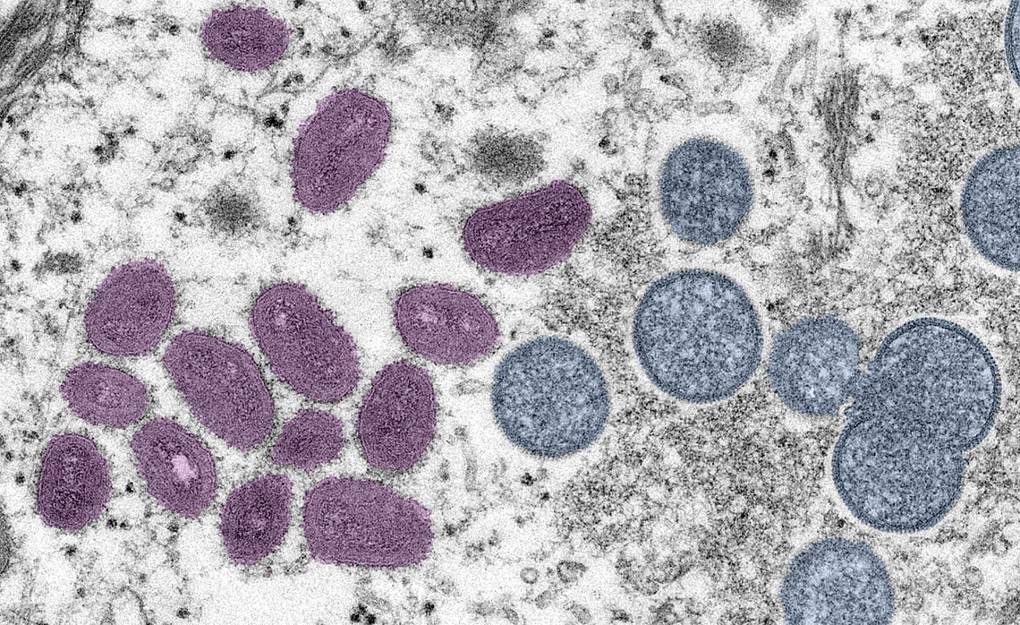
"caption": "Digitally colorized electron microscopic (EM) image depicting an MPX virion (virus particle).",
"description": null,
"title": "Monkeypox-Symptoms",
"credit": "Smith Collection/Gado/Getty Images",
"status": "inherit",
"altTag": null,
"isLoading": false,
"fetchFailed": false
},
"news_11919761": {
"type": "attachments",
"id": "news_11919761",
"meta": {
"index": "attachments_1716263798",
"site": "news",
"id": "11919761",
"found": true
},
"parent": 11919755,
"imgSizes": {
"twentyfourteen-full-width": {
"file": "https://ww2.kqed.org/app/uploads/sites/10/2022/07/GettyImages-1401334758-1-1038x576.jpg",
"width": 1038,
"mimeType": "image/jpeg",
"height": 576
},
"thumbnail": {
"file": "https://ww2.kqed.org/app/uploads/sites/10/2022/07/GettyImages-1401334758-1-160x107.jpg",
"width": 160,
"mimeType": "image/jpeg",
"height": 107
},
"post-thumbnail": {
"file": "https://ww2.kqed.org/app/uploads/sites/10/2022/07/GettyImages-1401334758-1-672x372.jpg",
"width": 672,
"mimeType": "image/jpeg",
"height": 372
},
"kqedFullSize": {
"file": "https://ww2.kqed.org/app/uploads/sites/10/2022/07/GettyImages-1401334758-1.jpg",
"width": 1920,
"height": 1280
},
"large": {
"file": "https://ww2.kqed.org/app/uploads/sites/10/2022/07/GettyImages-1401334758-1-1020x680.jpg",
"width": 1020,
"mimeType": "image/jpeg",
"height": 680
},
"1536x1536": {
"file": "https://ww2.kqed.org/app/uploads/sites/10/2022/07/GettyImages-1401334758-1-1536x1024.jpg",
"width": 1536,
"mimeType": "image/jpeg",
"height": 1024
},
"medium": {
"file": "https://ww2.kqed.org/app/uploads/sites/10/2022/07/GettyImages-1401334758-1-800x533.jpg",
"width": 800,
"mimeType": "image/jpeg",
"height": 533
}
},
"publishDate": 1658016394,
"modified": 1658172280,
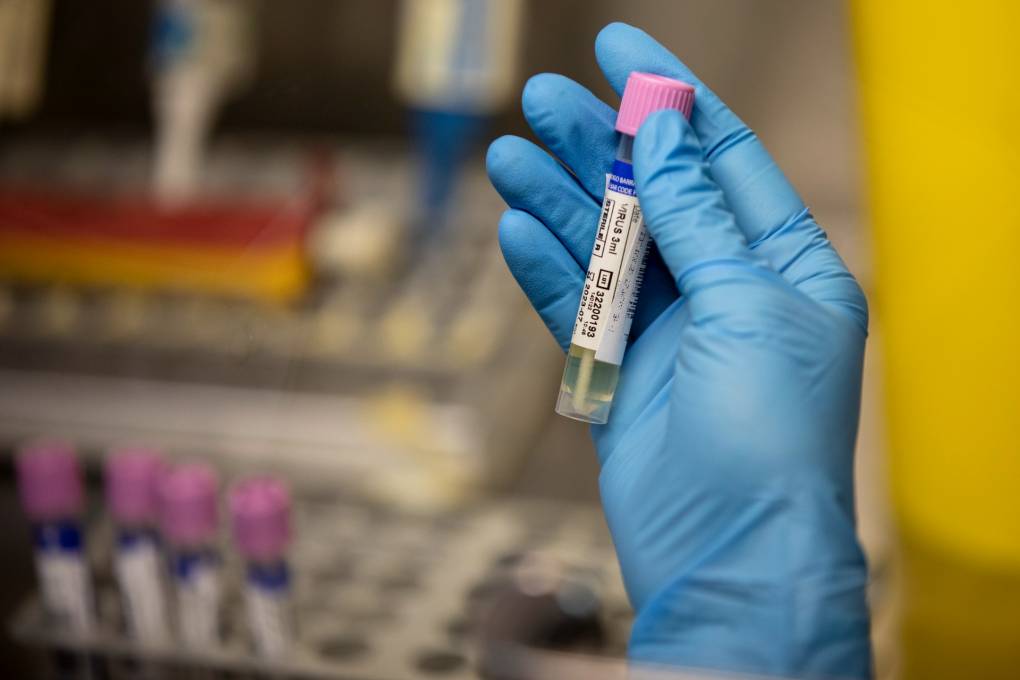
"caption": " A medical laboratory technician shows a suspected monkeypox sample at the microbiology laboratory of La Paz University Hospital on June 6, 2022, in Madrid, Spain.",
"description": null,
"title": "GettyImages-1401334758 (1)",
"credit": "Pablo Blazquez Dominguez/Getty Images",
"status": "inherit",
"altTag": "A blue-gloved hand holds a vial in a close-up photo.",
"isLoading": false,
"fetchFailed": false
},
"news_11917922": {
"type": "attachments",
"id": "news_11917922",
"meta": {
"index": "attachments_1716263798",
"site": "news",
"id": "11917922",
"found": true
},
"parent": 11917710,
"imgSizes": {
"twentyfourteen-full-width": {
"file": "https://ww2.kqed.org/app/uploads/sites/10/2022/06/RS56774_CarolynWysinger_TracyMcCray_Diptych_06-qut-1038x576.jpg",
"width": 1038,
"mimeType": "image/jpeg",
"height": 576
},
"thumbnail": {
"file": "https://ww2.kqed.org/app/uploads/sites/10/2022/06/RS56774_CarolynWysinger_TracyMcCray_Diptych_06-qut-160x107.jpg",
"width": 160,
"mimeType": "image/jpeg",
"height": 107
},
"post-thumbnail": {
"file": "https://ww2.kqed.org/app/uploads/sites/10/2022/06/RS56774_CarolynWysinger_TracyMcCray_Diptych_06-qut-672x372.jpg",
"width": 672,
"mimeType": "image/jpeg",
"height": 372
},
"kqedFullSize": {
"file": "https://ww2.kqed.org/app/uploads/sites/10/2022/06/RS56774_CarolynWysinger_TracyMcCray_Diptych_06-qut.jpg",
"width": 1920,
"height": 1280
},
"large": {
"file": "https://ww2.kqed.org/app/uploads/sites/10/2022/06/RS56774_CarolynWysinger_TracyMcCray_Diptych_06-qut-1020x680.jpg",
"width": 1020,
"mimeType": "image/jpeg",
"height": 680
},
"1536x1536": {
"file": "https://ww2.kqed.org/app/uploads/sites/10/2022/06/RS56774_CarolynWysinger_TracyMcCray_Diptych_06-qut-1536x1024.jpg",
"width": 1536,
"mimeType": "image/jpeg",
"height": 1024
},
"medium": {
"file": "https://ww2.kqed.org/app/uploads/sites/10/2022/06/RS56774_CarolynWysinger_TracyMcCray_Diptych_06-qut-800x533.jpg",
"width": 800,
"mimeType": "image/jpeg",
"height": 533
}
},
"publishDate": 1656103942,
"modified": 1656104499,
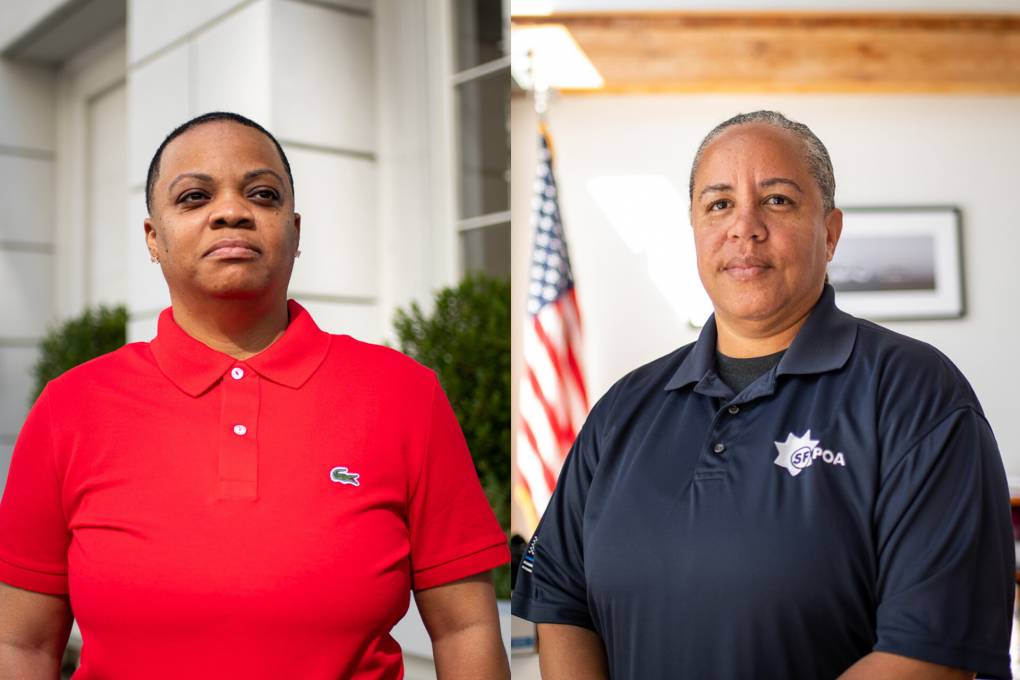
"caption": "Carolyn Wysinger (left), board president of SF Pride, and Tracy McCray, San Francisco Police Officers Association president.",
"description": null,
"title": "RS56774_CarolynWysinger_TracyMcCray_Diptych_06-qut",
"credit": "Beth LaBerge/KQED",
"status": "inherit",
"altTag": "side by side photos of two Black women, one wearing a bright red shirt, one wearing a blue shirt with 'SFPOA' on it - both have serious expressions",
"isLoading": false,
"fetchFailed": false
},
"news_11913455": {
"type": "attachments",
"id": "news_11913455",
"meta": {
"index": "attachments_1716263798",
"site": "news",
"id": "11913455",
"found": true
},
"parent": 11913295,
"imgSizes": {
"twentyfourteen-full-width": {
"file": "https://ww2.kqed.org/app/uploads/sites/10/2022/05/RS55729_078_KQED_AbortionRallySF_05032022-qut-1038x576.jpg",
"width": 1038,
"mimeType": "image/jpeg",
"height": 576
},
"thumbnail": {
"file": "https://ww2.kqed.org/app/uploads/sites/10/2022/05/RS55729_078_KQED_AbortionRallySF_05032022-qut-160x107.jpg",
"width": 160,
"mimeType": "image/jpeg",
"height": 107
},
"post-thumbnail": {
"file": "https://ww2.kqed.org/app/uploads/sites/10/2022/05/RS55729_078_KQED_AbortionRallySF_05032022-qut-672x372.jpg",
"width": 672,
"mimeType": "image/jpeg",
"height": 372
},
"kqedFullSize": {
"file": "https://ww2.kqed.org/app/uploads/sites/10/2022/05/RS55729_078_KQED_AbortionRallySF_05032022-qut.jpg",
"width": 1920,
"height": 1280
},
"large": {
"file": "https://ww2.kqed.org/app/uploads/sites/10/2022/05/RS55729_078_KQED_AbortionRallySF_05032022-qut-1020x680.jpg",
"width": 1020,
"mimeType": "image/jpeg",
"height": 680
},
"1536x1536": {
"file": "https://ww2.kqed.org/app/uploads/sites/10/2022/05/RS55729_078_KQED_AbortionRallySF_05032022-qut-1536x1024.jpg",
"width": 1536,
"mimeType": "image/jpeg",
"height": 1024
},
"medium": {
"file": "https://ww2.kqed.org/app/uploads/sites/10/2022/05/RS55729_078_KQED_AbortionRallySF_05032022-qut-800x533.jpg",
"width": 800,
"mimeType": "image/jpeg",
"height": 533
}
},
"publishDate": 1651870680,
"modified": 1651873933,
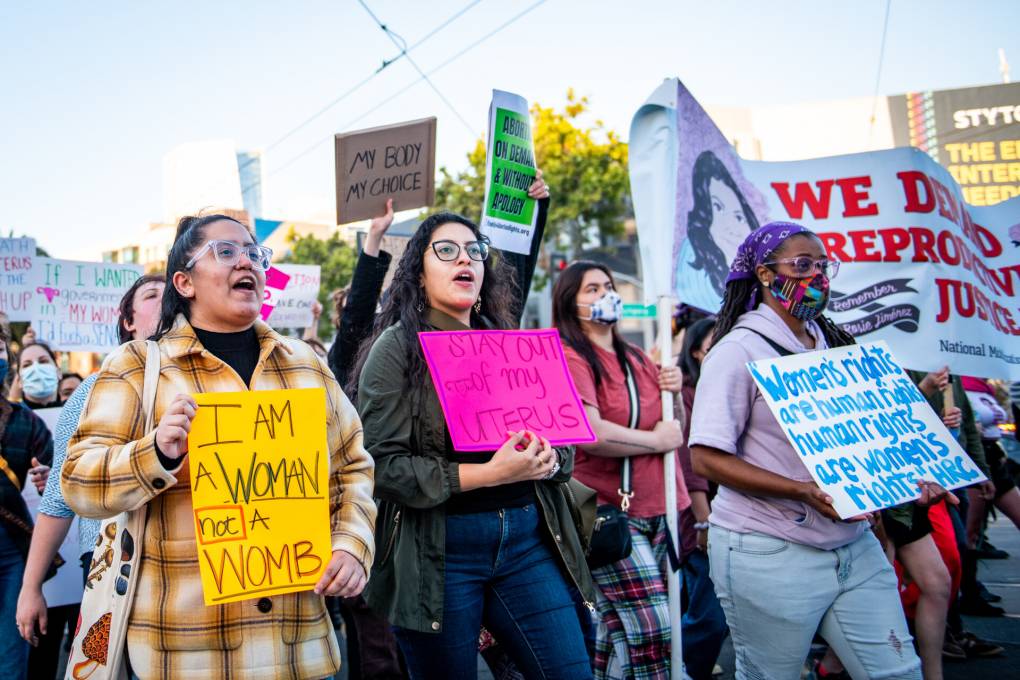
"caption": "Demonstrators march on Market Street in San Francisco on May 3, 2022, during a rally for abortion rights following a leaked draft opinion suggesting the Supreme Court will overturn Roe v. Wade.",
"description": null,
"title": "RS55729_078_KQED_AbortionRallySF_05032022-qut",
"credit": "Beth LaBerge/KQED",
"status": "inherit",
"altTag": "women marchers hold colorful signs reading 'women's rights are human rights' and 'my body my choice'",
"isLoading": false,
"fetchFailed": false
},
"news_11908576": {
"type": "attachments",
"id": "news_11908576",
"meta": {
"index": "attachments_1716263798",
"site": "news",
"id": "11908576",
"found": true
},
"parent": 11908500,
"imgSizes": {
"twentyfourteen-full-width": {
"file": "https://ww2.kqed.org/app/uploads/sites/10/2022/03/RS54556_GettyImages-1385208037-qut-1038x576.jpg",
"width": 1038,
"mimeType": "image/jpeg",
"height": 576
},
"thumbnail": {
"file": "https://ww2.kqed.org/app/uploads/sites/10/2022/03/RS54556_GettyImages-1385208037-qut-160x107.jpg",
"width": 160,
"mimeType": "image/jpeg",
"height": 107
},
"post-thumbnail": {
"file": "https://ww2.kqed.org/app/uploads/sites/10/2022/03/RS54556_GettyImages-1385208037-qut-672x372.jpg",
"width": 672,
"mimeType": "image/jpeg",
"height": 372
},
"kqedFullSize": {
"file": "https://ww2.kqed.org/app/uploads/sites/10/2022/03/RS54556_GettyImages-1385208037-qut.jpg",
"width": 1920,
"height": 1280
},
"large": {
"file": "https://ww2.kqed.org/app/uploads/sites/10/2022/03/RS54556_GettyImages-1385208037-qut-1020x680.jpg",
"width": 1020,
"mimeType": "image/jpeg",
"height": 680
},
"1536x1536": {
"file": "https://ww2.kqed.org/app/uploads/sites/10/2022/03/RS54556_GettyImages-1385208037-qut-1536x1024.jpg",
"width": 1536,
"mimeType": "image/jpeg",
"height": 1024
},
"medium": {
"file": "https://ww2.kqed.org/app/uploads/sites/10/2022/03/RS54556_GettyImages-1385208037-qut-800x533.jpg",
"width": 800,
"mimeType": "image/jpeg",
"height": 533
}
},
"publishDate": 1647562649,
"modified": 1647629281,
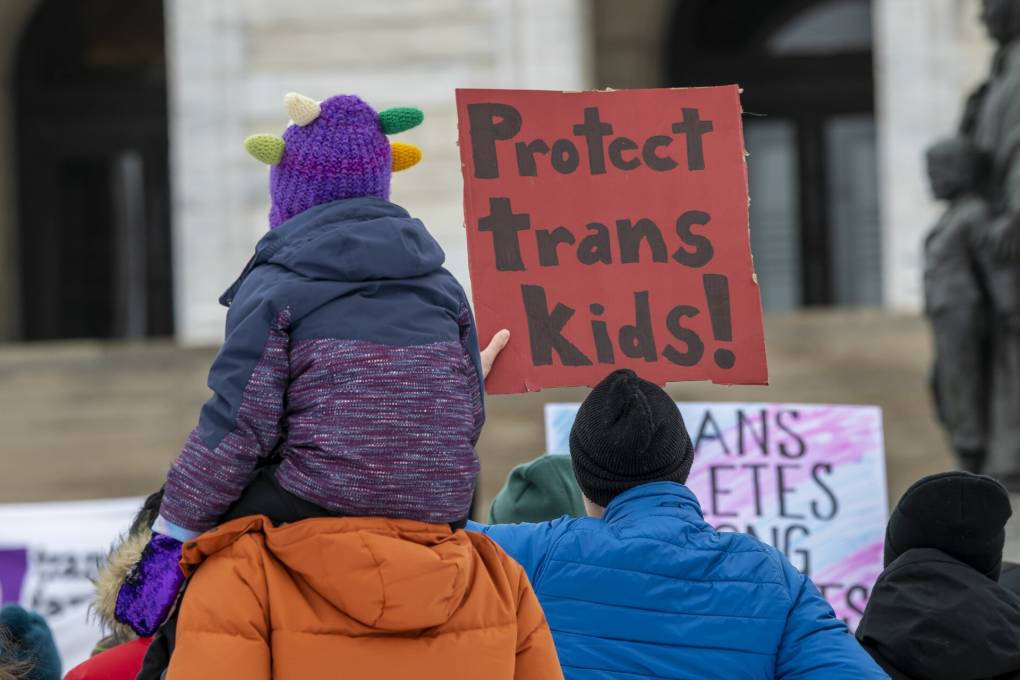
"caption": "Parents and kids attend a rally supporting transgender youth in St. Paul, Minnesota, on March 6, 2022. New California legislation would offer legal protections to trans kids and their parents who face criminal prosecution or forcible separation in other states.",
"description": null,
"title": "St. Paul, Minnesota. March 6, 2022. Because the attacks against transgender kids are increasing across the country Minneasotans hold a rally at the capitol to support trans kids in Minnesota, Texas, and around the country.",
"credit": "Michael Siluk/UCG/Universal Images Group via Getty Images",
"status": "inherit",
"altTag": "seen from behind, child in puffy coat sits on back of an adult, holding sign reading 'protect trans kids'",
"isLoading": false,
"fetchFailed": false
},
"news_11906812": {
"type": "attachments",
"id": "news_11906812",
"meta": {
"index": "attachments_1716263798",
"site": "news",
"id": "11906812",
"found": true
},
"parent": 11906800,
"imgSizes": {
"twentyfourteen-full-width": {
"file": "https://ww2.kqed.org/app/uploads/sites/10/2022/02/Paloma-Reyes-1020x765-1-1019x576.jpg",
"width": 1019,
"mimeType": "image/jpeg",
"height": 576
},
"thumbnail": {
"file": "https://ww2.kqed.org/app/uploads/sites/10/2022/02/Paloma-Reyes-1020x765-1-160x107.jpg",
"width": 160,
"mimeType": "image/jpeg",
"height": 107
},
"post-thumbnail": {
"file": "https://ww2.kqed.org/app/uploads/sites/10/2022/02/Paloma-Reyes-1020x765-1-672x372.jpg",
"width": 672,
"mimeType": "image/jpeg",
"height": 372
},
"kqedFullSize": {
"file": "https://ww2.kqed.org/app/uploads/sites/10/2022/02/Paloma-Reyes-1020x765-1.jpg",
"width": 1019,
"height": 680
},
"medium": {
"file": "https://ww2.kqed.org/app/uploads/sites/10/2022/02/Paloma-Reyes-1020x765-1-800x534.jpg",
"width": 800,
"mimeType": "image/jpeg",
"height": 534
}
},
"publishDate": 1646092447,
"modified": 1646092572,
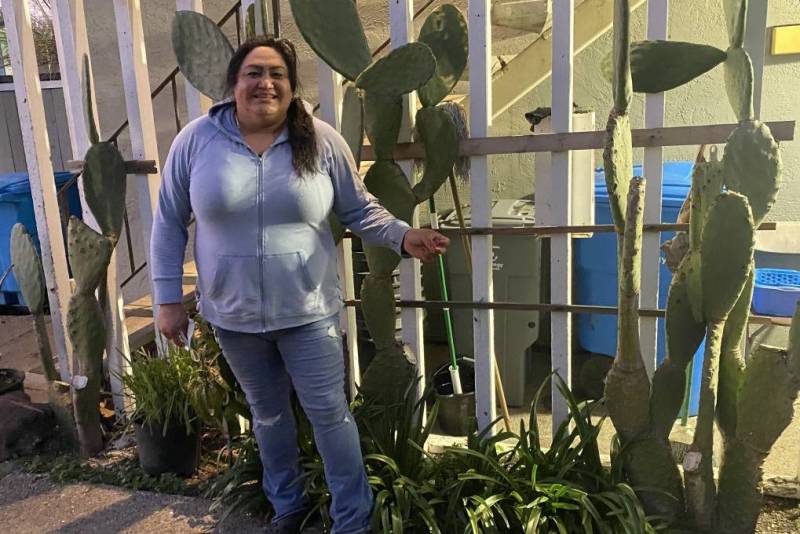
"caption": "Paloma Reyes, una mujer trans y trabajadora agrícola de Santa Rosa, ayuda a dirigir un grupo que defiende los derechos de trabajadores agrícolas trans.",
"description": "Paloma Reyes, una mujer trans y trabajadora agrícola de Santa Rosa, ayuda a dirigir un grupo que defiende los derechos de trabajadores agrícolas trans.",
"title": "Paloma-Reyes-1020x765",
"credit": "Ezra David Romero/KQED",
"status": "inherit",
"altTag": "Una persona aparece parada afuera de un hogar y posa a lado de unos nopales.",
"isLoading": false,
"fetchFailed": false
},
"news_11906115": {
"type": "attachments",
"id": "news_11906115",
"meta": {
"index": "attachments_1716263798",
"site": "news",
"id": "11906115",
"found": true
},
"parent": 11906110,
"imgSizes": {
"twentyfourteen-full-width": {
"file": "https://ww2.kqed.org/app/uploads/sites/10/2022/02/IMG_7223-1038x576.jpg",
"width": 1038,
"mimeType": "image/jpeg",
"height": 576
},
"thumbnail": {
"file": "https://ww2.kqed.org/app/uploads/sites/10/2022/02/IMG_7223-160x120.jpg",
"width": 160,
"mimeType": "image/jpeg",
"height": 120
},
"post-thumbnail": {
"file": "https://ww2.kqed.org/app/uploads/sites/10/2022/02/IMG_7223-672x372.jpg",
"width": 672,
"mimeType": "image/jpeg",
"height": 372
},
"kqedFullSize": {
"file": "https://ww2.kqed.org/app/uploads/sites/10/2022/02/IMG_7223-scaled.jpg",
"width": 2560,
"height": 1920
},
"2048x2048": {
"file": "https://ww2.kqed.org/app/uploads/sites/10/2022/02/IMG_7223-2048x1536.jpg",
"width": 2048,
"mimeType": "image/jpeg",
"height": 1536
},
"large": {
"file": "https://ww2.kqed.org/app/uploads/sites/10/2022/02/IMG_7223-1020x765.jpg",
"width": 1020,
"mimeType": "image/jpeg",
"height": 765
},
"1536x1536": {
"file": "https://ww2.kqed.org/app/uploads/sites/10/2022/02/IMG_7223-1536x1152.jpg",
"width": 1536,
"mimeType": "image/jpeg",
"height": 1152
},
"full-width": {
"file": "https://ww2.kqed.org/app/uploads/sites/10/2022/02/IMG_7223-1920x1440.jpg",
"width": 1920,
"mimeType": "image/jpeg",
"height": 1440
},
"medium": {
"file": "https://ww2.kqed.org/app/uploads/sites/10/2022/02/IMG_7223-800x600.jpg",
"width": 800,
"mimeType": "image/jpeg",
"height": 600
}
},
"publishDate": 1645572376,
"modified": 1645572398,
"caption": "Rev. Lindsey Bell-Kerr says they go out of their way to work with people across Santa Rosa, so that when needs come up they know they can reach out to their congregation for help.",
"description": null,
"title": "IMG_7223",
"credit": "Ezra David Romero/KQED",
"status": "inherit",
"altTag": null,
"isLoading": false,
"fetchFailed": false
},
"news_11903295": {
"type": "attachments",
"id": "news_11903295",
"meta": {
"index": "attachments_1716263798",
"site": "news",
"id": "11903295",
"found": true
},
"parent": 11902998,
"imgSizes": {
"twentyfourteen-full-width": {
"file": "https://ww2.kqed.org/app/uploads/sites/10/2022/01/GettyImages-1322405018-1038x576.jpg",
"width": 1038,
"mimeType": "image/jpeg",
"height": 576
},
"thumbnail": {
"file": "https://ww2.kqed.org/app/uploads/sites/10/2022/01/GettyImages-1322405018-160x109.jpg",
"width": 160,
"mimeType": "image/jpeg",
"height": 109
},
"post-thumbnail": {
"file": "https://ww2.kqed.org/app/uploads/sites/10/2022/01/GettyImages-1322405018-672x372.jpg",
"width": 672,
"mimeType": "image/jpeg",
"height": 372
},
"kqedFullSize": {
"file": "https://ww2.kqed.org/app/uploads/sites/10/2022/01/GettyImages-1322405018.jpg",
"width": 1200,
"height": 821
},
"large": {
"file": "https://ww2.kqed.org/app/uploads/sites/10/2022/01/GettyImages-1322405018-1020x698.jpg",
"width": 1020,
"mimeType": "image/jpeg",
"height": 698
},
"medium": {
"file": "https://ww2.kqed.org/app/uploads/sites/10/2022/01/GettyImages-1322405018-800x547.jpg",
"width": 800,
"mimeType": "image/jpeg",
"height": 547
}
},
"publishDate": 1643413448,
"modified": 1643413921,
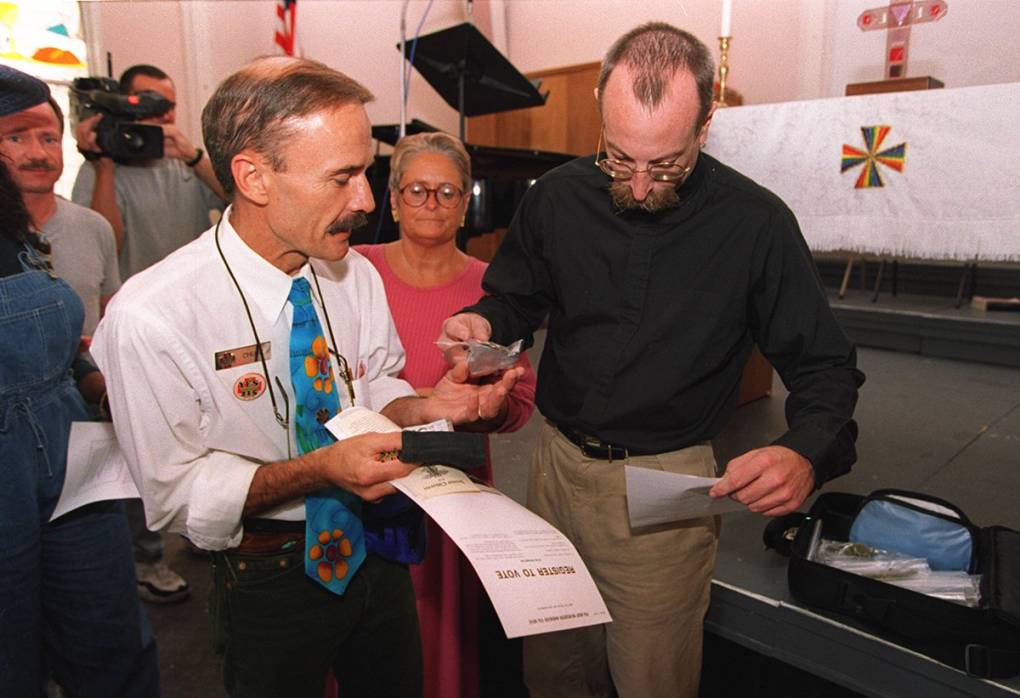
"caption": "Rev. Jim Mitulski (right), pastor of the Metropolitan Community Church of SF, hands a volunteer a bag of marijuana after church services as part of a relief effort in the summer of 1996 to help people suffering from AIDS. ",
"description": null,
"title": "MARIJUANA/C/18AUG96/MN/LS-Rev. Jim Mitulski (right) pastor of the Metropolitan Community Church of SF hands Chuck Jones, a CBC volunteer, a bag of marijuana during a medical marijuana relief effort sponsored by the church. BY LEA SUZUKI/THE CHRONICLE",
"credit": "Lea Suzuki/San Francisco Chronicle via Getty Images",
"status": "inherit",
"altTag": "One man gives another man a small bag of marijuana. A group of people stand behind them, including someone with a video camera.",
"isLoading": false,
"fetchFailed": false
}
},
"audioPlayerReducer": {
"postId": "stream_live",
"isPaused": true,
"isPlaying": false,
"pfsActive": false,
"pledgeModalIsOpen": true,
"playerDrawerIsOpen": false,
"liveAudioPlayStartedAt": 0,
"liveAudioPlayContext": ""
},
"authorsReducer": {
"byline_news_11932900": {
"type": "authors",
"id": "byline_news_11932900",
"meta": {
"override": true
},
"slug": "byline_news_11932900",
"name": "\u003ca href=\"https://www.npr.org/people/1128891742/ashley-ahn\">Ashley Ahn\u003c/a>",
"isLoading": false
},
"byline_news_11926009": {
"type": "authors",
"id": "byline_news_11926009",
"meta": {
"override": true
},
"slug": "byline_news_11926009",
"name": "KQED News Staff",
"isLoading": false
},
"kqed": {
"type": "authors",
"id": "236",
"meta": {
"index": "authors_1716337520",
"id": "236",
"found": true
},
"name": "KQED News Staff",
"firstName": "KQED News Staff",
"lastName": null,
"slug": "kqed",
"email": "faq@kqed.org",
"display_author_email": false,
"staff_mastheads": [],
"title": null,
"bio": null,
"avatar": "https://secure.gravatar.com/avatar/ef0e801a68c4c54afa9180db14084167?s=600&d=blank&r=g",
"twitter": null,
"facebook": null,
"instagram": null,
"linkedin": null,
"sites": [
{
"site": "arts",
"roles": [
"contributor"
]
},
{
"site": "news",
"roles": [
"editor"
]
},
{
"site": "futureofyou",
"roles": [
"author"
]
}
],
"headData": {
"title": "KQED News Staff | KQED",
"description": null,
"ogImgSrc": "https://secure.gravatar.com/avatar/ef0e801a68c4c54afa9180db14084167?s=600&d=blank&r=g",
"twImgSrc": "https://secure.gravatar.com/avatar/ef0e801a68c4c54afa9180db14084167?s=600&d=blank&r=g"
},
"isLoading": false,
"link": "/author/kqed"
},
"kqednewsstaffandwires": {
"type": "authors",
"id": "237",
"meta": {
"index": "authors_1716337520",
"id": "237",
"found": true
},
"name": "KQED News Staff and Wires",
"firstName": "KQED News Staff and Wires",
"lastName": null,
"slug": "kqednewsstaffandwires",
"email": "onlinenewsstaff@kqed.org",
"display_author_email": false,
"staff_mastheads": [],
"title": null,
"bio": null,
"avatar": "https://secure.gravatar.com/avatar/72295af8ebbfbd19a4948f5271285664?s=600&d=blank&r=g",
"twitter": null,
"facebook": null,
"instagram": null,
"linkedin": null,
"sites": [
{
"site": "arts",
"roles": [
"contributor"
]
},
{
"site": "news",
"roles": [
"contributor"
]
},
{
"site": "lowdown",
"roles": [
"author"
]
},
{
"site": "stateofhealth",
"roles": [
"contributor"
]
},
{
"site": "food",
"roles": [
"author"
]
}
],
"headData": {
"title": "KQED News Staff and Wires | KQED",
"description": null,
"ogImgSrc": "https://secure.gravatar.com/avatar/72295af8ebbfbd19a4948f5271285664?s=600&d=blank&r=g",
"twImgSrc": "https://secure.gravatar.com/avatar/72295af8ebbfbd19a4948f5271285664?s=600&d=blank&r=g"
},
"isLoading": false,
"link": "/author/kqednewsstaffandwires"
},
"scottshafer": {
"type": "authors",
"id": "255",
"meta": {
"index": "authors_1716337520",
"id": "255",
"found": true
},
"name": "Scott Shafer",
"firstName": "Scott",
"lastName": "Shafer",
"slug": "scottshafer",
"email": "sshafer@kqed.org",
"display_author_email": false,
"staff_mastheads": [
"news"
],
"title": "KQED Contributor",
"bio": "Scott Shafer is a senior editor with the KQED Politics and Government desk. He is co-host of Political Breakdown, the award-winning radio show and podcast with a personal take on the world of politics. Scott came to KQED in 1998 to host the statewide\u003cem> California Report\u003c/em>. Prior to that he had extended stints in politics and government\u003cem>.\u003c/em> He uses that inside experience at KQED in his, reporting, hosting and analysis for the politics desk. Scott collaborated \u003cem>Political Breakdown a\u003c/em>nd on \u003cem>The Political Mind of Jerry Brown, \u003c/em>an eight-part series about the life and extraordinary political career of the former governor. For fun, he plays water polo with the San Francisco Tsunami.",
"avatar": "https://secure.gravatar.com/avatar/a62ebae45b79d7aed1a39a0e3bf68104?s=600&d=blank&r=g",
"twitter": "scottshafer",
"bluesky": null,
"facebook": null,
"instagram": null,
"linkedin": null,
"sites": [
{
"site": "news",
"roles": [
"editor"
]
},
{
"site": "stateofhealth",
"roles": [
"author"
]
},
{
"site": "science",
"roles": [
"author"
]
},
{
"site": "forum",
"roles": [
"subscriber"
]
},
{
"site": "liveblog",
"roles": [
"author"
]
}
],
"headData": {
"title": "Scott Shafer | KQED",
"description": "KQED Contributor",
"ogImgSrc": "https://secure.gravatar.com/avatar/a62ebae45b79d7aed1a39a0e3bf68104?s=600&d=blank&r=g",
"twImgSrc": "https://secure.gravatar.com/avatar/a62ebae45b79d7aed1a39a0e3bf68104?s=600&d=blank&r=g"
},
"isLoading": false,
"link": "/author/scottshafer"
},
"carlysevern": {
"type": "authors",
"id": "3243",
"meta": {
"index": "authors_1716337520",
"id": "3243",
"found": true
},
"name": "Carly Severn",
"firstName": "Carly",
"lastName": "Severn",
"slug": "carlysevern",
"email": "csevern@kqed.org",
"display_author_email": false,
"staff_mastheads": [
"news"
],
"title": "Senior Editor, Audience News ",
"bio": "Carly is KQED's Senior Editor of Audience News on the Digital News team, and has reported for the California Report Magazine, Bay Curious and KQED Arts. She's formerly the host of \u003ca href=\"http://ww2.kqed.org/pop/category/the-cooler/\" rel=\"noopener noreferrer\">The Cooler\u003c/a> podcast.",
"avatar": "https://secure.gravatar.com/avatar/54037bf5c128fe678f0ef26cec97a93f2e7f220a22d7285703328f12c42c1b1d?s=600&d=blank&r=g",
"twitter": "teacupinthebay",
"bluesky": null,
"facebook": null,
"instagram": null,
"linkedin": null,
"sites": [
{
"site": "",
"roles": [
"editor"
]
},
{
"site": "arts",
"roles": [
"editor"
]
},
{
"site": "news",
"roles": [
"administrator"
]
},
{
"site": "pop",
"roles": [
"editor"
]
},
{
"site": "futureofyou",
"roles": [
"editor"
]
},
{
"site": "about",
"roles": [
"administrator"
]
},
{
"site": "mindshift",
"roles": [
"editor"
]
},
{
"site": "bayareabites",
"roles": [
"editor"
]
},
{
"site": "stateofhealth",
"roles": [
"editor"
]
},
{
"site": "science",
"roles": [
"editor"
]
},
{
"site": "food",
"roles": [
"contributor"
]
},
{
"site": "forum",
"roles": [
"editor"
]
},
{
"site": "perspectives",
"roles": [
"administrator"
]
},
{
"site": "liveblog",
"roles": [
"editor"
]
}
],
"headData": {
"title": "Carly Severn | KQED",
"description": "Senior Editor, Audience News ",
"ogImgSrc": "https://secure.gravatar.com/avatar/54037bf5c128fe678f0ef26cec97a93f2e7f220a22d7285703328f12c42c1b1d?s=600&d=blank&r=g",
"twImgSrc": "https://secure.gravatar.com/avatar/54037bf5c128fe678f0ef26cec97a93f2e7f220a22d7285703328f12c42c1b1d?s=600&d=blank&r=g"
},
"isLoading": false,
"link": "/author/carlysevern"
},
"ecruzguevarra": {
"type": "authors",
"id": "8654",
"meta": {
"index": "authors_1716337520",
"id": "8654",
"found": true
},
"name": "Ericka Cruz Guevarra",
"firstName": "Ericka",
"lastName": "Cruz Guevarra",
"slug": "ecruzguevarra",
"email": "ecruzguevarra@kqed.org",
"display_author_email": true,
"staff_mastheads": [
"news"
],
"title": "Producer, The Bay Podcast",
"bio": "Ericka Cruz Guevarra is host of \u003ca href=\"https://www.kqed.org/podcasts/thebay\">\u003cem>The Bay\u003c/em>\u003c/a> podcast at KQED. Before host, she was the show’s producer. Her work in that capacity includes a three-part reported series on policing in Vallejo, which won a 2020 excellence in journalism award from the Society of Professional Journalists. Ericka has worked as a breaking news reporter at Oregon Public Broadcasting, helped produce the Code Switch podcast, and was KQED’s inaugural Raul Ramirez Diversity Fund intern. She’s also an alumna of NPR’s Next Generation Radio program. Send her an email if you have strong feelings about whether Fairfield and Suisun City are the Bay. Ericka is represented by SAG-AFTRA.",
"avatar": "https://secure.gravatar.com/avatar/accefc1de4bafc7e234b69bcb9b6f6536c130fd84709bc3069ef11a78787e1bb?s=600&d=blank&r=g",
"twitter": "NotoriousECG",
"bluesky": null,
"facebook": null,
"instagram": null,
"linkedin": null,
"sites": [
{
"site": "arts",
"roles": [
"subscriber"
]
},
{
"site": "news",
"roles": [
"editor",
"manage_categories"
]
},
{
"site": "futureofyou",
"roles": [
"subscriber"
]
},
{
"site": "stateofhealth",
"roles": [
"subscriber"
]
},
{
"site": "science",
"roles": [
"editor"
]
},
{
"site": "forum",
"roles": [
"subscriber"
]
}
],
"headData": {
"title": "Ericka Cruz Guevarra | KQED",
"description": "Producer, The Bay Podcast",
"ogImgSrc": "https://secure.gravatar.com/avatar/accefc1de4bafc7e234b69bcb9b6f6536c130fd84709bc3069ef11a78787e1bb?s=600&d=blank&r=g",
"twImgSrc": "https://secure.gravatar.com/avatar/accefc1de4bafc7e234b69bcb9b6f6536c130fd84709bc3069ef11a78787e1bb?s=600&d=blank&r=g"
},
"isLoading": false,
"link": "/author/ecruzguevarra"
},
"jasminegarnett": {
"type": "authors",
"id": "11530",
"meta": {
"index": "authors_1716337520",
"id": "11530",
"found": true
},
"name": "Jasmine Garnett",
"firstName": "Jasmine",
"lastName": "Garnett",
"slug": "jasminegarnett",
"email": "JGarnett@KQED.org",
"display_author_email": false,
"staff_mastheads": [
"news"
],
"title": "Senior Engagement Platforms Producer",
"bio": "Jasmine is a Senior Engagement Platforms Producer on the KQED News team. She is also a freelance writer, with work appearing in KQED, Bitch Media, and Kotaku among others. Jasmine graduated from UC Berkeley with a degree in Media Studies, where she was also an Arts and Entertainment reporter at the Daily Californian.",
"avatar": "https://secure.gravatar.com/avatar/a6ea8b0641874311533b7401bee15c8e?s=600&d=blank&r=g",
"twitter": "JFLGarnett",
"facebook": null,
"instagram": null,
"linkedin": null,
"sites": [
{
"site": "arts",
"roles": [
"author"
]
},
{
"site": "news",
"roles": [
"editor"
]
},
{
"site": "about",
"roles": [
"editor"
]
},
{
"site": "science",
"roles": [
"editor"
]
},
{
"site": "forum",
"roles": [
"editor"
]
},
{
"site": "pressroom",
"roles": [
"editor"
]
}
],
"headData": {
"title": "Jasmine Garnett | KQED",
"description": "Senior Engagement Platforms Producer",
"ogImgSrc": "https://secure.gravatar.com/avatar/a6ea8b0641874311533b7401bee15c8e?s=600&d=blank&r=g",
"twImgSrc": "https://secure.gravatar.com/avatar/a6ea8b0641874311533b7401bee15c8e?s=600&d=blank&r=g"
},
"isLoading": false,
"link": "/author/jasminegarnett"
},
"lsarah": {
"type": "authors",
"id": "11626",
"meta": {
"index": "authors_1716337520",
"id": "11626",
"found": true
},
"name": "Lakshmi Sarah",
"firstName": "Lakshmi",
"lastName": "Sarah",
"slug": "lsarah",
"email": "lsarah@kqed.org",
"display_author_email": false,
"staff_mastheads": [],
"title": "Digital Producer",
"bio": "Lakshmi Sarah is an educator, author and journalist with a focus on innovative storytelling. She has worked with newspapers, radio and magazines from Ahmedabad, India to Los Angeles, California. She has written and produced for Die Zeit, Global Voices, AJ+, KQED, Fusion Media Group and the New York Times.",
"avatar": "https://secure.gravatar.com/avatar/652dcaecd8b28826fc17a8b2d6bb4e93?s=600&d=blank&r=g",
"twitter": "lakitalki",
"facebook": null,
"instagram": "https://www.instagram.com/laki.talki/",
"linkedin": "https://www.linkedin.com/in/lakisarah/",
"sites": [
{
"site": "arts",
"roles": []
},
{
"site": "news",
"roles": []
},
{
"site": "bayareabites",
"roles": []
},
{
"site": "science",
"roles": []
}
],
"headData": {
"title": "Lakshmi Sarah | KQED",
"description": "Digital Producer",
"ogImgSrc": "https://secure.gravatar.com/avatar/652dcaecd8b28826fc17a8b2d6bb4e93?s=600&d=blank&r=g",
"twImgSrc": "https://secure.gravatar.com/avatar/652dcaecd8b28826fc17a8b2d6bb4e93?s=600&d=blank&r=g"
},
"isLoading": false,
"link": "/author/lsarah"
},
"hmcdede": {
"type": "authors",
"id": "11635",
"meta": {
"index": "authors_1716337520",
"id": "11635",
"found": true
},
"name": "Holly McDede",
"firstName": "Holly",
"lastName": "McDede",
"slug": "hmcdede",
"email": "hmcdede@KQED.org",
"display_author_email": false,
"staff_mastheads": [],
"title": "KQED Contributor",
"bio": null,
"avatar": "https://secure.gravatar.com/avatar/35d1a1f5422c9d266f7ace9348d170f2136671a65fffc90a592e4d7fbf8dc3f6?s=600&d=blank&r=g",
"twitter": null,
"bluesky": null,
"facebook": null,
"instagram": null,
"linkedin": null,
"sites": [
{
"site": "arts",
"roles": [
"editor"
]
},
{
"site": "news",
"roles": [
"edit_others_posts",
"editor"
]
},
{
"site": "science",
"roles": [
"editor"
]
},
{
"site": "forum",
"roles": [
"editor"
]
},
{
"site": "perspectives",
"roles": [
"administrator"
]
}
],
"headData": {
"title": "Holly McDede | KQED",
"description": "KQED Contributor",
"ogImgSrc": "https://secure.gravatar.com/avatar/35d1a1f5422c9d266f7ace9348d170f2136671a65fffc90a592e4d7fbf8dc3f6?s=600&d=blank&r=g",
"twImgSrc": "https://secure.gravatar.com/avatar/35d1a1f5422c9d266f7ace9348d170f2136671a65fffc90a592e4d7fbf8dc3f6?s=600&d=blank&r=g"
},
"isLoading": false,
"link": "/author/hmcdede"
},
"amontecillo": {
"type": "authors",
"id": "11649",
"meta": {
"index": "authors_1716337520",
"id": "11649",
"found": true
},
"name": "Alan Montecillo",
"firstName": "Alan",
"lastName": "Montecillo",
"slug": "amontecillo",
"email": "amontecillo@kqed.org",
"display_author_email": false,
"staff_mastheads": [
"news"
],
"title": "KQED Contributor",
"bio": "Alan Montecillo is the senior editor of \u003cem>\u003ca href=\"http://kqed.org/thebay\">The Bay\u003c/a>, \u003c/em> KQED's local news podcast. Before moving to the Bay Area, he worked as a senior talk show producer for WILL in Champaign-Urbana, Illinois and at Oregon Public Broadcasting in Portland, Oregon. He has won journalism awards from the Society of Professional Journalists Northern California, the Public Media Journalists Association, The Signal Awards, and has also received a regional Edward R. Murrow award. Alan is a Filipino American from Hong Kong and a graduate of Reed College.",
"avatar": "https://secure.gravatar.com/avatar/268f53a2066899ea9efdd8a5900218b17c822d9862cbc9326cccec53ef41d349?s=600&d=blank&r=g",
"twitter": "alanmontecillo",
"bluesky": null,
"facebook": null,
"instagram": null,
"linkedin": null,
"sites": [
{
"site": "",
"roles": [
"editor"
]
},
{
"site": "news",
"roles": [
"editor",
"manage_categories"
]
}
],
"headData": {
"title": "Alan Montecillo | KQED",
"description": "KQED Contributor",
"ogImgSrc": "https://secure.gravatar.com/avatar/268f53a2066899ea9efdd8a5900218b17c822d9862cbc9326cccec53ef41d349?s=600&d=blank&r=g",
"twImgSrc": "https://secure.gravatar.com/avatar/268f53a2066899ea9efdd8a5900218b17c822d9862cbc9326cccec53ef41d349?s=600&d=blank&r=g"
},
"isLoading": false,
"link": "/author/amontecillo"
},
"ccabreralomeli": {
"type": "authors",
"id": "11708",
"meta": {
"index": "authors_1716337520",
"id": "11708",
"found": true
},
"name": "Carlos Cabrera-Lomelí",
"firstName": "Carlos",
"lastName": "Cabrera-Lomelí",
"slug": "ccabreralomeli",
"email": "ccabreralomeli@KQED.org",
"display_author_email": true,
"staff_mastheads": [
"news"
],
"title": "Community Reporter",
"bio": "Carlos Cabrera-Lomelí is a community reporter with KQED's digital engagement team. He also reports and co-produces for KQED's bilingual news hub KQED en Español. He grew up in San Francisco's Mission District and has previously worked with Univision, 48 Hills and REFORMA in Mexico City.",
"avatar": "https://secure.gravatar.com/avatar/c309be9665e484f887b818c89e273ecc673004f426f36b24d00a4d813a2e0518?s=600&d=blank&r=g",
"twitter": "@LomeliCabrera",
"bluesky": null,
"facebook": null,
"instagram": null,
"linkedin": null,
"sites": [
{
"site": "arts",
"roles": [
"editor"
]
},
{
"site": "news",
"roles": [
"editor"
]
},
{
"site": "about",
"roles": [
"editor"
]
},
{
"site": "science",
"roles": [
"editor"
]
},
{
"site": "perspectives",
"roles": [
"editor"
]
},
{
"site": "elections",
"roles": [
"editor"
]
},
{
"site": "liveblog",
"roles": [
"contributor"
]
}
],
"headData": {
"title": "Carlos Cabrera-Lomelí | KQED",
"description": "Community Reporter",
"ogImgSrc": "https://secure.gravatar.com/avatar/c309be9665e484f887b818c89e273ecc673004f426f36b24d00a4d813a2e0518?s=600&d=blank&r=g",
"twImgSrc": "https://secure.gravatar.com/avatar/c309be9665e484f887b818c89e273ecc673004f426f36b24d00a4d813a2e0518?s=600&d=blank&r=g"
},
"isLoading": false,
"link": "/author/ccabreralomeli"
},
"eromero": {
"type": "authors",
"id": "11746",
"meta": {
"index": "authors_1716337520",
"id": "11746",
"found": true
},
"name": "Ezra David Romero",
"firstName": "Ezra David",
"lastName": "Romero",
"slug": "eromero",
"email": "eromero@kqed.org",
"display_author_email": true,
"staff_mastheads": [
"news",
"science"
],
"title": "Climate Reporter",
"bio": "Ezra David Romero is a climate reporter for KQED News. He covers the absence and excess of water in the Bay Area — think sea level rise, flooding and drought. For nearly a decade he’s covered how warming temperatures are altering the lives of Californians. He’s reported on farmers worried their pistachio trees aren’t getting enough sleep, families desperate for water, scientists studying dying giant sequoias, and alongside firefighters containing wildfires. His work has appeared on local stations across California and nationally on public radio shows like Morning Edition, Here and Now, All Things Considered and Science Friday. ",
"avatar": "https://secure.gravatar.com/avatar/c76404d287c10ed40224227551ac36e24352c7306f106632caf6fead76f8801f?s=600&d=blank&r=g",
"twitter": "ezraromero",
"bluesky": null,
"facebook": null,
"instagram": null,
"linkedin": null,
"sites": [
{
"site": "arts",
"roles": [
"editor"
]
},
{
"site": "news",
"roles": [
"editor"
]
},
{
"site": "science",
"roles": [
"editor"
]
},
{
"site": "liveblog",
"roles": [
"author"
]
}
],
"headData": {
"title": "Ezra David Romero | KQED",
"description": "Climate Reporter",
"ogImgSrc": "https://secure.gravatar.com/avatar/c76404d287c10ed40224227551ac36e24352c7306f106632caf6fead76f8801f?s=600&d=blank&r=g",
"twImgSrc": "https://secure.gravatar.com/avatar/c76404d287c10ed40224227551ac36e24352c7306f106632caf6fead76f8801f?s=600&d=blank&r=g"
},
"isLoading": false,
"link": "/author/eromero"
},
"cbeale": {
"type": "authors",
"id": "11749",
"meta": {
"index": "authors_1716337520",
"id": "11749",
"found": true
},
"name": "Christopher Beale",
"firstName": "Christopher",
"lastName": "Beale",
"slug": "cbeale",
"email": "cbeale@kqed.org",
"display_author_email": true,
"staff_mastheads": [
"news"
],
"title": "Engineer/Producer/Reporter",
"bio": "\u003ca href=\"https://linktr.ee/realchrisjbeale\" rel=\"noopener noreferrer\">Christopher J. Beale\u003c/a> is an award winning journalist, audio engineer, and media host living in San Francisco. \r\n\r\nChristopher works primarily as an audio engineer at KQED and serves as the sound designer for both the Bay Curious and Rightnowish podcasts. He is the host and producer of the LGBTQIA podcast and radio segment \u003ca href=\"https://stereotypespodcast.org\">Stereotypes\u003c/a>.",
"avatar": "https://secure.gravatar.com/avatar/dc485bf84788eb7e7414eb638e72407e?s=600&d=blank&r=g",
"twitter": "realchrisjbeale",
"facebook": null,
"instagram": "http://instagram.com/realchrisjbeale",
"linkedin": null,
"sites": [
{
"site": "arts",
"roles": [
"contributor"
]
},
{
"site": "news",
"roles": [
"editor"
]
},
{
"site": "forum",
"roles": [
"editor"
]
}
],
"headData": {
"title": "Christopher Beale | KQED",
"description": "Engineer/Producer/Reporter",
"ogImgSrc": "https://secure.gravatar.com/avatar/dc485bf84788eb7e7414eb638e72407e?s=600&d=blank&r=g",
"twImgSrc": "https://secure.gravatar.com/avatar/dc485bf84788eb7e7414eb638e72407e?s=600&d=blank&r=g"
},
"isLoading": false,
"link": "/author/cbeale"
},
"mesquinca": {
"type": "authors",
"id": "11802",
"meta": {
"index": "authors_1716337520",
"id": "11802",
"found": true
},
"name": "Maria Esquinca",
"firstName": "Maria",
"lastName": "Esquinca",
"slug": "mesquinca",
"email": "mesquinca@kqed.org",
"display_author_email": false,
"staff_mastheads": [],
"title": "Producer, The Bay",
"bio": "María Esquinca is a producer of The Bay. Before that, she was a New York Women’s Foundation IGNITE Fellow at Latino USA. She worked at Radio Bilingue where she covered the San Joaquin Valley. Maria has interned at WLRN, News 21, The New York Times Student Journalism Institute and at Crain’s Detroit Business as a Dow Jones News Fund Business Reporting Intern. She is an MFA graduate from the University of Miami. In 2017, she graduated from the Walter Cronkite School of Journalism and Mass Communication with a Master of Mass Communication. A fronteriza, she was born in Ciudad Juárez, Chihuahua, Mexico and grew up in El Paso, Texas.",
"avatar": "https://secure.gravatar.com/avatar/77cedba18aae91da775038ba06dcd8d0?s=600&d=blank&r=g",
"twitter": "@m_esquinca",
"facebook": null,
"instagram": null,
"linkedin": null,
"sites": [
{
"site": "news",
"roles": []
}
],
"headData": {
"title": "Maria Esquinca | KQED",
"description": "Producer, The Bay",
"ogImgSrc": "https://secure.gravatar.com/avatar/77cedba18aae91da775038ba06dcd8d0?s=600&d=blank&r=g",
"twImgSrc": "https://secure.gravatar.com/avatar/77cedba18aae91da775038ba06dcd8d0?s=600&d=blank&r=g"
},
"isLoading": false,
"link": "/author/mesquinca"
}
},
"pagesReducer": {
"news_tag_lgbtq": {
"type": "terms",
"id": "news_20004",
"meta": {
"index": "terms_1716263798",
"site": "news",
"id": "20004",
"score": 8.284364
},
"featImg": null,
"name": "LGBTQ",
"description": null,
"taxonomy": "tag",
"headData": {
"twImgId": null,
"twTitle": null,
"ogTitle": null,
"ogImgId": null,
"twDescription": null,
"description": null,
"title": "LGBTQ Archives | KQED News",
"ogDescription": null
},
"ttid": 20021,
"slug": "lgbtq",
"isLoading": false,
"title": "LGBTQ",
"pageMeta": {
"site": "news",
"WpPageTemplate": "page-topic-editorial",
"currentPage": 13
},
"blocks": [
{
"blockName": "kqed/post-list",
"attrs": {
"layout": "cardArticle2",
"query": "posts/news?tag=lgbtq",
"seeMore": false,
"paginated": true,
"page": 13
}
},
{
"blockName": "kqed/ad"
}
]
}
},
"pfsSessionReducer": {},
"postsReducer": {
"stream_live": {
"type": "live",
"id": "stream_live",
"audioUrl": "https://streams.kqed.org/kqedradio",
"title": "Live Stream",
"excerpt": "Live Stream information currently unavailable.",
"link": "/radio",
"featImg": "",
"label": {
"name": "KQED Live",
"link": "/"
}
},
"stream_kqedNewscast": {
"type": "posts",
"id": "stream_kqedNewscast",
"audioUrl": "https://www.kqed.org/.stream/anon/radio/RDnews/newscast.mp3?_=1",
"title": "KQED Newscast",
"featImg": "",
"label": {
"name": "88.5 FM",
"link": "/"
}
},
"news_11932900": {
"type": "posts",
"id": "news_11932900",
"meta": {
"index": "posts_1716263798",
"site": "news",
"id": "11932900",
"score": null,
"sort": [
1669063051000
]
},
"parent": 0,
"labelTerm": {
"site": "news",
"term": 253
},
"blocks": [],
"publishDate": 1669063051,
"format": "standard",
"disqusTitle": "What We Know So Far About the Shooting at a Colorado Springs LGBTQ Club",
"title": "What We Know So Far About the Shooting at a Colorado Springs LGBTQ Club",
"headTitle": "NPR | KQED News",
"content": "\u003cdiv class=\"storyMajorUpdateDate\">\u003cstrong>Updated November 21, 2022 at 5:28 PM ET\u003c/strong>\u003c/div>\n\u003cp>Police continue to investigate after a gunman killed five people and injured 18 others at an \u003ca href=\"https://www.npr.org/2022/11/20/1138045219/colorado-springs-shooting-lgbtq-club-q-5-dead\">LGBTQ nightclub \u003c/a>late Saturday in Colorado Springs, Colo.\u003c/p>\n\u003cp>Seventeen people were injured because of a gunshot wound, while another victim sustained other injuries, police said Monday afternoon.\u003c/p>\n\u003cp>At least one other person and likely many others were victims with no visible injuries, police said. Police earlier said 25 people were injured.\u003c/p>\n\u003cp>Officials also identified Anderson Lee Aldrich, 22, as the suspect. He was taken into custody shortly after arriving on site at Club Q and is being treated at a local hospital as of Monday afternoon.\u003c/p>\n\u003cp>Court records for the case have now been sealed. The El Paso County district attorney's director of communications Howard Black told NPR on Monday afternoon that no formal charges have been filed. He said the investigation is still active, and charges will be filed in due time.\u003c/p>\n\u003cp>The attack comes six years after the deadliest attack on the LGBTQ community in modern U.S. history, when a gunman killed 49 people and wounded 53 others at the \u003ca href=\"https://www.npr.org/2016/06/16/482322488/orlando-shooting-what-happened-update\">Pulse nightclub\u003c/a> in Orlando, Fla.\u003c/p>\n\u003cp>Here's what we know about the Colorado Springs shooting.\u003c/p>\n\u003ch2>Two patrons subdued the gunman\u003c/h2>\n\u003cp>Colorado Springs Police Chief Adrian Vasquez said the gunman began shooting as soon as he entered the nightclub. At least two people \u003ca href=\"https://www.npr.org/2022/11/20/1138045219/colorado-springs-shooting-lgbtq-club-q-5-dead\">helped subdue\u003c/a> the gunman, which the chief described as heroic.\u003c/p>\n\u003cp>\"We owe them a great debt of thanks,\" he said at a news conference Sunday.\u003c/p>\n\u003cp>Colorado Springs Mayor John Suthers \u003ca href=\"https://www.npr.org/2022/11/20/1138127564/the-colorado-springs-mayor-reflects-on-the-club-q-shooting\">told NPR\u003c/a> that one of the patrons \"took the handgun from the [shooter] and hit him with the handgun to disable him.\"[pullquote align=\"right\" size=\"medium\" citation=\"President Joe Biden\"]'There is no place for violence, hatred, and bigotry in America. Yet, tragically, as last night's attack in Colorado Springs reminds us, too many LGBTQI+ people in the United States — and around the world — continue to face unconscionable attacks.'[/pullquote]Club Q wrote on \u003ca href=\"https://www.facebook.com/ClubQOnline/posts/pfbid07LSCxRLmdaV4ogdSs3SCyeh4fsVDwLe3vip3qjxKX4JozzdggibpuKag7Je6fBnul\">Facebook\u003c/a> that the patrons' \"quick reactions\" helped end the attack, which it called a hate attack, and prevented more people from being killed or injured.\u003c/p>\n\u003cp>Police said the first call came in at 11:57 p.m. local time after which the first officer arrived three minutes later. The suspect was taken into custody at 12:02 a.m. MT.\u003c/p>\n\u003cp>Colorado Springs Police Chief Adrian Vasquez said the shooter carried an \"AR style platform\" long gun along with multiple magazines with ammunition.\u003c/p>\n\u003cp>\"That speaks to the preparation that he took for before entering that club,\" Vasquez told NPR's Rachel Martin on \u003cem>Morning Edition.\u003c/em>\u003c/p>\n\u003ch2>Club Q has been a safe haven for Colorado Springs' LGBTQ community\u003c/h2>\n\u003cp>Club Q, which \u003ca href=\"https://www.instagram.com/clubqcoloradosprings/?hl=en\">opened\u003c/a> in 2002, serves the Colorado Springs area with drag shows, karaoke, and dance parties for those 18 years and older.\u003c/p>\n\u003cp>Both Vasquez and Colorado Gov. Jared Polis called the club a \"safe haven\" for LGBTQ residents of Colorado Springs.\u003c/p>\n\u003cp>\"Club Q has been a safe haven for the LGBTQ community in an area where it hasn't always been easy,\" Polis, who became the \u003ca href=\"https://www.npr.org/2021/09/15/1037675898/colorados-polis-weds-marking-the-1st-same-sex-marriage-of-a-sitting-governor\">first openly gay governor\u003c/a> in the U.S. in 2018, said at a \u003ca href=\"https://krdo.com/news/2022/11/20/community-comes-together-after-colorado-springs-gay-nightclub-mass-shooting/\">church service \u003c/a>Sunday. \"It's a place where we can gather, dance, and share the joy.\"\u003c/p>\n\u003cp>Colorado Springs Police Lt. Pamela Castro said the department was shocked at the attack, as the nightclub had not been a problem spot for the city.\u003c/p>\n\u003cp>Club Q announced it will be closed until further notice.\u003c/p>\n\u003ch2>The shooting came on the eve of Transgender Day of Remembrance\u003c/h2>\n\u003cp>The gunman targeted the club the night before Transgender Day of Remembrance, which occurs annually on Nov. 20 to honor victims of anti-trans violence.\u003c/p>\n\u003cp>The day of remembrance had its start in 1999, when LGBTQ rights advocate Gwendolyn Ann Smith helped \u003ca href=\"https://www.glaad.org/tdor\">organize\u003c/a> a vigil for transgender women\u003ca href=\"https://www.wbur.org/news/2020/07/15/two-decades-after-her-death-rita-hesters-family-reflects-on-her-spirit\"> Rita Hester\u003c/a> and \u003ca href=\"https://mediakron.bc.edu/lgbtqboston/map/the-murder-of-chanelle-pickett/the-murder-of-chanelle-pickett\">Chanelle Pickett\u003c/a> of Massachusetts. Both were women of color.\u003cbr>\n[aside postID=news_11932882 hero='https://ww2.kqed.org/app/uploads/sites/10/2022/11/Before-Rally-1020x680.jpeg']\"No one I spoke with then knew who Chanelle Pickett was, even though the trial of her murderer, William Palmer, had ended only months before Hester's death,\" \u003ca href=\"https://www.huffpost.com/entry/transgender-day-of-remembrance-why-we-remember_b_2166234\">Ann Smith wrote in 2012\u003c/a>. \"It seemed clear to me then that we were forgetting our past, and were — to paraphrase George Santayana — doomed to repeat it.\"\u003c/p>\n\u003cp>Although the investigation is in its early stages, Vasquez said it's not lost on him that the shooting took place in a LGBTQ nightclub and on the eve of Transgender Day of Remembrance. He added that those details will be taken seriously.\u003c/p>\n\u003cp>\"I think there's a lot of work to be done before we can come to that determination,\" he said on whether the shooting was a hate crime. \"But certainly it feels that way.\"\u003c/p>\n\u003ch2>Biden and lawmakers respond, condemning anti-LGBTQ hate crimes\u003c/h2>\n\u003cp>Democratic Colorado Sen. Michael Bennet expressed his devastation upon hearing news of the shooting in his state and called for more protection and support of the LGBTQ community.\u003c/p>\n\u003cp>\"As we seek justice for this unimaginable act, we must do more to protect the LGBTQ community and stand firm against discrimination and hate in every form,\" he wrote on Twitter.\u003c/p>\n\u003cfigure id=\"attachment_11932924\" class=\"wp-caption alignnone\" style=\"max-width: 1024px\">\u003cimg class=\"size-full wp-image-11932924\" src=\"https://ww2.kqed.org/app/uploads/sites/10/2022/11/GettyImages-1443151877.jpg\" alt=\"Flowers at a memorial with a young woman placing a candle.\" width=\"1024\" height=\"683\" srcset=\"https://ww2.kqed.org/app/uploads/sites/10/2022/11/GettyImages-1443151877.jpg 1024w, https://ww2.kqed.org/app/uploads/sites/10/2022/11/GettyImages-1443151877-800x534.jpg 800w, https://ww2.kqed.org/app/uploads/sites/10/2022/11/GettyImages-1443151877-1020x680.jpg 1020w, https://ww2.kqed.org/app/uploads/sites/10/2022/11/GettyImages-1443151877-160x107.jpg 160w\" sizes=\"(max-width: 1024px) 100vw, 1024px\">\u003cfigcaption class=\"wp-caption-text\">People hold a vigil at a makeshift memorial near the Club Q nightclub on November 20, 2022 in Colorado Springs, Colorado. \u003ccite>(Scott Olson/Getty Images)\u003c/cite>\u003c/figcaption>\u003c/figure>\n\u003cp>President Biden said in a statement: \"There is no place for violence, hatred, and bigotry in America. Yet, tragically, as last night's attack in Colorado Springs reminds us, too many LGBTQI+ people in the United States — and around the world — continue to face unconscionable attacks.\"\u003c/p>\n\u003cp>Biden called for Congress to \u003ca href=\"https://www.npr.org/live-updates/colorado-springs-club-q-shooting#president-biden-issues-another-statement-this-one-calling-for-passage-of-the-equality-act\">pass the Equality Act\u003c/a>, which would ban discrimination against people based on sexual orientation and gender identity. The bill stalled in the Senate after passing the House \u003ca href=\"https://www.npr.org/2021/02/24/969591569/house-to-vote-on-equality-act-heres-what-the-law-would-do\">in February 2021\u003c/a>.\u003c/p>\n\u003cp>In June, Biden \u003ca href=\"https://www.npr.org/2022/06/25/1107626030/biden-signs-gun-safety-law\">signed\u003c/a> the first major gun safety law passed by Congress in nearly 30 years, a month after the mass shooting at an \u003ca href=\"https://www.npr.org/series/1101183663/uvalde-elementary-school-shooting\">elementary school in Uvalde, Texas\u003c/a> that killed 19 children and two adults. The legislation expanded background checks on people between the ages of 18 and 21 seeking to buy a gun and expanded an existing law that prevents people convicted of domestic abuse from owning a gun.\u003c/p>\n\u003cp>But he said more must be done.\u003c/p>\n\u003cp>\"We need to enact an assault weapons ban to get weapons of war off America's streets,\" Biden said in a White House press release.\u003c/p>\n\u003cp>\u003cem>NPR's Juliana Kim contributed reporting.\u003c/em>\u003c/p>\n\u003cp>[ad fullwidth]\u003c/p>\n\u003cp>[ad floatright]\u003c/p>\n",
"disqusIdentifier": "11932900 https://ww2.kqed.org/news/?p=11932900",
"disqusUrl": "https://ww2.kqed.org/news/2022/11/21/what-we-know-about-the-shooting-at-a-colorado-springs-lgbtq-club/",
"stats": {
"hasVideo": false,
"hasChartOrMap": false,
"hasAudio": false,
"hasPolis": false,
"wordCount": 1127,
"hasGoogleForm": false,
"hasGallery": false,
"hasHearkenModule": false,
"iframeSrcs": [],
"paragraphCount": 32
},
"modified": 1669078473,
"excerpt": "The mass shooting that killed 5 and injured at least 25 at an LGBTQ club in Colorado Springs, Colo., on the eve of Transgender Day of Remembrance is being treated as a potential hate crime.",
"headData": {
"twImgId": "",
"twTitle": "",
"ogTitle": "",
"ogImgId": "",
"twDescription": "",
"description": "The mass shooting that killed 5 and injured at least 25 at an LGBTQ club in Colorado Springs, Colo., on the eve of Transgender Day of Remembrance is being treated as a potential hate crime.",
"title": "What We Know So Far About the Shooting at a Colorado Springs LGBTQ Club | KQED",
"ogDescription": "",
"schema": {
"@context": "https://schema.org",
"@type": "NewsArticle",
"headline": "What We Know So Far About the Shooting at a Colorado Springs LGBTQ Club",
"datePublished": "2022-11-21T12:37:31-08:00",
"dateModified": "2022-11-21T16:54:33-08:00",
"image": "https://cdn.kqed.org/wp-content/uploads/2020/02/KQED-OG-Image@1x.png",
"isAccessibleForFree": "True",
"publisher": {
"@type": "NewsMediaOrganization",
"@id": "https://www.kqed.org/#organization",
"name": "KQED",
"logo": "https://cdn.kqed.org/wp-content/uploads/2020/02/KQED-OG-Image@1x.png",
"url": "https://www.kqed.org",
"sameAs": [
"https://www.facebook.com/KQED",
"https://twitter.com/KQED",
"https://www.instagram.com/kqed/",
"https://www.tiktok.com/@kqedofficial",
"https://www.linkedin.com/company/kqed",
"https://www.youtube.com/channel/UCeC0IOo7i1P_61zVUWbJ4nw"
]
}
}
},
"guestAuthors": [],
"slug": "what-we-know-about-the-shooting-at-a-colorado-springs-lgbtq-club",
"status": "publish",
"nprByline": "\u003ca href=\"https://www.npr.org/people/1128891742/ashley-ahn\">Ashley Ahn\u003c/a>",
"excludeFromSiteSearch": "Include",
"showOnAuthorArchivePages": "No",
"path": "/news/11932900/what-we-know-about-the-shooting-at-a-colorado-springs-lgbtq-club",
"audioTrackLength": null,
"parsedContent": [
{
"type": "contentString",
"content": "\u003cdiv class=\"post-body\">\u003cp>\u003cdiv class=\"storyMajorUpdateDate\">\u003cstrong>Updated November 21, 2022 at 5:28 PM ET\u003c/strong>\u003c/div>\n\u003cp>Police continue to investigate after a gunman killed five people and injured 18 others at an \u003ca href=\"https://www.npr.org/2022/11/20/1138045219/colorado-springs-shooting-lgbtq-club-q-5-dead\">LGBTQ nightclub \u003c/a>late Saturday in Colorado Springs, Colo.\u003c/p>\n\u003cp>Seventeen people were injured because of a gunshot wound, while another victim sustained other injuries, police said Monday afternoon.\u003c/p>\n\u003cp>At least one other person and likely many others were victims with no visible injuries, police said. Police earlier said 25 people were injured.\u003c/p>\n\u003cp>Officials also identified Anderson Lee Aldrich, 22, as the suspect. He was taken into custody shortly after arriving on site at Club Q and is being treated at a local hospital as of Monday afternoon.\u003c/p>\n\u003cp>Court records for the case have now been sealed. The El Paso County district attorney's director of communications Howard Black told NPR on Monday afternoon that no formal charges have been filed. He said the investigation is still active, and charges will be filed in due time.\u003c/p>\n\u003cp>The attack comes six years after the deadliest attack on the LGBTQ community in modern U.S. history, when a gunman killed 49 people and wounded 53 others at the \u003ca href=\"https://www.npr.org/2016/06/16/482322488/orlando-shooting-what-happened-update\">Pulse nightclub\u003c/a> in Orlando, Fla.\u003c/p>\n\u003cp>Here's what we know about the Colorado Springs shooting.\u003c/p>\n\u003ch2>Two patrons subdued the gunman\u003c/h2>\n\u003cp>Colorado Springs Police Chief Adrian Vasquez said the gunman began shooting as soon as he entered the nightclub. At least two people \u003ca href=\"https://www.npr.org/2022/11/20/1138045219/colorado-springs-shooting-lgbtq-club-q-5-dead\">helped subdue\u003c/a> the gunman, which the chief described as heroic.\u003c/p>\n\u003cp>\"We owe them a great debt of thanks,\" he said at a news conference Sunday.\u003c/p>\n\u003cp>Colorado Springs Mayor John Suthers \u003ca href=\"https://www.npr.org/2022/11/20/1138127564/the-colorado-springs-mayor-reflects-on-the-club-q-shooting\">told NPR\u003c/a> that one of the patrons \"took the handgun from the [shooter] and hit him with the handgun to disable him.\"\u003c/p>\u003c/div>",
"attributes": {
"named": {},
"numeric": []
}
},
{
"type": "component",
"content": "'There is no place for violence, hatred, and bigotry in America. Yet, tragically, as last night's attack in Colorado Springs reminds us, too many LGBTQI+ people in the United States — and around the world — continue to face unconscionable attacks.'",
"name": "pullquote",
"attributes": {
"named": {
"align": "right",
"size": "medium",
"citation": "President Joe Biden",
"label": ""
},
"numeric": []
}
},
{
"type": "contentString",
"content": "\u003cdiv class=\"post-body\">\u003cp>Club Q wrote on \u003ca href=\"https://www.facebook.com/ClubQOnline/posts/pfbid07LSCxRLmdaV4ogdSs3SCyeh4fsVDwLe3vip3qjxKX4JozzdggibpuKag7Je6fBnul\">Facebook\u003c/a> that the patrons' \"quick reactions\" helped end the attack, which it called a hate attack, and prevented more people from being killed or injured.\u003c/p>\n\u003cp>Police said the first call came in at 11:57 p.m. local time after which the first officer arrived three minutes later. The suspect was taken into custody at 12:02 a.m. MT.\u003c/p>\n\u003cp>Colorado Springs Police Chief Adrian Vasquez said the shooter carried an \"AR style platform\" long gun along with multiple magazines with ammunition.\u003c/p>\n\u003cp>\"That speaks to the preparation that he took for before entering that club,\" Vasquez told NPR's Rachel Martin on \u003cem>Morning Edition.\u003c/em>\u003c/p>\n\u003ch2>Club Q has been a safe haven for Colorado Springs' LGBTQ community\u003c/h2>\n\u003cp>Club Q, which \u003ca href=\"https://www.instagram.com/clubqcoloradosprings/?hl=en\">opened\u003c/a> in 2002, serves the Colorado Springs area with drag shows, karaoke, and dance parties for those 18 years and older.\u003c/p>\n\u003cp>Both Vasquez and Colorado Gov. Jared Polis called the club a \"safe haven\" for LGBTQ residents of Colorado Springs.\u003c/p>\n\u003cp>\"Club Q has been a safe haven for the LGBTQ community in an area where it hasn't always been easy,\" Polis, who became the \u003ca href=\"https://www.npr.org/2021/09/15/1037675898/colorados-polis-weds-marking-the-1st-same-sex-marriage-of-a-sitting-governor\">first openly gay governor\u003c/a> in the U.S. in 2018, said at a \u003ca href=\"https://krdo.com/news/2022/11/20/community-comes-together-after-colorado-springs-gay-nightclub-mass-shooting/\">church service \u003c/a>Sunday. \"It's a place where we can gather, dance, and share the joy.\"\u003c/p>\n\u003cp>Colorado Springs Police Lt. Pamela Castro said the department was shocked at the attack, as the nightclub had not been a problem spot for the city.\u003c/p>\n\u003cp>Club Q announced it will be closed until further notice.\u003c/p>\n\u003ch2>The shooting came on the eve of Transgender Day of Remembrance\u003c/h2>\n\u003cp>The gunman targeted the club the night before Transgender Day of Remembrance, which occurs annually on Nov. 20 to honor victims of anti-trans violence.\u003c/p>\n\u003cp>The day of remembrance had its start in 1999, when LGBTQ rights advocate Gwendolyn Ann Smith helped \u003ca href=\"https://www.glaad.org/tdor\">organize\u003c/a> a vigil for transgender women\u003ca href=\"https://www.wbur.org/news/2020/07/15/two-decades-after-her-death-rita-hesters-family-reflects-on-her-spirit\"> Rita Hester\u003c/a> and \u003ca href=\"https://mediakron.bc.edu/lgbtqboston/map/the-murder-of-chanelle-pickett/the-murder-of-chanelle-pickett\">Chanelle Pickett\u003c/a> of Massachusetts. Both were women of color.\u003cbr>\n\u003c/p>\u003c/div>",
"attributes": {
"named": {},
"numeric": []
}
},
{
"type": "component",
"content": "",
"name": "aside",
"attributes": {
"named": {
"postid": "news_11932882",
"hero": "https://ww2.kqed.org/app/uploads/sites/10/2022/11/Before-Rally-1020x680.jpeg",
"label": ""
},
"numeric": []
}
},
{
"type": "contentString",
"content": "\u003cdiv class=\"post-body\">\u003cp>\"No one I spoke with then knew who Chanelle Pickett was, even though the trial of her murderer, William Palmer, had ended only months before Hester's death,\" \u003ca href=\"https://www.huffpost.com/entry/transgender-day-of-remembrance-why-we-remember_b_2166234\">Ann Smith wrote in 2012\u003c/a>. \"It seemed clear to me then that we were forgetting our past, and were — to paraphrase George Santayana — doomed to repeat it.\"\u003c/p>\n\u003cp>Although the investigation is in its early stages, Vasquez said it's not lost on him that the shooting took place in a LGBTQ nightclub and on the eve of Transgender Day of Remembrance. He added that those details will be taken seriously.\u003c/p>\n\u003cp>\"I think there's a lot of work to be done before we can come to that determination,\" he said on whether the shooting was a hate crime. \"But certainly it feels that way.\"\u003c/p>\n\u003ch2>Biden and lawmakers respond, condemning anti-LGBTQ hate crimes\u003c/h2>\n\u003cp>Democratic Colorado Sen. Michael Bennet expressed his devastation upon hearing news of the shooting in his state and called for more protection and support of the LGBTQ community.\u003c/p>\n\u003cp>\"As we seek justice for this unimaginable act, we must do more to protect the LGBTQ community and stand firm against discrimination and hate in every form,\" he wrote on Twitter.\u003c/p>\n\u003cfigure id=\"attachment_11932924\" class=\"wp-caption alignnone\" style=\"max-width: 1024px\">\u003cimg class=\"size-full wp-image-11932924\" src=\"https://ww2.kqed.org/app/uploads/sites/10/2022/11/GettyImages-1443151877.jpg\" alt=\"Flowers at a memorial with a young woman placing a candle.\" width=\"1024\" height=\"683\" srcset=\"https://ww2.kqed.org/app/uploads/sites/10/2022/11/GettyImages-1443151877.jpg 1024w, https://ww2.kqed.org/app/uploads/sites/10/2022/11/GettyImages-1443151877-800x534.jpg 800w, https://ww2.kqed.org/app/uploads/sites/10/2022/11/GettyImages-1443151877-1020x680.jpg 1020w, https://ww2.kqed.org/app/uploads/sites/10/2022/11/GettyImages-1443151877-160x107.jpg 160w\" sizes=\"(max-width: 1024px) 100vw, 1024px\">\u003cfigcaption class=\"wp-caption-text\">People hold a vigil at a makeshift memorial near the Club Q nightclub on November 20, 2022 in Colorado Springs, Colorado. \u003ccite>(Scott Olson/Getty Images)\u003c/cite>\u003c/figcaption>\u003c/figure>\n\u003cp>President Biden said in a statement: \"There is no place for violence, hatred, and bigotry in America. Yet, tragically, as last night's attack in Colorado Springs reminds us, too many LGBTQI+ people in the United States — and around the world — continue to face unconscionable attacks.\"\u003c/p>\n\u003cp>Biden called for Congress to \u003ca href=\"https://www.npr.org/live-updates/colorado-springs-club-q-shooting#president-biden-issues-another-statement-this-one-calling-for-passage-of-the-equality-act\">pass the Equality Act\u003c/a>, which would ban discrimination against people based on sexual orientation and gender identity. The bill stalled in the Senate after passing the House \u003ca href=\"https://www.npr.org/2021/02/24/969591569/house-to-vote-on-equality-act-heres-what-the-law-would-do\">in February 2021\u003c/a>.\u003c/p>\n\u003cp>In June, Biden \u003ca href=\"https://www.npr.org/2022/06/25/1107626030/biden-signs-gun-safety-law\">signed\u003c/a> the first major gun safety law passed by Congress in nearly 30 years, a month after the mass shooting at an \u003ca href=\"https://www.npr.org/series/1101183663/uvalde-elementary-school-shooting\">elementary school in Uvalde, Texas\u003c/a> that killed 19 children and two adults. The legislation expanded background checks on people between the ages of 18 and 21 seeking to buy a gun and expanded an existing law that prevents people convicted of domestic abuse from owning a gun.\u003c/p>\n\u003cp>But he said more must be done.\u003c/p>\n\u003cp>\"We need to enact an assault weapons ban to get weapons of war off America's streets,\" Biden said in a White House press release.\u003c/p>\n\u003cp>\u003cem>NPR's Juliana Kim contributed reporting.\u003c/em>\u003c/p>\n\u003cp>\u003c/p>\u003c/div>",
"attributes": {
"named": {},
"numeric": []
}
},
{
"type": "component",
"content": "",
"name": "ad",
"attributes": {
"named": {
"label": "fullwidth"
},
"numeric": [
"fullwidth"
]
}
},
{
"type": "contentString",
"content": "\u003cdiv class=\"post-body\">\u003cp>\u003c/p>\n\u003cp>\u003c/p>\u003c/div>",
"attributes": {
"named": {},
"numeric": []
}
},
{
"type": "component",
"content": "",
"name": "ad",
"attributes": {
"named": {
"label": "floatright"
},
"numeric": [
"floatright"
]
}
},
{
"type": "contentString",
"content": "\u003cdiv class=\"post-body\">\u003cp>\u003c/p>\n\u003c/div>\u003c/p>",
"attributes": {
"named": {},
"numeric": []
}
}
],
"link": "/news/11932900/what-we-know-about-the-shooting-at-a-colorado-springs-lgbtq-club",
"authors": [
"byline_news_11932900"
],
"categories": [
"news_8"
],
"tags": [
"news_32021",
"news_20004",
"news_21721"
],
"affiliates": [
"news_253"
],
"featImg": "news_11932923",
"label": "news_253"
},
"news_11926009": {
"type": "posts",
"id": "news_11926009",
"meta": {
"index": "posts_1716263798",
"site": "news",
"id": "11926009",
"score": null,
"sort": [
1663360045000
]
},
"guestAuthors": [],
"slug": "hollywoods-first-chinese-american-star-pronouns-lost-in-translation",
"title": "Hollywood's First Chinese American Star + Pronouns Lost in Translation",
"publishDate": 1663360045,
"format": "standard",
"headTitle": "Hollywood’s First Chinese American Star + Pronouns Lost in Translation | KQED",
"labelTerm": {
"term": 26731,
"site": "news"
},
"content": "\u003cp>\u003ca href=\"https://ww2.kqed.org/news/2022/09/16/she-fought-racism-in-early-hollywood-now-shell-be-the-first-asian-american-on-us-currency/\">\u003cstrong>She Fought Racism in Early Hollywood. Now She’ll Be the First Asian American on US Currency\u003c/strong>\u003c/a>\u003c/p>\n\u003cp>The pioneering Asian American actress Anna May Wong is one of five American women the U.S. Mint is recognizing this year with an image on the American quarter, and the first Asian American to appear on U.S. currency. Wong was born in Los Angeles in 1905, and she grew up helping out at her father’s laundromat. When the film industry moved from New York to Hollywood, she started skipping school to visit movie sets. She would eventually go on to become Hollywood’s first Chinese American movie star. Wong fought the ever-present obstacle of institutional racism in the film industry to forge a remarkable career that spanned 40 years. Host Sasha Khokha talks about Wong’s legacy with Nancy Wang Yeun, a sociologist and expert on race in Hollywood.\u003c/p>\n\u003cp>\u003cstrong>Lost in Translation\u003c/strong>\u003c/p>\n\u003cp>What is it like to talk about your gender identity in different languages? What happens when the pronouns for “he” and “she” in a particular language are similar, or even identical? We meet Emmett Chen-Ran, who decided during his senior year of high school to tell his parents he is transgender. While he grappled with whether they would accept and understand him, there was another challenge: deciding what language he should use to tell them – English or Chinese? The California Report Magazine’s former intern Izzy Bloom and reporter Elena Neale-Sacks bring us this story, which first aired on \u003ca href=\"https://www.npr.org/transcripts/1115176145\">NPR’s Code Switch\u003c/a>.\u003c/p>\n\u003cp>[ad fullwidth]\u003c/p>\u003cp>\u003c/p>\n",
"blocks": [],
"excerpt": null,
"status": "publish",
"parent": 0,
"modified": 1735856394,
"stats": {
"hasAudio": false,
"hasVideo": false,
"hasChartOrMap": false,
"iframeSrcs": [],
"hasGoogleForm": false,
"hasGallery": false,
"hasHearkenModule": false,
"hasPolis": false,
"paragraphCount": 6,
"wordCount": 271
},
"headData": {
"title": "Hollywood's First Chinese American Star + Pronouns Lost in Translation | KQED",
"description": "She Fought Racism in Early Hollywood. Now She'll Be the First Asian American on US Currency The pioneering Asian American actress Anna May Wong is one of five American women the U.S. Mint is recognizing this year with an image on the American quarter, and the first Asian American to appear on U.S. currency. Wong was born in Los Angeles in 1905, and she grew up helping out at her father's laundromat. When the film industry moved from New York to Hollywood, she started skipping school to visit movie sets. She would eventually go on to become Hollywood’s first Chinese",
"ogTitle": "",
"ogDescription": "",
"ogImgId": "",
"twTitle": "",
"twDescription": "",
"twImgId": "",
"schema": {
"@context": "https://schema.org",
"@type": "NewsArticle",
"headline": "Hollywood's First Chinese American Star + Pronouns Lost in Translation",
"datePublished": "2022-09-16T13:27:25-07:00",
"dateModified": "2025-01-02T14:19:54-08:00",
"image": "https://cdn.kqed.org/wp-content/uploads/2020/02/KQED-OG-Image@1x.png",
"isAccessibleForFree": "True",
"publisher": {
"@type": "NewsMediaOrganization",
"@id": "https://www.kqed.org/#organization",
"name": "KQED",
"logo": "https://cdn.kqed.org/wp-content/uploads/2020/02/KQED-OG-Image@1x.png",
"url": "https://www.kqed.org",
"sameAs": [
"https://www.facebook.com/KQED",
"https://twitter.com/KQED",
"https://www.instagram.com/kqed/",
"https://www.tiktok.com/@kqedofficial",
"https://www.linkedin.com/company/kqed",
"https://www.youtube.com/channel/UCeC0IOo7i1P_61zVUWbJ4nw"
]
}
}
},
"audioUrl": "https://www.podtrac.com/pts/redirect.mp3/traffic.megaphone.fm/KQINC8516851929.mp3?updated=1663360063",
"sticky": false,
"nprByline": "KQED News Staff",
"templateType": "standard",
"featuredImageType": "standard",
"excludeFromSiteSearch": "Include",
"showOnAuthorArchivePages": "Yes",
"articleAge": "0",
"path": "/news/11926009/hollywoods-first-chinese-american-star-pronouns-lost-in-translation",
"audioTrackLength": null,
"parsedContent": [
{
"type": "contentString",
"content": "\u003cdiv class=\"post-body\">\u003cp>\u003cp>\u003ca href=\"https://ww2.kqed.org/news/2022/09/16/she-fought-racism-in-early-hollywood-now-shell-be-the-first-asian-american-on-us-currency/\">\u003cstrong>She Fought Racism in Early Hollywood. Now She’ll Be the First Asian American on US Currency\u003c/strong>\u003c/a>\u003c/p>\n\u003cp>The pioneering Asian American actress Anna May Wong is one of five American women the U.S. Mint is recognizing this year with an image on the American quarter, and the first Asian American to appear on U.S. currency. Wong was born in Los Angeles in 1905, and she grew up helping out at her father’s laundromat. When the film industry moved from New York to Hollywood, she started skipping school to visit movie sets. She would eventually go on to become Hollywood’s first Chinese American movie star. Wong fought the ever-present obstacle of institutional racism in the film industry to forge a remarkable career that spanned 40 years. Host Sasha Khokha talks about Wong’s legacy with Nancy Wang Yeun, a sociologist and expert on race in Hollywood.\u003c/p>\n\u003cp>\u003cstrong>Lost in Translation\u003c/strong>\u003c/p>\n\u003cp>What is it like to talk about your gender identity in different languages? What happens when the pronouns for “he” and “she” in a particular language are similar, or even identical? We meet Emmett Chen-Ran, who decided during his senior year of high school to tell his parents he is transgender. While he grappled with whether they would accept and understand him, there was another challenge: deciding what language he should use to tell them – English or Chinese? The California Report Magazine’s former intern Izzy Bloom and reporter Elena Neale-Sacks bring us this story, which first aired on \u003ca href=\"https://www.npr.org/transcripts/1115176145\">NPR’s Code Switch\u003c/a>.\u003c/p>\n\u003cp>\u003c/p>\u003c/div>",
"attributes": {
"named": {},
"numeric": []
}
},
{
"type": "component",
"content": "",
"name": "ad",
"attributes": {
"named": {
"label": "fullwidth"
},
"numeric": [
"fullwidth"
]
}
},
{
"type": "contentString",
"content": "\u003cdiv class=\"post-body\">\u003cp>\u003c/p>\u003cp>\u003c/p>\n\u003c/div>\u003c/p>",
"attributes": {
"named": {},
"numeric": []
}
}
],
"link": "/news/11926009/hollywoods-first-chinese-american-star-pronouns-lost-in-translation",
"authors": [
"byline_news_11926009"
],
"programs": [
"news_72",
"news_26731"
],
"categories": [
"news_1169",
"news_8",
"news_33520"
],
"tags": [
"news_29182",
"news_31655",
"news_5396",
"news_20202",
"news_20004",
"news_24732"
],
"featImg": "news_11926003",
"label": "news_26731"
},
"news_11922643": {
"type": "posts",
"id": "news_11922643",
"meta": {
"index": "posts_1716263798",
"site": "news",
"id": "11922643",
"score": null,
"sort": [
1660671130000
]
},
"parent": 0,
"labelTerm": {
"site": "news"
},
"blocks": [],
"publishDate": 1660671130,
"format": "standard",
"disqusTitle": "'Everyone Was in Tears': Your Memories of Movies, Joy and Community at the Castro Theatre",
"title": "'Everyone Was in Tears': Your Memories of Movies, Joy and Community at the Castro Theatre",
"headTitle": "KQED News",
"content": "\u003cp>There are big changes ahead for San Francisco’s legendary Castro Theatre.\u003c/p>\n\u003cp>Live music promoters \u003ca href=\"https://www.kqed.org/arts/13917362/castro-theatre-seating-renovation-town-hall\">Another Planet Entertainment have announced plans to renovate the venue\u003c/a>, part of which includes removing many of the theater’s iconic red velvet chairs. \u003ca href=\"https://www.kqed.org/arts/13917362/castro-theatre-seating-renovation-town-hall\">Read more about this complex saga from KQED Arts & Culture.\u003c/a>\u003c/p>\n\u003cp>Regardless of what the future holds, it’s the end of an era for the beloved Castro Theatre. So we wanted to create a space to highlight some of your memories.\u003c/p>\n\u003cp>We asked you: \u003ca href=\"https://www.kqed.org/arts/13917362/castro-theatre-seating-renovation-town-hall#castrotheatre\">What was your most memorable experience at the Castro?\u003c/a> From first dates and childhood memories to unforgettable movies and an overwhelming sense of community, you delivered.\u003c/p>\n\u003cp>Read on for some of the stories you sent us. And if you didn't get the chance to share your own memories and you want to do so, you can still \u003ca href=\"#castrotheatre\">send us your thoughts on the Castro Theatre here\u003c/a>.\u003c/p>\n\u003cp>\u003cem>These submissions have been lightly edited for length and clarity.\u003c/em>\u003c/p>\n\u003cp>Worked at the Castro from 1983-1986. Most memorable experience? \u003cstrong>Getting married on the mezzanine level in August 1986.\u003c/strong> Being broke, I approached my manager about getting married in the theater. He agreed as long as we were done before the Saturday matinee. — \u003cem>Linda Absher\u003c/em>\u003cspan style=\"font-weight: 400\">[aside postID=arts_13917362 hero='https://ww2.kqed.org/app/uploads/sites/2/2022/08/Castro.MAIN_-1020x680.jpg']\u003c/span>\u003c/p>\n\u003cp>\u003cstrong>Hayao Miyazaki’s \"Spirited Away\" at the Castro was the most amazing movie experience of my life.\u003c/strong> The energy was incredible, and I remember how Japanese speakers were laughing before people reading the subtitles caught up. A representative of Studio Ghibli was there, I think it was \u003ca href=\"https://en.wikipedia.org/wiki/Toshio_Suzuki_(producer)\">[Toshio] Suzuki\u003c/a>, and I hope he went back and told Miyazaki how much the audience loved his film. — \u003cem>Anonymous\u003c/em>\u003c/p>\n\u003cp>\u003cstrong>\"Fantasia,\" 1979. The organist played first, then the movie started, and my date brought out a joint!\u003c/strong> I had never tried marijuana before — I am sure that this \"altered\" my movie experience! — \u003cem>Anonymous \u003c/em>\u003c/p>\n\u003cfigure id=\"attachment_11922228\" class=\"wp-caption alignnone\" style=\"max-width: 1920px\">\u003cimg class=\"size-full wp-image-11922228\" src=\"https://ww2.kqed.org/app/uploads/sites/10/2022/08/015_KQED_CastroTheatreInterior_08102022.jpg\" alt=\"Rows of red velvet seats in a dimmed theater.\" width=\"1920\" height=\"1280\" srcset=\"https://ww2.kqed.org/app/uploads/sites/10/2022/08/015_KQED_CastroTheatreInterior_08102022.jpg 1920w, https://ww2.kqed.org/app/uploads/sites/10/2022/08/015_KQED_CastroTheatreInterior_08102022-800x533.jpg 800w, https://ww2.kqed.org/app/uploads/sites/10/2022/08/015_KQED_CastroTheatreInterior_08102022-1020x680.jpg 1020w, https://ww2.kqed.org/app/uploads/sites/10/2022/08/015_KQED_CastroTheatreInterior_08102022-160x107.jpg 160w, https://ww2.kqed.org/app/uploads/sites/10/2022/08/015_KQED_CastroTheatreInterior_08102022-1536x1024.jpg 1536w\" sizes=\"(max-width: 1920px) 100vw, 1920px\">\u003cfigcaption class=\"wp-caption-text\">The interior of the Castro Theatre in San Francisco on Aug. 10, 2022. \u003ccite>(Beth LaBerge/KQED)\u003c/cite>\u003c/figcaption>\u003c/figure>\n\u003cp>I've spent so many nights at the Castro over the decades, but one of the most memorable was a screening of \"Milk.\" Cleve Jones was there along with others from the production and those who informed it. Those of us who remembered Harvey Milk were in the audience wondering whether the Sean Penn portrayal would fit.\u003c/p>\n\u003cp>Toward the end of the film, there was a scene showing the candlelight march after the assassination moving down Market St. from the Castro.\u003cstrong> Everyone in the theater was in tears. Including myself.\u003c/strong>\u003c/p>\n\u003cp>A room full of strangers together in that space, feeling the same emotions. The Castro Theatre was the center of our experience. \u003cstrong>It was a moment for our community and in our lives that I will never forget.\u003c/strong> — \u003cem>Fred Bove\u003c/em>\u003c/p>\n\u003cp>When the \"Blade Runner\" director's cut [1992] came out, I went alone to see it at the Castro. Rain was just starting when I went into the red-and-gold, well-loved, slightly shabby Art Deco interior. I'd seen the original release and a couple of video versions; this cut's subtle changes made it that much more enthralling.\u003c/p>\n\u003cp>My head full of neon and rain, and the Bradbury building where Roy and Pris met their ends, I walked out of the theater to find the sky opened and pouring, light and reflections everywhere, water coursing down my trench coat as I walked up Castro Street. \u003cstrong>My favorite moment of immersive cinema ever.\u003c/strong> — \u003cem>Alana Dill\u003c/em>\u003c/p>\n\u003cfigure id=\"attachment_11922667\" class=\"wp-caption alignnone\" style=\"max-width: 1920px\">\u003cimg class=\"size-full wp-image-11922667\" src=\"https://ww2.kqed.org/app/uploads/sites/10/2022/08/RS57446_003_KQEDArts_CastroTheatre_07282022-qut.jpg\" alt=\"The frontage of the Castro Theatre, shot from a low angle below.\" width=\"1920\" height=\"1280\" srcset=\"https://ww2.kqed.org/app/uploads/sites/10/2022/08/RS57446_003_KQEDArts_CastroTheatre_07282022-qut.jpg 1920w, https://ww2.kqed.org/app/uploads/sites/10/2022/08/RS57446_003_KQEDArts_CastroTheatre_07282022-qut-800x533.jpg 800w, https://ww2.kqed.org/app/uploads/sites/10/2022/08/RS57446_003_KQEDArts_CastroTheatre_07282022-qut-1020x680.jpg 1020w, https://ww2.kqed.org/app/uploads/sites/10/2022/08/RS57446_003_KQEDArts_CastroTheatre_07282022-qut-160x107.jpg 160w, https://ww2.kqed.org/app/uploads/sites/10/2022/08/RS57446_003_KQEDArts_CastroTheatre_07282022-qut-1536x1024.jpg 1536w\" sizes=\"(max-width: 1920px) 100vw, 1920px\">\u003cfigcaption class=\"wp-caption-text\">The Castro Theatre in San Francisco's Castro District on July 28, 2022. \u003ccite>(Beth LaBerge/KQED)\u003c/cite>\u003c/figcaption>\u003c/figure>\n\u003cp>In the 1970s and '80s it was wondrous to sit in the Castro Theatre, enjoy the Art Deco artistry and listen to the organ player before the retro movies began. \u003cstrong>Most of all we relished the feeling of what it must have been like in gone-by eras. \u003c/strong>Seeing the stage intact below the screen, even though the stage was no longer used, allowed me to imagine what a burlesque hall must have felt like, and how audiences during the early days of film must have felt, experiencing the transition from burlesque to film entertainment.\u003c/p>\n\u003cp>In our current era we are transitioning yet again, but if we were to radically change the Castro Theatre we would never be able to truly preserve the full legacy of showbiz and we couldn’t physically relive its former eras. \u003cstrong>If the theater can’t be profitable, let’s establish a fund to subsidize it as we would any important museum or archive.\u003c/strong> — \u003cem>Marti Schoen\u003c/em>\u003c/p>\n\u003cp>Well. \u003cstrong>I don't remember which movie it was but I had sex in the balcony once, which I feel quite proud of now!\u003c/strong> Favorite movie experience was probably \"Wuthering Heights.\" And of course many rounds of Frameline. — \u003cem>Anonymous\u003c/em>\u003c/p>\n\u003cfigure id=\"attachment_11922668\" class=\"wp-caption alignnone\" style=\"max-width: 1920px\">\u003cimg class=\"size-full wp-image-11922668\" src=\"https://ww2.kqed.org/app/uploads/sites/10/2022/08/RS57670_014_KQED_CastroTheatreInterior_08102022-qut.jpg\" alt=\"The proscenium of the Castro Theatre, shot from below. The lighting is purple and gold.\" width=\"1920\" height=\"1280\" srcset=\"https://ww2.kqed.org/app/uploads/sites/10/2022/08/RS57670_014_KQED_CastroTheatreInterior_08102022-qut.jpg 1920w, https://ww2.kqed.org/app/uploads/sites/10/2022/08/RS57670_014_KQED_CastroTheatreInterior_08102022-qut-800x533.jpg 800w, https://ww2.kqed.org/app/uploads/sites/10/2022/08/RS57670_014_KQED_CastroTheatreInterior_08102022-qut-1020x680.jpg 1020w, https://ww2.kqed.org/app/uploads/sites/10/2022/08/RS57670_014_KQED_CastroTheatreInterior_08102022-qut-160x107.jpg 160w, https://ww2.kqed.org/app/uploads/sites/10/2022/08/RS57670_014_KQED_CastroTheatreInterior_08102022-qut-1536x1024.jpg 1536w\" sizes=\"(max-width: 1920px) 100vw, 1920px\">\u003cfigcaption class=\"wp-caption-text\">The proscenium of the Castro Theatre in San Francisco on Aug. 10, 2022. \u003ccite>(Beth LaBerge/KQED)\u003c/cite>\u003c/figcaption>\u003c/figure>\n\u003cp>As a kid growing up in the Castro (born in 1944) my wife spent Saturday in the theater. Twenty cents to get in, a nickel for candy and two movies, newsreel, serial, cartoons. \u003cstrong>A day’s worth of entertainment. Family nights in the balcony. Lots of memories, all good.\u003c/strong> — \u003cem>Rose Shuck \u003c/em>\u003c/p>\n\u003cp>Highlight: \"Nights of Cabiria,\" the great Fellini movie, with a beautiful print, maybe eight years ago. \u003cstrong>The whole, packed-house audience almost held its breath at the ending.\u003c/strong>\u003c/p>\n\u003cp>Community moments: Lost Landscapes of San Francisco. The first \"BAHFest\" (Bad Ad Hoc Hypotheses) in a science festival. Realizing in an \"aha!\" moment that the Jewish Film Festival was where I would run into \u003cem>all\u003c/em> my Jewish acquaintances and friends if I attended enough shows. — \u003cem>David Grosof\u003c/em>\u003c/p>\n\u003cp>[ad fullwidth]\u003c/p>\n\u003cp>\u003cstrong>Watching \"Miracle on 34th Street\" with a sold-out crowd of movie lovers.\u003c/strong> The way everyone booed the evil company psychiatrist, then the place erupted in cheers when the bags of letters to Santa were poured out on the judge’s desk!\u003c/p>\n\u003cp>I have been to rock concerts and weddings and whatever else they are thinking this absolutely historic movie theater will be used for, and \u003cstrong>I have never experienced a thrill like it or a greater sense of shared joy.\u003c/strong> This place is the heart of a great community and if they tear it up it will be a travesty. — \u003cem>Anonymous\u003c/em>\u003c/p>\n\u003cfigure id=\"attachment_11922669\" class=\"wp-caption alignnone\" style=\"max-width: 1920px\">\u003cimg class=\"size-full wp-image-11922669\" src=\"https://ww2.kqed.org/app/uploads/sites/10/2022/08/RS57731_013_KQED_CastroTheatreTownHall_08112022-qut.jpg\" alt=\"\" width=\"1920\" height=\"1280\" srcset=\"https://ww2.kqed.org/app/uploads/sites/10/2022/08/RS57731_013_KQED_CastroTheatreTownHall_08112022-qut.jpg 1920w, https://ww2.kqed.org/app/uploads/sites/10/2022/08/RS57731_013_KQED_CastroTheatreTownHall_08112022-qut-800x533.jpg 800w, https://ww2.kqed.org/app/uploads/sites/10/2022/08/RS57731_013_KQED_CastroTheatreTownHall_08112022-qut-1020x680.jpg 1020w, https://ww2.kqed.org/app/uploads/sites/10/2022/08/RS57731_013_KQED_CastroTheatreTownHall_08112022-qut-160x107.jpg 160w, https://ww2.kqed.org/app/uploads/sites/10/2022/08/RS57731_013_KQED_CastroTheatreTownHall_08112022-qut-1536x1024.jpg 1536w\" sizes=\"(max-width: 1920px) 100vw, 1920px\">\u003cfigcaption class=\"wp-caption-text\">Attendees pick up free sodas and popcorn before the town hall to discuss planned renovations at the theater on Aug. 11, 2022. \u003ccite>(Beth LaBerge/KQED)\u003c/cite>\u003c/figcaption>\u003c/figure>\n\u003cp>The first feature film I produced premiered at the Castro as part of the Frameline Film Festival. \u003cstrong>I will never forget my excitement as I watched the historic venue fill up with strangers coming to see my movie.\u003c/strong> My heart fills with joy thinking about it. — \u003cem>Ashley Hillis \u003c/em>\u003c/p>\n\u003cp>It was around 1992 and I had just begun a fiery relationship with a woman living in Oakland, while I was living in Berkeley. We met at the Castro Muni station and went to the theater to see the animated film version of \"Fritz the Cat,\" based on R. Crumb's comic strip.\u003c/p>\n\u003cp>\u003cstrong>It was my first time to the Castro Theatre and its breathtaking grandeur was matched by my ecstatic joy from having just fallen in love.\u003c/strong> Frankly, I remember almost nothing from the movie, but the way the theater was so romantic and such a conducive environment for us cuddling in our bliss is indelibly etched on my mind. That romance didn't last the summer, but even 30 years later I remember the magnificence of the Castro Theatre like it was yesterday. — \u003cem>Gifford Hartman \u003c/em>\u003c/p>\n\u003cp>Several years back, there was a minister in Oakland that announced the end of the world was on a certain upcoming date. Said date fell on the screening of George Cukor’s \"The Women\" at the Castro.\u003c/p>\n\u003cp>\u003cstrong>I thought to myself, \"If indeed it is the end of the world, I can think of no better place to be with my LGBT folk.\"\u003c/strong> — \u003cem>Carlos Chavarin\u003c/em>\u003c/p>\n\u003cfigure id=\"attachment_11922670\" class=\"wp-caption alignnone\" style=\"max-width: 1920px\">\u003cimg class=\"size-full wp-image-11922670\" src=\"https://ww2.kqed.org/app/uploads/sites/10/2022/08/RS57764_039_KQED_CastroTheatreTownHall_08112022-qut.jpg\" alt=\"\" width=\"1920\" height=\"1280\" srcset=\"https://ww2.kqed.org/app/uploads/sites/10/2022/08/RS57764_039_KQED_CastroTheatreTownHall_08112022-qut.jpg 1920w, https://ww2.kqed.org/app/uploads/sites/10/2022/08/RS57764_039_KQED_CastroTheatreTownHall_08112022-qut-800x533.jpg 800w, https://ww2.kqed.org/app/uploads/sites/10/2022/08/RS57764_039_KQED_CastroTheatreTownHall_08112022-qut-1020x680.jpg 1020w, https://ww2.kqed.org/app/uploads/sites/10/2022/08/RS57764_039_KQED_CastroTheatreTownHall_08112022-qut-160x107.jpg 160w, https://ww2.kqed.org/app/uploads/sites/10/2022/08/RS57764_039_KQED_CastroTheatreTownHall_08112022-qut-1536x1024.jpg 1536w\" sizes=\"(max-width: 1920px) 100vw, 1920px\">\u003cfigcaption class=\"wp-caption-text\">A group who identified themselves as queer youth from the Castro wear shirts that spell out 'Save the Seats' during a town hall meeting about planned renovations by Another Planet Entertainment at the theater on Aug. 11, 2022. \u003ccite>(Beth LaBerge)\u003c/cite>\u003c/figcaption>\u003c/figure>\n\u003ch2>\u003ca id=\"castrotheatre\">\u003c/a>Share your own thoughts\u003c/h2>\n\u003cp>[hearken id=\"9857\" src=\"https://modules.wearehearken.com/kqed/embed/9857.js\"]\u003c/p>\n\u003cp>[ad floatright]\u003c/p>\n",
"disqusIdentifier": "11922643 https://ww2.kqed.org/news/?p=11922643",
"disqusUrl": "https://ww2.kqed.org/news/2022/08/16/everyone-was-in-tears-your-memories-of-movies-joy-and-community-at-the-castro-theatre/",
"stats": {
"hasVideo": false,
"hasChartOrMap": false,
"hasAudio": false,
"hasPolis": false,
"wordCount": 1409,
"hasGoogleForm": false,
"hasGallery": false,
"hasHearkenModule": true,
"iframeSrcs": [],
"paragraphCount": 30
},
"modified": 1660685352,
"excerpt": "From memories of romances past to moments of togetherness in an iconic LGBTQ+ space, here are just a few of the stories you sent us about your favorite moviegoing experiences at the Castro Theatre.",
"headData": {
"twImgId": "",
"twTitle": "",
"ogTitle": "",
"ogImgId": "",
"twDescription": "",
"description": "From memories of romances past to moments of togetherness in an iconic LGBTQ+ space, here are just a few of the stories you sent us about your favorite moviegoing experiences at the Castro Theatre.",
"title": "'Everyone Was in Tears': Your Memories of Movies, Joy and Community at the Castro Theatre | KQED",
"ogDescription": "",
"schema": {
"@context": "https://schema.org",
"@type": "NewsArticle",
"headline": "'Everyone Was in Tears': Your Memories of Movies, Joy and Community at the Castro Theatre",
"datePublished": "2022-08-16T10:32:10-07:00",
"dateModified": "2022-08-16T14:29:12-07:00",
"image": "https://cdn.kqed.org/wp-content/uploads/2020/02/KQED-OG-Image@1x.png",
"isAccessibleForFree": "True",
"publisher": {
"@type": "NewsMediaOrganization",
"@id": "https://www.kqed.org/#organization",
"name": "KQED",
"logo": "https://cdn.kqed.org/wp-content/uploads/2020/02/KQED-OG-Image@1x.png",
"url": "https://www.kqed.org",
"sameAs": [
"https://www.facebook.com/KQED",
"https://twitter.com/KQED",
"https://www.instagram.com/kqed/",
"https://www.tiktok.com/@kqedofficial",
"https://www.linkedin.com/company/kqed",
"https://www.youtube.com/channel/UCeC0IOo7i1P_61zVUWbJ4nw"
]
}
}
},
"guestAuthors": [],
"slug": "everyone-was-in-tears-your-memories-of-movies-joy-and-community-at-the-castro-theatre",
"status": "publish",
"excludeFromSiteSearch": "Include",
"path": "/news/11922643/everyone-was-in-tears-your-memories-of-movies-joy-and-community-at-the-castro-theatre",
"audioTrackLength": null,
"parsedContent": [
{
"type": "contentString",
"content": "\u003cdiv class=\"post-body\">\u003cp>\u003cp>There are big changes ahead for San Francisco’s legendary Castro Theatre.\u003c/p>\n\u003cp>Live music promoters \u003ca href=\"https://www.kqed.org/arts/13917362/castro-theatre-seating-renovation-town-hall\">Another Planet Entertainment have announced plans to renovate the venue\u003c/a>, part of which includes removing many of the theater’s iconic red velvet chairs. \u003ca href=\"https://www.kqed.org/arts/13917362/castro-theatre-seating-renovation-town-hall\">Read more about this complex saga from KQED Arts & Culture.\u003c/a>\u003c/p>\n\u003cp>Regardless of what the future holds, it’s the end of an era for the beloved Castro Theatre. So we wanted to create a space to highlight some of your memories.\u003c/p>\n\u003cp>We asked you: \u003ca href=\"https://www.kqed.org/arts/13917362/castro-theatre-seating-renovation-town-hall#castrotheatre\">What was your most memorable experience at the Castro?\u003c/a> From first dates and childhood memories to unforgettable movies and an overwhelming sense of community, you delivered.\u003c/p>\n\u003cp>Read on for some of the stories you sent us. And if you didn't get the chance to share your own memories and you want to do so, you can still \u003ca href=\"#castrotheatre\">send us your thoughts on the Castro Theatre here\u003c/a>.\u003c/p>\n\u003cp>\u003cem>These submissions have been lightly edited for length and clarity.\u003c/em>\u003c/p>\n\u003cp>Worked at the Castro from 1983-1986. Most memorable experience? \u003cstrong>Getting married on the mezzanine level in August 1986.\u003c/strong> Being broke, I approached my manager about getting married in the theater. He agreed as long as we were done before the Saturday matinee. — \u003cem>Linda Absher\u003c/em>\u003cspan style=\"font-weight: 400\">\u003c/p>\u003c/div>",
"attributes": {
"named": {},
"numeric": []
}
},
{
"type": "component",
"content": "",
"name": "aside",
"attributes": {
"named": {
"postid": "arts_13917362",
"hero": "https://ww2.kqed.org/app/uploads/sites/2/2022/08/Castro.MAIN_-1020x680.jpg",
"label": ""
},
"numeric": []
}
},
{
"type": "contentString",
"content": "\u003cdiv class=\"post-body\">\u003cp>\u003c/span>\u003c/p>\n\u003cp>\u003cstrong>Hayao Miyazaki’s \"Spirited Away\" at the Castro was the most amazing movie experience of my life.\u003c/strong> The energy was incredible, and I remember how Japanese speakers were laughing before people reading the subtitles caught up. A representative of Studio Ghibli was there, I think it was \u003ca href=\"https://en.wikipedia.org/wiki/Toshio_Suzuki_(producer)\">[Toshio] Suzuki\u003c/a>, and I hope he went back and told Miyazaki how much the audience loved his film. — \u003cem>Anonymous\u003c/em>\u003c/p>\n\u003cp>\u003cstrong>\"Fantasia,\" 1979. The organist played first, then the movie started, and my date brought out a joint!\u003c/strong> I had never tried marijuana before — I am sure that this \"altered\" my movie experience! — \u003cem>Anonymous \u003c/em>\u003c/p>\n\u003cfigure id=\"attachment_11922228\" class=\"wp-caption alignnone\" style=\"max-width: 1920px\">\u003cimg class=\"size-full wp-image-11922228\" src=\"https://ww2.kqed.org/app/uploads/sites/10/2022/08/015_KQED_CastroTheatreInterior_08102022.jpg\" alt=\"Rows of red velvet seats in a dimmed theater.\" width=\"1920\" height=\"1280\" srcset=\"https://ww2.kqed.org/app/uploads/sites/10/2022/08/015_KQED_CastroTheatreInterior_08102022.jpg 1920w, https://ww2.kqed.org/app/uploads/sites/10/2022/08/015_KQED_CastroTheatreInterior_08102022-800x533.jpg 800w, https://ww2.kqed.org/app/uploads/sites/10/2022/08/015_KQED_CastroTheatreInterior_08102022-1020x680.jpg 1020w, https://ww2.kqed.org/app/uploads/sites/10/2022/08/015_KQED_CastroTheatreInterior_08102022-160x107.jpg 160w, https://ww2.kqed.org/app/uploads/sites/10/2022/08/015_KQED_CastroTheatreInterior_08102022-1536x1024.jpg 1536w\" sizes=\"(max-width: 1920px) 100vw, 1920px\">\u003cfigcaption class=\"wp-caption-text\">The interior of the Castro Theatre in San Francisco on Aug. 10, 2022. \u003ccite>(Beth LaBerge/KQED)\u003c/cite>\u003c/figcaption>\u003c/figure>\n\u003cp>I've spent so many nights at the Castro over the decades, but one of the most memorable was a screening of \"Milk.\" Cleve Jones was there along with others from the production and those who informed it. Those of us who remembered Harvey Milk were in the audience wondering whether the Sean Penn portrayal would fit.\u003c/p>\n\u003cp>Toward the end of the film, there was a scene showing the candlelight march after the assassination moving down Market St. from the Castro.\u003cstrong> Everyone in the theater was in tears. Including myself.\u003c/strong>\u003c/p>\n\u003cp>A room full of strangers together in that space, feeling the same emotions. The Castro Theatre was the center of our experience. \u003cstrong>It was a moment for our community and in our lives that I will never forget.\u003c/strong> — \u003cem>Fred Bove\u003c/em>\u003c/p>\n\u003cp>When the \"Blade Runner\" director's cut [1992] came out, I went alone to see it at the Castro. Rain was just starting when I went into the red-and-gold, well-loved, slightly shabby Art Deco interior. I'd seen the original release and a couple of video versions; this cut's subtle changes made it that much more enthralling.\u003c/p>\n\u003cp>My head full of neon and rain, and the Bradbury building where Roy and Pris met their ends, I walked out of the theater to find the sky opened and pouring, light and reflections everywhere, water coursing down my trench coat as I walked up Castro Street. \u003cstrong>My favorite moment of immersive cinema ever.\u003c/strong> — \u003cem>Alana Dill\u003c/em>\u003c/p>\n\u003cfigure id=\"attachment_11922667\" class=\"wp-caption alignnone\" style=\"max-width: 1920px\">\u003cimg class=\"size-full wp-image-11922667\" src=\"https://ww2.kqed.org/app/uploads/sites/10/2022/08/RS57446_003_KQEDArts_CastroTheatre_07282022-qut.jpg\" alt=\"The frontage of the Castro Theatre, shot from a low angle below.\" width=\"1920\" height=\"1280\" srcset=\"https://ww2.kqed.org/app/uploads/sites/10/2022/08/RS57446_003_KQEDArts_CastroTheatre_07282022-qut.jpg 1920w, https://ww2.kqed.org/app/uploads/sites/10/2022/08/RS57446_003_KQEDArts_CastroTheatre_07282022-qut-800x533.jpg 800w, https://ww2.kqed.org/app/uploads/sites/10/2022/08/RS57446_003_KQEDArts_CastroTheatre_07282022-qut-1020x680.jpg 1020w, https://ww2.kqed.org/app/uploads/sites/10/2022/08/RS57446_003_KQEDArts_CastroTheatre_07282022-qut-160x107.jpg 160w, https://ww2.kqed.org/app/uploads/sites/10/2022/08/RS57446_003_KQEDArts_CastroTheatre_07282022-qut-1536x1024.jpg 1536w\" sizes=\"(max-width: 1920px) 100vw, 1920px\">\u003cfigcaption class=\"wp-caption-text\">The Castro Theatre in San Francisco's Castro District on July 28, 2022. \u003ccite>(Beth LaBerge/KQED)\u003c/cite>\u003c/figcaption>\u003c/figure>\n\u003cp>In the 1970s and '80s it was wondrous to sit in the Castro Theatre, enjoy the Art Deco artistry and listen to the organ player before the retro movies began. \u003cstrong>Most of all we relished the feeling of what it must have been like in gone-by eras. \u003c/strong>Seeing the stage intact below the screen, even though the stage was no longer used, allowed me to imagine what a burlesque hall must have felt like, and how audiences during the early days of film must have felt, experiencing the transition from burlesque to film entertainment.\u003c/p>\n\u003cp>In our current era we are transitioning yet again, but if we were to radically change the Castro Theatre we would never be able to truly preserve the full legacy of showbiz and we couldn’t physically relive its former eras. \u003cstrong>If the theater can’t be profitable, let’s establish a fund to subsidize it as we would any important museum or archive.\u003c/strong> — \u003cem>Marti Schoen\u003c/em>\u003c/p>\n\u003cp>Well. \u003cstrong>I don't remember which movie it was but I had sex in the balcony once, which I feel quite proud of now!\u003c/strong> Favorite movie experience was probably \"Wuthering Heights.\" And of course many rounds of Frameline. — \u003cem>Anonymous\u003c/em>\u003c/p>\n\u003cfigure id=\"attachment_11922668\" class=\"wp-caption alignnone\" style=\"max-width: 1920px\">\u003cimg class=\"size-full wp-image-11922668\" src=\"https://ww2.kqed.org/app/uploads/sites/10/2022/08/RS57670_014_KQED_CastroTheatreInterior_08102022-qut.jpg\" alt=\"The proscenium of the Castro Theatre, shot from below. The lighting is purple and gold.\" width=\"1920\" height=\"1280\" srcset=\"https://ww2.kqed.org/app/uploads/sites/10/2022/08/RS57670_014_KQED_CastroTheatreInterior_08102022-qut.jpg 1920w, https://ww2.kqed.org/app/uploads/sites/10/2022/08/RS57670_014_KQED_CastroTheatreInterior_08102022-qut-800x533.jpg 800w, https://ww2.kqed.org/app/uploads/sites/10/2022/08/RS57670_014_KQED_CastroTheatreInterior_08102022-qut-1020x680.jpg 1020w, https://ww2.kqed.org/app/uploads/sites/10/2022/08/RS57670_014_KQED_CastroTheatreInterior_08102022-qut-160x107.jpg 160w, https://ww2.kqed.org/app/uploads/sites/10/2022/08/RS57670_014_KQED_CastroTheatreInterior_08102022-qut-1536x1024.jpg 1536w\" sizes=\"(max-width: 1920px) 100vw, 1920px\">\u003cfigcaption class=\"wp-caption-text\">The proscenium of the Castro Theatre in San Francisco on Aug. 10, 2022. \u003ccite>(Beth LaBerge/KQED)\u003c/cite>\u003c/figcaption>\u003c/figure>\n\u003cp>As a kid growing up in the Castro (born in 1944) my wife spent Saturday in the theater. Twenty cents to get in, a nickel for candy and two movies, newsreel, serial, cartoons. \u003cstrong>A day’s worth of entertainment. Family nights in the balcony. Lots of memories, all good.\u003c/strong> — \u003cem>Rose Shuck \u003c/em>\u003c/p>\n\u003cp>Highlight: \"Nights of Cabiria,\" the great Fellini movie, with a beautiful print, maybe eight years ago. \u003cstrong>The whole, packed-house audience almost held its breath at the ending.\u003c/strong>\u003c/p>\n\u003cp>Community moments: Lost Landscapes of San Francisco. The first \"BAHFest\" (Bad Ad Hoc Hypotheses) in a science festival. Realizing in an \"aha!\" moment that the Jewish Film Festival was where I would run into \u003cem>all\u003c/em> my Jewish acquaintances and friends if I attended enough shows. — \u003cem>David Grosof\u003c/em>\u003c/p>\n\u003cp>\u003c/p>\u003c/div>",
"attributes": {
"named": {},
"numeric": []
}
},
{
"type": "component",
"content": "",
"name": "ad",
"attributes": {
"named": {
"label": "fullwidth"
},
"numeric": [
"fullwidth"
]
}
},
{
"type": "contentString",
"content": "\u003cdiv class=\"post-body\">\u003cp>\u003c/p>\n\u003cp>\u003cstrong>Watching \"Miracle on 34th Street\" with a sold-out crowd of movie lovers.\u003c/strong> The way everyone booed the evil company psychiatrist, then the place erupted in cheers when the bags of letters to Santa were poured out on the judge’s desk!\u003c/p>\n\u003cp>I have been to rock concerts and weddings and whatever else they are thinking this absolutely historic movie theater will be used for, and \u003cstrong>I have never experienced a thrill like it or a greater sense of shared joy.\u003c/strong> This place is the heart of a great community and if they tear it up it will be a travesty. — \u003cem>Anonymous\u003c/em>\u003c/p>\n\u003cfigure id=\"attachment_11922669\" class=\"wp-caption alignnone\" style=\"max-width: 1920px\">\u003cimg class=\"size-full wp-image-11922669\" src=\"https://ww2.kqed.org/app/uploads/sites/10/2022/08/RS57731_013_KQED_CastroTheatreTownHall_08112022-qut.jpg\" alt=\"\" width=\"1920\" height=\"1280\" srcset=\"https://ww2.kqed.org/app/uploads/sites/10/2022/08/RS57731_013_KQED_CastroTheatreTownHall_08112022-qut.jpg 1920w, https://ww2.kqed.org/app/uploads/sites/10/2022/08/RS57731_013_KQED_CastroTheatreTownHall_08112022-qut-800x533.jpg 800w, https://ww2.kqed.org/app/uploads/sites/10/2022/08/RS57731_013_KQED_CastroTheatreTownHall_08112022-qut-1020x680.jpg 1020w, https://ww2.kqed.org/app/uploads/sites/10/2022/08/RS57731_013_KQED_CastroTheatreTownHall_08112022-qut-160x107.jpg 160w, https://ww2.kqed.org/app/uploads/sites/10/2022/08/RS57731_013_KQED_CastroTheatreTownHall_08112022-qut-1536x1024.jpg 1536w\" sizes=\"(max-width: 1920px) 100vw, 1920px\">\u003cfigcaption class=\"wp-caption-text\">Attendees pick up free sodas and popcorn before the town hall to discuss planned renovations at the theater on Aug. 11, 2022. \u003ccite>(Beth LaBerge/KQED)\u003c/cite>\u003c/figcaption>\u003c/figure>\n\u003cp>The first feature film I produced premiered at the Castro as part of the Frameline Film Festival. \u003cstrong>I will never forget my excitement as I watched the historic venue fill up with strangers coming to see my movie.\u003c/strong> My heart fills with joy thinking about it. — \u003cem>Ashley Hillis \u003c/em>\u003c/p>\n\u003cp>It was around 1992 and I had just begun a fiery relationship with a woman living in Oakland, while I was living in Berkeley. We met at the Castro Muni station and went to the theater to see the animated film version of \"Fritz the Cat,\" based on R. Crumb's comic strip.\u003c/p>\n\u003cp>\u003cstrong>It was my first time to the Castro Theatre and its breathtaking grandeur was matched by my ecstatic joy from having just fallen in love.\u003c/strong> Frankly, I remember almost nothing from the movie, but the way the theater was so romantic and such a conducive environment for us cuddling in our bliss is indelibly etched on my mind. That romance didn't last the summer, but even 30 years later I remember the magnificence of the Castro Theatre like it was yesterday. — \u003cem>Gifford Hartman \u003c/em>\u003c/p>\n\u003cp>Several years back, there was a minister in Oakland that announced the end of the world was on a certain upcoming date. Said date fell on the screening of George Cukor’s \"The Women\" at the Castro.\u003c/p>\n\u003cp>\u003cstrong>I thought to myself, \"If indeed it is the end of the world, I can think of no better place to be with my LGBT folk.\"\u003c/strong> — \u003cem>Carlos Chavarin\u003c/em>\u003c/p>\n\u003cfigure id=\"attachment_11922670\" class=\"wp-caption alignnone\" style=\"max-width: 1920px\">\u003cimg class=\"size-full wp-image-11922670\" src=\"https://ww2.kqed.org/app/uploads/sites/10/2022/08/RS57764_039_KQED_CastroTheatreTownHall_08112022-qut.jpg\" alt=\"\" width=\"1920\" height=\"1280\" srcset=\"https://ww2.kqed.org/app/uploads/sites/10/2022/08/RS57764_039_KQED_CastroTheatreTownHall_08112022-qut.jpg 1920w, https://ww2.kqed.org/app/uploads/sites/10/2022/08/RS57764_039_KQED_CastroTheatreTownHall_08112022-qut-800x533.jpg 800w, https://ww2.kqed.org/app/uploads/sites/10/2022/08/RS57764_039_KQED_CastroTheatreTownHall_08112022-qut-1020x680.jpg 1020w, https://ww2.kqed.org/app/uploads/sites/10/2022/08/RS57764_039_KQED_CastroTheatreTownHall_08112022-qut-160x107.jpg 160w, https://ww2.kqed.org/app/uploads/sites/10/2022/08/RS57764_039_KQED_CastroTheatreTownHall_08112022-qut-1536x1024.jpg 1536w\" sizes=\"(max-width: 1920px) 100vw, 1920px\">\u003cfigcaption class=\"wp-caption-text\">A group who identified themselves as queer youth from the Castro wear shirts that spell out 'Save the Seats' during a town hall meeting about planned renovations by Another Planet Entertainment at the theater on Aug. 11, 2022. \u003ccite>(Beth LaBerge)\u003c/cite>\u003c/figcaption>\u003c/figure>\n\u003ch2>\u003ca id=\"castrotheatre\">\u003c/a>Share your own thoughts\u003c/h2>\n\u003cp>\u003c/p>\u003c/div>",
"attributes": {
"named": {},
"numeric": []
}
},
{
"type": "component",
"content": "",
"name": "hearken",
"attributes": {
"named": {
"id": "9857",
"src": "https://modules.wearehearken.com/kqed/embed/9857.js",
"label": ""
},
"numeric": []
}
},
{
"type": "contentString",
"content": "\u003cdiv class=\"post-body\">\u003cp>\u003c/p>\n\u003cp>\u003c/p>\u003c/div>",
"attributes": {
"named": {},
"numeric": []
}
},
{
"type": "component",
"content": "",
"name": "ad",
"attributes": {
"named": {
"label": "floatright"
},
"numeric": [
"floatright"
]
}
},
{
"type": "contentString",
"content": "\u003cdiv class=\"post-body\">\u003cp>\u003c/p>\n\u003c/div>\u003c/p>",
"attributes": {
"named": {},
"numeric": []
}
}
],
"link": "/news/11922643/everyone-was-in-tears-your-memories-of-movies-joy-and-community-at-the-castro-theatre",
"authors": [
"11530"
],
"categories": [
"news_29992",
"news_223",
"news_8"
],
"tags": [
"news_3252",
"news_31456",
"news_27626",
"news_17719",
"news_20004",
"news_701",
"news_38"
],
"featImg": "news_11922665",
"label": "news"
},
"news_11920772": {
"type": "posts",
"id": "news_11920772",
"meta": {
"index": "posts_1716263798",
"site": "news",
"id": "11920772",
"score": null,
"sort": [
1659125615000
]
},
"guestAuthors": [],
"slug": "bay-area-sea-level-rise-monkeypox-update",
"title": "Bay Area Sea Level Rise | Monkeypox Update",
"publishDate": 1659125615,
"format": "video",
"headTitle": "Bay Area Sea Level Rise | Monkeypox Update | KQED",
"labelTerm": {
"term": 7052,
"site": "news"
},
"content": "\u003cp>\u003cb>Sea Level Rise and Environmental Justice\u003cbr>\n\u003c/b>\u003cspan style=\"font-weight: 400\">In the coming decades, rising sea levels will cause portions of the San Francisco Bay to flood. One worst-case scenario predicts that the bay could rise by 10 feet by the end of this century. Not only will that flood homes, but new research is focusing on the industrial sites that will be affected — from hazardous waste treatment facilities to landfills and refineries. \u003c/span>\u003c/p>\n\u003cp>\u003cspan style=\"font-weight: 400\">Guests:\u003c/span>\u003c/p>\n\u003cul>\n\u003cli style=\"font-weight: 400\">\u003cspan style=\"font-weight: 400\">Ezra David Romero, KQED climate reporter\u003c/span>\u003c/li>\n\u003cli style=\"font-weight: 400\">\u003cspan style=\"font-weight: 400\">Arieann Harrison, Marie Harrison Community Foundation founder and CEO\u003c/span>\u003c/li>\n\u003cli style=\"font-weight: 400\">\u003cspan style=\"font-weight: 400\">Eduardo Martinez, Richmond Vice Mayor (D)\u003c/span>\u003c/li>\n\u003c/ul>\n\u003cp>\u003cb>Bay Area Monkeypox Infections\u003cbr>\n\u003c/b>\u003cspan style=\"font-weight: 400\">Last week, the World Health Organization declared monkeypox a global emergency, and on Thursday, the city of San Francisco declared a state of emergency. The virus, which can cause a rash and lesions, has been endemic in Africa for decades, but it’s now spreading in Europe, Canada and the U.S. In California, health officials have recorded roughly 650 cases, with more than 300 in the Bay Area. We talk to KQED’s Senior Engagement Editor Carly Severn\u003c/span> \u003cspan style=\"font-weight: 400\">about what you need to know about the virus and how it spreads.\u003c/span>\u003c/p>\n\u003cp>\u003cb>Something Beautiful: AIDS Interfaith Memorial Chapel\u003cbr>\n\u003c/b>\u003cspan style=\"font-weight: 400\">Keith Haring and Grace Cathedral may not be an obvious association, but the chapel perched atop Nob Hill has brought the two together in a powerful tribute to those who have died of AIDS. Below the soaring arched ceilings of the cathedral, an intimate chapel in the North Tower hosts Haring’s final major artwork, a book of remembrance and a panel from the AIDS quilt. As this week’s Something Beautiful, the AIDS Interfaith Memorial chapel is an enduring reminder of the fragile yet beautiful world we live in.\u003c/span>\u003c/p>\n\u003cp>[ad fullwidth]\u003c/p>\u003cp>\u003c/p>\n",
"blocks": [],
"excerpt": null,
"status": "publish",
"parent": 0,
"modified": 1721158878,
"stats": {
"hasAudio": false,
"hasVideo": false,
"hasChartOrMap": false,
"iframeSrcs": [],
"hasGoogleForm": false,
"hasGallery": false,
"hasHearkenModule": false,
"hasPolis": false,
"paragraphCount": 6,
"wordCount": 292
},
"headData": {
"title": "Bay Area Sea Level Rise | Monkeypox Update | KQED",
"description": "Sea Level Rise and Environmental Justice In the coming decades, rising sea levels will cause portions of the San Francisco Bay to flood. One worst-case scenario predicts that the bay could rise by 10 feet by the end of this century. Not only will that flood homes, but new research is focusing on the industrial",
"ogTitle": "",
"ogDescription": "",
"ogImgId": "",
"twTitle": "",
"twDescription": "",
"twImgId": "",
"schema": {
"@context": "https://schema.org",
"@type": "NewsArticle",
"headline": "Bay Area Sea Level Rise | Monkeypox Update",
"datePublished": "2022-07-29T13:13:35-07:00",
"dateModified": "2024-07-16T12:41:18-07:00",
"image": "https://cdn.kqed.org/wp-content/uploads/2020/02/KQED-OG-Image@1x.png",
"isAccessibleForFree": "True",
"publisher": {
"@type": "NewsMediaOrganization",
"@id": "https://www.kqed.org/#organization",
"name": "KQED",
"logo": "https://cdn.kqed.org/wp-content/uploads/2020/02/KQED-OG-Image@1x.png",
"url": "https://www.kqed.org",
"sameAs": [
"https://www.facebook.com/KQED",
"https://twitter.com/KQED",
"https://www.instagram.com/kqed/",
"https://www.tiktok.com/@kqedofficial",
"https://www.linkedin.com/company/kqed",
"https://www.youtube.com/channel/UCeC0IOo7i1P_61zVUWbJ4nw"
]
}
}
},
"videoEmbed": "https://youtu.be/uFmtkOXZ_c8",
"sticky": false,
"excludeFromSiteSearch": "Include",
"path": "/news/11920772/bay-area-sea-level-rise-monkeypox-update",
"audioTrackLength": null,
"parsedContent": [
{
"type": "contentString",
"content": "\u003cdiv class=\"post-body\">\u003cp>\u003cp>\u003cb>Sea Level Rise and Environmental Justice\u003cbr>\n\u003c/b>\u003cspan style=\"font-weight: 400\">In the coming decades, rising sea levels will cause portions of the San Francisco Bay to flood. One worst-case scenario predicts that the bay could rise by 10 feet by the end of this century. Not only will that flood homes, but new research is focusing on the industrial sites that will be affected — from hazardous waste treatment facilities to landfills and refineries. \u003c/span>\u003c/p>\n\u003cp>\u003cspan style=\"font-weight: 400\">Guests:\u003c/span>\u003c/p>\n\u003cul>\n\u003cli style=\"font-weight: 400\">\u003cspan style=\"font-weight: 400\">Ezra David Romero, KQED climate reporter\u003c/span>\u003c/li>\n\u003cli style=\"font-weight: 400\">\u003cspan style=\"font-weight: 400\">Arieann Harrison, Marie Harrison Community Foundation founder and CEO\u003c/span>\u003c/li>\n\u003cli style=\"font-weight: 400\">\u003cspan style=\"font-weight: 400\">Eduardo Martinez, Richmond Vice Mayor (D)\u003c/span>\u003c/li>\n\u003c/ul>\n\u003cp>\u003cb>Bay Area Monkeypox Infections\u003cbr>\n\u003c/b>\u003cspan style=\"font-weight: 400\">Last week, the World Health Organization declared monkeypox a global emergency, and on Thursday, the city of San Francisco declared a state of emergency. The virus, which can cause a rash and lesions, has been endemic in Africa for decades, but it’s now spreading in Europe, Canada and the U.S. In California, health officials have recorded roughly 650 cases, with more than 300 in the Bay Area. We talk to KQED’s Senior Engagement Editor Carly Severn\u003c/span> \u003cspan style=\"font-weight: 400\">about what you need to know about the virus and how it spreads.\u003c/span>\u003c/p>\n\u003cp>\u003cb>Something Beautiful: AIDS Interfaith Memorial Chapel\u003cbr>\n\u003c/b>\u003cspan style=\"font-weight: 400\">Keith Haring and Grace Cathedral may not be an obvious association, but the chapel perched atop Nob Hill has brought the two together in a powerful tribute to those who have died of AIDS. Below the soaring arched ceilings of the cathedral, an intimate chapel in the North Tower hosts Haring’s final major artwork, a book of remembrance and a panel from the AIDS quilt. As this week’s Something Beautiful, the AIDS Interfaith Memorial chapel is an enduring reminder of the fragile yet beautiful world we live in.\u003c/span>\u003c/p>\n\u003cp>\u003c/p>\u003c/div>",
"attributes": {
"named": {},
"numeric": []
}
},
{
"type": "component",
"content": "",
"name": "ad",
"attributes": {
"named": {
"label": "fullwidth"
},
"numeric": [
"fullwidth"
]
}
},
{
"type": "contentString",
"content": "\u003cdiv class=\"post-body\">\u003cp>\u003c/p>\u003cp>\u003c/p>\n\u003c/div>\u003c/p>",
"attributes": {
"named": {},
"numeric": []
}
}
],
"link": "/news/11920772/bay-area-sea-level-rise-monkeypox-update",
"authors": [
"236"
],
"programs": [
"news_7052"
],
"categories": [
"news_223",
"news_19906",
"news_457",
"news_8",
"news_13",
"news_356"
],
"tags": [
"news_1700",
"news_30236",
"news_23289",
"news_20004",
"news_31133",
"news_579",
"news_2181"
],
"featImg": "news_11920780",
"label": "news_7052"
},
"news_11919070": {
"type": "posts",
"id": "news_11919070",
"meta": {
"index": "posts_1716263798",
"site": "news",
"id": "11919070",
"score": null,
"sort": [
1659051309000
]
},
"guestAuthors": [],
"slug": "monkeypox-in-the-bay-area-from-symptoms-to-how-to-find-a-vaccine-heres-what-we-know",
"title": "Mpox in the San Francisco Bay Area: What We Know About Symptoms, Cases and Spread",
"publishDate": 1659051309,
"format": "image",
"headTitle": "Mpox in the San Francisco Bay Area: What We Know About Symptoms, Cases and Spread | KQED",
"labelTerm": {
"site": "news"
},
"content": "\u003cp>\u003cstrong>Update, 12:20 p.m. October 20: \u003c/strong>The San Francisco Department of Public Health has announced it will end the city’s state of emergency around monkeypox (MPX) on October 31.\u003c/p>\n\u003cp>SF health officials said that MPX cases “have slowed to less than one case per day,” and that more than 27,000 city residents have now received the MPX vaccine.\u003c/p>\n\u003cp>San Francisco originally declared this public health emergency for MPX back in July, and was the first U.S. city to do so.\u003c/p>\n\u003cp>\u003cstrong>Original post:\u003c/strong>\u003c/p>\n\u003cp>\u003cstrong>A note: Several public health organizations, including the California Department of Public Health, have chosen to refer to monkeypox as “MPX” (pronounced “em-pox”) with the aim of \u003ca href=\"https://www.latimes.com/science/story/2022-08-26/many-say-the-name-is-racist-so-what-do-you-call-monkeypox\">reducing homophobic and racial stigma surrounding the virus\u003c/a>. For the rest of this story, we use “MPX” for these reasons, except in direct quotes or other cases where it would confuse readers.\u003c/strong>\u003c/p>\n\u003cp>Back on August 4, \u003ca href=\"https://www.kqed.org/news/11921618/white-house-declares-monkeypox-a-public-health-emergency\">the White House declared MPX a public health emergency\u003c/a>. At the time of this announcement, there were more than 6,616 cases reported in the U.S.\u003c/p>\n\u003cp>As of Sept. 14, \u003ca href=\"https://www.cdc.gov/poxvirus/monkeypox/response/2022/us-map.html\">the CDC now reports 22,630 cases nationwide\u003c/a>. And because of limited testing, this figure most likely still represents something of an undercount.\u003c/p>\n\u003cul>\n\u003cli>\u003cstrong>Looking for where to find an MPX vaccine near you? \u003ca href=\"https://www.kqed.org/news/11920455/where-can-i-find-a-monkeypox-vaccine-near-me\">Read our full guide to the MPX vaccine in the Bay Area.\u003c/a>\u003c/strong>\u003c/li>\n\u003c/ul>\n\u003cp>“We are prepared to take our response to the next level in addressing this virus and we urge every American to take monkeypox seriously,” Health and Human Services Secretary Xavier Becerra said. Read more about \u003ca href=\"https://www.kqed.org/news/11921618/white-house-declares-monkeypox-a-public-health-emergency\">what the public health emergency means.\u003c/a>\u003c/p>\n\u003cp>On August 1, Gov. Gavin Newsom \u003ca href=\"https://www.kqed.org/news/11921185/newsom-declares-statewide-emergency-amid-rapid-spread-of-monkeypox-virus\">declared a State of Emergency over the MPX outbreak in California\u003c/a>. A week prior, \u003ca href=\"https://www.kqed.org/news/11920764/an-epicenter-for-the-country-san-francisco-declares-state-of-emergency-over-monkeypox-outbreak\">San Francisco had declared its own state of emergency over MPX\u003c/a>. State and local health officials have affirmed that cases are rapidly rising and have asked the federal government to make MPX vaccines more widely available.\u003c/p>\n\u003cp>\u003cstrong>Jump to a specific answer:\u003c/strong>\u003c/p>\n\u003cul>\n\u003cli>\u003cstrong>\u003ca href=\"#monkeypoxsymptoms\">What are the symptoms of MPX?\u003c/a>\u003c/strong>\u003c/li>\n\u003cli>\u003cstrong>\u003ca href=\"#monkeypoxcases\">How many MPX cases are in the Bay Area?\u003c/a>\u003c/strong>\u003c/li>\n\u003cli>\u003cstrong>\u003ca href=\"#monkeypoxtreament\">What should I do if I think I have MPX?\u003c/a>\u003c/strong>\u003c/li>\n\u003cli>\u003cstrong>\u003ca href=\"#monkeypoxprevention\">How can I prevent being infected with MPX?\u003c/a>\u003c/strong>\u003c/li>\n\u003c/ul>\n\u003cp>MPX has existed for decades — the first case among humans was registered in 1970 — but we’re now seeing multiple outbreaks across the U.S. \u003ca href=\"https://www.cdc.gov/poxvirus/monkeypox/response/2022/us-map.html\">See how many cases have now been reported nationwide according to the Centers for Disease Control and Prevention.\u003c/a>\u003c/p>\n\u003cp>The majority of infections have been detected among gay and bisexual men, but public health experts have made it clear that MPX is an “equal opportunity disease,” meaning that anybody, regardless of sexual orientation, race, class or other demographic categories, is susceptible to infection.[aside postID=news_11920455 hero='https://ww2.kqed.org/app/uploads/sites/10/2022/07/RS57399_GettyImages-1408879341-qut-1020x765.jpg']\u003c/p>\n\u003cp>However, public health organizations that serve the LGBTQ+ community in the Bay Area are still advising residents to learn more about MPX and how it spreads, particularly in the context of large public events in San Francisco celebrated by the queer community like Pride (the weekend of June 25), Dore Alley Weekend (the weekend of July 30) and Folsom Street Fair (the weekend of September 24) that take place in the summer and fall. \u003ca href=\"https://www.kqed.org/news/11920764/an-epicenter-for-the-country-san-francisco-declares-state-of-emergency-over-monkeypox-outbreak\">San Francisco formally declared the outbreak a public health emergency back on July 28.\u003c/a>\u003c/p>\n\u003cp>KQED spoke to physicians, public health officials and LGBTQ+ health groups to create this guide that includes the latest information on the disease, its transmission and available treatment, and what to do if you become infected. And if you’re looking for vaccine details specifically, you can \u003ca href=\"https://www.kqed.org/news/11920455/where-can-i-find-a-monkeypox-vaccine-near-me\">read our full guide to where to find a MPX vaccine near you.\u003c/a>\u003c/p>\n\u003ch2>What is MPX?\u003c/h2>\n\u003cp>\u003ca href=\"https://sf.gov/information/monkeypox\">MPX is a disease that is caused when a person is infected with the MPX virus\u003c/a>. As the name might suggest, the virus is related to the smallpox virus but it’s generally less severe and “much less contagious” than smallpox, according to the California Department of Public Health (CDPH).\u003c/p>\n\u003cp>Although you might assume MPX is also related to chickenpox, it’s not.\u003c/p>\n\u003ch3>How did MPX get its name?\u003c/h3>\n\u003cp>The disease was called “monkeypox” because \u003ca href=\"https://www.cdc.gov/poxvirus/monkeypox/about.html\">it was first found in 1958 in monkeys\u003c/a>. The Centers for Disease Control and Prevention say that the first human case of MPX was recorded in 1970.\u003c/p>\n\u003cp>Several public health bodies, including the California Department of Public Health and the San Francisco Department of Public Health, have now chosen to refer to the virus as “MPX” to address concerns that \u003ca href=\"https://www.latimes.com/science/story/2022-08-26/many-say-the-name-is-racist-so-what-do-you-call-monkeypox\">the original name furthers both racist and homophobic stigma\u003c/a> around the disease and those who contract it.\u003c/p>\n\u003cp>In speech, MPX is usually pronounced “em-pox,” or the initials “em-pee-ecks.”\u003c/p>\n\u003cp>You may often see “monkeypox” on first usage, and “MPX” thereafter throughout an article or a resource from a public agency. Some official resources may also use “MPOX”. Rest assured these names are referring to the same disease.\u003c/p>\n\u003ch2>How dangerous is MPX?\u003c/h2>\n\u003cp>While it’s less severe than smallpox, MPX can still be a serious disease. The good news is that according to the CDC, MPX is “rarely fatal” — and that “\u003ca href=\"https://www.cdc.gov/poxvirus/monkeypox/faq.html\">over 99% of people who get this form of the disease are likely to survive\u003c/a>.”\u003c/p>\n\u003cp>However, “people with weakened immune systems, children under 8 years of age, people with a history of eczema, and people who are pregnant or breastfeeding may be more likely to get seriously ill or die.”\u003c/p>\n\u003cp>Being sick with MPX typically lasts 2-4 weeks. The symptoms of MPX are similar to smallpox symptoms, but luckily are milder.\u003c/p>\n\u003ch2>\u003ca id=\"monkeypoxcases\">\u003c/a>How many MPX cases are in California and the Bay Area right now?\u003c/h2>\n\u003cp>See \u003ca href=\"https://www.cdph.ca.gov/Programs/CID/DCDC/Pages/monkeypox.aspx\">the number of probable and confirmed MPX cases reported in California right now\u003c/a>, via the California Department of Public Health.\u003c/p>\n\u003cp>See \u003ca href=\"https://sf.gov/information/monkeypox-cases\">the current number of probable and confirmed cases of MPX in San Francisco\u003c/a>, via the San Francisco Public Health Department.\u003c/p>\n\u003cp>See \u003ca href=\"https://www.cdc.gov/poxvirus/monkeypox/response/2022/us-map.html\">the number of nationwide MPX cases state-by-state\u003c/a>, according to the CDC’s map.\u003c/p>\n\u003cfigure id=\"attachment_11919133\" class=\"wp-caption alignnone\" style=\"max-width: 1920px\">\u003cimg loading=\"lazy\" decoding=\"async\" class=\"size-full wp-image-11919133\" src=\"https://ww2.kqed.org/app/uploads/sites/10/2022/07/RS57172_GettyImages-1400054668-qut.jpg\" alt=\"A woman wearing a white lab coat and blue surgical gloves is photographed from behind over her left shoulder as she prepared a medical sample on a white table.\" width=\"1920\" height=\"1280\" srcset=\"https://cdn.kqed.org/wp-content/uploads/sites/10/2022/07/RS57172_GettyImages-1400054668-qut.jpg 1920w, https://cdn.kqed.org/wp-content/uploads/sites/10/2022/07/RS57172_GettyImages-1400054668-qut-800x533.jpg 800w, https://cdn.kqed.org/wp-content/uploads/sites/10/2022/07/RS57172_GettyImages-1400054668-qut-1020x680.jpg 1020w, https://cdn.kqed.org/wp-content/uploads/sites/10/2022/07/RS57172_GettyImages-1400054668-qut-160x107.jpg 160w, https://cdn.kqed.org/wp-content/uploads/sites/10/2022/07/RS57172_GettyImages-1400054668-qut-1536x1024.jpg 1536w\" sizes=\"(max-width: 1920px) 100vw, 1920px\">\u003cfigcaption class=\"wp-caption-text\">A nurse prepares a PCR test for MPX testing. \u003ccite>(Carlos Lujan/Europa Press via Getty Images)\u003c/cite>\u003c/figcaption>\u003c/figure>\n\u003ch2>\u003ca id=\"monkeypoxsymptoms\">\u003c/a>What are the symptoms of MPX?\u003c/h2>\n\u003cp>According to the World Health Organization, \u003ca href=\"https://www.who.int/news-room/fact-sheets/detail/monkeypox\">the incubation period of MPX\u003c/a>— that is, the amount of time between getting infected with MPX and actually developing the symptoms — is usually from six to 13 days. It can, however, range from five to 21 days.\u003c/p>\n\u003cp>The CDC says that \u003ca href=\"https://www.cdc.gov/poxvirus/monkeypox/clinicians/clinical-recognition.html\">you aren’t contagious during this incubation period.\u003c/a>\u003c/p>\n\u003cp>After that initial incubation period, a person who’s infected with MPX will start to develop symptoms and become contagious to others. The CDC says that symptoms of MPX can include:\u003c/p>\n\u003cul>\n\u003cli>A rash (also known as lesions) that can look like pimples or blisters that appears on the face, inside the mouth, and on other parts of the body, like the hands, feet, chest, genitals or anus. The rash goes through different stages before healing completely.\u003c/li>\n\u003cli>Fever\u003c/li>\n\u003cli>Headache\u003c/li>\n\u003cli>Muscle aches and backache\u003c/li>\n\u003cli>Swollen lymph nodes\u003c/li>\n\u003cli>Chills\u003c/li>\n\u003cli>Exhaustion\u003c/li>\n\u003c/ul>\n\u003cp>Much like with COVID, symptoms can present quite differently in different people. According to the CDC, some people get a rash first, and other symptoms follow. Other folks will only experience the rash itself.\u003c/p>\n\u003cp>The symptoms of MPX that aren’t the rash — like chills, fatigue and headache — are similar to symptoms of COVID. This means it’s entirely possible you could initially mistake a MPX infection for a COVID infection (or you could assume it’s another illness entirely, if you then test for COVID and get a negative result). This is why watching out for a rash is really important.\u003c/p>\n\u003cp>The San Francisco Department of Public Health says that usually, that \u003ca href=\"https://sf.gov/information/monkeypox\">MPX rash will start in the form of red, flat spots\u003c/a>, which then become bumps. The bumps then become filled with fluid, which will then break and crust over into a scab.\u003c/p>\n\u003cp>In addition to the itch they can cause, MPX lesions can be very painful, especially in genital areas or the anus. The CDC notes that people also can have permanent scarring after the rash.\u003c/p>\n\u003cp>\u003ca href=\"https://www.who.int/news-room/fact-sheets/detail/monkeypox\">The symptoms of MPX can last two to four weeks.\u003c/a> This means that, with an incubation period that could be as short as five days or as long as 21 days, a person could be dealing with an MPX infection for anywhere from under three weeks to almost two months.\u003c/p>\n\u003ch2>Who can get MPX?\u003c/h2>\n\u003cp>Anyone can get MPX.\u003c/p>\n\u003cp>As more details emerge of the outbreak in the U.S., it appears that \u003ca href=\"https://www.who.int/publications/m/item/monkeypox-public-health-advice-for-men-who-have-sex-with-men\">MPX infections are particularly affecting communities of gay and bisexual men\u003c/a>, and men who have sex with men.\u003c/p>\n\u003cp>The World Health Organization notes that \u003ca href=\"https://www.who.int/news/item/25-05-2022-monkeypox--public-health-advice-for-gay--bisexual-and-other-men-who-have-sex-with-men\">trans people and gender-diverse people “may also be more vulnerable\u003c/a> in the context of the current outbreak.”\u003c/p>\n\u003cp>San Francisco Health Officer Susan Philip says that LGBTQ+ folks currently being at higher risk for MPX has “nothing to do with sexual orientation or gender identity,” but is more about “being part of these networks and having close contact within those networks.” People in these networks “will likely then have expanded eligibility, expanded access to [an MPX] vaccine,” she says.\u003c/p>\n\u003cp>[ad fullwidth]\u003c/p>\n\u003ch2>How does MPX spread?\u003c/h2>\n\u003cp>According to the CDC, the MPX virus can spread from person to person in the following ways:\u003c/p>\n\u003cp>\u003cstrong>From contact with an infected person:\u003c/strong>\u003cbr>\nThis could be direct contact with the infectious rash, scabs or body fluids, or during intimate physical contact, such as kissing, cuddling or sex. It could also spread via respiratory droplets during prolonged, face-to-face contact (even talking with someone at very close range).\u003c/p>\n\u003cp>The CDC says that right now, it’s “not known” if MPX can spread through semen or vaginal fluids.\u003c/p>\n\u003cp>\u003cstrong>From contact with an item that’s previously touched the rash or fluids of an infected person:\u003c/strong>\u003cbr>\nThis could include touching or sharing clothes, bedsheets or towels. SFDPH notes that according to the CDC, studies show the MPX virus can live on surfaces for as long as 15 days and still infect someone — but that you’d need to touch that surface “for a pretty long time.”\u003c/p>\n\u003cp>You can get MPX from an infected animal, either through a scratch or bite, or by preparing or eating meat or products from an infected animal. Pregnant people also can spread the virus to their fetus.\u003c/p>\n\u003cp>\u003cstrong>How you \u003cem>cannot\u003c/em> get MPX: \u003c/strong>\u003cbr>\nFrom casual conversations, or by passing someone with MPX (say, in a store) or briefly touching surfaces like doorknobs.\u003c/p>\n\u003cfigure id=\"attachment_11919136\" class=\"wp-caption alignnone\" style=\"max-width: 1920px\">\u003cimg loading=\"lazy\" decoding=\"async\" class=\"size-full wp-image-11919136\" src=\"https://ww2.kqed.org/app/uploads/sites/10/2022/07/RS57173_A-couple-holding-hands-on-a-couch-qut-1.jpg\" alt=\"A seated couple holding hands. One person wears a dark plaid shirt, the other person wears dark blue jeans. Both of their faces are obscured.\" width=\"1920\" height=\"1282\" srcset=\"https://cdn.kqed.org/wp-content/uploads/sites/10/2022/07/RS57173_A-couple-holding-hands-on-a-couch-qut-1.jpg 1920w, https://cdn.kqed.org/wp-content/uploads/sites/10/2022/07/RS57173_A-couple-holding-hands-on-a-couch-qut-1-800x534.jpg 800w, https://cdn.kqed.org/wp-content/uploads/sites/10/2022/07/RS57173_A-couple-holding-hands-on-a-couch-qut-1-1020x681.jpg 1020w, https://cdn.kqed.org/wp-content/uploads/sites/10/2022/07/RS57173_A-couple-holding-hands-on-a-couch-qut-1-160x107.jpg 160w, https://cdn.kqed.org/wp-content/uploads/sites/10/2022/07/RS57173_A-couple-holding-hands-on-a-couch-qut-1-1536x1026.jpg 1536w\" sizes=\"(max-width: 1920px) 100vw, 1920px\">\u003cfigcaption class=\"wp-caption-text\">Talking about health, and especially sexual health, is paramount. \u003ccite>(Zackary Drucker/The Gender Spectrum Collection via Creative Commons)\u003c/cite>\u003c/figcaption>\u003c/figure>\n\u003ch2>How contagious is MPX?\u003c/h2>\n\u003cp>The California Department of Public Health says that MPX is “far less contagious” than COVID.\u003c/p>\n\u003cp>You can be contagious with MPX — meaning you can spread the virus to another person — from the time your symptoms start until the time any scabs have fully dropped off and the rash has fully healed (i.e., until a fresh layer of skin has formed over them). The illness typically lasts 2-4 weeks.\u003c/p>\n\u003cp>Can you have — and spread — MPX without having symptoms (also known as being asymptomatic)? This is an area where what we know about MPX is still evolving.\u003c/p>\n\u003cp>The CDC’s current guidance says that people who don’t have MPX symptoms cannot spread the virus to others. But the World Health Organization also says “the extent to which asymptomatic infection may occur is unknown.”\u003c/p>\n\u003ch2>Is MPX a sexually transmitted infection/disease (STI/STD)?\u003c/h2>\n\u003cp>MPX is not strictly an STI.\u003c/p>\n\u003cp>MPX can spread through close, skin-to-skin contact and \u003ca href=\"https://www.cdc.gov/poxvirus/monkeypox/symptoms.html\">coming into contact with objects and fabrics used by somebody infected with MPX\u003c/a>. This also includes coming into contact with the rashes and sores that can develop on an infected person’s skin and even inside their mouth. The virus can also spread through respiratory droplets and saliva.\u003c/p>\n\u003cp>This makes it possible for MPX to spread during sex and other intimate actions, like kissing and cuddling. But it can also spread through nonsexual behavior, like using a towel or bedsheets previously used by an infected person that have not been washed yet.\u003c/p>\n\u003cp>When someone tests positive for MPX, health officials will work with them to contact their close contacts, similar to the contact tracing method used for sexually transmitted infection, says Dr. Peter Chin-Hong, an infectious disease specialist at UCSF.\u003c/p>\n\u003cp>“That’s the highest priority for vaccines right now,” he says, “the contacts of people who are known cases.”\u003c/p>\n\u003cp>Chin-Hong also encourages sexual partners to talk about MPX before having sex.\u003c/p>\n\u003cp>“Whenever you have a new partner, you should have a very frank and open conversation that’s health-positive, and open-ended,” he explains. This can include things like possible HIV exposures and HIV test results, and asking about any potential MPX symptoms.\u003c/p>\n\u003cp>“‘Have you noticed any rash or anything like that recently or have you been in contact with anyone [with symptoms]?’,” he suggests as possible questions. “They are the people who are weighing the risks and benefits in different ways. So I think that … open and honest conversation is really important, not just to MPX, but just as a good practice in general.”\u003c/p>\n\u003ch2>\u003ca id=\"monkeypoxtreament\">\u003c/a>What should I do if I suspect I have MPX?\u003c/h2>\n\u003cp>If you’re experiencing the \u003ca href=\"#monkeypoxsymptoms\">symptoms of MPX\u003c/a>, or you’ve been informed you could have been exposed to MPX, it’s important you take action as soon as possible. Here are the steps:\u003c/p>\n\u003cp>\u003cstrong>Contact a health care provider right away\u003c/strong>\u003c/p>\n\u003cp>If you have health insurance, reach out to your regular provider ASAP, or call your provider’s medical hotline if they have one.\u003c/p>\n\u003cp>If you don’t have health insurance, you should contact your county’s public health department to ask for their guidance:\u003c/p>\n\u003cul>\n\u003cli>\u003ca href=\"https://sf.gov/information/monkeypox\">San Francisco community clinics\u003c/a>\u003c/li>\n\u003cli>\u003ca href=\"https://acphd.org/clinics/\">Alameda County community clinics\u003c/a>\u003c/li>\n\u003cli>\u003ca href=\"https://cchealth.org/centers-clinics/\">Contra Costa County community clinics\u003c/a>, or call Contra Costa Public Health at (925) 313-6740\u003c/li>\n\u003cli>\u003ca href=\"https://sonomacounty.ca.gov/health-and-human-services/health-services/divisions/public-health/disease-control/immunizations/community-clinics\">Sonoma County community clinics\u003c/a>\u003c/li>\n\u003cli>\u003ca href=\"https://www.smchealth.org/smmc-find-location\">San Mateo County community clinics\u003c/a>\u003c/li>\n\u003cli>\u003ca href=\"https://www.solanocounty.com/depts/ph/fhs/primary_care_clinics/default.asp\">Solano County community clinics\u003c/a>\u003c/li>\n\u003cli>\u003ca href=\"https://www.marinhhs.org/community-resource-guide/marin-community-clinics-5-locations-larkspur-novato-san-rafael\">Marin County community clinics\u003c/a>\u003c/li>\n\u003cli>\u003ca href=\"https://chpscc.org/member-clinics/\">Santa Clara community clinics\u003c/a>, or call the County Patient Access Department at (866) 967-4677\u003c/li>\n\u003cli>\u003ca href=\"https://www.rchc.net/napa-county-health-centers/\">Napa County community clinics\u003c/a>, or call Napa County Public Health at (707) 253-4270\u003c/li>\n\u003c/ul>\n\u003cp>The San Francisco Department of Public Health recommends that if you live in the city and you don’t have a provider, or have difficulty scheduling an appointment, you can be seen at SF City Clinic at 7th Street (628-217-6600) or at Strut at 470 Castro Street (415-581-1600).\u003c/p>\n\u003cp>\u003cstrong>Learn whether you can get tested for MPX\u003c/strong>\u003c/p>\n\u003cp>The test for MPX is a swab test, in which a swab is rubbed on your skin and then sent to a specialized laboratory.\u003c/p>\n\u003cp>The test results will take a few days, during which period you should isolate from other people and animals, and take steps to reduce the chances of spreading the disease yourself.\u003c/p>\n\u003cp>But right now, you may need to meet certain criteria to get a MPX test — San Francisco, for example, says that \u003ca href=\"https://sf.gov/information/monkeypox-faq\">SF residents must have a rash or spots present to get a MPX test\u003c/a>.\u003c/p>\n\u003cp>“Monkeypox is circulating here in our community,” says Tyler TerMeer, CEO of the San Francisco AIDS Foundation, but he stresses that testing isn’t available for everyone who wants it — yet. “This is different than some other viral infections,” says TerMeer. “You actually have to have an active lesion or rash that we can take a sample from in order to test to confirm whether it’s monkeypox or not.”\u003c/p>\n\u003cp>\u003cstrong>Find out whether you can get a MPX vaccine\u003c/strong>\u003c/p>\n\u003cp>A vaccine for MPX is being offered to people who may have been exposed to the virus, which is most effective given within the first four days of infection. \u003ca href=\"https://www.kqed.org/news/11920455/where-can-i-find-a-monkeypox-vaccine-near-me\">Read our full guide to how to find a MPX vaccine near you. \u003c/a>\u003c/p>\n\u003cp>\u003cstrong>Contact anyone you’ve had close physical contact with\u003c/strong>\u003c/p>\n\u003cp>Ask health providers about formal contact tracing, but in the meantime, reach out by calling or texting anyone you’ve been physically close to since your symptoms started.\u003c/p>\n\u003cp>\u003cstrong>Do what you can to manage your symptoms \u003c/strong>\u003c/p>\n\u003cp>The World Health Organization says that the symptoms of MPX, while often painful, normally get better on their own without the need for treatment — but that you should ultimately follow the advice of a health care provider. \u003ca href=\"#monkeypoxtreatment\">Jump to more information about what treatments are available for MPX.\u003c/a>\u003c/p>\n\u003cp>\u003ca href=\"https://www.who.int/news-room/questions-and-answers/item/monkeypox\">The WHO says that medication for pain (analgesics) and fever (antipyretics) can be used\u003c/a> to relieve some symptoms if needed, and that lidocaine can be applied to oral and perianal lesions to relieve pain. Talk to a health care provider about taking these kinds of medications.\u003c/p>\n\u003cp>The WHO also gives these tips for \u003ca href=\"https://www.who.int/news-room/questions-and-answers/item/monkeypox\">managing the symptoms of MPX at home\u003c/a>:\u003c/p>\n\u003cul>\n\u003cli>Avoid scratching your skin.\u003c/li>\n\u003cli>Clean hands before and after touching lesions.\u003c/li>\n\u003cli>Keep your skin dry and uncovered.\u003c/li>\n\u003cli>Keep your rash clean with sterilized water or antiseptic.\u003c/li>\n\u003cli>If you have lesions on your body, take a warm bath with baking soda and Epsom salts.\u003c/li>\n\u003cli>Use saltwater rinses for lesions in your mouth.\u003c/li>\n\u003cli>Stay hydrated, eat well and get enough sleep.\u003c/li>\n\u003c/ul>\n\u003cp>\u003cstrong>Isolate yourself as much as possible\u003c/strong>\u003c/p>\n\u003cp>To avoid infecting other people, isolate yourself from others as much as possible. Avoid sharing your bedding, towels or clothing, as well as utensils and cups. Jump to \u003ca href=\"#monkeypoxprevention\">more information about reducing the spread of MPX\u003c/a>.\u003c/p>\n\u003cp>If you can’t avoid being in the same room as other people, the WHO advises you to keep your rash or lesions covered with clothing or a bandage. The organization also recommends \u003ca href=\"https://www.who.int/news-room/questions-and-answers/item/monkeypox\">keeping your own mental health in mind if you’re self-isolating\u003c/a>, by staying connected to others using technology, and exercising if you feel well enough.\u003c/p>\n\u003cfigure id=\"attachment_11919132\" class=\"wp-caption aligncenter\" style=\"max-width: 1920px\">\u003cimg loading=\"lazy\" decoding=\"async\" class=\"size-full wp-image-11919132\" src=\"https://ww2.kqed.org/app/uploads/sites/10/2022/07/RS57171_GettyImages-1401335558-qut.jpg\" alt=\"The right, blue-gloved hand of a medical technician holds a small vial, into which their other hand (offcamera) is dispensing liquid sample from a long white tool. The cap of the vial is bright green, and there are six vials in the background out of focus, with purple caps.\" width=\"1920\" height=\"1280\" srcset=\"https://cdn.kqed.org/wp-content/uploads/sites/10/2022/07/RS57171_GettyImages-1401335558-qut.jpg 1920w, https://cdn.kqed.org/wp-content/uploads/sites/10/2022/07/RS57171_GettyImages-1401335558-qut-800x533.jpg 800w, https://cdn.kqed.org/wp-content/uploads/sites/10/2022/07/RS57171_GettyImages-1401335558-qut-1020x680.jpg 1020w, https://cdn.kqed.org/wp-content/uploads/sites/10/2022/07/RS57171_GettyImages-1401335558-qut-160x107.jpg 160w, https://cdn.kqed.org/wp-content/uploads/sites/10/2022/07/RS57171_GettyImages-1401335558-qut-1536x1024.jpg 1536w\" sizes=\"(max-width: 1920px) 100vw, 1920px\">\u003cfigcaption class=\"wp-caption-text\">A medical laboratory technician inactivates suspected MPX samples to be PCR-tested in a microbiology laboratory. \u003ccite>(Pablo Blazquez Dominguez/Getty Images)\u003c/cite>\u003c/figcaption>\u003c/figure>\n\u003ch2>\u003ca id=\"monkeypoxvaccine\">\u003c/a>What is the MPX vaccine, and how can I get it?\u003c/h2>\n\u003cp>The MPX vaccine being offered in the United States right now is called Jynneos. This vaccine is also used to prevent smallpox.\u003c/p>\n\u003cp>The CDC recommends that the MPX vaccine be given to a person within four days of the date they were exposed to MPX, for the best chance of preventing onset of the disease.\u003c/p>\n\u003cp>If a person gets the vaccine between four and 14 days of being exposed, the vaccine may reduce the symptoms of MPX, but may not prevent the disease altogether. This timeliness is another reason it’s important to stay vigilant for possible exposure to MPX and watch for symptoms — and to act quickly.\u003c/p>\n\u003cp>\u003cstrong>\u003ca href=\"https://www.kqed.org/news/11920455/where-can-i-find-a-monkeypox-vaccine-near-me\">Read our full guide to the MPX vaccine in the Bay Area.\u003c/a>\u003c/strong>\u003c/p>\n\u003ch2>\u003ca id=\"monkeypoxtreatment\">\u003c/a>What MPX treatments are available?\u003c/h2>\n\u003cp>Currently, the drug Tecovirimat (also known as TPOXX or ST-246) is being used to treat those experiencing severe MPX. The Food and Drug Administration already has approved Tecovirimat to treat smallpox, and has recently expanded its use for MPX among adults and children.\u003c/p>\n\u003cp>Tecovirimat is usually a two-week treatment and can be administered either through a capsule or an intravenous (IV) injection. The drug works by making it harder for the virus to infect new cells, therefore limiting the infection growth.\u003c/p>\n\u003cp>“Most people will get better on their own but some people will require treatment,” says Chin-Hong of UCSF. Those considered for treatment include immunocompromised people, pregnant people and children under 8.\u003c/p>\n\u003cp>People who don’t have those particular risk factors but still develop severe MPX also can receive treatment, Chin-Hong says. This includes those who develop extensive oral disease, as that makes it very difficult to eat and drink. “It’s like having a bunch of ulcers in your mouth,” he says. Those who develop the disease extensively in the rectal area or near the eyes also can receive treatment.\u003c/p>\n\u003cp>The blisters and sores that develop can be quite painful, he adds: “Treatment is not only about vaccines and drug treatments but also about what specific symptoms the patient’s having.”\u003c/p>\n\u003cp>He recommends talking to your physician about what pain you’re feeling and where. If the disease is in the rectal area, it can be painful to defecate. But there are many options available that can alleviate, or at least reduce, the pain you may be feeling.\u003c/p>\n\u003cp>The MPX vaccine also can act as a sort of treatment, he says, but only when someone receives it shortly after being exposed. “In MPX, the incubation period is longer,” he explains. “So that means if you got a vaccine shortly after exposure — some people think within four days — it can impact and stop you from getting disease, even though you might have been exposed to an infection.”\u003c/p>\n\u003cp>“If you get the vaccine within 14 days of exposure, even though you might get the rash or disease, it will reduce your symptoms.”\u003c/p>\n\u003cfigure id=\"attachment_11919138\" class=\"wp-caption alignnone\" style=\"max-width: 1920px\">\u003cimg loading=\"lazy\" decoding=\"async\" class=\"size-full wp-image-11919138\" src=\"https://ww2.kqed.org/app/uploads/sites/10/2022/07/RS57175_GettyImages-1241638108-qut.jpg\" alt=\"\" width=\"1920\" height=\"1378\" srcset=\"https://cdn.kqed.org/wp-content/uploads/sites/10/2022/07/RS57175_GettyImages-1241638108-qut.jpg 1920w, https://cdn.kqed.org/wp-content/uploads/sites/10/2022/07/RS57175_GettyImages-1241638108-qut-800x574.jpg 800w, https://cdn.kqed.org/wp-content/uploads/sites/10/2022/07/RS57175_GettyImages-1241638108-qut-1020x732.jpg 1020w, https://cdn.kqed.org/wp-content/uploads/sites/10/2022/07/RS57175_GettyImages-1241638108-qut-160x115.jpg 160w, https://cdn.kqed.org/wp-content/uploads/sites/10/2022/07/RS57175_GettyImages-1241638108-qut-1536x1102.jpg 1536w\" sizes=\"(max-width: 1920px) 100vw, 1920px\">\u003cfigcaption class=\"wp-caption-text\">A vial of the Jynneos MPX vaccine. \u003ccite>(Bill O'Leary/The Washington Post via Getty Images)\u003c/cite>\u003c/figcaption>\u003c/figure>\n\u003ch2>Do we know how MPX interacts with COVID?\u003c/h2>\n\u003cp>The California Department of Public Health stresses that MPX is “a completely different disease” from COVID, and that this outbreak is unrelated to COVID.\u003c/p>\n\u003cp>MPX is much less contagious than COVID and the way it spreads also is very different. SFDPH says this is “partly because people with MPX are generally thought to be contagious to people with whom they’ve had very close contact over a long period of time, and when they have symptoms like a rash.” COVID, on the other hand, spreads through the air and can be spread even when people do not have COVID symptoms.\u003c/p>\n\u003cp>However, UCSF’s Chin-Hong affirms that it’s completely possible to contract COVID-19 and MPX at the same time and adds that the impact that a double infection has on the body is still being studied.\u003c/p>\n\u003ch2>\u003ca id=\"monkeypoxprevention\">\u003c/a>How can folks protect themselves against contracting MPX?\u003c/h2>\n\u003cp>The CDC says the following activities will increase your risk for being infected with MPX, and should be avoided to reduce the risk of infection:\u003c/p>\n\u003cul>\n\u003cli>Close, skin-to-skin contact with someone’s MPX rash\u003c/li>\n\u003cli>Touching the rash or scabs of someone with MPX\u003c/li>\n\u003cli>Kissing, hugging, cuddling or having sex with someone who has MPX\u003c/li>\n\u003cli>Sharing eating utensils or cups\u003c/li>\n\u003cli>Handling or touch the bedding, towels or clothing of someone with MPX\u003c/li>\n\u003c/ul>\n\u003cp>Wash your hands often with soap and water or use an alcohol-based hand sanitizer, especially after contact with people who’ve been infected with MPX. \u003ca href=\"https://www.cdc.gov/poxvirus/monkeypox/pdf/Monkeypox-Interim-Guidance-for-Household-Disinfection-508.pdf\">Read the CDC’s guide to disinfecting spaces to prevent the spread of MPX.\u003c/a>\u003c/p>\n\u003cp>Additionally, the San Francisco Department of Public Health advises you cover exposed skin in crowded settings (whether that’s indoors, like in a bar, or outdoors at a festival or a parade).\u003c/p>\n\u003cp>They also recommend you don’t share bedding or clothing with others generally, even if you aren’t sure if they have MPX, and talk to your close physical and sexual contacts about their health generally, including whether they’re seeing recent rashes or sores on their body.\u003c/p>\n\u003ch2>What are health officials doing to prevent and combat stigma about MPX?\u003c/h2>\n\u003cp>San Francisco AIDS Foundation CEO TerMeer says that vaccine equity is also very much on the minds of advocates right now, “ensuring that we don’t repeat any mistakes of the past so that communities of color or other communities that have traditionally been furthest from access and opportunity in the health care space don’t get left out of the conversation.”\u003c/p>\n\u003cp>“Our predominant advocacy at the moment is just ‘we need vaccines and we need them now,’” says TerMeer. “We are really pushing to try and get at least 1,000 doses of vaccine in the next 30 days so that we can get ahead of the issue and are really hoping to be able to respond effectively, before it grows into a larger issue.”\u003c/p>\n\u003cp>If you are looking for additional health advice on MPX, you also can access:\u003c/p>\n\u003cul>\n\u003cli>\u003cstrong>\u003ca href=\"https://www.sfaf.org/monkeypox/\">Magnet Sexual Health Clinic at Strut\u003c/a> (San Francisco AIDS Foundation): (415) 581-1600\u003c/strong>\u003c/li>\n\u003cli>\u003cstrong>San Francisco Department of Public Health \u003ca href=\"https://sf.gov/information/monkeypox\">info page about MPX\u003c/a>\u003c/strong>\u003c/li>\n\u003cli>\u003cstrong>\u003ca href=\"https://www.cdph.ca.gov/Programs/CID/DCDC/Pages/Monkeypox-Questions-and-Answers.aspx\">California Department of Public Health MPX FAQ\u003c/a>\u003c/strong>\u003c/li>\n\u003c/ul>\n\u003cp>\u003cem>This post includes reporting by KQED’s Vanessa Rancaño, Juan Carlos Lara and Matthew Green. A version of this story was published on July 8.\u003c/em>\u003c/p>\n\u003cp>[ad floatright]\u003c/p>\n",
"blocks": [],
"excerpt": "What is monkeypox? What are the symptoms, how does it spread and how many cases do we know of in the Bay Area? Our guide has answers.",
"status": "publish",
"parent": 0,
"modified": 1726005675,
"stats": {
"hasAudio": false,
"hasVideo": false,
"hasChartOrMap": false,
"iframeSrcs": [],
"hasGoogleForm": false,
"hasGallery": false,
"hasHearkenModule": false,
"hasPolis": false,
"paragraphCount": 102,
"wordCount": 4186
},
"headData": {
"title": "Mpox in the San Francisco Bay Area: What We Know About Symptoms, Cases and Spread | KQED",
"description": "What is monkeypox? What are the symptoms, how does it spread and how many cases do we know of in the Bay Area? Our guide has answers.",
"ogTitle": "",
"ogDescription": "",
"ogImgId": "",
"twTitle": "",
"twDescription": "",
"twImgId": "",
"schema": {
"@context": "https://schema.org",
"@type": "NewsArticle",
"headline": "Mpox in the San Francisco Bay Area: What We Know About Symptoms, Cases and Spread",
"datePublished": "2022-07-28T16:35:09-07:00",
"dateModified": "2024-09-10T15:01:15-07:00",
"image": "https://cdn.kqed.org/wp-content/uploads/2020/02/KQED-OG-Image@1x.png",
"isAccessibleForFree": "True",
"publisher": {
"@type": "NewsMediaOrganization",
"@id": "https://www.kqed.org/#organization",
"name": "KQED",
"logo": "https://cdn.kqed.org/wp-content/uploads/2020/02/KQED-OG-Image@1x.png",
"url": "https://www.kqed.org",
"sameAs": [
"https://www.facebook.com/KQED",
"https://twitter.com/KQED",
"https://www.instagram.com/kqed/",
"https://www.tiktok.com/@kqedofficial",
"https://www.linkedin.com/company/kqed",
"https://www.youtube.com/channel/UCeC0IOo7i1P_61zVUWbJ4nw"
]
}
}
},
"sticky": false,
"excludeFromSiteSearch": "Include",
"articleAge": "0",
"path": "/news/11919070/monkeypox-in-the-bay-area-from-symptoms-to-how-to-find-a-vaccine-heres-what-we-know",
"audioTrackLength": null,
"parsedContent": [
{
"type": "contentString",
"content": "\u003cdiv class=\"post-body\">\u003cp>\u003cp>\u003cstrong>Update, 12:20 p.m. October 20: \u003c/strong>The San Francisco Department of Public Health has announced it will end the city’s state of emergency around monkeypox (MPX) on October 31.\u003c/p>\n\u003cp>SF health officials said that MPX cases “have slowed to less than one case per day,” and that more than 27,000 city residents have now received the MPX vaccine.\u003c/p>\n\u003cp>San Francisco originally declared this public health emergency for MPX back in July, and was the first U.S. city to do so.\u003c/p>\n\u003cp>\u003cstrong>Original post:\u003c/strong>\u003c/p>\n\u003cp>\u003cstrong>A note: Several public health organizations, including the California Department of Public Health, have chosen to refer to monkeypox as “MPX” (pronounced “em-pox”) with the aim of \u003ca href=\"https://www.latimes.com/science/story/2022-08-26/many-say-the-name-is-racist-so-what-do-you-call-monkeypox\">reducing homophobic and racial stigma surrounding the virus\u003c/a>. For the rest of this story, we use “MPX” for these reasons, except in direct quotes or other cases where it would confuse readers.\u003c/strong>\u003c/p>\n\u003cp>Back on August 4, \u003ca href=\"https://www.kqed.org/news/11921618/white-house-declares-monkeypox-a-public-health-emergency\">the White House declared MPX a public health emergency\u003c/a>. At the time of this announcement, there were more than 6,616 cases reported in the U.S.\u003c/p>\n\u003cp>As of Sept. 14, \u003ca href=\"https://www.cdc.gov/poxvirus/monkeypox/response/2022/us-map.html\">the CDC now reports 22,630 cases nationwide\u003c/a>. And because of limited testing, this figure most likely still represents something of an undercount.\u003c/p>\n\u003cul>\n\u003cli>\u003cstrong>Looking for where to find an MPX vaccine near you? \u003ca href=\"https://www.kqed.org/news/11920455/where-can-i-find-a-monkeypox-vaccine-near-me\">Read our full guide to the MPX vaccine in the Bay Area.\u003c/a>\u003c/strong>\u003c/li>\n\u003c/ul>\n\u003cp>“We are prepared to take our response to the next level in addressing this virus and we urge every American to take monkeypox seriously,” Health and Human Services Secretary Xavier Becerra said. Read more about \u003ca href=\"https://www.kqed.org/news/11921618/white-house-declares-monkeypox-a-public-health-emergency\">what the public health emergency means.\u003c/a>\u003c/p>\n\u003cp>On August 1, Gov. Gavin Newsom \u003ca href=\"https://www.kqed.org/news/11921185/newsom-declares-statewide-emergency-amid-rapid-spread-of-monkeypox-virus\">declared a State of Emergency over the MPX outbreak in California\u003c/a>. A week prior, \u003ca href=\"https://www.kqed.org/news/11920764/an-epicenter-for-the-country-san-francisco-declares-state-of-emergency-over-monkeypox-outbreak\">San Francisco had declared its own state of emergency over MPX\u003c/a>. State and local health officials have affirmed that cases are rapidly rising and have asked the federal government to make MPX vaccines more widely available.\u003c/p>\n\u003cp>\u003cstrong>Jump to a specific answer:\u003c/strong>\u003c/p>\n\u003cul>\n\u003cli>\u003cstrong>\u003ca href=\"#monkeypoxsymptoms\">What are the symptoms of MPX?\u003c/a>\u003c/strong>\u003c/li>\n\u003cli>\u003cstrong>\u003ca href=\"#monkeypoxcases\">How many MPX cases are in the Bay Area?\u003c/a>\u003c/strong>\u003c/li>\n\u003cli>\u003cstrong>\u003ca href=\"#monkeypoxtreament\">What should I do if I think I have MPX?\u003c/a>\u003c/strong>\u003c/li>\n\u003cli>\u003cstrong>\u003ca href=\"#monkeypoxprevention\">How can I prevent being infected with MPX?\u003c/a>\u003c/strong>\u003c/li>\n\u003c/ul>\n\u003cp>MPX has existed for decades — the first case among humans was registered in 1970 — but we’re now seeing multiple outbreaks across the U.S. \u003ca href=\"https://www.cdc.gov/poxvirus/monkeypox/response/2022/us-map.html\">See how many cases have now been reported nationwide according to the Centers for Disease Control and Prevention.\u003c/a>\u003c/p>\n\u003cp>The majority of infections have been detected among gay and bisexual men, but public health experts have made it clear that MPX is an “equal opportunity disease,” meaning that anybody, regardless of sexual orientation, race, class or other demographic categories, is susceptible to infection.\u003c/p>\u003c/div>",
"attributes": {
"named": {},
"numeric": []
}
},
{
"type": "component",
"content": "",
"name": "aside",
"attributes": {
"named": {
"postid": "news_11920455",
"hero": "https://ww2.kqed.org/app/uploads/sites/10/2022/07/RS57399_GettyImages-1408879341-qut-1020x765.jpg",
"label": ""
},
"numeric": []
}
},
{
"type": "contentString",
"content": "\u003cdiv class=\"post-body\">\u003cp>\u003c/p>\n\u003cp>However, public health organizations that serve the LGBTQ+ community in the Bay Area are still advising residents to learn more about MPX and how it spreads, particularly in the context of large public events in San Francisco celebrated by the queer community like Pride (the weekend of June 25), Dore Alley Weekend (the weekend of July 30) and Folsom Street Fair (the weekend of September 24) that take place in the summer and fall. \u003ca href=\"https://www.kqed.org/news/11920764/an-epicenter-for-the-country-san-francisco-declares-state-of-emergency-over-monkeypox-outbreak\">San Francisco formally declared the outbreak a public health emergency back on July 28.\u003c/a>\u003c/p>\n\u003cp>KQED spoke to physicians, public health officials and LGBTQ+ health groups to create this guide that includes the latest information on the disease, its transmission and available treatment, and what to do if you become infected. And if you’re looking for vaccine details specifically, you can \u003ca href=\"https://www.kqed.org/news/11920455/where-can-i-find-a-monkeypox-vaccine-near-me\">read our full guide to where to find a MPX vaccine near you.\u003c/a>\u003c/p>\n\u003ch2>What is MPX?\u003c/h2>\n\u003cp>\u003ca href=\"https://sf.gov/information/monkeypox\">MPX is a disease that is caused when a person is infected with the MPX virus\u003c/a>. As the name might suggest, the virus is related to the smallpox virus but it’s generally less severe and “much less contagious” than smallpox, according to the California Department of Public Health (CDPH).\u003c/p>\n\u003cp>Although you might assume MPX is also related to chickenpox, it’s not.\u003c/p>\n\u003ch3>How did MPX get its name?\u003c/h3>\n\u003cp>The disease was called “monkeypox” because \u003ca href=\"https://www.cdc.gov/poxvirus/monkeypox/about.html\">it was first found in 1958 in monkeys\u003c/a>. The Centers for Disease Control and Prevention say that the first human case of MPX was recorded in 1970.\u003c/p>\n\u003cp>Several public health bodies, including the California Department of Public Health and the San Francisco Department of Public Health, have now chosen to refer to the virus as “MPX” to address concerns that \u003ca href=\"https://www.latimes.com/science/story/2022-08-26/many-say-the-name-is-racist-so-what-do-you-call-monkeypox\">the original name furthers both racist and homophobic stigma\u003c/a> around the disease and those who contract it.\u003c/p>\n\u003cp>In speech, MPX is usually pronounced “em-pox,” or the initials “em-pee-ecks.”\u003c/p>\n\u003cp>You may often see “monkeypox” on first usage, and “MPX” thereafter throughout an article or a resource from a public agency. Some official resources may also use “MPOX”. Rest assured these names are referring to the same disease.\u003c/p>\n\u003ch2>How dangerous is MPX?\u003c/h2>\n\u003cp>While it’s less severe than smallpox, MPX can still be a serious disease. The good news is that according to the CDC, MPX is “rarely fatal” — and that “\u003ca href=\"https://www.cdc.gov/poxvirus/monkeypox/faq.html\">over 99% of people who get this form of the disease are likely to survive\u003c/a>.”\u003c/p>\n\u003cp>However, “people with weakened immune systems, children under 8 years of age, people with a history of eczema, and people who are pregnant or breastfeeding may be more likely to get seriously ill or die.”\u003c/p>\n\u003cp>Being sick with MPX typically lasts 2-4 weeks. The symptoms of MPX are similar to smallpox symptoms, but luckily are milder.\u003c/p>\n\u003ch2>\u003ca id=\"monkeypoxcases\">\u003c/a>How many MPX cases are in California and the Bay Area right now?\u003c/h2>\n\u003cp>See \u003ca href=\"https://www.cdph.ca.gov/Programs/CID/DCDC/Pages/monkeypox.aspx\">the number of probable and confirmed MPX cases reported in California right now\u003c/a>, via the California Department of Public Health.\u003c/p>\n\u003cp>See \u003ca href=\"https://sf.gov/information/monkeypox-cases\">the current number of probable and confirmed cases of MPX in San Francisco\u003c/a>, via the San Francisco Public Health Department.\u003c/p>\n\u003cp>See \u003ca href=\"https://www.cdc.gov/poxvirus/monkeypox/response/2022/us-map.html\">the number of nationwide MPX cases state-by-state\u003c/a>, according to the CDC’s map.\u003c/p>\n\u003cfigure id=\"attachment_11919133\" class=\"wp-caption alignnone\" style=\"max-width: 1920px\">\u003cimg loading=\"lazy\" decoding=\"async\" class=\"size-full wp-image-11919133\" src=\"https://ww2.kqed.org/app/uploads/sites/10/2022/07/RS57172_GettyImages-1400054668-qut.jpg\" alt=\"A woman wearing a white lab coat and blue surgical gloves is photographed from behind over her left shoulder as she prepared a medical sample on a white table.\" width=\"1920\" height=\"1280\" srcset=\"https://cdn.kqed.org/wp-content/uploads/sites/10/2022/07/RS57172_GettyImages-1400054668-qut.jpg 1920w, https://cdn.kqed.org/wp-content/uploads/sites/10/2022/07/RS57172_GettyImages-1400054668-qut-800x533.jpg 800w, https://cdn.kqed.org/wp-content/uploads/sites/10/2022/07/RS57172_GettyImages-1400054668-qut-1020x680.jpg 1020w, https://cdn.kqed.org/wp-content/uploads/sites/10/2022/07/RS57172_GettyImages-1400054668-qut-160x107.jpg 160w, https://cdn.kqed.org/wp-content/uploads/sites/10/2022/07/RS57172_GettyImages-1400054668-qut-1536x1024.jpg 1536w\" sizes=\"(max-width: 1920px) 100vw, 1920px\">\u003cfigcaption class=\"wp-caption-text\">A nurse prepares a PCR test for MPX testing. \u003ccite>(Carlos Lujan/Europa Press via Getty Images)\u003c/cite>\u003c/figcaption>\u003c/figure>\n\u003ch2>\u003ca id=\"monkeypoxsymptoms\">\u003c/a>What are the symptoms of MPX?\u003c/h2>\n\u003cp>According to the World Health Organization, \u003ca href=\"https://www.who.int/news-room/fact-sheets/detail/monkeypox\">the incubation period of MPX\u003c/a>— that is, the amount of time between getting infected with MPX and actually developing the symptoms — is usually from six to 13 days. It can, however, range from five to 21 days.\u003c/p>\n\u003cp>The CDC says that \u003ca href=\"https://www.cdc.gov/poxvirus/monkeypox/clinicians/clinical-recognition.html\">you aren’t contagious during this incubation period.\u003c/a>\u003c/p>\n\u003cp>After that initial incubation period, a person who’s infected with MPX will start to develop symptoms and become contagious to others. The CDC says that symptoms of MPX can include:\u003c/p>\n\u003cul>\n\u003cli>A rash (also known as lesions) that can look like pimples or blisters that appears on the face, inside the mouth, and on other parts of the body, like the hands, feet, chest, genitals or anus. The rash goes through different stages before healing completely.\u003c/li>\n\u003cli>Fever\u003c/li>\n\u003cli>Headache\u003c/li>\n\u003cli>Muscle aches and backache\u003c/li>\n\u003cli>Swollen lymph nodes\u003c/li>\n\u003cli>Chills\u003c/li>\n\u003cli>Exhaustion\u003c/li>\n\u003c/ul>\n\u003cp>Much like with COVID, symptoms can present quite differently in different people. According to the CDC, some people get a rash first, and other symptoms follow. Other folks will only experience the rash itself.\u003c/p>\n\u003cp>The symptoms of MPX that aren’t the rash — like chills, fatigue and headache — are similar to symptoms of COVID. This means it’s entirely possible you could initially mistake a MPX infection for a COVID infection (or you could assume it’s another illness entirely, if you then test for COVID and get a negative result). This is why watching out for a rash is really important.\u003c/p>\n\u003cp>The San Francisco Department of Public Health says that usually, that \u003ca href=\"https://sf.gov/information/monkeypox\">MPX rash will start in the form of red, flat spots\u003c/a>, which then become bumps. The bumps then become filled with fluid, which will then break and crust over into a scab.\u003c/p>\n\u003cp>In addition to the itch they can cause, MPX lesions can be very painful, especially in genital areas or the anus. The CDC notes that people also can have permanent scarring after the rash.\u003c/p>\n\u003cp>\u003ca href=\"https://www.who.int/news-room/fact-sheets/detail/monkeypox\">The symptoms of MPX can last two to four weeks.\u003c/a> This means that, with an incubation period that could be as short as five days or as long as 21 days, a person could be dealing with an MPX infection for anywhere from under three weeks to almost two months.\u003c/p>\n\u003ch2>Who can get MPX?\u003c/h2>\n\u003cp>Anyone can get MPX.\u003c/p>\n\u003cp>As more details emerge of the outbreak in the U.S., it appears that \u003ca href=\"https://www.who.int/publications/m/item/monkeypox-public-health-advice-for-men-who-have-sex-with-men\">MPX infections are particularly affecting communities of gay and bisexual men\u003c/a>, and men who have sex with men.\u003c/p>\n\u003cp>The World Health Organization notes that \u003ca href=\"https://www.who.int/news/item/25-05-2022-monkeypox--public-health-advice-for-gay--bisexual-and-other-men-who-have-sex-with-men\">trans people and gender-diverse people “may also be more vulnerable\u003c/a> in the context of the current outbreak.”\u003c/p>\n\u003cp>San Francisco Health Officer Susan Philip says that LGBTQ+ folks currently being at higher risk for MPX has “nothing to do with sexual orientation or gender identity,” but is more about “being part of these networks and having close contact within those networks.” People in these networks “will likely then have expanded eligibility, expanded access to [an MPX] vaccine,” she says.\u003c/p>\n\u003cp>\u003c/p>\u003c/div>",
"attributes": {
"named": {},
"numeric": []
}
},
{
"type": "component",
"content": "",
"name": "ad",
"attributes": {
"named": {
"label": "fullwidth"
},
"numeric": [
"fullwidth"
]
}
},
{
"type": "contentString",
"content": "\u003cdiv class=\"post-body\">\u003cp>\u003c/p>\n\u003ch2>How does MPX spread?\u003c/h2>\n\u003cp>According to the CDC, the MPX virus can spread from person to person in the following ways:\u003c/p>\n\u003cp>\u003cstrong>From contact with an infected person:\u003c/strong>\u003cbr>\nThis could be direct contact with the infectious rash, scabs or body fluids, or during intimate physical contact, such as kissing, cuddling or sex. It could also spread via respiratory droplets during prolonged, face-to-face contact (even talking with someone at very close range).\u003c/p>\n\u003cp>The CDC says that right now, it’s “not known” if MPX can spread through semen or vaginal fluids.\u003c/p>\n\u003cp>\u003cstrong>From contact with an item that’s previously touched the rash or fluids of an infected person:\u003c/strong>\u003cbr>\nThis could include touching or sharing clothes, bedsheets or towels. SFDPH notes that according to the CDC, studies show the MPX virus can live on surfaces for as long as 15 days and still infect someone — but that you’d need to touch that surface “for a pretty long time.”\u003c/p>\n\u003cp>You can get MPX from an infected animal, either through a scratch or bite, or by preparing or eating meat or products from an infected animal. Pregnant people also can spread the virus to their fetus.\u003c/p>\n\u003cp>\u003cstrong>How you \u003cem>cannot\u003c/em> get MPX: \u003c/strong>\u003cbr>\nFrom casual conversations, or by passing someone with MPX (say, in a store) or briefly touching surfaces like doorknobs.\u003c/p>\n\u003cfigure id=\"attachment_11919136\" class=\"wp-caption alignnone\" style=\"max-width: 1920px\">\u003cimg loading=\"lazy\" decoding=\"async\" class=\"size-full wp-image-11919136\" src=\"https://ww2.kqed.org/app/uploads/sites/10/2022/07/RS57173_A-couple-holding-hands-on-a-couch-qut-1.jpg\" alt=\"A seated couple holding hands. One person wears a dark plaid shirt, the other person wears dark blue jeans. Both of their faces are obscured.\" width=\"1920\" height=\"1282\" srcset=\"https://cdn.kqed.org/wp-content/uploads/sites/10/2022/07/RS57173_A-couple-holding-hands-on-a-couch-qut-1.jpg 1920w, https://cdn.kqed.org/wp-content/uploads/sites/10/2022/07/RS57173_A-couple-holding-hands-on-a-couch-qut-1-800x534.jpg 800w, https://cdn.kqed.org/wp-content/uploads/sites/10/2022/07/RS57173_A-couple-holding-hands-on-a-couch-qut-1-1020x681.jpg 1020w, https://cdn.kqed.org/wp-content/uploads/sites/10/2022/07/RS57173_A-couple-holding-hands-on-a-couch-qut-1-160x107.jpg 160w, https://cdn.kqed.org/wp-content/uploads/sites/10/2022/07/RS57173_A-couple-holding-hands-on-a-couch-qut-1-1536x1026.jpg 1536w\" sizes=\"(max-width: 1920px) 100vw, 1920px\">\u003cfigcaption class=\"wp-caption-text\">Talking about health, and especially sexual health, is paramount. \u003ccite>(Zackary Drucker/The Gender Spectrum Collection via Creative Commons)\u003c/cite>\u003c/figcaption>\u003c/figure>\n\u003ch2>How contagious is MPX?\u003c/h2>\n\u003cp>The California Department of Public Health says that MPX is “far less contagious” than COVID.\u003c/p>\n\u003cp>You can be contagious with MPX — meaning you can spread the virus to another person — from the time your symptoms start until the time any scabs have fully dropped off and the rash has fully healed (i.e., until a fresh layer of skin has formed over them). The illness typically lasts 2-4 weeks.\u003c/p>\n\u003cp>Can you have — and spread — MPX without having symptoms (also known as being asymptomatic)? This is an area where what we know about MPX is still evolving.\u003c/p>\n\u003cp>The CDC’s current guidance says that people who don’t have MPX symptoms cannot spread the virus to others. But the World Health Organization also says “the extent to which asymptomatic infection may occur is unknown.”\u003c/p>\n\u003ch2>Is MPX a sexually transmitted infection/disease (STI/STD)?\u003c/h2>\n\u003cp>MPX is not strictly an STI.\u003c/p>\n\u003cp>MPX can spread through close, skin-to-skin contact and \u003ca href=\"https://www.cdc.gov/poxvirus/monkeypox/symptoms.html\">coming into contact with objects and fabrics used by somebody infected with MPX\u003c/a>. This also includes coming into contact with the rashes and sores that can develop on an infected person’s skin and even inside their mouth. The virus can also spread through respiratory droplets and saliva.\u003c/p>\n\u003cp>This makes it possible for MPX to spread during sex and other intimate actions, like kissing and cuddling. But it can also spread through nonsexual behavior, like using a towel or bedsheets previously used by an infected person that have not been washed yet.\u003c/p>\n\u003cp>When someone tests positive for MPX, health officials will work with them to contact their close contacts, similar to the contact tracing method used for sexually transmitted infection, says Dr. Peter Chin-Hong, an infectious disease specialist at UCSF.\u003c/p>\n\u003cp>“That’s the highest priority for vaccines right now,” he says, “the contacts of people who are known cases.”\u003c/p>\n\u003cp>Chin-Hong also encourages sexual partners to talk about MPX before having sex.\u003c/p>\n\u003cp>“Whenever you have a new partner, you should have a very frank and open conversation that’s health-positive, and open-ended,” he explains. This can include things like possible HIV exposures and HIV test results, and asking about any potential MPX symptoms.\u003c/p>\n\u003cp>“‘Have you noticed any rash or anything like that recently or have you been in contact with anyone [with symptoms]?’,” he suggests as possible questions. “They are the people who are weighing the risks and benefits in different ways. So I think that … open and honest conversation is really important, not just to MPX, but just as a good practice in general.”\u003c/p>\n\u003ch2>\u003ca id=\"monkeypoxtreament\">\u003c/a>What should I do if I suspect I have MPX?\u003c/h2>\n\u003cp>If you’re experiencing the \u003ca href=\"#monkeypoxsymptoms\">symptoms of MPX\u003c/a>, or you’ve been informed you could have been exposed to MPX, it’s important you take action as soon as possible. Here are the steps:\u003c/p>\n\u003cp>\u003cstrong>Contact a health care provider right away\u003c/strong>\u003c/p>\n\u003cp>If you have health insurance, reach out to your regular provider ASAP, or call your provider’s medical hotline if they have one.\u003c/p>\n\u003cp>If you don’t have health insurance, you should contact your county’s public health department to ask for their guidance:\u003c/p>\n\u003cul>\n\u003cli>\u003ca href=\"https://sf.gov/information/monkeypox\">San Francisco community clinics\u003c/a>\u003c/li>\n\u003cli>\u003ca href=\"https://acphd.org/clinics/\">Alameda County community clinics\u003c/a>\u003c/li>\n\u003cli>\u003ca href=\"https://cchealth.org/centers-clinics/\">Contra Costa County community clinics\u003c/a>, or call Contra Costa Public Health at (925) 313-6740\u003c/li>\n\u003cli>\u003ca href=\"https://sonomacounty.ca.gov/health-and-human-services/health-services/divisions/public-health/disease-control/immunizations/community-clinics\">Sonoma County community clinics\u003c/a>\u003c/li>\n\u003cli>\u003ca href=\"https://www.smchealth.org/smmc-find-location\">San Mateo County community clinics\u003c/a>\u003c/li>\n\u003cli>\u003ca href=\"https://www.solanocounty.com/depts/ph/fhs/primary_care_clinics/default.asp\">Solano County community clinics\u003c/a>\u003c/li>\n\u003cli>\u003ca href=\"https://www.marinhhs.org/community-resource-guide/marin-community-clinics-5-locations-larkspur-novato-san-rafael\">Marin County community clinics\u003c/a>\u003c/li>\n\u003cli>\u003ca href=\"https://chpscc.org/member-clinics/\">Santa Clara community clinics\u003c/a>, or call the County Patient Access Department at (866) 967-4677\u003c/li>\n\u003cli>\u003ca href=\"https://www.rchc.net/napa-county-health-centers/\">Napa County community clinics\u003c/a>, or call Napa County Public Health at (707) 253-4270\u003c/li>\n\u003c/ul>\n\u003cp>The San Francisco Department of Public Health recommends that if you live in the city and you don’t have a provider, or have difficulty scheduling an appointment, you can be seen at SF City Clinic at 7th Street (628-217-6600) or at Strut at 470 Castro Street (415-581-1600).\u003c/p>\n\u003cp>\u003cstrong>Learn whether you can get tested for MPX\u003c/strong>\u003c/p>\n\u003cp>The test for MPX is a swab test, in which a swab is rubbed on your skin and then sent to a specialized laboratory.\u003c/p>\n\u003cp>The test results will take a few days, during which period you should isolate from other people and animals, and take steps to reduce the chances of spreading the disease yourself.\u003c/p>\n\u003cp>But right now, you may need to meet certain criteria to get a MPX test — San Francisco, for example, says that \u003ca href=\"https://sf.gov/information/monkeypox-faq\">SF residents must have a rash or spots present to get a MPX test\u003c/a>.\u003c/p>\n\u003cp>“Monkeypox is circulating here in our community,” says Tyler TerMeer, CEO of the San Francisco AIDS Foundation, but he stresses that testing isn’t available for everyone who wants it — yet. “This is different than some other viral infections,” says TerMeer. “You actually have to have an active lesion or rash that we can take a sample from in order to test to confirm whether it’s monkeypox or not.”\u003c/p>\n\u003cp>\u003cstrong>Find out whether you can get a MPX vaccine\u003c/strong>\u003c/p>\n\u003cp>A vaccine for MPX is being offered to people who may have been exposed to the virus, which is most effective given within the first four days of infection. \u003ca href=\"https://www.kqed.org/news/11920455/where-can-i-find-a-monkeypox-vaccine-near-me\">Read our full guide to how to find a MPX vaccine near you. \u003c/a>\u003c/p>\n\u003cp>\u003cstrong>Contact anyone you’ve had close physical contact with\u003c/strong>\u003c/p>\n\u003cp>Ask health providers about formal contact tracing, but in the meantime, reach out by calling or texting anyone you’ve been physically close to since your symptoms started.\u003c/p>\n\u003cp>\u003cstrong>Do what you can to manage your symptoms \u003c/strong>\u003c/p>\n\u003cp>The World Health Organization says that the symptoms of MPX, while often painful, normally get better on their own without the need for treatment — but that you should ultimately follow the advice of a health care provider. \u003ca href=\"#monkeypoxtreatment\">Jump to more information about what treatments are available for MPX.\u003c/a>\u003c/p>\n\u003cp>\u003ca href=\"https://www.who.int/news-room/questions-and-answers/item/monkeypox\">The WHO says that medication for pain (analgesics) and fever (antipyretics) can be used\u003c/a> to relieve some symptoms if needed, and that lidocaine can be applied to oral and perianal lesions to relieve pain. Talk to a health care provider about taking these kinds of medications.\u003c/p>\n\u003cp>The WHO also gives these tips for \u003ca href=\"https://www.who.int/news-room/questions-and-answers/item/monkeypox\">managing the symptoms of MPX at home\u003c/a>:\u003c/p>\n\u003cul>\n\u003cli>Avoid scratching your skin.\u003c/li>\n\u003cli>Clean hands before and after touching lesions.\u003c/li>\n\u003cli>Keep your skin dry and uncovered.\u003c/li>\n\u003cli>Keep your rash clean with sterilized water or antiseptic.\u003c/li>\n\u003cli>If you have lesions on your body, take a warm bath with baking soda and Epsom salts.\u003c/li>\n\u003cli>Use saltwater rinses for lesions in your mouth.\u003c/li>\n\u003cli>Stay hydrated, eat well and get enough sleep.\u003c/li>\n\u003c/ul>\n\u003cp>\u003cstrong>Isolate yourself as much as possible\u003c/strong>\u003c/p>\n\u003cp>To avoid infecting other people, isolate yourself from others as much as possible. Avoid sharing your bedding, towels or clothing, as well as utensils and cups. Jump to \u003ca href=\"#monkeypoxprevention\">more information about reducing the spread of MPX\u003c/a>.\u003c/p>\n\u003cp>If you can’t avoid being in the same room as other people, the WHO advises you to keep your rash or lesions covered with clothing or a bandage. The organization also recommends \u003ca href=\"https://www.who.int/news-room/questions-and-answers/item/monkeypox\">keeping your own mental health in mind if you’re self-isolating\u003c/a>, by staying connected to others using technology, and exercising if you feel well enough.\u003c/p>\n\u003cfigure id=\"attachment_11919132\" class=\"wp-caption aligncenter\" style=\"max-width: 1920px\">\u003cimg loading=\"lazy\" decoding=\"async\" class=\"size-full wp-image-11919132\" src=\"https://ww2.kqed.org/app/uploads/sites/10/2022/07/RS57171_GettyImages-1401335558-qut.jpg\" alt=\"The right, blue-gloved hand of a medical technician holds a small vial, into which their other hand (offcamera) is dispensing liquid sample from a long white tool. The cap of the vial is bright green, and there are six vials in the background out of focus, with purple caps.\" width=\"1920\" height=\"1280\" srcset=\"https://cdn.kqed.org/wp-content/uploads/sites/10/2022/07/RS57171_GettyImages-1401335558-qut.jpg 1920w, https://cdn.kqed.org/wp-content/uploads/sites/10/2022/07/RS57171_GettyImages-1401335558-qut-800x533.jpg 800w, https://cdn.kqed.org/wp-content/uploads/sites/10/2022/07/RS57171_GettyImages-1401335558-qut-1020x680.jpg 1020w, https://cdn.kqed.org/wp-content/uploads/sites/10/2022/07/RS57171_GettyImages-1401335558-qut-160x107.jpg 160w, https://cdn.kqed.org/wp-content/uploads/sites/10/2022/07/RS57171_GettyImages-1401335558-qut-1536x1024.jpg 1536w\" sizes=\"(max-width: 1920px) 100vw, 1920px\">\u003cfigcaption class=\"wp-caption-text\">A medical laboratory technician inactivates suspected MPX samples to be PCR-tested in a microbiology laboratory. \u003ccite>(Pablo Blazquez Dominguez/Getty Images)\u003c/cite>\u003c/figcaption>\u003c/figure>\n\u003ch2>\u003ca id=\"monkeypoxvaccine\">\u003c/a>What is the MPX vaccine, and how can I get it?\u003c/h2>\n\u003cp>The MPX vaccine being offered in the United States right now is called Jynneos. This vaccine is also used to prevent smallpox.\u003c/p>\n\u003cp>The CDC recommends that the MPX vaccine be given to a person within four days of the date they were exposed to MPX, for the best chance of preventing onset of the disease.\u003c/p>\n\u003cp>If a person gets the vaccine between four and 14 days of being exposed, the vaccine may reduce the symptoms of MPX, but may not prevent the disease altogether. This timeliness is another reason it’s important to stay vigilant for possible exposure to MPX and watch for symptoms — and to act quickly.\u003c/p>\n\u003cp>\u003cstrong>\u003ca href=\"https://www.kqed.org/news/11920455/where-can-i-find-a-monkeypox-vaccine-near-me\">Read our full guide to the MPX vaccine in the Bay Area.\u003c/a>\u003c/strong>\u003c/p>\n\u003ch2>\u003ca id=\"monkeypoxtreatment\">\u003c/a>What MPX treatments are available?\u003c/h2>\n\u003cp>Currently, the drug Tecovirimat (also known as TPOXX or ST-246) is being used to treat those experiencing severe MPX. The Food and Drug Administration already has approved Tecovirimat to treat smallpox, and has recently expanded its use for MPX among adults and children.\u003c/p>\n\u003cp>Tecovirimat is usually a two-week treatment and can be administered either through a capsule or an intravenous (IV) injection. The drug works by making it harder for the virus to infect new cells, therefore limiting the infection growth.\u003c/p>\n\u003cp>“Most people will get better on their own but some people will require treatment,” says Chin-Hong of UCSF. Those considered for treatment include immunocompromised people, pregnant people and children under 8.\u003c/p>\n\u003cp>People who don’t have those particular risk factors but still develop severe MPX also can receive treatment, Chin-Hong says. This includes those who develop extensive oral disease, as that makes it very difficult to eat and drink. “It’s like having a bunch of ulcers in your mouth,” he says. Those who develop the disease extensively in the rectal area or near the eyes also can receive treatment.\u003c/p>\n\u003cp>The blisters and sores that develop can be quite painful, he adds: “Treatment is not only about vaccines and drug treatments but also about what specific symptoms the patient’s having.”\u003c/p>\n\u003cp>He recommends talking to your physician about what pain you’re feeling and where. If the disease is in the rectal area, it can be painful to defecate. But there are many options available that can alleviate, or at least reduce, the pain you may be feeling.\u003c/p>\n\u003cp>The MPX vaccine also can act as a sort of treatment, he says, but only when someone receives it shortly after being exposed. “In MPX, the incubation period is longer,” he explains. “So that means if you got a vaccine shortly after exposure — some people think within four days — it can impact and stop you from getting disease, even though you might have been exposed to an infection.”\u003c/p>\n\u003cp>“If you get the vaccine within 14 days of exposure, even though you might get the rash or disease, it will reduce your symptoms.”\u003c/p>\n\u003cfigure id=\"attachment_11919138\" class=\"wp-caption alignnone\" style=\"max-width: 1920px\">\u003cimg loading=\"lazy\" decoding=\"async\" class=\"size-full wp-image-11919138\" src=\"https://ww2.kqed.org/app/uploads/sites/10/2022/07/RS57175_GettyImages-1241638108-qut.jpg\" alt=\"\" width=\"1920\" height=\"1378\" srcset=\"https://cdn.kqed.org/wp-content/uploads/sites/10/2022/07/RS57175_GettyImages-1241638108-qut.jpg 1920w, https://cdn.kqed.org/wp-content/uploads/sites/10/2022/07/RS57175_GettyImages-1241638108-qut-800x574.jpg 800w, https://cdn.kqed.org/wp-content/uploads/sites/10/2022/07/RS57175_GettyImages-1241638108-qut-1020x732.jpg 1020w, https://cdn.kqed.org/wp-content/uploads/sites/10/2022/07/RS57175_GettyImages-1241638108-qut-160x115.jpg 160w, https://cdn.kqed.org/wp-content/uploads/sites/10/2022/07/RS57175_GettyImages-1241638108-qut-1536x1102.jpg 1536w\" sizes=\"(max-width: 1920px) 100vw, 1920px\">\u003cfigcaption class=\"wp-caption-text\">A vial of the Jynneos MPX vaccine. \u003ccite>(Bill O'Leary/The Washington Post via Getty Images)\u003c/cite>\u003c/figcaption>\u003c/figure>\n\u003ch2>Do we know how MPX interacts with COVID?\u003c/h2>\n\u003cp>The California Department of Public Health stresses that MPX is “a completely different disease” from COVID, and that this outbreak is unrelated to COVID.\u003c/p>\n\u003cp>MPX is much less contagious than COVID and the way it spreads also is very different. SFDPH says this is “partly because people with MPX are generally thought to be contagious to people with whom they’ve had very close contact over a long period of time, and when they have symptoms like a rash.” COVID, on the other hand, spreads through the air and can be spread even when people do not have COVID symptoms.\u003c/p>\n\u003cp>However, UCSF’s Chin-Hong affirms that it’s completely possible to contract COVID-19 and MPX at the same time and adds that the impact that a double infection has on the body is still being studied.\u003c/p>\n\u003ch2>\u003ca id=\"monkeypoxprevention\">\u003c/a>How can folks protect themselves against contracting MPX?\u003c/h2>\n\u003cp>The CDC says the following activities will increase your risk for being infected with MPX, and should be avoided to reduce the risk of infection:\u003c/p>\n\u003cul>\n\u003cli>Close, skin-to-skin contact with someone’s MPX rash\u003c/li>\n\u003cli>Touching the rash or scabs of someone with MPX\u003c/li>\n\u003cli>Kissing, hugging, cuddling or having sex with someone who has MPX\u003c/li>\n\u003cli>Sharing eating utensils or cups\u003c/li>\n\u003cli>Handling or touch the bedding, towels or clothing of someone with MPX\u003c/li>\n\u003c/ul>\n\u003cp>Wash your hands often with soap and water or use an alcohol-based hand sanitizer, especially after contact with people who’ve been infected with MPX. \u003ca href=\"https://www.cdc.gov/poxvirus/monkeypox/pdf/Monkeypox-Interim-Guidance-for-Household-Disinfection-508.pdf\">Read the CDC’s guide to disinfecting spaces to prevent the spread of MPX.\u003c/a>\u003c/p>\n\u003cp>Additionally, the San Francisco Department of Public Health advises you cover exposed skin in crowded settings (whether that’s indoors, like in a bar, or outdoors at a festival or a parade).\u003c/p>\n\u003cp>They also recommend you don’t share bedding or clothing with others generally, even if you aren’t sure if they have MPX, and talk to your close physical and sexual contacts about their health generally, including whether they’re seeing recent rashes or sores on their body.\u003c/p>\n\u003ch2>What are health officials doing to prevent and combat stigma about MPX?\u003c/h2>\n\u003cp>San Francisco AIDS Foundation CEO TerMeer says that vaccine equity is also very much on the minds of advocates right now, “ensuring that we don’t repeat any mistakes of the past so that communities of color or other communities that have traditionally been furthest from access and opportunity in the health care space don’t get left out of the conversation.”\u003c/p>\n\u003cp>“Our predominant advocacy at the moment is just ‘we need vaccines and we need them now,’” says TerMeer. “We are really pushing to try and get at least 1,000 doses of vaccine in the next 30 days so that we can get ahead of the issue and are really hoping to be able to respond effectively, before it grows into a larger issue.”\u003c/p>\n\u003cp>If you are looking for additional health advice on MPX, you also can access:\u003c/p>\n\u003cul>\n\u003cli>\u003cstrong>\u003ca href=\"https://www.sfaf.org/monkeypox/\">Magnet Sexual Health Clinic at Strut\u003c/a> (San Francisco AIDS Foundation): (415) 581-1600\u003c/strong>\u003c/li>\n\u003cli>\u003cstrong>San Francisco Department of Public Health \u003ca href=\"https://sf.gov/information/monkeypox\">info page about MPX\u003c/a>\u003c/strong>\u003c/li>\n\u003cli>\u003cstrong>\u003ca href=\"https://www.cdph.ca.gov/Programs/CID/DCDC/Pages/Monkeypox-Questions-and-Answers.aspx\">California Department of Public Health MPX FAQ\u003c/a>\u003c/strong>\u003c/li>\n\u003c/ul>\n\u003cp>\u003cem>This post includes reporting by KQED’s Vanessa Rancaño, Juan Carlos Lara and Matthew Green. A version of this story was published on July 8.\u003c/em>\u003c/p>\n\u003cp>\u003c/p>\u003c/div>",
"attributes": {
"named": {},
"numeric": []
}
},
{
"type": "component",
"content": "",
"name": "ad",
"attributes": {
"named": {
"label": "floatright"
},
"numeric": [
"floatright"
]
}
},
{
"type": "contentString",
"content": "\u003cdiv class=\"post-body\">\u003cp>\u003c/p>\n\u003c/div>\u003c/p>",
"attributes": {
"named": {},
"numeric": []
}
}
],
"link": "/news/11919070/monkeypox-in-the-bay-area-from-symptoms-to-how-to-find-a-vaccine-heres-what-we-know",
"authors": [
"3243",
"11708"
],
"categories": [
"news_457",
"news_8",
"news_356"
],
"tags": [
"news_22221",
"news_29029",
"news_27989",
"news_18543",
"news_82",
"news_20004",
"news_20003",
"news_31133",
"news_31382",
"news_32353",
"news_38"
],
"featImg": "news_11919128",
"label": "news"
},
"news_11919755": {
"type": "posts",
"id": "news_11919755",
"meta": {
"index": "posts_1716263798",
"site": "news",
"id": "11919755",
"score": null,
"sort": [
1658023350000
]
},
"guestAuthors": [],
"slug": "were-ringing-the-alarm-efforts-rise-to-ensure-monkeypox-spread-is-taken-seriously",
"title": "'We're Ringing the Alarm': Efforts Rise to Ensure Monkeypox Spread Is Taken Seriously",
"publishDate": 1658023350,
"format": "standard",
"headTitle": "‘We’re Ringing the Alarm’: Efforts Rise to Ensure Monkeypox Spread Is Taken Seriously | KQED",
"labelTerm": {
"site": "news"
},
"content": "\u003cp>As of July 15, there were at least \u003ca href=\"https://sf.gov/information/monkeypox-cases#:~:text=On%20July%2012%2C%202022%2C%20SFDPH,for%20Disease%20Control%20and%20Prevention.\">86 confirmed cases of monkeypox in San Francisco\u003c/a>. The virus spreads through close physical contact, and rates of infection right now are highest among men who have sex with other men. Many have been critical of the federal response to the virus, decrying a lack of vaccines.\u003c/p>\n\u003cp>The city ran out of monkeypox vaccines last week. On Friday, San Francisco health officials announced they’ll soon get 4,163 vaccines over the next week. Still, that’s far short of the 35,000 doses the city requested of the federal government.\u003c/p>\n\u003cp>“This will help, but it is not nearly enough and we will keep advocating for adequate supply from our federal partners,” \u003ca href=\"https://twitter.com/LondonBreed/status/1548095281798860800\">San Francisco Mayor London Breed wrote on Twitter\u003c/a>.\u003c/p>\n\u003cp>That isn’t a guarantee of an increase in vaccine supply in the future. Last week, public health advocates and some officials, including State Sen. Scott Wiener, \u003ca href=\"https://www.kqed.org/news/11919593/misery-for-many-people-local-leaders-decry-federal-governments-slow-distribution-of-monkeypox-vaccines\">openly called the lack of monkeypox vaccines a failure\u003c/a>.\u003c/p>\n\u003cp>“We need an enormous amount of additional vaccine doses, and we need it immediately. The federal government’s failures are threatening to deeply harm our community,” Wiener said, in a statement.\u003c/p>\n\u003cp>[ad fullwidth]\u003c/p>\n\u003cp>To find out more on monkeypox’s impact on the LGBTQ+ community, KQED’s Holly J. McDede spoke with \u003ca href=\"https://www.sfaf.org/collections/breaking-news/tyler-termeer-phd-appointed-ceo/\" target=\"_blank\" rel=\"noopener noreferrer\">Tyler TerMeer\u003c/a>, CEO of the San Francisco AIDS Foundation, to learn more.\u003c/p>\n\u003cp>\u003cstrong>HOLLY J. MCDEDE: You made a point at a digital town hall earlier this week saying we shouldn’t draw a direct correlation between this moment and the start of the AIDS epidemic. Why is that and what are the differences?\u003c/strong>\u003c/p>\n\u003cp>\u003cstrong>TYLER TERMEER:\u003c/strong> I think the HIV epidemic in its own right has a very important story to tell. My point at the town hall was that while there are certainly very similar moments around the public health failure that existed in both cases, specifically for a group of men who have sex with men in our country, HIV and the public failure that was in the early ’80s and ’90s is one that deserves its own storyline and one where people were dying at rates that are unimaginable and unthinkable at this point in our history. The federal government in that moment was still not acting because it was a politicized issue and highly stigmatized.\u003c/p>\n\u003cp>Now, decades after the start of the HIV epidemic, a group of individuals, the same group, in this case, cis[gender] and transgender men, as well as nonbinary individuals, are facing a crisis in their community. We have learned so much about how to effectively respond to crises among our community and have learned a lot in the last two years related to the COVID-19 pandemic on vaccine distribution. So, why is it that now when a crisis is impacting this same group of folks, there is a lack of urgency in their response?\u003c/p>\n\u003cp>\u003cstrong>Why is that?\u003c/strong>\u003c/p>\n\u003cp>Many of us are asking that question. We know that there are vaccines still available at the federal and state level that could be distributed here in San Francisco. We know that there are supply chain issues, but I think we are ringing the alarm in this moment because, one, we don’t want this to be not taken seriously. And at the same time, we’re worried that it is being over-politicized as a LGBTQ issue and that it is being highly stigmatized among the community for those who identify as cis[gender] men or transgender men.\u003c/p>\n\u003cp>\u003cstrong>Given the differences and some similarities, can you talk a little bit about whether there are lessons from the AIDS epidemic that the foundation is using in the fight against monkeypox?\u003c/strong>\u003c/p>\n\u003cp>From the earliest days of the HIV epidemic, the community itself had to come together to act up and to fight back. We were educating one another. We were calling on one another to ring the alarm of urgency and to place pressure on local, state and federal public health. We’re reliving that experience in this moment.\u003c/p>\n\u003cfigure id=\"attachment_11919762\" class=\"wp-caption alignnone\" style=\"max-width: 1920px\">\u003cimg loading=\"lazy\" decoding=\"async\" class=\"wp-image-11919762 size-full\" src=\"https://ww2.kqed.org/app/uploads/sites/10/2022/07/RS54765_003_KQED_CastroHousingRightsRally_03272022-qut.jpg\" alt=\"A bald man with a salt and pepper beard and red sweater holds a microphone whiel standing among a crowd, outside. \" width=\"1920\" height=\"1278\" srcset=\"https://cdn.kqed.org/wp-content/uploads/sites/10/2022/07/RS54765_003_KQED_CastroHousingRightsRally_03272022-qut.jpg 1920w, https://cdn.kqed.org/wp-content/uploads/sites/10/2022/07/RS54765_003_KQED_CastroHousingRightsRally_03272022-qut-800x533.jpg 800w, https://cdn.kqed.org/wp-content/uploads/sites/10/2022/07/RS54765_003_KQED_CastroHousingRightsRally_03272022-qut-1020x679.jpg 1020w, https://cdn.kqed.org/wp-content/uploads/sites/10/2022/07/RS54765_003_KQED_CastroHousingRightsRally_03272022-qut-160x107.jpg 160w, https://cdn.kqed.org/wp-content/uploads/sites/10/2022/07/RS54765_003_KQED_CastroHousingRightsRally_03272022-qut-1536x1022.jpg 1536w\" sizes=\"(max-width: 1920px) 100vw, 1920px\">\u003cfigcaption class=\"wp-caption-text\">Dr. Tyler TerMeer speaks during a rally for housing rights in support of long-time LGBTQ+-rights activist Cleve Jones at Harvey Milk Plaza in San Francisco on March 27, 2022. Jones was facing a rent increase that would more than double the price of his Castro apartment. \u003ccite>(Beth LaBerge/KQED)\u003c/cite>\u003c/figcaption>\u003c/figure>\n\u003cp>We receive phone calls every day at the foundation on our monkeypox hotline of folks who are fearful of what’s happening, who don’t know where to turn to for access to vaccine, and want to know what they can do to push back and to fight back. Organizations like \u003ca href=\"https://www.sfaf.org/\">San Francisco AIDS Foundation\u003c/a> and community activists are pulling together to demand that we get vaccines as quickly as possible into our communities and into the hands of trusted community partners so that we can offer this vaccine in a culturally safe and affirming way to all those that need and deserve it.\u003c/p>\n\u003cp>\u003cstrong>The \u003ca href=\"https://sf.aidswalk.net/\">AIDS Walk\u003c/a> is happening this weekend. Do you expect monkeypox to be front of mind for people who are participating?\u003c/strong>\u003c/p>\n\u003cp>I think in any moment where the broader LGBTQ community comes together, we’re educating one another and we’re coming together to fight and advocate for what is most needed for our community. So these moments like the AIDS Walk are an opportunity for community mobilization and for our community to lean into one another through some of the most difficult chapters of our movement.\u003c/p>\n\u003cp>\u003cstrong>What is the No. 1 thing you would ask of the federal government when it comes to curbing monkeypox infections here in the Bay Area?\u003c/strong>\u003c/p>\n\u003cp>We need access to vaccine, and we need it as quickly as possible. We need a coordinated response across our public health agencies and the community partners that they work with each and every day, in order to not make the mistakes in the past, in terms of equitable distribution of vaccines.[aside tag=\"monkeypox\" label=\"Related Coverage\"]\u003c/p>\n\u003cp>We need to ensure that trusted community partners who have long relationships with communities of color or other communities that have traditionally had very valid reasons for medical mistrust or have not had the same access and opportunity to health care services are front of mind in any vaccine equity conversations, and that we have enough vaccines available in our community that we can offer it not just to those who may have had an exposure, but in a preventative way to anyone who feels like they may be of high risk in our community.\u003c/p>\n\u003cp>\u003cstrong>Is there anything else that you wanted to mention?\u003c/strong>\u003c/p>\n\u003cp>While we are doing our best to get vaccine out into the community and answer all of the questions and concerns that continue to come into the foundation, we currently have over 3,000 individuals on our waiting list. The city is out of vaccines and we’ve received no updated reports from state or local health on when we might see more vaccine at our clinic in the Castro.\u003c/p>\n\u003cp>\u003cem>Note: This interview was conducted Friday at noon. At 4:45 p.m. the San Francisco Department of Public Health announced a new delivery of vaccines for monkeypox, though as of publication they are not yet available.\u003c/em>\u003c/p>\n\u003cp>https://twitter.com/SF_DPH/status/1548091658490695682\u003c/p>\n\u003cp>Right now we’re mobilizing to get as many folks as possible to \u003ca href=\"https://p2a.co/vPUT5kN\" target=\"_blank\" rel=\"noopener noreferrer\">sign on to our petition\u003c/a> that will go to the state and federal government asking for more vaccines now [and] for an equitable response to the monkeypox crisis in our community. And to ensure that testing and treatment are available to all those who need it.\u003c/p>\n\u003cp>I think it’s important to emphasize that anyone can get monkeypox and that we promote it as a public health concern for all.\u003c/p>\n\u003cp>[ad floatright]\u003c/p>\n\u003cp>\u003cem>KQED’s Anaïs-Ophelia Lino and Bay City News contributed to this report. \u003c/em>\u003c/p>\n\n",
"blocks": [],
"excerpt": "Advocates have criticized the federal government for failing to roll out enough monkeypox vaccines to help an outbreak in San Francisco.",
"status": "publish",
"parent": 0,
"modified": 1721158790,
"stats": {
"hasAudio": false,
"hasVideo": false,
"hasChartOrMap": false,
"iframeSrcs": [],
"hasGoogleForm": false,
"hasGallery": false,
"hasHearkenModule": false,
"hasPolis": false,
"paragraphCount": 27,
"wordCount": 1337
},
"headData": {
"title": "'We're Ringing the Alarm': Efforts Rise to Ensure Monkeypox Spread Is Taken Seriously | KQED",
"description": "Advocates have criticized the federal government for failing to roll out enough monkeypox vaccines to help an outbreak in San Francisco.",
"ogTitle": "",
"ogDescription": "",
"ogImgId": "",
"twTitle": "",
"twDescription": "",
"twImgId": "",
"schema": {
"@context": "https://schema.org",
"@type": "NewsArticle",
"headline": "'We're Ringing the Alarm': Efforts Rise to Ensure Monkeypox Spread Is Taken Seriously",
"datePublished": "2022-07-16T19:02:30-07:00",
"dateModified": "2024-07-16T12:39:50-07:00",
"image": "https://cdn.kqed.org/wp-content/uploads/2020/02/KQED-OG-Image@1x.png",
"isAccessibleForFree": "True",
"publisher": {
"@type": "NewsMediaOrganization",
"@id": "https://www.kqed.org/#organization",
"name": "KQED",
"logo": "https://cdn.kqed.org/wp-content/uploads/2020/02/KQED-OG-Image@1x.png",
"url": "https://www.kqed.org",
"sameAs": [
"https://www.facebook.com/KQED",
"https://twitter.com/KQED",
"https://www.instagram.com/kqed/",
"https://www.tiktok.com/@kqedofficial",
"https://www.linkedin.com/company/kqed",
"https://www.youtube.com/channel/UCeC0IOo7i1P_61zVUWbJ4nw"
]
}
}
},
"sticky": false,
"excludeFromSiteSearch": "Include",
"path": "/news/11919755/were-ringing-the-alarm-efforts-rise-to-ensure-monkeypox-spread-is-taken-seriously",
"audioTrackLength": null,
"parsedContent": [
{
"type": "contentString",
"content": "\u003cdiv class=\"post-body\">\u003cp>\u003cp>As of July 15, there were at least \u003ca href=\"https://sf.gov/information/monkeypox-cases#:~:text=On%20July%2012%2C%202022%2C%20SFDPH,for%20Disease%20Control%20and%20Prevention.\">86 confirmed cases of monkeypox in San Francisco\u003c/a>. The virus spreads through close physical contact, and rates of infection right now are highest among men who have sex with other men. Many have been critical of the federal response to the virus, decrying a lack of vaccines.\u003c/p>\n\u003cp>The city ran out of monkeypox vaccines last week. On Friday, San Francisco health officials announced they’ll soon get 4,163 vaccines over the next week. Still, that’s far short of the 35,000 doses the city requested of the federal government.\u003c/p>\n\u003cp>“This will help, but it is not nearly enough and we will keep advocating for adequate supply from our federal partners,” \u003ca href=\"https://twitter.com/LondonBreed/status/1548095281798860800\">San Francisco Mayor London Breed wrote on Twitter\u003c/a>.\u003c/p>\n\u003cp>That isn’t a guarantee of an increase in vaccine supply in the future. Last week, public health advocates and some officials, including State Sen. Scott Wiener, \u003ca href=\"https://www.kqed.org/news/11919593/misery-for-many-people-local-leaders-decry-federal-governments-slow-distribution-of-monkeypox-vaccines\">openly called the lack of monkeypox vaccines a failure\u003c/a>.\u003c/p>\n\u003cp>“We need an enormous amount of additional vaccine doses, and we need it immediately. The federal government’s failures are threatening to deeply harm our community,” Wiener said, in a statement.\u003c/p>\n\u003cp>\u003c/p>\u003c/div>",
"attributes": {
"named": {},
"numeric": []
}
},
{
"type": "component",
"content": "",
"name": "ad",
"attributes": {
"named": {
"label": "fullwidth"
},
"numeric": [
"fullwidth"
]
}
},
{
"type": "contentString",
"content": "\u003cdiv class=\"post-body\">\u003cp>\u003c/p>\n\u003cp>To find out more on monkeypox’s impact on the LGBTQ+ community, KQED’s Holly J. McDede spoke with \u003ca href=\"https://www.sfaf.org/collections/breaking-news/tyler-termeer-phd-appointed-ceo/\" target=\"_blank\" rel=\"noopener noreferrer\">Tyler TerMeer\u003c/a>, CEO of the San Francisco AIDS Foundation, to learn more.\u003c/p>\n\u003cp>\u003cstrong>HOLLY J. MCDEDE: You made a point at a digital town hall earlier this week saying we shouldn’t draw a direct correlation between this moment and the start of the AIDS epidemic. Why is that and what are the differences?\u003c/strong>\u003c/p>\n\u003cp>\u003cstrong>TYLER TERMEER:\u003c/strong> I think the HIV epidemic in its own right has a very important story to tell. My point at the town hall was that while there are certainly very similar moments around the public health failure that existed in both cases, specifically for a group of men who have sex with men in our country, HIV and the public failure that was in the early ’80s and ’90s is one that deserves its own storyline and one where people were dying at rates that are unimaginable and unthinkable at this point in our history. The federal government in that moment was still not acting because it was a politicized issue and highly stigmatized.\u003c/p>\n\u003cp>Now, decades after the start of the HIV epidemic, a group of individuals, the same group, in this case, cis[gender] and transgender men, as well as nonbinary individuals, are facing a crisis in their community. We have learned so much about how to effectively respond to crises among our community and have learned a lot in the last two years related to the COVID-19 pandemic on vaccine distribution. So, why is it that now when a crisis is impacting this same group of folks, there is a lack of urgency in their response?\u003c/p>\n\u003cp>\u003cstrong>Why is that?\u003c/strong>\u003c/p>\n\u003cp>Many of us are asking that question. We know that there are vaccines still available at the federal and state level that could be distributed here in San Francisco. We know that there are supply chain issues, but I think we are ringing the alarm in this moment because, one, we don’t want this to be not taken seriously. And at the same time, we’re worried that it is being over-politicized as a LGBTQ issue and that it is being highly stigmatized among the community for those who identify as cis[gender] men or transgender men.\u003c/p>\n\u003cp>\u003cstrong>Given the differences and some similarities, can you talk a little bit about whether there are lessons from the AIDS epidemic that the foundation is using in the fight against monkeypox?\u003c/strong>\u003c/p>\n\u003cp>From the earliest days of the HIV epidemic, the community itself had to come together to act up and to fight back. We were educating one another. We were calling on one another to ring the alarm of urgency and to place pressure on local, state and federal public health. We’re reliving that experience in this moment.\u003c/p>\n\u003cfigure id=\"attachment_11919762\" class=\"wp-caption alignnone\" style=\"max-width: 1920px\">\u003cimg loading=\"lazy\" decoding=\"async\" class=\"wp-image-11919762 size-full\" src=\"https://ww2.kqed.org/app/uploads/sites/10/2022/07/RS54765_003_KQED_CastroHousingRightsRally_03272022-qut.jpg\" alt=\"A bald man with a salt and pepper beard and red sweater holds a microphone whiel standing among a crowd, outside. \" width=\"1920\" height=\"1278\" srcset=\"https://cdn.kqed.org/wp-content/uploads/sites/10/2022/07/RS54765_003_KQED_CastroHousingRightsRally_03272022-qut.jpg 1920w, https://cdn.kqed.org/wp-content/uploads/sites/10/2022/07/RS54765_003_KQED_CastroHousingRightsRally_03272022-qut-800x533.jpg 800w, https://cdn.kqed.org/wp-content/uploads/sites/10/2022/07/RS54765_003_KQED_CastroHousingRightsRally_03272022-qut-1020x679.jpg 1020w, https://cdn.kqed.org/wp-content/uploads/sites/10/2022/07/RS54765_003_KQED_CastroHousingRightsRally_03272022-qut-160x107.jpg 160w, https://cdn.kqed.org/wp-content/uploads/sites/10/2022/07/RS54765_003_KQED_CastroHousingRightsRally_03272022-qut-1536x1022.jpg 1536w\" sizes=\"(max-width: 1920px) 100vw, 1920px\">\u003cfigcaption class=\"wp-caption-text\">Dr. Tyler TerMeer speaks during a rally for housing rights in support of long-time LGBTQ+-rights activist Cleve Jones at Harvey Milk Plaza in San Francisco on March 27, 2022. Jones was facing a rent increase that would more than double the price of his Castro apartment. \u003ccite>(Beth LaBerge/KQED)\u003c/cite>\u003c/figcaption>\u003c/figure>\n\u003cp>We receive phone calls every day at the foundation on our monkeypox hotline of folks who are fearful of what’s happening, who don’t know where to turn to for access to vaccine, and want to know what they can do to push back and to fight back. Organizations like \u003ca href=\"https://www.sfaf.org/\">San Francisco AIDS Foundation\u003c/a> and community activists are pulling together to demand that we get vaccines as quickly as possible into our communities and into the hands of trusted community partners so that we can offer this vaccine in a culturally safe and affirming way to all those that need and deserve it.\u003c/p>\n\u003cp>\u003cstrong>The \u003ca href=\"https://sf.aidswalk.net/\">AIDS Walk\u003c/a> is happening this weekend. Do you expect monkeypox to be front of mind for people who are participating?\u003c/strong>\u003c/p>\n\u003cp>I think in any moment where the broader LGBTQ community comes together, we’re educating one another and we’re coming together to fight and advocate for what is most needed for our community. So these moments like the AIDS Walk are an opportunity for community mobilization and for our community to lean into one another through some of the most difficult chapters of our movement.\u003c/p>\n\u003cp>\u003cstrong>What is the No. 1 thing you would ask of the federal government when it comes to curbing monkeypox infections here in the Bay Area?\u003c/strong>\u003c/p>\n\u003cp>We need access to vaccine, and we need it as quickly as possible. We need a coordinated response across our public health agencies and the community partners that they work with each and every day, in order to not make the mistakes in the past, in terms of equitable distribution of vaccines.\u003c/p>\u003c/div>",
"attributes": {
"named": {},
"numeric": []
}
},
{
"type": "component",
"content": "",
"name": "aside",
"attributes": {
"named": {
"tag": "monkeypox",
"label": "Related Coverage "
},
"numeric": []
}
},
{
"type": "contentString",
"content": "\u003cdiv class=\"post-body\">\u003cp>\u003c/p>\n\u003cp>We need to ensure that trusted community partners who have long relationships with communities of color or other communities that have traditionally had very valid reasons for medical mistrust or have not had the same access and opportunity to health care services are front of mind in any vaccine equity conversations, and that we have enough vaccines available in our community that we can offer it not just to those who may have had an exposure, but in a preventative way to anyone who feels like they may be of high risk in our community.\u003c/p>\n\u003cp>\u003cstrong>Is there anything else that you wanted to mention?\u003c/strong>\u003c/p>\n\u003cp>While we are doing our best to get vaccine out into the community and answer all of the questions and concerns that continue to come into the foundation, we currently have over 3,000 individuals on our waiting list. The city is out of vaccines and we’ve received no updated reports from state or local health on when we might see more vaccine at our clinic in the Castro.\u003c/p>\n\u003cp>\u003cem>Note: This interview was conducted Friday at noon. At 4:45 p.m. the San Francisco Department of Public Health announced a new delivery of vaccines for monkeypox, though as of publication they are not yet available.\u003c/em>\u003c/p>\u003c/p>\u003c/div>",
"attributes": {
"named": {},
"numeric": []
}
},
{
"type": "component",
"content": "",
"name": "singleTwitterStatus",
"attributes": {
"named": {
"id": "1548091658490695682"
},
"numeric": []
}
},
{
"type": "contentString",
"content": "\u003cdiv class=\"post-body\">\u003cp>\n\u003cp>Right now we’re mobilizing to get as many folks as possible to \u003ca href=\"https://p2a.co/vPUT5kN\" target=\"_blank\" rel=\"noopener noreferrer\">sign on to our petition\u003c/a> that will go to the state and federal government asking for more vaccines now [and] for an equitable response to the monkeypox crisis in our community. And to ensure that testing and treatment are available to all those who need it.\u003c/p>\n\u003cp>I think it’s important to emphasize that anyone can get monkeypox and that we promote it as a public health concern for all.\u003c/p>\n\u003cp>\u003c/p>\u003c/div>",
"attributes": {
"named": {},
"numeric": []
}
},
{
"type": "component",
"content": "",
"name": "ad",
"attributes": {
"named": {
"label": "floatright"
},
"numeric": [
"floatright"
]
}
},
{
"type": "contentString",
"content": "\u003cdiv class=\"post-body\">\u003cp>\u003c/p>\n\u003cp>\u003cem>KQED’s Anaïs-Ophelia Lino and Bay City News contributed to this report. \u003c/em>\u003c/p>\n\n\u003c/div>\u003c/p>",
"attributes": {
"named": {},
"numeric": []
}
}
],
"link": "/news/11919755/were-ringing-the-alarm-efforts-rise-to-ensure-monkeypox-spread-is-taken-seriously",
"authors": [
"11635",
"11626"
],
"categories": [
"news_8"
],
"tags": [
"news_1510",
"news_27626",
"news_20004",
"news_20003",
"news_31133"
],
"featImg": "news_11919761",
"label": "news"
},
"news_11917710": {
"type": "posts",
"id": "news_11917710",
"meta": {
"index": "posts_1716263798",
"site": "news",
"id": "11917710",
"score": null,
"sort": [
1656162113000
]
},
"guestAuthors": [],
"slug": "sfpd-officers-to-march-in-pride-amid-complicated-feelings-uniform-compromise",
"title": "SFPD Officers to March in Pride Amid Complicated Feelings, Uniform Compromise",
"publishDate": 1656162113,
"format": "standard",
"headTitle": "SFPD Officers to March in Pride Amid Complicated Feelings, Uniform Compromise | KQED",
"labelTerm": {
"site": "news"
},
"content": "\u003cp>Given law enforcement’s history of abuses committed against the LGBTQ community and other marginalized and oppressed groups, it should have surprised no one when the issue of uniformed police marching in this year’s San Francisco Pride Parade threatened to disrupt an event organizers hoped would unite people after two years of social distancing driven by the pandemic.\u003c/p>\n\u003cp>Many in the LGBTQ community simply did not want uniformed officers, even queer ones, marching up Market Street in uniforms Sunday. But LGBTQ police officers, firefighters and sheriff’s deputies announced they would not participate if their uniforms were banned.\u003c/p>\n\u003cp>KQED spoke to Pride representatives and queer police officers to get a better understanding of why SFPD officers were initially told not to wear uniforms and why it caused such a controversy.\u003c/p>\n\u003cp>The way Jupiter Peraza, director of social justice and empowerment initiatives of the historic Transgender District in San Francisco’s Tenderloin neighborhood sees it, having a uniformed police presence in the parade is antithetical to spirit of Pride events.\u003c/p>\n\u003cp>“This is just the visible connection between police uniforms at a celebration, at an event that is supposed to be a repudiation of suppression perpetuated by police,” she told KQED. “This history and this tension has been brewing for decades and decades.”\u003c/p>\n\u003cp>[ad fullwidth]\u003c/p>\n\u003cp>In fact, Pride organizers in New York City said last month they planned to exclude police from their parade altogether, prompting Mayor Eric Adams, a former NYPD cop, to say he might skip the event.\u003c/p>\n\u003cp>In San Francisco, the controversy is not whether police officers should march, but what they \u003cem>wear\u003c/em>. The SF Pride Committee said LGBTQ police were welcome to march, but not in full uniform because of the uniform’s connection to systematic mistreatment or violence directed at the queer community for decades.\u003c/p>\n\u003cp>[aside postID=arts_11838357 hero='https://ww2.kqed.org/app/uploads/sites/2/2016/07/Drag-demonstrationCOVER-1180x664.jpg']For example, in May 1979, the gay community was enraged by a light prison sentence given to former Supervisor Dan White, a friend of the police and fire departments, who murdered Mayor George Moscone and gay Supervisor Harvey Milk.\u003c/p>\n\u003cp>During the so-called White Night Riots, people threw bricks through City Hall windows and lit police cars on fire. SFPD responded with force at a gay bar in the Castro. It was a low point in relations between the LGBTQ community and the police.\u003c/p>\n\u003cp>“That’s something that we are very well aware of with the Stonewall Inn riots of 1969, even in San Francisco’s own Compton’s Cafeteria riots of 1966, these were direct confrontations of trans and queer people with police,” said Peraza.\u003c/p>\n\u003cp>She said opposition to uniformed police in the Pride parade was understandable.\u003c/p>\n\u003cp>“When you think of the creation of Pride, it was started by the activism and the resistance of Black and brown trans and queer people,” she said.\u003c/p>\n\u003cfigure id=\"attachment_11917923\" class=\"wp-caption aligncenter\" style=\"max-width: 1920px\">\u003cimg loading=\"lazy\" decoding=\"async\" class=\"size-full wp-image-11917923\" src=\"https://ww2.kqed.org/app/uploads/sites/10/2022/06/RS54874_007_KQED_TenderloinRedistricting_03302022-qut.jpg\" alt=\"woman speaks into microphone she's holding on sidewalk outside building as three Black and brown people listen in the background\" width=\"1920\" height=\"1280\" srcset=\"https://cdn.kqed.org/wp-content/uploads/sites/10/2022/06/RS54874_007_KQED_TenderloinRedistricting_03302022-qut.jpg 1920w, https://cdn.kqed.org/wp-content/uploads/sites/10/2022/06/RS54874_007_KQED_TenderloinRedistricting_03302022-qut-800x533.jpg 800w, https://cdn.kqed.org/wp-content/uploads/sites/10/2022/06/RS54874_007_KQED_TenderloinRedistricting_03302022-qut-1020x680.jpg 1020w, https://cdn.kqed.org/wp-content/uploads/sites/10/2022/06/RS54874_007_KQED_TenderloinRedistricting_03302022-qut-160x107.jpg 160w, https://cdn.kqed.org/wp-content/uploads/sites/10/2022/06/RS54874_007_KQED_TenderloinRedistricting_03302022-qut-1536x1024.jpg 1536w\" sizes=\"(max-width: 1920px) 100vw, 1920px\">\u003cfigcaption class=\"wp-caption-text\">Transgender District Director of Social Justice & Empowerment Initiatives Jupiter Peraza speaks outside the site of the 1966 Compton’s Cafeteria riot in San Francisco on March 30, 2022. \u003ccite>(Beth LaBerge/KQED)\u003c/cite>\u003c/figcaption>\u003c/figure>\n\u003cp>And today, after the murder of George Floyd and other fatal encounters with police, the uniform can be fraught for people of color and queer folks. That history, including excessive use of force, fatal shootings, discrimination and harassment, isn’t lost on Carolyn Wysinger, president of SF Pride, which puts on the parade.\u003c/p>\n\u003cp>Although she’s had family members in law enforcement – her grandfather was a police officer in Louisiana, and her cousin was a cop across the bay in Richmond – Wysinger, a Black lesbian, has also had more than her share of run-ins with cops. She says her masculine appearance has led to trouble, like the time she was pulled over in Southern California, apparently for an expired registration.\u003c/p>\n\u003cp>“I was kind of pulled out of the car, you know, pushed up against the car stop and frisked,” she recalls. “And when he pushed me up against the car, he basically told me, ‘You know, if I find drugs in here, I’m throwing you in jail.’”\u003c/p>\n\u003cp>Even worse, a CHP officer pulled her over on a freeway in Los Angeles County and pulled out a gun.\u003c/p>\n\u003cp>“And to this day, I don’t know why I was pulled over and I don’t know why I had a gun put to my head. But that did happen,” Wysinger said.\u003c/p>\n\u003cp>In spite of incidents like those, Wysinger understands where queer police are coming from when they declined to march without uniforms.\u003c/p>\n\u003cp>“They felt that by not wearing a uniform that they were dishonoring the struggle of those who were there during [the fight pressing the SFPD to allow LGBTQ officers to march in their uniforms] and that, you know, was kind of diminishing that fight for them,” she said.\u003c/p>\n\u003cfigure id=\"attachment_11917929\" class=\"wp-caption aligncenter\" style=\"max-width: 1920px\">\u003cimg loading=\"lazy\" decoding=\"async\" class=\"size-full wp-image-11917929\" src=\"https://ww2.kqed.org/app/uploads/sites/10/2022/06/RS56765_015_KQED_CarolynWysingerSFPride_06232022-qut.jpg\" alt=\"a Black woman smiling broadly and wearing a bright red shirt leans casually against a building\" width=\"1920\" height=\"1280\" srcset=\"https://cdn.kqed.org/wp-content/uploads/sites/10/2022/06/RS56765_015_KQED_CarolynWysingerSFPride_06232022-qut.jpg 1920w, https://cdn.kqed.org/wp-content/uploads/sites/10/2022/06/RS56765_015_KQED_CarolynWysingerSFPride_06232022-qut-800x533.jpg 800w, https://cdn.kqed.org/wp-content/uploads/sites/10/2022/06/RS56765_015_KQED_CarolynWysingerSFPride_06232022-qut-1020x680.jpg 1020w, https://cdn.kqed.org/wp-content/uploads/sites/10/2022/06/RS56765_015_KQED_CarolynWysingerSFPride_06232022-qut-160x107.jpg 160w, https://cdn.kqed.org/wp-content/uploads/sites/10/2022/06/RS56765_015_KQED_CarolynWysingerSFPride_06232022-qut-1536x1024.jpg 1536w\" sizes=\"(max-width: 1920px) 100vw, 1920px\">\u003cfigcaption class=\"wp-caption-text\">Carolyn Wysinger, board president of SF Pride, poses for a portrait in San Francisco on June 23, 2022. \u003ccite>(Beth LaBerge/KQED)\u003c/cite>\u003c/figcaption>\u003c/figure>\n\u003cp>San Francisco Police officer Kathryn Winters, a transgender member of the SFPD Pride Alliance, has a different take on the community’s relationship with the SFPD.\u003c/p>\n\u003cp>“Once upon a time, LGBTQ persons weren’t really welcome in law enforcement. And the idea of LGBTQ people wearing a police uniform in a pride parade was unheard of,” Winters said. “The idea of us being out proud and visible was radical.”\u003c/p>\n\u003cp>For that reason, she and other LGBTQ police officers were reluctant to let go of a hard-fought right both to join the SFPD and then to march in full uniform.\u003c/p>\n\u003cp>So when the Pride Committee told them they could only march in something less than their full uniforms, the cops said no. And in a show of solidarity, Mayor London Breed said she wouldn’t join the parade either.\u003c/p>\n\u003cp>Lt. Tracy McCray spoke for many police officers and other first responders when she described the importance of wearing their uniforms in the parade.\u003c/p>\n\u003cp>“It’s a part of who we are. And, unfortunately, for some people they have angst when they see that,” McCray told KQED. “We’re identifiable with that. It is who you are.”\u003c/p>\n\u003cfigure id=\"attachment_11917931\" class=\"wp-caption aligncenter\" style=\"max-width: 1920px\">\u003cimg loading=\"lazy\" decoding=\"async\" class=\"size-full wp-image-11917931\" src=\"https://ww2.kqed.org/app/uploads/sites/10/2022/06/RS56741_002_KQED_TracyMcCraySFPOA_06232022-qut.jpg\" alt=\"A Black woman smiles broadly, wearing a blue SFPOA shirt in an office with a US flag in the background\" width=\"1920\" height=\"1280\" srcset=\"https://cdn.kqed.org/wp-content/uploads/sites/10/2022/06/RS56741_002_KQED_TracyMcCraySFPOA_06232022-qut.jpg 1920w, https://cdn.kqed.org/wp-content/uploads/sites/10/2022/06/RS56741_002_KQED_TracyMcCraySFPOA_06232022-qut-800x533.jpg 800w, https://cdn.kqed.org/wp-content/uploads/sites/10/2022/06/RS56741_002_KQED_TracyMcCraySFPOA_06232022-qut-1020x680.jpg 1020w, https://cdn.kqed.org/wp-content/uploads/sites/10/2022/06/RS56741_002_KQED_TracyMcCraySFPOA_06232022-qut-160x107.jpg 160w, https://cdn.kqed.org/wp-content/uploads/sites/10/2022/06/RS56741_002_KQED_TracyMcCraySFPOA_06232022-qut-1536x1024.jpg 1536w\" sizes=\"(max-width: 1920px) 100vw, 1920px\">\u003cfigcaption class=\"wp-caption-text\">Tracy McCray, San Francisco Police Officers Association president, poses for a portrait at the SFPOA offices in San Francisco on June 23, 2022. \u003ccite>(Beth LaBerge/KQED)\u003c/cite>\u003c/figcaption>\u003c/figure>\n\u003cp>As a 33-year veteran of the SFPD, McCray isn’t just any cop. She’s the new president of the San Francisco Police Officers Association, which for years has defended officers accused of excessive use of force, killing unarmed men of color and sending racist texts messages. Despite pledging to reform, SFPD continued to stop and use force against Black people more than any other race in 2021. And earlier this year it was revealed that the department regularly \u003ca href=\"https://www.kqed.org/news/11905239/sf-police-use-dna-from-rape-exams-to-identify-suspects-in-unrelated-cases-da-says\">logged\u003c/a> rape victims’ DNA information into a database to use as evidence in unrelated crimes.\u003c/p>\n\u003cp>But, in at least one way, McCray is different from her POA predecessors.\u003c/p>\n\u003cp>“Obviously, I’m a woman. I’m Black, and I’m actually a lesbian,” she said. “Who saw that coming? No one saw that coming. I didn’t see that coming.”\u003c/p>\n\u003cp>Having a Black lesbian, who grew up in public housing in the Western Addition, head up the San Francisco police union might be evidence of impending change. But despite those demographic details, McCray acknowledges she’s still a cop.\u003c/p>\n\u003cp>“I’m interested in wages, working conditions and benefits,” she said. “I’m not into playing these political games, so I’m not a politician. It’s about getting what’s best for the members out on the street so they can understand what they can and cannot do when they’re doing their job.”\u003c/p>\n\u003cp>[aside label='Related Coverage' tag='pride']The disagreement over uniforms in the parade turned out to be something of a misunderstanding. During a conversation at Manny’s Cafe in the Mission earlier this month, Pride Executive Director Suzanne Ford and Officer Winters, both transgender women, it became clear that the SFPD was under the impression they could not wear uniforms at all, while the parade committee merely wanted them to wear \u003cem>some\u003c/em> clothing with SFPD Pride logos rather than their full uniforms.\u003c/p>\n\u003cp>In the end, a compromise was struck where on-duty members of the SFPD Pride Alliance will march in uniform and others will not.\u003c/p>\n\u003cp>“We felt that a common ground would be, ‘Hey, still come be in the parade. But maybe if you made it a little bit more casual, like Pride T-shirts, so it wouldn’t be as bad for some of the people who were asking for you not to be there,'” Wysinger said. “We felt that it was a good common ground for both the demonstrators and for the LGBT officers.”\u003c/p>\n\u003cp>That idea of openly gay cops and other law enforcement members marching in the Pride parade brings back memories for Danilo Quintanilla. As a closeted 18-year old growing up in the Central Valley, he came to San Francisco with a friend in 2008 to watch the parade.\u003c/p>\n\u003cp>His eyes welled up as he recalled how that moment made him realize that a queer, Latino kid could fulfill his dream. Since 2016, he’s been a deputy with the San Francisco Sheriff’s Department.\u003c/p>\n\u003cp>[ad floatright]\u003c/p>\n\u003cp>“One of the most profound moments was seeing law enforcement officers walking down the parade, holding hands of their partners, seeing literally the diversity of San Francisco reflected in law enforcement,” Quintanilla said.\u003c/p>\n\n",
"blocks": [],
"excerpt": "KQED spoke to Pride representatives and queer police officers to get a better understanding of why SFPD officers were initially told not to wear uniforms and why it caused such a controversy.",
"status": "publish",
"parent": 0,
"modified": 1721122009,
"stats": {
"hasAudio": false,
"hasVideo": false,
"hasChartOrMap": false,
"iframeSrcs": [],
"hasGoogleForm": false,
"hasGallery": false,
"hasHearkenModule": false,
"hasPolis": false,
"paragraphCount": 38,
"wordCount": 1660
},
"headData": {
"title": "SFPD Officers to March in Pride Amid Complicated Feelings, Uniform Compromise | KQED",
"description": "KQED spoke to Pride representatives and queer police officers to get a better understanding of why SFPD officers were initially told not to wear uniforms and why it caused such a controversy.",
"ogTitle": "",
"ogDescription": "",
"ogImgId": "",
"twTitle": "",
"twDescription": "",
"twImgId": "",
"schema": {
"@context": "https://schema.org",
"@type": "NewsArticle",
"headline": "SFPD Officers to March in Pride Amid Complicated Feelings, Uniform Compromise",
"datePublished": "2022-06-25T06:01:53-07:00",
"dateModified": "2024-07-16T02:26:49-07:00",
"image": "https://cdn.kqed.org/wp-content/uploads/2020/02/KQED-OG-Image@1x.png",
"isAccessibleForFree": "True",
"publisher": {
"@type": "NewsMediaOrganization",
"@id": "https://www.kqed.org/#organization",
"name": "KQED",
"logo": "https://cdn.kqed.org/wp-content/uploads/2020/02/KQED-OG-Image@1x.png",
"url": "https://www.kqed.org",
"sameAs": [
"https://www.facebook.com/KQED",
"https://twitter.com/KQED",
"https://www.instagram.com/kqed/",
"https://www.tiktok.com/@kqedofficial",
"https://www.linkedin.com/company/kqed",
"https://www.youtube.com/channel/UCeC0IOo7i1P_61zVUWbJ4nw"
]
}
}
},
"audioUrl": "https://traffic.omny.fm/d/clips/0af137ef-751e-4b19-a055-aaef00d2d578/ffca7e9f-6831-41c5-bcaf-aaef00f5a073/a07d7f49-03fd-4c67-b503-aebe0131ef2a/audio.mp3",
"sticky": false,
"excludeFromSiteSearch": "Include",
"path": "/news/11917710/sfpd-officers-to-march-in-pride-amid-complicated-feelings-uniform-compromise",
"audioTrackLength": null,
"parsedContent": [
{
"type": "contentString",
"content": "\u003cdiv class=\"post-body\">\u003cp>\u003cp>Given law enforcement’s history of abuses committed against the LGBTQ community and other marginalized and oppressed groups, it should have surprised no one when the issue of uniformed police marching in this year’s San Francisco Pride Parade threatened to disrupt an event organizers hoped would unite people after two years of social distancing driven by the pandemic.\u003c/p>\n\u003cp>Many in the LGBTQ community simply did not want uniformed officers, even queer ones, marching up Market Street in uniforms Sunday. But LGBTQ police officers, firefighters and sheriff’s deputies announced they would not participate if their uniforms were banned.\u003c/p>\n\u003cp>KQED spoke to Pride representatives and queer police officers to get a better understanding of why SFPD officers were initially told not to wear uniforms and why it caused such a controversy.\u003c/p>\n\u003cp>The way Jupiter Peraza, director of social justice and empowerment initiatives of the historic Transgender District in San Francisco’s Tenderloin neighborhood sees it, having a uniformed police presence in the parade is antithetical to spirit of Pride events.\u003c/p>\n\u003cp>“This is just the visible connection between police uniforms at a celebration, at an event that is supposed to be a repudiation of suppression perpetuated by police,” she told KQED. “This history and this tension has been brewing for decades and decades.”\u003c/p>\n\u003cp>\u003c/p>\u003c/div>",
"attributes": {
"named": {},
"numeric": []
}
},
{
"type": "component",
"content": "",
"name": "ad",
"attributes": {
"named": {
"label": "fullwidth"
},
"numeric": [
"fullwidth"
]
}
},
{
"type": "contentString",
"content": "\u003cdiv class=\"post-body\">\u003cp>\u003c/p>\n\u003cp>In fact, Pride organizers in New York City said last month they planned to exclude police from their parade altogether, prompting Mayor Eric Adams, a former NYPD cop, to say he might skip the event.\u003c/p>\n\u003cp>In San Francisco, the controversy is not whether police officers should march, but what they \u003cem>wear\u003c/em>. The SF Pride Committee said LGBTQ police were welcome to march, but not in full uniform because of the uniform’s connection to systematic mistreatment or violence directed at the queer community for decades.\u003c/p>\n\u003cp>\u003c/p>\u003c/div>",
"attributes": {
"named": {},
"numeric": []
}
},
{
"type": "component",
"content": "",
"name": "aside",
"attributes": {
"named": {
"postid": "arts_11838357",
"hero": "https://ww2.kqed.org/app/uploads/sites/2/2016/07/Drag-demonstrationCOVER-1180x664.jpg",
"label": ""
},
"numeric": []
}
},
{
"type": "contentString",
"content": "\u003cdiv class=\"post-body\">\u003cp>For example, in May 1979, the gay community was enraged by a light prison sentence given to former Supervisor Dan White, a friend of the police and fire departments, who murdered Mayor George Moscone and gay Supervisor Harvey Milk.\u003c/p>\n\u003cp>During the so-called White Night Riots, people threw bricks through City Hall windows and lit police cars on fire. SFPD responded with force at a gay bar in the Castro. It was a low point in relations between the LGBTQ community and the police.\u003c/p>\n\u003cp>“That’s something that we are very well aware of with the Stonewall Inn riots of 1969, even in San Francisco’s own Compton’s Cafeteria riots of 1966, these were direct confrontations of trans and queer people with police,” said Peraza.\u003c/p>\n\u003cp>She said opposition to uniformed police in the Pride parade was understandable.\u003c/p>\n\u003cp>“When you think of the creation of Pride, it was started by the activism and the resistance of Black and brown trans and queer people,” she said.\u003c/p>\n\u003cfigure id=\"attachment_11917923\" class=\"wp-caption aligncenter\" style=\"max-width: 1920px\">\u003cimg loading=\"lazy\" decoding=\"async\" class=\"size-full wp-image-11917923\" src=\"https://ww2.kqed.org/app/uploads/sites/10/2022/06/RS54874_007_KQED_TenderloinRedistricting_03302022-qut.jpg\" alt=\"woman speaks into microphone she's holding on sidewalk outside building as three Black and brown people listen in the background\" width=\"1920\" height=\"1280\" srcset=\"https://cdn.kqed.org/wp-content/uploads/sites/10/2022/06/RS54874_007_KQED_TenderloinRedistricting_03302022-qut.jpg 1920w, https://cdn.kqed.org/wp-content/uploads/sites/10/2022/06/RS54874_007_KQED_TenderloinRedistricting_03302022-qut-800x533.jpg 800w, https://cdn.kqed.org/wp-content/uploads/sites/10/2022/06/RS54874_007_KQED_TenderloinRedistricting_03302022-qut-1020x680.jpg 1020w, https://cdn.kqed.org/wp-content/uploads/sites/10/2022/06/RS54874_007_KQED_TenderloinRedistricting_03302022-qut-160x107.jpg 160w, https://cdn.kqed.org/wp-content/uploads/sites/10/2022/06/RS54874_007_KQED_TenderloinRedistricting_03302022-qut-1536x1024.jpg 1536w\" sizes=\"(max-width: 1920px) 100vw, 1920px\">\u003cfigcaption class=\"wp-caption-text\">Transgender District Director of Social Justice & Empowerment Initiatives Jupiter Peraza speaks outside the site of the 1966 Compton’s Cafeteria riot in San Francisco on March 30, 2022. \u003ccite>(Beth LaBerge/KQED)\u003c/cite>\u003c/figcaption>\u003c/figure>\n\u003cp>And today, after the murder of George Floyd and other fatal encounters with police, the uniform can be fraught for people of color and queer folks. That history, including excessive use of force, fatal shootings, discrimination and harassment, isn’t lost on Carolyn Wysinger, president of SF Pride, which puts on the parade.\u003c/p>\n\u003cp>Although she’s had family members in law enforcement – her grandfather was a police officer in Louisiana, and her cousin was a cop across the bay in Richmond – Wysinger, a Black lesbian, has also had more than her share of run-ins with cops. She says her masculine appearance has led to trouble, like the time she was pulled over in Southern California, apparently for an expired registration.\u003c/p>\n\u003cp>“I was kind of pulled out of the car, you know, pushed up against the car stop and frisked,” she recalls. “And when he pushed me up against the car, he basically told me, ‘You know, if I find drugs in here, I’m throwing you in jail.’”\u003c/p>\n\u003cp>Even worse, a CHP officer pulled her over on a freeway in Los Angeles County and pulled out a gun.\u003c/p>\n\u003cp>“And to this day, I don’t know why I was pulled over and I don’t know why I had a gun put to my head. But that did happen,” Wysinger said.\u003c/p>\n\u003cp>In spite of incidents like those, Wysinger understands where queer police are coming from when they declined to march without uniforms.\u003c/p>\n\u003cp>“They felt that by not wearing a uniform that they were dishonoring the struggle of those who were there during [the fight pressing the SFPD to allow LGBTQ officers to march in their uniforms] and that, you know, was kind of diminishing that fight for them,” she said.\u003c/p>\n\u003cfigure id=\"attachment_11917929\" class=\"wp-caption aligncenter\" style=\"max-width: 1920px\">\u003cimg loading=\"lazy\" decoding=\"async\" class=\"size-full wp-image-11917929\" src=\"https://ww2.kqed.org/app/uploads/sites/10/2022/06/RS56765_015_KQED_CarolynWysingerSFPride_06232022-qut.jpg\" alt=\"a Black woman smiling broadly and wearing a bright red shirt leans casually against a building\" width=\"1920\" height=\"1280\" srcset=\"https://cdn.kqed.org/wp-content/uploads/sites/10/2022/06/RS56765_015_KQED_CarolynWysingerSFPride_06232022-qut.jpg 1920w, https://cdn.kqed.org/wp-content/uploads/sites/10/2022/06/RS56765_015_KQED_CarolynWysingerSFPride_06232022-qut-800x533.jpg 800w, https://cdn.kqed.org/wp-content/uploads/sites/10/2022/06/RS56765_015_KQED_CarolynWysingerSFPride_06232022-qut-1020x680.jpg 1020w, https://cdn.kqed.org/wp-content/uploads/sites/10/2022/06/RS56765_015_KQED_CarolynWysingerSFPride_06232022-qut-160x107.jpg 160w, https://cdn.kqed.org/wp-content/uploads/sites/10/2022/06/RS56765_015_KQED_CarolynWysingerSFPride_06232022-qut-1536x1024.jpg 1536w\" sizes=\"(max-width: 1920px) 100vw, 1920px\">\u003cfigcaption class=\"wp-caption-text\">Carolyn Wysinger, board president of SF Pride, poses for a portrait in San Francisco on June 23, 2022. \u003ccite>(Beth LaBerge/KQED)\u003c/cite>\u003c/figcaption>\u003c/figure>\n\u003cp>San Francisco Police officer Kathryn Winters, a transgender member of the SFPD Pride Alliance, has a different take on the community’s relationship with the SFPD.\u003c/p>\n\u003cp>“Once upon a time, LGBTQ persons weren’t really welcome in law enforcement. And the idea of LGBTQ people wearing a police uniform in a pride parade was unheard of,” Winters said. “The idea of us being out proud and visible was radical.”\u003c/p>\n\u003cp>For that reason, she and other LGBTQ police officers were reluctant to let go of a hard-fought right both to join the SFPD and then to march in full uniform.\u003c/p>\n\u003cp>So when the Pride Committee told them they could only march in something less than their full uniforms, the cops said no. And in a show of solidarity, Mayor London Breed said she wouldn’t join the parade either.\u003c/p>\n\u003cp>Lt. Tracy McCray spoke for many police officers and other first responders when she described the importance of wearing their uniforms in the parade.\u003c/p>\n\u003cp>“It’s a part of who we are. And, unfortunately, for some people they have angst when they see that,” McCray told KQED. “We’re identifiable with that. It is who you are.”\u003c/p>\n\u003cfigure id=\"attachment_11917931\" class=\"wp-caption aligncenter\" style=\"max-width: 1920px\">\u003cimg loading=\"lazy\" decoding=\"async\" class=\"size-full wp-image-11917931\" src=\"https://ww2.kqed.org/app/uploads/sites/10/2022/06/RS56741_002_KQED_TracyMcCraySFPOA_06232022-qut.jpg\" alt=\"A Black woman smiles broadly, wearing a blue SFPOA shirt in an office with a US flag in the background\" width=\"1920\" height=\"1280\" srcset=\"https://cdn.kqed.org/wp-content/uploads/sites/10/2022/06/RS56741_002_KQED_TracyMcCraySFPOA_06232022-qut.jpg 1920w, https://cdn.kqed.org/wp-content/uploads/sites/10/2022/06/RS56741_002_KQED_TracyMcCraySFPOA_06232022-qut-800x533.jpg 800w, https://cdn.kqed.org/wp-content/uploads/sites/10/2022/06/RS56741_002_KQED_TracyMcCraySFPOA_06232022-qut-1020x680.jpg 1020w, https://cdn.kqed.org/wp-content/uploads/sites/10/2022/06/RS56741_002_KQED_TracyMcCraySFPOA_06232022-qut-160x107.jpg 160w, https://cdn.kqed.org/wp-content/uploads/sites/10/2022/06/RS56741_002_KQED_TracyMcCraySFPOA_06232022-qut-1536x1024.jpg 1536w\" sizes=\"(max-width: 1920px) 100vw, 1920px\">\u003cfigcaption class=\"wp-caption-text\">Tracy McCray, San Francisco Police Officers Association president, poses for a portrait at the SFPOA offices in San Francisco on June 23, 2022. \u003ccite>(Beth LaBerge/KQED)\u003c/cite>\u003c/figcaption>\u003c/figure>\n\u003cp>As a 33-year veteran of the SFPD, McCray isn’t just any cop. She’s the new president of the San Francisco Police Officers Association, which for years has defended officers accused of excessive use of force, killing unarmed men of color and sending racist texts messages. Despite pledging to reform, SFPD continued to stop and use force against Black people more than any other race in 2021. And earlier this year it was revealed that the department regularly \u003ca href=\"https://www.kqed.org/news/11905239/sf-police-use-dna-from-rape-exams-to-identify-suspects-in-unrelated-cases-da-says\">logged\u003c/a> rape victims’ DNA information into a database to use as evidence in unrelated crimes.\u003c/p>\n\u003cp>But, in at least one way, McCray is different from her POA predecessors.\u003c/p>\n\u003cp>“Obviously, I’m a woman. I’m Black, and I’m actually a lesbian,” she said. “Who saw that coming? No one saw that coming. I didn’t see that coming.”\u003c/p>\n\u003cp>Having a Black lesbian, who grew up in public housing in the Western Addition, head up the San Francisco police union might be evidence of impending change. But despite those demographic details, McCray acknowledges she’s still a cop.\u003c/p>\n\u003cp>“I’m interested in wages, working conditions and benefits,” she said. “I’m not into playing these political games, so I’m not a politician. It’s about getting what’s best for the members out on the street so they can understand what they can and cannot do when they’re doing their job.”\u003c/p>\n\u003cp>\u003c/p>\u003c/div>",
"attributes": {
"named": {},
"numeric": []
}
},
{
"type": "component",
"content": "",
"name": "aside",
"attributes": {
"named": {
"label": "Related Coverage ",
"tag": "pride"
},
"numeric": []
}
},
{
"type": "contentString",
"content": "\u003cdiv class=\"post-body\">\u003cp>The disagreement over uniforms in the parade turned out to be something of a misunderstanding. During a conversation at Manny’s Cafe in the Mission earlier this month, Pride Executive Director Suzanne Ford and Officer Winters, both transgender women, it became clear that the SFPD was under the impression they could not wear uniforms at all, while the parade committee merely wanted them to wear \u003cem>some\u003c/em> clothing with SFPD Pride logos rather than their full uniforms.\u003c/p>\n\u003cp>In the end, a compromise was struck where on-duty members of the SFPD Pride Alliance will march in uniform and others will not.\u003c/p>\n\u003cp>“We felt that a common ground would be, ‘Hey, still come be in the parade. But maybe if you made it a little bit more casual, like Pride T-shirts, so it wouldn’t be as bad for some of the people who were asking for you not to be there,'” Wysinger said. “We felt that it was a good common ground for both the demonstrators and for the LGBT officers.”\u003c/p>\n\u003cp>That idea of openly gay cops and other law enforcement members marching in the Pride parade brings back memories for Danilo Quintanilla. As a closeted 18-year old growing up in the Central Valley, he came to San Francisco with a friend in 2008 to watch the parade.\u003c/p>\n\u003cp>His eyes welled up as he recalled how that moment made him realize that a queer, Latino kid could fulfill his dream. Since 2016, he’s been a deputy with the San Francisco Sheriff’s Department.\u003c/p>\n\u003cp>\u003c/p>\u003c/div>",
"attributes": {
"named": {},
"numeric": []
}
},
{
"type": "component",
"content": "",
"name": "ad",
"attributes": {
"named": {
"label": "floatright"
},
"numeric": [
"floatright"
]
}
},
{
"type": "contentString",
"content": "\u003cdiv class=\"post-body\">\u003cp>\u003c/p>\n\u003cp>“One of the most profound moments was seeing law enforcement officers walking down the parade, holding hands of their partners, seeing literally the diversity of San Francisco reflected in law enforcement,” Quintanilla said.\u003c/p>\n\n\u003c/div>\u003c/p>",
"attributes": {
"named": {},
"numeric": []
}
}
],
"link": "/news/11917710/sfpd-officers-to-march-in-pride-amid-complicated-feelings-uniform-compromise",
"authors": [
"255"
],
"categories": [
"news_6188",
"news_8",
"news_13"
],
"tags": [
"news_27626",
"news_20004",
"news_6931",
"news_116",
"news_20625",
"news_17968",
"news_3123",
"news_20331"
],
"featImg": "news_11917922",
"label": "news"
},
"news_11913295": {
"type": "posts",
"id": "news_11913295",
"meta": {
"index": "posts_1716263798",
"site": "news",
"id": "11913295",
"score": null,
"sort": [
1651872124000
]
},
"parent": 0,
"labelTerm": {
"site": "news"
},
"blocks": [],
"publishDate": 1651872124,
"format": "standard",
"disqusTitle": "LGBTQ+ Advocates Fear Implications of Overturning Roe v. Wade",
"title": "LGBTQ+ Advocates Fear Implications of Overturning Roe v. Wade",
"headTitle": "KQED News",
"content": "\u003cp>\u003cstrong>Update, Friday June 24:\u003c/strong> The Supreme Court decision in Dobbs v. Jackson Women’s Health Organization, announced today, overturns Roe v. Wade and eliminates the constitutional right to an abortion.\u003c/p>\n\u003cp>California guarantees the right to abortion in statute and the state constitution. Our state’s abortion laws are the strongest in the United States. Both officials and abortion providers have made it very clear that \u003ca href=\"https://www.kqed.org/news/11917111/even-without-roe-v-wade-abortion-is-still-legal-in-california-heres-what-you-need-to-know\">abortion access in California will not change\u003c/a> because of the U.S. Supreme Court’s decision. \u003ca class=\"c-link\" tabindex=\"-1\" href=\"https://www.kqed.org/news/11917776/supreme-court-overturns-roe-v-wade\" target=\"_blank\" rel=\"noopener noreferrer\" data-stringify-link=\"https://www.kqed.org/news/11917776/supreme-court-overturns-roe-v-wade\" data-sk=\"tooltip_parent\" data-remove-tab-index=\"true\">Read more about the overturning of Roe v. Wade\u003c/a>.\u003c/p>\n\u003cp>\u003cstrong>Original story:\u003c/strong>\u003c/p>\n\u003cp>Earlier this week, \u003ca href=\"https://www.politico.com/news/2022/05/02/supreme-court-abortion-draft-opinion-00029473\">a draft of a U.S. Supreme Court opinion\u003c/a> leaked to Politico suggested that the court’s conservative majority is on the verge of overturning Roe v. Wade, the landmark 1973 decision that guaranteed the federal constitutional right to an abortion.\u003c/p>\n\u003cp>If Roe v. Wade is overturned, the impact on abortion access would be most immediately felt in those \u003ca href=\"https://www.kqed.org/news/11913033\">states where leaders have already made clear their intention to restrict abortion, or ban it altogether\u003c/a>.\u003c/p>\n\u003cp>Communities of color and queer people in those states — specifically transgender people — \u003ca href=\"https://www.npr.org/2022/05/05/1096365879/roe-wade-abortion-transgender-scotus-marriage-contraceptives-privacy-rights\">would be especially affected if Roe v. Wade is revoked, advocates say\u003c/a>.\u003c/p>\n\u003cp>\"We see reproductive rights and abortion rights [as] central to the queer community and not something separate from the queer community,\" said Rebecca Rolfe, executive director of the San Francisco LGBT Community Center.\u003c/p>\n\u003cp>The leaked draft opinion and the legal argument it's based on also are raising deep concern about future effects on other rights Americans hold — including marriage equality, access to contraception and interracial marriage.\u003c/p>\n\u003cul>\n\u003cli>\u003cstrong>Jump to: \u003ca href=\"#legality\">Why does the SCOTUS draft opinion potentially affect other rights beyond abortion?\u003c/a>\u003c/strong>\u003c/li>\n\u003c/ul>\n\u003cp>On Tuesday, President Joe Biden said he believed the reasoning contained in the draft opinion \"would mean that every other decision related to the notion of privacy is thrown into question.\"\u003c/p>\n\u003cp>[pullquote size=\"medium\" align=\"right\" citation=\"Rebecca Rolfe, executive director, San Francisco LGBT Community Center\"]'We see reproductive rights and abortion rights [as] central to the queer community and not something separate from the queer community.'[/pullquote]Such a decision, Biden said, could threaten \"a whole range of rights ... and the idea we're letting the states make those decisions, localities make those decisions would be a fundamental shift in what we've done.\" Biden specifically said he was concerned about challenges to contraception and the legality of same-sex marriage.\u003c/p>\n\u003cp>Gov. Gavin Newsom echoed these fears on Wednesday, at an appearance at a Planned Parenthood office in Los Angeles. Newsom said the Supreme Court was \"poised to roll back constitutionally protected rights, and don’t think for a second — don’t think for a second — this is where they stop.\"\u003c/p>\n\u003cp>\"They are coming after you,\" said Newsom. \"You think for a second same-sex marriage is safe in the United States? If privacy is not constitutionally protected, this opens up a panoply of issues.\"\u003c/p>\n\u003ch2>\u003ca id=\"legality\">\u003c/a>How overturning Roe v. Wade could affect LGBTQ+ rights\u003c/h2>\n\u003cp>Why do people fear that the overturning of Roe v. Wade could have knock-on effects for other rights, including same-sex marriage?\u003c/p>\n\u003cp>NPR political correspondent \u003ca href=\"https://www.npr.org/live-updates/supreme-court-abortion-roe-wade-2022-05-05#democrats-warn-that-an-end-to-roe-could-threaten-other-freedoms-heres-why\">Danielle Kurtzleben explains\u003c/a>:\u003c/p>\n\u003cblockquote>\u003cp>A central idea in Roe is that abortion is an \"unenumerated right,\" meaning the Constitution protects it even if it doesn't explicitly say so. It's also protected by the 14th Amendment, which the Supreme Court has used to protect peoples' right to privacy in other forms.\u003c/p>\n\u003cp>In his draft opinion, Justice Samuel Alito argues that when the 14th Amendment was passed back in 1868, American law did not recognize abortion as a fundamental right, and therefore the right to access one is not protected.\u003c/p>\u003c/blockquote>\n\u003cp>So as legal historian Mary Ziegler told NPR, \u003ca href=\"https://www.npr.org/live-updates/supreme-court-abortion-roe-wade-2022-05-05#democrats-warn-that-an-end-to-roe-could-threaten-other-freedoms-heres-why\">Justice Alito's logic could be carried over to other rights Americans hold\u003c/a>.\u003c/p>\n\u003cp>In 1868, when the 14th Amendment was written, neither same-sex nor interracial couples could legally marry — and birth control was criminalized. So the logic, says Ziegler, is \"if that's how we determine where our constitutional rights begin and end, there's no reason that would stop with abortion.\"\u003c/p>\n\u003cp>In the draft opinion he authored, Alito wrote that \"nothing in this opinion should be understood to cast doubt on precedents that do not concern abortion.\" But as NPR's Kurtzleben points out, \u003ca href=\"https://www.npr.org/live-updates/supreme-court-abortion-roe-wade-2022-05-05#democrats-warn-that-an-end-to-roe-could-threaten-other-freedoms-heres-why\">that doesn't mean that the Supreme Court can't change its mind in the future\u003c/a>.\u003c/p>\n\u003cfigure id=\"attachment_11913452\" class=\"wp-caption aligncenter\" style=\"max-width: 1920px\">\u003cimg class=\"size-full wp-image-11913452\" src=\"https://ww2.kqed.org/app/uploads/sites/10/2022/05/RS55728_073_KQED_AbortionRallySF_05032022-qut.jpg\" alt=\"A group of women marchers hold signs reading 'demand reproductive justice now' and 'women are not breeders' and 'my body my choice'\" width=\"1920\" height=\"1278\" srcset=\"https://ww2.kqed.org/app/uploads/sites/10/2022/05/RS55728_073_KQED_AbortionRallySF_05032022-qut.jpg 1920w, https://ww2.kqed.org/app/uploads/sites/10/2022/05/RS55728_073_KQED_AbortionRallySF_05032022-qut-800x533.jpg 800w, https://ww2.kqed.org/app/uploads/sites/10/2022/05/RS55728_073_KQED_AbortionRallySF_05032022-qut-1020x679.jpg 1020w, https://ww2.kqed.org/app/uploads/sites/10/2022/05/RS55728_073_KQED_AbortionRallySF_05032022-qut-160x107.jpg 160w, https://ww2.kqed.org/app/uploads/sites/10/2022/05/RS55728_073_KQED_AbortionRallySF_05032022-qut-1536x1022.jpg 1536w\" sizes=\"(max-width: 1920px) 100vw, 1920px\">\u003cfigcaption class=\"wp-caption-text\">Demonstrators march on Market Street in San Francisco on May 3, 2022, during a rally for abortion rights following a leaked draft opinion suggesting the Supreme Court will overturn Roe v. Wade. \u003ccite>(Beth LaBerge/KQED)\u003c/cite>\u003c/figcaption>\u003c/figure>\n\u003ch2>LGBTQ+ organizers in California mobilize\u003c/h2>\n\u003cp>The Supreme Court could potentially start questioning the historical validity of other rulings using Alito's logic, said Samuel Garrett-Pate, managing director of external affairs for Equality California, an LGBTQ+ civil rights group.\u003c/p>\n\u003cp>[pullquote size=\"medium\" align=\"right\" citation=\"Samuel Garrett-Pate, managing director, Equality California\"]'To ... be told by a justice on the Supreme Court that our existence isn't deeply rooted in history ... because in his ahistorical view, we have not existed throughout history — it's devastating.'[/pullquote]He points to rulings like \u003ca href=\"https://www.law.cornell.edu/supremecourt/text/14-556\">Obergefell v. Hodges\u003c/a>, which recognized the legality of same-sex marriages in 2015, and \u003ca href=\"https://www.law.cornell.edu/supct/html/02-102.ZS.html\">Lawrence v. Texas\u003c/a>, which in 2003 struck down anti-sodomy laws. Both rulings are partially based on an interpretation of the 14th Amendment and could be under threat if justices base future decisions on what rights they believe are rooted in history, he adds, referencing Justice Alito's conclusion that the right to an abortion \"is not deeply rooted in the Nation’s history.\"\u003c/p>\n\u003cp>\"To ... be told by a justice on the Supreme Court that our existence isn't deeply rooted in history, that our right to exist is somehow less important than everyone else's — because in his ahistorical view, we have not existed throughout history — it's devastating,\" Garrett-Pate said.\u003c/p>\n\u003cp>But Alito's leaked draft opinion has fueled organizing efforts across the state, Garrett-Pate said, and not just to protect abortion rights.\u003c/p>\n\u003cp>Equality California is working with a coalition that includes Planned Parenthood's state affiliates to push \u003ca href=\"https://www.kqed.org/news/11913011/california-will-fight-like-hell-to-protect-abortion-rights-if-roe-v-wade-overturned-newsom-says\">an amendment to the state's constitution that would protect the right to abortion in California\u003c/a>.\u003c/p>\n\u003cp>This organizing is in tandem, Garrett-Pate said, with the work his organization is doing in support of SB 107, a bill co-sponsored by State Sen. Scott Wiener (D-San Francisco) that would \u003ca href=\"https://www.kqed.org/news/11908500/nations-trans-kids-would-be-offered-place-of-refuge-in-california-with-new-bill\">prohibit California courts from honoring court judgments separating transgender kids from their parents due to parents supporting their kids' access to gender-affirming health care\u003c/a>.\u003c/p>\n\u003cp>[aside postID=news_11908500 hero='https://ww2.kqed.org/app/uploads/sites/10/2022/03/RS54556_GettyImages-1385208037-qut-1020x680.jpg']That bill arose partly in response to legislation introduced by Republican state lawmakers across the country that propose \u003ca href=\"https://www.kqed.org/news/11908500/nations-trans-kids-would-be-offered-place-of-refuge-in-california-with-new-bill\">making it a felony for parents to consent to gender-affirming care for their transgender children\u003c/a>. In March, Texas Gov. Greg Abbott issued a directive calling for child abuse investigations of parents who seek gender-affirming medical care for their transgender children.\u003c/p>\n\u003cp>While a Texas judge temporarily blocked Abbott's directive, the state's attorney general later announced it would appeal that decision. Garrett-Pate said he has very little faith that the judicial system will protect transgender kids and their families — especially after the draft of the Supreme Court's opinion leaked.\u003c/p>\n\u003cp>\"If we can't count on the legitimacy of the court in protecting civil rights for all people, in protecting equality and liberty and justice and privacy, all fundamental rights that are protected by the Constitution,\" he said, \"then we need to do the work here in California.\"\u003c/p>\n\u003cp>The San Francisco LGBT Community Center's Rebecca Rolfe echoes this sentiment and argues that the draft ruling is part of a longer trend in the judicial system where landmark civil rights cases and legislation are being weakened.\u003c/p>\n\u003cp>\"We've seen that with the erosion of voting rights and the impact that has on BIPOC [Black, Indigenous and people of color] voters and marginalized and low-income voters,\" she said.\u003c/p>\n\u003cp>That's why, she adds, initiatives to protect abortion rights that come after the draft ruling must be in solidarity with other organizing efforts to defend other rights that could be imperiled by future judicial decisions.\u003c/p>\n\u003cp>\"There is no attack on one set of civil rights that doesn't attack all civil rights,\" she said. \"We certainly see that in the LGBTQ community, that reproductive rights are LGBT rights, that voting rights are LGBT rights.\"\u003c/p>\n\u003cp>\u003cem>This story contains reporting from KQED's Danielle Venton, NPR and The Associated Press.\u003c/em>\u003cbr>\n[ad fullwidth]\u003c/p>\n\u003cp>[ad floatright]\u003c/p>\n",
"disqusIdentifier": "11913295 https://ww2.kqed.org/news/?p=11913295",
"disqusUrl": "https://ww2.kqed.org/news/2022/05/06/lgbtq-advocates-fear-implications-of-overturning-roe-v-wade/",
"stats": {
"hasVideo": false,
"hasChartOrMap": false,
"hasAudio": false,
"hasPolis": false,
"wordCount": 1454,
"hasGoogleForm": false,
"hasGallery": false,
"hasHearkenModule": false,
"iframeSrcs": [],
"paragraphCount": 34
},
"modified": 1656111298,
"excerpt": "Advocates for the LGBTQ+ community share their concerns for what overturning Roe v. Wade could mean for marriage equality and other rights — and how they're mobilizing.",
"headData": {
"twImgId": "",
"twTitle": "",
"ogTitle": "",
"ogImgId": "",
"twDescription": "",
"description": "Advocates for the LGBTQ+ community share their concerns for what overturning Roe v. Wade could mean for marriage equality and other rights — and how they're mobilizing.",
"title": "LGBTQ+ Advocates Fear Implications of Overturning Roe v. Wade | KQED",
"ogDescription": "",
"schema": {
"@context": "https://schema.org",
"@type": "NewsArticle",
"headline": "LGBTQ+ Advocates Fear Implications of Overturning Roe v. Wade",
"datePublished": "2022-05-06T14:22:04-07:00",
"dateModified": "2022-06-24T15:54:58-07:00",
"image": "https://cdn.kqed.org/wp-content/uploads/2020/02/KQED-OG-Image@1x.png",
"isAccessibleForFree": "True",
"publisher": {
"@type": "NewsMediaOrganization",
"@id": "https://www.kqed.org/#organization",
"name": "KQED",
"logo": "https://cdn.kqed.org/wp-content/uploads/2020/02/KQED-OG-Image@1x.png",
"url": "https://www.kqed.org",
"sameAs": [
"https://www.facebook.com/KQED",
"https://twitter.com/KQED",
"https://www.instagram.com/kqed/",
"https://www.tiktok.com/@kqedofficial",
"https://www.linkedin.com/company/kqed",
"https://www.youtube.com/channel/UCeC0IOo7i1P_61zVUWbJ4nw"
]
}
}
},
"guestAuthors": [],
"slug": "lgbtq-advocates-fear-implications-of-overturning-roe-v-wade",
"status": "publish",
"excludeFromSiteSearch": "Include",
"path": "/news/11913295/lgbtq-advocates-fear-implications-of-overturning-roe-v-wade",
"audioTrackLength": null,
"parsedContent": [
{
"type": "contentString",
"content": "\u003cdiv class=\"post-body\">\u003cp>\u003cp>\u003cstrong>Update, Friday June 24:\u003c/strong> The Supreme Court decision in Dobbs v. Jackson Women’s Health Organization, announced today, overturns Roe v. Wade and eliminates the constitutional right to an abortion.\u003c/p>\n\u003cp>California guarantees the right to abortion in statute and the state constitution. Our state’s abortion laws are the strongest in the United States. Both officials and abortion providers have made it very clear that \u003ca href=\"https://www.kqed.org/news/11917111/even-without-roe-v-wade-abortion-is-still-legal-in-california-heres-what-you-need-to-know\">abortion access in California will not change\u003c/a> because of the U.S. Supreme Court’s decision. \u003ca class=\"c-link\" tabindex=\"-1\" href=\"https://www.kqed.org/news/11917776/supreme-court-overturns-roe-v-wade\" target=\"_blank\" rel=\"noopener noreferrer\" data-stringify-link=\"https://www.kqed.org/news/11917776/supreme-court-overturns-roe-v-wade\" data-sk=\"tooltip_parent\" data-remove-tab-index=\"true\">Read more about the overturning of Roe v. Wade\u003c/a>.\u003c/p>\n\u003cp>\u003cstrong>Original story:\u003c/strong>\u003c/p>\n\u003cp>Earlier this week, \u003ca href=\"https://www.politico.com/news/2022/05/02/supreme-court-abortion-draft-opinion-00029473\">a draft of a U.S. Supreme Court opinion\u003c/a> leaked to Politico suggested that the court’s conservative majority is on the verge of overturning Roe v. Wade, the landmark 1973 decision that guaranteed the federal constitutional right to an abortion.\u003c/p>\n\u003cp>If Roe v. Wade is overturned, the impact on abortion access would be most immediately felt in those \u003ca href=\"https://www.kqed.org/news/11913033\">states where leaders have already made clear their intention to restrict abortion, or ban it altogether\u003c/a>.\u003c/p>\n\u003cp>Communities of color and queer people in those states — specifically transgender people — \u003ca href=\"https://www.npr.org/2022/05/05/1096365879/roe-wade-abortion-transgender-scotus-marriage-contraceptives-privacy-rights\">would be especially affected if Roe v. Wade is revoked, advocates say\u003c/a>.\u003c/p>\n\u003cp>\"We see reproductive rights and abortion rights [as] central to the queer community and not something separate from the queer community,\" said Rebecca Rolfe, executive director of the San Francisco LGBT Community Center.\u003c/p>\n\u003cp>The leaked draft opinion and the legal argument it's based on also are raising deep concern about future effects on other rights Americans hold — including marriage equality, access to contraception and interracial marriage.\u003c/p>\n\u003cul>\n\u003cli>\u003cstrong>Jump to: \u003ca href=\"#legality\">Why does the SCOTUS draft opinion potentially affect other rights beyond abortion?\u003c/a>\u003c/strong>\u003c/li>\n\u003c/ul>\n\u003cp>On Tuesday, President Joe Biden said he believed the reasoning contained in the draft opinion \"would mean that every other decision related to the notion of privacy is thrown into question.\"\u003c/p>\n\u003cp>\u003c/p>\u003c/div>",
"attributes": {
"named": {},
"numeric": []
}
},
{
"type": "component",
"content": "'We see reproductive rights and abortion rights [as] central to the queer community and not something separate from the queer community.'",
"name": "pullquote",
"attributes": {
"named": {
"size": "medium",
"align": "right",
"citation": "Rebecca Rolfe, executive director, San Francisco LGBT Community Center",
"label": ""
},
"numeric": []
}
},
{
"type": "contentString",
"content": "\u003cdiv class=\"post-body\">\u003cp>Such a decision, Biden said, could threaten \"a whole range of rights ... and the idea we're letting the states make those decisions, localities make those decisions would be a fundamental shift in what we've done.\" Biden specifically said he was concerned about challenges to contraception and the legality of same-sex marriage.\u003c/p>\n\u003cp>Gov. Gavin Newsom echoed these fears on Wednesday, at an appearance at a Planned Parenthood office in Los Angeles. Newsom said the Supreme Court was \"poised to roll back constitutionally protected rights, and don’t think for a second — don’t think for a second — this is where they stop.\"\u003c/p>\n\u003cp>\"They are coming after you,\" said Newsom. \"You think for a second same-sex marriage is safe in the United States? If privacy is not constitutionally protected, this opens up a panoply of issues.\"\u003c/p>\n\u003ch2>\u003ca id=\"legality\">\u003c/a>How overturning Roe v. Wade could affect LGBTQ+ rights\u003c/h2>\n\u003cp>Why do people fear that the overturning of Roe v. Wade could have knock-on effects for other rights, including same-sex marriage?\u003c/p>\n\u003cp>NPR political correspondent \u003ca href=\"https://www.npr.org/live-updates/supreme-court-abortion-roe-wade-2022-05-05#democrats-warn-that-an-end-to-roe-could-threaten-other-freedoms-heres-why\">Danielle Kurtzleben explains\u003c/a>:\u003c/p>\n\u003cblockquote>\u003cp>A central idea in Roe is that abortion is an \"unenumerated right,\" meaning the Constitution protects it even if it doesn't explicitly say so. It's also protected by the 14th Amendment, which the Supreme Court has used to protect peoples' right to privacy in other forms.\u003c/p>\n\u003cp>In his draft opinion, Justice Samuel Alito argues that when the 14th Amendment was passed back in 1868, American law did not recognize abortion as a fundamental right, and therefore the right to access one is not protected.\u003c/p>\u003c/blockquote>\n\u003cp>So as legal historian Mary Ziegler told NPR, \u003ca href=\"https://www.npr.org/live-updates/supreme-court-abortion-roe-wade-2022-05-05#democrats-warn-that-an-end-to-roe-could-threaten-other-freedoms-heres-why\">Justice Alito's logic could be carried over to other rights Americans hold\u003c/a>.\u003c/p>\n\u003cp>In 1868, when the 14th Amendment was written, neither same-sex nor interracial couples could legally marry — and birth control was criminalized. So the logic, says Ziegler, is \"if that's how we determine where our constitutional rights begin and end, there's no reason that would stop with abortion.\"\u003c/p>\n\u003cp>In the draft opinion he authored, Alito wrote that \"nothing in this opinion should be understood to cast doubt on precedents that do not concern abortion.\" But as NPR's Kurtzleben points out, \u003ca href=\"https://www.npr.org/live-updates/supreme-court-abortion-roe-wade-2022-05-05#democrats-warn-that-an-end-to-roe-could-threaten-other-freedoms-heres-why\">that doesn't mean that the Supreme Court can't change its mind in the future\u003c/a>.\u003c/p>\n\u003cfigure id=\"attachment_11913452\" class=\"wp-caption aligncenter\" style=\"max-width: 1920px\">\u003cimg class=\"size-full wp-image-11913452\" src=\"https://ww2.kqed.org/app/uploads/sites/10/2022/05/RS55728_073_KQED_AbortionRallySF_05032022-qut.jpg\" alt=\"A group of women marchers hold signs reading 'demand reproductive justice now' and 'women are not breeders' and 'my body my choice'\" width=\"1920\" height=\"1278\" srcset=\"https://ww2.kqed.org/app/uploads/sites/10/2022/05/RS55728_073_KQED_AbortionRallySF_05032022-qut.jpg 1920w, https://ww2.kqed.org/app/uploads/sites/10/2022/05/RS55728_073_KQED_AbortionRallySF_05032022-qut-800x533.jpg 800w, https://ww2.kqed.org/app/uploads/sites/10/2022/05/RS55728_073_KQED_AbortionRallySF_05032022-qut-1020x679.jpg 1020w, https://ww2.kqed.org/app/uploads/sites/10/2022/05/RS55728_073_KQED_AbortionRallySF_05032022-qut-160x107.jpg 160w, https://ww2.kqed.org/app/uploads/sites/10/2022/05/RS55728_073_KQED_AbortionRallySF_05032022-qut-1536x1022.jpg 1536w\" sizes=\"(max-width: 1920px) 100vw, 1920px\">\u003cfigcaption class=\"wp-caption-text\">Demonstrators march on Market Street in San Francisco on May 3, 2022, during a rally for abortion rights following a leaked draft opinion suggesting the Supreme Court will overturn Roe v. Wade. \u003ccite>(Beth LaBerge/KQED)\u003c/cite>\u003c/figcaption>\u003c/figure>\n\u003ch2>LGBTQ+ organizers in California mobilize\u003c/h2>\n\u003cp>The Supreme Court could potentially start questioning the historical validity of other rulings using Alito's logic, said Samuel Garrett-Pate, managing director of external affairs for Equality California, an LGBTQ+ civil rights group.\u003c/p>\n\u003cp>\u003c/p>\u003c/div>",
"attributes": {
"named": {},
"numeric": []
}
},
{
"type": "component",
"content": "'To ... be told by a justice on the Supreme Court that our existence isn't deeply rooted in history ... because in his ahistorical view, we have not existed throughout history — it's devastating.'",
"name": "pullquote",
"attributes": {
"named": {
"size": "medium",
"align": "right",
"citation": "Samuel Garrett-Pate, managing director, Equality California",
"label": ""
},
"numeric": []
}
},
{
"type": "contentString",
"content": "\u003cdiv class=\"post-body\">\u003cp>He points to rulings like \u003ca href=\"https://www.law.cornell.edu/supremecourt/text/14-556\">Obergefell v. Hodges\u003c/a>, which recognized the legality of same-sex marriages in 2015, and \u003ca href=\"https://www.law.cornell.edu/supct/html/02-102.ZS.html\">Lawrence v. Texas\u003c/a>, which in 2003 struck down anti-sodomy laws. Both rulings are partially based on an interpretation of the 14th Amendment and could be under threat if justices base future decisions on what rights they believe are rooted in history, he adds, referencing Justice Alito's conclusion that the right to an abortion \"is not deeply rooted in the Nation’s history.\"\u003c/p>\n\u003cp>\"To ... be told by a justice on the Supreme Court that our existence isn't deeply rooted in history, that our right to exist is somehow less important than everyone else's — because in his ahistorical view, we have not existed throughout history — it's devastating,\" Garrett-Pate said.\u003c/p>\n\u003cp>But Alito's leaked draft opinion has fueled organizing efforts across the state, Garrett-Pate said, and not just to protect abortion rights.\u003c/p>\n\u003cp>Equality California is working with a coalition that includes Planned Parenthood's state affiliates to push \u003ca href=\"https://www.kqed.org/news/11913011/california-will-fight-like-hell-to-protect-abortion-rights-if-roe-v-wade-overturned-newsom-says\">an amendment to the state's constitution that would protect the right to abortion in California\u003c/a>.\u003c/p>\n\u003cp>This organizing is in tandem, Garrett-Pate said, with the work his organization is doing in support of SB 107, a bill co-sponsored by State Sen. Scott Wiener (D-San Francisco) that would \u003ca href=\"https://www.kqed.org/news/11908500/nations-trans-kids-would-be-offered-place-of-refuge-in-california-with-new-bill\">prohibit California courts from honoring court judgments separating transgender kids from their parents due to parents supporting their kids' access to gender-affirming health care\u003c/a>.\u003c/p>\n\u003cp>\u003c/p>\u003c/div>",
"attributes": {
"named": {},
"numeric": []
}
},
{
"type": "component",
"content": "",
"name": "aside",
"attributes": {
"named": {
"postid": "news_11908500",
"hero": "https://ww2.kqed.org/app/uploads/sites/10/2022/03/RS54556_GettyImages-1385208037-qut-1020x680.jpg",
"label": ""
},
"numeric": []
}
},
{
"type": "contentString",
"content": "\u003cdiv class=\"post-body\">\u003cp>That bill arose partly in response to legislation introduced by Republican state lawmakers across the country that propose \u003ca href=\"https://www.kqed.org/news/11908500/nations-trans-kids-would-be-offered-place-of-refuge-in-california-with-new-bill\">making it a felony for parents to consent to gender-affirming care for their transgender children\u003c/a>. In March, Texas Gov. Greg Abbott issued a directive calling for child abuse investigations of parents who seek gender-affirming medical care for their transgender children.\u003c/p>\n\u003cp>While a Texas judge temporarily blocked Abbott's directive, the state's attorney general later announced it would appeal that decision. Garrett-Pate said he has very little faith that the judicial system will protect transgender kids and their families — especially after the draft of the Supreme Court's opinion leaked.\u003c/p>\n\u003cp>\"If we can't count on the legitimacy of the court in protecting civil rights for all people, in protecting equality and liberty and justice and privacy, all fundamental rights that are protected by the Constitution,\" he said, \"then we need to do the work here in California.\"\u003c/p>\n\u003cp>The San Francisco LGBT Community Center's Rebecca Rolfe echoes this sentiment and argues that the draft ruling is part of a longer trend in the judicial system where landmark civil rights cases and legislation are being weakened.\u003c/p>\n\u003cp>\"We've seen that with the erosion of voting rights and the impact that has on BIPOC [Black, Indigenous and people of color] voters and marginalized and low-income voters,\" she said.\u003c/p>\n\u003cp>That's why, she adds, initiatives to protect abortion rights that come after the draft ruling must be in solidarity with other organizing efforts to defend other rights that could be imperiled by future judicial decisions.\u003c/p>\n\u003cp>\"There is no attack on one set of civil rights that doesn't attack all civil rights,\" she said. \"We certainly see that in the LGBTQ community, that reproductive rights are LGBT rights, that voting rights are LGBT rights.\"\u003c/p>\n\u003cp>\u003cem>This story contains reporting from KQED's Danielle Venton, NPR and The Associated Press.\u003c/em>\u003cbr>\n\u003c/p>\u003c/div>",
"attributes": {
"named": {},
"numeric": []
}
},
{
"type": "component",
"content": "",
"name": "ad",
"attributes": {
"named": {
"label": "fullwidth"
},
"numeric": [
"fullwidth"
]
}
},
{
"type": "contentString",
"content": "\u003cdiv class=\"post-body\">\u003cp>\u003c/p>\n\u003cp>\u003c/p>\u003c/div>",
"attributes": {
"named": {},
"numeric": []
}
},
{
"type": "component",
"content": "",
"name": "ad",
"attributes": {
"named": {
"label": "floatright"
},
"numeric": [
"floatright"
]
}
},
{
"type": "contentString",
"content": "\u003cdiv class=\"post-body\">\u003cp>\u003c/p>\n\u003c/div>\u003c/p>",
"attributes": {
"named": {},
"numeric": []
}
}
],
"link": "/news/11913295/lgbtq-advocates-fear-implications-of-overturning-roe-v-wade",
"authors": [
"11708",
"3243"
],
"categories": [
"news_6188",
"news_8",
"news_13"
],
"tags": [
"news_866",
"news_30251",
"news_18538",
"news_20004",
"news_19345",
"news_17968",
"news_23688",
"news_1172"
],
"featImg": "news_11913455",
"label": "news"
},
"news_11908500": {
"type": "posts",
"id": "news_11908500",
"meta": {
"index": "posts_1716263798",
"site": "news",
"id": "11908500",
"score": null,
"sort": [
1647563818000
]
},
"guestAuthors": [],
"slug": "nations-trans-kids-would-be-offered-place-of-refuge-in-california-with-new-bill",
"title": "Nation's Trans Kids Would Be Offered 'Place of Refuge' in California With New Bill",
"publishDate": 1647563818,
"format": "standard",
"headTitle": "Nation’s Trans Kids Would Be Offered ‘Place of Refuge’ in California With New Bill | KQED",
"labelTerm": {
"site": "news"
},
"content": "\u003cp>New California legislation announced Thursday would provide legal protections for transgender kids and their parents who come to the state after facing criminal prosecution or being threatened with forcible separation in other states such as Texas, where the governor has directed state agencies to consider removing trans children from their families and placing them in foster care.\u003c/p>\n\u003cp>State Sen. Scott Wiener, who co-sponsored the legislation, said it would prohibit California courts from honoring court judgments separating parents from their children due to parents supporting their kids’ access to gender-affirming health care, such as hormone therapy or gender-affirmation surgery. It also would bar California from complying with out-of-state subpoenas seeking health-related information about people who come to California to receive gender-affirming care. To be blocked, such a subpoena would have to be related to attempts to file criminal charges or remove children from their homes for receiving gender-affirming care.\u003c/p>\n\u003cp>[pullquote size=\"medium\" align=\"right\" citation=\"State Sen. Scott Wiener\"]‘As long as one red state proposes an anti-LGBTQ piece of legislation, whether it’s banning marriage equality, whether it’s attacking kids, whether it be adoption, they all copy each other and it spreads like wildfire throughout the country.’[/pullquote]\u003c/p>\n\u003cp>“The history of the LGBTQ community is a history of criminalization and violence — society trying to erase us and then punishing us if we refuse to be erased, whether by death, incarceration, beatings, lobotomies, electric shock therapy, conversion therapy or other forms of violence,” said Wiener during a press briefing outside the state Capitol on Thursday. “California will not be a party to this new wave of deadly LGBTQ criminalization.”\u003c/p>\n\u003cp>The measure, co-sponsored by Equality California and Planned Parenthood, also would declare that any out-of-state criminal arrest warrant for someone based on violating another state’s law against receiving gender-affirming care, would be the lowest priority for law enforcement in California.\u003c/p>\n\u003cp>[ad fullwidth]\u003c/p>\n\u003cp>A \u003ca href=\"https://www.reuters.com/world/us/idaho-senate-halts-healthcare-bill-targeting-trans-youth-2022-03-16/\">bill recently blocked in Idaho\u003c/a> would have made it a felony for parents to consent to, or medical professionals to provide, gender-affirming care for transgender youth. Advocates of California’s measure said there also are legislative efforts to restrict gender-affirming care pending in Louisiana, Alabama and Arizona. Arkansas last year became the first state to pass a law prohibiting gender-affirming treatments for minors, and Tennessee has approved a similar measure.\u003c/p>\n\u003cp>“As long as one red state proposes an anti-LGBTQ piece of legislation, whether it’s banning marriage equality, whether it’s attacking kids, whether it be adoption, they all copy each other and it spreads like wildfire throughout the country,” Wiener said.\u003c/p>\n\u003cp>[aside postID=\"forum_2010101888336,news_11899189\" label=\"Related Posts\"]Last week, a Texas judge temporarily blocked a directive from Gov. Greg Abbott calling for child abuse investigations of parents who seek gender-affirming medical care for their transgender children. But Texas Attorney General Ken Paxton plans to appeal.\u003c/p>\n\u003cp>“Parents should not live in fear of being hunted down by the Texas government for loving and supporting their child,” said Equality California’s Executive Director Tony Hoang. “As a native Texan, I’m ashamed of Gov. Abbott’s hateful attacks against trans kids and their families. But as a Californian, I’m so proud of our state for serving as a beacon of hope and a place of refuge for those children and their parents.”\u003c/p>\n\u003cp>During Thursday’s press briefing, Lauren Pulido, co-executive director of the Gender Health Center, described seeing the positive effects of gender-affirming care on his clients.\u003c/p>\n\u003cp>He said that, as a trans man speaking on the one-year anniversary of top surgery, he knows how harmful it can be to feel trapped in one’s body.\u003c/p>\n\u003cp>“Begging to be free to be the person I was all along,” he said. “As an adult, I know firsthand how life-changing this experience can be … Our trans siblings in Texas deserve that freedom, and we as leaders in California and in the LGBT community have an obligation to use our privilege and platforms to help them.”\u003c/p>\n\u003cp>Lisa Matsubara with Planned Parenthood said California should always be a safe haven for people to receive the medical care they need and deserve.\u003c/p>\n\u003cp>“And that includes abortion and gender-affirming care,” she said. “It’s really important to remember that we don’t live in a vacuum, and what happens in other states does impact us in California.”\u003c/p>\n\u003cp>\u003c/p>\n\u003cp>\u003cem>This story includes reporting from KQED’s Holly McDede, Spencer Whitney and The Associated Press.\u003c/em>\u003c/p>\n\n",
"blocks": [],
"excerpt": "New California legislation would offer legal protections to trans kids and their parents who face criminal prosecution or forcible separation in other states.",
"status": "publish",
"parent": 0,
"modified": 1738777345,
"stats": {
"hasAudio": false,
"hasVideo": false,
"hasChartOrMap": false,
"iframeSrcs": [],
"hasGoogleForm": false,
"hasGallery": false,
"hasHearkenModule": false,
"hasPolis": false,
"paragraphCount": 17,
"wordCount": 791
},
"headData": {
"title": "Nation's Trans Kids Would Be Offered 'Place of Refuge' in California With New Bill | KQED",
"description": "New California legislation would offer legal protections to trans kids and their parents who face criminal prosecution or forcible separation in other states.",
"ogTitle": "",
"ogDescription": "",
"ogImgId": "",
"twTitle": "",
"twDescription": "",
"twImgId": "",
"schema": {
"@context": "https://schema.org",
"@type": "NewsArticle",
"headline": "Nation's Trans Kids Would Be Offered 'Place of Refuge' in California With New Bill",
"datePublished": "2022-03-17T17:36:58-07:00",
"dateModified": "2025-02-05T09:42:25-08:00",
"image": "https://cdn.kqed.org/wp-content/uploads/2020/02/KQED-OG-Image@1x.png",
"isAccessibleForFree": "True",
"publisher": {
"@type": "NewsMediaOrganization",
"@id": "https://www.kqed.org/#organization",
"name": "KQED",
"logo": "https://cdn.kqed.org/wp-content/uploads/2020/02/KQED-OG-Image@1x.png",
"url": "https://www.kqed.org",
"sameAs": [
"https://www.facebook.com/KQED",
"https://twitter.com/KQED",
"https://www.instagram.com/kqed/",
"https://www.tiktok.com/@kqedofficial",
"https://www.linkedin.com/company/kqed",
"https://www.youtube.com/channel/UCeC0IOo7i1P_61zVUWbJ4nw"
]
}
}
},
"sticky": false,
"excludeFromSiteSearch": "Include",
"path": "/news/11908500/nations-trans-kids-would-be-offered-place-of-refuge-in-california-with-new-bill",
"audioTrackLength": null,
"parsedContent": [
{
"type": "contentString",
"content": "\u003cdiv class=\"post-body\">\u003cp>\u003cp>New California legislation announced Thursday would provide legal protections for transgender kids and their parents who come to the state after facing criminal prosecution or being threatened with forcible separation in other states such as Texas, where the governor has directed state agencies to consider removing trans children from their families and placing them in foster care.\u003c/p>\n\u003cp>State Sen. Scott Wiener, who co-sponsored the legislation, said it would prohibit California courts from honoring court judgments separating parents from their children due to parents supporting their kids’ access to gender-affirming health care, such as hormone therapy or gender-affirmation surgery. It also would bar California from complying with out-of-state subpoenas seeking health-related information about people who come to California to receive gender-affirming care. To be blocked, such a subpoena would have to be related to attempts to file criminal charges or remove children from their homes for receiving gender-affirming care.\u003c/p>\n\u003cp>\u003c/p>\u003c/div>",
"attributes": {
"named": {},
"numeric": []
}
},
{
"type": "component",
"content": "‘As long as one red state proposes an anti-LGBTQ piece of legislation, whether it’s banning marriage equality, whether it’s attacking kids, whether it be adoption, they all copy each other and it spreads like wildfire throughout the country.’",
"name": "pullquote",
"attributes": {
"named": {
"size": "medium",
"align": "right",
"citation": "State Sen. Scott Wiener",
"label": ""
},
"numeric": []
}
},
{
"type": "contentString",
"content": "\u003cdiv class=\"post-body\">\u003cp>\u003c/p>\n\u003cp>“The history of the LGBTQ community is a history of criminalization and violence — society trying to erase us and then punishing us if we refuse to be erased, whether by death, incarceration, beatings, lobotomies, electric shock therapy, conversion therapy or other forms of violence,” said Wiener during a press briefing outside the state Capitol on Thursday. “California will not be a party to this new wave of deadly LGBTQ criminalization.”\u003c/p>\n\u003cp>The measure, co-sponsored by Equality California and Planned Parenthood, also would declare that any out-of-state criminal arrest warrant for someone based on violating another state’s law against receiving gender-affirming care, would be the lowest priority for law enforcement in California.\u003c/p>\n\u003cp>\u003c/p>\u003c/div>",
"attributes": {
"named": {},
"numeric": []
}
},
{
"type": "component",
"content": "",
"name": "ad",
"attributes": {
"named": {
"label": "fullwidth"
},
"numeric": [
"fullwidth"
]
}
},
{
"type": "contentString",
"content": "\u003cdiv class=\"post-body\">\u003cp>\u003c/p>\n\u003cp>A \u003ca href=\"https://www.reuters.com/world/us/idaho-senate-halts-healthcare-bill-targeting-trans-youth-2022-03-16/\">bill recently blocked in Idaho\u003c/a> would have made it a felony for parents to consent to, or medical professionals to provide, gender-affirming care for transgender youth. Advocates of California’s measure said there also are legislative efforts to restrict gender-affirming care pending in Louisiana, Alabama and Arizona. Arkansas last year became the first state to pass a law prohibiting gender-affirming treatments for minors, and Tennessee has approved a similar measure.\u003c/p>\n\u003cp>“As long as one red state proposes an anti-LGBTQ piece of legislation, whether it’s banning marriage equality, whether it’s attacking kids, whether it be adoption, they all copy each other and it spreads like wildfire throughout the country,” Wiener said.\u003c/p>\n\u003cp>\u003c/p>\u003c/div>",
"attributes": {
"named": {},
"numeric": []
}
},
{
"type": "component",
"content": "",
"name": "aside",
"attributes": {
"named": {
"postid": "forum_2010101888336,news_11899189",
"label": "Related Posts "
},
"numeric": []
}
},
{
"type": "contentString",
"content": "\u003cdiv class=\"post-body\">\u003cp>Last week, a Texas judge temporarily blocked a directive from Gov. Greg Abbott calling for child abuse investigations of parents who seek gender-affirming medical care for their transgender children. But Texas Attorney General Ken Paxton plans to appeal.\u003c/p>\n\u003cp>“Parents should not live in fear of being hunted down by the Texas government for loving and supporting their child,” said Equality California’s Executive Director Tony Hoang. “As a native Texan, I’m ashamed of Gov. Abbott’s hateful attacks against trans kids and their families. But as a Californian, I’m so proud of our state for serving as a beacon of hope and a place of refuge for those children and their parents.”\u003c/p>\n\u003cp>During Thursday’s press briefing, Lauren Pulido, co-executive director of the Gender Health Center, described seeing the positive effects of gender-affirming care on his clients.\u003c/p>\n\u003cp>He said that, as a trans man speaking on the one-year anniversary of top surgery, he knows how harmful it can be to feel trapped in one’s body.\u003c/p>\n\u003cp>“Begging to be free to be the person I was all along,” he said. “As an adult, I know firsthand how life-changing this experience can be … Our trans siblings in Texas deserve that freedom, and we as leaders in California and in the LGBT community have an obligation to use our privilege and platforms to help them.”\u003c/p>\n\u003cp>Lisa Matsubara with Planned Parenthood said California should always be a safe haven for people to receive the medical care they need and deserve.\u003c/p>\n\u003cp>“And that includes abortion and gender-affirming care,” she said. “It’s really important to remember that we don’t live in a vacuum, and what happens in other states does impact us in California.”\u003c/p>\n\u003cp>\u003c/p>\n\u003cp>\u003cem>This story includes reporting from KQED’s Holly McDede, Spencer Whitney and The Associated Press.\u003c/em>\u003c/p>\n\n\u003c/div>\u003c/p>",
"attributes": {
"named": {},
"numeric": []
}
}
],
"link": "/news/11908500/nations-trans-kids-would-be-offered-place-of-refuge-in-california-with-new-bill",
"authors": [
"237"
],
"categories": [
"news_457",
"news_6188",
"news_8"
],
"tags": [
"news_20004",
"news_2486"
],
"featImg": "news_11908576",
"label": "news"
},
"news_11906800": {
"type": "posts",
"id": "news_11906800",
"meta": {
"index": "posts_1716263798",
"site": "news",
"id": "11906800",
"score": null,
"sort": [
1646143219000
]
},
"guestAuthors": [],
"slug": "comunidades-lgbtq-quedan-fuera-de-la-planificacion-de-catastrofes",
"title": "Comunidades LGBTQ+ quedan fuera de la planificación de catástrofes",
"publishDate": 1646143219,
"format": "audio",
"headTitle": "Comunidades LGBTQ+ quedan fuera de la planificación de catástrofes | KQED",
"labelTerm": {},
"content": "\u003cp>\u003ca href=\"https://www.kqed.org/science/1978439/queer-communities-often-left-out-of-disaster-planning-research-shows\">\u003cem>Read in English\u003c/em>\u003c/a>\u003c/p>\n\u003cp>Cuando el incendio Tubbs se desató en 2017, las manos enguantadas de Paloma Reyes no rozaron la suave textura de los racimos de uva en las viñas durante varias semanas.\u003c/p>\n\u003cp>“En ese tiempo de los incendios, no trabajamos”, dijo Reyes, quien acababa de llegar de un viñedo en Napa donde había estado preparando las vides para la primavera.\u003c/p>\n\u003cp>Durante meses el aire lleno de humo y la amenaza de que los incendios quemaran los viñedos mantuvieron a Reyes y a otros trabajadores agrícolas fuera de los campos el tiempo suficiente como para que les afectara.\u003c/p>\n\u003cp>“En esos meses en los que se produjo el incendio, no ahorramos lo suficiente para mantenernos a nosotros mismos durante el invierno”, dijo.\u003c/p>\n\u003cfigure id=\"attachment_11906828\" class=\"wp-caption alignright\" style=\"max-width: 800px\">\u003cimg loading=\"lazy\" decoding=\"async\" class=\"size-full wp-image-11906828\" src=\"https://ww2.kqed.org/app/uploads/sites/10/2022/02/IMG_5589-800x1067-1.jpg\" alt='Imagen estilo \"selfie\" de Paloma Reyes, quien viste ropa para trabajar en el campo.' width=\"800\" height=\"1067\" srcset=\"https://cdn.kqed.org/wp-content/uploads/sites/10/2022/02/IMG_5589-800x1067-1.jpg 800w, https://cdn.kqed.org/wp-content/uploads/sites/10/2022/02/IMG_5589-800x1067-1-160x213.jpg 160w\" sizes=\"auto, (max-width: 800px) 100vw, 800px\">\u003cfigcaption class=\"wp-caption-text\">Paloma Reyes dice que no está preparada mentalmente para otro incendio forestal, pero sabe que cuando el próximo fuego se encienda se unirá a su grupo de amistades trans. \u003ccite>(Cortesía de Paloma Reyes)\u003c/cite>\u003c/figcaption>\u003c/figure>\n\u003cp>El incendio Tubbs fue el primer fuego que obligó a Reyes a salir de los viñedos abarrotados de humo y a refugiarse en su apartamento ubicado cerca de una línea de tren para pasajeros en Santa Rosa, en el condado de Sonoma.\u003c/p>\n\u003cp>“El 2017 fue el año que nos marcó a todas las chicas”, dijo.\u003c/p>\n\u003cp>Lo que mantuvo a Reyes de pie durante ese incendio, y la serie de incendios en los años posteriores, es la comunidad que ella trabajó durante seis años para fomentar \u003ca href=\"https://www.facebook.com/santarosatranslatinas\">Santa Rosa Trans Latinas\u003c/a>, una red de apoyo de personas transgénero, incluidas las trabajadoras agrícolas que se defienden mutuamente en la región vinícola de California. Reyes lleva más de dos décadas viviendo en Santa Rosa.\u003c/p>\n\u003cp>“Nos apoyamos mutuamente”, dijo sobre las semanas después del incendio Tubbs que impidió a su comunidad trabajar. “No fue fácil para nosotras, las chicas trans que trabajamos en la agricultura”.\u003c/p>\n\u003cp>La vida de Reyes es un ejemplo de cómo las personas LGBTQ+ a menudo tienen que crear un espacio para sí mismas, especialmente durante las catástrofes climáticas, porque los servicios que se ofrecen a la mayoría de la gente pueden no existir o no estar disponibles para este otro grupo. Y cuando hay una catástrofe climática, las personas LGBTQ+ suelen ser más vulnerables debido a factores que se entrecruzan, como la pobreza, el encarcelamiento, la falta de vivienda, el estatus migratorio y la discriminación.\u003c/p>\n\u003cp>[aside postID=\"news_11881727\" hero=\"https://ww2.kqed.org/app/uploads/sites/43/2020/05/GettyImages-1059463226-2-1920x1080.jpg\"]“Cuando se planifica para una vulnerabilidad social, se descarta totalmente a la comunidad LGBTQ+ porque es caracterizada de raza blanca y rica”, afirmó \u003ca href=\"http://www.michaelanthonymendez.com/\">Michael Méndez\u003c/a>, profesor de política y planificación medioambiental de la Universidad de California en Irvine.\u003c/p>\n\u003cp>Méndez forma parte de un grupo de profesores LGBTQ+ cuya nueva investigación demuestra que \u003ca href=\"https://drive.google.com/file/d/1T2vODQCT_XOXvXW4q61WZ5ksus0fDm2A/view\">los esfuerzos para prepararse y recuperarse de las catástrofes excluyen habitualmente a las personas LGBTQ+\u003c/a> (sólo disponible en inglés).\u003c/p>\n\u003cp>Los investigadores de la Universidad de Yale, la Universidad de Georgia y la Universidad de Irvine han formulado recomendaciones sobre cómo los gobiernos y los grupos de ayuda pueden hacer que la preparación y la recuperación de las catástrofes sean inclusivas y seguras para las personas LGBTQ+.\u003cbr>\nhttps://youtu.be/0xHTa7dAwkE\u003c/p>\n\u003ch2>\u003cstrong>‘Invisibilizados’\u003c/strong>\u003c/h2>\n\u003cp>Méndez afirma que hay demasiados casos de personas LGBTQ+ que son abandonadas, maltratadas o directamente discriminadas cuando intentan obtener ayuda. En un caso, una pareja de lesbianas fingió que eran hermanas para compartir una habitación en un refugio de emergencia.\u003c/p>\n\u003cp>“También hubo varios casos que demostraron que las personas transgénero fueron detenidas durante algunos de los huracanes por usar una ducha que no coincidía con su nacimiento biológico”, dijo.\u003c/p>\n\u003cp>En el 2012, la Campaña de Derechos Humanos detalló \u003ca href=\"https://www.hrc.org/press-releases/hrc-releases-competency-guide-for-emergency-responders\">la mejor manera de trabajar en colaboración con las personas LGBTQ+\u003c/a> (sólo disponible en inglés) y eliminar la discriminación en la preparación y respuesta a los desastres. Méndez dice que, a nivel nacional, muy pocos grupos de asistencia utilizan la guía.\u003c/p>\n\u003cp>[aside postID=\"news_11852044\"]En el 2019, California aprobó una ley que obliga a los gobiernos locales a incluir \u003ca href=\"https://leginfo.legislature.ca.gov/faces/billTextClient.xhtml?bill_id=201920200SB160\">la competencia cultural en la planificación de la preparación ante desastres\u003c/a> (sólo disponible en inglés). Méndez dice que esta legislación proporciona “protecciones LGBTQ+ mínimas”.\u003c/p>\n\u003cp>Dice que la ley no es lo suficientemente explícita y tiene poca responsabilidad. Por ejemplo, no exige que los planificadores de catástrofes sepan dónde se concentran las comunidades LGBTQ+. Le gustaría que los legisladores presentaran un proyecto de ley que obligará a los gobiernos a analizar dónde viven las personas LGBTQ+ y a utilizar esos datos para planificar las catástrofes.\u003c/p>\n\u003cp>“Esos son los puntos ciegos que tiene incluso California”, dijo. “Esencialmente, la comunidad LGBTQ+ aquí en California y en toda la nación se vuelve invisible en el contexto de los desastres, las políticas públicas y la planificación”.\u003c/p>\n\u003ch2>\u003cstrong>El hogar es una “dura batalla”\u003c/strong>\u003c/h2>\n\u003cp>Méndez y los demás investigadores también recomiendan encarecidamente que los planes de catástrofe reflejen las estructuras únicas de las familias LGBTQ+.\u003c/p>\n\u003cp>“Algunos individuos LGBTQ+ siguen siendo rechazados por sus familiares”, dijo. “Tienen una familia elegida que consideran parte de su familia inmediata, y debería ser reconocida”.\u003c/p>\n\u003cp>Cuando las comunidades LGBTQ+ participan en la reducción de su propio riesgo, Méndez afirma que las pérdidas derivadas de una catástrofe son mucho menores. Dice que prevenir más daños es vital para las personas LGBTQ+ porque a menudo ya no tienen un sentido de hogar.\u003c/p>\n\u003cp>[pullquote align=\"right\" size=\"medium\" citation=\"Freddie Francis, Activista\"]‘Estoy trabajando para construir una comunidad y amistades que son más fuertes … creo que si algo nos va a ayudar, será esa conexión.’[/pullquote]Los incendios en el condado de Sonoma han reavivado la necesidad de comunidad y de hogar para \u003ca href=\"https://twitter.com/silverspeakers\">Freddie Francis\u003c/a>, quien se trasladó en el 2017 del condado de Butte a Sebastopol, una zona que acoge a la comunidad LGBTQ+.\u003c/p>\n\u003cp>“Como persona trans, siempre me he sentido un poco excluido”, dijo Francis. “Cuando encuentro un hogar, eso es algo muy difícil de conseguir. Así que, cuando algo que está fuera de mi control llega y pone eso en peligro, por supuesto que activa esos profundos temores y heridas de no tener un hogar estable.”\u003c/p>\n\u003cp>Lo que ha salvado a Francis del trauma anual de tener que evacuar al Área de la Bahía cuando el cielo se oscurece con el humo, es su comunidad de amistades LGBTQ+ en la zona occidental del Condado de Sonoma.\u003c/p>\n\u003cp>“Realmente hay un valor de cubrirse las espaldas unos a otros”, dijo Francis. “Sentir esa conexión es un buen antídoto contra el aislamiento y la desesperación a veces, y tratar de cultivar pequeños momentos de alegría y conexión a lo largo de todo esto”.\u003c/p>\n\u003cp>A medida que la crisis climática empeora, Francis dice que la población LGBTQ+ será más resistente gracias a que ya existe una cultura de ayuda mutua dentro de esa comunidad.\u003c/p>\n\u003cp>“Estoy trabajando para construir una comunidad y amistades que son más fuertes, y cultivar esas relaciones”, dijo Francis. “Creo que si algo nos va a ayudar, será esa conexión”.\u003c/p>\n\u003cp>[ad fullwidth]\u003c/p>\n\u003ch2>\u003cstrong>Más allá de la religión como herramienta de ayuda\u003c/strong>\u003c/h2>\n\u003cp>Los investigadores universitarios detrás del estudio también recomiendan que servicios de ayuda sean prestados por una amplia gama de fuentes comunitarias, las cuales no sean únicamente religiosas y que también se incluya a grupos que ya trabajan con poblaciones LGBTQ+. Esto podría incluir la financiación y la formación de centros comunitarios LGBTQ+ que ya existen para que estos puedan calificarse como refugios de emergencia federales y estatales.\u003c/p>\n\u003cp>El estudio señala que la gran cantidad de ayuda proviene de fuentes religiosas y que muchas personas LGBTQ+ no se sienten cómodas recibiendo apoyo de individuos que se niegan a reconocer esta comunidad.\u003c/p>\n\u003cp>Los investigadores se refieren a \u003ca href=\"https://www.pewresearch.org/social-trends/2013/06/13/a-survey-of-lgbt-americans/\">una encuesta del Pew Research Center de 2013\u003c/a> (sólo disponible en inglés) en la que la mayoría de los encuestados “por márgenes abrumadores” calificaron a las seis principales religiones “como más antipáticas que amistosas” hacia la comunidad LGBTQ+. También encontraron que el 73% de los encuestados dicen que las iglesias evangélicas son poco amigables.\u003c/p>\n\u003cp>La reverenda Lindsey Bell-Kerr, pastora de la iglesia \u003ca href=\"https://www.srchristchurch.org/\">Christ Church United Methodist de Santa Rosa\u003c/a>, está trabajando activamente para socavar los estereotipos sobre las iglesias y las personas LGBTQ+ para que puedan acceder fácilmente a la ayuda cuando se produzcan catástrofes.\u003c/p>\n\u003cfigure id=\"attachment_11906832\" class=\"wp-caption alignright\" style=\"max-width: 1543px\">\u003cimg loading=\"lazy\" decoding=\"async\" class=\"size-full wp-image-11906832\" src=\"https://ww2.kqed.org/app/uploads/sites/10/2022/02/IMG_7223-scaled-e1645572428462-1.jpg\" alt=\"Una persona aparece parada dentro de una iglesia y lleva puesto un cubrebocas.\" width=\"1543\" height=\"1158\" srcset=\"https://cdn.kqed.org/wp-content/uploads/sites/10/2022/02/IMG_7223-scaled-e1645572428462-1.jpg 1543w, https://cdn.kqed.org/wp-content/uploads/sites/10/2022/02/IMG_7223-scaled-e1645572428462-1-800x600.jpg 800w, https://cdn.kqed.org/wp-content/uploads/sites/10/2022/02/IMG_7223-scaled-e1645572428462-1-1020x765.jpg 1020w, https://cdn.kqed.org/wp-content/uploads/sites/10/2022/02/IMG_7223-scaled-e1645572428462-1-160x120.jpg 160w, https://cdn.kqed.org/wp-content/uploads/sites/10/2022/02/IMG_7223-scaled-e1645572428462-1-1536x1153.jpg 1536w\" sizes=\"auto, (max-width: 1543px) 100vw, 1543px\">\u003cfigcaption class=\"wp-caption-text\">La reverenda Lindsey Bell-Kerr dice que se desviven por trabajar con la gente de Santa Rosa, para que cuando surjan necesidades sepan que pueden acudir a su congregación en busca de ayuda. \u003ccite>(Ezra David Romero/KQED)\u003c/cite>\u003c/figcaption>\u003c/figure>\n\u003cp>“Santa Rosa es un lugar en el que todavía me encuentro con gente que me pregunta qué significan esas letras en LGBTQAI+”, dijo. “Es una oportunidad para enseñar. Es una oportunidad para mover la aguja de la aceptación”.\u003c/p>\n\u003cp>Bell-Kerr entiende que, aunque su iglesia apoya a las personas LGBTQ+, muchas personas de esta comunidad todavía no se sienten seguros en recibir ayuda de cualquier entidad de carácter religioso.\u003c/p>\n\u003cp>“En realidad, para mí es muy útil que alguien me identifique como una persona queer”, dijo. “Porque no parezco el tipo de persona que va a hacer que se arrepientan [por sus pecados] antes de recibir un sandwich”.\u003c/p>\n\u003cp>[pullquote align=\"right\" size=\"medium\" citation=\"Rev. Lindsey Bell-Kerr\"]‘Para mí es muy útil que alguien me identifique como una persona queer … porque no parezco el tipo de persona que va a hacer que se arrepientan [por sus pecados] antes de recibir un sandwich.’[/pullquote]Nadie necesita creer en ningún poder superior para recibir ayuda a través de esta iglesia. Su estacionamiento está siempre abierto para que las personas sin hogar pasen la noche en sus vehículos, y la iglesia da de comer y alberga a las personas afectadas durante los incendios forestales.\u003c/p>\n\u003cp>“Si la gente no se siente segura entrando en el edificio de la iglesia, y estamos ofreciendo comidas, tenemos contenedores para llevar y se los llevaré”, dijo Bell-Kerr. “Ese tipo de alojamiento sólo requiere prestar atención a cómo se siente la gente y cómo van llegando a ese lugar”.\u003c/p>\n\u003ch2>\u003cstrong>“Ya no soy una prisionera”\u003c/strong>\u003c/h2>\n\u003cp>Después de los incendios de 2017, Reyes, la trabajadora agrícola de Santa Rosa, y algunos de sus amistades finalmente recibieron alimentos y fondos de algunas organizaciones locales para pagar sus facturas pendientes.\u003c/p>\n\u003cp>Pero después de cuatro años de vivir a lado de la amenaza constante que representan los incendios forestales, la pandemia del coronavirus y la discriminación como persona LGBTQ+, Reyes dice que la idea de otro incendio es desalentadora.\u003c/p>\n\u003cp>[aside label='Más de KQED en Español' tag='incendios-forestales']“No creo que esté mentalmente preparada para otro incendio”, dijo. “Ni mis compañeros ni mi grupo trans están preparados para otro incendio de la magnitud del que ocurrió en 2017”.\u003c/p>\n\u003cp>Pese a que no se siente preparada mentalmente para ver los cielos del Condado de Sonoma llenos de humo otra vez, Reyes dice que su comunidad de amistades y compañeros trans es la red en la que se apoyará y proveerá en los momentos de crisis.\u003c/p>\n\u003cp>Dice que su labor de acoger a otros trabajadores agrícolas trans en su grupo la ha liberado aún más.\u003c/p>\n\u003cp>“Ya no tengo miedo”, dijo. “El grupo me ha dado mucha fuerza para poder hablar, para no perderme en el miedo. Ya no soy una prisionera. Seguiré haciéndolo mientras viva”.\u003c/p>\n\u003cp>\u003cem>Este artículo fue traducido por la periodista, \u003ca href=\"https://www.kqed.org/author/mpena/\">María Peña\u003c/a>.\u003c/em>\u003c/p>\n\u003cp>[ad fullwidth]\u003c/p>\n\u003cp>[ad floatright]\u003c/p>\n",
"blocks": [],
"excerpt": "Las comunidades LGBTQ+ pueden ser especialmente vulnerables a los efectos de los desastres climáticos debido a la discriminación, la pobreza, el racismo y otros factores.",
"status": "publish",
"parent": 0,
"modified": 1738777349,
"stats": {
"hasAudio": false,
"hasVideo": false,
"hasChartOrMap": false,
"iframeSrcs": [],
"hasGoogleForm": false,
"hasGallery": false,
"hasHearkenModule": false,
"hasPolis": false,
"paragraphCount": 47,
"wordCount": 2280
},
"headData": {
"title": "Comunidades LGBTQ+ quedan fuera de la planificación de catástrofes | KQED",
"description": "Las comunidades LGBTQ+ pueden ser especialmente vulnerables a los efectos de los desastres climáticos debido a la discriminación, la pobreza, el racismo y otros factores.",
"ogTitle": "",
"ogDescription": "",
"ogImgId": "",
"twTitle": "",
"twDescription": "",
"twImgId": "",
"schema": {
"@context": "https://schema.org",
"@type": "NewsArticle",
"headline": "Comunidades LGBTQ+ quedan fuera de la planificación de catástrofes",
"datePublished": "2022-03-01T06:00:19-08:00",
"dateModified": "2025-02-05T09:42:29-08:00",
"image": "https://cdn.kqed.org/wp-content/uploads/2020/02/KQED-OG-Image@1x.png",
"isAccessibleForFree": "True",
"publisher": {
"@type": "NewsMediaOrganization",
"@id": "https://www.kqed.org/#organization",
"name": "KQED",
"logo": "https://cdn.kqed.org/wp-content/uploads/2020/02/KQED-OG-Image@1x.png",
"url": "https://www.kqed.org",
"sameAs": [
"https://www.facebook.com/KQED",
"https://twitter.com/KQED",
"https://www.instagram.com/kqed/",
"https://www.tiktok.com/@kqedofficial",
"https://www.linkedin.com/company/kqed",
"https://www.youtube.com/channel/UCeC0IOo7i1P_61zVUWbJ4nw"
]
}
}
},
"source": "KQED en Español",
"sourceUrl": "https://www.kqed.org/kqedenespanol/",
"audioUrl": "https://omny.fm/shows/kqed-segmented-audio/new-research-shows-when-disaster-strikes-lgbtq-fol",
"sticky": false,
"excludeFromSiteSearch": "Include",
"path": "/news/11906800/comunidades-lgbtq-quedan-fuera-de-la-planificacion-de-catastrofes",
"audioTrackLength": null,
"parsedContent": [
{
"type": "contentString",
"content": "\u003cdiv class=\"post-body\">\u003cp>\u003cp>\u003ca href=\"https://www.kqed.org/science/1978439/queer-communities-often-left-out-of-disaster-planning-research-shows\">\u003cem>Read in English\u003c/em>\u003c/a>\u003c/p>\n\u003cp>Cuando el incendio Tubbs se desató en 2017, las manos enguantadas de Paloma Reyes no rozaron la suave textura de los racimos de uva en las viñas durante varias semanas.\u003c/p>\n\u003cp>“En ese tiempo de los incendios, no trabajamos”, dijo Reyes, quien acababa de llegar de un viñedo en Napa donde había estado preparando las vides para la primavera.\u003c/p>\n\u003cp>Durante meses el aire lleno de humo y la amenaza de que los incendios quemaran los viñedos mantuvieron a Reyes y a otros trabajadores agrícolas fuera de los campos el tiempo suficiente como para que les afectara.\u003c/p>\n\u003cp>“En esos meses en los que se produjo el incendio, no ahorramos lo suficiente para mantenernos a nosotros mismos durante el invierno”, dijo.\u003c/p>\n\u003cfigure id=\"attachment_11906828\" class=\"wp-caption alignright\" style=\"max-width: 800px\">\u003cimg loading=\"lazy\" decoding=\"async\" class=\"size-full wp-image-11906828\" src=\"https://ww2.kqed.org/app/uploads/sites/10/2022/02/IMG_5589-800x1067-1.jpg\" alt='Imagen estilo \"selfie\" de Paloma Reyes, quien viste ropa para trabajar en el campo.' width=\"800\" height=\"1067\" srcset=\"https://cdn.kqed.org/wp-content/uploads/sites/10/2022/02/IMG_5589-800x1067-1.jpg 800w, https://cdn.kqed.org/wp-content/uploads/sites/10/2022/02/IMG_5589-800x1067-1-160x213.jpg 160w\" sizes=\"auto, (max-width: 800px) 100vw, 800px\">\u003cfigcaption class=\"wp-caption-text\">Paloma Reyes dice que no está preparada mentalmente para otro incendio forestal, pero sabe que cuando el próximo fuego se encienda se unirá a su grupo de amistades trans. \u003ccite>(Cortesía de Paloma Reyes)\u003c/cite>\u003c/figcaption>\u003c/figure>\n\u003cp>El incendio Tubbs fue el primer fuego que obligó a Reyes a salir de los viñedos abarrotados de humo y a refugiarse en su apartamento ubicado cerca de una línea de tren para pasajeros en Santa Rosa, en el condado de Sonoma.\u003c/p>\n\u003cp>“El 2017 fue el año que nos marcó a todas las chicas”, dijo.\u003c/p>\n\u003cp>Lo que mantuvo a Reyes de pie durante ese incendio, y la serie de incendios en los años posteriores, es la comunidad que ella trabajó durante seis años para fomentar \u003ca href=\"https://www.facebook.com/santarosatranslatinas\">Santa Rosa Trans Latinas\u003c/a>, una red de apoyo de personas transgénero, incluidas las trabajadoras agrícolas que se defienden mutuamente en la región vinícola de California. Reyes lleva más de dos décadas viviendo en Santa Rosa.\u003c/p>\n\u003cp>“Nos apoyamos mutuamente”, dijo sobre las semanas después del incendio Tubbs que impidió a su comunidad trabajar. “No fue fácil para nosotras, las chicas trans que trabajamos en la agricultura”.\u003c/p>\n\u003cp>La vida de Reyes es un ejemplo de cómo las personas LGBTQ+ a menudo tienen que crear un espacio para sí mismas, especialmente durante las catástrofes climáticas, porque los servicios que se ofrecen a la mayoría de la gente pueden no existir o no estar disponibles para este otro grupo. Y cuando hay una catástrofe climática, las personas LGBTQ+ suelen ser más vulnerables debido a factores que se entrecruzan, como la pobreza, el encarcelamiento, la falta de vivienda, el estatus migratorio y la discriminación.\u003c/p>\n\u003cp>\u003c/p>\u003c/div>",
"attributes": {
"named": {},
"numeric": []
}
},
{
"type": "component",
"content": "",
"name": "aside",
"attributes": {
"named": {
"postid": "news_11881727",
"hero": "https://ww2.kqed.org/app/uploads/sites/43/2020/05/GettyImages-1059463226-2-1920x1080.jpg",
"label": ""
},
"numeric": []
}
},
{
"type": "contentString",
"content": "\u003cdiv class=\"post-body\">\u003cp>“Cuando se planifica para una vulnerabilidad social, se descarta totalmente a la comunidad LGBTQ+ porque es caracterizada de raza blanca y rica”, afirmó \u003ca href=\"http://www.michaelanthonymendez.com/\">Michael Méndez\u003c/a>, profesor de política y planificación medioambiental de la Universidad de California en Irvine.\u003c/p>\n\u003cp>Méndez forma parte de un grupo de profesores LGBTQ+ cuya nueva investigación demuestra que \u003ca href=\"https://drive.google.com/file/d/1T2vODQCT_XOXvXW4q61WZ5ksus0fDm2A/view\">los esfuerzos para prepararse y recuperarse de las catástrofes excluyen habitualmente a las personas LGBTQ+\u003c/a> (sólo disponible en inglés).\u003c/p>\n\u003cp>Los investigadores de la Universidad de Yale, la Universidad de Georgia y la Universidad de Irvine han formulado recomendaciones sobre cómo los gobiernos y los grupos de ayuda pueden hacer que la preparación y la recuperación de las catástrofes sean inclusivas y seguras para las personas LGBTQ+.\u003cbr>\u003c/p>\u003cp>\u003cspan class='utils-parseShortcode-shortcodes-__youtubeShortcode__embedYoutube'>\n \u003cspan class='utils-parseShortcode-shortcodes-__youtubeShortcode__embedYoutubeInside'>\n \u003ciframe\n loading='lazy'\n class='utils-parseShortcode-shortcodes-__youtubeShortcode__youtubePlayer'\n type='text/html'\n src='//www.youtube.com/embed/0xHTa7dAwkE'\n title='//www.youtube.com/embed/0xHTa7dAwkE'\n allowfullscreen='true'\n style='border:0;'>\u003c/iframe>\n \u003c/span>\n \u003c/span>\u003c/p>\u003cp>\u003ch2>\u003cstrong>‘Invisibilizados’\u003c/strong>\u003c/h2>\n\u003cp>Méndez afirma que hay demasiados casos de personas LGBTQ+ que son abandonadas, maltratadas o directamente discriminadas cuando intentan obtener ayuda. En un caso, una pareja de lesbianas fingió que eran hermanas para compartir una habitación en un refugio de emergencia.\u003c/p>\n\u003cp>“También hubo varios casos que demostraron que las personas transgénero fueron detenidas durante algunos de los huracanes por usar una ducha que no coincidía con su nacimiento biológico”, dijo.\u003c/p>\n\u003cp>En el 2012, la Campaña de Derechos Humanos detalló \u003ca href=\"https://www.hrc.org/press-releases/hrc-releases-competency-guide-for-emergency-responders\">la mejor manera de trabajar en colaboración con las personas LGBTQ+\u003c/a> (sólo disponible en inglés) y eliminar la discriminación en la preparación y respuesta a los desastres. Méndez dice que, a nivel nacional, muy pocos grupos de asistencia utilizan la guía.\u003c/p>\n\u003cp>\u003c/p>\u003c/div>",
"attributes": {
"named": {},
"numeric": []
}
},
{
"type": "component",
"content": "",
"name": "aside",
"attributes": {
"named": {
"postid": "news_11852044",
"label": ""
},
"numeric": []
}
},
{
"type": "contentString",
"content": "\u003cdiv class=\"post-body\">\u003cp>En el 2019, California aprobó una ley que obliga a los gobiernos locales a incluir \u003ca href=\"https://leginfo.legislature.ca.gov/faces/billTextClient.xhtml?bill_id=201920200SB160\">la competencia cultural en la planificación de la preparación ante desastres\u003c/a> (sólo disponible en inglés). Méndez dice que esta legislación proporciona “protecciones LGBTQ+ mínimas”.\u003c/p>\n\u003cp>Dice que la ley no es lo suficientemente explícita y tiene poca responsabilidad. Por ejemplo, no exige que los planificadores de catástrofes sepan dónde se concentran las comunidades LGBTQ+. Le gustaría que los legisladores presentaran un proyecto de ley que obligará a los gobiernos a analizar dónde viven las personas LGBTQ+ y a utilizar esos datos para planificar las catástrofes.\u003c/p>\n\u003cp>“Esos son los puntos ciegos que tiene incluso California”, dijo. “Esencialmente, la comunidad LGBTQ+ aquí en California y en toda la nación se vuelve invisible en el contexto de los desastres, las políticas públicas y la planificación”.\u003c/p>\n\u003ch2>\u003cstrong>El hogar es una “dura batalla”\u003c/strong>\u003c/h2>\n\u003cp>Méndez y los demás investigadores también recomiendan encarecidamente que los planes de catástrofe reflejen las estructuras únicas de las familias LGBTQ+.\u003c/p>\n\u003cp>“Algunos individuos LGBTQ+ siguen siendo rechazados por sus familiares”, dijo. “Tienen una familia elegida que consideran parte de su familia inmediata, y debería ser reconocida”.\u003c/p>\n\u003cp>Cuando las comunidades LGBTQ+ participan en la reducción de su propio riesgo, Méndez afirma que las pérdidas derivadas de una catástrofe son mucho menores. Dice que prevenir más daños es vital para las personas LGBTQ+ porque a menudo ya no tienen un sentido de hogar.\u003c/p>\n\u003cp>\u003c/p>\u003c/div>",
"attributes": {
"named": {},
"numeric": []
}
},
{
"type": "component",
"content": "‘Estoy trabajando para construir una comunidad y amistades que son más fuertes … creo que si algo nos va a ayudar, será esa conexión.’",
"name": "pullquote",
"attributes": {
"named": {
"align": "right",
"size": "medium",
"citation": "Freddie Francis, Activista",
"label": ""
},
"numeric": []
}
},
{
"type": "contentString",
"content": "\u003cdiv class=\"post-body\">\u003cp>Los incendios en el condado de Sonoma han reavivado la necesidad de comunidad y de hogar para \u003ca href=\"https://twitter.com/silverspeakers\">Freddie Francis\u003c/a>, quien se trasladó en el 2017 del condado de Butte a Sebastopol, una zona que acoge a la comunidad LGBTQ+.\u003c/p>\n\u003cp>“Como persona trans, siempre me he sentido un poco excluido”, dijo Francis. “Cuando encuentro un hogar, eso es algo muy difícil de conseguir. Así que, cuando algo que está fuera de mi control llega y pone eso en peligro, por supuesto que activa esos profundos temores y heridas de no tener un hogar estable.”\u003c/p>\n\u003cp>Lo que ha salvado a Francis del trauma anual de tener que evacuar al Área de la Bahía cuando el cielo se oscurece con el humo, es su comunidad de amistades LGBTQ+ en la zona occidental del Condado de Sonoma.\u003c/p>\n\u003cp>“Realmente hay un valor de cubrirse las espaldas unos a otros”, dijo Francis. “Sentir esa conexión es un buen antídoto contra el aislamiento y la desesperación a veces, y tratar de cultivar pequeños momentos de alegría y conexión a lo largo de todo esto”.\u003c/p>\n\u003cp>A medida que la crisis climática empeora, Francis dice que la población LGBTQ+ será más resistente gracias a que ya existe una cultura de ayuda mutua dentro de esa comunidad.\u003c/p>\n\u003cp>“Estoy trabajando para construir una comunidad y amistades que son más fuertes, y cultivar esas relaciones”, dijo Francis. “Creo que si algo nos va a ayudar, será esa conexión”.\u003c/p>\n\u003cp>\u003c/p>\u003c/div>",
"attributes": {
"named": {},
"numeric": []
}
},
{
"type": "component",
"content": "",
"name": "ad",
"attributes": {
"named": {
"label": "fullwidth"
},
"numeric": [
"fullwidth"
]
}
},
{
"type": "contentString",
"content": "\u003cdiv class=\"post-body\">\u003cp>\u003c/p>\n\u003ch2>\u003cstrong>Más allá de la religión como herramienta de ayuda\u003c/strong>\u003c/h2>\n\u003cp>Los investigadores universitarios detrás del estudio también recomiendan que servicios de ayuda sean prestados por una amplia gama de fuentes comunitarias, las cuales no sean únicamente religiosas y que también se incluya a grupos que ya trabajan con poblaciones LGBTQ+. Esto podría incluir la financiación y la formación de centros comunitarios LGBTQ+ que ya existen para que estos puedan calificarse como refugios de emergencia federales y estatales.\u003c/p>\n\u003cp>El estudio señala que la gran cantidad de ayuda proviene de fuentes religiosas y que muchas personas LGBTQ+ no se sienten cómodas recibiendo apoyo de individuos que se niegan a reconocer esta comunidad.\u003c/p>\n\u003cp>Los investigadores se refieren a \u003ca href=\"https://www.pewresearch.org/social-trends/2013/06/13/a-survey-of-lgbt-americans/\">una encuesta del Pew Research Center de 2013\u003c/a> (sólo disponible en inglés) en la que la mayoría de los encuestados “por márgenes abrumadores” calificaron a las seis principales religiones “como más antipáticas que amistosas” hacia la comunidad LGBTQ+. También encontraron que el 73% de los encuestados dicen que las iglesias evangélicas son poco amigables.\u003c/p>\n\u003cp>La reverenda Lindsey Bell-Kerr, pastora de la iglesia \u003ca href=\"https://www.srchristchurch.org/\">Christ Church United Methodist de Santa Rosa\u003c/a>, está trabajando activamente para socavar los estereotipos sobre las iglesias y las personas LGBTQ+ para que puedan acceder fácilmente a la ayuda cuando se produzcan catástrofes.\u003c/p>\n\u003cfigure id=\"attachment_11906832\" class=\"wp-caption alignright\" style=\"max-width: 1543px\">\u003cimg loading=\"lazy\" decoding=\"async\" class=\"size-full wp-image-11906832\" src=\"https://ww2.kqed.org/app/uploads/sites/10/2022/02/IMG_7223-scaled-e1645572428462-1.jpg\" alt=\"Una persona aparece parada dentro de una iglesia y lleva puesto un cubrebocas.\" width=\"1543\" height=\"1158\" srcset=\"https://cdn.kqed.org/wp-content/uploads/sites/10/2022/02/IMG_7223-scaled-e1645572428462-1.jpg 1543w, https://cdn.kqed.org/wp-content/uploads/sites/10/2022/02/IMG_7223-scaled-e1645572428462-1-800x600.jpg 800w, https://cdn.kqed.org/wp-content/uploads/sites/10/2022/02/IMG_7223-scaled-e1645572428462-1-1020x765.jpg 1020w, https://cdn.kqed.org/wp-content/uploads/sites/10/2022/02/IMG_7223-scaled-e1645572428462-1-160x120.jpg 160w, https://cdn.kqed.org/wp-content/uploads/sites/10/2022/02/IMG_7223-scaled-e1645572428462-1-1536x1153.jpg 1536w\" sizes=\"auto, (max-width: 1543px) 100vw, 1543px\">\u003cfigcaption class=\"wp-caption-text\">La reverenda Lindsey Bell-Kerr dice que se desviven por trabajar con la gente de Santa Rosa, para que cuando surjan necesidades sepan que pueden acudir a su congregación en busca de ayuda. \u003ccite>(Ezra David Romero/KQED)\u003c/cite>\u003c/figcaption>\u003c/figure>\n\u003cp>“Santa Rosa es un lugar en el que todavía me encuentro con gente que me pregunta qué significan esas letras en LGBTQAI+”, dijo. “Es una oportunidad para enseñar. Es una oportunidad para mover la aguja de la aceptación”.\u003c/p>\n\u003cp>Bell-Kerr entiende que, aunque su iglesia apoya a las personas LGBTQ+, muchas personas de esta comunidad todavía no se sienten seguros en recibir ayuda de cualquier entidad de carácter religioso.\u003c/p>\n\u003cp>“En realidad, para mí es muy útil que alguien me identifique como una persona queer”, dijo. “Porque no parezco el tipo de persona que va a hacer que se arrepientan [por sus pecados] antes de recibir un sandwich”.\u003c/p>\n\u003cp>\u003c/p>\u003c/div>",
"attributes": {
"named": {},
"numeric": []
}
},
{
"type": "component",
"content": "‘Para mí es muy útil que alguien me identifique como una persona queer … porque no parezco el tipo de persona que va a hacer que se arrepientan [por sus pecados] antes de recibir un sandwich.’",
"name": "pullquote",
"attributes": {
"named": {
"align": "right",
"size": "medium",
"citation": "Rev. Lindsey Bell-Kerr",
"label": ""
},
"numeric": []
}
},
{
"type": "contentString",
"content": "\u003cdiv class=\"post-body\">\u003cp>Nadie necesita creer en ningún poder superior para recibir ayuda a través de esta iglesia. Su estacionamiento está siempre abierto para que las personas sin hogar pasen la noche en sus vehículos, y la iglesia da de comer y alberga a las personas afectadas durante los incendios forestales.\u003c/p>\n\u003cp>“Si la gente no se siente segura entrando en el edificio de la iglesia, y estamos ofreciendo comidas, tenemos contenedores para llevar y se los llevaré”, dijo Bell-Kerr. “Ese tipo de alojamiento sólo requiere prestar atención a cómo se siente la gente y cómo van llegando a ese lugar”.\u003c/p>\n\u003ch2>\u003cstrong>“Ya no soy una prisionera”\u003c/strong>\u003c/h2>\n\u003cp>Después de los incendios de 2017, Reyes, la trabajadora agrícola de Santa Rosa, y algunos de sus amistades finalmente recibieron alimentos y fondos de algunas organizaciones locales para pagar sus facturas pendientes.\u003c/p>\n\u003cp>Pero después de cuatro años de vivir a lado de la amenaza constante que representan los incendios forestales, la pandemia del coronavirus y la discriminación como persona LGBTQ+, Reyes dice que la idea de otro incendio es desalentadora.\u003c/p>\n\u003cp>\u003c/p>\u003c/div>",
"attributes": {
"named": {},
"numeric": []
}
},
{
"type": "component",
"content": "",
"name": "aside",
"attributes": {
"named": {
"label": "Más de KQED en Español ",
"tag": "incendios-forestales"
},
"numeric": []
}
},
{
"type": "contentString",
"content": "\u003cdiv class=\"post-body\">\u003cp>“No creo que esté mentalmente preparada para otro incendio”, dijo. “Ni mis compañeros ni mi grupo trans están preparados para otro incendio de la magnitud del que ocurrió en 2017”.\u003c/p>\n\u003cp>Pese a que no se siente preparada mentalmente para ver los cielos del Condado de Sonoma llenos de humo otra vez, Reyes dice que su comunidad de amistades y compañeros trans es la red en la que se apoyará y proveerá en los momentos de crisis.\u003c/p>\n\u003cp>Dice que su labor de acoger a otros trabajadores agrícolas trans en su grupo la ha liberado aún más.\u003c/p>\n\u003cp>“Ya no tengo miedo”, dijo. “El grupo me ha dado mucha fuerza para poder hablar, para no perderme en el miedo. Ya no soy una prisionera. Seguiré haciéndolo mientras viva”.\u003c/p>\n\u003cp>\u003cem>Este artículo fue traducido por la periodista, \u003ca href=\"https://www.kqed.org/author/mpena/\">María Peña\u003c/a>.\u003c/em>\u003c/p>\n\u003cp>\u003c/p>\u003c/div>",
"attributes": {
"named": {},
"numeric": []
}
},
{
"type": "component",
"content": "",
"name": "ad",
"attributes": {
"named": {
"label": "fullwidth"
},
"numeric": [
"fullwidth"
]
}
},
{
"type": "contentString",
"content": "\u003cdiv class=\"post-body\">\u003cp>\u003c/p>\n\u003cp>\u003c/p>\u003c/div>",
"attributes": {
"named": {},
"numeric": []
}
},
{
"type": "component",
"content": "",
"name": "ad",
"attributes": {
"named": {
"label": "floatright"
},
"numeric": [
"floatright"
]
}
},
{
"type": "contentString",
"content": "\u003cdiv class=\"post-body\">\u003cp>\u003c/p>\n\u003c/div>\u003c/p>",
"attributes": {
"named": {},
"numeric": []
}
}
],
"link": "/news/11906800/comunidades-lgbtq-quedan-fuera-de-la-planificacion-de-catastrofes",
"authors": [
"11746"
],
"categories": [
"news_19906",
"news_28523",
"news_8",
"news_356"
],
"tags": [
"news_28586",
"news_28423",
"news_28462",
"news_27775",
"news_28444",
"news_82",
"news_20004",
"news_20003",
"news_19345",
"news_856",
"news_4981",
"news_2486"
],
"featImg": "news_11906812",
"label": "source_news_11906800"
},
"news_11906110": {
"type": "posts",
"id": "news_11906110",
"meta": {
"index": "posts_1716263798",
"site": "news",
"id": "11906110",
"score": null,
"sort": [
1645614006000
]
},
"parent": 0,
"labelTerm": {},
"blocks": [],
"publishDate": 1645614006,
"format": "audio",
"title": "How Disaster Planning Leaves Out Queer People",
"headTitle": "How Disaster Planning Leaves Out Queer People | KQED",
"content": "\u003cp>\u003cspan style=\"font-weight: 400\">Living with climate change means we’re going to have to plan for more disasters. That includes things like emergency shelters, food, and financial help. \u003c/span>\u003c/p>\n\u003cp>But there are many people who don’t feel safe or welcome accessing help when disaster does strike — including queer people. \u003ca href=\"https://onlinelibrary.wiley.com/doi/abs/10.1111/disa.12509\">\u003cspan style=\"font-weight: 400\">New research\u003c/span>\u003c/a>\u003cspan style=\"font-weight: 400\"> from Yale University, the University of Georgia and UC Irvine found LGBTQ+ communities are rendered invisible within disaster policies, even in California. \u003c/span>\u003c/p>\n\u003cp>\u003cspan style=\"font-weight: 400\">In the face of natural disasters, the dangers for queer people, who can also face barriers like homelessness, discrimination, and poverty, are layered and complex. The stakes for planning without queer people in mind can have significant consequences.\u003c/span>\u003c/p>\n\u003cp>\u003cb>Guest: \u003c/b>\u003ca href=\"https://www.kqed.org/author/eromero\">\u003cspan style=\"font-weight: 400\">Ezra David Romero\u003c/span>\u003c/a>\u003cspan style=\"font-weight: 400\">, KQED climate reporter\u003c/span>\u003c/p>\n\u003cdiv class=\"card card--enclosed grey\">\n\u003cp id=\"embed-code\" class=\"inconsolata\">\n\u003c!-- iframe plugin v.4.3 wordpress.org/plugins/iframe/ -->\u003cbr>\n\u003ciframe loading=\"lazy\" frameborder=\"0\" height=\"200\" scrolling=\"no\" src=\"https://playlist.megaphone.fm?e=KQINC2382155074&light=true\" width=\"100%\" class=\"iframe-class\">\u003c/iframe>\n\u003c/p>\n\u003c/div>\n\u003cp>\u003ca href=\"https://bit.ly/3IoKcAY\" target=\"_blank\" rel=\"noopener noreferrer\">\u003cem>Episode Transcript \u003c/em>\u003c/a>\u003c/p>\n\u003cp>[ad fullwidth]\u003c/p>\u003cp>\u003c/p>\n",
"stats": {
"hasVideo": false,
"hasChartOrMap": false,
"hasAudio": true,
"hasPolis": false,
"wordCount": 125,
"hasGoogleForm": false,
"hasGallery": false,
"hasHearkenModule": false,
"iframeSrcs": [],
"paragraphCount": 7
},
"modified": 1700690792,
"excerpt": null,
"headData": {
"twImgId": "",
"twTitle": "",
"ogTitle": "",
"ogImgId": "",
"twDescription": "",
"description": "Living with climate change means we’re going to have to plan for more disasters. That includes things like emergency shelters, food, and financial help. But there are many people who don't feel safe or welcome accessing help when disaster does strike — including queer people. New research from Yale University, the University of Georgia and",
"title": "How Disaster Planning Leaves Out Queer People | KQED",
"ogDescription": "",
"schema": {
"@context": "https://schema.org",
"@type": "NewsArticle",
"headline": "How Disaster Planning Leaves Out Queer People",
"datePublished": "2022-02-23T03:00:06-08:00",
"dateModified": "2023-11-22T14:06:32-08:00",
"image": "https://cdn.kqed.org/wp-content/uploads/2020/02/KQED-OG-Image@1x.png",
"isAccessibleForFree": "True",
"publisher": {
"@type": "NewsMediaOrganization",
"@id": "https://www.kqed.org/#organization",
"name": "KQED",
"logo": "https://cdn.kqed.org/wp-content/uploads/2020/02/KQED-OG-Image@1x.png",
"url": "https://www.kqed.org",
"sameAs": [
"https://www.facebook.com/KQED",
"https://twitter.com/KQED",
"https://www.instagram.com/kqed/",
"https://www.tiktok.com/@kqedofficial",
"https://www.linkedin.com/company/kqed",
"https://www.youtube.com/channel/UCeC0IOo7i1P_61zVUWbJ4nw"
]
}
}
},
"guestAuthors": [],
"slug": "disaster-planning-leaves-out-queer-people",
"status": "publish",
"sourceUrl": "https://www.kqed.org/podcasts/thebay",
"audioUrl": "https://www.podtrac.com/pts/redirect.mp3/traffic.megaphone.fm/KQINC2382155074.mp3",
"excludeFromSiteSearch": "Include",
"source": "The Bay",
"path": "/news/11906110/disaster-planning-leaves-out-queer-people",
"audioTrackLength": null,
"parsedContent": [
{
"type": "contentString",
"content": "\u003cdiv class=\"post-body\">\u003cp>\u003cp>\u003cspan style=\"font-weight: 400\">Living with climate change means we’re going to have to plan for more disasters. That includes things like emergency shelters, food, and financial help. \u003c/span>\u003c/p>\n\u003cp>But there are many people who don’t feel safe or welcome accessing help when disaster does strike — including queer people. \u003ca href=\"https://onlinelibrary.wiley.com/doi/abs/10.1111/disa.12509\">\u003cspan style=\"font-weight: 400\">New research\u003c/span>\u003c/a>\u003cspan style=\"font-weight: 400\"> from Yale University, the University of Georgia and UC Irvine found LGBTQ+ communities are rendered invisible within disaster policies, even in California. \u003c/span>\u003c/p>\n\u003cp>\u003cspan style=\"font-weight: 400\">In the face of natural disasters, the dangers for queer people, who can also face barriers like homelessness, discrimination, and poverty, are layered and complex. The stakes for planning without queer people in mind can have significant consequences.\u003c/span>\u003c/p>\n\u003cp>\u003cb>Guest: \u003c/b>\u003ca href=\"https://www.kqed.org/author/eromero\">\u003cspan style=\"font-weight: 400\">Ezra David Romero\u003c/span>\u003c/a>\u003cspan style=\"font-weight: 400\">, KQED climate reporter\u003c/span>\u003c/p>\n\u003cdiv class=\"card card--enclosed grey\">\n\u003cp id=\"embed-code\" class=\"inconsolata\">\n\u003c!-- iframe plugin v.4.3 wordpress.org/plugins/iframe/ -->\u003cbr>\n\u003ciframe loading=\"lazy\" frameborder=\"0\" height=\"200\" scrolling=\"no\" src=\"https://playlist.megaphone.fm?e=KQINC2382155074&light=true\" width=\"100%\" class=\"iframe-class\">\u003c/iframe>\n\u003c/p>\n\u003c/div>\n\u003cp>\u003ca href=\"https://bit.ly/3IoKcAY\" target=\"_blank\" rel=\"noopener noreferrer\">\u003cem>Episode Transcript \u003c/em>\u003c/a>\u003c/p>\n\u003cp>\u003c/p>\u003c/div>",
"attributes": {
"named": {},
"numeric": []
}
},
{
"type": "component",
"content": "",
"name": "ad",
"attributes": {
"named": {
"label": "fullwidth"
},
"numeric": [
"fullwidth"
]
}
},
{
"type": "contentString",
"content": "\u003cdiv class=\"post-body\">\u003cp>\u003c/p>\u003cp>\u003c/p>\n\u003c/div>\u003c/p>",
"attributes": {
"named": {},
"numeric": []
}
}
],
"link": "/news/11906110/disaster-planning-leaves-out-queer-people",
"authors": [
"8654",
"11746",
"11802",
"11649"
],
"programs": [
"news_28779"
],
"categories": [
"news_8",
"news_33520"
],
"tags": [
"news_255",
"news_20004",
"news_22598"
],
"featImg": "news_11906115",
"label": "source_news_11906110"
},
"news_11902998": {
"type": "posts",
"id": "news_11902998",
"meta": {
"index": "posts_1716263798",
"site": "news",
"id": "11902998",
"score": null,
"sort": [
1643414516000
]
},
"guestAuthors": [],
"slug": "the-marijuana-minister-of-the-castro",
"title": "'Acts of Great Love': How the Marijuana Minister of the Castro Helped His Flock Endure the AIDS Epidemic",
"publishDate": 1643414516,
"format": "standard",
"headTitle": "‘Acts of Great Love’: How the Marijuana Minister of the Castro Helped His Flock Endure the AIDS Epidemic | KQED",
"labelTerm": {
"term": 26731,
"site": "news"
},
"content": "\u003cp>\u003cem>\u003ca href=\"http://itunes.apple.com/us/podcast/the-california-report-magazine/id1314750545?mt=2\" target=\"_blank\" rel=\"noopener noreferrer\" data-stringify-link=\"http://itunes.apple.com/us/podcast/the-california-report-magazine/id1314750545?mt=2\" data-sk=\"tooltip_parent\" data-remove-tab-index=\"true\">Listen to this and more in-depth storytelling by subscribing to The California Report Magazine podcast.\u003c/a>\u003c/em>\u003c/p>\n\u003cp>When you think of gay activists and icons in San Francisco history, leaders like Supervisor Harvey Milk and Sally Miller Gearhart or recording artist — and Castro staple — Sylvester might first come to mind.\u003c/p>\n\u003cp>These pioneers did their work in the public eye and are recognized for their achievements, but they weren’t the only ones on the front lines fighting for the rights of the city’s queer community.\u003c/p>\n\u003cp>In a small church a few blocks away from the Castro — during the height of the AIDS epidemic — a much lesser-known activist was fighting to provide comfort to a dying congregation of LGBTQIA Christians.\u003c/p>\n\u003ch3>Not your average pastor\u003c/h3>\n\u003cp>“My earliest survival skill in church was: Don’t listen if they’re talking, just pay attention when they’re singing,” said Rev. Jim Mitulski, the former senior pastor at the Metropolitan Community Church in San Francisco’s Castro district.\u003c/p>\n\u003cfigure id=\"attachment_11903193\" class=\"wp-caption aligncenter\" style=\"max-width: 2560px\">\u003ca href=\"https://ww2.kqed.org/app/uploads/sites/10/2022/01/272669153_3156595744556727_3278188865832847024_n-scaled.jpg\">\u003cimg loading=\"lazy\" decoding=\"async\" class=\"size-full wp-image-11903193\" src=\"https://ww2.kqed.org/app/uploads/sites/10/2022/01/272669153_3156595744556727_3278188865832847024_n-scaled.jpg\" alt=\"Two little boys sitting on the lap of their grandfather.\" width=\"2560\" height=\"1920\" srcset=\"https://cdn.kqed.org/wp-content/uploads/sites/10/2022/01/272669153_3156595744556727_3278188865832847024_n-scaled.jpg 2560w, https://cdn.kqed.org/wp-content/uploads/sites/10/2022/01/272669153_3156595744556727_3278188865832847024_n-800x600.jpg 800w, https://cdn.kqed.org/wp-content/uploads/sites/10/2022/01/272669153_3156595744556727_3278188865832847024_n-1020x765.jpg 1020w, https://cdn.kqed.org/wp-content/uploads/sites/10/2022/01/272669153_3156595744556727_3278188865832847024_n-160x120.jpg 160w, https://cdn.kqed.org/wp-content/uploads/sites/10/2022/01/272669153_3156595744556727_3278188865832847024_n-1536x1152.jpg 1536w, https://cdn.kqed.org/wp-content/uploads/sites/10/2022/01/272669153_3156595744556727_3278188865832847024_n-2048x1536.jpg 2048w, https://cdn.kqed.org/wp-content/uploads/sites/10/2022/01/272669153_3156595744556727_3278188865832847024_n-1920x1440.jpg 1920w\" sizes=\"(max-width: 2560px) 100vw, 2560px\">\u003c/a>\u003cfigcaption class=\"wp-caption-text\">Jim Mitulski (left), his grandfather Jack Downs, and cousin Jan. “I dressed gay then, too,” Mitulski said. \u003ccite>(Courtesy of Jim Mitulski)\u003c/cite>\u003c/figcaption>\u003c/figure>\n\u003cp>Growing up in northern Michigan, Mitulski, now 63, was immediately drawn to church: the ritual, the kindness and, most of all, the music. “I don’t think I’ve ever met a piece of music I didn’t like, especially in a religious setting,” he said.\u003c/p>\n\u003cp>Mitulski attended New York’s Columbia College in the 1970s (then an all-men’s school) and immediately felt at home there. “Who do you think goes to a men’s college in the ’70s?” he said. “Gay guys.”[pullquote align=\"right\" size=\"medium\" citation=\"Rev. Jim Mitulski\"]‘The greater the love, the greater the risk, and you will never regret acts of great love.’[/pullquote]While in New York, Mitulski says he was focused more on political activism and sex than on his schoolwork, “and my grades reflected it.” He eventually dropped out of college and continued to pursue his activism work. “I was a political gay,” he said.\u003c/p>\n\u003cp>After discovering the Metropolitan Community Church (MCC) in Manhattan’s Greenwich Village, Mitulski began considering a new career path. In this new gay denomination — founded in 1968 by and for LGBTQIA people — Jim found a spiritual family.\u003c/p>\n\u003cp>“It didn’t occur to me that you could be gay and be a priest,” he said.\u003c/p>\n\u003cp>Mitulski went back to school to become a pastor, and would help lead the MCC in New York for several years, a time he recalls as magical.\u003c/p>\n\u003cp>“It was church, not like church. We were anti-church,” he said. “We were ‘deconstructing Christianity’ church. We were ‘out in the streets protesting’ church. We were ‘wear T-shirts, not wear vestments’ church.”\u003c/p>\n\u003ch3>San Francisco in crisis\u003c/h3>\n\u003cp>In the mid 1980s, Mitulski moved to San Francisco to become the senior pastor of an MCC congregation in the historic Castro District. He arrived to find a city “in the midst of a terrible tragedy unfolding.”\u003c/p>\n\u003cp>“But still, it was a cool place to be,” he said. “It was still happy.”\u003c/p>\n\u003cp>Located a few blocks from the shops and gay bars of Castro Street, the church served as a de facto LGBTQIA community center, hosting meetings, same-sex weddings (which would not be legal for two more decades) and an ever-increasing number of funerals.\u003c/p>\n\u003cp>In 1988, \u003ca href=\"https://www.latimes.com/archives/la-xpm-1988-08-22-mn-551-story.html\">The LA Times\u003c/a>, under the headline “City Under Siege,” reported that about 4% of San Francisco’s population, including an astonishing half of the city’s estimated more than 60,000 gay men, had AIDS. Without a cure or effective treatment, most would end up dying within the next 10 years.\u003c/p>\n\u003cp>By 1992, HIV infection had become \u003ca href=\"https://www.cdc.gov/mmwr/preview/mmwrhtml/00022174.htm\">the No. 1 cause of death\u003c/a> among 25- to 44-year-old men in the United States.\u003c/p>\n\u003cfigure id=\"attachment_11903196\" class=\"wp-caption alignright\" style=\"max-width: 1036px\">\u003ca href=\"https://ww2.kqed.org/app/uploads/sites/10/2022/01/272445169_651379669343066_1985915600313202814_n.jpg\">\u003cimg loading=\"lazy\" decoding=\"async\" class=\"wp-image-11903196 size-full\" src=\"https://ww2.kqed.org/app/uploads/sites/10/2022/01/272445169_651379669343066_1985915600313202814_n.jpg\" alt=\"Three pastors wearing church garb sit near a microphone.\" width=\"1036\" height=\"1548\" srcset=\"https://cdn.kqed.org/wp-content/uploads/sites/10/2022/01/272445169_651379669343066_1985915600313202814_n.jpg 1036w, https://cdn.kqed.org/wp-content/uploads/sites/10/2022/01/272445169_651379669343066_1985915600313202814_n-800x1195.jpg 800w, https://cdn.kqed.org/wp-content/uploads/sites/10/2022/01/272445169_651379669343066_1985915600313202814_n-1020x1524.jpg 1020w, https://cdn.kqed.org/wp-content/uploads/sites/10/2022/01/272445169_651379669343066_1985915600313202814_n-160x239.jpg 160w, https://cdn.kqed.org/wp-content/uploads/sites/10/2022/01/272445169_651379669343066_1985915600313202814_n-1028x1536.jpg 1028w\" sizes=\"(max-width: 1036px) 100vw, 1036px\">\u003c/a>\u003cfigcaption class=\"wp-caption-text\">From left, Rev. Ron Russell-Coons, Rev. Jim Mitulski and Rev. Kit Cherry at the MCC of SF in 1989. \u003ccite>(Courtesy of Jim Mitulski)\u003c/cite>\u003c/figcaption>\u003c/figure>\n\u003cp>“I just wasn’t prepared for the sheer numbers of it,” Mitulski said. Seemingly healthy young men in his neighborhood, he recalled, would simply just disappear and be assumed dead.\u003c/p>\n\u003cp>In 1995, Mitulski received his own HIV diagnosis.\u003c/p>\n\u003cp>“Facing my own mortality made me realize we’re only here as long as we’re here. ‘What are you being so cautious about?’” he said he asked himself. “My ministry changed right after that.”\u003c/p>\n\u003ch3>\u003cstrong>Marijuana and AIDS\u003c/strong>\u003c/h3>\n\u003cp>Marijuana is known to help ease the nausea and pain associated with HIV and AIDS. The drug also enables many patients to eat by helping to increase their appetites, while providing pain relief and aiding in sleep.\u003c/p>\n\u003cp>“They would actually feel pain relief and relief from the stress around worrying about mortality,” Mitulski said. “It lasts for half an hour, an hour or whatever, not all day, not all night. But sometimes the freedom from the omnipresent anxiety is important. … It’s welcome.”\u003c/p>\n\u003cp>In California, marijuana is now legal for adult use, both recreationally and medically. But in the 1980s and early 1990s, things worked a bit differently. Medical marijuana clubs, the underground predecessors of dispensaries, provided the drug to people in need — and law enforcement generally looked the other way.\u003c/p>\n\u003cp>Enter California Attorney General Dan Lungren, the state’s top cop for much of the 1990s. In anticipation of his (ultimately unsuccessful) bid for governor in 1998, Lungren “saw [marijuana] as an issue that he thought could be a popular enforcement issue as a law-and-order guy,” Mitulski said. “And without consulting with city officials, [he] exercised his authority as a state official — probably with the support of the federal government — to crack down on and close, without warning, all of the marijuana outlets and distributors in San Francisco.”\u003c/p>\n\u003cp>Almost overnight, marijuana patients across the city, including those with HIV/AIDS, lost access to one of the few treatments that had been available. It wasn’t long before the gay community sprang into action.\u003c/p>\n\u003ch3>\u003cstrong>‘Acts of great love’\u003c/strong>\u003c/h3>\n\u003cp>Within a few days of the crackdown, Allen White — a queer journalist — approached Mitulski with the idea of distributing marijuana from his church to patients in need.\u003c/p>\n\u003cp>“They wanted to see who could they get to distribute marijuana that the government would think twice about arresting,” Mitulski said.\u003c/p>\n\u003cfigure id=\"attachment_11903216\" class=\"wp-caption aligncenter\" style=\"max-width: 2049px\">\u003ca href=\"https://ww2.kqed.org/app/uploads/sites/10/2022/01/08130841-DEC3-4E56-84A6-EA6C0BF39A3D.jpg\">\u003cimg loading=\"lazy\" decoding=\"async\" class=\"size-full wp-image-11903216\" src=\"https://ww2.kqed.org/app/uploads/sites/10/2022/01/08130841-DEC3-4E56-84A6-EA6C0BF39A3D.jpg\" alt=\"A man wearing a face mask stares up to the ceiling of a large vacant room.\" width=\"2049\" height=\"1536\" srcset=\"https://cdn.kqed.org/wp-content/uploads/sites/10/2022/01/08130841-DEC3-4E56-84A6-EA6C0BF39A3D.jpg 2049w, https://cdn.kqed.org/wp-content/uploads/sites/10/2022/01/08130841-DEC3-4E56-84A6-EA6C0BF39A3D-800x600.jpg 800w, https://cdn.kqed.org/wp-content/uploads/sites/10/2022/01/08130841-DEC3-4E56-84A6-EA6C0BF39A3D-1020x765.jpg 1020w, https://cdn.kqed.org/wp-content/uploads/sites/10/2022/01/08130841-DEC3-4E56-84A6-EA6C0BF39A3D-160x120.jpg 160w, https://cdn.kqed.org/wp-content/uploads/sites/10/2022/01/08130841-DEC3-4E56-84A6-EA6C0BF39A3D-1536x1151.jpg 1536w, https://cdn.kqed.org/wp-content/uploads/sites/10/2022/01/08130841-DEC3-4E56-84A6-EA6C0BF39A3D-1920x1439.jpg 1920w\" sizes=\"(max-width: 2049px) 100vw, 2049px\">\u003c/a>\u003cfigcaption class=\"wp-caption-text\">Rev. Jim Mitulski in 2021 revisiting the now-vacant Metropolitan Community Church building in the Castro District. \u003ccite>(Courtesy of Todd Atkins-Whitley)\u003c/cite>\u003c/figcaption>\u003c/figure>\n\u003cp>The risks were high: The federal government could seize the property of people found to be participating in a federal crime — including the distribution of marijuana.\u003c/p>\n\u003cp>In the summer of 1996, Mitulski began distributing small bags of marijuana to HIV/AIDS patients after his church services. The pot was all donated, no money could be exchanged, and the patients were required to have a doctor’s note.\u003c/p>\n\u003cp>[aside label=\"Related Coverage\" tag=\"aids\"]Mitulski said the media reported on it when he first started distributing marijuana in his church, but the police never cracked down on him. “I think they knew we were doing the right thing,” he said. “I think angels protected us.”\u003c/p>\n\u003cp>Despite Lungren’s campaign to stop it, voters in 1996 passed Proposition 215, legalizing medical marijuana statewide.\u003c/p>\n\u003cp>Mitulski shut down his marijuana ministry right after the results were announced. But the impact of his efforts was evident: In just over a few months, he had used prayer, music and marijuana to serve a few thousand people in dire need of comfort.\u003c/p>\n\u003cp>He has only one regret from that period of his life: “That we did all that activism on AIDS care in the ’80s and ’90s, and somehow did not end up with universal health care. Crazy.”\u003c/p>\n\u003cp>In 2000, Mitulski left the MCC in the Castro where he had served for more than two decades. He is now interim senior pastor of Peace United Church of Christ in Duluth, Minnesota, where he continues to push for marijuana legalization and gay rights.\u003c/p>\n\u003cp>“Let your acts of love guide you, even if it means great risk,” Mitulski said.\u003c/p>\n\u003cfigure id=\"attachment_11903117\" class=\"wp-caption aligncenter\" style=\"max-width: 2560px\">\u003ca href=\"https://ww2.kqed.org/app/uploads/sites/10/2022/01/194146336_326107285562520_8338172634866005523_n-scaled.jpg\">\u003cimg loading=\"lazy\" decoding=\"async\" class=\"size-full wp-image-11903117\" src=\"https://ww2.kqed.org/app/uploads/sites/10/2022/01/194146336_326107285562520_8338172634866005523_n-scaled.jpg\" alt=\"A man sitting outside on a chair by a lake.\" width=\"2560\" height=\"1920\" srcset=\"https://cdn.kqed.org/wp-content/uploads/sites/10/2022/01/194146336_326107285562520_8338172634866005523_n-scaled.jpg 2560w, https://cdn.kqed.org/wp-content/uploads/sites/10/2022/01/194146336_326107285562520_8338172634866005523_n-800x600.jpg 800w, https://cdn.kqed.org/wp-content/uploads/sites/10/2022/01/194146336_326107285562520_8338172634866005523_n-1020x765.jpg 1020w, https://cdn.kqed.org/wp-content/uploads/sites/10/2022/01/194146336_326107285562520_8338172634866005523_n-160x120.jpg 160w, https://cdn.kqed.org/wp-content/uploads/sites/10/2022/01/194146336_326107285562520_8338172634866005523_n-1536x1152.jpg 1536w, https://cdn.kqed.org/wp-content/uploads/sites/10/2022/01/194146336_326107285562520_8338172634866005523_n-2048x1536.jpg 2048w, https://cdn.kqed.org/wp-content/uploads/sites/10/2022/01/194146336_326107285562520_8338172634866005523_n-1920x1440.jpg 1920w\" sizes=\"(max-width: 2560px) 100vw, 2560px\">\u003c/a>\u003cfigcaption class=\"wp-caption-text\">Rev. Jim Mitulski at Lake Merritt in Oakland in 2021. \u003ccite>(Courtesy of Todd Atkins-Whitley)\u003c/cite>\u003c/figcaption>\u003c/figure>\n\u003cp>He’s still proud, he says, of the work he did at that little church in San Francisco more than 25 years ago.\u003c/p>\n\u003cp>“I took a risk. I used my body. I acted on a belief that was motivated by my desire to provide healing and comfort for my friends,” he said. “And I didn’t know what else to do that I could do, but this was something I could do. And I did it.”\u003c/p>\n\u003cp>Mitulski says he wouldn’t hesitate to do it all again.\u003c/p>\n\u003cp>“The greater the love, the greater the risk, and you will never regret acts of great love,” he said.\u003cbr>\n[ad fullwidth]\u003c/p>\n\u003cp>[ad floatright]\u003c/p>\n",
"blocks": [],
"excerpt": "In the summer of 1996, Rev. Jim Mitulski began distributing small bags of marijuana to HIV/AIDS patients at the ends of the services he led from his small church in the Castro district. ",
"status": "publish",
"parent": 0,
"modified": 1726005809,
"stats": {
"hasAudio": false,
"hasVideo": false,
"hasChartOrMap": false,
"iframeSrcs": [],
"hasGoogleForm": false,
"hasGallery": false,
"hasHearkenModule": false,
"hasPolis": false,
"paragraphCount": 39,
"wordCount": 1570
},
"headData": {
"title": "'Acts of Great Love': How the Marijuana Minister of the Castro Helped His Flock Endure the AIDS Epidemic | KQED",
"description": "In a small church a few blocks away from the Castro — during the height of the AIDS epidemic — one pastor fought to provide comfort to a dying congregation of LGBTQIA Christians.",
"ogTitle": "",
"ogDescription": "",
"ogImgId": "",
"twTitle": "",
"twDescription": "",
"twImgId": "",
"socialDescription": "In a small church a few blocks away from the Castro — during the height of the AIDS epidemic — one pastor fought to provide comfort to a dying congregation of LGBTQIA Christians.",
"schema": {
"@context": "https://schema.org",
"@type": "NewsArticle",
"headline": "'Acts of Great Love': How the Marijuana Minister of the Castro Helped His Flock Endure the AIDS Epidemic",
"datePublished": "2022-01-28T16:01:56-08:00",
"dateModified": "2024-09-10T15:03:29-07:00",
"image": "https://cdn.kqed.org/wp-content/uploads/2020/02/KQED-OG-Image@1x.png",
"isAccessibleForFree": "True",
"publisher": {
"@type": "NewsMediaOrganization",
"@id": "https://www.kqed.org/#organization",
"name": "KQED",
"logo": "https://cdn.kqed.org/wp-content/uploads/2020/02/KQED-OG-Image@1x.png",
"url": "https://www.kqed.org",
"sameAs": [
"https://www.facebook.com/KQED",
"https://twitter.com/KQED",
"https://www.instagram.com/kqed/",
"https://www.tiktok.com/@kqedofficial",
"https://www.linkedin.com/company/kqed",
"https://www.youtube.com/channel/UCeC0IOo7i1P_61zVUWbJ4nw"
]
}
}
},
"audioUrl": "https://www.podtrac.com/pts/redirect.mp3/traffic.megaphone.fm/KQINC8035844417.mp3?updated=1643325568",
"sticky": false,
"excludeFromSiteSearch": "Include",
"path": "/news/11902998/the-marijuana-minister-of-the-castro",
"audioTrackLength": null,
"parsedContent": [
{
"type": "contentString",
"content": "\u003cdiv class=\"post-body\">\u003cp>\u003cp>\u003cem>\u003ca href=\"http://itunes.apple.com/us/podcast/the-california-report-magazine/id1314750545?mt=2\" target=\"_blank\" rel=\"noopener noreferrer\" data-stringify-link=\"http://itunes.apple.com/us/podcast/the-california-report-magazine/id1314750545?mt=2\" data-sk=\"tooltip_parent\" data-remove-tab-index=\"true\">Listen to this and more in-depth storytelling by subscribing to The California Report Magazine podcast.\u003c/a>\u003c/em>\u003c/p>\n\u003cp>When you think of gay activists and icons in San Francisco history, leaders like Supervisor Harvey Milk and Sally Miller Gearhart or recording artist — and Castro staple — Sylvester might first come to mind.\u003c/p>\n\u003cp>These pioneers did their work in the public eye and are recognized for their achievements, but they weren’t the only ones on the front lines fighting for the rights of the city’s queer community.\u003c/p>\n\u003cp>In a small church a few blocks away from the Castro — during the height of the AIDS epidemic — a much lesser-known activist was fighting to provide comfort to a dying congregation of LGBTQIA Christians.\u003c/p>\n\u003ch3>Not your average pastor\u003c/h3>\n\u003cp>“My earliest survival skill in church was: Don’t listen if they’re talking, just pay attention when they’re singing,” said Rev. Jim Mitulski, the former senior pastor at the Metropolitan Community Church in San Francisco’s Castro district.\u003c/p>\n\u003cfigure id=\"attachment_11903193\" class=\"wp-caption aligncenter\" style=\"max-width: 2560px\">\u003ca href=\"https://ww2.kqed.org/app/uploads/sites/10/2022/01/272669153_3156595744556727_3278188865832847024_n-scaled.jpg\">\u003cimg loading=\"lazy\" decoding=\"async\" class=\"size-full wp-image-11903193\" src=\"https://ww2.kqed.org/app/uploads/sites/10/2022/01/272669153_3156595744556727_3278188865832847024_n-scaled.jpg\" alt=\"Two little boys sitting on the lap of their grandfather.\" width=\"2560\" height=\"1920\" srcset=\"https://cdn.kqed.org/wp-content/uploads/sites/10/2022/01/272669153_3156595744556727_3278188865832847024_n-scaled.jpg 2560w, https://cdn.kqed.org/wp-content/uploads/sites/10/2022/01/272669153_3156595744556727_3278188865832847024_n-800x600.jpg 800w, https://cdn.kqed.org/wp-content/uploads/sites/10/2022/01/272669153_3156595744556727_3278188865832847024_n-1020x765.jpg 1020w, https://cdn.kqed.org/wp-content/uploads/sites/10/2022/01/272669153_3156595744556727_3278188865832847024_n-160x120.jpg 160w, https://cdn.kqed.org/wp-content/uploads/sites/10/2022/01/272669153_3156595744556727_3278188865832847024_n-1536x1152.jpg 1536w, https://cdn.kqed.org/wp-content/uploads/sites/10/2022/01/272669153_3156595744556727_3278188865832847024_n-2048x1536.jpg 2048w, https://cdn.kqed.org/wp-content/uploads/sites/10/2022/01/272669153_3156595744556727_3278188865832847024_n-1920x1440.jpg 1920w\" sizes=\"(max-width: 2560px) 100vw, 2560px\">\u003c/a>\u003cfigcaption class=\"wp-caption-text\">Jim Mitulski (left), his grandfather Jack Downs, and cousin Jan. “I dressed gay then, too,” Mitulski said. \u003ccite>(Courtesy of Jim Mitulski)\u003c/cite>\u003c/figcaption>\u003c/figure>\n\u003cp>Growing up in northern Michigan, Mitulski, now 63, was immediately drawn to church: the ritual, the kindness and, most of all, the music. “I don’t think I’ve ever met a piece of music I didn’t like, especially in a religious setting,” he said.\u003c/p>\n\u003cp>Mitulski attended New York’s Columbia College in the 1970s (then an all-men’s school) and immediately felt at home there. “Who do you think goes to a men’s college in the ’70s?” he said. “Gay guys.”\u003c/p>\u003c/div>",
"attributes": {
"named": {},
"numeric": []
}
},
{
"type": "component",
"content": "‘The greater the love, the greater the risk, and you will never regret acts of great love.’",
"name": "pullquote",
"attributes": {
"named": {
"align": "right",
"size": "medium",
"citation": "Rev. Jim Mitulski",
"label": ""
},
"numeric": []
}
},
{
"type": "contentString",
"content": "\u003cdiv class=\"post-body\">\u003cp>While in New York, Mitulski says he was focused more on political activism and sex than on his schoolwork, “and my grades reflected it.” He eventually dropped out of college and continued to pursue his activism work. “I was a political gay,” he said.\u003c/p>\n\u003cp>After discovering the Metropolitan Community Church (MCC) in Manhattan’s Greenwich Village, Mitulski began considering a new career path. In this new gay denomination — founded in 1968 by and for LGBTQIA people — Jim found a spiritual family.\u003c/p>\n\u003cp>“It didn’t occur to me that you could be gay and be a priest,” he said.\u003c/p>\n\u003cp>Mitulski went back to school to become a pastor, and would help lead the MCC in New York for several years, a time he recalls as magical.\u003c/p>\n\u003cp>“It was church, not like church. We were anti-church,” he said. “We were ‘deconstructing Christianity’ church. We were ‘out in the streets protesting’ church. We were ‘wear T-shirts, not wear vestments’ church.”\u003c/p>\n\u003ch3>San Francisco in crisis\u003c/h3>\n\u003cp>In the mid 1980s, Mitulski moved to San Francisco to become the senior pastor of an MCC congregation in the historic Castro District. He arrived to find a city “in the midst of a terrible tragedy unfolding.”\u003c/p>\n\u003cp>“But still, it was a cool place to be,” he said. “It was still happy.”\u003c/p>\n\u003cp>Located a few blocks from the shops and gay bars of Castro Street, the church served as a de facto LGBTQIA community center, hosting meetings, same-sex weddings (which would not be legal for two more decades) and an ever-increasing number of funerals.\u003c/p>\n\u003cp>In 1988, \u003ca href=\"https://www.latimes.com/archives/la-xpm-1988-08-22-mn-551-story.html\">The LA Times\u003c/a>, under the headline “City Under Siege,” reported that about 4% of San Francisco’s population, including an astonishing half of the city’s estimated more than 60,000 gay men, had AIDS. Without a cure or effective treatment, most would end up dying within the next 10 years.\u003c/p>\n\u003cp>By 1992, HIV infection had become \u003ca href=\"https://www.cdc.gov/mmwr/preview/mmwrhtml/00022174.htm\">the No. 1 cause of death\u003c/a> among 25- to 44-year-old men in the United States.\u003c/p>\n\u003cfigure id=\"attachment_11903196\" class=\"wp-caption alignright\" style=\"max-width: 1036px\">\u003ca href=\"https://ww2.kqed.org/app/uploads/sites/10/2022/01/272445169_651379669343066_1985915600313202814_n.jpg\">\u003cimg loading=\"lazy\" decoding=\"async\" class=\"wp-image-11903196 size-full\" src=\"https://ww2.kqed.org/app/uploads/sites/10/2022/01/272445169_651379669343066_1985915600313202814_n.jpg\" alt=\"Three pastors wearing church garb sit near a microphone.\" width=\"1036\" height=\"1548\" srcset=\"https://cdn.kqed.org/wp-content/uploads/sites/10/2022/01/272445169_651379669343066_1985915600313202814_n.jpg 1036w, https://cdn.kqed.org/wp-content/uploads/sites/10/2022/01/272445169_651379669343066_1985915600313202814_n-800x1195.jpg 800w, https://cdn.kqed.org/wp-content/uploads/sites/10/2022/01/272445169_651379669343066_1985915600313202814_n-1020x1524.jpg 1020w, https://cdn.kqed.org/wp-content/uploads/sites/10/2022/01/272445169_651379669343066_1985915600313202814_n-160x239.jpg 160w, https://cdn.kqed.org/wp-content/uploads/sites/10/2022/01/272445169_651379669343066_1985915600313202814_n-1028x1536.jpg 1028w\" sizes=\"(max-width: 1036px) 100vw, 1036px\">\u003c/a>\u003cfigcaption class=\"wp-caption-text\">From left, Rev. Ron Russell-Coons, Rev. Jim Mitulski and Rev. Kit Cherry at the MCC of SF in 1989. \u003ccite>(Courtesy of Jim Mitulski)\u003c/cite>\u003c/figcaption>\u003c/figure>\n\u003cp>“I just wasn’t prepared for the sheer numbers of it,” Mitulski said. Seemingly healthy young men in his neighborhood, he recalled, would simply just disappear and be assumed dead.\u003c/p>\n\u003cp>In 1995, Mitulski received his own HIV diagnosis.\u003c/p>\n\u003cp>“Facing my own mortality made me realize we’re only here as long as we’re here. ‘What are you being so cautious about?’” he said he asked himself. “My ministry changed right after that.”\u003c/p>\n\u003ch3>\u003cstrong>Marijuana and AIDS\u003c/strong>\u003c/h3>\n\u003cp>Marijuana is known to help ease the nausea and pain associated with HIV and AIDS. The drug also enables many patients to eat by helping to increase their appetites, while providing pain relief and aiding in sleep.\u003c/p>\n\u003cp>“They would actually feel pain relief and relief from the stress around worrying about mortality,” Mitulski said. “It lasts for half an hour, an hour or whatever, not all day, not all night. But sometimes the freedom from the omnipresent anxiety is important. … It’s welcome.”\u003c/p>\n\u003cp>In California, marijuana is now legal for adult use, both recreationally and medically. But in the 1980s and early 1990s, things worked a bit differently. Medical marijuana clubs, the underground predecessors of dispensaries, provided the drug to people in need — and law enforcement generally looked the other way.\u003c/p>\n\u003cp>Enter California Attorney General Dan Lungren, the state’s top cop for much of the 1990s. In anticipation of his (ultimately unsuccessful) bid for governor in 1998, Lungren “saw [marijuana] as an issue that he thought could be a popular enforcement issue as a law-and-order guy,” Mitulski said. “And without consulting with city officials, [he] exercised his authority as a state official — probably with the support of the federal government — to crack down on and close, without warning, all of the marijuana outlets and distributors in San Francisco.”\u003c/p>\n\u003cp>Almost overnight, marijuana patients across the city, including those with HIV/AIDS, lost access to one of the few treatments that had been available. It wasn’t long before the gay community sprang into action.\u003c/p>\n\u003ch3>\u003cstrong>‘Acts of great love’\u003c/strong>\u003c/h3>\n\u003cp>Within a few days of the crackdown, Allen White — a queer journalist — approached Mitulski with the idea of distributing marijuana from his church to patients in need.\u003c/p>\n\u003cp>“They wanted to see who could they get to distribute marijuana that the government would think twice about arresting,” Mitulski said.\u003c/p>\n\u003cfigure id=\"attachment_11903216\" class=\"wp-caption aligncenter\" style=\"max-width: 2049px\">\u003ca href=\"https://ww2.kqed.org/app/uploads/sites/10/2022/01/08130841-DEC3-4E56-84A6-EA6C0BF39A3D.jpg\">\u003cimg loading=\"lazy\" decoding=\"async\" class=\"size-full wp-image-11903216\" src=\"https://ww2.kqed.org/app/uploads/sites/10/2022/01/08130841-DEC3-4E56-84A6-EA6C0BF39A3D.jpg\" alt=\"A man wearing a face mask stares up to the ceiling of a large vacant room.\" width=\"2049\" height=\"1536\" srcset=\"https://cdn.kqed.org/wp-content/uploads/sites/10/2022/01/08130841-DEC3-4E56-84A6-EA6C0BF39A3D.jpg 2049w, https://cdn.kqed.org/wp-content/uploads/sites/10/2022/01/08130841-DEC3-4E56-84A6-EA6C0BF39A3D-800x600.jpg 800w, https://cdn.kqed.org/wp-content/uploads/sites/10/2022/01/08130841-DEC3-4E56-84A6-EA6C0BF39A3D-1020x765.jpg 1020w, https://cdn.kqed.org/wp-content/uploads/sites/10/2022/01/08130841-DEC3-4E56-84A6-EA6C0BF39A3D-160x120.jpg 160w, https://cdn.kqed.org/wp-content/uploads/sites/10/2022/01/08130841-DEC3-4E56-84A6-EA6C0BF39A3D-1536x1151.jpg 1536w, https://cdn.kqed.org/wp-content/uploads/sites/10/2022/01/08130841-DEC3-4E56-84A6-EA6C0BF39A3D-1920x1439.jpg 1920w\" sizes=\"(max-width: 2049px) 100vw, 2049px\">\u003c/a>\u003cfigcaption class=\"wp-caption-text\">Rev. Jim Mitulski in 2021 revisiting the now-vacant Metropolitan Community Church building in the Castro District. \u003ccite>(Courtesy of Todd Atkins-Whitley)\u003c/cite>\u003c/figcaption>\u003c/figure>\n\u003cp>The risks were high: The federal government could seize the property of people found to be participating in a federal crime — including the distribution of marijuana.\u003c/p>\n\u003cp>In the summer of 1996, Mitulski began distributing small bags of marijuana to HIV/AIDS patients after his church services. The pot was all donated, no money could be exchanged, and the patients were required to have a doctor’s note.\u003c/p>\n\u003cp>\u003c/p>\u003c/div>",
"attributes": {
"named": {},
"numeric": []
}
},
{
"type": "component",
"content": "",
"name": "aside",
"attributes": {
"named": {
"label": "Related Coverage ",
"tag": "aids"
},
"numeric": []
}
},
{
"type": "contentString",
"content": "\u003cdiv class=\"post-body\">\u003cp>Mitulski said the media reported on it when he first started distributing marijuana in his church, but the police never cracked down on him. “I think they knew we were doing the right thing,” he said. “I think angels protected us.”\u003c/p>\n\u003cp>Despite Lungren’s campaign to stop it, voters in 1996 passed Proposition 215, legalizing medical marijuana statewide.\u003c/p>\n\u003cp>Mitulski shut down his marijuana ministry right after the results were announced. But the impact of his efforts was evident: In just over a few months, he had used prayer, music and marijuana to serve a few thousand people in dire need of comfort.\u003c/p>\n\u003cp>He has only one regret from that period of his life: “That we did all that activism on AIDS care in the ’80s and ’90s, and somehow did not end up with universal health care. Crazy.”\u003c/p>\n\u003cp>In 2000, Mitulski left the MCC in the Castro where he had served for more than two decades. He is now interim senior pastor of Peace United Church of Christ in Duluth, Minnesota, where he continues to push for marijuana legalization and gay rights.\u003c/p>\n\u003cp>“Let your acts of love guide you, even if it means great risk,” Mitulski said.\u003c/p>\n\u003cfigure id=\"attachment_11903117\" class=\"wp-caption aligncenter\" style=\"max-width: 2560px\">\u003ca href=\"https://ww2.kqed.org/app/uploads/sites/10/2022/01/194146336_326107285562520_8338172634866005523_n-scaled.jpg\">\u003cimg loading=\"lazy\" decoding=\"async\" class=\"size-full wp-image-11903117\" src=\"https://ww2.kqed.org/app/uploads/sites/10/2022/01/194146336_326107285562520_8338172634866005523_n-scaled.jpg\" alt=\"A man sitting outside on a chair by a lake.\" width=\"2560\" height=\"1920\" srcset=\"https://cdn.kqed.org/wp-content/uploads/sites/10/2022/01/194146336_326107285562520_8338172634866005523_n-scaled.jpg 2560w, https://cdn.kqed.org/wp-content/uploads/sites/10/2022/01/194146336_326107285562520_8338172634866005523_n-800x600.jpg 800w, https://cdn.kqed.org/wp-content/uploads/sites/10/2022/01/194146336_326107285562520_8338172634866005523_n-1020x765.jpg 1020w, https://cdn.kqed.org/wp-content/uploads/sites/10/2022/01/194146336_326107285562520_8338172634866005523_n-160x120.jpg 160w, https://cdn.kqed.org/wp-content/uploads/sites/10/2022/01/194146336_326107285562520_8338172634866005523_n-1536x1152.jpg 1536w, https://cdn.kqed.org/wp-content/uploads/sites/10/2022/01/194146336_326107285562520_8338172634866005523_n-2048x1536.jpg 2048w, https://cdn.kqed.org/wp-content/uploads/sites/10/2022/01/194146336_326107285562520_8338172634866005523_n-1920x1440.jpg 1920w\" sizes=\"(max-width: 2560px) 100vw, 2560px\">\u003c/a>\u003cfigcaption class=\"wp-caption-text\">Rev. Jim Mitulski at Lake Merritt in Oakland in 2021. \u003ccite>(Courtesy of Todd Atkins-Whitley)\u003c/cite>\u003c/figcaption>\u003c/figure>\n\u003cp>He’s still proud, he says, of the work he did at that little church in San Francisco more than 25 years ago.\u003c/p>\n\u003cp>“I took a risk. I used my body. I acted on a belief that was motivated by my desire to provide healing and comfort for my friends,” he said. “And I didn’t know what else to do that I could do, but this was something I could do. And I did it.”\u003c/p>\n\u003cp>Mitulski says he wouldn’t hesitate to do it all again.\u003c/p>\n\u003cp>“The greater the love, the greater the risk, and you will never regret acts of great love,” he said.\u003cbr>\n\u003c/p>\u003c/div>",
"attributes": {
"named": {},
"numeric": []
}
},
{
"type": "component",
"content": "",
"name": "ad",
"attributes": {
"named": {
"label": "fullwidth"
},
"numeric": [
"fullwidth"
]
}
},
{
"type": "contentString",
"content": "\u003cdiv class=\"post-body\">\u003cp>\u003c/p>\n\u003cp>\u003c/p>\u003c/div>",
"attributes": {
"named": {},
"numeric": []
}
},
{
"type": "component",
"content": "",
"name": "ad",
"attributes": {
"named": {
"label": "floatright"
},
"numeric": [
"floatright"
]
}
},
{
"type": "contentString",
"content": "\u003cdiv class=\"post-body\">\u003cp>\u003c/p>\n\u003c/div>\u003c/p>",
"attributes": {
"named": {},
"numeric": []
}
}
],
"link": "/news/11902998/the-marijuana-minister-of-the-castro",
"authors": [
"11749"
],
"programs": [
"news_26731"
],
"categories": [
"news_457",
"news_8"
],
"tags": [
"news_1510",
"news_21534",
"news_27626",
"news_18543",
"news_20004",
"news_102",
"news_38"
],
"featImg": "news_11903295",
"label": "news_26731"
}
},
"podcastsReducer": {
"isFetching": false,
"fetchFailed": false,
"hasFetched": false,
"podcasts": {}
},
"radioProgramsReducer": {
"isFetching": false,
"fetchFailed": false,
"hasFetched": false,
"radioPrograms": {}
},
"radioSearchSegmentsReducer": {},
"programsReducer": {
"all-things-considered": {
"id": "all-things-considered",
"title": "All Things Considered",
"info": "Every weekday, \u003cem>All Things Considered\u003c/em> hosts Robert Siegel, Audie Cornish, Ari Shapiro, and Kelly McEvers present the program's trademark mix of news, interviews, commentaries, reviews, and offbeat features. Michel Martin hosts on the weekends.",
"airtime": "MON-FRI 1pm-2pm, 4:30pm-6:30pm\u003cbr />SAT-SUN 5pm-6pm",
"imageSrc": "https://cdn.kqed.org/wp-content/uploads/2024/04/All-Things-Considered-Podcast-Tile-360x360-1.jpg",
"officialWebsiteLink": "https://www.npr.org/programs/all-things-considered/",
"meta": {
"site": "news",
"source": "npr"
},
"link": "/radio/program/all-things-considered"
},
"american-suburb-podcast": {
"id": "american-suburb-podcast",
"title": "American Suburb: The Podcast",
"tagline": "The flip side of gentrification, told through one town",
"info": "Gentrification is changing cities across America, forcing people from neighborhoods they have long called home. Call them the displaced. Now those priced out of the Bay Area are looking for a better life in an unlikely place. American Suburb follows this migration to one California town along the Delta, 45 miles from San Francisco. But is this once sleepy suburb ready for them?",
"imageSrc": "https://cdn.kqed.org/wp-content/uploads/2024/04/American-Suburb-Podcast-Tile-703x703-1.jpg",
"officialWebsiteLink": "/news/series/american-suburb-podcast",
"meta": {
"site": "news",
"source": "kqed",
"order": 19
},
"link": "/news/series/american-suburb-podcast/",
"subscribe": {
"npr": "https://rpb3r.app.goo.gl/RBrW",
"apple": "https://itunes.apple.com/WebObjects/MZStore.woa/wa/viewPodcast?mt=2&id=1287748328",
"tuneIn": "https://tunein.com/radio/American-Suburb-p1086805/",
"rss": "https://ww2.kqed.org/news/series/american-suburb-podcast/feed/podcast",
"google": "https://podcasts.google.com/feed/aHR0cHM6Ly9mZWVkcy5tZWdhcGhvbmUuZm0vS1FJTkMzMDExODgxNjA5"
}
},
"baycurious": {
"id": "baycurious",
"title": "Bay Curious",
"tagline": "Exploring the Bay Area, one question at a time",
"info": "KQED’s new podcast, Bay Curious, gets to the bottom of the mysteries — both profound and peculiar — that give the Bay Area its unique identity. And we’ll do it with your help! You ask the questions. You decide what Bay Curious investigates. And you join us on the journey to find the answers.",
"imageSrc": "https://cdn.kqed.org/wp-content/uploads/2024/04/Bay-Curious-Podcast-Tile-703x703-1.jpg",
"imageAlt": "KQED Bay Curious",
"officialWebsiteLink": "/news/series/baycurious",
"meta": {
"site": "news",
"source": "kqed",
"order": 3
},
"link": "/podcasts/baycurious",
"subscribe": {
"apple": "https://podcasts.apple.com/us/podcast/bay-curious/id1172473406",
"npr": "https://www.npr.org/podcasts/500557090/bay-curious",
"rss": "https://ww2.kqed.org/news/category/bay-curious-podcast/feed/podcast",
"amazon": "https://music.amazon.com/podcasts/9a90d476-aa04-455d-9a4c-0871ed6216d4/bay-curious",
"stitcher": "https://www.stitcher.com/podcast/kqed/bay-curious",
"spotify": "https://open.spotify.com/show/6O76IdmhixfijmhTZLIJ8k"
}
},
"bbc-world-service": {
"id": "bbc-world-service",
"title": "BBC World Service",
"info": "The day's top stories from BBC News compiled twice daily in the week, once at weekends.",
"airtime": "MON-FRI 9pm-10pm, TUE-FRI 1am-2am",
"imageSrc": "https://cdn.kqed.org/wp-content/uploads/2024/04/BBC-World-Service-Podcast-Tile-360x360-1.jpg",
"officialWebsiteLink": "https://www.bbc.co.uk/sounds/play/live:bbc_world_service",
"meta": {
"site": "news",
"source": "BBC World Service"
},
"link": "/radio/program/bbc-world-service",
"subscribe": {
"apple": "https://itunes.apple.com/us/podcast/global-news-podcast/id135067274?mt=2",
"tuneIn": "https://tunein.com/radio/BBC-World-Service-p455581/",
"rss": "https://podcasts.files.bbci.co.uk/p02nq0gn.rss"
}
},
"californiareport": {
"id": "californiareport",
"title": "The California Report",
"tagline": "California, day by day",
"info": "KQED’s statewide radio news program providing daily coverage of issues, trends and public policy decisions.",
"imageSrc": "https://cdn.kqed.org/wp-content/uploads/2024/04/The-California-Report-Podcast-Tile-703x703-1.jpg",
"imageAlt": "KQED The California Report",
"officialWebsiteLink": "/californiareport",
"meta": {
"site": "news",
"source": "kqed",
"order": 8
},
"link": "/californiareport",
"subscribe": {
"apple": "https://podcasts.apple.com/us/podcast/kqeds-the-california-report/id79681292",
"amazon": "https://music.amazon.com/podcasts/26099305-72af-4542-9dde-ac1807fe36d5/kqed-s-the-california-report",
"npr": "https://www.npr.org/podcasts/432285393/the-california-report",
"stitcher": "https://www.stitcher.com/podcast/kqedfm-kqeds-the-california-report-podcast-8838",
"rss": "https://ww2.kqed.org/news/tag/tcram/feed/podcast"
}
},
"californiareportmagazine": {
"id": "californiareportmagazine",
"title": "The California Report Magazine",
"tagline": "Your state, your stories",
"info": "Every week, The California Report Magazine takes you on a road trip for the ears: to visit the places and meet the people who make California unique. The in-depth storytelling podcast from the California Report.",
"airtime": "FRI 4:30pm-5pm, 6:30pm-7pm, 11pm-11:30pm",
"imageSrc": "https://cdn.kqed.org/wp-content/uploads/2024/04/The-California-Report-Magazine-Podcast-Tile-703x703-1.jpg",
"imageAlt": "KQED The California Report Magazine",
"officialWebsiteLink": "/californiareportmagazine",
"meta": {
"site": "news",
"source": "kqed",
"order": 10
},
"link": "/californiareportmagazine",
"subscribe": {
"apple": "https://podcasts.apple.com/us/podcast/the-california-report-magazine/id1314750545",
"google": "https://podcasts.google.com/feed/aHR0cHM6Ly9mZWVkcy5tZWdhcGhvbmUuZm0vS1FJTkM3NjkwNjk1OTAz",
"npr": "https://www.npr.org/podcasts/564733126/the-california-report-magazine",
"stitcher": "https://www.stitcher.com/podcast/kqed/the-california-report-magazine",
"rss": "https://ww2.kqed.org/news/tag/tcrmag/feed/podcast"
}
},
"city-arts": {
"id": "city-arts",
"title": "City Arts & Lectures",
"info": "A one-hour radio program to hear celebrated writers, artists and thinkers address contemporary ideas and values, often discussing the creative process. Please note: tapes or transcripts are not available",
"imageSrc": "https://ww2.kqed.org/radio/wp-content/uploads/sites/50/2018/05/cityartsandlecture-300x300.jpg",
"officialWebsiteLink": "https://www.cityarts.net/",
"airtime": "SUN 1pm-2pm, TUE 10pm, WED 1am",
"meta": {
"site": "news",
"source": "City Arts & Lectures"
},
"link": "https://www.cityarts.net",
"subscribe": {
"tuneIn": "https://tunein.com/radio/City-Arts-and-Lectures-p692/",
"rss": "https://www.cityarts.net/feed/"
}
},
"closealltabs": {
"id": "closealltabs",
"title": "Close All Tabs",
"tagline": "Your irreverent guide to the trends redefining our world",
"info": "Close All Tabs breaks down how digital culture shapes our world through thoughtful insights and irreverent humor.",
"imageSrc": "https://cdn.kqed.org/wp-content/uploads/2025/02/CAT_2_Tile-scaled.jpg",
"imageAlt": "KQED Close All Tabs",
"officialWebsiteLink": "/podcasts/closealltabs",
"meta": {
"site": "news",
"source": "kqed",
"order": 1
},
"link": "/podcasts/closealltabs",
"subscribe": {
"apple": "https://podcasts.apple.com/us/podcast/close-all-tabs/id214663465",
"rss": "https://feeds.megaphone.fm/KQINC6993880386",
"amazon": "https://music.amazon.com/podcasts/92d9d4ac-67a3-4eed-b10a-fb45d45b1ef2/close-all-tabs",
"spotify": "https://open.spotify.com/show/6LAJFHnGK1pYXYzv6SIol6?si=deb0cae19813417c"
}
},
"code-switch-life-kit": {
"id": "code-switch-life-kit",
"title": "Code Switch / Life Kit",
"info": "\u003cem>Code Switch\u003c/em>, which listeners will hear in the first part of the hour, has fearless and much-needed conversations about race. Hosted by journalists of color, the show tackles the subject of race head-on, exploring how it impacts every part of society — from politics and pop culture to history, sports and more.\u003cbr />\u003cbr />\u003cem>Life Kit\u003c/em>, which will be in the second part of the hour, guides you through spaces and feelings no one prepares you for — from finances to mental health, from workplace microaggressions to imposter syndrome, from relationships to parenting. The show features experts with real world experience and shares their knowledge. Because everyone needs a little help being human.\u003cbr />\u003cbr />\u003ca href=\"https://www.npr.org/podcasts/510312/codeswitch\">\u003cem>Code Switch\u003c/em> offical site and podcast\u003c/a>\u003cbr />\u003ca href=\"https://www.npr.org/lifekit\">\u003cem>Life Kit\u003c/em> offical site and podcast\u003c/a>\u003cbr />",
"airtime": "SUN 9pm-10pm",
"imageSrc": "https://cdn.kqed.org/wp-content/uploads/2024/04/Code-Switch-Life-Kit-Podcast-Tile-360x360-1.jpg",
"meta": {
"site": "radio",
"source": "npr"
},
"link": "/radio/program/code-switch-life-kit",
"subscribe": {
"apple": "https://podcasts.apple.com/podcast/1112190608?mt=2&at=11l79Y&ct=nprdirectory",
"google": "https://podcasts.google.com/feed/aHR0cHM6Ly93d3cubnByLm9yZy9yc3MvcG9kY2FzdC5waHA_aWQ9NTEwMzEy",
"spotify": "https://open.spotify.com/show/3bExJ9JQpkwNhoHvaIIuyV",
"rss": "https://feeds.npr.org/510312/podcast.xml"
}
},
"commonwealth-club": {
"id": "commonwealth-club",
"title": "Commonwealth Club of California Podcast",
"info": "The Commonwealth Club of California is the nation's oldest and largest public affairs forum. As a non-partisan forum, The Club brings to the public airwaves diverse viewpoints on important topics. The Club's weekly radio broadcast - the oldest in the U.S., dating back to 1924 - is carried across the nation on public radio stations and is now podcasting. Our website archive features audio of our recent programs, as well as selected speeches from our long and distinguished history. This podcast feed is usually updated twice a week and is always un-edited.",
"airtime": "THU 10pm, FRI 1am",
"imageSrc": "https://cdn.kqed.org/wp-content/uploads/2024/04/Commonwealth-Club-Podcast-Tile-360x360-1.jpg",
"officialWebsiteLink": "https://www.commonwealthclub.org/podcasts",
"meta": {
"site": "news",
"source": "Commonwealth Club of California"
},
"link": "/radio/program/commonwealth-club",
"subscribe": {
"apple": "https://itunes.apple.com/us/podcast/commonwealth-club-of-california-podcast/id976334034?mt=2",
"google": "https://podcasts.google.com/feed/aHR0cDovL3d3dy5jb21tb253ZWFsdGhjbHViLm9yZy9hdWRpby9wb2RjYXN0L3dlZWtseS54bWw",
"tuneIn": "https://tunein.com/radio/Commonwealth-Club-of-California-p1060/"
}
},
"forum": {
"id": "forum",
"title": "Forum",
"tagline": "The conversation starts here",
"info": "KQED’s live call-in program discussing local, state, national and international issues, as well as in-depth interviews.",
"airtime": "MON-FRI 9am-11am, 10pm-11pm",
"imageSrc": "https://cdn.kqed.org/wp-content/uploads/2024/04/Forum-Podcast-Tile-703x703-1.jpg",
"imageAlt": "KQED Forum with Mina Kim and Alexis Madrigal",
"officialWebsiteLink": "/forum",
"meta": {
"site": "news",
"source": "kqed",
"order": 9
},
"link": "/forum",
"subscribe": {
"apple": "https://podcasts.apple.com/us/podcast/kqeds-forum/id73329719",
"google": "https://podcasts.google.com/feed/aHR0cHM6Ly9mZWVkcy5tZWdhcGhvbmUuZm0vS1FJTkM5NTU3MzgxNjMz",
"npr": "https://www.npr.org/podcasts/432307980/forum",
"stitcher": "https://www.stitcher.com/podcast/kqedfm-kqeds-forum-podcast",
"rss": "https://feeds.megaphone.fm/KQINC9557381633"
}
},
"freakonomics-radio": {
"id": "freakonomics-radio",
"title": "Freakonomics Radio",
"info": "Freakonomics Radio is a one-hour award-winning podcast and public-radio project hosted by Stephen Dubner, with co-author Steve Levitt as a regular guest. It is produced in partnership with WNYC.",
"imageSrc": "https://ww2.kqed.org/news/wp-content/uploads/sites/10/2018/05/freakonomicsRadio.png",
"officialWebsiteLink": "http://freakonomics.com/",
"airtime": "SUN 1am-2am, SAT 3pm-4pm",
"meta": {
"site": "radio",
"source": "WNYC"
},
"link": "/radio/program/freakonomics-radio",
"subscribe": {
"npr": "https://rpb3r.app.goo.gl/4s8b",
"apple": "https://itunes.apple.com/us/podcast/freakonomics-radio/id354668519",
"tuneIn": "https://tunein.com/podcasts/WNYC-Podcasts/Freakonomics-Radio-p272293/",
"rss": "https://feeds.feedburner.com/freakonomicsradio"
}
},
"fresh-air": {
"id": "fresh-air",
"title": "Fresh Air",
"info": "Hosted by Terry Gross, \u003cem>Fresh Air from WHYY\u003c/em> is the Peabody Award-winning weekday magazine of contemporary arts and issues. One of public radio's most popular programs, Fresh Air features intimate conversations with today's biggest luminaries.",
"airtime": "MON-FRI 7pm-8pm",
"imageSrc": "https://cdn.kqed.org/wp-content/uploads/2024/04/Fresh-Air-Podcast-Tile-360x360-1.jpg",
"officialWebsiteLink": "https://www.npr.org/programs/fresh-air/",
"meta": {
"site": "radio",
"source": "npr"
},
"link": "/radio/program/fresh-air",
"subscribe": {
"npr": "https://rpb3r.app.goo.gl/4s8b",
"apple": "https://itunes.apple.com/WebObjects/MZStore.woa/wa/viewPodcast?s=143441&mt=2&id=214089682&at=11l79Y&ct=nprdirectory",
"tuneIn": "https://tunein.com/radio/Fresh-Air-p17/",
"rss": "https://feeds.npr.org/381444908/podcast.xml"
}
},
"here-and-now": {
"id": "here-and-now",
"title": "Here & Now",
"info": "A live production of NPR and WBUR Boston, in collaboration with stations across the country, Here & Now reflects the fluid world of news as it's happening in the middle of the day, with timely, in-depth news, interviews and conversation. Hosted by Robin Young, Jeremy Hobson and Tonya Mosley.",
"airtime": "MON-THU 11am-12pm",
"imageSrc": "https://cdn.kqed.org/wp-content/uploads/2024/04/Here-And-Now-Podcast-Tile-360x360-1.jpg",
"officialWebsiteLink": "http://www.wbur.org/hereandnow",
"meta": {
"site": "news",
"source": "npr"
},
"link": "/radio/program/here-and-now",
"subsdcribe": {
"apple": "https://itunes.apple.com/WebObjects/MZStore.woa/wa/viewPodcast?mt=2&id=426698661",
"tuneIn": "https://tunein.com/radio/Here--Now-p211/",
"rss": "https://feeds.npr.org/510051/podcast.xml"
}
},
"hidden-brain": {
"id": "hidden-brain",
"title": "Hidden Brain",
"info": "Shankar Vedantam uses science and storytelling to reveal the unconscious patterns that drive human behavior, shape our choices and direct our relationships.",
"imageSrc": "https://ww2.kqed.org/radio/wp-content/uploads/sites/50/2018/05/hiddenbrain.jpg",
"officialWebsiteLink": "https://www.npr.org/series/423302056/hidden-brain",
"airtime": "SUN 7pm-8pm",
"meta": {
"site": "news",
"source": "NPR"
},
"link": "/radio/program/hidden-brain",
"subscribe": {
"apple": "https://itunes.apple.com/us/podcast/hidden-brain/id1028908750?mt=2",
"tuneIn": "https://tunein.com/podcasts/Science-Podcasts/Hidden-Brain-p787503/",
"rss": "https://feeds.npr.org/510308/podcast.xml"
}
},
"how-i-built-this": {
"id": "how-i-built-this",
"title": "How I Built This with Guy Raz",
"info": "Guy Raz dives into the stories behind some of the world's best known companies. How I Built This weaves a narrative journey about innovators, entrepreneurs and idealists—and the movements they built.",
"imageSrc": "https://ww2.kqed.org/news/wp-content/uploads/sites/10/2018/05/howIBuiltThis.png",
"officialWebsiteLink": "https://www.npr.org/podcasts/510313/how-i-built-this",
"airtime": "SUN 7:30pm-8pm",
"meta": {
"site": "news",
"source": "npr"
},
"link": "/radio/program/how-i-built-this",
"subscribe": {
"npr": "https://rpb3r.app.goo.gl/3zxy",
"apple": "https://itunes.apple.com/us/podcast/how-i-built-this-with-guy-raz/id1150510297?mt=2",
"tuneIn": "https://tunein.com/podcasts/Arts--Culture-Podcasts/How-I-Built-This-p910896/",
"rss": "https://feeds.npr.org/510313/podcast.xml"
}
},
"hyphenacion": {
"id": "hyphenacion",
"title": "Hyphenación",
"tagline": "Where conversation and cultura meet",
"info": "What kind of no sabo word is Hyphenación? For us, it’s about living within a hyphenation. Like being a third-gen Mexican-American from the Texas border now living that Bay Area Chicano life. Like Xorje! Each week we bring together a couple of hyphenated Latinos to talk all about personal life choices: family, careers, relationships, belonging … everything is on the table. ",
"imageSrc": "https://cdn.kqed.org/wp-content/uploads/2025/03/Hyphenacion_FinalAssets_PodcastTile.png",
"imageAlt": "KQED Hyphenación",
"officialWebsiteLink": "/podcasts/hyphenacion",
"meta": {
"site": "news",
"source": "kqed",
"order": 15
},
"link": "/podcasts/hyphenacion",
"subscribe": {
"apple": "https://podcasts.apple.com/us/podcast/hyphenaci%C3%B3n/id1191591838",
"spotify": "https://open.spotify.com/show/2p3Fifq96nw9BPcmFdIq0o?si=39209f7b25774f38",
"youtube": "https://www.youtube.com/c/kqedarts",
"amazon": "https://music.amazon.com/podcasts/6c3dd23c-93fb-4aab-97ba-1725fa6315f1/hyphenaci%C3%B3n",
"rss": "https://feeds.megaphone.fm/KQINC2275451163"
}
},
"jerrybrown": {
"id": "jerrybrown",
"title": "The Political Mind of Jerry Brown",
"tagline": "Lessons from a lifetime in politics",
"info": "The Political Mind of Jerry Brown brings listeners the wisdom of the former Governor, Mayor, and presidential candidate. Scott Shafer interviewed Brown for more than 40 hours, covering the former governor's life and half-century in the political game – and Brown has some lessons he'd like to share. ",
"imageSrc": "https://cdn.kqed.org/wp-content/uploads/2024/04/The-Political-Mind-of-Jerry-Brown-Podcast-Tile-703x703-1.jpg",
"imageAlt": "KQED The Political Mind of Jerry Brown",
"officialWebsiteLink": "/podcasts/jerrybrown",
"meta": {
"site": "news",
"source": "kqed",
"order": 18
},
"link": "/podcasts/jerrybrown",
"subscribe": {
"npr": "https://www.npr.org/podcasts/790253322/the-political-mind-of-jerry-brown",
"apple": "https://itunes.apple.com/us/podcast/id1492194549",
"rss": "https://ww2.kqed.org/news/series/jerrybrown/feed/podcast/",
"tuneIn": "http://tun.in/pjGcK",
"stitcher": "https://www.stitcher.com/podcast/kqed/the-political-mind-of-jerry-brown",
"spotify": "https://open.spotify.com/show/54C1dmuyFyKMFttY6X2j6r?si=K8SgRCoISNK6ZbjpXrX5-w",
"amazon": "https://music.amazon.com/podcasts/44420f75-3b0e-4301-ab3b-16da6b09e543/the-political-mind-of-jerry-brown"
}
},
"latino-usa": {
"id": "latino-usa",
"title": "Latino USA",
"airtime": "MON 1am-2am, SUN 6pm-7pm",
"info": "Latino USA, the radio journal of news and culture, is the only national, English-language radio program produced from a Latino perspective.",
"imageSrc": "https://ww2.kqed.org/radio/wp-content/uploads/sites/50/2018/04/latinoUsa.jpg",
"officialWebsiteLink": "http://latinousa.org/",
"meta": {
"site": "news",
"source": "npr"
},
"link": "/radio/program/latino-usa",
"subscribe": {
"npr": "https://rpb3r.app.goo.gl/xtTd",
"apple": "https://itunes.apple.com/WebObjects/MZStore.woa/wa/viewPodcast?s=143441&mt=2&id=79681317&at=11l79Y&ct=nprdirectory",
"tuneIn": "https://tunein.com/radio/Latino-USA-p621/",
"rss": "https://feeds.npr.org/510016/podcast.xml"
}
},
"marketplace": {
"id": "marketplace",
"title": "Marketplace",
"info": "Our flagship program, helmed by Kai Ryssdal, examines what the day in money delivered, through stories, conversations, newsworthy numbers and more. Updated Monday through Friday at about 3:30 p.m. PT.",
"airtime": "MON-FRI 4pm-4:30pm, MON-WED 6:30pm-7pm",
"imageSrc": "https://cdn.kqed.org/wp-content/uploads/2024/04/Marketplace-Podcast-Tile-360x360-1.jpg",
"officialWebsiteLink": "https://www.marketplace.org/",
"meta": {
"site": "news",
"source": "American Public Media"
},
"link": "/radio/program/marketplace",
"subscribe": {
"apple": "https://itunes.apple.com/WebObjects/MZStore.woa/wa/viewPodcast?s=143441&mt=2&id=201853034&at=11l79Y&ct=nprdirectory",
"tuneIn": "https://tunein.com/radio/APM-Marketplace-p88/",
"rss": "https://feeds.publicradio.org/public_feeds/marketplace-pm/rss/rss"
}
},
"masters-of-scale": {
"id": "masters-of-scale",
"title": "Masters of Scale",
"info": "Masters of Scale is an original podcast in which LinkedIn co-founder and Greylock Partner Reid Hoffman sets out to describe and prove theories that explain how great entrepreneurs take their companies from zero to a gazillion in ingenious fashion.",
"airtime": "Every other Wednesday June 12 through October 16 at 8pm (repeats Thursdays at 2am)",
"imageSrc": "https://cdn.kqed.org/wp-content/uploads/2024/04/Masters-of-Scale-Podcast-Tile-360x360-1.jpg",
"officialWebsiteLink": "https://mastersofscale.com/",
"meta": {
"site": "radio",
"source": "WaitWhat"
},
"link": "/radio/program/masters-of-scale",
"subscribe": {
"apple": "http://mastersofscale.app.link/",
"rss": "https://rss.art19.com/masters-of-scale"
}
},
"mindshift": {
"id": "mindshift",
"title": "MindShift",
"tagline": "A podcast about the future of learning and how we raise our kids",
"info": "The MindShift podcast explores the innovations in education that are shaping how kids learn. Hosts Ki Sung and Katrina Schwartz introduce listeners to educators, researchers, parents and students who are developing effective ways to improve how kids learn. We cover topics like how fed-up administrators are developing surprising tactics to deal with classroom disruptions; how listening to podcasts are helping kids develop reading skills; the consequences of overparenting; and why interdisciplinary learning can engage students on all ends of the traditional achievement spectrum. This podcast is part of the MindShift education site, a division of KQED News. KQED is an NPR/PBS member station based in San Francisco. You can also visit the MindShift website for episodes and supplemental blog posts or tweet us \u003ca href=\"https://twitter.com/MindShiftKQED\">@MindShiftKQED\u003c/a> or visit us at \u003ca href=\"/mindshift\">MindShift.KQED.org\u003c/a>",
"imageSrc": "https://cdn.kqed.org/wp-content/uploads/2024/04/Mindshift-Podcast-Tile-703x703-1.jpg",
"imageAlt": "KQED MindShift: How We Will Learn",
"officialWebsiteLink": "/mindshift/",
"meta": {
"site": "news",
"source": "kqed",
"order": 12
},
"link": "/podcasts/mindshift",
"subscribe": {
"apple": "https://podcasts.apple.com/us/podcast/mindshift-podcast/id1078765985",
"google": "https://podcasts.google.com/feed/aHR0cHM6Ly9mZWVkcy5tZWdhcGhvbmUuZm0vS1FJTkM1NzY0NjAwNDI5",
"npr": "https://www.npr.org/podcasts/464615685/mind-shift-podcast",
"stitcher": "https://www.stitcher.com/podcast/kqed/stories-teachers-share",
"spotify": "https://open.spotify.com/show/0MxSpNYZKNprFLCl7eEtyx"
}
},
"morning-edition": {
"id": "morning-edition",
"title": "Morning Edition",
"info": "\u003cem>Morning Edition\u003c/em> takes listeners around the country and the world with multi-faceted stories and commentaries every weekday. Hosts Steve Inskeep, David Greene and Rachel Martin bring you the latest breaking news and features to prepare you for the day.",
"airtime": "MON-FRI 3am-9am",
"imageSrc": "https://cdn.kqed.org/wp-content/uploads/2024/04/Morning-Edition-Podcast-Tile-360x360-1.jpg",
"officialWebsiteLink": "https://www.npr.org/programs/morning-edition/",
"meta": {
"site": "news",
"source": "npr"
},
"link": "/radio/program/morning-edition"
},
"onourwatch": {
"id": "onourwatch",
"title": "On Our Watch",
"tagline": "Deeply-reported investigative journalism",
"info": "For decades, the process for how police police themselves has been inconsistent – if not opaque. In some states, like California, these proceedings were completely hidden. After a new police transparency law unsealed scores of internal affairs files, our reporters set out to examine these cases and the shadow world of police discipline. On Our Watch brings listeners into the rooms where officers are questioned and witnesses are interrogated to find out who this system is really protecting. Is it the officers, or the public they've sworn to serve?",
"imageSrc": "https://cdn.kqed.org/wp-content/uploads/2024/04/On-Our-Watch-Podcast-Tile-703x703-1.jpg",
"imageAlt": "On Our Watch from NPR and KQED",
"officialWebsiteLink": "/podcasts/onourwatch",
"meta": {
"site": "news",
"source": "kqed",
"order": 11
},
"link": "/podcasts/onourwatch",
"subscribe": {
"apple": "https://podcasts.apple.com/podcast/id1567098962",
"google": "https://podcasts.google.com/feed/aHR0cHM6Ly9mZWVkcy5ucHIub3JnLzUxMDM2MC9wb2RjYXN0LnhtbD9zYz1nb29nbGVwb2RjYXN0cw",
"npr": "https://rpb3r.app.goo.gl/onourwatch",
"spotify": "https://open.spotify.com/show/0OLWoyizopu6tY1XiuX70x",
"tuneIn": "https://tunein.com/radio/On-Our-Watch-p1436229/",
"stitcher": "https://www.stitcher.com/show/on-our-watch",
"rss": "https://feeds.npr.org/510360/podcast.xml"
}
},
"on-the-media": {
"id": "on-the-media",
"title": "On The Media",
"info": "Our weekly podcast explores how the media 'sausage' is made, casts an incisive eye on fluctuations in the marketplace of ideas, and examines threats to the freedom of information and expression in America and abroad. For one hour a week, the show tries to lift the veil from the process of \"making media,\" especially news media, because it's through that lens that we see the world and the world sees us",
"airtime": "SUN 2pm-3pm, MON 12am-1am",
"imageSrc": "https://ww2.kqed.org/radio/wp-content/uploads/sites/50/2018/04/onTheMedia.png",
"officialWebsiteLink": "https://www.wnycstudios.org/shows/otm",
"meta": {
"site": "news",
"source": "wnyc"
},
"link": "/radio/program/on-the-media",
"subscribe": {
"apple": "https://itunes.apple.com/us/podcast/on-the-media/id73330715?mt=2",
"tuneIn": "https://tunein.com/radio/On-the-Media-p69/",
"rss": "http://feeds.wnyc.org/onthemedia"
}
},
"pbs-newshour": {
"id": "pbs-newshour",
"title": "PBS NewsHour",
"info": "Analysis, background reports and updates from the PBS NewsHour putting today's news in context.",
"airtime": "MON-FRI 3pm-4pm",
"imageSrc": "https://cdn.kqed.org/wp-content/uploads/2024/04/PBS-News-Hour-Podcast-Tile-360x360-1.jpg",
"officialWebsiteLink": "https://www.pbs.org/newshour/",
"meta": {
"site": "news",
"source": "pbs"
},
"link": "/radio/program/pbs-newshour",
"subscribe": {
"apple": "https://itunes.apple.com/us/podcast/pbs-newshour-full-show/id394432287?mt=2",
"tuneIn": "https://tunein.com/radio/PBS-NewsHour---Full-Show-p425698/",
"rss": "https://www.pbs.org/newshour/feeds/rss/podcasts/show"
}
},
"perspectives": {
"id": "perspectives",
"title": "Perspectives",
"tagline": "KQED's series of daily listener commentaries since 1991",
"info": "KQED's series of daily listener commentaries since 1991.",
"imageSrc": "https://cdn.kqed.org/wp-content/uploads/2025/01/Perspectives_Tile_Final.jpg",
"imageAlt": "KQED Perspectives",
"officialWebsiteLink": "/perspectives/",
"meta": {
"site": "radio",
"source": "kqed",
"order": 14
},
"link": "/perspectives",
"subscribe": {
"apple": "https://podcasts.apple.com/us/podcast/id73801135",
"npr": "https://www.npr.org/podcasts/432309616/perspectives",
"rss": "https://ww2.kqed.org/perspectives/category/perspectives/feed/",
"google": "https://podcasts.google.com/feed/aHR0cHM6Ly93dzIua3FlZC5vcmcvcGVyc3BlY3RpdmVzL2NhdGVnb3J5L3BlcnNwZWN0aXZlcy9mZWVkLw"
}
},
"planet-money": {
"id": "planet-money",
"title": "Planet Money",
"info": "The economy explained. Imagine you could call up a friend and say, Meet me at the bar and tell me what's going on with the economy. Now imagine that's actually a fun evening.",
"airtime": "SUN 3pm-4pm",
"imageSrc": "https://ww2.kqed.org/radio/wp-content/uploads/sites/50/2018/04/planetmoney.jpg",
"officialWebsiteLink": "https://www.npr.org/sections/money/",
"meta": {
"site": "news",
"source": "npr"
},
"link": "/radio/program/planet-money",
"subscribe": {
"npr": "https://rpb3r.app.goo.gl/M4f5",
"apple": "https://itunes.apple.com/us/podcast/planet-money/id290783428?mt=2",
"tuneIn": "https://tunein.com/podcasts/Business--Economics-Podcasts/Planet-Money-p164680/",
"rss": "https://feeds.npr.org/510289/podcast.xml"
}
},
"politicalbreakdown": {
"id": "politicalbreakdown",
"title": "Political Breakdown",
"tagline": "Politics from a personal perspective",
"info": "Political Breakdown is a new series that explores the political intersection of California and the nation. Each week hosts Scott Shafer and Marisa Lagos are joined with a new special guest to unpack politics -- with personality — and offer an insider’s glimpse at how politics happens.",
"airtime": "THU 6:30pm-7pm",
"imageSrc": "https://cdn.kqed.org/wp-content/uploads/2024/04/Political-Breakdown-2024-Podcast-Tile-703x703-1.jpg",
"imageAlt": "KQED Political Breakdown",
"officialWebsiteLink": "/podcasts/politicalbreakdown",
"meta": {
"site": "radio",
"source": "kqed",
"order": 5
},
"link": "/podcasts/politicalbreakdown",
"subscribe": {
"apple": "https://podcasts.apple.com/us/podcast/political-breakdown/id1327641087",
"amazon": "https://music.amazon.com/podcasts/e0c2d153-ad36-4c8d-901d-f1da6a724824/political-breakdown",
"npr": "https://www.npr.org/podcasts/572155894/political-breakdown",
"stitcher": "https://www.stitcher.com/podcast/kqed/political-breakdown",
"spotify": "https://open.spotify.com/show/07RVyIjIdk2WDuVehvBMoN",
"rss": "https://ww2.kqed.org/news/tag/political-breakdown/feed/podcast"
}
},
"possible": {
"id": "possible",
"title": "Possible",
"info": "Possible is hosted by entrepreneur Reid Hoffman and writer Aria Finger. Together in Possible, Hoffman and Finger lead enlightening discussions about building a brighter collective future. The show features interviews with visionary guests like Trevor Noah, Sam Altman and Janette Sadik-Khan. Possible paints an optimistic portrait of the world we can create through science, policy, business, art and our shared humanity. It asks: What if everything goes right for once? How can we get there? Each episode also includes a short fiction story generated by advanced AI GPT-4, serving as a thought-provoking springboard to speculate how humanity could leverage technology for good.",
"airtime": "SUN 2pm",
"imageSrc": "https://cdn.kqed.org/wp-content/uploads/2024/04/Possible-Podcast-Tile-360x360-1.jpg",
"officialWebsiteLink": "https://www.possible.fm/",
"meta": {
"site": "news",
"source": "Possible"
},
"link": "/radio/program/possible",
"subscribe": {
"apple": "https://podcasts.apple.com/us/podcast/possible/id1677184070",
"spotify": "https://open.spotify.com/show/730YpdUSNlMyPQwNnyjp4k"
}
},
"pri-the-world": {
"id": "pri-the-world",
"title": "PRI's The World: Latest Edition",
"info": "Each weekday, host Marco Werman and his team of producers bring you the world's most interesting stories in an hour of radio that reminds us just how small our planet really is.",
"airtime": "MON-FRI 2pm-3pm",
"imageSrc": "https://cdn.kqed.org/wp-content/uploads/2024/04/The-World-Podcast-Tile-360x360-1.jpg",
"officialWebsiteLink": "https://www.pri.org/programs/the-world",
"meta": {
"site": "news",
"source": "PRI"
},
"link": "/radio/program/pri-the-world",
"subscribe": {
"apple": "https://itunes.apple.com/us/podcast/pris-the-world-latest-edition/id278196007?mt=2",
"tuneIn": "https://tunein.com/podcasts/News--Politics-Podcasts/PRIs-The-World-p24/",
"rss": "http://feeds.feedburner.com/pri/theworld"
}
},
"radiolab": {
"id": "radiolab",
"title": "Radiolab",
"info": "A two-time Peabody Award-winner, Radiolab is an investigation told through sounds and stories, and centered around one big idea. In the Radiolab world, information sounds like music and science and culture collide. Hosted by Jad Abumrad and Robert Krulwich, the show is designed for listeners who demand skepticism, but appreciate wonder. WNYC Studios is the producer of other leading podcasts including Freakonomics Radio, Death, Sex & Money, On the Media and many more.",
"airtime": "SUN 12am-1am, SAT 2pm-3pm",
"imageSrc": "https://ww2.kqed.org/radio/wp-content/uploads/sites/50/2018/04/radiolab1400.png",
"officialWebsiteLink": "https://www.wnycstudios.org/shows/radiolab/",
"meta": {
"site": "science",
"source": "WNYC"
},
"link": "/radio/program/radiolab",
"subscribe": {
"apple": "https://itunes.apple.com/us/podcast/radiolab/id152249110?mt=2",
"tuneIn": "https://tunein.com/radio/RadioLab-p68032/",
"rss": "https://feeds.wnyc.org/radiolab"
}
},
"reveal": {
"id": "reveal",
"title": "Reveal",
"info": "Created by The Center for Investigative Reporting and PRX, Reveal is public radios first one-hour weekly radio show and podcast dedicated to investigative reporting. Credible, fact based and without a partisan agenda, Reveal combines the power and artistry of driveway moment storytelling with data-rich reporting on critically important issues. The result is stories that inform and inspire, arming our listeners with information to right injustices, hold the powerful accountable and improve lives.Reveal is hosted by Al Letson and showcases the award-winning work of CIR and newsrooms large and small across the nation. In a radio and podcast market crowded with choices, Reveal focuses on important and often surprising stories that illuminate the world for our listeners.",
"airtime": "SAT 4pm-5pm",
"imageSrc": "https://ww2.kqed.org/radio/wp-content/uploads/sites/50/2018/04/reveal300px.png",
"officialWebsiteLink": "https://www.revealnews.org/episodes/",
"meta": {
"site": "news",
"source": "npr"
},
"link": "/radio/program/reveal",
"subscribe": {
"apple": "https://itunes.apple.com/us/podcast/reveal/id886009669",
"tuneIn": "https://tunein.com/radio/Reveal-p679597/",
"rss": "http://feeds.revealradio.org/revealpodcast"
}
},
"rightnowish": {
"id": "rightnowish",
"title": "Rightnowish",
"tagline": "Art is where you find it",
"info": "Rightnowish digs into life in the Bay Area right now… ish. Journalist Pendarvis Harshaw takes us to galleries painted on the sides of liquor stores in West Oakland. We'll dance in warehouses in the Bayview, make smoothies with kids in South Berkeley, and listen to classical music in a 1984 Cutlass Supreme in Richmond. Every week, Pen talks to movers and shakers about how the Bay Area shapes what they create, and how they shape the place we call home.",
"imageSrc": "https://cdn.kqed.org/wp-content/uploads/2024/04/Rightnowish-Podcast-Tile-500x500-1.jpg",
"imageAlt": "KQED Rightnowish with Pendarvis Harshaw",
"officialWebsiteLink": "/podcasts/rightnowish",
"meta": {
"site": "arts",
"source": "kqed",
"order": 16
},
"link": "/podcasts/rightnowish",
"subscribe": {
"npr": "https://www.npr.org/podcasts/721590300/rightnowish",
"rss": "https://ww2.kqed.org/arts/programs/rightnowish/feed/podcast",
"apple": "https://podcasts.apple.com/us/podcast/rightnowish/id1482187648",
"stitcher": "https://www.stitcher.com/podcast/kqed/rightnowish",
"google": "https://podcasts.google.com/feed/aHR0cHM6Ly9mZWVkcy5tZWdhcGhvbmUuZm0vS1FJTkMxMjU5MTY3NDc4",
"spotify": "https://open.spotify.com/show/7kEJuafTzTVan7B78ttz1I"
}
},
"science-friday": {
"id": "science-friday",
"title": "Science Friday",
"info": "Science Friday is a weekly science talk show, broadcast live over public radio stations nationwide. Each week, the show focuses on science topics that are in the news and tries to bring an educated, balanced discussion to bear on the scientific issues at hand. Panels of expert guests join host Ira Flatow, a veteran science journalist, to discuss science and to take questions from listeners during the call-in portion of the program.",
"airtime": "FRI 11am-1pm",
"imageSrc": "https://cdn.kqed.org/wp-content/uploads/2024/04/Science-Friday-Podcast-Tile-360x360-1.jpg",
"officialWebsiteLink": "https://www.wnycstudios.org/shows/science-friday",
"meta": {
"site": "news",
"source": "npr"
},
"link": "/radio/program/science-friday",
"subscribe": {
"apple": "https://itunes.apple.com/WebObjects/MZStore.woa/wa/viewPodcast?s=143441&mt=2&id=73329284&at=11l79Y&ct=nprdirectory",
"tuneIn": "https://tunein.com/radio/Science-Friday-p394/",
"rss": "http://feeds.wnyc.org/science-friday"
}
},
"snap-judgment": {
"id": "snap-judgment",
"title": "Snap Judgment",
"tagline": "Real stories with killer beats",
"info": "The Snap Judgment radio show and podcast mixes real stories with killer beats to produce cinematic, dramatic radio. Snap's musical brand of storytelling dares listeners to see the world through the eyes of another. This is storytelling... with a BEAT!! Snap first aired on public radio stations nationwide in July 2010. Today, Snap Judgment airs on over 450 public radio stations and is brought to the airwaves by KQED & PRX.",
"airtime": "SAT 1pm-2pm, 9pm-10pm",
"imageSrc": "https://cdn.kqed.org/wp-content/uploads/2024/05/Snap-Judgment-Podcast-Tile-703x703-1.jpg",
"imageAlt": "KQED Snap Judgment",
"officialWebsiteLink": "https://snapjudgment.org",
"meta": {
"site": "arts",
"source": "kqed",
"order": 4
},
"link": "https://snapjudgment.org",
"subscribe": {
"apple": "https://podcasts.apple.com/us/podcast/snap-judgment/id283657561",
"npr": "https://www.npr.org/podcasts/449018144/snap-judgment",
"stitcher": "https://www.pandora.com/podcast/snap-judgment/PC:241?source=stitcher-sunset",
"spotify": "https://open.spotify.com/show/3Cct7ZWmxHNAtLgBTqjC5v",
"rss": "https://snap.feed.snapjudgment.org/"
}
},
"soldout": {
"id": "soldout",
"title": "SOLD OUT: Rethinking Housing in America",
"tagline": "A new future for housing",
"info": "Sold Out: Rethinking Housing in America",
"imageSrc": "https://cdn.kqed.org/wp-content/uploads/2024/04/Sold-Out-Podcast-Tile-703x703-1.jpg",
"imageAlt": "KQED Sold Out: Rethinking Housing in America",
"officialWebsiteLink": "/podcasts/soldout",
"meta": {
"site": "news",
"source": "kqed",
"order": 13
},
"link": "/podcasts/soldout",
"subscribe": {
"npr": "https://www.npr.org/podcasts/911586047/s-o-l-d-o-u-t-a-new-future-for-housing",
"apple": "https://podcasts.apple.com/us/podcast/introducing-sold-out-rethinking-housing-in-america/id1531354937",
"rss": "https://feeds.megaphone.fm/soldout",
"spotify": "https://open.spotify.com/show/38dTBSk2ISFoPiyYNoKn1X",
"stitcher": "https://www.stitcher.com/podcast/kqed/sold-out-rethinking-housing-in-america",
"tunein": "https://tunein.com/radio/SOLD-OUT-Rethinking-Housing-in-America-p1365871/"
}
},
"spooked": {
"id": "spooked",
"title": "Spooked",
"tagline": "True-life supernatural stories",
"info": "",
"imageSrc": "https://cdn.kqed.org/wp-content/uploads/2024/10/Spooked-Podcast-Tile-703x703-1.jpg",
"imageAlt": "KQED Spooked",
"officialWebsiteLink": "https://spookedpodcast.org/",
"meta": {
"site": "news",
"source": "kqed",
"order": 7
},
"link": "https://spookedpodcast.org/",
"subscribe": {
"apple": "https://podcasts.apple.com/us/podcast/spooked/id1279361017",
"npr": "https://www.npr.org/podcasts/549547848/snap-judgment-presents-spooked",
"spotify": "https://open.spotify.com/show/76571Rfl3m7PLJQZKQIGCT",
"rss": "https://feeds.simplecast.com/TBotaapn"
}
},
"tech-nation": {
"id": "tech-nation",
"title": "Tech Nation Radio Podcast",
"info": "Tech Nation is a weekly public radio program, hosted by Dr. Moira Gunn. Founded in 1993, it has grown from a simple interview show to a multi-faceted production, featuring conversations with noted technology and science leaders, and a weekly science and technology-related commentary.",
"airtime": "FRI 10pm",
"imageSrc": "https://cdn.kqed.org/wp-content/uploads/2024/04/Tech-Nation-Radio-Podcast-Tile-360x360-1.jpg",
"officialWebsiteLink": "http://technation.podomatic.com/",
"meta": {
"site": "science",
"source": "Tech Nation Media"
},
"link": "/radio/program/tech-nation",
"subscribe": {
"rss": "https://technation.podomatic.com/rss2.xml"
}
},
"ted-radio-hour": {
"id": "ted-radio-hour",
"title": "TED Radio Hour",
"info": "The TED Radio Hour is a journey through fascinating ideas, astonishing inventions, fresh approaches to old problems, and new ways to think and create.",
"airtime": "SUN 3pm-4pm, SAT 10pm-11pm",
"imageSrc": "https://ww2.kqed.org/radio/wp-content/uploads/sites/50/2018/04/tedRadioHour.jpg",
"officialWebsiteLink": "https://www.npr.org/programs/ted-radio-hour/?showDate=2018-06-22",
"meta": {
"site": "news",
"source": "npr"
},
"link": "/radio/program/ted-radio-hour",
"subscribe": {
"npr": "https://rpb3r.app.goo.gl/8vsS",
"apple": "https://itunes.apple.com/WebObjects/MZStore.woa/wa/viewPodcast?s=143441&mt=2&id=523121474&at=11l79Y&ct=nprdirectory",
"tuneIn": "https://tunein.com/radio/TED-Radio-Hour-p418021/",
"rss": "https://feeds.npr.org/510298/podcast.xml"
}
},
"thebay": {
"id": "thebay",
"title": "The Bay",
"tagline": "Local news to keep you rooted",
"info": "Host Devin Katayama walks you through the biggest story of the day with reporters and newsmakers.",
"imageSrc": "https://cdn.kqed.org/wp-content/uploads/2024/04/The-Bay-Podcast-Tile-703x703-1.jpg",
"imageAlt": "KQED The Bay",
"officialWebsiteLink": "/podcasts/thebay",
"meta": {
"site": "radio",
"source": "kqed",
"order": 2
},
"link": "/podcasts/thebay",
"subscribe": {
"apple": "https://podcasts.apple.com/us/podcast/the-bay/id1350043452",
"amazon": "https://music.amazon.com/podcasts/d800ea4c-7a2c-42f2-b861-edaf78a5db0b/the-bay",
"npr": "https://www.npr.org/podcasts/586725995/the-bay",
"stitcher": "https://www.stitcher.com/podcast/kqed/the-bay",
"spotify": "https://open.spotify.com/show/4BIKBKIujizLHlIlBNaAqQ",
"rss": "https://feeds.megaphone.fm/KQINC8259786327"
}
},
"thelatest": {
"id": "thelatest",
"title": "The Latest",
"tagline": "Trusted local news in real time",
"info": "",
"imageSrc": "https://cdn.kqed.org/wp-content/uploads/2025/05/The-Latest-2025-Podcast-Tile-703x703-1.jpg",
"imageAlt": "KQED The Latest",
"officialWebsiteLink": "/thelatest",
"meta": {
"site": "news",
"source": "kqed",
"order": 6
},
"link": "/thelatest",
"subscribe": {
"apple": "https://podcasts.apple.com/us/podcast/the-latest-from-kqed/id1197721799",
"npr": "https://www.npr.org/podcasts/1257949365/the-latest-from-k-q-e-d",
"spotify": "https://open.spotify.com/show/5KIIXMgM9GTi5AepwOYvIZ?si=bd3053fec7244dba",
"rss": "https://feeds.megaphone.fm/KQINC9137121918"
}
},
"theleap": {
"id": "theleap",
"title": "The Leap",
"tagline": "What if you closed your eyes, and jumped?",
"info": "Stories about people making dramatic, risky changes, told by award-winning public radio reporter Judy Campbell.",
"imageSrc": "https://cdn.kqed.org/wp-content/uploads/2024/04/The-Leap-Podcast-Tile-703x703-1.jpg",
"imageAlt": "KQED The Leap",
"officialWebsiteLink": "/podcasts/theleap",
"meta": {
"site": "news",
"source": "kqed",
"order": 17
},
"link": "/podcasts/theleap",
"subscribe": {
"apple": "https://podcasts.apple.com/us/podcast/the-leap/id1046668171",
"npr": "https://www.npr.org/podcasts/447248267/the-leap",
"stitcher": "https://www.stitcher.com/podcast/kqed/the-leap",
"spotify": "https://open.spotify.com/show/3sSlVHHzU0ytLwuGs1SD1U",
"rss": "https://ww2.kqed.org/news/programs/the-leap/feed/podcast"
}
},
"the-moth-radio-hour": {
"id": "the-moth-radio-hour",
"title": "The Moth Radio Hour",
"info": "Since its launch in 1997, The Moth has presented thousands of true stories, told live and without notes, to standing-room-only crowds worldwide. Moth storytellers stand alone, under a spotlight, with only a microphone and a roomful of strangers. The storyteller and the audience embark on a high-wire act of shared experience which is both terrifying and exhilarating. Since 2008, The Moth podcast has featured many of our favorite stories told live on Moth stages around the country. For information on all of our programs and live events, visit themoth.org.",
"airtime": "SAT 8pm-9pm and SUN 11am-12pm",
"imageSrc": "https://ww2.kqed.org/radio/wp-content/uploads/sites/50/2018/04/theMoth.jpg",
"officialWebsiteLink": "https://themoth.org/",
"meta": {
"site": "arts",
"source": "prx"
},
"link": "/radio/program/the-moth-radio-hour",
"subscribe": {
"apple": "https://itunes.apple.com/us/podcast/the-moth-podcast/id275699983?mt=2",
"tuneIn": "https://tunein.com/radio/The-Moth-p273888/",
"rss": "http://feeds.themoth.org/themothpodcast"
}
},
"the-new-yorker-radio-hour": {
"id": "the-new-yorker-radio-hour",
"title": "The New Yorker Radio Hour",
"info": "The New Yorker Radio Hour is a weekly program presented by the magazine's editor, David Remnick, and produced by WNYC Studios and The New Yorker. Each episode features a diverse mix of interviews, profiles, storytelling, and an occasional burst of humor inspired by the magazine, and shaped by its writers, artists, and editors. This isn't a radio version of a magazine, but something all its own, reflecting the rich possibilities of audio storytelling and conversation. Theme music for the show was composed and performed by Merrill Garbus of tUnE-YArDs.",
"airtime": "SAT 10am-11am",
"imageSrc": "https://cdn.kqed.org/wp-content/uploads/2024/04/The-New-Yorker-Podcast-Tile-360x360-1.jpg",
"officialWebsiteLink": "https://www.wnycstudios.org/shows/tnyradiohour",
"meta": {
"site": "arts",
"source": "WNYC"
},
"link": "/radio/program/the-new-yorker-radio-hour",
"subscribe": {
"apple": "https://itunes.apple.com/us/podcast/id1050430296",
"tuneIn": "https://tunein.com/podcasts/WNYC-Podcasts/New-Yorker-Radio-Hour-p803804/",
"rss": "https://feeds.feedburner.com/newyorkerradiohour"
}
},
"the-sam-sanders-show": {
"id": "the-sam-sanders-show",
"title": "The Sam Sanders Show",
"info": "One of public radio's most dynamic voices, Sam Sanders helped launch The NPR Politics Podcast and hosted NPR's hit show It's Been A Minute. Now, the award-winning host returns with something brand new, The Sam Sanders Show. Every week, Sam Sanders and friends dig into the culture that shapes our lives: what's driving the biggest trends, how artists really think, and even the memes you can't stop scrolling past. Sam is beloved for his way of unpacking the world and bringing you up close to fresh currents and engaging conversations. The Sam Sanders Show is smart, funny and always a good time.",
"airtime": "FRI 12-1pm AND SAT 11am-12pm",
"imageSrc": "https://cdn.kqed.org/wp-content/uploads/2025/11/The-Sam-Sanders-Show-Podcast-Tile-400x400-1.jpg",
"officialWebsiteLink": "https://www.kcrw.com/shows/the-sam-sanders-show/latest",
"meta": {
"site": "arts",
"source": "KCRW"
},
"link": "https://www.kcrw.com/shows/the-sam-sanders-show/latest",
"subscribe": {
"rss": "https://feed.cdnstream1.com/zjb/feed/download/ac/28/59/ac28594c-e1d0-4231-8728-61865cdc80e8.xml"
}
},
"the-splendid-table": {
"id": "the-splendid-table",
"title": "The Splendid Table",
"info": "\u003cem>The Splendid Table\u003c/em> hosts our nation's conversations about cooking, sustainability and food culture.",
"imageSrc": "https://cdn.kqed.org/wp-content/uploads/2024/04/The-Splendid-Table-Podcast-Tile-360x360-1.jpg",
"officialWebsiteLink": "https://www.splendidtable.org/",
"airtime": "SUN 10-11 pm",
"meta": {
"site": "radio",
"source": "npr"
},
"link": "/radio/program/the-splendid-table"
},
"this-american-life": {
"id": "this-american-life",
"title": "This American Life",
"info": "This American Life is a weekly public radio show, heard by 2.2 million people on more than 500 stations. Another 2.5 million people download the weekly podcast. It is hosted by Ira Glass, produced in collaboration with Chicago Public Media, delivered to stations by PRX The Public Radio Exchange, and has won all of the major broadcasting awards.",
"airtime": "SAT 12pm-1pm, 7pm-8pm",
"imageSrc": "https://ww2.kqed.org/radio/wp-content/uploads/sites/50/2018/04/thisAmericanLife.png",
"officialWebsiteLink": "https://www.thisamericanlife.org/",
"meta": {
"site": "news",
"source": "wbez"
},
"link": "/radio/program/this-american-life",
"subscribe": {
"apple": "https://itunes.apple.com/WebObjects/MZStore.woa/wa/viewPodcast?s=143441&mt=2&id=201671138&at=11l79Y&ct=nprdirectory",
"rss": "https://www.thisamericanlife.org/podcast/rss.xml"
}
},
"tinydeskradio": {
"id": "tinydeskradio",
"title": "Tiny Desk Radio",
"info": "We're bringing the best of Tiny Desk to the airwaves, only on public radio.",
"airtime": "SUN 8pm and SAT 9pm",
"imageSrc": "https://cdn.kqed.org/wp-content/uploads/2025/04/300x300-For-Member-Station-Logo-Tiny-Desk-Radio-@2x.png",
"officialWebsiteLink": "https://www.npr.org/series/g-s1-52030/tiny-desk-radio",
"meta": {
"site": "news",
"source": "npr"
},
"link": "/radio/program/tinydeskradio",
"subscribe": {
"rss": "https://feeds.npr.org/g-s1-52030/rss.xml"
}
},
"wait-wait-dont-tell-me": {
"id": "wait-wait-dont-tell-me",
"title": "Wait Wait... Don't Tell Me!",
"info": "Peter Sagal and Bill Kurtis host the weekly NPR News quiz show alongside some of the best and brightest news and entertainment personalities.",
"airtime": "SUN 10am-11am, SAT 11am-12pm, SAT 6pm-7pm",
"imageSrc": "https://cdn.kqed.org/wp-content/uploads/2024/04/Wait-Wait-Podcast-Tile-300x300-1.jpg",
"officialWebsiteLink": "https://www.npr.org/programs/wait-wait-dont-tell-me/",
"meta": {
"site": "news",
"source": "npr"
},
"link": "/radio/program/wait-wait-dont-tell-me",
"subscribe": {
"npr": "https://rpb3r.app.goo.gl/Xogv",
"apple": "https://itunes.apple.com/WebObjects/MZStore.woa/wa/viewPodcast?s=143441&mt=2&id=121493804&at=11l79Y&ct=nprdirectory",
"tuneIn": "https://tunein.com/radio/Wait-Wait-Dont-Tell-Me-p46/",
"rss": "https://feeds.npr.org/344098539/podcast.xml"
}
},
"weekend-edition-saturday": {
"id": "weekend-edition-saturday",
"title": "Weekend Edition Saturday",
"info": "Weekend Edition Saturday wraps up the week's news and offers a mix of analysis and features on a wide range of topics, including arts, sports, entertainment, and human interest stories. The two-hour program is hosted by NPR's Peabody Award-winning Scott Simon.",
"airtime": "SAT 5am-10am",
"imageSrc": "https://cdn.kqed.org/wp-content/uploads/2024/04/Weekend-Edition-Podcast-Tile-360x360-1.jpg",
"officialWebsiteLink": "https://www.npr.org/programs/weekend-edition-saturday/",
"meta": {
"site": "news",
"source": "npr"
},
"link": "/radio/program/weekend-edition-saturday"
},
"weekend-edition-sunday": {
"id": "weekend-edition-sunday",
"title": "Weekend Edition Sunday",
"info": "Weekend Edition Sunday features interviews with newsmakers, artists, scientists, politicians, musicians, writers, theologians and historians. The program has covered news events from Nelson Mandela's 1990 release from a South African prison to the capture of Saddam Hussein.",
"airtime": "SUN 5am-10am",
"imageSrc": "https://cdn.kqed.org/wp-content/uploads/2024/04/Weekend-Edition-Podcast-Tile-360x360-1.jpg",
"officialWebsiteLink": "https://www.npr.org/programs/weekend-edition-sunday/",
"meta": {
"site": "news",
"source": "npr"
},
"link": "/radio/program/weekend-edition-sunday"
}
},
"racesReducer": {},
"racesGenElectionReducer": {},
"racesGenElection2026Reducer": {},
"racesGenElection2026PresidentialReducer": {},
"radioSchedulesReducer": {},
"listsReducer": {
"posts/news?tag=lgbtq": {
"isFetching": false,
"latestQuery": {
"from": 144,
"size": 12
},
"vitalsOnly": false,
"totalRequested": 12,
"isLoading": false,
"isLoadingMore": true,
"total": {
"value": 263,
"relation": "eq"
},
"items": [
"news_11932900",
"news_11926009",
"news_11922643",
"news_11920772",
"news_11919070",
"news_11919755",
"news_11917710",
"news_11913295",
"news_11908500",
"news_11906800",
"news_11906110",
"news_11902998"
],
"complete": true
}
},
"recallGuideReducer": {
"intros": {},
"policy": {},
"candidates": {}
},
"savedArticleReducer": {
"articles": [],
"status": {}
},
"newslettersReducer": {
"isFetching": false,
"fetchFailed": false,
"hasFetched": false,
"newsletters": {},
"isSubscribing": false,
"isUnsubscribing": false,
"subscribedNewsletters": {}
},
"termsReducer": {
"about": {
"name": "About",
"type": "terms",
"id": "about",
"slug": "about",
"link": "/about",
"taxonomy": "site"
},
"arts": {
"name": "Arts & Culture",
"grouping": [
"arts",
"pop",
"trulyca"
],
"description": "KQED Arts provides daily in-depth coverage of the Bay Area's music, art, film, performing arts, literature and arts news, as well as cultural commentary and criticism.",
"type": "terms",
"id": "arts",
"slug": "arts",
"link": "/arts",
"taxonomy": "site"
},
"artschool": {
"name": "Art School",
"parent": "arts",
"type": "terms",
"id": "artschool",
"slug": "artschool",
"link": "/artschool",
"taxonomy": "site"
},
"bayareabites": {
"name": "KQED food",
"grouping": [
"food",
"bayareabites",
"checkplease"
],
"parent": "food",
"type": "terms",
"id": "bayareabites",
"slug": "bayareabites",
"link": "/food",
"taxonomy": "site"
},
"bayareahiphop": {
"name": "Bay Area Hiphop",
"type": "terms",
"id": "bayareahiphop",
"slug": "bayareahiphop",
"link": "/bayareahiphop",
"taxonomy": "site"
},
"campaign21": {
"name": "Campaign 21",
"type": "terms",
"id": "campaign21",
"slug": "campaign21",
"link": "/campaign21",
"taxonomy": "site"
},
"careers": {
"name": "Careers",
"type": "terms",
"id": "careers",
"slug": "careers",
"link": "/careers",
"taxonomy": "site"
},
"checkplease": {
"name": "KQED food",
"grouping": [
"food",
"bayareabites",
"checkplease"
],
"parent": "food",
"type": "terms",
"id": "checkplease",
"slug": "checkplease",
"link": "/food",
"taxonomy": "site"
},
"education": {
"name": "Education",
"grouping": [
"education"
],
"type": "terms",
"id": "education",
"slug": "education",
"link": "/education",
"taxonomy": "site"
},
"elections": {
"name": "Elections",
"type": "terms",
"id": "elections",
"slug": "elections",
"link": "/elections",
"taxonomy": "site"
},
"events": {
"name": "Events",
"type": "terms",
"id": "events",
"slug": "events",
"link": "/events",
"taxonomy": "site"
},
"event": {
"name": "Event",
"alias": "events",
"type": "terms",
"id": "event",
"slug": "event",
"link": "/event",
"taxonomy": "site"
},
"filmschoolshorts": {
"name": "Film School Shorts",
"type": "terms",
"id": "filmschoolshorts",
"slug": "filmschoolshorts",
"link": "/filmschoolshorts",
"taxonomy": "site"
},
"food": {
"name": "KQED food",
"grouping": [
"food",
"bayareabites",
"checkplease"
],
"type": "terms",
"id": "food",
"slug": "food",
"link": "/food",
"taxonomy": "site"
},
"forum": {
"name": "Forum",
"relatedContentQuery": "posts/forum?",
"parent": "news",
"type": "terms",
"id": "forum",
"slug": "forum",
"link": "/forum",
"taxonomy": "site"
},
"futureofyou": {
"name": "Future of You",
"grouping": [
"science",
"futureofyou"
],
"parent": "science",
"type": "terms",
"id": "futureofyou",
"slug": "futureofyou",
"link": "/futureofyou",
"taxonomy": "site"
},
"jpepinheart": {
"name": "KQED food",
"relatedContentQuery": "posts/food,bayareabites,checkplease",
"parent": "food",
"type": "terms",
"id": "jpepinheart",
"slug": "jpepinheart",
"link": "/food",
"taxonomy": "site"
},
"liveblog": {
"name": "Live Blog",
"type": "terms",
"id": "liveblog",
"slug": "liveblog",
"link": "/liveblog",
"taxonomy": "site"
},
"livetv": {
"name": "Live TV",
"parent": "tv",
"type": "terms",
"id": "livetv",
"slug": "livetv",
"link": "/livetv",
"taxonomy": "site"
},
"lowdown": {
"name": "The Lowdown",
"relatedContentQuery": "posts/lowdown?",
"parent": "news",
"type": "terms",
"id": "lowdown",
"slug": "lowdown",
"link": "/lowdown",
"taxonomy": "site"
},
"mindshift": {
"name": "Mindshift",
"parent": "news",
"description": "MindShift explores the future of education by highlighting the innovative – and sometimes counterintuitive – ways educators and parents are helping all children succeed.",
"type": "terms",
"id": "mindshift",
"slug": "mindshift",
"link": "/mindshift",
"taxonomy": "site"
},
"news": {
"name": "News",
"grouping": [
"news",
"forum"
],
"type": "terms",
"id": "news",
"slug": "news",
"link": "/news",
"taxonomy": "site"
},
"newsletters": {
"name": "newsletters",
"type": "terms",
"id": "newsletters",
"slug": "newsletters",
"link": "/newsletters",
"taxonomy": "site"
},
"perspectives": {
"name": "Perspectives",
"parent": "radio",
"type": "terms",
"id": "perspectives",
"slug": "perspectives",
"link": "/perspectives",
"taxonomy": "site"
},
"podcasts": {
"name": "Podcasts",
"type": "terms",
"id": "podcasts",
"slug": "podcasts",
"link": "/podcasts",
"taxonomy": "site"
},
"pop": {
"name": "Pop",
"parent": "arts",
"type": "terms",
"id": "pop",
"slug": "pop",
"link": "/pop",
"taxonomy": "site"
},
"pressroom": {
"name": "Pressroom",
"type": "terms",
"id": "pressroom",
"slug": "pressroom",
"link": "/pressroom",
"taxonomy": "site"
},
"quest": {
"name": "Quest",
"parent": "science",
"type": "terms",
"id": "quest",
"slug": "quest",
"link": "/quest",
"taxonomy": "site"
},
"radio": {
"name": "Radio",
"grouping": [
"forum",
"perspectives"
],
"description": "Listen to KQED Public Radio – home of Forum and The California Report – on 88.5 FM in San Francisco, 89.3 FM in Sacramento, 88.3 FM in Santa Rosa and 88.1 FM in Martinez.",
"type": "terms",
"id": "radio",
"slug": "radio",
"link": "/radio",
"taxonomy": "site"
},
"root": {
"name": "KQED",
"image": "https://ww2.kqed.org/app/uploads/2020/02/KQED-OG-Image@1x.png",
"imageWidth": 1200,
"imageHeight": 630,
"headData": {
"title": "KQED | News, Radio, Podcasts, TV | Public Media for Northern California",
"description": "KQED provides public radio, television, and independent reporting on issues that matter to the Bay Area. We’re the NPR and PBS member station for Northern California."
},
"type": "terms",
"id": "root",
"slug": "root",
"link": "/root",
"taxonomy": "site"
},
"science": {
"name": "Science",
"grouping": [
"science",
"futureofyou"
],
"description": "KQED Science brings you award-winning science and environment coverage from the Bay Area and beyond.",
"type": "terms",
"id": "science",
"slug": "science",
"link": "/science",
"taxonomy": "site"
},
"stateofhealth": {
"name": "State of Health",
"parent": "science",
"type": "terms",
"id": "stateofhealth",
"slug": "stateofhealth",
"link": "/stateofhealth",
"taxonomy": "site"
},
"support": {
"name": "Support",
"type": "terms",
"id": "support",
"slug": "support",
"link": "/support",
"taxonomy": "site"
},
"thedolist": {
"name": "The Do List",
"parent": "arts",
"type": "terms",
"id": "thedolist",
"slug": "thedolist",
"link": "/thedolist",
"taxonomy": "site"
},
"trulyca": {
"name": "Truly CA",
"grouping": [
"arts",
"pop",
"trulyca"
],
"parent": "arts",
"type": "terms",
"id": "trulyca",
"slug": "trulyca",
"link": "/trulyca",
"taxonomy": "site"
},
"tv": {
"name": "TV",
"type": "terms",
"id": "tv",
"slug": "tv",
"link": "/tv",
"taxonomy": "site"
},
"voterguide": {
"name": "Voter Guide",
"parent": "elections",
"alias": "elections",
"type": "terms",
"id": "voterguide",
"slug": "voterguide",
"link": "/voterguide",
"taxonomy": "site"
},
"guiaelectoral": {
"name": "Guia Electoral",
"parent": "elections",
"alias": "elections",
"type": "terms",
"id": "guiaelectoral",
"slug": "guiaelectoral",
"link": "/guiaelectoral",
"taxonomy": "site"
},
"news_tag_lgbtq": {
"isLoading": true
},
"news_20004": {
"type": "terms",
"id": "news_20004",
"meta": {
"index": "terms_1716263798",
"site": "news",
"id": "20004",
"found": true
},
"relationships": {},
"featImg": null,
"name": "LGBTQ",
"description": null,
"taxonomy": "tag",
"headData": {
"twImgId": null,
"twTitle": null,
"ogTitle": null,
"ogImgId": null,
"twDescription": null,
"description": null,
"title": "LGBTQ Archives | KQED News",
"ogDescription": null
},
"ttid": 20021,
"slug": "lgbtq",
"isLoading": false,
"link": "/news/tag/lgbtq"
},
"source_news_11906800": {
"type": "terms",
"id": "source_news_11906800",
"meta": {
"override": true
},
"name": "KQED en Español",
"link": "https://www.kqed.org/kqedenespanol/",
"isLoading": false
},
"source_news_11906110": {
"type": "terms",
"id": "source_news_11906110",
"meta": {
"override": true
},
"name": "The Bay",
"link": "https://www.kqed.org/podcasts/thebay",
"isLoading": false
},
"news_8": {
"type": "terms",
"id": "news_8",
"meta": {
"index": "terms_1716263798",
"site": "news",
"id": "8",
"found": true
},
"relationships": {},
"featImg": null,
"name": "News",
"description": null,
"taxonomy": "category",
"headData": {
"twImgId": null,
"twTitle": null,
"ogTitle": null,
"ogImgId": null,
"twDescription": null,
"description": null,
"title": "News Archives | KQED News",
"ogDescription": null
},
"ttid": 8,
"slug": "news",
"isLoading": false,
"link": "/news/category/news"
},
"news_21721": {
"type": "terms",
"id": "news_21721",
"meta": {
"index": "terms_1716263798",
"site": "news",
"id": "21721",
"found": true
},
"relationships": {},
"featImg": null,
"name": "mass shooting",
"description": null,
"taxonomy": "tag",
"headData": {
"twImgId": null,
"twTitle": null,
"ogTitle": null,
"ogImgId": null,
"twDescription": null,
"description": null,
"title": "mass shooting Archives | KQED News",
"ogDescription": null
},
"ttid": 21738,
"slug": "mass-shooting",
"isLoading": false,
"link": "/news/tag/mass-shooting"
},
"news_253": {
"type": "terms",
"id": "news_253",
"meta": {
"index": "terms_1716263798",
"site": "news",
"id": "253",
"found": true
},
"relationships": {},
"featImg": null,
"name": "NPR",
"description": null,
"taxonomy": "affiliate",
"headData": {
"twImgId": null,
"twTitle": null,
"ogTitle": null,
"ogImgId": null,
"twDescription": null,
"description": "KQED is the NPR station for the Bay Area, providing award-winning news, programming, and community engagement.",
"title": "NPR Archives - Get the Latest News and Reports from California | KQED",
"ogDescription": null
},
"ttid": 7083,
"slug": "npr",
"isLoading": false,
"link": "/news/affiliate/npr"
},
"news_72": {
"type": "terms",
"id": "news_72",
"meta": {
"index": "terms_1716263798",
"site": "news",
"id": "72",
"found": true
},
"relationships": {},
"featImg": "https://ww2.kqed.org/app/uploads/sites/10/2014/10/TCR-2-Logo-Web-Banners-03.png",
"name": "The California Report",
"description": null,
"taxonomy": "program",
"headData": {
"twImgId": null,
"twTitle": null,
"ogTitle": null,
"ogImgId": null,
"twDescription": null,
"description": null,
"title": "The California Report Archives | KQED News",
"ogDescription": null
},
"ttid": 6969,
"slug": "the-california-report",
"isLoading": false,
"link": "/news/program/the-california-report"
},
"news_26731": {
"type": "terms",
"id": "news_26731",
"meta": {
"index": "terms_1716263798",
"site": "news",
"id": "26731",
"found": true
},
"relationships": {},
"featImg": null,
"name": "The California Report Magazine",
"description": null,
"taxonomy": "program",
"headData": {
"twImgId": null,
"twTitle": null,
"ogTitle": null,
"ogImgId": null,
"twDescription": null,
"description": null,
"title": "The California Report Magazine Archives | KQED News",
"ogDescription": null
},
"ttid": 26748,
"slug": "the-california-report-magazine",
"isLoading": false,
"link": "/news/program/the-california-report-magazine"
},
"news_1169": {
"type": "terms",
"id": "news_1169",
"meta": {
"index": "terms_1716263798",
"site": "news",
"id": "1169",
"found": true
},
"relationships": {},
"featImg": null,
"name": "Immigration",
"description": null,
"taxonomy": "category",
"headData": {
"twImgId": null,
"twTitle": null,
"ogTitle": null,
"ogImgId": null,
"twDescription": null,
"description": null,
"title": "Immigration Archives | KQED News",
"ogDescription": null
},
"ttid": 1180,
"slug": "immigration",
"isLoading": false,
"link": "/news/category/immigration"
},
"news_33520": {
"type": "terms",
"id": "news_33520",
"meta": {
"index": "terms_1716263798",
"site": "news",
"id": "33520",
"found": true
},
"relationships": {},
"featImg": null,
"name": "Podcast",
"description": null,
"taxonomy": "category",
"headData": {
"twImgId": null,
"twTitle": null,
"ogTitle": null,
"ogImgId": null,
"twDescription": null,
"description": null,
"title": "Podcast Archives | KQED News",
"ogDescription": null
},
"ttid": 33537,
"slug": "podcast",
"isLoading": false,
"link": "/news/category/podcast"
},
"news_29182": {
"type": "terms",
"id": "news_29182",
"meta": {
"index": "terms_1716263798",
"site": "news",
"id": "29182",
"found": true
},
"relationships": {},
"featImg": null,
"name": "AAPI",
"description": null,
"taxonomy": "tag",
"headData": {
"twImgId": null,
"twTitle": null,
"ogTitle": null,
"ogImgId": null,
"twDescription": null,
"description": null,
"title": "AAPI Archives | KQED News",
"ogDescription": null
},
"ttid": 29199,
"slug": "aapi",
"isLoading": false,
"link": "/news/tag/aapi"
},
"news_31655": {
"type": "terms",
"id": "news_31655",
"meta": {
"index": "terms_1716263798",
"site": "news",
"id": "31655",
"found": true
},
"relationships": {},
"featImg": null,
"name": "Chinese American",
"description": null,
"taxonomy": "tag",
"headData": {
"twImgId": null,
"twTitle": null,
"ogTitle": null,
"ogImgId": null,
"twDescription": null,
"description": null,
"title": "Chinese American Archives | KQED News",
"ogDescription": null
},
"ttid": 31672,
"slug": "chinese-american",
"isLoading": false,
"link": "/news/tag/chinese-american"
},
"news_5396": {
"type": "terms",
"id": "news_5396",
"meta": {
"index": "terms_1716263798",
"site": "news",
"id": "5396",
"found": true
},
"relationships": {},
"featImg": null,
"name": "hollywood",
"description": null,
"taxonomy": "tag",
"headData": {
"twImgId": null,
"twTitle": null,
"ogTitle": null,
"ogImgId": null,
"twDescription": null,
"description": null,
"title": "hollywood Archives | KQED News",
"ogDescription": null
},
"ttid": 5419,
"slug": "hollywood",
"isLoading": false,
"link": "/news/tag/hollywood"
},
"news_20202": {
"type": "terms",
"id": "news_20202",
"meta": {
"index": "terms_1716263798",
"site": "news",
"id": "20202",
"found": true
},
"relationships": {},
"featImg": null,
"name": "immigration",
"description": null,
"taxonomy": "tag",
"headData": {
"twImgId": null,
"twTitle": null,
"ogTitle": null,
"ogImgId": null,
"twDescription": null,
"description": null,
"title": "immigration Archives | KQED News",
"ogDescription": null
},
"ttid": 20219,
"slug": "immigration",
"isLoading": false,
"link": "/news/tag/immigration"
},
"news_24732": {
"type": "terms",
"id": "news_24732",
"meta": {
"index": "terms_1716263798",
"site": "news",
"id": "24732",
"found": true
},
"relationships": {},
"featImg": null,
"name": "nonbinary",
"description": null,
"taxonomy": "tag",
"headData": {
"twImgId": null,
"twTitle": null,
"ogTitle": null,
"ogImgId": null,
"twDescription": null,
"description": null,
"title": "nonbinary Archives | KQED News",
"ogDescription": null
},
"ttid": 24749,
"slug": "nonbinary",
"isLoading": false,
"link": "/news/tag/nonbinary"
},
"news_29992": {
"type": "terms",
"id": "news_29992",
"meta": {
"index": "terms_1716263798",
"site": "news",
"id": "29992",
"found": true
},
"relationships": {},
"featImg": null,
"name": "Arts",
"description": null,
"taxonomy": "category",
"headData": {
"twImgId": null,
"twTitle": null,
"ogTitle": null,
"ogImgId": null,
"twDescription": null,
"description": null,
"title": "Arts Archives | KQED News",
"ogDescription": null
},
"ttid": 30009,
"slug": "arts",
"isLoading": false,
"link": "/news/category/arts"
},
"news_223": {
"type": "terms",
"id": "news_223",
"meta": {
"index": "terms_1716263798",
"site": "news",
"id": "223",
"found": true
},
"relationships": {},
"featImg": null,
"name": "Arts and Culture",
"description": null,
"taxonomy": "category",
"headData": {
"twImgId": null,
"twTitle": null,
"ogTitle": null,
"ogImgId": null,
"twDescription": null,
"description": null,
"title": "Arts and Culture Archives | KQED News",
"ogDescription": null
},
"ttid": 231,
"slug": "arts-and-culture",
"isLoading": false,
"link": "/news/category/arts-and-culture"
},
"news_3252": {
"type": "terms",
"id": "news_3252",
"meta": {
"index": "terms_1716263798",
"site": "news",
"id": "3252",
"found": true
},
"relationships": {},
"featImg": null,
"name": "Castro district",
"description": null,
"taxonomy": "tag",
"headData": {
"twImgId": null,
"twTitle": null,
"ogTitle": null,
"ogImgId": null,
"twDescription": null,
"description": null,
"title": "Castro district Archives | KQED News",
"ogDescription": null
},
"ttid": 3270,
"slug": "castro-district",
"isLoading": false,
"link": "/news/tag/castro-district"
},
"news_31456": {
"type": "terms",
"id": "news_31456",
"meta": {
"index": "terms_1716263798",
"site": "news",
"id": "31456",
"found": true
},
"relationships": {},
"name": "castro theatre",
"slug": "castro-theatre",
"taxonomy": "tag",
"description": null,
"featImg": null,
"headData": {
"title": "castro theatre | KQED News",
"description": null,
"ogTitle": null,
"ogDescription": null,
"ogImgId": null,
"twTitle": null,
"twDescription": null,
"twImgId": null,
"metaRobotsNoIndex": "noindex"
},
"ttid": 31473,
"isLoading": false,
"link": "/news/tag/castro-theatre"
},
"news_27626": {
"type": "terms",
"id": "news_27626",
"meta": {
"index": "terms_1716263798",
"site": "news",
"id": "27626",
"found": true
},
"relationships": {},
"featImg": null,
"name": "featured-news",
"description": null,
"taxonomy": "tag",
"headData": {
"twImgId": null,
"twTitle": null,
"ogTitle": null,
"ogImgId": null,
"twDescription": null,
"description": null,
"title": "featured-news Archives | KQED News",
"ogDescription": null
},
"ttid": 27643,
"slug": "featured-news",
"isLoading": false,
"link": "/news/tag/featured-news"
},
"news_17719": {
"type": "terms",
"id": "news_17719",
"meta": {
"index": "terms_1716263798",
"site": "news",
"id": "17719",
"found": true
},
"relationships": {},
"featImg": null,
"name": "film",
"description": null,
"taxonomy": "tag",
"headData": {
"twImgId": null,
"twTitle": null,
"ogTitle": null,
"ogImgId": null,
"twDescription": null,
"description": null,
"title": "film Archives | KQED News",
"ogDescription": null
},
"ttid": 17753,
"slug": "film",
"isLoading": false,
"link": "/news/tag/film"
},
"news_701": {
"type": "terms",
"id": "news_701",
"meta": {
"index": "terms_1716263798",
"site": "news",
"id": "701",
"found": true
},
"relationships": {},
"featImg": null,
"name": "movies",
"description": null,
"taxonomy": "tag",
"headData": {
"twImgId": null,
"twTitle": null,
"ogTitle": null,
"ogImgId": null,
"twDescription": null,
"description": null,
"title": "movies Archives | KQED News",
"ogDescription": null
},
"ttid": 710,
"slug": "movies",
"isLoading": false,
"link": "/news/tag/movies"
},
"news_38": {
"type": "terms",
"id": "news_38",
"meta": {
"index": "terms_1716263798",
"site": "news",
"id": "38",
"found": true
},
"relationships": {},
"featImg": null,
"name": "San Francisco",
"description": null,
"taxonomy": "tag",
"headData": {
"twImgId": null,
"twTitle": null,
"ogTitle": null,
"ogImgId": null,
"twDescription": null,
"description": null,
"title": "San Francisco Archives | KQED News",
"ogDescription": null
},
"ttid": 58,
"slug": "san-francisco",
"isLoading": false,
"link": "/news/tag/san-francisco"
},
"news_7052": {
"type": "terms",
"id": "news_7052",
"meta": {
"index": "terms_1716263798",
"site": "news",
"id": "7052",
"found": true
},
"relationships": {
"ogImgId": {
"data": {
"type": "attachments",
"id": "news_117396"
}
}
},
"featImg": "https://ww2.kqed.org/app/uploads/sites/10/2014/10/KQED-Newsroom-Logo-Web-Banners-051.png",
"name": "KQED Newsroom",
"description": null,
"taxonomy": "program",
"headData": {
"twImgId": null,
"twTitle": null,
"ogTitle": "KQED Newsroom",
"ogImgId": "news_117396",
"twDescription": null,
"description": "KQED Newsroom airs every Friday on KQED-9",
"title": "KQED Newsroom | KQED Arts",
"ogDescription": "KQED Newsroom is our weekly show highlighting the issues that matter most to the people of Northern California."
},
"ttid": 7078,
"slug": "kqed-newsroom",
"isLoading": false,
"link": "/news/program/kqed-newsroom"
},
"news_19906": {
"type": "terms",
"id": "news_19906",
"meta": {
"index": "terms_1716263798",
"site": "news",
"id": "19906",
"found": true
},
"relationships": {},
"featImg": null,
"name": "Environment",
"description": null,
"taxonomy": "category",
"headData": {
"twImgId": null,
"twTitle": null,
"ogTitle": null,
"ogImgId": null,
"twDescription": null,
"description": null,
"title": "Environment Archives | KQED News",
"ogDescription": null
},
"ttid": 19923,
"slug": "environment",
"isLoading": false,
"link": "/news/category/environment"
},
"news_457": {
"type": "terms",
"id": "news_457",
"meta": {
"index": "terms_1716263798",
"site": "news",
"id": "457",
"found": true
},
"relationships": {},
"featImg": null,
"name": "Health",
"description": null,
"taxonomy": "category",
"headData": {
"twImgId": null,
"twTitle": null,
"ogTitle": null,
"ogImgId": null,
"twDescription": null,
"description": null,
"title": "Health Archives | KQED News",
"ogDescription": null
},
"ttid": 16998,
"slug": "health",
"isLoading": false,
"link": "/news/category/health"
},
"news_13": {
"type": "terms",
"id": "news_13",
"meta": {
"index": "terms_1716263798",
"site": "news",
"id": "13",
"found": true
},
"relationships": {},
"name": "Politics",
"slug": "politics",
"taxonomy": "category",
"description": null,
"featImg": null,
"headData": {
"title": "Politics | KQED News",
"description": null,
"ogTitle": null,
"ogDescription": null,
"ogImgId": null,
"twTitle": null,
"twDescription": null,
"twImgId": null
},
"ttid": 13,
"isLoading": false,
"link": "/news/category/politics"
},
"news_356": {
"type": "terms",
"id": "news_356",
"meta": {
"index": "terms_1716263798",
"site": "news",
"id": "356",
"found": true
},
"relationships": {},
"featImg": null,
"name": "Science",
"description": null,
"taxonomy": "category",
"headData": {
"twImgId": null,
"twTitle": null,
"ogTitle": null,
"ogImgId": null,
"twDescription": null,
"description": null,
"title": "Science Archives | KQED News",
"ogDescription": null
},
"ttid": 364,
"slug": "science",
"isLoading": false,
"link": "/news/category/science"
},
"news_1700": {
"type": "terms",
"id": "news_1700",
"meta": {
"index": "terms_1716263798",
"site": "news",
"id": "1700",
"found": true
},
"relationships": {},
"featImg": null,
"name": "Bayview Hunters Point",
"description": null,
"taxonomy": "tag",
"headData": {
"twImgId": null,
"twTitle": null,
"ogTitle": null,
"ogImgId": null,
"twDescription": null,
"description": null,
"title": "Bayview Hunters Point Archives | KQED News",
"ogDescription": null
},
"ttid": 1712,
"slug": "bayview-hunters-point",
"isLoading": false,
"link": "/news/tag/bayview-hunters-point"
},
"news_30236": {
"type": "terms",
"id": "news_30236",
"meta": {
"index": "terms_1716263798",
"site": "news",
"id": "30236",
"found": true
},
"relationships": {},
"name": "Grace Cathedral",
"slug": "grace-cathedral",
"taxonomy": "tag",
"description": null,
"featImg": null,
"headData": {
"title": "Grace Cathedral | KQED News",
"description": null,
"ogTitle": null,
"ogDescription": null,
"ogImgId": null,
"twTitle": null,
"twDescription": null,
"twImgId": null,
"metaRobotsNoIndex": "noindex"
},
"ttid": 30253,
"isLoading": false,
"link": "/news/tag/grace-cathedral"
},
"news_23289": {
"type": "terms",
"id": "news_23289",
"meta": {
"index": "terms_1716263798",
"site": "news",
"id": "23289",
"found": true
},
"relationships": {},
"featImg": null,
"name": "Guy Marzorati",
"description": null,
"taxonomy": "tag",
"headData": {
"twImgId": null,
"twTitle": null,
"ogTitle": null,
"ogImgId": null,
"twDescription": null,
"description": null,
"title": "Guy Marzorati Archives | KQED News",
"ogDescription": null
},
"ttid": 23306,
"slug": "guy-marzorati",
"isLoading": false,
"link": "/news/tag/guy-marzorati"
},
"news_31133": {
"type": "terms",
"id": "news_31133",
"meta": {
"index": "terms_1716263798",
"site": "news",
"id": "31133",
"found": true
},
"relationships": {},
"featImg": null,
"name": "Monkeypox",
"description": null,
"taxonomy": "tag",
"headData": {
"twImgId": null,
"twTitle": null,
"ogTitle": null,
"ogImgId": null,
"twDescription": null,
"description": null,
"title": "Monkeypox Archives | KQED News",
"ogDescription": null
},
"ttid": 31150,
"slug": "monkeypox",
"isLoading": false,
"link": "/news/tag/monkeypox"
},
"news_579": {
"type": "terms",
"id": "news_579",
"meta": {
"index": "terms_1716263798",
"site": "news",
"id": "579",
"found": true
},
"relationships": {},
"featImg": null,
"name": "Richmond",
"description": null,
"taxonomy": "tag",
"headData": {
"twImgId": null,
"twTitle": null,
"ogTitle": null,
"ogImgId": null,
"twDescription": null,
"description": null,
"title": "Richmond Archives | KQED News",
"ogDescription": null
},
"ttid": 2717,
"slug": "richmond",
"isLoading": false,
"link": "/news/tag/richmond"
},
"news_2181": {
"type": "terms",
"id": "news_2181",
"meta": {
"index": "terms_1716263798",
"site": "news",
"id": "2181",
"found": true
},
"relationships": {},
"featImg": null,
"name": "sea-level rise",
"description": null,
"taxonomy": "tag",
"headData": {
"twImgId": null,
"twTitle": null,
"ogTitle": null,
"ogImgId": null,
"twDescription": null,
"description": null,
"title": "sea-level rise Archives | KQED News",
"ogDescription": null
},
"ttid": 2196,
"slug": "sea-level-rise",
"isLoading": false,
"link": "/news/tag/sea-level-rise"
},
"news_22221": {
"type": "terms",
"id": "news_22221",
"meta": {
"index": "terms_1716263798",
"site": "news",
"id": "22221",
"found": true
},
"relationships": {},
"featImg": null,
"name": "cdc",
"description": null,
"taxonomy": "tag",
"headData": {
"twImgId": null,
"twTitle": null,
"ogTitle": null,
"ogImgId": null,
"twDescription": null,
"description": null,
"title": "cdc Archives | KQED News",
"ogDescription": null
},
"ttid": 22238,
"slug": "cdc",
"isLoading": false,
"link": "/news/tag/cdc"
},
"news_29029": {
"type": "terms",
"id": "news_29029",
"meta": {
"index": "terms_1716263798",
"site": "news",
"id": "29029",
"found": true
},
"relationships": {},
"featImg": null,
"name": "Coronavirus Resources and Explainers",
"description": null,
"taxonomy": "tag",
"headData": {
"twImgId": null,
"twTitle": null,
"ogTitle": null,
"ogImgId": null,
"twDescription": null,
"description": null,
"title": "Coronavirus Resources and Explainers Archives | KQED News",
"ogDescription": null
},
"ttid": 29046,
"slug": "coronavirus-resources-and-explainers",
"isLoading": false,
"link": "/news/tag/coronavirus-resources-and-explainers"
},
"news_27989": {
"type": "terms",
"id": "news_27989",
"meta": {
"index": "terms_1716263798",
"site": "news",
"id": "27989",
"found": true
},
"relationships": {},
"featImg": null,
"name": "covid",
"description": null,
"taxonomy": "tag",
"headData": {
"twImgId": null,
"twTitle": null,
"ogTitle": null,
"ogImgId": null,
"twDescription": null,
"description": null,
"title": "covid Archives | KQED News",
"ogDescription": null
},
"ttid": 28006,
"slug": "covid",
"isLoading": false,
"link": "/news/tag/covid"
},
"news_18543": {
"type": "terms",
"id": "news_18543",
"meta": {
"index": "terms_1716263798",
"site": "news",
"id": "18543",
"found": true
},
"relationships": {},
"featImg": null,
"name": "Health",
"description": null,
"taxonomy": "tag",
"headData": {
"twImgId": null,
"twTitle": null,
"ogTitle": null,
"ogImgId": null,
"twDescription": null,
"description": null,
"title": "Health Archives | KQED News",
"ogDescription": null
},
"ttid": 466,
"slug": "health",
"isLoading": false,
"link": "/news/tag/health"
},
"news_82": {
"type": "terms",
"id": "news_82",
"meta": {
"index": "terms_1716263798",
"site": "news",
"id": "82",
"found": true
},
"relationships": {},
"featImg": null,
"name": "LGBT",
"description": null,
"taxonomy": "tag",
"headData": {
"twImgId": null,
"twTitle": null,
"ogTitle": null,
"ogImgId": null,
"twDescription": null,
"description": null,
"title": "LGBT Archives | KQED News",
"ogDescription": null
},
"ttid": 83,
"slug": "lgbt",
"isLoading": false,
"link": "/news/tag/lgbt"
},
"news_20003": {
"type": "terms",
"id": "news_20003",
"meta": {
"index": "terms_1716263798",
"site": "news",
"id": "20003",
"found": true
},
"relationships": {},
"featImg": null,
"name": "LGBTQ community",
"description": null,
"taxonomy": "tag",
"headData": {
"twImgId": null,
"twTitle": null,
"ogTitle": null,
"ogImgId": null,
"twDescription": null,
"description": null,
"title": "LGBTQ community Archives | KQED News",
"ogDescription": null
},
"ttid": 20020,
"slug": "lgbtq-community",
"isLoading": false,
"link": "/news/tag/lgbtq-community"
},
"news_31382": {
"type": "terms",
"id": "news_31382",
"meta": {
"index": "terms_1716263798",
"site": "news",
"id": "31382",
"found": true
},
"relationships": {},
"featImg": null,
"name": "monkeypox resources and explainers",
"description": null,
"taxonomy": "tag",
"headData": {
"twImgId": null,
"twTitle": null,
"ogTitle": null,
"ogImgId": null,
"twDescription": null,
"description": null,
"title": "monkeypox resources and explainers Archives | KQED News",
"ogDescription": null
},
"ttid": 31399,
"slug": "monkeypox-resources-and-explainers",
"isLoading": false,
"link": "/news/tag/monkeypox-resources-and-explainers"
},
"news_32353": {
"type": "terms",
"id": "news_32353",
"meta": {
"index": "terms_1716263798",
"site": "news",
"id": "32353",
"found": true
},
"relationships": {},
"featImg": null,
"name": "mpox",
"description": null,
"taxonomy": "tag",
"headData": {
"twImgId": null,
"twTitle": null,
"ogTitle": null,
"ogImgId": null,
"twDescription": null,
"description": null,
"title": "mpox Archives | KQED News",
"ogDescription": null
},
"ttid": 32370,
"slug": "mpox",
"isLoading": false,
"link": "/news/tag/mpox"
},
"news_1510": {
"type": "terms",
"id": "news_1510",
"meta": {
"index": "terms_1716263798",
"site": "news",
"id": "1510",
"found": true
},
"relationships": {},
"featImg": null,
"name": "AIDS",
"description": null,
"taxonomy": "tag",
"headData": {
"twImgId": null,
"twTitle": null,
"ogTitle": null,
"ogImgId": null,
"twDescription": null,
"description": null,
"title": "AIDS Archives | KQED News",
"ogDescription": null
},
"ttid": 1522,
"slug": "aids",
"isLoading": false,
"link": "/news/tag/aids"
},
"news_6188": {
"type": "terms",
"id": "news_6188",
"meta": {
"index": "terms_1716263798",
"site": "news",
"id": "6188",
"found": true
},
"relationships": {},
"featImg": null,
"name": "Law and Justice",
"description": null,
"taxonomy": "category",
"headData": {
"twImgId": null,
"twTitle": null,
"ogTitle": null,
"ogImgId": null,
"twDescription": null,
"description": null,
"title": "Law and Justice Archives | KQED News",
"ogDescription": null
},
"ttid": 6212,
"slug": "law-and-justice",
"isLoading": false,
"link": "/news/category/law-and-justice"
},
"news_6931": {
"type": "terms",
"id": "news_6931",
"meta": {
"index": "terms_1716263798",
"site": "news",
"id": "6931",
"found": true
},
"relationships": {},
"featImg": null,
"name": "London Breed",
"description": null,
"taxonomy": "tag",
"headData": {
"twImgId": null,
"twTitle": null,
"ogTitle": null,
"ogImgId": null,
"twDescription": null,
"description": null,
"title": "London Breed Archives | KQED News",
"ogDescription": null
},
"ttid": 6955,
"slug": "london-breed",
"isLoading": false,
"link": "/news/tag/london-breed"
},
"news_116": {
"type": "terms",
"id": "news_116",
"meta": {
"index": "terms_1716263798",
"site": "news",
"id": "116",
"found": true
},
"relationships": {},
"featImg": null,
"name": "police",
"description": null,
"taxonomy": "tag",
"headData": {
"twImgId": null,
"twTitle": null,
"ogTitle": null,
"ogImgId": null,
"twDescription": null,
"description": null,
"title": "police Archives | KQED News",
"ogDescription": null
},
"ttid": 120,
"slug": "police",
"isLoading": false,
"link": "/news/tag/police"
},
"news_20625": {
"type": "terms",
"id": "news_20625",
"meta": {
"index": "terms_1716263798",
"site": "news",
"id": "20625",
"found": true
},
"relationships": {},
"featImg": null,
"name": "policing",
"description": null,
"taxonomy": "tag",
"headData": {
"twImgId": null,
"twTitle": null,
"ogTitle": null,
"ogImgId": null,
"twDescription": null,
"description": null,
"title": "policing Archives | KQED News",
"ogDescription": null
},
"ttid": 20642,
"slug": "policing",
"isLoading": false,
"link": "/news/tag/policing"
},
"news_17968": {
"type": "terms",
"id": "news_17968",
"meta": {
"index": "terms_1716263798",
"site": "news",
"id": "17968",
"found": true
},
"relationships": {},
"name": "Politics",
"slug": "politics",
"taxonomy": "tag",
"description": null,
"featImg": null,
"headData": {
"title": "Politics | KQED News",
"description": null,
"ogTitle": null,
"ogDescription": null,
"ogImgId": null,
"twTitle": null,
"twDescription": null,
"twImgId": null
},
"ttid": 18002,
"isLoading": false,
"link": "/news/tag/politics"
},
"news_3123": {
"type": "terms",
"id": "news_3123",
"meta": {
"index": "terms_1716263798",
"site": "news",
"id": "3123",
"found": true
},
"relationships": {},
"featImg": null,
"name": "pride",
"description": null,
"taxonomy": "tag",
"headData": {
"twImgId": null,
"twTitle": null,
"ogTitle": null,
"ogImgId": null,
"twDescription": null,
"description": null,
"title": "pride Archives | KQED News",
"ogDescription": null
},
"ttid": 3141,
"slug": "pride",
"isLoading": false,
"link": "/news/tag/pride"
},
"news_20331": {
"type": "terms",
"id": "news_20331",
"meta": {
"index": "terms_1716263798",
"site": "news",
"id": "20331",
"found": true
},
"relationships": {},
"featImg": null,
"name": "SFPD",
"description": null,
"taxonomy": "tag",
"headData": {
"twImgId": null,
"twTitle": null,
"ogTitle": null,
"ogImgId": null,
"twDescription": null,
"description": null,
"title": "SFPD Archives | KQED News",
"ogDescription": null
},
"ttid": 20348,
"slug": "sfpd",
"isLoading": false,
"link": "/news/tag/sfpd"
},
"news_866": {
"type": "terms",
"id": "news_866",
"meta": {
"index": "terms_1716263798",
"site": "news",
"id": "866",
"found": true
},
"relationships": {},
"featImg": null,
"name": "abortion",
"description": null,
"taxonomy": "tag",
"headData": {
"twImgId": null,
"twTitle": null,
"ogTitle": null,
"ogImgId": null,
"twDescription": null,
"description": null,
"title": "abortion Archives | KQED News",
"ogDescription": null
},
"ttid": 876,
"slug": "abortion",
"isLoading": false,
"link": "/news/tag/abortion"
},
"news_30251": {
"type": "terms",
"id": "news_30251",
"meta": {
"index": "terms_1716263798",
"site": "news",
"id": "30251",
"found": true
},
"relationships": {},
"featImg": null,
"name": "abortion access",
"description": null,
"taxonomy": "tag",
"headData": {
"twImgId": null,
"twTitle": null,
"ogTitle": null,
"ogImgId": null,
"twDescription": null,
"description": null,
"title": "abortion access Archives | KQED News",
"ogDescription": null
},
"ttid": 30268,
"slug": "abortion-access",
"isLoading": false,
"link": "/news/tag/abortion-access"
},
"news_18538": {
"type": "terms",
"id": "news_18538",
"meta": {
"index": "terms_1716263798",
"site": "news",
"id": "18538",
"found": true
},
"relationships": {},
"featImg": null,
"name": "California",
"description": null,
"taxonomy": "tag",
"headData": {
"twImgId": null,
"twTitle": null,
"ogTitle": null,
"ogImgId": null,
"twDescription": null,
"description": null,
"title": "California Archives | KQED News",
"ogDescription": null
},
"ttid": 31,
"slug": "california",
"isLoading": false,
"link": "/news/tag/california"
},
"news_19345": {
"type": "terms",
"id": "news_19345",
"meta": {
"index": "terms_1716263798",
"site": "news",
"id": "19345",
"found": true
},
"relationships": {},
"featImg": null,
"name": "LGBTQ rights",
"description": null,
"taxonomy": "tag",
"headData": {
"twImgId": null,
"twTitle": null,
"ogTitle": null,
"ogImgId": null,
"twDescription": null,
"description": null,
"title": "LGBTQ rights Archives | KQED News",
"ogDescription": null
},
"ttid": 19362,
"slug": "lgbtq-rights",
"isLoading": false,
"link": "/news/tag/lgbtq-rights"
},
"news_23688": {
"type": "terms",
"id": "news_23688",
"meta": {
"index": "terms_1716263798",
"site": "news",
"id": "23688",
"found": true
},
"relationships": {},
"featImg": null,
"name": "roe v. wade",
"description": null,
"taxonomy": "tag",
"headData": {
"twImgId": null,
"twTitle": null,
"ogTitle": null,
"ogImgId": null,
"twDescription": null,
"description": null,
"title": "roe v. wade Archives | KQED News",
"ogDescription": null
},
"ttid": 23705,
"slug": "roe-v-wade",
"isLoading": false,
"link": "/news/tag/roe-v-wade"
},
"news_1172": {
"type": "terms",
"id": "news_1172",
"meta": {
"index": "terms_1716263798",
"site": "news",
"id": "1172",
"found": true
},
"relationships": {},
"featImg": null,
"name": "U.S. Supreme Court",
"description": null,
"taxonomy": "tag",
"headData": {
"twImgId": null,
"twTitle": null,
"ogTitle": null,
"ogImgId": null,
"twDescription": null,
"description": null,
"title": "U.S. Supreme Court Archives | KQED News",
"ogDescription": null
},
"ttid": 1183,
"slug": "u-s-supreme-court",
"isLoading": false,
"link": "/news/tag/u-s-supreme-court"
},
"news_2486": {
"type": "terms",
"id": "news_2486",
"meta": {
"index": "terms_1716263798",
"site": "news",
"id": "2486",
"found": true
},
"relationships": {},
"featImg": null,
"name": "transgender",
"description": null,
"taxonomy": "tag",
"headData": {
"twImgId": null,
"twTitle": null,
"ogTitle": null,
"ogImgId": null,
"twDescription": null,
"description": null,
"title": "transgender Archives | KQED News",
"ogDescription": null
},
"ttid": 2501,
"slug": "transgender",
"isLoading": false,
"link": "/news/tag/transgender"
},
"news_28523": {
"type": "terms",
"id": "news_28523",
"meta": {
"index": "terms_1716263798",
"site": "news",
"id": "28523",
"found": true
},
"relationships": {},
"featImg": null,
"name": "KQED en Español",
"description": null,
"taxonomy": "category",
"headData": {
"twImgId": null,
"twTitle": null,
"ogTitle": null,
"ogImgId": null,
"twDescription": null,
"description": null,
"title": "KQED en Español Archives | KQED News",
"ogDescription": null
},
"ttid": 28540,
"slug": "kqed-en-espanol",
"isLoading": false,
"link": "/news/category/kqed-en-espanol"
},
"news_28586": {
"type": "terms",
"id": "news_28586",
"meta": {
"index": "terms_1716263798",
"site": "news",
"id": "28586",
"found": true
},
"relationships": {},
"featImg": null,
"name": "en español",
"description": null,
"taxonomy": "tag",
"headData": {
"twImgId": null,
"twTitle": null,
"ogTitle": null,
"ogImgId": null,
"twDescription": null,
"description": null,
"title": "en español Archives | KQED News",
"ogDescription": null
},
"ttid": 28603,
"slug": "en-espanol",
"isLoading": false,
"link": "/news/tag/en-espanol"
},
"news_28423": {
"type": "terms",
"id": "news_28423",
"meta": {
"index": "terms_1716263798",
"site": "news",
"id": "28423",
"found": true
},
"relationships": {},
"featImg": null,
"name": "incendios",
"description": null,
"taxonomy": "tag",
"headData": {
"twImgId": null,
"twTitle": null,
"ogTitle": null,
"ogImgId": null,
"twDescription": null,
"description": null,
"title": "incendios Archives | KQED News",
"ogDescription": null
},
"ttid": 28440,
"slug": "incendios",
"isLoading": false,
"link": "/news/tag/incendios"
},
"news_28462": {
"type": "terms",
"id": "news_28462",
"meta": {
"index": "terms_1716263798",
"site": "news",
"id": "28462",
"found": true
},
"relationships": {},
"featImg": null,
"name": "incendios forestales",
"description": null,
"taxonomy": "tag",
"headData": {
"twImgId": null,
"twTitle": null,
"ogTitle": null,
"ogImgId": null,
"twDescription": null,
"description": null,
"title": "incendios forestales Archives | KQED News",
"ogDescription": null
},
"ttid": 28479,
"slug": "incendios-forestales",
"isLoading": false,
"link": "/news/tag/incendios-forestales"
},
"news_27775": {
"type": "terms",
"id": "news_27775",
"meta": {
"index": "terms_1716263798",
"site": "news",
"id": "27775",
"found": true
},
"relationships": {},
"featImg": null,
"name": "kqed en español",
"description": null,
"taxonomy": "tag",
"headData": {
"twImgId": null,
"twTitle": null,
"ogTitle": null,
"ogImgId": null,
"twDescription": null,
"description": null,
"title": "kqed en español Archives | KQED News",
"ogDescription": null
},
"ttid": 27792,
"slug": "kqed-en-espanol",
"isLoading": false,
"link": "/news/tag/kqed-en-espanol"
},
"news_28444": {
"type": "terms",
"id": "news_28444",
"meta": {
"index": "terms_1716263798",
"site": "news",
"id": "28444",
"found": true
},
"relationships": {},
"featImg": null,
"name": "kqedenespanol",
"description": null,
"taxonomy": "tag",
"headData": {
"twImgId": null,
"twTitle": null,
"ogTitle": null,
"ogImgId": null,
"twDescription": null,
"description": null,
"title": "kqedenespanol Archives | KQED News",
"ogDescription": null
},
"ttid": 28461,
"slug": "kqedenespanol",
"isLoading": false,
"link": "/news/tag/kqedenespanol"
},
"news_856": {
"type": "terms",
"id": "news_856",
"meta": {
"index": "terms_1716263798",
"site": "news",
"id": "856",
"found": true
},
"relationships": {},
"featImg": null,
"name": "Religion",
"description": null,
"taxonomy": "tag",
"headData": {
"twImgId": null,
"twTitle": null,
"ogTitle": null,
"ogImgId": null,
"twDescription": null,
"description": null,
"title": "Religion Archives | KQED News",
"ogDescription": null
},
"ttid": 866,
"slug": "religion",
"isLoading": false,
"link": "/news/tag/religion"
},
"news_4981": {
"type": "terms",
"id": "news_4981",
"meta": {
"index": "terms_1716263798",
"site": "news",
"id": "4981",
"found": true
},
"relationships": {},
"featImg": null,
"name": "Sonoma County",
"description": null,
"taxonomy": "tag",
"headData": {
"twImgId": null,
"twTitle": null,
"ogTitle": null,
"ogImgId": null,
"twDescription": null,
"description": null,
"title": "Sonoma County Archives | KQED News",
"ogDescription": null
},
"ttid": 5000,
"slug": "sonoma-county",
"isLoading": false,
"link": "/news/tag/sonoma-county"
},
"news_28779": {
"type": "terms",
"id": "news_28779",
"meta": {
"index": "terms_1716263798",
"site": "news",
"id": "28779",
"found": true
},
"relationships": {},
"featImg": null,
"name": "The Bay",
"description": null,
"taxonomy": "program",
"headData": {
"twImgId": null,
"twTitle": null,
"ogTitle": null,
"ogImgId": null,
"twDescription": null,
"description": "The Bay is a daily news and culture program from KQED that covers the latest headlines, trends, and stories that matter to the Bay Area.",
"title": "The Bay Area Archives | KQED",
"ogDescription": null
},
"ttid": 28796,
"slug": "the-bay",
"isLoading": false,
"link": "/news/program/the-bay"
},
"news_255": {
"type": "terms",
"id": "news_255",
"meta": {
"index": "terms_1716263798",
"site": "news",
"id": "255",
"found": true
},
"relationships": {},
"featImg": null,
"name": "climate change",
"description": null,
"taxonomy": "tag",
"headData": {
"twImgId": null,
"twTitle": null,
"ogTitle": null,
"ogImgId": null,
"twDescription": null,
"description": null,
"title": "climate change Archives | KQED News",
"ogDescription": null
},
"ttid": 263,
"slug": "climate-change",
"isLoading": false,
"link": "/news/tag/climate-change"
},
"news_22598": {
"type": "terms",
"id": "news_22598",
"meta": {
"index": "terms_1716263798",
"site": "news",
"id": "22598",
"found": true
},
"relationships": {},
"featImg": null,
"name": "The Bay",
"description": "\u003cimg class=\"alignnone size-medium wp-image-11638190\" src=\"https://ww2.kqed.org/news/wp-content/uploads/sites/10/2018/02/TheBay_1200x6301.png\" alt=\"\" />\r\n\u003cbr/>\r\n\r\nEvery good story starts local. So that’s where we start. \u003ci>The Bay\u003c/i> is storytelling for daily news. KQED host Devin Katayama talks with reporters to help us make sense of what’s happening in the Bay Area. One story. One conversation. One idea.\r\n\r\n\u003cstrong>Subscribe to The Bay:\u003c/strong>\r\n\r\n\u003ca href=\"https://itunes.apple.com/us/podcast/the-bay/id1350043452?mt=2\">\u003cimg src=\"https://ww2.kqed.org/news/wp-content/uploads/sites/10/2018/01/Listen_on_Apple_Podcasts_sRGB_US-e1515635079510.png\" />\u003c/a>",
"taxonomy": "tag",
"headData": {
"twImgId": null,
"twTitle": null,
"ogTitle": null,
"ogImgId": null,
"twDescription": null,
"description": "Every good story starts local. So that’s where we start. The Bay is storytelling for daily news. KQED host Devin Katayama talks with reporters to help us make sense of what’s happening in the Bay Area. One story. One conversation. One idea. Subscribe to The Bay:",
"title": "The Bay Archives | KQED News",
"ogDescription": null
},
"ttid": 22615,
"slug": "the-bay",
"isLoading": false,
"link": "/news/tag/the-bay"
},
"news_21534": {
"type": "terms",
"id": "news_21534",
"meta": {
"index": "terms_1716263798",
"site": "news",
"id": "21534",
"found": true
},
"relationships": {},
"featImg": null,
"name": "Castro",
"description": null,
"taxonomy": "tag",
"headData": {
"twImgId": null,
"twTitle": null,
"ogTitle": null,
"ogImgId": null,
"twDescription": null,
"description": null,
"title": "Castro Archives | KQED News",
"ogDescription": null
},
"ttid": 21551,
"slug": "castro",
"isLoading": false,
"link": "/news/tag/castro"
},
"news_102": {
"type": "terms",
"id": "news_102",
"meta": {
"index": "terms_1716263798",
"site": "news",
"id": "102",
"found": true
},
"relationships": {},
"featImg": null,
"name": "marijuana",
"description": null,
"taxonomy": "tag",
"headData": {
"twImgId": null,
"twTitle": null,
"ogTitle": null,
"ogImgId": null,
"twDescription": null,
"description": null,
"title": "marijuana Archives | KQED News",
"ogDescription": null
},
"ttid": 106,
"slug": "marijuana",
"isLoading": false,
"link": "/news/tag/marijuana"
}
},
"userPermissionsReducer": {
"wpLoggedIn": false
},
"eventsReducer": {},
"fssReducer": {},
"tvDailyScheduleReducer": {},
"tvWeeklyScheduleReducer": {},
"tvPrimetimeScheduleReducer": {},
"tvMonthlyScheduleReducer": {},
"userAccountReducer": {
"user": {
"email": null,
"emailStatus": "EMAIL_UNVALIDATED",
"loggedStatus": "LOGGED_OUT",
"loggingChecked": false,
"articles": [],
"firstName": null,
"lastName": null,
"phoneNumber": null,
"fetchingMembership": false,
"membershipError": false,
"memberships": [
{
"id": null,
"startDate": null,
"firstName": null,
"lastName": null,
"familyNumber": null,
"memberNumber": null,
"memberSince": null,
"expirationDate": null,
"pfsEligible": false,
"isSustaining": false,
"membershipLevel": "Prospect",
"membershipStatus": "Non Member",
"lastGiftDate": null,
"renewalDate": null,
"lastDonationAmount": null
}
]
},
"authModal": {
"isOpen": false,
"view": "LANDING_VIEW"
},
"error": null
},
"youthMediaReducer": {},
"checkPleaseReducer": {
"filterData": {
"region": {
"key": "Restaurant Region",
"filters": [
"Any Region"
]
},
"cuisine": {
"key": "Restaurant Cuisine",
"filters": [
"Any Cuisine"
]
}
},
"restaurantDataById": {},
"restaurantIdsSorted": [],
"error": null
},
"userAgentReducer": {
"userAgent": "Mozilla/5.0 AppleWebKit/537.36 (KHTML, like Gecko; compatible; ClaudeBot/1.0; +claudebot@anthropic.com)",
"isBot": true
},
"requestOutcomesReducer": {
"notFound": []
}
}