window.__IS_SSR__=true
window.__INITIAL_STATE__={
"attachmentsReducer": {
"audio_0": {
"type": "attachments",
"id": "audio_0",
"imgSizes": {
"kqedFullSize": {
"file": "https://ww2.kqed.org/news/wp-content/themes/KQED-unified/img/audio_bgs/background0.jpg"
}
}
},
"audio_1": {
"type": "attachments",
"id": "audio_1",
"imgSizes": {
"kqedFullSize": {
"file": "https://ww2.kqed.org/news/wp-content/themes/KQED-unified/img/audio_bgs/background1.jpg"
}
}
},
"audio_2": {
"type": "attachments",
"id": "audio_2",
"imgSizes": {
"kqedFullSize": {
"file": "https://ww2.kqed.org/news/wp-content/themes/KQED-unified/img/audio_bgs/background2.jpg"
}
}
},
"audio_3": {
"type": "attachments",
"id": "audio_3",
"imgSizes": {
"kqedFullSize": {
"file": "https://ww2.kqed.org/news/wp-content/themes/KQED-unified/img/audio_bgs/background3.jpg"
}
}
},
"audio_4": {
"type": "attachments",
"id": "audio_4",
"imgSizes": {
"kqedFullSize": {
"file": "https://ww2.kqed.org/news/wp-content/themes/KQED-unified/img/audio_bgs/background4.jpg"
}
}
},
"placeholder": {
"type": "attachments",
"id": "placeholder",
"imgSizes": {
"thumbnail": {
"file": "https://cdn.kqed.org/wp-content/uploads/2024/12/KQED-Default-Image-816638274-2000x1333-1-160x107.jpg",
"width": 160,
"height": 107,
"mimeType": "image/jpeg"
},
"medium": {
"file": "https://cdn.kqed.org/wp-content/uploads/2024/12/KQED-Default-Image-816638274-2000x1333-1-800x533.jpg",
"width": 800,
"height": 533,
"mimeType": "image/jpeg"
},
"medium_large": {
"file": "https://cdn.kqed.org/wp-content/uploads/2024/12/KQED-Default-Image-816638274-2000x1333-1-768x512.jpg",
"width": 768,
"height": 512,
"mimeType": "image/jpeg"
},
"large": {
"file": "https://cdn.kqed.org/wp-content/uploads/2024/12/KQED-Default-Image-816638274-2000x1333-1-1020x680.jpg",
"width": 1020,
"height": 680,
"mimeType": "image/jpeg"
},
"1536x1536": {
"file": "https://cdn.kqed.org/wp-content/uploads/2024/12/KQED-Default-Image-816638274-2000x1333-1-1536x1024.jpg",
"width": 1536,
"height": 1024,
"mimeType": "image/jpeg"
},
"fd-lrg": {
"file": "https://cdn.kqed.org/wp-content/uploads/2024/12/KQED-Default-Image-816638274-2000x1333-1-1536x1024.jpg",
"width": 1536,
"height": 1024,
"mimeType": "image/jpeg"
},
"fd-med": {
"file": "https://cdn.kqed.org/wp-content/uploads/2024/12/KQED-Default-Image-816638274-2000x1333-1-1020x680.jpg",
"width": 1020,
"height": 680,
"mimeType": "image/jpeg"
},
"fd-sm": {
"file": "https://cdn.kqed.org/wp-content/uploads/2024/12/KQED-Default-Image-816638274-2000x1333-1-800x533.jpg",
"width": 800,
"height": 533,
"mimeType": "image/jpeg"
},
"post-thumbnail": {
"file": "https://cdn.kqed.org/wp-content/uploads/2024/12/KQED-Default-Image-816638274-2000x1333-1-672x372.jpg",
"width": 672,
"height": 372,
"mimeType": "image/jpeg"
},
"twentyfourteen-full-width": {
"file": "https://cdn.kqed.org/wp-content/uploads/2024/12/KQED-Default-Image-816638274-2000x1333-1-1038x576.jpg",
"width": 1038,
"height": 576,
"mimeType": "image/jpeg"
},
"xxsmall": {
"file": "https://cdn.kqed.org/wp-content/uploads/2024/12/KQED-Default-Image-816638274-2000x1333-1-160x107.jpg",
"width": 160,
"height": 107,
"mimeType": "image/jpeg"
},
"xsmall": {
"file": "https://cdn.kqed.org/wp-content/uploads/2024/12/KQED-Default-Image-816638274-2000x1333-1-672x372.jpg",
"width": 672,
"height": 372,
"mimeType": "image/jpeg"
},
"small": {
"file": "https://cdn.kqed.org/wp-content/uploads/2024/12/KQED-Default-Image-816638274-2000x1333-1-672x372.jpg",
"width": 672,
"height": 372,
"mimeType": "image/jpeg"
},
"xlarge": {
"file": "https://cdn.kqed.org/wp-content/uploads/2024/12/KQED-Default-Image-816638274-2000x1333-1-1020x680.jpg",
"width": 1020,
"height": 680,
"mimeType": "image/jpeg"
},
"full-width": {
"file": "https://cdn.kqed.org/wp-content/uploads/2024/12/KQED-Default-Image-816638274-2000x1333-1-1920x1280.jpg",
"width": 1920,
"height": 1280,
"mimeType": "image/jpeg"
},
"guest-author-32": {
"file": "https://cdn.kqed.org/wp-content/uploads/2025/01/KQED-Default-Image-816638274-1333x1333-1-160x160.jpg",
"width": 32,
"height": 32,
"mimeType": "image/jpeg"
},
"guest-author-50": {
"file": "https://cdn.kqed.org/wp-content/uploads/2025/01/KQED-Default-Image-816638274-1333x1333-1-160x160.jpg",
"width": 50,
"height": 50,
"mimeType": "image/jpeg"
},
"guest-author-64": {
"file": "https://cdn.kqed.org/wp-content/uploads/2025/01/KQED-Default-Image-816638274-1333x1333-1-160x160.jpg",
"width": 64,
"height": 64,
"mimeType": "image/jpeg"
},
"guest-author-96": {
"file": "https://cdn.kqed.org/wp-content/uploads/2025/01/KQED-Default-Image-816638274-1333x1333-1-160x160.jpg",
"width": 96,
"height": 96,
"mimeType": "image/jpeg"
},
"guest-author-128": {
"file": "https://cdn.kqed.org/wp-content/uploads/2025/01/KQED-Default-Image-816638274-1333x1333-1-160x160.jpg",
"width": 128,
"height": 128,
"mimeType": "image/jpeg"
},
"detail": {
"file": "https://cdn.kqed.org/wp-content/uploads/2025/01/KQED-Default-Image-816638274-1333x1333-1-160x160.jpg",
"width": 160,
"height": 160,
"mimeType": "image/jpeg"
},
"kqedFullSize": {
"file": "https://cdn.kqed.org/wp-content/uploads/2024/12/KQED-Default-Image-816638274-2000x1333-1.jpg",
"width": 2000,
"height": 1333
}
}
},
"news_11950275": {
"type": "attachments",
"id": "news_11950275",
"meta": {
"index": "attachments_1716263798",
"site": "news",
"id": "11950275",
"found": true
},
"parent": 11950268,
"imgSizes": {
"twentyfourteen-full-width": {
"file": "https://ww2.kqed.org/app/uploads/sites/10/2030/05/GettyImages-685195553-1024x576.jpg",
"width": 1024,
"mimeType": "image/jpeg",
"height": 576
},
"thumbnail": {
"file": "https://ww2.kqed.org/app/uploads/sites/10/2030/05/GettyImages-685195553-160x108.jpg",
"width": 160,
"mimeType": "image/jpeg",
"height": 108
},
"post-thumbnail": {
"file": "https://ww2.kqed.org/app/uploads/sites/10/2030/05/GettyImages-685195553-672x372.jpg",
"width": 672,
"mimeType": "image/jpeg",
"height": 372
},
"kqedFullSize": {
"file": "https://ww2.kqed.org/app/uploads/sites/10/2030/05/GettyImages-685195553.jpg",
"width": 1024,
"height": 689
},
"large": {
"file": "https://ww2.kqed.org/app/uploads/sites/10/2030/05/GettyImages-685195553-1020x686.jpg",
"width": 1020,
"mimeType": "image/jpeg",
"height": 686
},
"medium": {
"file": "https://ww2.kqed.org/app/uploads/sites/10/2030/05/GettyImages-685195553-800x538.jpg",
"width": 800,
"mimeType": "image/jpeg",
"height": 538
}
},
"publishDate": 1684612474,
"modified": 1684790138,
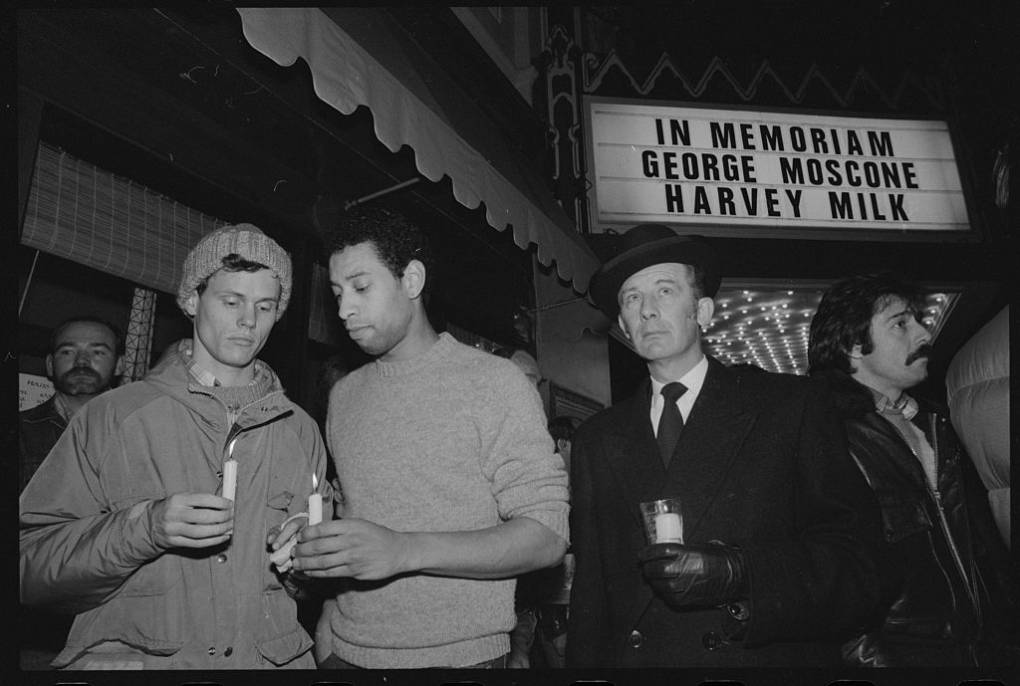
"caption": "Mourners hold a candlelight vigil for Mayor George Moscone and Supervisor Harvey Milk after they were assassinated at San Francisco City Hall, on Nov. 27, 1978.",
"description": null,
"title": "Mourning for Harvey Milk and George Moscone",
"credit": "Roger Ressmeyer/Corbis/VCG via Getty Images",
"status": "inherit",
"altTag": "A white man and a Black man hold candles with another white man to the side and a sign above and behind them that says \"In Memoriam George Moscone Harvey Milk\"",
"isLoading": false,
"fetchFailed": false
},
"news_11949273": {
"type": "attachments",
"id": "news_11949273",
"meta": {
"index": "attachments_1716263798",
"site": "news",
"id": "11949273",
"found": true
},
"parent": 11949180,
"imgSizes": {
"twentyfourteen-full-width": {
"file": "https://ww2.kqed.org/app/uploads/sites/10/2023/05/RS65506_GettyImages-1428290091-1-qut-1038x576.jpg",
"width": 1038,
"mimeType": "image/jpeg",
"height": 576
},
"thumbnail": {
"file": "https://ww2.kqed.org/app/uploads/sites/10/2023/05/RS65506_GettyImages-1428290091-1-qut-160x127.jpg",
"width": 160,
"mimeType": "image/jpeg",
"height": 127
},
"post-thumbnail": {
"file": "https://ww2.kqed.org/app/uploads/sites/10/2023/05/RS65506_GettyImages-1428290091-1-qut-672x372.jpg",
"width": 672,
"mimeType": "image/jpeg",
"height": 372
},
"kqedFullSize": {
"file": "https://ww2.kqed.org/app/uploads/sites/10/2023/05/RS65506_GettyImages-1428290091-1-qut.jpg",
"width": 1920,
"height": 1523
},
"large": {
"file": "https://ww2.kqed.org/app/uploads/sites/10/2023/05/RS65506_GettyImages-1428290091-1-qut-1020x809.jpg",
"width": 1020,
"mimeType": "image/jpeg",
"height": 809
},
"1536x1536": {
"file": "https://ww2.kqed.org/app/uploads/sites/10/2023/05/RS65506_GettyImages-1428290091-1-qut-1536x1218.jpg",
"width": 1536,
"mimeType": "image/jpeg",
"height": 1218
},
"medium": {
"file": "https://ww2.kqed.org/app/uploads/sites/10/2023/05/RS65506_GettyImages-1428290091-1-qut-800x635.jpg",
"width": 800,
"mimeType": "image/jpeg",
"height": 635
}
},
"publishDate": 1683903141,
"modified": 1687395979,
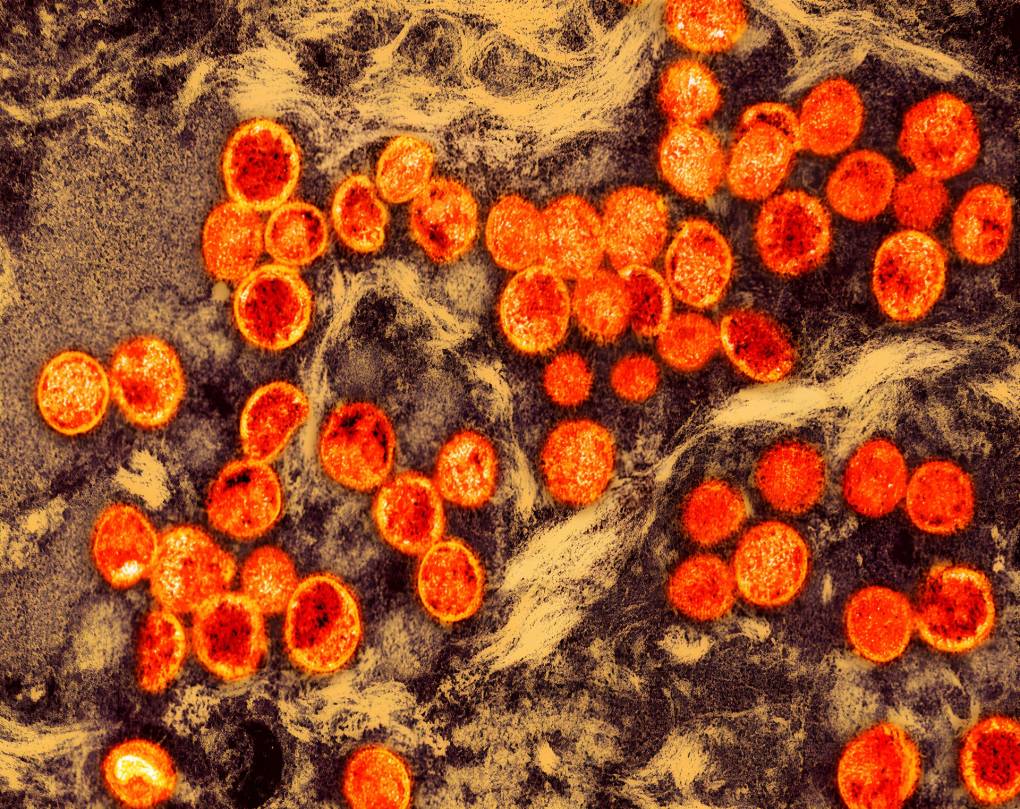
"caption": "Colorized transmission electron micrograph of mpox virus particles (orange) found within an infected cell (brown), cultured in a laboratory.",
"description": null,
"title": "mpox-monkeypox-virus",
"credit": "NIH-NIAID/Image Point FR/BSIP/Universal Images Group via Getty Images",
"status": "inherit",
"altTag": "Small circular patterns float in a dense, thick brown substance.",
"isLoading": false,
"fetchFailed": false
},
"news_11947154": {
"type": "attachments",
"id": "news_11947154",
"meta": {
"index": "attachments_1716263798",
"site": "news",
"id": "11947154",
"found": true
},
"parent": 11947152,
"imgSizes": {
"twentyfourteen-full-width": {
"file": "https://ww2.kqed.org/app/uploads/sites/10/2023/04/Image-1-1038x576.jpeg",
"width": 1038,
"mimeType": "image/jpeg",
"height": 576
},
"thumbnail": {
"file": "https://ww2.kqed.org/app/uploads/sites/10/2023/04/Image-1-160x120.jpeg",
"width": 160,
"mimeType": "image/jpeg",
"height": 120
},
"post-thumbnail": {
"file": "https://ww2.kqed.org/app/uploads/sites/10/2023/04/Image-1-672x372.jpeg",
"width": 672,
"mimeType": "image/jpeg",
"height": 372
},
"kqedFullSize": {
"file": "https://ww2.kqed.org/app/uploads/sites/10/2023/04/Image-1-scaled.jpeg",
"width": 2560,
"height": 1920
},
"2048x2048": {
"file": "https://ww2.kqed.org/app/uploads/sites/10/2023/04/Image-1-2048x1536.jpeg",
"width": 2048,
"mimeType": "image/jpeg",
"height": 1536
},
"large": {
"file": "https://ww2.kqed.org/app/uploads/sites/10/2023/04/Image-1-1020x765.jpeg",
"width": 1020,
"mimeType": "image/jpeg",
"height": 765
},
"1536x1536": {
"file": "https://ww2.kqed.org/app/uploads/sites/10/2023/04/Image-1-1536x1152.jpeg",
"width": 1536,
"mimeType": "image/jpeg",
"height": 1152
},
"full-width": {
"file": "https://ww2.kqed.org/app/uploads/sites/10/2023/04/Image-1-1920x1440.jpeg",
"width": 1920,
"mimeType": "image/jpeg",
"height": 1440
},
"medium": {
"file": "https://ww2.kqed.org/app/uploads/sites/10/2023/04/Image-1-800x600.jpeg",
"width": 800,
"mimeType": "image/jpeg",
"height": 600
}
},
"publishDate": 1681939259,
"modified": 1681939281,
"caption": null,
"description": null,
"title": "Image (1)",
"credit": "Courtesy of Antmen Pimentel Mendoza ",
"status": "inherit",
"altTag": null,
"isLoading": false,
"fetchFailed": false
},
"news_11946132": {
"type": "attachments",
"id": "news_11946132",
"meta": {
"index": "attachments_1716263798",
"site": "news",
"id": "11946132",
"found": true
},
"parent": 0,
"imgSizes": {
"twentyfourteen-full-width": {
"file": "https://ww2.kqed.org/app/uploads/sites/10/2023/04/D7A7080-1038x576.jpg",
"width": 1038,
"mimeType": "image/jpeg",
"height": 576
},
"thumbnail": {
"file": "https://ww2.kqed.org/app/uploads/sites/10/2023/04/D7A7080-160x107.jpg",
"width": 160,
"mimeType": "image/jpeg",
"height": 107
},
"post-thumbnail": {
"file": "https://ww2.kqed.org/app/uploads/sites/10/2023/04/D7A7080-672x372.jpg",
"width": 672,
"mimeType": "image/jpeg",
"height": 372
},
"kqedFullSize": {
"file": "https://ww2.kqed.org/app/uploads/sites/10/2023/04/D7A7080.jpg",
"width": 1620,
"height": 1080
},
"large": {
"file": "https://ww2.kqed.org/app/uploads/sites/10/2023/04/D7A7080-1020x680.jpg",
"width": 1020,
"mimeType": "image/jpeg",
"height": 680
},
"1536x1536": {
"file": "https://ww2.kqed.org/app/uploads/sites/10/2023/04/D7A7080-1536x1024.jpg",
"width": 1536,
"mimeType": "image/jpeg",
"height": 1024
},
"medium": {
"file": "https://ww2.kqed.org/app/uploads/sites/10/2023/04/D7A7080-800x533.jpg",
"width": 800,
"mimeType": "image/jpeg",
"height": 533
}
},
"publishDate": 1681001427,
"modified": 1681150259,
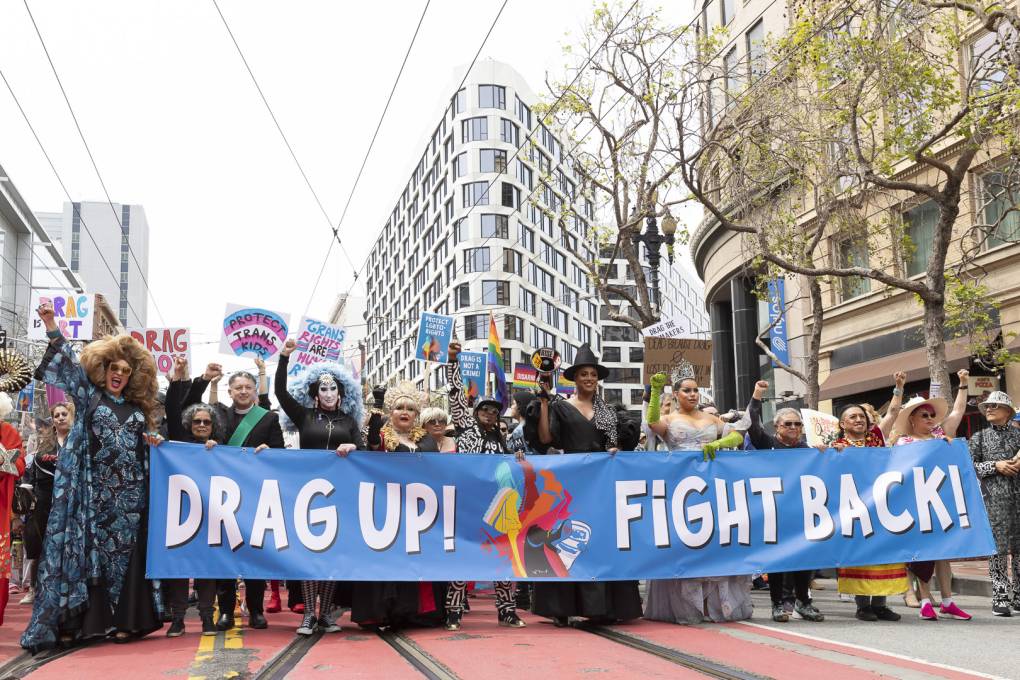
"caption": "The 'Drag Up! Fight Back!' organizers and friends lead the march to Union Square in San Francisco on Saturday, April 8, 2023.",
"description": "The Drag Up! Fight Back! organizers and friends lead the march to Union Square in San Francisco on Saturday, April 8, 2023.",
"title": "The Drag Up! Fight Back! organizers and friends lead the march to Union Square in San Francisco on Saturday, April 8, 2023.",
"credit": "Estefany Gonzalez/KQED",
"status": "inherit",
"altTag": "A crowd of people hold a banner that reads \"Drag Up! Fight Back!\"",
"isLoading": false,
"fetchFailed": false
},
"news_11945218": {
"type": "attachments",
"id": "news_11945218",
"meta": {
"index": "attachments_1716263798",
"site": "news",
"id": "11945218",
"found": true
},
"parent": 11945201,
"imgSizes": {
"twentyfourteen-full-width": {
"file": "https://ww2.kqed.org/app/uploads/sites/10/2023/03/GettyImages-1298884325-e1680203209663-808x576.jpg",
"width": 808,
"mimeType": "image/jpeg",
"height": 576
},
"thumbnail": {
"file": "https://ww2.kqed.org/app/uploads/sites/10/2023/03/GettyImages-1298884325-e1680203209663-160x143.jpg",
"width": 160,
"mimeType": "image/jpeg",
"height": 143
},
"post-thumbnail": {
"file": "https://ww2.kqed.org/app/uploads/sites/10/2023/03/GettyImages-1298884325-e1680203209663-672x372.jpg",
"width": 672,
"mimeType": "image/jpeg",
"height": 372
},
"kqedFullSize": {
"file": "https://ww2.kqed.org/app/uploads/sites/10/2023/03/GettyImages-1298884325-e1680203209663.jpg",
"width": 808,
"height": 724
},
"medium": {
"file": "https://ww2.kqed.org/app/uploads/sites/10/2023/03/GettyImages-1298884325-e1680203209663-800x717.jpg",
"width": 800,
"mimeType": "image/jpeg",
"height": 717
}
},
"publishDate": 1680203003,
"modified": 1680218665,
"caption": "State Sen. Toni Atkins (prior to becoming the current state Senate President Pro Tem) during a session at the state Capitol in Sacramento, on Wednesday, Jan. 3, 2018.",
"description": null,
"title": "California Senator Toni Atkins during session at State Capitol in Sacramento, Calif., on Wednesday, January 3, 2018.",
"credit": "Scott Strazzante/San Francisco Chronicle via Getty Images",
"status": "inherit",
"altTag": "A woman wearing a black necklace, sweater and grey shirt looks to the left with a man's head seen in the foreground.",
"isLoading": false,
"fetchFailed": false
},
"news_11942948": {
"type": "attachments",
"id": "news_11942948",
"meta": {
"index": "attachments_1716263798",
"site": "news",
"id": "11942948",
"found": true
},
"parent": 11942942,
"imgSizes": {
"twentyfourteen-full-width": {
"file": "https://ww2.kqed.org/app/uploads/sites/10/2023/03/RS30003_untitled-12-qut-1038x576.jpg",
"width": 1038,
"mimeType": "image/jpeg",
"height": 576
},
"thumbnail": {
"file": "https://ww2.kqed.org/app/uploads/sites/10/2023/03/RS30003_untitled-12-qut-160x107.jpg",
"width": 160,
"mimeType": "image/jpeg",
"height": 107
},
"post-thumbnail": {
"file": "https://ww2.kqed.org/app/uploads/sites/10/2023/03/RS30003_untitled-12-qut-672x372.jpg",
"width": 672,
"mimeType": "image/jpeg",
"height": 372
},
"kqedFullSize": {
"file": "https://ww2.kqed.org/app/uploads/sites/10/2023/03/RS30003_untitled-12-qut.jpg",
"width": 1920,
"height": 1280
},
"large": {
"file": "https://ww2.kqed.org/app/uploads/sites/10/2023/03/RS30003_untitled-12-qut-1020x680.jpg",
"width": 1020,
"mimeType": "image/jpeg",
"height": 680
},
"1536x1536": {
"file": "https://ww2.kqed.org/app/uploads/sites/10/2023/03/RS30003_untitled-12-qut-1536x1024.jpg",
"width": 1536,
"mimeType": "image/jpeg",
"height": 1024
},
"medium": {
"file": "https://ww2.kqed.org/app/uploads/sites/10/2023/03/RS30003_untitled-12-qut-800x533.jpg",
"width": 800,
"mimeType": "image/jpeg",
"height": 533
}
},
"publishDate": 1678311266,
"modified": 1678325119,
"caption": "The glowing neon sign on San Francisco's Castro Theatre.",
"description": null,
"title": "RS30003_untitled-12-qut",
"credit": "Samantha Shanahan/KQED",
"status": "inherit",
"altTag": "A vertical movie theater marquee with the word \"CASTRO\" lit up in red neon.",
"isLoading": false,
"fetchFailed": false
},
"news_11941904": {
"type": "attachments",
"id": "news_11941904",
"meta": {
"index": "attachments_1716263798",
"site": "news",
"id": "11941904",
"found": true
},
"parent": 11941766,
"imgSizes": {
"twentyfourteen-full-width": {
"file": "https://ww2.kqed.org/app/uploads/sites/10/2023/02/GettyImages-1135844906-1024x576.jpg",
"width": 1024,
"mimeType": "image/jpeg",
"height": 576
},
"thumbnail": {
"file": "https://ww2.kqed.org/app/uploads/sites/10/2023/02/GettyImages-1135844906-160x120.jpg",
"width": 160,
"mimeType": "image/jpeg",
"height": 120
},
"post-thumbnail": {
"file": "https://ww2.kqed.org/app/uploads/sites/10/2023/02/GettyImages-1135844906-672x372.jpg",
"width": 672,
"mimeType": "image/jpeg",
"height": 372
},
"kqedFullSize": {
"file": "https://ww2.kqed.org/app/uploads/sites/10/2023/02/GettyImages-1135844906.jpg",
"width": 1024,
"height": 768
},
"large": {
"file": "https://ww2.kqed.org/app/uploads/sites/10/2023/02/GettyImages-1135844906-1020x765.jpg",
"width": 1020,
"mimeType": "image/jpeg",
"height": 765
},
"medium": {
"file": "https://ww2.kqed.org/app/uploads/sites/10/2023/02/GettyImages-1135844906-800x600.jpg",
"width": 800,
"mimeType": "image/jpeg",
"height": 600
}
},
"publishDate": 1677292083,
"modified": 1677292125,
"caption": null,
"description": null,
"title": "All Gender Restroom",
"credit": "Smith Collection/Gado/Getty Images",
"status": "inherit",
"altTag": "All-Gender bathroom sign.",
"isLoading": false,
"fetchFailed": false
},
"news_11935640": {
"type": "attachments",
"id": "news_11935640",
"meta": {
"index": "attachments_1716263798",
"site": "news",
"id": "11935640",
"found": true
},
"parent": 11935621,
"imgSizes": {
"twentyfourteen-full-width": {
"file": "https://ww2.kqed.org/app/uploads/sites/10/2022/12/Screenshot_20221216-153431_Instagram-1038x576.jpg",
"width": 1038,
"mimeType": "image/jpeg",
"height": 576
},
"thumbnail": {
"file": "https://ww2.kqed.org/app/uploads/sites/10/2022/12/Screenshot_20221216-153431_Instagram-160x120.jpg",
"width": 160,
"mimeType": "image/jpeg",
"height": 120
},
"post-thumbnail": {
"file": "https://ww2.kqed.org/app/uploads/sites/10/2022/12/Screenshot_20221216-153431_Instagram-672x372.jpg",
"width": 672,
"mimeType": "image/jpeg",
"height": 372
},
"kqedFullSize": {
"file": "https://ww2.kqed.org/app/uploads/sites/10/2022/12/Screenshot_20221216-153431_Instagram.jpg",
"width": 1080,
"height": 810
},
"large": {
"file": "https://ww2.kqed.org/app/uploads/sites/10/2022/12/Screenshot_20221216-153431_Instagram-1020x765.jpg",
"width": 1020,
"mimeType": "image/jpeg",
"height": 765
},
"medium": {
"file": "https://ww2.kqed.org/app/uploads/sites/10/2022/12/Screenshot_20221216-153431_Instagram-800x600.jpg",
"width": 800,
"mimeType": "image/jpeg",
"height": 600
}
},
"publishDate": 1671235864,
"modified": 1671477119,
"caption": "A visitor at the SF LGBT Center passes by 'Aegis,' a new work by Brazil-born, SF-based sculptor Wilson Ferreira, which honors the 49 victims of the 2016 shooting at Pulse, a queer nightclub in Orlando, Florida.",
"description": null,
"title": "Screenshot_20221216-153431_Instagram",
"credit": "Courtesy of the San Francisco LGBT Center",
"status": "inherit",
"altTag": "a blurry figure approaches a metal shield-like sculpture which is mounted on a blue wall",
"isLoading": false,
"fetchFailed": false
},
"news_11934951": {
"type": "attachments",
"id": "news_11934951",
"meta": {
"index": "attachments_1716263798",
"site": "news",
"id": "11934951",
"found": true
},
"parent": 11934949,
"imgSizes": {
"twentyfourteen-full-width": {
"file": "https://ww2.kqed.org/app/uploads/sites/10/2022/12/trans-couple-1020x576.jpg",
"width": 1020,
"mimeType": "image/jpeg",
"height": 576
},
"thumbnail": {
"file": "https://ww2.kqed.org/app/uploads/sites/10/2022/12/trans-couple-160x107.jpg",
"width": 160,
"mimeType": "image/jpeg",
"height": 107
},
"post-thumbnail": {
"file": "https://ww2.kqed.org/app/uploads/sites/10/2022/12/trans-couple-672x372.jpg",
"width": 672,
"mimeType": "image/jpeg",
"height": 372
},
"kqedFullSize": {
"file": "https://ww2.kqed.org/app/uploads/sites/10/2022/12/trans-couple.jpg",
"width": 1020,
"height": 680
},
"medium": {
"file": "https://ww2.kqed.org/app/uploads/sites/10/2022/12/trans-couple-800x533.jpg",
"width": 800,
"mimeType": "image/jpeg",
"height": 533
}
},
"publishDate": 1670781030,
"modified": 1670781198,
"caption": "Las solicitudes para GIFT se cierran el 15 de diciembre.",
"description": null,
"title": "trans couple",
"credit": "The Gender Spectrum Collection",
"status": "inherit",
"altTag": null,
"isLoading": false,
"fetchFailed": false
},
"news_11934701": {
"type": "attachments",
"id": "news_11934701",
"meta": {
"index": "attachments_1716263798",
"site": "news",
"id": "11934701",
"found": true
},
"parent": 11934613,
"imgSizes": {
"twentyfourteen-full-width": {
"file": "https://ww2.kqed.org/app/uploads/sites/10/2022/12/A-trans-couple-sharing-a-moment-in-the-park-CROPPED-1038x576.jpg",
"width": 1038,
"mimeType": "image/jpeg",
"height": 576
},
"thumbnail": {
"file": "https://ww2.kqed.org/app/uploads/sites/10/2022/12/A-trans-couple-sharing-a-moment-in-the-park-CROPPED-160x107.jpg",
"width": 160,
"mimeType": "image/jpeg",
"height": 107
},
"post-thumbnail": {
"file": "https://ww2.kqed.org/app/uploads/sites/10/2022/12/A-trans-couple-sharing-a-moment-in-the-park-CROPPED-672x372.jpg",
"width": 672,
"mimeType": "image/jpeg",
"height": 372
},
"kqedFullSize": {
"file": "https://ww2.kqed.org/app/uploads/sites/10/2022/12/A-trans-couple-sharing-a-moment-in-the-park-CROPPED.jpg",
"width": 1920,
"height": 1280
},
"large": {
"file": "https://ww2.kqed.org/app/uploads/sites/10/2022/12/A-trans-couple-sharing-a-moment-in-the-park-CROPPED-1020x680.jpg",
"width": 1020,
"mimeType": "image/jpeg",
"height": 680
},
"1536x1536": {
"file": "https://ww2.kqed.org/app/uploads/sites/10/2022/12/A-trans-couple-sharing-a-moment-in-the-park-CROPPED-1536x1024.jpg",
"width": 1536,
"mimeType": "image/jpeg",
"height": 1024
},
"medium": {
"file": "https://ww2.kqed.org/app/uploads/sites/10/2022/12/A-trans-couple-sharing-a-moment-in-the-park-CROPPED-800x533.jpg",
"width": 800,
"mimeType": "image/jpeg",
"height": 533
}
},
"publishDate": 1670542392,
"modified": 1670780927,
"caption": "Las solicitudes para GIFT se cierran el 15 de diciembre.",
"description": null,
"title": "GIFT-SF-program",
"credit": "The Gender Spectrum Collection",
"status": "inherit",
"altTag": "Two trans people of color sit in a park, with a hazy sunlight on their faces -- they look as if they're having a picnic, and are gazing happily at each other.",
"isLoading": false,
"fetchFailed": false
},
"news_11934596": {
"type": "attachments",
"id": "news_11934596",
"meta": {
"index": "attachments_1716263798",
"site": "news",
"id": "11934596",
"found": true
},
"parent": 11934592,
"imgSizes": {
"twentyfourteen-full-width": {
"file": "https://ww2.kqed.org/app/uploads/sites/10/2022/12/GettyImages-1447731758-1024x576.jpg",
"width": 1024,
"mimeType": "image/jpeg",
"height": 576
},
"thumbnail": {
"file": "https://ww2.kqed.org/app/uploads/sites/10/2022/12/GettyImages-1447731758-160x107.jpg",
"width": 160,
"mimeType": "image/jpeg",
"height": 107
},
"post-thumbnail": {
"file": "https://ww2.kqed.org/app/uploads/sites/10/2022/12/GettyImages-1447731758-672x372.jpg",
"width": 672,
"mimeType": "image/jpeg",
"height": 372
},
"kqedFullSize": {
"file": "https://ww2.kqed.org/app/uploads/sites/10/2022/12/GettyImages-1447731758.jpg",
"width": 1024,
"height": 683
},
"large": {
"file": "https://ww2.kqed.org/app/uploads/sites/10/2022/12/GettyImages-1447731758-1020x680.jpg",
"width": 1020,
"mimeType": "image/jpeg",
"height": 680
},
"medium": {
"file": "https://ww2.kqed.org/app/uploads/sites/10/2022/12/GettyImages-1447731758-800x534.jpg",
"width": 800,
"mimeType": "image/jpeg",
"height": 534
}
},
"publishDate": 1670527757,
"modified": 1670539893,
"caption": "House Speaker Nancy Pelosi (D-CA) participates in a bill enrollment ceremony alongside Senate Majority Leader Chuck Schumer (D-NY) and a bipartisan group of senators and representatives at the US Capitol Building on Dec. 8, 2022. in Washington, DC. In a 258–169 vote, the House of Representatives passed the Respect for Marriage Act, which ensures marriage equality for same-sex and interracial couples.",
"description": null,
"title": "Speaker Pelosi Holds Bill Enrollment Ceremony For Respect For Marriage Act",
"credit": "Anna Moneymaker/Getty Images",
"status": "inherit",
"altTag": "A group of Senators and Representatives gather around a seated woman signing a bill at a dais with the words \"The Respect for Marriage Act\" written on it",
"isLoading": false,
"fetchFailed": false
},
"news_11934412": {
"type": "attachments",
"id": "news_11934412",
"meta": {
"index": "attachments_1716263798",
"site": "news",
"id": "11934412",
"found": true
},
"parent": 11934374,
"imgSizes": {
"twentyfourteen-full-width": {
"file": "https://ww2.kqed.org/app/uploads/sites/10/2022/12/GettyImages-1321791653-1024x576.jpg",
"width": 1024,
"mimeType": "image/jpeg",
"height": 576
},
"thumbnail": {
"file": "https://ww2.kqed.org/app/uploads/sites/10/2022/12/GettyImages-1321791653-160x107.jpg",
"width": 160,
"mimeType": "image/jpeg",
"height": 107
},
"post-thumbnail": {
"file": "https://ww2.kqed.org/app/uploads/sites/10/2022/12/GettyImages-1321791653-672x372.jpg",
"width": 672,
"mimeType": "image/jpeg",
"height": 372
},
"kqedFullSize": {
"file": "https://ww2.kqed.org/app/uploads/sites/10/2022/12/GettyImages-1321791653.jpg",
"width": 1024,
"height": 683
},
"large": {
"file": "https://ww2.kqed.org/app/uploads/sites/10/2022/12/GettyImages-1321791653-1020x680.jpg",
"width": 1020,
"mimeType": "image/jpeg",
"height": 680
},
"medium": {
"file": "https://ww2.kqed.org/app/uploads/sites/10/2022/12/GettyImages-1321791653-800x534.jpg",
"width": 800,
"mimeType": "image/jpeg",
"height": 534
}
},
"publishDate": 1670380621,
"modified": 1670384235,
"caption": "State Sen. Scott Wiener (D-San Francisco) speaking to the San Francisco Chronicle Editorial Board on Jan. 10, 2020, in San Francisco.",
"description": null,
"title": "Senator Scott Wiener comes in to talk to the editorial board at the Chronicle on Friday, Jan. 10, 2020, in San Francisco, Calif.",
"credit": "Liz Hafalia/The San Francisco Chronicle via Getty Images",
"status": "inherit",
"altTag": "State Sen. Scott Wiener speaking in a formal setting.",
"isLoading": false,
"fetchFailed": false
}
},
"audioPlayerReducer": {
"postId": "stream_live",
"isPaused": true,
"isPlaying": false,
"pfsActive": false,
"pledgeModalIsOpen": true,
"playerDrawerIsOpen": false,
"liveAudioPlayStartedAt": 0,
"liveAudioPlayContext": ""
},
"authorsReducer": {
"byline_news_11945201": {
"type": "authors",
"id": "byline_news_11945201",
"meta": {
"override": true
},
"slug": "byline_news_11945201",
"name": "Adam Beam",
"isLoading": false
},
"byline_news_11934592": {
"type": "authors",
"id": "byline_news_11934592",
"meta": {
"override": true
},
"slug": "byline_news_11934592",
"name": "\u003ca href=\"https://www.npr.org/people/1101057193/ximena-bustillo\">Ximena Bustillo\u003c/a>, \u003ca href=\"https://www.npr.org/people/1134107395/juma-sei\">Juma Sei\u003c/a>, \u003ca href=\"https://www.npr.org/people/1015466926/deepa-shivaram\">Deepa Shivaram\u003c/a>",
"isLoading": false
},
"kqed": {
"type": "authors",
"id": "236",
"meta": {
"index": "authors_1716337520",
"id": "236",
"found": true
},
"name": "KQED News Staff",
"firstName": "KQED News Staff",
"lastName": null,
"slug": "kqed",
"email": "faq@kqed.org",
"display_author_email": false,
"staff_mastheads": [],
"title": null,
"bio": null,
"avatar": "https://secure.gravatar.com/avatar/ef0e801a68c4c54afa9180db14084167?s=600&d=blank&r=g",
"twitter": null,
"facebook": null,
"instagram": null,
"linkedin": null,
"sites": [
{
"site": "arts",
"roles": [
"contributor"
]
},
{
"site": "news",
"roles": [
"editor"
]
},
{
"site": "futureofyou",
"roles": [
"author"
]
}
],
"headData": {
"title": "KQED News Staff | KQED",
"description": null,
"ogImgSrc": "https://secure.gravatar.com/avatar/ef0e801a68c4c54afa9180db14084167?s=600&d=blank&r=g",
"twImgSrc": "https://secure.gravatar.com/avatar/ef0e801a68c4c54afa9180db14084167?s=600&d=blank&r=g"
},
"isLoading": false,
"link": "/author/kqed"
},
"matthewgreen": {
"type": "authors",
"id": "1263",
"meta": {
"index": "authors_1716337520",
"id": "1263",
"found": true
},
"name": "Matthew Green",
"firstName": "Matthew",
"lastName": "Green",
"slug": "matthewgreen",
"email": "mgreen@kqed.org",
"display_author_email": false,
"staff_mastheads": [],
"title": "KQED Editor/Reporter",
"bio": "Matthew Green is a digital media producer for KQED News. He previously produced \u003ca href=\"http://www.kqed.org/lowdown\">The Lowdown\u003c/a>, KQED’s multimedia news education blog. Matthew's written for numerous Bay Area publications, including the Oakland Tribune and San Francisco Chronicle. He also taught journalism classes at Fremont High School in East Oakland.\r\n\r\nEmail: mgreen@kqed.org; Twitter: @MGreenKQED",
"avatar": "https://secure.gravatar.com/avatar/3bf498d1267ca02c8494f33d8cfc575e?s=600&d=blank&r=g",
"twitter": "MGreenKQED",
"facebook": null,
"instagram": null,
"linkedin": null,
"sites": [
{
"site": "news",
"roles": []
},
{
"site": "lowdown",
"roles": []
},
{
"site": "science",
"roles": []
},
{
"site": "education",
"roles": []
},
{
"site": "quest",
"roles": []
},
{
"site": "liveblog",
"roles": []
}
],
"headData": {
"title": "Matthew Green | KQED",
"description": "KQED Editor/Reporter",
"ogImgSrc": "https://secure.gravatar.com/avatar/3bf498d1267ca02c8494f33d8cfc575e?s=600&d=blank&r=g",
"twImgSrc": "https://secure.gravatar.com/avatar/3bf498d1267ca02c8494f33d8cfc575e?s=600&d=blank&r=g"
},
"isLoading": false,
"link": "/author/matthewgreen"
},
"carlysevern": {
"type": "authors",
"id": "3243",
"meta": {
"index": "authors_1716337520",
"id": "3243",
"found": true
},
"name": "Carly Severn",
"firstName": "Carly",
"lastName": "Severn",
"slug": "carlysevern",
"email": "csevern@kqed.org",
"display_author_email": false,
"staff_mastheads": [
"news"
],
"title": "Senior Editor, Audience News ",
"bio": "Carly is KQED's Senior Editor of Audience News on the Digital News team, and has reported for the California Report Magazine, Bay Curious and KQED Arts. She's formerly the host of \u003ca href=\"http://ww2.kqed.org/pop/category/the-cooler/\" rel=\"noopener noreferrer\">The Cooler\u003c/a> podcast.",
"avatar": "https://secure.gravatar.com/avatar/54037bf5c128fe678f0ef26cec97a93f2e7f220a22d7285703328f12c42c1b1d?s=600&d=blank&r=g",
"twitter": "teacupinthebay",
"bluesky": null,
"facebook": null,
"instagram": null,
"linkedin": null,
"sites": [
{
"site": "",
"roles": [
"editor"
]
},
{
"site": "arts",
"roles": [
"editor"
]
},
{
"site": "news",
"roles": [
"administrator"
]
},
{
"site": "pop",
"roles": [
"editor"
]
},
{
"site": "futureofyou",
"roles": [
"editor"
]
},
{
"site": "about",
"roles": [
"administrator"
]
},
{
"site": "mindshift",
"roles": [
"editor"
]
},
{
"site": "bayareabites",
"roles": [
"editor"
]
},
{
"site": "stateofhealth",
"roles": [
"editor"
]
},
{
"site": "science",
"roles": [
"editor"
]
},
{
"site": "food",
"roles": [
"contributor"
]
},
{
"site": "forum",
"roles": [
"editor"
]
},
{
"site": "perspectives",
"roles": [
"administrator"
]
},
{
"site": "liveblog",
"roles": [
"editor"
]
}
],
"headData": {
"title": "Carly Severn | KQED",
"description": "Senior Editor, Audience News ",
"ogImgSrc": "https://secure.gravatar.com/avatar/54037bf5c128fe678f0ef26cec97a93f2e7f220a22d7285703328f12c42c1b1d?s=600&d=blank&r=g",
"twImgSrc": "https://secure.gravatar.com/avatar/54037bf5c128fe678f0ef26cec97a93f2e7f220a22d7285703328f12c42c1b1d?s=600&d=blank&r=g"
},
"isLoading": false,
"link": "/author/carlysevern"
},
"ccabreralomeli": {
"type": "authors",
"id": "11708",
"meta": {
"index": "authors_1716337520",
"id": "11708",
"found": true
},
"name": "Carlos Cabrera-Lomelí",
"firstName": "Carlos",
"lastName": "Cabrera-Lomelí",
"slug": "ccabreralomeli",
"email": "ccabreralomeli@KQED.org",
"display_author_email": true,
"staff_mastheads": [
"news"
],
"title": "Community Reporter",
"bio": "Carlos Cabrera-Lomelí is a community reporter with KQED's digital engagement team. He also reports and co-produces for KQED's bilingual news hub KQED en Español. He grew up in San Francisco's Mission District and has previously worked with Univision, 48 Hills and REFORMA in Mexico City.",
"avatar": "https://secure.gravatar.com/avatar/c309be9665e484f887b818c89e273ecc673004f426f36b24d00a4d813a2e0518?s=600&d=blank&r=g",
"twitter": "@LomeliCabrera",
"bluesky": null,
"facebook": null,
"instagram": null,
"linkedin": null,
"sites": [
{
"site": "arts",
"roles": [
"editor"
]
},
{
"site": "news",
"roles": [
"editor"
]
},
{
"site": "about",
"roles": [
"editor"
]
},
{
"site": "science",
"roles": [
"editor"
]
},
{
"site": "perspectives",
"roles": [
"editor"
]
},
{
"site": "elections",
"roles": [
"editor"
]
},
{
"site": "liveblog",
"roles": [
"contributor"
]
}
],
"headData": {
"title": "Carlos Cabrera-Lomelí | KQED",
"description": "Community Reporter",
"ogImgSrc": "https://secure.gravatar.com/avatar/c309be9665e484f887b818c89e273ecc673004f426f36b24d00a4d813a2e0518?s=600&d=blank&r=g",
"twImgSrc": "https://secure.gravatar.com/avatar/c309be9665e484f887b818c89e273ecc673004f426f36b24d00a4d813a2e0518?s=600&d=blank&r=g"
},
"isLoading": false,
"link": "/author/ccabreralomeli"
},
"cbeale": {
"type": "authors",
"id": "11749",
"meta": {
"index": "authors_1716337520",
"id": "11749",
"found": true
},
"name": "Christopher Beale",
"firstName": "Christopher",
"lastName": "Beale",
"slug": "cbeale",
"email": "cbeale@kqed.org",
"display_author_email": true,
"staff_mastheads": [
"news"
],
"title": "Engineer/Producer/Reporter",
"bio": "\u003ca href=\"https://linktr.ee/realchrisjbeale\" rel=\"noopener noreferrer\">Christopher J. Beale\u003c/a> is an award winning journalist, audio engineer, and media host living in San Francisco. \r\n\r\nChristopher works primarily as an audio engineer at KQED and serves as the sound designer for both the Bay Curious and Rightnowish podcasts. He is the host and producer of the LGBTQIA podcast and radio segment \u003ca href=\"https://stereotypespodcast.org\">Stereotypes\u003c/a>.",
"avatar": "https://secure.gravatar.com/avatar/dc485bf84788eb7e7414eb638e72407e?s=600&d=blank&r=g",
"twitter": "realchrisjbeale",
"facebook": null,
"instagram": "http://instagram.com/realchrisjbeale",
"linkedin": null,
"sites": [
{
"site": "arts",
"roles": [
"contributor"
]
},
{
"site": "news",
"roles": [
"editor"
]
},
{
"site": "forum",
"roles": [
"editor"
]
}
],
"headData": {
"title": "Christopher Beale | KQED",
"description": "Engineer/Producer/Reporter",
"ogImgSrc": "https://secure.gravatar.com/avatar/dc485bf84788eb7e7414eb638e72407e?s=600&d=blank&r=g",
"twImgSrc": "https://secure.gravatar.com/avatar/dc485bf84788eb7e7414eb638e72407e?s=600&d=blank&r=g"
},
"isLoading": false,
"link": "/author/cbeale"
},
"mesquinca": {
"type": "authors",
"id": "11802",
"meta": {
"index": "authors_1716337520",
"id": "11802",
"found": true
},
"name": "Maria Esquinca",
"firstName": "Maria",
"lastName": "Esquinca",
"slug": "mesquinca",
"email": "mesquinca@kqed.org",
"display_author_email": false,
"staff_mastheads": [],
"title": "Producer, The Bay",
"bio": "María Esquinca is a producer of The Bay. Before that, she was a New York Women’s Foundation IGNITE Fellow at Latino USA. She worked at Radio Bilingue where she covered the San Joaquin Valley. Maria has interned at WLRN, News 21, The New York Times Student Journalism Institute and at Crain’s Detroit Business as a Dow Jones News Fund Business Reporting Intern. She is an MFA graduate from the University of Miami. In 2017, she graduated from the Walter Cronkite School of Journalism and Mass Communication with a Master of Mass Communication. A fronteriza, she was born in Ciudad Juárez, Chihuahua, Mexico and grew up in El Paso, Texas.",
"avatar": "https://secure.gravatar.com/avatar/77cedba18aae91da775038ba06dcd8d0?s=600&d=blank&r=g",
"twitter": "@m_esquinca",
"facebook": null,
"instagram": null,
"linkedin": null,
"sites": [
{
"site": "news",
"roles": []
}
],
"headData": {
"title": "Maria Esquinca | KQED",
"description": "Producer, The Bay",
"ogImgSrc": "https://secure.gravatar.com/avatar/77cedba18aae91da775038ba06dcd8d0?s=600&d=blank&r=g",
"twImgSrc": "https://secure.gravatar.com/avatar/77cedba18aae91da775038ba06dcd8d0?s=600&d=blank&r=g"
},
"isLoading": false,
"link": "/author/mesquinca"
},
"sjohnson": {
"type": "authors",
"id": "11840",
"meta": {
"index": "authors_1716337520",
"id": "11840",
"found": true
},
"name": "Sydney Johnson",
"firstName": "Sydney",
"lastName": "Johnson",
"slug": "sjohnson",
"email": "sjohnson@kqed.org",
"display_author_email": false,
"staff_mastheads": [
"news"
],
"title": "KQED Reporter",
"bio": "Sydney Johnson is a general assignment reporter at KQED. She previously reported on public health and city government at the San Francisco Examiner, and before that, she covered statewide education policy for EdSource. Her reporting has won multiple local, state and national awards. Sydney is a graduate of the University of California, Berkeley and lives in San Francisco.",
"avatar": "https://secure.gravatar.com/avatar/97855f2719b72ad6190b7c535fe642c8?s=600&d=blank&r=g",
"twitter": "sydneyfjohnson",
"facebook": null,
"instagram": null,
"linkedin": null,
"sites": [
{
"site": "news",
"roles": [
"editor"
]
}
],
"headData": {
"title": "Sydney Johnson | KQED",
"description": "KQED Reporter",
"ogImgSrc": "https://secure.gravatar.com/avatar/97855f2719b72ad6190b7c535fe642c8?s=600&d=blank&r=g",
"twImgSrc": "https://secure.gravatar.com/avatar/97855f2719b72ad6190b7c535fe642c8?s=600&d=blank&r=g"
},
"isLoading": false,
"link": "/author/sjohnson"
}
},
"pagesReducer": {
"news_tag_lgbtq": {
"type": "terms",
"id": "news_20004",
"meta": {
"index": "terms_1716263798",
"site": "news",
"id": "20004",
"score": 8.284343
},
"featImg": null,
"name": "LGBTQ",
"description": null,
"taxonomy": "tag",
"headData": {
"twImgId": null,
"twTitle": null,
"ogTitle": null,
"ogImgId": null,
"twDescription": null,
"description": null,
"title": "LGBTQ Archives | KQED News",
"ogDescription": null
},
"ttid": 20021,
"slug": "lgbtq",
"isLoading": false,
"title": "LGBTQ",
"pageMeta": {
"site": "news",
"WpPageTemplate": "page-topic-editorial",
"currentPage": 12
},
"blocks": [
{
"blockName": "kqed/post-list",
"attrs": {
"layout": "cardArticle2",
"query": "posts/news?tag=lgbtq",
"seeMore": false,
"paginated": true,
"page": 12
}
},
{
"blockName": "kqed/ad"
}
]
}
},
"pfsSessionReducer": {},
"postsReducer": {
"stream_live": {
"type": "live",
"id": "stream_live",
"audioUrl": "https://streams.kqed.org/kqedradio",
"title": "Live Stream",
"excerpt": "Live Stream information currently unavailable.",
"link": "/radio",
"featImg": "",
"label": {
"name": "KQED Live",
"link": "/"
}
},
"stream_kqedNewscast": {
"type": "posts",
"id": "stream_kqedNewscast",
"audioUrl": "https://www.kqed.org/.stream/anon/radio/RDnews/newscast.mp3?_=1",
"title": "KQED Newscast",
"featImg": "",
"label": {
"name": "88.5 FM",
"link": "/"
}
},
"news_11950268": {
"type": "posts",
"id": "news_11950268",
"meta": {
"index": "posts_1716263798",
"site": "news",
"id": "11950268",
"score": null,
"sort": [
1684790988000
]
},
"parent": 0,
"labelTerm": {
"site": "news"
},
"blocks": [],
"publishDate": 1684790988,
"format": "standard",
"title": "Still Under Threat: On Harvey Milk Day, Leading Activist Says LGBTQ+ Leaders Face Dangers Decades After Assassination",
"headTitle": "Still Under Threat: On Harvey Milk Day, Leading Activist Says LGBTQ+ Leaders Face Dangers Decades After Assassination | KQED",
"content": "\u003cp>Beginning in 1977, for nearly a year, Harvey Milk served on the San Francisco Board of Supervisors — the first openly gay man to be elected to public office in California. He authored a bill banning discrimination in public places, housing and employment based on sexual orientation. He also promoted free public transportation, cheaper child care facilities and public oversight of the police.\u003c/p>\n\u003cp>In November of 1978, Milk and San Francisco Mayor George Moscone were assassinated. The city mourned the loss of two of its most outspoken political leaders. Over the years, Harvey Milk became a martyr for causes of equality and social justice, and in 2009, the state of California designated May 22, Milk’s birthday, as Harvey Milk Day.\u003c/p>\n\u003cp>At a time when LGBTQ+ rights are under attack nationwide, with a string of anti-LGBTQ+ legislation introduced in dozens of state legislatures, the significance of Harvey Milk as a politician and activist resonates more than ever.\u003c/p>\n\u003cp>Cleve Jones, author and longtime activist, talked to KQED’s Brian Watt about Milk as a person, a politician and an icon.\u003c/p>\n\u003cp>\u003cem>This interview has been edited for clarity and brevity.\u003c/em>\u003c/p>\n\u003cp>\u003cstrong>Brian Watt: Can you take us back to when you met Harvey Milk? What was that like?\u003c/strong>\u003c/p>\n\u003cp>\u003cstrong>Cleve Jones:\u003c/strong> Well, Harvey was quite a character. When I first met him, he was still emerging from his hippie phase, and he struck me as being entirely too old to be wearing a ponytail. But he and his partner, Scott Smith, had opened a little camera store on Castro Street, and I met him on Castro Street as he was registering voters. And that was our first conversation. I was struck by his warmth, though, and he ran for office a few times before he was elected.\u003c/p>\n\u003cp>And with each campaign, I could see that he became more serious, more grounded in the issues and more thoughtful in his approach, which was never a single-issue thing. He cared, of course, about gay rights, the community we now call LGBTQ+. But he cared about unions, he cared about seniors, he cared about kids. He was a very astute coalition builder.\u003c/p>\n\u003cp>\u003cstrong>What are some of the things he taught you about coalition building and government and advocacy?\u003c/strong>\u003c/p>\n\u003cp>[aside postID=\"news_11933264,arts_13845645,arts_13814550\" label=\"Related Posts\"]I got to work with Harvey on the Coors beer boycott, which was one of the first, if not the very first, real alliance between the LGBTQ movement and the labor movement, specifically the Teamsters, who were on strike at the brewery in Golden, Colorado.\u003c/p>\n\u003cp>Harvey saw an opportunity to get jobs for gay people, to support the union and to build a relationship that ended up being incredibly valuable, because just a couple of years later, we in California faced the Briggs Initiative, which was Proposition 6 of the 1978 November ballot. Prop. 6 would have essentially made it illegal for LGBT people and their supporters to work in any capacity in the public school system. And so those initial alliances with labor through the Teamsters then grew to a powerful alliance with the teachers union, the service workers union, and all the unions who saw that not just as an attack on gay people, but as an attack on workers.\u003c/p>\n\u003cfigure id=\"attachment_11950270\" class=\"wp-caption aligncenter\" style=\"max-width: 800px\">\u003ca href=\"https://ww2.kqed.org/app/uploads/sites/10/2023/05/GettyImages-1408991899.jpg\">\u003cimg decoding=\"async\" loading=\"lazy\" class=\"size-medium wp-image-11950270\" src=\"https://ww2.kqed.org/app/uploads/sites/10/2023/05/GettyImages-1408991899-800x578.jpg\" alt=\"A bespectacled white man with white hair and a green sweater smiles at the camera with arms crossed and a blurry city street behind him.\" width=\"800\" height=\"578\" srcset=\"https://ww2.kqed.org/app/uploads/sites/10/2023/05/GettyImages-1408991899-800x578.jpg 800w, https://ww2.kqed.org/app/uploads/sites/10/2023/05/GettyImages-1408991899-1020x737.jpg 1020w, https://ww2.kqed.org/app/uploads/sites/10/2023/05/GettyImages-1408991899-160x116.jpg 160w, https://ww2.kqed.org/app/uploads/sites/10/2023/05/GettyImages-1408991899.jpg 1024w\" sizes=\"(max-width: 800px) 100vw, 800px\">\u003c/a>\u003cfigcaption class=\"wp-caption-text\">Cleve Jones, in the Castro District in San Francisco, on Feb. 16, 2017. \u003ccite>(Carlos Avila Gonzalez/The San Francisco Chronicle via Getty Images)\u003c/cite>\u003c/figcaption>\u003c/figure>\n\u003cp>Milk also taught me a lot. He took me with him to City Hall when he got elected and I was a student intern in his office until he was shot. So I got to work on the inside and saw the nuts and bolts of creating legislation, the hearings, the committee work, all of that. But I will say one kind of overarching lesson I learned from him that has really stuck with me is the importance of communicating with plain language, and always trying to find common ground. He was really a genius at that. He could meet anybody, a worker in a union hall, a society lady on Nob Hill, cute street kids. He could talk to anybody, find the common ground, and create a deeper conversation about shared values and shared aspirations.\u003c/p>\n\u003cp>\u003cstrong>You have been open about this before: You found Milk on the night that he was gunned down. What was going through your mind then? \u003c/strong>\u003c/p>\n\u003cp>It was Nov. 27, 1978. It was horrifying. I’d never seen a dead person before. I’d never seen close up what bullets do. I was maybe the third person to walk in. Dianne Feinstein was there. I just kept thinking, “Well, it’s all over now.” He was our leader. And also for me personally. Harvey had become, for me, very much a father figure. And I just kept thinking, everything’s over. I mean, how can we move forward without him? And it was a real personal loss.\u003c/p>\n\u003cp>But that night was so extraordinary. As word spread, people began to gather, gay and straight, young and old, Black and brown and white, immigrant and native-born, and it was just thousands and then tens of thousands and tens of thousands more. And that enormous silent candlelight procession filled Market Street from Castro to City Hall. It was just the most extraordinary thing. And I think I realized that night that I was wrong. It wasn’t over. It was just beginning.\u003c/p>\n\u003cfigure id=\"attachment_11950274\" class=\"wp-caption alignnone\" style=\"max-width: 1024px\">\u003cimg decoding=\"async\" loading=\"lazy\" class=\"size-full wp-image-11950274\" src=\"https://ww2.kqed.org/app/uploads/sites/10/2030/05/GettyImages-517285578.jpg\" alt=\"A white man in a suit and tie leans back in his chair behind a desk in his office and smiles at the camera.\" width=\"1024\" height=\"687\" srcset=\"https://ww2.kqed.org/app/uploads/sites/10/2030/05/GettyImages-517285578.jpg 1024w, https://ww2.kqed.org/app/uploads/sites/10/2030/05/GettyImages-517285578-800x537.jpg 800w, https://ww2.kqed.org/app/uploads/sites/10/2030/05/GettyImages-517285578-1020x684.jpg 1020w, https://ww2.kqed.org/app/uploads/sites/10/2030/05/GettyImages-517285578-160x107.jpg 160w\" sizes=\"(max-width: 1024px) 100vw, 1024px\">\u003cfigcaption class=\"wp-caption-text\">San Francisco Supervisor Harvey Milk, Dec. 4, 1977. \u003ccite>(Bettmann/Getty Images)\u003c/cite>\u003c/figcaption>\u003c/figure>\n\u003cp>\u003cstrong>We often just hear about these highlights with major figures, the tragic ones. But I want to know about moments of joy. Like maybe a time when Milk made people laugh or some other act of kindness.\u003c/strong>\u003c/p>\n\u003cp>Harvey was very funny. He loved being a clown. He would dress up as a clown. He really had an amazing ability to connect with kids and make them laugh. He also had a real big place in his heart for senior citizens. At his campaign office, his camera store and his City Hall office, I was always struck by how many kids and seniors were there. He was very empathetic and he had all these funny little rituals. Like one of the rituals was that every year on his birthday, he would receive a pie in the face.\u003c/p>\n\u003cp>He was very good at self-deprecating humor, and this was part of a strategy, because at that point in time most heterosexual people had yet to encounter an out-loud-and-proud gay politician. So there was fear, there was anxiety, there were all sorts of preconceptions. And Harvey would disarm people with humor that would then open the door for more serious conversations to happen.\u003c/p>\n\u003cp>\u003cstrong>You have dedicated your career to fighting for LGBTQ rights. In what way did being close to Milk help you reach this point where you realized that this was the work that you wanted to do? \u003c/strong>[pullquote align=\"right\" size=\"medium\" citation=\"Cleve Jones, author and activist\"]‘I have no doubt that if Harvey were here with us today, he would be warning people that there is peril ahead, that we are in dangerous times.’[/pullquote]You know, I was always interested in politics. I was always interested in the movement. I’m a product of the Vietnam War era and the Civil Rights Movement and the feminist movement. I graduated from high school in 1972, just as the war in Vietnam was winding down. Certainly Nov. 27, finding Harvey’s body, kind of set my course permanently. But I’m not just an LGBTQ activist. In fact, for the last 17 years or so, I’ve worked with Unite Here, the hospitality workers union in the Bay Area. We’re Local 2, and we’re a fighting union of people, immigrants, native-born, people of all colors, faiths, backgrounds, genders and orientations. We take on some of the biggest corporations in the world, and we fight.\u003c/p>\n\u003cp>We win contracts that provide workers with better pay, safer working conditions, access to health care and more respect on the job. And so my work for the last almost two decades now focused on labor as well as LGBTQ. It really goes directly back to Harvey Milk and the Teamsters and a Teamster organizer named Allan Baird, who gave Harvey a bullhorn and built that coalition to get Coors beer out of all the gay bars.\u003c/p>\n\u003cp>\u003cstrong>How do you see Milk’s legacy today, particularly in San Francisco and the Bay Area?\u003c/strong>\u003c/p>\n\u003cp>I think about Harvey almost every day, and I wonder what he could have accomplished had he not been killed. I wonder if he would have survived the AIDS pandemic, which took so many of us. I think he might possibly have become mayor. I think he might have ended up in Congress. Maybe he would have ended up being just another disappointing politician who made big promises. But being cut down as he was, he gave a people and a community a shared martyr. Now, there are a lot of martyrs in the LGBTQ community. A lot of people have been taken by violence or by suicide or have lost their way to drugs and alcohol, with which we suffer a lot of tragedies. But Harvey’s death brought us together in a powerful way that continues to reverberate through the generations.\u003c/p>\n\u003cp>And at the core of his message is the importance of coming out and being true to yourself. Being honest and open about who we are, and also about understanding that none of us goes through our lives alone, that all of our lives and our communities are intertwined and interconnected, and that what we do matters. The decisions that we make have consequences, and we need to support each other and do our best to build a world that is free from war in which we can live with justice.\u003c/p>\n\u003cfigure id=\"attachment_11950269\" class=\"wp-caption aligncenter\" style=\"max-width: 800px\">\u003ca href=\"https://ww2.kqed.org/app/uploads/sites/10/2023/05/GettyImages-1298867563.jpg\">\u003cimg decoding=\"async\" loading=\"lazy\" class=\"size-medium wp-image-11950269\" src=\"https://ww2.kqed.org/app/uploads/sites/10/2023/05/GettyImages-1298867563-800x589.jpg\" alt=\"Black and white photo in which a white man screams with joy and pumps his fist in the air with his right hand while holding a sign that says "I'm from Woodmere NY" with the other, seated on the back of a convertible with a parade of people holding signs and flags behind him on a city street lined with people and buildings.\" width=\"800\" height=\"589\" srcset=\"https://ww2.kqed.org/app/uploads/sites/10/2023/05/GettyImages-1298867563-800x589.jpg 800w, https://ww2.kqed.org/app/uploads/sites/10/2023/05/GettyImages-1298867563-1020x751.jpg 1020w, https://ww2.kqed.org/app/uploads/sites/10/2023/05/GettyImages-1298867563-160x118.jpg 160w, https://ww2.kqed.org/app/uploads/sites/10/2023/05/GettyImages-1298867563.jpg 1024w\" sizes=\"(max-width: 800px) 100vw, 800px\">\u003c/a>\u003cfigcaption class=\"wp-caption-text\">Harvey Milk at the Gay Pride Parade, San Francisco, June 23, 1978. \u003ccite>(Terry Schmitt/San Francisco Chronicle via Getty Images)\u003c/cite>\u003c/figcaption>\u003c/figure>\n\u003cp>\u003cstrong>This is a pretty fraught time for LGBTQ rights around the U.S. We’re seeing state legislatures introducing bills that ban books focused on queerness and others targeting drag performances. How do you think Harvey Milk would have tried to address this moment? \u003c/strong>\u003c/p>\n\u003cp>Well, I don’t need to speculate at all. I know exactly what he would do. He would be organizing people and he would be encouraging people to take responsibility for fighting these fights. You know, when Harvey was coming of age back in New York and as he was becoming aware of his sexual orientation and figuring out who he was going to be, the Holocaust was unfolding in Europe. As a Jewish gay person, Harvey was extremely aware of what could happen, and he spoke of it often.\u003c/p>\n\u003cp>And there’s this very famous quote from Dr. King about how the moral arc of the universe bends toward justice. And I believe that that is true. But when we step back and look at that arc, we see that there are a lot of twists and turns. And I have no doubt that if Harvey were here with us today, he would be warning people that there is peril ahead, that we are in dangerous times, that not only are the advances made by LGBTQ people threatened, but our very democracy is threatened. And if he were here today, I know he would be speaking out against that every single day with every breath he could find.\u003c/p>\n\u003cp>[ad fullwidth]\u003c/p>\n\u003cp>[ad floatright]\u003c/p>\n",
"stats": {
"hasVideo": false,
"hasChartOrMap": false,
"hasAudio": false,
"hasPolis": false,
"wordCount": 1951,
"hasGoogleForm": false,
"hasGallery": false,
"hasHearkenModule": false,
"iframeSrcs": [],
"paragraphCount": 28
},
"modified": 1685134319,
"excerpt": "Cleve Jones is an LGBTQ+ activist, author and friend of Harvey Milk. He talked to KQED's Brian Watt about Milk as a person, a politician and an icon whose legacy remains more pertinent than ever in a time of increased attacks against LGBTQ+ rights across the US.",
"headData": {
"twImgId": "",
"twTitle": "",
"ogTitle": "",
"ogImgId": "",
"twDescription": "",
"description": "Cleve Jones is an LGBTQ+ activist, author and friend of Harvey Milk. He talked to KQED's Brian Watt about Milk as a person, a politician and an icon whose legacy remains more pertinent than ever in a time of increased attacks against LGBTQ+ rights across the US.",
"title": "Still Under Threat: On Harvey Milk Day, Leading Activist Says LGBTQ+ Leaders Face Dangers Decades After Assassination | KQED",
"ogDescription": "",
"schema": {
"@context": "https://schema.org",
"@type": "NewsArticle",
"headline": "Still Under Threat: On Harvey Milk Day, Leading Activist Says LGBTQ+ Leaders Face Dangers Decades After Assassination",
"datePublished": "2023-05-22T14:29:48-07:00",
"dateModified": "2023-05-26T13:51:59-07:00",
"image": "https://cdn.kqed.org/wp-content/uploads/2020/02/KQED-OG-Image@1x.png",
"isAccessibleForFree": "True",
"publisher": {
"@type": "NewsMediaOrganization",
"@id": "https://www.kqed.org/#organization",
"name": "KQED",
"logo": "https://cdn.kqed.org/wp-content/uploads/2020/02/KQED-OG-Image@1x.png",
"url": "https://www.kqed.org",
"sameAs": [
"https://www.facebook.com/KQED",
"https://twitter.com/KQED",
"https://www.instagram.com/kqed/",
"https://www.tiktok.com/@kqedofficial",
"https://www.linkedin.com/company/kqed",
"https://www.youtube.com/channel/UCeC0IOo7i1P_61zVUWbJ4nw"
]
}
}
},
"guestAuthors": [],
"slug": "still-under-threat-on-harvey-milk-day-leading-activist-says-lgbtq-leaders-face-dangers-decades-after-assassination",
"status": "publish",
"audioUrl": "https://traffic.omny.fm/d/clips/0af137ef-751e-4b19-a055-aaef00d2d578/ffca7e9f-6831-4[…]f-aaef00f5a073/f600cab3-a117-43f8-9477-b00a015f8bc0/audio.mp3",
"excludeFromSiteSearch": "Include",
"articleAge": "0",
"path": "/news/11950268/still-under-threat-on-harvey-milk-day-leading-activist-says-lgbtq-leaders-face-dangers-decades-after-assassination",
"audioTrackLength": null,
"parsedContent": [
{
"type": "contentString",
"content": "\u003cdiv class=\"post-body\">\u003cp>\u003cp>Beginning in 1977, for nearly a year, Harvey Milk served on the San Francisco Board of Supervisors — the first openly gay man to be elected to public office in California. He authored a bill banning discrimination in public places, housing and employment based on sexual orientation. He also promoted free public transportation, cheaper child care facilities and public oversight of the police.\u003c/p>\n\u003cp>In November of 1978, Milk and San Francisco Mayor George Moscone were assassinated. The city mourned the loss of two of its most outspoken political leaders. Over the years, Harvey Milk became a martyr for causes of equality and social justice, and in 2009, the state of California designated May 22, Milk’s birthday, as Harvey Milk Day.\u003c/p>\n\u003cp>At a time when LGBTQ+ rights are under attack nationwide, with a string of anti-LGBTQ+ legislation introduced in dozens of state legislatures, the significance of Harvey Milk as a politician and activist resonates more than ever.\u003c/p>\n\u003cp>Cleve Jones, author and longtime activist, talked to KQED’s Brian Watt about Milk as a person, a politician and an icon.\u003c/p>\n\u003cp>\u003cem>This interview has been edited for clarity and brevity.\u003c/em>\u003c/p>\n\u003cp>\u003cstrong>Brian Watt: Can you take us back to when you met Harvey Milk? What was that like?\u003c/strong>\u003c/p>\n\u003cp>\u003cstrong>Cleve Jones:\u003c/strong> Well, Harvey was quite a character. When I first met him, he was still emerging from his hippie phase, and he struck me as being entirely too old to be wearing a ponytail. But he and his partner, Scott Smith, had opened a little camera store on Castro Street, and I met him on Castro Street as he was registering voters. And that was our first conversation. I was struck by his warmth, though, and he ran for office a few times before he was elected.\u003c/p>\n\u003cp>And with each campaign, I could see that he became more serious, more grounded in the issues and more thoughtful in his approach, which was never a single-issue thing. He cared, of course, about gay rights, the community we now call LGBTQ+. But he cared about unions, he cared about seniors, he cared about kids. He was a very astute coalition builder.\u003c/p>\n\u003cp>\u003cstrong>What are some of the things he taught you about coalition building and government and advocacy?\u003c/strong>\u003c/p>\n\u003cp>\u003c/p>\u003c/div>",
"attributes": {
"named": {},
"numeric": []
}
},
{
"type": "component",
"content": "",
"name": "aside",
"attributes": {
"named": {
"postid": "news_11933264,arts_13845645,arts_13814550",
"label": "Related Posts "
},
"numeric": []
}
},
{
"type": "contentString",
"content": "\u003cdiv class=\"post-body\">\u003cp>I got to work with Harvey on the Coors beer boycott, which was one of the first, if not the very first, real alliance between the LGBTQ movement and the labor movement, specifically the Teamsters, who were on strike at the brewery in Golden, Colorado.\u003c/p>\n\u003cp>Harvey saw an opportunity to get jobs for gay people, to support the union and to build a relationship that ended up being incredibly valuable, because just a couple of years later, we in California faced the Briggs Initiative, which was Proposition 6 of the 1978 November ballot. Prop. 6 would have essentially made it illegal for LGBT people and their supporters to work in any capacity in the public school system. And so those initial alliances with labor through the Teamsters then grew to a powerful alliance with the teachers union, the service workers union, and all the unions who saw that not just as an attack on gay people, but as an attack on workers.\u003c/p>\n\u003cfigure id=\"attachment_11950270\" class=\"wp-caption aligncenter\" style=\"max-width: 800px\">\u003ca href=\"https://ww2.kqed.org/app/uploads/sites/10/2023/05/GettyImages-1408991899.jpg\">\u003cimg decoding=\"async\" loading=\"lazy\" class=\"size-medium wp-image-11950270\" src=\"https://ww2.kqed.org/app/uploads/sites/10/2023/05/GettyImages-1408991899-800x578.jpg\" alt=\"A bespectacled white man with white hair and a green sweater smiles at the camera with arms crossed and a blurry city street behind him.\" width=\"800\" height=\"578\" srcset=\"https://ww2.kqed.org/app/uploads/sites/10/2023/05/GettyImages-1408991899-800x578.jpg 800w, https://ww2.kqed.org/app/uploads/sites/10/2023/05/GettyImages-1408991899-1020x737.jpg 1020w, https://ww2.kqed.org/app/uploads/sites/10/2023/05/GettyImages-1408991899-160x116.jpg 160w, https://ww2.kqed.org/app/uploads/sites/10/2023/05/GettyImages-1408991899.jpg 1024w\" sizes=\"(max-width: 800px) 100vw, 800px\">\u003c/a>\u003cfigcaption class=\"wp-caption-text\">Cleve Jones, in the Castro District in San Francisco, on Feb. 16, 2017. \u003ccite>(Carlos Avila Gonzalez/The San Francisco Chronicle via Getty Images)\u003c/cite>\u003c/figcaption>\u003c/figure>\n\u003cp>Milk also taught me a lot. He took me with him to City Hall when he got elected and I was a student intern in his office until he was shot. So I got to work on the inside and saw the nuts and bolts of creating legislation, the hearings, the committee work, all of that. But I will say one kind of overarching lesson I learned from him that has really stuck with me is the importance of communicating with plain language, and always trying to find common ground. He was really a genius at that. He could meet anybody, a worker in a union hall, a society lady on Nob Hill, cute street kids. He could talk to anybody, find the common ground, and create a deeper conversation about shared values and shared aspirations.\u003c/p>\n\u003cp>\u003cstrong>You have been open about this before: You found Milk on the night that he was gunned down. What was going through your mind then? \u003c/strong>\u003c/p>\n\u003cp>It was Nov. 27, 1978. It was horrifying. I’d never seen a dead person before. I’d never seen close up what bullets do. I was maybe the third person to walk in. Dianne Feinstein was there. I just kept thinking, “Well, it’s all over now.” He was our leader. And also for me personally. Harvey had become, for me, very much a father figure. And I just kept thinking, everything’s over. I mean, how can we move forward without him? And it was a real personal loss.\u003c/p>\n\u003cp>But that night was so extraordinary. As word spread, people began to gather, gay and straight, young and old, Black and brown and white, immigrant and native-born, and it was just thousands and then tens of thousands and tens of thousands more. And that enormous silent candlelight procession filled Market Street from Castro to City Hall. It was just the most extraordinary thing. And I think I realized that night that I was wrong. It wasn’t over. It was just beginning.\u003c/p>\n\u003cfigure id=\"attachment_11950274\" class=\"wp-caption alignnone\" style=\"max-width: 1024px\">\u003cimg decoding=\"async\" loading=\"lazy\" class=\"size-full wp-image-11950274\" src=\"https://ww2.kqed.org/app/uploads/sites/10/2030/05/GettyImages-517285578.jpg\" alt=\"A white man in a suit and tie leans back in his chair behind a desk in his office and smiles at the camera.\" width=\"1024\" height=\"687\" srcset=\"https://ww2.kqed.org/app/uploads/sites/10/2030/05/GettyImages-517285578.jpg 1024w, https://ww2.kqed.org/app/uploads/sites/10/2030/05/GettyImages-517285578-800x537.jpg 800w, https://ww2.kqed.org/app/uploads/sites/10/2030/05/GettyImages-517285578-1020x684.jpg 1020w, https://ww2.kqed.org/app/uploads/sites/10/2030/05/GettyImages-517285578-160x107.jpg 160w\" sizes=\"(max-width: 1024px) 100vw, 1024px\">\u003cfigcaption class=\"wp-caption-text\">San Francisco Supervisor Harvey Milk, Dec. 4, 1977. \u003ccite>(Bettmann/Getty Images)\u003c/cite>\u003c/figcaption>\u003c/figure>\n\u003cp>\u003cstrong>We often just hear about these highlights with major figures, the tragic ones. But I want to know about moments of joy. Like maybe a time when Milk made people laugh or some other act of kindness.\u003c/strong>\u003c/p>\n\u003cp>Harvey was very funny. He loved being a clown. He would dress up as a clown. He really had an amazing ability to connect with kids and make them laugh. He also had a real big place in his heart for senior citizens. At his campaign office, his camera store and his City Hall office, I was always struck by how many kids and seniors were there. He was very empathetic and he had all these funny little rituals. Like one of the rituals was that every year on his birthday, he would receive a pie in the face.\u003c/p>\n\u003cp>He was very good at self-deprecating humor, and this was part of a strategy, because at that point in time most heterosexual people had yet to encounter an out-loud-and-proud gay politician. So there was fear, there was anxiety, there were all sorts of preconceptions. And Harvey would disarm people with humor that would then open the door for more serious conversations to happen.\u003c/p>\n\u003cp>\u003cstrong>You have dedicated your career to fighting for LGBTQ rights. In what way did being close to Milk help you reach this point where you realized that this was the work that you wanted to do? \u003c/strong>\u003c/p>\u003c/div>",
"attributes": {
"named": {},
"numeric": []
}
},
{
"type": "component",
"content": "‘I have no doubt that if Harvey were here with us today, he would be warning people that there is peril ahead, that we are in dangerous times.’",
"name": "pullquote",
"attributes": {
"named": {
"align": "right",
"size": "medium",
"citation": "Cleve Jones, author and activist",
"label": ""
},
"numeric": []
}
},
{
"type": "contentString",
"content": "\u003cdiv class=\"post-body\">\u003cp>You know, I was always interested in politics. I was always interested in the movement. I’m a product of the Vietnam War era and the Civil Rights Movement and the feminist movement. I graduated from high school in 1972, just as the war in Vietnam was winding down. Certainly Nov. 27, finding Harvey’s body, kind of set my course permanently. But I’m not just an LGBTQ activist. In fact, for the last 17 years or so, I’ve worked with Unite Here, the hospitality workers union in the Bay Area. We’re Local 2, and we’re a fighting union of people, immigrants, native-born, people of all colors, faiths, backgrounds, genders and orientations. We take on some of the biggest corporations in the world, and we fight.\u003c/p>\n\u003cp>We win contracts that provide workers with better pay, safer working conditions, access to health care and more respect on the job. And so my work for the last almost two decades now focused on labor as well as LGBTQ. It really goes directly back to Harvey Milk and the Teamsters and a Teamster organizer named Allan Baird, who gave Harvey a bullhorn and built that coalition to get Coors beer out of all the gay bars.\u003c/p>\n\u003cp>\u003cstrong>How do you see Milk’s legacy today, particularly in San Francisco and the Bay Area?\u003c/strong>\u003c/p>\n\u003cp>I think about Harvey almost every day, and I wonder what he could have accomplished had he not been killed. I wonder if he would have survived the AIDS pandemic, which took so many of us. I think he might possibly have become mayor. I think he might have ended up in Congress. Maybe he would have ended up being just another disappointing politician who made big promises. But being cut down as he was, he gave a people and a community a shared martyr. Now, there are a lot of martyrs in the LGBTQ community. A lot of people have been taken by violence or by suicide or have lost their way to drugs and alcohol, with which we suffer a lot of tragedies. But Harvey’s death brought us together in a powerful way that continues to reverberate through the generations.\u003c/p>\n\u003cp>And at the core of his message is the importance of coming out and being true to yourself. Being honest and open about who we are, and also about understanding that none of us goes through our lives alone, that all of our lives and our communities are intertwined and interconnected, and that what we do matters. The decisions that we make have consequences, and we need to support each other and do our best to build a world that is free from war in which we can live with justice.\u003c/p>\n\u003cfigure id=\"attachment_11950269\" class=\"wp-caption aligncenter\" style=\"max-width: 800px\">\u003ca href=\"https://ww2.kqed.org/app/uploads/sites/10/2023/05/GettyImages-1298867563.jpg\">\u003cimg decoding=\"async\" loading=\"lazy\" class=\"size-medium wp-image-11950269\" src=\"https://ww2.kqed.org/app/uploads/sites/10/2023/05/GettyImages-1298867563-800x589.jpg\" alt=\"Black and white photo in which a white man screams with joy and pumps his fist in the air with his right hand while holding a sign that says "I'm from Woodmere NY" with the other, seated on the back of a convertible with a parade of people holding signs and flags behind him on a city street lined with people and buildings.\" width=\"800\" height=\"589\" srcset=\"https://ww2.kqed.org/app/uploads/sites/10/2023/05/GettyImages-1298867563-800x589.jpg 800w, https://ww2.kqed.org/app/uploads/sites/10/2023/05/GettyImages-1298867563-1020x751.jpg 1020w, https://ww2.kqed.org/app/uploads/sites/10/2023/05/GettyImages-1298867563-160x118.jpg 160w, https://ww2.kqed.org/app/uploads/sites/10/2023/05/GettyImages-1298867563.jpg 1024w\" sizes=\"(max-width: 800px) 100vw, 800px\">\u003c/a>\u003cfigcaption class=\"wp-caption-text\">Harvey Milk at the Gay Pride Parade, San Francisco, June 23, 1978. \u003ccite>(Terry Schmitt/San Francisco Chronicle via Getty Images)\u003c/cite>\u003c/figcaption>\u003c/figure>\n\u003cp>\u003cstrong>This is a pretty fraught time for LGBTQ rights around the U.S. We’re seeing state legislatures introducing bills that ban books focused on queerness and others targeting drag performances. How do you think Harvey Milk would have tried to address this moment? \u003c/strong>\u003c/p>\n\u003cp>Well, I don’t need to speculate at all. I know exactly what he would do. He would be organizing people and he would be encouraging people to take responsibility for fighting these fights. You know, when Harvey was coming of age back in New York and as he was becoming aware of his sexual orientation and figuring out who he was going to be, the Holocaust was unfolding in Europe. As a Jewish gay person, Harvey was extremely aware of what could happen, and he spoke of it often.\u003c/p>\n\u003cp>And there’s this very famous quote from Dr. King about how the moral arc of the universe bends toward justice. And I believe that that is true. But when we step back and look at that arc, we see that there are a lot of twists and turns. And I have no doubt that if Harvey were here with us today, he would be warning people that there is peril ahead, that we are in dangerous times, that not only are the advances made by LGBTQ people threatened, but our very democracy is threatened. And if he were here today, I know he would be speaking out against that every single day with every breath he could find.\u003c/p>\n\u003cp>\u003c/p>\u003c/div>",
"attributes": {
"named": {},
"numeric": []
}
},
{
"type": "component",
"content": "",
"name": "ad",
"attributes": {
"named": {
"label": "fullwidth"
},
"numeric": [
"fullwidth"
]
}
},
{
"type": "contentString",
"content": "\u003cdiv class=\"post-body\">\u003cp>\u003c/p>\n\u003cp>\u003c/p>\u003c/div>",
"attributes": {
"named": {},
"numeric": []
}
},
{
"type": "component",
"content": "",
"name": "ad",
"attributes": {
"named": {
"label": "floatright"
},
"numeric": [
"floatright"
]
}
},
{
"type": "contentString",
"content": "\u003cdiv class=\"post-body\">\u003cp>\u003c/p>\n\u003c/div>\u003c/p>",
"attributes": {
"named": {},
"numeric": []
}
}
],
"link": "/news/11950268/still-under-threat-on-harvey-milk-day-leading-activist-says-lgbtq-leaders-face-dangers-decades-after-assassination",
"authors": [
"236"
],
"categories": [
"news_8"
],
"tags": [
"news_21534",
"news_370",
"news_1682",
"news_20004",
"news_20003",
"news_19345",
"news_38"
],
"featImg": "news_11950275",
"label": "news"
},
"news_11949180": {
"type": "posts",
"id": "news_11949180",
"meta": {
"index": "posts_1716263798",
"site": "news",
"id": "11949180",
"score": null,
"sort": [
1683915632000
]
},
"guestAuthors": [],
"slug": "mpox-and-the-bay-area-why-health-officials-are-again-urging-vigilance-and-vaccines",
"title": "Mpox and the Bay Area: Why Health Officials Are Again Urging Vigilance and Vaccines",
"publishDate": 1683915632,
"format": "standard",
"headTitle": "Mpox and the Bay Area: Why Health Officials Are Again Urging Vigilance and Vaccines | KQED",
"labelTerm": {
"site": "news"
},
"content": "\u003cp>In the summer and fall of 2022, \u003ca href=\"https://www.kqed.org/news/11919070/monkeypox-in-the-bay-area-from-symptoms-to-how-to-find-a-vaccine-heres-what-we-know\">an outbreak of the mpox virus\u003c/a> — \u003ca href=\"https://www.who.int/news/item/28-11-2022-who-recommends-new-name-for-monkeypox-disease\">formerly known as monkeypox\u003c/a> — hit the United States, particularly affecting gay and bisexual men, as well as trans and nonbinary people who have sex with men, in California.\u003c/p>\n\u003cp>After \u003ca href=\"https://www.kqed.org/news/11939819/when-mpox-hit-community-clinics-stepped-in-why-hasnt-the-government-paid-them-back-yet\">a mass vaccination effort led both by organizers from the LGBTQ+ community\u003c/a> and public health officials, the rate of mpox infections dropped to virtually zero in California. But after \u003ca href=\"https://www.cbsnews.com/news/mpox-resurgence-dozens-new-cases-nationwide-cdc-investigating/\">an outbreak in Chicago in the last week resulted in 13 suspected or confirmed cases\u003c/a>, Bay Area health officials are once again urging local communities to be vigilant for the virus ahead of Pride festivities next month, and to seek out the free mpox vaccine — even though there hasn’t been another outbreak here so far.\u003c/p>\n\u003cp>Keep reading for what we know about mpox in the Bay Area, the precautions local public health officials are recommending ahead of Pride month, and where you can find an mpox vaccine in the Bay Area — including at \u003ca href=\"https://sf.gov/news/san-francisco-encourages-mpox-vaccinations-advance-summer-season-and-pride-celebrations\">a special mpox vaccination event in San Francisco on Saturday.\u003c/a>\u003c/p>\n\u003cp>\u003cstrong>Jump straight to:\u003c/strong>\u003c/p>\n\u003cul>\n\u003cli>\u003cstrong>\u003ca href=\"#mpoxvaccinenearme\">Where can I find an mpox vaccine?\u003c/a>\u003c/strong>\u003c/li>\n\u003cli>\u003cstrong>\u003ca href=\"#mpoxsymptoms\">How does mpox spread, and what are the symptoms?\u003c/a>\u003c/strong>\u003c/li>\n\u003c/ul>\n\u003ch2>Do I need to worry about mpox again in the Bay Area?\u003c/h2>\n\u003cp>The good news: “Over the last five, six months, cases of mpox in the United States and in San Francisco have been low,” said Dr. Stephanie Cohen, director of HIV prevention for the Population Health Division at the San Francisco Department of Public Health (SFDPH). San Francisco hadn’t seen any mpox cases at \u003cem>all\u003c/em> since January 2023, said Cohen — with the exception of one lone case in April.\u003c/p>\n\u003cp>But Cohen says that the United States has started to see an uptick in cases nationally — including the recent outbreak in Chicago — and city health officials are “remaining vigilant and [encouraging] everyone who wants to get fully protected against mpox to get the vaccine.”\u003c/p>\n\u003cp>\u003cstrong>How mpox cases are tracked around the country:\u003c/strong>\u003c/p>\n\u003cul>\n\u003cli>\u003ca href=\"https://www.cdph.ca.gov/Programs/CID/DCDC/Pages/Mpox-Data.aspx\">Mpox case data for California\u003c/a>, via the California Department of Public Health (CDPH)\u003c/li>\n\u003cli>\u003ca href=\"https://sf.gov/information/monkeypox-cases\">Mpox case data for San Francisco\u003c/a>, via SFDPH\u003c/li>\n\u003cli>\u003ca href=\"https://www.cdc.gov/poxvirus/monkeypox/response/2022/us-map.html\">Mpox case data for the United States\u003c/a>, via the Centers for Disease Control and Prevention (CDC)\u003c/li>\n\u003c/ul>\n\u003cp>[ad fullwidth]\u003cbr>\nIf mpox cases are still very low, why is SFPDH recommending awareness? One big reason: The city’s Pride celebrations are just around the corner in June, and it’s a time when many folks are gathering and also arriving into the region from other parts of the United States, says Cohen.\u003c/p>\n\u003cp>“Last year we saw that the mpox outbreak really was fueled during the spring and summer season,” Cohen said, “and we think that that was largely related to a lot more travel — as well as large gatherings — with many people coming together from different parts of the country, and the world.” In the realm of infectious diseases, Cohen said, that’s “a time when things can spread more quickly.”\u003c/p>\n\u003cul>\n\u003cli>\u003cstrong>\u003ca href=\"#tellus\">Tell us: What else do you need to know about right now?\u003c/a>\u003c/strong>\u003c/li>\n\u003c/ul>\n\u003cp>Another reason: Last year’s mpox outbreak starting in the spring and the summer makes public health officials think that “it’s also possible there is a seasonal nature to mpox,” said Cohen — as there is with many viruses. “There’s a lot we still are learning about mpox.”\u003c/p>\n\u003ch2>Who is most at risk?\u003c/h2>\n\u003cp>SFDPH says that the 2022 mpox outbreak predominantly affected communities of gay and bisexual men, and men who have sex with men (MSM), as well as trans and nonbinary people who have sex with men.\u003c/p>\n\u003cp>This 2022 outbreak was “unique compared to what had been known about mpox previously,” said Cohen, because the virus “really seemed to spread through sexual transmission, and [was] associated with sexual activities.” \u003ca href=\"#mpoxsymptoms\">Read more about how mpox spreads. \u003c/a>\u003c/p>\n\u003cp>“When you look at our national data, almost 97% of cases in the U.S. were in people who are cis men,” said Cohen. “There were very, very few cases in cisgender women and also very few cases — about 0.08% — in children under the age of 16.”\u003c/p>\n\u003ch2>Should I get the mpox vaccine?\u003c/h2>\n\u003cp>The mpox is a two-dose vaccine series, with roughly a month between doses. So …\u003c/p>\n\u003cp>\u003cstrong>If you got both doses of the mpox vaccine in 2022:\u003c/strong>\u003c/p>\n\u003cp>You’re all up to date — and you don’t need to get another mpox vaccine in 2023. There’s no recommendation at this time to get an mpox booster, says Cohen.\u003c/p>\n\u003cp>\u003cstrong>If you \u003cem>didn’t\u003c/em> get the mpox vaccine in 2022:\u003c/strong>\u003c/p>\n\u003cp>Go ahead and get your first dose as soon as possible, and get your second dose around 28 days later. A good reason to move quickly to get your first dose: “If you receive your first dose on May 13, you will be eligible for your second dose by the Saturday, June 10 event and will receive maximum immunity before Pride,” stated SFDPH in a recent statement regarding \u003ca href=\"#mpoxvaccinenearme\">an upcoming mpox vaccination event taking place in San Francisco on Saturday, May 13\u003c/a>.\u003c/p>\n\u003cp>\u003cstrong>If you got \u003cem>only your first dose\u003c/em> of the mpox vaccine in 2022, or more than 28 days ago:\u003c/strong>\u003c/p>\n\u003cp>Get your second dose as soon as possible, says Cohen. “Getting both doses of the vaccine is very critical for protection,” she said.\u003c/p>\n\u003cp>\u003cstrong>Reminder: The mpox vaccine is available for everyone.\u003c/strong>\u003c/p>\n\u003cp>In 2022 public health officials were originally only offering vaccines to people who’d been exposed to mpox, or were categorized as being in a specific group more at risk from mpox. \u003cstrong>Those eligibility criteria are no longer in effect, and anyone who wants an mpox vaccine can get one in San Francisco, and in many other areas of California. \u003c/strong>\u003c/p>\n\u003cp>“Right now there are no limitations on supply,” said Cohen. “So I think that that is really going to help us with our response this summer.”\u003c/p>\n\u003ch2>\u003ca id=\"mpoxvaccinenearme\">\u003c/a>Where can I find the mpox vaccine?\u003c/h2>\n\u003cp>Your mpox vaccine will be 100% free, and you don’t need health insurance to receive one. As with the COVID vaccine, receiving an mpox vaccine won’t make you a public charge or affect any future immigration processes you may enter into, and you won’t be asked about your immigration status to receive the mpox vaccine.\u003c/p>\n\u003cp>You can schedule an appointment for an mpox vaccine, or choose a walk-in clinic.\u003c/p>\n\u003cp>\u003cstrong>If you live in or near San Francisco:\u003c/strong>\u003c/p>\n\u003cp>To be fully vaccinated against mpox in time for Pride, SFDPH recommends going to this weekend’s vaccination event, held in partnership with Folsom Street Events and the Leather and LGBTQ Cultural District. First and second doses of the mpox vaccine will be available at the May and June SOMA Second Saturday events:\u003c/p>\n\u003cp>\u003cstrong>Dates:\u003c/strong> Saturday, May 13 and Saturday, June 10\u003c/p>\n\u003cp>\u003cstrong>Location:\u003c/strong> 12th Street between Folsom and Harrison streets\u003c/p>\n\u003cp>\u003cstrong>Time:\u003c/strong> 12 p.m. to 5 p.m.\u003c/p>\n\u003cp>See \u003ca href=\"https://sf.gov/information/mpox-vaccine\">a full list of mpox vaccine sites near you in San Francisco\u003c/a>. Cohen confirms that you don’t have to be a city resident to get vaccinated for mpox in San Francisco.\u003c/p>\n\u003cp>\u003cstrong>Mpox vaccination sites elsewhere in the Bay Area and California:\u003c/strong>\u003c/p>\n\u003cul>\n\u003cli>Find an mpox vaccine clinic near you using \u003ca href=\"https://npin.cdc.gov/DynWidgets/index.html?chost=www.cdc.gov&cpath=/lgbthealth/summer/index.html&csearch=&chash=&ctitle=Get%20Healthy%20and%20Ready%20for%20Summer%20%7C%20LGBT%20Health%20%7C%20CDC&wn=DynWidgets&wf=/DynWidgets/&wid=DynWidgets1&mMode=widget&mPage=&mChannel=&componentName=MpoxLocator#/\">the CDC’s Vaccine Locator\u003c/a>.\u003c/li>\n\u003cli>Find an mpox vaccine clinic near you using \u003ca href=\"https://myturn.ca.gov/\">the state’s myturn.ca.gov site\u003c/a>.\u003c/li>\n\u003c/ul>\n\u003ch2>How effective is the mpox vaccine?\u003c/h2>\n\u003cp>“We’re still learning about the durability of protection after a vaccine or after [an mpox] infection itself,” said Cohen. No vaccine is 100% effective, she stresses, and the mpox vaccine is no exception — but several analyses by the CDC show that “it looks like it provides about 69% reduction in risk with the full two dose series.” So while protection from mpox isn’t 100%, it’s still “really good protection,” said Cohen.\u003c/p>\n\u003cp>Another reason to get an mpox vaccine: It could help reduce your symptoms — which can be painful — if you \u003cem>do\u003c/em> still get infected, said Cohen.\u003c/p>\n\u003cp>“That’s, of course, really a good outcome of the vaccine — because we did see some pretty severe cases of mpox last summer in unvaccinated individuals,” said Cohen. “And we really don’t want people to experience the distressing and painful symptoms that occurred at the same time.”\u003c/p>\n\u003ch2>\u003ca id=\"mpoxsymptoms\">\u003c/a>What you need to know about mpox\u003c/h2>\n\u003cp>\u003cstrong>How does mpox spread?\u003c/strong>\u003c/p>\n\u003cp>\u003ca href=\"https://sf.gov/information/monkeypox\">Mpox is a disease that is caused when a person is infected with the mpox virus.\u003c/a> As the name might suggest, the virus is related to the smallpox virus but is generally less severe and “much less contagious” than smallpox, according to CDPH.\u003c/p>\n\u003cp>\u003ca href=\"https://sf.gov/information/mpox\">Mpox spreads through “prolonged skin to skin contact,”\u003c/a> says SFDPH, which can include sex, kissing and sharing bedding or clothing.\u003c/p>\n\u003cp>\u003cstrong>What are the symptoms of mpox?\u003c/strong>\u003c/p>\n\u003cp>The symptoms of mpox often start as flu-like symptoms, says SFPDH, but the virus also appears as a rash or sores or spots that can resemble pimples or blisters on the skin anywhere on the body, especially around your genitals. These spot often start as “red, flat spots, and then become bumps,” says SFDPH, before the bumps become filled with pus, and turn into scabs when they break. \u003ca href=\"https://sf.gov/information/mpox\">See the full list of mpox symptoms from SFDPH.\u003c/a>\u003c/p>\n\u003cp>[aside label='More Guides from KQED' tag='kqed-guides']“It’s really important that if someone develops a rash that they think might be related to pox, even if it’s subtle, to come in and see their doctor and get checked out and get tested,” urged Cohen. “And that can help us prevent the spread of transmission in the community.” \u003ca href=\"https://sf.gov/information/mpox\">See more on what to do if you suspect you have mpox.\u003c/a>\u003c/p>\n\u003cp>\u003cstrong>Is mpox the same as monkeypox?\u003c/strong>\u003c/p>\n\u003cp>Yes. In 2022, the World Health Organization \u003ca href=\"https://www.ems1.com/infectious-diseases/articles/monkeypox-gets-new-name-after-racist-and-stigmatizing-language-health-officials-say-i1djjhzOPR7VCJrC/#:~:text=%E2%80%9CWhen%20the%20outbreak%20of%20monkeypox,monkeypox%20worldwide%20as%20of%20Nov.\">announced it would adopt the new, preferred term “mpox” as a synonym for monkeypox\u003c/a>, in the light of the “racist and stigmatizing language online, in other settings and in some communities” that the agency said it had observed during the outbreak earlier that year.\u003c/p>\n\u003cp>You may have also seen the virus referred to as MPX, which was the name originally adopted by SFDPH.\u003c/p>\n\u003ch2>\u003ca id=\"tellus\">\u003c/a>Tell us: What else do you need information about?\u003c/h2>\n\u003cp>At KQED News, we know that it can sometimes be hard to track down the answers to navigate life in the Bay Area in 2023. We’ve published \u003ca href=\"https://www.kqed.org/news/tag/coronavirus-resources-and-explainers\">clear, practical explainers and guides about COVID\u003c/a>, \u003ca href=\"https://www.kqed.org/news/11936674/how-to-prepare-for-this-weeks-atmospheric-river-storm-sandbags-emergency-kits-and-more\">how to cope with intense winter weather\u003c/a> and \u003ca href=\"https://www.kqed.org/news/11821950/how-to-safely-attend-a-protest-in-the-bay-area\">how to exercise your right to protest safely\u003c/a>.\u003c/p>\n\u003cp>So tell us: What do you need to know more about? Tell us, and you could see your question answered online or on social media. What you submit will make our reporting stronger, and help us decide what to cover here on our site, and on KQED Public Radio, too.\u003c/p>\n\u003cp>[hearken id=\"10483\" src=\"https://modules.wearehearken.com/kqed/embed/10483.js\"]\u003c/p>\n\u003cp>[ad fullwidth]\u003c/p>\n\u003cp>[ad floatright]\u003c/p>\n",
"blocks": [],
"excerpt": "What do you need to know about mpox (formerly known as monkeypox) in the Bay Area right now, ahead of Pride celebrations in San Francisco and beyond?",
"status": "publish",
"parent": 0,
"modified": 1721134776,
"stats": {
"hasAudio": false,
"hasVideo": false,
"hasChartOrMap": false,
"iframeSrcs": [],
"hasGoogleForm": false,
"hasGallery": false,
"hasHearkenModule": true,
"hasPolis": false,
"paragraphCount": 49,
"wordCount": 1890
},
"headData": {
"title": "Mpox and the Bay Area: Why Health Officials Are Again Urging Vigilance and Vaccines | KQED",
"description": "What do you need to know about mpox (formerly known as monkeypox) in the Bay Area right now, ahead of Pride celebrations in San Francisco and beyond?",
"ogTitle": "",
"ogDescription": "",
"ogImgId": "",
"twTitle": "",
"twDescription": "",
"twImgId": "",
"schema": {
"@context": "https://schema.org",
"@type": "NewsArticle",
"headline": "Mpox and the Bay Area: Why Health Officials Are Again Urging Vigilance and Vaccines",
"datePublished": "2023-05-12T11:20:32-07:00",
"dateModified": "2024-07-16T05:59:36-07:00",
"image": "https://cdn.kqed.org/wp-content/uploads/2020/02/KQED-OG-Image@1x.png",
"isAccessibleForFree": "True",
"publisher": {
"@type": "NewsMediaOrganization",
"@id": "https://www.kqed.org/#organization",
"name": "KQED",
"logo": "https://cdn.kqed.org/wp-content/uploads/2020/02/KQED-OG-Image@1x.png",
"url": "https://www.kqed.org",
"sameAs": [
"https://www.facebook.com/KQED",
"https://twitter.com/KQED",
"https://www.instagram.com/kqed/",
"https://www.tiktok.com/@kqedofficial",
"https://www.linkedin.com/company/kqed",
"https://www.youtube.com/channel/UCeC0IOo7i1P_61zVUWbJ4nw"
]
}
}
},
"sticky": false,
"excludeFromSiteSearch": "Include",
"articleAge": "0",
"path": "/news/11949180/mpox-and-the-bay-area-why-health-officials-are-again-urging-vigilance-and-vaccines",
"audioTrackLength": null,
"parsedContent": [
{
"type": "contentString",
"content": "\u003cdiv class=\"post-body\">\u003cp>\u003cp>In the summer and fall of 2022, \u003ca href=\"https://www.kqed.org/news/11919070/monkeypox-in-the-bay-area-from-symptoms-to-how-to-find-a-vaccine-heres-what-we-know\">an outbreak of the mpox virus\u003c/a> — \u003ca href=\"https://www.who.int/news/item/28-11-2022-who-recommends-new-name-for-monkeypox-disease\">formerly known as monkeypox\u003c/a> — hit the United States, particularly affecting gay and bisexual men, as well as trans and nonbinary people who have sex with men, in California.\u003c/p>\n\u003cp>After \u003ca href=\"https://www.kqed.org/news/11939819/when-mpox-hit-community-clinics-stepped-in-why-hasnt-the-government-paid-them-back-yet\">a mass vaccination effort led both by organizers from the LGBTQ+ community\u003c/a> and public health officials, the rate of mpox infections dropped to virtually zero in California. But after \u003ca href=\"https://www.cbsnews.com/news/mpox-resurgence-dozens-new-cases-nationwide-cdc-investigating/\">an outbreak in Chicago in the last week resulted in 13 suspected or confirmed cases\u003c/a>, Bay Area health officials are once again urging local communities to be vigilant for the virus ahead of Pride festivities next month, and to seek out the free mpox vaccine — even though there hasn’t been another outbreak here so far.\u003c/p>\n\u003cp>Keep reading for what we know about mpox in the Bay Area, the precautions local public health officials are recommending ahead of Pride month, and where you can find an mpox vaccine in the Bay Area — including at \u003ca href=\"https://sf.gov/news/san-francisco-encourages-mpox-vaccinations-advance-summer-season-and-pride-celebrations\">a special mpox vaccination event in San Francisco on Saturday.\u003c/a>\u003c/p>\n\u003cp>\u003cstrong>Jump straight to:\u003c/strong>\u003c/p>\n\u003cul>\n\u003cli>\u003cstrong>\u003ca href=\"#mpoxvaccinenearme\">Where can I find an mpox vaccine?\u003c/a>\u003c/strong>\u003c/li>\n\u003cli>\u003cstrong>\u003ca href=\"#mpoxsymptoms\">How does mpox spread, and what are the symptoms?\u003c/a>\u003c/strong>\u003c/li>\n\u003c/ul>\n\u003ch2>Do I need to worry about mpox again in the Bay Area?\u003c/h2>\n\u003cp>The good news: “Over the last five, six months, cases of mpox in the United States and in San Francisco have been low,” said Dr. Stephanie Cohen, director of HIV prevention for the Population Health Division at the San Francisco Department of Public Health (SFDPH). San Francisco hadn’t seen any mpox cases at \u003cem>all\u003c/em> since January 2023, said Cohen — with the exception of one lone case in April.\u003c/p>\n\u003cp>But Cohen says that the United States has started to see an uptick in cases nationally — including the recent outbreak in Chicago — and city health officials are “remaining vigilant and [encouraging] everyone who wants to get fully protected against mpox to get the vaccine.”\u003c/p>\n\u003cp>\u003cstrong>How mpox cases are tracked around the country:\u003c/strong>\u003c/p>\n\u003cul>\n\u003cli>\u003ca href=\"https://www.cdph.ca.gov/Programs/CID/DCDC/Pages/Mpox-Data.aspx\">Mpox case data for California\u003c/a>, via the California Department of Public Health (CDPH)\u003c/li>\n\u003cli>\u003ca href=\"https://sf.gov/information/monkeypox-cases\">Mpox case data for San Francisco\u003c/a>, via SFDPH\u003c/li>\n\u003cli>\u003ca href=\"https://www.cdc.gov/poxvirus/monkeypox/response/2022/us-map.html\">Mpox case data for the United States\u003c/a>, via the Centers for Disease Control and Prevention (CDC)\u003c/li>\n\u003c/ul>\n\u003cp>\u003c/p>\u003c/div>",
"attributes": {
"named": {},
"numeric": []
}
},
{
"type": "component",
"content": "",
"name": "ad",
"attributes": {
"named": {
"label": "fullwidth"
},
"numeric": [
"fullwidth"
]
}
},
{
"type": "contentString",
"content": "\u003cdiv class=\"post-body\">\u003cp>\u003cbr>\nIf mpox cases are still very low, why is SFPDH recommending awareness? One big reason: The city’s Pride celebrations are just around the corner in June, and it’s a time when many folks are gathering and also arriving into the region from other parts of the United States, says Cohen.\u003c/p>\n\u003cp>“Last year we saw that the mpox outbreak really was fueled during the spring and summer season,” Cohen said, “and we think that that was largely related to a lot more travel — as well as large gatherings — with many people coming together from different parts of the country, and the world.” In the realm of infectious diseases, Cohen said, that’s “a time when things can spread more quickly.”\u003c/p>\n\u003cul>\n\u003cli>\u003cstrong>\u003ca href=\"#tellus\">Tell us: What else do you need to know about right now?\u003c/a>\u003c/strong>\u003c/li>\n\u003c/ul>\n\u003cp>Another reason: Last year’s mpox outbreak starting in the spring and the summer makes public health officials think that “it’s also possible there is a seasonal nature to mpox,” said Cohen — as there is with many viruses. “There’s a lot we still are learning about mpox.”\u003c/p>\n\u003ch2>Who is most at risk?\u003c/h2>\n\u003cp>SFDPH says that the 2022 mpox outbreak predominantly affected communities of gay and bisexual men, and men who have sex with men (MSM), as well as trans and nonbinary people who have sex with men.\u003c/p>\n\u003cp>This 2022 outbreak was “unique compared to what had been known about mpox previously,” said Cohen, because the virus “really seemed to spread through sexual transmission, and [was] associated with sexual activities.” \u003ca href=\"#mpoxsymptoms\">Read more about how mpox spreads. \u003c/a>\u003c/p>\n\u003cp>“When you look at our national data, almost 97% of cases in the U.S. were in people who are cis men,” said Cohen. “There were very, very few cases in cisgender women and also very few cases — about 0.08% — in children under the age of 16.”\u003c/p>\n\u003ch2>Should I get the mpox vaccine?\u003c/h2>\n\u003cp>The mpox is a two-dose vaccine series, with roughly a month between doses. So …\u003c/p>\n\u003cp>\u003cstrong>If you got both doses of the mpox vaccine in 2022:\u003c/strong>\u003c/p>\n\u003cp>You’re all up to date — and you don’t need to get another mpox vaccine in 2023. There’s no recommendation at this time to get an mpox booster, says Cohen.\u003c/p>\n\u003cp>\u003cstrong>If you \u003cem>didn’t\u003c/em> get the mpox vaccine in 2022:\u003c/strong>\u003c/p>\n\u003cp>Go ahead and get your first dose as soon as possible, and get your second dose around 28 days later. A good reason to move quickly to get your first dose: “If you receive your first dose on May 13, you will be eligible for your second dose by the Saturday, June 10 event and will receive maximum immunity before Pride,” stated SFDPH in a recent statement regarding \u003ca href=\"#mpoxvaccinenearme\">an upcoming mpox vaccination event taking place in San Francisco on Saturday, May 13\u003c/a>.\u003c/p>\n\u003cp>\u003cstrong>If you got \u003cem>only your first dose\u003c/em> of the mpox vaccine in 2022, or more than 28 days ago:\u003c/strong>\u003c/p>\n\u003cp>Get your second dose as soon as possible, says Cohen. “Getting both doses of the vaccine is very critical for protection,” she said.\u003c/p>\n\u003cp>\u003cstrong>Reminder: The mpox vaccine is available for everyone.\u003c/strong>\u003c/p>\n\u003cp>In 2022 public health officials were originally only offering vaccines to people who’d been exposed to mpox, or were categorized as being in a specific group more at risk from mpox. \u003cstrong>Those eligibility criteria are no longer in effect, and anyone who wants an mpox vaccine can get one in San Francisco, and in many other areas of California. \u003c/strong>\u003c/p>\n\u003cp>“Right now there are no limitations on supply,” said Cohen. “So I think that that is really going to help us with our response this summer.”\u003c/p>\n\u003ch2>\u003ca id=\"mpoxvaccinenearme\">\u003c/a>Where can I find the mpox vaccine?\u003c/h2>\n\u003cp>Your mpox vaccine will be 100% free, and you don’t need health insurance to receive one. As with the COVID vaccine, receiving an mpox vaccine won’t make you a public charge or affect any future immigration processes you may enter into, and you won’t be asked about your immigration status to receive the mpox vaccine.\u003c/p>\n\u003cp>You can schedule an appointment for an mpox vaccine, or choose a walk-in clinic.\u003c/p>\n\u003cp>\u003cstrong>If you live in or near San Francisco:\u003c/strong>\u003c/p>\n\u003cp>To be fully vaccinated against mpox in time for Pride, SFDPH recommends going to this weekend’s vaccination event, held in partnership with Folsom Street Events and the Leather and LGBTQ Cultural District. First and second doses of the mpox vaccine will be available at the May and June SOMA Second Saturday events:\u003c/p>\n\u003cp>\u003cstrong>Dates:\u003c/strong> Saturday, May 13 and Saturday, June 10\u003c/p>\n\u003cp>\u003cstrong>Location:\u003c/strong> 12th Street between Folsom and Harrison streets\u003c/p>\n\u003cp>\u003cstrong>Time:\u003c/strong> 12 p.m. to 5 p.m.\u003c/p>\n\u003cp>See \u003ca href=\"https://sf.gov/information/mpox-vaccine\">a full list of mpox vaccine sites near you in San Francisco\u003c/a>. Cohen confirms that you don’t have to be a city resident to get vaccinated for mpox in San Francisco.\u003c/p>\n\u003cp>\u003cstrong>Mpox vaccination sites elsewhere in the Bay Area and California:\u003c/strong>\u003c/p>\n\u003cul>\n\u003cli>Find an mpox vaccine clinic near you using \u003ca href=\"https://npin.cdc.gov/DynWidgets/index.html?chost=www.cdc.gov&cpath=/lgbthealth/summer/index.html&csearch=&chash=&ctitle=Get%20Healthy%20and%20Ready%20for%20Summer%20%7C%20LGBT%20Health%20%7C%20CDC&wn=DynWidgets&wf=/DynWidgets/&wid=DynWidgets1&mMode=widget&mPage=&mChannel=&componentName=MpoxLocator#/\">the CDC’s Vaccine Locator\u003c/a>.\u003c/li>\n\u003cli>Find an mpox vaccine clinic near you using \u003ca href=\"https://myturn.ca.gov/\">the state’s myturn.ca.gov site\u003c/a>.\u003c/li>\n\u003c/ul>\n\u003ch2>How effective is the mpox vaccine?\u003c/h2>\n\u003cp>“We’re still learning about the durability of protection after a vaccine or after [an mpox] infection itself,” said Cohen. No vaccine is 100% effective, she stresses, and the mpox vaccine is no exception — but several analyses by the CDC show that “it looks like it provides about 69% reduction in risk with the full two dose series.” So while protection from mpox isn’t 100%, it’s still “really good protection,” said Cohen.\u003c/p>\n\u003cp>Another reason to get an mpox vaccine: It could help reduce your symptoms — which can be painful — if you \u003cem>do\u003c/em> still get infected, said Cohen.\u003c/p>\n\u003cp>“That’s, of course, really a good outcome of the vaccine — because we did see some pretty severe cases of mpox last summer in unvaccinated individuals,” said Cohen. “And we really don’t want people to experience the distressing and painful symptoms that occurred at the same time.”\u003c/p>\n\u003ch2>\u003ca id=\"mpoxsymptoms\">\u003c/a>What you need to know about mpox\u003c/h2>\n\u003cp>\u003cstrong>How does mpox spread?\u003c/strong>\u003c/p>\n\u003cp>\u003ca href=\"https://sf.gov/information/monkeypox\">Mpox is a disease that is caused when a person is infected with the mpox virus.\u003c/a> As the name might suggest, the virus is related to the smallpox virus but is generally less severe and “much less contagious” than smallpox, according to CDPH.\u003c/p>\n\u003cp>\u003ca href=\"https://sf.gov/information/mpox\">Mpox spreads through “prolonged skin to skin contact,”\u003c/a> says SFDPH, which can include sex, kissing and sharing bedding or clothing.\u003c/p>\n\u003cp>\u003cstrong>What are the symptoms of mpox?\u003c/strong>\u003c/p>\n\u003cp>The symptoms of mpox often start as flu-like symptoms, says SFPDH, but the virus also appears as a rash or sores or spots that can resemble pimples or blisters on the skin anywhere on the body, especially around your genitals. These spot often start as “red, flat spots, and then become bumps,” says SFDPH, before the bumps become filled with pus, and turn into scabs when they break. \u003ca href=\"https://sf.gov/information/mpox\">See the full list of mpox symptoms from SFDPH.\u003c/a>\u003c/p>\n\u003cp>\u003c/p>\u003c/div>",
"attributes": {
"named": {},
"numeric": []
}
},
{
"type": "component",
"content": "",
"name": "aside",
"attributes": {
"named": {
"label": "More Guides from KQED ",
"tag": "kqed-guides"
},
"numeric": []
}
},
{
"type": "contentString",
"content": "\u003cdiv class=\"post-body\">\u003cp>“It’s really important that if someone develops a rash that they think might be related to pox, even if it’s subtle, to come in and see their doctor and get checked out and get tested,” urged Cohen. “And that can help us prevent the spread of transmission in the community.” \u003ca href=\"https://sf.gov/information/mpox\">See more on what to do if you suspect you have mpox.\u003c/a>\u003c/p>\n\u003cp>\u003cstrong>Is mpox the same as monkeypox?\u003c/strong>\u003c/p>\n\u003cp>Yes. In 2022, the World Health Organization \u003ca href=\"https://www.ems1.com/infectious-diseases/articles/monkeypox-gets-new-name-after-racist-and-stigmatizing-language-health-officials-say-i1djjhzOPR7VCJrC/#:~:text=%E2%80%9CWhen%20the%20outbreak%20of%20monkeypox,monkeypox%20worldwide%20as%20of%20Nov.\">announced it would adopt the new, preferred term “mpox” as a synonym for monkeypox\u003c/a>, in the light of the “racist and stigmatizing language online, in other settings and in some communities” that the agency said it had observed during the outbreak earlier that year.\u003c/p>\n\u003cp>You may have also seen the virus referred to as MPX, which was the name originally adopted by SFDPH.\u003c/p>\n\u003ch2>\u003ca id=\"tellus\">\u003c/a>Tell us: What else do you need information about?\u003c/h2>\n\u003cp>At KQED News, we know that it can sometimes be hard to track down the answers to navigate life in the Bay Area in 2023. We’ve published \u003ca href=\"https://www.kqed.org/news/tag/coronavirus-resources-and-explainers\">clear, practical explainers and guides about COVID\u003c/a>, \u003ca href=\"https://www.kqed.org/news/11936674/how-to-prepare-for-this-weeks-atmospheric-river-storm-sandbags-emergency-kits-and-more\">how to cope with intense winter weather\u003c/a> and \u003ca href=\"https://www.kqed.org/news/11821950/how-to-safely-attend-a-protest-in-the-bay-area\">how to exercise your right to protest safely\u003c/a>.\u003c/p>\n\u003cp>So tell us: What do you need to know more about? Tell us, and you could see your question answered online or on social media. What you submit will make our reporting stronger, and help us decide what to cover here on our site, and on KQED Public Radio, too.\u003c/p>\n\u003cp>\u003c/p>\u003c/div>",
"attributes": {
"named": {},
"numeric": []
}
},
{
"type": "component",
"content": "",
"name": "hearken",
"attributes": {
"named": {
"id": "10483",
"src": "https://modules.wearehearken.com/kqed/embed/10483.js",
"label": ""
},
"numeric": []
}
},
{
"type": "contentString",
"content": "\u003cdiv class=\"post-body\">\u003cp>\u003c/p>\n\u003cp>\u003c/p>\u003c/div>",
"attributes": {
"named": {},
"numeric": []
}
},
{
"type": "component",
"content": "",
"name": "ad",
"attributes": {
"named": {
"label": "fullwidth"
},
"numeric": [
"fullwidth"
]
}
},
{
"type": "contentString",
"content": "\u003cdiv class=\"post-body\">\u003cp>\u003c/p>\n\u003cp>\u003c/p>\u003c/div>",
"attributes": {
"named": {},
"numeric": []
}
},
{
"type": "component",
"content": "",
"name": "ad",
"attributes": {
"named": {
"label": "floatright"
},
"numeric": [
"floatright"
]
}
},
{
"type": "contentString",
"content": "\u003cdiv class=\"post-body\">\u003cp>\u003c/p>\n\u003c/div>\u003c/p>",
"attributes": {
"named": {},
"numeric": []
}
}
],
"link": "/news/11949180/mpox-and-the-bay-area-why-health-officials-are-again-urging-vigilance-and-vaccines",
"authors": [
"3243"
],
"categories": [
"news_457",
"news_8"
],
"tags": [
"news_32707",
"news_26702",
"news_82",
"news_20004",
"news_31133",
"news_32353",
"news_19960"
],
"featImg": "news_11949273",
"label": "news"
},
"news_11947152": {
"type": "posts",
"id": "news_11947152",
"meta": {
"index": "posts_1716263798",
"site": "news",
"id": "11947152",
"score": null,
"sort": [
1682071201000
]
},
"guestAuthors": [],
"slug": "heartbreak-the-apocalypse-and-queer-love-national-poetry-month-with-antmen-pimentel-mendoza",
"title": "‘I Need to Feel Safe More Than I Need Forever’: Poet Antmen Pimentel Mendoza",
"publishDate": 1682071201,
"format": "audio",
"headTitle": "‘I Need to Feel Safe More Than I Need Forever’: Poet Antmen Pimentel Mendoza | KQED",
"labelTerm": {},
"content": "\u003cp>\u003cspan style=\"font-weight: 400\">To commemorate National Poetry Month, producer Maria Esquinca talks to Bay Area-based poet\u003ca href=\"https://www.antmenpm.com/\"> Antmen Pimentel Mendoza\u003c/a> about his Chapbook collection, “My Boyfriend Apocalypse.” He talks about surviving the apocalypse, queer love, and finding play in poetry. \u003c/span>\u003c/p>\n\u003cp>\u003cspan style=\"font-weight: 400\">You can listen to Antmen Pimentel Mendoza read live on \u003c/span>\u003ca href=\"https://www.fabulosabooks.com/eventsart.html\">\u003cspan style=\"font-weight: 400\">Tuesday, April 25, at 7 p.m. at Fabulosa Books in San Francisco.\u003c/span>\u003c/a>\u003c/p>\n\u003cp>\u003cspan style=\"font-weight: 400\">You can find him on Twitter and instagram @antmenismagic.\u003c/span>\u003c/p>\n\u003cdiv class=\"card card--enclosed grey\">\n\u003cp id=\"embed-code\" class=\"inconsolata\">\n\u003c!-- iframe plugin v.4.3 wordpress.org/plugins/iframe/ -->\u003cbr>\n\u003ciframe loading=\"lazy\" frameborder=\"0\" height=\"200\" scrolling=\"no\" src=\"https://playlist.megaphone.fm/?e=KQINC5859624931&light=true\" width=\"100%\" class=\"iframe-class\">\u003c/iframe>\n\u003c/p>\n\u003c/div>\n\u003cp>\u003ca href=\"https://bit.ly/3VQo2PE\">\u003cem>Episode transcript\u003c/em>\u003c/a>\u003c/p>\n\u003cp>\u003cstrong>Links:\u003c/strong>\u003c/p>\n\u003cul>\n\u003cli>\u003ca href=\"https://www.antmenpm.com/\" target=\"_blank\" rel=\"noopener noreferrer\">Antmen Pimantel Mendoza’s website\u003c/a>\u003c/li>\n\u003cli>\u003ca href=\"https://www.kqed.org/news/11946171/antmen-pimentel-mendoza-eau-dbedroom-dancing-i-learn-from-you\" target=\"_blank\" rel=\"noopener noreferrer\">READ: ‘Eau D’Bedroom Dancing (I Learn From You)’\u003c/a>\u003c/li>\n\u003c/ul>\n\u003cp>[ad fullwidth]\u003c/p>\u003cp>\u003c/p>\n",
"blocks": [],
"excerpt": "To commemorate National Poetry Month, producer Maria Esquinca talks to Bay Area-based poet Antmen Pimentel Mendoza about his Chapbook collection, “My Boyfriend Apocalypse.”",
"status": "publish",
"parent": 0,
"modified": 1721133157,
"stats": {
"hasAudio": true,
"hasVideo": false,
"hasChartOrMap": false,
"iframeSrcs": [],
"hasGoogleForm": false,
"hasGallery": false,
"hasHearkenModule": false,
"hasPolis": false,
"paragraphCount": 7,
"wordCount": 95
},
"headData": {
"title": "‘I Need to Feel Safe More Than I Need Forever’: Poet Antmen Pimentel Mendoza | KQED",
"description": "To commemorate National Poetry Month, producer Maria Esquinca talks to Bay Area-based poet Antmen Pimentel Mendoza about his Chapbook collection, “My Boyfriend Apocalypse.”",
"ogTitle": "",
"ogDescription": "",
"ogImgId": "",
"twTitle": "",
"twDescription": "",
"twImgId": "",
"schema": {
"@context": "https://schema.org",
"@type": "NewsArticle",
"headline": "‘I Need to Feel Safe More Than I Need Forever’: Poet Antmen Pimentel Mendoza",
"datePublished": "2023-04-21T03:00:01-07:00",
"dateModified": "2024-07-16T05:32:37-07:00",
"image": "https://cdn.kqed.org/wp-content/uploads/2020/02/KQED-OG-Image@1x.png",
"isAccessibleForFree": "True",
"publisher": {
"@type": "NewsMediaOrganization",
"@id": "https://www.kqed.org/#organization",
"name": "KQED",
"logo": "https://cdn.kqed.org/wp-content/uploads/2020/02/KQED-OG-Image@1x.png",
"url": "https://www.kqed.org",
"sameAs": [
"https://www.facebook.com/KQED",
"https://twitter.com/KQED",
"https://www.instagram.com/kqed/",
"https://www.tiktok.com/@kqedofficial",
"https://www.linkedin.com/company/kqed",
"https://www.youtube.com/channel/UCeC0IOo7i1P_61zVUWbJ4nw"
]
}
}
},
"source": "The Bay",
"sourceUrl": "https://www.kqed.org/podcasts/thebay",
"audioUrl": "https://www.podtrac.com/pts/redirect.mp3/chrt.fm/track/A511B8/traffic.megaphone.fm/KQINC5859624931.mp3?updated=1682019266",
"sticky": false,
"excludeFromSiteSearch": "Include",
"articleAge": "0",
"path": "/news/11947152/heartbreak-the-apocalypse-and-queer-love-national-poetry-month-with-antmen-pimentel-mendoza",
"audioTrackLength": null,
"parsedContent": [
{
"type": "contentString",
"content": "\u003cdiv class=\"post-body\">\u003cp>\u003cp>\u003cspan style=\"font-weight: 400\">To commemorate National Poetry Month, producer Maria Esquinca talks to Bay Area-based poet\u003ca href=\"https://www.antmenpm.com/\"> Antmen Pimentel Mendoza\u003c/a> about his Chapbook collection, “My Boyfriend Apocalypse.” He talks about surviving the apocalypse, queer love, and finding play in poetry. \u003c/span>\u003c/p>\n\u003cp>\u003cspan style=\"font-weight: 400\">You can listen to Antmen Pimentel Mendoza read live on \u003c/span>\u003ca href=\"https://www.fabulosabooks.com/eventsart.html\">\u003cspan style=\"font-weight: 400\">Tuesday, April 25, at 7 p.m. at Fabulosa Books in San Francisco.\u003c/span>\u003c/a>\u003c/p>\n\u003cp>\u003cspan style=\"font-weight: 400\">You can find him on Twitter and instagram @antmenismagic.\u003c/span>\u003c/p>\n\u003cdiv class=\"card card--enclosed grey\">\n\u003cp id=\"embed-code\" class=\"inconsolata\">\n\u003c!-- iframe plugin v.4.3 wordpress.org/plugins/iframe/ -->\u003cbr>\n\u003ciframe loading=\"lazy\" frameborder=\"0\" height=\"200\" scrolling=\"no\" src=\"https://playlist.megaphone.fm/?e=KQINC5859624931&light=true\" width=\"100%\" class=\"iframe-class\">\u003c/iframe>\n\u003c/p>\n\u003c/div>\n\u003cp>\u003ca href=\"https://bit.ly/3VQo2PE\">\u003cem>Episode transcript\u003c/em>\u003c/a>\u003c/p>\n\u003cp>\u003cstrong>Links:\u003c/strong>\u003c/p>\n\u003cul>\n\u003cli>\u003ca href=\"https://www.antmenpm.com/\" target=\"_blank\" rel=\"noopener noreferrer\">Antmen Pimantel Mendoza’s website\u003c/a>\u003c/li>\n\u003cli>\u003ca href=\"https://www.kqed.org/news/11946171/antmen-pimentel-mendoza-eau-dbedroom-dancing-i-learn-from-you\" target=\"_blank\" rel=\"noopener noreferrer\">READ: ‘Eau D’Bedroom Dancing (I Learn From You)’\u003c/a>\u003c/li>\n\u003c/ul>\n\u003cp>\u003c/p>\u003c/div>",
"attributes": {
"named": {},
"numeric": []
}
},
{
"type": "component",
"content": "",
"name": "ad",
"attributes": {
"named": {
"label": "fullwidth"
},
"numeric": [
"fullwidth"
]
}
},
{
"type": "contentString",
"content": "\u003cdiv class=\"post-body\">\u003cp>\u003c/p>\u003cp>\u003c/p>\n\u003c/div>\u003c/p>",
"attributes": {
"named": {},
"numeric": []
}
}
],
"link": "/news/11947152/heartbreak-the-apocalypse-and-queer-love-national-poetry-month-with-antmen-pimentel-mendoza",
"authors": [
"11802"
],
"programs": [
"news_28779"
],
"categories": [
"news_8",
"news_33520"
],
"tags": [
"news_19133",
"news_20004",
"news_1222",
"news_22598"
],
"featImg": "news_11947154",
"label": "source_news_11947152"
},
"news_11946030": {
"type": "posts",
"id": "news_11946030",
"meta": {
"index": "posts_1716263798",
"site": "news",
"id": "11946030",
"score": null,
"sort": [
1681006210000
]
},
"guestAuthors": [],
"slug": "were-gonna-fight-back-drag-artists-activists-rally-in-sf-against-anti-lgbtq-bills-nationwide",
"title": "'We're Gonna Fight Back': Drag Artists, Activists Rally in SF Against Anti-LGBTQ+ Bills Nationwide",
"publishDate": 1681006210,
"format": "standard",
"headTitle": "‘We’re Gonna Fight Back’: Drag Artists, Activists Rally in SF Against Anti-LGBTQ+ Bills Nationwide | KQED",
"labelTerm": {
"site": "news"
},
"content": "\u003cp>Drag performers and activists gathered at the “Drag Up! Fight Back!” rally in San Francisco on Saturday to protest recent anti-drag and anti-trans legislation as well as increased attacks against LGBTQ+ rights across the country.\u003c/p>\n\u003cp>“We wanted to show the whole world that San Francisco isn’t standing still, that Oakland isn’t standing still, that the Bay Area is not standing still, period,” said LGBTQ+ rights activist and drag king Alex U. Inn. “They come after everything I am. They come after my Black books, they come after my nonbinary books, they come after me being a woman in my womb, they come after me being transidentified. And what does that leave me? So f— them.”\u003c/p>\n\u003cfigure id=\"attachment_11946131\" class=\"wp-caption alignnone\" style=\"max-width: 800px\">\u003cimg loading=\"lazy\" decoding=\"async\" class=\"size-medium wp-image-11946131\" src=\"https://ww2.kqed.org/app/uploads/sites/10/2023/04/D7A7432-800x533.jpg\" alt=\"Four people on stage, all dressed in drag, waving and clapping to the crowd.\" width=\"800\" height=\"533\" srcset=\"https://cdn.kqed.org/wp-content/uploads/sites/10/2023/04/D7A7432-800x533.jpg 800w, https://cdn.kqed.org/wp-content/uploads/sites/10/2023/04/D7A7432-1020x680.jpg 1020w, https://cdn.kqed.org/wp-content/uploads/sites/10/2023/04/D7A7432-160x107.jpg 160w, https://cdn.kqed.org/wp-content/uploads/sites/10/2023/04/D7A7432-1536x1024.jpg 1536w, https://cdn.kqed.org/wp-content/uploads/sites/10/2023/04/D7A7432.jpg 1620w\" sizes=\"(max-width: 800px) 100vw, 800px\">\u003cfigcaption class=\"wp-caption-text\">From left, Alex U. Inn, Juanita MORE!, Sister Roma and Honey Mahogany speak at the ‘Drag Up! Fight Back!’ rally at Union Square in San Francisco on Saturday, April 8, 2023. \u003ccite>(Estefany Gonzalez/KQED)\u003c/cite>\u003c/figcaption>\u003c/figure>\n\u003cp>Activist, politician, drag performer and singer Honey Mahogany, who was one of the organizers of the rally, hailed the LGBTQ+ community’s long history of struggle and defiance that goes back to the 1966 Compton’s Cafeteria riot in San Francisco, where drag queens and trans women, fed up with police harassment, fought back when an officer grabbed a trans woman’s arm. That rebellion, along with the Stonewall riots in New York three years later, set the stage for the modern-day LGBTQ+ rights movement.\u003c/p>\n\u003cp>https://www.instagram.com/p/Cq1JHAKPpuh/?hl=en\u003c/p>\n\u003cp>“We have fought so hard for equal rights for the LGBTQ community, and we’ve made a lot of progress, but right now, we’re really facing an unprecedented level of attacks,” said Mahogany. “We have a duty to stand up for those who cannot do that for themselves, who may be less safe in doing that, across the country. We have a lot of great organizations like Southern Equality, the NCLR, the ACLU and many others who are litigating these laws when they are passed, making sure that they are not implemented. It’s really important that we join them in this fight because today it’s them, but tomorrow it could be right here in California.”\u003c/p>\n\u003cfigure id=\"attachment_11946118\" class=\"wp-caption alignnone\" style=\"max-width: 800px\">\u003cimg loading=\"lazy\" decoding=\"async\" class=\"size-medium wp-image-11946118\" src=\"https://ww2.kqed.org/app/uploads/sites/10/2023/04/Protesters-march-to-Union-Square-at-the-Drag-Up-Fight-Back-march-in-San-Francisco-on-Saturday-April-8-2023-2-800x533.jpg\" alt=\"A crowd of LGBTQ+ rights supporters young and old march waving rainbow flags and holding signs. \" width=\"800\" height=\"533\" srcset=\"https://cdn.kqed.org/wp-content/uploads/sites/10/2023/04/Protesters-march-to-Union-Square-at-the-Drag-Up-Fight-Back-march-in-San-Francisco-on-Saturday-April-8-2023-2-800x533.jpg 800w, https://cdn.kqed.org/wp-content/uploads/sites/10/2023/04/Protesters-march-to-Union-Square-at-the-Drag-Up-Fight-Back-march-in-San-Francisco-on-Saturday-April-8-2023-2-1020x680.jpg 1020w, https://cdn.kqed.org/wp-content/uploads/sites/10/2023/04/Protesters-march-to-Union-Square-at-the-Drag-Up-Fight-Back-march-in-San-Francisco-on-Saturday-April-8-2023-2-160x107.jpg 160w, https://cdn.kqed.org/wp-content/uploads/sites/10/2023/04/Protesters-march-to-Union-Square-at-the-Drag-Up-Fight-Back-march-in-San-Francisco-on-Saturday-April-8-2023-2-1536x1024.jpg 1536w, https://cdn.kqed.org/wp-content/uploads/sites/10/2023/04/Protesters-march-to-Union-Square-at-the-Drag-Up-Fight-Back-march-in-San-Francisco-on-Saturday-April-8-2023-2.jpg 1620w\" sizes=\"(max-width: 800px) 100vw, 800px\">\u003cfigcaption class=\"wp-caption-text\">Protesters march to Union Square at the ‘Drag Up! Fight Back!’ march in San Francisco on Saturday, April 8, 2023. \u003ccite>(Estefany Gonzalez/KQED)\u003c/cite>\u003c/figcaption>\u003c/figure>\n\u003cp>State Sen. Scott Wiener referred to the “vicious attacks” on trans people, drag queens and the LGBTQ+ community in states across the country as “unacceptable” and “un-American” and said he considered it a form of “gender policing,” which, he added, has a long history in the United States.\u003c/p>\n\u003cfigure id=\"attachment_11946126\" class=\"wp-caption alignnone\" style=\"max-width: 800px\">\u003cimg loading=\"lazy\" decoding=\"async\" class=\"size-medium wp-image-11946126\" src=\"https://ww2.kqed.org/app/uploads/sites/10/2023/04/D7A7487-800x533.jpg\" alt=\"A white man speaks into a microphone.\" width=\"800\" height=\"533\" srcset=\"https://cdn.kqed.org/wp-content/uploads/sites/10/2023/04/D7A7487-800x533.jpg 800w, https://cdn.kqed.org/wp-content/uploads/sites/10/2023/04/D7A7487-1020x680.jpg 1020w, https://cdn.kqed.org/wp-content/uploads/sites/10/2023/04/D7A7487-160x107.jpg 160w, https://cdn.kqed.org/wp-content/uploads/sites/10/2023/04/D7A7487-1536x1024.jpg 1536w, https://cdn.kqed.org/wp-content/uploads/sites/10/2023/04/D7A7487.jpg 1620w\" sizes=\"(max-width: 800px) 100vw, 800px\">\u003cfigcaption class=\"wp-caption-text\">State Sen. Scott Wiener speaks at the ‘Drag Up! Fight Back!’ rally at Union Square in San Francisco on Saturday, April 8, 2023. \u003ccite>(Estefany Gonzalez/KQED)\u003c/cite>\u003c/figcaption>\u003c/figure>\n\u003cp>“This is straight-up homophobia and transphobia,” said Wiener, in an interview with KQED prior to the rally. “They dress it up as other things and pretend it’s about the safety of children. These laws are often [drafted] in ways that go towards adults as well. They’re now trying to ban gender-affirming care for anyone under the age of 26, not just children. So this is a broader attack against all LGBTQ people. They want to take us back to the 1950s — or maybe the 1850s. It’s terrifying and we’re gonna fight it hard.”\u003c/p>\n\u003cfigure id=\"attachment_11946119\" class=\"wp-caption alignnone\" style=\"max-width: 800px\">\u003cimg loading=\"lazy\" decoding=\"async\" class=\"size-medium wp-image-11946119\" src=\"https://ww2.kqed.org/app/uploads/sites/10/2023/04/Protesters-march-to-Union-Square-at-the-Drag-Up-Fight-Back-march-in-San-Francisco-on-Saturday-April-8-2023-3-800x533.jpg\" alt=\"Protesters march, some in drag, with rainbow colored flags and signs.\" width=\"800\" height=\"533\" srcset=\"https://cdn.kqed.org/wp-content/uploads/sites/10/2023/04/Protesters-march-to-Union-Square-at-the-Drag-Up-Fight-Back-march-in-San-Francisco-on-Saturday-April-8-2023-3-800x533.jpg 800w, https://cdn.kqed.org/wp-content/uploads/sites/10/2023/04/Protesters-march-to-Union-Square-at-the-Drag-Up-Fight-Back-march-in-San-Francisco-on-Saturday-April-8-2023-3-1020x680.jpg 1020w, https://cdn.kqed.org/wp-content/uploads/sites/10/2023/04/Protesters-march-to-Union-Square-at-the-Drag-Up-Fight-Back-march-in-San-Francisco-on-Saturday-April-8-2023-3-160x107.jpg 160w, https://cdn.kqed.org/wp-content/uploads/sites/10/2023/04/Protesters-march-to-Union-Square-at-the-Drag-Up-Fight-Back-march-in-San-Francisco-on-Saturday-April-8-2023-3-1536x1024.jpg 1536w, https://cdn.kqed.org/wp-content/uploads/sites/10/2023/04/Protesters-march-to-Union-Square-at-the-Drag-Up-Fight-Back-march-in-San-Francisco-on-Saturday-April-8-2023-3.jpg 1620w\" sizes=\"(max-width: 800px) 100vw, 800px\">\u003cfigcaption class=\"wp-caption-text\">Protesters march to Union Square at the ‘Drag Up! Fight Back!’ march in San Francisco on Saturday, April 8, 2023. \u003ccite>(Estefany Gonzalez)\u003c/cite>\u003c/figcaption>\u003c/figure>\n\u003cp>The “Drag Up! Fight Back!” rally and march was organized by a coalition of drag activists that included Mahogany, Inn, drag icon \u003ca href=\"https://www.kqed.org/arts/13919897/san-francisco-arts-commission-juanita-more-30-years\">Juanita MORE!\u003c/a>, Oasis nightclub owner D’Arcy Drollinger and Sister Roma of the Sisters of Perpetual Indulgence. The protest kicked off at San Francisco City Hall before heading to Union Square, where there were performances. It came just days after the \u003ca href=\"https://www.kqed.org/arts/13927233/heklina-dies-drag-legend-san-francsico\">untimely death\u003c/a> of San Francisco drag icon Heklina.\u003c/p>\n\u003cp>“We’re going to pay a tribute to Heklina when we get to Union Square,” said MORE! at the start of the rally. “I’ve known Heklina since ’94 or ’95. We’ve done a lot of things together that were so much fun and so crazy, and I was part of T-Shack the whole time that she ran it. I loved her very much.”\u003c/p>\n\u003cfigure id=\"attachment_11946115\" class=\"wp-caption alignnone\" style=\"max-width: 800px\">\u003cimg loading=\"lazy\" decoding=\"async\" class=\"size-medium wp-image-11946115\" src=\"https://ww2.kqed.org/app/uploads/sites/10/2023/04/Michael-Chua-center-chats-with-friends-at-San-Francisco-City-Hall-on-Saturday-April-8-2023.-Chua-is-the-elected-reigning-emperor-of-the-Imperial-Council-of-San-Francisco-800x533.jpg\" alt=\"A person in a suit and with a beard smiles at the camera surrounded by fellow ralliers. \" width=\"800\" height=\"533\" srcset=\"https://cdn.kqed.org/wp-content/uploads/sites/10/2023/04/Michael-Chua-center-chats-with-friends-at-San-Francisco-City-Hall-on-Saturday-April-8-2023.-Chua-is-the-elected-reigning-emperor-of-the-Imperial-Council-of-San-Francisco-800x533.jpg 800w, https://cdn.kqed.org/wp-content/uploads/sites/10/2023/04/Michael-Chua-center-chats-with-friends-at-San-Francisco-City-Hall-on-Saturday-April-8-2023.-Chua-is-the-elected-reigning-emperor-of-the-Imperial-Council-of-San-Francisco-1020x680.jpg 1020w, https://cdn.kqed.org/wp-content/uploads/sites/10/2023/04/Michael-Chua-center-chats-with-friends-at-San-Francisco-City-Hall-on-Saturday-April-8-2023.-Chua-is-the-elected-reigning-emperor-of-the-Imperial-Council-of-San-Francisco-160x107.jpg 160w, https://cdn.kqed.org/wp-content/uploads/sites/10/2023/04/Michael-Chua-center-chats-with-friends-at-San-Francisco-City-Hall-on-Saturday-April-8-2023.-Chua-is-the-elected-reigning-emperor-of-the-Imperial-Council-of-San-Francisco-1536x1024.jpg 1536w, https://cdn.kqed.org/wp-content/uploads/sites/10/2023/04/Michael-Chua-center-chats-with-friends-at-San-Francisco-City-Hall-on-Saturday-April-8-2023.-Chua-is-the-elected-reigning-emperor-of-the-Imperial-Council-of-San-Francisco.jpg 1620w\" sizes=\"(max-width: 800px) 100vw, 800px\">\u003cfigcaption class=\"wp-caption-text\">Michael Chua (center) chats with friends at San Francisco City Hall on Saturday, April 8, 2023. Chua is the elected reigning emperor of the Imperial Council of San Francisco. \u003ccite>(Estefany Gonzalez/KQED)\u003c/cite>\u003c/figcaption>\u003c/figure>\n\u003cp>According to the ACLU, statehouses nationwide have seen a record \u003ca href=\"https://www.aclu.org/legislative-attacks-on-lgbtq-rights\">452 anti-LGBTQ+ bills\u003c/a> this year alone, many of them targeting drag performances, trans people’s access to medical care and other rights. A greater threat, LGBTQ+ rights supporters point out, is the prospect that backers of these bills in state legislatures are intent on taking their efforts to the federal level. News of \u003ca href=\"https://www.kqed.org/news/11946073/texas-judge-halts-fda-approval-of-abortion-pill-mifepristone-newsom-slams-ruling\">a Texas federal judge ordering a hold on federal approval of a widely used and effective abortion pill\u003c/a> on Friday added to the sense of urgency Saturday.\u003c/p>\n\u003cp>“They’ve already introduced bills in Congress to attack LGBTQ people to replicate what they’re doing in red states,” said Wiener. “Those bills currently are not gonna go anywhere, because we control the Senate and the White House. But if the Republicans take over both the Congress and the presidency in the future, they will absolutely pass these laws into effect nationally. And so they are coming at us here in California. We’re already seeing this with abortion, that they’re trying to effectively ban abortion pills nationwide. They will do the same with respect to LGBTQ people. This is our fight, and it’s our fight everywhere.”\u003c/p>\n\u003cfigure id=\"attachment_11946116\" class=\"wp-caption alignnone\" style=\"max-width: 800px\">\u003cimg loading=\"lazy\" decoding=\"async\" class=\"size-medium wp-image-11946116\" src=\"https://ww2.kqed.org/app/uploads/sites/10/2023/04/Mickey-Skinner-center-holds-a-sign-reading-22If-it-werent-for-the-drag-queen-who-raised-me-I-would-be-dead22-at-the-Drag-Up-Fight-Back-march-in-San-Francisco-on-Saturday-April-8-2023._-800x533.jpg\" alt=\"Protesters hold signs as they march.\" width=\"800\" height=\"533\" srcset=\"https://cdn.kqed.org/wp-content/uploads/sites/10/2023/04/Mickey-Skinner-center-holds-a-sign-reading-22If-it-werent-for-the-drag-queen-who-raised-me-I-would-be-dead22-at-the-Drag-Up-Fight-Back-march-in-San-Francisco-on-Saturday-April-8-2023._-800x533.jpg 800w, https://cdn.kqed.org/wp-content/uploads/sites/10/2023/04/Mickey-Skinner-center-holds-a-sign-reading-22If-it-werent-for-the-drag-queen-who-raised-me-I-would-be-dead22-at-the-Drag-Up-Fight-Back-march-in-San-Francisco-on-Saturday-April-8-2023._-1020x680.jpg 1020w, https://cdn.kqed.org/wp-content/uploads/sites/10/2023/04/Mickey-Skinner-center-holds-a-sign-reading-22If-it-werent-for-the-drag-queen-who-raised-me-I-would-be-dead22-at-the-Drag-Up-Fight-Back-march-in-San-Francisco-on-Saturday-April-8-2023._-160x107.jpg 160w, https://cdn.kqed.org/wp-content/uploads/sites/10/2023/04/Mickey-Skinner-center-holds-a-sign-reading-22If-it-werent-for-the-drag-queen-who-raised-me-I-would-be-dead22-at-the-Drag-Up-Fight-Back-march-in-San-Francisco-on-Saturday-April-8-2023._-1536x1024.jpg 1536w, https://cdn.kqed.org/wp-content/uploads/sites/10/2023/04/Mickey-Skinner-center-holds-a-sign-reading-22If-it-werent-for-the-drag-queen-who-raised-me-I-would-be-dead22-at-the-Drag-Up-Fight-Back-march-in-San-Francisco-on-Saturday-April-8-2023._.jpg 1620w\" sizes=\"(max-width: 800px) 100vw, 800px\">\u003cfigcaption class=\"wp-caption-text\">Mickey Skinner (center) holds a sign reading, ‘If it weren’t for the drag queens who raised me, I would be dead,’ at the ‘Drag Up! Fight Back!’ march in San Francisco on Saturday, April 8, 2023. \u003ccite>(Estefany Gonzalez)\u003c/cite>\u003c/figcaption>\u003c/figure>\n\u003cp>“We have different states who are bringing legislation because they feel threatened against people who are in drag or people who are trans,” said rally attendee and transgender rights supporter Stanley Wong. “There needs to be more visibility and more activism to educate people that we are in this community and not a threat. Guns are more of a threat to us than people wearing attire.”\u003c/p>\n\u003cfigure id=\"attachment_11946133\" class=\"wp-caption alignnone\" style=\"max-width: 800px\">\u003cimg loading=\"lazy\" decoding=\"async\" class=\"size-medium wp-image-11946133\" src=\"https://ww2.kqed.org/app/uploads/sites/10/2023/04/D7A6840-800x533.jpg\" alt=\"An Asian man smiles at the camera wearing a yellow fluorescent vest and a bus in the background.\" width=\"800\" height=\"533\" srcset=\"https://cdn.kqed.org/wp-content/uploads/sites/10/2023/04/D7A6840-800x533.jpg 800w, https://cdn.kqed.org/wp-content/uploads/sites/10/2023/04/D7A6840-1020x680.jpg 1020w, https://cdn.kqed.org/wp-content/uploads/sites/10/2023/04/D7A6840-160x107.jpg 160w, https://cdn.kqed.org/wp-content/uploads/sites/10/2023/04/D7A6840-1536x1024.jpg 1536w, https://cdn.kqed.org/wp-content/uploads/sites/10/2023/04/D7A6840.jpg 1620w\" sizes=\"(max-width: 800px) 100vw, 800px\">\u003cfigcaption class=\"wp-caption-text\">Stanley Wong at San Francisco City Hall on Saturday, April 8, 2023. ‘Drag queens are not the people you should be worried about. In fact, they’re probably the people who are going to stand up,’ said Wong. ‘Look at what happened in Stonewall or before that at Compton’s Cafeteria here in San Francisco. There’s been a history of the drag community being very vocal and not taking it. So the march today also symbolizes that, that we aren’t going to just stand by and take it and be threatened by any of this.’ \u003ccite>(Estefany Gonzalez/KQED)\u003c/cite>\u003c/figcaption>\u003c/figure>\n\u003cp>“I just think that I need to be out here to support my drag sisters and my transgender brothers and sisters, and I just see what’s going on in so many states, and there’s even an anti-trans bill here in California that was introduced,” said rally attendee Brian Harradine. “People aren’t realizing how serious the attacks are. I’m hoping that this march and me participating in this march will encourage more people to wake up and take action.”\u003c/p>\n\u003cfigure id=\"attachment_11946112\" class=\"wp-caption alignnone\" style=\"max-width: 800px\">\u003cimg loading=\"lazy\" decoding=\"async\" class=\"size-medium wp-image-11946112\" src=\"https://ww2.kqed.org/app/uploads/sites/10/2023/04/Brian-Harradine-holds-a-22Drag-is-not-a-crime22-sign-at-San-Francisco-City-Hall-on-Saturday-April-8-2023_-800x533.jpg\" alt=\"A white man holds a sign that reads 'Drag is not a crime.'\" width=\"800\" height=\"533\" srcset=\"https://cdn.kqed.org/wp-content/uploads/sites/10/2023/04/Brian-Harradine-holds-a-22Drag-is-not-a-crime22-sign-at-San-Francisco-City-Hall-on-Saturday-April-8-2023_-800x533.jpg 800w, https://cdn.kqed.org/wp-content/uploads/sites/10/2023/04/Brian-Harradine-holds-a-22Drag-is-not-a-crime22-sign-at-San-Francisco-City-Hall-on-Saturday-April-8-2023_-1020x680.jpg 1020w, https://cdn.kqed.org/wp-content/uploads/sites/10/2023/04/Brian-Harradine-holds-a-22Drag-is-not-a-crime22-sign-at-San-Francisco-City-Hall-on-Saturday-April-8-2023_-160x107.jpg 160w, https://cdn.kqed.org/wp-content/uploads/sites/10/2023/04/Brian-Harradine-holds-a-22Drag-is-not-a-crime22-sign-at-San-Francisco-City-Hall-on-Saturday-April-8-2023_-1536x1024.jpg 1536w, https://cdn.kqed.org/wp-content/uploads/sites/10/2023/04/Brian-Harradine-holds-a-22Drag-is-not-a-crime22-sign-at-San-Francisco-City-Hall-on-Saturday-April-8-2023_.jpg 1620w\" sizes=\"(max-width: 800px) 100vw, 800px\">\u003cfigcaption class=\"wp-caption-text\">Rally attendee Brian Harradine holds a ‘Drag is not a crime’ sign at San Francisco City Hall on Saturday, April 8, 2023. ‘When I’m feeling really down, I know I can go to a drag performance and feel better,’ said Harradine. ‘When I feel the world is against me. I can go to a drag performance and just feel that I’m safe. I’m welcome.’ \u003ccite>(Estefany Gonzalez/KQED)\u003c/cite>\u003c/figcaption>\u003c/figure>\n\u003cp>“I think all of the movements are connected and the true fight is always intersectional,” said rally attendee Rose Tinani. “When you’re fighting for human rights, you’re fighting for all human rights. You are fighting for Black people, you are fighting for people of color, you’re fighting against anti-trans and anti-queer rights. You’re fighting for all of them, for our right to live as we deem appropriate, not as some white cis men deem appropriate.”\u003c/p>\n\u003cfigure id=\"attachment_11946110\" class=\"wp-caption alignnone\" style=\"max-width: 800px\">\u003cimg loading=\"lazy\" decoding=\"async\" class=\"size-medium wp-image-11946110\" src=\"https://ww2.kqed.org/app/uploads/sites/10/2023/04/From-left-Celine-Nghiem-Rose-Tinani-and-Tahoe-Roe-gather-for-the-Drag-Up-Fight-Back-march-at-San-Francisco-City-Hall-on-Saturday-April-8-2023.-_-800x533.jpg\" alt=\"An Asian woman with a face mask, a south Asian woman and an Asian man smiles for the camera with people behind them.\" width=\"800\" height=\"533\" srcset=\"https://cdn.kqed.org/wp-content/uploads/sites/10/2023/04/From-left-Celine-Nghiem-Rose-Tinani-and-Tahoe-Roe-gather-for-the-Drag-Up-Fight-Back-march-at-San-Francisco-City-Hall-on-Saturday-April-8-2023.-_-800x533.jpg 800w, https://cdn.kqed.org/wp-content/uploads/sites/10/2023/04/From-left-Celine-Nghiem-Rose-Tinani-and-Tahoe-Roe-gather-for-the-Drag-Up-Fight-Back-march-at-San-Francisco-City-Hall-on-Saturday-April-8-2023.-_-1020x680.jpg 1020w, https://cdn.kqed.org/wp-content/uploads/sites/10/2023/04/From-left-Celine-Nghiem-Rose-Tinani-and-Tahoe-Roe-gather-for-the-Drag-Up-Fight-Back-march-at-San-Francisco-City-Hall-on-Saturday-April-8-2023.-_-160x107.jpg 160w, https://cdn.kqed.org/wp-content/uploads/sites/10/2023/04/From-left-Celine-Nghiem-Rose-Tinani-and-Tahoe-Roe-gather-for-the-Drag-Up-Fight-Back-march-at-San-Francisco-City-Hall-on-Saturday-April-8-2023.-_-1536x1024.jpg 1536w, https://cdn.kqed.org/wp-content/uploads/sites/10/2023/04/From-left-Celine-Nghiem-Rose-Tinani-and-Tahoe-Roe-gather-for-the-Drag-Up-Fight-Back-march-at-San-Francisco-City-Hall-on-Saturday-April-8-2023.-_.jpg 1620w\" sizes=\"(max-width: 800px) 100vw, 800px\">\u003cfigcaption class=\"wp-caption-text\">From left, Celine Nghiem, Rose Tinani and Tahoe Roe gather for the ‘Drag Up! Fight Back!’ march at San Francisco City Hall on Saturday, April 8, 2023. ‘I’m here because we need queer people and queer allies to be showing up and fighting and knowing that this is a fight that will be fought at the ballot box, but it’s not going to end at the ballot box,’ said Tahoe Roe. ‘And so we all need to be here and ready to fight.’ \u003ccite>(Estefany Gonzalez/KQED)\u003c/cite>\u003c/figcaption>\u003c/figure>\n\u003cp>“What’s bringing me to this rally today? I think it’s ridiculous that people who have positions of power are utilizing it to diminish the humanity of the queer community as a whole,” said Shane Zaldivar, who identifies as both a drag queen and a trans woman. There are people out there just trying to make other people’s lives harder when it’s hard enough … It feels like lives are at stake.”\u003c/p>\n\u003cfigure id=\"attachment_11946145\" class=\"wp-caption alignnone\" style=\"max-width: 800px\">\u003cimg loading=\"lazy\" decoding=\"async\" class=\"size-medium wp-image-11946145\" src=\"https://ww2.kqed.org/app/uploads/sites/10/2023/04/Shane-Zaldivar-performs-as-the-Pop-Up-Drag-Queen-at-the-Drag-Up-Fight-Back-rally-at-Union-Square-in-San-Francisco-on-Saturday-April-8-2023.-800x533.jpg\" alt=\"A trans person on stage performs in drag with rainbow wings.\" width=\"800\" height=\"533\" srcset=\"https://cdn.kqed.org/wp-content/uploads/sites/10/2023/04/Shane-Zaldivar-performs-as-the-Pop-Up-Drag-Queen-at-the-Drag-Up-Fight-Back-rally-at-Union-Square-in-San-Francisco-on-Saturday-April-8-2023.-800x533.jpg 800w, https://cdn.kqed.org/wp-content/uploads/sites/10/2023/04/Shane-Zaldivar-performs-as-the-Pop-Up-Drag-Queen-at-the-Drag-Up-Fight-Back-rally-at-Union-Square-in-San-Francisco-on-Saturday-April-8-2023.-1020x680.jpg 1020w, https://cdn.kqed.org/wp-content/uploads/sites/10/2023/04/Shane-Zaldivar-performs-as-the-Pop-Up-Drag-Queen-at-the-Drag-Up-Fight-Back-rally-at-Union-Square-in-San-Francisco-on-Saturday-April-8-2023.-160x107.jpg 160w, https://cdn.kqed.org/wp-content/uploads/sites/10/2023/04/Shane-Zaldivar-performs-as-the-Pop-Up-Drag-Queen-at-the-Drag-Up-Fight-Back-rally-at-Union-Square-in-San-Francisco-on-Saturday-April-8-2023.-1536x1024.jpg 1536w, https://cdn.kqed.org/wp-content/uploads/sites/10/2023/04/Shane-Zaldivar-performs-as-the-Pop-Up-Drag-Queen-at-the-Drag-Up-Fight-Back-rally-at-Union-Square-in-San-Francisco-on-Saturday-April-8-2023..jpg 1620w\" sizes=\"(max-width: 800px) 100vw, 800px\">\u003cfigcaption class=\"wp-caption-text\">Shane Zaldivar performs as the Pop Up Drag Queen at the ‘Drag Up! Fight Back!’ rally at Union Square in San Francisco on Saturday, April 8, 2023. ‘I’ve been performing publicly on the streets of San Francisco for maybe seven years now,’ said Zaldivar. ‘I like to just show joy. I like to engage with people … to show that drag and gender expression is not something that needs to be feared. It can be beautiful, it can be joyful, it can be silly.’ \u003ccite>(Estefany Gonzalez/KQED)\u003c/cite>\u003c/figcaption>\u003c/figure>\n\u003cp>“[This] march is to show the country and the world that the LGBTQ community is not taking this lying down and that drag queens will not be silenced and we will not go back into the closet,” said Mahogany in a previous interview with KQED. “We will not be relegated to just the back of a dark room in a club. We are here as a part of the community, we’re here to stay, and we’re gonna fight back.”\u003c/p>\n\u003cfigure id=\"attachment_11946129\" class=\"wp-caption alignnone\" style=\"max-width: 800px\">\u003cimg loading=\"lazy\" decoding=\"async\" class=\"size-medium wp-image-11946129\" src=\"https://ww2.kqed.org/app/uploads/sites/10/2023/04/D7A7310-800x533.jpg\" alt=\"A Black trans woman with a black top hat and black dress speaks into a microphone.\" width=\"800\" height=\"533\" srcset=\"https://cdn.kqed.org/wp-content/uploads/sites/10/2023/04/D7A7310-800x533.jpg 800w, https://cdn.kqed.org/wp-content/uploads/sites/10/2023/04/D7A7310-1020x680.jpg 1020w, https://cdn.kqed.org/wp-content/uploads/sites/10/2023/04/D7A7310-160x107.jpg 160w, https://cdn.kqed.org/wp-content/uploads/sites/10/2023/04/D7A7310-1536x1024.jpg 1536w, https://cdn.kqed.org/wp-content/uploads/sites/10/2023/04/D7A7310.jpg 1620w\" sizes=\"(max-width: 800px) 100vw, 800px\">\u003cfigcaption class=\"wp-caption-text\">Honey Mahogany speaks at the ‘Drag Up! Fight Back!’ rally at Union Square in San Francisco on Saturday, April 8, 2023. \u003ccite>(Estefany Gonzalez/KQED)\u003c/cite>\u003c/figcaption>\u003c/figure>\n\u003cp>\u003cem>This story includes reporting by Attila Pelit, \u003ca href=\"https://www.kqed.org/author/nvoynovskaya\">Nastia Voynovskaya\u003c/a> and \u003ca href=\"https://www.kqed.org/author/afinney\">Annelise Finney\u003c/a> of KQED with photos by Estefany Gonzalez.\u003c/em>\u003c/p>\n\u003cp>[ad fullwidth]\u003c/p>\n\u003cp>[ad floatright]\u003c/p>\n",
"blocks": [],
"excerpt": "The 'Drag Up! Fight Back!' rally and march saw hundreds turn out to denounce the slew of state legislative bills targeting LGBTQ+ rights across the country.",
"status": "publish",
"parent": 0,
"modified": 1721135386,
"stats": {
"hasAudio": false,
"hasVideo": false,
"hasChartOrMap": false,
"iframeSrcs": [],
"hasGoogleForm": false,
"hasGallery": false,
"hasHearkenModule": false,
"hasPolis": false,
"paragraphCount": 18,
"wordCount": 1913
},
"headData": {
"title": "'We're Gonna Fight Back': Drag Artists, Activists Rally in SF Against Anti-LGBTQ+ Bills Nationwide | KQED",
"description": "The 'Drag Up! Fight Back!' rally and march saw hundreds turn out to denounce the slew of state legislative bills targeting LGBTQ+ rights across the country.",
"ogTitle": "",
"ogDescription": "",
"ogImgId": "",
"twTitle": "",
"twDescription": "",
"twImgId": "",
"schema": {
"@context": "https://schema.org",
"@type": "NewsArticle",
"headline": "'We're Gonna Fight Back': Drag Artists, Activists Rally in SF Against Anti-LGBTQ+ Bills Nationwide",
"datePublished": "2023-04-08T19:10:10-07:00",
"dateModified": "2024-07-16T06:09:46-07:00",
"image": "https://cdn.kqed.org/wp-content/uploads/2020/02/KQED-OG-Image@1x.png",
"isAccessibleForFree": "True",
"publisher": {
"@type": "NewsMediaOrganization",
"@id": "https://www.kqed.org/#organization",
"name": "KQED",
"logo": "https://cdn.kqed.org/wp-content/uploads/2020/02/KQED-OG-Image@1x.png",
"url": "https://www.kqed.org",
"sameAs": [
"https://www.facebook.com/KQED",
"https://twitter.com/KQED",
"https://www.instagram.com/kqed/",
"https://www.tiktok.com/@kqedofficial",
"https://www.linkedin.com/company/kqed",
"https://www.youtube.com/channel/UCeC0IOo7i1P_61zVUWbJ4nw"
]
}
}
},
"audioUrl": "https://traffic.omny.fm/d/clips/0af137ef-751e-4b19-a055-aaef00d2d578/ffca7e9f-6831-4[…]f-aaef00f5a073/1740543b-4edc-4d40-a144-afe0014d6ba3/audio.mp3",
"sticky": false,
"excludeFromSiteSearch": "Include",
"articleAge": "0",
"path": "/news/11946030/were-gonna-fight-back-drag-artists-activists-rally-in-sf-against-anti-lgbtq-bills-nationwide",
"audioTrackLength": null,
"parsedContent": [
{
"type": "contentString",
"content": "\u003cdiv class=\"post-body\">\u003cp>\u003cp>Drag performers and activists gathered at the “Drag Up! Fight Back!” rally in San Francisco on Saturday to protest recent anti-drag and anti-trans legislation as well as increased attacks against LGBTQ+ rights across the country.\u003c/p>\n\u003cp>“We wanted to show the whole world that San Francisco isn’t standing still, that Oakland isn’t standing still, that the Bay Area is not standing still, period,” said LGBTQ+ rights activist and drag king Alex U. Inn. “They come after everything I am. They come after my Black books, they come after my nonbinary books, they come after me being a woman in my womb, they come after me being transidentified. And what does that leave me? So f— them.”\u003c/p>\n\u003cfigure id=\"attachment_11946131\" class=\"wp-caption alignnone\" style=\"max-width: 800px\">\u003cimg loading=\"lazy\" decoding=\"async\" class=\"size-medium wp-image-11946131\" src=\"https://ww2.kqed.org/app/uploads/sites/10/2023/04/D7A7432-800x533.jpg\" alt=\"Four people on stage, all dressed in drag, waving and clapping to the crowd.\" width=\"800\" height=\"533\" srcset=\"https://cdn.kqed.org/wp-content/uploads/sites/10/2023/04/D7A7432-800x533.jpg 800w, https://cdn.kqed.org/wp-content/uploads/sites/10/2023/04/D7A7432-1020x680.jpg 1020w, https://cdn.kqed.org/wp-content/uploads/sites/10/2023/04/D7A7432-160x107.jpg 160w, https://cdn.kqed.org/wp-content/uploads/sites/10/2023/04/D7A7432-1536x1024.jpg 1536w, https://cdn.kqed.org/wp-content/uploads/sites/10/2023/04/D7A7432.jpg 1620w\" sizes=\"(max-width: 800px) 100vw, 800px\">\u003cfigcaption class=\"wp-caption-text\">From left, Alex U. Inn, Juanita MORE!, Sister Roma and Honey Mahogany speak at the ‘Drag Up! Fight Back!’ rally at Union Square in San Francisco on Saturday, April 8, 2023. \u003ccite>(Estefany Gonzalez/KQED)\u003c/cite>\u003c/figcaption>\u003c/figure>\n\u003cp>Activist, politician, drag performer and singer Honey Mahogany, who was one of the organizers of the rally, hailed the LGBTQ+ community’s long history of struggle and defiance that goes back to the 1966 Compton’s Cafeteria riot in San Francisco, where drag queens and trans women, fed up with police harassment, fought back when an officer grabbed a trans woman’s arm. That rebellion, along with the Stonewall riots in New York three years later, set the stage for the modern-day LGBTQ+ rights movement.\u003c/p>\u003c/p>\u003c/div>",
"attributes": {
"named": {},
"numeric": []
}
},
{
"type": "component",
"content": "",
"name": "instagramLink",
"attributes": {
"named": {
"instagramUrl": "https://www.instagram.com/p/Cq1JHAKPpuh/?hl=en"
},
"numeric": []
}
},
{
"type": "contentString",
"content": "\u003cdiv class=\"post-body\">\u003cp>\u003cp>“We have fought so hard for equal rights for the LGBTQ community, and we’ve made a lot of progress, but right now, we’re really facing an unprecedented level of attacks,” said Mahogany. “We have a duty to stand up for those who cannot do that for themselves, who may be less safe in doing that, across the country. We have a lot of great organizations like Southern Equality, the NCLR, the ACLU and many others who are litigating these laws when they are passed, making sure that they are not implemented. It’s really important that we join them in this fight because today it’s them, but tomorrow it could be right here in California.”\u003c/p>\n\u003cfigure id=\"attachment_11946118\" class=\"wp-caption alignnone\" style=\"max-width: 800px\">\u003cimg loading=\"lazy\" decoding=\"async\" class=\"size-medium wp-image-11946118\" src=\"https://ww2.kqed.org/app/uploads/sites/10/2023/04/Protesters-march-to-Union-Square-at-the-Drag-Up-Fight-Back-march-in-San-Francisco-on-Saturday-April-8-2023-2-800x533.jpg\" alt=\"A crowd of LGBTQ+ rights supporters young and old march waving rainbow flags and holding signs. \" width=\"800\" height=\"533\" srcset=\"https://cdn.kqed.org/wp-content/uploads/sites/10/2023/04/Protesters-march-to-Union-Square-at-the-Drag-Up-Fight-Back-march-in-San-Francisco-on-Saturday-April-8-2023-2-800x533.jpg 800w, https://cdn.kqed.org/wp-content/uploads/sites/10/2023/04/Protesters-march-to-Union-Square-at-the-Drag-Up-Fight-Back-march-in-San-Francisco-on-Saturday-April-8-2023-2-1020x680.jpg 1020w, https://cdn.kqed.org/wp-content/uploads/sites/10/2023/04/Protesters-march-to-Union-Square-at-the-Drag-Up-Fight-Back-march-in-San-Francisco-on-Saturday-April-8-2023-2-160x107.jpg 160w, https://cdn.kqed.org/wp-content/uploads/sites/10/2023/04/Protesters-march-to-Union-Square-at-the-Drag-Up-Fight-Back-march-in-San-Francisco-on-Saturday-April-8-2023-2-1536x1024.jpg 1536w, https://cdn.kqed.org/wp-content/uploads/sites/10/2023/04/Protesters-march-to-Union-Square-at-the-Drag-Up-Fight-Back-march-in-San-Francisco-on-Saturday-April-8-2023-2.jpg 1620w\" sizes=\"(max-width: 800px) 100vw, 800px\">\u003cfigcaption class=\"wp-caption-text\">Protesters march to Union Square at the ‘Drag Up! Fight Back!’ march in San Francisco on Saturday, April 8, 2023. \u003ccite>(Estefany Gonzalez/KQED)\u003c/cite>\u003c/figcaption>\u003c/figure>\n\u003cp>State Sen. Scott Wiener referred to the “vicious attacks” on trans people, drag queens and the LGBTQ+ community in states across the country as “unacceptable” and “un-American” and said he considered it a form of “gender policing,” which, he added, has a long history in the United States.\u003c/p>\n\u003cfigure id=\"attachment_11946126\" class=\"wp-caption alignnone\" style=\"max-width: 800px\">\u003cimg loading=\"lazy\" decoding=\"async\" class=\"size-medium wp-image-11946126\" src=\"https://ww2.kqed.org/app/uploads/sites/10/2023/04/D7A7487-800x533.jpg\" alt=\"A white man speaks into a microphone.\" width=\"800\" height=\"533\" srcset=\"https://cdn.kqed.org/wp-content/uploads/sites/10/2023/04/D7A7487-800x533.jpg 800w, https://cdn.kqed.org/wp-content/uploads/sites/10/2023/04/D7A7487-1020x680.jpg 1020w, https://cdn.kqed.org/wp-content/uploads/sites/10/2023/04/D7A7487-160x107.jpg 160w, https://cdn.kqed.org/wp-content/uploads/sites/10/2023/04/D7A7487-1536x1024.jpg 1536w, https://cdn.kqed.org/wp-content/uploads/sites/10/2023/04/D7A7487.jpg 1620w\" sizes=\"(max-width: 800px) 100vw, 800px\">\u003cfigcaption class=\"wp-caption-text\">State Sen. Scott Wiener speaks at the ‘Drag Up! Fight Back!’ rally at Union Square in San Francisco on Saturday, April 8, 2023. \u003ccite>(Estefany Gonzalez/KQED)\u003c/cite>\u003c/figcaption>\u003c/figure>\n\u003cp>“This is straight-up homophobia and transphobia,” said Wiener, in an interview with KQED prior to the rally. “They dress it up as other things and pretend it’s about the safety of children. These laws are often [drafted] in ways that go towards adults as well. They’re now trying to ban gender-affirming care for anyone under the age of 26, not just children. So this is a broader attack against all LGBTQ people. They want to take us back to the 1950s — or maybe the 1850s. It’s terrifying and we’re gonna fight it hard.”\u003c/p>\n\u003cfigure id=\"attachment_11946119\" class=\"wp-caption alignnone\" style=\"max-width: 800px\">\u003cimg loading=\"lazy\" decoding=\"async\" class=\"size-medium wp-image-11946119\" src=\"https://ww2.kqed.org/app/uploads/sites/10/2023/04/Protesters-march-to-Union-Square-at-the-Drag-Up-Fight-Back-march-in-San-Francisco-on-Saturday-April-8-2023-3-800x533.jpg\" alt=\"Protesters march, some in drag, with rainbow colored flags and signs.\" width=\"800\" height=\"533\" srcset=\"https://cdn.kqed.org/wp-content/uploads/sites/10/2023/04/Protesters-march-to-Union-Square-at-the-Drag-Up-Fight-Back-march-in-San-Francisco-on-Saturday-April-8-2023-3-800x533.jpg 800w, https://cdn.kqed.org/wp-content/uploads/sites/10/2023/04/Protesters-march-to-Union-Square-at-the-Drag-Up-Fight-Back-march-in-San-Francisco-on-Saturday-April-8-2023-3-1020x680.jpg 1020w, https://cdn.kqed.org/wp-content/uploads/sites/10/2023/04/Protesters-march-to-Union-Square-at-the-Drag-Up-Fight-Back-march-in-San-Francisco-on-Saturday-April-8-2023-3-160x107.jpg 160w, https://cdn.kqed.org/wp-content/uploads/sites/10/2023/04/Protesters-march-to-Union-Square-at-the-Drag-Up-Fight-Back-march-in-San-Francisco-on-Saturday-April-8-2023-3-1536x1024.jpg 1536w, https://cdn.kqed.org/wp-content/uploads/sites/10/2023/04/Protesters-march-to-Union-Square-at-the-Drag-Up-Fight-Back-march-in-San-Francisco-on-Saturday-April-8-2023-3.jpg 1620w\" sizes=\"(max-width: 800px) 100vw, 800px\">\u003cfigcaption class=\"wp-caption-text\">Protesters march to Union Square at the ‘Drag Up! Fight Back!’ march in San Francisco on Saturday, April 8, 2023. \u003ccite>(Estefany Gonzalez)\u003c/cite>\u003c/figcaption>\u003c/figure>\n\u003cp>The “Drag Up! Fight Back!” rally and march was organized by a coalition of drag activists that included Mahogany, Inn, drag icon \u003ca href=\"https://www.kqed.org/arts/13919897/san-francisco-arts-commission-juanita-more-30-years\">Juanita MORE!\u003c/a>, Oasis nightclub owner D’Arcy Drollinger and Sister Roma of the Sisters of Perpetual Indulgence. The protest kicked off at San Francisco City Hall before heading to Union Square, where there were performances. It came just days after the \u003ca href=\"https://www.kqed.org/arts/13927233/heklina-dies-drag-legend-san-francsico\">untimely death\u003c/a> of San Francisco drag icon Heklina.\u003c/p>\n\u003cp>“We’re going to pay a tribute to Heklina when we get to Union Square,” said MORE! at the start of the rally. “I’ve known Heklina since ’94 or ’95. We’ve done a lot of things together that were so much fun and so crazy, and I was part of T-Shack the whole time that she ran it. I loved her very much.”\u003c/p>\n\u003cfigure id=\"attachment_11946115\" class=\"wp-caption alignnone\" style=\"max-width: 800px\">\u003cimg loading=\"lazy\" decoding=\"async\" class=\"size-medium wp-image-11946115\" src=\"https://ww2.kqed.org/app/uploads/sites/10/2023/04/Michael-Chua-center-chats-with-friends-at-San-Francisco-City-Hall-on-Saturday-April-8-2023.-Chua-is-the-elected-reigning-emperor-of-the-Imperial-Council-of-San-Francisco-800x533.jpg\" alt=\"A person in a suit and with a beard smiles at the camera surrounded by fellow ralliers. \" width=\"800\" height=\"533\" srcset=\"https://cdn.kqed.org/wp-content/uploads/sites/10/2023/04/Michael-Chua-center-chats-with-friends-at-San-Francisco-City-Hall-on-Saturday-April-8-2023.-Chua-is-the-elected-reigning-emperor-of-the-Imperial-Council-of-San-Francisco-800x533.jpg 800w, https://cdn.kqed.org/wp-content/uploads/sites/10/2023/04/Michael-Chua-center-chats-with-friends-at-San-Francisco-City-Hall-on-Saturday-April-8-2023.-Chua-is-the-elected-reigning-emperor-of-the-Imperial-Council-of-San-Francisco-1020x680.jpg 1020w, https://cdn.kqed.org/wp-content/uploads/sites/10/2023/04/Michael-Chua-center-chats-with-friends-at-San-Francisco-City-Hall-on-Saturday-April-8-2023.-Chua-is-the-elected-reigning-emperor-of-the-Imperial-Council-of-San-Francisco-160x107.jpg 160w, https://cdn.kqed.org/wp-content/uploads/sites/10/2023/04/Michael-Chua-center-chats-with-friends-at-San-Francisco-City-Hall-on-Saturday-April-8-2023.-Chua-is-the-elected-reigning-emperor-of-the-Imperial-Council-of-San-Francisco-1536x1024.jpg 1536w, https://cdn.kqed.org/wp-content/uploads/sites/10/2023/04/Michael-Chua-center-chats-with-friends-at-San-Francisco-City-Hall-on-Saturday-April-8-2023.-Chua-is-the-elected-reigning-emperor-of-the-Imperial-Council-of-San-Francisco.jpg 1620w\" sizes=\"(max-width: 800px) 100vw, 800px\">\u003cfigcaption class=\"wp-caption-text\">Michael Chua (center) chats with friends at San Francisco City Hall on Saturday, April 8, 2023. Chua is the elected reigning emperor of the Imperial Council of San Francisco. \u003ccite>(Estefany Gonzalez/KQED)\u003c/cite>\u003c/figcaption>\u003c/figure>\n\u003cp>According to the ACLU, statehouses nationwide have seen a record \u003ca href=\"https://www.aclu.org/legislative-attacks-on-lgbtq-rights\">452 anti-LGBTQ+ bills\u003c/a> this year alone, many of them targeting drag performances, trans people’s access to medical care and other rights. A greater threat, LGBTQ+ rights supporters point out, is the prospect that backers of these bills in state legislatures are intent on taking their efforts to the federal level. News of \u003ca href=\"https://www.kqed.org/news/11946073/texas-judge-halts-fda-approval-of-abortion-pill-mifepristone-newsom-slams-ruling\">a Texas federal judge ordering a hold on federal approval of a widely used and effective abortion pill\u003c/a> on Friday added to the sense of urgency Saturday.\u003c/p>\n\u003cp>“They’ve already introduced bills in Congress to attack LGBTQ people to replicate what they’re doing in red states,” said Wiener. “Those bills currently are not gonna go anywhere, because we control the Senate and the White House. But if the Republicans take over both the Congress and the presidency in the future, they will absolutely pass these laws into effect nationally. And so they are coming at us here in California. We’re already seeing this with abortion, that they’re trying to effectively ban abortion pills nationwide. They will do the same with respect to LGBTQ people. This is our fight, and it’s our fight everywhere.”\u003c/p>\n\u003cfigure id=\"attachment_11946116\" class=\"wp-caption alignnone\" style=\"max-width: 800px\">\u003cimg loading=\"lazy\" decoding=\"async\" class=\"size-medium wp-image-11946116\" src=\"https://ww2.kqed.org/app/uploads/sites/10/2023/04/Mickey-Skinner-center-holds-a-sign-reading-22If-it-werent-for-the-drag-queen-who-raised-me-I-would-be-dead22-at-the-Drag-Up-Fight-Back-march-in-San-Francisco-on-Saturday-April-8-2023._-800x533.jpg\" alt=\"Protesters hold signs as they march.\" width=\"800\" height=\"533\" srcset=\"https://cdn.kqed.org/wp-content/uploads/sites/10/2023/04/Mickey-Skinner-center-holds-a-sign-reading-22If-it-werent-for-the-drag-queen-who-raised-me-I-would-be-dead22-at-the-Drag-Up-Fight-Back-march-in-San-Francisco-on-Saturday-April-8-2023._-800x533.jpg 800w, https://cdn.kqed.org/wp-content/uploads/sites/10/2023/04/Mickey-Skinner-center-holds-a-sign-reading-22If-it-werent-for-the-drag-queen-who-raised-me-I-would-be-dead22-at-the-Drag-Up-Fight-Back-march-in-San-Francisco-on-Saturday-April-8-2023._-1020x680.jpg 1020w, https://cdn.kqed.org/wp-content/uploads/sites/10/2023/04/Mickey-Skinner-center-holds-a-sign-reading-22If-it-werent-for-the-drag-queen-who-raised-me-I-would-be-dead22-at-the-Drag-Up-Fight-Back-march-in-San-Francisco-on-Saturday-April-8-2023._-160x107.jpg 160w, https://cdn.kqed.org/wp-content/uploads/sites/10/2023/04/Mickey-Skinner-center-holds-a-sign-reading-22If-it-werent-for-the-drag-queen-who-raised-me-I-would-be-dead22-at-the-Drag-Up-Fight-Back-march-in-San-Francisco-on-Saturday-April-8-2023._-1536x1024.jpg 1536w, https://cdn.kqed.org/wp-content/uploads/sites/10/2023/04/Mickey-Skinner-center-holds-a-sign-reading-22If-it-werent-for-the-drag-queen-who-raised-me-I-would-be-dead22-at-the-Drag-Up-Fight-Back-march-in-San-Francisco-on-Saturday-April-8-2023._.jpg 1620w\" sizes=\"(max-width: 800px) 100vw, 800px\">\u003cfigcaption class=\"wp-caption-text\">Mickey Skinner (center) holds a sign reading, ‘If it weren’t for the drag queens who raised me, I would be dead,’ at the ‘Drag Up! Fight Back!’ march in San Francisco on Saturday, April 8, 2023. \u003ccite>(Estefany Gonzalez)\u003c/cite>\u003c/figcaption>\u003c/figure>\n\u003cp>“We have different states who are bringing legislation because they feel threatened against people who are in drag or people who are trans,” said rally attendee and transgender rights supporter Stanley Wong. “There needs to be more visibility and more activism to educate people that we are in this community and not a threat. Guns are more of a threat to us than people wearing attire.”\u003c/p>\n\u003cfigure id=\"attachment_11946133\" class=\"wp-caption alignnone\" style=\"max-width: 800px\">\u003cimg loading=\"lazy\" decoding=\"async\" class=\"size-medium wp-image-11946133\" src=\"https://ww2.kqed.org/app/uploads/sites/10/2023/04/D7A6840-800x533.jpg\" alt=\"An Asian man smiles at the camera wearing a yellow fluorescent vest and a bus in the background.\" width=\"800\" height=\"533\" srcset=\"https://cdn.kqed.org/wp-content/uploads/sites/10/2023/04/D7A6840-800x533.jpg 800w, https://cdn.kqed.org/wp-content/uploads/sites/10/2023/04/D7A6840-1020x680.jpg 1020w, https://cdn.kqed.org/wp-content/uploads/sites/10/2023/04/D7A6840-160x107.jpg 160w, https://cdn.kqed.org/wp-content/uploads/sites/10/2023/04/D7A6840-1536x1024.jpg 1536w, https://cdn.kqed.org/wp-content/uploads/sites/10/2023/04/D7A6840.jpg 1620w\" sizes=\"(max-width: 800px) 100vw, 800px\">\u003cfigcaption class=\"wp-caption-text\">Stanley Wong at San Francisco City Hall on Saturday, April 8, 2023. ‘Drag queens are not the people you should be worried about. In fact, they’re probably the people who are going to stand up,’ said Wong. ‘Look at what happened in Stonewall or before that at Compton’s Cafeteria here in San Francisco. There’s been a history of the drag community being very vocal and not taking it. So the march today also symbolizes that, that we aren’t going to just stand by and take it and be threatened by any of this.’ \u003ccite>(Estefany Gonzalez/KQED)\u003c/cite>\u003c/figcaption>\u003c/figure>\n\u003cp>“I just think that I need to be out here to support my drag sisters and my transgender brothers and sisters, and I just see what’s going on in so many states, and there’s even an anti-trans bill here in California that was introduced,” said rally attendee Brian Harradine. “People aren’t realizing how serious the attacks are. I’m hoping that this march and me participating in this march will encourage more people to wake up and take action.”\u003c/p>\n\u003cfigure id=\"attachment_11946112\" class=\"wp-caption alignnone\" style=\"max-width: 800px\">\u003cimg loading=\"lazy\" decoding=\"async\" class=\"size-medium wp-image-11946112\" src=\"https://ww2.kqed.org/app/uploads/sites/10/2023/04/Brian-Harradine-holds-a-22Drag-is-not-a-crime22-sign-at-San-Francisco-City-Hall-on-Saturday-April-8-2023_-800x533.jpg\" alt=\"A white man holds a sign that reads 'Drag is not a crime.'\" width=\"800\" height=\"533\" srcset=\"https://cdn.kqed.org/wp-content/uploads/sites/10/2023/04/Brian-Harradine-holds-a-22Drag-is-not-a-crime22-sign-at-San-Francisco-City-Hall-on-Saturday-April-8-2023_-800x533.jpg 800w, https://cdn.kqed.org/wp-content/uploads/sites/10/2023/04/Brian-Harradine-holds-a-22Drag-is-not-a-crime22-sign-at-San-Francisco-City-Hall-on-Saturday-April-8-2023_-1020x680.jpg 1020w, https://cdn.kqed.org/wp-content/uploads/sites/10/2023/04/Brian-Harradine-holds-a-22Drag-is-not-a-crime22-sign-at-San-Francisco-City-Hall-on-Saturday-April-8-2023_-160x107.jpg 160w, https://cdn.kqed.org/wp-content/uploads/sites/10/2023/04/Brian-Harradine-holds-a-22Drag-is-not-a-crime22-sign-at-San-Francisco-City-Hall-on-Saturday-April-8-2023_-1536x1024.jpg 1536w, https://cdn.kqed.org/wp-content/uploads/sites/10/2023/04/Brian-Harradine-holds-a-22Drag-is-not-a-crime22-sign-at-San-Francisco-City-Hall-on-Saturday-April-8-2023_.jpg 1620w\" sizes=\"(max-width: 800px) 100vw, 800px\">\u003cfigcaption class=\"wp-caption-text\">Rally attendee Brian Harradine holds a ‘Drag is not a crime’ sign at San Francisco City Hall on Saturday, April 8, 2023. ‘When I’m feeling really down, I know I can go to a drag performance and feel better,’ said Harradine. ‘When I feel the world is against me. I can go to a drag performance and just feel that I’m safe. I’m welcome.’ \u003ccite>(Estefany Gonzalez/KQED)\u003c/cite>\u003c/figcaption>\u003c/figure>\n\u003cp>“I think all of the movements are connected and the true fight is always intersectional,” said rally attendee Rose Tinani. “When you’re fighting for human rights, you’re fighting for all human rights. You are fighting for Black people, you are fighting for people of color, you’re fighting against anti-trans and anti-queer rights. You’re fighting for all of them, for our right to live as we deem appropriate, not as some white cis men deem appropriate.”\u003c/p>\n\u003cfigure id=\"attachment_11946110\" class=\"wp-caption alignnone\" style=\"max-width: 800px\">\u003cimg loading=\"lazy\" decoding=\"async\" class=\"size-medium wp-image-11946110\" src=\"https://ww2.kqed.org/app/uploads/sites/10/2023/04/From-left-Celine-Nghiem-Rose-Tinani-and-Tahoe-Roe-gather-for-the-Drag-Up-Fight-Back-march-at-San-Francisco-City-Hall-on-Saturday-April-8-2023.-_-800x533.jpg\" alt=\"An Asian woman with a face mask, a south Asian woman and an Asian man smiles for the camera with people behind them.\" width=\"800\" height=\"533\" srcset=\"https://cdn.kqed.org/wp-content/uploads/sites/10/2023/04/From-left-Celine-Nghiem-Rose-Tinani-and-Tahoe-Roe-gather-for-the-Drag-Up-Fight-Back-march-at-San-Francisco-City-Hall-on-Saturday-April-8-2023.-_-800x533.jpg 800w, https://cdn.kqed.org/wp-content/uploads/sites/10/2023/04/From-left-Celine-Nghiem-Rose-Tinani-and-Tahoe-Roe-gather-for-the-Drag-Up-Fight-Back-march-at-San-Francisco-City-Hall-on-Saturday-April-8-2023.-_-1020x680.jpg 1020w, https://cdn.kqed.org/wp-content/uploads/sites/10/2023/04/From-left-Celine-Nghiem-Rose-Tinani-and-Tahoe-Roe-gather-for-the-Drag-Up-Fight-Back-march-at-San-Francisco-City-Hall-on-Saturday-April-8-2023.-_-160x107.jpg 160w, https://cdn.kqed.org/wp-content/uploads/sites/10/2023/04/From-left-Celine-Nghiem-Rose-Tinani-and-Tahoe-Roe-gather-for-the-Drag-Up-Fight-Back-march-at-San-Francisco-City-Hall-on-Saturday-April-8-2023.-_-1536x1024.jpg 1536w, https://cdn.kqed.org/wp-content/uploads/sites/10/2023/04/From-left-Celine-Nghiem-Rose-Tinani-and-Tahoe-Roe-gather-for-the-Drag-Up-Fight-Back-march-at-San-Francisco-City-Hall-on-Saturday-April-8-2023.-_.jpg 1620w\" sizes=\"(max-width: 800px) 100vw, 800px\">\u003cfigcaption class=\"wp-caption-text\">From left, Celine Nghiem, Rose Tinani and Tahoe Roe gather for the ‘Drag Up! Fight Back!’ march at San Francisco City Hall on Saturday, April 8, 2023. ‘I’m here because we need queer people and queer allies to be showing up and fighting and knowing that this is a fight that will be fought at the ballot box, but it’s not going to end at the ballot box,’ said Tahoe Roe. ‘And so we all need to be here and ready to fight.’ \u003ccite>(Estefany Gonzalez/KQED)\u003c/cite>\u003c/figcaption>\u003c/figure>\n\u003cp>“What’s bringing me to this rally today? I think it’s ridiculous that people who have positions of power are utilizing it to diminish the humanity of the queer community as a whole,” said Shane Zaldivar, who identifies as both a drag queen and a trans woman. There are people out there just trying to make other people’s lives harder when it’s hard enough … It feels like lives are at stake.”\u003c/p>\n\u003cfigure id=\"attachment_11946145\" class=\"wp-caption alignnone\" style=\"max-width: 800px\">\u003cimg loading=\"lazy\" decoding=\"async\" class=\"size-medium wp-image-11946145\" src=\"https://ww2.kqed.org/app/uploads/sites/10/2023/04/Shane-Zaldivar-performs-as-the-Pop-Up-Drag-Queen-at-the-Drag-Up-Fight-Back-rally-at-Union-Square-in-San-Francisco-on-Saturday-April-8-2023.-800x533.jpg\" alt=\"A trans person on stage performs in drag with rainbow wings.\" width=\"800\" height=\"533\" srcset=\"https://cdn.kqed.org/wp-content/uploads/sites/10/2023/04/Shane-Zaldivar-performs-as-the-Pop-Up-Drag-Queen-at-the-Drag-Up-Fight-Back-rally-at-Union-Square-in-San-Francisco-on-Saturday-April-8-2023.-800x533.jpg 800w, https://cdn.kqed.org/wp-content/uploads/sites/10/2023/04/Shane-Zaldivar-performs-as-the-Pop-Up-Drag-Queen-at-the-Drag-Up-Fight-Back-rally-at-Union-Square-in-San-Francisco-on-Saturday-April-8-2023.-1020x680.jpg 1020w, https://cdn.kqed.org/wp-content/uploads/sites/10/2023/04/Shane-Zaldivar-performs-as-the-Pop-Up-Drag-Queen-at-the-Drag-Up-Fight-Back-rally-at-Union-Square-in-San-Francisco-on-Saturday-April-8-2023.-160x107.jpg 160w, https://cdn.kqed.org/wp-content/uploads/sites/10/2023/04/Shane-Zaldivar-performs-as-the-Pop-Up-Drag-Queen-at-the-Drag-Up-Fight-Back-rally-at-Union-Square-in-San-Francisco-on-Saturday-April-8-2023.-1536x1024.jpg 1536w, https://cdn.kqed.org/wp-content/uploads/sites/10/2023/04/Shane-Zaldivar-performs-as-the-Pop-Up-Drag-Queen-at-the-Drag-Up-Fight-Back-rally-at-Union-Square-in-San-Francisco-on-Saturday-April-8-2023..jpg 1620w\" sizes=\"(max-width: 800px) 100vw, 800px\">\u003cfigcaption class=\"wp-caption-text\">Shane Zaldivar performs as the Pop Up Drag Queen at the ‘Drag Up! Fight Back!’ rally at Union Square in San Francisco on Saturday, April 8, 2023. ‘I’ve been performing publicly on the streets of San Francisco for maybe seven years now,’ said Zaldivar. ‘I like to just show joy. I like to engage with people … to show that drag and gender expression is not something that needs to be feared. It can be beautiful, it can be joyful, it can be silly.’ \u003ccite>(Estefany Gonzalez/KQED)\u003c/cite>\u003c/figcaption>\u003c/figure>\n\u003cp>“[This] march is to show the country and the world that the LGBTQ community is not taking this lying down and that drag queens will not be silenced and we will not go back into the closet,” said Mahogany in a previous interview with KQED. “We will not be relegated to just the back of a dark room in a club. We are here as a part of the community, we’re here to stay, and we’re gonna fight back.”\u003c/p>\n\u003cfigure id=\"attachment_11946129\" class=\"wp-caption alignnone\" style=\"max-width: 800px\">\u003cimg loading=\"lazy\" decoding=\"async\" class=\"size-medium wp-image-11946129\" src=\"https://ww2.kqed.org/app/uploads/sites/10/2023/04/D7A7310-800x533.jpg\" alt=\"A Black trans woman with a black top hat and black dress speaks into a microphone.\" width=\"800\" height=\"533\" srcset=\"https://cdn.kqed.org/wp-content/uploads/sites/10/2023/04/D7A7310-800x533.jpg 800w, https://cdn.kqed.org/wp-content/uploads/sites/10/2023/04/D7A7310-1020x680.jpg 1020w, https://cdn.kqed.org/wp-content/uploads/sites/10/2023/04/D7A7310-160x107.jpg 160w, https://cdn.kqed.org/wp-content/uploads/sites/10/2023/04/D7A7310-1536x1024.jpg 1536w, https://cdn.kqed.org/wp-content/uploads/sites/10/2023/04/D7A7310.jpg 1620w\" sizes=\"(max-width: 800px) 100vw, 800px\">\u003cfigcaption class=\"wp-caption-text\">Honey Mahogany speaks at the ‘Drag Up! Fight Back!’ rally at Union Square in San Francisco on Saturday, April 8, 2023. \u003ccite>(Estefany Gonzalez/KQED)\u003c/cite>\u003c/figcaption>\u003c/figure>\n\u003cp>\u003cem>This story includes reporting by Attila Pelit, \u003ca href=\"https://www.kqed.org/author/nvoynovskaya\">Nastia Voynovskaya\u003c/a> and \u003ca href=\"https://www.kqed.org/author/afinney\">Annelise Finney\u003c/a> of KQED with photos by Estefany Gonzalez.\u003c/em>\u003c/p>\n\u003cp>\u003c/p>\u003c/div>",
"attributes": {
"named": {},
"numeric": []
}
},
{
"type": "component",
"content": "",
"name": "ad",
"attributes": {
"named": {
"label": "fullwidth"
},
"numeric": [
"fullwidth"
]
}
},
{
"type": "contentString",
"content": "\u003cdiv class=\"post-body\">\u003cp>\u003c/p>\n\u003cp>\u003c/p>\u003c/div>",
"attributes": {
"named": {},
"numeric": []
}
},
{
"type": "component",
"content": "",
"name": "ad",
"attributes": {
"named": {
"label": "floatright"
},
"numeric": [
"floatright"
]
}
},
{
"type": "contentString",
"content": "\u003cdiv class=\"post-body\">\u003cp>\u003c/p>\n\u003c/div>\u003c/p>",
"attributes": {
"named": {},
"numeric": []
}
}
],
"link": "/news/11946030/were-gonna-fight-back-drag-artists-activists-rally-in-sf-against-anti-lgbtq-bills-nationwide",
"authors": [
"236"
],
"categories": [
"news_29992",
"news_223",
"news_8",
"news_13"
],
"tags": [
"news_29582",
"news_32616",
"news_27626",
"news_28420",
"news_20004",
"news_20003",
"news_38",
"news_1217",
"news_2486"
],
"featImg": "news_11946132",
"label": "news"
},
"news_11945201": {
"type": "posts",
"id": "news_11945201",
"meta": {
"index": "posts_1716263798",
"site": "news",
"id": "11945201",
"score": null,
"sort": [
1680218981000
]
},
"guestAuthors": [],
"slug": "california-may-end-travel-ban-to-states-with-anti-lgbtq-laws",
"title": "California May End Travel Ban to States With Anti-LGBTQ+ Laws",
"publishDate": 1680218981,
"format": "standard",
"headTitle": "California May End Travel Ban to States With Anti-LGBTQ+ Laws | KQED",
"labelTerm": {
"site": "news"
},
"content": "\u003cp>When North Carolina in 2016 banned transgender people from using the bathroom of their gender identity in public buildings, California retaliated by banning state-funded travel to that state and any other state with laws it deemed discriminatory against LGBTQ+ people.\u003c/p>\n\u003cp>But seven years later, California now bans state-funded travel to nearly half of the country, following a surge of anti-LGBTQ+ legislation in mostly Republican-led states.\u003c/p>\n\u003cp>The prohibition means sports teams at public colleges and universities have had to find other ways to pay for road games in states like Arizona and Utah. And it has complicated some of the state’s other policy goals, like \u003ca href=\"https://apnews.com/article/abortion-us-supreme-court-california-gavin-newsom-729c1df436b5efa69d1cbff438f5905c\">using state money to pay for people who live in other states to travel to California for abortions\u003c/a>.[pullquote size=\"medium\" align=\"right\" citation=\"State Senate leader Toni Atkins\"]‘We could help someone fly or travel to California, but when they had to go back to Texas or Florida or whatever any of those states, we actually couldn’t legitimately spend money to send them home.’[/pullquote]On Wednesday, state Senate leader Toni Atkins announced legislation that would end the ban and replace it with an advertising campaign in those states that promotes acceptance and inclusion for LGBTQ+ communities. The bill would set up a fund to pay for the campaign, which would accept private donations and state funding — if any is available.\u003c/p>\n\u003cp>“I think polarization is not working,” said Atkins. “We need to adjust our strategy. We know what we need to do, but we need to be able to be there to do it.”[aside postID=\"news_11943932,news_11944976\" label=\"Related Posts\"]Overturning the ban could be difficult in the California Legislature, where \u003ca href=\"https://apnews.com/article/2022-midterm-elections-california-legislature-gender-identity-gay-rights-888ff8d45b817800e4c2231f6bb22377\">10% of lawmakers now identify as LGBTQ+\u003c/a>. Assemblymember Evan Low, a Democrat from Campbell who \u003ca href=\"https://apnews.com/article/8191a081a255437eaef2cd29d6b68c14\">authored the travel ban in 2016\u003c/a>, said he supports the advertising campaign but said “we shouldn’t completely end California’s state-funded travel ban without having an alternative action in combating discrimination.”\u003c/p>\n\u003cp>“We can’t back down, especially as a record amount of anti-LGBTQ+ legislation is being introduced,” said Low.\u003c/p>\n\u003cp>California’s travel ban has been in effect since 2017. The state attorney general keeps a list of states subject to the ban, a list that has grown quickly as several states have passed laws restricting doctors from providing gender-affirming care to minors and stopping transgender women and girls from participating in \u003ca href=\"https://apnews.com/article/california-florida-lifestyle-travel-business-048670c6461032de3cb67154d624ab13\">school sports consistent with their gender identity\u003c/a>.\u003c/p>\n\u003cp>Today, \u003ca href=\"https://apnews.com/article/california-florida-lifestyle-travel-business-048670c6461032de3cb67154d624ab13\">the ban includes 23 states\u003c/a>: Alabama, Arizona, Arkansas, Florida, Georgia, Idaho, Indiana, Iowa, Kansas, Kentucky, Louisiana, Mississippi, Montana, North Carolina, North Dakota, Ohio, Oklahoma, South Carolina, South Dakota, Tennessee, \u003ca href=\"https://apnews.com/article/b122faf138de4b6ebd646879ffcb04b8\">Texas\u003c/a>, Utah and West Virginia.\u003c/p>\n\u003cp>The law applies to state agencies, departments, boards, authorities and commissions — including the schools that are part of the University of California and the California State University systems.\u003c/p>\n\u003cp>That means schools like UC Berkeley can’t use state money for their football teams to travel to away games in Arizona and Utah — schools it must play against because they are in the same athletic conference.\u003c/p>\n\u003cp>\u003c!-- iframe plugin v.4.3 wordpress.org/plugins/iframe/ -->\u003cbr>\n\u003ciframe loading=\"lazy\" src=\"https://interactives.ap.org/embeds/2sXUF/5/\" width=\"800\" height=\"600\" scrolling=\"yes\" class=\"iframe-class\" frameborder=\"0\">\u003c/iframe>\u003c/p>\n\u003cp>The \u003ca href=\"https://apnews.com/article/march-madness-san-diego-state-7f6ad62edc9a4a7144f42c89a57ca7d1\">San Diego State University\u003c/a> men’s basketball team will play in the Final Four on Saturday in Houston, in a state that is on the no-travel list. The team got around the ban because the NCAA, not California taxpayers, is footing the bill for the team’s travel. But the ban does mean the school can’t schedule football games against teams in Texas, said Jamie McConeghy, senior associate athletic director of communications and media relations for San Diego State.\u003c/p>\n\u003cp>The law has a number of exceptions, including travel necessary to enforce California laws, meet contractual obligations or obtain grant funding. It also allows travel for the protection of health and safety, which is why a state-funded security detail could travel with Gov. Gavin Newsom’s family on a vacation to Montana last year.\u003c/p>\n\u003cp>But it has complicated some of the Democrats’ policy goals in surprising ways. Last year, California agreed to spend $20 million to help patients in other states travel to California for abortions in the aftermath of the U.S. Supreme Court overturning Roe v. Wade.\u003c/p>\n\u003cp>“We could help someone fly or travel to California, but when they had to go back to Texas or Florida or whatever any of those states, we actually couldn’t legitimately spend money to send them home,” Atkins said. “It starts to get complicated.”\u003c/p>\n\u003cp>Atkins said she will formally introduce the legislation on Thursday, which must be vetted by lawmakers in both the state Senate and Assembly before it could become law — a process that will take several months.\u003c/p>\n\u003cp>“When you disagree with someone, you should try to open their eyes to change hearts and minds, not pretend they don’t exist,” said Assemblymember Greg Wallis, a Republican from Bermuda Dunes. “I’m glad California is coming around to that approach.”\u003c/p>\n\u003cp>Marc Stein, a history professor at San Francisco State University who does research on queer history, said he would want to hear from LGBTQ+ communities in other states before deciding whether he supports lifting the travel ban.\u003c/p>\n\u003cp>But Stein said he would like to see an exception made for social justice research. Shortly after California’s travel ban took place, he said he had trouble booking a trip to North Carolina to research the case of a transgender woman who had been arrested for sodomy in the 1960s.\u003c/p>\n\u003cp>Stein said the university eventually found a way to fund his research, but said the barrier remains for other researchers, particularly students studying for advanced degrees.\u003c/p>\n\u003cp>“I think Ph.D. students in California are being discouraged from pursuing research projects that would require extensive trips to the list of states, which is now almost half the country,” he said.\u003c/p>\n\u003cp>[ad fullwidth]\u003c/p>\n\u003cp>\u003c/p>\n",
"blocks": [],
"excerpt": "State Senate leader Toni Atkins announced legislation that would end California's travel bans on several states with anti-LGBTQ+ legislation and replace it with an advertising campaign in those states that promotes acceptance and inclusion for the LGBTQ+ community.",
"status": "publish",
"parent": 0,
"modified": 1721132669,
"stats": {
"hasAudio": false,
"hasVideo": false,
"hasChartOrMap": true,
"iframeSrcs": [
"https://interactives.ap.org/embeds/2sXUF/5/"
],
"hasGoogleForm": false,
"hasGallery": false,
"hasHearkenModule": false,
"hasPolis": false,
"paragraphCount": 22,
"wordCount": 1002
},
"headData": {
"title": "California May End Travel Ban to States With Anti-LGBTQ+ Laws | KQED",
"description": "State Senate leader Toni Atkins announced legislation that would end California's travel bans on several states with anti-LGBTQ+ legislation and replace it with an advertising campaign in those states that promotes acceptance and inclusion for the LGBTQ+ community.",
"ogTitle": "",
"ogDescription": "",
"ogImgId": "",
"twTitle": "",
"twDescription": "",
"twImgId": "",
"schema": {
"@context": "https://schema.org",
"@type": "NewsArticle",
"headline": "California May End Travel Ban to States With Anti-LGBTQ+ Laws",
"datePublished": "2023-03-30T16:29:41-07:00",
"dateModified": "2024-07-16T05:24:29-07:00",
"image": "https://cdn.kqed.org/wp-content/uploads/2020/02/KQED-OG-Image@1x.png",
"isAccessibleForFree": "True",
"publisher": {
"@type": "NewsMediaOrganization",
"@id": "https://www.kqed.org/#organization",
"name": "KQED",
"logo": "https://cdn.kqed.org/wp-content/uploads/2020/02/KQED-OG-Image@1x.png",
"url": "https://www.kqed.org",
"sameAs": [
"https://www.facebook.com/KQED",
"https://twitter.com/KQED",
"https://www.instagram.com/kqed/",
"https://www.tiktok.com/@kqedofficial",
"https://www.linkedin.com/company/kqed",
"https://www.youtube.com/channel/UCeC0IOo7i1P_61zVUWbJ4nw"
]
}
}
},
"sticky": false,
"nprByline": "Adam Beam",
"excludeFromSiteSearch": "Include",
"showOnAuthorArchivePages": "No",
"articleAge": "0",
"path": "/news/11945201/california-may-end-travel-ban-to-states-with-anti-lgbtq-laws",
"audioTrackLength": null,
"parsedContent": [
{
"type": "contentString",
"content": "\u003cdiv class=\"post-body\">\u003cp>\u003cp>When North Carolina in 2016 banned transgender people from using the bathroom of their gender identity in public buildings, California retaliated by banning state-funded travel to that state and any other state with laws it deemed discriminatory against LGBTQ+ people.\u003c/p>\n\u003cp>But seven years later, California now bans state-funded travel to nearly half of the country, following a surge of anti-LGBTQ+ legislation in mostly Republican-led states.\u003c/p>\n\u003cp>The prohibition means sports teams at public colleges and universities have had to find other ways to pay for road games in states like Arizona and Utah. And it has complicated some of the state’s other policy goals, like \u003ca href=\"https://apnews.com/article/abortion-us-supreme-court-california-gavin-newsom-729c1df436b5efa69d1cbff438f5905c\">using state money to pay for people who live in other states to travel to California for abortions\u003c/a>.\u003c/p>\u003c/div>",
"attributes": {
"named": {},
"numeric": []
}
},
{
"type": "component",
"content": "‘We could help someone fly or travel to California, but when they had to go back to Texas or Florida or whatever any of those states, we actually couldn’t legitimately spend money to send them home.’",
"name": "pullquote",
"attributes": {
"named": {
"size": "medium",
"align": "right",
"citation": "State Senate leader Toni Atkins",
"label": ""
},
"numeric": []
}
},
{
"type": "contentString",
"content": "\u003cdiv class=\"post-body\">\u003cp>On Wednesday, state Senate leader Toni Atkins announced legislation that would end the ban and replace it with an advertising campaign in those states that promotes acceptance and inclusion for LGBTQ+ communities. The bill would set up a fund to pay for the campaign, which would accept private donations and state funding — if any is available.\u003c/p>\n\u003cp>“I think polarization is not working,” said Atkins. “We need to adjust our strategy. We know what we need to do, but we need to be able to be there to do it.”\u003c/p>\u003c/div>",
"attributes": {
"named": {},
"numeric": []
}
},
{
"type": "component",
"content": "",
"name": "aside",
"attributes": {
"named": {
"postid": "news_11943932,news_11944976",
"label": "Related Posts "
},
"numeric": []
}
},
{
"type": "contentString",
"content": "\u003cdiv class=\"post-body\">\u003cp>Overturning the ban could be difficult in the California Legislature, where \u003ca href=\"https://apnews.com/article/2022-midterm-elections-california-legislature-gender-identity-gay-rights-888ff8d45b817800e4c2231f6bb22377\">10% of lawmakers now identify as LGBTQ+\u003c/a>. Assemblymember Evan Low, a Democrat from Campbell who \u003ca href=\"https://apnews.com/article/8191a081a255437eaef2cd29d6b68c14\">authored the travel ban in 2016\u003c/a>, said he supports the advertising campaign but said “we shouldn’t completely end California’s state-funded travel ban without having an alternative action in combating discrimination.”\u003c/p>\n\u003cp>“We can’t back down, especially as a record amount of anti-LGBTQ+ legislation is being introduced,” said Low.\u003c/p>\n\u003cp>California’s travel ban has been in effect since 2017. The state attorney general keeps a list of states subject to the ban, a list that has grown quickly as several states have passed laws restricting doctors from providing gender-affirming care to minors and stopping transgender women and girls from participating in \u003ca href=\"https://apnews.com/article/california-florida-lifestyle-travel-business-048670c6461032de3cb67154d624ab13\">school sports consistent with their gender identity\u003c/a>.\u003c/p>\n\u003cp>Today, \u003ca href=\"https://apnews.com/article/california-florida-lifestyle-travel-business-048670c6461032de3cb67154d624ab13\">the ban includes 23 states\u003c/a>: Alabama, Arizona, Arkansas, Florida, Georgia, Idaho, Indiana, Iowa, Kansas, Kentucky, Louisiana, Mississippi, Montana, North Carolina, North Dakota, Ohio, Oklahoma, South Carolina, South Dakota, Tennessee, \u003ca href=\"https://apnews.com/article/b122faf138de4b6ebd646879ffcb04b8\">Texas\u003c/a>, Utah and West Virginia.\u003c/p>\n\u003cp>The law applies to state agencies, departments, boards, authorities and commissions — including the schools that are part of the University of California and the California State University systems.\u003c/p>\n\u003cp>That means schools like UC Berkeley can’t use state money for their football teams to travel to away games in Arizona and Utah — schools it must play against because they are in the same athletic conference.\u003c/p>\n\u003cp>\u003c!-- iframe plugin v.4.3 wordpress.org/plugins/iframe/ -->\u003cbr>\n\u003ciframe loading=\"lazy\" src=\"https://interactives.ap.org/embeds/2sXUF/5/\" width=\"800\" height=\"600\" scrolling=\"yes\" class=\"iframe-class\" frameborder=\"0\">\u003c/iframe>\u003c/p>\n\u003cp>The \u003ca href=\"https://apnews.com/article/march-madness-san-diego-state-7f6ad62edc9a4a7144f42c89a57ca7d1\">San Diego State University\u003c/a> men’s basketball team will play in the Final Four on Saturday in Houston, in a state that is on the no-travel list. The team got around the ban because the NCAA, not California taxpayers, is footing the bill for the team’s travel. But the ban does mean the school can’t schedule football games against teams in Texas, said Jamie McConeghy, senior associate athletic director of communications and media relations for San Diego State.\u003c/p>\n\u003cp>The law has a number of exceptions, including travel necessary to enforce California laws, meet contractual obligations or obtain grant funding. It also allows travel for the protection of health and safety, which is why a state-funded security detail could travel with Gov. Gavin Newsom’s family on a vacation to Montana last year.\u003c/p>\n\u003cp>But it has complicated some of the Democrats’ policy goals in surprising ways. Last year, California agreed to spend $20 million to help patients in other states travel to California for abortions in the aftermath of the U.S. Supreme Court overturning Roe v. Wade.\u003c/p>\n\u003cp>“We could help someone fly or travel to California, but when they had to go back to Texas or Florida or whatever any of those states, we actually couldn’t legitimately spend money to send them home,” Atkins said. “It starts to get complicated.”\u003c/p>\n\u003cp>Atkins said she will formally introduce the legislation on Thursday, which must be vetted by lawmakers in both the state Senate and Assembly before it could become law — a process that will take several months.\u003c/p>\n\u003cp>“When you disagree with someone, you should try to open their eyes to change hearts and minds, not pretend they don’t exist,” said Assemblymember Greg Wallis, a Republican from Bermuda Dunes. “I’m glad California is coming around to that approach.”\u003c/p>\n\u003cp>Marc Stein, a history professor at San Francisco State University who does research on queer history, said he would want to hear from LGBTQ+ communities in other states before deciding whether he supports lifting the travel ban.\u003c/p>\n\u003cp>But Stein said he would like to see an exception made for social justice research. Shortly after California’s travel ban took place, he said he had trouble booking a trip to North Carolina to research the case of a transgender woman who had been arrested for sodomy in the 1960s.\u003c/p>\n\u003cp>Stein said the university eventually found a way to fund his research, but said the barrier remains for other researchers, particularly students studying for advanced degrees.\u003c/p>\n\u003cp>“I think Ph.D. students in California are being discouraged from pursuing research projects that would require extensive trips to the list of states, which is now almost half the country,” he said.\u003c/p>\n\u003cp>\u003c/p>\u003c/div>",
"attributes": {
"named": {},
"numeric": []
}
},
{
"type": "component",
"content": "",
"name": "ad",
"attributes": {
"named": {
"label": "fullwidth"
},
"numeric": [
"fullwidth"
]
}
},
{
"type": "contentString",
"content": "\u003cdiv class=\"post-body\">\u003cp>\u003c/p>\n\u003cp>\u003c/p>\n\u003c/div>\u003c/p>",
"attributes": {
"named": {},
"numeric": []
}
}
],
"link": "/news/11945201/california-may-end-travel-ban-to-states-with-anti-lgbtq-laws",
"authors": [
"byline_news_11945201"
],
"categories": [
"news_8"
],
"tags": [
"news_20004",
"news_17968"
],
"featImg": "news_11945218",
"label": "news"
},
"news_11942942": {
"type": "posts",
"id": "news_11942942",
"meta": {
"index": "posts_1716263798",
"site": "news",
"id": "11942942",
"score": null,
"sort": [
1678359611000
]
},
"guestAuthors": [],
"slug": "san-franciscos-castro-theatre-a-cultural-temple-facing-a-fight-for-its-future",
"title": "San Francisco's Castro Theatre: A Cultural 'Temple' Facing a Fight for Its Future",
"publishDate": 1678359611,
"format": "audio",
"headTitle": "San Francisco’s Castro Theatre: A Cultural ‘Temple’ Facing a Fight for Its Future | KQED",
"labelTerm": {},
"content": "\u003cp>\u003cem>Read a transcript of this episode \u003ca href=\"http://bit.ly/3LeQebL\">here.\u003c/a>\u003c/em>\u003c/p>\n\u003cp>You can’t walk through San Francisco’s Castro District without your eyes being drawn to the towering marquee. The words “CASTRO” shine in bright, flashing neon over this proud queer neighborhood. But get a little closer and you notice that some of the neon lights are out, and there aren’t any people around. The front of the theater seems as deserted today as it was during the COVID-19 pandemic. What gives?\u003c/p>\n\u003cp>The theater is in a state of limbo while its new managers push to renovate the space for a mixed-use future. If their plan goes forward, The Castro wouldn’t be just for movies anymore, but also things like concerts, performances and weddings too. These plans have not been received warmly by all members of the community, who point to the theater’s historical significance as a reason to restore it, but not renovate. The fate of the space currently sits at San Francisco City Hall, where a fight for it’s future has been unfolding.\u003c/p>\n\u003cp>To understand the issue fully, we’ve first got to go back to the theater’s earliest days, because behind the boarded-up windows lie 100 years of stories.\u003c/p>\n\u003cp>[baycuriouspodcastinfo]\u003c/p>\n\u003ch2>The early years\u003c/h2>\n\u003cp>In the earliest days of film, three brothers — William, Elias and George Nasser — opened a nickelodeon at 18th and Collingwood in San Francisco. This crude cinema was little more than pictures projected onto a wall, but it led the Nasser brothers to dream of a bigger space in which to entertain audiences with silent films. Before long, they’d tapped architect Timothy Pflueger to design a movie palace.\u003c/p>\n\u003cp>[ad fullwidth]\u003c/p>\n\u003cp>The Castro Theatre opened in 1922 on Castro Street, and Pflueger would go on to design celebrated movie theaters like the Paramount Theatre in Oakland, and iconic San Francisco cocktail lounges like the Top of the Mark.\u003c/p>\n\u003cp>“The Castro is a bit of a grab bag of Beaux-Arts, Spanish Baroque, Renaissance, and a variety of other styles,” said queer public historian Gerard Koskovich, “including some Art Deco elements.”\u003c/p>\n\u003cp>That mix of styles creates a whimsical environment designed to transport the audience into a world of fantasy and film.\u003c/p>\n\u003cfigure id=\"attachment_11942950\" class=\"wp-caption aligncenter\" style=\"max-width: 582px\">\u003ca href=\"https://ww2.kqed.org/app/uploads/sites/10/2023/03/Castro-Theatre-1927.jpg\">\u003cimg loading=\"lazy\" decoding=\"async\" class=\"wp-image-11942950 size-full\" src=\"https://ww2.kqed.org/app/uploads/sites/10/2023/03/Castro-Theatre-1927.jpg\" alt=\"Black and white image taken from the balcony of a classic, highly decorated movie theater.\" width=\"582\" height=\"400\" srcset=\"https://cdn.kqed.org/wp-content/uploads/sites/10/2023/03/Castro-Theatre-1927.jpg 582w, https://cdn.kqed.org/wp-content/uploads/sites/10/2023/03/Castro-Theatre-1927-160x110.jpg 160w\" sizes=\"(max-width: 582px) 100vw, 582px\">\u003c/a>\u003cfigcaption class=\"wp-caption-text\">The interior of the Castro Theatre in 1927. \u003ccite>(San Francisco History Center, San Francisco Public Library)\u003c/cite>\u003c/figcaption>\u003c/figure>\n\u003cp>In the beginning, the Castro showed silent films, often accompanied by live music from a variety of instruments, most famously the Castro’s \u003ca href=\"https://www.facebook.com/CastroTheatre/videos/san-francisco-on-castro-organ/747351313094835/\">Wurlitzer organ\u003c/a>. The Castro catered primarily to the working-class community in the Eureka Valley, then considered a distant suburb outside bustling San Francisco.\u003c/p>\n\u003cp>“In those days, people expected to see a mixed program … some shorts, perhaps to see a newsreel, and then a feature,” said Koskovich.\u003c/p>\n\u003cp>\u003c!-- iframe plugin v.4.3 wordpress.org/plugins/iframe/ -->\u003cbr>\n\u003ciframe loading=\"lazy\" frameborder=\"0\" height=\"200\" scrolling=\"no\" src=\"https://playlist.megaphone.fm/?e=KQINC8810679935&light=true\" width=\"100%\" class=\"iframe-class\">\u003c/iframe>\u003c/p>\n\u003cp>As sound arrived in film, speakers arrived at the Castro, installed into a large, burlap-lined hole in the wall behind the square movie screen. When film went wide-screen, so did the Castro: Just a few feet in front of the original screen and proscenium, another screen was constructed, and over time the old, gold square was forgotten. It remains visible backstage at the Castro, if you can climb the stairs.\u003c/p>\n\u003cp>The Castro, with its 1,400 seats, was considered small for the time period. In San Francisco alone there was competition from behemoths like the El Capitan on Mission Street; now a parking lot, the Cap had double the seats of the Castro. The Fox Theatre on Market Street (on the land now home to Fox Plaza) was dubbed “The World’s Finest Theatre” by \u003cem>The San Francisco Chronicle,\u003c/em> and clocked in at 4,651 seats.\u003c/p>\n\u003cp>The average movie theater in 2023 has approximately 150 seats.\u003c/p>\n\u003cp>The larger movie houses like the Fox and El Capitan would show the big blockbusters or first-run pictures, while the Castro’s repertoire mostly consisted of second- or third-run pictures — films that had already played at the bigger theaters.\u003c/p>\n\u003cfigure id=\"attachment_11942945\" class=\"wp-caption aligncenter\" style=\"max-width: 800px\">\u003ca href=\"https://ww2.kqed.org/app/uploads/sites/10/2023/03/RS57657_003_KQED_CastroTheatreInterior_08102022-qut.jpg\">\u003cimg loading=\"lazy\" decoding=\"async\" class=\"wp-image-11942945 size-medium\" src=\"https://ww2.kqed.org/app/uploads/sites/10/2023/03/RS57657_003_KQED_CastroTheatreInterior_08102022-qut-800x533.jpg\" alt=\"The inside of a grand movie theater with ornate decoration. An Art Deco chandelier hangs from a vaulted ceiling. Many rows of red velvet seats lead down to an elevated stage with a curtain closed over the film screen. The lighting is low, in reds and ambers.\" width=\"800\" height=\"533\" srcset=\"https://cdn.kqed.org/wp-content/uploads/sites/10/2023/03/RS57657_003_KQED_CastroTheatreInterior_08102022-qut-800x533.jpg 800w, https://cdn.kqed.org/wp-content/uploads/sites/10/2023/03/RS57657_003_KQED_CastroTheatreInterior_08102022-qut-1020x680.jpg 1020w, https://cdn.kqed.org/wp-content/uploads/sites/10/2023/03/RS57657_003_KQED_CastroTheatreInterior_08102022-qut-160x107.jpg 160w, https://cdn.kqed.org/wp-content/uploads/sites/10/2023/03/RS57657_003_KQED_CastroTheatreInterior_08102022-qut-1536x1024.jpg 1536w, https://cdn.kqed.org/wp-content/uploads/sites/10/2023/03/RS57657_003_KQED_CastroTheatreInterior_08102022-qut.jpg 1920w\" sizes=\"(max-width: 800px) 100vw, 800px\">\u003c/a>\u003cfigcaption class=\"wp-caption-text\">The interior of the Castro Theatre in San Francisco on Aug. 10, 2022. \u003ccite>(Beth LaBerge/KQED)\u003c/cite>\u003c/figcaption>\u003c/figure>\n\u003ch2>The gay Castro\u003c/h2>\n\u003cp>Deindustrialization and white flight changed the makeup of the Castro through the ’50s and ’60s. Then the gay community began moving in. By all accounts, Del Martin and Phyllis Lyon — a lesbian couple who became longtime community activists — were the first openly LGBTQ people to move into the Castro, arriving in 1953.\u003c/p>\n\u003cp>“By the 1950s, this declining working-class neighborhood had started to emerge as a gay enclave,” said Koskovich. The Castro’s first gay bar — called the \u003ca href=\"https://www.sfgayhistory.com/neighborhoods/castro/castro-gay-bars/84-2/\">Missouri Mule\u003c/a> — opened in 1963. “And by the early ’70s,” said Koskovich, “\u003ca href=\"https://www.youtube.com/watch?v=g5rlwVsyKXA&ab_channel=KQEDArts\">the Castro\u003c/a> was becoming very clearly marked as a gay neighborhood.”\u003c/p>\n\u003cp>Mel Novikoff was the Castro Theatre’s programmer in those days, and he quickly discovered a strategy for getting the neighborhood’s rapidly growing gay community into the theater:\u003c/p>\n\u003cp>“Bringing back old film, mixing it with art house films and foreign films,” said Koskovich. This was key to understanding this emerging urban public, he added: “It was people who’d fled their dismal, monochrome hometowns and moved to San Francisco because they wanted to have a sophisticated, thrilling, cosmopolitan cultural life.” Novikoff understood that.\u003c/p>\n\u003cp>“And what emerged at the Castro Theatre,” said Koskovich, “was the fact that there were an awful lot of crazed movie queens in San Francisco. They just had to go see a double bill of \u003cem>The Women\u003c/em> and \u003cem>Whatever Happened to Baby Jane?\u003c/em> often dressed like their favorite characters, or dressed to mock some of the characters, often reciting along the best lines of dialogue.”\u003c/p>\n\u003cp>In the outside world, it wasn’t necessarily safe to be openly gay. But inside the Castro Theatre, gay people — mostly gay white men — felt safe to express themselves.\u003c/p>\n\u003cp>In 1977, the Castro Theatre was recognized as a beacon for the LGBTQ community when it became San Francisco’s 100th historic landmark, protecting the exterior from demolition or alteration. [baycuriousbug]\u003c/p>\n\u003ch2>A place of refuge\u003c/h2>\n\u003cp>“Before there were effective treatments around 1996, remaining part of the community as a person with AIDS was impossible,” Koskovich said. Close to 20,000 people died in San Francisco alone during the AIDS crisis — “the overwhelming majority of them gay men under the age of 50,” Koskovich added, with the majority of them living within two miles of the Castro District. “So imagine the impact of that epidemic, not just on the city, but on this specific neighborhood.”\u003c/p>\n\u003cp>The Castro Theatre became a chapel to a community grieving the loss of a generation of young men.\u003c/p>\n\u003cp>“It was a place to go after you got done with the two memorial services for people you knew that week,” remembered Koskovich. “You could spend a couple of hours escaping to a movie, or a live show. You could bring people who were sick and they could sit calmly in a safe, secure, comfortable place and know they weren’t going to be excluded if they had signs [of AIDS], like Kaposi’s sarcoma lesions. That people weren’t going to pull away from them. They could remain part of the community that had been built there.”\u003c/p>\n\u003cp>Throughout the ’90s and 2000s, the Castro Theatre continued to grow in engagement and visibility within the LGBTQ community under the watchful eye of programmer Anita Monga. She began the era of film festivals, like Frameline, being hosted at the theater, as well as major film premieres.\u003c/p>\n\u003cp>In 2008, the Harvey Milk biopic, \u003cem>Milk\u003c/em>, much of which takes place in the Castro, held its world premiere at the theater. In preparation for the event, the film studio funded a facelift to the Castro’s exterior, restoring it to its 1970’s glory.\u003c/p>\n\u003cfigure id=\"attachment_11942954\" class=\"wp-caption aligncenter\" style=\"max-width: 800px\">\u003ca href=\"https://ww2.kqed.org/app/uploads/sites/10/2023/03/GettyImages-112329231-1.jpg\">\u003cimg loading=\"lazy\" decoding=\"async\" class=\"wp-image-11942954 size-medium\" src=\"https://ww2.kqed.org/app/uploads/sites/10/2023/03/GettyImages-112329231-1-800x594.jpg\" alt='Image taken at night of a glowing neon sign and marquee outside a movie theater. Posters for the movie \"Milk,\" starring Sean Penn are featured on the sign.' width=\"800\" height=\"594\" srcset=\"https://cdn.kqed.org/wp-content/uploads/sites/10/2023/03/GettyImages-112329231-1-800x594.jpg 800w, https://cdn.kqed.org/wp-content/uploads/sites/10/2023/03/GettyImages-112329231-1-1020x757.jpg 1020w, https://cdn.kqed.org/wp-content/uploads/sites/10/2023/03/GettyImages-112329231-1-160x119.jpg 160w, https://cdn.kqed.org/wp-content/uploads/sites/10/2023/03/GettyImages-112329231-1.jpg 1024w\" sizes=\"(max-width: 800px) 100vw, 800px\">\u003c/a>\u003cfigcaption class=\"wp-caption-text\">Atmosphere at the world premiere of ‘Milk’ at the Castro Theatre on Oct. 28, 2008, in San Francisco. \u003ccite>(Steve Jennings/WireImage)\u003c/cite>\u003c/figcaption>\u003c/figure>\n\u003ch2>The future of an icon\u003c/h2>\n\u003cp>During the COVID-19 pandemic, theaters and concert venues were shuttered. Though the Castro Theatre is still owned by descendants of the original Nasser brothers, it came out of 2020 under new management, a company called Another Planet Entertainment. APE is a locally owned concert production company founded in 2003, which also manages the Bill Graham Civic Auditorium, Oakland’s Fox Theater and the Outside Lands festival.\u003c/p>\n\u003cp>APE announced \u003ca href=\"https://www.kqed.org/arts/13908311/castro-theatre-to-become-live-music-and-events-venue-after-renovation\">plans to renovate\u003c/a> the Castro Theatre, which include removing the fixed movie theater-style seating, and adding tiered sections for standing-room concerts. The \u003ca href=\"https://www.kqed.org/arts/13917362/castro-theatre-seating-renovation-town-hall\">film community’s reaction\u003c/a> was swift, and decisive.\u003c/p>\n\u003cp>The Castro Theatre Conservancy, a community organization whose mission, according to their website, is to protect the theater “as a cultural and entertainment venue for motion pictures and live performances,” announced the creation of the “Save the Castro Theatre” campaign in response.\u003c/p>\n\u003cfigure id=\"attachment_11942947\" class=\"wp-caption aligncenter\" style=\"max-width: 800px\">\u003ca href=\"https://ww2.kqed.org/app/uploads/sites/10/2023/03/RS57720_005_KQED_CastroTheatreTownHall_08112022-qut.jpg\">\u003cimg loading=\"lazy\" decoding=\"async\" class=\"wp-image-11942947 size-medium\" src=\"https://ww2.kqed.org/app/uploads/sites/10/2023/03/RS57720_005_KQED_CastroTheatreTownHall_08112022-qut-800x533.jpg\" alt='A person wearing a rainbow striped sweater hold up two signs. One says \"Another Planet Sucks!\" The other says \"Save the seats.\"' width=\"800\" height=\"533\" srcset=\"https://cdn.kqed.org/wp-content/uploads/sites/10/2023/03/RS57720_005_KQED_CastroTheatreTownHall_08112022-qut-800x533.jpg 800w, https://cdn.kqed.org/wp-content/uploads/sites/10/2023/03/RS57720_005_KQED_CastroTheatreTownHall_08112022-qut-1020x680.jpg 1020w, https://cdn.kqed.org/wp-content/uploads/sites/10/2023/03/RS57720_005_KQED_CastroTheatreTownHall_08112022-qut-160x107.jpg 160w, https://cdn.kqed.org/wp-content/uploads/sites/10/2023/03/RS57720_005_KQED_CastroTheatreTownHall_08112022-qut-1536x1024.jpg 1536w, https://cdn.kqed.org/wp-content/uploads/sites/10/2023/03/RS57720_005_KQED_CastroTheatreTownHall_08112022-qut.jpg 1920w\" sizes=\"(max-width: 800px) 100vw, 800px\">\u003c/a>\u003cfigcaption class=\"wp-caption-text\">Michael Petrelis holds a sign that says ‘Save the Seats’ during a town hall meeting about renovations by Another Planet Entertainment at the Castro Theatre on Aug. 11, 2022. \u003ccite>(Beth LaBerge/KQED)\u003c/cite>\u003c/figcaption>\u003c/figure>\n\u003cp>What followed were rallies, the online #SaveTheSeats campaign, and hundreds of chain emails sent to officials asking that the seats and their layout be specifically protected in a landmark designation for the interior of the theatre.\u003c/p>\n\u003cp>The Historic Preservation Commission took public comment for and against the proposed landmarking on Feb. 1, 2023, at San Francisco City Hall. More than 100 people lined up and waited hours to speak. The majority of the public comments were against any proposed changes to the Castro Theatre’s seating.\u003c/p>\n\u003cp>Ultimately, the \u003ca class=\"c-link\" href=\"https://citypln-m-extnl.sfgov.org/Commissions/HPC/2_1_2023/Commission%20Packet/2022-006075DES.pdf\" target=\"_blank\" rel=\"noopener noreferrer\" data-stringify-link=\"https://citypln-m-extnl.sfgov.org/Commissions/HPC/2_1_2023/Commission%20Packet/2022-006075DES.pdf\" data-sk=\"tooltip_parent\">HPC voted to recommend landmarking\u003c/a> the interior of the Castro Theatre, but the details are complicated. The official draft of their recommendation to the San Francisco Board of Supervisors says, “The following features are character-defining and shall be preserved or replaced in kind,” and goes on to list interior features of the theatre, including the “Vast interior auditorium volume with raked floor, aisles, and presence of seating.”\u003c/p>\n\u003cp>In other words, it will be up to the Board of Supervisors to decide on the designation and interpretation thereof, including what that means for the existing seats.\u003c/p>\n\u003cp>Some members of the film community see APE’s proposed changes as the destruction of a cultural space. On the other side are folks who imagine a future where queer concerts play just as much of a role as queer cinema.\u003c/p>\n\u003cp>“I can’t imagine the city of San Francisco, or the international gay community without the Castro Theater,” said David Perry, the Castro Theatre spokesperson for APE, “The plan that Another Planet has put forward doesn’t lessen the iconic nature of the Castro. It increases its ability to become an icon for people to embrace for years to come.”\u003c/p>\n\u003cp>Either way, the iconic Castro Theatre will remain a part of the San Francisco experience for generations to come, whether as a multi-use community space, or a temple to film.\u003c/p>\n\u003cp>A final decision on its fate could be reached by the San Francisco Board of Supervisors some time in April.\u003c/p>\n\u003cp>\u003cem>This story has been updated. \u003c/em>\u003c/p>\n\u003cp>[ad floatright]\u003c/p>\n\u003cp>[baycuriousquestion]\u003c/p>\n\n",
"blocks": [],
"excerpt": "No one denies the Castro's cultural importance and landmark status, but a change in management has sparked debate over the fate of its interior, specifically its seats.",
"status": "publish",
"parent": 0,
"modified": 1721131941,
"stats": {
"hasAudio": true,
"hasVideo": false,
"hasChartOrMap": false,
"iframeSrcs": [],
"hasGoogleForm": false,
"hasGallery": false,
"hasHearkenModule": true,
"hasPolis": false,
"paragraphCount": 43,
"wordCount": 1916
},
"headData": {
"title": "San Francisco's Castro Theatre: A Cultural 'Temple' Facing a Fight for Its Future | KQED",
"description": "No one denies the Castro's cultural importance and landmark status, but a change in management has sparked debate over the fate of its interior, specifically its seats.",
"ogTitle": "",
"ogDescription": "",
"ogImgId": "",
"twTitle": "",
"twDescription": "",
"twImgId": "",
"schema": {
"@context": "https://schema.org",
"@type": "NewsArticle",
"headline": "San Francisco's Castro Theatre: A Cultural 'Temple' Facing a Fight for Its Future",
"datePublished": "2023-03-09T03:00:11-08:00",
"dateModified": "2024-07-16T05:12:21-07:00",
"image": "https://cdn.kqed.org/wp-content/uploads/2020/02/KQED-OG-Image@1x.png",
"isAccessibleForFree": "True",
"publisher": {
"@type": "NewsMediaOrganization",
"@id": "https://www.kqed.org/#organization",
"name": "KQED",
"logo": "https://cdn.kqed.org/wp-content/uploads/2020/02/KQED-OG-Image@1x.png",
"url": "https://www.kqed.org",
"sameAs": [
"https://www.facebook.com/KQED",
"https://twitter.com/KQED",
"https://www.instagram.com/kqed/",
"https://www.tiktok.com/@kqedofficial",
"https://www.linkedin.com/company/kqed",
"https://www.youtube.com/channel/UCeC0IOo7i1P_61zVUWbJ4nw"
]
}
}
},
"source": "Food",
"sourceUrl": "/food/",
"audioUrl": "https://www.podtrac.com/pts/redirect.mp3/chrt.fm/track/EBCBFA/traffic.megaphone.fm/KQINC8810679935.mp3?updated=1678318796",
"sticky": false,
"excludeFromSiteSearch": "Include",
"articleAge": "0",
"path": "/news/11942942/san-franciscos-castro-theatre-a-cultural-temple-facing-a-fight-for-its-future",
"audioTrackLength": null,
"parsedContent": [
{
"type": "contentString",
"content": "\u003cdiv class=\"post-body\">\u003cp>\u003cp>\u003cem>Read a transcript of this episode \u003ca href=\"http://bit.ly/3LeQebL\">here.\u003c/a>\u003c/em>\u003c/p>\n\u003cp>You can’t walk through San Francisco’s Castro District without your eyes being drawn to the towering marquee. The words “CASTRO” shine in bright, flashing neon over this proud queer neighborhood. But get a little closer and you notice that some of the neon lights are out, and there aren’t any people around. The front of the theater seems as deserted today as it was during the COVID-19 pandemic. What gives?\u003c/p>\n\u003cp>The theater is in a state of limbo while its new managers push to renovate the space for a mixed-use future. If their plan goes forward, The Castro wouldn’t be just for movies anymore, but also things like concerts, performances and weddings too. These plans have not been received warmly by all members of the community, who point to the theater’s historical significance as a reason to restore it, but not renovate. The fate of the space currently sits at San Francisco City Hall, where a fight for it’s future has been unfolding.\u003c/p>\n\u003cp>To understand the issue fully, we’ve first got to go back to the theater’s earliest days, because behind the boarded-up windows lie 100 years of stories.\u003c/p>\n\u003cp>\u003c/p>\u003cp>\u003caside class=\"alignleft utils-parseShortcode-shortcodes-__bayCuriousPodcastShortcode__bayCurious\">\u003cimg src=https://cdn.kqed.org/wp-content/uploads/2023/02/bayCuriousLogo.png alt=\"Bay Curious Podcast\" loading=\"lazy\" />\n \u003ca href=\"/news/series/baycurious\">Bay Curious\u003c/a> is a podcast that answers your questions about the Bay Area.\n Subscribe on \u003ca href=\"https://itunes.apple.com/us/podcast/bay-curious/id1172473406\" target=\"_blank\" rel=\"noopener noreferrer\">Apple Podcasts\u003c/a>,\n \u003ca href=\"http://www.npr.org/podcasts/500557090/bay-curious\" target=\"_blank\" rel=\"noopener noreferrer\">NPR One\u003c/a> or your favorite podcast platform.\u003c/aside>\u003c/p>\u003cp>\u003c/p>\n\u003ch2>The early years\u003c/h2>\n\u003cp>In the earliest days of film, three brothers — William, Elias and George Nasser — opened a nickelodeon at 18th and Collingwood in San Francisco. This crude cinema was little more than pictures projected onto a wall, but it led the Nasser brothers to dream of a bigger space in which to entertain audiences with silent films. Before long, they’d tapped architect Timothy Pflueger to design a movie palace.\u003c/p>\n\u003cp>\u003c/p>\u003c/div>",
"attributes": {
"named": {},
"numeric": []
}
},
{
"type": "component",
"content": "",
"name": "ad",
"attributes": {
"named": {
"label": "fullwidth"
},
"numeric": [
"fullwidth"
]
}
},
{
"type": "contentString",
"content": "\u003cdiv class=\"post-body\">\u003cp>\u003c/p>\n\u003cp>The Castro Theatre opened in 1922 on Castro Street, and Pflueger would go on to design celebrated movie theaters like the Paramount Theatre in Oakland, and iconic San Francisco cocktail lounges like the Top of the Mark.\u003c/p>\n\u003cp>“The Castro is a bit of a grab bag of Beaux-Arts, Spanish Baroque, Renaissance, and a variety of other styles,” said queer public historian Gerard Koskovich, “including some Art Deco elements.”\u003c/p>\n\u003cp>That mix of styles creates a whimsical environment designed to transport the audience into a world of fantasy and film.\u003c/p>\n\u003cfigure id=\"attachment_11942950\" class=\"wp-caption aligncenter\" style=\"max-width: 582px\">\u003ca href=\"https://ww2.kqed.org/app/uploads/sites/10/2023/03/Castro-Theatre-1927.jpg\">\u003cimg loading=\"lazy\" decoding=\"async\" class=\"wp-image-11942950 size-full\" src=\"https://ww2.kqed.org/app/uploads/sites/10/2023/03/Castro-Theatre-1927.jpg\" alt=\"Black and white image taken from the balcony of a classic, highly decorated movie theater.\" width=\"582\" height=\"400\" srcset=\"https://cdn.kqed.org/wp-content/uploads/sites/10/2023/03/Castro-Theatre-1927.jpg 582w, https://cdn.kqed.org/wp-content/uploads/sites/10/2023/03/Castro-Theatre-1927-160x110.jpg 160w\" sizes=\"(max-width: 582px) 100vw, 582px\">\u003c/a>\u003cfigcaption class=\"wp-caption-text\">The interior of the Castro Theatre in 1927. \u003ccite>(San Francisco History Center, San Francisco Public Library)\u003c/cite>\u003c/figcaption>\u003c/figure>\n\u003cp>In the beginning, the Castro showed silent films, often accompanied by live music from a variety of instruments, most famously the Castro’s \u003ca href=\"https://www.facebook.com/CastroTheatre/videos/san-francisco-on-castro-organ/747351313094835/\">Wurlitzer organ\u003c/a>. The Castro catered primarily to the working-class community in the Eureka Valley, then considered a distant suburb outside bustling San Francisco.\u003c/p>\n\u003cp>“In those days, people expected to see a mixed program … some shorts, perhaps to see a newsreel, and then a feature,” said Koskovich.\u003c/p>\n\u003cp>\u003c!-- iframe plugin v.4.3 wordpress.org/plugins/iframe/ -->\u003cbr>\n\u003ciframe loading=\"lazy\" frameborder=\"0\" height=\"200\" scrolling=\"no\" src=\"https://playlist.megaphone.fm/?e=KQINC8810679935&light=true\" width=\"100%\" class=\"iframe-class\">\u003c/iframe>\u003c/p>\n\u003cp>As sound arrived in film, speakers arrived at the Castro, installed into a large, burlap-lined hole in the wall behind the square movie screen. When film went wide-screen, so did the Castro: Just a few feet in front of the original screen and proscenium, another screen was constructed, and over time the old, gold square was forgotten. It remains visible backstage at the Castro, if you can climb the stairs.\u003c/p>\n\u003cp>The Castro, with its 1,400 seats, was considered small for the time period. In San Francisco alone there was competition from behemoths like the El Capitan on Mission Street; now a parking lot, the Cap had double the seats of the Castro. The Fox Theatre on Market Street (on the land now home to Fox Plaza) was dubbed “The World’s Finest Theatre” by \u003cem>The San Francisco Chronicle,\u003c/em> and clocked in at 4,651 seats.\u003c/p>\n\u003cp>The average movie theater in 2023 has approximately 150 seats.\u003c/p>\n\u003cp>The larger movie houses like the Fox and El Capitan would show the big blockbusters or first-run pictures, while the Castro’s repertoire mostly consisted of second- or third-run pictures — films that had already played at the bigger theaters.\u003c/p>\n\u003cfigure id=\"attachment_11942945\" class=\"wp-caption aligncenter\" style=\"max-width: 800px\">\u003ca href=\"https://ww2.kqed.org/app/uploads/sites/10/2023/03/RS57657_003_KQED_CastroTheatreInterior_08102022-qut.jpg\">\u003cimg loading=\"lazy\" decoding=\"async\" class=\"wp-image-11942945 size-medium\" src=\"https://ww2.kqed.org/app/uploads/sites/10/2023/03/RS57657_003_KQED_CastroTheatreInterior_08102022-qut-800x533.jpg\" alt=\"The inside of a grand movie theater with ornate decoration. An Art Deco chandelier hangs from a vaulted ceiling. Many rows of red velvet seats lead down to an elevated stage with a curtain closed over the film screen. The lighting is low, in reds and ambers.\" width=\"800\" height=\"533\" srcset=\"https://cdn.kqed.org/wp-content/uploads/sites/10/2023/03/RS57657_003_KQED_CastroTheatreInterior_08102022-qut-800x533.jpg 800w, https://cdn.kqed.org/wp-content/uploads/sites/10/2023/03/RS57657_003_KQED_CastroTheatreInterior_08102022-qut-1020x680.jpg 1020w, https://cdn.kqed.org/wp-content/uploads/sites/10/2023/03/RS57657_003_KQED_CastroTheatreInterior_08102022-qut-160x107.jpg 160w, https://cdn.kqed.org/wp-content/uploads/sites/10/2023/03/RS57657_003_KQED_CastroTheatreInterior_08102022-qut-1536x1024.jpg 1536w, https://cdn.kqed.org/wp-content/uploads/sites/10/2023/03/RS57657_003_KQED_CastroTheatreInterior_08102022-qut.jpg 1920w\" sizes=\"(max-width: 800px) 100vw, 800px\">\u003c/a>\u003cfigcaption class=\"wp-caption-text\">The interior of the Castro Theatre in San Francisco on Aug. 10, 2022. \u003ccite>(Beth LaBerge/KQED)\u003c/cite>\u003c/figcaption>\u003c/figure>\n\u003ch2>The gay Castro\u003c/h2>\n\u003cp>Deindustrialization and white flight changed the makeup of the Castro through the ’50s and ’60s. Then the gay community began moving in. By all accounts, Del Martin and Phyllis Lyon — a lesbian couple who became longtime community activists — were the first openly LGBTQ people to move into the Castro, arriving in 1953.\u003c/p>\n\u003cp>“By the 1950s, this declining working-class neighborhood had started to emerge as a gay enclave,” said Koskovich. The Castro’s first gay bar — called the \u003ca href=\"https://www.sfgayhistory.com/neighborhoods/castro/castro-gay-bars/84-2/\">Missouri Mule\u003c/a> — opened in 1963. “And by the early ’70s,” said Koskovich, “\u003ca href=\"https://www.youtube.com/watch?v=g5rlwVsyKXA&ab_channel=KQEDArts\">the Castro\u003c/a> was becoming very clearly marked as a gay neighborhood.”\u003c/p>\n\u003cp>Mel Novikoff was the Castro Theatre’s programmer in those days, and he quickly discovered a strategy for getting the neighborhood’s rapidly growing gay community into the theater:\u003c/p>\n\u003cp>“Bringing back old film, mixing it with art house films and foreign films,” said Koskovich. This was key to understanding this emerging urban public, he added: “It was people who’d fled their dismal, monochrome hometowns and moved to San Francisco because they wanted to have a sophisticated, thrilling, cosmopolitan cultural life.” Novikoff understood that.\u003c/p>\n\u003cp>“And what emerged at the Castro Theatre,” said Koskovich, “was the fact that there were an awful lot of crazed movie queens in San Francisco. They just had to go see a double bill of \u003cem>The Women\u003c/em> and \u003cem>Whatever Happened to Baby Jane?\u003c/em> often dressed like their favorite characters, or dressed to mock some of the characters, often reciting along the best lines of dialogue.”\u003c/p>\n\u003cp>In the outside world, it wasn’t necessarily safe to be openly gay. But inside the Castro Theatre, gay people — mostly gay white men — felt safe to express themselves.\u003c/p>\n\u003cp>In 1977, the Castro Theatre was recognized as a beacon for the LGBTQ community when it became San Francisco’s 100th historic landmark, protecting the exterior from demolition or alteration. \u003c/p>\u003cp>\u003caside class=\"alignleft utils-parseShortcode-shortcodes-__bayCuriousPodcastShortcode__bayCurious\">\u003cimg src=https://cdn.kqed.org/wp-content/uploads/2023/02/bayCuriousLogo.png alt=\"Bay Curious Podcast\" loading=\"lazy\" />\n What do you wonder about the Bay Area, its culture or people that you want KQED to investigate?\n \u003ca href=\"/news/series/baycurious\">Ask Bay Curious.\u003c/a>\u003c/aside>\u003c/p>\u003cp>\u003c/p>\n\u003ch2>A place of refuge\u003c/h2>\n\u003cp>“Before there were effective treatments around 1996, remaining part of the community as a person with AIDS was impossible,” Koskovich said. Close to 20,000 people died in San Francisco alone during the AIDS crisis — “the overwhelming majority of them gay men under the age of 50,” Koskovich added, with the majority of them living within two miles of the Castro District. “So imagine the impact of that epidemic, not just on the city, but on this specific neighborhood.”\u003c/p>\n\u003cp>The Castro Theatre became a chapel to a community grieving the loss of a generation of young men.\u003c/p>\n\u003cp>“It was a place to go after you got done with the two memorial services for people you knew that week,” remembered Koskovich. “You could spend a couple of hours escaping to a movie, or a live show. You could bring people who were sick and they could sit calmly in a safe, secure, comfortable place and know they weren’t going to be excluded if they had signs [of AIDS], like Kaposi’s sarcoma lesions. That people weren’t going to pull away from them. They could remain part of the community that had been built there.”\u003c/p>\n\u003cp>Throughout the ’90s and 2000s, the Castro Theatre continued to grow in engagement and visibility within the LGBTQ community under the watchful eye of programmer Anita Monga. She began the era of film festivals, like Frameline, being hosted at the theater, as well as major film premieres.\u003c/p>\n\u003cp>In 2008, the Harvey Milk biopic, \u003cem>Milk\u003c/em>, much of which takes place in the Castro, held its world premiere at the theater. In preparation for the event, the film studio funded a facelift to the Castro’s exterior, restoring it to its 1970’s glory.\u003c/p>\n\u003cfigure id=\"attachment_11942954\" class=\"wp-caption aligncenter\" style=\"max-width: 800px\">\u003ca href=\"https://ww2.kqed.org/app/uploads/sites/10/2023/03/GettyImages-112329231-1.jpg\">\u003cimg loading=\"lazy\" decoding=\"async\" class=\"wp-image-11942954 size-medium\" src=\"https://ww2.kqed.org/app/uploads/sites/10/2023/03/GettyImages-112329231-1-800x594.jpg\" alt='Image taken at night of a glowing neon sign and marquee outside a movie theater. Posters for the movie \"Milk,\" starring Sean Penn are featured on the sign.' width=\"800\" height=\"594\" srcset=\"https://cdn.kqed.org/wp-content/uploads/sites/10/2023/03/GettyImages-112329231-1-800x594.jpg 800w, https://cdn.kqed.org/wp-content/uploads/sites/10/2023/03/GettyImages-112329231-1-1020x757.jpg 1020w, https://cdn.kqed.org/wp-content/uploads/sites/10/2023/03/GettyImages-112329231-1-160x119.jpg 160w, https://cdn.kqed.org/wp-content/uploads/sites/10/2023/03/GettyImages-112329231-1.jpg 1024w\" sizes=\"(max-width: 800px) 100vw, 800px\">\u003c/a>\u003cfigcaption class=\"wp-caption-text\">Atmosphere at the world premiere of ‘Milk’ at the Castro Theatre on Oct. 28, 2008, in San Francisco. \u003ccite>(Steve Jennings/WireImage)\u003c/cite>\u003c/figcaption>\u003c/figure>\n\u003ch2>The future of an icon\u003c/h2>\n\u003cp>During the COVID-19 pandemic, theaters and concert venues were shuttered. Though the Castro Theatre is still owned by descendants of the original Nasser brothers, it came out of 2020 under new management, a company called Another Planet Entertainment. APE is a locally owned concert production company founded in 2003, which also manages the Bill Graham Civic Auditorium, Oakland’s Fox Theater and the Outside Lands festival.\u003c/p>\n\u003cp>APE announced \u003ca href=\"https://www.kqed.org/arts/13908311/castro-theatre-to-become-live-music-and-events-venue-after-renovation\">plans to renovate\u003c/a> the Castro Theatre, which include removing the fixed movie theater-style seating, and adding tiered sections for standing-room concerts. The \u003ca href=\"https://www.kqed.org/arts/13917362/castro-theatre-seating-renovation-town-hall\">film community’s reaction\u003c/a> was swift, and decisive.\u003c/p>\n\u003cp>The Castro Theatre Conservancy, a community organization whose mission, according to their website, is to protect the theater “as a cultural and entertainment venue for motion pictures and live performances,” announced the creation of the “Save the Castro Theatre” campaign in response.\u003c/p>\n\u003cfigure id=\"attachment_11942947\" class=\"wp-caption aligncenter\" style=\"max-width: 800px\">\u003ca href=\"https://ww2.kqed.org/app/uploads/sites/10/2023/03/RS57720_005_KQED_CastroTheatreTownHall_08112022-qut.jpg\">\u003cimg loading=\"lazy\" decoding=\"async\" class=\"wp-image-11942947 size-medium\" src=\"https://ww2.kqed.org/app/uploads/sites/10/2023/03/RS57720_005_KQED_CastroTheatreTownHall_08112022-qut-800x533.jpg\" alt='A person wearing a rainbow striped sweater hold up two signs. One says \"Another Planet Sucks!\" The other says \"Save the seats.\"' width=\"800\" height=\"533\" srcset=\"https://cdn.kqed.org/wp-content/uploads/sites/10/2023/03/RS57720_005_KQED_CastroTheatreTownHall_08112022-qut-800x533.jpg 800w, https://cdn.kqed.org/wp-content/uploads/sites/10/2023/03/RS57720_005_KQED_CastroTheatreTownHall_08112022-qut-1020x680.jpg 1020w, https://cdn.kqed.org/wp-content/uploads/sites/10/2023/03/RS57720_005_KQED_CastroTheatreTownHall_08112022-qut-160x107.jpg 160w, https://cdn.kqed.org/wp-content/uploads/sites/10/2023/03/RS57720_005_KQED_CastroTheatreTownHall_08112022-qut-1536x1024.jpg 1536w, https://cdn.kqed.org/wp-content/uploads/sites/10/2023/03/RS57720_005_KQED_CastroTheatreTownHall_08112022-qut.jpg 1920w\" sizes=\"(max-width: 800px) 100vw, 800px\">\u003c/a>\u003cfigcaption class=\"wp-caption-text\">Michael Petrelis holds a sign that says ‘Save the Seats’ during a town hall meeting about renovations by Another Planet Entertainment at the Castro Theatre on Aug. 11, 2022. \u003ccite>(Beth LaBerge/KQED)\u003c/cite>\u003c/figcaption>\u003c/figure>\n\u003cp>What followed were rallies, the online #SaveTheSeats campaign, and hundreds of chain emails sent to officials asking that the seats and their layout be specifically protected in a landmark designation for the interior of the theatre.\u003c/p>\n\u003cp>The Historic Preservation Commission took public comment for and against the proposed landmarking on Feb. 1, 2023, at San Francisco City Hall. More than 100 people lined up and waited hours to speak. The majority of the public comments were against any proposed changes to the Castro Theatre’s seating.\u003c/p>\n\u003cp>Ultimately, the \u003ca class=\"c-link\" href=\"https://citypln-m-extnl.sfgov.org/Commissions/HPC/2_1_2023/Commission%20Packet/2022-006075DES.pdf\" target=\"_blank\" rel=\"noopener noreferrer\" data-stringify-link=\"https://citypln-m-extnl.sfgov.org/Commissions/HPC/2_1_2023/Commission%20Packet/2022-006075DES.pdf\" data-sk=\"tooltip_parent\">HPC voted to recommend landmarking\u003c/a> the interior of the Castro Theatre, but the details are complicated. The official draft of their recommendation to the San Francisco Board of Supervisors says, “The following features are character-defining and shall be preserved or replaced in kind,” and goes on to list interior features of the theatre, including the “Vast interior auditorium volume with raked floor, aisles, and presence of seating.”\u003c/p>\n\u003cp>In other words, it will be up to the Board of Supervisors to decide on the designation and interpretation thereof, including what that means for the existing seats.\u003c/p>\n\u003cp>Some members of the film community see APE’s proposed changes as the destruction of a cultural space. On the other side are folks who imagine a future where queer concerts play just as much of a role as queer cinema.\u003c/p>\n\u003cp>“I can’t imagine the city of San Francisco, or the international gay community without the Castro Theater,” said David Perry, the Castro Theatre spokesperson for APE, “The plan that Another Planet has put forward doesn’t lessen the iconic nature of the Castro. It increases its ability to become an icon for people to embrace for years to come.”\u003c/p>\n\u003cp>Either way, the iconic Castro Theatre will remain a part of the San Francisco experience for generations to come, whether as a multi-use community space, or a temple to film.\u003c/p>\n\u003cp>A final decision on its fate could be reached by the San Francisco Board of Supervisors some time in April.\u003c/p>\n\u003cp>\u003cem>This story has been updated. \u003c/em>\u003c/p>\n\u003cp>\u003c/p>\u003c/div>",
"attributes": {
"named": {},
"numeric": []
}
},
{
"type": "component",
"content": "",
"name": "ad",
"attributes": {
"named": {
"label": "floatright"
},
"numeric": [
"floatright"
]
}
},
{
"type": "contentString",
"content": "\u003cdiv class=\"post-body\">\u003cp>\u003c/p>\n\u003cp>\u003c/p>\u003c/div>",
"attributes": {
"named": {},
"numeric": []
}
},
{
"type": "component",
"content": "",
"name": "baycuriousquestion",
"attributes": {
"named": {
"label": ""
},
"numeric": []
}
},
{
"type": "contentString",
"content": "\u003cdiv class=\"post-body\">\u003cp>\u003c/p>\n\n\u003c/div>\u003c/p>",
"attributes": {
"named": {},
"numeric": []
}
}
],
"link": "/news/11942942/san-franciscos-castro-theatre-a-cultural-temple-facing-a-fight-for-its-future",
"authors": [
"11749"
],
"programs": [
"news_33523"
],
"series": [
"news_17986"
],
"categories": [
"news_29992",
"news_8",
"news_33520"
],
"tags": [
"news_19133",
"news_3252",
"news_31456",
"news_27626",
"news_20004"
],
"featImg": "news_11942948",
"label": "source_news_11942942"
},
"news_11941766": {
"type": "posts",
"id": "news_11941766",
"meta": {
"index": "posts_1716263798",
"site": "news",
"id": "11941766",
"score": null,
"sort": [
1677506418000
]
},
"parent": 0,
"labelTerm": {
"site": "news"
},
"blocks": [],
"publishDate": 1677506418,
"format": "standard",
"title": "All-Gender Bathrooms in Every K–12 School, Proposes California Bill — but Some Bay Area Districts Are Way Ahead",
"headTitle": "KQED News",
"content": "\u003cp>California public schools could soon all be equipped with an all-gender restroom for students during the school day, if \u003ca href=\"https://leginfo.legislature.ca.gov/faces/billNavClient.xhtml?bill_id=202320240SB760\">a state bill introduced this month\u003c/a> passes.\u003c/p>\n\u003cp>The proposal marks a stark contrast to the 16 anti-transgender bathroom bills that are currently in the legislative process in states such as Idaho and Arkansas, where lawmakers are looking to restrict students to using only the bathroom consistent with their assigned sex at birth.[pullquote align=\"right\" size=\"medium\" citation=\"Sen. Josh Newman (D-Fullerton)\"]'To me, this is less about education than just fair treatment and decency.'[/pullquote]Supporters of California’s bathroom bill, SB 760, say the all-student restroom option will help provide a safe and private bathroom to any kid, regardless of their gender identity. And several California school districts are already ahead of the curve.\u003c/p>\n\u003cp>“It was necessary that we find a legislative fix to standardize access to bathrooms across California and solve this problem not just for current students having these challenges, but future students as well,” said Sen. Josh Newman (D-Fullerton), who authored the bill. “To me, this is less about education than just fair treatment and decency.”\u003c/p>\n\u003cp>[ad fullwidth]\u003c/p>\n\u003cp>Starting in January 2025, the bill would require each California school district to provide at least one all-gender restroom for students to use at every school campus. The restroom would have to meet the same requirements that school bathrooms already must follow, such as regular maintenance, cleaning, stocked toilet paper and soap, and it must be unlocked and accessible during school hours.\u003c/p>\n\u003cp>They would also need signage indicating that the restroom is open to all students.\u003c/p>\n\u003cp>For many schools, it could be a matter of simply repurposing an existing single-stall restroom to fulfill the requirement.\u003c/p>\n\u003cfigure id=\"attachment_11941782\" class=\"wp-caption alignright\" style=\"max-width: 800px\">\u003cimg decoding=\"async\" loading=\"lazy\" class=\"size-medium wp-image-11941782\" src=\"https://ww2.kqed.org/app/uploads/sites/10/2023/02/GettyImages-1244280434-e1677270108470-800x613.jpg\" alt=\"A white man in a dark suit and green tie with round glasses and Gov. Gavin Newsom behind him.\" width=\"800\" height=\"613\" srcset=\"https://ww2.kqed.org/app/uploads/sites/10/2023/02/GettyImages-1244280434-e1677270108470-800x613.jpg 800w, https://ww2.kqed.org/app/uploads/sites/10/2023/02/GettyImages-1244280434-e1677270108470-160x123.jpg 160w, https://ww2.kqed.org/app/uploads/sites/10/2023/02/GettyImages-1244280434-e1677270108470.jpg 832w\" sizes=\"(max-width: 800px) 100vw, 800px\">\u003cfigcaption class=\"wp-caption-text\">State Senator Josh Newman on Oct. 27, 2022, in Fullerton. \u003ccite>(Irfan Khan/Los Angeles Times via Getty Images)\u003c/cite>\u003c/figcaption>\u003c/figure>\n\u003cp>That’s the approach Oakland Unified School District took in 2017 when administrators there decided to open all-student bathrooms at every school site, after the passage of the \u003ca href=\"https://leginfo.legislature.ca.gov/faces/billTextClient.xhtml?bill_id=201520160AB1732\">California Equal Restroom Act\u003c/a>. Under that law, all California businesses must make single-occupancy restrooms open to all genders and identifiable with signage.\u003c/p>\n\u003cp>“We converted at all K–12 school sites an existing single-stall staff bathroom to a single-stall all-gender student bathroom. It was a process of a few months. It didn't take that long once it started,” said Ilsa Bertolini, coordinator for health education at OUSD.\u003c/p>\n\u003cp>Prior to the bathroom update, nonbinary students would have to visit the office or ask for a key to a staff bathroom, a common story at many schools that lack inclusive bathroom access.\u003c/p>\n\u003cp>Many LGBTQ advocates say it’s an unnecessary hurdle that can turn an everyday need — going to the bathroom — into a traumatizing experience.\u003c/p>\n\u003cp>“We didn't want to have that barrier, and it's a privacy issue,” Bertolini said.\u003c/p>\n\u003cp>About \u003ca href=\"https://assets2.hrc.org/files/assets/resources/YouthReport-California-Final.pdf\">43% of transgender and nonbinary students said they are never allowed to use a bathroom, or locker room, that matches their gender identity (PDF)\u003c/a>, according to a 2018 study from the Human Rights Campaign. Of that group, more than half of students said they don’t feel safe using the bathroom that aligns with their gender identity, and 12% were told by teachers or administrators not to.\u003c/p>\n\u003cp>“We unfortunately have heard really terrible reports from students who do not feel comfortable using the restroom at school. They will deny themselves food or water, skip school to use the bathroom at home or leave the school campus. And those are not the outcomes we want,” said Cathryn Oakley, state legislative director and senior counsel with the Human Rights Campaign. “We want young folks to be able to focus on their education without being hungry, thirsty or riddled with anxiety about what will happen when they use the restroom.”[aside postID=news_11936552 hero='https://ww2.kqed.org/app/uploads/sites/10/2023/01/122622-Eli-Erlick-TH-01-CM-1020x680.jpg']Nearly 50% of LGBTQ youth in California reported they have been teased or bullied because of their actual or perceived gender identity or sexuality, according to the 2018 HRC report.\u003c/p>\n\u003cp>Avoiding the restroom can lead to a variety of issues, such as physical pain or infection, accidents, or kids choosing to stay home from school or leave campus to go to the bathroom.\u003c/p>\n\u003cp>Kena Hazelwood remembers being a queer student in San Francisco Unified School District before there was an effort to provide more inclusive restrooms and other support programs for LGBTQ students.\u003c/p>\n\u003cp>“When I was a queer student in SFUSD, having a space to go to and explore questions would have been crucial. But those didn’t exist when I was in school,” said Hazelwood, who now leads LGBTQ student services for the district. “We are now creating spaces that resonate for more students. We aren’t telling kids to choose an identity, we are telling them these are spaces where you can feel safe and seen.”\u003c/p>\n\u003cp>Today, 1 in 5 students in the district identifies as LGBTQ, according to Hazelwood, including about 2% who identify as nonbinary or transgender at the high school level. Nearly 77% of all LGBTQ students in the district also identify as people of color.[pullquote align=\"right\" size=\"medium\" citation=\"Cathryn Oakley, state legislative director and senior counsel, Human Rights Campaign\"]'We want young folks to be able to focus on their education without being hungry, thirsty or riddled with anxiety about what will happen when they use the restroom.'[/pullquote]In SFUSD, district leaders began a similar effort to open at least one single-stall all-gender bathroom at each school site back in 2016. But it’s taken some time, and money, to implement the change across the entire district.\u003c/p>\n\u003cp>The bill, which is subject to change as it moves through the lawmaking process, states that reimbursement for any construction costs necessary to meet the mandate would be provided by the state.\u003c/p>\n\u003cp>“For our older schools, it might mean changing the locking mechanism so students don’t have to ask for keys. Or the height of the stall to make sure it’s private for anybody,” said Hazelwood. “This legislation has potential to provide funding. That’s been a barrier to enacting this across all our schools as quickly as we like. If the funding is attached, we can live up to this promise.”\u003c/p>\n\u003cp>Addressing students’ toilet needs is not just about changing locks and signs, Hazelwood said, but making sure students and staff alike understand why different options exist.\u003c/p>\n\u003cp>“It’s easy to focus on the physical nature of these restrooms, but that’s only part of it. We have to change our community and culture so people know why it’s important,” Hazelwood said.\u003c/p>\n\u003cp>In Oakland Unified, leaders of school sites determined which restrooms would be repurposed for students. Then, Bertolini helped train custodial and grounds staff on why the restroom was changing.\u003c/p>\n\u003cp>“We spent two hours with small groups of custodians to talk about how we support our LGBTQ students and different identities students have, including nonbinary, which is a gender option in California and public school districts when you register students,” Bertolini said. “So, we were not providing a bathroom for our nonbinary students, and we are now.”\u003c/p>\n\u003cp>[ad floatright]\u003c/p>\n",
"stats": {
"hasVideo": false,
"hasChartOrMap": false,
"hasAudio": false,
"hasPolis": false,
"wordCount": 1260,
"hasGoogleForm": false,
"hasGallery": false,
"hasHearkenModule": false,
"iframeSrcs": [],
"paragraphCount": 25
},
"modified": 1677517891,
"excerpt": "'This is less about education than just fair treatment and decency,' said bill author Sen. Josh Newman.",
"headData": {
"twImgId": "",
"twTitle": "",
"ogTitle": "",
"ogImgId": "",
"twDescription": "",
"description": "'This is less about education than just fair treatment and decency,' said bill author Sen. Josh Newman.",
"title": "All-Gender Bathrooms in Every K–12 School, Proposes California Bill — but Some Bay Area Districts Are Way Ahead | KQED",
"ogDescription": "",
"schema": {
"@context": "https://schema.org",
"@type": "NewsArticle",
"headline": "All-Gender Bathrooms in Every K–12 School, Proposes California Bill — but Some Bay Area Districts Are Way Ahead",
"datePublished": "2023-02-27T06:00:18-08:00",
"dateModified": "2023-02-27T09:11:31-08:00",
"image": "https://cdn.kqed.org/wp-content/uploads/2020/02/KQED-OG-Image@1x.png",
"isAccessibleForFree": "True",
"publisher": {
"@type": "NewsMediaOrganization",
"@id": "https://www.kqed.org/#organization",
"name": "KQED",
"logo": "https://cdn.kqed.org/wp-content/uploads/2020/02/KQED-OG-Image@1x.png",
"url": "https://www.kqed.org",
"sameAs": [
"https://www.facebook.com/KQED",
"https://twitter.com/KQED",
"https://www.instagram.com/kqed/",
"https://www.tiktok.com/@kqedofficial",
"https://www.linkedin.com/company/kqed",
"https://www.youtube.com/channel/UCeC0IOo7i1P_61zVUWbJ4nw"
]
}
}
},
"guestAuthors": [],
"slug": "all-gender-bathrooms-in-every-k-12-school-proposes-california-bill-but-some-bay-area-districts-are-way-ahead",
"status": "publish",
"excludeFromSiteSearch": "Include",
"articleAge": "0",
"path": "/news/11941766/all-gender-bathrooms-in-every-k-12-school-proposes-california-bill-but-some-bay-area-districts-are-way-ahead",
"audioTrackLength": null,
"parsedContent": [
{
"type": "contentString",
"content": "\u003cdiv class=\"post-body\">\u003cp>\u003cp>California public schools could soon all be equipped with an all-gender restroom for students during the school day, if \u003ca href=\"https://leginfo.legislature.ca.gov/faces/billNavClient.xhtml?bill_id=202320240SB760\">a state bill introduced this month\u003c/a> passes.\u003c/p>\n\u003cp>The proposal marks a stark contrast to the 16 anti-transgender bathroom bills that are currently in the legislative process in states such as Idaho and Arkansas, where lawmakers are looking to restrict students to using only the bathroom consistent with their assigned sex at birth.\u003c/p>\u003c/div>",
"attributes": {
"named": {},
"numeric": []
}
},
{
"type": "component",
"content": "'To me, this is less about education than just fair treatment and decency.'",
"name": "pullquote",
"attributes": {
"named": {
"align": "right",
"size": "medium",
"citation": "Sen. Josh Newman (D-Fullerton)",
"label": ""
},
"numeric": []
}
},
{
"type": "contentString",
"content": "\u003cdiv class=\"post-body\">\u003cp>Supporters of California’s bathroom bill, SB 760, say the all-student restroom option will help provide a safe and private bathroom to any kid, regardless of their gender identity. And several California school districts are already ahead of the curve.\u003c/p>\n\u003cp>“It was necessary that we find a legislative fix to standardize access to bathrooms across California and solve this problem not just for current students having these challenges, but future students as well,” said Sen. Josh Newman (D-Fullerton), who authored the bill. “To me, this is less about education than just fair treatment and decency.”\u003c/p>\n\u003cp>\u003c/p>\u003c/div>",
"attributes": {
"named": {},
"numeric": []
}
},
{
"type": "component",
"content": "",
"name": "ad",
"attributes": {
"named": {
"label": "fullwidth"
},
"numeric": [
"fullwidth"
]
}
},
{
"type": "contentString",
"content": "\u003cdiv class=\"post-body\">\u003cp>\u003c/p>\n\u003cp>Starting in January 2025, the bill would require each California school district to provide at least one all-gender restroom for students to use at every school campus. The restroom would have to meet the same requirements that school bathrooms already must follow, such as regular maintenance, cleaning, stocked toilet paper and soap, and it must be unlocked and accessible during school hours.\u003c/p>\n\u003cp>They would also need signage indicating that the restroom is open to all students.\u003c/p>\n\u003cp>For many schools, it could be a matter of simply repurposing an existing single-stall restroom to fulfill the requirement.\u003c/p>\n\u003cfigure id=\"attachment_11941782\" class=\"wp-caption alignright\" style=\"max-width: 800px\">\u003cimg decoding=\"async\" loading=\"lazy\" class=\"size-medium wp-image-11941782\" src=\"https://ww2.kqed.org/app/uploads/sites/10/2023/02/GettyImages-1244280434-e1677270108470-800x613.jpg\" alt=\"A white man in a dark suit and green tie with round glasses and Gov. Gavin Newsom behind him.\" width=\"800\" height=\"613\" srcset=\"https://ww2.kqed.org/app/uploads/sites/10/2023/02/GettyImages-1244280434-e1677270108470-800x613.jpg 800w, https://ww2.kqed.org/app/uploads/sites/10/2023/02/GettyImages-1244280434-e1677270108470-160x123.jpg 160w, https://ww2.kqed.org/app/uploads/sites/10/2023/02/GettyImages-1244280434-e1677270108470.jpg 832w\" sizes=\"(max-width: 800px) 100vw, 800px\">\u003cfigcaption class=\"wp-caption-text\">State Senator Josh Newman on Oct. 27, 2022, in Fullerton. \u003ccite>(Irfan Khan/Los Angeles Times via Getty Images)\u003c/cite>\u003c/figcaption>\u003c/figure>\n\u003cp>That’s the approach Oakland Unified School District took in 2017 when administrators there decided to open all-student bathrooms at every school site, after the passage of the \u003ca href=\"https://leginfo.legislature.ca.gov/faces/billTextClient.xhtml?bill_id=201520160AB1732\">California Equal Restroom Act\u003c/a>. Under that law, all California businesses must make single-occupancy restrooms open to all genders and identifiable with signage.\u003c/p>\n\u003cp>“We converted at all K–12 school sites an existing single-stall staff bathroom to a single-stall all-gender student bathroom. It was a process of a few months. It didn't take that long once it started,” said Ilsa Bertolini, coordinator for health education at OUSD.\u003c/p>\n\u003cp>Prior to the bathroom update, nonbinary students would have to visit the office or ask for a key to a staff bathroom, a common story at many schools that lack inclusive bathroom access.\u003c/p>\n\u003cp>Many LGBTQ advocates say it’s an unnecessary hurdle that can turn an everyday need — going to the bathroom — into a traumatizing experience.\u003c/p>\n\u003cp>“We didn't want to have that barrier, and it's a privacy issue,” Bertolini said.\u003c/p>\n\u003cp>About \u003ca href=\"https://assets2.hrc.org/files/assets/resources/YouthReport-California-Final.pdf\">43% of transgender and nonbinary students said they are never allowed to use a bathroom, or locker room, that matches their gender identity (PDF)\u003c/a>, according to a 2018 study from the Human Rights Campaign. Of that group, more than half of students said they don’t feel safe using the bathroom that aligns with their gender identity, and 12% were told by teachers or administrators not to.\u003c/p>\n\u003cp>“We unfortunately have heard really terrible reports from students who do not feel comfortable using the restroom at school. They will deny themselves food or water, skip school to use the bathroom at home or leave the school campus. And those are not the outcomes we want,” said Cathryn Oakley, state legislative director and senior counsel with the Human Rights Campaign. “We want young folks to be able to focus on their education without being hungry, thirsty or riddled with anxiety about what will happen when they use the restroom.”\u003c/p>\u003c/div>",
"attributes": {
"named": {},
"numeric": []
}
},
{
"type": "component",
"content": "",
"name": "aside",
"attributes": {
"named": {
"postid": "news_11936552",
"hero": "https://ww2.kqed.org/app/uploads/sites/10/2023/01/122622-Eli-Erlick-TH-01-CM-1020x680.jpg",
"label": ""
},
"numeric": []
}
},
{
"type": "contentString",
"content": "\u003cdiv class=\"post-body\">\u003cp>Nearly 50% of LGBTQ youth in California reported they have been teased or bullied because of their actual or perceived gender identity or sexuality, according to the 2018 HRC report.\u003c/p>\n\u003cp>Avoiding the restroom can lead to a variety of issues, such as physical pain or infection, accidents, or kids choosing to stay home from school or leave campus to go to the bathroom.\u003c/p>\n\u003cp>Kena Hazelwood remembers being a queer student in San Francisco Unified School District before there was an effort to provide more inclusive restrooms and other support programs for LGBTQ students.\u003c/p>\n\u003cp>“When I was a queer student in SFUSD, having a space to go to and explore questions would have been crucial. But those didn’t exist when I was in school,” said Hazelwood, who now leads LGBTQ student services for the district. “We are now creating spaces that resonate for more students. We aren’t telling kids to choose an identity, we are telling them these are spaces where you can feel safe and seen.”\u003c/p>\n\u003cp>Today, 1 in 5 students in the district identifies as LGBTQ, according to Hazelwood, including about 2% who identify as nonbinary or transgender at the high school level. Nearly 77% of all LGBTQ students in the district also identify as people of color.\u003c/p>\u003c/div>",
"attributes": {
"named": {},
"numeric": []
}
},
{
"type": "component",
"content": "'We want young folks to be able to focus on their education without being hungry, thirsty or riddled with anxiety about what will happen when they use the restroom.'",
"name": "pullquote",
"attributes": {
"named": {
"align": "right",
"size": "medium",
"citation": "Cathryn Oakley, state legislative director and senior counsel, Human Rights Campaign",
"label": ""
},
"numeric": []
}
},
{
"type": "contentString",
"content": "\u003cdiv class=\"post-body\">\u003cp>In SFUSD, district leaders began a similar effort to open at least one single-stall all-gender bathroom at each school site back in 2016. But it’s taken some time, and money, to implement the change across the entire district.\u003c/p>\n\u003cp>The bill, which is subject to change as it moves through the lawmaking process, states that reimbursement for any construction costs necessary to meet the mandate would be provided by the state.\u003c/p>\n\u003cp>“For our older schools, it might mean changing the locking mechanism so students don’t have to ask for keys. Or the height of the stall to make sure it’s private for anybody,” said Hazelwood. “This legislation has potential to provide funding. That’s been a barrier to enacting this across all our schools as quickly as we like. If the funding is attached, we can live up to this promise.”\u003c/p>\n\u003cp>Addressing students’ toilet needs is not just about changing locks and signs, Hazelwood said, but making sure students and staff alike understand why different options exist.\u003c/p>\n\u003cp>“It’s easy to focus on the physical nature of these restrooms, but that’s only part of it. We have to change our community and culture so people know why it’s important,” Hazelwood said.\u003c/p>\n\u003cp>In Oakland Unified, leaders of school sites determined which restrooms would be repurposed for students. Then, Bertolini helped train custodial and grounds staff on why the restroom was changing.\u003c/p>\n\u003cp>“We spent two hours with small groups of custodians to talk about how we support our LGBTQ students and different identities students have, including nonbinary, which is a gender option in California and public school districts when you register students,” Bertolini said. “So, we were not providing a bathroom for our nonbinary students, and we are now.”\u003c/p>\n\u003cp>\u003c/p>\u003c/div>",
"attributes": {
"named": {},
"numeric": []
}
},
{
"type": "component",
"content": "",
"name": "ad",
"attributes": {
"named": {
"label": "floatright"
},
"numeric": [
"floatright"
]
}
},
{
"type": "contentString",
"content": "\u003cdiv class=\"post-body\">\u003cp>\u003c/p>\n\u003c/div>\u003c/p>",
"attributes": {
"named": {},
"numeric": []
}
}
],
"link": "/news/11941766/all-gender-bathrooms-in-every-k-12-school-proposes-california-bill-but-some-bay-area-districts-are-way-ahead",
"authors": [
"11840"
],
"categories": [
"news_18540",
"news_457",
"news_8"
],
"tags": [
"news_32437",
"news_20013",
"news_27626",
"news_32452",
"news_20004",
"news_24732",
"news_32439"
],
"featImg": "news_11941904",
"label": "news"
},
"news_11935621": {
"type": "posts",
"id": "news_11935621",
"meta": {
"index": "posts_1716263798",
"site": "news",
"id": "11935621",
"score": null,
"sort": [
1671292807000
]
},
"guestAuthors": [],
"slug": "we-have-to-be-our-own-shield-sfs-lgbtq-community-honors-victims-of-the-pulse-and-club-q-shootings-in-new-memorial",
"title": "'We Have to Be Our Own Shield': SF's LGBTQ+ Community Honors Victims of the Pulse and Club Q Shootings in New Memorial",
"publishDate": 1671292807,
"format": "standard",
"headTitle": "‘We Have to Be Our Own Shield’: SF’s LGBTQ+ Community Honors Victims of the Pulse and Club Q Shootings in New Memorial | KQED",
"labelTerm": {
"site": "news"
},
"content": "\u003cp>As you step onto the second floor of San Francisco’s \u003ca href=\"https://www.sfcenter.org/\">LGBT Center\u003c/a>, a large metal sculpture meets your eye. \u003ci>Aegis\u003c/i> is San Francisco artist Wilson Ferreira’s memorial to the 49 people who were killed in a shooting at the Pulse nightclub in Orlando, Florida, in 2016, the most violent attack against the LGBTQ+ community in U.S. history.\u003c/p>\n\u003cp>\u003ci>Aegis\u003c/i> — which draws its name from a divine form of protection in Greek mythology — resembles a V-shaped shield, encasing a metal rainbow flag. The lower half of the shield is covered in dozens of small perforations, so you can see the colors of the rainbow through the holes. As you move around the piece, the shield seems to shift, the colors dancing on a fixed surface.\u003c/p>\n\u003cp>[aside label=\"Related Stories\" postID=\"forum_2010101891418,news_11933264,arts_13916204\"]Ferreira unveiled the sculpture on Dec. 7 at a reception hosted by the San Francisco LGBT Center and AGUILAS, an advocacy and resource group for LGBTQ+ Latinx people. It was a long time coming: Back in 2017, the San Francisco Board of Supervisors set aside $10,000 for a public memorial to honor the victims of the shooting. Four years later, Ferreira unveiled \u003ci>Aegis\u003c/i> in a moment when violence against queer people is once again on the rise, only weeks after \u003ca href=\"https://www.kqed.org/news/11932900/what-we-know-about-the-shooting-at-a-colorado-springs-lgbtq-club\">the shooting that killed nine people at Club Q\u003c/a>, an LGBTQ+ club in Colorado Springs.\u003c/p>\n\u003cp>\u003cem>Aegis\u003c/em> is intended not just to honor those who lost their lives at Pulse, but also to protect the living who remain vulnerable to anti-LGBTQ+ violence, Ferreira says. “This shield cannot be destroyed because it protects you, me, all of us,” he says. “It gives us the protection to move forward, despite resistance.”\u003c/p>\n\u003cp>Ferreira, originally from Brazil, is the first gay Brazilian artist to create a public memorial in the city. He says that he’s experienced discrimination in both Brazil and the U.S., and he felt the tragedy at Pulse deeply. Many of those who lost their lives at Pulse were queer Latinx people who sought to create a space without queerphobic, racist or xenophobic aggression.\u003c/p>\n\u003cfigure id=\"attachment_11935653\" class=\"wp-caption alignright\" style=\"max-width: 500px\">\u003ca href=\"https://ww2.kqed.org/app/uploads/sites/10/2022/12/Screenshot_20221216-160834_Instagram.jpg\">\u003cimg loading=\"lazy\" decoding=\"async\" class=\"wp-image-11935653\" src=\"https://ww2.kqed.org/app/uploads/sites/10/2022/12/Screenshot_20221216-160834_Instagram-800x590.jpg\" alt=\"a young-looking, bald Latino man with a dark brown mustache and goatee, wearing a brown shirt and coat, smiles in front of a metal and rainbow-hued sculpture hanging on a blue interior wall. The sculpture is roughly a couple feet wide and 6 inches taller than a nearby doorframe.\" width=\"500\" height=\"369\" srcset=\"https://cdn.kqed.org/wp-content/uploads/sites/10/2022/12/Screenshot_20221216-160834_Instagram-800x590.jpg 800w, https://cdn.kqed.org/wp-content/uploads/sites/10/2022/12/Screenshot_20221216-160834_Instagram-160x118.jpg 160w, https://cdn.kqed.org/wp-content/uploads/sites/10/2022/12/Screenshot_20221216-160834_Instagram.jpg 962w\" sizes=\"(max-width: 500px) 100vw, 500px\">\u003c/a>\u003cfigcaption class=\"wp-caption-text\">Wilson Ferreira is the first gay Brazilian artist to create a public memorial in San Francisco. \u003ccite>(sfaguilas/Instagram)\u003c/cite>\u003c/figcaption>\u003c/figure>\n\u003cp>“As gay men, we know how much we are subjected to violence,” he says. “Our community, the LGBTQIA+ community, has suffered prejudice and violence every single day — unchecked homophobia, unchecked violence.”\u003c/p>\n\u003cp>The sculpture’s sleek, vertical design takes the eyes upward to the top of the shield, where the rainbow banner peeks out near the ceiling. Ferreira says he wanted the piece to link the terrestrial and celestial planes. The intention behind each subtle detail — the dozens of perforations that grow smaller and fade away as you move up the piece, for example — make it clear that we are now in a place to mourn and remember.\u003c/p>\n\u003cp>The San Francisco LGBT Center already is home to several significant works of art by LGBTQ+ artists, including \u003ci>Queeroes\u003c/i>, the mural by artists Juan Manuel Carmona and Simón Malvaez on the building’s exterior that features key figures in the movement for queer liberation, like Sylvia Rivera and Marsha P. Johnson.\u003c/p>\n\u003cp>Only a few days before the \u003ci>Aegis\u003c/i> unveiling, Rita Wantings started their new job at the San Francisco LGBT Center as a services navigator. Originally from Colorado, Wantings came to San Francisco to find a place where they would be understood and not judged for their identity or experiences as a queer person of color.\u003c/p>\n\u003cfigure id=\"attachment_11935646\" class=\"wp-caption alignright\" style=\"max-width: 344px\">\u003ca href=\"https://ww2.kqed.org/app/uploads/sites/10/2022/12/598A0453.png\">\u003cimg loading=\"lazy\" decoding=\"async\" class=\" wp-image-11935646\" src=\"https://ww2.kqed.org/app/uploads/sites/10/2022/12/598A0453-800x1200.png\" alt=\"A gold and rainbow-colored metal sculpture hanging on a blue wall.\" width=\"344\" height=\"516\" srcset=\"https://cdn.kqed.org/wp-content/uploads/sites/10/2022/12/598A0453-800x1200.png 800w, https://cdn.kqed.org/wp-content/uploads/sites/10/2022/12/598A0453-1020x1530.png 1020w, https://cdn.kqed.org/wp-content/uploads/sites/10/2022/12/598A0453-160x240.png 160w, https://cdn.kqed.org/wp-content/uploads/sites/10/2022/12/598A0453-1024x1536.png 1024w, https://cdn.kqed.org/wp-content/uploads/sites/10/2022/12/598A0453-1365x2048.png 1365w, https://cdn.kqed.org/wp-content/uploads/sites/10/2022/12/598A0453-1920x2880.png 1920w\" sizes=\"(max-width: 344px) 100vw, 344px\">\u003c/a>\u003cfigcaption class=\"wp-caption-text\">‘Aegis,’ by Wilson Ferreira, draws its name from a divine form of protection in Greek mythology. \u003ccite>(Courtesy of the SF LGBT Center)\u003c/cite>\u003c/figcaption>\u003c/figure>\n\u003cp>Back in Colorado, Wantings says, they were judged and ridiculed for their pronouns. “Out here I don’t feel like that. I feel very protected out here,” they say. “I feel seen. I feel heard. I feel valid.”\u003c/p>\n\u003cp>And even though they have only been in the Bay for a short period of time, Wantings says they have already formed deep connections. “I don’t even want to call them friends. I call them my chosen family — people who see me, who identify in similar ways as what I identify,” they say.\u003c/p>\n\u003cp>That chosen family has become their shield, Wantings says, so \u003ci>Aegis\u003c/i> reminds them of the care and protection they receive from the community. They point to their bag, which reads “Protect Black women.”\u003c/p>\n\u003cp>Colorado will always be their home, Wantings says. But they add that the Club Q shooting in Colorado Springs hit close to home — literally. They are still working through their grief.\u003c/p>\n\u003cp>“That’s actually somewhere I’ve been,” they say. “I’ve experienced that place. It was a beautiful place, I’ve seen drag shows there.” Throughout these difficult emotions, they’ve leaned on their new chosen family in the Bay Area.\u003c/p>\n\u003cp>“We have to be our own shield,” they say.\u003c/p>\n\u003cp>\u003cem>Correction (Dec. 19): The original version of this story incorrectly stated the year of the Pulse nightclub shooting as 2017. The event occurred June 12, 2016. The year has since been corrected.\u003c/em>\u003c/p>\n\u003cp>[ad fullwidth]\u003c/p>\n\u003cp>\u003c/p>\n",
"blocks": [],
"excerpt": "With anti-LGBTQ+ violence on the rise, Wilson Ferreira's 'Aegis' is intended as both a tribute and a source of inspiration and strength.",
"status": "publish",
"parent": 0,
"modified": 1721129881,
"stats": {
"hasAudio": false,
"hasVideo": false,
"hasChartOrMap": false,
"iframeSrcs": [],
"hasGoogleForm": false,
"hasGallery": false,
"hasHearkenModule": false,
"hasPolis": false,
"paragraphCount": 18,
"wordCount": 888
},
"headData": {
"title": "'We Have to Be Our Own Shield': SF's LGBTQ+ Community Honors Victims of the Pulse and Club Q Shootings in New Memorial | KQED",
"description": "With anti-LGBTQ+ violence on the rise, Wilson Ferreira's 'Aegis' is intended as both a tribute and a source of inspiration and strength.",
"ogTitle": "",
"ogDescription": "",
"ogImgId": "",
"twTitle": "",
"twDescription": "",
"twImgId": "",
"schema": {
"@context": "https://schema.org",
"@type": "NewsArticle",
"headline": "'We Have to Be Our Own Shield': SF's LGBTQ+ Community Honors Victims of the Pulse and Club Q Shootings in New Memorial",
"datePublished": "2022-12-17T08:00:07-08:00",
"dateModified": "2024-07-16T04:38:01-07:00",
"image": "https://cdn.kqed.org/wp-content/uploads/2020/02/KQED-OG-Image@1x.png",
"isAccessibleForFree": "True",
"publisher": {
"@type": "NewsMediaOrganization",
"@id": "https://www.kqed.org/#organization",
"name": "KQED",
"logo": "https://cdn.kqed.org/wp-content/uploads/2020/02/KQED-OG-Image@1x.png",
"url": "https://www.kqed.org",
"sameAs": [
"https://www.facebook.com/KQED",
"https://twitter.com/KQED",
"https://www.instagram.com/kqed/",
"https://www.tiktok.com/@kqedofficial",
"https://www.linkedin.com/company/kqed",
"https://www.youtube.com/channel/UCeC0IOo7i1P_61zVUWbJ4nw"
]
}
}
},
"sticky": false,
"excludeFromSiteSearch": "Include",
"articleAge": "0",
"path": "/news/11935621/we-have-to-be-our-own-shield-sfs-lgbtq-community-honors-victims-of-the-pulse-and-club-q-shootings-in-new-memorial",
"audioTrackLength": null,
"parsedContent": [
{
"type": "contentString",
"content": "\u003cdiv class=\"post-body\">\u003cp>\u003cp>As you step onto the second floor of San Francisco’s \u003ca href=\"https://www.sfcenter.org/\">LGBT Center\u003c/a>, a large metal sculpture meets your eye. \u003ci>Aegis\u003c/i> is San Francisco artist Wilson Ferreira’s memorial to the 49 people who were killed in a shooting at the Pulse nightclub in Orlando, Florida, in 2016, the most violent attack against the LGBTQ+ community in U.S. history.\u003c/p>\n\u003cp>\u003ci>Aegis\u003c/i> — which draws its name from a divine form of protection in Greek mythology — resembles a V-shaped shield, encasing a metal rainbow flag. The lower half of the shield is covered in dozens of small perforations, so you can see the colors of the rainbow through the holes. As you move around the piece, the shield seems to shift, the colors dancing on a fixed surface.\u003c/p>\n\u003cp>\u003c/p>\u003c/div>",
"attributes": {
"named": {},
"numeric": []
}
},
{
"type": "component",
"content": "",
"name": "aside",
"attributes": {
"named": {
"label": "Related Stories ",
"postid": "forum_2010101891418,news_11933264,arts_13916204"
},
"numeric": []
}
},
{
"type": "contentString",
"content": "\u003cdiv class=\"post-body\">\u003cp>Ferreira unveiled the sculpture on Dec. 7 at a reception hosted by the San Francisco LGBT Center and AGUILAS, an advocacy and resource group for LGBTQ+ Latinx people. It was a long time coming: Back in 2017, the San Francisco Board of Supervisors set aside $10,000 for a public memorial to honor the victims of the shooting. Four years later, Ferreira unveiled \u003ci>Aegis\u003c/i> in a moment when violence against queer people is once again on the rise, only weeks after \u003ca href=\"https://www.kqed.org/news/11932900/what-we-know-about-the-shooting-at-a-colorado-springs-lgbtq-club\">the shooting that killed nine people at Club Q\u003c/a>, an LGBTQ+ club in Colorado Springs.\u003c/p>\n\u003cp>\u003cem>Aegis\u003c/em> is intended not just to honor those who lost their lives at Pulse, but also to protect the living who remain vulnerable to anti-LGBTQ+ violence, Ferreira says. “This shield cannot be destroyed because it protects you, me, all of us,” he says. “It gives us the protection to move forward, despite resistance.”\u003c/p>\n\u003cp>Ferreira, originally from Brazil, is the first gay Brazilian artist to create a public memorial in the city. He says that he’s experienced discrimination in both Brazil and the U.S., and he felt the tragedy at Pulse deeply. Many of those who lost their lives at Pulse were queer Latinx people who sought to create a space without queerphobic, racist or xenophobic aggression.\u003c/p>\n\u003cfigure id=\"attachment_11935653\" class=\"wp-caption alignright\" style=\"max-width: 500px\">\u003ca href=\"https://ww2.kqed.org/app/uploads/sites/10/2022/12/Screenshot_20221216-160834_Instagram.jpg\">\u003cimg loading=\"lazy\" decoding=\"async\" class=\"wp-image-11935653\" src=\"https://ww2.kqed.org/app/uploads/sites/10/2022/12/Screenshot_20221216-160834_Instagram-800x590.jpg\" alt=\"a young-looking, bald Latino man with a dark brown mustache and goatee, wearing a brown shirt and coat, smiles in front of a metal and rainbow-hued sculpture hanging on a blue interior wall. The sculpture is roughly a couple feet wide and 6 inches taller than a nearby doorframe.\" width=\"500\" height=\"369\" srcset=\"https://cdn.kqed.org/wp-content/uploads/sites/10/2022/12/Screenshot_20221216-160834_Instagram-800x590.jpg 800w, https://cdn.kqed.org/wp-content/uploads/sites/10/2022/12/Screenshot_20221216-160834_Instagram-160x118.jpg 160w, https://cdn.kqed.org/wp-content/uploads/sites/10/2022/12/Screenshot_20221216-160834_Instagram.jpg 962w\" sizes=\"(max-width: 500px) 100vw, 500px\">\u003c/a>\u003cfigcaption class=\"wp-caption-text\">Wilson Ferreira is the first gay Brazilian artist to create a public memorial in San Francisco. \u003ccite>(sfaguilas/Instagram)\u003c/cite>\u003c/figcaption>\u003c/figure>\n\u003cp>“As gay men, we know how much we are subjected to violence,” he says. “Our community, the LGBTQIA+ community, has suffered prejudice and violence every single day — unchecked homophobia, unchecked violence.”\u003c/p>\n\u003cp>The sculpture’s sleek, vertical design takes the eyes upward to the top of the shield, where the rainbow banner peeks out near the ceiling. Ferreira says he wanted the piece to link the terrestrial and celestial planes. The intention behind each subtle detail — the dozens of perforations that grow smaller and fade away as you move up the piece, for example — make it clear that we are now in a place to mourn and remember.\u003c/p>\n\u003cp>The San Francisco LGBT Center already is home to several significant works of art by LGBTQ+ artists, including \u003ci>Queeroes\u003c/i>, the mural by artists Juan Manuel Carmona and Simón Malvaez on the building’s exterior that features key figures in the movement for queer liberation, like Sylvia Rivera and Marsha P. Johnson.\u003c/p>\n\u003cp>Only a few days before the \u003ci>Aegis\u003c/i> unveiling, Rita Wantings started their new job at the San Francisco LGBT Center as a services navigator. Originally from Colorado, Wantings came to San Francisco to find a place where they would be understood and not judged for their identity or experiences as a queer person of color.\u003c/p>\n\u003cfigure id=\"attachment_11935646\" class=\"wp-caption alignright\" style=\"max-width: 344px\">\u003ca href=\"https://ww2.kqed.org/app/uploads/sites/10/2022/12/598A0453.png\">\u003cimg loading=\"lazy\" decoding=\"async\" class=\" wp-image-11935646\" src=\"https://ww2.kqed.org/app/uploads/sites/10/2022/12/598A0453-800x1200.png\" alt=\"A gold and rainbow-colored metal sculpture hanging on a blue wall.\" width=\"344\" height=\"516\" srcset=\"https://cdn.kqed.org/wp-content/uploads/sites/10/2022/12/598A0453-800x1200.png 800w, https://cdn.kqed.org/wp-content/uploads/sites/10/2022/12/598A0453-1020x1530.png 1020w, https://cdn.kqed.org/wp-content/uploads/sites/10/2022/12/598A0453-160x240.png 160w, https://cdn.kqed.org/wp-content/uploads/sites/10/2022/12/598A0453-1024x1536.png 1024w, https://cdn.kqed.org/wp-content/uploads/sites/10/2022/12/598A0453-1365x2048.png 1365w, https://cdn.kqed.org/wp-content/uploads/sites/10/2022/12/598A0453-1920x2880.png 1920w\" sizes=\"(max-width: 344px) 100vw, 344px\">\u003c/a>\u003cfigcaption class=\"wp-caption-text\">‘Aegis,’ by Wilson Ferreira, draws its name from a divine form of protection in Greek mythology. \u003ccite>(Courtesy of the SF LGBT Center)\u003c/cite>\u003c/figcaption>\u003c/figure>\n\u003cp>Back in Colorado, Wantings says, they were judged and ridiculed for their pronouns. “Out here I don’t feel like that. I feel very protected out here,” they say. “I feel seen. I feel heard. I feel valid.”\u003c/p>\n\u003cp>And even though they have only been in the Bay for a short period of time, Wantings says they have already formed deep connections. “I don’t even want to call them friends. I call them my chosen family — people who see me, who identify in similar ways as what I identify,” they say.\u003c/p>\n\u003cp>That chosen family has become their shield, Wantings says, so \u003ci>Aegis\u003c/i> reminds them of the care and protection they receive from the community. They point to their bag, which reads “Protect Black women.”\u003c/p>\n\u003cp>Colorado will always be their home, Wantings says. But they add that the Club Q shooting in Colorado Springs hit close to home — literally. They are still working through their grief.\u003c/p>\n\u003cp>“That’s actually somewhere I’ve been,” they say. “I’ve experienced that place. It was a beautiful place, I’ve seen drag shows there.” Throughout these difficult emotions, they’ve leaned on their new chosen family in the Bay Area.\u003c/p>\n\u003cp>“We have to be our own shield,” they say.\u003c/p>\n\u003cp>\u003cem>Correction (Dec. 19): The original version of this story incorrectly stated the year of the Pulse nightclub shooting as 2017. The event occurred June 12, 2016. The year has since been corrected.\u003c/em>\u003c/p>\n\u003cp>\u003c/p>\u003c/div>",
"attributes": {
"named": {},
"numeric": []
}
},
{
"type": "component",
"content": "",
"name": "ad",
"attributes": {
"named": {
"label": "fullwidth"
},
"numeric": [
"fullwidth"
]
}
},
{
"type": "contentString",
"content": "\u003cdiv class=\"post-body\">\u003cp>\u003c/p>\n\u003cp>\u003c/p>\n\u003c/div>\u003c/p>",
"attributes": {
"named": {},
"numeric": []
}
}
],
"link": "/news/11935621/we-have-to-be-our-own-shield-sfs-lgbtq-community-honors-victims-of-the-pulse-and-club-q-shootings-in-new-memorial",
"authors": [
"11708"
],
"categories": [
"news_29992",
"news_223",
"news_8"
],
"tags": [
"news_20257",
"news_19133",
"news_20004",
"news_20003",
"news_19345",
"news_1102"
],
"featImg": "news_11935640",
"label": "news"
},
"news_11934949": {
"type": "posts",
"id": "news_11934949",
"meta": {
"index": "posts_1716263798",
"site": "news",
"id": "11934949",
"score": null,
"sort": [
1670882413000
]
},
"guestAuthors": [],
"slug": "gift-el-programa-de-san-francisco-que-otorgara-1200-al-mes-a-personas-transgenero",
"title": "'GIFT', el programa de San Francisco que otorgará $1,200 al mes a personas transgénero",
"publishDate": 1670882413,
"format": "image",
"headTitle": "‘GIFT’, el programa de San Francisco que otorgará $1,200 al mes a personas transgénero | KQED",
"labelTerm": {},
"content": "\u003cp>\u003ca href=\"https://www.kqed.org/news/11934613/gift-is-san-franciscos-guaranteed-income-program-for-transgender-people-heres-how-to-apply\">\u003cem>Read in English\u003c/em>\u003c/a>\u003c/p>\n\u003cp>El programa \u003ca href=\"https://www.giftincome.org/es/apply\">GIFT de San Francisco proporcionará a 55 personas trans que viven en la ciudad $1,200 dólares al mes\u003c/a> durante un máximo de 18 meses, y la fecha límite para solicitarlo se acerca rápidamente.\u003c/p>\n\u003cp>GIFT (por sus siglas en inglés), que significa Ingresos Garantizados para Personas Transgénero, \u003ca href=\"https://www.giftincome.org/es/faq\">es el primer programa de ingresos garantizados del Área de la Bahía que se centra exclusivamente en atender a las personas trans\u003c/a>. Este fue creado por la ciudad en colaboración con el centro comunitario de salud Lyon-Martin, el cual proporciona atención médica a las personas trans, no binarias e intersexuales, junto con las mujeres cisgénero que forman parte de la comunidad LGBTQA+, y el Distrito Transgénero de San Francisco, que trabaja para empoderar y visibilizar a las personas trans.\u003c/p>\n\u003cp>La fecha límite para \u003ca href=\"https://www.giftincome.org/es/apply\">solicitar GIFT\u003c/a> es el jueves 15 de diciembre. La aplicación de GIFT \u003ca href=\"https://www.giftincome.org/apply\">ya está disponible en línea\u003c/a> y en la misma página, puedes subir todos los documentos requeridos. \u003ca href=\"https://www.giftincome.org/es/apply\">El sitio de GIFT también está disponible en español\u003c/a>.\u003c/p>\n\u003cp>\u003ca href=\"https://www.giftincome.org/es/faq\">El sitio de GIFT incluye una sección de preguntas frecuentes\u003c/a>, y también hemos creado esta guía para responder a preguntas adicionales que el público ha hecho a KQED sobre el programa.\u003c/p>\n\u003cp>\u003cstrong>Ir a:\u003c/strong>\u003c/p>\n\u003cul>\n\u003cli>\u003ca href=\"#GIFT\">\u003cstrong>¿Quién puede solicitar la ayuda GIFT?\u003c/strong>\u003c/a>\u003c/li>\n\u003cli>\u003ca href=\"#impuestos\">\u003cstrong>¿Cómo funciona GIFT con mis impuestos o con otras prestaciones que esté recibiendo?\u003c/strong>\u003c/a>\u003c/li>\n\u003cli>\u003ca href=\"#vivienda\">\u003cstrong>¿Cómo puedo demostrar que vivo en San Francisco si mi situación de vivienda es complicada?\u003c/strong>\u003c/a>\u003c/li>\n\u003cli>\u003ca href=\"#encuestas\">\u003cstrong>¿Qué son las encuestas que los participantes tienen que hacer cada tres meses?\u003c/strong>\u003c/a>\u003c/li>\n\u003cli>\u003ca href=\"#puedo\">\u003cstrong>¿Dónde puedo hablar con alguien que me ayude a solicitar GIFT?\u003c/strong>\u003c/a>\u003c/li>\n\u003c/ul>\n\u003ch3>¿Qué es GIFT y para qué sirve el programa?\u003c/h3>\n\u003cp>El programa GIFT ofrecerá a 55 personas trans de San Francisco $1,200 dólares al mes durante 18 meses, desde enero de 2023 hasta junio de 2024. Los fondos se entregarán a los participantes a través de una tarjeta Visa de débito que el programa recargará con la misma cantidad cada mes.\u003c/p>\n\u003cp>Aubrey Davis, asociada ejecutiva del Distrito Transgénero, señala que muchas personas trans de San Francisco siguen teniendo dificultades para hacer alcanzar el dinero debido a la situación económica, pero también a causa de la intolerancia y discriminación.\u003c/p>\n\u003cp>Dice que algunas personas trans también se enfrentan a la falta de hogar y a la inseguridad de la vivienda después de haber sido expulsadas por la familia.\u003c/p>\n\u003cp>“Este programa propone mejorar este tipo de situación, hacer posible que las personas puedan mantenerse a sí mismas, que tengan un poco más de tranquilidad con sus finanzas”, dijo Davis. Añadió que no es fácil vivir en una de las ciudades más caras del país y la ayuda económica que ofrecería GIFT sería como una especie de salvavidas para cubrir algunos gastos esenciales.\u003cbr>\n[ad fullwidth]\u003c/p>\n\u003ch3>\u003ca id=\"GIFT\">\u003c/a>¿Quién puede aplicar a GIFT?\u003c/h3>\n\u003cp>Para poder solicitar GIFT, debe:\u003c/p>\n\u003cul>\n\u003cli>Tener 18 años o más\u003c/li>\n\u003cli>No percibir ingresos superiores a $600 dólares al mes\u003c/li>\n\u003cli>Vivir en la ciudad de San Francisco\u003c/li>\n\u003cli>Hablar con los organizadores de GIFT cada tres meses durante el programa para llenar una encuesta\u003c/li>\n\u003c/ul>\n\u003cp>Debe de completar y entregar su solicitud \u003cstrong>antes de la fecha límite del 15 de diciembre\u003c/strong>. Recuerde que sólo se seleccionarán 55 beneficiarios para este programa piloto.\u003c/p>\n\u003cp>Dado que la financiación procede de la ciudad de San Francisco, sólo los residentes de San Francisco podrán participar en el programa, y aquellos participantes inscritos si abandonan la ciudad también tendrán que abandonar el programa GIFT.\u003c/p>\n\u003ch3>\u003ca id=\"impuestos\">\u003c/a>¿Cómo incluyo GIFT en mis impuestos o en otras prestaciones que esté recibiendo?\u003c/h3>\n\u003cp>Tendrá que declarar a la Oficina de Impuestos sobre la Renta (IRS, por sus siglas en inglés) lo que ha recibido de GIFT cuando presente sus impuestos del 2023 en el 2024.\u003c/p>\n\u003cp>Otros organismos públicos, como la Administración del Seguro Social, también considerarán el GIFT como un ingreso, lo que podría afectar a otras prestaciones, como la Seguridad de Ingreso Suplementario (SSI por sus siglas en inglés).\u003c/p>\n\u003cp>“A veces se tarda décadas en conseguir la SSI y cuando por fin se recibe, sólo se puede ganar hasta cierto punto”, dijo Samuel Favela, asociado del programa en el Distrito Transgénero. El SSI y otros programas de ayuda del gobierno, como CalFresh, tienen estrictos límites de ingresos. Favela señala la posibilidad de que alguien pueda perder estas prestaciones si supera el límite de ingresos al recibir los fondos de GIFT.\u003c/p>\n\u003cp>Si es elegido para participar en GIFT y también recibe prestaciones estatales como CalFresh o CalWorks, Favela recomienda notificar a ese organismo de la existencia de GIFT antes de empezar a recibir dinero. “Si no lo comunica, le pasarán factura al final del programa”, dice Favela.\u003c/p>\n\u003cp>Sin embargo, Favela afirma que el equipo del Distrito Transexual se compromete a ayudar a la gente en estas situaciones delicadas, ya que la organización cree que alguien no debería tener que elegir entre dos salvavidas cuando se trata de sobrevivir.\u003c/p>\n\u003cp>“Hay exenciones a las que pueden acogerse y vamos a trabajar con ellos en eso también”, dijo Favela.\u003c/p>\n\u003cp>Pero lo más importante que puede hacer si recibe prestaciones del gobierno y está avanzando en el proceso de solicitud de GIFT es ser lo más transparente posible, tanto con los organizadores de GIFT, como con los organismos gubernamentales. “Su trabajador social es probablemente la mejor persona con la que debe ponerse en contacto, y quien también puede ponerse en contacto con nosotros”, añadió Favela.\u003c/p>\n\u003ch3>Trabajo de manera informal. ¿Qué puedo hacer para demostrar mis ingresos?\u003c/h3>\n\u003cp>En la página web de GIFT puede \u003ca href=\"https://www.giftincome.org/es/apply\">cargar diversos documentos para acompañar su solicitud\u003c/a> y comprobar sus ingresos. Puede incluir formularios W-2, talones de pago o incluso extractos bancarios. Las personas que sólo reciben ingresos del SSI o del SSDI pueden compartir las cartas que reciben de la Administración del Seguro Social confirmando que reciben estas prestaciones. También se aceptan las cartas de ayuda financiera de universidades o escuelas.\u003c/p>\n\u003cp>Pero si trabaja de manera informal y no dispone de documentación que acredite sus ingresos, puede presentar una carta de autocertificación. Este \u003ca href=\"https://www.giftincome.org/_files/ugd/40a234_33ab30018f9c4a53bc75aee82f583dcb.pdf\">formulario de declaración de ingresos está disponible en PDF\u003c/a> en el sitio web de GIFT, junto con otros documentos para descargar y utilizar, y le permite compartir cuántos ingresos tiene al mes, cuántas personas viven con usted y por qué no puede aportar pruebas de sus ingresos.\u003c/p>\n\u003cp>“Confiamos en que la gente nos facilite la información correcta y tenga buenas intenciones”, explica Favela, quien añade que son muy comprensivos con el hecho de que la gente tenga muchas formas distintas de ganarse la visa. “Así que si quieren hacernos saber que son trabajadores sexuales, y esto es lo que ganan al mes, sólo tienen que escribir un correo electrónico y llenar esa sección de esa manera”, dijo Favela.\u003c/p>\n\u003cfigure id=\"attachment_11934956\" class=\"wp-caption aligncenter\" style=\"max-width: 1920px\">\u003cimg loading=\"lazy\" decoding=\"async\" class=\"size-full wp-image-11934956\" src=\"https://ww2.kqed.org/app/uploads/sites/10/2022/12/HAND-ON-LAPTOP-ON-DESK-NEXT-TO-WINDOW-HERE.jpg\" alt=\"\" width=\"1920\" height=\"1280\" srcset=\"https://cdn.kqed.org/wp-content/uploads/sites/10/2022/12/HAND-ON-LAPTOP-ON-DESK-NEXT-TO-WINDOW-HERE.jpg 1920w, https://cdn.kqed.org/wp-content/uploads/sites/10/2022/12/HAND-ON-LAPTOP-ON-DESK-NEXT-TO-WINDOW-HERE-800x533.jpg 800w, https://cdn.kqed.org/wp-content/uploads/sites/10/2022/12/HAND-ON-LAPTOP-ON-DESK-NEXT-TO-WINDOW-HERE-1020x680.jpg 1020w, https://cdn.kqed.org/wp-content/uploads/sites/10/2022/12/HAND-ON-LAPTOP-ON-DESK-NEXT-TO-WINDOW-HERE-160x107.jpg 160w, https://cdn.kqed.org/wp-content/uploads/sites/10/2022/12/HAND-ON-LAPTOP-ON-DESK-NEXT-TO-WINDOW-HERE-1536x1024.jpg 1536w\" sizes=\"auto, (max-width: 1920px) 100vw, 1920px\">\u003cfigcaption class=\"wp-caption-text\">En el sitio web de GIFT, puede subir una serie de documentos para acompañar su solicitud y comprobar cuánto gana. \u003ccite>(Cottonbro/Pexels)\u003c/cite>\u003c/figcaption>\u003c/figure>\n\u003ch3>\u003ca id=\"vivienda\">\u003c/a>Mi situación de vivienda es complicada, o estoy entre dos alojamientos en este momento. ¿Cómo puedo demostrar que vivo en San Francisco?\u003c/h3>\n\u003cp>Al igual que para verificar sus ingresos, hay muchas formas de confirmar que vive actualmente en San Francisco. Si no tiene ningún recibo de PG&E o de una compañía telefónica que incluya su nombre y dirección actual, puede pedir a un trabajador social o proveedor de atención sanitaria o agencia con la que esté trabajando, que escriba una carta que confirme que vive en la ciudad.\u003c/p>\n\u003cp>Si se aloja en un albergue, puede solicitar una carta de verificación a la gerencia del albergue. Pero si eso tampoco es una opción, puede llenar otro \u003ca href=\"https://www.giftincome.org/_files/ugd/40a234_e495477cb1df47319fab57e3b20f314e.pdf\">formulario de autocertificación de residencia (PDF) disponible en el sitio web de GIFT\u003c/a>.\u003c/p>\n\u003cp>En el formulario de declaración de residencia, tendrá que confirmar que actualmente no tiene vivienda y que no hay ningún organismo u organización que pueda facilitarle una carta que confirme su situación de alojamiento. Una vez completado, \u003ca href=\"https://www.giftincome.org/es/apply\">puede subirlo al portal en línea con el resto de sus documentos\u003c/a>.\u003c/p>\n\u003ch3>\u003ca id=\"encuestas\">\u003c/a>¿Qué hay de esas encuestas de seguimiento que los participantes en GIFT tienen que hacer cada tres meses?\u003c/h3>\n\u003cp>Aubrey Davis, asociada ejecutiva del Distrito Transgénero, confirma que el objetivo de estos controles es saber cómo les va a la gente desde que inició el programa. “No estamos vigilando cómo gastan el dinero”, afirma Davis. “Pero nos gustaría saber cómo está mejorando su vida”.\u003c/p>\n\u003cp>La clínica Lyon-Martin y el Distrito Transgénero participarán en estos seguimientos, los cuales también verán si han cambiado las rutinas diarias y las responsabilidades de los participantes. Por ejemplo, explica Davis, “¿Están recibiendo la atención de salud mental que necesitan? ¿Pueden pagar la comida? ¿Pueden pagar el seguro? ¿Pueden acudir a las citas con el médico o conseguir recetas médicas?\u003c/p>\n\u003cp>En estas conversaciones, si un participante dice que necesita servicios de atención de salud, se le puede poner en contacto con los Servicios Comunitarios de Salud Lyon-Martin para que reciba tratamiento. Algunos de estos datos también se compartirán con la Oficina de Iniciativas Transgénero del Ayuntamiento. Sin embargo, el equipo del Distrito Transgénero aclaró que estos datos se utilizarán para comprender mejor el impacto del programa.\u003c/p>\n\u003cp>También es importante mencionar que las agencias de la ciudad no comparten información sobre el estatus migratorio de nadie con las agencias federales.\u003c/p>\n\u003ch3>¿Puedo participar en este programa si estoy indocumentado?\u003c/h3>\n\u003cp>Sí, y no necesita un número del Seguro Social para recibir los ingresos de GIFT.\u003c/p>\n\u003cp>\u003cstrong>Los organizadores dicen que las personas hispanohablantes monolingües, y los inmigrantes indocumentados tienen prioridad de inscripción.\u003c/strong>\u003c/p>\n\u003ch3>¿Cómo se elegirá exactamente a los participantes?\u003c/h3>\n\u003cp>El centro de Servicios Comunitarios de Salud Lyon-Martin y el Distrito Transgénero seleccionarán a los participantes al azar. Y en cuanto al público trans de San Francisco al que se quiere llegar, el programa todavía tiene “datos demográficos que estamos tratando de concretar”, dijo Favela.\u003c/p>\n\u003cp>\u003cstrong>“El 60% de las personas que vamos a intentar que participen en el programa son personas trans negras”, explicaron.\u003c/strong> “Así que en esa selección al azar, al menos el 60% van a ser [personas trans negras]”.\u003c/p>\n\u003cp>“Los clasificaremos según la categoría en la que se encuentren y luego simplemente haremos una selección al azar dentro de cada categoría”, añadió Davis.\u003c/p>\n\u003ch3>\u003ca id=\"puedo\">\u003c/a>¿Dónde puedo dirigirme?\u003c/h3>\n\u003cp>\u003ca href=\"https://www.giftincome.org/es/apply\">Dado que la solicitud GIFT sólo está disponible en línea\u003c/a>, puede resultar difícil presentarla para las personas que no tienen acceso regular a una computadora o una conexión estable a Internet.\u003c/p>\n\u003cp>Para ofrecer un asesoramiento más personalizado, el equipo del centro de Servicios Comunitarios de Salud Lyon-Martin está aceptando ayudar a personas interesadas sin cita previa a presentar su solicitud, o que tengan preguntas al respecto. Puede hablar en persona con el equipo en la clínica ubicada en el 1735 de la calle Mission, cerca de las líneas 14 y 49 de Muni. También puede llamarles al (415) 565-7667.\u003c/p>\n\u003cp>Davis, del Distrito Transgénero, también recomienda que acuda a su trabajador social si lo tiene. Si usted o alguien que usted conoce necesita más ayuda en español, Davis recomienda contactar a \u003ca href=\"https://ellaparatranslatinas.org/es/home\">El/La Para TransLatinas\u003c/a>, una organización que se centra en servir y abogar por las personas trans Latinx en el Área de la Bahía. Puede ponerse en contacto llamando al (415) 864-7278.\u003c/p>\n\u003cp>\u003cstrong>¿Quiere solicitar GIFT pero se siente inseguro o incluso nervioso por hacerlo?\u003c/strong>\u003c/p>\n\u003cp>“No tenga dudas”, exhorta Davis, añadiendo que, al tratarse de un programa piloto, este puede influir en lo que se pueda hacer en San Francisco, y potencialmente otras ciudades más.\u003c/p>\n\u003cp>“Por el momento, es una oportunidad única en la vida, y esto ayudará a muchas más personas trans, jóvenes trans y personas mayores trans en el futuro”, dijo.\u003c/p>\n\u003chr>\n\u003cp>\u003cem>Este artículo fue traducido por la periodista \u003ca href=\"https://www.kqed.org/author/mpena/\">María Peña\u003c/a> y editado por el periodista \u003ca href=\"https://www.kqed.org/author/ccabreralomeli\">Carlos Cabrera-Lomelí\u003c/a>.\u003c/em>\u003cbr>\n[ad fullwidth]\u003c/p>\n\u003cp>[ad floatright]\u003c/p>\n",
"blocks": [],
"excerpt": "El programa GIFT de San Francisco proporcionará a 55 personas trans que viven en la ciudad $1,200 dólares al mes durante un máximo de 18 meses. La fecha límite para aplicar es el 15 de diciembre.",
"status": "publish",
"parent": 0,
"modified": 1738777485,
"stats": {
"hasAudio": false,
"hasVideo": false,
"hasChartOrMap": false,
"iframeSrcs": [],
"hasGoogleForm": false,
"hasGallery": false,
"hasHearkenModule": false,
"hasPolis": false,
"paragraphCount": 43,
"wordCount": 2369
},
"headData": {
"title": "'GIFT', el programa de San Francisco que otorgará $1,200 al mes a personas transgénero | KQED",
"description": "El programa GIFT de San Francisco proporcionará a 55 personas trans que viven en la ciudad $1,200 dólares al mes durante un máximo de 18 meses. La fecha límite para aplicar es el 15 de diciembre.",
"ogTitle": "",
"ogDescription": "",
"ogImgId": "",
"twTitle": "",
"twDescription": "",
"twImgId": "",
"schema": {
"@context": "https://schema.org",
"@type": "NewsArticle",
"headline": "'GIFT', el programa de San Francisco que otorgará $1,200 al mes a personas transgénero",
"datePublished": "2022-12-12T14:00:13-08:00",
"dateModified": "2025-02-05T09:44:45-08:00",
"image": "https://cdn.kqed.org/wp-content/uploads/2020/02/KQED-OG-Image@1x.png",
"isAccessibleForFree": "True",
"publisher": {
"@type": "NewsMediaOrganization",
"@id": "https://www.kqed.org/#organization",
"name": "KQED",
"logo": "https://cdn.kqed.org/wp-content/uploads/2020/02/KQED-OG-Image@1x.png",
"url": "https://www.kqed.org",
"sameAs": [
"https://www.facebook.com/KQED",
"https://twitter.com/KQED",
"https://www.instagram.com/kqed/",
"https://www.tiktok.com/@kqedofficial",
"https://www.linkedin.com/company/kqed",
"https://www.youtube.com/channel/UCeC0IOo7i1P_61zVUWbJ4nw"
]
}
}
},
"source": "KQED en Español",
"sourceUrl": "https://www.kqed.org/kqedenespanol",
"sticky": false,
"excludeFromSiteSearch": "Include",
"path": "/news/11934949/gift-el-programa-de-san-francisco-que-otorgara-1200-al-mes-a-personas-transgenero",
"audioTrackLength": null,
"parsedContent": [
{
"type": "contentString",
"content": "\u003cdiv class=\"post-body\">\u003cp>\u003cp>\u003ca href=\"https://www.kqed.org/news/11934613/gift-is-san-franciscos-guaranteed-income-program-for-transgender-people-heres-how-to-apply\">\u003cem>Read in English\u003c/em>\u003c/a>\u003c/p>\n\u003cp>El programa \u003ca href=\"https://www.giftincome.org/es/apply\">GIFT de San Francisco proporcionará a 55 personas trans que viven en la ciudad $1,200 dólares al mes\u003c/a> durante un máximo de 18 meses, y la fecha límite para solicitarlo se acerca rápidamente.\u003c/p>\n\u003cp>GIFT (por sus siglas en inglés), que significa Ingresos Garantizados para Personas Transgénero, \u003ca href=\"https://www.giftincome.org/es/faq\">es el primer programa de ingresos garantizados del Área de la Bahía que se centra exclusivamente en atender a las personas trans\u003c/a>. Este fue creado por la ciudad en colaboración con el centro comunitario de salud Lyon-Martin, el cual proporciona atención médica a las personas trans, no binarias e intersexuales, junto con las mujeres cisgénero que forman parte de la comunidad LGBTQA+, y el Distrito Transgénero de San Francisco, que trabaja para empoderar y visibilizar a las personas trans.\u003c/p>\n\u003cp>La fecha límite para \u003ca href=\"https://www.giftincome.org/es/apply\">solicitar GIFT\u003c/a> es el jueves 15 de diciembre. La aplicación de GIFT \u003ca href=\"https://www.giftincome.org/apply\">ya está disponible en línea\u003c/a> y en la misma página, puedes subir todos los documentos requeridos. \u003ca href=\"https://www.giftincome.org/es/apply\">El sitio de GIFT también está disponible en español\u003c/a>.\u003c/p>\n\u003cp>\u003ca href=\"https://www.giftincome.org/es/faq\">El sitio de GIFT incluye una sección de preguntas frecuentes\u003c/a>, y también hemos creado esta guía para responder a preguntas adicionales que el público ha hecho a KQED sobre el programa.\u003c/p>\n\u003cp>\u003cstrong>Ir a:\u003c/strong>\u003c/p>\n\u003cul>\n\u003cli>\u003ca href=\"#GIFT\">\u003cstrong>¿Quién puede solicitar la ayuda GIFT?\u003c/strong>\u003c/a>\u003c/li>\n\u003cli>\u003ca href=\"#impuestos\">\u003cstrong>¿Cómo funciona GIFT con mis impuestos o con otras prestaciones que esté recibiendo?\u003c/strong>\u003c/a>\u003c/li>\n\u003cli>\u003ca href=\"#vivienda\">\u003cstrong>¿Cómo puedo demostrar que vivo en San Francisco si mi situación de vivienda es complicada?\u003c/strong>\u003c/a>\u003c/li>\n\u003cli>\u003ca href=\"#encuestas\">\u003cstrong>¿Qué son las encuestas que los participantes tienen que hacer cada tres meses?\u003c/strong>\u003c/a>\u003c/li>\n\u003cli>\u003ca href=\"#puedo\">\u003cstrong>¿Dónde puedo hablar con alguien que me ayude a solicitar GIFT?\u003c/strong>\u003c/a>\u003c/li>\n\u003c/ul>\n\u003ch3>¿Qué es GIFT y para qué sirve el programa?\u003c/h3>\n\u003cp>El programa GIFT ofrecerá a 55 personas trans de San Francisco $1,200 dólares al mes durante 18 meses, desde enero de 2023 hasta junio de 2024. Los fondos se entregarán a los participantes a través de una tarjeta Visa de débito que el programa recargará con la misma cantidad cada mes.\u003c/p>\n\u003cp>Aubrey Davis, asociada ejecutiva del Distrito Transgénero, señala que muchas personas trans de San Francisco siguen teniendo dificultades para hacer alcanzar el dinero debido a la situación económica, pero también a causa de la intolerancia y discriminación.\u003c/p>\n\u003cp>Dice que algunas personas trans también se enfrentan a la falta de hogar y a la inseguridad de la vivienda después de haber sido expulsadas por la familia.\u003c/p>\n\u003cp>“Este programa propone mejorar este tipo de situación, hacer posible que las personas puedan mantenerse a sí mismas, que tengan un poco más de tranquilidad con sus finanzas”, dijo Davis. Añadió que no es fácil vivir en una de las ciudades más caras del país y la ayuda económica que ofrecería GIFT sería como una especie de salvavidas para cubrir algunos gastos esenciales.\u003cbr>\n\u003c/p>\u003c/div>",
"attributes": {
"named": {},
"numeric": []
}
},
{
"type": "component",
"content": "",
"name": "ad",
"attributes": {
"named": {
"label": "fullwidth"
},
"numeric": [
"fullwidth"
]
}
},
{
"type": "contentString",
"content": "\u003cdiv class=\"post-body\">\u003cp>\u003c/p>\n\u003ch3>\u003ca id=\"GIFT\">\u003c/a>¿Quién puede aplicar a GIFT?\u003c/h3>\n\u003cp>Para poder solicitar GIFT, debe:\u003c/p>\n\u003cul>\n\u003cli>Tener 18 años o más\u003c/li>\n\u003cli>No percibir ingresos superiores a $600 dólares al mes\u003c/li>\n\u003cli>Vivir en la ciudad de San Francisco\u003c/li>\n\u003cli>Hablar con los organizadores de GIFT cada tres meses durante el programa para llenar una encuesta\u003c/li>\n\u003c/ul>\n\u003cp>Debe de completar y entregar su solicitud \u003cstrong>antes de la fecha límite del 15 de diciembre\u003c/strong>. Recuerde que sólo se seleccionarán 55 beneficiarios para este programa piloto.\u003c/p>\n\u003cp>Dado que la financiación procede de la ciudad de San Francisco, sólo los residentes de San Francisco podrán participar en el programa, y aquellos participantes inscritos si abandonan la ciudad también tendrán que abandonar el programa GIFT.\u003c/p>\n\u003ch3>\u003ca id=\"impuestos\">\u003c/a>¿Cómo incluyo GIFT en mis impuestos o en otras prestaciones que esté recibiendo?\u003c/h3>\n\u003cp>Tendrá que declarar a la Oficina de Impuestos sobre la Renta (IRS, por sus siglas en inglés) lo que ha recibido de GIFT cuando presente sus impuestos del 2023 en el 2024.\u003c/p>\n\u003cp>Otros organismos públicos, como la Administración del Seguro Social, también considerarán el GIFT como un ingreso, lo que podría afectar a otras prestaciones, como la Seguridad de Ingreso Suplementario (SSI por sus siglas en inglés).\u003c/p>\n\u003cp>“A veces se tarda décadas en conseguir la SSI y cuando por fin se recibe, sólo se puede ganar hasta cierto punto”, dijo Samuel Favela, asociado del programa en el Distrito Transgénero. El SSI y otros programas de ayuda del gobierno, como CalFresh, tienen estrictos límites de ingresos. Favela señala la posibilidad de que alguien pueda perder estas prestaciones si supera el límite de ingresos al recibir los fondos de GIFT.\u003c/p>\n\u003cp>Si es elegido para participar en GIFT y también recibe prestaciones estatales como CalFresh o CalWorks, Favela recomienda notificar a ese organismo de la existencia de GIFT antes de empezar a recibir dinero. “Si no lo comunica, le pasarán factura al final del programa”, dice Favela.\u003c/p>\n\u003cp>Sin embargo, Favela afirma que el equipo del Distrito Transexual se compromete a ayudar a la gente en estas situaciones delicadas, ya que la organización cree que alguien no debería tener que elegir entre dos salvavidas cuando se trata de sobrevivir.\u003c/p>\n\u003cp>“Hay exenciones a las que pueden acogerse y vamos a trabajar con ellos en eso también”, dijo Favela.\u003c/p>\n\u003cp>Pero lo más importante que puede hacer si recibe prestaciones del gobierno y está avanzando en el proceso de solicitud de GIFT es ser lo más transparente posible, tanto con los organizadores de GIFT, como con los organismos gubernamentales. “Su trabajador social es probablemente la mejor persona con la que debe ponerse en contacto, y quien también puede ponerse en contacto con nosotros”, añadió Favela.\u003c/p>\n\u003ch3>Trabajo de manera informal. ¿Qué puedo hacer para demostrar mis ingresos?\u003c/h3>\n\u003cp>En la página web de GIFT puede \u003ca href=\"https://www.giftincome.org/es/apply\">cargar diversos documentos para acompañar su solicitud\u003c/a> y comprobar sus ingresos. Puede incluir formularios W-2, talones de pago o incluso extractos bancarios. Las personas que sólo reciben ingresos del SSI o del SSDI pueden compartir las cartas que reciben de la Administración del Seguro Social confirmando que reciben estas prestaciones. También se aceptan las cartas de ayuda financiera de universidades o escuelas.\u003c/p>\n\u003cp>Pero si trabaja de manera informal y no dispone de documentación que acredite sus ingresos, puede presentar una carta de autocertificación. Este \u003ca href=\"https://www.giftincome.org/_files/ugd/40a234_33ab30018f9c4a53bc75aee82f583dcb.pdf\">formulario de declaración de ingresos está disponible en PDF\u003c/a> en el sitio web de GIFT, junto con otros documentos para descargar y utilizar, y le permite compartir cuántos ingresos tiene al mes, cuántas personas viven con usted y por qué no puede aportar pruebas de sus ingresos.\u003c/p>\n\u003cp>“Confiamos en que la gente nos facilite la información correcta y tenga buenas intenciones”, explica Favela, quien añade que son muy comprensivos con el hecho de que la gente tenga muchas formas distintas de ganarse la visa. “Así que si quieren hacernos saber que son trabajadores sexuales, y esto es lo que ganan al mes, sólo tienen que escribir un correo electrónico y llenar esa sección de esa manera”, dijo Favela.\u003c/p>\n\u003cfigure id=\"attachment_11934956\" class=\"wp-caption aligncenter\" style=\"max-width: 1920px\">\u003cimg loading=\"lazy\" decoding=\"async\" class=\"size-full wp-image-11934956\" src=\"https://ww2.kqed.org/app/uploads/sites/10/2022/12/HAND-ON-LAPTOP-ON-DESK-NEXT-TO-WINDOW-HERE.jpg\" alt=\"\" width=\"1920\" height=\"1280\" srcset=\"https://cdn.kqed.org/wp-content/uploads/sites/10/2022/12/HAND-ON-LAPTOP-ON-DESK-NEXT-TO-WINDOW-HERE.jpg 1920w, https://cdn.kqed.org/wp-content/uploads/sites/10/2022/12/HAND-ON-LAPTOP-ON-DESK-NEXT-TO-WINDOW-HERE-800x533.jpg 800w, https://cdn.kqed.org/wp-content/uploads/sites/10/2022/12/HAND-ON-LAPTOP-ON-DESK-NEXT-TO-WINDOW-HERE-1020x680.jpg 1020w, https://cdn.kqed.org/wp-content/uploads/sites/10/2022/12/HAND-ON-LAPTOP-ON-DESK-NEXT-TO-WINDOW-HERE-160x107.jpg 160w, https://cdn.kqed.org/wp-content/uploads/sites/10/2022/12/HAND-ON-LAPTOP-ON-DESK-NEXT-TO-WINDOW-HERE-1536x1024.jpg 1536w\" sizes=\"auto, (max-width: 1920px) 100vw, 1920px\">\u003cfigcaption class=\"wp-caption-text\">En el sitio web de GIFT, puede subir una serie de documentos para acompañar su solicitud y comprobar cuánto gana. \u003ccite>(Cottonbro/Pexels)\u003c/cite>\u003c/figcaption>\u003c/figure>\n\u003ch3>\u003ca id=\"vivienda\">\u003c/a>Mi situación de vivienda es complicada, o estoy entre dos alojamientos en este momento. ¿Cómo puedo demostrar que vivo en San Francisco?\u003c/h3>\n\u003cp>Al igual que para verificar sus ingresos, hay muchas formas de confirmar que vive actualmente en San Francisco. Si no tiene ningún recibo de PG&E o de una compañía telefónica que incluya su nombre y dirección actual, puede pedir a un trabajador social o proveedor de atención sanitaria o agencia con la que esté trabajando, que escriba una carta que confirme que vive en la ciudad.\u003c/p>\n\u003cp>Si se aloja en un albergue, puede solicitar una carta de verificación a la gerencia del albergue. Pero si eso tampoco es una opción, puede llenar otro \u003ca href=\"https://www.giftincome.org/_files/ugd/40a234_e495477cb1df47319fab57e3b20f314e.pdf\">formulario de autocertificación de residencia (PDF) disponible en el sitio web de GIFT\u003c/a>.\u003c/p>\n\u003cp>En el formulario de declaración de residencia, tendrá que confirmar que actualmente no tiene vivienda y que no hay ningún organismo u organización que pueda facilitarle una carta que confirme su situación de alojamiento. Una vez completado, \u003ca href=\"https://www.giftincome.org/es/apply\">puede subirlo al portal en línea con el resto de sus documentos\u003c/a>.\u003c/p>\n\u003ch3>\u003ca id=\"encuestas\">\u003c/a>¿Qué hay de esas encuestas de seguimiento que los participantes en GIFT tienen que hacer cada tres meses?\u003c/h3>\n\u003cp>Aubrey Davis, asociada ejecutiva del Distrito Transgénero, confirma que el objetivo de estos controles es saber cómo les va a la gente desde que inició el programa. “No estamos vigilando cómo gastan el dinero”, afirma Davis. “Pero nos gustaría saber cómo está mejorando su vida”.\u003c/p>\n\u003cp>La clínica Lyon-Martin y el Distrito Transgénero participarán en estos seguimientos, los cuales también verán si han cambiado las rutinas diarias y las responsabilidades de los participantes. Por ejemplo, explica Davis, “¿Están recibiendo la atención de salud mental que necesitan? ¿Pueden pagar la comida? ¿Pueden pagar el seguro? ¿Pueden acudir a las citas con el médico o conseguir recetas médicas?\u003c/p>\n\u003cp>En estas conversaciones, si un participante dice que necesita servicios de atención de salud, se le puede poner en contacto con los Servicios Comunitarios de Salud Lyon-Martin para que reciba tratamiento. Algunos de estos datos también se compartirán con la Oficina de Iniciativas Transgénero del Ayuntamiento. Sin embargo, el equipo del Distrito Transgénero aclaró que estos datos se utilizarán para comprender mejor el impacto del programa.\u003c/p>\n\u003cp>También es importante mencionar que las agencias de la ciudad no comparten información sobre el estatus migratorio de nadie con las agencias federales.\u003c/p>\n\u003ch3>¿Puedo participar en este programa si estoy indocumentado?\u003c/h3>\n\u003cp>Sí, y no necesita un número del Seguro Social para recibir los ingresos de GIFT.\u003c/p>\n\u003cp>\u003cstrong>Los organizadores dicen que las personas hispanohablantes monolingües, y los inmigrantes indocumentados tienen prioridad de inscripción.\u003c/strong>\u003c/p>\n\u003ch3>¿Cómo se elegirá exactamente a los participantes?\u003c/h3>\n\u003cp>El centro de Servicios Comunitarios de Salud Lyon-Martin y el Distrito Transgénero seleccionarán a los participantes al azar. Y en cuanto al público trans de San Francisco al que se quiere llegar, el programa todavía tiene “datos demográficos que estamos tratando de concretar”, dijo Favela.\u003c/p>\n\u003cp>\u003cstrong>“El 60% de las personas que vamos a intentar que participen en el programa son personas trans negras”, explicaron.\u003c/strong> “Así que en esa selección al azar, al menos el 60% van a ser [personas trans negras]”.\u003c/p>\n\u003cp>“Los clasificaremos según la categoría en la que se encuentren y luego simplemente haremos una selección al azar dentro de cada categoría”, añadió Davis.\u003c/p>\n\u003ch3>\u003ca id=\"puedo\">\u003c/a>¿Dónde puedo dirigirme?\u003c/h3>\n\u003cp>\u003ca href=\"https://www.giftincome.org/es/apply\">Dado que la solicitud GIFT sólo está disponible en línea\u003c/a>, puede resultar difícil presentarla para las personas que no tienen acceso regular a una computadora o una conexión estable a Internet.\u003c/p>\n\u003cp>Para ofrecer un asesoramiento más personalizado, el equipo del centro de Servicios Comunitarios de Salud Lyon-Martin está aceptando ayudar a personas interesadas sin cita previa a presentar su solicitud, o que tengan preguntas al respecto. Puede hablar en persona con el equipo en la clínica ubicada en el 1735 de la calle Mission, cerca de las líneas 14 y 49 de Muni. También puede llamarles al (415) 565-7667.\u003c/p>\n\u003cp>Davis, del Distrito Transgénero, también recomienda que acuda a su trabajador social si lo tiene. Si usted o alguien que usted conoce necesita más ayuda en español, Davis recomienda contactar a \u003ca href=\"https://ellaparatranslatinas.org/es/home\">El/La Para TransLatinas\u003c/a>, una organización que se centra en servir y abogar por las personas trans Latinx en el Área de la Bahía. Puede ponerse en contacto llamando al (415) 864-7278.\u003c/p>\n\u003cp>\u003cstrong>¿Quiere solicitar GIFT pero se siente inseguro o incluso nervioso por hacerlo?\u003c/strong>\u003c/p>\n\u003cp>“No tenga dudas”, exhorta Davis, añadiendo que, al tratarse de un programa piloto, este puede influir en lo que se pueda hacer en San Francisco, y potencialmente otras ciudades más.\u003c/p>\n\u003cp>“Por el momento, es una oportunidad única en la vida, y esto ayudará a muchas más personas trans, jóvenes trans y personas mayores trans en el futuro”, dijo.\u003c/p>\n\u003chr>\n\u003cp>\u003cem>Este artículo fue traducido por la periodista \u003ca href=\"https://www.kqed.org/author/mpena/\">María Peña\u003c/a> y editado por el periodista \u003ca href=\"https://www.kqed.org/author/ccabreralomeli\">Carlos Cabrera-Lomelí\u003c/a>.\u003c/em>\u003cbr>\n\u003c/p>\u003c/div>",
"attributes": {
"named": {},
"numeric": []
}
},
{
"type": "component",
"content": "",
"name": "ad",
"attributes": {
"named": {
"label": "fullwidth"
},
"numeric": [
"fullwidth"
]
}
},
{
"type": "contentString",
"content": "\u003cdiv class=\"post-body\">\u003cp>\u003c/p>\n\u003cp>\u003c/p>\u003c/div>",
"attributes": {
"named": {},
"numeric": []
}
},
{
"type": "component",
"content": "",
"name": "ad",
"attributes": {
"named": {
"label": "floatright"
},
"numeric": [
"floatright"
]
}
},
{
"type": "contentString",
"content": "\u003cdiv class=\"post-body\">\u003cp>\u003c/p>\n\u003c/div>\u003c/p>",
"attributes": {
"named": {},
"numeric": []
}
}
],
"link": "/news/11934949/gift-el-programa-de-san-francisco-que-otorgara-1200-al-mes-a-personas-transgenero",
"authors": [
"11708"
],
"categories": [
"news_1169",
"news_28523",
"news_34551",
"news_28250",
"news_8"
],
"tags": [
"news_28586",
"news_21405",
"news_30152",
"news_27775",
"news_28444",
"news_19904",
"news_20004",
"news_20003",
"news_38",
"news_2486"
],
"featImg": "news_11934951",
"label": "source_news_11934949"
},
"news_11934613": {
"type": "posts",
"id": "news_11934613",
"meta": {
"index": "posts_1716263798",
"site": "news",
"id": "11934613",
"score": null,
"sort": [
1670553023000
]
},
"guestAuthors": [],
"slug": "gift-is-san-franciscos-guaranteed-income-program-for-transgender-people-heres-how-to-apply",
"title": "'GIFT' Is San Francisco's Guaranteed Income Program for Transgender People — Here's How to Apply",
"publishDate": 1670553023,
"format": "image",
"headTitle": "‘GIFT’ Is San Francisco’s Guaranteed Income Program for Transgender People — Here’s How to Apply | KQED",
"labelTerm": {
"site": "news"
},
"content": "\u003cp>\u003ca href=\"https://www.kqed.org/news/11934949/gift-el-programa-de-san-francisco-que-otorgara-1200-al-mes-a-personas-transgenero\">\u003cem>Leer en español\u003c/em>\u003c/a>\u003c/p>\n\u003cp>San Francisco’s \u003ca href=\"https://www.giftincome.org/apply\">GIFT program will provide 55 trans people living in the city with $1,200 per month\u003c/a> for up to 18 months — and the deadline to apply is approaching fast.\u003c/p>\n\u003cp>GIFT — which stands for Guaranteed Income for Transgender People — is \u003ca href=\"https://www.giftincome.org/faq\">the first guaranteed income program in the Bay Area that focuses solely on serving trans people\u003c/a>. It’s a creation of San Francisco officials in partnership with Lyon-Martin Community Health Services — an organization that provides medical care for trans, nonbinary and intersex people, along with cisgender women who are part of the LGBTQA+ community — and SF’s Transgender District, which works to empower trans people, and to make trans people and history more visible.\u003c/p>\n\u003cp>The deadline to \u003ca href=\"https://www.giftincome.org/apply\">apply for GIFT\u003c/a> is Thursday, Dec. 15. There’s \u003ca href=\"https://www.giftincome.org/apply\">an online GIFT application form\u003c/a>, where you can upload all the required documents in the same portal. \u003ca href=\"https://www.giftincome.org/es/apply\">GIFT’s site is also available fully in Spanish.\u003c/a>\u003c/p>\n\u003cp>\u003ca href=\"https://www.giftincome.org/faq\">GIFT’s site includes a commonly asked questions section\u003c/a>, and we’ve also created this guide to answer additional questions that audiences asked KQED about the program.\u003c/p>\n\u003cp>\u003cstrong>Jump to:\u003c/strong>\u003c/p>\n\u003cul>\n\u003cli>\u003ca href=\"#who\">\u003cstrong>Who is eligible to apply for GIFT?\u003c/strong>\u003c/a>\u003c/li>\n\u003cli>\u003ca href=\"#taxable\">\u003cstrong>How does GIFT work with my taxes, or with other benefits I’m getting?\u003c/strong>\u003c/a>\u003c/li>\n\u003cli>\u003ca href=\"#live\">\u003cstrong>How can I prove I live in San Francisco if my living situation is complicated?\u003c/strong>\u003c/a>\u003c/li>\n\u003cli>\u003ca href=\"#survey\">\u003cstrong>What are the surveys that participants have to do every three months?\u003c/strong>\u003c/a>\u003c/li>\n\u003cli>\u003ca href=\"#help\">\u003cstrong>Where can I speak to someone for help applying for GIFT?\u003c/strong>\u003c/a>\u003c/li>\n\u003c/ul>\n\u003ch2>What is GIFT, and what is the program meant to do?\u003c/h2>\n\u003cp>The GIFT program will offer 55 trans people in San Francisco a guaranteed income of $1,200 per month, for 18 months — starting in January 2023 and ending in June 2024.\u003c/p>\n\u003cp>The funds will be given to participants via a new debit Visa card, which the program will reload with a fresh $1,200 each month.\u003c/p>\n\u003cp>Aubrey Davis, executive associate with the Transgender District, points out that many trans people in San Francisco continue to struggle making ends meet, due to layoffs but also discrimination that can make it harder for them to find a job.\u003c/p>\n\u003cp>She says some trans folks are also dealing with homelessness and housing insecurity, after being pushed out by family.\u003c/p>\n\u003cp>“What this program is supposed to do is help the situation — make it possible for people to support themselves, for them to just have a little bit more ease with their finances,” Davis said. She added that by receiving direct financial assistance each month to cover some essential expenses, folks living in one of the most expensive cities in the country will be getting some sort of lifeline.\u003c/p>\n\u003cp>[ad fullwidth]\u003c/p>\n\u003ch2>\u003ca id=\"who\">\u003c/a>Who can apply for GIFT?\u003c/h2>\n\u003cp>To qualify to apply for GIFT, you must be:\u003c/p>\n\u003cul>\n\u003cli>Age 18 or over\u003c/li>\n\u003cli>Not be receiving more than $600 per month in income\u003c/li>\n\u003cli>Live in the city and county of San Francisco\u003c/li>\n\u003cli>Agree to complete a survey for GIFT every three months during the program\u003c/li>\n\u003c/ul>\n\u003cp>Your application must be fully completed and finished by the deadline of Dec. 15 to be considered for GIFT. Remember, 55 recipients will ultimately be selected for this pilot program.\u003c/p>\n\u003cp>Because only San Francisco residents can be participants in the program, since funding comes from the city and county of San Francisco, enrolled participants who then \u003cem>leave\u003c/em> San Francisco would also have to leave the GIFT program.\u003c/p>\n\u003ch2>\u003ca id=\"taxable\">\u003c/a>How does GIFT work with my taxes, or with other benefits I’m receiving?\u003c/h2>\n\u003cp>You’ll have to report what you received from GIFT to the IRS when you file your 2023 taxes in 2024.\u003c/p>\n\u003cp>Other government agencies, like the Social Security Administration, will also consider GIFT as income — which could potentially affect other benefits folks receive, like Supplemental Security Income (SSI).\u003c/p>\n\u003cp>“Sometimes it takes decades to get on SSI and when you finally receive it, you can only earn so much,” said Samuel Favela, program associate at the Transgender District. SSI and other government lifeline programs like CalFresh have strict income limits. And Favela points out the possibility that someone could lose these benefits if they exceed the income cap by receiving GIFT.\u003c/p>\n\u003cp>If you are chosen to be a GIFT participant and you also receive state benefits like CalFresh or CalWorks, Favela recommends notifying that agency about GIFT — \u003cem>before\u003c/em> you start receiving money. “If [you] don’t report this, it’s going to catch up to [you] at the end of this program,” said Favela.\u003c/p>\n\u003cp>However, Favela says the team at the Transgender District is committed to helping folks in these tricky situations, as the organization believes that someone shouldn’t have to choose between two lifelines when trying to survive.\u003c/p>\n\u003cp>“There’s waivers that they could sign up for and we’re going to be working with them on that as well.” said Favela.\u003c/p>\n\u003cp>But the most important thing you can do if you’re receiving government benefits and are moving forward along the GIFT application process? Be as transparent as possible with both GIFT organizers \u003cem>and\u003c/em> government agencies. “Their case manager is probably the best person [to contact], and their case manager can then reach out to us, too,” Favela added.\u003c/p>\n\u003ch2>I work informally. What can I do to prove my income?\u003c/h2>\n\u003cp>On the GIFT website, \u003ca href=\"https://www.giftincome.org/apply\">you can upload a variety of documents\u003c/a> to go with your application that verify how much you earn. That can include W-2 forms, pay stubs or even bank statements. People who only receive SSI or SSDI income can share the letters they receive from the Social Security Administration confirming they receive these benefits. Even financial aid letters from schools are accepted as well.\u003c/p>\n\u003cp>But if you work informally and do not have documentation to go along with your earnings, you can instead provide a self-attestation letter. This \u003ca href=\"https://www.giftincome.org/_files/ugd/40a234_1b957f500e164f44b6427e13fafebe91.pdf\">income attestation form is available as a PDF\u003c/a> on the GIFT website along with \u003ca href=\"https://www.giftincome.org/apply\">other documents to download\u003c/a> and use, and lets you share how much income you are making a month, how many people live with you and why you cannot provide proof of income.\u003c/p>\n\u003cp>“We’re trusting people to make sure that they come in with correct information and have good intentions,” said Favela, who added that they are very understanding that folks have many different ways to pay the bills. “So if they want to let us know that they’re doing sex work and this is how much they make that month, they could just write an email and fill out that section that way,” Favela said.\u003c/p>\n\u003cfigure id=\"attachment_11867225\" class=\"wp-caption alignnone\" style=\"max-width: 1920px\">\u003cimg loading=\"lazy\" decoding=\"async\" class=\"wp-image-11867225 size-full\" src=\"https://ww2.kqed.org/app/uploads/sites/10/2021/03/pexels-cottonbro-5054213-scaled-e1617913983516.jpg\" alt=\"Two hands with dark brown skin type on a laptop in front of a window.\" width=\"1920\" height=\"1280\">\u003cfigcaption class=\"wp-caption-text\">On the GIFT website, you can upload a variety of documents to go with your application that verify how much you earn. \u003ccite>(Cottonbro/Pexels)\u003c/cite>\u003c/figcaption>\u003c/figure>\n\u003ch2>\u003ca id=\"live\">\u003c/a>My living situation is complicated, or I’m between housing at the moment. How can I prove I live in San Francisco?\u003c/h2>\n\u003cp>Just like verifying your income, there are many ways you can confirm you currently live in San Francisco. If you don’t have any mail from PG&E or a phone company that includes your name and current address, you can ask a social worker or health care provider or agency you are working with to write a letter that confirms you are living in the city.\u003c/p>\n\u003cp>If you are staying at a shelter, you can request a homeless verification letter from shelter management. But if that’s not an option, either, you can fill out \u003ca href=\"https://www.giftincome.org/_files/ugd/40a234_1505cef25be14f31b42fe69aaf7b011d.pdf\">a different proof-of-residency self-attestation form available on the GIFT website (PDF)\u003c/a>.\u003c/p>\n\u003cp>On the residency attestation form, you will have to confirm that you are currently unhoused and that there is not an agency or organization able to provide a letter confirming your housing status. Once completed, you can then \u003ca href=\"https://www.giftincome.org/apply\">upload it to the website with the rest of your documents\u003c/a>.\u003c/p>\n\u003ch2>\u003ca id=\"survey\">\u003c/a>What about those follow-up surveys GIFT participants have to complete every three months?\u003c/h2>\n\u003cp>Aubrey Davis, executive associate with the Transgender District, confirms that the goal of these check-ins is to understand how folks are doing since the program started. “We are not policing them on how to spend the money,” Davis said. “But we would like to know how it’s improving their life.”\u003c/p>\n\u003cp>The Lyon-Martin Community Health Services and the Transgender District will take part in these follow-ups, which would also touch on how a participant’s daily routine and responsibilities are changing. For example, Davis explained, “Are they receiving the mental health that they need? Are they able to pay for food? Are they able to pay for insurance? Are they able to go to those doctor’s appointments or get prescriptions?”\u003c/p>\n\u003cp>In these conversations, if a participant shares that they need health care services, they can be connected to treatment at Lyon-Martin Community Health Services. Some of this data will also be shared with the Office of Transgender Initiatives at City Hall. However, the team at the Transgender District clarified that this data will be used to better understand the impact of the program.\u003c/p>\n\u003cp>It’s also important to mention that city agencies do not share information on someone’s immigration status with federal agencies.\u003c/p>\n\u003ch2>Can I apply to this program if I’m undocumented?\u003c/h2>\n\u003cp>Yes, and you do not need a Social Security number to receive GIFT income.\u003c/p>\n\u003cp>\u003cstrong>People who are monolingual Spanish-speakers and undocumented immigrants have priority enrollment, say the organizers.\u003c/strong>\u003c/p>\n\u003ch2>How exactly will participants be chosen?\u003c/h2>\n\u003cp>Lyon-Martin Community Health Services and the Transgender District will select participants randomly. But among the target audience of trans San Franciscans, the program still has “demographics that we’re trying to hit,” said Favela.\u003c/p>\n\u003cp>\u003cstrong>“Sixty percent of people that we’re going [to] try to have in the program are Black trans folks,” they said.\u003c/strong> “So in that randomized selection, at least 60% are going to be [Black trans folks].”\u003c/p>\n\u003cp>“We will sort them out to each category that they fall in and then just randomize within each category,” added Davis.\u003c/p>\n\u003ch2>\u003ca id=\"help\">\u003c/a>I need help completing my application. Where can I go?\u003c/h2>\n\u003cp>Because \u003ca href=\"https://www.giftincome.org/apply\">the GIFT application is only available online\u003c/a>, it can be harder for people without regular access to a computer, or a stable internet connection, to apply.\u003c/p>\n\u003cp>To offer more personalized advice, the team at Lyon-Martin Community Health Services is taking walk-ins from folks who are interested in applying or have questions about their applications. You can talk to the team in person at the Lyon-Martin Community Health Services clinic located at 1735 Mission St., close to the 14 and 49 Muni lines. You can also call the front desk at (415) 565-7667.\u003c/p>\n\u003cp>Davis, with the Transgender District, also recommends reaching out to your social worker if you have one. If you or someone you know needs more help in Spanish, Davis recommends reaching out to \u003ca href=\"https://ellaparatranslatinas.org/\">El/La Para TransLatinas\u003c/a>, an organization that focuses on serving and advocating for trans Latinx people in the Bay Area. You can contact them by phone at (415) 864-7278.\u003c/p>\n\u003cp>What if you really want to apply for GIFT before the Dec. 15 deadline, but feel unsure or even nervous about doing so? You should still go for it, says Davis.\u003c/p>\n\u003cp>“Don’t feel hesitant,” Davis urged, adding that because this is a pilot program, it can influence what San Francisco — and potentially many other cities — does.\u003c/p>\n\u003cp>“At the moment, it’s a once-in-a-lifetime opportunity, and this will help so many more trans people, trans kids and trans elderly in the future,” she said.\u003c/p>\n\u003cp>[ad floatright]\u003c/p>\n",
"blocks": [],
"excerpt": "San Francisco's GIFT — Guaranteed Income for Transgender People — is the first guaranteed income program in the Bay Area that focuses solely on serving trans people. Here's how you can apply before the Dec. 15 deadline.",
"status": "publish",
"parent": 0,
"modified": 1721105142,
"stats": {
"hasAudio": false,
"hasVideo": false,
"hasChartOrMap": false,
"iframeSrcs": [],
"hasGoogleForm": false,
"hasGallery": false,
"hasHearkenModule": false,
"hasPolis": false,
"paragraphCount": 44,
"wordCount": 1980
},
"headData": {
"title": "'GIFT' Is San Francisco's Guaranteed Income Program for Transgender People — Here's How to Apply | KQED",
"description": "San Francisco's GIFT — Guaranteed Income for Transgender People — is the first guaranteed income program in the Bay Area that focuses solely on serving trans people. Here's how you can apply before the Dec. 15 deadline.",
"ogTitle": "",
"ogDescription": "",
"ogImgId": "",
"twTitle": "",
"twDescription": "",
"twImgId": "",
"schema": {
"@context": "https://schema.org",
"@type": "NewsArticle",
"headline": "'GIFT' Is San Francisco's Guaranteed Income Program for Transgender People — Here's How to Apply",
"datePublished": "2022-12-08T18:30:23-08:00",
"dateModified": "2024-07-15T21:45:42-07:00",
"image": "https://cdn.kqed.org/wp-content/uploads/2020/02/KQED-OG-Image@1x.png",
"isAccessibleForFree": "True",
"publisher": {
"@type": "NewsMediaOrganization",
"@id": "https://www.kqed.org/#organization",
"name": "KQED",
"logo": "https://cdn.kqed.org/wp-content/uploads/2020/02/KQED-OG-Image@1x.png",
"url": "https://www.kqed.org",
"sameAs": [
"https://www.facebook.com/KQED",
"https://twitter.com/KQED",
"https://www.instagram.com/kqed/",
"https://www.tiktok.com/@kqedofficial",
"https://www.linkedin.com/company/kqed",
"https://www.youtube.com/channel/UCeC0IOo7i1P_61zVUWbJ4nw"
]
}
}
},
"sticky": false,
"excludeFromSiteSearch": "Include",
"path": "/news/11934613/gift-is-san-franciscos-guaranteed-income-program-for-transgender-people-heres-how-to-apply",
"audioTrackLength": null,
"parsedContent": [
{
"type": "contentString",
"content": "\u003cdiv class=\"post-body\">\u003cp>\u003cp>\u003ca href=\"https://www.kqed.org/news/11934949/gift-el-programa-de-san-francisco-que-otorgara-1200-al-mes-a-personas-transgenero\">\u003cem>Leer en español\u003c/em>\u003c/a>\u003c/p>\n\u003cp>San Francisco’s \u003ca href=\"https://www.giftincome.org/apply\">GIFT program will provide 55 trans people living in the city with $1,200 per month\u003c/a> for up to 18 months — and the deadline to apply is approaching fast.\u003c/p>\n\u003cp>GIFT — which stands for Guaranteed Income for Transgender People — is \u003ca href=\"https://www.giftincome.org/faq\">the first guaranteed income program in the Bay Area that focuses solely on serving trans people\u003c/a>. It’s a creation of San Francisco officials in partnership with Lyon-Martin Community Health Services — an organization that provides medical care for trans, nonbinary and intersex people, along with cisgender women who are part of the LGBTQA+ community — and SF’s Transgender District, which works to empower trans people, and to make trans people and history more visible.\u003c/p>\n\u003cp>The deadline to \u003ca href=\"https://www.giftincome.org/apply\">apply for GIFT\u003c/a> is Thursday, Dec. 15. There’s \u003ca href=\"https://www.giftincome.org/apply\">an online GIFT application form\u003c/a>, where you can upload all the required documents in the same portal. \u003ca href=\"https://www.giftincome.org/es/apply\">GIFT’s site is also available fully in Spanish.\u003c/a>\u003c/p>\n\u003cp>\u003ca href=\"https://www.giftincome.org/faq\">GIFT’s site includes a commonly asked questions section\u003c/a>, and we’ve also created this guide to answer additional questions that audiences asked KQED about the program.\u003c/p>\n\u003cp>\u003cstrong>Jump to:\u003c/strong>\u003c/p>\n\u003cul>\n\u003cli>\u003ca href=\"#who\">\u003cstrong>Who is eligible to apply for GIFT?\u003c/strong>\u003c/a>\u003c/li>\n\u003cli>\u003ca href=\"#taxable\">\u003cstrong>How does GIFT work with my taxes, or with other benefits I’m getting?\u003c/strong>\u003c/a>\u003c/li>\n\u003cli>\u003ca href=\"#live\">\u003cstrong>How can I prove I live in San Francisco if my living situation is complicated?\u003c/strong>\u003c/a>\u003c/li>\n\u003cli>\u003ca href=\"#survey\">\u003cstrong>What are the surveys that participants have to do every three months?\u003c/strong>\u003c/a>\u003c/li>\n\u003cli>\u003ca href=\"#help\">\u003cstrong>Where can I speak to someone for help applying for GIFT?\u003c/strong>\u003c/a>\u003c/li>\n\u003c/ul>\n\u003ch2>What is GIFT, and what is the program meant to do?\u003c/h2>\n\u003cp>The GIFT program will offer 55 trans people in San Francisco a guaranteed income of $1,200 per month, for 18 months — starting in January 2023 and ending in June 2024.\u003c/p>\n\u003cp>The funds will be given to participants via a new debit Visa card, which the program will reload with a fresh $1,200 each month.\u003c/p>\n\u003cp>Aubrey Davis, executive associate with the Transgender District, points out that many trans people in San Francisco continue to struggle making ends meet, due to layoffs but also discrimination that can make it harder for them to find a job.\u003c/p>\n\u003cp>She says some trans folks are also dealing with homelessness and housing insecurity, after being pushed out by family.\u003c/p>\n\u003cp>“What this program is supposed to do is help the situation — make it possible for people to support themselves, for them to just have a little bit more ease with their finances,” Davis said. She added that by receiving direct financial assistance each month to cover some essential expenses, folks living in one of the most expensive cities in the country will be getting some sort of lifeline.\u003c/p>\n\u003cp>\u003c/p>\u003c/div>",
"attributes": {
"named": {},
"numeric": []
}
},
{
"type": "component",
"content": "",
"name": "ad",
"attributes": {
"named": {
"label": "fullwidth"
},
"numeric": [
"fullwidth"
]
}
},
{
"type": "contentString",
"content": "\u003cdiv class=\"post-body\">\u003cp>\u003c/p>\n\u003ch2>\u003ca id=\"who\">\u003c/a>Who can apply for GIFT?\u003c/h2>\n\u003cp>To qualify to apply for GIFT, you must be:\u003c/p>\n\u003cul>\n\u003cli>Age 18 or over\u003c/li>\n\u003cli>Not be receiving more than $600 per month in income\u003c/li>\n\u003cli>Live in the city and county of San Francisco\u003c/li>\n\u003cli>Agree to complete a survey for GIFT every three months during the program\u003c/li>\n\u003c/ul>\n\u003cp>Your application must be fully completed and finished by the deadline of Dec. 15 to be considered for GIFT. Remember, 55 recipients will ultimately be selected for this pilot program.\u003c/p>\n\u003cp>Because only San Francisco residents can be participants in the program, since funding comes from the city and county of San Francisco, enrolled participants who then \u003cem>leave\u003c/em> San Francisco would also have to leave the GIFT program.\u003c/p>\n\u003ch2>\u003ca id=\"taxable\">\u003c/a>How does GIFT work with my taxes, or with other benefits I’m receiving?\u003c/h2>\n\u003cp>You’ll have to report what you received from GIFT to the IRS when you file your 2023 taxes in 2024.\u003c/p>\n\u003cp>Other government agencies, like the Social Security Administration, will also consider GIFT as income — which could potentially affect other benefits folks receive, like Supplemental Security Income (SSI).\u003c/p>\n\u003cp>“Sometimes it takes decades to get on SSI and when you finally receive it, you can only earn so much,” said Samuel Favela, program associate at the Transgender District. SSI and other government lifeline programs like CalFresh have strict income limits. And Favela points out the possibility that someone could lose these benefits if they exceed the income cap by receiving GIFT.\u003c/p>\n\u003cp>If you are chosen to be a GIFT participant and you also receive state benefits like CalFresh or CalWorks, Favela recommends notifying that agency about GIFT — \u003cem>before\u003c/em> you start receiving money. “If [you] don’t report this, it’s going to catch up to [you] at the end of this program,” said Favela.\u003c/p>\n\u003cp>However, Favela says the team at the Transgender District is committed to helping folks in these tricky situations, as the organization believes that someone shouldn’t have to choose between two lifelines when trying to survive.\u003c/p>\n\u003cp>“There’s waivers that they could sign up for and we’re going to be working with them on that as well.” said Favela.\u003c/p>\n\u003cp>But the most important thing you can do if you’re receiving government benefits and are moving forward along the GIFT application process? Be as transparent as possible with both GIFT organizers \u003cem>and\u003c/em> government agencies. “Their case manager is probably the best person [to contact], and their case manager can then reach out to us, too,” Favela added.\u003c/p>\n\u003ch2>I work informally. What can I do to prove my income?\u003c/h2>\n\u003cp>On the GIFT website, \u003ca href=\"https://www.giftincome.org/apply\">you can upload a variety of documents\u003c/a> to go with your application that verify how much you earn. That can include W-2 forms, pay stubs or even bank statements. People who only receive SSI or SSDI income can share the letters they receive from the Social Security Administration confirming they receive these benefits. Even financial aid letters from schools are accepted as well.\u003c/p>\n\u003cp>But if you work informally and do not have documentation to go along with your earnings, you can instead provide a self-attestation letter. This \u003ca href=\"https://www.giftincome.org/_files/ugd/40a234_1b957f500e164f44b6427e13fafebe91.pdf\">income attestation form is available as a PDF\u003c/a> on the GIFT website along with \u003ca href=\"https://www.giftincome.org/apply\">other documents to download\u003c/a> and use, and lets you share how much income you are making a month, how many people live with you and why you cannot provide proof of income.\u003c/p>\n\u003cp>“We’re trusting people to make sure that they come in with correct information and have good intentions,” said Favela, who added that they are very understanding that folks have many different ways to pay the bills. “So if they want to let us know that they’re doing sex work and this is how much they make that month, they could just write an email and fill out that section that way,” Favela said.\u003c/p>\n\u003cfigure id=\"attachment_11867225\" class=\"wp-caption alignnone\" style=\"max-width: 1920px\">\u003cimg loading=\"lazy\" decoding=\"async\" class=\"wp-image-11867225 size-full\" src=\"https://ww2.kqed.org/app/uploads/sites/10/2021/03/pexels-cottonbro-5054213-scaled-e1617913983516.jpg\" alt=\"Two hands with dark brown skin type on a laptop in front of a window.\" width=\"1920\" height=\"1280\">\u003cfigcaption class=\"wp-caption-text\">On the GIFT website, you can upload a variety of documents to go with your application that verify how much you earn. \u003ccite>(Cottonbro/Pexels)\u003c/cite>\u003c/figcaption>\u003c/figure>\n\u003ch2>\u003ca id=\"live\">\u003c/a>My living situation is complicated, or I’m between housing at the moment. How can I prove I live in San Francisco?\u003c/h2>\n\u003cp>Just like verifying your income, there are many ways you can confirm you currently live in San Francisco. If you don’t have any mail from PG&E or a phone company that includes your name and current address, you can ask a social worker or health care provider or agency you are working with to write a letter that confirms you are living in the city.\u003c/p>\n\u003cp>If you are staying at a shelter, you can request a homeless verification letter from shelter management. But if that’s not an option, either, you can fill out \u003ca href=\"https://www.giftincome.org/_files/ugd/40a234_1505cef25be14f31b42fe69aaf7b011d.pdf\">a different proof-of-residency self-attestation form available on the GIFT website (PDF)\u003c/a>.\u003c/p>\n\u003cp>On the residency attestation form, you will have to confirm that you are currently unhoused and that there is not an agency or organization able to provide a letter confirming your housing status. Once completed, you can then \u003ca href=\"https://www.giftincome.org/apply\">upload it to the website with the rest of your documents\u003c/a>.\u003c/p>\n\u003ch2>\u003ca id=\"survey\">\u003c/a>What about those follow-up surveys GIFT participants have to complete every three months?\u003c/h2>\n\u003cp>Aubrey Davis, executive associate with the Transgender District, confirms that the goal of these check-ins is to understand how folks are doing since the program started. “We are not policing them on how to spend the money,” Davis said. “But we would like to know how it’s improving their life.”\u003c/p>\n\u003cp>The Lyon-Martin Community Health Services and the Transgender District will take part in these follow-ups, which would also touch on how a participant’s daily routine and responsibilities are changing. For example, Davis explained, “Are they receiving the mental health that they need? Are they able to pay for food? Are they able to pay for insurance? Are they able to go to those doctor’s appointments or get prescriptions?”\u003c/p>\n\u003cp>In these conversations, if a participant shares that they need health care services, they can be connected to treatment at Lyon-Martin Community Health Services. Some of this data will also be shared with the Office of Transgender Initiatives at City Hall. However, the team at the Transgender District clarified that this data will be used to better understand the impact of the program.\u003c/p>\n\u003cp>It’s also important to mention that city agencies do not share information on someone’s immigration status with federal agencies.\u003c/p>\n\u003ch2>Can I apply to this program if I’m undocumented?\u003c/h2>\n\u003cp>Yes, and you do not need a Social Security number to receive GIFT income.\u003c/p>\n\u003cp>\u003cstrong>People who are monolingual Spanish-speakers and undocumented immigrants have priority enrollment, say the organizers.\u003c/strong>\u003c/p>\n\u003ch2>How exactly will participants be chosen?\u003c/h2>\n\u003cp>Lyon-Martin Community Health Services and the Transgender District will select participants randomly. But among the target audience of trans San Franciscans, the program still has “demographics that we’re trying to hit,” said Favela.\u003c/p>\n\u003cp>\u003cstrong>“Sixty percent of people that we’re going [to] try to have in the program are Black trans folks,” they said.\u003c/strong> “So in that randomized selection, at least 60% are going to be [Black trans folks].”\u003c/p>\n\u003cp>“We will sort them out to each category that they fall in and then just randomize within each category,” added Davis.\u003c/p>\n\u003ch2>\u003ca id=\"help\">\u003c/a>I need help completing my application. Where can I go?\u003c/h2>\n\u003cp>Because \u003ca href=\"https://www.giftincome.org/apply\">the GIFT application is only available online\u003c/a>, it can be harder for people without regular access to a computer, or a stable internet connection, to apply.\u003c/p>\n\u003cp>To offer more personalized advice, the team at Lyon-Martin Community Health Services is taking walk-ins from folks who are interested in applying or have questions about their applications. You can talk to the team in person at the Lyon-Martin Community Health Services clinic located at 1735 Mission St., close to the 14 and 49 Muni lines. You can also call the front desk at (415) 565-7667.\u003c/p>\n\u003cp>Davis, with the Transgender District, also recommends reaching out to your social worker if you have one. If you or someone you know needs more help in Spanish, Davis recommends reaching out to \u003ca href=\"https://ellaparatranslatinas.org/\">El/La Para TransLatinas\u003c/a>, an organization that focuses on serving and advocating for trans Latinx people in the Bay Area. You can contact them by phone at (415) 864-7278.\u003c/p>\n\u003cp>What if you really want to apply for GIFT before the Dec. 15 deadline, but feel unsure or even nervous about doing so? You should still go for it, says Davis.\u003c/p>\n\u003cp>“Don’t feel hesitant,” Davis urged, adding that because this is a pilot program, it can influence what San Francisco — and potentially many other cities — does.\u003c/p>\n\u003cp>“At the moment, it’s a once-in-a-lifetime opportunity, and this will help so many more trans people, trans kids and trans elderly in the future,” she said.\u003c/p>\n\u003cp>\u003c/p>\u003c/div>",
"attributes": {
"named": {},
"numeric": []
}
},
{
"type": "component",
"content": "",
"name": "ad",
"attributes": {
"named": {
"label": "floatright"
},
"numeric": [
"floatright"
]
}
},
{
"type": "contentString",
"content": "\u003cdiv class=\"post-body\">\u003cp>\u003c/p>\n\u003c/div>\u003c/p>",
"attributes": {
"named": {},
"numeric": []
}
}
],
"link": "/news/11934613/gift-is-san-franciscos-guaranteed-income-program-for-transgender-people-heres-how-to-apply",
"authors": [
"11708"
],
"categories": [
"news_8"
],
"tags": [
"news_20004",
"news_19960",
"news_38",
"news_2486",
"news_19961"
],
"featImg": "news_11934701",
"label": "news"
},
"news_11934592": {
"type": "posts",
"id": "news_11934592",
"meta": {
"index": "posts_1716263798",
"site": "news",
"id": "11934592",
"score": null,
"sort": [
1670529234000
]
},
"guestAuthors": [],
"slug": "bill-protecting-same-sex-and-interracial-marriage-clears-congress-with-bipartisan-support",
"title": "Bill Protecting Same-Sex and Interracial Marriage Clears Congress With Bipartisan Support",
"publishDate": 1670529234,
"format": "standard",
"headTitle": "Bill Protecting Same-Sex and Interracial Marriage Clears Congress With Bipartisan Support | KQED",
"labelTerm": {
"term": 253,
"site": "news"
},
"content": "\u003cp>Both the House and the Senate have passed the Respect for Marriage Act, which codifies same-sex and interracial marriages. The bill will head\u003cstrong> \u003c/strong>to President Joe Biden’s desk to be signed into law, which is expected to happen soon.\u003c/p>\n\u003cp>The legislation passed 258-169\u003cstrong> \u003c/strong>in the House Thursday with bipartisan support, after passing through the Senate last week with \u003ca href=\"https://www.senate.gov/legislative/LIS/roll_call_votes/vote1172/vote_117_2_00362.htm\">a 61-36 vote\u003c/a>. Twelve Republican senators voted in favor of the bill.[pullquote align=\"right\" size=\"medium\" citation=\"Rep. Mark Takano (D-CA)\"]‘This bill will pass today but it is a reminder of the necessity of our vigilance in the fight for the human rights and need to hold the judicial branch accountable. We must rise to the challenge and we will prevail.’[/pullquote]\u003c/p>\n\u003cp>Several LGBTQ members of Congress spoke on the House floor ahead of the vote, including Rep. Mark Takano, D-Calif., \u003ca href=\"https://www.govinfo.gov/content/pkg/GPO-CDOC-108hdoc226/pdf/GPO-CDOC-108hdoc226-3-14.pdf\">the first (PDF)\u003c/a> openly gay person of color in Congress.\u003c/p>\n\u003cp>“This bill will pass today but it is a reminder of the necessity of our vigilance in the fight for the human rights and need to hold the judicial branch accountable,” Takano said. “We must rise to the challenge and we will prevail.”\u003c/p>\n\u003cp>The bill would require that all states recognize same-sex and interracial marriages performed in any other state. It would not require that states individually allow these marriages to be performed. The measure also would recognize these marriages for consideration of federal benefits such as Medicare and Social Security.\u003c/p>\n\u003cp>Amendments to the original House-passed bill, led by GOP negotiators Sens. Susan Collins, Thom Tillis and Rob Portman, make sure that nonprofit religious organizations are not required to help perform a same-sex marriage.[aside label=\"Related Stories\" postID=\"news_11919970,news_11933522,news_11922040\"]\u003c/p>\n\u003cp>The measure was first born out of the House this summer following the Supreme Court’s decision in \u003cem>Dobbs v. Jackson\u003c/em>, which held that access to abortion was not a constitutional right. Marriage rights advocates and Democrats expressed concern that the reversal could call other decisions regarding civil liberties into question, including marriage equality.\u003c/p>\n\u003cp>In his concurring opinion of the \u003cem>Dobbs \u003c/em>case,\u003ca href=\"https://www.npr.org/2022/11/16/1137250797/same-sex-marriage-bill-advances-in-the-senate-with-bipartisan-support\"> Justice Clarence Thomas made a point to say \u003c/a>that the landmark 2015 case that legalized same-sex marriage, \u003cem>Obergefell v. Hodges\u003c/em>, rests on the same legal principles that underscored \u003cem>Roe\u003c/em>.\u003c/p>\n\u003cp>While no case challenging the right to marry has yet made it to the Supreme Court, \u003ca href=\"https://www.npr.org/2022/06/27/1107961494/lgbtq-advocate-jim-obergefell-fears-other-rights-are-at-risk-with-roe-overturned\">advocates feared \u003c/a>Thomas was setting the stage for \u003cem>Obergefell\u003c/em>‘s reversal.\u003c/p>\n\u003ch2>The legislative victory comes as somewhat of a surprise\u003c/h2>\n\u003cp>House Democrats brought up the legislation months before the midterm election with little to no expectation that it would become law so quickly, but rather to put Republicans on record on a social issue that has the vast support of American society. But when a notable number of House Republicans joined with Democrats to pass the bill, it ultimately forced the Senate to act on legislation that Democratic leaders did not initially have on their Fall agenda.\u003c/p>\n\u003cp>In November, after the dozen Republican senators voiced support for the legislation in a vote that ended debate on the measure, it permitted the legislation to advance toward a final vote in the upper chamber, which was held last week.\u003c/p>\n\u003cp>As vice president, Biden publicly broke with then-President Barack Obama to voice support for same-sex marriage rights in 2012. Obama \u003ca href=\"https://www.npr.org/2012/05/10/152396814/obama-endorses-same-sex-marriage\">ultimately\u003c/a> joined him.\u003c/p>\n\u003cp>[ad fullwidth]\u003c/p>\n\u003cp>\u003c/p>\n",
"blocks": [],
"excerpt": "Both the House and Senate passed the Respect for Marriage Act, which codifies same-sex and interracial marriages, with President Biden expected to sign it into law soon.",
"status": "publish",
"parent": 0,
"modified": 1721102591,
"stats": {
"hasAudio": false,
"hasVideo": false,
"hasChartOrMap": false,
"iframeSrcs": [],
"hasGoogleForm": false,
"hasGallery": false,
"hasHearkenModule": false,
"hasPolis": false,
"paragraphCount": 14,
"wordCount": 590
},
"headData": {
"title": "Bill Protecting Same-Sex and Interracial Marriage Clears Congress With Bipartisan Support | KQED",
"description": "Both the House and Senate passed the Respect for Marriage Act, which codifies same-sex and interracial marriages, with President Biden expected to sign it into law soon.",
"ogTitle": "",
"ogDescription": "",
"ogImgId": "",
"twTitle": "",
"twDescription": "",
"twImgId": "",
"schema": {
"@context": "https://schema.org",
"@type": "NewsArticle",
"headline": "Bill Protecting Same-Sex and Interracial Marriage Clears Congress With Bipartisan Support",
"datePublished": "2022-12-08T11:53:54-08:00",
"dateModified": "2024-07-15T21:03:11-07:00",
"image": "https://cdn.kqed.org/wp-content/uploads/2020/02/KQED-OG-Image@1x.png",
"isAccessibleForFree": "True",
"publisher": {
"@type": "NewsMediaOrganization",
"@id": "https://www.kqed.org/#organization",
"name": "KQED",
"logo": "https://cdn.kqed.org/wp-content/uploads/2020/02/KQED-OG-Image@1x.png",
"url": "https://www.kqed.org",
"sameAs": [
"https://www.facebook.com/KQED",
"https://twitter.com/KQED",
"https://www.instagram.com/kqed/",
"https://www.tiktok.com/@kqedofficial",
"https://www.linkedin.com/company/kqed",
"https://www.youtube.com/channel/UCeC0IOo7i1P_61zVUWbJ4nw"
]
}
}
},
"sticky": false,
"nprByline": "\u003ca href=\"https://www.npr.org/people/1101057193/ximena-bustillo\">Ximena Bustillo\u003c/a>, \u003ca href=\"https://www.npr.org/people/1134107395/juma-sei\">Juma Sei\u003c/a>, \u003ca href=\"https://www.npr.org/people/1015466926/deepa-shivaram\">Deepa Shivaram\u003c/a>",
"excludeFromSiteSearch": "Include",
"showOnAuthorArchivePages": "No",
"path": "/news/11934592/bill-protecting-same-sex-and-interracial-marriage-clears-congress-with-bipartisan-support",
"audioTrackLength": null,
"parsedContent": [
{
"type": "contentString",
"content": "\u003cdiv class=\"post-body\">\u003cp>\u003cp>Both the House and the Senate have passed the Respect for Marriage Act, which codifies same-sex and interracial marriages. The bill will head\u003cstrong> \u003c/strong>to President Joe Biden’s desk to be signed into law, which is expected to happen soon.\u003c/p>\n\u003cp>The legislation passed 258-169\u003cstrong> \u003c/strong>in the House Thursday with bipartisan support, after passing through the Senate last week with \u003ca href=\"https://www.senate.gov/legislative/LIS/roll_call_votes/vote1172/vote_117_2_00362.htm\">a 61-36 vote\u003c/a>. Twelve Republican senators voted in favor of the bill.\u003c/p>\u003c/div>",
"attributes": {
"named": {},
"numeric": []
}
},
{
"type": "component",
"content": "‘This bill will pass today but it is a reminder of the necessity of our vigilance in the fight for the human rights and need to hold the judicial branch accountable. We must rise to the challenge and we will prevail.’",
"name": "pullquote",
"attributes": {
"named": {
"align": "right",
"size": "medium",
"citation": "Rep. Mark Takano (D-CA)",
"label": ""
},
"numeric": []
}
},
{
"type": "contentString",
"content": "\u003cdiv class=\"post-body\">\u003cp>\u003c/p>\n\u003cp>Several LGBTQ members of Congress spoke on the House floor ahead of the vote, including Rep. Mark Takano, D-Calif., \u003ca href=\"https://www.govinfo.gov/content/pkg/GPO-CDOC-108hdoc226/pdf/GPO-CDOC-108hdoc226-3-14.pdf\">the first (PDF)\u003c/a> openly gay person of color in Congress.\u003c/p>\n\u003cp>“This bill will pass today but it is a reminder of the necessity of our vigilance in the fight for the human rights and need to hold the judicial branch accountable,” Takano said. “We must rise to the challenge and we will prevail.”\u003c/p>\n\u003cp>The bill would require that all states recognize same-sex and interracial marriages performed in any other state. It would not require that states individually allow these marriages to be performed. The measure also would recognize these marriages for consideration of federal benefits such as Medicare and Social Security.\u003c/p>\n\u003cp>Amendments to the original House-passed bill, led by GOP negotiators Sens. Susan Collins, Thom Tillis and Rob Portman, make sure that nonprofit religious organizations are not required to help perform a same-sex marriage.\u003c/p>\u003c/div>",
"attributes": {
"named": {},
"numeric": []
}
},
{
"type": "component",
"content": "",
"name": "aside",
"attributes": {
"named": {
"label": "Related Stories ",
"postid": "news_11919970,news_11933522,news_11922040"
},
"numeric": []
}
},
{
"type": "contentString",
"content": "\u003cdiv class=\"post-body\">\u003cp>\u003c/p>\n\u003cp>The measure was first born out of the House this summer following the Supreme Court’s decision in \u003cem>Dobbs v. Jackson\u003c/em>, which held that access to abortion was not a constitutional right. Marriage rights advocates and Democrats expressed concern that the reversal could call other decisions regarding civil liberties into question, including marriage equality.\u003c/p>\n\u003cp>In his concurring opinion of the \u003cem>Dobbs \u003c/em>case,\u003ca href=\"https://www.npr.org/2022/11/16/1137250797/same-sex-marriage-bill-advances-in-the-senate-with-bipartisan-support\"> Justice Clarence Thomas made a point to say \u003c/a>that the landmark 2015 case that legalized same-sex marriage, \u003cem>Obergefell v. Hodges\u003c/em>, rests on the same legal principles that underscored \u003cem>Roe\u003c/em>.\u003c/p>\n\u003cp>While no case challenging the right to marry has yet made it to the Supreme Court, \u003ca href=\"https://www.npr.org/2022/06/27/1107961494/lgbtq-advocate-jim-obergefell-fears-other-rights-are-at-risk-with-roe-overturned\">advocates feared \u003c/a>Thomas was setting the stage for \u003cem>Obergefell\u003c/em>‘s reversal.\u003c/p>\n\u003ch2>The legislative victory comes as somewhat of a surprise\u003c/h2>\n\u003cp>House Democrats brought up the legislation months before the midterm election with little to no expectation that it would become law so quickly, but rather to put Republicans on record on a social issue that has the vast support of American society. But when a notable number of House Republicans joined with Democrats to pass the bill, it ultimately forced the Senate to act on legislation that Democratic leaders did not initially have on their Fall agenda.\u003c/p>\n\u003cp>In November, after the dozen Republican senators voiced support for the legislation in a vote that ended debate on the measure, it permitted the legislation to advance toward a final vote in the upper chamber, which was held last week.\u003c/p>\n\u003cp>As vice president, Biden publicly broke with then-President Barack Obama to voice support for same-sex marriage rights in 2012. Obama \u003ca href=\"https://www.npr.org/2012/05/10/152396814/obama-endorses-same-sex-marriage\">ultimately\u003c/a> joined him.\u003c/p>\n\u003cp>\u003c/p>\u003c/div>",
"attributes": {
"named": {},
"numeric": []
}
},
{
"type": "component",
"content": "",
"name": "ad",
"attributes": {
"named": {
"label": "fullwidth"
},
"numeric": [
"fullwidth"
]
}
},
{
"type": "contentString",
"content": "\u003cdiv class=\"post-body\">\u003cp>\u003c/p>\n\u003cp>\u003c/p>\n\u003c/div>\u003c/p>",
"attributes": {
"named": {},
"numeric": []
}
}
],
"link": "/news/11934592/bill-protecting-same-sex-and-interracial-marriage-clears-congress-with-bipartisan-support",
"authors": [
"byline_news_11934592"
],
"categories": [
"news_8",
"news_13"
],
"tags": [
"news_20004",
"news_17968"
],
"affiliates": [
"news_253"
],
"featImg": "news_11934596",
"label": "news_253"
},
"news_11934374": {
"type": "posts",
"id": "news_11934374",
"meta": {
"index": "posts_1716263798",
"site": "news",
"id": "11934374",
"score": null,
"sort": [
1670377079000
]
},
"guestAuthors": [],
"slug": "state-sen-scott-wiener-target-of-another-death-threat",
"title": "State Sen. Scott Wiener Target of Another Death Threat",
"publishDate": 1670377079,
"format": "standard",
"headTitle": "State Sen. Scott Wiener Target of Another Death Threat | KQED",
"labelTerm": {
"site": "news"
},
"content": "\u003cp>State Sen. Scott Wiener on Tuesday said he had been informed by police and a local news outlet of a bomb threat targeting his home and Sacramento office, the second such threatening message the well-known San Francisco Democrat has received in recent months for what he says is his support of LGBTQ+ and criminal legal reform issues.\u003c/p>\n\u003cp>The threat comes after Wiener last week criticized what he called “homophobic” comments by conservative pundit Charlie Kirk and Marjorie Taylor Greene, the outspoken far-right U.S. representative from Georgia, falsely accusing him of “mutilating children” and being a “communist groomer.”\u003c/p>\n\u003cp>“Tragically, I get a lot of death threats and I have for several years. And they’re now starting again with all of the right-wing attacks on me,” Wiener told KQED. “This extremist homophobic rhetoric online has consequences and sometimes people act. So it’s just a really dangerous situation.”\u003c/p>\n\u003cp>https://twitter.com/Scott_Wiener/status/1600210494068965376\u003c/p>\n\u003cp>The threatening \u003ca href=\"https://sfstandard.com/criminal-justice/police-at-sen-scott-wieners-home-following-bomb-threat/\">email was sent to The San Francisco Standard\u003c/a>, with the subject line: “Scott Wiener will die today.”\u003c/p>\n\u003cp>The sender, who is listed as Zamina Tataro, wrote that “several” bombs had been planted in Wiener’s San Francisco home, and also threatened to shoot up his office.\u003c/p>\n\u003cp>“I’m willing to die today,” the person wrote.\u003c/p>\n\u003cp>“The email said ‘we will f-ing kill you’ and called me a pedophile and groomer,” Wiener said in a statement on Tuesday.\u003c/p>\n\u003cp>Wiener’s home was searched by police early Tuesday morning and no bombs were found, the Standard reported.\u003c/p>\n\u003cp>The term “groomer” has increasingly been used by outspoken far-right activists to attack supporters of LGBTQ+ rights, with the completely false suggestion that teaching children about gay and transgender issues is a nefarious strategy of “grooming” them for sex.\u003c/p>\n\u003cp>[aside label=\"related coverage\" tag=\"scott-wiener\"]Wiener was similarly threatened in June — prompting \u003ca href=\"https://www.sfgate.com/politics/article/Scott-Wiener-receives-bomb-threat-17238828.php\">another police bomb search of his home\u003c/a> — after he made a joke on Twitter about introducing legislation making “Drag Queen 101” part of the state’s K–12 curriculum, SF Gate reported.\u003c/p>\n\u003cp>“I don’t like getting these death threats, but that’s the modern political world that we’re living in right now. And I’m a target for these people,” he said.\u003c/p>\n\u003cp>This most recent threat against a Democratic lawmaker comes just over a month after a man, fueled by far-right conspiracy theories, \u003ca href=\"https://www.kqed.org/news/11930397/nancy-pelosis-husband-assaulted-in-san-francisco-break-in\">broke into House Speaker Nancy Pelosi’s San Francisco\u003c/a> home and attacked her husband, Paul Pelosi, fracturing his skull with a hammer.\u003c/p>\n\u003cp>Wiener recently engaged in fiery Twitter exchanges with both Greene — over the use of anti-LGBTQ+ language in the wake of a recent mass shooting at a gay nightclub in Colorado Springs — and Kirk, who attacked Wiener for his \u003ca href=\"https://sd11.senate.ca.gov/sb145\">bill seeking to make the state’s statutory rape laws\u003c/a> more equitable for LGBTQ+ people. Kirk claimed the law, which took effect last year, would result in the release of “thousands of pedophiles” from jail.\u003c/p>\n\u003cp>“It’s not going to stop me from doing my work,” said Wiener. “Whether it’s around housing or protecting LGBTQ people, I’m not going to miss a beat with that work because I owe that work to my community.”\u003c/p>\n\u003cp>\u003cem>KQED’s Adhiti Bandlamudi contributed to this story. \u003c/em>\u003c/p>\n\u003cp>[ad fullwidth]\u003c/p>\n\u003cp>\u003c/p>\n",
"blocks": [],
"excerpt": "The email is the second such threatening message the well-known San Francisco Democrat has received in recent months for what he says is his support of LGBTQ+ and criminal legal reform issues.",
"status": "publish",
"parent": 0,
"modified": 1721135463,
"stats": {
"hasAudio": false,
"hasVideo": false,
"hasChartOrMap": false,
"iframeSrcs": [],
"hasGoogleForm": false,
"hasGallery": false,
"hasHearkenModule": false,
"hasPolis": false,
"paragraphCount": 17,
"wordCount": 597
},
"headData": {
"title": "State Sen. Scott Wiener Target of Another Death Threat | KQED",
"description": "The email is the second such threatening message the well-known San Francisco Democrat has received in recent months for what he says is his support of LGBTQ+ and criminal legal reform issues.",
"ogTitle": "",
"ogDescription": "",
"ogImgId": "",
"twTitle": "",
"twDescription": "",
"twImgId": "",
"schema": {
"@context": "https://schema.org",
"@type": "NewsArticle",
"headline": "State Sen. Scott Wiener Target of Another Death Threat",
"datePublished": "2022-12-06T17:37:59-08:00",
"dateModified": "2024-07-16T06:11:03-07:00",
"image": "https://cdn.kqed.org/wp-content/uploads/2020/02/KQED-OG-Image@1x.png",
"isAccessibleForFree": "True",
"publisher": {
"@type": "NewsMediaOrganization",
"@id": "https://www.kqed.org/#organization",
"name": "KQED",
"logo": "https://cdn.kqed.org/wp-content/uploads/2020/02/KQED-OG-Image@1x.png",
"url": "https://www.kqed.org",
"sameAs": [
"https://www.facebook.com/KQED",
"https://twitter.com/KQED",
"https://www.instagram.com/kqed/",
"https://www.tiktok.com/@kqedofficial",
"https://www.linkedin.com/company/kqed",
"https://www.youtube.com/channel/UCeC0IOo7i1P_61zVUWbJ4nw"
]
}
}
},
"sticky": false,
"excludeFromSiteSearch": "Include",
"path": "/news/11934374/state-sen-scott-wiener-target-of-another-death-threat",
"audioTrackLength": null,
"parsedContent": [
{
"type": "contentString",
"content": "\u003cdiv class=\"post-body\">\u003cp>\u003cp>State Sen. Scott Wiener on Tuesday said he had been informed by police and a local news outlet of a bomb threat targeting his home and Sacramento office, the second such threatening message the well-known San Francisco Democrat has received in recent months for what he says is his support of LGBTQ+ and criminal legal reform issues.\u003c/p>\n\u003cp>The threat comes after Wiener last week criticized what he called “homophobic” comments by conservative pundit Charlie Kirk and Marjorie Taylor Greene, the outspoken far-right U.S. representative from Georgia, falsely accusing him of “mutilating children” and being a “communist groomer.”\u003c/p>\n\u003cp>“Tragically, I get a lot of death threats and I have for several years. And they’re now starting again with all of the right-wing attacks on me,” Wiener told KQED. “This extremist homophobic rhetoric online has consequences and sometimes people act. So it’s just a really dangerous situation.”\u003c/p>\u003c/p>\u003c/div>",
"attributes": {
"named": {},
"numeric": []
}
},
{
"type": "component",
"content": "",
"name": "singleTwitterStatus",
"attributes": {
"named": {
"id": "1600210494068965376"
},
"numeric": []
}
},
{
"type": "contentString",
"content": "\u003cdiv class=\"post-body\">\u003cp>\n\u003cp>The threatening \u003ca href=\"https://sfstandard.com/criminal-justice/police-at-sen-scott-wieners-home-following-bomb-threat/\">email was sent to The San Francisco Standard\u003c/a>, with the subject line: “Scott Wiener will die today.”\u003c/p>\n\u003cp>The sender, who is listed as Zamina Tataro, wrote that “several” bombs had been planted in Wiener’s San Francisco home, and also threatened to shoot up his office.\u003c/p>\n\u003cp>“I’m willing to die today,” the person wrote.\u003c/p>\n\u003cp>“The email said ‘we will f-ing kill you’ and called me a pedophile and groomer,” Wiener said in a statement on Tuesday.\u003c/p>\n\u003cp>Wiener’s home was searched by police early Tuesday morning and no bombs were found, the Standard reported.\u003c/p>\n\u003cp>The term “groomer” has increasingly been used by outspoken far-right activists to attack supporters of LGBTQ+ rights, with the completely false suggestion that teaching children about gay and transgender issues is a nefarious strategy of “grooming” them for sex.\u003c/p>\n\u003cp>\u003c/p>\u003c/div>",
"attributes": {
"named": {},
"numeric": []
}
},
{
"type": "component",
"content": "",
"name": "aside",
"attributes": {
"named": {
"label": "related coverage ",
"tag": "scott-wiener"
},
"numeric": []
}
},
{
"type": "contentString",
"content": "\u003cdiv class=\"post-body\">\u003cp>Wiener was similarly threatened in June — prompting \u003ca href=\"https://www.sfgate.com/politics/article/Scott-Wiener-receives-bomb-threat-17238828.php\">another police bomb search of his home\u003c/a> — after he made a joke on Twitter about introducing legislation making “Drag Queen 101” part of the state’s K–12 curriculum, SF Gate reported.\u003c/p>\n\u003cp>“I don’t like getting these death threats, but that’s the modern political world that we’re living in right now. And I’m a target for these people,” he said.\u003c/p>\n\u003cp>This most recent threat against a Democratic lawmaker comes just over a month after a man, fueled by far-right conspiracy theories, \u003ca href=\"https://www.kqed.org/news/11930397/nancy-pelosis-husband-assaulted-in-san-francisco-break-in\">broke into House Speaker Nancy Pelosi’s San Francisco\u003c/a> home and attacked her husband, Paul Pelosi, fracturing his skull with a hammer.\u003c/p>\n\u003cp>Wiener recently engaged in fiery Twitter exchanges with both Greene — over the use of anti-LGBTQ+ language in the wake of a recent mass shooting at a gay nightclub in Colorado Springs — and Kirk, who attacked Wiener for his \u003ca href=\"https://sd11.senate.ca.gov/sb145\">bill seeking to make the state’s statutory rape laws\u003c/a> more equitable for LGBTQ+ people. Kirk claimed the law, which took effect last year, would result in the release of “thousands of pedophiles” from jail.\u003c/p>\n\u003cp>“It’s not going to stop me from doing my work,” said Wiener. “Whether it’s around housing or protecting LGBTQ people, I’m not going to miss a beat with that work because I owe that work to my community.”\u003c/p>\n\u003cp>\u003cem>KQED’s Adhiti Bandlamudi contributed to this story. \u003c/em>\u003c/p>\n\u003cp>\u003c/p>\u003c/div>",
"attributes": {
"named": {},
"numeric": []
}
},
{
"type": "component",
"content": "",
"name": "ad",
"attributes": {
"named": {
"label": "fullwidth"
},
"numeric": [
"fullwidth"
]
}
},
{
"type": "contentString",
"content": "\u003cdiv class=\"post-body\">\u003cp>\u003c/p>\n\u003cp>\u003c/p>\n\u003c/div>\u003c/p>",
"attributes": {
"named": {},
"numeric": []
}
}
],
"link": "/news/11934374/state-sen-scott-wiener-target-of-another-death-threat",
"authors": [
"1263"
],
"categories": [
"news_8"
],
"tags": [
"news_20004",
"news_17968",
"news_1217"
],
"featImg": "news_11934412",
"label": "news"
}
},
"podcastsReducer": {
"isFetching": false,
"fetchFailed": false,
"hasFetched": false,
"podcasts": {}
},
"radioProgramsReducer": {
"isFetching": false,
"fetchFailed": false,
"hasFetched": false,
"radioPrograms": {}
},
"radioSearchSegmentsReducer": {},
"programsReducer": {
"all-things-considered": {
"id": "all-things-considered",
"title": "All Things Considered",
"info": "Every weekday, \u003cem>All Things Considered\u003c/em> hosts Robert Siegel, Audie Cornish, Ari Shapiro, and Kelly McEvers present the program's trademark mix of news, interviews, commentaries, reviews, and offbeat features. Michel Martin hosts on the weekends.",
"airtime": "MON-FRI 1pm-2pm, 4:30pm-6:30pm\u003cbr />SAT-SUN 5pm-6pm",
"imageSrc": "https://cdn.kqed.org/wp-content/uploads/2024/04/All-Things-Considered-Podcast-Tile-360x360-1.jpg",
"officialWebsiteLink": "https://www.npr.org/programs/all-things-considered/",
"meta": {
"site": "news",
"source": "npr"
},
"link": "/radio/program/all-things-considered"
},
"american-suburb-podcast": {
"id": "american-suburb-podcast",
"title": "American Suburb: The Podcast",
"tagline": "The flip side of gentrification, told through one town",
"info": "Gentrification is changing cities across America, forcing people from neighborhoods they have long called home. Call them the displaced. Now those priced out of the Bay Area are looking for a better life in an unlikely place. American Suburb follows this migration to one California town along the Delta, 45 miles from San Francisco. But is this once sleepy suburb ready for them?",
"imageSrc": "https://cdn.kqed.org/wp-content/uploads/2024/04/American-Suburb-Podcast-Tile-703x703-1.jpg",
"officialWebsiteLink": "/news/series/american-suburb-podcast",
"meta": {
"site": "news",
"source": "kqed",
"order": 19
},
"link": "/news/series/american-suburb-podcast/",
"subscribe": {
"npr": "https://rpb3r.app.goo.gl/RBrW",
"apple": "https://itunes.apple.com/WebObjects/MZStore.woa/wa/viewPodcast?mt=2&id=1287748328",
"tuneIn": "https://tunein.com/radio/American-Suburb-p1086805/",
"rss": "https://ww2.kqed.org/news/series/american-suburb-podcast/feed/podcast",
"google": "https://podcasts.google.com/feed/aHR0cHM6Ly9mZWVkcy5tZWdhcGhvbmUuZm0vS1FJTkMzMDExODgxNjA5"
}
},
"baycurious": {
"id": "baycurious",
"title": "Bay Curious",
"tagline": "Exploring the Bay Area, one question at a time",
"info": "KQED’s new podcast, Bay Curious, gets to the bottom of the mysteries — both profound and peculiar — that give the Bay Area its unique identity. And we’ll do it with your help! You ask the questions. You decide what Bay Curious investigates. And you join us on the journey to find the answers.",
"imageSrc": "https://cdn.kqed.org/wp-content/uploads/2024/04/Bay-Curious-Podcast-Tile-703x703-1.jpg",
"imageAlt": "KQED Bay Curious",
"officialWebsiteLink": "/news/series/baycurious",
"meta": {
"site": "news",
"source": "kqed",
"order": 3
},
"link": "/podcasts/baycurious",
"subscribe": {
"apple": "https://podcasts.apple.com/us/podcast/bay-curious/id1172473406",
"npr": "https://www.npr.org/podcasts/500557090/bay-curious",
"rss": "https://ww2.kqed.org/news/category/bay-curious-podcast/feed/podcast",
"amazon": "https://music.amazon.com/podcasts/9a90d476-aa04-455d-9a4c-0871ed6216d4/bay-curious",
"stitcher": "https://www.stitcher.com/podcast/kqed/bay-curious",
"spotify": "https://open.spotify.com/show/6O76IdmhixfijmhTZLIJ8k"
}
},
"bbc-world-service": {
"id": "bbc-world-service",
"title": "BBC World Service",
"info": "The day's top stories from BBC News compiled twice daily in the week, once at weekends.",
"airtime": "MON-FRI 9pm-10pm, TUE-FRI 1am-2am",
"imageSrc": "https://cdn.kqed.org/wp-content/uploads/2024/04/BBC-World-Service-Podcast-Tile-360x360-1.jpg",
"officialWebsiteLink": "https://www.bbc.co.uk/sounds/play/live:bbc_world_service",
"meta": {
"site": "news",
"source": "BBC World Service"
},
"link": "/radio/program/bbc-world-service",
"subscribe": {
"apple": "https://itunes.apple.com/us/podcast/global-news-podcast/id135067274?mt=2",
"tuneIn": "https://tunein.com/radio/BBC-World-Service-p455581/",
"rss": "https://podcasts.files.bbci.co.uk/p02nq0gn.rss"
}
},
"californiareport": {
"id": "californiareport",
"title": "The California Report",
"tagline": "California, day by day",
"info": "KQED’s statewide radio news program providing daily coverage of issues, trends and public policy decisions.",
"imageSrc": "https://cdn.kqed.org/wp-content/uploads/2024/04/The-California-Report-Podcast-Tile-703x703-1.jpg",
"imageAlt": "KQED The California Report",
"officialWebsiteLink": "/californiareport",
"meta": {
"site": "news",
"source": "kqed",
"order": 8
},
"link": "/californiareport",
"subscribe": {
"apple": "https://podcasts.apple.com/us/podcast/kqeds-the-california-report/id79681292",
"amazon": "https://music.amazon.com/podcasts/26099305-72af-4542-9dde-ac1807fe36d5/kqed-s-the-california-report",
"npr": "https://www.npr.org/podcasts/432285393/the-california-report",
"stitcher": "https://www.stitcher.com/podcast/kqedfm-kqeds-the-california-report-podcast-8838",
"rss": "https://ww2.kqed.org/news/tag/tcram/feed/podcast"
}
},
"californiareportmagazine": {
"id": "californiareportmagazine",
"title": "The California Report Magazine",
"tagline": "Your state, your stories",
"info": "Every week, The California Report Magazine takes you on a road trip for the ears: to visit the places and meet the people who make California unique. The in-depth storytelling podcast from the California Report.",
"airtime": "FRI 4:30pm-5pm, 6:30pm-7pm, 11pm-11:30pm",
"imageSrc": "https://cdn.kqed.org/wp-content/uploads/2024/04/The-California-Report-Magazine-Podcast-Tile-703x703-1.jpg",
"imageAlt": "KQED The California Report Magazine",
"officialWebsiteLink": "/californiareportmagazine",
"meta": {
"site": "news",
"source": "kqed",
"order": 10
},
"link": "/californiareportmagazine",
"subscribe": {
"apple": "https://podcasts.apple.com/us/podcast/the-california-report-magazine/id1314750545",
"google": "https://podcasts.google.com/feed/aHR0cHM6Ly9mZWVkcy5tZWdhcGhvbmUuZm0vS1FJTkM3NjkwNjk1OTAz",
"npr": "https://www.npr.org/podcasts/564733126/the-california-report-magazine",
"stitcher": "https://www.stitcher.com/podcast/kqed/the-california-report-magazine",
"rss": "https://ww2.kqed.org/news/tag/tcrmag/feed/podcast"
}
},
"city-arts": {
"id": "city-arts",
"title": "City Arts & Lectures",
"info": "A one-hour radio program to hear celebrated writers, artists and thinkers address contemporary ideas and values, often discussing the creative process. Please note: tapes or transcripts are not available",
"imageSrc": "https://ww2.kqed.org/radio/wp-content/uploads/sites/50/2018/05/cityartsandlecture-300x300.jpg",
"officialWebsiteLink": "https://www.cityarts.net/",
"airtime": "SUN 1pm-2pm, TUE 10pm, WED 1am",
"meta": {
"site": "news",
"source": "City Arts & Lectures"
},
"link": "https://www.cityarts.net",
"subscribe": {
"tuneIn": "https://tunein.com/radio/City-Arts-and-Lectures-p692/",
"rss": "https://www.cityarts.net/feed/"
}
},
"closealltabs": {
"id": "closealltabs",
"title": "Close All Tabs",
"tagline": "Your irreverent guide to the trends redefining our world",
"info": "Close All Tabs breaks down how digital culture shapes our world through thoughtful insights and irreverent humor.",
"imageSrc": "https://cdn.kqed.org/wp-content/uploads/2025/02/CAT_2_Tile-scaled.jpg",
"imageAlt": "KQED Close All Tabs",
"officialWebsiteLink": "/podcasts/closealltabs",
"meta": {
"site": "news",
"source": "kqed",
"order": 1
},
"link": "/podcasts/closealltabs",
"subscribe": {
"apple": "https://podcasts.apple.com/us/podcast/close-all-tabs/id214663465",
"rss": "https://feeds.megaphone.fm/KQINC6993880386",
"amazon": "https://music.amazon.com/podcasts/92d9d4ac-67a3-4eed-b10a-fb45d45b1ef2/close-all-tabs",
"spotify": "https://open.spotify.com/show/6LAJFHnGK1pYXYzv6SIol6?si=deb0cae19813417c"
}
},
"code-switch-life-kit": {
"id": "code-switch-life-kit",
"title": "Code Switch / Life Kit",
"info": "\u003cem>Code Switch\u003c/em>, which listeners will hear in the first part of the hour, has fearless and much-needed conversations about race. Hosted by journalists of color, the show tackles the subject of race head-on, exploring how it impacts every part of society — from politics and pop culture to history, sports and more.\u003cbr />\u003cbr />\u003cem>Life Kit\u003c/em>, which will be in the second part of the hour, guides you through spaces and feelings no one prepares you for — from finances to mental health, from workplace microaggressions to imposter syndrome, from relationships to parenting. The show features experts with real world experience and shares their knowledge. Because everyone needs a little help being human.\u003cbr />\u003cbr />\u003ca href=\"https://www.npr.org/podcasts/510312/codeswitch\">\u003cem>Code Switch\u003c/em> offical site and podcast\u003c/a>\u003cbr />\u003ca href=\"https://www.npr.org/lifekit\">\u003cem>Life Kit\u003c/em> offical site and podcast\u003c/a>\u003cbr />",
"airtime": "SUN 9pm-10pm",
"imageSrc": "https://cdn.kqed.org/wp-content/uploads/2024/04/Code-Switch-Life-Kit-Podcast-Tile-360x360-1.jpg",
"meta": {
"site": "radio",
"source": "npr"
},
"link": "/radio/program/code-switch-life-kit",
"subscribe": {
"apple": "https://podcasts.apple.com/podcast/1112190608?mt=2&at=11l79Y&ct=nprdirectory",
"google": "https://podcasts.google.com/feed/aHR0cHM6Ly93d3cubnByLm9yZy9yc3MvcG9kY2FzdC5waHA_aWQ9NTEwMzEy",
"spotify": "https://open.spotify.com/show/3bExJ9JQpkwNhoHvaIIuyV",
"rss": "https://feeds.npr.org/510312/podcast.xml"
}
},
"commonwealth-club": {
"id": "commonwealth-club",
"title": "Commonwealth Club of California Podcast",
"info": "The Commonwealth Club of California is the nation's oldest and largest public affairs forum. As a non-partisan forum, The Club brings to the public airwaves diverse viewpoints on important topics. The Club's weekly radio broadcast - the oldest in the U.S., dating back to 1924 - is carried across the nation on public radio stations and is now podcasting. Our website archive features audio of our recent programs, as well as selected speeches from our long and distinguished history. This podcast feed is usually updated twice a week and is always un-edited.",
"airtime": "THU 10pm, FRI 1am",
"imageSrc": "https://cdn.kqed.org/wp-content/uploads/2024/04/Commonwealth-Club-Podcast-Tile-360x360-1.jpg",
"officialWebsiteLink": "https://www.commonwealthclub.org/podcasts",
"meta": {
"site": "news",
"source": "Commonwealth Club of California"
},
"link": "/radio/program/commonwealth-club",
"subscribe": {
"apple": "https://itunes.apple.com/us/podcast/commonwealth-club-of-california-podcast/id976334034?mt=2",
"google": "https://podcasts.google.com/feed/aHR0cDovL3d3dy5jb21tb253ZWFsdGhjbHViLm9yZy9hdWRpby9wb2RjYXN0L3dlZWtseS54bWw",
"tuneIn": "https://tunein.com/radio/Commonwealth-Club-of-California-p1060/"
}
},
"forum": {
"id": "forum",
"title": "Forum",
"tagline": "The conversation starts here",
"info": "KQED’s live call-in program discussing local, state, national and international issues, as well as in-depth interviews.",
"airtime": "MON-FRI 9am-11am, 10pm-11pm",
"imageSrc": "https://cdn.kqed.org/wp-content/uploads/2024/04/Forum-Podcast-Tile-703x703-1.jpg",
"imageAlt": "KQED Forum with Mina Kim and Alexis Madrigal",
"officialWebsiteLink": "/forum",
"meta": {
"site": "news",
"source": "kqed",
"order": 9
},
"link": "/forum",
"subscribe": {
"apple": "https://podcasts.apple.com/us/podcast/kqeds-forum/id73329719",
"google": "https://podcasts.google.com/feed/aHR0cHM6Ly9mZWVkcy5tZWdhcGhvbmUuZm0vS1FJTkM5NTU3MzgxNjMz",
"npr": "https://www.npr.org/podcasts/432307980/forum",
"stitcher": "https://www.stitcher.com/podcast/kqedfm-kqeds-forum-podcast",
"rss": "https://feeds.megaphone.fm/KQINC9557381633"
}
},
"freakonomics-radio": {
"id": "freakonomics-radio",
"title": "Freakonomics Radio",
"info": "Freakonomics Radio is a one-hour award-winning podcast and public-radio project hosted by Stephen Dubner, with co-author Steve Levitt as a regular guest. It is produced in partnership with WNYC.",
"imageSrc": "https://ww2.kqed.org/news/wp-content/uploads/sites/10/2018/05/freakonomicsRadio.png",
"officialWebsiteLink": "http://freakonomics.com/",
"airtime": "SUN 1am-2am, SAT 3pm-4pm",
"meta": {
"site": "radio",
"source": "WNYC"
},
"link": "/radio/program/freakonomics-radio",
"subscribe": {
"npr": "https://rpb3r.app.goo.gl/4s8b",
"apple": "https://itunes.apple.com/us/podcast/freakonomics-radio/id354668519",
"tuneIn": "https://tunein.com/podcasts/WNYC-Podcasts/Freakonomics-Radio-p272293/",
"rss": "https://feeds.feedburner.com/freakonomicsradio"
}
},
"fresh-air": {
"id": "fresh-air",
"title": "Fresh Air",
"info": "Hosted by Terry Gross, \u003cem>Fresh Air from WHYY\u003c/em> is the Peabody Award-winning weekday magazine of contemporary arts and issues. One of public radio's most popular programs, Fresh Air features intimate conversations with today's biggest luminaries.",
"airtime": "MON-FRI 7pm-8pm",
"imageSrc": "https://cdn.kqed.org/wp-content/uploads/2024/04/Fresh-Air-Podcast-Tile-360x360-1.jpg",
"officialWebsiteLink": "https://www.npr.org/programs/fresh-air/",
"meta": {
"site": "radio",
"source": "npr"
},
"link": "/radio/program/fresh-air",
"subscribe": {
"npr": "https://rpb3r.app.goo.gl/4s8b",
"apple": "https://itunes.apple.com/WebObjects/MZStore.woa/wa/viewPodcast?s=143441&mt=2&id=214089682&at=11l79Y&ct=nprdirectory",
"tuneIn": "https://tunein.com/radio/Fresh-Air-p17/",
"rss": "https://feeds.npr.org/381444908/podcast.xml"
}
},
"here-and-now": {
"id": "here-and-now",
"title": "Here & Now",
"info": "A live production of NPR and WBUR Boston, in collaboration with stations across the country, Here & Now reflects the fluid world of news as it's happening in the middle of the day, with timely, in-depth news, interviews and conversation. Hosted by Robin Young, Jeremy Hobson and Tonya Mosley.",
"airtime": "MON-THU 11am-12pm",
"imageSrc": "https://cdn.kqed.org/wp-content/uploads/2024/04/Here-And-Now-Podcast-Tile-360x360-1.jpg",
"officialWebsiteLink": "http://www.wbur.org/hereandnow",
"meta": {
"site": "news",
"source": "npr"
},
"link": "/radio/program/here-and-now",
"subsdcribe": {
"apple": "https://itunes.apple.com/WebObjects/MZStore.woa/wa/viewPodcast?mt=2&id=426698661",
"tuneIn": "https://tunein.com/radio/Here--Now-p211/",
"rss": "https://feeds.npr.org/510051/podcast.xml"
}
},
"hidden-brain": {
"id": "hidden-brain",
"title": "Hidden Brain",
"info": "Shankar Vedantam uses science and storytelling to reveal the unconscious patterns that drive human behavior, shape our choices and direct our relationships.",
"imageSrc": "https://ww2.kqed.org/radio/wp-content/uploads/sites/50/2018/05/hiddenbrain.jpg",
"officialWebsiteLink": "https://www.npr.org/series/423302056/hidden-brain",
"airtime": "SUN 7pm-8pm",
"meta": {
"site": "news",
"source": "NPR"
},
"link": "/radio/program/hidden-brain",
"subscribe": {
"apple": "https://itunes.apple.com/us/podcast/hidden-brain/id1028908750?mt=2",
"tuneIn": "https://tunein.com/podcasts/Science-Podcasts/Hidden-Brain-p787503/",
"rss": "https://feeds.npr.org/510308/podcast.xml"
}
},
"how-i-built-this": {
"id": "how-i-built-this",
"title": "How I Built This with Guy Raz",
"info": "Guy Raz dives into the stories behind some of the world's best known companies. How I Built This weaves a narrative journey about innovators, entrepreneurs and idealists—and the movements they built.",
"imageSrc": "https://ww2.kqed.org/news/wp-content/uploads/sites/10/2018/05/howIBuiltThis.png",
"officialWebsiteLink": "https://www.npr.org/podcasts/510313/how-i-built-this",
"airtime": "SUN 7:30pm-8pm",
"meta": {
"site": "news",
"source": "npr"
},
"link": "/radio/program/how-i-built-this",
"subscribe": {
"npr": "https://rpb3r.app.goo.gl/3zxy",
"apple": "https://itunes.apple.com/us/podcast/how-i-built-this-with-guy-raz/id1150510297?mt=2",
"tuneIn": "https://tunein.com/podcasts/Arts--Culture-Podcasts/How-I-Built-This-p910896/",
"rss": "https://feeds.npr.org/510313/podcast.xml"
}
},
"hyphenacion": {
"id": "hyphenacion",
"title": "Hyphenación",
"tagline": "Where conversation and cultura meet",
"info": "What kind of no sabo word is Hyphenación? For us, it’s about living within a hyphenation. Like being a third-gen Mexican-American from the Texas border now living that Bay Area Chicano life. Like Xorje! Each week we bring together a couple of hyphenated Latinos to talk all about personal life choices: family, careers, relationships, belonging … everything is on the table. ",
"imageSrc": "https://cdn.kqed.org/wp-content/uploads/2025/03/Hyphenacion_FinalAssets_PodcastTile.png",
"imageAlt": "KQED Hyphenación",
"officialWebsiteLink": "/podcasts/hyphenacion",
"meta": {
"site": "news",
"source": "kqed",
"order": 15
},
"link": "/podcasts/hyphenacion",
"subscribe": {
"apple": "https://podcasts.apple.com/us/podcast/hyphenaci%C3%B3n/id1191591838",
"spotify": "https://open.spotify.com/show/2p3Fifq96nw9BPcmFdIq0o?si=39209f7b25774f38",
"youtube": "https://www.youtube.com/c/kqedarts",
"amazon": "https://music.amazon.com/podcasts/6c3dd23c-93fb-4aab-97ba-1725fa6315f1/hyphenaci%C3%B3n",
"rss": "https://feeds.megaphone.fm/KQINC2275451163"
}
},
"jerrybrown": {
"id": "jerrybrown",
"title": "The Political Mind of Jerry Brown",
"tagline": "Lessons from a lifetime in politics",
"info": "The Political Mind of Jerry Brown brings listeners the wisdom of the former Governor, Mayor, and presidential candidate. Scott Shafer interviewed Brown for more than 40 hours, covering the former governor's life and half-century in the political game – and Brown has some lessons he'd like to share. ",
"imageSrc": "https://cdn.kqed.org/wp-content/uploads/2024/04/The-Political-Mind-of-Jerry-Brown-Podcast-Tile-703x703-1.jpg",
"imageAlt": "KQED The Political Mind of Jerry Brown",
"officialWebsiteLink": "/podcasts/jerrybrown",
"meta": {
"site": "news",
"source": "kqed",
"order": 18
},
"link": "/podcasts/jerrybrown",
"subscribe": {
"npr": "https://www.npr.org/podcasts/790253322/the-political-mind-of-jerry-brown",
"apple": "https://itunes.apple.com/us/podcast/id1492194549",
"rss": "https://ww2.kqed.org/news/series/jerrybrown/feed/podcast/",
"tuneIn": "http://tun.in/pjGcK",
"stitcher": "https://www.stitcher.com/podcast/kqed/the-political-mind-of-jerry-brown",
"spotify": "https://open.spotify.com/show/54C1dmuyFyKMFttY6X2j6r?si=K8SgRCoISNK6ZbjpXrX5-w",
"amazon": "https://music.amazon.com/podcasts/44420f75-3b0e-4301-ab3b-16da6b09e543/the-political-mind-of-jerry-brown"
}
},
"latino-usa": {
"id": "latino-usa",
"title": "Latino USA",
"airtime": "MON 1am-2am, SUN 6pm-7pm",
"info": "Latino USA, the radio journal of news and culture, is the only national, English-language radio program produced from a Latino perspective.",
"imageSrc": "https://ww2.kqed.org/radio/wp-content/uploads/sites/50/2018/04/latinoUsa.jpg",
"officialWebsiteLink": "http://latinousa.org/",
"meta": {
"site": "news",
"source": "npr"
},
"link": "/radio/program/latino-usa",
"subscribe": {
"npr": "https://rpb3r.app.goo.gl/xtTd",
"apple": "https://itunes.apple.com/WebObjects/MZStore.woa/wa/viewPodcast?s=143441&mt=2&id=79681317&at=11l79Y&ct=nprdirectory",
"tuneIn": "https://tunein.com/radio/Latino-USA-p621/",
"rss": "https://feeds.npr.org/510016/podcast.xml"
}
},
"marketplace": {
"id": "marketplace",
"title": "Marketplace",
"info": "Our flagship program, helmed by Kai Ryssdal, examines what the day in money delivered, through stories, conversations, newsworthy numbers and more. Updated Monday through Friday at about 3:30 p.m. PT.",
"airtime": "MON-FRI 4pm-4:30pm, MON-WED 6:30pm-7pm",
"imageSrc": "https://cdn.kqed.org/wp-content/uploads/2024/04/Marketplace-Podcast-Tile-360x360-1.jpg",
"officialWebsiteLink": "https://www.marketplace.org/",
"meta": {
"site": "news",
"source": "American Public Media"
},
"link": "/radio/program/marketplace",
"subscribe": {
"apple": "https://itunes.apple.com/WebObjects/MZStore.woa/wa/viewPodcast?s=143441&mt=2&id=201853034&at=11l79Y&ct=nprdirectory",
"tuneIn": "https://tunein.com/radio/APM-Marketplace-p88/",
"rss": "https://feeds.publicradio.org/public_feeds/marketplace-pm/rss/rss"
}
},
"masters-of-scale": {
"id": "masters-of-scale",
"title": "Masters of Scale",
"info": "Masters of Scale is an original podcast in which LinkedIn co-founder and Greylock Partner Reid Hoffman sets out to describe and prove theories that explain how great entrepreneurs take their companies from zero to a gazillion in ingenious fashion.",
"airtime": "Every other Wednesday June 12 through October 16 at 8pm (repeats Thursdays at 2am)",
"imageSrc": "https://cdn.kqed.org/wp-content/uploads/2024/04/Masters-of-Scale-Podcast-Tile-360x360-1.jpg",
"officialWebsiteLink": "https://mastersofscale.com/",
"meta": {
"site": "radio",
"source": "WaitWhat"
},
"link": "/radio/program/masters-of-scale",
"subscribe": {
"apple": "http://mastersofscale.app.link/",
"rss": "https://rss.art19.com/masters-of-scale"
}
},
"mindshift": {
"id": "mindshift",
"title": "MindShift",
"tagline": "A podcast about the future of learning and how we raise our kids",
"info": "The MindShift podcast explores the innovations in education that are shaping how kids learn. Hosts Ki Sung and Katrina Schwartz introduce listeners to educators, researchers, parents and students who are developing effective ways to improve how kids learn. We cover topics like how fed-up administrators are developing surprising tactics to deal with classroom disruptions; how listening to podcasts are helping kids develop reading skills; the consequences of overparenting; and why interdisciplinary learning can engage students on all ends of the traditional achievement spectrum. This podcast is part of the MindShift education site, a division of KQED News. KQED is an NPR/PBS member station based in San Francisco. You can also visit the MindShift website for episodes and supplemental blog posts or tweet us \u003ca href=\"https://twitter.com/MindShiftKQED\">@MindShiftKQED\u003c/a> or visit us at \u003ca href=\"/mindshift\">MindShift.KQED.org\u003c/a>",
"imageSrc": "https://cdn.kqed.org/wp-content/uploads/2024/04/Mindshift-Podcast-Tile-703x703-1.jpg",
"imageAlt": "KQED MindShift: How We Will Learn",
"officialWebsiteLink": "/mindshift/",
"meta": {
"site": "news",
"source": "kqed",
"order": 12
},
"link": "/podcasts/mindshift",
"subscribe": {
"apple": "https://podcasts.apple.com/us/podcast/mindshift-podcast/id1078765985",
"google": "https://podcasts.google.com/feed/aHR0cHM6Ly9mZWVkcy5tZWdhcGhvbmUuZm0vS1FJTkM1NzY0NjAwNDI5",
"npr": "https://www.npr.org/podcasts/464615685/mind-shift-podcast",
"stitcher": "https://www.stitcher.com/podcast/kqed/stories-teachers-share",
"spotify": "https://open.spotify.com/show/0MxSpNYZKNprFLCl7eEtyx"
}
},
"morning-edition": {
"id": "morning-edition",
"title": "Morning Edition",
"info": "\u003cem>Morning Edition\u003c/em> takes listeners around the country and the world with multi-faceted stories and commentaries every weekday. Hosts Steve Inskeep, David Greene and Rachel Martin bring you the latest breaking news and features to prepare you for the day.",
"airtime": "MON-FRI 3am-9am",
"imageSrc": "https://cdn.kqed.org/wp-content/uploads/2024/04/Morning-Edition-Podcast-Tile-360x360-1.jpg",
"officialWebsiteLink": "https://www.npr.org/programs/morning-edition/",
"meta": {
"site": "news",
"source": "npr"
},
"link": "/radio/program/morning-edition"
},
"onourwatch": {
"id": "onourwatch",
"title": "On Our Watch",
"tagline": "Deeply-reported investigative journalism",
"info": "For decades, the process for how police police themselves has been inconsistent – if not opaque. In some states, like California, these proceedings were completely hidden. After a new police transparency law unsealed scores of internal affairs files, our reporters set out to examine these cases and the shadow world of police discipline. On Our Watch brings listeners into the rooms where officers are questioned and witnesses are interrogated to find out who this system is really protecting. Is it the officers, or the public they've sworn to serve?",
"imageSrc": "https://cdn.kqed.org/wp-content/uploads/2024/04/On-Our-Watch-Podcast-Tile-703x703-1.jpg",
"imageAlt": "On Our Watch from NPR and KQED",
"officialWebsiteLink": "/podcasts/onourwatch",
"meta": {
"site": "news",
"source": "kqed",
"order": 11
},
"link": "/podcasts/onourwatch",
"subscribe": {
"apple": "https://podcasts.apple.com/podcast/id1567098962",
"google": "https://podcasts.google.com/feed/aHR0cHM6Ly9mZWVkcy5ucHIub3JnLzUxMDM2MC9wb2RjYXN0LnhtbD9zYz1nb29nbGVwb2RjYXN0cw",
"npr": "https://rpb3r.app.goo.gl/onourwatch",
"spotify": "https://open.spotify.com/show/0OLWoyizopu6tY1XiuX70x",
"tuneIn": "https://tunein.com/radio/On-Our-Watch-p1436229/",
"stitcher": "https://www.stitcher.com/show/on-our-watch",
"rss": "https://feeds.npr.org/510360/podcast.xml"
}
},
"on-the-media": {
"id": "on-the-media",
"title": "On The Media",
"info": "Our weekly podcast explores how the media 'sausage' is made, casts an incisive eye on fluctuations in the marketplace of ideas, and examines threats to the freedom of information and expression in America and abroad. For one hour a week, the show tries to lift the veil from the process of \"making media,\" especially news media, because it's through that lens that we see the world and the world sees us",
"airtime": "SUN 2pm-3pm, MON 12am-1am",
"imageSrc": "https://ww2.kqed.org/radio/wp-content/uploads/sites/50/2018/04/onTheMedia.png",
"officialWebsiteLink": "https://www.wnycstudios.org/shows/otm",
"meta": {
"site": "news",
"source": "wnyc"
},
"link": "/radio/program/on-the-media",
"subscribe": {
"apple": "https://itunes.apple.com/us/podcast/on-the-media/id73330715?mt=2",
"tuneIn": "https://tunein.com/radio/On-the-Media-p69/",
"rss": "http://feeds.wnyc.org/onthemedia"
}
},
"pbs-newshour": {
"id": "pbs-newshour",
"title": "PBS NewsHour",
"info": "Analysis, background reports and updates from the PBS NewsHour putting today's news in context.",
"airtime": "MON-FRI 3pm-4pm",
"imageSrc": "https://cdn.kqed.org/wp-content/uploads/2024/04/PBS-News-Hour-Podcast-Tile-360x360-1.jpg",
"officialWebsiteLink": "https://www.pbs.org/newshour/",
"meta": {
"site": "news",
"source": "pbs"
},
"link": "/radio/program/pbs-newshour",
"subscribe": {
"apple": "https://itunes.apple.com/us/podcast/pbs-newshour-full-show/id394432287?mt=2",
"tuneIn": "https://tunein.com/radio/PBS-NewsHour---Full-Show-p425698/",
"rss": "https://www.pbs.org/newshour/feeds/rss/podcasts/show"
}
},
"perspectives": {
"id": "perspectives",
"title": "Perspectives",
"tagline": "KQED's series of daily listener commentaries since 1991",
"info": "KQED's series of daily listener commentaries since 1991.",
"imageSrc": "https://cdn.kqed.org/wp-content/uploads/2025/01/Perspectives_Tile_Final.jpg",
"imageAlt": "KQED Perspectives",
"officialWebsiteLink": "/perspectives/",
"meta": {
"site": "radio",
"source": "kqed",
"order": 14
},
"link": "/perspectives",
"subscribe": {
"apple": "https://podcasts.apple.com/us/podcast/id73801135",
"npr": "https://www.npr.org/podcasts/432309616/perspectives",
"rss": "https://ww2.kqed.org/perspectives/category/perspectives/feed/",
"google": "https://podcasts.google.com/feed/aHR0cHM6Ly93dzIua3FlZC5vcmcvcGVyc3BlY3RpdmVzL2NhdGVnb3J5L3BlcnNwZWN0aXZlcy9mZWVkLw"
}
},
"planet-money": {
"id": "planet-money",
"title": "Planet Money",
"info": "The economy explained. Imagine you could call up a friend and say, Meet me at the bar and tell me what's going on with the economy. Now imagine that's actually a fun evening.",
"airtime": "SUN 3pm-4pm",
"imageSrc": "https://ww2.kqed.org/radio/wp-content/uploads/sites/50/2018/04/planetmoney.jpg",
"officialWebsiteLink": "https://www.npr.org/sections/money/",
"meta": {
"site": "news",
"source": "npr"
},
"link": "/radio/program/planet-money",
"subscribe": {
"npr": "https://rpb3r.app.goo.gl/M4f5",
"apple": "https://itunes.apple.com/us/podcast/planet-money/id290783428?mt=2",
"tuneIn": "https://tunein.com/podcasts/Business--Economics-Podcasts/Planet-Money-p164680/",
"rss": "https://feeds.npr.org/510289/podcast.xml"
}
},
"politicalbreakdown": {
"id": "politicalbreakdown",
"title": "Political Breakdown",
"tagline": "Politics from a personal perspective",
"info": "Political Breakdown is a new series that explores the political intersection of California and the nation. Each week hosts Scott Shafer and Marisa Lagos are joined with a new special guest to unpack politics -- with personality — and offer an insider’s glimpse at how politics happens.",
"airtime": "THU 6:30pm-7pm",
"imageSrc": "https://cdn.kqed.org/wp-content/uploads/2024/04/Political-Breakdown-2024-Podcast-Tile-703x703-1.jpg",
"imageAlt": "KQED Political Breakdown",
"officialWebsiteLink": "/podcasts/politicalbreakdown",
"meta": {
"site": "radio",
"source": "kqed",
"order": 5
},
"link": "/podcasts/politicalbreakdown",
"subscribe": {
"apple": "https://podcasts.apple.com/us/podcast/political-breakdown/id1327641087",
"amazon": "https://music.amazon.com/podcasts/e0c2d153-ad36-4c8d-901d-f1da6a724824/political-breakdown",
"npr": "https://www.npr.org/podcasts/572155894/political-breakdown",
"stitcher": "https://www.stitcher.com/podcast/kqed/political-breakdown",
"spotify": "https://open.spotify.com/show/07RVyIjIdk2WDuVehvBMoN",
"rss": "https://ww2.kqed.org/news/tag/political-breakdown/feed/podcast"
}
},
"possible": {
"id": "possible",
"title": "Possible",
"info": "Possible is hosted by entrepreneur Reid Hoffman and writer Aria Finger. Together in Possible, Hoffman and Finger lead enlightening discussions about building a brighter collective future. The show features interviews with visionary guests like Trevor Noah, Sam Altman and Janette Sadik-Khan. Possible paints an optimistic portrait of the world we can create through science, policy, business, art and our shared humanity. It asks: What if everything goes right for once? How can we get there? Each episode also includes a short fiction story generated by advanced AI GPT-4, serving as a thought-provoking springboard to speculate how humanity could leverage technology for good.",
"airtime": "SUN 2pm",
"imageSrc": "https://cdn.kqed.org/wp-content/uploads/2024/04/Possible-Podcast-Tile-360x360-1.jpg",
"officialWebsiteLink": "https://www.possible.fm/",
"meta": {
"site": "news",
"source": "Possible"
},
"link": "/radio/program/possible",
"subscribe": {
"apple": "https://podcasts.apple.com/us/podcast/possible/id1677184070",
"spotify": "https://open.spotify.com/show/730YpdUSNlMyPQwNnyjp4k"
}
},
"pri-the-world": {
"id": "pri-the-world",
"title": "PRI's The World: Latest Edition",
"info": "Each weekday, host Marco Werman and his team of producers bring you the world's most interesting stories in an hour of radio that reminds us just how small our planet really is.",
"airtime": "MON-FRI 2pm-3pm",
"imageSrc": "https://cdn.kqed.org/wp-content/uploads/2024/04/The-World-Podcast-Tile-360x360-1.jpg",
"officialWebsiteLink": "https://www.pri.org/programs/the-world",
"meta": {
"site": "news",
"source": "PRI"
},
"link": "/radio/program/pri-the-world",
"subscribe": {
"apple": "https://itunes.apple.com/us/podcast/pris-the-world-latest-edition/id278196007?mt=2",
"tuneIn": "https://tunein.com/podcasts/News--Politics-Podcasts/PRIs-The-World-p24/",
"rss": "http://feeds.feedburner.com/pri/theworld"
}
},
"radiolab": {
"id": "radiolab",
"title": "Radiolab",
"info": "A two-time Peabody Award-winner, Radiolab is an investigation told through sounds and stories, and centered around one big idea. In the Radiolab world, information sounds like music and science and culture collide. Hosted by Jad Abumrad and Robert Krulwich, the show is designed for listeners who demand skepticism, but appreciate wonder. WNYC Studios is the producer of other leading podcasts including Freakonomics Radio, Death, Sex & Money, On the Media and many more.",
"airtime": "SUN 12am-1am, SAT 2pm-3pm",
"imageSrc": "https://ww2.kqed.org/radio/wp-content/uploads/sites/50/2018/04/radiolab1400.png",
"officialWebsiteLink": "https://www.wnycstudios.org/shows/radiolab/",
"meta": {
"site": "science",
"source": "WNYC"
},
"link": "/radio/program/radiolab",
"subscribe": {
"apple": "https://itunes.apple.com/us/podcast/radiolab/id152249110?mt=2",
"tuneIn": "https://tunein.com/radio/RadioLab-p68032/",
"rss": "https://feeds.wnyc.org/radiolab"
}
},
"reveal": {
"id": "reveal",
"title": "Reveal",
"info": "Created by The Center for Investigative Reporting and PRX, Reveal is public radios first one-hour weekly radio show and podcast dedicated to investigative reporting. Credible, fact based and without a partisan agenda, Reveal combines the power and artistry of driveway moment storytelling with data-rich reporting on critically important issues. The result is stories that inform and inspire, arming our listeners with information to right injustices, hold the powerful accountable and improve lives.Reveal is hosted by Al Letson and showcases the award-winning work of CIR and newsrooms large and small across the nation. In a radio and podcast market crowded with choices, Reveal focuses on important and often surprising stories that illuminate the world for our listeners.",
"airtime": "SAT 4pm-5pm",
"imageSrc": "https://ww2.kqed.org/radio/wp-content/uploads/sites/50/2018/04/reveal300px.png",
"officialWebsiteLink": "https://www.revealnews.org/episodes/",
"meta": {
"site": "news",
"source": "npr"
},
"link": "/radio/program/reveal",
"subscribe": {
"apple": "https://itunes.apple.com/us/podcast/reveal/id886009669",
"tuneIn": "https://tunein.com/radio/Reveal-p679597/",
"rss": "http://feeds.revealradio.org/revealpodcast"
}
},
"rightnowish": {
"id": "rightnowish",
"title": "Rightnowish",
"tagline": "Art is where you find it",
"info": "Rightnowish digs into life in the Bay Area right now… ish. Journalist Pendarvis Harshaw takes us to galleries painted on the sides of liquor stores in West Oakland. We'll dance in warehouses in the Bayview, make smoothies with kids in South Berkeley, and listen to classical music in a 1984 Cutlass Supreme in Richmond. Every week, Pen talks to movers and shakers about how the Bay Area shapes what they create, and how they shape the place we call home.",
"imageSrc": "https://cdn.kqed.org/wp-content/uploads/2024/04/Rightnowish-Podcast-Tile-500x500-1.jpg",
"imageAlt": "KQED Rightnowish with Pendarvis Harshaw",
"officialWebsiteLink": "/podcasts/rightnowish",
"meta": {
"site": "arts",
"source": "kqed",
"order": 16
},
"link": "/podcasts/rightnowish",
"subscribe": {
"npr": "https://www.npr.org/podcasts/721590300/rightnowish",
"rss": "https://ww2.kqed.org/arts/programs/rightnowish/feed/podcast",
"apple": "https://podcasts.apple.com/us/podcast/rightnowish/id1482187648",
"stitcher": "https://www.stitcher.com/podcast/kqed/rightnowish",
"google": "https://podcasts.google.com/feed/aHR0cHM6Ly9mZWVkcy5tZWdhcGhvbmUuZm0vS1FJTkMxMjU5MTY3NDc4",
"spotify": "https://open.spotify.com/show/7kEJuafTzTVan7B78ttz1I"
}
},
"science-friday": {
"id": "science-friday",
"title": "Science Friday",
"info": "Science Friday is a weekly science talk show, broadcast live over public radio stations nationwide. Each week, the show focuses on science topics that are in the news and tries to bring an educated, balanced discussion to bear on the scientific issues at hand. Panels of expert guests join host Ira Flatow, a veteran science journalist, to discuss science and to take questions from listeners during the call-in portion of the program.",
"airtime": "FRI 11am-1pm",
"imageSrc": "https://cdn.kqed.org/wp-content/uploads/2024/04/Science-Friday-Podcast-Tile-360x360-1.jpg",
"officialWebsiteLink": "https://www.wnycstudios.org/shows/science-friday",
"meta": {
"site": "news",
"source": "npr"
},
"link": "/radio/program/science-friday",
"subscribe": {
"apple": "https://itunes.apple.com/WebObjects/MZStore.woa/wa/viewPodcast?s=143441&mt=2&id=73329284&at=11l79Y&ct=nprdirectory",
"tuneIn": "https://tunein.com/radio/Science-Friday-p394/",
"rss": "http://feeds.wnyc.org/science-friday"
}
},
"snap-judgment": {
"id": "snap-judgment",
"title": "Snap Judgment",
"tagline": "Real stories with killer beats",
"info": "The Snap Judgment radio show and podcast mixes real stories with killer beats to produce cinematic, dramatic radio. Snap's musical brand of storytelling dares listeners to see the world through the eyes of another. This is storytelling... with a BEAT!! Snap first aired on public radio stations nationwide in July 2010. Today, Snap Judgment airs on over 450 public radio stations and is brought to the airwaves by KQED & PRX.",
"airtime": "SAT 1pm-2pm, 9pm-10pm",
"imageSrc": "https://cdn.kqed.org/wp-content/uploads/2024/05/Snap-Judgment-Podcast-Tile-703x703-1.jpg",
"imageAlt": "KQED Snap Judgment",
"officialWebsiteLink": "https://snapjudgment.org",
"meta": {
"site": "arts",
"source": "kqed",
"order": 4
},
"link": "https://snapjudgment.org",
"subscribe": {
"apple": "https://podcasts.apple.com/us/podcast/snap-judgment/id283657561",
"npr": "https://www.npr.org/podcasts/449018144/snap-judgment",
"stitcher": "https://www.pandora.com/podcast/snap-judgment/PC:241?source=stitcher-sunset",
"spotify": "https://open.spotify.com/show/3Cct7ZWmxHNAtLgBTqjC5v",
"rss": "https://snap.feed.snapjudgment.org/"
}
},
"soldout": {
"id": "soldout",
"title": "SOLD OUT: Rethinking Housing in America",
"tagline": "A new future for housing",
"info": "Sold Out: Rethinking Housing in America",
"imageSrc": "https://cdn.kqed.org/wp-content/uploads/2024/04/Sold-Out-Podcast-Tile-703x703-1.jpg",
"imageAlt": "KQED Sold Out: Rethinking Housing in America",
"officialWebsiteLink": "/podcasts/soldout",
"meta": {
"site": "news",
"source": "kqed",
"order": 13
},
"link": "/podcasts/soldout",
"subscribe": {
"npr": "https://www.npr.org/podcasts/911586047/s-o-l-d-o-u-t-a-new-future-for-housing",
"apple": "https://podcasts.apple.com/us/podcast/introducing-sold-out-rethinking-housing-in-america/id1531354937",
"rss": "https://feeds.megaphone.fm/soldout",
"spotify": "https://open.spotify.com/show/38dTBSk2ISFoPiyYNoKn1X",
"stitcher": "https://www.stitcher.com/podcast/kqed/sold-out-rethinking-housing-in-america",
"tunein": "https://tunein.com/radio/SOLD-OUT-Rethinking-Housing-in-America-p1365871/"
}
},
"spooked": {
"id": "spooked",
"title": "Spooked",
"tagline": "True-life supernatural stories",
"info": "",
"imageSrc": "https://cdn.kqed.org/wp-content/uploads/2024/10/Spooked-Podcast-Tile-703x703-1.jpg",
"imageAlt": "KQED Spooked",
"officialWebsiteLink": "https://spookedpodcast.org/",
"meta": {
"site": "news",
"source": "kqed",
"order": 7
},
"link": "https://spookedpodcast.org/",
"subscribe": {
"apple": "https://podcasts.apple.com/us/podcast/spooked/id1279361017",
"npr": "https://www.npr.org/podcasts/549547848/snap-judgment-presents-spooked",
"spotify": "https://open.spotify.com/show/76571Rfl3m7PLJQZKQIGCT",
"rss": "https://feeds.simplecast.com/TBotaapn"
}
},
"tech-nation": {
"id": "tech-nation",
"title": "Tech Nation Radio Podcast",
"info": "Tech Nation is a weekly public radio program, hosted by Dr. Moira Gunn. Founded in 1993, it has grown from a simple interview show to a multi-faceted production, featuring conversations with noted technology and science leaders, and a weekly science and technology-related commentary.",
"airtime": "FRI 10pm",
"imageSrc": "https://cdn.kqed.org/wp-content/uploads/2024/04/Tech-Nation-Radio-Podcast-Tile-360x360-1.jpg",
"officialWebsiteLink": "http://technation.podomatic.com/",
"meta": {
"site": "science",
"source": "Tech Nation Media"
},
"link": "/radio/program/tech-nation",
"subscribe": {
"rss": "https://technation.podomatic.com/rss2.xml"
}
},
"ted-radio-hour": {
"id": "ted-radio-hour",
"title": "TED Radio Hour",
"info": "The TED Radio Hour is a journey through fascinating ideas, astonishing inventions, fresh approaches to old problems, and new ways to think and create.",
"airtime": "SUN 3pm-4pm, SAT 10pm-11pm",
"imageSrc": "https://ww2.kqed.org/radio/wp-content/uploads/sites/50/2018/04/tedRadioHour.jpg",
"officialWebsiteLink": "https://www.npr.org/programs/ted-radio-hour/?showDate=2018-06-22",
"meta": {
"site": "news",
"source": "npr"
},
"link": "/radio/program/ted-radio-hour",
"subscribe": {
"npr": "https://rpb3r.app.goo.gl/8vsS",
"apple": "https://itunes.apple.com/WebObjects/MZStore.woa/wa/viewPodcast?s=143441&mt=2&id=523121474&at=11l79Y&ct=nprdirectory",
"tuneIn": "https://tunein.com/radio/TED-Radio-Hour-p418021/",
"rss": "https://feeds.npr.org/510298/podcast.xml"
}
},
"thebay": {
"id": "thebay",
"title": "The Bay",
"tagline": "Local news to keep you rooted",
"info": "Host Devin Katayama walks you through the biggest story of the day with reporters and newsmakers.",
"imageSrc": "https://cdn.kqed.org/wp-content/uploads/2024/04/The-Bay-Podcast-Tile-703x703-1.jpg",
"imageAlt": "KQED The Bay",
"officialWebsiteLink": "/podcasts/thebay",
"meta": {
"site": "radio",
"source": "kqed",
"order": 2
},
"link": "/podcasts/thebay",
"subscribe": {
"apple": "https://podcasts.apple.com/us/podcast/the-bay/id1350043452",
"amazon": "https://music.amazon.com/podcasts/d800ea4c-7a2c-42f2-b861-edaf78a5db0b/the-bay",
"npr": "https://www.npr.org/podcasts/586725995/the-bay",
"stitcher": "https://www.stitcher.com/podcast/kqed/the-bay",
"spotify": "https://open.spotify.com/show/4BIKBKIujizLHlIlBNaAqQ",
"rss": "https://feeds.megaphone.fm/KQINC8259786327"
}
},
"thelatest": {
"id": "thelatest",
"title": "The Latest",
"tagline": "Trusted local news in real time",
"info": "",
"imageSrc": "https://cdn.kqed.org/wp-content/uploads/2025/05/The-Latest-2025-Podcast-Tile-703x703-1.jpg",
"imageAlt": "KQED The Latest",
"officialWebsiteLink": "/thelatest",
"meta": {
"site": "news",
"source": "kqed",
"order": 6
},
"link": "/thelatest",
"subscribe": {
"apple": "https://podcasts.apple.com/us/podcast/the-latest-from-kqed/id1197721799",
"npr": "https://www.npr.org/podcasts/1257949365/the-latest-from-k-q-e-d",
"spotify": "https://open.spotify.com/show/5KIIXMgM9GTi5AepwOYvIZ?si=bd3053fec7244dba",
"rss": "https://feeds.megaphone.fm/KQINC9137121918"
}
},
"theleap": {
"id": "theleap",
"title": "The Leap",
"tagline": "What if you closed your eyes, and jumped?",
"info": "Stories about people making dramatic, risky changes, told by award-winning public radio reporter Judy Campbell.",
"imageSrc": "https://cdn.kqed.org/wp-content/uploads/2024/04/The-Leap-Podcast-Tile-703x703-1.jpg",
"imageAlt": "KQED The Leap",
"officialWebsiteLink": "/podcasts/theleap",
"meta": {
"site": "news",
"source": "kqed",
"order": 17
},
"link": "/podcasts/theleap",
"subscribe": {
"apple": "https://podcasts.apple.com/us/podcast/the-leap/id1046668171",
"npr": "https://www.npr.org/podcasts/447248267/the-leap",
"stitcher": "https://www.stitcher.com/podcast/kqed/the-leap",
"spotify": "https://open.spotify.com/show/3sSlVHHzU0ytLwuGs1SD1U",
"rss": "https://ww2.kqed.org/news/programs/the-leap/feed/podcast"
}
},
"the-moth-radio-hour": {
"id": "the-moth-radio-hour",
"title": "The Moth Radio Hour",
"info": "Since its launch in 1997, The Moth has presented thousands of true stories, told live and without notes, to standing-room-only crowds worldwide. Moth storytellers stand alone, under a spotlight, with only a microphone and a roomful of strangers. The storyteller and the audience embark on a high-wire act of shared experience which is both terrifying and exhilarating. Since 2008, The Moth podcast has featured many of our favorite stories told live on Moth stages around the country. For information on all of our programs and live events, visit themoth.org.",
"airtime": "SAT 8pm-9pm and SUN 11am-12pm",
"imageSrc": "https://ww2.kqed.org/radio/wp-content/uploads/sites/50/2018/04/theMoth.jpg",
"officialWebsiteLink": "https://themoth.org/",
"meta": {
"site": "arts",
"source": "prx"
},
"link": "/radio/program/the-moth-radio-hour",
"subscribe": {
"apple": "https://itunes.apple.com/us/podcast/the-moth-podcast/id275699983?mt=2",
"tuneIn": "https://tunein.com/radio/The-Moth-p273888/",
"rss": "http://feeds.themoth.org/themothpodcast"
}
},
"the-new-yorker-radio-hour": {
"id": "the-new-yorker-radio-hour",
"title": "The New Yorker Radio Hour",
"info": "The New Yorker Radio Hour is a weekly program presented by the magazine's editor, David Remnick, and produced by WNYC Studios and The New Yorker. Each episode features a diverse mix of interviews, profiles, storytelling, and an occasional burst of humor inspired by the magazine, and shaped by its writers, artists, and editors. This isn't a radio version of a magazine, but something all its own, reflecting the rich possibilities of audio storytelling and conversation. Theme music for the show was composed and performed by Merrill Garbus of tUnE-YArDs.",
"airtime": "SAT 10am-11am",
"imageSrc": "https://cdn.kqed.org/wp-content/uploads/2024/04/The-New-Yorker-Podcast-Tile-360x360-1.jpg",
"officialWebsiteLink": "https://www.wnycstudios.org/shows/tnyradiohour",
"meta": {
"site": "arts",
"source": "WNYC"
},
"link": "/radio/program/the-new-yorker-radio-hour",
"subscribe": {
"apple": "https://itunes.apple.com/us/podcast/id1050430296",
"tuneIn": "https://tunein.com/podcasts/WNYC-Podcasts/New-Yorker-Radio-Hour-p803804/",
"rss": "https://feeds.feedburner.com/newyorkerradiohour"
}
},
"the-sam-sanders-show": {
"id": "the-sam-sanders-show",
"title": "The Sam Sanders Show",
"info": "One of public radio's most dynamic voices, Sam Sanders helped launch The NPR Politics Podcast and hosted NPR's hit show It's Been A Minute. Now, the award-winning host returns with something brand new, The Sam Sanders Show. Every week, Sam Sanders and friends dig into the culture that shapes our lives: what's driving the biggest trends, how artists really think, and even the memes you can't stop scrolling past. Sam is beloved for his way of unpacking the world and bringing you up close to fresh currents and engaging conversations. The Sam Sanders Show is smart, funny and always a good time.",
"airtime": "FRI 12-1pm AND SAT 11am-12pm",
"imageSrc": "https://cdn.kqed.org/wp-content/uploads/2025/11/The-Sam-Sanders-Show-Podcast-Tile-400x400-1.jpg",
"officialWebsiteLink": "https://www.kcrw.com/shows/the-sam-sanders-show/latest",
"meta": {
"site": "arts",
"source": "KCRW"
},
"link": "https://www.kcrw.com/shows/the-sam-sanders-show/latest",
"subscribe": {
"rss": "https://feed.cdnstream1.com/zjb/feed/download/ac/28/59/ac28594c-e1d0-4231-8728-61865cdc80e8.xml"
}
},
"the-splendid-table": {
"id": "the-splendid-table",
"title": "The Splendid Table",
"info": "\u003cem>The Splendid Table\u003c/em> hosts our nation's conversations about cooking, sustainability and food culture.",
"imageSrc": "https://cdn.kqed.org/wp-content/uploads/2024/04/The-Splendid-Table-Podcast-Tile-360x360-1.jpg",
"officialWebsiteLink": "https://www.splendidtable.org/",
"airtime": "SUN 10-11 pm",
"meta": {
"site": "radio",
"source": "npr"
},
"link": "/radio/program/the-splendid-table"
},
"this-american-life": {
"id": "this-american-life",
"title": "This American Life",
"info": "This American Life is a weekly public radio show, heard by 2.2 million people on more than 500 stations. Another 2.5 million people download the weekly podcast. It is hosted by Ira Glass, produced in collaboration with Chicago Public Media, delivered to stations by PRX The Public Radio Exchange, and has won all of the major broadcasting awards.",
"airtime": "SAT 12pm-1pm, 7pm-8pm",
"imageSrc": "https://ww2.kqed.org/radio/wp-content/uploads/sites/50/2018/04/thisAmericanLife.png",
"officialWebsiteLink": "https://www.thisamericanlife.org/",
"meta": {
"site": "news",
"source": "wbez"
},
"link": "/radio/program/this-american-life",
"subscribe": {
"apple": "https://itunes.apple.com/WebObjects/MZStore.woa/wa/viewPodcast?s=143441&mt=2&id=201671138&at=11l79Y&ct=nprdirectory",
"rss": "https://www.thisamericanlife.org/podcast/rss.xml"
}
},
"tinydeskradio": {
"id": "tinydeskradio",
"title": "Tiny Desk Radio",
"info": "We're bringing the best of Tiny Desk to the airwaves, only on public radio.",
"airtime": "SUN 8pm and SAT 9pm",
"imageSrc": "https://cdn.kqed.org/wp-content/uploads/2025/04/300x300-For-Member-Station-Logo-Tiny-Desk-Radio-@2x.png",
"officialWebsiteLink": "https://www.npr.org/series/g-s1-52030/tiny-desk-radio",
"meta": {
"site": "news",
"source": "npr"
},
"link": "/radio/program/tinydeskradio",
"subscribe": {
"rss": "https://feeds.npr.org/g-s1-52030/rss.xml"
}
},
"wait-wait-dont-tell-me": {
"id": "wait-wait-dont-tell-me",
"title": "Wait Wait... Don't Tell Me!",
"info": "Peter Sagal and Bill Kurtis host the weekly NPR News quiz show alongside some of the best and brightest news and entertainment personalities.",
"airtime": "SUN 10am-11am, SAT 11am-12pm, SAT 6pm-7pm",
"imageSrc": "https://cdn.kqed.org/wp-content/uploads/2024/04/Wait-Wait-Podcast-Tile-300x300-1.jpg",
"officialWebsiteLink": "https://www.npr.org/programs/wait-wait-dont-tell-me/",
"meta": {
"site": "news",
"source": "npr"
},
"link": "/radio/program/wait-wait-dont-tell-me",
"subscribe": {
"npr": "https://rpb3r.app.goo.gl/Xogv",
"apple": "https://itunes.apple.com/WebObjects/MZStore.woa/wa/viewPodcast?s=143441&mt=2&id=121493804&at=11l79Y&ct=nprdirectory",
"tuneIn": "https://tunein.com/radio/Wait-Wait-Dont-Tell-Me-p46/",
"rss": "https://feeds.npr.org/344098539/podcast.xml"
}
},
"weekend-edition-saturday": {
"id": "weekend-edition-saturday",
"title": "Weekend Edition Saturday",
"info": "Weekend Edition Saturday wraps up the week's news and offers a mix of analysis and features on a wide range of topics, including arts, sports, entertainment, and human interest stories. The two-hour program is hosted by NPR's Peabody Award-winning Scott Simon.",
"airtime": "SAT 5am-10am",
"imageSrc": "https://cdn.kqed.org/wp-content/uploads/2024/04/Weekend-Edition-Podcast-Tile-360x360-1.jpg",
"officialWebsiteLink": "https://www.npr.org/programs/weekend-edition-saturday/",
"meta": {
"site": "news",
"source": "npr"
},
"link": "/radio/program/weekend-edition-saturday"
},
"weekend-edition-sunday": {
"id": "weekend-edition-sunday",
"title": "Weekend Edition Sunday",
"info": "Weekend Edition Sunday features interviews with newsmakers, artists, scientists, politicians, musicians, writers, theologians and historians. The program has covered news events from Nelson Mandela's 1990 release from a South African prison to the capture of Saddam Hussein.",
"airtime": "SUN 5am-10am",
"imageSrc": "https://cdn.kqed.org/wp-content/uploads/2024/04/Weekend-Edition-Podcast-Tile-360x360-1.jpg",
"officialWebsiteLink": "https://www.npr.org/programs/weekend-edition-sunday/",
"meta": {
"site": "news",
"source": "npr"
},
"link": "/radio/program/weekend-edition-sunday"
}
},
"racesReducer": {},
"racesGenElectionReducer": {},
"racesGenElection2026Reducer": {},
"racesGenElection2026PresidentialReducer": {},
"radioSchedulesReducer": {},
"listsReducer": {
"posts/news?tag=lgbtq": {
"isFetching": false,
"latestQuery": {
"from": 132,
"size": 12
},
"vitalsOnly": false,
"totalRequested": 12,
"isLoading": false,
"isLoadingMore": true,
"total": {
"value": 263,
"relation": "eq"
},
"items": [
"news_11950268",
"news_11949180",
"news_11947152",
"news_11946030",
"news_11945201",
"news_11942942",
"news_11941766",
"news_11935621",
"news_11934949",
"news_11934613",
"news_11934592",
"news_11934374"
],
"complete": true
}
},
"recallGuideReducer": {
"intros": {},
"policy": {},
"candidates": {}
},
"savedArticleReducer": {
"articles": [],
"status": {}
},
"newslettersReducer": {
"isFetching": false,
"fetchFailed": false,
"hasFetched": false,
"newsletters": {},
"isSubscribing": false,
"isUnsubscribing": false,
"subscribedNewsletters": {}
},
"termsReducer": {
"about": {
"name": "About",
"type": "terms",
"id": "about",
"slug": "about",
"link": "/about",
"taxonomy": "site"
},
"arts": {
"name": "Arts & Culture",
"grouping": [
"arts",
"pop",
"trulyca"
],
"description": "KQED Arts provides daily in-depth coverage of the Bay Area's music, art, film, performing arts, literature and arts news, as well as cultural commentary and criticism.",
"type": "terms",
"id": "arts",
"slug": "arts",
"link": "/arts",
"taxonomy": "site"
},
"artschool": {
"name": "Art School",
"parent": "arts",
"type": "terms",
"id": "artschool",
"slug": "artschool",
"link": "/artschool",
"taxonomy": "site"
},
"bayareabites": {
"name": "KQED food",
"grouping": [
"food",
"bayareabites",
"checkplease"
],
"parent": "food",
"type": "terms",
"id": "bayareabites",
"slug": "bayareabites",
"link": "/food",
"taxonomy": "site"
},
"bayareahiphop": {
"name": "Bay Area Hiphop",
"type": "terms",
"id": "bayareahiphop",
"slug": "bayareahiphop",
"link": "/bayareahiphop",
"taxonomy": "site"
},
"campaign21": {
"name": "Campaign 21",
"type": "terms",
"id": "campaign21",
"slug": "campaign21",
"link": "/campaign21",
"taxonomy": "site"
},
"careers": {
"name": "Careers",
"type": "terms",
"id": "careers",
"slug": "careers",
"link": "/careers",
"taxonomy": "site"
},
"checkplease": {
"name": "KQED food",
"grouping": [
"food",
"bayareabites",
"checkplease"
],
"parent": "food",
"type": "terms",
"id": "checkplease",
"slug": "checkplease",
"link": "/food",
"taxonomy": "site"
},
"education": {
"name": "Education",
"grouping": [
"education"
],
"type": "terms",
"id": "education",
"slug": "education",
"link": "/education",
"taxonomy": "site"
},
"elections": {
"name": "Elections",
"type": "terms",
"id": "elections",
"slug": "elections",
"link": "/elections",
"taxonomy": "site"
},
"events": {
"name": "Events",
"type": "terms",
"id": "events",
"slug": "events",
"link": "/events",
"taxonomy": "site"
},
"event": {
"name": "Event",
"alias": "events",
"type": "terms",
"id": "event",
"slug": "event",
"link": "/event",
"taxonomy": "site"
},
"filmschoolshorts": {
"name": "Film School Shorts",
"type": "terms",
"id": "filmschoolshorts",
"slug": "filmschoolshorts",
"link": "/filmschoolshorts",
"taxonomy": "site"
},
"food": {
"name": "KQED food",
"grouping": [
"food",
"bayareabites",
"checkplease"
],
"type": "terms",
"id": "food",
"slug": "food",
"link": "/food",
"taxonomy": "site"
},
"forum": {
"name": "Forum",
"relatedContentQuery": "posts/forum?",
"parent": "news",
"type": "terms",
"id": "forum",
"slug": "forum",
"link": "/forum",
"taxonomy": "site"
},
"futureofyou": {
"name": "Future of You",
"grouping": [
"science",
"futureofyou"
],
"parent": "science",
"type": "terms",
"id": "futureofyou",
"slug": "futureofyou",
"link": "/futureofyou",
"taxonomy": "site"
},
"jpepinheart": {
"name": "KQED food",
"relatedContentQuery": "posts/food,bayareabites,checkplease",
"parent": "food",
"type": "terms",
"id": "jpepinheart",
"slug": "jpepinheart",
"link": "/food",
"taxonomy": "site"
},
"liveblog": {
"name": "Live Blog",
"type": "terms",
"id": "liveblog",
"slug": "liveblog",
"link": "/liveblog",
"taxonomy": "site"
},
"livetv": {
"name": "Live TV",
"parent": "tv",
"type": "terms",
"id": "livetv",
"slug": "livetv",
"link": "/livetv",
"taxonomy": "site"
},
"lowdown": {
"name": "The Lowdown",
"relatedContentQuery": "posts/lowdown?",
"parent": "news",
"type": "terms",
"id": "lowdown",
"slug": "lowdown",
"link": "/lowdown",
"taxonomy": "site"
},
"mindshift": {
"name": "Mindshift",
"parent": "news",
"description": "MindShift explores the future of education by highlighting the innovative – and sometimes counterintuitive – ways educators and parents are helping all children succeed.",
"type": "terms",
"id": "mindshift",
"slug": "mindshift",
"link": "/mindshift",
"taxonomy": "site"
},
"news": {
"name": "News",
"grouping": [
"news",
"forum"
],
"type": "terms",
"id": "news",
"slug": "news",
"link": "/news",
"taxonomy": "site"
},
"newsletters": {
"name": "newsletters",
"type": "terms",
"id": "newsletters",
"slug": "newsletters",
"link": "/newsletters",
"taxonomy": "site"
},
"perspectives": {
"name": "Perspectives",
"parent": "radio",
"type": "terms",
"id": "perspectives",
"slug": "perspectives",
"link": "/perspectives",
"taxonomy": "site"
},
"podcasts": {
"name": "Podcasts",
"type": "terms",
"id": "podcasts",
"slug": "podcasts",
"link": "/podcasts",
"taxonomy": "site"
},
"pop": {
"name": "Pop",
"parent": "arts",
"type": "terms",
"id": "pop",
"slug": "pop",
"link": "/pop",
"taxonomy": "site"
},
"pressroom": {
"name": "Pressroom",
"type": "terms",
"id": "pressroom",
"slug": "pressroom",
"link": "/pressroom",
"taxonomy": "site"
},
"quest": {
"name": "Quest",
"parent": "science",
"type": "terms",
"id": "quest",
"slug": "quest",
"link": "/quest",
"taxonomy": "site"
},
"radio": {
"name": "Radio",
"grouping": [
"forum",
"perspectives"
],
"description": "Listen to KQED Public Radio – home of Forum and The California Report – on 88.5 FM in San Francisco, 89.3 FM in Sacramento, 88.3 FM in Santa Rosa and 88.1 FM in Martinez.",
"type": "terms",
"id": "radio",
"slug": "radio",
"link": "/radio",
"taxonomy": "site"
},
"root": {
"name": "KQED",
"image": "https://ww2.kqed.org/app/uploads/2020/02/KQED-OG-Image@1x.png",
"imageWidth": 1200,
"imageHeight": 630,
"headData": {
"title": "KQED | News, Radio, Podcasts, TV | Public Media for Northern California",
"description": "KQED provides public radio, television, and independent reporting on issues that matter to the Bay Area. We’re the NPR and PBS member station for Northern California."
},
"type": "terms",
"id": "root",
"slug": "root",
"link": "/root",
"taxonomy": "site"
},
"science": {
"name": "Science",
"grouping": [
"science",
"futureofyou"
],
"description": "KQED Science brings you award-winning science and environment coverage from the Bay Area and beyond.",
"type": "terms",
"id": "science",
"slug": "science",
"link": "/science",
"taxonomy": "site"
},
"stateofhealth": {
"name": "State of Health",
"parent": "science",
"type": "terms",
"id": "stateofhealth",
"slug": "stateofhealth",
"link": "/stateofhealth",
"taxonomy": "site"
},
"support": {
"name": "Support",
"type": "terms",
"id": "support",
"slug": "support",
"link": "/support",
"taxonomy": "site"
},
"thedolist": {
"name": "The Do List",
"parent": "arts",
"type": "terms",
"id": "thedolist",
"slug": "thedolist",
"link": "/thedolist",
"taxonomy": "site"
},
"trulyca": {
"name": "Truly CA",
"grouping": [
"arts",
"pop",
"trulyca"
],
"parent": "arts",
"type": "terms",
"id": "trulyca",
"slug": "trulyca",
"link": "/trulyca",
"taxonomy": "site"
},
"tv": {
"name": "TV",
"type": "terms",
"id": "tv",
"slug": "tv",
"link": "/tv",
"taxonomy": "site"
},
"voterguide": {
"name": "Voter Guide",
"parent": "elections",
"alias": "elections",
"type": "terms",
"id": "voterguide",
"slug": "voterguide",
"link": "/voterguide",
"taxonomy": "site"
},
"guiaelectoral": {
"name": "Guia Electoral",
"parent": "elections",
"alias": "elections",
"type": "terms",
"id": "guiaelectoral",
"slug": "guiaelectoral",
"link": "/guiaelectoral",
"taxonomy": "site"
},
"news_tag_lgbtq": {
"isLoading": true
},
"news_20004": {
"type": "terms",
"id": "news_20004",
"meta": {
"index": "terms_1716263798",
"site": "news",
"id": "20004",
"found": true
},
"relationships": {},
"featImg": null,
"name": "LGBTQ",
"description": null,
"taxonomy": "tag",
"headData": {
"twImgId": null,
"twTitle": null,
"ogTitle": null,
"ogImgId": null,
"twDescription": null,
"description": null,
"title": "LGBTQ Archives | KQED News",
"ogDescription": null
},
"ttid": 20021,
"slug": "lgbtq",
"isLoading": false,
"link": "/news/tag/lgbtq"
},
"source_news_11947152": {
"type": "terms",
"id": "source_news_11947152",
"meta": {
"override": true
},
"name": "The Bay",
"link": "https://www.kqed.org/podcasts/thebay",
"isLoading": false
},
"source_news_11942942": {
"type": "terms",
"id": "source_news_11942942",
"meta": {
"override": true
},
"name": "Food",
"link": "/food/",
"isLoading": false
},
"source_news_11934949": {
"type": "terms",
"id": "source_news_11934949",
"meta": {
"override": true
},
"name": "KQED en Español",
"link": "https://www.kqed.org/kqedenespanol",
"isLoading": false
},
"news_8": {
"type": "terms",
"id": "news_8",
"meta": {
"index": "terms_1716263798",
"site": "news",
"id": "8",
"found": true
},
"relationships": {},
"featImg": null,
"name": "News",
"description": null,
"taxonomy": "category",
"headData": {
"twImgId": null,
"twTitle": null,
"ogTitle": null,
"ogImgId": null,
"twDescription": null,
"description": null,
"title": "News Archives | KQED News",
"ogDescription": null
},
"ttid": 8,
"slug": "news",
"isLoading": false,
"link": "/news/category/news"
},
"news_21534": {
"type": "terms",
"id": "news_21534",
"meta": {
"index": "terms_1716263798",
"site": "news",
"id": "21534",
"found": true
},
"relationships": {},
"featImg": null,
"name": "Castro",
"description": null,
"taxonomy": "tag",
"headData": {
"twImgId": null,
"twTitle": null,
"ogTitle": null,
"ogImgId": null,
"twDescription": null,
"description": null,
"title": "Castro Archives | KQED News",
"ogDescription": null
},
"ttid": 21551,
"slug": "castro",
"isLoading": false,
"link": "/news/tag/castro"
},
"news_370": {
"type": "terms",
"id": "news_370",
"meta": {
"index": "terms_1716263798",
"site": "news",
"id": "370",
"found": true
},
"relationships": {},
"name": "Cleve Jones",
"slug": "cleve-jones",
"taxonomy": "tag",
"description": null,
"featImg": null,
"headData": {
"title": "Cleve Jones | KQED News",
"description": null,
"ogTitle": null,
"ogDescription": null,
"ogImgId": null,
"twTitle": null,
"twDescription": null,
"twImgId": null,
"metaRobotsNoIndex": "noindex"
},
"ttid": 378,
"isLoading": false,
"link": "/news/tag/cleve-jones"
},
"news_1682": {
"type": "terms",
"id": "news_1682",
"meta": {
"index": "terms_1716263798",
"site": "news",
"id": "1682",
"found": true
},
"relationships": {},
"featImg": null,
"name": "Harvey Milk",
"description": null,
"taxonomy": "tag",
"headData": {
"twImgId": null,
"twTitle": null,
"ogTitle": null,
"ogImgId": null,
"twDescription": null,
"description": null,
"title": "Harvey Milk Archives | KQED News",
"ogDescription": null
},
"ttid": 1694,
"slug": "harvey-milk",
"isLoading": false,
"link": "/news/tag/harvey-milk"
},
"news_20003": {
"type": "terms",
"id": "news_20003",
"meta": {
"index": "terms_1716263798",
"site": "news",
"id": "20003",
"found": true
},
"relationships": {},
"featImg": null,
"name": "LGBTQ community",
"description": null,
"taxonomy": "tag",
"headData": {
"twImgId": null,
"twTitle": null,
"ogTitle": null,
"ogImgId": null,
"twDescription": null,
"description": null,
"title": "LGBTQ community Archives | KQED News",
"ogDescription": null
},
"ttid": 20020,
"slug": "lgbtq-community",
"isLoading": false,
"link": "/news/tag/lgbtq-community"
},
"news_19345": {
"type": "terms",
"id": "news_19345",
"meta": {
"index": "terms_1716263798",
"site": "news",
"id": "19345",
"found": true
},
"relationships": {},
"featImg": null,
"name": "LGBTQ rights",
"description": null,
"taxonomy": "tag",
"headData": {
"twImgId": null,
"twTitle": null,
"ogTitle": null,
"ogImgId": null,
"twDescription": null,
"description": null,
"title": "LGBTQ rights Archives | KQED News",
"ogDescription": null
},
"ttid": 19362,
"slug": "lgbtq-rights",
"isLoading": false,
"link": "/news/tag/lgbtq-rights"
},
"news_38": {
"type": "terms",
"id": "news_38",
"meta": {
"index": "terms_1716263798",
"site": "news",
"id": "38",
"found": true
},
"relationships": {},
"featImg": null,
"name": "San Francisco",
"description": null,
"taxonomy": "tag",
"headData": {
"twImgId": null,
"twTitle": null,
"ogTitle": null,
"ogImgId": null,
"twDescription": null,
"description": null,
"title": "San Francisco Archives | KQED News",
"ogDescription": null
},
"ttid": 58,
"slug": "san-francisco",
"isLoading": false,
"link": "/news/tag/san-francisco"
},
"news_457": {
"type": "terms",
"id": "news_457",
"meta": {
"index": "terms_1716263798",
"site": "news",
"id": "457",
"found": true
},
"relationships": {},
"featImg": null,
"name": "Health",
"description": null,
"taxonomy": "category",
"headData": {
"twImgId": null,
"twTitle": null,
"ogTitle": null,
"ogImgId": null,
"twDescription": null,
"description": null,
"title": "Health Archives | KQED News",
"ogDescription": null
},
"ttid": 16998,
"slug": "health",
"isLoading": false,
"link": "/news/category/health"
},
"news_32707": {
"type": "terms",
"id": "news_32707",
"meta": {
"index": "terms_1716263798",
"site": "news",
"id": "32707",
"found": true
},
"relationships": {},
"featImg": null,
"name": "audience-news",
"description": null,
"taxonomy": "tag",
"headData": {
"twImgId": null,
"twTitle": null,
"ogTitle": null,
"ogImgId": null,
"twDescription": null,
"description": null,
"title": "audience-news Archives | KQED News",
"ogDescription": null
},
"ttid": 32724,
"slug": "audience-news",
"isLoading": false,
"link": "/news/tag/audience-news"
},
"news_26702": {
"type": "terms",
"id": "news_26702",
"meta": {
"index": "terms_1716263798",
"site": "news",
"id": "26702",
"found": true
},
"relationships": {},
"featImg": null,
"name": "KQED guides",
"description": null,
"taxonomy": "tag",
"headData": {
"twImgId": null,
"twTitle": null,
"ogTitle": null,
"ogImgId": null,
"twDescription": null,
"description": null,
"title": "KQED guides Archives | KQED News",
"ogDescription": null
},
"ttid": 26719,
"slug": "kqed-guides",
"isLoading": false,
"link": "/news/tag/kqed-guides"
},
"news_82": {
"type": "terms",
"id": "news_82",
"meta": {
"index": "terms_1716263798",
"site": "news",
"id": "82",
"found": true
},
"relationships": {},
"featImg": null,
"name": "LGBT",
"description": null,
"taxonomy": "tag",
"headData": {
"twImgId": null,
"twTitle": null,
"ogTitle": null,
"ogImgId": null,
"twDescription": null,
"description": null,
"title": "LGBT Archives | KQED News",
"ogDescription": null
},
"ttid": 83,
"slug": "lgbt",
"isLoading": false,
"link": "/news/tag/lgbt"
},
"news_31133": {
"type": "terms",
"id": "news_31133",
"meta": {
"index": "terms_1716263798",
"site": "news",
"id": "31133",
"found": true
},
"relationships": {},
"featImg": null,
"name": "Monkeypox",
"description": null,
"taxonomy": "tag",
"headData": {
"twImgId": null,
"twTitle": null,
"ogTitle": null,
"ogImgId": null,
"twDescription": null,
"description": null,
"title": "Monkeypox Archives | KQED News",
"ogDescription": null
},
"ttid": 31150,
"slug": "monkeypox",
"isLoading": false,
"link": "/news/tag/monkeypox"
},
"news_32353": {
"type": "terms",
"id": "news_32353",
"meta": {
"index": "terms_1716263798",
"site": "news",
"id": "32353",
"found": true
},
"relationships": {},
"featImg": null,
"name": "mpox",
"description": null,
"taxonomy": "tag",
"headData": {
"twImgId": null,
"twTitle": null,
"ogTitle": null,
"ogImgId": null,
"twDescription": null,
"description": null,
"title": "mpox Archives | KQED News",
"ogDescription": null
},
"ttid": 32370,
"slug": "mpox",
"isLoading": false,
"link": "/news/tag/mpox"
},
"news_19960": {
"type": "terms",
"id": "news_19960",
"meta": {
"index": "terms_1716263798",
"site": "news",
"id": "19960",
"found": true
},
"relationships": {},
"featImg": null,
"name": "public health",
"description": null,
"taxonomy": "tag",
"headData": {
"twImgId": null,
"twTitle": null,
"ogTitle": null,
"ogImgId": null,
"twDescription": null,
"description": null,
"title": "public health Archives | KQED News",
"ogDescription": null
},
"ttid": 19977,
"slug": "public-health",
"isLoading": false,
"link": "/news/tag/public-health"
},
"news_28779": {
"type": "terms",
"id": "news_28779",
"meta": {
"index": "terms_1716263798",
"site": "news",
"id": "28779",
"found": true
},
"relationships": {},
"featImg": null,
"name": "The Bay",
"description": null,
"taxonomy": "program",
"headData": {
"twImgId": null,
"twTitle": null,
"ogTitle": null,
"ogImgId": null,
"twDescription": null,
"description": "The Bay is a daily news and culture program from KQED that covers the latest headlines, trends, and stories that matter to the Bay Area.",
"title": "The Bay Area Archives | KQED",
"ogDescription": null
},
"ttid": 28796,
"slug": "the-bay",
"isLoading": false,
"link": "/news/program/the-bay"
},
"news_33520": {
"type": "terms",
"id": "news_33520",
"meta": {
"index": "terms_1716263798",
"site": "news",
"id": "33520",
"found": true
},
"relationships": {},
"featImg": null,
"name": "Podcast",
"description": null,
"taxonomy": "category",
"headData": {
"twImgId": null,
"twTitle": null,
"ogTitle": null,
"ogImgId": null,
"twDescription": null,
"description": null,
"title": "Podcast Archives | KQED News",
"ogDescription": null
},
"ttid": 33537,
"slug": "podcast",
"isLoading": false,
"link": "/news/category/podcast"
},
"news_19133": {
"type": "terms",
"id": "news_19133",
"meta": {
"index": "terms_1716263798",
"site": "news",
"id": "19133",
"found": true
},
"relationships": {},
"featImg": null,
"name": "Arts",
"description": null,
"taxonomy": "tag",
"headData": {
"twImgId": null,
"twTitle": null,
"ogTitle": null,
"ogImgId": null,
"twDescription": null,
"description": null,
"title": "Arts Archives | KQED News",
"ogDescription": null
},
"ttid": 19150,
"slug": "arts",
"isLoading": false,
"link": "/news/tag/arts"
},
"news_1222": {
"type": "terms",
"id": "news_1222",
"meta": {
"index": "terms_1716263798",
"site": "news",
"id": "1222",
"found": true
},
"relationships": {},
"featImg": null,
"name": "poetry",
"description": null,
"taxonomy": "tag",
"headData": {
"twImgId": null,
"twTitle": null,
"ogTitle": null,
"ogImgId": null,
"twDescription": null,
"description": null,
"title": "poetry Archives | KQED News",
"ogDescription": null
},
"ttid": 1234,
"slug": "poetry",
"isLoading": false,
"link": "/news/tag/poetry"
},
"news_22598": {
"type": "terms",
"id": "news_22598",
"meta": {
"index": "terms_1716263798",
"site": "news",
"id": "22598",
"found": true
},
"relationships": {},
"featImg": null,
"name": "The Bay",
"description": "\u003cimg class=\"alignnone size-medium wp-image-11638190\" src=\"https://ww2.kqed.org/news/wp-content/uploads/sites/10/2018/02/TheBay_1200x6301.png\" alt=\"\" />\r\n\u003cbr/>\r\n\r\nEvery good story starts local. So that’s where we start. \u003ci>The Bay\u003c/i> is storytelling for daily news. KQED host Devin Katayama talks with reporters to help us make sense of what’s happening in the Bay Area. One story. One conversation. One idea.\r\n\r\n\u003cstrong>Subscribe to The Bay:\u003c/strong>\r\n\r\n\u003ca href=\"https://itunes.apple.com/us/podcast/the-bay/id1350043452?mt=2\">\u003cimg src=\"https://ww2.kqed.org/news/wp-content/uploads/sites/10/2018/01/Listen_on_Apple_Podcasts_sRGB_US-e1515635079510.png\" />\u003c/a>",
"taxonomy": "tag",
"headData": {
"twImgId": null,
"twTitle": null,
"ogTitle": null,
"ogImgId": null,
"twDescription": null,
"description": "Every good story starts local. So that’s where we start. The Bay is storytelling for daily news. KQED host Devin Katayama talks with reporters to help us make sense of what’s happening in the Bay Area. One story. One conversation. One idea. Subscribe to The Bay:",
"title": "The Bay Archives | KQED News",
"ogDescription": null
},
"ttid": 22615,
"slug": "the-bay",
"isLoading": false,
"link": "/news/tag/the-bay"
},
"news_29992": {
"type": "terms",
"id": "news_29992",
"meta": {
"index": "terms_1716263798",
"site": "news",
"id": "29992",
"found": true
},
"relationships": {},
"featImg": null,
"name": "Arts",
"description": null,
"taxonomy": "category",
"headData": {
"twImgId": null,
"twTitle": null,
"ogTitle": null,
"ogImgId": null,
"twDescription": null,
"description": null,
"title": "Arts Archives | KQED News",
"ogDescription": null
},
"ttid": 30009,
"slug": "arts",
"isLoading": false,
"link": "/news/category/arts"
},
"news_223": {
"type": "terms",
"id": "news_223",
"meta": {
"index": "terms_1716263798",
"site": "news",
"id": "223",
"found": true
},
"relationships": {},
"featImg": null,
"name": "Arts and Culture",
"description": null,
"taxonomy": "category",
"headData": {
"twImgId": null,
"twTitle": null,
"ogTitle": null,
"ogImgId": null,
"twDescription": null,
"description": null,
"title": "Arts and Culture Archives | KQED News",
"ogDescription": null
},
"ttid": 231,
"slug": "arts-and-culture",
"isLoading": false,
"link": "/news/category/arts-and-culture"
},
"news_13": {
"type": "terms",
"id": "news_13",
"meta": {
"index": "terms_1716263798",
"site": "news",
"id": "13",
"found": true
},
"relationships": {},
"name": "Politics",
"slug": "politics",
"taxonomy": "category",
"description": null,
"featImg": null,
"headData": {
"title": "Politics | KQED News",
"description": null,
"ogTitle": null,
"ogDescription": null,
"ogImgId": null,
"twTitle": null,
"twDescription": null,
"twImgId": null
},
"ttid": 13,
"isLoading": false,
"link": "/news/category/politics"
},
"news_29582": {
"type": "terms",
"id": "news_29582",
"meta": {
"index": "terms_1716263798",
"site": "news",
"id": "29582",
"found": true
},
"relationships": {},
"featImg": null,
"name": "drag",
"description": null,
"taxonomy": "tag",
"headData": {
"twImgId": null,
"twTitle": null,
"ogTitle": null,
"ogImgId": null,
"twDescription": null,
"description": null,
"title": "drag Archives | KQED News",
"ogDescription": null
},
"ttid": 29599,
"slug": "drag",
"isLoading": false,
"link": "/news/tag/drag"
},
"news_32616": {
"type": "terms",
"id": "news_32616",
"meta": {
"index": "terms_1716263798",
"site": "news",
"id": "32616",
"found": true
},
"relationships": {},
"name": "Drag artists",
"slug": "drag-artists",
"taxonomy": "tag",
"description": null,
"featImg": null,
"headData": {
"title": "Drag artists | KQED News",
"description": null,
"ogTitle": null,
"ogDescription": null,
"ogImgId": null,
"twTitle": null,
"twDescription": null,
"twImgId": null,
"metaRobotsNoIndex": "noindex"
},
"ttid": 32633,
"isLoading": false,
"link": "/news/tag/drag-artists"
},
"news_27626": {
"type": "terms",
"id": "news_27626",
"meta": {
"index": "terms_1716263798",
"site": "news",
"id": "27626",
"found": true
},
"relationships": {},
"featImg": null,
"name": "featured-news",
"description": null,
"taxonomy": "tag",
"headData": {
"twImgId": null,
"twTitle": null,
"ogTitle": null,
"ogImgId": null,
"twDescription": null,
"description": null,
"title": "featured-news Archives | KQED News",
"ogDescription": null
},
"ttid": 27643,
"slug": "featured-news",
"isLoading": false,
"link": "/news/tag/featured-news"
},
"news_28420": {
"type": "terms",
"id": "news_28420",
"meta": {
"index": "terms_1716263798",
"site": "news",
"id": "28420",
"found": true
},
"relationships": {},
"featImg": null,
"name": "honey mahogany",
"description": null,
"taxonomy": "tag",
"headData": {
"twImgId": null,
"twTitle": null,
"ogTitle": null,
"ogImgId": null,
"twDescription": null,
"description": null,
"title": "honey mahogany Archives | KQED News",
"ogDescription": null
},
"ttid": 28437,
"slug": "honey-mahogany",
"isLoading": false,
"link": "/news/tag/honey-mahogany"
},
"news_1217": {
"type": "terms",
"id": "news_1217",
"meta": {
"index": "terms_1716263798",
"site": "news",
"id": "1217",
"found": true
},
"relationships": {},
"featImg": null,
"name": "Scott Wiener",
"description": null,
"taxonomy": "tag",
"headData": {
"twImgId": null,
"twTitle": null,
"ogTitle": null,
"ogImgId": null,
"twDescription": null,
"description": null,
"title": "Scott Wiener Archives | KQED News",
"ogDescription": null
},
"ttid": 1229,
"slug": "scott-wiener",
"isLoading": false,
"link": "/news/tag/scott-wiener"
},
"news_2486": {
"type": "terms",
"id": "news_2486",
"meta": {
"index": "terms_1716263798",
"site": "news",
"id": "2486",
"found": true
},
"relationships": {},
"featImg": null,
"name": "transgender",
"description": null,
"taxonomy": "tag",
"headData": {
"twImgId": null,
"twTitle": null,
"ogTitle": null,
"ogImgId": null,
"twDescription": null,
"description": null,
"title": "transgender Archives | KQED News",
"ogDescription": null
},
"ttid": 2501,
"slug": "transgender",
"isLoading": false,
"link": "/news/tag/transgender"
},
"news_17968": {
"type": "terms",
"id": "news_17968",
"meta": {
"index": "terms_1716263798",
"site": "news",
"id": "17968",
"found": true
},
"relationships": {},
"name": "Politics",
"slug": "politics",
"taxonomy": "tag",
"description": null,
"featImg": null,
"headData": {
"title": "Politics | KQED News",
"description": null,
"ogTitle": null,
"ogDescription": null,
"ogImgId": null,
"twTitle": null,
"twDescription": null,
"twImgId": null
},
"ttid": 18002,
"isLoading": false,
"link": "/news/tag/politics"
},
"news_33523": {
"type": "terms",
"id": "news_33523",
"meta": {
"index": "terms_1716263798",
"site": "news",
"id": "33523",
"found": true
},
"relationships": {},
"featImg": null,
"name": "Bay Curious",
"description": null,
"taxonomy": "program",
"headData": {
"twImgId": null,
"twTitle": null,
"ogTitle": null,
"ogImgId": null,
"twDescription": null,
"description": null,
"title": "Bay Curious Archives | KQED News",
"ogDescription": null
},
"ttid": 33540,
"slug": "bay-curious",
"isLoading": false,
"link": "/news/program/bay-curious"
},
"news_17986": {
"type": "terms",
"id": "news_17986",
"meta": {
"index": "terms_1716263798",
"site": "news",
"id": "17986",
"found": true
},
"relationships": {},
"featImg": "https://ww2.kqed.org/app/uploads/sites/10/2016/11/BayCuriousLogoFinal01-e1493662037229.png",
"name": "Bay Curious",
"description": "\u003ch2>A podcast exploring the Bay Area one question at a time\u003c/h2>\r\n\r\n\u003caside>\r\n\u003cdiv style=\"width: 100%; padding-right: 20px;\">\r\n\r\nKQED’s \u003cstrong>Bay Curious\u003c/strong> gets to the bottom of the mysteries — both profound and peculiar — that give the Bay Area its unique identity. And we’ll do it with your help! You ask the questions. You decide what Bay Curious investigates. And you join us on the journey to find the answers.\r\n\u003cbr />\r\n\u003cspan class=\"alignleft\">\u003ca href=\"https://itunes.apple.com/us/podcast/id1172473406\">\u003cimg width=\"75px\" src=\"https://ww2.kqed.org/news/wp-content/uploads/sites/10/2016/11/DownloadOniTunes_100x100.png\">\u003c/a> \u003ca href=\"https://goo.gl/app/playmusic?ibi=com.google.PlayMusic&isi=691797987&ius=googleplaymusic&link=https://play.google.com/music/m/Ipi2mc5aqfen4nr2daayiziiyuy?t%3DBay_Curious\">\u003cimg width=\"75px\" src=\"https://ww2.kqed.org/news/wp-content/uploads/sites/10/2016/11/Google_Play_100x100.png\">\u003c/a>\u003c/span>\u003c/div>\r\n\u003c/aside> \r\n\u003ch2>What's your question?\u003c/h2>\r\n\u003cdiv id=\"huxq6\" class=\"curiosity-module\" data-pym-src=\"//modules.wearehearken.com/kqed/curiosity_modules/133\">\u003c/div>\r\n\u003cscript src=\"//assets.wearehearken.com/production/thirdparty/p.m.js\">\u003c/script>\r\n\u003ch2>Bay Curious monthly newsletter\u003c/h2>\r\nWe're launching it soon! \u003ca href=\"https://docs.google.com/forms/d/e/1FAIpQLSdEtzbyNbSQkRHCCAkKhoGiAl3Bd0zWxhk0ZseJ1KH_o_ZDjQ/viewform\" target=\"_blank\">Sign up\u003c/a> so you don't miss it when it drops.\r\n",
"taxonomy": "series",
"headData": {
"twImgId": null,
"twTitle": null,
"ogTitle": null,
"ogImgId": null,
"twDescription": null,
"description": "A podcast exploring the Bay Area one question at a time KQED’s Bay Curious gets to the bottom of the mysteries — both profound and peculiar — that give the Bay Area its unique identity. And we’ll do it with your help! You ask the questions. You decide what Bay Curious investigates. And you join us on the journey to find the answers. What's your question? Bay Curious monthly newsletter We're launching it soon! Sign up so you don't miss it when it drops.",
"title": "Bay Curious Archives | KQED News",
"ogDescription": null
},
"ttid": 18020,
"slug": "baycurious",
"isLoading": false,
"link": "/news/series/baycurious"
},
"news_3252": {
"type": "terms",
"id": "news_3252",
"meta": {
"index": "terms_1716263798",
"site": "news",
"id": "3252",
"found": true
},
"relationships": {},
"featImg": null,
"name": "Castro district",
"description": null,
"taxonomy": "tag",
"headData": {
"twImgId": null,
"twTitle": null,
"ogTitle": null,
"ogImgId": null,
"twDescription": null,
"description": null,
"title": "Castro district Archives | KQED News",
"ogDescription": null
},
"ttid": 3270,
"slug": "castro-district",
"isLoading": false,
"link": "/news/tag/castro-district"
},
"news_31456": {
"type": "terms",
"id": "news_31456",
"meta": {
"index": "terms_1716263798",
"site": "news",
"id": "31456",
"found": true
},
"relationships": {},
"name": "castro theatre",
"slug": "castro-theatre",
"taxonomy": "tag",
"description": null,
"featImg": null,
"headData": {
"title": "castro theatre | KQED News",
"description": null,
"ogTitle": null,
"ogDescription": null,
"ogImgId": null,
"twTitle": null,
"twDescription": null,
"twImgId": null,
"metaRobotsNoIndex": "noindex"
},
"ttid": 31473,
"isLoading": false,
"link": "/news/tag/castro-theatre"
},
"news_18540": {
"type": "terms",
"id": "news_18540",
"meta": {
"index": "terms_1716263798",
"site": "news",
"id": "18540",
"found": true
},
"relationships": {},
"featImg": null,
"name": "Education",
"description": null,
"taxonomy": "category",
"headData": {
"twImgId": null,
"twTitle": null,
"ogTitle": null,
"ogImgId": null,
"twDescription": null,
"description": null,
"title": "Education Archives | KQED News",
"ogDescription": null
},
"ttid": 2595,
"slug": "education",
"isLoading": false,
"link": "/news/category/education"
},
"news_20013": {
"type": "terms",
"id": "news_20013",
"meta": {
"index": "terms_1716263798",
"site": "news",
"id": "20013",
"found": true
},
"relationships": {},
"featImg": null,
"name": "education",
"description": null,
"taxonomy": "tag",
"headData": {
"twImgId": null,
"twTitle": null,
"ogTitle": null,
"ogImgId": null,
"twDescription": null,
"description": null,
"title": "education Archives | KQED News",
"ogDescription": null
},
"ttid": 20030,
"slug": "education",
"isLoading": false,
"link": "/news/tag/education"
},
"news_24732": {
"type": "terms",
"id": "news_24732",
"meta": {
"index": "terms_1716263798",
"site": "news",
"id": "24732",
"found": true
},
"relationships": {},
"featImg": null,
"name": "nonbinary",
"description": null,
"taxonomy": "tag",
"headData": {
"twImgId": null,
"twTitle": null,
"ogTitle": null,
"ogImgId": null,
"twDescription": null,
"description": null,
"title": "nonbinary Archives | KQED News",
"ogDescription": null
},
"ttid": 24749,
"slug": "nonbinary",
"isLoading": false,
"link": "/news/tag/nonbinary"
},
"news_20257": {
"type": "terms",
"id": "news_20257",
"meta": {
"index": "terms_1716263798",
"site": "news",
"id": "20257",
"found": true
},
"relationships": {},
"featImg": null,
"name": "art",
"description": null,
"taxonomy": "tag",
"headData": {
"twImgId": null,
"twTitle": null,
"ogTitle": null,
"ogImgId": null,
"twDescription": null,
"description": null,
"title": "art Archives | KQED News",
"ogDescription": null
},
"ttid": 20274,
"slug": "art",
"isLoading": false,
"link": "/news/tag/art"
},
"news_1102": {
"type": "terms",
"id": "news_1102",
"meta": {
"index": "terms_1716263798",
"site": "news",
"id": "1102",
"found": true
},
"relationships": {},
"featImg": null,
"name": "shooting",
"description": null,
"taxonomy": "tag",
"headData": {
"twImgId": null,
"twTitle": null,
"ogTitle": null,
"ogImgId": null,
"twDescription": null,
"description": null,
"title": "shooting Archives | KQED News",
"ogDescription": null
},
"ttid": 1113,
"slug": "shooting",
"isLoading": false,
"link": "/news/tag/shooting"
},
"news_1169": {
"type": "terms",
"id": "news_1169",
"meta": {
"index": "terms_1716263798",
"site": "news",
"id": "1169",
"found": true
},
"relationships": {},
"featImg": null,
"name": "Immigration",
"description": null,
"taxonomy": "category",
"headData": {
"twImgId": null,
"twTitle": null,
"ogTitle": null,
"ogImgId": null,
"twDescription": null,
"description": null,
"title": "Immigration Archives | KQED News",
"ogDescription": null
},
"ttid": 1180,
"slug": "immigration",
"isLoading": false,
"link": "/news/category/immigration"
},
"news_28523": {
"type": "terms",
"id": "news_28523",
"meta": {
"index": "terms_1716263798",
"site": "news",
"id": "28523",
"found": true
},
"relationships": {},
"featImg": null,
"name": "KQED en Español",
"description": null,
"taxonomy": "category",
"headData": {
"twImgId": null,
"twTitle": null,
"ogTitle": null,
"ogImgId": null,
"twDescription": null,
"description": null,
"title": "KQED en Español Archives | KQED News",
"ogDescription": null
},
"ttid": 28540,
"slug": "kqed-en-espanol",
"isLoading": false,
"link": "/news/category/kqed-en-espanol"
},
"news_34551": {
"type": "terms",
"id": "news_34551",
"meta": {
"index": "terms_1716263798",
"site": "news",
"id": "34551",
"found": true
},
"relationships": {},
"name": "Labor",
"slug": "labor",
"taxonomy": "category",
"description": "We examine worker safety, workplace regulation, employment trends and union organizing.",
"featImg": null,
"headData": {
"title": "Labor | KQED News",
"description": "We examine worker safety, workplace regulation, employment trends and union organizing.",
"ogTitle": null,
"ogDescription": null,
"ogImgId": null,
"twTitle": null,
"twDescription": null,
"twImgId": null
},
"ttid": 34568,
"isLoading": false,
"link": "/news/category/labor"
},
"news_28250": {
"type": "terms",
"id": "news_28250",
"meta": {
"index": "terms_1716263798",
"site": "news",
"id": "28250",
"found": true
},
"relationships": {},
"featImg": null,
"name": "Local",
"description": null,
"taxonomy": "category",
"headData": {
"twImgId": null,
"twTitle": null,
"ogTitle": null,
"ogImgId": null,
"twDescription": null,
"description": null,
"title": "Local Archives | KQED News",
"ogDescription": null
},
"ttid": 28267,
"slug": "local",
"isLoading": false,
"link": "/news/category/local"
},
"news_28586": {
"type": "terms",
"id": "news_28586",
"meta": {
"index": "terms_1716263798",
"site": "news",
"id": "28586",
"found": true
},
"relationships": {},
"featImg": null,
"name": "en español",
"description": null,
"taxonomy": "tag",
"headData": {
"twImgId": null,
"twTitle": null,
"ogTitle": null,
"ogImgId": null,
"twDescription": null,
"description": null,
"title": "en español Archives | KQED News",
"ogDescription": null
},
"ttid": 28603,
"slug": "en-espanol",
"isLoading": false,
"link": "/news/tag/en-espanol"
},
"news_21405": {
"type": "terms",
"id": "news_21405",
"meta": {
"index": "terms_1716263798",
"site": "news",
"id": "21405",
"found": true
},
"relationships": {},
"featImg": null,
"name": "equity",
"description": null,
"taxonomy": "tag",
"headData": {
"twImgId": null,
"twTitle": null,
"ogTitle": null,
"ogImgId": null,
"twDescription": null,
"description": null,
"title": "equity Archives | KQED News",
"ogDescription": null
},
"ttid": 21422,
"slug": "equity",
"isLoading": false,
"link": "/news/tag/equity"
},
"news_30152": {
"type": "terms",
"id": "news_30152",
"meta": {
"index": "terms_1716263798",
"site": "news",
"id": "30152",
"found": true
},
"relationships": {},
"featImg": null,
"name": "guías de KQED",
"description": null,
"taxonomy": "tag",
"headData": {
"twImgId": null,
"twTitle": null,
"ogTitle": null,
"ogImgId": null,
"twDescription": null,
"description": null,
"title": "guías de KQED Archives | KQED News",
"ogDescription": null
},
"ttid": 30169,
"slug": "guias-de-kqed",
"isLoading": false,
"link": "/news/tag/guias-de-kqed"
},
"news_27775": {
"type": "terms",
"id": "news_27775",
"meta": {
"index": "terms_1716263798",
"site": "news",
"id": "27775",
"found": true
},
"relationships": {},
"featImg": null,
"name": "kqed en español",
"description": null,
"taxonomy": "tag",
"headData": {
"twImgId": null,
"twTitle": null,
"ogTitle": null,
"ogImgId": null,
"twDescription": null,
"description": null,
"title": "kqed en español Archives | KQED News",
"ogDescription": null
},
"ttid": 27792,
"slug": "kqed-en-espanol",
"isLoading": false,
"link": "/news/tag/kqed-en-espanol"
},
"news_28444": {
"type": "terms",
"id": "news_28444",
"meta": {
"index": "terms_1716263798",
"site": "news",
"id": "28444",
"found": true
},
"relationships": {},
"featImg": null,
"name": "kqedenespanol",
"description": null,
"taxonomy": "tag",
"headData": {
"twImgId": null,
"twTitle": null,
"ogTitle": null,
"ogImgId": null,
"twDescription": null,
"description": null,
"title": "kqedenespanol Archives | KQED News",
"ogDescription": null
},
"ttid": 28461,
"slug": "kqedenespanol",
"isLoading": false,
"link": "/news/tag/kqedenespanol"
},
"news_19904": {
"type": "terms",
"id": "news_19904",
"meta": {
"index": "terms_1716263798",
"site": "news",
"id": "19904",
"found": true
},
"relationships": {},
"name": "Labor",
"slug": "labor",
"taxonomy": "tag",
"description": null,
"featImg": null,
"headData": {
"title": "Labor | KQED News",
"description": null,
"ogTitle": null,
"ogDescription": null,
"ogImgId": null,
"twTitle": null,
"twDescription": null,
"twImgId": null
},
"ttid": 19921,
"isLoading": false,
"link": "/news/tag/labor"
},
"news_19961": {
"type": "terms",
"id": "news_19961",
"meta": {
"index": "terms_1716263798",
"site": "news",
"id": "19961",
"found": true
},
"relationships": {},
"featImg": null,
"name": "universal basic income",
"description": null,
"taxonomy": "tag",
"headData": {
"twImgId": null,
"twTitle": null,
"ogTitle": null,
"ogImgId": null,
"twDescription": null,
"description": null,
"title": "universal basic income Archives | KQED News",
"ogDescription": null
},
"ttid": 19978,
"slug": "universal-basic-income",
"isLoading": false,
"link": "/news/tag/universal-basic-income"
},
"news_253": {
"type": "terms",
"id": "news_253",
"meta": {
"index": "terms_1716263798",
"site": "news",
"id": "253",
"found": true
},
"relationships": {},
"featImg": null,
"name": "NPR",
"description": null,
"taxonomy": "affiliate",
"headData": {
"twImgId": null,
"twTitle": null,
"ogTitle": null,
"ogImgId": null,
"twDescription": null,
"description": "KQED is the NPR station for the Bay Area, providing award-winning news, programming, and community engagement.",
"title": "NPR Archives - Get the Latest News and Reports from California | KQED",
"ogDescription": null
},
"ttid": 7083,
"slug": "npr",
"isLoading": false,
"link": "/news/affiliate/npr"
}
},
"userPermissionsReducer": {
"wpLoggedIn": false
},
"eventsReducer": {},
"fssReducer": {},
"tvDailyScheduleReducer": {},
"tvWeeklyScheduleReducer": {},
"tvPrimetimeScheduleReducer": {},
"tvMonthlyScheduleReducer": {},
"userAccountReducer": {
"user": {
"email": null,
"emailStatus": "EMAIL_UNVALIDATED",
"loggedStatus": "LOGGED_OUT",
"loggingChecked": false,
"articles": [],
"firstName": null,
"lastName": null,
"phoneNumber": null,
"fetchingMembership": false,
"membershipError": false,
"memberships": [
{
"id": null,
"startDate": null,
"firstName": null,
"lastName": null,
"familyNumber": null,
"memberNumber": null,
"memberSince": null,
"expirationDate": null,
"pfsEligible": false,
"isSustaining": false,
"membershipLevel": "Prospect",
"membershipStatus": "Non Member",
"lastGiftDate": null,
"renewalDate": null,
"lastDonationAmount": null
}
]
},
"authModal": {
"isOpen": false,
"view": "LANDING_VIEW"
},
"error": null
},
"youthMediaReducer": {},
"checkPleaseReducer": {
"filterData": {
"region": {
"key": "Restaurant Region",
"filters": [
"Any Region"
]
},
"cuisine": {
"key": "Restaurant Cuisine",
"filters": [
"Any Cuisine"
]
}
},
"restaurantDataById": {},
"restaurantIdsSorted": [],
"error": null
},
"userAgentReducer": {
"userAgent": "Mozilla/5.0 AppleWebKit/537.36 (KHTML, like Gecko; compatible; ClaudeBot/1.0; +claudebot@anthropic.com)",
"isBot": true
},
"requestOutcomesReducer": {
"notFound": []
}
}