window.__IS_SSR__=true
window.__INITIAL_STATE__={
"attachmentsReducer": {
"audio_0": {
"type": "attachments",
"id": "audio_0",
"imgSizes": {
"kqedFullSize": {
"file": "https://ww2.kqed.org/news/wp-content/themes/KQED-unified/img/audio_bgs/background0.jpg"
}
}
},
"audio_1": {
"type": "attachments",
"id": "audio_1",
"imgSizes": {
"kqedFullSize": {
"file": "https://ww2.kqed.org/news/wp-content/themes/KQED-unified/img/audio_bgs/background1.jpg"
}
}
},
"audio_2": {
"type": "attachments",
"id": "audio_2",
"imgSizes": {
"kqedFullSize": {
"file": "https://ww2.kqed.org/news/wp-content/themes/KQED-unified/img/audio_bgs/background2.jpg"
}
}
},
"audio_3": {
"type": "attachments",
"id": "audio_3",
"imgSizes": {
"kqedFullSize": {
"file": "https://ww2.kqed.org/news/wp-content/themes/KQED-unified/img/audio_bgs/background3.jpg"
}
}
},
"audio_4": {
"type": "attachments",
"id": "audio_4",
"imgSizes": {
"kqedFullSize": {
"file": "https://ww2.kqed.org/news/wp-content/themes/KQED-unified/img/audio_bgs/background4.jpg"
}
}
},
"placeholder": {
"type": "attachments",
"id": "placeholder",
"imgSizes": {
"thumbnail": {
"file": "https://cdn.kqed.org/wp-content/uploads/2024/12/KQED-Default-Image-816638274-2000x1333-1-160x107.jpg",
"width": 160,
"height": 107,
"mimeType": "image/jpeg"
},
"medium": {
"file": "https://cdn.kqed.org/wp-content/uploads/2024/12/KQED-Default-Image-816638274-2000x1333-1-800x533.jpg",
"width": 800,
"height": 533,
"mimeType": "image/jpeg"
},
"medium_large": {
"file": "https://cdn.kqed.org/wp-content/uploads/2024/12/KQED-Default-Image-816638274-2000x1333-1-768x512.jpg",
"width": 768,
"height": 512,
"mimeType": "image/jpeg"
},
"large": {
"file": "https://cdn.kqed.org/wp-content/uploads/2024/12/KQED-Default-Image-816638274-2000x1333-1-1020x680.jpg",
"width": 1020,
"height": 680,
"mimeType": "image/jpeg"
},
"1536x1536": {
"file": "https://cdn.kqed.org/wp-content/uploads/2024/12/KQED-Default-Image-816638274-2000x1333-1-1536x1024.jpg",
"width": 1536,
"height": 1024,
"mimeType": "image/jpeg"
},
"fd-lrg": {
"file": "https://cdn.kqed.org/wp-content/uploads/2024/12/KQED-Default-Image-816638274-2000x1333-1-1536x1024.jpg",
"width": 1536,
"height": 1024,
"mimeType": "image/jpeg"
},
"fd-med": {
"file": "https://cdn.kqed.org/wp-content/uploads/2024/12/KQED-Default-Image-816638274-2000x1333-1-1020x680.jpg",
"width": 1020,
"height": 680,
"mimeType": "image/jpeg"
},
"fd-sm": {
"file": "https://cdn.kqed.org/wp-content/uploads/2024/12/KQED-Default-Image-816638274-2000x1333-1-800x533.jpg",
"width": 800,
"height": 533,
"mimeType": "image/jpeg"
},
"post-thumbnail": {
"file": "https://cdn.kqed.org/wp-content/uploads/2024/12/KQED-Default-Image-816638274-2000x1333-1-672x372.jpg",
"width": 672,
"height": 372,
"mimeType": "image/jpeg"
},
"twentyfourteen-full-width": {
"file": "https://cdn.kqed.org/wp-content/uploads/2024/12/KQED-Default-Image-816638274-2000x1333-1-1038x576.jpg",
"width": 1038,
"height": 576,
"mimeType": "image/jpeg"
},
"xxsmall": {
"file": "https://cdn.kqed.org/wp-content/uploads/2024/12/KQED-Default-Image-816638274-2000x1333-1-160x107.jpg",
"width": 160,
"height": 107,
"mimeType": "image/jpeg"
},
"xsmall": {
"file": "https://cdn.kqed.org/wp-content/uploads/2024/12/KQED-Default-Image-816638274-2000x1333-1-672x372.jpg",
"width": 672,
"height": 372,
"mimeType": "image/jpeg"
},
"small": {
"file": "https://cdn.kqed.org/wp-content/uploads/2024/12/KQED-Default-Image-816638274-2000x1333-1-672x372.jpg",
"width": 672,
"height": 372,
"mimeType": "image/jpeg"
},
"xlarge": {
"file": "https://cdn.kqed.org/wp-content/uploads/2024/12/KQED-Default-Image-816638274-2000x1333-1-1020x680.jpg",
"width": 1020,
"height": 680,
"mimeType": "image/jpeg"
},
"full-width": {
"file": "https://cdn.kqed.org/wp-content/uploads/2024/12/KQED-Default-Image-816638274-2000x1333-1-1920x1280.jpg",
"width": 1920,
"height": 1280,
"mimeType": "image/jpeg"
},
"guest-author-32": {
"file": "https://cdn.kqed.org/wp-content/uploads/2025/01/KQED-Default-Image-816638274-1333x1333-1-160x160.jpg",
"width": 32,
"height": 32,
"mimeType": "image/jpeg"
},
"guest-author-50": {
"file": "https://cdn.kqed.org/wp-content/uploads/2025/01/KQED-Default-Image-816638274-1333x1333-1-160x160.jpg",
"width": 50,
"height": 50,
"mimeType": "image/jpeg"
},
"guest-author-64": {
"file": "https://cdn.kqed.org/wp-content/uploads/2025/01/KQED-Default-Image-816638274-1333x1333-1-160x160.jpg",
"width": 64,
"height": 64,
"mimeType": "image/jpeg"
},
"guest-author-96": {
"file": "https://cdn.kqed.org/wp-content/uploads/2025/01/KQED-Default-Image-816638274-1333x1333-1-160x160.jpg",
"width": 96,
"height": 96,
"mimeType": "image/jpeg"
},
"guest-author-128": {
"file": "https://cdn.kqed.org/wp-content/uploads/2025/01/KQED-Default-Image-816638274-1333x1333-1-160x160.jpg",
"width": 128,
"height": 128,
"mimeType": "image/jpeg"
},
"detail": {
"file": "https://cdn.kqed.org/wp-content/uploads/2025/01/KQED-Default-Image-816638274-1333x1333-1-160x160.jpg",
"width": 160,
"height": 160,
"mimeType": "image/jpeg"
},
"kqedFullSize": {
"file": "https://cdn.kqed.org/wp-content/uploads/2024/12/KQED-Default-Image-816638274-2000x1333-1.jpg",
"width": 2000,
"height": 1333
}
}
},
"news_11905858": {
"type": "attachments",
"id": "news_11905858",
"meta": {
"index": "attachments_1716263798",
"site": "news",
"id": "11905858",
"found": true
},
"parent": 11905761,
"imgSizes": {
"twentyfourteen-full-width": {
"file": "https://ww2.kqed.org/app/uploads/sites/10/2022/02/SantiagoCornejo-1-1038x576.jpg",
"width": 1038,
"mimeType": "image/jpeg",
"height": 576
},
"thumbnail": {
"file": "https://ww2.kqed.org/app/uploads/sites/10/2022/02/SantiagoCornejo-1-160x90.jpg",
"width": 160,
"mimeType": "image/jpeg",
"height": 90
},
"post-thumbnail": {
"file": "https://ww2.kqed.org/app/uploads/sites/10/2022/02/SantiagoCornejo-1-672x372.jpg",
"width": 672,
"mimeType": "image/jpeg",
"height": 372
},
"kqedFullSize": {
"file": "https://ww2.kqed.org/app/uploads/sites/10/2022/02/SantiagoCornejo-1.jpg",
"width": 2048,
"height": 1152
},
"large": {
"file": "https://ww2.kqed.org/app/uploads/sites/10/2022/02/SantiagoCornejo-1-1020x574.jpg",
"width": 1020,
"mimeType": "image/jpeg",
"height": 574
},
"1536x1536": {
"file": "https://ww2.kqed.org/app/uploads/sites/10/2022/02/SantiagoCornejo-1-1536x864.jpg",
"width": 1536,
"mimeType": "image/jpeg",
"height": 864
},
"full-width": {
"file": "https://ww2.kqed.org/app/uploads/sites/10/2022/02/SantiagoCornejo-1-1920x1080.jpg",
"width": 1920,
"mimeType": "image/jpeg",
"height": 1080
},
"medium": {
"file": "https://ww2.kqed.org/app/uploads/sites/10/2022/02/SantiagoCornejo-1-800x450.jpg",
"width": 800,
"mimeType": "image/jpeg",
"height": 450
}
},
"publishDate": 1645227858,
"modified": 1645227858,
"caption": null,
"description": null,
"title": "SantiagoCornejo (1)",
"credit": null,
"status": "inherit",
"altTag": null,
"isLoading": false,
"fetchFailed": false
},
"news_11904498": {
"type": "attachments",
"id": "news_11904498",
"meta": {
"index": "attachments_1716263798",
"site": "news",
"id": "11904498",
"found": true
},
"parent": 0,
"imgSizes": {
"twentyfourteen-full-width": {
"file": "https://ww2.kqed.org/app/uploads/sites/10/2022/02/IMG_8543-1038x576.jpg",
"width": 1038,
"mimeType": "image/jpeg",
"height": 576
},
"thumbnail": {
"file": "https://ww2.kqed.org/app/uploads/sites/10/2022/02/IMG_8543-160x120.jpg",
"width": 160,
"mimeType": "image/jpeg",
"height": 120
},
"post-thumbnail": {
"file": "https://ww2.kqed.org/app/uploads/sites/10/2022/02/IMG_8543-672x372.jpg",
"width": 672,
"mimeType": "image/jpeg",
"height": 372
},
"kqedFullSize": {
"file": "https://ww2.kqed.org/app/uploads/sites/10/2022/02/IMG_8543-scaled.jpg",
"width": 2560,
"height": 1920
},
"2048x2048": {
"file": "https://ww2.kqed.org/app/uploads/sites/10/2022/02/IMG_8543-2048x1536.jpg",
"width": 2048,
"mimeType": "image/jpeg",
"height": 1536
},
"large": {
"file": "https://ww2.kqed.org/app/uploads/sites/10/2022/02/IMG_8543-1020x765.jpg",
"width": 1020,
"mimeType": "image/jpeg",
"height": 765
},
"1536x1536": {
"file": "https://ww2.kqed.org/app/uploads/sites/10/2022/02/IMG_8543-1536x1152.jpg",
"width": 1536,
"mimeType": "image/jpeg",
"height": 1152
},
"full-width": {
"file": "https://ww2.kqed.org/app/uploads/sites/10/2022/02/IMG_8543-1920x1440.jpg",
"width": 1920,
"mimeType": "image/jpeg",
"height": 1440
},
"medium": {
"file": "https://ww2.kqed.org/app/uploads/sites/10/2022/02/IMG_8543-800x600.jpg",
"width": 800,
"mimeType": "image/jpeg",
"height": 600
}
},
"publishDate": 1644359225,
"modified": 1644867421,
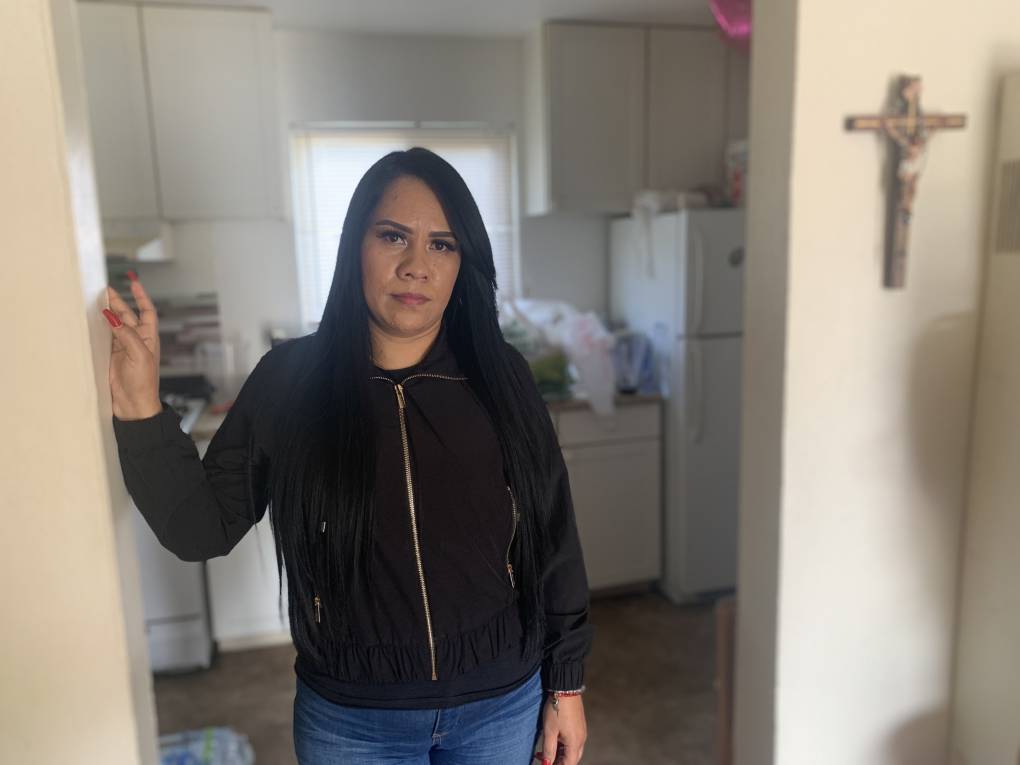
"caption": "Carmen Ponce in her apartment in Antioch. Ponce lost her job during the pandemic when the business she worked at was forced to shut down, leaving her struggling to pay rent.",
"description": null,
"title": "IMG_8543",
"credit": "Erin Baldassari/KQED",
"status": "inherit",
"altTag": "A woman wearing a black jacket stands in a doorway.",
"isLoading": false,
"fetchFailed": false
},
"news_11904090": {
"type": "attachments",
"id": "news_11904090",
"meta": {
"index": "attachments_1716263798",
"site": "news",
"id": "11904090",
"found": true
},
"parent": 11904089,
"imgSizes": {
"twentyfourteen-full-width": {
"file": "https://ww2.kqed.org/app/uploads/sites/10/2022/02/image1-1038x576.jpg",
"width": 1038,
"mimeType": "image/jpeg",
"height": 576
},
"thumbnail": {
"file": "https://ww2.kqed.org/app/uploads/sites/10/2022/02/image1-160x107.jpg",
"width": 160,
"mimeType": "image/jpeg",
"height": 107
},
"post-thumbnail": {
"file": "https://ww2.kqed.org/app/uploads/sites/10/2022/02/image1-672x372.jpg",
"width": 672,
"mimeType": "image/jpeg",
"height": 372
},
"kqedFullSize": {
"file": "https://ww2.kqed.org/app/uploads/sites/10/2022/02/image1.jpg",
"width": 1920,
"height": 1278
},
"large": {
"file": "https://ww2.kqed.org/app/uploads/sites/10/2022/02/image1-1020x679.jpg",
"width": 1020,
"mimeType": "image/jpeg",
"height": 679
},
"1536x1536": {
"file": "https://ww2.kqed.org/app/uploads/sites/10/2022/02/image1-1536x1022.jpg",
"width": 1536,
"mimeType": "image/jpeg",
"height": 1022
},
"medium": {
"file": "https://ww2.kqed.org/app/uploads/sites/10/2022/02/image1-800x533.jpg",
"width": 800,
"mimeType": "image/jpeg",
"height": 533
}
},
"publishDate": 1644007352,
"modified": 1644007352,
"caption": null,
"description": null,
"title": "image1",
"credit": null,
"status": "inherit",
"altTag": null,
"isLoading": false,
"fetchFailed": false
},
"news_11890987": {
"type": "attachments",
"id": "news_11890987",
"meta": {
"index": "attachments_1716263798",
"site": "news",
"id": "11890987",
"found": true
},
"parent": 11890986,
"imgSizes": {
"twentyfourteen-full-width": {
"file": "https://ww2.kqed.org/app/uploads/sites/10/2021/10/oow_trailer-art-f56825e4e8296bde3e7b91d5e737f03914be7844-1038x576.png",
"width": 1038,
"mimeType": "image/png",
"height": 576
},
"thumbnail": {
"file": "https://ww2.kqed.org/app/uploads/sites/10/2021/10/oow_trailer-art-f56825e4e8296bde3e7b91d5e737f03914be7844-160x120.png",
"width": 160,
"mimeType": "image/png",
"height": 120
},
"post-thumbnail": {
"file": "https://ww2.kqed.org/app/uploads/sites/10/2021/10/oow_trailer-art-f56825e4e8296bde3e7b91d5e737f03914be7844-672x372.png",
"width": 672,
"mimeType": "image/png",
"height": 372
},
"kqedFullSize": {
"file": "https://ww2.kqed.org/app/uploads/sites/10/2021/10/oow_trailer-art-f56825e4e8296bde3e7b91d5e737f03914be7844.png",
"width": 2253,
"height": 1688
},
"2048x2048": {
"file": "https://ww2.kqed.org/app/uploads/sites/10/2021/10/oow_trailer-art-f56825e4e8296bde3e7b91d5e737f03914be7844-2048x1534.png",
"width": 2048,
"mimeType": "image/png",
"height": 1534
},
"large": {
"file": "https://ww2.kqed.org/app/uploads/sites/10/2021/10/oow_trailer-art-f56825e4e8296bde3e7b91d5e737f03914be7844-1020x764.png",
"width": 1020,
"mimeType": "image/png",
"height": 764
},
"1536x1536": {
"file": "https://ww2.kqed.org/app/uploads/sites/10/2021/10/oow_trailer-art-f56825e4e8296bde3e7b91d5e737f03914be7844-1536x1151.png",
"width": 1536,
"mimeType": "image/png",
"height": 1151
},
"full-width": {
"file": "https://ww2.kqed.org/app/uploads/sites/10/2021/10/oow_trailer-art-f56825e4e8296bde3e7b91d5e737f03914be7844-1920x1439.png",
"width": 1920,
"mimeType": "image/png",
"height": 1439
},
"medium": {
"file": "https://ww2.kqed.org/app/uploads/sites/10/2021/10/oow_trailer-art-f56825e4e8296bde3e7b91d5e737f03914be7844-800x599.png",
"width": 800,
"mimeType": "image/png",
"height": 599
}
},
"publishDate": 1633387661,
"modified": 1633474377,
"caption": null,
"description": null,
"title": "Graphic by Luke Medina.",
"credit": null,
"status": "inherit",
"altTag": "A show graphic that says \"On Our Watch. Police secrets, unsealed.\"",
"isLoading": false,
"fetchFailed": false
},
"news_11889934": {
"type": "attachments",
"id": "news_11889934",
"meta": {
"index": "attachments_1716263798",
"site": "news",
"id": "11889934",
"found": true
},
"parent": 11889933,
"imgSizes": {
"twentyfourteen-full-width": {
"file": "https://ww2.kqed.org/app/uploads/sites/10/2021/09/drought_Molly-Samuel-1038x576.jpg",
"width": 1038,
"mimeType": "image/jpeg",
"height": 576
},
"thumbnail": {
"file": "https://ww2.kqed.org/app/uploads/sites/10/2021/09/drought_Molly-Samuel-160x90.jpg",
"width": 160,
"mimeType": "image/jpeg",
"height": 90
},
"post-thumbnail": {
"file": "https://ww2.kqed.org/app/uploads/sites/10/2021/09/drought_Molly-Samuel-672x372.jpg",
"width": 672,
"mimeType": "image/jpeg",
"height": 372
},
"kqedFullSize": {
"file": "https://ww2.kqed.org/app/uploads/sites/10/2021/09/drought_Molly-Samuel-scaled.jpg",
"width": 2560,
"height": 1440
},
"2048x2048": {
"file": "https://ww2.kqed.org/app/uploads/sites/10/2021/09/drought_Molly-Samuel-2048x1152.jpg",
"width": 2048,
"mimeType": "image/jpeg",
"height": 1152
},
"large": {
"file": "https://ww2.kqed.org/app/uploads/sites/10/2021/09/drought_Molly-Samuel-1020x574.jpg",
"width": 1020,
"mimeType": "image/jpeg",
"height": 574
},
"1536x1536": {
"file": "https://ww2.kqed.org/app/uploads/sites/10/2021/09/drought_Molly-Samuel-1536x864.jpg",
"width": 1536,
"mimeType": "image/jpeg",
"height": 864
},
"full-width": {
"file": "https://ww2.kqed.org/app/uploads/sites/10/2021/09/drought_Molly-Samuel-1920x1080.jpg",
"width": 1920,
"mimeType": "image/jpeg",
"height": 1080
},
"medium": {
"file": "https://ww2.kqed.org/app/uploads/sites/10/2021/09/drought_Molly-Samuel-800x450.jpg",
"width": 800,
"mimeType": "image/jpeg",
"height": 450
}
},
"publishDate": 1632526225,
"modified": 1632526246,
"caption": null,
"description": null,
"title": "drought_Molly Samuel",
"credit": "Molly Samuel/KQED",
"status": "inherit",
"altTag": null,
"isLoading": false,
"fetchFailed": false
},
"news_11856084": {
"type": "attachments",
"id": "news_11856084",
"meta": {
"index": "attachments_1716263798",
"site": "news",
"id": "11856084",
"found": true
},
"parent": 11856036,
"imgSizes": {
"apple_news_ca_landscape_5_5": {
"file": "https://ww2.kqed.org/app/uploads/sites/10/2021/01/collage-4-1044x783.png",
"width": 1044,
"mimeType": "image/png",
"height": 783
},
"apple_news_ca_square_4_0": {
"file": "https://ww2.kqed.org/app/uploads/sites/10/2021/01/collage-4-470x470.png",
"width": 470,
"mimeType": "image/png",
"height": 470
},
"twentyfourteen-full-width": {
"file": "https://ww2.kqed.org/app/uploads/sites/10/2021/01/collage-4-1038x576.png",
"width": 1038,
"mimeType": "image/png",
"height": 576
},
"thumbnail": {
"file": "https://ww2.kqed.org/app/uploads/sites/10/2021/01/collage-4-160x90.png",
"width": 160,
"mimeType": "image/png",
"height": 90
},
"post-thumbnail": {
"file": "https://ww2.kqed.org/app/uploads/sites/10/2021/01/collage-4-672x372.png",
"width": 672,
"mimeType": "image/png",
"height": 372
},
"kqedFullSize": {
"file": "https://ww2.kqed.org/app/uploads/sites/10/2021/01/collage-4.png",
"width": 2000,
"height": 1125
},
"apple_news_ca_landscape_4_7": {
"file": "https://ww2.kqed.org/app/uploads/sites/10/2021/01/collage-4-632x474.png",
"width": 632,
"mimeType": "image/png",
"height": 474
},
"large": {
"file": "https://ww2.kqed.org/app/uploads/sites/10/2021/01/collage-4-1020x574.png",
"width": 1020,
"mimeType": "image/png",
"height": 574
},
"apple_news_ca_landscape_4_0": {
"file": "https://ww2.kqed.org/app/uploads/sites/10/2021/01/collage-4-536x402.png",
"width": 536,
"mimeType": "image/png",
"height": 402
},
"apple_news_ca_portrait_12_9": {
"file": "https://ww2.kqed.org/app/uploads/sites/10/2021/01/collage-4-1122x1125.png",
"width": 1122,
"mimeType": "image/png",
"height": 1125
},
"medium": {
"file": "https://ww2.kqed.org/app/uploads/sites/10/2021/01/collage-4-800x450.png",
"width": 800,
"mimeType": "image/png",
"height": 450
},
"apple_news_ca_portrait_4_0": {
"file": "https://ww2.kqed.org/app/uploads/sites/10/2021/01/collage-4-354x472.png",
"width": 354,
"mimeType": "image/png",
"height": 472
},
"apple_news_ca_portrait_9_7": {
"file": "https://ww2.kqed.org/app/uploads/sites/10/2021/01/collage-4-840x1120.png",
"width": 840,
"mimeType": "image/png",
"height": 1120
},
"apple_news_ca_landscape_12_9": {
"file": "https://ww2.kqed.org/app/uploads/sites/10/2021/01/collage-4-1832x1125.png",
"width": 1832,
"mimeType": "image/png",
"height": 1125
},
"apple_news_ca_square_9_7": {
"file": "https://ww2.kqed.org/app/uploads/sites/10/2021/01/collage-4-1104x1104.png",
"width": 1104,
"mimeType": "image/png",
"height": 1104
},
"1536x1536": {
"file": "https://ww2.kqed.org/app/uploads/sites/10/2021/01/collage-4-1536x864.png",
"width": 1536,
"mimeType": "image/png",
"height": 864
},
"apple_news_ca_portrait_4_7": {
"file": "https://ww2.kqed.org/app/uploads/sites/10/2021/01/collage-4-414x552.png",
"width": 414,
"mimeType": "image/png",
"height": 552
},
"apple_news_ca_square_12_9": {
"file": "https://ww2.kqed.org/app/uploads/sites/10/2021/01/collage-4-1472x1125.png",
"width": 1472,
"mimeType": "image/png",
"height": 1125
},
"apple_news_ca_portrait_5_5": {
"file": "https://ww2.kqed.org/app/uploads/sites/10/2021/01/collage-4-687x916.png",
"width": 687,
"mimeType": "image/png",
"height": 916
},
"full-width": {
"file": "https://ww2.kqed.org/app/uploads/sites/10/2021/01/collage-4-1920x1080.png",
"width": 1920,
"mimeType": "image/png",
"height": 1080
},
"apple_news_ca_square_4_7": {
"file": "https://ww2.kqed.org/app/uploads/sites/10/2021/01/collage-4-550x550.png",
"width": 550,
"mimeType": "image/png",
"height": 550
},
"apple_news_ca_landscape_9_7": {
"file": "https://ww2.kqed.org/app/uploads/sites/10/2021/01/collage-4-1376x1032.png",
"width": 1376,
"mimeType": "image/png",
"height": 1032
},
"apple_news_ca_square_5_5": {
"file": "https://ww2.kqed.org/app/uploads/sites/10/2021/01/collage-4-912x912.png",
"width": 912,
"mimeType": "image/png",
"height": 912
}
},
"publishDate": 1611105179,
"modified": 1611105629,
"caption": "Photos courtesy of Persis Karim, Shaghayegh Cyrous, Hanif Sadr, and Siavash Jafari Jozani. Collage by Shaylyn Martos.",
"description": null,
"title": "collage-4",
"credit": null,
"status": "inherit",
"altTag": null,
"isLoading": false,
"fetchFailed": false
},
"news_11849588": {
"type": "attachments",
"id": "news_11849588",
"meta": {
"index": "attachments_1716263798",
"site": "news",
"id": "11849588",
"found": true
},
"parent": 11849585,
"imgSizes": {
"apple_news_ca_landscape_5_5": {
"file": "https://ww2.kqed.org/app/uploads/sites/10/2020/12/RS16165_JV0A7516-qut-1044x783.jpg",
"width": 1044,
"mimeType": "image/jpeg",
"height": 783
},
"apple_news_ca_square_4_0": {
"file": "https://ww2.kqed.org/app/uploads/sites/10/2020/12/RS16165_JV0A7516-qut-470x470.jpg",
"width": 470,
"mimeType": "image/jpeg",
"height": 470
},
"twentyfourteen-full-width": {
"file": "https://ww2.kqed.org/app/uploads/sites/10/2020/12/RS16165_JV0A7516-qut-1038x576.jpg",
"width": 1038,
"mimeType": "image/jpeg",
"height": 576
},
"thumbnail": {
"file": "https://ww2.kqed.org/app/uploads/sites/10/2020/12/RS16165_JV0A7516-qut-160x107.jpg",
"width": 160,
"mimeType": "image/jpeg",
"height": 107
},
"post-thumbnail": {
"file": "https://ww2.kqed.org/app/uploads/sites/10/2020/12/RS16165_JV0A7516-qut-672x372.jpg",
"width": 672,
"mimeType": "image/jpeg",
"height": 372
},
"kqedFullSize": {
"file": "https://ww2.kqed.org/app/uploads/sites/10/2020/12/RS16165_JV0A7516-qut.jpg",
"width": 1920,
"height": 1280
},
"apple_news_ca_landscape_4_7": {
"file": "https://ww2.kqed.org/app/uploads/sites/10/2020/12/RS16165_JV0A7516-qut-632x474.jpg",
"width": 632,
"mimeType": "image/jpeg",
"height": 474
},
"large": {
"file": "https://ww2.kqed.org/app/uploads/sites/10/2020/12/RS16165_JV0A7516-qut-1020x680.jpg",
"width": 1020,
"mimeType": "image/jpeg",
"height": 680
},
"apple_news_ca_landscape_4_0": {
"file": "https://ww2.kqed.org/app/uploads/sites/10/2020/12/RS16165_JV0A7516-qut-536x402.jpg",
"width": 536,
"mimeType": "image/jpeg",
"height": 402
},
"apple_news_ca_portrait_12_9": {
"file": "https://ww2.kqed.org/app/uploads/sites/10/2020/12/RS16165_JV0A7516-qut-1122x1280.jpg",
"width": 1122,
"mimeType": "image/jpeg",
"height": 1280
},
"medium": {
"file": "https://ww2.kqed.org/app/uploads/sites/10/2020/12/RS16165_JV0A7516-qut-800x533.jpg",
"width": 800,
"mimeType": "image/jpeg",
"height": 533
},
"apple_news_ca_portrait_4_0": {
"file": "https://ww2.kqed.org/app/uploads/sites/10/2020/12/RS16165_JV0A7516-qut-354x472.jpg",
"width": 354,
"mimeType": "image/jpeg",
"height": 472
},
"apple_news_ca_portrait_9_7": {
"file": "https://ww2.kqed.org/app/uploads/sites/10/2020/12/RS16165_JV0A7516-qut-840x1120.jpg",
"width": 840,
"mimeType": "image/jpeg",
"height": 1120
},
"apple_news_ca_landscape_12_9": {
"file": "https://ww2.kqed.org/app/uploads/sites/10/2020/12/RS16165_JV0A7516-qut-1832x1280.jpg",
"width": 1832,
"mimeType": "image/jpeg",
"height": 1280
},
"apple_news_ca_square_9_7": {
"file": "https://ww2.kqed.org/app/uploads/sites/10/2020/12/RS16165_JV0A7516-qut-1104x1104.jpg",
"width": 1104,
"mimeType": "image/jpeg",
"height": 1104
},
"1536x1536": {
"file": "https://ww2.kqed.org/app/uploads/sites/10/2020/12/RS16165_JV0A7516-qut-1536x1024.jpg",
"width": 1536,
"mimeType": "image/jpeg",
"height": 1024
},
"apple_news_ca_portrait_4_7": {
"file": "https://ww2.kqed.org/app/uploads/sites/10/2020/12/RS16165_JV0A7516-qut-414x552.jpg",
"width": 414,
"mimeType": "image/jpeg",
"height": 552
},
"apple_news_ca_square_12_9": {
"file": "https://ww2.kqed.org/app/uploads/sites/10/2020/12/RS16165_JV0A7516-qut-1472x1280.jpg",
"width": 1472,
"mimeType": "image/jpeg",
"height": 1280
},
"apple_news_ca_portrait_5_5": {
"file": "https://ww2.kqed.org/app/uploads/sites/10/2020/12/RS16165_JV0A7516-qut-687x916.jpg",
"width": 687,
"mimeType": "image/jpeg",
"height": 916
},
"apple_news_ca_square_4_7": {
"file": "https://ww2.kqed.org/app/uploads/sites/10/2020/12/RS16165_JV0A7516-qut-550x550.jpg",
"width": 550,
"mimeType": "image/jpeg",
"height": 550
},
"apple_news_ca_landscape_9_7": {
"file": "https://ww2.kqed.org/app/uploads/sites/10/2020/12/RS16165_JV0A7516-qut-1376x1032.jpg",
"width": 1376,
"mimeType": "image/jpeg",
"height": 1032
},
"apple_news_ca_square_5_5": {
"file": "https://ww2.kqed.org/app/uploads/sites/10/2020/12/RS16165_JV0A7516-qut-912x912.jpg",
"width": 912,
"mimeType": "image/jpeg",
"height": 912
}
},
"publishDate": 1607041970,
"modified": 1626996401,
"caption": "Etzel Rubio at Berkeley Pediatrics fills a syringe in preparation to administer a vaccine.",
"description": "Etzel Rubio at Berkeley Pediatrics fills a syringe in preparation to administer a vaccine.",
"title": "RS16165_JV0A7516-qut",
"credit": "Jeremy Raff/KQED",
"status": "inherit",
"altTag": null,
"isLoading": false,
"fetchFailed": false
},
"news_11849472": {
"type": "attachments",
"id": "news_11849472",
"meta": {
"index": "attachments_1716263798",
"site": "news",
"id": "11849472",
"found": true
},
"parent": 11849471,
"imgSizes": {
"apple_news_ca_landscape_5_5": {
"file": "https://ww2.kqed.org/app/uploads/sites/10/2020/12/GettyImages-1133880351-1044x783.jpg",
"width": 1044,
"mimeType": "image/jpeg",
"height": 783
},
"apple_news_ca_square_4_0": {
"file": "https://ww2.kqed.org/app/uploads/sites/10/2020/12/GettyImages-1133880351-470x470.jpg",
"width": 470,
"mimeType": "image/jpeg",
"height": 470
},
"twentyfourteen-full-width": {
"file": "https://ww2.kqed.org/app/uploads/sites/10/2020/12/GettyImages-1133880351-1038x576.jpg",
"width": 1038,
"mimeType": "image/jpeg",
"height": 576
},
"thumbnail": {
"file": "https://ww2.kqed.org/app/uploads/sites/10/2020/12/GettyImages-1133880351-160x120.jpg",
"width": 160,
"mimeType": "image/jpeg",
"height": 120
},
"post-thumbnail": {
"file": "https://ww2.kqed.org/app/uploads/sites/10/2020/12/GettyImages-1133880351-672x372.jpg",
"width": 672,
"mimeType": "image/jpeg",
"height": 372
},
"kqedFullSize": {
"file": "https://ww2.kqed.org/app/uploads/sites/10/2020/12/GettyImages-1133880351-scaled.jpg",
"width": 2560,
"height": 1925
},
"2048x2048": {
"file": "https://ww2.kqed.org/app/uploads/sites/10/2020/12/GettyImages-1133880351-2048x1540.jpg",
"width": 2048,
"mimeType": "image/jpeg",
"height": 1540
},
"apple_news_ca_landscape_4_7": {
"file": "https://ww2.kqed.org/app/uploads/sites/10/2020/12/GettyImages-1133880351-632x474.jpg",
"width": 632,
"mimeType": "image/jpeg",
"height": 474
},
"large": {
"file": "https://ww2.kqed.org/app/uploads/sites/10/2020/12/GettyImages-1133880351-1020x767.jpg",
"width": 1020,
"mimeType": "image/jpeg",
"height": 767
},
"apple_news_ca_landscape_4_0": {
"file": "https://ww2.kqed.org/app/uploads/sites/10/2020/12/GettyImages-1133880351-536x402.jpg",
"width": 536,
"mimeType": "image/jpeg",
"height": 402
},
"apple_news_ca_portrait_12_9": {
"file": "https://ww2.kqed.org/app/uploads/sites/10/2020/12/GettyImages-1133880351-1122x1496.jpg",
"width": 1122,
"mimeType": "image/jpeg",
"height": 1496
},
"medium": {
"file": "https://ww2.kqed.org/app/uploads/sites/10/2020/12/GettyImages-1133880351-800x602.jpg",
"width": 800,
"mimeType": "image/jpeg",
"height": 602
},
"apple_news_ca_portrait_4_0": {
"file": "https://ww2.kqed.org/app/uploads/sites/10/2020/12/GettyImages-1133880351-354x472.jpg",
"width": 354,
"mimeType": "image/jpeg",
"height": 472
},
"apple_news_ca_portrait_9_7": {
"file": "https://ww2.kqed.org/app/uploads/sites/10/2020/12/GettyImages-1133880351-840x1120.jpg",
"width": 840,
"mimeType": "image/jpeg",
"height": 1120
},
"apple_news_ca_landscape_12_9": {
"file": "https://ww2.kqed.org/app/uploads/sites/10/2020/12/GettyImages-1133880351-1832x1374.jpg",
"width": 1832,
"mimeType": "image/jpeg",
"height": 1374
},
"apple_news_ca_square_9_7": {
"file": "https://ww2.kqed.org/app/uploads/sites/10/2020/12/GettyImages-1133880351-1104x1104.jpg",
"width": 1104,
"mimeType": "image/jpeg",
"height": 1104
},
"1536x1536": {
"file": "https://ww2.kqed.org/app/uploads/sites/10/2020/12/GettyImages-1133880351-1536x1155.jpg",
"width": 1536,
"mimeType": "image/jpeg",
"height": 1155
},
"apple_news_ca_portrait_4_7": {
"file": "https://ww2.kqed.org/app/uploads/sites/10/2020/12/GettyImages-1133880351-414x552.jpg",
"width": 414,
"mimeType": "image/jpeg",
"height": 552
},
"apple_news_ca_square_12_9": {
"file": "https://ww2.kqed.org/app/uploads/sites/10/2020/12/GettyImages-1133880351-1472x1472.jpg",
"width": 1472,
"mimeType": "image/jpeg",
"height": 1472
},
"apple_news_ca_portrait_5_5": {
"file": "https://ww2.kqed.org/app/uploads/sites/10/2020/12/GettyImages-1133880351-687x916.jpg",
"width": 687,
"mimeType": "image/jpeg",
"height": 916
},
"full-width": {
"file": "https://ww2.kqed.org/app/uploads/sites/10/2020/12/GettyImages-1133880351-1920x1444.jpg",
"width": 1920,
"mimeType": "image/jpeg",
"height": 1444
},
"apple_news_ca_square_4_7": {
"file": "https://ww2.kqed.org/app/uploads/sites/10/2020/12/GettyImages-1133880351-550x550.jpg",
"width": 550,
"mimeType": "image/jpeg",
"height": 550
},
"apple_news_ca_landscape_9_7": {
"file": "https://ww2.kqed.org/app/uploads/sites/10/2020/12/GettyImages-1133880351-1376x1032.jpg",
"width": 1376,
"mimeType": "image/jpeg",
"height": 1032
},
"apple_news_ca_square_5_5": {
"file": "https://ww2.kqed.org/app/uploads/sites/10/2020/12/GettyImages-1133880351-912x912.jpg",
"width": 912,
"mimeType": "image/jpeg",
"height": 912
}
},
"publishDate": 1606966880,
"modified": 1606966921,
"caption": "Manifestantes en favor de los derechos de migrantes protestan a las afueras de la sede de la policía de Los Ángeles para exigir un fin a las separaciones forzadas de familias en la frontera sur, el 30 de marzo del 2019.",
"description": null,
"title": "US-IMMIGRATION-PROTEST",
"credit": "Mark Ralston/AFP via Getty Images",
"status": "inherit",
"altTag": null,
"isLoading": false,
"fetchFailed": false
},
"news_11846856": {
"type": "attachments",
"id": "news_11846856",
"meta": {
"index": "attachments_1716263798",
"site": "news",
"id": "11846856",
"found": true
},
"parent": 11846850,
"imgSizes": {
"apple_news_ca_landscape_5_5": {
"file": "https://ww2.kqed.org/app/uploads/sites/10/2020/11/GettyImages-186224932-1044x783.jpg",
"width": 1044,
"mimeType": "image/jpeg",
"height": 783
},
"apple_news_ca_square_4_0": {
"file": "https://ww2.kqed.org/app/uploads/sites/10/2020/11/GettyImages-186224932-470x470.jpg",
"width": 470,
"mimeType": "image/jpeg",
"height": 470
},
"twentyfourteen-full-width": {
"file": "https://ww2.kqed.org/app/uploads/sites/10/2020/11/GettyImages-186224932-1038x576.jpg",
"width": 1038,
"mimeType": "image/jpeg",
"height": 576
},
"thumbnail": {
"file": "https://ww2.kqed.org/app/uploads/sites/10/2020/11/GettyImages-186224932-160x112.jpg",
"width": 160,
"mimeType": "image/jpeg",
"height": 112
},
"post-thumbnail": {
"file": "https://ww2.kqed.org/app/uploads/sites/10/2020/11/GettyImages-186224932-672x372.jpg",
"width": 672,
"mimeType": "image/jpeg",
"height": 372
},
"kqedFullSize": {
"file": "https://ww2.kqed.org/app/uploads/sites/10/2020/11/GettyImages-186224932-scaled.jpg",
"width": 2560,
"height": 1789
},
"2048x2048": {
"file": "https://ww2.kqed.org/app/uploads/sites/10/2020/11/GettyImages-186224932-2048x1432.jpg",
"width": 2048,
"mimeType": "image/jpeg",
"height": 1432
},
"apple_news_ca_landscape_4_7": {
"file": "https://ww2.kqed.org/app/uploads/sites/10/2020/11/GettyImages-186224932-632x474.jpg",
"width": 632,
"mimeType": "image/jpeg",
"height": 474
},
"large": {
"file": "https://ww2.kqed.org/app/uploads/sites/10/2020/11/GettyImages-186224932-1020x713.jpg",
"width": 1020,
"mimeType": "image/jpeg",
"height": 713
},
"apple_news_ca_landscape_4_0": {
"file": "https://ww2.kqed.org/app/uploads/sites/10/2020/11/GettyImages-186224932-536x402.jpg",
"width": 536,
"mimeType": "image/jpeg",
"height": 402
},
"apple_news_ca_portrait_12_9": {
"file": "https://ww2.kqed.org/app/uploads/sites/10/2020/11/GettyImages-186224932-1122x1496.jpg",
"width": 1122,
"mimeType": "image/jpeg",
"height": 1496
},
"medium": {
"file": "https://ww2.kqed.org/app/uploads/sites/10/2020/11/GettyImages-186224932-800x559.jpg",
"width": 800,
"mimeType": "image/jpeg",
"height": 559
},
"apple_news_ca_portrait_4_0": {
"file": "https://ww2.kqed.org/app/uploads/sites/10/2020/11/GettyImages-186224932-354x472.jpg",
"width": 354,
"mimeType": "image/jpeg",
"height": 472
},
"apple_news_ca_portrait_9_7": {
"file": "https://ww2.kqed.org/app/uploads/sites/10/2020/11/GettyImages-186224932-840x1120.jpg",
"width": 840,
"mimeType": "image/jpeg",
"height": 1120
},
"apple_news_ca_landscape_12_9": {
"file": "https://ww2.kqed.org/app/uploads/sites/10/2020/11/GettyImages-186224932-1832x1374.jpg",
"width": 1832,
"mimeType": "image/jpeg",
"height": 1374
},
"apple_news_ca_square_9_7": {
"file": "https://ww2.kqed.org/app/uploads/sites/10/2020/11/GettyImages-186224932-1104x1104.jpg",
"width": 1104,
"mimeType": "image/jpeg",
"height": 1104
},
"1536x1536": {
"file": "https://ww2.kqed.org/app/uploads/sites/10/2020/11/GettyImages-186224932-1536x1074.jpg",
"width": 1536,
"mimeType": "image/jpeg",
"height": 1074
},
"apple_news_ca_portrait_4_7": {
"file": "https://ww2.kqed.org/app/uploads/sites/10/2020/11/GettyImages-186224932-414x552.jpg",
"width": 414,
"mimeType": "image/jpeg",
"height": 552
},
"apple_news_ca_square_12_9": {
"file": "https://ww2.kqed.org/app/uploads/sites/10/2020/11/GettyImages-186224932-1472x1472.jpg",
"width": 1472,
"mimeType": "image/jpeg",
"height": 1472
},
"apple_news_ca_portrait_5_5": {
"file": "https://ww2.kqed.org/app/uploads/sites/10/2020/11/GettyImages-186224932-687x916.jpg",
"width": 687,
"mimeType": "image/jpeg",
"height": 916
},
"full-width": {
"file": "https://ww2.kqed.org/app/uploads/sites/10/2020/11/GettyImages-186224932-1920x1342.jpg",
"width": 1920,
"mimeType": "image/jpeg",
"height": 1342
},
"apple_news_ca_square_4_7": {
"file": "https://ww2.kqed.org/app/uploads/sites/10/2020/11/GettyImages-186224932-550x550.jpg",
"width": 550,
"mimeType": "image/jpeg",
"height": 550
},
"apple_news_ca_landscape_9_7": {
"file": "https://ww2.kqed.org/app/uploads/sites/10/2020/11/GettyImages-186224932-1376x1032.jpg",
"width": 1376,
"mimeType": "image/jpeg",
"height": 1032
},
"apple_news_ca_square_5_5": {
"file": "https://ww2.kqed.org/app/uploads/sites/10/2020/11/GettyImages-186224932-912x912.jpg",
"width": 912,
"mimeType": "image/jpeg",
"height": 912
}
},
"publishDate": 1605037921,
"modified": 1605062215,
"caption": "Sonoma County sheriff's deputies line up in front of protestors during a rally in front of the Sonoma County sheriff's office for 13 year-old Andy Lopez who was shot by a Sonoma County sheriff's deputy on October 29, 2013 in Santa Rosa, California. (Photo by Justin Sullivan/Getty Images)",
"description": null,
"title": "Rally And March Held In Protest Of 13-Year-Old Shot By Police Officer",
"credit": null,
"status": "inherit",
"isLoading": false,
"fetchFailed": false
},
"news_11832895": {
"type": "attachments",
"id": "news_11832895",
"meta": {
"index": "attachments_1716263798",
"site": "news",
"id": "11832895",
"found": true
},
"parent": 11832855,
"imgSizes": {
"apple_news_ca_landscape_5_5": {
"file": "https://ww2.kqed.org/app/uploads/sites/10/2020/08/RS42773_002_KQED_SanFranciscoOffices_04112020-qut-1044x783.jpg",
"width": 1044,
"mimeType": "image/jpeg",
"height": 783
},
"apple_news_ca_square_4_0": {
"file": "https://ww2.kqed.org/app/uploads/sites/10/2020/08/RS42773_002_KQED_SanFranciscoOffices_04112020-qut-470x470.jpg",
"width": 470,
"mimeType": "image/jpeg",
"height": 470
},
"twentyfourteen-full-width": {
"file": "https://ww2.kqed.org/app/uploads/sites/10/2020/08/RS42773_002_KQED_SanFranciscoOffices_04112020-qut-1038x576.jpg",
"width": 1038,
"mimeType": "image/jpeg",
"height": 576
},
"thumbnail": {
"file": "https://ww2.kqed.org/app/uploads/sites/10/2020/08/RS42773_002_KQED_SanFranciscoOffices_04112020-qut-160x107.jpg",
"width": 160,
"mimeType": "image/jpeg",
"height": 107
},
"post-thumbnail": {
"file": "https://ww2.kqed.org/app/uploads/sites/10/2020/08/RS42773_002_KQED_SanFranciscoOffices_04112020-qut-672x372.jpg",
"width": 672,
"mimeType": "image/jpeg",
"height": 372
},
"kqedFullSize": {
"file": "https://ww2.kqed.org/app/uploads/sites/10/2020/08/RS42773_002_KQED_SanFranciscoOffices_04112020-qut.jpg",
"width": 1920,
"height": 1280
},
"apple_news_ca_landscape_4_7": {
"file": "https://ww2.kqed.org/app/uploads/sites/10/2020/08/RS42773_002_KQED_SanFranciscoOffices_04112020-qut-632x474.jpg",
"width": 632,
"mimeType": "image/jpeg",
"height": 474
},
"large": {
"file": "https://ww2.kqed.org/app/uploads/sites/10/2020/08/RS42773_002_KQED_SanFranciscoOffices_04112020-qut-1020x680.jpg",
"width": 1020,
"mimeType": "image/jpeg",
"height": 680
},
"apple_news_ca_landscape_4_0": {
"file": "https://ww2.kqed.org/app/uploads/sites/10/2020/08/RS42773_002_KQED_SanFranciscoOffices_04112020-qut-536x402.jpg",
"width": 536,
"mimeType": "image/jpeg",
"height": 402
},
"apple_news_ca_portrait_12_9": {
"file": "https://ww2.kqed.org/app/uploads/sites/10/2020/08/RS42773_002_KQED_SanFranciscoOffices_04112020-qut-1122x1280.jpg",
"width": 1122,
"mimeType": "image/jpeg",
"height": 1280
},
"medium": {
"file": "https://ww2.kqed.org/app/uploads/sites/10/2020/08/RS42773_002_KQED_SanFranciscoOffices_04112020-qut-800x533.jpg",
"width": 800,
"mimeType": "image/jpeg",
"height": 533
},
"apple_news_ca_portrait_4_0": {
"file": "https://ww2.kqed.org/app/uploads/sites/10/2020/08/RS42773_002_KQED_SanFranciscoOffices_04112020-qut-354x472.jpg",
"width": 354,
"mimeType": "image/jpeg",
"height": 472
},
"apple_news_ca_portrait_9_7": {
"file": "https://ww2.kqed.org/app/uploads/sites/10/2020/08/RS42773_002_KQED_SanFranciscoOffices_04112020-qut-840x1120.jpg",
"width": 840,
"mimeType": "image/jpeg",
"height": 1120
},
"apple_news_ca_landscape_12_9": {
"file": "https://ww2.kqed.org/app/uploads/sites/10/2020/08/RS42773_002_KQED_SanFranciscoOffices_04112020-qut-1832x1280.jpg",
"width": 1832,
"mimeType": "image/jpeg",
"height": 1280
},
"apple_news_ca_square_9_7": {
"file": "https://ww2.kqed.org/app/uploads/sites/10/2020/08/RS42773_002_KQED_SanFranciscoOffices_04112020-qut-1104x1104.jpg",
"width": 1104,
"mimeType": "image/jpeg",
"height": 1104
},
"1536x1536": {
"file": "https://ww2.kqed.org/app/uploads/sites/10/2020/08/RS42773_002_KQED_SanFranciscoOffices_04112020-qut-1536x1024.jpg",
"width": 1536,
"mimeType": "image/jpeg",
"height": 1024
},
"apple_news_ca_portrait_4_7": {
"file": "https://ww2.kqed.org/app/uploads/sites/10/2020/08/RS42773_002_KQED_SanFranciscoOffices_04112020-qut-414x552.jpg",
"width": 414,
"mimeType": "image/jpeg",
"height": 552
},
"apple_news_ca_square_12_9": {
"file": "https://ww2.kqed.org/app/uploads/sites/10/2020/08/RS42773_002_KQED_SanFranciscoOffices_04112020-qut-1472x1280.jpg",
"width": 1472,
"mimeType": "image/jpeg",
"height": 1280
},
"apple_news_ca_portrait_5_5": {
"file": "https://ww2.kqed.org/app/uploads/sites/10/2020/08/RS42773_002_KQED_SanFranciscoOffices_04112020-qut-687x916.jpg",
"width": 687,
"mimeType": "image/jpeg",
"height": 916
},
"apple_news_ca_square_4_7": {
"file": "https://ww2.kqed.org/app/uploads/sites/10/2020/08/RS42773_002_KQED_SanFranciscoOffices_04112020-qut-550x550.jpg",
"width": 550,
"mimeType": "image/jpeg",
"height": 550
},
"apple_news_ca_landscape_9_7": {
"file": "https://ww2.kqed.org/app/uploads/sites/10/2020/08/RS42773_002_KQED_SanFranciscoOffices_04112020-qut-1376x1032.jpg",
"width": 1376,
"mimeType": "image/jpeg",
"height": 1032
},
"apple_news_ca_square_5_5": {
"file": "https://ww2.kqed.org/app/uploads/sites/10/2020/08/RS42773_002_KQED_SanFranciscoOffices_04112020-qut-912x912.jpg",
"width": 912,
"mimeType": "image/jpeg",
"height": 912
}
},
"publishDate": 1597109058,
"modified": 1597109144,
"caption": "KQED announced it is laying off 20 staff members on Monday.",
"description": "KQED announced it is laying off 20 staff members on Monday.",
"title": "RS42773_002_KQED_SanFranciscoOffices_04112020-qut",
"credit": "Beth LaBerge/KQED",
"status": "inherit",
"isLoading": false,
"fetchFailed": false
},
"news_11828552": {
"type": "attachments",
"id": "news_11828552",
"meta": {
"index": "attachments_1716263798",
"site": "news",
"id": "11828552",
"found": true
},
"parent": 11828337,
"imgSizes": {
"apple_news_ca_landscape_5_5": {
"file": "https://ww2.kqed.org/app/uploads/sites/10/2020/07/MARQUEE-735-1044x720.jpg",
"width": 1044,
"mimeType": "image/jpeg",
"height": 720
},
"apple_news_ca_square_4_0": {
"file": "https://ww2.kqed.org/app/uploads/sites/10/2020/07/MARQUEE-735-470x470.jpg",
"width": 470,
"mimeType": "image/jpeg",
"height": 470
},
"twentyfourteen-full-width": {
"file": "https://ww2.kqed.org/app/uploads/sites/10/2020/07/MARQUEE-735-1038x576.jpg",
"width": 1038,
"mimeType": "image/jpeg",
"height": 576
},
"thumbnail": {
"file": "https://ww2.kqed.org/app/uploads/sites/10/2020/07/MARQUEE-735-160x90.jpg",
"width": 160,
"mimeType": "image/jpeg",
"height": 90
},
"post-thumbnail": {
"file": "https://ww2.kqed.org/app/uploads/sites/10/2020/07/MARQUEE-735-672x372.jpg",
"width": 672,
"mimeType": "image/jpeg",
"height": 372
},
"kqedFullSize": {
"file": "https://ww2.kqed.org/app/uploads/sites/10/2020/07/MARQUEE-735.jpg",
"width": 1280,
"height": 720
},
"apple_news_ca_landscape_4_7": {
"file": "https://ww2.kqed.org/app/uploads/sites/10/2020/07/MARQUEE-735-632x474.jpg",
"width": 632,
"mimeType": "image/jpeg",
"height": 474
},
"large": {
"file": "https://ww2.kqed.org/app/uploads/sites/10/2020/07/MARQUEE-735-1020x574.jpg",
"width": 1020,
"mimeType": "image/jpeg",
"height": 574
},
"apple_news_ca_landscape_4_0": {
"file": "https://ww2.kqed.org/app/uploads/sites/10/2020/07/MARQUEE-735-536x402.jpg",
"width": 536,
"mimeType": "image/jpeg",
"height": 402
},
"apple_news_ca_portrait_12_9": {
"file": "https://ww2.kqed.org/app/uploads/sites/10/2020/07/MARQUEE-735-1122x720.jpg",
"width": 1122,
"mimeType": "image/jpeg",
"height": 720
},
"medium": {
"file": "https://ww2.kqed.org/app/uploads/sites/10/2020/07/MARQUEE-735-800x450.jpg",
"width": 800,
"mimeType": "image/jpeg",
"height": 450
},
"apple_news_ca_portrait_4_0": {
"file": "https://ww2.kqed.org/app/uploads/sites/10/2020/07/MARQUEE-735-354x472.jpg",
"width": 354,
"mimeType": "image/jpeg",
"height": 472
},
"apple_news_ca_portrait_9_7": {
"file": "https://ww2.kqed.org/app/uploads/sites/10/2020/07/MARQUEE-735-840x720.jpg",
"width": 840,
"mimeType": "image/jpeg",
"height": 720
},
"apple_news_ca_square_9_7": {
"file": "https://ww2.kqed.org/app/uploads/sites/10/2020/07/MARQUEE-735-1104x720.jpg",
"width": 1104,
"mimeType": "image/jpeg",
"height": 720
},
"apple_news_ca_portrait_4_7": {
"file": "https://ww2.kqed.org/app/uploads/sites/10/2020/07/MARQUEE-735-414x552.jpg",
"width": 414,
"mimeType": "image/jpeg",
"height": 552
},
"apple_news_ca_portrait_5_5": {
"file": "https://ww2.kqed.org/app/uploads/sites/10/2020/07/MARQUEE-735-687x720.jpg",
"width": 687,
"mimeType": "image/jpeg",
"height": 720
},
"apple_news_ca_square_4_7": {
"file": "https://ww2.kqed.org/app/uploads/sites/10/2020/07/MARQUEE-735-550x550.jpg",
"width": 550,
"mimeType": "image/jpeg",
"height": 550
},
"apple_news_ca_square_5_5": {
"file": "https://ww2.kqed.org/app/uploads/sites/10/2020/07/MARQUEE-735-912x720.jpg",
"width": 912,
"mimeType": "image/jpeg",
"height": 720
}
},
"publishDate": 1594424842,
"modified": 1594424842,
"caption": null,
"description": null,
"title": "MARQUEE 735",
"credit": null,
"status": "inherit",
"isLoading": false,
"fetchFailed": false
},
"news_11821937": {
"type": "attachments",
"id": "news_11821937",
"meta": {
"index": "attachments_1716263798",
"site": "news",
"id": "11821937",
"found": true
},
"parent": 11821931,
"imgSizes": {
"apple_news_ca_landscape_5_5": {
"file": "https://ww2.kqed.org/app/uploads/sites/10/2020/05/RS43423_007_KQED_Oakland_GeorgeFloydProtest_05292020-qut-1044x783.jpg",
"width": 1044,
"mimeType": "image/jpeg",
"height": 783
},
"apple_news_ca_square_4_0": {
"file": "https://ww2.kqed.org/app/uploads/sites/10/2020/05/RS43423_007_KQED_Oakland_GeorgeFloydProtest_05292020-qut-470x470.jpg",
"width": 470,
"mimeType": "image/jpeg",
"height": 470
},
"twentyfourteen-full-width": {
"file": "https://ww2.kqed.org/app/uploads/sites/10/2020/05/RS43423_007_KQED_Oakland_GeorgeFloydProtest_05292020-qut-1038x576.jpg",
"width": 1038,
"mimeType": "image/jpeg",
"height": 576
},
"thumbnail": {
"file": "https://ww2.kqed.org/app/uploads/sites/10/2020/05/RS43423_007_KQED_Oakland_GeorgeFloydProtest_05292020-qut-160x107.jpg",
"width": 160,
"mimeType": "image/jpeg",
"height": 107
},
"post-thumbnail": {
"file": "https://ww2.kqed.org/app/uploads/sites/10/2020/05/RS43423_007_KQED_Oakland_GeorgeFloydProtest_05292020-qut-672x372.jpg",
"width": 672,
"mimeType": "image/jpeg",
"height": 372
},
"kqedFullSize": {
"file": "https://ww2.kqed.org/app/uploads/sites/10/2020/05/RS43423_007_KQED_Oakland_GeorgeFloydProtest_05292020-qut.jpg",
"width": 1920,
"height": 1280
},
"apple_news_ca_landscape_4_7": {
"file": "https://ww2.kqed.org/app/uploads/sites/10/2020/05/RS43423_007_KQED_Oakland_GeorgeFloydProtest_05292020-qut-632x474.jpg",
"width": 632,
"mimeType": "image/jpeg",
"height": 474
},
"large": {
"file": "https://ww2.kqed.org/app/uploads/sites/10/2020/05/RS43423_007_KQED_Oakland_GeorgeFloydProtest_05292020-qut-1020x680.jpg",
"width": 1020,
"mimeType": "image/jpeg",
"height": 680
},
"apple_news_ca_landscape_4_0": {
"file": "https://ww2.kqed.org/app/uploads/sites/10/2020/05/RS43423_007_KQED_Oakland_GeorgeFloydProtest_05292020-qut-536x402.jpg",
"width": 536,
"mimeType": "image/jpeg",
"height": 402
},
"apple_news_ca_portrait_12_9": {
"file": "https://ww2.kqed.org/app/uploads/sites/10/2020/05/RS43423_007_KQED_Oakland_GeorgeFloydProtest_05292020-qut-1122x1280.jpg",
"width": 1122,
"mimeType": "image/jpeg",
"height": 1280
},
"medium": {
"file": "https://ww2.kqed.org/app/uploads/sites/10/2020/05/RS43423_007_KQED_Oakland_GeorgeFloydProtest_05292020-qut-800x533.jpg",
"width": 800,
"mimeType": "image/jpeg",
"height": 533
},
"apple_news_ca_portrait_4_0": {
"file": "https://ww2.kqed.org/app/uploads/sites/10/2020/05/RS43423_007_KQED_Oakland_GeorgeFloydProtest_05292020-qut-354x472.jpg",
"width": 354,
"mimeType": "image/jpeg",
"height": 472
},
"apple_news_ca_portrait_9_7": {
"file": "https://ww2.kqed.org/app/uploads/sites/10/2020/05/RS43423_007_KQED_Oakland_GeorgeFloydProtest_05292020-qut-840x1120.jpg",
"width": 840,
"mimeType": "image/jpeg",
"height": 1120
},
"apple_news_ca_landscape_12_9": {
"file": "https://ww2.kqed.org/app/uploads/sites/10/2020/05/RS43423_007_KQED_Oakland_GeorgeFloydProtest_05292020-qut-1832x1280.jpg",
"width": 1832,
"mimeType": "image/jpeg",
"height": 1280
},
"apple_news_ca_square_9_7": {
"file": "https://ww2.kqed.org/app/uploads/sites/10/2020/05/RS43423_007_KQED_Oakland_GeorgeFloydProtest_05292020-qut-1104x1104.jpg",
"width": 1104,
"mimeType": "image/jpeg",
"height": 1104
},
"apple_news_ca_portrait_4_7": {
"file": "https://ww2.kqed.org/app/uploads/sites/10/2020/05/RS43423_007_KQED_Oakland_GeorgeFloydProtest_05292020-qut-414x552.jpg",
"width": 414,
"mimeType": "image/jpeg",
"height": 552
},
"apple_news_ca_square_12_9": {
"file": "https://ww2.kqed.org/app/uploads/sites/10/2020/05/RS43423_007_KQED_Oakland_GeorgeFloydProtest_05292020-qut-1472x1280.jpg",
"width": 1472,
"mimeType": "image/jpeg",
"height": 1280
},
"apple_news_ca_portrait_5_5": {
"file": "https://ww2.kqed.org/app/uploads/sites/10/2020/05/RS43423_007_KQED_Oakland_GeorgeFloydProtest_05292020-qut-687x916.jpg",
"width": 687,
"mimeType": "image/jpeg",
"height": 916
},
"full-width": {
"file": "https://ww2.kqed.org/app/uploads/sites/10/2020/05/RS43423_007_KQED_Oakland_GeorgeFloydProtest_05292020-qut-1920x1280.jpg",
"width": 1920,
"mimeType": "image/jpeg",
"height": 1280
},
"apple_news_ca_square_4_7": {
"file": "https://ww2.kqed.org/app/uploads/sites/10/2020/05/RS43423_007_KQED_Oakland_GeorgeFloydProtest_05292020-qut-550x550.jpg",
"width": 550,
"mimeType": "image/jpeg",
"height": 550
},
"apple_news_ca_landscape_9_7": {
"file": "https://ww2.kqed.org/app/uploads/sites/10/2020/05/RS43423_007_KQED_Oakland_GeorgeFloydProtest_05292020-qut-1376x1032.jpg",
"width": 1376,
"mimeType": "image/jpeg",
"height": 1032
},
"apple_news_ca_square_5_5": {
"file": "https://ww2.kqed.org/app/uploads/sites/10/2020/05/RS43423_007_KQED_Oakland_GeorgeFloydProtest_05292020-qut-912x912.jpg",
"width": 912,
"mimeType": "image/jpeg",
"height": 912
}
},
"publishDate": 1590861926,
"modified": 1609721257,
"caption": "Brianna Noble rides her horse Dapper Dan alongside demonstrators on Broadway in Downtown Oakland on May 29, 2020, during a protest over the Minneapolis police killing of George Floyd.",
"description": "Brianna Noble rides her horse Dapper Dan alongside demonstrators on Broadway in Downtown Oakland on May 29, 2020, during a protest over the Minneapolis police killing of George Floyd.",
"title": "RS43423_007_KQED_Oakland_GeorgeFloydProtest_05292020-qut",
"credit": "Beth LaBerge/KQED",
"status": "inherit",
"altTag": null,
"isLoading": false,
"fetchFailed": false
}
},
"audioPlayerReducer": {
"postId": "stream_live",
"isPaused": true,
"isPlaying": false,
"pfsActive": false,
"pledgeModalIsOpen": true,
"playerDrawerIsOpen": false,
"liveAudioPlayStartedAt": 0,
"liveAudioPlayContext": ""
},
"authorsReducer": {
"kqed": {
"type": "authors",
"id": "236",
"meta": {
"index": "authors_1716337520",
"id": "236",
"found": true
},
"name": "KQED News Staff",
"firstName": "KQED News Staff",
"lastName": null,
"slug": "kqed",
"email": "faq@kqed.org",
"display_author_email": false,
"staff_mastheads": [],
"title": null,
"bio": null,
"avatar": "https://secure.gravatar.com/avatar/ef0e801a68c4c54afa9180db14084167?s=600&d=blank&r=g",
"twitter": null,
"facebook": null,
"instagram": null,
"linkedin": null,
"sites": [
{
"site": "arts",
"roles": [
"contributor"
]
},
{
"site": "news",
"roles": [
"editor"
]
},
{
"site": "futureofyou",
"roles": [
"author"
]
}
],
"headData": {
"title": "KQED News Staff | KQED",
"description": null,
"ogImgSrc": "https://secure.gravatar.com/avatar/ef0e801a68c4c54afa9180db14084167?s=600&d=blank&r=g",
"twImgSrc": "https://secure.gravatar.com/avatar/ef0e801a68c4c54afa9180db14084167?s=600&d=blank&r=g"
},
"isLoading": false,
"link": "/author/kqed"
},
"rachael-myrow": {
"type": "authors",
"id": "251",
"meta": {
"index": "authors_1716337520",
"id": "251",
"found": true
},
"name": "Rachael Myrow",
"firstName": "Rachael",
"lastName": "Myrow",
"slug": "rachael-myrow",
"email": "rmyrow@kqed.org",
"display_author_email": true,
"staff_mastheads": [
"news"
],
"title": "Senior Editor of KQED's Silicon Valley News Desk",
"bio": "• I write and edit stories about how Silicon Valley power and policies shape everyday life in California. I’m also passionate about making Bay Area history and culture more accessible to a broad public. • I’ve been a journalist for most of my life, starting in high school with The Franklin Press in Los Angeles, where I grew up. While earning my first degree in English at UC Berkeley, I got my start in public radio at KALX-FM. After completing a second degree in journalism at Cal, I landed my first professional job at Marketplace, then moved on to KPCC (now LAist), and then KQED, where I hosted The California Report for more than seven years. • My reporting has appeared on NPR, The World, WBUR’s \u003ci>Here & Now\u003c/i>, and the BBC. I also guest host for KQED’s \u003ci>Forum\u003c/i>, as well as the Commonwealth Club in San Francisco. • I speak periodically on media, democracy and technology issues, and do voiceover work for documentaries and educational video projects. • Outside of the studio, you'll find me hiking Bay Area trails and whipping up Insta-ready meals in my kitchen. • I do not accept gifts, money, or favors from anyone connected to my reporting, I don't pay people for information, and I do not support or donate to political causes. • I strive to treat the people I report on with fairness, honesty, and respect. I also recognize there are often multiple sides to a story and work to verify information through multiple sources and documentation. If I get something wrong, I correct it.",
"avatar": "https://secure.gravatar.com/avatar/3ed8a3c5f26025e4a805ba634cda8cd764906b97438a6d9ce216b044e340da4e?s=600&d=blank&r=g",
"twitter": "rachaelmyrow",
"bluesky": null,
"facebook": null,
"instagram": null,
"linkedin": "https://www.linkedin.com/in/rachaelmyrow/",
"sites": [
{
"site": "arts",
"roles": [
"administrator"
]
},
{
"site": "news",
"roles": [
"edit_others_posts",
"editor"
]
},
{
"site": "futureofyou",
"roles": [
"editor"
]
},
{
"site": "bayareabites",
"roles": [
"editor"
]
},
{
"site": "stateofhealth",
"roles": [
"editor"
]
},
{
"site": "science",
"roles": [
"editor"
]
},
{
"site": "food",
"roles": [
"editor"
]
},
{
"site": "forum",
"roles": [
"editor"
]
},
{
"site": "liveblog",
"roles": [
"author"
]
}
],
"headData": {
"title": "Rachael Myrow | KQED",
"description": "Senior Editor of KQED's Silicon Valley News Desk",
"ogImgSrc": "https://secure.gravatar.com/avatar/3ed8a3c5f26025e4a805ba634cda8cd764906b97438a6d9ce216b044e340da4e?s=600&d=blank&r=g",
"twImgSrc": "https://secure.gravatar.com/avatar/3ed8a3c5f26025e4a805ba634cda8cd764906b97438a6d9ce216b044e340da4e?s=600&d=blank&r=g"
},
"isLoading": false,
"link": "/author/rachael-myrow"
},
"adembosky": {
"type": "authors",
"id": "3205",
"meta": {
"index": "authors_1716337520",
"id": "3205",
"found": true
},
"name": "April Dembosky",
"firstName": "April",
"lastName": "Dembosky",
"slug": "adembosky",
"email": "adembosky@kqed.org",
"display_author_email": false,
"staff_mastheads": [
"news",
"science"
],
"title": "KQED Health Correspondent",
"bio": "April Dembosky is the health correspondent for KQED News and a regular contributor to NPR. She specializes in covering altered states of mind, from postpartum depression to methamphetamine-induced psychosis to the insanity defense. Her investigative series on insurance companies sidestepping mental health laws won multiple awards, including first place in beat reporting from the national Association of Health Care Journalists. She is the recipient of numerous other prizes and fellowships, including a national Edward R. Murrow award for investigative reporting, a Society of Professional Journalists award for long-form storytelling, and a Carter Center Fellowship for Mental Health Journalism.\r\n\r\nDembosky reported and produced \u003cem>Soundtrack of Silence\u003c/em>, an audio documentary about music and memory that is currently being made into a feature film by Paramount Pictures.\r\n\r\nBefore joining KQED in 2013, Dembosky covered technology and Silicon Valley for \u003cem>The Financial Times of London,\u003c/em> and contributed business and arts stories to \u003cem>Marketplace \u003c/em>and \u003cem>The New York Times.\u003c/em> She got her undergraduate degree in philosophy from Smith College and her master's in journalism from the University of California, Berkeley. She is a classically trained violinist and proud alum of the first symphony orchestra at Burning Man.",
"avatar": "https://secure.gravatar.com/avatar/d6593cd737b732102fe0b6250b5351c2d3bc9b2987566514aa3c9a106494d684?s=600&d=blank&r=g",
"twitter": "adembosky",
"bluesky": null,
"facebook": null,
"instagram": null,
"linkedin": null,
"sites": [
{
"site": "arts",
"roles": [
"author"
]
},
{
"site": "news",
"roles": [
"editor"
]
},
{
"site": "futureofyou",
"roles": [
"author"
]
},
{
"site": "stateofhealth",
"roles": [
"editor"
]
},
{
"site": "science",
"roles": [
"editor"
]
},
{
"site": "forum",
"roles": [
"editor"
]
}
],
"headData": {
"title": "April Dembosky | KQED",
"description": "KQED Health Correspondent",
"ogImgSrc": "https://secure.gravatar.com/avatar/d6593cd737b732102fe0b6250b5351c2d3bc9b2987566514aa3c9a106494d684?s=600&d=blank&r=g",
"twImgSrc": "https://secure.gravatar.com/avatar/d6593cd737b732102fe0b6250b5351c2d3bc9b2987566514aa3c9a106494d684?s=600&d=blank&r=g"
},
"isLoading": false,
"link": "/author/adembosky"
},
"dkatayama": {
"type": "authors",
"id": "7240",
"meta": {
"index": "authors_1716337520",
"id": "7240",
"found": true
},
"name": "Devin Katayama",
"firstName": "Devin",
"lastName": "Katayama",
"slug": "dkatayama",
"email": "dkatayama@kqed.org",
"display_author_email": true,
"staff_mastheads": [
"news"
],
"title": "Editor of Talent and Development",
"bio": "Devin Katayama is former Editor of Talent and Development for KQED. He supported our internship program and on-call staff by looking for equitable opportunities to improve the newsroom.\r\n\r\nHe previously hosted The Bay and American Suburb podcasts from KQED News. Prior to returning to the Bay Area in 2015, Devin was the education reporter for WFPL in Louisville and worked as a producer with radio stations in Chicago and Portland, OR. His work has appeared on NPR’s \u003cem>Morning Edition, All Things Considered, The Takeaway\u003c/em> and \u003cem>Here and Now.\u003c/em>\r\n\r\nDevin earned his MA in Journalism from Columbia College Chicago, where he was a Follett Fellow and the recipient of the 2011 Studs Terkel Community Media Workshop Scholarship for his story on Chicago's homeless youth. He won WBUR's 2014 Daniel Schorr award and a regional RTNDA Edward R. Murrow Award for his documentary \"At Risk\" that looked at issues facing some of Louisville's students. Devin has also received numerous local awards from the Associated Press and the Society of Professional Journalists.",
"avatar": "https://secure.gravatar.com/avatar/d0d2978a31002fb2de107921a8e18405?s=600&d=blank&r=g",
"twitter": "RadioDevin",
"facebook": null,
"instagram": null,
"linkedin": null,
"sites": [
{
"site": "arts",
"roles": []
},
{
"site": "news",
"roles": [
"author"
]
},
{
"site": "stateofhealth",
"roles": [
"author"
]
},
{
"site": "forum",
"roles": [
"editor"
]
},
{
"site": "perspectives",
"roles": [
"editor"
]
}
],
"headData": {
"title": "Devin Katayama | KQED",
"description": "Editor of Talent and Development",
"ogImgSrc": "https://secure.gravatar.com/avatar/d0d2978a31002fb2de107921a8e18405?s=600&d=blank&r=g",
"twImgSrc": "https://secure.gravatar.com/avatar/d0d2978a31002fb2de107921a8e18405?s=600&d=blank&r=g"
},
"isLoading": false,
"link": "/author/dkatayama"
},
"ecruzguevarra": {
"type": "authors",
"id": "8654",
"meta": {
"index": "authors_1716337520",
"id": "8654",
"found": true
},
"name": "Ericka Cruz Guevarra",
"firstName": "Ericka",
"lastName": "Cruz Guevarra",
"slug": "ecruzguevarra",
"email": "ecruzguevarra@kqed.org",
"display_author_email": true,
"staff_mastheads": [
"news"
],
"title": "Producer, The Bay Podcast",
"bio": "Ericka Cruz Guevarra is host of \u003ca href=\"https://www.kqed.org/podcasts/thebay\">\u003cem>The Bay\u003c/em>\u003c/a> podcast at KQED. Before host, she was the show’s producer. Her work in that capacity includes a three-part reported series on policing in Vallejo, which won a 2020 excellence in journalism award from the Society of Professional Journalists. Ericka has worked as a breaking news reporter at Oregon Public Broadcasting, helped produce the Code Switch podcast, and was KQED’s inaugural Raul Ramirez Diversity Fund intern. She’s also an alumna of NPR’s Next Generation Radio program. Send her an email if you have strong feelings about whether Fairfield and Suisun City are the Bay. Ericka is represented by SAG-AFTRA.",
"avatar": "https://secure.gravatar.com/avatar/accefc1de4bafc7e234b69bcb9b6f6536c130fd84709bc3069ef11a78787e1bb?s=600&d=blank&r=g",
"twitter": "NotoriousECG",
"bluesky": null,
"facebook": null,
"instagram": null,
"linkedin": null,
"sites": [
{
"site": "arts",
"roles": [
"subscriber"
]
},
{
"site": "news",
"roles": [
"editor",
"manage_categories"
]
},
{
"site": "futureofyou",
"roles": [
"subscriber"
]
},
{
"site": "stateofhealth",
"roles": [
"subscriber"
]
},
{
"site": "science",
"roles": [
"editor"
]
},
{
"site": "forum",
"roles": [
"subscriber"
]
}
],
"headData": {
"title": "Ericka Cruz Guevarra | KQED",
"description": "Producer, The Bay Podcast",
"ogImgSrc": "https://secure.gravatar.com/avatar/accefc1de4bafc7e234b69bcb9b6f6536c130fd84709bc3069ef11a78787e1bb?s=600&d=blank&r=g",
"twImgSrc": "https://secure.gravatar.com/avatar/accefc1de4bafc7e234b69bcb9b6f6536c130fd84709bc3069ef11a78787e1bb?s=600&d=blank&r=g"
},
"isLoading": false,
"link": "/author/ecruzguevarra"
},
"slewis": {
"type": "authors",
"id": "8676",
"meta": {
"index": "authors_1716337520",
"id": "8676",
"found": true
},
"name": "Sukey Lewis",
"firstName": "Sukey",
"lastName": "Lewis",
"slug": "slewis",
"email": "slewis@kqed.org",
"display_author_email": true,
"staff_mastheads": [
"news"
],
"title": "KQED Contributor",
"bio": "Sukey Lewis is a criminal justice reporter and host of \u003cem>On Our Watch\u003c/em>, a new podcast from NPR and KQED about the shadow world of police discipline. In 2018, she co-founded the California Reporting Project, a coalition of newsrooms across the state focused on obtaining previously sealed internal affairs records from law enforcement. In addition to her reporting on police accountability, Sukey has investigated the bail bonds industry, California's wildfires and the high cost of prison phone calls. Sukey earned a master's degree in journalism from the University of California at Berkeley. Send news tips to slewis@kqed.org.",
"avatar": "https://secure.gravatar.com/avatar/03fd6b21024f99d8b0a1966654586de7?s=600&d=blank&r=g",
"twitter": "SukeyLewis",
"facebook": null,
"instagram": null,
"linkedin": null,
"sites": [
{
"site": "news",
"roles": [
"author",
"edit_others_posts"
]
}
],
"headData": {
"title": "Sukey Lewis | KQED",
"description": "KQED Contributor",
"ogImgSrc": "https://secure.gravatar.com/avatar/03fd6b21024f99d8b0a1966654586de7?s=600&d=blank&r=g",
"twImgSrc": "https://secure.gravatar.com/avatar/03fd6b21024f99d8b0a1966654586de7?s=600&d=blank&r=g"
},
"isLoading": false,
"link": "/author/slewis"
},
"mwiley": {
"type": "authors",
"id": "11526",
"meta": {
"index": "authors_1716337520",
"id": "11526",
"found": true
},
"name": "Michelle Wiley",
"firstName": "Michelle",
"lastName": "Wiley",
"slug": "mwiley",
"email": "mwiley@KQED.org",
"display_author_email": true,
"staff_mastheads": [],
"title": null,
"bio": "Michelle Wiley was the senior editor of weekends.",
"avatar": "https://secure.gravatar.com/avatar/3b897d82a09e8587e8e73fa69fbcc635?s=600&d=blank&r=g",
"twitter": "michelleewiley",
"facebook": null,
"instagram": null,
"linkedin": null,
"sites": [
{
"site": "",
"roles": [
"editor"
]
},
{
"site": "arts",
"roles": [
"editor"
]
},
{
"site": "news",
"roles": [
"subscriber"
]
},
{
"site": "lowdown",
"roles": [
"editor"
]
},
{
"site": "science",
"roles": [
"editor"
]
},
{
"site": "podcasts",
"roles": [
"editor"
]
}
],
"headData": {
"title": "Michelle Wiley | KQED",
"description": null,
"ogImgSrc": "https://secure.gravatar.com/avatar/3b897d82a09e8587e8e73fa69fbcc635?s=600&d=blank&r=g",
"twImgSrc": "https://secure.gravatar.com/avatar/3b897d82a09e8587e8e73fa69fbcc635?s=600&d=blank&r=g"
},
"isLoading": false,
"link": "/author/mwiley"
},
"kmoghadam": {
"type": "authors",
"id": "11637",
"meta": {
"index": "authors_1716337520",
"id": "11637",
"found": true
},
"name": "Kyana Moghadam",
"firstName": "Kyana",
"lastName": "Moghadam",
"slug": "kmoghadam",
"email": "kmoghadam@kqed.org",
"display_author_email": false,
"staff_mastheads": [
"news"
],
"title": "Senior Producer ",
"bio": "Kyana Moghadam is a senior producer at KQED. Prior to joining KQED, she was an audio producer and editor with Al Jazeera, Jetty Studios, VOX Media, Democracy Now!, and Global Press.",
"avatar": "https://secure.gravatar.com/avatar/cdbd6cb0b9e99deaa9eb618abdba56f265d374a2c614710aebeb4e58decbc5f0?s=600&d=blank&r=g",
"twitter": null,
"bluesky": null,
"facebook": null,
"instagram": null,
"linkedin": "https://www.linkedin.com/in/kyanamoghadam/",
"sites": [
{
"site": "",
"roles": [
"editor"
]
},
{
"site": "arts",
"roles": [
"editor"
]
},
{
"site": "news",
"roles": [
"administrator"
]
},
{
"site": "pop",
"roles": [
"editor"
]
},
{
"site": "about",
"roles": [
"editor"
]
},
{
"site": "forum",
"roles": [
"editor"
]
},
{
"site": "perspectives",
"roles": [
"editor"
]
},
{
"site": "podcasts",
"roles": [
"administrator"
]
}
],
"headData": {
"title": "Kyana Moghadam | KQED",
"description": "Senior Producer ",
"ogImgSrc": "https://secure.gravatar.com/avatar/cdbd6cb0b9e99deaa9eb618abdba56f265d374a2c614710aebeb4e58decbc5f0?s=600&d=blank&r=g",
"twImgSrc": "https://secure.gravatar.com/avatar/cdbd6cb0b9e99deaa9eb618abdba56f265d374a2c614710aebeb4e58decbc5f0?s=600&d=blank&r=g"
},
"isLoading": false,
"link": "/author/kmoghadam"
},
"amontecillo": {
"type": "authors",
"id": "11649",
"meta": {
"index": "authors_1716337520",
"id": "11649",
"found": true
},
"name": "Alan Montecillo",
"firstName": "Alan",
"lastName": "Montecillo",
"slug": "amontecillo",
"email": "amontecillo@kqed.org",
"display_author_email": false,
"staff_mastheads": [
"news"
],
"title": "KQED Contributor",
"bio": "Alan Montecillo is the senior editor of \u003cem>\u003ca href=\"http://kqed.org/thebay\">The Bay\u003c/a>, \u003c/em> KQED's local news podcast. Before moving to the Bay Area, he worked as a senior talk show producer for WILL in Champaign-Urbana, Illinois and at Oregon Public Broadcasting in Portland, Oregon. He has won journalism awards from the Society of Professional Journalists Northern California, the Public Media Journalists Association, The Signal Awards, and has also received a regional Edward R. Murrow award. Alan is a Filipino American from Hong Kong and a graduate of Reed College.",
"avatar": "https://secure.gravatar.com/avatar/268f53a2066899ea9efdd8a5900218b17c822d9862cbc9326cccec53ef41d349?s=600&d=blank&r=g",
"twitter": "alanmontecillo",
"bluesky": null,
"facebook": null,
"instagram": null,
"linkedin": null,
"sites": [
{
"site": "",
"roles": [
"editor"
]
},
{
"site": "news",
"roles": [
"editor",
"manage_categories"
]
}
],
"headData": {
"title": "Alan Montecillo | KQED",
"description": "KQED Contributor",
"ogImgSrc": "https://secure.gravatar.com/avatar/268f53a2066899ea9efdd8a5900218b17c822d9862cbc9326cccec53ef41d349?s=600&d=blank&r=g",
"twImgSrc": "https://secure.gravatar.com/avatar/268f53a2066899ea9efdd8a5900218b17c822d9862cbc9326cccec53ef41d349?s=600&d=blank&r=g"
},
"isLoading": false,
"link": "/author/amontecillo"
},
"msolomon": {
"type": "authors",
"id": "11651",
"meta": {
"index": "authors_1716337520",
"id": "11651",
"found": true
},
"name": "Molly Solomon",
"firstName": "Molly",
"lastName": "Solomon",
"slug": "msolomon",
"email": "msolomon@KQED.org",
"display_author_email": false,
"staff_mastheads": [
"news"
],
"title": "Senior Editor",
"bio": "Molly Solomon is the senior editor of KQED's California Politics and Government Desk. Previously, she was the station's editor-at-large, with a focus on editing early childhood education, politics, and criminal justice. Before that, she managed and edited statewide election coverage for The California Newsroom, a collaboration of local public radio stations, CalMatters and NPR. Molly joined KQED in 2019 to launch the station’s housing affordability desk, where she reported on homelessness, evictions and is the co-host of KQED’s housing podcast, SOLD OUT: Rethinking Housing in America. Before that, she was the Southwest Washington Bureau Chief for Oregon Public Broadcasting and a reporter at Hawaii Public Radio. Her stories have aired on NPR’s \u003cem>Morning Edition\u003c/em>, \u003cem>All Things Considered\u003c/em>, \u003cem>Here & Now\u003c/em>, \u003cem>Science Friday\u003c/em> and \u003cem>Marketplace\u003c/em>. Molly's award-winning reporting has been honored by the Best of the West, Edward R. Murrow awards, Society of Professional Journalists, National Headliner Awards, and the Asian American Journalists Association. Born and raised in Berkeley, Molly is a big fan of burritos and her scruffy terrier, Ollie.",
"avatar": "https://secure.gravatar.com/avatar/9ad9794616923d81c9a79897161545bd?s=600&d=blank&r=g",
"twitter": "solomonout",
"facebook": null,
"instagram": null,
"linkedin": null,
"sites": [
{
"site": "news",
"roles": [
"editor"
]
},
{
"site": "science",
"roles": [
"editor"
]
}
],
"headData": {
"title": "Molly Solomon | KQED",
"description": "Senior Editor",
"ogImgSrc": "https://secure.gravatar.com/avatar/9ad9794616923d81c9a79897161545bd?s=600&d=blank&r=g",
"twImgSrc": "https://secure.gravatar.com/avatar/9ad9794616923d81c9a79897161545bd?s=600&d=blank&r=g"
},
"isLoading": false,
"link": "/author/msolomon"
},
"ebaldassari": {
"type": "authors",
"id": "11652",
"meta": {
"index": "authors_1716337520",
"id": "11652",
"found": true
},
"name": "Erin Baldassari",
"firstName": "Erin",
"lastName": "Baldassari",
"slug": "ebaldassari",
"email": "ebaldassari@KQED.org",
"display_author_email": true,
"staff_mastheads": [
"news"
],
"title": "Senior Editor",
"bio": "Erin Baldassari oversees the housing and early childhood education and care desks, as well as several of the station’s enterprise and accountability reporters. She joined KQED in 2020 to cover housing and co-host its housing podcast, \u003cem>SOLD OUT: Rethinking Housing in America\u003c/em>. Prior to that, she worked as a print journalist for roughly a decade, most recently at the \u003cem>Mercury News\u003c/em> and \u003cem>East Bay Times\u003c/em>, where she served on its 2017 Pulitzer Prize-winning team for coverage of the Ghost Ship Fire in Oakland. A Tufts University alumna, Erin grew up in the foothills of the Sierra Nevada mountains and in Sonoma County.",
"avatar": "https://secure.gravatar.com/avatar/5e95cad64a8ca08288082212e199d2b0cbeb4fd8e8ef5339395f361032bbe005?s=600&d=blank&r=g",
"twitter": null,
"bluesky": null,
"facebook": null,
"instagram": null,
"linkedin": null,
"sites": [
{
"site": "news",
"roles": [
"edit_others_posts",
"editor"
]
},
{
"site": "science",
"roles": [
"editor"
]
},
{
"site": "liveblog",
"roles": [
"editor"
]
}
],
"headData": {
"title": "Erin Baldassari | KQED",
"description": "Senior Editor",
"ogImgSrc": "https://secure.gravatar.com/avatar/5e95cad64a8ca08288082212e199d2b0cbeb4fd8e8ef5339395f361032bbe005?s=600&d=blank&r=g",
"twImgSrc": "https://secure.gravatar.com/avatar/5e95cad64a8ca08288082212e199d2b0cbeb4fd8e8ef5339395f361032bbe005?s=600&d=blank&r=g"
},
"isLoading": false,
"link": "/author/ebaldassari"
},
"blaberge": {
"type": "authors",
"id": "11667",
"meta": {
"index": "authors_1716337520",
"id": "11667",
"found": true
},
"name": "Beth LaBerge",
"firstName": "Beth",
"lastName": "LaBerge",
"slug": "blaberge",
"email": "blaberge@KQED.org",
"display_author_email": true,
"staff_mastheads": [
"news"
],
"title": "Photographer, News",
"bio": "Beth LaBerge is a visual journalist for \u003ca href=\"https://www.kqed.org/news\">KQED News\u003c/a>.",
"avatar": "https://secure.gravatar.com/avatar/ce49ecd7a1306685637b45a1f6f5dedfc4ae9481966eb596fea5160466dd6319?s=600&d=blank&r=g",
"twitter": null,
"bluesky": null,
"facebook": null,
"instagram": "https://www.instagram.com/bethlaberge/",
"linkedin": null,
"sites": [
{
"site": "arts",
"roles": [
"editor",
"manage_categories"
]
},
{
"site": "news",
"roles": [
"editor",
"edit_plugins",
"manage_categories"
]
},
{
"site": "science",
"roles": [
"editor",
"contributor",
"author",
"manage_categories"
]
},
{
"site": "perspectives",
"roles": [
"editor"
]
},
{
"site": "liveblog",
"roles": [
"editor"
]
}
],
"headData": {
"title": "Beth LaBerge | KQED",
"description": "Photographer, News",
"ogImgSrc": "https://secure.gravatar.com/avatar/ce49ecd7a1306685637b45a1f6f5dedfc4ae9481966eb596fea5160466dd6319?s=600&d=blank&r=g",
"twImgSrc": "https://secure.gravatar.com/avatar/ce49ecd7a1306685637b45a1f6f5dedfc4ae9481966eb596fea5160466dd6319?s=600&d=blank&r=g"
},
"isLoading": false,
"link": "/author/blaberge"
},
"smartos": {
"type": "authors",
"id": "11741",
"meta": {
"index": "authors_1716337520",
"id": "11741",
"found": true
},
"name": "Shaylyn Martos",
"firstName": "Shaylyn",
"lastName": "Martos",
"slug": "smartos",
"email": "smartos@kqed.org",
"display_author_email": false,
"staff_mastheads": [],
"title": "KQED Contributor",
"bio": null,
"avatar": "https://secure.gravatar.com/avatar/ca566efb61a864c9a7fff48e77d45f31?s=600&d=blank&r=g",
"twitter": "@shaylynmartos",
"facebook": null,
"instagram": null,
"linkedin": null,
"sites": [
{
"site": "news",
"roles": [
"author"
]
}
],
"headData": {
"title": "Shaylyn Martos | KQED",
"description": "KQED Contributor",
"ogImgSrc": "https://secure.gravatar.com/avatar/ca566efb61a864c9a7fff48e77d45f31?s=600&d=blank&r=g",
"twImgSrc": "https://secure.gravatar.com/avatar/ca566efb61a864c9a7fff48e77d45f31?s=600&d=blank&r=g"
},
"isLoading": false,
"link": "/author/smartos"
}
},
"pagesReducer": {
"news_tag_kqed": {
"type": "terms",
"id": "news_9",
"meta": {
"index": "terms_1716263798",
"site": "news",
"id": "9",
"score": 8.13849
},
"featImg": null,
"name": "KQED",
"description": null,
"taxonomy": "tag",
"headData": {
"twImgId": null,
"twTitle": null,
"ogTitle": null,
"ogImgId": null,
"twDescription": null,
"description": null,
"title": "KQED Archives | KQED News",
"ogDescription": null
},
"ttid": 150,
"slug": "kqed",
"isLoading": false,
"title": "KQED",
"pageMeta": {
"site": "news",
"WpPageTemplate": "page-topic-editorial",
"currentPage": 3
},
"blocks": [
{
"blockName": "kqed/post-list",
"attrs": {
"layout": "cardArticle2",
"query": "posts/news?tag=kqed",
"seeMore": false,
"paginated": true,
"page": 3
}
},
{
"blockName": "kqed/ad"
}
]
}
},
"pfsSessionReducer": {},
"postsReducer": {
"stream_live": {
"type": "live",
"id": "stream_live",
"audioUrl": "https://hls.kqed.org/hls/kqed_app/playlist.m3u8",
"title": "Live Stream",
"excerpt": "Live Stream information currently unavailable.",
"link": "/radio",
"featImg": "",
"label": {
"name": "KQED Live",
"link": "/"
}
},
"stream_kqedNewscast": {
"type": "posts",
"id": "stream_kqedNewscast",
"audioUrl": "https://www.kqed.org/.stream/anon/radio/RDnews/newscast.mp3?_=1",
"title": "KQED Newscast",
"featImg": "",
"label": {
"name": "88.5 FM",
"link": "/"
}
},
"news_11905761": {
"type": "posts",
"id": "news_11905761",
"meta": {
"index": "posts_1716263798",
"site": "news",
"id": "11905761",
"score": null,
"sort": [
1645229836000
]
},
"guestAuthors": [],
"slug": "amazon-oil-this-week-in-california-news",
"title": "Amazon Oil | This Week in California News",
"publishDate": 1645229836,
"format": "video",
"headTitle": "Amazon Oil | This Week in California News | KQED",
"labelTerm": {
"term": 7052,
"site": "news"
},
"content": "\u003cp>\u003cb>California and Oil From the Amazon\u003cbr>\n\u003c/b>\u003cspan style=\"font-weight: 400\">A quarter of the crude oil that California imports comes from the Amazon region. In fact, California imports more oil from Ecuador than from Saudi Arabia or Iraq, and the state is the world’s largest consumer of Ecuadorian oil, according to a \u003c/span>\u003ca href=\"https://www.stand.earth/LinkedFates\">\u003cspan style=\"font-weight: 400\">recent report\u003c/span>\u003c/a>\u003cspan style=\"font-weight: 400\">. The study, released by Amazon Watch and Stand.earth, also examines how fossil fuel extraction is affecting the communities and environment of the Ecuadorian rainforest.\u003c/span>\u003c/p>\n\u003cp>\u003cspan style=\"font-weight: 400\">Guests:\u003c/span>\u003c/p>\n\u003cul>\n\u003cli style=\"font-weight: 400\">\u003cspan style=\"font-weight: 400\">Kevin Koenig, Amazon Watch climate and energy director\u003c/span>\u003c/li>\n\u003cli style=\"font-weight: 400\">\u003cspan style=\"font-weight: 400\">Tyson Miller, Stand.earth Amazon program director\u003c/span>\u003c/li>\n\u003c/ul>\n\u003cp>\u003cb>This Week in California News and Politics\u003cbr>\n\u003c/b>\u003cspan style=\"font-weight: 400\">This week, Gov. Gavin Newsom released his long-term plan for living with COVID-19 as the virus eventually becomes endemic. Meanwhile, a new \u003c/span>\u003ca href=\"https://escholarship.org/uc/item/6ft4h17c\">\u003cspan style=\"font-weight: 400\">poll\u003c/span>\u003c/a>\u003cspan style=\"font-weight: 400\"> by the Institute of Governmental Studies finds that Californians are increasingly concerned about rising crime. We also chew on the latest political news, including legislation that aims to control the wild pig population, the run-off election for the state Assembly seat recently vacated by David Chiu, and what San Francisco District Attorney Chesa Boudin can do about the Asian American community’s concern about hate crimes.\u003c/span>\u003c/p>\n\u003cp>\u003cspan style=\"font-weight: 400\">Guests:\u003c/span>\u003c/p>\n\u003cul>\n\u003cli style=\"font-weight: 400\">\u003cspan style=\"font-weight: 400\">Joe Fitzgerald Rodriguez, KQED reporter and digital producer\u003c/span>\u003c/li>\n\u003cli style=\"font-weight: 400\">\u003cspan style=\"font-weight: 400\">Marisa Lagos, KQED politics and government correspondent\u003c/span>\u003c/li>\n\u003c/ul>\n\u003cp>\u003cb>Something Beautiful: Lands End Exhibit\u003cbr>\n\u003c/b>\u003cspan style=\"font-weight: 400\">This week’s Something Beautiful features a new art exhibit titled “Lands End,” which examines humanity’s relationship with the environment. The exhibit is organized by the FOR-SITE Foundation and runs through March 22. You can read our review of the show \u003c/span>\u003ca href=\"https://www.kqed.org/arts/13906957/lands-end-for-site-cliff-house-review\">\u003cspan style=\"font-weight: 400\">here\u003c/span>\u003c/a>\u003cspan style=\"font-weight: 400\">.\u003c/span>\u003c/p>\n\u003cp>[ad fullwidth]\u003c/p>\u003cp>\u003c/p>\n",
"blocks": [],
"excerpt": null,
"status": "publish",
"parent": 0,
"modified": 1722644373,
"stats": {
"hasAudio": false,
"hasVideo": false,
"hasChartOrMap": false,
"iframeSrcs": [],
"hasGoogleForm": false,
"hasGallery": false,
"hasHearkenModule": false,
"hasPolis": false,
"paragraphCount": 7,
"wordCount": 264
},
"headData": {
"title": "Amazon Oil | This Week in California News | KQED",
"description": "California and Oil From the Amazon A quarter of the crude oil that California imports comes from the Amazon region. In fact, California imports more oil from Ecuador than from Saudi Arabia or Iraq, and the state is the world's largest consumer of Ecuadorian oil, according to a recent report. The study, released by Amazon Watch and Stand.earth, also examines how fossil fuel extraction is affecting the communities and environment of the Ecuadorian rainforest. Guests: Kevin Koenig, Amazon Watch climate and energy director Tyson Miller, Stand.earth Amazon program director This Week in California News and Politics This week, Gov. Gavin",
"ogTitle": "",
"ogDescription": "",
"ogImgId": "",
"twTitle": "",
"twDescription": "",
"twImgId": "",
"schema": {
"@context": "https://schema.org",
"@type": "NewsArticle",
"headline": "Amazon Oil | This Week in California News",
"datePublished": "2022-02-18T16:17:16-08:00",
"dateModified": "2024-08-02T17:19:33-07:00",
"image": "https://cdn.kqed.org/wp-content/uploads/2020/02/KQED-OG-Image@1x.png",
"isAccessibleForFree": "True",
"publisher": {
"@type": "NewsMediaOrganization",
"@id": "https://www.kqed.org/#organization",
"name": "KQED",
"logo": "https://cdn.kqed.org/wp-content/uploads/2020/02/KQED-OG-Image@1x.png",
"url": "https://www.kqed.org",
"sameAs": [
"https://www.facebook.com/KQED",
"https://twitter.com/KQED",
"https://www.instagram.com/kqed/",
"https://www.tiktok.com/@kqedofficial",
"https://www.linkedin.com/company/kqed",
"https://www.youtube.com/channel/UCeC0IOo7i1P_61zVUWbJ4nw"
]
}
}
},
"videoEmbed": "https://youtu.be/0NwOsTsL2FE",
"sticky": false,
"excludeFromSiteSearch": "Include",
"path": "/news/11905761/amazon-oil-this-week-in-california-news",
"audioTrackLength": null,
"parsedContent": [
{
"type": "contentString",
"content": "\u003cdiv class=\"post-body\">\u003cp>\u003cp>\u003cb>California and Oil From the Amazon\u003cbr>\n\u003c/b>\u003cspan style=\"font-weight: 400\">A quarter of the crude oil that California imports comes from the Amazon region. In fact, California imports more oil from Ecuador than from Saudi Arabia or Iraq, and the state is the world’s largest consumer of Ecuadorian oil, according to a \u003c/span>\u003ca href=\"https://www.stand.earth/LinkedFates\">\u003cspan style=\"font-weight: 400\">recent report\u003c/span>\u003c/a>\u003cspan style=\"font-weight: 400\">. The study, released by Amazon Watch and Stand.earth, also examines how fossil fuel extraction is affecting the communities and environment of the Ecuadorian rainforest.\u003c/span>\u003c/p>\n\u003cp>\u003cspan style=\"font-weight: 400\">Guests:\u003c/span>\u003c/p>\n\u003cul>\n\u003cli style=\"font-weight: 400\">\u003cspan style=\"font-weight: 400\">Kevin Koenig, Amazon Watch climate and energy director\u003c/span>\u003c/li>\n\u003cli style=\"font-weight: 400\">\u003cspan style=\"font-weight: 400\">Tyson Miller, Stand.earth Amazon program director\u003c/span>\u003c/li>\n\u003c/ul>\n\u003cp>\u003cb>This Week in California News and Politics\u003cbr>\n\u003c/b>\u003cspan style=\"font-weight: 400\">This week, Gov. Gavin Newsom released his long-term plan for living with COVID-19 as the virus eventually becomes endemic. Meanwhile, a new \u003c/span>\u003ca href=\"https://escholarship.org/uc/item/6ft4h17c\">\u003cspan style=\"font-weight: 400\">poll\u003c/span>\u003c/a>\u003cspan style=\"font-weight: 400\"> by the Institute of Governmental Studies finds that Californians are increasingly concerned about rising crime. We also chew on the latest political news, including legislation that aims to control the wild pig population, the run-off election for the state Assembly seat recently vacated by David Chiu, and what San Francisco District Attorney Chesa Boudin can do about the Asian American community’s concern about hate crimes.\u003c/span>\u003c/p>\n\u003cp>\u003cspan style=\"font-weight: 400\">Guests:\u003c/span>\u003c/p>\n\u003cul>\n\u003cli style=\"font-weight: 400\">\u003cspan style=\"font-weight: 400\">Joe Fitzgerald Rodriguez, KQED reporter and digital producer\u003c/span>\u003c/li>\n\u003cli style=\"font-weight: 400\">\u003cspan style=\"font-weight: 400\">Marisa Lagos, KQED politics and government correspondent\u003c/span>\u003c/li>\n\u003c/ul>\n\u003cp>\u003cb>Something Beautiful: Lands End Exhibit\u003cbr>\n\u003c/b>\u003cspan style=\"font-weight: 400\">This week’s Something Beautiful features a new art exhibit titled “Lands End,” which examines humanity’s relationship with the environment. The exhibit is organized by the FOR-SITE Foundation and runs through March 22. You can read our review of the show \u003c/span>\u003ca href=\"https://www.kqed.org/arts/13906957/lands-end-for-site-cliff-house-review\">\u003cspan style=\"font-weight: 400\">here\u003c/span>\u003c/a>\u003cspan style=\"font-weight: 400\">.\u003c/span>\u003c/p>\n\u003cp>\u003c/p>\u003c/div>",
"attributes": {
"named": {},
"numeric": []
}
},
{
"type": "component",
"content": "",
"name": "ad",
"attributes": {
"named": {
"label": "fullwidth"
},
"numeric": [
"fullwidth"
]
}
},
{
"type": "contentString",
"content": "\u003cdiv class=\"post-body\">\u003cp>\u003c/p>\u003cp>\u003c/p>\n\u003c/div>\u003c/p>",
"attributes": {
"named": {},
"numeric": []
}
}
],
"link": "/news/11905761/amazon-oil-this-week-in-california-news",
"authors": [
"236"
],
"programs": [
"news_7052"
],
"categories": [
"news_223",
"news_19906",
"news_457",
"news_6188",
"news_13",
"news_356"
],
"tags": [
"news_1611",
"news_18538",
"news_27504",
"news_843",
"news_16",
"news_9",
"news_20297",
"news_19177",
"news_3833",
"news_20562",
"news_23749",
"news_30632"
],
"featImg": "news_11905858",
"label": "news_7052"
},
"news_11904495": {
"type": "posts",
"id": "news_11904495",
"meta": {
"index": "posts_1716263798",
"site": "news",
"id": "11904495",
"score": null,
"sort": [
1644867454000
]
},
"guestAuthors": [],
"slug": "a-suburb-with-an-eviction-problem",
"title": "A Suburb With an Eviction Problem",
"publishDate": 1644867454,
"format": "audio",
"headTitle": "A Suburb With an Eviction Problem | KQED",
"labelTerm": {},
"content": "\u003cp>The place with the highest rate of evictions in the Bay Area during the pandemic wasn’t a big city like Oakland or San Francisco — instead it was a suburb that has been radically transformed by housing crisis after housing crisis. Antioch, a working-class town on the outskirts of the Bay, has seen an influx of Black and Brown folks pushed from more expensive cities in search of a place they can afford.\u003c/p>\n\u003cp>In our first episode of Season 2 of Sold Out, we visit a neighborhood in Antioch with a high concentration of evictions. We’ll hear from renters, activists and politicians to find out how a lack of affordable housing is remaking the suburbs, not just in the Bay Area but across the country.\u003c/p>\n\u003ch5 id=\"embed-code\" class=\"inconsolata\">\n\u003c!-- iframe plugin v.4.3 wordpress.org/plugins/iframe/ -->\u003cbr>\n\u003ciframe loading=\"lazy\" frameborder=\"0\" height=\"200\" scrolling=\"no\" src=\"https://playlist.megaphone.fm?e=KQINC4565731200&light=true\" width=\"100%\" class=\"iframe-class\">\u003c/iframe>\u003cbr>\n\u003c/h5>\n\u003chr>\n\u003cp>\u003cspan style=\"font-weight: 400\">\u003cstrong>Evicted: A Suburban Story [TRANSCRIPT] \u003c/strong>\u003c/span>\u003c/p>\n\u003cp>Hey, I’m \u003cb>Erin Baldassari (host)\u003c/b>.\u003cb>\u003cbr>\n\u003c/b>\u003c/p>\n\u003cp>\u003cspan style=\"font-weight: 400\">And I’m \u003c/span>\u003cb>Molly Solomon (host)\u003c/b>.\u003c/p>\n\u003cp>[ad fullwidth]\u003c/p>\n\u003cp>\u003cspan style=\"font-weight: 400\">We want to take you back in time — two years ago — to the beginning of the pandemic. \u003c/span>\u003c/p>\n\u003cp>\u003cb>ERIN\u003c/b>\u003cspan style=\"font-weight: 400\">: We were all told to shelter in place. And as housing reporters, our first thought — how will people pay rent? \u003c/span>\u003c/p>\n\u003cp>\u003cb>MOLLY\u003c/b>\u003cspan style=\"font-weight: 400\">: We heard from a lot of people who lost jobs, or had hours cut.\u003c/span>\u003c/p>\n\u003cp>\u003cb>LAURA YOPIHUA\u003c/b>: \u003cspan style=\"font-weight: 400\">I don’t know what to do after that without job, without income.\u003c/span>\u003c/p>\n\u003cp>\u003cb>MOLLY\u003c/b>: \u003cspan style=\"font-weight: 400\">People were forced to make really difficult decisions. Like choosing between buying groceries or paying rent.\u003c/span>\u003c/p>\n\u003cp>\u003cb>LAURA\u003c/b>: \u003cspan style=\"font-weight: 400\">I don’t have any money to pay the bills. I just have saving the money for the food. \u003c/span>\u003c/p>\n\u003cp>\u003cb>MOLLY\u003c/b>: \u003cspan style=\"font-weight: 400\">And we heard from people afraid they’d end up on the streets.\u003c/span>\u003c/p>\n\u003cp>\u003cb>JACKIE LOWERY\u003c/b>: \u003cspan style=\"font-weight: 400\">It’s just really scary right now. \u003c/span>\u003c/p>\n\u003cp>\u003cb>MOLLY\u003c/b>: \u003cspan style=\"font-weight: 400\">Entire families were at risk. \u003c/span>\u003c/p>\n\u003cp>\u003cb>JACKIE\u003c/b>: \u003cspan style=\"font-weight: 400\">I have to have a roof over my head. You know, I just have to, and of course, my grandbabies and the whole family does.\u003c/span>\u003c/p>\n\u003cp>\u003cb>ERIN\u003c/b>\u003cspan style=\"font-weight: 400\">: Millions across the country were on the edge of eviction. The stakes could not have been higher. \u003c/span>\u003c/p>\n\u003cp>\u003cb>SAN FRANCISCO CITY ATTORNEY DAVID CHIU\u003c/b>: \u003cspan style=\"font-weight: 400\">If tens of thousands of folks are forced from their homes, COVID will be much more likely to spread and have devastating consequences.\u003c/span>\u003c/p>\n\u003cp>\u003cb>ERIN\u003c/b>\u003cspan style=\"font-weight: 400\">: States, local governments, even the CDC knew they had to act — so they put in moratoriums to block evictions. And Congress handed out nearly $50 billion to help people catch up on missed rent.\u003c/span>\u003c/p>\n\u003cp>\u003cb>PRESIDENT JOE BIDEN\u003c/b>: \u003cspan style=\"font-weight: 400\">If we don’t act now, there could be a wave of evictions and foreclosures in the coming months.\u003c/span>\u003c/p>\n\u003cp>\u003cb>MOLLY\u003c/b>\u003cspan style=\"font-weight: 400\">: But people were\u003c/span> \u003cspan style=\"font-weight: 400\">still being evicted.\u003c/span>\u003c/p>\n\u003cp>\u003cb>JANEE BRICE\u003c/b>: \u003cspan style=\"font-weight: 400\">The sheriff came out, and I ended up having to move with my daughter. \u003c/span>\u003c/p>\n\u003cp>\u003cb>MOLLY\u003c/b>\u003cspan style=\"font-weight: 400\">:\u003c/span> \u003cspan style=\"font-weight: 400\">And now, as those pandemic protections expire — it’s getting worse.\u003c/span>\u003c/p>\n\u003cp>\u003ci>\u003cspan style=\"font-weight: 400\">(Sold Out theme song begins.)\u003c/span>\u003c/i>\u003c/p>\n\u003cp>\u003cb>ERIN\u003c/b>:\u003cspan style=\"font-weight: 400\"> In this season of Sold Out, we’re looking at the patterns of evictions. The ones in the headlines, and the ones that have quietly devastated lives for decades.\u003c/span>\u003c/p>\n\u003cp>\u003cspan style=\"font-weight: 400\">The more we looked at who is getting evicted and where, it became clear that evictions are a symptom of a larger problem. \u003c/span>\u003c/p>\n\u003cp>\u003cb>MOLLY\u003c/b>:\u003cspan style=\"font-weight: 400\"> Over the next few weeks, we’ll show you how this problem sits at the crossroads of inequality, racism, power and privilege.\u003c/span>\u003c/p>\n\u003cp>\u003cspan style=\"font-weight: 400\">And we’ll introduce you to the people fighting for change.\u003c/span>\u003c/p>\n\u003cp>\u003cspan style=\"font-weight: 400\">From KQED, this is \u003c/span>Sold Out: Rethinking Housing in America\u003cspan style=\"font-weight: 400\">. Stay tuned.\u003c/span>\u003c/p>\n\u003cp>\u003ci>\u003cspan style=\"font-weight: 400\">(Sold Out theme song ends.)\u003c/span>\u003c/i>\u003c/p>\n\u003cfigure id=\"attachment_11839127\" class=\"wp-caption alignnone\" style=\"max-width: 657px\">\u003cimg loading=\"lazy\" decoding=\"async\" class=\"size-full wp-image-11839127\" src=\"https://ww2.kqed.org/app/uploads/sites/10/2020/09/SOLD-OUT-Web-Banners__Tune-In_656x336.png\" alt=\"\" width=\"657\" height=\"337\" srcset=\"https://cdn.kqed.org/wp-content/uploads/sites/10/2020/09/SOLD-OUT-Web-Banners__Tune-In_656x336.png 657w, https://cdn.kqed.org/wp-content/uploads/sites/10/2020/09/SOLD-OUT-Web-Banners__Tune-In_656x336-160x82.png 160w\" sizes=\"auto, (max-width: 657px) 100vw, 657px\">\u003cfigcaption class=\"wp-caption-text\">KQED’s podcast Sold Out looks at the history of and solutions to California’s housing crisis. \u003ccite>(KQED)\u003c/cite>\u003c/figcaption>\u003c/figure>\n\u003cp>\u003ci>\u003cspan style=\"font-weight: 400\">(Sounds: Birds, sprinklers on lawns, light happy music)\u003c/span>\u003c/i>\u003c/p>\n\u003cp>\u003cb>MOLLY\u003c/b>: \u003cspan style=\"font-weight: 400\">When most people think about the suburbs, they think about good schools and safe neighborhoods, single-family houses with manicured lawns, and white picket fences.\u003c/span>\u003c/p>\n\u003cp>\u003cspan style=\"font-weight: 400\">Tamisha Torres-Walker wanted that for her family. She’d rented her whole life, and was ready to buy a place where she could raise her two sons. When she looked around, she found that most parts of the San Francisco Bay Area were too expensive. But not Antioch.\u003c/span>\u003c/p>\n\u003cp>\u003cb>TAMISHA TORRES-WALKER\u003c/b>: \u003cspan style=\"font-weight: 400\">Antioch just showed up as like this place that was still affordable for people who wanted to become first-time homebuyers. \u003c/span>\u003c/p>\n\u003cp>\u003cb>MOLLY\u003c/b>:\u003cspan style=\"font-weight: 400\"> Even though the place she found wasn’t her dream house, it checked a lot of boxes.\u003c/span>\u003c/p>\n\u003cp>\u003cb>TAMISHA\u003c/b>: \u003cspan style=\"font-weight: 400\">The house picked me. It was like it had everything a single mom with two sons could need. We needed three bedrooms: It had it. I wanted a fireplace: It had it. My sons wanted dogs: It had a huge backyard.\u003c/span>\u003c/p>\n\u003cp>\u003ci>\u003cspan style=\"font-weight: 400\">(Music out)\u003c/span>\u003c/i>\u003c/p>\n\u003cp>\u003cb>ERIN\u003c/b>: \u003cspan style=\"font-weight: 400\">In 2015, Tamisha bought her first home. But living in Antioch, she noticed a lot of other newcomers weren’t buying homes — they were renting. They’d been priced out of bigger cities, like San Francisco and Oakland.\u003c/span>\u003c/p>\n\u003cp>\u003cb>TAMISHA\u003c/b>: \u003cspan style=\"font-weight: 400\">The rental crisis, the unaffordability of, like, rents skyrocketing in the Bay Area is what started to push everybody else out this way.\u003c/span>\u003c/p>\n\u003cp>\u003cb>ERIN\u003c/b>:\u003cspan style=\"font-weight: 400\"> Tamisha isn’t just a homeowner. She’s a city council member, has been for the last year. So we asked her to show us around.\u003c/span>\u003c/p>\n\u003cp>\u003ci>\u003cspan style=\"font-weight: 400\">(Music in)\u003c/span>\u003c/i>\u003c/p>\n\u003cp>\u003cb>MOLLY\u003c/b>: \u003cspan style=\"font-weight: 400\">Antioch is home to more than 115,000 people. It’s a commuter town on the outer fringes of the Bay Area, about an hour’s drive from San Francisco. Highway 4 divides it in two.\u003c/span>\u003c/p>\n\u003cp>\u003cb>TAMISHA\u003c/b>: \u003cspan style=\"font-weight: 400\">We’re like right up against Highway 4 right now.\u003c/span>\u003c/p>\n\u003cp>\u003cb>MOLLY\u003c/b>:\u003cspan style=\"font-weight: 400\"> On one side of the highway, there are rows and rows of single-family homes, peppered with strip malls, big box stores and a golf course. On the other side, there’s Tamisha’s district.\u003c/span>\u003c/p>\n\u003cp>\u003cb>ERIN\u003c/b>:\u003cspan style=\"font-weight: 400\"> It’s a huge district — stretching about 15 miles along the San Joaquin River Delta. There’s a quaint, historic downtown, and a lot of industry. \u003c/span>\u003c/p>\n\u003cp>\u003ci>\u003cspan style=\"font-weight: 400\">(Music out) \u003c/span>\u003c/i>\u003c/p>\n\u003cp>\u003cb>ERIN\u003c/b>: \u003cspan style=\"font-weight: 400\">As we drive along the waterfront, she points out paper mills, chemical plants and oil refineries. \u003c/span>\u003c/p>\n\u003cp>\u003cb>TAMISHA\u003c/b>: \u003cspan style=\"font-weight: 400\">A lot of people call it “Refinery Row.”\u003c/span>\u003c/p>\n\u003cp>\u003cb>ERIN\u003c/b>: \u003cspan style=\"font-weight: 400\">Her district is also where a lot the apartment buildings and townhomes are. Especially in this one neighborhood — the Sycamore Corridor. \u003c/span>\u003c/p>\n\u003cp>\u003cb>TAMISHA\u003c/b>: \u003cspan style=\"font-weight: 400\">This is us, Sycamore Square, and a lot more apartments.\u003c/span>\u003c/p>\n\u003cp>\u003cb>ERIN\u003c/b>:\u003cspan style=\"font-weight: 400\"> On the neighborhood’s busiest street, there’s a small shopping center, with a liquor store, a smoke shop, and a fried fish and chicken joint.\u003c/span>\u003c/p>\n\u003cp>\u003cb>TAMISHA\u003c/b>: \u003cspan style=\"font-weight: 400\">So this, all of this, is high-density housing. Like, everything on this side of the street is all high-density housing.\u003c/span>\u003c/p>\n\u003cp>\u003cb>MOLLY\u003c/b>: \u003cspan style=\"font-weight: 400\">We came here because we’d been gathering data on pandemic evictions in the Bay Area. And when we crunched the numbers, Antioch stood out.\u003c/span>\u003c/p>\n\u003cp>\u003cspan style=\"font-weight: 400\">It was the city with the highest eviction rate\u003c/span>\u003ci>\u003cspan style=\"font-weight: 400\"> —\u003c/span>\u003c/i>\u003cspan style=\"font-weight: 400\"> 22 times higher than in Oakland. Almost a year and a half into the pandemic, there had been 91 evictions in Antioch. In Oakland, a city four times bigger, there had been just 33. \u003c/span>\u003c/p>\n\u003cp>\u003ca href=\"https://evictions.study/\">\u003cimg loading=\"lazy\" decoding=\"async\" class=\"alignnone wp-image-11904602 size-medium\" src=\"https://ww2.kqed.org/app/uploads/sites/10/2022/02/Screen-Shot-2022-02-09-at-9.53.34-AM-800x394.png\" alt=\"A map showing the number of evictions in East Bay Area cities, California, shaded in different colors to show lower and higher numbers.\" width=\"800\" height=\"394\" srcset=\"https://cdn.kqed.org/wp-content/uploads/sites/10/2022/02/Screen-Shot-2022-02-09-at-9.53.34-AM-800x394.png 800w, https://cdn.kqed.org/wp-content/uploads/sites/10/2022/02/Screen-Shot-2022-02-09-at-9.53.34-AM-1020x503.png 1020w, https://cdn.kqed.org/wp-content/uploads/sites/10/2022/02/Screen-Shot-2022-02-09-at-9.53.34-AM-160x79.png 160w, https://cdn.kqed.org/wp-content/uploads/sites/10/2022/02/Screen-Shot-2022-02-09-at-9.53.34-AM.png 1448w\" sizes=\"auto, (max-width: 800px) 100vw, 800px\">\u003c/a>\u003c/p>\n\u003cp>\u003cb>ERIN\u003c/b>:\u003cspan style=\"font-weight: 400\"> But it’s important to note that our data only captures evictions enforced by the sheriff. And many people leave before that point, so we know even more people were evicted during that time.\u003c/span>\u003c/p>\n\u003cp>\u003cb>TAMISHA\u003c/b>: \u003cspan style=\"font-weight: 400\">I thought that we were not supposed to be evicting people during a global pandemic.\u003c/span>\u003c/p>\n\u003cp>\u003cb>ERIN\u003c/b>: \u003cspan style=\"font-weight: 400\">The highest concentration of evictions in Antioch was right here in the Sycamore Corridor, and we saw clear signs of that as we drove around. As we turned one corner, we saw two houses with big piles of stuff on the front lawn. \u003c/span>\u003c/p>\n\u003cp>\u003cb>TAMISHA\u003c/b>: \u003cspan style=\"font-weight: 400\">That’s probably somebody being put out. \u003c/span>\u003c/p>\n\u003cp>\u003cb>MOLLY\u003c/b>:\u003cspan style=\"font-weight: 400\"> All of that stuff outside?\u003c/span>\u003c/p>\n\u003cp>\u003cb>TAMISHA\u003c/b>:\u003cspan style=\"font-weight: 400\"> That’s probably somebody being put out. \u003c/span>\u003c/p>\n\u003cp>\u003cb>MOLLY\u003c/b>: \u003cspan style=\"font-weight: 400\">There was furniture, kids’ toys, cardboard boxes with papers and letters spilling out of them — all of it wet. \u003c/span>\u003c/p>\n\u003cp>\u003cb>ERIN\u003c/b>: \u003cspan style=\"font-weight: 400\">Today’s the sixth. So that means that if you got a three-day ‘pay or quit’ on the first?\u003c/span>\u003c/p>\n\u003cp>\u003cb>MOLLY\u003c/b>:\u003cspan style=\"font-weight: 400\"> You might be out now. \u003c/span>\u003c/p>\n\u003cp>\u003cb>ERIN\u003c/b>: \u003cspan style=\"font-weight: 400\">You might be out now, yeah. People might be starting to leave right now, yeah. \u003c/span>\u003c/p>\n\u003cp>\u003cb>MOLLY\u003c/b>: \u003cspan style=\"font-weight: 400\">A couple doors down, there was another empty house. The neighbors said the family had left months ago. An eviction notice was still taped to the front door.\u003c/span>\u003c/p>\n\u003cp>\u003cspan style=\"font-weight: 400\">Talking to people in Tamisha’s district, it seemed like everyone had an eviction story. \u003c/span>\u003c/p>\n\u003cp>\u003cb>NATE HAYES\u003c/b>: \u003cspan style=\"font-weight: 400\">They gave us a notice, and we didn’t really know what to do, so we just moved. I’ve been staying with my friends mostly. Just staying with my friends, and trying to get by.\u003c/span>\u003c/p>\n\u003cp>\u003cb>DEVIN URBACH\u003c/b>:\u003cspan style=\"font-weight: 400\"> You know, it’s been so hard to get help. You have to really, like, know somebody that knows somebody. \u003c/span>\u003c/p>\n\u003cp>\u003cb>MARY ROBERTSON\u003c/b>:\u003cspan style=\"font-weight: 400\"> It’s not easy after you have an eviction. It’s not easy finding another place. It’s not easy.\u003c/span>\u003c/p>\n\u003cp>\u003cb>ERIN\u003c/b>: \u003cspan style=\"font-weight: 400\">This is not the vision of the suburbs we thought we knew. \u003c/span>\u003c/p>\n\u003cp>\u003cb>CHRIS SCHILDT\u003c/b>: \u003cspan style=\"font-weight: 400\">We’ve had this story that’s been told to us, that the suburbs is the place of white picket fences. And that has been true, but it’s never been the entire story.\u003c/span>\u003c/p>\n\u003cp>\u003cb>ERIN\u003c/b>: \u003cspan style=\"font-weight: 400\">That’s \u003c/span>\u003ca href=\"https://twitter.com/schildtchris\">\u003cspan style=\"font-weight: 400\">Chris Schildt\u003c/span>\u003c/a>\u003cspan style=\"font-weight: 400\">. She’s the director of the Regional Suburban Organizing Project. And she says, this idea that suburbs represent white middle-class success, that’s not really the case anymore. Across the country, suburbs are home to the largest and fastest-growing population of people living in poverty. \u003c/span>\u003ca href=\"https://www.brookings.edu/book/confronting-suburban-poverty-in-america/\">\u003cspan style=\"font-weight: 400\">That’s according to research from the Brookings Institution.\u003c/span>\u003c/a>\u003c/p>\n\u003cp>\u003cb>CHRIS\u003c/b>: \u003cspan style=\"font-weight: 400\">We can’t deny there are more people of color living in the suburbs. There are more low-income people living in suburbs. There are more renters living in suburbs than ever before.\u003c/span> \u003cspan style=\"font-weight: 400\">So we need to look at and understand what’s happening in suburban places like Antioch in order to understand what’s happening in this country.\u003c/span>\u003c/p>\n\u003cp>\u003cb>MOLLY\u003c/b>:\u003cspan style=\"font-weight: 400\"> The evictions we’re seeing in Antioch are tied to the nation’s housing crisis, and the seeds of those evictions were planted 30 years ago.\u003c/span>\u003c/p>\n\u003cp>\u003ci>\u003cspan style=\"font-weight: 400\">(Music in)\u003c/span>\u003c/i>\u003c/p>\n\u003cp>\u003cb>MOLLY\u003c/b>:\u003cspan style=\"font-weight: 400\"> In the early ’90s, Antioch was a destination. There was a building boom going on, and a lot of middle-class people of color were moving in.\u003c/span>\u003c/p>\n\u003cp>\u003cb>CHRIS\u003c/b>: \u003cspan style=\"font-weight: 400\">A lot of Latinx and African American folks who had moved out to buy a home, maybe to buy their first home, or to move into a bigger or better home from where they were living before. \u003c/span>\u003c/p>\n\u003cp>\u003cb>ERIN\u003c/b>: \u003cspan style=\"font-weight: 400\">Michael Carter grew up in East Oakland, a historically Black neighborhood. He’s an investment banker, and in the early ’90s, he wanted a safer place to raise his two sons. \u003c/span>\u003c/p>\n\u003cp>\u003cb>MICHAEL CARTER\u003c/b>: \u003cspan style=\"font-weight: 400\">Seeing how Oakland was beginning to change and the amount of crime that I was beginning to notice, I didn’t want my boys growing up in that area.\u003c/span>\u003cspan style=\"font-weight: 400\"> \u003c/span>\u003c/p>\n\u003cp>\u003cb>ERIN\u003c/b>: \u003cspan style=\"font-weight: 400\">He saw opportunity in Antioch. He found a really nice four-bedroom home for less than $150,000. It was in one of the fancier parts of town, out by a golf course.\u003c/span>\u003c/p>\n\u003cp>\u003cb>MICHAEL\u003c/b>: \u003cspan style=\"font-weight: 400\">That wasn’t going to happen in Oakland, no way.\u003c/span>\u003c/p>\n\u003cp>\u003cb>MOLLY\u003c/b>:\u003cspan style=\"font-weight: 400\"> Michael and his family were part of this wave of Black families moving to Antioch. It was a big shift for the city. In 1980, Antioch was almost \u003c/span>\u003ca href=\"http://www.bayareacensus.ca.gov/cities/Antioch70.htm\">\u003cspan style=\"font-weight: 400\">90% white\u003c/span>\u003c/a>\u003cspan style=\"font-weight: 400\">, and it had a history as a sundown town. There had actually been laws in place to prohibit people of color from walking the streets after dark. Even after those laws were repealed, some people of color told us they still didn’t feel safe.\u003c/span>\u003c/p>\n\u003cp>\u003cspan style=\"font-weight: 400\">But between 1990 and 2000, the city’s Black population \u003c/span>\u003ca href=\"http://www.bayareacensus.ca.gov/cities/Antioch70.htm\">\u003cspan style=\"font-weight: 400\">more than quadrupled\u003c/span>\u003c/a>\u003cspan style=\"font-weight: 400\">, rising to almost 10% of the population. The Latino population doubled.\u003c/span>\u003c/p>\n\u003cp>\u003cb>MICHAEL\u003c/b>: \u003cspan style=\"font-weight: 400\">We were actually seeing a diverse demographic moving to Antioch.\u003c/span>\u003c/p>\n\u003cp>\u003ci>\u003cspan style=\"font-weight: 400\">(Music in)\u003c/span>\u003c/i>\u003c/p>\n\u003cp>\u003cb>ERIN\u003c/b>: \u003cspan style=\"font-weight: 400\">Then the foreclosure crisis hit, and it hit families like Michael’s especially hard. He ended up losing his home and becoming a renter.\u003c/span>\u003c/p>\n\u003cp>\u003cb>MICHAEL\u003c/b>: \u003cspan style=\"font-weight: 400\">2008 hit and everything just got slammed.\u003c/span>\u003c/p>\n\u003cp>\u003cb>ERIN\u003c/b>: \u003cspan style=\"font-weight: 400\">Foreclosures tore through low-income suburbs across the country. Again, here’s Chris Schildt: \u003c/span>\u003c/p>\n\u003cp>\u003cb>CHRIS\u003c/b>: \u003cspan style=\"font-weight: 400\">It was specifically low-income suburban cities with large African American, Latinx homeowners of color nationally that had the highest foreclosure rates.\u003c/span>\u003c/p>\n\u003cp>\u003cb>MOLLY\u003c/b>: \u003cspan style=\"font-weight: 400\">In Antioch, a quarter of all homeowners with mortgages lost their homes.\u003c/span>\u003c/p>\n\u003cp>\u003cb>CHRIS\u003c/b>: \u003cspan style=\"font-weight: 400\">That area was one of the hardest hit in the country for foreclosures. \u003c/span>\u003c/p>\n\u003cp>\u003cb>MOLLY\u003c/b>: \u003cspan style=\"font-weight: 400\">Chris says that a lot of those homes weren’t bought by new homeowners — they were bought by investors.\u003c/span>\u003c/p>\n\u003cp>\u003cb>CHRIS\u003c/b>: \u003cspan style=\"font-weight: 400\">And you saw this dramatic shift.\u003c/span>\u003c/p>\n\u003cp>\u003cb>ERIN\u003c/b>:\u003cspan style=\"font-weight: 400\"> Over the past 20 years, the population in Antioch has continued to grow. But the number of homeowners has stayed relatively flat, even dropping slightly, while the number of renters grew by 60%.\u003c/span>\u003c/p>\n\u003cp>\u003cb>CHRIS\u003c/b>: \u003cspan style=\"font-weight: 400\">It was a complete flip. It went from being a home-owning community to a renter community in terms of who is moving in.\u003c/span>\u003c/p>\n\u003cp>\u003cb>ERIN\u003c/b>: \u003cspan style=\"font-weight: 400\">A big part of that was surging rents in cities like San Francisco and Oakland, pushing renters further and further away in search of any place they could afford. \u003c/span>\u003c/p>\n\u003cp>\u003cb>CHRIS\u003c/b>: \u003cspan style=\"font-weight: 400\">I don’t think Antioch’s story is unique.\u003c/span>\u003c/p>\n\u003cp>\u003ci>\u003cspan style=\"font-weight: 400\">(Music out)\u003c/span>\u003c/i>\u003c/p>\n\u003cp>\u003cb>MOLLY\u003c/b>: \u003cspan style=\"font-weight: 400\">You can see the effects of gentrification in suburbs around Chicago, Atlanta, Boston. Places that were once affordable have gotten more and more expensive. \u003c/span>\u003c/p>\n\u003cp>\u003cb>CHRIS\u003c/b>: \u003cspan style=\"font-weight: 400\">That is part of a regional trend and part of a national trend of what’s happening in the suburbs.\u003c/span>\u003c/p>\n\u003cfigure id=\"attachment_11616048\" class=\"wp-caption alignnone\" style=\"max-width: 800px\">\u003cimg loading=\"lazy\" decoding=\"async\" class=\"size-medium wp-image-11616048\" src=\"https://ww2.kqed.org/app/uploads/sites/10/2017/09/Antioch_California-800x533.jpg\" alt=\"\" width=\"800\" height=\"533\">\u003cfigcaption class=\"wp-caption-text\">The suburb of Antioch.\u003c/figcaption>\u003c/figure>\n\u003cp>\u003cb>MOLLY\u003c/b>: \u003cspan style=\"font-weight: 400\">As more low-income renters move out to the suburbs, evictions there are going up.\u003c/span>\u003c/p>\n\u003cp>\u003cspan style=\"font-weight: 400\">We talked to someone who studies this. \u003c/span>\u003ca href=\"https://www.urbandisplacement.org/team/tim-thomas-ph-d/\">\u003cspan style=\"font-weight: 400\">Tim Thomas\u003c/span>\u003c/a>\u003cspan style=\"font-weight: 400\"> is the research director at the \u003c/span>\u003ca href=\"https://www.urbandisplacement.org/\">\u003cspan style=\"font-weight: 400\">Urban Displacement Project at the University of California in Berkeley\u003c/span>\u003c/a>\u003cspan style=\"font-weight: 400\">. And he says he noticed the same trend around Seattle: High prices there pushed people south of the city.\u003c/span>\u003c/p>\n\u003cp>\u003cb>TIM\u003c/b>: \u003cspan style=\"font-weight: 400\">There were a lot of Black households, in particular, moving to South King County because that was the last affordable space to be. But now we see that’s the space where most evictions are happening. Over half of the evictions in the whole county are happening in very few neighborhoods where that displacement has happened.\u003c/span>\u003c/p>\n\u003cp>\u003cb>ERIN\u003c/b>: \u003cspan style=\"font-weight: 400\">It’s not a coincidence that evictions are hitting Black neighborhoods the hardest, because evictions and race are deeply connected. When Tim looked at our data on evictions in the Bay Area, he saw that Black households were evicted at a higher rate than white households. It’s the same pattern he saw in Seattle.\u003c/span>\u003c/p>\n\u003cp>\u003cb>TIM\u003c/b>: \u003cspan style=\"font-weight: 400\">In just one year of data, I found that Black women were getting evicted seven times more than white women, and Black households in general are getting evicted four times more than white households, which was a huge disparity.\u003c/span>\u003c/p>\n\u003cp>\u003cb>MOLLY\u003c/b>: \u003cspan style=\"font-weight: 400\">In a lot of ways, the suburbs haven’t caught up to this new reality. They don’t typically have the money or staffing for social services that big cities have. Again, here’s Chris Schildt: \u003c/span>\u003c/p>\n\u003cp>\u003cb>CHRIS\u003c/b>: \u003cspan style=\"font-weight: 400\">We really stopped investing in our suburbs in the ’80s and ’90s. In community infrastructure, in nonprofits and social services, in our schools. We’ve moved away from investing in our communities in general in the past 30, 40 years.\u003c/span>\u003c/p>\n\u003cp>\u003cb>ERIN\u003c/b>:\u003cspan style=\"font-weight: 400\"> And, suburbs don’t have the kinds of renter protections that big cities have to help people stay in their homes. It leaves renters with few options when things do\u003c/span> \u003cspan style=\"font-weight: 400\">go wrong. When that eviction notice gets taped to the front door.\u003c/span>\u003c/p>\n\u003cp>\u003cspan style=\"font-weight: 400\">That’s coming up, after this break.\u003c/span>\u003c/p>\n\u003cp>\u003ci>\u003cspan style=\"font-weight: 400\">[Advertisement]\u003c/span>\u003c/i>\u003c/p>\n\u003cp>\u003ci>\u003cspan style=\"font-weight: 400\">(Sounds: People walking, greeting one another)\u003c/span>\u003c/i>\u003c/p>\n\u003cp>\u003cb>ERIN\u003c/b>:\u003cspan style=\"font-weight: 400\"> Hi, how are you? I’m Erin. \u003c/span>\u003c/p>\n\u003cp>\u003cb>CARMEN\u003c/b>:\u003cspan style=\"font-weight: 400\"> Hi. Carmen.\u003c/span>\u003c/p>\n\u003cp>\u003cb>ERIN\u003c/b>: \u003cspan style=\"font-weight: 400\">Hola,\u003c/span> \u003cspan style=\"font-weight: 400\">cómo estás?\u003c/span>\u003c/p>\n\u003cp>\u003cb>CARMEN\u003c/b>: \u003cspan style=\"font-weight: 400\">Bien, gracias.\u003c/span>\u003c/p>\n\u003cp>\u003cb>ERIN\u003c/b>: \u003cspan style=\"font-weight: 400\">We met Carmen Ponce at her apartment in Antioch. It’s a small place on the ground floor of a two-story building. And immediately, when you walk in, you see these boxes: big plastic bins stacked on top of each other, ready in case she needs to leave.\u003c/span>\u003c/p>\n\u003cp>\u003cb>CARMEN\u003c/b>: \u003cspan style=\"font-weight: 400\">Si miras alrededor de mi apartamento, casi todo ya esta en caja, todo vacío.\u003c/span>\u003c/p>\n\u003cp>\u003cb>MOLLY\u003c/b>: \u003cspan style=\"font-weight: 400\">Carmen lives here with her teenage daughter and 1-year-old granddaughter. She also has two adult sons who sometimes stay with her. Ever since they got an eviction notice, they’ve been living in this sort of limbo.\u003c/span>\u003c/p>\n\u003cp>\u003cspan style=\"font-weight: 400\">The problems with her landlord started when the pandemic shut down businesses like hers. Carmen cuts hair at a barbershop in a town nearby. And because of COVID, she was out of work for almost a year. She fell behind on the $1,300 she pays in rent every month. It was a difficult time.\u003c/span>\u003c/p>\n\u003cp>\u003cb>CARMEN\u003c/b>: \u003cspan style=\"font-weight: 400\">Pues,\u003c/span> \u003cspan style=\"font-weight: 400\">fue una temporada bien difícil, de verdad.\u003c/span>\u003c/p>\n\u003cp>\u003cb>ERIN\u003c/b>:\u003cspan style=\"font-weight: 400\"> So many people we talked to while reporting on evictions told us they were already struggling to pay rent. And then something else would happen, something that made catching up nearly impossible. \u003c/span>\u003c/p>\n\u003cp>\u003cspan style=\"font-weight: 400\">In Carmen’s case, she was shot just outside her home, in an incident that had nothing to do with her.\u003c/span>\u003c/p>\n\u003cp>\u003cb>CARMEN\u003c/b>: \u003cspan style=\"font-weight: 400\">Tengo mi hija que apenas tiene diecisiete años, y que tenía su bebe de un año, que yo me hago responsable de ella. Eso es que hace manternerme fuerte.\u003c/span>\u003cspan style=\"font-weight: 400\">\u003cbr>\n\u003c/span>\u003cspan style=\"font-weight: 400\">\u003cbr>\n\u003c/span>\u003cb>MOLLY\u003c/b>:\u003cspan style=\"font-weight: 400\"> Carmen spent a month in the hospital and another four months recovering at home. She started working again last July, but it wasn’t full time. Then, things got a lot worse. Her property manager dropped off a notice at her door. It said, pay the back rent or get out. She owed at least $15,000.\u003c/span>\u003c/p>\n\u003cp>\u003cb>CARMEN\u003c/b>: \u003cspan style=\"font-weight: 400\">A donde me voy con mi hija y con mi nieta? O sea, la única opción era sacar mis cosas en la calle y dormir en mi carro afuera.\u003c/span>\u003c/p>\n\u003cp>\u003cb>MOLLY\u003c/b>: \u003cspan style=\"font-weight: 400\">Where would she go with her daughter and granddaughter? She thought their only option would be to stay in her car because she didn’t have enough money to move somewhere else.\u003c/span>\u003c/p>\n\u003cp>\u003cb>ERIN\u003c/b>: \u003cspan style=\"font-weight: 400\">At this point in the pandemic, Carmen was still covered by California’s eviction moratorium. So, rather than leaving right away, she waited. Legally, the landlord would need to file a formal eviction in court to actually force her out. But that lawsuit never came.\u003c/span>\u003c/p>\n\u003cp>\u003cb>CARMEN\u003c/b>: \u003cspan style=\"font-weight: 400\">No para el acosto constante del manager. Porque también me hable por telefono, que cuando me voy a ir?\u003c/span>\u003c/p>\n\u003cp>\u003cb>ERIN\u003c/b>: \u003cspan style=\"font-weight: 400\">Instead, Carmen says the property manager keeps harassing her, calling her again and again, asking her when she’s going to leave. They even gave her a second eviction notice in January this year, but they still haven’t filed a lawsuit.\u003c/span>\u003c/p>\n\u003cp>\u003cb>BOB GUNSON\u003c/b>: \u003cspan style=\"font-weight: 400\">There was no harassment, it was just getting her attention.\u003c/span>\u003c/p>\n\u003cp>\u003cb>MOLLY\u003c/b>:\u003cspan style=\"font-weight: 400\"> Bob Gunson is Carmen’s property manager, and he says his office only called to get her signed up for the rent relief program.\u003c/span>\u003c/p>\n\u003cp>\u003cb>BOB\u003c/b>: \u003cspan style=\"font-weight: 400\">That’s the only reason. And we’ve got quite a few tenants. We’ve got some signed into that program, and they weren’t aware of it, and it’s helped them out a lot.\u003c/span>\u003c/p>\n\u003cp>\u003cb>MOLLY\u003c/b>: \u003cspan style=\"font-weight: 400\">Carmen did sign up for rent relief. She got a partial payout, but not for everything she owes, and doesn’t know when the rest of the money will come. Work has been slow, and she still isn’t making the same amount she was before the pandemic. \u003c/span>\u003c/p>\n\u003cp>\u003cb>CARMEN\u003c/b>: \u003cspan style=\"font-weight: 400\">Yo estoy, pues, que no se que va pasar el dia de mañana.\u003c/span>\u003c/p>\n\u003cp>\u003cb>MOLLY\u003c/b>:\u003cspan style=\"font-weight: 400\"> She says she doesn’t know what’s going to happen from one day to the next. It’s depressing, and Carmen knows there’s lots of people in Antioch going through the same thing.\u003c/span>\u003c/p>\n\u003cp>\u003cb>CARMEN\u003c/b>: \u003cspan style=\"font-weight: 400\">Da tristeza, da tristeza en la situación en la que, en lo personal en la que yo me encuentro y en la que mucha gente en Antioch estamos viviendo porque yo se que todavía hay mucha gente que está pasando lo mismo que yo.\u003c/span>\u003c/p>\n\u003cfigure id=\"attachment_11904499\" class=\"wp-caption alignnone\" style=\"max-width: 800px\">\u003cimg loading=\"lazy\" decoding=\"async\" class=\"size-medium wp-image-11904499\" src=\"https://ww2.kqed.org/app/uploads/sites/10/2022/02/IMG_8546-800x600.jpg\" alt=\"A woman in an apartment room stands to the left of boxes and plastic bins filled with her family's belongings.\" width=\"800\" height=\"600\" srcset=\"https://cdn.kqed.org/wp-content/uploads/sites/10/2022/02/IMG_8546-800x600.jpg 800w, https://cdn.kqed.org/wp-content/uploads/sites/10/2022/02/IMG_8546-1020x765.jpg 1020w, https://cdn.kqed.org/wp-content/uploads/sites/10/2022/02/IMG_8546-160x120.jpg 160w, https://cdn.kqed.org/wp-content/uploads/sites/10/2022/02/IMG_8546-1536x1152.jpg 1536w, https://cdn.kqed.org/wp-content/uploads/sites/10/2022/02/IMG_8546-2048x1536.jpg 2048w, https://cdn.kqed.org/wp-content/uploads/sites/10/2022/02/IMG_8546-1920x1440.jpg 1920w\" sizes=\"auto, (max-width: 800px) 100vw, 800px\">\u003cfigcaption class=\"wp-caption-text\">Carmen Ponce inside her apartment in Antioch. After the business where she worked closed due to COVID’s effects on the economy, she has most of her belongings in boxes should she ever need to pick up and leave. \u003ccite>(Erin Baldassari, KQED)\u003c/cite>\u003c/figcaption>\u003c/figure>\n\u003cp>\u003cb>ERIN\u003c/b>:\u003cspan style=\"font-weight: 400\"> That’s because Antioch is becoming less affordable. During the pandemic, rents here shot up \u003c/span>\u003ca href=\"https://www.zumper.com/rent-research/antioch-ca\">\u003cspan style=\"font-weight: 400\">26%\u003c/span>\u003c/a>\u003cspan style=\"font-weight: 400\">. \u003c/span>\u003ca href=\"https://bayareaequityatlas.org/indicators/housing-burden#/?breakdown=2&geo=07000000000602252\">\u003cspan style=\"font-weight: 400\">Nearly two-thirds of all Antioch renters\u003c/span>\u003c/a>\u003cspan style=\"font-weight: 400\"> are cost burdened, meaning they pay more than a third of their income on housing. As housing gets more expensive, it’s harder to hold on to, especially for people living paycheck to paycheck. \u003c/span>\u003c/p>\n\u003cp>\u003cb>MOLLY\u003c/b>: \u003cspan style=\"font-weight: 400\">That leads to more turnover. People leave, they’re priced out, or they’re evicted. City Councilmember Tamisha Torres-Walker says that churn hurts the whole community.\u003c/span>\u003c/p>\n\u003cp>\u003cb>TAMISHA\u003c/b>: \u003cspan style=\"font-weight: 400\">It creates anxiety, instability, it creates uncertainty, and that’s unfortunate because neighborhoods can’t thrive like that.\u003c/span>\u003c/p>\n\u003cp>\u003cb>MOLLY\u003c/b>: \u003cspan style=\"font-weight: 400\">It’s one reason why Tamisha is helping to lead a growing movement of Antioch renters pushing for change — a movement that started in the Sycamore Corridor. \u003c/span>\u003c/p>\n\u003cp>\u003cspan style=\"font-weight: 400\">That’s coming up after this break.\u003c/span>\u003c/p>\n\u003cp>\u003ci>\u003cspan style=\"font-weight: 400\">[Advertisement]\u003c/span>\u003c/i>\u003c/p>\n\u003cp>\u003cb>ERIN\u003c/b>: \u003cspan style=\"font-weight: 400\">For a long time after Tamisha Torres-Walker moved to Antioch, it didn’t really feel like home. She was actually thinking about leaving. \u003c/span>\u003c/p>\n\u003cp>\u003cb>TAMISHA\u003c/b>: \u003cspan style=\"font-weight: 400\">And then I started to care about the conditions in the community and actually like being here, and made a bigger commitment to change where I lived. So in a sense, I made a commitment to stay.\u003c/span>\u003c/p>\n\u003cp>\u003cb>ERIN\u003c/b>: \u003cspan style=\"font-weight: 400\">And she realized there wasn’t anyone on Antioch’s City Council who she felt really represented her district. So, she decided to run. \u003c/span>\u003c/p>\n\u003cp>\u003cb>TAMISHA\u003c/b>:\u003cspan style=\"font-weight: 400\"> I heard not one elected official talk about the conditions in the community, the real issues and conditions in the community, here in this district.\u003c/span>\u003c/p>\n\u003cp>\u003cb>MOLLY\u003c/b>:\u003cspan style=\"font-weight: 400\"> Tamisha spent countless hours knocking on doors — a lot of it in the Sycamore Corridor. She talked to people, asking them what kinds of issues they were dealing with.\u003c/span>\u003c/p>\n\u003cp>\u003cb>TAMISHA\u003c/b>: \u003cspan style=\"font-weight: 400\">You know, poverty, harm, violence, police misconduct and brutality, dilapidated conditions, just the quality of life, the way people were living.\u003c/span>\u003c/p>\n\u003cp>\u003cb>MOLLY\u003c/b>: \u003cspan style=\"font-weight: 400\">And a lot of people were getting evicted. \u003c/span>\u003c/p>\n\u003cp>\u003cb>TAMISHA\u003c/b>: \u003cspan style=\"font-weight: 400\">We were talking to people and they were telling us, ‘Oh, this person, that person next door don’t live here no more. They moved out last week.’ Like literally, like they got kicked out.\u003c/span>\u003c/p>\n\u003cp>\u003cb>ERIN\u003c/b>: \u003cspan style=\"font-weight: 400\">One man who would become instrumental in Tamisha’s campaign was Francisco Torres. He’s a tenant organizer for the \u003c/span>\u003ca href=\"https://www.acceaction.org/\">\u003cspan style=\"font-weight: 400\">Alliance of Californians for Community Empowerment\u003c/span>\u003c/a>\u003cspan style=\"font-weight: 400\">. Most people just call it ACCE.\u003c/span>\u003c/p>\n\u003cp>\u003ci>\u003cspan style=\"font-weight: 400\">(Music in)\u003c/span>\u003c/i>\u003c/p>\n\u003cp>\u003cb>ERIN\u003c/b>: \u003cspan style=\"font-weight: 400\">As more low-income renters moved to suburbs like Antioch, Francisco’s seen the fight for renters’ rights follow close behind. \u003c/span>\u003c/p>\n\u003cp>\u003cb>FRANCISCO\u003c/b>: \u003cspan style=\"font-weight: 400\">Because it’s much more expensive now, it’s much more expensive, and there’s less and less places to move into.\u003c/span>\u003c/p>\n\u003cp>\u003cb>MOLLY\u003c/b>: \u003cspan style=\"font-weight: 400\">When Francisco heard Tamisha was running for city council, he and other ACCE members jumped in to support her campaign.\u003c/span>\u003c/p>\n\u003cp>\u003cb>FRANCISCO\u003c/b>: \u003cspan style=\"font-weight: 400\">And the reason I got involved is because I knew that if Tamisha won, we could change the city council.\u003c/span>\u003c/p>\n\u003cp>\u003cb>MOLLY\u003c/b>:\u003cspan style=\"font-weight: 400\"> Maybe they would actually have a chance of passing policies to help renters. She did win, and that’s when their work really began.\u003c/span>\u003c/p>\n\u003cp>\u003cb>ERIN\u003c/b>: \u003cspan style=\"font-weight: 400\">Antioch doesn’t have the history of tenant activism that you see in big cities like San Francisco or Los Angeles. And they knew Tamisha wouldn’t be able to get any new policies passed unless renters spoke up. So ACCE began recruiting.\u003c/span>\u003c/p>\n\u003cp>\u003ci>\u003cspan style=\"font-weight: 400\">(Sounds: A man knocking on a door)\u003c/span>\u003c/i>\u003c/p>\n\u003cp>\u003cb>JAIME CALDER\u003c/b>: \u003cspan style=\"font-weight: 400\">Hello? How are you? My name is Jaime, I’m with ACCE institute.\u003c/span>\u003c/p>\n\u003cp>\u003cb>ERIN\u003c/b>: \u003cspan style=\"font-weight: 400\">They got people to write letters to their representatives, hold signs outside of City Hall, and show up on Zoom meetings.\u003c/span>\u003c/p>\n\u003cp>\u003cb>JACKIE LOWERY\u003c/b>: \u003cspan style=\"font-weight: 400\">Hi, can everyone hear me? OK. Good evening, Mayor, city council members, staff and residents of Antioch. My name is Jackie Lowery and I’m a resident of Antioch, a renter, and a member of ACCE.\u003c/span>\u003c/p>\n\u003cp>\u003cb>MOLLY\u003c/b>:\u003cspan style=\"font-weight: 400\"> The Antioch City Council is now actively debating tenant protections, and renters are\u003c/span> \u003cspan style=\"font-weight: 400\">showing up.\u003c/span>\u003c/p>\n\u003cp>\u003cb>JACKIE\u003c/b>: \u003cspan style=\"font-weight: 400\">My family and I moved to Antioch for a better life. But from what I’ve been seeing in our city with our tax-paying and rent-paying citizens is shameful. You have a rental community in Antioch that needs your help right now.\u003c/span>\u003c/p>\n\u003cp>\u003cb>CITY COUNCIL SPEAKER\u003c/b>: \u003cspan style=\"font-weight: 400\">Families are struggling to pay their rent, and live with the daily worry if the next rent increase will be what puts them out.\u003c/span>\u003c/p>\n\u003cp>\u003cb>CITY COUNCIL SPEAKER\u003c/b>: \u003cspan style=\"font-weight: 400\">Rents are constantly increasing. Many of us are just going back to work because of the pandemic. We simply can’t afford the high rents and don’t see a way forward.\u003c/span>\u003c/p>\n\u003cp>\u003cb>MOLLY\u003c/b>: \u003cspan style=\"font-weight: 400\">They’re demanding three big things: a cap on yearly rent increases, a new law to make it illegal for landlords to harass their tenants, and another that makes it harder for landlords to evict. It’s the first time renters are pushing for these kinds of protections in Antioch. And it’s by no means a sure thing.\u003c/span>\u003c/p>\n\u003cp>\u003cb>ERIN\u003c/b>:\u003cspan style=\"font-weight: 400\"> Lots of people don’t want these policies to pass — landlords and other property owners don’t want more government regulation. Not to mention a couple city council members who are pushing back. There’s more meetings on the books before the council will cast their final votes. \u003c/span>\u003c/p>\n\u003cp>\u003cspan style=\"font-weight: 400\">But no matter what happens with these proposals, Tamisha is hopeful.\u003c/span>\u003c/p>\n\u003cp>\u003ci>\u003cspan style=\"font-weight: 400\">(Music in)\u003c/span>\u003c/i>\u003c/p>\n\u003cp>\u003cb>TAMISHA\u003c/b>: \u003cspan style=\"font-weight: 400\">People are organizing. There are people who are organizing themselves as they’re starting to see that they need to create a voice from the ground. And I think that’s the greatest change any community could see is people building community.\u003c/span>\u003c/p>\n\u003cp>\u003cb>ERIN\u003c/b>: \u003cspan style=\"font-weight: 400\">Renters are taking a stand, and fighting to stay in Antioch. \u003c/span>\u003c/p>\n\u003cp>\u003cb>TAMISHA\u003c/b>: \u003cspan style=\"font-weight: 400\">I don’t think that’s happened here in Antioch, especially for people who have transitioned here. And I see it happening now and I’m excited about it.\u003c/span>\u003c/p>\n\u003cp>\u003cb>FRANCISCO\u003c/b>: \u003cspan style=\"font-weight: 400\">Some people don’t even realize that you could actually fight in a big group, and win.\u003c/span>\u003c/p>\n\u003cp>\u003cb>MOLLY\u003c/b>: \u003cspan style=\"font-weight: 400\">For Francisco and members of ACCE, there’s no fight more important than the fight to stay housed.\u003c/span>\u003c/p>\n\u003cp>\u003cb>FRANCISCO\u003c/b>: \u003cspan style=\"font-weight: 400\">And it’s important to protect that, because what else do you have if you don’t have a home?\u003c/span>\u003c/p>\n\u003cp>\u003cb>MOLLY\u003c/b>: \u003cspan style=\"font-weight: 400\">That’s the question that really got us thinking about evictions in the first place. Because home is the center of our lives, where we can be ourselves. \u003c/span>\u003c/p>\n\u003cp>\u003cb>ERIN\u003c/b>: \u003cspan style=\"font-weight: 400\">It shapes our identities and keeps our families safe. And if we suddenly had to leave, we’d feel lost, disconnected. But that’s what happens when you’re evicted — you lose your home, and so much more. \u003c/span>\u003c/p>\n\u003cp>\u003cb>MOLLY\u003c/b>: \u003cspan style=\"font-weight: 400\">Coming up on \u003c/span>Sold Out:\u003cspan style=\"font-weight: 400\"> We’ll look at who’s more likely to be on the receiving end of evictions, and how the consequences can follow you for years.\u003c/span>\u003c/p>\n\u003cp>\u003cb>JEAN KENDRICK\u003c/b>: \u003cspan style=\"font-weight: 400\">It’s hard. Not even my worst enemy, I wouldn’t wish this on. \u003c/span>\u003c/p>\n\u003cp>\u003cb>U.S. REPRESENTATIVE CORI BUSH\u003c/b>: \u003cspan style=\"font-weight: 400\">Who speaks for us, and who speaks for single parents? Who speaks for Black women? Who speaks for us?\u003c/span>\u003c/p>\n\u003cp>\u003cb>JACOB FABER\u003c/b>: \u003cspan style=\"font-weight: 400\">I would argue that one of the biggest reasons, if not the biggest reason, is this weight of history.\u003c/span>\u003c/p>\n\u003cp>\u003cb>ERIN\u003c/b>: Sold Out \u003cspan style=\"font-weight: 400\">is a production of KQED. This episode was written and reported by us, Erin Baldassari and Molly Solomon.\u003c/span>\u003c/p>\n\u003cp>\u003cspan style=\"font-weight: 400\">Adhiti Bandlamudi produced this episode. Kyana Moghadam is our senior producer. Brendan Willard is our sound engineer. Rob Speight wrote our theme song. Natalia Aldana is our senior engagement producer, and Gerald Fermin is our engagement intern.\u003c/span>\u003c/p>\n\u003cp>\u003cb>MOLLY\u003c/b>: \u003cspan style=\"font-weight: 400\">Thanks to our editor, Erika Kelly. Additional editing from Jessica Placzek and Otis Taylor Jr.\u003c/span>\u003c/p>\n\u003cp>\u003cspan style=\"font-weight: 400\">If you liked this episode, we think you’ll like another podcast from KQED, \u003c/span>\u003ca href=\"https://www.kqed.org/news/series/american-suburb-podcast/\">\u003cspan style=\"font-weight: 400\">American Suburb\u003c/span>\u003c/a>\u003cspan style=\"font-weight: 400\">. A big thank-you to Sandhya Dirks, whose previous reporting on Antioch really helped guide us.\u003c/span>\u003c/p>\n\u003cp>\u003cb>ERIN\u003c/b>: \u003cspan style=\"font-weight: 400\">We couldn’t have made this season without Ethan Toven-Lindsey, Holly Kernan, Erika Aguilar and Vinnee Tong.\u003c/span>\u003c/p>\n\u003cp>\u003cspan style=\"font-weight: 400\">Thanks for listening. We’ll see you next week!\u003c/span>\u003c/p>\n\u003cp>[ad floatright]\u003c/p>\n\u003cp>\u003cem>For more in-depth reporting on the housing crisis, check out our podcast, Sold Out: Rethinking Housing in America. Subscribe on \u003ca href=\"https://podcasts.apple.com/us/podcast/sold-out-rethinking-housing-in-america/id1531354937?itsct=podcast_box&itscg=30200\">Apple Podcasts\u003c/a>, \u003ca href=\"https://open.spotify.com/show/38dTBSk2ISFoPiyYNoKn1X\">Spotify\u003c/a>, \u003ca href=\"https://www.npr.org/podcasts/911586047/s-o-l-d-o-u-t-rethinking-housing-in-america#:~:text=SOLD%20OUT%3A%20Rethinking%20Housing%20in%20America%20%3A%20NPR&text=SOLD%20OUT%3A%20Rethinking%20Housing%20in%20America%20A%20podcast%20that%20examines,solutions%20to%20high%20housing%20costs.\">NPR One\u003c/a>, \u003ca href=\"http://tun.in/pj2qf\">TuneIn\u003c/a> or on your favorite podcast listening app.\u003c/em>\u003c/p>\n\n",
"blocks": [],
"excerpt": "The highest rate of evictions in the Bay Area is not in San Francisco or Oakland, but the working-class suburb of Antioch, where the number of Black and Brown residents has spiked in recent years.",
"status": "publish",
"parent": 0,
"modified": 1739919850,
"stats": {
"hasAudio": true,
"hasVideo": false,
"hasChartOrMap": false,
"iframeSrcs": [],
"hasGoogleForm": false,
"hasGallery": false,
"hasHearkenModule": false,
"hasPolis": false,
"paragraphCount": 190,
"wordCount": 4896
},
"headData": {
"title": "A Suburb With an Eviction Problem | KQED",
"description": "The highest rate of evictions in the Bay Area is not in San Francisco or Oakland, but the working-class suburb of Antioch, where the number of Black and Brown residents has spiked in recent years.",
"ogTitle": "",
"ogDescription": "",
"ogImgId": "",
"twTitle": "",
"twDescription": "",
"twImgId": "",
"schema": {
"@context": "https://schema.org",
"@type": "NewsArticle",
"headline": "A Suburb With an Eviction Problem",
"datePublished": "2022-02-14T11:37:34-08:00",
"dateModified": "2025-02-18T15:04:10-08:00",
"image": "https://cdn.kqed.org/wp-content/uploads/2020/02/KQED-OG-Image@1x.png",
"isAccessibleForFree": "True",
"publisher": {
"@type": "NewsMediaOrganization",
"@id": "https://www.kqed.org/#organization",
"name": "KQED",
"logo": "https://cdn.kqed.org/wp-content/uploads/2020/02/KQED-OG-Image@1x.png",
"url": "https://www.kqed.org",
"sameAs": [
"https://www.facebook.com/KQED",
"https://twitter.com/KQED",
"https://www.instagram.com/kqed/",
"https://www.tiktok.com/@kqedofficial",
"https://www.linkedin.com/company/kqed",
"https://www.youtube.com/channel/UCeC0IOo7i1P_61zVUWbJ4nw"
]
}
}
},
"source": "SOLD OUT",
"sourceUrl": "https://www.kqed.org/podcasts/soldout",
"audioUrl": "https://www.podtrac.com/pts/redirect.mp3/traffic.megaphone.fm/KQINC4565731200.mp3?updated=1644626260",
"sticky": false,
"templateType": "standard",
"featuredImageType": "standard",
"excludeFromSiteSearch": "Include",
"path": "/news/11904495/a-suburb-with-an-eviction-problem",
"audioTrackLength": null,
"parsedContent": [
{
"type": "contentString",
"content": "\u003cdiv class=\"post-body\">\u003cp>\u003cp>The place with the highest rate of evictions in the Bay Area during the pandemic wasn’t a big city like Oakland or San Francisco — instead it was a suburb that has been radically transformed by housing crisis after housing crisis. Antioch, a working-class town on the outskirts of the Bay, has seen an influx of Black and Brown folks pushed from more expensive cities in search of a place they can afford.\u003c/p>\n\u003cp>In our first episode of Season 2 of Sold Out, we visit a neighborhood in Antioch with a high concentration of evictions. We’ll hear from renters, activists and politicians to find out how a lack of affordable housing is remaking the suburbs, not just in the Bay Area but across the country.\u003c/p>\n\u003ch5 id=\"embed-code\" class=\"inconsolata\">\n\u003c!-- iframe plugin v.4.3 wordpress.org/plugins/iframe/ -->\u003cbr>\n\u003ciframe loading=\"lazy\" frameborder=\"0\" height=\"200\" scrolling=\"no\" src=\"https://playlist.megaphone.fm?e=KQINC4565731200&light=true\" width=\"100%\" class=\"iframe-class\">\u003c/iframe>\u003cbr>\n\u003c/h5>\n\u003chr>\n\u003cp>\u003cspan style=\"font-weight: 400\">\u003cstrong>Evicted: A Suburban Story [TRANSCRIPT] \u003c/strong>\u003c/span>\u003c/p>\n\u003cp>Hey, I’m \u003cb>Erin Baldassari (host)\u003c/b>.\u003cb>\u003cbr>\n\u003c/b>\u003c/p>\n\u003cp>\u003cspan style=\"font-weight: 400\">And I’m \u003c/span>\u003cb>Molly Solomon (host)\u003c/b>.\u003c/p>\n\u003cp>\u003c/p>\u003c/div>",
"attributes": {
"named": {},
"numeric": []
}
},
{
"type": "component",
"content": "",
"name": "ad",
"attributes": {
"named": {
"label": "fullwidth"
},
"numeric": [
"fullwidth"
]
}
},
{
"type": "contentString",
"content": "\u003cdiv class=\"post-body\">\u003cp>\u003c/p>\n\u003cp>\u003cspan style=\"font-weight: 400\">We want to take you back in time — two years ago — to the beginning of the pandemic. \u003c/span>\u003c/p>\n\u003cp>\u003cb>ERIN\u003c/b>\u003cspan style=\"font-weight: 400\">: We were all told to shelter in place. And as housing reporters, our first thought — how will people pay rent? \u003c/span>\u003c/p>\n\u003cp>\u003cb>MOLLY\u003c/b>\u003cspan style=\"font-weight: 400\">: We heard from a lot of people who lost jobs, or had hours cut.\u003c/span>\u003c/p>\n\u003cp>\u003cb>LAURA YOPIHUA\u003c/b>: \u003cspan style=\"font-weight: 400\">I don’t know what to do after that without job, without income.\u003c/span>\u003c/p>\n\u003cp>\u003cb>MOLLY\u003c/b>: \u003cspan style=\"font-weight: 400\">People were forced to make really difficult decisions. Like choosing between buying groceries or paying rent.\u003c/span>\u003c/p>\n\u003cp>\u003cb>LAURA\u003c/b>: \u003cspan style=\"font-weight: 400\">I don’t have any money to pay the bills. I just have saving the money for the food. \u003c/span>\u003c/p>\n\u003cp>\u003cb>MOLLY\u003c/b>: \u003cspan style=\"font-weight: 400\">And we heard from people afraid they’d end up on the streets.\u003c/span>\u003c/p>\n\u003cp>\u003cb>JACKIE LOWERY\u003c/b>: \u003cspan style=\"font-weight: 400\">It’s just really scary right now. \u003c/span>\u003c/p>\n\u003cp>\u003cb>MOLLY\u003c/b>: \u003cspan style=\"font-weight: 400\">Entire families were at risk. \u003c/span>\u003c/p>\n\u003cp>\u003cb>JACKIE\u003c/b>: \u003cspan style=\"font-weight: 400\">I have to have a roof over my head. You know, I just have to, and of course, my grandbabies and the whole family does.\u003c/span>\u003c/p>\n\u003cp>\u003cb>ERIN\u003c/b>\u003cspan style=\"font-weight: 400\">: Millions across the country were on the edge of eviction. The stakes could not have been higher. \u003c/span>\u003c/p>\n\u003cp>\u003cb>SAN FRANCISCO CITY ATTORNEY DAVID CHIU\u003c/b>: \u003cspan style=\"font-weight: 400\">If tens of thousands of folks are forced from their homes, COVID will be much more likely to spread and have devastating consequences.\u003c/span>\u003c/p>\n\u003cp>\u003cb>ERIN\u003c/b>\u003cspan style=\"font-weight: 400\">: States, local governments, even the CDC knew they had to act — so they put in moratoriums to block evictions. And Congress handed out nearly $50 billion to help people catch up on missed rent.\u003c/span>\u003c/p>\n\u003cp>\u003cb>PRESIDENT JOE BIDEN\u003c/b>: \u003cspan style=\"font-weight: 400\">If we don’t act now, there could be a wave of evictions and foreclosures in the coming months.\u003c/span>\u003c/p>\n\u003cp>\u003cb>MOLLY\u003c/b>\u003cspan style=\"font-weight: 400\">: But people were\u003c/span> \u003cspan style=\"font-weight: 400\">still being evicted.\u003c/span>\u003c/p>\n\u003cp>\u003cb>JANEE BRICE\u003c/b>: \u003cspan style=\"font-weight: 400\">The sheriff came out, and I ended up having to move with my daughter. \u003c/span>\u003c/p>\n\u003cp>\u003cb>MOLLY\u003c/b>\u003cspan style=\"font-weight: 400\">:\u003c/span> \u003cspan style=\"font-weight: 400\">And now, as those pandemic protections expire — it’s getting worse.\u003c/span>\u003c/p>\n\u003cp>\u003ci>\u003cspan style=\"font-weight: 400\">(Sold Out theme song begins.)\u003c/span>\u003c/i>\u003c/p>\n\u003cp>\u003cb>ERIN\u003c/b>:\u003cspan style=\"font-weight: 400\"> In this season of Sold Out, we’re looking at the patterns of evictions. The ones in the headlines, and the ones that have quietly devastated lives for decades.\u003c/span>\u003c/p>\n\u003cp>\u003cspan style=\"font-weight: 400\">The more we looked at who is getting evicted and where, it became clear that evictions are a symptom of a larger problem. \u003c/span>\u003c/p>\n\u003cp>\u003cb>MOLLY\u003c/b>:\u003cspan style=\"font-weight: 400\"> Over the next few weeks, we’ll show you how this problem sits at the crossroads of inequality, racism, power and privilege.\u003c/span>\u003c/p>\n\u003cp>\u003cspan style=\"font-weight: 400\">And we’ll introduce you to the people fighting for change.\u003c/span>\u003c/p>\n\u003cp>\u003cspan style=\"font-weight: 400\">From KQED, this is \u003c/span>Sold Out: Rethinking Housing in America\u003cspan style=\"font-weight: 400\">. Stay tuned.\u003c/span>\u003c/p>\n\u003cp>\u003ci>\u003cspan style=\"font-weight: 400\">(Sold Out theme song ends.)\u003c/span>\u003c/i>\u003c/p>\n\u003cfigure id=\"attachment_11839127\" class=\"wp-caption alignnone\" style=\"max-width: 657px\">\u003cimg loading=\"lazy\" decoding=\"async\" class=\"size-full wp-image-11839127\" src=\"https://ww2.kqed.org/app/uploads/sites/10/2020/09/SOLD-OUT-Web-Banners__Tune-In_656x336.png\" alt=\"\" width=\"657\" height=\"337\" srcset=\"https://cdn.kqed.org/wp-content/uploads/sites/10/2020/09/SOLD-OUT-Web-Banners__Tune-In_656x336.png 657w, https://cdn.kqed.org/wp-content/uploads/sites/10/2020/09/SOLD-OUT-Web-Banners__Tune-In_656x336-160x82.png 160w\" sizes=\"auto, (max-width: 657px) 100vw, 657px\">\u003cfigcaption class=\"wp-caption-text\">KQED’s podcast Sold Out looks at the history of and solutions to California’s housing crisis. \u003ccite>(KQED)\u003c/cite>\u003c/figcaption>\u003c/figure>\n\u003cp>\u003ci>\u003cspan style=\"font-weight: 400\">(Sounds: Birds, sprinklers on lawns, light happy music)\u003c/span>\u003c/i>\u003c/p>\n\u003cp>\u003cb>MOLLY\u003c/b>: \u003cspan style=\"font-weight: 400\">When most people think about the suburbs, they think about good schools and safe neighborhoods, single-family houses with manicured lawns, and white picket fences.\u003c/span>\u003c/p>\n\u003cp>\u003cspan style=\"font-weight: 400\">Tamisha Torres-Walker wanted that for her family. She’d rented her whole life, and was ready to buy a place where she could raise her two sons. When she looked around, she found that most parts of the San Francisco Bay Area were too expensive. But not Antioch.\u003c/span>\u003c/p>\n\u003cp>\u003cb>TAMISHA TORRES-WALKER\u003c/b>: \u003cspan style=\"font-weight: 400\">Antioch just showed up as like this place that was still affordable for people who wanted to become first-time homebuyers. \u003c/span>\u003c/p>\n\u003cp>\u003cb>MOLLY\u003c/b>:\u003cspan style=\"font-weight: 400\"> Even though the place she found wasn’t her dream house, it checked a lot of boxes.\u003c/span>\u003c/p>\n\u003cp>\u003cb>TAMISHA\u003c/b>: \u003cspan style=\"font-weight: 400\">The house picked me. It was like it had everything a single mom with two sons could need. We needed three bedrooms: It had it. I wanted a fireplace: It had it. My sons wanted dogs: It had a huge backyard.\u003c/span>\u003c/p>\n\u003cp>\u003ci>\u003cspan style=\"font-weight: 400\">(Music out)\u003c/span>\u003c/i>\u003c/p>\n\u003cp>\u003cb>ERIN\u003c/b>: \u003cspan style=\"font-weight: 400\">In 2015, Tamisha bought her first home. But living in Antioch, she noticed a lot of other newcomers weren’t buying homes — they were renting. They’d been priced out of bigger cities, like San Francisco and Oakland.\u003c/span>\u003c/p>\n\u003cp>\u003cb>TAMISHA\u003c/b>: \u003cspan style=\"font-weight: 400\">The rental crisis, the unaffordability of, like, rents skyrocketing in the Bay Area is what started to push everybody else out this way.\u003c/span>\u003c/p>\n\u003cp>\u003cb>ERIN\u003c/b>:\u003cspan style=\"font-weight: 400\"> Tamisha isn’t just a homeowner. She’s a city council member, has been for the last year. So we asked her to show us around.\u003c/span>\u003c/p>\n\u003cp>\u003ci>\u003cspan style=\"font-weight: 400\">(Music in)\u003c/span>\u003c/i>\u003c/p>\n\u003cp>\u003cb>MOLLY\u003c/b>: \u003cspan style=\"font-weight: 400\">Antioch is home to more than 115,000 people. It’s a commuter town on the outer fringes of the Bay Area, about an hour’s drive from San Francisco. Highway 4 divides it in two.\u003c/span>\u003c/p>\n\u003cp>\u003cb>TAMISHA\u003c/b>: \u003cspan style=\"font-weight: 400\">We’re like right up against Highway 4 right now.\u003c/span>\u003c/p>\n\u003cp>\u003cb>MOLLY\u003c/b>:\u003cspan style=\"font-weight: 400\"> On one side of the highway, there are rows and rows of single-family homes, peppered with strip malls, big box stores and a golf course. On the other side, there’s Tamisha’s district.\u003c/span>\u003c/p>\n\u003cp>\u003cb>ERIN\u003c/b>:\u003cspan style=\"font-weight: 400\"> It’s a huge district — stretching about 15 miles along the San Joaquin River Delta. There’s a quaint, historic downtown, and a lot of industry. \u003c/span>\u003c/p>\n\u003cp>\u003ci>\u003cspan style=\"font-weight: 400\">(Music out) \u003c/span>\u003c/i>\u003c/p>\n\u003cp>\u003cb>ERIN\u003c/b>: \u003cspan style=\"font-weight: 400\">As we drive along the waterfront, she points out paper mills, chemical plants and oil refineries. \u003c/span>\u003c/p>\n\u003cp>\u003cb>TAMISHA\u003c/b>: \u003cspan style=\"font-weight: 400\">A lot of people call it “Refinery Row.”\u003c/span>\u003c/p>\n\u003cp>\u003cb>ERIN\u003c/b>: \u003cspan style=\"font-weight: 400\">Her district is also where a lot the apartment buildings and townhomes are. Especially in this one neighborhood — the Sycamore Corridor. \u003c/span>\u003c/p>\n\u003cp>\u003cb>TAMISHA\u003c/b>: \u003cspan style=\"font-weight: 400\">This is us, Sycamore Square, and a lot more apartments.\u003c/span>\u003c/p>\n\u003cp>\u003cb>ERIN\u003c/b>:\u003cspan style=\"font-weight: 400\"> On the neighborhood’s busiest street, there’s a small shopping center, with a liquor store, a smoke shop, and a fried fish and chicken joint.\u003c/span>\u003c/p>\n\u003cp>\u003cb>TAMISHA\u003c/b>: \u003cspan style=\"font-weight: 400\">So this, all of this, is high-density housing. Like, everything on this side of the street is all high-density housing.\u003c/span>\u003c/p>\n\u003cp>\u003cb>MOLLY\u003c/b>: \u003cspan style=\"font-weight: 400\">We came here because we’d been gathering data on pandemic evictions in the Bay Area. And when we crunched the numbers, Antioch stood out.\u003c/span>\u003c/p>\n\u003cp>\u003cspan style=\"font-weight: 400\">It was the city with the highest eviction rate\u003c/span>\u003ci>\u003cspan style=\"font-weight: 400\"> —\u003c/span>\u003c/i>\u003cspan style=\"font-weight: 400\"> 22 times higher than in Oakland. Almost a year and a half into the pandemic, there had been 91 evictions in Antioch. In Oakland, a city four times bigger, there had been just 33. \u003c/span>\u003c/p>\n\u003cp>\u003ca href=\"https://evictions.study/\">\u003cimg loading=\"lazy\" decoding=\"async\" class=\"alignnone wp-image-11904602 size-medium\" src=\"https://ww2.kqed.org/app/uploads/sites/10/2022/02/Screen-Shot-2022-02-09-at-9.53.34-AM-800x394.png\" alt=\"A map showing the number of evictions in East Bay Area cities, California, shaded in different colors to show lower and higher numbers.\" width=\"800\" height=\"394\" srcset=\"https://cdn.kqed.org/wp-content/uploads/sites/10/2022/02/Screen-Shot-2022-02-09-at-9.53.34-AM-800x394.png 800w, https://cdn.kqed.org/wp-content/uploads/sites/10/2022/02/Screen-Shot-2022-02-09-at-9.53.34-AM-1020x503.png 1020w, https://cdn.kqed.org/wp-content/uploads/sites/10/2022/02/Screen-Shot-2022-02-09-at-9.53.34-AM-160x79.png 160w, https://cdn.kqed.org/wp-content/uploads/sites/10/2022/02/Screen-Shot-2022-02-09-at-9.53.34-AM.png 1448w\" sizes=\"auto, (max-width: 800px) 100vw, 800px\">\u003c/a>\u003c/p>\n\u003cp>\u003cb>ERIN\u003c/b>:\u003cspan style=\"font-weight: 400\"> But it’s important to note that our data only captures evictions enforced by the sheriff. And many people leave before that point, so we know even more people were evicted during that time.\u003c/span>\u003c/p>\n\u003cp>\u003cb>TAMISHA\u003c/b>: \u003cspan style=\"font-weight: 400\">I thought that we were not supposed to be evicting people during a global pandemic.\u003c/span>\u003c/p>\n\u003cp>\u003cb>ERIN\u003c/b>: \u003cspan style=\"font-weight: 400\">The highest concentration of evictions in Antioch was right here in the Sycamore Corridor, and we saw clear signs of that as we drove around. As we turned one corner, we saw two houses with big piles of stuff on the front lawn. \u003c/span>\u003c/p>\n\u003cp>\u003cb>TAMISHA\u003c/b>: \u003cspan style=\"font-weight: 400\">That’s probably somebody being put out. \u003c/span>\u003c/p>\n\u003cp>\u003cb>MOLLY\u003c/b>:\u003cspan style=\"font-weight: 400\"> All of that stuff outside?\u003c/span>\u003c/p>\n\u003cp>\u003cb>TAMISHA\u003c/b>:\u003cspan style=\"font-weight: 400\"> That’s probably somebody being put out. \u003c/span>\u003c/p>\n\u003cp>\u003cb>MOLLY\u003c/b>: \u003cspan style=\"font-weight: 400\">There was furniture, kids’ toys, cardboard boxes with papers and letters spilling out of them — all of it wet. \u003c/span>\u003c/p>\n\u003cp>\u003cb>ERIN\u003c/b>: \u003cspan style=\"font-weight: 400\">Today’s the sixth. So that means that if you got a three-day ‘pay or quit’ on the first?\u003c/span>\u003c/p>\n\u003cp>\u003cb>MOLLY\u003c/b>:\u003cspan style=\"font-weight: 400\"> You might be out now. \u003c/span>\u003c/p>\n\u003cp>\u003cb>ERIN\u003c/b>: \u003cspan style=\"font-weight: 400\">You might be out now, yeah. People might be starting to leave right now, yeah. \u003c/span>\u003c/p>\n\u003cp>\u003cb>MOLLY\u003c/b>: \u003cspan style=\"font-weight: 400\">A couple doors down, there was another empty house. The neighbors said the family had left months ago. An eviction notice was still taped to the front door.\u003c/span>\u003c/p>\n\u003cp>\u003cspan style=\"font-weight: 400\">Talking to people in Tamisha’s district, it seemed like everyone had an eviction story. \u003c/span>\u003c/p>\n\u003cp>\u003cb>NATE HAYES\u003c/b>: \u003cspan style=\"font-weight: 400\">They gave us a notice, and we didn’t really know what to do, so we just moved. I’ve been staying with my friends mostly. Just staying with my friends, and trying to get by.\u003c/span>\u003c/p>\n\u003cp>\u003cb>DEVIN URBACH\u003c/b>:\u003cspan style=\"font-weight: 400\"> You know, it’s been so hard to get help. You have to really, like, know somebody that knows somebody. \u003c/span>\u003c/p>\n\u003cp>\u003cb>MARY ROBERTSON\u003c/b>:\u003cspan style=\"font-weight: 400\"> It’s not easy after you have an eviction. It’s not easy finding another place. It’s not easy.\u003c/span>\u003c/p>\n\u003cp>\u003cb>ERIN\u003c/b>: \u003cspan style=\"font-weight: 400\">This is not the vision of the suburbs we thought we knew. \u003c/span>\u003c/p>\n\u003cp>\u003cb>CHRIS SCHILDT\u003c/b>: \u003cspan style=\"font-weight: 400\">We’ve had this story that’s been told to us, that the suburbs is the place of white picket fences. And that has been true, but it’s never been the entire story.\u003c/span>\u003c/p>\n\u003cp>\u003cb>ERIN\u003c/b>: \u003cspan style=\"font-weight: 400\">That’s \u003c/span>\u003ca href=\"https://twitter.com/schildtchris\">\u003cspan style=\"font-weight: 400\">Chris Schildt\u003c/span>\u003c/a>\u003cspan style=\"font-weight: 400\">. She’s the director of the Regional Suburban Organizing Project. And she says, this idea that suburbs represent white middle-class success, that’s not really the case anymore. Across the country, suburbs are home to the largest and fastest-growing population of people living in poverty. \u003c/span>\u003ca href=\"https://www.brookings.edu/book/confronting-suburban-poverty-in-america/\">\u003cspan style=\"font-weight: 400\">That’s according to research from the Brookings Institution.\u003c/span>\u003c/a>\u003c/p>\n\u003cp>\u003cb>CHRIS\u003c/b>: \u003cspan style=\"font-weight: 400\">We can’t deny there are more people of color living in the suburbs. There are more low-income people living in suburbs. There are more renters living in suburbs than ever before.\u003c/span> \u003cspan style=\"font-weight: 400\">So we need to look at and understand what’s happening in suburban places like Antioch in order to understand what’s happening in this country.\u003c/span>\u003c/p>\n\u003cp>\u003cb>MOLLY\u003c/b>:\u003cspan style=\"font-weight: 400\"> The evictions we’re seeing in Antioch are tied to the nation’s housing crisis, and the seeds of those evictions were planted 30 years ago.\u003c/span>\u003c/p>\n\u003cp>\u003ci>\u003cspan style=\"font-weight: 400\">(Music in)\u003c/span>\u003c/i>\u003c/p>\n\u003cp>\u003cb>MOLLY\u003c/b>:\u003cspan style=\"font-weight: 400\"> In the early ’90s, Antioch was a destination. There was a building boom going on, and a lot of middle-class people of color were moving in.\u003c/span>\u003c/p>\n\u003cp>\u003cb>CHRIS\u003c/b>: \u003cspan style=\"font-weight: 400\">A lot of Latinx and African American folks who had moved out to buy a home, maybe to buy their first home, or to move into a bigger or better home from where they were living before. \u003c/span>\u003c/p>\n\u003cp>\u003cb>ERIN\u003c/b>: \u003cspan style=\"font-weight: 400\">Michael Carter grew up in East Oakland, a historically Black neighborhood. He’s an investment banker, and in the early ’90s, he wanted a safer place to raise his two sons. \u003c/span>\u003c/p>\n\u003cp>\u003cb>MICHAEL CARTER\u003c/b>: \u003cspan style=\"font-weight: 400\">Seeing how Oakland was beginning to change and the amount of crime that I was beginning to notice, I didn’t want my boys growing up in that area.\u003c/span>\u003cspan style=\"font-weight: 400\"> \u003c/span>\u003c/p>\n\u003cp>\u003cb>ERIN\u003c/b>: \u003cspan style=\"font-weight: 400\">He saw opportunity in Antioch. He found a really nice four-bedroom home for less than $150,000. It was in one of the fancier parts of town, out by a golf course.\u003c/span>\u003c/p>\n\u003cp>\u003cb>MICHAEL\u003c/b>: \u003cspan style=\"font-weight: 400\">That wasn’t going to happen in Oakland, no way.\u003c/span>\u003c/p>\n\u003cp>\u003cb>MOLLY\u003c/b>:\u003cspan style=\"font-weight: 400\"> Michael and his family were part of this wave of Black families moving to Antioch. It was a big shift for the city. In 1980, Antioch was almost \u003c/span>\u003ca href=\"http://www.bayareacensus.ca.gov/cities/Antioch70.htm\">\u003cspan style=\"font-weight: 400\">90% white\u003c/span>\u003c/a>\u003cspan style=\"font-weight: 400\">, and it had a history as a sundown town. There had actually been laws in place to prohibit people of color from walking the streets after dark. Even after those laws were repealed, some people of color told us they still didn’t feel safe.\u003c/span>\u003c/p>\n\u003cp>\u003cspan style=\"font-weight: 400\">But between 1990 and 2000, the city’s Black population \u003c/span>\u003ca href=\"http://www.bayareacensus.ca.gov/cities/Antioch70.htm\">\u003cspan style=\"font-weight: 400\">more than quadrupled\u003c/span>\u003c/a>\u003cspan style=\"font-weight: 400\">, rising to almost 10% of the population. The Latino population doubled.\u003c/span>\u003c/p>\n\u003cp>\u003cb>MICHAEL\u003c/b>: \u003cspan style=\"font-weight: 400\">We were actually seeing a diverse demographic moving to Antioch.\u003c/span>\u003c/p>\n\u003cp>\u003ci>\u003cspan style=\"font-weight: 400\">(Music in)\u003c/span>\u003c/i>\u003c/p>\n\u003cp>\u003cb>ERIN\u003c/b>: \u003cspan style=\"font-weight: 400\">Then the foreclosure crisis hit, and it hit families like Michael’s especially hard. He ended up losing his home and becoming a renter.\u003c/span>\u003c/p>\n\u003cp>\u003cb>MICHAEL\u003c/b>: \u003cspan style=\"font-weight: 400\">2008 hit and everything just got slammed.\u003c/span>\u003c/p>\n\u003cp>\u003cb>ERIN\u003c/b>: \u003cspan style=\"font-weight: 400\">Foreclosures tore through low-income suburbs across the country. Again, here’s Chris Schildt: \u003c/span>\u003c/p>\n\u003cp>\u003cb>CHRIS\u003c/b>: \u003cspan style=\"font-weight: 400\">It was specifically low-income suburban cities with large African American, Latinx homeowners of color nationally that had the highest foreclosure rates.\u003c/span>\u003c/p>\n\u003cp>\u003cb>MOLLY\u003c/b>: \u003cspan style=\"font-weight: 400\">In Antioch, a quarter of all homeowners with mortgages lost their homes.\u003c/span>\u003c/p>\n\u003cp>\u003cb>CHRIS\u003c/b>: \u003cspan style=\"font-weight: 400\">That area was one of the hardest hit in the country for foreclosures. \u003c/span>\u003c/p>\n\u003cp>\u003cb>MOLLY\u003c/b>: \u003cspan style=\"font-weight: 400\">Chris says that a lot of those homes weren’t bought by new homeowners — they were bought by investors.\u003c/span>\u003c/p>\n\u003cp>\u003cb>CHRIS\u003c/b>: \u003cspan style=\"font-weight: 400\">And you saw this dramatic shift.\u003c/span>\u003c/p>\n\u003cp>\u003cb>ERIN\u003c/b>:\u003cspan style=\"font-weight: 400\"> Over the past 20 years, the population in Antioch has continued to grow. But the number of homeowners has stayed relatively flat, even dropping slightly, while the number of renters grew by 60%.\u003c/span>\u003c/p>\n\u003cp>\u003cb>CHRIS\u003c/b>: \u003cspan style=\"font-weight: 400\">It was a complete flip. It went from being a home-owning community to a renter community in terms of who is moving in.\u003c/span>\u003c/p>\n\u003cp>\u003cb>ERIN\u003c/b>: \u003cspan style=\"font-weight: 400\">A big part of that was surging rents in cities like San Francisco and Oakland, pushing renters further and further away in search of any place they could afford. \u003c/span>\u003c/p>\n\u003cp>\u003cb>CHRIS\u003c/b>: \u003cspan style=\"font-weight: 400\">I don’t think Antioch’s story is unique.\u003c/span>\u003c/p>\n\u003cp>\u003ci>\u003cspan style=\"font-weight: 400\">(Music out)\u003c/span>\u003c/i>\u003c/p>\n\u003cp>\u003cb>MOLLY\u003c/b>: \u003cspan style=\"font-weight: 400\">You can see the effects of gentrification in suburbs around Chicago, Atlanta, Boston. Places that were once affordable have gotten more and more expensive. \u003c/span>\u003c/p>\n\u003cp>\u003cb>CHRIS\u003c/b>: \u003cspan style=\"font-weight: 400\">That is part of a regional trend and part of a national trend of what’s happening in the suburbs.\u003c/span>\u003c/p>\n\u003cfigure id=\"attachment_11616048\" class=\"wp-caption alignnone\" style=\"max-width: 800px\">\u003cimg loading=\"lazy\" decoding=\"async\" class=\"size-medium wp-image-11616048\" src=\"https://ww2.kqed.org/app/uploads/sites/10/2017/09/Antioch_California-800x533.jpg\" alt=\"\" width=\"800\" height=\"533\">\u003cfigcaption class=\"wp-caption-text\">The suburb of Antioch.\u003c/figcaption>\u003c/figure>\n\u003cp>\u003cb>MOLLY\u003c/b>: \u003cspan style=\"font-weight: 400\">As more low-income renters move out to the suburbs, evictions there are going up.\u003c/span>\u003c/p>\n\u003cp>\u003cspan style=\"font-weight: 400\">We talked to someone who studies this. \u003c/span>\u003ca href=\"https://www.urbandisplacement.org/team/tim-thomas-ph-d/\">\u003cspan style=\"font-weight: 400\">Tim Thomas\u003c/span>\u003c/a>\u003cspan style=\"font-weight: 400\"> is the research director at the \u003c/span>\u003ca href=\"https://www.urbandisplacement.org/\">\u003cspan style=\"font-weight: 400\">Urban Displacement Project at the University of California in Berkeley\u003c/span>\u003c/a>\u003cspan style=\"font-weight: 400\">. And he says he noticed the same trend around Seattle: High prices there pushed people south of the city.\u003c/span>\u003c/p>\n\u003cp>\u003cb>TIM\u003c/b>: \u003cspan style=\"font-weight: 400\">There were a lot of Black households, in particular, moving to South King County because that was the last affordable space to be. But now we see that’s the space where most evictions are happening. Over half of the evictions in the whole county are happening in very few neighborhoods where that displacement has happened.\u003c/span>\u003c/p>\n\u003cp>\u003cb>ERIN\u003c/b>: \u003cspan style=\"font-weight: 400\">It’s not a coincidence that evictions are hitting Black neighborhoods the hardest, because evictions and race are deeply connected. When Tim looked at our data on evictions in the Bay Area, he saw that Black households were evicted at a higher rate than white households. It’s the same pattern he saw in Seattle.\u003c/span>\u003c/p>\n\u003cp>\u003cb>TIM\u003c/b>: \u003cspan style=\"font-weight: 400\">In just one year of data, I found that Black women were getting evicted seven times more than white women, and Black households in general are getting evicted four times more than white households, which was a huge disparity.\u003c/span>\u003c/p>\n\u003cp>\u003cb>MOLLY\u003c/b>: \u003cspan style=\"font-weight: 400\">In a lot of ways, the suburbs haven’t caught up to this new reality. They don’t typically have the money or staffing for social services that big cities have. Again, here’s Chris Schildt: \u003c/span>\u003c/p>\n\u003cp>\u003cb>CHRIS\u003c/b>: \u003cspan style=\"font-weight: 400\">We really stopped investing in our suburbs in the ’80s and ’90s. In community infrastructure, in nonprofits and social services, in our schools. We’ve moved away from investing in our communities in general in the past 30, 40 years.\u003c/span>\u003c/p>\n\u003cp>\u003cb>ERIN\u003c/b>:\u003cspan style=\"font-weight: 400\"> And, suburbs don’t have the kinds of renter protections that big cities have to help people stay in their homes. It leaves renters with few options when things do\u003c/span> \u003cspan style=\"font-weight: 400\">go wrong. When that eviction notice gets taped to the front door.\u003c/span>\u003c/p>\n\u003cp>\u003cspan style=\"font-weight: 400\">That’s coming up, after this break.\u003c/span>\u003c/p>\n\u003cp>\u003ci>\u003cspan style=\"font-weight: 400\">[Advertisement]\u003c/span>\u003c/i>\u003c/p>\n\u003cp>\u003ci>\u003cspan style=\"font-weight: 400\">(Sounds: People walking, greeting one another)\u003c/span>\u003c/i>\u003c/p>\n\u003cp>\u003cb>ERIN\u003c/b>:\u003cspan style=\"font-weight: 400\"> Hi, how are you? I’m Erin. \u003c/span>\u003c/p>\n\u003cp>\u003cb>CARMEN\u003c/b>:\u003cspan style=\"font-weight: 400\"> Hi. Carmen.\u003c/span>\u003c/p>\n\u003cp>\u003cb>ERIN\u003c/b>: \u003cspan style=\"font-weight: 400\">Hola,\u003c/span> \u003cspan style=\"font-weight: 400\">cómo estás?\u003c/span>\u003c/p>\n\u003cp>\u003cb>CARMEN\u003c/b>: \u003cspan style=\"font-weight: 400\">Bien, gracias.\u003c/span>\u003c/p>\n\u003cp>\u003cb>ERIN\u003c/b>: \u003cspan style=\"font-weight: 400\">We met Carmen Ponce at her apartment in Antioch. It’s a small place on the ground floor of a two-story building. And immediately, when you walk in, you see these boxes: big plastic bins stacked on top of each other, ready in case she needs to leave.\u003c/span>\u003c/p>\n\u003cp>\u003cb>CARMEN\u003c/b>: \u003cspan style=\"font-weight: 400\">Si miras alrededor de mi apartamento, casi todo ya esta en caja, todo vacío.\u003c/span>\u003c/p>\n\u003cp>\u003cb>MOLLY\u003c/b>: \u003cspan style=\"font-weight: 400\">Carmen lives here with her teenage daughter and 1-year-old granddaughter. She also has two adult sons who sometimes stay with her. Ever since they got an eviction notice, they’ve been living in this sort of limbo.\u003c/span>\u003c/p>\n\u003cp>\u003cspan style=\"font-weight: 400\">The problems with her landlord started when the pandemic shut down businesses like hers. Carmen cuts hair at a barbershop in a town nearby. And because of COVID, she was out of work for almost a year. She fell behind on the $1,300 she pays in rent every month. It was a difficult time.\u003c/span>\u003c/p>\n\u003cp>\u003cb>CARMEN\u003c/b>: \u003cspan style=\"font-weight: 400\">Pues,\u003c/span> \u003cspan style=\"font-weight: 400\">fue una temporada bien difícil, de verdad.\u003c/span>\u003c/p>\n\u003cp>\u003cb>ERIN\u003c/b>:\u003cspan style=\"font-weight: 400\"> So many people we talked to while reporting on evictions told us they were already struggling to pay rent. And then something else would happen, something that made catching up nearly impossible. \u003c/span>\u003c/p>\n\u003cp>\u003cspan style=\"font-weight: 400\">In Carmen’s case, she was shot just outside her home, in an incident that had nothing to do with her.\u003c/span>\u003c/p>\n\u003cp>\u003cb>CARMEN\u003c/b>: \u003cspan style=\"font-weight: 400\">Tengo mi hija que apenas tiene diecisiete años, y que tenía su bebe de un año, que yo me hago responsable de ella. Eso es que hace manternerme fuerte.\u003c/span>\u003cspan style=\"font-weight: 400\">\u003cbr>\n\u003c/span>\u003cspan style=\"font-weight: 400\">\u003cbr>\n\u003c/span>\u003cb>MOLLY\u003c/b>:\u003cspan style=\"font-weight: 400\"> Carmen spent a month in the hospital and another four months recovering at home. She started working again last July, but it wasn’t full time. Then, things got a lot worse. Her property manager dropped off a notice at her door. It said, pay the back rent or get out. She owed at least $15,000.\u003c/span>\u003c/p>\n\u003cp>\u003cb>CARMEN\u003c/b>: \u003cspan style=\"font-weight: 400\">A donde me voy con mi hija y con mi nieta? O sea, la única opción era sacar mis cosas en la calle y dormir en mi carro afuera.\u003c/span>\u003c/p>\n\u003cp>\u003cb>MOLLY\u003c/b>: \u003cspan style=\"font-weight: 400\">Where would she go with her daughter and granddaughter? She thought their only option would be to stay in her car because she didn’t have enough money to move somewhere else.\u003c/span>\u003c/p>\n\u003cp>\u003cb>ERIN\u003c/b>: \u003cspan style=\"font-weight: 400\">At this point in the pandemic, Carmen was still covered by California’s eviction moratorium. So, rather than leaving right away, she waited. Legally, the landlord would need to file a formal eviction in court to actually force her out. But that lawsuit never came.\u003c/span>\u003c/p>\n\u003cp>\u003cb>CARMEN\u003c/b>: \u003cspan style=\"font-weight: 400\">No para el acosto constante del manager. Porque también me hable por telefono, que cuando me voy a ir?\u003c/span>\u003c/p>\n\u003cp>\u003cb>ERIN\u003c/b>: \u003cspan style=\"font-weight: 400\">Instead, Carmen says the property manager keeps harassing her, calling her again and again, asking her when she’s going to leave. They even gave her a second eviction notice in January this year, but they still haven’t filed a lawsuit.\u003c/span>\u003c/p>\n\u003cp>\u003cb>BOB GUNSON\u003c/b>: \u003cspan style=\"font-weight: 400\">There was no harassment, it was just getting her attention.\u003c/span>\u003c/p>\n\u003cp>\u003cb>MOLLY\u003c/b>:\u003cspan style=\"font-weight: 400\"> Bob Gunson is Carmen’s property manager, and he says his office only called to get her signed up for the rent relief program.\u003c/span>\u003c/p>\n\u003cp>\u003cb>BOB\u003c/b>: \u003cspan style=\"font-weight: 400\">That’s the only reason. And we’ve got quite a few tenants. We’ve got some signed into that program, and they weren’t aware of it, and it’s helped them out a lot.\u003c/span>\u003c/p>\n\u003cp>\u003cb>MOLLY\u003c/b>: \u003cspan style=\"font-weight: 400\">Carmen did sign up for rent relief. She got a partial payout, but not for everything she owes, and doesn’t know when the rest of the money will come. Work has been slow, and she still isn’t making the same amount she was before the pandemic. \u003c/span>\u003c/p>\n\u003cp>\u003cb>CARMEN\u003c/b>: \u003cspan style=\"font-weight: 400\">Yo estoy, pues, que no se que va pasar el dia de mañana.\u003c/span>\u003c/p>\n\u003cp>\u003cb>MOLLY\u003c/b>:\u003cspan style=\"font-weight: 400\"> She says she doesn’t know what’s going to happen from one day to the next. It’s depressing, and Carmen knows there’s lots of people in Antioch going through the same thing.\u003c/span>\u003c/p>\n\u003cp>\u003cb>CARMEN\u003c/b>: \u003cspan style=\"font-weight: 400\">Da tristeza, da tristeza en la situación en la que, en lo personal en la que yo me encuentro y en la que mucha gente en Antioch estamos viviendo porque yo se que todavía hay mucha gente que está pasando lo mismo que yo.\u003c/span>\u003c/p>\n\u003cfigure id=\"attachment_11904499\" class=\"wp-caption alignnone\" style=\"max-width: 800px\">\u003cimg loading=\"lazy\" decoding=\"async\" class=\"size-medium wp-image-11904499\" src=\"https://ww2.kqed.org/app/uploads/sites/10/2022/02/IMG_8546-800x600.jpg\" alt=\"A woman in an apartment room stands to the left of boxes and plastic bins filled with her family's belongings.\" width=\"800\" height=\"600\" srcset=\"https://cdn.kqed.org/wp-content/uploads/sites/10/2022/02/IMG_8546-800x600.jpg 800w, https://cdn.kqed.org/wp-content/uploads/sites/10/2022/02/IMG_8546-1020x765.jpg 1020w, https://cdn.kqed.org/wp-content/uploads/sites/10/2022/02/IMG_8546-160x120.jpg 160w, https://cdn.kqed.org/wp-content/uploads/sites/10/2022/02/IMG_8546-1536x1152.jpg 1536w, https://cdn.kqed.org/wp-content/uploads/sites/10/2022/02/IMG_8546-2048x1536.jpg 2048w, https://cdn.kqed.org/wp-content/uploads/sites/10/2022/02/IMG_8546-1920x1440.jpg 1920w\" sizes=\"auto, (max-width: 800px) 100vw, 800px\">\u003cfigcaption class=\"wp-caption-text\">Carmen Ponce inside her apartment in Antioch. After the business where she worked closed due to COVID’s effects on the economy, she has most of her belongings in boxes should she ever need to pick up and leave. \u003ccite>(Erin Baldassari, KQED)\u003c/cite>\u003c/figcaption>\u003c/figure>\n\u003cp>\u003cb>ERIN\u003c/b>:\u003cspan style=\"font-weight: 400\"> That’s because Antioch is becoming less affordable. During the pandemic, rents here shot up \u003c/span>\u003ca href=\"https://www.zumper.com/rent-research/antioch-ca\">\u003cspan style=\"font-weight: 400\">26%\u003c/span>\u003c/a>\u003cspan style=\"font-weight: 400\">. \u003c/span>\u003ca href=\"https://bayareaequityatlas.org/indicators/housing-burden#/?breakdown=2&geo=07000000000602252\">\u003cspan style=\"font-weight: 400\">Nearly two-thirds of all Antioch renters\u003c/span>\u003c/a>\u003cspan style=\"font-weight: 400\"> are cost burdened, meaning they pay more than a third of their income on housing. As housing gets more expensive, it’s harder to hold on to, especially for people living paycheck to paycheck. \u003c/span>\u003c/p>\n\u003cp>\u003cb>MOLLY\u003c/b>: \u003cspan style=\"font-weight: 400\">That leads to more turnover. People leave, they’re priced out, or they’re evicted. City Councilmember Tamisha Torres-Walker says that churn hurts the whole community.\u003c/span>\u003c/p>\n\u003cp>\u003cb>TAMISHA\u003c/b>: \u003cspan style=\"font-weight: 400\">It creates anxiety, instability, it creates uncertainty, and that’s unfortunate because neighborhoods can’t thrive like that.\u003c/span>\u003c/p>\n\u003cp>\u003cb>MOLLY\u003c/b>: \u003cspan style=\"font-weight: 400\">It’s one reason why Tamisha is helping to lead a growing movement of Antioch renters pushing for change — a movement that started in the Sycamore Corridor. \u003c/span>\u003c/p>\n\u003cp>\u003cspan style=\"font-weight: 400\">That’s coming up after this break.\u003c/span>\u003c/p>\n\u003cp>\u003ci>\u003cspan style=\"font-weight: 400\">[Advertisement]\u003c/span>\u003c/i>\u003c/p>\n\u003cp>\u003cb>ERIN\u003c/b>: \u003cspan style=\"font-weight: 400\">For a long time after Tamisha Torres-Walker moved to Antioch, it didn’t really feel like home. She was actually thinking about leaving. \u003c/span>\u003c/p>\n\u003cp>\u003cb>TAMISHA\u003c/b>: \u003cspan style=\"font-weight: 400\">And then I started to care about the conditions in the community and actually like being here, and made a bigger commitment to change where I lived. So in a sense, I made a commitment to stay.\u003c/span>\u003c/p>\n\u003cp>\u003cb>ERIN\u003c/b>: \u003cspan style=\"font-weight: 400\">And she realized there wasn’t anyone on Antioch’s City Council who she felt really represented her district. So, she decided to run. \u003c/span>\u003c/p>\n\u003cp>\u003cb>TAMISHA\u003c/b>:\u003cspan style=\"font-weight: 400\"> I heard not one elected official talk about the conditions in the community, the real issues and conditions in the community, here in this district.\u003c/span>\u003c/p>\n\u003cp>\u003cb>MOLLY\u003c/b>:\u003cspan style=\"font-weight: 400\"> Tamisha spent countless hours knocking on doors — a lot of it in the Sycamore Corridor. She talked to people, asking them what kinds of issues they were dealing with.\u003c/span>\u003c/p>\n\u003cp>\u003cb>TAMISHA\u003c/b>: \u003cspan style=\"font-weight: 400\">You know, poverty, harm, violence, police misconduct and brutality, dilapidated conditions, just the quality of life, the way people were living.\u003c/span>\u003c/p>\n\u003cp>\u003cb>MOLLY\u003c/b>: \u003cspan style=\"font-weight: 400\">And a lot of people were getting evicted. \u003c/span>\u003c/p>\n\u003cp>\u003cb>TAMISHA\u003c/b>: \u003cspan style=\"font-weight: 400\">We were talking to people and they were telling us, ‘Oh, this person, that person next door don’t live here no more. They moved out last week.’ Like literally, like they got kicked out.\u003c/span>\u003c/p>\n\u003cp>\u003cb>ERIN\u003c/b>: \u003cspan style=\"font-weight: 400\">One man who would become instrumental in Tamisha’s campaign was Francisco Torres. He’s a tenant organizer for the \u003c/span>\u003ca href=\"https://www.acceaction.org/\">\u003cspan style=\"font-weight: 400\">Alliance of Californians for Community Empowerment\u003c/span>\u003c/a>\u003cspan style=\"font-weight: 400\">. Most people just call it ACCE.\u003c/span>\u003c/p>\n\u003cp>\u003ci>\u003cspan style=\"font-weight: 400\">(Music in)\u003c/span>\u003c/i>\u003c/p>\n\u003cp>\u003cb>ERIN\u003c/b>: \u003cspan style=\"font-weight: 400\">As more low-income renters moved to suburbs like Antioch, Francisco’s seen the fight for renters’ rights follow close behind. \u003c/span>\u003c/p>\n\u003cp>\u003cb>FRANCISCO\u003c/b>: \u003cspan style=\"font-weight: 400\">Because it’s much more expensive now, it’s much more expensive, and there’s less and less places to move into.\u003c/span>\u003c/p>\n\u003cp>\u003cb>MOLLY\u003c/b>: \u003cspan style=\"font-weight: 400\">When Francisco heard Tamisha was running for city council, he and other ACCE members jumped in to support her campaign.\u003c/span>\u003c/p>\n\u003cp>\u003cb>FRANCISCO\u003c/b>: \u003cspan style=\"font-weight: 400\">And the reason I got involved is because I knew that if Tamisha won, we could change the city council.\u003c/span>\u003c/p>\n\u003cp>\u003cb>MOLLY\u003c/b>:\u003cspan style=\"font-weight: 400\"> Maybe they would actually have a chance of passing policies to help renters. She did win, and that’s when their work really began.\u003c/span>\u003c/p>\n\u003cp>\u003cb>ERIN\u003c/b>: \u003cspan style=\"font-weight: 400\">Antioch doesn’t have the history of tenant activism that you see in big cities like San Francisco or Los Angeles. And they knew Tamisha wouldn’t be able to get any new policies passed unless renters spoke up. So ACCE began recruiting.\u003c/span>\u003c/p>\n\u003cp>\u003ci>\u003cspan style=\"font-weight: 400\">(Sounds: A man knocking on a door)\u003c/span>\u003c/i>\u003c/p>\n\u003cp>\u003cb>JAIME CALDER\u003c/b>: \u003cspan style=\"font-weight: 400\">Hello? How are you? My name is Jaime, I’m with ACCE institute.\u003c/span>\u003c/p>\n\u003cp>\u003cb>ERIN\u003c/b>: \u003cspan style=\"font-weight: 400\">They got people to write letters to their representatives, hold signs outside of City Hall, and show up on Zoom meetings.\u003c/span>\u003c/p>\n\u003cp>\u003cb>JACKIE LOWERY\u003c/b>: \u003cspan style=\"font-weight: 400\">Hi, can everyone hear me? OK. Good evening, Mayor, city council members, staff and residents of Antioch. My name is Jackie Lowery and I’m a resident of Antioch, a renter, and a member of ACCE.\u003c/span>\u003c/p>\n\u003cp>\u003cb>MOLLY\u003c/b>:\u003cspan style=\"font-weight: 400\"> The Antioch City Council is now actively debating tenant protections, and renters are\u003c/span> \u003cspan style=\"font-weight: 400\">showing up.\u003c/span>\u003c/p>\n\u003cp>\u003cb>JACKIE\u003c/b>: \u003cspan style=\"font-weight: 400\">My family and I moved to Antioch for a better life. But from what I’ve been seeing in our city with our tax-paying and rent-paying citizens is shameful. You have a rental community in Antioch that needs your help right now.\u003c/span>\u003c/p>\n\u003cp>\u003cb>CITY COUNCIL SPEAKER\u003c/b>: \u003cspan style=\"font-weight: 400\">Families are struggling to pay their rent, and live with the daily worry if the next rent increase will be what puts them out.\u003c/span>\u003c/p>\n\u003cp>\u003cb>CITY COUNCIL SPEAKER\u003c/b>: \u003cspan style=\"font-weight: 400\">Rents are constantly increasing. Many of us are just going back to work because of the pandemic. We simply can’t afford the high rents and don’t see a way forward.\u003c/span>\u003c/p>\n\u003cp>\u003cb>MOLLY\u003c/b>: \u003cspan style=\"font-weight: 400\">They’re demanding three big things: a cap on yearly rent increases, a new law to make it illegal for landlords to harass their tenants, and another that makes it harder for landlords to evict. It’s the first time renters are pushing for these kinds of protections in Antioch. And it’s by no means a sure thing.\u003c/span>\u003c/p>\n\u003cp>\u003cb>ERIN\u003c/b>:\u003cspan style=\"font-weight: 400\"> Lots of people don’t want these policies to pass — landlords and other property owners don’t want more government regulation. Not to mention a couple city council members who are pushing back. There’s more meetings on the books before the council will cast their final votes. \u003c/span>\u003c/p>\n\u003cp>\u003cspan style=\"font-weight: 400\">But no matter what happens with these proposals, Tamisha is hopeful.\u003c/span>\u003c/p>\n\u003cp>\u003ci>\u003cspan style=\"font-weight: 400\">(Music in)\u003c/span>\u003c/i>\u003c/p>\n\u003cp>\u003cb>TAMISHA\u003c/b>: \u003cspan style=\"font-weight: 400\">People are organizing. There are people who are organizing themselves as they’re starting to see that they need to create a voice from the ground. And I think that’s the greatest change any community could see is people building community.\u003c/span>\u003c/p>\n\u003cp>\u003cb>ERIN\u003c/b>: \u003cspan style=\"font-weight: 400\">Renters are taking a stand, and fighting to stay in Antioch. \u003c/span>\u003c/p>\n\u003cp>\u003cb>TAMISHA\u003c/b>: \u003cspan style=\"font-weight: 400\">I don’t think that’s happened here in Antioch, especially for people who have transitioned here. And I see it happening now and I’m excited about it.\u003c/span>\u003c/p>\n\u003cp>\u003cb>FRANCISCO\u003c/b>: \u003cspan style=\"font-weight: 400\">Some people don’t even realize that you could actually fight in a big group, and win.\u003c/span>\u003c/p>\n\u003cp>\u003cb>MOLLY\u003c/b>: \u003cspan style=\"font-weight: 400\">For Francisco and members of ACCE, there’s no fight more important than the fight to stay housed.\u003c/span>\u003c/p>\n\u003cp>\u003cb>FRANCISCO\u003c/b>: \u003cspan style=\"font-weight: 400\">And it’s important to protect that, because what else do you have if you don’t have a home?\u003c/span>\u003c/p>\n\u003cp>\u003cb>MOLLY\u003c/b>: \u003cspan style=\"font-weight: 400\">That’s the question that really got us thinking about evictions in the first place. Because home is the center of our lives, where we can be ourselves. \u003c/span>\u003c/p>\n\u003cp>\u003cb>ERIN\u003c/b>: \u003cspan style=\"font-weight: 400\">It shapes our identities and keeps our families safe. And if we suddenly had to leave, we’d feel lost, disconnected. But that’s what happens when you’re evicted — you lose your home, and so much more. \u003c/span>\u003c/p>\n\u003cp>\u003cb>MOLLY\u003c/b>: \u003cspan style=\"font-weight: 400\">Coming up on \u003c/span>Sold Out:\u003cspan style=\"font-weight: 400\"> We’ll look at who’s more likely to be on the receiving end of evictions, and how the consequences can follow you for years.\u003c/span>\u003c/p>\n\u003cp>\u003cb>JEAN KENDRICK\u003c/b>: \u003cspan style=\"font-weight: 400\">It’s hard. Not even my worst enemy, I wouldn’t wish this on. \u003c/span>\u003c/p>\n\u003cp>\u003cb>U.S. REPRESENTATIVE CORI BUSH\u003c/b>: \u003cspan style=\"font-weight: 400\">Who speaks for us, and who speaks for single parents? Who speaks for Black women? Who speaks for us?\u003c/span>\u003c/p>\n\u003cp>\u003cb>JACOB FABER\u003c/b>: \u003cspan style=\"font-weight: 400\">I would argue that one of the biggest reasons, if not the biggest reason, is this weight of history.\u003c/span>\u003c/p>\n\u003cp>\u003cb>ERIN\u003c/b>: Sold Out \u003cspan style=\"font-weight: 400\">is a production of KQED. This episode was written and reported by us, Erin Baldassari and Molly Solomon.\u003c/span>\u003c/p>\n\u003cp>\u003cspan style=\"font-weight: 400\">Adhiti Bandlamudi produced this episode. Kyana Moghadam is our senior producer. Brendan Willard is our sound engineer. Rob Speight wrote our theme song. Natalia Aldana is our senior engagement producer, and Gerald Fermin is our engagement intern.\u003c/span>\u003c/p>\n\u003cp>\u003cb>MOLLY\u003c/b>: \u003cspan style=\"font-weight: 400\">Thanks to our editor, Erika Kelly. Additional editing from Jessica Placzek and Otis Taylor Jr.\u003c/span>\u003c/p>\n\u003cp>\u003cspan style=\"font-weight: 400\">If you liked this episode, we think you’ll like another podcast from KQED, \u003c/span>\u003ca href=\"https://www.kqed.org/news/series/american-suburb-podcast/\">\u003cspan style=\"font-weight: 400\">American Suburb\u003c/span>\u003c/a>\u003cspan style=\"font-weight: 400\">. A big thank-you to Sandhya Dirks, whose previous reporting on Antioch really helped guide us.\u003c/span>\u003c/p>\n\u003cp>\u003cb>ERIN\u003c/b>: \u003cspan style=\"font-weight: 400\">We couldn’t have made this season without Ethan Toven-Lindsey, Holly Kernan, Erika Aguilar and Vinnee Tong.\u003c/span>\u003c/p>\n\u003cp>\u003cspan style=\"font-weight: 400\">Thanks for listening. We’ll see you next week!\u003c/span>\u003c/p>\n\u003cp>\u003c/p>\u003c/div>",
"attributes": {
"named": {},
"numeric": []
}
},
{
"type": "component",
"content": "",
"name": "ad",
"attributes": {
"named": {
"label": "floatright"
},
"numeric": [
"floatright"
]
}
},
{
"type": "contentString",
"content": "\u003cdiv class=\"post-body\">\u003cp>\u003c/p>\n\u003cp>\u003cem>For more in-depth reporting on the housing crisis, check out our podcast, Sold Out: Rethinking Housing in America. Subscribe on \u003ca href=\"https://podcasts.apple.com/us/podcast/sold-out-rethinking-housing-in-america/id1531354937?itsct=podcast_box&itscg=30200\">Apple Podcasts\u003c/a>, \u003ca href=\"https://open.spotify.com/show/38dTBSk2ISFoPiyYNoKn1X\">Spotify\u003c/a>, \u003ca href=\"https://www.npr.org/podcasts/911586047/s-o-l-d-o-u-t-rethinking-housing-in-america#:~:text=SOLD%20OUT%3A%20Rethinking%20Housing%20in%20America%20%3A%20NPR&text=SOLD%20OUT%3A%20Rethinking%20Housing%20in%20America%20A%20podcast%20that%20examines,solutions%20to%20high%20housing%20costs.\">NPR One\u003c/a>, \u003ca href=\"http://tun.in/pj2qf\">TuneIn\u003c/a> or on your favorite podcast listening app.\u003c/em>\u003c/p>\n\n\u003c/div>\u003c/p>",
"attributes": {
"named": {},
"numeric": []
}
}
],
"link": "/news/11904495/a-suburb-with-an-eviction-problem",
"authors": [
"11651",
"11652"
],
"programs": [
"news_33522"
],
"categories": [
"news_6266",
"news_8",
"news_33520"
],
"tags": [
"news_21077",
"news_19122",
"news_1386",
"news_20472",
"news_21883",
"news_18372",
"news_1775",
"news_27208",
"news_9",
"news_28541"
],
"featImg": "news_11904498",
"label": "source_news_11904495"
},
"news_11904089": {
"type": "posts",
"id": "news_11904089",
"meta": {
"index": "posts_1716263798",
"site": "news",
"id": "11904089",
"score": null,
"sort": [
1644021381000
]
},
"guestAuthors": [],
"slug": "oakland-mayor-libby-schaaf-this-week-in-california-news",
"title": "Oakland Mayor Libby Schaaf | This Week in California News",
"publishDate": 1644021381,
"format": "video",
"headTitle": "Oakland Mayor Libby Schaaf | This Week in California News | KQED",
"labelTerm": {
"term": 7052,
"site": "news"
},
"content": "\u003cp>\u003cb>Oakland Mayor Libby Schaaf\u003cbr>\n\u003c/b>\u003cspan style=\"font-weight: 400\">We talk with Oakland Mayor Libby Schaaf about the latest news, including plans to end the city’s Safe Oakland Streets, recent developments on the Oakland A’s proposed new stadium at Howard Terminal, her support of the Oakland Unified School District board’s plan to close or merge 15 schools, and whether the culture of Oakland’s police department has improved enough.\u003c/span>\u003c/p>\n\u003cp>\u003cspan style=\"font-weight: 400\">Guest:\u003c/span>\u003c/p>\n\u003cul>\n\u003cli style=\"font-weight: 400\">\u003cspan style=\"font-weight: 400\">Mayor Libby Schaaf, D-Oakland\u003c/span>\u003c/li>\n\u003c/ul>\n\u003cp>\u003cb>This Week in California News and Politics\u003cbr>\n\u003c/b>\u003cspan style=\"font-weight: 400\">Gov. Gavin Newsom is facing criticism after photos surfaced of him and other politicians, including San Francisco Mayor London Breed, without masks at the NFC Championship game in Los Angeles last Sunday, in violation of SoFi Stadium rules. We also talk about the end of death row at San Quentin State Prison, a new study that finds that alleviating poverty can help a baby’s brain development, and a contentious recall in Shasta County that is pitting Republicans against Republicans.\u003c/span>\u003c/p>\n\u003cp>\u003cspan style=\"font-weight: 400\">Guests:\u003c/span>\u003c/p>\n\u003cul>\n\u003cli style=\"font-weight: 400\">\u003cspan style=\"font-weight: 400\">Scott Shafer, KQED politics and government senior editor\u003c/span>\u003c/li>\n\u003cli style=\"font-weight: 400\">\u003cspan style=\"font-weight: 400\">Alexis Madrigal, KQED Forum co-host\u003c/span>\u003c/li>\n\u003c/ul>\n\u003cp>\u003cb>Something Beautiful: Oakland Zoo’s Glowfari\u003cbr>\n\u003c/b>\u003cspan style=\"font-weight: 400\">This week’s Something Beautiful is the Oakland Zoo’s annual Glowfari, where larger-than-life animal lanterns prowl the grounds alongside the zoo’s usual critters.\u003c/span>\u003c/p>\n\u003cp>[ad fullwidth]\u003c/p>\u003cp>\u003c/p>\n",
"blocks": [],
"excerpt": null,
"status": "publish",
"parent": 0,
"modified": 1723498596,
"stats": {
"hasAudio": false,
"hasVideo": false,
"hasChartOrMap": false,
"iframeSrcs": [],
"hasGoogleForm": false,
"hasGallery": false,
"hasHearkenModule": false,
"hasPolis": false,
"paragraphCount": 7,
"wordCount": 219
},
"headData": {
"title": "Oakland Mayor Libby Schaaf | This Week in California News | KQED",
"description": "Oakland Mayor Libby Schaaf We talk with Oakland Mayor Libby Schaaf about the latest news, including plans to end the city's Safe Oakland Streets, recent developments on the Oakland A's proposed new stadium at Howard Terminal, her support of the Oakland Unified School District board's plan to close or merge 15 schools, and whether the culture of Oakland's police department has improved enough. Guest: Mayor Libby Schaaf, D-Oakland This Week in California News and Politics Gov. Gavin Newsom is facing criticism after photos surfaced of him and other politicians, including San Francisco Mayor London Breed, without masks at the NFC",
"ogTitle": "",
"ogDescription": "",
"ogImgId": "",
"twTitle": "",
"twDescription": "",
"twImgId": "",
"schema": {
"@context": "https://schema.org",
"@type": "NewsArticle",
"headline": "Oakland Mayor Libby Schaaf | This Week in California News",
"datePublished": "2022-02-04T16:36:21-08:00",
"dateModified": "2024-08-12T14:36:36-07:00",
"image": "https://cdn.kqed.org/wp-content/uploads/2020/02/KQED-OG-Image@1x.png",
"isAccessibleForFree": "True",
"publisher": {
"@type": "NewsMediaOrganization",
"@id": "https://www.kqed.org/#organization",
"name": "KQED",
"logo": "https://cdn.kqed.org/wp-content/uploads/2020/02/KQED-OG-Image@1x.png",
"url": "https://www.kqed.org",
"sameAs": [
"https://www.facebook.com/KQED",
"https://twitter.com/KQED",
"https://www.instagram.com/kqed/",
"https://www.tiktok.com/@kqedofficial",
"https://www.linkedin.com/company/kqed",
"https://www.youtube.com/channel/UCeC0IOo7i1P_61zVUWbJ4nw"
]
}
}
},
"videoEmbed": "https://youtu.be/-9xrlBjyfc0",
"sticky": false,
"excludeFromSiteSearch": "Include",
"path": "/news/11904089/oakland-mayor-libby-schaaf-this-week-in-california-news",
"audioTrackLength": null,
"parsedContent": [
{
"type": "contentString",
"content": "\u003cdiv class=\"post-body\">\u003cp>\u003cp>\u003cb>Oakland Mayor Libby Schaaf\u003cbr>\n\u003c/b>\u003cspan style=\"font-weight: 400\">We talk with Oakland Mayor Libby Schaaf about the latest news, including plans to end the city’s Safe Oakland Streets, recent developments on the Oakland A’s proposed new stadium at Howard Terminal, her support of the Oakland Unified School District board’s plan to close or merge 15 schools, and whether the culture of Oakland’s police department has improved enough.\u003c/span>\u003c/p>\n\u003cp>\u003cspan style=\"font-weight: 400\">Guest:\u003c/span>\u003c/p>\n\u003cul>\n\u003cli style=\"font-weight: 400\">\u003cspan style=\"font-weight: 400\">Mayor Libby Schaaf, D-Oakland\u003c/span>\u003c/li>\n\u003c/ul>\n\u003cp>\u003cb>This Week in California News and Politics\u003cbr>\n\u003c/b>\u003cspan style=\"font-weight: 400\">Gov. Gavin Newsom is facing criticism after photos surfaced of him and other politicians, including San Francisco Mayor London Breed, without masks at the NFC Championship game in Los Angeles last Sunday, in violation of SoFi Stadium rules. We also talk about the end of death row at San Quentin State Prison, a new study that finds that alleviating poverty can help a baby’s brain development, and a contentious recall in Shasta County that is pitting Republicans against Republicans.\u003c/span>\u003c/p>\n\u003cp>\u003cspan style=\"font-weight: 400\">Guests:\u003c/span>\u003c/p>\n\u003cul>\n\u003cli style=\"font-weight: 400\">\u003cspan style=\"font-weight: 400\">Scott Shafer, KQED politics and government senior editor\u003c/span>\u003c/li>\n\u003cli style=\"font-weight: 400\">\u003cspan style=\"font-weight: 400\">Alexis Madrigal, KQED Forum co-host\u003c/span>\u003c/li>\n\u003c/ul>\n\u003cp>\u003cb>Something Beautiful: Oakland Zoo’s Glowfari\u003cbr>\n\u003c/b>\u003cspan style=\"font-weight: 400\">This week’s Something Beautiful is the Oakland Zoo’s annual Glowfari, where larger-than-life animal lanterns prowl the grounds alongside the zoo’s usual critters.\u003c/span>\u003c/p>\n\u003cp>\u003c/p>\u003c/div>",
"attributes": {
"named": {},
"numeric": []
}
},
{
"type": "component",
"content": "",
"name": "ad",
"attributes": {
"named": {
"label": "fullwidth"
},
"numeric": [
"fullwidth"
]
}
},
{
"type": "contentString",
"content": "\u003cdiv class=\"post-body\">\u003cp>\u003c/p>\u003cp>\u003c/p>\n\u003c/div>\u003c/p>",
"attributes": {
"named": {},
"numeric": []
}
}
],
"link": "/news/11904089/oakland-mayor-libby-schaaf-this-week-in-california-news",
"authors": [
"236"
],
"programs": [
"news_7052"
],
"categories": [
"news_223",
"news_1758",
"news_6188",
"news_8",
"news_13",
"news_356"
],
"tags": [
"news_18538",
"news_20013",
"news_16",
"news_9",
"news_5946",
"news_6905",
"news_6931",
"news_4",
"news_1353",
"news_38",
"news_163",
"news_30632",
"news_34078"
],
"featImg": "news_11904090",
"label": "news_7052"
},
"news_11890986": {
"type": "posts",
"id": "news_11890986",
"meta": {
"index": "posts_1716263798",
"site": "news",
"id": "11890986",
"score": null,
"sort": [
1633471258000
]
},
"guestAuthors": [],
"slug": "update-oscar-grant-and-the-attorney-general",
"title": "Update: Oscar Grant and the California Attorney General",
"publishDate": 1633471258,
"format": "standard",
"headTitle": "Update: Oscar Grant and the California Attorney General | KQED",
"labelTerm": {},
"content": "\u003cp>Less than six weeks after On Our Watch published an episode examining the shooting death of Oscar Grant, California’s Attorney General Rob Bonta opened an external investigation into the 12-year-old case. In a wide-ranging interview with On Our Watch’s Sukey Lewis, Bonta talks about California’s systemic policing issues, his efforts at addressing them and his contention that the Oscar Grant case remains unresolved.\u003c/p>\n\u003cp>We also look at \u003ca href=\"https://www.kqed.org/news/11890615/newsom-signs-law-to-strip-badges-from-bad-officers\">new police reforms\u003c/a>, including one that makes it easier to strip badges from police officers who have committed acts of serious misconduct.\u003c/p>\n\u003cp>\u003cem>Follow On Our Watch on \u003ca href=\"https://open.spotify.com/show/0OLWoyizopu6tY1XiuX70x\" target=\"_blank\" rel=\"noopener noreferrer\">Spotify\u003c/a>, \u003ca href=\"https://podcasts.apple.com/podcast/id1567098962\" target=\"_blank\" rel=\"noopener noreferrer\">Apple\u003c/a>, \u003ca href=\"https://one.npr.org/?sharedMediaId=998011488:998413542\" target=\"_blank\" rel=\"noopener noreferrer\">NPR One\u003c/a> or your favorite podcast app. This podcast is produced as part of the\u003c/em>\u003ca href=\"https://projects.scpr.org/california-reporting-project/\">\u003cem> California Reporting Project\u003c/em>\u003c/a>\u003cem>, a coalition of news organizations in California\u003c/em>.\u003c/p>\n\u003cdiv class=\"fullattribution\">Copyright 2021 NPR. To see more, visit npr.org.\u003cimg decoding=\"async\" src=\"https://www.google-analytics.com/__utm.gif?utmac=UA-5828686-4&utmdt=Update%3A+Oscar+Grant+and+the+Attorney+General&utme=8(APIKey)9(MDAxOTAwOTE4MDEyMTkxMDAzNjczZDljZA004)\">\u003c/div>\n\u003cp>[ad fullwidth]\u003c/p>\u003cp>\u003c/p>\n",
"blocks": [],
"excerpt": "Less than six weeks after On Our Watch published an episode examining the shooting death of Oscar Grant, California's Attorney General Rob Bonta opened an external investigation into the 12-year-old case. In a wide-ranging interview with Sukey Lewis, Bonta talks about California's systemic issues in policing and his efforts at addressing them and says the Oscar Grant case remains unresolved. We also look at new police reforms promising that cops who commit serious misconduct can be stripped of their badges.",
"status": "publish",
"parent": 0,
"modified": 1726870754,
"stats": {
"hasAudio": false,
"hasVideo": false,
"hasChartOrMap": false,
"iframeSrcs": [],
"hasGoogleForm": false,
"hasGallery": false,
"hasHearkenModule": false,
"hasPolis": false,
"paragraphCount": 5,
"wordCount": 147
},
"headData": {
"title": "Update: Oscar Grant and the California Attorney General | KQED",
"description": "Less than six weeks after On Our Watch published an episode examining the shooting death of Oscar Grant, California's Attorney General Rob Bonta opened an external investigation into the 12-year-old case. In a wide-ranging interview with Sukey Lewis, Bonta talks about California's systemic issues in policing and his efforts at addressing them and says the Oscar Grant case remains unresolved. We also look at new police reforms promising that cops who commit serious misconduct can be stripped of their badges.",
"ogTitle": "",
"ogDescription": "",
"ogImgId": "",
"twTitle": "",
"twDescription": "",
"twImgId": "",
"schema": {
"@context": "https://schema.org",
"@type": "NewsArticle",
"headline": "Update: Oscar Grant and the California Attorney General",
"datePublished": "2021-10-05T15:00:58-07:00",
"dateModified": "2024-09-20T15:19:14-07:00",
"image": "https://cdn.kqed.org/wp-content/uploads/2020/02/KQED-OG-Image@1x.png",
"isAccessibleForFree": "True",
"publisher": {
"@type": "NewsMediaOrganization",
"@id": "https://www.kqed.org/#organization",
"name": "KQED",
"logo": "https://cdn.kqed.org/wp-content/uploads/2020/02/KQED-OG-Image@1x.png",
"url": "https://www.kqed.org",
"sameAs": [
"https://www.facebook.com/KQED",
"https://twitter.com/KQED",
"https://www.instagram.com/kqed/",
"https://www.tiktok.com/@kqedofficial",
"https://www.linkedin.com/company/kqed",
"https://www.youtube.com/channel/UCeC0IOo7i1P_61zVUWbJ4nw"
]
}
}
},
"source": "On Our Watch Podcast",
"sourceUrl": "https://www.kqed.org/podcasts/onourwatch",
"sticky": false,
"nprImageAgency": "Luke Medina for NPR",
"nprStoryId": "1042430689",
"nprApiLink": "http://api.npr.org/query?id=1042430689&profileTypeId=15&apiKey=MDAxOTAwOTE4MDEyMTkxMDAzNjczZDljZA004",
"nprHtmlLink": "https://www.npr.org/2021/10/01/1042430689/update-oscar-grant-and-the-attorney-general?ft=nprml&f=1042430689",
"nprRetrievedStory": "1",
"nprPubDate": "Fri, 01 Oct 2021 17:48:00 -0400",
"nprStoryDate": "Fri, 01 Oct 2021 17:48:43 -0400",
"nprLastModifiedDate": "Fri, 01 Oct 2021 17:48:40 -0400",
"nprAudio": "https://ondemand.npr.org/anon.npr-mp3/npr/ourwatch/2021/10/20211001_ourwatch_oow-bonus-ep-jy-andy_check-final_2.mp3?orgId=1&topicId=1150&d=871&p=510360&story=1042430689&t=podcast&e=1042430689&ft=nprml&f=1042430689",
"nprAudioM3u": "http://api.npr.org/m3u/11042550192-f5aadf.m3u?orgId=1&topicId=1150&d=871&p=510360&story=1042430689&t=podcast&e=1042430689&ft=nprml&f=1042430689",
"templateType": "standard",
"featuredImageType": "standard",
"excludeFromSiteSearch": "Include",
"articleAge": "0",
"path": "/news/11890986/update-oscar-grant-and-the-attorney-general",
"audioUrl": "https://ondemand.npr.org/anon.npr-mp3/npr/ourwatch/2021/10/20211001_ourwatch_oow-bonus-ep-jy-andy_check-final_2.mp3?orgId=1&topicId=1150&d=871&p=510360&story=1042430689&t=podcast&e=1042430689&ft=nprml&f=1042430689",
"audioTrackLength": null,
"parsedContent": [
{
"type": "contentString",
"content": "\u003cdiv class=\"post-body\">\u003cp>\u003cp>Less than six weeks after On Our Watch published an episode examining the shooting death of Oscar Grant, California’s Attorney General Rob Bonta opened an external investigation into the 12-year-old case. In a wide-ranging interview with On Our Watch’s Sukey Lewis, Bonta talks about California’s systemic policing issues, his efforts at addressing them and his contention that the Oscar Grant case remains unresolved.\u003c/p>\n\u003cp>We also look at \u003ca href=\"https://www.kqed.org/news/11890615/newsom-signs-law-to-strip-badges-from-bad-officers\">new police reforms\u003c/a>, including one that makes it easier to strip badges from police officers who have committed acts of serious misconduct.\u003c/p>\n\u003cp>\u003cem>Follow On Our Watch on \u003ca href=\"https://open.spotify.com/show/0OLWoyizopu6tY1XiuX70x\" target=\"_blank\" rel=\"noopener noreferrer\">Spotify\u003c/a>, \u003ca href=\"https://podcasts.apple.com/podcast/id1567098962\" target=\"_blank\" rel=\"noopener noreferrer\">Apple\u003c/a>, \u003ca href=\"https://one.npr.org/?sharedMediaId=998011488:998413542\" target=\"_blank\" rel=\"noopener noreferrer\">NPR One\u003c/a> or your favorite podcast app. This podcast is produced as part of the\u003c/em>\u003ca href=\"https://projects.scpr.org/california-reporting-project/\">\u003cem> California Reporting Project\u003c/em>\u003c/a>\u003cem>, a coalition of news organizations in California\u003c/em>.\u003c/p>\n\u003cdiv class=\"fullattribution\">Copyright 2021 NPR. To see more, visit npr.org.\u003cimg decoding=\"async\" src=\"https://www.google-analytics.com/__utm.gif?utmac=UA-5828686-4&utmdt=Update%3A+Oscar+Grant+and+the+Attorney+General&utme=8(APIKey)9(MDAxOTAwOTE4MDEyMTkxMDAzNjczZDljZA004)\">\u003c/div>\n\u003cp>\u003c/p>\u003c/div>",
"attributes": {
"named": {},
"numeric": []
}
},
{
"type": "component",
"content": "",
"name": "ad",
"attributes": {
"named": {
"label": "fullwidth"
},
"numeric": [
"fullwidth"
]
}
},
{
"type": "contentString",
"content": "\u003cdiv class=\"post-body\">\u003cp>\u003c/p>\u003cp>\u003c/p>\n\u003c/div>\u003c/p>",
"attributes": {
"named": {},
"numeric": []
}
}
],
"link": "/news/11890986/update-oscar-grant-and-the-attorney-general",
"authors": [
"8676"
],
"programs": [
"news_33521"
],
"categories": [
"news_6188",
"news_8",
"news_33520"
],
"tags": [
"news_18538",
"news_9",
"news_3322",
"news_18542",
"news_29466",
"news_147",
"news_116",
"news_20081",
"news_20625",
"news_3674"
],
"affiliates": [
"news_253"
],
"featImg": "news_11890987",
"label": "source_news_11890986"
},
"news_11889933": {
"type": "posts",
"id": "news_11889933",
"meta": {
"index": "posts_1716263798",
"site": "news",
"id": "11889933",
"score": null,
"sort": [
1632531490000
]
},
"guestAuthors": [],
"slug": "extreme-drought-statewide-this-week-in-politics",
"title": "Extreme Drought Statewide | This Week in Politics",
"publishDate": 1632531490,
"format": "video",
"headTitle": "Extreme Drought Statewide | This Week in Politics | KQED",
"labelTerm": {
"term": 7052,
"site": "news"
},
"content": "\u003cp>\u003cb>Extreme Drought Statewide\u003cbr>\n\u003c/b>\u003cspan style=\"font-weight: 400\">Nearly 90% of California is facing “extreme” or “exceptional” drought. Hundreds of wells are running dry and reservoir levels are well below historic averages, with no relief in sight. Water suppliers have warned that major cuts are likely for tens of millions of Californians. As Karla Nemeth, director of the state’s Department of Water Resources said, “The challenge is, there is no water.”\u003c/span>\u003c/p>\n\u003cp>\u003cspan style=\"font-weight: 400\">Guest:\u003c/span>\u003c/p>\n\u003cul>\n\u003cli style=\"font-weight: 400\">\u003cspan style=\"font-weight: 400\">E. Joaquin Esquivel, California Water Resources Control Board chair\u003c/span>\u003c/li>\n\u003c/ul>\n\u003cp>\u003cb>This Week in California Politics\u003cbr>\n\u003c/b>\u003cspan style=\"font-weight: 400\">Gov. Gavin Newsom this week signed bills regulating worker protections, addressing climate change and strengthening access to abortion services. Meanwhile, the California Republican Party is gearing up for its annual convention, happening this weekend.\u003c/span>\u003c/p>\n\u003cp>\u003cspan style=\"font-weight: 400\">Guests:\u003c/span>\u003c/p>\n\u003cul>\n\u003cli style=\"font-weight: 400\">\u003cspan style=\"font-weight: 400\">Mark Z. Barabak, Los Angeles Times columnist\u003c/span>\u003c/li>\n\u003cli style=\"font-weight: 400\">\u003cspan style=\"font-weight: 400\">Katie Orr, KQED government and politics reporter\u003c/span>\u003c/li>\n\u003c/ul>\n\u003cp>\u003cb>Something Beautiful: Aquatic Park\u003cbr>\n\u003c/b>\u003cspan style=\"font-weight: 400\">San Francisco’s Aquatic Park is a national historic landmark located at the end of the Hyde Street cable car line. There, you’ll find people swimming in the protected lagoon with views of Ghirardelli Square, Alcatraz and the Golden Gate Bridge as a backdrop.\u003c/span>\u003c/p>\n\u003cp>[ad fullwidth]\u003c/p>\u003cp>\u003c/p>\n",
"blocks": [],
"excerpt": null,
"status": "publish",
"parent": 0,
"modified": 1721156965,
"stats": {
"hasAudio": false,
"hasVideo": false,
"hasChartOrMap": false,
"iframeSrcs": [],
"hasGoogleForm": false,
"hasGallery": false,
"hasHearkenModule": false,
"hasPolis": false,
"paragraphCount": 7,
"wordCount": 191
},
"headData": {
"title": "Extreme Drought Statewide | This Week in Politics | KQED",
"description": "Extreme Drought Statewide Nearly 90% of California is facing “extreme” or “exceptional” drought. Hundreds of wells are running dry and reservoir levels are well below historic averages, with no relief in sight. Water suppliers have warned that major cuts are likely for tens of millions of Californians. As Karla Nemeth, director of the state’s Department",
"ogTitle": "",
"ogDescription": "",
"ogImgId": "",
"twTitle": "",
"twDescription": "",
"twImgId": "",
"schema": {
"@context": "https://schema.org",
"@type": "NewsArticle",
"headline": "Extreme Drought Statewide | This Week in Politics",
"datePublished": "2021-09-24T17:58:10-07:00",
"dateModified": "2024-07-16T12:09:25-07:00",
"image": "https://cdn.kqed.org/wp-content/uploads/2020/02/KQED-OG-Image@1x.png",
"isAccessibleForFree": "True",
"publisher": {
"@type": "NewsMediaOrganization",
"@id": "https://www.kqed.org/#organization",
"name": "KQED",
"logo": "https://cdn.kqed.org/wp-content/uploads/2020/02/KQED-OG-Image@1x.png",
"url": "https://www.kqed.org",
"sameAs": [
"https://www.facebook.com/KQED",
"https://twitter.com/KQED",
"https://www.instagram.com/kqed/",
"https://www.tiktok.com/@kqedofficial",
"https://www.linkedin.com/company/kqed",
"https://www.youtube.com/channel/UCeC0IOo7i1P_61zVUWbJ4nw"
]
}
}
},
"videoEmbed": "https://youtu.be/gbBKxFgTFg4",
"sticky": false,
"path": "/news/11889933/extreme-drought-statewide-this-week-in-politics",
"audioTrackLength": null,
"parsedContent": [
{
"type": "contentString",
"content": "\u003cdiv class=\"post-body\">\u003cp>\u003cp>\u003cb>Extreme Drought Statewide\u003cbr>\n\u003c/b>\u003cspan style=\"font-weight: 400\">Nearly 90% of California is facing “extreme” or “exceptional” drought. Hundreds of wells are running dry and reservoir levels are well below historic averages, with no relief in sight. Water suppliers have warned that major cuts are likely for tens of millions of Californians. As Karla Nemeth, director of the state’s Department of Water Resources said, “The challenge is, there is no water.”\u003c/span>\u003c/p>\n\u003cp>\u003cspan style=\"font-weight: 400\">Guest:\u003c/span>\u003c/p>\n\u003cul>\n\u003cli style=\"font-weight: 400\">\u003cspan style=\"font-weight: 400\">E. Joaquin Esquivel, California Water Resources Control Board chair\u003c/span>\u003c/li>\n\u003c/ul>\n\u003cp>\u003cb>This Week in California Politics\u003cbr>\n\u003c/b>\u003cspan style=\"font-weight: 400\">Gov. Gavin Newsom this week signed bills regulating worker protections, addressing climate change and strengthening access to abortion services. Meanwhile, the California Republican Party is gearing up for its annual convention, happening this weekend.\u003c/span>\u003c/p>\n\u003cp>\u003cspan style=\"font-weight: 400\">Guests:\u003c/span>\u003c/p>\n\u003cul>\n\u003cli style=\"font-weight: 400\">\u003cspan style=\"font-weight: 400\">Mark Z. Barabak, Los Angeles Times columnist\u003c/span>\u003c/li>\n\u003cli style=\"font-weight: 400\">\u003cspan style=\"font-weight: 400\">Katie Orr, KQED government and politics reporter\u003c/span>\u003c/li>\n\u003c/ul>\n\u003cp>\u003cb>Something Beautiful: Aquatic Park\u003cbr>\n\u003c/b>\u003cspan style=\"font-weight: 400\">San Francisco’s Aquatic Park is a national historic landmark located at the end of the Hyde Street cable car line. There, you’ll find people swimming in the protected lagoon with views of Ghirardelli Square, Alcatraz and the Golden Gate Bridge as a backdrop.\u003c/span>\u003c/p>\n\u003cp>\u003c/p>\u003c/div>",
"attributes": {
"named": {},
"numeric": []
}
},
{
"type": "component",
"content": "",
"name": "ad",
"attributes": {
"named": {
"label": "fullwidth"
},
"numeric": [
"fullwidth"
]
}
},
{
"type": "contentString",
"content": "\u003cdiv class=\"post-body\">\u003cp>\u003c/p>\u003cp>\u003c/p>\n\u003c/div>\u003c/p>",
"attributes": {
"named": {},
"numeric": []
}
}
],
"link": "/news/11889933/extreme-drought-statewide-this-week-in-politics",
"authors": [
"236"
],
"programs": [
"news_7052"
],
"categories": [
"news_1758",
"news_19906",
"news_8",
"news_13",
"news_356"
],
"tags": [
"news_165",
"news_20023",
"news_16",
"news_29944",
"news_1276",
"news_20870",
"news_9",
"news_20297",
"news_19177",
"news_4052",
"news_2905",
"news_38"
],
"featImg": "news_11889934",
"label": "news_7052"
},
"news_11856036": {
"type": "posts",
"id": "news_11856036",
"meta": {
"index": "posts_1716263798",
"site": "news",
"id": "11856036",
"score": null,
"sort": [
1611140425000
]
},
"guestAuthors": [],
"slug": "by-the-people-a-new-presidency-and-a-window-of-opportunity-for-the-iranian-diaspora",
"title": "By the People: A New Presidency and a ‘Window’ of Opportunity for the Iranian Diaspora",
"publishDate": 1611140425,
"format": "audio",
"headTitle": "By the People: A New Presidency and a ‘Window’ of Opportunity for the Iranian Diaspora | KQED",
"labelTerm": {},
"content": "\u003cp>It’s Inauguration Day in the U.S. The end of the Trump administration, and the beginning of the Biden administration is a monumental moment for the country – and for the rest of the world. Today, we hear from members of the Iranian diaspora here in the Bay Area about what this change in power means for them, their loved ones in Iran and for the future hopes of the relationship between their two home countries.\u003c/p>\n\u003cp>Guest: \u003ca href=\"https://twitter.com/kyanamog?lang=en\">Kyana Moghadam\u003c/a>, KQED podcast producer\u003c/p>\n\u003cp>\u003c!-- iframe plugin v.4.3 wordpress.org/plugins/iframe/ -->\u003cbr>\n\u003ciframe loading=\"lazy\" frameborder=\"0\" height=\"200\" scrolling=\"no\" src=\"https://playlist.megaphone.fm?e=KQINC5821819940&light=true\" width=\"100%\" class=\"iframe-class\">\u003c/iframe>\u003c/p>\n\u003cp>Read the transcript \u003ca href=\"http://bit.ly/2M7bRy9\" target=\"_blank\" rel=\"noopener noreferrer\">here\u003c/a>.\u003c/p>\n\u003cp>\u003cem>Find all of our “By the People” episodes \u003ca href=\"https://www.kqed.org/bythepeople\">here\u003c/a>. Subscribe to our newsletter \u003ca href=\"https://docs.google.com/forms/d/e/1FAIpQLSfeiQTfCnzwvOkxyTf8kUNPHsaoishgMkbMpQ25W5UpHOn9bw/viewform\">here.\u003c/a>\u003c/em>\u003c/p>\n\u003cp>[ad fullwidth]\u003c/p>\u003cp>\u003c/p>\n",
"blocks": [],
"excerpt": null,
"status": "publish",
"parent": 0,
"modified": 1721154913,
"stats": {
"hasAudio": true,
"hasVideo": false,
"hasChartOrMap": false,
"iframeSrcs": [],
"hasGoogleForm": false,
"hasGallery": false,
"hasHearkenModule": false,
"hasPolis": false,
"paragraphCount": 7,
"wordCount": 108
},
"headData": {
"title": "By the People: A New Presidency and a ‘Window’ of Opportunity for the Iranian Diaspora | KQED",
"description": "It’s Inauguration Day in the U.S. The end of the Trump administration, and the beginning of the Biden administration is a monumental moment for the country – and for the rest of the world. Today, we hear from members of the Iranian diaspora here in the Bay Area about what this change in power means",
"ogTitle": "",
"ogDescription": "",
"ogImgId": "",
"twTitle": "",
"twDescription": "",
"twImgId": "",
"schema": {
"@context": "https://schema.org",
"@type": "NewsArticle",
"headline": "By the People: A New Presidency and a ‘Window’ of Opportunity for the Iranian Diaspora",
"datePublished": "2021-01-20T03:00:25-08:00",
"dateModified": "2024-07-16T11:35:13-07:00",
"image": "https://cdn.kqed.org/wp-content/uploads/2020/02/KQED-OG-Image@1x.png",
"isAccessibleForFree": "True",
"publisher": {
"@type": "NewsMediaOrganization",
"@id": "https://www.kqed.org/#organization",
"name": "KQED",
"logo": "https://cdn.kqed.org/wp-content/uploads/2020/02/KQED-OG-Image@1x.png",
"url": "https://www.kqed.org",
"sameAs": [
"https://www.facebook.com/KQED",
"https://twitter.com/KQED",
"https://www.instagram.com/kqed/",
"https://www.tiktok.com/@kqedofficial",
"https://www.linkedin.com/company/kqed",
"https://www.youtube.com/channel/UCeC0IOo7i1P_61zVUWbJ4nw"
]
}
}
},
"source": "The Bay",
"sourceUrl": "https://www.kqed.org/podcasts/thebay",
"audioUrl": "https://www.podtrac.com/pts/redirect.mp3/traffic.megaphone.fm/KQINC5821819940.mp3",
"sticky": false,
"path": "/news/11856036/by-the-people-a-new-presidency-and-a-window-of-opportunity-for-the-iranian-diaspora",
"audioTrackLength": null,
"parsedContent": [
{
"type": "contentString",
"content": "\u003cdiv class=\"post-body\">\u003cp>\u003cp>It’s Inauguration Day in the U.S. The end of the Trump administration, and the beginning of the Biden administration is a monumental moment for the country – and for the rest of the world. Today, we hear from members of the Iranian diaspora here in the Bay Area about what this change in power means for them, their loved ones in Iran and for the future hopes of the relationship between their two home countries.\u003c/p>\n\u003cp>Guest: \u003ca href=\"https://twitter.com/kyanamog?lang=en\">Kyana Moghadam\u003c/a>, KQED podcast producer\u003c/p>\n\u003cp>\u003c!-- iframe plugin v.4.3 wordpress.org/plugins/iframe/ -->\u003cbr>\n\u003ciframe loading=\"lazy\" frameborder=\"0\" height=\"200\" scrolling=\"no\" src=\"https://playlist.megaphone.fm?e=KQINC5821819940&light=true\" width=\"100%\" class=\"iframe-class\">\u003c/iframe>\u003c/p>\n\u003cp>Read the transcript \u003ca href=\"http://bit.ly/2M7bRy9\" target=\"_blank\" rel=\"noopener noreferrer\">here\u003c/a>.\u003c/p>\n\u003cp>\u003cem>Find all of our “By the People” episodes \u003ca href=\"https://www.kqed.org/bythepeople\">here\u003c/a>. Subscribe to our newsletter \u003ca href=\"https://docs.google.com/forms/d/e/1FAIpQLSfeiQTfCnzwvOkxyTf8kUNPHsaoishgMkbMpQ25W5UpHOn9bw/viewform\">here.\u003c/a>\u003c/em>\u003c/p>\n\u003cp>\u003c/p>\u003c/div>",
"attributes": {
"named": {},
"numeric": []
}
},
{
"type": "component",
"content": "",
"name": "ad",
"attributes": {
"named": {
"label": "fullwidth"
},
"numeric": [
"fullwidth"
]
}
},
{
"type": "contentString",
"content": "\u003cdiv class=\"post-body\">\u003cp>\u003c/p>\u003cp>\u003c/p>\n\u003c/div>\u003c/p>",
"attributes": {
"named": {},
"numeric": []
}
}
],
"link": "/news/11856036/by-the-people-a-new-presidency-and-a-window-of-opportunity-for-the-iranian-diaspora",
"authors": [
"7240",
"11637",
"8654",
"11649",
"11741"
],
"programs": [
"news_28779"
],
"categories": [
"news_8",
"news_33520"
],
"tags": [
"news_28435",
"news_29052",
"news_28976",
"news_28843",
"news_339",
"news_26833",
"news_9",
"news_22598"
],
"featImg": "news_11856084",
"label": "source_news_11856036"
},
"news_11849585": {
"type": "posts",
"id": "news_11849585",
"meta": {
"index": "posts_1716263798",
"site": "news",
"id": "11849585",
"score": null,
"sort": [
1607079630000
]
},
"guestAuthors": [],
"slug": "why-california-is-factoring-in-historical-social-injustice-in-the-vaccine-rollout",
"title": "Why California Is Factoring in Historical Social Injustice in the Vaccine Rollout",
"publishDate": 1607079630,
"format": "audio",
"headTitle": "Why California Is Factoring in Historical Social Injustice in the Vaccine Rollout | KQED",
"labelTerm": {},
"content": "\u003cp>California is planning its rollout of a coronavirus vaccine. Healthcare workers have already been prioritized, but figuring out who comes next and how that decision will be made is now in the hands of an advisory committee made up of health and community leaders. One factor they’ll use to decide who gets the vaccine next? A look at the nation’s history of social injustice, and which groups have been overlooked, and wronged, in the past.\u003c/p>\n\u003cp>Guest: \u003ca href=\"https://www.kqed.org/author/adembosky\" target=\"_blank\" rel=\"noopener noreferrer\">April Dembosky\u003c/a>, Health Correspondent for KQED\u003c/p>\n\u003cp>\u003c!-- iframe plugin v.4.3 wordpress.org/plugins/iframe/ -->\u003cbr>\n\u003ciframe loading=\"lazy\" frameborder=\"0\" height=\"200\" scrolling=\"no\" src=\"https://playlist.megaphone.fm?e=KQINC3390746488&light=true\" width=\"100%\" class=\"iframe-class\">\u003c/iframe>\u003c/p>\n\u003cp>Read the transcript \u003ca href=\"https://bit.ly/3lCZRQT\" target=\"_blank\" rel=\"noopener noreferrer\">here\u003c/a>.\u003c/p>\n\u003cp>\u003ca href=\"https://www.kqed.org/thebaynewsletter\" target=\"_blank\" rel=\"noopener noreferrer\">\u003cem>Sign up for our weekly newsletter! \u003c/em>\u003c/a>\u003c/p>\n\u003cp>[ad fullwidth]\u003c/p>\u003cp>\u003c/p>\n",
"blocks": [],
"excerpt": null,
"status": "publish",
"parent": 0,
"modified": 1740613706,
"stats": {
"hasAudio": true,
"hasVideo": false,
"hasChartOrMap": false,
"iframeSrcs": [],
"hasGoogleForm": false,
"hasGallery": false,
"hasHearkenModule": false,
"hasPolis": false,
"paragraphCount": 7,
"wordCount": 100
},
"headData": {
"title": "Why California Is Factoring in Historical Social Injustice in the Vaccine Rollout | KQED",
"description": "California is planning its rollout of a coronavirus vaccine. Healthcare workers have already been prioritized, but figuring out who comes next and how that decision will be made is now in the hands of an advisory committee made up of health and community leaders. One factor they’ll use to decide who gets the vaccine next? A look at the nation’s history of social injustice, and which groups have been overlooked, and wronged, in the past. Guest: April Dembosky, Health Correspondent for KQED Read the transcript here. Sign up for our weekly newsletter! ",
"ogTitle": "",
"ogDescription": "",
"ogImgId": "",
"twTitle": "",
"twDescription": "",
"twImgId": "",
"schema": {
"@context": "https://schema.org",
"@type": "NewsArticle",
"headline": "Why California Is Factoring in Historical Social Injustice in the Vaccine Rollout",
"datePublished": "2020-12-04T03:00:30-08:00",
"dateModified": "2025-02-26T15:48:26-08:00",
"image": "https://cdn.kqed.org/wp-content/uploads/2020/02/KQED-OG-Image@1x.png",
"isAccessibleForFree": "True",
"publisher": {
"@type": "NewsMediaOrganization",
"@id": "https://www.kqed.org/#organization",
"name": "KQED",
"logo": "https://cdn.kqed.org/wp-content/uploads/2020/02/KQED-OG-Image@1x.png",
"url": "https://www.kqed.org",
"sameAs": [
"https://www.facebook.com/KQED",
"https://twitter.com/KQED",
"https://www.instagram.com/kqed/",
"https://www.tiktok.com/@kqedofficial",
"https://www.linkedin.com/company/kqed",
"https://www.youtube.com/channel/UCeC0IOo7i1P_61zVUWbJ4nw"
]
}
}
},
"source": "The Bay",
"sourceUrl": "https://www.kqed.org/podcasts/thebay",
"audioUrl": "https://www.podtrac.com/pts/redirect.mp3/traffic.megaphone.fm/KQINC3390746488.mp3",
"sticky": false,
"path": "/news/11849585/why-california-is-factoring-in-historical-social-injustice-in-the-vaccine-rollout",
"audioTrackLength": null,
"parsedContent": [
{
"type": "contentString",
"content": "\u003cdiv class=\"post-body\">\u003cp>\u003cp>California is planning its rollout of a coronavirus vaccine. Healthcare workers have already been prioritized, but figuring out who comes next and how that decision will be made is now in the hands of an advisory committee made up of health and community leaders. One factor they’ll use to decide who gets the vaccine next? A look at the nation’s history of social injustice, and which groups have been overlooked, and wronged, in the past.\u003c/p>\n\u003cp>Guest: \u003ca href=\"https://www.kqed.org/author/adembosky\" target=\"_blank\" rel=\"noopener noreferrer\">April Dembosky\u003c/a>, Health Correspondent for KQED\u003c/p>\n\u003cp>\u003c!-- iframe plugin v.4.3 wordpress.org/plugins/iframe/ -->\u003cbr>\n\u003ciframe loading=\"lazy\" frameborder=\"0\" height=\"200\" scrolling=\"no\" src=\"https://playlist.megaphone.fm?e=KQINC3390746488&light=true\" width=\"100%\" class=\"iframe-class\">\u003c/iframe>\u003c/p>\n\u003cp>Read the transcript \u003ca href=\"https://bit.ly/3lCZRQT\" target=\"_blank\" rel=\"noopener noreferrer\">here\u003c/a>.\u003c/p>\n\u003cp>\u003ca href=\"https://www.kqed.org/thebaynewsletter\" target=\"_blank\" rel=\"noopener noreferrer\">\u003cem>Sign up for our weekly newsletter! \u003c/em>\u003c/a>\u003c/p>\n\u003cp>\u003c/p>\u003c/div>",
"attributes": {
"named": {},
"numeric": []
}
},
{
"type": "component",
"content": "",
"name": "ad",
"attributes": {
"named": {
"label": "fullwidth"
},
"numeric": [
"fullwidth"
]
}
},
{
"type": "contentString",
"content": "\u003cdiv class=\"post-body\">\u003cp>\u003c/p>\u003cp>\u003c/p>\n\u003c/div>\u003c/p>",
"attributes": {
"named": {},
"numeric": []
}
}
],
"link": "/news/11849585/why-california-is-factoring-in-historical-social-injustice-in-the-vaccine-rollout",
"authors": [
"11637",
"7240",
"8654",
"11649",
"3205"
],
"programs": [
"news_28779"
],
"categories": [
"news_457",
"news_33520"
],
"tags": [
"news_18538",
"news_27350",
"news_27989",
"news_27504",
"news_21405",
"news_27966",
"news_9",
"news_21512",
"news_28426",
"news_16988",
"news_22598",
"news_981"
],
"featImg": "news_11849588",
"label": "source_news_11849585"
},
"news_11849471": {
"type": "posts",
"id": "news_11849471",
"meta": {
"index": "posts_1716263798",
"site": "news",
"id": "11849471",
"score": null,
"sort": [
1607026310000
]
},
"parent": 0,
"labelTerm": {
"site": "news"
},
"blocks": [],
"publishDate": 1607026310,
"format": "image",
"title": "Aún se siente el dolor de la separación de familias migrantes. ¿Qué puede hacer Biden?",
"headTitle": "KQED News",
"content": "\u003cp>\u003cem>\u003ca href=\"https://www.kqed.org/news/11847093/the-pain-of-family-separations-is-still-being-felt-what-could-biden-do\">Read in English\u003c/a>\u003c/em>\u003c/p>\n\u003cp>Quizás no exista ninguna otra política migratoria del presidente Donald Trump que haya provocado emociones tan fuertes como la de separar familias migrantes en la frontera.\u003c/p>\n\u003cp>Esta es tan sólo una de las medidas migratorias de Trump que el presidente electo Joe Biden se ha comprometido a deshacer durante los primeros 100 días de su mandato. En el último debate presidencial que se llevó a cabo en octubre, Biden hizo claro su desdén por esta política, la cual ordena que agentes de la patrulla fronteriza separen a niños de sus padres con el propósito de expeditar el proceso criminal en contra de los padres y desalentar a posibles futuros migrantes.\u003c/p>\n\u003cp>\"Sus hijos fueron arrebatados de ellos a fuerza y luego separados. Y ahora no pueden encontrar a más de 500 de esos padres\", dijo Biden durante el debate. \"Y ahora esos niños están solos. Con ningún lugar a donde ir…es algo criminal\".\u003c/p>\n\u003cp>https://youtu.be/XaHidsQaqXE\u003c/p>\n\u003cp>Biden se refería a los padres de los 5\u003ca href=\"https://www.kqed.org/news/11843100/parents-of-545-children-separated-at-u-s-mexico-border-still-cant-be-found\">45 niños que fueron separados\u003c/a> de sus familias en el 2017, los cuales abogados y defensores de migrantes aún no han logrado ubicar.\u003c/p>\n\u003cp>En realidad, se cree que el número total de familias que no han sido reunidas es mucho más grande que eso, incluso hay familias que siguen separadas después de tres años.\u003c/p>\n\u003cp>Desde que Trump llegó a la Casa Blanca, casi \u003ca href=\"https://www.kqed.org/news/11782685/new-tally-totals-over-5500-kids-taken-from-parents-at-the-border\">5 mil 500 niños\u003c/a> han sido separados de sus familiares debido a las políticas de este gobierno. Y pese a que más de 3 mil padres ya han sido localizados, aún quedan muchos niños que permanecen en el limbo.\u003c/p>\n\u003cp>Biden ya ha dicho que en el primer día de su mandato, él creará un equipo especial encargado de reunir a las familias separadas durante el mandato de Trump. Sin embargo, resolver el asunto de separaciones familiares no será un proceso sencillo y todavía se desconoce cuánto hará la nueva administración para resolver los impactos a largo plazo que han dejado estas separaciones en los padres e hijos afectados.\u003c/p>\n\u003ch3>Miles de niños separados\u003c/h3>\n\u003cp>En junio del 2018, un equipo de abogados de la Unión estadounidense por las libertades civiles (o ACLU por sus siglas en inglés) y otro representando al gobierno federal se presentaron ante el juez federal Dana Sabraw en San Diego en lo sería una batall a para terminar las separaciones familiares en la frontera entre México y Estados Unidos, la cual tardaría meses.\u003c/p>\n\u003cp>Sabraw \u003ca href=\"https://www.courtlistener.com/recap/gov.uscourts.casd.564097/gov.uscourts.casd.564097.83.0_4.pdf\">ordenó\u003c/a> que el gobierno federal terminará todas las separaciones y exigió que agentes federales reunieran todos los niños con sus padres lo más pronto posible (el magistrado impuso una fecha límite de 14 días para los menores de 5 años y de 30 días para niños más grandes).\u003c/p>\n\u003cp>El gobierno logró identificar a 2 mil 814 niños separados de sus familias. Estos casos se conocen como \"la generación original\" en la demanda colectiva de \"\u003ca href=\"https://casetext.com/case/ms-l-v-us-immigration-customs-enforcement\">Sra. L v. Servicio de Control de Inmigración y Aduanas\u003c/a>\" (la dependencia acusada en el caso también se conoce por sus siglas en inglés, ICE). Para algunos casos, los agentes tardaron meses en encontrar a los padres, pero casi todas las familias han sido reunidas.\u003c/p>\n\u003cp>[aside postID=\"news_11797878\" hero=\"https://ww2.kqed.org/app/uploads/sites/10/2020/01/GettyImages-973077552-1020x699.jpg\" label=\"Más sobre la separación de familias en la frontera\"]\u003c/p>\n\u003cp>A principios de 2019 la Oficina del inspector general para el Departamento de salud y servicios humanos, la agencia en cargo del cuidado de niños migrantes no acompañados, publicó un \u003ca href=\"https://oig.hhs.gov/oei/reports/oei-BL-18-00511.pdf\">reporte\u003c/a> el cual señala que las separaciones en la frontera comenzaron mucho más antes de lo que previamente se conocía, tan pronto como junio de 2017.\u003c/p>\n\u003cp>Siguiendo las órdenes del juez Sabraw, funcionarios federales investigaron por meses y encontraron que había alrededor de otros mil 556 niños que fueron separados. Sabraw entonces incluyó este grupo adicional entre los padres involucrados en el caso.\u003c/p>\n\u003cp>\"De la misma manera que otros padres de esta generación, ellos también fueron separados de sus hijos\", escribió Sabraw en su decisión. \"No fueron reunidos con sus hijos a pesar que el gobierno no encontró evidencia de que fueron padres ineptos o presentaban una amenaza a sus hijos\".\u003c/p>\n\u003cp>Estas familias constituyen la mayoría de las cuales aún siguen separadas hoy. Es bastante difícil ubicar a estos padres, ya que gran parte de ellos ya han sido deportados o ya ha pasado mucho tiempo desde que ocurrió la separación.\u003c/p>\n\u003ch3>Los padres que no pueden ser encontrados\u003c/h3>\n\u003cp>Entre los mil 556 niños que todavía siguen sin sus padres, defensores de los demandantes de este caso han logrado contactar a los padres de 485 niños, según un reporte presentado a la corte el octubre pasado. Pero aún desconocen el último paradero de los padres de los 545 niños mencionados por Biden, e incluso 100 más aparte, informa la ACLU.\u003c/p>\n\u003cp>[pullquote size='medium' align='right' citation='Abogado de ACLU Lee Gelernt']'Ni podíamos iniciar la búsqueda a través del teléfono para contactar a estas familias'[/pullquote]Lee Gelernt, abogado de la ACLU y quien es el defensor principal de los padres representados en el caso, dice que la búsqueda por las padres ha sufrido retrasos debido a que muchas veces el gobierno dio información de contacto obsoleta y otras no proporcionó nada.\u003c/p>\n\u003cp>\"Ni podíamos iniciar la búsqueda a través del teléfono para contactar a estas familias\", dijo Gelernt.\u003c/p>\n\u003cp>Sin información de contacto a la mano, el comité de abogados y defensores en cargo de la búsqueda tenía pocas opciones. Intentan buscar a los padres por Internet o analizando registros del país de origen. Y cuando todo falla, reclutan a una red de abogados de derechos humanos y organizaciones sin fines de lucro en Honduras, Guatemala, El Salvador y México, la cual lleva a cabo búsquedas hogar por hogar. \u003ca href=\"https://www.kqed.org/news/11839182/covid-19-hace-mas-dificil-encontrar-y-reunir-a-familias-migrantes-separadas\">La pandemia del covid-19 ha complicado aún más este esfuerzo\u003c/a>.\u003c/p>\n\u003cp>Pese a los obstáculos, Biden dice que su equipo especial está comprometido a darle prioridad a las reunificaciones de los niños que siguen separados de sus familias. Pero la administración entrante aún no aclara los detalles de cómo se llevará a cabo esto.\u003c/p>\n\u003ch3>¿Qué más se puede hacer?\u003c/h3>\n\u003cp>Aparte de que el gobierno de Biden asigne recursos adicionales para la búsqueda, hay otros cambios en la política migratoria que podrían ayudar, dijo Gelernt.\u003c/p>\n\u003cp>Su primera sugerencia es que el gobierno debe de permitir que los padres afectados puedan regresar a los Estados Unidos, y que se les otorgue el tiempo para que puedan ser reunificados con sus hijos, sin temer ser deportados.\u003c/p>\n\u003cp>\"Creo que mucha gente no sabe que aparte de las familias que aún no hemos podido localizar, hay bastantes otras que todavía están separadas. Sabemos dónde están, pero el gobierno de Trump no permitirá que las familias regresen a los Estados Unidos para que puedan estar de nuevo con su hijo\", dijo Gelernt.\u003c/p>\n\u003cp>[ad fullwidth]\u003c/p>\n\u003cp>Segundo, otorgar un tipo de estatus legal a estas familias para que se puedan quedar en los Estados Unidos ayudaría a resolver un poco del daño provocado por las separaciones forzadas, agregó el abogado.\u003c/p>\n\u003cp>\"Han tenido que pasar por mucho\", dijo Gelernt, \"y creo que lo que menos podemos hacer es darles un estatus legal.\"\u003c/p>\n\u003cp>Además, Gelernt recomienda que el Gobernador que el gobierno forme un fondo para ayudar a familias acceder a cuidado de salud física y mental.\u003c/p>\n\u003cp>En febrero, la organización Médicos en favor de los derechos humanos (\"Physicians for Human Rights\") publicó un estudio\u003c/p>\n\u003cp>En febrero, la organización sin fines de lucro 'Physicians for Human Rights' \u003ca href=\"https://phr.org/wp-content/uploads/2020/02/PHR-Report-2020-Family-Separation-Full-Report.pdf\">publicó un estudio\u003c/a> sobre los padres que fueron separados de sus hijos por el gobierno federal. Hallaron que estos padres experimentaron con gran frecuencia \"síntomas y comportamientos que son consistentes con tener trauma\" y que la mayoría de las personas en este estudio cumplían las condiciones para \"al menos una condición de salud mental\", como trastorno de estrés postraumático (TEPT) o una depresión mayor.\u003c/p>\n\u003cp>Otra investigación \u003ca href=\"https://www.kqed.org/news/11843880/us-treatment-of-migrant-children-falls-under-un-definition-of-torture-doctors-say\">reciente,\u003c/a> de la entrevista médica 'Pediatrics', considera el manejo de la situación de los niños en la frontera por parte del gobierno congruente a lo que se puede considerar \"tortura\".\u003c/p>\n\u003cp>\"Yo considero que las jaulas y el tener que dormir en el piso luego de haber sido separados de sus padres como un tipo de dolor o sufrimiento extremo, de la misma manera si alguien fuera golpeado con una cachiporra\", dijo Coleen Kivlahan, una de las investigadores y médica familiar en UCSF y líder de la iniciativa a favor de la salud y derechos humanos de esa institución.\u003c/p>\n\u003cp>El mes pasado, funcionarios de la Casa Blanca \u003ca href=\"https://www.nbcnews.com/politics/immigration/white-house-killed-deal-pay-mental-health-care-migrant-families-n1248158\">prohibieron\u003c/a> que el Departamento de Justicia formara un acuerdo para proveer cuidado de salud mental a las familias separadas.\u003c/p>\n\u003cp>Y finalmente, Gelernt le recomienda al gobierno entrante de Biden que ponga un fin a la política de separaciones familiares en la frontera sur.\u003c/p>\n\u003ch3>El dilema del bienestar infantil\u003c/h3>\n\u003cp>Cuando Sabraw emitió la orden para detener las separaciones familiares, el juez también incluyó una estipulación adicional la cual sí permite que funcionarios del Departamento de Seguridad Nacional separen a niños de sus padres, si es que estos parecen ser \"ineptos\" o presentan \"una amenaza al niño\". En el 2019, la ACLU le pidió a Sabraw que \u003ca href=\"https://www.kqed.org/news/11775527/more-than-1000-families-have-been-separated-at-the-border-despite-court-order\">reconsidere\u003c/a> esa estipulación, pero el magistrado terminó dándole la razón al gobierno.\u003c/p>\n\u003cp>Por consecuencia, más de mil 100 niños han sido arrebatados de sus padres por agentes de ICE y la patrulla fronteriza, en ocasiones cuando el padre tenía en su récord una condena menor o hasta si tuvo contacto previo con los agentes de la ley. Gelernte espera que estos casos sean agregados a la demanda colectiva en contra del gobierno de Trump.\u003c/p>\n\u003cp>\"No estamos en favor del tipo de separaciones que han ocurrido durante el gobierno de Trump, las cuales son decididas únicamente por agentes de ICE y la patrulla fronteriza, a veces sin ningún tipo de evidencia alguna para saber si el padre representa un peligro a la seguridad del niño\", dijo él.\u003c/p>\n\u003cp>Defensores de niños migrantes dicen que deben de ser expertos en bienestar infantil quienes decidan si un niño debe de ser separado de sus padres, en lugar de oficiales de inmigracion.\u003c/p>\n\u003cp>\"Si el gobierno intenta tomar a un niño de los brazos de sus padres en el contexto de un proceso judicial de custodia, se requiere que haya un juicio. El padre tiene derecho a un abogado, de la misma manera que lo tiene el niño. Hay expertos de bienestar infantil que están realizando evaluaciones y quizás también expertos de salud mental\", dijo Erika Pinheiro, directora de litigio y política en 'Al Otro Lado', una organización que defiende los derechos de familias migrantes. \"Nada de esto ocurre cuando la patrulla fronteriza decide separar a una familia\".\u003c/p>\n\u003ch3>Una decisión imposible\u003c/h3>\n\u003cp>Pero incluso para las familias que cuentan con protecciones legales por la demanda en contra del gobierno, las repercusiones emocionales de la política de separaciones todavía permanecen, dijo Pinheiro.\u003c/p>\n\u003cp>Ella cuenta la historia de un hombre guatemalteco quien llegó en el 2018 a los Estados Unidos con su hijo de 7 años para solicitar asilo, y fue entonces cuando estos dos fueron separados. Pese a que el hombre había sido víctima de violencia y discriminación en su país natal, aún no era probable que le dieran asilo, pensó Pinheiro luego de revisar este caso.\u003c/p>\n\u003cp>[pullquote size='medium' align='right' citation='Erika Pinheiro, director of litigation and policy at Al Otro Lado']'Las únicas opciones que tenía eran regresar con su hijo a la situación donde enfrentaba amenazas de muerte o dejarlo en los Estados Unidos y posiblemente nunca verlo de nuevo\"'[/pullquote]\"Claramente había sufrido violencia y enfrentaba amenazas, pero estaría complicado clasificar su historia dentro de las categorías que deciden quién es elegible, según la ley estadounidense\", dijo ella.\u003c/p>\n\u003cp>El padre tuvo que tomar la dolorosa decisión de aceptar ser deportado, mientras que su hijo se quedaría en Estados Unidos con una tía. Pinheiro dijo que el hombre a veces no logra hablar con su hijo por semanas y ha sufrido bastante por esta decisión, una que tuvo que tomar aunque nunca quiso.\u003c/p>\n\u003cp>\"Las únicas opciones que tenía eran regresar con su hijo a la situación donde enfrentaba amenazas de muerte o dejarlo en los Estados Unidos y posiblemente nunca verlo de nuevo\", dijo ella.\u003c/p>\n\u003ch3>'Una oportunidad segura'\u003c/h3>\n\u003cp>A pesar de las dificultades que se presentan en el futuro, Pinheiro dice tener esperanzas de que Biden siga comprometido con su promesa de reparar los daños.\u003c/p>\n\u003cp>\"Vemos con el gobierno de Biden una oportunidad segura, mucho más de lo que vimos durante la administración de Trump, cuyo Departamento de Justicia estaba en contra de cada paso para reunificar a las familias\", dijo ella.\u003c/p>\n\u003cp>Pinheiro agregó que ella estará pendiente de quienes formarán parte del equipo especial del Presidente electo, y cuánto harán para que estas familias estén juntas de nuevo.\u003c/p>\n\u003cp>\u003cem>Este artículo fue traducido por el periodista, \u003ca href=\"https://www.kqed.org/author/ccabreralomeli\" target=\"_blank\" rel=\"noopener noreferrer\">Carlos Cabrera-Lomelí\u003c/a>.\u003c/em>\u003c/p>\n\u003cp>[ad floatright]\u003c/p>\n",
"stats": {
"hasVideo": false,
"hasChartOrMap": false,
"hasAudio": false,
"hasPolis": false,
"wordCount": 2538,
"hasGoogleForm": false,
"hasGallery": false,
"hasHearkenModule": false,
"iframeSrcs": [],
"paragraphCount": 49
},
"modified": 1677712367,
"excerpt": "Biden ha dicho que en su primer día en la presidencia creará un equipo federal para reunir a familias separadas durante el mandato del presidente Trump. Pero este proceso no será tan fácil.",
"headData": {
"twImgId": "",
"twTitle": "",
"ogTitle": "",
"ogImgId": "",
"twDescription": "",
"description": "Biden ha dicho que en su primer día en la presidencia creará un equipo federal para reunir a familias separadas durante el mandato del presidente Trump. Pero este proceso no será tan fácil.",
"title": "Aún se siente el dolor de la separación de familias migrantes. ¿Qué puede hacer Biden? | KQED",
"ogDescription": "",
"schema": {
"@context": "https://schema.org",
"@type": "NewsArticle",
"headline": "Aún se siente el dolor de la separación de familias migrantes. ¿Qué puede hacer Biden?",
"datePublished": "2020-12-03T12:11:50-08:00",
"dateModified": "2023-03-01T15:12:47-08:00",
"image": "https://cdn.kqed.org/wp-content/uploads/2020/02/KQED-OG-Image@1x.png",
"isAccessibleForFree": "True",
"publisher": {
"@type": "NewsMediaOrganization",
"@id": "https://www.kqed.org/#organization",
"name": "KQED",
"logo": "https://cdn.kqed.org/wp-content/uploads/2020/02/KQED-OG-Image@1x.png",
"url": "https://www.kqed.org",
"sameAs": [
"https://www.facebook.com/KQED",
"https://twitter.com/KQED",
"https://www.instagram.com/kqed/",
"https://www.tiktok.com/@kqedofficial",
"https://www.linkedin.com/company/kqed",
"https://www.youtube.com/channel/UCeC0IOo7i1P_61zVUWbJ4nw"
]
}
}
},
"guestAuthors": [],
"slug": "aun-se-siente-el-dolor-de-la-separacion-de-familias-migrantes-que-puede-hacer-biden",
"status": "publish",
"templateType": "standard",
"excludeFromSiteSearch": "Include",
"featuredImageType": "standard",
"articleAge": "0",
"path": "/news/11849471/aun-se-siente-el-dolor-de-la-separacion-de-familias-migrantes-que-puede-hacer-biden",
"audioTrackLength": null,
"parsedContent": [
{
"type": "contentString",
"content": "\u003cdiv class=\"post-body\">\u003cp>\u003cp>\u003cem>\u003ca href=\"https://www.kqed.org/news/11847093/the-pain-of-family-separations-is-still-being-felt-what-could-biden-do\">Read in English\u003c/a>\u003c/em>\u003c/p>\n\u003cp>Quizás no exista ninguna otra política migratoria del presidente Donald Trump que haya provocado emociones tan fuertes como la de separar familias migrantes en la frontera.\u003c/p>\n\u003cp>Esta es tan sólo una de las medidas migratorias de Trump que el presidente electo Joe Biden se ha comprometido a deshacer durante los primeros 100 días de su mandato. En el último debate presidencial que se llevó a cabo en octubre, Biden hizo claro su desdén por esta política, la cual ordena que agentes de la patrulla fronteriza separen a niños de sus padres con el propósito de expeditar el proceso criminal en contra de los padres y desalentar a posibles futuros migrantes.\u003c/p>\n\u003cp>\"Sus hijos fueron arrebatados de ellos a fuerza y luego separados. Y ahora no pueden encontrar a más de 500 de esos padres\", dijo Biden durante el debate. \"Y ahora esos niños están solos. Con ningún lugar a donde ir…es algo criminal\".\u003c/p>\u003c/p>\u003cp>\u003cspan class='utils-parseShortcode-shortcodes-__youtubeShortcode__embedYoutube'>\n \u003cspan class='utils-parseShortcode-shortcodes-__youtubeShortcode__embedYoutubeInside'>\n \u003ciframe\n loading='lazy'\n class='utils-parseShortcode-shortcodes-__youtubeShortcode__youtubePlayer'\n type='text/html'\n src='//www.youtube.com/embed/XaHidsQaqXE'\n title='//www.youtube.com/embed/XaHidsQaqXE'\n allowfullscreen='true'\n style='border:0;'>\u003c/iframe>\n \u003c/span>\n \u003c/span>\u003c/p>\u003cp>\u003cp>Biden se refería a los padres de los 5\u003ca href=\"https://www.kqed.org/news/11843100/parents-of-545-children-separated-at-u-s-mexico-border-still-cant-be-found\">45 niños que fueron separados\u003c/a> de sus familias en el 2017, los cuales abogados y defensores de migrantes aún no han logrado ubicar.\u003c/p>\n\u003cp>En realidad, se cree que el número total de familias que no han sido reunidas es mucho más grande que eso, incluso hay familias que siguen separadas después de tres años.\u003c/p>\n\u003cp>Desde que Trump llegó a la Casa Blanca, casi \u003ca href=\"https://www.kqed.org/news/11782685/new-tally-totals-over-5500-kids-taken-from-parents-at-the-border\">5 mil 500 niños\u003c/a> han sido separados de sus familiares debido a las políticas de este gobierno. Y pese a que más de 3 mil padres ya han sido localizados, aún quedan muchos niños que permanecen en el limbo.\u003c/p>\n\u003cp>Biden ya ha dicho que en el primer día de su mandato, él creará un equipo especial encargado de reunir a las familias separadas durante el mandato de Trump. Sin embargo, resolver el asunto de separaciones familiares no será un proceso sencillo y todavía se desconoce cuánto hará la nueva administración para resolver los impactos a largo plazo que han dejado estas separaciones en los padres e hijos afectados.\u003c/p>\n\u003ch3>Miles de niños separados\u003c/h3>\n\u003cp>En junio del 2018, un equipo de abogados de la Unión estadounidense por las libertades civiles (o ACLU por sus siglas en inglés) y otro representando al gobierno federal se presentaron ante el juez federal Dana Sabraw en San Diego en lo sería una batall a para terminar las separaciones familiares en la frontera entre México y Estados Unidos, la cual tardaría meses.\u003c/p>\n\u003cp>Sabraw \u003ca href=\"https://www.courtlistener.com/recap/gov.uscourts.casd.564097/gov.uscourts.casd.564097.83.0_4.pdf\">ordenó\u003c/a> que el gobierno federal terminará todas las separaciones y exigió que agentes federales reunieran todos los niños con sus padres lo más pronto posible (el magistrado impuso una fecha límite de 14 días para los menores de 5 años y de 30 días para niños más grandes).\u003c/p>\n\u003cp>El gobierno logró identificar a 2 mil 814 niños separados de sus familias. Estos casos se conocen como \"la generación original\" en la demanda colectiva de \"\u003ca href=\"https://casetext.com/case/ms-l-v-us-immigration-customs-enforcement\">Sra. L v. Servicio de Control de Inmigración y Aduanas\u003c/a>\" (la dependencia acusada en el caso también se conoce por sus siglas en inglés, ICE). Para algunos casos, los agentes tardaron meses en encontrar a los padres, pero casi todas las familias han sido reunidas.\u003c/p>\n\u003cp>\u003c/p>\u003c/div>",
"attributes": {
"named": {},
"numeric": []
}
},
{
"type": "component",
"content": "",
"name": "aside",
"attributes": {
"named": {
"postid": "news_11797878",
"hero": "https://ww2.kqed.org/app/uploads/sites/10/2020/01/GettyImages-973077552-1020x699.jpg",
"label": "Más sobre la separación de familias en la frontera "
},
"numeric": []
}
},
{
"type": "contentString",
"content": "\u003cdiv class=\"post-body\">\u003cp>\u003c/p>\n\u003cp>A principios de 2019 la Oficina del inspector general para el Departamento de salud y servicios humanos, la agencia en cargo del cuidado de niños migrantes no acompañados, publicó un \u003ca href=\"https://oig.hhs.gov/oei/reports/oei-BL-18-00511.pdf\">reporte\u003c/a> el cual señala que las separaciones en la frontera comenzaron mucho más antes de lo que previamente se conocía, tan pronto como junio de 2017.\u003c/p>\n\u003cp>Siguiendo las órdenes del juez Sabraw, funcionarios federales investigaron por meses y encontraron que había alrededor de otros mil 556 niños que fueron separados. Sabraw entonces incluyó este grupo adicional entre los padres involucrados en el caso.\u003c/p>\n\u003cp>\"De la misma manera que otros padres de esta generación, ellos también fueron separados de sus hijos\", escribió Sabraw en su decisión. \"No fueron reunidos con sus hijos a pesar que el gobierno no encontró evidencia de que fueron padres ineptos o presentaban una amenaza a sus hijos\".\u003c/p>\n\u003cp>Estas familias constituyen la mayoría de las cuales aún siguen separadas hoy. Es bastante difícil ubicar a estos padres, ya que gran parte de ellos ya han sido deportados o ya ha pasado mucho tiempo desde que ocurrió la separación.\u003c/p>\n\u003ch3>Los padres que no pueden ser encontrados\u003c/h3>\n\u003cp>Entre los mil 556 niños que todavía siguen sin sus padres, defensores de los demandantes de este caso han logrado contactar a los padres de 485 niños, según un reporte presentado a la corte el octubre pasado. Pero aún desconocen el último paradero de los padres de los 545 niños mencionados por Biden, e incluso 100 más aparte, informa la ACLU.\u003c/p>\n\u003cp>\u003c/p>\u003c/div>",
"attributes": {
"named": {},
"numeric": []
}
},
{
"type": "component",
"content": "'Ni podíamos iniciar la búsqueda a través del teléfono para contactar a estas familias'",
"name": "pullquote",
"attributes": {
"named": {
"size": "medium",
"align": "right",
"citation": "Abogado de ACLU Lee Gelernt",
"label": ""
},
"numeric": []
}
},
{
"type": "contentString",
"content": "\u003cdiv class=\"post-body\">\u003cp>Lee Gelernt, abogado de la ACLU y quien es el defensor principal de los padres representados en el caso, dice que la búsqueda por las padres ha sufrido retrasos debido a que muchas veces el gobierno dio información de contacto obsoleta y otras no proporcionó nada.\u003c/p>\n\u003cp>\"Ni podíamos iniciar la búsqueda a través del teléfono para contactar a estas familias\", dijo Gelernt.\u003c/p>\n\u003cp>Sin información de contacto a la mano, el comité de abogados y defensores en cargo de la búsqueda tenía pocas opciones. Intentan buscar a los padres por Internet o analizando registros del país de origen. Y cuando todo falla, reclutan a una red de abogados de derechos humanos y organizaciones sin fines de lucro en Honduras, Guatemala, El Salvador y México, la cual lleva a cabo búsquedas hogar por hogar. \u003ca href=\"https://www.kqed.org/news/11839182/covid-19-hace-mas-dificil-encontrar-y-reunir-a-familias-migrantes-separadas\">La pandemia del covid-19 ha complicado aún más este esfuerzo\u003c/a>.\u003c/p>\n\u003cp>Pese a los obstáculos, Biden dice que su equipo especial está comprometido a darle prioridad a las reunificaciones de los niños que siguen separados de sus familias. Pero la administración entrante aún no aclara los detalles de cómo se llevará a cabo esto.\u003c/p>\n\u003ch3>¿Qué más se puede hacer?\u003c/h3>\n\u003cp>Aparte de que el gobierno de Biden asigne recursos adicionales para la búsqueda, hay otros cambios en la política migratoria que podrían ayudar, dijo Gelernt.\u003c/p>\n\u003cp>Su primera sugerencia es que el gobierno debe de permitir que los padres afectados puedan regresar a los Estados Unidos, y que se les otorgue el tiempo para que puedan ser reunificados con sus hijos, sin temer ser deportados.\u003c/p>\n\u003cp>\"Creo que mucha gente no sabe que aparte de las familias que aún no hemos podido localizar, hay bastantes otras que todavía están separadas. Sabemos dónde están, pero el gobierno de Trump no permitirá que las familias regresen a los Estados Unidos para que puedan estar de nuevo con su hijo\", dijo Gelernt.\u003c/p>\n\u003cp>\u003c/p>\u003c/div>",
"attributes": {
"named": {},
"numeric": []
}
},
{
"type": "component",
"content": "",
"name": "ad",
"attributes": {
"named": {
"label": "fullwidth"
},
"numeric": [
"fullwidth"
]
}
},
{
"type": "contentString",
"content": "\u003cdiv class=\"post-body\">\u003cp>\u003c/p>\n\u003cp>Segundo, otorgar un tipo de estatus legal a estas familias para que se puedan quedar en los Estados Unidos ayudaría a resolver un poco del daño provocado por las separaciones forzadas, agregó el abogado.\u003c/p>\n\u003cp>\"Han tenido que pasar por mucho\", dijo Gelernt, \"y creo que lo que menos podemos hacer es darles un estatus legal.\"\u003c/p>\n\u003cp>Además, Gelernt recomienda que el Gobernador que el gobierno forme un fondo para ayudar a familias acceder a cuidado de salud física y mental.\u003c/p>\n\u003cp>En febrero, la organización Médicos en favor de los derechos humanos (\"Physicians for Human Rights\") publicó un estudio\u003c/p>\n\u003cp>En febrero, la organización sin fines de lucro 'Physicians for Human Rights' \u003ca href=\"https://phr.org/wp-content/uploads/2020/02/PHR-Report-2020-Family-Separation-Full-Report.pdf\">publicó un estudio\u003c/a> sobre los padres que fueron separados de sus hijos por el gobierno federal. Hallaron que estos padres experimentaron con gran frecuencia \"síntomas y comportamientos que son consistentes con tener trauma\" y que la mayoría de las personas en este estudio cumplían las condiciones para \"al menos una condición de salud mental\", como trastorno de estrés postraumático (TEPT) o una depresión mayor.\u003c/p>\n\u003cp>Otra investigación \u003ca href=\"https://www.kqed.org/news/11843880/us-treatment-of-migrant-children-falls-under-un-definition-of-torture-doctors-say\">reciente,\u003c/a> de la entrevista médica 'Pediatrics', considera el manejo de la situación de los niños en la frontera por parte del gobierno congruente a lo que se puede considerar \"tortura\".\u003c/p>\n\u003cp>\"Yo considero que las jaulas y el tener que dormir en el piso luego de haber sido separados de sus padres como un tipo de dolor o sufrimiento extremo, de la misma manera si alguien fuera golpeado con una cachiporra\", dijo Coleen Kivlahan, una de las investigadores y médica familiar en UCSF y líder de la iniciativa a favor de la salud y derechos humanos de esa institución.\u003c/p>\n\u003cp>El mes pasado, funcionarios de la Casa Blanca \u003ca href=\"https://www.nbcnews.com/politics/immigration/white-house-killed-deal-pay-mental-health-care-migrant-families-n1248158\">prohibieron\u003c/a> que el Departamento de Justicia formara un acuerdo para proveer cuidado de salud mental a las familias separadas.\u003c/p>\n\u003cp>Y finalmente, Gelernt le recomienda al gobierno entrante de Biden que ponga un fin a la política de separaciones familiares en la frontera sur.\u003c/p>\n\u003ch3>El dilema del bienestar infantil\u003c/h3>\n\u003cp>Cuando Sabraw emitió la orden para detener las separaciones familiares, el juez también incluyó una estipulación adicional la cual sí permite que funcionarios del Departamento de Seguridad Nacional separen a niños de sus padres, si es que estos parecen ser \"ineptos\" o presentan \"una amenaza al niño\". En el 2019, la ACLU le pidió a Sabraw que \u003ca href=\"https://www.kqed.org/news/11775527/more-than-1000-families-have-been-separated-at-the-border-despite-court-order\">reconsidere\u003c/a> esa estipulación, pero el magistrado terminó dándole la razón al gobierno.\u003c/p>\n\u003cp>Por consecuencia, más de mil 100 niños han sido arrebatados de sus padres por agentes de ICE y la patrulla fronteriza, en ocasiones cuando el padre tenía en su récord una condena menor o hasta si tuvo contacto previo con los agentes de la ley. Gelernte espera que estos casos sean agregados a la demanda colectiva en contra del gobierno de Trump.\u003c/p>\n\u003cp>\"No estamos en favor del tipo de separaciones que han ocurrido durante el gobierno de Trump, las cuales son decididas únicamente por agentes de ICE y la patrulla fronteriza, a veces sin ningún tipo de evidencia alguna para saber si el padre representa un peligro a la seguridad del niño\", dijo él.\u003c/p>\n\u003cp>Defensores de niños migrantes dicen que deben de ser expertos en bienestar infantil quienes decidan si un niño debe de ser separado de sus padres, en lugar de oficiales de inmigracion.\u003c/p>\n\u003cp>\"Si el gobierno intenta tomar a un niño de los brazos de sus padres en el contexto de un proceso judicial de custodia, se requiere que haya un juicio. El padre tiene derecho a un abogado, de la misma manera que lo tiene el niño. Hay expertos de bienestar infantil que están realizando evaluaciones y quizás también expertos de salud mental\", dijo Erika Pinheiro, directora de litigio y política en 'Al Otro Lado', una organización que defiende los derechos de familias migrantes. \"Nada de esto ocurre cuando la patrulla fronteriza decide separar a una familia\".\u003c/p>\n\u003ch3>Una decisión imposible\u003c/h3>\n\u003cp>Pero incluso para las familias que cuentan con protecciones legales por la demanda en contra del gobierno, las repercusiones emocionales de la política de separaciones todavía permanecen, dijo Pinheiro.\u003c/p>\n\u003cp>Ella cuenta la historia de un hombre guatemalteco quien llegó en el 2018 a los Estados Unidos con su hijo de 7 años para solicitar asilo, y fue entonces cuando estos dos fueron separados. Pese a que el hombre había sido víctima de violencia y discriminación en su país natal, aún no era probable que le dieran asilo, pensó Pinheiro luego de revisar este caso.\u003c/p>\n\u003cp>\u003c/p>\u003c/div>",
"attributes": {
"named": {},
"numeric": []
}
},
{
"type": "component",
"content": "'Las únicas opciones que tenía eran regresar con su hijo a la situación donde enfrentaba amenazas de muerte o dejarlo en los Estados Unidos y posiblemente nunca verlo de nuevo\"'",
"name": "pullquote",
"attributes": {
"named": {
"size": "medium",
"align": "right",
"citation": "Erika Pinheiro, director of litigation and policy at Al Otro Lado",
"label": ""
},
"numeric": []
}
},
{
"type": "contentString",
"content": "\u003cdiv class=\"post-body\">\u003cp>\"Claramente había sufrido violencia y enfrentaba amenazas, pero estaría complicado clasificar su historia dentro de las categorías que deciden quién es elegible, según la ley estadounidense\", dijo ella.\u003c/p>\n\u003cp>El padre tuvo que tomar la dolorosa decisión de aceptar ser deportado, mientras que su hijo se quedaría en Estados Unidos con una tía. Pinheiro dijo que el hombre a veces no logra hablar con su hijo por semanas y ha sufrido bastante por esta decisión, una que tuvo que tomar aunque nunca quiso.\u003c/p>\n\u003cp>\"Las únicas opciones que tenía eran regresar con su hijo a la situación donde enfrentaba amenazas de muerte o dejarlo en los Estados Unidos y posiblemente nunca verlo de nuevo\", dijo ella.\u003c/p>\n\u003ch3>'Una oportunidad segura'\u003c/h3>\n\u003cp>A pesar de las dificultades que se presentan en el futuro, Pinheiro dice tener esperanzas de que Biden siga comprometido con su promesa de reparar los daños.\u003c/p>\n\u003cp>\"Vemos con el gobierno de Biden una oportunidad segura, mucho más de lo que vimos durante la administración de Trump, cuyo Departamento de Justicia estaba en contra de cada paso para reunificar a las familias\", dijo ella.\u003c/p>\n\u003cp>Pinheiro agregó que ella estará pendiente de quienes formarán parte del equipo especial del Presidente electo, y cuánto harán para que estas familias estén juntas de nuevo.\u003c/p>\n\u003cp>\u003cem>Este artículo fue traducido por el periodista, \u003ca href=\"https://www.kqed.org/author/ccabreralomeli\" target=\"_blank\" rel=\"noopener noreferrer\">Carlos Cabrera-Lomelí\u003c/a>.\u003c/em>\u003c/p>\n\u003cp>\u003c/p>\u003c/div>",
"attributes": {
"named": {},
"numeric": []
}
},
{
"type": "component",
"content": "",
"name": "ad",
"attributes": {
"named": {
"label": "floatright"
},
"numeric": [
"floatright"
]
}
},
{
"type": "contentString",
"content": "\u003cdiv class=\"post-body\">\u003cp>\u003c/p>\n\u003c/div>\u003c/p>",
"attributes": {
"named": {},
"numeric": []
}
}
],
"link": "/news/11849471/aun-se-siente-el-dolor-de-la-separacion-de-familias-migrantes-que-puede-hacer-biden",
"authors": [
"11526"
],
"categories": [
"news_28523"
],
"tags": [
"news_28790",
"news_28640",
"news_9",
"news_28876"
],
"featImg": "news_11849472",
"label": "news"
},
"news_11846850": {
"type": "posts",
"id": "news_11846850",
"meta": {
"index": "posts_1716263798",
"site": "news",
"id": "11846850",
"score": null,
"sort": [
1605092412000
]
},
"parent": 0,
"labelTerm": {
"site": "news",
"term": 28779
},
"blocks": [],
"publishDate": 1605092412,
"format": "audio",
"title": "What Measure P in Sonoma County Says About Police Accountability",
"headTitle": "What Measure P in Sonoma County Says About Police Accountability | KQED",
"content": "\u003cp>\u003cspan style=\"font-weight: 400\">The Bay Area passed \u003ca href=\"https://www.kqed.org/news/11841767/6-bay-area-ballot-measures-that-could-strengthen-civilian-oversight-of-police#P\" target=\"_blank\" rel=\"noopener noreferrer\">a number of local measures\u003c/a> related to civilian oversight of police this election. This means an increase in access for what citizens get to know, and get to do, about issues within their local police departments – including policy changes and police misconduct. \u003c/span>\u003c/p>\n\u003cp>\u003cspan style=\"font-weight: 400\">We look at the recently passed \u003ca href=\"https://sonomacounty.ca.gov/CRA/Registrar-of-Voters/Elections/11-03-2020/Measures/\" target=\"_blank\" rel=\"noopener noreferrer\">Measure P,\u003c/a> out of Sonoma County, which increases the powers of the Independent Office of Law Enforcement Review and Outreach (IOLERO). And the public outcry for police accountability, dating back to the 2013 fatal shooting of 13-year-old \u003ca href=\"https://www.kqed.org/news/tag/andy-lopez/\">Andy Lopez\u003c/a>. \u003c/span>\u003c/p>\n\u003cp>\u003cspan style=\"font-weight: 400\">Guest: \u003ca href=\"https://www.kqed.org/author/aemslie\" target=\"_blank\" rel=\"noopener noreferrer\">Alex Emslie\u003c/a>, KQED Criminal Justice Editor\u003c/span>\u003c/p>\n\u003cp>\u003c!-- iframe plugin v.4.3 wordpress.org/plugins/iframe/ -->\u003cbr>\n\u003ciframe loading=\"lazy\" frameborder=\"0\" height=\"200\" scrolling=\"no\" src=\"https://playlist.megaphone.fm?e=KQINC2528820039&light=true\" width=\"100%\" class=\"iframe-class\">\u003c/iframe>\u003c/p>\n\u003cp>Read the transcript \u003ca href=\"https://bit.ly/3pd5tEF\" target=\"_blank\" rel=\"noopener noreferrer\">here\u003c/a>.\u003c/p>\n\u003cp>[ad fullwidth]\u003c/p>\u003cp>\u003c/p>\n",
"stats": {
"hasVideo": false,
"hasChartOrMap": false,
"hasAudio": true,
"hasPolis": false,
"wordCount": 109,
"hasGoogleForm": false,
"hasGallery": false,
"hasHearkenModule": false,
"iframeSrcs": [],
"paragraphCount": 7
},
"modified": 1700693770,
"excerpt": null,
"headData": {
"twImgId": "",
"twTitle": "",
"ogTitle": "",
"ogImgId": "",
"twDescription": "",
"description": "The Bay Area passed a number of local measures related to civilian oversight of police this election. This means an increase in access for what citizens get to know, and get to do, about issues within their local police departments – including policy changes and police misconduct. We look at the recently passed Measure P,",
"title": "What Measure P in Sonoma County Says About Police Accountability | KQED",
"ogDescription": "",
"schema": {
"@context": "https://schema.org",
"@type": "NewsArticle",
"headline": "What Measure P in Sonoma County Says About Police Accountability",
"datePublished": "2020-11-11T03:00:12-08:00",
"dateModified": "2023-11-22T14:56:10-08:00",
"image": "https://cdn.kqed.org/wp-content/uploads/2020/02/KQED-OG-Image@1x.png",
"isAccessibleForFree": "True",
"publisher": {
"@type": "NewsMediaOrganization",
"@id": "https://www.kqed.org/#organization",
"name": "KQED",
"logo": "https://cdn.kqed.org/wp-content/uploads/2020/02/KQED-OG-Image@1x.png",
"url": "https://www.kqed.org",
"sameAs": [
"https://www.facebook.com/KQED",
"https://twitter.com/KQED",
"https://www.instagram.com/kqed/",
"https://www.tiktok.com/@kqedofficial",
"https://www.linkedin.com/company/kqed",
"https://www.youtube.com/channel/UCeC0IOo7i1P_61zVUWbJ4nw"
]
}
}
},
"guestAuthors": [],
"slug": "what-measure-p-in-sonoma-county-says-about-police-accountability",
"status": "publish",
"audioUrl": "https://www.podtrac.com/pts/redirect.mp3/traffic.megaphone.fm/KQINC2528820039.mp3",
"path": "/news/11846850/what-measure-p-in-sonoma-county-says-about-police-accountability",
"audioTrackLength": null,
"parsedContent": [
{
"type": "contentString",
"content": "\u003cdiv class=\"post-body\">\u003cp>\u003cp>\u003cspan style=\"font-weight: 400\">The Bay Area passed \u003ca href=\"https://www.kqed.org/news/11841767/6-bay-area-ballot-measures-that-could-strengthen-civilian-oversight-of-police#P\" target=\"_blank\" rel=\"noopener noreferrer\">a number of local measures\u003c/a> related to civilian oversight of police this election. This means an increase in access for what citizens get to know, and get to do, about issues within their local police departments – including policy changes and police misconduct. \u003c/span>\u003c/p>\n\u003cp>\u003cspan style=\"font-weight: 400\">We look at the recently passed \u003ca href=\"https://sonomacounty.ca.gov/CRA/Registrar-of-Voters/Elections/11-03-2020/Measures/\" target=\"_blank\" rel=\"noopener noreferrer\">Measure P,\u003c/a> out of Sonoma County, which increases the powers of the Independent Office of Law Enforcement Review and Outreach (IOLERO). And the public outcry for police accountability, dating back to the 2013 fatal shooting of 13-year-old \u003ca href=\"https://www.kqed.org/news/tag/andy-lopez/\">Andy Lopez\u003c/a>. \u003c/span>\u003c/p>\n\u003cp>\u003cspan style=\"font-weight: 400\">Guest: \u003ca href=\"https://www.kqed.org/author/aemslie\" target=\"_blank\" rel=\"noopener noreferrer\">Alex Emslie\u003c/a>, KQED Criminal Justice Editor\u003c/span>\u003c/p>\n\u003cp>\u003c!-- iframe plugin v.4.3 wordpress.org/plugins/iframe/ -->\u003cbr>\n\u003ciframe loading=\"lazy\" frameborder=\"0\" height=\"200\" scrolling=\"no\" src=\"https://playlist.megaphone.fm?e=KQINC2528820039&light=true\" width=\"100%\" class=\"iframe-class\">\u003c/iframe>\u003c/p>\n\u003cp>Read the transcript \u003ca href=\"https://bit.ly/3pd5tEF\" target=\"_blank\" rel=\"noopener noreferrer\">here\u003c/a>.\u003c/p>\n\u003cp>\u003c/p>\u003c/div>",
"attributes": {
"named": {},
"numeric": []
}
},
{
"type": "component",
"content": "",
"name": "ad",
"attributes": {
"named": {
"label": "fullwidth"
},
"numeric": [
"fullwidth"
]
}
},
{
"type": "contentString",
"content": "\u003cdiv class=\"post-body\">\u003cp>\u003c/p>\u003cp>\u003c/p>\n\u003c/div>\u003c/p>",
"attributes": {
"named": {},
"numeric": []
}
}
],
"link": "/news/11846850/what-measure-p-in-sonoma-county-says-about-police-accountability",
"authors": [
"11637",
"11649",
"7240",
"8654"
],
"programs": [
"news_28779"
],
"categories": [
"news_8",
"news_33520"
],
"tags": [
"news_4983",
"news_28782",
"news_28781",
"news_9",
"news_23361",
"news_28426",
"news_116",
"news_28780",
"news_20625",
"news_4981",
"news_22598"
],
"featImg": "news_11846856",
"label": "news_28779"
},
"news_11832855": {
"type": "posts",
"id": "news_11832855",
"meta": {
"index": "posts_1716263798",
"site": "news",
"id": "11832855",
"score": null,
"sort": [
1597110974000
]
},
"parent": 0,
"labelTerm": {
"site": "news"
},
"blocks": [],
"publishDate": 1597110974,
"format": "standard",
"disqusTitle": "KQED Announces Layoffs, Blames Coronavirus Pandemic for Budget Shortfall",
"title": "KQED Announces Layoffs, Blames Coronavirus Pandemic for Budget Shortfall",
"headTitle": "KQED News",
"content": "\u003cp>\u003cem>This report contains a clarification.\u003c/em>\u003c/p>\n\u003cp>KQED announced Monday it is laying off 20 staff members, representing 5.5% of its workforce, while a handful of other employees had their hours reduced. KQED's senior leadership blamed a sharp decline in corporate sponsorship due to the coronavirus pandemic.\u003c/p>\n\u003cp>In an email to staff, KQED President and CEO Michael Isip said the recent implementation of a number of cost-saving measures were not enough to offset the need to lay off some staff in time for the next fiscal year, which begins Oct. 1. Those measures included compensation cuts of roughly 12% taken by the senior leadership team this fiscal year.\u003c/p>\n\u003cp>The layoffs and other cost-saving measures aim to address a projected $7.1 million budget gap.\u003c/p>\n\u003cp>Among the organization's content divisions, one full-time limited term journalist was laid off as well as one part-time managing editor, Paul Rogers. Chief Content Officer Holly Kernan wrote of him: \"Paul Rogers helped build the science unit and turn it into one of the most impressive science news teams on the West Coast, if not the entire country. Paul is a wonderful colleague, a unique talent and we will miss him dearly.”\u003c/p>\n\u003cp>The contracts of two people on the science team in temporary fill-in positions, staffers who contributed significantly to the organization's coronavirus coverage, were terminated one month early, and Kernan wrote the rest of the science team will be integrated into the broader newsroom in the near future.\u003c/p>\n\u003cp>Senior leadership did not provide a breakdown of the 18 other layoffs across the organization.\u003c/p>\n\u003cp>[ad fullwidth]\u003c/p>\n\u003cp>KQED will continue to hire for \u003ca href=\"https://kqed.applytojob.com/apply\" target=\"_blank\" rel=\"noopener noreferrer\">its currently open positions\u003c/a>, for which laid-off employees will be able to apply, including two recently announced jobs which aim to strengthen the station's commitment to equity and inclusion. The move is part of an industry-wide reassessment of structural racism across the U.S.\u003c/p>\n\u003cp>In April, KQED received a Paycheck Protection Program (PPP) loan to help cover three months of salaries across the organization.\u003c/p>\n\u003cp>“That resource has now ended, but the pandemic has not,” Isip wrote, adding that KQED leaders expect a roughly 20% decline in corporate underwriting revenue will continue “well into 2021.” Membership revenue, which “held steady” this year, is expected to drop by roughly 6% next year, as KQED's listenership also struggles due to the pandemic. Other public media outlets in the U.S. are reporting similar trends.\u003c/p>\n\u003cp>\"This is a time like no other and circumstances we could not have predicted. We’re all hurting today and I feel deeply for the staff we’ve had to let go,\" Isip wrote.\u003c/p>\n\u003ch3>Other Cost-Saving Measures\u003c/h3>\n\u003cp>In order to minimize layoffs, KQED leadership said it enacted a series of steps in addition to reducing compensation for the senior leadership team. They include:\u003c/p>\n\u003cul>\n\u003cli>Elimination of a 2020 salary increase for all staff (conversations with union partners continue)\u003c/li>\n\u003cli>A decrease of 403(b) employer match from 3% to 0% effective on Oct. 1\u003c/li>\n\u003cli>Furloughs for all non-essential staff from Dec. 28-31 and July 6-9\u003c/li>\n\u003c/ul>\n\u003cp>The SAG-AFTRA union represents radio journalists at KQED. NABET represents engineers, announcers and a number of other employees in facilities and membership. No regular SAG-AFTRA jobs were eliminated. Leadership is currently in negotiations with representatives from both unions over what other measures may be taken in the near future to avoid further cutbacks in staffing.\u003c/p>\n\u003cp>\u003cem>Editor’s note: KQED’s Rachael Myrow reported this story, and KQED’s Don Clyde is the editor. To maintain editorial independence, no one from KQED’s senior leadership team reviewed this report before it was posted publicly.\u003c/em>\u003c/p>\n\u003cp>\u003cem>Aug. 11: This story has been updated to clarify the job classifications of content staffers who have been laid off or had their fill-in contracts terminated.\u003c/em>\u003c/p>\n\u003cp>\u003c/p>\n",
"disqusIdentifier": "11832855 https://ww2.kqed.org/news/?p=11832855",
"disqusUrl": "https://ww2.kqed.org/news/2020/08/10/kqed-announces-layoffs-blames-coronavirus-pandemic-for-budget-shortfall/",
"stats": {
"hasVideo": false,
"hasChartOrMap": false,
"hasAudio": false,
"hasPolis": false,
"wordCount": 653,
"hasGoogleForm": false,
"hasGallery": false,
"hasHearkenModule": false,
"iframeSrcs": [],
"paragraphCount": 17
},
"modified": 1597192015,
"excerpt": "KQED announced a round of layoffs on Monday, the first major cut to staff since the global financial crisis of 2009.",
"headData": {
"twImgId": "",
"twTitle": "",
"ogTitle": "",
"ogImgId": "",
"twDescription": "",
"description": "KQED announced a round of layoffs on Monday, the first major cut to staff since the global financial crisis of 2009.",
"title": "KQED Announces Layoffs, Blames Coronavirus Pandemic for Budget Shortfall | KQED",
"ogDescription": "",
"schema": {
"@context": "https://schema.org",
"@type": "NewsArticle",
"headline": "KQED Announces Layoffs, Blames Coronavirus Pandemic for Budget Shortfall",
"datePublished": "2020-08-10T18:56:14-07:00",
"dateModified": "2020-08-11T17:26:55-07:00",
"image": "https://cdn.kqed.org/wp-content/uploads/2020/02/KQED-OG-Image@1x.png",
"isAccessibleForFree": "True",
"publisher": {
"@type": "NewsMediaOrganization",
"@id": "https://www.kqed.org/#organization",
"name": "KQED",
"logo": "https://cdn.kqed.org/wp-content/uploads/2020/02/KQED-OG-Image@1x.png",
"url": "https://www.kqed.org",
"sameAs": [
"https://www.facebook.com/KQED",
"https://twitter.com/KQED",
"https://www.instagram.com/kqed/",
"https://www.tiktok.com/@kqedofficial",
"https://www.linkedin.com/company/kqed",
"https://www.youtube.com/channel/UCeC0IOo7i1P_61zVUWbJ4nw"
]
}
}
},
"guestAuthors": [],
"slug": "kqed-announces-layoffs-blames-coronavirus-pandemic-for-budget-shortfall",
"status": "publish",
"path": "/news/11832855/kqed-announces-layoffs-blames-coronavirus-pandemic-for-budget-shortfall",
"audioTrackLength": null,
"parsedContent": [
{
"type": "contentString",
"content": "\u003cdiv class=\"post-body\">\u003cp>\u003cp>\u003cem>This report contains a clarification.\u003c/em>\u003c/p>\n\u003cp>KQED announced Monday it is laying off 20 staff members, representing 5.5% of its workforce, while a handful of other employees had their hours reduced. KQED's senior leadership blamed a sharp decline in corporate sponsorship due to the coronavirus pandemic.\u003c/p>\n\u003cp>In an email to staff, KQED President and CEO Michael Isip said the recent implementation of a number of cost-saving measures were not enough to offset the need to lay off some staff in time for the next fiscal year, which begins Oct. 1. Those measures included compensation cuts of roughly 12% taken by the senior leadership team this fiscal year.\u003c/p>\n\u003cp>The layoffs and other cost-saving measures aim to address a projected $7.1 million budget gap.\u003c/p>\n\u003cp>Among the organization's content divisions, one full-time limited term journalist was laid off as well as one part-time managing editor, Paul Rogers. Chief Content Officer Holly Kernan wrote of him: \"Paul Rogers helped build the science unit and turn it into one of the most impressive science news teams on the West Coast, if not the entire country. Paul is a wonderful colleague, a unique talent and we will miss him dearly.”\u003c/p>\n\u003cp>The contracts of two people on the science team in temporary fill-in positions, staffers who contributed significantly to the organization's coronavirus coverage, were terminated one month early, and Kernan wrote the rest of the science team will be integrated into the broader newsroom in the near future.\u003c/p>\n\u003cp>Senior leadership did not provide a breakdown of the 18 other layoffs across the organization.\u003c/p>\n\u003cp>\u003c/p>\u003c/div>",
"attributes": {
"named": {},
"numeric": []
}
},
{
"type": "component",
"content": "",
"name": "ad",
"attributes": {
"named": {
"label": "fullwidth"
},
"numeric": [
"fullwidth"
]
}
},
{
"type": "contentString",
"content": "\u003cdiv class=\"post-body\">\u003cp>\u003c/p>\n\u003cp>KQED will continue to hire for \u003ca href=\"https://kqed.applytojob.com/apply\" target=\"_blank\" rel=\"noopener noreferrer\">its currently open positions\u003c/a>, for which laid-off employees will be able to apply, including two recently announced jobs which aim to strengthen the station's commitment to equity and inclusion. The move is part of an industry-wide reassessment of structural racism across the U.S.\u003c/p>\n\u003cp>In April, KQED received a Paycheck Protection Program (PPP) loan to help cover three months of salaries across the organization.\u003c/p>\n\u003cp>“That resource has now ended, but the pandemic has not,” Isip wrote, adding that KQED leaders expect a roughly 20% decline in corporate underwriting revenue will continue “well into 2021.” Membership revenue, which “held steady” this year, is expected to drop by roughly 6% next year, as KQED's listenership also struggles due to the pandemic. Other public media outlets in the U.S. are reporting similar trends.\u003c/p>\n\u003cp>\"This is a time like no other and circumstances we could not have predicted. We’re all hurting today and I feel deeply for the staff we’ve had to let go,\" Isip wrote.\u003c/p>\n\u003ch3>Other Cost-Saving Measures\u003c/h3>\n\u003cp>In order to minimize layoffs, KQED leadership said it enacted a series of steps in addition to reducing compensation for the senior leadership team. They include:\u003c/p>\n\u003cul>\n\u003cli>Elimination of a 2020 salary increase for all staff (conversations with union partners continue)\u003c/li>\n\u003cli>A decrease of 403(b) employer match from 3% to 0% effective on Oct. 1\u003c/li>\n\u003cli>Furloughs for all non-essential staff from Dec. 28-31 and July 6-9\u003c/li>\n\u003c/ul>\n\u003cp>The SAG-AFTRA union represents radio journalists at KQED. NABET represents engineers, announcers and a number of other employees in facilities and membership. No regular SAG-AFTRA jobs were eliminated. Leadership is currently in negotiations with representatives from both unions over what other measures may be taken in the near future to avoid further cutbacks in staffing.\u003c/p>\n\u003cp>\u003cem>Editor’s note: KQED’s Rachael Myrow reported this story, and KQED’s Don Clyde is the editor. To maintain editorial independence, no one from KQED’s senior leadership team reviewed this report before it was posted publicly.\u003c/em>\u003c/p>\n\u003cp>\u003cem>Aug. 11: This story has been updated to clarify the job classifications of content staffers who have been laid off or had their fill-in contracts terminated.\u003c/em>\u003c/p>\n\u003cp>\u003c/p>\n\u003c/div>\u003c/p>",
"attributes": {
"named": {},
"numeric": []
}
}
],
"link": "/news/11832855/kqed-announces-layoffs-blames-coronavirus-pandemic-for-budget-shortfall",
"authors": [
"251"
],
"categories": [
"news_1758",
"news_8"
],
"tags": [
"news_27350",
"news_9",
"news_352",
"news_28390",
"news_27660",
"news_2011",
"news_28389"
],
"featImg": "news_11832895",
"label": "news"
},
"news_11828337": {
"type": "posts",
"id": "news_11828337",
"meta": {
"index": "posts_1716263798",
"site": "news",
"id": "11828337",
"score": null,
"sort": [
1594425306000
]
},
"parent": 0,
"labelTerm": {
"site": "news",
"term": 7052
},
"blocks": [],
"publishDate": 1594425306,
"format": "video",
"disqusTitle": "COVID-19 Surges, Bay Area Zoos, Global Scientific Collaboration",
"title": "COVID-19 Surges, Bay Area Zoos, Global Scientific Collaboration",
"headTitle": "KQED Newsroom | KQED News",
"content": "\u003cp>\u003cb>Coronavirus Surges Among Young Adults\u003cbr>\n\u003c/b>\u003cspan style=\"font-weight: 400\">As cases of the coronavirus continue to rise across California, more and more infections are being diagnosed among young adults — 60% of all infections have been among people between the ages of 18 and 49, and that percentage is rising. The spike is caused in part by more people returning to work as businesses reopen.\u003c/span>\u003c/p>\n\u003cp>\u003cb>Guest:\u003c/b>\u003c/p>\n\u003cul>\n\u003cli style=\"font-weight: 400\">\u003cspan style=\"font-weight: 400\">Dr. Kirsten Bibbins-Domingo, Chair, UCSF Department of Epidemiology\u003c/span>\u003c/li>\n\u003c/ul>\n\u003cp>\u003cb>Bay Area Zoos Face Threat of Permanent Closure\u003cbr>\n\u003c/b>\u003cspan style=\"font-weight: 400\">Zoos around California have been permitted to reopen their outdoor areas — except in the Bay Area, where the Oakland Zoo and the San Francisco Zoo both remain closed. Behind the scenes, the zoos continue to feed and care for their animals and maintain their grounds, but the lack of visitors has put a drastic hole in their budgets. While both zoos have received funds from the Paycheck Protection Program, that money is running out, and the zoos now face the threat of permanent closure.\u003c/span>\u003c/p>\n\u003cp>\u003cspan style=\"font-weight: 400\">Shortly after recording this segment, San Francisco Mayor London Breed’s office announced that the zoo would reopen on July 13.\u003c/span>\u003c/p>\n\u003cp>\u003cb>Guests:\u003c/b>\u003c/p>\n\u003cul>\n\u003cli style=\"font-weight: 400\">\u003cspan style=\"font-weight: 400\">Dr. Joel Parrott, President & CEO, Oakland Zoo\u003c/span>\u003c/li>\n\u003cli style=\"font-weight: 400\">\u003cspan style=\"font-weight: 400\">Tanya Peterson, Executive Director & CEO, San Francisco Zoo\u003c/span>\u003c/li>\n\u003c/ul>\n\u003cp>\u003cb>Global Scientific Collaboration\u003cbr>\n\u003c/b>\u003cspan style=\"font-weight: 400\">While Stanford University researchers are looking into creating low-cost ventilators, face masks and other personal protective equipment, their colleagues in Bolivia are working on a testing kit for the coronavirus that requires no electricity. As scientists across the globe race to diagnose, treat and prevent the coronavirus, they’re also finding new ways to share their research and boost the pace of innovation.\u003c/span>\u003c/p>\n\u003cp>[ad fullwidth]\u003c/p>\n\u003cp>\u003c/p>\n\u003cp>\u003cb>Guest:\u003c/b>\u003c/p>\n\u003cul>\n\u003cli style=\"font-weight: 400\">\u003cspan style=\"font-weight: 400\">Prof. Manu Prakash, Stanford University bioengineering\u003c/span>\u003c/li>\n\u003cli style=\"font-weight: 400\">\u003cspan style=\"font-weight: 400\">Dr. Erika Alandia Robles, Coordinator, NEXTCAP Project\u003c/span>\u003c/li>\n\u003c/ul>\n\n",
"disqusIdentifier": "11828337 https://ww2.kqed.org/news/?p=11828337",
"disqusUrl": "https://ww2.kqed.org/news/2020/07/10/covid-19-surges-bay-area-zoos-global-scientific-collaboration/",
"stats": {
"hasVideo": false,
"hasChartOrMap": false,
"hasAudio": false,
"hasPolis": false,
"wordCount": 288,
"hasGoogleForm": false,
"hasGallery": false,
"hasHearkenModule": false,
"iframeSrcs": [],
"paragraphCount": 9
},
"modified": 1594425808,
"excerpt": null,
"headData": {
"twImgId": "",
"twTitle": "",
"ogTitle": "",
"ogImgId": "",
"twDescription": "",
"description": "Coronavirus Surges Among Young Adults As cases of the coronavirus continue to rise across California, more and more infections are being diagnosed among young adults — 60% of all infections have been among people between the ages of 18 and 49, and that percentage is rising. The spike is caused in part by more people",
"title": "COVID-19 Surges, Bay Area Zoos, Global Scientific Collaboration | KQED",
"ogDescription": "",
"schema": {
"@context": "https://schema.org",
"@type": "NewsArticle",
"headline": "COVID-19 Surges, Bay Area Zoos, Global Scientific Collaboration",
"datePublished": "2020-07-10T16:55:06-07:00",
"dateModified": "2020-07-10T17:03:28-07:00",
"image": "https://cdn.kqed.org/wp-content/uploads/2020/02/KQED-OG-Image@1x.png",
"isAccessibleForFree": "True",
"publisher": {
"@type": "NewsMediaOrganization",
"@id": "https://www.kqed.org/#organization",
"name": "KQED",
"logo": "https://cdn.kqed.org/wp-content/uploads/2020/02/KQED-OG-Image@1x.png",
"url": "https://www.kqed.org",
"sameAs": [
"https://www.facebook.com/KQED",
"https://twitter.com/KQED",
"https://www.instagram.com/kqed/",
"https://www.tiktok.com/@kqedofficial",
"https://www.linkedin.com/company/kqed",
"https://www.youtube.com/channel/UCeC0IOo7i1P_61zVUWbJ4nw"
]
}
}
},
"guestAuthors": [],
"slug": "covid-19-surges-bay-area-zoos-global-scientific-collaboration",
"status": "publish",
"videoEmbed": "https://youtu.be/5SmzfC8QGAA ",
"path": "/news/11828337/covid-19-surges-bay-area-zoos-global-scientific-collaboration",
"audioTrackLength": null,
"parsedContent": [
{
"type": "contentString",
"content": "\u003cdiv class=\"post-body\">\u003cp>\u003cp>\u003cb>Coronavirus Surges Among Young Adults\u003cbr>\n\u003c/b>\u003cspan style=\"font-weight: 400\">As cases of the coronavirus continue to rise across California, more and more infections are being diagnosed among young adults — 60% of all infections have been among people between the ages of 18 and 49, and that percentage is rising. The spike is caused in part by more people returning to work as businesses reopen.\u003c/span>\u003c/p>\n\u003cp>\u003cb>Guest:\u003c/b>\u003c/p>\n\u003cul>\n\u003cli style=\"font-weight: 400\">\u003cspan style=\"font-weight: 400\">Dr. Kirsten Bibbins-Domingo, Chair, UCSF Department of Epidemiology\u003c/span>\u003c/li>\n\u003c/ul>\n\u003cp>\u003cb>Bay Area Zoos Face Threat of Permanent Closure\u003cbr>\n\u003c/b>\u003cspan style=\"font-weight: 400\">Zoos around California have been permitted to reopen their outdoor areas — except in the Bay Area, where the Oakland Zoo and the San Francisco Zoo both remain closed. Behind the scenes, the zoos continue to feed and care for their animals and maintain their grounds, but the lack of visitors has put a drastic hole in their budgets. While both zoos have received funds from the Paycheck Protection Program, that money is running out, and the zoos now face the threat of permanent closure.\u003c/span>\u003c/p>\n\u003cp>\u003cspan style=\"font-weight: 400\">Shortly after recording this segment, San Francisco Mayor London Breed’s office announced that the zoo would reopen on July 13.\u003c/span>\u003c/p>\n\u003cp>\u003cb>Guests:\u003c/b>\u003c/p>\n\u003cul>\n\u003cli style=\"font-weight: 400\">\u003cspan style=\"font-weight: 400\">Dr. Joel Parrott, President & CEO, Oakland Zoo\u003c/span>\u003c/li>\n\u003cli style=\"font-weight: 400\">\u003cspan style=\"font-weight: 400\">Tanya Peterson, Executive Director & CEO, San Francisco Zoo\u003c/span>\u003c/li>\n\u003c/ul>\n\u003cp>\u003cb>Global Scientific Collaboration\u003cbr>\n\u003c/b>\u003cspan style=\"font-weight: 400\">While Stanford University researchers are looking into creating low-cost ventilators, face masks and other personal protective equipment, their colleagues in Bolivia are working on a testing kit for the coronavirus that requires no electricity. As scientists across the globe race to diagnose, treat and prevent the coronavirus, they’re also finding new ways to share their research and boost the pace of innovation.\u003c/span>\u003c/p>\n\u003cp>\u003c/p>\u003c/div>",
"attributes": {
"named": {},
"numeric": []
}
},
{
"type": "component",
"content": "",
"name": "ad",
"attributes": {
"named": {
"label": "fullwidth"
},
"numeric": [
"fullwidth"
]
}
},
{
"type": "contentString",
"content": "\u003cdiv class=\"post-body\">\u003cp>\u003c/p>\n\u003cp>\u003c/p>\n\u003cp>\u003cb>Guest:\u003c/b>\u003c/p>\n\u003cul>\n\u003cli style=\"font-weight: 400\">\u003cspan style=\"font-weight: 400\">Prof. Manu Prakash, Stanford University bioengineering\u003c/span>\u003c/li>\n\u003cli style=\"font-weight: 400\">\u003cspan style=\"font-weight: 400\">Dr. Erika Alandia Robles, Coordinator, NEXTCAP Project\u003c/span>\u003c/li>\n\u003c/ul>\n\n\u003c/div>\u003c/p>",
"attributes": {
"named": {},
"numeric": []
}
}
],
"link": "/news/11828337/covid-19-surges-bay-area-zoos-global-scientific-collaboration",
"authors": [
"236"
],
"programs": [
"news_7052"
],
"categories": [
"news_457",
"news_6188",
"news_8",
"news_13",
"news_248"
],
"tags": [
"news_1386",
"news_27350",
"news_27504",
"news_28228",
"news_28229",
"news_28232",
"news_9",
"news_20297",
"news_19177",
"news_28231",
"news_1353",
"news_303",
"news_28230"
],
"featImg": "news_11828552",
"label": "news_7052"
},
"news_11821931": {
"type": "posts",
"id": "news_11821931",
"meta": {
"index": "posts_1716263798",
"site": "news",
"id": "11821931",
"score": null,
"sort": [
1590870803000
]
},
"parent": 0,
"labelTerm": {},
"blocks": [],
"publishDate": 1590870803,
"format": "standard",
"disqusTitle": "Photos: Oakland Takes to the Streets for George Floyd",
"title": "Photos: Oakland Takes to the Streets for George Floyd",
"headTitle": "KQED News",
"content": "\u003cp>In response to the death of George Floyd, a black man, who was killed by a white police officer who kneeled on his neck for nearly nine minutes, hundreds of protesters began gathering at 14th Street and Broadway in downtown Oakland at 7 p.m.\u003c/p>\n\u003cp>Protesters marched from Frank Ogawa/Oscar Grant Plaza outside City Hall north on Broadway to the Oakland Police Department's headquarters on 7th Street.\u003c/p>\n\u003cp>Eventually numbering in the thousands, demonstrators chanted, \"Say his name! George Floyd!\" and \"Black lives matter!\"\u003c/p>\n\u003cp>\u003cem>For written coverage of Friday night's Oakland protest, \u003ca href=\"https://www.kqed.org/news/11821834/bay-area-protests-over-death-of-george-floyd\">click here\u003c/a>. \u003c/em>\u003c/p>\n\u003cfigure id=\"attachment_11821938\" class=\"wp-caption alignnone\" style=\"max-width: 800px\">\u003cimg class=\"size-medium wp-image-11821938\" src=\"https://ww2.kqed.org/app/uploads/sites/10/2020/05/RS43428_015_KQED_Oakland_GeorgeFloydProtest_05292020-qut-800x533.jpg\" alt=\"\" width=\"800\" height=\"533\" srcset=\"https://ww2.kqed.org/app/uploads/sites/10/2020/05/RS43428_015_KQED_Oakland_GeorgeFloydProtest_05292020-qut-800x533.jpg 800w, https://ww2.kqed.org/app/uploads/sites/10/2020/05/RS43428_015_KQED_Oakland_GeorgeFloydProtest_05292020-qut-160x107.jpg 160w, https://ww2.kqed.org/app/uploads/sites/10/2020/05/RS43428_015_KQED_Oakland_GeorgeFloydProtest_05292020-qut-1020x680.jpg 1020w, https://ww2.kqed.org/app/uploads/sites/10/2020/05/RS43428_015_KQED_Oakland_GeorgeFloydProtest_05292020-qut.jpg 1920w\" sizes=\"(max-width: 800px) 100vw, 800px\">\u003cfigcaption class=\"wp-caption-text\">Sisters Maleka (right), Dominique and Ajanae Farrell marched on Broadway in Oakland on May 29, 2020 during a protest over the Minneapolis police killing of George Floyd. \u003ccite>(Beth Laberge/KQED)\u003c/cite>\u003c/figcaption>\u003c/figure>\n\u003cfigure id=\"attachment_11821939\" class=\"wp-caption alignnone\" style=\"max-width: 800px\">\u003cimg class=\"size-medium wp-image-11821939\" src=\"https://ww2.kqed.org/app/uploads/sites/10/2020/05/RS43435_025_KQED_Oakland_GeorgeFloydProtest_05292020-qut-800x533.jpg\" alt=\"\" width=\"800\" height=\"533\" srcset=\"https://ww2.kqed.org/app/uploads/sites/10/2020/05/RS43435_025_KQED_Oakland_GeorgeFloydProtest_05292020-qut-800x533.jpg 800w, https://ww2.kqed.org/app/uploads/sites/10/2020/05/RS43435_025_KQED_Oakland_GeorgeFloydProtest_05292020-qut-160x107.jpg 160w, https://ww2.kqed.org/app/uploads/sites/10/2020/05/RS43435_025_KQED_Oakland_GeorgeFloydProtest_05292020-qut-1020x680.jpg 1020w, https://ww2.kqed.org/app/uploads/sites/10/2020/05/RS43435_025_KQED_Oakland_GeorgeFloydProtest_05292020-qut.jpg 1920w\" sizes=\"(max-width: 800px) 100vw, 800px\">\u003cfigcaption class=\"wp-caption-text\">A demonstrator outside Oakland police headquarters on May 29 carries a sign carrying the dying words — \"I can't breathe\" — spoken by George Floyd, a man killed May 25 by police in Minneapolis. \u003ccite>(Beth Laberge/KQED)\u003c/cite>\u003c/figcaption>\u003c/figure>\n\u003cfigure id=\"attachment_11821940\" class=\"wp-caption alignnone\" style=\"max-width: 800px\">\u003cimg class=\"size-medium wp-image-11821940\" src=\"https://ww2.kqed.org/app/uploads/sites/10/2020/05/RS43451_053_KQED_Oakland_GeorgeFloydProtest_05292020-qut-800x533.jpg\" alt=\"\" width=\"800\" height=\"533\" srcset=\"https://ww2.kqed.org/app/uploads/sites/10/2020/05/RS43451_053_KQED_Oakland_GeorgeFloydProtest_05292020-qut-800x533.jpg 800w, https://ww2.kqed.org/app/uploads/sites/10/2020/05/RS43451_053_KQED_Oakland_GeorgeFloydProtest_05292020-qut-160x107.jpg 160w, https://ww2.kqed.org/app/uploads/sites/10/2020/05/RS43451_053_KQED_Oakland_GeorgeFloydProtest_05292020-qut-1020x680.jpg 1020w, https://ww2.kqed.org/app/uploads/sites/10/2020/05/RS43451_053_KQED_Oakland_GeorgeFloydProtest_05292020-qut.jpg 1920w\" sizes=\"(max-width: 800px) 100vw, 800px\">\u003cfigcaption class=\"wp-caption-text\">Tear gas is fired by the police on Broadway near the Oakland Police Headquarters on May 29, 2020. \u003ccite>(Beth Laberge/KQED)\u003c/cite>\u003c/figcaption>\u003c/figure>\n\u003cfigure id=\"attachment_11821941\" class=\"wp-caption alignnone\" style=\"max-width: 800px\">\u003cimg class=\"size-medium wp-image-11821941\" src=\"https://ww2.kqed.org/app/uploads/sites/10/2020/05/RS43455_058_KQED_Oakland_GeorgeFloydProtest_05292020-qut-800x533.jpg\" alt=\"\" width=\"800\" height=\"533\" srcset=\"https://ww2.kqed.org/app/uploads/sites/10/2020/05/RS43455_058_KQED_Oakland_GeorgeFloydProtest_05292020-qut-800x533.jpg 800w, https://ww2.kqed.org/app/uploads/sites/10/2020/05/RS43455_058_KQED_Oakland_GeorgeFloydProtest_05292020-qut-160x107.jpg 160w, https://ww2.kqed.org/app/uploads/sites/10/2020/05/RS43455_058_KQED_Oakland_GeorgeFloydProtest_05292020-qut-1020x679.jpg 1020w, https://ww2.kqed.org/app/uploads/sites/10/2020/05/RS43455_058_KQED_Oakland_GeorgeFloydProtest_05292020-qut.jpg 1920w\" sizes=\"(max-width: 800px) 100vw, 800px\">\u003cfigcaption class=\"wp-caption-text\">Demonstrators break the windows of a Walgreens in Downtown Oakland on May 29, 2020. \u003ccite>(Beth Laberge/KQED)\u003c/cite>\u003c/figcaption>\u003c/figure>\n\u003cfigure id=\"attachment_11821942\" class=\"wp-caption alignnone\" style=\"max-width: 800px\">\u003cimg class=\"size-medium wp-image-11821942\" src=\"https://ww2.kqed.org/app/uploads/sites/10/2020/05/RS43458_060_KQED_Oakland_GeorgeFloydProtest_05292020-qut-800x533.jpg\" alt=\"\" width=\"800\" height=\"533\" srcset=\"https://ww2.kqed.org/app/uploads/sites/10/2020/05/RS43458_060_KQED_Oakland_GeorgeFloydProtest_05292020-qut-800x533.jpg 800w, https://ww2.kqed.org/app/uploads/sites/10/2020/05/RS43458_060_KQED_Oakland_GeorgeFloydProtest_05292020-qut-160x107.jpg 160w, https://ww2.kqed.org/app/uploads/sites/10/2020/05/RS43458_060_KQED_Oakland_GeorgeFloydProtest_05292020-qut-1020x680.jpg 1020w, https://ww2.kqed.org/app/uploads/sites/10/2020/05/RS43458_060_KQED_Oakland_GeorgeFloydProtest_05292020-qut.jpg 1920w\" sizes=\"(max-width: 800px) 100vw, 800px\">\u003cfigcaption class=\"wp-caption-text\">A projection in Downtown Oakland on May 29, 2020. \u003ccite>(Beth Laberge/KQED)\u003c/cite>\u003c/figcaption>\u003c/figure>\n\u003cfigure id=\"attachment_11821934\" class=\"wp-caption alignnone\" style=\"max-width: 800px\">\u003cimg class=\"size-medium wp-image-11821934\" src=\"https://ww2.kqed.org/app/uploads/sites/10/2020/05/RS43468_071_KQED_Oakland_GeorgeFloydProtest_05292020-qut-800x533.jpg\" alt=\"\" width=\"800\" height=\"533\" srcset=\"https://ww2.kqed.org/app/uploads/sites/10/2020/05/RS43468_071_KQED_Oakland_GeorgeFloydProtest_05292020-qut-800x533.jpg 800w, https://ww2.kqed.org/app/uploads/sites/10/2020/05/RS43468_071_KQED_Oakland_GeorgeFloydProtest_05292020-qut-160x107.jpg 160w, https://ww2.kqed.org/app/uploads/sites/10/2020/05/RS43468_071_KQED_Oakland_GeorgeFloydProtest_05292020-qut-1020x680.jpg 1020w, https://ww2.kqed.org/app/uploads/sites/10/2020/05/RS43468_071_KQED_Oakland_GeorgeFloydProtest_05292020-qut.jpg 1920w\" sizes=\"(max-width: 800px) 100vw, 800px\">\u003cfigcaption class=\"wp-caption-text\">Police clash with protesters in Downtown Oakland on May 29, 2020 during a protest over the Minneapolis police killing of George Floyd. \u003ccite>(Beth Laberge/KQED)\u003c/cite>\u003c/figcaption>\u003c/figure>\n\u003cfigure id=\"attachment_11821935\" class=\"wp-caption alignnone\" style=\"max-width: 800px\">\u003cimg class=\"size-medium wp-image-11821935\" src=\"https://ww2.kqed.org/app/uploads/sites/10/2020/05/RS43470_075_KQED_Oakland_GeorgeFloydProtest_05292020-qut-800x533.jpg\" alt=\"\" width=\"800\" height=\"533\" srcset=\"https://ww2.kqed.org/app/uploads/sites/10/2020/05/RS43470_075_KQED_Oakland_GeorgeFloydProtest_05292020-qut-800x533.jpg 800w, https://ww2.kqed.org/app/uploads/sites/10/2020/05/RS43470_075_KQED_Oakland_GeorgeFloydProtest_05292020-qut-160x107.jpg 160w, https://ww2.kqed.org/app/uploads/sites/10/2020/05/RS43470_075_KQED_Oakland_GeorgeFloydProtest_05292020-qut-1020x680.jpg 1020w, https://ww2.kqed.org/app/uploads/sites/10/2020/05/RS43470_075_KQED_Oakland_GeorgeFloydProtest_05292020-qut.jpg 1920w\" sizes=\"(max-width: 800px) 100vw, 800px\">\u003cfigcaption class=\"wp-caption-text\">A car that was flipped over in Downtown Oakland on May 29, 2020. \u003ccite>(Beth Laberge/KQED)\u003c/cite>\u003c/figcaption>\u003c/figure>\n\u003cfigure id=\"attachment_11821933\" class=\"wp-caption alignnone\" style=\"max-width: 800px\">\u003cimg class=\"size-medium wp-image-11821933\" src=\"https://ww2.kqed.org/app/uploads/sites/10/2020/05/RS5_vert_RS43467_070_KQED_Oakland_GeorgeFloydProtest_05292020-qut-800x450.jpg\" alt=\"\" width=\"800\" height=\"450\" srcset=\"https://ww2.kqed.org/app/uploads/sites/10/2020/05/RS5_vert_RS43467_070_KQED_Oakland_GeorgeFloydProtest_05292020-qut-800x450.jpg 800w, https://ww2.kqed.org/app/uploads/sites/10/2020/05/RS5_vert_RS43467_070_KQED_Oakland_GeorgeFloydProtest_05292020-qut-160x90.jpg 160w, https://ww2.kqed.org/app/uploads/sites/10/2020/05/RS5_vert_RS43467_070_KQED_Oakland_GeorgeFloydProtest_05292020-qut-1020x574.jpg 1020w, https://ww2.kqed.org/app/uploads/sites/10/2020/05/RS5_vert_RS43467_070_KQED_Oakland_GeorgeFloydProtest_05292020-qut.jpg 1810w\" sizes=\"(max-width: 800px) 100vw, 800px\">\u003cfigcaption class=\"wp-caption-text\">A fire started by protesters in Downtown Oakland on May 29, 2020. \u003ccite>(Beth LaBerge/KQED)\u003c/cite>\u003c/figcaption>\u003c/figure>\n\u003cfigure id=\"attachment_11821936\" class=\"wp-caption alignnone\" style=\"max-width: 800px\">\u003cimg class=\"size-medium wp-image-11821936\" src=\"https://ww2.kqed.org/app/uploads/sites/10/2020/05/RS43472_076_KQED_Oakland_GeorgeFloydProtest_05292020-qut-800x533.jpg\" alt=\"\" width=\"800\" height=\"533\" srcset=\"https://ww2.kqed.org/app/uploads/sites/10/2020/05/RS43472_076_KQED_Oakland_GeorgeFloydProtest_05292020-qut-800x533.jpg 800w, https://ww2.kqed.org/app/uploads/sites/10/2020/05/RS43472_076_KQED_Oakland_GeorgeFloydProtest_05292020-qut-160x107.jpg 160w, https://ww2.kqed.org/app/uploads/sites/10/2020/05/RS43472_076_KQED_Oakland_GeorgeFloydProtest_05292020-qut-1020x680.jpg 1020w, https://ww2.kqed.org/app/uploads/sites/10/2020/05/RS43472_076_KQED_Oakland_GeorgeFloydProtest_05292020-qut.jpg 1920w\" sizes=\"(max-width: 800px) 100vw, 800px\">\u003cfigcaption class=\"wp-caption-text\">\"End racism now!\" as seen on a building in Downtown Oakland on May 29, 2020. \u003ccite>(Beth Laberge/KQED)\u003c/cite>\u003c/figcaption>\u003c/figure>\n\u003cp>[ad fullwidth]\u003c/p>\u003cp>\u003c/p>\n",
"disqusIdentifier": "11821931 https://ww2.kqed.org/news/?p=11821931",
"disqusUrl": "https://ww2.kqed.org/news/2020/05/30/photos-oakland-takes-to-the-streets-for-george-floyd/",
"stats": {
"hasVideo": false,
"hasChartOrMap": false,
"hasAudio": false,
"hasPolis": false,
"wordCount": 291,
"hasGoogleForm": false,
"hasGallery": false,
"hasHearkenModule": false,
"iframeSrcs": [],
"paragraphCount": 6
},
"modified": 1590872575,
"excerpt": "Photos from Oakland protests over the death of George Floyd in Minneapolis. ",
"headData": {
"twImgId": "",
"twTitle": "",
"ogTitle": "",
"ogImgId": "",
"twDescription": "",
"description": "Photos from Oakland protests over the death of George Floyd in Minneapolis. ",
"title": "Photos: Oakland Takes to the Streets for George Floyd | KQED",
"ogDescription": "",
"schema": {
"@context": "https://schema.org",
"@type": "NewsArticle",
"headline": "Photos: Oakland Takes to the Streets for George Floyd",
"datePublished": "2020-05-30T13:33:23-07:00",
"dateModified": "2020-05-30T14:02:55-07:00",
"image": "https://cdn.kqed.org/wp-content/uploads/2020/02/KQED-OG-Image@1x.png",
"isAccessibleForFree": "True",
"publisher": {
"@type": "NewsMediaOrganization",
"@id": "https://www.kqed.org/#organization",
"name": "KQED",
"logo": "https://cdn.kqed.org/wp-content/uploads/2020/02/KQED-OG-Image@1x.png",
"url": "https://www.kqed.org",
"sameAs": [
"https://www.facebook.com/KQED",
"https://twitter.com/KQED",
"https://www.instagram.com/kqed/",
"https://www.tiktok.com/@kqedofficial",
"https://www.linkedin.com/company/kqed",
"https://www.youtube.com/channel/UCeC0IOo7i1P_61zVUWbJ4nw"
]
}
}
},
"guestAuthors": [],
"slug": "photos-oakland-takes-to-the-streets-for-george-floyd",
"status": "publish",
"sourceUrl": "https://www.kqed.org/news",
"source": "News",
"path": "/news/11821931/photos-oakland-takes-to-the-streets-for-george-floyd",
"audioTrackLength": null,
"parsedContent": [
{
"type": "contentString",
"content": "\u003cdiv class=\"post-body\">\u003cp>\u003cp>In response to the death of George Floyd, a black man, who was killed by a white police officer who kneeled on his neck for nearly nine minutes, hundreds of protesters began gathering at 14th Street and Broadway in downtown Oakland at 7 p.m.\u003c/p>\n\u003cp>Protesters marched from Frank Ogawa/Oscar Grant Plaza outside City Hall north on Broadway to the Oakland Police Department's headquarters on 7th Street.\u003c/p>\n\u003cp>Eventually numbering in the thousands, demonstrators chanted, \"Say his name! George Floyd!\" and \"Black lives matter!\"\u003c/p>\n\u003cp>\u003cem>For written coverage of Friday night's Oakland protest, \u003ca href=\"https://www.kqed.org/news/11821834/bay-area-protests-over-death-of-george-floyd\">click here\u003c/a>. \u003c/em>\u003c/p>\n\u003cfigure id=\"attachment_11821938\" class=\"wp-caption alignnone\" style=\"max-width: 800px\">\u003cimg class=\"size-medium wp-image-11821938\" src=\"https://ww2.kqed.org/app/uploads/sites/10/2020/05/RS43428_015_KQED_Oakland_GeorgeFloydProtest_05292020-qut-800x533.jpg\" alt=\"\" width=\"800\" height=\"533\" srcset=\"https://ww2.kqed.org/app/uploads/sites/10/2020/05/RS43428_015_KQED_Oakland_GeorgeFloydProtest_05292020-qut-800x533.jpg 800w, https://ww2.kqed.org/app/uploads/sites/10/2020/05/RS43428_015_KQED_Oakland_GeorgeFloydProtest_05292020-qut-160x107.jpg 160w, https://ww2.kqed.org/app/uploads/sites/10/2020/05/RS43428_015_KQED_Oakland_GeorgeFloydProtest_05292020-qut-1020x680.jpg 1020w, https://ww2.kqed.org/app/uploads/sites/10/2020/05/RS43428_015_KQED_Oakland_GeorgeFloydProtest_05292020-qut.jpg 1920w\" sizes=\"(max-width: 800px) 100vw, 800px\">\u003cfigcaption class=\"wp-caption-text\">Sisters Maleka (right), Dominique and Ajanae Farrell marched on Broadway in Oakland on May 29, 2020 during a protest over the Minneapolis police killing of George Floyd. \u003ccite>(Beth Laberge/KQED)\u003c/cite>\u003c/figcaption>\u003c/figure>\n\u003cfigure id=\"attachment_11821939\" class=\"wp-caption alignnone\" style=\"max-width: 800px\">\u003cimg class=\"size-medium wp-image-11821939\" src=\"https://ww2.kqed.org/app/uploads/sites/10/2020/05/RS43435_025_KQED_Oakland_GeorgeFloydProtest_05292020-qut-800x533.jpg\" alt=\"\" width=\"800\" height=\"533\" srcset=\"https://ww2.kqed.org/app/uploads/sites/10/2020/05/RS43435_025_KQED_Oakland_GeorgeFloydProtest_05292020-qut-800x533.jpg 800w, https://ww2.kqed.org/app/uploads/sites/10/2020/05/RS43435_025_KQED_Oakland_GeorgeFloydProtest_05292020-qut-160x107.jpg 160w, https://ww2.kqed.org/app/uploads/sites/10/2020/05/RS43435_025_KQED_Oakland_GeorgeFloydProtest_05292020-qut-1020x680.jpg 1020w, https://ww2.kqed.org/app/uploads/sites/10/2020/05/RS43435_025_KQED_Oakland_GeorgeFloydProtest_05292020-qut.jpg 1920w\" sizes=\"(max-width: 800px) 100vw, 800px\">\u003cfigcaption class=\"wp-caption-text\">A demonstrator outside Oakland police headquarters on May 29 carries a sign carrying the dying words — \"I can't breathe\" — spoken by George Floyd, a man killed May 25 by police in Minneapolis. \u003ccite>(Beth Laberge/KQED)\u003c/cite>\u003c/figcaption>\u003c/figure>\n\u003cfigure id=\"attachment_11821940\" class=\"wp-caption alignnone\" style=\"max-width: 800px\">\u003cimg class=\"size-medium wp-image-11821940\" src=\"https://ww2.kqed.org/app/uploads/sites/10/2020/05/RS43451_053_KQED_Oakland_GeorgeFloydProtest_05292020-qut-800x533.jpg\" alt=\"\" width=\"800\" height=\"533\" srcset=\"https://ww2.kqed.org/app/uploads/sites/10/2020/05/RS43451_053_KQED_Oakland_GeorgeFloydProtest_05292020-qut-800x533.jpg 800w, https://ww2.kqed.org/app/uploads/sites/10/2020/05/RS43451_053_KQED_Oakland_GeorgeFloydProtest_05292020-qut-160x107.jpg 160w, https://ww2.kqed.org/app/uploads/sites/10/2020/05/RS43451_053_KQED_Oakland_GeorgeFloydProtest_05292020-qut-1020x680.jpg 1020w, https://ww2.kqed.org/app/uploads/sites/10/2020/05/RS43451_053_KQED_Oakland_GeorgeFloydProtest_05292020-qut.jpg 1920w\" sizes=\"(max-width: 800px) 100vw, 800px\">\u003cfigcaption class=\"wp-caption-text\">Tear gas is fired by the police on Broadway near the Oakland Police Headquarters on May 29, 2020. \u003ccite>(Beth Laberge/KQED)\u003c/cite>\u003c/figcaption>\u003c/figure>\n\u003cfigure id=\"attachment_11821941\" class=\"wp-caption alignnone\" style=\"max-width: 800px\">\u003cimg class=\"size-medium wp-image-11821941\" src=\"https://ww2.kqed.org/app/uploads/sites/10/2020/05/RS43455_058_KQED_Oakland_GeorgeFloydProtest_05292020-qut-800x533.jpg\" alt=\"\" width=\"800\" height=\"533\" srcset=\"https://ww2.kqed.org/app/uploads/sites/10/2020/05/RS43455_058_KQED_Oakland_GeorgeFloydProtest_05292020-qut-800x533.jpg 800w, https://ww2.kqed.org/app/uploads/sites/10/2020/05/RS43455_058_KQED_Oakland_GeorgeFloydProtest_05292020-qut-160x107.jpg 160w, https://ww2.kqed.org/app/uploads/sites/10/2020/05/RS43455_058_KQED_Oakland_GeorgeFloydProtest_05292020-qut-1020x679.jpg 1020w, https://ww2.kqed.org/app/uploads/sites/10/2020/05/RS43455_058_KQED_Oakland_GeorgeFloydProtest_05292020-qut.jpg 1920w\" sizes=\"(max-width: 800px) 100vw, 800px\">\u003cfigcaption class=\"wp-caption-text\">Demonstrators break the windows of a Walgreens in Downtown Oakland on May 29, 2020. \u003ccite>(Beth Laberge/KQED)\u003c/cite>\u003c/figcaption>\u003c/figure>\n\u003cfigure id=\"attachment_11821942\" class=\"wp-caption alignnone\" style=\"max-width: 800px\">\u003cimg class=\"size-medium wp-image-11821942\" src=\"https://ww2.kqed.org/app/uploads/sites/10/2020/05/RS43458_060_KQED_Oakland_GeorgeFloydProtest_05292020-qut-800x533.jpg\" alt=\"\" width=\"800\" height=\"533\" srcset=\"https://ww2.kqed.org/app/uploads/sites/10/2020/05/RS43458_060_KQED_Oakland_GeorgeFloydProtest_05292020-qut-800x533.jpg 800w, https://ww2.kqed.org/app/uploads/sites/10/2020/05/RS43458_060_KQED_Oakland_GeorgeFloydProtest_05292020-qut-160x107.jpg 160w, https://ww2.kqed.org/app/uploads/sites/10/2020/05/RS43458_060_KQED_Oakland_GeorgeFloydProtest_05292020-qut-1020x680.jpg 1020w, https://ww2.kqed.org/app/uploads/sites/10/2020/05/RS43458_060_KQED_Oakland_GeorgeFloydProtest_05292020-qut.jpg 1920w\" sizes=\"(max-width: 800px) 100vw, 800px\">\u003cfigcaption class=\"wp-caption-text\">A projection in Downtown Oakland on May 29, 2020. \u003ccite>(Beth Laberge/KQED)\u003c/cite>\u003c/figcaption>\u003c/figure>\n\u003cfigure id=\"attachment_11821934\" class=\"wp-caption alignnone\" style=\"max-width: 800px\">\u003cimg class=\"size-medium wp-image-11821934\" src=\"https://ww2.kqed.org/app/uploads/sites/10/2020/05/RS43468_071_KQED_Oakland_GeorgeFloydProtest_05292020-qut-800x533.jpg\" alt=\"\" width=\"800\" height=\"533\" srcset=\"https://ww2.kqed.org/app/uploads/sites/10/2020/05/RS43468_071_KQED_Oakland_GeorgeFloydProtest_05292020-qut-800x533.jpg 800w, https://ww2.kqed.org/app/uploads/sites/10/2020/05/RS43468_071_KQED_Oakland_GeorgeFloydProtest_05292020-qut-160x107.jpg 160w, https://ww2.kqed.org/app/uploads/sites/10/2020/05/RS43468_071_KQED_Oakland_GeorgeFloydProtest_05292020-qut-1020x680.jpg 1020w, https://ww2.kqed.org/app/uploads/sites/10/2020/05/RS43468_071_KQED_Oakland_GeorgeFloydProtest_05292020-qut.jpg 1920w\" sizes=\"(max-width: 800px) 100vw, 800px\">\u003cfigcaption class=\"wp-caption-text\">Police clash with protesters in Downtown Oakland on May 29, 2020 during a protest over the Minneapolis police killing of George Floyd. \u003ccite>(Beth Laberge/KQED)\u003c/cite>\u003c/figcaption>\u003c/figure>\n\u003cfigure id=\"attachment_11821935\" class=\"wp-caption alignnone\" style=\"max-width: 800px\">\u003cimg class=\"size-medium wp-image-11821935\" src=\"https://ww2.kqed.org/app/uploads/sites/10/2020/05/RS43470_075_KQED_Oakland_GeorgeFloydProtest_05292020-qut-800x533.jpg\" alt=\"\" width=\"800\" height=\"533\" srcset=\"https://ww2.kqed.org/app/uploads/sites/10/2020/05/RS43470_075_KQED_Oakland_GeorgeFloydProtest_05292020-qut-800x533.jpg 800w, https://ww2.kqed.org/app/uploads/sites/10/2020/05/RS43470_075_KQED_Oakland_GeorgeFloydProtest_05292020-qut-160x107.jpg 160w, https://ww2.kqed.org/app/uploads/sites/10/2020/05/RS43470_075_KQED_Oakland_GeorgeFloydProtest_05292020-qut-1020x680.jpg 1020w, https://ww2.kqed.org/app/uploads/sites/10/2020/05/RS43470_075_KQED_Oakland_GeorgeFloydProtest_05292020-qut.jpg 1920w\" sizes=\"(max-width: 800px) 100vw, 800px\">\u003cfigcaption class=\"wp-caption-text\">A car that was flipped over in Downtown Oakland on May 29, 2020. \u003ccite>(Beth Laberge/KQED)\u003c/cite>\u003c/figcaption>\u003c/figure>\n\u003cfigure id=\"attachment_11821933\" class=\"wp-caption alignnone\" style=\"max-width: 800px\">\u003cimg class=\"size-medium wp-image-11821933\" src=\"https://ww2.kqed.org/app/uploads/sites/10/2020/05/RS5_vert_RS43467_070_KQED_Oakland_GeorgeFloydProtest_05292020-qut-800x450.jpg\" alt=\"\" width=\"800\" height=\"450\" srcset=\"https://ww2.kqed.org/app/uploads/sites/10/2020/05/RS5_vert_RS43467_070_KQED_Oakland_GeorgeFloydProtest_05292020-qut-800x450.jpg 800w, https://ww2.kqed.org/app/uploads/sites/10/2020/05/RS5_vert_RS43467_070_KQED_Oakland_GeorgeFloydProtest_05292020-qut-160x90.jpg 160w, https://ww2.kqed.org/app/uploads/sites/10/2020/05/RS5_vert_RS43467_070_KQED_Oakland_GeorgeFloydProtest_05292020-qut-1020x574.jpg 1020w, https://ww2.kqed.org/app/uploads/sites/10/2020/05/RS5_vert_RS43467_070_KQED_Oakland_GeorgeFloydProtest_05292020-qut.jpg 1810w\" sizes=\"(max-width: 800px) 100vw, 800px\">\u003cfigcaption class=\"wp-caption-text\">A fire started by protesters in Downtown Oakland on May 29, 2020. \u003ccite>(Beth LaBerge/KQED)\u003c/cite>\u003c/figcaption>\u003c/figure>\n\u003cfigure id=\"attachment_11821936\" class=\"wp-caption alignnone\" style=\"max-width: 800px\">\u003cimg class=\"size-medium wp-image-11821936\" src=\"https://ww2.kqed.org/app/uploads/sites/10/2020/05/RS43472_076_KQED_Oakland_GeorgeFloydProtest_05292020-qut-800x533.jpg\" alt=\"\" width=\"800\" height=\"533\" srcset=\"https://ww2.kqed.org/app/uploads/sites/10/2020/05/RS43472_076_KQED_Oakland_GeorgeFloydProtest_05292020-qut-800x533.jpg 800w, https://ww2.kqed.org/app/uploads/sites/10/2020/05/RS43472_076_KQED_Oakland_GeorgeFloydProtest_05292020-qut-160x107.jpg 160w, https://ww2.kqed.org/app/uploads/sites/10/2020/05/RS43472_076_KQED_Oakland_GeorgeFloydProtest_05292020-qut-1020x680.jpg 1020w, https://ww2.kqed.org/app/uploads/sites/10/2020/05/RS43472_076_KQED_Oakland_GeorgeFloydProtest_05292020-qut.jpg 1920w\" sizes=\"(max-width: 800px) 100vw, 800px\">\u003cfigcaption class=\"wp-caption-text\">\"End racism now!\" as seen on a building in Downtown Oakland on May 29, 2020. \u003ccite>(Beth Laberge/KQED)\u003c/cite>\u003c/figcaption>\u003c/figure>\n\u003cp>\u003c/p>\u003c/div>",
"attributes": {
"named": {},
"numeric": []
}
},
{
"type": "component",
"content": "",
"name": "ad",
"attributes": {
"named": {
"label": "fullwidth"
},
"numeric": [
"fullwidth"
]
}
},
{
"type": "contentString",
"content": "\u003cdiv class=\"post-body\">\u003cp>\u003c/p>\u003cp>\u003c/p>\n\u003c/div>\u003c/p>",
"attributes": {
"named": {},
"numeric": []
}
}
],
"link": "/news/11821931/photos-oakland-takes-to-the-streets-for-george-floyd",
"authors": [
"11667"
],
"categories": [
"news_8"
],
"tags": [
"news_27626",
"news_28031",
"news_2908",
"news_9",
"news_17996",
"news_18",
"news_130",
"news_1100"
],
"featImg": "news_11821937",
"label": "source_news_11821931"
}
},
"podcastsReducer": {
"isFetching": false,
"fetchFailed": false,
"hasFetched": false,
"podcasts": {}
},
"radioProgramsReducer": {
"isFetching": false,
"fetchFailed": false,
"hasFetched": false,
"radioPrograms": {}
},
"radioSearchSegmentsReducer": {},
"programsReducer": {
"all-things-considered": {
"id": "all-things-considered",
"title": "All Things Considered",
"info": "Every weekday, \u003cem>All Things Considered\u003c/em> hosts Robert Siegel, Audie Cornish, Ari Shapiro, and Kelly McEvers present the program's trademark mix of news, interviews, commentaries, reviews, and offbeat features. Michel Martin hosts on the weekends.",
"airtime": "MON-FRI 1pm-2pm, 4:30pm-6:30pm\u003cbr />SAT-SUN 5pm-6pm",
"imageSrc": "https://cdn.kqed.org/wp-content/uploads/2024/04/All-Things-Considered-Podcast-Tile-360x360-1.jpg",
"officialWebsiteLink": "https://www.npr.org/programs/all-things-considered/",
"meta": {
"site": "news",
"source": "npr"
},
"link": "/radio/program/all-things-considered"
},
"american-suburb-podcast": {
"id": "american-suburb-podcast",
"title": "American Suburb: The Podcast",
"tagline": "The flip side of gentrification, told through one town",
"info": "Gentrification is changing cities across America, forcing people from neighborhoods they have long called home. Call them the displaced. Now those priced out of the Bay Area are looking for a better life in an unlikely place. American Suburb follows this migration to one California town along the Delta, 45 miles from San Francisco. But is this once sleepy suburb ready for them?",
"imageSrc": "https://cdn.kqed.org/wp-content/uploads/2024/04/American-Suburb-Podcast-Tile-703x703-1.jpg",
"officialWebsiteLink": "/news/series/american-suburb-podcast",
"meta": {
"site": "news",
"source": "kqed",
"order": 19
},
"link": "/news/series/american-suburb-podcast/",
"subscribe": {
"npr": "https://rpb3r.app.goo.gl/RBrW",
"apple": "https://itunes.apple.com/WebObjects/MZStore.woa/wa/viewPodcast?mt=2&id=1287748328",
"tuneIn": "https://tunein.com/radio/American-Suburb-p1086805/",
"rss": "https://ww2.kqed.org/news/series/american-suburb-podcast/feed/podcast",
"google": "https://podcasts.google.com/feed/aHR0cHM6Ly9mZWVkcy5tZWdhcGhvbmUuZm0vS1FJTkMzMDExODgxNjA5"
}
},
"baycurious": {
"id": "baycurious",
"title": "Bay Curious",
"tagline": "Exploring the Bay Area, one question at a time",
"info": "KQED’s new podcast, Bay Curious, gets to the bottom of the mysteries — both profound and peculiar — that give the Bay Area its unique identity. And we’ll do it with your help! You ask the questions. You decide what Bay Curious investigates. And you join us on the journey to find the answers.",
"imageSrc": "https://cdn.kqed.org/wp-content/uploads/2024/04/Bay-Curious-Podcast-Tile-703x703-1.jpg",
"imageAlt": "KQED Bay Curious",
"officialWebsiteLink": "/news/series/baycurious",
"meta": {
"site": "news",
"source": "kqed",
"order": 3
},
"link": "/podcasts/baycurious",
"subscribe": {
"apple": "https://podcasts.apple.com/us/podcast/bay-curious/id1172473406",
"npr": "https://www.npr.org/podcasts/500557090/bay-curious",
"rss": "https://ww2.kqed.org/news/category/bay-curious-podcast/feed/podcast",
"amazon": "https://music.amazon.com/podcasts/9a90d476-aa04-455d-9a4c-0871ed6216d4/bay-curious",
"stitcher": "https://www.stitcher.com/podcast/kqed/bay-curious",
"spotify": "https://open.spotify.com/show/6O76IdmhixfijmhTZLIJ8k"
}
},
"bbc-world-service": {
"id": "bbc-world-service",
"title": "BBC World Service",
"info": "The day's top stories from BBC News compiled twice daily in the week, once at weekends.",
"airtime": "MON-FRI 9pm-10pm, TUE-FRI 1am-2am",
"imageSrc": "https://cdn.kqed.org/wp-content/uploads/2024/04/BBC-World-Service-Podcast-Tile-360x360-1.jpg",
"officialWebsiteLink": "https://www.bbc.co.uk/sounds/play/live:bbc_world_service",
"meta": {
"site": "news",
"source": "BBC World Service"
},
"link": "/radio/program/bbc-world-service",
"subscribe": {
"apple": "https://itunes.apple.com/us/podcast/global-news-podcast/id135067274?mt=2",
"tuneIn": "https://tunein.com/radio/BBC-World-Service-p455581/",
"rss": "https://podcasts.files.bbci.co.uk/p02nq0gn.rss"
}
},
"californiareport": {
"id": "californiareport",
"title": "The California Report",
"tagline": "California, day by day",
"info": "KQED’s statewide radio news program providing daily coverage of issues, trends and public policy decisions.",
"imageSrc": "https://cdn.kqed.org/wp-content/uploads/2024/04/The-California-Report-Podcast-Tile-703x703-1.jpg",
"imageAlt": "KQED The California Report",
"officialWebsiteLink": "/californiareport",
"meta": {
"site": "news",
"source": "kqed",
"order": 8
},
"link": "/californiareport",
"subscribe": {
"apple": "https://podcasts.apple.com/us/podcast/kqeds-the-california-report/id79681292",
"amazon": "https://music.amazon.com/podcasts/26099305-72af-4542-9dde-ac1807fe36d5/kqed-s-the-california-report",
"npr": "https://www.npr.org/podcasts/432285393/the-california-report",
"stitcher": "https://www.stitcher.com/podcast/kqedfm-kqeds-the-california-report-podcast-8838",
"rss": "https://ww2.kqed.org/news/tag/tcram/feed/podcast"
}
},
"californiareportmagazine": {
"id": "californiareportmagazine",
"title": "The California Report Magazine",
"tagline": "Your state, your stories",
"info": "Every week, The California Report Magazine takes you on a road trip for the ears: to visit the places and meet the people who make California unique. The in-depth storytelling podcast from the California Report.",
"airtime": "FRI 4:30pm-5pm, 6:30pm-7pm, 11pm-11:30pm",
"imageSrc": "https://cdn.kqed.org/wp-content/uploads/2024/04/The-California-Report-Magazine-Podcast-Tile-703x703-1.jpg",
"imageAlt": "KQED The California Report Magazine",
"officialWebsiteLink": "/californiareportmagazine",
"meta": {
"site": "news",
"source": "kqed",
"order": 10
},
"link": "/californiareportmagazine",
"subscribe": {
"apple": "https://podcasts.apple.com/us/podcast/the-california-report-magazine/id1314750545",
"google": "https://podcasts.google.com/feed/aHR0cHM6Ly9mZWVkcy5tZWdhcGhvbmUuZm0vS1FJTkM3NjkwNjk1OTAz",
"npr": "https://www.npr.org/podcasts/564733126/the-california-report-magazine",
"stitcher": "https://www.stitcher.com/podcast/kqed/the-california-report-magazine",
"rss": "https://ww2.kqed.org/news/tag/tcrmag/feed/podcast"
}
},
"city-arts": {
"id": "city-arts",
"title": "City Arts & Lectures",
"info": "A one-hour radio program to hear celebrated writers, artists and thinkers address contemporary ideas and values, often discussing the creative process. Please note: tapes or transcripts are not available",
"imageSrc": "https://ww2.kqed.org/radio/wp-content/uploads/sites/50/2018/05/cityartsandlecture-300x300.jpg",
"officialWebsiteLink": "https://www.cityarts.net/",
"airtime": "SUN 1pm-2pm, TUE 10pm, WED 1am",
"meta": {
"site": "news",
"source": "City Arts & Lectures"
},
"link": "https://www.cityarts.net",
"subscribe": {
"tuneIn": "https://tunein.com/radio/City-Arts-and-Lectures-p692/",
"rss": "https://www.cityarts.net/feed/"
}
},
"closealltabs": {
"id": "closealltabs",
"title": "Close All Tabs",
"tagline": "Your irreverent guide to the trends redefining our world",
"info": "Close All Tabs breaks down how digital culture shapes our world through thoughtful insights and irreverent humor.",
"imageSrc": "https://cdn.kqed.org/wp-content/uploads/2025/02/CAT_2_Tile-scaled.jpg",
"imageAlt": "KQED Close All Tabs",
"officialWebsiteLink": "/podcasts/closealltabs",
"meta": {
"site": "news",
"source": "kqed",
"order": 1
},
"link": "/podcasts/closealltabs",
"subscribe": {
"apple": "https://podcasts.apple.com/us/podcast/close-all-tabs/id214663465",
"rss": "https://feeds.megaphone.fm/KQINC6993880386",
"amazon": "https://music.amazon.com/podcasts/92d9d4ac-67a3-4eed-b10a-fb45d45b1ef2/close-all-tabs",
"spotify": "https://open.spotify.com/show/6LAJFHnGK1pYXYzv6SIol6?si=deb0cae19813417c"
}
},
"code-switch-life-kit": {
"id": "code-switch-life-kit",
"title": "Code Switch / Life Kit",
"info": "\u003cem>Code Switch\u003c/em>, which listeners will hear in the first part of the hour, has fearless and much-needed conversations about race. Hosted by journalists of color, the show tackles the subject of race head-on, exploring how it impacts every part of society — from politics and pop culture to history, sports and more.\u003cbr />\u003cbr />\u003cem>Life Kit\u003c/em>, which will be in the second part of the hour, guides you through spaces and feelings no one prepares you for — from finances to mental health, from workplace microaggressions to imposter syndrome, from relationships to parenting. The show features experts with real world experience and shares their knowledge. Because everyone needs a little help being human.\u003cbr />\u003cbr />\u003ca href=\"https://www.npr.org/podcasts/510312/codeswitch\">\u003cem>Code Switch\u003c/em> offical site and podcast\u003c/a>\u003cbr />\u003ca href=\"https://www.npr.org/lifekit\">\u003cem>Life Kit\u003c/em> offical site and podcast\u003c/a>\u003cbr />",
"airtime": "SUN 9pm-10pm",
"imageSrc": "https://cdn.kqed.org/wp-content/uploads/2024/04/Code-Switch-Life-Kit-Podcast-Tile-360x360-1.jpg",
"meta": {
"site": "radio",
"source": "npr"
},
"link": "/radio/program/code-switch-life-kit",
"subscribe": {
"apple": "https://podcasts.apple.com/podcast/1112190608?mt=2&at=11l79Y&ct=nprdirectory",
"google": "https://podcasts.google.com/feed/aHR0cHM6Ly93d3cubnByLm9yZy9yc3MvcG9kY2FzdC5waHA_aWQ9NTEwMzEy",
"spotify": "https://open.spotify.com/show/3bExJ9JQpkwNhoHvaIIuyV",
"rss": "https://feeds.npr.org/510312/podcast.xml"
}
},
"commonwealth-club": {
"id": "commonwealth-club",
"title": "Commonwealth Club of California Podcast",
"info": "The Commonwealth Club of California is the nation's oldest and largest public affairs forum. As a non-partisan forum, The Club brings to the public airwaves diverse viewpoints on important topics. The Club's weekly radio broadcast - the oldest in the U.S., dating back to 1924 - is carried across the nation on public radio stations and is now podcasting. Our website archive features audio of our recent programs, as well as selected speeches from our long and distinguished history. This podcast feed is usually updated twice a week and is always un-edited.",
"airtime": "THU 10pm, FRI 1am",
"imageSrc": "https://cdn.kqed.org/wp-content/uploads/2024/04/Commonwealth-Club-Podcast-Tile-360x360-1.jpg",
"officialWebsiteLink": "https://www.commonwealthclub.org/podcasts",
"meta": {
"site": "news",
"source": "Commonwealth Club of California"
},
"link": "/radio/program/commonwealth-club",
"subscribe": {
"apple": "https://itunes.apple.com/us/podcast/commonwealth-club-of-california-podcast/id976334034?mt=2",
"google": "https://podcasts.google.com/feed/aHR0cDovL3d3dy5jb21tb253ZWFsdGhjbHViLm9yZy9hdWRpby9wb2RjYXN0L3dlZWtseS54bWw",
"tuneIn": "https://tunein.com/radio/Commonwealth-Club-of-California-p1060/"
}
},
"forum": {
"id": "forum",
"title": "Forum",
"tagline": "The conversation starts here",
"info": "KQED’s live call-in program discussing local, state, national and international issues, as well as in-depth interviews.",
"airtime": "MON-FRI 9am-11am, 10pm-11pm",
"imageSrc": "https://cdn.kqed.org/wp-content/uploads/2024/04/Forum-Podcast-Tile-703x703-1.jpg",
"imageAlt": "KQED Forum with Mina Kim and Alexis Madrigal",
"officialWebsiteLink": "/forum",
"meta": {
"site": "news",
"source": "kqed",
"order": 9
},
"link": "/forum",
"subscribe": {
"apple": "https://podcasts.apple.com/us/podcast/kqeds-forum/id73329719",
"google": "https://podcasts.google.com/feed/aHR0cHM6Ly9mZWVkcy5tZWdhcGhvbmUuZm0vS1FJTkM5NTU3MzgxNjMz",
"npr": "https://www.npr.org/podcasts/432307980/forum",
"stitcher": "https://www.stitcher.com/podcast/kqedfm-kqeds-forum-podcast",
"rss": "https://feeds.megaphone.fm/KQINC9557381633"
}
},
"freakonomics-radio": {
"id": "freakonomics-radio",
"title": "Freakonomics Radio",
"info": "Freakonomics Radio is a one-hour award-winning podcast and public-radio project hosted by Stephen Dubner, with co-author Steve Levitt as a regular guest. It is produced in partnership with WNYC.",
"imageSrc": "https://ww2.kqed.org/news/wp-content/uploads/sites/10/2018/05/freakonomicsRadio.png",
"officialWebsiteLink": "http://freakonomics.com/",
"airtime": "SUN 1am-2am, SAT 3pm-4pm",
"meta": {
"site": "radio",
"source": "WNYC"
},
"link": "/radio/program/freakonomics-radio",
"subscribe": {
"npr": "https://rpb3r.app.goo.gl/4s8b",
"apple": "https://itunes.apple.com/us/podcast/freakonomics-radio/id354668519",
"tuneIn": "https://tunein.com/podcasts/WNYC-Podcasts/Freakonomics-Radio-p272293/",
"rss": "https://feeds.feedburner.com/freakonomicsradio"
}
},
"fresh-air": {
"id": "fresh-air",
"title": "Fresh Air",
"info": "Hosted by Terry Gross, \u003cem>Fresh Air from WHYY\u003c/em> is the Peabody Award-winning weekday magazine of contemporary arts and issues. One of public radio's most popular programs, Fresh Air features intimate conversations with today's biggest luminaries.",
"airtime": "MON-FRI 7pm-8pm",
"imageSrc": "https://cdn.kqed.org/wp-content/uploads/2024/04/Fresh-Air-Podcast-Tile-360x360-1.jpg",
"officialWebsiteLink": "https://www.npr.org/programs/fresh-air/",
"meta": {
"site": "radio",
"source": "npr"
},
"link": "/radio/program/fresh-air",
"subscribe": {
"npr": "https://rpb3r.app.goo.gl/4s8b",
"apple": "https://itunes.apple.com/WebObjects/MZStore.woa/wa/viewPodcast?s=143441&mt=2&id=214089682&at=11l79Y&ct=nprdirectory",
"tuneIn": "https://tunein.com/radio/Fresh-Air-p17/",
"rss": "https://feeds.npr.org/381444908/podcast.xml"
}
},
"here-and-now": {
"id": "here-and-now",
"title": "Here & Now",
"info": "A live production of NPR and WBUR Boston, in collaboration with stations across the country, Here & Now reflects the fluid world of news as it's happening in the middle of the day, with timely, in-depth news, interviews and conversation. Hosted by Robin Young, Jeremy Hobson and Tonya Mosley.",
"airtime": "MON-THU 11am-12pm",
"imageSrc": "https://cdn.kqed.org/wp-content/uploads/2024/04/Here-And-Now-Podcast-Tile-360x360-1.jpg",
"officialWebsiteLink": "http://www.wbur.org/hereandnow",
"meta": {
"site": "news",
"source": "npr"
},
"link": "/radio/program/here-and-now",
"subsdcribe": {
"apple": "https://itunes.apple.com/WebObjects/MZStore.woa/wa/viewPodcast?mt=2&id=426698661",
"tuneIn": "https://tunein.com/radio/Here--Now-p211/",
"rss": "https://feeds.npr.org/510051/podcast.xml"
}
},
"hidden-brain": {
"id": "hidden-brain",
"title": "Hidden Brain",
"info": "Shankar Vedantam uses science and storytelling to reveal the unconscious patterns that drive human behavior, shape our choices and direct our relationships.",
"imageSrc": "https://ww2.kqed.org/radio/wp-content/uploads/sites/50/2018/05/hiddenbrain.jpg",
"officialWebsiteLink": "https://www.npr.org/series/423302056/hidden-brain",
"airtime": "SUN 7pm-8pm",
"meta": {
"site": "news",
"source": "NPR"
},
"link": "/radio/program/hidden-brain",
"subscribe": {
"apple": "https://itunes.apple.com/us/podcast/hidden-brain/id1028908750?mt=2",
"tuneIn": "https://tunein.com/podcasts/Science-Podcasts/Hidden-Brain-p787503/",
"rss": "https://feeds.npr.org/510308/podcast.xml"
}
},
"how-i-built-this": {
"id": "how-i-built-this",
"title": "How I Built This with Guy Raz",
"info": "Guy Raz dives into the stories behind some of the world's best known companies. How I Built This weaves a narrative journey about innovators, entrepreneurs and idealists—and the movements they built.",
"imageSrc": "https://ww2.kqed.org/news/wp-content/uploads/sites/10/2018/05/howIBuiltThis.png",
"officialWebsiteLink": "https://www.npr.org/podcasts/510313/how-i-built-this",
"airtime": "SUN 7:30pm-8pm",
"meta": {
"site": "news",
"source": "npr"
},
"link": "/radio/program/how-i-built-this",
"subscribe": {
"npr": "https://rpb3r.app.goo.gl/3zxy",
"apple": "https://itunes.apple.com/us/podcast/how-i-built-this-with-guy-raz/id1150510297?mt=2",
"tuneIn": "https://tunein.com/podcasts/Arts--Culture-Podcasts/How-I-Built-This-p910896/",
"rss": "https://feeds.npr.org/510313/podcast.xml"
}
},
"hyphenacion": {
"id": "hyphenacion",
"title": "Hyphenación",
"tagline": "Where conversation and cultura meet",
"info": "What kind of no sabo word is Hyphenación? For us, it’s about living within a hyphenation. Like being a third-gen Mexican-American from the Texas border now living that Bay Area Chicano life. Like Xorje! Each week we bring together a couple of hyphenated Latinos to talk all about personal life choices: family, careers, relationships, belonging … everything is on the table. ",
"imageSrc": "https://cdn.kqed.org/wp-content/uploads/2025/03/Hyphenacion_FinalAssets_PodcastTile.png",
"imageAlt": "KQED Hyphenación",
"officialWebsiteLink": "/podcasts/hyphenacion",
"meta": {
"site": "news",
"source": "kqed",
"order": 15
},
"link": "/podcasts/hyphenacion",
"subscribe": {
"apple": "https://podcasts.apple.com/us/podcast/hyphenaci%C3%B3n/id1191591838",
"spotify": "https://open.spotify.com/show/2p3Fifq96nw9BPcmFdIq0o?si=39209f7b25774f38",
"youtube": "https://www.youtube.com/c/kqedarts",
"amazon": "https://music.amazon.com/podcasts/6c3dd23c-93fb-4aab-97ba-1725fa6315f1/hyphenaci%C3%B3n",
"rss": "https://feeds.megaphone.fm/KQINC2275451163"
}
},
"jerrybrown": {
"id": "jerrybrown",
"title": "The Political Mind of Jerry Brown",
"tagline": "Lessons from a lifetime in politics",
"info": "The Political Mind of Jerry Brown brings listeners the wisdom of the former Governor, Mayor, and presidential candidate. Scott Shafer interviewed Brown for more than 40 hours, covering the former governor's life and half-century in the political game – and Brown has some lessons he'd like to share. ",
"imageSrc": "https://cdn.kqed.org/wp-content/uploads/2024/04/The-Political-Mind-of-Jerry-Brown-Podcast-Tile-703x703-1.jpg",
"imageAlt": "KQED The Political Mind of Jerry Brown",
"officialWebsiteLink": "/podcasts/jerrybrown",
"meta": {
"site": "news",
"source": "kqed",
"order": 18
},
"link": "/podcasts/jerrybrown",
"subscribe": {
"npr": "https://www.npr.org/podcasts/790253322/the-political-mind-of-jerry-brown",
"apple": "https://itunes.apple.com/us/podcast/id1492194549",
"rss": "https://ww2.kqed.org/news/series/jerrybrown/feed/podcast/",
"tuneIn": "http://tun.in/pjGcK",
"stitcher": "https://www.stitcher.com/podcast/kqed/the-political-mind-of-jerry-brown",
"spotify": "https://open.spotify.com/show/54C1dmuyFyKMFttY6X2j6r?si=K8SgRCoISNK6ZbjpXrX5-w",
"amazon": "https://music.amazon.com/podcasts/44420f75-3b0e-4301-ab3b-16da6b09e543/the-political-mind-of-jerry-brown"
}
},
"latino-usa": {
"id": "latino-usa",
"title": "Latino USA",
"airtime": "MON 1am-2am, SUN 6pm-7pm",
"info": "Latino USA, the radio journal of news and culture, is the only national, English-language radio program produced from a Latino perspective.",
"imageSrc": "https://ww2.kqed.org/radio/wp-content/uploads/sites/50/2018/04/latinoUsa.jpg",
"officialWebsiteLink": "http://latinousa.org/",
"meta": {
"site": "news",
"source": "npr"
},
"link": "/radio/program/latino-usa",
"subscribe": {
"npr": "https://rpb3r.app.goo.gl/xtTd",
"apple": "https://itunes.apple.com/WebObjects/MZStore.woa/wa/viewPodcast?s=143441&mt=2&id=79681317&at=11l79Y&ct=nprdirectory",
"tuneIn": "https://tunein.com/radio/Latino-USA-p621/",
"rss": "https://feeds.npr.org/510016/podcast.xml"
}
},
"marketplace": {
"id": "marketplace",
"title": "Marketplace",
"info": "Our flagship program, helmed by Kai Ryssdal, examines what the day in money delivered, through stories, conversations, newsworthy numbers and more. Updated Monday through Friday at about 3:30 p.m. PT.",
"airtime": "MON-FRI 4pm-4:30pm, MON-WED 6:30pm-7pm",
"imageSrc": "https://cdn.kqed.org/wp-content/uploads/2024/04/Marketplace-Podcast-Tile-360x360-1.jpg",
"officialWebsiteLink": "https://www.marketplace.org/",
"meta": {
"site": "news",
"source": "American Public Media"
},
"link": "/radio/program/marketplace",
"subscribe": {
"apple": "https://itunes.apple.com/WebObjects/MZStore.woa/wa/viewPodcast?s=143441&mt=2&id=201853034&at=11l79Y&ct=nprdirectory",
"tuneIn": "https://tunein.com/radio/APM-Marketplace-p88/",
"rss": "https://feeds.publicradio.org/public_feeds/marketplace-pm/rss/rss"
}
},
"masters-of-scale": {
"id": "masters-of-scale",
"title": "Masters of Scale",
"info": "Masters of Scale is an original podcast in which LinkedIn co-founder and Greylock Partner Reid Hoffman sets out to describe and prove theories that explain how great entrepreneurs take their companies from zero to a gazillion in ingenious fashion.",
"airtime": "Every other Wednesday June 12 through October 16 at 8pm (repeats Thursdays at 2am)",
"imageSrc": "https://cdn.kqed.org/wp-content/uploads/2024/04/Masters-of-Scale-Podcast-Tile-360x360-1.jpg",
"officialWebsiteLink": "https://mastersofscale.com/",
"meta": {
"site": "radio",
"source": "WaitWhat"
},
"link": "/radio/program/masters-of-scale",
"subscribe": {
"apple": "http://mastersofscale.app.link/",
"rss": "https://rss.art19.com/masters-of-scale"
}
},
"mindshift": {
"id": "mindshift",
"title": "MindShift",
"tagline": "A podcast about the future of learning and how we raise our kids",
"info": "The MindShift podcast explores the innovations in education that are shaping how kids learn. Hosts Ki Sung and Katrina Schwartz introduce listeners to educators, researchers, parents and students who are developing effective ways to improve how kids learn. We cover topics like how fed-up administrators are developing surprising tactics to deal with classroom disruptions; how listening to podcasts are helping kids develop reading skills; the consequences of overparenting; and why interdisciplinary learning can engage students on all ends of the traditional achievement spectrum. This podcast is part of the MindShift education site, a division of KQED News. KQED is an NPR/PBS member station based in San Francisco. You can also visit the MindShift website for episodes and supplemental blog posts or tweet us \u003ca href=\"https://twitter.com/MindShiftKQED\">@MindShiftKQED\u003c/a> or visit us at \u003ca href=\"/mindshift\">MindShift.KQED.org\u003c/a>",
"imageSrc": "https://cdn.kqed.org/wp-content/uploads/2024/04/Mindshift-Podcast-Tile-703x703-1.jpg",
"imageAlt": "KQED MindShift: How We Will Learn",
"officialWebsiteLink": "/mindshift/",
"meta": {
"site": "news",
"source": "kqed",
"order": 12
},
"link": "/podcasts/mindshift",
"subscribe": {
"apple": "https://podcasts.apple.com/us/podcast/mindshift-podcast/id1078765985",
"google": "https://podcasts.google.com/feed/aHR0cHM6Ly9mZWVkcy5tZWdhcGhvbmUuZm0vS1FJTkM1NzY0NjAwNDI5",
"npr": "https://www.npr.org/podcasts/464615685/mind-shift-podcast",
"stitcher": "https://www.stitcher.com/podcast/kqed/stories-teachers-share",
"spotify": "https://open.spotify.com/show/0MxSpNYZKNprFLCl7eEtyx"
}
},
"morning-edition": {
"id": "morning-edition",
"title": "Morning Edition",
"info": "\u003cem>Morning Edition\u003c/em> takes listeners around the country and the world with multi-faceted stories and commentaries every weekday. Hosts Steve Inskeep, David Greene and Rachel Martin bring you the latest breaking news and features to prepare you for the day.",
"airtime": "MON-FRI 3am-9am",
"imageSrc": "https://cdn.kqed.org/wp-content/uploads/2024/04/Morning-Edition-Podcast-Tile-360x360-1.jpg",
"officialWebsiteLink": "https://www.npr.org/programs/morning-edition/",
"meta": {
"site": "news",
"source": "npr"
},
"link": "/radio/program/morning-edition"
},
"onourwatch": {
"id": "onourwatch",
"title": "On Our Watch",
"tagline": "Deeply-reported investigative journalism",
"info": "For decades, the process for how police police themselves has been inconsistent – if not opaque. In some states, like California, these proceedings were completely hidden. After a new police transparency law unsealed scores of internal affairs files, our reporters set out to examine these cases and the shadow world of police discipline. On Our Watch brings listeners into the rooms where officers are questioned and witnesses are interrogated to find out who this system is really protecting. Is it the officers, or the public they've sworn to serve?",
"imageSrc": "https://cdn.kqed.org/wp-content/uploads/2024/04/On-Our-Watch-Podcast-Tile-703x703-1.jpg",
"imageAlt": "On Our Watch from NPR and KQED",
"officialWebsiteLink": "/podcasts/onourwatch",
"meta": {
"site": "news",
"source": "kqed",
"order": 11
},
"link": "/podcasts/onourwatch",
"subscribe": {
"apple": "https://podcasts.apple.com/podcast/id1567098962",
"google": "https://podcasts.google.com/feed/aHR0cHM6Ly9mZWVkcy5ucHIub3JnLzUxMDM2MC9wb2RjYXN0LnhtbD9zYz1nb29nbGVwb2RjYXN0cw",
"npr": "https://rpb3r.app.goo.gl/onourwatch",
"spotify": "https://open.spotify.com/show/0OLWoyizopu6tY1XiuX70x",
"tuneIn": "https://tunein.com/radio/On-Our-Watch-p1436229/",
"stitcher": "https://www.stitcher.com/show/on-our-watch",
"rss": "https://feeds.npr.org/510360/podcast.xml"
}
},
"on-the-media": {
"id": "on-the-media",
"title": "On The Media",
"info": "Our weekly podcast explores how the media 'sausage' is made, casts an incisive eye on fluctuations in the marketplace of ideas, and examines threats to the freedom of information and expression in America and abroad. For one hour a week, the show tries to lift the veil from the process of \"making media,\" especially news media, because it's through that lens that we see the world and the world sees us",
"airtime": "SUN 2pm-3pm, MON 12am-1am",
"imageSrc": "https://ww2.kqed.org/radio/wp-content/uploads/sites/50/2018/04/onTheMedia.png",
"officialWebsiteLink": "https://www.wnycstudios.org/shows/otm",
"meta": {
"site": "news",
"source": "wnyc"
},
"link": "/radio/program/on-the-media",
"subscribe": {
"apple": "https://itunes.apple.com/us/podcast/on-the-media/id73330715?mt=2",
"tuneIn": "https://tunein.com/radio/On-the-Media-p69/",
"rss": "http://feeds.wnyc.org/onthemedia"
}
},
"pbs-newshour": {
"id": "pbs-newshour",
"title": "PBS NewsHour",
"info": "Analysis, background reports and updates from the PBS NewsHour putting today's news in context.",
"airtime": "MON-FRI 3pm-4pm",
"imageSrc": "https://cdn.kqed.org/wp-content/uploads/2024/04/PBS-News-Hour-Podcast-Tile-360x360-1.jpg",
"officialWebsiteLink": "https://www.pbs.org/newshour/",
"meta": {
"site": "news",
"source": "pbs"
},
"link": "/radio/program/pbs-newshour",
"subscribe": {
"apple": "https://itunes.apple.com/us/podcast/pbs-newshour-full-show/id394432287?mt=2",
"tuneIn": "https://tunein.com/radio/PBS-NewsHour---Full-Show-p425698/",
"rss": "https://www.pbs.org/newshour/feeds/rss/podcasts/show"
}
},
"perspectives": {
"id": "perspectives",
"title": "Perspectives",
"tagline": "KQED's series of daily listener commentaries since 1991",
"info": "KQED's series of daily listener commentaries since 1991.",
"imageSrc": "https://cdn.kqed.org/wp-content/uploads/2025/01/Perspectives_Tile_Final.jpg",
"imageAlt": "KQED Perspectives",
"officialWebsiteLink": "/perspectives/",
"meta": {
"site": "radio",
"source": "kqed",
"order": 14
},
"link": "/perspectives",
"subscribe": {
"apple": "https://podcasts.apple.com/us/podcast/id73801135",
"npr": "https://www.npr.org/podcasts/432309616/perspectives",
"rss": "https://ww2.kqed.org/perspectives/category/perspectives/feed/",
"google": "https://podcasts.google.com/feed/aHR0cHM6Ly93dzIua3FlZC5vcmcvcGVyc3BlY3RpdmVzL2NhdGVnb3J5L3BlcnNwZWN0aXZlcy9mZWVkLw"
}
},
"planet-money": {
"id": "planet-money",
"title": "Planet Money",
"info": "The economy explained. Imagine you could call up a friend and say, Meet me at the bar and tell me what's going on with the economy. Now imagine that's actually a fun evening.",
"airtime": "SUN 3pm-4pm",
"imageSrc": "https://ww2.kqed.org/radio/wp-content/uploads/sites/50/2018/04/planetmoney.jpg",
"officialWebsiteLink": "https://www.npr.org/sections/money/",
"meta": {
"site": "news",
"source": "npr"
},
"link": "/radio/program/planet-money",
"subscribe": {
"npr": "https://rpb3r.app.goo.gl/M4f5",
"apple": "https://itunes.apple.com/us/podcast/planet-money/id290783428?mt=2",
"tuneIn": "https://tunein.com/podcasts/Business--Economics-Podcasts/Planet-Money-p164680/",
"rss": "https://feeds.npr.org/510289/podcast.xml"
}
},
"politicalbreakdown": {
"id": "politicalbreakdown",
"title": "Political Breakdown",
"tagline": "Politics from a personal perspective",
"info": "Political Breakdown is a new series that explores the political intersection of California and the nation. Each week hosts Scott Shafer and Marisa Lagos are joined with a new special guest to unpack politics -- with personality — and offer an insider’s glimpse at how politics happens.",
"airtime": "THU 6:30pm-7pm",
"imageSrc": "https://cdn.kqed.org/wp-content/uploads/2024/04/Political-Breakdown-2024-Podcast-Tile-703x703-1.jpg",
"imageAlt": "KQED Political Breakdown",
"officialWebsiteLink": "/podcasts/politicalbreakdown",
"meta": {
"site": "radio",
"source": "kqed",
"order": 5
},
"link": "/podcasts/politicalbreakdown",
"subscribe": {
"apple": "https://podcasts.apple.com/us/podcast/political-breakdown/id1327641087",
"amazon": "https://music.amazon.com/podcasts/e0c2d153-ad36-4c8d-901d-f1da6a724824/political-breakdown",
"npr": "https://www.npr.org/podcasts/572155894/political-breakdown",
"stitcher": "https://www.stitcher.com/podcast/kqed/political-breakdown",
"spotify": "https://open.spotify.com/show/07RVyIjIdk2WDuVehvBMoN",
"rss": "https://ww2.kqed.org/news/tag/political-breakdown/feed/podcast"
}
},
"possible": {
"id": "possible",
"title": "Possible",
"info": "Possible is hosted by entrepreneur Reid Hoffman and writer Aria Finger. Together in Possible, Hoffman and Finger lead enlightening discussions about building a brighter collective future. The show features interviews with visionary guests like Trevor Noah, Sam Altman and Janette Sadik-Khan. Possible paints an optimistic portrait of the world we can create through science, policy, business, art and our shared humanity. It asks: What if everything goes right for once? How can we get there? Each episode also includes a short fiction story generated by advanced AI GPT-4, serving as a thought-provoking springboard to speculate how humanity could leverage technology for good.",
"airtime": "SUN 2pm",
"imageSrc": "https://cdn.kqed.org/wp-content/uploads/2024/04/Possible-Podcast-Tile-360x360-1.jpg",
"officialWebsiteLink": "https://www.possible.fm/",
"meta": {
"site": "news",
"source": "Possible"
},
"link": "/radio/program/possible",
"subscribe": {
"apple": "https://podcasts.apple.com/us/podcast/possible/id1677184070",
"spotify": "https://open.spotify.com/show/730YpdUSNlMyPQwNnyjp4k"
}
},
"pri-the-world": {
"id": "pri-the-world",
"title": "PRI's The World: Latest Edition",
"info": "Each weekday, host Marco Werman and his team of producers bring you the world's most interesting stories in an hour of radio that reminds us just how small our planet really is.",
"airtime": "MON-FRI 2pm-3pm",
"imageSrc": "https://cdn.kqed.org/wp-content/uploads/2024/04/The-World-Podcast-Tile-360x360-1.jpg",
"officialWebsiteLink": "https://www.pri.org/programs/the-world",
"meta": {
"site": "news",
"source": "PRI"
},
"link": "/radio/program/pri-the-world",
"subscribe": {
"apple": "https://itunes.apple.com/us/podcast/pris-the-world-latest-edition/id278196007?mt=2",
"tuneIn": "https://tunein.com/podcasts/News--Politics-Podcasts/PRIs-The-World-p24/",
"rss": "http://feeds.feedburner.com/pri/theworld"
}
},
"radiolab": {
"id": "radiolab",
"title": "Radiolab",
"info": "A two-time Peabody Award-winner, Radiolab is an investigation told through sounds and stories, and centered around one big idea. In the Radiolab world, information sounds like music and science and culture collide. Hosted by Jad Abumrad and Robert Krulwich, the show is designed for listeners who demand skepticism, but appreciate wonder. WNYC Studios is the producer of other leading podcasts including Freakonomics Radio, Death, Sex & Money, On the Media and many more.",
"airtime": "SUN 12am-1am, SAT 2pm-3pm",
"imageSrc": "https://ww2.kqed.org/radio/wp-content/uploads/sites/50/2018/04/radiolab1400.png",
"officialWebsiteLink": "https://www.wnycstudios.org/shows/radiolab/",
"meta": {
"site": "science",
"source": "WNYC"
},
"link": "/radio/program/radiolab",
"subscribe": {
"apple": "https://itunes.apple.com/us/podcast/radiolab/id152249110?mt=2",
"tuneIn": "https://tunein.com/radio/RadioLab-p68032/",
"rss": "https://feeds.wnyc.org/radiolab"
}
},
"reveal": {
"id": "reveal",
"title": "Reveal",
"info": "Created by The Center for Investigative Reporting and PRX, Reveal is public radios first one-hour weekly radio show and podcast dedicated to investigative reporting. Credible, fact based and without a partisan agenda, Reveal combines the power and artistry of driveway moment storytelling with data-rich reporting on critically important issues. The result is stories that inform and inspire, arming our listeners with information to right injustices, hold the powerful accountable and improve lives.Reveal is hosted by Al Letson and showcases the award-winning work of CIR and newsrooms large and small across the nation. In a radio and podcast market crowded with choices, Reveal focuses on important and often surprising stories that illuminate the world for our listeners.",
"airtime": "SAT 4pm-5pm",
"imageSrc": "https://ww2.kqed.org/radio/wp-content/uploads/sites/50/2018/04/reveal300px.png",
"officialWebsiteLink": "https://www.revealnews.org/episodes/",
"meta": {
"site": "news",
"source": "npr"
},
"link": "/radio/program/reveal",
"subscribe": {
"apple": "https://itunes.apple.com/us/podcast/reveal/id886009669",
"tuneIn": "https://tunein.com/radio/Reveal-p679597/",
"rss": "http://feeds.revealradio.org/revealpodcast"
}
},
"rightnowish": {
"id": "rightnowish",
"title": "Rightnowish",
"tagline": "Art is where you find it",
"info": "Rightnowish digs into life in the Bay Area right now… ish. Journalist Pendarvis Harshaw takes us to galleries painted on the sides of liquor stores in West Oakland. We'll dance in warehouses in the Bayview, make smoothies with kids in South Berkeley, and listen to classical music in a 1984 Cutlass Supreme in Richmond. Every week, Pen talks to movers and shakers about how the Bay Area shapes what they create, and how they shape the place we call home.",
"imageSrc": "https://cdn.kqed.org/wp-content/uploads/2024/04/Rightnowish-Podcast-Tile-500x500-1.jpg",
"imageAlt": "KQED Rightnowish with Pendarvis Harshaw",
"officialWebsiteLink": "/podcasts/rightnowish",
"meta": {
"site": "arts",
"source": "kqed",
"order": 16
},
"link": "/podcasts/rightnowish",
"subscribe": {
"npr": "https://www.npr.org/podcasts/721590300/rightnowish",
"rss": "https://ww2.kqed.org/arts/programs/rightnowish/feed/podcast",
"apple": "https://podcasts.apple.com/us/podcast/rightnowish/id1482187648",
"stitcher": "https://www.stitcher.com/podcast/kqed/rightnowish",
"google": "https://podcasts.google.com/feed/aHR0cHM6Ly9mZWVkcy5tZWdhcGhvbmUuZm0vS1FJTkMxMjU5MTY3NDc4",
"spotify": "https://open.spotify.com/show/7kEJuafTzTVan7B78ttz1I"
}
},
"science-friday": {
"id": "science-friday",
"title": "Science Friday",
"info": "Science Friday is a weekly science talk show, broadcast live over public radio stations nationwide. Each week, the show focuses on science topics that are in the news and tries to bring an educated, balanced discussion to bear on the scientific issues at hand. Panels of expert guests join host Ira Flatow, a veteran science journalist, to discuss science and to take questions from listeners during the call-in portion of the program.",
"airtime": "FRI 11am-1pm",
"imageSrc": "https://cdn.kqed.org/wp-content/uploads/2024/04/Science-Friday-Podcast-Tile-360x360-1.jpg",
"officialWebsiteLink": "https://www.wnycstudios.org/shows/science-friday",
"meta": {
"site": "news",
"source": "npr"
},
"link": "/radio/program/science-friday",
"subscribe": {
"apple": "https://itunes.apple.com/WebObjects/MZStore.woa/wa/viewPodcast?s=143441&mt=2&id=73329284&at=11l79Y&ct=nprdirectory",
"tuneIn": "https://tunein.com/radio/Science-Friday-p394/",
"rss": "http://feeds.wnyc.org/science-friday"
}
},
"snap-judgment": {
"id": "snap-judgment",
"title": "Snap Judgment",
"tagline": "Real stories with killer beats",
"info": "The Snap Judgment radio show and podcast mixes real stories with killer beats to produce cinematic, dramatic radio. Snap's musical brand of storytelling dares listeners to see the world through the eyes of another. This is storytelling... with a BEAT!! Snap first aired on public radio stations nationwide in July 2010. Today, Snap Judgment airs on over 450 public radio stations and is brought to the airwaves by KQED & PRX.",
"airtime": "SAT 1pm-2pm, 9pm-10pm",
"imageSrc": "https://cdn.kqed.org/wp-content/uploads/2024/05/Snap-Judgment-Podcast-Tile-703x703-1.jpg",
"imageAlt": "KQED Snap Judgment",
"officialWebsiteLink": "https://snapjudgment.org",
"meta": {
"site": "arts",
"source": "kqed",
"order": 4
},
"link": "https://snapjudgment.org",
"subscribe": {
"apple": "https://podcasts.apple.com/us/podcast/snap-judgment/id283657561",
"npr": "https://www.npr.org/podcasts/449018144/snap-judgment",
"stitcher": "https://www.pandora.com/podcast/snap-judgment/PC:241?source=stitcher-sunset",
"spotify": "https://open.spotify.com/show/3Cct7ZWmxHNAtLgBTqjC5v",
"rss": "https://snap.feed.snapjudgment.org/"
}
},
"soldout": {
"id": "soldout",
"title": "SOLD OUT: Rethinking Housing in America",
"tagline": "A new future for housing",
"info": "Sold Out: Rethinking Housing in America",
"imageSrc": "https://cdn.kqed.org/wp-content/uploads/2024/04/Sold-Out-Podcast-Tile-703x703-1.jpg",
"imageAlt": "KQED Sold Out: Rethinking Housing in America",
"officialWebsiteLink": "/podcasts/soldout",
"meta": {
"site": "news",
"source": "kqed",
"order": 13
},
"link": "/podcasts/soldout",
"subscribe": {
"npr": "https://www.npr.org/podcasts/911586047/s-o-l-d-o-u-t-a-new-future-for-housing",
"apple": "https://podcasts.apple.com/us/podcast/introducing-sold-out-rethinking-housing-in-america/id1531354937",
"rss": "https://feeds.megaphone.fm/soldout",
"spotify": "https://open.spotify.com/show/38dTBSk2ISFoPiyYNoKn1X",
"stitcher": "https://www.stitcher.com/podcast/kqed/sold-out-rethinking-housing-in-america",
"tunein": "https://tunein.com/radio/SOLD-OUT-Rethinking-Housing-in-America-p1365871/"
}
},
"spooked": {
"id": "spooked",
"title": "Spooked",
"tagline": "True-life supernatural stories",
"info": "",
"imageSrc": "https://cdn.kqed.org/wp-content/uploads/2024/10/Spooked-Podcast-Tile-703x703-1.jpg",
"imageAlt": "KQED Spooked",
"officialWebsiteLink": "https://spookedpodcast.org/",
"meta": {
"site": "news",
"source": "kqed",
"order": 7
},
"link": "https://spookedpodcast.org/",
"subscribe": {
"apple": "https://podcasts.apple.com/us/podcast/spooked/id1279361017",
"npr": "https://www.npr.org/podcasts/549547848/snap-judgment-presents-spooked",
"spotify": "https://open.spotify.com/show/76571Rfl3m7PLJQZKQIGCT",
"rss": "https://feeds.simplecast.com/TBotaapn"
}
},
"tech-nation": {
"id": "tech-nation",
"title": "Tech Nation Radio Podcast",
"info": "Tech Nation is a weekly public radio program, hosted by Dr. Moira Gunn. Founded in 1993, it has grown from a simple interview show to a multi-faceted production, featuring conversations with noted technology and science leaders, and a weekly science and technology-related commentary.",
"airtime": "FRI 10pm",
"imageSrc": "https://cdn.kqed.org/wp-content/uploads/2024/04/Tech-Nation-Radio-Podcast-Tile-360x360-1.jpg",
"officialWebsiteLink": "http://technation.podomatic.com/",
"meta": {
"site": "science",
"source": "Tech Nation Media"
},
"link": "/radio/program/tech-nation",
"subscribe": {
"rss": "https://technation.podomatic.com/rss2.xml"
}
},
"ted-radio-hour": {
"id": "ted-radio-hour",
"title": "TED Radio Hour",
"info": "The TED Radio Hour is a journey through fascinating ideas, astonishing inventions, fresh approaches to old problems, and new ways to think and create.",
"airtime": "SUN 3pm-4pm, SAT 10pm-11pm",
"imageSrc": "https://ww2.kqed.org/radio/wp-content/uploads/sites/50/2018/04/tedRadioHour.jpg",
"officialWebsiteLink": "https://www.npr.org/programs/ted-radio-hour/?showDate=2018-06-22",
"meta": {
"site": "news",
"source": "npr"
},
"link": "/radio/program/ted-radio-hour",
"subscribe": {
"npr": "https://rpb3r.app.goo.gl/8vsS",
"apple": "https://itunes.apple.com/WebObjects/MZStore.woa/wa/viewPodcast?s=143441&mt=2&id=523121474&at=11l79Y&ct=nprdirectory",
"tuneIn": "https://tunein.com/radio/TED-Radio-Hour-p418021/",
"rss": "https://feeds.npr.org/510298/podcast.xml"
}
},
"thebay": {
"id": "thebay",
"title": "The Bay",
"tagline": "Local news to keep you rooted",
"info": "Host Devin Katayama walks you through the biggest story of the day with reporters and newsmakers.",
"imageSrc": "https://cdn.kqed.org/wp-content/uploads/2024/04/The-Bay-Podcast-Tile-703x703-1.jpg",
"imageAlt": "KQED The Bay",
"officialWebsiteLink": "/podcasts/thebay",
"meta": {
"site": "radio",
"source": "kqed",
"order": 2
},
"link": "/podcasts/thebay",
"subscribe": {
"apple": "https://podcasts.apple.com/us/podcast/the-bay/id1350043452",
"amazon": "https://music.amazon.com/podcasts/d800ea4c-7a2c-42f2-b861-edaf78a5db0b/the-bay",
"npr": "https://www.npr.org/podcasts/586725995/the-bay",
"stitcher": "https://www.stitcher.com/podcast/kqed/the-bay",
"spotify": "https://open.spotify.com/show/4BIKBKIujizLHlIlBNaAqQ",
"rss": "https://feeds.megaphone.fm/KQINC8259786327"
}
},
"thelatest": {
"id": "thelatest",
"title": "The Latest",
"tagline": "Trusted local news in real time",
"info": "",
"imageSrc": "https://cdn.kqed.org/wp-content/uploads/2025/05/The-Latest-2025-Podcast-Tile-703x703-1.jpg",
"imageAlt": "KQED The Latest",
"officialWebsiteLink": "/thelatest",
"meta": {
"site": "news",
"source": "kqed",
"order": 6
},
"link": "/thelatest",
"subscribe": {
"apple": "https://podcasts.apple.com/us/podcast/the-latest-from-kqed/id1197721799",
"npr": "https://www.npr.org/podcasts/1257949365/the-latest-from-k-q-e-d",
"spotify": "https://open.spotify.com/show/5KIIXMgM9GTi5AepwOYvIZ?si=bd3053fec7244dba",
"rss": "https://feeds.megaphone.fm/KQINC9137121918"
}
},
"theleap": {
"id": "theleap",
"title": "The Leap",
"tagline": "What if you closed your eyes, and jumped?",
"info": "Stories about people making dramatic, risky changes, told by award-winning public radio reporter Judy Campbell.",
"imageSrc": "https://cdn.kqed.org/wp-content/uploads/2024/04/The-Leap-Podcast-Tile-703x703-1.jpg",
"imageAlt": "KQED The Leap",
"officialWebsiteLink": "/podcasts/theleap",
"meta": {
"site": "news",
"source": "kqed",
"order": 17
},
"link": "/podcasts/theleap",
"subscribe": {
"apple": "https://podcasts.apple.com/us/podcast/the-leap/id1046668171",
"npr": "https://www.npr.org/podcasts/447248267/the-leap",
"stitcher": "https://www.stitcher.com/podcast/kqed/the-leap",
"spotify": "https://open.spotify.com/show/3sSlVHHzU0ytLwuGs1SD1U",
"rss": "https://ww2.kqed.org/news/programs/the-leap/feed/podcast"
}
},
"the-moth-radio-hour": {
"id": "the-moth-radio-hour",
"title": "The Moth Radio Hour",
"info": "Since its launch in 1997, The Moth has presented thousands of true stories, told live and without notes, to standing-room-only crowds worldwide. Moth storytellers stand alone, under a spotlight, with only a microphone and a roomful of strangers. The storyteller and the audience embark on a high-wire act of shared experience which is both terrifying and exhilarating. Since 2008, The Moth podcast has featured many of our favorite stories told live on Moth stages around the country. For information on all of our programs and live events, visit themoth.org.",
"airtime": "SAT 8pm-9pm and SUN 11am-12pm",
"imageSrc": "https://ww2.kqed.org/radio/wp-content/uploads/sites/50/2018/04/theMoth.jpg",
"officialWebsiteLink": "https://themoth.org/",
"meta": {
"site": "arts",
"source": "prx"
},
"link": "/radio/program/the-moth-radio-hour",
"subscribe": {
"apple": "https://itunes.apple.com/us/podcast/the-moth-podcast/id275699983?mt=2",
"tuneIn": "https://tunein.com/radio/The-Moth-p273888/",
"rss": "http://feeds.themoth.org/themothpodcast"
}
},
"the-new-yorker-radio-hour": {
"id": "the-new-yorker-radio-hour",
"title": "The New Yorker Radio Hour",
"info": "The New Yorker Radio Hour is a weekly program presented by the magazine's editor, David Remnick, and produced by WNYC Studios and The New Yorker. Each episode features a diverse mix of interviews, profiles, storytelling, and an occasional burst of humor inspired by the magazine, and shaped by its writers, artists, and editors. This isn't a radio version of a magazine, but something all its own, reflecting the rich possibilities of audio storytelling and conversation. Theme music for the show was composed and performed by Merrill Garbus of tUnE-YArDs.",
"airtime": "SAT 10am-11am",
"imageSrc": "https://cdn.kqed.org/wp-content/uploads/2024/04/The-New-Yorker-Podcast-Tile-360x360-1.jpg",
"officialWebsiteLink": "https://www.wnycstudios.org/shows/tnyradiohour",
"meta": {
"site": "arts",
"source": "WNYC"
},
"link": "/radio/program/the-new-yorker-radio-hour",
"subscribe": {
"apple": "https://itunes.apple.com/us/podcast/id1050430296",
"tuneIn": "https://tunein.com/podcasts/WNYC-Podcasts/New-Yorker-Radio-Hour-p803804/",
"rss": "https://feeds.feedburner.com/newyorkerradiohour"
}
},
"the-sam-sanders-show": {
"id": "the-sam-sanders-show",
"title": "The Sam Sanders Show",
"info": "One of public radio's most dynamic voices, Sam Sanders helped launch The NPR Politics Podcast and hosted NPR's hit show It's Been A Minute. Now, the award-winning host returns with something brand new, The Sam Sanders Show. Every week, Sam Sanders and friends dig into the culture that shapes our lives: what's driving the biggest trends, how artists really think, and even the memes you can't stop scrolling past. Sam is beloved for his way of unpacking the world and bringing you up close to fresh currents and engaging conversations. The Sam Sanders Show is smart, funny and always a good time.",
"airtime": "FRI 12-1pm AND SAT 11am-12pm",
"imageSrc": "https://cdn.kqed.org/wp-content/uploads/2025/11/The-Sam-Sanders-Show-Podcast-Tile-400x400-1.jpg",
"officialWebsiteLink": "https://www.kcrw.com/shows/the-sam-sanders-show/latest",
"meta": {
"site": "arts",
"source": "KCRW"
},
"link": "https://www.kcrw.com/shows/the-sam-sanders-show/latest",
"subscribe": {
"rss": "https://feed.cdnstream1.com/zjb/feed/download/ac/28/59/ac28594c-e1d0-4231-8728-61865cdc80e8.xml"
}
},
"the-splendid-table": {
"id": "the-splendid-table",
"title": "The Splendid Table",
"info": "\u003cem>The Splendid Table\u003c/em> hosts our nation's conversations about cooking, sustainability and food culture.",
"imageSrc": "https://cdn.kqed.org/wp-content/uploads/2024/04/The-Splendid-Table-Podcast-Tile-360x360-1.jpg",
"officialWebsiteLink": "https://www.splendidtable.org/",
"airtime": "SUN 10-11 pm",
"meta": {
"site": "radio",
"source": "npr"
},
"link": "/radio/program/the-splendid-table"
},
"this-american-life": {
"id": "this-american-life",
"title": "This American Life",
"info": "This American Life is a weekly public radio show, heard by 2.2 million people on more than 500 stations. Another 2.5 million people download the weekly podcast. It is hosted by Ira Glass, produced in collaboration with Chicago Public Media, delivered to stations by PRX The Public Radio Exchange, and has won all of the major broadcasting awards.",
"airtime": "SAT 12pm-1pm, 7pm-8pm",
"imageSrc": "https://ww2.kqed.org/radio/wp-content/uploads/sites/50/2018/04/thisAmericanLife.png",
"officialWebsiteLink": "https://www.thisamericanlife.org/",
"meta": {
"site": "news",
"source": "wbez"
},
"link": "/radio/program/this-american-life",
"subscribe": {
"apple": "https://itunes.apple.com/WebObjects/MZStore.woa/wa/viewPodcast?s=143441&mt=2&id=201671138&at=11l79Y&ct=nprdirectory",
"rss": "https://www.thisamericanlife.org/podcast/rss.xml"
}
},
"tinydeskradio": {
"id": "tinydeskradio",
"title": "Tiny Desk Radio",
"info": "We're bringing the best of Tiny Desk to the airwaves, only on public radio.",
"airtime": "SUN 8pm and SAT 9pm",
"imageSrc": "https://cdn.kqed.org/wp-content/uploads/2025/04/300x300-For-Member-Station-Logo-Tiny-Desk-Radio-@2x.png",
"officialWebsiteLink": "https://www.npr.org/series/g-s1-52030/tiny-desk-radio",
"meta": {
"site": "news",
"source": "npr"
},
"link": "/radio/program/tinydeskradio",
"subscribe": {
"rss": "https://feeds.npr.org/g-s1-52030/rss.xml"
}
},
"wait-wait-dont-tell-me": {
"id": "wait-wait-dont-tell-me",
"title": "Wait Wait... Don't Tell Me!",
"info": "Peter Sagal and Bill Kurtis host the weekly NPR News quiz show alongside some of the best and brightest news and entertainment personalities.",
"airtime": "SUN 10am-11am, SAT 11am-12pm, SAT 6pm-7pm",
"imageSrc": "https://cdn.kqed.org/wp-content/uploads/2024/04/Wait-Wait-Podcast-Tile-300x300-1.jpg",
"officialWebsiteLink": "https://www.npr.org/programs/wait-wait-dont-tell-me/",
"meta": {
"site": "news",
"source": "npr"
},
"link": "/radio/program/wait-wait-dont-tell-me",
"subscribe": {
"npr": "https://rpb3r.app.goo.gl/Xogv",
"apple": "https://itunes.apple.com/WebObjects/MZStore.woa/wa/viewPodcast?s=143441&mt=2&id=121493804&at=11l79Y&ct=nprdirectory",
"tuneIn": "https://tunein.com/radio/Wait-Wait-Dont-Tell-Me-p46/",
"rss": "https://feeds.npr.org/344098539/podcast.xml"
}
},
"weekend-edition-saturday": {
"id": "weekend-edition-saturday",
"title": "Weekend Edition Saturday",
"info": "Weekend Edition Saturday wraps up the week's news and offers a mix of analysis and features on a wide range of topics, including arts, sports, entertainment, and human interest stories. The two-hour program is hosted by NPR's Peabody Award-winning Scott Simon.",
"airtime": "SAT 5am-10am",
"imageSrc": "https://cdn.kqed.org/wp-content/uploads/2024/04/Weekend-Edition-Podcast-Tile-360x360-1.jpg",
"officialWebsiteLink": "https://www.npr.org/programs/weekend-edition-saturday/",
"meta": {
"site": "news",
"source": "npr"
},
"link": "/radio/program/weekend-edition-saturday"
},
"weekend-edition-sunday": {
"id": "weekend-edition-sunday",
"title": "Weekend Edition Sunday",
"info": "Weekend Edition Sunday features interviews with newsmakers, artists, scientists, politicians, musicians, writers, theologians and historians. The program has covered news events from Nelson Mandela's 1990 release from a South African prison to the capture of Saddam Hussein.",
"airtime": "SUN 5am-10am",
"imageSrc": "https://cdn.kqed.org/wp-content/uploads/2024/04/Weekend-Edition-Podcast-Tile-360x360-1.jpg",
"officialWebsiteLink": "https://www.npr.org/programs/weekend-edition-sunday/",
"meta": {
"site": "news",
"source": "npr"
},
"link": "/radio/program/weekend-edition-sunday"
}
},
"racesReducer": {},
"racesGenElectionReducer": {},
"racesGenElection2026Reducer": {},
"racesGeneralEl2026Reducer": {},
"radioSchedulesReducer": {},
"listsReducer": {
"posts/news?tag=kqed": {
"isFetching": false,
"latestQuery": {
"from": 24,
"size": 12
},
"vitalsOnly": false,
"totalRequested": 12,
"isLoading": false,
"isLoadingMore": true,
"total": {
"value": 201,
"relation": "eq"
},
"items": [
"news_11905761",
"news_11904495",
"news_11904089",
"news_11890986",
"news_11889933",
"news_11856036",
"news_11849585",
"news_11849471",
"news_11846850",
"news_11832855",
"news_11828337",
"news_11821931"
],
"complete": true
}
},
"recallGuideReducer": {
"intros": {},
"policy": {},
"candidates": {}
},
"savedArticleReducer": {
"articles": [],
"status": {}
},
"newslettersReducer": {
"isFetching": false,
"fetchFailed": false,
"hasFetched": false,
"newsletters": {},
"isSubscribing": false,
"isUnsubscribing": false,
"subscribedNewsletters": {}
},
"termsReducer": {
"about": {
"name": "About",
"type": "terms",
"id": "about",
"slug": "about",
"link": "/about",
"taxonomy": "site"
},
"arts": {
"name": "Arts & Culture",
"grouping": [
"arts",
"pop",
"trulyca"
],
"description": "KQED Arts provides daily in-depth coverage of the Bay Area's music, art, film, performing arts, literature and arts news, as well as cultural commentary and criticism.",
"type": "terms",
"id": "arts",
"slug": "arts",
"link": "/arts",
"taxonomy": "site"
},
"artschool": {
"name": "Art School",
"parent": "arts",
"type": "terms",
"id": "artschool",
"slug": "artschool",
"link": "/artschool",
"taxonomy": "site"
},
"bayareabites": {
"name": "KQED food",
"grouping": [
"food",
"bayareabites",
"checkplease"
],
"parent": "food",
"type": "terms",
"id": "bayareabites",
"slug": "bayareabites",
"link": "/food",
"taxonomy": "site"
},
"bayareahiphop": {
"name": "Bay Area Hiphop",
"type": "terms",
"id": "bayareahiphop",
"slug": "bayareahiphop",
"link": "/bayareahiphop",
"taxonomy": "site"
},
"campaign21": {
"name": "Campaign 21",
"type": "terms",
"id": "campaign21",
"slug": "campaign21",
"link": "/campaign21",
"taxonomy": "site"
},
"careers": {
"name": "Careers",
"type": "terms",
"id": "careers",
"slug": "careers",
"link": "/careers",
"taxonomy": "site"
},
"checkplease": {
"name": "KQED food",
"grouping": [
"food",
"bayareabites",
"checkplease"
],
"parent": "food",
"type": "terms",
"id": "checkplease",
"slug": "checkplease",
"link": "/food",
"taxonomy": "site"
},
"education": {
"name": "Education",
"grouping": [
"education"
],
"type": "terms",
"id": "education",
"slug": "education",
"link": "/education",
"taxonomy": "site"
},
"elections": {
"name": "Elections",
"type": "terms",
"id": "elections",
"slug": "elections",
"link": "/elections",
"taxonomy": "site"
},
"events": {
"name": "Events",
"type": "terms",
"id": "events",
"slug": "events",
"link": "/events",
"taxonomy": "site"
},
"event": {
"name": "Event",
"alias": "events",
"type": "terms",
"id": "event",
"slug": "event",
"link": "/event",
"taxonomy": "site"
},
"filmschoolshorts": {
"name": "Film School Shorts",
"type": "terms",
"id": "filmschoolshorts",
"slug": "filmschoolshorts",
"link": "/filmschoolshorts",
"taxonomy": "site"
},
"food": {
"name": "KQED food",
"grouping": [
"food",
"bayareabites",
"checkplease"
],
"type": "terms",
"id": "food",
"slug": "food",
"link": "/food",
"taxonomy": "site"
},
"forum": {
"name": "Forum",
"relatedContentQuery": "posts/forum?",
"parent": "news",
"type": "terms",
"id": "forum",
"slug": "forum",
"link": "/forum",
"taxonomy": "site"
},
"futureofyou": {
"name": "Future of You",
"grouping": [
"science",
"futureofyou"
],
"parent": "science",
"type": "terms",
"id": "futureofyou",
"slug": "futureofyou",
"link": "/futureofyou",
"taxonomy": "site"
},
"jpepinheart": {
"name": "KQED food",
"relatedContentQuery": "posts/food,bayareabites,checkplease",
"parent": "food",
"type": "terms",
"id": "jpepinheart",
"slug": "jpepinheart",
"link": "/food",
"taxonomy": "site"
},
"liveblog": {
"name": "Live Blog",
"type": "terms",
"id": "liveblog",
"slug": "liveblog",
"link": "/liveblog",
"taxonomy": "site"
},
"livetv": {
"name": "Live TV",
"parent": "tv",
"type": "terms",
"id": "livetv",
"slug": "livetv",
"link": "/livetv",
"taxonomy": "site"
},
"lowdown": {
"name": "The Lowdown",
"relatedContentQuery": "posts/lowdown?",
"parent": "news",
"type": "terms",
"id": "lowdown",
"slug": "lowdown",
"link": "/lowdown",
"taxonomy": "site"
},
"mindshift": {
"name": "Mindshift",
"parent": "news",
"description": "MindShift explores the future of education by highlighting the innovative – and sometimes counterintuitive – ways educators and parents are helping all children succeed.",
"type": "terms",
"id": "mindshift",
"slug": "mindshift",
"link": "/mindshift",
"taxonomy": "site"
},
"news": {
"name": "News",
"grouping": [
"news",
"forum"
],
"type": "terms",
"id": "news",
"slug": "news",
"link": "/news",
"taxonomy": "site"
},
"newsletters": {
"name": "newsletters",
"type": "terms",
"id": "newsletters",
"slug": "newsletters",
"link": "/newsletters",
"taxonomy": "site"
},
"perspectives": {
"name": "Perspectives",
"parent": "radio",
"type": "terms",
"id": "perspectives",
"slug": "perspectives",
"link": "/perspectives",
"taxonomy": "site"
},
"podcasts": {
"name": "Podcasts",
"type": "terms",
"id": "podcasts",
"slug": "podcasts",
"link": "/podcasts",
"taxonomy": "site"
},
"pop": {
"name": "Pop",
"parent": "arts",
"type": "terms",
"id": "pop",
"slug": "pop",
"link": "/pop",
"taxonomy": "site"
},
"pressroom": {
"name": "Pressroom",
"type": "terms",
"id": "pressroom",
"slug": "pressroom",
"link": "/pressroom",
"taxonomy": "site"
},
"quest": {
"name": "Quest",
"parent": "science",
"type": "terms",
"id": "quest",
"slug": "quest",
"link": "/quest",
"taxonomy": "site"
},
"radio": {
"name": "Radio",
"grouping": [
"forum",
"perspectives"
],
"description": "Listen to KQED Public Radio – home of Forum and The California Report – on 88.5 FM in San Francisco, 89.3 FM in Sacramento, 88.3 FM in Santa Rosa and 88.1 FM in Martinez.",
"type": "terms",
"id": "radio",
"slug": "radio",
"link": "/radio",
"taxonomy": "site"
},
"root": {
"name": "KQED",
"image": "https://ww2.kqed.org/app/uploads/2020/02/KQED-OG-Image@1x.png",
"imageWidth": 1200,
"imageHeight": 630,
"headData": {
"title": "KQED | News, Radio, Podcasts, TV | Public Media for Northern California",
"description": "KQED provides public radio, television, and independent reporting on issues that matter to the Bay Area. We’re the NPR and PBS member station for Northern California."
},
"type": "terms",
"id": "root",
"slug": "root",
"link": "/root",
"taxonomy": "site"
},
"science": {
"name": "Science",
"grouping": [
"science",
"futureofyou"
],
"description": "KQED Science brings you award-winning science and environment coverage from the Bay Area and beyond.",
"type": "terms",
"id": "science",
"slug": "science",
"link": "/science",
"taxonomy": "site"
},
"stateofhealth": {
"name": "State of Health",
"parent": "science",
"type": "terms",
"id": "stateofhealth",
"slug": "stateofhealth",
"link": "/stateofhealth",
"taxonomy": "site"
},
"support": {
"name": "Support",
"type": "terms",
"id": "support",
"slug": "support",
"link": "/support",
"taxonomy": "site"
},
"thedolist": {
"name": "The Do List",
"parent": "arts",
"type": "terms",
"id": "thedolist",
"slug": "thedolist",
"link": "/thedolist",
"taxonomy": "site"
},
"trulyca": {
"name": "Truly CA",
"grouping": [
"arts",
"pop",
"trulyca"
],
"parent": "arts",
"type": "terms",
"id": "trulyca",
"slug": "trulyca",
"link": "/trulyca",
"taxonomy": "site"
},
"tv": {
"name": "TV",
"type": "terms",
"id": "tv",
"slug": "tv",
"link": "/tv",
"taxonomy": "site"
},
"voterguide": {
"name": "Voter Guide",
"parent": "elections",
"alias": "elections",
"type": "terms",
"id": "voterguide",
"slug": "voterguide",
"link": "/voterguide",
"taxonomy": "site"
},
"guiaelectoral": {
"name": "Guia Electoral",
"parent": "elections",
"alias": "elections",
"type": "terms",
"id": "guiaelectoral",
"slug": "guiaelectoral",
"link": "/guiaelectoral",
"taxonomy": "site"
},
"news_tag_kqed": {
"isLoading": true
},
"news_9": {
"type": "terms",
"id": "news_9",
"meta": {
"index": "terms_1716263798",
"site": "news",
"id": "9",
"found": true
},
"relationships": {},
"featImg": null,
"name": "KQED",
"description": null,
"taxonomy": "tag",
"headData": {
"twImgId": null,
"twTitle": null,
"ogTitle": null,
"ogImgId": null,
"twDescription": null,
"description": null,
"title": "KQED Archives | KQED News",
"ogDescription": null
},
"ttid": 150,
"slug": "kqed",
"isLoading": false,
"link": "/news/tag/kqed"
},
"source_news_11904495": {
"type": "terms",
"id": "source_news_11904495",
"meta": {
"override": true
},
"name": "SOLD OUT",
"link": "https://www.kqed.org/podcasts/soldout",
"isLoading": false
},
"source_news_11890986": {
"type": "terms",
"id": "source_news_11890986",
"meta": {
"override": true
},
"name": "On Our Watch Podcast",
"link": "https://www.kqed.org/podcasts/onourwatch",
"isLoading": false
},
"source_news_11856036": {
"type": "terms",
"id": "source_news_11856036",
"meta": {
"override": true
},
"name": "The Bay",
"link": "https://www.kqed.org/podcasts/thebay",
"isLoading": false
},
"source_news_11849585": {
"type": "terms",
"id": "source_news_11849585",
"meta": {
"override": true
},
"name": "The Bay",
"link": "https://www.kqed.org/podcasts/thebay",
"isLoading": false
},
"source_news_11821931": {
"type": "terms",
"id": "source_news_11821931",
"meta": {
"override": true
},
"name": "News",
"link": "https://www.kqed.org/news",
"isLoading": false
},
"news_7052": {
"type": "terms",
"id": "news_7052",
"meta": {
"index": "terms_1716263798",
"site": "news",
"id": "7052",
"found": true
},
"relationships": {
"ogImgId": {
"data": {
"type": "attachments",
"id": "news_117396"
}
}
},
"featImg": "https://ww2.kqed.org/app/uploads/sites/10/2014/10/KQED-Newsroom-Logo-Web-Banners-051.png",
"name": "KQED Newsroom",
"description": null,
"taxonomy": "program",
"headData": {
"twImgId": null,
"twTitle": null,
"ogTitle": "KQED Newsroom",
"ogImgId": "news_117396",
"twDescription": null,
"description": "KQED Newsroom airs every Friday on KQED-9",
"title": "KQED Newsroom | KQED Arts",
"ogDescription": "KQED Newsroom is our weekly show highlighting the issues that matter most to the people of Northern California."
},
"ttid": 7078,
"slug": "kqed-newsroom",
"isLoading": false,
"link": "/news/program/kqed-newsroom"
},
"news_223": {
"type": "terms",
"id": "news_223",
"meta": {
"index": "terms_1716263798",
"site": "news",
"id": "223",
"found": true
},
"relationships": {},
"featImg": null,
"name": "Arts and Culture",
"description": null,
"taxonomy": "category",
"headData": {
"twImgId": null,
"twTitle": null,
"ogTitle": null,
"ogImgId": null,
"twDescription": null,
"description": null,
"title": "Arts and Culture Archives | KQED News",
"ogDescription": null
},
"ttid": 231,
"slug": "arts-and-culture",
"isLoading": false,
"link": "/news/category/arts-and-culture"
},
"news_19906": {
"type": "terms",
"id": "news_19906",
"meta": {
"index": "terms_1716263798",
"site": "news",
"id": "19906",
"found": true
},
"relationships": {},
"featImg": null,
"name": "Environment",
"description": null,
"taxonomy": "category",
"headData": {
"twImgId": null,
"twTitle": null,
"ogTitle": null,
"ogImgId": null,
"twDescription": null,
"description": null,
"title": "Environment Archives | KQED News",
"ogDescription": null
},
"ttid": 19923,
"slug": "environment",
"isLoading": false,
"link": "/news/category/environment"
},
"news_457": {
"type": "terms",
"id": "news_457",
"meta": {
"index": "terms_1716263798",
"site": "news",
"id": "457",
"found": true
},
"relationships": {},
"featImg": null,
"name": "Health",
"description": null,
"taxonomy": "category",
"headData": {
"twImgId": null,
"twTitle": null,
"ogTitle": null,
"ogImgId": null,
"twDescription": null,
"description": null,
"title": "Health Archives | KQED News",
"ogDescription": null
},
"ttid": 16998,
"slug": "health",
"isLoading": false,
"link": "/news/category/health"
},
"news_6188": {
"type": "terms",
"id": "news_6188",
"meta": {
"index": "terms_1716263798",
"site": "news",
"id": "6188",
"found": true
},
"relationships": {},
"featImg": null,
"name": "Law and Justice",
"description": null,
"taxonomy": "category",
"headData": {
"twImgId": null,
"twTitle": null,
"ogTitle": null,
"ogImgId": null,
"twDescription": null,
"description": null,
"title": "Law and Justice Archives | KQED News",
"ogDescription": null
},
"ttid": 6212,
"slug": "law-and-justice",
"isLoading": false,
"link": "/news/category/law-and-justice"
},
"news_13": {
"type": "terms",
"id": "news_13",
"meta": {
"index": "terms_1716263798",
"site": "news",
"id": "13",
"found": true
},
"relationships": {},
"name": "Politics",
"slug": "politics",
"taxonomy": "category",
"description": null,
"featImg": null,
"headData": {
"title": "Politics | KQED News",
"description": null,
"ogTitle": null,
"ogDescription": null,
"ogImgId": null,
"twTitle": null,
"twDescription": null,
"twImgId": null
},
"ttid": 13,
"isLoading": false,
"link": "/news/category/politics"
},
"news_356": {
"type": "terms",
"id": "news_356",
"meta": {
"index": "terms_1716263798",
"site": "news",
"id": "356",
"found": true
},
"relationships": {},
"featImg": null,
"name": "Science",
"description": null,
"taxonomy": "category",
"headData": {
"twImgId": null,
"twTitle": null,
"ogTitle": null,
"ogImgId": null,
"twDescription": null,
"description": null,
"title": "Science Archives | KQED News",
"ogDescription": null
},
"ttid": 364,
"slug": "science",
"isLoading": false,
"link": "/news/category/science"
},
"news_1611": {
"type": "terms",
"id": "news_1611",
"meta": {
"index": "terms_1716263798",
"site": "news",
"id": "1611",
"found": true
},
"relationships": {},
"featImg": null,
"name": "Amazon",
"description": null,
"taxonomy": "tag",
"headData": {
"twImgId": null,
"twTitle": null,
"ogTitle": null,
"ogImgId": null,
"twDescription": null,
"description": null,
"title": "Amazon Archives | KQED News",
"ogDescription": null
},
"ttid": 1623,
"slug": "amazon",
"isLoading": false,
"link": "/news/tag/amazon"
},
"news_18538": {
"type": "terms",
"id": "news_18538",
"meta": {
"index": "terms_1716263798",
"site": "news",
"id": "18538",
"found": true
},
"relationships": {},
"featImg": null,
"name": "California",
"description": null,
"taxonomy": "tag",
"headData": {
"twImgId": null,
"twTitle": null,
"ogTitle": null,
"ogImgId": null,
"twDescription": null,
"description": null,
"title": "California Archives | KQED News",
"ogDescription": null
},
"ttid": 31,
"slug": "california",
"isLoading": false,
"link": "/news/tag/california"
},
"news_27504": {
"type": "terms",
"id": "news_27504",
"meta": {
"index": "terms_1716263798",
"site": "news",
"id": "27504",
"found": true
},
"relationships": {},
"featImg": null,
"name": "covid-19",
"description": null,
"taxonomy": "tag",
"headData": {
"twImgId": null,
"twTitle": null,
"ogTitle": null,
"ogImgId": null,
"twDescription": null,
"description": null,
"title": "covid-19 Archives | KQED News",
"ogDescription": null
},
"ttid": 27521,
"slug": "covid-19",
"isLoading": false,
"link": "/news/tag/covid-19"
},
"news_843": {
"type": "terms",
"id": "news_843",
"meta": {
"index": "terms_1716263798",
"site": "news",
"id": "843",
"found": true
},
"relationships": {},
"featImg": null,
"name": "Ecuador",
"description": null,
"taxonomy": "tag",
"headData": {
"twImgId": null,
"twTitle": null,
"ogTitle": null,
"ogImgId": null,
"twDescription": null,
"description": null,
"title": "Ecuador Archives | KQED News",
"ogDescription": null
},
"ttid": 853,
"slug": "ecuador",
"isLoading": false,
"link": "/news/tag/ecuador"
},
"news_16": {
"type": "terms",
"id": "news_16",
"meta": {
"index": "terms_1716263798",
"site": "news",
"id": "16",
"found": true
},
"relationships": {},
"featImg": null,
"name": "Gavin Newsom",
"description": null,
"taxonomy": "tag",
"headData": {
"twImgId": null,
"twTitle": null,
"ogTitle": null,
"ogImgId": null,
"twDescription": null,
"description": null,
"title": "Gavin Newsom Archives | KQED News",
"ogDescription": null
},
"ttid": 16,
"slug": "gavin-newsom",
"isLoading": false,
"link": "/news/tag/gavin-newsom"
},
"news_20297": {
"type": "terms",
"id": "news_20297",
"meta": {
"index": "terms_1716263798",
"site": "news",
"id": "20297",
"found": true
},
"relationships": {},
"featImg": "https://ww2.kqed.org/app/uploads/sites/10/2014/10/KQED-Newsroom-Logo-Web-Banners-051.png",
"name": "KQED Newsroom Full Episodes",
"description": null,
"taxonomy": "tag",
"headData": {
"twImgId": null,
"twTitle": null,
"ogTitle": null,
"ogImgId": null,
"twDescription": null,
"description": null,
"title": "KQED Newsroom Full Episodes Archives | KQED News",
"ogDescription": null
},
"ttid": 20314,
"slug": "kqed-newsroom-episode",
"isLoading": false,
"link": "/news/tag/kqed-newsroom-episode"
},
"news_19177": {
"type": "terms",
"id": "news_19177",
"meta": {
"index": "terms_1716263798",
"site": "news",
"id": "19177",
"found": true
},
"relationships": {},
"featImg": null,
"name": "kqed-newsroom-featured",
"description": null,
"taxonomy": "tag",
"headData": {
"twImgId": null,
"twTitle": null,
"ogTitle": null,
"ogImgId": null,
"twDescription": null,
"description": null,
"title": "kqed-newsroom-featured Archives | KQED News",
"ogDescription": null
},
"ttid": 19194,
"slug": "kqed-newsroom-featured",
"isLoading": false,
"link": "/news/tag/kqed-newsroom-featured"
},
"news_3833": {
"type": "terms",
"id": "news_3833",
"meta": {
"index": "terms_1716263798",
"site": "news",
"id": "3833",
"found": true
},
"relationships": {},
"name": "Lands End",
"slug": "lands-end",
"taxonomy": "tag",
"description": null,
"featImg": null,
"headData": {
"title": "Lands End | KQED News",
"description": null,
"ogTitle": null,
"ogDescription": null,
"ogImgId": null,
"twTitle": null,
"twDescription": null,
"twImgId": null,
"metaRobotsNoIndex": "noindex"
},
"ttid": 3852,
"isLoading": false,
"link": "/news/tag/lands-end"
},
"news_20562": {
"type": "terms",
"id": "news_20562",
"meta": {
"index": "terms_1716263798",
"site": "news",
"id": "20562",
"found": true
},
"relationships": {},
"featImg": null,
"name": "Marisa Lagos",
"description": null,
"taxonomy": "tag",
"headData": {
"twImgId": null,
"twTitle": null,
"ogTitle": null,
"ogImgId": null,
"twDescription": null,
"description": null,
"title": "Marisa Lagos Archives | KQED News",
"ogDescription": null
},
"ttid": 20579,
"slug": "marisa-lagos",
"isLoading": false,
"link": "/news/tag/marisa-lagos"
},
"news_23749": {
"type": "terms",
"id": "news_23749",
"meta": {
"index": "terms_1716263798",
"site": "news",
"id": "23749",
"found": true
},
"relationships": {},
"featImg": null,
"name": "Saudi Arabia",
"description": null,
"taxonomy": "tag",
"headData": {
"twImgId": null,
"twTitle": null,
"ogTitle": null,
"ogImgId": null,
"twDescription": null,
"description": null,
"title": "Saudi Arabia Archives | KQED News",
"ogDescription": null
},
"ttid": 23766,
"slug": "saudi-arabia",
"isLoading": false,
"link": "/news/tag/saudi-arabia"
},
"news_30632": {
"type": "terms",
"id": "news_30632",
"meta": {
"index": "terms_1716263798",
"site": "news",
"id": "30632",
"found": true
},
"relationships": {},
"featImg": null,
"name": "Something Beautiful",
"description": null,
"taxonomy": "tag",
"headData": {
"twImgId": null,
"twTitle": null,
"ogTitle": null,
"ogImgId": null,
"twDescription": null,
"description": null,
"title": "Something Beautiful Archives | KQED News",
"ogDescription": null
},
"ttid": 30649,
"slug": "something-beautiful",
"isLoading": false,
"link": "/news/tag/something-beautiful"
},
"news_33522": {
"type": "terms",
"id": "news_33522",
"meta": {
"index": "terms_1716263798",
"site": "news",
"id": "33522",
"found": true
},
"relationships": {},
"featImg": null,
"name": "SOLD OUT",
"description": null,
"taxonomy": "program",
"headData": {
"twImgId": null,
"twTitle": null,
"ogTitle": null,
"ogImgId": null,
"twDescription": null,
"description": null,
"title": "SOLD OUT Archives | KQED News",
"ogDescription": null
},
"ttid": 33539,
"slug": "sold-out",
"isLoading": false,
"link": "/news/program/sold-out"
},
"news_6266": {
"type": "terms",
"id": "news_6266",
"meta": {
"index": "terms_1716263798",
"site": "news",
"id": "6266",
"found": true
},
"relationships": {},
"featImg": null,
"name": "Housing",
"description": null,
"taxonomy": "category",
"headData": {
"twImgId": null,
"twTitle": null,
"ogTitle": null,
"ogImgId": null,
"twDescription": null,
"description": null,
"title": "Housing Archives | KQED News",
"ogDescription": null
},
"ttid": 6290,
"slug": "housing",
"isLoading": false,
"link": "/news/category/housing"
},
"news_8": {
"type": "terms",
"id": "news_8",
"meta": {
"index": "terms_1716263798",
"site": "news",
"id": "8",
"found": true
},
"relationships": {},
"featImg": null,
"name": "News",
"description": null,
"taxonomy": "category",
"headData": {
"twImgId": null,
"twTitle": null,
"ogTitle": null,
"ogImgId": null,
"twDescription": null,
"description": null,
"title": "News Archives | KQED News",
"ogDescription": null
},
"ttid": 8,
"slug": "news",
"isLoading": false,
"link": "/news/category/news"
},
"news_33520": {
"type": "terms",
"id": "news_33520",
"meta": {
"index": "terms_1716263798",
"site": "news",
"id": "33520",
"found": true
},
"relationships": {},
"featImg": null,
"name": "Podcast",
"description": null,
"taxonomy": "category",
"headData": {
"twImgId": null,
"twTitle": null,
"ogTitle": null,
"ogImgId": null,
"twDescription": null,
"description": null,
"title": "Podcast Archives | KQED News",
"ogDescription": null
},
"ttid": 33537,
"slug": "podcast",
"isLoading": false,
"link": "/news/category/podcast"
},
"news_21077": {
"type": "terms",
"id": "news_21077",
"meta": {
"index": "terms_1716263798",
"site": "news",
"id": "21077",
"found": true
},
"relationships": {},
"featImg": null,
"name": "activism",
"description": null,
"taxonomy": "tag",
"headData": {
"twImgId": null,
"twTitle": null,
"ogTitle": null,
"ogImgId": null,
"twDescription": null,
"description": null,
"title": "activism Archives | KQED News",
"ogDescription": null
},
"ttid": 21094,
"slug": "activism",
"isLoading": false,
"link": "/news/tag/activism"
},
"news_19122": {
"type": "terms",
"id": "news_19122",
"meta": {
"index": "terms_1716263798",
"site": "news",
"id": "19122",
"found": true
},
"relationships": {},
"featImg": null,
"name": "Antioch",
"description": null,
"taxonomy": "tag",
"headData": {
"twImgId": null,
"twTitle": null,
"ogTitle": null,
"ogImgId": null,
"twDescription": null,
"description": null,
"title": "Antioch Archives | KQED News",
"ogDescription": null
},
"ttid": 19139,
"slug": "antioch",
"isLoading": false,
"link": "/news/tag/antioch"
},
"news_1386": {
"type": "terms",
"id": "news_1386",
"meta": {
"index": "terms_1716263798",
"site": "news",
"id": "1386",
"found": true
},
"relationships": {},
"featImg": null,
"name": "Bay Area",
"description": null,
"taxonomy": "tag",
"headData": {
"twImgId": null,
"twTitle": null,
"ogTitle": null,
"ogImgId": null,
"twDescription": null,
"description": null,
"title": "Bay Area Archives | KQED News",
"ogDescription": null
},
"ttid": 1398,
"slug": "bay-area",
"isLoading": false,
"link": "/news/tag/bay-area"
},
"news_20472": {
"type": "terms",
"id": "news_20472",
"meta": {
"index": "terms_1716263798",
"site": "news",
"id": "20472",
"found": true
},
"relationships": {},
"featImg": null,
"name": "california housing",
"description": null,
"taxonomy": "tag",
"headData": {
"twImgId": null,
"twTitle": null,
"ogTitle": null,
"ogImgId": null,
"twDescription": null,
"description": null,
"title": "california housing Archives | KQED News",
"ogDescription": null
},
"ttid": 20489,
"slug": "california-housing",
"isLoading": false,
"link": "/news/tag/california-housing"
},
"news_21883": {
"type": "terms",
"id": "news_21883",
"meta": {
"index": "terms_1716263798",
"site": "news",
"id": "21883",
"found": true
},
"relationships": {},
"featImg": null,
"name": "eviction",
"description": null,
"taxonomy": "tag",
"headData": {
"twImgId": null,
"twTitle": null,
"ogTitle": null,
"ogImgId": null,
"twDescription": null,
"description": null,
"title": "eviction Archives | KQED News",
"ogDescription": null
},
"ttid": 21900,
"slug": "eviction",
"isLoading": false,
"link": "/news/tag/eviction"
},
"news_18372": {
"type": "terms",
"id": "news_18372",
"meta": {
"index": "terms_1716263798",
"site": "news",
"id": "18372",
"found": true
},
"relationships": {},
"featImg": null,
"name": "evictions",
"description": null,
"taxonomy": "tag",
"headData": {
"twImgId": null,
"twTitle": null,
"ogTitle": null,
"ogImgId": null,
"twDescription": null,
"description": null,
"title": "evictions Archives | KQED News",
"ogDescription": null
},
"ttid": 18406,
"slug": "evictions",
"isLoading": false,
"link": "/news/tag/evictions"
},
"news_1775": {
"type": "terms",
"id": "news_1775",
"meta": {
"index": "terms_1716263798",
"site": "news",
"id": "1775",
"found": true
},
"relationships": {},
"featImg": null,
"name": "housing",
"description": null,
"taxonomy": "tag",
"headData": {
"twImgId": null,
"twTitle": null,
"ogTitle": null,
"ogImgId": null,
"twDescription": null,
"description": null,
"title": "housing Archives | KQED News",
"ogDescription": null
},
"ttid": 1790,
"slug": "housing",
"isLoading": false,
"link": "/news/tag/housing"
},
"news_27208": {
"type": "terms",
"id": "news_27208",
"meta": {
"index": "terms_1716263798",
"site": "news",
"id": "27208",
"found": true
},
"relationships": {},
"featImg": null,
"name": "housing affordability",
"description": null,
"taxonomy": "tag",
"headData": {
"twImgId": null,
"twTitle": null,
"ogTitle": null,
"ogImgId": null,
"twDescription": null,
"description": null,
"title": "housing affordability Archives | KQED News",
"ogDescription": null
},
"ttid": 27225,
"slug": "housing-affordability",
"isLoading": false,
"link": "/news/tag/housing-affordability"
},
"news_28541": {
"type": "terms",
"id": "news_28541",
"meta": {
"index": "terms_1716263798",
"site": "news",
"id": "28541",
"found": true
},
"relationships": {},
"featImg": null,
"name": "sold out",
"description": null,
"taxonomy": "tag",
"headData": {
"twImgId": null,
"twTitle": null,
"ogTitle": null,
"ogImgId": null,
"twDescription": null,
"description": null,
"title": "sold out Archives | KQED News",
"ogDescription": null
},
"ttid": 28558,
"slug": "sold-out",
"isLoading": false,
"link": "/news/tag/sold-out"
},
"news_1758": {
"type": "terms",
"id": "news_1758",
"meta": {
"index": "terms_1716263798",
"site": "news",
"id": "1758",
"found": true
},
"relationships": {},
"featImg": null,
"name": "Economy",
"description": null,
"taxonomy": "category",
"headData": {
"twImgId": null,
"twTitle": null,
"ogTitle": null,
"ogImgId": null,
"twDescription": null,
"description": "Full coverage of the economy",
"title": "Economy Archives | KQED News",
"ogDescription": null
},
"ttid": 2648,
"slug": "economy",
"isLoading": false,
"link": "/news/category/economy"
},
"news_20013": {
"type": "terms",
"id": "news_20013",
"meta": {
"index": "terms_1716263798",
"site": "news",
"id": "20013",
"found": true
},
"relationships": {},
"featImg": null,
"name": "education",
"description": null,
"taxonomy": "tag",
"headData": {
"twImgId": null,
"twTitle": null,
"ogTitle": null,
"ogImgId": null,
"twDescription": null,
"description": null,
"title": "education Archives | KQED News",
"ogDescription": null
},
"ttid": 20030,
"slug": "education",
"isLoading": false,
"link": "/news/tag/education"
},
"news_5946": {
"type": "terms",
"id": "news_5946",
"meta": {
"index": "terms_1716263798",
"site": "news",
"id": "5946",
"found": true
},
"relationships": {},
"featImg": null,
"name": "KQED Forum",
"description": null,
"taxonomy": "tag",
"headData": {
"twImgId": null,
"twTitle": null,
"ogTitle": null,
"ogImgId": null,
"twDescription": null,
"description": null,
"title": "KQED Forum Archives | KQED News",
"ogDescription": null
},
"ttid": 5970,
"slug": "kqed-forum",
"isLoading": false,
"link": "/news/tag/kqed-forum"
},
"news_6905": {
"type": "terms",
"id": "news_6905",
"meta": {
"index": "terms_1716263798",
"site": "news",
"id": "6905",
"found": true
},
"relationships": {},
"featImg": null,
"name": "Libby Schaaf",
"description": null,
"taxonomy": "tag",
"headData": {
"twImgId": null,
"twTitle": null,
"ogTitle": null,
"ogImgId": null,
"twDescription": null,
"description": null,
"title": "Libby Schaaf Archives | KQED News",
"ogDescription": null
},
"ttid": 6929,
"slug": "libby-schaaf",
"isLoading": false,
"link": "/news/tag/libby-schaaf"
},
"news_6931": {
"type": "terms",
"id": "news_6931",
"meta": {
"index": "terms_1716263798",
"site": "news",
"id": "6931",
"found": true
},
"relationships": {},
"featImg": null,
"name": "London Breed",
"description": null,
"taxonomy": "tag",
"headData": {
"twImgId": null,
"twTitle": null,
"ogTitle": null,
"ogImgId": null,
"twDescription": null,
"description": null,
"title": "London Breed Archives | KQED News",
"ogDescription": null
},
"ttid": 6955,
"slug": "london-breed",
"isLoading": false,
"link": "/news/tag/london-breed"
},
"news_4": {
"type": "terms",
"id": "news_4",
"meta": {
"index": "terms_1716263798",
"site": "news",
"id": "4",
"found": true
},
"relationships": {},
"featImg": null,
"name": "los angeles",
"description": null,
"taxonomy": "tag",
"headData": {
"twImgId": null,
"twTitle": null,
"ogTitle": null,
"ogImgId": null,
"twDescription": null,
"description": null,
"title": "los angeles Archives | KQED News",
"ogDescription": null
},
"ttid": 4,
"slug": "los-angeles",
"isLoading": false,
"link": "/news/tag/los-angeles"
},
"news_1353": {
"type": "terms",
"id": "news_1353",
"meta": {
"index": "terms_1716263798",
"site": "news",
"id": "1353",
"found": true
},
"relationships": {},
"featImg": null,
"name": "Oakland Zoo",
"description": null,
"taxonomy": "tag",
"headData": {
"twImgId": null,
"twTitle": null,
"ogTitle": null,
"ogImgId": null,
"twDescription": null,
"description": null,
"title": "Oakland Zoo Archives | KQED News",
"ogDescription": null
},
"ttid": 1365,
"slug": "oakland-zoo",
"isLoading": false,
"link": "/news/tag/oakland-zoo"
},
"news_38": {
"type": "terms",
"id": "news_38",
"meta": {
"index": "terms_1716263798",
"site": "news",
"id": "38",
"found": true
},
"relationships": {},
"featImg": null,
"name": "San Francisco",
"description": null,
"taxonomy": "tag",
"headData": {
"twImgId": null,
"twTitle": null,
"ogTitle": null,
"ogImgId": null,
"twDescription": null,
"description": null,
"title": "San Francisco Archives | KQED News",
"ogDescription": null
},
"ttid": 58,
"slug": "san-francisco",
"isLoading": false,
"link": "/news/tag/san-francisco"
},
"news_163": {
"type": "terms",
"id": "news_163",
"meta": {
"index": "terms_1716263798",
"site": "news",
"id": "163",
"found": true
},
"relationships": {},
"featImg": null,
"name": "Scott Shafer",
"description": null,
"taxonomy": "tag",
"headData": {
"twImgId": null,
"twTitle": null,
"ogTitle": null,
"ogImgId": null,
"twDescription": null,
"description": null,
"title": "Scott Shafer Archives | KQED News",
"ogDescription": null
},
"ttid": 170,
"slug": "scott-shafer",
"isLoading": false,
"link": "/news/tag/scott-shafer"
},
"news_34078": {
"type": "terms",
"id": "news_34078",
"meta": {
"index": "terms_1716263798",
"site": "news",
"id": "34078",
"found": true
},
"relationships": {},
"featImg": null,
"name": "sports",
"description": null,
"taxonomy": "tag",
"headData": {
"twImgId": null,
"twTitle": null,
"ogTitle": null,
"ogImgId": null,
"twDescription": null,
"description": null,
"title": "sports Archives | KQED News",
"ogDescription": null
},
"ttid": 34095,
"slug": "sports",
"isLoading": false,
"link": "/news/tag/sports"
},
"news_33521": {
"type": "terms",
"id": "news_33521",
"meta": {
"index": "terms_1716263798",
"site": "news",
"id": "33521",
"found": true
},
"relationships": {},
"featImg": null,
"name": "On Our Watch",
"description": null,
"taxonomy": "program",
"headData": {
"twImgId": null,
"twTitle": null,
"ogTitle": null,
"ogImgId": null,
"twDescription": null,
"description": null,
"title": "On Our Watch Archives | KQED News",
"ogDescription": null
},
"ttid": 33538,
"slug": "on-our-watch",
"isLoading": false,
"link": "/news/program/on-our-watch"
},
"news_3322": {
"type": "terms",
"id": "news_3322",
"meta": {
"index": "terms_1716263798",
"site": "news",
"id": "3322",
"found": true
},
"relationships": {},
"featImg": null,
"name": "misconduct",
"description": null,
"taxonomy": "tag",
"headData": {
"twImgId": null,
"twTitle": null,
"ogTitle": null,
"ogImgId": null,
"twDescription": null,
"description": null,
"title": "misconduct Archives | KQED News",
"ogDescription": null
},
"ttid": 3340,
"slug": "misconduct",
"isLoading": false,
"link": "/news/tag/misconduct"
},
"news_18542": {
"type": "terms",
"id": "news_18542",
"meta": {
"index": "terms_1716263798",
"site": "news",
"id": "18542",
"found": true
},
"relationships": {},
"featImg": null,
"name": "NPR",
"description": null,
"taxonomy": "tag",
"headData": {
"twImgId": null,
"twTitle": null,
"ogTitle": null,
"ogImgId": null,
"twDescription": null,
"description": null,
"title": "NPR Archives | KQED News",
"ogDescription": null
},
"ttid": 261,
"slug": "npr",
"isLoading": false,
"link": "/news/tag/npr"
},
"news_29466": {
"type": "terms",
"id": "news_29466",
"meta": {
"index": "terms_1716263798",
"site": "news",
"id": "29466",
"found": true
},
"relationships": {},
"featImg": null,
"name": "onourwatch",
"description": null,
"taxonomy": "tag",
"headData": {
"twImgId": null,
"twTitle": null,
"ogTitle": null,
"ogImgId": null,
"twDescription": null,
"description": null,
"title": "onourwatch Archives | KQED News",
"ogDescription": null
},
"ttid": 29483,
"slug": "onourwatch",
"isLoading": false,
"link": "/news/tag/onourwatch"
},
"news_147": {
"type": "terms",
"id": "news_147",
"meta": {
"index": "terms_1716263798",
"site": "news",
"id": "147",
"found": true
},
"relationships": {},
"featImg": null,
"name": "Oscar Grant",
"description": null,
"taxonomy": "tag",
"headData": {
"twImgId": null,
"twTitle": null,
"ogTitle": null,
"ogImgId": null,
"twDescription": null,
"description": null,
"title": "Oscar Grant Archives | KQED News",
"ogDescription": null
},
"ttid": 153,
"slug": "oscar-grant",
"isLoading": false,
"link": "/news/tag/oscar-grant"
},
"news_116": {
"type": "terms",
"id": "news_116",
"meta": {
"index": "terms_1716263798",
"site": "news",
"id": "116",
"found": true
},
"relationships": {},
"featImg": null,
"name": "police",
"description": null,
"taxonomy": "tag",
"headData": {
"twImgId": null,
"twTitle": null,
"ogTitle": null,
"ogImgId": null,
"twDescription": null,
"description": null,
"title": "police Archives | KQED News",
"ogDescription": null
},
"ttid": 120,
"slug": "police",
"isLoading": false,
"link": "/news/tag/police"
},
"news_20081": {
"type": "terms",
"id": "news_20081",
"meta": {
"index": "terms_1716263798",
"site": "news",
"id": "20081",
"found": true
},
"relationships": {},
"featImg": null,
"name": "police reform",
"description": null,
"taxonomy": "tag",
"headData": {
"twImgId": null,
"twTitle": null,
"ogTitle": null,
"ogImgId": null,
"twDescription": null,
"description": null,
"title": "police reform Archives | KQED News",
"ogDescription": null
},
"ttid": 20098,
"slug": "police-reform",
"isLoading": false,
"link": "/news/tag/police-reform"
},
"news_20625": {
"type": "terms",
"id": "news_20625",
"meta": {
"index": "terms_1716263798",
"site": "news",
"id": "20625",
"found": true
},
"relationships": {},
"featImg": null,
"name": "policing",
"description": null,
"taxonomy": "tag",
"headData": {
"twImgId": null,
"twTitle": null,
"ogTitle": null,
"ogImgId": null,
"twDescription": null,
"description": null,
"title": "policing Archives | KQED News",
"ogDescription": null
},
"ttid": 20642,
"slug": "policing",
"isLoading": false,
"link": "/news/tag/policing"
},
"news_3674": {
"type": "terms",
"id": "news_3674",
"meta": {
"index": "terms_1716263798",
"site": "news",
"id": "3674",
"found": true
},
"relationships": {},
"featImg": null,
"name": "Rob Bonta",
"description": null,
"taxonomy": "tag",
"headData": {
"twImgId": null,
"twTitle": null,
"ogTitle": null,
"ogImgId": null,
"twDescription": null,
"description": null,
"title": "Rob Bonta Archives | KQED News",
"ogDescription": null
},
"ttid": 3692,
"slug": "rob-bonta",
"isLoading": false,
"link": "/news/tag/rob-bonta"
},
"news_253": {
"type": "terms",
"id": "news_253",
"meta": {
"index": "terms_1716263798",
"site": "news",
"id": "253",
"found": true
},
"relationships": {},
"featImg": null,
"name": "NPR",
"description": null,
"taxonomy": "affiliate",
"headData": {
"twImgId": null,
"twTitle": null,
"ogTitle": null,
"ogImgId": null,
"twDescription": null,
"description": "KQED is the NPR station for the Bay Area, providing award-winning news, programming, and community engagement.",
"title": "NPR Archives - Get the Latest News and Reports from California | KQED",
"ogDescription": null
},
"ttid": 7083,
"slug": "npr",
"isLoading": false,
"link": "/news/affiliate/npr"
},
"news_165": {
"type": "terms",
"id": "news_165",
"meta": {
"index": "terms_1716263798",
"site": "news",
"id": "165",
"found": true
},
"relationships": {},
"name": "Alcatraz",
"slug": "alcatraz",
"taxonomy": "tag",
"description": null,
"featImg": null,
"headData": {
"title": "Alcatraz | KQED News",
"description": null,
"ogTitle": null,
"ogDescription": null,
"ogImgId": null,
"twTitle": null,
"twDescription": null,
"twImgId": null,
"metaRobotsNoIndex": "noindex"
},
"ttid": 172,
"isLoading": false,
"link": "/news/tag/alcatraz"
},
"news_20023": {
"type": "terms",
"id": "news_20023",
"meta": {
"index": "terms_1716263798",
"site": "news",
"id": "20023",
"found": true
},
"relationships": {},
"featImg": null,
"name": "environment",
"description": null,
"taxonomy": "tag",
"headData": {
"twImgId": null,
"twTitle": null,
"ogTitle": null,
"ogImgId": null,
"twDescription": null,
"description": null,
"title": "environment Archives | KQED News",
"ogDescription": null
},
"ttid": 20040,
"slug": "environment",
"isLoading": false,
"link": "/news/tag/environment"
},
"news_29944": {
"type": "terms",
"id": "news_29944",
"meta": {
"index": "terms_1716263798",
"site": "news",
"id": "29944",
"found": true
},
"relationships": {},
"name": "Ghirardelli Square",
"slug": "ghirardelli-square",
"taxonomy": "tag",
"description": null,
"featImg": null,
"headData": {
"title": "Ghirardelli Square | KQED News",
"description": null,
"ogTitle": null,
"ogDescription": null,
"ogImgId": null,
"twTitle": null,
"twDescription": null,
"twImgId": null,
"metaRobotsNoIndex": "noindex"
},
"ttid": 29961,
"isLoading": false,
"link": "/news/tag/ghirardelli-square"
},
"news_1276": {
"type": "terms",
"id": "news_1276",
"meta": {
"index": "terms_1716263798",
"site": "news",
"id": "1276",
"found": true
},
"relationships": {},
"featImg": null,
"name": "Golden Gate Bridge",
"description": null,
"taxonomy": "tag",
"headData": {
"twImgId": null,
"twTitle": null,
"ogTitle": null,
"ogImgId": null,
"twDescription": null,
"description": null,
"title": "Golden Gate Bridge Archives | KQED News",
"ogDescription": null
},
"ttid": 1288,
"slug": "golden-gate-bridge",
"isLoading": false,
"link": "/news/tag/golden-gate-bridge"
},
"news_20870": {
"type": "terms",
"id": "news_20870",
"meta": {
"index": "terms_1716263798",
"site": "news",
"id": "20870",
"found": true
},
"relationships": {},
"featImg": null,
"name": "katie orr",
"description": null,
"taxonomy": "tag",
"headData": {
"twImgId": null,
"twTitle": null,
"ogTitle": null,
"ogImgId": null,
"twDescription": null,
"description": null,
"title": "katie orr Archives | KQED News",
"ogDescription": null
},
"ttid": 20887,
"slug": "katie-orr",
"isLoading": false,
"link": "/news/tag/katie-orr"
},
"news_4052": {
"type": "terms",
"id": "news_4052",
"meta": {
"index": "terms_1716263798",
"site": "news",
"id": "4052",
"found": true
},
"relationships": {},
"featImg": null,
"name": "Los Angeles Times",
"description": null,
"taxonomy": "tag",
"headData": {
"twImgId": null,
"twTitle": null,
"ogTitle": null,
"ogImgId": null,
"twDescription": null,
"description": null,
"title": "Los Angeles Times Archives | KQED News",
"ogDescription": null
},
"ttid": 4071,
"slug": "los-angeles-times",
"isLoading": false,
"link": "/news/tag/los-angeles-times"
},
"news_2905": {
"type": "terms",
"id": "news_2905",
"meta": {
"index": "terms_1716263798",
"site": "news",
"id": "2905",
"found": true
},
"relationships": {},
"featImg": null,
"name": "parks",
"description": null,
"taxonomy": "tag",
"headData": {
"twImgId": null,
"twTitle": null,
"ogTitle": null,
"ogImgId": null,
"twDescription": null,
"description": null,
"title": "parks Archives | KQED News",
"ogDescription": null
},
"ttid": 2923,
"slug": "parks",
"isLoading": false,
"link": "/news/tag/parks"
},
"news_28779": {
"type": "terms",
"id": "news_28779",
"meta": {
"index": "terms_1716263798",
"site": "news",
"id": "28779",
"found": true
},
"relationships": {},
"featImg": null,
"name": "The Bay",
"description": null,
"taxonomy": "program",
"headData": {
"twImgId": null,
"twTitle": null,
"ogTitle": null,
"ogImgId": null,
"twDescription": null,
"description": "The Bay is a daily news and culture program from KQED that covers the latest headlines, trends, and stories that matter to the Bay Area.",
"title": "The Bay Area Archives | KQED",
"ogDescription": null
},
"ttid": 28796,
"slug": "the-bay",
"isLoading": false,
"link": "/news/program/the-bay"
},
"news_28435": {
"type": "terms",
"id": "news_28435",
"meta": {
"index": "terms_1716263798",
"site": "news",
"id": "28435",
"found": true
},
"relationships": {},
"name": "#CZUlightning",
"slug": "czulightning",
"taxonomy": "tag",
"description": null,
"featImg": null,
"headData": {
"title": "#CZUlightning | KQED News",
"description": null,
"ogTitle": null,
"ogDescription": null,
"ogImgId": null,
"twTitle": null,
"twDescription": null,
"twImgId": null,
"metaRobotsNoIndex": "noindex"
},
"ttid": 28452,
"isLoading": false,
"link": "/news/tag/czulightning"
},
"news_29052": {
"type": "terms",
"id": "news_29052",
"meta": {
"index": "terms_1716263798",
"site": "news",
"id": "29052",
"found": true
},
"relationships": {},
"featImg": null,
"name": "biden administration",
"description": null,
"taxonomy": "tag",
"headData": {
"twImgId": null,
"twTitle": null,
"ogTitle": null,
"ogImgId": null,
"twDescription": null,
"description": null,
"title": "biden administration Archives | KQED News",
"ogDescription": null
},
"ttid": 29069,
"slug": "biden-administration",
"isLoading": false,
"link": "/news/tag/biden-administration"
},
"news_28976": {
"type": "terms",
"id": "news_28976",
"meta": {
"index": "terms_1716263798",
"site": "news",
"id": "28976",
"found": true
},
"relationships": {},
"featImg": null,
"name": "bythepeople",
"description": null,
"taxonomy": "tag",
"headData": {
"twImgId": null,
"twTitle": null,
"ogTitle": null,
"ogImgId": null,
"twDescription": null,
"description": null,
"title": "bythepeople Archives | KQED News",
"ogDescription": null
},
"ttid": 28993,
"slug": "bythepeople",
"isLoading": false,
"link": "/news/tag/bythepeople"
},
"news_28843": {
"type": "terms",
"id": "news_28843",
"meta": {
"index": "terms_1716263798",
"site": "news",
"id": "28843",
"found": true
},
"relationships": {},
"featImg": null,
"name": "democracy",
"description": null,
"taxonomy": "tag",
"headData": {
"twImgId": null,
"twTitle": null,
"ogTitle": null,
"ogImgId": null,
"twDescription": null,
"description": null,
"title": "democracy Archives | KQED News",
"ogDescription": null
},
"ttid": 28860,
"slug": "democracy",
"isLoading": false,
"link": "/news/tag/democracy"
},
"news_339": {
"type": "terms",
"id": "news_339",
"meta": {
"index": "terms_1716263798",
"site": "news",
"id": "339",
"found": true
},
"relationships": {},
"featImg": null,
"name": "Iran",
"description": null,
"taxonomy": "tag",
"headData": {
"twImgId": null,
"twTitle": null,
"ogTitle": null,
"ogImgId": null,
"twDescription": null,
"description": null,
"title": "Iran Archives | KQED News",
"ogDescription": null
},
"ttid": 347,
"slug": "iran",
"isLoading": false,
"link": "/news/tag/iran"
},
"news_26833": {
"type": "terms",
"id": "news_26833",
"meta": {
"index": "terms_1716263798",
"site": "news",
"id": "26833",
"found": true
},
"relationships": {},
"featImg": null,
"name": "Iranian Americans",
"description": null,
"taxonomy": "tag",
"headData": {
"twImgId": null,
"twTitle": null,
"ogTitle": null,
"ogImgId": null,
"twDescription": null,
"description": null,
"title": "Iranian Americans Archives | KQED News",
"ogDescription": null
},
"ttid": 26850,
"slug": "iranian-americans",
"isLoading": false,
"link": "/news/tag/iranian-americans"
},
"news_22598": {
"type": "terms",
"id": "news_22598",
"meta": {
"index": "terms_1716263798",
"site": "news",
"id": "22598",
"found": true
},
"relationships": {},
"featImg": null,
"name": "The Bay",
"description": "\u003cimg class=\"alignnone size-medium wp-image-11638190\" src=\"https://ww2.kqed.org/news/wp-content/uploads/sites/10/2018/02/TheBay_1200x6301.png\" alt=\"\" />\r\n\u003cbr/>\r\n\r\nEvery good story starts local. So that’s where we start. \u003ci>The Bay\u003c/i> is storytelling for daily news. KQED host Devin Katayama talks with reporters to help us make sense of what’s happening in the Bay Area. One story. One conversation. One idea.\r\n\r\n\u003cstrong>Subscribe to The Bay:\u003c/strong>\r\n\r\n\u003ca href=\"https://itunes.apple.com/us/podcast/the-bay/id1350043452?mt=2\">\u003cimg src=\"https://ww2.kqed.org/news/wp-content/uploads/sites/10/2018/01/Listen_on_Apple_Podcasts_sRGB_US-e1515635079510.png\" />\u003c/a>",
"taxonomy": "tag",
"headData": {
"twImgId": null,
"twTitle": null,
"ogTitle": null,
"ogImgId": null,
"twDescription": null,
"description": "Every good story starts local. So that’s where we start. The Bay is storytelling for daily news. KQED host Devin Katayama talks with reporters to help us make sense of what’s happening in the Bay Area. One story. One conversation. One idea. Subscribe to The Bay:",
"title": "The Bay Archives | KQED News",
"ogDescription": null
},
"ttid": 22615,
"slug": "the-bay",
"isLoading": false,
"link": "/news/tag/the-bay"
},
"news_27350": {
"type": "terms",
"id": "news_27350",
"meta": {
"index": "terms_1716263798",
"site": "news",
"id": "27350",
"found": true
},
"relationships": {},
"featImg": null,
"name": "coronavirus",
"description": null,
"taxonomy": "tag",
"headData": {
"twImgId": null,
"twTitle": null,
"ogTitle": null,
"ogImgId": null,
"twDescription": null,
"description": null,
"title": "coronavirus Archives | KQED News",
"ogDescription": null
},
"ttid": 27367,
"slug": "coronavirus",
"isLoading": false,
"link": "/news/tag/coronavirus"
},
"news_27989": {
"type": "terms",
"id": "news_27989",
"meta": {
"index": "terms_1716263798",
"site": "news",
"id": "27989",
"found": true
},
"relationships": {},
"featImg": null,
"name": "covid",
"description": null,
"taxonomy": "tag",
"headData": {
"twImgId": null,
"twTitle": null,
"ogTitle": null,
"ogImgId": null,
"twDescription": null,
"description": null,
"title": "covid Archives | KQED News",
"ogDescription": null
},
"ttid": 28006,
"slug": "covid",
"isLoading": false,
"link": "/news/tag/covid"
},
"news_21405": {
"type": "terms",
"id": "news_21405",
"meta": {
"index": "terms_1716263798",
"site": "news",
"id": "21405",
"found": true
},
"relationships": {},
"featImg": null,
"name": "equity",
"description": null,
"taxonomy": "tag",
"headData": {
"twImgId": null,
"twTitle": null,
"ogTitle": null,
"ogImgId": null,
"twDescription": null,
"description": null,
"title": "equity Archives | KQED News",
"ogDescription": null
},
"ttid": 21422,
"slug": "equity",
"isLoading": false,
"link": "/news/tag/equity"
},
"news_27966": {
"type": "terms",
"id": "news_27966",
"meta": {
"index": "terms_1716263798",
"site": "news",
"id": "27966",
"found": true
},
"relationships": {},
"featImg": null,
"name": "indigenous",
"description": null,
"taxonomy": "tag",
"headData": {
"twImgId": null,
"twTitle": null,
"ogTitle": null,
"ogImgId": null,
"twDescription": null,
"description": null,
"title": "indigenous Archives | KQED News",
"ogDescription": null
},
"ttid": 27983,
"slug": "indigenous",
"isLoading": false,
"link": "/news/tag/indigenous"
},
"news_21512": {
"type": "terms",
"id": "news_21512",
"meta": {
"index": "terms_1716263798",
"site": "news",
"id": "21512",
"found": true
},
"relationships": {},
"featImg": null,
"name": "Native American",
"description": null,
"taxonomy": "tag",
"headData": {
"twImgId": null,
"twTitle": null,
"ogTitle": null,
"ogImgId": null,
"twDescription": null,
"description": null,
"title": "Native American Archives | KQED News",
"ogDescription": null
},
"ttid": 21529,
"slug": "native-american",
"isLoading": false,
"link": "/news/tag/native-american"
},
"news_28426": {
"type": "terms",
"id": "news_28426",
"meta": {
"index": "terms_1716263798",
"site": "news",
"id": "28426",
"found": true
},
"relationships": {},
"featImg": null,
"name": "podcast",
"description": null,
"taxonomy": "tag",
"headData": {
"twImgId": null,
"twTitle": null,
"ogTitle": null,
"ogImgId": null,
"twDescription": null,
"description": null,
"title": "podcast Archives | KQED News",
"ogDescription": null
},
"ttid": 28443,
"slug": "podcast",
"isLoading": false,
"link": "/news/tag/podcast"
},
"news_16988": {
"type": "terms",
"id": "news_16988",
"meta": {
"index": "terms_1716263798",
"site": "news",
"id": "16988",
"found": true
},
"relationships": {},
"featImg": null,
"name": "social justice",
"description": null,
"taxonomy": "tag",
"headData": {
"twImgId": null,
"twTitle": null,
"ogTitle": null,
"ogImgId": null,
"twDescription": null,
"description": null,
"title": "social justice Archives | KQED News",
"ogDescription": null
},
"ttid": 17014,
"slug": "social-justice",
"isLoading": false,
"link": "/news/tag/social-justice"
},
"news_981": {
"type": "terms",
"id": "news_981",
"meta": {
"index": "terms_1716263798",
"site": "news",
"id": "981",
"found": true
},
"relationships": {},
"name": "Vaccines",
"slug": "vaccines",
"taxonomy": "tag",
"description": null,
"featImg": null,
"headData": {
"title": "Vaccines | KQED News",
"description": null,
"ogTitle": null,
"ogDescription": null,
"ogImgId": null,
"twTitle": null,
"twDescription": null,
"twImgId": null
},
"ttid": 991,
"isLoading": false,
"link": "/news/tag/vaccines"
},
"news_28523": {
"type": "terms",
"id": "news_28523",
"meta": {
"index": "terms_1716263798",
"site": "news",
"id": "28523",
"found": true
},
"relationships": {},
"featImg": null,
"name": "KQED en Español",
"description": null,
"taxonomy": "category",
"headData": {
"twImgId": null,
"twTitle": null,
"ogTitle": null,
"ogImgId": null,
"twDescription": null,
"description": null,
"title": "KQED en Español Archives | KQED News",
"ogDescription": null
},
"ttid": 28540,
"slug": "kqed-en-espanol",
"isLoading": false,
"link": "/news/category/kqed-en-espanol"
},
"news_28790": {
"type": "terms",
"id": "news_28790",
"meta": {
"index": "terms_1716263798",
"site": "news",
"id": "28790",
"found": true
},
"relationships": {},
"featImg": null,
"name": "inmigrantes",
"description": null,
"taxonomy": "tag",
"headData": {
"twImgId": null,
"twTitle": null,
"ogTitle": null,
"ogImgId": null,
"twDescription": null,
"description": null,
"title": "inmigrantes Archives | KQED News",
"ogDescription": null
},
"ttid": 28807,
"slug": "inmigrantes",
"isLoading": false,
"link": "/news/tag/inmigrantes"
},
"news_28640": {
"type": "terms",
"id": "news_28640",
"meta": {
"index": "terms_1716263798",
"site": "news",
"id": "28640",
"found": true
},
"relationships": {},
"featImg": null,
"name": "inmigrantes indocumentados",
"description": null,
"taxonomy": "tag",
"headData": {
"twImgId": null,
"twTitle": null,
"ogTitle": null,
"ogImgId": null,
"twDescription": null,
"description": null,
"title": "inmigrantes indocumentados Archives | KQED News",
"ogDescription": null
},
"ttid": 28657,
"slug": "inmigrantes-indocumentados",
"isLoading": false,
"link": "/news/tag/inmigrantes-indocumentados"
},
"news_4983": {
"type": "terms",
"id": "news_4983",
"meta": {
"index": "terms_1716263798",
"site": "news",
"id": "4983",
"found": true
},
"relationships": {},
"featImg": null,
"name": "Andy Lopez",
"description": null,
"taxonomy": "tag",
"headData": {
"twImgId": null,
"twTitle": null,
"ogTitle": null,
"ogImgId": null,
"twDescription": null,
"description": null,
"title": "Andy Lopez Archives | KQED News",
"ogDescription": null
},
"ttid": 5002,
"slug": "andy-lopez",
"isLoading": false,
"link": "/news/tag/andy-lopez"
},
"news_23361": {
"type": "terms",
"id": "news_23361",
"meta": {
"index": "terms_1716263798",
"site": "news",
"id": "23361",
"found": true
},
"relationships": {},
"featImg": null,
"name": "measure p",
"description": null,
"taxonomy": "tag",
"headData": {
"twImgId": null,
"twTitle": null,
"ogTitle": null,
"ogImgId": null,
"twDescription": null,
"description": null,
"title": "measure p Archives | KQED News",
"ogDescription": null
},
"ttid": 23378,
"slug": "measure-p",
"isLoading": false,
"link": "/news/tag/measure-p"
},
"news_28780": {
"type": "terms",
"id": "news_28780",
"meta": {
"index": "terms_1716263798",
"site": "news",
"id": "28780",
"found": true
},
"relationships": {},
"featImg": null,
"name": "police accountability",
"description": null,
"taxonomy": "tag",
"headData": {
"twImgId": null,
"twTitle": null,
"ogTitle": null,
"ogImgId": null,
"twDescription": null,
"description": null,
"title": "police accountability Archives | KQED News",
"ogDescription": null
},
"ttid": 28797,
"slug": "police-accountability",
"isLoading": false,
"link": "/news/tag/police-accountability"
},
"news_4981": {
"type": "terms",
"id": "news_4981",
"meta": {
"index": "terms_1716263798",
"site": "news",
"id": "4981",
"found": true
},
"relationships": {},
"featImg": null,
"name": "Sonoma County",
"description": null,
"taxonomy": "tag",
"headData": {
"twImgId": null,
"twTitle": null,
"ogTitle": null,
"ogImgId": null,
"twDescription": null,
"description": null,
"title": "Sonoma County Archives | KQED News",
"ogDescription": null
},
"ttid": 5000,
"slug": "sonoma-county",
"isLoading": false,
"link": "/news/tag/sonoma-county"
},
"news_352": {
"type": "terms",
"id": "news_352",
"meta": {
"index": "terms_1716263798",
"site": "news",
"id": "352",
"found": true
},
"relationships": {},
"featImg": null,
"name": "layoffs",
"description": null,
"taxonomy": "tag",
"headData": {
"twImgId": null,
"twTitle": null,
"ogTitle": null,
"ogImgId": null,
"twDescription": null,
"description": null,
"title": "layoffs Archives | KQED News",
"ogDescription": null
},
"ttid": 360,
"slug": "layoffs",
"isLoading": false,
"link": "/news/tag/layoffs"
},
"news_27660": {
"type": "terms",
"id": "news_27660",
"meta": {
"index": "terms_1716263798",
"site": "news",
"id": "27660",
"found": true
},
"relationships": {},
"featImg": null,
"name": "pandemic",
"description": null,
"taxonomy": "tag",
"headData": {
"twImgId": null,
"twTitle": null,
"ogTitle": null,
"ogImgId": null,
"twDescription": null,
"description": null,
"title": "pandemic Archives | KQED News",
"ogDescription": null
},
"ttid": 27677,
"slug": "pandemic",
"isLoading": false,
"link": "/news/tag/pandemic"
},
"news_2011": {
"type": "terms",
"id": "news_2011",
"meta": {
"index": "terms_1716263798",
"site": "news",
"id": "2011",
"found": true
},
"relationships": {},
"featImg": null,
"name": "Rachael Myrow",
"description": null,
"taxonomy": "tag",
"headData": {
"twImgId": null,
"twTitle": null,
"ogTitle": null,
"ogImgId": null,
"twDescription": null,
"description": null,
"title": "Rachael Myrow Archives | KQED News",
"ogDescription": null
},
"ttid": 2026,
"slug": "rachael-myrow-2",
"isLoading": false,
"link": "/news/tag/rachael-myrow-2"
},
"news_28389": {
"type": "terms",
"id": "news_28389",
"meta": {
"index": "terms_1716263798",
"site": "news",
"id": "28389",
"found": true
},
"relationships": {},
"featImg": null,
"name": "SAG AFTRA",
"description": null,
"taxonomy": "tag",
"headData": {
"twImgId": null,
"twTitle": null,
"ogTitle": null,
"ogImgId": null,
"twDescription": null,
"description": null,
"title": "SAG AFTRA Archives | KQED News",
"ogDescription": null
},
"ttid": 28406,
"slug": "sag-aftra",
"isLoading": false,
"link": "/news/tag/sag-aftra"
},
"news_248": {
"type": "terms",
"id": "news_248",
"meta": {
"index": "terms_1716263798",
"site": "news",
"id": "248",
"found": true
},
"relationships": {},
"featImg": null,
"name": "Technology",
"description": null,
"taxonomy": "category",
"headData": {
"twImgId": null,
"twTitle": null,
"ogTitle": null,
"ogImgId": null,
"twDescription": null,
"description": null,
"title": "Technology Archives | KQED News",
"ogDescription": null
},
"ttid": 256,
"slug": "technology",
"isLoading": false,
"link": "/news/category/technology"
},
"news_303": {
"type": "terms",
"id": "news_303",
"meta": {
"index": "terms_1716263798",
"site": "news",
"id": "303",
"found": true
},
"relationships": {},
"featImg": null,
"name": "San Francisco Zoo",
"description": null,
"taxonomy": "tag",
"headData": {
"twImgId": null,
"twTitle": null,
"ogTitle": null,
"ogImgId": null,
"twDescription": null,
"description": null,
"title": "San Francisco Zoo Archives | KQED News",
"ogDescription": null
},
"ttid": 311,
"slug": "san-francisco-zoo",
"isLoading": false,
"link": "/news/tag/san-francisco-zoo"
},
"news_27626": {
"type": "terms",
"id": "news_27626",
"meta": {
"index": "terms_1716263798",
"site": "news",
"id": "27626",
"found": true
},
"relationships": {},
"featImg": null,
"name": "featured-news",
"description": null,
"taxonomy": "tag",
"headData": {
"twImgId": null,
"twTitle": null,
"ogTitle": null,
"ogImgId": null,
"twDescription": null,
"description": null,
"title": "featured-news Archives | KQED News",
"ogDescription": null
},
"ttid": 27643,
"slug": "featured-news",
"isLoading": false,
"link": "/news/tag/featured-news"
},
"news_28031": {
"type": "terms",
"id": "news_28031",
"meta": {
"index": "terms_1716263798",
"site": "news",
"id": "28031",
"found": true
},
"relationships": {},
"featImg": null,
"name": "George Floyd",
"description": null,
"taxonomy": "tag",
"headData": {
"twImgId": null,
"twTitle": null,
"ogTitle": null,
"ogImgId": null,
"twDescription": null,
"description": null,
"title": "George Floyd Archives | KQED News",
"ogDescription": null
},
"ttid": 28048,
"slug": "george-floyd",
"isLoading": false,
"link": "/news/tag/george-floyd"
},
"news_2908": {
"type": "terms",
"id": "news_2908",
"meta": {
"index": "terms_1716263798",
"site": "news",
"id": "2908",
"found": true
},
"relationships": {},
"featImg": null,
"name": "images",
"description": null,
"taxonomy": "tag",
"headData": {
"twImgId": null,
"twTitle": null,
"ogTitle": null,
"ogImgId": null,
"twDescription": null,
"description": null,
"title": "images Archives | KQED News",
"ogDescription": null
},
"ttid": 2926,
"slug": "images",
"isLoading": false,
"link": "/news/tag/images"
},
"news_17996": {
"type": "terms",
"id": "news_17996",
"meta": {
"index": "terms_1716263798",
"site": "news",
"id": "17996",
"found": true
},
"relationships": {},
"featImg": null,
"name": "News",
"description": null,
"taxonomy": "tag",
"headData": {
"twImgId": null,
"twTitle": null,
"ogTitle": null,
"ogImgId": null,
"twDescription": null,
"description": null,
"title": "News Archives | KQED News",
"ogDescription": null
},
"ttid": 18030,
"slug": "news",
"isLoading": false,
"link": "/news/tag/news"
},
"news_1100": {
"type": "terms",
"id": "news_1100",
"meta": {
"index": "terms_1716263798",
"site": "news",
"id": "1100",
"found": true
},
"relationships": {},
"featImg": null,
"name": "protest",
"description": null,
"taxonomy": "tag",
"headData": {
"twImgId": null,
"twTitle": null,
"ogTitle": null,
"ogImgId": null,
"twDescription": null,
"description": null,
"title": "protest Archives | KQED News",
"ogDescription": null
},
"ttid": 1111,
"slug": "protest",
"isLoading": false,
"link": "/news/tag/protest"
}
},
"userPermissionsReducer": {
"wpLoggedIn": false
},
"eventsReducer": {},
"fssReducer": {},
"tvDailyScheduleReducer": {},
"tvWeeklyScheduleReducer": {},
"tvPrimetimeScheduleReducer": {},
"tvMonthlyScheduleReducer": {},
"userAccountReducer": {
"user": {
"email": null,
"emailStatus": "EMAIL_UNVALIDATED",
"loggedStatus": "LOGGED_OUT",
"loggingChecked": false,
"articles": [],
"firstName": null,
"lastName": null,
"phoneNumber": null,
"fetchingMembership": false,
"membershipError": false,
"memberships": [
{
"id": null,
"startDate": null,
"firstName": null,
"lastName": null,
"familyNumber": null,
"memberNumber": null,
"memberSince": null,
"expirationDate": null,
"pfsEligible": false,
"isSustaining": false,
"membershipLevel": "Prospect",
"membershipStatus": "Non Member",
"lastGiftDate": null,
"renewalDate": null,
"lastDonationAmount": null
}
]
},
"authModal": {
"isOpen": false,
"view": "LANDING_VIEW"
},
"error": null
},
"youthMediaReducer": {},
"checkPleaseReducer": {
"filterData": {
"region": {
"key": "Restaurant Region",
"filters": [
"Any Region"
]
},
"cuisine": {
"key": "Restaurant Cuisine",
"filters": [
"Any Cuisine"
]
}
},
"restaurantDataById": {},
"restaurantIdsSorted": [],
"error": null
},
"userAgentReducer": {
"userAgent": "Mozilla/5.0 AppleWebKit/537.36 (KHTML, like Gecko; compatible; ClaudeBot/1.0; +claudebot@anthropic.com)",
"isBot": true
},
"requestOutcomesReducer": {
"notFound": []
},
"navPromosReducer": {
"isFetching": false,
"fetchFailed": false,
"hasFetched": true,
"promos": {
"news": {
"name": "2026 Voter Guide",
"link": "/voterguide",
"imageURL": "https://cdn.kqed.org/wp-content/uploads/2026/10/Nav-News-Nov2026ElectionCoverage@2x-7bd4aad4.png",
"description": "Get informed in minutes with our Voter Guide for California’s November 3 election."
},
"podcasts-radio": {},
"video-tv": {},
"events": {},
"support": {}
}
}
}