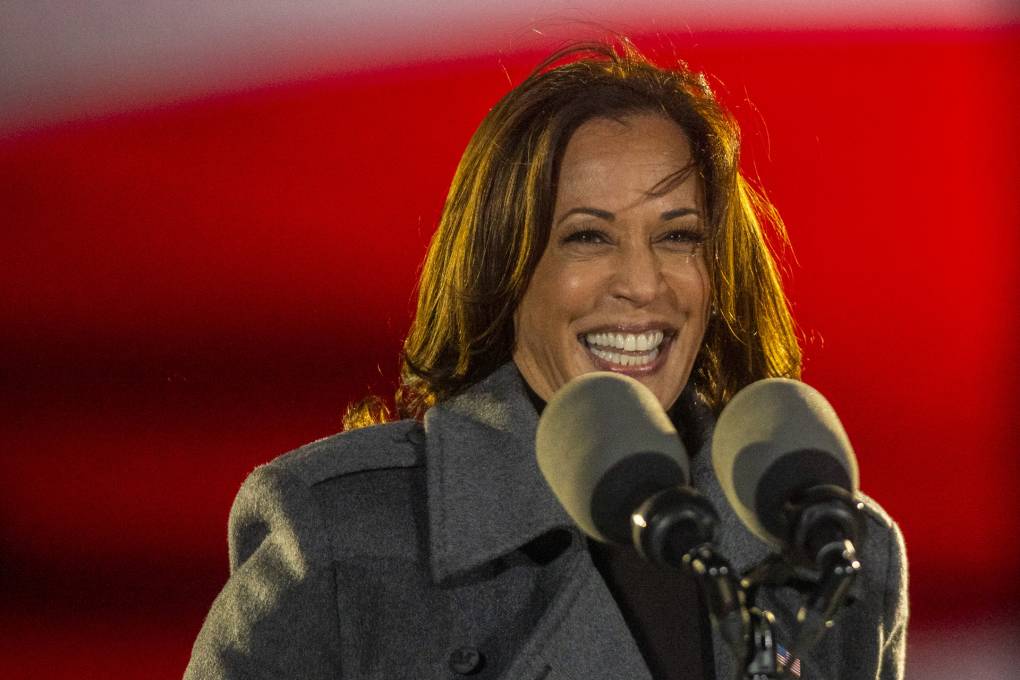
Browse all our stories on Vice President Kamala Harris, including archive coverage of her accomplishments — and controversies — during her time in Bay Area and California politics before 2020.
The Oakland-born, Berkeley-raised Harris was San Francisco district attorney from 2004–10, California attorney general from 2011–17 and United States senator for California from 2017–21. In 2020, she became the first woman, the first Black woman and the first South Asian woman to be elected to vice president.
As First Female Vice President-Elect, Kamala Harris Rewrites Script for Presidential Politics
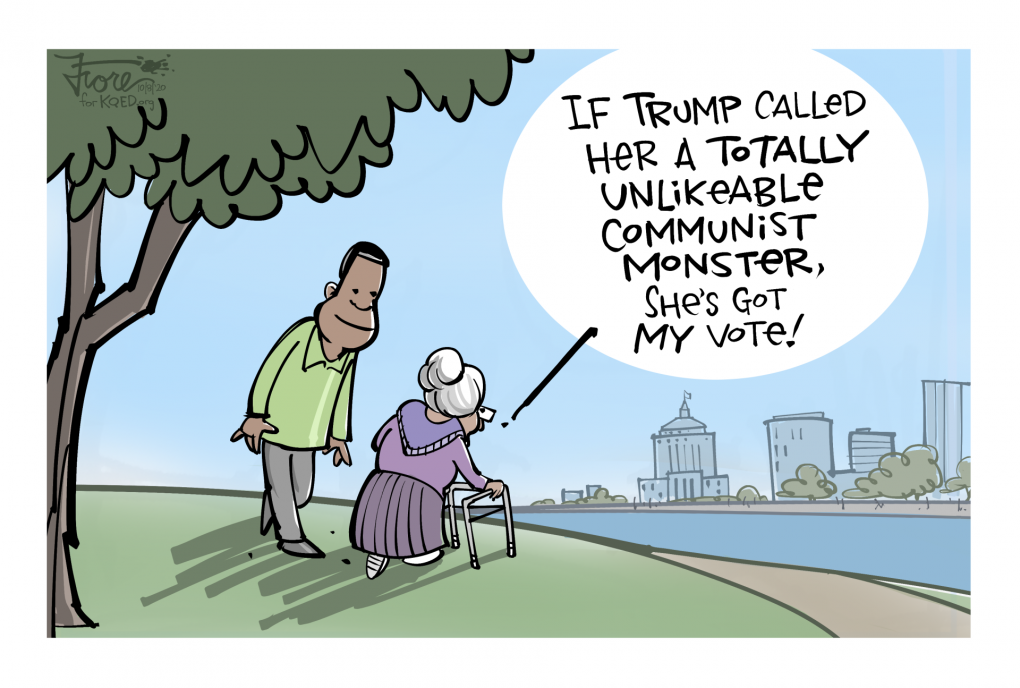
Opposites Repel
Four Takeaways from Kamala Harris' Vice Presidential Debate Performance
Trump's Illness and Biden’s Age Give Special Importance to VP Debate
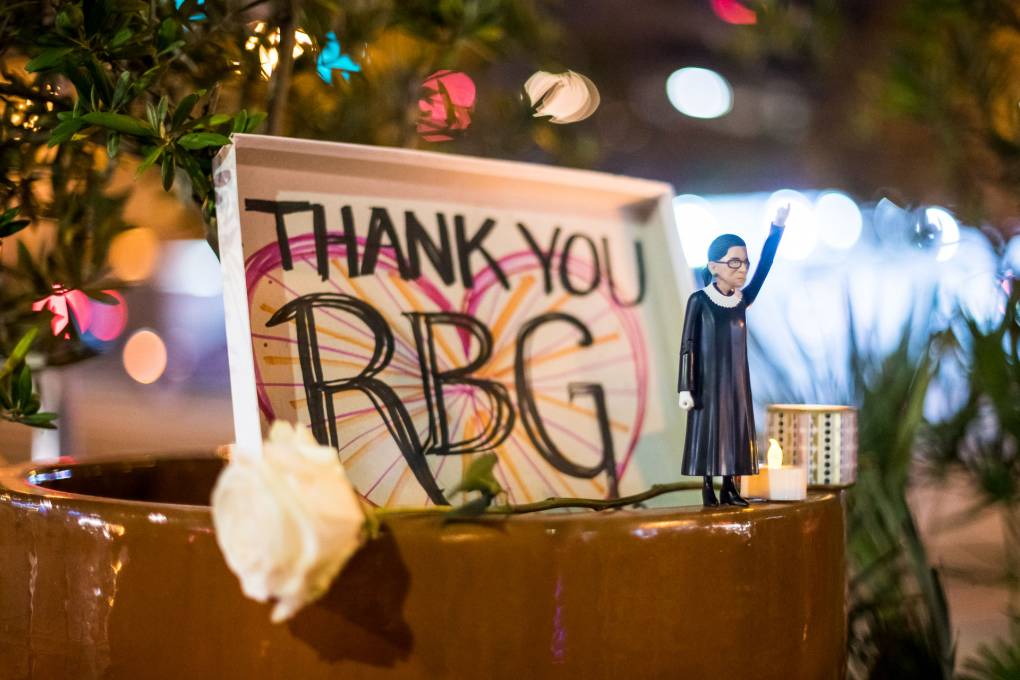
Ginsburg's Death Scrambles 2020 Election Politics
Kamala Harris And Her Husband Make Stop Outside The Supreme Court
'Won't Stand for It': Women of Color Prepare for Biased Attacks on Kamala Harris
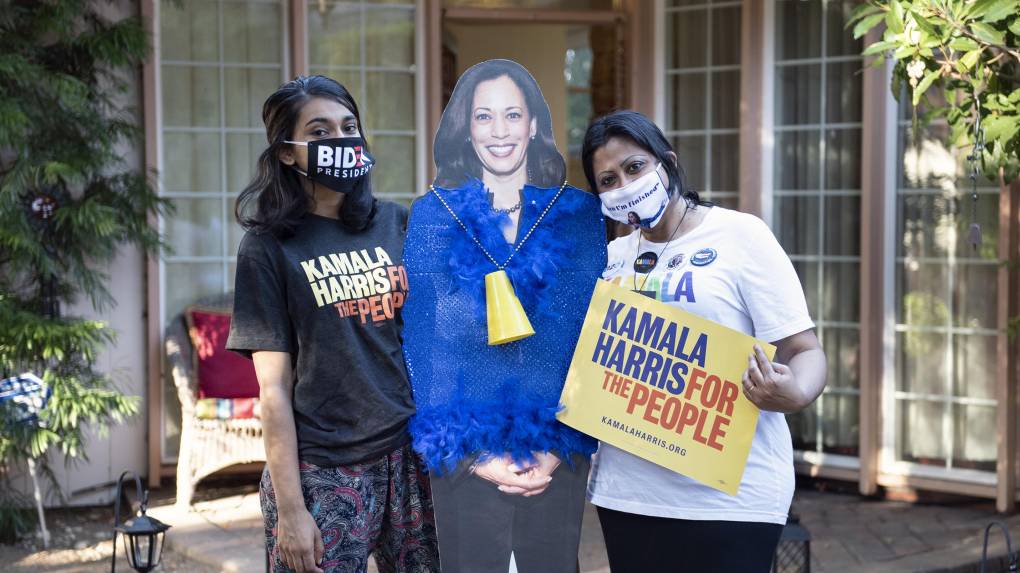
Kamala Harris' Identity Is a Complicated Discussion for Indian Americans
Kamala Harris Heads to Wisconsin to Campaign on Monday
Kamala Harris' Tricky Balancing Act Between Top Cop and Criminal Justice Reformer
U.S. Rep Adam Schiff, DNC Takeaways, Women Voting and Political Power
Senator Kamala Harris Takes Her Place in History as VP Nominee
window.__IS_SSR__=true
window.__INITIAL_STATE__={
"attachmentsReducer": {
"audio_0": {
"type": "attachments",
"id": "audio_0",
"imgSizes": {
"kqedFullSize": {
"file": "https://ww2.kqed.org/news/wp-content/themes/KQED-unified/img/audio_bgs/background0.jpg"
}
}
},
"audio_1": {
"type": "attachments",
"id": "audio_1",
"imgSizes": {
"kqedFullSize": {
"file": "https://ww2.kqed.org/news/wp-content/themes/KQED-unified/img/audio_bgs/background1.jpg"
}
}
},
"audio_2": {
"type": "attachments",
"id": "audio_2",
"imgSizes": {
"kqedFullSize": {
"file": "https://ww2.kqed.org/news/wp-content/themes/KQED-unified/img/audio_bgs/background2.jpg"
}
}
},
"audio_3": {
"type": "attachments",
"id": "audio_3",
"imgSizes": {
"kqedFullSize": {
"file": "https://ww2.kqed.org/news/wp-content/themes/KQED-unified/img/audio_bgs/background3.jpg"
}
}
},
"audio_4": {
"type": "attachments",
"id": "audio_4",
"imgSizes": {
"kqedFullSize": {
"file": "https://ww2.kqed.org/news/wp-content/themes/KQED-unified/img/audio_bgs/background4.jpg"
}
}
},
"placeholder": {
"type": "attachments",
"id": "placeholder",
"imgSizes": {
"thumbnail": {
"file": "https://cdn.kqed.org/wp-content/uploads/2024/12/KQED-Default-Image-816638274-2000x1333-1-160x107.jpg",
"width": 160,
"height": 107,
"mimeType": "image/jpeg"
},
"medium": {
"file": "https://cdn.kqed.org/wp-content/uploads/2024/12/KQED-Default-Image-816638274-2000x1333-1-800x533.jpg",
"width": 800,
"height": 533,
"mimeType": "image/jpeg"
},
"medium_large": {
"file": "https://cdn.kqed.org/wp-content/uploads/2024/12/KQED-Default-Image-816638274-2000x1333-1-768x512.jpg",
"width": 768,
"height": 512,
"mimeType": "image/jpeg"
},
"large": {
"file": "https://cdn.kqed.org/wp-content/uploads/2024/12/KQED-Default-Image-816638274-2000x1333-1-1020x680.jpg",
"width": 1020,
"height": 680,
"mimeType": "image/jpeg"
},
"1536x1536": {
"file": "https://cdn.kqed.org/wp-content/uploads/2024/12/KQED-Default-Image-816638274-2000x1333-1-1536x1024.jpg",
"width": 1536,
"height": 1024,
"mimeType": "image/jpeg"
},
"fd-lrg": {
"file": "https://cdn.kqed.org/wp-content/uploads/2024/12/KQED-Default-Image-816638274-2000x1333-1-1536x1024.jpg",
"width": 1536,
"height": 1024,
"mimeType": "image/jpeg"
},
"fd-med": {
"file": "https://cdn.kqed.org/wp-content/uploads/2024/12/KQED-Default-Image-816638274-2000x1333-1-1020x680.jpg",
"width": 1020,
"height": 680,
"mimeType": "image/jpeg"
},
"fd-sm": {
"file": "https://cdn.kqed.org/wp-content/uploads/2024/12/KQED-Default-Image-816638274-2000x1333-1-800x533.jpg",
"width": 800,
"height": 533,
"mimeType": "image/jpeg"
},
"post-thumbnail": {
"file": "https://cdn.kqed.org/wp-content/uploads/2024/12/KQED-Default-Image-816638274-2000x1333-1-672x372.jpg",
"width": 672,
"height": 372,
"mimeType": "image/jpeg"
},
"twentyfourteen-full-width": {
"file": "https://cdn.kqed.org/wp-content/uploads/2024/12/KQED-Default-Image-816638274-2000x1333-1-1038x576.jpg",
"width": 1038,
"height": 576,
"mimeType": "image/jpeg"
},
"xxsmall": {
"file": "https://cdn.kqed.org/wp-content/uploads/2024/12/KQED-Default-Image-816638274-2000x1333-1-160x107.jpg",
"width": 160,
"height": 107,
"mimeType": "image/jpeg"
},
"xsmall": {
"file": "https://cdn.kqed.org/wp-content/uploads/2024/12/KQED-Default-Image-816638274-2000x1333-1-672x372.jpg",
"width": 672,
"height": 372,
"mimeType": "image/jpeg"
},
"small": {
"file": "https://cdn.kqed.org/wp-content/uploads/2024/12/KQED-Default-Image-816638274-2000x1333-1-672x372.jpg",
"width": 672,
"height": 372,
"mimeType": "image/jpeg"
},
"xlarge": {
"file": "https://cdn.kqed.org/wp-content/uploads/2024/12/KQED-Default-Image-816638274-2000x1333-1-1020x680.jpg",
"width": 1020,
"height": 680,
"mimeType": "image/jpeg"
},
"full-width": {
"file": "https://cdn.kqed.org/wp-content/uploads/2024/12/KQED-Default-Image-816638274-2000x1333-1-1920x1280.jpg",
"width": 1920,
"height": 1280,
"mimeType": "image/jpeg"
},
"guest-author-32": {
"file": "https://cdn.kqed.org/wp-content/uploads/2025/01/KQED-Default-Image-816638274-1333x1333-1-160x160.jpg",
"width": 32,
"height": 32,
"mimeType": "image/jpeg"
},
"guest-author-50": {
"file": "https://cdn.kqed.org/wp-content/uploads/2025/01/KQED-Default-Image-816638274-1333x1333-1-160x160.jpg",
"width": 50,
"height": 50,
"mimeType": "image/jpeg"
},
"guest-author-64": {
"file": "https://cdn.kqed.org/wp-content/uploads/2025/01/KQED-Default-Image-816638274-1333x1333-1-160x160.jpg",
"width": 64,
"height": 64,
"mimeType": "image/jpeg"
},
"guest-author-96": {
"file": "https://cdn.kqed.org/wp-content/uploads/2025/01/KQED-Default-Image-816638274-1333x1333-1-160x160.jpg",
"width": 96,
"height": 96,
"mimeType": "image/jpeg"
},
"guest-author-128": {
"file": "https://cdn.kqed.org/wp-content/uploads/2025/01/KQED-Default-Image-816638274-1333x1333-1-160x160.jpg",
"width": 128,
"height": 128,
"mimeType": "image/jpeg"
},
"detail": {
"file": "https://cdn.kqed.org/wp-content/uploads/2025/01/KQED-Default-Image-816638274-1333x1333-1-160x160.jpg",
"width": 160,
"height": 160,
"mimeType": "image/jpeg"
},
"kqedFullSize": {
"file": "https://cdn.kqed.org/wp-content/uploads/2024/12/KQED-Default-Image-816638274-2000x1333-1.jpg",
"width": 2000,
"height": 1333
}
}
},
"news_11846037": {
"type": "attachments",
"id": "news_11846037",
"meta": {
"index": "attachments_1716263798",
"site": "news",
"id": "11846037",
"found": true
},
"parent": 11845298,
"imgSizes": {
"apple_news_ca_landscape_5_5": {
"file": "https://ww2.kqed.org/app/uploads/sites/10/2021/11/Kamala-Harris-1044x783.jpg",
"width": 1044,
"mimeType": "image/jpeg",
"height": 783
},
"apple_news_ca_square_4_0": {
"file": "https://ww2.kqed.org/app/uploads/sites/10/2021/11/Kamala-Harris-470x470.jpg",
"width": 470,
"mimeType": "image/jpeg",
"height": 470
},
"twentyfourteen-full-width": {
"file": "https://ww2.kqed.org/app/uploads/sites/10/2021/11/Kamala-Harris-1038x576.jpg",
"width": 1038,
"mimeType": "image/jpeg",
"height": 576
},
"thumbnail": {
"file": "https://ww2.kqed.org/app/uploads/sites/10/2021/11/Kamala-Harris-160x107.jpg",
"width": 160,
"mimeType": "image/jpeg",
"height": 107
},
"post-thumbnail": {
"file": "https://ww2.kqed.org/app/uploads/sites/10/2021/11/Kamala-Harris-672x372.jpg",
"width": 672,
"mimeType": "image/jpeg",
"height": 372
},
"kqedFullSize": {
"file": "https://ww2.kqed.org/app/uploads/sites/10/2021/11/Kamala-Harris.jpg",
"width": 1920,
"height": 1280
},
"apple_news_ca_landscape_4_7": {
"file": "https://ww2.kqed.org/app/uploads/sites/10/2021/11/Kamala-Harris-632x474.jpg",
"width": 632,
"mimeType": "image/jpeg",
"height": 474
},
"large": {
"file": "https://ww2.kqed.org/app/uploads/sites/10/2021/11/Kamala-Harris-1020x680.jpg",
"width": 1020,
"mimeType": "image/jpeg",
"height": 680
},
"apple_news_ca_landscape_4_0": {
"file": "https://ww2.kqed.org/app/uploads/sites/10/2021/11/Kamala-Harris-536x402.jpg",
"width": 536,
"mimeType": "image/jpeg",
"height": 402
},
"apple_news_ca_portrait_12_9": {
"file": "https://ww2.kqed.org/app/uploads/sites/10/2021/11/Kamala-Harris-1122x1280.jpg",
"width": 1122,
"mimeType": "image/jpeg",
"height": 1280
},
"medium": {
"file": "https://ww2.kqed.org/app/uploads/sites/10/2021/11/Kamala-Harris-800x533.jpg",
"width": 800,
"mimeType": "image/jpeg",
"height": 533
},
"apple_news_ca_portrait_4_0": {
"file": "https://ww2.kqed.org/app/uploads/sites/10/2021/11/Kamala-Harris-354x472.jpg",
"width": 354,
"mimeType": "image/jpeg",
"height": 472
},
"apple_news_ca_portrait_9_7": {
"file": "https://ww2.kqed.org/app/uploads/sites/10/2021/11/Kamala-Harris-840x1120.jpg",
"width": 840,
"mimeType": "image/jpeg",
"height": 1120
},
"apple_news_ca_landscape_12_9": {
"file": "https://ww2.kqed.org/app/uploads/sites/10/2021/11/Kamala-Harris-1832x1280.jpg",
"width": 1832,
"mimeType": "image/jpeg",
"height": 1280
},
"apple_news_ca_square_9_7": {
"file": "https://ww2.kqed.org/app/uploads/sites/10/2021/11/Kamala-Harris-1104x1104.jpg",
"width": 1104,
"mimeType": "image/jpeg",
"height": 1104
},
"1536x1536": {
"file": "https://ww2.kqed.org/app/uploads/sites/10/2021/11/Kamala-Harris-1536x1024.jpg",
"width": 1536,
"mimeType": "image/jpeg",
"height": 1024
},
"apple_news_ca_portrait_4_7": {
"file": "https://ww2.kqed.org/app/uploads/sites/10/2021/11/Kamala-Harris-414x552.jpg",
"width": 414,
"mimeType": "image/jpeg",
"height": 552
},
"apple_news_ca_square_12_9": {
"file": "https://ww2.kqed.org/app/uploads/sites/10/2021/11/Kamala-Harris-1472x1280.jpg",
"width": 1472,
"mimeType": "image/jpeg",
"height": 1280
},
"apple_news_ca_portrait_5_5": {
"file": "https://ww2.kqed.org/app/uploads/sites/10/2021/11/Kamala-Harris-687x916.jpg",
"width": 687,
"mimeType": "image/jpeg",
"height": 916
},
"apple_news_ca_square_4_7": {
"file": "https://ww2.kqed.org/app/uploads/sites/10/2021/11/Kamala-Harris-550x550.jpg",
"width": 550,
"mimeType": "image/jpeg",
"height": 550
},
"apple_news_ca_landscape_9_7": {
"file": "https://ww2.kqed.org/app/uploads/sites/10/2021/11/Kamala-Harris-1376x1032.jpg",
"width": 1376,
"mimeType": "image/jpeg",
"height": 1032
},
"apple_news_ca_square_5_5": {
"file": "https://ww2.kqed.org/app/uploads/sites/10/2021/11/Kamala-Harris-912x912.jpg",
"width": 912,
"mimeType": "image/jpeg",
"height": 912
}
},
"publishDate": 1604619235,
"modified": 1604619326,
"caption": "Vice President-Elect Kamala Harris at a Philadelphia rally on Nov. 2, 2020.",
"description": "Vice President-Elect Kamala Harris at a Philadelphia rally on Nov. 2, 2020.",
"title": "Kamala Harris Campaigns In Pennsylvania On Eve Of Election Day",
"credit": "Mark Makela/Getty Images",
"status": "inherit",
"isLoading": false,
"fetchFailed": false
},
"news_11841572": {
"type": "attachments",
"id": "news_11841572",
"meta": {
"index": "attachments_1716263798",
"site": "news",
"id": "11841572",
"found": true
},
"parent": 11841566,
"imgSizes": {
"apple_news_ca_landscape_5_5": {
"file": "https://ww2.kqed.org/app/uploads/sites/10/2020/10/monster_100820_final-1044x783.png",
"width": 1044,
"mimeType": "image/png",
"height": 783
},
"apple_news_ca_square_4_0": {
"file": "https://ww2.kqed.org/app/uploads/sites/10/2020/10/monster_100820_final-470x470.png",
"width": 470,
"mimeType": "image/png",
"height": 470
},
"twentyfourteen-full-width": {
"file": "https://ww2.kqed.org/app/uploads/sites/10/2020/10/monster_100820_final-1038x576.png",
"width": 1038,
"mimeType": "image/png",
"height": 576
},
"thumbnail": {
"file": "https://ww2.kqed.org/app/uploads/sites/10/2020/10/monster_100820_final-160x108.png",
"width": 160,
"mimeType": "image/png",
"height": 108
},
"post-thumbnail": {
"file": "https://ww2.kqed.org/app/uploads/sites/10/2020/10/monster_100820_final-672x372.png",
"width": 672,
"mimeType": "image/png",
"height": 372
},
"kqedFullSize": {
"file": "https://ww2.kqed.org/app/uploads/sites/10/2020/10/monster_100820_final.png",
"width": 1920,
"height": 1295
},
"apple_news_ca_landscape_4_7": {
"file": "https://ww2.kqed.org/app/uploads/sites/10/2020/10/monster_100820_final-632x474.png",
"width": 632,
"mimeType": "image/png",
"height": 474
},
"large": {
"file": "https://ww2.kqed.org/app/uploads/sites/10/2020/10/monster_100820_final-1020x688.png",
"width": 1020,
"mimeType": "image/png",
"height": 688
},
"apple_news_ca_landscape_4_0": {
"file": "https://ww2.kqed.org/app/uploads/sites/10/2020/10/monster_100820_final-536x402.png",
"width": 536,
"mimeType": "image/png",
"height": 402
},
"apple_news_ca_portrait_12_9": {
"file": "https://ww2.kqed.org/app/uploads/sites/10/2020/10/monster_100820_final-1122x1295.png",
"width": 1122,
"mimeType": "image/png",
"height": 1295
},
"medium": {
"file": "https://ww2.kqed.org/app/uploads/sites/10/2020/10/monster_100820_final-800x540.png",
"width": 800,
"mimeType": "image/png",
"height": 540
},
"apple_news_ca_portrait_4_0": {
"file": "https://ww2.kqed.org/app/uploads/sites/10/2020/10/monster_100820_final-354x472.png",
"width": 354,
"mimeType": "image/png",
"height": 472
},
"apple_news_ca_portrait_9_7": {
"file": "https://ww2.kqed.org/app/uploads/sites/10/2020/10/monster_100820_final-840x1120.png",
"width": 840,
"mimeType": "image/png",
"height": 1120
},
"apple_news_ca_landscape_12_9": {
"file": "https://ww2.kqed.org/app/uploads/sites/10/2020/10/monster_100820_final-1832x1295.png",
"width": 1832,
"mimeType": "image/png",
"height": 1295
},
"apple_news_ca_square_9_7": {
"file": "https://ww2.kqed.org/app/uploads/sites/10/2020/10/monster_100820_final-1104x1104.png",
"width": 1104,
"mimeType": "image/png",
"height": 1104
},
"1536x1536": {
"file": "https://ww2.kqed.org/app/uploads/sites/10/2020/10/monster_100820_final-1536x1036.png",
"width": 1536,
"mimeType": "image/png",
"height": 1036
},
"apple_news_ca_portrait_4_7": {
"file": "https://ww2.kqed.org/app/uploads/sites/10/2020/10/monster_100820_final-414x552.png",
"width": 414,
"mimeType": "image/png",
"height": 552
},
"apple_news_ca_square_12_9": {
"file": "https://ww2.kqed.org/app/uploads/sites/10/2020/10/monster_100820_final-1472x1295.png",
"width": 1472,
"mimeType": "image/png",
"height": 1295
},
"apple_news_ca_portrait_5_5": {
"file": "https://ww2.kqed.org/app/uploads/sites/10/2020/10/monster_100820_final-687x916.png",
"width": 687,
"mimeType": "image/png",
"height": 916
},
"apple_news_ca_square_4_7": {
"file": "https://ww2.kqed.org/app/uploads/sites/10/2020/10/monster_100820_final-550x550.png",
"width": 550,
"mimeType": "image/png",
"height": 550
},
"apple_news_ca_landscape_9_7": {
"file": "https://ww2.kqed.org/app/uploads/sites/10/2020/10/monster_100820_final-1376x1032.png",
"width": 1376,
"mimeType": "image/png",
"height": 1032
},
"apple_news_ca_square_5_5": {
"file": "https://ww2.kqed.org/app/uploads/sites/10/2020/10/monster_100820_final-912x912.png",
"width": 912,
"mimeType": "image/png",
"height": 912
}
},
"publishDate": 1602195417,
"modified": 1602195452,
"caption": null,
"description": null,
"title": "monster_100820_final",
"credit": null,
"status": "inherit",
"isLoading": false,
"fetchFailed": false
},
"news_11841526": {
"type": "attachments",
"id": "news_11841526",
"meta": {
"index": "attachments_1716263798",
"site": "news",
"id": "11841526",
"found": true
},
"parent": 11841514,
"imgSizes": {
"apple_news_ca_landscape_5_5": {
"file": "https://ww2.kqed.org/app/uploads/sites/10/2020/10/RS45252_GettyImages-1228948469-qut-1044x783.jpg",
"width": 1044,
"mimeType": "image/jpeg",
"height": 783
},
"apple_news_ca_square_4_0": {
"file": "https://ww2.kqed.org/app/uploads/sites/10/2020/10/RS45252_GettyImages-1228948469-qut-470x470.jpg",
"width": 470,
"mimeType": "image/jpeg",
"height": 470
},
"twentyfourteen-full-width": {
"file": "https://ww2.kqed.org/app/uploads/sites/10/2020/10/RS45252_GettyImages-1228948469-qut-1038x576.jpg",
"width": 1038,
"mimeType": "image/jpeg",
"height": 576
},
"thumbnail": {
"file": "https://ww2.kqed.org/app/uploads/sites/10/2020/10/RS45252_GettyImages-1228948469-qut-160x107.jpg",
"width": 160,
"mimeType": "image/jpeg",
"height": 107
},
"post-thumbnail": {
"file": "https://ww2.kqed.org/app/uploads/sites/10/2020/10/RS45252_GettyImages-1228948469-qut-672x372.jpg",
"width": 672,
"mimeType": "image/jpeg",
"height": 372
},
"kqedFullSize": {
"file": "https://ww2.kqed.org/app/uploads/sites/10/2020/10/RS45252_GettyImages-1228948469-qut.jpg",
"width": 1920,
"height": 1281
},
"apple_news_ca_landscape_4_7": {
"file": "https://ww2.kqed.org/app/uploads/sites/10/2020/10/RS45252_GettyImages-1228948469-qut-632x474.jpg",
"width": 632,
"mimeType": "image/jpeg",
"height": 474
},
"large": {
"file": "https://ww2.kqed.org/app/uploads/sites/10/2020/10/RS45252_GettyImages-1228948469-qut-1020x681.jpg",
"width": 1020,
"mimeType": "image/jpeg",
"height": 681
},
"apple_news_ca_landscape_4_0": {
"file": "https://ww2.kqed.org/app/uploads/sites/10/2020/10/RS45252_GettyImages-1228948469-qut-536x402.jpg",
"width": 536,
"mimeType": "image/jpeg",
"height": 402
},
"apple_news_ca_portrait_12_9": {
"file": "https://ww2.kqed.org/app/uploads/sites/10/2020/10/RS45252_GettyImages-1228948469-qut-1122x1281.jpg",
"width": 1122,
"mimeType": "image/jpeg",
"height": 1281
},
"medium": {
"file": "https://ww2.kqed.org/app/uploads/sites/10/2020/10/RS45252_GettyImages-1228948469-qut-800x534.jpg",
"width": 800,
"mimeType": "image/jpeg",
"height": 534
},
"apple_news_ca_portrait_4_0": {
"file": "https://ww2.kqed.org/app/uploads/sites/10/2020/10/RS45252_GettyImages-1228948469-qut-354x472.jpg",
"width": 354,
"mimeType": "image/jpeg",
"height": 472
},
"apple_news_ca_portrait_9_7": {
"file": "https://ww2.kqed.org/app/uploads/sites/10/2020/10/RS45252_GettyImages-1228948469-qut-840x1120.jpg",
"width": 840,
"mimeType": "image/jpeg",
"height": 1120
},
"apple_news_ca_landscape_12_9": {
"file": "https://ww2.kqed.org/app/uploads/sites/10/2020/10/RS45252_GettyImages-1228948469-qut-1832x1281.jpg",
"width": 1832,
"mimeType": "image/jpeg",
"height": 1281
},
"apple_news_ca_square_9_7": {
"file": "https://ww2.kqed.org/app/uploads/sites/10/2020/10/RS45252_GettyImages-1228948469-qut-1104x1104.jpg",
"width": 1104,
"mimeType": "image/jpeg",
"height": 1104
},
"1536x1536": {
"file": "https://ww2.kqed.org/app/uploads/sites/10/2020/10/RS45252_GettyImages-1228948469-qut-1536x1025.jpg",
"width": 1536,
"mimeType": "image/jpeg",
"height": 1025
},
"apple_news_ca_portrait_4_7": {
"file": "https://ww2.kqed.org/app/uploads/sites/10/2020/10/RS45252_GettyImages-1228948469-qut-414x552.jpg",
"width": 414,
"mimeType": "image/jpeg",
"height": 552
},
"apple_news_ca_square_12_9": {
"file": "https://ww2.kqed.org/app/uploads/sites/10/2020/10/RS45252_GettyImages-1228948469-qut-1472x1281.jpg",
"width": 1472,
"mimeType": "image/jpeg",
"height": 1281
},
"apple_news_ca_portrait_5_5": {
"file": "https://ww2.kqed.org/app/uploads/sites/10/2020/10/RS45252_GettyImages-1228948469-qut-687x916.jpg",
"width": 687,
"mimeType": "image/jpeg",
"height": 916
},
"apple_news_ca_square_4_7": {
"file": "https://ww2.kqed.org/app/uploads/sites/10/2020/10/RS45252_GettyImages-1228948469-qut-550x550.jpg",
"width": 550,
"mimeType": "image/jpeg",
"height": 550
},
"apple_news_ca_landscape_9_7": {
"file": "https://ww2.kqed.org/app/uploads/sites/10/2020/10/RS45252_GettyImages-1228948469-qut-1376x1032.jpg",
"width": 1376,
"mimeType": "image/jpeg",
"height": 1032
},
"apple_news_ca_square_5_5": {
"file": "https://ww2.kqed.org/app/uploads/sites/10/2020/10/RS45252_GettyImages-1228948469-qut-912x912.jpg",
"width": 912,
"mimeType": "image/jpeg",
"height": 912
}
},
"publishDate": 1602131435,
"modified": 1602131504,
"caption": "US Vice President Mike Pence (L), US Democratic vice presidential nominee and Senator from California, Kamala Harris (R), moderator Washington Bureau Chief for USA Today Susan Page (C), participate in the vice presidential debate in Kingsbury Hall of the University of Utah October 7, 2020 in Salt Lake City, Utah. ",
"description": "US Vice President Mike Pence (L), US Democratic vice presidential nominee and Senator from California, Kamala Harris (R), moderator Washington Bureau Chief for USA Today Susan Page (C), participate in the vice presidential debate in Kingsbury Hall of the University of Utah October 7, 2020 in Salt Lake City, Utah. ",
"title": "US-VOTE-DEBATE",
"credit": "JUSTIN SULLIVAN/POOL/AFP via Getty Images",
"status": "inherit",
"isLoading": false,
"fetchFailed": false
},
"news_11841306": {
"type": "attachments",
"id": "news_11841306",
"meta": {
"index": "attachments_1716263798",
"site": "news",
"id": "11841306",
"found": true
},
"parent": 11841212,
"imgSizes": {
"apple_news_ca_landscape_5_5": {
"file": "https://ww2.kqed.org/app/uploads/sites/10/2020/10/GettyImages-1278830427-1044x783.jpg",
"width": 1044,
"mimeType": "image/jpeg",
"height": 783
},
"apple_news_ca_square_4_0": {
"file": "https://ww2.kqed.org/app/uploads/sites/10/2020/10/GettyImages-1278830427-470x470.jpg",
"width": 470,
"mimeType": "image/jpeg",
"height": 470
},
"twentyfourteen-full-width": {
"file": "https://ww2.kqed.org/app/uploads/sites/10/2020/10/GettyImages-1278830427-1038x576.jpg",
"width": 1038,
"mimeType": "image/jpeg",
"height": 576
},
"thumbnail": {
"file": "https://ww2.kqed.org/app/uploads/sites/10/2020/10/GettyImages-1278830427-160x107.jpg",
"width": 160,
"mimeType": "image/jpeg",
"height": 107
},
"post-thumbnail": {
"file": "https://ww2.kqed.org/app/uploads/sites/10/2020/10/GettyImages-1278830427-672x372.jpg",
"width": 672,
"mimeType": "image/jpeg",
"height": 372
},
"kqedFullSize": {
"file": "https://ww2.kqed.org/app/uploads/sites/10/2020/10/GettyImages-1278830427.jpg",
"width": 1920,
"height": 1281
},
"apple_news_ca_landscape_4_7": {
"file": "https://ww2.kqed.org/app/uploads/sites/10/2020/10/GettyImages-1278830427-632x474.jpg",
"width": 632,
"mimeType": "image/jpeg",
"height": 474
},
"large": {
"file": "https://ww2.kqed.org/app/uploads/sites/10/2020/10/GettyImages-1278830427-1020x681.jpg",
"width": 1020,
"mimeType": "image/jpeg",
"height": 681
},
"apple_news_ca_landscape_4_0": {
"file": "https://ww2.kqed.org/app/uploads/sites/10/2020/10/GettyImages-1278830427-536x402.jpg",
"width": 536,
"mimeType": "image/jpeg",
"height": 402
},
"apple_news_ca_portrait_12_9": {
"file": "https://ww2.kqed.org/app/uploads/sites/10/2020/10/GettyImages-1278830427-1122x1281.jpg",
"width": 1122,
"mimeType": "image/jpeg",
"height": 1281
},
"medium": {
"file": "https://ww2.kqed.org/app/uploads/sites/10/2020/10/GettyImages-1278830427-800x534.jpg",
"width": 800,
"mimeType": "image/jpeg",
"height": 534
},
"apple_news_ca_portrait_4_0": {
"file": "https://ww2.kqed.org/app/uploads/sites/10/2020/10/GettyImages-1278830427-354x472.jpg",
"width": 354,
"mimeType": "image/jpeg",
"height": 472
},
"apple_news_ca_portrait_9_7": {
"file": "https://ww2.kqed.org/app/uploads/sites/10/2020/10/GettyImages-1278830427-840x1120.jpg",
"width": 840,
"mimeType": "image/jpeg",
"height": 1120
},
"apple_news_ca_landscape_12_9": {
"file": "https://ww2.kqed.org/app/uploads/sites/10/2020/10/GettyImages-1278830427-1832x1281.jpg",
"width": 1832,
"mimeType": "image/jpeg",
"height": 1281
},
"apple_news_ca_square_9_7": {
"file": "https://ww2.kqed.org/app/uploads/sites/10/2020/10/GettyImages-1278830427-1104x1104.jpg",
"width": 1104,
"mimeType": "image/jpeg",
"height": 1104
},
"1536x1536": {
"file": "https://ww2.kqed.org/app/uploads/sites/10/2020/10/GettyImages-1278830427-1536x1025.jpg",
"width": 1536,
"mimeType": "image/jpeg",
"height": 1025
},
"apple_news_ca_portrait_4_7": {
"file": "https://ww2.kqed.org/app/uploads/sites/10/2020/10/GettyImages-1278830427-414x552.jpg",
"width": 414,
"mimeType": "image/jpeg",
"height": 552
},
"apple_news_ca_square_12_9": {
"file": "https://ww2.kqed.org/app/uploads/sites/10/2020/10/GettyImages-1278830427-1472x1281.jpg",
"width": 1472,
"mimeType": "image/jpeg",
"height": 1281
},
"apple_news_ca_portrait_5_5": {
"file": "https://ww2.kqed.org/app/uploads/sites/10/2020/10/GettyImages-1278830427-687x916.jpg",
"width": 687,
"mimeType": "image/jpeg",
"height": 916
},
"apple_news_ca_square_4_7": {
"file": "https://ww2.kqed.org/app/uploads/sites/10/2020/10/GettyImages-1278830427-550x550.jpg",
"width": 550,
"mimeType": "image/jpeg",
"height": 550
},
"apple_news_ca_landscape_9_7": {
"file": "https://ww2.kqed.org/app/uploads/sites/10/2020/10/GettyImages-1278830427-1376x1032.jpg",
"width": 1376,
"mimeType": "image/jpeg",
"height": 1032
},
"apple_news_ca_square_5_5": {
"file": "https://ww2.kqed.org/app/uploads/sites/10/2020/10/GettyImages-1278830427-912x912.jpg",
"width": 912,
"mimeType": "image/jpeg",
"height": 912
}
},
"publishDate": 1602027351,
"modified": 1602027431,
"caption": "A worker stands next to a sign outside of Kingsbury Hall ahead of the Vice Presidential debate at the University of Utah on October 06, 2020 in Salt Lake City, Utah.",
"description": "A worker stands next to a sign outside of Kingsbury Hall ahead of the Vice Presidential debate at the University of Utah on October 06, 2020 in Salt Lake City, Utah.",
"title": "Salt Lake City Prepares For Vice Presidential Debate",
"credit": "Justin Sullivan/Getty Images",
"status": "inherit",
"isLoading": false,
"fetchFailed": false
},
"news_11838872": {
"type": "attachments",
"id": "news_11838872",
"meta": {
"index": "attachments_1716263798",
"site": "news",
"id": "11838872",
"found": true
},
"parent": 11838859,
"imgSizes": {
"apple_news_ca_landscape_5_5": {
"file": "https://ww2.kqed.org/app/uploads/sites/10/2020/09/027_KQED_SanFrancisco_RGBVigil_09182020-1-1044x783.jpg",
"width": 1044,
"mimeType": "image/jpeg",
"height": 783
},
"apple_news_ca_square_4_0": {
"file": "https://ww2.kqed.org/app/uploads/sites/10/2020/09/027_KQED_SanFrancisco_RGBVigil_09182020-1-470x470.jpg",
"width": 470,
"mimeType": "image/jpeg",
"height": 470
},
"twentyfourteen-full-width": {
"file": "https://ww2.kqed.org/app/uploads/sites/10/2020/09/027_KQED_SanFrancisco_RGBVigil_09182020-1-1038x576.jpg",
"width": 1038,
"mimeType": "image/jpeg",
"height": 576
},
"thumbnail": {
"file": "https://ww2.kqed.org/app/uploads/sites/10/2020/09/027_KQED_SanFrancisco_RGBVigil_09182020-1-160x107.jpg",
"width": 160,
"mimeType": "image/jpeg",
"height": 107
},
"post-thumbnail": {
"file": "https://ww2.kqed.org/app/uploads/sites/10/2020/09/027_KQED_SanFrancisco_RGBVigil_09182020-1-672x372.jpg",
"width": 672,
"mimeType": "image/jpeg",
"height": 372
},
"kqedFullSize": {
"file": "https://ww2.kqed.org/app/uploads/sites/10/2020/09/027_KQED_SanFrancisco_RGBVigil_09182020-1.jpg",
"width": 1920,
"height": 1280
},
"apple_news_ca_landscape_4_7": {
"file": "https://ww2.kqed.org/app/uploads/sites/10/2020/09/027_KQED_SanFrancisco_RGBVigil_09182020-1-632x474.jpg",
"width": 632,
"mimeType": "image/jpeg",
"height": 474
},
"large": {
"file": "https://ww2.kqed.org/app/uploads/sites/10/2020/09/027_KQED_SanFrancisco_RGBVigil_09182020-1-1020x680.jpg",
"width": 1020,
"mimeType": "image/jpeg",
"height": 680
},
"apple_news_ca_landscape_4_0": {
"file": "https://ww2.kqed.org/app/uploads/sites/10/2020/09/027_KQED_SanFrancisco_RGBVigil_09182020-1-536x402.jpg",
"width": 536,
"mimeType": "image/jpeg",
"height": 402
},
"apple_news_ca_portrait_12_9": {
"file": "https://ww2.kqed.org/app/uploads/sites/10/2020/09/027_KQED_SanFrancisco_RGBVigil_09182020-1-1122x1280.jpg",
"width": 1122,
"mimeType": "image/jpeg",
"height": 1280
},
"medium": {
"file": "https://ww2.kqed.org/app/uploads/sites/10/2020/09/027_KQED_SanFrancisco_RGBVigil_09182020-1-800x533.jpg",
"width": 800,
"mimeType": "image/jpeg",
"height": 533
},
"apple_news_ca_portrait_4_0": {
"file": "https://ww2.kqed.org/app/uploads/sites/10/2020/09/027_KQED_SanFrancisco_RGBVigil_09182020-1-354x472.jpg",
"width": 354,
"mimeType": "image/jpeg",
"height": 472
},
"apple_news_ca_portrait_9_7": {
"file": "https://ww2.kqed.org/app/uploads/sites/10/2020/09/027_KQED_SanFrancisco_RGBVigil_09182020-1-840x1120.jpg",
"width": 840,
"mimeType": "image/jpeg",
"height": 1120
},
"apple_news_ca_landscape_12_9": {
"file": "https://ww2.kqed.org/app/uploads/sites/10/2020/09/027_KQED_SanFrancisco_RGBVigil_09182020-1-1832x1280.jpg",
"width": 1832,
"mimeType": "image/jpeg",
"height": 1280
},
"apple_news_ca_square_9_7": {
"file": "https://ww2.kqed.org/app/uploads/sites/10/2020/09/027_KQED_SanFrancisco_RGBVigil_09182020-1-1104x1104.jpg",
"width": 1104,
"mimeType": "image/jpeg",
"height": 1104
},
"1536x1536": {
"file": "https://ww2.kqed.org/app/uploads/sites/10/2020/09/027_KQED_SanFrancisco_RGBVigil_09182020-1-1536x1024.jpg",
"width": 1536,
"mimeType": "image/jpeg",
"height": 1024
},
"apple_news_ca_portrait_4_7": {
"file": "https://ww2.kqed.org/app/uploads/sites/10/2020/09/027_KQED_SanFrancisco_RGBVigil_09182020-1-414x552.jpg",
"width": 414,
"mimeType": "image/jpeg",
"height": 552
},
"apple_news_ca_square_12_9": {
"file": "https://ww2.kqed.org/app/uploads/sites/10/2020/09/027_KQED_SanFrancisco_RGBVigil_09182020-1-1472x1280.jpg",
"width": 1472,
"mimeType": "image/jpeg",
"height": 1280
},
"apple_news_ca_portrait_5_5": {
"file": "https://ww2.kqed.org/app/uploads/sites/10/2020/09/027_KQED_SanFrancisco_RGBVigil_09182020-1-687x916.jpg",
"width": 687,
"mimeType": "image/jpeg",
"height": 916
},
"apple_news_ca_square_4_7": {
"file": "https://ww2.kqed.org/app/uploads/sites/10/2020/09/027_KQED_SanFrancisco_RGBVigil_09182020-1-550x550.jpg",
"width": 550,
"mimeType": "image/jpeg",
"height": 550
},
"apple_news_ca_landscape_9_7": {
"file": "https://ww2.kqed.org/app/uploads/sites/10/2020/09/027_KQED_SanFrancisco_RGBVigil_09182020-1-1376x1032.jpg",
"width": 1376,
"mimeType": "image/jpeg",
"height": 1032
},
"apple_news_ca_square_5_5": {
"file": "https://ww2.kqed.org/app/uploads/sites/10/2020/09/027_KQED_SanFrancisco_RGBVigil_09182020-1-912x912.jpg",
"width": 912,
"mimeType": "image/jpeg",
"height": 912
}
},
"publishDate": 1600495594,
"modified": 1600712766,
"caption": "Betty Doerr brought her Justice Ruth Bader Ginsburg figurine that she bought at Cliff's Variety to the candlelit vigil in Ginsburg's honor on Sept. 18, 2020. ",
"description": null,
"title": "027_KQED_SanFrancisco_RGBVigil_09182020-(1)",
"credit": "Beth LaBerge/KQED",
"status": "inherit",
"isLoading": false,
"fetchFailed": false
},
"news_11838888": {
"type": "attachments",
"id": "news_11838888",
"meta": {
"index": "attachments_1716263798",
"site": "news",
"id": "11838888",
"found": true
},
"parent": 11838886,
"imgSizes": {
"apple_news_ca_landscape_5_5": {
"file": "https://ww2.kqed.org/app/uploads/sites/10/2020/09/GettyImages-1228590280-1-1044x783.jpg",
"width": 1044,
"mimeType": "image/jpeg",
"height": 783
},
"apple_news_ca_square_4_0": {
"file": "https://ww2.kqed.org/app/uploads/sites/10/2020/09/GettyImages-1228590280-1-470x470.jpg",
"width": 470,
"mimeType": "image/jpeg",
"height": 470
},
"twentyfourteen-full-width": {
"file": "https://ww2.kqed.org/app/uploads/sites/10/2020/09/GettyImages-1228590280-1-1038x576.jpg",
"width": 1038,
"mimeType": "image/jpeg",
"height": 576
},
"thumbnail": {
"file": "https://ww2.kqed.org/app/uploads/sites/10/2020/09/GettyImages-1228590280-1-160x110.jpg",
"width": 160,
"mimeType": "image/jpeg",
"height": 110
},
"post-thumbnail": {
"file": "https://ww2.kqed.org/app/uploads/sites/10/2020/09/GettyImages-1228590280-1-672x372.jpg",
"width": 672,
"mimeType": "image/jpeg",
"height": 372
},
"kqedFullSize": {
"file": "https://ww2.kqed.org/app/uploads/sites/10/2020/09/GettyImages-1228590280-1.jpg",
"width": 1900,
"height": 1303
},
"apple_news_ca_landscape_4_7": {
"file": "https://ww2.kqed.org/app/uploads/sites/10/2020/09/GettyImages-1228590280-1-632x474.jpg",
"width": 632,
"mimeType": "image/jpeg",
"height": 474
},
"large": {
"file": "https://ww2.kqed.org/app/uploads/sites/10/2020/09/GettyImages-1228590280-1-1020x700.jpg",
"width": 1020,
"mimeType": "image/jpeg",
"height": 700
},
"apple_news_ca_landscape_4_0": {
"file": "https://ww2.kqed.org/app/uploads/sites/10/2020/09/GettyImages-1228590280-1-536x402.jpg",
"width": 536,
"mimeType": "image/jpeg",
"height": 402
},
"apple_news_ca_portrait_12_9": {
"file": "https://ww2.kqed.org/app/uploads/sites/10/2020/09/GettyImages-1228590280-1-1122x1303.jpg",
"width": 1122,
"mimeType": "image/jpeg",
"height": 1303
},
"medium": {
"file": "https://ww2.kqed.org/app/uploads/sites/10/2020/09/GettyImages-1228590280-1-800x549.jpg",
"width": 800,
"mimeType": "image/jpeg",
"height": 549
},
"apple_news_ca_portrait_4_0": {
"file": "https://ww2.kqed.org/app/uploads/sites/10/2020/09/GettyImages-1228590280-1-354x472.jpg",
"width": 354,
"mimeType": "image/jpeg",
"height": 472
},
"apple_news_ca_portrait_9_7": {
"file": "https://ww2.kqed.org/app/uploads/sites/10/2020/09/GettyImages-1228590280-1-840x1120.jpg",
"width": 840,
"mimeType": "image/jpeg",
"height": 1120
},
"apple_news_ca_landscape_12_9": {
"file": "https://ww2.kqed.org/app/uploads/sites/10/2020/09/GettyImages-1228590280-1-1832x1303.jpg",
"width": 1832,
"mimeType": "image/jpeg",
"height": 1303
},
"apple_news_ca_square_9_7": {
"file": "https://ww2.kqed.org/app/uploads/sites/10/2020/09/GettyImages-1228590280-1-1104x1104.jpg",
"width": 1104,
"mimeType": "image/jpeg",
"height": 1104
},
"1536x1536": {
"file": "https://ww2.kqed.org/app/uploads/sites/10/2020/09/GettyImages-1228590280-1-1536x1053.jpg",
"width": 1536,
"mimeType": "image/jpeg",
"height": 1053
},
"apple_news_ca_portrait_4_7": {
"file": "https://ww2.kqed.org/app/uploads/sites/10/2020/09/GettyImages-1228590280-1-414x552.jpg",
"width": 414,
"mimeType": "image/jpeg",
"height": 552
},
"apple_news_ca_square_12_9": {
"file": "https://ww2.kqed.org/app/uploads/sites/10/2020/09/GettyImages-1228590280-1-1472x1303.jpg",
"width": 1472,
"mimeType": "image/jpeg",
"height": 1303
},
"apple_news_ca_portrait_5_5": {
"file": "https://ww2.kqed.org/app/uploads/sites/10/2020/09/GettyImages-1228590280-1-687x916.jpg",
"width": 687,
"mimeType": "image/jpeg",
"height": 916
},
"apple_news_ca_square_4_7": {
"file": "https://ww2.kqed.org/app/uploads/sites/10/2020/09/GettyImages-1228590280-1-550x550.jpg",
"width": 550,
"mimeType": "image/jpeg",
"height": 550
},
"apple_news_ca_landscape_9_7": {
"file": "https://ww2.kqed.org/app/uploads/sites/10/2020/09/GettyImages-1228590280-1-1376x1032.jpg",
"width": 1376,
"mimeType": "image/jpeg",
"height": 1032
},
"apple_news_ca_square_5_5": {
"file": "https://ww2.kqed.org/app/uploads/sites/10/2020/09/GettyImages-1228590280-1-912x912.jpg",
"width": 912,
"mimeType": "image/jpeg",
"height": 912
}
},
"publishDate": 1600547857,
"modified": 1600548358,
"caption": "Democratic vice presidential candidate Kamala Harris (L) and her husband, Douglas Emhoff, stop at the US Supreme Court in Washington, DC, on September 19, 2020, as the US mourns the passing of Supreme Court Justice Ruth Bader Ginsburg. - Ginsburg died September 18, opening a crucial vacancy on the high court expected to set off a pitched political battle at the peak of the presidential campaign. ",
"description": null,
"title": "GettyImages-1228590280 (1)",
"credit": "Camille Camdessus/AFP via Getty Images",
"status": "inherit",
"isLoading": false,
"fetchFailed": false
},
"news_11838125": {
"type": "attachments",
"id": "news_11838125",
"meta": {
"index": "attachments_1716263798",
"site": "news",
"id": "11838125",
"found": true
},
"parent": 11838020,
"imgSizes": {
"apple_news_ca_landscape_5_5": {
"file": "https://ww2.kqed.org/app/uploads/sites/10/2020/09/IMG_0305-1044x783.jpg",
"width": 1044,
"mimeType": "image/jpeg",
"height": 783
},
"apple_news_ca_square_4_0": {
"file": "https://ww2.kqed.org/app/uploads/sites/10/2020/09/IMG_0305-470x470.jpg",
"width": 470,
"mimeType": "image/jpeg",
"height": 470
},
"twentyfourteen-full-width": {
"file": "https://ww2.kqed.org/app/uploads/sites/10/2020/09/IMG_0305-1038x576.jpg",
"width": 1038,
"mimeType": "image/jpeg",
"height": 576
},
"thumbnail": {
"file": "https://ww2.kqed.org/app/uploads/sites/10/2020/09/IMG_0305-160x120.jpg",
"width": 160,
"mimeType": "image/jpeg",
"height": 120
},
"post-thumbnail": {
"file": "https://ww2.kqed.org/app/uploads/sites/10/2020/09/IMG_0305-672x372.jpg",
"width": 672,
"mimeType": "image/jpeg",
"height": 372
},
"kqedFullSize": {
"file": "https://ww2.kqed.org/app/uploads/sites/10/2020/09/IMG_0305-scaled-e1600216201404.jpg",
"width": 1920,
"height": 1440
},
"2048x2048": {
"file": "https://ww2.kqed.org/app/uploads/sites/10/2020/09/IMG_0305-2048x1536.jpg",
"width": 2048,
"mimeType": "image/jpeg",
"height": 1536
},
"apple_news_ca_landscape_4_7": {
"file": "https://ww2.kqed.org/app/uploads/sites/10/2020/09/IMG_0305-632x474.jpg",
"width": 632,
"mimeType": "image/jpeg",
"height": 474
},
"large": {
"file": "https://ww2.kqed.org/app/uploads/sites/10/2020/09/IMG_0305-1020x765.jpg",
"width": 1020,
"mimeType": "image/jpeg",
"height": 765
},
"apple_news_ca_landscape_4_0": {
"file": "https://ww2.kqed.org/app/uploads/sites/10/2020/09/IMG_0305-536x402.jpg",
"width": 536,
"mimeType": "image/jpeg",
"height": 402
},
"apple_news_ca_portrait_12_9": {
"file": "https://ww2.kqed.org/app/uploads/sites/10/2020/09/IMG_0305-1122x1496.jpg",
"width": 1122,
"mimeType": "image/jpeg",
"height": 1496
},
"medium": {
"file": "https://ww2.kqed.org/app/uploads/sites/10/2020/09/IMG_0305-800x600.jpg",
"width": 800,
"mimeType": "image/jpeg",
"height": 600
},
"apple_news_ca_portrait_4_0": {
"file": "https://ww2.kqed.org/app/uploads/sites/10/2020/09/IMG_0305-354x472.jpg",
"width": 354,
"mimeType": "image/jpeg",
"height": 472
},
"apple_news_ca_portrait_9_7": {
"file": "https://ww2.kqed.org/app/uploads/sites/10/2020/09/IMG_0305-840x1120.jpg",
"width": 840,
"mimeType": "image/jpeg",
"height": 1120
},
"apple_news_ca_landscape_12_9": {
"file": "https://ww2.kqed.org/app/uploads/sites/10/2020/09/IMG_0305-1832x1374.jpg",
"width": 1832,
"mimeType": "image/jpeg",
"height": 1374
},
"apple_news_ca_square_9_7": {
"file": "https://ww2.kqed.org/app/uploads/sites/10/2020/09/IMG_0305-1104x1104.jpg",
"width": 1104,
"mimeType": "image/jpeg",
"height": 1104
},
"1536x1536": {
"file": "https://ww2.kqed.org/app/uploads/sites/10/2020/09/IMG_0305-1536x1152.jpg",
"width": 1536,
"mimeType": "image/jpeg",
"height": 1152
},
"apple_news_ca_portrait_4_7": {
"file": "https://ww2.kqed.org/app/uploads/sites/10/2020/09/IMG_0305-414x552.jpg",
"width": 414,
"mimeType": "image/jpeg",
"height": 552
},
"apple_news_ca_square_12_9": {
"file": "https://ww2.kqed.org/app/uploads/sites/10/2020/09/IMG_0305-1472x1472.jpg",
"width": 1472,
"mimeType": "image/jpeg",
"height": 1472
},
"apple_news_ca_portrait_5_5": {
"file": "https://ww2.kqed.org/app/uploads/sites/10/2020/09/IMG_0305-687x916.jpg",
"width": 687,
"mimeType": "image/jpeg",
"height": 916
},
"full-width": {
"file": "https://ww2.kqed.org/app/uploads/sites/10/2020/09/IMG_0305-1920x1440.jpg",
"width": 1920,
"mimeType": "image/jpeg",
"height": 1440
},
"apple_news_ca_square_4_7": {
"file": "https://ww2.kqed.org/app/uploads/sites/10/2020/09/IMG_0305-550x550.jpg",
"width": 550,
"mimeType": "image/jpeg",
"height": 550
},
"apple_news_ca_landscape_9_7": {
"file": "https://ww2.kqed.org/app/uploads/sites/10/2020/09/IMG_0305-1376x1032.jpg",
"width": 1376,
"mimeType": "image/jpeg",
"height": 1032
},
"apple_news_ca_square_5_5": {
"file": "https://ww2.kqed.org/app/uploads/sites/10/2020/09/IMG_0305-912x912.jpg",
"width": 912,
"mimeType": "image/jpeg",
"height": 912
}
},
"publishDate": 1600212648,
"modified": 1600218073,
"caption": "Vice presidential nominee Kamala Harris talks with Gov. Gavin Newsom near the Creek Fire burning outside Fresno on Sept. 15, 2020.",
"description": null,
"title": "Harris at the Creek Fire",
"credit": "Alex Hall/KQED",
"status": "inherit",
"isLoading": false,
"fetchFailed": false
},
"news_11836859": {
"type": "attachments",
"id": "news_11836859",
"meta": {
"index": "attachments_1716263798",
"site": "news",
"id": "11836859",
"found": true
},
"parent": 11836800,
"imgSizes": {
"apple_news_ca_landscape_5_5": {
"file": "https://ww2.kqed.org/app/uploads/sites/10/2020/09/1920GettyImages-1228115249-1044x783.jpg",
"width": 1044,
"mimeType": "image/jpeg",
"height": 783
},
"apple_news_ca_square_4_0": {
"file": "https://ww2.kqed.org/app/uploads/sites/10/2020/09/1920GettyImages-1228115249-470x470.jpg",
"width": 470,
"mimeType": "image/jpeg",
"height": 470
},
"twentyfourteen-full-width": {
"file": "https://ww2.kqed.org/app/uploads/sites/10/2020/09/1920GettyImages-1228115249-1038x576.jpg",
"width": 1038,
"mimeType": "image/jpeg",
"height": 576
},
"thumbnail": {
"file": "https://ww2.kqed.org/app/uploads/sites/10/2020/09/1920GettyImages-1228115249-160x90.jpg",
"width": 160,
"mimeType": "image/jpeg",
"height": 90
},
"post-thumbnail": {
"file": "https://ww2.kqed.org/app/uploads/sites/10/2020/09/1920GettyImages-1228115249-672x372.jpg",
"width": 672,
"mimeType": "image/jpeg",
"height": 372
},
"kqedFullSize": {
"file": "https://ww2.kqed.org/app/uploads/sites/10/2020/09/1920GettyImages-1228115249-scaled.jpg",
"width": 2560,
"height": 1439
},
"2048x2048": {
"file": "https://ww2.kqed.org/app/uploads/sites/10/2020/09/1920GettyImages-1228115249-2048x1151.jpg",
"width": 2048,
"mimeType": "image/jpeg",
"height": 1151
},
"apple_news_ca_landscape_4_7": {
"file": "https://ww2.kqed.org/app/uploads/sites/10/2020/09/1920GettyImages-1228115249-632x474.jpg",
"width": 632,
"mimeType": "image/jpeg",
"height": 474
},
"large": {
"file": "https://ww2.kqed.org/app/uploads/sites/10/2020/09/1920GettyImages-1228115249-1020x573.jpg",
"width": 1020,
"mimeType": "image/jpeg",
"height": 573
},
"apple_news_ca_landscape_4_0": {
"file": "https://ww2.kqed.org/app/uploads/sites/10/2020/09/1920GettyImages-1228115249-536x402.jpg",
"width": 536,
"mimeType": "image/jpeg",
"height": 402
},
"apple_news_ca_portrait_12_9": {
"file": "https://ww2.kqed.org/app/uploads/sites/10/2020/09/1920GettyImages-1228115249-1122x1496.jpg",
"width": 1122,
"mimeType": "image/jpeg",
"height": 1496
},
"medium": {
"file": "https://ww2.kqed.org/app/uploads/sites/10/2020/09/1920GettyImages-1228115249-800x450.jpg",
"width": 800,
"mimeType": "image/jpeg",
"height": 450
},
"apple_news_ca_portrait_4_0": {
"file": "https://ww2.kqed.org/app/uploads/sites/10/2020/09/1920GettyImages-1228115249-354x472.jpg",
"width": 354,
"mimeType": "image/jpeg",
"height": 472
},
"apple_news_ca_portrait_9_7": {
"file": "https://ww2.kqed.org/app/uploads/sites/10/2020/09/1920GettyImages-1228115249-840x1120.jpg",
"width": 840,
"mimeType": "image/jpeg",
"height": 1120
},
"apple_news_ca_landscape_12_9": {
"file": "https://ww2.kqed.org/app/uploads/sites/10/2020/09/1920GettyImages-1228115249-1832x1374.jpg",
"width": 1832,
"mimeType": "image/jpeg",
"height": 1374
},
"apple_news_ca_square_9_7": {
"file": "https://ww2.kqed.org/app/uploads/sites/10/2020/09/1920GettyImages-1228115249-1104x1104.jpg",
"width": 1104,
"mimeType": "image/jpeg",
"height": 1104
},
"1536x1536": {
"file": "https://ww2.kqed.org/app/uploads/sites/10/2020/09/1920GettyImages-1228115249-1536x864.jpg",
"width": 1536,
"mimeType": "image/jpeg",
"height": 864
},
"apple_news_ca_portrait_4_7": {
"file": "https://ww2.kqed.org/app/uploads/sites/10/2020/09/1920GettyImages-1228115249-414x552.jpg",
"width": 414,
"mimeType": "image/jpeg",
"height": 552
},
"apple_news_ca_square_12_9": {
"file": "https://ww2.kqed.org/app/uploads/sites/10/2020/09/1920GettyImages-1228115249-1472x1472.jpg",
"width": 1472,
"mimeType": "image/jpeg",
"height": 1472
},
"apple_news_ca_portrait_5_5": {
"file": "https://ww2.kqed.org/app/uploads/sites/10/2020/09/1920GettyImages-1228115249-687x916.jpg",
"width": 687,
"mimeType": "image/jpeg",
"height": 916
},
"full-width": {
"file": "https://ww2.kqed.org/app/uploads/sites/10/2020/09/1920GettyImages-1228115249-1920x1079.jpg",
"width": 1920,
"mimeType": "image/jpeg",
"height": 1079
},
"apple_news_ca_square_4_7": {
"file": "https://ww2.kqed.org/app/uploads/sites/10/2020/09/1920GettyImages-1228115249-550x550.jpg",
"width": 550,
"mimeType": "image/jpeg",
"height": 550
},
"apple_news_ca_landscape_9_7": {
"file": "https://ww2.kqed.org/app/uploads/sites/10/2020/09/1920GettyImages-1228115249-1376x1032.jpg",
"width": 1376,
"mimeType": "image/jpeg",
"height": 1032
},
"apple_news_ca_square_5_5": {
"file": "https://ww2.kqed.org/app/uploads/sites/10/2020/09/1920GettyImages-1228115249-912x912.jpg",
"width": 912,
"mimeType": "image/jpeg",
"height": 912
}
},
"publishDate": 1599333728,
"modified": 1599600582,
"caption": "Harini Krishnan (R), the co-California state director of South Asians for Biden and a former campaign delegate for Democratic Vice Presidential nominee U.S. Sen. Kamala Harris, poses with a cardboard cut out of Harris with her daughter Janani Krishnan-Jha ahead of the third day of the virtual Democratic National Convention at her home on Aug. 19, 2020 in Hillsborough, California.",
"description": null,
"title": "Americans Across The Nation Watch Virtually Held Democratic National Convention",
"credit": "Michael Short/Getty Images)",
"status": "inherit",
"isLoading": false,
"fetchFailed": false
},
"news_11836856": {
"type": "attachments",
"id": "news_11836856",
"meta": {
"index": "attachments_1716263798",
"site": "news",
"id": "11836856",
"found": true
},
"parent": 11836851,
"imgSizes": {
"apple_news_ca_landscape_5_5": {
"file": "https://ww2.kqed.org/app/uploads/sites/10/2020/09/1920_GettyImages-1228229026-copy-1044x783.jpg",
"width": 1044,
"mimeType": "image/jpeg",
"height": 783
},
"apple_news_ca_square_4_0": {
"file": "https://ww2.kqed.org/app/uploads/sites/10/2020/09/1920_GettyImages-1228229026-copy-470x470.jpg",
"width": 470,
"mimeType": "image/jpeg",
"height": 470
},
"twentyfourteen-full-width": {
"file": "https://ww2.kqed.org/app/uploads/sites/10/2020/09/1920_GettyImages-1228229026-copy-1038x576.jpg",
"width": 1038,
"mimeType": "image/jpeg",
"height": 576
},
"thumbnail": {
"file": "https://ww2.kqed.org/app/uploads/sites/10/2020/09/1920_GettyImages-1228229026-copy-160x90.jpg",
"width": 160,
"mimeType": "image/jpeg",
"height": 90
},
"post-thumbnail": {
"file": "https://ww2.kqed.org/app/uploads/sites/10/2020/09/1920_GettyImages-1228229026-copy-672x372.jpg",
"width": 672,
"mimeType": "image/jpeg",
"height": 372
},
"kqedFullSize": {
"file": "https://ww2.kqed.org/app/uploads/sites/10/2020/09/1920_GettyImages-1228229026-copy.jpg",
"width": 2251,
"height": 1267
},
"2048x2048": {
"file": "https://ww2.kqed.org/app/uploads/sites/10/2020/09/1920_GettyImages-1228229026-copy-2048x1153.jpg",
"width": 2048,
"mimeType": "image/jpeg",
"height": 1153
},
"apple_news_ca_landscape_4_7": {
"file": "https://ww2.kqed.org/app/uploads/sites/10/2020/09/1920_GettyImages-1228229026-copy-632x474.jpg",
"width": 632,
"mimeType": "image/jpeg",
"height": 474
},
"large": {
"file": "https://ww2.kqed.org/app/uploads/sites/10/2020/09/1920_GettyImages-1228229026-copy-1020x574.jpg",
"width": 1020,
"mimeType": "image/jpeg",
"height": 574
},
"apple_news_ca_landscape_4_0": {
"file": "https://ww2.kqed.org/app/uploads/sites/10/2020/09/1920_GettyImages-1228229026-copy-536x402.jpg",
"width": 536,
"mimeType": "image/jpeg",
"height": 402
},
"apple_news_ca_portrait_12_9": {
"file": "https://ww2.kqed.org/app/uploads/sites/10/2020/09/1920_GettyImages-1228229026-copy-1122x1267.jpg",
"width": 1122,
"mimeType": "image/jpeg",
"height": 1267
},
"medium": {
"file": "https://ww2.kqed.org/app/uploads/sites/10/2020/09/1920_GettyImages-1228229026-copy-800x450.jpg",
"width": 800,
"mimeType": "image/jpeg",
"height": 450
},
"apple_news_ca_portrait_4_0": {
"file": "https://ww2.kqed.org/app/uploads/sites/10/2020/09/1920_GettyImages-1228229026-copy-354x472.jpg",
"width": 354,
"mimeType": "image/jpeg",
"height": 472
},
"apple_news_ca_portrait_9_7": {
"file": "https://ww2.kqed.org/app/uploads/sites/10/2020/09/1920_GettyImages-1228229026-copy-840x1120.jpg",
"width": 840,
"mimeType": "image/jpeg",
"height": 1120
},
"apple_news_ca_landscape_12_9": {
"file": "https://ww2.kqed.org/app/uploads/sites/10/2020/09/1920_GettyImages-1228229026-copy-1832x1267.jpg",
"width": 1832,
"mimeType": "image/jpeg",
"height": 1267
},
"apple_news_ca_square_9_7": {
"file": "https://ww2.kqed.org/app/uploads/sites/10/2020/09/1920_GettyImages-1228229026-copy-1104x1104.jpg",
"width": 1104,
"mimeType": "image/jpeg",
"height": 1104
},
"1536x1536": {
"file": "https://ww2.kqed.org/app/uploads/sites/10/2020/09/1920_GettyImages-1228229026-copy-1536x865.jpg",
"width": 1536,
"mimeType": "image/jpeg",
"height": 865
},
"apple_news_ca_portrait_4_7": {
"file": "https://ww2.kqed.org/app/uploads/sites/10/2020/09/1920_GettyImages-1228229026-copy-414x552.jpg",
"width": 414,
"mimeType": "image/jpeg",
"height": 552
},
"apple_news_ca_square_12_9": {
"file": "https://ww2.kqed.org/app/uploads/sites/10/2020/09/1920_GettyImages-1228229026-copy-1472x1267.jpg",
"width": 1472,
"mimeType": "image/jpeg",
"height": 1267
},
"apple_news_ca_portrait_5_5": {
"file": "https://ww2.kqed.org/app/uploads/sites/10/2020/09/1920_GettyImages-1228229026-copy-687x916.jpg",
"width": 687,
"mimeType": "image/jpeg",
"height": 916
},
"full-width": {
"file": "https://ww2.kqed.org/app/uploads/sites/10/2020/09/1920_GettyImages-1228229026-copy-1920x1081.jpg",
"width": 1920,
"mimeType": "image/jpeg",
"height": 1081
},
"apple_news_ca_square_4_7": {
"file": "https://ww2.kqed.org/app/uploads/sites/10/2020/09/1920_GettyImages-1228229026-copy-550x550.jpg",
"width": 550,
"mimeType": "image/jpeg",
"height": 550
},
"apple_news_ca_landscape_9_7": {
"file": "https://ww2.kqed.org/app/uploads/sites/10/2020/09/1920_GettyImages-1228229026-copy-1376x1032.jpg",
"width": 1376,
"mimeType": "image/jpeg",
"height": 1032
},
"apple_news_ca_square_5_5": {
"file": "https://ww2.kqed.org/app/uploads/sites/10/2020/09/1920_GettyImages-1228229026-copy-912x912.jpg",
"width": 912,
"mimeType": "image/jpeg",
"height": 912
}
},
"publishDate": 1599330765,
"modified": 1599330813,
"caption": "Democratic Vice Presidential nominee Sen. Kamala Harris (D-CA.), arrives to a campaign event on August 27, 2020 in Washington, DC.",
"description": null,
"title": "Vice Presidential Candidate Kamala Harris Delivers Remarks In Washington DC",
"credit": "Michael A. McCoy/Getty Images",
"status": "inherit",
"isLoading": false,
"fetchFailed": false
},
"news_11836111": {
"type": "attachments",
"id": "news_11836111",
"meta": {
"index": "attachments_1716263798",
"site": "news",
"id": "11836111",
"found": true
},
"title": "California AG Kamala Harris Holds News Conference On Gun Violence",
"publishDate": 1598898568,
"status": "inherit",
"parent": 11836106,
"modified": 1721154868,
"caption": "Then-California Attorney General Kamala Harris speaks at a news conference on May 17, 2013 Los Angeles.",
"credit": "Kevork Djansezian/Getty Images",
"altTag": "A woman wearing a business suit gestures with her hands while standing at a podium. Two men are behind her.",
"description": null,
"imgSizes": {
"medium": {
"file": "https://cdn.kqed.org/wp-content/uploads/sites/10/2020/08/GettyImages-168960200-800x574.jpg",
"width": 800,
"height": 574,
"mimeType": "image/jpeg"
},
"large": {
"file": "https://cdn.kqed.org/wp-content/uploads/sites/10/2020/08/GettyImages-168960200-1020x732.jpg",
"width": 1020,
"height": 732,
"mimeType": "image/jpeg"
},
"thumbnail": {
"file": "https://cdn.kqed.org/wp-content/uploads/sites/10/2020/08/GettyImages-168960200-160x115.jpg",
"width": 160,
"height": 115,
"mimeType": "image/jpeg"
},
"1536x1536": {
"file": "https://cdn.kqed.org/wp-content/uploads/sites/10/2020/08/GettyImages-168960200-1536x1102.jpg",
"width": 1536,
"height": 1102,
"mimeType": "image/jpeg"
},
"2048x2048": {
"file": "https://cdn.kqed.org/wp-content/uploads/sites/10/2020/08/GettyImages-168960200-2048x1469.jpg",
"width": 2048,
"height": 1469,
"mimeType": "image/jpeg"
},
"post-thumbnail": {
"file": "https://cdn.kqed.org/wp-content/uploads/sites/10/2020/08/GettyImages-168960200-672x372.jpg",
"width": 672,
"height": 372,
"mimeType": "image/jpeg"
},
"twentyfourteen-full-width": {
"file": "https://cdn.kqed.org/wp-content/uploads/sites/10/2020/08/GettyImages-168960200-1038x576.jpg",
"width": 1038,
"height": 576,
"mimeType": "image/jpeg"
},
"full-width": {
"file": "https://cdn.kqed.org/wp-content/uploads/sites/10/2020/08/GettyImages-168960200-1920x1377.jpg",
"width": 1920,
"height": 1377,
"mimeType": "image/jpeg"
},
"apple_news_ca_landscape_12_9": {
"file": "https://cdn.kqed.org/wp-content/uploads/sites/10/2020/08/GettyImages-168960200-1832x1374.jpg",
"width": 1832,
"height": 1374,
"mimeType": "image/jpeg"
},
"apple_news_ca_landscape_9_7": {
"file": "https://cdn.kqed.org/wp-content/uploads/sites/10/2020/08/GettyImages-168960200-1376x1032.jpg",
"width": 1376,
"height": 1032,
"mimeType": "image/jpeg"
},
"apple_news_ca_landscape_5_5": {
"file": "https://cdn.kqed.org/wp-content/uploads/sites/10/2020/08/GettyImages-168960200-1044x783.jpg",
"width": 1044,
"height": 783,
"mimeType": "image/jpeg"
},
"apple_news_ca_landscape_4_7": {
"file": "https://cdn.kqed.org/wp-content/uploads/sites/10/2020/08/GettyImages-168960200-632x474.jpg",
"width": 632,
"height": 474,
"mimeType": "image/jpeg"
},
"apple_news_ca_landscape_4_0": {
"file": "https://cdn.kqed.org/wp-content/uploads/sites/10/2020/08/GettyImages-168960200-536x402.jpg",
"width": 536,
"height": 402,
"mimeType": "image/jpeg"
},
"apple_news_ca_portrait_12_9": {
"file": "https://cdn.kqed.org/wp-content/uploads/sites/10/2020/08/GettyImages-168960200-1122x1496.jpg",
"width": 1122,
"height": 1496,
"mimeType": "image/jpeg"
},
"apple_news_ca_portrait_9_7": {
"file": "https://cdn.kqed.org/wp-content/uploads/sites/10/2020/08/GettyImages-168960200-840x1120.jpg",
"width": 840,
"height": 1120,
"mimeType": "image/jpeg"
},
"apple_news_ca_portrait_5_5": {
"file": "https://cdn.kqed.org/wp-content/uploads/sites/10/2020/08/GettyImages-168960200-687x916.jpg",
"width": 687,
"height": 916,
"mimeType": "image/jpeg"
},
"apple_news_ca_portrait_4_7": {
"file": "https://cdn.kqed.org/wp-content/uploads/sites/10/2020/08/GettyImages-168960200-414x552.jpg",
"width": 414,
"height": 552,
"mimeType": "image/jpeg"
},
"apple_news_ca_portrait_4_0": {
"file": "https://cdn.kqed.org/wp-content/uploads/sites/10/2020/08/GettyImages-168960200-354x472.jpg",
"width": 354,
"height": 472,
"mimeType": "image/jpeg"
},
"apple_news_ca_square_12_9": {
"file": "https://cdn.kqed.org/wp-content/uploads/sites/10/2020/08/GettyImages-168960200-1472x1472.jpg",
"width": 1472,
"height": 1472,
"mimeType": "image/jpeg"
},
"apple_news_ca_square_9_7": {
"file": "https://cdn.kqed.org/wp-content/uploads/sites/10/2020/08/GettyImages-168960200-1104x1104.jpg",
"width": 1104,
"height": 1104,
"mimeType": "image/jpeg"
},
"apple_news_ca_square_5_5": {
"file": "https://cdn.kqed.org/wp-content/uploads/sites/10/2020/08/GettyImages-168960200-912x912.jpg",
"width": 912,
"height": 912,
"mimeType": "image/jpeg"
},
"apple_news_ca_square_4_7": {
"file": "https://cdn.kqed.org/wp-content/uploads/sites/10/2020/08/GettyImages-168960200-550x550.jpg",
"width": 550,
"height": 550,
"mimeType": "image/jpeg"
},
"apple_news_ca_square_4_0": {
"file": "https://cdn.kqed.org/wp-content/uploads/sites/10/2020/08/GettyImages-168960200-470x470.jpg",
"width": 470,
"height": 470,
"mimeType": "image/jpeg"
},
"kqedFullSize": {
"file": "https://cdn.kqed.org/wp-content/uploads/sites/10/2020/08/GettyImages-168960200-scaled.jpg",
"width": 2560,
"height": 1836
}
},
"isLoading": false,
"fetchFailed": false
},
"news_11834625": {
"type": "attachments",
"id": "news_11834625",
"meta": {
"index": "attachments_1716263798",
"site": "news",
"id": "11834625",
"found": true
},
"parent": 11834488,
"imgSizes": {
"apple_news_ca_landscape_5_5": {
"file": "https://ww2.kqed.org/app/uploads/sites/10/2020/08/MARQUEE-741-1044x720.jpg",
"width": 1044,
"mimeType": "image/jpeg",
"height": 720
},
"apple_news_ca_square_4_0": {
"file": "https://ww2.kqed.org/app/uploads/sites/10/2020/08/MARQUEE-741-470x470.jpg",
"width": 470,
"mimeType": "image/jpeg",
"height": 470
},
"twentyfourteen-full-width": {
"file": "https://ww2.kqed.org/app/uploads/sites/10/2020/08/MARQUEE-741-1038x576.jpg",
"width": 1038,
"mimeType": "image/jpeg",
"height": 576
},
"thumbnail": {
"file": "https://ww2.kqed.org/app/uploads/sites/10/2020/08/MARQUEE-741-160x90.jpg",
"width": 160,
"mimeType": "image/jpeg",
"height": 90
},
"post-thumbnail": {
"file": "https://ww2.kqed.org/app/uploads/sites/10/2020/08/MARQUEE-741-672x372.jpg",
"width": 672,
"mimeType": "image/jpeg",
"height": 372
},
"kqedFullSize": {
"file": "https://ww2.kqed.org/app/uploads/sites/10/2020/08/MARQUEE-741.jpg",
"width": 1280,
"height": 720
},
"apple_news_ca_landscape_4_7": {
"file": "https://ww2.kqed.org/app/uploads/sites/10/2020/08/MARQUEE-741-632x474.jpg",
"width": 632,
"mimeType": "image/jpeg",
"height": 474
},
"large": {
"file": "https://ww2.kqed.org/app/uploads/sites/10/2020/08/MARQUEE-741-1020x574.jpg",
"width": 1020,
"mimeType": "image/jpeg",
"height": 574
},
"apple_news_ca_landscape_4_0": {
"file": "https://ww2.kqed.org/app/uploads/sites/10/2020/08/MARQUEE-741-536x402.jpg",
"width": 536,
"mimeType": "image/jpeg",
"height": 402
},
"apple_news_ca_portrait_12_9": {
"file": "https://ww2.kqed.org/app/uploads/sites/10/2020/08/MARQUEE-741-1122x720.jpg",
"width": 1122,
"mimeType": "image/jpeg",
"height": 720
},
"medium": {
"file": "https://ww2.kqed.org/app/uploads/sites/10/2020/08/MARQUEE-741-800x450.jpg",
"width": 800,
"mimeType": "image/jpeg",
"height": 450
},
"apple_news_ca_portrait_4_0": {
"file": "https://ww2.kqed.org/app/uploads/sites/10/2020/08/MARQUEE-741-354x472.jpg",
"width": 354,
"mimeType": "image/jpeg",
"height": 472
},
"apple_news_ca_portrait_9_7": {
"file": "https://ww2.kqed.org/app/uploads/sites/10/2020/08/MARQUEE-741-840x720.jpg",
"width": 840,
"mimeType": "image/jpeg",
"height": 720
},
"apple_news_ca_square_9_7": {
"file": "https://ww2.kqed.org/app/uploads/sites/10/2020/08/MARQUEE-741-1104x720.jpg",
"width": 1104,
"mimeType": "image/jpeg",
"height": 720
},
"apple_news_ca_portrait_4_7": {
"file": "https://ww2.kqed.org/app/uploads/sites/10/2020/08/MARQUEE-741-414x552.jpg",
"width": 414,
"mimeType": "image/jpeg",
"height": 552
},
"apple_news_ca_portrait_5_5": {
"file": "https://ww2.kqed.org/app/uploads/sites/10/2020/08/MARQUEE-741-687x720.jpg",
"width": 687,
"mimeType": "image/jpeg",
"height": 720
},
"apple_news_ca_square_4_7": {
"file": "https://ww2.kqed.org/app/uploads/sites/10/2020/08/MARQUEE-741-550x550.jpg",
"width": 550,
"mimeType": "image/jpeg",
"height": 550
},
"apple_news_ca_square_5_5": {
"file": "https://ww2.kqed.org/app/uploads/sites/10/2020/08/MARQUEE-741-912x720.jpg",
"width": 912,
"mimeType": "image/jpeg",
"height": 720
}
},
"publishDate": 1598056283,
"modified": 1598056283,
"caption": null,
"description": null,
"title": "MARQUEE 741",
"credit": null,
"status": "inherit",
"isLoading": false,
"fetchFailed": false
},
"news_11834209": {
"type": "attachments",
"id": "news_11834209",
"meta": {
"index": "attachments_1716263798",
"site": "news",
"id": "11834209",
"found": true
},
"parent": 11834151,
"imgSizes": {
"apple_news_ca_square_4_0": {
"file": "https://ww2.kqed.org/app/uploads/sites/10/2020/08/1920_gettyimages-1267249671-470x328.jpg",
"width": 470,
"mimeType": "image/jpeg",
"height": 328
},
"thumbnail": {
"file": "https://ww2.kqed.org/app/uploads/sites/10/2020/08/1920_gettyimages-1267249671-160x90.jpg",
"width": 160,
"mimeType": "image/jpeg",
"height": 90
},
"kqedFullSize": {
"file": "https://ww2.kqed.org/app/uploads/sites/10/2020/08/1920_gettyimages-1267249671.jpg",
"width": 582,
"height": 328
},
"apple_news_ca_portrait_4_7": {
"file": "https://ww2.kqed.org/app/uploads/sites/10/2020/08/1920_gettyimages-1267249671-414x328.jpg",
"width": 414,
"mimeType": "image/jpeg",
"height": 328
},
"apple_news_ca_square_4_7": {
"file": "https://ww2.kqed.org/app/uploads/sites/10/2020/08/1920_gettyimages-1267249671-550x328.jpg",
"width": 550,
"mimeType": "image/jpeg",
"height": 328
},
"apple_news_ca_landscape_4_0": {
"file": "https://ww2.kqed.org/app/uploads/sites/10/2020/08/1920_gettyimages-1267249671-536x328.jpg",
"width": 536,
"mimeType": "image/jpeg",
"height": 328
},
"apple_news_ca_portrait_4_0": {
"file": "https://ww2.kqed.org/app/uploads/sites/10/2020/08/1920_gettyimages-1267249671-354x328.jpg",
"width": 354,
"mimeType": "image/jpeg",
"height": 328
}
},
"publishDate": 1597896664,
"modified": 1597897927,
"caption": "Democratic vice presidential nominee U.S. Sen. Kamala Harris (D-CA) speaks on the third night of the Democratic National Convention from the Chase Center August 19, 2020 in Wilmington, Delaware. The convention, which was once expected to draw 50,000 people to Milwaukee, Wisconsin, is now taking place virtually due to the coronavirus pandemic. ",
"description": null,
"title": "1920_gettyimages-1267249671",
"credit": "Win McNamee/Getty Images",
"status": "inherit",
"isLoading": false,
"fetchFailed": false
}
},
"audioPlayerReducer": {
"postId": "stream_live",
"isPaused": true,
"isPlaying": false,
"pfsActive": false,
"pledgeModalIsOpen": true,
"playerDrawerIsOpen": false,
"liveAudioPlayStartedAt": 0,
"liveAudioPlayContext": ""
},
"authorsReducer": {
"byline_news_11838886": {
"type": "authors",
"id": "byline_news_11838886",
"meta": {
"override": true
},
"slug": "byline_news_11838886",
"name": "Benjamin Swasey",
"isLoading": false
},
"byline_news_11836851": {
"type": "authors",
"id": "byline_news_11836851",
"meta": {
"override": true
},
"slug": "byline_news_11836851",
"name": "Kathleen Ronayne \u003cbr> Associated Press",
"isLoading": false
},
"gmarzorati": {
"type": "authors",
"id": "227",
"meta": {
"index": "authors_1716337520",
"id": "227",
"found": true
},
"name": "Guy Marzorati",
"firstName": "Guy",
"lastName": "Marzorati",
"slug": "gmarzorati",
"email": "gmarzorati@KQED.org",
"display_author_email": true,
"staff_mastheads": [
"news"
],
"title": "Correspondent",
"bio": "Guy Marzorati is a correspondent on KQED's California Politics and Government Desk, based in San Jose. A graduate of Santa Clara University, Guy joined KQED in 2013. He reports on state and local politics and produces KQED's digital voter guide.",
"avatar": "https://secure.gravatar.com/avatar/e7038b8dbfd55b104369b76b1cd0b9de?s=600&d=blank&r=g",
"twitter": "guymarzorati",
"facebook": null,
"instagram": null,
"linkedin": null,
"sites": [
{
"site": "",
"roles": [
"editor"
]
},
{
"site": "news",
"roles": [
"editor"
]
},
{
"site": "science",
"roles": [
"editor"
]
},
{
"site": "forum",
"roles": [
"editor"
]
},
{
"site": "elections",
"roles": [
"editor"
]
},
{
"site": "liveblog",
"roles": [
"editor"
]
}
],
"headData": {
"title": "Guy Marzorati | KQED",
"description": "Correspondent",
"ogImgSrc": "https://secure.gravatar.com/avatar/e7038b8dbfd55b104369b76b1cd0b9de?s=600&d=blank&r=g",
"twImgSrc": "https://secure.gravatar.com/avatar/e7038b8dbfd55b104369b76b1cd0b9de?s=600&d=blank&r=g"
},
"isLoading": false,
"link": "/author/gmarzorati"
},
"kqed": {
"type": "authors",
"id": "236",
"meta": {
"index": "authors_1716337520",
"id": "236",
"found": true
},
"name": "KQED News Staff",
"firstName": "KQED News Staff",
"lastName": null,
"slug": "kqed",
"email": "faq@kqed.org",
"display_author_email": false,
"staff_mastheads": [],
"title": null,
"bio": null,
"avatar": "https://secure.gravatar.com/avatar/ef0e801a68c4c54afa9180db14084167?s=600&d=blank&r=g",
"twitter": null,
"facebook": null,
"instagram": null,
"linkedin": null,
"sites": [
{
"site": "arts",
"roles": [
"contributor"
]
},
{
"site": "news",
"roles": [
"editor"
]
},
{
"site": "futureofyou",
"roles": [
"author"
]
}
],
"headData": {
"title": "KQED News Staff | KQED",
"description": null,
"ogImgSrc": "https://secure.gravatar.com/avatar/ef0e801a68c4c54afa9180db14084167?s=600&d=blank&r=g",
"twImgSrc": "https://secure.gravatar.com/avatar/ef0e801a68c4c54afa9180db14084167?s=600&d=blank&r=g"
},
"isLoading": false,
"link": "/author/kqed"
},
"scottshafer": {
"type": "authors",
"id": "255",
"meta": {
"index": "authors_1716337520",
"id": "255",
"found": true
},
"name": "Scott Shafer",
"firstName": "Scott",
"lastName": "Shafer",
"slug": "scottshafer",
"email": "sshafer@kqed.org",
"display_author_email": false,
"staff_mastheads": [
"news"
],
"title": "KQED Contributor",
"bio": "Scott Shafer is a senior editor with the KQED Politics and Government desk. He is co-host of Political Breakdown, the award-winning radio show and podcast with a personal take on the world of politics. Scott came to KQED in 1998 to host the statewide\u003cem> California Report\u003c/em>. Prior to that he had extended stints in politics and government\u003cem>.\u003c/em> He uses that inside experience at KQED in his, reporting, hosting and analysis for the politics desk. Scott collaborated \u003cem>Political Breakdown a\u003c/em>nd on \u003cem>The Political Mind of Jerry Brown, \u003c/em>an eight-part series about the life and extraordinary political career of the former governor. For fun, he plays water polo with the San Francisco Tsunami.",
"avatar": "https://secure.gravatar.com/avatar/a62ebae45b79d7aed1a39a0e3bf68104?s=600&d=blank&r=g",
"twitter": "scottshafer",
"bluesky": null,
"facebook": null,
"instagram": null,
"linkedin": null,
"sites": [
{
"site": "news",
"roles": [
"editor"
]
},
{
"site": "stateofhealth",
"roles": [
"author"
]
},
{
"site": "science",
"roles": [
"author"
]
},
{
"site": "forum",
"roles": [
"subscriber"
]
},
{
"site": "liveblog",
"roles": [
"author"
]
}
],
"headData": {
"title": "Scott Shafer | KQED",
"description": "KQED Contributor",
"ogImgSrc": "https://secure.gravatar.com/avatar/a62ebae45b79d7aed1a39a0e3bf68104?s=600&d=blank&r=g",
"twImgSrc": "https://secure.gravatar.com/avatar/a62ebae45b79d7aed1a39a0e3bf68104?s=600&d=blank&r=g"
},
"isLoading": false,
"link": "/author/scottshafer"
},
"markfiore": {
"type": "authors",
"id": "3236",
"meta": {
"index": "authors_1716337520",
"id": "3236",
"found": true
},
"name": "Mark Fiore",
"firstName": "Mark",
"lastName": "Fiore",
"slug": "markfiore",
"email": "mark@markfiore.com",
"display_author_email": false,
"staff_mastheads": [
"news"
],
"title": "KQED News Cartoonist",
"bio": "\u003ca href=\"http://www.MarkFiore.com\">MarkFiore.com\u003c/a> | \u003ca href=\"https://twitter.com/markfiore\">Follow on Twitter\u003c/a> | \u003ca href=\"https://www.facebook.com/pages/Mark-Fiore-Animated-Political-Cartoons/94451707396?ref=bookmarks\">Facebook\u003c/a> | \u003ca href=\"mailto:mark@markfiore.com\">email\u003c/a>\r\n\r\nPulitzer Prize-winner, Mark Fiore, who the Wall Street Journal has called “the undisputed guru of the form,” creates animated political cartoons in San Francisco, where his work has been featured regularly on the San Francisco Chronicle’s web site, SFGate.com. His work has appeared on Newsweek.com, Slate.com, CBSNews.com, MotherJones.com, DailyKos.com and NPR’s web site. Fiore’s political animation has appeared on CNN, Frontline, Bill Moyers Journal, Salon.com and cable and broadcast outlets across the globe.\r\n\r\nBeginning his professional life by drawing traditional political cartoons for newspapers, Fiore’s work appeared in publications ranging from the Washington Post to the Los Angeles Times. In the late 1990s, he began to experiment with animating political cartoons and, after a short stint at the San Jose Mercury News as their staff cartoonist, Fiore devoted all his energies to animation.\r\nGrowing up in California, Fiore also spent a good portion of his life in the backwoods of Idaho. It was this combination that shaped him politically. Mark majored in political science at Colorado College, where, in a perfect send-off for a cartoonist, he received his diploma in 1991 as commencement speaker Dick Cheney smiled approvingly.\r\nMark Fiore was awarded the Pulitzer Prize for political cartooning in 2010, a Robert F. Kennedy Journalism Award in 2004 and has twice received an Online Journalism Award for commentary from the Online News Association (2002, 2008). Fiore has received two awards for his work in new media from the National Cartoonists Society (2001, 2002), and in 2006 received The James Madison Freedom of Information Award from The Society of Professional Journalists.",
"avatar": "https://secure.gravatar.com/avatar/fc4e2a612b15b67bad0c6f0e1db4ca9b?s=600&d=blank&r=g",
"twitter": "MarkFiore",
"facebook": null,
"instagram": "https://www.instagram.com/markfiore/?hl=en",
"linkedin": null,
"sites": [
{
"site": "arts",
"roles": [
"contributor"
]
},
{
"site": "news",
"roles": [
"editor"
]
},
{
"site": "futureofyou",
"roles": [
"editor"
]
},
{
"site": "science",
"roles": [
"editor"
]
}
],
"headData": {
"title": "Mark Fiore | KQED",
"description": "KQED News Cartoonist",
"ogImgSrc": "https://secure.gravatar.com/avatar/fc4e2a612b15b67bad0c6f0e1db4ca9b?s=600&d=blank&r=g",
"twImgSrc": "https://secure.gravatar.com/avatar/fc4e2a612b15b67bad0c6f0e1db4ca9b?s=600&d=blank&r=g"
},
"isLoading": false,
"link": "/author/markfiore"
},
"mlagos": {
"type": "authors",
"id": "3239",
"meta": {
"index": "authors_1716337520",
"id": "3239",
"found": true
},
"name": "Marisa Lagos",
"firstName": "Marisa",
"lastName": "Lagos",
"slug": "mlagos",
"email": "mlagos@kqed.org",
"display_author_email": false,
"staff_mastheads": [
"news"
],
"title": "KQED Contributor",
"bio": "Marisa Lagos is a correspondent for KQED’s California Politics and Government Desk and co-hosts the award-winning show and podcast, Political Breakdown. At KQED, Lagos also conducts reporting, analysis and investigations into state, local and national politics for radio, TV, online and onstage. In 2022, she and co-host, Scott Shafer, moderated the only gubernatorial debate in California. In 2020, the \u003ci>Washington Post\u003c/i> named her one of the top political journalists in California; she was nominated for a Peabody and won several other awards for her work investigating the 2017 California wildfires. She has worked at the \u003ci>San Francisco Chronicle\u003c/i>, \u003ci>San Francisco Examiner\u003c/i> and \u003ci>Los Angeles Times\u003c/i>. A UC Santa Barbara graduate, she lives in San Francisco with her two sons and husband.",
"avatar": "https://secure.gravatar.com/avatar/a261a0d3696fc066871ef96b85b5e7d2?s=600&d=blank&r=g",
"twitter": "@mlagos",
"facebook": null,
"instagram": null,
"linkedin": null,
"sites": [
{
"site": "arts",
"roles": [
"author"
]
},
{
"site": "news",
"roles": [
"editor"
]
},
{
"site": "science",
"roles": [
"editor"
]
},
{
"site": "forum",
"roles": [
"author"
]
},
{
"site": "liveblog",
"roles": [
"author"
]
}
],
"headData": {
"title": "Marisa Lagos | KQED",
"description": "KQED Contributor",
"ogImgSrc": "https://secure.gravatar.com/avatar/a261a0d3696fc066871ef96b85b5e7d2?s=600&d=blank&r=g",
"twImgSrc": "https://secure.gravatar.com/avatar/a261a0d3696fc066871ef96b85b5e7d2?s=600&d=blank&r=g"
},
"isLoading": false,
"link": "/author/mlagos"
},
"abandlamudi": {
"type": "authors",
"id": "11672",
"meta": {
"index": "authors_1716337520",
"id": "11672",
"found": true
},
"name": "Adhiti Bandlamudi",
"firstName": "Adhiti",
"lastName": "Bandlamudi",
"slug": "abandlamudi",
"email": "abandlamudi@kqed.org",
"display_author_email": false,
"staff_mastheads": [
"news"
],
"title": "KQED Housing Reporter",
"bio": "Adhiti Bandlamudi reports for KQED's Housing desk. She focuses on how housing gets built across the Bay Area. Before joining KQED in 2020, she reported for WUNC in Durham, North Carolina, WABE in Atlanta, Georgia and Capital Public Radio in Sacramento. In 2017, she was awarded a Kroc Fellowship at NPR where she reported on everything from sprinkles to the Golden State Killer's arrest. When she's not reporting, she's baking new recipes in her kitchen or watching movies with friends and family. She's originally from Georgia and has strong opinions about Great British Bake Off.",
"avatar": "https://secure.gravatar.com/avatar/868129c8b257bb99a3500e2c86a65400?s=600&d=mm&r=g",
"twitter": "oddity_adhiti",
"facebook": null,
"instagram": null,
"linkedin": null,
"sites": [
{
"site": "arts",
"roles": [
"author"
]
},
{
"site": "news",
"roles": [
"editor"
]
},
{
"site": "liveblog",
"roles": [
"author"
]
}
],
"headData": {
"title": "Adhiti Bandlamudi | KQED",
"description": "KQED Housing Reporter",
"ogImgSrc": "https://secure.gravatar.com/avatar/868129c8b257bb99a3500e2c86a65400?s=600&d=mm&r=g",
"twImgSrc": "https://secure.gravatar.com/avatar/868129c8b257bb99a3500e2c86a65400?s=600&d=mm&r=g"
},
"isLoading": false,
"link": "/author/abandlamudi"
}
},
"pagesReducer": {
"news_tag_kamala-harris": {
"type": "terms",
"id": "news_61",
"meta": {
"index": "terms_1716263798",
"site": "news",
"id": "61",
"score": 8.937057
},
"name": "Kamala Harris",
"slug": "kamala-harris",
"taxonomy": "tag",
"description": "Browse all our stories on Vice President Kamala Harris, including archive coverage of her accomplishments — and controversies — during her time in Bay Area and California politics before 2020.\r\n\r\nThe Oakland-born, Berkeley-raised Harris was San Francisco district attorney from 2004–10, California attorney general from 2011–17 and United States senator for California from 2017–21. In 2020, she became the first woman, the first Black woman and the first South Asian woman to be elected to vice president.",
"featImg": null,
"headData": {
"title": "Kamala Harris Archives | KQED News",
"description": "Browse all our stories on Vice President Kamala Harris, including archive coverage of her accomplishments — and controversies — during her time in Bay Area and California politics before 2020. The Oakland-born, Berkeley-raised Harris was San Francisco district attorney from 2004–10, California attorney general from 2011–17 and United States senator for California from 2017–21. In 2020, she became the first woman, the first Black woman and the first South Asian woman to be elected to vice president.",
"ogTitle": null,
"ogDescription": null,
"ogImgId": null,
"twTitle": null,
"twDescription": null,
"twImgId": null
},
"ttid": 62,
"isLoading": false,
"title": "Kamala Harris",
"pageMeta": {
"site": "news",
"WpPageTemplate": "page-topic-editorial",
"currentPage": 14
},
"blocks": [
{
"blockName": "kqed/company-paragraph",
"content": "Browse all our stories on Vice President Kamala Harris, including archive coverage of her accomplishments — and controversies — during her time in Bay Area and California politics before 2020.\r\n\r\nThe Oakland-born, Berkeley-raised Harris was San Francisco district attorney from 2004–10, California attorney general from 2011–17 and United States senator for California from 2017–21. In 2020, she became the first woman, the first Black woman and the first South Asian woman to be elected to vice president."
},
{
"blockName": "kqed/post-list",
"attrs": {
"layout": "cardArticle2",
"query": "posts/news?tag=kamala-harris",
"seeMore": false,
"paginated": true,
"page": 14
}
},
{
"blockName": "kqed/ad"
}
]
}
},
"pfsSessionReducer": {},
"postsReducer": {
"stream_live": {
"type": "live",
"id": "stream_live",
"audioUrl": "https://streams.kqed.org/kqedradio",
"title": "Live Stream",
"excerpt": "Live Stream information currently unavailable.",
"link": "/radio",
"featImg": "",
"label": {
"name": "KQED Live",
"link": "/"
}
},
"stream_kqedNewscast": {
"type": "posts",
"id": "stream_kqedNewscast",
"audioUrl": "https://www.kqed.org/.stream/anon/radio/RDnews/newscast.mp3?_=1",
"title": "KQED Newscast",
"featImg": "",
"label": {
"name": "88.5 FM",
"link": "/"
}
},
"news_11845298": {
"type": "posts",
"id": "news_11845298",
"meta": {
"index": "posts_1716263798",
"site": "news",
"id": "11845298",
"score": null,
"sort": [
1604767786000
]
},
"guestAuthors": [],
"slug": "as-first-female-vice-president-elect-kamala-harris-rewrites-script-for-presidential-politics",
"title": "As First Female Vice President-Elect, Kamala Harris Rewrites Script for Presidential Politics",
"publishDate": 1604767786,
"format": "standard",
"headTitle": "As First Female Vice President-Elect, Kamala Harris Rewrites Script for Presidential Politics | KQED",
"labelTerm": {
"site": "news"
},
"content": "\u003cp>The rise of Kamala Harris from underdog candidate for San Francisco district attorney in 2003 to vice president-elect of the United States in 2020 is truly an “only in America” kind of story, and one that may forever transform the notion of what a winning presidential ticket looks like.\u003c/p>\n\u003cp>“Having Sen. Harris on the ticket was a complete game changer,” said Aimee Allison, founder and president of She the People, a group that advocates for women of color in politics. “You have a situation where the Democrats are dependent on high voter turnout, which is deeply tied to enthusiasm. And here is Kamala Harris, coming from our great state, with her ability to unite a multiracial voting coalition.” [pullquote align=\"right\" size=\"medium\" citation=\"Aimee Allison, founder and president of She the People\"]‘She brought with her Black women, Latinos, Asian Americans, immigrants. She brought so many people who saw the kind of country, the kind of government they want through her candidacy.’[/pullquote]\u003c/p>\n\u003cp>“She brought with her Black women, Latinos, Asian Americans, immigrants. She brought so many people who saw the kind of country, the kind of government they want through her candidacy,” Allison said.\u003c/p>\n\u003cp>“The pride I feel as a black woman is hard to put into words. Kamala Harris is a friend and mentor, but most importantly, she is an inspiration to so many of us all across this country,” said San Francisco Mayor London Breed in a statement.\u003c/p>\n\u003cp>“I only wish my grandmother, a daughter of slaves and sharecroppers, a woman who raised me to believe that we can all work to make the world a better place, were still alive to see this day,” Breed added.\u003c/p>\n\u003cp>https://twitter.com/KamalaHarris/status/1325126733482385409\u003c/p>\n\u003cp>The daughter of immigrants from India and Jamaica, Harris was born in Oakland and inspires a lot of hometown pride, particularly from the city’s mayor, Libby Schaaf, who is a longtime friend and supporter.\u003c/p>\n\u003cp>“Vice President Kamala Harris will mean everything for a city like Oakland,” Schaaf said. “First of all, to hear her lift up her identity as an Oaklander in such sharp contrast to Donald Trump’s every mention of Oakland — a libelous slander of our diversity, of our safety, of our reputation.”\u003c/p>\n\u003cp>Harris will be both the first woman and first person of color to serve as vice president, breaking a significant glass ceiling that will open up a path for many who see themselves in her, Schaaf notes.\u003c/p>\n\u003cp>“She never hesitates to celebrate her roots as an Oaklander, her identity as a Black woman, an Asian woman, a daughter of immigrants — that is going to send a message to every little girl, every Oaklander or every person in America that shares that identity,” she said.\u003c/p>\n\u003cp>Harris is not universally loved, especially here in California where she created a national profile that landed her on the Democratic ticket. As Biden’s search committee reached out to Democrats around the state, they heard more than a little criticism of the first-term senator. Some were unhappy with Harris’s attack on Biden during their first debate, calling it evidence of her sharp elbows and self-interest. Others felt Harris was simply rising faster than her experience and skills merited.\u003c/p>\n\u003cp>[ad fullwidth]\u003c/p>\n\u003cp>But Harris checked all the boxes that Biden and his search team were looking for, including personal chemistry with the nominee, whose late son Beau was close to Harris when they both served as their state’s attorney general.\u003c/p>\n\u003cp>And now that Harris has climbed a mountain no other woman has reached, let alone a woman of color, there are few who will criticize her on the record.\u003c/p>\n\u003cp>One Democratic insider who has witnessed Harris’s rise from the beginning, described her on background as “counterfeit” and “a climber” who will stop at nothing to get what she wants. And she did want to be Biden’s running mate, encouraging a lobbying campaign on her behalf, which might also have taken down some of her competition in the process.\u003c/p>\n\u003cp>Since Biden named Harris as his running mate she has, not surprisingly, faced vicious attacks and name calling, starting with President Trump who called her “a monster” who would be “a terrible thing” for women if she became vice president. She also endured deliberate mispronunciations of her first name by Trump, Georgia Republican Sen. David Perdue, Fox TV talk show host Tucker Carlson and many others.\u003c/p>\n\u003cp>In anticipation of the nastiness and personal attacks directed at Harris, advocates made a concerted effort to minimize the conservative media’s use of tropes and discriminatory labels to describe her.\u003c/p>\n\u003cp>“I will tell you, there was a pretty robust campaign of advocates who came out and said literally, we’ve got her back and really started pushing back on that type of coverage,” said Samantha Corbin, a Sacramento lobbyist, who helped expose the pervasive culture of bias, abuse and sexual harassment aimed at women working in California’s state Capitol.\u003c/p>\n\u003cp>Jodi Hicks, CEO of Planned Parenthood of California, said Harris had to overcome the kind of double standards women in politics often face. “I think if you’re a woman or especially a woman of color and you come to a table where we have perpetually decided that your whiteness or your maleness is the norm, then we question how you got there, which we don’t do for men,” she said.\u003c/p>\n\u003cp>California Lt. Gov. Eleni Kounalakis said having Harris in the federal executive branch will bring “a fresh look at the institutions of our country that’s really needed right now.”\u003c/p>\n\u003cp>[aside label=\"related coverage\" postID=\"news_11838020,news_11836106,news_11834151\"]\u003c/p>\n\u003cp>Kounalakis, who has been mentioned as a possible successor to Harris, added, “I think it will make a lot of difference because it’s a signal that this country is ready to move forward into the 21st century with leadership that reflects the diversity of this great nation.”\u003c/p>\n\u003cp>Democrats will have a long to-do list on issues ranging from the pandemic to economic recovery to climate change. Allison, of She the People, hopes one area Harris will focus on is lowering barriers to voting.\u003c/p>\n\u003cp>“Part of what I hope that Kamala Harris champions is to solve the voting problems that we have in the country so that in a couple of years we’re not faced with the same kinds of voter suppression,” Allison said.\u003c/p>\n\u003cp>Gov. Gavin Newsom hailed Harris’ ascent to the White House as a critical moment for California.\u003c/p>\n\u003cp>“Today, her ceiling-shattering accomplishment will put wings on the aspirations and imaginations of young women and people of color all across this country and around the world,” Newsom said in a statement.\u003c/p>\n\u003cp>“I just couldn’t be more happy for her. And it’s profoundly significant for the state,” he said.\u003c/p>\n\u003cp>https://twitter.com/GavinNewsom/status/1325120141185540097\u003c/p>\n\u003cp>The governor will get to name a replacement to serve the rest of Harris’s Senate term in the coming weeks, which he called a “vexing decision” because of all the competing interests and considerations.\u003c/p>\n\u003cp>Corbin, the lobbyist, called Harris’s rise a “pivotal moment” for the nation.\u003c/p>\n\u003cp>“This will change for generations how young women think about themselves and their place in this country and their place in politics. And that’s really an amazing thing.”\u003c/p>\n\u003cp>\u003cem>Katie Orr contributed to this report.\u003c/em>\u003c/p>\n\u003cp>[ad floatright]\u003c/p>\n",
"blocks": [],
"excerpt": "Having broken a significant glass ceiling, Kamala Harris's supporters believe she can change perceptions of what it means to be a national leader.",
"status": "publish",
"parent": 0,
"modified": 1722892112,
"stats": {
"hasAudio": false,
"hasVideo": false,
"hasChartOrMap": false,
"iframeSrcs": [],
"hasGoogleForm": false,
"hasGallery": false,
"hasHearkenModule": false,
"hasPolis": false,
"paragraphCount": 31,
"wordCount": 1294
},
"headData": {
"title": "As First Female Vice President-Elect, Kamala Harris Rewrites Script for Presidential Politics | KQED",
"description": "Having broken a significant glass ceiling, Kamala Harris's supporters believe she can change perceptions of what it means to be a national leader.",
"ogTitle": "",
"ogDescription": "",
"ogImgId": "",
"twTitle": "",
"twDescription": "",
"twImgId": "",
"schema": {
"@context": "https://schema.org",
"@type": "NewsArticle",
"headline": "As First Female Vice President-Elect, Kamala Harris Rewrites Script for Presidential Politics",
"datePublished": "2020-11-07T08:49:46-08:00",
"dateModified": "2024-08-05T14:08:32-07:00",
"image": "https://cdn.kqed.org/wp-content/uploads/2020/02/KQED-OG-Image@1x.png",
"isAccessibleForFree": "True",
"publisher": {
"@type": "NewsMediaOrganization",
"@id": "https://www.kqed.org/#organization",
"name": "KQED",
"logo": "https://cdn.kqed.org/wp-content/uploads/2020/02/KQED-OG-Image@1x.png",
"url": "https://www.kqed.org",
"sameAs": [
"https://www.facebook.com/KQED",
"https://twitter.com/KQED",
"https://www.instagram.com/kqed/",
"https://www.tiktok.com/@kqedofficial",
"https://www.linkedin.com/company/kqed",
"https://www.youtube.com/channel/UCeC0IOo7i1P_61zVUWbJ4nw"
]
}
}
},
"sticky": false,
"path": "/news/11845298/as-first-female-vice-president-elect-kamala-harris-rewrites-script-for-presidential-politics",
"audioTrackLength": null,
"parsedContent": [
{
"type": "contentString",
"content": "\u003cdiv class=\"post-body\">\u003cp>\u003cp>The rise of Kamala Harris from underdog candidate for San Francisco district attorney in 2003 to vice president-elect of the United States in 2020 is truly an “only in America” kind of story, and one that may forever transform the notion of what a winning presidential ticket looks like.\u003c/p>\n\u003cp>“Having Sen. Harris on the ticket was a complete game changer,” said Aimee Allison, founder and president of She the People, a group that advocates for women of color in politics. “You have a situation where the Democrats are dependent on high voter turnout, which is deeply tied to enthusiasm. And here is Kamala Harris, coming from our great state, with her ability to unite a multiracial voting coalition.” \u003c/p>\u003c/div>",
"attributes": {
"named": {},
"numeric": []
}
},
{
"type": "component",
"content": "‘She brought with her Black women, Latinos, Asian Americans, immigrants. She brought so many people who saw the kind of country, the kind of government they want through her candidacy.’",
"name": "pullquote",
"attributes": {
"named": {
"align": "right",
"size": "medium",
"citation": "Aimee Allison, founder and president of She the People",
"label": ""
},
"numeric": []
}
},
{
"type": "contentString",
"content": "\u003cdiv class=\"post-body\">\u003cp>\u003c/p>\n\u003cp>“She brought with her Black women, Latinos, Asian Americans, immigrants. She brought so many people who saw the kind of country, the kind of government they want through her candidacy,” Allison said.\u003c/p>\n\u003cp>“The pride I feel as a black woman is hard to put into words. Kamala Harris is a friend and mentor, but most importantly, she is an inspiration to so many of us all across this country,” said San Francisco Mayor London Breed in a statement.\u003c/p>\n\u003cp>“I only wish my grandmother, a daughter of slaves and sharecroppers, a woman who raised me to believe that we can all work to make the world a better place, were still alive to see this day,” Breed added.\u003c/p>\u003c/p>\u003c/div>",
"attributes": {
"named": {},
"numeric": []
}
},
{
"type": "component",
"content": "",
"name": "singleTwitterStatus",
"attributes": {
"named": {
"id": "1325126733482385409"
},
"numeric": []
}
},
{
"type": "contentString",
"content": "\u003cdiv class=\"post-body\">\u003cp>\n\u003cp>The daughter of immigrants from India and Jamaica, Harris was born in Oakland and inspires a lot of hometown pride, particularly from the city’s mayor, Libby Schaaf, who is a longtime friend and supporter.\u003c/p>\n\u003cp>“Vice President Kamala Harris will mean everything for a city like Oakland,” Schaaf said. “First of all, to hear her lift up her identity as an Oaklander in such sharp contrast to Donald Trump’s every mention of Oakland — a libelous slander of our diversity, of our safety, of our reputation.”\u003c/p>\n\u003cp>Harris will be both the first woman and first person of color to serve as vice president, breaking a significant glass ceiling that will open up a path for many who see themselves in her, Schaaf notes.\u003c/p>\n\u003cp>“She never hesitates to celebrate her roots as an Oaklander, her identity as a Black woman, an Asian woman, a daughter of immigrants — that is going to send a message to every little girl, every Oaklander or every person in America that shares that identity,” she said.\u003c/p>\n\u003cp>Harris is not universally loved, especially here in California where she created a national profile that landed her on the Democratic ticket. As Biden’s search committee reached out to Democrats around the state, they heard more than a little criticism of the first-term senator. Some were unhappy with Harris’s attack on Biden during their first debate, calling it evidence of her sharp elbows and self-interest. Others felt Harris was simply rising faster than her experience and skills merited.\u003c/p>\n\u003cp>\u003c/p>\u003c/div>",
"attributes": {
"named": {},
"numeric": []
}
},
{
"type": "component",
"content": "",
"name": "ad",
"attributes": {
"named": {
"label": "fullwidth"
},
"numeric": [
"fullwidth"
]
}
},
{
"type": "contentString",
"content": "\u003cdiv class=\"post-body\">\u003cp>\u003c/p>\n\u003cp>But Harris checked all the boxes that Biden and his search team were looking for, including personal chemistry with the nominee, whose late son Beau was close to Harris when they both served as their state’s attorney general.\u003c/p>\n\u003cp>And now that Harris has climbed a mountain no other woman has reached, let alone a woman of color, there are few who will criticize her on the record.\u003c/p>\n\u003cp>One Democratic insider who has witnessed Harris’s rise from the beginning, described her on background as “counterfeit” and “a climber” who will stop at nothing to get what she wants. And she did want to be Biden’s running mate, encouraging a lobbying campaign on her behalf, which might also have taken down some of her competition in the process.\u003c/p>\n\u003cp>Since Biden named Harris as his running mate she has, not surprisingly, faced vicious attacks and name calling, starting with President Trump who called her “a monster” who would be “a terrible thing” for women if she became vice president. She also endured deliberate mispronunciations of her first name by Trump, Georgia Republican Sen. David Perdue, Fox TV talk show host Tucker Carlson and many others.\u003c/p>\n\u003cp>In anticipation of the nastiness and personal attacks directed at Harris, advocates made a concerted effort to minimize the conservative media’s use of tropes and discriminatory labels to describe her.\u003c/p>\n\u003cp>“I will tell you, there was a pretty robust campaign of advocates who came out and said literally, we’ve got her back and really started pushing back on that type of coverage,” said Samantha Corbin, a Sacramento lobbyist, who helped expose the pervasive culture of bias, abuse and sexual harassment aimed at women working in California’s state Capitol.\u003c/p>\n\u003cp>Jodi Hicks, CEO of Planned Parenthood of California, said Harris had to overcome the kind of double standards women in politics often face. “I think if you’re a woman or especially a woman of color and you come to a table where we have perpetually decided that your whiteness or your maleness is the norm, then we question how you got there, which we don’t do for men,” she said.\u003c/p>\n\u003cp>California Lt. Gov. Eleni Kounalakis said having Harris in the federal executive branch will bring “a fresh look at the institutions of our country that’s really needed right now.”\u003c/p>\n\u003cp>\u003c/p>\u003c/div>",
"attributes": {
"named": {},
"numeric": []
}
},
{
"type": "component",
"content": "",
"name": "aside",
"attributes": {
"named": {
"label": "related coverage ",
"postid": "news_11838020,news_11836106,news_11834151"
},
"numeric": []
}
},
{
"type": "contentString",
"content": "\u003cdiv class=\"post-body\">\u003cp>\u003c/p>\n\u003cp>Kounalakis, who has been mentioned as a possible successor to Harris, added, “I think it will make a lot of difference because it’s a signal that this country is ready to move forward into the 21st century with leadership that reflects the diversity of this great nation.”\u003c/p>\n\u003cp>Democrats will have a long to-do list on issues ranging from the pandemic to economic recovery to climate change. Allison, of She the People, hopes one area Harris will focus on is lowering barriers to voting.\u003c/p>\n\u003cp>“Part of what I hope that Kamala Harris champions is to solve the voting problems that we have in the country so that in a couple of years we’re not faced with the same kinds of voter suppression,” Allison said.\u003c/p>\n\u003cp>Gov. Gavin Newsom hailed Harris’ ascent to the White House as a critical moment for California.\u003c/p>\n\u003cp>“Today, her ceiling-shattering accomplishment will put wings on the aspirations and imaginations of young women and people of color all across this country and around the world,” Newsom said in a statement.\u003c/p>\n\u003cp>“I just couldn’t be more happy for her. And it’s profoundly significant for the state,” he said.\u003c/p>\u003c/p>\u003c/div>",
"attributes": {
"named": {},
"numeric": []
}
},
{
"type": "component",
"content": "",
"name": "singleTwitterStatus",
"attributes": {
"named": {
"id": "1325120141185540097"
},
"numeric": []
}
},
{
"type": "contentString",
"content": "\u003cdiv class=\"post-body\">\u003cp>\n\u003cp>The governor will get to name a replacement to serve the rest of Harris’s Senate term in the coming weeks, which he called a “vexing decision” because of all the competing interests and considerations.\u003c/p>\n\u003cp>Corbin, the lobbyist, called Harris’s rise a “pivotal moment” for the nation.\u003c/p>\n\u003cp>“This will change for generations how young women think about themselves and their place in this country and their place in politics. And that’s really an amazing thing.”\u003c/p>\n\u003cp>\u003cem>Katie Orr contributed to this report.\u003c/em>\u003c/p>\n\u003cp>\u003c/p>\u003c/div>",
"attributes": {
"named": {},
"numeric": []
}
},
{
"type": "component",
"content": "",
"name": "ad",
"attributes": {
"named": {
"label": "floatright"
},
"numeric": [
"floatright"
]
}
},
{
"type": "contentString",
"content": "\u003cdiv class=\"post-body\">\u003cp>\u003c/p>\n\u003c/div>\u003c/p>",
"attributes": {
"named": {},
"numeric": []
}
}
],
"link": "/news/11845298/as-first-female-vice-president-elect-kamala-harris-rewrites-script-for-presidential-politics",
"authors": [
"255"
],
"categories": [
"news_8",
"news_13"
],
"tags": [
"news_18538",
"news_28756",
"news_27626",
"news_61",
"news_17968"
],
"featImg": "news_11846037",
"label": "news"
},
"news_11841566": {
"type": "posts",
"id": "news_11841566",
"meta": {
"index": "posts_1716263798",
"site": "news",
"id": "11841566",
"score": null,
"sort": [
1602196262000
]
},
"guestAuthors": [],
"slug": "opposites-repel",
"title": "Opposites Repel",
"publishDate": 1602196262,
"format": "standard",
"headTitle": "Opposites Repel | KQED",
"labelTerm": {
"term": 18515,
"site": "news"
},
"content": "\u003cp>Following Sen. Kamala Harris’ performance in Wednesday night’s \u003ca href=\"http://bit.ly/fiorekamalapence\">vice presidential debate\u003c/a>, President Trump referred to her as a “monster” and a “communist.”\u003c/p>\n\u003cp>The fact that Trump refers to you as “this monster” and “totally unlikeable” would likely be considered a badge of honor by most people in the Bay Area.\u003c/p>\n\u003cp>Even though I was hoping the Oakland-born Harris would completely eviscerate Vice President Mike Pence onstage, she did a good job at highlighting some of the Trump administration’s failings.\u003c/p>\n\u003cp>Judging by the president’s \u003ca href=\"https://twitter.com/atrupar/status/1314186938417655808\">post-debate analysis\u003c/a>, Harris must have won the debate.\u003c/p>\n\u003cp>[ad fullwidth]\u003c/p>\n\u003cp>\u003c/p>\n",
"blocks": [],
"excerpt": "Following Sen. Kamala Harris' performance in Wednesday night's vice presidential debate, President Trump referred to her as a 'monster' and a 'communist.'",
"status": "publish",
"parent": 0,
"modified": 1721126986,
"stats": {
"hasAudio": false,
"hasVideo": false,
"hasChartOrMap": false,
"iframeSrcs": [],
"hasGoogleForm": false,
"hasGallery": false,
"hasHearkenModule": false,
"hasPolis": false,
"paragraphCount": 6,
"wordCount": 110
},
"headData": {
"title": "Opposites Repel | KQED",
"description": "Following Sen. Kamala Harris' performance in Wednesday night's vice presidential debate, President Trump referred to her as a 'monster' and a 'communist.'",
"ogTitle": "",
"ogDescription": "",
"ogImgId": "",
"twTitle": "",
"twDescription": "",
"twImgId": "",
"schema": {
"@context": "https://schema.org",
"@type": "NewsArticle",
"headline": "Opposites Repel",
"datePublished": "2020-10-08T15:31:02-07:00",
"dateModified": "2024-07-16T03:49:46-07:00",
"image": "https://cdn.kqed.org/wp-content/uploads/2020/02/KQED-OG-Image@1x.png",
"isAccessibleForFree": "True",
"publisher": {
"@type": "NewsMediaOrganization",
"@id": "https://www.kqed.org/#organization",
"name": "KQED",
"logo": "https://cdn.kqed.org/wp-content/uploads/2020/02/KQED-OG-Image@1x.png",
"url": "https://www.kqed.org",
"sameAs": [
"https://www.facebook.com/KQED",
"https://twitter.com/KQED",
"https://www.instagram.com/kqed/",
"https://www.tiktok.com/@kqedofficial",
"https://www.linkedin.com/company/kqed",
"https://www.youtube.com/channel/UCeC0IOo7i1P_61zVUWbJ4nw"
]
}
}
},
"sticky": false,
"path": "/news/11841566/opposites-repel",
"audioTrackLength": null,
"parsedContent": [
{
"type": "contentString",
"content": "\u003cdiv class=\"post-body\">\u003cp>\u003cp>Following Sen. Kamala Harris’ performance in Wednesday night’s \u003ca href=\"http://bit.ly/fiorekamalapence\">vice presidential debate\u003c/a>, President Trump referred to her as a “monster” and a “communist.”\u003c/p>\n\u003cp>The fact that Trump refers to you as “this monster” and “totally unlikeable” would likely be considered a badge of honor by most people in the Bay Area.\u003c/p>\n\u003cp>Even though I was hoping the Oakland-born Harris would completely eviscerate Vice President Mike Pence onstage, she did a good job at highlighting some of the Trump administration’s failings.\u003c/p>\n\u003cp>Judging by the president’s \u003ca href=\"https://twitter.com/atrupar/status/1314186938417655808\">post-debate analysis\u003c/a>, Harris must have won the debate.\u003c/p>\n\u003cp>\u003c/p>\u003c/div>",
"attributes": {
"named": {},
"numeric": []
}
},
{
"type": "component",
"content": "",
"name": "ad",
"attributes": {
"named": {
"label": "fullwidth"
},
"numeric": [
"fullwidth"
]
}
},
{
"type": "contentString",
"content": "\u003cdiv class=\"post-body\">\u003cp>\u003c/p>\n\u003cp>\u003c/p>\n\u003c/div>\u003c/p>",
"attributes": {
"named": {},
"numeric": []
}
}
],
"link": "/news/11841566/opposites-repel",
"authors": [
"3236"
],
"series": [
"news_18515"
],
"categories": [
"news_13"
],
"tags": [
"news_23095",
"news_717",
"news_61",
"news_20949",
"news_20010",
"news_17968"
],
"featImg": "news_11841572",
"label": "news_18515"
},
"news_11841514": {
"type": "posts",
"id": "news_11841514",
"meta": {
"index": "posts_1716263798",
"site": "news",
"id": "11841514",
"score": null,
"sort": [
1602132442000
]
},
"guestAuthors": [],
"slug": "four-takeaways-from-kamala-harris-vice-presidential-debate-performance",
"title": "Four Takeaways from Kamala Harris' Vice Presidential Debate Performance",
"publishDate": 1602132442,
"format": "image",
"headTitle": "Four Takeaways from Kamala Harris’ Vice Presidential Debate Performance | KQED",
"labelTerm": {
"site": "news"
},
"content": "\u003cp>California Sen. Kamala Harris and Vice President Mike Pence (and one pesky fly) shared the vice presidential debate stage on Wednesday night in Salt Lake City, Utah — trading barbs in a 90-minute debate moderated by Susan Page of USA Today.\u003c/p>\n\u003cp>Harris made her debut on the national debate stage last year, during her run for the Democratic presidential nomination. But her task on Wednesday night was different, as she honed attacks on the Trump administration and sought to bridge divides between her own record and Joe Biden’s platform.\u003c/p>\n\u003cp>Here are four takeaways from her performance:\u003c/p>\n\u003ch3>\u003cstrong>Starting Out on Offense\u003c/strong>\u003c/h3>\n\u003cp>Last week’s presidential debate between President Trump and Biden began with questions about the pending confirmation of Supreme Court nominee Judge Amy Coney Barrett. But after the president contracted the coronavirus and was hospitalized over the weekend, there was little doubt that Wednesday night’s debate would start with a focus on the pandemic.\u003c/p>\n\u003cp>Harris was ready. She tapped into the prosecutorial form that has garnered her acclaim during her time in the Senate, and calmly laid out the case against the Trump administration’s response.\u003c/p>\n\u003cp>“The American people have witnessed what is the greatest failure of any presidential administration in the history of our country,” Harris said.\u003c/p>\n\u003cp>https://twitter.com/NewsHour/status/1314011540560007169?s=20\u003c/p>\n\u003ch3>\u003cstrong>No Answer on ‘Court Packing’\u003c/strong>\u003c/h3>\n\u003cp>If Biden and Harris have made a decision on whether to increase the size of the Supreme Court if Democrats run the table, they’re keeping it close to the vest. When Pence pressed for her position on “court packing,” Harris veered uneasily between a history of judicial confirmations close to elections, an attack on Barrett’s nomination process and an examination of Trump’s lower court appointments.\u003c/p>\n\u003cp>https://twitter.com/NewsHour/status/1314031247308587008?s=20\u003c/p>\n\u003cp>Given that Biden was forced to perform similar rhetorical gymnastics on the same pommel horse last week, the campaign may want to articulate a position on the issue before the next presidential debate. Or not.\u003c/p>\n\u003ch3>\u003cstrong>Standing Up for Her Record \u003c/strong>\u003c/h3>\n\u003cp>Too often in her run for the Democratic nomination, Harris was caught between touting her lifelong experience as a prosecutor, and defending her role in a criminal justice system she acknowledged was full of systemic racism.\u003c/p>\n\u003cp>On Wednesday, Harris threaded the needle. She didn’t shy from her law enforcement credentials — repeatedly remarking that she would “not be lectured” by Pence on issues of criminal justice.\u003c/p>\n\u003cp>“I am the only one on this stage who has personally prosecuted everything from child sexual assault to homicide,” Harris said. “I am the only one on this stage who has prosecuted the big banks for taking advantage of homeowners. I am the only one on this stage who prosecuted for-profit colleges for taking advantage of our veterans.”\u003c/p>\n\u003cp>https://twitter.com/CBSEveningNews/status/1314034506463096832?s=20\u003c/p>\n\u003cp>And when Pence launched attacks on Harris’ record as District Attorney of San Francisco and Attorney General of California (“you did nothing on criminal justice reform in California,”) Harris pushed moderator Susan Page for a chance to respond.\u003c/p>\n\u003cp>“Having served as Attorney General of the state of California, the work that I did is a model of what our nation needs to do,” she said.\u003c/p>\n\u003cp>Many Democrats in California would disagree with that — and have — but don’t expect any to voice that now. [ad fullwidth]\u003c/p>\n\u003ch3>\u003cstrong>Civility and Speaking Time\u003c/strong>\u003c/h3>\n\u003cp>The night got off to a more civil start than last week’s presidential debate, as Pence thanked Harris for her well wishes toward the president’s health and offered her a moment of praise.\u003c/p>\n\u003cp>“I also want to congratulate you, as I did on that phone call, on the historic nature of your nomination,” Pence said. “I never expected to be on that stage four years ago, so I know the feeling.”\u003c/p>\n\u003cp>As the debate wore on, moderator Susan Page had increasing difficulty in cutting off Pence’s answers at the time limit.\u003c/p>\n\u003cp>https://twitter.com/NewsHour/status/1314025083799830529?s=20\u003c/p>\n\u003cp>But Harris was able to successfully press for more time in response, and though \u003ca href=\"https://www.cnn.com/politics/live-news/vp-debate-coverage-fact-check-10-07-20/h_193ba372b7272f1e62c18c93b3940835\" target=\"_blank\" rel=\"noopener noreferrer\">final\u003c/a> speaking \u003ca href=\"https://twitter.com/rickklein/status/1314032432769884160\" target=\"_blank\" rel=\"noopener noreferrer\">time\u003c/a> estimates vary, most show roughly equal time for the two candidates.\u003c/p>\n\u003cp>\u003c/p>\n",
"blocks": [],
"excerpt": "Sen. Harris and Vice President Mike Pence (and one pesky fly) shared the vice presidential debate stage on Wednesday night in Salt Lake City, Utah — trading barbs in a 90-minute debate moderated by Susan Page of USA Today.",
"status": "publish",
"parent": 0,
"modified": 1721752964,
"stats": {
"hasAudio": false,
"hasVideo": false,
"hasChartOrMap": false,
"iframeSrcs": [],
"hasGoogleForm": false,
"hasGallery": false,
"hasHearkenModule": false,
"hasPolis": false,
"paragraphCount": 19,
"wordCount": 729
},
"headData": {
"title": "Four Takeaways from Kamala Harris' Vice Presidential Debate Performance | KQED",
"description": "Sen. Harris and Vice President Mike Pence (and one pesky fly) shared the vice presidential debate stage on Wednesday night in Salt Lake City, Utah — trading barbs in a 90-minute debate moderated by Susan Page of USA Today.",
"ogTitle": "",
"ogDescription": "",
"ogImgId": "",
"twTitle": "",
"twDescription": "",
"twImgId": "",
"schema": {
"@context": "https://schema.org",
"@type": "NewsArticle",
"headline": "Four Takeaways from Kamala Harris' Vice Presidential Debate Performance",
"datePublished": "2020-10-07T21:47:22-07:00",
"dateModified": "2024-07-23T09:42:44-07:00",
"image": "https://cdn.kqed.org/wp-content/uploads/2020/02/KQED-OG-Image@1x.png",
"isAccessibleForFree": "True",
"publisher": {
"@type": "NewsMediaOrganization",
"@id": "https://www.kqed.org/#organization",
"name": "KQED",
"logo": "https://cdn.kqed.org/wp-content/uploads/2020/02/KQED-OG-Image@1x.png",
"url": "https://www.kqed.org",
"sameAs": [
"https://www.facebook.com/KQED",
"https://twitter.com/KQED",
"https://www.instagram.com/kqed/",
"https://www.tiktok.com/@kqedofficial",
"https://www.linkedin.com/company/kqed",
"https://www.youtube.com/channel/UCeC0IOo7i1P_61zVUWbJ4nw"
]
}
}
},
"sticky": false,
"excludeFromSiteSearch": "Include",
"articleAge": "0",
"path": "/news/11841514/four-takeaways-from-kamala-harris-vice-presidential-debate-performance",
"audioTrackLength": null,
"parsedContent": [
{
"type": "contentString",
"content": "\u003cdiv class=\"post-body\">\u003cp>\u003cp>California Sen. Kamala Harris and Vice President Mike Pence (and one pesky fly) shared the vice presidential debate stage on Wednesday night in Salt Lake City, Utah — trading barbs in a 90-minute debate moderated by Susan Page of USA Today.\u003c/p>\n\u003cp>Harris made her debut on the national debate stage last year, during her run for the Democratic presidential nomination. But her task on Wednesday night was different, as she honed attacks on the Trump administration and sought to bridge divides between her own record and Joe Biden’s platform.\u003c/p>\n\u003cp>Here are four takeaways from her performance:\u003c/p>\n\u003ch3>\u003cstrong>Starting Out on Offense\u003c/strong>\u003c/h3>\n\u003cp>Last week’s presidential debate between President Trump and Biden began with questions about the pending confirmation of Supreme Court nominee Judge Amy Coney Barrett. But after the president contracted the coronavirus and was hospitalized over the weekend, there was little doubt that Wednesday night’s debate would start with a focus on the pandemic.\u003c/p>\n\u003cp>Harris was ready. She tapped into the prosecutorial form that has garnered her acclaim during her time in the Senate, and calmly laid out the case against the Trump administration’s response.\u003c/p>\n\u003cp>“The American people have witnessed what is the greatest failure of any presidential administration in the history of our country,” Harris said.\u003c/p>\u003c/p>\u003c/div>",
"attributes": {
"named": {},
"numeric": []
}
},
{
"type": "component",
"content": "",
"name": "singleTwitterStatus",
"attributes": {
"named": {
"id": "1314011540560007169"
},
"numeric": []
}
},
{
"type": "contentString",
"content": "\u003cdiv class=\"post-body\">\u003cp>\n\u003ch3>\u003cstrong>No Answer on ‘Court Packing’\u003c/strong>\u003c/h3>\n\u003cp>If Biden and Harris have made a decision on whether to increase the size of the Supreme Court if Democrats run the table, they’re keeping it close to the vest. When Pence pressed for her position on “court packing,” Harris veered uneasily between a history of judicial confirmations close to elections, an attack on Barrett’s nomination process and an examination of Trump’s lower court appointments.\u003c/p>\u003c/p>\u003c/div>",
"attributes": {
"named": {},
"numeric": []
}
},
{
"type": "component",
"content": "",
"name": "singleTwitterStatus",
"attributes": {
"named": {
"id": "1314031247308587008"
},
"numeric": []
}
},
{
"type": "contentString",
"content": "\u003cdiv class=\"post-body\">\u003cp>\n\u003cp>Given that Biden was forced to perform similar rhetorical gymnastics on the same pommel horse last week, the campaign may want to articulate a position on the issue before the next presidential debate. Or not.\u003c/p>\n\u003ch3>\u003cstrong>Standing Up for Her Record \u003c/strong>\u003c/h3>\n\u003cp>Too often in her run for the Democratic nomination, Harris was caught between touting her lifelong experience as a prosecutor, and defending her role in a criminal justice system she acknowledged was full of systemic racism.\u003c/p>\n\u003cp>On Wednesday, Harris threaded the needle. She didn’t shy from her law enforcement credentials — repeatedly remarking that she would “not be lectured” by Pence on issues of criminal justice.\u003c/p>\n\u003cp>“I am the only one on this stage who has personally prosecuted everything from child sexual assault to homicide,” Harris said. “I am the only one on this stage who has prosecuted the big banks for taking advantage of homeowners. I am the only one on this stage who prosecuted for-profit colleges for taking advantage of our veterans.”\u003c/p>\u003c/p>\u003c/div>",
"attributes": {
"named": {},
"numeric": []
}
},
{
"type": "component",
"content": "",
"name": "singleTwitterStatus",
"attributes": {
"named": {
"id": "1314034506463096832"
},
"numeric": []
}
},
{
"type": "contentString",
"content": "\u003cdiv class=\"post-body\">\u003cp>\n\u003cp>And when Pence launched attacks on Harris’ record as District Attorney of San Francisco and Attorney General of California (“you did nothing on criminal justice reform in California,”) Harris pushed moderator Susan Page for a chance to respond.\u003c/p>\n\u003cp>“Having served as Attorney General of the state of California, the work that I did is a model of what our nation needs to do,” she said.\u003c/p>\n\u003cp>Many Democrats in California would disagree with that — and have — but don’t expect any to voice that now. \u003c/p>\u003c/div>",
"attributes": {
"named": {},
"numeric": []
}
},
{
"type": "component",
"content": "",
"name": "ad",
"attributes": {
"named": {
"label": "fullwidth"
},
"numeric": [
"fullwidth"
]
}
},
{
"type": "contentString",
"content": "\u003cdiv class=\"post-body\">\u003cp>\u003c/p>\n\u003ch3>\u003cstrong>Civility and Speaking Time\u003c/strong>\u003c/h3>\n\u003cp>The night got off to a more civil start than last week’s presidential debate, as Pence thanked Harris for her well wishes toward the president’s health and offered her a moment of praise.\u003c/p>\n\u003cp>“I also want to congratulate you, as I did on that phone call, on the historic nature of your nomination,” Pence said. “I never expected to be on that stage four years ago, so I know the feeling.”\u003c/p>\n\u003cp>As the debate wore on, moderator Susan Page had increasing difficulty in cutting off Pence’s answers at the time limit.\u003c/p>\u003c/p>\u003c/div>",
"attributes": {
"named": {},
"numeric": []
}
},
{
"type": "component",
"content": "",
"name": "singleTwitterStatus",
"attributes": {
"named": {
"id": "1314025083799830529"
},
"numeric": []
}
},
{
"type": "contentString",
"content": "\u003cdiv class=\"post-body\">\u003cp>\n\u003cp>But Harris was able to successfully press for more time in response, and though \u003ca href=\"https://www.cnn.com/politics/live-news/vp-debate-coverage-fact-check-10-07-20/h_193ba372b7272f1e62c18c93b3940835\" target=\"_blank\" rel=\"noopener noreferrer\">final\u003c/a> speaking \u003ca href=\"https://twitter.com/rickklein/status/1314032432769884160\" target=\"_blank\" rel=\"noopener noreferrer\">time\u003c/a> estimates vary, most show roughly equal time for the two candidates.\u003c/p>\n\u003cp>\u003c/p>\n\u003c/div>\u003c/p>",
"attributes": {
"named": {},
"numeric": []
}
}
],
"link": "/news/11841514/four-takeaways-from-kamala-harris-vice-presidential-debate-performance",
"authors": [
"227"
],
"categories": [
"news_8",
"news_13"
],
"tags": [
"news_28756",
"news_27626",
"news_61",
"news_20010",
"news_17968"
],
"featImg": "news_11841526",
"label": "news"
},
"news_11841212": {
"type": "posts",
"id": "news_11841212",
"meta": {
"index": "posts_1716263798",
"site": "news",
"id": "11841212",
"score": null,
"sort": [
1602028079000
]
},
"guestAuthors": [],
"slug": "trumps-illness-and-bidens-age-give-special-importance-to-vp-debate",
"title": "Trump's Illness and Biden’s Age Give Special Importance to VP Debate",
"publishDate": 1602028079,
"format": "standard",
"headTitle": "Trump’s Illness and Biden’s Age Give Special Importance to VP Debate | KQED",
"labelTerm": {
"site": "news"
},
"content": "\u003cp>Debates between the Democratic and Republican candidates for vice president are typically the undercard of presidential campaigns, a relatively unimportant contest squeezed in between the main events.\u003c/p>\n\u003cp>But in this topsy turvy election year, President Donald Trump’s hospitalization for COVID-19 and Joe Biden’s age might give Wednesday night’s faceoff between Vice President Mike Pence and Sen. Kamala Harris an unusually large audience.\u003c/p>\n\u003cp>“This may be the most consequential vice presidential debate in American political history,” said Dan Schur, who teaches political science at USC and UC Berkeley. He acknowledges there’s not much competition for that title, since no VP debate in history has ever really resulted in more than memorable soundbites.\u003c/p>\n\u003cp>“The stakes are much higher now because, without sounding ghoulish, more and more Americans are going to be wondering whether either Donald Trump or Joe Biden would be able to serve for four full years.”\u003c/p>\n\u003cp>Schnur, who sat in on debate preparation for George W. Bush and Sen. John McCain, said the key is to try and plan for the unexpected, which by definition is hard to do. Former South Bend, Indiana Mayor Pete Buttigieg is playing the part of VP Pence in debate preparation for Harris.\u003c/p>\n\u003cp>“Debate preparation, if it’s done well, is usually less about content and more about presentation,” Schnur said. “If the candidates themselves do their job right, they’re going to be familiar with the substance of the types of policy matters that they’re going to get asked about in the debate.”\u003c/p>\n\u003cp>For Kamala Harris, the stakes are huge. A strong performance will help cement Joe Biden’s current advantage in the polls. If she slips up or looks shaky, it creates an opening for Trump to make her the issue.\u003c/p>\n\u003cp>[ad fullwidth]\u003c/p>\n\u003cp>Barbara O’Connor, an emeritus professor of communications at Cal State Sacramento, said Harris “has got to make herself believable and honest, answer questions and play by the rules in order to attract the suburban women that people say [have] still not made up their minds.”\u003c/p>\n\u003cp>O’Connor, who was a debate coach at USC, Georgetown and Cal State Sacramento, added that Harris has to debate in a way that doesn’t turn off undecided voters and suburban women. “I think coming off as an attack dog and being vicious, which she can be,” would be a mistake, O’Connor said. “We’ve all seen it. That would scare them.”\u003c/p>\n\u003cp>Suburban women are considered a key demographic Trump won in 2016 – but \u003ca href=\"https://www.washingtonpost.com/outlook/2020/10/01/president-trump-gets-suburbs-all-wrong/\">polls show he’s losing them now\u003c/a>.\u003c/p>\n\u003cp>Some of Harris’s most powerful moments have been as a member of the Senate Judiciary Committee, questioning Trump administration officials and Supreme Court nominees like Brett Kavanaugh. But Schnur said that prosecutorial style might not serve Harris well Wednesday night.\u003c/p>\n\u003cp>“As Barack Obama once noted, he always felt that he needed to be more restrained and less aggressive on the public stage, simply so he didn’t, in \u003ci>his\u003c/i> words, not mine, come across as an ‘angry Black man.’ And for Harris, both as a woman and a woman of color, that challenge may be even greater,” Schnur said.\u003c/p>\n\u003cp>[aside link1=\"https://www.npr.org/2020/10/06/919107935/pence-and-harris-debate-wednesday-heres-what-you-need-to-know,Pence And Harris Debate Wednesday. Here's What You Need To Know\" hero=\"https://media.npr.org/assets/img/2020/10/05/2020-10-5-pence-harris-faq-2_custom-e977bfc8f4781dbf13502d19333d348f1ea0d6fe-s1600-c85.jpg\"]\u003c/p>\n\u003cp>Cassandra Pye, a Republican consultant who previously worked for Arnold Schwarzenegger, said “I always worry in these situations about that phenomenon known as ‘running [for office] in heels.’ And now we’ll add a woman of color, you know.”\u003c/p>\n\u003cp>Pye notes that women candidates and officeholders often face a double standard.\u003c/p>\n\u003cp>“I don’t know what it will be in this case, but women do face the additional scrutiny that male candidates don’t typically face,” Pye said, adding that “if I never hear about Hillary Clinton’s pantsuits again, I’d be perfectly happy.”\u003c/p>\n\u003cp>Raphe Sonenshein of the Pat Brown Institute for Public Affairs at Cal State Los Angeles was on a panel of questioners for a U.S. Senate debate in 2016 with Harris and her general election opponent, Rep. Loretta Sanchez.\u003c/p>\n\u003cp>“I was only a few feet away and she was very much in command of her spot on the stage, let’s put it that way,” Sonenshein said.\u003c/p>\n\u003cp>[aside label='More Election Coverage' tag='election2020']Harris’s debate performance before the presidential primaries was often uneven, with moments that went viral but also answers that seemed wooden or unnatural. It left voters wondering who she really was.\u003c/p>\n\u003cp>Sonenshein said he hopes Harris communicates the kind of authenticity she showed on the campaign trail.\u003c/p>\n\u003cp>“She really generates a great deal of charisma and warmth and engagement. And some of that should be part of her presentation,” Sonenshein said.\u003c/p>\n\u003cp>Harris will be up against a steady and calm debater in Vice President Pence. As a former member of Congress and governor of Indiana, he’s used to debating and unlike President Trump, Pence will follow the rules and be polite.\u003c/p>\n\u003cp>“I think the problem is that he has to defend the president at all times, no matter what,” said Sonenshein.\u003c/p>\n\u003cp>The largest audience ever for a vice presidential debate was in 2008, when 70 million people watched Joe Biden debate Sarah Palin, who was relatively unknown and a curiosity to many voters.\u003c/p>\n\u003cp>Wednesday night’s event in Salt Lake City, Utah will surely be the largest audience Kamala Harris has ever had. Barbara O’Connor said Harris will be the main draw for voters who want to get a better sense of the person who could be eventually be president.\u003c/p>\n\u003cp>“Everyone’s wondering, you know, and I think people who are legitimately undecided will be watching with great interest,” O’Connor said.\u003c/p>\n\u003cp>With the two campaigns already in a \u003ca href=\"https://www.washingtonpost.com/politics/vp-debate-coronavirus-safety/2020/10/06/ee44fa00-07e7-11eb-a166-dc429b380d10_story.html\" target=\"_blank\" rel=\"noopener noreferrer\">disagreement\u003c/a> over the placement of plexiglass dividers at the debate came word Tuesday afternoon that Stephen Miller, one of President Trump’s top advisers and husband of Pence’s communications director, tested positive for COVID-19. That could further complicate a debate that already has a high level of drama.\u003c/p>\n\u003cp>[ad floatright]\u003c/p>\n",
"blocks": [],
"excerpt": "With an ailing president and a 77-year-old challenger, this could be the most consequential vice presidential debate ever.",
"status": "publish",
"parent": 0,
"modified": 1728430666,
"stats": {
"hasAudio": false,
"hasVideo": false,
"hasChartOrMap": false,
"iframeSrcs": [],
"hasGoogleForm": false,
"hasGallery": false,
"hasHearkenModule": false,
"hasPolis": false,
"paragraphCount": 29,
"wordCount": 1107
},
"headData": {
"title": "Trump's Illness and Biden’s Age Give Special Importance to VP Debate | KQED",
"description": "With an ailing president and a 77-year-old challenger, this could be the most consequential vice presidential debate ever.",
"ogTitle": "",
"ogDescription": "",
"ogImgId": "",
"twTitle": "",
"twDescription": "",
"twImgId": "",
"schema": {
"@context": "https://schema.org",
"@type": "NewsArticle",
"headline": "Trump's Illness and Biden’s Age Give Special Importance to VP Debate",
"datePublished": "2020-10-06T16:47:59-07:00",
"dateModified": "2024-10-08T16:37:46-07:00",
"image": "https://cdn.kqed.org/wp-content/uploads/2020/02/KQED-OG-Image@1x.png",
"isAccessibleForFree": "True",
"publisher": {
"@type": "NewsMediaOrganization",
"@id": "https://www.kqed.org/#organization",
"name": "KQED",
"logo": "https://cdn.kqed.org/wp-content/uploads/2020/02/KQED-OG-Image@1x.png",
"url": "https://www.kqed.org",
"sameAs": [
"https://www.facebook.com/KQED",
"https://twitter.com/KQED",
"https://www.instagram.com/kqed/",
"https://www.tiktok.com/@kqedofficial",
"https://www.linkedin.com/company/kqed",
"https://www.youtube.com/channel/UCeC0IOo7i1P_61zVUWbJ4nw"
]
}
}
},
"sticky": false,
"path": "/news/11841212/trumps-illness-and-bidens-age-give-special-importance-to-vp-debate",
"audioTrackLength": null,
"parsedContent": [
{
"type": "contentString",
"content": "\u003cdiv class=\"post-body\">\u003cp>\u003cp>Debates between the Democratic and Republican candidates for vice president are typically the undercard of presidential campaigns, a relatively unimportant contest squeezed in between the main events.\u003c/p>\n\u003cp>But in this topsy turvy election year, President Donald Trump’s hospitalization for COVID-19 and Joe Biden’s age might give Wednesday night’s faceoff between Vice President Mike Pence and Sen. Kamala Harris an unusually large audience.\u003c/p>\n\u003cp>“This may be the most consequential vice presidential debate in American political history,” said Dan Schur, who teaches political science at USC and UC Berkeley. He acknowledges there’s not much competition for that title, since no VP debate in history has ever really resulted in more than memorable soundbites.\u003c/p>\n\u003cp>“The stakes are much higher now because, without sounding ghoulish, more and more Americans are going to be wondering whether either Donald Trump or Joe Biden would be able to serve for four full years.”\u003c/p>\n\u003cp>Schnur, who sat in on debate preparation for George W. Bush and Sen. John McCain, said the key is to try and plan for the unexpected, which by definition is hard to do. Former South Bend, Indiana Mayor Pete Buttigieg is playing the part of VP Pence in debate preparation for Harris.\u003c/p>\n\u003cp>“Debate preparation, if it’s done well, is usually less about content and more about presentation,” Schnur said. “If the candidates themselves do their job right, they’re going to be familiar with the substance of the types of policy matters that they’re going to get asked about in the debate.”\u003c/p>\n\u003cp>For Kamala Harris, the stakes are huge. A strong performance will help cement Joe Biden’s current advantage in the polls. If she slips up or looks shaky, it creates an opening for Trump to make her the issue.\u003c/p>\n\u003cp>\u003c/p>\u003c/div>",
"attributes": {
"named": {},
"numeric": []
}
},
{
"type": "component",
"content": "",
"name": "ad",
"attributes": {
"named": {
"label": "fullwidth"
},
"numeric": [
"fullwidth"
]
}
},
{
"type": "contentString",
"content": "\u003cdiv class=\"post-body\">\u003cp>\u003c/p>\n\u003cp>Barbara O’Connor, an emeritus professor of communications at Cal State Sacramento, said Harris “has got to make herself believable and honest, answer questions and play by the rules in order to attract the suburban women that people say [have] still not made up their minds.”\u003c/p>\n\u003cp>O’Connor, who was a debate coach at USC, Georgetown and Cal State Sacramento, added that Harris has to debate in a way that doesn’t turn off undecided voters and suburban women. “I think coming off as an attack dog and being vicious, which she can be,” would be a mistake, O’Connor said. “We’ve all seen it. That would scare them.”\u003c/p>\n\u003cp>Suburban women are considered a key demographic Trump won in 2016 – but \u003ca href=\"https://www.washingtonpost.com/outlook/2020/10/01/president-trump-gets-suburbs-all-wrong/\">polls show he’s losing them now\u003c/a>.\u003c/p>\n\u003cp>Some of Harris’s most powerful moments have been as a member of the Senate Judiciary Committee, questioning Trump administration officials and Supreme Court nominees like Brett Kavanaugh. But Schnur said that prosecutorial style might not serve Harris well Wednesday night.\u003c/p>\n\u003cp>“As Barack Obama once noted, he always felt that he needed to be more restrained and less aggressive on the public stage, simply so he didn’t, in \u003ci>his\u003c/i> words, not mine, come across as an ‘angry Black man.’ And for Harris, both as a woman and a woman of color, that challenge may be even greater,” Schnur said.\u003c/p>\n\u003cp>\u003c/p>\u003c/div>",
"attributes": {
"named": {},
"numeric": []
}
},
{
"type": "component",
"content": "",
"name": "aside",
"attributes": {
"named": {
"link1": "https://www.npr.org/2020/10/06/919107935/pence-and-harris-debate-wednesday-heres-what-you-need-to-know,Pence And Harris Debate Wednesday. Here's What You Need To Know",
"hero": "https://media.npr.org/assets/img/2020/10/05/2020-10-5-pence-harris-faq-2_custom-e977bfc8f4781dbf13502d19333d348f1ea0d6fe-s1600-c85.jpg",
"label": ""
},
"numeric": []
}
},
{
"type": "contentString",
"content": "\u003cdiv class=\"post-body\">\u003cp>\u003c/p>\n\u003cp>Cassandra Pye, a Republican consultant who previously worked for Arnold Schwarzenegger, said “I always worry in these situations about that phenomenon known as ‘running [for office] in heels.’ And now we’ll add a woman of color, you know.”\u003c/p>\n\u003cp>Pye notes that women candidates and officeholders often face a double standard.\u003c/p>\n\u003cp>“I don’t know what it will be in this case, but women do face the additional scrutiny that male candidates don’t typically face,” Pye said, adding that “if I never hear about Hillary Clinton’s pantsuits again, I’d be perfectly happy.”\u003c/p>\n\u003cp>Raphe Sonenshein of the Pat Brown Institute for Public Affairs at Cal State Los Angeles was on a panel of questioners for a U.S. Senate debate in 2016 with Harris and her general election opponent, Rep. Loretta Sanchez.\u003c/p>\n\u003cp>“I was only a few feet away and she was very much in command of her spot on the stage, let’s put it that way,” Sonenshein said.\u003c/p>\n\u003cp>\u003c/p>\u003c/div>",
"attributes": {
"named": {},
"numeric": []
}
},
{
"type": "component",
"content": "",
"name": "aside",
"attributes": {
"named": {
"label": "More Election Coverage ",
"tag": "election2020"
},
"numeric": []
}
},
{
"type": "contentString",
"content": "\u003cdiv class=\"post-body\">\u003cp>Harris’s debate performance before the presidential primaries was often uneven, with moments that went viral but also answers that seemed wooden or unnatural. It left voters wondering who she really was.\u003c/p>\n\u003cp>Sonenshein said he hopes Harris communicates the kind of authenticity she showed on the campaign trail.\u003c/p>\n\u003cp>“She really generates a great deal of charisma and warmth and engagement. And some of that should be part of her presentation,” Sonenshein said.\u003c/p>\n\u003cp>Harris will be up against a steady and calm debater in Vice President Pence. As a former member of Congress and governor of Indiana, he’s used to debating and unlike President Trump, Pence will follow the rules and be polite.\u003c/p>\n\u003cp>“I think the problem is that he has to defend the president at all times, no matter what,” said Sonenshein.\u003c/p>\n\u003cp>The largest audience ever for a vice presidential debate was in 2008, when 70 million people watched Joe Biden debate Sarah Palin, who was relatively unknown and a curiosity to many voters.\u003c/p>\n\u003cp>Wednesday night’s event in Salt Lake City, Utah will surely be the largest audience Kamala Harris has ever had. Barbara O’Connor said Harris will be the main draw for voters who want to get a better sense of the person who could be eventually be president.\u003c/p>\n\u003cp>“Everyone’s wondering, you know, and I think people who are legitimately undecided will be watching with great interest,” O’Connor said.\u003c/p>\n\u003cp>With the two campaigns already in a \u003ca href=\"https://www.washingtonpost.com/politics/vp-debate-coronavirus-safety/2020/10/06/ee44fa00-07e7-11eb-a166-dc429b380d10_story.html\" target=\"_blank\" rel=\"noopener noreferrer\">disagreement\u003c/a> over the placement of plexiglass dividers at the debate came word Tuesday afternoon that Stephen Miller, one of President Trump’s top advisers and husband of Pence’s communications director, tested positive for COVID-19. That could further complicate a debate that already has a high level of drama.\u003c/p>\n\u003cp>\u003c/p>\u003c/div>",
"attributes": {
"named": {},
"numeric": []
}
},
{
"type": "component",
"content": "",
"name": "ad",
"attributes": {
"named": {
"label": "floatright"
},
"numeric": [
"floatright"
]
}
},
{
"type": "contentString",
"content": "\u003cdiv class=\"post-body\">\u003cp>\u003c/p>\n\u003c/div>\u003c/p>",
"attributes": {
"named": {},
"numeric": []
}
}
],
"link": "/news/11841212/trumps-illness-and-bidens-age-give-special-importance-to-vp-debate",
"authors": [
"255"
],
"categories": [
"news_8",
"news_13"
],
"tags": [
"news_28756",
"news_61",
"news_20010",
"news_17968"
],
"featImg": "news_11841306",
"label": "news"
},
"news_11838883": {
"type": "posts",
"id": "news_11838883",
"meta": {
"index": "posts_1716263798",
"site": "news",
"id": "11838883",
"score": null,
"sort": [
1600606871000
]
},
"guestAuthors": [],
"slug": "ginsburgs-death-creates-a-political-minefield-for-the-u-s-senate",
"title": "Ginsburg's Death Scrambles 2020 Election Politics",
"publishDate": 1600606871,
"format": "audio",
"headTitle": "Ginsburg’s Death Scrambles 2020 Election Politics | KQED",
"labelTerm": {
"site": "news"
},
"content": "\u003cp>Replacing Supreme Court Justice Ruth Bader Ginsburg, a liberal icon, with a staunchly conservative justice has long been the wish of Republicans, including President Trump.\u003c/p>\n\u003cp>But the death of Ginsburg on Friday also creates a sudden and unexpected minefield for Republicans in the U.S. Senate, who are at risk of losing their narrow majority in the November election.\u003c/p>\n\u003cp>Democrats in general, and in California in particular, also have a lot riding on the outcome of what is sure to be an epic political battle with implications that could last decades. And it’s unclear who will benefit from the new campaign landscape.\u003c/p>\n\u003cp>Former California Democratic Sen. Barbara Boxer believes Republicans would be making a mistake to muscle through a nominee so close to the presidential election.\u003c/p>\n\u003cp>“This election already is insane and fraught with foreign interference and voter suppression and everything, and now it looks like my former Republican colleagues are going to push ahead and be hypocrites and push an appointment forward,” Boxer said. “And I think that will throw a torch into the Senate, literally. And I think it will change everything.”\u003c/p>\n\u003cp>[ad fullwidth]\u003c/p>\n\u003cp>Boxer, along with Sen. Dianne Feinstein, D-California, was elected in the 1992 “Year of the Woman” following the contentious confirmation of Justice Clarence Thomas to the Supreme Court.\u003c/p>\n\u003cp>She was also there in 2016 when Republicans blocked a vote on former President Barack Obama’s choice to fill a seat left vacant after the death of Justice Antonin Scalia, saying it was too close to the election — which at that point was more than eight months away.\u003c/p>\n\u003cp>“And they’re just being hypocrites and double dealers and everything else. You cannot do that. You cannot just change every other day because it suits your needs,” Boxer said.\u003c/p>\n\u003cp>On the other hand, Ginsburg’s death allows Trump to do something he desperately needs: change the subject. Every day he defends his handling of the pandemic or denies allegations published in books by former disgruntled former is a day he’s losing.\u003c/p>\n\u003cp>Trump and Senate Majority Leader Mitch McConnell, R-Kentucky, are vowing to vote on a Republican nominee in the coming weeks, even though the election is just over 40 days away. The timing of any hearings is not yet clear.\u003c/p>\n\u003cp>“If he does it before the election, it’s going to put his vulnerable senators in a very bad place,” Boxer said. But she added, “Either way, if he does it after the election, I think the Republican Party will be dead and buried.”\u003c/p>\n\u003cp>https://twitter.com/NPR/status/1307348835300188162\u003c/p>\n\u003cp>But it’s not really clear what a rushed confirmation would mean politically. And Democrats also have a lot riding on how the White House and McConnell proceed.\u003c/p>\n\u003cp>As a member of the Senate Judiciary Committee, Sen. Kamala Harris, D-California, could be pressed to leave the campaign trail if confirmation hearings are set before the election. This would give Harris, known for her sharp and politically polarizing questioning of Trump nominees, a high-profile role, but not one she would necessarily want or benefit from.\u003c/p>\n\u003cp>A confirmation battle could be a good organizing tool for Democrats. But if it consumes progressive interest groups’ time and money, it could also distract from the larger issue of getting Democrats out to vote for the Biden-Harris ticket and for the Democratic Senate candidates in states they’re hoping to flip.\u003c/p>\n\u003cp>[pullquote size=\"medium\" align=\"right\" citation=\"former California Sen. Barbara Boxer\"]“I think that will throw a torch into the Senate, literally. And I think it will change everything.”[/pullquote]\u003c/p>\n\u003cp>Politics aside, states like California have a lot riding on who replaces Ginsburg. Stanford Law School professor Pamela Karlan said issues involving consumer rights, for example, could more easily be wiped away by a more conservative court.\u003c/p>\n\u003cp>“California has a lot of progressive laws and there are conservatives who would like to challenge a lot of those laws,” Karlan said. “And Ruth Bader Ginsburg was somebody who was not going to find preemption of state consumer rights issues or preemption of a state’s right to go to court.”\u003c/p>\n\u003cp>Karlan also said that issues involving immigration and immigrants’ rights, so important in a state like California, would also be at higher risk if the court shifts further to the right.\u003c/p>\n\u003cp>Women’s groups worry about the court striking down Roe v. Wade, the landmark Supreme Court ruling establishing a woman’s right to an abortion and preventing states from banning the procedure outright. The future of LGBT rights, the fate of the Affordable Care Act and even potential legal issues emanating from the November election could also be determined by a sharply more conservative court.\u003c/p>\n\u003cp>UC Berkeley Law Professor Amanda Tyler clerked for Ginsburg and is writing a book based on an on-stage conversation with her last fall. Asked what kind of person she thought Ginsburg would want as a replacement, Tyler initially said, “It’s impossible to fill her shoes. She was a legend.”\u003c/p>\n\u003cp>But, Tyler added, “if she were able to speak to it, she would say probably that she would want somebody who believes that the Constitution was a document for all of us, that the story of our Constitution is a story of being ever more welcoming and inclusive. And that we have to constantly be vigilant about working to ensure that we are building a more perfect union.”\u003c/p>\n\u003cp>Tyler went on to say she was concerned about how a bitter confirmation process would affect the court.\u003c/p>\n\u003cp>“I think it’s important for the institution that is the Supreme Court that it not be the central issue in this election,” Tyler said. “I realize that with her passing, that is in some respects almost inevitable, that it will be a major issue. But I think that (Ginsburg), like all the justices, would prefer to keep the court as insulated as possible from politics. Again, that is also not entirely possible.”\u003c/p>\n\u003cp>Democratic presidential nominee Joe Biden echoed many Democrats Friday, including Harris, his running mate, and Feinstein, in saying no one should be nominated before the presidential inauguration in January. Biden chaired the Senate Judiciary Committee during the contentious confirmation hearings for Clarence Thomas.\u003c/p>\n\u003cp>https://twitter.com/KamalaHarris/status/1307328451343515648\u003c/p>\n\u003cp>In a tweet, President Trump, who recently released a list of potential court nominees he would choose from, pressured Biden to say who he would name if he won the presidency.[aside tag=\"politics\" label=\"More political coverage\"]Karlan, the Stanford law professor, thinks that’s a bad idea.\u003c/p>\n\u003cp>“It would be a mistake for him to say who he would nominate before (the election),” Karlan said. “You know, one of the things that’s really important, and we saw this with the Brett Kavanaugh hearings, you need to do some vetting, some serious vetting before you put somebody up,” she noted.\u003c/p>\n\u003cp>“And, you know, the FBI is not under Joe Biden’s control right now. It’s under Donald Trump’s control. So, he can’t do the kind of vetting that a president would want to do.”\u003c/p>\n\u003cp>Karlan also said that Biden’s nomination decision would be determined in part by whether Democrats control the Senate in 2021.\u003c/p>\n\u003cp>Boxer agrees.\u003c/p>\n\u003cp>“If I were advising Joe on this, and believe me, he has plenty of people who are, I would say, ‘Describe the type of human being you’d put on,’ ” she said. “And you know what? It should be someone like Ruth Bader Ginsburg who had a passion for justice, a passion for equality.”\u003c/p>\n\u003cp>Ginsburg’s death has roiled an already high-anxiety campaign season, leaving uncertain what impact it will have on the election.\u003c/p>\n\u003cp>Although Ginsburg’s death is a huge loss for liberals, Boxer sees the vacancy as ultimately being an advantage for Democrats.\u003c/p>\n\u003cp>[ad floatright]\u003c/p>\n\u003cp>“If the young voters, who really had an affection for Ruth and really understand that nothing’s happening (on things like) climate change, if they get themselves up and say 60% or 55% of them vote, I think they’ll be guaranteeing that we will have Joe Biden as president. I do,” Boxer said.\u003c/p>\n\n",
"blocks": [],
"excerpt": "The death of a Supreme Court icon makes an unsettled election even more fraught.",
"status": "publish",
"parent": 0,
"modified": 1722891913,
"stats": {
"hasAudio": false,
"hasVideo": false,
"hasChartOrMap": false,
"iframeSrcs": [],
"hasGoogleForm": false,
"hasGallery": false,
"hasHearkenModule": false,
"hasPolis": false,
"paragraphCount": 35,
"wordCount": 1423
},
"headData": {
"title": "Ginsburg's Death Scrambles 2020 Election Politics | KQED",
"description": "The death of a Supreme Court icon makes an unsettled election even more fraught.",
"ogTitle": "",
"ogDescription": "",
"ogImgId": "",
"twTitle": "",
"twDescription": "",
"twImgId": "",
"schema": {
"@context": "https://schema.org",
"@type": "NewsArticle",
"headline": "Ginsburg's Death Scrambles 2020 Election Politics",
"datePublished": "2020-09-20T06:01:11-07:00",
"dateModified": "2024-08-05T14:05:13-07:00",
"image": "https://cdn.kqed.org/wp-content/uploads/2020/02/KQED-OG-Image@1x.png",
"isAccessibleForFree": "True",
"publisher": {
"@type": "NewsMediaOrganization",
"@id": "https://www.kqed.org/#organization",
"name": "KQED",
"logo": "https://cdn.kqed.org/wp-content/uploads/2020/02/KQED-OG-Image@1x.png",
"url": "https://www.kqed.org",
"sameAs": [
"https://www.facebook.com/KQED",
"https://twitter.com/KQED",
"https://www.instagram.com/kqed/",
"https://www.tiktok.com/@kqedofficial",
"https://www.linkedin.com/company/kqed",
"https://www.youtube.com/channel/UCeC0IOo7i1P_61zVUWbJ4nw"
]
}
}
},
"audioUrl": "https://traffic.omny.fm/d/clips/0af137ef-751e-4b19-a055-aaef00d2d578/ffca7e9f-6831-41c5-bcaf-aaef00f5a073/244d5b26-9a52-49d2-a578-ac3d01286e31/audio.mp3",
"sticky": false,
"subhead": "Liberal Icon's Passing Could the Affect November Election — But How? ",
"path": "/news/11838883/ginsburgs-death-creates-a-political-minefield-for-the-u-s-senate",
"audioDuration": 416000,
"audioTrackLength": null,
"parsedContent": [
{
"type": "contentString",
"content": "\u003cdiv class=\"post-body\">\u003cp>\u003cp>Replacing Supreme Court Justice Ruth Bader Ginsburg, a liberal icon, with a staunchly conservative justice has long been the wish of Republicans, including President Trump.\u003c/p>\n\u003cp>But the death of Ginsburg on Friday also creates a sudden and unexpected minefield for Republicans in the U.S. Senate, who are at risk of losing their narrow majority in the November election.\u003c/p>\n\u003cp>Democrats in general, and in California in particular, also have a lot riding on the outcome of what is sure to be an epic political battle with implications that could last decades. And it’s unclear who will benefit from the new campaign landscape.\u003c/p>\n\u003cp>Former California Democratic Sen. Barbara Boxer believes Republicans would be making a mistake to muscle through a nominee so close to the presidential election.\u003c/p>\n\u003cp>“This election already is insane and fraught with foreign interference and voter suppression and everything, and now it looks like my former Republican colleagues are going to push ahead and be hypocrites and push an appointment forward,” Boxer said. “And I think that will throw a torch into the Senate, literally. And I think it will change everything.”\u003c/p>\n\u003cp>\u003c/p>\u003c/div>",
"attributes": {
"named": {},
"numeric": []
}
},
{
"type": "component",
"content": "",
"name": "ad",
"attributes": {
"named": {
"label": "fullwidth"
},
"numeric": [
"fullwidth"
]
}
},
{
"type": "contentString",
"content": "\u003cdiv class=\"post-body\">\u003cp>\u003c/p>\n\u003cp>Boxer, along with Sen. Dianne Feinstein, D-California, was elected in the 1992 “Year of the Woman” following the contentious confirmation of Justice Clarence Thomas to the Supreme Court.\u003c/p>\n\u003cp>She was also there in 2016 when Republicans blocked a vote on former President Barack Obama’s choice to fill a seat left vacant after the death of Justice Antonin Scalia, saying it was too close to the election — which at that point was more than eight months away.\u003c/p>\n\u003cp>“And they’re just being hypocrites and double dealers and everything else. You cannot do that. You cannot just change every other day because it suits your needs,” Boxer said.\u003c/p>\n\u003cp>On the other hand, Ginsburg’s death allows Trump to do something he desperately needs: change the subject. Every day he defends his handling of the pandemic or denies allegations published in books by former disgruntled former is a day he’s losing.\u003c/p>\n\u003cp>Trump and Senate Majority Leader Mitch McConnell, R-Kentucky, are vowing to vote on a Republican nominee in the coming weeks, even though the election is just over 40 days away. The timing of any hearings is not yet clear.\u003c/p>\n\u003cp>“If he does it before the election, it’s going to put his vulnerable senators in a very bad place,” Boxer said. But she added, “Either way, if he does it after the election, I think the Republican Party will be dead and buried.”\u003c/p>\u003c/p>\u003c/div>",
"attributes": {
"named": {},
"numeric": []
}
},
{
"type": "component",
"content": "",
"name": "singleTwitterStatus",
"attributes": {
"named": {
"id": "1307348835300188162"
},
"numeric": []
}
},
{
"type": "contentString",
"content": "\u003cdiv class=\"post-body\">\u003cp>\n\u003cp>But it’s not really clear what a rushed confirmation would mean politically. And Democrats also have a lot riding on how the White House and McConnell proceed.\u003c/p>\n\u003cp>As a member of the Senate Judiciary Committee, Sen. Kamala Harris, D-California, could be pressed to leave the campaign trail if confirmation hearings are set before the election. This would give Harris, known for her sharp and politically polarizing questioning of Trump nominees, a high-profile role, but not one she would necessarily want or benefit from.\u003c/p>\n\u003cp>A confirmation battle could be a good organizing tool for Democrats. But if it consumes progressive interest groups’ time and money, it could also distract from the larger issue of getting Democrats out to vote for the Biden-Harris ticket and for the Democratic Senate candidates in states they’re hoping to flip.\u003c/p>\n\u003cp>\u003c/p>\u003c/div>",
"attributes": {
"named": {},
"numeric": []
}
},
{
"type": "component",
"content": "“I think that will throw a torch into the Senate, literally. And I think it will change everything.”",
"name": "pullquote",
"attributes": {
"named": {
"size": "medium",
"align": "right",
"citation": "former California Sen. Barbara Boxer",
"label": ""
},
"numeric": []
}
},
{
"type": "contentString",
"content": "\u003cdiv class=\"post-body\">\u003cp>\u003c/p>\n\u003cp>Politics aside, states like California have a lot riding on who replaces Ginsburg. Stanford Law School professor Pamela Karlan said issues involving consumer rights, for example, could more easily be wiped away by a more conservative court.\u003c/p>\n\u003cp>“California has a lot of progressive laws and there are conservatives who would like to challenge a lot of those laws,” Karlan said. “And Ruth Bader Ginsburg was somebody who was not going to find preemption of state consumer rights issues or preemption of a state’s right to go to court.”\u003c/p>\n\u003cp>Karlan also said that issues involving immigration and immigrants’ rights, so important in a state like California, would also be at higher risk if the court shifts further to the right.\u003c/p>\n\u003cp>Women’s groups worry about the court striking down Roe v. Wade, the landmark Supreme Court ruling establishing a woman’s right to an abortion and preventing states from banning the procedure outright. The future of LGBT rights, the fate of the Affordable Care Act and even potential legal issues emanating from the November election could also be determined by a sharply more conservative court.\u003c/p>\n\u003cp>UC Berkeley Law Professor Amanda Tyler clerked for Ginsburg and is writing a book based on an on-stage conversation with her last fall. Asked what kind of person she thought Ginsburg would want as a replacement, Tyler initially said, “It’s impossible to fill her shoes. She was a legend.”\u003c/p>\n\u003cp>But, Tyler added, “if she were able to speak to it, she would say probably that she would want somebody who believes that the Constitution was a document for all of us, that the story of our Constitution is a story of being ever more welcoming and inclusive. And that we have to constantly be vigilant about working to ensure that we are building a more perfect union.”\u003c/p>\n\u003cp>Tyler went on to say she was concerned about how a bitter confirmation process would affect the court.\u003c/p>\n\u003cp>“I think it’s important for the institution that is the Supreme Court that it not be the central issue in this election,” Tyler said. “I realize that with her passing, that is in some respects almost inevitable, that it will be a major issue. But I think that (Ginsburg), like all the justices, would prefer to keep the court as insulated as possible from politics. Again, that is also not entirely possible.”\u003c/p>\n\u003cp>Democratic presidential nominee Joe Biden echoed many Democrats Friday, including Harris, his running mate, and Feinstein, in saying no one should be nominated before the presidential inauguration in January. Biden chaired the Senate Judiciary Committee during the contentious confirmation hearings for Clarence Thomas.\u003c/p>\u003c/p>\u003c/div>",
"attributes": {
"named": {},
"numeric": []
}
},
{
"type": "component",
"content": "",
"name": "singleTwitterStatus",
"attributes": {
"named": {
"id": "1307328451343515648"
},
"numeric": []
}
},
{
"type": "contentString",
"content": "\u003cdiv class=\"post-body\">\u003cp>\n\u003cp>In a tweet, President Trump, who recently released a list of potential court nominees he would choose from, pressured Biden to say who he would name if he won the presidency.\u003c/p>\u003c/div>",
"attributes": {
"named": {},
"numeric": []
}
},
{
"type": "component",
"content": "",
"name": "aside",
"attributes": {
"named": {
"tag": "politics",
"label": "More political coverage "
},
"numeric": []
}
},
{
"type": "contentString",
"content": "\u003cdiv class=\"post-body\">\u003cp>Karlan, the Stanford law professor, thinks that’s a bad idea.\u003c/p>\n\u003cp>“It would be a mistake for him to say who he would nominate before (the election),” Karlan said. “You know, one of the things that’s really important, and we saw this with the Brett Kavanaugh hearings, you need to do some vetting, some serious vetting before you put somebody up,” she noted.\u003c/p>\n\u003cp>“And, you know, the FBI is not under Joe Biden’s control right now. It’s under Donald Trump’s control. So, he can’t do the kind of vetting that a president would want to do.”\u003c/p>\n\u003cp>Karlan also said that Biden’s nomination decision would be determined in part by whether Democrats control the Senate in 2021.\u003c/p>\n\u003cp>Boxer agrees.\u003c/p>\n\u003cp>“If I were advising Joe on this, and believe me, he has plenty of people who are, I would say, ‘Describe the type of human being you’d put on,’ ” she said. “And you know what? It should be someone like Ruth Bader Ginsburg who had a passion for justice, a passion for equality.”\u003c/p>\n\u003cp>Ginsburg’s death has roiled an already high-anxiety campaign season, leaving uncertain what impact it will have on the election.\u003c/p>\n\u003cp>Although Ginsburg’s death is a huge loss for liberals, Boxer sees the vacancy as ultimately being an advantage for Democrats.\u003c/p>\n\u003cp>\u003c/p>\u003c/div>",
"attributes": {
"named": {},
"numeric": []
}
},
{
"type": "component",
"content": "",
"name": "ad",
"attributes": {
"named": {
"label": "floatright"
},
"numeric": [
"floatright"
]
}
},
{
"type": "contentString",
"content": "\u003cdiv class=\"post-body\">\u003cp>\u003c/p>\n\u003cp>“If the young voters, who really had an affection for Ruth and really understand that nothing’s happening (on things like) climate change, if they get themselves up and say 60% or 55% of them vote, I think they’ll be guaranteeing that we will have Joe Biden as president. I do,” Boxer said.\u003c/p>\n\n\u003c/div>\u003c/p>",
"attributes": {
"named": {},
"numeric": []
}
}
],
"link": "/news/11838883/ginsburgs-death-creates-a-political-minefield-for-the-u-s-senate",
"authors": [
"255"
],
"categories": [
"news_6188",
"news_8",
"news_13"
],
"tags": [
"news_34",
"news_18538",
"news_28756",
"news_27626",
"news_61",
"news_17968",
"news_22467",
"news_1172"
],
"featImg": "news_11838872",
"label": "news"
},
"news_11838886": {
"type": "posts",
"id": "news_11838886",
"meta": {
"index": "posts_1716263798",
"site": "news",
"id": "11838886",
"score": null,
"sort": [
1600548432000
]
},
"guestAuthors": [],
"slug": "kamala-harris-and-her-husband-make-stop-outside-the-supreme-court",
"title": "Kamala Harris And Her Husband Make Stop Outside The Supreme Court",
"publishDate": 1600548432,
"format": "standard",
"headTitle": "Kamala Harris And Her Husband Make Stop Outside The Supreme Court | KQED",
"labelTerm": {},
"content": "\u003cp>Democratic vice presidential nominee Kamala Harris and her husband, Doug Emhoff, stopped outside the Supreme Court Saturday morning, following the death of Supreme Court Justice Ruth Bader Ginsburg.\u003c/p>\n\u003cp>“Justice Ginsburg was a titan—a relentless defender of justice and a legal mind for the ages,” Harris said in a tweet. “The stakes of this election couldn’t be higher. Millions of Americans are counting on us to win and protect the Supreme Court—for their health, for their families, and for their rights.”\u003c/p>\n\u003cp>https://twitter.com/kylegriffin1/status/1307392780919074817\u003c/p>\n\u003cp>\u003cem>California lawmakers are pushing back on President Donald Trump’s call to appoint a new Supreme Court Justice before the inauguration of the next president. \u003c/em>\u003c/p>\n\u003cp>Harris, of course, is not only Joe Biden’s running mate; she’s also a California senator who serves on the Judiciary Committee, which would consider a new nominee, should President Trump put one forward.\u003c/p>\n\u003cp>[ad fullwidth]\u003c/p>\n\u003cp>\u003c/p>\n\u003cp>Read NPR’s coverage about mourners gathering in front of the court \u003ca href=\"https://www.npr.org/sections/death-of-ruth-bader-ginsburg/2020/09/19/914696991/mourners-spontaneously-gather-outside-supreme-court-to-honor-ruth-bader-ginsburg\">here\u003c/a>, and find all of NPR’s coverage of Ginsburg’s death \u003ca href=\"https://www.npr.org/sections/death-of-ruth-bader-ginsburg\">here\u003c/a>.\u003c/p>\n\n",
"blocks": [],
"excerpt": "Democratic vice presidential nominee Kamala Harris and her husband, Doug Emhoff, stopped outside the Supreme Court Saturday morning, following the death of Supreme Court Justice Ruth Bader Ginsburg.",
"status": "publish",
"parent": 0,
"modified": 1721752985,
"stats": {
"hasAudio": false,
"hasVideo": false,
"hasChartOrMap": false,
"iframeSrcs": [],
"hasGoogleForm": false,
"hasGallery": false,
"hasHearkenModule": false,
"hasPolis": false,
"paragraphCount": 7,
"wordCount": 190
},
"headData": {
"title": "Kamala Harris And Her Husband Make Stop Outside The Supreme Court | KQED",
"description": "Democratic vice presidential nominee Kamala Harris and her husband, Doug Emhoff, stopped outside the Supreme Court Saturday morning, following the death of Supreme Court Justice Ruth Bader Ginsburg.",
"ogTitle": "",
"ogDescription": "",
"ogImgId": "",
"twTitle": "",
"twDescription": "",
"twImgId": "",
"schema": {
"@context": "https://schema.org",
"@type": "NewsArticle",
"headline": "Kamala Harris And Her Husband Make Stop Outside The Supreme Court",
"datePublished": "2020-09-19T13:47:12-07:00",
"dateModified": "2024-07-23T09:43:05-07:00",
"image": "https://cdn.kqed.org/wp-content/uploads/2020/02/KQED-OG-Image@1x.png",
"isAccessibleForFree": "True",
"publisher": {
"@type": "NewsMediaOrganization",
"@id": "https://www.kqed.org/#organization",
"name": "KQED",
"logo": "https://cdn.kqed.org/wp-content/uploads/2020/02/KQED-OG-Image@1x.png",
"url": "https://www.kqed.org",
"sameAs": [
"https://www.facebook.com/KQED",
"https://twitter.com/KQED",
"https://www.instagram.com/kqed/",
"https://www.tiktok.com/@kqedofficial",
"https://www.linkedin.com/company/kqed",
"https://www.youtube.com/channel/UCeC0IOo7i1P_61zVUWbJ4nw"
]
}
}
},
"source": "NPR",
"sticky": false,
"nprByline": "Benjamin Swasey",
"excludeFromSiteSearch": "Include",
"showOnAuthorArchivePages": "No",
"articleAge": "0",
"path": "/news/11838886/kamala-harris-and-her-husband-make-stop-outside-the-supreme-court",
"audioTrackLength": null,
"parsedContent": [
{
"type": "contentString",
"content": "\u003cdiv class=\"post-body\">\u003cp>\u003cp>Democratic vice presidential nominee Kamala Harris and her husband, Doug Emhoff, stopped outside the Supreme Court Saturday morning, following the death of Supreme Court Justice Ruth Bader Ginsburg.\u003c/p>\n\u003cp>“Justice Ginsburg was a titan—a relentless defender of justice and a legal mind for the ages,” Harris said in a tweet. “The stakes of this election couldn’t be higher. Millions of Americans are counting on us to win and protect the Supreme Court—for their health, for their families, and for their rights.”\u003c/p>\u003c/p>\u003c/div>",
"attributes": {
"named": {},
"numeric": []
}
},
{
"type": "component",
"content": "",
"name": "singleTwitterStatus",
"attributes": {
"named": {
"id": "1307392780919074817"
},
"numeric": []
}
},
{
"type": "contentString",
"content": "\u003cdiv class=\"post-body\">\u003cp>\n\u003cp>\u003cem>California lawmakers are pushing back on President Donald Trump’s call to appoint a new Supreme Court Justice before the inauguration of the next president. \u003c/em>\u003c/p>\n\u003cp>Harris, of course, is not only Joe Biden’s running mate; she’s also a California senator who serves on the Judiciary Committee, which would consider a new nominee, should President Trump put one forward.\u003c/p>\n\u003cp>\u003c/p>\u003c/div>",
"attributes": {
"named": {},
"numeric": []
}
},
{
"type": "component",
"content": "",
"name": "ad",
"attributes": {
"named": {
"label": "fullwidth"
},
"numeric": [
"fullwidth"
]
}
},
{
"type": "contentString",
"content": "\u003cdiv class=\"post-body\">\u003cp>\u003c/p>\n\u003cp>\u003c/p>\n\u003cp>Read NPR’s coverage about mourners gathering in front of the court \u003ca href=\"https://www.npr.org/sections/death-of-ruth-bader-ginsburg/2020/09/19/914696991/mourners-spontaneously-gather-outside-supreme-court-to-honor-ruth-bader-ginsburg\">here\u003c/a>, and find all of NPR’s coverage of Ginsburg’s death \u003ca href=\"https://www.npr.org/sections/death-of-ruth-bader-ginsburg\">here\u003c/a>.\u003c/p>\n\n\u003c/div>\u003c/p>",
"attributes": {
"named": {},
"numeric": []
}
}
],
"link": "/news/11838886/kamala-harris-and-her-husband-make-stop-outside-the-supreme-court",
"authors": [
"byline_news_11838886"
],
"categories": [
"news_8"
],
"tags": [
"news_27626",
"news_61",
"news_22467",
"news_932"
],
"featImg": "news_11838888",
"label": "source_news_11838886"
},
"news_11838020": {
"type": "posts",
"id": "news_11838020",
"meta": {
"index": "posts_1716263798",
"site": "news",
"id": "11838020",
"score": null,
"sort": [
1600257621000
]
},
"parent": 0,
"labelTerm": {
"site": "news"
},
"blocks": [],
"publishDate": 1600257621,
"format": "standard",
"disqusTitle": "'Won't Stand for It': Women of Color Prepare for Biased Attacks on Kamala Harris",
"title": "'Won't Stand for It': Women of Color Prepare for Biased Attacks on Kamala Harris",
"headTitle": "KQED News",
"content": "\u003cp>Days before Kamala Harris was announced as Joe Biden's running mate, a group called We Have Her Back sent a \u003ca href=\"https://assets.documentcloud.org/documents/7030967/Letter-to-Media-Final.pdf?utm_source=newsletter&utm_medium=email&utm_campaign=newsletter_axiosam&stream=top\">memo\u003c/a> to news directors, editors, reporters and others putting them on notice about their coverage of the vice presidential nominee.\u003c/p>\n\u003cp>\"Women have been subject to stereotypes and tropes about qualifications, leadership, looks, relationships and experience,\" they wrote. \"Those stereotypes are often amplified and weaponized for Black and Brown women.\"\u003c/p>\n\u003cp>Among the leaders of the group is Fatima Goss Graves, president and CEO of the \u003ca href=\"https://nwlc.org/\">National Women’s Law Center Action Fund\u003c/a>. She says their goal is to watchdog media coverage that relies on racial or gender stereotypes.\u003c/p>\n\u003cp>\"Every single day in this campaign, journalists and opinion editors should be reminded that they actually have a role to actively ensure that their reporting and their content commentary is not sexist, is not racist,\" Graves said.\u003c/p>\n\u003cp>She said unless gender and race-based stereotypes used by the media against Harris are called out, \"Then it becomes OK for a lot of other people. And that's why we had to name it for what it is and continue to say we have her back.\"\u003c/p>\n\u003cp>[pullquote size=\"medium\" align=\"right\" citation=\"Aimee Allison, founder of She the People\"]'When there's an attack on Kamala Harris, there's an attack on 38 million of us women of color, and we're not gonna stand for it.'[/pullquote]\u003c/p>\n\u003cp>Shortly after Biden announced Harris was his pick, President Trump portrayed her as an extreme liberal who would support what he called socialized medicine and huge tax increases, neither of which Harris has endorsed. And on Harris’ role questioning Supreme Court nominee Brett Kavanaugh as a member of the Senate Judiciary Committee, Trump said, \"She was nasty to a level that was just a horrible thing.\"\u003c/p>\n\u003cp>'Nasty' is a word Trump often uses to describe politicians and journalists, especially women of color.\u003c/p>\n\u003cp>Another offender, according to Graves, is conservative Fox News talk show host Tucker Carlson. In his commentary one night, Carlson said, \"America is indeed ready for a Black president. We elected one twice. But is America ready for a shallow and hectoring rich lady whose only real fans work at hedge funds and MSNBC?\"\u003c/p>\n\u003cp>In an interview with a Democratic campaign operative, Carlson also seemed to deliberately mispronounced Harris’ first name and argued that saying it correctly didn't matter. Graves notes that the deliberate mangling of \"Kamala\" — which Trump also does — is quite intentional.\u003c/p>\n\u003cp>\"I think that sort of mispronunciation is designed to 'other' her. It is designed to show that she is different,\" Graves said. \"And it is designed to disrespect her. It is for sure racist and sexist.\"\u003c/p>\n\u003cp>[ad fullwidth]\u003c/p>\n\u003cp>Graves said not correcting the mispronunciation would be a mistake.\u003c/p>\n\u003cp>\"It sends a message to other women who may run for office, it sends a message frankly, to young women of color,\" Graves said.\u003c/p>\n\u003cp>Aimee Allison, who founded \u003ca href=\"https://www.shethepeople.org\">She the People\u003c/a> to encourage women of color to enter politics, says the women who formed We Have Her Back realized those kinds of attacks are aimed at discouraging women from participating in politics.\u003c/p>\n\u003cp>\"When there's an attack on Kamala Harris, there's an attack on 38 million of us women of color, and we're not gonna stand for it,\" Allison said.\u003c/p>\n\u003cp>In any case, Allison said the purpose of We Have Her Back isn’t to change the minds of voters who doubt Harris' qualifications — it’s to boost turnout of Democrats. And defending Harris is also a way of encouraging other candidates like her, Allison added.\u003c/p>\n\u003cfigure id=\"attachment_11838132\" class=\"wp-caption alignnone\" style=\"max-width: 800px\">\u003cimg class=\"wp-image-11838132 size-medium\" src=\"https://ww2.kqed.org/app/uploads/sites/10/2020/09/IMG_0293-800x600.jpg\" alt=\"\" width=\"800\" height=\"600\">\u003cfigcaption class=\"wp-caption-text\">A group called We Have Her Back is warning against the media using gender and race-based stereotypes toward vice presidential nominee Kamala Harris. \u003ccite>(Alex Hall/KQED)\u003c/cite>\u003c/figcaption>\u003c/figure>\n\u003cp>That sentiment is shared by Alida Garcia, an activist in the Latina community who worked on Harris' 2010 campaign for attorney general.\u003c/p>\n\u003cp>Garcia notes that the Latinx community are often told to work hard, keep their head down and not be too ambitious. That charge of being \"too ambitious\" was leveled at Harris by some who didn't want Biden to choose her.\u003c/p>\n\u003cp>\"It feels like it's an opportunity for all of us, not just for her. It's an opportunity for generations of Americans to see what leadership looks like in a way that is new and is different,\" Garcia said.\u003c/p>\n\u003cp>None of this is to say all criticism of Harris is racist or sexist. Fairly critiquing or attacking her policy positions, her record as district attorney or attorney general are all fair game. In fact, Graves welcomes that kind of scrutiny and says her group is just asking for Harris and other women to be treated the way men are.\u003c/p>\n\u003cp>[aside tag=\"kamala-harris\" label=\"related coverage\"]\u003c/p>\n\u003cp>\"It’s actually not that big of an ask when covering women candidates, deal with the substance, don't deal with the assorted stereotypes and tropes about their looks or likability,\" Graves said.\u003c/p>\n\u003cp>There is a lot on the line in the November election and voter turnout is everything — who votes and who doesn’t, Allison said. After the 2016 election, she and her allies aren’t taking anything for granted.\u003c/p>\n\u003cp>\"In just over 50 days, women of color are going to turn out. And we're focused on having a conversation among each other about what that's going to take,\" Allison said. \"It's not going to be Election Day. It's election season.\"\u003c/p>\n\u003cp>She says the goal of groups like hers is to get women in their networks to vote by mid-October and spend the final two weeks making sure their friends and family do, too.\u003c/p>\n\u003cp>\u003c/p>\n",
"disqusIdentifier": "11838020 https://ww2.kqed.org/news/?p=11838020",
"disqusUrl": "https://ww2.kqed.org/news/2020/09/16/wont-stand-for-it-women-of-color-prepare-for-biased-attacks-on-kamala-harris/",
"stats": {
"hasVideo": false,
"hasChartOrMap": false,
"hasAudio": false,
"hasPolis": false,
"wordCount": 957,
"hasGoogleForm": false,
"hasGallery": false,
"hasHearkenModule": false,
"iframeSrcs": [],
"paragraphCount": 27
},
"modified": 1600440253,
"excerpt": "A group of women of color are putting the media on notice and promising to defend Kamala Harris from racist and sexist criticism. ",
"headData": {
"twImgId": "",
"twTitle": "",
"ogTitle": "",
"ogImgId": "",
"twDescription": "",
"description": "A group of women of color are putting the media on notice and promising to defend Kamala Harris from racist and sexist criticism. ",
"title": "'Won't Stand for It': Women of Color Prepare for Biased Attacks on Kamala Harris | KQED",
"ogDescription": "",
"schema": {
"@context": "https://schema.org",
"@type": "NewsArticle",
"headline": "'Won't Stand for It': Women of Color Prepare for Biased Attacks on Kamala Harris",
"datePublished": "2020-09-16T05:00:21-07:00",
"dateModified": "2020-09-18T07:44:13-07:00",
"image": "https://cdn.kqed.org/wp-content/uploads/2020/02/KQED-OG-Image@1x.png",
"isAccessibleForFree": "True",
"publisher": {
"@type": "NewsMediaOrganization",
"@id": "https://www.kqed.org/#organization",
"name": "KQED",
"logo": "https://cdn.kqed.org/wp-content/uploads/2020/02/KQED-OG-Image@1x.png",
"url": "https://www.kqed.org",
"sameAs": [
"https://www.facebook.com/KQED",
"https://twitter.com/KQED",
"https://www.instagram.com/kqed/",
"https://www.tiktok.com/@kqedofficial",
"https://www.linkedin.com/company/kqed",
"https://www.youtube.com/channel/UCeC0IOo7i1P_61zVUWbJ4nw"
]
}
}
},
"guestAuthors": [],
"slug": "wont-stand-for-it-women-of-color-prepare-for-biased-attacks-on-kamala-harris",
"status": "publish",
"path": "/news/11838020/wont-stand-for-it-women-of-color-prepare-for-biased-attacks-on-kamala-harris",
"audioTrackLength": null,
"parsedContent": [
{
"type": "contentString",
"content": "\u003cdiv class=\"post-body\">\u003cp>\u003cp>Days before Kamala Harris was announced as Joe Biden's running mate, a group called We Have Her Back sent a \u003ca href=\"https://assets.documentcloud.org/documents/7030967/Letter-to-Media-Final.pdf?utm_source=newsletter&utm_medium=email&utm_campaign=newsletter_axiosam&stream=top\">memo\u003c/a> to news directors, editors, reporters and others putting them on notice about their coverage of the vice presidential nominee.\u003c/p>\n\u003cp>\"Women have been subject to stereotypes and tropes about qualifications, leadership, looks, relationships and experience,\" they wrote. \"Those stereotypes are often amplified and weaponized for Black and Brown women.\"\u003c/p>\n\u003cp>Among the leaders of the group is Fatima Goss Graves, president and CEO of the \u003ca href=\"https://nwlc.org/\">National Women’s Law Center Action Fund\u003c/a>. She says their goal is to watchdog media coverage that relies on racial or gender stereotypes.\u003c/p>\n\u003cp>\"Every single day in this campaign, journalists and opinion editors should be reminded that they actually have a role to actively ensure that their reporting and their content commentary is not sexist, is not racist,\" Graves said.\u003c/p>\n\u003cp>She said unless gender and race-based stereotypes used by the media against Harris are called out, \"Then it becomes OK for a lot of other people. And that's why we had to name it for what it is and continue to say we have her back.\"\u003c/p>\n\u003cp>\u003c/p>\u003c/div>",
"attributes": {
"named": {},
"numeric": []
}
},
{
"type": "component",
"content": "'When there's an attack on Kamala Harris, there's an attack on 38 million of us women of color, and we're not gonna stand for it.'",
"name": "pullquote",
"attributes": {
"named": {
"size": "medium",
"align": "right",
"citation": "Aimee Allison, founder of She the People",
"label": ""
},
"numeric": []
}
},
{
"type": "contentString",
"content": "\u003cdiv class=\"post-body\">\u003cp>\u003c/p>\n\u003cp>Shortly after Biden announced Harris was his pick, President Trump portrayed her as an extreme liberal who would support what he called socialized medicine and huge tax increases, neither of which Harris has endorsed. And on Harris’ role questioning Supreme Court nominee Brett Kavanaugh as a member of the Senate Judiciary Committee, Trump said, \"She was nasty to a level that was just a horrible thing.\"\u003c/p>\n\u003cp>'Nasty' is a word Trump often uses to describe politicians and journalists, especially women of color.\u003c/p>\n\u003cp>Another offender, according to Graves, is conservative Fox News talk show host Tucker Carlson. In his commentary one night, Carlson said, \"America is indeed ready for a Black president. We elected one twice. But is America ready for a shallow and hectoring rich lady whose only real fans work at hedge funds and MSNBC?\"\u003c/p>\n\u003cp>In an interview with a Democratic campaign operative, Carlson also seemed to deliberately mispronounced Harris’ first name and argued that saying it correctly didn't matter. Graves notes that the deliberate mangling of \"Kamala\" — which Trump also does — is quite intentional.\u003c/p>\n\u003cp>\"I think that sort of mispronunciation is designed to 'other' her. It is designed to show that she is different,\" Graves said. \"And it is designed to disrespect her. It is for sure racist and sexist.\"\u003c/p>\n\u003cp>\u003c/p>\u003c/div>",
"attributes": {
"named": {},
"numeric": []
}
},
{
"type": "component",
"content": "",
"name": "ad",
"attributes": {
"named": {
"label": "fullwidth"
},
"numeric": [
"fullwidth"
]
}
},
{
"type": "contentString",
"content": "\u003cdiv class=\"post-body\">\u003cp>\u003c/p>\n\u003cp>Graves said not correcting the mispronunciation would be a mistake.\u003c/p>\n\u003cp>\"It sends a message to other women who may run for office, it sends a message frankly, to young women of color,\" Graves said.\u003c/p>\n\u003cp>Aimee Allison, who founded \u003ca href=\"https://www.shethepeople.org\">She the People\u003c/a> to encourage women of color to enter politics, says the women who formed We Have Her Back realized those kinds of attacks are aimed at discouraging women from participating in politics.\u003c/p>\n\u003cp>\"When there's an attack on Kamala Harris, there's an attack on 38 million of us women of color, and we're not gonna stand for it,\" Allison said.\u003c/p>\n\u003cp>In any case, Allison said the purpose of We Have Her Back isn’t to change the minds of voters who doubt Harris' qualifications — it’s to boost turnout of Democrats. And defending Harris is also a way of encouraging other candidates like her, Allison added.\u003c/p>\n\u003cfigure id=\"attachment_11838132\" class=\"wp-caption alignnone\" style=\"max-width: 800px\">\u003cimg class=\"wp-image-11838132 size-medium\" src=\"https://ww2.kqed.org/app/uploads/sites/10/2020/09/IMG_0293-800x600.jpg\" alt=\"\" width=\"800\" height=\"600\">\u003cfigcaption class=\"wp-caption-text\">A group called We Have Her Back is warning against the media using gender and race-based stereotypes toward vice presidential nominee Kamala Harris. \u003ccite>(Alex Hall/KQED)\u003c/cite>\u003c/figcaption>\u003c/figure>\n\u003cp>That sentiment is shared by Alida Garcia, an activist in the Latina community who worked on Harris' 2010 campaign for attorney general.\u003c/p>\n\u003cp>Garcia notes that the Latinx community are often told to work hard, keep their head down and not be too ambitious. That charge of being \"too ambitious\" was leveled at Harris by some who didn't want Biden to choose her.\u003c/p>\n\u003cp>\"It feels like it's an opportunity for all of us, not just for her. It's an opportunity for generations of Americans to see what leadership looks like in a way that is new and is different,\" Garcia said.\u003c/p>\n\u003cp>None of this is to say all criticism of Harris is racist or sexist. Fairly critiquing or attacking her policy positions, her record as district attorney or attorney general are all fair game. In fact, Graves welcomes that kind of scrutiny and says her group is just asking for Harris and other women to be treated the way men are.\u003c/p>\n\u003cp>\u003c/p>\u003c/div>",
"attributes": {
"named": {},
"numeric": []
}
},
{
"type": "component",
"content": "",
"name": "aside",
"attributes": {
"named": {
"tag": "kamala-harris",
"label": "related coverage "
},
"numeric": []
}
},
{
"type": "contentString",
"content": "\u003cdiv class=\"post-body\">\u003cp>\u003c/p>\n\u003cp>\"It’s actually not that big of an ask when covering women candidates, deal with the substance, don't deal with the assorted stereotypes and tropes about their looks or likability,\" Graves said.\u003c/p>\n\u003cp>There is a lot on the line in the November election and voter turnout is everything — who votes and who doesn’t, Allison said. After the 2016 election, she and her allies aren’t taking anything for granted.\u003c/p>\n\u003cp>\"In just over 50 days, women of color are going to turn out. And we're focused on having a conversation among each other about what that's going to take,\" Allison said. \"It's not going to be Election Day. It's election season.\"\u003c/p>\n\u003cp>She says the goal of groups like hers is to get women in their networks to vote by mid-October and spend the final two weeks making sure their friends and family do, too.\u003c/p>\n\u003cp>\u003c/p>\n\u003c/div>\u003c/p>",
"attributes": {
"named": {},
"numeric": []
}
}
],
"link": "/news/11838020/wont-stand-for-it-women-of-color-prepare-for-biased-attacks-on-kamala-harris",
"authors": [
"255"
],
"categories": [
"news_8",
"news_13"
],
"tags": [
"news_1323",
"news_61",
"news_17968",
"news_19216",
"news_20088"
],
"featImg": "news_11838125",
"label": "news"
},
"news_11836800": {
"type": "posts",
"id": "news_11836800",
"meta": {
"index": "posts_1716263798",
"site": "news",
"id": "11836800",
"score": null,
"sort": [
1599571202000
]
},
"guestAuthors": [],
"slug": "kamala-harris-identity-is-a-complicated-discussion-for-indian-americans",
"title": "Kamala Harris' Identity Is a Complicated Discussion for Indian Americans",
"publishDate": 1599571202,
"format": "standard",
"headTitle": "Kamala Harris’ Identity Is a Complicated Discussion for Indian Americans | KQED",
"labelTerm": {},
"content": "\u003cp>When presidential candidate Joe Biden announced California Sen. Kamala Harris as his vice presidential pick, there was an outpouring of support from many Indian Americans who pledged their votes and dollars to the campaign. But since the news broke, Indian Americans have been having complicated discussions about Harris’ identity.\u003c/p>\n\u003cp>Many Indian Americans tend to lean left and vote for Democratic candidates, says \u003ca href=\"https://aapidata.com/\" target=\"_blank\" rel=\"noopener noreferrer\">AAPI Data founder and director\u003c/a> Karthick Ramakrishnan. He says \u003ca href=\"https://aapidata.com/infographic-2018-joe-biden/\" target=\"_blank\" rel=\"noopener noreferrer\">almost 68% of Indian Americans favor Joe Biden\u003c/a>. Now that Harris, who was born in California to an Indian mother and Jamaican father, is on the Democratic ticket, he believes that support will only get stronger.\u003c/p>\n\u003cp>“We’re probably going to see a lot of movement among Indian American donors increasing their support for the Democratic ticket,” Ramakrishnan said.\u003c/p>\n\u003cp>His research shows that Santa Clara County has the highest population of Indian Americans in the United States. Because of that, he believes a lot of money will flow from the county to the Biden-Harris campaign.\u003c/p>\n\u003cp>But apart from their financial support, some Indian Americans have mixed feelings about Kamala Harris. Ramakrishnan says some members of the Indian American community were skeptical about how much she talked about her Indian heritage during the presidential campaign.\u003c/p>\n\u003cp>[ad fullwidth]\u003c/p>\n\u003cp>“She did not want to lead with her identity,” Ramakrishnan said. “Whenever she was asked about it, she would gladly answer and talk about her Indian heritage, but it’s not something that she wanted to lead with.” He believes that during her vice-presidential campaign she’ll be able to talk more freely about her background.\u003c/p>\n\u003cp>While on the presidential campaign trail, Harris did some campaigning targeting Indian Americans, including talking with \u003ca href=\"https://www.youtube.com/watch?v=2eiaJvIxpGg&ab_channel=PatriotAct\" target=\"_blank\" rel=\"noopener noreferrer\">Hasan Minhaj on the show “Patriot Act\u003c/a> about her Indian heritage and making dosas with Mindy Kaling in a campaign video that became popular after extensive shares on Facebook by Indian aunties and uncles.\u003c/p>\n\u003cp>https://twitter.com/KamalaHarris/status/1199115549705265152\u003c/p>\n\u003cp>Social media shares do not necessarily translate into votes for every Indian American. Pugal Anbu with the \u003ca href=\"https://www.bayareatamilmanram.org/\" target=\"_blank\" rel=\"noopener noreferrer\">SF Bay Area Tamil Manram\u003c/a>, a local group for Indian Americans from the Indian state of Tamil Nadu, believes that Harris’ Indian identity isn’t enough to sway right-leaning Indian Americans who plan to vote for President Trump in November.\u003c/p>\n\u003cp>“I personally see this as a battle between right wing versus left wing ideology,” Anbu said.\u003c/p>\n\u003cp>The Trump campaign has also been reaching out to Indian Americans. Trump visited India \u003ca href=\"https://www.cnn.com/2020/02/24/politics/donald-trump-india-narendra-modi-trade/index.html\" target=\"_blank\" rel=\"noopener noreferrer\">in February\u003c/a> and hosted a “\u003ca href=\"https://www.howdymodi.org/\">Howdy Modi event\u003c/a>” in 2019, in which Trump and Indian Prime Minister Narendra Modi met crowds in Houston. Anbu says Modi and Trump fall along the same political lines.\u003c/p>\n\u003cp>“Back in India, our prime minister, Narendra Modi, represents nationalism and right-wing policies,” Anbu said.\u003c/p>\n\u003cp>Anbu believes Indians who already lean to the right aren’t likely to change party lines solely because Harris is Indian, and Harmeet Dhillon, the national committeewoman of the \u003ca href=\"https://www.cagop.org/s/\" target=\"_blank\" rel=\"noopener noreferrer\">Republican National Committee for California\u003c/a>, agrees.\u003c/p>\n\u003cp>“My identity has nothing to do with my position on most issues: taxes, health care, education,” Dhillon said.\u003c/p>\n\u003cp>She also argues that, from a politician’s standpoint, there aren’t enough Indian Americans in the United States to sway an election in either direction.\u003c/p>\n\u003cp>“They can be helpful in financing, in certain messaging and grassroots organizing in those communities, but [the] 1% or 2% we’re talking about here are not enough to turn out the vote for your 51% that you need,” Dhillon said. “Pandering to them for political gain is not a winning proposition in the long term.” [aside tag=\"kamala-harris\" label=\"More Related Coverage\"]\u003c/p>\n\u003cp>Pugal Anbu agrees — Indian Americans aren’t going to vote in unison — noting there is Kamala Harris on one side and Nikki Haley, former ambassador to the United Nations and former Republican governor of South Carolina, on the other.\u003c/p>\n\u003cp>What excites him is that he’s slowly seeing his community represented on both sides of the political spectrum — that gives him hope that maybe someday he can see his teenage daughter up there, too.\u003c/p>\n\u003cp>“So far, she was interested in other activities like dance and music, now she seems to be listening to political news too,” Anbu said.\u003c/p>\n\u003cp>\u003c/p>\n\u003cp>He’s trying to encourage her to look up to Harris and other Indian American politicians who are making it big, and maybe run for office herself one day.\u003c/p>\n\n",
"blocks": [],
"excerpt": "Sen. Kamala Harris's Indian identity has been a source of discussion, even more so after the Joe Biden's presidential campaign announced her as the vice presidential nominee. But that discussion in the Indian American community is a complicated one.",
"status": "publish",
"parent": 0,
"modified": 1727474923,
"stats": {
"hasAudio": false,
"hasVideo": false,
"hasChartOrMap": false,
"iframeSrcs": [],
"hasGoogleForm": false,
"hasGallery": false,
"hasHearkenModule": false,
"hasPolis": false,
"paragraphCount": 21,
"wordCount": 767
},
"headData": {
"title": "Kamala Harris' Identity Is a Complicated Discussion for Indian Americans | KQED",
"description": "Sen. Kamala Harris's Indian identity has been a source of discussion, even more so after the Joe Biden's presidential campaign announced her as the vice presidential nominee. But that discussion in the Indian American community is a complicated one.",
"ogTitle": "",
"ogDescription": "",
"ogImgId": "",
"twTitle": "",
"twDescription": "",
"twImgId": "",
"schema": {
"@context": "https://schema.org",
"@type": "NewsArticle",
"headline": "Kamala Harris' Identity Is a Complicated Discussion for Indian Americans",
"datePublished": "2020-09-08T06:20:02-07:00",
"dateModified": "2024-09-27T15:08:43-07:00",
"image": "https://cdn.kqed.org/wp-content/uploads/2020/02/KQED-OG-Image@1x.png",
"isAccessibleForFree": "True",
"publisher": {
"@type": "NewsMediaOrganization",
"@id": "https://www.kqed.org/#organization",
"name": "KQED",
"logo": "https://cdn.kqed.org/wp-content/uploads/2020/02/KQED-OG-Image@1x.png",
"url": "https://www.kqed.org",
"sameAs": [
"https://www.facebook.com/KQED",
"https://twitter.com/KQED",
"https://www.instagram.com/kqed/",
"https://www.tiktok.com/@kqedofficial",
"https://www.linkedin.com/company/kqed",
"https://www.youtube.com/channel/UCeC0IOo7i1P_61zVUWbJ4nw"
]
}
}
},
"source": "News",
"sourceUrl": "http://kqed.org/",
"audioUrl": "https://traffic.omny.fm/d/clips/0af137ef-751e-4b19-a055-aaef00d2d578/ffca7e9f-6831-41c5-bcaf-aaef00f5a073/760d2f4d-1455-4cde-a41b-ac30012a9ac6/audio.mp3",
"sticky": false,
"excludeFromSiteSearch": "Include",
"articleAge": "0",
"path": "/news/11836800/kamala-harris-identity-is-a-complicated-discussion-for-indian-americans",
"audioTrackLength": null,
"parsedContent": [
{
"type": "contentString",
"content": "\u003cdiv class=\"post-body\">\u003cp>\u003cp>When presidential candidate Joe Biden announced California Sen. Kamala Harris as his vice presidential pick, there was an outpouring of support from many Indian Americans who pledged their votes and dollars to the campaign. But since the news broke, Indian Americans have been having complicated discussions about Harris’ identity.\u003c/p>\n\u003cp>Many Indian Americans tend to lean left and vote for Democratic candidates, says \u003ca href=\"https://aapidata.com/\" target=\"_blank\" rel=\"noopener noreferrer\">AAPI Data founder and director\u003c/a> Karthick Ramakrishnan. He says \u003ca href=\"https://aapidata.com/infographic-2018-joe-biden/\" target=\"_blank\" rel=\"noopener noreferrer\">almost 68% of Indian Americans favor Joe Biden\u003c/a>. Now that Harris, who was born in California to an Indian mother and Jamaican father, is on the Democratic ticket, he believes that support will only get stronger.\u003c/p>\n\u003cp>“We’re probably going to see a lot of movement among Indian American donors increasing their support for the Democratic ticket,” Ramakrishnan said.\u003c/p>\n\u003cp>His research shows that Santa Clara County has the highest population of Indian Americans in the United States. Because of that, he believes a lot of money will flow from the county to the Biden-Harris campaign.\u003c/p>\n\u003cp>But apart from their financial support, some Indian Americans have mixed feelings about Kamala Harris. Ramakrishnan says some members of the Indian American community were skeptical about how much she talked about her Indian heritage during the presidential campaign.\u003c/p>\n\u003cp>\u003c/p>\u003c/div>",
"attributes": {
"named": {},
"numeric": []
}
},
{
"type": "component",
"content": "",
"name": "ad",
"attributes": {
"named": {
"label": "fullwidth"
},
"numeric": [
"fullwidth"
]
}
},
{
"type": "contentString",
"content": "\u003cdiv class=\"post-body\">\u003cp>\u003c/p>\n\u003cp>“She did not want to lead with her identity,” Ramakrishnan said. “Whenever she was asked about it, she would gladly answer and talk about her Indian heritage, but it’s not something that she wanted to lead with.” He believes that during her vice-presidential campaign she’ll be able to talk more freely about her background.\u003c/p>\n\u003cp>While on the presidential campaign trail, Harris did some campaigning targeting Indian Americans, including talking with \u003ca href=\"https://www.youtube.com/watch?v=2eiaJvIxpGg&ab_channel=PatriotAct\" target=\"_blank\" rel=\"noopener noreferrer\">Hasan Minhaj on the show “Patriot Act\u003c/a> about her Indian heritage and making dosas with Mindy Kaling in a campaign video that became popular after extensive shares on Facebook by Indian aunties and uncles.\u003c/p>\u003c/p>\u003c/div>",
"attributes": {
"named": {},
"numeric": []
}
},
{
"type": "component",
"content": "",
"name": "singleTwitterStatus",
"attributes": {
"named": {
"id": "1199115549705265152"
},
"numeric": []
}
},
{
"type": "contentString",
"content": "\u003cdiv class=\"post-body\">\u003cp>\n\u003cp>Social media shares do not necessarily translate into votes for every Indian American. Pugal Anbu with the \u003ca href=\"https://www.bayareatamilmanram.org/\" target=\"_blank\" rel=\"noopener noreferrer\">SF Bay Area Tamil Manram\u003c/a>, a local group for Indian Americans from the Indian state of Tamil Nadu, believes that Harris’ Indian identity isn’t enough to sway right-leaning Indian Americans who plan to vote for President Trump in November.\u003c/p>\n\u003cp>“I personally see this as a battle between right wing versus left wing ideology,” Anbu said.\u003c/p>\n\u003cp>The Trump campaign has also been reaching out to Indian Americans. Trump visited India \u003ca href=\"https://www.cnn.com/2020/02/24/politics/donald-trump-india-narendra-modi-trade/index.html\" target=\"_blank\" rel=\"noopener noreferrer\">in February\u003c/a> and hosted a “\u003ca href=\"https://www.howdymodi.org/\">Howdy Modi event\u003c/a>” in 2019, in which Trump and Indian Prime Minister Narendra Modi met crowds in Houston. Anbu says Modi and Trump fall along the same political lines.\u003c/p>\n\u003cp>“Back in India, our prime minister, Narendra Modi, represents nationalism and right-wing policies,” Anbu said.\u003c/p>\n\u003cp>Anbu believes Indians who already lean to the right aren’t likely to change party lines solely because Harris is Indian, and Harmeet Dhillon, the national committeewoman of the \u003ca href=\"https://www.cagop.org/s/\" target=\"_blank\" rel=\"noopener noreferrer\">Republican National Committee for California\u003c/a>, agrees.\u003c/p>\n\u003cp>“My identity has nothing to do with my position on most issues: taxes, health care, education,” Dhillon said.\u003c/p>\n\u003cp>She also argues that, from a politician’s standpoint, there aren’t enough Indian Americans in the United States to sway an election in either direction.\u003c/p>\n\u003cp>“They can be helpful in financing, in certain messaging and grassroots organizing in those communities, but [the] 1% or 2% we’re talking about here are not enough to turn out the vote for your 51% that you need,” Dhillon said. “Pandering to them for political gain is not a winning proposition in the long term.” \u003c/p>\u003c/div>",
"attributes": {
"named": {},
"numeric": []
}
},
{
"type": "component",
"content": "",
"name": "aside",
"attributes": {
"named": {
"tag": "kamala-harris",
"label": "More Related Coverage "
},
"numeric": []
}
},
{
"type": "contentString",
"content": "\u003cdiv class=\"post-body\">\u003cp>\u003c/p>\n\u003cp>Pugal Anbu agrees — Indian Americans aren’t going to vote in unison — noting there is Kamala Harris on one side and Nikki Haley, former ambassador to the United Nations and former Republican governor of South Carolina, on the other.\u003c/p>\n\u003cp>What excites him is that he’s slowly seeing his community represented on both sides of the political spectrum — that gives him hope that maybe someday he can see his teenage daughter up there, too.\u003c/p>\n\u003cp>“So far, she was interested in other activities like dance and music, now she seems to be listening to political news too,” Anbu said.\u003c/p>\n\u003cp>\u003c/p>\n\u003cp>He’s trying to encourage her to look up to Harris and other Indian American politicians who are making it big, and maybe run for office herself one day.\u003c/p>\n\n\u003c/div>\u003c/p>",
"attributes": {
"named": {},
"numeric": []
}
}
],
"link": "/news/11836800/kamala-harris-identity-is-a-complicated-discussion-for-indian-americans",
"authors": [
"11672"
],
"categories": [
"news_8",
"news_13"
],
"tags": [
"news_28756",
"news_18436",
"news_22750",
"news_717",
"news_61",
"news_29111",
"news_18188"
],
"featImg": "news_11836859",
"label": "source_news_11836800"
},
"news_11836851": {
"type": "posts",
"id": "news_11836851",
"meta": {
"index": "posts_1716263798",
"site": "news",
"id": "11836851",
"score": null,
"sort": [
1599337225000
]
},
"guestAuthors": [],
"slug": "harris-mostly-virtual-campaign-to-get-wisconsin-road-test",
"title": "Kamala Harris Heads to Wisconsin to Campaign on Monday",
"publishDate": 1599337225,
"format": "standard",
"headTitle": "Kamala Harris Heads to Wisconsin to Campaign on Monday | KQED",
"labelTerm": {},
"content": "\u003cp>Kamala Harris told a friendly crowd of Hollywood donors on Thursday they’d be surprised by how many states she’s visiting daily, if only virtually.\u003c/p>\n\u003cp>Earlier in the week, she’d campaigned before supporters in Minnesota, California and Connecticut, and she was greeting Missouri donors next.\u003c/p>\n\u003cp>Harris hasn’t been on a plane in more than a month, but on Monday, she’ll travel to Milwaukee on her first traditional campaign trip. Biden’s campaign hasn’t yet said what she plans to do in the critical swing state. The trip to Wisconsin comes after Biden visited Kenosha this past week to meet with the family of Jacob Blake, who was shot by police, and talk to the community about racial justice and protests in the city.\u003c/p>\n\u003cp>https://twitter.com/BenCrumpLaw/status/1301603918556934144\u003c/p>\n\u003cp>The coronavirus pandemic has radically altered campaigning for Democrats, who, unlike Republicans, are largely avoiding in-person gatherings and organizing digitally.\u003c/p>\n\u003cp>[ad fullwidth]\u003c/p>\n\u003cp>For Harris, so far she has held a mix of fundraising and organizing events, along with local press interviews and one speech aimed at President Donald Trump’s handling of the coronavirus. Leaning into her role as the first Black woman on a major party’s presidential ticket, Harris has spoken with Black leaders and activists in events that aren’t open to the press, but she did not travel with Biden to Kenosha.\u003c/p>\n\u003cp>“She’s been on the road. She’s out herself,” Biden said Friday. “I talk with her almost every day. I speak with her and we work together and I have every confidence in her. There’s nothing about not campaigning together, it’s about being able to cover more territory.”\u003c/p>\n\u003cp>On Sunday, Harris is scheduled to be a guest on CNN’s “State of the Union,” her first solo appearance on such a show since becoming the vice presidential nominee. She has not held a wide-ranging press conference since joining the ticket.\u003c/p>\n\u003cp>Democratic observers say Harris is so far complementing Biden in a way that’s expected for a running mate. It’s the role of the vice presidential nominee to boost the presidential candidate’s agenda, as Harris has done, and reach out to constituencies that may not be as natural for the nominee, said Karen Finney, a Democratic strategist who ran communications for Sen. Tim Kaine of Virginia, Hillary Clinton’s running mate in 2016.\u003c/p>\n\u003cp>Vice President Mike Pence, for example, was chosen in part to help boost Trump’s support among evangelical voters, a key Republican constituency not originally seen as natural Trump allies. Harris, meanwhile, counters the 77-year-old Biden as a 55-year-old Black woman.\u003c/p>\n\u003cp>“They have similar values, but she also has had a different experience,” Finney said.\u003c/p>\n\u003cp>In private events over the past two weeks, Harris has met with Black leaders and activists to thank them for their support and motivate them as the campaign enters the final stretch. Last Saturday, Harris held one with Black women leaders who had urged Biden to choose a Black woman as his running mate and another with Black men, said Donna Brazile, a former head of the Democratic National Committee, who was on the first call, where singer Bebe Winans serenaded Harris with his song “Born for This.”\u003c/p>\n\u003cp>“We had a wonderful time just showering her with powerful energy for the battles ahead,” Brazile said.\u003c/p>\n\u003cp>Brazile said it will be important for Harris to get out for non-virtual events “where she can actually see the pulse of people,” but she said the digital organizing has created strong enthusiasm. This week, Brazile joined a video call with students from historically black colleges and universities as they spoke about how to boost Harris and hold campus voter registration drives. She’s also been invited by friends to join organizing groups of suburban women supporting Harris and marveled at the Harris-specific T-shirts and other merchandise people are creating and selling online.\u003c/p>\n\u003cp>“She did something to make the VP seem like a rock star and people are just donating,” Brazile said.\u003c/p>\n\u003cp>The campaign declined to release fundraising numbers for Harris’s events, but several organizers said on calls that interest in giving rose sharply when Harris joined the ticket. That’s despite her own presidential bid ending last year before primary voting began as she struggled to raise money. Biden raised a record $365 million in August.\u003c/p>\n\u003cp>In video calls featuring dozens of donors, Harris talks about Biden and their platform before taking questions on everything from the coronavirus to protest violence and what to do if Trump refuses to accept the election results. (“If he’s foolish enough to try a stunt like that, he will fail,” she said.) [aside tag=\"politics\" label=\"More Related Coverage\"]\u003c/p>\n\u003cp>Attendees range from Hollywood powerhouses like TV director Chuck Lorre and actress Kate Hudson to friends and top Kaine donors.\u003c/p>\n\u003cp>“It’s been increasingly clear that the response from contributors went up dramatically when you were named as vice presidential nominee,” Merle Ginsburg, a donor who helped organize a Connecticut-based fundraiser on Tuesday, told Harris.\u003c/p>\n\u003cp>Beyond raising cash, she’s joined calls focused on returning to school in Minnesota, mobilizing Black women voters in Detroit and reaching out to Hispanic voters in Miami. In those events, she often gives remarks at the top and, if she takes questions, takes them from event organizers rather than participants. Minnesota, Michigan and Florida are key swing states.\u003c/p>\n\u003cp>Steve Benjamin, mayor of Columbia, South Carolina, said Friday it makes sense that Harris has been used mainly in a fundraising role thus far but that voters wanted to see her more.\u003c/p>\n\u003cp>“The importance of on-the-ground exposure, people seeing you in the community, is so important,” said Benjamin, who initially supported Mike Bloomberg’s 2020 Democratic presidential bid before backing Biden. He joined Harris’s private call with Black male leaders, discussing issues like racial injustice and economic inequality. He said he expects there will be opportunities for Harris to get out in swing states like Wisconsin, Pennsylvania, North Carolina, Florida and Georgia.\u003c/p>\n\u003cp>“It matters right now,” he said. “More and more citizen engagement by Sen. Harris is what people want.”\u003c/p>\n\u003cp>[ad floatright]\u003c/p>\n\u003cp>\u003cem>Associated Press writers Meg Kinnard in Columbia, South Carolina, and Will Weissert in Wilmington, Delaware, contributed to this report.\u003c/em>\u003c/p>\n\n",
"blocks": [],
"excerpt": "Harris will travel to Milwaukee on her first traditional campaign trip. The trip to Wisconsin comes after Biden visited Kenosha to meet with the family of Jacob Blake, who was shot by police, and talk to the community about racial justice and protests in the city.",
"status": "publish",
"parent": 0,
"modified": 1721156178,
"stats": {
"hasAudio": false,
"hasVideo": false,
"hasChartOrMap": false,
"iframeSrcs": [],
"hasGoogleForm": false,
"hasGallery": false,
"hasHearkenModule": false,
"hasPolis": false,
"paragraphCount": 25,
"wordCount": 1108
},
"headData": {
"title": "Kamala Harris Heads to Wisconsin to Campaign on Monday | KQED",
"description": "Harris will travel to Milwaukee on her first traditional campaign trip. The trip to Wisconsin comes after Biden visited Kenosha to meet with the family of Jacob Blake, who was shot by police, and talk to the community about racial justice and protests in the city.",
"ogTitle": "",
"ogDescription": "",
"ogImgId": "",
"twTitle": "",
"twDescription": "",
"twImgId": "",
"schema": {
"@context": "https://schema.org",
"@type": "NewsArticle",
"headline": "Kamala Harris Heads to Wisconsin to Campaign on Monday",
"datePublished": "2020-09-05T13:20:25-07:00",
"dateModified": "2024-07-16T11:56:18-07:00",
"image": "https://cdn.kqed.org/wp-content/uploads/2020/02/KQED-OG-Image@1x.png",
"isAccessibleForFree": "True",
"publisher": {
"@type": "NewsMediaOrganization",
"@id": "https://www.kqed.org/#organization",
"name": "KQED",
"logo": "https://cdn.kqed.org/wp-content/uploads/2020/02/KQED-OG-Image@1x.png",
"url": "https://www.kqed.org",
"sameAs": [
"https://www.facebook.com/KQED",
"https://twitter.com/KQED",
"https://www.instagram.com/kqed/",
"https://www.tiktok.com/@kqedofficial",
"https://www.linkedin.com/company/kqed",
"https://www.youtube.com/channel/UCeC0IOo7i1P_61zVUWbJ4nw"
]
}
}
},
"source": "News",
"sourceUrl": "https://www.kqed.org/",
"sticky": false,
"nprByline": "Kathleen Ronayne \u003cbr> Associated Press",
"path": "/news/11836851/harris-mostly-virtual-campaign-to-get-wisconsin-road-test",
"audioTrackLength": null,
"parsedContent": [
{
"type": "contentString",
"content": "\u003cdiv class=\"post-body\">\u003cp>\u003cp>Kamala Harris told a friendly crowd of Hollywood donors on Thursday they’d be surprised by how many states she’s visiting daily, if only virtually.\u003c/p>\n\u003cp>Earlier in the week, she’d campaigned before supporters in Minnesota, California and Connecticut, and she was greeting Missouri donors next.\u003c/p>\n\u003cp>Harris hasn’t been on a plane in more than a month, but on Monday, she’ll travel to Milwaukee on her first traditional campaign trip. Biden’s campaign hasn’t yet said what she plans to do in the critical swing state. The trip to Wisconsin comes after Biden visited Kenosha this past week to meet with the family of Jacob Blake, who was shot by police, and talk to the community about racial justice and protests in the city.\u003c/p>\u003c/p>\u003c/div>",
"attributes": {
"named": {},
"numeric": []
}
},
{
"type": "component",
"content": "",
"name": "singleTwitterStatus",
"attributes": {
"named": {
"id": "1301603918556934144"
},
"numeric": []
}
},
{
"type": "contentString",
"content": "\u003cdiv class=\"post-body\">\u003cp>\n\u003cp>The coronavirus pandemic has radically altered campaigning for Democrats, who, unlike Republicans, are largely avoiding in-person gatherings and organizing digitally.\u003c/p>\n\u003cp>\u003c/p>\u003c/div>",
"attributes": {
"named": {},
"numeric": []
}
},
{
"type": "component",
"content": "",
"name": "ad",
"attributes": {
"named": {
"label": "fullwidth"
},
"numeric": [
"fullwidth"
]
}
},
{
"type": "contentString",
"content": "\u003cdiv class=\"post-body\">\u003cp>\u003c/p>\n\u003cp>For Harris, so far she has held a mix of fundraising and organizing events, along with local press interviews and one speech aimed at President Donald Trump’s handling of the coronavirus. Leaning into her role as the first Black woman on a major party’s presidential ticket, Harris has spoken with Black leaders and activists in events that aren’t open to the press, but she did not travel with Biden to Kenosha.\u003c/p>\n\u003cp>“She’s been on the road. She’s out herself,” Biden said Friday. “I talk with her almost every day. I speak with her and we work together and I have every confidence in her. There’s nothing about not campaigning together, it’s about being able to cover more territory.”\u003c/p>\n\u003cp>On Sunday, Harris is scheduled to be a guest on CNN’s “State of the Union,” her first solo appearance on such a show since becoming the vice presidential nominee. She has not held a wide-ranging press conference since joining the ticket.\u003c/p>\n\u003cp>Democratic observers say Harris is so far complementing Biden in a way that’s expected for a running mate. It’s the role of the vice presidential nominee to boost the presidential candidate’s agenda, as Harris has done, and reach out to constituencies that may not be as natural for the nominee, said Karen Finney, a Democratic strategist who ran communications for Sen. Tim Kaine of Virginia, Hillary Clinton’s running mate in 2016.\u003c/p>\n\u003cp>Vice President Mike Pence, for example, was chosen in part to help boost Trump’s support among evangelical voters, a key Republican constituency not originally seen as natural Trump allies. Harris, meanwhile, counters the 77-year-old Biden as a 55-year-old Black woman.\u003c/p>\n\u003cp>“They have similar values, but she also has had a different experience,” Finney said.\u003c/p>\n\u003cp>In private events over the past two weeks, Harris has met with Black leaders and activists to thank them for their support and motivate them as the campaign enters the final stretch. Last Saturday, Harris held one with Black women leaders who had urged Biden to choose a Black woman as his running mate and another with Black men, said Donna Brazile, a former head of the Democratic National Committee, who was on the first call, where singer Bebe Winans serenaded Harris with his song “Born for This.”\u003c/p>\n\u003cp>“We had a wonderful time just showering her with powerful energy for the battles ahead,” Brazile said.\u003c/p>\n\u003cp>Brazile said it will be important for Harris to get out for non-virtual events “where she can actually see the pulse of people,” but she said the digital organizing has created strong enthusiasm. This week, Brazile joined a video call with students from historically black colleges and universities as they spoke about how to boost Harris and hold campus voter registration drives. She’s also been invited by friends to join organizing groups of suburban women supporting Harris and marveled at the Harris-specific T-shirts and other merchandise people are creating and selling online.\u003c/p>\n\u003cp>“She did something to make the VP seem like a rock star and people are just donating,” Brazile said.\u003c/p>\n\u003cp>The campaign declined to release fundraising numbers for Harris’s events, but several organizers said on calls that interest in giving rose sharply when Harris joined the ticket. That’s despite her own presidential bid ending last year before primary voting began as she struggled to raise money. Biden raised a record $365 million in August.\u003c/p>\n\u003cp>In video calls featuring dozens of donors, Harris talks about Biden and their platform before taking questions on everything from the coronavirus to protest violence and what to do if Trump refuses to accept the election results. (“If he’s foolish enough to try a stunt like that, he will fail,” she said.) \u003c/p>\u003c/div>",
"attributes": {
"named": {},
"numeric": []
}
},
{
"type": "component",
"content": "",
"name": "aside",
"attributes": {
"named": {
"tag": "politics",
"label": "More Related Coverage "
},
"numeric": []
}
},
{
"type": "contentString",
"content": "\u003cdiv class=\"post-body\">\u003cp>\u003c/p>\n\u003cp>Attendees range from Hollywood powerhouses like TV director Chuck Lorre and actress Kate Hudson to friends and top Kaine donors.\u003c/p>\n\u003cp>“It’s been increasingly clear that the response from contributors went up dramatically when you were named as vice presidential nominee,” Merle Ginsburg, a donor who helped organize a Connecticut-based fundraiser on Tuesday, told Harris.\u003c/p>\n\u003cp>Beyond raising cash, she’s joined calls focused on returning to school in Minnesota, mobilizing Black women voters in Detroit and reaching out to Hispanic voters in Miami. In those events, she often gives remarks at the top and, if she takes questions, takes them from event organizers rather than participants. Minnesota, Michigan and Florida are key swing states.\u003c/p>\n\u003cp>Steve Benjamin, mayor of Columbia, South Carolina, said Friday it makes sense that Harris has been used mainly in a fundraising role thus far but that voters wanted to see her more.\u003c/p>\n\u003cp>“The importance of on-the-ground exposure, people seeing you in the community, is so important,” said Benjamin, who initially supported Mike Bloomberg’s 2020 Democratic presidential bid before backing Biden. He joined Harris’s private call with Black male leaders, discussing issues like racial injustice and economic inequality. He said he expects there will be opportunities for Harris to get out in swing states like Wisconsin, Pennsylvania, North Carolina, Florida and Georgia.\u003c/p>\n\u003cp>“It matters right now,” he said. “More and more citizen engagement by Sen. Harris is what people want.”\u003c/p>\n\u003cp>\u003c/p>\u003c/div>",
"attributes": {
"named": {},
"numeric": []
}
},
{
"type": "component",
"content": "",
"name": "ad",
"attributes": {
"named": {
"label": "floatright"
},
"numeric": [
"floatright"
]
}
},
{
"type": "contentString",
"content": "\u003cdiv class=\"post-body\">\u003cp>\u003c/p>\n\u003cp>\u003cem>Associated Press writers Meg Kinnard in Columbia, South Carolina, and Will Weissert in Wilmington, Delaware, contributed to this report.\u003c/em>\u003c/p>\n\n\u003c/div>\u003c/p>",
"attributes": {
"named": {},
"numeric": []
}
}
],
"link": "/news/11836851/harris-mostly-virtual-campaign-to-get-wisconsin-road-test",
"authors": [
"byline_news_11836851"
],
"categories": [
"news_8",
"news_13"
],
"tags": [
"news_61"
],
"featImg": "news_11836856",
"label": "source_news_11836851"
},
"news_11836106": {
"type": "posts",
"id": "news_11836106",
"meta": {
"index": "posts_1716263798",
"site": "news",
"id": "11836106",
"score": null,
"sort": [
1598943694000
]
},
"guestAuthors": [],
"slug": "kamala-harris-tricky-balancing-act-between-top-cop-and-criminal-justice-reformer",
"title": "Kamala Harris' Tricky Balancing Act Between Top Cop and Criminal Justice Reformer",
"publishDate": 1598943694,
"format": "standard",
"headTitle": "Kamala Harris’ Tricky Balancing Act Between Top Cop and Criminal Justice Reformer | KQED",
"labelTerm": {
"site": "news"
},
"content": "\u003cp>Three months after becoming San Francisco’s district attorney in 2004, Kamala Harris faced a trial by fire.\u003c/p>\n\u003cp>In her first run for office in 2003, Harris knocked off Terence Hallinan, San Francisco’s progressive district attorney, by running slightly to his right, promising to manage a more professional office that would be tougher on violent crime, domestic violence and sex trafficking, and stand up for those who had felt ignored.\u003c/p>\n\u003cp>She had also promised never to charge the death penalty — a pledge that was put to the test just four months into her term when a 29-year-old police officer named Isaac Espinoza was shot and killed by a gang member.\u003c/p>\n\u003cp>Harris ultimately kept her promise, announcing before Espinoza’s funeral that her office would \u003ca href=\"https://www.sfchronicle.com/crime/article/SAN-FRANCISCO-D-A-won-t-pursue-death-in-cop-2767716.php\">seek life without the possibility of parole\u003c/a>.\u003c/p>\n\u003cp>[pullquote align=\"right\" size=\"medium\" citation=\"Jim Stearns, Kamala Harris' first campaign manager\"]‘Kamala has always wanted to have a seat at the table.’[/pullquote]\u003c/p>\n\u003cp>At the time, Harris said she believed that the majority of San Franciscans wanted to see “the most severe crimes be met with the most severe consequences,” and that in this liberal city, life without parole would likely be the most severe consequence a jury would hand down.\u003c/p>\n\u003cp>But former police officers union President Gary Delagnes says the timing of Harris’ announcement \u003ca href=\"https://www.sfchronicle.com/news/article/S-F-police-push-hard-for-death-penalty-D-A-s-2765721.php\">alienated many officers in the San Francisco Police Department.\u003c/a>\u003c/p>\n\u003cp>“By having a press conference before the kid was even in the ground to announce that she was not seeking the death penalty, I mean, it was such a cold political move that I mean, it just showed a complete lack of compassion,” he said.\u003c/p>\n\u003cp>While the timing of her announcement poisoned the young prosecutor’s relationship with the police union, even Delagnes acknowledged she made the right call.\u003c/p>\n\u003cp>“Obviously no San Francisco jury was going to convict a 19-year-old African American man — they’re not going to give the death penalty to somebody in that situation and I said that from the beginning,” Delagnes said.\u003c/p>\n\u003cp>Harris’ office did get the conviction and sent Espinoza’s killer to prison for life, without the chance for parole.\u003c/p>\n\u003ch3>Breaking Boundaries\u003c/h3>\n\u003cp>Throughout her time in politics, California Sen. Kamala Harris has found herself caught between two very different groups, both of whom see themselves in her: law enforcement officials and progressive activists pushing for a more racially just legal system.\u003c/p>\n\u003cp>Harris is\u003ca href=\"https://www.kqed.org/news/11834151/senator-kamala-harris-takes-her-place-in-history-as-vp-nominee\"> now the Democratic nominee for vice president\u003c/a>, and in recent years has been \u003ca href=\"https://www.harris.senate.gov/news/press-releases/harris-on-police-reform-this-movement-will-not-be-deterred\">outspoken about the need for systemic change to policing and criminal justice\u003c/a> in America.\u003c/p>\n\u003cp>But before that, and before she was the second Black and first South Asian woman to serve in the U.S. Senate, Harris was a prosecutor: district attorney of San Francisco, then attorney general of California.\u003c/p>\n\u003cp>Debbie Mesloh, one of Harris’ longtime advisers, said Harris was from the start considered an outsider by many in the world of law enforcement.\u003c/p>\n\u003cp>“I recall many situations where people who had been in leadership within the DA’s office or within the police department seemed to struggle with her leadership,” Mesloh recalled. “That first meeting with the District Attorney’s Association of California, she was the only woman to walk in that room. She was one of, I think, three people of color.”\u003c/p>\n\u003cp>[aside label=\"related coverage\" tag=\"kamala-harris\"]Mesloh said Harris has had to absorb throughout her career “subtle and not so subtle messages that were sent to her of, you know, ‘Who do you think you are? You need to know your place. You know, you may have won an election, but there’s only one of you. We outnumber you.’ ”\u003c/p>\n\u003cp>Mesloh said Harris never let those messages intimidate her.\u003c/p>\n\u003ch3>Wanting a Seat at the Table\u003c/h3>\n\u003cp>Suzy Loftus, who worked under Harris as both a deputy district attorney and assistant attorney general, said the conviction was important to Harris — and consistent with her principles. And, she said, Harris learned from the Espinoza case.\u003c/p>\n\u003cp>“She made the decision quickly, announced it quickly and recognized later that there were so many people who were so deeply impacted in that moment and in grief and in pain. And that loss was exacerbated by an announcement in the middle of it. So I think she endeavored to learn from her mistakes,” Loftus said.\u003c/p>\n\u003cp>But, Loftus insists, it didn’t make Harris a different or more cautious politician.\u003c/p>\n\u003cp>“I think by function of being a prosecutor, you’re more careful,” she said.\u003c/p>\n\u003cp>Jim Stearns, who ran Harris’ first campaign, added that while the Espinoza decision soured some in law enforcement on Harris at the time, it also won over many voters, making her something of a political star in San Francisco.\u003c/p>\n\u003cp>“I think what galvanized the city for her was this was the first time people could remember that a politician made a difficult promise, like, ‘I will never enforce the death penalty,’ and actually did it under the most incredible pressure,” he said.\u003c/p>\n\u003cp>Stearns said there’s been a tension throughout Harris’ career: between what’s expected of her as a member of law enforcement and what’s been asked of her by progressive activists who see her as an ally.\u003c/p>\n\u003cp>“Kamala has always wanted to have a seat at the table,” Stearns said. “So it would be a mistake to see Kamala or to expect from Kamala that she is ever going to stand outside of the system and demand the kind of wholesale changes that people who stand out of the system want.”\u003c/p>\n\u003cp>That tension would play out most dramatically when Harris took on her next job, as attorney general of the state of California.\u003c/p>\n\u003ch3>\u003cstrong>‘Someone Who’s Been So Vilified’\u003c/strong>\u003c/h3>\n\u003cp>In 2010, Harris won the narrowest of victories to become California’s first female and first Black attorney general.\u003c/p>\n\u003cp>It was a tough race. Law enforcement unions had overwhelmingly backed Harris’ opponent, Los Angeles’ Republican district attorney, Steve Cooley, who used those endorsements to paint Harris as anti-police.\u003c/p>\n\u003cp>To build relationships with local prosecutors, sheriffs and police, the first thing Harris did as attorney general was visit all 58 California counties. Loftus, her longtime deputy, planned the tour.\u003c/p>\n\u003cp>“It was incredibly effective because I think there’s nothing like actually getting to talk to someone — especially who’s been so vilified,” Loftus said.\u003c/p>\n\u003cp>[pullquote align=\"right\" size=\"medium\" citation=\"LaDoris Cordell, former San Jose independent police auditor\"]‘There’s this fine line. You’re the top cop, but you’re also a prosecutor, which is representing the people. And oftentimes those two things are not compatible.’[/pullquote]Four years later, when Harris ran for reelection, police groups largely supported her. But she soon found herself at odds with another key constituency: progressive Democrats.\u003c/p>\n\u003cp>Deadly police shootings were in the news, and Democrats in the California state Legislature were pushing a bill to require independent investigations of deadly use of force.\u003c/p>\n\u003cp>Sacramento Democratic Assemblyman Kevin McCarty authored a 2015 bill to require the attorney general to take police shooting investigations away from local district attorneys, who he said have an inherent conflict of interest.\u003c/p>\n\u003cp>“You know, if you’re at a high school baseball game looking out there and seeing the umpire is the uncle of one of the star players, are you going to trust that umpire to call balls and strikes fairly? The answer is ‘No,’ ” McCarty said.\u003c/p>\n\u003cp>Harris \u003ca href=\"https://www.sfgate.com/news/article/Kamala-Harris-sees-safeguards-in-D-A-s-5972586.php\">opposed the bill\u003c/a> and it died. She also declined to support another bill requiring police officers to wear body cameras, even though she was the first to mandate that officers at the state Department of Justice wear them.\u003c/p>\n\u003cp>Still, her opposition to statewide legislation \u003ca href=\"https://www.latimes.com/local/politics/la-me-pol-ca-harris-police-shootings-20160118-story.html\">didn’t sit well with the Black Caucus in the Legislature\u003c/a>, who saw her as standing on the wrong side of the fight.\u003c/p>\n\u003cp>State Sen. Holly Mitchell, a Los Angeles Democrat and member of the Black Caucus, \u003ca href=\"https://www.latimes.com/local/politics/la-me-pol-ca-harris-police-shootings-20160118-story.html\">told the Los Angeles Times\u003c/a> in 2016 that Harris’ “absence is noticeable,” adding that “people are looking to her for guidance and direction.”\u003c/p>\n\u003ch3>\u003cstrong>‘Now a Lawmaker, Not a Law Enforcer’\u003c/strong>\u003c/h3>\n\u003cp>It’s not surprising for an attorney general to face such pressure — especially one who is a Black woman — said LaDoris Cordell, who was an independent police auditor in San Jose.\u003c/p>\n\u003cp>“There’s this fine line. You’re the top cop, but you’re also a prosecutor, which is representing the people. And oftentimes those two things are not compatible,” Cordell said.\u003c/p>\n\u003cp>Investigations of police shootings are in some ways a no-win situation, Cordell contends.\u003c/p>\n\u003cp>“The feeling is that people are passing around this hot potato. When these shootings happen, they’re very controversial. The public is very aware. There are protests and it’s sort of like, you know, people just don’t really want to handle them,” Cordell said.\u003c/p>\n\u003cp>Harris said her opposition to the bill wasn’t based on fear of catching a hot potato, but rather concern about interfering with local prosecutors.\u003c/p>\n\u003cp>She knew firsthand how that felt: In 2004, some San Francisco officials pushed the then-state attorney general to take the Espinoza murder case away from her office, after she declined to seek the death penalty.\u003c/p>\n\u003cp>Loftus, Harris’ longtime deputy, said that experience cut deeply.\u003c/p>\n\u003cp>[ad fullwidth]\u003c/p>\n\u003cp>“I think she fundamentally always believed it’s a local prosecutor’s job to do the right thing and not to punt,” she said.\u003c/p>\n\u003cp>Now that she’s in the Senate and on the presidential campaign trail, Harris has been outspoken on policing issues, introducing legislation to ban chokeholds, racial profiling and no-knock warrants, as well as to make lynching a federal crime. In her speech accepting the Democratic nomination, she called out systemic racism in America, naming two recent victims of police violence: George Floyd and Breonna Taylor.\u003c/p>\n\u003cp>Mesloh, Harris’ longtime adviser, said she’s taking those positions now not because she has changed her mind, but because she’s now a lawmaker, not a law enforcer.\u003c/p>\n\u003cp>“Having worked with her for so long, these were conversations we would always have,” Mesloh said. “She may have not been having them externally, but this is the Kamala that I have known and seen for 20 years.”\u003c/p>\n\u003cp>Mesloh says that because of who Harris is — a Black, South Asian woman, and the daughter of civil rights activists — she has often been expected to align herself with liberals pushing for change from the outside. But for most of her career, she’s been a prosecutor, working to change the system from the inside.\u003c/p>\n\u003cp>[ad floatright]\u003c/p>\n",
"blocks": [],
"excerpt": "The Democratic nominee for vice president has long faced pressure from police and activists who both see themselves in her. ",
"status": "publish",
"parent": 0,
"modified": 1727137035,
"stats": {
"hasAudio": false,
"hasVideo": false,
"hasChartOrMap": false,
"iframeSrcs": [],
"hasGoogleForm": false,
"hasGallery": false,
"hasHearkenModule": false,
"hasPolis": false,
"paragraphCount": 52,
"wordCount": 1859
},
"headData": {
"title": "Kamala Harris' Tricky Balancing Act Between Top Cop and Criminal Justice Reformer | KQED",
"description": "The Democratic nominee for vice president has long faced pressure from police and activists who both see themselves in her. ",
"ogTitle": "",
"ogDescription": "",
"ogImgId": "",
"twTitle": "",
"twDescription": "",
"twImgId": "",
"schema": {
"@context": "https://schema.org",
"@type": "NewsArticle",
"headline": "Kamala Harris' Tricky Balancing Act Between Top Cop and Criminal Justice Reformer",
"datePublished": "2020-09-01T00:01:34-07:00",
"dateModified": "2024-09-23T17:17:15-07:00",
"image": "https://cdn.kqed.org/wp-content/uploads/2020/02/KQED-OG-Image@1x.png",
"isAccessibleForFree": "True",
"publisher": {
"@type": "NewsMediaOrganization",
"@id": "https://www.kqed.org/#organization",
"name": "KQED",
"logo": "https://cdn.kqed.org/wp-content/uploads/2020/02/KQED-OG-Image@1x.png",
"url": "https://www.kqed.org",
"sameAs": [
"https://www.facebook.com/KQED",
"https://twitter.com/KQED",
"https://www.instagram.com/kqed/",
"https://www.tiktok.com/@kqedofficial",
"https://www.linkedin.com/company/kqed",
"https://www.youtube.com/channel/UCeC0IOo7i1P_61zVUWbJ4nw"
]
}
}
},
"sticky": false,
"path": "/news/11836106/kamala-harris-tricky-balancing-act-between-top-cop-and-criminal-justice-reformer",
"audioTrackLength": null,
"parsedContent": [
{
"type": "contentString",
"content": "\u003cdiv class=\"post-body\">\u003cp>\u003cp>Three months after becoming San Francisco’s district attorney in 2004, Kamala Harris faced a trial by fire.\u003c/p>\n\u003cp>In her first run for office in 2003, Harris knocked off Terence Hallinan, San Francisco’s progressive district attorney, by running slightly to his right, promising to manage a more professional office that would be tougher on violent crime, domestic violence and sex trafficking, and stand up for those who had felt ignored.\u003c/p>\n\u003cp>She had also promised never to charge the death penalty — a pledge that was put to the test just four months into her term when a 29-year-old police officer named Isaac Espinoza was shot and killed by a gang member.\u003c/p>\n\u003cp>Harris ultimately kept her promise, announcing before Espinoza’s funeral that her office would \u003ca href=\"https://www.sfchronicle.com/crime/article/SAN-FRANCISCO-D-A-won-t-pursue-death-in-cop-2767716.php\">seek life without the possibility of parole\u003c/a>.\u003c/p>\n\u003cp>\u003c/p>\u003c/div>",
"attributes": {
"named": {},
"numeric": []
}
},
{
"type": "component",
"content": "‘Kamala has always wanted to have a seat at the table.’",
"name": "pullquote",
"attributes": {
"named": {
"align": "right",
"size": "medium",
"citation": "Jim Stearns, Kamala Harris' first campaign manager",
"label": ""
},
"numeric": []
}
},
{
"type": "contentString",
"content": "\u003cdiv class=\"post-body\">\u003cp>\u003c/p>\n\u003cp>At the time, Harris said she believed that the majority of San Franciscans wanted to see “the most severe crimes be met with the most severe consequences,” and that in this liberal city, life without parole would likely be the most severe consequence a jury would hand down.\u003c/p>\n\u003cp>But former police officers union President Gary Delagnes says the timing of Harris’ announcement \u003ca href=\"https://www.sfchronicle.com/news/article/S-F-police-push-hard-for-death-penalty-D-A-s-2765721.php\">alienated many officers in the San Francisco Police Department.\u003c/a>\u003c/p>\n\u003cp>“By having a press conference before the kid was even in the ground to announce that she was not seeking the death penalty, I mean, it was such a cold political move that I mean, it just showed a complete lack of compassion,” he said.\u003c/p>\n\u003cp>While the timing of her announcement poisoned the young prosecutor’s relationship with the police union, even Delagnes acknowledged she made the right call.\u003c/p>\n\u003cp>“Obviously no San Francisco jury was going to convict a 19-year-old African American man — they’re not going to give the death penalty to somebody in that situation and I said that from the beginning,” Delagnes said.\u003c/p>\n\u003cp>Harris’ office did get the conviction and sent Espinoza’s killer to prison for life, without the chance for parole.\u003c/p>\n\u003ch3>Breaking Boundaries\u003c/h3>\n\u003cp>Throughout her time in politics, California Sen. Kamala Harris has found herself caught between two very different groups, both of whom see themselves in her: law enforcement officials and progressive activists pushing for a more racially just legal system.\u003c/p>\n\u003cp>Harris is\u003ca href=\"https://www.kqed.org/news/11834151/senator-kamala-harris-takes-her-place-in-history-as-vp-nominee\"> now the Democratic nominee for vice president\u003c/a>, and in recent years has been \u003ca href=\"https://www.harris.senate.gov/news/press-releases/harris-on-police-reform-this-movement-will-not-be-deterred\">outspoken about the need for systemic change to policing and criminal justice\u003c/a> in America.\u003c/p>\n\u003cp>But before that, and before she was the second Black and first South Asian woman to serve in the U.S. Senate, Harris was a prosecutor: district attorney of San Francisco, then attorney general of California.\u003c/p>\n\u003cp>Debbie Mesloh, one of Harris’ longtime advisers, said Harris was from the start considered an outsider by many in the world of law enforcement.\u003c/p>\n\u003cp>“I recall many situations where people who had been in leadership within the DA’s office or within the police department seemed to struggle with her leadership,” Mesloh recalled. “That first meeting with the District Attorney’s Association of California, she was the only woman to walk in that room. She was one of, I think, three people of color.”\u003c/p>\n\u003cp>\u003c/p>\u003c/div>",
"attributes": {
"named": {},
"numeric": []
}
},
{
"type": "component",
"content": "",
"name": "aside",
"attributes": {
"named": {
"label": "related coverage ",
"tag": "kamala-harris"
},
"numeric": []
}
},
{
"type": "contentString",
"content": "\u003cdiv class=\"post-body\">\u003cp>Mesloh said Harris has had to absorb throughout her career “subtle and not so subtle messages that were sent to her of, you know, ‘Who do you think you are? You need to know your place. You know, you may have won an election, but there’s only one of you. We outnumber you.’ ”\u003c/p>\n\u003cp>Mesloh said Harris never let those messages intimidate her.\u003c/p>\n\u003ch3>Wanting a Seat at the Table\u003c/h3>\n\u003cp>Suzy Loftus, who worked under Harris as both a deputy district attorney and assistant attorney general, said the conviction was important to Harris — and consistent with her principles. And, she said, Harris learned from the Espinoza case.\u003c/p>\n\u003cp>“She made the decision quickly, announced it quickly and recognized later that there were so many people who were so deeply impacted in that moment and in grief and in pain. And that loss was exacerbated by an announcement in the middle of it. So I think she endeavored to learn from her mistakes,” Loftus said.\u003c/p>\n\u003cp>But, Loftus insists, it didn’t make Harris a different or more cautious politician.\u003c/p>\n\u003cp>“I think by function of being a prosecutor, you’re more careful,” she said.\u003c/p>\n\u003cp>Jim Stearns, who ran Harris’ first campaign, added that while the Espinoza decision soured some in law enforcement on Harris at the time, it also won over many voters, making her something of a political star in San Francisco.\u003c/p>\n\u003cp>“I think what galvanized the city for her was this was the first time people could remember that a politician made a difficult promise, like, ‘I will never enforce the death penalty,’ and actually did it under the most incredible pressure,” he said.\u003c/p>\n\u003cp>Stearns said there’s been a tension throughout Harris’ career: between what’s expected of her as a member of law enforcement and what’s been asked of her by progressive activists who see her as an ally.\u003c/p>\n\u003cp>“Kamala has always wanted to have a seat at the table,” Stearns said. “So it would be a mistake to see Kamala or to expect from Kamala that she is ever going to stand outside of the system and demand the kind of wholesale changes that people who stand out of the system want.”\u003c/p>\n\u003cp>That tension would play out most dramatically when Harris took on her next job, as attorney general of the state of California.\u003c/p>\n\u003ch3>\u003cstrong>‘Someone Who’s Been So Vilified’\u003c/strong>\u003c/h3>\n\u003cp>In 2010, Harris won the narrowest of victories to become California’s first female and first Black attorney general.\u003c/p>\n\u003cp>It was a tough race. Law enforcement unions had overwhelmingly backed Harris’ opponent, Los Angeles’ Republican district attorney, Steve Cooley, who used those endorsements to paint Harris as anti-police.\u003c/p>\n\u003cp>To build relationships with local prosecutors, sheriffs and police, the first thing Harris did as attorney general was visit all 58 California counties. Loftus, her longtime deputy, planned the tour.\u003c/p>\n\u003cp>“It was incredibly effective because I think there’s nothing like actually getting to talk to someone — especially who’s been so vilified,” Loftus said.\u003c/p>\n\u003cp>\u003c/p>\u003c/div>",
"attributes": {
"named": {},
"numeric": []
}
},
{
"type": "component",
"content": "‘There’s this fine line. You’re the top cop, but you’re also a prosecutor, which is representing the people. And oftentimes those two things are not compatible.’",
"name": "pullquote",
"attributes": {
"named": {
"align": "right",
"size": "medium",
"citation": "LaDoris Cordell, former San Jose independent police auditor",
"label": ""
},
"numeric": []
}
},
{
"type": "contentString",
"content": "\u003cdiv class=\"post-body\">\u003cp>Four years later, when Harris ran for reelection, police groups largely supported her. But she soon found herself at odds with another key constituency: progressive Democrats.\u003c/p>\n\u003cp>Deadly police shootings were in the news, and Democrats in the California state Legislature were pushing a bill to require independent investigations of deadly use of force.\u003c/p>\n\u003cp>Sacramento Democratic Assemblyman Kevin McCarty authored a 2015 bill to require the attorney general to take police shooting investigations away from local district attorneys, who he said have an inherent conflict of interest.\u003c/p>\n\u003cp>“You know, if you’re at a high school baseball game looking out there and seeing the umpire is the uncle of one of the star players, are you going to trust that umpire to call balls and strikes fairly? The answer is ‘No,’ ” McCarty said.\u003c/p>\n\u003cp>Harris \u003ca href=\"https://www.sfgate.com/news/article/Kamala-Harris-sees-safeguards-in-D-A-s-5972586.php\">opposed the bill\u003c/a> and it died. She also declined to support another bill requiring police officers to wear body cameras, even though she was the first to mandate that officers at the state Department of Justice wear them.\u003c/p>\n\u003cp>Still, her opposition to statewide legislation \u003ca href=\"https://www.latimes.com/local/politics/la-me-pol-ca-harris-police-shootings-20160118-story.html\">didn’t sit well with the Black Caucus in the Legislature\u003c/a>, who saw her as standing on the wrong side of the fight.\u003c/p>\n\u003cp>State Sen. Holly Mitchell, a Los Angeles Democrat and member of the Black Caucus, \u003ca href=\"https://www.latimes.com/local/politics/la-me-pol-ca-harris-police-shootings-20160118-story.html\">told the Los Angeles Times\u003c/a> in 2016 that Harris’ “absence is noticeable,” adding that “people are looking to her for guidance and direction.”\u003c/p>\n\u003ch3>\u003cstrong>‘Now a Lawmaker, Not a Law Enforcer’\u003c/strong>\u003c/h3>\n\u003cp>It’s not surprising for an attorney general to face such pressure — especially one who is a Black woman — said LaDoris Cordell, who was an independent police auditor in San Jose.\u003c/p>\n\u003cp>“There’s this fine line. You’re the top cop, but you’re also a prosecutor, which is representing the people. And oftentimes those two things are not compatible,” Cordell said.\u003c/p>\n\u003cp>Investigations of police shootings are in some ways a no-win situation, Cordell contends.\u003c/p>\n\u003cp>“The feeling is that people are passing around this hot potato. When these shootings happen, they’re very controversial. The public is very aware. There are protests and it’s sort of like, you know, people just don’t really want to handle them,” Cordell said.\u003c/p>\n\u003cp>Harris said her opposition to the bill wasn’t based on fear of catching a hot potato, but rather concern about interfering with local prosecutors.\u003c/p>\n\u003cp>She knew firsthand how that felt: In 2004, some San Francisco officials pushed the then-state attorney general to take the Espinoza murder case away from her office, after she declined to seek the death penalty.\u003c/p>\n\u003cp>Loftus, Harris’ longtime deputy, said that experience cut deeply.\u003c/p>\n\u003cp>\u003c/p>\u003c/div>",
"attributes": {
"named": {},
"numeric": []
}
},
{
"type": "component",
"content": "",
"name": "ad",
"attributes": {
"named": {
"label": "fullwidth"
},
"numeric": [
"fullwidth"
]
}
},
{
"type": "contentString",
"content": "\u003cdiv class=\"post-body\">\u003cp>\u003c/p>\n\u003cp>“I think she fundamentally always believed it’s a local prosecutor’s job to do the right thing and not to punt,” she said.\u003c/p>\n\u003cp>Now that she’s in the Senate and on the presidential campaign trail, Harris has been outspoken on policing issues, introducing legislation to ban chokeholds, racial profiling and no-knock warrants, as well as to make lynching a federal crime. In her speech accepting the Democratic nomination, she called out systemic racism in America, naming two recent victims of police violence: George Floyd and Breonna Taylor.\u003c/p>\n\u003cp>Mesloh, Harris’ longtime adviser, said she’s taking those positions now not because she has changed her mind, but because she’s now a lawmaker, not a law enforcer.\u003c/p>\n\u003cp>“Having worked with her for so long, these were conversations we would always have,” Mesloh said. “She may have not been having them externally, but this is the Kamala that I have known and seen for 20 years.”\u003c/p>\n\u003cp>Mesloh says that because of who Harris is — a Black, South Asian woman, and the daughter of civil rights activists — she has often been expected to align herself with liberals pushing for change from the outside. But for most of her career, she’s been a prosecutor, working to change the system from the inside.\u003c/p>\n\u003cp>\u003c/p>\u003c/div>",
"attributes": {
"named": {},
"numeric": []
}
},
{
"type": "component",
"content": "",
"name": "ad",
"attributes": {
"named": {
"label": "floatright"
},
"numeric": [
"floatright"
]
}
},
{
"type": "contentString",
"content": "\u003cdiv class=\"post-body\">\u003cp>\u003c/p>\n\u003c/div>\u003c/p>",
"attributes": {
"named": {},
"numeric": []
}
}
],
"link": "/news/11836106/kamala-harris-tricky-balancing-act-between-top-cop-and-criminal-justice-reformer",
"authors": [
"3239",
"255"
],
"categories": [
"news_6188",
"news_8",
"news_13"
],
"tags": [
"news_21479",
"news_28756",
"news_61",
"news_20081",
"news_17968",
"news_559"
],
"featImg": "news_11836111",
"label": "news"
},
"news_11834488": {
"type": "posts",
"id": "news_11834488",
"meta": {
"index": "posts_1716263798",
"site": "news",
"id": "11834488",
"score": null,
"sort": [
1598056414000
]
},
"guestAuthors": [],
"slug": "u-s-rep-adam-schiff-dnc-takeaways-women-voting-and-political-power",
"title": "U.S. Rep Adam Schiff, DNC Takeaways, Women Voting and Political Power",
"publishDate": 1598056414,
"format": "video",
"headTitle": "U.S. Rep Adam Schiff, DNC Takeaways, Women Voting and Political Power | KQED",
"labelTerm": {
"term": 7052,
"site": "news"
},
"content": "\u003cp>\u003cb>House Intelligence Chair Adam Schiff on Election Security, DNC and Federal Aid\u003cbr>\n\u003c/b>\u003cspan style=\"font-weight: 400\">This week, the Senate Intelligence Committee released a bipartisan, final report on Russian efforts to interfere in the 2016 presidential race. The report confirmed that Russia not only meddled in the election to help Donald Trump win the presidency but also that Paul Manafort and other Trump campaign advisors had extensive contacts with Russian operatives and shared information such as polling data with them. Congressional lawmakers also summoned U.S. Postmaster General Louis DeJoy to testify on Capitol Hill today and Monday about controversial changes he authorized that have led to mail delivery delays, service reductions and warnings that mail-in ballots may not arrive in time to be counted for the November election. DeJoy announced this week that the service changes would be suspended until after the election. Meanwhile, more than one million workers filed new claims for state unemployment benefits last week, including more than 201,000 in California, as Congress and the White House remain at odds over a new round of federal aid. \u003c/span>\u003c/p>\n\u003cp>\u003cb>Guest:\u003c/b>\u003c/p>\n\u003cul>\n\u003cli style=\"font-weight: 400\">\u003cspan style=\"font-weight: 400\">U.S. Rep. Adam Schiff (D-Burbank) \u003c/span>\u003c/li>\n\u003c/ul>\n\u003cp>\u003cb>Democrats Wrap Unconventional Convention while Trump Holds Rallies\u003cbr>\n\u003c/b>\u003cspan style=\"font-weight: 400\">On Thursday, the Democrats wrapped the first all-virtual national political convention. The four-day convention was scheduled to be held in Milwaukee but was scrapped because of concerns of holding such a large gathering in the midst of the pandemic. On Wednesday night, California Senator Kamala Harris made history by becoming the first woman and first Asian American to accept the vice presidency nomination from a major political party, joining Joe Biden as his running mate. The virtual convention featured not only impassioned speeches from Democratic heavyweights such as Barack Obama, Nancy Pelosi and Elizabeth Warren, but also endorsements of Joe Biden by Republicans like former Ohio governor John Kasich and Colin Powell. A diverse group of Americans also gave personal testimonials of the impact that President Trump’s policies have had on them and their families. Meanwhile, President Trump held rallies in the battleground states of Wisconsin and Minnesota on the opening night of the Democratic National Convention, followed by rallies in Arizona and Pennsylvania where he denounced Biden, accusing him of wanting to raise taxes, weaken border security and “kill the stock market.”\u003c/span>\u003c/p>\n\u003cp>\u003cspan style=\"font-weight: 400\"> \u003c/span>\u003cb>Guests:\u003c/b>\u003c/p>\n\u003cul>\n\u003cli style=\"font-weight: 400\">\u003cspan style=\"font-weight: 400\">Guy Marzorati, politics and government reporter, KQED\u003c/span>\u003c/li>\n\u003cli style=\"font-weight: 400\">\u003cspan style=\"font-weight: 400\">Lanhee Chen, fellow, Hoover Institution \u003c/span>\u003c/li>\n\u003c/ul>\n\u003cp>\u003cb>On Anniversary of Women’s Right to Vote, New Challenges Loom\u003cbr>\n\u003c/b>\u003cspan style=\"font-weight: 400\">This week marked the 100-year anniversary of women’s right to vote and they’ve used it in increasing numbers. In fact, for the past 40 years, more women have voted in every single presidential election than men. And despite a record number of women in Congress today, along with the selection of California senator Kamala Harris on a history-making presidential ticket, women still face daunting challenges to winning elected office or even casting a ballot in some states that have imposed restrictions on voting, from stringent voter ID laws to closing polling places.\u003c/span>\u003c/p>\n\u003cp>[ad fullwidth]\u003c/p>\n\u003cp>\u003c/p>\n\u003cp>\u003cspan style=\"font-weight: 400\"> \u003c/span>\u003cb>Guest:\u003c/b>\u003c/p>\n\u003cul>\n\u003cli style=\"font-weight: 400\">\u003cspan style=\"font-weight: 400\">Mindy Romero, director and founder, Center for Inclusive Democracy, University of Southern California\u003c/span>\u003c/li>\n\u003c/ul>\n\n",
"blocks": [],
"excerpt": null,
"status": "publish",
"parent": 0,
"modified": 1721126099,
"stats": {
"hasAudio": false,
"hasVideo": false,
"hasChartOrMap": false,
"iframeSrcs": [],
"hasGoogleForm": false,
"hasGallery": false,
"hasHearkenModule": false,
"hasPolis": false,
"paragraphCount": 6,
"wordCount": 528
},
"headData": {
"title": "U.S. Rep Adam Schiff, DNC Takeaways, Women Voting and Political Power | KQED",
"description": "House Intelligence Chair Adam Schiff on Election Security, DNC and Federal Aid This week, the Senate Intelligence Committee released a bipartisan, final report on Russian efforts to interfere in the 2016 presidential race. The report confirmed that Russia not only meddled in the election to help Donald Trump win the presidency but also that Paul",
"ogTitle": "",
"ogDescription": "",
"ogImgId": "",
"twTitle": "",
"twDescription": "",
"twImgId": "",
"schema": {
"@context": "https://schema.org",
"@type": "NewsArticle",
"headline": "U.S. Rep Adam Schiff, DNC Takeaways, Women Voting and Political Power",
"datePublished": "2020-08-21T17:33:34-07:00",
"dateModified": "2024-07-16T03:34:59-07:00",
"image": "https://cdn.kqed.org/wp-content/uploads/2020/02/KQED-OG-Image@1x.png",
"isAccessibleForFree": "True",
"publisher": {
"@type": "NewsMediaOrganization",
"@id": "https://www.kqed.org/#organization",
"name": "KQED",
"logo": "https://cdn.kqed.org/wp-content/uploads/2020/02/KQED-OG-Image@1x.png",
"url": "https://www.kqed.org",
"sameAs": [
"https://www.facebook.com/KQED",
"https://twitter.com/KQED",
"https://www.instagram.com/kqed/",
"https://www.tiktok.com/@kqedofficial",
"https://www.linkedin.com/company/kqed",
"https://www.youtube.com/channel/UCeC0IOo7i1P_61zVUWbJ4nw"
]
}
}
},
"videoEmbed": "https://youtu.be/R2aTw05erdE ",
"sticky": false,
"subhead": "This week, California Senator Kamala Harris made history by becoming the first woman and first Asian American to accept the vice presidency nomination from a major political party.",
"path": "/news/11834488/u-s-rep-adam-schiff-dnc-takeaways-women-voting-and-political-power",
"audioTrackLength": null,
"parsedContent": [
{
"type": "contentString",
"content": "\u003cdiv class=\"post-body\">\u003cp>\u003cp>\u003cb>House Intelligence Chair Adam Schiff on Election Security, DNC and Federal Aid\u003cbr>\n\u003c/b>\u003cspan style=\"font-weight: 400\">This week, the Senate Intelligence Committee released a bipartisan, final report on Russian efforts to interfere in the 2016 presidential race. The report confirmed that Russia not only meddled in the election to help Donald Trump win the presidency but also that Paul Manafort and other Trump campaign advisors had extensive contacts with Russian operatives and shared information such as polling data with them. Congressional lawmakers also summoned U.S. Postmaster General Louis DeJoy to testify on Capitol Hill today and Monday about controversial changes he authorized that have led to mail delivery delays, service reductions and warnings that mail-in ballots may not arrive in time to be counted for the November election. DeJoy announced this week that the service changes would be suspended until after the election. Meanwhile, more than one million workers filed new claims for state unemployment benefits last week, including more than 201,000 in California, as Congress and the White House remain at odds over a new round of federal aid. \u003c/span>\u003c/p>\n\u003cp>\u003cb>Guest:\u003c/b>\u003c/p>\n\u003cul>\n\u003cli style=\"font-weight: 400\">\u003cspan style=\"font-weight: 400\">U.S. Rep. Adam Schiff (D-Burbank) \u003c/span>\u003c/li>\n\u003c/ul>\n\u003cp>\u003cb>Democrats Wrap Unconventional Convention while Trump Holds Rallies\u003cbr>\n\u003c/b>\u003cspan style=\"font-weight: 400\">On Thursday, the Democrats wrapped the first all-virtual national political convention. The four-day convention was scheduled to be held in Milwaukee but was scrapped because of concerns of holding such a large gathering in the midst of the pandemic. On Wednesday night, California Senator Kamala Harris made history by becoming the first woman and first Asian American to accept the vice presidency nomination from a major political party, joining Joe Biden as his running mate. The virtual convention featured not only impassioned speeches from Democratic heavyweights such as Barack Obama, Nancy Pelosi and Elizabeth Warren, but also endorsements of Joe Biden by Republicans like former Ohio governor John Kasich and Colin Powell. A diverse group of Americans also gave personal testimonials of the impact that President Trump’s policies have had on them and their families. Meanwhile, President Trump held rallies in the battleground states of Wisconsin and Minnesota on the opening night of the Democratic National Convention, followed by rallies in Arizona and Pennsylvania where he denounced Biden, accusing him of wanting to raise taxes, weaken border security and “kill the stock market.”\u003c/span>\u003c/p>\n\u003cp>\u003cspan style=\"font-weight: 400\"> \u003c/span>\u003cb>Guests:\u003c/b>\u003c/p>\n\u003cul>\n\u003cli style=\"font-weight: 400\">\u003cspan style=\"font-weight: 400\">Guy Marzorati, politics and government reporter, KQED\u003c/span>\u003c/li>\n\u003cli style=\"font-weight: 400\">\u003cspan style=\"font-weight: 400\">Lanhee Chen, fellow, Hoover Institution \u003c/span>\u003c/li>\n\u003c/ul>\n\u003cp>\u003cb>On Anniversary of Women’s Right to Vote, New Challenges Loom\u003cbr>\n\u003c/b>\u003cspan style=\"font-weight: 400\">This week marked the 100-year anniversary of women’s right to vote and they’ve used it in increasing numbers. In fact, for the past 40 years, more women have voted in every single presidential election than men. And despite a record number of women in Congress today, along with the selection of California senator Kamala Harris on a history-making presidential ticket, women still face daunting challenges to winning elected office or even casting a ballot in some states that have imposed restrictions on voting, from stringent voter ID laws to closing polling places.\u003c/span>\u003c/p>\n\u003cp>\u003c/p>\u003c/div>",
"attributes": {
"named": {},
"numeric": []
}
},
{
"type": "component",
"content": "",
"name": "ad",
"attributes": {
"named": {
"label": "fullwidth"
},
"numeric": [
"fullwidth"
]
}
},
{
"type": "contentString",
"content": "\u003cdiv class=\"post-body\">\u003cp>\u003c/p>\n\u003cp>\u003c/p>\n\u003cp>\u003cspan style=\"font-weight: 400\"> \u003c/span>\u003cb>Guest:\u003c/b>\u003c/p>\n\u003cul>\n\u003cli style=\"font-weight: 400\">\u003cspan style=\"font-weight: 400\">Mindy Romero, director and founder, Center for Inclusive Democracy, University of Southern California\u003c/span>\u003c/li>\n\u003c/ul>\n\n\u003c/div>\u003c/p>",
"attributes": {
"named": {},
"numeric": []
}
}
],
"link": "/news/11834488/u-s-rep-adam-schiff-dnc-takeaways-women-voting-and-political-power",
"authors": [
"236"
],
"programs": [
"news_7052"
],
"categories": [
"news_223",
"news_1758",
"news_19906",
"news_6188",
"news_8",
"news_13"
],
"tags": [
"news_20716",
"news_3093",
"news_23289",
"news_717",
"news_61",
"news_20297",
"news_19177",
"news_21899",
"news_17968",
"news_2833"
],
"featImg": "news_11834625",
"label": "news_7052"
},
"news_11834151": {
"type": "posts",
"id": "news_11834151",
"meta": {
"index": "posts_1716263798",
"site": "news",
"id": "11834151",
"score": null,
"sort": [
1597898329000
]
},
"guestAuthors": [],
"slug": "senator-kamala-harris-takes-her-place-in-history-as-vp-nominee",
"title": "Senator Kamala Harris Takes Her Place in History as VP Nominee",
"publishDate": 1597898329,
"format": "standard",
"headTitle": "Senator Kamala Harris Takes Her Place in History as VP Nominee | KQED",
"labelTerm": {},
"content": "\u003cp>Senator Kamala Harris made history Wednesday night, becoming the first woman of color to accept the Democratic nomination for vice president in a speech where she passionately articulated the lessons she learned from her own mother, and what this election will mean for generations to come.\u003c/p>\n\u003cp>“In this election, we have a chance to change the course of history. We’re all in this fight,” said Harris, an Oakland native who is both the first Black woman and Asian American to appear on a major party ticket.\u003c/p>\n\u003cp>“Years from now, this moment will have passed. And our children and our grandchildren will look in our eyes and ask us: ‘Where were you when the stakes were so high? They will ask us, what was it like?’ And we will tell them. We will tell them, not just how we felt. We will tell them what we did,” Harris said.\u003c/p>\n\u003cp>https://twitter.com/KamalaHarris/status/1296287361186308097\u003c/p>\n\u003cp>Harris faced a tough challenge: Her speech came after a forceful, scathing and unprecedented indictment of President Donald Trump by his predecessor, former President Barack Obama. And, Harris was speaking from a largely empty hall, set up to look like a regular convention arena but attended by just a handful of reporters after the Democratic Party scrapped its original convention plans in favor of a COVID-19 safe virtual gathering.\u003c/p>\n\u003cp>[ad fullwidth]\u003c/p>\n\u003cp>Still, Harris, the daughter of Indian and Jamaican immigrants, spoke emotionally about the women whose “shoulders she stands on” — including the suffragists who succeeded 100 years ago this week in securing women’s right to vote. But her strongest moments came when she talked about her own mother — Shyamala Gopalan, and what she taught Harris and her sister, Maya, about family, community and “the values that would chart the course of our lives.” [aside postID=\"news_11833616\" label=\"More Related Coverage\"]\u003c/p>\n\u003cp>“Even as she taught us to keep our family at the center of our world, she also pushed us to see a world beyond ourselves,” Harris said. “She taught us to be conscious and compassionate about the struggles of all people. To believe public service is a noble cause and the fight for justice is a shared responsibility.”\u003c/p>\n\u003cp>Harris said those lessons led her to her career path: as a lawyer, a district attorney, an attorney general and a U.S. Senator. While she didn’t attack Trump as forcefully as she has at times, Harris was blunt when assessing his record, at one point leaving this line hanging: “I know a predator when I see one.”Donald Trump’s failure of leadership has cost lives and livelihoods,” she said later. “We’re at an inflection point. The constant chaos leaves us adrift. The incompetence makes us feel afraid. The callousness makes us feel alone. It’s a lot. And here’s the thing: We can do better and deserve so much more.”\u003c/p>\n\u003cp>Harris spoke from Delaware, the home state of Democratic presidential nominee Joe Biden, on the third night of this year’s virtual Democratic National Convention. Her remarks capped an evening that also included remarks from Obama, House Speaker Nancy Pelosi and 2016 Democratic nominee Hillary Clinton.\u003c/p>\n\u003cp>Before Harris’ keynote, Democrats highlighted a number of key issues — climate change, gun violence, immigration and domestic violence — featuring activists from around the nation.\u003c/p>\n\u003cp>In speeches by female leaders, including Pelosi and Clinton, Harris’ record was repeatedly invoked as counterpoint to Trump’s. [aside tag=\"politics\" label=\"More Related Stories\"]\u003c/p>\n\u003cp>“We need leaders equal to this moment of sacrifice and service — we need Joe Biden and Kamala Harris,” Clinton said.\u003c/p>\n\u003cp>Clinton’s speech nodded to both Harris’ history as a prosecutor and her mixed race family.\u003c/p>\n\u003cp>“Tonight I am thinking of the girls and boys who see themselves in America’s future because of Kamala Harris—a Black woman, the daughter of Jamaican and Indian immigrants, and our nominee for Vice President of the United States,” Clinton said. “This is our country’s story: breaking down barriers and expanding the circle of possibility.”\u003c/p>\n\u003cp>She implored young people not to “give up on America,” saying Biden picked the right partner in Harris.\u003c/p>\n\u003cp>“Kamala is relentless in the pursuit of justice, and uncommonly kind. When her press secretary Tyrone Gayle, a remarkable young man who had also worked on my campaign, was dying of cancer, she dropped everything to be with him in his final moments. Because that’s who she is,” Clinton said.\u003c/p>\n\u003cp>The former presidential candidate also noted Harris’ reputation as a tough former prosecutor: “I know a thing or two about the slings and arrows coming her way. Kamala can handle them all,” she said with a smile.\u003c/p>\n\u003cp>Pelosi echoed that sentiment, saying that on this 100th anniversary of women’s suffrage “Kamala Harris is the Vice President we need right now—committed to our Constitution, brilliant in defending it, and a witness to the women of this nation that their voices will be heard.”\u003c/p>\n\u003cp>Former President Obama said that Biden had chosen “the ideal partner, who is more than prepared for the job, someone who knows what it’s like to overcome barriers.”\u003c/p>\n\u003cp>https://twitter.com/BarackObama/status/1296288887011246080\u003c/p>\n\u003cp>Addisu Demissie, a Democratic consultant who helped plan this year’s virtual event, said the speech was a chance for Harris to introduce herself to Americans.\u003c/p>\n\u003cp>“For those of us here in California … she has 100 percent name recognition among the voters,” he said, “but for the rest of the country, most people who are going to watch this — it’s their first real introduction to her.”\u003c/p>\n\u003cp>\u003c/p>\n\u003cp>“What you’re gonna see is somebody introducing themselves to the country … I think it’s going to hit one way for us here in California. But it really isn’t about introducing her to California. It’s about introducing her to 49 other states,” he said.\u003c/p>\n\n",
"blocks": [],
"excerpt": "Introducing herself to the country, Senator Kamala Harris took direct aim at President Trump's record. ",
"status": "publish",
"parent": 0,
"modified": 1728430732,
"stats": {
"hasAudio": false,
"hasVideo": false,
"hasChartOrMap": false,
"iframeSrcs": [],
"hasGoogleForm": false,
"hasGallery": false,
"hasHearkenModule": false,
"hasPolis": false,
"paragraphCount": 23,
"wordCount": 1049
},
"headData": {
"title": "Senator Kamala Harris Takes Her Place in History as VP Nominee | KQED",
"description": "Introducing herself to the country, Senator Kamala Harris took direct aim at President Trump's record. ",
"ogTitle": "",
"ogDescription": "",
"ogImgId": "",
"twTitle": "",
"twDescription": "",
"twImgId": "",
"schema": {
"@context": "https://schema.org",
"@type": "NewsArticle",
"headline": "Senator Kamala Harris Takes Her Place in History as VP Nominee",
"datePublished": "2020-08-19T21:38:49-07:00",
"dateModified": "2024-10-08T16:38:52-07:00",
"image": "https://cdn.kqed.org/wp-content/uploads/2020/02/KQED-OG-Image@1x.png",
"isAccessibleForFree": "True",
"publisher": {
"@type": "NewsMediaOrganization",
"@id": "https://www.kqed.org/#organization",
"name": "KQED",
"logo": "https://cdn.kqed.org/wp-content/uploads/2020/02/KQED-OG-Image@1x.png",
"url": "https://www.kqed.org",
"sameAs": [
"https://www.facebook.com/KQED",
"https://twitter.com/KQED",
"https://www.instagram.com/kqed/",
"https://www.tiktok.com/@kqedofficial",
"https://www.linkedin.com/company/kqed",
"https://www.youtube.com/channel/UCeC0IOo7i1P_61zVUWbJ4nw"
]
}
}
},
"source": "News",
"sourceUrl": "http://kqed.org/",
"sticky": false,
"path": "/news/11834151/senator-kamala-harris-takes-her-place-in-history-as-vp-nominee",
"audioTrackLength": null,
"parsedContent": [
{
"type": "contentString",
"content": "\u003cdiv class=\"post-body\">\u003cp>\u003cp>Senator Kamala Harris made history Wednesday night, becoming the first woman of color to accept the Democratic nomination for vice president in a speech where she passionately articulated the lessons she learned from her own mother, and what this election will mean for generations to come.\u003c/p>\n\u003cp>“In this election, we have a chance to change the course of history. We’re all in this fight,” said Harris, an Oakland native who is both the first Black woman and Asian American to appear on a major party ticket.\u003c/p>\n\u003cp>“Years from now, this moment will have passed. And our children and our grandchildren will look in our eyes and ask us: ‘Where were you when the stakes were so high? They will ask us, what was it like?’ And we will tell them. We will tell them, not just how we felt. We will tell them what we did,” Harris said.\u003c/p>\u003c/p>\u003c/div>",
"attributes": {
"named": {},
"numeric": []
}
},
{
"type": "component",
"content": "",
"name": "singleTwitterStatus",
"attributes": {
"named": {
"id": "1296287361186308097"
},
"numeric": []
}
},
{
"type": "contentString",
"content": "\u003cdiv class=\"post-body\">\u003cp>\n\u003cp>Harris faced a tough challenge: Her speech came after a forceful, scathing and unprecedented indictment of President Donald Trump by his predecessor, former President Barack Obama. And, Harris was speaking from a largely empty hall, set up to look like a regular convention arena but attended by just a handful of reporters after the Democratic Party scrapped its original convention plans in favor of a COVID-19 safe virtual gathering.\u003c/p>\n\u003cp>\u003c/p>\u003c/div>",
"attributes": {
"named": {},
"numeric": []
}
},
{
"type": "component",
"content": "",
"name": "ad",
"attributes": {
"named": {
"label": "fullwidth"
},
"numeric": [
"fullwidth"
]
}
},
{
"type": "contentString",
"content": "\u003cdiv class=\"post-body\">\u003cp>\u003c/p>\n\u003cp>Still, Harris, the daughter of Indian and Jamaican immigrants, spoke emotionally about the women whose “shoulders she stands on” — including the suffragists who succeeded 100 years ago this week in securing women’s right to vote. But her strongest moments came when she talked about her own mother — Shyamala Gopalan, and what she taught Harris and her sister, Maya, about family, community and “the values that would chart the course of our lives.” \u003c/p>\u003c/div>",
"attributes": {
"named": {},
"numeric": []
}
},
{
"type": "component",
"content": "",
"name": "aside",
"attributes": {
"named": {
"postid": "news_11833616",
"label": "More Related Coverage "
},
"numeric": []
}
},
{
"type": "contentString",
"content": "\u003cdiv class=\"post-body\">\u003cp>\u003c/p>\n\u003cp>“Even as she taught us to keep our family at the center of our world, she also pushed us to see a world beyond ourselves,” Harris said. “She taught us to be conscious and compassionate about the struggles of all people. To believe public service is a noble cause and the fight for justice is a shared responsibility.”\u003c/p>\n\u003cp>Harris said those lessons led her to her career path: as a lawyer, a district attorney, an attorney general and a U.S. Senator. While she didn’t attack Trump as forcefully as she has at times, Harris was blunt when assessing his record, at one point leaving this line hanging: “I know a predator when I see one.”Donald Trump’s failure of leadership has cost lives and livelihoods,” she said later. “We’re at an inflection point. The constant chaos leaves us adrift. The incompetence makes us feel afraid. The callousness makes us feel alone. It’s a lot. And here’s the thing: We can do better and deserve so much more.”\u003c/p>\n\u003cp>Harris spoke from Delaware, the home state of Democratic presidential nominee Joe Biden, on the third night of this year’s virtual Democratic National Convention. Her remarks capped an evening that also included remarks from Obama, House Speaker Nancy Pelosi and 2016 Democratic nominee Hillary Clinton.\u003c/p>\n\u003cp>Before Harris’ keynote, Democrats highlighted a number of key issues — climate change, gun violence, immigration and domestic violence — featuring activists from around the nation.\u003c/p>\n\u003cp>In speeches by female leaders, including Pelosi and Clinton, Harris’ record was repeatedly invoked as counterpoint to Trump’s. \u003c/p>\u003c/div>",
"attributes": {
"named": {},
"numeric": []
}
},
{
"type": "component",
"content": "",
"name": "aside",
"attributes": {
"named": {
"tag": "politics",
"label": "More Related Stories "
},
"numeric": []
}
},
{
"type": "contentString",
"content": "\u003cdiv class=\"post-body\">\u003cp>\u003c/p>\n\u003cp>“We need leaders equal to this moment of sacrifice and service — we need Joe Biden and Kamala Harris,” Clinton said.\u003c/p>\n\u003cp>Clinton’s speech nodded to both Harris’ history as a prosecutor and her mixed race family.\u003c/p>\n\u003cp>“Tonight I am thinking of the girls and boys who see themselves in America’s future because of Kamala Harris—a Black woman, the daughter of Jamaican and Indian immigrants, and our nominee for Vice President of the United States,” Clinton said. “This is our country’s story: breaking down barriers and expanding the circle of possibility.”\u003c/p>\n\u003cp>She implored young people not to “give up on America,” saying Biden picked the right partner in Harris.\u003c/p>\n\u003cp>“Kamala is relentless in the pursuit of justice, and uncommonly kind. When her press secretary Tyrone Gayle, a remarkable young man who had also worked on my campaign, was dying of cancer, she dropped everything to be with him in his final moments. Because that’s who she is,” Clinton said.\u003c/p>\n\u003cp>The former presidential candidate also noted Harris’ reputation as a tough former prosecutor: “I know a thing or two about the slings and arrows coming her way. Kamala can handle them all,” she said with a smile.\u003c/p>\n\u003cp>Pelosi echoed that sentiment, saying that on this 100th anniversary of women’s suffrage “Kamala Harris is the Vice President we need right now—committed to our Constitution, brilliant in defending it, and a witness to the women of this nation that their voices will be heard.”\u003c/p>\n\u003cp>Former President Obama said that Biden had chosen “the ideal partner, who is more than prepared for the job, someone who knows what it’s like to overcome barriers.”\u003c/p>\u003c/p>\u003c/div>",
"attributes": {
"named": {},
"numeric": []
}
},
{
"type": "component",
"content": "",
"name": "singleTwitterStatus",
"attributes": {
"named": {
"id": "1296288887011246080"
},
"numeric": []
}
},
{
"type": "contentString",
"content": "\u003cdiv class=\"post-body\">\u003cp>\n\u003cp>Addisu Demissie, a Democratic consultant who helped plan this year’s virtual event, said the speech was a chance for Harris to introduce herself to Americans.\u003c/p>\n\u003cp>“For those of us here in California … she has 100 percent name recognition among the voters,” he said, “but for the rest of the country, most people who are going to watch this — it’s their first real introduction to her.”\u003c/p>\n\u003cp>\u003c/p>\n\u003cp>“What you’re gonna see is somebody introducing themselves to the country … I think it’s going to hit one way for us here in California. But it really isn’t about introducing her to California. It’s about introducing her to 49 other states,” he said.\u003c/p>\n\n\u003c/div>\u003c/p>",
"attributes": {
"named": {},
"numeric": []
}
}
],
"link": "/news/11834151/senator-kamala-harris-takes-her-place-in-history-as-vp-nominee",
"authors": [
"3239"
],
"categories": [
"news_8",
"news_13"
],
"tags": [
"news_18538",
"news_3093",
"news_28756",
"news_717",
"news_61",
"news_17968",
"news_28194"
],
"featImg": "news_11834209",
"label": "source_news_11834151"
}
},
"podcastsReducer": {
"isFetching": false,
"fetchFailed": false,
"hasFetched": false,
"podcasts": {}
},
"radioProgramsReducer": {
"isFetching": false,
"fetchFailed": false,
"hasFetched": false,
"radioPrograms": {}
},
"radioSearchSegmentsReducer": {},
"programsReducer": {
"all-things-considered": {
"id": "all-things-considered",
"title": "All Things Considered",
"info": "Every weekday, \u003cem>All Things Considered\u003c/em> hosts Robert Siegel, Audie Cornish, Ari Shapiro, and Kelly McEvers present the program's trademark mix of news, interviews, commentaries, reviews, and offbeat features. Michel Martin hosts on the weekends.",
"airtime": "MON-FRI 1pm-2pm, 4:30pm-6:30pm\u003cbr />SAT-SUN 5pm-6pm",
"imageSrc": "https://cdn.kqed.org/wp-content/uploads/2024/04/All-Things-Considered-Podcast-Tile-360x360-1.jpg",
"officialWebsiteLink": "https://www.npr.org/programs/all-things-considered/",
"meta": {
"site": "news",
"source": "npr"
},
"link": "/radio/program/all-things-considered"
},
"american-suburb-podcast": {
"id": "american-suburb-podcast",
"title": "American Suburb: The Podcast",
"tagline": "The flip side of gentrification, told through one town",
"info": "Gentrification is changing cities across America, forcing people from neighborhoods they have long called home. Call them the displaced. Now those priced out of the Bay Area are looking for a better life in an unlikely place. American Suburb follows this migration to one California town along the Delta, 45 miles from San Francisco. But is this once sleepy suburb ready for them?",
"imageSrc": "https://cdn.kqed.org/wp-content/uploads/2024/04/American-Suburb-Podcast-Tile-703x703-1.jpg",
"officialWebsiteLink": "/news/series/american-suburb-podcast",
"meta": {
"site": "news",
"source": "kqed",
"order": 19
},
"link": "/news/series/american-suburb-podcast/",
"subscribe": {
"npr": "https://rpb3r.app.goo.gl/RBrW",
"apple": "https://itunes.apple.com/WebObjects/MZStore.woa/wa/viewPodcast?mt=2&id=1287748328",
"tuneIn": "https://tunein.com/radio/American-Suburb-p1086805/",
"rss": "https://ww2.kqed.org/news/series/american-suburb-podcast/feed/podcast",
"google": "https://podcasts.google.com/feed/aHR0cHM6Ly9mZWVkcy5tZWdhcGhvbmUuZm0vS1FJTkMzMDExODgxNjA5"
}
},
"baycurious": {
"id": "baycurious",
"title": "Bay Curious",
"tagline": "Exploring the Bay Area, one question at a time",
"info": "KQED’s new podcast, Bay Curious, gets to the bottom of the mysteries — both profound and peculiar — that give the Bay Area its unique identity. And we’ll do it with your help! You ask the questions. You decide what Bay Curious investigates. And you join us on the journey to find the answers.",
"imageSrc": "https://cdn.kqed.org/wp-content/uploads/2024/04/Bay-Curious-Podcast-Tile-703x703-1.jpg",
"imageAlt": "KQED Bay Curious",
"officialWebsiteLink": "/news/series/baycurious",
"meta": {
"site": "news",
"source": "kqed",
"order": 3
},
"link": "/podcasts/baycurious",
"subscribe": {
"apple": "https://podcasts.apple.com/us/podcast/bay-curious/id1172473406",
"npr": "https://www.npr.org/podcasts/500557090/bay-curious",
"rss": "https://ww2.kqed.org/news/category/bay-curious-podcast/feed/podcast",
"amazon": "https://music.amazon.com/podcasts/9a90d476-aa04-455d-9a4c-0871ed6216d4/bay-curious",
"stitcher": "https://www.stitcher.com/podcast/kqed/bay-curious",
"spotify": "https://open.spotify.com/show/6O76IdmhixfijmhTZLIJ8k"
}
},
"bbc-world-service": {
"id": "bbc-world-service",
"title": "BBC World Service",
"info": "The day's top stories from BBC News compiled twice daily in the week, once at weekends.",
"airtime": "MON-FRI 9pm-10pm, TUE-FRI 1am-2am",
"imageSrc": "https://cdn.kqed.org/wp-content/uploads/2024/04/BBC-World-Service-Podcast-Tile-360x360-1.jpg",
"officialWebsiteLink": "https://www.bbc.co.uk/sounds/play/live:bbc_world_service",
"meta": {
"site": "news",
"source": "BBC World Service"
},
"link": "/radio/program/bbc-world-service",
"subscribe": {
"apple": "https://itunes.apple.com/us/podcast/global-news-podcast/id135067274?mt=2",
"tuneIn": "https://tunein.com/radio/BBC-World-Service-p455581/",
"rss": "https://podcasts.files.bbci.co.uk/p02nq0gn.rss"
}
},
"californiareport": {
"id": "californiareport",
"title": "The California Report",
"tagline": "California, day by day",
"info": "KQED’s statewide radio news program providing daily coverage of issues, trends and public policy decisions.",
"imageSrc": "https://cdn.kqed.org/wp-content/uploads/2024/04/The-California-Report-Podcast-Tile-703x703-1.jpg",
"imageAlt": "KQED The California Report",
"officialWebsiteLink": "/californiareport",
"meta": {
"site": "news",
"source": "kqed",
"order": 8
},
"link": "/californiareport",
"subscribe": {
"apple": "https://podcasts.apple.com/us/podcast/kqeds-the-california-report/id79681292",
"amazon": "https://music.amazon.com/podcasts/26099305-72af-4542-9dde-ac1807fe36d5/kqed-s-the-california-report",
"npr": "https://www.npr.org/podcasts/432285393/the-california-report",
"stitcher": "https://www.stitcher.com/podcast/kqedfm-kqeds-the-california-report-podcast-8838",
"rss": "https://ww2.kqed.org/news/tag/tcram/feed/podcast"
}
},
"californiareportmagazine": {
"id": "californiareportmagazine",
"title": "The California Report Magazine",
"tagline": "Your state, your stories",
"info": "Every week, The California Report Magazine takes you on a road trip for the ears: to visit the places and meet the people who make California unique. The in-depth storytelling podcast from the California Report.",
"airtime": "FRI 4:30pm-5pm, 6:30pm-7pm, 11pm-11:30pm",
"imageSrc": "https://cdn.kqed.org/wp-content/uploads/2024/04/The-California-Report-Magazine-Podcast-Tile-703x703-1.jpg",
"imageAlt": "KQED The California Report Magazine",
"officialWebsiteLink": "/californiareportmagazine",
"meta": {
"site": "news",
"source": "kqed",
"order": 10
},
"link": "/californiareportmagazine",
"subscribe": {
"apple": "https://podcasts.apple.com/us/podcast/the-california-report-magazine/id1314750545",
"google": "https://podcasts.google.com/feed/aHR0cHM6Ly9mZWVkcy5tZWdhcGhvbmUuZm0vS1FJTkM3NjkwNjk1OTAz",
"npr": "https://www.npr.org/podcasts/564733126/the-california-report-magazine",
"stitcher": "https://www.stitcher.com/podcast/kqed/the-california-report-magazine",
"rss": "https://ww2.kqed.org/news/tag/tcrmag/feed/podcast"
}
},
"city-arts": {
"id": "city-arts",
"title": "City Arts & Lectures",
"info": "A one-hour radio program to hear celebrated writers, artists and thinkers address contemporary ideas and values, often discussing the creative process. Please note: tapes or transcripts are not available",
"imageSrc": "https://ww2.kqed.org/radio/wp-content/uploads/sites/50/2018/05/cityartsandlecture-300x300.jpg",
"officialWebsiteLink": "https://www.cityarts.net/",
"airtime": "SUN 1pm-2pm, TUE 10pm, WED 1am",
"meta": {
"site": "news",
"source": "City Arts & Lectures"
},
"link": "https://www.cityarts.net",
"subscribe": {
"tuneIn": "https://tunein.com/radio/City-Arts-and-Lectures-p692/",
"rss": "https://www.cityarts.net/feed/"
}
},
"closealltabs": {
"id": "closealltabs",
"title": "Close All Tabs",
"tagline": "Your irreverent guide to the trends redefining our world",
"info": "Close All Tabs breaks down how digital culture shapes our world through thoughtful insights and irreverent humor.",
"imageSrc": "https://cdn.kqed.org/wp-content/uploads/2025/02/CAT_2_Tile-scaled.jpg",
"imageAlt": "KQED Close All Tabs",
"officialWebsiteLink": "/podcasts/closealltabs",
"meta": {
"site": "news",
"source": "kqed",
"order": 1
},
"link": "/podcasts/closealltabs",
"subscribe": {
"apple": "https://podcasts.apple.com/us/podcast/close-all-tabs/id214663465",
"rss": "https://feeds.megaphone.fm/KQINC6993880386",
"amazon": "https://music.amazon.com/podcasts/92d9d4ac-67a3-4eed-b10a-fb45d45b1ef2/close-all-tabs",
"spotify": "https://open.spotify.com/show/6LAJFHnGK1pYXYzv6SIol6?si=deb0cae19813417c"
}
},
"code-switch-life-kit": {
"id": "code-switch-life-kit",
"title": "Code Switch / Life Kit",
"info": "\u003cem>Code Switch\u003c/em>, which listeners will hear in the first part of the hour, has fearless and much-needed conversations about race. Hosted by journalists of color, the show tackles the subject of race head-on, exploring how it impacts every part of society — from politics and pop culture to history, sports and more.\u003cbr />\u003cbr />\u003cem>Life Kit\u003c/em>, which will be in the second part of the hour, guides you through spaces and feelings no one prepares you for — from finances to mental health, from workplace microaggressions to imposter syndrome, from relationships to parenting. The show features experts with real world experience and shares their knowledge. Because everyone needs a little help being human.\u003cbr />\u003cbr />\u003ca href=\"https://www.npr.org/podcasts/510312/codeswitch\">\u003cem>Code Switch\u003c/em> offical site and podcast\u003c/a>\u003cbr />\u003ca href=\"https://www.npr.org/lifekit\">\u003cem>Life Kit\u003c/em> offical site and podcast\u003c/a>\u003cbr />",
"airtime": "SUN 9pm-10pm",
"imageSrc": "https://cdn.kqed.org/wp-content/uploads/2024/04/Code-Switch-Life-Kit-Podcast-Tile-360x360-1.jpg",
"meta": {
"site": "radio",
"source": "npr"
},
"link": "/radio/program/code-switch-life-kit",
"subscribe": {
"apple": "https://podcasts.apple.com/podcast/1112190608?mt=2&at=11l79Y&ct=nprdirectory",
"google": "https://podcasts.google.com/feed/aHR0cHM6Ly93d3cubnByLm9yZy9yc3MvcG9kY2FzdC5waHA_aWQ9NTEwMzEy",
"spotify": "https://open.spotify.com/show/3bExJ9JQpkwNhoHvaIIuyV",
"rss": "https://feeds.npr.org/510312/podcast.xml"
}
},
"commonwealth-club": {
"id": "commonwealth-club",
"title": "Commonwealth Club of California Podcast",
"info": "The Commonwealth Club of California is the nation's oldest and largest public affairs forum. As a non-partisan forum, The Club brings to the public airwaves diverse viewpoints on important topics. The Club's weekly radio broadcast - the oldest in the U.S., dating back to 1924 - is carried across the nation on public radio stations and is now podcasting. Our website archive features audio of our recent programs, as well as selected speeches from our long and distinguished history. This podcast feed is usually updated twice a week and is always un-edited.",
"airtime": "THU 10pm, FRI 1am",
"imageSrc": "https://cdn.kqed.org/wp-content/uploads/2024/04/Commonwealth-Club-Podcast-Tile-360x360-1.jpg",
"officialWebsiteLink": "https://www.commonwealthclub.org/podcasts",
"meta": {
"site": "news",
"source": "Commonwealth Club of California"
},
"link": "/radio/program/commonwealth-club",
"subscribe": {
"apple": "https://itunes.apple.com/us/podcast/commonwealth-club-of-california-podcast/id976334034?mt=2",
"google": "https://podcasts.google.com/feed/aHR0cDovL3d3dy5jb21tb253ZWFsdGhjbHViLm9yZy9hdWRpby9wb2RjYXN0L3dlZWtseS54bWw",
"tuneIn": "https://tunein.com/radio/Commonwealth-Club-of-California-p1060/"
}
},
"forum": {
"id": "forum",
"title": "Forum",
"tagline": "The conversation starts here",
"info": "KQED’s live call-in program discussing local, state, national and international issues, as well as in-depth interviews.",
"airtime": "MON-FRI 9am-11am, 10pm-11pm",
"imageSrc": "https://cdn.kqed.org/wp-content/uploads/2024/04/Forum-Podcast-Tile-703x703-1.jpg",
"imageAlt": "KQED Forum with Mina Kim and Alexis Madrigal",
"officialWebsiteLink": "/forum",
"meta": {
"site": "news",
"source": "kqed",
"order": 9
},
"link": "/forum",
"subscribe": {
"apple": "https://podcasts.apple.com/us/podcast/kqeds-forum/id73329719",
"google": "https://podcasts.google.com/feed/aHR0cHM6Ly9mZWVkcy5tZWdhcGhvbmUuZm0vS1FJTkM5NTU3MzgxNjMz",
"npr": "https://www.npr.org/podcasts/432307980/forum",
"stitcher": "https://www.stitcher.com/podcast/kqedfm-kqeds-forum-podcast",
"rss": "https://feeds.megaphone.fm/KQINC9557381633"
}
},
"freakonomics-radio": {
"id": "freakonomics-radio",
"title": "Freakonomics Radio",
"info": "Freakonomics Radio is a one-hour award-winning podcast and public-radio project hosted by Stephen Dubner, with co-author Steve Levitt as a regular guest. It is produced in partnership with WNYC.",
"imageSrc": "https://ww2.kqed.org/news/wp-content/uploads/sites/10/2018/05/freakonomicsRadio.png",
"officialWebsiteLink": "http://freakonomics.com/",
"airtime": "SUN 1am-2am, SAT 3pm-4pm",
"meta": {
"site": "radio",
"source": "WNYC"
},
"link": "/radio/program/freakonomics-radio",
"subscribe": {
"npr": "https://rpb3r.app.goo.gl/4s8b",
"apple": "https://itunes.apple.com/us/podcast/freakonomics-radio/id354668519",
"tuneIn": "https://tunein.com/podcasts/WNYC-Podcasts/Freakonomics-Radio-p272293/",
"rss": "https://feeds.feedburner.com/freakonomicsradio"
}
},
"fresh-air": {
"id": "fresh-air",
"title": "Fresh Air",
"info": "Hosted by Terry Gross, \u003cem>Fresh Air from WHYY\u003c/em> is the Peabody Award-winning weekday magazine of contemporary arts and issues. One of public radio's most popular programs, Fresh Air features intimate conversations with today's biggest luminaries.",
"airtime": "MON-FRI 7pm-8pm",
"imageSrc": "https://cdn.kqed.org/wp-content/uploads/2024/04/Fresh-Air-Podcast-Tile-360x360-1.jpg",
"officialWebsiteLink": "https://www.npr.org/programs/fresh-air/",
"meta": {
"site": "radio",
"source": "npr"
},
"link": "/radio/program/fresh-air",
"subscribe": {
"npr": "https://rpb3r.app.goo.gl/4s8b",
"apple": "https://itunes.apple.com/WebObjects/MZStore.woa/wa/viewPodcast?s=143441&mt=2&id=214089682&at=11l79Y&ct=nprdirectory",
"tuneIn": "https://tunein.com/radio/Fresh-Air-p17/",
"rss": "https://feeds.npr.org/381444908/podcast.xml"
}
},
"here-and-now": {
"id": "here-and-now",
"title": "Here & Now",
"info": "A live production of NPR and WBUR Boston, in collaboration with stations across the country, Here & Now reflects the fluid world of news as it's happening in the middle of the day, with timely, in-depth news, interviews and conversation. Hosted by Robin Young, Jeremy Hobson and Tonya Mosley.",
"airtime": "MON-THU 11am-12pm",
"imageSrc": "https://cdn.kqed.org/wp-content/uploads/2024/04/Here-And-Now-Podcast-Tile-360x360-1.jpg",
"officialWebsiteLink": "http://www.wbur.org/hereandnow",
"meta": {
"site": "news",
"source": "npr"
},
"link": "/radio/program/here-and-now",
"subsdcribe": {
"apple": "https://itunes.apple.com/WebObjects/MZStore.woa/wa/viewPodcast?mt=2&id=426698661",
"tuneIn": "https://tunein.com/radio/Here--Now-p211/",
"rss": "https://feeds.npr.org/510051/podcast.xml"
}
},
"hidden-brain": {
"id": "hidden-brain",
"title": "Hidden Brain",
"info": "Shankar Vedantam uses science and storytelling to reveal the unconscious patterns that drive human behavior, shape our choices and direct our relationships.",
"imageSrc": "https://ww2.kqed.org/radio/wp-content/uploads/sites/50/2018/05/hiddenbrain.jpg",
"officialWebsiteLink": "https://www.npr.org/series/423302056/hidden-brain",
"airtime": "SUN 7pm-8pm",
"meta": {
"site": "news",
"source": "NPR"
},
"link": "/radio/program/hidden-brain",
"subscribe": {
"apple": "https://itunes.apple.com/us/podcast/hidden-brain/id1028908750?mt=2",
"tuneIn": "https://tunein.com/podcasts/Science-Podcasts/Hidden-Brain-p787503/",
"rss": "https://feeds.npr.org/510308/podcast.xml"
}
},
"how-i-built-this": {
"id": "how-i-built-this",
"title": "How I Built This with Guy Raz",
"info": "Guy Raz dives into the stories behind some of the world's best known companies. How I Built This weaves a narrative journey about innovators, entrepreneurs and idealists—and the movements they built.",
"imageSrc": "https://ww2.kqed.org/news/wp-content/uploads/sites/10/2018/05/howIBuiltThis.png",
"officialWebsiteLink": "https://www.npr.org/podcasts/510313/how-i-built-this",
"airtime": "SUN 7:30pm-8pm",
"meta": {
"site": "news",
"source": "npr"
},
"link": "/radio/program/how-i-built-this",
"subscribe": {
"npr": "https://rpb3r.app.goo.gl/3zxy",
"apple": "https://itunes.apple.com/us/podcast/how-i-built-this-with-guy-raz/id1150510297?mt=2",
"tuneIn": "https://tunein.com/podcasts/Arts--Culture-Podcasts/How-I-Built-This-p910896/",
"rss": "https://feeds.npr.org/510313/podcast.xml"
}
},
"hyphenacion": {
"id": "hyphenacion",
"title": "Hyphenación",
"tagline": "Where conversation and cultura meet",
"info": "What kind of no sabo word is Hyphenación? For us, it’s about living within a hyphenation. Like being a third-gen Mexican-American from the Texas border now living that Bay Area Chicano life. Like Xorje! Each week we bring together a couple of hyphenated Latinos to talk all about personal life choices: family, careers, relationships, belonging … everything is on the table. ",
"imageSrc": "https://cdn.kqed.org/wp-content/uploads/2025/03/Hyphenacion_FinalAssets_PodcastTile.png",
"imageAlt": "KQED Hyphenación",
"officialWebsiteLink": "/podcasts/hyphenacion",
"meta": {
"site": "news",
"source": "kqed",
"order": 15
},
"link": "/podcasts/hyphenacion",
"subscribe": {
"apple": "https://podcasts.apple.com/us/podcast/hyphenaci%C3%B3n/id1191591838",
"spotify": "https://open.spotify.com/show/2p3Fifq96nw9BPcmFdIq0o?si=39209f7b25774f38",
"youtube": "https://www.youtube.com/c/kqedarts",
"amazon": "https://music.amazon.com/podcasts/6c3dd23c-93fb-4aab-97ba-1725fa6315f1/hyphenaci%C3%B3n",
"rss": "https://feeds.megaphone.fm/KQINC2275451163"
}
},
"jerrybrown": {
"id": "jerrybrown",
"title": "The Political Mind of Jerry Brown",
"tagline": "Lessons from a lifetime in politics",
"info": "The Political Mind of Jerry Brown brings listeners the wisdom of the former Governor, Mayor, and presidential candidate. Scott Shafer interviewed Brown for more than 40 hours, covering the former governor's life and half-century in the political game – and Brown has some lessons he'd like to share. ",
"imageSrc": "https://cdn.kqed.org/wp-content/uploads/2024/04/The-Political-Mind-of-Jerry-Brown-Podcast-Tile-703x703-1.jpg",
"imageAlt": "KQED The Political Mind of Jerry Brown",
"officialWebsiteLink": "/podcasts/jerrybrown",
"meta": {
"site": "news",
"source": "kqed",
"order": 18
},
"link": "/podcasts/jerrybrown",
"subscribe": {
"npr": "https://www.npr.org/podcasts/790253322/the-political-mind-of-jerry-brown",
"apple": "https://itunes.apple.com/us/podcast/id1492194549",
"rss": "https://ww2.kqed.org/news/series/jerrybrown/feed/podcast/",
"tuneIn": "http://tun.in/pjGcK",
"stitcher": "https://www.stitcher.com/podcast/kqed/the-political-mind-of-jerry-brown",
"spotify": "https://open.spotify.com/show/54C1dmuyFyKMFttY6X2j6r?si=K8SgRCoISNK6ZbjpXrX5-w",
"amazon": "https://music.amazon.com/podcasts/44420f75-3b0e-4301-ab3b-16da6b09e543/the-political-mind-of-jerry-brown"
}
},
"latino-usa": {
"id": "latino-usa",
"title": "Latino USA",
"airtime": "MON 1am-2am, SUN 6pm-7pm",
"info": "Latino USA, the radio journal of news and culture, is the only national, English-language radio program produced from a Latino perspective.",
"imageSrc": "https://ww2.kqed.org/radio/wp-content/uploads/sites/50/2018/04/latinoUsa.jpg",
"officialWebsiteLink": "http://latinousa.org/",
"meta": {
"site": "news",
"source": "npr"
},
"link": "/radio/program/latino-usa",
"subscribe": {
"npr": "https://rpb3r.app.goo.gl/xtTd",
"apple": "https://itunes.apple.com/WebObjects/MZStore.woa/wa/viewPodcast?s=143441&mt=2&id=79681317&at=11l79Y&ct=nprdirectory",
"tuneIn": "https://tunein.com/radio/Latino-USA-p621/",
"rss": "https://feeds.npr.org/510016/podcast.xml"
}
},
"marketplace": {
"id": "marketplace",
"title": "Marketplace",
"info": "Our flagship program, helmed by Kai Ryssdal, examines what the day in money delivered, through stories, conversations, newsworthy numbers and more. Updated Monday through Friday at about 3:30 p.m. PT.",
"airtime": "MON-FRI 4pm-4:30pm, MON-WED 6:30pm-7pm",
"imageSrc": "https://cdn.kqed.org/wp-content/uploads/2024/04/Marketplace-Podcast-Tile-360x360-1.jpg",
"officialWebsiteLink": "https://www.marketplace.org/",
"meta": {
"site": "news",
"source": "American Public Media"
},
"link": "/radio/program/marketplace",
"subscribe": {
"apple": "https://itunes.apple.com/WebObjects/MZStore.woa/wa/viewPodcast?s=143441&mt=2&id=201853034&at=11l79Y&ct=nprdirectory",
"tuneIn": "https://tunein.com/radio/APM-Marketplace-p88/",
"rss": "https://feeds.publicradio.org/public_feeds/marketplace-pm/rss/rss"
}
},
"masters-of-scale": {
"id": "masters-of-scale",
"title": "Masters of Scale",
"info": "Masters of Scale is an original podcast in which LinkedIn co-founder and Greylock Partner Reid Hoffman sets out to describe and prove theories that explain how great entrepreneurs take their companies from zero to a gazillion in ingenious fashion.",
"airtime": "Every other Wednesday June 12 through October 16 at 8pm (repeats Thursdays at 2am)",
"imageSrc": "https://cdn.kqed.org/wp-content/uploads/2024/04/Masters-of-Scale-Podcast-Tile-360x360-1.jpg",
"officialWebsiteLink": "https://mastersofscale.com/",
"meta": {
"site": "radio",
"source": "WaitWhat"
},
"link": "/radio/program/masters-of-scale",
"subscribe": {
"apple": "http://mastersofscale.app.link/",
"rss": "https://rss.art19.com/masters-of-scale"
}
},
"mindshift": {
"id": "mindshift",
"title": "MindShift",
"tagline": "A podcast about the future of learning and how we raise our kids",
"info": "The MindShift podcast explores the innovations in education that are shaping how kids learn. Hosts Ki Sung and Katrina Schwartz introduce listeners to educators, researchers, parents and students who are developing effective ways to improve how kids learn. We cover topics like how fed-up administrators are developing surprising tactics to deal with classroom disruptions; how listening to podcasts are helping kids develop reading skills; the consequences of overparenting; and why interdisciplinary learning can engage students on all ends of the traditional achievement spectrum. This podcast is part of the MindShift education site, a division of KQED News. KQED is an NPR/PBS member station based in San Francisco. You can also visit the MindShift website for episodes and supplemental blog posts or tweet us \u003ca href=\"https://twitter.com/MindShiftKQED\">@MindShiftKQED\u003c/a> or visit us at \u003ca href=\"/mindshift\">MindShift.KQED.org\u003c/a>",
"imageSrc": "https://cdn.kqed.org/wp-content/uploads/2024/04/Mindshift-Podcast-Tile-703x703-1.jpg",
"imageAlt": "KQED MindShift: How We Will Learn",
"officialWebsiteLink": "/mindshift/",
"meta": {
"site": "news",
"source": "kqed",
"order": 12
},
"link": "/podcasts/mindshift",
"subscribe": {
"apple": "https://podcasts.apple.com/us/podcast/mindshift-podcast/id1078765985",
"google": "https://podcasts.google.com/feed/aHR0cHM6Ly9mZWVkcy5tZWdhcGhvbmUuZm0vS1FJTkM1NzY0NjAwNDI5",
"npr": "https://www.npr.org/podcasts/464615685/mind-shift-podcast",
"stitcher": "https://www.stitcher.com/podcast/kqed/stories-teachers-share",
"spotify": "https://open.spotify.com/show/0MxSpNYZKNprFLCl7eEtyx"
}
},
"morning-edition": {
"id": "morning-edition",
"title": "Morning Edition",
"info": "\u003cem>Morning Edition\u003c/em> takes listeners around the country and the world with multi-faceted stories and commentaries every weekday. Hosts Steve Inskeep, David Greene and Rachel Martin bring you the latest breaking news and features to prepare you for the day.",
"airtime": "MON-FRI 3am-9am",
"imageSrc": "https://cdn.kqed.org/wp-content/uploads/2024/04/Morning-Edition-Podcast-Tile-360x360-1.jpg",
"officialWebsiteLink": "https://www.npr.org/programs/morning-edition/",
"meta": {
"site": "news",
"source": "npr"
},
"link": "/radio/program/morning-edition"
},
"onourwatch": {
"id": "onourwatch",
"title": "On Our Watch",
"tagline": "Deeply-reported investigative journalism",
"info": "For decades, the process for how police police themselves has been inconsistent – if not opaque. In some states, like California, these proceedings were completely hidden. After a new police transparency law unsealed scores of internal affairs files, our reporters set out to examine these cases and the shadow world of police discipline. On Our Watch brings listeners into the rooms where officers are questioned and witnesses are interrogated to find out who this system is really protecting. Is it the officers, or the public they've sworn to serve?",
"imageSrc": "https://cdn.kqed.org/wp-content/uploads/2024/04/On-Our-Watch-Podcast-Tile-703x703-1.jpg",
"imageAlt": "On Our Watch from NPR and KQED",
"officialWebsiteLink": "/podcasts/onourwatch",
"meta": {
"site": "news",
"source": "kqed",
"order": 11
},
"link": "/podcasts/onourwatch",
"subscribe": {
"apple": "https://podcasts.apple.com/podcast/id1567098962",
"google": "https://podcasts.google.com/feed/aHR0cHM6Ly9mZWVkcy5ucHIub3JnLzUxMDM2MC9wb2RjYXN0LnhtbD9zYz1nb29nbGVwb2RjYXN0cw",
"npr": "https://rpb3r.app.goo.gl/onourwatch",
"spotify": "https://open.spotify.com/show/0OLWoyizopu6tY1XiuX70x",
"tuneIn": "https://tunein.com/radio/On-Our-Watch-p1436229/",
"stitcher": "https://www.stitcher.com/show/on-our-watch",
"rss": "https://feeds.npr.org/510360/podcast.xml"
}
},
"on-the-media": {
"id": "on-the-media",
"title": "On The Media",
"info": "Our weekly podcast explores how the media 'sausage' is made, casts an incisive eye on fluctuations in the marketplace of ideas, and examines threats to the freedom of information and expression in America and abroad. For one hour a week, the show tries to lift the veil from the process of \"making media,\" especially news media, because it's through that lens that we see the world and the world sees us",
"airtime": "SUN 2pm-3pm, MON 12am-1am",
"imageSrc": "https://ww2.kqed.org/radio/wp-content/uploads/sites/50/2018/04/onTheMedia.png",
"officialWebsiteLink": "https://www.wnycstudios.org/shows/otm",
"meta": {
"site": "news",
"source": "wnyc"
},
"link": "/radio/program/on-the-media",
"subscribe": {
"apple": "https://itunes.apple.com/us/podcast/on-the-media/id73330715?mt=2",
"tuneIn": "https://tunein.com/radio/On-the-Media-p69/",
"rss": "http://feeds.wnyc.org/onthemedia"
}
},
"pbs-newshour": {
"id": "pbs-newshour",
"title": "PBS NewsHour",
"info": "Analysis, background reports and updates from the PBS NewsHour putting today's news in context.",
"airtime": "MON-FRI 3pm-4pm",
"imageSrc": "https://cdn.kqed.org/wp-content/uploads/2024/04/PBS-News-Hour-Podcast-Tile-360x360-1.jpg",
"officialWebsiteLink": "https://www.pbs.org/newshour/",
"meta": {
"site": "news",
"source": "pbs"
},
"link": "/radio/program/pbs-newshour",
"subscribe": {
"apple": "https://itunes.apple.com/us/podcast/pbs-newshour-full-show/id394432287?mt=2",
"tuneIn": "https://tunein.com/radio/PBS-NewsHour---Full-Show-p425698/",
"rss": "https://www.pbs.org/newshour/feeds/rss/podcasts/show"
}
},
"perspectives": {
"id": "perspectives",
"title": "Perspectives",
"tagline": "KQED's series of daily listener commentaries since 1991",
"info": "KQED's series of daily listener commentaries since 1991.",
"imageSrc": "https://cdn.kqed.org/wp-content/uploads/2025/01/Perspectives_Tile_Final.jpg",
"imageAlt": "KQED Perspectives",
"officialWebsiteLink": "/perspectives/",
"meta": {
"site": "radio",
"source": "kqed",
"order": 14
},
"link": "/perspectives",
"subscribe": {
"apple": "https://podcasts.apple.com/us/podcast/id73801135",
"npr": "https://www.npr.org/podcasts/432309616/perspectives",
"rss": "https://ww2.kqed.org/perspectives/category/perspectives/feed/",
"google": "https://podcasts.google.com/feed/aHR0cHM6Ly93dzIua3FlZC5vcmcvcGVyc3BlY3RpdmVzL2NhdGVnb3J5L3BlcnNwZWN0aXZlcy9mZWVkLw"
}
},
"planet-money": {
"id": "planet-money",
"title": "Planet Money",
"info": "The economy explained. Imagine you could call up a friend and say, Meet me at the bar and tell me what's going on with the economy. Now imagine that's actually a fun evening.",
"airtime": "SUN 3pm-4pm",
"imageSrc": "https://ww2.kqed.org/radio/wp-content/uploads/sites/50/2018/04/planetmoney.jpg",
"officialWebsiteLink": "https://www.npr.org/sections/money/",
"meta": {
"site": "news",
"source": "npr"
},
"link": "/radio/program/planet-money",
"subscribe": {
"npr": "https://rpb3r.app.goo.gl/M4f5",
"apple": "https://itunes.apple.com/us/podcast/planet-money/id290783428?mt=2",
"tuneIn": "https://tunein.com/podcasts/Business--Economics-Podcasts/Planet-Money-p164680/",
"rss": "https://feeds.npr.org/510289/podcast.xml"
}
},
"politicalbreakdown": {
"id": "politicalbreakdown",
"title": "Political Breakdown",
"tagline": "Politics from a personal perspective",
"info": "Political Breakdown is a new series that explores the political intersection of California and the nation. Each week hosts Scott Shafer and Marisa Lagos are joined with a new special guest to unpack politics -- with personality — and offer an insider’s glimpse at how politics happens.",
"airtime": "THU 6:30pm-7pm",
"imageSrc": "https://cdn.kqed.org/wp-content/uploads/2024/04/Political-Breakdown-2024-Podcast-Tile-703x703-1.jpg",
"imageAlt": "KQED Political Breakdown",
"officialWebsiteLink": "/podcasts/politicalbreakdown",
"meta": {
"site": "radio",
"source": "kqed",
"order": 5
},
"link": "/podcasts/politicalbreakdown",
"subscribe": {
"apple": "https://podcasts.apple.com/us/podcast/political-breakdown/id1327641087",
"amazon": "https://music.amazon.com/podcasts/e0c2d153-ad36-4c8d-901d-f1da6a724824/political-breakdown",
"npr": "https://www.npr.org/podcasts/572155894/political-breakdown",
"stitcher": "https://www.stitcher.com/podcast/kqed/political-breakdown",
"spotify": "https://open.spotify.com/show/07RVyIjIdk2WDuVehvBMoN",
"rss": "https://ww2.kqed.org/news/tag/political-breakdown/feed/podcast"
}
},
"possible": {
"id": "possible",
"title": "Possible",
"info": "Possible is hosted by entrepreneur Reid Hoffman and writer Aria Finger. Together in Possible, Hoffman and Finger lead enlightening discussions about building a brighter collective future. The show features interviews with visionary guests like Trevor Noah, Sam Altman and Janette Sadik-Khan. Possible paints an optimistic portrait of the world we can create through science, policy, business, art and our shared humanity. It asks: What if everything goes right for once? How can we get there? Each episode also includes a short fiction story generated by advanced AI GPT-4, serving as a thought-provoking springboard to speculate how humanity could leverage technology for good.",
"airtime": "SUN 2pm",
"imageSrc": "https://cdn.kqed.org/wp-content/uploads/2024/04/Possible-Podcast-Tile-360x360-1.jpg",
"officialWebsiteLink": "https://www.possible.fm/",
"meta": {
"site": "news",
"source": "Possible"
},
"link": "/radio/program/possible",
"subscribe": {
"apple": "https://podcasts.apple.com/us/podcast/possible/id1677184070",
"spotify": "https://open.spotify.com/show/730YpdUSNlMyPQwNnyjp4k"
}
},
"pri-the-world": {
"id": "pri-the-world",
"title": "PRI's The World: Latest Edition",
"info": "Each weekday, host Marco Werman and his team of producers bring you the world's most interesting stories in an hour of radio that reminds us just how small our planet really is.",
"airtime": "MON-FRI 2pm-3pm",
"imageSrc": "https://cdn.kqed.org/wp-content/uploads/2024/04/The-World-Podcast-Tile-360x360-1.jpg",
"officialWebsiteLink": "https://www.pri.org/programs/the-world",
"meta": {
"site": "news",
"source": "PRI"
},
"link": "/radio/program/pri-the-world",
"subscribe": {
"apple": "https://itunes.apple.com/us/podcast/pris-the-world-latest-edition/id278196007?mt=2",
"tuneIn": "https://tunein.com/podcasts/News--Politics-Podcasts/PRIs-The-World-p24/",
"rss": "http://feeds.feedburner.com/pri/theworld"
}
},
"radiolab": {
"id": "radiolab",
"title": "Radiolab",
"info": "A two-time Peabody Award-winner, Radiolab is an investigation told through sounds and stories, and centered around one big idea. In the Radiolab world, information sounds like music and science and culture collide. Hosted by Jad Abumrad and Robert Krulwich, the show is designed for listeners who demand skepticism, but appreciate wonder. WNYC Studios is the producer of other leading podcasts including Freakonomics Radio, Death, Sex & Money, On the Media and many more.",
"airtime": "SUN 12am-1am, SAT 2pm-3pm",
"imageSrc": "https://ww2.kqed.org/radio/wp-content/uploads/sites/50/2018/04/radiolab1400.png",
"officialWebsiteLink": "https://www.wnycstudios.org/shows/radiolab/",
"meta": {
"site": "science",
"source": "WNYC"
},
"link": "/radio/program/radiolab",
"subscribe": {
"apple": "https://itunes.apple.com/us/podcast/radiolab/id152249110?mt=2",
"tuneIn": "https://tunein.com/radio/RadioLab-p68032/",
"rss": "https://feeds.wnyc.org/radiolab"
}
},
"reveal": {
"id": "reveal",
"title": "Reveal",
"info": "Created by The Center for Investigative Reporting and PRX, Reveal is public radios first one-hour weekly radio show and podcast dedicated to investigative reporting. Credible, fact based and without a partisan agenda, Reveal combines the power and artistry of driveway moment storytelling with data-rich reporting on critically important issues. The result is stories that inform and inspire, arming our listeners with information to right injustices, hold the powerful accountable and improve lives.Reveal is hosted by Al Letson and showcases the award-winning work of CIR and newsrooms large and small across the nation. In a radio and podcast market crowded with choices, Reveal focuses on important and often surprising stories that illuminate the world for our listeners.",
"airtime": "SAT 4pm-5pm",
"imageSrc": "https://ww2.kqed.org/radio/wp-content/uploads/sites/50/2018/04/reveal300px.png",
"officialWebsiteLink": "https://www.revealnews.org/episodes/",
"meta": {
"site": "news",
"source": "npr"
},
"link": "/radio/program/reveal",
"subscribe": {
"apple": "https://itunes.apple.com/us/podcast/reveal/id886009669",
"tuneIn": "https://tunein.com/radio/Reveal-p679597/",
"rss": "http://feeds.revealradio.org/revealpodcast"
}
},
"rightnowish": {
"id": "rightnowish",
"title": "Rightnowish",
"tagline": "Art is where you find it",
"info": "Rightnowish digs into life in the Bay Area right now… ish. Journalist Pendarvis Harshaw takes us to galleries painted on the sides of liquor stores in West Oakland. We'll dance in warehouses in the Bayview, make smoothies with kids in South Berkeley, and listen to classical music in a 1984 Cutlass Supreme in Richmond. Every week, Pen talks to movers and shakers about how the Bay Area shapes what they create, and how they shape the place we call home.",
"imageSrc": "https://cdn.kqed.org/wp-content/uploads/2024/04/Rightnowish-Podcast-Tile-500x500-1.jpg",
"imageAlt": "KQED Rightnowish with Pendarvis Harshaw",
"officialWebsiteLink": "/podcasts/rightnowish",
"meta": {
"site": "arts",
"source": "kqed",
"order": 16
},
"link": "/podcasts/rightnowish",
"subscribe": {
"npr": "https://www.npr.org/podcasts/721590300/rightnowish",
"rss": "https://ww2.kqed.org/arts/programs/rightnowish/feed/podcast",
"apple": "https://podcasts.apple.com/us/podcast/rightnowish/id1482187648",
"stitcher": "https://www.stitcher.com/podcast/kqed/rightnowish",
"google": "https://podcasts.google.com/feed/aHR0cHM6Ly9mZWVkcy5tZWdhcGhvbmUuZm0vS1FJTkMxMjU5MTY3NDc4",
"spotify": "https://open.spotify.com/show/7kEJuafTzTVan7B78ttz1I"
}
},
"science-friday": {
"id": "science-friday",
"title": "Science Friday",
"info": "Science Friday is a weekly science talk show, broadcast live over public radio stations nationwide. Each week, the show focuses on science topics that are in the news and tries to bring an educated, balanced discussion to bear on the scientific issues at hand. Panels of expert guests join host Ira Flatow, a veteran science journalist, to discuss science and to take questions from listeners during the call-in portion of the program.",
"airtime": "FRI 11am-1pm",
"imageSrc": "https://cdn.kqed.org/wp-content/uploads/2024/04/Science-Friday-Podcast-Tile-360x360-1.jpg",
"officialWebsiteLink": "https://www.wnycstudios.org/shows/science-friday",
"meta": {
"site": "news",
"source": "npr"
},
"link": "/radio/program/science-friday",
"subscribe": {
"apple": "https://itunes.apple.com/WebObjects/MZStore.woa/wa/viewPodcast?s=143441&mt=2&id=73329284&at=11l79Y&ct=nprdirectory",
"tuneIn": "https://tunein.com/radio/Science-Friday-p394/",
"rss": "http://feeds.wnyc.org/science-friday"
}
},
"snap-judgment": {
"id": "snap-judgment",
"title": "Snap Judgment",
"tagline": "Real stories with killer beats",
"info": "The Snap Judgment radio show and podcast mixes real stories with killer beats to produce cinematic, dramatic radio. Snap's musical brand of storytelling dares listeners to see the world through the eyes of another. This is storytelling... with a BEAT!! Snap first aired on public radio stations nationwide in July 2010. Today, Snap Judgment airs on over 450 public radio stations and is brought to the airwaves by KQED & PRX.",
"airtime": "SAT 1pm-2pm, 9pm-10pm",
"imageSrc": "https://cdn.kqed.org/wp-content/uploads/2024/05/Snap-Judgment-Podcast-Tile-703x703-1.jpg",
"imageAlt": "KQED Snap Judgment",
"officialWebsiteLink": "https://snapjudgment.org",
"meta": {
"site": "arts",
"source": "kqed",
"order": 4
},
"link": "https://snapjudgment.org",
"subscribe": {
"apple": "https://podcasts.apple.com/us/podcast/snap-judgment/id283657561",
"npr": "https://www.npr.org/podcasts/449018144/snap-judgment",
"stitcher": "https://www.pandora.com/podcast/snap-judgment/PC:241?source=stitcher-sunset",
"spotify": "https://open.spotify.com/show/3Cct7ZWmxHNAtLgBTqjC5v",
"rss": "https://snap.feed.snapjudgment.org/"
}
},
"soldout": {
"id": "soldout",
"title": "SOLD OUT: Rethinking Housing in America",
"tagline": "A new future for housing",
"info": "Sold Out: Rethinking Housing in America",
"imageSrc": "https://cdn.kqed.org/wp-content/uploads/2024/04/Sold-Out-Podcast-Tile-703x703-1.jpg",
"imageAlt": "KQED Sold Out: Rethinking Housing in America",
"officialWebsiteLink": "/podcasts/soldout",
"meta": {
"site": "news",
"source": "kqed",
"order": 13
},
"link": "/podcasts/soldout",
"subscribe": {
"npr": "https://www.npr.org/podcasts/911586047/s-o-l-d-o-u-t-a-new-future-for-housing",
"apple": "https://podcasts.apple.com/us/podcast/introducing-sold-out-rethinking-housing-in-america/id1531354937",
"rss": "https://feeds.megaphone.fm/soldout",
"spotify": "https://open.spotify.com/show/38dTBSk2ISFoPiyYNoKn1X",
"stitcher": "https://www.stitcher.com/podcast/kqed/sold-out-rethinking-housing-in-america",
"tunein": "https://tunein.com/radio/SOLD-OUT-Rethinking-Housing-in-America-p1365871/"
}
},
"spooked": {
"id": "spooked",
"title": "Spooked",
"tagline": "True-life supernatural stories",
"info": "",
"imageSrc": "https://cdn.kqed.org/wp-content/uploads/2024/10/Spooked-Podcast-Tile-703x703-1.jpg",
"imageAlt": "KQED Spooked",
"officialWebsiteLink": "https://spookedpodcast.org/",
"meta": {
"site": "news",
"source": "kqed",
"order": 7
},
"link": "https://spookedpodcast.org/",
"subscribe": {
"apple": "https://podcasts.apple.com/us/podcast/spooked/id1279361017",
"npr": "https://www.npr.org/podcasts/549547848/snap-judgment-presents-spooked",
"spotify": "https://open.spotify.com/show/76571Rfl3m7PLJQZKQIGCT",
"rss": "https://feeds.simplecast.com/TBotaapn"
}
},
"tech-nation": {
"id": "tech-nation",
"title": "Tech Nation Radio Podcast",
"info": "Tech Nation is a weekly public radio program, hosted by Dr. Moira Gunn. Founded in 1993, it has grown from a simple interview show to a multi-faceted production, featuring conversations with noted technology and science leaders, and a weekly science and technology-related commentary.",
"airtime": "FRI 10pm",
"imageSrc": "https://cdn.kqed.org/wp-content/uploads/2024/04/Tech-Nation-Radio-Podcast-Tile-360x360-1.jpg",
"officialWebsiteLink": "http://technation.podomatic.com/",
"meta": {
"site": "science",
"source": "Tech Nation Media"
},
"link": "/radio/program/tech-nation",
"subscribe": {
"rss": "https://technation.podomatic.com/rss2.xml"
}
},
"ted-radio-hour": {
"id": "ted-radio-hour",
"title": "TED Radio Hour",
"info": "The TED Radio Hour is a journey through fascinating ideas, astonishing inventions, fresh approaches to old problems, and new ways to think and create.",
"airtime": "SUN 3pm-4pm, SAT 10pm-11pm",
"imageSrc": "https://ww2.kqed.org/radio/wp-content/uploads/sites/50/2018/04/tedRadioHour.jpg",
"officialWebsiteLink": "https://www.npr.org/programs/ted-radio-hour/?showDate=2018-06-22",
"meta": {
"site": "news",
"source": "npr"
},
"link": "/radio/program/ted-radio-hour",
"subscribe": {
"npr": "https://rpb3r.app.goo.gl/8vsS",
"apple": "https://itunes.apple.com/WebObjects/MZStore.woa/wa/viewPodcast?s=143441&mt=2&id=523121474&at=11l79Y&ct=nprdirectory",
"tuneIn": "https://tunein.com/radio/TED-Radio-Hour-p418021/",
"rss": "https://feeds.npr.org/510298/podcast.xml"
}
},
"thebay": {
"id": "thebay",
"title": "The Bay",
"tagline": "Local news to keep you rooted",
"info": "Host Devin Katayama walks you through the biggest story of the day with reporters and newsmakers.",
"imageSrc": "https://cdn.kqed.org/wp-content/uploads/2024/04/The-Bay-Podcast-Tile-703x703-1.jpg",
"imageAlt": "KQED The Bay",
"officialWebsiteLink": "/podcasts/thebay",
"meta": {
"site": "radio",
"source": "kqed",
"order": 2
},
"link": "/podcasts/thebay",
"subscribe": {
"apple": "https://podcasts.apple.com/us/podcast/the-bay/id1350043452",
"amazon": "https://music.amazon.com/podcasts/d800ea4c-7a2c-42f2-b861-edaf78a5db0b/the-bay",
"npr": "https://www.npr.org/podcasts/586725995/the-bay",
"stitcher": "https://www.stitcher.com/podcast/kqed/the-bay",
"spotify": "https://open.spotify.com/show/4BIKBKIujizLHlIlBNaAqQ",
"rss": "https://feeds.megaphone.fm/KQINC8259786327"
}
},
"thelatest": {
"id": "thelatest",
"title": "The Latest",
"tagline": "Trusted local news in real time",
"info": "",
"imageSrc": "https://cdn.kqed.org/wp-content/uploads/2025/05/The-Latest-2025-Podcast-Tile-703x703-1.jpg",
"imageAlt": "KQED The Latest",
"officialWebsiteLink": "/thelatest",
"meta": {
"site": "news",
"source": "kqed",
"order": 6
},
"link": "/thelatest",
"subscribe": {
"apple": "https://podcasts.apple.com/us/podcast/the-latest-from-kqed/id1197721799",
"npr": "https://www.npr.org/podcasts/1257949365/the-latest-from-k-q-e-d",
"spotify": "https://open.spotify.com/show/5KIIXMgM9GTi5AepwOYvIZ?si=bd3053fec7244dba",
"rss": "https://feeds.megaphone.fm/KQINC9137121918"
}
},
"theleap": {
"id": "theleap",
"title": "The Leap",
"tagline": "What if you closed your eyes, and jumped?",
"info": "Stories about people making dramatic, risky changes, told by award-winning public radio reporter Judy Campbell.",
"imageSrc": "https://cdn.kqed.org/wp-content/uploads/2024/04/The-Leap-Podcast-Tile-703x703-1.jpg",
"imageAlt": "KQED The Leap",
"officialWebsiteLink": "/podcasts/theleap",
"meta": {
"site": "news",
"source": "kqed",
"order": 17
},
"link": "/podcasts/theleap",
"subscribe": {
"apple": "https://podcasts.apple.com/us/podcast/the-leap/id1046668171",
"npr": "https://www.npr.org/podcasts/447248267/the-leap",
"stitcher": "https://www.stitcher.com/podcast/kqed/the-leap",
"spotify": "https://open.spotify.com/show/3sSlVHHzU0ytLwuGs1SD1U",
"rss": "https://ww2.kqed.org/news/programs/the-leap/feed/podcast"
}
},
"the-moth-radio-hour": {
"id": "the-moth-radio-hour",
"title": "The Moth Radio Hour",
"info": "Since its launch in 1997, The Moth has presented thousands of true stories, told live and without notes, to standing-room-only crowds worldwide. Moth storytellers stand alone, under a spotlight, with only a microphone and a roomful of strangers. The storyteller and the audience embark on a high-wire act of shared experience which is both terrifying and exhilarating. Since 2008, The Moth podcast has featured many of our favorite stories told live on Moth stages around the country. For information on all of our programs and live events, visit themoth.org.",
"airtime": "SAT 8pm-9pm and SUN 11am-12pm",
"imageSrc": "https://ww2.kqed.org/radio/wp-content/uploads/sites/50/2018/04/theMoth.jpg",
"officialWebsiteLink": "https://themoth.org/",
"meta": {
"site": "arts",
"source": "prx"
},
"link": "/radio/program/the-moth-radio-hour",
"subscribe": {
"apple": "https://itunes.apple.com/us/podcast/the-moth-podcast/id275699983?mt=2",
"tuneIn": "https://tunein.com/radio/The-Moth-p273888/",
"rss": "http://feeds.themoth.org/themothpodcast"
}
},
"the-new-yorker-radio-hour": {
"id": "the-new-yorker-radio-hour",
"title": "The New Yorker Radio Hour",
"info": "The New Yorker Radio Hour is a weekly program presented by the magazine's editor, David Remnick, and produced by WNYC Studios and The New Yorker. Each episode features a diverse mix of interviews, profiles, storytelling, and an occasional burst of humor inspired by the magazine, and shaped by its writers, artists, and editors. This isn't a radio version of a magazine, but something all its own, reflecting the rich possibilities of audio storytelling and conversation. Theme music for the show was composed and performed by Merrill Garbus of tUnE-YArDs.",
"airtime": "SAT 10am-11am",
"imageSrc": "https://cdn.kqed.org/wp-content/uploads/2024/04/The-New-Yorker-Podcast-Tile-360x360-1.jpg",
"officialWebsiteLink": "https://www.wnycstudios.org/shows/tnyradiohour",
"meta": {
"site": "arts",
"source": "WNYC"
},
"link": "/radio/program/the-new-yorker-radio-hour",
"subscribe": {
"apple": "https://itunes.apple.com/us/podcast/id1050430296",
"tuneIn": "https://tunein.com/podcasts/WNYC-Podcasts/New-Yorker-Radio-Hour-p803804/",
"rss": "https://feeds.feedburner.com/newyorkerradiohour"
}
},
"the-sam-sanders-show": {
"id": "the-sam-sanders-show",
"title": "The Sam Sanders Show",
"info": "One of public radio's most dynamic voices, Sam Sanders helped launch The NPR Politics Podcast and hosted NPR's hit show It's Been A Minute. Now, the award-winning host returns with something brand new, The Sam Sanders Show. Every week, Sam Sanders and friends dig into the culture that shapes our lives: what's driving the biggest trends, how artists really think, and even the memes you can't stop scrolling past. Sam is beloved for his way of unpacking the world and bringing you up close to fresh currents and engaging conversations. The Sam Sanders Show is smart, funny and always a good time.",
"airtime": "FRI 12-1pm AND SAT 11am-12pm",
"imageSrc": "https://cdn.kqed.org/wp-content/uploads/2025/11/The-Sam-Sanders-Show-Podcast-Tile-400x400-1.jpg",
"officialWebsiteLink": "https://www.kcrw.com/shows/the-sam-sanders-show/latest",
"meta": {
"site": "arts",
"source": "KCRW"
},
"link": "https://www.kcrw.com/shows/the-sam-sanders-show/latest",
"subscribe": {
"rss": "https://feed.cdnstream1.com/zjb/feed/download/ac/28/59/ac28594c-e1d0-4231-8728-61865cdc80e8.xml"
}
},
"the-splendid-table": {
"id": "the-splendid-table",
"title": "The Splendid Table",
"info": "\u003cem>The Splendid Table\u003c/em> hosts our nation's conversations about cooking, sustainability and food culture.",
"imageSrc": "https://cdn.kqed.org/wp-content/uploads/2024/04/The-Splendid-Table-Podcast-Tile-360x360-1.jpg",
"officialWebsiteLink": "https://www.splendidtable.org/",
"airtime": "SUN 10-11 pm",
"meta": {
"site": "radio",
"source": "npr"
},
"link": "/radio/program/the-splendid-table"
},
"this-american-life": {
"id": "this-american-life",
"title": "This American Life",
"info": "This American Life is a weekly public radio show, heard by 2.2 million people on more than 500 stations. Another 2.5 million people download the weekly podcast. It is hosted by Ira Glass, produced in collaboration with Chicago Public Media, delivered to stations by PRX The Public Radio Exchange, and has won all of the major broadcasting awards.",
"airtime": "SAT 12pm-1pm, 7pm-8pm",
"imageSrc": "https://ww2.kqed.org/radio/wp-content/uploads/sites/50/2018/04/thisAmericanLife.png",
"officialWebsiteLink": "https://www.thisamericanlife.org/",
"meta": {
"site": "news",
"source": "wbez"
},
"link": "/radio/program/this-american-life",
"subscribe": {
"apple": "https://itunes.apple.com/WebObjects/MZStore.woa/wa/viewPodcast?s=143441&mt=2&id=201671138&at=11l79Y&ct=nprdirectory",
"rss": "https://www.thisamericanlife.org/podcast/rss.xml"
}
},
"tinydeskradio": {
"id": "tinydeskradio",
"title": "Tiny Desk Radio",
"info": "We're bringing the best of Tiny Desk to the airwaves, only on public radio.",
"airtime": "SUN 8pm and SAT 9pm",
"imageSrc": "https://cdn.kqed.org/wp-content/uploads/2025/04/300x300-For-Member-Station-Logo-Tiny-Desk-Radio-@2x.png",
"officialWebsiteLink": "https://www.npr.org/series/g-s1-52030/tiny-desk-radio",
"meta": {
"site": "news",
"source": "npr"
},
"link": "/radio/program/tinydeskradio",
"subscribe": {
"rss": "https://feeds.npr.org/g-s1-52030/rss.xml"
}
},
"wait-wait-dont-tell-me": {
"id": "wait-wait-dont-tell-me",
"title": "Wait Wait... Don't Tell Me!",
"info": "Peter Sagal and Bill Kurtis host the weekly NPR News quiz show alongside some of the best and brightest news and entertainment personalities.",
"airtime": "SUN 10am-11am, SAT 11am-12pm, SAT 6pm-7pm",
"imageSrc": "https://cdn.kqed.org/wp-content/uploads/2024/04/Wait-Wait-Podcast-Tile-300x300-1.jpg",
"officialWebsiteLink": "https://www.npr.org/programs/wait-wait-dont-tell-me/",
"meta": {
"site": "news",
"source": "npr"
},
"link": "/radio/program/wait-wait-dont-tell-me",
"subscribe": {
"npr": "https://rpb3r.app.goo.gl/Xogv",
"apple": "https://itunes.apple.com/WebObjects/MZStore.woa/wa/viewPodcast?s=143441&mt=2&id=121493804&at=11l79Y&ct=nprdirectory",
"tuneIn": "https://tunein.com/radio/Wait-Wait-Dont-Tell-Me-p46/",
"rss": "https://feeds.npr.org/344098539/podcast.xml"
}
},
"weekend-edition-saturday": {
"id": "weekend-edition-saturday",
"title": "Weekend Edition Saturday",
"info": "Weekend Edition Saturday wraps up the week's news and offers a mix of analysis and features on a wide range of topics, including arts, sports, entertainment, and human interest stories. The two-hour program is hosted by NPR's Peabody Award-winning Scott Simon.",
"airtime": "SAT 5am-10am",
"imageSrc": "https://cdn.kqed.org/wp-content/uploads/2024/04/Weekend-Edition-Podcast-Tile-360x360-1.jpg",
"officialWebsiteLink": "https://www.npr.org/programs/weekend-edition-saturday/",
"meta": {
"site": "news",
"source": "npr"
},
"link": "/radio/program/weekend-edition-saturday"
},
"weekend-edition-sunday": {
"id": "weekend-edition-sunday",
"title": "Weekend Edition Sunday",
"info": "Weekend Edition Sunday features interviews with newsmakers, artists, scientists, politicians, musicians, writers, theologians and historians. The program has covered news events from Nelson Mandela's 1990 release from a South African prison to the capture of Saddam Hussein.",
"airtime": "SUN 5am-10am",
"imageSrc": "https://cdn.kqed.org/wp-content/uploads/2024/04/Weekend-Edition-Podcast-Tile-360x360-1.jpg",
"officialWebsiteLink": "https://www.npr.org/programs/weekend-edition-sunday/",
"meta": {
"site": "news",
"source": "npr"
},
"link": "/radio/program/weekend-edition-sunday"
}
},
"racesReducer": {},
"racesGenElectionReducer": {},
"racesGenElection2026Reducer": {},
"radioSchedulesReducer": {},
"listsReducer": {
"posts/news?tag=kamala-harris": {
"isFetching": false,
"latestQuery": {
"from": 156,
"size": 12
},
"vitalsOnly": false,
"totalRequested": 12,
"isLoading": false,
"isLoadingMore": true,
"total": {
"value": 331,
"relation": "eq"
},
"items": [
"news_11845298",
"news_11841566",
"news_11841514",
"news_11841212",
"news_11838883",
"news_11838886",
"news_11838020",
"news_11836800",
"news_11836851",
"news_11836106",
"news_11834488",
"news_11834151"
],
"complete": true
}
},
"recallGuideReducer": {
"intros": {},
"policy": {},
"candidates": {}
},
"savedArticleReducer": {
"articles": [],
"status": {}
},
"newslettersReducer": {
"isFetching": false,
"fetchFailed": false,
"hasFetched": false,
"newsletters": {},
"isSubscribing": false,
"isUnsubscribing": false,
"subscribedNewsletters": {}
},
"termsReducer": {
"about": {
"name": "About",
"type": "terms",
"id": "about",
"slug": "about",
"link": "/about",
"taxonomy": "site"
},
"arts": {
"name": "Arts & Culture",
"grouping": [
"arts",
"pop",
"trulyca"
],
"description": "KQED Arts provides daily in-depth coverage of the Bay Area's music, art, film, performing arts, literature and arts news, as well as cultural commentary and criticism.",
"type": "terms",
"id": "arts",
"slug": "arts",
"link": "/arts",
"taxonomy": "site"
},
"artschool": {
"name": "Art School",
"parent": "arts",
"type": "terms",
"id": "artschool",
"slug": "artschool",
"link": "/artschool",
"taxonomy": "site"
},
"bayareabites": {
"name": "KQED food",
"grouping": [
"food",
"bayareabites",
"checkplease"
],
"parent": "food",
"type": "terms",
"id": "bayareabites",
"slug": "bayareabites",
"link": "/food",
"taxonomy": "site"
},
"bayareahiphop": {
"name": "Bay Area Hiphop",
"type": "terms",
"id": "bayareahiphop",
"slug": "bayareahiphop",
"link": "/bayareahiphop",
"taxonomy": "site"
},
"campaign21": {
"name": "Campaign 21",
"type": "terms",
"id": "campaign21",
"slug": "campaign21",
"link": "/campaign21",
"taxonomy": "site"
},
"careers": {
"name": "Careers",
"type": "terms",
"id": "careers",
"slug": "careers",
"link": "/careers",
"taxonomy": "site"
},
"checkplease": {
"name": "KQED food",
"grouping": [
"food",
"bayareabites",
"checkplease"
],
"parent": "food",
"type": "terms",
"id": "checkplease",
"slug": "checkplease",
"link": "/food",
"taxonomy": "site"
},
"education": {
"name": "Education",
"grouping": [
"education"
],
"type": "terms",
"id": "education",
"slug": "education",
"link": "/education",
"taxonomy": "site"
},
"elections": {
"name": "Elections",
"type": "terms",
"id": "elections",
"slug": "elections",
"link": "/elections",
"taxonomy": "site"
},
"events": {
"name": "Events",
"type": "terms",
"id": "events",
"slug": "events",
"link": "/events",
"taxonomy": "site"
},
"event": {
"name": "Event",
"alias": "events",
"type": "terms",
"id": "event",
"slug": "event",
"link": "/event",
"taxonomy": "site"
},
"filmschoolshorts": {
"name": "Film School Shorts",
"type": "terms",
"id": "filmschoolshorts",
"slug": "filmschoolshorts",
"link": "/filmschoolshorts",
"taxonomy": "site"
},
"food": {
"name": "KQED food",
"grouping": [
"food",
"bayareabites",
"checkplease"
],
"type": "terms",
"id": "food",
"slug": "food",
"link": "/food",
"taxonomy": "site"
},
"forum": {
"name": "Forum",
"relatedContentQuery": "posts/forum?",
"parent": "news",
"type": "terms",
"id": "forum",
"slug": "forum",
"link": "/forum",
"taxonomy": "site"
},
"futureofyou": {
"name": "Future of You",
"grouping": [
"science",
"futureofyou"
],
"parent": "science",
"type": "terms",
"id": "futureofyou",
"slug": "futureofyou",
"link": "/futureofyou",
"taxonomy": "site"
},
"jpepinheart": {
"name": "KQED food",
"relatedContentQuery": "posts/food,bayareabites,checkplease",
"parent": "food",
"type": "terms",
"id": "jpepinheart",
"slug": "jpepinheart",
"link": "/food",
"taxonomy": "site"
},
"liveblog": {
"name": "Live Blog",
"type": "terms",
"id": "liveblog",
"slug": "liveblog",
"link": "/liveblog",
"taxonomy": "site"
},
"livetv": {
"name": "Live TV",
"parent": "tv",
"type": "terms",
"id": "livetv",
"slug": "livetv",
"link": "/livetv",
"taxonomy": "site"
},
"lowdown": {
"name": "The Lowdown",
"relatedContentQuery": "posts/lowdown?",
"parent": "news",
"type": "terms",
"id": "lowdown",
"slug": "lowdown",
"link": "/lowdown",
"taxonomy": "site"
},
"mindshift": {
"name": "Mindshift",
"parent": "news",
"description": "MindShift explores the future of education by highlighting the innovative – and sometimes counterintuitive – ways educators and parents are helping all children succeed.",
"type": "terms",
"id": "mindshift",
"slug": "mindshift",
"link": "/mindshift",
"taxonomy": "site"
},
"news": {
"name": "News",
"grouping": [
"news",
"forum"
],
"type": "terms",
"id": "news",
"slug": "news",
"link": "/news",
"taxonomy": "site"
},
"newsletters": {
"name": "newsletters",
"type": "terms",
"id": "newsletters",
"slug": "newsletters",
"link": "/newsletters",
"taxonomy": "site"
},
"perspectives": {
"name": "Perspectives",
"parent": "radio",
"type": "terms",
"id": "perspectives",
"slug": "perspectives",
"link": "/perspectives",
"taxonomy": "site"
},
"podcasts": {
"name": "Podcasts",
"type": "terms",
"id": "podcasts",
"slug": "podcasts",
"link": "/podcasts",
"taxonomy": "site"
},
"pop": {
"name": "Pop",
"parent": "arts",
"type": "terms",
"id": "pop",
"slug": "pop",
"link": "/pop",
"taxonomy": "site"
},
"pressroom": {
"name": "Pressroom",
"type": "terms",
"id": "pressroom",
"slug": "pressroom",
"link": "/pressroom",
"taxonomy": "site"
},
"quest": {
"name": "Quest",
"parent": "science",
"type": "terms",
"id": "quest",
"slug": "quest",
"link": "/quest",
"taxonomy": "site"
},
"radio": {
"name": "Radio",
"grouping": [
"forum",
"perspectives"
],
"description": "Listen to KQED Public Radio – home of Forum and The California Report – on 88.5 FM in San Francisco, 89.3 FM in Sacramento, 88.3 FM in Santa Rosa and 88.1 FM in Martinez.",
"type": "terms",
"id": "radio",
"slug": "radio",
"link": "/radio",
"taxonomy": "site"
},
"root": {
"name": "KQED",
"image": "https://ww2.kqed.org/app/uploads/2020/02/KQED-OG-Image@1x.png",
"imageWidth": 1200,
"imageHeight": 630,
"headData": {
"title": "KQED | News, Radio, Podcasts, TV | Public Media for Northern California",
"description": "KQED provides public radio, television, and independent reporting on issues that matter to the Bay Area. We’re the NPR and PBS member station for Northern California."
},
"type": "terms",
"id": "root",
"slug": "root",
"link": "/root",
"taxonomy": "site"
},
"science": {
"name": "Science",
"grouping": [
"science",
"futureofyou"
],
"description": "KQED Science brings you award-winning science and environment coverage from the Bay Area and beyond.",
"type": "terms",
"id": "science",
"slug": "science",
"link": "/science",
"taxonomy": "site"
},
"stateofhealth": {
"name": "State of Health",
"parent": "science",
"type": "terms",
"id": "stateofhealth",
"slug": "stateofhealth",
"link": "/stateofhealth",
"taxonomy": "site"
},
"support": {
"name": "Support",
"type": "terms",
"id": "support",
"slug": "support",
"link": "/support",
"taxonomy": "site"
},
"thedolist": {
"name": "The Do List",
"parent": "arts",
"type": "terms",
"id": "thedolist",
"slug": "thedolist",
"link": "/thedolist",
"taxonomy": "site"
},
"trulyca": {
"name": "Truly CA",
"grouping": [
"arts",
"pop",
"trulyca"
],
"parent": "arts",
"type": "terms",
"id": "trulyca",
"slug": "trulyca",
"link": "/trulyca",
"taxonomy": "site"
},
"tv": {
"name": "TV",
"type": "terms",
"id": "tv",
"slug": "tv",
"link": "/tv",
"taxonomy": "site"
},
"voterguide": {
"name": "Voter Guide",
"parent": "elections",
"alias": "elections",
"type": "terms",
"id": "voterguide",
"slug": "voterguide",
"link": "/voterguide",
"taxonomy": "site"
},
"guiaelectoral": {
"name": "Guia Electoral",
"parent": "elections",
"alias": "elections",
"type": "terms",
"id": "guiaelectoral",
"slug": "guiaelectoral",
"link": "/guiaelectoral",
"taxonomy": "site"
},
"news_tag_kamala-harris": {
"isLoading": true
},
"news_61": {
"type": "terms",
"id": "news_61",
"meta": {
"index": "terms_1716263798",
"site": "news",
"id": "61",
"found": true
},
"relationships": {},
"name": "Kamala Harris",
"slug": "kamala-harris",
"taxonomy": "tag",
"description": "Browse all our stories on Vice President Kamala Harris, including archive coverage of her accomplishments — and controversies — during her time in Bay Area and California politics before 2020.\r\n\r\nThe Oakland-born, Berkeley-raised Harris was San Francisco district attorney from 2004–10, California attorney general from 2011–17 and United States senator for California from 2017–21. In 2020, she became the first woman, the first Black woman and the first South Asian woman to be elected to vice president.",
"featImg": null,
"headData": {
"title": "Kamala Harris Archives | KQED News",
"description": "Browse all our stories on Vice President Kamala Harris, including archive coverage of her accomplishments — and controversies — during her time in Bay Area and California politics before 2020. The Oakland-born, Berkeley-raised Harris was San Francisco district attorney from 2004–10, California attorney general from 2011–17 and United States senator for California from 2017–21. In 2020, she became the first woman, the first Black woman and the first South Asian woman to be elected to vice president.",
"ogTitle": null,
"ogDescription": null,
"ogImgId": null,
"twTitle": null,
"twDescription": null,
"twImgId": null
},
"ttid": 62,
"isLoading": false,
"link": "/news/tag/kamala-harris"
},
"source_news_11838886": {
"type": "terms",
"id": "source_news_11838886",
"meta": {
"override": true
},
"name": "NPR",
"isLoading": false
},
"source_news_11836800": {
"type": "terms",
"id": "source_news_11836800",
"meta": {
"override": true
},
"name": "News",
"link": "http://kqed.org/",
"isLoading": false
},
"source_news_11836851": {
"type": "terms",
"id": "source_news_11836851",
"meta": {
"override": true
},
"name": "News",
"link": "https://www.kqed.org/",
"isLoading": false
},
"source_news_11834151": {
"type": "terms",
"id": "source_news_11834151",
"meta": {
"override": true
},
"name": "News",
"link": "http://kqed.org/",
"isLoading": false
},
"news_8": {
"type": "terms",
"id": "news_8",
"meta": {
"index": "terms_1716263798",
"site": "news",
"id": "8",
"found": true
},
"relationships": {},
"featImg": null,
"name": "News",
"description": null,
"taxonomy": "category",
"headData": {
"twImgId": null,
"twTitle": null,
"ogTitle": null,
"ogImgId": null,
"twDescription": null,
"description": null,
"title": "News Archives | KQED News",
"ogDescription": null
},
"ttid": 8,
"slug": "news",
"isLoading": false,
"link": "/news/category/news"
},
"news_13": {
"type": "terms",
"id": "news_13",
"meta": {
"index": "terms_1716263798",
"site": "news",
"id": "13",
"found": true
},
"relationships": {},
"name": "Politics",
"slug": "politics",
"taxonomy": "category",
"description": null,
"featImg": null,
"headData": {
"title": "Politics | KQED News",
"description": null,
"ogTitle": null,
"ogDescription": null,
"ogImgId": null,
"twTitle": null,
"twDescription": null,
"twImgId": null
},
"ttid": 13,
"isLoading": false,
"link": "/news/category/politics"
},
"news_18538": {
"type": "terms",
"id": "news_18538",
"meta": {
"index": "terms_1716263798",
"site": "news",
"id": "18538",
"found": true
},
"relationships": {},
"featImg": null,
"name": "California",
"description": null,
"taxonomy": "tag",
"headData": {
"twImgId": null,
"twTitle": null,
"ogTitle": null,
"ogImgId": null,
"twDescription": null,
"description": null,
"title": "California Archives | KQED News",
"ogDescription": null
},
"ttid": 31,
"slug": "california",
"isLoading": false,
"link": "/news/tag/california"
},
"news_28756": {
"type": "terms",
"id": "news_28756",
"meta": {
"index": "terms_1716263798",
"site": "news",
"id": "28756",
"found": true
},
"relationships": {},
"name": "Election 2020",
"slug": "election-2020",
"taxonomy": "tag",
"description": null,
"featImg": null,
"headData": {
"title": "Election 2020 | KQED News",
"description": null,
"ogTitle": null,
"ogDescription": null,
"ogImgId": null,
"twTitle": null,
"twDescription": null,
"twImgId": null
},
"ttid": 28773,
"isLoading": false,
"link": "/news/tag/election-2020"
},
"news_27626": {
"type": "terms",
"id": "news_27626",
"meta": {
"index": "terms_1716263798",
"site": "news",
"id": "27626",
"found": true
},
"relationships": {},
"featImg": null,
"name": "featured-news",
"description": null,
"taxonomy": "tag",
"headData": {
"twImgId": null,
"twTitle": null,
"ogTitle": null,
"ogImgId": null,
"twDescription": null,
"description": null,
"title": "featured-news Archives | KQED News",
"ogDescription": null
},
"ttid": 27643,
"slug": "featured-news",
"isLoading": false,
"link": "/news/tag/featured-news"
},
"news_17968": {
"type": "terms",
"id": "news_17968",
"meta": {
"index": "terms_1716263798",
"site": "news",
"id": "17968",
"found": true
},
"relationships": {},
"name": "Politics",
"slug": "politics",
"taxonomy": "tag",
"description": null,
"featImg": null,
"headData": {
"title": "Politics | KQED News",
"description": null,
"ogTitle": null,
"ogDescription": null,
"ogImgId": null,
"twTitle": null,
"twDescription": null,
"twImgId": null
},
"ttid": 18002,
"isLoading": false,
"link": "/news/tag/politics"
},
"news_18515": {
"type": "terms",
"id": "news_18515",
"meta": {
"index": "terms_1716263798",
"site": "news",
"id": "18515",
"found": true
},
"relationships": {},
"featImg": "https://ww2.kqed.org/app/uploads/sites/10/2015/09/DrawnBayHeader.jpg",
"name": "Mark Fiore: Drawn to the Bay",
"description": "\"Mark Fiore: Drawn to the Bay\" is a look at the Bay Area through the eyes of a longtime local cartoonist. Sometimes current, sometimes quirky, always interesting and engaging, you can find Drawn to the Bay here and on KQED’s Facebook, Twitter and Instagram feeds Monday through Friday. Mark Fiore is a Pulitzer Prize-winning political animator and cartoonist who hatched in California before the Intertubes were even invented.\r\n",
"taxonomy": "series",
"headData": {
"twImgId": null,
"twTitle": null,
"ogTitle": null,
"ogImgId": null,
"twDescription": null,
"description": "\"Mark Fiore: Drawn to the Bay\" is a look at the Bay Area through the eyes of a longtime local cartoonist. Sometimes current, sometimes quirky, always interesting and engaging, you can find Drawn to the Bay here and on KQED’s Facebook, Twitter and Instagram feeds Monday through Friday. Mark Fiore is a Pulitzer Prize-winning political animator and cartoonist who hatched in California before the Intertubes were even invented.",
"title": "Mark Fiore: Drawn to the Bay Archives | KQED News",
"ogDescription": null
},
"ttid": 18549,
"slug": "mark-fiore-drawn-to-the-bay",
"isLoading": false,
"link": "/news/series/mark-fiore-drawn-to-the-bay"
},
"news_23095": {
"type": "terms",
"id": "news_23095",
"meta": {
"index": "terms_1716263798",
"site": "news",
"id": "23095",
"found": true
},
"relationships": {},
"featImg": null,
"name": "debate",
"description": null,
"taxonomy": "tag",
"headData": {
"twImgId": null,
"twTitle": null,
"ogTitle": null,
"ogImgId": null,
"twDescription": null,
"description": null,
"title": "debate Archives | KQED News",
"ogDescription": null
},
"ttid": 23112,
"slug": "debate",
"isLoading": false,
"link": "/news/tag/debate"
},
"news_717": {
"type": "terms",
"id": "news_717",
"meta": {
"index": "terms_1716263798",
"site": "news",
"id": "717",
"found": true
},
"relationships": {},
"featImg": null,
"name": "Joe Biden",
"description": null,
"taxonomy": "tag",
"headData": {
"twImgId": null,
"twTitle": null,
"ogTitle": null,
"ogImgId": null,
"twDescription": null,
"description": null,
"title": "Joe Biden Archives | KQED News",
"ogDescription": null
},
"ttid": 726,
"slug": "joe-biden",
"isLoading": false,
"link": "/news/tag/joe-biden"
},
"news_20949": {
"type": "terms",
"id": "news_20949",
"meta": {
"index": "terms_1716263798",
"site": "news",
"id": "20949",
"found": true
},
"relationships": {},
"featImg": null,
"name": "mark-fiore-drawn-to-the-bay-featured",
"description": null,
"taxonomy": "tag",
"headData": {
"twImgId": null,
"twTitle": null,
"ogTitle": null,
"ogImgId": null,
"twDescription": null,
"description": null,
"title": "mark-fiore-drawn-to-the-bay-featured Archives | KQED News",
"ogDescription": null
},
"ttid": 20966,
"slug": "mark-fiore-drawn-to-the-bay-featured",
"isLoading": false,
"link": "/news/tag/mark-fiore-drawn-to-the-bay-featured"
},
"news_20010": {
"type": "terms",
"id": "news_20010",
"meta": {
"index": "terms_1716263798",
"site": "news",
"id": "20010",
"found": true
},
"relationships": {},
"featImg": null,
"name": "Mike Pence",
"description": null,
"taxonomy": "tag",
"headData": {
"twImgId": null,
"twTitle": null,
"ogTitle": null,
"ogImgId": null,
"twDescription": null,
"description": null,
"title": "Mike Pence Archives | KQED News",
"ogDescription": null
},
"ttid": 20027,
"slug": "mike-pence",
"isLoading": false,
"link": "/news/tag/mike-pence"
},
"news_6188": {
"type": "terms",
"id": "news_6188",
"meta": {
"index": "terms_1716263798",
"site": "news",
"id": "6188",
"found": true
},
"relationships": {},
"featImg": null,
"name": "Law and Justice",
"description": null,
"taxonomy": "category",
"headData": {
"twImgId": null,
"twTitle": null,
"ogTitle": null,
"ogImgId": null,
"twDescription": null,
"description": null,
"title": "Law and Justice Archives | KQED News",
"ogDescription": null
},
"ttid": 6212,
"slug": "law-and-justice",
"isLoading": false,
"link": "/news/category/law-and-justice"
},
"news_34": {
"type": "terms",
"id": "news_34",
"meta": {
"index": "terms_1716263798",
"site": "news",
"id": "34",
"found": true
},
"relationships": {},
"featImg": null,
"name": "Barbara Boxer",
"description": null,
"taxonomy": "tag",
"headData": {
"twImgId": null,
"twTitle": null,
"ogTitle": null,
"ogImgId": null,
"twDescription": null,
"description": null,
"title": "Barbara Boxer Archives | KQED News",
"ogDescription": null
},
"ttid": 34,
"slug": "barbara-boxer",
"isLoading": false,
"link": "/news/tag/barbara-boxer"
},
"news_22467": {
"type": "terms",
"id": "news_22467",
"meta": {
"index": "terms_1716263798",
"site": "news",
"id": "22467",
"found": true
},
"relationships": {},
"featImg": null,
"name": "Ruth Bader Ginsburg",
"description": null,
"taxonomy": "tag",
"headData": {
"twImgId": null,
"twTitle": null,
"ogTitle": null,
"ogImgId": null,
"twDescription": null,
"description": null,
"title": "Ruth Bader Ginsburg Archives | KQED News",
"ogDescription": null
},
"ttid": 22484,
"slug": "ruth-bader-ginsburg",
"isLoading": false,
"link": "/news/tag/ruth-bader-ginsburg"
},
"news_1172": {
"type": "terms",
"id": "news_1172",
"meta": {
"index": "terms_1716263798",
"site": "news",
"id": "1172",
"found": true
},
"relationships": {},
"featImg": null,
"name": "U.S. Supreme Court",
"description": null,
"taxonomy": "tag",
"headData": {
"twImgId": null,
"twTitle": null,
"ogTitle": null,
"ogImgId": null,
"twDescription": null,
"description": null,
"title": "U.S. Supreme Court Archives | KQED News",
"ogDescription": null
},
"ttid": 1183,
"slug": "u-s-supreme-court",
"isLoading": false,
"link": "/news/tag/u-s-supreme-court"
},
"news_932": {
"type": "terms",
"id": "news_932",
"meta": {
"index": "terms_1716263798",
"site": "news",
"id": "932",
"found": true
},
"relationships": {},
"featImg": null,
"name": "supreme court",
"description": null,
"taxonomy": "tag",
"headData": {
"twImgId": null,
"twTitle": null,
"ogTitle": null,
"ogImgId": null,
"twDescription": null,
"description": null,
"title": "supreme court Archives | KQED News",
"ogDescription": null
},
"ttid": 942,
"slug": "supreme-court",
"isLoading": false,
"link": "/news/tag/supreme-court"
},
"news_1323": {
"type": "terms",
"id": "news_1323",
"meta": {
"index": "terms_1716263798",
"site": "news",
"id": "1323",
"found": true
},
"relationships": {},
"featImg": null,
"name": "Donald Trump",
"description": null,
"taxonomy": "tag",
"headData": {
"twImgId": null,
"twTitle": null,
"ogTitle": null,
"ogImgId": null,
"twDescription": null,
"description": null,
"title": "Donald Trump Archives | KQED News",
"ogDescription": null
},
"ttid": 1335,
"slug": "donald-trump",
"isLoading": false,
"link": "/news/tag/donald-trump"
},
"news_19216": {
"type": "terms",
"id": "news_19216",
"meta": {
"index": "terms_1716263798",
"site": "news",
"id": "19216",
"found": true
},
"relationships": {},
"featImg": null,
"name": "racism",
"description": null,
"taxonomy": "tag",
"headData": {
"twImgId": null,
"twTitle": null,
"ogTitle": null,
"ogImgId": null,
"twDescription": null,
"description": null,
"title": "racism Archives | KQED News",
"ogDescription": null
},
"ttid": 19233,
"slug": "racism",
"isLoading": false,
"link": "/news/tag/racism"
},
"news_20088": {
"type": "terms",
"id": "news_20088",
"meta": {
"index": "terms_1716263798",
"site": "news",
"id": "20088",
"found": true
},
"relationships": {},
"featImg": null,
"name": "sexism",
"description": null,
"taxonomy": "tag",
"headData": {
"twImgId": null,
"twTitle": null,
"ogTitle": null,
"ogImgId": null,
"twDescription": null,
"description": null,
"title": "sexism Archives | KQED News",
"ogDescription": null
},
"ttid": 20105,
"slug": "sexism",
"isLoading": false,
"link": "/news/tag/sexism"
},
"news_18436": {
"type": "terms",
"id": "news_18436",
"meta": {
"index": "terms_1716263798",
"site": "news",
"id": "18436",
"found": true
},
"relationships": {},
"featImg": null,
"name": "India",
"description": null,
"taxonomy": "tag",
"headData": {
"twImgId": null,
"twTitle": null,
"ogTitle": null,
"ogImgId": null,
"twDescription": null,
"description": null,
"title": "India Archives | KQED News",
"ogDescription": null
},
"ttid": 18470,
"slug": "india",
"isLoading": false,
"link": "/news/tag/india"
},
"news_22750": {
"type": "terms",
"id": "news_22750",
"meta": {
"index": "terms_1716263798",
"site": "news",
"id": "22750",
"found": true
},
"relationships": {},
"featImg": null,
"name": "Indians",
"description": null,
"taxonomy": "tag",
"headData": {
"twImgId": null,
"twTitle": null,
"ogTitle": null,
"ogImgId": null,
"twDescription": null,
"description": null,
"title": "Indians Archives | KQED News",
"ogDescription": null
},
"ttid": 22767,
"slug": "indians",
"isLoading": false,
"link": "/news/tag/indians"
},
"news_29111": {
"type": "terms",
"id": "news_29111",
"meta": {
"index": "terms_1716263798",
"site": "news",
"id": "29111",
"found": true
},
"relationships": {},
"name": "Presidential Election",
"slug": "presidential-election",
"taxonomy": "tag",
"description": null,
"featImg": null,
"headData": {
"title": "Presidential Election Archives | KQED News",
"description": null,
"ogTitle": null,
"ogDescription": null,
"ogImgId": null,
"twTitle": null,
"twDescription": null,
"twImgId": null
},
"ttid": 29128,
"isLoading": false,
"link": "/news/tag/presidential-election"
},
"news_18188": {
"type": "terms",
"id": "news_18188",
"meta": {
"index": "terms_1716263798",
"site": "news",
"id": "18188",
"found": true
},
"relationships": {},
"featImg": null,
"name": "Santa Clara County",
"description": null,
"taxonomy": "tag",
"headData": {
"twImgId": null,
"twTitle": null,
"ogTitle": null,
"ogImgId": null,
"twDescription": null,
"description": null,
"title": "Santa Clara County Archives | KQED News",
"ogDescription": null
},
"ttid": 18222,
"slug": "santa-clara-county",
"isLoading": false,
"link": "/news/tag/santa-clara-county"
},
"news_21479": {
"type": "terms",
"id": "news_21479",
"meta": {
"index": "terms_1716263798",
"site": "news",
"id": "21479",
"found": true
},
"relationships": {},
"featImg": null,
"name": "District Attorney",
"description": null,
"taxonomy": "tag",
"headData": {
"twImgId": null,
"twTitle": null,
"ogTitle": null,
"ogImgId": null,
"twDescription": null,
"description": null,
"title": "District Attorney Archives | KQED News",
"ogDescription": null
},
"ttid": 21496,
"slug": "district-attorney",
"isLoading": false,
"link": "/news/tag/district-attorney"
},
"news_20081": {
"type": "terms",
"id": "news_20081",
"meta": {
"index": "terms_1716263798",
"site": "news",
"id": "20081",
"found": true
},
"relationships": {},
"featImg": null,
"name": "police reform",
"description": null,
"taxonomy": "tag",
"headData": {
"twImgId": null,
"twTitle": null,
"ogTitle": null,
"ogImgId": null,
"twDescription": null,
"description": null,
"title": "police reform Archives | KQED News",
"ogDescription": null
},
"ttid": 20098,
"slug": "police-reform",
"isLoading": false,
"link": "/news/tag/police-reform"
},
"news_559": {
"type": "terms",
"id": "news_559",
"meta": {
"index": "terms_1716263798",
"site": "news",
"id": "559",
"found": true
},
"relationships": {},
"featImg": null,
"name": "San Francisco District Attorney",
"description": null,
"taxonomy": "tag",
"headData": {
"twImgId": null,
"twTitle": null,
"ogTitle": null,
"ogImgId": null,
"twDescription": null,
"description": null,
"title": "San Francisco District Attorney Archives | KQED News",
"ogDescription": null
},
"ttid": 568,
"slug": "san-francisco-district-attorney",
"isLoading": false,
"link": "/news/tag/san-francisco-district-attorney"
},
"news_7052": {
"type": "terms",
"id": "news_7052",
"meta": {
"index": "terms_1716263798",
"site": "news",
"id": "7052",
"found": true
},
"relationships": {
"ogImgId": {
"data": {
"type": "attachments",
"id": "news_117396"
}
}
},
"featImg": "https://ww2.kqed.org/app/uploads/sites/10/2014/10/KQED-Newsroom-Logo-Web-Banners-051.png",
"name": "KQED Newsroom",
"description": null,
"taxonomy": "program",
"headData": {
"twImgId": null,
"twTitle": null,
"ogTitle": "KQED Newsroom",
"ogImgId": "news_117396",
"twDescription": null,
"description": "KQED Newsroom airs every Friday on KQED-9",
"title": "KQED Newsroom | KQED Arts",
"ogDescription": "KQED Newsroom is our weekly show highlighting the issues that matter most to the people of Northern California."
},
"ttid": 7078,
"slug": "kqed-newsroom",
"isLoading": false,
"link": "/news/program/kqed-newsroom"
},
"news_223": {
"type": "terms",
"id": "news_223",
"meta": {
"index": "terms_1716263798",
"site": "news",
"id": "223",
"found": true
},
"relationships": {},
"featImg": null,
"name": "Arts and Culture",
"description": null,
"taxonomy": "category",
"headData": {
"twImgId": null,
"twTitle": null,
"ogTitle": null,
"ogImgId": null,
"twDescription": null,
"description": null,
"title": "Arts and Culture Archives | KQED News",
"ogDescription": null
},
"ttid": 231,
"slug": "arts-and-culture",
"isLoading": false,
"link": "/news/category/arts-and-culture"
},
"news_1758": {
"type": "terms",
"id": "news_1758",
"meta": {
"index": "terms_1716263798",
"site": "news",
"id": "1758",
"found": true
},
"relationships": {},
"featImg": null,
"name": "Economy",
"description": null,
"taxonomy": "category",
"headData": {
"twImgId": null,
"twTitle": null,
"ogTitle": null,
"ogImgId": null,
"twDescription": null,
"description": "Full coverage of the economy",
"title": "Economy Archives | KQED News",
"ogDescription": null
},
"ttid": 2648,
"slug": "economy",
"isLoading": false,
"link": "/news/category/economy"
},
"news_19906": {
"type": "terms",
"id": "news_19906",
"meta": {
"index": "terms_1716263798",
"site": "news",
"id": "19906",
"found": true
},
"relationships": {},
"featImg": null,
"name": "Environment",
"description": null,
"taxonomy": "category",
"headData": {
"twImgId": null,
"twTitle": null,
"ogTitle": null,
"ogImgId": null,
"twDescription": null,
"description": null,
"title": "Environment Archives | KQED News",
"ogDescription": null
},
"ttid": 19923,
"slug": "environment",
"isLoading": false,
"link": "/news/category/environment"
},
"news_20716": {
"type": "terms",
"id": "news_20716",
"meta": {
"index": "terms_1716263798",
"site": "news",
"id": "20716",
"found": true
},
"relationships": {},
"featImg": null,
"name": "Adam Schiff",
"description": null,
"taxonomy": "tag",
"headData": {
"twImgId": null,
"twTitle": null,
"ogTitle": null,
"ogImgId": null,
"twDescription": null,
"description": null,
"title": "Adam Schiff Archives | KQED News",
"ogDescription": null
},
"ttid": 20733,
"slug": "adam-schiff",
"isLoading": false,
"link": "/news/tag/adam-schiff"
},
"news_3093": {
"type": "terms",
"id": "news_3093",
"meta": {
"index": "terms_1716263798",
"site": "news",
"id": "3093",
"found": true
},
"relationships": {},
"featImg": null,
"name": "Democratic National Convention",
"description": null,
"taxonomy": "tag",
"headData": {
"twImgId": null,
"twTitle": null,
"ogTitle": null,
"ogImgId": null,
"twDescription": null,
"description": null,
"title": "Democratic National Convention Archives | KQED News",
"ogDescription": null
},
"ttid": 3111,
"slug": "democratic-national-convention",
"isLoading": false,
"link": "/news/tag/democratic-national-convention"
},
"news_23289": {
"type": "terms",
"id": "news_23289",
"meta": {
"index": "terms_1716263798",
"site": "news",
"id": "23289",
"found": true
},
"relationships": {},
"featImg": null,
"name": "Guy Marzorati",
"description": null,
"taxonomy": "tag",
"headData": {
"twImgId": null,
"twTitle": null,
"ogTitle": null,
"ogImgId": null,
"twDescription": null,
"description": null,
"title": "Guy Marzorati Archives | KQED News",
"ogDescription": null
},
"ttid": 23306,
"slug": "guy-marzorati",
"isLoading": false,
"link": "/news/tag/guy-marzorati"
},
"news_20297": {
"type": "terms",
"id": "news_20297",
"meta": {
"index": "terms_1716263798",
"site": "news",
"id": "20297",
"found": true
},
"relationships": {},
"featImg": "https://ww2.kqed.org/app/uploads/sites/10/2014/10/KQED-Newsroom-Logo-Web-Banners-051.png",
"name": "KQED Newsroom Full Episodes",
"description": null,
"taxonomy": "tag",
"headData": {
"twImgId": null,
"twTitle": null,
"ogTitle": null,
"ogImgId": null,
"twDescription": null,
"description": null,
"title": "KQED Newsroom Full Episodes Archives | KQED News",
"ogDescription": null
},
"ttid": 20314,
"slug": "kqed-newsroom-episode",
"isLoading": false,
"link": "/news/tag/kqed-newsroom-episode"
},
"news_19177": {
"type": "terms",
"id": "news_19177",
"meta": {
"index": "terms_1716263798",
"site": "news",
"id": "19177",
"found": true
},
"relationships": {},
"featImg": null,
"name": "kqed-newsroom-featured",
"description": null,
"taxonomy": "tag",
"headData": {
"twImgId": null,
"twTitle": null,
"ogTitle": null,
"ogImgId": null,
"twDescription": null,
"description": null,
"title": "kqed-newsroom-featured Archives | KQED News",
"ogDescription": null
},
"ttid": 19194,
"slug": "kqed-newsroom-featured",
"isLoading": false,
"link": "/news/tag/kqed-newsroom-featured"
},
"news_21899": {
"type": "terms",
"id": "news_21899",
"meta": {
"index": "terms_1716263798",
"site": "news",
"id": "21899",
"found": true
},
"relationships": {},
"featImg": null,
"name": "Lanhee Chen",
"description": null,
"taxonomy": "tag",
"headData": {
"twImgId": null,
"twTitle": null,
"ogTitle": null,
"ogImgId": null,
"twDescription": null,
"description": null,
"title": "Lanhee Chen Archives | KQED News",
"ogDescription": null
},
"ttid": 21916,
"slug": "lanhee-chen",
"isLoading": false,
"link": "/news/tag/lanhee-chen"
},
"news_2833": {
"type": "terms",
"id": "news_2833",
"meta": {
"index": "terms_1716263798",
"site": "news",
"id": "2833",
"found": true
},
"relationships": {},
"featImg": null,
"name": "women",
"description": null,
"taxonomy": "tag",
"headData": {
"twImgId": null,
"twTitle": null,
"ogTitle": null,
"ogImgId": null,
"twDescription": null,
"description": null,
"title": "women Archives | KQED News",
"ogDescription": null
},
"ttid": 2851,
"slug": "women",
"isLoading": false,
"link": "/news/tag/women"
},
"news_28194": {
"type": "terms",
"id": "news_28194",
"meta": {
"index": "terms_1716263798",
"site": "news",
"id": "28194",
"found": true
},
"relationships": {},
"featImg": null,
"name": "Vice President",
"description": null,
"taxonomy": "tag",
"headData": {
"twImgId": null,
"twTitle": null,
"ogTitle": null,
"ogImgId": null,
"twDescription": null,
"description": null,
"title": "Vice President Archives | KQED News",
"ogDescription": null
},
"ttid": 28211,
"slug": "vice-president",
"isLoading": false,
"link": "/news/tag/vice-president"
}
},
"userPermissionsReducer": {
"wpLoggedIn": false
},
"eventsReducer": {},
"fssReducer": {},
"tvDailyScheduleReducer": {},
"tvWeeklyScheduleReducer": {},
"tvPrimetimeScheduleReducer": {},
"tvMonthlyScheduleReducer": {},
"userAccountReducer": {
"user": {
"email": null,
"emailStatus": "EMAIL_UNVALIDATED",
"loggedStatus": "LOGGED_OUT",
"loggingChecked": false,
"articles": [],
"firstName": null,
"lastName": null,
"phoneNumber": null,
"fetchingMembership": false,
"membershipError": false,
"memberships": [
{
"id": null,
"startDate": null,
"firstName": null,
"lastName": null,
"familyNumber": null,
"memberNumber": null,
"memberSince": null,
"expirationDate": null,
"pfsEligible": false,
"isSustaining": false,
"membershipLevel": "Prospect",
"membershipStatus": "Non Member",
"lastGiftDate": null,
"renewalDate": null,
"lastDonationAmount": null
}
]
},
"authModal": {
"isOpen": false,
"view": "LANDING_VIEW"
},
"error": null
},
"youthMediaReducer": {},
"checkPleaseReducer": {
"filterData": {
"region": {
"key": "Restaurant Region",
"filters": [
"Any Region"
]
},
"cuisine": {
"key": "Restaurant Cuisine",
"filters": [
"Any Cuisine"
]
}
},
"restaurantDataById": {},
"restaurantIdsSorted": [],
"error": null
},
"userAgentReducer": {
"userAgent": "Mozilla/5.0 AppleWebKit/537.36 (KHTML, like Gecko; compatible; ClaudeBot/1.0; +claudebot@anthropic.com)",
"isBot": true
},
"requestOutcomesReducer": {
"notFound": []
}
}