window.__IS_SSR__=true
window.__INITIAL_STATE__={
"attachmentsReducer": {
"audio_0": {
"type": "attachments",
"id": "audio_0",
"imgSizes": {
"kqedFullSize": {
"file": "https://ww2.kqed.org/news/wp-content/themes/KQED-unified/img/audio_bgs/background0.jpg"
}
}
},
"audio_1": {
"type": "attachments",
"id": "audio_1",
"imgSizes": {
"kqedFullSize": {
"file": "https://ww2.kqed.org/news/wp-content/themes/KQED-unified/img/audio_bgs/background1.jpg"
}
}
},
"audio_2": {
"type": "attachments",
"id": "audio_2",
"imgSizes": {
"kqedFullSize": {
"file": "https://ww2.kqed.org/news/wp-content/themes/KQED-unified/img/audio_bgs/background2.jpg"
}
}
},
"audio_3": {
"type": "attachments",
"id": "audio_3",
"imgSizes": {
"kqedFullSize": {
"file": "https://ww2.kqed.org/news/wp-content/themes/KQED-unified/img/audio_bgs/background3.jpg"
}
}
},
"audio_4": {
"type": "attachments",
"id": "audio_4",
"imgSizes": {
"kqedFullSize": {
"file": "https://ww2.kqed.org/news/wp-content/themes/KQED-unified/img/audio_bgs/background4.jpg"
}
}
},
"placeholder": {
"type": "attachments",
"id": "placeholder",
"imgSizes": {
"thumbnail": {
"file": "https://cdn.kqed.org/wp-content/uploads/2024/12/KQED-Default-Image-816638274-2000x1333-1-160x107.jpg",
"width": 160,
"height": 107,
"mimeType": "image/jpeg"
},
"medium": {
"file": "https://cdn.kqed.org/wp-content/uploads/2024/12/KQED-Default-Image-816638274-2000x1333-1-800x533.jpg",
"width": 800,
"height": 533,
"mimeType": "image/jpeg"
},
"medium_large": {
"file": "https://cdn.kqed.org/wp-content/uploads/2024/12/KQED-Default-Image-816638274-2000x1333-1-768x512.jpg",
"width": 768,
"height": 512,
"mimeType": "image/jpeg"
},
"large": {
"file": "https://cdn.kqed.org/wp-content/uploads/2024/12/KQED-Default-Image-816638274-2000x1333-1-1020x680.jpg",
"width": 1020,
"height": 680,
"mimeType": "image/jpeg"
},
"1536x1536": {
"file": "https://cdn.kqed.org/wp-content/uploads/2024/12/KQED-Default-Image-816638274-2000x1333-1-1536x1024.jpg",
"width": 1536,
"height": 1024,
"mimeType": "image/jpeg"
},
"fd-lrg": {
"file": "https://cdn.kqed.org/wp-content/uploads/2024/12/KQED-Default-Image-816638274-2000x1333-1-1536x1024.jpg",
"width": 1536,
"height": 1024,
"mimeType": "image/jpeg"
},
"fd-med": {
"file": "https://cdn.kqed.org/wp-content/uploads/2024/12/KQED-Default-Image-816638274-2000x1333-1-1020x680.jpg",
"width": 1020,
"height": 680,
"mimeType": "image/jpeg"
},
"fd-sm": {
"file": "https://cdn.kqed.org/wp-content/uploads/2024/12/KQED-Default-Image-816638274-2000x1333-1-800x533.jpg",
"width": 800,
"height": 533,
"mimeType": "image/jpeg"
},
"post-thumbnail": {
"file": "https://cdn.kqed.org/wp-content/uploads/2024/12/KQED-Default-Image-816638274-2000x1333-1-672x372.jpg",
"width": 672,
"height": 372,
"mimeType": "image/jpeg"
},
"twentyfourteen-full-width": {
"file": "https://cdn.kqed.org/wp-content/uploads/2024/12/KQED-Default-Image-816638274-2000x1333-1-1038x576.jpg",
"width": 1038,
"height": 576,
"mimeType": "image/jpeg"
},
"xxsmall": {
"file": "https://cdn.kqed.org/wp-content/uploads/2024/12/KQED-Default-Image-816638274-2000x1333-1-160x107.jpg",
"width": 160,
"height": 107,
"mimeType": "image/jpeg"
},
"xsmall": {
"file": "https://cdn.kqed.org/wp-content/uploads/2024/12/KQED-Default-Image-816638274-2000x1333-1-672x372.jpg",
"width": 672,
"height": 372,
"mimeType": "image/jpeg"
},
"small": {
"file": "https://cdn.kqed.org/wp-content/uploads/2024/12/KQED-Default-Image-816638274-2000x1333-1-672x372.jpg",
"width": 672,
"height": 372,
"mimeType": "image/jpeg"
},
"xlarge": {
"file": "https://cdn.kqed.org/wp-content/uploads/2024/12/KQED-Default-Image-816638274-2000x1333-1-1020x680.jpg",
"width": 1020,
"height": 680,
"mimeType": "image/jpeg"
},
"full-width": {
"file": "https://cdn.kqed.org/wp-content/uploads/2024/12/KQED-Default-Image-816638274-2000x1333-1-1920x1280.jpg",
"width": 1920,
"height": 1280,
"mimeType": "image/jpeg"
},
"guest-author-32": {
"file": "https://cdn.kqed.org/wp-content/uploads/2025/01/KQED-Default-Image-816638274-1333x1333-1-160x160.jpg",
"width": 32,
"height": 32,
"mimeType": "image/jpeg"
},
"guest-author-50": {
"file": "https://cdn.kqed.org/wp-content/uploads/2025/01/KQED-Default-Image-816638274-1333x1333-1-160x160.jpg",
"width": 50,
"height": 50,
"mimeType": "image/jpeg"
},
"guest-author-64": {
"file": "https://cdn.kqed.org/wp-content/uploads/2025/01/KQED-Default-Image-816638274-1333x1333-1-160x160.jpg",
"width": 64,
"height": 64,
"mimeType": "image/jpeg"
},
"guest-author-96": {
"file": "https://cdn.kqed.org/wp-content/uploads/2025/01/KQED-Default-Image-816638274-1333x1333-1-160x160.jpg",
"width": 96,
"height": 96,
"mimeType": "image/jpeg"
},
"guest-author-128": {
"file": "https://cdn.kqed.org/wp-content/uploads/2025/01/KQED-Default-Image-816638274-1333x1333-1-160x160.jpg",
"width": 128,
"height": 128,
"mimeType": "image/jpeg"
},
"detail": {
"file": "https://cdn.kqed.org/wp-content/uploads/2025/01/KQED-Default-Image-816638274-1333x1333-1-160x160.jpg",
"width": 160,
"height": 160,
"mimeType": "image/jpeg"
},
"kqedFullSize": {
"file": "https://cdn.kqed.org/wp-content/uploads/2024/12/KQED-Default-Image-816638274-2000x1333-1.jpg",
"width": 2000,
"height": 1333
}
}
},
"news_11824239": {
"type": "attachments",
"id": "news_11824239",
"meta": {
"index": "attachments_1716263798",
"site": "news",
"id": "11824239",
"found": true
},
"parent": 11820598,
"imgSizes": {
"apple_news_ca_landscape_5_5": {
"file": "https://ww2.kqed.org/app/uploads/sites/10/2020/06/Ameneh-selfie-1044x783.jpg",
"width": 1044,
"mimeType": "image/jpeg",
"height": 783
},
"apple_news_ca_square_4_0": {
"file": "https://ww2.kqed.org/app/uploads/sites/10/2020/06/Ameneh-selfie-470x470.jpg",
"width": 470,
"mimeType": "image/jpeg",
"height": 470
},
"twentyfourteen-full-width": {
"file": "https://ww2.kqed.org/app/uploads/sites/10/2020/06/Ameneh-selfie-1038x576.jpg",
"width": 1038,
"mimeType": "image/jpeg",
"height": 576
},
"thumbnail": {
"file": "https://ww2.kqed.org/app/uploads/sites/10/2020/06/Ameneh-selfie-160x123.jpg",
"width": 160,
"mimeType": "image/jpeg",
"height": 123
},
"post-thumbnail": {
"file": "https://ww2.kqed.org/app/uploads/sites/10/2020/06/Ameneh-selfie-672x372.jpg",
"width": 672,
"mimeType": "image/jpeg",
"height": 372
},
"kqedFullSize": {
"file": "https://ww2.kqed.org/app/uploads/sites/10/2020/06/Ameneh-selfie.jpg",
"width": 1920,
"height": 1472
},
"apple_news_ca_landscape_4_7": {
"file": "https://ww2.kqed.org/app/uploads/sites/10/2020/06/Ameneh-selfie-632x474.jpg",
"width": 632,
"mimeType": "image/jpeg",
"height": 474
},
"large": {
"file": "https://ww2.kqed.org/app/uploads/sites/10/2020/06/Ameneh-selfie-1020x782.jpg",
"width": 1020,
"mimeType": "image/jpeg",
"height": 782
},
"apple_news_ca_landscape_4_0": {
"file": "https://ww2.kqed.org/app/uploads/sites/10/2020/06/Ameneh-selfie-536x402.jpg",
"width": 536,
"mimeType": "image/jpeg",
"height": 402
},
"apple_news_ca_portrait_12_9": {
"file": "https://ww2.kqed.org/app/uploads/sites/10/2020/06/Ameneh-selfie-1122x1472.jpg",
"width": 1122,
"mimeType": "image/jpeg",
"height": 1472
},
"medium": {
"file": "https://ww2.kqed.org/app/uploads/sites/10/2020/06/Ameneh-selfie-800x613.jpg",
"width": 800,
"mimeType": "image/jpeg",
"height": 613
},
"apple_news_ca_portrait_4_0": {
"file": "https://ww2.kqed.org/app/uploads/sites/10/2020/06/Ameneh-selfie-354x472.jpg",
"width": 354,
"mimeType": "image/jpeg",
"height": 472
},
"apple_news_ca_portrait_9_7": {
"file": "https://ww2.kqed.org/app/uploads/sites/10/2020/06/Ameneh-selfie-840x1120.jpg",
"width": 840,
"mimeType": "image/jpeg",
"height": 1120
},
"apple_news_ca_landscape_12_9": {
"file": "https://ww2.kqed.org/app/uploads/sites/10/2020/06/Ameneh-selfie-1832x1374.jpg",
"width": 1832,
"mimeType": "image/jpeg",
"height": 1374
},
"apple_news_ca_square_9_7": {
"file": "https://ww2.kqed.org/app/uploads/sites/10/2020/06/Ameneh-selfie-1104x1104.jpg",
"width": 1104,
"mimeType": "image/jpeg",
"height": 1104
},
"apple_news_ca_portrait_4_7": {
"file": "https://ww2.kqed.org/app/uploads/sites/10/2020/06/Ameneh-selfie-414x552.jpg",
"width": 414,
"mimeType": "image/jpeg",
"height": 552
},
"apple_news_ca_square_12_9": {
"file": "https://ww2.kqed.org/app/uploads/sites/10/2020/06/Ameneh-selfie-1472x1472.jpg",
"width": 1472,
"mimeType": "image/jpeg",
"height": 1472
},
"apple_news_ca_portrait_5_5": {
"file": "https://ww2.kqed.org/app/uploads/sites/10/2020/06/Ameneh-selfie-687x916.jpg",
"width": 687,
"mimeType": "image/jpeg",
"height": 916
},
"full-width": {
"file": "https://ww2.kqed.org/app/uploads/sites/10/2020/06/Ameneh-selfie-1920x1472.jpg",
"width": 1920,
"mimeType": "image/jpeg",
"height": 1472
},
"apple_news_ca_square_4_7": {
"file": "https://ww2.kqed.org/app/uploads/sites/10/2020/06/Ameneh-selfie-550x550.jpg",
"width": 550,
"mimeType": "image/jpeg",
"height": 550
},
"apple_news_ca_landscape_9_7": {
"file": "https://ww2.kqed.org/app/uploads/sites/10/2020/06/Ameneh-selfie-1376x1032.jpg",
"width": 1376,
"mimeType": "image/jpeg",
"height": 1032
},
"apple_news_ca_square_5_5": {
"file": "https://ww2.kqed.org/app/uploads/sites/10/2020/06/Ameneh-selfie-912x912.jpg",
"width": 912,
"mimeType": "image/jpeg",
"height": 912
}
},
"publishDate": 1591998310,
"modified": 1591998355,
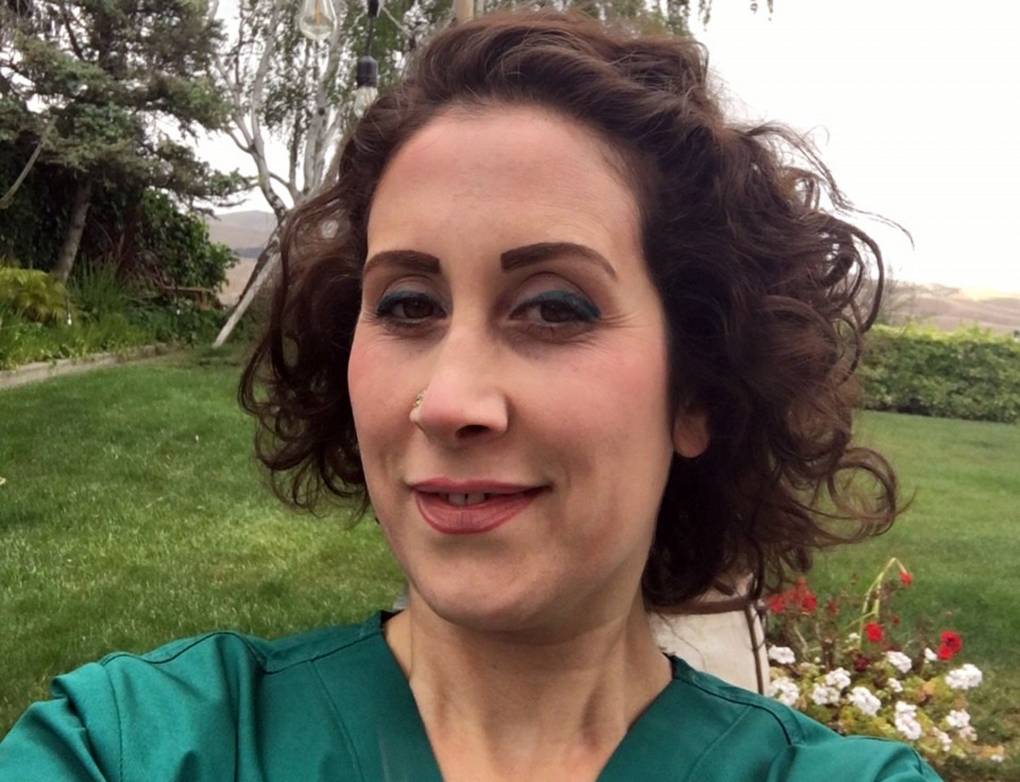
"caption": "Ameneh Moghaddam is a nurse practitioner in the Bay Area who's found a slew of creative pursuits to help her get through the coronavirus pandemic.",
"description": "Ameneh Moghaddam is a nurse practitioner in the Bay Area who's found a slew of creative pursuits to help her get through the coronavirus pandemic.",
"title": "Ameneh-selfie",
"credit": "Courtesy Ameneh Moghaddam",
"status": "inherit",
"isLoading": false,
"fetchFailed": false
},
"news_11822536": {
"type": "attachments",
"id": "news_11822536",
"meta": {
"index": "attachments_1716263798",
"site": "news",
"id": "11822536",
"found": true
},
"parent": 11822532,
"imgSizes": {
"apple_news_ca_landscape_5_5": {
"file": "https://ww2.kqed.org/app/uploads/sites/10/2020/06/Eric-Chan-contact-tracing-1-1044x783.jpeg",
"width": 1044,
"mimeType": "image/jpeg",
"height": 783
},
"apple_news_ca_square_4_0": {
"file": "https://ww2.kqed.org/app/uploads/sites/10/2020/06/Eric-Chan-contact-tracing-1-470x470.jpeg",
"width": 470,
"mimeType": "image/jpeg",
"height": 470
},
"twentyfourteen-full-width": {
"file": "https://ww2.kqed.org/app/uploads/sites/10/2020/06/Eric-Chan-contact-tracing-1-1038x576.jpeg",
"width": 1038,
"mimeType": "image/jpeg",
"height": 576
},
"thumbnail": {
"file": "https://ww2.kqed.org/app/uploads/sites/10/2020/06/Eric-Chan-contact-tracing-1-160x120.jpeg",
"width": 160,
"mimeType": "image/jpeg",
"height": 120
},
"post-thumbnail": {
"file": "https://ww2.kqed.org/app/uploads/sites/10/2020/06/Eric-Chan-contact-tracing-1-672x372.jpeg",
"width": 672,
"mimeType": "image/jpeg",
"height": 372
},
"kqedFullSize": {
"file": "https://ww2.kqed.org/app/uploads/sites/10/2020/06/Eric-Chan-contact-tracing-1.jpeg",
"width": 4032,
"height": 3024
},
"apple_news_ca_landscape_4_7": {
"file": "https://ww2.kqed.org/app/uploads/sites/10/2020/06/Eric-Chan-contact-tracing-1-632x474.jpeg",
"width": 632,
"mimeType": "image/jpeg",
"height": 474
},
"large": {
"file": "https://ww2.kqed.org/app/uploads/sites/10/2020/06/Eric-Chan-contact-tracing-1-1020x765.jpeg",
"width": 1020,
"mimeType": "image/jpeg",
"height": 765
},
"apple_news_ca_landscape_4_0": {
"file": "https://ww2.kqed.org/app/uploads/sites/10/2020/06/Eric-Chan-contact-tracing-1-536x402.jpeg",
"width": 536,
"mimeType": "image/jpeg",
"height": 402
},
"apple_news_ca_portrait_12_9": {
"file": "https://ww2.kqed.org/app/uploads/sites/10/2020/06/Eric-Chan-contact-tracing-1-1122x1496.jpeg",
"width": 1122,
"mimeType": "image/jpeg",
"height": 1496
},
"medium": {
"file": "https://ww2.kqed.org/app/uploads/sites/10/2020/06/Eric-Chan-contact-tracing-1-800x600.jpeg",
"width": 800,
"mimeType": "image/jpeg",
"height": 600
},
"apple_news_ca_portrait_4_0": {
"file": "https://ww2.kqed.org/app/uploads/sites/10/2020/06/Eric-Chan-contact-tracing-1-354x472.jpeg",
"width": 354,
"mimeType": "image/jpeg",
"height": 472
},
"apple_news_ca_portrait_9_7": {
"file": "https://ww2.kqed.org/app/uploads/sites/10/2020/06/Eric-Chan-contact-tracing-1-840x1120.jpeg",
"width": 840,
"mimeType": "image/jpeg",
"height": 1120
},
"apple_news_ca_landscape_12_9": {
"file": "https://ww2.kqed.org/app/uploads/sites/10/2020/06/Eric-Chan-contact-tracing-1-1832x1374.jpeg",
"width": 1832,
"mimeType": "image/jpeg",
"height": 1374
},
"apple_news_ca_square_9_7": {
"file": "https://ww2.kqed.org/app/uploads/sites/10/2020/06/Eric-Chan-contact-tracing-1-1104x1104.jpeg",
"width": 1104,
"mimeType": "image/jpeg",
"height": 1104
},
"apple_news_ca_portrait_4_7": {
"file": "https://ww2.kqed.org/app/uploads/sites/10/2020/06/Eric-Chan-contact-tracing-1-414x552.jpeg",
"width": 414,
"mimeType": "image/jpeg",
"height": 552
},
"apple_news_ca_square_12_9": {
"file": "https://ww2.kqed.org/app/uploads/sites/10/2020/06/Eric-Chan-contact-tracing-1-1472x1472.jpeg",
"width": 1472,
"mimeType": "image/jpeg",
"height": 1472
},
"apple_news_ca_portrait_5_5": {
"file": "https://ww2.kqed.org/app/uploads/sites/10/2020/06/Eric-Chan-contact-tracing-1-687x916.jpeg",
"width": 687,
"mimeType": "image/jpeg",
"height": 916
},
"full-width": {
"file": "https://ww2.kqed.org/app/uploads/sites/10/2020/06/Eric-Chan-contact-tracing-1-1920x1440.jpeg",
"width": 1920,
"mimeType": "image/jpeg",
"height": 1440
},
"apple_news_ca_square_4_7": {
"file": "https://ww2.kqed.org/app/uploads/sites/10/2020/06/Eric-Chan-contact-tracing-1-550x550.jpeg",
"width": 550,
"mimeType": "image/jpeg",
"height": 550
},
"apple_news_ca_landscape_9_7": {
"file": "https://ww2.kqed.org/app/uploads/sites/10/2020/06/Eric-Chan-contact-tracing-1-1376x1032.jpeg",
"width": 1376,
"mimeType": "image/jpeg",
"height": 1032
},
"apple_news_ca_square_5_5": {
"file": "https://ww2.kqed.org/app/uploads/sites/10/2020/06/Eric-Chan-contact-tracing-1-912x912.jpeg",
"width": 912,
"mimeType": "image/jpeg",
"height": 912
}
},
"publishDate": 1591149900,
"modified": 1591150001,
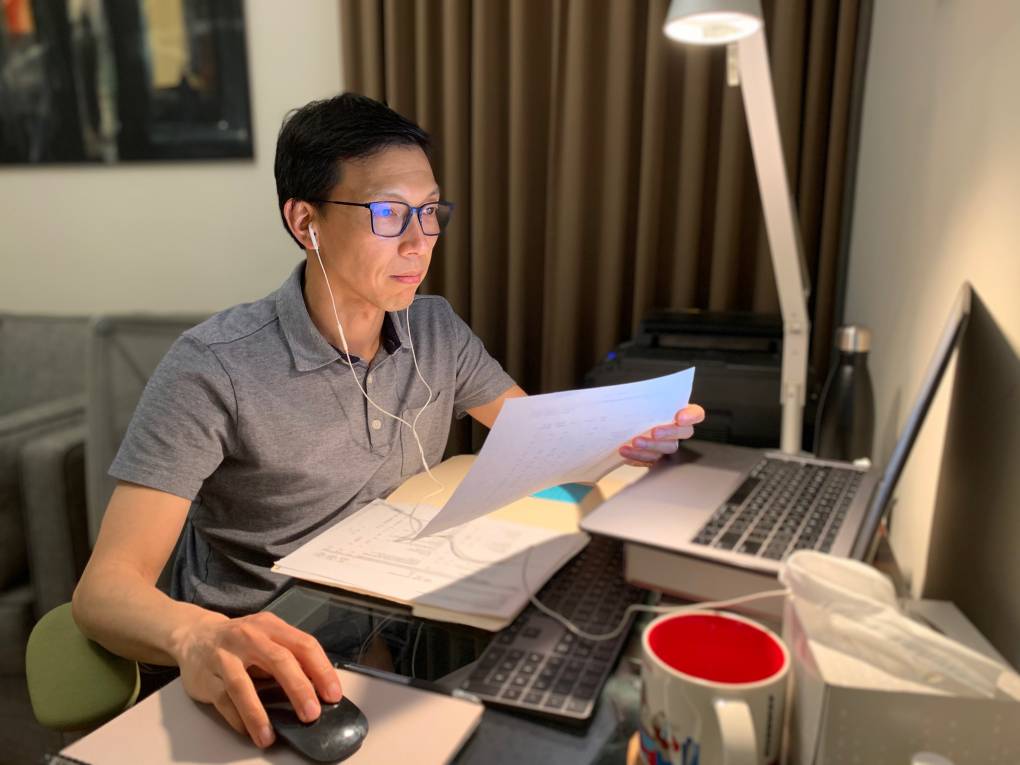
"caption": "When contact tracer Eric Chan calls people who have been exposed to the coronavirus, he often speaks to them in Cantonese to build trust. ",
"description": null,
"title": "Eric Chan contact tracing",
"credit": "Stan Gabriszeski",
"status": "inherit",
"isLoading": false,
"fetchFailed": false
},
"news_11823047": {
"type": "attachments",
"id": "news_11823047",
"meta": {
"index": "attachments_1716263798",
"site": "news",
"id": "11823047",
"found": true
},
"parent": 11822167,
"imgSizes": {
"apple_news_ca_landscape_5_5": {
"file": "https://ww2.kqed.org/app/uploads/sites/10/2020/06/RS43562_UCSF_20200530_Bayview-Testing_08-qut-1044x783.jpg",
"width": 1044,
"mimeType": "image/jpeg",
"height": 783
},
"apple_news_ca_square_4_0": {
"file": "https://ww2.kqed.org/app/uploads/sites/10/2020/06/RS43562_UCSF_20200530_Bayview-Testing_08-qut-470x470.jpg",
"width": 470,
"mimeType": "image/jpeg",
"height": 470
},
"twentyfourteen-full-width": {
"file": "https://ww2.kqed.org/app/uploads/sites/10/2020/06/RS43562_UCSF_20200530_Bayview-Testing_08-qut-1038x576.jpg",
"width": 1038,
"mimeType": "image/jpeg",
"height": 576
},
"thumbnail": {
"file": "https://ww2.kqed.org/app/uploads/sites/10/2020/06/RS43562_UCSF_20200530_Bayview-Testing_08-qut-160x107.jpg",
"width": 160,
"mimeType": "image/jpeg",
"height": 107
},
"post-thumbnail": {
"file": "https://ww2.kqed.org/app/uploads/sites/10/2020/06/RS43562_UCSF_20200530_Bayview-Testing_08-qut-672x372.jpg",
"width": 672,
"mimeType": "image/jpeg",
"height": 372
},
"kqedFullSize": {
"file": "https://ww2.kqed.org/app/uploads/sites/10/2020/06/RS43562_UCSF_20200530_Bayview-Testing_08-qut-e1591384169376.jpg",
"width": 1919,
"height": 1279
},
"apple_news_ca_landscape_4_7": {
"file": "https://ww2.kqed.org/app/uploads/sites/10/2020/06/RS43562_UCSF_20200530_Bayview-Testing_08-qut-632x474.jpg",
"width": 632,
"mimeType": "image/jpeg",
"height": 474
},
"large": {
"file": "https://ww2.kqed.org/app/uploads/sites/10/2020/06/RS43562_UCSF_20200530_Bayview-Testing_08-qut-1020x680.jpg",
"width": 1020,
"mimeType": "image/jpeg",
"height": 680
},
"apple_news_ca_landscape_4_0": {
"file": "https://ww2.kqed.org/app/uploads/sites/10/2020/06/RS43562_UCSF_20200530_Bayview-Testing_08-qut-536x402.jpg",
"width": 536,
"mimeType": "image/jpeg",
"height": 402
},
"apple_news_ca_portrait_12_9": {
"file": "https://ww2.kqed.org/app/uploads/sites/10/2020/06/RS43562_UCSF_20200530_Bayview-Testing_08-qut-1122x1280.jpg",
"width": 1122,
"mimeType": "image/jpeg",
"height": 1280
},
"medium": {
"file": "https://ww2.kqed.org/app/uploads/sites/10/2020/06/RS43562_UCSF_20200530_Bayview-Testing_08-qut-800x533.jpg",
"width": 800,
"mimeType": "image/jpeg",
"height": 533
},
"apple_news_ca_portrait_4_0": {
"file": "https://ww2.kqed.org/app/uploads/sites/10/2020/06/RS43562_UCSF_20200530_Bayview-Testing_08-qut-354x472.jpg",
"width": 354,
"mimeType": "image/jpeg",
"height": 472
},
"apple_news_ca_portrait_9_7": {
"file": "https://ww2.kqed.org/app/uploads/sites/10/2020/06/RS43562_UCSF_20200530_Bayview-Testing_08-qut-840x1120.jpg",
"width": 840,
"mimeType": "image/jpeg",
"height": 1120
},
"apple_news_ca_landscape_12_9": {
"file": "https://ww2.kqed.org/app/uploads/sites/10/2020/06/RS43562_UCSF_20200530_Bayview-Testing_08-qut-1832x1280.jpg",
"width": 1832,
"mimeType": "image/jpeg",
"height": 1280
},
"apple_news_ca_square_9_7": {
"file": "https://ww2.kqed.org/app/uploads/sites/10/2020/06/RS43562_UCSF_20200530_Bayview-Testing_08-qut-1104x1104.jpg",
"width": 1104,
"mimeType": "image/jpeg",
"height": 1104
},
"apple_news_ca_portrait_4_7": {
"file": "https://ww2.kqed.org/app/uploads/sites/10/2020/06/RS43562_UCSF_20200530_Bayview-Testing_08-qut-414x552.jpg",
"width": 414,
"mimeType": "image/jpeg",
"height": 552
},
"apple_news_ca_square_12_9": {
"file": "https://ww2.kqed.org/app/uploads/sites/10/2020/06/RS43562_UCSF_20200530_Bayview-Testing_08-qut-1472x1280.jpg",
"width": 1472,
"mimeType": "image/jpeg",
"height": 1280
},
"apple_news_ca_portrait_5_5": {
"file": "https://ww2.kqed.org/app/uploads/sites/10/2020/06/RS43562_UCSF_20200530_Bayview-Testing_08-qut-687x916.jpg",
"width": 687,
"mimeType": "image/jpeg",
"height": 916
},
"full-width": {
"file": "https://ww2.kqed.org/app/uploads/sites/10/2020/06/RS43562_UCSF_20200530_Bayview-Testing_08-qut-1920x1280.jpg",
"width": 1920,
"mimeType": "image/jpeg",
"height": 1280
},
"apple_news_ca_square_4_7": {
"file": "https://ww2.kqed.org/app/uploads/sites/10/2020/06/RS43562_UCSF_20200530_Bayview-Testing_08-qut-550x550.jpg",
"width": 550,
"mimeType": "image/jpeg",
"height": 550
},
"apple_news_ca_landscape_9_7": {
"file": "https://ww2.kqed.org/app/uploads/sites/10/2020/06/RS43562_UCSF_20200530_Bayview-Testing_08-qut-1376x1032.jpg",
"width": 1376,
"mimeType": "image/jpeg",
"height": 1032
},
"apple_news_ca_square_5_5": {
"file": "https://ww2.kqed.org/app/uploads/sites/10/2020/06/RS43562_UCSF_20200530_Bayview-Testing_08-qut-912x912.jpg",
"width": 912,
"mimeType": "image/jpeg",
"height": 912
}
},
"publishDate": 1591332210,
"modified": 1591384164,
"caption": "Supervisor Shamann Walton, D10, worked with UCSF and the San Francisco Department of Public Health to bring the “United in Health D10” testing program to the Bayview neighborhood. Testing was held at Havard Early Education School.",
"description": "Supervisor Shamann Walton, D10, worked with UCSF and the San Francisco Department of Public Health to bring the “United in Health D10” testing program to the Bayview neighborhood. Testing was held at Havard Early Education School.",
"title": "Bayview Testing",
"credit": "Courtesy Susan Merrell/UCSF",
"status": "inherit",
"isLoading": false,
"fetchFailed": false
},
"news_11820557": {
"type": "attachments",
"id": "news_11820557",
"meta": {
"index": "attachments_1716263798",
"site": "news",
"id": "11820557",
"found": true
},
"parent": 11820540,
"imgSizes": {
"apple_news_ca_landscape_5_5": {
"file": "https://ww2.kqed.org/app/uploads/sites/10/2020/05/RS43301_GettyImages-1223285578-qut-1044x783.jpg",
"width": 1044,
"mimeType": "image/jpeg",
"height": 783
},
"apple_news_ca_square_4_0": {
"file": "https://ww2.kqed.org/app/uploads/sites/10/2020/05/RS43301_GettyImages-1223285578-qut-470x470.jpg",
"width": 470,
"mimeType": "image/jpeg",
"height": 470
},
"twentyfourteen-full-width": {
"file": "https://ww2.kqed.org/app/uploads/sites/10/2020/05/RS43301_GettyImages-1223285578-qut-1038x576.jpg",
"width": 1038,
"mimeType": "image/jpeg",
"height": 576
},
"thumbnail": {
"file": "https://ww2.kqed.org/app/uploads/sites/10/2020/05/RS43301_GettyImages-1223285578-qut-160x107.jpg",
"width": 160,
"mimeType": "image/jpeg",
"height": 107
},
"post-thumbnail": {
"file": "https://ww2.kqed.org/app/uploads/sites/10/2020/05/RS43301_GettyImages-1223285578-qut-672x372.jpg",
"width": 672,
"mimeType": "image/jpeg",
"height": 372
},
"kqedFullSize": {
"file": "https://ww2.kqed.org/app/uploads/sites/10/2020/05/RS43301_GettyImages-1223285578-qut.jpg",
"width": 1920,
"height": 1280
},
"apple_news_ca_landscape_4_7": {
"file": "https://ww2.kqed.org/app/uploads/sites/10/2020/05/RS43301_GettyImages-1223285578-qut-632x474.jpg",
"width": 632,
"mimeType": "image/jpeg",
"height": 474
},
"large": {
"file": "https://ww2.kqed.org/app/uploads/sites/10/2020/05/RS43301_GettyImages-1223285578-qut-1020x680.jpg",
"width": 1020,
"mimeType": "image/jpeg",
"height": 680
},
"apple_news_ca_landscape_4_0": {
"file": "https://ww2.kqed.org/app/uploads/sites/10/2020/05/RS43301_GettyImages-1223285578-qut-536x402.jpg",
"width": 536,
"mimeType": "image/jpeg",
"height": 402
},
"apple_news_ca_portrait_12_9": {
"file": "https://ww2.kqed.org/app/uploads/sites/10/2020/05/RS43301_GettyImages-1223285578-qut-1122x1280.jpg",
"width": 1122,
"mimeType": "image/jpeg",
"height": 1280
},
"medium": {
"file": "https://ww2.kqed.org/app/uploads/sites/10/2020/05/RS43301_GettyImages-1223285578-qut-800x533.jpg",
"width": 800,
"mimeType": "image/jpeg",
"height": 533
},
"apple_news_ca_portrait_4_0": {
"file": "https://ww2.kqed.org/app/uploads/sites/10/2020/05/RS43301_GettyImages-1223285578-qut-354x472.jpg",
"width": 354,
"mimeType": "image/jpeg",
"height": 472
},
"apple_news_ca_portrait_9_7": {
"file": "https://ww2.kqed.org/app/uploads/sites/10/2020/05/RS43301_GettyImages-1223285578-qut-840x1120.jpg",
"width": 840,
"mimeType": "image/jpeg",
"height": 1120
},
"apple_news_ca_landscape_12_9": {
"file": "https://ww2.kqed.org/app/uploads/sites/10/2020/05/RS43301_GettyImages-1223285578-qut-1832x1280.jpg",
"width": 1832,
"mimeType": "image/jpeg",
"height": 1280
},
"apple_news_ca_square_9_7": {
"file": "https://ww2.kqed.org/app/uploads/sites/10/2020/05/RS43301_GettyImages-1223285578-qut-1104x1104.jpg",
"width": 1104,
"mimeType": "image/jpeg",
"height": 1104
},
"apple_news_ca_portrait_4_7": {
"file": "https://ww2.kqed.org/app/uploads/sites/10/2020/05/RS43301_GettyImages-1223285578-qut-414x552.jpg",
"width": 414,
"mimeType": "image/jpeg",
"height": 552
},
"apple_news_ca_square_12_9": {
"file": "https://ww2.kqed.org/app/uploads/sites/10/2020/05/RS43301_GettyImages-1223285578-qut-1472x1280.jpg",
"width": 1472,
"mimeType": "image/jpeg",
"height": 1280
},
"apple_news_ca_portrait_5_5": {
"file": "https://ww2.kqed.org/app/uploads/sites/10/2020/05/RS43301_GettyImages-1223285578-qut-687x916.jpg",
"width": 687,
"mimeType": "image/jpeg",
"height": 916
},
"full-width": {
"file": "https://ww2.kqed.org/app/uploads/sites/10/2020/05/RS43301_GettyImages-1223285578-qut-1920x1280.jpg",
"width": 1920,
"mimeType": "image/jpeg",
"height": 1280
},
"apple_news_ca_square_4_7": {
"file": "https://ww2.kqed.org/app/uploads/sites/10/2020/05/RS43301_GettyImages-1223285578-qut-550x550.jpg",
"width": 550,
"mimeType": "image/jpeg",
"height": 550
},
"apple_news_ca_landscape_9_7": {
"file": "https://ww2.kqed.org/app/uploads/sites/10/2020/05/RS43301_GettyImages-1223285578-qut-1376x1032.jpg",
"width": 1376,
"mimeType": "image/jpeg",
"height": 1032
},
"apple_news_ca_square_5_5": {
"file": "https://ww2.kqed.org/app/uploads/sites/10/2020/05/RS43301_GettyImages-1223285578-qut-912x912.jpg",
"width": 912,
"mimeType": "image/jpeg",
"height": 912
}
},
"publishDate": 1590354024,
"modified": 1590354078,
"caption": "U.S. Olympic Swimmer Michael Andrew is coached by his father Peter Andrew as he trains in a residential pool.",
"description": null,
"title": "US Olympic Swimmer Michael Andrew Trains During COVID-19 Pandemic",
"credit": "Sean M. Haffey/Getty Images",
"status": "inherit",
"isLoading": false,
"fetchFailed": false
},
"news_11820372": {
"type": "attachments",
"id": "news_11820372",
"meta": {
"index": "attachments_1716263798",
"site": "news",
"id": "11820372",
"found": true
},
"parent": 11818669,
"imgSizes": {
"apple_news_ca_landscape_5_5": {
"file": "https://ww2.kqed.org/app/uploads/sites/10/2021/05/Mckenzie_Mask-1044x783.jpg",
"width": 1044,
"mimeType": "image/jpeg",
"height": 783
},
"apple_news_ca_square_4_0": {
"file": "https://ww2.kqed.org/app/uploads/sites/10/2021/05/Mckenzie_Mask-470x470.jpg",
"width": 470,
"mimeType": "image/jpeg",
"height": 470
},
"twentyfourteen-full-width": {
"file": "https://ww2.kqed.org/app/uploads/sites/10/2021/05/Mckenzie_Mask-1038x576.jpg",
"width": 1038,
"mimeType": "image/jpeg",
"height": 576
},
"thumbnail": {
"file": "https://ww2.kqed.org/app/uploads/sites/10/2021/05/Mckenzie_Mask-160x122.jpg",
"width": 160,
"mimeType": "image/jpeg",
"height": 122
},
"post-thumbnail": {
"file": "https://ww2.kqed.org/app/uploads/sites/10/2021/05/Mckenzie_Mask-672x372.jpg",
"width": 672,
"mimeType": "image/jpeg",
"height": 372
},
"kqedFullSize": {
"file": "https://ww2.kqed.org/app/uploads/sites/10/2021/05/Mckenzie_Mask.jpg",
"width": 1297,
"height": 985
},
"apple_news_ca_landscape_4_7": {
"file": "https://ww2.kqed.org/app/uploads/sites/10/2021/05/Mckenzie_Mask-632x474.jpg",
"width": 632,
"mimeType": "image/jpeg",
"height": 474
},
"large": {
"file": "https://ww2.kqed.org/app/uploads/sites/10/2021/05/Mckenzie_Mask-1020x775.jpg",
"width": 1020,
"mimeType": "image/jpeg",
"height": 775
},
"apple_news_ca_landscape_4_0": {
"file": "https://ww2.kqed.org/app/uploads/sites/10/2021/05/Mckenzie_Mask-536x402.jpg",
"width": 536,
"mimeType": "image/jpeg",
"height": 402
},
"apple_news_ca_portrait_12_9": {
"file": "https://ww2.kqed.org/app/uploads/sites/10/2021/05/Mckenzie_Mask-1122x985.jpg",
"width": 1122,
"mimeType": "image/jpeg",
"height": 985
},
"medium": {
"file": "https://ww2.kqed.org/app/uploads/sites/10/2021/05/Mckenzie_Mask-800x608.jpg",
"width": 800,
"mimeType": "image/jpeg",
"height": 608
},
"apple_news_ca_portrait_4_0": {
"file": "https://ww2.kqed.org/app/uploads/sites/10/2021/05/Mckenzie_Mask-354x472.jpg",
"width": 354,
"mimeType": "image/jpeg",
"height": 472
},
"apple_news_ca_portrait_9_7": {
"file": "https://ww2.kqed.org/app/uploads/sites/10/2021/05/Mckenzie_Mask-840x985.jpg",
"width": 840,
"mimeType": "image/jpeg",
"height": 985
},
"apple_news_ca_square_9_7": {
"file": "https://ww2.kqed.org/app/uploads/sites/10/2021/05/Mckenzie_Mask-1104x985.jpg",
"width": 1104,
"mimeType": "image/jpeg",
"height": 985
},
"apple_news_ca_portrait_4_7": {
"file": "https://ww2.kqed.org/app/uploads/sites/10/2021/05/Mckenzie_Mask-414x552.jpg",
"width": 414,
"mimeType": "image/jpeg",
"height": 552
},
"apple_news_ca_portrait_5_5": {
"file": "https://ww2.kqed.org/app/uploads/sites/10/2021/05/Mckenzie_Mask-687x916.jpg",
"width": 687,
"mimeType": "image/jpeg",
"height": 916
},
"apple_news_ca_square_4_7": {
"file": "https://ww2.kqed.org/app/uploads/sites/10/2021/05/Mckenzie_Mask-550x550.jpg",
"width": 550,
"mimeType": "image/jpeg",
"height": 550
},
"apple_news_ca_square_5_5": {
"file": "https://ww2.kqed.org/app/uploads/sites/10/2021/05/Mckenzie_Mask-912x912.jpg",
"width": 912,
"mimeType": "image/jpeg",
"height": 912
}
},
"publishDate": 1590190697,
"modified": 1590190818,
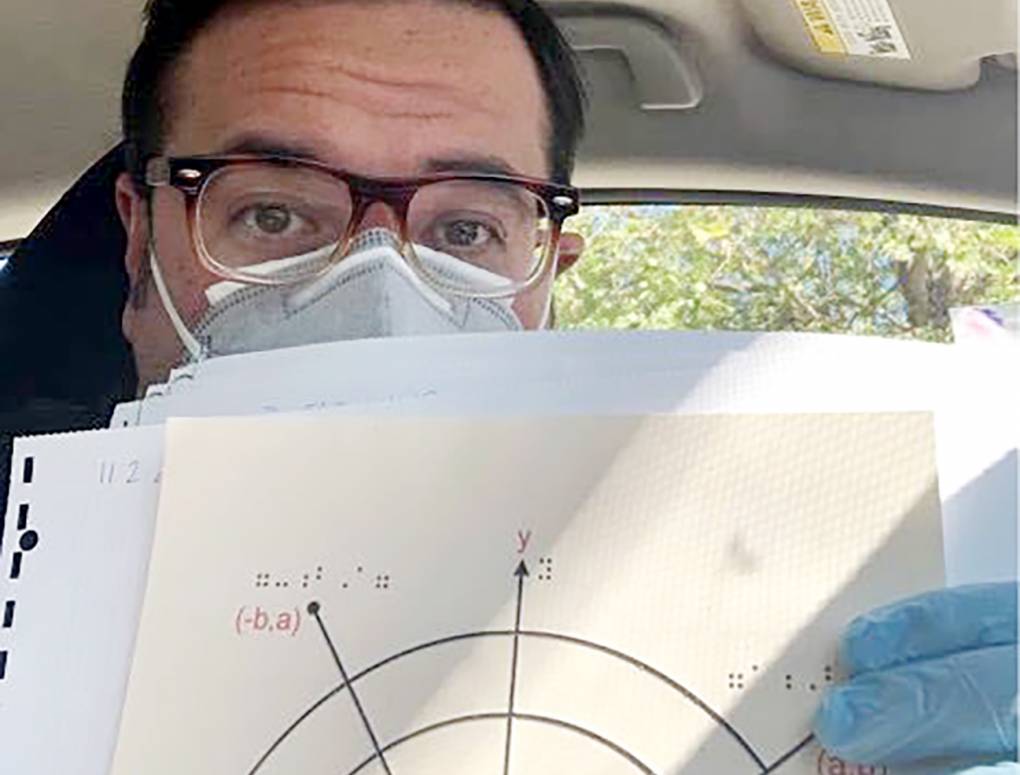
"caption": "Assistive technology specialist Neal Mckenzie prints school assignments with a braille printing machine and delivers them to visually impaired students across Sonoma County.",
"description": null,
"title": "Mckenzie_Mask",
"credit": "Courtesy of Neal Mckenzie",
"status": "inherit",
"isLoading": false,
"fetchFailed": false
},
"news_11819596": {
"type": "attachments",
"id": "news_11819596",
"meta": {
"index": "attachments_1716263798",
"site": "news",
"id": "11819596",
"found": true
},
"parent": 11819539,
"imgSizes": {
"apple_news_ca_landscape_5_5": {
"file": "https://ww2.kqed.org/app/uploads/sites/10/2020/05/RS43258_HEADSHOT-3-aw-qut-1044x783.jpg",
"width": 1044,
"mimeType": "image/jpeg",
"height": 783
},
"apple_news_ca_square_4_0": {
"file": "https://ww2.kqed.org/app/uploads/sites/10/2020/05/RS43258_HEADSHOT-3-aw-qut-470x470.jpg",
"width": 470,
"mimeType": "image/jpeg",
"height": 470
},
"twentyfourteen-full-width": {
"file": "https://ww2.kqed.org/app/uploads/sites/10/2020/05/RS43258_HEADSHOT-3-aw-qut-1038x576.jpg",
"width": 1038,
"mimeType": "image/jpeg",
"height": 576
},
"thumbnail": {
"file": "https://ww2.kqed.org/app/uploads/sites/10/2020/05/RS43258_HEADSHOT-3-aw-qut-160x160.jpg",
"width": 160,
"mimeType": "image/jpeg",
"height": 160
},
"post-thumbnail": {
"file": "https://ww2.kqed.org/app/uploads/sites/10/2020/05/RS43258_HEADSHOT-3-aw-qut-672x372.jpg",
"width": 672,
"mimeType": "image/jpeg",
"height": 372
},
"kqedFullSize": {
"file": "https://ww2.kqed.org/app/uploads/sites/10/2020/05/RS43258_HEADSHOT-3-aw-qut.jpg",
"width": 1080,
"height": 1080
},
"apple_news_ca_landscape_4_7": {
"file": "https://ww2.kqed.org/app/uploads/sites/10/2020/05/RS43258_HEADSHOT-3-aw-qut-632x474.jpg",
"width": 632,
"mimeType": "image/jpeg",
"height": 474
},
"large": {
"file": "https://ww2.kqed.org/app/uploads/sites/10/2020/05/RS43258_HEADSHOT-3-aw-qut-1020x1020.jpg",
"width": 1020,
"mimeType": "image/jpeg",
"height": 1020
},
"apple_news_ca_landscape_4_0": {
"file": "https://ww2.kqed.org/app/uploads/sites/10/2020/05/RS43258_HEADSHOT-3-aw-qut-536x402.jpg",
"width": 536,
"mimeType": "image/jpeg",
"height": 402
},
"medium": {
"file": "https://ww2.kqed.org/app/uploads/sites/10/2020/05/RS43258_HEADSHOT-3-aw-qut-800x800.jpg",
"width": 800,
"mimeType": "image/jpeg",
"height": 800
},
"apple_news_ca_portrait_4_0": {
"file": "https://ww2.kqed.org/app/uploads/sites/10/2020/05/RS43258_HEADSHOT-3-aw-qut-354x472.jpg",
"width": 354,
"mimeType": "image/jpeg",
"height": 472
},
"apple_news_ca_portrait_9_7": {
"file": "https://ww2.kqed.org/app/uploads/sites/10/2020/05/RS43258_HEADSHOT-3-aw-qut-840x1080.jpg",
"width": 840,
"mimeType": "image/jpeg",
"height": 1080
},
"apple_news_ca_portrait_4_7": {
"file": "https://ww2.kqed.org/app/uploads/sites/10/2020/05/RS43258_HEADSHOT-3-aw-qut-414x552.jpg",
"width": 414,
"mimeType": "image/jpeg",
"height": 552
},
"apple_news_ca_portrait_5_5": {
"file": "https://ww2.kqed.org/app/uploads/sites/10/2020/05/RS43258_HEADSHOT-3-aw-qut-687x916.jpg",
"width": 687,
"mimeType": "image/jpeg",
"height": 916
},
"apple_news_ca_square_4_7": {
"file": "https://ww2.kqed.org/app/uploads/sites/10/2020/05/RS43258_HEADSHOT-3-aw-qut-550x550.jpg",
"width": 550,
"mimeType": "image/jpeg",
"height": 550
},
"apple_news_ca_landscape_9_7": {
"file": "https://ww2.kqed.org/app/uploads/sites/10/2020/05/RS43258_HEADSHOT-3-aw-qut-1080x1032.jpg",
"width": 1080,
"mimeType": "image/jpeg",
"height": 1032
},
"apple_news_ca_square_5_5": {
"file": "https://ww2.kqed.org/app/uploads/sites/10/2020/05/RS43258_HEADSHOT-3-aw-qut-912x912.jpg",
"width": 912,
"mimeType": "image/jpeg",
"height": 912
}
},
"publishDate": 1590007225,
"modified": 1611968955,
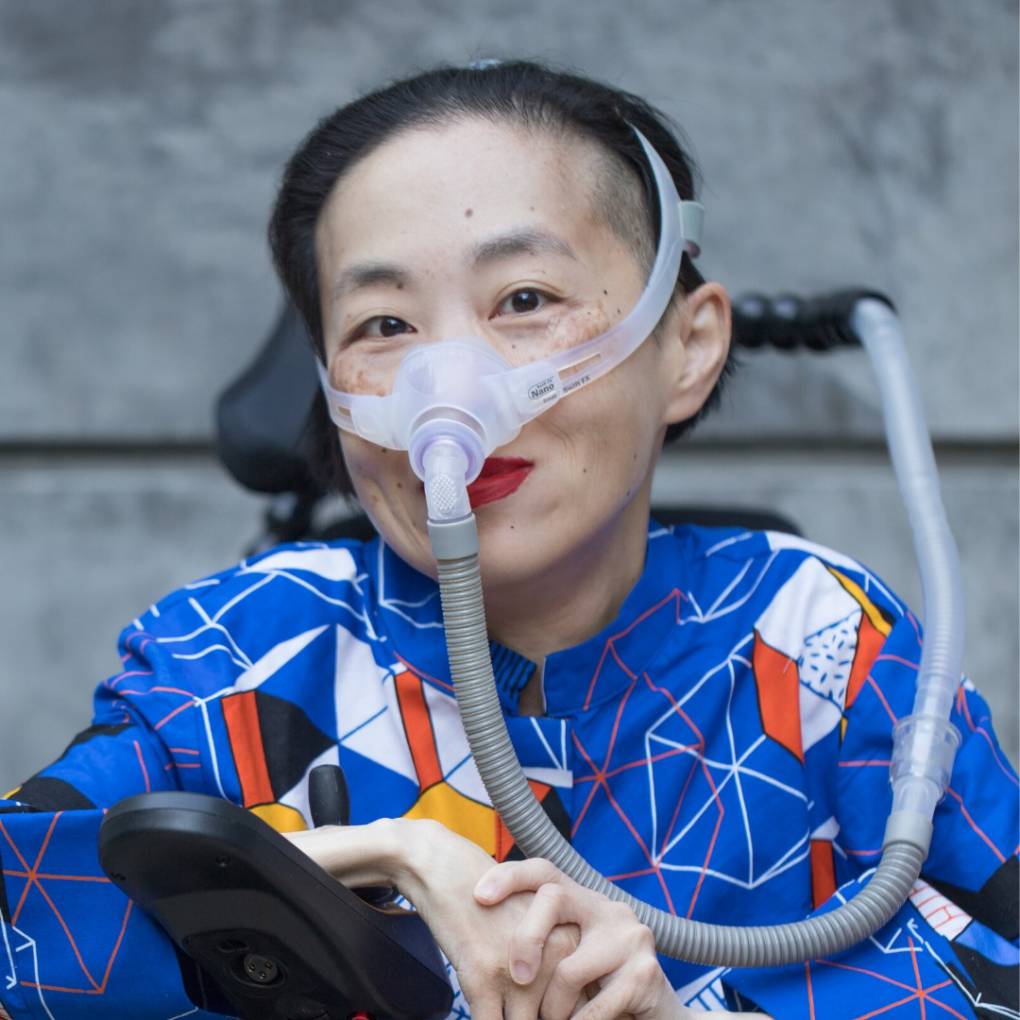
"caption": "Alice Wong, a San Francisco-based disability rights activist and the host of the Disability Visibility podcast, said she was dismayed to find out about the state's new vaccine prioritization plan.",
"description": "Alice Wong is a San Francisco-based disability rights activist and the host of the podcast \"Disability/Visibility.\"",
"title": "RS43258_HEADSHOT 3 aw-qut",
"credit": "Eddie Hernandez Photography",
"status": "inherit",
"altTag": "Alice Wong is a San Francisco-based disability rights activist and the host of the podcast \"Disability/Visibility.\"",
"isLoading": false,
"fetchFailed": false
},
"news_11819613": {
"type": "attachments",
"id": "news_11819613",
"meta": {
"index": "attachments_1716263798",
"site": "news",
"id": "11819613",
"found": true
},
"parent": 11819610,
"imgSizes": {
"apple_news_ca_landscape_5_5": {
"file": "https://ww2.kqed.org/app/uploads/sites/10/2020/05/Rosalind-Palmer-Ono-e1590009214607-1044x783.jpeg",
"width": 1044,
"mimeType": "image/jpeg",
"height": 783
},
"apple_news_ca_square_4_0": {
"file": "https://ww2.kqed.org/app/uploads/sites/10/2020/05/Rosalind-Palmer-Ono-e1590009214607-470x470.jpeg",
"width": 470,
"mimeType": "image/jpeg",
"height": 470
},
"twentyfourteen-full-width": {
"file": "https://ww2.kqed.org/app/uploads/sites/10/2020/05/Rosalind-Palmer-Ono-e1590009214607-1038x576.jpeg",
"width": 1038,
"mimeType": "image/jpeg",
"height": 576
},
"thumbnail": {
"file": "https://ww2.kqed.org/app/uploads/sites/10/2020/05/Rosalind-Palmer-Ono-e1590009214607-160x120.jpeg",
"width": 160,
"mimeType": "image/jpeg",
"height": 120
},
"post-thumbnail": {
"file": "https://ww2.kqed.org/app/uploads/sites/10/2020/05/Rosalind-Palmer-Ono-e1590009214607-672x372.jpeg",
"width": 672,
"mimeType": "image/jpeg",
"height": 372
},
"kqedFullSize": {
"file": "https://ww2.kqed.org/app/uploads/sites/10/2020/05/Rosalind-Palmer-Ono-e1590009295307.jpeg",
"width": 1280,
"height": 960
},
"apple_news_ca_landscape_4_7": {
"file": "https://ww2.kqed.org/app/uploads/sites/10/2020/05/Rosalind-Palmer-Ono-e1590009214607-632x474.jpeg",
"width": 632,
"mimeType": "image/jpeg",
"height": 474
},
"large": {
"file": "https://ww2.kqed.org/app/uploads/sites/10/2020/05/Rosalind-Palmer-Ono-e1590009214607-1020x765.jpeg",
"width": 1020,
"mimeType": "image/jpeg",
"height": 765
},
"apple_news_ca_landscape_4_0": {
"file": "https://ww2.kqed.org/app/uploads/sites/10/2020/05/Rosalind-Palmer-Ono-e1590009214607-536x402.jpeg",
"width": 536,
"mimeType": "image/jpeg",
"height": 402
},
"apple_news_ca_portrait_12_9": {
"file": "https://ww2.kqed.org/app/uploads/sites/10/2020/05/Rosalind-Palmer-Ono-e1590009214607-1122x960.jpeg",
"width": 1122,
"mimeType": "image/jpeg",
"height": 960
},
"medium": {
"file": "https://ww2.kqed.org/app/uploads/sites/10/2020/05/Rosalind-Palmer-Ono-e1590009214607-800x600.jpeg",
"width": 800,
"mimeType": "image/jpeg",
"height": 600
},
"apple_news_ca_portrait_4_0": {
"file": "https://ww2.kqed.org/app/uploads/sites/10/2020/05/Rosalind-Palmer-Ono-e1590009214607-354x472.jpeg",
"width": 354,
"mimeType": "image/jpeg",
"height": 472
},
"apple_news_ca_portrait_9_7": {
"file": "https://ww2.kqed.org/app/uploads/sites/10/2020/05/Rosalind-Palmer-Ono-e1590009214607-840x960.jpeg",
"width": 840,
"mimeType": "image/jpeg",
"height": 960
},
"apple_news_ca_square_9_7": {
"file": "https://ww2.kqed.org/app/uploads/sites/10/2020/05/Rosalind-Palmer-Ono-e1590009214607-1104x960.jpeg",
"width": 1104,
"mimeType": "image/jpeg",
"height": 960
},
"apple_news_ca_portrait_4_7": {
"file": "https://ww2.kqed.org/app/uploads/sites/10/2020/05/Rosalind-Palmer-Ono-e1590009214607-414x552.jpeg",
"width": 414,
"mimeType": "image/jpeg",
"height": 552
},
"apple_news_ca_portrait_5_5": {
"file": "https://ww2.kqed.org/app/uploads/sites/10/2020/05/Rosalind-Palmer-Ono-e1590009214607-687x916.jpeg",
"width": 687,
"mimeType": "image/jpeg",
"height": 916
},
"apple_news_ca_square_4_7": {
"file": "https://ww2.kqed.org/app/uploads/sites/10/2020/05/Rosalind-Palmer-Ono-e1590009214607-550x550.jpeg",
"width": 550,
"mimeType": "image/jpeg",
"height": 550
},
"apple_news_ca_square_5_5": {
"file": "https://ww2.kqed.org/app/uploads/sites/10/2020/05/Rosalind-Palmer-Ono-e1590009214607-912x912.jpeg",
"width": 912,
"mimeType": "image/jpeg",
"height": 912
}
},
"publishDate": 1590009161,
"modified": 1590009487,
"caption": "Rosalind Palmer Ono sits with her husband Michio Ed Ono at Kaiser Hospital in Oakland after she was treated for a heart attack on May 14.",
"description": null,
"title": "Rosalind Palmer Ono",
"credit": "Courtesy of Rosalind Palmer Ono",
"status": "inherit",
"isLoading": false,
"fetchFailed": false
},
"news_11818851": {
"type": "attachments",
"id": "news_11818851",
"meta": {
"index": "attachments_1716263798",
"site": "news",
"id": "11818851",
"found": true
},
"parent": 11818800,
"imgSizes": {
"apple_news_ca_landscape_5_5": {
"file": "https://ww2.kqed.org/app/uploads/sites/10/2020/05/1920iStock-1190098713-1044x783.jpg",
"width": 1044,
"mimeType": "image/jpeg",
"height": 783
},
"apple_news_ca_square_4_0": {
"file": "https://ww2.kqed.org/app/uploads/sites/10/2020/05/1920iStock-1190098713-470x470.jpg",
"width": 470,
"mimeType": "image/jpeg",
"height": 470
},
"twentyfourteen-full-width": {
"file": "https://ww2.kqed.org/app/uploads/sites/10/2020/05/1920iStock-1190098713-1038x576.jpg",
"width": 1038,
"mimeType": "image/jpeg",
"height": 576
},
"thumbnail": {
"file": "https://ww2.kqed.org/app/uploads/sites/10/2020/05/1920iStock-1190098713-160x90.jpg",
"width": 160,
"mimeType": "image/jpeg",
"height": 90
},
"post-thumbnail": {
"file": "https://ww2.kqed.org/app/uploads/sites/10/2020/05/1920iStock-1190098713-672x372.jpg",
"width": 672,
"mimeType": "image/jpeg",
"height": 372
},
"kqedFullSize": {
"file": "https://ww2.kqed.org/app/uploads/sites/10/2020/05/1920iStock-1190098713.jpg",
"width": 10170,
"height": 5721
},
"apple_news_ca_landscape_4_7": {
"file": "https://ww2.kqed.org/app/uploads/sites/10/2020/05/1920iStock-1190098713-632x474.jpg",
"width": 632,
"mimeType": "image/jpeg",
"height": 474
},
"large": {
"file": "https://ww2.kqed.org/app/uploads/sites/10/2020/05/1920iStock-1190098713-1020x574.jpg",
"width": 1020,
"mimeType": "image/jpeg",
"height": 574
},
"apple_news_ca_landscape_4_0": {
"file": "https://ww2.kqed.org/app/uploads/sites/10/2020/05/1920iStock-1190098713-536x402.jpg",
"width": 536,
"mimeType": "image/jpeg",
"height": 402
},
"apple_news_ca_portrait_12_9": {
"file": "https://ww2.kqed.org/app/uploads/sites/10/2020/05/1920iStock-1190098713-1122x1496.jpg",
"width": 1122,
"mimeType": "image/jpeg",
"height": 1496
},
"medium": {
"file": "https://ww2.kqed.org/app/uploads/sites/10/2020/05/1920iStock-1190098713-800x450.jpg",
"width": 800,
"mimeType": "image/jpeg",
"height": 450
},
"apple_news_ca_portrait_4_0": {
"file": "https://ww2.kqed.org/app/uploads/sites/10/2020/05/1920iStock-1190098713-354x472.jpg",
"width": 354,
"mimeType": "image/jpeg",
"height": 472
},
"apple_news_ca_portrait_9_7": {
"file": "https://ww2.kqed.org/app/uploads/sites/10/2020/05/1920iStock-1190098713-840x1120.jpg",
"width": 840,
"mimeType": "image/jpeg",
"height": 1120
},
"apple_news_ca_landscape_12_9": {
"file": "https://ww2.kqed.org/app/uploads/sites/10/2020/05/1920iStock-1190098713-1832x1374.jpg",
"width": 1832,
"mimeType": "image/jpeg",
"height": 1374
},
"apple_news_ca_square_9_7": {
"file": "https://ww2.kqed.org/app/uploads/sites/10/2020/05/1920iStock-1190098713-1104x1104.jpg",
"width": 1104,
"mimeType": "image/jpeg",
"height": 1104
},
"apple_news_ca_portrait_4_7": {
"file": "https://ww2.kqed.org/app/uploads/sites/10/2020/05/1920iStock-1190098713-414x552.jpg",
"width": 414,
"mimeType": "image/jpeg",
"height": 552
},
"apple_news_ca_square_12_9": {
"file": "https://ww2.kqed.org/app/uploads/sites/10/2020/05/1920iStock-1190098713-1472x1472.jpg",
"width": 1472,
"mimeType": "image/jpeg",
"height": 1472
},
"apple_news_ca_portrait_5_5": {
"file": "https://ww2.kqed.org/app/uploads/sites/10/2020/05/1920iStock-1190098713-687x916.jpg",
"width": 687,
"mimeType": "image/jpeg",
"height": 916
},
"full-width": {
"file": "https://ww2.kqed.org/app/uploads/sites/10/2020/05/1920iStock-1190098713-1920x1080.jpg",
"width": 1920,
"mimeType": "image/jpeg",
"height": 1080
},
"apple_news_ca_square_4_7": {
"file": "https://ww2.kqed.org/app/uploads/sites/10/2020/05/1920iStock-1190098713-550x550.jpg",
"width": 550,
"mimeType": "image/jpeg",
"height": 550
},
"apple_news_ca_landscape_9_7": {
"file": "https://ww2.kqed.org/app/uploads/sites/10/2020/05/1920iStock-1190098713-1376x1032.jpg",
"width": 1376,
"mimeType": "image/jpeg",
"height": 1032
},
"apple_news_ca_square_5_5": {
"file": "https://ww2.kqed.org/app/uploads/sites/10/2020/05/1920iStock-1190098713-912x912.jpg",
"width": 912,
"mimeType": "image/jpeg",
"height": 912
}
},
"publishDate": 1589596866,
"modified": 1589597069,
"caption": "Last year, Newsom allotted $34 million for the 2020 fiscal year budget so women diagnosed with a maternal mental health disorder could stay on Medi-Cal for up to 12 months to get treated. Now he’s taking it back.",
"description": null,
"title": "1920iStock-1190098713",
"credit": "iStock Ponomariova_Maria",
"status": "inherit",
"isLoading": false,
"fetchFailed": false
},
"news_11818400": {
"type": "attachments",
"id": "news_11818400",
"meta": {
"index": "attachments_1716263798",
"site": "news",
"id": "11818400",
"found": true
},
"parent": 11818246,
"imgSizes": {
"apple_news_ca_landscape_5_5": {
"file": "https://ww2.kqed.org/app/uploads/sites/10/2020/05/Dive-Bar-San-Jose-1044x783.jpg",
"width": 1044,
"mimeType": "image/jpeg",
"height": 783
},
"apple_news_ca_square_4_0": {
"file": "https://ww2.kqed.org/app/uploads/sites/10/2020/05/Dive-Bar-San-Jose-470x470.jpg",
"width": 470,
"mimeType": "image/jpeg",
"height": 470
},
"twentyfourteen-full-width": {
"file": "https://ww2.kqed.org/app/uploads/sites/10/2020/05/Dive-Bar-San-Jose-1038x576.jpg",
"width": 1038,
"mimeType": "image/jpeg",
"height": 576
},
"thumbnail": {
"file": "https://ww2.kqed.org/app/uploads/sites/10/2020/05/Dive-Bar-San-Jose-160x113.jpg",
"width": 160,
"mimeType": "image/jpeg",
"height": 113
},
"post-thumbnail": {
"file": "https://ww2.kqed.org/app/uploads/sites/10/2020/05/Dive-Bar-San-Jose-672x372.jpg",
"width": 672,
"mimeType": "image/jpeg",
"height": 372
},
"kqedFullSize": {
"file": "https://ww2.kqed.org/app/uploads/sites/10/2020/05/Dive-Bar-San-Jose.jpg",
"width": 1920,
"height": 1355
},
"apple_news_ca_landscape_4_7": {
"file": "https://ww2.kqed.org/app/uploads/sites/10/2020/05/Dive-Bar-San-Jose-632x474.jpg",
"width": 632,
"mimeType": "image/jpeg",
"height": 474
},
"large": {
"file": "https://ww2.kqed.org/app/uploads/sites/10/2020/05/Dive-Bar-San-Jose-1020x720.jpg",
"width": 1020,
"mimeType": "image/jpeg",
"height": 720
},
"apple_news_ca_landscape_4_0": {
"file": "https://ww2.kqed.org/app/uploads/sites/10/2020/05/Dive-Bar-San-Jose-536x402.jpg",
"width": 536,
"mimeType": "image/jpeg",
"height": 402
},
"apple_news_ca_portrait_12_9": {
"file": "https://ww2.kqed.org/app/uploads/sites/10/2020/05/Dive-Bar-San-Jose-1122x1355.jpg",
"width": 1122,
"mimeType": "image/jpeg",
"height": 1355
},
"medium": {
"file": "https://ww2.kqed.org/app/uploads/sites/10/2020/05/Dive-Bar-San-Jose-800x565.jpg",
"width": 800,
"mimeType": "image/jpeg",
"height": 565
},
"apple_news_ca_portrait_4_0": {
"file": "https://ww2.kqed.org/app/uploads/sites/10/2020/05/Dive-Bar-San-Jose-354x472.jpg",
"width": 354,
"mimeType": "image/jpeg",
"height": 472
},
"apple_news_ca_portrait_9_7": {
"file": "https://ww2.kqed.org/app/uploads/sites/10/2020/05/Dive-Bar-San-Jose-840x1120.jpg",
"width": 840,
"mimeType": "image/jpeg",
"height": 1120
},
"apple_news_ca_landscape_12_9": {
"file": "https://ww2.kqed.org/app/uploads/sites/10/2020/05/Dive-Bar-San-Jose-1832x1355.jpg",
"width": 1832,
"mimeType": "image/jpeg",
"height": 1355
},
"apple_news_ca_square_9_7": {
"file": "https://ww2.kqed.org/app/uploads/sites/10/2020/05/Dive-Bar-San-Jose-1104x1104.jpg",
"width": 1104,
"mimeType": "image/jpeg",
"height": 1104
},
"apple_news_ca_portrait_4_7": {
"file": "https://ww2.kqed.org/app/uploads/sites/10/2020/05/Dive-Bar-San-Jose-414x552.jpg",
"width": 414,
"mimeType": "image/jpeg",
"height": 552
},
"apple_news_ca_square_12_9": {
"file": "https://ww2.kqed.org/app/uploads/sites/10/2020/05/Dive-Bar-San-Jose-1472x1355.jpg",
"width": 1472,
"mimeType": "image/jpeg",
"height": 1355
},
"apple_news_ca_portrait_5_5": {
"file": "https://ww2.kqed.org/app/uploads/sites/10/2020/05/Dive-Bar-San-Jose-687x916.jpg",
"width": 687,
"mimeType": "image/jpeg",
"height": 916
},
"full-width": {
"file": "https://ww2.kqed.org/app/uploads/sites/10/2020/05/Dive-Bar-San-Jose-1920x1355.jpg",
"width": 1920,
"mimeType": "image/jpeg",
"height": 1355
},
"apple_news_ca_square_4_7": {
"file": "https://ww2.kqed.org/app/uploads/sites/10/2020/05/Dive-Bar-San-Jose-550x550.jpg",
"width": 550,
"mimeType": "image/jpeg",
"height": 550
},
"apple_news_ca_landscape_9_7": {
"file": "https://ww2.kqed.org/app/uploads/sites/10/2020/05/Dive-Bar-San-Jose-1376x1032.jpg",
"width": 1376,
"mimeType": "image/jpeg",
"height": 1032
},
"apple_news_ca_square_5_5": {
"file": "https://ww2.kqed.org/app/uploads/sites/10/2020/05/Dive-Bar-San-Jose-912x912.jpg",
"width": 912,
"mimeType": "image/jpeg",
"height": 912
}
},
"publishDate": 1589493962,
"modified": 1589579180,
"caption": "Christos Louvis had to close Dive Bar in San Jose on St. Patrick's Day and hasn't opened the doors since. He's not sure when, or if, the bar will be able to open again.",
"description": "Christos Louvis had to close Dive Bar in San Jose on St. Patrick's Day, and hasn't opened the doors since. He's not sure when, or if the bar will be able to open again.",
"title": "Dive-Bar-San-Jose",
"credit": "Courtesy Christos Louvis",
"status": "inherit",
"isLoading": false,
"fetchFailed": false
},
"news_11818533": {
"type": "attachments",
"id": "news_11818533",
"meta": {
"index": "attachments_1716263798",
"site": "news",
"id": "11818533",
"found": true
},
"parent": 11818524,
"imgSizes": {
"apple_news_ca_landscape_5_5": {
"file": "https://ww2.kqed.org/app/uploads/sites/10/2020/05/RS42005_005_KQED_SanFrancisco_UCSF_03112020_6951-qut-1044x783.jpg",
"width": 1044,
"mimeType": "image/jpeg",
"height": 783
},
"apple_news_ca_square_4_0": {
"file": "https://ww2.kqed.org/app/uploads/sites/10/2020/05/RS42005_005_KQED_SanFrancisco_UCSF_03112020_6951-qut-470x470.jpg",
"width": 470,
"mimeType": "image/jpeg",
"height": 470
},
"twentyfourteen-full-width": {
"file": "https://ww2.kqed.org/app/uploads/sites/10/2020/05/RS42005_005_KQED_SanFrancisco_UCSF_03112020_6951-qut-1038x576.jpg",
"width": 1038,
"mimeType": "image/jpeg",
"height": 576
},
"thumbnail": {
"file": "https://ww2.kqed.org/app/uploads/sites/10/2020/05/RS42005_005_KQED_SanFrancisco_UCSF_03112020_6951-qut-160x107.jpg",
"width": 160,
"mimeType": "image/jpeg",
"height": 107
},
"post-thumbnail": {
"file": "https://ww2.kqed.org/app/uploads/sites/10/2020/05/RS42005_005_KQED_SanFrancisco_UCSF_03112020_6951-qut-672x372.jpg",
"width": 672,
"mimeType": "image/jpeg",
"height": 372
},
"kqedFullSize": {
"file": "https://ww2.kqed.org/app/uploads/sites/10/2020/05/RS42005_005_KQED_SanFrancisco_UCSF_03112020_6951-qut.jpg",
"width": 1920,
"height": 1280
},
"apple_news_ca_landscape_4_7": {
"file": "https://ww2.kqed.org/app/uploads/sites/10/2020/05/RS42005_005_KQED_SanFrancisco_UCSF_03112020_6951-qut-632x474.jpg",
"width": 632,
"mimeType": "image/jpeg",
"height": 474
},
"large": {
"file": "https://ww2.kqed.org/app/uploads/sites/10/2020/05/RS42005_005_KQED_SanFrancisco_UCSF_03112020_6951-qut-1020x680.jpg",
"width": 1020,
"mimeType": "image/jpeg",
"height": 680
},
"apple_news_ca_landscape_4_0": {
"file": "https://ww2.kqed.org/app/uploads/sites/10/2020/05/RS42005_005_KQED_SanFrancisco_UCSF_03112020_6951-qut-536x402.jpg",
"width": 536,
"mimeType": "image/jpeg",
"height": 402
},
"apple_news_ca_portrait_12_9": {
"file": "https://ww2.kqed.org/app/uploads/sites/10/2020/05/RS42005_005_KQED_SanFrancisco_UCSF_03112020_6951-qut-1122x1280.jpg",
"width": 1122,
"mimeType": "image/jpeg",
"height": 1280
},
"medium": {
"file": "https://ww2.kqed.org/app/uploads/sites/10/2020/05/RS42005_005_KQED_SanFrancisco_UCSF_03112020_6951-qut-800x533.jpg",
"width": 800,
"mimeType": "image/jpeg",
"height": 533
},
"apple_news_ca_portrait_4_0": {
"file": "https://ww2.kqed.org/app/uploads/sites/10/2020/05/RS42005_005_KQED_SanFrancisco_UCSF_03112020_6951-qut-354x472.jpg",
"width": 354,
"mimeType": "image/jpeg",
"height": 472
},
"apple_news_ca_portrait_9_7": {
"file": "https://ww2.kqed.org/app/uploads/sites/10/2020/05/RS42005_005_KQED_SanFrancisco_UCSF_03112020_6951-qut-840x1120.jpg",
"width": 840,
"mimeType": "image/jpeg",
"height": 1120
},
"apple_news_ca_landscape_12_9": {
"file": "https://ww2.kqed.org/app/uploads/sites/10/2020/05/RS42005_005_KQED_SanFrancisco_UCSF_03112020_6951-qut-1832x1280.jpg",
"width": 1832,
"mimeType": "image/jpeg",
"height": 1280
},
"apple_news_ca_square_9_7": {
"file": "https://ww2.kqed.org/app/uploads/sites/10/2020/05/RS42005_005_KQED_SanFrancisco_UCSF_03112020_6951-qut-1104x1104.jpg",
"width": 1104,
"mimeType": "image/jpeg",
"height": 1104
},
"apple_news_ca_portrait_4_7": {
"file": "https://ww2.kqed.org/app/uploads/sites/10/2020/05/RS42005_005_KQED_SanFrancisco_UCSF_03112020_6951-qut-414x552.jpg",
"width": 414,
"mimeType": "image/jpeg",
"height": 552
},
"apple_news_ca_square_12_9": {
"file": "https://ww2.kqed.org/app/uploads/sites/10/2020/05/RS42005_005_KQED_SanFrancisco_UCSF_03112020_6951-qut-1472x1280.jpg",
"width": 1472,
"mimeType": "image/jpeg",
"height": 1280
},
"apple_news_ca_portrait_5_5": {
"file": "https://ww2.kqed.org/app/uploads/sites/10/2020/05/RS42005_005_KQED_SanFrancisco_UCSF_03112020_6951-qut-687x916.jpg",
"width": 687,
"mimeType": "image/jpeg",
"height": 916
},
"full-width": {
"file": "https://ww2.kqed.org/app/uploads/sites/10/2020/05/RS42005_005_KQED_SanFrancisco_UCSF_03112020_6951-qut-1920x1280.jpg",
"width": 1920,
"mimeType": "image/jpeg",
"height": 1280
},
"apple_news_ca_square_4_7": {
"file": "https://ww2.kqed.org/app/uploads/sites/10/2020/05/RS42005_005_KQED_SanFrancisco_UCSF_03112020_6951-qut-550x550.jpg",
"width": 550,
"mimeType": "image/jpeg",
"height": 550
},
"apple_news_ca_landscape_9_7": {
"file": "https://ww2.kqed.org/app/uploads/sites/10/2020/05/RS42005_005_KQED_SanFrancisco_UCSF_03112020_6951-qut-1376x1032.jpg",
"width": 1376,
"mimeType": "image/jpeg",
"height": 1032
},
"apple_news_ca_square_5_5": {
"file": "https://ww2.kqed.org/app/uploads/sites/10/2020/05/RS42005_005_KQED_SanFrancisco_UCSF_03112020_6951-qut-912x912.jpg",
"width": 912,
"mimeType": "image/jpeg",
"height": 912
}
},
"publishDate": 1589511850,
"modified": 1589511887,
"caption": "Tents are set up outside of the UCSF Parnassus campus in San Francisco to triage patients with respiratory illness, on Mar. 11, 2020.",
"description": null,
"title": "RS42005_005_KQED_SanFrancisco_UCSF_03112020_6951-qut",
"credit": "Beth LaBerge/KQED",
"status": "inherit",
"isLoading": false,
"fetchFailed": false
},
"news_11816931": {
"type": "attachments",
"id": "news_11816931",
"meta": {
"index": "attachments_1716263798",
"site": "news",
"id": "11816931",
"found": true
},
"parent": 11816925,
"imgSizes": {
"apple_news_ca_landscape_5_5": {
"file": "https://ww2.kqed.org/app/uploads/sites/10/2020/05/RS43053_003_KQED_SanFrancisco_FlowerMart_05062020-qut-1044x783.jpg",
"width": 1044,
"mimeType": "image/jpeg",
"height": 783
},
"apple_news_ca_square_4_0": {
"file": "https://ww2.kqed.org/app/uploads/sites/10/2020/05/RS43053_003_KQED_SanFrancisco_FlowerMart_05062020-qut-470x470.jpg",
"width": 470,
"mimeType": "image/jpeg",
"height": 470
},
"twentyfourteen-full-width": {
"file": "https://ww2.kqed.org/app/uploads/sites/10/2020/05/RS43053_003_KQED_SanFrancisco_FlowerMart_05062020-qut-1038x576.jpg",
"width": 1038,
"mimeType": "image/jpeg",
"height": 576
},
"thumbnail": {
"file": "https://ww2.kqed.org/app/uploads/sites/10/2020/05/RS43053_003_KQED_SanFrancisco_FlowerMart_05062020-qut-160x107.jpg",
"width": 160,
"mimeType": "image/jpeg",
"height": 107
},
"post-thumbnail": {
"file": "https://ww2.kqed.org/app/uploads/sites/10/2020/05/RS43053_003_KQED_SanFrancisco_FlowerMart_05062020-qut-672x372.jpg",
"width": 672,
"mimeType": "image/jpeg",
"height": 372
},
"kqedFullSize": {
"file": "https://ww2.kqed.org/app/uploads/sites/10/2020/05/RS43053_003_KQED_SanFrancisco_FlowerMart_05062020-qut.jpg",
"width": 1920,
"height": 1280
},
"apple_news_ca_landscape_4_7": {
"file": "https://ww2.kqed.org/app/uploads/sites/10/2020/05/RS43053_003_KQED_SanFrancisco_FlowerMart_05062020-qut-632x474.jpg",
"width": 632,
"mimeType": "image/jpeg",
"height": 474
},
"large": {
"file": "https://ww2.kqed.org/app/uploads/sites/10/2020/05/RS43053_003_KQED_SanFrancisco_FlowerMart_05062020-qut-1020x680.jpg",
"width": 1020,
"mimeType": "image/jpeg",
"height": 680
},
"apple_news_ca_landscape_4_0": {
"file": "https://ww2.kqed.org/app/uploads/sites/10/2020/05/RS43053_003_KQED_SanFrancisco_FlowerMart_05062020-qut-536x402.jpg",
"width": 536,
"mimeType": "image/jpeg",
"height": 402
},
"apple_news_ca_portrait_12_9": {
"file": "https://ww2.kqed.org/app/uploads/sites/10/2020/05/RS43053_003_KQED_SanFrancisco_FlowerMart_05062020-qut-1122x1280.jpg",
"width": 1122,
"mimeType": "image/jpeg",
"height": 1280
},
"medium": {
"file": "https://ww2.kqed.org/app/uploads/sites/10/2020/05/RS43053_003_KQED_SanFrancisco_FlowerMart_05062020-qut-800x533.jpg",
"width": 800,
"mimeType": "image/jpeg",
"height": 533
},
"apple_news_ca_portrait_4_0": {
"file": "https://ww2.kqed.org/app/uploads/sites/10/2020/05/RS43053_003_KQED_SanFrancisco_FlowerMart_05062020-qut-354x472.jpg",
"width": 354,
"mimeType": "image/jpeg",
"height": 472
},
"apple_news_ca_portrait_9_7": {
"file": "https://ww2.kqed.org/app/uploads/sites/10/2020/05/RS43053_003_KQED_SanFrancisco_FlowerMart_05062020-qut-840x1120.jpg",
"width": 840,
"mimeType": "image/jpeg",
"height": 1120
},
"apple_news_ca_landscape_12_9": {
"file": "https://ww2.kqed.org/app/uploads/sites/10/2020/05/RS43053_003_KQED_SanFrancisco_FlowerMart_05062020-qut-1832x1280.jpg",
"width": 1832,
"mimeType": "image/jpeg",
"height": 1280
},
"apple_news_ca_square_9_7": {
"file": "https://ww2.kqed.org/app/uploads/sites/10/2020/05/RS43053_003_KQED_SanFrancisco_FlowerMart_05062020-qut-1104x1104.jpg",
"width": 1104,
"mimeType": "image/jpeg",
"height": 1104
},
"apple_news_ca_portrait_4_7": {
"file": "https://ww2.kqed.org/app/uploads/sites/10/2020/05/RS43053_003_KQED_SanFrancisco_FlowerMart_05062020-qut-414x552.jpg",
"width": 414,
"mimeType": "image/jpeg",
"height": 552
},
"apple_news_ca_square_12_9": {
"file": "https://ww2.kqed.org/app/uploads/sites/10/2020/05/RS43053_003_KQED_SanFrancisco_FlowerMart_05062020-qut-1472x1280.jpg",
"width": 1472,
"mimeType": "image/jpeg",
"height": 1280
},
"apple_news_ca_portrait_5_5": {
"file": "https://ww2.kqed.org/app/uploads/sites/10/2020/05/RS43053_003_KQED_SanFrancisco_FlowerMart_05062020-qut-687x916.jpg",
"width": 687,
"mimeType": "image/jpeg",
"height": 916
},
"full-width": {
"file": "https://ww2.kqed.org/app/uploads/sites/10/2020/05/RS43053_003_KQED_SanFrancisco_FlowerMart_05062020-qut-1920x1280.jpg",
"width": 1920,
"mimeType": "image/jpeg",
"height": 1280
},
"apple_news_ca_square_4_7": {
"file": "https://ww2.kqed.org/app/uploads/sites/10/2020/05/RS43053_003_KQED_SanFrancisco_FlowerMart_05062020-qut-550x550.jpg",
"width": 550,
"mimeType": "image/jpeg",
"height": 550
},
"apple_news_ca_landscape_9_7": {
"file": "https://ww2.kqed.org/app/uploads/sites/10/2020/05/RS43053_003_KQED_SanFrancisco_FlowerMart_05062020-qut-1376x1032.jpg",
"width": 1376,
"mimeType": "image/jpeg",
"height": 1032
},
"apple_news_ca_square_5_5": {
"file": "https://ww2.kqed.org/app/uploads/sites/10/2020/05/RS43053_003_KQED_SanFrancisco_FlowerMart_05062020-qut-912x912.jpg",
"width": 912,
"mimeType": "image/jpeg",
"height": 912
}
},
"publishDate": 1588885632,
"modified": 1590620197,
"caption": "Vendors, including Torchio Nursery, were able to open at the San Francisco Flower Mart on April 22. But small flower shops across the Bay Area can't open under Shelter in Place restrictions and are struggling. ",
"description": "Vendors, including Torchio Nursery, were able to open at the San Francisco Flower Mart on April 22. But small flower shops across the Bay Area can't open under Shelter in Place restrictions and are struggling. ",
"title": "Vendors, including Torchio Nursery, were able to open at the San Francisco Flower Mart on April 22nd. But small flower shops across the Bay Area can't open under Shelter in Place restrictions and are struggling.",
"credit": "Beth LaBerge/KQED",
"status": "inherit",
"isLoading": false,
"fetchFailed": false
},
"news_11816935": {
"type": "attachments",
"id": "news_11816935",
"meta": {
"index": "attachments_1716263798",
"site": "news",
"id": "11816935",
"found": true
},
"parent": 11816872,
"imgSizes": {
"apple_news_ca_landscape_5_5": {
"file": "https://ww2.kqed.org/app/uploads/sites/10/2020/05/RS43111_GettyImages-1211760986-qut-1044x783.jpg",
"width": 1044,
"mimeType": "image/jpeg",
"height": 783
},
"apple_news_ca_square_4_0": {
"file": "https://ww2.kqed.org/app/uploads/sites/10/2020/05/RS43111_GettyImages-1211760986-qut-470x470.jpg",
"width": 470,
"mimeType": "image/jpeg",
"height": 470
},
"twentyfourteen-full-width": {
"file": "https://ww2.kqed.org/app/uploads/sites/10/2020/05/RS43111_GettyImages-1211760986-qut-1038x576.jpg",
"width": 1038,
"mimeType": "image/jpeg",
"height": 576
},
"thumbnail": {
"file": "https://ww2.kqed.org/app/uploads/sites/10/2020/05/RS43111_GettyImages-1211760986-qut-160x91.jpg",
"width": 160,
"mimeType": "image/jpeg",
"height": 91
},
"post-thumbnail": {
"file": "https://ww2.kqed.org/app/uploads/sites/10/2020/05/RS43111_GettyImages-1211760986-qut-672x372.jpg",
"width": 672,
"mimeType": "image/jpeg",
"height": 372
},
"kqedFullSize": {
"file": "https://ww2.kqed.org/app/uploads/sites/10/2020/05/RS43111_GettyImages-1211760986-qut.jpg",
"width": 1920,
"height": 1095
},
"apple_news_ca_landscape_4_7": {
"file": "https://ww2.kqed.org/app/uploads/sites/10/2020/05/RS43111_GettyImages-1211760986-qut-632x474.jpg",
"width": 632,
"mimeType": "image/jpeg",
"height": 474
},
"large": {
"file": "https://ww2.kqed.org/app/uploads/sites/10/2020/05/RS43111_GettyImages-1211760986-qut-1020x582.jpg",
"width": 1020,
"mimeType": "image/jpeg",
"height": 582
},
"apple_news_ca_landscape_4_0": {
"file": "https://ww2.kqed.org/app/uploads/sites/10/2020/05/RS43111_GettyImages-1211760986-qut-536x402.jpg",
"width": 536,
"mimeType": "image/jpeg",
"height": 402
},
"apple_news_ca_portrait_12_9": {
"file": "https://ww2.kqed.org/app/uploads/sites/10/2020/05/RS43111_GettyImages-1211760986-qut-1122x1095.jpg",
"width": 1122,
"mimeType": "image/jpeg",
"height": 1095
},
"medium": {
"file": "https://ww2.kqed.org/app/uploads/sites/10/2020/05/RS43111_GettyImages-1211760986-qut-800x456.jpg",
"width": 800,
"mimeType": "image/jpeg",
"height": 456
},
"apple_news_ca_portrait_4_0": {
"file": "https://ww2.kqed.org/app/uploads/sites/10/2020/05/RS43111_GettyImages-1211760986-qut-354x472.jpg",
"width": 354,
"mimeType": "image/jpeg",
"height": 472
},
"apple_news_ca_portrait_9_7": {
"file": "https://ww2.kqed.org/app/uploads/sites/10/2020/05/RS43111_GettyImages-1211760986-qut-840x1095.jpg",
"width": 840,
"mimeType": "image/jpeg",
"height": 1095
},
"apple_news_ca_landscape_12_9": {
"file": "https://ww2.kqed.org/app/uploads/sites/10/2020/05/RS43111_GettyImages-1211760986-qut-1832x1095.jpg",
"width": 1832,
"mimeType": "image/jpeg",
"height": 1095
},
"apple_news_ca_square_9_7": {
"file": "https://ww2.kqed.org/app/uploads/sites/10/2020/05/RS43111_GettyImages-1211760986-qut-1104x1095.jpg",
"width": 1104,
"mimeType": "image/jpeg",
"height": 1095
},
"apple_news_ca_portrait_4_7": {
"file": "https://ww2.kqed.org/app/uploads/sites/10/2020/05/RS43111_GettyImages-1211760986-qut-414x552.jpg",
"width": 414,
"mimeType": "image/jpeg",
"height": 552
},
"apple_news_ca_square_12_9": {
"file": "https://ww2.kqed.org/app/uploads/sites/10/2020/05/RS43111_GettyImages-1211760986-qut-1472x1095.jpg",
"width": 1472,
"mimeType": "image/jpeg",
"height": 1095
},
"apple_news_ca_portrait_5_5": {
"file": "https://ww2.kqed.org/app/uploads/sites/10/2020/05/RS43111_GettyImages-1211760986-qut-687x916.jpg",
"width": 687,
"mimeType": "image/jpeg",
"height": 916
},
"full-width": {
"file": "https://ww2.kqed.org/app/uploads/sites/10/2020/05/RS43111_GettyImages-1211760986-qut-1920x1095.jpg",
"width": 1920,
"mimeType": "image/jpeg",
"height": 1095
},
"apple_news_ca_square_4_7": {
"file": "https://ww2.kqed.org/app/uploads/sites/10/2020/05/RS43111_GettyImages-1211760986-qut-550x550.jpg",
"width": 550,
"mimeType": "image/jpeg",
"height": 550
},
"apple_news_ca_landscape_9_7": {
"file": "https://ww2.kqed.org/app/uploads/sites/10/2020/05/RS43111_GettyImages-1211760986-qut-1376x1032.jpg",
"width": 1376,
"mimeType": "image/jpeg",
"height": 1032
},
"apple_news_ca_square_5_5": {
"file": "https://ww2.kqed.org/app/uploads/sites/10/2020/05/RS43111_GettyImages-1211760986-qut-912x912.jpg",
"width": 912,
"mimeType": "image/jpeg",
"height": 912
}
},
"publishDate": 1588886375,
"modified": 1588887595,
"caption": "Closed shopfronts in what would be a normally busy fashion district in Los Angeles on May 4, 2020.",
"description": "Closed shopfronts in what would be a normally busy fashion district in Los Angeles on May 4, 2020.",
"title": "US-HEALTH-VIRUS",
"credit": "Frederic J. Brown/AFP via Getty Images",
"status": "inherit",
"isLoading": false,
"fetchFailed": false
}
},
"audioPlayerReducer": {
"postId": "stream_live",
"isPaused": true,
"isPlaying": false,
"pfsActive": false,
"pledgeModalIsOpen": true,
"playerDrawerIsOpen": false,
"liveAudioPlayStartedAt": 0,
"liveAudioPlayContext": ""
},
"authorsReducer": {
"byline_news_11820540": {
"type": "authors",
"id": "byline_news_11820540",
"meta": {
"override": true
},
"slug": "byline_news_11820540",
"name": "Allison Aubrey, Carmel Wroth, Laurel Wamsley,\u003cbr>NPR",
"isLoading": false
},
"jmcevoy": {
"type": "authors",
"id": "231",
"meta": {
"index": "authors_1716337520",
"id": "231",
"found": true
},
"name": "Julia McEvoy",
"firstName": "Julia",
"lastName": "McEvoy",
"slug": "jmcevoy",
"email": "jmcevoy@KQED.org",
"display_author_email": true,
"staff_mastheads": [
"news"
],
"title": "KQED Senior Editor",
"bio": "Julia McEvoy is KQED's Senior Editor, Education Equity.\r\n\r\nJulia heads KQED’s education coverage examining inequities students face in Bay Area and California schools, and reports on what it will take to educate the next generation.\r\n\r\nJulia's editorial work has received a Peabody Award, a Casey Medal for Coverage of Children and Families, several Edward R. Murrow awards, as well as awards from the Public Radio News Directors Inc. and the Society for Professional Journalists.",
"avatar": "https://secure.gravatar.com/avatar/aec3ce21abe02b302fd33638abd56a22?s=600&d=blank&r=g",
"twitter": "juliamcevoy1",
"facebook": null,
"instagram": null,
"linkedin": null,
"sites": [
{
"site": "news",
"roles": []
},
{
"site": "stateofhealth",
"roles": [
"author"
]
}
],
"headData": {
"title": "Julia McEvoy | KQED",
"description": "KQED Senior Editor",
"ogImgSrc": "https://secure.gravatar.com/avatar/aec3ce21abe02b302fd33638abd56a22?s=600&d=blank&r=g",
"twImgSrc": "https://secure.gravatar.com/avatar/aec3ce21abe02b302fd33638abd56a22?s=600&d=blank&r=g"
},
"isLoading": false,
"link": "/author/jmcevoy"
},
"sasha-khokha": {
"type": "authors",
"id": "254",
"meta": {
"index": "authors_1716337520",
"id": "254",
"found": true
},
"name": "Sasha Khokha",
"firstName": "Sasha",
"lastName": "Khokha",
"slug": "sasha-khokha",
"email": "skhokha@kqed.org",
"display_author_email": true,
"staff_mastheads": [
"news"
],
"title": "Host, The California Report Magazine",
"bio": "Sasha Khokha is the host of \u003cem>The California Report's \u003c/em> weekly magazine program, which takes listeners on sound-rich excursions to meet the people that make the Golden State unique -- through audio documentaries and long-form stories. As \u003cem>The California Report's\u003c/em> Central Valley Bureau Chief based in Fresno for nearly a dozen years, Sasha brought the lives and concerns of rural Californians to listeners around the state. Her reporting helped expose the hidden price immigrant women janitors and farmworkers may pay to keep their jobs: sexual assault at work. It inspired two new California laws to protect them from sexual harassment. She was a key member of the reporting team for the Frontline film \u003cem>Rape on the Night Shift, \u003c/em>which was nominated for two national Emmys. Sasha has also won a national Edward R. Murrow and a national PRNDI award for investigative reporting, as well as multiple prizes from the Society for Professional Journalists. Sasha is a proud alum of the UC Berkeley Graduate School of Journalism and Brown University and a member of the South Asian Journalists Association.",
"avatar": "https://secure.gravatar.com/avatar/e4b5e1541aaeea2aa356aa1fb2a68950?s=600&d=blank&r=g",
"twitter": "KQEDSashaKhokha",
"facebook": null,
"instagram": null,
"linkedin": null,
"sites": [
{
"site": "news",
"roles": [
"editor"
]
},
{
"site": "stateofhealth",
"roles": [
"author"
]
},
{
"site": "science",
"roles": [
"author"
]
},
{
"site": "quest",
"roles": [
"subscriber"
]
}
],
"headData": {
"title": "Sasha Khokha | KQED",
"description": "Host, The California Report Magazine",
"ogImgSrc": "https://secure.gravatar.com/avatar/e4b5e1541aaeea2aa356aa1fb2a68950?s=600&d=blank&r=g",
"twImgSrc": "https://secure.gravatar.com/avatar/e4b5e1541aaeea2aa356aa1fb2a68950?s=600&d=blank&r=g"
},
"isLoading": false,
"link": "/author/sasha-khokha"
},
"adembosky": {
"type": "authors",
"id": "3205",
"meta": {
"index": "authors_1716337520",
"id": "3205",
"found": true
},
"name": "April Dembosky",
"firstName": "April",
"lastName": "Dembosky",
"slug": "adembosky",
"email": "adembosky@kqed.org",
"display_author_email": false,
"staff_mastheads": [
"news",
"science"
],
"title": "KQED Health Correspondent",
"bio": "April Dembosky is the health correspondent for KQED News and a regular contributor to NPR. She specializes in covering altered states of mind, from postpartum depression to methamphetamine-induced psychosis to the insanity defense. Her investigative series on insurance companies sidestepping mental health laws won multiple awards, including first place in beat reporting from the national Association of Health Care Journalists. She is the recipient of numerous other prizes and fellowships, including a national Edward R. Murrow award for investigative reporting, a Society of Professional Journalists award for long-form storytelling, and a Carter Center Fellowship for Mental Health Journalism.\r\n\r\nDembosky reported and produced \u003cem>Soundtrack of Silence\u003c/em>, an audio documentary about music and memory that is currently being made into a feature film by Paramount Pictures.\r\n\r\nBefore joining KQED in 2013, Dembosky covered technology and Silicon Valley for \u003cem>The Financial Times of London,\u003c/em> and contributed business and arts stories to \u003cem>Marketplace \u003c/em>and \u003cem>The New York Times.\u003c/em> She got her undergraduate degree in philosophy from Smith College and her master's in journalism from the University of California, Berkeley. She is a classically trained violinist and proud alum of the first symphony orchestra at Burning Man.",
"avatar": "https://secure.gravatar.com/avatar/ef92999be4ceb9ea60701e7dc276f813?s=600&d=blank&r=g",
"twitter": "adembosky",
"facebook": null,
"instagram": null,
"linkedin": null,
"sites": [
{
"site": "arts",
"roles": [
"author"
]
},
{
"site": "news",
"roles": [
"editor"
]
},
{
"site": "futureofyou",
"roles": [
"author"
]
},
{
"site": "stateofhealth",
"roles": [
"editor"
]
},
{
"site": "science",
"roles": [
"editor"
]
},
{
"site": "forum",
"roles": [
"editor"
]
}
],
"headData": {
"title": "April Dembosky | KQED",
"description": "KQED Health Correspondent",
"ogImgSrc": "https://secure.gravatar.com/avatar/ef92999be4ceb9ea60701e7dc276f813?s=600&d=blank&r=g",
"twImgSrc": "https://secure.gravatar.com/avatar/ef92999be4ceb9ea60701e7dc276f813?s=600&d=blank&r=g"
},
"isLoading": false,
"link": "/author/adembosky"
},
"cveltman": {
"type": "authors",
"id": "8608",
"meta": {
"index": "authors_1716337520",
"id": "8608",
"found": true
},
"name": "Chloe Veltman",
"firstName": "Chloe",
"lastName": "Veltman",
"slug": "cveltman",
"email": "cveltman@kqed.org",
"display_author_email": true,
"staff_mastheads": [],
"title": "Arts and Culture Reporter",
"bio": "Chloe Veltman is a former arts and culture reporter for KQED. Prior to joining the organization, she launched and led the arts bureau at Colorado Public Radio, served as the Bay Area's culture columnist for the New York Times, and was the founder, host and executive producer of VoiceBox, a national award-winning weekly podcast/radio show and live events series all about the human voice. Chloe is the recipient of numerous prizes, grants and fellowships including a Webby Award for her work on interactive storytelling, both the John S Knight Journalism Fellowship and Humanities Center Fellowship at Stanford University, the Sundance Arts Writing Fellowship and a Library of Congress Research Fellowship. She is the author of the book \"On Acting\" and has appeared as a guest lecturer at Yale University and the San Francisco Conservatory of Music among other institutions. She holds a BA in english literature from King's College, Cambridge, and a Masters in Dramaturgy from the Central School of Speech and Drama/Harvard Institute for Advanced Theater Training.\r\n\u003ca href=\"https://www.chloeveltman.com\">www.chloeveltman.com\u003c/a>",
"avatar": "https://secure.gravatar.com/avatar/55403394b00a1ddab683952c2eb2cf85?s=600&d=blank&r=g",
"twitter": "chloeveltman",
"facebook": null,
"instagram": null,
"linkedin": null,
"sites": [
{
"site": "arts",
"roles": []
},
{
"site": "news",
"roles": [
"author"
]
},
{
"site": "pop",
"roles": [
"editor"
]
},
{
"site": "science",
"roles": []
}
],
"headData": {
"title": "Chloe Veltman | KQED",
"description": "Arts and Culture Reporter",
"ogImgSrc": "https://secure.gravatar.com/avatar/55403394b00a1ddab683952c2eb2cf85?s=600&d=blank&r=g",
"twImgSrc": "https://secure.gravatar.com/avatar/55403394b00a1ddab683952c2eb2cf85?s=600&d=blank&r=g"
},
"isLoading": false,
"link": "/author/cveltman"
},
"mwiley": {
"type": "authors",
"id": "11526",
"meta": {
"index": "authors_1716337520",
"id": "11526",
"found": true
},
"name": "Michelle Wiley",
"firstName": "Michelle",
"lastName": "Wiley",
"slug": "mwiley",
"email": "mwiley@KQED.org",
"display_author_email": true,
"staff_mastheads": [],
"title": null,
"bio": "Michelle Wiley was the senior editor of weekends.",
"avatar": "https://secure.gravatar.com/avatar/3b897d82a09e8587e8e73fa69fbcc635?s=600&d=blank&r=g",
"twitter": "michelleewiley",
"facebook": null,
"instagram": null,
"linkedin": null,
"sites": [
{
"site": "",
"roles": [
"editor"
]
},
{
"site": "arts",
"roles": [
"editor"
]
},
{
"site": "news",
"roles": [
"subscriber"
]
},
{
"site": "lowdown",
"roles": [
"editor"
]
},
{
"site": "science",
"roles": [
"editor"
]
},
{
"site": "podcasts",
"roles": [
"editor"
]
}
],
"headData": {
"title": "Michelle Wiley | KQED",
"description": null,
"ogImgSrc": "https://secure.gravatar.com/avatar/3b897d82a09e8587e8e73fa69fbcc635?s=600&d=blank&r=g",
"twImgSrc": "https://secure.gravatar.com/avatar/3b897d82a09e8587e8e73fa69fbcc635?s=600&d=blank&r=g"
},
"isLoading": false,
"link": "/author/mwiley"
},
"nsparling": {
"type": "authors",
"id": "11655",
"meta": {
"index": "authors_1716337520",
"id": "11655",
"found": true
},
"name": "Nina Sparling",
"firstName": "Nina",
"lastName": "Sparling",
"slug": "nsparling",
"email": "nsparling@kqed.org",
"display_author_email": false,
"staff_mastheads": [],
"title": "KQED Contributor",
"bio": null,
"avatar": "https://secure.gravatar.com/avatar/4f605141f48bfba20520677de109f9bc?s=600&d=blank&r=g",
"twitter": null,
"facebook": null,
"instagram": null,
"linkedin": null,
"sites": [
{
"site": "",
"roles": [
"editor"
]
},
{
"site": "news",
"roles": [
"author"
]
},
{
"site": "forum",
"roles": [
"editor"
]
},
{
"site": "perspectives",
"roles": [
"editor"
]
}
],
"headData": {
"title": "Nina Sparling | KQED",
"description": "KQED Contributor",
"ogImgSrc": "https://secure.gravatar.com/avatar/4f605141f48bfba20520677de109f9bc?s=600&d=blank&r=g",
"twImgSrc": "https://secure.gravatar.com/avatar/4f605141f48bfba20520677de109f9bc?s=600&d=blank&r=g"
},
"isLoading": false,
"link": "/author/nsparling"
},
"amarkowitz": {
"type": "authors",
"id": "11660",
"meta": {
"index": "authors_1716337520",
"id": "11660",
"found": true
},
"name": "Ariella Markowitz",
"firstName": "Ariella",
"lastName": "Markowitz",
"slug": "amarkowitz",
"email": "amarkowitz@kqed.org",
"display_author_email": false,
"staff_mastheads": [],
"title": "KQED Contributor",
"bio": "Ariella is a former intern for the California Report Magazine. Before that, she helped mobilize freelance journalists with Association of Independents in Radio (AIR) and made radio features for KALW. Ariella loves investigative reporting, personal stories that interrogate power, and spicy vegan cooking.",
"avatar": "https://secure.gravatar.com/avatar/7076c77064fecef602a2c779f2b9e1d33cb6f9b5fa13542bd1a6e2846a7c85a9?s=600&d=blank&r=g",
"twitter": "ariellaudio",
"bluesky": null,
"facebook": null,
"instagram": null,
"linkedin": null,
"sites": [
{
"site": "news",
"roles": [
"author"
]
},
{
"site": "forum",
"roles": [
"editor"
]
},
{
"site": "perspectives",
"roles": [
"administrator"
]
}
],
"headData": {
"title": "Ariella Markowitz | KQED",
"description": "KQED Contributor",
"ogImgSrc": "https://secure.gravatar.com/avatar/7076c77064fecef602a2c779f2b9e1d33cb6f9b5fa13542bd1a6e2846a7c85a9?s=600&d=blank&r=g",
"twImgSrc": "https://secure.gravatar.com/avatar/7076c77064fecef602a2c779f2b9e1d33cb6f9b5fa13542bd1a6e2846a7c85a9?s=600&d=blank&r=g"
},
"isLoading": false,
"link": "/author/amarkowitz"
},
"abandlamudi": {
"type": "authors",
"id": "11672",
"meta": {
"index": "authors_1716337520",
"id": "11672",
"found": true
},
"name": "Adhiti Bandlamudi",
"firstName": "Adhiti",
"lastName": "Bandlamudi",
"slug": "abandlamudi",
"email": "abandlamudi@kqed.org",
"display_author_email": false,
"staff_mastheads": [
"news"
],
"title": "KQED Housing Reporter",
"bio": "Adhiti Bandlamudi reports for KQED's Housing desk. She focuses on how housing gets built across the Bay Area. Before joining KQED in 2020, she reported for WUNC in Durham, North Carolina, WABE in Atlanta, Georgia and Capital Public Radio in Sacramento. In 2017, she was awarded a Kroc Fellowship at NPR where she reported on everything from sprinkles to the Golden State Killer's arrest. When she's not reporting, she's baking new recipes in her kitchen or watching movies with friends and family. She's originally from Georgia and has strong opinions about Great British Bake Off.",
"avatar": "https://secure.gravatar.com/avatar/868129c8b257bb99a3500e2c86a65400?s=600&d=mm&r=g",
"twitter": "oddity_adhiti",
"facebook": null,
"instagram": null,
"linkedin": null,
"sites": [
{
"site": "arts",
"roles": [
"author"
]
},
{
"site": "news",
"roles": [
"editor"
]
},
{
"site": "liveblog",
"roles": [
"author"
]
}
],
"headData": {
"title": "Adhiti Bandlamudi | KQED",
"description": "KQED Housing Reporter",
"ogImgSrc": "https://secure.gravatar.com/avatar/868129c8b257bb99a3500e2c86a65400?s=600&d=mm&r=g",
"twImgSrc": "https://secure.gravatar.com/avatar/868129c8b257bb99a3500e2c86a65400?s=600&d=mm&r=g"
},
"isLoading": false,
"link": "/author/abandlamudi"
}
},
"pagesReducer": {
"news_tag_health": {
"type": "terms",
"id": "news_18543",
"meta": {
"index": "terms_1716263798",
"site": "news",
"id": "18543",
"score": 6.886699
},
"featImg": null,
"name": "Health",
"description": null,
"taxonomy": "tag",
"headData": {
"twImgId": null,
"twTitle": null,
"ogTitle": null,
"ogImgId": null,
"twDescription": null,
"description": null,
"title": "Health Archives | KQED News",
"ogDescription": null
},
"ttid": 466,
"slug": "health",
"isLoading": false,
"title": "Health",
"pageMeta": {
"site": "news",
"WpPageTemplate": "page-topic-editorial",
"currentPage": 73
},
"blocks": [
{
"blockName": "kqed/post-list",
"attrs": {
"layout": "cardArticle2",
"query": "posts/news?tag=health",
"seeMore": false,
"paginated": true,
"page": 73
}
},
{
"blockName": "kqed/ad"
}
]
}
},
"pfsSessionReducer": {},
"postsReducer": {
"stream_live": {
"type": "live",
"id": "stream_live",
"audioUrl": "https://streams.kqed.org/kqedradio",
"title": "Live Stream",
"excerpt": "Live Stream information currently unavailable.",
"link": "/radio",
"featImg": "",
"label": {
"name": "KQED Live",
"link": "/"
}
},
"stream_kqedNewscast": {
"type": "posts",
"id": "stream_kqedNewscast",
"audioUrl": "https://www.kqed.org/.stream/anon/radio/RDnews/newscast.mp3?_=1",
"title": "KQED Newscast",
"featImg": "",
"label": {
"name": "88.5 FM",
"link": "/"
}
},
"news_11820598": {
"type": "posts",
"id": "news_11820598",
"meta": {
"index": "posts_1716263798",
"site": "news",
"id": "11820598",
"score": null,
"sort": [
1592000038000
]
},
"guestAuthors": [],
"slug": "creative-passions-help-a-frontline-health-care-worker-stay-grounded",
"title": "Creative Passions Help a Frontline Health Care Worker Stay Grounded",
"publishDate": 1592000038,
"format": "audio",
"headTitle": "Creative Passions Help a Frontline Health Care Worker Stay Grounded | KQED",
"labelTerm": {
"term": 26731,
"site": "news"
},
"content": "\u003cp>Every day after work, Ameneh Moghaddam heads out into nature with her husband and teenage son.\u003c/p>\n\u003cp>“Walking and hiking for our family, that’s our biggest joy,” she told KQED in a video interview.\u003c/p>\n\u003cp>Lately, she’s started bringing a camera along on these walks down by the water near her home in Benicia, a town about 40 miles northeast of San Francisco. Moghaddam snaps pictures of whatever captures her interest — birds, waves, flowers. She admits she’s not much of a photographer.\u003c/p>\n\u003cp>“When I see the actual nature, I feel like it’s going to be that beautiful in the picture,” she said. “But then I look at the picture, it’s like, ‘Oh, my God, this is nothing like what is actually outside!'”\u003c/p>\n\u003cp>Snapping and then posting her favorite photos on social media is one thing that’s helping this nurse practitioner get through her day.\u003c/p>\n\u003cp>“Since this COVID thing, I’m paying more attention to the beauty of the nature,” Moghaddam said. “I feel like the sky is more blue.”\u003c/p>\n\u003cfigure id=\"attachment_11820603\" class=\"wp-caption alignright\" style=\"max-width: 691px\">\u003cimg loading=\"lazy\" decoding=\"async\" class=\"size-full wp-image-11820603\" src=\"https://ww2.kqed.org/app/uploads/sites/10/2020/05/RS43334_flowers-qut-e1591999671355.jpg\" alt=\"A photo Moghaddam snapped on a recent stroll near her home in Benicia.\" width=\"691\" height=\"623\">\u003cfigcaption class=\"wp-caption-text\">A photo Moghaddam snapped on a recent stroll near her home in Benicia. \u003ccite>(Courtesy Ameneh Moghaddam)\u003c/cite>\u003c/figcaption>\u003c/figure>\n\u003cp>As if risking exposure to the coronavirus weren’t stressful enough, frontline health care workers have also been facing high burnout rates from the pressures of taking care of patients in overloaded hospitals and clinics.\u003c/p>\n\u003cp>Moghaddam is one California nurse who’s figured out creative ways to stay grounded in these challenging times.\u003c/p>\n\u003cp>Her newfound photography habit stands in stark contrast to her working life. Right now, she’s spending a lot of it in a sweaty tent, sticking swabs up people’s noses.\u003c/p>\n\u003cp>“So I’m going to put this swab inside your nose for 20 seconds, so put your head back and relax,” she said, gently coaxing a nervous patient during one of her recent shifts testing people for the COVID-19 virus. “You can do this.”\u003c/p>\n\u003cp>[ad fullwidth]\u003c/p>\n\u003cp>Moghaddam usually works in primary care and cardiology at \u003ca href=\"https://cchealth.org/medicalcenter/\" target=\"_blank\" rel=\"noopener noreferrer\">Contra Costa Regional Medical Center\u003c/a> in Martinez. She’s volunteering her time in the testing tent.\u003c/p>\n\u003cp>She said when she was a little girl growing up in Iran during the Islamic Revolution, her mom showed her the importance of putting others first.\u003c/p>\n\u003cp>“My mom was very involved in helping the soldiers, helping everybody,” she said. “So it’s kind of like, in situations like that, you feel like you have to go help.”\u003c/p>\n\u003cfigure id=\"attachment_11824241\" class=\"wp-caption aligncenter\" style=\"max-width: 1920px\">\u003cimg loading=\"lazy\" decoding=\"async\" class=\"size-full wp-image-11824241\" src=\"https://ww2.kqed.org/app/uploads/sites/10/2020/06/Ameneh-in-PPE.jpg\" alt=\"Ameneh Moghaddam dressed in PPE for work as a COVID-19 tester at the Contra Costa Regional Medical Center in Martinez.\" width=\"1920\" height=\"1436\" srcset=\"https://cdn.kqed.org/wp-content/uploads/sites/10/2020/06/Ameneh-in-PPE.jpg 1920w, https://cdn.kqed.org/wp-content/uploads/sites/10/2020/06/Ameneh-in-PPE-160x120.jpg 160w, https://cdn.kqed.org/wp-content/uploads/sites/10/2020/06/Ameneh-in-PPE-800x598.jpg 800w, https://cdn.kqed.org/wp-content/uploads/sites/10/2020/06/Ameneh-in-PPE-1020x763.jpg 1020w, https://cdn.kqed.org/wp-content/uploads/sites/10/2020/06/Ameneh-in-PPE-632x474.jpg 632w, https://cdn.kqed.org/wp-content/uploads/sites/10/2020/06/Ameneh-in-PPE-536x402.jpg 536w\" sizes=\"auto, (max-width: 1920px) 100vw, 1920px\">\u003cfigcaption class=\"wp-caption-text\">Moghaddam dressed in PPE for work as a COVID-19 tester at the Contra Costa Regional Medical Center in Martinez. \u003ccite>(Courtesy Ameneh Moghaddam)\u003c/cite>\u003c/figcaption>\u003c/figure>\n\u003cp>She spent her early career helping soldiers who had returned with PTSD from the war in Afghanistan. But dealing with the current pandemic is pushing this resilient professional to her emotional limits.\u003c/p>\n\u003cp>“Whenever I swab and the test comes positive a few days later, something in my heart drops,” she said. “I’m like, ‘uh oh.’ I get scared every time.”\u003c/p>\n\u003cp>We’re just starting to get a sense of the psychological impacts of COVID-19 on health care workers. In a recent \u003ca href=\"https://pubmed.ncbi.nlm.nih.gov/32202646/\" target=\"_blank\" rel=\"noopener noreferrer\">Journal of the American Medical Association survey\u003c/a> of more than 1,800 nurses and doctors in China, around 44 percent of the respondents said they were suffering from anxiety and 34 percent reported bouts of insomnia.\u003c/p>\n\u003cp>Moghaddam has also struggled.\u003c/p>\n\u003cp>“I started having these really, really bad nightmares,” she said.\u003c/p>\n\u003cp>Her sister-in-law in Iran suggested she write down whatever’s on her mind. So recently, Moghaddam started keeping a journal. Sometimes, she writes about tough encounters with patients.\u003c/p>\n\u003cp>[pullquote size='medium' align='right' citation='Ameneh Moghaddam']‘Whenever I swab and the test comes positive a few days later, something in my heart drops’[/pullquote]“Either I keep them and look at them later, or I just shred them,” she said of the entries. “This way, it’s kind of coming out of your mind.”\u003c/p>\n\u003cp>Other times, she fills the pages of her journal with other stuff going on in her life, like what she’s up to in the kitchen.\u003c/p>\n\u003cp>“Cooking makes me very happy,” Moghaddam said. “But it doesn’t make my husband very happy, because I think we both have gained some weight.”\u003c/p>\n\u003cp>She’s taken up baking with a passion during the coronavirus lockdown.\u003c/p>\n\u003cp>“Yesterday I made a strawberry banana cheesecake,” she said. “My son, he likes moist chocolate cakes. So I made that last week. ”\u003c/p>\n\u003cp>Moghaddam’s college-age son, Kaveh Boostanpour, said when his mom comes home from a hard day at the hospital, she doesn’t lay on the couch or watch TV. She heads straight to the kitchen and starts cooking.\u003c/p>\n\u003cp>“It’s a way for her to let go and release all her stress and anxiety, and put it in something that she’s very passionate about and that she’s very good at,” he said.\u003c/p>\n\u003cp>Moghaddam routinely brings her homemade dishes to the \u003ca href=\"https://iccnc.org/\" target=\"_blank\" rel=\"noopener noreferrer\">Islamic Cultural Center of Northern California\u003c/a> in Oakland.\u003c/p>\n\u003cfigure id=\"attachment_11820787\" class=\"wp-caption alignright\" style=\"max-width: 800px\">\u003cimg loading=\"lazy\" decoding=\"async\" class=\"wp-image-11820787 size-medium\" src=\"https://ww2.kqed.org/app/uploads/sites/10/2020/05/RS43340_food-delivery-qut-800x600.jpg\" alt=\"\" width=\"800\" height=\"600\">\u003cfigcaption class=\"wp-caption-text\">Ameneh Moghaddam routinely brings her homemade dishes to the Islamic Cultural Center of Northern California in Oakland. She’s active in the center’s program to feed local homeless people. \u003ccite>(Courtesy of Ameneh Moghaddam)\u003c/cite>\u003c/figcaption>\u003c/figure>\n\u003cp>She’s active in the center’s program to feed local homeless people. Moghaddam said cooking and donating food gives her a sense of purpose.\u003c/p>\n\u003cp>Moghaddam said she plans to continue to make food for her community, take more nature pictures, and chronicle her experiences in her journal.\u003c/p>\n\u003cp>“A lot of sad and unfortunate things have been going on,” she said. “But I try to focus on the good things. Otherwise, it’s very hard for me to live.”\u003c/p>\n\u003cp>\u003c/p>\n",
"blocks": [],
"excerpt": "Amid high health care worker burnout rates, one California nurse has figured out creative ways to stay sane in these crazy times.",
"status": "publish",
"parent": 0,
"modified": 1738186596,
"stats": {
"hasAudio": false,
"hasVideo": false,
"hasChartOrMap": false,
"iframeSrcs": [],
"hasGoogleForm": false,
"hasGallery": false,
"hasHearkenModule": false,
"hasPolis": false,
"paragraphCount": 32,
"wordCount": 1013
},
"headData": {
"title": "Creative Passions Help a Frontline Health Care Worker Stay Grounded | KQED",
"description": "Amid high health care worker burnout rates, one California nurse has figured out creative ways to stay sane in these crazy times.",
"ogTitle": "",
"ogDescription": "",
"ogImgId": "",
"twTitle": "",
"twDescription": "",
"twImgId": "",
"schema": {
"@context": "https://schema.org",
"@type": "NewsArticle",
"headline": "Creative Passions Help a Frontline Health Care Worker Stay Grounded",
"datePublished": "2020-06-12T15:13:58-07:00",
"dateModified": "2025-01-29T13:36:36-08:00",
"image": "https://cdn.kqed.org/wp-content/uploads/2020/02/KQED-OG-Image@1x.png",
"isAccessibleForFree": "True",
"publisher": {
"@type": "NewsMediaOrganization",
"@id": "https://www.kqed.org/#organization",
"name": "KQED",
"logo": "https://cdn.kqed.org/wp-content/uploads/2020/02/KQED-OG-Image@1x.png",
"url": "https://www.kqed.org",
"sameAs": [
"https://www.facebook.com/KQED",
"https://twitter.com/KQED",
"https://www.instagram.com/kqed/",
"https://www.tiktok.com/@kqedofficial",
"https://www.linkedin.com/company/kqed",
"https://www.youtube.com/channel/UCeC0IOo7i1P_61zVUWbJ4nw"
]
}
}
},
"audioUrl": "https://traffic.omny.fm/d/clips/0af137ef-751e-4b19-a055-aaef00d2d578/ffca7e9f-6831-41c5-bcaf-aaef00f5a073/6d0e65b1-8473-4f37-b3e6-abca0182e680/audio.mp3",
"sticky": false,
"path": "/news/11820598/creative-passions-help-a-frontline-health-care-worker-stay-grounded",
"audioTrackLength": null,
"parsedContent": [
{
"type": "contentString",
"content": "\u003cdiv class=\"post-body\">\u003cp>\u003cp>Every day after work, Ameneh Moghaddam heads out into nature with her husband and teenage son.\u003c/p>\n\u003cp>“Walking and hiking for our family, that’s our biggest joy,” she told KQED in a video interview.\u003c/p>\n\u003cp>Lately, she’s started bringing a camera along on these walks down by the water near her home in Benicia, a town about 40 miles northeast of San Francisco. Moghaddam snaps pictures of whatever captures her interest — birds, waves, flowers. She admits she’s not much of a photographer.\u003c/p>\n\u003cp>“When I see the actual nature, I feel like it’s going to be that beautiful in the picture,” she said. “But then I look at the picture, it’s like, ‘Oh, my God, this is nothing like what is actually outside!'”\u003c/p>\n\u003cp>Snapping and then posting her favorite photos on social media is one thing that’s helping this nurse practitioner get through her day.\u003c/p>\n\u003cp>“Since this COVID thing, I’m paying more attention to the beauty of the nature,” Moghaddam said. “I feel like the sky is more blue.”\u003c/p>\n\u003cfigure id=\"attachment_11820603\" class=\"wp-caption alignright\" style=\"max-width: 691px\">\u003cimg loading=\"lazy\" decoding=\"async\" class=\"size-full wp-image-11820603\" src=\"https://ww2.kqed.org/app/uploads/sites/10/2020/05/RS43334_flowers-qut-e1591999671355.jpg\" alt=\"A photo Moghaddam snapped on a recent stroll near her home in Benicia.\" width=\"691\" height=\"623\">\u003cfigcaption class=\"wp-caption-text\">A photo Moghaddam snapped on a recent stroll near her home in Benicia. \u003ccite>(Courtesy Ameneh Moghaddam)\u003c/cite>\u003c/figcaption>\u003c/figure>\n\u003cp>As if risking exposure to the coronavirus weren’t stressful enough, frontline health care workers have also been facing high burnout rates from the pressures of taking care of patients in overloaded hospitals and clinics.\u003c/p>\n\u003cp>Moghaddam is one California nurse who’s figured out creative ways to stay grounded in these challenging times.\u003c/p>\n\u003cp>Her newfound photography habit stands in stark contrast to her working life. Right now, she’s spending a lot of it in a sweaty tent, sticking swabs up people’s noses.\u003c/p>\n\u003cp>“So I’m going to put this swab inside your nose for 20 seconds, so put your head back and relax,” she said, gently coaxing a nervous patient during one of her recent shifts testing people for the COVID-19 virus. “You can do this.”\u003c/p>\n\u003cp>\u003c/p>\u003c/div>",
"attributes": {
"named": {},
"numeric": []
}
},
{
"type": "component",
"content": "",
"name": "ad",
"attributes": {
"named": {
"label": "fullwidth"
},
"numeric": [
"fullwidth"
]
}
},
{
"type": "contentString",
"content": "\u003cdiv class=\"post-body\">\u003cp>\u003c/p>\n\u003cp>Moghaddam usually works in primary care and cardiology at \u003ca href=\"https://cchealth.org/medicalcenter/\" target=\"_blank\" rel=\"noopener noreferrer\">Contra Costa Regional Medical Center\u003c/a> in Martinez. She’s volunteering her time in the testing tent.\u003c/p>\n\u003cp>She said when she was a little girl growing up in Iran during the Islamic Revolution, her mom showed her the importance of putting others first.\u003c/p>\n\u003cp>“My mom was very involved in helping the soldiers, helping everybody,” she said. “So it’s kind of like, in situations like that, you feel like you have to go help.”\u003c/p>\n\u003cfigure id=\"attachment_11824241\" class=\"wp-caption aligncenter\" style=\"max-width: 1920px\">\u003cimg loading=\"lazy\" decoding=\"async\" class=\"size-full wp-image-11824241\" src=\"https://ww2.kqed.org/app/uploads/sites/10/2020/06/Ameneh-in-PPE.jpg\" alt=\"Ameneh Moghaddam dressed in PPE for work as a COVID-19 tester at the Contra Costa Regional Medical Center in Martinez.\" width=\"1920\" height=\"1436\" srcset=\"https://cdn.kqed.org/wp-content/uploads/sites/10/2020/06/Ameneh-in-PPE.jpg 1920w, https://cdn.kqed.org/wp-content/uploads/sites/10/2020/06/Ameneh-in-PPE-160x120.jpg 160w, https://cdn.kqed.org/wp-content/uploads/sites/10/2020/06/Ameneh-in-PPE-800x598.jpg 800w, https://cdn.kqed.org/wp-content/uploads/sites/10/2020/06/Ameneh-in-PPE-1020x763.jpg 1020w, https://cdn.kqed.org/wp-content/uploads/sites/10/2020/06/Ameneh-in-PPE-632x474.jpg 632w, https://cdn.kqed.org/wp-content/uploads/sites/10/2020/06/Ameneh-in-PPE-536x402.jpg 536w\" sizes=\"auto, (max-width: 1920px) 100vw, 1920px\">\u003cfigcaption class=\"wp-caption-text\">Moghaddam dressed in PPE for work as a COVID-19 tester at the Contra Costa Regional Medical Center in Martinez. \u003ccite>(Courtesy Ameneh Moghaddam)\u003c/cite>\u003c/figcaption>\u003c/figure>\n\u003cp>She spent her early career helping soldiers who had returned with PTSD from the war in Afghanistan. But dealing with the current pandemic is pushing this resilient professional to her emotional limits.\u003c/p>\n\u003cp>“Whenever I swab and the test comes positive a few days later, something in my heart drops,” she said. “I’m like, ‘uh oh.’ I get scared every time.”\u003c/p>\n\u003cp>We’re just starting to get a sense of the psychological impacts of COVID-19 on health care workers. In a recent \u003ca href=\"https://pubmed.ncbi.nlm.nih.gov/32202646/\" target=\"_blank\" rel=\"noopener noreferrer\">Journal of the American Medical Association survey\u003c/a> of more than 1,800 nurses and doctors in China, around 44 percent of the respondents said they were suffering from anxiety and 34 percent reported bouts of insomnia.\u003c/p>\n\u003cp>Moghaddam has also struggled.\u003c/p>\n\u003cp>“I started having these really, really bad nightmares,” she said.\u003c/p>\n\u003cp>Her sister-in-law in Iran suggested she write down whatever’s on her mind. So recently, Moghaddam started keeping a journal. Sometimes, she writes about tough encounters with patients.\u003c/p>\n\u003cp>\u003c/p>\u003c/div>",
"attributes": {
"named": {},
"numeric": []
}
},
{
"type": "component",
"content": "‘Whenever I swab and the test comes positive a few days later, something in my heart drops’",
"name": "pullquote",
"attributes": {
"named": {
"size": "medium",
"align": "right",
"citation": "Ameneh Moghaddam",
"label": ""
},
"numeric": []
}
},
{
"type": "contentString",
"content": "\u003cdiv class=\"post-body\">\u003cp>“Either I keep them and look at them later, or I just shred them,” she said of the entries. “This way, it’s kind of coming out of your mind.”\u003c/p>\n\u003cp>Other times, she fills the pages of her journal with other stuff going on in her life, like what she’s up to in the kitchen.\u003c/p>\n\u003cp>“Cooking makes me very happy,” Moghaddam said. “But it doesn’t make my husband very happy, because I think we both have gained some weight.”\u003c/p>\n\u003cp>She’s taken up baking with a passion during the coronavirus lockdown.\u003c/p>\n\u003cp>“Yesterday I made a strawberry banana cheesecake,” she said. “My son, he likes moist chocolate cakes. So I made that last week. ”\u003c/p>\n\u003cp>Moghaddam’s college-age son, Kaveh Boostanpour, said when his mom comes home from a hard day at the hospital, she doesn’t lay on the couch or watch TV. She heads straight to the kitchen and starts cooking.\u003c/p>\n\u003cp>“It’s a way for her to let go and release all her stress and anxiety, and put it in something that she’s very passionate about and that she’s very good at,” he said.\u003c/p>\n\u003cp>Moghaddam routinely brings her homemade dishes to the \u003ca href=\"https://iccnc.org/\" target=\"_blank\" rel=\"noopener noreferrer\">Islamic Cultural Center of Northern California\u003c/a> in Oakland.\u003c/p>\n\u003cfigure id=\"attachment_11820787\" class=\"wp-caption alignright\" style=\"max-width: 800px\">\u003cimg loading=\"lazy\" decoding=\"async\" class=\"wp-image-11820787 size-medium\" src=\"https://ww2.kqed.org/app/uploads/sites/10/2020/05/RS43340_food-delivery-qut-800x600.jpg\" alt=\"\" width=\"800\" height=\"600\">\u003cfigcaption class=\"wp-caption-text\">Ameneh Moghaddam routinely brings her homemade dishes to the Islamic Cultural Center of Northern California in Oakland. She’s active in the center’s program to feed local homeless people. \u003ccite>(Courtesy of Ameneh Moghaddam)\u003c/cite>\u003c/figcaption>\u003c/figure>\n\u003cp>She’s active in the center’s program to feed local homeless people. Moghaddam said cooking and donating food gives her a sense of purpose.\u003c/p>\n\u003cp>Moghaddam said she plans to continue to make food for her community, take more nature pictures, and chronicle her experiences in her journal.\u003c/p>\n\u003cp>“A lot of sad and unfortunate things have been going on,” she said. “But I try to focus on the good things. Otherwise, it’s very hard for me to live.”\u003c/p>\n\u003cp>\u003c/p>\n\u003c/div>\u003c/p>",
"attributes": {
"named": {},
"numeric": []
}
}
],
"link": "/news/11820598/creative-passions-help-a-frontline-health-care-worker-stay-grounded",
"authors": [
"8608"
],
"programs": [
"news_26731"
],
"categories": [
"news_457"
],
"tags": [
"news_27350",
"news_27504",
"news_27698",
"news_18543"
],
"featImg": "news_11824239",
"label": "news_26731"
},
"news_11822532": {
"type": "posts",
"id": "news_11822532",
"meta": {
"index": "posts_1716263798",
"site": "news",
"id": "11822532",
"score": null,
"sort": [
1591189243000
]
},
"guestAuthors": [],
"slug": "diversity-among-disease-detectives-key-to-containing-the-coronavirus",
"title": "Diversity Among Disease Detectives Key to Containing the Coronavirus",
"publishDate": 1591189243,
"format": "standard",
"headTitle": "Diversity Among Disease Detectives Key to Containing the Coronavirus | KQED",
"labelTerm": {
"site": "news"
},
"content": "\u003cp>At the same time Eric Chan started training to become a contact tracer, he also started tuning in to \u003ca href=\"https://www.skylinktv.us/skylinktv-san-francisco\" target=\"_blank\" rel=\"noopener noreferrer\">Chinese-language news\u003c/a> on TV.\u003c/p>\n\u003cp>He wanted to brush up on his Cantonese, especially the medical terms for the pandemic, so it would be easier to talk to people who weren’t comfortable with English, especially those who might assume his call is a scam.\u003c/p>\n\u003cp>“Quite often, just speaking that language directly, instead of having the interpreter on the line, it helps a lot with the communication and the trust,” he says.\u003c/p>\n\u003cp>Normally, Chan works as a financial analyst in the San Francisco Assessor’s Office. Now, he is one of 73 city employees, \u003ca href=\"https://www.kqed.org/news/11821528/in-search-of-20000-covid-19-contact-tracers-california-taps-local-librarians-tax-assessors-city-legal-staff\" target=\"_blank\" rel=\"noopener noreferrer\">including librarians and paralegals\u003c/a>, who have been trained as contact tracers to notify people when they’ve been exposed to the coronavirus and ask them to stay home for two weeks to prevent further spread. The city has focused on recruiting people who speak multiple languages in an effort to reach communities of color that have been \u003ca href=\"https://www.kqed.org/science/1964099/first-my-sister-then-her-husband-then-my-niece-latinos-hit-hard-by-covid-19\" target=\"_blank\" rel=\"noopener noreferrer\">hardest hit\u003c/a> by the virus.\u003c/p>\n\u003cp>\u003ca href=\"https://data.sfgov.org/stories/s/w6za-6st8\" target=\"_blank\" rel=\"noopener noreferrer\">Nearly half the people\u003c/a> who have died from COVID-19 in San Francisco are Asian American. Statewide, Latinos account for \u003ca href=\"https://www.cdph.ca.gov/Programs/CID/DCDC/Pages/COVID-19/Race-Ethnicity.aspx\" target=\"_blank\" rel=\"noopener noreferrer\">54% of coronavirus infections\u003c/a> even though they make up 39% of the population.\u003c/p>\n\u003cp>[ad fullwidth]\u003c/p>\n\u003cp>“COVID is a disease that has disproportionately affected certain racial and economic constituencies within our society, and we wanted contact tracers that represent those groups,” said Mike Reid, an infectious disease physician at UCSF who is leading a program to train \u003ca href=\"https://www.kqed.org/news/11821528/in-search-of-20000-covid-19-contact-tracers-california-taps-local-librarians-tax-assessors-city-legal-staff\" target=\"_blank\" rel=\"noopener noreferrer\">20,000 new contact tracers\u003c/a> across the state.\u003c/p>\n\u003cp>Early on, Chan noticed the potential for some things to get lost in translation. The main work of contact tracers is to inform people when they need to quarantine or isolate themselves to stop the chain of transmission of the virus.\u003c/p>\n\u003cp>But in Cantonese, the words for quarantine and isolation, are the same word: “Gaak-lei,” which roughly means “separating from others,” Chan says.\u003c/p>\n\u003cp>[aside label=\"Related Coverage\" tag=\"coronavirus\"]\u003c/p>\n\u003cp>Quarantine is for people who’ve been in close contact with someone who’s sick and are asked to stay home in case they develop symptoms.\u003c/p>\n\u003cp>Isolation is for those who know they’re sick and have to isolate themselves in a separate room within their home to protect their family.\u003c/p>\n\u003cp>Chan describes himself as very detail oriented – he normally spends his days in the tax assessor’s office carefully reviewing spreadsheets – and he wanted to get this right. So he called his colleague, Vivian Po, who also speaks Cantonese.\u003c/p>\n\u003cp>They decided every time they translated each word, they would give the definition, too.\u003c/p>\n\u003cp>“We’re very used to explaining tax code to taxpayers, so our tendency is to go specific,” she said, “to make sure not just to say the terms, but also explain what they are.”\u003c/p>\n\u003cp>It’s important to find contact tracers who have not only language skills, but who understand cultural customs, says Jon Jacobo with the Latino Task Force for COVID-19.\u003c/p>\n\u003cp>Take the common polite response among Latinos when you ask, “How are you, do you need anything?”\u003c/p>\n\u003cp>“The first answer is always, ‘Oh, no, no, I’m good. I don’t need anything,’ ” Jacobo says. “But if you pry a little more, you get the real answer, which is, ‘You know, actually, maybe.’ ”\u003c/p>\n\u003cp>This is important, he adds, because people may need help getting groceries or medications in order to stay home, or they may need to stay in one of the city-funded hotel rooms if they live in close quarters and can’t adequately isolate themselves from family.\u003c/p>\n\u003cp>“The more we can have people that know these sensitivities and can connect with people, the more we’re going to get accurate information and accurate data, which helps all of us, because then we can truly begin to track down and mitigate the spread of COVID,” Jacobo says.\u003c/p>\n\u003cp>[pullquote size='medium' align='left' citation=\"Jon Jacobo, Latino Task Force for COVID-19\"]‘The more we can have people that know these sensitivities and can connect with people, the more we’re going to get accurate information and accurate data, which helps all of us, because then we can truly begin to track down and mitigate the spread of COVID.’[/pullquote]\u003c/p>\n\u003cp>California is running public service announcements in English and Spanish that emphasize help is available for people who test positive and anyone they’ve been in close contact with. This is a first step toward getting people to answer the phone when contact tracers call.\u003c/p>\n\u003cp>Most of the calls Jazmin Flores makes are to people who only speak Spanish. Flores is usually an administrative assistant at the San Francisco City Attorney’s Office, but she began training and working as a contact tracer after shelter-in-place orders took effect and she was furloughed. She has a lot of experience working at the front desk, with people barging into City Hall who are upset, desperate for help or just lost.\u003c/p>\n\u003cp>“You just never know who’s going to walk in the door, and it’s your job to get information and pacify them, whether they’re supposed to be there or not,” Flores says in her slow, soothing voice. “I’m really happy to have those tools to help me in this.”\u003c/p>\n\u003cp>Some people she’s called have been worried about revealing their immigration status and get nervous when she asks things like, “Who’s living with you? Where do you live?”\u003c/p>\n\u003cp>“Some people might not want to share all of that information,” she says.\u003c/p>\n\u003cp>[pullquote size='medium' align='right' citation=\"Jazmin Flores, contract tracer\"]‘You just let them know that this is all confidential, and it’s just to help you and to help others and to help try to resolve this situation and stop it from getting worse.’[/pullquote]\u003c/p>\n\u003cp>While she never forces anyone to share what they don’t want to share, she reassures them nothing they tell her will go beyond the local public health department.\u003c/p>\n\u003cp>“You just let them know that this is all confidential and it’s just to help you and to help others and to help try to resolve this situation and stop it from getting worse,” she says.\u003c/p>\n\u003cp>Overall, most people she’s called have been very receptive. So far, San Francisco contact tracers have reached 91% of people they try to call, and program leader Reid says the overwhelming sentiment is positive. In Long Beach, disease control officials estimate \u003ca href=\"https://khn.org/news/hiring-a-diverse-army-to-track-covid-19-amid-reopening/\" target=\"_blank\" rel=\"noopener noreferrer\">fewer than 1%\u003c/a> of those contacted refused to participate.\u003c/p>\n\u003cp>[ad floatright]\u003c/p>\n\u003cp>“I’m actually quite surprised at how open they can be and how they actually kind of feel like chatting,” Flores says. “I feel like we’re just chatting about them and how they’re doing and their family.”\u003c/p>\n\n",
"blocks": [],
"excerpt": "San Francisco wants contact tracers who speak multiple languages, to help communities that have been hit hardest by the coronavirus.",
"status": "publish",
"parent": 0,
"modified": 1726006937,
"stats": {
"hasAudio": false,
"hasVideo": false,
"hasChartOrMap": false,
"iframeSrcs": [],
"hasGoogleForm": false,
"hasGallery": false,
"hasHearkenModule": false,
"hasPolis": false,
"paragraphCount": 32,
"wordCount": 1199
},
"headData": {
"title": "Diversity Among Disease Detectives Key to Containing the Coronavirus | KQED",
"description": "San Francisco wants contact tracers who speak multiple languages, to help communities that have been hit hardest by the coronavirus.",
"ogTitle": "",
"ogDescription": "",
"ogImgId": "",
"twTitle": "",
"twDescription": "",
"twImgId": "",
"schema": {
"@context": "https://schema.org",
"@type": "NewsArticle",
"headline": "Diversity Among Disease Detectives Key to Containing the Coronavirus",
"datePublished": "2020-06-03T06:00:43-07:00",
"dateModified": "2024-09-10T15:22:17-07:00",
"image": "https://cdn.kqed.org/wp-content/uploads/2020/02/KQED-OG-Image@1x.png",
"isAccessibleForFree": "True",
"publisher": {
"@type": "NewsMediaOrganization",
"@id": "https://www.kqed.org/#organization",
"name": "KQED",
"logo": "https://cdn.kqed.org/wp-content/uploads/2020/02/KQED-OG-Image@1x.png",
"url": "https://www.kqed.org",
"sameAs": [
"https://www.facebook.com/KQED",
"https://twitter.com/KQED",
"https://www.instagram.com/kqed/",
"https://www.tiktok.com/@kqedofficial",
"https://www.linkedin.com/company/kqed",
"https://www.youtube.com/channel/UCeC0IOo7i1P_61zVUWbJ4nw"
]
}
}
},
"audioUrl": "https://traffic.omny.fm/d/clips/0af137ef-751e-4b19-a055-aaef00d2d578/ffca7e9f-6831-41c5-bcaf-aaef00f5a073/7c8a6da2-7a96-4290-a334-abcf0127edb7/audio.mp3",
"sticky": false,
"path": "/news/11822532/diversity-among-disease-detectives-key-to-containing-the-coronavirus",
"audioTrackLength": null,
"parsedContent": [
{
"type": "contentString",
"content": "\u003cdiv class=\"post-body\">\u003cp>\u003cp>At the same time Eric Chan started training to become a contact tracer, he also started tuning in to \u003ca href=\"https://www.skylinktv.us/skylinktv-san-francisco\" target=\"_blank\" rel=\"noopener noreferrer\">Chinese-language news\u003c/a> on TV.\u003c/p>\n\u003cp>He wanted to brush up on his Cantonese, especially the medical terms for the pandemic, so it would be easier to talk to people who weren’t comfortable with English, especially those who might assume his call is a scam.\u003c/p>\n\u003cp>“Quite often, just speaking that language directly, instead of having the interpreter on the line, it helps a lot with the communication and the trust,” he says.\u003c/p>\n\u003cp>Normally, Chan works as a financial analyst in the San Francisco Assessor’s Office. Now, he is one of 73 city employees, \u003ca href=\"https://www.kqed.org/news/11821528/in-search-of-20000-covid-19-contact-tracers-california-taps-local-librarians-tax-assessors-city-legal-staff\" target=\"_blank\" rel=\"noopener noreferrer\">including librarians and paralegals\u003c/a>, who have been trained as contact tracers to notify people when they’ve been exposed to the coronavirus and ask them to stay home for two weeks to prevent further spread. The city has focused on recruiting people who speak multiple languages in an effort to reach communities of color that have been \u003ca href=\"https://www.kqed.org/science/1964099/first-my-sister-then-her-husband-then-my-niece-latinos-hit-hard-by-covid-19\" target=\"_blank\" rel=\"noopener noreferrer\">hardest hit\u003c/a> by the virus.\u003c/p>\n\u003cp>\u003ca href=\"https://data.sfgov.org/stories/s/w6za-6st8\" target=\"_blank\" rel=\"noopener noreferrer\">Nearly half the people\u003c/a> who have died from COVID-19 in San Francisco are Asian American. Statewide, Latinos account for \u003ca href=\"https://www.cdph.ca.gov/Programs/CID/DCDC/Pages/COVID-19/Race-Ethnicity.aspx\" target=\"_blank\" rel=\"noopener noreferrer\">54% of coronavirus infections\u003c/a> even though they make up 39% of the population.\u003c/p>\n\u003cp>\u003c/p>\u003c/div>",
"attributes": {
"named": {},
"numeric": []
}
},
{
"type": "component",
"content": "",
"name": "ad",
"attributes": {
"named": {
"label": "fullwidth"
},
"numeric": [
"fullwidth"
]
}
},
{
"type": "contentString",
"content": "\u003cdiv class=\"post-body\">\u003cp>\u003c/p>\n\u003cp>“COVID is a disease that has disproportionately affected certain racial and economic constituencies within our society, and we wanted contact tracers that represent those groups,” said Mike Reid, an infectious disease physician at UCSF who is leading a program to train \u003ca href=\"https://www.kqed.org/news/11821528/in-search-of-20000-covid-19-contact-tracers-california-taps-local-librarians-tax-assessors-city-legal-staff\" target=\"_blank\" rel=\"noopener noreferrer\">20,000 new contact tracers\u003c/a> across the state.\u003c/p>\n\u003cp>Early on, Chan noticed the potential for some things to get lost in translation. The main work of contact tracers is to inform people when they need to quarantine or isolate themselves to stop the chain of transmission of the virus.\u003c/p>\n\u003cp>But in Cantonese, the words for quarantine and isolation, are the same word: “Gaak-lei,” which roughly means “separating from others,” Chan says.\u003c/p>\n\u003cp>\u003c/p>\u003c/div>",
"attributes": {
"named": {},
"numeric": []
}
},
{
"type": "component",
"content": "",
"name": "aside",
"attributes": {
"named": {
"label": "Related Coverage ",
"tag": "coronavirus"
},
"numeric": []
}
},
{
"type": "contentString",
"content": "\u003cdiv class=\"post-body\">\u003cp>\u003c/p>\n\u003cp>Quarantine is for people who’ve been in close contact with someone who’s sick and are asked to stay home in case they develop symptoms.\u003c/p>\n\u003cp>Isolation is for those who know they’re sick and have to isolate themselves in a separate room within their home to protect their family.\u003c/p>\n\u003cp>Chan describes himself as very detail oriented – he normally spends his days in the tax assessor’s office carefully reviewing spreadsheets – and he wanted to get this right. So he called his colleague, Vivian Po, who also speaks Cantonese.\u003c/p>\n\u003cp>They decided every time they translated each word, they would give the definition, too.\u003c/p>\n\u003cp>“We’re very used to explaining tax code to taxpayers, so our tendency is to go specific,” she said, “to make sure not just to say the terms, but also explain what they are.”\u003c/p>\n\u003cp>It’s important to find contact tracers who have not only language skills, but who understand cultural customs, says Jon Jacobo with the Latino Task Force for COVID-19.\u003c/p>\n\u003cp>Take the common polite response among Latinos when you ask, “How are you, do you need anything?”\u003c/p>\n\u003cp>“The first answer is always, ‘Oh, no, no, I’m good. I don’t need anything,’ ” Jacobo says. “But if you pry a little more, you get the real answer, which is, ‘You know, actually, maybe.’ ”\u003c/p>\n\u003cp>This is important, he adds, because people may need help getting groceries or medications in order to stay home, or they may need to stay in one of the city-funded hotel rooms if they live in close quarters and can’t adequately isolate themselves from family.\u003c/p>\n\u003cp>“The more we can have people that know these sensitivities and can connect with people, the more we’re going to get accurate information and accurate data, which helps all of us, because then we can truly begin to track down and mitigate the spread of COVID,” Jacobo says.\u003c/p>\n\u003cp>\u003c/p>\u003c/div>",
"attributes": {
"named": {},
"numeric": []
}
},
{
"type": "component",
"content": "‘The more we can have people that know these sensitivities and can connect with people, the more we’re going to get accurate information and accurate data, which helps all of us, because then we can truly begin to track down and mitigate the spread of COVID.’",
"name": "pullquote",
"attributes": {
"named": {
"size": "medium",
"align": "left",
"citation": "Jon Jacobo, Latino Task Force for COVID-19",
"label": ""
},
"numeric": []
}
},
{
"type": "contentString",
"content": "\u003cdiv class=\"post-body\">\u003cp>\u003c/p>\n\u003cp>California is running public service announcements in English and Spanish that emphasize help is available for people who test positive and anyone they’ve been in close contact with. This is a first step toward getting people to answer the phone when contact tracers call.\u003c/p>\n\u003cp>Most of the calls Jazmin Flores makes are to people who only speak Spanish. Flores is usually an administrative assistant at the San Francisco City Attorney’s Office, but she began training and working as a contact tracer after shelter-in-place orders took effect and she was furloughed. She has a lot of experience working at the front desk, with people barging into City Hall who are upset, desperate for help or just lost.\u003c/p>\n\u003cp>“You just never know who’s going to walk in the door, and it’s your job to get information and pacify them, whether they’re supposed to be there or not,” Flores says in her slow, soothing voice. “I’m really happy to have those tools to help me in this.”\u003c/p>\n\u003cp>Some people she’s called have been worried about revealing their immigration status and get nervous when she asks things like, “Who’s living with you? Where do you live?”\u003c/p>\n\u003cp>“Some people might not want to share all of that information,” she says.\u003c/p>\n\u003cp>\u003c/p>\u003c/div>",
"attributes": {
"named": {},
"numeric": []
}
},
{
"type": "component",
"content": "‘You just let them know that this is all confidential, and it’s just to help you and to help others and to help try to resolve this situation and stop it from getting worse.’",
"name": "pullquote",
"attributes": {
"named": {
"size": "medium",
"align": "right",
"citation": "Jazmin Flores, contract tracer",
"label": ""
},
"numeric": []
}
},
{
"type": "contentString",
"content": "\u003cdiv class=\"post-body\">\u003cp>\u003c/p>\n\u003cp>While she never forces anyone to share what they don’t want to share, she reassures them nothing they tell her will go beyond the local public health department.\u003c/p>\n\u003cp>“You just let them know that this is all confidential and it’s just to help you and to help others and to help try to resolve this situation and stop it from getting worse,” she says.\u003c/p>\n\u003cp>Overall, most people she’s called have been very receptive. So far, San Francisco contact tracers have reached 91% of people they try to call, and program leader Reid says the overwhelming sentiment is positive. In Long Beach, disease control officials estimate \u003ca href=\"https://khn.org/news/hiring-a-diverse-army-to-track-covid-19-amid-reopening/\" target=\"_blank\" rel=\"noopener noreferrer\">fewer than 1%\u003c/a> of those contacted refused to participate.\u003c/p>\n\u003cp>\u003c/p>\u003c/div>",
"attributes": {
"named": {},
"numeric": []
}
},
{
"type": "component",
"content": "",
"name": "ad",
"attributes": {
"named": {
"label": "floatright"
},
"numeric": [
"floatright"
]
}
},
{
"type": "contentString",
"content": "\u003cdiv class=\"post-body\">\u003cp>\u003c/p>\n\u003cp>“I’m actually quite surprised at how open they can be and how they actually kind of feel like chatting,” Flores says. “I feel like we’re just chatting about them and how they’re doing and their family.”\u003c/p>\n\n\u003c/div>\u003c/p>",
"attributes": {
"named": {},
"numeric": []
}
}
],
"link": "/news/11822532/diversity-among-disease-detectives-key-to-containing-the-coronavirus",
"authors": [
"3205"
],
"categories": [
"news_457",
"news_8"
],
"tags": [
"news_27828",
"news_27350",
"news_27504",
"news_18543",
"news_20202",
"news_27660",
"news_25551"
],
"featImg": "news_11822536",
"label": "news"
},
"news_11822167": {
"type": "posts",
"id": "news_11822167",
"meta": {
"index": "posts_1716263798",
"site": "news",
"id": "11822167",
"score": null,
"sort": [
1591110009000
]
},
"guestAuthors": [],
"slug": "community-led-effort-brings-free-covid-19-testing-to-bayview-hunters-point",
"title": "Community-Led Effort Brings Free COVID-19 Testing to SF's Bayview, Visitacion Valley",
"publishDate": 1591110009,
"format": "standard",
"headTitle": "Community-Led Effort Brings Free COVID-19 Testing to SF’s Bayview, Visitacion Valley | KQED",
"labelTerm": {},
"content": "\u003cp>While protesters flooded the streets of cities across the country this weekend, community groups set up medical tents and distributed hand sanitizer at the playground of Leola M. Havard Early Education School in San Francisco’s Bayview neighborhood.\u003c/p>\n\u003cp>It was the first two days of COVID-19 testing in San Francisco’s District 10 — which includes parts of the Bayview-Hunters Point and Visitacion Valley neighborhoods — the result of weeks of coordination between community advocates, UCSF doctors and city agencies.\u003c/p>\n\u003cp>The work follows last month’s\u003ca href=\"https://unitedinhealth.org/\"> United in Health\u003c/a> initiative to\u003ca href=\"https://www.kqed.org/news/11813126/a-world-apart-ucsf-offers-free-mass-coronavirus-testing-to-residents-in-bolinas-and-sfs-mission-district\"> test every resident of the Mission District\u003c/a>, part of an effort to better understand how the virus spreads in some of San Francisco’s most vulnerable communities.\u003c/p>\n\u003cp>But no one involved in the new testing program anticipated it would launch in the middle of nationwide protests against police violence following the death of George Floyd, a black man killed by Minneapolis police on May 25, 2020.\u003c/p>\n\u003cp>[pullquote align=\"right\" size=\"medium\" citation=\"Michelle Pierce, executive director of Bayview Hunters Point Community Advocates\"]‘This is how we’re going to get a handle on just how deep the virus is in our community.’[/pullquote]\u003c/p>\n\u003cp>“Resources are being really challenged,” said Monique LeSarre, executive director of the Rafiki Coalition for Health and Wellness. “What COVID-19 has brought to the community is that we are already pressed. And now we’re really pressed.”\u003c/p>\n\u003cp>Despite the unrest, at least 850 people in the neighborhood turned out over the weekend to get tested. UCSF conducted both viral and antibody tests, working with the San Francisco Department of Public Health and other city agencies.\u003c/p>\n\u003cp>“This is how we’re going to get a handle on just how deep the virus is in our community,” said Michelle Pierce, executive director of Bayview Hunters Point Community Advocates, who helped organize the initiative. “And this is how we are going to slow and hopefully stop its progression completely throughout our community.”\u003c/p>\n\u003cp>Testing continues Monday and Tuesday at Herz Playground in Visitacion Valley. Additional testing will also be available for unhoused residents of District 10, as well as the people who assist them. The project is hoping to test a total of about 5,000 neighborhood residents.\u003c/p>\n\u003cp>District 10, home to San Francisco’s largest African American population, is among the lowest-income district’s in the city. It also has some of the\u003ca href=\"https://data.sfgov.org/stories/s/bj8f-r6sy\"> highest reported rates\u003c/a> of COVID-19 citywide, in addition to\u003ca href=\"https://sfenvironment.org/sites/default/files/fliers/files/sfe_ej_sfhh_community_health_status_assessment.pdf\"> disproportionately higher rates\u003c/a> of hospitalizations due to asthma, heart disease, diabetes and breast cancer.\u003c/p>\n\u003cp>“Disparities are not new,” said Dr. Kim Rhoads, professor of epidemiology and director of the Office of Community Engagement at UCSF, who helped implement the Bayview testing effort. “Coronavirus has really ripped the lid off of it.”\u003c/p>\n\u003cp>[ad fullwidth]\u003c/p>\n\u003cp>Rhoads said she thinks this kind of partnership with community organizations is vital to solving some of the biggest public health crises, including cancer, diabetes, asthma — and now, COVID-19. Too often, she says, medical institutions come up with solutions on their own that fall short of meeting the needs of specific communities.\u003c/p>\n\u003cp>“It’s rare that we ask the community, how should we do this?” Rhoads said. “We’ve been doing work on the cancer side for decades. And some of the disparities in terms of survival have gotten worse. It means we’re missing the mark in terms of our intervention.”\u003c/p>\n\u003cp>She added, “If we apply this kind of approach to other types of diseases we’re going to get different outcomes.”\u003c/p>\n\u003cp>The testing program in District 10 has focused on developing new ways that medical institutions can work with disenfranchised communities — one rooted in asking advocates for input and working with community organizers, like Pierce and LeSarre, to build trust and buy-in.\u003c/p>\n\u003cp>Pierce says that kind of engagement and outreach is essential for coronavirus testing to be successful in her community, which she says lacks trust in medical institutions and health experts.\u003c/p>\n\u003cp>“Let’s talk about stuff like medical experimentation during slavery and the Tuskegee syphilis studies and Henrietta Lacks,” Pierce said. That history of racial exploitation influences and shapes how her community interacts with medical institutions, she says, and results in a lack of trust and hesitation to go out, get tested and interact with bureaucracy.\u003c/p>\n\u003cp>[aside label=\"related coverage\" tag=\"coronavirus-testing\"]“It’s a very fraught, very interesting relationship,” Pierce said. To overcome that, “you need community in the lead,” she added. “You need to have them driving the process and you need to stop and listen to them.”\u003c/p>\n\u003cp>Rhoads turned to Pierce and LeSarre for input about where to locate the testing sites and which groups of residents to reach out to. Collectively, they picked the site in Bayview and one in Visitacion Valley, and opened up test screening to anyone who “works, stays, plays or prays” in the area. Pierce and LeSarre have also coordinated dozens of volunteers across the district.\u003c/p>\n\u003cp>Dr. Margot Kushel, a UCSF professor who is coordinating next week’s effort to test unhoused residents in the district, says doing this work against the backdrop of mass protests underscores why it matters now more than ever.\u003c/p>\n\u003cp>“We’ve seen that the toll of racism plays out in the incredibly disproportionate burden of COVID in black communities, Latinx communities and other communities of color in this country,” she said.\u003c/p>\n\u003cp>UCSF said it expects to return viral testing results in a matter of days, with those who test positive given the resources needed to self-isolate. The team plans to conduct extensive contact tracing efforts, too.\u003c/p>\n\u003cp>“There’s no perfect solution for stuff like homelessness or international pandemics,” Pierce, of Bayview Hunters Point Community Advocates, said. “These are really complicated issues. It takes complex, very flexible relationships in order to solve them.”\u003c/p>\n\u003cp>\u003cem>To volunteer or learn more about next weekend’s United in Health Unhoused Initiative, \u003ca href=\"https://www.unitedinhealthunhoused.org/\">click here\u003c/a>\u003c/em>.\u003c/p>\n\u003cp>\u003c/p>\n",
"blocks": [],
"excerpt": "At least 850 Bayview residents were tested for COVID-19 this weekend as part of an initiative organized by community leaders and UCSF.",
"status": "publish",
"parent": 0,
"modified": 1726006940,
"stats": {
"hasAudio": false,
"hasVideo": false,
"hasChartOrMap": false,
"iframeSrcs": [],
"hasGoogleForm": false,
"hasGallery": false,
"hasHearkenModule": false,
"hasPolis": false,
"paragraphCount": 26,
"wordCount": 1039
},
"headData": {
"title": "Community-Led Effort Brings Free COVID-19 Testing to SF's Bayview, Visitacion Valley | KQED",
"description": "At least 850 Bayview residents were tested for COVID-19 this weekend as part of an initiative organized by community leaders and UCSF.",
"ogTitle": "",
"ogDescription": "",
"ogImgId": "",
"twTitle": "",
"twDescription": "",
"twImgId": "",
"schema": {
"@context": "https://schema.org",
"@type": "NewsArticle",
"headline": "Community-Led Effort Brings Free COVID-19 Testing to SF's Bayview, Visitacion Valley",
"datePublished": "2020-06-02T08:00:09-07:00",
"dateModified": "2024-09-10T15:22:20-07:00",
"image": "https://cdn.kqed.org/wp-content/uploads/2020/02/KQED-OG-Image@1x.png",
"isAccessibleForFree": "True",
"publisher": {
"@type": "NewsMediaOrganization",
"@id": "https://www.kqed.org/#organization",
"name": "KQED",
"logo": "https://cdn.kqed.org/wp-content/uploads/2020/02/KQED-OG-Image@1x.png",
"url": "https://www.kqed.org",
"sameAs": [
"https://www.facebook.com/KQED",
"https://twitter.com/KQED",
"https://www.instagram.com/kqed/",
"https://www.tiktok.com/@kqedofficial",
"https://www.linkedin.com/company/kqed",
"https://www.youtube.com/channel/UCeC0IOo7i1P_61zVUWbJ4nw"
]
}
}
},
"source": "Coronavirus",
"sourceUrl": "https://www.kqed.org/coronavirus",
"audioUrl": "https://traffic.omny.fm/d/clips/0af137ef-751e-4b19-a055-aaef00d2d578/ffca7e9f-6831-41c5-bcaf-aaef00f5a073/adedc898-07f3-4f6a-96e1-abd0012955ca/audio.mp3",
"sticky": false,
"path": "/news/11822167/community-led-effort-brings-free-covid-19-testing-to-bayview-hunters-point",
"audioTrackLength": null,
"parsedContent": [
{
"type": "contentString",
"content": "\u003cdiv class=\"post-body\">\u003cp>\u003cp>While protesters flooded the streets of cities across the country this weekend, community groups set up medical tents and distributed hand sanitizer at the playground of Leola M. Havard Early Education School in San Francisco’s Bayview neighborhood.\u003c/p>\n\u003cp>It was the first two days of COVID-19 testing in San Francisco’s District 10 — which includes parts of the Bayview-Hunters Point and Visitacion Valley neighborhoods — the result of weeks of coordination between community advocates, UCSF doctors and city agencies.\u003c/p>\n\u003cp>The work follows last month’s\u003ca href=\"https://unitedinhealth.org/\"> United in Health\u003c/a> initiative to\u003ca href=\"https://www.kqed.org/news/11813126/a-world-apart-ucsf-offers-free-mass-coronavirus-testing-to-residents-in-bolinas-and-sfs-mission-district\"> test every resident of the Mission District\u003c/a>, part of an effort to better understand how the virus spreads in some of San Francisco’s most vulnerable communities.\u003c/p>\n\u003cp>But no one involved in the new testing program anticipated it would launch in the middle of nationwide protests against police violence following the death of George Floyd, a black man killed by Minneapolis police on May 25, 2020.\u003c/p>\n\u003cp>\u003c/p>\u003c/div>",
"attributes": {
"named": {},
"numeric": []
}
},
{
"type": "component",
"content": "‘This is how we’re going to get a handle on just how deep the virus is in our community.’",
"name": "pullquote",
"attributes": {
"named": {
"align": "right",
"size": "medium",
"citation": "Michelle Pierce, executive director of Bayview Hunters Point Community Advocates",
"label": ""
},
"numeric": []
}
},
{
"type": "contentString",
"content": "\u003cdiv class=\"post-body\">\u003cp>\u003c/p>\n\u003cp>“Resources are being really challenged,” said Monique LeSarre, executive director of the Rafiki Coalition for Health and Wellness. “What COVID-19 has brought to the community is that we are already pressed. And now we’re really pressed.”\u003c/p>\n\u003cp>Despite the unrest, at least 850 people in the neighborhood turned out over the weekend to get tested. UCSF conducted both viral and antibody tests, working with the San Francisco Department of Public Health and other city agencies.\u003c/p>\n\u003cp>“This is how we’re going to get a handle on just how deep the virus is in our community,” said Michelle Pierce, executive director of Bayview Hunters Point Community Advocates, who helped organize the initiative. “And this is how we are going to slow and hopefully stop its progression completely throughout our community.”\u003c/p>\n\u003cp>Testing continues Monday and Tuesday at Herz Playground in Visitacion Valley. Additional testing will also be available for unhoused residents of District 10, as well as the people who assist them. The project is hoping to test a total of about 5,000 neighborhood residents.\u003c/p>\n\u003cp>District 10, home to San Francisco’s largest African American population, is among the lowest-income district’s in the city. It also has some of the\u003ca href=\"https://data.sfgov.org/stories/s/bj8f-r6sy\"> highest reported rates\u003c/a> of COVID-19 citywide, in addition to\u003ca href=\"https://sfenvironment.org/sites/default/files/fliers/files/sfe_ej_sfhh_community_health_status_assessment.pdf\"> disproportionately higher rates\u003c/a> of hospitalizations due to asthma, heart disease, diabetes and breast cancer.\u003c/p>\n\u003cp>“Disparities are not new,” said Dr. Kim Rhoads, professor of epidemiology and director of the Office of Community Engagement at UCSF, who helped implement the Bayview testing effort. “Coronavirus has really ripped the lid off of it.”\u003c/p>\n\u003cp>\u003c/p>\u003c/div>",
"attributes": {
"named": {},
"numeric": []
}
},
{
"type": "component",
"content": "",
"name": "ad",
"attributes": {
"named": {
"label": "fullwidth"
},
"numeric": [
"fullwidth"
]
}
},
{
"type": "contentString",
"content": "\u003cdiv class=\"post-body\">\u003cp>\u003c/p>\n\u003cp>Rhoads said she thinks this kind of partnership with community organizations is vital to solving some of the biggest public health crises, including cancer, diabetes, asthma — and now, COVID-19. Too often, she says, medical institutions come up with solutions on their own that fall short of meeting the needs of specific communities.\u003c/p>\n\u003cp>“It’s rare that we ask the community, how should we do this?” Rhoads said. “We’ve been doing work on the cancer side for decades. And some of the disparities in terms of survival have gotten worse. It means we’re missing the mark in terms of our intervention.”\u003c/p>\n\u003cp>She added, “If we apply this kind of approach to other types of diseases we’re going to get different outcomes.”\u003c/p>\n\u003cp>The testing program in District 10 has focused on developing new ways that medical institutions can work with disenfranchised communities — one rooted in asking advocates for input and working with community organizers, like Pierce and LeSarre, to build trust and buy-in.\u003c/p>\n\u003cp>Pierce says that kind of engagement and outreach is essential for coronavirus testing to be successful in her community, which she says lacks trust in medical institutions and health experts.\u003c/p>\n\u003cp>“Let’s talk about stuff like medical experimentation during slavery and the Tuskegee syphilis studies and Henrietta Lacks,” Pierce said. That history of racial exploitation influences and shapes how her community interacts with medical institutions, she says, and results in a lack of trust and hesitation to go out, get tested and interact with bureaucracy.\u003c/p>\n\u003cp>\u003c/p>\u003c/div>",
"attributes": {
"named": {},
"numeric": []
}
},
{
"type": "component",
"content": "",
"name": "aside",
"attributes": {
"named": {
"label": "related coverage ",
"tag": "coronavirus-testing"
},
"numeric": []
}
},
{
"type": "contentString",
"content": "\u003cdiv class=\"post-body\">\u003cp>“It’s a very fraught, very interesting relationship,” Pierce said. To overcome that, “you need community in the lead,” she added. “You need to have them driving the process and you need to stop and listen to them.”\u003c/p>\n\u003cp>Rhoads turned to Pierce and LeSarre for input about where to locate the testing sites and which groups of residents to reach out to. Collectively, they picked the site in Bayview and one in Visitacion Valley, and opened up test screening to anyone who “works, stays, plays or prays” in the area. Pierce and LeSarre have also coordinated dozens of volunteers across the district.\u003c/p>\n\u003cp>Dr. Margot Kushel, a UCSF professor who is coordinating next week’s effort to test unhoused residents in the district, says doing this work against the backdrop of mass protests underscores why it matters now more than ever.\u003c/p>\n\u003cp>“We’ve seen that the toll of racism plays out in the incredibly disproportionate burden of COVID in black communities, Latinx communities and other communities of color in this country,” she said.\u003c/p>\n\u003cp>UCSF said it expects to return viral testing results in a matter of days, with those who test positive given the resources needed to self-isolate. The team plans to conduct extensive contact tracing efforts, too.\u003c/p>\n\u003cp>“There’s no perfect solution for stuff like homelessness or international pandemics,” Pierce, of Bayview Hunters Point Community Advocates, said. “These are really complicated issues. It takes complex, very flexible relationships in order to solve them.”\u003c/p>\n\u003cp>\u003cem>To volunteer or learn more about next weekend’s United in Health Unhoused Initiative, \u003ca href=\"https://www.unitedinhealthunhoused.org/\">click here\u003c/a>\u003c/em>.\u003c/p>\n\u003cp>\u003c/p>\n\u003c/div>\u003c/p>",
"attributes": {
"named": {},
"numeric": []
}
}
],
"link": "/news/11822167/community-led-effort-brings-free-covid-19-testing-to-bayview-hunters-point",
"authors": [
"11655"
],
"categories": [
"news_457",
"news_8"
],
"tags": [
"news_1700",
"news_27350",
"news_27646",
"news_27504",
"news_27626",
"news_18543"
],
"featImg": "news_11823047",
"label": "source_news_11822167"
},
"news_11820540": {
"type": "posts",
"id": "news_11820540",
"meta": {
"index": "posts_1716263798",
"site": "news",
"id": "11820540",
"score": null,
"sort": [
1590354161000
]
},
"guestAuthors": [],
"slug": "from-camping-to-dining-out-heres-how-experts-rate-the-risks-of-14-summer-activities",
"title": "From Camping to Dining Out: Here's How Experts Rate the Risks of 14 Summer Activities",
"publishDate": 1590354161,
"format": "standard",
"headTitle": "From Camping to Dining Out: Here’s How Experts Rate the Risks of 14 Summer Activities | KQED",
"labelTerm": {},
"content": "\u003cp>It’s been around two months of quarantine for many of us. The urge to get out and enjoy the summer is real. But what’s safe? We asked a panel of infectious disease and public health experts to rate the risk of summer activities, from backyard gatherings, to a day at the pool, to sharing a vacation house with another household.\u003c/p>\n\u003cp>\u003cstrong>One big warning:\u003c/strong> Your personal risk depends on your age and health, the prevalence of the virus in your area, and the precautions you take during any of these activities. Also, many areas continue to restrict the activities described here, so check your local laws.\u003c/p>\n\u003cp>And there’s no such thing as a zero-risk outing right now. As states begin allowing businesses and public areas to reopen, decisions about what’s safe will be up to individuals. It can help to think through the risks the way the experts do.\u003c/p>\n\u003cp>“We can think of transmission risk with a simple phrase: time, space, people, place,” explains \u003ca href=\"https://cph.osu.edu/people/wmiller\" target=\"_blank\" rel=\"noopener noreferrer\">Dr. William Miller,\u003c/a> an epidemiologist at Ohio State University.\u003c/p>\n\u003cp>Here’s his rule of thumb: The more time you spend and the closer in space you are to any infected people, the higher your risk. Interacting with more people raises your risk, and indoor places are riskier than outdoors.\u003c/p>\n\u003cp>[ad fullwidth]\u003c/p>\n\u003cp>\u003ca href=\"https://www.uchicagomedicine.org/find-a-physician/physician/emily-landon\" target=\"_blank\" rel=\"noopener noreferrer\">Dr. Emily Landon\u003c/a>, hospital epidemiologist and infectious diseases specialist at University of Chicago Medicine, has her own shorthand: “Always choose outdoors over indoor, always choose masking over or not masking, and always choose more space for fewer people over a smaller space.”\u003c/p>\n\u003cp>Experts shared their thoughts via phone and email interviews.\u003c/p>\n\u003cfigure id=\"attachment_11820545\" class=\"wp-caption alignnone\" style=\"max-width: 800px\">\u003cimg loading=\"lazy\" decoding=\"async\" class=\"size-medium wp-image-11820545\" src=\"https://ww2.kqed.org/app/uploads/sites/10/2020/05/RS42458_003_KQED_SanFrancisco_GGP_03302020-qut-1-800x533.jpg\" alt=\"\" width=\"800\" height=\"533\" srcset=\"https://cdn.kqed.org/wp-content/uploads/sites/10/2020/05/RS42458_003_KQED_SanFrancisco_GGP_03302020-qut-1-800x533.jpg 800w, https://cdn.kqed.org/wp-content/uploads/sites/10/2020/05/RS42458_003_KQED_SanFrancisco_GGP_03302020-qut-1-160x107.jpg 160w, https://cdn.kqed.org/wp-content/uploads/sites/10/2020/05/RS42458_003_KQED_SanFrancisco_GGP_03302020-qut-1-1020x680.jpg 1020w, https://cdn.kqed.org/wp-content/uploads/sites/10/2020/05/RS42458_003_KQED_SanFrancisco_GGP_03302020-qut-1.jpg 1920w\" sizes=\"(max-width: 800px) 100vw, 800px\">\u003cfigcaption class=\"wp-caption-text\">A bicyclist goes past the Conservatory of Flowers in Golden Gate Park in San Francisco on March 30, 2020. \u003ccite>(Beth LaBerge/KQED)\u003c/cite>\u003c/figcaption>\u003c/figure>\n\u003ch3>1. A BYOB backyard gathering with one other household: Low to medium risk\u003c/h3>\n\u003cp>Meeting in a spacious outdoor area with only a small group isn’t too risky. But our experts say that safety here depends on who you invite and what their behaviors have been. “If you have a gathering with one other household that [has] followed social distancing, this would be a low-risk activity,” says \u003ca href=\"https://www.ohsu.edu/providers/judith-a-guzman-cottrill-do\" target=\"_blank\" rel=\"noopener noreferrer\">Dr. Judith Guzman-Cottrill\u003c/a>, a pediatric infectious disease expert at Oregon Health & Science University.\u003c/p>\n\u003cp>\u003cstrong>What alters risk?\u003c/strong> To lower risk, avoid sharing food, drinks or utensils — make it a BYO everything party. \u003ca href=\"https://pediatrics.wustl.edu/Faculty/Janowski_A\" target=\"_blank\" rel=\"noopener noreferrer\">Dr. Andrew Janowski\u003c/a>, a pediatric infectious diseases expert at Washington University in St. Louis, notes the food itself isn’t the risk, but touching shared dishes or utensils could be.\u003c/p>\n\u003cp>Watch out for drinking, says \u003ca href=\"https://scholar.harvard.edu/abraarkaran/bio\" target=\"_blank\" rel=\"noopener noreferrer\">Dr. Abraar Karan\u003c/a>, a physician and public health researcher at Harvard Medical School, as it can make people sloppy about social distancing. It also increases the odds that people will want to use your bathroom. “Once you move into the house with others, the risk profile goes up,” he says.\u003c/p>\n\u003cp>Some experts suggest wearing a face covering, but Landon points out that you can’t realistically stay masked while eating and drinking. She suggests an alternative to a meal would be a backyard lawn tournament: That way, “the kids can play together, but still with their masks on.” It could be fun for the grownups too.\u003c/p>\n\u003cfigure id=\"attachment_11820546\" class=\"wp-caption alignnone\" style=\"max-width: 800px\">\u003cimg loading=\"lazy\" decoding=\"async\" class=\"size-medium wp-image-11820546\" src=\"https://ww2.kqed.org/app/uploads/sites/10/2020/05/RS41668_004_KQED_ThreeBabesBakeshop_02282020_4489-qut-800x533.jpg\" alt=\"\" width=\"800\" height=\"533\" srcset=\"https://cdn.kqed.org/wp-content/uploads/sites/10/2020/05/RS41668_004_KQED_ThreeBabesBakeshop_02282020_4489-qut-800x533.jpg 800w, https://cdn.kqed.org/wp-content/uploads/sites/10/2020/05/RS41668_004_KQED_ThreeBabesBakeshop_02282020_4489-qut-160x107.jpg 160w, https://cdn.kqed.org/wp-content/uploads/sites/10/2020/05/RS41668_004_KQED_ThreeBabesBakeshop_02282020_4489-qut-1020x680.jpg 1020w, https://cdn.kqed.org/wp-content/uploads/sites/10/2020/05/RS41668_004_KQED_ThreeBabesBakeshop_02282020_4489-qut.jpg 1920w\" sizes=\"(max-width: 800px) 100vw, 800px\">\u003cfigcaption class=\"wp-caption-text\">Baker Zoe Williams boxes pies at Three Babes Bakeshop in San Francisco on Feb. 28, 2020. \u003ccite>(Beth LaBerge/KQED)\u003c/cite>\u003c/figcaption>\u003c/figure>\n\u003ch3>2: Eating indoors at a restaurant: Medium to high risk\u003c/h3>\n\u003cp>Indoor dining “is still amongst the riskier things you can do,” Landon warns. The trouble is, says Miller, “people tend to linger in restaurants. So even if spacing is okay, the duration of exposure is longer.” Also, he says, \u003ca href=\"https://www.npr.org/2020/04/06/827954898/is-covid-19-spread-by-talking-that-and-other-questions-are-answered\" target=\"_blank\" rel=\"noopener noreferrer\">talking\u003c/a> “appears to lead to some release of the virus.”\u003c/p>\n\u003cp>Karan notes that one outbreak in Guangzhou, China took place in a restaurant with no windows and poor ventilation, and the air conditioning appears to have blown droplets between tables.\u003c/p>\n\u003cp>\u003cstrong>What alters risk?\u003c/strong> Janowski says the risk level depends on how well the restaurant has adapted for the pandemic. Eateries should reduce and space out seating, require servers to wear masks, and offer easy access to hand-washing stations.\u003c/p>\n\u003cp>They should also provide single-use options for condiments so you don’t have to touch shared ones, says Janowski. And they should close all self-serve areas like soda fountains or buffet tables.\u003c/p>\n\u003cp>If you do go to a restaurant, look for outdoor seating. Landon says she would only go with members of her household, because “I don’t want to have to take my mask off in the close proximity of a bunch of other people.”\u003c/p>\n\u003cfigure id=\"attachment_11820548\" class=\"wp-caption alignnone\" style=\"max-width: 800px\">\u003cimg loading=\"lazy\" decoding=\"async\" class=\"size-medium wp-image-11820548\" src=\"https://ww2.kqed.org/app/uploads/sites/10/2020/05/RS36461_IMG_8786-qut-800x600.jpg\" alt=\"\" width=\"800\" height=\"600\" srcset=\"https://cdn.kqed.org/wp-content/uploads/sites/10/2020/05/RS36461_IMG_8786-qut-800x600.jpg 800w, https://cdn.kqed.org/wp-content/uploads/sites/10/2020/05/RS36461_IMG_8786-qut-160x120.jpg 160w, https://cdn.kqed.org/wp-content/uploads/sites/10/2020/05/RS36461_IMG_8786-qut-1020x765.jpg 1020w, https://cdn.kqed.org/wp-content/uploads/sites/10/2020/05/RS36461_IMG_8786-qut.jpg 1920w, https://cdn.kqed.org/wp-content/uploads/sites/10/2020/05/RS36461_IMG_8786-qut-1832x1374.jpg 1832w, https://cdn.kqed.org/wp-content/uploads/sites/10/2020/05/RS36461_IMG_8786-qut-1376x1032.jpg 1376w, https://cdn.kqed.org/wp-content/uploads/sites/10/2020/05/RS36461_IMG_8786-qut-1044x783.jpg 1044w, https://cdn.kqed.org/wp-content/uploads/sites/10/2020/05/RS36461_IMG_8786-qut-632x474.jpg 632w, https://cdn.kqed.org/wp-content/uploads/sites/10/2020/05/RS36461_IMG_8786-qut-536x402.jpg 536w\" sizes=\"(max-width: 800px) 100vw, 800px\">\u003cfigcaption class=\"wp-caption-text\">Stanford Memorial Church on the Main Quad at Stanford. \u003ccite>(Rachael Myrow/KQED)\u003c/cite>\u003c/figcaption>\u003c/figure>\n\u003ch3>3. Attending a religious service indoors: High risk\u003c/h3>\n\u003cp>Worship services involve people from different households coming together indoors, for an extended time. “All of the ingredients are there for the potential for a lot of people becoming infected in the short amount of time,” says \u003ca href=\"https://sph.unc.edu/adv_profile/kimberly-powers-phd/\" target=\"_blank\" rel=\"noopener noreferrer\">Kimberly Powers\u003c/a>, an epidemiologist at the University of North Carolina at Chapel Hill. She points to outbreaks linked to churches: In one, 35 out of 92 people who attended a service at a \u003ca href=\"https://www.cdc.gov/mmwr/volumes/69/wr/mm6920e2.htm\" target=\"_blank\" rel=\"noopener noreferrer\">rural Arkansas church\u003c/a> developed COVID-19.\u003c/p>\n\u003cp>Singing — whether from the pews or the choir — is high risk, several experts noted, citing a \u003ca href=\"https://www.cdc.gov/mmwr/volumes/69/wr/mm6919e6.htm\" target=\"_blank\" rel=\"noopener noreferrer\">study of a choir practice\u003c/a> in Washington state where over half of attendees became infected.\u003c/p>\n\u003cp>\u003cstrong>What alters risk:\u003c/strong> If people are appropriately socially distanced, wear masks and avoid singing, it may reduce the risk, Karan says. Also avoid any shared worship items like hymnals, Janowski adds.\u003c/p>\n\u003cp>Risk goes down if places of worship adapt, Guzman-Cottrill says. “My parish began having in-person services last week,” she says. The church had advance sign-ups to limit attendance to 25 people. Attendees were required to be healthy, wear face coverings and sit at least six feet apart.\u003c/p>\n\u003ch3>4. Spending the day at a popular beach or pool: Low risk\u003c/h3>\n\u003cp>As long as you can stay socially distanced, this could be a pretty safe activity, our experts say.\u003c/p>\n\u003cp>The water itself is not a risk. “The sheer volume of water will dilute out the virus, making the water a highly unlikely source of infection,” says Janowski.\u003c/p>\n\u003cp>\u003cstrong>What alters risk?\u003c/strong> The key question is how close are you to others? “Can you ensure that you can stay six feet [or more] from anyone outside of your designated family?” asks Rebecca Katz, director of the Center for Global Health Science and Security at Georgetown University Medical Center.\u003c/p>\n\u003cp>Watch out for crowds at entry points and bathrooms. Maintain social distance both on land and in the water.\u003c/p>\n\u003cp>Landon says her biggest worry about pools and beaches is kids. At pools, “they make friends with everyone,” she says. “If you want to be able to see grandma for Sunday lunch, because that’s what’s really important to your family, then you don’t want your kids running around with other people’s kids.”\u003c/p>\n\u003cp>She says a beach is better than a pool in terms of space. Go early in the morning or late afternoon when crowds are lower, and look for beaches that mark off spots for people to set up their areas.\u003c/p>\n\u003ch3>5. An outdoor celebration such as a wedding with more than 10 guests: Medium to high risk\u003c/h3>\n\u003cp>Family-oriented celebrations are usually a summer tradition, but they come with a lot of risk right now. Many weddings have been postponed, and with good reason.\u003c/p>\n\u003cp>“Outdoors reduces the risk, but as people are celebrating and drinking, it seems like they may not social distance as readily,” says Abraar Karan, the Harvard physician. “These types of events end up being large crowds where people are having extended face to face conversations.”\u003c/p>\n\u003cp>The larger the guest list, the greater the potential that one of them is infected, says Kimberly Powers, the UNC epidemiologist.\u003c/p>\n\u003cp>If you are considering hosting a celebration, make it a small one, with mostly local guests. “Bringing people from other communities,” is high risk, says Landon at the University of Chicago. “If people have to travel by car, by plane from other places, you’re really asking for it.”\u003c/p>\n\u003cp>And really think twice about inviting your relatives, particularly older family members or those with underlying conditions. People may feel pressure to attend, even though it’s hazardous to their health — and even more so if you emphasize that you’re going to try to make it safe, says Landon. One of the largest clusters of deaths from the virus in Chicago occurred after a funeral in which one of the attendees spread it to many of his family members.\u003c/p>\n\u003ch3>6. Using a public restroom: Low to medium risk\u003c/h3>\n\u003cp>Restrooms have been designed to prevent disease transmission, says Landon: “There are all sorts of things that you can catch from other people’s poop, and you almost never do because they’re set up with all hard surfaces that can be cleaned.”\u003c/p>\n\u003cp>The risk depends on the number of local COVID-19 cases and how clean the bathroom is, says Janowski at Washington University, noting that a bathroom involves multiple high-touch surfaces.\u003c/p>\n\u003cp>There isn’t yet sufficient data to know if there’s risk from toilet flushes aerosolizing the virus. Landon says that other viruses, like norovirus, can be aerosolized by flushing, but norovirus doesn’t often spread that way as long as bathrooms are cleaned. The CDC says it’s “unclear whether the virus found in feces may be capable of causing COVID-19.”\u003c/p>\n\u003cp>\u003cstrong>What alters risk?\u003c/strong> Miller says the main risk comes from restrooms that are small, busy, and poorly ventilated — like “those restrooms in a gas station off the highway where the restroom is outside.”\u003c/p>\n\u003cp>Choose a bathroom that looks clean and is well stocked with supplies like paper towels, soap and toilet paper. Avoid bunching up in a line to use the toilet or staying there long, if you’re within six feet of others. Wash your hands after you go, and sanitize them if you need to touch any surfaces after that.\u003c/p>\n\u003ch3>7. Letting a friend use your bathroom: Low risk\u003c/h3>\n\u003cp>Landon doesn’t think it’s a big risk: “What happens in the bathroom is going to be sucked out of the bathroom ventilation and you can clean all the hard surfaces really easily.”\u003c/p>\n\u003cp>Miller agrees: “You can run the fan, leave the door open after (so air flows), and clean the bathroom later. And if you use the bathroom after they do, just wash your hands.”\u003c/p>\n\u003cp>\u003cstrong>What alters risk?\u003c/strong> It’s possible that your friend is infected but asymptomatic, says Janowski. “It would be reasonable to decontaminate the bathroom after a friend uses it, including cleaning the high touch surfaces of the door, toilet, and sink.”\u003c/p>\n\u003ch3>8. Going to a vacation house with another family: Low risk\u003c/h3>\n\u003cp>Experts said that if both families have been quarantining and limiting their exposure to others, this is pretty safe. “If one family is very active or parents have higher exposure jobs, then the risk increases,” Miller says.\u003c/p>\n\u003cp>Landon thinks this arrangement could be a good idea, especially if the house is “in the woods where you’re not going to have a lot of contact with other people,” she says.\u003c/p>\n\u003cp>\u003cstrong>What alters risk?\u003c/strong> Landon suggests talking with the other family beforehand, to make sure you share the same expectations for the precautions everyone will take in the two weeks before arrival and while you’re there. Ensure that no one has signs of illness — if they do, they need to stay home. Miller recommends cleaning the major surfaces in the house on arrival. “And the more that people can reduce exposure in the days leading up to the trip, the better,” he adds.\u003c/p>\n\u003ch3>9. Staying at a hotel: Low to medium risk\u003c/h3>\n\u003cp>The consensus is that staying at a hotel is relatively low risk, especially once you’re in your room. It’s best to limit your time in the common areas such as the lobby, gym, restaurant and the elevator, where the risk of exposure is higher.\u003c/p>\n\u003cp>\u003cstrong>What alters risk?\u003c/strong> Bring disinfecting wipes to wipe down the TV remote and other common surfaces. You might also want to remove the bedspread since it may not be cleaned after every guest, suggests Miller. Ask about the hotel’s cleaning policies, as many have new COVID-19 protocols. “Beware of the elevators! Use the knuckle of your little or ring finger to press the buttons,” says Miller.\u003c/p>\n\u003cp>Other suggestions: Order room service rather than eating at the restaurant, avoid the exercise room, and wear a face covering in public spaces.\u003c/p>\n\u003cfigure id=\"attachment_11820549\" class=\"wp-caption alignnone\" style=\"max-width: 800px\">\u003cimg loading=\"lazy\" decoding=\"async\" class=\"size-medium wp-image-11820549\" src=\"https://ww2.kqed.org/app/uploads/sites/10/2020/05/RS40559_IMG_6150-qut-800x533.jpg\" alt=\"\" width=\"800\" height=\"533\" srcset=\"https://cdn.kqed.org/wp-content/uploads/sites/10/2020/05/RS40559_IMG_6150-qut-800x533.jpg 800w, https://cdn.kqed.org/wp-content/uploads/sites/10/2020/05/RS40559_IMG_6150-qut-160x107.jpg 160w, https://cdn.kqed.org/wp-content/uploads/sites/10/2020/05/RS40559_IMG_6150-qut-1020x680.jpg 1020w, https://cdn.kqed.org/wp-content/uploads/sites/10/2020/05/RS40559_IMG_6150-qut.jpg 1920w\" sizes=\"(max-width: 800px) 100vw, 800px\">\u003cfigcaption class=\"wp-caption-text\">Ernie’s Barber Shop in downtown Tulare, California. \u003ccite>(Alexandra Hall/KQED)\u003c/cite>\u003c/figcaption>\u003c/figure>\n\u003ch3>10. Getting a haircut: Medium to high risk\u003c/h3>\n\u003cp>A haircut involves “close contact and breathing, that is extended for several minutes,” Karan notes. “This is the primary mode of transmission that we know happens. And cloth masks certainly are not perfect for this.”\u003c/p>\n\u003cp>Janowski says this is one of the highest-risk scenarios on this list, because there’s no way to keep six feet from someone cutting your hair. “All it takes is [having] one asymptomatic but infected worker and suddenly many customers are at high risk of infection,” he says.\u003c/p>\n\u003cp>\u003cstrong>What alters risk?\u003c/strong> Landon believes the risk is not terribly high if both you and your haircutter wear masks, and COVID-19 is not very prevalent in your area. Look for a salon or barbershop that has (and enforces) policies to protect its employees, like wearing protective gear and sanitizing hands, she says: “By protecting their employees, they’re protecting you, too.”\u003c/p>\n\u003cp>And make sure that your barber or stylist is all business, says Karan: “Stopping to chat at close distance like this is something we all love doing with our barbers normally. This is not the time for it.”\u003c/p>\n\u003ch3>11. Going shopping at a mall: Risk varies\u003c/h3>\n\u003cp>How risky this is depends on what kind of mall it is, how crowded it is, and how much time you spend there, our panel agreed. “Crowds with high density lead to substantial increase in risk,” says Miller. “The major mitigating factor is that people don’t mingle in a single place for long.”\u003c/p>\n\u003cp>\u003cstrong>What alters risk?\u003c/strong> Outdoor malls are preferable to indoor ones. And empty malls are better than crowded ones. Avoid the food court and go with purpose, not leisure, says Landon: “As much as you may like retail therapy, you should browse online before you go. Know what you’re going to pick up or try on. Wear your mask. Go in, look at it. Make your decision and get out.”\u003c/p>\n\u003cp>Be alert while you’re there to avoid close contact. “Maintain your space,” says Miller. “Try to go at off peak hours.” Bring hand sanitizer, says Guzman-Cottrill, and use it frequently, especially if you touch any shared surfaces like handrails or elevator buttons.\u003c/p>\n\u003ch3>12. Going to a nightclub: High risk\u003c/h3>\n\u003cp>There is consensus among the experts that going to a club is a very high-risk activity. Crowds, ultra-close contact, singing, sweating, and inhibition-loosening alcohol are a potent cocktail of risk factors. When drinking, people become less compliant with rules, Miller says, and they may breathe heavier from the dancing — “which means more virus is being shed,” he says. If there’s an infected person in the mix, the virus can spread easily.\u003c/p>\n\u003cp>“This is a very high risk situation for an outbreak, as we saw in South Korea just recently,” says Abraar Karan, referring to an outbreak tied to several nightclubs and bars. “Don’t go to bars or clubs right now.”\u003c/p>\n\u003cp>\u003cstrong>What alters risk?\u003c/strong> Nothing makes this a good idea right now. If you want to dance, have a dance party at home with the people in your intimate circle. If it’s a small outdoor gathering, dancing under the stars — six feet apart — would be much less risky, too.\u003c/p>\n\u003ch3>13. Going camping: Low risk\u003c/h3>\n\u003cp>“As far as summer activities go, this is least risky from a virus perspective,” says Rebecca Katz of Georgetown. You’re outdoors and isolated. Miller agrees. But, he says if you’re going with a group, be sure you can trust your fellow campers. Have they been social-distancing and following the guidelines? If not, they could be asymptomatic spreaders of the virus.\u003c/p>\n\u003cp>\u003cstrong>What alters risk?\u003c/strong> Of course, risks can creep in, depending on the particulars. “Are you camping in an isolated outdoor location with your family?” Katz asks — this is the lower risk scenario. It’s more dangerous if you’re at a crowded campground with a shared restroom and communal picnic areas, she says. “Sleeping in tents together with others [not in your household] can certainly be a setup for transmission,” adds Karan.\u003c/p>\n\u003cp>Bottom line: The activity itself is low-risk, but the people that you’ll be in close contact with during the trip could increase the hazard.\u003c/p>\n\u003cfigure id=\"attachment_11820547\" class=\"wp-caption alignnone\" style=\"max-width: 800px\">\u003cimg loading=\"lazy\" decoding=\"async\" class=\"size-medium wp-image-11820547\" src=\"https://ww2.kqed.org/app/uploads/sites/10/2020/05/RS43248_005_KQED_SanFrancisco_GoldenGateCrossfit_05192020-qut-800x533.jpg\" alt=\"\" width=\"800\" height=\"533\" srcset=\"https://cdn.kqed.org/wp-content/uploads/sites/10/2020/05/RS43248_005_KQED_SanFrancisco_GoldenGateCrossfit_05192020-qut-800x533.jpg 800w, https://cdn.kqed.org/wp-content/uploads/sites/10/2020/05/RS43248_005_KQED_SanFrancisco_GoldenGateCrossfit_05192020-qut-160x107.jpg 160w, https://cdn.kqed.org/wp-content/uploads/sites/10/2020/05/RS43248_005_KQED_SanFrancisco_GoldenGateCrossfit_05192020-qut-1020x680.jpg 1020w, https://cdn.kqed.org/wp-content/uploads/sites/10/2020/05/RS43248_005_KQED_SanFrancisco_GoldenGateCrossfit_05192020-qut.jpg 1920w\" sizes=\"(max-width: 800px) 100vw, 800px\">\u003cfigcaption class=\"wp-caption-text\">Danielle Rabkin, owner of Golden Gate Crossfit on Sutter Street in San Francisco, on May 19, 2020. \u003ccite>(Beth LaBerge/KQED)\u003c/cite>\u003c/figcaption>\u003c/figure>\n\u003ch3>14. Exercising outdoors: Low risk\u003c/h3>\n\u003cp>Unless you’re playing group sports, exercising outdoors is a good way to burn off steam while staying socially distant. Our experts agree that sports such as golf and tennis are safer than contact sports such as basketball and football. “I would personally avoid contact sports until we have a better sense of transmission risk here,” Karan says.\u003c/p>\n\u003cp>And running? “If you’re not on a crowded path where people are brushing past each other, then I think that’s a great form of exercise right now,” says Powers.\u003c/p>\n\u003cp>\u003cstrong>What alters risk?\u003c/strong> The more people involved in the activity, the higher the risk. It’s possible to spread the virus when you’re in close proximity to others — even if you’re asymptomatic — so it’s best to wear a mask if you can’t stay socially-distanced.\u003c/p>\n\u003cp>[ad floatright]\u003c/p>\n\u003cp>The risk depends on the sport. A game like basketball is tricky, Landon says. “You’re touching the ball and you’re going to be breathing in each other’s faces,” so she suggests playing only with people in your household. Tennis carries a much lower risk: “You’re far apart on either side. That’s definite social distancing,” she says.\u003c/p>\n\n",
"blocks": [],
"excerpt": "Expert opinion on many important summer activities: backyard gathering; restaurant; worship service; beach or pool; outdoor party; public restroom; vacationing with another family; camping; outdoor sports",
"status": "publish",
"parent": 0,
"modified": 1726006943,
"stats": {
"hasAudio": false,
"hasVideo": false,
"hasChartOrMap": false,
"iframeSrcs": [],
"hasGoogleForm": false,
"hasGallery": false,
"hasHearkenModule": false,
"hasPolis": false,
"paragraphCount": 64,
"wordCount": 3203
},
"headData": {
"title": "From Camping to Dining Out: Here's How Experts Rate the Risks of 14 Summer Activities | KQED",
"description": "Expert opinion on many important summer activities: backyard gathering; restaurant; worship service; beach or pool; outdoor party; public restroom; vacationing with another family; camping; outdoor sports",
"ogTitle": "",
"ogDescription": "",
"ogImgId": "",
"twTitle": "",
"twDescription": "",
"twImgId": "",
"schema": {
"@context": "https://schema.org",
"@type": "NewsArticle",
"headline": "From Camping to Dining Out: Here's How Experts Rate the Risks of 14 Summer Activities",
"datePublished": "2020-05-24T14:02:41-07:00",
"dateModified": "2024-09-10T15:22:23-07:00",
"image": "https://cdn.kqed.org/wp-content/uploads/2020/02/KQED-OG-Image@1x.png",
"isAccessibleForFree": "True",
"publisher": {
"@type": "NewsMediaOrganization",
"@id": "https://www.kqed.org/#organization",
"name": "KQED",
"logo": "https://cdn.kqed.org/wp-content/uploads/2020/02/KQED-OG-Image@1x.png",
"url": "https://www.kqed.org",
"sameAs": [
"https://www.facebook.com/KQED",
"https://twitter.com/KQED",
"https://www.instagram.com/kqed/",
"https://www.tiktok.com/@kqedofficial",
"https://www.linkedin.com/company/kqed",
"https://www.youtube.com/channel/UCeC0IOo7i1P_61zVUWbJ4nw"
]
}
}
},
"source": "Coronavirus",
"sticky": false,
"nprByline": "Allison Aubrey, Carmel Wroth, Laurel Wamsley,\u003cbr>NPR",
"path": "/news/11820540/from-camping-to-dining-out-heres-how-experts-rate-the-risks-of-14-summer-activities",
"audioTrackLength": null,
"parsedContent": [
{
"type": "contentString",
"content": "\u003cdiv class=\"post-body\">\u003cp>\u003cp>It’s been around two months of quarantine for many of us. The urge to get out and enjoy the summer is real. But what’s safe? We asked a panel of infectious disease and public health experts to rate the risk of summer activities, from backyard gatherings, to a day at the pool, to sharing a vacation house with another household.\u003c/p>\n\u003cp>\u003cstrong>One big warning:\u003c/strong> Your personal risk depends on your age and health, the prevalence of the virus in your area, and the precautions you take during any of these activities. Also, many areas continue to restrict the activities described here, so check your local laws.\u003c/p>\n\u003cp>And there’s no such thing as a zero-risk outing right now. As states begin allowing businesses and public areas to reopen, decisions about what’s safe will be up to individuals. It can help to think through the risks the way the experts do.\u003c/p>\n\u003cp>“We can think of transmission risk with a simple phrase: time, space, people, place,” explains \u003ca href=\"https://cph.osu.edu/people/wmiller\" target=\"_blank\" rel=\"noopener noreferrer\">Dr. William Miller,\u003c/a> an epidemiologist at Ohio State University.\u003c/p>\n\u003cp>Here’s his rule of thumb: The more time you spend and the closer in space you are to any infected people, the higher your risk. Interacting with more people raises your risk, and indoor places are riskier than outdoors.\u003c/p>\n\u003cp>\u003c/p>\u003c/div>",
"attributes": {
"named": {},
"numeric": []
}
},
{
"type": "component",
"content": "",
"name": "ad",
"attributes": {
"named": {
"label": "fullwidth"
},
"numeric": [
"fullwidth"
]
}
},
{
"type": "contentString",
"content": "\u003cdiv class=\"post-body\">\u003cp>\u003c/p>\n\u003cp>\u003ca href=\"https://www.uchicagomedicine.org/find-a-physician/physician/emily-landon\" target=\"_blank\" rel=\"noopener noreferrer\">Dr. Emily Landon\u003c/a>, hospital epidemiologist and infectious diseases specialist at University of Chicago Medicine, has her own shorthand: “Always choose outdoors over indoor, always choose masking over or not masking, and always choose more space for fewer people over a smaller space.”\u003c/p>\n\u003cp>Experts shared their thoughts via phone and email interviews.\u003c/p>\n\u003cfigure id=\"attachment_11820545\" class=\"wp-caption alignnone\" style=\"max-width: 800px\">\u003cimg loading=\"lazy\" decoding=\"async\" class=\"size-medium wp-image-11820545\" src=\"https://ww2.kqed.org/app/uploads/sites/10/2020/05/RS42458_003_KQED_SanFrancisco_GGP_03302020-qut-1-800x533.jpg\" alt=\"\" width=\"800\" height=\"533\" srcset=\"https://cdn.kqed.org/wp-content/uploads/sites/10/2020/05/RS42458_003_KQED_SanFrancisco_GGP_03302020-qut-1-800x533.jpg 800w, https://cdn.kqed.org/wp-content/uploads/sites/10/2020/05/RS42458_003_KQED_SanFrancisco_GGP_03302020-qut-1-160x107.jpg 160w, https://cdn.kqed.org/wp-content/uploads/sites/10/2020/05/RS42458_003_KQED_SanFrancisco_GGP_03302020-qut-1-1020x680.jpg 1020w, https://cdn.kqed.org/wp-content/uploads/sites/10/2020/05/RS42458_003_KQED_SanFrancisco_GGP_03302020-qut-1.jpg 1920w\" sizes=\"(max-width: 800px) 100vw, 800px\">\u003cfigcaption class=\"wp-caption-text\">A bicyclist goes past the Conservatory of Flowers in Golden Gate Park in San Francisco on March 30, 2020. \u003ccite>(Beth LaBerge/KQED)\u003c/cite>\u003c/figcaption>\u003c/figure>\n\u003ch3>1. A BYOB backyard gathering with one other household: Low to medium risk\u003c/h3>\n\u003cp>Meeting in a spacious outdoor area with only a small group isn’t too risky. But our experts say that safety here depends on who you invite and what their behaviors have been. “If you have a gathering with one other household that [has] followed social distancing, this would be a low-risk activity,” says \u003ca href=\"https://www.ohsu.edu/providers/judith-a-guzman-cottrill-do\" target=\"_blank\" rel=\"noopener noreferrer\">Dr. Judith Guzman-Cottrill\u003c/a>, a pediatric infectious disease expert at Oregon Health & Science University.\u003c/p>\n\u003cp>\u003cstrong>What alters risk?\u003c/strong> To lower risk, avoid sharing food, drinks or utensils — make it a BYO everything party. \u003ca href=\"https://pediatrics.wustl.edu/Faculty/Janowski_A\" target=\"_blank\" rel=\"noopener noreferrer\">Dr. Andrew Janowski\u003c/a>, a pediatric infectious diseases expert at Washington University in St. Louis, notes the food itself isn’t the risk, but touching shared dishes or utensils could be.\u003c/p>\n\u003cp>Watch out for drinking, says \u003ca href=\"https://scholar.harvard.edu/abraarkaran/bio\" target=\"_blank\" rel=\"noopener noreferrer\">Dr. Abraar Karan\u003c/a>, a physician and public health researcher at Harvard Medical School, as it can make people sloppy about social distancing. It also increases the odds that people will want to use your bathroom. “Once you move into the house with others, the risk profile goes up,” he says.\u003c/p>\n\u003cp>Some experts suggest wearing a face covering, but Landon points out that you can’t realistically stay masked while eating and drinking. She suggests an alternative to a meal would be a backyard lawn tournament: That way, “the kids can play together, but still with their masks on.” It could be fun for the grownups too.\u003c/p>\n\u003cfigure id=\"attachment_11820546\" class=\"wp-caption alignnone\" style=\"max-width: 800px\">\u003cimg loading=\"lazy\" decoding=\"async\" class=\"size-medium wp-image-11820546\" src=\"https://ww2.kqed.org/app/uploads/sites/10/2020/05/RS41668_004_KQED_ThreeBabesBakeshop_02282020_4489-qut-800x533.jpg\" alt=\"\" width=\"800\" height=\"533\" srcset=\"https://cdn.kqed.org/wp-content/uploads/sites/10/2020/05/RS41668_004_KQED_ThreeBabesBakeshop_02282020_4489-qut-800x533.jpg 800w, https://cdn.kqed.org/wp-content/uploads/sites/10/2020/05/RS41668_004_KQED_ThreeBabesBakeshop_02282020_4489-qut-160x107.jpg 160w, https://cdn.kqed.org/wp-content/uploads/sites/10/2020/05/RS41668_004_KQED_ThreeBabesBakeshop_02282020_4489-qut-1020x680.jpg 1020w, https://cdn.kqed.org/wp-content/uploads/sites/10/2020/05/RS41668_004_KQED_ThreeBabesBakeshop_02282020_4489-qut.jpg 1920w\" sizes=\"(max-width: 800px) 100vw, 800px\">\u003cfigcaption class=\"wp-caption-text\">Baker Zoe Williams boxes pies at Three Babes Bakeshop in San Francisco on Feb. 28, 2020. \u003ccite>(Beth LaBerge/KQED)\u003c/cite>\u003c/figcaption>\u003c/figure>\n\u003ch3>2: Eating indoors at a restaurant: Medium to high risk\u003c/h3>\n\u003cp>Indoor dining “is still amongst the riskier things you can do,” Landon warns. The trouble is, says Miller, “people tend to linger in restaurants. So even if spacing is okay, the duration of exposure is longer.” Also, he says, \u003ca href=\"https://www.npr.org/2020/04/06/827954898/is-covid-19-spread-by-talking-that-and-other-questions-are-answered\" target=\"_blank\" rel=\"noopener noreferrer\">talking\u003c/a> “appears to lead to some release of the virus.”\u003c/p>\n\u003cp>Karan notes that one outbreak in Guangzhou, China took place in a restaurant with no windows and poor ventilation, and the air conditioning appears to have blown droplets between tables.\u003c/p>\n\u003cp>\u003cstrong>What alters risk?\u003c/strong> Janowski says the risk level depends on how well the restaurant has adapted for the pandemic. Eateries should reduce and space out seating, require servers to wear masks, and offer easy access to hand-washing stations.\u003c/p>\n\u003cp>They should also provide single-use options for condiments so you don’t have to touch shared ones, says Janowski. And they should close all self-serve areas like soda fountains or buffet tables.\u003c/p>\n\u003cp>If you do go to a restaurant, look for outdoor seating. Landon says she would only go with members of her household, because “I don’t want to have to take my mask off in the close proximity of a bunch of other people.”\u003c/p>\n\u003cfigure id=\"attachment_11820548\" class=\"wp-caption alignnone\" style=\"max-width: 800px\">\u003cimg loading=\"lazy\" decoding=\"async\" class=\"size-medium wp-image-11820548\" src=\"https://ww2.kqed.org/app/uploads/sites/10/2020/05/RS36461_IMG_8786-qut-800x600.jpg\" alt=\"\" width=\"800\" height=\"600\" srcset=\"https://cdn.kqed.org/wp-content/uploads/sites/10/2020/05/RS36461_IMG_8786-qut-800x600.jpg 800w, https://cdn.kqed.org/wp-content/uploads/sites/10/2020/05/RS36461_IMG_8786-qut-160x120.jpg 160w, https://cdn.kqed.org/wp-content/uploads/sites/10/2020/05/RS36461_IMG_8786-qut-1020x765.jpg 1020w, https://cdn.kqed.org/wp-content/uploads/sites/10/2020/05/RS36461_IMG_8786-qut.jpg 1920w, https://cdn.kqed.org/wp-content/uploads/sites/10/2020/05/RS36461_IMG_8786-qut-1832x1374.jpg 1832w, https://cdn.kqed.org/wp-content/uploads/sites/10/2020/05/RS36461_IMG_8786-qut-1376x1032.jpg 1376w, https://cdn.kqed.org/wp-content/uploads/sites/10/2020/05/RS36461_IMG_8786-qut-1044x783.jpg 1044w, https://cdn.kqed.org/wp-content/uploads/sites/10/2020/05/RS36461_IMG_8786-qut-632x474.jpg 632w, https://cdn.kqed.org/wp-content/uploads/sites/10/2020/05/RS36461_IMG_8786-qut-536x402.jpg 536w\" sizes=\"(max-width: 800px) 100vw, 800px\">\u003cfigcaption class=\"wp-caption-text\">Stanford Memorial Church on the Main Quad at Stanford. \u003ccite>(Rachael Myrow/KQED)\u003c/cite>\u003c/figcaption>\u003c/figure>\n\u003ch3>3. Attending a religious service indoors: High risk\u003c/h3>\n\u003cp>Worship services involve people from different households coming together indoors, for an extended time. “All of the ingredients are there for the potential for a lot of people becoming infected in the short amount of time,” says \u003ca href=\"https://sph.unc.edu/adv_profile/kimberly-powers-phd/\" target=\"_blank\" rel=\"noopener noreferrer\">Kimberly Powers\u003c/a>, an epidemiologist at the University of North Carolina at Chapel Hill. She points to outbreaks linked to churches: In one, 35 out of 92 people who attended a service at a \u003ca href=\"https://www.cdc.gov/mmwr/volumes/69/wr/mm6920e2.htm\" target=\"_blank\" rel=\"noopener noreferrer\">rural Arkansas church\u003c/a> developed COVID-19.\u003c/p>\n\u003cp>Singing — whether from the pews or the choir — is high risk, several experts noted, citing a \u003ca href=\"https://www.cdc.gov/mmwr/volumes/69/wr/mm6919e6.htm\" target=\"_blank\" rel=\"noopener noreferrer\">study of a choir practice\u003c/a> in Washington state where over half of attendees became infected.\u003c/p>\n\u003cp>\u003cstrong>What alters risk:\u003c/strong> If people are appropriately socially distanced, wear masks and avoid singing, it may reduce the risk, Karan says. Also avoid any shared worship items like hymnals, Janowski adds.\u003c/p>\n\u003cp>Risk goes down if places of worship adapt, Guzman-Cottrill says. “My parish began having in-person services last week,” she says. The church had advance sign-ups to limit attendance to 25 people. Attendees were required to be healthy, wear face coverings and sit at least six feet apart.\u003c/p>\n\u003ch3>4. Spending the day at a popular beach or pool: Low risk\u003c/h3>\n\u003cp>As long as you can stay socially distanced, this could be a pretty safe activity, our experts say.\u003c/p>\n\u003cp>The water itself is not a risk. “The sheer volume of water will dilute out the virus, making the water a highly unlikely source of infection,” says Janowski.\u003c/p>\n\u003cp>\u003cstrong>What alters risk?\u003c/strong> The key question is how close are you to others? “Can you ensure that you can stay six feet [or more] from anyone outside of your designated family?” asks Rebecca Katz, director of the Center for Global Health Science and Security at Georgetown University Medical Center.\u003c/p>\n\u003cp>Watch out for crowds at entry points and bathrooms. Maintain social distance both on land and in the water.\u003c/p>\n\u003cp>Landon says her biggest worry about pools and beaches is kids. At pools, “they make friends with everyone,” she says. “If you want to be able to see grandma for Sunday lunch, because that’s what’s really important to your family, then you don’t want your kids running around with other people’s kids.”\u003c/p>\n\u003cp>She says a beach is better than a pool in terms of space. Go early in the morning or late afternoon when crowds are lower, and look for beaches that mark off spots for people to set up their areas.\u003c/p>\n\u003ch3>5. An outdoor celebration such as a wedding with more than 10 guests: Medium to high risk\u003c/h3>\n\u003cp>Family-oriented celebrations are usually a summer tradition, but they come with a lot of risk right now. Many weddings have been postponed, and with good reason.\u003c/p>\n\u003cp>“Outdoors reduces the risk, but as people are celebrating and drinking, it seems like they may not social distance as readily,” says Abraar Karan, the Harvard physician. “These types of events end up being large crowds where people are having extended face to face conversations.”\u003c/p>\n\u003cp>The larger the guest list, the greater the potential that one of them is infected, says Kimberly Powers, the UNC epidemiologist.\u003c/p>\n\u003cp>If you are considering hosting a celebration, make it a small one, with mostly local guests. “Bringing people from other communities,” is high risk, says Landon at the University of Chicago. “If people have to travel by car, by plane from other places, you’re really asking for it.”\u003c/p>\n\u003cp>And really think twice about inviting your relatives, particularly older family members or those with underlying conditions. People may feel pressure to attend, even though it’s hazardous to their health — and even more so if you emphasize that you’re going to try to make it safe, says Landon. One of the largest clusters of deaths from the virus in Chicago occurred after a funeral in which one of the attendees spread it to many of his family members.\u003c/p>\n\u003ch3>6. Using a public restroom: Low to medium risk\u003c/h3>\n\u003cp>Restrooms have been designed to prevent disease transmission, says Landon: “There are all sorts of things that you can catch from other people’s poop, and you almost never do because they’re set up with all hard surfaces that can be cleaned.”\u003c/p>\n\u003cp>The risk depends on the number of local COVID-19 cases and how clean the bathroom is, says Janowski at Washington University, noting that a bathroom involves multiple high-touch surfaces.\u003c/p>\n\u003cp>There isn’t yet sufficient data to know if there’s risk from toilet flushes aerosolizing the virus. Landon says that other viruses, like norovirus, can be aerosolized by flushing, but norovirus doesn’t often spread that way as long as bathrooms are cleaned. The CDC says it’s “unclear whether the virus found in feces may be capable of causing COVID-19.”\u003c/p>\n\u003cp>\u003cstrong>What alters risk?\u003c/strong> Miller says the main risk comes from restrooms that are small, busy, and poorly ventilated — like “those restrooms in a gas station off the highway where the restroom is outside.”\u003c/p>\n\u003cp>Choose a bathroom that looks clean and is well stocked with supplies like paper towels, soap and toilet paper. Avoid bunching up in a line to use the toilet or staying there long, if you’re within six feet of others. Wash your hands after you go, and sanitize them if you need to touch any surfaces after that.\u003c/p>\n\u003ch3>7. Letting a friend use your bathroom: Low risk\u003c/h3>\n\u003cp>Landon doesn’t think it’s a big risk: “What happens in the bathroom is going to be sucked out of the bathroom ventilation and you can clean all the hard surfaces really easily.”\u003c/p>\n\u003cp>Miller agrees: “You can run the fan, leave the door open after (so air flows), and clean the bathroom later. And if you use the bathroom after they do, just wash your hands.”\u003c/p>\n\u003cp>\u003cstrong>What alters risk?\u003c/strong> It’s possible that your friend is infected but asymptomatic, says Janowski. “It would be reasonable to decontaminate the bathroom after a friend uses it, including cleaning the high touch surfaces of the door, toilet, and sink.”\u003c/p>\n\u003ch3>8. Going to a vacation house with another family: Low risk\u003c/h3>\n\u003cp>Experts said that if both families have been quarantining and limiting their exposure to others, this is pretty safe. “If one family is very active or parents have higher exposure jobs, then the risk increases,” Miller says.\u003c/p>\n\u003cp>Landon thinks this arrangement could be a good idea, especially if the house is “in the woods where you’re not going to have a lot of contact with other people,” she says.\u003c/p>\n\u003cp>\u003cstrong>What alters risk?\u003c/strong> Landon suggests talking with the other family beforehand, to make sure you share the same expectations for the precautions everyone will take in the two weeks before arrival and while you’re there. Ensure that no one has signs of illness — if they do, they need to stay home. Miller recommends cleaning the major surfaces in the house on arrival. “And the more that people can reduce exposure in the days leading up to the trip, the better,” he adds.\u003c/p>\n\u003ch3>9. Staying at a hotel: Low to medium risk\u003c/h3>\n\u003cp>The consensus is that staying at a hotel is relatively low risk, especially once you’re in your room. It’s best to limit your time in the common areas such as the lobby, gym, restaurant and the elevator, where the risk of exposure is higher.\u003c/p>\n\u003cp>\u003cstrong>What alters risk?\u003c/strong> Bring disinfecting wipes to wipe down the TV remote and other common surfaces. You might also want to remove the bedspread since it may not be cleaned after every guest, suggests Miller. Ask about the hotel’s cleaning policies, as many have new COVID-19 protocols. “Beware of the elevators! Use the knuckle of your little or ring finger to press the buttons,” says Miller.\u003c/p>\n\u003cp>Other suggestions: Order room service rather than eating at the restaurant, avoid the exercise room, and wear a face covering in public spaces.\u003c/p>\n\u003cfigure id=\"attachment_11820549\" class=\"wp-caption alignnone\" style=\"max-width: 800px\">\u003cimg loading=\"lazy\" decoding=\"async\" class=\"size-medium wp-image-11820549\" src=\"https://ww2.kqed.org/app/uploads/sites/10/2020/05/RS40559_IMG_6150-qut-800x533.jpg\" alt=\"\" width=\"800\" height=\"533\" srcset=\"https://cdn.kqed.org/wp-content/uploads/sites/10/2020/05/RS40559_IMG_6150-qut-800x533.jpg 800w, https://cdn.kqed.org/wp-content/uploads/sites/10/2020/05/RS40559_IMG_6150-qut-160x107.jpg 160w, https://cdn.kqed.org/wp-content/uploads/sites/10/2020/05/RS40559_IMG_6150-qut-1020x680.jpg 1020w, https://cdn.kqed.org/wp-content/uploads/sites/10/2020/05/RS40559_IMG_6150-qut.jpg 1920w\" sizes=\"(max-width: 800px) 100vw, 800px\">\u003cfigcaption class=\"wp-caption-text\">Ernie’s Barber Shop in downtown Tulare, California. \u003ccite>(Alexandra Hall/KQED)\u003c/cite>\u003c/figcaption>\u003c/figure>\n\u003ch3>10. Getting a haircut: Medium to high risk\u003c/h3>\n\u003cp>A haircut involves “close contact and breathing, that is extended for several minutes,” Karan notes. “This is the primary mode of transmission that we know happens. And cloth masks certainly are not perfect for this.”\u003c/p>\n\u003cp>Janowski says this is one of the highest-risk scenarios on this list, because there’s no way to keep six feet from someone cutting your hair. “All it takes is [having] one asymptomatic but infected worker and suddenly many customers are at high risk of infection,” he says.\u003c/p>\n\u003cp>\u003cstrong>What alters risk?\u003c/strong> Landon believes the risk is not terribly high if both you and your haircutter wear masks, and COVID-19 is not very prevalent in your area. Look for a salon or barbershop that has (and enforces) policies to protect its employees, like wearing protective gear and sanitizing hands, she says: “By protecting their employees, they’re protecting you, too.”\u003c/p>\n\u003cp>And make sure that your barber or stylist is all business, says Karan: “Stopping to chat at close distance like this is something we all love doing with our barbers normally. This is not the time for it.”\u003c/p>\n\u003ch3>11. Going shopping at a mall: Risk varies\u003c/h3>\n\u003cp>How risky this is depends on what kind of mall it is, how crowded it is, and how much time you spend there, our panel agreed. “Crowds with high density lead to substantial increase in risk,” says Miller. “The major mitigating factor is that people don’t mingle in a single place for long.”\u003c/p>\n\u003cp>\u003cstrong>What alters risk?\u003c/strong> Outdoor malls are preferable to indoor ones. And empty malls are better than crowded ones. Avoid the food court and go with purpose, not leisure, says Landon: “As much as you may like retail therapy, you should browse online before you go. Know what you’re going to pick up or try on. Wear your mask. Go in, look at it. Make your decision and get out.”\u003c/p>\n\u003cp>Be alert while you’re there to avoid close contact. “Maintain your space,” says Miller. “Try to go at off peak hours.” Bring hand sanitizer, says Guzman-Cottrill, and use it frequently, especially if you touch any shared surfaces like handrails or elevator buttons.\u003c/p>\n\u003ch3>12. Going to a nightclub: High risk\u003c/h3>\n\u003cp>There is consensus among the experts that going to a club is a very high-risk activity. Crowds, ultra-close contact, singing, sweating, and inhibition-loosening alcohol are a potent cocktail of risk factors. When drinking, people become less compliant with rules, Miller says, and they may breathe heavier from the dancing — “which means more virus is being shed,” he says. If there’s an infected person in the mix, the virus can spread easily.\u003c/p>\n\u003cp>“This is a very high risk situation for an outbreak, as we saw in South Korea just recently,” says Abraar Karan, referring to an outbreak tied to several nightclubs and bars. “Don’t go to bars or clubs right now.”\u003c/p>\n\u003cp>\u003cstrong>What alters risk?\u003c/strong> Nothing makes this a good idea right now. If you want to dance, have a dance party at home with the people in your intimate circle. If it’s a small outdoor gathering, dancing under the stars — six feet apart — would be much less risky, too.\u003c/p>\n\u003ch3>13. Going camping: Low risk\u003c/h3>\n\u003cp>“As far as summer activities go, this is least risky from a virus perspective,” says Rebecca Katz of Georgetown. You’re outdoors and isolated. Miller agrees. But, he says if you’re going with a group, be sure you can trust your fellow campers. Have they been social-distancing and following the guidelines? If not, they could be asymptomatic spreaders of the virus.\u003c/p>\n\u003cp>\u003cstrong>What alters risk?\u003c/strong> Of course, risks can creep in, depending on the particulars. “Are you camping in an isolated outdoor location with your family?” Katz asks — this is the lower risk scenario. It’s more dangerous if you’re at a crowded campground with a shared restroom and communal picnic areas, she says. “Sleeping in tents together with others [not in your household] can certainly be a setup for transmission,” adds Karan.\u003c/p>\n\u003cp>Bottom line: The activity itself is low-risk, but the people that you’ll be in close contact with during the trip could increase the hazard.\u003c/p>\n\u003cfigure id=\"attachment_11820547\" class=\"wp-caption alignnone\" style=\"max-width: 800px\">\u003cimg loading=\"lazy\" decoding=\"async\" class=\"size-medium wp-image-11820547\" src=\"https://ww2.kqed.org/app/uploads/sites/10/2020/05/RS43248_005_KQED_SanFrancisco_GoldenGateCrossfit_05192020-qut-800x533.jpg\" alt=\"\" width=\"800\" height=\"533\" srcset=\"https://cdn.kqed.org/wp-content/uploads/sites/10/2020/05/RS43248_005_KQED_SanFrancisco_GoldenGateCrossfit_05192020-qut-800x533.jpg 800w, https://cdn.kqed.org/wp-content/uploads/sites/10/2020/05/RS43248_005_KQED_SanFrancisco_GoldenGateCrossfit_05192020-qut-160x107.jpg 160w, https://cdn.kqed.org/wp-content/uploads/sites/10/2020/05/RS43248_005_KQED_SanFrancisco_GoldenGateCrossfit_05192020-qut-1020x680.jpg 1020w, https://cdn.kqed.org/wp-content/uploads/sites/10/2020/05/RS43248_005_KQED_SanFrancisco_GoldenGateCrossfit_05192020-qut.jpg 1920w\" sizes=\"(max-width: 800px) 100vw, 800px\">\u003cfigcaption class=\"wp-caption-text\">Danielle Rabkin, owner of Golden Gate Crossfit on Sutter Street in San Francisco, on May 19, 2020. \u003ccite>(Beth LaBerge/KQED)\u003c/cite>\u003c/figcaption>\u003c/figure>\n\u003ch3>14. Exercising outdoors: Low risk\u003c/h3>\n\u003cp>Unless you’re playing group sports, exercising outdoors is a good way to burn off steam while staying socially distant. Our experts agree that sports such as golf and tennis are safer than contact sports such as basketball and football. “I would personally avoid contact sports until we have a better sense of transmission risk here,” Karan says.\u003c/p>\n\u003cp>And running? “If you’re not on a crowded path where people are brushing past each other, then I think that’s a great form of exercise right now,” says Powers.\u003c/p>\n\u003cp>\u003cstrong>What alters risk?\u003c/strong> The more people involved in the activity, the higher the risk. It’s possible to spread the virus when you’re in close proximity to others — even if you’re asymptomatic — so it’s best to wear a mask if you can’t stay socially-distanced.\u003c/p>\n\u003cp>\u003c/p>\u003c/div>",
"attributes": {
"named": {},
"numeric": []
}
},
{
"type": "component",
"content": "",
"name": "ad",
"attributes": {
"named": {
"label": "floatright"
},
"numeric": [
"floatright"
]
}
},
{
"type": "contentString",
"content": "\u003cdiv class=\"post-body\">\u003cp>\u003c/p>\n\u003cp>The risk depends on the sport. A game like basketball is tricky, Landon says. “You’re touching the ball and you’re going to be breathing in each other’s faces,” so she suggests playing only with people in your household. Tennis carries a much lower risk: “You’re far apart on either side. That’s definite social distancing,” she says.\u003c/p>\n\n\u003c/div>\u003c/p>",
"attributes": {
"named": {},
"numeric": []
}
}
],
"link": "/news/11820540/from-camping-to-dining-out-heres-how-experts-rate-the-risks-of-14-summer-activities",
"authors": [
"byline_news_11820540"
],
"categories": [
"news_457",
"news_8"
],
"tags": [
"news_27350",
"news_27504",
"news_18543",
"news_27651",
"news_27637"
],
"featImg": "news_11820557",
"label": "source_news_11820540"
},
"news_11818669": {
"type": "posts",
"id": "news_11818669",
"meta": {
"index": "posts_1716263798",
"site": "news",
"id": "11818669",
"score": null,
"sort": [
1590325228000
]
},
"guestAuthors": [],
"slug": "with-a-braille-printing-press-in-his-garage-this-sonoma-teacher-goes-the-extra-mile",
"title": "With a Braille Printing Press in His Garage, This Sonoma Teacher Goes the Extra Mile",
"publishDate": 1590325228,
"format": "audio",
"headTitle": "With a Braille Printing Press in His Garage, This Sonoma Teacher Goes the Extra Mile | KQED",
"labelTerm": {},
"content": "\u003cp>On Friday, March 13, Neal Mckenzie was sitting in his office when he got word that Sonoma County schools would be shifting to online learning the next week, due to the coronavirus pandemic.\u003c/p>\n\u003cp>“Okay so, what can I do? What is the most important thing?” he remembers thinking.\u003c/p>\n\u003cp>Mckenzie works for the Sonoma County Office of Education assisting 130 visually impaired students from kindergarten through high school. He realized one of the most important things he could do was to ensure he could still provide course materials to his students while sheltering in place, using special machines that print out braille materials.\u003c/p>\n\u003cp>“We’re talking about kids who really just need that braille and they need that tactile reference. There is really no stand-in for that,” Mckenzie said.\u003c/p>\n\u003cp>Mckenzie began by moving the large machines needed to produce braille content into his compact car: embosser, inkjet printer, tactile image maker and 3D printer, plus cables and embosser feed paper.\u003c/p>\n\u003cp>[ad fullwidth]\u003c/p>\n\u003cp>“That first trip back to the office was crazy. I only had a 30 minute window to grab not only the machines but \u003cem>everything\u003c/em> to have this whole system run, produce and organize all these forms of tactile materials,” he said.\u003c/p>\n\u003cfigure id=\"attachment_11820371\" class=\"wp-caption alignnone\" style=\"max-width: 800px\">\u003cimg loading=\"lazy\" decoding=\"async\" class=\"size-medium wp-image-11820371\" src=\"https://ww2.kqed.org/app/uploads/sites/10/2021/05/1920_Neal-McKenzie_v2-800x433.jpg\" alt=\"With Sonoma County schools closed due to the coronavirus pandemic, Neal Mckenzie set up braille printing machines in his garage to continue providing school materials to visually impaired students.\" width=\"800\" height=\"433\" srcset=\"https://cdn.kqed.org/wp-content/uploads/sites/10/2021/05/1920_Neal-McKenzie_v2-800x433.jpg 800w, https://cdn.kqed.org/wp-content/uploads/sites/10/2021/05/1920_Neal-McKenzie_v2-160x87.jpg 160w, https://cdn.kqed.org/wp-content/uploads/sites/10/2021/05/1920_Neal-McKenzie_v2-1020x552.jpg 1020w, https://cdn.kqed.org/wp-content/uploads/sites/10/2021/05/1920_Neal-McKenzie_v2-1920x1038.jpg 1920w\" sizes=\"(max-width: 800px) 100vw, 800px\">\u003cfigcaption class=\"wp-caption-text\">With Sonoma County schools closed due to the coronavirus pandemic, Neal Mckenzie set up braille printing machines in his garage to continue providing school materials to visually impaired students. \u003ccite>(Courtesy of Neal Mckenzie)\u003c/cite>\u003c/figcaption>\u003c/figure>\n\u003cp>The machines are now set up in Mckenzie’s two-car garage, along the wall between his car and his laundry machines, effectively creating a make-shift tactile production center.\u003c/p>\n\u003cp>“We are constantly fighting the clock so none of our students fall behind waiting on accessible materials, so they can have materials at the same time as their classmates,” he said. “It’s a constant struggle.”\u003c/p>\n\u003cp>As an assistive technology specialist for the visually impaired, one of Mckenzie’s challenges was figuring out how to help sight-limited students adapt to virtual classroom technologies.\u003c/p>\n\u003cp>[pullquote size=\"medium\" align=\"right\" citation=\"Mario Chitwood, Quest Forward Academy student\"]“He drops off brailled math sheets that I need for school. Right now the math I’m doing has to do a lot with visuals and he prints out diagrams so that I can get the same information that a sighted person can get.”[/pullquote]\u003c/p>\n\u003cp>“I have to check in with almost all the students I work weekly with just to see, ‘Okay, how did the week go? What were the holes? What were the things we need to work on? What are the things that are coming up?'” Mckenzie said.\u003c/p>\n\u003cp>His first hurdle was making sure they could handle Zoom, the go-to tool for many teachers and students to meet in virtual classrooms.\u003c/p>\n\u003cp>“Some of them were like, ‘Oh, in three days I’m having my first Zoom class,'” Mckenzie recalled. “And it’s not going to wait for them to know how to use it.”\u003c/p>\n\u003cp>Mckenzie had to find a way to make Zoom meetings accessible to sight-limited students. His hack: create a tactile braille map of Zoom navigation so students could reference that while he walked them through the app. He compared this to a sighted person using Google Maps when traveling to a new place.\u003c/p>\n\u003cp>With this prep, Mckenzie said his students are more confident participating in Zoom classes and raising their hands or sharing a document.\u003c/p>\n\u003cfigure id=\"attachment_11819185\" class=\"wp-caption alignnone\" style=\"max-width: 512px\">\u003cimg loading=\"lazy\" decoding=\"async\" class=\"size-full wp-image-11819185\" src=\"https://ww2.kqed.org/app/uploads/sites/10/2020/05/zoom-braille.jpeg\" alt=\"A screenshot of an adaptive technology that Neal Mckenzie created for visually impaired students.\" width=\"512\" height=\"397\" srcset=\"https://cdn.kqed.org/wp-content/uploads/sites/10/2020/05/zoom-braille.jpeg 512w, https://cdn.kqed.org/wp-content/uploads/sites/10/2020/05/zoom-braille-160x124.jpeg 160w\" sizes=\"(max-width: 512px) 100vw, 512px\">\u003cfigcaption class=\"wp-caption-text\">A screenshot of an adaptive technology that Neal Mckenzie created for visually impaired students. \u003ccite>(Courtesy Neal McKenzie)\u003c/cite>\u003c/figcaption>\u003c/figure>\n\u003ch3>Lasting Relationships\u003c/h3>\n\u003cp>McKenzie has been working with the Sonoma County Schools for 11 years, and while other teachers see students come and go, he often maintains relationships with his students over their entire career.\u003c/p>\n\u003cp>He’s known 16-year-old Mario Chitwood since he was in third grade. Chitwood is now a sophomore at Quest Forward Academy in Santa Rosa. He was born with a genetic eye disease, and is completely blind, and he’s also the only blind student at his school. Since schools moved online, Chitwood said Mckenzie has been a life line.\u003c/p>\n\u003cp>“He drops off brailled math sheets that I need for school,” said Chitwood. “Right now the math I’m doing has to do a lot with visuals and he prints out diagrams so that I can get the same information that a sighted person can get.”\u003c/p>\n\u003cfigure id=\"attachment_11820374\" class=\"wp-caption alignnone\" style=\"max-width: 800px\">\u003cimg loading=\"lazy\" decoding=\"async\" class=\"size-medium wp-image-11820374\" src=\"https://ww2.kqed.org/app/uploads/sites/10/2021/05/Mario2_v2-800x682.jpg\" alt=\"16-year-old Mario Chitwood does school work at home while sheltering in place.\" width=\"800\" height=\"682\" srcset=\"https://cdn.kqed.org/wp-content/uploads/sites/10/2021/05/Mario2_v2-800x682.jpg 800w, https://cdn.kqed.org/wp-content/uploads/sites/10/2021/05/Mario2_v2-160x136.jpg 160w, https://cdn.kqed.org/wp-content/uploads/sites/10/2021/05/Mario2_v2-1020x869.jpg 1020w, https://cdn.kqed.org/wp-content/uploads/sites/10/2021/05/Mario2_v2.jpg 1600w\" sizes=\"(max-width: 800px) 100vw, 800px\">\u003cfigcaption class=\"wp-caption-text\">16-year-old Mario Chitwood does school work at home while sheltering in place. \u003ccite>(Courtesy of Cindy Chitwood)\u003c/cite>\u003c/figcaption>\u003c/figure>\n\u003cp>Chitwood and Mckenzie share an interest in figuring out how tech can be used to help other blind students become more independent.\u003c/p>\n\u003cp>“In third grade, I was a sponge for technology, so he would have to like learn the technology before he could teach it to me. And I made that very difficult because I would do learning real quick. We pushed each other,” Chitwood said.\u003c/p>\n\u003cp>It was Mckenzie who helped Chitwood get a new computer designed for the visually impaired, called a Polaris, after Chitwood’s family lost their home in the 2017 Tubbs fire. The family lived in Coffey Park, a subdivision that burned to the ground.\u003c/p>\n\u003cp>“He’s just a great guy to be around. He makes the people around him happy,” Chitwood said of McKenzie.\u003c/p>\n\u003cp>[aside tag=\"education\" label=\"Related Stories\"]\u003c/p>\n\u003cp>Mckenzie had also launched monthly hang outs for blind students and their parents at the \u003ca href=\"https://earlebaum.org\" target=\"_blank\" rel=\"noopener noreferrer\">Earl Baum Center for the Blind\u003c/a> in Santa Rosa, gatherings which Critwood said he misses, now that the pandemic has forced social distancing.\u003c/p>\n\u003cp>“It was the fact that all the people there knew what it was like to be blind — the struggles. And the parents can talk and bond. It was just a really nice space to be in,” Chitwood said.\u003c/p>\n\u003cp>It’s now been two months since Sonoma County closed its school campuses and it’s unclear when they will reopen. Mckenzie said there is a constant stream of new apps that teachers are incorporating that he has to adapt for the visually impaired.\u003c/p>\n\u003cp>Meanwhile, the braille printing presses in his garage keep running. He and the district braillist share delivery rounds — she takes Tuesdays and he takes Fridays.\u003c/p>\n\u003cp>[ad floatright]\u003c/p>\n\u003cp>“There’s no way that we can go all the way through the end of May without that,” Mckenzie said. “It’s their mode of learning.”\u003c/p>\n\u003ch3>\u003cstrong>Resources for Visually Impaired Students\u003c/strong>\u003c/h3>\n\u003cul>\n\u003cli>\u003ca href=\"https://www.perkinselearning.org/\" target=\"_blank\" rel=\"noopener noreferrer\">Perkins Learning technology\u003c/a>\u003c/li>\n\u003cli>\u003ca href=\"https://www.nfb.org/resources/distance-education-resources\" target=\"_blank\" rel=\"noopener noreferrer\">Distance education resources\u003c/a> from The National Federation of the Blind\u003c/li>\n\u003cli>\u003ca href=\"https://www.pathstoliteracy.org/resources/Virtual-ExCEL-Academy\" target=\"_blank\" rel=\"noopener noreferrer\">Paths to Literacy\u003c/a> Resources\u003c/li>\n\u003cli>Resources from \u003ca href=\"https://www.tsbvi.edu/coffeehour\" target=\"_blank\" rel=\"noopener noreferrer\">Texas School for the Blind and Visually Impaired\u003c/a>\u003c/li>\n\u003c/ul>\n\n",
"blocks": [],
"excerpt": "When school campuses closed because of the coronavirus pandemic, Neal Mckenzie brought braille printing machines home so he could keep generating school materials for visually impaired students.",
"status": "publish",
"parent": 0,
"modified": 1726006946,
"stats": {
"hasAudio": false,
"hasVideo": false,
"hasChartOrMap": false,
"iframeSrcs": [],
"hasGoogleForm": false,
"hasGallery": false,
"hasHearkenModule": false,
"hasPolis": false,
"paragraphCount": 30,
"wordCount": 1134
},
"headData": {
"title": "With a Braille Printing Press in His Garage, This Sonoma Teacher Goes the Extra Mile | KQED",
"description": "When school campuses closed because of the coronavirus pandemic, Neal Mckenzie brought braille printing machines home so he could keep generating school materials for visually impaired students.",
"ogTitle": "",
"ogDescription": "",
"ogImgId": "",
"twTitle": "",
"twDescription": "",
"twImgId": "",
"schema": {
"@context": "https://schema.org",
"@type": "NewsArticle",
"headline": "With a Braille Printing Press in His Garage, This Sonoma Teacher Goes the Extra Mile",
"datePublished": "2020-05-24T06:00:28-07:00",
"dateModified": "2024-09-10T15:22:26-07:00",
"image": "https://cdn.kqed.org/wp-content/uploads/2020/02/KQED-OG-Image@1x.png",
"isAccessibleForFree": "True",
"publisher": {
"@type": "NewsMediaOrganization",
"@id": "https://www.kqed.org/#organization",
"name": "KQED",
"logo": "https://cdn.kqed.org/wp-content/uploads/2020/02/KQED-OG-Image@1x.png",
"url": "https://www.kqed.org",
"sameAs": [
"https://www.facebook.com/KQED",
"https://twitter.com/KQED",
"https://www.instagram.com/kqed/",
"https://www.tiktok.com/@kqedofficial",
"https://www.linkedin.com/company/kqed",
"https://www.youtube.com/channel/UCeC0IOo7i1P_61zVUWbJ4nw"
]
}
}
},
"source": "Coronavirus",
"sourceUrl": "https://www.kqed.org/coronavirus",
"audioUrl": "https://traffic.omny.fm/d/clips/0af137ef-751e-4b19-a055-aaef00d2d578/ffca7e9f-6831-41c5-bcaf-aaef00f5a073/77541121-c067-44eb-b701-abc301729dbe/audio.mp3",
"sticky": false,
"path": "/news/11818669/with-a-braille-printing-press-in-his-garage-this-sonoma-teacher-goes-the-extra-mile",
"audioTrackLength": null,
"parsedContent": [
{
"type": "contentString",
"content": "\u003cdiv class=\"post-body\">\u003cp>\u003cp>On Friday, March 13, Neal Mckenzie was sitting in his office when he got word that Sonoma County schools would be shifting to online learning the next week, due to the coronavirus pandemic.\u003c/p>\n\u003cp>“Okay so, what can I do? What is the most important thing?” he remembers thinking.\u003c/p>\n\u003cp>Mckenzie works for the Sonoma County Office of Education assisting 130 visually impaired students from kindergarten through high school. He realized one of the most important things he could do was to ensure he could still provide course materials to his students while sheltering in place, using special machines that print out braille materials.\u003c/p>\n\u003cp>“We’re talking about kids who really just need that braille and they need that tactile reference. There is really no stand-in for that,” Mckenzie said.\u003c/p>\n\u003cp>Mckenzie began by moving the large machines needed to produce braille content into his compact car: embosser, inkjet printer, tactile image maker and 3D printer, plus cables and embosser feed paper.\u003c/p>\n\u003cp>\u003c/p>\u003c/div>",
"attributes": {
"named": {},
"numeric": []
}
},
{
"type": "component",
"content": "",
"name": "ad",
"attributes": {
"named": {
"label": "fullwidth"
},
"numeric": [
"fullwidth"
]
}
},
{
"type": "contentString",
"content": "\u003cdiv class=\"post-body\">\u003cp>\u003c/p>\n\u003cp>“That first trip back to the office was crazy. I only had a 30 minute window to grab not only the machines but \u003cem>everything\u003c/em> to have this whole system run, produce and organize all these forms of tactile materials,” he said.\u003c/p>\n\u003cfigure id=\"attachment_11820371\" class=\"wp-caption alignnone\" style=\"max-width: 800px\">\u003cimg loading=\"lazy\" decoding=\"async\" class=\"size-medium wp-image-11820371\" src=\"https://ww2.kqed.org/app/uploads/sites/10/2021/05/1920_Neal-McKenzie_v2-800x433.jpg\" alt=\"With Sonoma County schools closed due to the coronavirus pandemic, Neal Mckenzie set up braille printing machines in his garage to continue providing school materials to visually impaired students.\" width=\"800\" height=\"433\" srcset=\"https://cdn.kqed.org/wp-content/uploads/sites/10/2021/05/1920_Neal-McKenzie_v2-800x433.jpg 800w, https://cdn.kqed.org/wp-content/uploads/sites/10/2021/05/1920_Neal-McKenzie_v2-160x87.jpg 160w, https://cdn.kqed.org/wp-content/uploads/sites/10/2021/05/1920_Neal-McKenzie_v2-1020x552.jpg 1020w, https://cdn.kqed.org/wp-content/uploads/sites/10/2021/05/1920_Neal-McKenzie_v2-1920x1038.jpg 1920w\" sizes=\"(max-width: 800px) 100vw, 800px\">\u003cfigcaption class=\"wp-caption-text\">With Sonoma County schools closed due to the coronavirus pandemic, Neal Mckenzie set up braille printing machines in his garage to continue providing school materials to visually impaired students. \u003ccite>(Courtesy of Neal Mckenzie)\u003c/cite>\u003c/figcaption>\u003c/figure>\n\u003cp>The machines are now set up in Mckenzie’s two-car garage, along the wall between his car and his laundry machines, effectively creating a make-shift tactile production center.\u003c/p>\n\u003cp>“We are constantly fighting the clock so none of our students fall behind waiting on accessible materials, so they can have materials at the same time as their classmates,” he said. “It’s a constant struggle.”\u003c/p>\n\u003cp>As an assistive technology specialist for the visually impaired, one of Mckenzie’s challenges was figuring out how to help sight-limited students adapt to virtual classroom technologies.\u003c/p>\n\u003cp>\u003c/p>\u003c/div>",
"attributes": {
"named": {},
"numeric": []
}
},
{
"type": "component",
"content": "“He drops off brailled math sheets that I need for school. Right now the math I’m doing has to do a lot with visuals and he prints out diagrams so that I can get the same information that a sighted person can get.”",
"name": "pullquote",
"attributes": {
"named": {
"size": "medium",
"align": "right",
"citation": "Mario Chitwood, Quest Forward Academy student",
"label": ""
},
"numeric": []
}
},
{
"type": "contentString",
"content": "\u003cdiv class=\"post-body\">\u003cp>\u003c/p>\n\u003cp>“I have to check in with almost all the students I work weekly with just to see, ‘Okay, how did the week go? What were the holes? What were the things we need to work on? What are the things that are coming up?'” Mckenzie said.\u003c/p>\n\u003cp>His first hurdle was making sure they could handle Zoom, the go-to tool for many teachers and students to meet in virtual classrooms.\u003c/p>\n\u003cp>“Some of them were like, ‘Oh, in three days I’m having my first Zoom class,'” Mckenzie recalled. “And it’s not going to wait for them to know how to use it.”\u003c/p>\n\u003cp>Mckenzie had to find a way to make Zoom meetings accessible to sight-limited students. His hack: create a tactile braille map of Zoom navigation so students could reference that while he walked them through the app. He compared this to a sighted person using Google Maps when traveling to a new place.\u003c/p>\n\u003cp>With this prep, Mckenzie said his students are more confident participating in Zoom classes and raising their hands or sharing a document.\u003c/p>\n\u003cfigure id=\"attachment_11819185\" class=\"wp-caption alignnone\" style=\"max-width: 512px\">\u003cimg loading=\"lazy\" decoding=\"async\" class=\"size-full wp-image-11819185\" src=\"https://ww2.kqed.org/app/uploads/sites/10/2020/05/zoom-braille.jpeg\" alt=\"A screenshot of an adaptive technology that Neal Mckenzie created for visually impaired students.\" width=\"512\" height=\"397\" srcset=\"https://cdn.kqed.org/wp-content/uploads/sites/10/2020/05/zoom-braille.jpeg 512w, https://cdn.kqed.org/wp-content/uploads/sites/10/2020/05/zoom-braille-160x124.jpeg 160w\" sizes=\"(max-width: 512px) 100vw, 512px\">\u003cfigcaption class=\"wp-caption-text\">A screenshot of an adaptive technology that Neal Mckenzie created for visually impaired students. \u003ccite>(Courtesy Neal McKenzie)\u003c/cite>\u003c/figcaption>\u003c/figure>\n\u003ch3>Lasting Relationships\u003c/h3>\n\u003cp>McKenzie has been working with the Sonoma County Schools for 11 years, and while other teachers see students come and go, he often maintains relationships with his students over their entire career.\u003c/p>\n\u003cp>He’s known 16-year-old Mario Chitwood since he was in third grade. Chitwood is now a sophomore at Quest Forward Academy in Santa Rosa. He was born with a genetic eye disease, and is completely blind, and he’s also the only blind student at his school. Since schools moved online, Chitwood said Mckenzie has been a life line.\u003c/p>\n\u003cp>“He drops off brailled math sheets that I need for school,” said Chitwood. “Right now the math I’m doing has to do a lot with visuals and he prints out diagrams so that I can get the same information that a sighted person can get.”\u003c/p>\n\u003cfigure id=\"attachment_11820374\" class=\"wp-caption alignnone\" style=\"max-width: 800px\">\u003cimg loading=\"lazy\" decoding=\"async\" class=\"size-medium wp-image-11820374\" src=\"https://ww2.kqed.org/app/uploads/sites/10/2021/05/Mario2_v2-800x682.jpg\" alt=\"16-year-old Mario Chitwood does school work at home while sheltering in place.\" width=\"800\" height=\"682\" srcset=\"https://cdn.kqed.org/wp-content/uploads/sites/10/2021/05/Mario2_v2-800x682.jpg 800w, https://cdn.kqed.org/wp-content/uploads/sites/10/2021/05/Mario2_v2-160x136.jpg 160w, https://cdn.kqed.org/wp-content/uploads/sites/10/2021/05/Mario2_v2-1020x869.jpg 1020w, https://cdn.kqed.org/wp-content/uploads/sites/10/2021/05/Mario2_v2.jpg 1600w\" sizes=\"(max-width: 800px) 100vw, 800px\">\u003cfigcaption class=\"wp-caption-text\">16-year-old Mario Chitwood does school work at home while sheltering in place. \u003ccite>(Courtesy of Cindy Chitwood)\u003c/cite>\u003c/figcaption>\u003c/figure>\n\u003cp>Chitwood and Mckenzie share an interest in figuring out how tech can be used to help other blind students become more independent.\u003c/p>\n\u003cp>“In third grade, I was a sponge for technology, so he would have to like learn the technology before he could teach it to me. And I made that very difficult because I would do learning real quick. We pushed each other,” Chitwood said.\u003c/p>\n\u003cp>It was Mckenzie who helped Chitwood get a new computer designed for the visually impaired, called a Polaris, after Chitwood’s family lost their home in the 2017 Tubbs fire. The family lived in Coffey Park, a subdivision that burned to the ground.\u003c/p>\n\u003cp>“He’s just a great guy to be around. He makes the people around him happy,” Chitwood said of McKenzie.\u003c/p>\n\u003cp>\u003c/p>\u003c/div>",
"attributes": {
"named": {},
"numeric": []
}
},
{
"type": "component",
"content": "",
"name": "aside",
"attributes": {
"named": {
"tag": "education",
"label": "Related Stories "
},
"numeric": []
}
},
{
"type": "contentString",
"content": "\u003cdiv class=\"post-body\">\u003cp>\u003c/p>\n\u003cp>Mckenzie had also launched monthly hang outs for blind students and their parents at the \u003ca href=\"https://earlebaum.org\" target=\"_blank\" rel=\"noopener noreferrer\">Earl Baum Center for the Blind\u003c/a> in Santa Rosa, gatherings which Critwood said he misses, now that the pandemic has forced social distancing.\u003c/p>\n\u003cp>“It was the fact that all the people there knew what it was like to be blind — the struggles. And the parents can talk and bond. It was just a really nice space to be in,” Chitwood said.\u003c/p>\n\u003cp>It’s now been two months since Sonoma County closed its school campuses and it’s unclear when they will reopen. Mckenzie said there is a constant stream of new apps that teachers are incorporating that he has to adapt for the visually impaired.\u003c/p>\n\u003cp>Meanwhile, the braille printing presses in his garage keep running. He and the district braillist share delivery rounds — she takes Tuesdays and he takes Fridays.\u003c/p>\n\u003cp>\u003c/p>\u003c/div>",
"attributes": {
"named": {},
"numeric": []
}
},
{
"type": "component",
"content": "",
"name": "ad",
"attributes": {
"named": {
"label": "floatright"
},
"numeric": [
"floatright"
]
}
},
{
"type": "contentString",
"content": "\u003cdiv class=\"post-body\">\u003cp>\u003c/p>\n\u003cp>“There’s no way that we can go all the way through the end of May without that,” Mckenzie said. “It’s their mode of learning.”\u003c/p>\n\u003ch3>\u003cstrong>Resources for Visually Impaired Students\u003c/strong>\u003c/h3>\n\u003cul>\n\u003cli>\u003ca href=\"https://www.perkinselearning.org/\" target=\"_blank\" rel=\"noopener noreferrer\">Perkins Learning technology\u003c/a>\u003c/li>\n\u003cli>\u003ca href=\"https://www.nfb.org/resources/distance-education-resources\" target=\"_blank\" rel=\"noopener noreferrer\">Distance education resources\u003c/a> from The National Federation of the Blind\u003c/li>\n\u003cli>\u003ca href=\"https://www.pathstoliteracy.org/resources/Virtual-ExCEL-Academy\" target=\"_blank\" rel=\"noopener noreferrer\">Paths to Literacy\u003c/a> Resources\u003c/li>\n\u003cli>Resources from \u003ca href=\"https://www.tsbvi.edu/coffeehour\" target=\"_blank\" rel=\"noopener noreferrer\">Texas School for the Blind and Visually Impaired\u003c/a>\u003c/li>\n\u003c/ul>\n\n\u003c/div>\u003c/p>",
"attributes": {
"named": {},
"numeric": []
}
}
],
"link": "/news/11818669/with-a-braille-printing-press-in-his-garage-this-sonoma-teacher-goes-the-extra-mile",
"authors": [
"231"
],
"categories": [
"news_18540",
"news_457",
"news_8"
],
"tags": [
"news_27350",
"news_27504",
"news_20013",
"news_18543",
"news_24539"
],
"featImg": "news_11820372",
"label": "source_news_11818669"
},
"news_11819539": {
"type": "posts",
"id": "news_11819539",
"meta": {
"index": "posts_1716263798",
"site": "news",
"id": "11819539",
"score": null,
"sort": [
1590238852000
]
},
"guestAuthors": [],
"slug": "it-just-burns-me-up-disability-activist-alice-wong-reminds-california-this-pandemic-is-far-from-over",
"title": "'It Just Burns Me Up': Disability Activist Alice Wong Reminds California This Pandemic Is Far From Over",
"publishDate": 1590238852,
"format": "audio",
"headTitle": "‘It Just Burns Me Up’: Disability Activist Alice Wong Reminds California This Pandemic Is Far From Over | KQED",
"labelTerm": {},
"content": "\u003cp>Alice Wong is an influential disability rights activist, media maker and podcaster who hosts the podcast \u003ca href=\"https://disabilityvisibilityproject.com/podcast/\">Disability/Visibility \u003c/a>from her home in San Francisco.\u003c/p>\n\u003cp>Here are some highlights from her recent conversation with California Report Magazine host Sasha Khokha.\u003c/p>\n\u003cp>\u003cem>Comments have been edited for brevity and clarity. \u003c/em>\u003c/p>\n\u003cp>\u003cstrong>What’s most troubling about the COVID-19 pandemic:\u003c/strong>\u003c/p>\n\u003cp>Seeing so many people go outside and really, absolutely not social distancing, not wearing masks. It just burns me up, the way people are so ready to be over the pandemic. I don’t think we’re anywhere close to it. They’re going to actually create more infections and subsequently more deaths.\u003c/p>\n\u003cp>[pullquote size=\"medium\" align=\"right\" citation=\"Alice Wong, disability rights activist\"]“We’ve learned how to make do with living in a world that’s rather hostile and never designed for us in the first place. There’s a lot of lessons and insight that disabled folks have to share.”[/pullquote]\u003c/p>\n\u003cp>They’re still advising high-risk people like myself to just stay at home. I feel like this sets up this very unfair dynamic where the burden of staying safe and healthy falls upon those who are the most marginalized and the most impacted. It’s going to create additional complications, consequences that all of us are going to suffer.\u003c/p>\n\u003cp>\u003cstrong>On her recent \u003ca href=\"https://www.vox.com/first-person/2020/4/4/21204261/coronavirus-covid-19-disabled-people-disabilities-triage\">Vox essay\u003c/a>, “I’m Disabled and I need a ventilator to live. Am I expendable during this pandemic?”\u003c/strong>\u003c/p>\n\u003cp>It doesn’t surprise me that state guidelines or health systems would say, “We have only this many ventilators or this many staff or resources. You know, we really need to think about who are the most likely to benefit.” Any sort of calculus about who’s the most worthy often takes into account issues about quality of life. I do know that people see me with my wheelchair, with my ventilator on, and they just can’t imagine living this way. Some people just straight up feel like this kind of life is a life not worth living. These kinds of attitudes end up really excluding and discriminating against folks like me.\u003c/p>\n\u003cp>[aside tag=\"disability\" label=\"related coverage\"]\u003c/p>\n\u003cp>\u003cstrong>How the pandemic has highlighted the importance of accessibility:\u003c/strong>\u003c/p>\n\u003cp>I think it’s bittersweet. It’s wonderful that people are suddenly realizing, “Oh, you know, we should make this concert live streaming!” That working from home should be more flexible, or learning from home. Realizing and seeing how access really does benefit everyone.\u003c/p>\n\u003cp>But I also feel some concern, and also some irritation, because disabled people have been advocating for this kind of thing for 30 years after the passage of the Americans With Disabilities Act. There’s still this idea that requesting accommodations and advocating for them is somehow asking for something extra, some unfair advantage. These kinds of adaptations should absolutely remain and become a part of the default in the ways we organize and the ways we connect as people.\u003c/p>\n\u003cp>\u003cstrong>The importance of caregivers:\u003c/strong>\u003c/p>\n\u003cp>For a lot of us, like myself, it’s basically impossible to social distance and isolate ourselves. I can’t get out of bed without help. If I’m infected or if my [caregiver] is infected, there’s really no way to protect myself from exposure.\u003c/p>\n\u003cp>[pullquote size=\"medium\" align=\"right\" citation=\"Alice Wong, disability rights activist\"]“It’s so troubling to see people so ready to get the economy jump-started and just relaxing everything, while so many people are dying behind closed doors. I don’t understand why there isn’t more outrage over these deaths.”[/pullquote]\u003c/p>\n\u003cp>I want the people who help me to have all the protections, equipment and everything they need. This is a workforce that’s under the category of “essential workers,” but they truly aren’t valued in our society in terms of caregiving. This is a very gendered profession where so many of the workers are women of color or immigrants. I’d like to see an increase in wages and benefits for this workforce. Access to protective gear for anyone that does this kind of work, [including] family caregivers.\u003c/p>\n\u003cp>One thing that’s really distressing to me is the number of workers and people living at nursing homes and other long-term care facilities all over California and nationally that are dying and infected with COVID-19.\u003c/p>\n\u003cp>It’s so troubling to see people so ready to get the economy jump-started and just relaxing everything, while so many people are dying behind closed doors. I don’t understand why there isn’t more outrage over these deaths, because these systems, these institutions are broken. This a really important time to think about, to rethink, about why these systems exist and to really question them.\u003c/p>\n\u003cfigure id=\"attachment_11819587\" class=\"wp-caption alignnone\" style=\"max-width: 800px\">\u003cimg loading=\"lazy\" decoding=\"async\" class=\"size-medium wp-image-11819587\" src=\"https://ww2.kqed.org/app/uploads/sites/10/2020/05/RS43260_podcast-katt-qut-800x600.jpg\" alt=\"Disability rights activist Alice Wong podcasting at her desk at home.\" width=\"800\" height=\"600\" srcset=\"https://cdn.kqed.org/wp-content/uploads/sites/10/2020/05/RS43260_podcast-katt-qut-800x600.jpg 800w, https://cdn.kqed.org/wp-content/uploads/sites/10/2020/05/RS43260_podcast-katt-qut-160x120.jpg 160w, https://cdn.kqed.org/wp-content/uploads/sites/10/2020/05/RS43260_podcast-katt-qut-1020x765.jpg 1020w, https://cdn.kqed.org/wp-content/uploads/sites/10/2020/05/RS43260_podcast-katt-qut.jpg 1920w, https://cdn.kqed.org/wp-content/uploads/sites/10/2020/05/RS43260_podcast-katt-qut-1832x1374.jpg 1832w, https://cdn.kqed.org/wp-content/uploads/sites/10/2020/05/RS43260_podcast-katt-qut-1376x1032.jpg 1376w, https://cdn.kqed.org/wp-content/uploads/sites/10/2020/05/RS43260_podcast-katt-qut-1044x783.jpg 1044w, https://cdn.kqed.org/wp-content/uploads/sites/10/2020/05/RS43260_podcast-katt-qut-632x474.jpg 632w, https://cdn.kqed.org/wp-content/uploads/sites/10/2020/05/RS43260_podcast-katt-qut-536x402.jpg 536w\" sizes=\"(max-width: 800px) 100vw, 800px\">\u003cfigcaption class=\"wp-caption-text\">Disability rights activist Alice Wong podcasting at her desk at home. \u003ccite>(Eddie Hernandez Photography)\u003c/cite>\u003c/figcaption>\u003c/figure>\n\u003cp>\u003cstrong>What she’s hearing from her podcast listeners:\u003c/strong>\u003c/p>\n\u003cp>We really need more stories and perspectives by the people who are most impacted by this pandemic. I’m talking about multiply-marginalized people, like black, disabled, chronically ill folks. Because we can’t separate the racism and the ableism and classism from this experience. This wasn’t the first crisis that disabled folks faced. This is just one of a long kind of arc. We’ve learned how to make do with living in a world that’s rather hostile and never designed for us in the first place. There’s a lot of lessons and insight that disabled folks have to share.\u003c/p>\n\u003cp>[ad fullwidth]\u003c/p>\n\u003cp>\u003cstrong>What it would take to build an inclusive future:\u003c/strong>\u003c/p>\n\u003cp>I think the future could look so different. I think so much of what’s happened during the pandemic and the flaws in the structures and systems we have are basically a failure of imagination. What if we designed ways that people could be integrated into society with the supports and services in place so they have as much autonomy as possible? This kind of work is already happening. By communities of color, queer communities, disabled communities, in the way that we provide \u003ca href=\"https://www.kqed.org/news/11806414/coronavirus-how-these-disabled-activists-are-taking-matters-into-their-own-sanitized-hand\">mutual aid\u003c/a> and care for one another.\u003c/p>\n\u003cp>There’s such an opportunity to kind of take these lessons and scale it up so that we really can have people living the lives that they want. I feel like that’s absolutely possible. But it’s just it’s a matter of a culture shift and political will.\u003c/p>\n\u003cfigure id=\"attachment_11819597\" class=\"wp-caption aligncenter\" style=\"max-width: 389px\">\u003cimg loading=\"lazy\" decoding=\"async\" class=\"wp-image-11819597\" src=\"https://ww2.kqed.org/app/uploads/sites/10/2020/05/RS43259_Disability_Visibility6-qut.jpg\" alt=\"Alice Wong's book, Disability/Visibility: First Person Stories for the 21st Century, comes out in June 2020.\" width=\"389\" height=\"600\" srcset=\"https://cdn.kqed.org/wp-content/uploads/sites/10/2020/05/RS43259_Disability_Visibility6-qut.jpg 778w, https://cdn.kqed.org/wp-content/uploads/sites/10/2020/05/RS43259_Disability_Visibility6-qut-160x247.jpg 160w\" sizes=\"(max-width: 389px) 100vw, 389px\">\u003cfigcaption class=\"wp-caption-text\">Alice Wong’s book, “Disability/Visibility: First Person Stories for the 21st Century,” comes out in June 2020. \u003ccite>(Courtesy of Alice Wong)\u003c/cite>\u003c/figcaption>\u003c/figure>\n\u003cp>Wong’s book “\u003ca href=\"https://disabilityvisibilityproject.com/book/\">Disability/Visibility: First Person Stories for the 21st Century\u003c/a>” comes out in June.\u003c/p>\n\u003cp>[ad floatright]\u003c/p>\n",
"blocks": [],
"excerpt": "Influential activist and podcaster Alice Wong talks about lessons learned from the coronavirus pandemic and her hopes for a more inclusive future.",
"status": "publish",
"parent": 0,
"modified": 1726006949,
"stats": {
"hasAudio": false,
"hasVideo": false,
"hasChartOrMap": false,
"iframeSrcs": [],
"hasGoogleForm": false,
"hasGallery": false,
"hasHearkenModule": false,
"hasPolis": false,
"paragraphCount": 27,
"wordCount": 1174
},
"headData": {
"title": "'It Just Burns Me Up': Disability Activist Alice Wong Reminds California This Pandemic Is Far From Over | KQED",
"description": "Influential activist and podcaster Alice Wong talks about lessons learned from the coronavirus pandemic and her hopes for a more inclusive future.",
"ogTitle": "",
"ogDescription": "",
"ogImgId": "",
"twTitle": "",
"twDescription": "",
"twImgId": "",
"schema": {
"@context": "https://schema.org",
"@type": "NewsArticle",
"headline": "'It Just Burns Me Up': Disability Activist Alice Wong Reminds California This Pandemic Is Far From Over",
"datePublished": "2020-05-23T06:00:52-07:00",
"dateModified": "2024-09-10T15:22:29-07:00",
"image": "https://cdn.kqed.org/wp-content/uploads/2020/02/KQED-OG-Image@1x.png",
"isAccessibleForFree": "True",
"publisher": {
"@type": "NewsMediaOrganization",
"@id": "https://www.kqed.org/#organization",
"name": "KQED",
"logo": "https://cdn.kqed.org/wp-content/uploads/2020/02/KQED-OG-Image@1x.png",
"url": "https://www.kqed.org",
"sameAs": [
"https://www.facebook.com/KQED",
"https://twitter.com/KQED",
"https://www.instagram.com/kqed/",
"https://www.tiktok.com/@kqedofficial",
"https://www.linkedin.com/company/kqed",
"https://www.youtube.com/channel/UCeC0IOo7i1P_61zVUWbJ4nw"
]
}
}
},
"source": "coronavirus",
"sourceUrl": "https://www.kqed.org/coronavirus",
"audioUrl": "https://traffic.omny.fm/d/clips/0af137ef-751e-4b19-a055-aaef00d2d578/ffca7e9f-6831-41c5-bcaf-aaef00f5a073/48ee046a-7628-403e-be71-abc4002c2b61/audio.mp3",
"sticky": false,
"path": "/news/11819539/it-just-burns-me-up-disability-activist-alice-wong-reminds-california-this-pandemic-is-far-from-over",
"audioTrackLength": null,
"parsedContent": [
{
"type": "contentString",
"content": "\u003cdiv class=\"post-body\">\u003cp>\u003cp>Alice Wong is an influential disability rights activist, media maker and podcaster who hosts the podcast \u003ca href=\"https://disabilityvisibilityproject.com/podcast/\">Disability/Visibility \u003c/a>from her home in San Francisco.\u003c/p>\n\u003cp>Here are some highlights from her recent conversation with California Report Magazine host Sasha Khokha.\u003c/p>\n\u003cp>\u003cem>Comments have been edited for brevity and clarity. \u003c/em>\u003c/p>\n\u003cp>\u003cstrong>What’s most troubling about the COVID-19 pandemic:\u003c/strong>\u003c/p>\n\u003cp>Seeing so many people go outside and really, absolutely not social distancing, not wearing masks. It just burns me up, the way people are so ready to be over the pandemic. I don’t think we’re anywhere close to it. They’re going to actually create more infections and subsequently more deaths.\u003c/p>\n\u003cp>\u003c/p>\u003c/div>",
"attributes": {
"named": {},
"numeric": []
}
},
{
"type": "component",
"content": "“We’ve learned how to make do with living in a world that’s rather hostile and never designed for us in the first place. There’s a lot of lessons and insight that disabled folks have to share.”",
"name": "pullquote",
"attributes": {
"named": {
"size": "medium",
"align": "right",
"citation": "Alice Wong, disability rights activist",
"label": ""
},
"numeric": []
}
},
{
"type": "contentString",
"content": "\u003cdiv class=\"post-body\">\u003cp>\u003c/p>\n\u003cp>They’re still advising high-risk people like myself to just stay at home. I feel like this sets up this very unfair dynamic where the burden of staying safe and healthy falls upon those who are the most marginalized and the most impacted. It’s going to create additional complications, consequences that all of us are going to suffer.\u003c/p>\n\u003cp>\u003cstrong>On her recent \u003ca href=\"https://www.vox.com/first-person/2020/4/4/21204261/coronavirus-covid-19-disabled-people-disabilities-triage\">Vox essay\u003c/a>, “I’m Disabled and I need a ventilator to live. Am I expendable during this pandemic?”\u003c/strong>\u003c/p>\n\u003cp>It doesn’t surprise me that state guidelines or health systems would say, “We have only this many ventilators or this many staff or resources. You know, we really need to think about who are the most likely to benefit.” Any sort of calculus about who’s the most worthy often takes into account issues about quality of life. I do know that people see me with my wheelchair, with my ventilator on, and they just can’t imagine living this way. Some people just straight up feel like this kind of life is a life not worth living. These kinds of attitudes end up really excluding and discriminating against folks like me.\u003c/p>\n\u003cp>\u003c/p>\u003c/div>",
"attributes": {
"named": {},
"numeric": []
}
},
{
"type": "component",
"content": "",
"name": "aside",
"attributes": {
"named": {
"tag": "disability",
"label": "related coverage "
},
"numeric": []
}
},
{
"type": "contentString",
"content": "\u003cdiv class=\"post-body\">\u003cp>\u003c/p>\n\u003cp>\u003cstrong>How the pandemic has highlighted the importance of accessibility:\u003c/strong>\u003c/p>\n\u003cp>I think it’s bittersweet. It’s wonderful that people are suddenly realizing, “Oh, you know, we should make this concert live streaming!” That working from home should be more flexible, or learning from home. Realizing and seeing how access really does benefit everyone.\u003c/p>\n\u003cp>But I also feel some concern, and also some irritation, because disabled people have been advocating for this kind of thing for 30 years after the passage of the Americans With Disabilities Act. There’s still this idea that requesting accommodations and advocating for them is somehow asking for something extra, some unfair advantage. These kinds of adaptations should absolutely remain and become a part of the default in the ways we organize and the ways we connect as people.\u003c/p>\n\u003cp>\u003cstrong>The importance of caregivers:\u003c/strong>\u003c/p>\n\u003cp>For a lot of us, like myself, it’s basically impossible to social distance and isolate ourselves. I can’t get out of bed without help. If I’m infected or if my [caregiver] is infected, there’s really no way to protect myself from exposure.\u003c/p>\n\u003cp>\u003c/p>\u003c/div>",
"attributes": {
"named": {},
"numeric": []
}
},
{
"type": "component",
"content": "“It’s so troubling to see people so ready to get the economy jump-started and just relaxing everything, while so many people are dying behind closed doors. I don’t understand why there isn’t more outrage over these deaths.”",
"name": "pullquote",
"attributes": {
"named": {
"size": "medium",
"align": "right",
"citation": "Alice Wong, disability rights activist",
"label": ""
},
"numeric": []
}
},
{
"type": "contentString",
"content": "\u003cdiv class=\"post-body\">\u003cp>\u003c/p>\n\u003cp>I want the people who help me to have all the protections, equipment and everything they need. This is a workforce that’s under the category of “essential workers,” but they truly aren’t valued in our society in terms of caregiving. This is a very gendered profession where so many of the workers are women of color or immigrants. I’d like to see an increase in wages and benefits for this workforce. Access to protective gear for anyone that does this kind of work, [including] family caregivers.\u003c/p>\n\u003cp>One thing that’s really distressing to me is the number of workers and people living at nursing homes and other long-term care facilities all over California and nationally that are dying and infected with COVID-19.\u003c/p>\n\u003cp>It’s so troubling to see people so ready to get the economy jump-started and just relaxing everything, while so many people are dying behind closed doors. I don’t understand why there isn’t more outrage over these deaths, because these systems, these institutions are broken. This a really important time to think about, to rethink, about why these systems exist and to really question them.\u003c/p>\n\u003cfigure id=\"attachment_11819587\" class=\"wp-caption alignnone\" style=\"max-width: 800px\">\u003cimg loading=\"lazy\" decoding=\"async\" class=\"size-medium wp-image-11819587\" src=\"https://ww2.kqed.org/app/uploads/sites/10/2020/05/RS43260_podcast-katt-qut-800x600.jpg\" alt=\"Disability rights activist Alice Wong podcasting at her desk at home.\" width=\"800\" height=\"600\" srcset=\"https://cdn.kqed.org/wp-content/uploads/sites/10/2020/05/RS43260_podcast-katt-qut-800x600.jpg 800w, https://cdn.kqed.org/wp-content/uploads/sites/10/2020/05/RS43260_podcast-katt-qut-160x120.jpg 160w, https://cdn.kqed.org/wp-content/uploads/sites/10/2020/05/RS43260_podcast-katt-qut-1020x765.jpg 1020w, https://cdn.kqed.org/wp-content/uploads/sites/10/2020/05/RS43260_podcast-katt-qut.jpg 1920w, https://cdn.kqed.org/wp-content/uploads/sites/10/2020/05/RS43260_podcast-katt-qut-1832x1374.jpg 1832w, https://cdn.kqed.org/wp-content/uploads/sites/10/2020/05/RS43260_podcast-katt-qut-1376x1032.jpg 1376w, https://cdn.kqed.org/wp-content/uploads/sites/10/2020/05/RS43260_podcast-katt-qut-1044x783.jpg 1044w, https://cdn.kqed.org/wp-content/uploads/sites/10/2020/05/RS43260_podcast-katt-qut-632x474.jpg 632w, https://cdn.kqed.org/wp-content/uploads/sites/10/2020/05/RS43260_podcast-katt-qut-536x402.jpg 536w\" sizes=\"(max-width: 800px) 100vw, 800px\">\u003cfigcaption class=\"wp-caption-text\">Disability rights activist Alice Wong podcasting at her desk at home. \u003ccite>(Eddie Hernandez Photography)\u003c/cite>\u003c/figcaption>\u003c/figure>\n\u003cp>\u003cstrong>What she’s hearing from her podcast listeners:\u003c/strong>\u003c/p>\n\u003cp>We really need more stories and perspectives by the people who are most impacted by this pandemic. I’m talking about multiply-marginalized people, like black, disabled, chronically ill folks. Because we can’t separate the racism and the ableism and classism from this experience. This wasn’t the first crisis that disabled folks faced. This is just one of a long kind of arc. We’ve learned how to make do with living in a world that’s rather hostile and never designed for us in the first place. There’s a lot of lessons and insight that disabled folks have to share.\u003c/p>\n\u003cp>\u003c/p>\u003c/div>",
"attributes": {
"named": {},
"numeric": []
}
},
{
"type": "component",
"content": "",
"name": "ad",
"attributes": {
"named": {
"label": "fullwidth"
},
"numeric": [
"fullwidth"
]
}
},
{
"type": "contentString",
"content": "\u003cdiv class=\"post-body\">\u003cp>\u003c/p>\n\u003cp>\u003cstrong>What it would take to build an inclusive future:\u003c/strong>\u003c/p>\n\u003cp>I think the future could look so different. I think so much of what’s happened during the pandemic and the flaws in the structures and systems we have are basically a failure of imagination. What if we designed ways that people could be integrated into society with the supports and services in place so they have as much autonomy as possible? This kind of work is already happening. By communities of color, queer communities, disabled communities, in the way that we provide \u003ca href=\"https://www.kqed.org/news/11806414/coronavirus-how-these-disabled-activists-are-taking-matters-into-their-own-sanitized-hand\">mutual aid\u003c/a> and care for one another.\u003c/p>\n\u003cp>There’s such an opportunity to kind of take these lessons and scale it up so that we really can have people living the lives that they want. I feel like that’s absolutely possible. But it’s just it’s a matter of a culture shift and political will.\u003c/p>\n\u003cfigure id=\"attachment_11819597\" class=\"wp-caption aligncenter\" style=\"max-width: 389px\">\u003cimg loading=\"lazy\" decoding=\"async\" class=\"wp-image-11819597\" src=\"https://ww2.kqed.org/app/uploads/sites/10/2020/05/RS43259_Disability_Visibility6-qut.jpg\" alt=\"Alice Wong's book, Disability/Visibility: First Person Stories for the 21st Century, comes out in June 2020.\" width=\"389\" height=\"600\" srcset=\"https://cdn.kqed.org/wp-content/uploads/sites/10/2020/05/RS43259_Disability_Visibility6-qut.jpg 778w, https://cdn.kqed.org/wp-content/uploads/sites/10/2020/05/RS43259_Disability_Visibility6-qut-160x247.jpg 160w\" sizes=\"(max-width: 389px) 100vw, 389px\">\u003cfigcaption class=\"wp-caption-text\">Alice Wong’s book, “Disability/Visibility: First Person Stories for the 21st Century,” comes out in June 2020. \u003ccite>(Courtesy of Alice Wong)\u003c/cite>\u003c/figcaption>\u003c/figure>\n\u003cp>Wong’s book “\u003ca href=\"https://disabilityvisibilityproject.com/book/\">Disability/Visibility: First Person Stories for the 21st Century\u003c/a>” comes out in June.\u003c/p>\n\u003cp>\u003c/p>\u003c/div>",
"attributes": {
"named": {},
"numeric": []
}
},
{
"type": "component",
"content": "",
"name": "ad",
"attributes": {
"named": {
"label": "floatright"
},
"numeric": [
"floatright"
]
}
},
{
"type": "contentString",
"content": "\u003cdiv class=\"post-body\">\u003cp>\u003c/p>\n\u003c/div>\u003c/p>",
"attributes": {
"named": {},
"numeric": []
}
}
],
"link": "/news/11819539/it-just-burns-me-up-disability-activist-alice-wong-reminds-california-this-pandemic-is-far-from-over",
"authors": [
"11660",
"254"
],
"programs": [
"news_26731"
],
"categories": [
"news_457",
"news_8"
],
"tags": [
"news_28002",
"news_28001",
"news_26991",
"news_27350",
"news_27504",
"news_21845",
"news_29228",
"news_25262",
"news_27626",
"news_18543"
],
"featImg": "news_11819596",
"label": "source_news_11819539"
},
"news_11819610": {
"type": "posts",
"id": "news_11819610",
"meta": {
"index": "posts_1716263798",
"site": "news",
"id": "11819610",
"score": null,
"sort": [
1590012902000
]
},
"guestAuthors": [],
"slug": "doctors-concerned-covid-19-keeps-patients-away-as-heart-attack-hospitalizations-plummet",
"title": "Doctors Concerned COVID-19 Keeps Patients Away as Heart Attack Hospitalizations Plummet",
"publishDate": 1590012902,
"format": "standard",
"headTitle": "Doctors Concerned COVID-19 Keeps Patients Away as Heart Attack Hospitalizations Plummet | KQED",
"labelTerm": {
"site": "news"
},
"content": "\u003cp>Last Thursday, after Rosalind Palmer Ono finished eating lunch — sausage, crackers and 7 Up — she went upstairs to do some ironing and started feeling gas pains.\u003c/p>\n\u003cp>She took a Gas-X and an aspirin, but the pain got worse. Her husband insisted on calling the advice nurse, who told them to call 911 and go to the hospital because people often confuse indigestion with symptoms of a heart attack. But Rosalind didn’t want to go.\u003c/p>\n\u003cp>“I said, ‘Oh, no. I don’t want to go down there where the coronavirus is. I don’t want to go down there where all the other people are,’ ” Palmer Ono recalled. “I said, ‘All I have is gas, let’s not bother.’ ”\u003c/p>\n\u003cp>She did go, but a new \u003ca href=\"https://www.nejm.org/doi/full/10.1056/NEJMc2015630\" target=\"_blank\" rel=\"noopener noreferrer\">data analysis\u003c/a> of Kaiser Permanente’s 4.4 million patients in Northern California shows that Palmer Ono is far from alone in her reluctance to go to the emergency room.\u003c/p>\n\u003cp>[pullquote size=\"medium\" align=\"right\" citation=\"cardiologist Matt Solomon\"]‘These patients were repeatedly messaged that they were higher risk if they did contract COVID-19, and we worry that they stayed at home and suffered their heart attacks without getting any care.’[/pullquote]\u003c/p>\n\u003cp>Since the first COVID-19 death was reported in early March, the number of weekly hospital admissions for heart attacks dropped 50%.\u003c/p>\n\u003cp>“There is no intervention that we know of that can reduce heart attack rates by 50%,” said cardiologist Matt Solomon, who conducted the study released Tuesday using Kaiser’s extensive electronic medical record system.\u003c/p>\n\u003cp>If anything, heart attack rates tend to go up in times of societal stress, he said, as they have after earthquakes or terrorist attacks.\u003c/p>\n\u003cp>During the shelter-at-home orders, patients over 65 and those with a history of heart disease were the least likely to come in, the Kaiser data showed.\u003c/p>\n\u003cp>“These patients were repeatedly messaged that they were higher risk if they did contract COVID-19, and we worry that they stayed at home and suffered their heart attacks without getting any care,” Solomon said.\u003cbr>\n[ad fullwidth]\u003c/p>\n\u003cp>That fear only compounded an existing trend of patients discounting or dismissing heart attack symptoms, especially if they’re mild.\u003c/p>\n\u003cp>“They may mimic indigestion, they may mimic musculoskeletal pain in the chest, and patients might be reluctant to follow up and seek care,” Soloman said. “But if it is truly a heart attack, those can be just as deadly as a severe heart attack.”\u003c/p>\n\u003cp>[aside postID=\"news_11815219\" label=\"Related coverage\" hero=\"https://cdn.kqed.org/wp-content/uploads/sites/10/2020/04/RS42953_004_KQED_SanPablo_NohemiJimenez_04282020-qut-1020x680.jpg\"]\u003c/p>\n\u003cp>Now Solomon is trying to reframe the pandemic messaging to remind people that the hospital is safe. If people don’t get care right away, he said, they could suffer repeat heart attacks, heart failure or life-threatening arrhythmias — if they survive the heart attack at all.\u003c/p>\n\u003cp>Rosalind Palmer Ono said she got to the hospital just in time. She had a heart attack in the emergency room.\u003c/p>\n\u003cp>“They put the nitroglycerin under my tongue, and in 10 minutes, they’re pushing me into this area to perform this cardiac catheterization and put the stent in me,” she said.\u003c/p>\n\u003cp>Rosalind is at home recovering now, eager to get back to her retirement projects and neighborhood walks. Even after telling her friends what happened, some of them still confess they wouldn’t want to go to the hospital.\u003c/p>\n\u003cp>“Don’t hesitate,” she tells them. “I did, but I’m one of the lucky ones.”\u003c/p>\n\u003cp>\u003c/p>\n",
"blocks": [],
"excerpt": "A new study from Kaiser Permanente shows hospital admissions for heart attacks dropped 50% after the first COVID-19 death was reported in the Bay Area.",
"status": "publish",
"parent": 0,
"modified": 1726006953,
"stats": {
"hasAudio": false,
"hasVideo": false,
"hasChartOrMap": false,
"iframeSrcs": [],
"hasGoogleForm": false,
"hasGallery": false,
"hasHearkenModule": false,
"hasPolis": false,
"paragraphCount": 19,
"wordCount": 622
},
"headData": {
"title": "Doctors Concerned COVID-19 Keeps Patients Away as Heart Attack Hospitalizations Plummet | KQED",
"description": "A new study from Kaiser Permanente shows hospital admissions for heart attacks dropped 50% after the first COVID-19 death was reported in the Bay Area.",
"ogTitle": "",
"ogDescription": "",
"ogImgId": "",
"twTitle": "",
"twDescription": "",
"twImgId": "",
"schema": {
"@context": "https://schema.org",
"@type": "NewsArticle",
"headline": "Doctors Concerned COVID-19 Keeps Patients Away as Heart Attack Hospitalizations Plummet",
"datePublished": "2020-05-20T15:15:02-07:00",
"dateModified": "2024-09-10T15:22:33-07:00",
"image": "https://cdn.kqed.org/wp-content/uploads/2020/02/KQED-OG-Image@1x.png",
"isAccessibleForFree": "True",
"publisher": {
"@type": "NewsMediaOrganization",
"@id": "https://www.kqed.org/#organization",
"name": "KQED",
"logo": "https://cdn.kqed.org/wp-content/uploads/2020/02/KQED-OG-Image@1x.png",
"url": "https://www.kqed.org",
"sameAs": [
"https://www.facebook.com/KQED",
"https://twitter.com/KQED",
"https://www.instagram.com/kqed/",
"https://www.tiktok.com/@kqedofficial",
"https://www.linkedin.com/company/kqed",
"https://www.youtube.com/channel/UCeC0IOo7i1P_61zVUWbJ4nw"
]
}
}
},
"audioUrl": "https://traffic.omny.fm/d/clips/0af137ef-751e-4b19-a055-aaef00d2d578/ffca7e9f-6831-41c5-bcaf-aaef00f5a073/ffadc88a-8c22-4552-9517-abc1010fb3a1/audio.mp3",
"sticky": false,
"path": "/news/11819610/doctors-concerned-covid-19-keeps-patients-away-as-heart-attack-hospitalizations-plummet",
"audioTrackLength": null,
"parsedContent": [
{
"type": "contentString",
"content": "\u003cdiv class=\"post-body\">\u003cp>\u003cp>Last Thursday, after Rosalind Palmer Ono finished eating lunch — sausage, crackers and 7 Up — she went upstairs to do some ironing and started feeling gas pains.\u003c/p>\n\u003cp>She took a Gas-X and an aspirin, but the pain got worse. Her husband insisted on calling the advice nurse, who told them to call 911 and go to the hospital because people often confuse indigestion with symptoms of a heart attack. But Rosalind didn’t want to go.\u003c/p>\n\u003cp>“I said, ‘Oh, no. I don’t want to go down there where the coronavirus is. I don’t want to go down there where all the other people are,’ ” Palmer Ono recalled. “I said, ‘All I have is gas, let’s not bother.’ ”\u003c/p>\n\u003cp>She did go, but a new \u003ca href=\"https://www.nejm.org/doi/full/10.1056/NEJMc2015630\" target=\"_blank\" rel=\"noopener noreferrer\">data analysis\u003c/a> of Kaiser Permanente’s 4.4 million patients in Northern California shows that Palmer Ono is far from alone in her reluctance to go to the emergency room.\u003c/p>\n\u003cp>\u003c/p>\u003c/div>",
"attributes": {
"named": {},
"numeric": []
}
},
{
"type": "component",
"content": "‘These patients were repeatedly messaged that they were higher risk if they did contract COVID-19, and we worry that they stayed at home and suffered their heart attacks without getting any care.’",
"name": "pullquote",
"attributes": {
"named": {
"size": "medium",
"align": "right",
"citation": "cardiologist Matt Solomon",
"label": ""
},
"numeric": []
}
},
{
"type": "contentString",
"content": "\u003cdiv class=\"post-body\">\u003cp>\u003c/p>\n\u003cp>Since the first COVID-19 death was reported in early March, the number of weekly hospital admissions for heart attacks dropped 50%.\u003c/p>\n\u003cp>“There is no intervention that we know of that can reduce heart attack rates by 50%,” said cardiologist Matt Solomon, who conducted the study released Tuesday using Kaiser’s extensive electronic medical record system.\u003c/p>\n\u003cp>If anything, heart attack rates tend to go up in times of societal stress, he said, as they have after earthquakes or terrorist attacks.\u003c/p>\n\u003cp>During the shelter-at-home orders, patients over 65 and those with a history of heart disease were the least likely to come in, the Kaiser data showed.\u003c/p>\n\u003cp>“These patients were repeatedly messaged that they were higher risk if they did contract COVID-19, and we worry that they stayed at home and suffered their heart attacks without getting any care,” Solomon said.\u003cbr>\n\u003c/p>\u003c/div>",
"attributes": {
"named": {},
"numeric": []
}
},
{
"type": "component",
"content": "",
"name": "ad",
"attributes": {
"named": {
"label": "fullwidth"
},
"numeric": [
"fullwidth"
]
}
},
{
"type": "contentString",
"content": "\u003cdiv class=\"post-body\">\u003cp>\u003c/p>\n\u003cp>That fear only compounded an existing trend of patients discounting or dismissing heart attack symptoms, especially if they’re mild.\u003c/p>\n\u003cp>“They may mimic indigestion, they may mimic musculoskeletal pain in the chest, and patients might be reluctant to follow up and seek care,” Soloman said. “But if it is truly a heart attack, those can be just as deadly as a severe heart attack.”\u003c/p>\n\u003cp>\u003c/p>\u003c/div>",
"attributes": {
"named": {},
"numeric": []
}
},
{
"type": "component",
"content": "",
"name": "aside",
"attributes": {
"named": {
"postid": "news_11815219",
"label": "Related coverage ",
"hero": "https://cdn.kqed.org/wp-content/uploads/sites/10/2020/04/RS42953_004_KQED_SanPablo_NohemiJimenez_04282020-qut-1020x680.jpg"
},
"numeric": []
}
},
{
"type": "contentString",
"content": "\u003cdiv class=\"post-body\">\u003cp>\u003c/p>\n\u003cp>Now Solomon is trying to reframe the pandemic messaging to remind people that the hospital is safe. If people don’t get care right away, he said, they could suffer repeat heart attacks, heart failure or life-threatening arrhythmias — if they survive the heart attack at all.\u003c/p>\n\u003cp>Rosalind Palmer Ono said she got to the hospital just in time. She had a heart attack in the emergency room.\u003c/p>\n\u003cp>“They put the nitroglycerin under my tongue, and in 10 minutes, they’re pushing me into this area to perform this cardiac catheterization and put the stent in me,” she said.\u003c/p>\n\u003cp>Rosalind is at home recovering now, eager to get back to her retirement projects and neighborhood walks. Even after telling her friends what happened, some of them still confess they wouldn’t want to go to the hospital.\u003c/p>\n\u003cp>“Don’t hesitate,” she tells them. “I did, but I’m one of the lucky ones.”\u003c/p>\n\u003cp>\u003c/p>\n\u003c/div>\u003c/p>",
"attributes": {
"named": {},
"numeric": []
}
}
],
"link": "/news/11819610/doctors-concerned-covid-19-keeps-patients-away-as-heart-attack-hospitalizations-plummet",
"authors": [
"3205"
],
"categories": [
"news_457",
"news_8"
],
"tags": [
"news_27350",
"news_27504",
"news_18543",
"news_27660"
],
"featImg": "news_11819613",
"label": "news"
},
"news_11818800": {
"type": "posts",
"id": "news_11818800",
"meta": {
"index": "posts_1716263798",
"site": "news",
"id": "11818800",
"score": null,
"sort": [
1589597540000
]
},
"guestAuthors": [],
"slug": "doctors-urge-governor-to-reconsider-cuts-to-maternal-mental-health-care",
"title": "Doctors Urge Governor to Reconsider Cuts to Maternal Mental Health Care",
"publishDate": 1589597540,
"format": "standard",
"headTitle": "Doctors Urge Governor to Reconsider Cuts to Maternal Mental Health Care | KQED",
"labelTerm": {},
"content": "\u003cp>Doctors and women’s health advocates say they are “alarmed” and “disheartened” by Gov. Gavin Newsom’s decision to rollback his promise of health coverage for low-income women who are diagnosed with postpartum depression or anxiety.\u003c/p>\n\u003cp>It was one of many cuts to mental health funding the governor proposed in his \u003ca href=\"http://www.ebudget.ca.gov/2020-21/pdf/Revised/BudgetSummary/HealthandHumanServices.pdf\" target=\"_blank\" rel=\"noopener noreferrer\">revised budget\u003c/a> to close the $54 billion shortfall created by the coronavirus pandemic, which psychologists now say will likely be followed by a mental health pandemic.\u003c/p>\n\u003cp>“Two-thirds of minimum wage jobs are held by women, who are at risk of losing those jobs and childcare and are under enormous distress,” said Joy Burkhard, executive director of \u003ca href=\"https://www.2020mom.org/\" target=\"_blank\" rel=\"noopener noreferrer\">2020 Mom\u003c/a>, an advocacy group for maternal mental health. “We know that this population is at extreme risk for maternal mental health disorders.”\u003c/p>\n\u003cp>Burkhard’s group helped pass a state law in 2018 that now requires doctors to \u003ca href=\"https://www.kqed.org/stateofhealth/362850/to-screen-or-not-to-screen-doctors-debate-post-partum-depression-testing\" target=\"_blank\" rel=\"noopener noreferrer\">screen new moms\u003c/a> for postpartum depression and anxiety. Obstetricians soon noticed that the moms who were most vulnerable to the conditions were low-income women covered by Medi-Cal – \u003ca href=\"https://www.chcf.org/publication/2019-medi-cal-facts-figures-crucial-coverage/\" target=\"_blank\" rel=\"noopener noreferrer\">half of all births\u003c/a> in California are covered by the state’s Medicaid program.\u003c/p>\n\u003cp>But pregnancy-related Medicaid coverage ends six weeks after the baby is born.\u003c/p>\n\u003cp>[ad fullwidth]\u003c/p>\n\u003cp>“Doctors were left in a precarious position to not be able to treat the disorder that they were identifying,” Burkhard said. [pullquote size=\"medium\" align=\"right\" citation=\"Michelle Doty Cabrera, executive director of the County Behavioral Health Directors Association\"]“With all the signs of a behavioral health pandemic now on the horizon, our state must summon the resources and the resolve to ensure the very same vulnerable Californians we spared from the coronavirus now have our support to recover from its emotional aftermath.”[/pullquote] \u003c/p>\n\u003cp>Last year, Governor Gavin Newsom agreed to change that. He allotted $34 million for the 2020 fiscal year budget so that women who were diagnosed with a maternal mental health disorder could stay on Medi-Cal for up to 12 months to get treated.\u003c/p>\n\u003cp>Now he’s taking it back.\u003c/p>\n\u003cp>“Nothing breaks my heart more than making budget cuts,” Newsom said at a press conference discussing his revised budget proposal on Thursday. “Because one thing I know about cuts: there’s a human being behind every single number.”\u003c/p>\n\u003cp>Legislators will now negotiate with the governor on how to balance the state’s finances, with a final budget due in June.\u003c/p>\n\u003cp>Doctors who lobbied for the extended Medi-Cal benefits are already urging the governor to reconsider the cuts, particularly in light of the nation’s longstanding and “unacceptable” maternal mortality crisis.\u003c/p>\n\u003cp>“Denying postpartum Medicaid coverage to new moms who face mental health concerns will exacerbate that crisis,” said Dr. Laura Sirott, state chair of the American College of Obstetricians and Gynecologists, or ACOG.\u003c/p>\n\u003cp>“With all the signs of a behavioral health pandemic now on the horizon, our state must summon the resources and the resolve to ensure the very same vulnerable Californians we spared from the coronavirus now have our support to recover from its emotional aftermath.” [aside tag=\"health, coronavirus\" label=\"More Related Coverage\"]\u003c/p>\n\u003cp>Mental health problems are one of the \u003ca href=\"https://www.kqed.org/news/11710961/she-strived-to-be-the-perfect-mom-and-landed-in-the-psych-ward\" target=\"_blank\" rel=\"noopener noreferrer\">leading causes of maternal mortality\u003c/a>. Sirott points to CDC data that shows all pregnancy-related suicides and unintentional drug overdoses were deemed preventable.\u003c/p>\n\u003cp>The looming mental health crisis is preventable, too, advocates say, if the state is willing to ensure safety net programs can meet the increased demand for depression, anxiety and substance abuse treatment.\u003c/p>\n\u003cp>\u003c/p>\n\u003cp>“To get ready for the COVID-19 pandemic, California took unprecedented action to prepare our hospitals, shelter in place, and mobilize a massive public health response,” said Michelle Doty Cabrera, executive director of the County Behavioral Health Directors Association. “With all the signs of a behavioral health pandemic now on the horizon, our state must summon the resources and the resolve to ensure the very same vulnerable Californians we spared from the coronavirus now have our support to recover from its emotional aftermath.”\u003c/p>\n\n",
"blocks": [],
"excerpt": "Gov. Gavin Newsom is withdrawing a budget promise to allow women diagnosed with postpartum depression to keep their Medi-Cal benefits so they can get treated.",
"status": "publish",
"parent": 0,
"modified": 1726006956,
"stats": {
"hasAudio": false,
"hasVideo": false,
"hasChartOrMap": false,
"iframeSrcs": [],
"hasGoogleForm": false,
"hasGallery": false,
"hasHearkenModule": false,
"hasPolis": false,
"paragraphCount": 18,
"wordCount": 697
},
"headData": {
"title": "Doctors Urge Governor to Reconsider Cuts to Maternal Mental Health Care | KQED",
"description": "Gov. Gavin Newsom is withdrawing a budget promise to allow women diagnosed with postpartum depression to keep their Medi-Cal benefits so they can get treated.",
"ogTitle": "",
"ogDescription": "",
"ogImgId": "",
"twTitle": "",
"twDescription": "",
"twImgId": "",
"schema": {
"@context": "https://schema.org",
"@type": "NewsArticle",
"headline": "Doctors Urge Governor to Reconsider Cuts to Maternal Mental Health Care",
"datePublished": "2020-05-15T19:52:20-07:00",
"dateModified": "2024-09-10T15:22:36-07:00",
"image": "https://cdn.kqed.org/wp-content/uploads/2020/02/KQED-OG-Image@1x.png",
"isAccessibleForFree": "True",
"publisher": {
"@type": "NewsMediaOrganization",
"@id": "https://www.kqed.org/#organization",
"name": "KQED",
"logo": "https://cdn.kqed.org/wp-content/uploads/2020/02/KQED-OG-Image@1x.png",
"url": "https://www.kqed.org",
"sameAs": [
"https://www.facebook.com/KQED",
"https://twitter.com/KQED",
"https://www.instagram.com/kqed/",
"https://www.tiktok.com/@kqedofficial",
"https://www.linkedin.com/company/kqed",
"https://www.youtube.com/channel/UCeC0IOo7i1P_61zVUWbJ4nw"
]
}
}
},
"source": "Coronavirus",
"sourceUrl": "https://www.kqed.org/coronavirus",
"sticky": false,
"path": "/news/11818800/doctors-urge-governor-to-reconsider-cuts-to-maternal-mental-health-care",
"audioTrackLength": null,
"parsedContent": [
{
"type": "contentString",
"content": "\u003cdiv class=\"post-body\">\u003cp>\u003cp>Doctors and women’s health advocates say they are “alarmed” and “disheartened” by Gov. Gavin Newsom’s decision to rollback his promise of health coverage for low-income women who are diagnosed with postpartum depression or anxiety.\u003c/p>\n\u003cp>It was one of many cuts to mental health funding the governor proposed in his \u003ca href=\"http://www.ebudget.ca.gov/2020-21/pdf/Revised/BudgetSummary/HealthandHumanServices.pdf\" target=\"_blank\" rel=\"noopener noreferrer\">revised budget\u003c/a> to close the $54 billion shortfall created by the coronavirus pandemic, which psychologists now say will likely be followed by a mental health pandemic.\u003c/p>\n\u003cp>“Two-thirds of minimum wage jobs are held by women, who are at risk of losing those jobs and childcare and are under enormous distress,” said Joy Burkhard, executive director of \u003ca href=\"https://www.2020mom.org/\" target=\"_blank\" rel=\"noopener noreferrer\">2020 Mom\u003c/a>, an advocacy group for maternal mental health. “We know that this population is at extreme risk for maternal mental health disorders.”\u003c/p>\n\u003cp>Burkhard’s group helped pass a state law in 2018 that now requires doctors to \u003ca href=\"https://www.kqed.org/stateofhealth/362850/to-screen-or-not-to-screen-doctors-debate-post-partum-depression-testing\" target=\"_blank\" rel=\"noopener noreferrer\">screen new moms\u003c/a> for postpartum depression and anxiety. Obstetricians soon noticed that the moms who were most vulnerable to the conditions were low-income women covered by Medi-Cal – \u003ca href=\"https://www.chcf.org/publication/2019-medi-cal-facts-figures-crucial-coverage/\" target=\"_blank\" rel=\"noopener noreferrer\">half of all births\u003c/a> in California are covered by the state’s Medicaid program.\u003c/p>\n\u003cp>But pregnancy-related Medicaid coverage ends six weeks after the baby is born.\u003c/p>\n\u003cp>\u003c/p>\u003c/div>",
"attributes": {
"named": {},
"numeric": []
}
},
{
"type": "component",
"content": "",
"name": "ad",
"attributes": {
"named": {
"label": "fullwidth"
},
"numeric": [
"fullwidth"
]
}
},
{
"type": "contentString",
"content": "\u003cdiv class=\"post-body\">\u003cp>\u003c/p>\n\u003cp>“Doctors were left in a precarious position to not be able to treat the disorder that they were identifying,” Burkhard said. \u003c/p>\u003c/div>",
"attributes": {
"named": {},
"numeric": []
}
},
{
"type": "component",
"content": "“With all the signs of a behavioral health pandemic now on the horizon, our state must summon the resources and the resolve to ensure the very same vulnerable Californians we spared from the coronavirus now have our support to recover from its emotional aftermath.”",
"name": "pullquote",
"attributes": {
"named": {
"size": "medium",
"align": "right",
"citation": "Michelle Doty Cabrera, executive director of the County Behavioral Health Directors Association",
"label": ""
},
"numeric": []
}
},
{
"type": "contentString",
"content": "\u003cdiv class=\"post-body\">\u003cp> \u003c/p>\n\u003cp>Last year, Governor Gavin Newsom agreed to change that. He allotted $34 million for the 2020 fiscal year budget so that women who were diagnosed with a maternal mental health disorder could stay on Medi-Cal for up to 12 months to get treated.\u003c/p>\n\u003cp>Now he’s taking it back.\u003c/p>\n\u003cp>“Nothing breaks my heart more than making budget cuts,” Newsom said at a press conference discussing his revised budget proposal on Thursday. “Because one thing I know about cuts: there’s a human being behind every single number.”\u003c/p>\n\u003cp>Legislators will now negotiate with the governor on how to balance the state’s finances, with a final budget due in June.\u003c/p>\n\u003cp>Doctors who lobbied for the extended Medi-Cal benefits are already urging the governor to reconsider the cuts, particularly in light of the nation’s longstanding and “unacceptable” maternal mortality crisis.\u003c/p>\n\u003cp>“Denying postpartum Medicaid coverage to new moms who face mental health concerns will exacerbate that crisis,” said Dr. Laura Sirott, state chair of the American College of Obstetricians and Gynecologists, or ACOG.\u003c/p>\n\u003cp>“With all the signs of a behavioral health pandemic now on the horizon, our state must summon the resources and the resolve to ensure the very same vulnerable Californians we spared from the coronavirus now have our support to recover from its emotional aftermath.” \u003c/p>\u003c/div>",
"attributes": {
"named": {},
"numeric": []
}
},
{
"type": "component",
"content": "",
"name": "aside",
"attributes": {
"named": {
"tag": "health, coronavirus",
"label": "More Related Coverage "
},
"numeric": []
}
},
{
"type": "contentString",
"content": "\u003cdiv class=\"post-body\">\u003cp>\u003c/p>\n\u003cp>Mental health problems are one of the \u003ca href=\"https://www.kqed.org/news/11710961/she-strived-to-be-the-perfect-mom-and-landed-in-the-psych-ward\" target=\"_blank\" rel=\"noopener noreferrer\">leading causes of maternal mortality\u003c/a>. Sirott points to CDC data that shows all pregnancy-related suicides and unintentional drug overdoses were deemed preventable.\u003c/p>\n\u003cp>The looming mental health crisis is preventable, too, advocates say, if the state is willing to ensure safety net programs can meet the increased demand for depression, anxiety and substance abuse treatment.\u003c/p>\n\u003cp>\u003c/p>\n\u003cp>“To get ready for the COVID-19 pandemic, California took unprecedented action to prepare our hospitals, shelter in place, and mobilize a massive public health response,” said Michelle Doty Cabrera, executive director of the County Behavioral Health Directors Association. “With all the signs of a behavioral health pandemic now on the horizon, our state must summon the resources and the resolve to ensure the very same vulnerable Californians we spared from the coronavirus now have our support to recover from its emotional aftermath.”\u003c/p>\n\n\u003c/div>\u003c/p>",
"attributes": {
"named": {},
"numeric": []
}
}
],
"link": "/news/11818800/doctors-urge-governor-to-reconsider-cuts-to-maternal-mental-health-care",
"authors": [
"3205"
],
"categories": [
"news_1758",
"news_457",
"news_8",
"news_13"
],
"tags": [
"news_1759",
"news_20634",
"news_18543",
"news_2109"
],
"featImg": "news_11818851",
"label": "source_news_11818800"
},
"news_11818246": {
"type": "posts",
"id": "news_11818246",
"meta": {
"index": "posts_1716263798",
"site": "news",
"id": "11818246",
"score": null,
"sort": [
1589551278000
]
},
"guestAuthors": [],
"slug": "bars-with-food-are-open-for-curbside-cocktails-but-many-neighborhood-dives-are-hurting",
"title": "Bars With Food Are Open for 'Curbside Cocktails' — But Many Neighborhood Dives Are Hurting",
"publishDate": 1589551278,
"format": "standard",
"headTitle": "Bars With Food Are Open for ‘Curbside Cocktails’ — But Many Neighborhood Dives Are Hurting | KQED",
"labelTerm": {},
"content": "\u003cp>Many restaurant bars in California – and bars that collaborate with restaurants – have found a way to stay open during the COVID-19 pandemic: selling “curbside” cocktails along with takeout food. It’s a combination required by law for to-go alcohol sales.\u003c/p>\n\u003cp>So what do you do when you run a straight-ahead bar that typically just sells alcohol? For some bar owners, it’s turning out to be a recipe for disaster.\u003c/p>\n\u003cp>Consider the story of Christos Louvis, who’s been running downtown San Jose’s \u003ca href=\"https://www.sjdivebar.com/\">Dive Bar\u003c/a> with his parents since 2012.\u003c/p>\n\u003cp>“We always joke in the bar business that it’s recession proof,” Louvis said. “If anything, people drink more because they have more problems. They’re trying to just get out and enjoy themselves.”\u003c/p>\n\u003cp>Dive Bar prides itself on being a neighborhood joint: sports on the televisions, pool tables in the back and drink specials for the students a few blocks away at San Jose State University.\u003c/p>\n\u003cp>The bar has a \u003ca href=\"https://www.abc.ca.gov/licensing/license-types/\">Type 48 liquor license\u003c/a>, which allows it to sell alcohol without food. Because of that, the bar can’t remain open under Santa Clara County’s \u003ca href=\"https://www.sccgov.org/sites/covid19/Pages/public-health-orders.aspx#faq\">shelter-in-place restrictions\u003c/a>.\u003c/p>\n\u003cp>[ad fullwidth]\u003c/p>\n\u003cp>Louvis feels like he’s up against a wall.\u003c/p>\n\u003cp>“Allow us to [sell] a closed beer or a to-go cup of a drink,” he said. “Allow us to fight!”\u003c/p>\n\u003cp>Louvis did apply for a Paycheck Protection Program (PPP) loan through Wells Fargo, but his application was denied. He applied again for the second round of funding, but he’s now worried that if the loan does come through, his laid-off employees will refuse the money, because, with unemployment benefits, they can make \u003ca href=\"https://www.sfchronicle.com/business/networth/article/How-to-lure-back-California-workers-making-more-15258416.php\">roughly $2,400\u003c/a> a month – significantly more than he can afford to pay them.\u003c/p>\n\u003cp>“Our employees are like family. We’ve been with each other for so long,” Louvis said. “I don’t blame them, but I honestly don’t think they’d come back.”\u003c/p>\n\u003cp>[aside label='Coronavirus Coverage' tag='coronavirus']Teague Kernan can sympathize. He runs two bars in San Francisco’s North Beach neighborhood, \u003ca href=\"http://tupelosf.com/\">Tupelo\u003c/a>, which offers Southern soul food and creative cocktails, and \u003ca href=\"http://thebellecora.com/\">Belle Cora\u003c/a>, a bistro and bar for new American fare. Even though he’s allowed to sell to-go alcohol thanks to the food, Kernan said they’re still struggling hard and that stand-alone bars are in even bigger trouble.\u003c/p>\n\u003cp>“Bars will probably be closed longer than any other establishment or business,” Kernan said. “Owners are all looking at this like, if we can break even and not make any money in the next year, that would be a win.”\u003c/p>\n\u003cp>Kernan’s bars thrive when there are live concerts and sports seasons for people to watch together.\u003c/p>\n\u003cp>“We’re going to have to pretty much completely reconfigure our business model to try to adapt,” Kernan said.\u003c/p>\n\u003cp>After restrictions lift, Louvis isn’t sure he’ll even have customers left. His landlords have deferred rent for the next few months, but at some point, that rent will come due. In August, he’s also expecting a rent hike.\u003c/p>\n\u003cp>To save money, Louvis has moved out of his San Jose apartment and in with his parents. They’re also taking money out of their retirement savings to keep the lights on at Dive Bar for as long as they can.\u003c/p>\n\u003cp>“God forbid we lose the business without being able to sell it down the line,” Louvis said. “If they just take it from us, that’s it. That’s all we have.”\u003c/p>\n\u003cp>\u003c/p>\n",
"blocks": [],
"excerpt": "The age-old adage of bars being recession proof isn't exactly proving out for all bar owners during the coronavirus pandemic.",
"status": "publish",
"parent": 0,
"modified": 1726006959,
"stats": {
"hasAudio": false,
"hasVideo": false,
"hasChartOrMap": false,
"iframeSrcs": [],
"hasGoogleForm": false,
"hasGallery": false,
"hasHearkenModule": false,
"hasPolis": false,
"paragraphCount": 19,
"wordCount": 640
},
"headData": {
"title": "Bars With Food Are Open for 'Curbside Cocktails' — But Many Neighborhood Dives Are Hurting | KQED",
"description": "The age-old adage of bars being recession proof isn't exactly proving out during the coronavirus pandemic.",
"ogTitle": "",
"ogDescription": "",
"ogImgId": "",
"twTitle": "",
"twDescription": "",
"twImgId": "",
"socialDescription": "The age-old adage of bars being recession proof isn't exactly proving out during the coronavirus pandemic.",
"schema": {
"@context": "https://schema.org",
"@type": "NewsArticle",
"headline": "Bars With Food Are Open for 'Curbside Cocktails' — But Many Neighborhood Dives Are Hurting",
"datePublished": "2020-05-15T07:01:18-07:00",
"dateModified": "2024-09-10T15:22:39-07:00",
"image": "https://cdn.kqed.org/wp-content/uploads/2020/02/KQED-OG-Image@1x.png",
"isAccessibleForFree": "True",
"publisher": {
"@type": "NewsMediaOrganization",
"@id": "https://www.kqed.org/#organization",
"name": "KQED",
"logo": "https://cdn.kqed.org/wp-content/uploads/2020/02/KQED-OG-Image@1x.png",
"url": "https://www.kqed.org",
"sameAs": [
"https://www.facebook.com/KQED",
"https://twitter.com/KQED",
"https://www.instagram.com/kqed/",
"https://www.tiktok.com/@kqedofficial",
"https://www.linkedin.com/company/kqed",
"https://www.youtube.com/channel/UCeC0IOo7i1P_61zVUWbJ4nw"
]
}
}
},
"source": "Coronavirus",
"sourceUrl": "https://www.kqed.org/coronavirus",
"audioUrl": "https://traffic.omny.fm/d/clips/0af137ef-751e-4b19-a055-aaef00d2d578/ffca7e9f-6831-41c5-bcaf-aaef00f5a073/175a45c8-8f26-443b-9748-abba01319826/audio.mp3",
"sticky": false,
"path": "/news/11818246/bars-with-food-are-open-for-curbside-cocktails-but-many-neighborhood-dives-are-hurting",
"audioTrackLength": null,
"parsedContent": [
{
"type": "contentString",
"content": "\u003cdiv class=\"post-body\">\u003cp>\u003cp>Many restaurant bars in California – and bars that collaborate with restaurants – have found a way to stay open during the COVID-19 pandemic: selling “curbside” cocktails along with takeout food. It’s a combination required by law for to-go alcohol sales.\u003c/p>\n\u003cp>So what do you do when you run a straight-ahead bar that typically just sells alcohol? For some bar owners, it’s turning out to be a recipe for disaster.\u003c/p>\n\u003cp>Consider the story of Christos Louvis, who’s been running downtown San Jose’s \u003ca href=\"https://www.sjdivebar.com/\">Dive Bar\u003c/a> with his parents since 2012.\u003c/p>\n\u003cp>“We always joke in the bar business that it’s recession proof,” Louvis said. “If anything, people drink more because they have more problems. They’re trying to just get out and enjoy themselves.”\u003c/p>\n\u003cp>Dive Bar prides itself on being a neighborhood joint: sports on the televisions, pool tables in the back and drink specials for the students a few blocks away at San Jose State University.\u003c/p>\n\u003cp>The bar has a \u003ca href=\"https://www.abc.ca.gov/licensing/license-types/\">Type 48 liquor license\u003c/a>, which allows it to sell alcohol without food. Because of that, the bar can’t remain open under Santa Clara County’s \u003ca href=\"https://www.sccgov.org/sites/covid19/Pages/public-health-orders.aspx#faq\">shelter-in-place restrictions\u003c/a>.\u003c/p>\n\u003cp>\u003c/p>\u003c/div>",
"attributes": {
"named": {},
"numeric": []
}
},
{
"type": "component",
"content": "",
"name": "ad",
"attributes": {
"named": {
"label": "fullwidth"
},
"numeric": [
"fullwidth"
]
}
},
{
"type": "contentString",
"content": "\u003cdiv class=\"post-body\">\u003cp>\u003c/p>\n\u003cp>Louvis feels like he’s up against a wall.\u003c/p>\n\u003cp>“Allow us to [sell] a closed beer or a to-go cup of a drink,” he said. “Allow us to fight!”\u003c/p>\n\u003cp>Louvis did apply for a Paycheck Protection Program (PPP) loan through Wells Fargo, but his application was denied. He applied again for the second round of funding, but he’s now worried that if the loan does come through, his laid-off employees will refuse the money, because, with unemployment benefits, they can make \u003ca href=\"https://www.sfchronicle.com/business/networth/article/How-to-lure-back-California-workers-making-more-15258416.php\">roughly $2,400\u003c/a> a month – significantly more than he can afford to pay them.\u003c/p>\n\u003cp>“Our employees are like family. We’ve been with each other for so long,” Louvis said. “I don’t blame them, but I honestly don’t think they’d come back.”\u003c/p>\n\u003cp>\u003c/p>\u003c/div>",
"attributes": {
"named": {},
"numeric": []
}
},
{
"type": "component",
"content": "",
"name": "aside",
"attributes": {
"named": {
"label": "Coronavirus Coverage ",
"tag": "coronavirus"
},
"numeric": []
}
},
{
"type": "contentString",
"content": "\u003cdiv class=\"post-body\">\u003cp>Teague Kernan can sympathize. He runs two bars in San Francisco’s North Beach neighborhood, \u003ca href=\"http://tupelosf.com/\">Tupelo\u003c/a>, which offers Southern soul food and creative cocktails, and \u003ca href=\"http://thebellecora.com/\">Belle Cora\u003c/a>, a bistro and bar for new American fare. Even though he’s allowed to sell to-go alcohol thanks to the food, Kernan said they’re still struggling hard and that stand-alone bars are in even bigger trouble.\u003c/p>\n\u003cp>“Bars will probably be closed longer than any other establishment or business,” Kernan said. “Owners are all looking at this like, if we can break even and not make any money in the next year, that would be a win.”\u003c/p>\n\u003cp>Kernan’s bars thrive when there are live concerts and sports seasons for people to watch together.\u003c/p>\n\u003cp>“We’re going to have to pretty much completely reconfigure our business model to try to adapt,” Kernan said.\u003c/p>\n\u003cp>After restrictions lift, Louvis isn’t sure he’ll even have customers left. His landlords have deferred rent for the next few months, but at some point, that rent will come due. In August, he’s also expecting a rent hike.\u003c/p>\n\u003cp>To save money, Louvis has moved out of his San Jose apartment and in with his parents. They’re also taking money out of their retirement savings to keep the lights on at Dive Bar for as long as they can.\u003c/p>\n\u003cp>“God forbid we lose the business without being able to sell it down the line,” Louvis said. “If they just take it from us, that’s it. That’s all we have.”\u003c/p>\n\u003cp>\u003c/p>\n\u003c/div>\u003c/p>",
"attributes": {
"named": {},
"numeric": []
}
}
],
"link": "/news/11818246/bars-with-food-are-open-for-curbside-cocktails-but-many-neighborhood-dives-are-hurting",
"authors": [
"11672"
],
"categories": [
"news_223",
"news_1758",
"news_24114",
"news_457",
"news_8"
],
"tags": [
"news_27510",
"news_20353",
"news_24050",
"news_27350",
"news_27504",
"news_18543",
"news_27814",
"news_26943",
"news_38",
"news_18541",
"news_1405",
"news_2424"
],
"featImg": "news_11818400",
"label": "source_news_11818246"
},
"news_11818524": {
"type": "posts",
"id": "news_11818524",
"meta": {
"index": "posts_1716263798",
"site": "news",
"id": "11818524",
"score": null,
"sort": [
1589513230000
]
},
"guestAuthors": [],
"slug": "governor-proposes-painful-cuts-to-health-care-programs-to-close-budget-shortfall",
"title": "Governor Proposes Painful Cuts to Health Care Programs to Close Budget Shortfall",
"publishDate": 1589513230,
"format": "standard",
"headTitle": "Governor Proposes Painful Cuts to Health Care Programs to Close Budget Shortfall | KQED",
"labelTerm": {},
"content": "\u003cp>With so many Californians losing jobs and health insurance because of the pandemic, the state estimates 2 million more people will sign up for Medi-Cal coverage this year, bringing the total caseload in the health care program for low-income Californians to 14.5 million people.\u003c/p>\n\u003cp>To pay for the increase in enrollment, Gov. Gavin Newsom wants to cut back on some of the benefits patients will receive and the rates doctors will get paid to see them.\u003c/p>\n\u003cp>“There are areas where we clearly can’t do what we wanted to do,” Newsom said during a press conference on Thursday. “We wanted to make more progress with the January budget. Unfortunately, that progress will be delayed.” [pullquote size=\"medium\" align=\"right\" citation=\"Dr. Peter N. Bretan, president of the California Medical Association\"]“This budget will widen the inequality gap between those on public and private insurance at a time when more Californians are struggling, and an additional 2 million low-income Californians will be dependent on Medi-Cal.”[/pullquote]\u003c/p>\n\u003cp>Services like vision care, podiatry, hearing aids, and speech and physical therapy will no longer be covered by Medi-Cal under the governor’s \u003ca href=\"http://www.ebudget.ca.gov/FullBudgetSummary.pdf\" target=\"_blank\" rel=\"noopener noreferrer\">revised budget\u003c/a>. Dental services will also be greatly reduced.\u003c/p>\n\u003cp>Many of these benefits had just been restored – letters went out to recipients in January that some were now available again – after they were cut in the last economic downturn.\u003c/p>\n\u003cp>“We spent a lot of time trying to work our way out of the hole that we dug 10 years ago during the Great Recession,” said Anthony Wright, executive director of Health Access California, an advocacy group. “And we’re looking to repeat the exact same mistakes of making these cuts that have these unintended consequences throughout the health system.”\u003c/p>\n\u003cp>The governor is also proposing to reroute $1.2 billion raised from the state’s tobacco tax. Instead of \u003ca href=\"https://www.kqed.org/stateofhealth/339838/is-the-fight-over-tobacco-tax-money-about-helping-patients-or-enriching-doctors\" target=\"_blank\" rel=\"noopener noreferrer\">increasing payments to doctors\u003c/a> and clinics that treat Medi-Cal patients, as the money was intended when it was passed by voters in 2016 as Proposition 56, the state would like to redirect it to fund the growth in general Medi-Cal costs.[ad fullwidth]\u003c/p>\n\u003cp>Doctors groups, which spent millions to help pass the tobacco tax, say this cut to reimbursement rates will create more pressure and uncertainty on physician practices at a time when many are already facing big drops in revenue because of canceled surgeries and appointments. Doctors say this could force them to limit the number of Medi-Cal patients they see.\u003c/p>\n\u003cp>“This budget will widen the inequality gap between those on public and private insurance at a time when more Californians are struggling, and an additional 2 million low-income Californians will be dependent on Medi-Cal,” said Dr. Peter N. Bretan, president of the California Medical Association. “The governor’s proposal will make it harder for those patients to get the care they need when they need it.” [aside tag=\"health, coronavirus\" label=\"More Related Coverage\"]\u003c/p>\n\u003cp>In addition to the cuts in services and reimbursement rates, the state is also scrapping various plans to expand and protect Medi-Cal coverage for seniors, in particular, for undocumented adults over age 65, which was one of the governor’s main goals in bringing the state closer to universal health coverage. Undocumented children and young adults will still be eligible.\u003c/p>\n\u003cp>Tens of thousands of older Californians who are blind and disabled and earn between $16,332 and $17,609 per year will not be able to get Medi-Cal coverage, as was originally proposed in the governor’s January draft budget. And a policy that would have prevented the state from taking Medi-Cal beneficiaries’ homes or estates as payment was rescinded, serving as a deterrent for some seniors to sign up, said Health Access’ Anthony Wright.\u003c/p>\n\u003cp>“These are cuts to senior care and coverage that are really troubling,” he said, “especially since seniors are the most at risk population in this COVID-19 crisis.”\u003c/p>\n\u003cp>\u003c/p>\n",
"blocks": [],
"excerpt": "Doctors and health advocates are unhappy with the governor's cuts to the state Medi-Cal program.",
"status": "publish",
"parent": 0,
"modified": 1738186602,
"stats": {
"hasAudio": false,
"hasVideo": false,
"hasChartOrMap": false,
"iframeSrcs": [],
"hasGoogleForm": false,
"hasGallery": false,
"hasHearkenModule": false,
"hasPolis": false,
"paragraphCount": 13,
"wordCount": 688
},
"headData": {
"title": "Governor Proposes Painful Cuts to Health Care Programs to Close Budget Shortfall | KQED",
"description": "Doctors and health advocates are unhappy with the governor's cuts to the state Medi-Cal program.",
"ogTitle": "",
"ogDescription": "",
"ogImgId": "",
"twTitle": "",
"twDescription": "",
"twImgId": "",
"schema": {
"@context": "https://schema.org",
"@type": "NewsArticle",
"headline": "Governor Proposes Painful Cuts to Health Care Programs to Close Budget Shortfall",
"datePublished": "2020-05-14T20:27:10-07:00",
"dateModified": "2025-01-29T13:36:42-08:00",
"image": "https://cdn.kqed.org/wp-content/uploads/2020/02/KQED-OG-Image@1x.png",
"isAccessibleForFree": "True",
"publisher": {
"@type": "NewsMediaOrganization",
"@id": "https://www.kqed.org/#organization",
"name": "KQED",
"logo": "https://cdn.kqed.org/wp-content/uploads/2020/02/KQED-OG-Image@1x.png",
"url": "https://www.kqed.org",
"sameAs": [
"https://www.facebook.com/KQED",
"https://twitter.com/KQED",
"https://www.instagram.com/kqed/",
"https://www.tiktok.com/@kqedofficial",
"https://www.linkedin.com/company/kqed",
"https://www.youtube.com/channel/UCeC0IOo7i1P_61zVUWbJ4nw"
]
}
}
},
"source": "Coronavirus",
"sourceUrl": "https://www.kqed.org/coronavirus",
"sticky": false,
"path": "/news/11818524/governor-proposes-painful-cuts-to-health-care-programs-to-close-budget-shortfall",
"audioTrackLength": null,
"parsedContent": [
{
"type": "contentString",
"content": "\u003cdiv class=\"post-body\">\u003cp>\u003cp>With so many Californians losing jobs and health insurance because of the pandemic, the state estimates 2 million more people will sign up for Medi-Cal coverage this year, bringing the total caseload in the health care program for low-income Californians to 14.5 million people.\u003c/p>\n\u003cp>To pay for the increase in enrollment, Gov. Gavin Newsom wants to cut back on some of the benefits patients will receive and the rates doctors will get paid to see them.\u003c/p>\n\u003cp>“There are areas where we clearly can’t do what we wanted to do,” Newsom said during a press conference on Thursday. “We wanted to make more progress with the January budget. Unfortunately, that progress will be delayed.” \u003c/p>\u003c/div>",
"attributes": {
"named": {},
"numeric": []
}
},
{
"type": "component",
"content": "“This budget will widen the inequality gap between those on public and private insurance at a time when more Californians are struggling, and an additional 2 million low-income Californians will be dependent on Medi-Cal.”",
"name": "pullquote",
"attributes": {
"named": {
"size": "medium",
"align": "right",
"citation": "Dr. Peter N. Bretan, president of the California Medical Association",
"label": ""
},
"numeric": []
}
},
{
"type": "contentString",
"content": "\u003cdiv class=\"post-body\">\u003cp>\u003c/p>\n\u003cp>Services like vision care, podiatry, hearing aids, and speech and physical therapy will no longer be covered by Medi-Cal under the governor’s \u003ca href=\"http://www.ebudget.ca.gov/FullBudgetSummary.pdf\" target=\"_blank\" rel=\"noopener noreferrer\">revised budget\u003c/a>. Dental services will also be greatly reduced.\u003c/p>\n\u003cp>Many of these benefits had just been restored – letters went out to recipients in January that some were now available again – after they were cut in the last economic downturn.\u003c/p>\n\u003cp>“We spent a lot of time trying to work our way out of the hole that we dug 10 years ago during the Great Recession,” said Anthony Wright, executive director of Health Access California, an advocacy group. “And we’re looking to repeat the exact same mistakes of making these cuts that have these unintended consequences throughout the health system.”\u003c/p>\n\u003cp>The governor is also proposing to reroute $1.2 billion raised from the state’s tobacco tax. Instead of \u003ca href=\"https://www.kqed.org/stateofhealth/339838/is-the-fight-over-tobacco-tax-money-about-helping-patients-or-enriching-doctors\" target=\"_blank\" rel=\"noopener noreferrer\">increasing payments to doctors\u003c/a> and clinics that treat Medi-Cal patients, as the money was intended when it was passed by voters in 2016 as Proposition 56, the state would like to redirect it to fund the growth in general Medi-Cal costs.\u003c/p>\u003c/div>",
"attributes": {
"named": {},
"numeric": []
}
},
{
"type": "component",
"content": "",
"name": "ad",
"attributes": {
"named": {
"label": "fullwidth"
},
"numeric": [
"fullwidth"
]
}
},
{
"type": "contentString",
"content": "\u003cdiv class=\"post-body\">\u003cp>\u003c/p>\n\u003cp>Doctors groups, which spent millions to help pass the tobacco tax, say this cut to reimbursement rates will create more pressure and uncertainty on physician practices at a time when many are already facing big drops in revenue because of canceled surgeries and appointments. Doctors say this could force them to limit the number of Medi-Cal patients they see.\u003c/p>\n\u003cp>“This budget will widen the inequality gap between those on public and private insurance at a time when more Californians are struggling, and an additional 2 million low-income Californians will be dependent on Medi-Cal,” said Dr. Peter N. Bretan, president of the California Medical Association. “The governor’s proposal will make it harder for those patients to get the care they need when they need it.” \u003c/p>\u003c/div>",
"attributes": {
"named": {},
"numeric": []
}
},
{
"type": "component",
"content": "",
"name": "aside",
"attributes": {
"named": {
"tag": "health, coronavirus",
"label": "More Related Coverage "
},
"numeric": []
}
},
{
"type": "contentString",
"content": "\u003cdiv class=\"post-body\">\u003cp>\u003c/p>\n\u003cp>In addition to the cuts in services and reimbursement rates, the state is also scrapping various plans to expand and protect Medi-Cal coverage for seniors, in particular, for undocumented adults over age 65, which was one of the governor’s main goals in bringing the state closer to universal health coverage. Undocumented children and young adults will still be eligible.\u003c/p>\n\u003cp>Tens of thousands of older Californians who are blind and disabled and earn between $16,332 and $17,609 per year will not be able to get Medi-Cal coverage, as was originally proposed in the governor’s January draft budget. And a policy that would have prevented the state from taking Medi-Cal beneficiaries’ homes or estates as payment was rescinded, serving as a deterrent for some seniors to sign up, said Health Access’ Anthony Wright.\u003c/p>\n\u003cp>“These are cuts to senior care and coverage that are really troubling,” he said, “especially since seniors are the most at risk population in this COVID-19 crisis.”\u003c/p>\n\u003cp>\u003c/p>\n\u003c/div>\u003c/p>",
"attributes": {
"named": {},
"numeric": []
}
}
],
"link": "/news/11818524/governor-proposes-painful-cuts-to-health-care-programs-to-close-budget-shortfall",
"authors": [
"3205"
],
"programs": [
"news_6944",
"news_72"
],
"categories": [
"news_1758",
"news_457",
"news_8",
"news_33520",
"news_13"
],
"tags": [
"news_1759",
"news_18538",
"news_27350",
"news_16",
"news_18543",
"news_2605"
],
"featImg": "news_11818533",
"label": "source_news_11818524"
},
"news_11816925": {
"type": "posts",
"id": "news_11816925",
"meta": {
"index": "posts_1716263798",
"site": "news",
"id": "11816925",
"score": null,
"sort": [
1588980390000
]
},
"guestAuthors": [],
"slug": "bay-area-florists-wilting-under-shelter-in-place-restrictions",
"title": "Bay Area Florists Wilting Under Shelter-In-Place Restrictions",
"publishDate": 1588980390,
"format": "audio",
"headTitle": "Bay Area Florists Wilting Under Shelter-In-Place Restrictions | KQED",
"labelTerm": {
"term": 72,
"site": "news"
},
"content": "\u003cp>Mother’s Day is the biggest day for flower shop sales — bigger than Valentine’s Day. But the sales bump may not come soon enough to save smaller stores already floundering because of the economic slump caused by COVID-19 shelter-in-place orders.\u003c/p>\n\u003cp>Yuri Kim runs \u003ca href=\"https://fractalflora.myshopify.com\" target=\"_blank\" rel=\"noopener noreferrer\">Fractal Flora\u003c/a>, a local flower shop based in downtown San Jose’s San Pedro Square neighborhood. The shop is so small, it’s housed in a converted garage parking space. In early March, Fractal Flora closed off its retail area but allowed people to walk up to the storefront and point out what they wanted from inside.\u003c/p>\n\u003cp>“And then when shelter in place came into effect [in \u003ca href=\"https://www.sccgov.org/sites/covid19/Pages/public-health-orders.aspx\" target=\"_blank\" rel=\"noopener noreferrer\">Santa Clara County\u003c/a>], we decided to close down the retail side completely,” Kim said.\u003c/p>\n\u003cp>As weddings across the region were canceled or postponed, their flower orders dried up as well. Kim and co-founder Sarah Lim had to lay off Fractal Flora’s six part-time employees.\u003c/p>\n\u003cfigure id=\"attachment_11816955\" class=\"wp-caption aligncenter\" style=\"max-width: 800px\">\u003cimg loading=\"lazy\" decoding=\"async\" class=\"size-medium wp-image-11816955\" src=\"https://ww2.kqed.org/app/uploads/sites/10/2020/05/IMG_7883-800x1067.jpg\" alt=\"When social distancing started, San Jose flower shop Fractal Flora sectioned off their shop so customers couldn't enter the space, but could still window shop.\" width=\"800\" height=\"1067\" srcset=\"https://cdn.kqed.org/wp-content/uploads/sites/10/2020/05/IMG_7883-800x1067.jpg 800w, https://cdn.kqed.org/wp-content/uploads/sites/10/2020/05/IMG_7883-160x213.jpg 160w, https://cdn.kqed.org/wp-content/uploads/sites/10/2020/05/IMG_7883-1020x1360.jpg 1020w, https://cdn.kqed.org/wp-content/uploads/sites/10/2020/05/IMG_7883-1920x2560.jpg 1920w, https://cdn.kqed.org/wp-content/uploads/sites/10/2020/05/IMG_7883-1122x1496.jpg 1122w, https://cdn.kqed.org/wp-content/uploads/sites/10/2020/05/IMG_7883-840x1120.jpg 840w, https://cdn.kqed.org/wp-content/uploads/sites/10/2020/05/IMG_7883-687x916.jpg 687w, https://cdn.kqed.org/wp-content/uploads/sites/10/2020/05/IMG_7883-414x552.jpg 414w, https://cdn.kqed.org/wp-content/uploads/sites/10/2020/05/IMG_7883-354x472.jpg 354w\" sizes=\"(max-width: 800px) 100vw, 800px\">\u003cfigcaption class=\"wp-caption-text\">When social distancing started, San Jose flower shop Fractal Flora sectioned off their shop so customers couldn’t enter the space, but could still window shop. \u003ccite>(Adhiti Bandlamudi/ KQED)\u003c/cite>\u003c/figcaption>\u003c/figure>\n\u003ch3>Delivery Only, No Pickups\u003c/h3>\n\u003cp>To move some inventory, Kim partnered with \u003ca href=\"https://www.instagram.com/voyagercraftcoffee/?hl=en\" target=\"_blank\" rel=\"noopener noreferrer\">Voyager Coffee\u003c/a>, a local cafe in San Jose, where she sold bouquets of lilies, roses and small succulent kits for customers to pick up with their coffee. But a few weeks in, she got a call from the Santa Clara County District Attorney’s Office.\u003c/p>\n\u003cp>“We had been reported for doing these pickups, and it was unauthorized,” Kim said. “We had to stop immediately or we would be fined.”\u003c/p>\n\u003cp>On May 4, Santa Clara County announced that it would start easing restrictions, but not for flower shops. Kim can only deliver. She’s not allowed to offer curbside pickup. Because she’s the only employee left at Fractal Flora, she’s left to do all the deliveries herself, even as she receives an influx of orders for Mother’s Day.\u003c/p>\n\u003cp>“I can only do so much, so we’re putting a limit on how many orders we can accept,” Kim said.\u003c/p>\n\u003cp>[ad fullwidth]\u003c/p>\n\u003ch3>The Wholesale Flower Market\u003c/h3>\n\u003cp>The story is similar for flower shops throughout the San Francisco Bay Area, including wholesalers. Rob Shibata runs \u003ca href=\"http://www.mteden.com\" target=\"_blank\" rel=\"noopener noreferrer\">Mount Eden Floral Wholesale\u003c/a>, one of the largest wholesalers in the region. When shelter-in-place orders were announced, Shibata had to shut down his warehouse.\u003c/p>\n\u003cp>“We had to dump or give away our entire inventory of fresh flowers,” Shibata said. “That was well into six figures of what we had to discard.”\u003c/p>\n\u003cp>On May 4, Shibata was able to finally reopen, but only for delivery. He understands his warehouse is considered non-essential, and he doesn’t want the virus to spread further, but he’s confident he could maintain social distancing. What’s the difference, he wonders, between ordering a pizza versus ordering a bouquet of flowers?\u003c/p>\n\u003cp>“I think the difference to the government is that it’s simpler to make a one-size-all-fits rule, regardless of whether there’s a difference in the public health risk,” Shibata said.\u003c/p>\n\u003cp>Select wholesalers in California have been able to reopen for distribution, including the \u003ca href=\"https://www.sanfranciscoflowermart.com\" target=\"_blank\" rel=\"noopener noreferrer\">San Francisco Flower Mart\u003c/a>, which reopened on April 22, and the \u003ca href=\"http://originallaflowermarket.com\" target=\"_blank\" rel=\"noopener noreferrer\">Los Angeles Flower Market\u003c/a>, which reopened on May 8. Shibata is a vendor at both markets and is happy he can move inventory somewhere.\u003c/p>\n\u003cfigure id=\"attachment_11817166\" class=\"wp-caption aligncenter\" style=\"max-width: 800px\">\u003cimg loading=\"lazy\" decoding=\"async\" class=\"size-medium wp-image-11817166\" src=\"https://ww2.kqed.org/app/uploads/sites/10/2020/05/RS43064_021_KQED_SanFrancisco_FlowerMart_05062020-qut-800x533.jpg\" alt=\"Roses at Chak Nursery in the San Francisco Flower Mart on May 5, 2020. The market is currently only open to those who are registered badgeholders making purchases for their business.\" width=\"800\" height=\"533\" srcset=\"https://cdn.kqed.org/wp-content/uploads/sites/10/2020/05/RS43064_021_KQED_SanFrancisco_FlowerMart_05062020-qut-800x533.jpg 800w, https://cdn.kqed.org/wp-content/uploads/sites/10/2020/05/RS43064_021_KQED_SanFrancisco_FlowerMart_05062020-qut-160x107.jpg 160w, https://cdn.kqed.org/wp-content/uploads/sites/10/2020/05/RS43064_021_KQED_SanFrancisco_FlowerMart_05062020-qut-1020x680.jpg 1020w, https://cdn.kqed.org/wp-content/uploads/sites/10/2020/05/RS43064_021_KQED_SanFrancisco_FlowerMart_05062020-qut.jpg 1920w\" sizes=\"(max-width: 800px) 100vw, 800px\">\u003cfigcaption class=\"wp-caption-text\">Roses at Chak Nursery in the San Francisco Flower Mart on May 5, 2020. The market is currently only open to those who are registered badge holders making purchases for their business. \u003ccite>(Beth LaBerge/KQED)\u003c/cite>\u003c/figcaption>\u003c/figure>\n\u003cp>Officials in San Francisco, along with others across the Bay Area, say restaurants are allowed to offer pickup services because people “need calories to survive,” according to Gov. Gavin Newsom. But the rules are also about to loosen for retailers.\u003c/p>\n\u003cp>“You will have the capacity as a retailer to begin to reopen for pickup: clothing, bookstores, florists — with Mother’s Day coming up,” Newsom said in a press conference on May 4.\u003c/p>\n\u003cp>But those loosening restrictions don’t apply to Alameda, Contra Costa, Marin, San Francisco, San Mateo and Santa Clara counties, and the city of Berkeley — non-essential and non-outdoor businesses still can’t provide curbside pickup services.\u003c/p>\n\u003ch3>Good News, a Little Too Late\u003c/h3>\n\u003cp>Fractal Flora recently received good news — the shop will receive a $32,000 Paycheck Protection Program loan from Chase Bank. But the store owners must spend 75% of that loan on payroll within eight weeks. Otherwise, the loan won’t be forgiven, and she’ll be on the hook to pay the interest.\u003c/p>\n\u003cp>“It’s definitely a mixed bag, because, ‘Yay, we got the loan!’ ” Kim said. “But now I’m apprehensive about spending it because I don’t know if that loan will be forgiven.”\u003c/p>\n\u003cp>Again, Kim had to lay off her six part-time employees months ago.\u003c/p>\n\u003cp>“If I can’t spend 75% of that loan in two months,” Kim said. “I feel like I have no choice but to give it back.”\u003c/p>\n\u003cp>\u003c/p>\n",
"blocks": [],
"excerpt": "Mother's Day is the biggest day for sales for florists. But it might not be enough for many Bay Area flower shops already floundering because of shelter-in-place restrictions.",
"status": "publish",
"parent": 0,
"modified": 1726006963,
"stats": {
"hasAudio": false,
"hasVideo": false,
"hasChartOrMap": false,
"iframeSrcs": [],
"hasGoogleForm": false,
"hasGallery": false,
"hasHearkenModule": false,
"hasPolis": false,
"paragraphCount": 22,
"wordCount": 902
},
"headData": {
"title": "Bay Area Florists Wilting Under Shelter-In-Place Restrictions | KQED",
"description": "Mother's Day is the biggest day for sales for florists. But it might not be enough for many Bay Area flower shops already floundering because of shelter-in-place restrictions.",
"ogTitle": "",
"ogDescription": "",
"ogImgId": "",
"twTitle": "",
"twDescription": "",
"twImgId": "",
"schema": {
"@context": "https://schema.org",
"@type": "NewsArticle",
"headline": "Bay Area Florists Wilting Under Shelter-In-Place Restrictions",
"datePublished": "2020-05-08T16:26:30-07:00",
"dateModified": "2024-09-10T15:22:43-07:00",
"image": "https://cdn.kqed.org/wp-content/uploads/2020/02/KQED-OG-Image@1x.png",
"isAccessibleForFree": "True",
"publisher": {
"@type": "NewsMediaOrganization",
"@id": "https://www.kqed.org/#organization",
"name": "KQED",
"logo": "https://cdn.kqed.org/wp-content/uploads/2020/02/KQED-OG-Image@1x.png",
"url": "https://www.kqed.org",
"sameAs": [
"https://www.facebook.com/KQED",
"https://twitter.com/KQED",
"https://www.instagram.com/kqed/",
"https://www.tiktok.com/@kqedofficial",
"https://www.linkedin.com/company/kqed",
"https://www.youtube.com/channel/UCeC0IOo7i1P_61zVUWbJ4nw"
]
}
}
},
"audioUrl": "https://www.kqed.org/.stream/anon/radio/RDnews/2020/05/BandlamudiFlowerBusiness.mp3",
"sticky": false,
"path": "/news/11816925/bay-area-florists-wilting-under-shelter-in-place-restrictions",
"audioTrackLength": null,
"parsedContent": [
{
"type": "contentString",
"content": "\u003cdiv class=\"post-body\">\u003cp>\u003cp>Mother’s Day is the biggest day for flower shop sales — bigger than Valentine’s Day. But the sales bump may not come soon enough to save smaller stores already floundering because of the economic slump caused by COVID-19 shelter-in-place orders.\u003c/p>\n\u003cp>Yuri Kim runs \u003ca href=\"https://fractalflora.myshopify.com\" target=\"_blank\" rel=\"noopener noreferrer\">Fractal Flora\u003c/a>, a local flower shop based in downtown San Jose’s San Pedro Square neighborhood. The shop is so small, it’s housed in a converted garage parking space. In early March, Fractal Flora closed off its retail area but allowed people to walk up to the storefront and point out what they wanted from inside.\u003c/p>\n\u003cp>“And then when shelter in place came into effect [in \u003ca href=\"https://www.sccgov.org/sites/covid19/Pages/public-health-orders.aspx\" target=\"_blank\" rel=\"noopener noreferrer\">Santa Clara County\u003c/a>], we decided to close down the retail side completely,” Kim said.\u003c/p>\n\u003cp>As weddings across the region were canceled or postponed, their flower orders dried up as well. Kim and co-founder Sarah Lim had to lay off Fractal Flora’s six part-time employees.\u003c/p>\n\u003cfigure id=\"attachment_11816955\" class=\"wp-caption aligncenter\" style=\"max-width: 800px\">\u003cimg loading=\"lazy\" decoding=\"async\" class=\"size-medium wp-image-11816955\" src=\"https://ww2.kqed.org/app/uploads/sites/10/2020/05/IMG_7883-800x1067.jpg\" alt=\"When social distancing started, San Jose flower shop Fractal Flora sectioned off their shop so customers couldn't enter the space, but could still window shop.\" width=\"800\" height=\"1067\" srcset=\"https://cdn.kqed.org/wp-content/uploads/sites/10/2020/05/IMG_7883-800x1067.jpg 800w, https://cdn.kqed.org/wp-content/uploads/sites/10/2020/05/IMG_7883-160x213.jpg 160w, https://cdn.kqed.org/wp-content/uploads/sites/10/2020/05/IMG_7883-1020x1360.jpg 1020w, https://cdn.kqed.org/wp-content/uploads/sites/10/2020/05/IMG_7883-1920x2560.jpg 1920w, https://cdn.kqed.org/wp-content/uploads/sites/10/2020/05/IMG_7883-1122x1496.jpg 1122w, https://cdn.kqed.org/wp-content/uploads/sites/10/2020/05/IMG_7883-840x1120.jpg 840w, https://cdn.kqed.org/wp-content/uploads/sites/10/2020/05/IMG_7883-687x916.jpg 687w, https://cdn.kqed.org/wp-content/uploads/sites/10/2020/05/IMG_7883-414x552.jpg 414w, https://cdn.kqed.org/wp-content/uploads/sites/10/2020/05/IMG_7883-354x472.jpg 354w\" sizes=\"(max-width: 800px) 100vw, 800px\">\u003cfigcaption class=\"wp-caption-text\">When social distancing started, San Jose flower shop Fractal Flora sectioned off their shop so customers couldn’t enter the space, but could still window shop. \u003ccite>(Adhiti Bandlamudi/ KQED)\u003c/cite>\u003c/figcaption>\u003c/figure>\n\u003ch3>Delivery Only, No Pickups\u003c/h3>\n\u003cp>To move some inventory, Kim partnered with \u003ca href=\"https://www.instagram.com/voyagercraftcoffee/?hl=en\" target=\"_blank\" rel=\"noopener noreferrer\">Voyager Coffee\u003c/a>, a local cafe in San Jose, where she sold bouquets of lilies, roses and small succulent kits for customers to pick up with their coffee. But a few weeks in, she got a call from the Santa Clara County District Attorney’s Office.\u003c/p>\n\u003cp>“We had been reported for doing these pickups, and it was unauthorized,” Kim said. “We had to stop immediately or we would be fined.”\u003c/p>\n\u003cp>On May 4, Santa Clara County announced that it would start easing restrictions, but not for flower shops. Kim can only deliver. She’s not allowed to offer curbside pickup. Because she’s the only employee left at Fractal Flora, she’s left to do all the deliveries herself, even as she receives an influx of orders for Mother’s Day.\u003c/p>\n\u003cp>“I can only do so much, so we’re putting a limit on how many orders we can accept,” Kim said.\u003c/p>\n\u003cp>\u003c/p>\u003c/div>",
"attributes": {
"named": {},
"numeric": []
}
},
{
"type": "component",
"content": "",
"name": "ad",
"attributes": {
"named": {
"label": "fullwidth"
},
"numeric": [
"fullwidth"
]
}
},
{
"type": "contentString",
"content": "\u003cdiv class=\"post-body\">\u003cp>\u003c/p>\n\u003ch3>The Wholesale Flower Market\u003c/h3>\n\u003cp>The story is similar for flower shops throughout the San Francisco Bay Area, including wholesalers. Rob Shibata runs \u003ca href=\"http://www.mteden.com\" target=\"_blank\" rel=\"noopener noreferrer\">Mount Eden Floral Wholesale\u003c/a>, one of the largest wholesalers in the region. When shelter-in-place orders were announced, Shibata had to shut down his warehouse.\u003c/p>\n\u003cp>“We had to dump or give away our entire inventory of fresh flowers,” Shibata said. “That was well into six figures of what we had to discard.”\u003c/p>\n\u003cp>On May 4, Shibata was able to finally reopen, but only for delivery. He understands his warehouse is considered non-essential, and he doesn’t want the virus to spread further, but he’s confident he could maintain social distancing. What’s the difference, he wonders, between ordering a pizza versus ordering a bouquet of flowers?\u003c/p>\n\u003cp>“I think the difference to the government is that it’s simpler to make a one-size-all-fits rule, regardless of whether there’s a difference in the public health risk,” Shibata said.\u003c/p>\n\u003cp>Select wholesalers in California have been able to reopen for distribution, including the \u003ca href=\"https://www.sanfranciscoflowermart.com\" target=\"_blank\" rel=\"noopener noreferrer\">San Francisco Flower Mart\u003c/a>, which reopened on April 22, and the \u003ca href=\"http://originallaflowermarket.com\" target=\"_blank\" rel=\"noopener noreferrer\">Los Angeles Flower Market\u003c/a>, which reopened on May 8. Shibata is a vendor at both markets and is happy he can move inventory somewhere.\u003c/p>\n\u003cfigure id=\"attachment_11817166\" class=\"wp-caption aligncenter\" style=\"max-width: 800px\">\u003cimg loading=\"lazy\" decoding=\"async\" class=\"size-medium wp-image-11817166\" src=\"https://ww2.kqed.org/app/uploads/sites/10/2020/05/RS43064_021_KQED_SanFrancisco_FlowerMart_05062020-qut-800x533.jpg\" alt=\"Roses at Chak Nursery in the San Francisco Flower Mart on May 5, 2020. The market is currently only open to those who are registered badgeholders making purchases for their business.\" width=\"800\" height=\"533\" srcset=\"https://cdn.kqed.org/wp-content/uploads/sites/10/2020/05/RS43064_021_KQED_SanFrancisco_FlowerMart_05062020-qut-800x533.jpg 800w, https://cdn.kqed.org/wp-content/uploads/sites/10/2020/05/RS43064_021_KQED_SanFrancisco_FlowerMart_05062020-qut-160x107.jpg 160w, https://cdn.kqed.org/wp-content/uploads/sites/10/2020/05/RS43064_021_KQED_SanFrancisco_FlowerMart_05062020-qut-1020x680.jpg 1020w, https://cdn.kqed.org/wp-content/uploads/sites/10/2020/05/RS43064_021_KQED_SanFrancisco_FlowerMart_05062020-qut.jpg 1920w\" sizes=\"(max-width: 800px) 100vw, 800px\">\u003cfigcaption class=\"wp-caption-text\">Roses at Chak Nursery in the San Francisco Flower Mart on May 5, 2020. The market is currently only open to those who are registered badge holders making purchases for their business. \u003ccite>(Beth LaBerge/KQED)\u003c/cite>\u003c/figcaption>\u003c/figure>\n\u003cp>Officials in San Francisco, along with others across the Bay Area, say restaurants are allowed to offer pickup services because people “need calories to survive,” according to Gov. Gavin Newsom. But the rules are also about to loosen for retailers.\u003c/p>\n\u003cp>“You will have the capacity as a retailer to begin to reopen for pickup: clothing, bookstores, florists — with Mother’s Day coming up,” Newsom said in a press conference on May 4.\u003c/p>\n\u003cp>But those loosening restrictions don’t apply to Alameda, Contra Costa, Marin, San Francisco, San Mateo and Santa Clara counties, and the city of Berkeley — non-essential and non-outdoor businesses still can’t provide curbside pickup services.\u003c/p>\n\u003ch3>Good News, a Little Too Late\u003c/h3>\n\u003cp>Fractal Flora recently received good news — the shop will receive a $32,000 Paycheck Protection Program loan from Chase Bank. But the store owners must spend 75% of that loan on payroll within eight weeks. Otherwise, the loan won’t be forgiven, and she’ll be on the hook to pay the interest.\u003c/p>\n\u003cp>“It’s definitely a mixed bag, because, ‘Yay, we got the loan!’ ” Kim said. “But now I’m apprehensive about spending it because I don’t know if that loan will be forgiven.”\u003c/p>\n\u003cp>Again, Kim had to lay off her six part-time employees months ago.\u003c/p>\n\u003cp>“If I can’t spend 75% of that loan in two months,” Kim said. “I feel like I have no choice but to give it back.”\u003c/p>\n\u003cp>\u003c/p>\n\u003c/div>\u003c/p>",
"attributes": {
"named": {},
"numeric": []
}
}
],
"link": "/news/11816925/bay-area-florists-wilting-under-shelter-in-place-restrictions",
"authors": [
"11672"
],
"programs": [
"news_72"
],
"categories": [
"news_1758",
"news_457",
"news_8"
],
"tags": [
"news_27510",
"news_27504",
"news_18543",
"news_27660",
"news_27814",
"news_18541",
"news_18188",
"news_27638"
],
"featImg": "news_11816931",
"label": "news_72"
},
"news_11816872": {
"type": "posts",
"id": "news_11816872",
"meta": {
"index": "posts_1716263798",
"site": "news",
"id": "11816872",
"score": null,
"sort": [
1588892846000
]
},
"guestAuthors": [],
"slug": "while-some-california-covid-19-restrictions-ease-most-bay-area-officials-hold-back",
"title": "While Some California COVID-19 Restrictions Ease, Most Bay Area Officials Hold Back",
"publishDate": 1588892846,
"format": "standard",
"headTitle": "While Some California COVID-19 Restrictions Ease, Most Bay Area Officials Hold Back | KQED",
"labelTerm": {},
"content": "\u003cp>Provide outdoor break rooms, carry sanitation materials and enforce physical distancing: These are a few of the guidelines \u003ca href=\"https://www.kqed.org/coronavirusliveupdates/news/11816912/california-lays-out-additional-guidelines-for-counties-as-some-retailers-prepare-to-reopen\">laid out by the state on Thursday\u003c/a> as some California businesses prepare to reopen as part of the plan to ease stay-at-home restrictions.\u003c/p>\n\u003cp>But some Bay Area health officials say those changes will not extend to the revised \u003ca href=\"https://www.kqed.org/news/11814970/bay-area-shelter-in-place-orders-extended-through-may-31\">shelter-in-place orders\u003c/a> issued earlier this month, and said that they plan to study the new guidelines “carefully.”\u003c/p>\n\u003cp>“It is important that our local communities understand that the regional Health Orders that took effect May 4 are still in effect,” local health officials said in a press release issued shortly after Gov. Gavin Newsom’s daily press conference on Thursday.\u003c/p>\n\u003cp>These orders apply to Alameda, Contra Costa, Marin, San Francisco, San Mateo and Santa Clara counties, as well as the city of Berkeley.\u003c/p>\n\u003cp>Newsom first announced on Monday that the state would begin \u003ca href=\"https://www.kqed.org/news/11816082/most-retail-businesses-in-california-can-reopen-with-restrictions-by-friday-newsom-announces\">slowly easing into the second stage\u003c/a> of the recovery plan, which includes opening lower-risk non-essential businesses like retail stores and manufacturing so long as certain restrictions remain in place. Other businesses included in the full “stage two” reopening, like offices that cannot telecommute, will continue to remain closed for the time being.\u003c/p>\n\u003cp>[ad fullwidth]\u003c/p>\n\u003cp>Local health officials further clarified that the Bay Area orders “do not currently permit curbside pickup from non-essential, non-outdoor businesses, and that is not allowed to begin on Friday, May 8.”\u003c/p>\n\u003cp>Newsom said on Monday that counties with stricter guidelines – such as those in effect across most of the Bay Area – will be allowed to continue enforcing their regulations. In their Thursday press release, Bay Area health officials emphasized that if a county order differs from a state order, “the more restrictive order takes precedence.”\u003c/p>\n\u003ch3>Statewide Restrictions Ease\u003c/h3>\n\u003cp>Dr. Mark Ghaly, secretary of the state’s Health and Human Services agency, explained that California is within the “range or zone of stability” for COVID-19-related deaths and hospitalizations, giving state officials confidence to move into this second stage.\u003c/p>\n\u003cp>“[Stage Two] does not mean a return to normal,” Ghaly cautioned. “We still know the virus is alive in California.”\u003c/p>\n\u003cp>Ghaly provided a few basic guidelines for what these newly reopened sectors should be doing when they restart on May 8:\u003c/p>\n\u003cul>\n\u003cli>\u003cstrong>Retailers\u003c/strong>: Increase pick up and delivery, encourage physical distancing during pick up, install hands-free devices\u003c/li>\n\u003cli>\u003cstrong>Manufacturers\u003c/strong>: Close indoor break rooms, provide outdoor break areas with physically distanced seating\u003c/li>\n\u003cli>\u003cstrong>Warehouses\u003c/strong>: Carry sanitation materials and personal protective equipment (PPE) for each stop during deliveries\u003c/li>\n\u003c/ul>\n\u003cp>Ghaly said this gradual move into stage two means that soon office buildings, restaurants, outdoor museums and shopping malls will be able to open with additional guidelines.\u003c/p>\n\u003cp>The state also provided a glimpse of industry-wide guidelines, which include requiring all industries to provide risk assessments and to provide training for employees on how to limit the spread of COVID-19 and implement protection plans.\u003c/p>\n\u003cfigure id=\"attachment_11816891\" class=\"wp-caption aligncenter\" style=\"max-width: 1920px\">\u003cimg loading=\"lazy\" decoding=\"async\" class=\"size-full wp-image-11816891\" src=\"https://ww2.kqed.org/app/uploads/sites/10/2020/05/Screen-Shot-2020-05-07-at-12.31.57-PM-e1588881586805.png\" alt=\"\" width=\"1920\" height=\"1088\">\u003cfigcaption class=\"wp-caption-text\">The state provided industry-wide guidelines to help businesses get ready for easing COVID-19 restrictions across the state. \u003ccite>(Courtesy of the Office of the Governor of California)\u003c/cite>\u003c/figcaption>\u003c/figure>\n\u003ch3>Regional Variances\u003c/h3>\n\u003cp>Newsom also noted that some localities would be able to move more quickly into the full roll out of stage two, but will have to meet certain criteria and follow additional guidelines.\u003c/p>\n\u003cp>“We’ll try to provide some flexibility but, again, it’s a health-first frame,” Newsom said. “And if [counties] can’t meet it on the basis of data and facts, on trend lines, on hospitalizations, on ICU data, on death data and positive data, then we’re not able to accommodate that. And we’ll be compelled to enforce it in a thoughtful and judicious way.”\u003c/p>\n\u003cp>Ghaly said the following regional variance criteria was developed with local public heath officials:\u003c/p>\n\u003cul>\n\u003cli>\u003cstrong>Epidemiological stability\u003c/strong>: Counties must be able to prove they’ve had no more than one case of COVID-19 per 10,000 people, and no COVID-19 deaths, in the past 14 days\u003c/li>\n\u003cli>\u003cstrong>Testing Capacity:\u003c/strong> Counties must have 1.5 tests available per 1,000 residents\u003c/li>\n\u003cli>\u003cstrong>Protection of Stage One Essential Workers\u003c/strong>: Localities must be able to support sick or exposed workers, and disinfectant supplies and PPE must be available\u003c/li>\n\u003cli>\u003cstrong>Containment Capacity\u003c/strong>: At least 15 contact tracers per 100,000 people and the ability to house at least 15% of county homeless population\u003c/li>\n\u003cli>\u003cstrong>Hospital Capacity\u003c/strong>: Regional areas must be able to accommodate a 35% surge in COVID-19 cases\u003c/li>\n\u003cli>\u003cstrong>Vulnerable Populations\u003c/strong>: Skilled nursing facilities must have PPE to last more than 14 days and the ability to order more when it runs out\u003c/li>\n\u003cli>\u003cstrong>Adjusting Modifications\u003c/strong>: Localities must have metrics that serve as “triggers” to either slow the pace or return to stricter restrictions\u003c/li>\n\u003c/ul>\n\u003cp>\u003c/p>\n\u003cp>The governor again encouraged caution as the state moves toward opening up, saying, “We are making progress, we are flattening the curve … but we’re not out of the woods yet.”\u003c/p>\n\n",
"blocks": [],
"excerpt": "California officials said the state can start easing into the second stage of its recovery plan, which includes opening lower-risk businesses. But more restrictive orders remain in effect for most of the Bay Area.",
"status": "publish",
"parent": 0,
"modified": 1726006967,
"stats": {
"hasAudio": false,
"hasVideo": false,
"hasChartOrMap": false,
"iframeSrcs": [],
"hasGoogleForm": false,
"hasGallery": false,
"hasHearkenModule": false,
"hasPolis": false,
"paragraphCount": 18,
"wordCount": 853
},
"headData": {
"title": "While Some California COVID-19 Restrictions Ease, Most Bay Area Officials Hold Back | KQED",
"description": "California officials said the state can start easing into the second stage of its recovery plan, which includes opening lower-risk businesses. But more restrictive orders remain in effect for most of the Bay Area.",
"ogTitle": "",
"ogDescription": "",
"ogImgId": "",
"twTitle": "",
"twDescription": "",
"twImgId": "",
"schema": {
"@context": "https://schema.org",
"@type": "NewsArticle",
"headline": "While Some California COVID-19 Restrictions Ease, Most Bay Area Officials Hold Back",
"datePublished": "2020-05-07T16:07:26-07:00",
"dateModified": "2024-09-10T15:22:47-07:00",
"image": "https://cdn.kqed.org/wp-content/uploads/2020/02/KQED-OG-Image@1x.png",
"isAccessibleForFree": "True",
"publisher": {
"@type": "NewsMediaOrganization",
"@id": "https://www.kqed.org/#organization",
"name": "KQED",
"logo": "https://cdn.kqed.org/wp-content/uploads/2020/02/KQED-OG-Image@1x.png",
"url": "https://www.kqed.org",
"sameAs": [
"https://www.facebook.com/KQED",
"https://twitter.com/KQED",
"https://www.instagram.com/kqed/",
"https://www.tiktok.com/@kqedofficial",
"https://www.linkedin.com/company/kqed",
"https://www.youtube.com/channel/UCeC0IOo7i1P_61zVUWbJ4nw"
]
}
}
},
"source": "coronavirus",
"sourceUrl": "https://www.kqed.org/coronavirus",
"sticky": false,
"path": "/news/11816872/while-some-california-covid-19-restrictions-ease-most-bay-area-officials-hold-back",
"audioTrackLength": null,
"parsedContent": [
{
"type": "contentString",
"content": "\u003cdiv class=\"post-body\">\u003cp>\u003cp>Provide outdoor break rooms, carry sanitation materials and enforce physical distancing: These are a few of the guidelines \u003ca href=\"https://www.kqed.org/coronavirusliveupdates/news/11816912/california-lays-out-additional-guidelines-for-counties-as-some-retailers-prepare-to-reopen\">laid out by the state on Thursday\u003c/a> as some California businesses prepare to reopen as part of the plan to ease stay-at-home restrictions.\u003c/p>\n\u003cp>But some Bay Area health officials say those changes will not extend to the revised \u003ca href=\"https://www.kqed.org/news/11814970/bay-area-shelter-in-place-orders-extended-through-may-31\">shelter-in-place orders\u003c/a> issued earlier this month, and said that they plan to study the new guidelines “carefully.”\u003c/p>\n\u003cp>“It is important that our local communities understand that the regional Health Orders that took effect May 4 are still in effect,” local health officials said in a press release issued shortly after Gov. Gavin Newsom’s daily press conference on Thursday.\u003c/p>\n\u003cp>These orders apply to Alameda, Contra Costa, Marin, San Francisco, San Mateo and Santa Clara counties, as well as the city of Berkeley.\u003c/p>\n\u003cp>Newsom first announced on Monday that the state would begin \u003ca href=\"https://www.kqed.org/news/11816082/most-retail-businesses-in-california-can-reopen-with-restrictions-by-friday-newsom-announces\">slowly easing into the second stage\u003c/a> of the recovery plan, which includes opening lower-risk non-essential businesses like retail stores and manufacturing so long as certain restrictions remain in place. Other businesses included in the full “stage two” reopening, like offices that cannot telecommute, will continue to remain closed for the time being.\u003c/p>\n\u003cp>\u003c/p>\u003c/div>",
"attributes": {
"named": {},
"numeric": []
}
},
{
"type": "component",
"content": "",
"name": "ad",
"attributes": {
"named": {
"label": "fullwidth"
},
"numeric": [
"fullwidth"
]
}
},
{
"type": "contentString",
"content": "\u003cdiv class=\"post-body\">\u003cp>\u003c/p>\n\u003cp>Local health officials further clarified that the Bay Area orders “do not currently permit curbside pickup from non-essential, non-outdoor businesses, and that is not allowed to begin on Friday, May 8.”\u003c/p>\n\u003cp>Newsom said on Monday that counties with stricter guidelines – such as those in effect across most of the Bay Area – will be allowed to continue enforcing their regulations. In their Thursday press release, Bay Area health officials emphasized that if a county order differs from a state order, “the more restrictive order takes precedence.”\u003c/p>\n\u003ch3>Statewide Restrictions Ease\u003c/h3>\n\u003cp>Dr. Mark Ghaly, secretary of the state’s Health and Human Services agency, explained that California is within the “range or zone of stability” for COVID-19-related deaths and hospitalizations, giving state officials confidence to move into this second stage.\u003c/p>\n\u003cp>“[Stage Two] does not mean a return to normal,” Ghaly cautioned. “We still know the virus is alive in California.”\u003c/p>\n\u003cp>Ghaly provided a few basic guidelines for what these newly reopened sectors should be doing when they restart on May 8:\u003c/p>\n\u003cul>\n\u003cli>\u003cstrong>Retailers\u003c/strong>: Increase pick up and delivery, encourage physical distancing during pick up, install hands-free devices\u003c/li>\n\u003cli>\u003cstrong>Manufacturers\u003c/strong>: Close indoor break rooms, provide outdoor break areas with physically distanced seating\u003c/li>\n\u003cli>\u003cstrong>Warehouses\u003c/strong>: Carry sanitation materials and personal protective equipment (PPE) for each stop during deliveries\u003c/li>\n\u003c/ul>\n\u003cp>Ghaly said this gradual move into stage two means that soon office buildings, restaurants, outdoor museums and shopping malls will be able to open with additional guidelines.\u003c/p>\n\u003cp>The state also provided a glimpse of industry-wide guidelines, which include requiring all industries to provide risk assessments and to provide training for employees on how to limit the spread of COVID-19 and implement protection plans.\u003c/p>\n\u003cfigure id=\"attachment_11816891\" class=\"wp-caption aligncenter\" style=\"max-width: 1920px\">\u003cimg loading=\"lazy\" decoding=\"async\" class=\"size-full wp-image-11816891\" src=\"https://ww2.kqed.org/app/uploads/sites/10/2020/05/Screen-Shot-2020-05-07-at-12.31.57-PM-e1588881586805.png\" alt=\"\" width=\"1920\" height=\"1088\">\u003cfigcaption class=\"wp-caption-text\">The state provided industry-wide guidelines to help businesses get ready for easing COVID-19 restrictions across the state. \u003ccite>(Courtesy of the Office of the Governor of California)\u003c/cite>\u003c/figcaption>\u003c/figure>\n\u003ch3>Regional Variances\u003c/h3>\n\u003cp>Newsom also noted that some localities would be able to move more quickly into the full roll out of stage two, but will have to meet certain criteria and follow additional guidelines.\u003c/p>\n\u003cp>“We’ll try to provide some flexibility but, again, it’s a health-first frame,” Newsom said. “And if [counties] can’t meet it on the basis of data and facts, on trend lines, on hospitalizations, on ICU data, on death data and positive data, then we’re not able to accommodate that. And we’ll be compelled to enforce it in a thoughtful and judicious way.”\u003c/p>\n\u003cp>Ghaly said the following regional variance criteria was developed with local public heath officials:\u003c/p>\n\u003cul>\n\u003cli>\u003cstrong>Epidemiological stability\u003c/strong>: Counties must be able to prove they’ve had no more than one case of COVID-19 per 10,000 people, and no COVID-19 deaths, in the past 14 days\u003c/li>\n\u003cli>\u003cstrong>Testing Capacity:\u003c/strong> Counties must have 1.5 tests available per 1,000 residents\u003c/li>\n\u003cli>\u003cstrong>Protection of Stage One Essential Workers\u003c/strong>: Localities must be able to support sick or exposed workers, and disinfectant supplies and PPE must be available\u003c/li>\n\u003cli>\u003cstrong>Containment Capacity\u003c/strong>: At least 15 contact tracers per 100,000 people and the ability to house at least 15% of county homeless population\u003c/li>\n\u003cli>\u003cstrong>Hospital Capacity\u003c/strong>: Regional areas must be able to accommodate a 35% surge in COVID-19 cases\u003c/li>\n\u003cli>\u003cstrong>Vulnerable Populations\u003c/strong>: Skilled nursing facilities must have PPE to last more than 14 days and the ability to order more when it runs out\u003c/li>\n\u003cli>\u003cstrong>Adjusting Modifications\u003c/strong>: Localities must have metrics that serve as “triggers” to either slow the pace or return to stricter restrictions\u003c/li>\n\u003c/ul>\n\u003cp>\u003c/p>\n\u003cp>The governor again encouraged caution as the state moves toward opening up, saying, “We are making progress, we are flattening the curve … but we’re not out of the woods yet.”\u003c/p>\n\n\u003c/div>\u003c/p>",
"attributes": {
"named": {},
"numeric": []
}
}
],
"link": "/news/11816872/while-some-california-covid-19-restrictions-ease-most-bay-area-officials-hold-back",
"authors": [
"11526"
],
"categories": [
"news_1758",
"news_457",
"news_8",
"news_13"
],
"tags": [
"news_17611",
"news_27350",
"news_27504",
"news_16",
"news_18543"
],
"featImg": "news_11816935",
"label": "source_news_11816872"
}
},
"podcastsReducer": {
"isFetching": false,
"fetchFailed": false,
"hasFetched": false,
"podcasts": {}
},
"radioProgramsReducer": {
"isFetching": false,
"fetchFailed": false,
"hasFetched": false,
"radioPrograms": {}
},
"radioSearchSegmentsReducer": {},
"programsReducer": {
"all-things-considered": {
"id": "all-things-considered",
"title": "All Things Considered",
"info": "Every weekday, \u003cem>All Things Considered\u003c/em> hosts Robert Siegel, Audie Cornish, Ari Shapiro, and Kelly McEvers present the program's trademark mix of news, interviews, commentaries, reviews, and offbeat features. Michel Martin hosts on the weekends.",
"airtime": "MON-FRI 1pm-2pm, 4:30pm-6:30pm\u003cbr />SAT-SUN 5pm-6pm",
"imageSrc": "https://cdn.kqed.org/wp-content/uploads/2024/04/All-Things-Considered-Podcast-Tile-360x360-1.jpg",
"officialWebsiteLink": "https://www.npr.org/programs/all-things-considered/",
"meta": {
"site": "news",
"source": "npr"
},
"link": "/radio/program/all-things-considered"
},
"american-suburb-podcast": {
"id": "american-suburb-podcast",
"title": "American Suburb: The Podcast",
"tagline": "The flip side of gentrification, told through one town",
"info": "Gentrification is changing cities across America, forcing people from neighborhoods they have long called home. Call them the displaced. Now those priced out of the Bay Area are looking for a better life in an unlikely place. American Suburb follows this migration to one California town along the Delta, 45 miles from San Francisco. But is this once sleepy suburb ready for them?",
"imageSrc": "https://cdn.kqed.org/wp-content/uploads/2024/04/American-Suburb-Podcast-Tile-703x703-1.jpg",
"officialWebsiteLink": "/news/series/american-suburb-podcast",
"meta": {
"site": "news",
"source": "kqed",
"order": 19
},
"link": "/news/series/american-suburb-podcast/",
"subscribe": {
"npr": "https://rpb3r.app.goo.gl/RBrW",
"apple": "https://itunes.apple.com/WebObjects/MZStore.woa/wa/viewPodcast?mt=2&id=1287748328",
"tuneIn": "https://tunein.com/radio/American-Suburb-p1086805/",
"rss": "https://ww2.kqed.org/news/series/american-suburb-podcast/feed/podcast",
"google": "https://podcasts.google.com/feed/aHR0cHM6Ly9mZWVkcy5tZWdhcGhvbmUuZm0vS1FJTkMzMDExODgxNjA5"
}
},
"baycurious": {
"id": "baycurious",
"title": "Bay Curious",
"tagline": "Exploring the Bay Area, one question at a time",
"info": "KQED’s new podcast, Bay Curious, gets to the bottom of the mysteries — both profound and peculiar — that give the Bay Area its unique identity. And we’ll do it with your help! You ask the questions. You decide what Bay Curious investigates. And you join us on the journey to find the answers.",
"imageSrc": "https://cdn.kqed.org/wp-content/uploads/2024/04/Bay-Curious-Podcast-Tile-703x703-1.jpg",
"imageAlt": "KQED Bay Curious",
"officialWebsiteLink": "/news/series/baycurious",
"meta": {
"site": "news",
"source": "kqed",
"order": 3
},
"link": "/podcasts/baycurious",
"subscribe": {
"apple": "https://podcasts.apple.com/us/podcast/bay-curious/id1172473406",
"npr": "https://www.npr.org/podcasts/500557090/bay-curious",
"rss": "https://ww2.kqed.org/news/category/bay-curious-podcast/feed/podcast",
"amazon": "https://music.amazon.com/podcasts/9a90d476-aa04-455d-9a4c-0871ed6216d4/bay-curious",
"stitcher": "https://www.stitcher.com/podcast/kqed/bay-curious",
"spotify": "https://open.spotify.com/show/6O76IdmhixfijmhTZLIJ8k"
}
},
"bbc-world-service": {
"id": "bbc-world-service",
"title": "BBC World Service",
"info": "The day's top stories from BBC News compiled twice daily in the week, once at weekends.",
"airtime": "MON-FRI 9pm-10pm, TUE-FRI 1am-2am",
"imageSrc": "https://cdn.kqed.org/wp-content/uploads/2024/04/BBC-World-Service-Podcast-Tile-360x360-1.jpg",
"officialWebsiteLink": "https://www.bbc.co.uk/sounds/play/live:bbc_world_service",
"meta": {
"site": "news",
"source": "BBC World Service"
},
"link": "/radio/program/bbc-world-service",
"subscribe": {
"apple": "https://itunes.apple.com/us/podcast/global-news-podcast/id135067274?mt=2",
"tuneIn": "https://tunein.com/radio/BBC-World-Service-p455581/",
"rss": "https://podcasts.files.bbci.co.uk/p02nq0gn.rss"
}
},
"californiareport": {
"id": "californiareport",
"title": "The California Report",
"tagline": "California, day by day",
"info": "KQED’s statewide radio news program providing daily coverage of issues, trends and public policy decisions.",
"imageSrc": "https://cdn.kqed.org/wp-content/uploads/2024/04/The-California-Report-Podcast-Tile-703x703-1.jpg",
"imageAlt": "KQED The California Report",
"officialWebsiteLink": "/californiareport",
"meta": {
"site": "news",
"source": "kqed",
"order": 8
},
"link": "/californiareport",
"subscribe": {
"apple": "https://podcasts.apple.com/us/podcast/kqeds-the-california-report/id79681292",
"amazon": "https://music.amazon.com/podcasts/26099305-72af-4542-9dde-ac1807fe36d5/kqed-s-the-california-report",
"npr": "https://www.npr.org/podcasts/432285393/the-california-report",
"stitcher": "https://www.stitcher.com/podcast/kqedfm-kqeds-the-california-report-podcast-8838",
"rss": "https://ww2.kqed.org/news/tag/tcram/feed/podcast"
}
},
"californiareportmagazine": {
"id": "californiareportmagazine",
"title": "The California Report Magazine",
"tagline": "Your state, your stories",
"info": "Every week, The California Report Magazine takes you on a road trip for the ears: to visit the places and meet the people who make California unique. The in-depth storytelling podcast from the California Report.",
"airtime": "FRI 4:30pm-5pm, 6:30pm-7pm, 11pm-11:30pm",
"imageSrc": "https://cdn.kqed.org/wp-content/uploads/2024/04/The-California-Report-Magazine-Podcast-Tile-703x703-1.jpg",
"imageAlt": "KQED The California Report Magazine",
"officialWebsiteLink": "/californiareportmagazine",
"meta": {
"site": "news",
"source": "kqed",
"order": 10
},
"link": "/californiareportmagazine",
"subscribe": {
"apple": "https://podcasts.apple.com/us/podcast/the-california-report-magazine/id1314750545",
"google": "https://podcasts.google.com/feed/aHR0cHM6Ly9mZWVkcy5tZWdhcGhvbmUuZm0vS1FJTkM3NjkwNjk1OTAz",
"npr": "https://www.npr.org/podcasts/564733126/the-california-report-magazine",
"stitcher": "https://www.stitcher.com/podcast/kqed/the-california-report-magazine",
"rss": "https://ww2.kqed.org/news/tag/tcrmag/feed/podcast"
}
},
"city-arts": {
"id": "city-arts",
"title": "City Arts & Lectures",
"info": "A one-hour radio program to hear celebrated writers, artists and thinkers address contemporary ideas and values, often discussing the creative process. Please note: tapes or transcripts are not available",
"imageSrc": "https://ww2.kqed.org/radio/wp-content/uploads/sites/50/2018/05/cityartsandlecture-300x300.jpg",
"officialWebsiteLink": "https://www.cityarts.net/",
"airtime": "SUN 1pm-2pm, TUE 10pm, WED 1am",
"meta": {
"site": "news",
"source": "City Arts & Lectures"
},
"link": "https://www.cityarts.net",
"subscribe": {
"tuneIn": "https://tunein.com/radio/City-Arts-and-Lectures-p692/",
"rss": "https://www.cityarts.net/feed/"
}
},
"closealltabs": {
"id": "closealltabs",
"title": "Close All Tabs",
"tagline": "Your irreverent guide to the trends redefining our world",
"info": "Close All Tabs breaks down how digital culture shapes our world through thoughtful insights and irreverent humor.",
"imageSrc": "https://cdn.kqed.org/wp-content/uploads/2025/02/CAT_2_Tile-scaled.jpg",
"imageAlt": "KQED Close All Tabs",
"officialWebsiteLink": "/podcasts/closealltabs",
"meta": {
"site": "news",
"source": "kqed",
"order": 1
},
"link": "/podcasts/closealltabs",
"subscribe": {
"apple": "https://podcasts.apple.com/us/podcast/close-all-tabs/id214663465",
"rss": "https://feeds.megaphone.fm/KQINC6993880386",
"amazon": "https://music.amazon.com/podcasts/92d9d4ac-67a3-4eed-b10a-fb45d45b1ef2/close-all-tabs",
"spotify": "https://open.spotify.com/show/6LAJFHnGK1pYXYzv6SIol6?si=deb0cae19813417c"
}
},
"code-switch-life-kit": {
"id": "code-switch-life-kit",
"title": "Code Switch / Life Kit",
"info": "\u003cem>Code Switch\u003c/em>, which listeners will hear in the first part of the hour, has fearless and much-needed conversations about race. Hosted by journalists of color, the show tackles the subject of race head-on, exploring how it impacts every part of society — from politics and pop culture to history, sports and more.\u003cbr />\u003cbr />\u003cem>Life Kit\u003c/em>, which will be in the second part of the hour, guides you through spaces and feelings no one prepares you for — from finances to mental health, from workplace microaggressions to imposter syndrome, from relationships to parenting. The show features experts with real world experience and shares their knowledge. Because everyone needs a little help being human.\u003cbr />\u003cbr />\u003ca href=\"https://www.npr.org/podcasts/510312/codeswitch\">\u003cem>Code Switch\u003c/em> offical site and podcast\u003c/a>\u003cbr />\u003ca href=\"https://www.npr.org/lifekit\">\u003cem>Life Kit\u003c/em> offical site and podcast\u003c/a>\u003cbr />",
"airtime": "SUN 9pm-10pm",
"imageSrc": "https://cdn.kqed.org/wp-content/uploads/2024/04/Code-Switch-Life-Kit-Podcast-Tile-360x360-1.jpg",
"meta": {
"site": "radio",
"source": "npr"
},
"link": "/radio/program/code-switch-life-kit",
"subscribe": {
"apple": "https://podcasts.apple.com/podcast/1112190608?mt=2&at=11l79Y&ct=nprdirectory",
"google": "https://podcasts.google.com/feed/aHR0cHM6Ly93d3cubnByLm9yZy9yc3MvcG9kY2FzdC5waHA_aWQ9NTEwMzEy",
"spotify": "https://open.spotify.com/show/3bExJ9JQpkwNhoHvaIIuyV",
"rss": "https://feeds.npr.org/510312/podcast.xml"
}
},
"commonwealth-club": {
"id": "commonwealth-club",
"title": "Commonwealth Club of California Podcast",
"info": "The Commonwealth Club of California is the nation's oldest and largest public affairs forum. As a non-partisan forum, The Club brings to the public airwaves diverse viewpoints on important topics. The Club's weekly radio broadcast - the oldest in the U.S., dating back to 1924 - is carried across the nation on public radio stations and is now podcasting. Our website archive features audio of our recent programs, as well as selected speeches from our long and distinguished history. This podcast feed is usually updated twice a week and is always un-edited.",
"airtime": "THU 10pm, FRI 1am",
"imageSrc": "https://cdn.kqed.org/wp-content/uploads/2024/04/Commonwealth-Club-Podcast-Tile-360x360-1.jpg",
"officialWebsiteLink": "https://www.commonwealthclub.org/podcasts",
"meta": {
"site": "news",
"source": "Commonwealth Club of California"
},
"link": "/radio/program/commonwealth-club",
"subscribe": {
"apple": "https://itunes.apple.com/us/podcast/commonwealth-club-of-california-podcast/id976334034?mt=2",
"google": "https://podcasts.google.com/feed/aHR0cDovL3d3dy5jb21tb253ZWFsdGhjbHViLm9yZy9hdWRpby9wb2RjYXN0L3dlZWtseS54bWw",
"tuneIn": "https://tunein.com/radio/Commonwealth-Club-of-California-p1060/"
}
},
"forum": {
"id": "forum",
"title": "Forum",
"tagline": "The conversation starts here",
"info": "KQED’s live call-in program discussing local, state, national and international issues, as well as in-depth interviews.",
"airtime": "MON-FRI 9am-11am, 10pm-11pm",
"imageSrc": "https://cdn.kqed.org/wp-content/uploads/2024/04/Forum-Podcast-Tile-703x703-1.jpg",
"imageAlt": "KQED Forum with Mina Kim and Alexis Madrigal",
"officialWebsiteLink": "/forum",
"meta": {
"site": "news",
"source": "kqed",
"order": 9
},
"link": "/forum",
"subscribe": {
"apple": "https://podcasts.apple.com/us/podcast/kqeds-forum/id73329719",
"google": "https://podcasts.google.com/feed/aHR0cHM6Ly9mZWVkcy5tZWdhcGhvbmUuZm0vS1FJTkM5NTU3MzgxNjMz",
"npr": "https://www.npr.org/podcasts/432307980/forum",
"stitcher": "https://www.stitcher.com/podcast/kqedfm-kqeds-forum-podcast",
"rss": "https://feeds.megaphone.fm/KQINC9557381633"
}
},
"freakonomics-radio": {
"id": "freakonomics-radio",
"title": "Freakonomics Radio",
"info": "Freakonomics Radio is a one-hour award-winning podcast and public-radio project hosted by Stephen Dubner, with co-author Steve Levitt as a regular guest. It is produced in partnership with WNYC.",
"imageSrc": "https://ww2.kqed.org/news/wp-content/uploads/sites/10/2018/05/freakonomicsRadio.png",
"officialWebsiteLink": "http://freakonomics.com/",
"airtime": "SUN 1am-2am, SAT 3pm-4pm",
"meta": {
"site": "radio",
"source": "WNYC"
},
"link": "/radio/program/freakonomics-radio",
"subscribe": {
"npr": "https://rpb3r.app.goo.gl/4s8b",
"apple": "https://itunes.apple.com/us/podcast/freakonomics-radio/id354668519",
"tuneIn": "https://tunein.com/podcasts/WNYC-Podcasts/Freakonomics-Radio-p272293/",
"rss": "https://feeds.feedburner.com/freakonomicsradio"
}
},
"fresh-air": {
"id": "fresh-air",
"title": "Fresh Air",
"info": "Hosted by Terry Gross, \u003cem>Fresh Air from WHYY\u003c/em> is the Peabody Award-winning weekday magazine of contemporary arts and issues. One of public radio's most popular programs, Fresh Air features intimate conversations with today's biggest luminaries.",
"airtime": "MON-FRI 7pm-8pm",
"imageSrc": "https://cdn.kqed.org/wp-content/uploads/2024/04/Fresh-Air-Podcast-Tile-360x360-1.jpg",
"officialWebsiteLink": "https://www.npr.org/programs/fresh-air/",
"meta": {
"site": "radio",
"source": "npr"
},
"link": "/radio/program/fresh-air",
"subscribe": {
"npr": "https://rpb3r.app.goo.gl/4s8b",
"apple": "https://itunes.apple.com/WebObjects/MZStore.woa/wa/viewPodcast?s=143441&mt=2&id=214089682&at=11l79Y&ct=nprdirectory",
"tuneIn": "https://tunein.com/radio/Fresh-Air-p17/",
"rss": "https://feeds.npr.org/381444908/podcast.xml"
}
},
"here-and-now": {
"id": "here-and-now",
"title": "Here & Now",
"info": "A live production of NPR and WBUR Boston, in collaboration with stations across the country, Here & Now reflects the fluid world of news as it's happening in the middle of the day, with timely, in-depth news, interviews and conversation. Hosted by Robin Young, Jeremy Hobson and Tonya Mosley.",
"airtime": "MON-THU 11am-12pm",
"imageSrc": "https://cdn.kqed.org/wp-content/uploads/2024/04/Here-And-Now-Podcast-Tile-360x360-1.jpg",
"officialWebsiteLink": "http://www.wbur.org/hereandnow",
"meta": {
"site": "news",
"source": "npr"
},
"link": "/radio/program/here-and-now",
"subsdcribe": {
"apple": "https://itunes.apple.com/WebObjects/MZStore.woa/wa/viewPodcast?mt=2&id=426698661",
"tuneIn": "https://tunein.com/radio/Here--Now-p211/",
"rss": "https://feeds.npr.org/510051/podcast.xml"
}
},
"hidden-brain": {
"id": "hidden-brain",
"title": "Hidden Brain",
"info": "Shankar Vedantam uses science and storytelling to reveal the unconscious patterns that drive human behavior, shape our choices and direct our relationships.",
"imageSrc": "https://ww2.kqed.org/radio/wp-content/uploads/sites/50/2018/05/hiddenbrain.jpg",
"officialWebsiteLink": "https://www.npr.org/series/423302056/hidden-brain",
"airtime": "SUN 7pm-8pm",
"meta": {
"site": "news",
"source": "NPR"
},
"link": "/radio/program/hidden-brain",
"subscribe": {
"apple": "https://itunes.apple.com/us/podcast/hidden-brain/id1028908750?mt=2",
"tuneIn": "https://tunein.com/podcasts/Science-Podcasts/Hidden-Brain-p787503/",
"rss": "https://feeds.npr.org/510308/podcast.xml"
}
},
"how-i-built-this": {
"id": "how-i-built-this",
"title": "How I Built This with Guy Raz",
"info": "Guy Raz dives into the stories behind some of the world's best known companies. How I Built This weaves a narrative journey about innovators, entrepreneurs and idealists—and the movements they built.",
"imageSrc": "https://ww2.kqed.org/news/wp-content/uploads/sites/10/2018/05/howIBuiltThis.png",
"officialWebsiteLink": "https://www.npr.org/podcasts/510313/how-i-built-this",
"airtime": "SUN 7:30pm-8pm",
"meta": {
"site": "news",
"source": "npr"
},
"link": "/radio/program/how-i-built-this",
"subscribe": {
"npr": "https://rpb3r.app.goo.gl/3zxy",
"apple": "https://itunes.apple.com/us/podcast/how-i-built-this-with-guy-raz/id1150510297?mt=2",
"tuneIn": "https://tunein.com/podcasts/Arts--Culture-Podcasts/How-I-Built-This-p910896/",
"rss": "https://feeds.npr.org/510313/podcast.xml"
}
},
"hyphenacion": {
"id": "hyphenacion",
"title": "Hyphenación",
"tagline": "Where conversation and cultura meet",
"info": "What kind of no sabo word is Hyphenación? For us, it’s about living within a hyphenation. Like being a third-gen Mexican-American from the Texas border now living that Bay Area Chicano life. Like Xorje! Each week we bring together a couple of hyphenated Latinos to talk all about personal life choices: family, careers, relationships, belonging … everything is on the table. ",
"imageSrc": "https://cdn.kqed.org/wp-content/uploads/2025/03/Hyphenacion_FinalAssets_PodcastTile.png",
"imageAlt": "KQED Hyphenación",
"officialWebsiteLink": "/podcasts/hyphenacion",
"meta": {
"site": "news",
"source": "kqed",
"order": 15
},
"link": "/podcasts/hyphenacion",
"subscribe": {
"apple": "https://podcasts.apple.com/us/podcast/hyphenaci%C3%B3n/id1191591838",
"spotify": "https://open.spotify.com/show/2p3Fifq96nw9BPcmFdIq0o?si=39209f7b25774f38",
"youtube": "https://www.youtube.com/c/kqedarts",
"amazon": "https://music.amazon.com/podcasts/6c3dd23c-93fb-4aab-97ba-1725fa6315f1/hyphenaci%C3%B3n",
"rss": "https://feeds.megaphone.fm/KQINC2275451163"
}
},
"jerrybrown": {
"id": "jerrybrown",
"title": "The Political Mind of Jerry Brown",
"tagline": "Lessons from a lifetime in politics",
"info": "The Political Mind of Jerry Brown brings listeners the wisdom of the former Governor, Mayor, and presidential candidate. Scott Shafer interviewed Brown for more than 40 hours, covering the former governor's life and half-century in the political game – and Brown has some lessons he'd like to share. ",
"imageSrc": "https://cdn.kqed.org/wp-content/uploads/2024/04/The-Political-Mind-of-Jerry-Brown-Podcast-Tile-703x703-1.jpg",
"imageAlt": "KQED The Political Mind of Jerry Brown",
"officialWebsiteLink": "/podcasts/jerrybrown",
"meta": {
"site": "news",
"source": "kqed",
"order": 18
},
"link": "/podcasts/jerrybrown",
"subscribe": {
"npr": "https://www.npr.org/podcasts/790253322/the-political-mind-of-jerry-brown",
"apple": "https://itunes.apple.com/us/podcast/id1492194549",
"rss": "https://ww2.kqed.org/news/series/jerrybrown/feed/podcast/",
"tuneIn": "http://tun.in/pjGcK",
"stitcher": "https://www.stitcher.com/podcast/kqed/the-political-mind-of-jerry-brown",
"spotify": "https://open.spotify.com/show/54C1dmuyFyKMFttY6X2j6r?si=K8SgRCoISNK6ZbjpXrX5-w",
"amazon": "https://music.amazon.com/podcasts/44420f75-3b0e-4301-ab3b-16da6b09e543/the-political-mind-of-jerry-brown"
}
},
"latino-usa": {
"id": "latino-usa",
"title": "Latino USA",
"airtime": "MON 1am-2am, SUN 6pm-7pm",
"info": "Latino USA, the radio journal of news and culture, is the only national, English-language radio program produced from a Latino perspective.",
"imageSrc": "https://ww2.kqed.org/radio/wp-content/uploads/sites/50/2018/04/latinoUsa.jpg",
"officialWebsiteLink": "http://latinousa.org/",
"meta": {
"site": "news",
"source": "npr"
},
"link": "/radio/program/latino-usa",
"subscribe": {
"npr": "https://rpb3r.app.goo.gl/xtTd",
"apple": "https://itunes.apple.com/WebObjects/MZStore.woa/wa/viewPodcast?s=143441&mt=2&id=79681317&at=11l79Y&ct=nprdirectory",
"tuneIn": "https://tunein.com/radio/Latino-USA-p621/",
"rss": "https://feeds.npr.org/510016/podcast.xml"
}
},
"marketplace": {
"id": "marketplace",
"title": "Marketplace",
"info": "Our flagship program, helmed by Kai Ryssdal, examines what the day in money delivered, through stories, conversations, newsworthy numbers and more. Updated Monday through Friday at about 3:30 p.m. PT.",
"airtime": "MON-FRI 4pm-4:30pm, MON-WED 6:30pm-7pm",
"imageSrc": "https://cdn.kqed.org/wp-content/uploads/2024/04/Marketplace-Podcast-Tile-360x360-1.jpg",
"officialWebsiteLink": "https://www.marketplace.org/",
"meta": {
"site": "news",
"source": "American Public Media"
},
"link": "/radio/program/marketplace",
"subscribe": {
"apple": "https://itunes.apple.com/WebObjects/MZStore.woa/wa/viewPodcast?s=143441&mt=2&id=201853034&at=11l79Y&ct=nprdirectory",
"tuneIn": "https://tunein.com/radio/APM-Marketplace-p88/",
"rss": "https://feeds.publicradio.org/public_feeds/marketplace-pm/rss/rss"
}
},
"masters-of-scale": {
"id": "masters-of-scale",
"title": "Masters of Scale",
"info": "Masters of Scale is an original podcast in which LinkedIn co-founder and Greylock Partner Reid Hoffman sets out to describe and prove theories that explain how great entrepreneurs take their companies from zero to a gazillion in ingenious fashion.",
"airtime": "Every other Wednesday June 12 through October 16 at 8pm (repeats Thursdays at 2am)",
"imageSrc": "https://cdn.kqed.org/wp-content/uploads/2024/04/Masters-of-Scale-Podcast-Tile-360x360-1.jpg",
"officialWebsiteLink": "https://mastersofscale.com/",
"meta": {
"site": "radio",
"source": "WaitWhat"
},
"link": "/radio/program/masters-of-scale",
"subscribe": {
"apple": "http://mastersofscale.app.link/",
"rss": "https://rss.art19.com/masters-of-scale"
}
},
"mindshift": {
"id": "mindshift",
"title": "MindShift",
"tagline": "A podcast about the future of learning and how we raise our kids",
"info": "The MindShift podcast explores the innovations in education that are shaping how kids learn. Hosts Ki Sung and Katrina Schwartz introduce listeners to educators, researchers, parents and students who are developing effective ways to improve how kids learn. We cover topics like how fed-up administrators are developing surprising tactics to deal with classroom disruptions; how listening to podcasts are helping kids develop reading skills; the consequences of overparenting; and why interdisciplinary learning can engage students on all ends of the traditional achievement spectrum. This podcast is part of the MindShift education site, a division of KQED News. KQED is an NPR/PBS member station based in San Francisco. You can also visit the MindShift website for episodes and supplemental blog posts or tweet us \u003ca href=\"https://twitter.com/MindShiftKQED\">@MindShiftKQED\u003c/a> or visit us at \u003ca href=\"/mindshift\">MindShift.KQED.org\u003c/a>",
"imageSrc": "https://cdn.kqed.org/wp-content/uploads/2024/04/Mindshift-Podcast-Tile-703x703-1.jpg",
"imageAlt": "KQED MindShift: How We Will Learn",
"officialWebsiteLink": "/mindshift/",
"meta": {
"site": "news",
"source": "kqed",
"order": 12
},
"link": "/podcasts/mindshift",
"subscribe": {
"apple": "https://podcasts.apple.com/us/podcast/mindshift-podcast/id1078765985",
"google": "https://podcasts.google.com/feed/aHR0cHM6Ly9mZWVkcy5tZWdhcGhvbmUuZm0vS1FJTkM1NzY0NjAwNDI5",
"npr": "https://www.npr.org/podcasts/464615685/mind-shift-podcast",
"stitcher": "https://www.stitcher.com/podcast/kqed/stories-teachers-share",
"spotify": "https://open.spotify.com/show/0MxSpNYZKNprFLCl7eEtyx"
}
},
"morning-edition": {
"id": "morning-edition",
"title": "Morning Edition",
"info": "\u003cem>Morning Edition\u003c/em> takes listeners around the country and the world with multi-faceted stories and commentaries every weekday. Hosts Steve Inskeep, David Greene and Rachel Martin bring you the latest breaking news and features to prepare you for the day.",
"airtime": "MON-FRI 3am-9am",
"imageSrc": "https://cdn.kqed.org/wp-content/uploads/2024/04/Morning-Edition-Podcast-Tile-360x360-1.jpg",
"officialWebsiteLink": "https://www.npr.org/programs/morning-edition/",
"meta": {
"site": "news",
"source": "npr"
},
"link": "/radio/program/morning-edition"
},
"onourwatch": {
"id": "onourwatch",
"title": "On Our Watch",
"tagline": "Deeply-reported investigative journalism",
"info": "For decades, the process for how police police themselves has been inconsistent – if not opaque. In some states, like California, these proceedings were completely hidden. After a new police transparency law unsealed scores of internal affairs files, our reporters set out to examine these cases and the shadow world of police discipline. On Our Watch brings listeners into the rooms where officers are questioned and witnesses are interrogated to find out who this system is really protecting. Is it the officers, or the public they've sworn to serve?",
"imageSrc": "https://cdn.kqed.org/wp-content/uploads/2024/04/On-Our-Watch-Podcast-Tile-703x703-1.jpg",
"imageAlt": "On Our Watch from NPR and KQED",
"officialWebsiteLink": "/podcasts/onourwatch",
"meta": {
"site": "news",
"source": "kqed",
"order": 11
},
"link": "/podcasts/onourwatch",
"subscribe": {
"apple": "https://podcasts.apple.com/podcast/id1567098962",
"google": "https://podcasts.google.com/feed/aHR0cHM6Ly9mZWVkcy5ucHIub3JnLzUxMDM2MC9wb2RjYXN0LnhtbD9zYz1nb29nbGVwb2RjYXN0cw",
"npr": "https://rpb3r.app.goo.gl/onourwatch",
"spotify": "https://open.spotify.com/show/0OLWoyizopu6tY1XiuX70x",
"tuneIn": "https://tunein.com/radio/On-Our-Watch-p1436229/",
"stitcher": "https://www.stitcher.com/show/on-our-watch",
"rss": "https://feeds.npr.org/510360/podcast.xml"
}
},
"on-the-media": {
"id": "on-the-media",
"title": "On The Media",
"info": "Our weekly podcast explores how the media 'sausage' is made, casts an incisive eye on fluctuations in the marketplace of ideas, and examines threats to the freedom of information and expression in America and abroad. For one hour a week, the show tries to lift the veil from the process of \"making media,\" especially news media, because it's through that lens that we see the world and the world sees us",
"airtime": "SUN 2pm-3pm, MON 12am-1am",
"imageSrc": "https://ww2.kqed.org/radio/wp-content/uploads/sites/50/2018/04/onTheMedia.png",
"officialWebsiteLink": "https://www.wnycstudios.org/shows/otm",
"meta": {
"site": "news",
"source": "wnyc"
},
"link": "/radio/program/on-the-media",
"subscribe": {
"apple": "https://itunes.apple.com/us/podcast/on-the-media/id73330715?mt=2",
"tuneIn": "https://tunein.com/radio/On-the-Media-p69/",
"rss": "http://feeds.wnyc.org/onthemedia"
}
},
"pbs-newshour": {
"id": "pbs-newshour",
"title": "PBS NewsHour",
"info": "Analysis, background reports and updates from the PBS NewsHour putting today's news in context.",
"airtime": "MON-FRI 3pm-4pm",
"imageSrc": "https://cdn.kqed.org/wp-content/uploads/2024/04/PBS-News-Hour-Podcast-Tile-360x360-1.jpg",
"officialWebsiteLink": "https://www.pbs.org/newshour/",
"meta": {
"site": "news",
"source": "pbs"
},
"link": "/radio/program/pbs-newshour",
"subscribe": {
"apple": "https://itunes.apple.com/us/podcast/pbs-newshour-full-show/id394432287?mt=2",
"tuneIn": "https://tunein.com/radio/PBS-NewsHour---Full-Show-p425698/",
"rss": "https://www.pbs.org/newshour/feeds/rss/podcasts/show"
}
},
"perspectives": {
"id": "perspectives",
"title": "Perspectives",
"tagline": "KQED's series of daily listener commentaries since 1991",
"info": "KQED's series of daily listener commentaries since 1991.",
"imageSrc": "https://cdn.kqed.org/wp-content/uploads/2025/01/Perspectives_Tile_Final.jpg",
"imageAlt": "KQED Perspectives",
"officialWebsiteLink": "/perspectives/",
"meta": {
"site": "radio",
"source": "kqed",
"order": 14
},
"link": "/perspectives",
"subscribe": {
"apple": "https://podcasts.apple.com/us/podcast/id73801135",
"npr": "https://www.npr.org/podcasts/432309616/perspectives",
"rss": "https://ww2.kqed.org/perspectives/category/perspectives/feed/",
"google": "https://podcasts.google.com/feed/aHR0cHM6Ly93dzIua3FlZC5vcmcvcGVyc3BlY3RpdmVzL2NhdGVnb3J5L3BlcnNwZWN0aXZlcy9mZWVkLw"
}
},
"planet-money": {
"id": "planet-money",
"title": "Planet Money",
"info": "The economy explained. Imagine you could call up a friend and say, Meet me at the bar and tell me what's going on with the economy. Now imagine that's actually a fun evening.",
"airtime": "SUN 3pm-4pm",
"imageSrc": "https://ww2.kqed.org/radio/wp-content/uploads/sites/50/2018/04/planetmoney.jpg",
"officialWebsiteLink": "https://www.npr.org/sections/money/",
"meta": {
"site": "news",
"source": "npr"
},
"link": "/radio/program/planet-money",
"subscribe": {
"npr": "https://rpb3r.app.goo.gl/M4f5",
"apple": "https://itunes.apple.com/us/podcast/planet-money/id290783428?mt=2",
"tuneIn": "https://tunein.com/podcasts/Business--Economics-Podcasts/Planet-Money-p164680/",
"rss": "https://feeds.npr.org/510289/podcast.xml"
}
},
"politicalbreakdown": {
"id": "politicalbreakdown",
"title": "Political Breakdown",
"tagline": "Politics from a personal perspective",
"info": "Political Breakdown is a new series that explores the political intersection of California and the nation. Each week hosts Scott Shafer and Marisa Lagos are joined with a new special guest to unpack politics -- with personality — and offer an insider’s glimpse at how politics happens.",
"airtime": "THU 6:30pm-7pm",
"imageSrc": "https://cdn.kqed.org/wp-content/uploads/2024/04/Political-Breakdown-2024-Podcast-Tile-703x703-1.jpg",
"imageAlt": "KQED Political Breakdown",
"officialWebsiteLink": "/podcasts/politicalbreakdown",
"meta": {
"site": "radio",
"source": "kqed",
"order": 5
},
"link": "/podcasts/politicalbreakdown",
"subscribe": {
"apple": "https://podcasts.apple.com/us/podcast/political-breakdown/id1327641087",
"amazon": "https://music.amazon.com/podcasts/e0c2d153-ad36-4c8d-901d-f1da6a724824/political-breakdown",
"npr": "https://www.npr.org/podcasts/572155894/political-breakdown",
"stitcher": "https://www.stitcher.com/podcast/kqed/political-breakdown",
"spotify": "https://open.spotify.com/show/07RVyIjIdk2WDuVehvBMoN",
"rss": "https://ww2.kqed.org/news/tag/political-breakdown/feed/podcast"
}
},
"possible": {
"id": "possible",
"title": "Possible",
"info": "Possible is hosted by entrepreneur Reid Hoffman and writer Aria Finger. Together in Possible, Hoffman and Finger lead enlightening discussions about building a brighter collective future. The show features interviews with visionary guests like Trevor Noah, Sam Altman and Janette Sadik-Khan. Possible paints an optimistic portrait of the world we can create through science, policy, business, art and our shared humanity. It asks: What if everything goes right for once? How can we get there? Each episode also includes a short fiction story generated by advanced AI GPT-4, serving as a thought-provoking springboard to speculate how humanity could leverage technology for good.",
"airtime": "SUN 2pm",
"imageSrc": "https://cdn.kqed.org/wp-content/uploads/2024/04/Possible-Podcast-Tile-360x360-1.jpg",
"officialWebsiteLink": "https://www.possible.fm/",
"meta": {
"site": "news",
"source": "Possible"
},
"link": "/radio/program/possible",
"subscribe": {
"apple": "https://podcasts.apple.com/us/podcast/possible/id1677184070",
"spotify": "https://open.spotify.com/show/730YpdUSNlMyPQwNnyjp4k"
}
},
"pri-the-world": {
"id": "pri-the-world",
"title": "PRI's The World: Latest Edition",
"info": "Each weekday, host Marco Werman and his team of producers bring you the world's most interesting stories in an hour of radio that reminds us just how small our planet really is.",
"airtime": "MON-FRI 2pm-3pm",
"imageSrc": "https://cdn.kqed.org/wp-content/uploads/2024/04/The-World-Podcast-Tile-360x360-1.jpg",
"officialWebsiteLink": "https://www.pri.org/programs/the-world",
"meta": {
"site": "news",
"source": "PRI"
},
"link": "/radio/program/pri-the-world",
"subscribe": {
"apple": "https://itunes.apple.com/us/podcast/pris-the-world-latest-edition/id278196007?mt=2",
"tuneIn": "https://tunein.com/podcasts/News--Politics-Podcasts/PRIs-The-World-p24/",
"rss": "http://feeds.feedburner.com/pri/theworld"
}
},
"radiolab": {
"id": "radiolab",
"title": "Radiolab",
"info": "A two-time Peabody Award-winner, Radiolab is an investigation told through sounds and stories, and centered around one big idea. In the Radiolab world, information sounds like music and science and culture collide. Hosted by Jad Abumrad and Robert Krulwich, the show is designed for listeners who demand skepticism, but appreciate wonder. WNYC Studios is the producer of other leading podcasts including Freakonomics Radio, Death, Sex & Money, On the Media and many more.",
"airtime": "SUN 12am-1am, SAT 2pm-3pm",
"imageSrc": "https://ww2.kqed.org/radio/wp-content/uploads/sites/50/2018/04/radiolab1400.png",
"officialWebsiteLink": "https://www.wnycstudios.org/shows/radiolab/",
"meta": {
"site": "science",
"source": "WNYC"
},
"link": "/radio/program/radiolab",
"subscribe": {
"apple": "https://itunes.apple.com/us/podcast/radiolab/id152249110?mt=2",
"tuneIn": "https://tunein.com/radio/RadioLab-p68032/",
"rss": "https://feeds.wnyc.org/radiolab"
}
},
"reveal": {
"id": "reveal",
"title": "Reveal",
"info": "Created by The Center for Investigative Reporting and PRX, Reveal is public radios first one-hour weekly radio show and podcast dedicated to investigative reporting. Credible, fact based and without a partisan agenda, Reveal combines the power and artistry of driveway moment storytelling with data-rich reporting on critically important issues. The result is stories that inform and inspire, arming our listeners with information to right injustices, hold the powerful accountable and improve lives.Reveal is hosted by Al Letson and showcases the award-winning work of CIR and newsrooms large and small across the nation. In a radio and podcast market crowded with choices, Reveal focuses on important and often surprising stories that illuminate the world for our listeners.",
"airtime": "SAT 4pm-5pm",
"imageSrc": "https://ww2.kqed.org/radio/wp-content/uploads/sites/50/2018/04/reveal300px.png",
"officialWebsiteLink": "https://www.revealnews.org/episodes/",
"meta": {
"site": "news",
"source": "npr"
},
"link": "/radio/program/reveal",
"subscribe": {
"apple": "https://itunes.apple.com/us/podcast/reveal/id886009669",
"tuneIn": "https://tunein.com/radio/Reveal-p679597/",
"rss": "http://feeds.revealradio.org/revealpodcast"
}
},
"rightnowish": {
"id": "rightnowish",
"title": "Rightnowish",
"tagline": "Art is where you find it",
"info": "Rightnowish digs into life in the Bay Area right now… ish. Journalist Pendarvis Harshaw takes us to galleries painted on the sides of liquor stores in West Oakland. We'll dance in warehouses in the Bayview, make smoothies with kids in South Berkeley, and listen to classical music in a 1984 Cutlass Supreme in Richmond. Every week, Pen talks to movers and shakers about how the Bay Area shapes what they create, and how they shape the place we call home.",
"imageSrc": "https://cdn.kqed.org/wp-content/uploads/2024/04/Rightnowish-Podcast-Tile-500x500-1.jpg",
"imageAlt": "KQED Rightnowish with Pendarvis Harshaw",
"officialWebsiteLink": "/podcasts/rightnowish",
"meta": {
"site": "arts",
"source": "kqed",
"order": 16
},
"link": "/podcasts/rightnowish",
"subscribe": {
"npr": "https://www.npr.org/podcasts/721590300/rightnowish",
"rss": "https://ww2.kqed.org/arts/programs/rightnowish/feed/podcast",
"apple": "https://podcasts.apple.com/us/podcast/rightnowish/id1482187648",
"stitcher": "https://www.stitcher.com/podcast/kqed/rightnowish",
"google": "https://podcasts.google.com/feed/aHR0cHM6Ly9mZWVkcy5tZWdhcGhvbmUuZm0vS1FJTkMxMjU5MTY3NDc4",
"spotify": "https://open.spotify.com/show/7kEJuafTzTVan7B78ttz1I"
}
},
"science-friday": {
"id": "science-friday",
"title": "Science Friday",
"info": "Science Friday is a weekly science talk show, broadcast live over public radio stations nationwide. Each week, the show focuses on science topics that are in the news and tries to bring an educated, balanced discussion to bear on the scientific issues at hand. Panels of expert guests join host Ira Flatow, a veteran science journalist, to discuss science and to take questions from listeners during the call-in portion of the program.",
"airtime": "FRI 11am-1pm",
"imageSrc": "https://cdn.kqed.org/wp-content/uploads/2024/04/Science-Friday-Podcast-Tile-360x360-1.jpg",
"officialWebsiteLink": "https://www.wnycstudios.org/shows/science-friday",
"meta": {
"site": "news",
"source": "npr"
},
"link": "/radio/program/science-friday",
"subscribe": {
"apple": "https://itunes.apple.com/WebObjects/MZStore.woa/wa/viewPodcast?s=143441&mt=2&id=73329284&at=11l79Y&ct=nprdirectory",
"tuneIn": "https://tunein.com/radio/Science-Friday-p394/",
"rss": "http://feeds.wnyc.org/science-friday"
}
},
"snap-judgment": {
"id": "snap-judgment",
"title": "Snap Judgment",
"tagline": "Real stories with killer beats",
"info": "The Snap Judgment radio show and podcast mixes real stories with killer beats to produce cinematic, dramatic radio. Snap's musical brand of storytelling dares listeners to see the world through the eyes of another. This is storytelling... with a BEAT!! Snap first aired on public radio stations nationwide in July 2010. Today, Snap Judgment airs on over 450 public radio stations and is brought to the airwaves by KQED & PRX.",
"airtime": "SAT 1pm-2pm, 9pm-10pm",
"imageSrc": "https://cdn.kqed.org/wp-content/uploads/2024/05/Snap-Judgment-Podcast-Tile-703x703-1.jpg",
"imageAlt": "KQED Snap Judgment",
"officialWebsiteLink": "https://snapjudgment.org",
"meta": {
"site": "arts",
"source": "kqed",
"order": 4
},
"link": "https://snapjudgment.org",
"subscribe": {
"apple": "https://podcasts.apple.com/us/podcast/snap-judgment/id283657561",
"npr": "https://www.npr.org/podcasts/449018144/snap-judgment",
"stitcher": "https://www.pandora.com/podcast/snap-judgment/PC:241?source=stitcher-sunset",
"spotify": "https://open.spotify.com/show/3Cct7ZWmxHNAtLgBTqjC5v",
"rss": "https://snap.feed.snapjudgment.org/"
}
},
"soldout": {
"id": "soldout",
"title": "SOLD OUT: Rethinking Housing in America",
"tagline": "A new future for housing",
"info": "Sold Out: Rethinking Housing in America",
"imageSrc": "https://cdn.kqed.org/wp-content/uploads/2024/04/Sold-Out-Podcast-Tile-703x703-1.jpg",
"imageAlt": "KQED Sold Out: Rethinking Housing in America",
"officialWebsiteLink": "/podcasts/soldout",
"meta": {
"site": "news",
"source": "kqed",
"order": 13
},
"link": "/podcasts/soldout",
"subscribe": {
"npr": "https://www.npr.org/podcasts/911586047/s-o-l-d-o-u-t-a-new-future-for-housing",
"apple": "https://podcasts.apple.com/us/podcast/introducing-sold-out-rethinking-housing-in-america/id1531354937",
"rss": "https://feeds.megaphone.fm/soldout",
"spotify": "https://open.spotify.com/show/38dTBSk2ISFoPiyYNoKn1X",
"stitcher": "https://www.stitcher.com/podcast/kqed/sold-out-rethinking-housing-in-america",
"tunein": "https://tunein.com/radio/SOLD-OUT-Rethinking-Housing-in-America-p1365871/"
}
},
"spooked": {
"id": "spooked",
"title": "Spooked",
"tagline": "True-life supernatural stories",
"info": "",
"imageSrc": "https://cdn.kqed.org/wp-content/uploads/2024/10/Spooked-Podcast-Tile-703x703-1.jpg",
"imageAlt": "KQED Spooked",
"officialWebsiteLink": "https://spookedpodcast.org/",
"meta": {
"site": "news",
"source": "kqed",
"order": 7
},
"link": "https://spookedpodcast.org/",
"subscribe": {
"apple": "https://podcasts.apple.com/us/podcast/spooked/id1279361017",
"npr": "https://www.npr.org/podcasts/549547848/snap-judgment-presents-spooked",
"spotify": "https://open.spotify.com/show/76571Rfl3m7PLJQZKQIGCT",
"rss": "https://feeds.simplecast.com/TBotaapn"
}
},
"tech-nation": {
"id": "tech-nation",
"title": "Tech Nation Radio Podcast",
"info": "Tech Nation is a weekly public radio program, hosted by Dr. Moira Gunn. Founded in 1993, it has grown from a simple interview show to a multi-faceted production, featuring conversations with noted technology and science leaders, and a weekly science and technology-related commentary.",
"airtime": "FRI 10pm",
"imageSrc": "https://cdn.kqed.org/wp-content/uploads/2024/04/Tech-Nation-Radio-Podcast-Tile-360x360-1.jpg",
"officialWebsiteLink": "http://technation.podomatic.com/",
"meta": {
"site": "science",
"source": "Tech Nation Media"
},
"link": "/radio/program/tech-nation",
"subscribe": {
"rss": "https://technation.podomatic.com/rss2.xml"
}
},
"ted-radio-hour": {
"id": "ted-radio-hour",
"title": "TED Radio Hour",
"info": "The TED Radio Hour is a journey through fascinating ideas, astonishing inventions, fresh approaches to old problems, and new ways to think and create.",
"airtime": "SUN 3pm-4pm, SAT 10pm-11pm",
"imageSrc": "https://ww2.kqed.org/radio/wp-content/uploads/sites/50/2018/04/tedRadioHour.jpg",
"officialWebsiteLink": "https://www.npr.org/programs/ted-radio-hour/?showDate=2018-06-22",
"meta": {
"site": "news",
"source": "npr"
},
"link": "/radio/program/ted-radio-hour",
"subscribe": {
"npr": "https://rpb3r.app.goo.gl/8vsS",
"apple": "https://itunes.apple.com/WebObjects/MZStore.woa/wa/viewPodcast?s=143441&mt=2&id=523121474&at=11l79Y&ct=nprdirectory",
"tuneIn": "https://tunein.com/radio/TED-Radio-Hour-p418021/",
"rss": "https://feeds.npr.org/510298/podcast.xml"
}
},
"thebay": {
"id": "thebay",
"title": "The Bay",
"tagline": "Local news to keep you rooted",
"info": "Host Devin Katayama walks you through the biggest story of the day with reporters and newsmakers.",
"imageSrc": "https://cdn.kqed.org/wp-content/uploads/2024/04/The-Bay-Podcast-Tile-703x703-1.jpg",
"imageAlt": "KQED The Bay",
"officialWebsiteLink": "/podcasts/thebay",
"meta": {
"site": "radio",
"source": "kqed",
"order": 2
},
"link": "/podcasts/thebay",
"subscribe": {
"apple": "https://podcasts.apple.com/us/podcast/the-bay/id1350043452",
"amazon": "https://music.amazon.com/podcasts/d800ea4c-7a2c-42f2-b861-edaf78a5db0b/the-bay",
"npr": "https://www.npr.org/podcasts/586725995/the-bay",
"stitcher": "https://www.stitcher.com/podcast/kqed/the-bay",
"spotify": "https://open.spotify.com/show/4BIKBKIujizLHlIlBNaAqQ",
"rss": "https://feeds.megaphone.fm/KQINC8259786327"
}
},
"thelatest": {
"id": "thelatest",
"title": "The Latest",
"tagline": "Trusted local news in real time",
"info": "",
"imageSrc": "https://cdn.kqed.org/wp-content/uploads/2025/05/The-Latest-2025-Podcast-Tile-703x703-1.jpg",
"imageAlt": "KQED The Latest",
"officialWebsiteLink": "/thelatest",
"meta": {
"site": "news",
"source": "kqed",
"order": 6
},
"link": "/thelatest",
"subscribe": {
"apple": "https://podcasts.apple.com/us/podcast/the-latest-from-kqed/id1197721799",
"npr": "https://www.npr.org/podcasts/1257949365/the-latest-from-k-q-e-d",
"spotify": "https://open.spotify.com/show/5KIIXMgM9GTi5AepwOYvIZ?si=bd3053fec7244dba",
"rss": "https://feeds.megaphone.fm/KQINC9137121918"
}
},
"theleap": {
"id": "theleap",
"title": "The Leap",
"tagline": "What if you closed your eyes, and jumped?",
"info": "Stories about people making dramatic, risky changes, told by award-winning public radio reporter Judy Campbell.",
"imageSrc": "https://cdn.kqed.org/wp-content/uploads/2024/04/The-Leap-Podcast-Tile-703x703-1.jpg",
"imageAlt": "KQED The Leap",
"officialWebsiteLink": "/podcasts/theleap",
"meta": {
"site": "news",
"source": "kqed",
"order": 17
},
"link": "/podcasts/theleap",
"subscribe": {
"apple": "https://podcasts.apple.com/us/podcast/the-leap/id1046668171",
"npr": "https://www.npr.org/podcasts/447248267/the-leap",
"stitcher": "https://www.stitcher.com/podcast/kqed/the-leap",
"spotify": "https://open.spotify.com/show/3sSlVHHzU0ytLwuGs1SD1U",
"rss": "https://ww2.kqed.org/news/programs/the-leap/feed/podcast"
}
},
"the-moth-radio-hour": {
"id": "the-moth-radio-hour",
"title": "The Moth Radio Hour",
"info": "Since its launch in 1997, The Moth has presented thousands of true stories, told live and without notes, to standing-room-only crowds worldwide. Moth storytellers stand alone, under a spotlight, with only a microphone and a roomful of strangers. The storyteller and the audience embark on a high-wire act of shared experience which is both terrifying and exhilarating. Since 2008, The Moth podcast has featured many of our favorite stories told live on Moth stages around the country. For information on all of our programs and live events, visit themoth.org.",
"airtime": "SAT 8pm-9pm and SUN 11am-12pm",
"imageSrc": "https://ww2.kqed.org/radio/wp-content/uploads/sites/50/2018/04/theMoth.jpg",
"officialWebsiteLink": "https://themoth.org/",
"meta": {
"site": "arts",
"source": "prx"
},
"link": "/radio/program/the-moth-radio-hour",
"subscribe": {
"apple": "https://itunes.apple.com/us/podcast/the-moth-podcast/id275699983?mt=2",
"tuneIn": "https://tunein.com/radio/The-Moth-p273888/",
"rss": "http://feeds.themoth.org/themothpodcast"
}
},
"the-new-yorker-radio-hour": {
"id": "the-new-yorker-radio-hour",
"title": "The New Yorker Radio Hour",
"info": "The New Yorker Radio Hour is a weekly program presented by the magazine's editor, David Remnick, and produced by WNYC Studios and The New Yorker. Each episode features a diverse mix of interviews, profiles, storytelling, and an occasional burst of humor inspired by the magazine, and shaped by its writers, artists, and editors. This isn't a radio version of a magazine, but something all its own, reflecting the rich possibilities of audio storytelling and conversation. Theme music for the show was composed and performed by Merrill Garbus of tUnE-YArDs.",
"airtime": "SAT 10am-11am",
"imageSrc": "https://cdn.kqed.org/wp-content/uploads/2024/04/The-New-Yorker-Podcast-Tile-360x360-1.jpg",
"officialWebsiteLink": "https://www.wnycstudios.org/shows/tnyradiohour",
"meta": {
"site": "arts",
"source": "WNYC"
},
"link": "/radio/program/the-new-yorker-radio-hour",
"subscribe": {
"apple": "https://itunes.apple.com/us/podcast/id1050430296",
"tuneIn": "https://tunein.com/podcasts/WNYC-Podcasts/New-Yorker-Radio-Hour-p803804/",
"rss": "https://feeds.feedburner.com/newyorkerradiohour"
}
},
"the-sam-sanders-show": {
"id": "the-sam-sanders-show",
"title": "The Sam Sanders Show",
"info": "One of public radio's most dynamic voices, Sam Sanders helped launch The NPR Politics Podcast and hosted NPR's hit show It's Been A Minute. Now, the award-winning host returns with something brand new, The Sam Sanders Show. Every week, Sam Sanders and friends dig into the culture that shapes our lives: what's driving the biggest trends, how artists really think, and even the memes you can't stop scrolling past. Sam is beloved for his way of unpacking the world and bringing you up close to fresh currents and engaging conversations. The Sam Sanders Show is smart, funny and always a good time.",
"airtime": "FRI 12-1pm AND SAT 11am-12pm",
"imageSrc": "https://cdn.kqed.org/wp-content/uploads/2025/11/The-Sam-Sanders-Show-Podcast-Tile-400x400-1.jpg",
"officialWebsiteLink": "https://www.kcrw.com/shows/the-sam-sanders-show/latest",
"meta": {
"site": "arts",
"source": "KCRW"
},
"link": "https://www.kcrw.com/shows/the-sam-sanders-show/latest",
"subscribe": {
"rss": "https://feed.cdnstream1.com/zjb/feed/download/ac/28/59/ac28594c-e1d0-4231-8728-61865cdc80e8.xml"
}
},
"the-splendid-table": {
"id": "the-splendid-table",
"title": "The Splendid Table",
"info": "\u003cem>The Splendid Table\u003c/em> hosts our nation's conversations about cooking, sustainability and food culture.",
"imageSrc": "https://cdn.kqed.org/wp-content/uploads/2024/04/The-Splendid-Table-Podcast-Tile-360x360-1.jpg",
"officialWebsiteLink": "https://www.splendidtable.org/",
"airtime": "SUN 10-11 pm",
"meta": {
"site": "radio",
"source": "npr"
},
"link": "/radio/program/the-splendid-table"
},
"this-american-life": {
"id": "this-american-life",
"title": "This American Life",
"info": "This American Life is a weekly public radio show, heard by 2.2 million people on more than 500 stations. Another 2.5 million people download the weekly podcast. It is hosted by Ira Glass, produced in collaboration with Chicago Public Media, delivered to stations by PRX The Public Radio Exchange, and has won all of the major broadcasting awards.",
"airtime": "SAT 12pm-1pm, 7pm-8pm",
"imageSrc": "https://ww2.kqed.org/radio/wp-content/uploads/sites/50/2018/04/thisAmericanLife.png",
"officialWebsiteLink": "https://www.thisamericanlife.org/",
"meta": {
"site": "news",
"source": "wbez"
},
"link": "/radio/program/this-american-life",
"subscribe": {
"apple": "https://itunes.apple.com/WebObjects/MZStore.woa/wa/viewPodcast?s=143441&mt=2&id=201671138&at=11l79Y&ct=nprdirectory",
"rss": "https://www.thisamericanlife.org/podcast/rss.xml"
}
},
"tinydeskradio": {
"id": "tinydeskradio",
"title": "Tiny Desk Radio",
"info": "We're bringing the best of Tiny Desk to the airwaves, only on public radio.",
"airtime": "SUN 8pm and SAT 9pm",
"imageSrc": "https://cdn.kqed.org/wp-content/uploads/2025/04/300x300-For-Member-Station-Logo-Tiny-Desk-Radio-@2x.png",
"officialWebsiteLink": "https://www.npr.org/series/g-s1-52030/tiny-desk-radio",
"meta": {
"site": "news",
"source": "npr"
},
"link": "/radio/program/tinydeskradio",
"subscribe": {
"rss": "https://feeds.npr.org/g-s1-52030/rss.xml"
}
},
"wait-wait-dont-tell-me": {
"id": "wait-wait-dont-tell-me",
"title": "Wait Wait... Don't Tell Me!",
"info": "Peter Sagal and Bill Kurtis host the weekly NPR News quiz show alongside some of the best and brightest news and entertainment personalities.",
"airtime": "SUN 10am-11am, SAT 11am-12pm, SAT 6pm-7pm",
"imageSrc": "https://cdn.kqed.org/wp-content/uploads/2024/04/Wait-Wait-Podcast-Tile-300x300-1.jpg",
"officialWebsiteLink": "https://www.npr.org/programs/wait-wait-dont-tell-me/",
"meta": {
"site": "news",
"source": "npr"
},
"link": "/radio/program/wait-wait-dont-tell-me",
"subscribe": {
"npr": "https://rpb3r.app.goo.gl/Xogv",
"apple": "https://itunes.apple.com/WebObjects/MZStore.woa/wa/viewPodcast?s=143441&mt=2&id=121493804&at=11l79Y&ct=nprdirectory",
"tuneIn": "https://tunein.com/radio/Wait-Wait-Dont-Tell-Me-p46/",
"rss": "https://feeds.npr.org/344098539/podcast.xml"
}
},
"weekend-edition-saturday": {
"id": "weekend-edition-saturday",
"title": "Weekend Edition Saturday",
"info": "Weekend Edition Saturday wraps up the week's news and offers a mix of analysis and features on a wide range of topics, including arts, sports, entertainment, and human interest stories. The two-hour program is hosted by NPR's Peabody Award-winning Scott Simon.",
"airtime": "SAT 5am-10am",
"imageSrc": "https://cdn.kqed.org/wp-content/uploads/2024/04/Weekend-Edition-Podcast-Tile-360x360-1.jpg",
"officialWebsiteLink": "https://www.npr.org/programs/weekend-edition-saturday/",
"meta": {
"site": "news",
"source": "npr"
},
"link": "/radio/program/weekend-edition-saturday"
},
"weekend-edition-sunday": {
"id": "weekend-edition-sunday",
"title": "Weekend Edition Sunday",
"info": "Weekend Edition Sunday features interviews with newsmakers, artists, scientists, politicians, musicians, writers, theologians and historians. The program has covered news events from Nelson Mandela's 1990 release from a South African prison to the capture of Saddam Hussein.",
"airtime": "SUN 5am-10am",
"imageSrc": "https://cdn.kqed.org/wp-content/uploads/2024/04/Weekend-Edition-Podcast-Tile-360x360-1.jpg",
"officialWebsiteLink": "https://www.npr.org/programs/weekend-edition-sunday/",
"meta": {
"site": "news",
"source": "npr"
},
"link": "/radio/program/weekend-edition-sunday"
}
},
"racesReducer": {},
"racesGenElectionReducer": {},
"racesGenElection2026Reducer": {},
"radioSchedulesReducer": {},
"listsReducer": {
"posts/news?tag=health": {
"isFetching": false,
"latestQuery": {
"from": 864,
"size": 12
},
"vitalsOnly": false,
"totalRequested": 12,
"isLoading": false,
"isLoadingMore": true,
"total": {
"value": 1635,
"relation": "eq"
},
"items": [
"news_11820598",
"news_11822532",
"news_11822167",
"news_11820540",
"news_11818669",
"news_11819539",
"news_11819610",
"news_11818800",
"news_11818246",
"news_11818524",
"news_11816925",
"news_11816872"
],
"complete": true
}
},
"recallGuideReducer": {
"intros": {},
"policy": {},
"candidates": {}
},
"savedArticleReducer": {
"articles": [],
"status": {}
},
"newslettersReducer": {
"isFetching": false,
"fetchFailed": false,
"hasFetched": false,
"newsletters": {},
"isSubscribing": false,
"isUnsubscribing": false,
"subscribedNewsletters": {}
},
"termsReducer": {
"about": {
"name": "About",
"type": "terms",
"id": "about",
"slug": "about",
"link": "/about",
"taxonomy": "site"
},
"arts": {
"name": "Arts & Culture",
"grouping": [
"arts",
"pop",
"trulyca"
],
"description": "KQED Arts provides daily in-depth coverage of the Bay Area's music, art, film, performing arts, literature and arts news, as well as cultural commentary and criticism.",
"type": "terms",
"id": "arts",
"slug": "arts",
"link": "/arts",
"taxonomy": "site"
},
"artschool": {
"name": "Art School",
"parent": "arts",
"type": "terms",
"id": "artschool",
"slug": "artschool",
"link": "/artschool",
"taxonomy": "site"
},
"bayareabites": {
"name": "KQED food",
"grouping": [
"food",
"bayareabites",
"checkplease"
],
"parent": "food",
"type": "terms",
"id": "bayareabites",
"slug": "bayareabites",
"link": "/food",
"taxonomy": "site"
},
"bayareahiphop": {
"name": "Bay Area Hiphop",
"type": "terms",
"id": "bayareahiphop",
"slug": "bayareahiphop",
"link": "/bayareahiphop",
"taxonomy": "site"
},
"campaign21": {
"name": "Campaign 21",
"type": "terms",
"id": "campaign21",
"slug": "campaign21",
"link": "/campaign21",
"taxonomy": "site"
},
"careers": {
"name": "Careers",
"type": "terms",
"id": "careers",
"slug": "careers",
"link": "/careers",
"taxonomy": "site"
},
"checkplease": {
"name": "KQED food",
"grouping": [
"food",
"bayareabites",
"checkplease"
],
"parent": "food",
"type": "terms",
"id": "checkplease",
"slug": "checkplease",
"link": "/food",
"taxonomy": "site"
},
"education": {
"name": "Education",
"grouping": [
"education"
],
"type": "terms",
"id": "education",
"slug": "education",
"link": "/education",
"taxonomy": "site"
},
"elections": {
"name": "Elections",
"type": "terms",
"id": "elections",
"slug": "elections",
"link": "/elections",
"taxonomy": "site"
},
"events": {
"name": "Events",
"type": "terms",
"id": "events",
"slug": "events",
"link": "/events",
"taxonomy": "site"
},
"event": {
"name": "Event",
"alias": "events",
"type": "terms",
"id": "event",
"slug": "event",
"link": "/event",
"taxonomy": "site"
},
"filmschoolshorts": {
"name": "Film School Shorts",
"type": "terms",
"id": "filmschoolshorts",
"slug": "filmschoolshorts",
"link": "/filmschoolshorts",
"taxonomy": "site"
},
"food": {
"name": "KQED food",
"grouping": [
"food",
"bayareabites",
"checkplease"
],
"type": "terms",
"id": "food",
"slug": "food",
"link": "/food",
"taxonomy": "site"
},
"forum": {
"name": "Forum",
"relatedContentQuery": "posts/forum?",
"parent": "news",
"type": "terms",
"id": "forum",
"slug": "forum",
"link": "/forum",
"taxonomy": "site"
},
"futureofyou": {
"name": "Future of You",
"grouping": [
"science",
"futureofyou"
],
"parent": "science",
"type": "terms",
"id": "futureofyou",
"slug": "futureofyou",
"link": "/futureofyou",
"taxonomy": "site"
},
"jpepinheart": {
"name": "KQED food",
"relatedContentQuery": "posts/food,bayareabites,checkplease",
"parent": "food",
"type": "terms",
"id": "jpepinheart",
"slug": "jpepinheart",
"link": "/food",
"taxonomy": "site"
},
"liveblog": {
"name": "Live Blog",
"type": "terms",
"id": "liveblog",
"slug": "liveblog",
"link": "/liveblog",
"taxonomy": "site"
},
"livetv": {
"name": "Live TV",
"parent": "tv",
"type": "terms",
"id": "livetv",
"slug": "livetv",
"link": "/livetv",
"taxonomy": "site"
},
"lowdown": {
"name": "The Lowdown",
"relatedContentQuery": "posts/lowdown?",
"parent": "news",
"type": "terms",
"id": "lowdown",
"slug": "lowdown",
"link": "/lowdown",
"taxonomy": "site"
},
"mindshift": {
"name": "Mindshift",
"parent": "news",
"description": "MindShift explores the future of education by highlighting the innovative – and sometimes counterintuitive – ways educators and parents are helping all children succeed.",
"type": "terms",
"id": "mindshift",
"slug": "mindshift",
"link": "/mindshift",
"taxonomy": "site"
},
"news": {
"name": "News",
"grouping": [
"news",
"forum"
],
"type": "terms",
"id": "news",
"slug": "news",
"link": "/news",
"taxonomy": "site"
},
"newsletters": {
"name": "newsletters",
"type": "terms",
"id": "newsletters",
"slug": "newsletters",
"link": "/newsletters",
"taxonomy": "site"
},
"perspectives": {
"name": "Perspectives",
"parent": "radio",
"type": "terms",
"id": "perspectives",
"slug": "perspectives",
"link": "/perspectives",
"taxonomy": "site"
},
"podcasts": {
"name": "Podcasts",
"type": "terms",
"id": "podcasts",
"slug": "podcasts",
"link": "/podcasts",
"taxonomy": "site"
},
"pop": {
"name": "Pop",
"parent": "arts",
"type": "terms",
"id": "pop",
"slug": "pop",
"link": "/pop",
"taxonomy": "site"
},
"pressroom": {
"name": "Pressroom",
"type": "terms",
"id": "pressroom",
"slug": "pressroom",
"link": "/pressroom",
"taxonomy": "site"
},
"quest": {
"name": "Quest",
"parent": "science",
"type": "terms",
"id": "quest",
"slug": "quest",
"link": "/quest",
"taxonomy": "site"
},
"radio": {
"name": "Radio",
"grouping": [
"forum",
"perspectives"
],
"description": "Listen to KQED Public Radio – home of Forum and The California Report – on 88.5 FM in San Francisco, 89.3 FM in Sacramento, 88.3 FM in Santa Rosa and 88.1 FM in Martinez.",
"type": "terms",
"id": "radio",
"slug": "radio",
"link": "/radio",
"taxonomy": "site"
},
"root": {
"name": "KQED",
"image": "https://ww2.kqed.org/app/uploads/2020/02/KQED-OG-Image@1x.png",
"imageWidth": 1200,
"imageHeight": 630,
"headData": {
"title": "KQED | News, Radio, Podcasts, TV | Public Media for Northern California",
"description": "KQED provides public radio, television, and independent reporting on issues that matter to the Bay Area. We’re the NPR and PBS member station for Northern California."
},
"type": "terms",
"id": "root",
"slug": "root",
"link": "/root",
"taxonomy": "site"
},
"science": {
"name": "Science",
"grouping": [
"science",
"futureofyou"
],
"description": "KQED Science brings you award-winning science and environment coverage from the Bay Area and beyond.",
"type": "terms",
"id": "science",
"slug": "science",
"link": "/science",
"taxonomy": "site"
},
"stateofhealth": {
"name": "State of Health",
"parent": "science",
"type": "terms",
"id": "stateofhealth",
"slug": "stateofhealth",
"link": "/stateofhealth",
"taxonomy": "site"
},
"support": {
"name": "Support",
"type": "terms",
"id": "support",
"slug": "support",
"link": "/support",
"taxonomy": "site"
},
"thedolist": {
"name": "The Do List",
"parent": "arts",
"type": "terms",
"id": "thedolist",
"slug": "thedolist",
"link": "/thedolist",
"taxonomy": "site"
},
"trulyca": {
"name": "Truly CA",
"grouping": [
"arts",
"pop",
"trulyca"
],
"parent": "arts",
"type": "terms",
"id": "trulyca",
"slug": "trulyca",
"link": "/trulyca",
"taxonomy": "site"
},
"tv": {
"name": "TV",
"type": "terms",
"id": "tv",
"slug": "tv",
"link": "/tv",
"taxonomy": "site"
},
"voterguide": {
"name": "Voter Guide",
"parent": "elections",
"alias": "elections",
"type": "terms",
"id": "voterguide",
"slug": "voterguide",
"link": "/voterguide",
"taxonomy": "site"
},
"guiaelectoral": {
"name": "Guia Electoral",
"parent": "elections",
"alias": "elections",
"type": "terms",
"id": "guiaelectoral",
"slug": "guiaelectoral",
"link": "/guiaelectoral",
"taxonomy": "site"
},
"news_tag_health": {
"isLoading": true
},
"news_18543": {
"type": "terms",
"id": "news_18543",
"meta": {
"index": "terms_1716263798",
"site": "news",
"id": "18543",
"found": true
},
"relationships": {},
"featImg": null,
"name": "Health",
"description": null,
"taxonomy": "tag",
"headData": {
"twImgId": null,
"twTitle": null,
"ogTitle": null,
"ogImgId": null,
"twDescription": null,
"description": null,
"title": "Health Archives | KQED News",
"ogDescription": null
},
"ttid": 466,
"slug": "health",
"isLoading": false,
"link": "/news/tag/health"
},
"source_news_11822167": {
"type": "terms",
"id": "source_news_11822167",
"meta": {
"override": true
},
"name": "Coronavirus",
"link": "https://www.kqed.org/coronavirus",
"isLoading": false
},
"source_news_11820540": {
"type": "terms",
"id": "source_news_11820540",
"meta": {
"override": true
},
"name": "Coronavirus",
"isLoading": false
},
"source_news_11818669": {
"type": "terms",
"id": "source_news_11818669",
"meta": {
"override": true
},
"name": "Coronavirus",
"link": "https://www.kqed.org/coronavirus",
"isLoading": false
},
"source_news_11819539": {
"type": "terms",
"id": "source_news_11819539",
"meta": {
"override": true
},
"name": "coronavirus",
"link": "https://www.kqed.org/coronavirus",
"isLoading": false
},
"source_news_11818800": {
"type": "terms",
"id": "source_news_11818800",
"meta": {
"override": true
},
"name": "Coronavirus",
"link": "https://www.kqed.org/coronavirus",
"isLoading": false
},
"source_news_11818246": {
"type": "terms",
"id": "source_news_11818246",
"meta": {
"override": true
},
"name": "Coronavirus",
"link": "https://www.kqed.org/coronavirus",
"isLoading": false
},
"source_news_11818524": {
"type": "terms",
"id": "source_news_11818524",
"meta": {
"override": true
},
"name": "Coronavirus",
"link": "https://www.kqed.org/coronavirus",
"isLoading": false
},
"source_news_11816872": {
"type": "terms",
"id": "source_news_11816872",
"meta": {
"override": true
},
"name": "coronavirus",
"link": "https://www.kqed.org/coronavirus",
"isLoading": false
},
"news_26731": {
"type": "terms",
"id": "news_26731",
"meta": {
"index": "terms_1716263798",
"site": "news",
"id": "26731",
"found": true
},
"relationships": {},
"featImg": null,
"name": "The California Report Magazine",
"description": null,
"taxonomy": "program",
"headData": {
"twImgId": null,
"twTitle": null,
"ogTitle": null,
"ogImgId": null,
"twDescription": null,
"description": null,
"title": "The California Report Magazine Archives | KQED News",
"ogDescription": null
},
"ttid": 26748,
"slug": "the-california-report-magazine",
"isLoading": false,
"link": "/news/program/the-california-report-magazine"
},
"news_457": {
"type": "terms",
"id": "news_457",
"meta": {
"index": "terms_1716263798",
"site": "news",
"id": "457",
"found": true
},
"relationships": {},
"featImg": null,
"name": "Health",
"description": null,
"taxonomy": "category",
"headData": {
"twImgId": null,
"twTitle": null,
"ogTitle": null,
"ogImgId": null,
"twDescription": null,
"description": null,
"title": "Health Archives | KQED News",
"ogDescription": null
},
"ttid": 16998,
"slug": "health",
"isLoading": false,
"link": "/news/category/health"
},
"news_27350": {
"type": "terms",
"id": "news_27350",
"meta": {
"index": "terms_1716263798",
"site": "news",
"id": "27350",
"found": true
},
"relationships": {},
"featImg": null,
"name": "coronavirus",
"description": null,
"taxonomy": "tag",
"headData": {
"twImgId": null,
"twTitle": null,
"ogTitle": null,
"ogImgId": null,
"twDescription": null,
"description": null,
"title": "coronavirus Archives | KQED News",
"ogDescription": null
},
"ttid": 27367,
"slug": "coronavirus",
"isLoading": false,
"link": "/news/tag/coronavirus"
},
"news_27504": {
"type": "terms",
"id": "news_27504",
"meta": {
"index": "terms_1716263798",
"site": "news",
"id": "27504",
"found": true
},
"relationships": {},
"featImg": null,
"name": "covid-19",
"description": null,
"taxonomy": "tag",
"headData": {
"twImgId": null,
"twTitle": null,
"ogTitle": null,
"ogImgId": null,
"twDescription": null,
"description": null,
"title": "covid-19 Archives | KQED News",
"ogDescription": null
},
"ttid": 27521,
"slug": "covid-19",
"isLoading": false,
"link": "/news/tag/covid-19"
},
"news_27698": {
"type": "terms",
"id": "news_27698",
"meta": {
"index": "terms_1716263798",
"site": "news",
"id": "27698",
"found": true
},
"relationships": {},
"featImg": null,
"name": "essential workers",
"description": null,
"taxonomy": "tag",
"headData": {
"twImgId": null,
"twTitle": null,
"ogTitle": null,
"ogImgId": null,
"twDescription": null,
"description": null,
"title": "essential workers Archives | KQED News",
"ogDescription": null
},
"ttid": 27715,
"slug": "essential-workers",
"isLoading": false,
"link": "/news/tag/essential-workers"
},
"news_8": {
"type": "terms",
"id": "news_8",
"meta": {
"index": "terms_1716263798",
"site": "news",
"id": "8",
"found": true
},
"relationships": {},
"featImg": null,
"name": "News",
"description": null,
"taxonomy": "category",
"headData": {
"twImgId": null,
"twTitle": null,
"ogTitle": null,
"ogImgId": null,
"twDescription": null,
"description": null,
"title": "News Archives | KQED News",
"ogDescription": null
},
"ttid": 8,
"slug": "news",
"isLoading": false,
"link": "/news/category/news"
},
"news_27828": {
"type": "terms",
"id": "news_27828",
"meta": {
"index": "terms_1716263798",
"site": "news",
"id": "27828",
"found": true
},
"relationships": {},
"featImg": null,
"name": "contact tracing",
"description": null,
"taxonomy": "tag",
"headData": {
"twImgId": null,
"twTitle": null,
"ogTitle": null,
"ogImgId": null,
"twDescription": null,
"description": null,
"title": "contact tracing Archives | KQED News",
"ogDescription": null
},
"ttid": 27845,
"slug": "contact-tracing",
"isLoading": false,
"link": "/news/tag/contact-tracing"
},
"news_20202": {
"type": "terms",
"id": "news_20202",
"meta": {
"index": "terms_1716263798",
"site": "news",
"id": "20202",
"found": true
},
"relationships": {},
"featImg": null,
"name": "immigration",
"description": null,
"taxonomy": "tag",
"headData": {
"twImgId": null,
"twTitle": null,
"ogTitle": null,
"ogImgId": null,
"twDescription": null,
"description": null,
"title": "immigration Archives | KQED News",
"ogDescription": null
},
"ttid": 20219,
"slug": "immigration",
"isLoading": false,
"link": "/news/tag/immigration"
},
"news_27660": {
"type": "terms",
"id": "news_27660",
"meta": {
"index": "terms_1716263798",
"site": "news",
"id": "27660",
"found": true
},
"relationships": {},
"featImg": null,
"name": "pandemic",
"description": null,
"taxonomy": "tag",
"headData": {
"twImgId": null,
"twTitle": null,
"ogTitle": null,
"ogImgId": null,
"twDescription": null,
"description": null,
"title": "pandemic Archives | KQED News",
"ogDescription": null
},
"ttid": 27677,
"slug": "pandemic",
"isLoading": false,
"link": "/news/tag/pandemic"
},
"news_25551": {
"type": "terms",
"id": "news_25551",
"meta": {
"index": "terms_1716263798",
"site": "news",
"id": "25551",
"found": true
},
"relationships": {},
"featImg": null,
"name": "quarantine",
"description": null,
"taxonomy": "tag",
"headData": {
"twImgId": null,
"twTitle": null,
"ogTitle": null,
"ogImgId": null,
"twDescription": null,
"description": null,
"title": "quarantine Archives | KQED News",
"ogDescription": null
},
"ttid": 25568,
"slug": "quarantine",
"isLoading": false,
"link": "/news/tag/quarantine"
},
"news_1700": {
"type": "terms",
"id": "news_1700",
"meta": {
"index": "terms_1716263798",
"site": "news",
"id": "1700",
"found": true
},
"relationships": {},
"featImg": null,
"name": "Bayview Hunters Point",
"description": null,
"taxonomy": "tag",
"headData": {
"twImgId": null,
"twTitle": null,
"ogTitle": null,
"ogImgId": null,
"twDescription": null,
"description": null,
"title": "Bayview Hunters Point Archives | KQED News",
"ogDescription": null
},
"ttid": 1712,
"slug": "bayview-hunters-point",
"isLoading": false,
"link": "/news/tag/bayview-hunters-point"
},
"news_27646": {
"type": "terms",
"id": "news_27646",
"meta": {
"index": "terms_1716263798",
"site": "news",
"id": "27646",
"found": true
},
"relationships": {},
"featImg": null,
"name": "coronavirus testing",
"description": null,
"taxonomy": "tag",
"headData": {
"twImgId": null,
"twTitle": null,
"ogTitle": null,
"ogImgId": null,
"twDescription": null,
"description": null,
"title": "coronavirus testing Archives | KQED News",
"ogDescription": null
},
"ttid": 27663,
"slug": "coronavirus-testing",
"isLoading": false,
"link": "/news/tag/coronavirus-testing"
},
"news_27626": {
"type": "terms",
"id": "news_27626",
"meta": {
"index": "terms_1716263798",
"site": "news",
"id": "27626",
"found": true
},
"relationships": {},
"featImg": null,
"name": "featured-news",
"description": null,
"taxonomy": "tag",
"headData": {
"twImgId": null,
"twTitle": null,
"ogTitle": null,
"ogImgId": null,
"twDescription": null,
"description": null,
"title": "featured-news Archives | KQED News",
"ogDescription": null
},
"ttid": 27643,
"slug": "featured-news",
"isLoading": false,
"link": "/news/tag/featured-news"
},
"news_27651": {
"type": "terms",
"id": "news_27651",
"meta": {
"index": "terms_1716263798",
"site": "news",
"id": "27651",
"found": true
},
"relationships": {},
"featImg": null,
"name": "masks",
"description": null,
"taxonomy": "tag",
"headData": {
"twImgId": null,
"twTitle": null,
"ogTitle": null,
"ogImgId": null,
"twDescription": null,
"description": null,
"title": "masks Archives | KQED News",
"ogDescription": null
},
"ttid": 27668,
"slug": "masks",
"isLoading": false,
"link": "/news/tag/masks"
},
"news_27637": {
"type": "terms",
"id": "news_27637",
"meta": {
"index": "terms_1716263798",
"site": "news",
"id": "27637",
"found": true
},
"relationships": {},
"featImg": null,
"name": "social distancing",
"description": null,
"taxonomy": "tag",
"headData": {
"twImgId": null,
"twTitle": null,
"ogTitle": null,
"ogImgId": null,
"twDescription": null,
"description": null,
"title": "social distancing Archives | KQED News",
"ogDescription": null
},
"ttid": 27654,
"slug": "social-distancing",
"isLoading": false,
"link": "/news/tag/social-distancing"
},
"news_18540": {
"type": "terms",
"id": "news_18540",
"meta": {
"index": "terms_1716263798",
"site": "news",
"id": "18540",
"found": true
},
"relationships": {},
"featImg": null,
"name": "Education",
"description": null,
"taxonomy": "category",
"headData": {
"twImgId": null,
"twTitle": null,
"ogTitle": null,
"ogImgId": null,
"twDescription": null,
"description": null,
"title": "Education Archives | KQED News",
"ogDescription": null
},
"ttid": 2595,
"slug": "education",
"isLoading": false,
"link": "/news/category/education"
},
"news_20013": {
"type": "terms",
"id": "news_20013",
"meta": {
"index": "terms_1716263798",
"site": "news",
"id": "20013",
"found": true
},
"relationships": {},
"featImg": null,
"name": "education",
"description": null,
"taxonomy": "tag",
"headData": {
"twImgId": null,
"twTitle": null,
"ogTitle": null,
"ogImgId": null,
"twDescription": null,
"description": null,
"title": "education Archives | KQED News",
"ogDescription": null
},
"ttid": 20030,
"slug": "education",
"isLoading": false,
"link": "/news/tag/education"
},
"news_24539": {
"type": "terms",
"id": "news_24539",
"meta": {
"index": "terms_1716263798",
"site": "news",
"id": "24539",
"found": true
},
"relationships": {},
"featImg": null,
"name": "Julia McEvoy",
"description": null,
"taxonomy": "tag",
"headData": {
"twImgId": null,
"twTitle": null,
"ogTitle": null,
"ogImgId": null,
"twDescription": null,
"description": null,
"title": "Julia McEvoy Archives | KQED News",
"ogDescription": null
},
"ttid": 24556,
"slug": "julia-mcevoy",
"isLoading": false,
"link": "/news/tag/julia-mcevoy"
},
"news_28002": {
"type": "terms",
"id": "news_28002",
"meta": {
"index": "terms_1716263798",
"site": "news",
"id": "28002",
"found": true
},
"relationships": {},
"name": "ADA",
"slug": "ada",
"taxonomy": "tag",
"description": null,
"featImg": null,
"headData": {
"title": "ADA | KQED News",
"description": null,
"ogTitle": null,
"ogDescription": null,
"ogImgId": null,
"twTitle": null,
"twDescription": null,
"twImgId": null,
"metaRobotsNoIndex": "noindex"
},
"ttid": 28019,
"isLoading": false,
"link": "/news/tag/ada"
},
"news_28001": {
"type": "terms",
"id": "news_28001",
"meta": {
"index": "terms_1716263798",
"site": "news",
"id": "28001",
"found": true
},
"relationships": {},
"name": "Alice Wong",
"slug": "alice-wong",
"taxonomy": "tag",
"description": null,
"featImg": null,
"headData": {
"title": "Alice Wong | KQED News",
"description": null,
"ogTitle": null,
"ogDescription": null,
"ogImgId": null,
"twTitle": null,
"twDescription": null,
"twImgId": null,
"metaRobotsNoIndex": "noindex"
},
"ttid": 28018,
"isLoading": false,
"link": "/news/tag/alice-wong"
},
"news_26991": {
"type": "terms",
"id": "news_26991",
"meta": {
"index": "terms_1716263798",
"site": "news",
"id": "26991",
"found": true
},
"relationships": {},
"featImg": null,
"name": "Americans With Disabilities Act",
"description": null,
"taxonomy": "tag",
"headData": {
"twImgId": null,
"twTitle": null,
"ogTitle": null,
"ogImgId": null,
"twDescription": null,
"description": null,
"title": "Americans With Disabilities Act Archives | KQED News",
"ogDescription": null
},
"ttid": 27008,
"slug": "americans-with-disabilities-act",
"isLoading": false,
"link": "/news/tag/americans-with-disabilities-act"
},
"news_21845": {
"type": "terms",
"id": "news_21845",
"meta": {
"index": "terms_1716263798",
"site": "news",
"id": "21845",
"found": true
},
"relationships": {},
"featImg": null,
"name": "disability",
"description": null,
"taxonomy": "tag",
"headData": {
"twImgId": null,
"twTitle": null,
"ogTitle": null,
"ogImgId": null,
"twDescription": null,
"description": null,
"title": "disability Archives | KQED News",
"ogDescription": null
},
"ttid": 21862,
"slug": "disability",
"isLoading": false,
"link": "/news/tag/disability"
},
"news_29228": {
"type": "terms",
"id": "news_29228",
"meta": {
"index": "terms_1716263798",
"site": "news",
"id": "29228",
"found": true
},
"relationships": {},
"featImg": null,
"name": "disability community",
"description": null,
"taxonomy": "tag",
"headData": {
"twImgId": null,
"twTitle": null,
"ogTitle": null,
"ogImgId": null,
"twDescription": null,
"description": null,
"title": "disability community Archives | KQED News",
"ogDescription": null
},
"ttid": 29245,
"slug": "disability-community",
"isLoading": false,
"link": "/news/tag/disability-community"
},
"news_25262": {
"type": "terms",
"id": "news_25262",
"meta": {
"index": "terms_1716263798",
"site": "news",
"id": "25262",
"found": true
},
"relationships": {},
"featImg": null,
"name": "disability rights",
"description": null,
"taxonomy": "tag",
"headData": {
"twImgId": null,
"twTitle": null,
"ogTitle": null,
"ogImgId": null,
"twDescription": null,
"description": null,
"title": "disability rights Archives | KQED News",
"ogDescription": null
},
"ttid": 25279,
"slug": "disability-rights",
"isLoading": false,
"link": "/news/tag/disability-rights"
},
"news_1758": {
"type": "terms",
"id": "news_1758",
"meta": {
"index": "terms_1716263798",
"site": "news",
"id": "1758",
"found": true
},
"relationships": {},
"featImg": null,
"name": "Economy",
"description": null,
"taxonomy": "category",
"headData": {
"twImgId": null,
"twTitle": null,
"ogTitle": null,
"ogImgId": null,
"twDescription": null,
"description": "Full coverage of the economy",
"title": "Economy Archives | KQED News",
"ogDescription": null
},
"ttid": 2648,
"slug": "economy",
"isLoading": false,
"link": "/news/category/economy"
},
"news_13": {
"type": "terms",
"id": "news_13",
"meta": {
"index": "terms_1716263798",
"site": "news",
"id": "13",
"found": true
},
"relationships": {},
"name": "Politics",
"slug": "politics",
"taxonomy": "category",
"description": null,
"featImg": null,
"headData": {
"title": "Politics | KQED News",
"description": null,
"ogTitle": null,
"ogDescription": null,
"ogImgId": null,
"twTitle": null,
"twDescription": null,
"twImgId": null
},
"ttid": 13,
"isLoading": false,
"link": "/news/category/politics"
},
"news_1759": {
"type": "terms",
"id": "news_1759",
"meta": {
"index": "terms_1716263798",
"site": "news",
"id": "1759",
"found": true
},
"relationships": {},
"featImg": null,
"name": "budget",
"description": null,
"taxonomy": "tag",
"headData": {
"twImgId": null,
"twTitle": null,
"ogTitle": null,
"ogImgId": null,
"twDescription": null,
"description": null,
"title": "budget Archives | KQED News",
"ogDescription": null
},
"ttid": 1772,
"slug": "budget",
"isLoading": false,
"link": "/news/tag/budget"
},
"news_20634": {
"type": "terms",
"id": "news_20634",
"meta": {
"index": "terms_1716263798",
"site": "news",
"id": "20634",
"found": true
},
"relationships": {},
"featImg": null,
"name": "Depression",
"description": null,
"taxonomy": "tag",
"headData": {
"twImgId": null,
"twTitle": null,
"ogTitle": null,
"ogImgId": null,
"twDescription": null,
"description": null,
"title": "Depression Archives | KQED News",
"ogDescription": null
},
"ttid": 20651,
"slug": "depression",
"isLoading": false,
"link": "/news/tag/depression"
},
"news_2109": {
"type": "terms",
"id": "news_2109",
"meta": {
"index": "terms_1716263798",
"site": "news",
"id": "2109",
"found": true
},
"relationships": {},
"featImg": null,
"name": "mental health",
"description": null,
"taxonomy": "tag",
"headData": {
"twImgId": null,
"twTitle": null,
"ogTitle": null,
"ogImgId": null,
"twDescription": null,
"description": null,
"title": "mental health Archives | KQED News",
"ogDescription": null
},
"ttid": 2124,
"slug": "mental-health",
"isLoading": false,
"link": "/news/tag/mental-health"
},
"news_223": {
"type": "terms",
"id": "news_223",
"meta": {
"index": "terms_1716263798",
"site": "news",
"id": "223",
"found": true
},
"relationships": {},
"featImg": null,
"name": "Arts and Culture",
"description": null,
"taxonomy": "category",
"headData": {
"twImgId": null,
"twTitle": null,
"ogTitle": null,
"ogImgId": null,
"twDescription": null,
"description": null,
"title": "Arts and Culture Archives | KQED News",
"ogDescription": null
},
"ttid": 231,
"slug": "arts-and-culture",
"isLoading": false,
"link": "/news/category/arts-and-culture"
},
"news_24114": {
"type": "terms",
"id": "news_24114",
"meta": {
"index": "terms_1716263798",
"site": "news",
"id": "24114",
"found": true
},
"relationships": {},
"featImg": null,
"name": "Food",
"description": null,
"taxonomy": "category",
"headData": {
"twImgId": null,
"twTitle": null,
"ogTitle": null,
"ogImgId": null,
"twDescription": null,
"description": null,
"title": "Food Archives | KQED News",
"ogDescription": null
},
"ttid": 24131,
"slug": "food",
"isLoading": false,
"link": "/news/category/food"
},
"news_27510": {
"type": "terms",
"id": "news_27510",
"meta": {
"index": "terms_1716263798",
"site": "news",
"id": "27510",
"found": true
},
"relationships": {},
"featImg": null,
"name": "Adhiti Bandlamudi",
"description": null,
"taxonomy": "tag",
"headData": {
"twImgId": null,
"twTitle": null,
"ogTitle": null,
"ogImgId": null,
"twDescription": null,
"description": null,
"title": "Adhiti Bandlamudi Archives | KQED News",
"ogDescription": null
},
"ttid": 27527,
"slug": "adhiti-bandlamudi",
"isLoading": false,
"link": "/news/tag/adhiti-bandlamudi"
},
"news_20353": {
"type": "terms",
"id": "news_20353",
"meta": {
"index": "terms_1716263798",
"site": "news",
"id": "20353",
"found": true
},
"relationships": {},
"name": "alcohol",
"slug": "alcohol",
"taxonomy": "tag",
"description": null,
"featImg": null,
"headData": {
"title": "alcohol | KQED News",
"description": null,
"ogTitle": null,
"ogDescription": null,
"ogImgId": null,
"twTitle": null,
"twDescription": null,
"twImgId": null,
"metaRobotsNoIndex": "noindex"
},
"ttid": 20370,
"isLoading": false,
"link": "/news/tag/alcohol"
},
"news_24050": {
"type": "terms",
"id": "news_24050",
"meta": {
"index": "terms_1716263798",
"site": "news",
"id": "24050",
"found": true
},
"relationships": {},
"featImg": null,
"name": "bars",
"description": null,
"taxonomy": "tag",
"headData": {
"twImgId": null,
"twTitle": null,
"ogTitle": null,
"ogImgId": null,
"twDescription": null,
"description": null,
"title": "bars Archives | KQED News",
"ogDescription": null
},
"ttid": 24067,
"slug": "bars",
"isLoading": false,
"link": "/news/tag/bars"
},
"news_27814": {
"type": "terms",
"id": "news_27814",
"meta": {
"index": "terms_1716263798",
"site": "news",
"id": "27814",
"found": true
},
"relationships": {},
"featImg": null,
"name": "Paycheck Protection Program",
"description": null,
"taxonomy": "tag",
"headData": {
"twImgId": null,
"twTitle": null,
"ogTitle": null,
"ogImgId": null,
"twDescription": null,
"description": null,
"title": "Paycheck Protection Program Archives | KQED News",
"ogDescription": null
},
"ttid": 27831,
"slug": "paycheck-protection-program",
"isLoading": false,
"link": "/news/tag/paycheck-protection-program"
},
"news_26943": {
"type": "terms",
"id": "news_26943",
"meta": {
"index": "terms_1716263798",
"site": "news",
"id": "26943",
"found": true
},
"relationships": {},
"featImg": null,
"name": "restaurant",
"description": null,
"taxonomy": "tag",
"headData": {
"twImgId": null,
"twTitle": null,
"ogTitle": null,
"ogImgId": null,
"twDescription": null,
"description": null,
"title": "restaurant Archives | KQED News",
"ogDescription": null
},
"ttid": 26960,
"slug": "restaurant",
"isLoading": false,
"link": "/news/tag/restaurant"
},
"news_38": {
"type": "terms",
"id": "news_38",
"meta": {
"index": "terms_1716263798",
"site": "news",
"id": "38",
"found": true
},
"relationships": {},
"featImg": null,
"name": "San Francisco",
"description": null,
"taxonomy": "tag",
"headData": {
"twImgId": null,
"twTitle": null,
"ogTitle": null,
"ogImgId": null,
"twDescription": null,
"description": null,
"title": "San Francisco Archives | KQED News",
"ogDescription": null
},
"ttid": 58,
"slug": "san-francisco",
"isLoading": false,
"link": "/news/tag/san-francisco"
},
"news_18541": {
"type": "terms",
"id": "news_18541",
"meta": {
"index": "terms_1716263798",
"site": "news",
"id": "18541",
"found": true
},
"relationships": {},
"featImg": null,
"name": "San Jose",
"description": null,
"taxonomy": "tag",
"headData": {
"twImgId": null,
"twTitle": null,
"ogTitle": null,
"ogImgId": null,
"twDescription": null,
"description": null,
"title": "San Jose Archives | KQED News",
"ogDescription": null
},
"ttid": 91,
"slug": "san-jose",
"isLoading": false,
"link": "/news/tag/san-jose"
},
"news_1405": {
"type": "terms",
"id": "news_1405",
"meta": {
"index": "terms_1716263798",
"site": "news",
"id": "1405",
"found": true
},
"relationships": {},
"featImg": null,
"name": "San Jose State",
"description": null,
"taxonomy": "tag",
"headData": {
"twImgId": null,
"twTitle": null,
"ogTitle": null,
"ogImgId": null,
"twDescription": null,
"description": null,
"title": "San Jose State Archives | KQED News",
"ogDescription": null
},
"ttid": 1417,
"slug": "san-jose-state",
"isLoading": false,
"link": "/news/tag/san-jose-state"
},
"news_2424": {
"type": "terms",
"id": "news_2424",
"meta": {
"index": "terms_1716263798",
"site": "news",
"id": "2424",
"found": true
},
"relationships": {},
"featImg": null,
"name": "Wells Fargo",
"description": null,
"taxonomy": "tag",
"headData": {
"twImgId": null,
"twTitle": null,
"ogTitle": null,
"ogImgId": null,
"twDescription": null,
"description": null,
"title": "Wells Fargo Archives | KQED News",
"ogDescription": null
},
"ttid": 2439,
"slug": "wells-fargo",
"isLoading": false,
"link": "/news/tag/wells-fargo"
},
"news_6944": {
"type": "terms",
"id": "news_6944",
"meta": {
"index": "terms_1716263798",
"site": "news",
"id": "6944",
"found": true
},
"relationships": {},
"featImg": "https://ww2.kqed.org/app/uploads/sites/10/2014/10/News-Fix-Logo-Web-Banners-04.png",
"name": "News Fix",
"description": null,
"taxonomy": "program",
"headData": {
"twImgId": null,
"twTitle": null,
"ogTitle": null,
"ogImgId": null,
"twDescription": null,
"description": "The News Fix is a daily news podcast from KQED that breaks down the latest headlines and provides in-depth analysis of the stories that matter to the Bay Area.",
"title": "News Fix - Daily Dose of Bay Area News | KQED",
"ogDescription": null
},
"ttid": 6968,
"slug": "news-fix",
"isLoading": false,
"link": "/news/program/news-fix"
},
"news_72": {
"type": "terms",
"id": "news_72",
"meta": {
"index": "terms_1716263798",
"site": "news",
"id": "72",
"found": true
},
"relationships": {},
"featImg": "https://ww2.kqed.org/app/uploads/sites/10/2014/10/TCR-2-Logo-Web-Banners-03.png",
"name": "The California Report",
"description": null,
"taxonomy": "program",
"headData": {
"twImgId": null,
"twTitle": null,
"ogTitle": null,
"ogImgId": null,
"twDescription": null,
"description": null,
"title": "The California Report Archives | KQED News",
"ogDescription": null
},
"ttid": 6969,
"slug": "the-california-report",
"isLoading": false,
"link": "/news/program/the-california-report"
},
"news_33520": {
"type": "terms",
"id": "news_33520",
"meta": {
"index": "terms_1716263798",
"site": "news",
"id": "33520",
"found": true
},
"relationships": {},
"featImg": null,
"name": "Podcast",
"description": null,
"taxonomy": "category",
"headData": {
"twImgId": null,
"twTitle": null,
"ogTitle": null,
"ogImgId": null,
"twDescription": null,
"description": null,
"title": "Podcast Archives | KQED News",
"ogDescription": null
},
"ttid": 33537,
"slug": "podcast",
"isLoading": false,
"link": "/news/category/podcast"
},
"news_18538": {
"type": "terms",
"id": "news_18538",
"meta": {
"index": "terms_1716263798",
"site": "news",
"id": "18538",
"found": true
},
"relationships": {},
"featImg": null,
"name": "California",
"description": null,
"taxonomy": "tag",
"headData": {
"twImgId": null,
"twTitle": null,
"ogTitle": null,
"ogImgId": null,
"twDescription": null,
"description": null,
"title": "California Archives | KQED News",
"ogDescription": null
},
"ttid": 31,
"slug": "california",
"isLoading": false,
"link": "/news/tag/california"
},
"news_16": {
"type": "terms",
"id": "news_16",
"meta": {
"index": "terms_1716263798",
"site": "news",
"id": "16",
"found": true
},
"relationships": {},
"featImg": null,
"name": "Gavin Newsom",
"description": null,
"taxonomy": "tag",
"headData": {
"twImgId": null,
"twTitle": null,
"ogTitle": null,
"ogImgId": null,
"twDescription": null,
"description": null,
"title": "Gavin Newsom Archives | KQED News",
"ogDescription": null
},
"ttid": 16,
"slug": "gavin-newsom",
"isLoading": false,
"link": "/news/tag/gavin-newsom"
},
"news_2605": {
"type": "terms",
"id": "news_2605",
"meta": {
"index": "terms_1716263798",
"site": "news",
"id": "2605",
"found": true
},
"relationships": {},
"featImg": null,
"name": "Medi-Cal",
"description": null,
"taxonomy": "tag",
"headData": {
"twImgId": null,
"twTitle": null,
"ogTitle": null,
"ogImgId": null,
"twDescription": null,
"description": null,
"title": "Medi-Cal Archives | KQED News",
"ogDescription": null
},
"ttid": 2621,
"slug": "medi-cal",
"isLoading": false,
"link": "/news/tag/medi-cal"
},
"news_18188": {
"type": "terms",
"id": "news_18188",
"meta": {
"index": "terms_1716263798",
"site": "news",
"id": "18188",
"found": true
},
"relationships": {},
"featImg": null,
"name": "Santa Clara County",
"description": null,
"taxonomy": "tag",
"headData": {
"twImgId": null,
"twTitle": null,
"ogTitle": null,
"ogImgId": null,
"twDescription": null,
"description": null,
"title": "Santa Clara County Archives | KQED News",
"ogDescription": null
},
"ttid": 18222,
"slug": "santa-clara-county",
"isLoading": false,
"link": "/news/tag/santa-clara-county"
},
"news_27638": {
"type": "terms",
"id": "news_27638",
"meta": {
"index": "terms_1716263798",
"site": "news",
"id": "27638",
"found": true
},
"relationships": {},
"featImg": null,
"name": "shelter-in-place",
"description": null,
"taxonomy": "tag",
"headData": {
"twImgId": null,
"twTitle": null,
"ogTitle": null,
"ogImgId": null,
"twDescription": null,
"description": null,
"title": "shelter-in-place Archives | KQED News",
"ogDescription": null
},
"ttid": 27655,
"slug": "shelter-in-place",
"isLoading": false,
"link": "/news/tag/shelter-in-place"
},
"news_17611": {
"type": "terms",
"id": "news_17611",
"meta": {
"index": "terms_1716263798",
"site": "news",
"id": "17611",
"found": true
},
"relationships": {},
"featImg": null,
"name": "business",
"description": null,
"taxonomy": "tag",
"headData": {
"twImgId": null,
"twTitle": null,
"ogTitle": null,
"ogImgId": null,
"twDescription": null,
"description": null,
"title": "business Archives | KQED News",
"ogDescription": null
},
"ttid": 17645,
"slug": "business",
"isLoading": false,
"link": "/news/tag/business"
}
},
"userPermissionsReducer": {
"wpLoggedIn": false
},
"eventsReducer": {},
"fssReducer": {},
"tvDailyScheduleReducer": {},
"tvWeeklyScheduleReducer": {},
"tvPrimetimeScheduleReducer": {},
"tvMonthlyScheduleReducer": {},
"userAccountReducer": {
"user": {
"email": null,
"emailStatus": "EMAIL_UNVALIDATED",
"loggedStatus": "LOGGED_OUT",
"loggingChecked": false,
"articles": [],
"firstName": null,
"lastName": null,
"phoneNumber": null,
"fetchingMembership": false,
"membershipError": false,
"memberships": [
{
"id": null,
"startDate": null,
"firstName": null,
"lastName": null,
"familyNumber": null,
"memberNumber": null,
"memberSince": null,
"expirationDate": null,
"pfsEligible": false,
"isSustaining": false,
"membershipLevel": "Prospect",
"membershipStatus": "Non Member",
"lastGiftDate": null,
"renewalDate": null,
"lastDonationAmount": null
}
]
},
"authModal": {
"isOpen": false,
"view": "LANDING_VIEW"
},
"error": null
},
"youthMediaReducer": {},
"checkPleaseReducer": {
"filterData": {
"region": {
"key": "Restaurant Region",
"filters": [
"Any Region"
]
},
"cuisine": {
"key": "Restaurant Cuisine",
"filters": [
"Any Cuisine"
]
}
},
"restaurantDataById": {},
"restaurantIdsSorted": [],
"error": null
},
"userAgentReducer": {
"userAgent": "Mozilla/5.0 AppleWebKit/537.36 (KHTML, like Gecko; compatible; ClaudeBot/1.0; +claudebot@anthropic.com)",
"isBot": true
},
"requestOutcomesReducer": {
"notFound": []
}
}