window.__IS_SSR__=true
window.__INITIAL_STATE__={
"attachmentsReducer": {
"audio_0": {
"type": "attachments",
"id": "audio_0",
"imgSizes": {
"kqedFullSize": {
"file": "https://ww2.kqed.org/news/wp-content/themes/KQED-unified/img/audio_bgs/background0.jpg"
}
}
},
"audio_1": {
"type": "attachments",
"id": "audio_1",
"imgSizes": {
"kqedFullSize": {
"file": "https://ww2.kqed.org/news/wp-content/themes/KQED-unified/img/audio_bgs/background1.jpg"
}
}
},
"audio_2": {
"type": "attachments",
"id": "audio_2",
"imgSizes": {
"kqedFullSize": {
"file": "https://ww2.kqed.org/news/wp-content/themes/KQED-unified/img/audio_bgs/background2.jpg"
}
}
},
"audio_3": {
"type": "attachments",
"id": "audio_3",
"imgSizes": {
"kqedFullSize": {
"file": "https://ww2.kqed.org/news/wp-content/themes/KQED-unified/img/audio_bgs/background3.jpg"
}
}
},
"audio_4": {
"type": "attachments",
"id": "audio_4",
"imgSizes": {
"kqedFullSize": {
"file": "https://ww2.kqed.org/news/wp-content/themes/KQED-unified/img/audio_bgs/background4.jpg"
}
}
},
"placeholder": {
"type": "attachments",
"id": "placeholder",
"imgSizes": {
"thumbnail": {
"file": "https://cdn.kqed.org/wp-content/uploads/2024/12/KQED-Default-Image-816638274-2000x1333-1-160x107.jpg",
"width": 160,
"height": 107,
"mimeType": "image/jpeg"
},
"medium": {
"file": "https://cdn.kqed.org/wp-content/uploads/2024/12/KQED-Default-Image-816638274-2000x1333-1-800x533.jpg",
"width": 800,
"height": 533,
"mimeType": "image/jpeg"
},
"medium_large": {
"file": "https://cdn.kqed.org/wp-content/uploads/2024/12/KQED-Default-Image-816638274-2000x1333-1-768x512.jpg",
"width": 768,
"height": 512,
"mimeType": "image/jpeg"
},
"large": {
"file": "https://cdn.kqed.org/wp-content/uploads/2024/12/KQED-Default-Image-816638274-2000x1333-1-1020x680.jpg",
"width": 1020,
"height": 680,
"mimeType": "image/jpeg"
},
"1536x1536": {
"file": "https://cdn.kqed.org/wp-content/uploads/2024/12/KQED-Default-Image-816638274-2000x1333-1-1536x1024.jpg",
"width": 1536,
"height": 1024,
"mimeType": "image/jpeg"
},
"fd-lrg": {
"file": "https://cdn.kqed.org/wp-content/uploads/2024/12/KQED-Default-Image-816638274-2000x1333-1-1536x1024.jpg",
"width": 1536,
"height": 1024,
"mimeType": "image/jpeg"
},
"fd-med": {
"file": "https://cdn.kqed.org/wp-content/uploads/2024/12/KQED-Default-Image-816638274-2000x1333-1-1020x680.jpg",
"width": 1020,
"height": 680,
"mimeType": "image/jpeg"
},
"fd-sm": {
"file": "https://cdn.kqed.org/wp-content/uploads/2024/12/KQED-Default-Image-816638274-2000x1333-1-800x533.jpg",
"width": 800,
"height": 533,
"mimeType": "image/jpeg"
},
"post-thumbnail": {
"file": "https://cdn.kqed.org/wp-content/uploads/2024/12/KQED-Default-Image-816638274-2000x1333-1-672x372.jpg",
"width": 672,
"height": 372,
"mimeType": "image/jpeg"
},
"twentyfourteen-full-width": {
"file": "https://cdn.kqed.org/wp-content/uploads/2024/12/KQED-Default-Image-816638274-2000x1333-1-1038x576.jpg",
"width": 1038,
"height": 576,
"mimeType": "image/jpeg"
},
"xxsmall": {
"file": "https://cdn.kqed.org/wp-content/uploads/2024/12/KQED-Default-Image-816638274-2000x1333-1-160x107.jpg",
"width": 160,
"height": 107,
"mimeType": "image/jpeg"
},
"xsmall": {
"file": "https://cdn.kqed.org/wp-content/uploads/2024/12/KQED-Default-Image-816638274-2000x1333-1-672x372.jpg",
"width": 672,
"height": 372,
"mimeType": "image/jpeg"
},
"small": {
"file": "https://cdn.kqed.org/wp-content/uploads/2024/12/KQED-Default-Image-816638274-2000x1333-1-672x372.jpg",
"width": 672,
"height": 372,
"mimeType": "image/jpeg"
},
"xlarge": {
"file": "https://cdn.kqed.org/wp-content/uploads/2024/12/KQED-Default-Image-816638274-2000x1333-1-1020x680.jpg",
"width": 1020,
"height": 680,
"mimeType": "image/jpeg"
},
"full-width": {
"file": "https://cdn.kqed.org/wp-content/uploads/2024/12/KQED-Default-Image-816638274-2000x1333-1-1920x1280.jpg",
"width": 1920,
"height": 1280,
"mimeType": "image/jpeg"
},
"guest-author-32": {
"file": "https://cdn.kqed.org/wp-content/uploads/2025/01/KQED-Default-Image-816638274-1333x1333-1-160x160.jpg",
"width": 32,
"height": 32,
"mimeType": "image/jpeg"
},
"guest-author-50": {
"file": "https://cdn.kqed.org/wp-content/uploads/2025/01/KQED-Default-Image-816638274-1333x1333-1-160x160.jpg",
"width": 50,
"height": 50,
"mimeType": "image/jpeg"
},
"guest-author-64": {
"file": "https://cdn.kqed.org/wp-content/uploads/2025/01/KQED-Default-Image-816638274-1333x1333-1-160x160.jpg",
"width": 64,
"height": 64,
"mimeType": "image/jpeg"
},
"guest-author-96": {
"file": "https://cdn.kqed.org/wp-content/uploads/2025/01/KQED-Default-Image-816638274-1333x1333-1-160x160.jpg",
"width": 96,
"height": 96,
"mimeType": "image/jpeg"
},
"guest-author-128": {
"file": "https://cdn.kqed.org/wp-content/uploads/2025/01/KQED-Default-Image-816638274-1333x1333-1-160x160.jpg",
"width": 128,
"height": 128,
"mimeType": "image/jpeg"
},
"detail": {
"file": "https://cdn.kqed.org/wp-content/uploads/2025/01/KQED-Default-Image-816638274-1333x1333-1-160x160.jpg",
"width": 160,
"height": 160,
"mimeType": "image/jpeg"
},
"kqedFullSize": {
"file": "https://cdn.kqed.org/wp-content/uploads/2024/12/KQED-Default-Image-816638274-2000x1333-1.jpg",
"width": 2000,
"height": 1333
}
}
},
"news_11829826": {
"type": "attachments",
"id": "news_11829826",
"meta": {
"index": "attachments_1716263798",
"site": "news",
"id": "11829826",
"found": true
},
"parent": 11829690,
"imgSizes": {
"apple_news_ca_landscape_5_5": {
"file": "https://ww2.kqed.org/app/uploads/sites/10/2020/07/the-butchers-son-1044x783.jpg",
"width": 1044,
"mimeType": "image/jpeg",
"height": 783
},
"apple_news_ca_square_4_0": {
"file": "https://ww2.kqed.org/app/uploads/sites/10/2020/07/the-butchers-son-470x470.jpg",
"width": 470,
"mimeType": "image/jpeg",
"height": 470
},
"twentyfourteen-full-width": {
"file": "https://ww2.kqed.org/app/uploads/sites/10/2020/07/the-butchers-son-1038x576.jpg",
"width": 1038,
"mimeType": "image/jpeg",
"height": 576
},
"thumbnail": {
"file": "https://ww2.kqed.org/app/uploads/sites/10/2020/07/the-butchers-son-160x120.jpg",
"width": 160,
"mimeType": "image/jpeg",
"height": 120
},
"post-thumbnail": {
"file": "https://ww2.kqed.org/app/uploads/sites/10/2020/07/the-butchers-son-672x372.jpg",
"width": 672,
"mimeType": "image/jpeg",
"height": 372
},
"kqedFullSize": {
"file": "https://ww2.kqed.org/app/uploads/sites/10/2020/07/the-butchers-son.jpg",
"width": 1920,
"height": 1440
},
"apple_news_ca_landscape_4_7": {
"file": "https://ww2.kqed.org/app/uploads/sites/10/2020/07/the-butchers-son-632x474.jpg",
"width": 632,
"mimeType": "image/jpeg",
"height": 474
},
"large": {
"file": "https://ww2.kqed.org/app/uploads/sites/10/2020/07/the-butchers-son-1020x765.jpg",
"width": 1020,
"mimeType": "image/jpeg",
"height": 765
},
"apple_news_ca_landscape_4_0": {
"file": "https://ww2.kqed.org/app/uploads/sites/10/2020/07/the-butchers-son-536x402.jpg",
"width": 536,
"mimeType": "image/jpeg",
"height": 402
},
"apple_news_ca_portrait_12_9": {
"file": "https://ww2.kqed.org/app/uploads/sites/10/2020/07/the-butchers-son-1122x1440.jpg",
"width": 1122,
"mimeType": "image/jpeg",
"height": 1440
},
"medium": {
"file": "https://ww2.kqed.org/app/uploads/sites/10/2020/07/the-butchers-son-800x600.jpg",
"width": 800,
"mimeType": "image/jpeg",
"height": 600
},
"apple_news_ca_portrait_4_0": {
"file": "https://ww2.kqed.org/app/uploads/sites/10/2020/07/the-butchers-son-354x472.jpg",
"width": 354,
"mimeType": "image/jpeg",
"height": 472
},
"apple_news_ca_portrait_9_7": {
"file": "https://ww2.kqed.org/app/uploads/sites/10/2020/07/the-butchers-son-840x1120.jpg",
"width": 840,
"mimeType": "image/jpeg",
"height": 1120
},
"apple_news_ca_landscape_12_9": {
"file": "https://ww2.kqed.org/app/uploads/sites/10/2020/07/the-butchers-son-1832x1374.jpg",
"width": 1832,
"mimeType": "image/jpeg",
"height": 1374
},
"apple_news_ca_square_9_7": {
"file": "https://ww2.kqed.org/app/uploads/sites/10/2020/07/the-butchers-son-1104x1104.jpg",
"width": 1104,
"mimeType": "image/jpeg",
"height": 1104
},
"1536x1536": {
"file": "https://ww2.kqed.org/app/uploads/sites/10/2020/07/the-butchers-son-1536x1152.jpg",
"width": 1536,
"mimeType": "image/jpeg",
"height": 1152
},
"apple_news_ca_portrait_4_7": {
"file": "https://ww2.kqed.org/app/uploads/sites/10/2020/07/the-butchers-son-414x552.jpg",
"width": 414,
"mimeType": "image/jpeg",
"height": 552
},
"apple_news_ca_square_12_9": {
"file": "https://ww2.kqed.org/app/uploads/sites/10/2020/07/the-butchers-son-1472x1440.jpg",
"width": 1472,
"mimeType": "image/jpeg",
"height": 1440
},
"apple_news_ca_portrait_5_5": {
"file": "https://ww2.kqed.org/app/uploads/sites/10/2020/07/the-butchers-son-687x916.jpg",
"width": 687,
"mimeType": "image/jpeg",
"height": 916
},
"apple_news_ca_square_4_7": {
"file": "https://ww2.kqed.org/app/uploads/sites/10/2020/07/the-butchers-son-550x550.jpg",
"width": 550,
"mimeType": "image/jpeg",
"height": 550
},
"apple_news_ca_landscape_9_7": {
"file": "https://ww2.kqed.org/app/uploads/sites/10/2020/07/the-butchers-son-1376x1032.jpg",
"width": 1376,
"mimeType": "image/jpeg",
"height": 1032
},
"apple_news_ca_square_5_5": {
"file": "https://ww2.kqed.org/app/uploads/sites/10/2020/07/the-butchers-son-912x912.jpg",
"width": 912,
"mimeType": "image/jpeg",
"height": 912
}
},
"publishDate": 1595288269,
"modified": 1595288336,
"caption": "Customers lining up to get takeout for lunch at The Butcher's Son, a meat-and-dairy-free deli in downtown Berkeley.",
"description": "Customers lining up to get takeout for lunch at The Butcher's Son, a meat-and-dairy-free deli in downtown Berkeley.",
"title": "the butchers son",
"credit": "Chloe Veltman/KQED",
"status": "inherit",
"isLoading": false,
"fetchFailed": false
},
"news_11828126": {
"type": "attachments",
"id": "news_11828126",
"meta": {
"index": "attachments_1716263798",
"site": "news",
"id": "11828126",
"found": true
},
"parent": 11826988,
"imgSizes": {
"apple_news_ca_landscape_5_5": {
"file": "https://ww2.kqed.org/app/uploads/sites/10/2020/07/couple2-Andrea-Piacquadio-Pexels-bigger-1044x783.jpg",
"width": 1044,
"mimeType": "image/jpeg",
"height": 783
},
"apple_news_ca_square_4_0": {
"file": "https://ww2.kqed.org/app/uploads/sites/10/2020/07/couple2-Andrea-Piacquadio-Pexels-bigger-470x470.jpg",
"width": 470,
"mimeType": "image/jpeg",
"height": 470
},
"twentyfourteen-full-width": {
"file": "https://ww2.kqed.org/app/uploads/sites/10/2020/07/couple2-Andrea-Piacquadio-Pexels-bigger-1038x576.jpg",
"width": 1038,
"mimeType": "image/jpeg",
"height": 576
},
"thumbnail": {
"file": "https://ww2.kqed.org/app/uploads/sites/10/2020/07/couple2-Andrea-Piacquadio-Pexels-bigger-160x108.jpg",
"width": 160,
"mimeType": "image/jpeg",
"height": 108
},
"post-thumbnail": {
"file": "https://ww2.kqed.org/app/uploads/sites/10/2020/07/couple2-Andrea-Piacquadio-Pexels-bigger-672x372.jpg",
"width": 672,
"mimeType": "image/jpeg",
"height": 372
},
"kqedFullSize": {
"file": "https://ww2.kqed.org/app/uploads/sites/10/2020/07/couple2-Andrea-Piacquadio-Pexels-bigger-e1594408751408.jpg",
"width": 1900,
"height": 1280
},
"apple_news_ca_landscape_4_7": {
"file": "https://ww2.kqed.org/app/uploads/sites/10/2020/07/couple2-Andrea-Piacquadio-Pexels-bigger-632x474.jpg",
"width": 632,
"mimeType": "image/jpeg",
"height": 474
},
"large": {
"file": "https://ww2.kqed.org/app/uploads/sites/10/2020/07/couple2-Andrea-Piacquadio-Pexels-bigger-1020x687.jpg",
"width": 1020,
"mimeType": "image/jpeg",
"height": 687
},
"apple_news_ca_landscape_4_0": {
"file": "https://ww2.kqed.org/app/uploads/sites/10/2020/07/couple2-Andrea-Piacquadio-Pexels-bigger-536x402.jpg",
"width": 536,
"mimeType": "image/jpeg",
"height": 402
},
"apple_news_ca_portrait_12_9": {
"file": "https://ww2.kqed.org/app/uploads/sites/10/2020/07/couple2-Andrea-Piacquadio-Pexels-bigger-1122x1280.jpg",
"width": 1122,
"mimeType": "image/jpeg",
"height": 1280
},
"medium": {
"file": "https://ww2.kqed.org/app/uploads/sites/10/2020/07/couple2-Andrea-Piacquadio-Pexels-bigger-800x539.jpg",
"width": 800,
"mimeType": "image/jpeg",
"height": 539
},
"apple_news_ca_portrait_4_0": {
"file": "https://ww2.kqed.org/app/uploads/sites/10/2020/07/couple2-Andrea-Piacquadio-Pexels-bigger-354x472.jpg",
"width": 354,
"mimeType": "image/jpeg",
"height": 472
},
"apple_news_ca_portrait_9_7": {
"file": "https://ww2.kqed.org/app/uploads/sites/10/2020/07/couple2-Andrea-Piacquadio-Pexels-bigger-840x1120.jpg",
"width": 840,
"mimeType": "image/jpeg",
"height": 1120
},
"apple_news_ca_landscape_12_9": {
"file": "https://ww2.kqed.org/app/uploads/sites/10/2020/07/couple2-Andrea-Piacquadio-Pexels-bigger-1832x1280.jpg",
"width": 1832,
"mimeType": "image/jpeg",
"height": 1280
},
"apple_news_ca_square_9_7": {
"file": "https://ww2.kqed.org/app/uploads/sites/10/2020/07/couple2-Andrea-Piacquadio-Pexels-bigger-1104x1104.jpg",
"width": 1104,
"mimeType": "image/jpeg",
"height": 1104
},
"1536x1536": {
"file": "https://ww2.kqed.org/app/uploads/sites/10/2020/07/couple2-Andrea-Piacquadio-Pexels-bigger-1536x1035.jpg",
"width": 1536,
"mimeType": "image/jpeg",
"height": 1035
},
"apple_news_ca_portrait_4_7": {
"file": "https://ww2.kqed.org/app/uploads/sites/10/2020/07/couple2-Andrea-Piacquadio-Pexels-bigger-414x552.jpg",
"width": 414,
"mimeType": "image/jpeg",
"height": 552
},
"apple_news_ca_square_12_9": {
"file": "https://ww2.kqed.org/app/uploads/sites/10/2020/07/couple2-Andrea-Piacquadio-Pexels-bigger-1472x1280.jpg",
"width": 1472,
"mimeType": "image/jpeg",
"height": 1280
},
"apple_news_ca_portrait_5_5": {
"file": "https://ww2.kqed.org/app/uploads/sites/10/2020/07/couple2-Andrea-Piacquadio-Pexels-bigger-687x916.jpg",
"width": 687,
"mimeType": "image/jpeg",
"height": 916
},
"apple_news_ca_square_4_7": {
"file": "https://ww2.kqed.org/app/uploads/sites/10/2020/07/couple2-Andrea-Piacquadio-Pexels-bigger-550x550.jpg",
"width": 550,
"mimeType": "image/jpeg",
"height": 550
},
"apple_news_ca_landscape_9_7": {
"file": "https://ww2.kqed.org/app/uploads/sites/10/2020/07/couple2-Andrea-Piacquadio-Pexels-bigger-1376x1032.jpg",
"width": 1376,
"mimeType": "image/jpeg",
"height": 1032
},
"apple_news_ca_square_5_5": {
"file": "https://ww2.kqed.org/app/uploads/sites/10/2020/07/couple2-Andrea-Piacquadio-Pexels-bigger-912x912.jpg",
"width": 912,
"mimeType": "image/jpeg",
"height": 912
}
},
"publishDate": 1594315424,
"modified": 1594419068,
"caption": "Sex and dating during the COVID-19 pandemic is... complicated.",
"description": "Sex and dating during the COVID-19 pandemic is... complicated.",
"title": "Sex and dating during the COVID-19 pandemic is... complicated.",
"credit": "Andrea Piacquadio/Pexels",
"status": "inherit",
"isLoading": false,
"fetchFailed": false
},
"news_11828232": {
"type": "attachments",
"id": "news_11828232",
"meta": {
"index": "attachments_1716263798",
"site": "news",
"id": "11828232",
"found": true
},
"parent": 11828187,
"imgSizes": {
"apple_news_ca_landscape_5_5": {
"file": "https://ww2.kqed.org/app/uploads/sites/10/2020/07/RS43891_GettyImages-1255121114-qut-1044x783.jpg",
"width": 1044,
"mimeType": "image/jpeg",
"height": 783
},
"apple_news_ca_square_4_0": {
"file": "https://ww2.kqed.org/app/uploads/sites/10/2020/07/RS43891_GettyImages-1255121114-qut-470x470.jpg",
"width": 470,
"mimeType": "image/jpeg",
"height": 470
},
"twentyfourteen-full-width": {
"file": "https://ww2.kqed.org/app/uploads/sites/10/2020/07/RS43891_GettyImages-1255121114-qut-1038x576.jpg",
"width": 1038,
"mimeType": "image/jpeg",
"height": 576
},
"thumbnail": {
"file": "https://ww2.kqed.org/app/uploads/sites/10/2020/07/RS43891_GettyImages-1255121114-qut-160x106.jpg",
"width": 160,
"mimeType": "image/jpeg",
"height": 106
},
"post-thumbnail": {
"file": "https://ww2.kqed.org/app/uploads/sites/10/2020/07/RS43891_GettyImages-1255121114-qut-672x372.jpg",
"width": 672,
"mimeType": "image/jpeg",
"height": 372
},
"kqedFullSize": {
"file": "https://ww2.kqed.org/app/uploads/sites/10/2020/07/RS43891_GettyImages-1255121114-qut-e1594339256336.jpg",
"width": 1920,
"height": 1273
},
"apple_news_ca_landscape_4_7": {
"file": "https://ww2.kqed.org/app/uploads/sites/10/2020/07/RS43891_GettyImages-1255121114-qut-632x474.jpg",
"width": 632,
"mimeType": "image/jpeg",
"height": 474
},
"large": {
"file": "https://ww2.kqed.org/app/uploads/sites/10/2020/07/RS43891_GettyImages-1255121114-qut-1020x676.jpg",
"width": 1020,
"mimeType": "image/jpeg",
"height": 676
},
"apple_news_ca_landscape_4_0": {
"file": "https://ww2.kqed.org/app/uploads/sites/10/2020/07/RS43891_GettyImages-1255121114-qut-536x402.jpg",
"width": 536,
"mimeType": "image/jpeg",
"height": 402
},
"apple_news_ca_portrait_12_9": {
"file": "https://ww2.kqed.org/app/uploads/sites/10/2020/07/RS43891_GettyImages-1255121114-qut-1122x1273.jpg",
"width": 1122,
"mimeType": "image/jpeg",
"height": 1273
},
"medium": {
"file": "https://ww2.kqed.org/app/uploads/sites/10/2020/07/RS43891_GettyImages-1255121114-qut-800x530.jpg",
"width": 800,
"mimeType": "image/jpeg",
"height": 530
},
"apple_news_ca_portrait_4_0": {
"file": "https://ww2.kqed.org/app/uploads/sites/10/2020/07/RS43891_GettyImages-1255121114-qut-354x472.jpg",
"width": 354,
"mimeType": "image/jpeg",
"height": 472
},
"apple_news_ca_portrait_9_7": {
"file": "https://ww2.kqed.org/app/uploads/sites/10/2020/07/RS43891_GettyImages-1255121114-qut-840x1120.jpg",
"width": 840,
"mimeType": "image/jpeg",
"height": 1120
},
"apple_news_ca_landscape_12_9": {
"file": "https://ww2.kqed.org/app/uploads/sites/10/2020/07/RS43891_GettyImages-1255121114-qut-1832x1273.jpg",
"width": 1832,
"mimeType": "image/jpeg",
"height": 1273
},
"apple_news_ca_square_9_7": {
"file": "https://ww2.kqed.org/app/uploads/sites/10/2020/07/RS43891_GettyImages-1255121114-qut-1104x1104.jpg",
"width": 1104,
"mimeType": "image/jpeg",
"height": 1104
},
"1536x1536": {
"file": "https://ww2.kqed.org/app/uploads/sites/10/2020/07/RS43891_GettyImages-1255121114-qut-1536x1018.jpg",
"width": 1536,
"mimeType": "image/jpeg",
"height": 1018
},
"apple_news_ca_portrait_4_7": {
"file": "https://ww2.kqed.org/app/uploads/sites/10/2020/07/RS43891_GettyImages-1255121114-qut-414x552.jpg",
"width": 414,
"mimeType": "image/jpeg",
"height": 552
},
"apple_news_ca_square_12_9": {
"file": "https://ww2.kqed.org/app/uploads/sites/10/2020/07/RS43891_GettyImages-1255121114-qut-1472x1273.jpg",
"width": 1472,
"mimeType": "image/jpeg",
"height": 1273
},
"apple_news_ca_portrait_5_5": {
"file": "https://ww2.kqed.org/app/uploads/sites/10/2020/07/RS43891_GettyImages-1255121114-qut-687x916.jpg",
"width": 687,
"mimeType": "image/jpeg",
"height": 916
},
"apple_news_ca_square_4_7": {
"file": "https://ww2.kqed.org/app/uploads/sites/10/2020/07/RS43891_GettyImages-1255121114-qut-550x550.jpg",
"width": 550,
"mimeType": "image/jpeg",
"height": 550
},
"apple_news_ca_landscape_9_7": {
"file": "https://ww2.kqed.org/app/uploads/sites/10/2020/07/RS43891_GettyImages-1255121114-qut-1376x1032.jpg",
"width": 1376,
"mimeType": "image/jpeg",
"height": 1032
},
"apple_news_ca_square_5_5": {
"file": "https://ww2.kqed.org/app/uploads/sites/10/2020/07/RS43891_GettyImages-1255121114-qut-912x912.jpg",
"width": 912,
"mimeType": "image/jpeg",
"height": 912
}
},
"publishDate": 1594338303,
"modified": 1594340304,
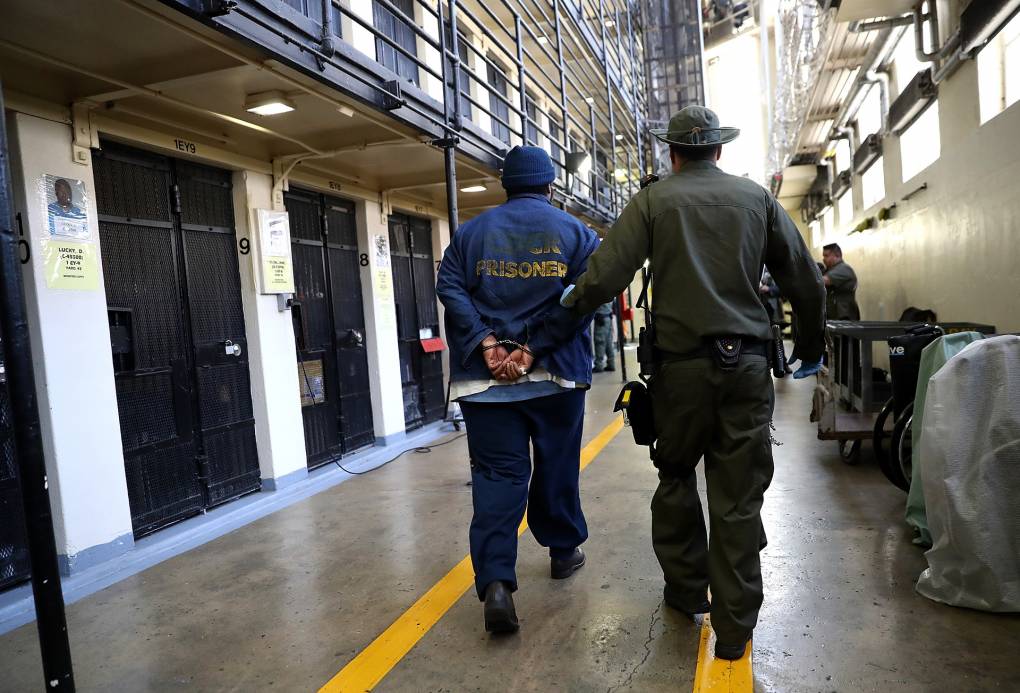
"caption": "An aerial view of a new emergency care facility erected to treat inmates infected with COVID-19 at San Quentin State Prison on July 08, 2020. Over 1,600 people incarcerated there have contracted COVID-19 after infected inmates were transferred from a prison in Chino. Seven inmates at San Quentin have died.",
"description": "An aerial view of a new emergency care facility erected to treat inmates infected with COVID-19 at San Quentin State Prison on July 08, 2020. Over 1,600 people incarcerated there have contracted COVID-19 after infected inmates were transferred from a prison in Chino. Seven inmates at San Quentin have died.",
"title": "One-Third Of Prisoners At San Quentin Prison Have Coronavirus",
"credit": "Justin Sullivan/Getty Images",
"status": "inherit",
"isLoading": false,
"fetchFailed": false
},
"news_11828021": {
"type": "attachments",
"id": "news_11828021",
"meta": {
"index": "attachments_1716263798",
"site": "news",
"id": "11828021",
"found": true
},
"parent": 11828008,
"imgSizes": {
"apple_news_ca_landscape_5_5": {
"file": "https://ww2.kqed.org/app/uploads/sites/10/2020/07/John-Potterat-age-32-1974-1044x783.jpg",
"width": 1044,
"mimeType": "image/jpeg",
"height": 783
},
"apple_news_ca_square_4_0": {
"file": "https://ww2.kqed.org/app/uploads/sites/10/2020/07/John-Potterat-age-32-1974-470x470.jpg",
"width": 470,
"mimeType": "image/jpeg",
"height": 470
},
"twentyfourteen-full-width": {
"file": "https://ww2.kqed.org/app/uploads/sites/10/2020/07/John-Potterat-age-32-1974-1038x576.jpg",
"width": 1038,
"mimeType": "image/jpeg",
"height": 576
},
"thumbnail": {
"file": "https://ww2.kqed.org/app/uploads/sites/10/2020/07/John-Potterat-age-32-1974-160x114.jpg",
"width": 160,
"mimeType": "image/jpeg",
"height": 114
},
"post-thumbnail": {
"file": "https://ww2.kqed.org/app/uploads/sites/10/2020/07/John-Potterat-age-32-1974-672x372.jpg",
"width": 672,
"mimeType": "image/jpeg",
"height": 372
},
"kqedFullSize": {
"file": "https://ww2.kqed.org/app/uploads/sites/10/2020/07/John-Potterat-age-32-1974-scaled-e1594259267466.jpg",
"width": 1920,
"height": 1370
},
"2048x2048": {
"file": "https://ww2.kqed.org/app/uploads/sites/10/2020/07/John-Potterat-age-32-1974-2048x1461.jpg",
"width": 2048,
"mimeType": "image/jpeg",
"height": 1461
},
"apple_news_ca_landscape_4_7": {
"file": "https://ww2.kqed.org/app/uploads/sites/10/2020/07/John-Potterat-age-32-1974-632x474.jpg",
"width": 632,
"mimeType": "image/jpeg",
"height": 474
},
"large": {
"file": "https://ww2.kqed.org/app/uploads/sites/10/2020/07/John-Potterat-age-32-1974-1020x728.jpg",
"width": 1020,
"mimeType": "image/jpeg",
"height": 728
},
"apple_news_ca_landscape_4_0": {
"file": "https://ww2.kqed.org/app/uploads/sites/10/2020/07/John-Potterat-age-32-1974-536x402.jpg",
"width": 536,
"mimeType": "image/jpeg",
"height": 402
},
"apple_news_ca_portrait_12_9": {
"file": "https://ww2.kqed.org/app/uploads/sites/10/2020/07/John-Potterat-age-32-1974-1122x1496.jpg",
"width": 1122,
"mimeType": "image/jpeg",
"height": 1496
},
"medium": {
"file": "https://ww2.kqed.org/app/uploads/sites/10/2020/07/John-Potterat-age-32-1974-800x571.jpg",
"width": 800,
"mimeType": "image/jpeg",
"height": 571
},
"apple_news_ca_portrait_4_0": {
"file": "https://ww2.kqed.org/app/uploads/sites/10/2020/07/John-Potterat-age-32-1974-354x472.jpg",
"width": 354,
"mimeType": "image/jpeg",
"height": 472
},
"apple_news_ca_portrait_9_7": {
"file": "https://ww2.kqed.org/app/uploads/sites/10/2020/07/John-Potterat-age-32-1974-840x1120.jpg",
"width": 840,
"mimeType": "image/jpeg",
"height": 1120
},
"apple_news_ca_landscape_12_9": {
"file": "https://ww2.kqed.org/app/uploads/sites/10/2020/07/John-Potterat-age-32-1974-1832x1374.jpg",
"width": 1832,
"mimeType": "image/jpeg",
"height": 1374
},
"apple_news_ca_square_9_7": {
"file": "https://ww2.kqed.org/app/uploads/sites/10/2020/07/John-Potterat-age-32-1974-1104x1104.jpg",
"width": 1104,
"mimeType": "image/jpeg",
"height": 1104
},
"1536x1536": {
"file": "https://ww2.kqed.org/app/uploads/sites/10/2020/07/John-Potterat-age-32-1974-1536x1096.jpg",
"width": 1536,
"mimeType": "image/jpeg",
"height": 1096
},
"apple_news_ca_portrait_4_7": {
"file": "https://ww2.kqed.org/app/uploads/sites/10/2020/07/John-Potterat-age-32-1974-414x552.jpg",
"width": 414,
"mimeType": "image/jpeg",
"height": 552
},
"apple_news_ca_square_12_9": {
"file": "https://ww2.kqed.org/app/uploads/sites/10/2020/07/John-Potterat-age-32-1974-1472x1472.jpg",
"width": 1472,
"mimeType": "image/jpeg",
"height": 1472
},
"apple_news_ca_portrait_5_5": {
"file": "https://ww2.kqed.org/app/uploads/sites/10/2020/07/John-Potterat-age-32-1974-687x916.jpg",
"width": 687,
"mimeType": "image/jpeg",
"height": 916
},
"full-width": {
"file": "https://ww2.kqed.org/app/uploads/sites/10/2020/07/John-Potterat-age-32-1974-1920x1370.jpg",
"width": 1920,
"mimeType": "image/jpeg",
"height": 1370
},
"apple_news_ca_square_4_7": {
"file": "https://ww2.kqed.org/app/uploads/sites/10/2020/07/John-Potterat-age-32-1974-550x550.jpg",
"width": 550,
"mimeType": "image/jpeg",
"height": 550
},
"apple_news_ca_landscape_9_7": {
"file": "https://ww2.kqed.org/app/uploads/sites/10/2020/07/John-Potterat-age-32-1974-1376x1032.jpg",
"width": 1376,
"mimeType": "image/jpeg",
"height": 1032
},
"apple_news_ca_square_5_5": {
"file": "https://ww2.kqed.org/app/uploads/sites/10/2020/07/John-Potterat-age-32-1974-912x912.jpg",
"width": 912,
"mimeType": "image/jpeg",
"height": 912
}
},
"publishDate": 1594259224,
"modified": 1594332199,
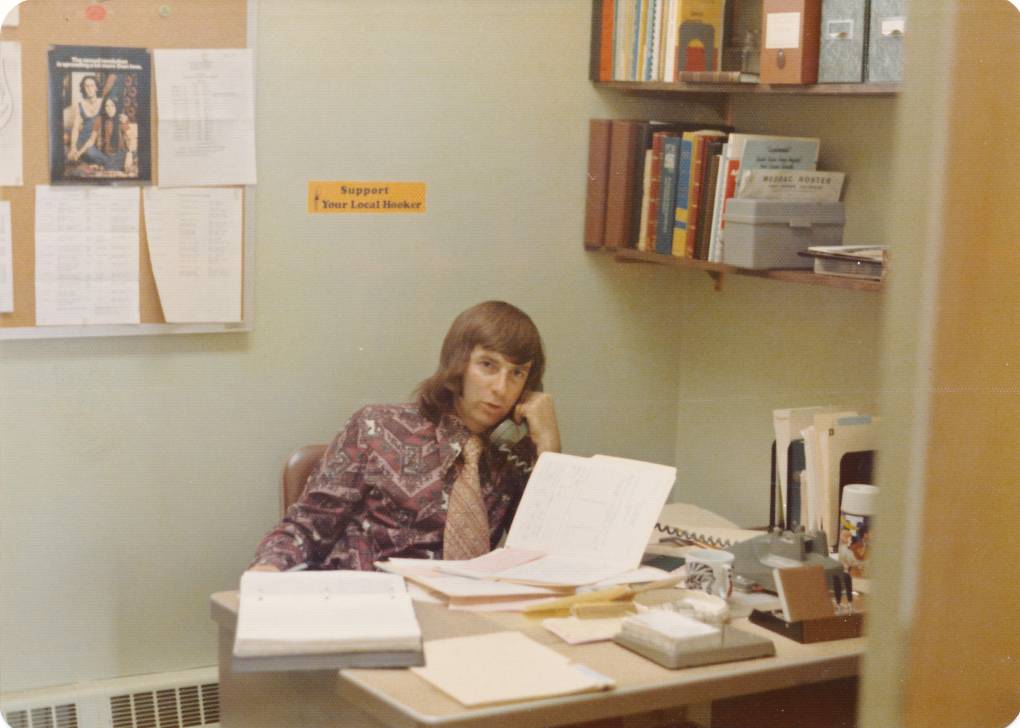
"caption": "John Potterat was a contact tracer for 40 years, working through epidemics of syphilis, gonorrhea and HIV. Here, he is seated at his desk in Colorado Spring, 1974. ",
"description": "John Potterat was a contact tracer for 40 years, working through epidemics of syphilis, gonorrhea and HIV. Here, he is seated at his desk in Colorado Spring, 1974. ",
"title": "John Potterat age 32-1974",
"credit": "Courtesy of John Potterat",
"status": "inherit",
"isLoading": false,
"fetchFailed": false
},
"news_11827494": {
"type": "attachments",
"id": "news_11827494",
"meta": {
"index": "attachments_1716263798",
"site": "news",
"id": "11827494",
"found": true
},
"parent": 11827493,
"imgSizes": {
"apple_news_ca_landscape_5_5": {
"file": "https://ww2.kqed.org/app/uploads/sites/10/2020/07/gettyimages-1221399548-37f5812d1c472d5d3d4f1915c55a77075bd3105a-1044x783.jpg",
"width": 1044,
"mimeType": "image/jpeg",
"height": 783
},
"apple_news_ca_square_4_0": {
"file": "https://ww2.kqed.org/app/uploads/sites/10/2020/07/gettyimages-1221399548-37f5812d1c472d5d3d4f1915c55a77075bd3105a-470x470.jpg",
"width": 470,
"mimeType": "image/jpeg",
"height": 470
},
"twentyfourteen-full-width": {
"file": "https://ww2.kqed.org/app/uploads/sites/10/2020/07/gettyimages-1221399548-37f5812d1c472d5d3d4f1915c55a77075bd3105a-1038x576.jpg",
"width": 1038,
"mimeType": "image/jpeg",
"height": 576
},
"thumbnail": {
"file": "https://ww2.kqed.org/app/uploads/sites/10/2020/07/gettyimages-1221399548-37f5812d1c472d5d3d4f1915c55a77075bd3105a-160x120.jpg",
"width": 160,
"mimeType": "image/jpeg",
"height": 120
},
"post-thumbnail": {
"file": "https://ww2.kqed.org/app/uploads/sites/10/2020/07/gettyimages-1221399548-37f5812d1c472d5d3d4f1915c55a77075bd3105a-672x372.jpg",
"width": 672,
"mimeType": "image/jpeg",
"height": 372
},
"kqedFullSize": {
"file": "https://ww2.kqed.org/app/uploads/sites/10/2020/07/gettyimages-1221399548-37f5812d1c472d5d3d4f1915c55a77075bd3105a-scaled-e1593898140537.jpg",
"width": 1920,
"height": 1440
},
"2048x2048": {
"file": "https://ww2.kqed.org/app/uploads/sites/10/2020/07/gettyimages-1221399548-37f5812d1c472d5d3d4f1915c55a77075bd3105a-2048x1536.jpg",
"width": 2048,
"mimeType": "image/jpeg",
"height": 1536
},
"apple_news_ca_landscape_4_7": {
"file": "https://ww2.kqed.org/app/uploads/sites/10/2020/07/gettyimages-1221399548-37f5812d1c472d5d3d4f1915c55a77075bd3105a-632x474.jpg",
"width": 632,
"mimeType": "image/jpeg",
"height": 474
},
"large": {
"file": "https://ww2.kqed.org/app/uploads/sites/10/2020/07/gettyimages-1221399548-37f5812d1c472d5d3d4f1915c55a77075bd3105a-1020x765.jpg",
"width": 1020,
"mimeType": "image/jpeg",
"height": 765
},
"apple_news_ca_landscape_4_0": {
"file": "https://ww2.kqed.org/app/uploads/sites/10/2020/07/gettyimages-1221399548-37f5812d1c472d5d3d4f1915c55a77075bd3105a-536x402.jpg",
"width": 536,
"mimeType": "image/jpeg",
"height": 402
},
"apple_news_ca_portrait_12_9": {
"file": "https://ww2.kqed.org/app/uploads/sites/10/2020/07/gettyimages-1221399548-37f5812d1c472d5d3d4f1915c55a77075bd3105a-1122x1496.jpg",
"width": 1122,
"mimeType": "image/jpeg",
"height": 1496
},
"medium": {
"file": "https://ww2.kqed.org/app/uploads/sites/10/2020/07/gettyimages-1221399548-37f5812d1c472d5d3d4f1915c55a77075bd3105a-800x600.jpg",
"width": 800,
"mimeType": "image/jpeg",
"height": 600
},
"apple_news_ca_portrait_4_0": {
"file": "https://ww2.kqed.org/app/uploads/sites/10/2020/07/gettyimages-1221399548-37f5812d1c472d5d3d4f1915c55a77075bd3105a-354x472.jpg",
"width": 354,
"mimeType": "image/jpeg",
"height": 472
},
"apple_news_ca_portrait_9_7": {
"file": "https://ww2.kqed.org/app/uploads/sites/10/2020/07/gettyimages-1221399548-37f5812d1c472d5d3d4f1915c55a77075bd3105a-840x1120.jpg",
"width": 840,
"mimeType": "image/jpeg",
"height": 1120
},
"apple_news_ca_landscape_12_9": {
"file": "https://ww2.kqed.org/app/uploads/sites/10/2020/07/gettyimages-1221399548-37f5812d1c472d5d3d4f1915c55a77075bd3105a-1832x1374.jpg",
"width": 1832,
"mimeType": "image/jpeg",
"height": 1374
},
"apple_news_ca_square_9_7": {
"file": "https://ww2.kqed.org/app/uploads/sites/10/2020/07/gettyimages-1221399548-37f5812d1c472d5d3d4f1915c55a77075bd3105a-1104x1104.jpg",
"width": 1104,
"mimeType": "image/jpeg",
"height": 1104
},
"1536x1536": {
"file": "https://ww2.kqed.org/app/uploads/sites/10/2020/07/gettyimages-1221399548-37f5812d1c472d5d3d4f1915c55a77075bd3105a-1536x1152.jpg",
"width": 1536,
"mimeType": "image/jpeg",
"height": 1152
},
"apple_news_ca_portrait_4_7": {
"file": "https://ww2.kqed.org/app/uploads/sites/10/2020/07/gettyimages-1221399548-37f5812d1c472d5d3d4f1915c55a77075bd3105a-414x552.jpg",
"width": 414,
"mimeType": "image/jpeg",
"height": 552
},
"apple_news_ca_square_12_9": {
"file": "https://ww2.kqed.org/app/uploads/sites/10/2020/07/gettyimages-1221399548-37f5812d1c472d5d3d4f1915c55a77075bd3105a-1472x1472.jpg",
"width": 1472,
"mimeType": "image/jpeg",
"height": 1472
},
"apple_news_ca_portrait_5_5": {
"file": "https://ww2.kqed.org/app/uploads/sites/10/2020/07/gettyimages-1221399548-37f5812d1c472d5d3d4f1915c55a77075bd3105a-687x916.jpg",
"width": 687,
"mimeType": "image/jpeg",
"height": 916
},
"full-width": {
"file": "https://ww2.kqed.org/app/uploads/sites/10/2020/07/gettyimages-1221399548-37f5812d1c472d5d3d4f1915c55a77075bd3105a-1920x1440.jpg",
"width": 1920,
"mimeType": "image/jpeg",
"height": 1440
},
"apple_news_ca_square_4_7": {
"file": "https://ww2.kqed.org/app/uploads/sites/10/2020/07/gettyimages-1221399548-37f5812d1c472d5d3d4f1915c55a77075bd3105a-550x550.jpg",
"width": 550,
"mimeType": "image/jpeg",
"height": 550
},
"apple_news_ca_landscape_9_7": {
"file": "https://ww2.kqed.org/app/uploads/sites/10/2020/07/gettyimages-1221399548-37f5812d1c472d5d3d4f1915c55a77075bd3105a-1376x1032.jpg",
"width": 1376,
"mimeType": "image/jpeg",
"height": 1032
},
"apple_news_ca_square_5_5": {
"file": "https://ww2.kqed.org/app/uploads/sites/10/2020/07/gettyimages-1221399548-37f5812d1c472d5d3d4f1915c55a77075bd3105a-912x912.jpg",
"width": 912,
"mimeType": "image/jpeg",
"height": 912
}
},
"publishDate": 1593891172,
"modified": 1593898151,
"caption": null,
"description": "More than 4,000 foreign-born doctors officially begin their residencies at hospitals across the United States today. They'll confront two historic challenges: The coronavirus pandemic and some of the most restrictive immigration policies this nation has seen in decades.",
"title": "More than 4,000 foreign-born doctors officially begin their residencies at hospitals across the United States today. They'll confront two historic challenges: The coronavirus pandemic and some of the most restrictive immigration policies this nation has seen in decades.",
"credit": "smartboy10/DigitalVision Vectors/GettyImages",
"status": "inherit",
"isLoading": false,
"fetchFailed": false
},
"news_11827410": {
"type": "attachments",
"id": "news_11827410",
"meta": {
"index": "attachments_1716263798",
"site": "news",
"id": "11827410",
"found": true
},
"parent": 11827407,
"imgSizes": {
"apple_news_ca_landscape_5_5": {
"file": "https://ww2.kqed.org/app/uploads/sites/10/2020/07/1920_GettyImages-1223036039-1044x783.jpg",
"width": 1044,
"mimeType": "image/jpeg",
"height": 783
},
"apple_news_ca_square_4_0": {
"file": "https://ww2.kqed.org/app/uploads/sites/10/2020/07/1920_GettyImages-1223036039-470x470.jpg",
"width": 470,
"mimeType": "image/jpeg",
"height": 470
},
"twentyfourteen-full-width": {
"file": "https://ww2.kqed.org/app/uploads/sites/10/2020/07/1920_GettyImages-1223036039-1038x576.jpg",
"width": 1038,
"mimeType": "image/jpeg",
"height": 576
},
"thumbnail": {
"file": "https://ww2.kqed.org/app/uploads/sites/10/2020/07/1920_GettyImages-1223036039-160x90.jpg",
"width": 160,
"mimeType": "image/jpeg",
"height": 90
},
"post-thumbnail": {
"file": "https://ww2.kqed.org/app/uploads/sites/10/2020/07/1920_GettyImages-1223036039-672x372.jpg",
"width": 672,
"mimeType": "image/jpeg",
"height": 372
},
"kqedFullSize": {
"file": "https://ww2.kqed.org/app/uploads/sites/10/2020/07/1920_GettyImages-1223036039-scaled.jpg",
"width": 2560,
"height": 1440
},
"2048x2048": {
"file": "https://ww2.kqed.org/app/uploads/sites/10/2020/07/1920_GettyImages-1223036039-2048x1152.jpg",
"width": 2048,
"mimeType": "image/jpeg",
"height": 1152
},
"apple_news_ca_landscape_4_7": {
"file": "https://ww2.kqed.org/app/uploads/sites/10/2020/07/1920_GettyImages-1223036039-632x474.jpg",
"width": 632,
"mimeType": "image/jpeg",
"height": 474
},
"large": {
"file": "https://ww2.kqed.org/app/uploads/sites/10/2020/07/1920_GettyImages-1223036039-1020x574.jpg",
"width": 1020,
"mimeType": "image/jpeg",
"height": 574
},
"apple_news_ca_landscape_4_0": {
"file": "https://ww2.kqed.org/app/uploads/sites/10/2020/07/1920_GettyImages-1223036039-536x402.jpg",
"width": 536,
"mimeType": "image/jpeg",
"height": 402
},
"apple_news_ca_portrait_12_9": {
"file": "https://ww2.kqed.org/app/uploads/sites/10/2020/07/1920_GettyImages-1223036039-1122x1496.jpg",
"width": 1122,
"mimeType": "image/jpeg",
"height": 1496
},
"medium": {
"file": "https://ww2.kqed.org/app/uploads/sites/10/2020/07/1920_GettyImages-1223036039-800x450.jpg",
"width": 800,
"mimeType": "image/jpeg",
"height": 450
},
"apple_news_ca_portrait_4_0": {
"file": "https://ww2.kqed.org/app/uploads/sites/10/2020/07/1920_GettyImages-1223036039-354x472.jpg",
"width": 354,
"mimeType": "image/jpeg",
"height": 472
},
"apple_news_ca_portrait_9_7": {
"file": "https://ww2.kqed.org/app/uploads/sites/10/2020/07/1920_GettyImages-1223036039-840x1120.jpg",
"width": 840,
"mimeType": "image/jpeg",
"height": 1120
},
"apple_news_ca_landscape_12_9": {
"file": "https://ww2.kqed.org/app/uploads/sites/10/2020/07/1920_GettyImages-1223036039-1832x1374.jpg",
"width": 1832,
"mimeType": "image/jpeg",
"height": 1374
},
"apple_news_ca_square_9_7": {
"file": "https://ww2.kqed.org/app/uploads/sites/10/2020/07/1920_GettyImages-1223036039-1104x1104.jpg",
"width": 1104,
"mimeType": "image/jpeg",
"height": 1104
},
"1536x1536": {
"file": "https://ww2.kqed.org/app/uploads/sites/10/2020/07/1920_GettyImages-1223036039-1536x864.jpg",
"width": 1536,
"mimeType": "image/jpeg",
"height": 864
},
"apple_news_ca_portrait_4_7": {
"file": "https://ww2.kqed.org/app/uploads/sites/10/2020/07/1920_GettyImages-1223036039-414x552.jpg",
"width": 414,
"mimeType": "image/jpeg",
"height": 552
},
"apple_news_ca_square_12_9": {
"file": "https://ww2.kqed.org/app/uploads/sites/10/2020/07/1920_GettyImages-1223036039-1472x1472.jpg",
"width": 1472,
"mimeType": "image/jpeg",
"height": 1472
},
"apple_news_ca_portrait_5_5": {
"file": "https://ww2.kqed.org/app/uploads/sites/10/2020/07/1920_GettyImages-1223036039-687x916.jpg",
"width": 687,
"mimeType": "image/jpeg",
"height": 916
},
"full-width": {
"file": "https://ww2.kqed.org/app/uploads/sites/10/2020/07/1920_GettyImages-1223036039-1920x1080.jpg",
"width": 1920,
"mimeType": "image/jpeg",
"height": 1080
},
"apple_news_ca_square_4_7": {
"file": "https://ww2.kqed.org/app/uploads/sites/10/2020/07/1920_GettyImages-1223036039-550x550.jpg",
"width": 550,
"mimeType": "image/jpeg",
"height": 550
},
"apple_news_ca_landscape_9_7": {
"file": "https://ww2.kqed.org/app/uploads/sites/10/2020/07/1920_GettyImages-1223036039-1376x1032.jpg",
"width": 1376,
"mimeType": "image/jpeg",
"height": 1032
},
"apple_news_ca_square_5_5": {
"file": "https://ww2.kqed.org/app/uploads/sites/10/2020/07/1920_GettyImages-1223036039-912x912.jpg",
"width": 912,
"mimeType": "image/jpeg",
"height": 912
}
},
"publishDate": 1593789610,
"modified": 1619544265,
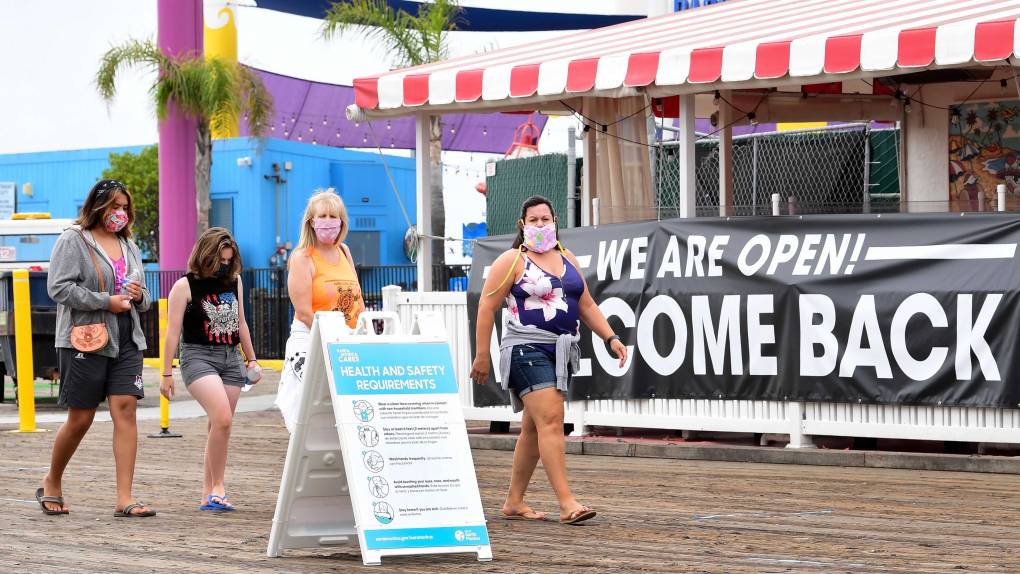
"caption": "People wearing face masks walk past a health and safety guideline board and an open restaurant on Santa Monica Pier which reopened on June 25 after closure for over three months due to the coronavirus pandemic, on June 26, 2020 in Santa Monica. ",
"description": null,
"title": "US-HEALTH-VIRUS-CALIFORNIA",
"credit": "Frederic J. Brown/AFP via Getty Images",
"status": "inherit",
"altTag": null,
"isLoading": false,
"fetchFailed": false
},
"news_11826928": {
"type": "attachments",
"id": "news_11826928",
"meta": {
"index": "attachments_1716263798",
"site": "news",
"id": "11826928",
"found": true
},
"parent": 11826872,
"imgSizes": {
"apple_news_ca_landscape_5_5": {
"file": "https://ww2.kqed.org/app/uploads/sites/10/2020/06/Karla-Monterroso-1044x720.jpg",
"width": 1044,
"mimeType": "image/jpeg",
"height": 720
},
"apple_news_ca_square_4_0": {
"file": "https://ww2.kqed.org/app/uploads/sites/10/2020/06/Karla-Monterroso-470x470.jpg",
"width": 470,
"mimeType": "image/jpeg",
"height": 470
},
"twentyfourteen-full-width": {
"file": "https://ww2.kqed.org/app/uploads/sites/10/2020/06/Karla-Monterroso-1038x576.jpg",
"width": 1038,
"mimeType": "image/jpeg",
"height": 576
},
"thumbnail": {
"file": "https://ww2.kqed.org/app/uploads/sites/10/2020/06/Karla-Monterroso-160x107.jpg",
"width": 160,
"mimeType": "image/jpeg",
"height": 107
},
"post-thumbnail": {
"file": "https://ww2.kqed.org/app/uploads/sites/10/2020/06/Karla-Monterroso-672x372.jpg",
"width": 672,
"mimeType": "image/jpeg",
"height": 372
},
"kqedFullSize": {
"file": "https://ww2.kqed.org/app/uploads/sites/10/2020/06/Karla-Monterroso.jpg",
"width": 1080,
"height": 720
},
"apple_news_ca_landscape_4_7": {
"file": "https://ww2.kqed.org/app/uploads/sites/10/2020/06/Karla-Monterroso-632x474.jpg",
"width": 632,
"mimeType": "image/jpeg",
"height": 474
},
"large": {
"file": "https://ww2.kqed.org/app/uploads/sites/10/2020/06/Karla-Monterroso-1020x680.jpg",
"width": 1020,
"mimeType": "image/jpeg",
"height": 680
},
"apple_news_ca_landscape_4_0": {
"file": "https://ww2.kqed.org/app/uploads/sites/10/2020/06/Karla-Monterroso-536x402.jpg",
"width": 536,
"mimeType": "image/jpeg",
"height": 402
},
"medium": {
"file": "https://ww2.kqed.org/app/uploads/sites/10/2020/06/Karla-Monterroso-800x533.jpg",
"width": 800,
"mimeType": "image/jpeg",
"height": 533
},
"apple_news_ca_portrait_4_0": {
"file": "https://ww2.kqed.org/app/uploads/sites/10/2020/06/Karla-Monterroso-354x472.jpg",
"width": 354,
"mimeType": "image/jpeg",
"height": 472
},
"apple_news_ca_portrait_9_7": {
"file": "https://ww2.kqed.org/app/uploads/sites/10/2020/06/Karla-Monterroso-840x720.jpg",
"width": 840,
"mimeType": "image/jpeg",
"height": 720
},
"apple_news_ca_portrait_4_7": {
"file": "https://ww2.kqed.org/app/uploads/sites/10/2020/06/Karla-Monterroso-414x552.jpg",
"width": 414,
"mimeType": "image/jpeg",
"height": 552
},
"apple_news_ca_portrait_5_5": {
"file": "https://ww2.kqed.org/app/uploads/sites/10/2020/06/Karla-Monterroso-687x720.jpg",
"width": 687,
"mimeType": "image/jpeg",
"height": 720
},
"apple_news_ca_square_4_7": {
"file": "https://ww2.kqed.org/app/uploads/sites/10/2020/06/Karla-Monterroso-550x550.jpg",
"width": 550,
"mimeType": "image/jpeg",
"height": 550
},
"apple_news_ca_square_5_5": {
"file": "https://ww2.kqed.org/app/uploads/sites/10/2020/06/Karla-Monterroso-912x720.jpg",
"width": 912,
"mimeType": "image/jpeg",
"height": 720
}
},
"publishDate": 1593566858,
"modified": 1593627599,
"caption": "Karla Monterroso says after going to Alameda Hospital in May with a very accelerated heart rate, very low blood pressure and cycling oxygen levels, her entire experience was one of being punished for being 'insubordinate.'",
"description": "Karla Monterroso says after going to Alameda Hospital in May with a very accelerated heart rate, very low blood pressure and cycling oxygen levels, her entire experience was one of being punished for being 'insubordinate.'",
"title": "Karla Monterroso",
"credit": "Courtesy of Kenneth Eke",
"status": "inherit",
"isLoading": false,
"fetchFailed": false
},
"news_11826596": {
"type": "attachments",
"id": "news_11826596",
"meta": {
"index": "attachments_1716263798",
"site": "news",
"id": "11826596",
"found": true
},
"parent": 11826530,
"imgSizes": {
"apple_news_ca_landscape_5_5": {
"file": "https://ww2.kqed.org/app/uploads/sites/10/2020/06/IMG_8162-1-1044x783.jpg",
"width": 1044,
"mimeType": "image/jpeg",
"height": 783
},
"apple_news_ca_square_4_0": {
"file": "https://ww2.kqed.org/app/uploads/sites/10/2020/06/IMG_8162-1-470x470.jpg",
"width": 470,
"mimeType": "image/jpeg",
"height": 470
},
"twentyfourteen-full-width": {
"file": "https://ww2.kqed.org/app/uploads/sites/10/2020/06/IMG_8162-1-1038x576.jpg",
"width": 1038,
"mimeType": "image/jpeg",
"height": 576
},
"thumbnail": {
"file": "https://ww2.kqed.org/app/uploads/sites/10/2020/06/IMG_8162-1-160x107.jpg",
"width": 160,
"mimeType": "image/jpeg",
"height": 107
},
"post-thumbnail": {
"file": "https://ww2.kqed.org/app/uploads/sites/10/2020/06/IMG_8162-1-672x372.jpg",
"width": 672,
"mimeType": "image/jpeg",
"height": 372
},
"kqedFullSize": {
"file": "https://ww2.kqed.org/app/uploads/sites/10/2020/06/IMG_8162-1.jpg",
"width": 1900,
"height": 1267
},
"apple_news_ca_landscape_4_7": {
"file": "https://ww2.kqed.org/app/uploads/sites/10/2020/06/IMG_8162-1-632x474.jpg",
"width": 632,
"mimeType": "image/jpeg",
"height": 474
},
"large": {
"file": "https://ww2.kqed.org/app/uploads/sites/10/2020/06/IMG_8162-1-1020x680.jpg",
"width": 1020,
"mimeType": "image/jpeg",
"height": 680
},
"apple_news_ca_landscape_4_0": {
"file": "https://ww2.kqed.org/app/uploads/sites/10/2020/06/IMG_8162-1-536x402.jpg",
"width": 536,
"mimeType": "image/jpeg",
"height": 402
},
"apple_news_ca_portrait_12_9": {
"file": "https://ww2.kqed.org/app/uploads/sites/10/2020/06/IMG_8162-1-1122x1267.jpg",
"width": 1122,
"mimeType": "image/jpeg",
"height": 1267
},
"medium": {
"file": "https://ww2.kqed.org/app/uploads/sites/10/2020/06/IMG_8162-1-800x533.jpg",
"width": 800,
"mimeType": "image/jpeg",
"height": 533
},
"apple_news_ca_portrait_4_0": {
"file": "https://ww2.kqed.org/app/uploads/sites/10/2020/06/IMG_8162-1-354x472.jpg",
"width": 354,
"mimeType": "image/jpeg",
"height": 472
},
"apple_news_ca_portrait_9_7": {
"file": "https://ww2.kqed.org/app/uploads/sites/10/2020/06/IMG_8162-1-840x1120.jpg",
"width": 840,
"mimeType": "image/jpeg",
"height": 1120
},
"apple_news_ca_landscape_12_9": {
"file": "https://ww2.kqed.org/app/uploads/sites/10/2020/06/IMG_8162-1-1832x1267.jpg",
"width": 1832,
"mimeType": "image/jpeg",
"height": 1267
},
"apple_news_ca_square_9_7": {
"file": "https://ww2.kqed.org/app/uploads/sites/10/2020/06/IMG_8162-1-1104x1104.jpg",
"width": 1104,
"mimeType": "image/jpeg",
"height": 1104
},
"1536x1536": {
"file": "https://ww2.kqed.org/app/uploads/sites/10/2020/06/IMG_8162-1-1536x1024.jpg",
"width": 1536,
"mimeType": "image/jpeg",
"height": 1024
},
"apple_news_ca_portrait_4_7": {
"file": "https://ww2.kqed.org/app/uploads/sites/10/2020/06/IMG_8162-1-414x552.jpg",
"width": 414,
"mimeType": "image/jpeg",
"height": 552
},
"apple_news_ca_square_12_9": {
"file": "https://ww2.kqed.org/app/uploads/sites/10/2020/06/IMG_8162-1-1472x1267.jpg",
"width": 1472,
"mimeType": "image/jpeg",
"height": 1267
},
"apple_news_ca_portrait_5_5": {
"file": "https://ww2.kqed.org/app/uploads/sites/10/2020/06/IMG_8162-1-687x916.jpg",
"width": 687,
"mimeType": "image/jpeg",
"height": 916
},
"apple_news_ca_square_4_7": {
"file": "https://ww2.kqed.org/app/uploads/sites/10/2020/06/IMG_8162-1-550x550.jpg",
"width": 550,
"mimeType": "image/jpeg",
"height": 550
},
"apple_news_ca_landscape_9_7": {
"file": "https://ww2.kqed.org/app/uploads/sites/10/2020/06/IMG_8162-1-1376x1032.jpg",
"width": 1376,
"mimeType": "image/jpeg",
"height": 1032
},
"apple_news_ca_square_5_5": {
"file": "https://ww2.kqed.org/app/uploads/sites/10/2020/06/IMG_8162-1-912x912.jpg",
"width": 912,
"mimeType": "image/jpeg",
"height": 912
}
},
"publishDate": 1593390949,
"modified": 1593391950,
"caption": "Caitlin Haynes stands with a protest sign near San Quentin State Prison. Haynes' fiance is a San Quentin inmate. ",
"description": "Caitlin Haynes stands with a protest sign near San Quentin State Prison. Haynes' fiance is a San Quentin inmate. ",
"title": "IMG_8162 (1)",
"credit": "Sara Hossaini/KQED",
"status": "inherit",
"isLoading": false,
"fetchFailed": false
},
"news_11826473": {
"type": "attachments",
"id": "news_11826473",
"meta": {
"index": "attachments_1716263798",
"site": "news",
"id": "11826473",
"found": true
},
"parent": 11826469,
"imgSizes": {
"apple_news_ca_landscape_5_5": {
"file": "https://ww2.kqed.org/app/uploads/sites/10/2020/06/RS21213_GettyImages-589931494-qut-1044x783.jpg",
"width": 1044,
"mimeType": "image/jpeg",
"height": 783
},
"apple_news_ca_square_4_0": {
"file": "https://ww2.kqed.org/app/uploads/sites/10/2020/06/RS21213_GettyImages-589931494-qut-470x470.jpg",
"width": 470,
"mimeType": "image/jpeg",
"height": 470
},
"twentyfourteen-full-width": {
"file": "https://ww2.kqed.org/app/uploads/sites/10/2020/06/RS21213_GettyImages-589931494-qut-1038x576.jpg",
"width": 1038,
"mimeType": "image/jpeg",
"height": 576
},
"thumbnail": {
"file": "https://ww2.kqed.org/app/uploads/sites/10/2020/06/RS21213_GettyImages-589931494-qut-160x109.jpg",
"width": 160,
"mimeType": "image/jpeg",
"height": 109
},
"post-thumbnail": {
"file": "https://ww2.kqed.org/app/uploads/sites/10/2020/06/RS21213_GettyImages-589931494-qut-672x372.jpg",
"width": 672,
"mimeType": "image/jpeg",
"height": 372
},
"kqedFullSize": {
"file": "https://ww2.kqed.org/app/uploads/sites/10/2020/06/RS21213_GettyImages-589931494-qut.jpg",
"width": 1920,
"height": 1305
},
"apple_news_ca_landscape_4_7": {
"file": "https://ww2.kqed.org/app/uploads/sites/10/2020/06/RS21213_GettyImages-589931494-qut-632x474.jpg",
"width": 632,
"mimeType": "image/jpeg",
"height": 474
},
"large": {
"file": "https://ww2.kqed.org/app/uploads/sites/10/2020/06/RS21213_GettyImages-589931494-qut-1020x693.jpg",
"width": 1020,
"mimeType": "image/jpeg",
"height": 693
},
"apple_news_ca_landscape_4_0": {
"file": "https://ww2.kqed.org/app/uploads/sites/10/2020/06/RS21213_GettyImages-589931494-qut-536x402.jpg",
"width": 536,
"mimeType": "image/jpeg",
"height": 402
},
"apple_news_ca_portrait_12_9": {
"file": "https://ww2.kqed.org/app/uploads/sites/10/2020/06/RS21213_GettyImages-589931494-qut-1122x1305.jpg",
"width": 1122,
"mimeType": "image/jpeg",
"height": 1305
},
"medium": {
"file": "https://ww2.kqed.org/app/uploads/sites/10/2020/06/RS21213_GettyImages-589931494-qut-800x544.jpg",
"width": 800,
"mimeType": "image/jpeg",
"height": 544
},
"apple_news_ca_portrait_4_0": {
"file": "https://ww2.kqed.org/app/uploads/sites/10/2020/06/RS21213_GettyImages-589931494-qut-354x472.jpg",
"width": 354,
"mimeType": "image/jpeg",
"height": 472
},
"apple_news_ca_portrait_9_7": {
"file": "https://ww2.kqed.org/app/uploads/sites/10/2020/06/RS21213_GettyImages-589931494-qut-840x1120.jpg",
"width": 840,
"mimeType": "image/jpeg",
"height": 1120
},
"apple_news_ca_landscape_12_9": {
"file": "https://ww2.kqed.org/app/uploads/sites/10/2020/06/RS21213_GettyImages-589931494-qut-1832x1305.jpg",
"width": 1832,
"mimeType": "image/jpeg",
"height": 1305
},
"apple_news_ca_square_9_7": {
"file": "https://ww2.kqed.org/app/uploads/sites/10/2020/06/RS21213_GettyImages-589931494-qut-1104x1104.jpg",
"width": 1104,
"mimeType": "image/jpeg",
"height": 1104
},
"1536x1536": {
"file": "https://ww2.kqed.org/app/uploads/sites/10/2020/06/RS21213_GettyImages-589931494-qut-1536x1044.jpg",
"width": 1536,
"mimeType": "image/jpeg",
"height": 1044
},
"apple_news_ca_portrait_4_7": {
"file": "https://ww2.kqed.org/app/uploads/sites/10/2020/06/RS21213_GettyImages-589931494-qut-414x552.jpg",
"width": 414,
"mimeType": "image/jpeg",
"height": 552
},
"apple_news_ca_square_12_9": {
"file": "https://ww2.kqed.org/app/uploads/sites/10/2020/06/RS21213_GettyImages-589931494-qut-1472x1305.jpg",
"width": 1472,
"mimeType": "image/jpeg",
"height": 1305
},
"apple_news_ca_portrait_5_5": {
"file": "https://ww2.kqed.org/app/uploads/sites/10/2020/06/RS21213_GettyImages-589931494-qut-687x916.jpg",
"width": 687,
"mimeType": "image/jpeg",
"height": 916
},
"apple_news_ca_square_4_7": {
"file": "https://ww2.kqed.org/app/uploads/sites/10/2020/06/RS21213_GettyImages-589931494-qut-550x550.jpg",
"width": 550,
"mimeType": "image/jpeg",
"height": 550
},
"apple_news_ca_landscape_9_7": {
"file": "https://ww2.kqed.org/app/uploads/sites/10/2020/06/RS21213_GettyImages-589931494-qut-1376x1032.jpg",
"width": 1376,
"mimeType": "image/jpeg",
"height": 1032
},
"apple_news_ca_square_5_5": {
"file": "https://ww2.kqed.org/app/uploads/sites/10/2020/06/RS21213_GettyImages-589931494-qut-912x912.jpg",
"width": 912,
"mimeType": "image/jpeg",
"height": 912
}
},
"publishDate": 1593278259,
"modified": 1593663813,
"caption": "Health officials are working to keep a fast-moving COVID-19 outbreak at California's San Quentin State Prison from spreading into the broader Bay Area community. San Quentin State Prison opened in 1852 and is California's oldest penitentiary. ",
"description": "Health officials are working to keep a fast-moving COVID-19 outbreak at California's San Quentin State Prison from spreading into the broader Bay Area community. San Quentin State Prison opened in 1852 and is California's oldest penitentiary. ",
"title": "RS21213_GettyImages-589931494-qut",
"credit": "Justin Sullivan/Getty Images",
"status": "inherit",
"isLoading": false,
"fetchFailed": false
},
"news_11826462": {
"type": "attachments",
"id": "news_11826462",
"meta": {
"index": "attachments_1716263798",
"site": "news",
"id": "11826462",
"found": true
},
"parent": 11826457,
"imgSizes": {
"apple_news_ca_landscape_5_5": {
"file": "https://ww2.kqed.org/app/uploads/sites/10/2020/06/RS42386_031_KQED_BethLaBerge_BloomEnergy_Newsom_03282020-qut-1044x783.jpg",
"width": 1044,
"mimeType": "image/jpeg",
"height": 783
},
"apple_news_ca_square_4_0": {
"file": "https://ww2.kqed.org/app/uploads/sites/10/2020/06/RS42386_031_KQED_BethLaBerge_BloomEnergy_Newsom_03282020-qut-470x470.jpg",
"width": 470,
"mimeType": "image/jpeg",
"height": 470
},
"twentyfourteen-full-width": {
"file": "https://ww2.kqed.org/app/uploads/sites/10/2020/06/RS42386_031_KQED_BethLaBerge_BloomEnergy_Newsom_03282020-qut-1038x576.jpg",
"width": 1038,
"mimeType": "image/jpeg",
"height": 576
},
"thumbnail": {
"file": "https://ww2.kqed.org/app/uploads/sites/10/2020/06/RS42386_031_KQED_BethLaBerge_BloomEnergy_Newsom_03282020-qut-160x107.jpg",
"width": 160,
"mimeType": "image/jpeg",
"height": 107
},
"post-thumbnail": {
"file": "https://ww2.kqed.org/app/uploads/sites/10/2020/06/RS42386_031_KQED_BethLaBerge_BloomEnergy_Newsom_03282020-qut-672x372.jpg",
"width": 672,
"mimeType": "image/jpeg",
"height": 372
},
"kqedFullSize": {
"file": "https://ww2.kqed.org/app/uploads/sites/10/2020/06/RS42386_031_KQED_BethLaBerge_BloomEnergy_Newsom_03282020-qut.jpg",
"width": 1920,
"height": 1278
},
"apple_news_ca_landscape_4_7": {
"file": "https://ww2.kqed.org/app/uploads/sites/10/2020/06/RS42386_031_KQED_BethLaBerge_BloomEnergy_Newsom_03282020-qut-632x474.jpg",
"width": 632,
"mimeType": "image/jpeg",
"height": 474
},
"large": {
"file": "https://ww2.kqed.org/app/uploads/sites/10/2020/06/RS42386_031_KQED_BethLaBerge_BloomEnergy_Newsom_03282020-qut-1020x679.jpg",
"width": 1020,
"mimeType": "image/jpeg",
"height": 679
},
"apple_news_ca_landscape_4_0": {
"file": "https://ww2.kqed.org/app/uploads/sites/10/2020/06/RS42386_031_KQED_BethLaBerge_BloomEnergy_Newsom_03282020-qut-536x402.jpg",
"width": 536,
"mimeType": "image/jpeg",
"height": 402
},
"apple_news_ca_portrait_12_9": {
"file": "https://ww2.kqed.org/app/uploads/sites/10/2020/06/RS42386_031_KQED_BethLaBerge_BloomEnergy_Newsom_03282020-qut-1122x1278.jpg",
"width": 1122,
"mimeType": "image/jpeg",
"height": 1278
},
"medium": {
"file": "https://ww2.kqed.org/app/uploads/sites/10/2020/06/RS42386_031_KQED_BethLaBerge_BloomEnergy_Newsom_03282020-qut-800x533.jpg",
"width": 800,
"mimeType": "image/jpeg",
"height": 533
},
"apple_news_ca_portrait_4_0": {
"file": "https://ww2.kqed.org/app/uploads/sites/10/2020/06/RS42386_031_KQED_BethLaBerge_BloomEnergy_Newsom_03282020-qut-354x472.jpg",
"width": 354,
"mimeType": "image/jpeg",
"height": 472
},
"apple_news_ca_portrait_9_7": {
"file": "https://ww2.kqed.org/app/uploads/sites/10/2020/06/RS42386_031_KQED_BethLaBerge_BloomEnergy_Newsom_03282020-qut-840x1120.jpg",
"width": 840,
"mimeType": "image/jpeg",
"height": 1120
},
"apple_news_ca_landscape_12_9": {
"file": "https://ww2.kqed.org/app/uploads/sites/10/2020/06/RS42386_031_KQED_BethLaBerge_BloomEnergy_Newsom_03282020-qut-1832x1278.jpg",
"width": 1832,
"mimeType": "image/jpeg",
"height": 1278
},
"apple_news_ca_square_9_7": {
"file": "https://ww2.kqed.org/app/uploads/sites/10/2020/06/RS42386_031_KQED_BethLaBerge_BloomEnergy_Newsom_03282020-qut-1104x1104.jpg",
"width": 1104,
"mimeType": "image/jpeg",
"height": 1104
},
"1536x1536": {
"file": "https://ww2.kqed.org/app/uploads/sites/10/2020/06/RS42386_031_KQED_BethLaBerge_BloomEnergy_Newsom_03282020-qut-1536x1022.jpg",
"width": 1536,
"mimeType": "image/jpeg",
"height": 1022
},
"apple_news_ca_portrait_4_7": {
"file": "https://ww2.kqed.org/app/uploads/sites/10/2020/06/RS42386_031_KQED_BethLaBerge_BloomEnergy_Newsom_03282020-qut-414x552.jpg",
"width": 414,
"mimeType": "image/jpeg",
"height": 552
},
"apple_news_ca_square_12_9": {
"file": "https://ww2.kqed.org/app/uploads/sites/10/2020/06/RS42386_031_KQED_BethLaBerge_BloomEnergy_Newsom_03282020-qut-1472x1278.jpg",
"width": 1472,
"mimeType": "image/jpeg",
"height": 1278
},
"apple_news_ca_portrait_5_5": {
"file": "https://ww2.kqed.org/app/uploads/sites/10/2020/06/RS42386_031_KQED_BethLaBerge_BloomEnergy_Newsom_03282020-qut-687x916.jpg",
"width": 687,
"mimeType": "image/jpeg",
"height": 916
},
"apple_news_ca_square_4_7": {
"file": "https://ww2.kqed.org/app/uploads/sites/10/2020/06/RS42386_031_KQED_BethLaBerge_BloomEnergy_Newsom_03282020-qut-550x550.jpg",
"width": 550,
"mimeType": "image/jpeg",
"height": 550
},
"apple_news_ca_landscape_9_7": {
"file": "https://ww2.kqed.org/app/uploads/sites/10/2020/06/RS42386_031_KQED_BethLaBerge_BloomEnergy_Newsom_03282020-qut-1376x1032.jpg",
"width": 1376,
"mimeType": "image/jpeg",
"height": 1032
},
"apple_news_ca_square_5_5": {
"file": "https://ww2.kqed.org/app/uploads/sites/10/2020/06/RS42386_031_KQED_BethLaBerge_BloomEnergy_Newsom_03282020-qut-912x912.jpg",
"width": 912,
"mimeType": "image/jpeg",
"height": 912
}
},
"publishDate": 1593270592,
"modified": 1593270782,
"caption": "Gov. Gavin Newsom speaks with Bloom Energy CEO KR Sridhar at the Bloom Energy Sunnyvale campus on March 28, 2020. Bloom Energy is a fuel cell generator company that switched over to refurbishing ventilators as an increasing number of patients experience respiratory issues as a result of COVID-19.",
"description": null,
"title": "RS42386_031_KQED_BethLaBerge_BloomEnergy_Newsom_03282020-qut",
"credit": "Beth LaBerge/KQED",
"status": "inherit",
"isLoading": false,
"fetchFailed": false
},
"news_11825939": {
"type": "attachments",
"id": "news_11825939",
"meta": {
"index": "attachments_1716263798",
"site": "news",
"id": "11825939",
"found": true
},
"parent": 11825898,
"imgSizes": {
"apple_news_ca_landscape_5_5": {
"file": "https://ww2.kqed.org/app/uploads/sites/10/2020/06/RS43675_003_KQED_Emeryville_TiffanyChiomaAnaebere_06172020-qut-1044x783.jpg",
"width": 1044,
"mimeType": "image/jpeg",
"height": 783
},
"apple_news_ca_square_4_0": {
"file": "https://ww2.kqed.org/app/uploads/sites/10/2020/06/RS43675_003_KQED_Emeryville_TiffanyChiomaAnaebere_06172020-qut-470x470.jpg",
"width": 470,
"mimeType": "image/jpeg",
"height": 470
},
"twentyfourteen-full-width": {
"file": "https://ww2.kqed.org/app/uploads/sites/10/2020/06/RS43675_003_KQED_Emeryville_TiffanyChiomaAnaebere_06172020-qut-1038x576.jpg",
"width": 1038,
"mimeType": "image/jpeg",
"height": 576
},
"thumbnail": {
"file": "https://ww2.kqed.org/app/uploads/sites/10/2020/06/RS43675_003_KQED_Emeryville_TiffanyChiomaAnaebere_06172020-qut-160x107.jpg",
"width": 160,
"mimeType": "image/jpeg",
"height": 107
},
"post-thumbnail": {
"file": "https://ww2.kqed.org/app/uploads/sites/10/2020/06/RS43675_003_KQED_Emeryville_TiffanyChiomaAnaebere_06172020-qut-672x372.jpg",
"width": 672,
"mimeType": "image/jpeg",
"height": 372
},
"kqedFullSize": {
"file": "https://ww2.kqed.org/app/uploads/sites/10/2020/06/RS43675_003_KQED_Emeryville_TiffanyChiomaAnaebere_06172020-qut.jpg",
"width": 1920,
"height": 1280
},
"apple_news_ca_landscape_4_7": {
"file": "https://ww2.kqed.org/app/uploads/sites/10/2020/06/RS43675_003_KQED_Emeryville_TiffanyChiomaAnaebere_06172020-qut-632x474.jpg",
"width": 632,
"mimeType": "image/jpeg",
"height": 474
},
"large": {
"file": "https://ww2.kqed.org/app/uploads/sites/10/2020/06/RS43675_003_KQED_Emeryville_TiffanyChiomaAnaebere_06172020-qut-1020x680.jpg",
"width": 1020,
"mimeType": "image/jpeg",
"height": 680
},
"apple_news_ca_landscape_4_0": {
"file": "https://ww2.kqed.org/app/uploads/sites/10/2020/06/RS43675_003_KQED_Emeryville_TiffanyChiomaAnaebere_06172020-qut-536x402.jpg",
"width": 536,
"mimeType": "image/jpeg",
"height": 402
},
"apple_news_ca_portrait_12_9": {
"file": "https://ww2.kqed.org/app/uploads/sites/10/2020/06/RS43675_003_KQED_Emeryville_TiffanyChiomaAnaebere_06172020-qut-1122x1280.jpg",
"width": 1122,
"mimeType": "image/jpeg",
"height": 1280
},
"medium": {
"file": "https://ww2.kqed.org/app/uploads/sites/10/2020/06/RS43675_003_KQED_Emeryville_TiffanyChiomaAnaebere_06172020-qut-800x533.jpg",
"width": 800,
"mimeType": "image/jpeg",
"height": 533
},
"apple_news_ca_portrait_4_0": {
"file": "https://ww2.kqed.org/app/uploads/sites/10/2020/06/RS43675_003_KQED_Emeryville_TiffanyChiomaAnaebere_06172020-qut-354x472.jpg",
"width": 354,
"mimeType": "image/jpeg",
"height": 472
},
"apple_news_ca_portrait_9_7": {
"file": "https://ww2.kqed.org/app/uploads/sites/10/2020/06/RS43675_003_KQED_Emeryville_TiffanyChiomaAnaebere_06172020-qut-840x1120.jpg",
"width": 840,
"mimeType": "image/jpeg",
"height": 1120
},
"apple_news_ca_landscape_12_9": {
"file": "https://ww2.kqed.org/app/uploads/sites/10/2020/06/RS43675_003_KQED_Emeryville_TiffanyChiomaAnaebere_06172020-qut-1832x1280.jpg",
"width": 1832,
"mimeType": "image/jpeg",
"height": 1280
},
"apple_news_ca_square_9_7": {
"file": "https://ww2.kqed.org/app/uploads/sites/10/2020/06/RS43675_003_KQED_Emeryville_TiffanyChiomaAnaebere_06172020-qut-1104x1104.jpg",
"width": 1104,
"mimeType": "image/jpeg",
"height": 1104
},
"1536x1536": {
"file": "https://ww2.kqed.org/app/uploads/sites/10/2020/06/RS43675_003_KQED_Emeryville_TiffanyChiomaAnaebere_06172020-qut-1536x1024.jpg",
"width": 1536,
"mimeType": "image/jpeg",
"height": 1024
},
"apple_news_ca_portrait_4_7": {
"file": "https://ww2.kqed.org/app/uploads/sites/10/2020/06/RS43675_003_KQED_Emeryville_TiffanyChiomaAnaebere_06172020-qut-414x552.jpg",
"width": 414,
"mimeType": "image/jpeg",
"height": 552
},
"apple_news_ca_square_12_9": {
"file": "https://ww2.kqed.org/app/uploads/sites/10/2020/06/RS43675_003_KQED_Emeryville_TiffanyChiomaAnaebere_06172020-qut-1472x1280.jpg",
"width": 1472,
"mimeType": "image/jpeg",
"height": 1280
},
"apple_news_ca_portrait_5_5": {
"file": "https://ww2.kqed.org/app/uploads/sites/10/2020/06/RS43675_003_KQED_Emeryville_TiffanyChiomaAnaebere_06172020-qut-687x916.jpg",
"width": 687,
"mimeType": "image/jpeg",
"height": 916
},
"apple_news_ca_square_4_7": {
"file": "https://ww2.kqed.org/app/uploads/sites/10/2020/06/RS43675_003_KQED_Emeryville_TiffanyChiomaAnaebere_06172020-qut-550x550.jpg",
"width": 550,
"mimeType": "image/jpeg",
"height": 550
},
"apple_news_ca_landscape_9_7": {
"file": "https://ww2.kqed.org/app/uploads/sites/10/2020/06/RS43675_003_KQED_Emeryville_TiffanyChiomaAnaebere_06172020-qut-1376x1032.jpg",
"width": 1376,
"mimeType": "image/jpeg",
"height": 1032
},
"apple_news_ca_square_5_5": {
"file": "https://ww2.kqed.org/app/uploads/sites/10/2020/06/RS43675_003_KQED_Emeryville_TiffanyChiomaAnaebere_06172020-qut-912x912.jpg",
"width": 912,
"mimeType": "image/jpeg",
"height": 912
}
},
"publishDate": 1592974271,
"modified": 1592976961,
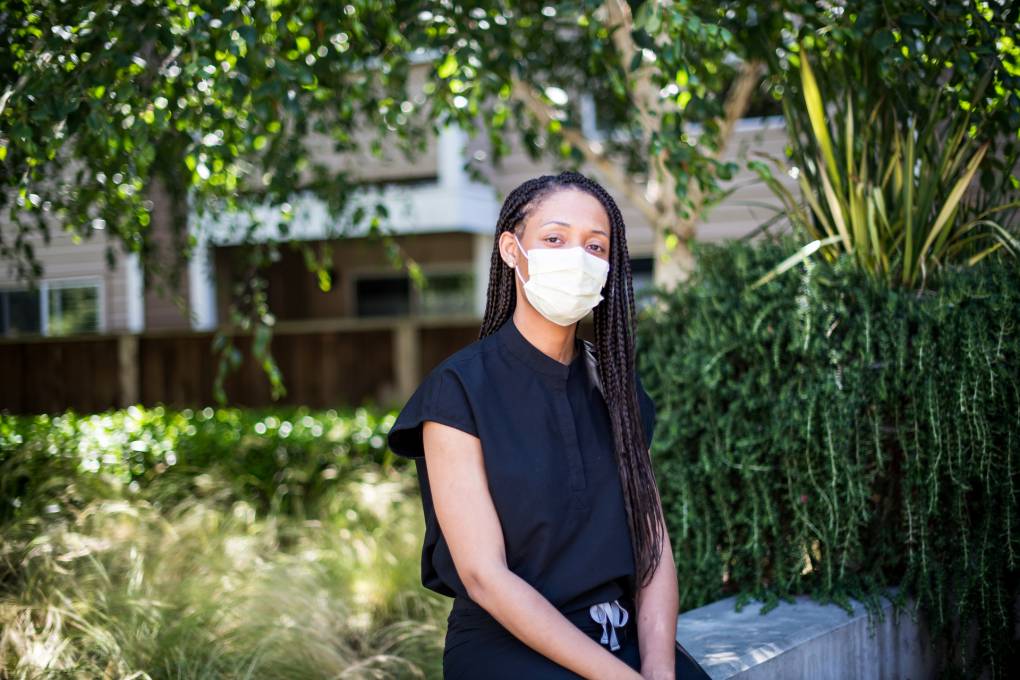
"caption": "Dr. Tiffany Chioma Anaebere near her home in Emeryville. She said after watching the video of George Floyd being killed, she felt \"debilitatingly depressed.\"",
"description": "Dr. Tiffany Chioma Anaebere near her home in Emeryville. She said after watching the video of George Floyd being killed, she felt \"debilitatingly depressed.\"",
"title": "Tiffany Chioma Anaebere near her home in Emeryville on June 17, 2020.",
"credit": "Beth LaBerge/KQED",
"status": "inherit",
"isLoading": false,
"fetchFailed": false
},
"news_11824831": {
"type": "attachments",
"id": "news_11824831",
"meta": {
"index": "attachments_1716263798",
"site": "news",
"id": "11824831",
"found": true
},
"parent": 11824749,
"imgSizes": {
"apple_news_ca_landscape_5_5": {
"file": "https://ww2.kqed.org/app/uploads/sites/10/2020/06/ImperialCounty-1044x783.jpg",
"width": 1044,
"mimeType": "image/jpeg",
"height": 783
},
"apple_news_ca_square_4_0": {
"file": "https://ww2.kqed.org/app/uploads/sites/10/2020/06/ImperialCounty-470x470.jpg",
"width": 470,
"mimeType": "image/jpeg",
"height": 470
},
"twentyfourteen-full-width": {
"file": "https://ww2.kqed.org/app/uploads/sites/10/2020/06/ImperialCounty-1038x576.jpg",
"width": 1038,
"mimeType": "image/jpeg",
"height": 576
},
"thumbnail": {
"file": "https://ww2.kqed.org/app/uploads/sites/10/2020/06/ImperialCounty-160x112.jpg",
"width": 160,
"mimeType": "image/jpeg",
"height": 112
},
"post-thumbnail": {
"file": "https://ww2.kqed.org/app/uploads/sites/10/2020/06/ImperialCounty-672x372.jpg",
"width": 672,
"mimeType": "image/jpeg",
"height": 372
},
"kqedFullSize": {
"file": "https://ww2.kqed.org/app/uploads/sites/10/2020/06/ImperialCounty.jpg",
"width": 1200,
"height": 840
},
"apple_news_ca_landscape_4_7": {
"file": "https://ww2.kqed.org/app/uploads/sites/10/2020/06/ImperialCounty-632x474.jpg",
"width": 632,
"mimeType": "image/jpeg",
"height": 474
},
"large": {
"file": "https://ww2.kqed.org/app/uploads/sites/10/2020/06/ImperialCounty-1020x714.jpg",
"width": 1020,
"mimeType": "image/jpeg",
"height": 714
},
"apple_news_ca_landscape_4_0": {
"file": "https://ww2.kqed.org/app/uploads/sites/10/2020/06/ImperialCounty-536x402.jpg",
"width": 536,
"mimeType": "image/jpeg",
"height": 402
},
"apple_news_ca_portrait_12_9": {
"file": "https://ww2.kqed.org/app/uploads/sites/10/2020/06/ImperialCounty-1122x840.jpg",
"width": 1122,
"mimeType": "image/jpeg",
"height": 840
},
"medium": {
"file": "https://ww2.kqed.org/app/uploads/sites/10/2020/06/ImperialCounty-800x560.jpg",
"width": 800,
"mimeType": "image/jpeg",
"height": 560
},
"apple_news_ca_portrait_4_0": {
"file": "https://ww2.kqed.org/app/uploads/sites/10/2020/06/ImperialCounty-354x472.jpg",
"width": 354,
"mimeType": "image/jpeg",
"height": 472
},
"apple_news_ca_portrait_9_7": {
"file": "https://ww2.kqed.org/app/uploads/sites/10/2020/06/ImperialCounty-840x840.jpg",
"width": 840,
"mimeType": "image/jpeg",
"height": 840
},
"apple_news_ca_square_9_7": {
"file": "https://ww2.kqed.org/app/uploads/sites/10/2020/06/ImperialCounty-1104x840.jpg",
"width": 1104,
"mimeType": "image/jpeg",
"height": 840
},
"apple_news_ca_portrait_4_7": {
"file": "https://ww2.kqed.org/app/uploads/sites/10/2020/06/ImperialCounty-414x552.jpg",
"width": 414,
"mimeType": "image/jpeg",
"height": 552
},
"apple_news_ca_portrait_5_5": {
"file": "https://ww2.kqed.org/app/uploads/sites/10/2020/06/ImperialCounty-687x840.jpg",
"width": 687,
"mimeType": "image/jpeg",
"height": 840
},
"apple_news_ca_square_4_7": {
"file": "https://ww2.kqed.org/app/uploads/sites/10/2020/06/ImperialCounty-550x550.jpg",
"width": 550,
"mimeType": "image/jpeg",
"height": 550
},
"apple_news_ca_square_5_5": {
"file": "https://ww2.kqed.org/app/uploads/sites/10/2020/06/ImperialCounty-912x840.jpg",
"width": 912,
"mimeType": "image/jpeg",
"height": 840
}
},
"publishDate": 1592413867,
"modified": 1592433210,
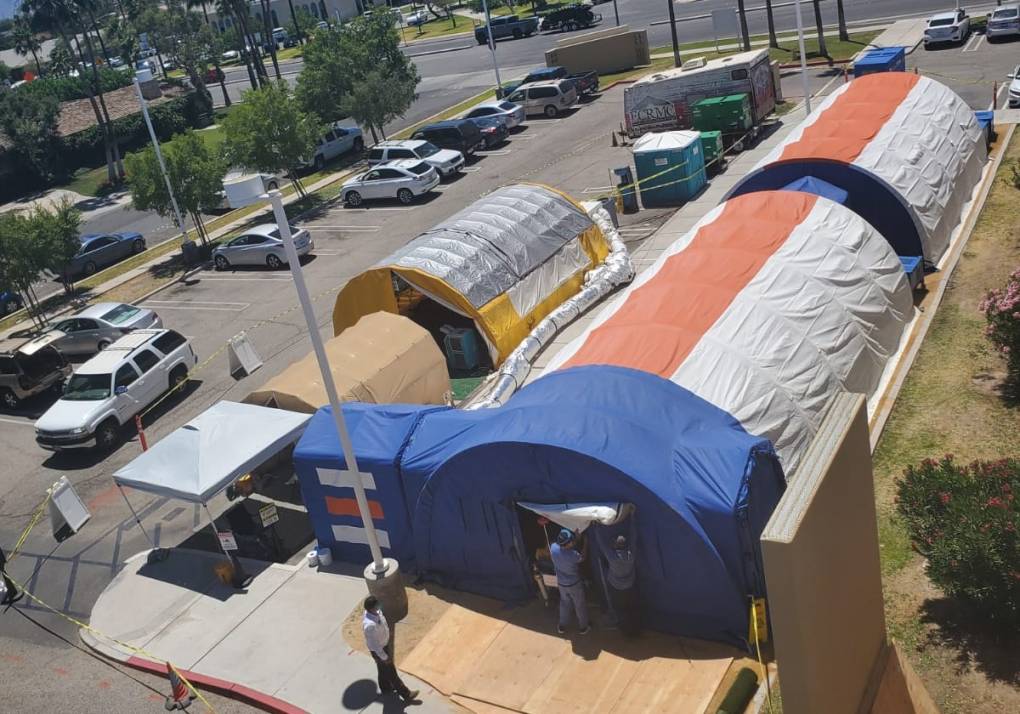
"caption": "An emergency treatment area erected for COVID-19 patients at El Centro Regional Medical Center, Imperial County's largest hospital.",
"description": "An emergency treatment area erected for COVID-19 patients at El Centro Regional Medical Center, Imperial County's largest hospital.",
"title": "ImperialCounty",
"credit": "Courtesy of El Centro Regional Medical Center",
"status": "inherit",
"isLoading": false,
"fetchFailed": false
}
},
"audioPlayerReducer": {
"postId": "stream_live",
"isPaused": true,
"isPlaying": false,
"pfsActive": false,
"pledgeModalIsOpen": true,
"playerDrawerIsOpen": false,
"liveAudioPlayStartedAt": 0,
"liveAudioPlayContext": ""
},
"authorsReducer": {
"byline_news_11827493": {
"type": "authors",
"id": "byline_news_11827493",
"meta": {
"override": true
},
"slug": "byline_news_11827493",
"name": "Joel Rose \u003cbr>NPR",
"isLoading": false
},
"byline_news_11827407": {
"type": "authors",
"id": "byline_news_11827407",
"meta": {
"override": true
},
"slug": "byline_news_11827407",
"name": "Will Stone \u003cbr>NPR",
"isLoading": false
},
"byline_news_11826469": {
"type": "authors",
"id": "byline_news_11826469",
"meta": {
"override": true
},
"slug": "byline_news_11826469",
"name": "Eric Westervelt and KQED Staff",
"isLoading": false
},
"byline_news_11826457": {
"type": "authors",
"id": "byline_news_11826457",
"meta": {
"override": true
},
"slug": "byline_news_11826457",
"name": "Kathleen Ronayne and Janie Har \u003cbr> Associated Press ",
"isLoading": false
},
"adembosky": {
"type": "authors",
"id": "3205",
"meta": {
"index": "authors_1716337520",
"id": "3205",
"found": true
},
"name": "April Dembosky",
"firstName": "April",
"lastName": "Dembosky",
"slug": "adembosky",
"email": "adembosky@kqed.org",
"display_author_email": false,
"staff_mastheads": [
"news",
"science"
],
"title": "KQED Health Correspondent",
"bio": "April Dembosky is the health correspondent for KQED News and a regular contributor to NPR. She specializes in covering altered states of mind, from postpartum depression to methamphetamine-induced psychosis to the insanity defense. Her investigative series on insurance companies sidestepping mental health laws won multiple awards, including first place in beat reporting from the national Association of Health Care Journalists. She is the recipient of numerous other prizes and fellowships, including a national Edward R. Murrow award for investigative reporting, a Society of Professional Journalists award for long-form storytelling, and a Carter Center Fellowship for Mental Health Journalism.\r\n\r\nDembosky reported and produced \u003cem>Soundtrack of Silence\u003c/em>, an audio documentary about music and memory that is currently being made into a feature film by Paramount Pictures.\r\n\r\nBefore joining KQED in 2013, Dembosky covered technology and Silicon Valley for \u003cem>The Financial Times of London,\u003c/em> and contributed business and arts stories to \u003cem>Marketplace \u003c/em>and \u003cem>The New York Times.\u003c/em> She got her undergraduate degree in philosophy from Smith College and her master's in journalism from the University of California, Berkeley. She is a classically trained violinist and proud alum of the first symphony orchestra at Burning Man.",
"avatar": "https://secure.gravatar.com/avatar/ef92999be4ceb9ea60701e7dc276f813?s=600&d=blank&r=g",
"twitter": "adembosky",
"facebook": null,
"instagram": null,
"linkedin": null,
"sites": [
{
"site": "arts",
"roles": [
"author"
]
},
{
"site": "news",
"roles": [
"editor"
]
},
{
"site": "futureofyou",
"roles": [
"author"
]
},
{
"site": "stateofhealth",
"roles": [
"editor"
]
},
{
"site": "science",
"roles": [
"editor"
]
},
{
"site": "forum",
"roles": [
"editor"
]
}
],
"headData": {
"title": "April Dembosky | KQED",
"description": "KQED Health Correspondent",
"ogImgSrc": "https://secure.gravatar.com/avatar/ef92999be4ceb9ea60701e7dc276f813?s=600&d=blank&r=g",
"twImgSrc": "https://secure.gravatar.com/avatar/ef92999be4ceb9ea60701e7dc276f813?s=600&d=blank&r=g"
},
"isLoading": false,
"link": "/author/adembosky"
},
"shossaini": {
"type": "authors",
"id": "3214",
"meta": {
"index": "authors_1716337520",
"id": "3214",
"found": true
},
"name": "Sara Hossaini",
"firstName": "Sara",
"lastName": "Hossaini",
"slug": "shossaini",
"email": "shossaini@kqed.org",
"display_author_email": true,
"staff_mastheads": [
"news"
],
"title": "KQED Reporter",
"bio": "Sara Hossaini came to general assignment reporting at KQED in 2013 after two winters reporting at Wyoming Public Radio. She holds a bachelor's degree in broadcast journalism from the University of Nebraska-Lincoln. Her radio romance began after a bitter breakup with documentary film (Ok, maybe it's still complicated). Her first simultaneous jobs in San Francisco were as Associate Producer on a PBS film series through the Center for Asian American Media and as a butler. She likes to trot, plot and make things with her hands.",
"avatar": "https://secure.gravatar.com/avatar/060e9f56b9554e17942e89f413242774?s=600&d=blank&r=g",
"twitter": "mshossaini",
"facebook": null,
"instagram": null,
"linkedin": null,
"sites": [
{
"site": "news",
"roles": [
"author"
]
},
{
"site": "stateofhealth",
"roles": [
"author"
]
}
],
"headData": {
"title": "Sara Hossaini | KQED",
"description": "KQED Reporter",
"ogImgSrc": "https://secure.gravatar.com/avatar/060e9f56b9554e17942e89f413242774?s=600&d=blank&r=g",
"twImgSrc": "https://secure.gravatar.com/avatar/060e9f56b9554e17942e89f413242774?s=600&d=blank&r=g"
},
"isLoading": false,
"link": "/author/shossaini"
},
"carlysevern": {
"type": "authors",
"id": "3243",
"meta": {
"index": "authors_1716337520",
"id": "3243",
"found": true
},
"name": "Carly Severn",
"firstName": "Carly",
"lastName": "Severn",
"slug": "carlysevern",
"email": "csevern@kqed.org",
"display_author_email": false,
"staff_mastheads": [
"news"
],
"title": "Senior Editor, Audience News ",
"bio": "Carly is KQED's Senior Editor of Audience News on the Digital News team, and has reported for the California Report Magazine, Bay Curious and KQED Arts. She's formerly the host of \u003ca href=\"http://ww2.kqed.org/pop/category/the-cooler/\" rel=\"noopener noreferrer\">The Cooler\u003c/a> podcast.",
"avatar": "https://secure.gravatar.com/avatar/54037bf5c128fe678f0ef26cec97a93f2e7f220a22d7285703328f12c42c1b1d?s=600&d=blank&r=g",
"twitter": "teacupinthebay",
"bluesky": null,
"facebook": null,
"instagram": null,
"linkedin": null,
"sites": [
{
"site": "",
"roles": [
"editor"
]
},
{
"site": "arts",
"roles": [
"editor"
]
},
{
"site": "news",
"roles": [
"administrator"
]
},
{
"site": "pop",
"roles": [
"editor"
]
},
{
"site": "futureofyou",
"roles": [
"editor"
]
},
{
"site": "about",
"roles": [
"administrator"
]
},
{
"site": "mindshift",
"roles": [
"editor"
]
},
{
"site": "bayareabites",
"roles": [
"editor"
]
},
{
"site": "stateofhealth",
"roles": [
"editor"
]
},
{
"site": "science",
"roles": [
"editor"
]
},
{
"site": "food",
"roles": [
"contributor"
]
},
{
"site": "forum",
"roles": [
"editor"
]
},
{
"site": "perspectives",
"roles": [
"administrator"
]
},
{
"site": "liveblog",
"roles": [
"editor"
]
}
],
"headData": {
"title": "Carly Severn | KQED",
"description": "Senior Editor, Audience News ",
"ogImgSrc": "https://secure.gravatar.com/avatar/54037bf5c128fe678f0ef26cec97a93f2e7f220a22d7285703328f12c42c1b1d?s=600&d=blank&r=g",
"twImgSrc": "https://secure.gravatar.com/avatar/54037bf5c128fe678f0ef26cec97a93f2e7f220a22d7285703328f12c42c1b1d?s=600&d=blank&r=g"
},
"isLoading": false,
"link": "/author/carlysevern"
},
"jsmall": {
"type": "authors",
"id": "6625",
"meta": {
"index": "authors_1716337520",
"id": "6625",
"found": true
},
"name": "Julie Small",
"firstName": "Julie",
"lastName": "Small",
"slug": "jsmall",
"email": "jsmall@kqed.org",
"display_author_email": true,
"staff_mastheads": [
"news"
],
"title": "KQED Contributor",
"bio": "Julie Small reports on criminal justice and immigration.\r\n\r\nShe was part of a team at KQED awarded a regional 2019 Edward R. Murrow award for continuing coverage of the Trump Administration's family separation policy.\r\n\r\nThe Society for Professional Journalists recognized Julie's 2018 \u003ca href=\"https://www.kqed.org/news/11636262/the-officer-tased-him-31-times-the-sheriff-called-his-death-an-accident\">reporting\u003c/a> on the San Joaquin County Sheriff's \u003ca href=\"https://www.kqed.org/news/11634689/autopsy-doctors-sheriff-overrode-death-findings-to-protect-law-enforcement\">interference\u003c/a> in death investigations with an Excellence in Journalism Award for Ongoing Coverage.\r\n\r\nJulie's\u003ca href=\"https://www.kqed.org/news/11039666/two-mentally-ill-inmates-died-one-month-in-santa-clara\"> reporting\u003c/a> with Lisa Pickoff-White on the treatment of mentally ill offenders in California jails earned a 2017 regional Edward R. Murrow Award for news reporting and an investigative reporting award from the SPJ of Northern California.\r\n\r\nBefore joining KQED, Julie covered government and politics in Sacramento for Southern California Public Radio (SCPR). Her 2010 \u003ca href=\"https://www.scpr.org/specials/prisonmedical/\">series\u003c/a> on lapses in California’s prison medical care also won a regional Edward R. Murrow Award for investigative reporting and a Golden Mic Award from the RTNDA of Southern California.\r\n\r\nJulie began her career in journalism in 2000 as the deputy foreign editor for public radio's \u003cem>Marketplace, \u003c/em>while earning her master's degree in journalism from USC’s Annenberg School of Communication.",
"avatar": "https://secure.gravatar.com/avatar/4baedf201468df97be97c2a9dd7585d0?s=600&d=blank&r=g",
"twitter": "@SmallRadio2",
"facebook": null,
"instagram": null,
"linkedin": null,
"sites": [
{
"site": "news",
"roles": [
"editor"
]
},
{
"site": "stateofhealth",
"roles": [
"author"
]
},
{
"site": "science",
"roles": [
"author"
]
}
],
"headData": {
"title": "Julie Small | KQED",
"description": "KQED Contributor",
"ogImgSrc": "https://secure.gravatar.com/avatar/4baedf201468df97be97c2a9dd7585d0?s=600&d=blank&r=g",
"twImgSrc": "https://secure.gravatar.com/avatar/4baedf201468df97be97c2a9dd7585d0?s=600&d=blank&r=g"
},
"isLoading": false,
"link": "/author/jsmall"
},
"cveltman": {
"type": "authors",
"id": "8608",
"meta": {
"index": "authors_1716337520",
"id": "8608",
"found": true
},
"name": "Chloe Veltman",
"firstName": "Chloe",
"lastName": "Veltman",
"slug": "cveltman",
"email": "cveltman@kqed.org",
"display_author_email": true,
"staff_mastheads": [],
"title": "Arts and Culture Reporter",
"bio": "Chloe Veltman is a former arts and culture reporter for KQED. Prior to joining the organization, she launched and led the arts bureau at Colorado Public Radio, served as the Bay Area's culture columnist for the New York Times, and was the founder, host and executive producer of VoiceBox, a national award-winning weekly podcast/radio show and live events series all about the human voice. Chloe is the recipient of numerous prizes, grants and fellowships including a Webby Award for her work on interactive storytelling, both the John S Knight Journalism Fellowship and Humanities Center Fellowship at Stanford University, the Sundance Arts Writing Fellowship and a Library of Congress Research Fellowship. She is the author of the book \"On Acting\" and has appeared as a guest lecturer at Yale University and the San Francisco Conservatory of Music among other institutions. She holds a BA in english literature from King's College, Cambridge, and a Masters in Dramaturgy from the Central School of Speech and Drama/Harvard Institute for Advanced Theater Training.\r\n\u003ca href=\"https://www.chloeveltman.com\">www.chloeveltman.com\u003c/a>",
"avatar": "https://secure.gravatar.com/avatar/55403394b00a1ddab683952c2eb2cf85?s=600&d=blank&r=g",
"twitter": "chloeveltman",
"facebook": null,
"instagram": null,
"linkedin": null,
"sites": [
{
"site": "arts",
"roles": []
},
{
"site": "news",
"roles": [
"author"
]
},
{
"site": "pop",
"roles": [
"editor"
]
},
{
"site": "science",
"roles": []
}
],
"headData": {
"title": "Chloe Veltman | KQED",
"description": "Arts and Culture Reporter",
"ogImgSrc": "https://secure.gravatar.com/avatar/55403394b00a1ddab683952c2eb2cf85?s=600&d=blank&r=g",
"twImgSrc": "https://secure.gravatar.com/avatar/55403394b00a1ddab683952c2eb2cf85?s=600&d=blank&r=g"
},
"isLoading": false,
"link": "/author/cveltman"
},
"katewolffe": {
"type": "authors",
"id": "11523",
"meta": {
"index": "authors_1716337520",
"id": "11523",
"found": true
},
"name": "Kate Wolffe",
"firstName": "Kate",
"lastName": "Wolffe",
"slug": "katewolffe",
"email": "kwolffe@kqed.org",
"display_author_email": true,
"staff_mastheads": [
"news"
],
"title": "KQED Reporter + Weekend Host",
"bio": "Kate Wolffe reports on local Bay Area happenings for KQED, and hosts the news on weekend afternoons. She joined KQED in 2018 as an intern on the Forum team, before moving to cover topics ranging from politics to criminal justice to homelessness. A Bay Area native and UC Berkeley graduate, Kate loves to discover new corners of the region.",
"avatar": "https://secure.gravatar.com/avatar/22455f14db824a03ee252f73052fe939?s=600&d=blank&r=g",
"twitter": "katewolffe",
"facebook": null,
"instagram": null,
"linkedin": null,
"sites": [
{
"site": "arts",
"roles": [
"editor"
]
},
{
"site": "news",
"roles": [
"author",
"edit_others_posts"
]
},
{
"site": "forum",
"roles": [
"editor"
]
}
],
"headData": {
"title": "Kate Wolffe | KQED",
"description": "KQED Reporter + Weekend Host",
"ogImgSrc": "https://secure.gravatar.com/avatar/22455f14db824a03ee252f73052fe939?s=600&d=blank&r=g",
"twImgSrc": "https://secure.gravatar.com/avatar/22455f14db824a03ee252f73052fe939?s=600&d=blank&r=g"
},
"isLoading": false,
"link": "/author/katewolffe"
},
"mwiley": {
"type": "authors",
"id": "11526",
"meta": {
"index": "authors_1716337520",
"id": "11526",
"found": true
},
"name": "Michelle Wiley",
"firstName": "Michelle",
"lastName": "Wiley",
"slug": "mwiley",
"email": "mwiley@KQED.org",
"display_author_email": true,
"staff_mastheads": [],
"title": null,
"bio": "Michelle Wiley was the senior editor of weekends.",
"avatar": "https://secure.gravatar.com/avatar/3b897d82a09e8587e8e73fa69fbcc635?s=600&d=blank&r=g",
"twitter": "michelleewiley",
"facebook": null,
"instagram": null,
"linkedin": null,
"sites": [
{
"site": "",
"roles": [
"editor"
]
},
{
"site": "arts",
"roles": [
"editor"
]
},
{
"site": "news",
"roles": [
"subscriber"
]
},
{
"site": "lowdown",
"roles": [
"editor"
]
},
{
"site": "science",
"roles": [
"editor"
]
},
{
"site": "podcasts",
"roles": [
"editor"
]
}
],
"headData": {
"title": "Michelle Wiley | KQED",
"description": null,
"ogImgSrc": "https://secure.gravatar.com/avatar/3b897d82a09e8587e8e73fa69fbcc635?s=600&d=blank&r=g",
"twImgSrc": "https://secure.gravatar.com/avatar/3b897d82a09e8587e8e73fa69fbcc635?s=600&d=blank&r=g"
},
"isLoading": false,
"link": "/author/mwiley"
},
"lsarah": {
"type": "authors",
"id": "11626",
"meta": {
"index": "authors_1716337520",
"id": "11626",
"found": true
},
"name": "Lakshmi Sarah",
"firstName": "Lakshmi",
"lastName": "Sarah",
"slug": "lsarah",
"email": "lsarah@kqed.org",
"display_author_email": false,
"staff_mastheads": [],
"title": "Digital Producer",
"bio": "Lakshmi Sarah is an educator, author and journalist with a focus on innovative storytelling. She has worked with newspapers, radio and magazines from Ahmedabad, India to Los Angeles, California. She has written and produced for Die Zeit, Global Voices, AJ+, KQED, Fusion Media Group and the New York Times.",
"avatar": "https://secure.gravatar.com/avatar/652dcaecd8b28826fc17a8b2d6bb4e93?s=600&d=blank&r=g",
"twitter": "lakitalki",
"facebook": null,
"instagram": "https://www.instagram.com/laki.talki/",
"linkedin": "https://www.linkedin.com/in/lakisarah/",
"sites": [
{
"site": "arts",
"roles": []
},
{
"site": "news",
"roles": []
},
{
"site": "bayareabites",
"roles": []
},
{
"site": "science",
"roles": []
}
],
"headData": {
"title": "Lakshmi Sarah | KQED",
"description": "Digital Producer",
"ogImgSrc": "https://secure.gravatar.com/avatar/652dcaecd8b28826fc17a8b2d6bb4e93?s=600&d=blank&r=g",
"twImgSrc": "https://secure.gravatar.com/avatar/652dcaecd8b28826fc17a8b2d6bb4e93?s=600&d=blank&r=g"
},
"isLoading": false,
"link": "/author/lsarah"
}
},
"pagesReducer": {
"news_tag_health": {
"type": "terms",
"id": "news_18543",
"meta": {
"index": "terms_1716263798",
"site": "news",
"id": "18543",
"score": 6.886719
},
"featImg": null,
"name": "Health",
"description": null,
"taxonomy": "tag",
"headData": {
"twImgId": null,
"twTitle": null,
"ogTitle": null,
"ogImgId": null,
"twDescription": null,
"description": null,
"title": "Health Archives | KQED News",
"ogDescription": null
},
"ttid": 466,
"slug": "health",
"isLoading": false,
"title": "Health",
"pageMeta": {
"site": "news",
"WpPageTemplate": "page-topic-editorial",
"currentPage": 72
},
"blocks": [
{
"blockName": "kqed/post-list",
"attrs": {
"layout": "cardArticle2",
"query": "posts/news?tag=health",
"seeMore": false,
"paginated": true,
"page": 72
}
},
{
"blockName": "kqed/ad"
}
]
}
},
"pfsSessionReducer": {},
"postsReducer": {
"stream_live": {
"type": "live",
"id": "stream_live",
"audioUrl": "https://streams.kqed.org/kqedradio",
"title": "Live Stream",
"excerpt": "Live Stream information currently unavailable.",
"link": "/radio",
"featImg": "",
"label": {
"name": "KQED Live",
"link": "/"
}
},
"stream_kqedNewscast": {
"type": "posts",
"id": "stream_kqedNewscast",
"audioUrl": "https://www.kqed.org/.stream/anon/radio/RDnews/newscast.mp3?_=1",
"title": "KQED Newscast",
"featImg": "",
"label": {
"name": "88.5 FM",
"link": "/"
}
},
"news_11829690": {
"type": "posts",
"id": "news_11829690",
"meta": {
"index": "posts_1716263798",
"site": "news",
"id": "11829690",
"score": null,
"sort": [
1595498429000
]
},
"guestAuthors": [],
"slug": "vegan-food-is-big-in-s-f-but-will-the-scene-survive-covid-19",
"title": "Vegan Food Is Big In SF — But Will the Scene Survive COVID-19?",
"publishDate": 1595498429,
"format": "standard",
"headTitle": "Vegan Food Is Big In SF — But Will the Scene Survive COVID-19? | KQED",
"labelTerm": {
"term": 33523,
"site": "news"
},
"content": "\u003cp>Eating a vegan diet used to be the opposite of cool, and vegans were often the butt of jokes. The classic line from the November 2000 episode of “The Simpsons” — “I’m a Level Five Vegan. I won’t eat anything that casts a shadow” — pretty much captures widely held beliefs about the misplaced militancy of the meat-and-dairy-eschewing crowd.\u003c/p>\n\u003cp>\u003ciframe loading=\"lazy\" title=\"Level 5 Vegan (Lisa the tree hugger)\" width=\"640\" height=\"480\" src=\"https://www.youtube.com/embed/RtuMIaOGRy8?feature=oembed\" frameborder=\"0\" allow=\"accelerometer; autoplay; clipboard-write; encrypted-media; gyroscope; picture-in-picture; web-share\" referrerpolicy=\"strict-origin-when-cross-origin\" allowfullscreen>\u003c/iframe>\u003c/p>\n\u003cp>But over the past few years, veganism has gone mainstream. Celebrities like Beyoncé and former President Bill Clinton have talked publicly about the benefits of eating a meat- and dairy-free diet.\u003c/p>\n\u003cp>“I live on beans, legumes, vegetables, fruit,” Clinton said in an interview on CNN. “And it changed my whole metabolism.”\u003c/p>\n\u003cp>\u003ciframe loading=\"lazy\" title=\"bill clinton on eating a plant based, whole foods diet\" width=\"640\" height=\"360\" src=\"https://www.youtube.com/embed/sNh1ICGNpbA?feature=oembed\" frameborder=\"0\" allow=\"accelerometer; autoplay; clipboard-write; encrypted-media; gyroscope; picture-in-picture; web-share\" referrerpolicy=\"strict-origin-when-cross-origin\" allowfullscreen>\u003c/iframe>\u003c/p>\n\u003cp>[ad fullwidth]\u003c/p>\n\u003cp>In the Bay Area, vegan eating habits have been popular for a long time. There are vegan caterers who will feed your wedding guests and vegan chefs who will deliver meals right to your door. Companies like \u003ca href=\"https://buy.impossiblefoods.com/\" target=\"_blank\" rel=\"noopener noreferrer\">Impossible Foods\u003c/a> and \u003ca href=\"https://www.memphismeats.com/\" target=\"_blank\" rel=\"noopener noreferrer\">Memphis Meats\u003c/a> — both big names in the meatless protein business — are headquartered here. And just last year, San Francisco came out as the nation’s most vegan-friendly city, \u003ca href=\"https://sanfrancisco.cbslocal.com/2019/11/15/peta-san-francisco-most-vegan-friendly-city/\" target=\"_blank\" rel=\"noopener noreferrer\">according to People for the Ethical Treatment of Animals, or PETA\u003c/a>.\u003c/p>\n\u003cp>But lately, as you can imagine, things have been pretty challenging for the Bay Area’s vegan businesses.\u003c/p>\n\u003cp>“Before coronavirus happened, business was fantastic. And that has obviously changed very significantly,” said Christina Stobing, co-owner of the Berkeley vegan deli \u003ca href=\"https://www.thebutchersveganson.com/\" target=\"_blank\" rel=\"noopener noreferrer\">The Butcher’s Son\u003c/a>.\u003c/p>\n\u003cp>[baycuriouspodcastinfo]\u003c/p>\n\u003cp>“Right now, I’m just trying to hang in there,” said Samuel Wong, the owner of \u003ca href=\"https://www.yelp.com/biz/layonna-vegetarian-health-food-market-oakland\" target=\"_blank\" rel=\"noopener noreferrer\">Layonna Vegetarian Health Food Market, \u003c/a> a vegan market in downtown Oakland.\u003c/p>\n\u003cp>“These times are about surviving,” said Alejandro Morgan, head of culinary of the Bay Area restaurant group \u003ca href=\"https://backofthehouseinc.com/\" target=\"_blank\" rel=\"noopener noreferrer\">Back of the House\u003c/a>, which owns the plant-based eatery \u003ca href=\"https://www.wildseedsf.com/\" target=\"_blank\" rel=\"noopener noreferrer\">Wildseed\u003c/a> in San Francisco’s Cow Hollow neighborhood. “These times are about being able to keep as many people you can employed, and pay the bills.”\u003c/p>\n\u003cp>KQED listener Mishi Ramos’ question, “What is the vegan food scene in the Bay Area like today?” came across the Bay Curious desk not long before the pandemic hit. Since then, the story of how vegan food businesses are faring today has become one that’s very much aligned with the fate of \u003cem>most\u003c/em> small, local restaurants during COVID-19 times. So, while we tackled the question by focusing on Bay Area vegan businesses, the answer applies more broadly.\u003c/p>\n\u003cp>\u003cstrong>The Growth of Vegan Culture\u003c/strong>\u003c/p>\n\u003cp>Though vegans only make up about 5-6% of the U.S. population, their numbers are growing, and more and more omnivores are starting to take an interest in vegan foods.\u003c/p>\n\u003cp>One reason for the trend is the perception that eating a plant-based diet is healthy. People claim cutting out meat and dairy cleared their skin, upped their energy levels and helped them lose weight.\u003c/p>\n\u003cp>Then there’s growing public awareness around the meat industry’s treatment of animals and its environmental footprint. A \u003ca href=\"https://josephpoore.com/Science%20360%206392%20987%20-%20Accepted%20Manuscript.pdf\" target=\"_blank\" rel=\"noopener noreferrer\">recent analysis from the journal Science\u003c/a> shows 60% of agriculture’s greenhouse gas emissions comes from meat and dairy production.\u003c/p>\n\u003cp>\u003ciframe loading=\"lazy\" title=\"Inside Meat Processing Plant Linked To Nearly 900 Coronavirus Cases | NBC Nightly News\" width=\"640\" height=\"360\" src=\"https://www.youtube.com/embed/cZOT9YOtl0U?feature=oembed\" frameborder=\"0\" allow=\"accelerometer; autoplay; clipboard-write; encrypted-media; gyroscope; picture-in-picture; web-share\" referrerpolicy=\"strict-origin-when-cross-origin\" allowfullscreen>\u003c/iframe>\u003c/p>\n\u003cp>Also, recent news headlines about the heavy impact of COVID-19 on the meat production industry have made more \u003ca href=\"https://www.npr.org/local/305/2020/05/04/850066429/the-pandemic-has-people-rethinking-their-relationship-with-food-especially-meat\">people question how much meat they should have in their diet\u003c/a> — even though meat scandals in the past haven’t had long-term sticking power, and the overwhelming majority of Americans will continue to eat meat.\u003c/p>\n\u003cp>It also helps the plant-based cause that vegan foods have become ubiquitous at grocery stores, restaurants and cafes, especially in the Bay Area, and that the region is well-known for its year-round abundance of produce.\u003c/p>\n\u003cp>Finally, non-vegans in particular are gravitating towards the new, high-tech wave of meatless proteins, from companies like Impossible Foods and \u003ca href=\"https://www.beyondmeat.com/\" target=\"_blank\" rel=\"noopener noreferrer\">Beyond Meat\u003c/a>.\u003c/p>\n\u003cp>\u003ca href=\"https://www.fooddive.com/news/study-consumers-try-plant-based-meat-because-theyre-curious/571615/\" target=\"_blank\" rel=\"noopener noreferrer\">A recent study from the food industry publication Food Dive\u003c/a> shows the number one factor driving non-vegans to eat products like meatless burgers is that they’re starting to taste more like meat. (Traditional veggie patties, which many vegans still prefer, taste more like nuts, grains and seeds.)\u003c/p>\n\u003cp>\u003cstrong>Vegan Food Businesses Struggle in the Pandemic\u003c/strong>\u003c/p>\n\u003cp>The growing popularity of meatless proteins is what’s driving business at many of the newer vegan eateries in the Bay Area, like \u003ca href=\"https://www.thebutchersveganson.com/\" target=\"_blank\" rel=\"noopener noreferrer\">The Butcher’s Son\u003c/a> in downtown Berkeley.\u003c/p>\n\u003cfigure id=\"attachment_11829827\" class=\"wp-caption aligncenter\" style=\"max-width: 640px\">\u003cimg loading=\"lazy\" decoding=\"async\" class=\"wp-image-11829827 size-large\" src=\"https://ww2.kqed.org/app/uploads/sites/10/2020/07/chicken-and-bacon-sandwich-1020x765.jpg\" alt=\"\" width=\"640\" height=\"480\" srcset=\"https://cdn.kqed.org/wp-content/uploads/sites/10/2020/07/chicken-and-bacon-sandwich-1020x765.jpg 1020w, https://cdn.kqed.org/wp-content/uploads/sites/10/2020/07/chicken-and-bacon-sandwich-800x600.jpg 800w, https://cdn.kqed.org/wp-content/uploads/sites/10/2020/07/chicken-and-bacon-sandwich-160x120.jpg 160w, https://cdn.kqed.org/wp-content/uploads/sites/10/2020/07/chicken-and-bacon-sandwich-1536x1152.jpg 1536w, https://cdn.kqed.org/wp-content/uploads/sites/10/2020/07/chicken-and-bacon-sandwich-1832x1374.jpg 1832w, https://cdn.kqed.org/wp-content/uploads/sites/10/2020/07/chicken-and-bacon-sandwich-1376x1032.jpg 1376w, https://cdn.kqed.org/wp-content/uploads/sites/10/2020/07/chicken-and-bacon-sandwich-1044x783.jpg 1044w, https://cdn.kqed.org/wp-content/uploads/sites/10/2020/07/chicken-and-bacon-sandwich-632x474.jpg 632w, https://cdn.kqed.org/wp-content/uploads/sites/10/2020/07/chicken-and-bacon-sandwich-536x402.jpg 536w, https://cdn.kqed.org/wp-content/uploads/sites/10/2020/07/chicken-and-bacon-sandwich.jpg 1920w\" sizes=\"(max-width: 640px) 100vw, 640px\">\u003cfigcaption class=\"wp-caption-text\">The Butcher’s Son’s take on a chicken and bacon sandwich — without meat. \u003ccite>(Chloe Veltman/KQED)\u003c/cite>\u003c/figcaption>\u003c/figure>\n\u003cp>The restaurant opened early in 2016, and co-owner Christina Stobing said it was an immediate hit with vegans and non-vegans alike.\u003c/p>\n\u003cp>“Going vegan, there’s not a lot of options,” Stobing said, who’s also vegan. “Like, you can’t just go and get a Philly cheesesteak sandwich or a Reuben. We wanted to provide all those things that we were missing in a restaurant.”\u003c/p>\n\u003cp>Stobing said business was going so well, and they were planning to expand. But when the coronavirus pandemic hit, they were forced to shrink. The restaurant let go of roughly two-thirds of its employees. A small business loan from the federal government has helped tide them over.\u003c/p>\n\u003cp>“We’ve had to to step back and say, ‘OK, can we stay open this week? Can we stay open next week?’ ” Stobing said. “Because things are changing.”\u003c/p>\n\u003cp>It’s not just popular vegan restaurants that now find themselves facing an unpredictable future. Vegan grocery stores are also having a hard time.\u003c/p>\n\u003cp>\u003ca href=\"https://www.yelp.com/biz/layonna-vegetarian-health-food-market-oakland\" target=\"_blank\" rel=\"noopener noreferrer\">Layonna\u003c/a> Vegetarian Health Food Market in Oakland’s Chinatown has been around since the 1990s. The store’s owner, Samuel Wong, said the market has a loyal following. He counts meat-abstaining members of the nearby Buddhist temple among his customers, as well as people who drive in from places like Santa Rosa.\u003c/p>\n\u003cfigure id=\"attachment_11829830\" class=\"wp-caption aligncenter\" style=\"max-width: 640px\">\u003cimg loading=\"lazy\" decoding=\"async\" class=\"wp-image-11829830 size-large\" src=\"https://ww2.kqed.org/app/uploads/sites/10/2020/07/Layonna-crew-1020x765.jpg\" alt=\"\" width=\"640\" height=\"480\" srcset=\"https://cdn.kqed.org/wp-content/uploads/sites/10/2020/07/Layonna-crew-1020x765.jpg 1020w, https://cdn.kqed.org/wp-content/uploads/sites/10/2020/07/Layonna-crew-800x600.jpg 800w, https://cdn.kqed.org/wp-content/uploads/sites/10/2020/07/Layonna-crew-160x120.jpg 160w, https://cdn.kqed.org/wp-content/uploads/sites/10/2020/07/Layonna-crew-1536x1152.jpg 1536w, https://cdn.kqed.org/wp-content/uploads/sites/10/2020/07/Layonna-crew-1832x1374.jpg 1832w, https://cdn.kqed.org/wp-content/uploads/sites/10/2020/07/Layonna-crew-1376x1032.jpg 1376w, https://cdn.kqed.org/wp-content/uploads/sites/10/2020/07/Layonna-crew-1044x783.jpg 1044w, https://cdn.kqed.org/wp-content/uploads/sites/10/2020/07/Layonna-crew-632x474.jpg 632w, https://cdn.kqed.org/wp-content/uploads/sites/10/2020/07/Layonna-crew-536x402.jpg 536w, https://cdn.kqed.org/wp-content/uploads/sites/10/2020/07/Layonna-crew.jpg 1920w\" sizes=\"(max-width: 640px) 100vw, 640px\">\u003cfigcaption class=\"wp-caption-text\">Original Layonna owner Layonna Wang (left), present owner Samuel Wong, and store employee Jenny Liang pose outside the front of Layonna, a vegan market in Oakland’s Chinatown neighborhood. \u003ccite>(Chloe Veltman/KQED)\u003c/cite>\u003c/figcaption>\u003c/figure>\n\u003cp>Layonna’s customers include other vegan businesses, such as restaurants. Wong said the margins are normally pretty good. But that’s changed lately.\u003c/p>\n\u003cp>“The business, it dropped a lot,” Wong said.\u003c/p>\n\u003cp>The store laid off three of its seven workers and is operating at reduced hours. Wong said he’s had to make some adjustments to survive, like delivering to restaurant clients himself, and signing up for a food delivery service to get Layonna’s products out to individual customers.\u003c/p>\n\u003cp>“A lot of people don’t want to go out,” Wong said. “So I have to sign up for this kind of service, even though they charge 30%.”\u003c/p>\n\u003cp>\u003cstrong>The Challenge of Running \u003cem>Any\u003c/em> Small Food Business Right Now\u003c/strong>\u003c/p>\n\u003cp>Even at the best of times, the restaurant industry — no matter the cuisine — is a hard game.\u003c/p>\n\u003cp>Longtime Bay Area food writer \u003ca href=\"http://www.theperfectspotsf.com/\" target=\"_blank\" rel=\"noopener noreferrer\">Virginia Miller\u003c/a> said the margins are almost always on the thin side, and that’s particularly the case for independent businesses and small local chains.\u003c/p>\n\u003cfigure id=\"attachment_11829864\" class=\"wp-caption aligncenter\" style=\"max-width: 720px\">\u003cimg loading=\"lazy\" decoding=\"async\" class=\"wp-image-11829864 size-full\" src=\"https://ww2.kqed.org/app/uploads/sites/10/2020/07/Virginia-Miller.jpg\" alt=\"\" width=\"720\" height=\"480\" srcset=\"https://cdn.kqed.org/wp-content/uploads/sites/10/2020/07/Virginia-Miller.jpg 720w, https://cdn.kqed.org/wp-content/uploads/sites/10/2020/07/Virginia-Miller-160x107.jpg 160w\" sizes=\"(max-width: 720px) 100vw, 720px\">\u003cfigcaption class=\"wp-caption-text\">Bay Area food and drink journalist Virginia Miller. \u003ccite>(Daniel Stumpf)\u003c/cite>\u003c/figcaption>\u003c/figure>\n\u003cp>“If they have any profit at all, usually 10% max, is the best most restaurants do,” Miller said.\u003c/p>\n\u003cp>Between line items like rent, labor and sourcing high-quality produce, Miller said the cost of feeding people in the Bay Area is especially high. Vegan outlets are no different from other kinds of small food businesses. They’ve all been hit by the pandemic in similar ways and are all trying to figure out how to come back.\u003c/p>\n\u003cp>“I’ve heard predictions of anywhere from 30% to 80% of our restaurants will not reopen,” Miller said.\u003c/p>\n\u003cp>Laurie Thomas, the executive director of the \u003ca href=\"http://ggra.org/\" target=\"_blank\" rel=\"noopener noreferrer\">Golden Gate Restaurant Association\u003c/a>, a San Francisco restaurant industry advocacy group, said reopening a restaurant is a long and complex process. Restaurant owners have to weigh many different factors as they consider how and when to reopen — or whether it’s worth reopening at all.\u003c/p>\n\u003cp>“People think restaurants can turn on a dime,” Thomas said. “It doesn’t work that way. You’ve got to get your employees. You’ve got to pay back your vendors. You’ve got about a week to two weeks of ordering the food and getting everything going again.”\u003c/p>\n\u003cp>If they do decide to fully reopen, restaurants are having to come to grips with a bunch of unforeseen factors to do with COVID-19.\u003c/p>\n\u003cfigure id=\"attachment_11829832\" class=\"wp-caption alignright\" style=\"max-width: 800px\">\u003cimg loading=\"lazy\" decoding=\"async\" class=\"wp-image-11829832 size-medium\" src=\"https://ww2.kqed.org/app/uploads/sites/10/2020/07/wildseed-window-e1595288832681-800x1067.jpg\" alt=\"\" width=\"800\" height=\"1067\" srcset=\"https://cdn.kqed.org/wp-content/uploads/sites/10/2020/07/wildseed-window-e1595288832681-800x1067.jpg 800w, https://cdn.kqed.org/wp-content/uploads/sites/10/2020/07/wildseed-window-e1595288832681-1020x1360.jpg 1020w, https://cdn.kqed.org/wp-content/uploads/sites/10/2020/07/wildseed-window-e1595288832681-160x213.jpg 160w, https://cdn.kqed.org/wp-content/uploads/sites/10/2020/07/wildseed-window-e1595288832681-1152x1536.jpg 1152w, https://cdn.kqed.org/wp-content/uploads/sites/10/2020/07/wildseed-window-e1595288832681-1122x1496.jpg 1122w, https://cdn.kqed.org/wp-content/uploads/sites/10/2020/07/wildseed-window-e1595288832681-840x1120.jpg 840w, https://cdn.kqed.org/wp-content/uploads/sites/10/2020/07/wildseed-window-e1595288832681-687x916.jpg 687w, https://cdn.kqed.org/wp-content/uploads/sites/10/2020/07/wildseed-window-e1595288832681-414x552.jpg 414w, https://cdn.kqed.org/wp-content/uploads/sites/10/2020/07/wildseed-window-e1595288832681-354x472.jpg 354w, https://cdn.kqed.org/wp-content/uploads/sites/10/2020/07/wildseed-window-e1595288832681.jpg 1440w\" sizes=\"(max-width: 800px) 100vw, 800px\">\u003cfigcaption class=\"wp-caption-text\">The walk-up window at Wildseed in San Francisco’s Cow Hollow neighborhood. \u003ccite>(Chloe Veltman/KQED)\u003c/cite>\u003c/figcaption>\u003c/figure>\n\u003cp>At \u003ca href=\"https://www.wildseedsf.com/\" target=\"_blank\" rel=\"noopener noreferrer\">Wildseed\u003c/a>, an upscale, plant-based restaurant in San Francisco’s Cow Hollow neighborhood, director of culinary Alejandro Morgan said it’s been tough to entice workers back at a time when many are making more money claiming unemployment benefits than from working their old jobs. Plus, they’re staying safer.\u003c/p>\n\u003cp>“If I got my job back, then I would have to weigh things, you know, and say, ‘OK, well, do I risk getting sick and getting my family sick for a job that probably won’t pay as much as before?’ ” Morgan said.\u003c/p>\n\u003cp>Then there’s navigating all the new health and safety restrictions, such as limiting the seating capacity to allow for physical distancing. Morgan said Wildseed has applied for a permit to put in extra outdoor seating. But even with the additional outdoor seating, they’ll still be operating at around 30% capacity.\u003c/p>\n\u003cp>There’s only so long that it makes sense to carry on that way, and many Bay Area counties have put reopening plans on hold for indoor dining. Given all the variables, Morgan said it’s hard to predict what it will take to reopen properly.\u003c/p>\n\u003cp>“We’ve made plans, but, you know, usually we scratch those plans and restart,” Morgan said. “There could be something tomorrow, like, ‘You guys gotta close back again.’ I’m really hoping that’s not the case, because that would be very devastating.”\u003c/p>\n\u003cp>\u003cstrong>Getting Creative in Order to Survive\u003c/strong>\u003c/p>\n\u003cp>With profits disappearing and things being so unpredictable right now, restaurants are having to get creative if they want to survive.\u003c/p>\n\u003cp>Takeout has obviously taken on a much larger role in restaurants’ core business as a result of the pandemic. That’s true for many high-end restaurants that would never have dreamed of boxing up their fancy dishes in the past.\u003c/p>\n\u003cp>The trend towards takeout means adjusting — not everything travels well in a box — and figuring out more efficient ways to work in the kitchen so restaurants can meet the demand for takeout as well as serve customers on-site.\u003c/p>\n\u003cp>With people preferring to eat at home, delivery services like \u003ca href=\"https://www.doordash.com/\" target=\"_blank\" rel=\"noopener noreferrer\">DoorDash\u003c/a> and \u003ca href=\"https://www.grubhub.com/\" target=\"_blank\" rel=\"noopener noreferrer\">Grubhub\u003c/a> are also becoming a must for restaurants, even though several owners interviewed for this story complained about the high fees.\u003c/p>\n\u003cp>And then there are the new advances in technology, which allow diners to do things like order meals from their tables using their phones. Wildseed’s Morgan said these systems appeal to restaurants because they reduce labor costs.\u003c/p>\n\u003cp>“And maybe for the guests, too, right, to feel comfortable,” he added. “They want to limit the amount of interaction they have with another person at this time.”\u003c/p>\n\u003cp>But he’s wary of going with the technology because he said human interaction is still a key part of good hospitality.\u003c/p>\n\u003cp>“One of the big problems with this whole COVID-19 era is that we are going to lose a lot of human elements to everything that we do,” Morgan said. “I have passion for hospitality. And that’s something that is going to hurt.”\u003c/p>\n\u003cp>\u003cstrong>Not to Be Underestimated: The Human Element\u003c/strong>\u003c/p>\n\u003cp>Some chefs are making personal connections the cornerstone of their new business model, even if it means lowering production.\u003c/p>\n\u003cp>One small food business KQED spoke with for this story, \u003ca href=\"https://www.facebook.com/pages/category/Vegetarian-Vegan-Restaurant/The-Presumptuous-Pepita-101321621272290/\" target=\"_blank\" rel=\"noopener noreferrer\">The Presumptuous Pepita, \u003c/a>relies entirely on building long-term, one-on-one relationships with customers — and it seems to be flourishing in spite of the pandemic.\u003c/p>\n\u003cfigure id=\"attachment_11829833\" class=\"wp-caption aligncenter\" style=\"max-width: 640px\">\u003cimg loading=\"lazy\" decoding=\"async\" class=\"wp-image-11829833 size-large\" src=\"https://ww2.kqed.org/app/uploads/sites/10/2020/07/Victoria-and-Mary-1020x765.jpg\" alt=\"\" width=\"640\" height=\"480\" srcset=\"https://cdn.kqed.org/wp-content/uploads/sites/10/2020/07/Victoria-and-Mary-1020x765.jpg 1020w, https://cdn.kqed.org/wp-content/uploads/sites/10/2020/07/Victoria-and-Mary-800x600.jpg 800w, https://cdn.kqed.org/wp-content/uploads/sites/10/2020/07/Victoria-and-Mary-160x120.jpg 160w, https://cdn.kqed.org/wp-content/uploads/sites/10/2020/07/Victoria-and-Mary-1536x1152.jpg 1536w, https://cdn.kqed.org/wp-content/uploads/sites/10/2020/07/Victoria-and-Mary-1832x1374.jpg 1832w, https://cdn.kqed.org/wp-content/uploads/sites/10/2020/07/Victoria-and-Mary-1376x1032.jpg 1376w, https://cdn.kqed.org/wp-content/uploads/sites/10/2020/07/Victoria-and-Mary-1044x783.jpg 1044w, https://cdn.kqed.org/wp-content/uploads/sites/10/2020/07/Victoria-and-Mary-632x474.jpg 632w, https://cdn.kqed.org/wp-content/uploads/sites/10/2020/07/Victoria-and-Mary-536x402.jpg 536w, https://cdn.kqed.org/wp-content/uploads/sites/10/2020/07/Victoria-and-Mary.jpg 1920w\" sizes=\"(max-width: 640px) 100vw, 640px\">\u003cfigcaption class=\"wp-caption-text\">Vegan personal chef Victoria Aguilar of the Presumptuous Pepita (left) delivers lunch to San Francisco resident Mary Samson. \u003ccite>(Chloe Veltman/KQED)\u003c/cite>\u003c/figcaption>\u003c/figure>\n\u003cp>The force behind The Presumptuous Pepita is personal vegan chef Victoria Aguilar, who describes themself as a “queer, non-binary, brown business owner who was born and raised on Ohlone Land.”\u003c/p>\n\u003cp>Aguilar said they launched The Presumptuous Pepita last December after tiring of the fixed hours and limited menus that usually come with restaurant work.\u003c/p>\n\u003cp>“I like the intimacy of being able to cook for folks and then to bring it to them, especially during this time when folks really can’t see many people,” Aguilar said. “And so we’ve already built relationships.”\u003c/p>\n\u003cp>Aguilar is The Presumptuous Pepita’s sole employee. So their overhead is low. And the chef said business has been booming since the stay-at-home orders went into place.\u003c/p>\n\u003cp>“I’m making a good amount of money,” they said. “I’m profiting more than I thought I would.”\u003c/p>\n\u003cp>Aguilar is proud of the fact that small, niche businesses like The Presumptuous Pepita are building community, even in the middle of a global pandemic. During the recent Black Lives Matter protests, Aguilar said they delivered free meals to protesters.\u003c/p>\n\u003cp>“A lot of small businesses like myself, and other vegan small businesses, are doing the work of supporting protesters who are on the front lines,” they said. “We’re feeding compassionately and giving the best that we can right now.”\u003c/p>\n\u003cp>[ad floatright]\u003c/p>\n\u003cp>[baycuriousquestion]\u003c/p>\n\n",
"blocks": [],
"excerpt": "San Francisco is the nation's most vegan-friendly city, according to PETA. But does that mean niche businesses like vegan ones are faring better during the coronavirus pandemic?",
"status": "publish",
"parent": 0,
"modified": 1726006900,
"stats": {
"hasAudio": false,
"hasVideo": true,
"hasChartOrMap": false,
"iframeSrcs": [],
"hasGoogleForm": false,
"hasGallery": false,
"hasHearkenModule": true,
"hasPolis": false,
"paragraphCount": 69,
"wordCount": 2362
},
"headData": {
"title": "Vegan Food Is Big In SF — But Will the Scene Survive COVID-19? | KQED",
"description": "San Francisco is the nation's most vegan-friendly city, according to PETA. But does that mean niche businesses like vegan ones are faring better during the coronavirus pandemic?",
"ogTitle": "",
"ogDescription": "",
"ogImgId": "",
"twTitle": "",
"twDescription": "",
"twImgId": "",
"schema": {
"@context": "https://schema.org",
"@type": "NewsArticle",
"headline": "Vegan Food Is Big In SF — But Will the Scene Survive COVID-19?",
"datePublished": "2020-07-23T03:00:29-07:00",
"dateModified": "2024-09-10T15:21:40-07:00",
"image": "https://cdn.kqed.org/wp-content/uploads/2020/02/KQED-OG-Image@1x.png",
"isAccessibleForFree": "True",
"publisher": {
"@type": "NewsMediaOrganization",
"@id": "https://www.kqed.org/#organization",
"name": "KQED",
"logo": "https://cdn.kqed.org/wp-content/uploads/2020/02/KQED-OG-Image@1x.png",
"url": "https://www.kqed.org",
"sameAs": [
"https://www.facebook.com/KQED",
"https://twitter.com/KQED",
"https://www.instagram.com/kqed/",
"https://www.tiktok.com/@kqedofficial",
"https://www.linkedin.com/company/kqed",
"https://www.youtube.com/channel/UCeC0IOo7i1P_61zVUWbJ4nw"
]
}
}
},
"audioUrl": "https://www.podtrac.com/pts/redirect.mp3/traffic.megaphone.fm/KQINC6531824910.mp3",
"sticky": false,
"path": "/news/11829690/vegan-food-is-big-in-s-f-but-will-the-scene-survive-covid-19",
"audioTrackLength": null,
"parsedContent": [
{
"type": "contentString",
"content": "\u003cdiv class=\"post-body\">\u003cp>\u003cp>Eating a vegan diet used to be the opposite of cool, and vegans were often the butt of jokes. The classic line from the November 2000 episode of “The Simpsons” — “I’m a Level Five Vegan. I won’t eat anything that casts a shadow” — pretty much captures widely held beliefs about the misplaced militancy of the meat-and-dairy-eschewing crowd.\u003c/p>\n\u003cp>\u003ciframe loading=\"lazy\" title=\"Level 5 Vegan (Lisa the tree hugger)\" width=\"640\" height=\"480\" src=\"https://www.youtube.com/embed/RtuMIaOGRy8?feature=oembed\" frameborder=\"0\" allow=\"accelerometer; autoplay; clipboard-write; encrypted-media; gyroscope; picture-in-picture; web-share\" referrerpolicy=\"strict-origin-when-cross-origin\" allowfullscreen>\u003c/iframe>\u003c/p>\n\u003cp>But over the past few years, veganism has gone mainstream. Celebrities like Beyoncé and former President Bill Clinton have talked publicly about the benefits of eating a meat- and dairy-free diet.\u003c/p>\n\u003cp>“I live on beans, legumes, vegetables, fruit,” Clinton said in an interview on CNN. “And it changed my whole metabolism.”\u003c/p>\n\u003cp>\u003ciframe loading=\"lazy\" title=\"bill clinton on eating a plant based, whole foods diet\" width=\"640\" height=\"360\" src=\"https://www.youtube.com/embed/sNh1ICGNpbA?feature=oembed\" frameborder=\"0\" allow=\"accelerometer; autoplay; clipboard-write; encrypted-media; gyroscope; picture-in-picture; web-share\" referrerpolicy=\"strict-origin-when-cross-origin\" allowfullscreen>\u003c/iframe>\u003c/p>\n\u003cp>\u003c/p>\u003c/div>",
"attributes": {
"named": {},
"numeric": []
}
},
{
"type": "component",
"content": "",
"name": "ad",
"attributes": {
"named": {
"label": "fullwidth"
},
"numeric": [
"fullwidth"
]
}
},
{
"type": "contentString",
"content": "\u003cdiv class=\"post-body\">\u003cp>\u003c/p>\n\u003cp>In the Bay Area, vegan eating habits have been popular for a long time. There are vegan caterers who will feed your wedding guests and vegan chefs who will deliver meals right to your door. Companies like \u003ca href=\"https://buy.impossiblefoods.com/\" target=\"_blank\" rel=\"noopener noreferrer\">Impossible Foods\u003c/a> and \u003ca href=\"https://www.memphismeats.com/\" target=\"_blank\" rel=\"noopener noreferrer\">Memphis Meats\u003c/a> — both big names in the meatless protein business — are headquartered here. And just last year, San Francisco came out as the nation’s most vegan-friendly city, \u003ca href=\"https://sanfrancisco.cbslocal.com/2019/11/15/peta-san-francisco-most-vegan-friendly-city/\" target=\"_blank\" rel=\"noopener noreferrer\">according to People for the Ethical Treatment of Animals, or PETA\u003c/a>.\u003c/p>\n\u003cp>But lately, as you can imagine, things have been pretty challenging for the Bay Area’s vegan businesses.\u003c/p>\n\u003cp>“Before coronavirus happened, business was fantastic. And that has obviously changed very significantly,” said Christina Stobing, co-owner of the Berkeley vegan deli \u003ca href=\"https://www.thebutchersveganson.com/\" target=\"_blank\" rel=\"noopener noreferrer\">The Butcher’s Son\u003c/a>.\u003c/p>\n\u003cp>\u003c/p>\u003cp>\u003caside class=\"alignleft utils-parseShortcode-shortcodes-__bayCuriousPodcastShortcode__bayCurious\">\u003cimg src=https://cdn.kqed.org/wp-content/uploads/2023/02/bayCuriousLogo.png alt=\"Bay Curious Podcast\" loading=\"lazy\" />\n \u003ca href=\"/news/series/baycurious\">Bay Curious\u003c/a> is a podcast that answers your questions about the Bay Area.\n Subscribe on \u003ca href=\"https://itunes.apple.com/us/podcast/bay-curious/id1172473406\" target=\"_blank\" rel=\"noopener noreferrer\">Apple Podcasts\u003c/a>,\n \u003ca href=\"http://www.npr.org/podcasts/500557090/bay-curious\" target=\"_blank\" rel=\"noopener noreferrer\">NPR One\u003c/a> or your favorite podcast platform.\u003c/aside>\u003c/p>\u003cp>\u003c/p>\n\u003cp>“Right now, I’m just trying to hang in there,” said Samuel Wong, the owner of \u003ca href=\"https://www.yelp.com/biz/layonna-vegetarian-health-food-market-oakland\" target=\"_blank\" rel=\"noopener noreferrer\">Layonna Vegetarian Health Food Market, \u003c/a> a vegan market in downtown Oakland.\u003c/p>\n\u003cp>“These times are about surviving,” said Alejandro Morgan, head of culinary of the Bay Area restaurant group \u003ca href=\"https://backofthehouseinc.com/\" target=\"_blank\" rel=\"noopener noreferrer\">Back of the House\u003c/a>, which owns the plant-based eatery \u003ca href=\"https://www.wildseedsf.com/\" target=\"_blank\" rel=\"noopener noreferrer\">Wildseed\u003c/a> in San Francisco’s Cow Hollow neighborhood. “These times are about being able to keep as many people you can employed, and pay the bills.”\u003c/p>\n\u003cp>KQED listener Mishi Ramos’ question, “What is the vegan food scene in the Bay Area like today?” came across the Bay Curious desk not long before the pandemic hit. Since then, the story of how vegan food businesses are faring today has become one that’s very much aligned with the fate of \u003cem>most\u003c/em> small, local restaurants during COVID-19 times. So, while we tackled the question by focusing on Bay Area vegan businesses, the answer applies more broadly.\u003c/p>\n\u003cp>\u003cstrong>The Growth of Vegan Culture\u003c/strong>\u003c/p>\n\u003cp>Though vegans only make up about 5-6% of the U.S. population, their numbers are growing, and more and more omnivores are starting to take an interest in vegan foods.\u003c/p>\n\u003cp>One reason for the trend is the perception that eating a plant-based diet is healthy. People claim cutting out meat and dairy cleared their skin, upped their energy levels and helped them lose weight.\u003c/p>\n\u003cp>Then there’s growing public awareness around the meat industry’s treatment of animals and its environmental footprint. A \u003ca href=\"https://josephpoore.com/Science%20360%206392%20987%20-%20Accepted%20Manuscript.pdf\" target=\"_blank\" rel=\"noopener noreferrer\">recent analysis from the journal Science\u003c/a> shows 60% of agriculture’s greenhouse gas emissions comes from meat and dairy production.\u003c/p>\n\u003cp>\u003ciframe loading=\"lazy\" title=\"Inside Meat Processing Plant Linked To Nearly 900 Coronavirus Cases | NBC Nightly News\" width=\"640\" height=\"360\" src=\"https://www.youtube.com/embed/cZOT9YOtl0U?feature=oembed\" frameborder=\"0\" allow=\"accelerometer; autoplay; clipboard-write; encrypted-media; gyroscope; picture-in-picture; web-share\" referrerpolicy=\"strict-origin-when-cross-origin\" allowfullscreen>\u003c/iframe>\u003c/p>\n\u003cp>Also, recent news headlines about the heavy impact of COVID-19 on the meat production industry have made more \u003ca href=\"https://www.npr.org/local/305/2020/05/04/850066429/the-pandemic-has-people-rethinking-their-relationship-with-food-especially-meat\">people question how much meat they should have in their diet\u003c/a> — even though meat scandals in the past haven’t had long-term sticking power, and the overwhelming majority of Americans will continue to eat meat.\u003c/p>\n\u003cp>It also helps the plant-based cause that vegan foods have become ubiquitous at grocery stores, restaurants and cafes, especially in the Bay Area, and that the region is well-known for its year-round abundance of produce.\u003c/p>\n\u003cp>Finally, non-vegans in particular are gravitating towards the new, high-tech wave of meatless proteins, from companies like Impossible Foods and \u003ca href=\"https://www.beyondmeat.com/\" target=\"_blank\" rel=\"noopener noreferrer\">Beyond Meat\u003c/a>.\u003c/p>\n\u003cp>\u003ca href=\"https://www.fooddive.com/news/study-consumers-try-plant-based-meat-because-theyre-curious/571615/\" target=\"_blank\" rel=\"noopener noreferrer\">A recent study from the food industry publication Food Dive\u003c/a> shows the number one factor driving non-vegans to eat products like meatless burgers is that they’re starting to taste more like meat. (Traditional veggie patties, which many vegans still prefer, taste more like nuts, grains and seeds.)\u003c/p>\n\u003cp>\u003cstrong>Vegan Food Businesses Struggle in the Pandemic\u003c/strong>\u003c/p>\n\u003cp>The growing popularity of meatless proteins is what’s driving business at many of the newer vegan eateries in the Bay Area, like \u003ca href=\"https://www.thebutchersveganson.com/\" target=\"_blank\" rel=\"noopener noreferrer\">The Butcher’s Son\u003c/a> in downtown Berkeley.\u003c/p>\n\u003cfigure id=\"attachment_11829827\" class=\"wp-caption aligncenter\" style=\"max-width: 640px\">\u003cimg loading=\"lazy\" decoding=\"async\" class=\"wp-image-11829827 size-large\" src=\"https://ww2.kqed.org/app/uploads/sites/10/2020/07/chicken-and-bacon-sandwich-1020x765.jpg\" alt=\"\" width=\"640\" height=\"480\" srcset=\"https://cdn.kqed.org/wp-content/uploads/sites/10/2020/07/chicken-and-bacon-sandwich-1020x765.jpg 1020w, https://cdn.kqed.org/wp-content/uploads/sites/10/2020/07/chicken-and-bacon-sandwich-800x600.jpg 800w, https://cdn.kqed.org/wp-content/uploads/sites/10/2020/07/chicken-and-bacon-sandwich-160x120.jpg 160w, https://cdn.kqed.org/wp-content/uploads/sites/10/2020/07/chicken-and-bacon-sandwich-1536x1152.jpg 1536w, https://cdn.kqed.org/wp-content/uploads/sites/10/2020/07/chicken-and-bacon-sandwich-1832x1374.jpg 1832w, https://cdn.kqed.org/wp-content/uploads/sites/10/2020/07/chicken-and-bacon-sandwich-1376x1032.jpg 1376w, https://cdn.kqed.org/wp-content/uploads/sites/10/2020/07/chicken-and-bacon-sandwich-1044x783.jpg 1044w, https://cdn.kqed.org/wp-content/uploads/sites/10/2020/07/chicken-and-bacon-sandwich-632x474.jpg 632w, https://cdn.kqed.org/wp-content/uploads/sites/10/2020/07/chicken-and-bacon-sandwich-536x402.jpg 536w, https://cdn.kqed.org/wp-content/uploads/sites/10/2020/07/chicken-and-bacon-sandwich.jpg 1920w\" sizes=\"(max-width: 640px) 100vw, 640px\">\u003cfigcaption class=\"wp-caption-text\">The Butcher’s Son’s take on a chicken and bacon sandwich — without meat. \u003ccite>(Chloe Veltman/KQED)\u003c/cite>\u003c/figcaption>\u003c/figure>\n\u003cp>The restaurant opened early in 2016, and co-owner Christina Stobing said it was an immediate hit with vegans and non-vegans alike.\u003c/p>\n\u003cp>“Going vegan, there’s not a lot of options,” Stobing said, who’s also vegan. “Like, you can’t just go and get a Philly cheesesteak sandwich or a Reuben. We wanted to provide all those things that we were missing in a restaurant.”\u003c/p>\n\u003cp>Stobing said business was going so well, and they were planning to expand. But when the coronavirus pandemic hit, they were forced to shrink. The restaurant let go of roughly two-thirds of its employees. A small business loan from the federal government has helped tide them over.\u003c/p>\n\u003cp>“We’ve had to to step back and say, ‘OK, can we stay open this week? Can we stay open next week?’ ” Stobing said. “Because things are changing.”\u003c/p>\n\u003cp>It’s not just popular vegan restaurants that now find themselves facing an unpredictable future. Vegan grocery stores are also having a hard time.\u003c/p>\n\u003cp>\u003ca href=\"https://www.yelp.com/biz/layonna-vegetarian-health-food-market-oakland\" target=\"_blank\" rel=\"noopener noreferrer\">Layonna\u003c/a> Vegetarian Health Food Market in Oakland’s Chinatown has been around since the 1990s. The store’s owner, Samuel Wong, said the market has a loyal following. He counts meat-abstaining members of the nearby Buddhist temple among his customers, as well as people who drive in from places like Santa Rosa.\u003c/p>\n\u003cfigure id=\"attachment_11829830\" class=\"wp-caption aligncenter\" style=\"max-width: 640px\">\u003cimg loading=\"lazy\" decoding=\"async\" class=\"wp-image-11829830 size-large\" src=\"https://ww2.kqed.org/app/uploads/sites/10/2020/07/Layonna-crew-1020x765.jpg\" alt=\"\" width=\"640\" height=\"480\" srcset=\"https://cdn.kqed.org/wp-content/uploads/sites/10/2020/07/Layonna-crew-1020x765.jpg 1020w, https://cdn.kqed.org/wp-content/uploads/sites/10/2020/07/Layonna-crew-800x600.jpg 800w, https://cdn.kqed.org/wp-content/uploads/sites/10/2020/07/Layonna-crew-160x120.jpg 160w, https://cdn.kqed.org/wp-content/uploads/sites/10/2020/07/Layonna-crew-1536x1152.jpg 1536w, https://cdn.kqed.org/wp-content/uploads/sites/10/2020/07/Layonna-crew-1832x1374.jpg 1832w, https://cdn.kqed.org/wp-content/uploads/sites/10/2020/07/Layonna-crew-1376x1032.jpg 1376w, https://cdn.kqed.org/wp-content/uploads/sites/10/2020/07/Layonna-crew-1044x783.jpg 1044w, https://cdn.kqed.org/wp-content/uploads/sites/10/2020/07/Layonna-crew-632x474.jpg 632w, https://cdn.kqed.org/wp-content/uploads/sites/10/2020/07/Layonna-crew-536x402.jpg 536w, https://cdn.kqed.org/wp-content/uploads/sites/10/2020/07/Layonna-crew.jpg 1920w\" sizes=\"(max-width: 640px) 100vw, 640px\">\u003cfigcaption class=\"wp-caption-text\">Original Layonna owner Layonna Wang (left), present owner Samuel Wong, and store employee Jenny Liang pose outside the front of Layonna, a vegan market in Oakland’s Chinatown neighborhood. \u003ccite>(Chloe Veltman/KQED)\u003c/cite>\u003c/figcaption>\u003c/figure>\n\u003cp>Layonna’s customers include other vegan businesses, such as restaurants. Wong said the margins are normally pretty good. But that’s changed lately.\u003c/p>\n\u003cp>“The business, it dropped a lot,” Wong said.\u003c/p>\n\u003cp>The store laid off three of its seven workers and is operating at reduced hours. Wong said he’s had to make some adjustments to survive, like delivering to restaurant clients himself, and signing up for a food delivery service to get Layonna’s products out to individual customers.\u003c/p>\n\u003cp>“A lot of people don’t want to go out,” Wong said. “So I have to sign up for this kind of service, even though they charge 30%.”\u003c/p>\n\u003cp>\u003cstrong>The Challenge of Running \u003cem>Any\u003c/em> Small Food Business Right Now\u003c/strong>\u003c/p>\n\u003cp>Even at the best of times, the restaurant industry — no matter the cuisine — is a hard game.\u003c/p>\n\u003cp>Longtime Bay Area food writer \u003ca href=\"http://www.theperfectspotsf.com/\" target=\"_blank\" rel=\"noopener noreferrer\">Virginia Miller\u003c/a> said the margins are almost always on the thin side, and that’s particularly the case for independent businesses and small local chains.\u003c/p>\n\u003cfigure id=\"attachment_11829864\" class=\"wp-caption aligncenter\" style=\"max-width: 720px\">\u003cimg loading=\"lazy\" decoding=\"async\" class=\"wp-image-11829864 size-full\" src=\"https://ww2.kqed.org/app/uploads/sites/10/2020/07/Virginia-Miller.jpg\" alt=\"\" width=\"720\" height=\"480\" srcset=\"https://cdn.kqed.org/wp-content/uploads/sites/10/2020/07/Virginia-Miller.jpg 720w, https://cdn.kqed.org/wp-content/uploads/sites/10/2020/07/Virginia-Miller-160x107.jpg 160w\" sizes=\"(max-width: 720px) 100vw, 720px\">\u003cfigcaption class=\"wp-caption-text\">Bay Area food and drink journalist Virginia Miller. \u003ccite>(Daniel Stumpf)\u003c/cite>\u003c/figcaption>\u003c/figure>\n\u003cp>“If they have any profit at all, usually 10% max, is the best most restaurants do,” Miller said.\u003c/p>\n\u003cp>Between line items like rent, labor and sourcing high-quality produce, Miller said the cost of feeding people in the Bay Area is especially high. Vegan outlets are no different from other kinds of small food businesses. They’ve all been hit by the pandemic in similar ways and are all trying to figure out how to come back.\u003c/p>\n\u003cp>“I’ve heard predictions of anywhere from 30% to 80% of our restaurants will not reopen,” Miller said.\u003c/p>\n\u003cp>Laurie Thomas, the executive director of the \u003ca href=\"http://ggra.org/\" target=\"_blank\" rel=\"noopener noreferrer\">Golden Gate Restaurant Association\u003c/a>, a San Francisco restaurant industry advocacy group, said reopening a restaurant is a long and complex process. Restaurant owners have to weigh many different factors as they consider how and when to reopen — or whether it’s worth reopening at all.\u003c/p>\n\u003cp>“People think restaurants can turn on a dime,” Thomas said. “It doesn’t work that way. You’ve got to get your employees. You’ve got to pay back your vendors. You’ve got about a week to two weeks of ordering the food and getting everything going again.”\u003c/p>\n\u003cp>If they do decide to fully reopen, restaurants are having to come to grips with a bunch of unforeseen factors to do with COVID-19.\u003c/p>\n\u003cfigure id=\"attachment_11829832\" class=\"wp-caption alignright\" style=\"max-width: 800px\">\u003cimg loading=\"lazy\" decoding=\"async\" class=\"wp-image-11829832 size-medium\" src=\"https://ww2.kqed.org/app/uploads/sites/10/2020/07/wildseed-window-e1595288832681-800x1067.jpg\" alt=\"\" width=\"800\" height=\"1067\" srcset=\"https://cdn.kqed.org/wp-content/uploads/sites/10/2020/07/wildseed-window-e1595288832681-800x1067.jpg 800w, https://cdn.kqed.org/wp-content/uploads/sites/10/2020/07/wildseed-window-e1595288832681-1020x1360.jpg 1020w, https://cdn.kqed.org/wp-content/uploads/sites/10/2020/07/wildseed-window-e1595288832681-160x213.jpg 160w, https://cdn.kqed.org/wp-content/uploads/sites/10/2020/07/wildseed-window-e1595288832681-1152x1536.jpg 1152w, https://cdn.kqed.org/wp-content/uploads/sites/10/2020/07/wildseed-window-e1595288832681-1122x1496.jpg 1122w, https://cdn.kqed.org/wp-content/uploads/sites/10/2020/07/wildseed-window-e1595288832681-840x1120.jpg 840w, https://cdn.kqed.org/wp-content/uploads/sites/10/2020/07/wildseed-window-e1595288832681-687x916.jpg 687w, https://cdn.kqed.org/wp-content/uploads/sites/10/2020/07/wildseed-window-e1595288832681-414x552.jpg 414w, https://cdn.kqed.org/wp-content/uploads/sites/10/2020/07/wildseed-window-e1595288832681-354x472.jpg 354w, https://cdn.kqed.org/wp-content/uploads/sites/10/2020/07/wildseed-window-e1595288832681.jpg 1440w\" sizes=\"(max-width: 800px) 100vw, 800px\">\u003cfigcaption class=\"wp-caption-text\">The walk-up window at Wildseed in San Francisco’s Cow Hollow neighborhood. \u003ccite>(Chloe Veltman/KQED)\u003c/cite>\u003c/figcaption>\u003c/figure>\n\u003cp>At \u003ca href=\"https://www.wildseedsf.com/\" target=\"_blank\" rel=\"noopener noreferrer\">Wildseed\u003c/a>, an upscale, plant-based restaurant in San Francisco’s Cow Hollow neighborhood, director of culinary Alejandro Morgan said it’s been tough to entice workers back at a time when many are making more money claiming unemployment benefits than from working their old jobs. Plus, they’re staying safer.\u003c/p>\n\u003cp>“If I got my job back, then I would have to weigh things, you know, and say, ‘OK, well, do I risk getting sick and getting my family sick for a job that probably won’t pay as much as before?’ ” Morgan said.\u003c/p>\n\u003cp>Then there’s navigating all the new health and safety restrictions, such as limiting the seating capacity to allow for physical distancing. Morgan said Wildseed has applied for a permit to put in extra outdoor seating. But even with the additional outdoor seating, they’ll still be operating at around 30% capacity.\u003c/p>\n\u003cp>There’s only so long that it makes sense to carry on that way, and many Bay Area counties have put reopening plans on hold for indoor dining. Given all the variables, Morgan said it’s hard to predict what it will take to reopen properly.\u003c/p>\n\u003cp>“We’ve made plans, but, you know, usually we scratch those plans and restart,” Morgan said. “There could be something tomorrow, like, ‘You guys gotta close back again.’ I’m really hoping that’s not the case, because that would be very devastating.”\u003c/p>\n\u003cp>\u003cstrong>Getting Creative in Order to Survive\u003c/strong>\u003c/p>\n\u003cp>With profits disappearing and things being so unpredictable right now, restaurants are having to get creative if they want to survive.\u003c/p>\n\u003cp>Takeout has obviously taken on a much larger role in restaurants’ core business as a result of the pandemic. That’s true for many high-end restaurants that would never have dreamed of boxing up their fancy dishes in the past.\u003c/p>\n\u003cp>The trend towards takeout means adjusting — not everything travels well in a box — and figuring out more efficient ways to work in the kitchen so restaurants can meet the demand for takeout as well as serve customers on-site.\u003c/p>\n\u003cp>With people preferring to eat at home, delivery services like \u003ca href=\"https://www.doordash.com/\" target=\"_blank\" rel=\"noopener noreferrer\">DoorDash\u003c/a> and \u003ca href=\"https://www.grubhub.com/\" target=\"_blank\" rel=\"noopener noreferrer\">Grubhub\u003c/a> are also becoming a must for restaurants, even though several owners interviewed for this story complained about the high fees.\u003c/p>\n\u003cp>And then there are the new advances in technology, which allow diners to do things like order meals from their tables using their phones. Wildseed’s Morgan said these systems appeal to restaurants because they reduce labor costs.\u003c/p>\n\u003cp>“And maybe for the guests, too, right, to feel comfortable,” he added. “They want to limit the amount of interaction they have with another person at this time.”\u003c/p>\n\u003cp>But he’s wary of going with the technology because he said human interaction is still a key part of good hospitality.\u003c/p>\n\u003cp>“One of the big problems with this whole COVID-19 era is that we are going to lose a lot of human elements to everything that we do,” Morgan said. “I have passion for hospitality. And that’s something that is going to hurt.”\u003c/p>\n\u003cp>\u003cstrong>Not to Be Underestimated: The Human Element\u003c/strong>\u003c/p>\n\u003cp>Some chefs are making personal connections the cornerstone of their new business model, even if it means lowering production.\u003c/p>\n\u003cp>One small food business KQED spoke with for this story, \u003ca href=\"https://www.facebook.com/pages/category/Vegetarian-Vegan-Restaurant/The-Presumptuous-Pepita-101321621272290/\" target=\"_blank\" rel=\"noopener noreferrer\">The Presumptuous Pepita, \u003c/a>relies entirely on building long-term, one-on-one relationships with customers — and it seems to be flourishing in spite of the pandemic.\u003c/p>\n\u003cfigure id=\"attachment_11829833\" class=\"wp-caption aligncenter\" style=\"max-width: 640px\">\u003cimg loading=\"lazy\" decoding=\"async\" class=\"wp-image-11829833 size-large\" src=\"https://ww2.kqed.org/app/uploads/sites/10/2020/07/Victoria-and-Mary-1020x765.jpg\" alt=\"\" width=\"640\" height=\"480\" srcset=\"https://cdn.kqed.org/wp-content/uploads/sites/10/2020/07/Victoria-and-Mary-1020x765.jpg 1020w, https://cdn.kqed.org/wp-content/uploads/sites/10/2020/07/Victoria-and-Mary-800x600.jpg 800w, https://cdn.kqed.org/wp-content/uploads/sites/10/2020/07/Victoria-and-Mary-160x120.jpg 160w, https://cdn.kqed.org/wp-content/uploads/sites/10/2020/07/Victoria-and-Mary-1536x1152.jpg 1536w, https://cdn.kqed.org/wp-content/uploads/sites/10/2020/07/Victoria-and-Mary-1832x1374.jpg 1832w, https://cdn.kqed.org/wp-content/uploads/sites/10/2020/07/Victoria-and-Mary-1376x1032.jpg 1376w, https://cdn.kqed.org/wp-content/uploads/sites/10/2020/07/Victoria-and-Mary-1044x783.jpg 1044w, https://cdn.kqed.org/wp-content/uploads/sites/10/2020/07/Victoria-and-Mary-632x474.jpg 632w, https://cdn.kqed.org/wp-content/uploads/sites/10/2020/07/Victoria-and-Mary-536x402.jpg 536w, https://cdn.kqed.org/wp-content/uploads/sites/10/2020/07/Victoria-and-Mary.jpg 1920w\" sizes=\"(max-width: 640px) 100vw, 640px\">\u003cfigcaption class=\"wp-caption-text\">Vegan personal chef Victoria Aguilar of the Presumptuous Pepita (left) delivers lunch to San Francisco resident Mary Samson. \u003ccite>(Chloe Veltman/KQED)\u003c/cite>\u003c/figcaption>\u003c/figure>\n\u003cp>The force behind The Presumptuous Pepita is personal vegan chef Victoria Aguilar, who describes themself as a “queer, non-binary, brown business owner who was born and raised on Ohlone Land.”\u003c/p>\n\u003cp>Aguilar said they launched The Presumptuous Pepita last December after tiring of the fixed hours and limited menus that usually come with restaurant work.\u003c/p>\n\u003cp>“I like the intimacy of being able to cook for folks and then to bring it to them, especially during this time when folks really can’t see many people,” Aguilar said. “And so we’ve already built relationships.”\u003c/p>\n\u003cp>Aguilar is The Presumptuous Pepita’s sole employee. So their overhead is low. And the chef said business has been booming since the stay-at-home orders went into place.\u003c/p>\n\u003cp>“I’m making a good amount of money,” they said. “I’m profiting more than I thought I would.”\u003c/p>\n\u003cp>Aguilar is proud of the fact that small, niche businesses like The Presumptuous Pepita are building community, even in the middle of a global pandemic. During the recent Black Lives Matter protests, Aguilar said they delivered free meals to protesters.\u003c/p>\n\u003cp>“A lot of small businesses like myself, and other vegan small businesses, are doing the work of supporting protesters who are on the front lines,” they said. “We’re feeding compassionately and giving the best that we can right now.”\u003c/p>\n\u003cp>\u003c/p>\u003c/div>",
"attributes": {
"named": {},
"numeric": []
}
},
{
"type": "component",
"content": "",
"name": "ad",
"attributes": {
"named": {
"label": "floatright"
},
"numeric": [
"floatright"
]
}
},
{
"type": "contentString",
"content": "\u003cdiv class=\"post-body\">\u003cp>\u003c/p>\n\u003cp>\u003c/p>\u003c/div>",
"attributes": {
"named": {},
"numeric": []
}
},
{
"type": "component",
"content": "",
"name": "baycuriousquestion",
"attributes": {
"named": {
"label": ""
},
"numeric": []
}
},
{
"type": "contentString",
"content": "\u003cdiv class=\"post-body\">\u003cp>\u003c/p>\n\n\u003c/div>\u003c/p>",
"attributes": {
"named": {},
"numeric": []
}
}
],
"link": "/news/11829690/vegan-food-is-big-in-s-f-but-will-the-scene-survive-covid-19",
"authors": [
"8608"
],
"programs": [
"news_33523"
],
"series": [
"news_17986"
],
"categories": [
"news_457",
"news_28250",
"news_8",
"news_33520"
],
"tags": [
"news_24312",
"news_27350",
"news_18543"
],
"featImg": "news_11829826",
"label": "news_33523"
},
"news_11826988": {
"type": "posts",
"id": "news_11826988",
"meta": {
"index": "posts_1716263798",
"site": "news",
"id": "11826988",
"score": null,
"sort": [
1594416419000
]
},
"guestAuthors": [],
"slug": "sex-and-dating-during-coronavirus-from-masks-to-kissing-a-guide-to-your-risks",
"title": "Dating and Sex During Coronavirus: From Masks to Kissing, a Guide to Your Risks",
"publishDate": 1594416419,
"format": "image",
"headTitle": "Dating and Sex During Coronavirus: From Masks to Kissing, a Guide to Your Risks | KQED",
"labelTerm": {
"site": "news"
},
"content": "\u003cp>\u003cstrong>Skip to:\u003c/strong>\u003c/p>\n\u003cul>\n\u003cli>\u003cstrong>\u003ca href=\"#sex\">Sex and Physical Contact Risks\u003c/a>\u003c/strong>\u003c/li>\n\u003cli>\u003cstrong>\u003ca href=\"#dating\">Dating During a Pandemic\u003c/a>\u003c/strong>\u003c/li>\n\u003cli>\u003cstrong>\u003ca href=\"#alts\">Temporary Alternatives for Sex and Dating\u003c/a>\u003c/strong>\u003c/li>\n\u003cli>\u003cstrong>\u003ca href=\"#cohabit\">Advice for Cohabiting Couples\u003c/a>\u003c/strong>\u003c/li>\n\u003c/ul>\n\u003cp>\u003cem>Note: This guide to sex and dating includes some graphic language.\u003c/em>\u003c/p>\n\u003cp>Let’s get this straight: during the COVID-19 pandemic, there \u003cem>is\u003c/em> no “safe way” to have sex with someone you don’t live and quarantine with.\u003c/p>\n\u003cp>But humans are humans, and we know some folks \u003cem>will\u003c/em> still make the choice to get physically intimate with other people, despite the presence of a highly contagious disease in our midst. So we \u003ca href=\"https://www.kqed.org/news/11826381/sex-and-dating-in-the-covid-19-era-what-do-you-want-to-know\">asked for your anonymous questions\u003c/a>, and created this guide to sex and dating during the coronavirus pandemic.\u003c/p>\n\u003cp>Because there’s no 100%-safe way to date or have sex outside your household right now, you’ll see the super-unsexy — yet \u003cem>super\u003c/em>-important — phrase “harm reduction strategies” throughout this guide. That’s because when it comes to engaging in social and physical intimacy, it’s all about weighing your risk factors, assessing them against the risk factors of the person (or people) you’d like to have sex with and doing everything you can to further \u003cem>reduce\u003c/em> the potential harm.\u003c/p>\n\u003cp>We’ve consulted with these sex and health experts:\u003c/p>\n\u003cul>\n\u003cli>\u003cstrong>Stephanie Cohen\u003c/strong>, medical director of San Francisco City Clinic\u003c/li>\n\u003cli>\u003cstrong>Nenna Joiner\u003c/strong>, owner of Oakland sex store Feelmore and former adult filmmaker\u003c/li>\n\u003cli>\u003cstrong>Julia Feldman\u003c/strong>, Bay Area sex educator and consultant at Giving the Talk\u003c/li>\n\u003c/ul>\n\u003ch1>\u003ca id=\"sex\">\u003c/a>Sex, Physical Contact and COVID-19\u003c/h1>\n\u003cfigure id=\"attachment_11828124\" class=\"wp-caption alignnone\" style=\"max-width: 1900px\">\u003cimg loading=\"lazy\" decoding=\"async\" class=\"size-full wp-image-11828124\" src=\"https://ww2.kqed.org/app/uploads/sites/10/2020/07/kissing.jpg\" alt=\"\" width=\"1900\" height=\"1280\" srcset=\"https://cdn.kqed.org/wp-content/uploads/sites/10/2020/07/kissing.jpg 1900w, https://cdn.kqed.org/wp-content/uploads/sites/10/2020/07/kissing-800x539.jpg 800w, https://cdn.kqed.org/wp-content/uploads/sites/10/2020/07/kissing-1020x687.jpg 1020w, https://cdn.kqed.org/wp-content/uploads/sites/10/2020/07/kissing-160x108.jpg 160w, https://cdn.kqed.org/wp-content/uploads/sites/10/2020/07/kissing-1536x1035.jpg 1536w\" sizes=\"(max-width: 1900px) 100vw, 1900px\">\u003cfigcaption class=\"wp-caption-text\">Kissing represents a high transmission risk for COVID-19 right now. \u003ccite>(Victoria Borodinova/Pexels)\u003c/cite>\u003c/figcaption>\u003c/figure>\n\u003ch4>\u003cstrong>What bodily fluids can carry COVID-19?\u003c/strong>\u003c/h4>\n\u003cp>So many aspects of the coronavirus remain mysterious to scientists, and that includes the full scope of COVID-19’s relationship with sex. But here’s what we do know.\u003c/p>\n\u003cp>If someone has COVID-19, they can transmit the virus via particles in:\u003c/p>\n\u003cul>\n\u003cli>Their saliva\u003c/li>\n\u003cli>Their mucus\u003c/li>\n\u003cli>Their breath\u003c/li>\n\u003c/ul>\n\u003cp>The coronavirus has also been found in the semen and feces of people with COVID-19. It \u003cem>hasn’t\u003c/em> been found in vaginal fluid.\u003c/p>\n\u003cp>Can COVID-19 be spread through sex, whether vaginal or anal? The scientific community actually doesn’t know for sure yet. What we do know is that “sex is the definition of close contact,” as Stephanie Cohen puts it. So if you’re close enough to get physically intimate with someone with COVID-19, you’re \u003cem>definitely\u003c/em> close enough to have a high risk of being infected via those particles they’re exhaling.\u003c/p>\n\u003ch4>How dangerous is kissing?\u003c/h4>\n\u003cp>Kissing someone outside of your household is one of \u003cem>the\u003c/em> most risky things you can do right now, Cohen says, because of how much exchange of saliva it involves.\u003c/p>\n\u003cp>For this reason, she says, kissing might actually present a \u003cem>higher\u003c/em> risk of transmission than vaginal or anal sex. And anything that increases your respiration and your respiratory rate “will likely result in the release of more respiratory droplets,” thus increasing the risk of transmission — think heavy breathing.\u003c/p>\n\u003ch4>Are certain \u003cem>types\u003c/em> of sex riskier?\u003c/h4>\n\u003cp>Because the coronavirus has been found in feces — and because gastrointestinal symptoms like diarrhea can occur sometimes with COVID-19 infection — Cohen says there’s a likely chance that anal sex or oral-anal contact \u003cem>would\u003c/em> pose more of a transmission risk than other forms of sex such as penile-vaginal contact, for example.\u003c/p>\n\u003cp>That said, medical professionals just don’t know for sure. COVID-19 transmission risk would also be impacted by a number of other factors, such as the degree of face-to-face contact and how infectious the person with COVID-19 is at the time of the sexual encounter. Right now, there just isn’t enough data to be definitive, Cohen says — so it’s all about assessing those various risk indicators we \u003cem>do\u003c/em> know about.\u003c/p>\n\u003ch4>If I \u003cem>do\u003c/em> have sex, what are some things I can do to reduce my risk of catching COVID-19?\u003c/h4>\n\u003cp>If you’re utterly determined to have sex outside of your household right now, these precautions represent harm reduction strategies:\u003c/p>\n\u003cul>\n\u003cli>\u003cstrong>Wearing a mask:\u003c/strong> Remember, a mask protects the other person in how it limits the spread of \u003cem>your\u003c/em> respiratory droplets. For masks to truly reduce the risks of either sexual partner getting COVID-19, both people would have to wear a mask: a mutual masking, if you will. “It might not be a strategy that works for everyone,” Cohen says, “but certainly I think it’s one that \u003cem>could\u003c/em> reduce risk.” Remember though: as Nenna Joiner reminds us, masks are like condoms in the sense that you “still need to know how to put [them] on \u003cem>correctly\u003c/em>.”\u003c/li>\n\u003cli>\u003cstrong>Choosing positions that minimize face-to-face contact:\u003c/strong> Spooning sex, doggy-style, reverse-cowboy/cowgirl/cowperson — consider agreeing to stick to sexual arrangements that keep your faces far apart, and ideally with one person faced completely away from the other. (It’s a bit of a spontaneity-killer, yes, but it’s a good idea to agree to this one \u003cem>before\u003c/em> you start having sex, to avoid ‘the heat of the moment’ making the decisions for you.)\u003c/li>\n\u003cli>\u003cstrong>Remember cleanliness:\u003c/strong> “Washing up really well, both before and after sex” is another way sexual partners can potentially reduce their risk to each other, Cohen says. Wash your hands often with soap and water for at least 20 seconds. If you don’t have soap and water on hand, use a hand sanitizer that contains at least 60% alcohol and rub your hands together until they feel dry. \u003cem>Don’t\u003c/em> use sanitizer anywhere intimate — it will really irritate that delicate skin. If you have someone else’s bodily fluids on your body, be sure to wash them off thoroughly. You cannot “absorb” the coronavirus through your skin, but you might \u003cem>touch\u003c/em> your skin and then touch your face. If you’re using sex toys, wash those with soap and warm water.\u003c/li>\n\u003cli>\u003cstrong>Using condoms and other barriers:\u003c/strong> Wearing a condom during sex will decrease your exposure to saliva or feces. For oral sex, using a condom or dental dam similarly provides a barrier. This is especially important for any anal contact.\u003c/li>\n\u003cli>\u003cstrong>Keep it quick:\u003c/strong> Minimizing the length of a sexual encounter is a harm reduction strategy in how it’s reducing the amount of time you’re potentially being exposed to the virus.\u003c/li>\n\u003cli>\u003cstrong>Consider things that \u003cem>don’t\u003c/em> exchange fluids:\u003c/strong> Mutual masturbation could be considered a harm reduction strategy, Cohen says. But don’t forget that if you’re simultaneously making out, “that could actually be \u003cem>higher\u003c/em> risk than a quick session of oral sex,” she says.\u003c/li>\n\u003c/ul>\n\u003cp>And remember: Don’t forget to practice the safe sex you usually would before the pandemic.\u003cb>\u003c/b>\u003c/p>\n\u003cp>\u003cb>\u003c/b>With all this in mind, we’ll say it again: right now, during the COVID-19 pandemic, \u003cem>there is no way\u003c/em> of having sex with someone outside your household that carries zero risk of transmitting or obtaining the virus.\u003c/p>\n\u003cp>“Everyone’s looking for a magic loophole,” acknowledges Julia Feldman, “and it doesn’t really exist.”\u003c/p>\n\u003cp>And here’s \u003cem>another\u003c/em> tricky thing. Even if you and your partner agree to abide by all of the above harm reduction strategies in the cold light of day, things can shift in the heat of the moment. Previously agreed-upon plans can fall apart when inhibitions are lowered and you’re turned on, especially if alcohol is involved — and in these circumstances “you’re less likely to use your prefrontal cortex to really analyze the risk involved in the situation,” Feldman stresses. “Especially if you haven’t had sex in a long time and you’re very excited to do it.”\u003c/p>\n\u003cp>So if you’re concerned that your safety boundaries might be in any way reduced or made negotiable during sex… back away, and prioritize your health.\u003c/p>\n\u003cfigure id=\"attachment_11828141\" class=\"wp-caption aligncenter\" style=\"max-width: 1900px\">\u003cimg loading=\"lazy\" decoding=\"async\" class=\"size-full wp-image-11828141\" src=\"https://ww2.kqed.org/app/uploads/sites/10/2020/07/Couple-Nicholas-Swatz-Pexels.jpg\" alt=\"\" width=\"1900\" height=\"1280\" srcset=\"https://cdn.kqed.org/wp-content/uploads/sites/10/2020/07/Couple-Nicholas-Swatz-Pexels.jpg 1900w, https://cdn.kqed.org/wp-content/uploads/sites/10/2020/07/Couple-Nicholas-Swatz-Pexels-800x539.jpg 800w, https://cdn.kqed.org/wp-content/uploads/sites/10/2020/07/Couple-Nicholas-Swatz-Pexels-1020x687.jpg 1020w, https://cdn.kqed.org/wp-content/uploads/sites/10/2020/07/Couple-Nicholas-Swatz-Pexels-160x108.jpg 160w, https://cdn.kqed.org/wp-content/uploads/sites/10/2020/07/Couple-Nicholas-Swatz-Pexels-1536x1035.jpg 1536w\" sizes=\"(max-width: 1900px) 100vw, 1900px\">\u003cfigcaption class=\"wp-caption-text\">There’s no way to have sex with someone outside your household that’s risk-free for COVID-19 right now. \u003ccite>(Nicholas Swatz/Pexels)\u003c/cite>\u003c/figcaption>\u003c/figure>\n\u003ch4>OK… I had sex anyway. How long should I wait to get a COVID-19 test?\u003c/h4>\n\u003cp>If you aren’t sure whether your sexual partner had COVID-19, the best time to get tested for the coronavirus would be between five and 14 days after the encounter, says Stephanie Cohen.\u003c/p>\n\u003cp>That’s because the median average time from exposure to coronavirus symptom onset is five days — so testing any earlier than that might not yield an accurate result — but the incubation period (the amount of time you can be infected before showing symptoms) is \u003cem>up to\u003c/em> 14 days.\u003c/p>\n\u003ch4>Is isolating for 14 days between sexual partners a good idea?\u003c/h4>\n\u003cp>Here’s the idea: you have sex with someone, and then wait for 14 days to see if you develop symptoms of COVID-19. If you don’t, you’re good to move on to a new partner safe in the knowledge you don’t have the disease and aren’t passing it on — right?\u003c/p>\n\u003cp>Not quite.\u003c/p>\n\u003cp>“It’s a good strategy; it’s a harm reduction strategy,” Cohen says, but “it’s not a zero-risk strategy.” That’s because of the large numbers of people who get COVID-19 but never show any symptoms.\u003c/p>\n\u003ch4>What about sex with more than one person?\u003c/h4>\n\u003cp>Having multiple people that you have sex with is a definite risk factor for transmitting COVID-19. These kinds of overlapping sexual relationships with different people — going back and forth between people, basically — is called “concurrency” in the sexual health world, and it’s something experts say \u003cem>will\u003c/em> heighten your risk of spreading the disease.\u003c/p>\n\u003cp>“To minimize that concurrency,” Cohen says, “decrease the network size — which decreases the spread of coronavirus.” Basically, consider reducing the number of people you’re having sex with during the pandemic.\u003c/p>\n\u003cp>Where does that leave you if you practice polyamory, which is all about having multiple sexual relationships?\u003c/p>\n\u003cp>Nenna Joiner says that yes, some folks \u003cem>are\u003c/em> deciding to take a break from polyamorous intimacy during the pandemic owing to the heightened risks of having different partners right now. But other poly people are choosing to isolate together “as a poly family,” they say, and agreeing to only have sex “within that sphere of people.” Ultimately, it’s about finding the solution that works best for your health, and that of others.\u003c/p>\n\u003ch4>What about group sex?\u003c/h4>\n\u003cp>If group sex (having sex with multiple people at the \u003cem>same\u003c/em> time) was your thing before the pandemic, Stephanie Cohen has a message for you: “The fewer people, the better.”\u003c/p>\n\u003cp>That’s because with every additional person in a situation — social \u003cem>or\u003c/em> sexual — you’re adding a potential COVID-19 case, whether they know they have it or not. In a group sex situation, that person is then potentially transmitting the coronavirus to multiple people at one time — who could then go on to infect others, who then go on to… you get the picture.\u003c/p>\n\u003cp>If you do continue to choose group sex, New York City’s public health department \u003ca href=\"https://www1.nyc.gov/assets/doh/downloads/pdf/imm/covid-sex-guidance.pdf\">advises you\u003c/a> to “Go with a consistent sex partner” in such a situation, and “pick larger, more open, and well-ventilated spaces.”\u003c/p>\n\u003ch4>What about sex workers? How can they make it work right now?\u003c/h4>\n\u003cp>Is there a way to safely engage in sex work in the midst of a pandemic?\u003c/p>\n\u003cp>It’s “a profession that certainly carries risk,” Cohen stresses, due to the amount of close physical contact involved. In addition to the other strategies discussed here, some additional harm reduction strategies sex workers might consider are to limit the number of clients they see during the pandemic, to opt for a smaller circle of regular clients and “more spacing out in-between partners.”\u003c/p>\n\u003cp>[ad fullwidth]\u003c/p>\n\u003ch1>\u003ca id=\"dating\">\u003c/a>Dating During the Pandemic\u003c/h1>\n\u003cfigure id=\"attachment_11825760\" class=\"wp-caption aligncenter\" style=\"max-width: 1920px\">\u003cimg loading=\"lazy\" decoding=\"async\" class=\"size-full wp-image-11825760\" src=\"https://ww2.kqed.org/app/uploads/sites/10/2020/06/GettyImages-1214738423_1920x.jpg\" alt=\"\" width=\"1920\" height=\"1078\" srcset=\"https://cdn.kqed.org/wp-content/uploads/sites/10/2020/06/GettyImages-1214738423_1920x.jpg 1920w, https://cdn.kqed.org/wp-content/uploads/sites/10/2020/06/GettyImages-1214738423_1920x-160x90.jpg 160w, https://cdn.kqed.org/wp-content/uploads/sites/10/2020/06/GettyImages-1214738423_1920x-800x449.jpg 800w, https://cdn.kqed.org/wp-content/uploads/sites/10/2020/06/GettyImages-1214738423_1920x-1020x573.jpg 1020w\" sizes=\"(max-width: 1920px) 100vw, 1920px\">\u003cfigcaption class=\"wp-caption-text\">As shelter-in-place order ease, Bay Area residents will have to negotiate new boundaries around who they hang out with, and how. \u003ccite>(Photo by JOSH EDELSON/AFP via Getty Images)\u003c/cite>\u003c/figcaption>\u003c/figure>\n\u003ch4>Who is ‘safe’ to date right now?\u003c/h4>\n\u003cp>As if finding a match with someone you’re emotional and physically compatible with in all the \u003cem>expected\u003c/em> ways wasn’t fraught enough — you now have the coronavirus risk compatibility to consider, too.\u003c/p>\n\u003cp>This is, Feldman admits, “a really unfortunate layer to add to dating.”\u003c/p>\n\u003cp>Get ready for some frank communication with partners, both current \u003cem>and\u003c/em> potential ones, about your circumstances and behaviors around contact with other people. How many people are they seeing, socially or sexually? How does their daily life look in terms of interactions with other people? Are they an essential worker? If so, what kind of traffic does their place of work experience?\u003c/p>\n\u003cp>In a nutshell, this is not the time for mystery — and in many ways, you’ll have to be your own contact tracer, says Nenna Joiner.\u003c/p>\n\u003ch4>How much do I need to talk about COVID-19 with potential partners?\u003c/h4>\n\u003cp>Open, honest communication about your health has never been more crucial than right now. And, as Julia Feldman notes, if you’re getting sexually intimate with somebody, you \u003cem>should\u003c/em> already be talking to that person about your health and sexual health status. COVID-19 is now another communicable disease for you and your sexual partner(s) to be discussing, without holding anything back. (Remember though: somebody can have the coronavirus and have zero symptoms. Just because somebody thinks they don’t have COVID-19 doesn’t mean they are \u003cem>definitely\u003c/em> COVID-19-free.)\u003c/p>\n\u003cp>Starting these conversations can feel tricky, especially with someone you barely know, so Feldman advises you initiate the conversation by leading with your \u003cem>own\u003c/em> experience — a time you were concerned you might have been at risk for contracting COVID-19, perhaps, or a recent decision to seek out a test for the disease. Leading with your own vulnerability, she says, can really open up a conversation without putting your prospective partner on the spot. You don’t want them to feel grilled, or accused. “That definitely doesn’t set the mood, and it doesn’t build trust,” Feldman says.\u003c/p>\n\u003cp>“Ultimately, at the end of the day, people are trying to figure out how to get all of their needs met as safely as possible,” reminds Feldman. “That’s a lot to navigate! This is brand new stuff. We are going to be messy.”\u003c/p>\n\u003cp>In being thoughtful though, don’t forget to acknowledge your own boundaries — and forget about anyone who \u003cem>doesn’t\u003c/em> respect them, especially during a pandemic.\u003c/p>\n\u003cp>Being an advocate for your own safety — and working to limit community transmission of the coronavirus — means not letting any potential partners pressure you into meeting up in person, or engaging in any sexual contact you don’t want to have.\u003c/p>\n\u003cp>[pullquote size='medium' align='right' citation=\"Julia Feldman, sex educator\"]‘Ultimately, at the end of the day, people are trying to figure out how to get all of their needs met as safely as possible. That’s a lot to navigate!’[/pullquote]\u003c/p>\n\u003ch4>I live with other people. What do \u003cem>they\u003c/em> need to know about my dating and sex life?\u003c/h4>\n\u003cp>If you’re sharing your living situation with roommates or family, sorry: your business is now \u003cem>their\u003c/em> business, especially if their own health places them in a vulnerable category.\u003c/p>\n\u003cp>That means you should be as transparent as possible with the people you live with about your relationship(s), and the types of activities and the type of risks that you’re involved in, Feldman says.\u003c/p>\n\u003cp>The first step in navigating this should be talking with the person you’re dating or having sex with, to establish \u003cem>their\u003c/em> level of risk. You need to work out the potential COVID-19 risk their behavior and circumstances pose not just to you, but therefore to the people you cohabit with.\u003c/p>\n\u003cp>You should be prepared to discuss how you propose to minimize your roommates’ risk, whether that’s avoiding shared spaces in your home, relentless sanitizing of your living environment — or whether your cohabitees are prepared to \u003cem>not\u003c/em> do this and accept the heightened risk, and the potential consequences of that.\u003c/p>\n\u003cp>Basically, get used to communicating because “you need to have some very frank conversations about how you’re going to try to keep everyone safe, and prioritize \u003cem>everyone’s\u003c/em> health and well-being,” Feldman says. It’s \u003cem>that\u003c/em> big a deal that ultimately, Cohen says, your roommates or family “should have veto power in terms of you engaging in risky behavior and bringing it back to them.”\u003c/p>\n\u003ch1>\u003ca id=\"alts\">\u003c/a>Temporary Alternatives for Sex and Dating\u003c/h1>\n\u003cfigure id=\"attachment_11828122\" class=\"wp-caption aligncenter\" style=\"max-width: 1020px\">\u003cimg loading=\"lazy\" decoding=\"async\" class=\"size-full wp-image-11828122\" src=\"https://ww2.kqed.org/app/uploads/sites/10/2020/07/NennaJoiner-1020x608-1.jpg\" alt=\"\" width=\"1020\" height=\"608\" srcset=\"https://cdn.kqed.org/wp-content/uploads/sites/10/2020/07/NennaJoiner-1020x608-1.jpg 1020w, https://cdn.kqed.org/wp-content/uploads/sites/10/2020/07/NennaJoiner-1020x608-1-800x477.jpg 800w, https://cdn.kqed.org/wp-content/uploads/sites/10/2020/07/NennaJoiner-1020x608-1-160x95.jpg 160w\" sizes=\"(max-width: 1020px) 100vw, 1020px\">\u003cfigcaption class=\"wp-caption-text\">Nenna Joiner at Feelmore Adult Gallery in Oakland, which they founded in 2011. \u003ccite>(Pendarvis Harshaw/KQED)\u003c/cite>\u003c/figcaption>\u003c/figure>\n\u003ch4>Is ‘distanced sex’ a thing?\u003c/h4>\n\u003cp>Totally, says Joiner: social distancing and forgoing physical touch does \u003cem>not\u003c/em> have to be a barrier to sexual intimacy. Sex toys which use Bluetooth connectivity can be used or worn by one partner and activated remotely by their partner from six feet or more away, without any physical contact. If you want to increase that distance, Joiner says you could use these kinds of toys in conjunction with phone sex, or voyeurism.\u003c/p>\n\u003cp>It might sound impersonal, but Joiner says distanced products actually require just as much effort and communication, if not more.\u003c/p>\n\u003cp>“You’ve got to turn on a person to make them feel confident and comfortable and warm like you’re there,” they say. (Joiner’s pro tip: If you’re purchasing this kind of remote toy for the first time, try it out solo first to really get to grips with it — and minimize any awkwardness when you come to use it with your partner.)\u003c/p>\n\u003ch4>I know I am ‘my own safest partner.’ How can I make the most of that?\u003c/h4>\n\u003cp>Nenna Joiner reminds that some people might actually welcome the break from active dating that COVID-19 enforces. Some people with anxiety can often find the machinery of dating — conversation, sex with someone new — stressful and anxiety-provoking. If that’s you, Joiner says to take advantage of this “buffer,” to get some respite. They also want to remind you that not everyone in the world is into self-pleasure — and if that’s you, that’s \u003cem>totally\u003c/em> fine.\u003c/p>\n\u003cp>If limiting your physical intimacy with others is something you’re committed to, you may be considering acquiring sex toys to concentrate on your personal pleasure instead. Joiner says many sex shops, including their own, offer online chat services, where you can consult with an expert about exactly what you’re looking for. Joiner says some of Feelmore’s live chats can get “crazy,” so don’t worry about being frank with the professionals. Online deliveries or courier services are also available in many stores, to enable you to maintain social distancing.\u003c/p>\n\u003cp>Joiner’s entry-level advice with your purchases: “Stay on the lower end (on price), figure your body out for yourself and \u003cem>then\u003c/em> progress from there.”\u003c/p>\n\u003ch4>What about taking everything online?\u003c/h4>\n\u003cp>If you decide to take your sex life fully online to eliminate any close contact or in-person elements, New York City’s public health experts advise that if you normally meet your sexual partners online (or make a living on the internet), “video dates, sexting, subscription-based fan platforms, sexy ‘Zoom parties’ or chat rooms may be options for you.”\u003c/p>\n\u003cp>If you choose this option, don’t forget to keep your environments clean in a way you would if someone else \u003cem>was\u003c/em> present, and disinfect any keyboards and touch screens you’re using that you share with other other people.\u003c/p>\n\u003cp>Also, don’t let the possibilities of the internet (and let’s face it, lockdown-induced frustrations) override your normal judgment around your online privacy and personal safety. Especially when it comes to sending nudes or other intimate material to someone you don’t know and trust.\u003c/p>\n\u003ch4>How can I ‘have’ intimacy if it’s not safe to touch someone right now?\u003c/h4>\n\u003cp>Don’t be deterred or dismayed by how new all this feels either, Joiner says. The pandemic means many of us have had to learn new ways of living in general, and these adaptations to our sexual lives are in many ways “an opportunity to create a new life sexually for ourselves as well,” they say.\u003c/p>\n\u003cp>Joiner believes that this might even be a spur to \u003cem>regain\u003c/em> intimacy for many people, because of the extra imagination and effort required. It’s a chance, they say, to make sure that you’re really focusing on your own emotional needs.\u003c/p>\n\u003cp>Julia Feldman advises that this is also a potential moment to redefine what intimacy means for \u003cem>you\u003c/em>, beyond mere physical touch: “We can’t say that intimacy is dead!” she says. “It just has to function slightly differently.”\u003c/p>\n\u003ch1>\u003ca id=\"cohabit\">\u003c/a>Advice for Cohabiting Couples\u003c/h1>\n\u003cfigure id=\"attachment_11826424\" class=\"wp-caption aligncenter\" style=\"max-width: 1920px\">\u003cimg loading=\"lazy\" decoding=\"async\" class=\"size-full wp-image-11826424\" src=\"https://ww2.kqed.org/app/uploads/sites/10/2020/06/couple.jpg\" alt=\"\" width=\"1920\" height=\"1200\" srcset=\"https://cdn.kqed.org/wp-content/uploads/sites/10/2020/06/couple.jpg 1920w, https://cdn.kqed.org/wp-content/uploads/sites/10/2020/06/couple-800x500.jpg 800w, https://cdn.kqed.org/wp-content/uploads/sites/10/2020/06/couple-1020x638.jpg 1020w, https://cdn.kqed.org/wp-content/uploads/sites/10/2020/06/couple-160x100.jpg 160w, https://cdn.kqed.org/wp-content/uploads/sites/10/2020/06/couple-1536x960.jpg 1536w\" sizes=\"(max-width: 1920px) 100vw, 1920px\">\u003cfigcaption class=\"wp-caption-text\">Cohabitating during a pandemic can present a whole new set of issues to tackle around sex. \u003ccite>(Retha Ferguson/Pexels)\u003c/cite>\u003c/figcaption>\u003c/figure>\n\u003ch4>I \u003cem>live\u003c/em> with my partner but we’re not having much sex. Help!\u003c/h4>\n\u003cp>It’s not just single folks who aren’t \u003cem>necessarily\u003c/em> having the quantity or quality of physical contact they’d prefer during quarantine. For a couple who lives together, even a previously harmonious relationship can be severely tested by 24/7 cohabitation during COVID-19 — and result in a drop in intimacy.\u003c/p>\n\u003cp>It’s all about switching up your timing to reinvigorate a dynamic, Joiner says. They recommend taking separate breaks outside of your shared accommodation — like a solo lunch break at the park — but also occasionally meeting up in a fresh setting that’s not where you live together. Joiner recommends trying a joint picnic, or a driving date — shared experiences that “will actually lead you to have to know \u003cem>why\u003c/em> you’re in a relationship with your partner, and then to lead towards more intimacy, which leads to more sex.”\u003c/p>\n\u003cp>Don’t forget the power of dressing up slightly too, Joiner says, who warns against “the rut of seeing each other in certain clothes” (e.g. your work-from-home sweats.)\u003c/p>\n\u003cp>Even making a little effort for regular activities can go a long way, they say. “Like my partner: Yesterday we went to church online, and she puts on a dress. I’m like, ‘shit!'”\u003c/p>\n\u003ch4>My live-in partner is really bad at social distancing, and I’m worried to kiss or have sex with them. What can I do?\u003c/h4>\n\u003cp>If you’re covering your face in public and maintaining social distance, but your partner doesn’t, they’re not only heightening their own risk of contracting COVID-19 but bringing their risk home to you. How can you have that conversation in a way that makes change?\u003c/p>\n\u003cp>In a sense, this conversation is an extension of the dialogues you and your partner have already (hopefully!) had about trust and fidelity of all kinds within your relationship, and the things that matter to you, whether that’s strict monogamy or communication around other partnerships you may have. Agreeing to even be \u003cem>in\u003c/em> a relationship is about declaring an intent to care for that other person’s wellbeing and safety in certain regards, and any breach of that — like bringing home a risk of COVID-19 without discussion — represents a decision to disregard that agreement.\u003c/p>\n\u003cp>So if you’re in this situation, try explicitly framing this with your partner as a fidelity issue, Feldman recommends: “We made a commitment to protect each other through the good and bad, and right now this is pretty bad.”\u003c/p>\n\u003cp>She advises aiming to come to a reaffirmed agreement with your partner about “what level of risk you’re both willing to take on, and to really sign onto that.” Then, if there’s still a breach, you really need to talk about respect within your relationship, and whether you’re both really committed to each other.\u003c/p>\n\u003cp>When opening up these dialogues with your partner, Feldman also advises emphasizing that these are not “normal times,” and \u003cem>this is not forever\u003c/em>. These restrictions and limitations for which you’re advocating on the grounds of your shared health — and the trust in your relationship — are temporary. “You’re not saying your husband can never, for example, go play poker with the guys ever again, or whatever it is that he wants to do.”\u003c/p>\n\u003cp>\u003cem>If you still have questions about safe(r) sex and dating during the COVID-19 pandemic, submit them anonymously here — we may update this guide.\u003c/em>\u003c/p>\n\u003cp>https://docs.google.com/forms/d/e/1FAIpQLSfORlnLyeRwi5X3h-SJ8SwhVxUbu0-wfpkL0sGfMxWFLl2gvw/viewform?embedded=true\u003c/p>\n\u003cp>[ad floatright]\u003c/p>\n",
"blocks": [],
"excerpt": "From kissing and testing to 'distanced sex,' there is no 100% safe way to date and have sex during the COVID-19 pandemic — but there are ways to reduce your risks.",
"status": "publish",
"parent": 0,
"modified": 1726006903,
"stats": {
"hasAudio": false,
"hasVideo": false,
"hasChartOrMap": false,
"iframeSrcs": [],
"hasGoogleForm": true,
"hasGallery": false,
"hasHearkenModule": false,
"hasPolis": false,
"paragraphCount": 73,
"wordCount": 4314
},
"headData": {
"title": "Dating and Sex During Coronavirus: From Masks to Kissing, a Guide to Your Risks | KQED",
"description": "From kissing to 'distanced sex,' there is no 100% safe way to date and have sex during the COVID-19 pandemic — but there are ways to reduce your risks.",
"ogTitle": "",
"ogDescription": "",
"ogImgId": "",
"twTitle": "",
"twDescription": "",
"twImgId": "",
"socialDescription": "From kissing to 'distanced sex,' there is no 100% safe way to date and have sex during the COVID-19 pandemic — but there are ways to reduce your risks.",
"schema": {
"@context": "https://schema.org",
"@type": "NewsArticle",
"headline": "Dating and Sex During Coronavirus: From Masks to Kissing, a Guide to Your Risks",
"datePublished": "2020-07-10T14:26:59-07:00",
"dateModified": "2024-09-10T15:21:43-07:00",
"image": "https://cdn.kqed.org/wp-content/uploads/2020/02/KQED-OG-Image@1x.png",
"isAccessibleForFree": "True",
"publisher": {
"@type": "NewsMediaOrganization",
"@id": "https://www.kqed.org/#organization",
"name": "KQED",
"logo": "https://cdn.kqed.org/wp-content/uploads/2020/02/KQED-OG-Image@1x.png",
"url": "https://www.kqed.org",
"sameAs": [
"https://www.facebook.com/KQED",
"https://twitter.com/KQED",
"https://www.instagram.com/kqed/",
"https://www.tiktok.com/@kqedofficial",
"https://www.linkedin.com/company/kqed",
"https://www.youtube.com/channel/UCeC0IOo7i1P_61zVUWbJ4nw"
]
}
}
},
"sticky": false,
"path": "/news/11826988/sex-and-dating-during-coronavirus-from-masks-to-kissing-a-guide-to-your-risks",
"audioTrackLength": null,
"parsedContent": [
{
"type": "contentString",
"content": "\u003cdiv class=\"post-body\">\u003cp>\u003cp>\u003cstrong>Skip to:\u003c/strong>\u003c/p>\n\u003cul>\n\u003cli>\u003cstrong>\u003ca href=\"#sex\">Sex and Physical Contact Risks\u003c/a>\u003c/strong>\u003c/li>\n\u003cli>\u003cstrong>\u003ca href=\"#dating\">Dating During a Pandemic\u003c/a>\u003c/strong>\u003c/li>\n\u003cli>\u003cstrong>\u003ca href=\"#alts\">Temporary Alternatives for Sex and Dating\u003c/a>\u003c/strong>\u003c/li>\n\u003cli>\u003cstrong>\u003ca href=\"#cohabit\">Advice for Cohabiting Couples\u003c/a>\u003c/strong>\u003c/li>\n\u003c/ul>\n\u003cp>\u003cem>Note: This guide to sex and dating includes some graphic language.\u003c/em>\u003c/p>\n\u003cp>Let’s get this straight: during the COVID-19 pandemic, there \u003cem>is\u003c/em> no “safe way” to have sex with someone you don’t live and quarantine with.\u003c/p>\n\u003cp>But humans are humans, and we know some folks \u003cem>will\u003c/em> still make the choice to get physically intimate with other people, despite the presence of a highly contagious disease in our midst. So we \u003ca href=\"https://www.kqed.org/news/11826381/sex-and-dating-in-the-covid-19-era-what-do-you-want-to-know\">asked for your anonymous questions\u003c/a>, and created this guide to sex and dating during the coronavirus pandemic.\u003c/p>\n\u003cp>Because there’s no 100%-safe way to date or have sex outside your household right now, you’ll see the super-unsexy — yet \u003cem>super\u003c/em>-important — phrase “harm reduction strategies” throughout this guide. That’s because when it comes to engaging in social and physical intimacy, it’s all about weighing your risk factors, assessing them against the risk factors of the person (or people) you’d like to have sex with and doing everything you can to further \u003cem>reduce\u003c/em> the potential harm.\u003c/p>\n\u003cp>We’ve consulted with these sex and health experts:\u003c/p>\n\u003cul>\n\u003cli>\u003cstrong>Stephanie Cohen\u003c/strong>, medical director of San Francisco City Clinic\u003c/li>\n\u003cli>\u003cstrong>Nenna Joiner\u003c/strong>, owner of Oakland sex store Feelmore and former adult filmmaker\u003c/li>\n\u003cli>\u003cstrong>Julia Feldman\u003c/strong>, Bay Area sex educator and consultant at Giving the Talk\u003c/li>\n\u003c/ul>\n\u003ch1>\u003ca id=\"sex\">\u003c/a>Sex, Physical Contact and COVID-19\u003c/h1>\n\u003cfigure id=\"attachment_11828124\" class=\"wp-caption alignnone\" style=\"max-width: 1900px\">\u003cimg loading=\"lazy\" decoding=\"async\" class=\"size-full wp-image-11828124\" src=\"https://ww2.kqed.org/app/uploads/sites/10/2020/07/kissing.jpg\" alt=\"\" width=\"1900\" height=\"1280\" srcset=\"https://cdn.kqed.org/wp-content/uploads/sites/10/2020/07/kissing.jpg 1900w, https://cdn.kqed.org/wp-content/uploads/sites/10/2020/07/kissing-800x539.jpg 800w, https://cdn.kqed.org/wp-content/uploads/sites/10/2020/07/kissing-1020x687.jpg 1020w, https://cdn.kqed.org/wp-content/uploads/sites/10/2020/07/kissing-160x108.jpg 160w, https://cdn.kqed.org/wp-content/uploads/sites/10/2020/07/kissing-1536x1035.jpg 1536w\" sizes=\"(max-width: 1900px) 100vw, 1900px\">\u003cfigcaption class=\"wp-caption-text\">Kissing represents a high transmission risk for COVID-19 right now. \u003ccite>(Victoria Borodinova/Pexels)\u003c/cite>\u003c/figcaption>\u003c/figure>\n\u003ch4>\u003cstrong>What bodily fluids can carry COVID-19?\u003c/strong>\u003c/h4>\n\u003cp>So many aspects of the coronavirus remain mysterious to scientists, and that includes the full scope of COVID-19’s relationship with sex. But here’s what we do know.\u003c/p>\n\u003cp>If someone has COVID-19, they can transmit the virus via particles in:\u003c/p>\n\u003cul>\n\u003cli>Their saliva\u003c/li>\n\u003cli>Their mucus\u003c/li>\n\u003cli>Their breath\u003c/li>\n\u003c/ul>\n\u003cp>The coronavirus has also been found in the semen and feces of people with COVID-19. It \u003cem>hasn’t\u003c/em> been found in vaginal fluid.\u003c/p>\n\u003cp>Can COVID-19 be spread through sex, whether vaginal or anal? The scientific community actually doesn’t know for sure yet. What we do know is that “sex is the definition of close contact,” as Stephanie Cohen puts it. So if you’re close enough to get physically intimate with someone with COVID-19, you’re \u003cem>definitely\u003c/em> close enough to have a high risk of being infected via those particles they’re exhaling.\u003c/p>\n\u003ch4>How dangerous is kissing?\u003c/h4>\n\u003cp>Kissing someone outside of your household is one of \u003cem>the\u003c/em> most risky things you can do right now, Cohen says, because of how much exchange of saliva it involves.\u003c/p>\n\u003cp>For this reason, she says, kissing might actually present a \u003cem>higher\u003c/em> risk of transmission than vaginal or anal sex. And anything that increases your respiration and your respiratory rate “will likely result in the release of more respiratory droplets,” thus increasing the risk of transmission — think heavy breathing.\u003c/p>\n\u003ch4>Are certain \u003cem>types\u003c/em> of sex riskier?\u003c/h4>\n\u003cp>Because the coronavirus has been found in feces — and because gastrointestinal symptoms like diarrhea can occur sometimes with COVID-19 infection — Cohen says there’s a likely chance that anal sex or oral-anal contact \u003cem>would\u003c/em> pose more of a transmission risk than other forms of sex such as penile-vaginal contact, for example.\u003c/p>\n\u003cp>That said, medical professionals just don’t know for sure. COVID-19 transmission risk would also be impacted by a number of other factors, such as the degree of face-to-face contact and how infectious the person with COVID-19 is at the time of the sexual encounter. Right now, there just isn’t enough data to be definitive, Cohen says — so it’s all about assessing those various risk indicators we \u003cem>do\u003c/em> know about.\u003c/p>\n\u003ch4>If I \u003cem>do\u003c/em> have sex, what are some things I can do to reduce my risk of catching COVID-19?\u003c/h4>\n\u003cp>If you’re utterly determined to have sex outside of your household right now, these precautions represent harm reduction strategies:\u003c/p>\n\u003cul>\n\u003cli>\u003cstrong>Wearing a mask:\u003c/strong> Remember, a mask protects the other person in how it limits the spread of \u003cem>your\u003c/em> respiratory droplets. For masks to truly reduce the risks of either sexual partner getting COVID-19, both people would have to wear a mask: a mutual masking, if you will. “It might not be a strategy that works for everyone,” Cohen says, “but certainly I think it’s one that \u003cem>could\u003c/em> reduce risk.” Remember though: as Nenna Joiner reminds us, masks are like condoms in the sense that you “still need to know how to put [them] on \u003cem>correctly\u003c/em>.”\u003c/li>\n\u003cli>\u003cstrong>Choosing positions that minimize face-to-face contact:\u003c/strong> Spooning sex, doggy-style, reverse-cowboy/cowgirl/cowperson — consider agreeing to stick to sexual arrangements that keep your faces far apart, and ideally with one person faced completely away from the other. (It’s a bit of a spontaneity-killer, yes, but it’s a good idea to agree to this one \u003cem>before\u003c/em> you start having sex, to avoid ‘the heat of the moment’ making the decisions for you.)\u003c/li>\n\u003cli>\u003cstrong>Remember cleanliness:\u003c/strong> “Washing up really well, both before and after sex” is another way sexual partners can potentially reduce their risk to each other, Cohen says. Wash your hands often with soap and water for at least 20 seconds. If you don’t have soap and water on hand, use a hand sanitizer that contains at least 60% alcohol and rub your hands together until they feel dry. \u003cem>Don’t\u003c/em> use sanitizer anywhere intimate — it will really irritate that delicate skin. If you have someone else’s bodily fluids on your body, be sure to wash them off thoroughly. You cannot “absorb” the coronavirus through your skin, but you might \u003cem>touch\u003c/em> your skin and then touch your face. If you’re using sex toys, wash those with soap and warm water.\u003c/li>\n\u003cli>\u003cstrong>Using condoms and other barriers:\u003c/strong> Wearing a condom during sex will decrease your exposure to saliva or feces. For oral sex, using a condom or dental dam similarly provides a barrier. This is especially important for any anal contact.\u003c/li>\n\u003cli>\u003cstrong>Keep it quick:\u003c/strong> Minimizing the length of a sexual encounter is a harm reduction strategy in how it’s reducing the amount of time you’re potentially being exposed to the virus.\u003c/li>\n\u003cli>\u003cstrong>Consider things that \u003cem>don’t\u003c/em> exchange fluids:\u003c/strong> Mutual masturbation could be considered a harm reduction strategy, Cohen says. But don’t forget that if you’re simultaneously making out, “that could actually be \u003cem>higher\u003c/em> risk than a quick session of oral sex,” she says.\u003c/li>\n\u003c/ul>\n\u003cp>And remember: Don’t forget to practice the safe sex you usually would before the pandemic.\u003cb>\u003c/b>\u003c/p>\n\u003cp>\u003cb>\u003c/b>With all this in mind, we’ll say it again: right now, during the COVID-19 pandemic, \u003cem>there is no way\u003c/em> of having sex with someone outside your household that carries zero risk of transmitting or obtaining the virus.\u003c/p>\n\u003cp>“Everyone’s looking for a magic loophole,” acknowledges Julia Feldman, “and it doesn’t really exist.”\u003c/p>\n\u003cp>And here’s \u003cem>another\u003c/em> tricky thing. Even if you and your partner agree to abide by all of the above harm reduction strategies in the cold light of day, things can shift in the heat of the moment. Previously agreed-upon plans can fall apart when inhibitions are lowered and you’re turned on, especially if alcohol is involved — and in these circumstances “you’re less likely to use your prefrontal cortex to really analyze the risk involved in the situation,” Feldman stresses. “Especially if you haven’t had sex in a long time and you’re very excited to do it.”\u003c/p>\n\u003cp>So if you’re concerned that your safety boundaries might be in any way reduced or made negotiable during sex… back away, and prioritize your health.\u003c/p>\n\u003cfigure id=\"attachment_11828141\" class=\"wp-caption aligncenter\" style=\"max-width: 1900px\">\u003cimg loading=\"lazy\" decoding=\"async\" class=\"size-full wp-image-11828141\" src=\"https://ww2.kqed.org/app/uploads/sites/10/2020/07/Couple-Nicholas-Swatz-Pexels.jpg\" alt=\"\" width=\"1900\" height=\"1280\" srcset=\"https://cdn.kqed.org/wp-content/uploads/sites/10/2020/07/Couple-Nicholas-Swatz-Pexels.jpg 1900w, https://cdn.kqed.org/wp-content/uploads/sites/10/2020/07/Couple-Nicholas-Swatz-Pexels-800x539.jpg 800w, https://cdn.kqed.org/wp-content/uploads/sites/10/2020/07/Couple-Nicholas-Swatz-Pexels-1020x687.jpg 1020w, https://cdn.kqed.org/wp-content/uploads/sites/10/2020/07/Couple-Nicholas-Swatz-Pexels-160x108.jpg 160w, https://cdn.kqed.org/wp-content/uploads/sites/10/2020/07/Couple-Nicholas-Swatz-Pexels-1536x1035.jpg 1536w\" sizes=\"(max-width: 1900px) 100vw, 1900px\">\u003cfigcaption class=\"wp-caption-text\">There’s no way to have sex with someone outside your household that’s risk-free for COVID-19 right now. \u003ccite>(Nicholas Swatz/Pexels)\u003c/cite>\u003c/figcaption>\u003c/figure>\n\u003ch4>OK… I had sex anyway. How long should I wait to get a COVID-19 test?\u003c/h4>\n\u003cp>If you aren’t sure whether your sexual partner had COVID-19, the best time to get tested for the coronavirus would be between five and 14 days after the encounter, says Stephanie Cohen.\u003c/p>\n\u003cp>That’s because the median average time from exposure to coronavirus symptom onset is five days — so testing any earlier than that might not yield an accurate result — but the incubation period (the amount of time you can be infected before showing symptoms) is \u003cem>up to\u003c/em> 14 days.\u003c/p>\n\u003ch4>Is isolating for 14 days between sexual partners a good idea?\u003c/h4>\n\u003cp>Here’s the idea: you have sex with someone, and then wait for 14 days to see if you develop symptoms of COVID-19. If you don’t, you’re good to move on to a new partner safe in the knowledge you don’t have the disease and aren’t passing it on — right?\u003c/p>\n\u003cp>Not quite.\u003c/p>\n\u003cp>“It’s a good strategy; it’s a harm reduction strategy,” Cohen says, but “it’s not a zero-risk strategy.” That’s because of the large numbers of people who get COVID-19 but never show any symptoms.\u003c/p>\n\u003ch4>What about sex with more than one person?\u003c/h4>\n\u003cp>Having multiple people that you have sex with is a definite risk factor for transmitting COVID-19. These kinds of overlapping sexual relationships with different people — going back and forth between people, basically — is called “concurrency” in the sexual health world, and it’s something experts say \u003cem>will\u003c/em> heighten your risk of spreading the disease.\u003c/p>\n\u003cp>“To minimize that concurrency,” Cohen says, “decrease the network size — which decreases the spread of coronavirus.” Basically, consider reducing the number of people you’re having sex with during the pandemic.\u003c/p>\n\u003cp>Where does that leave you if you practice polyamory, which is all about having multiple sexual relationships?\u003c/p>\n\u003cp>Nenna Joiner says that yes, some folks \u003cem>are\u003c/em> deciding to take a break from polyamorous intimacy during the pandemic owing to the heightened risks of having different partners right now. But other poly people are choosing to isolate together “as a poly family,” they say, and agreeing to only have sex “within that sphere of people.” Ultimately, it’s about finding the solution that works best for your health, and that of others.\u003c/p>\n\u003ch4>What about group sex?\u003c/h4>\n\u003cp>If group sex (having sex with multiple people at the \u003cem>same\u003c/em> time) was your thing before the pandemic, Stephanie Cohen has a message for you: “The fewer people, the better.”\u003c/p>\n\u003cp>That’s because with every additional person in a situation — social \u003cem>or\u003c/em> sexual — you’re adding a potential COVID-19 case, whether they know they have it or not. In a group sex situation, that person is then potentially transmitting the coronavirus to multiple people at one time — who could then go on to infect others, who then go on to… you get the picture.\u003c/p>\n\u003cp>If you do continue to choose group sex, New York City’s public health department \u003ca href=\"https://www1.nyc.gov/assets/doh/downloads/pdf/imm/covid-sex-guidance.pdf\">advises you\u003c/a> to “Go with a consistent sex partner” in such a situation, and “pick larger, more open, and well-ventilated spaces.”\u003c/p>\n\u003ch4>What about sex workers? How can they make it work right now?\u003c/h4>\n\u003cp>Is there a way to safely engage in sex work in the midst of a pandemic?\u003c/p>\n\u003cp>It’s “a profession that certainly carries risk,” Cohen stresses, due to the amount of close physical contact involved. In addition to the other strategies discussed here, some additional harm reduction strategies sex workers might consider are to limit the number of clients they see during the pandemic, to opt for a smaller circle of regular clients and “more spacing out in-between partners.”\u003c/p>\n\u003cp>\u003c/p>\u003c/div>",
"attributes": {
"named": {},
"numeric": []
}
},
{
"type": "component",
"content": "",
"name": "ad",
"attributes": {
"named": {
"label": "fullwidth"
},
"numeric": [
"fullwidth"
]
}
},
{
"type": "contentString",
"content": "\u003cdiv class=\"post-body\">\u003cp>\u003c/p>\n\u003ch1>\u003ca id=\"dating\">\u003c/a>Dating During the Pandemic\u003c/h1>\n\u003cfigure id=\"attachment_11825760\" class=\"wp-caption aligncenter\" style=\"max-width: 1920px\">\u003cimg loading=\"lazy\" decoding=\"async\" class=\"size-full wp-image-11825760\" src=\"https://ww2.kqed.org/app/uploads/sites/10/2020/06/GettyImages-1214738423_1920x.jpg\" alt=\"\" width=\"1920\" height=\"1078\" srcset=\"https://cdn.kqed.org/wp-content/uploads/sites/10/2020/06/GettyImages-1214738423_1920x.jpg 1920w, https://cdn.kqed.org/wp-content/uploads/sites/10/2020/06/GettyImages-1214738423_1920x-160x90.jpg 160w, https://cdn.kqed.org/wp-content/uploads/sites/10/2020/06/GettyImages-1214738423_1920x-800x449.jpg 800w, https://cdn.kqed.org/wp-content/uploads/sites/10/2020/06/GettyImages-1214738423_1920x-1020x573.jpg 1020w\" sizes=\"(max-width: 1920px) 100vw, 1920px\">\u003cfigcaption class=\"wp-caption-text\">As shelter-in-place order ease, Bay Area residents will have to negotiate new boundaries around who they hang out with, and how. \u003ccite>(Photo by JOSH EDELSON/AFP via Getty Images)\u003c/cite>\u003c/figcaption>\u003c/figure>\n\u003ch4>Who is ‘safe’ to date right now?\u003c/h4>\n\u003cp>As if finding a match with someone you’re emotional and physically compatible with in all the \u003cem>expected\u003c/em> ways wasn’t fraught enough — you now have the coronavirus risk compatibility to consider, too.\u003c/p>\n\u003cp>This is, Feldman admits, “a really unfortunate layer to add to dating.”\u003c/p>\n\u003cp>Get ready for some frank communication with partners, both current \u003cem>and\u003c/em> potential ones, about your circumstances and behaviors around contact with other people. How many people are they seeing, socially or sexually? How does their daily life look in terms of interactions with other people? Are they an essential worker? If so, what kind of traffic does their place of work experience?\u003c/p>\n\u003cp>In a nutshell, this is not the time for mystery — and in many ways, you’ll have to be your own contact tracer, says Nenna Joiner.\u003c/p>\n\u003ch4>How much do I need to talk about COVID-19 with potential partners?\u003c/h4>\n\u003cp>Open, honest communication about your health has never been more crucial than right now. And, as Julia Feldman notes, if you’re getting sexually intimate with somebody, you \u003cem>should\u003c/em> already be talking to that person about your health and sexual health status. COVID-19 is now another communicable disease for you and your sexual partner(s) to be discussing, without holding anything back. (Remember though: somebody can have the coronavirus and have zero symptoms. Just because somebody thinks they don’t have COVID-19 doesn’t mean they are \u003cem>definitely\u003c/em> COVID-19-free.)\u003c/p>\n\u003cp>Starting these conversations can feel tricky, especially with someone you barely know, so Feldman advises you initiate the conversation by leading with your \u003cem>own\u003c/em> experience — a time you were concerned you might have been at risk for contracting COVID-19, perhaps, or a recent decision to seek out a test for the disease. Leading with your own vulnerability, she says, can really open up a conversation without putting your prospective partner on the spot. You don’t want them to feel grilled, or accused. “That definitely doesn’t set the mood, and it doesn’t build trust,” Feldman says.\u003c/p>\n\u003cp>“Ultimately, at the end of the day, people are trying to figure out how to get all of their needs met as safely as possible,” reminds Feldman. “That’s a lot to navigate! This is brand new stuff. We are going to be messy.”\u003c/p>\n\u003cp>In being thoughtful though, don’t forget to acknowledge your own boundaries — and forget about anyone who \u003cem>doesn’t\u003c/em> respect them, especially during a pandemic.\u003c/p>\n\u003cp>Being an advocate for your own safety — and working to limit community transmission of the coronavirus — means not letting any potential partners pressure you into meeting up in person, or engaging in any sexual contact you don’t want to have.\u003c/p>\n\u003cp>\u003c/p>\u003c/div>",
"attributes": {
"named": {},
"numeric": []
}
},
{
"type": "component",
"content": "‘Ultimately, at the end of the day, people are trying to figure out how to get all of their needs met as safely as possible. That’s a lot to navigate!’",
"name": "pullquote",
"attributes": {
"named": {
"size": "medium",
"align": "right",
"citation": "Julia Feldman, sex educator",
"label": ""
},
"numeric": []
}
},
{
"type": "contentString",
"content": "\u003cdiv class=\"post-body\">\u003cp>\u003c/p>\n\u003ch4>I live with other people. What do \u003cem>they\u003c/em> need to know about my dating and sex life?\u003c/h4>\n\u003cp>If you’re sharing your living situation with roommates or family, sorry: your business is now \u003cem>their\u003c/em> business, especially if their own health places them in a vulnerable category.\u003c/p>\n\u003cp>That means you should be as transparent as possible with the people you live with about your relationship(s), and the types of activities and the type of risks that you’re involved in, Feldman says.\u003c/p>\n\u003cp>The first step in navigating this should be talking with the person you’re dating or having sex with, to establish \u003cem>their\u003c/em> level of risk. You need to work out the potential COVID-19 risk their behavior and circumstances pose not just to you, but therefore to the people you cohabit with.\u003c/p>\n\u003cp>You should be prepared to discuss how you propose to minimize your roommates’ risk, whether that’s avoiding shared spaces in your home, relentless sanitizing of your living environment — or whether your cohabitees are prepared to \u003cem>not\u003c/em> do this and accept the heightened risk, and the potential consequences of that.\u003c/p>\n\u003cp>Basically, get used to communicating because “you need to have some very frank conversations about how you’re going to try to keep everyone safe, and prioritize \u003cem>everyone’s\u003c/em> health and well-being,” Feldman says. It’s \u003cem>that\u003c/em> big a deal that ultimately, Cohen says, your roommates or family “should have veto power in terms of you engaging in risky behavior and bringing it back to them.”\u003c/p>\n\u003ch1>\u003ca id=\"alts\">\u003c/a>Temporary Alternatives for Sex and Dating\u003c/h1>\n\u003cfigure id=\"attachment_11828122\" class=\"wp-caption aligncenter\" style=\"max-width: 1020px\">\u003cimg loading=\"lazy\" decoding=\"async\" class=\"size-full wp-image-11828122\" src=\"https://ww2.kqed.org/app/uploads/sites/10/2020/07/NennaJoiner-1020x608-1.jpg\" alt=\"\" width=\"1020\" height=\"608\" srcset=\"https://cdn.kqed.org/wp-content/uploads/sites/10/2020/07/NennaJoiner-1020x608-1.jpg 1020w, https://cdn.kqed.org/wp-content/uploads/sites/10/2020/07/NennaJoiner-1020x608-1-800x477.jpg 800w, https://cdn.kqed.org/wp-content/uploads/sites/10/2020/07/NennaJoiner-1020x608-1-160x95.jpg 160w\" sizes=\"(max-width: 1020px) 100vw, 1020px\">\u003cfigcaption class=\"wp-caption-text\">Nenna Joiner at Feelmore Adult Gallery in Oakland, which they founded in 2011. \u003ccite>(Pendarvis Harshaw/KQED)\u003c/cite>\u003c/figcaption>\u003c/figure>\n\u003ch4>Is ‘distanced sex’ a thing?\u003c/h4>\n\u003cp>Totally, says Joiner: social distancing and forgoing physical touch does \u003cem>not\u003c/em> have to be a barrier to sexual intimacy. Sex toys which use Bluetooth connectivity can be used or worn by one partner and activated remotely by their partner from six feet or more away, without any physical contact. If you want to increase that distance, Joiner says you could use these kinds of toys in conjunction with phone sex, or voyeurism.\u003c/p>\n\u003cp>It might sound impersonal, but Joiner says distanced products actually require just as much effort and communication, if not more.\u003c/p>\n\u003cp>“You’ve got to turn on a person to make them feel confident and comfortable and warm like you’re there,” they say. (Joiner’s pro tip: If you’re purchasing this kind of remote toy for the first time, try it out solo first to really get to grips with it — and minimize any awkwardness when you come to use it with your partner.)\u003c/p>\n\u003ch4>I know I am ‘my own safest partner.’ How can I make the most of that?\u003c/h4>\n\u003cp>Nenna Joiner reminds that some people might actually welcome the break from active dating that COVID-19 enforces. Some people with anxiety can often find the machinery of dating — conversation, sex with someone new — stressful and anxiety-provoking. If that’s you, Joiner says to take advantage of this “buffer,” to get some respite. They also want to remind you that not everyone in the world is into self-pleasure — and if that’s you, that’s \u003cem>totally\u003c/em> fine.\u003c/p>\n\u003cp>If limiting your physical intimacy with others is something you’re committed to, you may be considering acquiring sex toys to concentrate on your personal pleasure instead. Joiner says many sex shops, including their own, offer online chat services, where you can consult with an expert about exactly what you’re looking for. Joiner says some of Feelmore’s live chats can get “crazy,” so don’t worry about being frank with the professionals. Online deliveries or courier services are also available in many stores, to enable you to maintain social distancing.\u003c/p>\n\u003cp>Joiner’s entry-level advice with your purchases: “Stay on the lower end (on price), figure your body out for yourself and \u003cem>then\u003c/em> progress from there.”\u003c/p>\n\u003ch4>What about taking everything online?\u003c/h4>\n\u003cp>If you decide to take your sex life fully online to eliminate any close contact or in-person elements, New York City’s public health experts advise that if you normally meet your sexual partners online (or make a living on the internet), “video dates, sexting, subscription-based fan platforms, sexy ‘Zoom parties’ or chat rooms may be options for you.”\u003c/p>\n\u003cp>If you choose this option, don’t forget to keep your environments clean in a way you would if someone else \u003cem>was\u003c/em> present, and disinfect any keyboards and touch screens you’re using that you share with other other people.\u003c/p>\n\u003cp>Also, don’t let the possibilities of the internet (and let’s face it, lockdown-induced frustrations) override your normal judgment around your online privacy and personal safety. Especially when it comes to sending nudes or other intimate material to someone you don’t know and trust.\u003c/p>\n\u003ch4>How can I ‘have’ intimacy if it’s not safe to touch someone right now?\u003c/h4>\n\u003cp>Don’t be deterred or dismayed by how new all this feels either, Joiner says. The pandemic means many of us have had to learn new ways of living in general, and these adaptations to our sexual lives are in many ways “an opportunity to create a new life sexually for ourselves as well,” they say.\u003c/p>\n\u003cp>Joiner believes that this might even be a spur to \u003cem>regain\u003c/em> intimacy for many people, because of the extra imagination and effort required. It’s a chance, they say, to make sure that you’re really focusing on your own emotional needs.\u003c/p>\n\u003cp>Julia Feldman advises that this is also a potential moment to redefine what intimacy means for \u003cem>you\u003c/em>, beyond mere physical touch: “We can’t say that intimacy is dead!” she says. “It just has to function slightly differently.”\u003c/p>\n\u003ch1>\u003ca id=\"cohabit\">\u003c/a>Advice for Cohabiting Couples\u003c/h1>\n\u003cfigure id=\"attachment_11826424\" class=\"wp-caption aligncenter\" style=\"max-width: 1920px\">\u003cimg loading=\"lazy\" decoding=\"async\" class=\"size-full wp-image-11826424\" src=\"https://ww2.kqed.org/app/uploads/sites/10/2020/06/couple.jpg\" alt=\"\" width=\"1920\" height=\"1200\" srcset=\"https://cdn.kqed.org/wp-content/uploads/sites/10/2020/06/couple.jpg 1920w, https://cdn.kqed.org/wp-content/uploads/sites/10/2020/06/couple-800x500.jpg 800w, https://cdn.kqed.org/wp-content/uploads/sites/10/2020/06/couple-1020x638.jpg 1020w, https://cdn.kqed.org/wp-content/uploads/sites/10/2020/06/couple-160x100.jpg 160w, https://cdn.kqed.org/wp-content/uploads/sites/10/2020/06/couple-1536x960.jpg 1536w\" sizes=\"(max-width: 1920px) 100vw, 1920px\">\u003cfigcaption class=\"wp-caption-text\">Cohabitating during a pandemic can present a whole new set of issues to tackle around sex. \u003ccite>(Retha Ferguson/Pexels)\u003c/cite>\u003c/figcaption>\u003c/figure>\n\u003ch4>I \u003cem>live\u003c/em> with my partner but we’re not having much sex. Help!\u003c/h4>\n\u003cp>It’s not just single folks who aren’t \u003cem>necessarily\u003c/em> having the quantity or quality of physical contact they’d prefer during quarantine. For a couple who lives together, even a previously harmonious relationship can be severely tested by 24/7 cohabitation during COVID-19 — and result in a drop in intimacy.\u003c/p>\n\u003cp>It’s all about switching up your timing to reinvigorate a dynamic, Joiner says. They recommend taking separate breaks outside of your shared accommodation — like a solo lunch break at the park — but also occasionally meeting up in a fresh setting that’s not where you live together. Joiner recommends trying a joint picnic, or a driving date — shared experiences that “will actually lead you to have to know \u003cem>why\u003c/em> you’re in a relationship with your partner, and then to lead towards more intimacy, which leads to more sex.”\u003c/p>\n\u003cp>Don’t forget the power of dressing up slightly too, Joiner says, who warns against “the rut of seeing each other in certain clothes” (e.g. your work-from-home sweats.)\u003c/p>\n\u003cp>Even making a little effort for regular activities can go a long way, they say. “Like my partner: Yesterday we went to church online, and she puts on a dress. I’m like, ‘shit!'”\u003c/p>\n\u003ch4>My live-in partner is really bad at social distancing, and I’m worried to kiss or have sex with them. What can I do?\u003c/h4>\n\u003cp>If you’re covering your face in public and maintaining social distance, but your partner doesn’t, they’re not only heightening their own risk of contracting COVID-19 but bringing their risk home to you. How can you have that conversation in a way that makes change?\u003c/p>\n\u003cp>In a sense, this conversation is an extension of the dialogues you and your partner have already (hopefully!) had about trust and fidelity of all kinds within your relationship, and the things that matter to you, whether that’s strict monogamy or communication around other partnerships you may have. Agreeing to even be \u003cem>in\u003c/em> a relationship is about declaring an intent to care for that other person’s wellbeing and safety in certain regards, and any breach of that — like bringing home a risk of COVID-19 without discussion — represents a decision to disregard that agreement.\u003c/p>\n\u003cp>So if you’re in this situation, try explicitly framing this with your partner as a fidelity issue, Feldman recommends: “We made a commitment to protect each other through the good and bad, and right now this is pretty bad.”\u003c/p>\n\u003cp>She advises aiming to come to a reaffirmed agreement with your partner about “what level of risk you’re both willing to take on, and to really sign onto that.” Then, if there’s still a breach, you really need to talk about respect within your relationship, and whether you’re both really committed to each other.\u003c/p>\n\u003cp>When opening up these dialogues with your partner, Feldman also advises emphasizing that these are not “normal times,” and \u003cem>this is not forever\u003c/em>. These restrictions and limitations for which you’re advocating on the grounds of your shared health — and the trust in your relationship — are temporary. “You’re not saying your husband can never, for example, go play poker with the guys ever again, or whatever it is that he wants to do.”\u003c/p>\n\u003cp>\u003cem>If you still have questions about safe(r) sex and dating during the COVID-19 pandemic, submit them anonymously here — we may update this guide.\u003c/em>\u003c/p>\u003c/p>\u003cp>\u003cdiv class='utils-parseShortcode-shortcodes-__shortcodes__shortcodeWrapper'>\n \u003ciframe\n src='https://docs.google.com/forms/d/e/1FAIpQLSfORlnLyeRwi5X3h-SJ8SwhVxUbu0-wfpkL0sGfMxWFLl2gvw/viewform?embedded=true?embedded=true'\n title='https://docs.google.com/forms/d/e/1FAIpQLSfORlnLyeRwi5X3h-SJ8SwhVxUbu0-wfpkL0sGfMxWFLl2gvw/viewform?embedded=true'\n width='760' height='500'\n frameborder='0'\n marginheight='0' marginwidth='0'>\u003c/iframe>\u003c/div>\u003c/p>\u003cp>\u003cp>\u003c/p>\u003c/div>",
"attributes": {
"named": {},
"numeric": []
}
},
{
"type": "component",
"content": "",
"name": "ad",
"attributes": {
"named": {
"label": "floatright"
},
"numeric": [
"floatright"
]
}
},
{
"type": "contentString",
"content": "\u003cdiv class=\"post-body\">\u003cp>\u003c/p>\n\u003c/div>\u003c/p>",
"attributes": {
"named": {},
"numeric": []
}
}
],
"link": "/news/11826988/sex-and-dating-during-coronavirus-from-masks-to-kissing-a-guide-to-your-risks",
"authors": [
"3243"
],
"categories": [
"news_457",
"news_8"
],
"tags": [
"news_18538",
"news_27350",
"news_29029",
"news_27504",
"news_28161",
"news_18543",
"news_27808",
"news_3136"
],
"featImg": "news_11828126",
"label": "news"
},
"news_11828187": {
"type": "posts",
"id": "news_11828187",
"meta": {
"index": "posts_1716263798",
"site": "news",
"id": "11828187",
"score": null,
"sort": [
1594340945000
]
},
"guestAuthors": [],
"slug": "san-quentins-incarcerated-workers-asked-to-do-jobs-that-increase-covid-19-risk",
"title": "San Quentin's Incarcerated Workers Tasked With Jobs That Increase COVID-19 Risk",
"publishDate": 1594340945,
"format": "standard",
"headTitle": "San Quentin’s Incarcerated Workers Tasked With Jobs That Increase COVID-19 Risk | KQED",
"labelTerm": {
"site": "news"
},
"content": "\u003cp>The symptoms for COVID-19 hit Larry Williams pretty fast. He got sweaty, disoriented. His blood pressure dropped.\u003c/p>\n\u003cp>“They told me that they feared that I was going to have a heart attack or heart failure,” Williams said by phone from San Quentin State Prison, where he is incarcerated. “They thought I was going to crash.”\u003c/p>\n\u003cp>Williams, who has underlying health conditions that put him at risk for dying from COVID-19, tested positive for the virus on June 11, a day after a correctional officer asked him to help move hundreds of boxes from the bottom floor of a prison unit to a higher tier. After taking a couple loads, he asked whose belongings they were moving. He said the officer shrugged and told him the property belonged to 121 inmates who had transferred there at the end of May from the California Institution for Men in Chino.\u003c/p>\n\u003cp>Twenty-five of those men subsequently tested positive for the virus, and were believed to be the source of what’s become the largest COVID-19 outbreak in a California prison, infecting more than 1,600 men incarcerated at San Quentin and killing seven.\u003c/p>\n\u003cp>[pullquote size=\"medium\" align=\"right\" citation=\"Larry Williams, COVID-19 survivor incarcerated at San Quentin\"]‘They need to provide a better facility that they can keep COVID-free, because right now, I’m one of the lucky ones.’[/pullquote]\u003c/p>\n\u003cp>While most inmates at the prison in Marin County are being restricted to dorms or cells to prevent further spread of the virus, some routinely left those cells to provide essential work.\u003c/p>\n\u003cp>Dorm porters like Williams clean group living spaces, including inmate’s toilets and showers.\u003c/p>\n\u003cp>Most prison jobs pay between $.09 to $1.40 an hour, but Williams said he was not financially compensated for his work.\u003c/p>\n\u003cp>“Our pay was being able to come out [of our cells], stay out a little extra, being able to use the phone,” he said. “We moved the boxes because we were afraid of losing our privileges.”\u003c/p>\n\u003cfigure id=\"attachment_11828235\" class=\"wp-caption aligncenter\" style=\"max-width: 1920px\">\u003cimg loading=\"lazy\" decoding=\"async\" class=\"size-full wp-image-11828235\" src=\"https://ww2.kqed.org/app/uploads/sites/10/2020/07/Larry-Williams-caught-Covid-19-at-SQ.jpg\" alt=\"Larry Williams, who is incarcerated at San Quentin and has underlying health conditions that put him at risk of dying from COVID-19, tested positive for the virus after a correctional officer asked him to help move hundreds of boxes that had belonged to infected inmates transferred from Chino.\" width=\"1920\" height=\"1767\" srcset=\"https://cdn.kqed.org/wp-content/uploads/sites/10/2020/07/Larry-Williams-caught-Covid-19-at-SQ.jpg 1920w, https://cdn.kqed.org/wp-content/uploads/sites/10/2020/07/Larry-Williams-caught-Covid-19-at-SQ-800x736.jpg 800w, https://cdn.kqed.org/wp-content/uploads/sites/10/2020/07/Larry-Williams-caught-Covid-19-at-SQ-1020x939.jpg 1020w, https://cdn.kqed.org/wp-content/uploads/sites/10/2020/07/Larry-Williams-caught-Covid-19-at-SQ-160x147.jpg 160w, https://cdn.kqed.org/wp-content/uploads/sites/10/2020/07/Larry-Williams-caught-Covid-19-at-SQ-1536x1414.jpg 1536w\" sizes=\"auto, (max-width: 1920px) 100vw, 1920px\">\u003cfigcaption class=\"wp-caption-text\">Larry Williams, who is incarcerated at San Quentin and has underlying health conditions that put him at risk of dying from COVID-19, tested positive for the virus after a correctional officer asked him to help move hundreds of boxes that had belonged to infected inmates transferred from Chino. \u003ccite>(Courtesy Larry Williams)\u003c/cite>\u003c/figcaption>\u003c/figure>\n\u003cp>California Department of Corrections and Rehabilitation spokeswoman Dana Simas responded to the allegations in a July 8 email.\u003c/p>\n\u003cp>“Our top priority is the health and safety of all those who live and work in our state prisons, including the incarcerated population that fulfill critical work assignments,” Simas wrote. “We are taking every precaution possible to protect the critical worker population.”\u003c/p>\n\u003cp>Those precautions include providing surgical masks during critical workers’ shifts, personal protective equipment if warranted and training on infection control, she said.\u003c/p>\n\u003cp>But an essential worker at San Quentin who cleaned the rooms of COVID-19 patients recently told a filmmaker such protections were not in place for them.\u003c/p>\n\u003cp>“[The worker] told me that his initial COVID training didn’t require them to use masks when they were cleaning areas where people who had been infected had been,” said Adamu Chan on a phone call from San Quentin last week. “Some of his coworkers had become infected.”\u003c/p>\n\u003cp>Chan, who makes films about life at the prison through the nonprofit program \u003ca href=\"https://restorecal.org/firstwatch/\" target=\"_blank\" rel=\"noopener noreferrer\">First Watch\u003c/a>, recently interviewed a member of a team that cleaned COVID-19 treatment rooms. That worker said he felt the team had been coerced into going into dangerous sections of the prison without proper protection.\u003c/p>\n\u003cp>“Some of his coworkers had just stopped going to work because they didn’t feel like it was safe,” Chan said.\u003c/p>\n\u003cp>[ad fullwidth]\u003c/p>\n\u003cp>California Prison Industry Authority (CALPIA), a civilian-led program inside California prisons that employed more than 7,000 inmates statewide in 2019, confirmed that some of their workers at San Quentin clean medical treatment rooms.\u003c/p>\n\u003cp>“Though these workers have been deemed ‘critical,’ none are being forced to report to work,” said spokeswoman Stephanie Eres in a July 8 email, which also laid out precautions the program is taking to protect inmates, including providing them with masks, protective eyewear and hand sanitizer.\u003c/p>\n\u003cp>Depending on the type of work assignment, CALPIA said they provided additional protection through Tyvek suits or smocks and N95 masks.\u003c/p>\n\u003cp>[aside label='Related Coverage' tag='san-quentin']The program directors also encouraged physical distance, Eres wrote, and when working in areas where that was not possible, “CALPIA has utilized barriers between each work area or has reorganized areas to ensure staff and offenders can maintain the six-feet-apart distancing.”\u003c/p>\n\u003cp>Eres said CALPIA closed programs at San Quentin on June 22 and has shut down 43 other programs at various prisons throughout the state due to COVID-19.\u003c/p>\n\u003cp>KQED has also \u003ca href=\"https://www.kqed.org/news/11827142/lawmakers-want-stronger-covid-19-protections-in-california-prisons\" target=\"_blank\" rel=\"noopener noreferrer\">reported\u003c/a> on allegations that incarcerated workers at the California Institution for Women in Riverside also contracted the virus while working.\u003c/p>\n\u003cp>At San Quentin, Larry Williams has nearly recovered from COVID-19, and continues to speak out about conditions in the prison.\u003c/p>\n\u003cp>Gov. Gavin Newsom said Wednesday that the state aims to release thousands of inmates with lower-level offenses soon from San Quentin and other state prisons.\u003c/p>\n\u003cp>Williams, a father of four who is serving time in San Quentin for a parole violation, hopes to be one of them. He has nearly recovered from COVID-19, but thinks more should be done to control the outbreak at the prison.\u003c/p>\n\u003cp>“People like me that have underlying health conditions, we should be looked at and possibly allowed to go home on an ankle monitor,” he said. “Or they need to provide a better facility that they can keep us COVID-free, because right now, I’m one of the lucky ones.”\u003c/p>\n\u003cp>\u003c/p>\n",
"blocks": [],
"excerpt": "Amid the massive COVID-19 outbreak at San Quentin State Prison, incarcerated workers face big risks for little reward.",
"status": "publish",
"parent": 0,
"modified": 1738782779,
"stats": {
"hasAudio": false,
"hasVideo": false,
"hasChartOrMap": false,
"iframeSrcs": [],
"hasGoogleForm": false,
"hasGallery": false,
"hasHearkenModule": false,
"hasPolis": false,
"paragraphCount": 28,
"wordCount": 997
},
"headData": {
"title": "San Quentin's Incarcerated Workers Tasked With Jobs That Increase COVID-19 Risk | KQED",
"description": "Amid the massive COVID-19 outbreak at San Quentin State Prison, incarcerated workers face big risks for little reward.",
"ogTitle": "",
"ogDescription": "",
"ogImgId": "",
"twTitle": "",
"twDescription": "",
"twImgId": "",
"schema": {
"@context": "https://schema.org",
"@type": "NewsArticle",
"headline": "San Quentin's Incarcerated Workers Tasked With Jobs That Increase COVID-19 Risk",
"datePublished": "2020-07-09T17:29:05-07:00",
"dateModified": "2025-02-05T11:12:59-08:00",
"image": "https://cdn.kqed.org/wp-content/uploads/2020/02/KQED-OG-Image@1x.png",
"isAccessibleForFree": "True",
"publisher": {
"@type": "NewsMediaOrganization",
"@id": "https://www.kqed.org/#organization",
"name": "KQED",
"logo": "https://cdn.kqed.org/wp-content/uploads/2020/02/KQED-OG-Image@1x.png",
"url": "https://www.kqed.org",
"sameAs": [
"https://www.facebook.com/KQED",
"https://twitter.com/KQED",
"https://www.instagram.com/kqed/",
"https://www.tiktok.com/@kqedofficial",
"https://www.linkedin.com/company/kqed",
"https://www.youtube.com/channel/UCeC0IOo7i1P_61zVUWbJ4nw"
]
}
}
},
"audioUrl": "https://www.kqed.org/.stream/anon/radio/RDnews/2020/07/SmallPrisonWorkers.mp3",
"sticky": false,
"path": "/news/11828187/san-quentins-incarcerated-workers-asked-to-do-jobs-that-increase-covid-19-risk",
"audioTrackLength": null,
"parsedContent": [
{
"type": "contentString",
"content": "\u003cdiv class=\"post-body\">\u003cp>\u003cp>The symptoms for COVID-19 hit Larry Williams pretty fast. He got sweaty, disoriented. His blood pressure dropped.\u003c/p>\n\u003cp>“They told me that they feared that I was going to have a heart attack or heart failure,” Williams said by phone from San Quentin State Prison, where he is incarcerated. “They thought I was going to crash.”\u003c/p>\n\u003cp>Williams, who has underlying health conditions that put him at risk for dying from COVID-19, tested positive for the virus on June 11, a day after a correctional officer asked him to help move hundreds of boxes from the bottom floor of a prison unit to a higher tier. After taking a couple loads, he asked whose belongings they were moving. He said the officer shrugged and told him the property belonged to 121 inmates who had transferred there at the end of May from the California Institution for Men in Chino.\u003c/p>\n\u003cp>Twenty-five of those men subsequently tested positive for the virus, and were believed to be the source of what’s become the largest COVID-19 outbreak in a California prison, infecting more than 1,600 men incarcerated at San Quentin and killing seven.\u003c/p>\n\u003cp>\u003c/p>\u003c/div>",
"attributes": {
"named": {},
"numeric": []
}
},
{
"type": "component",
"content": "‘They need to provide a better facility that they can keep COVID-free, because right now, I’m one of the lucky ones.’",
"name": "pullquote",
"attributes": {
"named": {
"size": "medium",
"align": "right",
"citation": "Larry Williams, COVID-19 survivor incarcerated at San Quentin",
"label": ""
},
"numeric": []
}
},
{
"type": "contentString",
"content": "\u003cdiv class=\"post-body\">\u003cp>\u003c/p>\n\u003cp>While most inmates at the prison in Marin County are being restricted to dorms or cells to prevent further spread of the virus, some routinely left those cells to provide essential work.\u003c/p>\n\u003cp>Dorm porters like Williams clean group living spaces, including inmate’s toilets and showers.\u003c/p>\n\u003cp>Most prison jobs pay between $.09 to $1.40 an hour, but Williams said he was not financially compensated for his work.\u003c/p>\n\u003cp>“Our pay was being able to come out [of our cells], stay out a little extra, being able to use the phone,” he said. “We moved the boxes because we were afraid of losing our privileges.”\u003c/p>\n\u003cfigure id=\"attachment_11828235\" class=\"wp-caption aligncenter\" style=\"max-width: 1920px\">\u003cimg loading=\"lazy\" decoding=\"async\" class=\"size-full wp-image-11828235\" src=\"https://ww2.kqed.org/app/uploads/sites/10/2020/07/Larry-Williams-caught-Covid-19-at-SQ.jpg\" alt=\"Larry Williams, who is incarcerated at San Quentin and has underlying health conditions that put him at risk of dying from COVID-19, tested positive for the virus after a correctional officer asked him to help move hundreds of boxes that had belonged to infected inmates transferred from Chino.\" width=\"1920\" height=\"1767\" srcset=\"https://cdn.kqed.org/wp-content/uploads/sites/10/2020/07/Larry-Williams-caught-Covid-19-at-SQ.jpg 1920w, https://cdn.kqed.org/wp-content/uploads/sites/10/2020/07/Larry-Williams-caught-Covid-19-at-SQ-800x736.jpg 800w, https://cdn.kqed.org/wp-content/uploads/sites/10/2020/07/Larry-Williams-caught-Covid-19-at-SQ-1020x939.jpg 1020w, https://cdn.kqed.org/wp-content/uploads/sites/10/2020/07/Larry-Williams-caught-Covid-19-at-SQ-160x147.jpg 160w, https://cdn.kqed.org/wp-content/uploads/sites/10/2020/07/Larry-Williams-caught-Covid-19-at-SQ-1536x1414.jpg 1536w\" sizes=\"auto, (max-width: 1920px) 100vw, 1920px\">\u003cfigcaption class=\"wp-caption-text\">Larry Williams, who is incarcerated at San Quentin and has underlying health conditions that put him at risk of dying from COVID-19, tested positive for the virus after a correctional officer asked him to help move hundreds of boxes that had belonged to infected inmates transferred from Chino. \u003ccite>(Courtesy Larry Williams)\u003c/cite>\u003c/figcaption>\u003c/figure>\n\u003cp>California Department of Corrections and Rehabilitation spokeswoman Dana Simas responded to the allegations in a July 8 email.\u003c/p>\n\u003cp>“Our top priority is the health and safety of all those who live and work in our state prisons, including the incarcerated population that fulfill critical work assignments,” Simas wrote. “We are taking every precaution possible to protect the critical worker population.”\u003c/p>\n\u003cp>Those precautions include providing surgical masks during critical workers’ shifts, personal protective equipment if warranted and training on infection control, she said.\u003c/p>\n\u003cp>But an essential worker at San Quentin who cleaned the rooms of COVID-19 patients recently told a filmmaker such protections were not in place for them.\u003c/p>\n\u003cp>“[The worker] told me that his initial COVID training didn’t require them to use masks when they were cleaning areas where people who had been infected had been,” said Adamu Chan on a phone call from San Quentin last week. “Some of his coworkers had become infected.”\u003c/p>\n\u003cp>Chan, who makes films about life at the prison through the nonprofit program \u003ca href=\"https://restorecal.org/firstwatch/\" target=\"_blank\" rel=\"noopener noreferrer\">First Watch\u003c/a>, recently interviewed a member of a team that cleaned COVID-19 treatment rooms. That worker said he felt the team had been coerced into going into dangerous sections of the prison without proper protection.\u003c/p>\n\u003cp>“Some of his coworkers had just stopped going to work because they didn’t feel like it was safe,” Chan said.\u003c/p>\n\u003cp>\u003c/p>\u003c/div>",
"attributes": {
"named": {},
"numeric": []
}
},
{
"type": "component",
"content": "",
"name": "ad",
"attributes": {
"named": {
"label": "fullwidth"
},
"numeric": [
"fullwidth"
]
}
},
{
"type": "contentString",
"content": "\u003cdiv class=\"post-body\">\u003cp>\u003c/p>\n\u003cp>California Prison Industry Authority (CALPIA), a civilian-led program inside California prisons that employed more than 7,000 inmates statewide in 2019, confirmed that some of their workers at San Quentin clean medical treatment rooms.\u003c/p>\n\u003cp>“Though these workers have been deemed ‘critical,’ none are being forced to report to work,” said spokeswoman Stephanie Eres in a July 8 email, which also laid out precautions the program is taking to protect inmates, including providing them with masks, protective eyewear and hand sanitizer.\u003c/p>\n\u003cp>Depending on the type of work assignment, CALPIA said they provided additional protection through Tyvek suits or smocks and N95 masks.\u003c/p>\n\u003cp>\u003c/p>\u003c/div>",
"attributes": {
"named": {},
"numeric": []
}
},
{
"type": "component",
"content": "",
"name": "aside",
"attributes": {
"named": {
"label": "Related Coverage ",
"tag": "san-quentin"
},
"numeric": []
}
},
{
"type": "contentString",
"content": "\u003cdiv class=\"post-body\">\u003cp>The program directors also encouraged physical distance, Eres wrote, and when working in areas where that was not possible, “CALPIA has utilized barriers between each work area or has reorganized areas to ensure staff and offenders can maintain the six-feet-apart distancing.”\u003c/p>\n\u003cp>Eres said CALPIA closed programs at San Quentin on June 22 and has shut down 43 other programs at various prisons throughout the state due to COVID-19.\u003c/p>\n\u003cp>KQED has also \u003ca href=\"https://www.kqed.org/news/11827142/lawmakers-want-stronger-covid-19-protections-in-california-prisons\" target=\"_blank\" rel=\"noopener noreferrer\">reported\u003c/a> on allegations that incarcerated workers at the California Institution for Women in Riverside also contracted the virus while working.\u003c/p>\n\u003cp>At San Quentin, Larry Williams has nearly recovered from COVID-19, and continues to speak out about conditions in the prison.\u003c/p>\n\u003cp>Gov. Gavin Newsom said Wednesday that the state aims to release thousands of inmates with lower-level offenses soon from San Quentin and other state prisons.\u003c/p>\n\u003cp>Williams, a father of four who is serving time in San Quentin for a parole violation, hopes to be one of them. He has nearly recovered from COVID-19, but thinks more should be done to control the outbreak at the prison.\u003c/p>\n\u003cp>“People like me that have underlying health conditions, we should be looked at and possibly allowed to go home on an ankle monitor,” he said. “Or they need to provide a better facility that they can keep us COVID-free, because right now, I’m one of the lucky ones.”\u003c/p>\n\u003cp>\u003c/p>\n\u003c/div>\u003c/p>",
"attributes": {
"named": {},
"numeric": []
}
}
],
"link": "/news/11828187/san-quentins-incarcerated-workers-asked-to-do-jobs-that-increase-covid-19-risk",
"authors": [
"6625"
],
"categories": [
"news_34167",
"news_457",
"news_34551",
"news_6188",
"news_8",
"news_13"
],
"tags": [
"news_18538",
"news_27350",
"news_27504",
"news_17725",
"news_16",
"news_152",
"news_18543",
"news_24939",
"news_19904",
"news_1471",
"news_486",
"news_23"
],
"featImg": "news_11828232",
"label": "news"
},
"news_11828008": {
"type": "posts",
"id": "news_11828008",
"meta": {
"index": "posts_1716263798",
"site": "news",
"id": "11828008",
"score": null,
"sort": [
1594303287000
]
},
"guestAuthors": [],
"slug": "the-same-tensions-around-contact-tracing-during-the-aids-era-are-resurfacing-with-covid-19",
"title": "Tensions Around Contact Tracing During the AIDS Era Are Resurfacing With COVID-19",
"publishDate": 1594303287,
"format": "standard",
"headTitle": "Tensions Around Contact Tracing During the AIDS Era Are Resurfacing With COVID-19 | KQED",
"labelTerm": {
"site": "news"
},
"content": "\u003cp>In 1968, John Potterat finished his tour of duty in Vietnam and came home to Los Angeles. He started working for the Centers for Disease Control and Prevention (CDC) on its syphilis eradication campaign in what became a 40-year career as a contact tracer.\u003c/p>\n\u003cp>“In a given day, I would be in the clinic for two, three hours. I would interview one or two people, and then I would go out in the field and drive around and locate the people that had been named,” he said.\u003c/p>\n\u003cp>Tracking down sexual contacts in the “free love” era required private eye skills. A lot of people infected with a sexually transmitted disease didn’t know the names of the people they slept with. Maybe they remember a lover who works in a deli, but they don’t remember the name of the deli either. They only remember that it’s on South Broadway, and it’s the only deli in the neighborhood that doesn’t serve breakfast.\u003c/p>\n\u003cp>So Potterat drives up and down Broadway until he finds it. Then he writes a note for the employee — without a name, he addresses it with defining features, for example, the guy with a thick brown mustache and scorpion tattoo on his bicep.\u003c/p>\n\u003cp>“A day later, the person calls,” Potterat said. “He was located, and he was tested. Turned out that he was positive.”\u003c/p>\n\u003cp>[ad fullwidth]\u003c/p>\n\u003cp>In the ’70s, when gonorrhea took center stage, Potterat moved on to a new contact tracing job in Colorado. He sat at his desk in his paisley shirt, clashing paisley tie and \u003ca href=\"https://www.google.com/search?q=nigel+tufnel+haircut&tbm=isch&source=iu&ictx=1&fir=OMAqOACsHQAOVM%252CRCxqk4VPrFoGqM%252C_&vet=1&usg=AI4_-kRQ6TZ3UuNpqKaOiIvnniPYwFptEA&sa=X&ved=2ahUKEwiExp20777qAhXkna0KHesqC58Q9QEwAnoECAcQBw&biw=1431&bih=744#imgrc=OMAqOACsHQAOVM\" target=\"_blank\" rel=\"noopener noreferrer\">Nigel Tufnel\u003c/a> shag haircut, working the phones. Then at night, he tracked people down at the biker bars and gay bars.\u003c/p>\n\u003cp>“We would spend time there — it’s sort of a see and be seen type of approach, and we gained their trust through the ’70s,” he says. “But everything changed with AIDS.”\u003c/p>\n\u003cp>A new virus with no name arrived in the ’80s. And, unlike syphilis or gonorrhea, it wouldn’t go away with a round of antibiotics. There was no test for AIDS, there was no treatment and it was 100% fatal. Health departments felt helpless, Potterat said.\u003c/p>\n\u003cp>Contact tracers were in a \u003ca href=\"https://ajph.aphapublications.org/doi/pdf/10.2105/AJPH.82.8.1158\" target=\"_blank\" rel=\"noopener noreferrer\">moral quandary\u003c/a>. Many felt it was unethical to tell someone they might have been exposed.\u003c/p>\n\u003cp>“What did we have to offer these people? We didn’t even have hope,” Potterat remembered. “And these were young people. How do you tell a 23-year-old you might have two years to live? And here I am working for a medical clinic, and there’s not a damn thing I can do about it.”\u003c/p>\n\u003cp>A couple of years later, Potterat concluded that was a mistake. They could have at least met with people to educate them about the virus and counsel them on how to stop spreading it further. Eventually, Potterat’s team \u003ca href=\"https://pubmed.ncbi.nlm.nih.gov/12083437/\" target=\"_blank\" rel=\"noopener noreferrer\">traced HIV infections\u003c/a> back to the origin of the epidemic in Colorado Springs.\u003c/p>\n\u003cp>“I think that, had we had the courage and the conviction to go visit these people, we could have saved several people, a dozen, 20,” he said “So on some level, I failed. I made up for it later, but failure is failure.”\u003c/p>\n\u003cfigure id=\"attachment_11828042\" class=\"wp-caption aligncenter\" style=\"max-width: 1996px\">\u003cimg loading=\"lazy\" decoding=\"async\" class=\"size-full wp-image-11828042\" src=\"https://ww2.kqed.org/app/uploads/sites/10/2020/07/ContactTracing.png\" alt=\"\" width=\"1996\" height=\"1242\" srcset=\"https://cdn.kqed.org/wp-content/uploads/sites/10/2020/07/ContactTracing.png 1996w, https://cdn.kqed.org/wp-content/uploads/sites/10/2020/07/ContactTracing-800x498.png 800w, https://cdn.kqed.org/wp-content/uploads/sites/10/2020/07/ContactTracing-1020x635.png 1020w, https://cdn.kqed.org/wp-content/uploads/sites/10/2020/07/ContactTracing-160x100.png 160w, https://cdn.kqed.org/wp-content/uploads/sites/10/2020/07/ContactTracing-1536x956.png 1536w, https://cdn.kqed.org/wp-content/uploads/sites/10/2020/07/ContactTracing-1920x1195.png 1920w\" sizes=\"(max-width: 1996px) 100vw, 1996px\">\u003cfigcaption class=\"wp-caption-text\">Graphic of the HIV network derived from contact tracing in Colorado in the late 1980s through the 1990s. \u003ccite>(From study: Risk network structure in the early epidemic phase of HIV transmission in Colorado Springs)\u003c/cite>\u003c/figcaption>\u003c/figure>\n\u003cp>\u003cstrong>The Gay Community Resists\u003c/strong>\u003c/p>\n\u003cp>The gay community in San Francisco did not share Potterat’s enthusiasm for contact tracing.\u003c/p>\n\u003cp>Even when a test was developed in the mid ’80s, and even when the first antiretrovirals came out, gay advocates in San Francisco were opposed to contact tracing. They were afraid of what would happen if local governments collected a list of gay men that could then be used against them.\u003c/p>\n\u003cp>[aside label=\"Coronavirus coverage\" tag=\"coronavirus\"]\u003c/p>\n\u003cp>“If we create public health measures, which are doomed to scare people into avoiding public health departments, nobody gains, and the epidemic spreads,” said gay rights lawyer, Ben Schatz, during a 1987 televised debate on KQED.\u003c/p>\n\u003cp>He warned what would come from naming names: lost jobs and lost housing. He and other advocates said public education was the way to go.\u003c/p>\n\u003cp>“People have to be able to protect themselves,” he said. “If they think that the state is going to swoop in and say your sexual partner has AIDS, then they’re just going to continue burying their heads in the sand.”\u003c/p>\n\u003cp>Some epidemiologists thought the money needed for contact tracing would be better spent on other things.\u003c/p>\n\u003cp>“A lot of my thinking about contact tracing back in those days was, ‘well, what exactly is it supposed to add?’ We’ve already told every single gay man they’re at high-risk, and they should get tested,” said UCSF doctor George Rutherford, who led the CDC’s AIDS response in San Francisco at the time. “At the time, the answer was, ‘Nothing,'”\u003c/p>\n\u003cp>In smaller places, like Colorado where Potterat worked, they could contact trace and map disease networks. But in San Francisco, where a third of the population was infected, Rutherford says, it wasn’t \u003ca href=\"https://jamanetwork.com/journals/jama/article-abstract/372541\" target=\"_blank\" rel=\"noopener noreferrer\">cost-effective\u003c/a>.\u003c/p>\n\u003cp>“Now, with much better drugs, it’s become part of a standard operating procedure for any AIDS control program,” he said.\u003c/p>\n\u003cp>\u003cstrong>A new generation of tracers\u003c/strong>\u003c/p>\n\u003cp>Veterans like Rutherford are relying on lessons learned in the ’80s AIDS era to build the state’s new corps of the coronavirus contact tracers. Gov. Gavin Newsom has made contact tracing one of his key pillars for combatting the pandemic, and he’s tapped experts at UCSF to help train \u003ca href=\"https://www.kqed.org/news/11821528/in-search-of-20000-covid-19-contact-tracers-california-taps-local-librarians-tax-assessors-city-legal-staff\" target=\"_blank\" rel=\"noopener noreferrer\">20,000 new contact tracers\u003c/a>.\u003c/p>\n\u003cfigure id=\"attachment_11828027\" class=\"wp-caption aligncenter\" style=\"max-width: 800px\">\u003cimg loading=\"lazy\" decoding=\"async\" class=\"size-medium wp-image-11828027\" src=\"https://ww2.kqed.org/app/uploads/sites/10/2020/07/me-contact-tracing--800x1067.jpg\" alt=\"\" width=\"800\" height=\"1067\">\u003cfigcaption class=\"wp-caption-text\">Lisa Fagundes is one of 20,000 new contact tracers trained to help contain the coronavirus. \u003ccite>(Jasmin Serim)\u003c/cite>\u003c/figcaption>\u003c/figure>\n\u003cp>One of them is Lisa Fagundes, a librarian at the San Francisco Public Library, who began training in March when she was furloughed from her job on the first floor of the main library. She’s since been promoted to be a team lead, guiding other contact tracers as they place calls to people who have been exposed to someone who tested positive for COVID-19.\u003c/p>\n\u003cp>“We had a lot of contacts today, like 20 pages of contacts,” she said after a recent shift. “It’s just getting crazy busy.”\u003c/p>\n\u003cp>While people were generally receptive to their calls in the early months of the pandemic, privacy concerns have been mounting just as they did with HIV.\u003c/p>\n\u003cp>“We’re starting to encounter more of the segment of the population that doesn’t trust this whole system, that doesn’t trust the department of public health in general,” Fagundes said.\u003c/p>\n\u003cp>[pullquote size='medium' align='left' citation=\"Lisa Fagundes, a contact tracer in San Francisco\"]‘We’re starting to encounter more of the segment of the population that doesn’t trust this whole system, that doesn’t trust the department of public health in general.’[/pullquote]\u003c/p>\n\u003cp>Today, it’s Latino immigrant communities and communities of color who are disproportionately impacted by COVID-19 — they are more likely to contract the virus and more likely to die from it.\u003c/p>\n\u003cp>But the mistrust and fears of discrimination are the same as they were for the gay community in the ’80s: lost jobs, lost housing, and now, getting deported.\u003c/p>\n\u003cp>“Here, because a lot of people may or may not be documented,” Rutherford said. “People are hesitant, much like gay men were hesitant to get on a list of gay men.”\u003c/p>\n\u003cp>It makes the work very difficult, Fagundes said, “because they’re a lot more curt and resistant, or suspicious or scared and upset.”\u003c/p>\n\u003cp>\u003cstrong>Overcoming Mistrust\u003c/strong>\u003c/p>\n\u003cp>Local state and county public health departments are leaning on lessons learned in the ’80s to overcome the mistrust. They are running social media campaigns to demystify contact tracing and remind people the U.S. has been doing this for decades to contain all sorts of outbreaks, like STDs, measles, tuberculosis and food poisoning. They are building bridges with the affected populations by partnering with community groups that already have trusted relationships with them. And they are emphasizing hiring contact tracers who are \u003ca href=\"https://www.kqed.org/news/11822532/diversity-among-disease-detectives-key-to-containing-the-coronavirus\" target=\"_blank\" rel=\"noopener noreferrer\">bilingual and bicultural\u003c/a> to ease communication.\u003c/p>\n\u003cp>But to truly win the public’s buy-in for contact tracing, veterans say the local health departments need back up from the federal government — they need a leader with a unifying message: us against the virus.\u003c/p>\n\u003cp>The president today, just like the president in the ’80s, is doing the opposite.\u003c/p>\n\u003cp>“COVID or HIV, pretending that it wasn’t there, or that it would go away,” Potterat said. “And if it doesn’t go away, ‘Well, it’s not affecting people that are really, really very important.'”\u003c/p>\n\u003cp>[pullquote size='medium' align='right' citation=\"John Potterat, contact tracer for 40 years\"]‘COVID or HIV, pretending that it wasn’t there, or that it would go away.’[/pullquote]\u003c/p>\n\u003cp>In the 1980s, President Ronald Reagan refused to reference AIDS in public for the first several years of the epidemic, alienating the gay community that was most impacted by the disease.\u003c/p>\n\u003cp>President Donald Trump refuses to wear a mask in public, repeatedly contradicts his top scientific advisors and routinely makes remarks that alienate the communities of color most impacted by the coronavirus.\u003c/p>\n\u003cp>“We paid the price then for a president who wouldn’t utter the word,” said David Harvey, executive director of the National Coalition of STD Directors, referring to the illness and deaths that could have been prevented. “This is where we have history repeating itself.”\u003c/p>\n\u003cp>[ad floatright]\u003c/p>\n\u003cp>Without a sustained national education campaign, without a unified national message and without leaders who model the behavior that curbs transmission of the virus, he said, the pandemic will spread, and more people will die.\u003c/p>\n\n",
"blocks": [],
"excerpt": "California’s coronavirus detectives are encountering similar concerns about privacy and discrimination today as their predecessors did in the 1980s.",
"status": "publish",
"parent": 0,
"modified": 1726006909,
"stats": {
"hasAudio": false,
"hasVideo": false,
"hasChartOrMap": false,
"iframeSrcs": [],
"hasGoogleForm": false,
"hasGallery": false,
"hasHearkenModule": false,
"hasPolis": false,
"paragraphCount": 46,
"wordCount": 1727
},
"headData": {
"title": "Tensions Around Contact Tracing During the AIDS Era Are Resurfacing With COVID-19 | KQED",
"description": "California’s coronavirus detectives are encountering similar concerns about privacy and discrimination today as their predecessors did in the 1980s.",
"ogTitle": "",
"ogDescription": "",
"ogImgId": "",
"twTitle": "",
"twDescription": "",
"twImgId": "",
"socialDescription": "California’s coronavirus detectives are encountering similar concerns about privacy and discrimination today as their predecessors did in the 1980s.",
"schema": {
"@context": "https://schema.org",
"@type": "NewsArticle",
"headline": "Tensions Around Contact Tracing During the AIDS Era Are Resurfacing With COVID-19",
"datePublished": "2020-07-09T07:01:27-07:00",
"dateModified": "2024-09-10T15:21:49-07:00",
"image": "https://cdn.kqed.org/wp-content/uploads/2020/02/KQED-OG-Image@1x.png",
"isAccessibleForFree": "True",
"publisher": {
"@type": "NewsMediaOrganization",
"@id": "https://www.kqed.org/#organization",
"name": "KQED",
"logo": "https://cdn.kqed.org/wp-content/uploads/2020/02/KQED-OG-Image@1x.png",
"url": "https://www.kqed.org",
"sameAs": [
"https://www.facebook.com/KQED",
"https://twitter.com/KQED",
"https://www.instagram.com/kqed/",
"https://www.tiktok.com/@kqedofficial",
"https://www.linkedin.com/company/kqed",
"https://www.youtube.com/channel/UCeC0IOo7i1P_61zVUWbJ4nw"
]
}
}
},
"audioUrl": "https://traffic.omny.fm/d/clips/0af137ef-751e-4b19-a055-aaef00d2d578/ffca7e9f-6831-41c5-bcaf-aaef00f5a073/d184ff97-789f-4f63-a78a-abf101303f40/audio.mp3",
"sticky": false,
"path": "/news/11828008/the-same-tensions-around-contact-tracing-during-the-aids-era-are-resurfacing-with-covid-19",
"audioTrackLength": null,
"parsedContent": [
{
"type": "contentString",
"content": "\u003cdiv class=\"post-body\">\u003cp>\u003cp>In 1968, John Potterat finished his tour of duty in Vietnam and came home to Los Angeles. He started working for the Centers for Disease Control and Prevention (CDC) on its syphilis eradication campaign in what became a 40-year career as a contact tracer.\u003c/p>\n\u003cp>“In a given day, I would be in the clinic for two, three hours. I would interview one or two people, and then I would go out in the field and drive around and locate the people that had been named,” he said.\u003c/p>\n\u003cp>Tracking down sexual contacts in the “free love” era required private eye skills. A lot of people infected with a sexually transmitted disease didn’t know the names of the people they slept with. Maybe they remember a lover who works in a deli, but they don’t remember the name of the deli either. They only remember that it’s on South Broadway, and it’s the only deli in the neighborhood that doesn’t serve breakfast.\u003c/p>\n\u003cp>So Potterat drives up and down Broadway until he finds it. Then he writes a note for the employee — without a name, he addresses it with defining features, for example, the guy with a thick brown mustache and scorpion tattoo on his bicep.\u003c/p>\n\u003cp>“A day later, the person calls,” Potterat said. “He was located, and he was tested. Turned out that he was positive.”\u003c/p>\n\u003cp>\u003c/p>\u003c/div>",
"attributes": {
"named": {},
"numeric": []
}
},
{
"type": "component",
"content": "",
"name": "ad",
"attributes": {
"named": {
"label": "fullwidth"
},
"numeric": [
"fullwidth"
]
}
},
{
"type": "contentString",
"content": "\u003cdiv class=\"post-body\">\u003cp>\u003c/p>\n\u003cp>In the ’70s, when gonorrhea took center stage, Potterat moved on to a new contact tracing job in Colorado. He sat at his desk in his paisley shirt, clashing paisley tie and \u003ca href=\"https://www.google.com/search?q=nigel+tufnel+haircut&tbm=isch&source=iu&ictx=1&fir=OMAqOACsHQAOVM%252CRCxqk4VPrFoGqM%252C_&vet=1&usg=AI4_-kRQ6TZ3UuNpqKaOiIvnniPYwFptEA&sa=X&ved=2ahUKEwiExp20777qAhXkna0KHesqC58Q9QEwAnoECAcQBw&biw=1431&bih=744#imgrc=OMAqOACsHQAOVM\" target=\"_blank\" rel=\"noopener noreferrer\">Nigel Tufnel\u003c/a> shag haircut, working the phones. Then at night, he tracked people down at the biker bars and gay bars.\u003c/p>\n\u003cp>“We would spend time there — it’s sort of a see and be seen type of approach, and we gained their trust through the ’70s,” he says. “But everything changed with AIDS.”\u003c/p>\n\u003cp>A new virus with no name arrived in the ’80s. And, unlike syphilis or gonorrhea, it wouldn’t go away with a round of antibiotics. There was no test for AIDS, there was no treatment and it was 100% fatal. Health departments felt helpless, Potterat said.\u003c/p>\n\u003cp>Contact tracers were in a \u003ca href=\"https://ajph.aphapublications.org/doi/pdf/10.2105/AJPH.82.8.1158\" target=\"_blank\" rel=\"noopener noreferrer\">moral quandary\u003c/a>. Many felt it was unethical to tell someone they might have been exposed.\u003c/p>\n\u003cp>“What did we have to offer these people? We didn’t even have hope,” Potterat remembered. “And these were young people. How do you tell a 23-year-old you might have two years to live? And here I am working for a medical clinic, and there’s not a damn thing I can do about it.”\u003c/p>\n\u003cp>A couple of years later, Potterat concluded that was a mistake. They could have at least met with people to educate them about the virus and counsel them on how to stop spreading it further. Eventually, Potterat’s team \u003ca href=\"https://pubmed.ncbi.nlm.nih.gov/12083437/\" target=\"_blank\" rel=\"noopener noreferrer\">traced HIV infections\u003c/a> back to the origin of the epidemic in Colorado Springs.\u003c/p>\n\u003cp>“I think that, had we had the courage and the conviction to go visit these people, we could have saved several people, a dozen, 20,” he said “So on some level, I failed. I made up for it later, but failure is failure.”\u003c/p>\n\u003cfigure id=\"attachment_11828042\" class=\"wp-caption aligncenter\" style=\"max-width: 1996px\">\u003cimg loading=\"lazy\" decoding=\"async\" class=\"size-full wp-image-11828042\" src=\"https://ww2.kqed.org/app/uploads/sites/10/2020/07/ContactTracing.png\" alt=\"\" width=\"1996\" height=\"1242\" srcset=\"https://cdn.kqed.org/wp-content/uploads/sites/10/2020/07/ContactTracing.png 1996w, https://cdn.kqed.org/wp-content/uploads/sites/10/2020/07/ContactTracing-800x498.png 800w, https://cdn.kqed.org/wp-content/uploads/sites/10/2020/07/ContactTracing-1020x635.png 1020w, https://cdn.kqed.org/wp-content/uploads/sites/10/2020/07/ContactTracing-160x100.png 160w, https://cdn.kqed.org/wp-content/uploads/sites/10/2020/07/ContactTracing-1536x956.png 1536w, https://cdn.kqed.org/wp-content/uploads/sites/10/2020/07/ContactTracing-1920x1195.png 1920w\" sizes=\"(max-width: 1996px) 100vw, 1996px\">\u003cfigcaption class=\"wp-caption-text\">Graphic of the HIV network derived from contact tracing in Colorado in the late 1980s through the 1990s. \u003ccite>(From study: Risk network structure in the early epidemic phase of HIV transmission in Colorado Springs)\u003c/cite>\u003c/figcaption>\u003c/figure>\n\u003cp>\u003cstrong>The Gay Community Resists\u003c/strong>\u003c/p>\n\u003cp>The gay community in San Francisco did not share Potterat’s enthusiasm for contact tracing.\u003c/p>\n\u003cp>Even when a test was developed in the mid ’80s, and even when the first antiretrovirals came out, gay advocates in San Francisco were opposed to contact tracing. They were afraid of what would happen if local governments collected a list of gay men that could then be used against them.\u003c/p>\n\u003cp>\u003c/p>\u003c/div>",
"attributes": {
"named": {},
"numeric": []
}
},
{
"type": "component",
"content": "",
"name": "aside",
"attributes": {
"named": {
"label": "Coronavirus coverage ",
"tag": "coronavirus"
},
"numeric": []
}
},
{
"type": "contentString",
"content": "\u003cdiv class=\"post-body\">\u003cp>\u003c/p>\n\u003cp>“If we create public health measures, which are doomed to scare people into avoiding public health departments, nobody gains, and the epidemic spreads,” said gay rights lawyer, Ben Schatz, during a 1987 televised debate on KQED.\u003c/p>\n\u003cp>He warned what would come from naming names: lost jobs and lost housing. He and other advocates said public education was the way to go.\u003c/p>\n\u003cp>“People have to be able to protect themselves,” he said. “If they think that the state is going to swoop in and say your sexual partner has AIDS, then they’re just going to continue burying their heads in the sand.”\u003c/p>\n\u003cp>Some epidemiologists thought the money needed for contact tracing would be better spent on other things.\u003c/p>\n\u003cp>“A lot of my thinking about contact tracing back in those days was, ‘well, what exactly is it supposed to add?’ We’ve already told every single gay man they’re at high-risk, and they should get tested,” said UCSF doctor George Rutherford, who led the CDC’s AIDS response in San Francisco at the time. “At the time, the answer was, ‘Nothing,'”\u003c/p>\n\u003cp>In smaller places, like Colorado where Potterat worked, they could contact trace and map disease networks. But in San Francisco, where a third of the population was infected, Rutherford says, it wasn’t \u003ca href=\"https://jamanetwork.com/journals/jama/article-abstract/372541\" target=\"_blank\" rel=\"noopener noreferrer\">cost-effective\u003c/a>.\u003c/p>\n\u003cp>“Now, with much better drugs, it’s become part of a standard operating procedure for any AIDS control program,” he said.\u003c/p>\n\u003cp>\u003cstrong>A new generation of tracers\u003c/strong>\u003c/p>\n\u003cp>Veterans like Rutherford are relying on lessons learned in the ’80s AIDS era to build the state’s new corps of the coronavirus contact tracers. Gov. Gavin Newsom has made contact tracing one of his key pillars for combatting the pandemic, and he’s tapped experts at UCSF to help train \u003ca href=\"https://www.kqed.org/news/11821528/in-search-of-20000-covid-19-contact-tracers-california-taps-local-librarians-tax-assessors-city-legal-staff\" target=\"_blank\" rel=\"noopener noreferrer\">20,000 new contact tracers\u003c/a>.\u003c/p>\n\u003cfigure id=\"attachment_11828027\" class=\"wp-caption aligncenter\" style=\"max-width: 800px\">\u003cimg loading=\"lazy\" decoding=\"async\" class=\"size-medium wp-image-11828027\" src=\"https://ww2.kqed.org/app/uploads/sites/10/2020/07/me-contact-tracing--800x1067.jpg\" alt=\"\" width=\"800\" height=\"1067\">\u003cfigcaption class=\"wp-caption-text\">Lisa Fagundes is one of 20,000 new contact tracers trained to help contain the coronavirus. \u003ccite>(Jasmin Serim)\u003c/cite>\u003c/figcaption>\u003c/figure>\n\u003cp>One of them is Lisa Fagundes, a librarian at the San Francisco Public Library, who began training in March when she was furloughed from her job on the first floor of the main library. She’s since been promoted to be a team lead, guiding other contact tracers as they place calls to people who have been exposed to someone who tested positive for COVID-19.\u003c/p>\n\u003cp>“We had a lot of contacts today, like 20 pages of contacts,” she said after a recent shift. “It’s just getting crazy busy.”\u003c/p>\n\u003cp>While people were generally receptive to their calls in the early months of the pandemic, privacy concerns have been mounting just as they did with HIV.\u003c/p>\n\u003cp>“We’re starting to encounter more of the segment of the population that doesn’t trust this whole system, that doesn’t trust the department of public health in general,” Fagundes said.\u003c/p>\n\u003cp>\u003c/p>\u003c/div>",
"attributes": {
"named": {},
"numeric": []
}
},
{
"type": "component",
"content": "‘We’re starting to encounter more of the segment of the population that doesn’t trust this whole system, that doesn’t trust the department of public health in general.’",
"name": "pullquote",
"attributes": {
"named": {
"size": "medium",
"align": "left",
"citation": "Lisa Fagundes, a contact tracer in San Francisco",
"label": ""
},
"numeric": []
}
},
{
"type": "contentString",
"content": "\u003cdiv class=\"post-body\">\u003cp>\u003c/p>\n\u003cp>Today, it’s Latino immigrant communities and communities of color who are disproportionately impacted by COVID-19 — they are more likely to contract the virus and more likely to die from it.\u003c/p>\n\u003cp>But the mistrust and fears of discrimination are the same as they were for the gay community in the ’80s: lost jobs, lost housing, and now, getting deported.\u003c/p>\n\u003cp>“Here, because a lot of people may or may not be documented,” Rutherford said. “People are hesitant, much like gay men were hesitant to get on a list of gay men.”\u003c/p>\n\u003cp>It makes the work very difficult, Fagundes said, “because they’re a lot more curt and resistant, or suspicious or scared and upset.”\u003c/p>\n\u003cp>\u003cstrong>Overcoming Mistrust\u003c/strong>\u003c/p>\n\u003cp>Local state and county public health departments are leaning on lessons learned in the ’80s to overcome the mistrust. They are running social media campaigns to demystify contact tracing and remind people the U.S. has been doing this for decades to contain all sorts of outbreaks, like STDs, measles, tuberculosis and food poisoning. They are building bridges with the affected populations by partnering with community groups that already have trusted relationships with them. And they are emphasizing hiring contact tracers who are \u003ca href=\"https://www.kqed.org/news/11822532/diversity-among-disease-detectives-key-to-containing-the-coronavirus\" target=\"_blank\" rel=\"noopener noreferrer\">bilingual and bicultural\u003c/a> to ease communication.\u003c/p>\n\u003cp>But to truly win the public’s buy-in for contact tracing, veterans say the local health departments need back up from the federal government — they need a leader with a unifying message: us against the virus.\u003c/p>\n\u003cp>The president today, just like the president in the ’80s, is doing the opposite.\u003c/p>\n\u003cp>“COVID or HIV, pretending that it wasn’t there, or that it would go away,” Potterat said. “And if it doesn’t go away, ‘Well, it’s not affecting people that are really, really very important.'”\u003c/p>\n\u003cp>\u003c/p>\u003c/div>",
"attributes": {
"named": {},
"numeric": []
}
},
{
"type": "component",
"content": "‘COVID or HIV, pretending that it wasn’t there, or that it would go away.’",
"name": "pullquote",
"attributes": {
"named": {
"size": "medium",
"align": "right",
"citation": "John Potterat, contact tracer for 40 years",
"label": ""
},
"numeric": []
}
},
{
"type": "contentString",
"content": "\u003cdiv class=\"post-body\">\u003cp>\u003c/p>\n\u003cp>In the 1980s, President Ronald Reagan refused to reference AIDS in public for the first several years of the epidemic, alienating the gay community that was most impacted by the disease.\u003c/p>\n\u003cp>President Donald Trump refuses to wear a mask in public, repeatedly contradicts his top scientific advisors and routinely makes remarks that alienate the communities of color most impacted by the coronavirus.\u003c/p>\n\u003cp>“We paid the price then for a president who wouldn’t utter the word,” said David Harvey, executive director of the National Coalition of STD Directors, referring to the illness and deaths that could have been prevented. “This is where we have history repeating itself.”\u003c/p>\n\u003cp>\u003c/p>\u003c/div>",
"attributes": {
"named": {},
"numeric": []
}
},
{
"type": "component",
"content": "",
"name": "ad",
"attributes": {
"named": {
"label": "floatright"
},
"numeric": [
"floatright"
]
}
},
{
"type": "contentString",
"content": "\u003cdiv class=\"post-body\">\u003cp>\u003c/p>\n\u003cp>Without a sustained national education campaign, without a unified national message and without leaders who model the behavior that curbs transmission of the virus, he said, the pandemic will spread, and more people will die.\u003c/p>\n\n\u003c/div>\u003c/p>",
"attributes": {
"named": {},
"numeric": []
}
}
],
"link": "/news/11828008/the-same-tensions-around-contact-tracing-during-the-aids-era-are-resurfacing-with-covid-19",
"authors": [
"3205"
],
"categories": [
"news_457",
"news_1169",
"news_8",
"news_13",
"news_356"
],
"tags": [
"news_1510",
"news_18538",
"news_27828",
"news_27350",
"news_27504",
"news_18543",
"news_20202",
"news_17968",
"news_19960"
],
"featImg": "news_11828021",
"label": "news"
},
"news_11827493": {
"type": "posts",
"id": "news_11827493",
"meta": {
"index": "posts_1716263798",
"site": "news",
"id": "11827493",
"score": null,
"sort": [
1593957653000
]
},
"guestAuthors": [],
"slug": "international-doctors-start-residencies-at-u-s-hospitals-amid-covid-19-surge",
"title": "International Doctors Start Residencies at U.S. Hospitals Amid COVID-19 Surge",
"publishDate": 1593957653,
"format": "standard",
"headTitle": "International Doctors Start Residencies at U.S. Hospitals Amid COVID-19 Surge | KQED",
"labelTerm": {},
"content": "\u003cp>Dr. Basim Ali graduated at the top of his medical school class in Pakistan and landed a residency at a renowned teaching hospital in Texas, where he’ll be on the front lines of one of the worst COVID-19 outbreaks in the U.S.\u003c/p>\n\u003cp>“There’s obviously some degree of anxiety about what that’s going to be like,” Ali said by phone from Karachi before coming here. “But there’s also this understanding that this is what we signed up for.”\u003c/p>\n\u003cp>More than 4,000 foreign-born doctors officially begin their residencies at hospitals across the United States on July 1. They’ll confront two historic challenges: the COVID-19 pandemic and some of the most restrictive immigration policies this nation has seen in decades.\u003c/p>\n\u003cp>The White House has blamed foreigners for the virus, and closed the borders to all kinds of immigrants. President Trump has referred to coronavirus as “foreign” and called it “kung flu” at his rallies. And last week, his administration suspended green cards and visas for many foreign guest workers.\u003c/p>\n\u003cp>“Yes, of course, it might be disheartening for some to hear statements like that — that they’re not welcome,” Ali said. “But right now as far as I’m concerned, they do not affect me.”\u003c/p>\n\u003cp>[ad fullwidth]\u003c/p>\n\u003cp>For now, new Trump administration restrictions on immigration do not affect Ali and other incoming residents. The administration exempted health care workers from the new restrictions announced last week — as long as they’re needed for the coronavirus response.\u003c/p>\n\u003cp>The Trump administration says it’s trying to put American workers first.\u003c/p>\n\u003cp>“At a time of double-digit unemployment, the president is seeking to ensure that Americans aren’t facing what domestically feels like unfair competition,” said Ken Cuccinelli, a top immigration official at the Department of Homeland Security, during a call with reporters this week.\u003c/p>\n\u003cp>But when it comes to health care, the U.S. depends on foreign labor. Almost \u003ca href=\"https://www.migrationpolicy.org/article/immigrant-health-care-workers-united-states\">30% of doctors are immigrants\u003c/a>. It’s been a symbiotic relationship: doctors come here to get top-notch training, and U.S. hospitals get access to the brightest minds in the world.\u003c/p>\n\u003cp>“The teaching programs want to have the best people. … because they know that the public deserves having the best people caring for them,” said Dr. William Pinsky, the head of the\u003ca href=\"https://www.ecfmg.org/\"> Educational Commission For Foreign Medical Graduates\u003c/a>, which helps vet foreign doctors for residencies in the U.S.\u003c/p>\n\u003cp>Pinsky’s group also helps foreign doctors navigate the U.S. immigration system. That’s been even harder than usual this year, because the coronavirus disrupted most visa processing at U.S. consulates and embassies overseas. Pinsky credits the State Department for ensuring that most of these international doctors were still able to get to the U.S. in time to start their residencies.\u003c/p>\n\u003cp>“They understand the importance of having these international physicians come here,” he said.\u003c/p>\n\u003cp>The pandemic shuttered immigration offices inside the U.S as well, creating enormous challenges for international doctors already working here.\u003c/p>\n\u003cp>“The uncertainty has been really stressful the last couple of months,” said Dr. Chandana Kamireddy, a native of India who was living in Ohio with her husband and their 20 month old child when the pandemic hit.\u003c/p>\n\u003cp>“I was actually on the front line taking care of COVID patients as an attending physician at my hospital where I was working,” Kamireddy said.\u003c/p>\n\u003cp>Kamireddy was supposed to move to Tennessee to start a fellowship in oncology this month. In order to change jobs, Kamireddy needed to get a different visa. But the offices U.S. Citizenship and Immigration Services, which would typically handle visa changes, were closed to the public. And time was running out.\u003c/p>\n\u003cp>Then Kamireddy heard from other foreign doctors on Facebook that the U.S. consulate in Mexico was open for visa interviews. So she got on a plane to Mexico.\u003c/p>\n\u003cp>“I’m not here as a tourist,” she said in an interview from her hotel room in Mexico City. “I’m just taking a chance right now, like traveling outside of the country and then trying to get my visa as soon as possible.”\u003c/p>\n\u003cp>Kamireddy did get her visa. A few days later, the White House announced its \u003ca href=\"https://www.npr.org/2020/06/20/881245867/trump-expected-to-suspend-h-1b-other-visas-until-end-of-year\" target=\"_blank\" rel=\"noopener noreferrer\">new proclamation limiting foreign guests workers and immigrants\u003c/a>.\u003c/p>\n\u003cp>That proclamation exempted the visa program used by doctors coming here for residency training. But immigration lawyers say it’s unclear if international specialists and doctors who have completed their training will be able to get H-1B visas under the new restrictions unless they are treating patients with COVID, or are involved in research on the coronavirus.\u003c/p>\n\u003cp>What’s it’s like to be treating American patients at a time when the Trump administration is doubling down on its immigration crackdown?\u003c/p>\n\u003cp>Kamireddy said it was difficult for her family – and the hospital in Tennessee, where she’s starting her fellowship today. “It was stressful for them as well, because they didn’t know if I was going to be starting on time or not,” she said.\u003c/p>\n\u003cp>From his new home in Texas, Ali also said he doesn’t believe that the president speaks for all Americans. Ali says his hospital is glad to have him, and he’s eager to get to work.\u003c/p>\n\u003cp>\u003c/p>\n\u003cp>“I do still have a lot of hope,” Ali said, “because the view of one person does not, at least for me, color the view of the people that I get to meet and interact with everyday, like the patients and my co-workers.”\u003c/p>\n\u003cdiv class=\"fullattribution\">\u003cem>Copyright 2020 NPR. To see more, visit https://www.npr.org.\u003cimg decoding=\"async\" src=\"https://www.google-analytics.com/__utm.gif?utmac=UA-5828686-4&utmdt=International+Doctors+Start+Residencies+At+U.S.+Hospitals+Amid+COVID-19+Surge&utme=8(APIKey)9(MDAxOTAwOTE4MDEyMTkxMDAzNjczZDljZA004)\">\u003c/em>\u003c/div>\n\n",
"blocks": [],
"excerpt": "Totaling about 4,000, they began working Wednesday. They'll face two historic challenges: the coronavirus pandemic and some of the most restrictive immigration policies the U.S. has seen in decades. ",
"status": "publish",
"parent": 0,
"modified": 1726006912,
"stats": {
"hasAudio": false,
"hasVideo": false,
"hasChartOrMap": false,
"iframeSrcs": [],
"hasGoogleForm": false,
"hasGallery": false,
"hasHearkenModule": false,
"hasPolis": false,
"paragraphCount": 26,
"wordCount": 986
},
"headData": {
"title": "International Doctors Start Residencies at U.S. Hospitals Amid COVID-19 Surge | KQED",
"description": "Totaling about 4,000, they began working Wednesday. They'll face two historic challenges: the coronavirus pandemic and some of the most restrictive immigration policies the U.S. has seen in decades. ",
"ogTitle": "",
"ogDescription": "",
"ogImgId": "",
"twTitle": "",
"twDescription": "",
"twImgId": "",
"schema": {
"@context": "https://schema.org",
"@type": "NewsArticle",
"headline": "International Doctors Start Residencies at U.S. Hospitals Amid COVID-19 Surge",
"datePublished": "2020-07-05T07:00:53-07:00",
"dateModified": "2024-09-10T15:21:52-07:00",
"image": "https://cdn.kqed.org/wp-content/uploads/2020/02/KQED-OG-Image@1x.png",
"isAccessibleForFree": "True",
"publisher": {
"@type": "NewsMediaOrganization",
"@id": "https://www.kqed.org/#organization",
"name": "KQED",
"logo": "https://cdn.kqed.org/wp-content/uploads/2020/02/KQED-OG-Image@1x.png",
"url": "https://www.kqed.org",
"sameAs": [
"https://www.facebook.com/KQED",
"https://twitter.com/KQED",
"https://www.instagram.com/kqed/",
"https://www.tiktok.com/@kqedofficial",
"https://www.linkedin.com/company/kqed",
"https://www.youtube.com/channel/UCeC0IOo7i1P_61zVUWbJ4nw"
]
}
}
},
"source": "News",
"sourceUrl": "http://kqed.org/",
"sticky": false,
"nprByline": "Joel Rose \u003cbr>NPR",
"nprImageAgency": "smartboy10/DigitalVision Vectors/GettyImages",
"nprStoryId": "886302079",
"nprApiLink": "http://api.npr.org/query?id=886302079&apiKey=MDAxOTAwOTE4MDEyMTkxMDAzNjczZDljZA004",
"nprHtmlLink": "https://www.npr.org/2020/07/01/886302079/international-doctors-start-residencies-at-u-s-hospitals-amid-covid-19-surge?ft=nprml&f=886302079",
"nprRetrievedStory": "1",
"nprPubDate": "Wed, 01 Jul 2020 18:13:00 -0400",
"nprStoryDate": "Wed, 01 Jul 2020 18:13:26 -0400",
"nprLastModifiedDate": "Wed, 01 Jul 2020 18:13:51 -0400",
"path": "/news/11827493/international-doctors-start-residencies-at-u-s-hospitals-amid-covid-19-surge",
"audioTrackLength": null,
"parsedContent": [
{
"type": "contentString",
"content": "\u003cdiv class=\"post-body\">\u003cp>\u003cp>Dr. Basim Ali graduated at the top of his medical school class in Pakistan and landed a residency at a renowned teaching hospital in Texas, where he’ll be on the front lines of one of the worst COVID-19 outbreaks in the U.S.\u003c/p>\n\u003cp>“There’s obviously some degree of anxiety about what that’s going to be like,” Ali said by phone from Karachi before coming here. “But there’s also this understanding that this is what we signed up for.”\u003c/p>\n\u003cp>More than 4,000 foreign-born doctors officially begin their residencies at hospitals across the United States on July 1. They’ll confront two historic challenges: the COVID-19 pandemic and some of the most restrictive immigration policies this nation has seen in decades.\u003c/p>\n\u003cp>The White House has blamed foreigners for the virus, and closed the borders to all kinds of immigrants. President Trump has referred to coronavirus as “foreign” and called it “kung flu” at his rallies. And last week, his administration suspended green cards and visas for many foreign guest workers.\u003c/p>\n\u003cp>“Yes, of course, it might be disheartening for some to hear statements like that — that they’re not welcome,” Ali said. “But right now as far as I’m concerned, they do not affect me.”\u003c/p>\n\u003cp>\u003c/p>\u003c/div>",
"attributes": {
"named": {},
"numeric": []
}
},
{
"type": "component",
"content": "",
"name": "ad",
"attributes": {
"named": {
"label": "fullwidth"
},
"numeric": [
"fullwidth"
]
}
},
{
"type": "contentString",
"content": "\u003cdiv class=\"post-body\">\u003cp>\u003c/p>\n\u003cp>For now, new Trump administration restrictions on immigration do not affect Ali and other incoming residents. The administration exempted health care workers from the new restrictions announced last week — as long as they’re needed for the coronavirus response.\u003c/p>\n\u003cp>The Trump administration says it’s trying to put American workers first.\u003c/p>\n\u003cp>“At a time of double-digit unemployment, the president is seeking to ensure that Americans aren’t facing what domestically feels like unfair competition,” said Ken Cuccinelli, a top immigration official at the Department of Homeland Security, during a call with reporters this week.\u003c/p>\n\u003cp>But when it comes to health care, the U.S. depends on foreign labor. Almost \u003ca href=\"https://www.migrationpolicy.org/article/immigrant-health-care-workers-united-states\">30% of doctors are immigrants\u003c/a>. It’s been a symbiotic relationship: doctors come here to get top-notch training, and U.S. hospitals get access to the brightest minds in the world.\u003c/p>\n\u003cp>“The teaching programs want to have the best people. … because they know that the public deserves having the best people caring for them,” said Dr. William Pinsky, the head of the\u003ca href=\"https://www.ecfmg.org/\"> Educational Commission For Foreign Medical Graduates\u003c/a>, which helps vet foreign doctors for residencies in the U.S.\u003c/p>\n\u003cp>Pinsky’s group also helps foreign doctors navigate the U.S. immigration system. That’s been even harder than usual this year, because the coronavirus disrupted most visa processing at U.S. consulates and embassies overseas. Pinsky credits the State Department for ensuring that most of these international doctors were still able to get to the U.S. in time to start their residencies.\u003c/p>\n\u003cp>“They understand the importance of having these international physicians come here,” he said.\u003c/p>\n\u003cp>The pandemic shuttered immigration offices inside the U.S as well, creating enormous challenges for international doctors already working here.\u003c/p>\n\u003cp>“The uncertainty has been really stressful the last couple of months,” said Dr. Chandana Kamireddy, a native of India who was living in Ohio with her husband and their 20 month old child when the pandemic hit.\u003c/p>\n\u003cp>“I was actually on the front line taking care of COVID patients as an attending physician at my hospital where I was working,” Kamireddy said.\u003c/p>\n\u003cp>Kamireddy was supposed to move to Tennessee to start a fellowship in oncology this month. In order to change jobs, Kamireddy needed to get a different visa. But the offices U.S. Citizenship and Immigration Services, which would typically handle visa changes, were closed to the public. And time was running out.\u003c/p>\n\u003cp>Then Kamireddy heard from other foreign doctors on Facebook that the U.S. consulate in Mexico was open for visa interviews. So she got on a plane to Mexico.\u003c/p>\n\u003cp>“I’m not here as a tourist,” she said in an interview from her hotel room in Mexico City. “I’m just taking a chance right now, like traveling outside of the country and then trying to get my visa as soon as possible.”\u003c/p>\n\u003cp>Kamireddy did get her visa. A few days later, the White House announced its \u003ca href=\"https://www.npr.org/2020/06/20/881245867/trump-expected-to-suspend-h-1b-other-visas-until-end-of-year\" target=\"_blank\" rel=\"noopener noreferrer\">new proclamation limiting foreign guests workers and immigrants\u003c/a>.\u003c/p>\n\u003cp>That proclamation exempted the visa program used by doctors coming here for residency training. But immigration lawyers say it’s unclear if international specialists and doctors who have completed their training will be able to get H-1B visas under the new restrictions unless they are treating patients with COVID, or are involved in research on the coronavirus.\u003c/p>\n\u003cp>What’s it’s like to be treating American patients at a time when the Trump administration is doubling down on its immigration crackdown?\u003c/p>\n\u003cp>Kamireddy said it was difficult for her family – and the hospital in Tennessee, where she’s starting her fellowship today. “It was stressful for them as well, because they didn’t know if I was going to be starting on time or not,” she said.\u003c/p>\n\u003cp>From his new home in Texas, Ali also said he doesn’t believe that the president speaks for all Americans. Ali says his hospital is glad to have him, and he’s eager to get to work.\u003c/p>\n\u003cp>\u003c/p>\n\u003cp>“I do still have a lot of hope,” Ali said, “because the view of one person does not, at least for me, color the view of the people that I get to meet and interact with everyday, like the patients and my co-workers.”\u003c/p>\n\u003cdiv class=\"fullattribution\">\u003cem>Copyright 2020 NPR. To see more, visit https://www.npr.org.\u003cimg decoding=\"async\" src=\"https://www.google-analytics.com/__utm.gif?utmac=UA-5828686-4&utmdt=International+Doctors+Start+Residencies+At+U.S.+Hospitals+Amid+COVID-19+Surge&utme=8(APIKey)9(MDAxOTAwOTE4MDEyMTkxMDAzNjczZDljZA004)\">\u003c/em>\u003c/div>\n\n\u003c/div>\u003c/p>",
"attributes": {
"named": {},
"numeric": []
}
}
],
"link": "/news/11827493/international-doctors-start-residencies-at-u-s-hospitals-amid-covid-19-surge",
"authors": [
"byline_news_11827493"
],
"categories": [
"news_457",
"news_1169",
"news_8"
],
"tags": [
"news_27350",
"news_27504",
"news_27626",
"news_18543",
"news_20202",
"news_25296"
],
"featImg": "news_11827494",
"label": "source_news_11827493"
},
"news_11827407": {
"type": "posts",
"id": "news_11827407",
"meta": {
"index": "posts_1716263798",
"site": "news",
"id": "11827407",
"score": null,
"sort": [
1593801038000
]
},
"guestAuthors": [],
"slug": "planning-to-celebrate-the-4th-what-to-know-about-the-risks-of-parties-and-bars",
"title": "Planning to Celebrate the 4th? What to Know About the Risks of Parties and Bars",
"publishDate": 1593801038,
"format": "standard",
"headTitle": "Planning to Celebrate the 4th? What to Know About the Risks of Parties and Bars | KQED",
"labelTerm": {},
"content": "\u003cp>Wanting to get together with friends and family to celebrate this holiday weekend but nervous about the coronavirus?\u003c/p>\n\u003cp>With new infections climbing in most states, infectious disease experts discourage group get-togethers, especially one that involves drinking. Bottom line: Watch out for parties or bars.\u003c/p>\n\u003cp>These settings tend to lead to a breakdown of the very behaviors that help prevent new infections. It’s a dangerous mix: socializing in large groups, sometimes in tight spaces and drinking, which lowers inhibitions and makes it less likely they’ll follow pandemic precautions like wearing masks and practicing good hygiene. Plus party-goers end up talking loudly, which only increases the chance of spraying virus-laden particles on other guests, especially indoors.\u003c/p>\n\u003cp>“It’s really hard to wear a mask in a bar. It’s hard to stay six feet apart. It’s hard to constantly wash your hands and not touch surfaces other people have touched,” says \u003ca href=\"https://www.hsph.harvard.edu/thomas-tsai/\">Dr. Thomas Tsai\u003c/a>, a professor at Harvard University’s T. H. Chan School of Public Health.\u003c/p>\n\u003cp>If you or those you live with are high risk, or you live in a place with a lot of community spread right now (\u003ca href=\"https://www.npr.org/sections/health-shots/2020/07/01/885263658/green-yellow-orange-or-red-this-new-tool-shows-covid-19-risk-in-your-county\">look up your state or county here\u003c/a>), it’s probably best to sit out any situation where you will be drinking in a group. If you are planning to go out — or to host a shindig — read on for advice to stay safe.\u003c/p>\n\u003cp>[ad fullwidth]\u003c/p>\n\u003cp>To understand how serious the risks of large alcohol-based gatherings are, consider \u003ca href=\"http://hd.ingham.org/About/ArticlesPublications/tabid/3378/ctl/ArticleView/mid/4286/articleId/9051/Ingham-County-reduces-restaurant-capacity-as-outbreak-linked-to-local-bar-grows.aspx\">the case of Harper’s Restaurant and Brewpub in East Lansing,\u003c/a> Mich. This popular college student hangout spot was linked to more than 150 coronavirus cases from exposure between June 12 and 20.\u003c/p>\n\u003cp>Ingham County Health Officer Linda Vail says she was first tipped off to the outbreak when two people who had gone to the pub on different days tested positive. When her staff showed up to inspect the bar, it appeared that public health guidance was being followed. The tables were six feet apart. The staff were wearing masks. But Vail says social media told a different story.\u003c/p>\n\u003cp>“There were pictures of giant crowded lines outside and videos of indoors where people were standing up packed together, out on the dance floor,” Vail says. “It tends to be a place where people just get up and walk around, crowd together, dance, all those sorts of things.”\u003c/p>\n\u003cp>The facility soon shut down.\u003c/p>\n\u003cp>Similar \u003ca href=\"https://www.npr.org/sections/health-shots/2020/06/19/880912184/younger-adults-are-increasingly-testing-positive-for-coronavirus\" target=\"_blank\" rel=\"noopener noreferrer\">stories\u003c/a> are popping up all over the country. Recently, states like Arizona, Texas and Florida have \u003ca href=\"https://www.npr.org/sections/coronavirus-live-updates/2020/06/29/885067257/arizona-issues-new-shutdown-order-as-coronavirus-cases-spike\">shut\u003c/a> down bars, clubs and other venues out of concern they were contributing to a surge in cases.\u003c/p>\n\u003cp>Tsai and his colleagues have \u003ca href=\"https://arxiv.org/abs/2004.10172\" target=\"_blank\" rel=\"noopener noreferrer\">studied\u003c/a> the effect of lock down restrictions in different states using Google mobility data. One of their conclusions was that “limits on bars and restaurants appeared to be the single most effective social distancing order.”\u003c/p>\n\u003cp>But people want to socialize, especially on a long summer weekend. While there are no guarantees, public health experts say there are some general principles and specific precautions that can guide any group gathering. Think of each measure as one more layer of protection that can minimize your risk of catching the virus.\u003c/p>\n\u003ch3>\u003cstrong>Stay outside, but don’t let that make you cavalier\u003c/strong>\u003c/h3>\n\u003cp>First, a backyard barbecue is much better than a crowded indoor party.\u003c/p>\n\u003cp>“Outside activities, you are definitely safer than inside activities,” says \u003ca href=\"https://www.astho.org/About/Executive-Committee/\" target=\"_blank\" rel=\"noopener noreferrer\">Dr. Nate Smith\u003c/a>, president of the Association of State and Territorial Health Officials. “There are a lot of things that can be done outdoors safely.”\u003c/p>\n\u003cp>Research shows the chance of catching the virus \u003ca href=\"https://www.ecdc.europa.eu/en/covid-19/latest-evidence/transmission\">goes down\u003c/a> significantly when you’re outdoors.\u003c/p>\n\u003cp>“You get better dilution with air movement in the outdoors. Sunlight is a good inactivator of the virus,” says \u003ca href=\"https://deohs.washington.edu/faculty/scott-meschke\" target=\"_blank\" rel=\"noopener noreferrer\">Scott Meschke\u003c/a>, a professor of Environmental and Occupational Health Sciences at the University of Washington.\u003c/p>\n\u003cp>But that still doesn’t mean you should forego precautions like wearing masks and social distancing.\u003c/p>\n\u003cp>“If people are outdoors and congregating together, without masks right next to each other, shoulder to shoulder, then they are still at risk,” says \u003ca href=\"https://www.health.pa.gov/About/Pages/Leadership.aspx\">Dr. Rachel Levine\u003c/a>, Pennsylvania’s health secretary.\u003c/p>\n\u003ch3>\u003cstrong>Monitor your personal air space\u003c/strong>\u003c/h3>\n\u003cp>Speaking generates a cloud of tiny particles that can reach another person if you are near each other, especially if someone isn’t wearing a mask.\u003c/p>\n\u003cp>“If we’re close together, you’re inhaling a very concentrated cloud. And in that situation, I think you’re getting a pretty significant dose in your respiratory system,” says \u003ca href=\"https://www.pdx.edu/omc/news/richard-l-corsi-named-new-dean-psu%E2%80%99s-maseeh-college-engineering-and-computer-science\">Dr. Richard Corsi\u003c/a>, Dean of Maseeh College of Engineering & Computer Science at Portland State University.\u003c/p>\n\u003cp>Scientists don’t yet understand what “dose” of the virus leads to someone becoming infected and then developing COVID-19. That depends on a variety of factors like the amount of time you spend in a space with the virus, the concentration of infectious virus in the air and how heavily you are breathing, among other things.\u003c/p>\n\u003cp>“I think the most prudent thing to do at this point is just lower your dose as much as possible,” says Corsi.\u003c/p>\n\u003ch3>\u003cstrong>Indoors? Pay attention to ventilation\u003c/strong>\u003c/h3>\n\u003cp>Indoor gatherings pose a higher risk because it’s generally harder to avoid close interactions, and there isn’t as much air flow, either.\u003c/p>\n\u003cp>Spaces without good ventilation can have tiny aerosolized particles hanging in the room and possibly infecting people. Corsi says it’s not yet clear exactly how much of a role this plays in spreading infection, but there’s growing evidence it can be significant.\u003c/p>\n\u003cp>So what does all this mean for hanging out inside?\u003c/p>\n\u003cp>Corsi says the best approach is to “make the indoor environment more like the outdoor environment where we know the transmission is much lower.”\u003c/p>\n\u003cp>That means keeping the room well ventilated and regularly refilled with an outdoor supply of air. If nothing else, open the windows and turn on fans. Avoid places that are poorly ventilated where the air seems stagnant.\u003c/p>\n\u003cp>And, of course, always wear your mask.\u003c/p>\n\u003ch3>\u003cstrong>Think small and exclusive\u003c/strong>\u003c/h3>\n\u003cp>During the pandemic, the best kind of party to host or to attend is for VIPs only. “Keep the occupancy numbers low enough so people are not on top of each other,” says Meschke.\u003c/p>\n\u003cp>Meschke advises limiting gatherings to close contacts who you know are being careful, and focus on what you can personally control, like maintaining distance from others and minimizing your time in confined spaces.\u003c/p>\n\u003cp>“If people are drinking, people are going to lose track of things,” says Meschke. Important things, like getting way too up close and personal, talking too loud, neglecting a mask or touching your face.\u003c/p>\n\u003cp>This is not a good moment to expand your social bubble or let your guard down. “There is no threshold here,” says Meschke. “Right place. Right time. Right host. And you can get infected.”\u003c/p>\n\u003ch3>\u003cstrong>How do you wear a mask while drinking?\u003c/strong>\u003c/h3>\n\u003cp>Experts (and common sense) agree: It’s difficult to wear a mask while you’re drinking and eating.\u003c/p>\n\u003cp>“Of course, you’ll have to pull your mask down,” says Dr. Rachel Levine.\u003c/p>\n\u003cp>Levine says do your best to leave room around yourself while you’re consuming your beverages or barbeque. Then mask up, again.\u003c/p>\n\u003cp>“When people are not actively eating and drinking, make sure they’re wearing their masks and that there is social distancing as much as possible,” Levine says.\u003c/p>\n\u003ch3>\u003cstrong>Keep the noise down\u003c/strong>\u003c/h3>\n\u003cp>Even outdoors, try to avoid situations where people are shouting. If you’re the host, keep any music low, to limit the need for people to shout over background noise. Shouting or even talking loudly at close range can lead to more droplets being expelled. And no sing-alongs or karaoke. Singing can be a \u003ca href=\"https://www.cdc.gov/mmwr/volumes/69/wr/mm6919e6.htm\">particularly potent way\u003c/a> of spreading small droplets that contain the virus.\u003c/p>\n\u003cp>If you’re at a gathering where the noise levels are rising and you start to notice people shouting, it’s probably time to call it a night.\u003c/p>\n\u003ch3>\u003cstrong>Have plenty of alcohol — for your hands\u003c/strong>\u003c/h3>\n\u003cp>If you’re hosting, stock up on the sanitizer, suggests Meschke. “Make handwashing or hand scrubs readily available, keep squirt bottles on every table,” he says.\u003c/p>\n\u003cp>If you’re going out, put a mini-bottle in your purse and use it often, whenever you touch shared surfaces, and especially after using the bathroom.\u003c/p>\n\u003ch3>\u003cstrong>BYO-Everything\u003c/strong>\u003c/h3>\n\u003cp>This is not the year to have a gorgeous spread of finger food for your guests. “I would urge people to not share food or drinks with others outside of your household,” said infectious disease specialist \u003ca href=\"https://www.bumc.bu.edu/busm/profile/joshua-barocas/\">Dr. Joshua Barocas\u003c/a>, at a recent briefing by the Infectious Diseases Society of America. This includes food, utensils, bottles of rum, pitchers of punch, you name it.\u003c/p>\n\u003cp>So bring your own goodies, or eat before you go. And beyond that, come stocked with your own sunscreen, bug spray and wipes and drinking water. “Avoid sharing items. Anything that you can do to limit your physical interactions with others will help reduce the spread,” says Barocas.\u003c/p>\n\u003ch3>\u003cstrong>Bathrooms beware \u003c/strong>\u003c/h3>\n\u003cp>Be particularly careful of bathrooms.\u003c/p>\n\u003cp>[ad floatright]\u003c/p>\n\u003cp>First, people tend to crowd outside while waiting for their turn. Once inside, take caution not to touch lots of surfaces, which would have been contaminated. Always wash hands carefully when you’re finished. If you can, don’t hang out too long in the bathroom. \u003ca href=\"https://www.npr.org/sections/goatsandsoda/2020/06/19/880933513/coronavirus-faqs-home-repair-guidelines-toilet-plumes-manicures-and-self-sprayin\" target=\"_blank\" rel=\"noopener noreferrer\">New research shows\u003c/a> that flushing a toilet can release lingering clouds of coronavirus particles found in fecal matter into the air. It’s unclear whether you can actually get infected this way. Wear a mask, just to be safe.\u003c/p>\n\u003cdiv class=\"fullattribution\">\u003cem>Copyright 2020 NPR. To see more, visit https://www.npr.org.\u003cimg decoding=\"async\" src=\"https://www.google-analytics.com/__utm.gif?utmac=UA-5828686-4&utmdt=Planning+To+Celebrate+The+4th%3F+What+To+Know+About+The+Risks+Of+Parties+And+Bars&utme=8(APIKey)9(MDAxOTAwOTE4MDEyMTkxMDAzNjczZDljZA004)\">\u003c/em>\u003c/div>\n\n",
"blocks": [],
"excerpt": "Alcohol makes people lose inhibitions. And maybe take off their masks, and get up close and personal. Here's why you may want to reconsider going out this weekend. Or how to stay safe if you do. ",
"status": "publish",
"parent": 0,
"modified": 1726006915,
"stats": {
"hasAudio": false,
"hasVideo": false,
"hasChartOrMap": false,
"iframeSrcs": [],
"hasGoogleForm": false,
"hasGallery": false,
"hasHearkenModule": false,
"hasPolis": false,
"paragraphCount": 46,
"wordCount": 1677
},
"headData": {
"title": "Planning to Celebrate the 4th? What to Know About the Risks of Parties and Bars | KQED",
"description": "Alcohol makes people lose inhibitions. And maybe take off their masks, and get up close and personal. Here's why you may want to reconsider going out this weekend. Or how to stay safe if you do. ",
"ogTitle": "",
"ogDescription": "",
"ogImgId": "",
"twTitle": "",
"twDescription": "",
"twImgId": "",
"schema": {
"@context": "https://schema.org",
"@type": "NewsArticle",
"headline": "Planning to Celebrate the 4th? What to Know About the Risks of Parties and Bars",
"datePublished": "2020-07-03T11:30:38-07:00",
"dateModified": "2024-09-10T15:21:55-07:00",
"image": "https://cdn.kqed.org/wp-content/uploads/2020/02/KQED-OG-Image@1x.png",
"isAccessibleForFree": "True",
"publisher": {
"@type": "NewsMediaOrganization",
"@id": "https://www.kqed.org/#organization",
"name": "KQED",
"logo": "https://cdn.kqed.org/wp-content/uploads/2020/02/KQED-OG-Image@1x.png",
"url": "https://www.kqed.org",
"sameAs": [
"https://www.facebook.com/KQED",
"https://twitter.com/KQED",
"https://www.instagram.com/kqed/",
"https://www.tiktok.com/@kqedofficial",
"https://www.linkedin.com/company/kqed",
"https://www.youtube.com/channel/UCeC0IOo7i1P_61zVUWbJ4nw"
]
}
}
},
"source": "Coronavirus",
"sourceUrl": "http://kqed.org/",
"sticky": false,
"nprImageCredit": "Francine Orr",
"nprByline": "Will Stone \u003cbr>NPR",
"nprImageAgency": "Los Angeles Times via Getty Images",
"nprStoryId": "886933158",
"nprApiLink": "http://api.npr.org/query?id=886933158&apiKey=MDAxOTAwOTE4MDEyMTkxMDAzNjczZDljZA004",
"nprHtmlLink": "https://www.npr.org/sections/health-shots/2020/07/03/886933158/planning-to-celebrate-the-4th-what-to-know-about-the-risks-of-parties-and-bars?ft=nprml&f=886933158",
"nprRetrievedStory": "1",
"nprPubDate": "Fri, 03 Jul 2020 09:00:00 -0400",
"nprStoryDate": "Fri, 03 Jul 2020 09:00:54 -0400",
"nprLastModifiedDate": "Fri, 03 Jul 2020 09:00:54 -0400",
"path": "/news/11827407/planning-to-celebrate-the-4th-what-to-know-about-the-risks-of-parties-and-bars",
"audioTrackLength": null,
"parsedContent": [
{
"type": "contentString",
"content": "\u003cdiv class=\"post-body\">\u003cp>\u003cp>Wanting to get together with friends and family to celebrate this holiday weekend but nervous about the coronavirus?\u003c/p>\n\u003cp>With new infections climbing in most states, infectious disease experts discourage group get-togethers, especially one that involves drinking. Bottom line: Watch out for parties or bars.\u003c/p>\n\u003cp>These settings tend to lead to a breakdown of the very behaviors that help prevent new infections. It’s a dangerous mix: socializing in large groups, sometimes in tight spaces and drinking, which lowers inhibitions and makes it less likely they’ll follow pandemic precautions like wearing masks and practicing good hygiene. Plus party-goers end up talking loudly, which only increases the chance of spraying virus-laden particles on other guests, especially indoors.\u003c/p>\n\u003cp>“It’s really hard to wear a mask in a bar. It’s hard to stay six feet apart. It’s hard to constantly wash your hands and not touch surfaces other people have touched,” says \u003ca href=\"https://www.hsph.harvard.edu/thomas-tsai/\">Dr. Thomas Tsai\u003c/a>, a professor at Harvard University’s T. H. Chan School of Public Health.\u003c/p>\n\u003cp>If you or those you live with are high risk, or you live in a place with a lot of community spread right now (\u003ca href=\"https://www.npr.org/sections/health-shots/2020/07/01/885263658/green-yellow-orange-or-red-this-new-tool-shows-covid-19-risk-in-your-county\">look up your state or county here\u003c/a>), it’s probably best to sit out any situation where you will be drinking in a group. If you are planning to go out — or to host a shindig — read on for advice to stay safe.\u003c/p>\n\u003cp>\u003c/p>\u003c/div>",
"attributes": {
"named": {},
"numeric": []
}
},
{
"type": "component",
"content": "",
"name": "ad",
"attributes": {
"named": {
"label": "fullwidth"
},
"numeric": [
"fullwidth"
]
}
},
{
"type": "contentString",
"content": "\u003cdiv class=\"post-body\">\u003cp>\u003c/p>\n\u003cp>To understand how serious the risks of large alcohol-based gatherings are, consider \u003ca href=\"http://hd.ingham.org/About/ArticlesPublications/tabid/3378/ctl/ArticleView/mid/4286/articleId/9051/Ingham-County-reduces-restaurant-capacity-as-outbreak-linked-to-local-bar-grows.aspx\">the case of Harper’s Restaurant and Brewpub in East Lansing,\u003c/a> Mich. This popular college student hangout spot was linked to more than 150 coronavirus cases from exposure between June 12 and 20.\u003c/p>\n\u003cp>Ingham County Health Officer Linda Vail says she was first tipped off to the outbreak when two people who had gone to the pub on different days tested positive. When her staff showed up to inspect the bar, it appeared that public health guidance was being followed. The tables were six feet apart. The staff were wearing masks. But Vail says social media told a different story.\u003c/p>\n\u003cp>“There were pictures of giant crowded lines outside and videos of indoors where people were standing up packed together, out on the dance floor,” Vail says. “It tends to be a place where people just get up and walk around, crowd together, dance, all those sorts of things.”\u003c/p>\n\u003cp>The facility soon shut down.\u003c/p>\n\u003cp>Similar \u003ca href=\"https://www.npr.org/sections/health-shots/2020/06/19/880912184/younger-adults-are-increasingly-testing-positive-for-coronavirus\" target=\"_blank\" rel=\"noopener noreferrer\">stories\u003c/a> are popping up all over the country. Recently, states like Arizona, Texas and Florida have \u003ca href=\"https://www.npr.org/sections/coronavirus-live-updates/2020/06/29/885067257/arizona-issues-new-shutdown-order-as-coronavirus-cases-spike\">shut\u003c/a> down bars, clubs and other venues out of concern they were contributing to a surge in cases.\u003c/p>\n\u003cp>Tsai and his colleagues have \u003ca href=\"https://arxiv.org/abs/2004.10172\" target=\"_blank\" rel=\"noopener noreferrer\">studied\u003c/a> the effect of lock down restrictions in different states using Google mobility data. One of their conclusions was that “limits on bars and restaurants appeared to be the single most effective social distancing order.”\u003c/p>\n\u003cp>But people want to socialize, especially on a long summer weekend. While there are no guarantees, public health experts say there are some general principles and specific precautions that can guide any group gathering. Think of each measure as one more layer of protection that can minimize your risk of catching the virus.\u003c/p>\n\u003ch3>\u003cstrong>Stay outside, but don’t let that make you cavalier\u003c/strong>\u003c/h3>\n\u003cp>First, a backyard barbecue is much better than a crowded indoor party.\u003c/p>\n\u003cp>“Outside activities, you are definitely safer than inside activities,” says \u003ca href=\"https://www.astho.org/About/Executive-Committee/\" target=\"_blank\" rel=\"noopener noreferrer\">Dr. Nate Smith\u003c/a>, president of the Association of State and Territorial Health Officials. “There are a lot of things that can be done outdoors safely.”\u003c/p>\n\u003cp>Research shows the chance of catching the virus \u003ca href=\"https://www.ecdc.europa.eu/en/covid-19/latest-evidence/transmission\">goes down\u003c/a> significantly when you’re outdoors.\u003c/p>\n\u003cp>“You get better dilution with air movement in the outdoors. Sunlight is a good inactivator of the virus,” says \u003ca href=\"https://deohs.washington.edu/faculty/scott-meschke\" target=\"_blank\" rel=\"noopener noreferrer\">Scott Meschke\u003c/a>, a professor of Environmental and Occupational Health Sciences at the University of Washington.\u003c/p>\n\u003cp>But that still doesn’t mean you should forego precautions like wearing masks and social distancing.\u003c/p>\n\u003cp>“If people are outdoors and congregating together, without masks right next to each other, shoulder to shoulder, then they are still at risk,” says \u003ca href=\"https://www.health.pa.gov/About/Pages/Leadership.aspx\">Dr. Rachel Levine\u003c/a>, Pennsylvania’s health secretary.\u003c/p>\n\u003ch3>\u003cstrong>Monitor your personal air space\u003c/strong>\u003c/h3>\n\u003cp>Speaking generates a cloud of tiny particles that can reach another person if you are near each other, especially if someone isn’t wearing a mask.\u003c/p>\n\u003cp>“If we’re close together, you’re inhaling a very concentrated cloud. And in that situation, I think you’re getting a pretty significant dose in your respiratory system,” says \u003ca href=\"https://www.pdx.edu/omc/news/richard-l-corsi-named-new-dean-psu%E2%80%99s-maseeh-college-engineering-and-computer-science\">Dr. Richard Corsi\u003c/a>, Dean of Maseeh College of Engineering & Computer Science at Portland State University.\u003c/p>\n\u003cp>Scientists don’t yet understand what “dose” of the virus leads to someone becoming infected and then developing COVID-19. That depends on a variety of factors like the amount of time you spend in a space with the virus, the concentration of infectious virus in the air and how heavily you are breathing, among other things.\u003c/p>\n\u003cp>“I think the most prudent thing to do at this point is just lower your dose as much as possible,” says Corsi.\u003c/p>\n\u003ch3>\u003cstrong>Indoors? Pay attention to ventilation\u003c/strong>\u003c/h3>\n\u003cp>Indoor gatherings pose a higher risk because it’s generally harder to avoid close interactions, and there isn’t as much air flow, either.\u003c/p>\n\u003cp>Spaces without good ventilation can have tiny aerosolized particles hanging in the room and possibly infecting people. Corsi says it’s not yet clear exactly how much of a role this plays in spreading infection, but there’s growing evidence it can be significant.\u003c/p>\n\u003cp>So what does all this mean for hanging out inside?\u003c/p>\n\u003cp>Corsi says the best approach is to “make the indoor environment more like the outdoor environment where we know the transmission is much lower.”\u003c/p>\n\u003cp>That means keeping the room well ventilated and regularly refilled with an outdoor supply of air. If nothing else, open the windows and turn on fans. Avoid places that are poorly ventilated where the air seems stagnant.\u003c/p>\n\u003cp>And, of course, always wear your mask.\u003c/p>\n\u003ch3>\u003cstrong>Think small and exclusive\u003c/strong>\u003c/h3>\n\u003cp>During the pandemic, the best kind of party to host or to attend is for VIPs only. “Keep the occupancy numbers low enough so people are not on top of each other,” says Meschke.\u003c/p>\n\u003cp>Meschke advises limiting gatherings to close contacts who you know are being careful, and focus on what you can personally control, like maintaining distance from others and minimizing your time in confined spaces.\u003c/p>\n\u003cp>“If people are drinking, people are going to lose track of things,” says Meschke. Important things, like getting way too up close and personal, talking too loud, neglecting a mask or touching your face.\u003c/p>\n\u003cp>This is not a good moment to expand your social bubble or let your guard down. “There is no threshold here,” says Meschke. “Right place. Right time. Right host. And you can get infected.”\u003c/p>\n\u003ch3>\u003cstrong>How do you wear a mask while drinking?\u003c/strong>\u003c/h3>\n\u003cp>Experts (and common sense) agree: It’s difficult to wear a mask while you’re drinking and eating.\u003c/p>\n\u003cp>“Of course, you’ll have to pull your mask down,” says Dr. Rachel Levine.\u003c/p>\n\u003cp>Levine says do your best to leave room around yourself while you’re consuming your beverages or barbeque. Then mask up, again.\u003c/p>\n\u003cp>“When people are not actively eating and drinking, make sure they’re wearing their masks and that there is social distancing as much as possible,” Levine says.\u003c/p>\n\u003ch3>\u003cstrong>Keep the noise down\u003c/strong>\u003c/h3>\n\u003cp>Even outdoors, try to avoid situations where people are shouting. If you’re the host, keep any music low, to limit the need for people to shout over background noise. Shouting or even talking loudly at close range can lead to more droplets being expelled. And no sing-alongs or karaoke. Singing can be a \u003ca href=\"https://www.cdc.gov/mmwr/volumes/69/wr/mm6919e6.htm\">particularly potent way\u003c/a> of spreading small droplets that contain the virus.\u003c/p>\n\u003cp>If you’re at a gathering where the noise levels are rising and you start to notice people shouting, it’s probably time to call it a night.\u003c/p>\n\u003ch3>\u003cstrong>Have plenty of alcohol — for your hands\u003c/strong>\u003c/h3>\n\u003cp>If you’re hosting, stock up on the sanitizer, suggests Meschke. “Make handwashing or hand scrubs readily available, keep squirt bottles on every table,” he says.\u003c/p>\n\u003cp>If you’re going out, put a mini-bottle in your purse and use it often, whenever you touch shared surfaces, and especially after using the bathroom.\u003c/p>\n\u003ch3>\u003cstrong>BYO-Everything\u003c/strong>\u003c/h3>\n\u003cp>This is not the year to have a gorgeous spread of finger food for your guests. “I would urge people to not share food or drinks with others outside of your household,” said infectious disease specialist \u003ca href=\"https://www.bumc.bu.edu/busm/profile/joshua-barocas/\">Dr. Joshua Barocas\u003c/a>, at a recent briefing by the Infectious Diseases Society of America. This includes food, utensils, bottles of rum, pitchers of punch, you name it.\u003c/p>\n\u003cp>So bring your own goodies, or eat before you go. And beyond that, come stocked with your own sunscreen, bug spray and wipes and drinking water. “Avoid sharing items. Anything that you can do to limit your physical interactions with others will help reduce the spread,” says Barocas.\u003c/p>\n\u003ch3>\u003cstrong>Bathrooms beware \u003c/strong>\u003c/h3>\n\u003cp>Be particularly careful of bathrooms.\u003c/p>\n\u003cp>\u003c/p>\u003c/div>",
"attributes": {
"named": {},
"numeric": []
}
},
{
"type": "component",
"content": "",
"name": "ad",
"attributes": {
"named": {
"label": "floatright"
},
"numeric": [
"floatright"
]
}
},
{
"type": "contentString",
"content": "\u003cdiv class=\"post-body\">\u003cp>\u003c/p>\n\u003cp>First, people tend to crowd outside while waiting for their turn. Once inside, take caution not to touch lots of surfaces, which would have been contaminated. Always wash hands carefully when you’re finished. If you can, don’t hang out too long in the bathroom. \u003ca href=\"https://www.npr.org/sections/goatsandsoda/2020/06/19/880933513/coronavirus-faqs-home-repair-guidelines-toilet-plumes-manicures-and-self-sprayin\" target=\"_blank\" rel=\"noopener noreferrer\">New research shows\u003c/a> that flushing a toilet can release lingering clouds of coronavirus particles found in fecal matter into the air. It’s unclear whether you can actually get infected this way. Wear a mask, just to be safe.\u003c/p>\n\u003cdiv class=\"fullattribution\">\u003cem>Copyright 2020 NPR. To see more, visit https://www.npr.org.\u003cimg decoding=\"async\" src=\"https://www.google-analytics.com/__utm.gif?utmac=UA-5828686-4&utmdt=Planning+To+Celebrate+The+4th%3F+What+To+Know+About+The+Risks+Of+Parties+And+Bars&utme=8(APIKey)9(MDAxOTAwOTE4MDEyMTkxMDAzNjczZDljZA004)\">\u003c/em>\u003c/div>\n\n\u003c/div>\u003c/p>",
"attributes": {
"named": {},
"numeric": []
}
}
],
"link": "/news/11827407/planning-to-celebrate-the-4th-what-to-know-about-the-risks-of-parties-and-bars",
"authors": [
"byline_news_11827407"
],
"categories": [
"news_457",
"news_8"
],
"tags": [
"news_27350",
"news_29029",
"news_27504",
"news_27626",
"news_18543",
"news_1617"
],
"featImg": "news_11827410",
"label": "source_news_11827407"
},
"news_11826872": {
"type": "posts",
"id": "news_11826872",
"meta": {
"index": "posts_1716263798",
"site": "news",
"id": "11826872",
"score": null,
"sort": [
1593628539000
]
},
"guestAuthors": [],
"slug": "all-you-want-is-to-be-believed-the-impacts-of-unconscious-bias-in-health-care",
"title": "'All You Want Is to Be Believed': The Impacts of Unconscious Bias in Health Care",
"publishDate": 1593628539,
"format": "audio",
"headTitle": "‘All You Want Is to Be Believed’: The Impacts of Unconscious Bias in Health Care | KQED",
"labelTerm": {
"site": "news"
},
"content": "\u003cp>In mid-March, Karla Monterroso flew home from a hiking trip in Zion National Park through the Las Vegas airport. Four days later she began to develop a bad, dry cough. Her lungs felt sticky.\u003c/p>\n\u003cp>The fevers that persisted for the next nine weeks grew so high — 100.4, 101.2, 101.7, 102.3 — that on the worst night, she was in the shower on all fours, ice cold water running down her back, willing her temperature to go down.\u003c/p>\n\u003cp>“That night I had written down in a journal, letters to everyone I’m close to, the things I wanted them to know in case I died,” she remembers.\u003c/p>\n\u003cp>Then came a new batch of symptoms in the second month, headaches and shooting pains in her legs and abdomen that made her worry she could be at risk for the blood clots and strokes that other COVID-19 patients in their thirties were starting to report.\u003c/p>\n\u003cp>[pullquote size='medium' align='right' citation='Karla Monterroso']‘You spend so much of the process not believing yourself, and then to not be believed when you go in? It’s really hard to be questioned in that way.’[/pullquote]But still, she wasn’t sure if she should go to the hospital.\u003c/p>\n\u003cp>“As women of color, you get questioned a lot about your emotions and the truth of your physical state. You get called an exaggerator a lot throughout the course of your life,” said Monterroso, who is Latina. “So there was this weird, ‘I don’t want to go and use resources for nothing’ feeling.”\u003c/p>\n\u003cp>It took four friends to convince her that she needed to call 911.\u003c/p>\n\u003cp>But what happened in the emergency room at Alameda Hospital only confirmed her worst fears.\u003c/p>\n\u003cp>The disrespect and abuse she experienced at the hands of medical professionals confirmed for her that the reason people of color are being disproportionately impacted by the coronavirus is not just because they’re more likely to have front-line jobs that expose them to it and the underlying conditions that make COVID-19 worse.\u003c/p>\n\u003cp>“That is certainly part of it, but the other part is the lack of value people see in our lives,” Monterroso wrote in \u003ca href=\"https://twitter.com/karlitaliliana/status/1260761818558984195\" target=\"_blank\" rel=\"noopener noreferrer\">a Twitter thread\u003c/a> detailing her experience.\u003c/p>\n\u003cp>https://twitter.com/karlitaliliana/status/1260761818558984195\u003c/p>\n\u003cp>Research shows how \u003ca href=\"https://www.kqed.org/stateofhealth/54909/doctors-struggle-with-unconscious-bias-same-as-police\" target=\"_blank\" rel=\"noopener noreferrer\">doctors’ unconscious bias\u003c/a> affects the care people receive, with Latino and Black patients being less likely to receive \u003ca href=\"https://www.ncbi.nlm.nih.gov/pmc/articles/PMC1448154/#r3\" target=\"_blank\" rel=\"noopener noreferrer\">pain medications\u003c/a> or get referred for \u003ca href=\"https://www.nejm.org/doi/full/10.1056/NEJM199902253400806#t=articleResults\" target=\"_blank\" rel=\"noopener noreferrer\">advanced care\u003c/a> than white patients with the same complaints or symptoms, and more likely to die in childbirth from preventable complications.\u003c/p>\n\u003cp>At nearly every turn during her emergency room visit, Monterroso said providers dismissed her symptoms and concerns. Her low blood pressure? That’s a false reading. Her cycling oxygen levels? The machine’s wrong. The shooting pains in her leg? Probably just a cyst.\u003c/p>\n\u003cp>“The doctor came in and said, ‘I don’t think that much is happening here. I think we can send you home,’” Monterroso recalls.\u003c/p>\n\u003cp>She was feeling woozy and having trouble communicating, so she had a friend and her friend’s cousin, a cardiac nurse, on the phone to help. They started asking questions: What about Karla’s accelerated heart rate? Her low oxygen levels? Her lips are blue.\u003c/p>\n\u003cp>The doctor walked out of the room. He refused to care for Monterroso while her friends were on the phone, she said, and when he came back, the only thing he wanted to talk about was Monterroso’s tone and her friends’ tone.\u003c/p>\n\u003cp>“The implication was that we were insubordinate,” Monterroso says.\u003c/p>\n\u003cp>She told the doctor she didn’t want to talk about her tone. She wanted to talk about her health care. She was worried about possible blood clots in her leg and she asked for a CT scan.\u003c/p>\n\u003cp>“Well, you know, the CT scan is radiation right next to your breast tissue. Do you want to get breast cancer?” Monterroso recalls the doctor saying to her. “I only feel comfortable giving you that test if you say that you’re fine getting breast cancer.”\u003c/p>\n\u003cp>Monterroso thought to herself, “Swallow it up, Karla. You need to be well.” And so she said to the doctor: “I’m fine getting breast cancer.”\u003c/p>\n\u003cp>He never ordered the test.\u003c/p>\n\u003cfigure id=\"attachment_11826930\" class=\"wp-caption aligncenter\" style=\"max-width: 800px\">\u003cimg loading=\"lazy\" decoding=\"async\" class=\"size-medium wp-image-11826930\" src=\"https://ww2.kqed.org/app/uploads/sites/10/2020/06/Black-Health-Matters-800x600.jpeg\" alt=\"\" width=\"800\" height=\"600\">\u003cfigcaption class=\"wp-caption-text\">A vehicle parked in Oakland during the first weeks of the 2020 Black Lives Matter protests \u003ccite>(Courtesy of April Dembosky)\u003c/cite>\u003c/figcaption>\u003c/figure>\n\u003cp>Monterroso asked for a different doctor, for a hospital advocate. No and no, she was told. She began to worry for her safety, for her life. She wanted to get out of there. Her friends, all calling every medical professional they knew to confirm that this treatment was not right, came to pick her up and drove her to UCSF. The team there gave her an EKG, a chest x-ray and a CT scan.\u003c/p>\n\u003cp>“One of the nurses came in and she was like, ‘I heard about your ordeal. I just want you to know that I believe you. And we are not going let you go until we know that you are safe to go,’” Monterroso said. “And I started bawling. Because that’s all you want, is to be believed. You spend so much of the process not believing yourself, and then to not be believed when you go in? It’s really hard to be questioned in that way.”\u003c/p>\n\u003cp>Alameda Health System did not respond to multiple requests for comment. Monterroso filed a grievance with the hospital and they invited her to come talk to their staff and residents, but she declined.\u003c/p>\n\u003cp>She believes her experience is an example of why people of color are faring so badly in the pandemic.\u003c/p>\n\u003cp>“Because when we go and seek care, if we are advocating for ourselves, we can be treated as insubordinate,” she says. “And if we are not advocating for ourselves, we can be treated as invisible.”\u003c/p>\n\u003ch3>Unconscious Bias in Health Care\u003c/h3>\n\u003cp>Experts say this happens routinely, and regardless of the doctor’s intentions or race. Monterroso’s doctor was not white, for example.\u003c/p>\n\u003cp>Research shows that every doctor, every human being, has biases they’re not aware of, says Dr. Rene Salazar, assistant dean for diversity at the University of Texas at Austin medical school.\u003c/p>\n\u003cp>[aside tag=\"coronavirus\" label=\"more coronavirus coverage\"]“Do I question a white man in a suit who’s coming in looking like he’s a professional when he asks for pain meds versus a black man?” Salazar says.\u003c/p>\n\u003cp>Unconscious bias most often surfaces in high stress environments, like emergency rooms — where doctors are under tremendous pressure and have to make quick, high stakes decisions. Add in a deadly new virus, where the science is changing by the day, and things can spiral.\u003c/p>\n\u003cp>“There’s just so much uncertainty,” he says. “When there is this uncertainty, there always is a level of opportunity for bias to make its way in and have an impact.”\u003c/p>\n\u003cp>Salazar used to teach at UCSF where he helped \u003ca href=\"https://www.kqed.org/stateofhealth/56311/ucsf-doctors-students-confront-their-own-unconscious-bias\" target=\"_blank\" rel=\"noopener noreferrer\">develop unconscious bias training\u003c/a> for medical and pharmacy students. While dozens of medical schools are following suit, he says it’s not as common for hospitals. Even after a negative patient encounter like Karla’s is raised to supervisors, the intervention is usually weak.\u003c/p>\n\u003cp>“How do I tell my clinician, ‘Well, the patient thinks you’re racist?’” Salazar says. “It’s a hard conversation: ‘I gotta be careful, I don’t want to say the race word because I’m going to push some buttons here.’ So it just starts to become really complicated.” [ad fullwidth]\u003c/p>\n\u003ch3>\u003cstrong>A Data-based Approach\u003c/strong>\u003c/h3>\n\u003cp>At Kaiser Permanente, Dr. Ronald Copeland, chief of equity, inclusion and diversity, says he remembers doctors also resisting these conversations in the early days. Suggestions of training in cultural sensitivity or unconscious bias were met with a backlash.\u003c/p>\n\u003cp>“It was viewed almost from a punishment standpoint. ‘Doc, your patients of this persuasion don’t like you and you’ve got to do something about it.’ It’s like, you’re a bad doctor, and so your punishment is you have to go get training,” Copeland says.\u003c/p>\n\u003cp>Now, Kaiser’s approach is rooted in data from patient surveys, the questionnaires patients are often asked to fill out after a doctor’s visit. While they don’t ask patients directly if they think their doctor was racist, they do ask if they felt respected, if the communication was good and if they were satisfied with the experience.\u003c/p>\n\u003cp>Kaiser then breaks this data down by demographics, to see if maybe a doctor gets good scores on respect and empathy from white patients, but not Black patients.\u003c/p>\n\u003cp>“If you see a pattern evolving around a certain group and it’s a persistent pattern, then that tells you there’s something that from a cultural, from an ethnicity, from a gender, something that group has in common, that you’re not addressing,” Copeland says. “Then the real work starts.”\u003c/p>\n\u003cp>When doctors are presented with the data from their patients and the science on unconscious bias, they’re less likely to resist it or deny it, Copeland says. At Kaiser, they’ve reframed the goal of training around delivering better quality care and getting better patient outcomes, so doctors want to do it.\u003c/p>\n\u003cp>“Folks don’t flinch about it,” he said. “They’re eager to learn more about it, particularly about how you mitigate it.”\u003c/p>\n\u003cp>[pullquote size='medium' align='right' citation='Karla Monterroso']‘If I don’t say what’s happening, then people with much less resources are going to come into this experience and they’re going to die.’[/pullquote]\u003c/p>\n\u003ch3>\u003cstrong>Still Unwell\u003c/strong>\u003c/h3>\n\u003cp>It’s been more than three months since Karla first got sick, and she’s still not feeling well.\u003c/p>\n\u003cp>Her heart rate continues to spike and she can’t walk across her apartment without getting winded. She decided recently to leave the Bay Area and move to LA so she could be closer to her family for her recovery.\u003c/p>\n\u003cp>She declined Alameda Hospital’s invitation to speak to their staff about her experience, concluding it wasn’t her responsibility to fix the system that abused her. But she wants the broader health care system to take responsibility for the bias perpetuated in hospitals and clinics.\u003c/p>\n\u003cp>She acknowledges that Alameda Hospital is public, and it doesn’t have the kind of resources that Kaiser and UCSF do. A recent audit warned that Alameda Health System was on the brink of insolvency. But still, Monterroso is the CEO of \u003ca href=\"http://www.code2040.org/\" target=\"_blank\" rel=\"noopener noreferrer\">Code2040\u003c/a>, a racial equity nonprofit, and she says even for her it took an army of friends and activists fighting for her just to be heard.\u003c/p>\n\u003cp>“Ninety percent of the people that are going to come through that hospital are not going to have what I have to fight that,” she says. “And if I don’t say what’s happening, then people with much less resources are going to come into this experience and they’re going to die.”\u003c/p>\n\u003cp>[ad floatright]\u003c/p>\n",
"blocks": [],
"excerpt": "Research shows all doctors have unconscious biases that can affect the health care they deliver. Some hospitals are trying to address it in innovative ways.",
"status": "publish",
"parent": 0,
"modified": 1726006918,
"stats": {
"hasAudio": false,
"hasVideo": false,
"hasChartOrMap": false,
"iframeSrcs": [],
"hasGoogleForm": false,
"hasGallery": false,
"hasHearkenModule": false,
"hasPolis": false,
"paragraphCount": 46,
"wordCount": 1953
},
"headData": {
"title": "'All You Want Is to Be Believed': The Impacts of Unconscious Bias in Health Care | KQED",
"description": "All doctors have unconscious biases that can affect the care they deliver, research shows. Some hospitals are trying to address it in innovative ways.",
"ogTitle": "",
"ogDescription": "",
"ogImgId": "",
"twTitle": "",
"twDescription": "",
"twImgId": "",
"socialDescription": "All doctors have unconscious biases that can affect the care they deliver, research shows. Some hospitals are trying to address it in innovative ways.",
"schema": {
"@context": "https://schema.org",
"@type": "NewsArticle",
"headline": "'All You Want Is to Be Believed': The Impacts of Unconscious Bias in Health Care",
"datePublished": "2020-07-01T11:35:39-07:00",
"dateModified": "2024-09-10T15:21:58-07:00",
"image": "https://cdn.kqed.org/wp-content/uploads/2020/02/KQED-OG-Image@1x.png",
"isAccessibleForFree": "True",
"publisher": {
"@type": "NewsMediaOrganization",
"@id": "https://www.kqed.org/#organization",
"name": "KQED",
"logo": "https://cdn.kqed.org/wp-content/uploads/2020/02/KQED-OG-Image@1x.png",
"url": "https://www.kqed.org",
"sameAs": [
"https://www.facebook.com/KQED",
"https://twitter.com/KQED",
"https://www.instagram.com/kqed/",
"https://www.tiktok.com/@kqedofficial",
"https://www.linkedin.com/company/kqed",
"https://www.youtube.com/channel/UCeC0IOo7i1P_61zVUWbJ4nw"
]
}
}
},
"audioUrl": "https://traffic.omny.fm/d/clips/0af137ef-751e-4b19-a055-aaef00d2d578/ffca7e9f-6831-41c5-bcaf-aaef00f5a073/e27e00f8-f7d8-4173-9dad-abeb0128e6f7/audio.mp3",
"sticky": false,
"path": "/news/11826872/all-you-want-is-to-be-believed-the-impacts-of-unconscious-bias-in-health-care",
"audioTrackLength": null,
"parsedContent": [
{
"type": "contentString",
"content": "\u003cdiv class=\"post-body\">\u003cp>\u003cp>In mid-March, Karla Monterroso flew home from a hiking trip in Zion National Park through the Las Vegas airport. Four days later she began to develop a bad, dry cough. Her lungs felt sticky.\u003c/p>\n\u003cp>The fevers that persisted for the next nine weeks grew so high — 100.4, 101.2, 101.7, 102.3 — that on the worst night, she was in the shower on all fours, ice cold water running down her back, willing her temperature to go down.\u003c/p>\n\u003cp>“That night I had written down in a journal, letters to everyone I’m close to, the things I wanted them to know in case I died,” she remembers.\u003c/p>\n\u003cp>Then came a new batch of symptoms in the second month, headaches and shooting pains in her legs and abdomen that made her worry she could be at risk for the blood clots and strokes that other COVID-19 patients in their thirties were starting to report.\u003c/p>\n\u003cp>\u003c/p>\u003c/div>",
"attributes": {
"named": {},
"numeric": []
}
},
{
"type": "component",
"content": "‘You spend so much of the process not believing yourself, and then to not be believed when you go in? It’s really hard to be questioned in that way.’",
"name": "pullquote",
"attributes": {
"named": {
"size": "medium",
"align": "right",
"citation": "Karla Monterroso",
"label": ""
},
"numeric": []
}
},
{
"type": "contentString",
"content": "\u003cdiv class=\"post-body\">\u003cp>But still, she wasn’t sure if she should go to the hospital.\u003c/p>\n\u003cp>“As women of color, you get questioned a lot about your emotions and the truth of your physical state. You get called an exaggerator a lot throughout the course of your life,” said Monterroso, who is Latina. “So there was this weird, ‘I don’t want to go and use resources for nothing’ feeling.”\u003c/p>\n\u003cp>It took four friends to convince her that she needed to call 911.\u003c/p>\n\u003cp>But what happened in the emergency room at Alameda Hospital only confirmed her worst fears.\u003c/p>\n\u003cp>The disrespect and abuse she experienced at the hands of medical professionals confirmed for her that the reason people of color are being disproportionately impacted by the coronavirus is not just because they’re more likely to have front-line jobs that expose them to it and the underlying conditions that make COVID-19 worse.\u003c/p>\n\u003cp>“That is certainly part of it, but the other part is the lack of value people see in our lives,” Monterroso wrote in \u003ca href=\"https://twitter.com/karlitaliliana/status/1260761818558984195\" target=\"_blank\" rel=\"noopener noreferrer\">a Twitter thread\u003c/a> detailing her experience.\u003c/p>\u003c/p>\u003c/div>",
"attributes": {
"named": {},
"numeric": []
}
},
{
"type": "component",
"content": "",
"name": "singleTwitterStatus",
"attributes": {
"named": {
"id": "1260761818558984195"
},
"numeric": []
}
},
{
"type": "contentString",
"content": "\u003cdiv class=\"post-body\">\u003cp>\n\u003cp>Research shows how \u003ca href=\"https://www.kqed.org/stateofhealth/54909/doctors-struggle-with-unconscious-bias-same-as-police\" target=\"_blank\" rel=\"noopener noreferrer\">doctors’ unconscious bias\u003c/a> affects the care people receive, with Latino and Black patients being less likely to receive \u003ca href=\"https://www.ncbi.nlm.nih.gov/pmc/articles/PMC1448154/#r3\" target=\"_blank\" rel=\"noopener noreferrer\">pain medications\u003c/a> or get referred for \u003ca href=\"https://www.nejm.org/doi/full/10.1056/NEJM199902253400806#t=articleResults\" target=\"_blank\" rel=\"noopener noreferrer\">advanced care\u003c/a> than white patients with the same complaints or symptoms, and more likely to die in childbirth from preventable complications.\u003c/p>\n\u003cp>At nearly every turn during her emergency room visit, Monterroso said providers dismissed her symptoms and concerns. Her low blood pressure? That’s a false reading. Her cycling oxygen levels? The machine’s wrong. The shooting pains in her leg? Probably just a cyst.\u003c/p>\n\u003cp>“The doctor came in and said, ‘I don’t think that much is happening here. I think we can send you home,’” Monterroso recalls.\u003c/p>\n\u003cp>She was feeling woozy and having trouble communicating, so she had a friend and her friend’s cousin, a cardiac nurse, on the phone to help. They started asking questions: What about Karla’s accelerated heart rate? Her low oxygen levels? Her lips are blue.\u003c/p>\n\u003cp>The doctor walked out of the room. He refused to care for Monterroso while her friends were on the phone, she said, and when he came back, the only thing he wanted to talk about was Monterroso’s tone and her friends’ tone.\u003c/p>\n\u003cp>“The implication was that we were insubordinate,” Monterroso says.\u003c/p>\n\u003cp>She told the doctor she didn’t want to talk about her tone. She wanted to talk about her health care. She was worried about possible blood clots in her leg and she asked for a CT scan.\u003c/p>\n\u003cp>“Well, you know, the CT scan is radiation right next to your breast tissue. Do you want to get breast cancer?” Monterroso recalls the doctor saying to her. “I only feel comfortable giving you that test if you say that you’re fine getting breast cancer.”\u003c/p>\n\u003cp>Monterroso thought to herself, “Swallow it up, Karla. You need to be well.” And so she said to the doctor: “I’m fine getting breast cancer.”\u003c/p>\n\u003cp>He never ordered the test.\u003c/p>\n\u003cfigure id=\"attachment_11826930\" class=\"wp-caption aligncenter\" style=\"max-width: 800px\">\u003cimg loading=\"lazy\" decoding=\"async\" class=\"size-medium wp-image-11826930\" src=\"https://ww2.kqed.org/app/uploads/sites/10/2020/06/Black-Health-Matters-800x600.jpeg\" alt=\"\" width=\"800\" height=\"600\">\u003cfigcaption class=\"wp-caption-text\">A vehicle parked in Oakland during the first weeks of the 2020 Black Lives Matter protests \u003ccite>(Courtesy of April Dembosky)\u003c/cite>\u003c/figcaption>\u003c/figure>\n\u003cp>Monterroso asked for a different doctor, for a hospital advocate. No and no, she was told. She began to worry for her safety, for her life. She wanted to get out of there. Her friends, all calling every medical professional they knew to confirm that this treatment was not right, came to pick her up and drove her to UCSF. The team there gave her an EKG, a chest x-ray and a CT scan.\u003c/p>\n\u003cp>“One of the nurses came in and she was like, ‘I heard about your ordeal. I just want you to know that I believe you. And we are not going let you go until we know that you are safe to go,’” Monterroso said. “And I started bawling. Because that’s all you want, is to be believed. You spend so much of the process not believing yourself, and then to not be believed when you go in? It’s really hard to be questioned in that way.”\u003c/p>\n\u003cp>Alameda Health System did not respond to multiple requests for comment. Monterroso filed a grievance with the hospital and they invited her to come talk to their staff and residents, but she declined.\u003c/p>\n\u003cp>She believes her experience is an example of why people of color are faring so badly in the pandemic.\u003c/p>\n\u003cp>“Because when we go and seek care, if we are advocating for ourselves, we can be treated as insubordinate,” she says. “And if we are not advocating for ourselves, we can be treated as invisible.”\u003c/p>\n\u003ch3>Unconscious Bias in Health Care\u003c/h3>\n\u003cp>Experts say this happens routinely, and regardless of the doctor’s intentions or race. Monterroso’s doctor was not white, for example.\u003c/p>\n\u003cp>Research shows that every doctor, every human being, has biases they’re not aware of, says Dr. Rene Salazar, assistant dean for diversity at the University of Texas at Austin medical school.\u003c/p>\n\u003cp>\u003c/p>\u003c/div>",
"attributes": {
"named": {},
"numeric": []
}
},
{
"type": "component",
"content": "",
"name": "aside",
"attributes": {
"named": {
"tag": "coronavirus",
"label": "more coronavirus coverage "
},
"numeric": []
}
},
{
"type": "contentString",
"content": "\u003cdiv class=\"post-body\">\u003cp>“Do I question a white man in a suit who’s coming in looking like he’s a professional when he asks for pain meds versus a black man?” Salazar says.\u003c/p>\n\u003cp>Unconscious bias most often surfaces in high stress environments, like emergency rooms — where doctors are under tremendous pressure and have to make quick, high stakes decisions. Add in a deadly new virus, where the science is changing by the day, and things can spiral.\u003c/p>\n\u003cp>“There’s just so much uncertainty,” he says. “When there is this uncertainty, there always is a level of opportunity for bias to make its way in and have an impact.”\u003c/p>\n\u003cp>Salazar used to teach at UCSF where he helped \u003ca href=\"https://www.kqed.org/stateofhealth/56311/ucsf-doctors-students-confront-their-own-unconscious-bias\" target=\"_blank\" rel=\"noopener noreferrer\">develop unconscious bias training\u003c/a> for medical and pharmacy students. While dozens of medical schools are following suit, he says it’s not as common for hospitals. Even after a negative patient encounter like Karla’s is raised to supervisors, the intervention is usually weak.\u003c/p>\n\u003cp>“How do I tell my clinician, ‘Well, the patient thinks you’re racist?’” Salazar says. “It’s a hard conversation: ‘I gotta be careful, I don’t want to say the race word because I’m going to push some buttons here.’ So it just starts to become really complicated.” \u003c/p>\u003c/div>",
"attributes": {
"named": {},
"numeric": []
}
},
{
"type": "component",
"content": "",
"name": "ad",
"attributes": {
"named": {
"label": "fullwidth"
},
"numeric": [
"fullwidth"
]
}
},
{
"type": "contentString",
"content": "\u003cdiv class=\"post-body\">\u003cp>\u003c/p>\n\u003ch3>\u003cstrong>A Data-based Approach\u003c/strong>\u003c/h3>\n\u003cp>At Kaiser Permanente, Dr. Ronald Copeland, chief of equity, inclusion and diversity, says he remembers doctors also resisting these conversations in the early days. Suggestions of training in cultural sensitivity or unconscious bias were met with a backlash.\u003c/p>\n\u003cp>“It was viewed almost from a punishment standpoint. ‘Doc, your patients of this persuasion don’t like you and you’ve got to do something about it.’ It’s like, you’re a bad doctor, and so your punishment is you have to go get training,” Copeland says.\u003c/p>\n\u003cp>Now, Kaiser’s approach is rooted in data from patient surveys, the questionnaires patients are often asked to fill out after a doctor’s visit. While they don’t ask patients directly if they think their doctor was racist, they do ask if they felt respected, if the communication was good and if they were satisfied with the experience.\u003c/p>\n\u003cp>Kaiser then breaks this data down by demographics, to see if maybe a doctor gets good scores on respect and empathy from white patients, but not Black patients.\u003c/p>\n\u003cp>“If you see a pattern evolving around a certain group and it’s a persistent pattern, then that tells you there’s something that from a cultural, from an ethnicity, from a gender, something that group has in common, that you’re not addressing,” Copeland says. “Then the real work starts.”\u003c/p>\n\u003cp>When doctors are presented with the data from their patients and the science on unconscious bias, they’re less likely to resist it or deny it, Copeland says. At Kaiser, they’ve reframed the goal of training around delivering better quality care and getting better patient outcomes, so doctors want to do it.\u003c/p>\n\u003cp>“Folks don’t flinch about it,” he said. “They’re eager to learn more about it, particularly about how you mitigate it.”\u003c/p>\n\u003cp>\u003c/p>\u003c/div>",
"attributes": {
"named": {},
"numeric": []
}
},
{
"type": "component",
"content": "‘If I don’t say what’s happening, then people with much less resources are going to come into this experience and they’re going to die.’",
"name": "pullquote",
"attributes": {
"named": {
"size": "medium",
"align": "right",
"citation": "Karla Monterroso",
"label": ""
},
"numeric": []
}
},
{
"type": "contentString",
"content": "\u003cdiv class=\"post-body\">\u003cp>\u003c/p>\n\u003ch3>\u003cstrong>Still Unwell\u003c/strong>\u003c/h3>\n\u003cp>It’s been more than three months since Karla first got sick, and she’s still not feeling well.\u003c/p>\n\u003cp>Her heart rate continues to spike and she can’t walk across her apartment without getting winded. She decided recently to leave the Bay Area and move to LA so she could be closer to her family for her recovery.\u003c/p>\n\u003cp>She declined Alameda Hospital’s invitation to speak to their staff about her experience, concluding it wasn’t her responsibility to fix the system that abused her. But she wants the broader health care system to take responsibility for the bias perpetuated in hospitals and clinics.\u003c/p>\n\u003cp>She acknowledges that Alameda Hospital is public, and it doesn’t have the kind of resources that Kaiser and UCSF do. A recent audit warned that Alameda Health System was on the brink of insolvency. But still, Monterroso is the CEO of \u003ca href=\"http://www.code2040.org/\" target=\"_blank\" rel=\"noopener noreferrer\">Code2040\u003c/a>, a racial equity nonprofit, and she says even for her it took an army of friends and activists fighting for her just to be heard.\u003c/p>\n\u003cp>“Ninety percent of the people that are going to come through that hospital are not going to have what I have to fight that,” she says. “And if I don’t say what’s happening, then people with much less resources are going to come into this experience and they’re going to die.”\u003c/p>\n\u003cp>\u003c/p>\u003c/div>",
"attributes": {
"named": {},
"numeric": []
}
},
{
"type": "component",
"content": "",
"name": "ad",
"attributes": {
"named": {
"label": "floatright"
},
"numeric": [
"floatright"
]
}
},
{
"type": "contentString",
"content": "\u003cdiv class=\"post-body\">\u003cp>\u003c/p>\n\u003c/div>\u003c/p>",
"attributes": {
"named": {},
"numeric": []
}
}
],
"link": "/news/11826872/all-you-want-is-to-be-believed-the-impacts-of-unconscious-bias-in-health-care",
"authors": [
"3205"
],
"categories": [
"news_457",
"news_8",
"news_356"
],
"tags": [
"news_27350",
"news_27504",
"news_21405",
"news_27626",
"news_28199",
"news_18543",
"news_20202",
"news_20219",
"news_28180",
"news_19216",
"news_922"
],
"featImg": "news_11826928",
"label": "news"
},
"news_11826530": {
"type": "posts",
"id": "news_11826530",
"meta": {
"index": "posts_1716263798",
"site": "news",
"id": "11826530",
"score": null,
"sort": [
1593381035000
]
},
"guestAuthors": [],
"slug": "incarceration-should-not-mean-a-death-sentence-advocates-want-a-plan-to-stop-covid-19-spread-in-san-quentin",
"title": "'Incarceration Should Not Mean a Death Sentence': Advocates Want a Plan to Stop COVID-19 Spread in San Quentin",
"publishDate": 1593381035,
"format": "audio",
"headTitle": "‘Incarceration Should Not Mean a Death Sentence’: Advocates Want a Plan to Stop COVID-19 Spread in San Quentin | KQED",
"labelTerm": {},
"content": "\u003cp>A COVID-19 outbreak at San Quentin State Prison reached 800 positive cases as of Sunday, rippling fear through the loved ones of those incarcerated there.\u003c/p>\n\u003cp>Hoping to save lives, more than 150 protestors gathered at the entrance of San Quentin state prison Sunday and called for the California Department of Corrections and Rehabilitation to transfer inmates to non-prison facilities.\u003c/p>\n\u003cp>“When it comes to my son, the one that I gave birth to and carried for nine months, they don’t have the right to take his life,” said Shawanda Scott, whose 34-year-old son, Carrington Russelle, is serving a 12-year term.\u003c/p>\n\u003cp>Scott said, “I’m demanding that they’re freed and able to come home to their loved ones, and be tested. I’m demanding that there’s no more transfers of loved ones that can cause more COVID to go rampant.”\u003c/p>\n\u003cp>https://twitter.com/c_c_w_p/status/1277139957744668677\u003c/p>\n\u003cp>[ad fullwidth]\u003c/p>\n\u003cp>Demonstrators also demanded Gov. Gavin Newsom grant mass clemency to reduce overcrowding and stop corrections authorities from allowing U.S. Immigration and Customs Enforcement from detaining prison parolees.\u003c/p>\n\u003cp>Protesters were joined by Alameda County Public Defender Brendon Woods, who said all inmates who are “low-risk” to the public should be released.\u003c/p>\n\u003cp>State department of corrections administrators have faced intense criticism for failing to test vulnerable inmates transferred to San Quentin from a prison in Chino. City officials in Lassen County’s state prison have also said inmates transferred from San Quentin \u003ca href=\"https://www.redding.com/story/news/2020/06/26/lassen-prison-covid-19-outbreak-blaming-origin-san-quentin-transfers/3259449001/\" target=\"_blank\" rel=\"noopener noreferrer\">appear to be the source of an outbreak there\u003c/a>.\u003c/p>\n\u003cfigure id=\"attachment_11826597\" class=\"wp-caption alignnone\" style=\"max-width: 800px\">\u003cimg loading=\"lazy\" decoding=\"async\" class=\"size-medium wp-image-11826597\" src=\"https://ww2.kqed.org/app/uploads/sites/10/2020/06/IMG_8158-1-800x533.jpg\" alt=\"\" width=\"800\" height=\"533\" srcset=\"https://cdn.kqed.org/wp-content/uploads/sites/10/2020/06/IMG_8158-1-800x533.jpg 800w, https://cdn.kqed.org/wp-content/uploads/sites/10/2020/06/IMG_8158-1-1020x680.jpg 1020w, https://cdn.kqed.org/wp-content/uploads/sites/10/2020/06/IMG_8158-1-160x107.jpg 160w, https://cdn.kqed.org/wp-content/uploads/sites/10/2020/06/IMG_8158-1-1536x1024.jpg 1536w, https://cdn.kqed.org/wp-content/uploads/sites/10/2020/06/IMG_8158-1.jpg 1900w\" sizes=\"(max-width: 800px) 100vw, 800px\">\u003cfigcaption class=\"wp-caption-text\">More than 150 gather for a rally outside San Quentin State Prison on Sunday, June 28, 2020. \u003ccite>(Sara Hossaini/KQED)\u003c/cite>\u003c/figcaption>\u003c/figure>\n\u003cp>The protest was organized by \u003ca href=\"https://ellabakercenter.org/\" target=\"_blank\" rel=\"noopener noreferrer\">Ella Baker Center\u003c/a> and \u003ca href=\"https://restorecal.org/\" target=\"_blank\" rel=\"noopener noreferrer\">Re:Store Justice\u003c/a>. “Incarceration should not mean a death sentence,” the organizations wrote in their organizing materials.\u003c/p>\n\u003cp>https://twitter.com/HollyMcDede/status/1275201103882145793\u003c/p>\n\u003cp>Assemblymember Marc Levine (D-Marin County) has called on federal courts to replace J. Clark Kelso, who is responsible for prison health care. Earlier in May, Levine asked for plans to address a possible COVID-19 infection surge at the prison and ensure that limited hospital capacity in the North Bay would be able to safely accommodate civilian and prisoner patients, according to a \u003ca href=\"https://a10.asmdc.org/press-releases/20200626-san-quentin-leads-covid-19-infections-state-prisons-assemblymember-levine\" target=\"_blank\" rel=\"noopener noreferrer\">press release\u003c/a>.\u003c/p>\n\u003cp>On a call last week, Kelso said his decision to transfer inmates from Chino to San Quentin was done “too quickly” and a “big mistake,” according to a \u003ca href=\"https://a10.asmdc.org/press-releases/20200626-san-quentin-leads-covid-19-infections-state-prisons-assemblymember-levine\" target=\"_blank\" rel=\"noopener noreferrer\">press release\u003c/a> from Levine’s office on Friday.\u003c/p>\n\u003cp>\u003c/p>\n\u003cp>As Levine said during a floor debate and vote on the revised state budget proposal: “Unrestrained COVID-19 infections at San Quentin State Prison is creating the worst prison health catastrophe in state history. The current rate of infections at San Quentin tells us that the worst is yet to come.”\u003c/p>\n\n",
"blocks": [],
"excerpt": "'Unrestrained COVID-19 infections at San Quentin State Prison is creating the worst prison health catastrophe in state history,' said Assemblymember Adam Levine (D-Marin). 'The current rate of infections at San Quentin tells us that the worst is yet to come.'",
"status": "publish",
"parent": 0,
"modified": 1726006921,
"stats": {
"hasAudio": false,
"hasVideo": false,
"hasChartOrMap": false,
"iframeSrcs": [],
"hasGoogleForm": false,
"hasGallery": false,
"hasHearkenModule": false,
"hasPolis": false,
"paragraphCount": 13,
"wordCount": 481
},
"headData": {
"title": "'Incarceration Should Not Mean a Death Sentence': Advocates Want a Plan to Stop COVID-19 Spread in San Quentin | KQED",
"description": "'Unrestrained COVID-19 infections at San Quentin State Prison is creating the worst prison health catastrophe in state history,' said Assemblymember Adam Levine (D-Marin). 'The current rate of infections at San Quentin tells us that the worst is yet to come.'",
"ogTitle": "",
"ogDescription": "",
"ogImgId": "",
"twTitle": "",
"twDescription": "",
"twImgId": "",
"schema": {
"@context": "https://schema.org",
"@type": "NewsArticle",
"headline": "'Incarceration Should Not Mean a Death Sentence': Advocates Want a Plan to Stop COVID-19 Spread in San Quentin",
"datePublished": "2020-06-28T14:50:35-07:00",
"dateModified": "2024-09-10T15:22:01-07:00",
"image": "https://cdn.kqed.org/wp-content/uploads/2020/02/KQED-OG-Image@1x.png",
"isAccessibleForFree": "True",
"publisher": {
"@type": "NewsMediaOrganization",
"@id": "https://www.kqed.org/#organization",
"name": "KQED",
"logo": "https://cdn.kqed.org/wp-content/uploads/2020/02/KQED-OG-Image@1x.png",
"url": "https://www.kqed.org",
"sameAs": [
"https://www.facebook.com/KQED",
"https://twitter.com/KQED",
"https://www.instagram.com/kqed/",
"https://www.tiktok.com/@kqedofficial",
"https://www.linkedin.com/company/kqed",
"https://www.youtube.com/channel/UCeC0IOo7i1P_61zVUWbJ4nw"
]
}
}
},
"source": "Coronavirus",
"sourceUrl": "https://www.kqed.org/coronavirus",
"audioUrl": "https://traffic.omny.fm/d/clips/0af137ef-751e-4b19-a055-aaef00d2d578/ffca7e9f-6831-41c5-bcaf-aaef00f5a073/018522a3-abbc-49e5-ad46-abe901243a04/audio.mp3",
"sticky": false,
"path": "/news/11826530/incarceration-should-not-mean-a-death-sentence-advocates-want-a-plan-to-stop-covid-19-spread-in-san-quentin",
"audioTrackLength": null,
"parsedContent": [
{
"type": "contentString",
"content": "\u003cdiv class=\"post-body\">\u003cp>\u003cp>A COVID-19 outbreak at San Quentin State Prison reached 800 positive cases as of Sunday, rippling fear through the loved ones of those incarcerated there.\u003c/p>\n\u003cp>Hoping to save lives, more than 150 protestors gathered at the entrance of San Quentin state prison Sunday and called for the California Department of Corrections and Rehabilitation to transfer inmates to non-prison facilities.\u003c/p>\n\u003cp>“When it comes to my son, the one that I gave birth to and carried for nine months, they don’t have the right to take his life,” said Shawanda Scott, whose 34-year-old son, Carrington Russelle, is serving a 12-year term.\u003c/p>\n\u003cp>Scott said, “I’m demanding that they’re freed and able to come home to their loved ones, and be tested. I’m demanding that there’s no more transfers of loved ones that can cause more COVID to go rampant.”\u003c/p>\u003c/p>\u003c/div>",
"attributes": {
"named": {},
"numeric": []
}
},
{
"type": "component",
"content": "",
"name": "singleTwitterStatus",
"attributes": {
"named": {
"id": "1277139957744668677"
},
"numeric": []
}
},
{
"type": "contentString",
"content": "\u003cdiv class=\"post-body\">\u003cp>\n\u003cp>\u003c/p>\u003c/div>",
"attributes": {
"named": {},
"numeric": []
}
},
{
"type": "component",
"content": "",
"name": "ad",
"attributes": {
"named": {
"label": "fullwidth"
},
"numeric": [
"fullwidth"
]
}
},
{
"type": "contentString",
"content": "\u003cdiv class=\"post-body\">\u003cp>\u003c/p>\n\u003cp>Demonstrators also demanded Gov. Gavin Newsom grant mass clemency to reduce overcrowding and stop corrections authorities from allowing U.S. Immigration and Customs Enforcement from detaining prison parolees.\u003c/p>\n\u003cp>Protesters were joined by Alameda County Public Defender Brendon Woods, who said all inmates who are “low-risk” to the public should be released.\u003c/p>\n\u003cp>State department of corrections administrators have faced intense criticism for failing to test vulnerable inmates transferred to San Quentin from a prison in Chino. City officials in Lassen County’s state prison have also said inmates transferred from San Quentin \u003ca href=\"https://www.redding.com/story/news/2020/06/26/lassen-prison-covid-19-outbreak-blaming-origin-san-quentin-transfers/3259449001/\" target=\"_blank\" rel=\"noopener noreferrer\">appear to be the source of an outbreak there\u003c/a>.\u003c/p>\n\u003cfigure id=\"attachment_11826597\" class=\"wp-caption alignnone\" style=\"max-width: 800px\">\u003cimg loading=\"lazy\" decoding=\"async\" class=\"size-medium wp-image-11826597\" src=\"https://ww2.kqed.org/app/uploads/sites/10/2020/06/IMG_8158-1-800x533.jpg\" alt=\"\" width=\"800\" height=\"533\" srcset=\"https://cdn.kqed.org/wp-content/uploads/sites/10/2020/06/IMG_8158-1-800x533.jpg 800w, https://cdn.kqed.org/wp-content/uploads/sites/10/2020/06/IMG_8158-1-1020x680.jpg 1020w, https://cdn.kqed.org/wp-content/uploads/sites/10/2020/06/IMG_8158-1-160x107.jpg 160w, https://cdn.kqed.org/wp-content/uploads/sites/10/2020/06/IMG_8158-1-1536x1024.jpg 1536w, https://cdn.kqed.org/wp-content/uploads/sites/10/2020/06/IMG_8158-1.jpg 1900w\" sizes=\"(max-width: 800px) 100vw, 800px\">\u003cfigcaption class=\"wp-caption-text\">More than 150 gather for a rally outside San Quentin State Prison on Sunday, June 28, 2020. \u003ccite>(Sara Hossaini/KQED)\u003c/cite>\u003c/figcaption>\u003c/figure>\n\u003cp>The protest was organized by \u003ca href=\"https://ellabakercenter.org/\" target=\"_blank\" rel=\"noopener noreferrer\">Ella Baker Center\u003c/a> and \u003ca href=\"https://restorecal.org/\" target=\"_blank\" rel=\"noopener noreferrer\">Re:Store Justice\u003c/a>. “Incarceration should not mean a death sentence,” the organizations wrote in their organizing materials.\u003c/p>\u003c/p>\u003c/div>",
"attributes": {
"named": {},
"numeric": []
}
},
{
"type": "component",
"content": "",
"name": "singleTwitterStatus",
"attributes": {
"named": {
"id": "1275201103882145793"
},
"numeric": []
}
},
{
"type": "contentString",
"content": "\u003cdiv class=\"post-body\">\u003cp>\n\u003cp>Assemblymember Marc Levine (D-Marin County) has called on federal courts to replace J. Clark Kelso, who is responsible for prison health care. Earlier in May, Levine asked for plans to address a possible COVID-19 infection surge at the prison and ensure that limited hospital capacity in the North Bay would be able to safely accommodate civilian and prisoner patients, according to a \u003ca href=\"https://a10.asmdc.org/press-releases/20200626-san-quentin-leads-covid-19-infections-state-prisons-assemblymember-levine\" target=\"_blank\" rel=\"noopener noreferrer\">press release\u003c/a>.\u003c/p>\n\u003cp>On a call last week, Kelso said his decision to transfer inmates from Chino to San Quentin was done “too quickly” and a “big mistake,” according to a \u003ca href=\"https://a10.asmdc.org/press-releases/20200626-san-quentin-leads-covid-19-infections-state-prisons-assemblymember-levine\" target=\"_blank\" rel=\"noopener noreferrer\">press release\u003c/a> from Levine’s office on Friday.\u003c/p>\n\u003cp>\u003c/p>\n\u003cp>As Levine said during a floor debate and vote on the revised state budget proposal: “Unrestrained COVID-19 infections at San Quentin State Prison is creating the worst prison health catastrophe in state history. The current rate of infections at San Quentin tells us that the worst is yet to come.”\u003c/p>\n\n\u003c/div>\u003c/p>",
"attributes": {
"named": {},
"numeric": []
}
}
],
"link": "/news/11826530/incarceration-should-not-mean-a-death-sentence-advocates-want-a-plan-to-stop-covid-19-spread-in-san-quentin",
"authors": [
"11626",
"3214",
"11523"
],
"categories": [
"news_457",
"news_8"
],
"tags": [
"news_1629",
"news_27350",
"news_27504",
"news_27626",
"news_18543",
"news_2842",
"news_2997",
"news_486",
"news_23"
],
"featImg": "news_11826596",
"label": "source_news_11826530"
},
"news_11826469": {
"type": "posts",
"id": "news_11826469",
"meta": {
"index": "posts_1716263798",
"site": "news",
"id": "11826469",
"score": null,
"sort": [
1593280814000
]
},
"guestAuthors": [],
"slug": "shocking-heartbreaking-san-quentin-coronavirus-outbreak-alarms-health-officials",
"title": "'Shocking, Heartbreaking' San Quentin Coronavirus Outbreak Alarms Health Officials",
"publishDate": 1593280814,
"format": "standard",
"headTitle": "‘Shocking, Heartbreaking’ San Quentin Coronavirus Outbreak Alarms Health Officials | KQED",
"labelTerm": {},
"content": "\u003cp>An explosion of coronavirus infections at California’s San Quentin State Prison, the state’s oldest, has public health officials worried about its impact on prisoners, staff and the wider hospital system in San Francisco Bay Area.\u003c/p>\n\u003cp>“Shocking, heartbreaking are certainly the words I would use to describe it,” said Dr. David Sears, a physician and professor of medicine at University of California, San Francisco. He recently toured San Quentin and warned officials about just such an outbreak.\u003c/p>\n\u003cp>“It’s devastating how fast this has moved through the prison,” he said. [aside postID=\"news_11826188\" label=\"Listen to KQED's The Bay\"]\u003c/p>\n\u003cp>There were zero inmate coronavirus cases at the prison throughout March, April and May. Today, there are more than 700 infections, including 613 incarcerated people and 89 staff.\u003c/p>\n\u003cp>And, in the latest development, as infections spread across San Quentin, the California Department of Corrections and Rehabilitation announced it would halting a planned transfer of inmates from San Quentin to North Kern State Prison after two incarcerated people — who were scheduled for that transfer — tested positive for COVID-19.\u003c/p>\n\u003cp>“We understand and share the concern of COVID-19 cases in the state’s prisons, and are implementing multiple strategies to control the spread of the virus,” a spokesperson for the department of corrections wrote.\u003c/p>\n\u003cp>Public health officials and prison advocates say the initial outbreak was entirely preventable. They point to a transfer in late May of 122 inmates to San Quentin from an overcrowded state men’s prison in Chino, where COVID-19 is ravaging the inmate population.\u003c/p>\n\u003cp>“Unfortunately, they arrived untested and were placed within San Quentin and really kind of seeded an outbreak in a second state facility,” said Dr. Matt Willis, the public health director for Marin County, where San Quentin is located. “In the rush of trying to address that epidemic at Chino, that [testing] step may have been overlooked.” [aside postID=\"news_11825930\" label=\"Related Coverage\"]\u003c/p>\n\u003cp>It’s not clear why, during a deadly pandemic, the inmates were not tested. Prison officials have said they are working with health departments.\u003c/p>\n\u003cp>Dr. Willis said he’s alarmed by the prison’s rapid increase in cases and its potential impact on area hospitals.\u003c/p>\n\u003cp>“I’m concerned that we will see hundreds of more cases,” he said. “Even if a small fraction of those people become so sick that they need to be hospitalized, it will stress our regional hospital system.”\u003c/p>\n\u003cp>\u003ca href=\"https://www.sfchronicle.com/bayarea/article/Charts-show-the-hot-spots-driving-California-s-15364820.php\" target=\"_blank\" rel=\"noopener noreferrer\">New data show\u003c/a> that Marin County leads northern California, by far, with 200 coronavirus cases per 100,000 residents.\u003c/p>\n\u003cp>So far, no inmates or staff have died at San Quentin, which houses about 3,700 prisoners. But, \u003ca href=\"https://www.cdcr.ca.gov/covid19/population-status-tracking/\" target=\"_blank\" rel=\"noopener noreferrer\">so far, at least 20 inmates and two employees\u003c/a> at other state prisons have died after contracting COVID-19. That includes 16 fatalities at the California Institution for Men in Chino. [aside tag=\"incarceration, prison\" label=\"More Related Stories\"]\u003c/p>\n\u003cp>Earlier this month, experts with UCSF and UC Berkeley toured the prison at the request of the body overseeing the prison. Overcrowding in the state’s prison system and problems with its health care system is the subject of a long-running legal case.\u003c/p>\n\u003cp>Afterward, the physicians warned the federal, court-appointed receiver that helps oversee prison health care that “San Quentin is an extremely dangerous place for an outbreak, everything should be done to decrease the number of people exposed to this environment as quickly as possible.”\u003c/p>\n\u003cp>The group of doctors recommended the prison take multiple, immediate mitigation steps. They include rapid, expanded testing, creation of an outbreak emergency response team, and reducing San Quentin’s population by half to avoid a potentially devastating outbreak there.\u003c/p>\n\u003cp>“Priority must be placed on reducing the prison population at San Quentin via decarceration as it will be extremely difficult to ensure the health and safety of all people in this extraordinarily old and complex facility.” [ad fullwidth]\u003c/p>\n\u003cp>Prison officials did not heed the warnings, health officials said.\u003c/p>\n\u003cp>“None of the cells except in one small area have walls on all sides,” Dr. Sears said, which make it “impossible, or nearly impossible, to effectively mitigate the spread of a virus within a prison that’s overcrowded and was built over 100 years ago,” he said. The prison was built in 1852. It’s home to many older inmates and some who are in fragile health. Both are leading comorbidity risk factors for COVID-19, Dr. Sears said.\u003c/p>\n\u003cp>Despite the challenges of decarceration, Dr. Sears and his colleagues say quickly and carefully reducing the prison’s population may be the only viable solution. “I know this is a politically charged topic, but this is a matter of public health and human rights” for inmates, staff, their loved ones “and the surrounding community in the Bay Area,” he said.\u003c/p>\n\u003cp>Meantime, attorneys and families of inmates with the ad hoc group #StopSanQuentinOutbreak are also demanding urgent action to protect inmates and staff. They want more prisoners to be granted early release, as well more masks, hand sanitizer and cleaning supplies, among other moves.\u003c/p>\n\u003cp>Nationally, prisons and jails have come under withering criticism for failing to adequately protect inmates and staff during the Coronavirus pandemic. A \u003ca href=\"https://www.aclu.org/report/failing-grades-states-responses-covid-19-jails-prisons\" target=\"_blank\" rel=\"noopener noreferrer\">recent ACLU report\u003c/a> alleges gross negligence and mismanagement.\u003c/p>\n\u003cp>“Despite having ample time and information to take the steps necessary to heed the warnings of experts and save the lives of those incarcerated in their prisons and jails, state governments across the country refused to adequately address the threat that the COVID-19 pandemic poses in jails and prisons,” the report said.\u003c/p>\n\u003cp>Dr. Willis, Marin County’s health officer, said the state is moving towards setting aside one site to handle a surge of critically ill inmates for this outbreak and, potentially, others like it in prisons across the state. “A larger, single facility dedicated to this would protect community hospitals around the region,” he said.\u003c/p>\n\u003cp>California Department of Corrections and Rehabilitation spokeswoman Dana Simas declined NPR’s interview requests on the outbreak and the prison’s testing failures.\u003c/p>\n\u003cp>In a statement, Simas noted that in coming weeks some 80 non-violent, eligible offenders who have 180 days or less on their sentence may be released early to a State Community Custody Program.\u003c/p>\n\u003cp>The statement said the state prison and prison health systems “will continue to work together, along with state and local health care and public health experts, to implement measures that will protect those who work or live in our state prisons.”\u003c/p>\n\u003cdiv class=\"fullattribution\">Copyright 2020 NPR. To see more, visit https://www.npr.org.\u003cimg decoding=\"async\" src=\"https://www.google-analytics.com/__utm.gif?utmac=UA-5828686-4&utmdt=%27Shocking%2C+Heartbreaking%27+Coronavirus+Outbreak+In+CA+Prison+Alarms+Health+Officials&utme=8(APIKey)9(MDAxOTAwOTE4MDEyMTkxMDAzNjczZDljZA004)\">\u003c/div>\n\u003cdiv>\u003c/div>\n\u003cdiv>\u003cem>KQED staff contributed to this report. This report was updated Saturday, 6/27/2020 at 5:33 p.m.\u003c/em>\u003c/div>\n\u003cp>[ad floatright]\u003c/p>\n",
"blocks": [],
"excerpt": "Doctors warn that a fast-moving outbreak at San Quentin, California's oldest prison, may hurt the wider community and health care system. ",
"status": "publish",
"parent": 0,
"modified": 1738778306,
"stats": {
"hasAudio": false,
"hasVideo": false,
"hasChartOrMap": false,
"iframeSrcs": [],
"hasGoogleForm": false,
"hasGallery": false,
"hasHearkenModule": false,
"hasPolis": false,
"paragraphCount": 28,
"wordCount": 1153
},
"headData": {
"title": "'Shocking, Heartbreaking' San Quentin Coronavirus Outbreak Alarms Health Officials | KQED",
"description": "Doctors warn that a fast-moving outbreak at San Quentin, California's oldest prison, may hurt the wider community and health care system. ",
"ogTitle": "",
"ogDescription": "",
"ogImgId": "",
"twTitle": "",
"twDescription": "",
"twImgId": "",
"schema": {
"@context": "https://schema.org",
"@type": "NewsArticle",
"headline": "'Shocking, Heartbreaking' San Quentin Coronavirus Outbreak Alarms Health Officials",
"datePublished": "2020-06-27T11:00:14-07:00",
"dateModified": "2025-02-05T09:58:26-08:00",
"image": "https://cdn.kqed.org/wp-content/uploads/2020/02/KQED-OG-Image@1x.png",
"isAccessibleForFree": "True",
"publisher": {
"@type": "NewsMediaOrganization",
"@id": "https://www.kqed.org/#organization",
"name": "KQED",
"logo": "https://cdn.kqed.org/wp-content/uploads/2020/02/KQED-OG-Image@1x.png",
"url": "https://www.kqed.org",
"sameAs": [
"https://www.facebook.com/KQED",
"https://twitter.com/KQED",
"https://www.instagram.com/kqed/",
"https://www.tiktok.com/@kqedofficial",
"https://www.linkedin.com/company/kqed",
"https://www.youtube.com/channel/UCeC0IOo7i1P_61zVUWbJ4nw"
]
}
}
},
"source": "News",
"sourceUrl": "https://www.kqed.org/",
"sticky": false,
"nprImageCredit": "Justin Sullivan",
"nprByline": "Eric Westervelt and KQED Staff",
"nprImageAgency": "Getty Images",
"nprStoryId": "884149444",
"nprApiLink": "http://api.npr.org/query?id=884149444&apiKey=MDAxOTAwOTE4MDEyMTkxMDAzNjczZDljZA004",
"nprHtmlLink": "https://www.npr.org/2020/06/27/884149444/shocking-heartbreaking-coronavirus-outbreak-in-ca-prison-alarms-health-officials?ft=nprml&f=884149444",
"nprRetrievedStory": "1",
"nprPubDate": "Sat, 27 Jun 2020 09:05:00 -0400",
"nprStoryDate": "Sat, 27 Jun 2020 09:05:22 -0400",
"nprLastModifiedDate": "Sat, 27 Jun 2020 09:05:22 -0400",
"path": "/news/11826469/shocking-heartbreaking-san-quentin-coronavirus-outbreak-alarms-health-officials",
"audioTrackLength": null,
"parsedContent": [
{
"type": "contentString",
"content": "\u003cdiv class=\"post-body\">\u003cp>\u003cp>An explosion of coronavirus infections at California’s San Quentin State Prison, the state’s oldest, has public health officials worried about its impact on prisoners, staff and the wider hospital system in San Francisco Bay Area.\u003c/p>\n\u003cp>“Shocking, heartbreaking are certainly the words I would use to describe it,” said Dr. David Sears, a physician and professor of medicine at University of California, San Francisco. He recently toured San Quentin and warned officials about just such an outbreak.\u003c/p>\n\u003cp>“It’s devastating how fast this has moved through the prison,” he said. \u003c/p>\u003c/div>",
"attributes": {
"named": {},
"numeric": []
}
},
{
"type": "component",
"content": "",
"name": "aside",
"attributes": {
"named": {
"postid": "news_11826188",
"label": "Listen to KQED's The Bay "
},
"numeric": []
}
},
{
"type": "contentString",
"content": "\u003cdiv class=\"post-body\">\u003cp>\u003c/p>\n\u003cp>There were zero inmate coronavirus cases at the prison throughout March, April and May. Today, there are more than 700 infections, including 613 incarcerated people and 89 staff.\u003c/p>\n\u003cp>And, in the latest development, as infections spread across San Quentin, the California Department of Corrections and Rehabilitation announced it would halting a planned transfer of inmates from San Quentin to North Kern State Prison after two incarcerated people — who were scheduled for that transfer — tested positive for COVID-19.\u003c/p>\n\u003cp>“We understand and share the concern of COVID-19 cases in the state’s prisons, and are implementing multiple strategies to control the spread of the virus,” a spokesperson for the department of corrections wrote.\u003c/p>\n\u003cp>Public health officials and prison advocates say the initial outbreak was entirely preventable. They point to a transfer in late May of 122 inmates to San Quentin from an overcrowded state men’s prison in Chino, where COVID-19 is ravaging the inmate population.\u003c/p>\n\u003cp>“Unfortunately, they arrived untested and were placed within San Quentin and really kind of seeded an outbreak in a second state facility,” said Dr. Matt Willis, the public health director for Marin County, where San Quentin is located. “In the rush of trying to address that epidemic at Chino, that [testing] step may have been overlooked.” \u003c/p>\u003c/div>",
"attributes": {
"named": {},
"numeric": []
}
},
{
"type": "component",
"content": "",
"name": "aside",
"attributes": {
"named": {
"postid": "news_11825930",
"label": "Related Coverage "
},
"numeric": []
}
},
{
"type": "contentString",
"content": "\u003cdiv class=\"post-body\">\u003cp>\u003c/p>\n\u003cp>It’s not clear why, during a deadly pandemic, the inmates were not tested. Prison officials have said they are working with health departments.\u003c/p>\n\u003cp>Dr. Willis said he’s alarmed by the prison’s rapid increase in cases and its potential impact on area hospitals.\u003c/p>\n\u003cp>“I’m concerned that we will see hundreds of more cases,” he said. “Even if a small fraction of those people become so sick that they need to be hospitalized, it will stress our regional hospital system.”\u003c/p>\n\u003cp>\u003ca href=\"https://www.sfchronicle.com/bayarea/article/Charts-show-the-hot-spots-driving-California-s-15364820.php\" target=\"_blank\" rel=\"noopener noreferrer\">New data show\u003c/a> that Marin County leads northern California, by far, with 200 coronavirus cases per 100,000 residents.\u003c/p>\n\u003cp>So far, no inmates or staff have died at San Quentin, which houses about 3,700 prisoners. But, \u003ca href=\"https://www.cdcr.ca.gov/covid19/population-status-tracking/\" target=\"_blank\" rel=\"noopener noreferrer\">so far, at least 20 inmates and two employees\u003c/a> at other state prisons have died after contracting COVID-19. That includes 16 fatalities at the California Institution for Men in Chino. \u003c/p>\u003c/div>",
"attributes": {
"named": {},
"numeric": []
}
},
{
"type": "component",
"content": "",
"name": "aside",
"attributes": {
"named": {
"tag": "incarceration, prison",
"label": "More Related Stories "
},
"numeric": []
}
},
{
"type": "contentString",
"content": "\u003cdiv class=\"post-body\">\u003cp>\u003c/p>\n\u003cp>Earlier this month, experts with UCSF and UC Berkeley toured the prison at the request of the body overseeing the prison. Overcrowding in the state’s prison system and problems with its health care system is the subject of a long-running legal case.\u003c/p>\n\u003cp>Afterward, the physicians warned the federal, court-appointed receiver that helps oversee prison health care that “San Quentin is an extremely dangerous place for an outbreak, everything should be done to decrease the number of people exposed to this environment as quickly as possible.”\u003c/p>\n\u003cp>The group of doctors recommended the prison take multiple, immediate mitigation steps. They include rapid, expanded testing, creation of an outbreak emergency response team, and reducing San Quentin’s population by half to avoid a potentially devastating outbreak there.\u003c/p>\n\u003cp>“Priority must be placed on reducing the prison population at San Quentin via decarceration as it will be extremely difficult to ensure the health and safety of all people in this extraordinarily old and complex facility.” \u003c/p>\u003c/div>",
"attributes": {
"named": {},
"numeric": []
}
},
{
"type": "component",
"content": "",
"name": "ad",
"attributes": {
"named": {
"label": "fullwidth"
},
"numeric": [
"fullwidth"
]
}
},
{
"type": "contentString",
"content": "\u003cdiv class=\"post-body\">\u003cp>\u003c/p>\n\u003cp>Prison officials did not heed the warnings, health officials said.\u003c/p>\n\u003cp>“None of the cells except in one small area have walls on all sides,” Dr. Sears said, which make it “impossible, or nearly impossible, to effectively mitigate the spread of a virus within a prison that’s overcrowded and was built over 100 years ago,” he said. The prison was built in 1852. It’s home to many older inmates and some who are in fragile health. Both are leading comorbidity risk factors for COVID-19, Dr. Sears said.\u003c/p>\n\u003cp>Despite the challenges of decarceration, Dr. Sears and his colleagues say quickly and carefully reducing the prison’s population may be the only viable solution. “I know this is a politically charged topic, but this is a matter of public health and human rights” for inmates, staff, their loved ones “and the surrounding community in the Bay Area,” he said.\u003c/p>\n\u003cp>Meantime, attorneys and families of inmates with the ad hoc group #StopSanQuentinOutbreak are also demanding urgent action to protect inmates and staff. They want more prisoners to be granted early release, as well more masks, hand sanitizer and cleaning supplies, among other moves.\u003c/p>\n\u003cp>Nationally, prisons and jails have come under withering criticism for failing to adequately protect inmates and staff during the Coronavirus pandemic. A \u003ca href=\"https://www.aclu.org/report/failing-grades-states-responses-covid-19-jails-prisons\" target=\"_blank\" rel=\"noopener noreferrer\">recent ACLU report\u003c/a> alleges gross negligence and mismanagement.\u003c/p>\n\u003cp>“Despite having ample time and information to take the steps necessary to heed the warnings of experts and save the lives of those incarcerated in their prisons and jails, state governments across the country refused to adequately address the threat that the COVID-19 pandemic poses in jails and prisons,” the report said.\u003c/p>\n\u003cp>Dr. Willis, Marin County’s health officer, said the state is moving towards setting aside one site to handle a surge of critically ill inmates for this outbreak and, potentially, others like it in prisons across the state. “A larger, single facility dedicated to this would protect community hospitals around the region,” he said.\u003c/p>\n\u003cp>California Department of Corrections and Rehabilitation spokeswoman Dana Simas declined NPR’s interview requests on the outbreak and the prison’s testing failures.\u003c/p>\n\u003cp>In a statement, Simas noted that in coming weeks some 80 non-violent, eligible offenders who have 180 days or less on their sentence may be released early to a State Community Custody Program.\u003c/p>\n\u003cp>The statement said the state prison and prison health systems “will continue to work together, along with state and local health care and public health experts, to implement measures that will protect those who work or live in our state prisons.”\u003c/p>\n\u003cdiv class=\"fullattribution\">Copyright 2020 NPR. To see more, visit https://www.npr.org.\u003cimg decoding=\"async\" src=\"https://www.google-analytics.com/__utm.gif?utmac=UA-5828686-4&utmdt=%27Shocking%2C+Heartbreaking%27+Coronavirus+Outbreak+In+CA+Prison+Alarms+Health+Officials&utme=8(APIKey)9(MDAxOTAwOTE4MDEyMTkxMDAzNjczZDljZA004)\">\u003c/div>\n\u003cdiv>\u003c/div>\n\u003cdiv>\u003cem>KQED staff contributed to this report. This report was updated Saturday, 6/27/2020 at 5:33 p.m.\u003c/em>\u003c/div>\n\u003cp>\u003c/p>\u003c/div>",
"attributes": {
"named": {},
"numeric": []
}
},
{
"type": "component",
"content": "",
"name": "ad",
"attributes": {
"named": {
"label": "floatright"
},
"numeric": [
"floatright"
]
}
},
{
"type": "contentString",
"content": "\u003cdiv class=\"post-body\">\u003cp>\u003c/p>\n\u003c/div>\u003c/p>",
"attributes": {
"named": {},
"numeric": []
}
}
],
"link": "/news/11826469/shocking-heartbreaking-san-quentin-coronavirus-outbreak-alarms-health-officials",
"authors": [
"byline_news_11826469"
],
"categories": [
"news_457",
"news_6188",
"news_8"
],
"tags": [
"news_27350",
"news_27504",
"news_27626",
"news_18543",
"news_2997",
"news_1471",
"news_486"
],
"featImg": "news_11826473",
"label": "source_news_11826469"
},
"news_11826457": {
"type": "posts",
"id": "news_11826457",
"meta": {
"index": "posts_1716263798",
"site": "news",
"id": "11826457",
"score": null,
"sort": [
1593277245000
]
},
"guestAuthors": [],
"slug": "newsom-steps-up-urgency-of-virus-messaging",
"title": "Newsom Steps Up Urgency of Virus Messaging",
"publishDate": 1593277245,
"format": "standard",
"headTitle": "Newsom Steps Up Urgency of Virus Messaging | KQED",
"labelTerm": {},
"content": "\u003cp>Gov. Gavin Newsom issued his sharpest warning yet on the rising coronavirus threat, announcing for the first time the state wanted a county to shut down again, pleading with residents to wear masks and reminding them that dozens of people are dying each day — 79 more reported Friday.\u003c/p>\n\u003cp>“Please, even if you don’t feel sick, you may be transmitting this disease,” he said. “Please, please, practice common sense, common decency. Protect yourself, but also protect others. … What more evidence do we need?”\u003c/p>\n\u003cp>His tone marked a shift from his previous style on display at three press conferences earlier in the week, where he talked about data modeling and delivered a trove of statistics, but offered assurances that the state’s hospitals were prepared to deal with patients.\u003c/p>\n\u003cp>https://twitter.com/GavinNewsom/status/1276606160666103808 The emotional appeal came as Newsom was pressed repeatedly on whether California’s messages about the virus were clear. While California has allowed most counties to open everything from restaurants to gyms, Newsom and other officials have warned about the risks of private gatherings, particularly inside. As caseloads and hospitalizations rise, Newsom has stated that a broad shutdown isn’t necessary because of hospital capacity.\u003c/p>\n\u003cp>Meanwhile, local health officials had been sounding the alarm.\u003c/p>\n\u003cp>[ad fullwidth]\u003c/p>\n\u003cp>Santa Cruz County health officer Dr. Gail Newel said the county opened its beaches Friday, sooner than planned, after finding it was impossible for law enforcement to keep crowds away. She said it also made no sense to keep beaches closed to keep out-of-county visitors away when the governor was visiting restaurants and promoting tourism.\u003c/p>\n\u003cp>“It made it hard for us to continue to message that tourism was not welcome when tourism is clearly an important part” of the governor’s plan to reopen the economy, Newel said.\u003c/p>\n\u003cp>She also said it took too long for the state to come out with a face coverings mandate and the state could do more to bolster public health officers who are bearing the brunt of public anger over closures and mask orders.\u003c/p>\n\u003cp>David Canepa, a San Mateo County supervisor, said he wrote to Newsom Tuesday urging him to enforce his mandatory statewide order for people to wear face coverings with fines from community service officers.\u003c/p>\n\u003cp>“This is the time where the governor is going to have to make decisions that may be offensive to 40% of the population, but he’s already done it. He’s done it through shelter in place,” he said.\u003c/p>\n\u003cp>https://twitter.com/Schwarzenegger/status/1275052731485454337 Newsom dismissed the idea as punitive and likened it to ticketing jaywalkers. Canepa said the governor rightly gave local governments leeway in responding to the pandemic, but he’s now seeking much more decisive messaging as the virus surges, even though it may be politically risky.\u003c/p>\n\u003cp>Stephanie Roberson, government relations director for the California Nurses Association, said the union also wanted the state to require masks before Memorial Day, something Newsom didn’t do until three weeks later.\u003c/p>\n\u003cp>But on Friday, Newsom announced he’d asked Imperial County, an agricultural county that borders Mexico, to reimpose a stay-at-home order as officials failed to stop a surge in confirmed cases and hospitalizations. He said other counties might soon decide to roll back on reopening and promised the state would soon launch a new public awareness campaign, though he gave no details.\u003c/p>\n\u003cp>At the same time, San Francisco Mayor London Breed announced the city would halt its reopening of some businesses.\u003c/p>\n\u003cp>“You’re seeing a lot of leadership (at the) local level,” Newsom said. “It’s not just one person selling down a vision, it’s all of us that have the responsibility to communicate this message.”\u003c/p>\n\u003cp>The governor dropped his near-daily virus briefings in May as the coronavirus stabilized and his attention turned to other issues like the state budget and protests against police brutality that gripped the state. [aside tag=\"coronavirus\" label=\"More Related Stories.\"]\u003c/p>\n\u003cp>As confirmed cases began to rise earlier this month, officials initially said the numbers may be due to dramatically more testing. When Newsom ordered that people wear face masks last week, the announcement was made via news release. But Newsom resumed his regular news conferences this week as hospitalizations and the rate of positive tests rose.\u003c/p>\n\u003cp>On Wednesday, Newsom announced the state budget included $2.5 billion he could withhold from counties if they didn’t enforce state requirements, including wearing masks. The next day, he talked at length about a new data modeling portal.\u003c/p>\n\u003cp>Sherry Bebitch Jeffe, a professor of public policy communication at the University of Southern California, said Newsom’s focus on data shines through in his news conferences, sometimes at the expense of clearer messages.\u003c/p>\n\u003cp>“He’s a policy wonk and maybe he actually believes that the people who are watching him and listening to him want that data more than they want the simpler message, the more powerful message,” she said.\u003c/p>\n\u003cp>\u003c/p>\n\u003cp>\u003cem>Har reported from San Francisco. Associated Press writers Amy Taxin in Orange County and Michelle L. Price in Las Vegas contributed.\u003c/em>\u003c/p>\n\n",
"blocks": [],
"excerpt": "'Please, even if you don’t feel sick, you may be transmitting this disease,' said Gov. Newsom. 'Please, please, practice common sense, common decency. Protect yourself, but also protect others. ... What more evidence do we need?'",
"status": "publish",
"parent": 0,
"modified": 1726006929,
"stats": {
"hasAudio": false,
"hasVideo": false,
"hasChartOrMap": false,
"iframeSrcs": [],
"hasGoogleForm": false,
"hasGallery": false,
"hasHearkenModule": false,
"hasPolis": false,
"paragraphCount": 21,
"wordCount": 877
},
"headData": {
"title": "Newsom Steps Up Urgency of Virus Messaging | KQED",
"description": "'Please, even if you don’t feel sick, you may be transmitting this disease,' said Gov. Newsom. 'Please, please, practice common sense, common decency. Protect yourself, but also protect others. ... What more evidence do we need?'",
"ogTitle": "",
"ogDescription": "",
"ogImgId": "",
"twTitle": "",
"twDescription": "",
"twImgId": "",
"schema": {
"@context": "https://schema.org",
"@type": "NewsArticle",
"headline": "Newsom Steps Up Urgency of Virus Messaging",
"datePublished": "2020-06-27T10:00:45-07:00",
"dateModified": "2024-09-10T15:22:09-07:00",
"image": "https://cdn.kqed.org/wp-content/uploads/2020/02/KQED-OG-Image@1x.png",
"isAccessibleForFree": "True",
"publisher": {
"@type": "NewsMediaOrganization",
"@id": "https://www.kqed.org/#organization",
"name": "KQED",
"logo": "https://cdn.kqed.org/wp-content/uploads/2020/02/KQED-OG-Image@1x.png",
"url": "https://www.kqed.org",
"sameAs": [
"https://www.facebook.com/KQED",
"https://twitter.com/KQED",
"https://www.instagram.com/kqed/",
"https://www.tiktok.com/@kqedofficial",
"https://www.linkedin.com/company/kqed",
"https://www.youtube.com/channel/UCeC0IOo7i1P_61zVUWbJ4nw"
]
}
}
},
"source": "News",
"sticky": false,
"nprByline": "Kathleen Ronayne and Janie Har \u003cbr> Associated Press ",
"path": "/news/11826457/newsom-steps-up-urgency-of-virus-messaging",
"audioTrackLength": null,
"parsedContent": [
{
"type": "contentString",
"content": "\u003cdiv class=\"post-body\">\u003cp>\u003cp>Gov. Gavin Newsom issued his sharpest warning yet on the rising coronavirus threat, announcing for the first time the state wanted a county to shut down again, pleading with residents to wear masks and reminding them that dozens of people are dying each day — 79 more reported Friday.\u003c/p>\n\u003cp>“Please, even if you don’t feel sick, you may be transmitting this disease,” he said. “Please, please, practice common sense, common decency. Protect yourself, but also protect others. … What more evidence do we need?”\u003c/p>\n\u003cp>His tone marked a shift from his previous style on display at three press conferences earlier in the week, where he talked about data modeling and delivered a trove of statistics, but offered assurances that the state’s hospitals were prepared to deal with patients.\u003c/p>\u003c/p>\u003c/div>",
"attributes": {
"named": {},
"numeric": []
}
},
{
"type": "component",
"content": "",
"name": "singleTwitterStatus",
"attributes": {
"named": {
"id": "1276606160666103808"
},
"numeric": []
}
},
{
"type": "contentString",
"content": "\u003cdiv class=\"post-body\">\u003cp> The emotional appeal came as Newsom was pressed repeatedly on whether California’s messages about the virus were clear. While California has allowed most counties to open everything from restaurants to gyms, Newsom and other officials have warned about the risks of private gatherings, particularly inside. As caseloads and hospitalizations rise, Newsom has stated that a broad shutdown isn’t necessary because of hospital capacity.\u003c/p>\n\u003cp>Meanwhile, local health officials had been sounding the alarm.\u003c/p>\n\u003cp>\u003c/p>\u003c/div>",
"attributes": {
"named": {},
"numeric": []
}
},
{
"type": "component",
"content": "",
"name": "ad",
"attributes": {
"named": {
"label": "fullwidth"
},
"numeric": [
"fullwidth"
]
}
},
{
"type": "contentString",
"content": "\u003cdiv class=\"post-body\">\u003cp>\u003c/p>\n\u003cp>Santa Cruz County health officer Dr. Gail Newel said the county opened its beaches Friday, sooner than planned, after finding it was impossible for law enforcement to keep crowds away. She said it also made no sense to keep beaches closed to keep out-of-county visitors away when the governor was visiting restaurants and promoting tourism.\u003c/p>\n\u003cp>“It made it hard for us to continue to message that tourism was not welcome when tourism is clearly an important part” of the governor’s plan to reopen the economy, Newel said.\u003c/p>\n\u003cp>She also said it took too long for the state to come out with a face coverings mandate and the state could do more to bolster public health officers who are bearing the brunt of public anger over closures and mask orders.\u003c/p>\n\u003cp>David Canepa, a San Mateo County supervisor, said he wrote to Newsom Tuesday urging him to enforce his mandatory statewide order for people to wear face coverings with fines from community service officers.\u003c/p>\n\u003cp>“This is the time where the governor is going to have to make decisions that may be offensive to 40% of the population, but he’s already done it. He’s done it through shelter in place,” he said.\u003c/p>\u003c/p>\u003c/div>",
"attributes": {
"named": {},
"numeric": []
}
},
{
"type": "component",
"content": "",
"name": "singleTwitterStatus",
"attributes": {
"named": {
"id": "1275052731485454337"
},
"numeric": []
}
},
{
"type": "contentString",
"content": "\u003cdiv class=\"post-body\">\u003cp> Newsom dismissed the idea as punitive and likened it to ticketing jaywalkers. Canepa said the governor rightly gave local governments leeway in responding to the pandemic, but he’s now seeking much more decisive messaging as the virus surges, even though it may be politically risky.\u003c/p>\n\u003cp>Stephanie Roberson, government relations director for the California Nurses Association, said the union also wanted the state to require masks before Memorial Day, something Newsom didn’t do until three weeks later.\u003c/p>\n\u003cp>But on Friday, Newsom announced he’d asked Imperial County, an agricultural county that borders Mexico, to reimpose a stay-at-home order as officials failed to stop a surge in confirmed cases and hospitalizations. He said other counties might soon decide to roll back on reopening and promised the state would soon launch a new public awareness campaign, though he gave no details.\u003c/p>\n\u003cp>At the same time, San Francisco Mayor London Breed announced the city would halt its reopening of some businesses.\u003c/p>\n\u003cp>“You’re seeing a lot of leadership (at the) local level,” Newsom said. “It’s not just one person selling down a vision, it’s all of us that have the responsibility to communicate this message.”\u003c/p>\n\u003cp>The governor dropped his near-daily virus briefings in May as the coronavirus stabilized and his attention turned to other issues like the state budget and protests against police brutality that gripped the state. \u003c/p>\u003c/div>",
"attributes": {
"named": {},
"numeric": []
}
},
{
"type": "component",
"content": "",
"name": "aside",
"attributes": {
"named": {
"tag": "coronavirus",
"label": "More Related Stories. "
},
"numeric": []
}
},
{
"type": "contentString",
"content": "\u003cdiv class=\"post-body\">\u003cp>\u003c/p>\n\u003cp>As confirmed cases began to rise earlier this month, officials initially said the numbers may be due to dramatically more testing. When Newsom ordered that people wear face masks last week, the announcement was made via news release. But Newsom resumed his regular news conferences this week as hospitalizations and the rate of positive tests rose.\u003c/p>\n\u003cp>On Wednesday, Newsom announced the state budget included $2.5 billion he could withhold from counties if they didn’t enforce state requirements, including wearing masks. The next day, he talked at length about a new data modeling portal.\u003c/p>\n\u003cp>Sherry Bebitch Jeffe, a professor of public policy communication at the University of Southern California, said Newsom’s focus on data shines through in his news conferences, sometimes at the expense of clearer messages.\u003c/p>\n\u003cp>“He’s a policy wonk and maybe he actually believes that the people who are watching him and listening to him want that data more than they want the simpler message, the more powerful message,” she said.\u003c/p>\n\u003cp>\u003c/p>\n\u003cp>\u003cem>Har reported from San Francisco. Associated Press writers Amy Taxin in Orange County and Michelle L. Price in Las Vegas contributed.\u003c/em>\u003c/p>\n\n\u003c/div>\u003c/p>",
"attributes": {
"named": {},
"numeric": []
}
}
],
"link": "/news/11826457/newsom-steps-up-urgency-of-virus-messaging",
"authors": [
"byline_news_11826457"
],
"categories": [
"news_457",
"news_8",
"news_13"
],
"tags": [
"news_18538",
"news_27350",
"news_27504",
"news_27626",
"news_152",
"news_18543",
"news_38"
],
"featImg": "news_11826462",
"label": "source_news_11826457"
},
"news_11825898": {
"type": "posts",
"id": "news_11825898",
"meta": {
"index": "posts_1716263798",
"site": "news",
"id": "11825898",
"score": null,
"sort": [
1593007241000
]
},
"guestAuthors": [],
"slug": "i-feel-so-overwhelmed-covid-19-and-police-violence-takes-a-toll-on-black-health-care-workers",
"title": "'I Feel So Overwhelmed': COVID-19 and Police Violence Takes a Toll on Black Health Care Workers",
"publishDate": 1593007241,
"format": "audio",
"headTitle": "‘I Feel So Overwhelmed’: COVID-19 and Police Violence Takes a Toll on Black Health Care Workers | KQED",
"labelTerm": {
"site": "news"
},
"content": "\u003cp>Dr. Tiffany Chioma Anaebere doesn’t remember where she was when she heard about George Floyd’s death.\u003c/p>\n\u003cp>She could’ve been at her home in Emeryville, where she lives with her fiance. Or in the car, during one of her many commutes between Stockton and Modesto, where she works in two different hospitals as an emergency medicine physician on the frontlines of the coronavirus pandemic.\u003c/p>\n\u003cp>All she knows is that, at first, she avoided watching the video.\u003c/p>\n\u003cp>“I refused to. Like, I cannot see anything right now. And I’m normally the person that’s like, ‘Girl, did you see this video?’” she said. “I was like ‘No, no, no, no, no, I’m not watching anything.’”\u003c/p>\n\u003cp>But eventually, days after the story of Floyd’s death had permeated the national consciousness and tens of thousands took to the streets to demand justice, Chioma Anaebere finally sat down and watched it.\u003c/p>\n\u003cp>“I remember watching it and just being like, ‘OK, well, I am now debilitatingly depressed,’” she said. “I was already teetering on the edge. And… it was over after that.”\u003c/p>\n\u003cfigure id=\"attachment_11825940\" class=\"wp-caption aligncenter\" style=\"max-width: 1920px\">\u003cimg loading=\"lazy\" decoding=\"async\" class=\"size-full wp-image-11825940\" src=\"https://ww2.kqed.org/app/uploads/sites/10/2020/06/RS43685_013_KQED_Emeryville_TiffanyChiomaAnaebere_06172020-qut.jpg\" alt=\"\" width=\"1920\" height=\"1280\" srcset=\"https://cdn.kqed.org/wp-content/uploads/sites/10/2020/06/RS43685_013_KQED_Emeryville_TiffanyChiomaAnaebere_06172020-qut.jpg 1920w, https://cdn.kqed.org/wp-content/uploads/sites/10/2020/06/RS43685_013_KQED_Emeryville_TiffanyChiomaAnaebere_06172020-qut-800x533.jpg 800w, https://cdn.kqed.org/wp-content/uploads/sites/10/2020/06/RS43685_013_KQED_Emeryville_TiffanyChiomaAnaebere_06172020-qut-1020x680.jpg 1020w, https://cdn.kqed.org/wp-content/uploads/sites/10/2020/06/RS43685_013_KQED_Emeryville_TiffanyChiomaAnaebere_06172020-qut-160x107.jpg 160w, https://cdn.kqed.org/wp-content/uploads/sites/10/2020/06/RS43685_013_KQED_Emeryville_TiffanyChiomaAnaebere_06172020-qut-1536x1024.jpg 1536w\" sizes=\"(max-width: 1920px) 100vw, 1920px\">\u003cfigcaption class=\"wp-caption-text\">Dr. Tiffany Chioma Anaebere removes the medical gear that she uses as an emergency room doctor. \u003ccite>(Beth LaBerge/KQED)\u003c/cite>\u003c/figcaption>\u003c/figure>\n\u003ch3>‘Depression, Anxiety, Insomnia, Distress’\u003c/h3>\n\u003cp>Across the United States, and the world, health care workers are experiencing high levels of anxiety and stress due to the overwhelming workload of the COVID-19 pandemic. \u003ca href=\"https://jamanetwork.com/journals/jamanetworkopen/fullarticle/2763229\">A March study\u003c/a> of over 1,200 health care workers in China found that a large proportion experienced symptoms of “depression, anxiety, insomnia and distress.”\u003c/p>\n\u003cp>And those feelings of stress and anxiety can be compounded for Black health care workers, who make up more than 11% of these types of workers in the United States.\u003c/p>\n\u003cp>Along with reports showing that the coronavirus \u003ca href=\"https://www.npr.org/sections/health-shots/2020/05/30/865413079/what-do-coronavirus-racial-disparities-look-like-state-by-state\">disproportionately impacts\u003c/a> Black, Latino and Indigenous people, workers also leave their long, grueling shifts only to experience racism in many aspects of their daily life — including coming home to news reports and videos of violence. [pullquote size='medium' align='right' citation='Dr. Tiffany Chioma Anaebere, after seeing the video of George Floyd being killed']”OK, well, I am now debilitatingly depressed.’ I was already teetering on the edge. And… it was over after that.’[/pullquote]\u003c/p>\n\u003cp>Dr. Georgia Davies is an emergency medicine physician currently wrapping up her residency at Rutgers Medical School. Davies said she felt the same depression and sadness as her colleagues in the medical field due to COVID-19. But it wasn’t until news about the deaths of George Floyd, Breonna Taylor and numerous others came out that she started noticing the effects on her mental health.\u003c/p>\n\u003cp>“I’m the type of person that, when I’m tired, I can go to sleep immediately. And for the first time ever in my life, like, last week and the week before, I’ve not really been able to,” Davies said.\u003c/p>\n\u003cp>“You have fathers, your brothers, your uncles, you have nephews, … you have significant others that look like someone like George Floyd. And just, getting scared for them and scared for yourself,” she added.\u003c/p>\n\u003cp>“The racism, the police brutality, the [pandemic], the poverty, the inequities and injustices—all of those things are creating this hurricane of violence that’s out there in the community,” said Deborah Burger, president of the California Nurses Association.\u003c/p>\n\u003cp>Burger said health care workers need “some kind of outlet” to help deal with both their stressful work environment and the stressors they’re experiencing every day.\u003c/p>\n\u003ch3>A Crisis Line for Health Care Workers\u003c/h3>\n\u003cp>It was in that spirit that Alameda County mental health workers and advocates began developing a crisis line for health care workers. The line \u003ca href=\"https://sites.google.com/crisissupport.org/ssac19/home\">launched in May\u003c/a> and is designed to encompass workers from all sectors of the health care — including janitorial and maintenance staff.\u003c/p>\n\u003cp>Alice LoCicero, president-elect of the Alameda County Psychological Association, helped craft the program.\u003c/p>\n\u003cp>“Some of the least well-served and most stressed people in the health care settings are not only the health care workers themselves … but all the other workers,” LoCicero said. “Sanitation crews and maintenance people and food service employees and others who are really often unseen, but are having the same kinds of stresses.” [pullquote size='medium' align='right' citation='Binh Au, Crisis Line Program Director']‘Everyday they’re holding a trauma and they’re holding these experiences and grief. And COVID-19 has exacerbated that trauma, has exacerbated that grief’[/pullquote]\u003c/p>\n\u003cp>The line currently has 100 volunteers and 20 paid staff. Workers at the crisis line say callers are expressing feelings of compassion-fatigue and burnout.\u003c/p>\n\u003cp>“When you’re in the helping profession, one way of self care is to have a distance between yourself and the person you’re helping,” said Binh Au, the crisis line program director at Crisis Support Services of Alameda County.\u003c/p>\n\u003cp>But, Au said, during a pandemic it’s difficult to get that distance because workers are experiencing the same conditions as the people they’re serving. And that includes experiencing racism firsthand as well as the secondary trauma of seeing Black people killed by police officers.\u003c/p>\n\u003cp>“Everyday they’re holding a trauma and they’re holding these experiences and grief. And COVID-19 has exacerbated that trauma, has exacerbated that grief,” Au explained.\u003c/p>\n\u003cfigure id=\"attachment_11825941\" class=\"wp-caption aligncenter\" style=\"max-width: 1912px\">\u003cimg loading=\"lazy\" decoding=\"async\" class=\"size-full wp-image-11825941\" src=\"https://ww2.kqed.org/app/uploads/sites/10/2020/06/RS43682_010_KQED_Emeryville_TiffanyChiomaAnaebere_06172020-qut.jpg\" alt=\"\" width=\"1912\" height=\"1403\">\u003cfigcaption class=\"wp-caption-text\">“We’re not getting any reprieve,” Dr. Tiffany Chioma Anaebere said. “We’re not getting any sort of respite from the pandemic. And you’re putting this on our communities as well. Like… have some empathy, have some mercy.” \u003ccite>(Beth LaBerge/KQED)\u003c/cite>\u003c/figcaption>\u003c/figure>\n\u003ch3>Coping with Additive Stress\u003c/h3>\n\u003cp>After watching the video of George Floyd, Chioma Anaebere said she stayed in bed, in the dark, for days. At one point, she considered calling out sick from work.\u003c/p>\n\u003cp>“I feel so overwhelmed and almost as if I can’t pay attention,” she said. “And I don’t want to, you know, put patients at risk cause I literally cannot focus. But then having to [say] like, ‘OK, I need to block this out.’”\u003c/p>\n\u003cfigure id=\"attachment_11825943\" class=\"wp-caption alignright\" style=\"max-width: 1920px\">\u003cimg loading=\"lazy\" decoding=\"async\" class=\"wp-image-11825943 size-full\" src=\"https://ww2.kqed.org/app/uploads/sites/10/2020/06/123_1.jpeg\" alt=\"Dr. Jessica Edwards of Texas said she's been spending even more time with her patients, talking through their feelings in this moment.\" width=\"1920\" height=\"2560\" srcset=\"https://cdn.kqed.org/wp-content/uploads/sites/10/2020/06/123_1.jpeg 1920w, https://cdn.kqed.org/wp-content/uploads/sites/10/2020/06/123_1-800x1067.jpeg 800w, https://cdn.kqed.org/wp-content/uploads/sites/10/2020/06/123_1-1020x1360.jpeg 1020w, https://cdn.kqed.org/wp-content/uploads/sites/10/2020/06/123_1-160x213.jpeg 160w, https://cdn.kqed.org/wp-content/uploads/sites/10/2020/06/123_1-1152x1536.jpeg 1152w, https://cdn.kqed.org/wp-content/uploads/sites/10/2020/06/123_1-1536x2048.jpeg 1536w, https://cdn.kqed.org/wp-content/uploads/sites/10/2020/06/123_1-1122x1496.jpeg 1122w, https://cdn.kqed.org/wp-content/uploads/sites/10/2020/06/123_1-840x1120.jpeg 840w, https://cdn.kqed.org/wp-content/uploads/sites/10/2020/06/123_1-687x916.jpeg 687w, https://cdn.kqed.org/wp-content/uploads/sites/10/2020/06/123_1-414x552.jpeg 414w, https://cdn.kqed.org/wp-content/uploads/sites/10/2020/06/123_1-354x472.jpeg 354w\" sizes=\"(max-width: 1920px) 100vw, 1920px\">\u003cfigcaption class=\"wp-caption-text\">Dr. Jessica Edwards of Texas said she’s been spending even more time with her patients, talking through their feelings in this moment. \u003ccite>(Courtesy of Dr. Jessica Edwards)\u003c/cite>\u003c/figcaption>\u003c/figure>\n\u003cp>But the video sat in the back of her mind. In order to help process what she’d seen, Chioma Anaebere started writing.\u003c/p>\n\u003cp>She drafted an article on the lessons police can learn from health care practitioners, which was recently published in \u003ca href=\"https://www.scientificamerican.com/article/policing-can-take-a-lesson-from-health-care/\">Scientific American\u003c/a>. Finishing it, she said, was the first time she felt “a huge sigh of relief” because it allowed her to work her thoughts and feelings out on the page.\u003c/p>\n\u003cp>Dr. Jessica Edwards, a family physician in Texas, also said writing has helped her process her feelings. She’s written several \u003ca href=\"https://www.straightfactsnochaserpodcast.com/blog\">blog posts\u003c/a> and dedicated an episode of \u003ca href=\"https://www.straightfactsnochaserpodcast.com/podcastepisodes\">her podcast\u003c/a> to social determinants of health and how they impact Black Americans.\u003c/p>\n\u003cp>“For me, those things have been really important for my mental health,” Edwards said.\u003c/p>\n\u003cp>Edwards has also been spending even more time with her patients, talking through their feelings in this moment.\u003c/p>\n\u003cp>But between a pandemic that disproportionately impacts communities of color and ongoing police violence, it’s a lot of weight to carry.\u003c/p>\n\u003cp>“We’re not getting any reprieve,” Chioma Anaebere said. “We’re not getting any sort of respite from the pandemic. And you’re putting this on our communities as well. Like… have some empathy, have some mercy.”\u003c/p>\n\u003cp>And while protesting in a pandemic may be dangerous, Chioma Anaebere says that, for many, this issue is more important than their own personal health. [ad fullwidth]\u003c/p>\n\u003ch3>Other Ways to Cope\u003c/h3>\n\u003cp>Here are some other techniques health care workers recommended for taking care of one’s mental health during this challenging time:\u003c/p>\n\u003cp>\u003cstrong>Dr. Tiffany Chioma Anaebere, Emeryville:\u003c/strong> “Talking to friends and family helps a lot as well. And hearing people feel the same way that you do, and know that you’re not isolated in your own experience.”\u003c/p>\n\u003cp>\u003cstrong>Dr. Georgia Davies, New Jersey:\u003c/strong> “I’m really big on my mental health and physical fitness, and I feel like physical being physically fit kind of helps with your mental health.\u003c/p>\n\u003cp>“One thing I had to do in the last two weeks is, I don’t turn on the TV anymore to really watch the news at all, because I think I was also making me very anxious. … [I]t’s always something new. It’s always something different. So I think shutting that off is, kind of, helping me cope as well.”\u003c/p>\n\u003cp>\u003cstrong>Dr. Jessica Edwards, Texas:\u003c/strong> “…Being able to, you know, donate to an action PAC … volunteering with my local democratic society as a physician, volunteering and, you know, going door to door, knocking on doors … it’s not always a fun experience, but that’s the way that I can sort of get my emotions out now.”\u003c/p>\n\u003cp>\u003cstrong>President-Elect of the Alameda County Psychological Association Alice LoCicero:\u003c/strong> “The big four are: sleep, nutrition, exercise and social connection.”\u003c/p>\n\u003cp>\u003cstrong>Crisis Support Services of Alameda County Director Binh Au:\u003c/strong> “The message that we want to send our workers is that: please reach out for help. Treat yourself with the kindness and care that you would treat your patients, your colleagues, your clients. And think about self care as a necessary part of your job.”\u003c/p>\n\u003ch3>More Resources\u003c/h3>\n\u003cul>\n\u003cli>\u003ca href=\"https://sites.google.com/crisissupport.org/ssac19/home\">Staying Strong Against COVID-19\u003c/a>: The Alameda County Crisis Line for Health Care Workers, 510-420-3222\u003c/li>\n\u003cli>\u003ca href=\"https://www.kqed.org/arts/13881725/where-to-find-affordable-culturally-competent-therapy-in-bay-area-and-beyond\">Where to Find Affordable, Culturally Competent Therapy in Bay Area and Beyond\u003c/a>\u003c/li>\n\u003cli>\u003ca href=\"https://www.kqed.org/news/11808968/coronavirus-is-impacting-the-bay-areas-mental-health-where-can-you-find-help#resources\">Coronavirus Is Impacting the Bay Area’s Mental Health. Where Can You Find Help?\u003c/a>\u003c/li>\n\u003c/ul>\n\u003cp>California state officials also compiled a list of mental health resources \u003ca href=\"https://covid19.ca.gov/resources-for-emotional-support-and-well-being/#top\">here\u003c/a>.\u003c/p>\n\u003cp>[ad floatright]\u003c/p>\n",
"blocks": [],
"excerpt": "Across the United States, and the world, health care workers are experiencing high levels of anxiety and stress due to the overwhelming workload of the COVID-19 pandemic. And those feelings of stress and anxiety can be compounded for Black health care workers. ",
"status": "publish",
"parent": 0,
"modified": 1726006932,
"stats": {
"hasAudio": false,
"hasVideo": false,
"hasChartOrMap": false,
"iframeSrcs": [],
"hasGoogleForm": false,
"hasGallery": false,
"hasHearkenModule": false,
"hasPolis": false,
"paragraphCount": 40,
"wordCount": 1719
},
"headData": {
"title": "'I Feel So Overwhelmed': COVID-19 and Police Violence Takes a Toll on Black Health Care Workers | KQED",
"description": "Across the United States, and the world, health care workers are experiencing high levels of anxiety and stress due to the overwhelming workload of the COVID-19 pandemic. And those feelings of stress and anxiety can be compounded for Black health care workers. ",
"ogTitle": "",
"ogDescription": "",
"ogImgId": "",
"twTitle": "",
"twDescription": "",
"twImgId": "",
"schema": {
"@context": "https://schema.org",
"@type": "NewsArticle",
"headline": "'I Feel So Overwhelmed': COVID-19 and Police Violence Takes a Toll on Black Health Care Workers",
"datePublished": "2020-06-24T07:00:41-07:00",
"dateModified": "2024-09-10T15:22:12-07:00",
"image": "https://cdn.kqed.org/wp-content/uploads/2020/02/KQED-OG-Image@1x.png",
"isAccessibleForFree": "True",
"publisher": {
"@type": "NewsMediaOrganization",
"@id": "https://www.kqed.org/#organization",
"name": "KQED",
"logo": "https://cdn.kqed.org/wp-content/uploads/2020/02/KQED-OG-Image@1x.png",
"url": "https://www.kqed.org",
"sameAs": [
"https://www.facebook.com/KQED",
"https://twitter.com/KQED",
"https://www.instagram.com/kqed/",
"https://www.tiktok.com/@kqedofficial",
"https://www.linkedin.com/company/kqed",
"https://www.youtube.com/channel/UCeC0IOo7i1P_61zVUWbJ4nw"
]
}
}
},
"audioUrl": "https://traffic.omny.fm/d/clips/0af137ef-751e-4b19-a055-aaef00d2d578/ffca7e9f-6831-41c5-bcaf-aaef00f5a073/42722567-4b40-452a-86aa-abe30106e296/audio.mp3",
"sticky": false,
"path": "/news/11825898/i-feel-so-overwhelmed-covid-19-and-police-violence-takes-a-toll-on-black-health-care-workers",
"audioTrackLength": null,
"parsedContent": [
{
"type": "contentString",
"content": "\u003cdiv class=\"post-body\">\u003cp>\u003cp>Dr. Tiffany Chioma Anaebere doesn’t remember where she was when she heard about George Floyd’s death.\u003c/p>\n\u003cp>She could’ve been at her home in Emeryville, where she lives with her fiance. Or in the car, during one of her many commutes between Stockton and Modesto, where she works in two different hospitals as an emergency medicine physician on the frontlines of the coronavirus pandemic.\u003c/p>\n\u003cp>All she knows is that, at first, she avoided watching the video.\u003c/p>\n\u003cp>“I refused to. Like, I cannot see anything right now. And I’m normally the person that’s like, ‘Girl, did you see this video?’” she said. “I was like ‘No, no, no, no, no, I’m not watching anything.’”\u003c/p>\n\u003cp>But eventually, days after the story of Floyd’s death had permeated the national consciousness and tens of thousands took to the streets to demand justice, Chioma Anaebere finally sat down and watched it.\u003c/p>\n\u003cp>“I remember watching it and just being like, ‘OK, well, I am now debilitatingly depressed,’” she said. “I was already teetering on the edge. And… it was over after that.”\u003c/p>\n\u003cfigure id=\"attachment_11825940\" class=\"wp-caption aligncenter\" style=\"max-width: 1920px\">\u003cimg loading=\"lazy\" decoding=\"async\" class=\"size-full wp-image-11825940\" src=\"https://ww2.kqed.org/app/uploads/sites/10/2020/06/RS43685_013_KQED_Emeryville_TiffanyChiomaAnaebere_06172020-qut.jpg\" alt=\"\" width=\"1920\" height=\"1280\" srcset=\"https://cdn.kqed.org/wp-content/uploads/sites/10/2020/06/RS43685_013_KQED_Emeryville_TiffanyChiomaAnaebere_06172020-qut.jpg 1920w, https://cdn.kqed.org/wp-content/uploads/sites/10/2020/06/RS43685_013_KQED_Emeryville_TiffanyChiomaAnaebere_06172020-qut-800x533.jpg 800w, https://cdn.kqed.org/wp-content/uploads/sites/10/2020/06/RS43685_013_KQED_Emeryville_TiffanyChiomaAnaebere_06172020-qut-1020x680.jpg 1020w, https://cdn.kqed.org/wp-content/uploads/sites/10/2020/06/RS43685_013_KQED_Emeryville_TiffanyChiomaAnaebere_06172020-qut-160x107.jpg 160w, https://cdn.kqed.org/wp-content/uploads/sites/10/2020/06/RS43685_013_KQED_Emeryville_TiffanyChiomaAnaebere_06172020-qut-1536x1024.jpg 1536w\" sizes=\"(max-width: 1920px) 100vw, 1920px\">\u003cfigcaption class=\"wp-caption-text\">Dr. Tiffany Chioma Anaebere removes the medical gear that she uses as an emergency room doctor. \u003ccite>(Beth LaBerge/KQED)\u003c/cite>\u003c/figcaption>\u003c/figure>\n\u003ch3>‘Depression, Anxiety, Insomnia, Distress’\u003c/h3>\n\u003cp>Across the United States, and the world, health care workers are experiencing high levels of anxiety and stress due to the overwhelming workload of the COVID-19 pandemic. \u003ca href=\"https://jamanetwork.com/journals/jamanetworkopen/fullarticle/2763229\">A March study\u003c/a> of over 1,200 health care workers in China found that a large proportion experienced symptoms of “depression, anxiety, insomnia and distress.”\u003c/p>\n\u003cp>And those feelings of stress and anxiety can be compounded for Black health care workers, who make up more than 11% of these types of workers in the United States.\u003c/p>\n\u003cp>Along with reports showing that the coronavirus \u003ca href=\"https://www.npr.org/sections/health-shots/2020/05/30/865413079/what-do-coronavirus-racial-disparities-look-like-state-by-state\">disproportionately impacts\u003c/a> Black, Latino and Indigenous people, workers also leave their long, grueling shifts only to experience racism in many aspects of their daily life — including coming home to news reports and videos of violence. \u003c/p>\u003c/div>",
"attributes": {
"named": {},
"numeric": []
}
},
{
"type": "component",
"content": "”OK, well, I am now debilitatingly depressed.’ I was already teetering on the edge. And… it was over after that.’",
"name": "pullquote",
"attributes": {
"named": {
"size": "medium",
"align": "right",
"citation": "Dr. Tiffany Chioma Anaebere, after seeing the video of George Floyd being killed",
"label": ""
},
"numeric": []
}
},
{
"type": "contentString",
"content": "\u003cdiv class=\"post-body\">\u003cp>\u003c/p>\n\u003cp>Dr. Georgia Davies is an emergency medicine physician currently wrapping up her residency at Rutgers Medical School. Davies said she felt the same depression and sadness as her colleagues in the medical field due to COVID-19. But it wasn’t until news about the deaths of George Floyd, Breonna Taylor and numerous others came out that she started noticing the effects on her mental health.\u003c/p>\n\u003cp>“I’m the type of person that, when I’m tired, I can go to sleep immediately. And for the first time ever in my life, like, last week and the week before, I’ve not really been able to,” Davies said.\u003c/p>\n\u003cp>“You have fathers, your brothers, your uncles, you have nephews, … you have significant others that look like someone like George Floyd. And just, getting scared for them and scared for yourself,” she added.\u003c/p>\n\u003cp>“The racism, the police brutality, the [pandemic], the poverty, the inequities and injustices—all of those things are creating this hurricane of violence that’s out there in the community,” said Deborah Burger, president of the California Nurses Association.\u003c/p>\n\u003cp>Burger said health care workers need “some kind of outlet” to help deal with both their stressful work environment and the stressors they’re experiencing every day.\u003c/p>\n\u003ch3>A Crisis Line for Health Care Workers\u003c/h3>\n\u003cp>It was in that spirit that Alameda County mental health workers and advocates began developing a crisis line for health care workers. The line \u003ca href=\"https://sites.google.com/crisissupport.org/ssac19/home\">launched in May\u003c/a> and is designed to encompass workers from all sectors of the health care — including janitorial and maintenance staff.\u003c/p>\n\u003cp>Alice LoCicero, president-elect of the Alameda County Psychological Association, helped craft the program.\u003c/p>\n\u003cp>“Some of the least well-served and most stressed people in the health care settings are not only the health care workers themselves … but all the other workers,” LoCicero said. “Sanitation crews and maintenance people and food service employees and others who are really often unseen, but are having the same kinds of stresses.” \u003c/p>\u003c/div>",
"attributes": {
"named": {},
"numeric": []
}
},
{
"type": "component",
"content": "‘Everyday they’re holding a trauma and they’re holding these experiences and grief. And COVID-19 has exacerbated that trauma, has exacerbated that grief’",
"name": "pullquote",
"attributes": {
"named": {
"size": "medium",
"align": "right",
"citation": "Binh Au, Crisis Line Program Director",
"label": ""
},
"numeric": []
}
},
{
"type": "contentString",
"content": "\u003cdiv class=\"post-body\">\u003cp>\u003c/p>\n\u003cp>The line currently has 100 volunteers and 20 paid staff. Workers at the crisis line say callers are expressing feelings of compassion-fatigue and burnout.\u003c/p>\n\u003cp>“When you’re in the helping profession, one way of self care is to have a distance between yourself and the person you’re helping,” said Binh Au, the crisis line program director at Crisis Support Services of Alameda County.\u003c/p>\n\u003cp>But, Au said, during a pandemic it’s difficult to get that distance because workers are experiencing the same conditions as the people they’re serving. And that includes experiencing racism firsthand as well as the secondary trauma of seeing Black people killed by police officers.\u003c/p>\n\u003cp>“Everyday they’re holding a trauma and they’re holding these experiences and grief. And COVID-19 has exacerbated that trauma, has exacerbated that grief,” Au explained.\u003c/p>\n\u003cfigure id=\"attachment_11825941\" class=\"wp-caption aligncenter\" style=\"max-width: 1912px\">\u003cimg loading=\"lazy\" decoding=\"async\" class=\"size-full wp-image-11825941\" src=\"https://ww2.kqed.org/app/uploads/sites/10/2020/06/RS43682_010_KQED_Emeryville_TiffanyChiomaAnaebere_06172020-qut.jpg\" alt=\"\" width=\"1912\" height=\"1403\">\u003cfigcaption class=\"wp-caption-text\">“We’re not getting any reprieve,” Dr. Tiffany Chioma Anaebere said. “We’re not getting any sort of respite from the pandemic. And you’re putting this on our communities as well. Like… have some empathy, have some mercy.” \u003ccite>(Beth LaBerge/KQED)\u003c/cite>\u003c/figcaption>\u003c/figure>\n\u003ch3>Coping with Additive Stress\u003c/h3>\n\u003cp>After watching the video of George Floyd, Chioma Anaebere said she stayed in bed, in the dark, for days. At one point, she considered calling out sick from work.\u003c/p>\n\u003cp>“I feel so overwhelmed and almost as if I can’t pay attention,” she said. “And I don’t want to, you know, put patients at risk cause I literally cannot focus. But then having to [say] like, ‘OK, I need to block this out.’”\u003c/p>\n\u003cfigure id=\"attachment_11825943\" class=\"wp-caption alignright\" style=\"max-width: 1920px\">\u003cimg loading=\"lazy\" decoding=\"async\" class=\"wp-image-11825943 size-full\" src=\"https://ww2.kqed.org/app/uploads/sites/10/2020/06/123_1.jpeg\" alt=\"Dr. Jessica Edwards of Texas said she's been spending even more time with her patients, talking through their feelings in this moment.\" width=\"1920\" height=\"2560\" srcset=\"https://cdn.kqed.org/wp-content/uploads/sites/10/2020/06/123_1.jpeg 1920w, https://cdn.kqed.org/wp-content/uploads/sites/10/2020/06/123_1-800x1067.jpeg 800w, https://cdn.kqed.org/wp-content/uploads/sites/10/2020/06/123_1-1020x1360.jpeg 1020w, https://cdn.kqed.org/wp-content/uploads/sites/10/2020/06/123_1-160x213.jpeg 160w, https://cdn.kqed.org/wp-content/uploads/sites/10/2020/06/123_1-1152x1536.jpeg 1152w, https://cdn.kqed.org/wp-content/uploads/sites/10/2020/06/123_1-1536x2048.jpeg 1536w, https://cdn.kqed.org/wp-content/uploads/sites/10/2020/06/123_1-1122x1496.jpeg 1122w, https://cdn.kqed.org/wp-content/uploads/sites/10/2020/06/123_1-840x1120.jpeg 840w, https://cdn.kqed.org/wp-content/uploads/sites/10/2020/06/123_1-687x916.jpeg 687w, https://cdn.kqed.org/wp-content/uploads/sites/10/2020/06/123_1-414x552.jpeg 414w, https://cdn.kqed.org/wp-content/uploads/sites/10/2020/06/123_1-354x472.jpeg 354w\" sizes=\"(max-width: 1920px) 100vw, 1920px\">\u003cfigcaption class=\"wp-caption-text\">Dr. Jessica Edwards of Texas said she’s been spending even more time with her patients, talking through their feelings in this moment. \u003ccite>(Courtesy of Dr. Jessica Edwards)\u003c/cite>\u003c/figcaption>\u003c/figure>\n\u003cp>But the video sat in the back of her mind. In order to help process what she’d seen, Chioma Anaebere started writing.\u003c/p>\n\u003cp>She drafted an article on the lessons police can learn from health care practitioners, which was recently published in \u003ca href=\"https://www.scientificamerican.com/article/policing-can-take-a-lesson-from-health-care/\">Scientific American\u003c/a>. Finishing it, she said, was the first time she felt “a huge sigh of relief” because it allowed her to work her thoughts and feelings out on the page.\u003c/p>\n\u003cp>Dr. Jessica Edwards, a family physician in Texas, also said writing has helped her process her feelings. She’s written several \u003ca href=\"https://www.straightfactsnochaserpodcast.com/blog\">blog posts\u003c/a> and dedicated an episode of \u003ca href=\"https://www.straightfactsnochaserpodcast.com/podcastepisodes\">her podcast\u003c/a> to social determinants of health and how they impact Black Americans.\u003c/p>\n\u003cp>“For me, those things have been really important for my mental health,” Edwards said.\u003c/p>\n\u003cp>Edwards has also been spending even more time with her patients, talking through their feelings in this moment.\u003c/p>\n\u003cp>But between a pandemic that disproportionately impacts communities of color and ongoing police violence, it’s a lot of weight to carry.\u003c/p>\n\u003cp>“We’re not getting any reprieve,” Chioma Anaebere said. “We’re not getting any sort of respite from the pandemic. And you’re putting this on our communities as well. Like… have some empathy, have some mercy.”\u003c/p>\n\u003cp>And while protesting in a pandemic may be dangerous, Chioma Anaebere says that, for many, this issue is more important than their own personal health. \u003c/p>\u003c/div>",
"attributes": {
"named": {},
"numeric": []
}
},
{
"type": "component",
"content": "",
"name": "ad",
"attributes": {
"named": {
"label": "fullwidth"
},
"numeric": [
"fullwidth"
]
}
},
{
"type": "contentString",
"content": "\u003cdiv class=\"post-body\">\u003cp>\u003c/p>\n\u003ch3>Other Ways to Cope\u003c/h3>\n\u003cp>Here are some other techniques health care workers recommended for taking care of one’s mental health during this challenging time:\u003c/p>\n\u003cp>\u003cstrong>Dr. Tiffany Chioma Anaebere, Emeryville:\u003c/strong> “Talking to friends and family helps a lot as well. And hearing people feel the same way that you do, and know that you’re not isolated in your own experience.”\u003c/p>\n\u003cp>\u003cstrong>Dr. Georgia Davies, New Jersey:\u003c/strong> “I’m really big on my mental health and physical fitness, and I feel like physical being physically fit kind of helps with your mental health.\u003c/p>\n\u003cp>“One thing I had to do in the last two weeks is, I don’t turn on the TV anymore to really watch the news at all, because I think I was also making me very anxious. … [I]t’s always something new. It’s always something different. So I think shutting that off is, kind of, helping me cope as well.”\u003c/p>\n\u003cp>\u003cstrong>Dr. Jessica Edwards, Texas:\u003c/strong> “…Being able to, you know, donate to an action PAC … volunteering with my local democratic society as a physician, volunteering and, you know, going door to door, knocking on doors … it’s not always a fun experience, but that’s the way that I can sort of get my emotions out now.”\u003c/p>\n\u003cp>\u003cstrong>President-Elect of the Alameda County Psychological Association Alice LoCicero:\u003c/strong> “The big four are: sleep, nutrition, exercise and social connection.”\u003c/p>\n\u003cp>\u003cstrong>Crisis Support Services of Alameda County Director Binh Au:\u003c/strong> “The message that we want to send our workers is that: please reach out for help. Treat yourself with the kindness and care that you would treat your patients, your colleagues, your clients. And think about self care as a necessary part of your job.”\u003c/p>\n\u003ch3>More Resources\u003c/h3>\n\u003cul>\n\u003cli>\u003ca href=\"https://sites.google.com/crisissupport.org/ssac19/home\">Staying Strong Against COVID-19\u003c/a>: The Alameda County Crisis Line for Health Care Workers, 510-420-3222\u003c/li>\n\u003cli>\u003ca href=\"https://www.kqed.org/arts/13881725/where-to-find-affordable-culturally-competent-therapy-in-bay-area-and-beyond\">Where to Find Affordable, Culturally Competent Therapy in Bay Area and Beyond\u003c/a>\u003c/li>\n\u003cli>\u003ca href=\"https://www.kqed.org/news/11808968/coronavirus-is-impacting-the-bay-areas-mental-health-where-can-you-find-help#resources\">Coronavirus Is Impacting the Bay Area’s Mental Health. Where Can You Find Help?\u003c/a>\u003c/li>\n\u003c/ul>\n\u003cp>California state officials also compiled a list of mental health resources \u003ca href=\"https://covid19.ca.gov/resources-for-emotional-support-and-well-being/#top\">here\u003c/a>.\u003c/p>\n\u003cp>\u003c/p>\u003c/div>",
"attributes": {
"named": {},
"numeric": []
}
},
{
"type": "component",
"content": "",
"name": "ad",
"attributes": {
"named": {
"label": "floatright"
},
"numeric": [
"floatright"
]
}
},
{
"type": "contentString",
"content": "\u003cdiv class=\"post-body\">\u003cp>\u003c/p>\n\u003c/div>\u003c/p>",
"attributes": {
"named": {},
"numeric": []
}
}
],
"link": "/news/11825898/i-feel-so-overwhelmed-covid-19-and-police-violence-takes-a-toll-on-black-health-care-workers",
"authors": [
"11526"
],
"categories": [
"news_457",
"news_8"
],
"tags": [
"news_27350",
"news_27504",
"news_17606",
"news_27626",
"news_18543",
"news_2109"
],
"featImg": "news_11825939",
"label": "news"
},
"news_11824749": {
"type": "posts",
"id": "news_11824749",
"meta": {
"index": "posts_1716263798",
"site": "news",
"id": "11824749",
"score": null,
"sort": [
1592398839000
]
},
"guestAuthors": [],
"slug": "whats-behind-a-covid-19-spike-in-imperial-county",
"title": "What's Behind a COVID-19 Spike in Imperial County",
"publishDate": 1592398839,
"format": "standard",
"headTitle": "What’s Behind a COVID-19 Spike in Imperial County | KQED",
"labelTerm": {
"term": 72,
"site": "news"
},
"content": "\u003cp>In late March, Imperial County had just nine confirmed cases of COVID-19, and the head of the largest hospital there thought his community had dodged a bullet. But Dr. Adolphe Edward soon realized his assessment was premature.\u003c/p>\n\u003cp>“All of a sudden, we had 65 patients with COVID,” Edward recounted during a recent interview, “which was over 70 percent of my hospital admissions.”\u003c/p>\n\u003cp>Today, the rural county on the U.S.-Mexico border with 180,000 residents has the highest coronavirus infection rate per capita of any California county.\u003c/p>\n\u003cp>As of June 16, the county’s public health department \u003ca href=\"http://www.icphd.org/health-information-and-resources/healthy-facts/covid-19/\" target=\"_blank\" rel=\"noopener noreferrer\">reported\u003c/a> that 4,389 people had tested positive, and 52 people had died with the virus.\u003c/p>\n\u003cp>[ad fullwidth]\u003c/p>\n\u003cp>\u003cstrong>Cross-Border Lives\u003c/strong>\u003c/p>\n\u003cp>The surge in cases is partly due to the county’s location right on the international boundary, health officials say. Edward’s hospital, the 150-bed El Centro Regional Medical Center, is just a half-hour drive north of Mexicali, a city with over a million residents in Baja California that has become the epicenter of the pandemic in Mexico.\u003c/p>\n\u003cp>Edward said he expected that when COVID-19 hit Mexicali hard, the sickness would hit his hospital too. And in fact, many of the patients seeking treatment at the medical center were U.S. citizens or legal U.S. residents who live in Mexicali, he said.\u003c/p>\n\u003cp>[pullquote size='medium' align='right' citation=\"Dr. Adolphe Edward, El Centro Regional Medical Center\"]‘Disease does not know borders, does not know boundaries. We’re really the community of Imperial County and Mexicali, and what happens over there comes to us, and what happens over here affects them.’[/pullquote]\u003c/p>\n\u003cp>“Disease does not know borders, does not know boundaries,” Edward said. “We’re really the community of Imperial County and Mexicali and what happens over there comes to us, and what happens over here affects them.”\u003c/p>\n\u003cp>Edward added that 60 of his employees live in Mexicali and commute across the border to work each day.\u003c/p>\n\u003cp>“I’m not sure if people are aware of just how common that is for us,” said Andrea Bowers, a spokeswoman for the Imperial County Public Health Department.\u003c/p>\n\u003cp>Thousands of people live on one side of the border and work or go to school on the other side, a practice that’s common in most border communities.\u003c/p>\n\u003cp>On Tuesday, the U.S. and Mexico extended until July 21, an \u003ca href=\"https://www.dhs.gov/news/2020/06/16/fact-sheet-dhs-measures-border-limit-further-spread-coronavirus\">agreement\u003c/a> to restrict “non-essential” travel between the countries.\u003c/p>\n\u003cp>“I’m always afraid that people are imagining this rush on the border,” Bowers said. “It’s just folks living their everyday life.”\u003c/p>\n\u003cfigure id=\"attachment_11824836\" class=\"wp-caption alignleft\" style=\"max-width: 800px\">\u003cimg loading=\"lazy\" decoding=\"async\" class=\"size-medium wp-image-11824836\" src=\"https://ww2.kqed.org/app/uploads/sites/10/2020/06/IMG_1489-2-800x602.jpg\" alt=\"\" width=\"800\" height=\"602\" srcset=\"https://cdn.kqed.org/wp-content/uploads/sites/10/2020/06/IMG_1489-2-800x602.jpg 800w, https://cdn.kqed.org/wp-content/uploads/sites/10/2020/06/IMG_1489-2-160x120.jpg 160w, https://cdn.kqed.org/wp-content/uploads/sites/10/2020/06/IMG_1489-2-1020x767.jpg 1020w, https://cdn.kqed.org/wp-content/uploads/sites/10/2020/06/IMG_1489-2-536x402.jpg 536w, https://cdn.kqed.org/wp-content/uploads/sites/10/2020/06/IMG_1489-2.jpg 1440w\" sizes=\"(max-width: 800px) 100vw, 800px\">\u003cfigcaption class=\"wp-caption-text\">An emergency treatment area erected for COVID-19 patients at El Centro Regional Medical Center, Imperial County’s largest hospital. \u003ccite>(Courtesy of El Centro Regional Medical Center)\u003c/cite>\u003c/figcaption>\u003c/figure>\n\u003cp>\u003cstrong>Deaths Exceed Morgue Capacity\u003c/strong>\u003c/p>\n\u003cp>Although Imperial County is part of a binational region, the agricultural county has only two mortuaries. Only one, Frye Chapel & Mortuary, is taking the bodies of people who die with COVID-19. In addition, the county coroner’s office lacks a facility of its own and uses space at Frye for the county morgue.\u003c/p>\n\u003cp>Managing owner, Sheila Kruger, says the mortuary is holding more than double the number of decedents it had last year.\u003c/p>\n\u003cp>“I’m it,” Kruger said. “We are bursting at the seams, literally.”\u003c/p>\n\u003cp>With the mortuary handling all of the coronavirus funerals in the county, Kruger worries that the disease could keep spreading among the grieving families, who were often caring for their loved ones who died of the virus.\u003c/p>\n\u003cp>“These families that have been with the people that have COVID… they actually should be quarantined,” Kruger said. “[But] they come out here and try to make funeral arrangements.”\u003c/p>\n\u003cp>[aside label=\"Coronavirus Coverage\" tag=\"coronavirus\"]\u003c/p>\n\u003cp>Kruger says she will now only make plans for services by phone or email. And she says funerals are restricted to ten people at a time inside the chapel.\u003c/p>\n\u003cp>“What people have been doing is they’ll come in for a few minutes, and then they’ll leave, and another set will come in,” Kruger said.\u003c/p>\n\u003cp>The ability for larger numbers of people to take turns paying their last respects means a lot to the families, she said, but it can increase the risk of infection because the funeral-goers typically will congregate in the parking lot.\u003c/p>\n\u003cp>“We’ve asked them to stay in their cars until it’s time for them to come in, but they don’t follow that,” said Kruger.\u003c/p>\n\u003cp>Large family gatherings are also a problem in other settings, according to Edward, the hospital director, who said the coronavirus cases spiked about a week after two recent holidays.\u003c/p>\n\u003cp>“There were a lot of parties around Mother’s Day. There’s a lot of get-togethers on Memorial Day,” Edward said. “[And] I still see people out in the community that are not wearing their masks.”\u003c/p>\n\u003cp>Public health officials have warned residents against congregating, and they are issuing guidelines in English and Spanish urging people to wear masks and keep a safe distance from one another.\u003c/p>\n\u003cp>Baja officials are also urging residents to wipe their hands, disinfect and always wear masks in public.\u003c/p>\n\u003cp>The Baja California government\u003ca href=\"http://www.bajacalifornia.gob.mx/coronavirus?id=1\" target=\"_blank\" rel=\"noopener noreferrer\"> website\u003c/a> reported 3,826 confirmed cases of COVID-19 in Mexicali, as of Tuesday. That’s fewer than the number of cases in Imperial County. However, Mexicali had 664 reported deaths from COVID-19, and health services there have been strained.\u003c/p>\n\u003cp>\u003cstrong>Imperial County Wants More Control Over Safe Reopening\u003c/strong>\u003c/p>\n\u003cp>Imperial is one of six counties in California that had not yet received state approval for advanced stage 2 reopening. It’s one of 11 counties on a state monitoring\u003ca href=\"https://www.cdph.ca.gov/Programs/CID/DCDC/Pages/COVID-19/CountyMonitoringDataStep2.aspx\" target=\"_blank\" rel=\"noopener noreferrer\"> list\u003c/a> for “targeted engagement” from the California Department of Public Health.\u003c/p>\n\u003cp>[pullquote size='medium' align='right' citation=\"Luis Plancarte, Chairman Imperial County Board of Supervisors\"]‘Employees are starting to say we want to work. Bills are stacking up.’[/pullquote]\u003c/p>\n\u003cp>“Imperial County is experiencing elevated disease transmission,” according to the department’s website. “Drivers of this include U.S. citizens coming across the Mexican border seeking healthcare and continued need for staffing solutions at hospitals.”\u003c/p>\n\u003cp>Despite the high caseload, the Imperial County Board of Supervisors wrote to Gov. Gavin Newsom June 3 requesting that the state give the county’s health officer discretion over how and when to reopen parts of the economy.\u003c/p>\n\u003cfigure id=\"attachment_11824838\" class=\"wp-caption alignleft\" style=\"max-width: 800px\">\u003cimg loading=\"lazy\" decoding=\"async\" class=\"size-medium wp-image-11824838\" src=\"https://ww2.kqed.org/app/uploads/sites/10/2020/06/RS43662_RE__KQED_request_for_Photograph_of_Dr._Edward___And_or_tented_area_of_hospital_for_Covid-19_patients_-qut-800x1000.jpg\" alt=\"\" width=\"800\" height=\"1000\" srcset=\"https://cdn.kqed.org/wp-content/uploads/sites/10/2020/06/RS43662_RE__KQED_request_for_Photograph_of_Dr._Edward___And_or_tented_area_of_hospital_for_Covid-19_patients_-qut-800x1000.jpg 800w, https://cdn.kqed.org/wp-content/uploads/sites/10/2020/06/RS43662_RE__KQED_request_for_Photograph_of_Dr._Edward___And_or_tented_area_of_hospital_for_Covid-19_patients_-qut-160x200.jpg 160w, https://cdn.kqed.org/wp-content/uploads/sites/10/2020/06/RS43662_RE__KQED_request_for_Photograph_of_Dr._Edward___And_or_tented_area_of_hospital_for_Covid-19_patients_-qut-1020x1275.jpg 1020w, https://cdn.kqed.org/wp-content/uploads/sites/10/2020/06/RS43662_RE__KQED_request_for_Photograph_of_Dr._Edward___And_or_tented_area_of_hospital_for_Covid-19_patients_-qut.jpg 1920w\" sizes=\"(max-width: 800px) 100vw, 800px\">\u003cfigcaption class=\"wp-caption-text\">Dr. Adolphe Edward is the chief executive officer for El Centro Regional Medical Center in Imperial County, a rural region on the U.S.-Mexico border that has the highest coronavirus infection rate per capita of any California county. \u003ccite>(Courtesy of El Centro Regional Medical Center)\u003c/cite>\u003c/figcaption>\u003c/figure>\n\u003cp>Imperial County has a high rate of poverty and unemployment. According to 2018 U.S. Census data, 21% of county residents lived in poverty compared with 13% statewide average, and the median household income was $46,000 compared to the state median of $71,000.\u003c/p>\n\u003cp>“Employees are starting to say we want to work,” Chairman Luis Plancarte said on a recent press call. “Bills are stacking up.”\u003c/p>\n\u003cp>The board wants to reopen restaurants and retail stores to get the economy rolling again and says small businesses are committed to doing so safely.\u003c/p>\n\u003cp>County officials said Tuesday they will meet with leaders in the California Department of Public Health on Thursday to discuss the request.\u003c/p>\n\u003cp>In the meantime, state health officials have stepped in to help supplement local medical resources — sending teams of doctors and nurses.\u003c/p>\n\u003cp>Since April 1, hospitals around California have accepted 300 patients from Imperial County who need higher levels of care. The state helped airlift them to hospitals in neighboring San Diego and Riverside counties and as far north as Santa Clara and San Mateo counties.\u003c/p>\n\u003cp>Edward said the assistance is giving his staff a much-needed breather.\u003c/p>\n\u003cp>“We’re nonstop,” he said. “There is no Friday. There’s no Saturday. There’s no Sunday.”\u003c/p>\n\u003cp>[ad floatright]\u003c/p>\n",
"blocks": [],
"excerpt": "Expats in Baja are returning to rural Imperial County for COVID-19 treatment.",
"status": "publish",
"parent": 0,
"modified": 1726006934,
"stats": {
"hasAudio": false,
"hasVideo": false,
"hasChartOrMap": false,
"iframeSrcs": [],
"hasGoogleForm": false,
"hasGallery": false,
"hasHearkenModule": false,
"hasPolis": false,
"paragraphCount": 45,
"wordCount": 1387
},
"headData": {
"title": "What's Behind a COVID-19 Spike in Imperial County | KQED",
"description": "Expats in Baja are returning to rural Imperial County for COVID-19 treatment.",
"ogTitle": "",
"ogDescription": "",
"ogImgId": "",
"twTitle": "",
"twDescription": "",
"twImgId": "",
"schema": {
"@context": "https://schema.org",
"@type": "NewsArticle",
"headline": "What's Behind a COVID-19 Spike in Imperial County",
"datePublished": "2020-06-17T06:00:39-07:00",
"dateModified": "2024-09-10T15:22:14-07:00",
"image": "https://cdn.kqed.org/wp-content/uploads/2020/02/KQED-OG-Image@1x.png",
"isAccessibleForFree": "True",
"publisher": {
"@type": "NewsMediaOrganization",
"@id": "https://www.kqed.org/#organization",
"name": "KQED",
"logo": "https://cdn.kqed.org/wp-content/uploads/2020/02/KQED-OG-Image@1x.png",
"url": "https://www.kqed.org",
"sameAs": [
"https://www.facebook.com/KQED",
"https://twitter.com/KQED",
"https://www.instagram.com/kqed/",
"https://www.tiktok.com/@kqedofficial",
"https://www.linkedin.com/company/kqed",
"https://www.youtube.com/channel/UCeC0IOo7i1P_61zVUWbJ4nw"
]
}
}
},
"sticky": false,
"path": "/news/11824749/whats-behind-a-covid-19-spike-in-imperial-county",
"audioUrl": "https://traffic.omny.fm/d/clips/0af137ef-751e-4b19-a055-aaef00d2d578/ffca7e9f-6831-41c5-bcaf-aaef00f5a073/f721467c-93de-45a4-a46c-abdb0105acf8/audio.mp3",
"audioDuration": 237000,
"audioTrackLength": null,
"parsedContent": [
{
"type": "contentString",
"content": "\u003cdiv class=\"post-body\">\u003cp>\u003cp>In late March, Imperial County had just nine confirmed cases of COVID-19, and the head of the largest hospital there thought his community had dodged a bullet. But Dr. Adolphe Edward soon realized his assessment was premature.\u003c/p>\n\u003cp>“All of a sudden, we had 65 patients with COVID,” Edward recounted during a recent interview, “which was over 70 percent of my hospital admissions.”\u003c/p>\n\u003cp>Today, the rural county on the U.S.-Mexico border with 180,000 residents has the highest coronavirus infection rate per capita of any California county.\u003c/p>\n\u003cp>As of June 16, the county’s public health department \u003ca href=\"http://www.icphd.org/health-information-and-resources/healthy-facts/covid-19/\" target=\"_blank\" rel=\"noopener noreferrer\">reported\u003c/a> that 4,389 people had tested positive, and 52 people had died with the virus.\u003c/p>\n\u003cp>\u003c/p>\u003c/div>",
"attributes": {
"named": {},
"numeric": []
}
},
{
"type": "component",
"content": "",
"name": "ad",
"attributes": {
"named": {
"label": "fullwidth"
},
"numeric": [
"fullwidth"
]
}
},
{
"type": "contentString",
"content": "\u003cdiv class=\"post-body\">\u003cp>\u003c/p>\n\u003cp>\u003cstrong>Cross-Border Lives\u003c/strong>\u003c/p>\n\u003cp>The surge in cases is partly due to the county’s location right on the international boundary, health officials say. Edward’s hospital, the 150-bed El Centro Regional Medical Center, is just a half-hour drive north of Mexicali, a city with over a million residents in Baja California that has become the epicenter of the pandemic in Mexico.\u003c/p>\n\u003cp>Edward said he expected that when COVID-19 hit Mexicali hard, the sickness would hit his hospital too. And in fact, many of the patients seeking treatment at the medical center were U.S. citizens or legal U.S. residents who live in Mexicali, he said.\u003c/p>\n\u003cp>\u003c/p>\u003c/div>",
"attributes": {
"named": {},
"numeric": []
}
},
{
"type": "component",
"content": "‘Disease does not know borders, does not know boundaries. We’re really the community of Imperial County and Mexicali, and what happens over there comes to us, and what happens over here affects them.’",
"name": "pullquote",
"attributes": {
"named": {
"size": "medium",
"align": "right",
"citation": "Dr. Adolphe Edward, El Centro Regional Medical Center",
"label": ""
},
"numeric": []
}
},
{
"type": "contentString",
"content": "\u003cdiv class=\"post-body\">\u003cp>\u003c/p>\n\u003cp>“Disease does not know borders, does not know boundaries,” Edward said. “We’re really the community of Imperial County and Mexicali and what happens over there comes to us, and what happens over here affects them.”\u003c/p>\n\u003cp>Edward added that 60 of his employees live in Mexicali and commute across the border to work each day.\u003c/p>\n\u003cp>“I’m not sure if people are aware of just how common that is for us,” said Andrea Bowers, a spokeswoman for the Imperial County Public Health Department.\u003c/p>\n\u003cp>Thousands of people live on one side of the border and work or go to school on the other side, a practice that’s common in most border communities.\u003c/p>\n\u003cp>On Tuesday, the U.S. and Mexico extended until July 21, an \u003ca href=\"https://www.dhs.gov/news/2020/06/16/fact-sheet-dhs-measures-border-limit-further-spread-coronavirus\">agreement\u003c/a> to restrict “non-essential” travel between the countries.\u003c/p>\n\u003cp>“I’m always afraid that people are imagining this rush on the border,” Bowers said. “It’s just folks living their everyday life.”\u003c/p>\n\u003cfigure id=\"attachment_11824836\" class=\"wp-caption alignleft\" style=\"max-width: 800px\">\u003cimg loading=\"lazy\" decoding=\"async\" class=\"size-medium wp-image-11824836\" src=\"https://ww2.kqed.org/app/uploads/sites/10/2020/06/IMG_1489-2-800x602.jpg\" alt=\"\" width=\"800\" height=\"602\" srcset=\"https://cdn.kqed.org/wp-content/uploads/sites/10/2020/06/IMG_1489-2-800x602.jpg 800w, https://cdn.kqed.org/wp-content/uploads/sites/10/2020/06/IMG_1489-2-160x120.jpg 160w, https://cdn.kqed.org/wp-content/uploads/sites/10/2020/06/IMG_1489-2-1020x767.jpg 1020w, https://cdn.kqed.org/wp-content/uploads/sites/10/2020/06/IMG_1489-2-536x402.jpg 536w, https://cdn.kqed.org/wp-content/uploads/sites/10/2020/06/IMG_1489-2.jpg 1440w\" sizes=\"(max-width: 800px) 100vw, 800px\">\u003cfigcaption class=\"wp-caption-text\">An emergency treatment area erected for COVID-19 patients at El Centro Regional Medical Center, Imperial County’s largest hospital. \u003ccite>(Courtesy of El Centro Regional Medical Center)\u003c/cite>\u003c/figcaption>\u003c/figure>\n\u003cp>\u003cstrong>Deaths Exceed Morgue Capacity\u003c/strong>\u003c/p>\n\u003cp>Although Imperial County is part of a binational region, the agricultural county has only two mortuaries. Only one, Frye Chapel & Mortuary, is taking the bodies of people who die with COVID-19. In addition, the county coroner’s office lacks a facility of its own and uses space at Frye for the county morgue.\u003c/p>\n\u003cp>Managing owner, Sheila Kruger, says the mortuary is holding more than double the number of decedents it had last year.\u003c/p>\n\u003cp>“I’m it,” Kruger said. “We are bursting at the seams, literally.”\u003c/p>\n\u003cp>With the mortuary handling all of the coronavirus funerals in the county, Kruger worries that the disease could keep spreading among the grieving families, who were often caring for their loved ones who died of the virus.\u003c/p>\n\u003cp>“These families that have been with the people that have COVID… they actually should be quarantined,” Kruger said. “[But] they come out here and try to make funeral arrangements.”\u003c/p>\n\u003cp>\u003c/p>\u003c/div>",
"attributes": {
"named": {},
"numeric": []
}
},
{
"type": "component",
"content": "",
"name": "aside",
"attributes": {
"named": {
"label": "Coronavirus Coverage ",
"tag": "coronavirus"
},
"numeric": []
}
},
{
"type": "contentString",
"content": "\u003cdiv class=\"post-body\">\u003cp>\u003c/p>\n\u003cp>Kruger says she will now only make plans for services by phone or email. And she says funerals are restricted to ten people at a time inside the chapel.\u003c/p>\n\u003cp>“What people have been doing is they’ll come in for a few minutes, and then they’ll leave, and another set will come in,” Kruger said.\u003c/p>\n\u003cp>The ability for larger numbers of people to take turns paying their last respects means a lot to the families, she said, but it can increase the risk of infection because the funeral-goers typically will congregate in the parking lot.\u003c/p>\n\u003cp>“We’ve asked them to stay in their cars until it’s time for them to come in, but they don’t follow that,” said Kruger.\u003c/p>\n\u003cp>Large family gatherings are also a problem in other settings, according to Edward, the hospital director, who said the coronavirus cases spiked about a week after two recent holidays.\u003c/p>\n\u003cp>“There were a lot of parties around Mother’s Day. There’s a lot of get-togethers on Memorial Day,” Edward said. “[And] I still see people out in the community that are not wearing their masks.”\u003c/p>\n\u003cp>Public health officials have warned residents against congregating, and they are issuing guidelines in English and Spanish urging people to wear masks and keep a safe distance from one another.\u003c/p>\n\u003cp>Baja officials are also urging residents to wipe their hands, disinfect and always wear masks in public.\u003c/p>\n\u003cp>The Baja California government\u003ca href=\"http://www.bajacalifornia.gob.mx/coronavirus?id=1\" target=\"_blank\" rel=\"noopener noreferrer\"> website\u003c/a> reported 3,826 confirmed cases of COVID-19 in Mexicali, as of Tuesday. That’s fewer than the number of cases in Imperial County. However, Mexicali had 664 reported deaths from COVID-19, and health services there have been strained.\u003c/p>\n\u003cp>\u003cstrong>Imperial County Wants More Control Over Safe Reopening\u003c/strong>\u003c/p>\n\u003cp>Imperial is one of six counties in California that had not yet received state approval for advanced stage 2 reopening. It’s one of 11 counties on a state monitoring\u003ca href=\"https://www.cdph.ca.gov/Programs/CID/DCDC/Pages/COVID-19/CountyMonitoringDataStep2.aspx\" target=\"_blank\" rel=\"noopener noreferrer\"> list\u003c/a> for “targeted engagement” from the California Department of Public Health.\u003c/p>\n\u003cp>\u003c/p>\u003c/div>",
"attributes": {
"named": {},
"numeric": []
}
},
{
"type": "component",
"content": "‘Employees are starting to say we want to work. Bills are stacking up.’",
"name": "pullquote",
"attributes": {
"named": {
"size": "medium",
"align": "right",
"citation": "Luis Plancarte, Chairman Imperial County Board of Supervisors",
"label": ""
},
"numeric": []
}
},
{
"type": "contentString",
"content": "\u003cdiv class=\"post-body\">\u003cp>\u003c/p>\n\u003cp>“Imperial County is experiencing elevated disease transmission,” according to the department’s website. “Drivers of this include U.S. citizens coming across the Mexican border seeking healthcare and continued need for staffing solutions at hospitals.”\u003c/p>\n\u003cp>Despite the high caseload, the Imperial County Board of Supervisors wrote to Gov. Gavin Newsom June 3 requesting that the state give the county’s health officer discretion over how and when to reopen parts of the economy.\u003c/p>\n\u003cfigure id=\"attachment_11824838\" class=\"wp-caption alignleft\" style=\"max-width: 800px\">\u003cimg loading=\"lazy\" decoding=\"async\" class=\"size-medium wp-image-11824838\" src=\"https://ww2.kqed.org/app/uploads/sites/10/2020/06/RS43662_RE__KQED_request_for_Photograph_of_Dr._Edward___And_or_tented_area_of_hospital_for_Covid-19_patients_-qut-800x1000.jpg\" alt=\"\" width=\"800\" height=\"1000\" srcset=\"https://cdn.kqed.org/wp-content/uploads/sites/10/2020/06/RS43662_RE__KQED_request_for_Photograph_of_Dr._Edward___And_or_tented_area_of_hospital_for_Covid-19_patients_-qut-800x1000.jpg 800w, https://cdn.kqed.org/wp-content/uploads/sites/10/2020/06/RS43662_RE__KQED_request_for_Photograph_of_Dr._Edward___And_or_tented_area_of_hospital_for_Covid-19_patients_-qut-160x200.jpg 160w, https://cdn.kqed.org/wp-content/uploads/sites/10/2020/06/RS43662_RE__KQED_request_for_Photograph_of_Dr._Edward___And_or_tented_area_of_hospital_for_Covid-19_patients_-qut-1020x1275.jpg 1020w, https://cdn.kqed.org/wp-content/uploads/sites/10/2020/06/RS43662_RE__KQED_request_for_Photograph_of_Dr._Edward___And_or_tented_area_of_hospital_for_Covid-19_patients_-qut.jpg 1920w\" sizes=\"(max-width: 800px) 100vw, 800px\">\u003cfigcaption class=\"wp-caption-text\">Dr. Adolphe Edward is the chief executive officer for El Centro Regional Medical Center in Imperial County, a rural region on the U.S.-Mexico border that has the highest coronavirus infection rate per capita of any California county. \u003ccite>(Courtesy of El Centro Regional Medical Center)\u003c/cite>\u003c/figcaption>\u003c/figure>\n\u003cp>Imperial County has a high rate of poverty and unemployment. According to 2018 U.S. Census data, 21% of county residents lived in poverty compared with 13% statewide average, and the median household income was $46,000 compared to the state median of $71,000.\u003c/p>\n\u003cp>“Employees are starting to say we want to work,” Chairman Luis Plancarte said on a recent press call. “Bills are stacking up.”\u003c/p>\n\u003cp>The board wants to reopen restaurants and retail stores to get the economy rolling again and says small businesses are committed to doing so safely.\u003c/p>\n\u003cp>County officials said Tuesday they will meet with leaders in the California Department of Public Health on Thursday to discuss the request.\u003c/p>\n\u003cp>In the meantime, state health officials have stepped in to help supplement local medical resources — sending teams of doctors and nurses.\u003c/p>\n\u003cp>Since April 1, hospitals around California have accepted 300 patients from Imperial County who need higher levels of care. The state helped airlift them to hospitals in neighboring San Diego and Riverside counties and as far north as Santa Clara and San Mateo counties.\u003c/p>\n\u003cp>Edward said the assistance is giving his staff a much-needed breather.\u003c/p>\n\u003cp>“We’re nonstop,” he said. “There is no Friday. There’s no Saturday. There’s no Sunday.”\u003c/p>\n\u003cp>\u003c/p>\u003c/div>",
"attributes": {
"named": {},
"numeric": []
}
},
{
"type": "component",
"content": "",
"name": "ad",
"attributes": {
"named": {
"label": "floatright"
},
"numeric": [
"floatright"
]
}
},
{
"type": "contentString",
"content": "\u003cdiv class=\"post-body\">\u003cp>\u003c/p>\n\u003c/div>\u003c/p>",
"attributes": {
"named": {},
"numeric": []
}
}
],
"link": "/news/11824749/whats-behind-a-covid-19-spike-in-imperial-county",
"authors": [
"6625"
],
"programs": [
"news_72"
],
"categories": [
"news_457",
"news_8"
],
"tags": [
"news_20458",
"news_23602",
"news_27350",
"news_27504",
"news_27626",
"news_18543",
"news_28126",
"news_28128"
],
"featImg": "news_11824831",
"label": "news_72"
}
},
"podcastsReducer": {
"isFetching": false,
"fetchFailed": false,
"hasFetched": false,
"podcasts": {}
},
"radioProgramsReducer": {
"isFetching": false,
"fetchFailed": false,
"hasFetched": false,
"radioPrograms": {}
},
"radioSearchSegmentsReducer": {},
"programsReducer": {
"all-things-considered": {
"id": "all-things-considered",
"title": "All Things Considered",
"info": "Every weekday, \u003cem>All Things Considered\u003c/em> hosts Robert Siegel, Audie Cornish, Ari Shapiro, and Kelly McEvers present the program's trademark mix of news, interviews, commentaries, reviews, and offbeat features. Michel Martin hosts on the weekends.",
"airtime": "MON-FRI 1pm-2pm, 4:30pm-6:30pm\u003cbr />SAT-SUN 5pm-6pm",
"imageSrc": "https://cdn.kqed.org/wp-content/uploads/2024/04/All-Things-Considered-Podcast-Tile-360x360-1.jpg",
"officialWebsiteLink": "https://www.npr.org/programs/all-things-considered/",
"meta": {
"site": "news",
"source": "npr"
},
"link": "/radio/program/all-things-considered"
},
"american-suburb-podcast": {
"id": "american-suburb-podcast",
"title": "American Suburb: The Podcast",
"tagline": "The flip side of gentrification, told through one town",
"info": "Gentrification is changing cities across America, forcing people from neighborhoods they have long called home. Call them the displaced. Now those priced out of the Bay Area are looking for a better life in an unlikely place. American Suburb follows this migration to one California town along the Delta, 45 miles from San Francisco. But is this once sleepy suburb ready for them?",
"imageSrc": "https://cdn.kqed.org/wp-content/uploads/2024/04/American-Suburb-Podcast-Tile-703x703-1.jpg",
"officialWebsiteLink": "/news/series/american-suburb-podcast",
"meta": {
"site": "news",
"source": "kqed",
"order": 19
},
"link": "/news/series/american-suburb-podcast/",
"subscribe": {
"npr": "https://rpb3r.app.goo.gl/RBrW",
"apple": "https://itunes.apple.com/WebObjects/MZStore.woa/wa/viewPodcast?mt=2&id=1287748328",
"tuneIn": "https://tunein.com/radio/American-Suburb-p1086805/",
"rss": "https://ww2.kqed.org/news/series/american-suburb-podcast/feed/podcast",
"google": "https://podcasts.google.com/feed/aHR0cHM6Ly9mZWVkcy5tZWdhcGhvbmUuZm0vS1FJTkMzMDExODgxNjA5"
}
},
"baycurious": {
"id": "baycurious",
"title": "Bay Curious",
"tagline": "Exploring the Bay Area, one question at a time",
"info": "KQED’s new podcast, Bay Curious, gets to the bottom of the mysteries — both profound and peculiar — that give the Bay Area its unique identity. And we’ll do it with your help! You ask the questions. You decide what Bay Curious investigates. And you join us on the journey to find the answers.",
"imageSrc": "https://cdn.kqed.org/wp-content/uploads/2024/04/Bay-Curious-Podcast-Tile-703x703-1.jpg",
"imageAlt": "KQED Bay Curious",
"officialWebsiteLink": "/news/series/baycurious",
"meta": {
"site": "news",
"source": "kqed",
"order": 3
},
"link": "/podcasts/baycurious",
"subscribe": {
"apple": "https://podcasts.apple.com/us/podcast/bay-curious/id1172473406",
"npr": "https://www.npr.org/podcasts/500557090/bay-curious",
"rss": "https://ww2.kqed.org/news/category/bay-curious-podcast/feed/podcast",
"amazon": "https://music.amazon.com/podcasts/9a90d476-aa04-455d-9a4c-0871ed6216d4/bay-curious",
"stitcher": "https://www.stitcher.com/podcast/kqed/bay-curious",
"spotify": "https://open.spotify.com/show/6O76IdmhixfijmhTZLIJ8k"
}
},
"bbc-world-service": {
"id": "bbc-world-service",
"title": "BBC World Service",
"info": "The day's top stories from BBC News compiled twice daily in the week, once at weekends.",
"airtime": "MON-FRI 9pm-10pm, TUE-FRI 1am-2am",
"imageSrc": "https://cdn.kqed.org/wp-content/uploads/2024/04/BBC-World-Service-Podcast-Tile-360x360-1.jpg",
"officialWebsiteLink": "https://www.bbc.co.uk/sounds/play/live:bbc_world_service",
"meta": {
"site": "news",
"source": "BBC World Service"
},
"link": "/radio/program/bbc-world-service",
"subscribe": {
"apple": "https://itunes.apple.com/us/podcast/global-news-podcast/id135067274?mt=2",
"tuneIn": "https://tunein.com/radio/BBC-World-Service-p455581/",
"rss": "https://podcasts.files.bbci.co.uk/p02nq0gn.rss"
}
},
"californiareport": {
"id": "californiareport",
"title": "The California Report",
"tagline": "California, day by day",
"info": "KQED’s statewide radio news program providing daily coverage of issues, trends and public policy decisions.",
"imageSrc": "https://cdn.kqed.org/wp-content/uploads/2024/04/The-California-Report-Podcast-Tile-703x703-1.jpg",
"imageAlt": "KQED The California Report",
"officialWebsiteLink": "/californiareport",
"meta": {
"site": "news",
"source": "kqed",
"order": 8
},
"link": "/californiareport",
"subscribe": {
"apple": "https://podcasts.apple.com/us/podcast/kqeds-the-california-report/id79681292",
"amazon": "https://music.amazon.com/podcasts/26099305-72af-4542-9dde-ac1807fe36d5/kqed-s-the-california-report",
"npr": "https://www.npr.org/podcasts/432285393/the-california-report",
"stitcher": "https://www.stitcher.com/podcast/kqedfm-kqeds-the-california-report-podcast-8838",
"rss": "https://ww2.kqed.org/news/tag/tcram/feed/podcast"
}
},
"californiareportmagazine": {
"id": "californiareportmagazine",
"title": "The California Report Magazine",
"tagline": "Your state, your stories",
"info": "Every week, The California Report Magazine takes you on a road trip for the ears: to visit the places and meet the people who make California unique. The in-depth storytelling podcast from the California Report.",
"airtime": "FRI 4:30pm-5pm, 6:30pm-7pm, 11pm-11:30pm",
"imageSrc": "https://cdn.kqed.org/wp-content/uploads/2024/04/The-California-Report-Magazine-Podcast-Tile-703x703-1.jpg",
"imageAlt": "KQED The California Report Magazine",
"officialWebsiteLink": "/californiareportmagazine",
"meta": {
"site": "news",
"source": "kqed",
"order": 10
},
"link": "/californiareportmagazine",
"subscribe": {
"apple": "https://podcasts.apple.com/us/podcast/the-california-report-magazine/id1314750545",
"google": "https://podcasts.google.com/feed/aHR0cHM6Ly9mZWVkcy5tZWdhcGhvbmUuZm0vS1FJTkM3NjkwNjk1OTAz",
"npr": "https://www.npr.org/podcasts/564733126/the-california-report-magazine",
"stitcher": "https://www.stitcher.com/podcast/kqed/the-california-report-magazine",
"rss": "https://ww2.kqed.org/news/tag/tcrmag/feed/podcast"
}
},
"city-arts": {
"id": "city-arts",
"title": "City Arts & Lectures",
"info": "A one-hour radio program to hear celebrated writers, artists and thinkers address contemporary ideas and values, often discussing the creative process. Please note: tapes or transcripts are not available",
"imageSrc": "https://ww2.kqed.org/radio/wp-content/uploads/sites/50/2018/05/cityartsandlecture-300x300.jpg",
"officialWebsiteLink": "https://www.cityarts.net/",
"airtime": "SUN 1pm-2pm, TUE 10pm, WED 1am",
"meta": {
"site": "news",
"source": "City Arts & Lectures"
},
"link": "https://www.cityarts.net",
"subscribe": {
"tuneIn": "https://tunein.com/radio/City-Arts-and-Lectures-p692/",
"rss": "https://www.cityarts.net/feed/"
}
},
"closealltabs": {
"id": "closealltabs",
"title": "Close All Tabs",
"tagline": "Your irreverent guide to the trends redefining our world",
"info": "Close All Tabs breaks down how digital culture shapes our world through thoughtful insights and irreverent humor.",
"imageSrc": "https://cdn.kqed.org/wp-content/uploads/2025/02/CAT_2_Tile-scaled.jpg",
"imageAlt": "KQED Close All Tabs",
"officialWebsiteLink": "/podcasts/closealltabs",
"meta": {
"site": "news",
"source": "kqed",
"order": 1
},
"link": "/podcasts/closealltabs",
"subscribe": {
"apple": "https://podcasts.apple.com/us/podcast/close-all-tabs/id214663465",
"rss": "https://feeds.megaphone.fm/KQINC6993880386",
"amazon": "https://music.amazon.com/podcasts/92d9d4ac-67a3-4eed-b10a-fb45d45b1ef2/close-all-tabs",
"spotify": "https://open.spotify.com/show/6LAJFHnGK1pYXYzv6SIol6?si=deb0cae19813417c"
}
},
"code-switch-life-kit": {
"id": "code-switch-life-kit",
"title": "Code Switch / Life Kit",
"info": "\u003cem>Code Switch\u003c/em>, which listeners will hear in the first part of the hour, has fearless and much-needed conversations about race. Hosted by journalists of color, the show tackles the subject of race head-on, exploring how it impacts every part of society — from politics and pop culture to history, sports and more.\u003cbr />\u003cbr />\u003cem>Life Kit\u003c/em>, which will be in the second part of the hour, guides you through spaces and feelings no one prepares you for — from finances to mental health, from workplace microaggressions to imposter syndrome, from relationships to parenting. The show features experts with real world experience and shares their knowledge. Because everyone needs a little help being human.\u003cbr />\u003cbr />\u003ca href=\"https://www.npr.org/podcasts/510312/codeswitch\">\u003cem>Code Switch\u003c/em> offical site and podcast\u003c/a>\u003cbr />\u003ca href=\"https://www.npr.org/lifekit\">\u003cem>Life Kit\u003c/em> offical site and podcast\u003c/a>\u003cbr />",
"airtime": "SUN 9pm-10pm",
"imageSrc": "https://cdn.kqed.org/wp-content/uploads/2024/04/Code-Switch-Life-Kit-Podcast-Tile-360x360-1.jpg",
"meta": {
"site": "radio",
"source": "npr"
},
"link": "/radio/program/code-switch-life-kit",
"subscribe": {
"apple": "https://podcasts.apple.com/podcast/1112190608?mt=2&at=11l79Y&ct=nprdirectory",
"google": "https://podcasts.google.com/feed/aHR0cHM6Ly93d3cubnByLm9yZy9yc3MvcG9kY2FzdC5waHA_aWQ9NTEwMzEy",
"spotify": "https://open.spotify.com/show/3bExJ9JQpkwNhoHvaIIuyV",
"rss": "https://feeds.npr.org/510312/podcast.xml"
}
},
"commonwealth-club": {
"id": "commonwealth-club",
"title": "Commonwealth Club of California Podcast",
"info": "The Commonwealth Club of California is the nation's oldest and largest public affairs forum. As a non-partisan forum, The Club brings to the public airwaves diverse viewpoints on important topics. The Club's weekly radio broadcast - the oldest in the U.S., dating back to 1924 - is carried across the nation on public radio stations and is now podcasting. Our website archive features audio of our recent programs, as well as selected speeches from our long and distinguished history. This podcast feed is usually updated twice a week and is always un-edited.",
"airtime": "THU 10pm, FRI 1am",
"imageSrc": "https://cdn.kqed.org/wp-content/uploads/2024/04/Commonwealth-Club-Podcast-Tile-360x360-1.jpg",
"officialWebsiteLink": "https://www.commonwealthclub.org/podcasts",
"meta": {
"site": "news",
"source": "Commonwealth Club of California"
},
"link": "/radio/program/commonwealth-club",
"subscribe": {
"apple": "https://itunes.apple.com/us/podcast/commonwealth-club-of-california-podcast/id976334034?mt=2",
"google": "https://podcasts.google.com/feed/aHR0cDovL3d3dy5jb21tb253ZWFsdGhjbHViLm9yZy9hdWRpby9wb2RjYXN0L3dlZWtseS54bWw",
"tuneIn": "https://tunein.com/radio/Commonwealth-Club-of-California-p1060/"
}
},
"forum": {
"id": "forum",
"title": "Forum",
"tagline": "The conversation starts here",
"info": "KQED’s live call-in program discussing local, state, national and international issues, as well as in-depth interviews.",
"airtime": "MON-FRI 9am-11am, 10pm-11pm",
"imageSrc": "https://cdn.kqed.org/wp-content/uploads/2024/04/Forum-Podcast-Tile-703x703-1.jpg",
"imageAlt": "KQED Forum with Mina Kim and Alexis Madrigal",
"officialWebsiteLink": "/forum",
"meta": {
"site": "news",
"source": "kqed",
"order": 9
},
"link": "/forum",
"subscribe": {
"apple": "https://podcasts.apple.com/us/podcast/kqeds-forum/id73329719",
"google": "https://podcasts.google.com/feed/aHR0cHM6Ly9mZWVkcy5tZWdhcGhvbmUuZm0vS1FJTkM5NTU3MzgxNjMz",
"npr": "https://www.npr.org/podcasts/432307980/forum",
"stitcher": "https://www.stitcher.com/podcast/kqedfm-kqeds-forum-podcast",
"rss": "https://feeds.megaphone.fm/KQINC9557381633"
}
},
"freakonomics-radio": {
"id": "freakonomics-radio",
"title": "Freakonomics Radio",
"info": "Freakonomics Radio is a one-hour award-winning podcast and public-radio project hosted by Stephen Dubner, with co-author Steve Levitt as a regular guest. It is produced in partnership with WNYC.",
"imageSrc": "https://ww2.kqed.org/news/wp-content/uploads/sites/10/2018/05/freakonomicsRadio.png",
"officialWebsiteLink": "http://freakonomics.com/",
"airtime": "SUN 1am-2am, SAT 3pm-4pm",
"meta": {
"site": "radio",
"source": "WNYC"
},
"link": "/radio/program/freakonomics-radio",
"subscribe": {
"npr": "https://rpb3r.app.goo.gl/4s8b",
"apple": "https://itunes.apple.com/us/podcast/freakonomics-radio/id354668519",
"tuneIn": "https://tunein.com/podcasts/WNYC-Podcasts/Freakonomics-Radio-p272293/",
"rss": "https://feeds.feedburner.com/freakonomicsradio"
}
},
"fresh-air": {
"id": "fresh-air",
"title": "Fresh Air",
"info": "Hosted by Terry Gross, \u003cem>Fresh Air from WHYY\u003c/em> is the Peabody Award-winning weekday magazine of contemporary arts and issues. One of public radio's most popular programs, Fresh Air features intimate conversations with today's biggest luminaries.",
"airtime": "MON-FRI 7pm-8pm",
"imageSrc": "https://cdn.kqed.org/wp-content/uploads/2024/04/Fresh-Air-Podcast-Tile-360x360-1.jpg",
"officialWebsiteLink": "https://www.npr.org/programs/fresh-air/",
"meta": {
"site": "radio",
"source": "npr"
},
"link": "/radio/program/fresh-air",
"subscribe": {
"npr": "https://rpb3r.app.goo.gl/4s8b",
"apple": "https://itunes.apple.com/WebObjects/MZStore.woa/wa/viewPodcast?s=143441&mt=2&id=214089682&at=11l79Y&ct=nprdirectory",
"tuneIn": "https://tunein.com/radio/Fresh-Air-p17/",
"rss": "https://feeds.npr.org/381444908/podcast.xml"
}
},
"here-and-now": {
"id": "here-and-now",
"title": "Here & Now",
"info": "A live production of NPR and WBUR Boston, in collaboration with stations across the country, Here & Now reflects the fluid world of news as it's happening in the middle of the day, with timely, in-depth news, interviews and conversation. Hosted by Robin Young, Jeremy Hobson and Tonya Mosley.",
"airtime": "MON-THU 11am-12pm",
"imageSrc": "https://cdn.kqed.org/wp-content/uploads/2024/04/Here-And-Now-Podcast-Tile-360x360-1.jpg",
"officialWebsiteLink": "http://www.wbur.org/hereandnow",
"meta": {
"site": "news",
"source": "npr"
},
"link": "/radio/program/here-and-now",
"subsdcribe": {
"apple": "https://itunes.apple.com/WebObjects/MZStore.woa/wa/viewPodcast?mt=2&id=426698661",
"tuneIn": "https://tunein.com/radio/Here--Now-p211/",
"rss": "https://feeds.npr.org/510051/podcast.xml"
}
},
"hidden-brain": {
"id": "hidden-brain",
"title": "Hidden Brain",
"info": "Shankar Vedantam uses science and storytelling to reveal the unconscious patterns that drive human behavior, shape our choices and direct our relationships.",
"imageSrc": "https://ww2.kqed.org/radio/wp-content/uploads/sites/50/2018/05/hiddenbrain.jpg",
"officialWebsiteLink": "https://www.npr.org/series/423302056/hidden-brain",
"airtime": "SUN 7pm-8pm",
"meta": {
"site": "news",
"source": "NPR"
},
"link": "/radio/program/hidden-brain",
"subscribe": {
"apple": "https://itunes.apple.com/us/podcast/hidden-brain/id1028908750?mt=2",
"tuneIn": "https://tunein.com/podcasts/Science-Podcasts/Hidden-Brain-p787503/",
"rss": "https://feeds.npr.org/510308/podcast.xml"
}
},
"how-i-built-this": {
"id": "how-i-built-this",
"title": "How I Built This with Guy Raz",
"info": "Guy Raz dives into the stories behind some of the world's best known companies. How I Built This weaves a narrative journey about innovators, entrepreneurs and idealists—and the movements they built.",
"imageSrc": "https://ww2.kqed.org/news/wp-content/uploads/sites/10/2018/05/howIBuiltThis.png",
"officialWebsiteLink": "https://www.npr.org/podcasts/510313/how-i-built-this",
"airtime": "SUN 7:30pm-8pm",
"meta": {
"site": "news",
"source": "npr"
},
"link": "/radio/program/how-i-built-this",
"subscribe": {
"npr": "https://rpb3r.app.goo.gl/3zxy",
"apple": "https://itunes.apple.com/us/podcast/how-i-built-this-with-guy-raz/id1150510297?mt=2",
"tuneIn": "https://tunein.com/podcasts/Arts--Culture-Podcasts/How-I-Built-This-p910896/",
"rss": "https://feeds.npr.org/510313/podcast.xml"
}
},
"hyphenacion": {
"id": "hyphenacion",
"title": "Hyphenación",
"tagline": "Where conversation and cultura meet",
"info": "What kind of no sabo word is Hyphenación? For us, it’s about living within a hyphenation. Like being a third-gen Mexican-American from the Texas border now living that Bay Area Chicano life. Like Xorje! Each week we bring together a couple of hyphenated Latinos to talk all about personal life choices: family, careers, relationships, belonging … everything is on the table. ",
"imageSrc": "https://cdn.kqed.org/wp-content/uploads/2025/03/Hyphenacion_FinalAssets_PodcastTile.png",
"imageAlt": "KQED Hyphenación",
"officialWebsiteLink": "/podcasts/hyphenacion",
"meta": {
"site": "news",
"source": "kqed",
"order": 15
},
"link": "/podcasts/hyphenacion",
"subscribe": {
"apple": "https://podcasts.apple.com/us/podcast/hyphenaci%C3%B3n/id1191591838",
"spotify": "https://open.spotify.com/show/2p3Fifq96nw9BPcmFdIq0o?si=39209f7b25774f38",
"youtube": "https://www.youtube.com/c/kqedarts",
"amazon": "https://music.amazon.com/podcasts/6c3dd23c-93fb-4aab-97ba-1725fa6315f1/hyphenaci%C3%B3n",
"rss": "https://feeds.megaphone.fm/KQINC2275451163"
}
},
"jerrybrown": {
"id": "jerrybrown",
"title": "The Political Mind of Jerry Brown",
"tagline": "Lessons from a lifetime in politics",
"info": "The Political Mind of Jerry Brown brings listeners the wisdom of the former Governor, Mayor, and presidential candidate. Scott Shafer interviewed Brown for more than 40 hours, covering the former governor's life and half-century in the political game – and Brown has some lessons he'd like to share. ",
"imageSrc": "https://cdn.kqed.org/wp-content/uploads/2024/04/The-Political-Mind-of-Jerry-Brown-Podcast-Tile-703x703-1.jpg",
"imageAlt": "KQED The Political Mind of Jerry Brown",
"officialWebsiteLink": "/podcasts/jerrybrown",
"meta": {
"site": "news",
"source": "kqed",
"order": 18
},
"link": "/podcasts/jerrybrown",
"subscribe": {
"npr": "https://www.npr.org/podcasts/790253322/the-political-mind-of-jerry-brown",
"apple": "https://itunes.apple.com/us/podcast/id1492194549",
"rss": "https://ww2.kqed.org/news/series/jerrybrown/feed/podcast/",
"tuneIn": "http://tun.in/pjGcK",
"stitcher": "https://www.stitcher.com/podcast/kqed/the-political-mind-of-jerry-brown",
"spotify": "https://open.spotify.com/show/54C1dmuyFyKMFttY6X2j6r?si=K8SgRCoISNK6ZbjpXrX5-w",
"amazon": "https://music.amazon.com/podcasts/44420f75-3b0e-4301-ab3b-16da6b09e543/the-political-mind-of-jerry-brown"
}
},
"latino-usa": {
"id": "latino-usa",
"title": "Latino USA",
"airtime": "MON 1am-2am, SUN 6pm-7pm",
"info": "Latino USA, the radio journal of news and culture, is the only national, English-language radio program produced from a Latino perspective.",
"imageSrc": "https://ww2.kqed.org/radio/wp-content/uploads/sites/50/2018/04/latinoUsa.jpg",
"officialWebsiteLink": "http://latinousa.org/",
"meta": {
"site": "news",
"source": "npr"
},
"link": "/radio/program/latino-usa",
"subscribe": {
"npr": "https://rpb3r.app.goo.gl/xtTd",
"apple": "https://itunes.apple.com/WebObjects/MZStore.woa/wa/viewPodcast?s=143441&mt=2&id=79681317&at=11l79Y&ct=nprdirectory",
"tuneIn": "https://tunein.com/radio/Latino-USA-p621/",
"rss": "https://feeds.npr.org/510016/podcast.xml"
}
},
"marketplace": {
"id": "marketplace",
"title": "Marketplace",
"info": "Our flagship program, helmed by Kai Ryssdal, examines what the day in money delivered, through stories, conversations, newsworthy numbers and more. Updated Monday through Friday at about 3:30 p.m. PT.",
"airtime": "MON-FRI 4pm-4:30pm, MON-WED 6:30pm-7pm",
"imageSrc": "https://cdn.kqed.org/wp-content/uploads/2024/04/Marketplace-Podcast-Tile-360x360-1.jpg",
"officialWebsiteLink": "https://www.marketplace.org/",
"meta": {
"site": "news",
"source": "American Public Media"
},
"link": "/radio/program/marketplace",
"subscribe": {
"apple": "https://itunes.apple.com/WebObjects/MZStore.woa/wa/viewPodcast?s=143441&mt=2&id=201853034&at=11l79Y&ct=nprdirectory",
"tuneIn": "https://tunein.com/radio/APM-Marketplace-p88/",
"rss": "https://feeds.publicradio.org/public_feeds/marketplace-pm/rss/rss"
}
},
"masters-of-scale": {
"id": "masters-of-scale",
"title": "Masters of Scale",
"info": "Masters of Scale is an original podcast in which LinkedIn co-founder and Greylock Partner Reid Hoffman sets out to describe and prove theories that explain how great entrepreneurs take their companies from zero to a gazillion in ingenious fashion.",
"airtime": "Every other Wednesday June 12 through October 16 at 8pm (repeats Thursdays at 2am)",
"imageSrc": "https://cdn.kqed.org/wp-content/uploads/2024/04/Masters-of-Scale-Podcast-Tile-360x360-1.jpg",
"officialWebsiteLink": "https://mastersofscale.com/",
"meta": {
"site": "radio",
"source": "WaitWhat"
},
"link": "/radio/program/masters-of-scale",
"subscribe": {
"apple": "http://mastersofscale.app.link/",
"rss": "https://rss.art19.com/masters-of-scale"
}
},
"mindshift": {
"id": "mindshift",
"title": "MindShift",
"tagline": "A podcast about the future of learning and how we raise our kids",
"info": "The MindShift podcast explores the innovations in education that are shaping how kids learn. Hosts Ki Sung and Katrina Schwartz introduce listeners to educators, researchers, parents and students who are developing effective ways to improve how kids learn. We cover topics like how fed-up administrators are developing surprising tactics to deal with classroom disruptions; how listening to podcasts are helping kids develop reading skills; the consequences of overparenting; and why interdisciplinary learning can engage students on all ends of the traditional achievement spectrum. This podcast is part of the MindShift education site, a division of KQED News. KQED is an NPR/PBS member station based in San Francisco. You can also visit the MindShift website for episodes and supplemental blog posts or tweet us \u003ca href=\"https://twitter.com/MindShiftKQED\">@MindShiftKQED\u003c/a> or visit us at \u003ca href=\"/mindshift\">MindShift.KQED.org\u003c/a>",
"imageSrc": "https://cdn.kqed.org/wp-content/uploads/2024/04/Mindshift-Podcast-Tile-703x703-1.jpg",
"imageAlt": "KQED MindShift: How We Will Learn",
"officialWebsiteLink": "/mindshift/",
"meta": {
"site": "news",
"source": "kqed",
"order": 12
},
"link": "/podcasts/mindshift",
"subscribe": {
"apple": "https://podcasts.apple.com/us/podcast/mindshift-podcast/id1078765985",
"google": "https://podcasts.google.com/feed/aHR0cHM6Ly9mZWVkcy5tZWdhcGhvbmUuZm0vS1FJTkM1NzY0NjAwNDI5",
"npr": "https://www.npr.org/podcasts/464615685/mind-shift-podcast",
"stitcher": "https://www.stitcher.com/podcast/kqed/stories-teachers-share",
"spotify": "https://open.spotify.com/show/0MxSpNYZKNprFLCl7eEtyx"
}
},
"morning-edition": {
"id": "morning-edition",
"title": "Morning Edition",
"info": "\u003cem>Morning Edition\u003c/em> takes listeners around the country and the world with multi-faceted stories and commentaries every weekday. Hosts Steve Inskeep, David Greene and Rachel Martin bring you the latest breaking news and features to prepare you for the day.",
"airtime": "MON-FRI 3am-9am",
"imageSrc": "https://cdn.kqed.org/wp-content/uploads/2024/04/Morning-Edition-Podcast-Tile-360x360-1.jpg",
"officialWebsiteLink": "https://www.npr.org/programs/morning-edition/",
"meta": {
"site": "news",
"source": "npr"
},
"link": "/radio/program/morning-edition"
},
"onourwatch": {
"id": "onourwatch",
"title": "On Our Watch",
"tagline": "Deeply-reported investigative journalism",
"info": "For decades, the process for how police police themselves has been inconsistent – if not opaque. In some states, like California, these proceedings were completely hidden. After a new police transparency law unsealed scores of internal affairs files, our reporters set out to examine these cases and the shadow world of police discipline. On Our Watch brings listeners into the rooms where officers are questioned and witnesses are interrogated to find out who this system is really protecting. Is it the officers, or the public they've sworn to serve?",
"imageSrc": "https://cdn.kqed.org/wp-content/uploads/2024/04/On-Our-Watch-Podcast-Tile-703x703-1.jpg",
"imageAlt": "On Our Watch from NPR and KQED",
"officialWebsiteLink": "/podcasts/onourwatch",
"meta": {
"site": "news",
"source": "kqed",
"order": 11
},
"link": "/podcasts/onourwatch",
"subscribe": {
"apple": "https://podcasts.apple.com/podcast/id1567098962",
"google": "https://podcasts.google.com/feed/aHR0cHM6Ly9mZWVkcy5ucHIub3JnLzUxMDM2MC9wb2RjYXN0LnhtbD9zYz1nb29nbGVwb2RjYXN0cw",
"npr": "https://rpb3r.app.goo.gl/onourwatch",
"spotify": "https://open.spotify.com/show/0OLWoyizopu6tY1XiuX70x",
"tuneIn": "https://tunein.com/radio/On-Our-Watch-p1436229/",
"stitcher": "https://www.stitcher.com/show/on-our-watch",
"rss": "https://feeds.npr.org/510360/podcast.xml"
}
},
"on-the-media": {
"id": "on-the-media",
"title": "On The Media",
"info": "Our weekly podcast explores how the media 'sausage' is made, casts an incisive eye on fluctuations in the marketplace of ideas, and examines threats to the freedom of information and expression in America and abroad. For one hour a week, the show tries to lift the veil from the process of \"making media,\" especially news media, because it's through that lens that we see the world and the world sees us",
"airtime": "SUN 2pm-3pm, MON 12am-1am",
"imageSrc": "https://ww2.kqed.org/radio/wp-content/uploads/sites/50/2018/04/onTheMedia.png",
"officialWebsiteLink": "https://www.wnycstudios.org/shows/otm",
"meta": {
"site": "news",
"source": "wnyc"
},
"link": "/radio/program/on-the-media",
"subscribe": {
"apple": "https://itunes.apple.com/us/podcast/on-the-media/id73330715?mt=2",
"tuneIn": "https://tunein.com/radio/On-the-Media-p69/",
"rss": "http://feeds.wnyc.org/onthemedia"
}
},
"pbs-newshour": {
"id": "pbs-newshour",
"title": "PBS NewsHour",
"info": "Analysis, background reports and updates from the PBS NewsHour putting today's news in context.",
"airtime": "MON-FRI 3pm-4pm",
"imageSrc": "https://cdn.kqed.org/wp-content/uploads/2024/04/PBS-News-Hour-Podcast-Tile-360x360-1.jpg",
"officialWebsiteLink": "https://www.pbs.org/newshour/",
"meta": {
"site": "news",
"source": "pbs"
},
"link": "/radio/program/pbs-newshour",
"subscribe": {
"apple": "https://itunes.apple.com/us/podcast/pbs-newshour-full-show/id394432287?mt=2",
"tuneIn": "https://tunein.com/radio/PBS-NewsHour---Full-Show-p425698/",
"rss": "https://www.pbs.org/newshour/feeds/rss/podcasts/show"
}
},
"perspectives": {
"id": "perspectives",
"title": "Perspectives",
"tagline": "KQED's series of daily listener commentaries since 1991",
"info": "KQED's series of daily listener commentaries since 1991.",
"imageSrc": "https://cdn.kqed.org/wp-content/uploads/2025/01/Perspectives_Tile_Final.jpg",
"imageAlt": "KQED Perspectives",
"officialWebsiteLink": "/perspectives/",
"meta": {
"site": "radio",
"source": "kqed",
"order": 14
},
"link": "/perspectives",
"subscribe": {
"apple": "https://podcasts.apple.com/us/podcast/id73801135",
"npr": "https://www.npr.org/podcasts/432309616/perspectives",
"rss": "https://ww2.kqed.org/perspectives/category/perspectives/feed/",
"google": "https://podcasts.google.com/feed/aHR0cHM6Ly93dzIua3FlZC5vcmcvcGVyc3BlY3RpdmVzL2NhdGVnb3J5L3BlcnNwZWN0aXZlcy9mZWVkLw"
}
},
"planet-money": {
"id": "planet-money",
"title": "Planet Money",
"info": "The economy explained. Imagine you could call up a friend and say, Meet me at the bar and tell me what's going on with the economy. Now imagine that's actually a fun evening.",
"airtime": "SUN 3pm-4pm",
"imageSrc": "https://ww2.kqed.org/radio/wp-content/uploads/sites/50/2018/04/planetmoney.jpg",
"officialWebsiteLink": "https://www.npr.org/sections/money/",
"meta": {
"site": "news",
"source": "npr"
},
"link": "/radio/program/planet-money",
"subscribe": {
"npr": "https://rpb3r.app.goo.gl/M4f5",
"apple": "https://itunes.apple.com/us/podcast/planet-money/id290783428?mt=2",
"tuneIn": "https://tunein.com/podcasts/Business--Economics-Podcasts/Planet-Money-p164680/",
"rss": "https://feeds.npr.org/510289/podcast.xml"
}
},
"politicalbreakdown": {
"id": "politicalbreakdown",
"title": "Political Breakdown",
"tagline": "Politics from a personal perspective",
"info": "Political Breakdown is a new series that explores the political intersection of California and the nation. Each week hosts Scott Shafer and Marisa Lagos are joined with a new special guest to unpack politics -- with personality — and offer an insider’s glimpse at how politics happens.",
"airtime": "THU 6:30pm-7pm",
"imageSrc": "https://cdn.kqed.org/wp-content/uploads/2024/04/Political-Breakdown-2024-Podcast-Tile-703x703-1.jpg",
"imageAlt": "KQED Political Breakdown",
"officialWebsiteLink": "/podcasts/politicalbreakdown",
"meta": {
"site": "radio",
"source": "kqed",
"order": 5
},
"link": "/podcasts/politicalbreakdown",
"subscribe": {
"apple": "https://podcasts.apple.com/us/podcast/political-breakdown/id1327641087",
"amazon": "https://music.amazon.com/podcasts/e0c2d153-ad36-4c8d-901d-f1da6a724824/political-breakdown",
"npr": "https://www.npr.org/podcasts/572155894/political-breakdown",
"stitcher": "https://www.stitcher.com/podcast/kqed/political-breakdown",
"spotify": "https://open.spotify.com/show/07RVyIjIdk2WDuVehvBMoN",
"rss": "https://ww2.kqed.org/news/tag/political-breakdown/feed/podcast"
}
},
"possible": {
"id": "possible",
"title": "Possible",
"info": "Possible is hosted by entrepreneur Reid Hoffman and writer Aria Finger. Together in Possible, Hoffman and Finger lead enlightening discussions about building a brighter collective future. The show features interviews with visionary guests like Trevor Noah, Sam Altman and Janette Sadik-Khan. Possible paints an optimistic portrait of the world we can create through science, policy, business, art and our shared humanity. It asks: What if everything goes right for once? How can we get there? Each episode also includes a short fiction story generated by advanced AI GPT-4, serving as a thought-provoking springboard to speculate how humanity could leverage technology for good.",
"airtime": "SUN 2pm",
"imageSrc": "https://cdn.kqed.org/wp-content/uploads/2024/04/Possible-Podcast-Tile-360x360-1.jpg",
"officialWebsiteLink": "https://www.possible.fm/",
"meta": {
"site": "news",
"source": "Possible"
},
"link": "/radio/program/possible",
"subscribe": {
"apple": "https://podcasts.apple.com/us/podcast/possible/id1677184070",
"spotify": "https://open.spotify.com/show/730YpdUSNlMyPQwNnyjp4k"
}
},
"pri-the-world": {
"id": "pri-the-world",
"title": "PRI's The World: Latest Edition",
"info": "Each weekday, host Marco Werman and his team of producers bring you the world's most interesting stories in an hour of radio that reminds us just how small our planet really is.",
"airtime": "MON-FRI 2pm-3pm",
"imageSrc": "https://cdn.kqed.org/wp-content/uploads/2024/04/The-World-Podcast-Tile-360x360-1.jpg",
"officialWebsiteLink": "https://www.pri.org/programs/the-world",
"meta": {
"site": "news",
"source": "PRI"
},
"link": "/radio/program/pri-the-world",
"subscribe": {
"apple": "https://itunes.apple.com/us/podcast/pris-the-world-latest-edition/id278196007?mt=2",
"tuneIn": "https://tunein.com/podcasts/News--Politics-Podcasts/PRIs-The-World-p24/",
"rss": "http://feeds.feedburner.com/pri/theworld"
}
},
"radiolab": {
"id": "radiolab",
"title": "Radiolab",
"info": "A two-time Peabody Award-winner, Radiolab is an investigation told through sounds and stories, and centered around one big idea. In the Radiolab world, information sounds like music and science and culture collide. Hosted by Jad Abumrad and Robert Krulwich, the show is designed for listeners who demand skepticism, but appreciate wonder. WNYC Studios is the producer of other leading podcasts including Freakonomics Radio, Death, Sex & Money, On the Media and many more.",
"airtime": "SUN 12am-1am, SAT 2pm-3pm",
"imageSrc": "https://ww2.kqed.org/radio/wp-content/uploads/sites/50/2018/04/radiolab1400.png",
"officialWebsiteLink": "https://www.wnycstudios.org/shows/radiolab/",
"meta": {
"site": "science",
"source": "WNYC"
},
"link": "/radio/program/radiolab",
"subscribe": {
"apple": "https://itunes.apple.com/us/podcast/radiolab/id152249110?mt=2",
"tuneIn": "https://tunein.com/radio/RadioLab-p68032/",
"rss": "https://feeds.wnyc.org/radiolab"
}
},
"reveal": {
"id": "reveal",
"title": "Reveal",
"info": "Created by The Center for Investigative Reporting and PRX, Reveal is public radios first one-hour weekly radio show and podcast dedicated to investigative reporting. Credible, fact based and without a partisan agenda, Reveal combines the power and artistry of driveway moment storytelling with data-rich reporting on critically important issues. The result is stories that inform and inspire, arming our listeners with information to right injustices, hold the powerful accountable and improve lives.Reveal is hosted by Al Letson and showcases the award-winning work of CIR and newsrooms large and small across the nation. In a radio and podcast market crowded with choices, Reveal focuses on important and often surprising stories that illuminate the world for our listeners.",
"airtime": "SAT 4pm-5pm",
"imageSrc": "https://ww2.kqed.org/radio/wp-content/uploads/sites/50/2018/04/reveal300px.png",
"officialWebsiteLink": "https://www.revealnews.org/episodes/",
"meta": {
"site": "news",
"source": "npr"
},
"link": "/radio/program/reveal",
"subscribe": {
"apple": "https://itunes.apple.com/us/podcast/reveal/id886009669",
"tuneIn": "https://tunein.com/radio/Reveal-p679597/",
"rss": "http://feeds.revealradio.org/revealpodcast"
}
},
"rightnowish": {
"id": "rightnowish",
"title": "Rightnowish",
"tagline": "Art is where you find it",
"info": "Rightnowish digs into life in the Bay Area right now… ish. Journalist Pendarvis Harshaw takes us to galleries painted on the sides of liquor stores in West Oakland. We'll dance in warehouses in the Bayview, make smoothies with kids in South Berkeley, and listen to classical music in a 1984 Cutlass Supreme in Richmond. Every week, Pen talks to movers and shakers about how the Bay Area shapes what they create, and how they shape the place we call home.",
"imageSrc": "https://cdn.kqed.org/wp-content/uploads/2024/04/Rightnowish-Podcast-Tile-500x500-1.jpg",
"imageAlt": "KQED Rightnowish with Pendarvis Harshaw",
"officialWebsiteLink": "/podcasts/rightnowish",
"meta": {
"site": "arts",
"source": "kqed",
"order": 16
},
"link": "/podcasts/rightnowish",
"subscribe": {
"npr": "https://www.npr.org/podcasts/721590300/rightnowish",
"rss": "https://ww2.kqed.org/arts/programs/rightnowish/feed/podcast",
"apple": "https://podcasts.apple.com/us/podcast/rightnowish/id1482187648",
"stitcher": "https://www.stitcher.com/podcast/kqed/rightnowish",
"google": "https://podcasts.google.com/feed/aHR0cHM6Ly9mZWVkcy5tZWdhcGhvbmUuZm0vS1FJTkMxMjU5MTY3NDc4",
"spotify": "https://open.spotify.com/show/7kEJuafTzTVan7B78ttz1I"
}
},
"science-friday": {
"id": "science-friday",
"title": "Science Friday",
"info": "Science Friday is a weekly science talk show, broadcast live over public radio stations nationwide. Each week, the show focuses on science topics that are in the news and tries to bring an educated, balanced discussion to bear on the scientific issues at hand. Panels of expert guests join host Ira Flatow, a veteran science journalist, to discuss science and to take questions from listeners during the call-in portion of the program.",
"airtime": "FRI 11am-1pm",
"imageSrc": "https://cdn.kqed.org/wp-content/uploads/2024/04/Science-Friday-Podcast-Tile-360x360-1.jpg",
"officialWebsiteLink": "https://www.wnycstudios.org/shows/science-friday",
"meta": {
"site": "news",
"source": "npr"
},
"link": "/radio/program/science-friday",
"subscribe": {
"apple": "https://itunes.apple.com/WebObjects/MZStore.woa/wa/viewPodcast?s=143441&mt=2&id=73329284&at=11l79Y&ct=nprdirectory",
"tuneIn": "https://tunein.com/radio/Science-Friday-p394/",
"rss": "http://feeds.wnyc.org/science-friday"
}
},
"snap-judgment": {
"id": "snap-judgment",
"title": "Snap Judgment",
"tagline": "Real stories with killer beats",
"info": "The Snap Judgment radio show and podcast mixes real stories with killer beats to produce cinematic, dramatic radio. Snap's musical brand of storytelling dares listeners to see the world through the eyes of another. This is storytelling... with a BEAT!! Snap first aired on public radio stations nationwide in July 2010. Today, Snap Judgment airs on over 450 public radio stations and is brought to the airwaves by KQED & PRX.",
"airtime": "SAT 1pm-2pm, 9pm-10pm",
"imageSrc": "https://cdn.kqed.org/wp-content/uploads/2024/05/Snap-Judgment-Podcast-Tile-703x703-1.jpg",
"imageAlt": "KQED Snap Judgment",
"officialWebsiteLink": "https://snapjudgment.org",
"meta": {
"site": "arts",
"source": "kqed",
"order": 4
},
"link": "https://snapjudgment.org",
"subscribe": {
"apple": "https://podcasts.apple.com/us/podcast/snap-judgment/id283657561",
"npr": "https://www.npr.org/podcasts/449018144/snap-judgment",
"stitcher": "https://www.pandora.com/podcast/snap-judgment/PC:241?source=stitcher-sunset",
"spotify": "https://open.spotify.com/show/3Cct7ZWmxHNAtLgBTqjC5v",
"rss": "https://snap.feed.snapjudgment.org/"
}
},
"soldout": {
"id": "soldout",
"title": "SOLD OUT: Rethinking Housing in America",
"tagline": "A new future for housing",
"info": "Sold Out: Rethinking Housing in America",
"imageSrc": "https://cdn.kqed.org/wp-content/uploads/2024/04/Sold-Out-Podcast-Tile-703x703-1.jpg",
"imageAlt": "KQED Sold Out: Rethinking Housing in America",
"officialWebsiteLink": "/podcasts/soldout",
"meta": {
"site": "news",
"source": "kqed",
"order": 13
},
"link": "/podcasts/soldout",
"subscribe": {
"npr": "https://www.npr.org/podcasts/911586047/s-o-l-d-o-u-t-a-new-future-for-housing",
"apple": "https://podcasts.apple.com/us/podcast/introducing-sold-out-rethinking-housing-in-america/id1531354937",
"rss": "https://feeds.megaphone.fm/soldout",
"spotify": "https://open.spotify.com/show/38dTBSk2ISFoPiyYNoKn1X",
"stitcher": "https://www.stitcher.com/podcast/kqed/sold-out-rethinking-housing-in-america",
"tunein": "https://tunein.com/radio/SOLD-OUT-Rethinking-Housing-in-America-p1365871/"
}
},
"spooked": {
"id": "spooked",
"title": "Spooked",
"tagline": "True-life supernatural stories",
"info": "",
"imageSrc": "https://cdn.kqed.org/wp-content/uploads/2024/10/Spooked-Podcast-Tile-703x703-1.jpg",
"imageAlt": "KQED Spooked",
"officialWebsiteLink": "https://spookedpodcast.org/",
"meta": {
"site": "news",
"source": "kqed",
"order": 7
},
"link": "https://spookedpodcast.org/",
"subscribe": {
"apple": "https://podcasts.apple.com/us/podcast/spooked/id1279361017",
"npr": "https://www.npr.org/podcasts/549547848/snap-judgment-presents-spooked",
"spotify": "https://open.spotify.com/show/76571Rfl3m7PLJQZKQIGCT",
"rss": "https://feeds.simplecast.com/TBotaapn"
}
},
"tech-nation": {
"id": "tech-nation",
"title": "Tech Nation Radio Podcast",
"info": "Tech Nation is a weekly public radio program, hosted by Dr. Moira Gunn. Founded in 1993, it has grown from a simple interview show to a multi-faceted production, featuring conversations with noted technology and science leaders, and a weekly science and technology-related commentary.",
"airtime": "FRI 10pm",
"imageSrc": "https://cdn.kqed.org/wp-content/uploads/2024/04/Tech-Nation-Radio-Podcast-Tile-360x360-1.jpg",
"officialWebsiteLink": "http://technation.podomatic.com/",
"meta": {
"site": "science",
"source": "Tech Nation Media"
},
"link": "/radio/program/tech-nation",
"subscribe": {
"rss": "https://technation.podomatic.com/rss2.xml"
}
},
"ted-radio-hour": {
"id": "ted-radio-hour",
"title": "TED Radio Hour",
"info": "The TED Radio Hour is a journey through fascinating ideas, astonishing inventions, fresh approaches to old problems, and new ways to think and create.",
"airtime": "SUN 3pm-4pm, SAT 10pm-11pm",
"imageSrc": "https://ww2.kqed.org/radio/wp-content/uploads/sites/50/2018/04/tedRadioHour.jpg",
"officialWebsiteLink": "https://www.npr.org/programs/ted-radio-hour/?showDate=2018-06-22",
"meta": {
"site": "news",
"source": "npr"
},
"link": "/radio/program/ted-radio-hour",
"subscribe": {
"npr": "https://rpb3r.app.goo.gl/8vsS",
"apple": "https://itunes.apple.com/WebObjects/MZStore.woa/wa/viewPodcast?s=143441&mt=2&id=523121474&at=11l79Y&ct=nprdirectory",
"tuneIn": "https://tunein.com/radio/TED-Radio-Hour-p418021/",
"rss": "https://feeds.npr.org/510298/podcast.xml"
}
},
"thebay": {
"id": "thebay",
"title": "The Bay",
"tagline": "Local news to keep you rooted",
"info": "Host Devin Katayama walks you through the biggest story of the day with reporters and newsmakers.",
"imageSrc": "https://cdn.kqed.org/wp-content/uploads/2024/04/The-Bay-Podcast-Tile-703x703-1.jpg",
"imageAlt": "KQED The Bay",
"officialWebsiteLink": "/podcasts/thebay",
"meta": {
"site": "radio",
"source": "kqed",
"order": 2
},
"link": "/podcasts/thebay",
"subscribe": {
"apple": "https://podcasts.apple.com/us/podcast/the-bay/id1350043452",
"amazon": "https://music.amazon.com/podcasts/d800ea4c-7a2c-42f2-b861-edaf78a5db0b/the-bay",
"npr": "https://www.npr.org/podcasts/586725995/the-bay",
"stitcher": "https://www.stitcher.com/podcast/kqed/the-bay",
"spotify": "https://open.spotify.com/show/4BIKBKIujizLHlIlBNaAqQ",
"rss": "https://feeds.megaphone.fm/KQINC8259786327"
}
},
"thelatest": {
"id": "thelatest",
"title": "The Latest",
"tagline": "Trusted local news in real time",
"info": "",
"imageSrc": "https://cdn.kqed.org/wp-content/uploads/2025/05/The-Latest-2025-Podcast-Tile-703x703-1.jpg",
"imageAlt": "KQED The Latest",
"officialWebsiteLink": "/thelatest",
"meta": {
"site": "news",
"source": "kqed",
"order": 6
},
"link": "/thelatest",
"subscribe": {
"apple": "https://podcasts.apple.com/us/podcast/the-latest-from-kqed/id1197721799",
"npr": "https://www.npr.org/podcasts/1257949365/the-latest-from-k-q-e-d",
"spotify": "https://open.spotify.com/show/5KIIXMgM9GTi5AepwOYvIZ?si=bd3053fec7244dba",
"rss": "https://feeds.megaphone.fm/KQINC9137121918"
}
},
"theleap": {
"id": "theleap",
"title": "The Leap",
"tagline": "What if you closed your eyes, and jumped?",
"info": "Stories about people making dramatic, risky changes, told by award-winning public radio reporter Judy Campbell.",
"imageSrc": "https://cdn.kqed.org/wp-content/uploads/2024/04/The-Leap-Podcast-Tile-703x703-1.jpg",
"imageAlt": "KQED The Leap",
"officialWebsiteLink": "/podcasts/theleap",
"meta": {
"site": "news",
"source": "kqed",
"order": 17
},
"link": "/podcasts/theleap",
"subscribe": {
"apple": "https://podcasts.apple.com/us/podcast/the-leap/id1046668171",
"npr": "https://www.npr.org/podcasts/447248267/the-leap",
"stitcher": "https://www.stitcher.com/podcast/kqed/the-leap",
"spotify": "https://open.spotify.com/show/3sSlVHHzU0ytLwuGs1SD1U",
"rss": "https://ww2.kqed.org/news/programs/the-leap/feed/podcast"
}
},
"the-moth-radio-hour": {
"id": "the-moth-radio-hour",
"title": "The Moth Radio Hour",
"info": "Since its launch in 1997, The Moth has presented thousands of true stories, told live and without notes, to standing-room-only crowds worldwide. Moth storytellers stand alone, under a spotlight, with only a microphone and a roomful of strangers. The storyteller and the audience embark on a high-wire act of shared experience which is both terrifying and exhilarating. Since 2008, The Moth podcast has featured many of our favorite stories told live on Moth stages around the country. For information on all of our programs and live events, visit themoth.org.",
"airtime": "SAT 8pm-9pm and SUN 11am-12pm",
"imageSrc": "https://ww2.kqed.org/radio/wp-content/uploads/sites/50/2018/04/theMoth.jpg",
"officialWebsiteLink": "https://themoth.org/",
"meta": {
"site": "arts",
"source": "prx"
},
"link": "/radio/program/the-moth-radio-hour",
"subscribe": {
"apple": "https://itunes.apple.com/us/podcast/the-moth-podcast/id275699983?mt=2",
"tuneIn": "https://tunein.com/radio/The-Moth-p273888/",
"rss": "http://feeds.themoth.org/themothpodcast"
}
},
"the-new-yorker-radio-hour": {
"id": "the-new-yorker-radio-hour",
"title": "The New Yorker Radio Hour",
"info": "The New Yorker Radio Hour is a weekly program presented by the magazine's editor, David Remnick, and produced by WNYC Studios and The New Yorker. Each episode features a diverse mix of interviews, profiles, storytelling, and an occasional burst of humor inspired by the magazine, and shaped by its writers, artists, and editors. This isn't a radio version of a magazine, but something all its own, reflecting the rich possibilities of audio storytelling and conversation. Theme music for the show was composed and performed by Merrill Garbus of tUnE-YArDs.",
"airtime": "SAT 10am-11am",
"imageSrc": "https://cdn.kqed.org/wp-content/uploads/2024/04/The-New-Yorker-Podcast-Tile-360x360-1.jpg",
"officialWebsiteLink": "https://www.wnycstudios.org/shows/tnyradiohour",
"meta": {
"site": "arts",
"source": "WNYC"
},
"link": "/radio/program/the-new-yorker-radio-hour",
"subscribe": {
"apple": "https://itunes.apple.com/us/podcast/id1050430296",
"tuneIn": "https://tunein.com/podcasts/WNYC-Podcasts/New-Yorker-Radio-Hour-p803804/",
"rss": "https://feeds.feedburner.com/newyorkerradiohour"
}
},
"the-sam-sanders-show": {
"id": "the-sam-sanders-show",
"title": "The Sam Sanders Show",
"info": "One of public radio's most dynamic voices, Sam Sanders helped launch The NPR Politics Podcast and hosted NPR's hit show It's Been A Minute. Now, the award-winning host returns with something brand new, The Sam Sanders Show. Every week, Sam Sanders and friends dig into the culture that shapes our lives: what's driving the biggest trends, how artists really think, and even the memes you can't stop scrolling past. Sam is beloved for his way of unpacking the world and bringing you up close to fresh currents and engaging conversations. The Sam Sanders Show is smart, funny and always a good time.",
"airtime": "FRI 12-1pm AND SAT 11am-12pm",
"imageSrc": "https://cdn.kqed.org/wp-content/uploads/2025/11/The-Sam-Sanders-Show-Podcast-Tile-400x400-1.jpg",
"officialWebsiteLink": "https://www.kcrw.com/shows/the-sam-sanders-show/latest",
"meta": {
"site": "arts",
"source": "KCRW"
},
"link": "https://www.kcrw.com/shows/the-sam-sanders-show/latest",
"subscribe": {
"rss": "https://feed.cdnstream1.com/zjb/feed/download/ac/28/59/ac28594c-e1d0-4231-8728-61865cdc80e8.xml"
}
},
"the-splendid-table": {
"id": "the-splendid-table",
"title": "The Splendid Table",
"info": "\u003cem>The Splendid Table\u003c/em> hosts our nation's conversations about cooking, sustainability and food culture.",
"imageSrc": "https://cdn.kqed.org/wp-content/uploads/2024/04/The-Splendid-Table-Podcast-Tile-360x360-1.jpg",
"officialWebsiteLink": "https://www.splendidtable.org/",
"airtime": "SUN 10-11 pm",
"meta": {
"site": "radio",
"source": "npr"
},
"link": "/radio/program/the-splendid-table"
},
"this-american-life": {
"id": "this-american-life",
"title": "This American Life",
"info": "This American Life is a weekly public radio show, heard by 2.2 million people on more than 500 stations. Another 2.5 million people download the weekly podcast. It is hosted by Ira Glass, produced in collaboration with Chicago Public Media, delivered to stations by PRX The Public Radio Exchange, and has won all of the major broadcasting awards.",
"airtime": "SAT 12pm-1pm, 7pm-8pm",
"imageSrc": "https://ww2.kqed.org/radio/wp-content/uploads/sites/50/2018/04/thisAmericanLife.png",
"officialWebsiteLink": "https://www.thisamericanlife.org/",
"meta": {
"site": "news",
"source": "wbez"
},
"link": "/radio/program/this-american-life",
"subscribe": {
"apple": "https://itunes.apple.com/WebObjects/MZStore.woa/wa/viewPodcast?s=143441&mt=2&id=201671138&at=11l79Y&ct=nprdirectory",
"rss": "https://www.thisamericanlife.org/podcast/rss.xml"
}
},
"tinydeskradio": {
"id": "tinydeskradio",
"title": "Tiny Desk Radio",
"info": "We're bringing the best of Tiny Desk to the airwaves, only on public radio.",
"airtime": "SUN 8pm and SAT 9pm",
"imageSrc": "https://cdn.kqed.org/wp-content/uploads/2025/04/300x300-For-Member-Station-Logo-Tiny-Desk-Radio-@2x.png",
"officialWebsiteLink": "https://www.npr.org/series/g-s1-52030/tiny-desk-radio",
"meta": {
"site": "news",
"source": "npr"
},
"link": "/radio/program/tinydeskradio",
"subscribe": {
"rss": "https://feeds.npr.org/g-s1-52030/rss.xml"
}
},
"wait-wait-dont-tell-me": {
"id": "wait-wait-dont-tell-me",
"title": "Wait Wait... Don't Tell Me!",
"info": "Peter Sagal and Bill Kurtis host the weekly NPR News quiz show alongside some of the best and brightest news and entertainment personalities.",
"airtime": "SUN 10am-11am, SAT 11am-12pm, SAT 6pm-7pm",
"imageSrc": "https://cdn.kqed.org/wp-content/uploads/2024/04/Wait-Wait-Podcast-Tile-300x300-1.jpg",
"officialWebsiteLink": "https://www.npr.org/programs/wait-wait-dont-tell-me/",
"meta": {
"site": "news",
"source": "npr"
},
"link": "/radio/program/wait-wait-dont-tell-me",
"subscribe": {
"npr": "https://rpb3r.app.goo.gl/Xogv",
"apple": "https://itunes.apple.com/WebObjects/MZStore.woa/wa/viewPodcast?s=143441&mt=2&id=121493804&at=11l79Y&ct=nprdirectory",
"tuneIn": "https://tunein.com/radio/Wait-Wait-Dont-Tell-Me-p46/",
"rss": "https://feeds.npr.org/344098539/podcast.xml"
}
},
"weekend-edition-saturday": {
"id": "weekend-edition-saturday",
"title": "Weekend Edition Saturday",
"info": "Weekend Edition Saturday wraps up the week's news and offers a mix of analysis and features on a wide range of topics, including arts, sports, entertainment, and human interest stories. The two-hour program is hosted by NPR's Peabody Award-winning Scott Simon.",
"airtime": "SAT 5am-10am",
"imageSrc": "https://cdn.kqed.org/wp-content/uploads/2024/04/Weekend-Edition-Podcast-Tile-360x360-1.jpg",
"officialWebsiteLink": "https://www.npr.org/programs/weekend-edition-saturday/",
"meta": {
"site": "news",
"source": "npr"
},
"link": "/radio/program/weekend-edition-saturday"
},
"weekend-edition-sunday": {
"id": "weekend-edition-sunday",
"title": "Weekend Edition Sunday",
"info": "Weekend Edition Sunday features interviews with newsmakers, artists, scientists, politicians, musicians, writers, theologians and historians. The program has covered news events from Nelson Mandela's 1990 release from a South African prison to the capture of Saddam Hussein.",
"airtime": "SUN 5am-10am",
"imageSrc": "https://cdn.kqed.org/wp-content/uploads/2024/04/Weekend-Edition-Podcast-Tile-360x360-1.jpg",
"officialWebsiteLink": "https://www.npr.org/programs/weekend-edition-sunday/",
"meta": {
"site": "news",
"source": "npr"
},
"link": "/radio/program/weekend-edition-sunday"
}
},
"racesReducer": {},
"racesGenElectionReducer": {},
"racesGenElection2026Reducer": {},
"radioSchedulesReducer": {},
"listsReducer": {
"posts/news?tag=health": {
"isFetching": false,
"latestQuery": {
"from": 852,
"size": 12
},
"vitalsOnly": false,
"totalRequested": 12,
"isLoading": false,
"isLoadingMore": true,
"total": {
"value": 1635,
"relation": "eq"
},
"items": [
"news_11829690",
"news_11826988",
"news_11828187",
"news_11828008",
"news_11827493",
"news_11827407",
"news_11826872",
"news_11826530",
"news_11826469",
"news_11826457",
"news_11825898",
"news_11824749"
],
"complete": true
}
},
"recallGuideReducer": {
"intros": {},
"policy": {},
"candidates": {}
},
"savedArticleReducer": {
"articles": [],
"status": {}
},
"newslettersReducer": {
"isFetching": false,
"fetchFailed": false,
"hasFetched": false,
"newsletters": {},
"isSubscribing": false,
"isUnsubscribing": false,
"subscribedNewsletters": {}
},
"termsReducer": {
"about": {
"name": "About",
"type": "terms",
"id": "about",
"slug": "about",
"link": "/about",
"taxonomy": "site"
},
"arts": {
"name": "Arts & Culture",
"grouping": [
"arts",
"pop",
"trulyca"
],
"description": "KQED Arts provides daily in-depth coverage of the Bay Area's music, art, film, performing arts, literature and arts news, as well as cultural commentary and criticism.",
"type": "terms",
"id": "arts",
"slug": "arts",
"link": "/arts",
"taxonomy": "site"
},
"artschool": {
"name": "Art School",
"parent": "arts",
"type": "terms",
"id": "artschool",
"slug": "artschool",
"link": "/artschool",
"taxonomy": "site"
},
"bayareabites": {
"name": "KQED food",
"grouping": [
"food",
"bayareabites",
"checkplease"
],
"parent": "food",
"type": "terms",
"id": "bayareabites",
"slug": "bayareabites",
"link": "/food",
"taxonomy": "site"
},
"bayareahiphop": {
"name": "Bay Area Hiphop",
"type": "terms",
"id": "bayareahiphop",
"slug": "bayareahiphop",
"link": "/bayareahiphop",
"taxonomy": "site"
},
"campaign21": {
"name": "Campaign 21",
"type": "terms",
"id": "campaign21",
"slug": "campaign21",
"link": "/campaign21",
"taxonomy": "site"
},
"careers": {
"name": "Careers",
"type": "terms",
"id": "careers",
"slug": "careers",
"link": "/careers",
"taxonomy": "site"
},
"checkplease": {
"name": "KQED food",
"grouping": [
"food",
"bayareabites",
"checkplease"
],
"parent": "food",
"type": "terms",
"id": "checkplease",
"slug": "checkplease",
"link": "/food",
"taxonomy": "site"
},
"education": {
"name": "Education",
"grouping": [
"education"
],
"type": "terms",
"id": "education",
"slug": "education",
"link": "/education",
"taxonomy": "site"
},
"elections": {
"name": "Elections",
"type": "terms",
"id": "elections",
"slug": "elections",
"link": "/elections",
"taxonomy": "site"
},
"events": {
"name": "Events",
"type": "terms",
"id": "events",
"slug": "events",
"link": "/events",
"taxonomy": "site"
},
"event": {
"name": "Event",
"alias": "events",
"type": "terms",
"id": "event",
"slug": "event",
"link": "/event",
"taxonomy": "site"
},
"filmschoolshorts": {
"name": "Film School Shorts",
"type": "terms",
"id": "filmschoolshorts",
"slug": "filmschoolshorts",
"link": "/filmschoolshorts",
"taxonomy": "site"
},
"food": {
"name": "KQED food",
"grouping": [
"food",
"bayareabites",
"checkplease"
],
"type": "terms",
"id": "food",
"slug": "food",
"link": "/food",
"taxonomy": "site"
},
"forum": {
"name": "Forum",
"relatedContentQuery": "posts/forum?",
"parent": "news",
"type": "terms",
"id": "forum",
"slug": "forum",
"link": "/forum",
"taxonomy": "site"
},
"futureofyou": {
"name": "Future of You",
"grouping": [
"science",
"futureofyou"
],
"parent": "science",
"type": "terms",
"id": "futureofyou",
"slug": "futureofyou",
"link": "/futureofyou",
"taxonomy": "site"
},
"jpepinheart": {
"name": "KQED food",
"relatedContentQuery": "posts/food,bayareabites,checkplease",
"parent": "food",
"type": "terms",
"id": "jpepinheart",
"slug": "jpepinheart",
"link": "/food",
"taxonomy": "site"
},
"liveblog": {
"name": "Live Blog",
"type": "terms",
"id": "liveblog",
"slug": "liveblog",
"link": "/liveblog",
"taxonomy": "site"
},
"livetv": {
"name": "Live TV",
"parent": "tv",
"type": "terms",
"id": "livetv",
"slug": "livetv",
"link": "/livetv",
"taxonomy": "site"
},
"lowdown": {
"name": "The Lowdown",
"relatedContentQuery": "posts/lowdown?",
"parent": "news",
"type": "terms",
"id": "lowdown",
"slug": "lowdown",
"link": "/lowdown",
"taxonomy": "site"
},
"mindshift": {
"name": "Mindshift",
"parent": "news",
"description": "MindShift explores the future of education by highlighting the innovative – and sometimes counterintuitive – ways educators and parents are helping all children succeed.",
"type": "terms",
"id": "mindshift",
"slug": "mindshift",
"link": "/mindshift",
"taxonomy": "site"
},
"news": {
"name": "News",
"grouping": [
"news",
"forum"
],
"type": "terms",
"id": "news",
"slug": "news",
"link": "/news",
"taxonomy": "site"
},
"newsletters": {
"name": "newsletters",
"type": "terms",
"id": "newsletters",
"slug": "newsletters",
"link": "/newsletters",
"taxonomy": "site"
},
"perspectives": {
"name": "Perspectives",
"parent": "radio",
"type": "terms",
"id": "perspectives",
"slug": "perspectives",
"link": "/perspectives",
"taxonomy": "site"
},
"podcasts": {
"name": "Podcasts",
"type": "terms",
"id": "podcasts",
"slug": "podcasts",
"link": "/podcasts",
"taxonomy": "site"
},
"pop": {
"name": "Pop",
"parent": "arts",
"type": "terms",
"id": "pop",
"slug": "pop",
"link": "/pop",
"taxonomy": "site"
},
"pressroom": {
"name": "Pressroom",
"type": "terms",
"id": "pressroom",
"slug": "pressroom",
"link": "/pressroom",
"taxonomy": "site"
},
"quest": {
"name": "Quest",
"parent": "science",
"type": "terms",
"id": "quest",
"slug": "quest",
"link": "/quest",
"taxonomy": "site"
},
"radio": {
"name": "Radio",
"grouping": [
"forum",
"perspectives"
],
"description": "Listen to KQED Public Radio – home of Forum and The California Report – on 88.5 FM in San Francisco, 89.3 FM in Sacramento, 88.3 FM in Santa Rosa and 88.1 FM in Martinez.",
"type": "terms",
"id": "radio",
"slug": "radio",
"link": "/radio",
"taxonomy": "site"
},
"root": {
"name": "KQED",
"image": "https://ww2.kqed.org/app/uploads/2020/02/KQED-OG-Image@1x.png",
"imageWidth": 1200,
"imageHeight": 630,
"headData": {
"title": "KQED | News, Radio, Podcasts, TV | Public Media for Northern California",
"description": "KQED provides public radio, television, and independent reporting on issues that matter to the Bay Area. We’re the NPR and PBS member station for Northern California."
},
"type": "terms",
"id": "root",
"slug": "root",
"link": "/root",
"taxonomy": "site"
},
"science": {
"name": "Science",
"grouping": [
"science",
"futureofyou"
],
"description": "KQED Science brings you award-winning science and environment coverage from the Bay Area and beyond.",
"type": "terms",
"id": "science",
"slug": "science",
"link": "/science",
"taxonomy": "site"
},
"stateofhealth": {
"name": "State of Health",
"parent": "science",
"type": "terms",
"id": "stateofhealth",
"slug": "stateofhealth",
"link": "/stateofhealth",
"taxonomy": "site"
},
"support": {
"name": "Support",
"type": "terms",
"id": "support",
"slug": "support",
"link": "/support",
"taxonomy": "site"
},
"thedolist": {
"name": "The Do List",
"parent": "arts",
"type": "terms",
"id": "thedolist",
"slug": "thedolist",
"link": "/thedolist",
"taxonomy": "site"
},
"trulyca": {
"name": "Truly CA",
"grouping": [
"arts",
"pop",
"trulyca"
],
"parent": "arts",
"type": "terms",
"id": "trulyca",
"slug": "trulyca",
"link": "/trulyca",
"taxonomy": "site"
},
"tv": {
"name": "TV",
"type": "terms",
"id": "tv",
"slug": "tv",
"link": "/tv",
"taxonomy": "site"
},
"voterguide": {
"name": "Voter Guide",
"parent": "elections",
"alias": "elections",
"type": "terms",
"id": "voterguide",
"slug": "voterguide",
"link": "/voterguide",
"taxonomy": "site"
},
"guiaelectoral": {
"name": "Guia Electoral",
"parent": "elections",
"alias": "elections",
"type": "terms",
"id": "guiaelectoral",
"slug": "guiaelectoral",
"link": "/guiaelectoral",
"taxonomy": "site"
},
"news_tag_health": {
"isLoading": true
},
"news_18543": {
"type": "terms",
"id": "news_18543",
"meta": {
"index": "terms_1716263798",
"site": "news",
"id": "18543",
"found": true
},
"relationships": {},
"featImg": null,
"name": "Health",
"description": null,
"taxonomy": "tag",
"headData": {
"twImgId": null,
"twTitle": null,
"ogTitle": null,
"ogImgId": null,
"twDescription": null,
"description": null,
"title": "Health Archives | KQED News",
"ogDescription": null
},
"ttid": 466,
"slug": "health",
"isLoading": false,
"link": "/news/tag/health"
},
"source_news_11827493": {
"type": "terms",
"id": "source_news_11827493",
"meta": {
"override": true
},
"name": "News",
"link": "http://kqed.org/",
"isLoading": false
},
"source_news_11827407": {
"type": "terms",
"id": "source_news_11827407",
"meta": {
"override": true
},
"name": "Coronavirus",
"link": "http://kqed.org/",
"isLoading": false
},
"source_news_11826530": {
"type": "terms",
"id": "source_news_11826530",
"meta": {
"override": true
},
"name": "Coronavirus",
"link": "https://www.kqed.org/coronavirus",
"isLoading": false
},
"source_news_11826469": {
"type": "terms",
"id": "source_news_11826469",
"meta": {
"override": true
},
"name": "News",
"link": "https://www.kqed.org/",
"isLoading": false
},
"source_news_11826457": {
"type": "terms",
"id": "source_news_11826457",
"meta": {
"override": true
},
"name": "News",
"isLoading": false
},
"news_33523": {
"type": "terms",
"id": "news_33523",
"meta": {
"index": "terms_1716263798",
"site": "news",
"id": "33523",
"found": true
},
"relationships": {},
"featImg": null,
"name": "Bay Curious",
"description": null,
"taxonomy": "program",
"headData": {
"twImgId": null,
"twTitle": null,
"ogTitle": null,
"ogImgId": null,
"twDescription": null,
"description": null,
"title": "Bay Curious Archives | KQED News",
"ogDescription": null
},
"ttid": 33540,
"slug": "bay-curious",
"isLoading": false,
"link": "/news/program/bay-curious"
},
"news_17986": {
"type": "terms",
"id": "news_17986",
"meta": {
"index": "terms_1716263798",
"site": "news",
"id": "17986",
"found": true
},
"relationships": {},
"featImg": "https://ww2.kqed.org/app/uploads/sites/10/2016/11/BayCuriousLogoFinal01-e1493662037229.png",
"name": "Bay Curious",
"description": "\u003ch2>A podcast exploring the Bay Area one question at a time\u003c/h2>\r\n\r\n\u003caside>\r\n\u003cdiv style=\"width: 100%; padding-right: 20px;\">\r\n\r\nKQED’s \u003cstrong>Bay Curious\u003c/strong> gets to the bottom of the mysteries — both profound and peculiar — that give the Bay Area its unique identity. And we’ll do it with your help! You ask the questions. You decide what Bay Curious investigates. And you join us on the journey to find the answers.\r\n\u003cbr />\r\n\u003cspan class=\"alignleft\">\u003ca href=\"https://itunes.apple.com/us/podcast/id1172473406\">\u003cimg width=\"75px\" src=\"https://ww2.kqed.org/news/wp-content/uploads/sites/10/2016/11/DownloadOniTunes_100x100.png\">\u003c/a> \u003ca href=\"https://goo.gl/app/playmusic?ibi=com.google.PlayMusic&isi=691797987&ius=googleplaymusic&link=https://play.google.com/music/m/Ipi2mc5aqfen4nr2daayiziiyuy?t%3DBay_Curious\">\u003cimg width=\"75px\" src=\"https://ww2.kqed.org/news/wp-content/uploads/sites/10/2016/11/Google_Play_100x100.png\">\u003c/a>\u003c/span>\u003c/div>\r\n\u003c/aside> \r\n\u003ch2>What's your question?\u003c/h2>\r\n\u003cdiv id=\"huxq6\" class=\"curiosity-module\" data-pym-src=\"//modules.wearehearken.com/kqed/curiosity_modules/133\">\u003c/div>\r\n\u003cscript src=\"//assets.wearehearken.com/production/thirdparty/p.m.js\">\u003c/script>\r\n\u003ch2>Bay Curious monthly newsletter\u003c/h2>\r\nWe're launching it soon! \u003ca href=\"https://docs.google.com/forms/d/e/1FAIpQLSdEtzbyNbSQkRHCCAkKhoGiAl3Bd0zWxhk0ZseJ1KH_o_ZDjQ/viewform\" target=\"_blank\">Sign up\u003c/a> so you don't miss it when it drops.\r\n",
"taxonomy": "series",
"headData": {
"twImgId": null,
"twTitle": null,
"ogTitle": null,
"ogImgId": null,
"twDescription": null,
"description": "A podcast exploring the Bay Area one question at a time KQED’s Bay Curious gets to the bottom of the mysteries — both profound and peculiar — that give the Bay Area its unique identity. And we’ll do it with your help! You ask the questions. You decide what Bay Curious investigates. And you join us on the journey to find the answers. What's your question? Bay Curious monthly newsletter We're launching it soon! Sign up so you don't miss it when it drops.",
"title": "Bay Curious Archives | KQED News",
"ogDescription": null
},
"ttid": 18020,
"slug": "baycurious",
"isLoading": false,
"link": "/news/series/baycurious"
},
"news_457": {
"type": "terms",
"id": "news_457",
"meta": {
"index": "terms_1716263798",
"site": "news",
"id": "457",
"found": true
},
"relationships": {},
"featImg": null,
"name": "Health",
"description": null,
"taxonomy": "category",
"headData": {
"twImgId": null,
"twTitle": null,
"ogTitle": null,
"ogImgId": null,
"twDescription": null,
"description": null,
"title": "Health Archives | KQED News",
"ogDescription": null
},
"ttid": 16998,
"slug": "health",
"isLoading": false,
"link": "/news/category/health"
},
"news_28250": {
"type": "terms",
"id": "news_28250",
"meta": {
"index": "terms_1716263798",
"site": "news",
"id": "28250",
"found": true
},
"relationships": {},
"featImg": null,
"name": "Local",
"description": null,
"taxonomy": "category",
"headData": {
"twImgId": null,
"twTitle": null,
"ogTitle": null,
"ogImgId": null,
"twDescription": null,
"description": null,
"title": "Local Archives | KQED News",
"ogDescription": null
},
"ttid": 28267,
"slug": "local",
"isLoading": false,
"link": "/news/category/local"
},
"news_8": {
"type": "terms",
"id": "news_8",
"meta": {
"index": "terms_1716263798",
"site": "news",
"id": "8",
"found": true
},
"relationships": {},
"featImg": null,
"name": "News",
"description": null,
"taxonomy": "category",
"headData": {
"twImgId": null,
"twTitle": null,
"ogTitle": null,
"ogImgId": null,
"twDescription": null,
"description": null,
"title": "News Archives | KQED News",
"ogDescription": null
},
"ttid": 8,
"slug": "news",
"isLoading": false,
"link": "/news/category/news"
},
"news_33520": {
"type": "terms",
"id": "news_33520",
"meta": {
"index": "terms_1716263798",
"site": "news",
"id": "33520",
"found": true
},
"relationships": {},
"featImg": null,
"name": "Podcast",
"description": null,
"taxonomy": "category",
"headData": {
"twImgId": null,
"twTitle": null,
"ogTitle": null,
"ogImgId": null,
"twDescription": null,
"description": null,
"title": "Podcast Archives | KQED News",
"ogDescription": null
},
"ttid": 33537,
"slug": "podcast",
"isLoading": false,
"link": "/news/category/podcast"
},
"news_24312": {
"type": "terms",
"id": "news_24312",
"meta": {
"index": "terms_1716263798",
"site": "news",
"id": "24312",
"found": true
},
"relationships": {},
"featImg": null,
"name": "Bay Area Food",
"description": null,
"taxonomy": "tag",
"headData": {
"twImgId": null,
"twTitle": null,
"ogTitle": null,
"ogImgId": null,
"twDescription": null,
"description": null,
"title": "Bay Area Food Archives | KQED News",
"ogDescription": null
},
"ttid": 24329,
"slug": "bay-area-food",
"isLoading": false,
"link": "/news/tag/bay-area-food"
},
"news_27350": {
"type": "terms",
"id": "news_27350",
"meta": {
"index": "terms_1716263798",
"site": "news",
"id": "27350",
"found": true
},
"relationships": {},
"featImg": null,
"name": "coronavirus",
"description": null,
"taxonomy": "tag",
"headData": {
"twImgId": null,
"twTitle": null,
"ogTitle": null,
"ogImgId": null,
"twDescription": null,
"description": null,
"title": "coronavirus Archives | KQED News",
"ogDescription": null
},
"ttid": 27367,
"slug": "coronavirus",
"isLoading": false,
"link": "/news/tag/coronavirus"
},
"news_18538": {
"type": "terms",
"id": "news_18538",
"meta": {
"index": "terms_1716263798",
"site": "news",
"id": "18538",
"found": true
},
"relationships": {},
"featImg": null,
"name": "California",
"description": null,
"taxonomy": "tag",
"headData": {
"twImgId": null,
"twTitle": null,
"ogTitle": null,
"ogImgId": null,
"twDescription": null,
"description": null,
"title": "California Archives | KQED News",
"ogDescription": null
},
"ttid": 31,
"slug": "california",
"isLoading": false,
"link": "/news/tag/california"
},
"news_29029": {
"type": "terms",
"id": "news_29029",
"meta": {
"index": "terms_1716263798",
"site": "news",
"id": "29029",
"found": true
},
"relationships": {},
"featImg": null,
"name": "Coronavirus Resources and Explainers",
"description": null,
"taxonomy": "tag",
"headData": {
"twImgId": null,
"twTitle": null,
"ogTitle": null,
"ogImgId": null,
"twDescription": null,
"description": null,
"title": "Coronavirus Resources and Explainers Archives | KQED News",
"ogDescription": null
},
"ttid": 29046,
"slug": "coronavirus-resources-and-explainers",
"isLoading": false,
"link": "/news/tag/coronavirus-resources-and-explainers"
},
"news_27504": {
"type": "terms",
"id": "news_27504",
"meta": {
"index": "terms_1716263798",
"site": "news",
"id": "27504",
"found": true
},
"relationships": {},
"featImg": null,
"name": "covid-19",
"description": null,
"taxonomy": "tag",
"headData": {
"twImgId": null,
"twTitle": null,
"ogTitle": null,
"ogImgId": null,
"twDescription": null,
"description": null,
"title": "covid-19 Archives | KQED News",
"ogDescription": null
},
"ttid": 27521,
"slug": "covid-19",
"isLoading": false,
"link": "/news/tag/covid-19"
},
"news_28161": {
"type": "terms",
"id": "news_28161",
"meta": {
"index": "terms_1716263798",
"site": "news",
"id": "28161",
"found": true
},
"relationships": {},
"featImg": null,
"name": "dating",
"description": null,
"taxonomy": "tag",
"headData": {
"twImgId": null,
"twTitle": null,
"ogTitle": null,
"ogImgId": null,
"twDescription": null,
"description": null,
"title": "dating Archives | KQED News",
"ogDescription": null
},
"ttid": 28178,
"slug": "dating",
"isLoading": false,
"link": "/news/tag/dating"
},
"news_27808": {
"type": "terms",
"id": "news_27808",
"meta": {
"index": "terms_1716263798",
"site": "news",
"id": "27808",
"found": true
},
"relationships": {},
"featImg": null,
"name": "resource",
"description": null,
"taxonomy": "tag",
"headData": {
"twImgId": null,
"twTitle": null,
"ogTitle": null,
"ogImgId": null,
"twDescription": null,
"description": null,
"title": "resource Archives | KQED News",
"ogDescription": null
},
"ttid": 27825,
"slug": "resource",
"isLoading": false,
"link": "/news/tag/resource"
},
"news_3136": {
"type": "terms",
"id": "news_3136",
"meta": {
"index": "terms_1716263798",
"site": "news",
"id": "3136",
"found": true
},
"relationships": {},
"featImg": null,
"name": "sex",
"description": null,
"taxonomy": "tag",
"headData": {
"twImgId": null,
"twTitle": null,
"ogTitle": null,
"ogImgId": null,
"twDescription": null,
"description": null,
"title": "sex Archives | KQED News",
"ogDescription": null
},
"ttid": 3154,
"slug": "sex",
"isLoading": false,
"link": "/news/tag/sex"
},
"news_34167": {
"type": "terms",
"id": "news_34167",
"meta": {
"index": "terms_1716263798",
"site": "news",
"id": "34167",
"found": true
},
"relationships": {},
"name": "Criminal Justice",
"slug": "criminal-justice",
"taxonomy": "category",
"description": null,
"featImg": null,
"headData": {
"title": "Criminal Justice Archives | KQED News",
"description": null,
"ogTitle": null,
"ogDescription": null,
"ogImgId": null,
"twTitle": null,
"twDescription": null,
"twImgId": null
},
"ttid": 34184,
"isLoading": false,
"link": "/news/category/criminal-justice"
},
"news_34551": {
"type": "terms",
"id": "news_34551",
"meta": {
"index": "terms_1716263798",
"site": "news",
"id": "34551",
"found": true
},
"relationships": {},
"name": "Labor",
"slug": "labor",
"taxonomy": "category",
"description": "We examine worker safety, workplace regulation, employment trends and union organizing.",
"featImg": null,
"headData": {
"title": "Labor | KQED News",
"description": "We examine worker safety, workplace regulation, employment trends and union organizing.",
"ogTitle": null,
"ogDescription": null,
"ogImgId": null,
"twTitle": null,
"twDescription": null,
"twImgId": null
},
"ttid": 34568,
"isLoading": false,
"link": "/news/category/labor"
},
"news_6188": {
"type": "terms",
"id": "news_6188",
"meta": {
"index": "terms_1716263798",
"site": "news",
"id": "6188",
"found": true
},
"relationships": {},
"featImg": null,
"name": "Law and Justice",
"description": null,
"taxonomy": "category",
"headData": {
"twImgId": null,
"twTitle": null,
"ogTitle": null,
"ogImgId": null,
"twDescription": null,
"description": null,
"title": "Law and Justice Archives | KQED News",
"ogDescription": null
},
"ttid": 6212,
"slug": "law-and-justice",
"isLoading": false,
"link": "/news/category/law-and-justice"
},
"news_13": {
"type": "terms",
"id": "news_13",
"meta": {
"index": "terms_1716263798",
"site": "news",
"id": "13",
"found": true
},
"relationships": {},
"name": "Politics",
"slug": "politics",
"taxonomy": "category",
"description": null,
"featImg": null,
"headData": {
"title": "Politics | KQED News",
"description": null,
"ogTitle": null,
"ogDescription": null,
"ogImgId": null,
"twTitle": null,
"twDescription": null,
"twImgId": null
},
"ttid": 13,
"isLoading": false,
"link": "/news/category/politics"
},
"news_17725": {
"type": "terms",
"id": "news_17725",
"meta": {
"index": "terms_1716263798",
"site": "news",
"id": "17725",
"found": true
},
"relationships": {},
"featImg": null,
"name": "criminal justice",
"description": null,
"taxonomy": "tag",
"headData": {
"twImgId": null,
"twTitle": null,
"ogTitle": null,
"ogImgId": null,
"twDescription": null,
"description": null,
"title": "criminal justice Archives | KQED News",
"ogDescription": null
},
"ttid": 17759,
"slug": "criminal-justice",
"isLoading": false,
"link": "/news/tag/criminal-justice"
},
"news_16": {
"type": "terms",
"id": "news_16",
"meta": {
"index": "terms_1716263798",
"site": "news",
"id": "16",
"found": true
},
"relationships": {},
"featImg": null,
"name": "Gavin Newsom",
"description": null,
"taxonomy": "tag",
"headData": {
"twImgId": null,
"twTitle": null,
"ogTitle": null,
"ogImgId": null,
"twDescription": null,
"description": null,
"title": "Gavin Newsom Archives | KQED News",
"ogDescription": null
},
"ttid": 16,
"slug": "gavin-newsom",
"isLoading": false,
"link": "/news/tag/gavin-newsom"
},
"news_152": {
"type": "terms",
"id": "news_152",
"meta": {
"index": "terms_1716263798",
"site": "news",
"id": "152",
"found": true
},
"relationships": {},
"featImg": null,
"name": "Government",
"description": null,
"taxonomy": "tag",
"headData": {
"twImgId": null,
"twTitle": null,
"ogTitle": null,
"ogImgId": null,
"twDescription": null,
"description": null,
"title": "Government Archives | KQED News",
"ogDescription": null
},
"ttid": 159,
"slug": "government",
"isLoading": false,
"link": "/news/tag/government"
},
"news_24939": {
"type": "terms",
"id": "news_24939",
"meta": {
"index": "terms_1716263798",
"site": "news",
"id": "24939",
"found": true
},
"relationships": {},
"featImg": null,
"name": "health care workers",
"description": null,
"taxonomy": "tag",
"headData": {
"twImgId": null,
"twTitle": null,
"ogTitle": null,
"ogImgId": null,
"twDescription": null,
"description": null,
"title": "health care workers Archives | KQED News",
"ogDescription": null
},
"ttid": 24956,
"slug": "health-care-workers",
"isLoading": false,
"link": "/news/tag/health-care-workers"
},
"news_19904": {
"type": "terms",
"id": "news_19904",
"meta": {
"index": "terms_1716263798",
"site": "news",
"id": "19904",
"found": true
},
"relationships": {},
"name": "Labor",
"slug": "labor",
"taxonomy": "tag",
"description": null,
"featImg": null,
"headData": {
"title": "Labor | KQED News",
"description": null,
"ogTitle": null,
"ogDescription": null,
"ogImgId": null,
"twTitle": null,
"twDescription": null,
"twImgId": null
},
"ttid": 19921,
"isLoading": false,
"link": "/news/tag/labor"
},
"news_1471": {
"type": "terms",
"id": "news_1471",
"meta": {
"index": "terms_1716263798",
"site": "news",
"id": "1471",
"found": true
},
"relationships": {},
"featImg": null,
"name": "prisons",
"description": null,
"taxonomy": "tag",
"headData": {
"twImgId": null,
"twTitle": null,
"ogTitle": null,
"ogImgId": null,
"twDescription": null,
"description": null,
"title": "prisons Archives | KQED News",
"ogDescription": null
},
"ttid": 1483,
"slug": "prisons",
"isLoading": false,
"link": "/news/tag/prisons"
},
"news_486": {
"type": "terms",
"id": "news_486",
"meta": {
"index": "terms_1716263798",
"site": "news",
"id": "486",
"found": true
},
"relationships": {},
"featImg": null,
"name": "San Quentin",
"description": null,
"taxonomy": "tag",
"headData": {
"twImgId": null,
"twTitle": null,
"ogTitle": null,
"ogImgId": null,
"twDescription": null,
"description": null,
"title": "San Quentin Archives | KQED News",
"ogDescription": null
},
"ttid": 495,
"slug": "san-quentin",
"isLoading": false,
"link": "/news/tag/san-quentin"
},
"news_23": {
"type": "terms",
"id": "news_23",
"meta": {
"index": "terms_1716263798",
"site": "news",
"id": "23",
"found": true
},
"relationships": {},
"featImg": null,
"name": "San Quentin State Prison",
"description": null,
"taxonomy": "tag",
"headData": {
"twImgId": null,
"twTitle": null,
"ogTitle": null,
"ogImgId": null,
"twDescription": null,
"description": null,
"title": "San Quentin State Prison Archives | KQED News",
"ogDescription": null
},
"ttid": 23,
"slug": "san-quentin-state-prison",
"isLoading": false,
"link": "/news/tag/san-quentin-state-prison"
},
"news_1169": {
"type": "terms",
"id": "news_1169",
"meta": {
"index": "terms_1716263798",
"site": "news",
"id": "1169",
"found": true
},
"relationships": {},
"featImg": null,
"name": "Immigration",
"description": null,
"taxonomy": "category",
"headData": {
"twImgId": null,
"twTitle": null,
"ogTitle": null,
"ogImgId": null,
"twDescription": null,
"description": null,
"title": "Immigration Archives | KQED News",
"ogDescription": null
},
"ttid": 1180,
"slug": "immigration",
"isLoading": false,
"link": "/news/category/immigration"
},
"news_356": {
"type": "terms",
"id": "news_356",
"meta": {
"index": "terms_1716263798",
"site": "news",
"id": "356",
"found": true
},
"relationships": {},
"featImg": null,
"name": "Science",
"description": null,
"taxonomy": "category",
"headData": {
"twImgId": null,
"twTitle": null,
"ogTitle": null,
"ogImgId": null,
"twDescription": null,
"description": null,
"title": "Science Archives | KQED News",
"ogDescription": null
},
"ttid": 364,
"slug": "science",
"isLoading": false,
"link": "/news/category/science"
},
"news_1510": {
"type": "terms",
"id": "news_1510",
"meta": {
"index": "terms_1716263798",
"site": "news",
"id": "1510",
"found": true
},
"relationships": {},
"featImg": null,
"name": "AIDS",
"description": null,
"taxonomy": "tag",
"headData": {
"twImgId": null,
"twTitle": null,
"ogTitle": null,
"ogImgId": null,
"twDescription": null,
"description": null,
"title": "AIDS Archives | KQED News",
"ogDescription": null
},
"ttid": 1522,
"slug": "aids",
"isLoading": false,
"link": "/news/tag/aids"
},
"news_27828": {
"type": "terms",
"id": "news_27828",
"meta": {
"index": "terms_1716263798",
"site": "news",
"id": "27828",
"found": true
},
"relationships": {},
"featImg": null,
"name": "contact tracing",
"description": null,
"taxonomy": "tag",
"headData": {
"twImgId": null,
"twTitle": null,
"ogTitle": null,
"ogImgId": null,
"twDescription": null,
"description": null,
"title": "contact tracing Archives | KQED News",
"ogDescription": null
},
"ttid": 27845,
"slug": "contact-tracing",
"isLoading": false,
"link": "/news/tag/contact-tracing"
},
"news_20202": {
"type": "terms",
"id": "news_20202",
"meta": {
"index": "terms_1716263798",
"site": "news",
"id": "20202",
"found": true
},
"relationships": {},
"featImg": null,
"name": "immigration",
"description": null,
"taxonomy": "tag",
"headData": {
"twImgId": null,
"twTitle": null,
"ogTitle": null,
"ogImgId": null,
"twDescription": null,
"description": null,
"title": "immigration Archives | KQED News",
"ogDescription": null
},
"ttid": 20219,
"slug": "immigration",
"isLoading": false,
"link": "/news/tag/immigration"
},
"news_17968": {
"type": "terms",
"id": "news_17968",
"meta": {
"index": "terms_1716263798",
"site": "news",
"id": "17968",
"found": true
},
"relationships": {},
"name": "Politics",
"slug": "politics",
"taxonomy": "tag",
"description": null,
"featImg": null,
"headData": {
"title": "Politics | KQED News",
"description": null,
"ogTitle": null,
"ogDescription": null,
"ogImgId": null,
"twTitle": null,
"twDescription": null,
"twImgId": null
},
"ttid": 18002,
"isLoading": false,
"link": "/news/tag/politics"
},
"news_19960": {
"type": "terms",
"id": "news_19960",
"meta": {
"index": "terms_1716263798",
"site": "news",
"id": "19960",
"found": true
},
"relationships": {},
"featImg": null,
"name": "public health",
"description": null,
"taxonomy": "tag",
"headData": {
"twImgId": null,
"twTitle": null,
"ogTitle": null,
"ogImgId": null,
"twDescription": null,
"description": null,
"title": "public health Archives | KQED News",
"ogDescription": null
},
"ttid": 19977,
"slug": "public-health",
"isLoading": false,
"link": "/news/tag/public-health"
},
"news_27626": {
"type": "terms",
"id": "news_27626",
"meta": {
"index": "terms_1716263798",
"site": "news",
"id": "27626",
"found": true
},
"relationships": {},
"featImg": null,
"name": "featured-news",
"description": null,
"taxonomy": "tag",
"headData": {
"twImgId": null,
"twTitle": null,
"ogTitle": null,
"ogImgId": null,
"twDescription": null,
"description": null,
"title": "featured-news Archives | KQED News",
"ogDescription": null
},
"ttid": 27643,
"slug": "featured-news",
"isLoading": false,
"link": "/news/tag/featured-news"
},
"news_25296": {
"type": "terms",
"id": "news_25296",
"meta": {
"index": "terms_1716263798",
"site": "news",
"id": "25296",
"found": true
},
"relationships": {},
"featImg": null,
"name": "migration",
"description": null,
"taxonomy": "tag",
"headData": {
"twImgId": null,
"twTitle": null,
"ogTitle": null,
"ogImgId": null,
"twDescription": null,
"description": null,
"title": "migration Archives | KQED News",
"ogDescription": null
},
"ttid": 25313,
"slug": "migration",
"isLoading": false,
"link": "/news/tag/migration"
},
"news_1617": {
"type": "terms",
"id": "news_1617",
"meta": {
"index": "terms_1716263798",
"site": "news",
"id": "1617",
"found": true
},
"relationships": {},
"featImg": null,
"name": "July 4",
"description": null,
"taxonomy": "tag",
"headData": {
"twImgId": null,
"twTitle": null,
"ogTitle": null,
"ogImgId": null,
"twDescription": null,
"description": null,
"title": "July 4 Archives | KQED News",
"ogDescription": null
},
"ttid": 1629,
"slug": "july-4",
"isLoading": false,
"link": "/news/tag/july-4"
},
"news_21405": {
"type": "terms",
"id": "news_21405",
"meta": {
"index": "terms_1716263798",
"site": "news",
"id": "21405",
"found": true
},
"relationships": {},
"featImg": null,
"name": "equity",
"description": null,
"taxonomy": "tag",
"headData": {
"twImgId": null,
"twTitle": null,
"ogTitle": null,
"ogImgId": null,
"twDescription": null,
"description": null,
"title": "equity Archives | KQED News",
"ogDescription": null
},
"ttid": 21422,
"slug": "equity",
"isLoading": false,
"link": "/news/tag/equity"
},
"news_28199": {
"type": "terms",
"id": "news_28199",
"meta": {
"index": "terms_1716263798",
"site": "news",
"id": "28199",
"found": true
},
"relationships": {},
"featImg": null,
"name": "featured-science",
"description": null,
"taxonomy": "tag",
"headData": {
"twImgId": null,
"twTitle": null,
"ogTitle": null,
"ogImgId": null,
"twDescription": null,
"description": null,
"title": "featured-science Archives | KQED News",
"ogDescription": null
},
"ttid": 28216,
"slug": "featured-science",
"isLoading": false,
"link": "/news/tag/featured-science"
},
"news_20219": {
"type": "terms",
"id": "news_20219",
"meta": {
"index": "terms_1716263798",
"site": "news",
"id": "20219",
"found": true
},
"relationships": {},
"featImg": null,
"name": "race",
"description": null,
"taxonomy": "tag",
"headData": {
"twImgId": null,
"twTitle": null,
"ogTitle": null,
"ogImgId": null,
"twDescription": null,
"description": null,
"title": "race Archives | KQED News",
"ogDescription": null
},
"ttid": 20236,
"slug": "race",
"isLoading": false,
"link": "/news/tag/race"
},
"news_28180": {
"type": "terms",
"id": "news_28180",
"meta": {
"index": "terms_1716263798",
"site": "news",
"id": "28180",
"found": true
},
"relationships": {},
"featImg": null,
"name": "racial discrimination",
"description": null,
"taxonomy": "tag",
"headData": {
"twImgId": null,
"twTitle": null,
"ogTitle": null,
"ogImgId": null,
"twDescription": null,
"description": null,
"title": "racial discrimination Archives | KQED News",
"ogDescription": null
},
"ttid": 28197,
"slug": "racial-discrimination",
"isLoading": false,
"link": "/news/tag/racial-discrimination"
},
"news_19216": {
"type": "terms",
"id": "news_19216",
"meta": {
"index": "terms_1716263798",
"site": "news",
"id": "19216",
"found": true
},
"relationships": {},
"featImg": null,
"name": "racism",
"description": null,
"taxonomy": "tag",
"headData": {
"twImgId": null,
"twTitle": null,
"ogTitle": null,
"ogImgId": null,
"twDescription": null,
"description": null,
"title": "racism Archives | KQED News",
"ogDescription": null
},
"ttid": 19233,
"slug": "racism",
"isLoading": false,
"link": "/news/tag/racism"
},
"news_922": {
"type": "terms",
"id": "news_922",
"meta": {
"index": "terms_1716263798",
"site": "news",
"id": "922",
"found": true
},
"relationships": {},
"featImg": null,
"name": "ucsf",
"description": null,
"taxonomy": "tag",
"headData": {
"twImgId": null,
"twTitle": null,
"ogTitle": null,
"ogImgId": null,
"twDescription": null,
"description": null,
"title": "ucsf Archives | KQED News",
"ogDescription": null
},
"ttid": 932,
"slug": "ucsf",
"isLoading": false,
"link": "/news/tag/ucsf"
},
"news_1629": {
"type": "terms",
"id": "news_1629",
"meta": {
"index": "terms_1716263798",
"site": "news",
"id": "1629",
"found": true
},
"relationships": {},
"featImg": null,
"name": "CDCR",
"description": null,
"taxonomy": "tag",
"headData": {
"twImgId": null,
"twTitle": null,
"ogTitle": null,
"ogImgId": null,
"twDescription": null,
"description": null,
"title": "CDCR Archives | KQED News",
"ogDescription": null
},
"ttid": 1641,
"slug": "cdcr",
"isLoading": false,
"link": "/news/tag/cdcr"
},
"news_2842": {
"type": "terms",
"id": "news_2842",
"meta": {
"index": "terms_1716263798",
"site": "news",
"id": "2842",
"found": true
},
"relationships": {},
"featImg": null,
"name": "incarceration",
"description": null,
"taxonomy": "tag",
"headData": {
"twImgId": null,
"twTitle": null,
"ogTitle": null,
"ogImgId": null,
"twDescription": null,
"description": null,
"title": "incarceration Archives | KQED News",
"ogDescription": null
},
"ttid": 2860,
"slug": "incarceration",
"isLoading": false,
"link": "/news/tag/incarceration"
},
"news_2997": {
"type": "terms",
"id": "news_2997",
"meta": {
"index": "terms_1716263798",
"site": "news",
"id": "2997",
"found": true
},
"relationships": {},
"featImg": null,
"name": "justice",
"description": null,
"taxonomy": "tag",
"headData": {
"twImgId": null,
"twTitle": null,
"ogTitle": null,
"ogImgId": null,
"twDescription": null,
"description": null,
"title": "justice Archives | KQED News",
"ogDescription": null
},
"ttid": 3015,
"slug": "justice",
"isLoading": false,
"link": "/news/tag/justice"
},
"news_38": {
"type": "terms",
"id": "news_38",
"meta": {
"index": "terms_1716263798",
"site": "news",
"id": "38",
"found": true
},
"relationships": {},
"featImg": null,
"name": "San Francisco",
"description": null,
"taxonomy": "tag",
"headData": {
"twImgId": null,
"twTitle": null,
"ogTitle": null,
"ogImgId": null,
"twDescription": null,
"description": null,
"title": "San Francisco Archives | KQED News",
"ogDescription": null
},
"ttid": 58,
"slug": "san-francisco",
"isLoading": false,
"link": "/news/tag/san-francisco"
},
"news_17606": {
"type": "terms",
"id": "news_17606",
"meta": {
"index": "terms_1716263798",
"site": "news",
"id": "17606",
"found": true
},
"relationships": {},
"featImg": null,
"name": "doctors",
"description": null,
"taxonomy": "tag",
"headData": {
"twImgId": null,
"twTitle": null,
"ogTitle": null,
"ogImgId": null,
"twDescription": null,
"description": null,
"title": "doctors Archives | KQED News",
"ogDescription": null
},
"ttid": 17640,
"slug": "doctors",
"isLoading": false,
"link": "/news/tag/doctors"
},
"news_2109": {
"type": "terms",
"id": "news_2109",
"meta": {
"index": "terms_1716263798",
"site": "news",
"id": "2109",
"found": true
},
"relationships": {},
"featImg": null,
"name": "mental health",
"description": null,
"taxonomy": "tag",
"headData": {
"twImgId": null,
"twTitle": null,
"ogTitle": null,
"ogImgId": null,
"twDescription": null,
"description": null,
"title": "mental health Archives | KQED News",
"ogDescription": null
},
"ttid": 2124,
"slug": "mental-health",
"isLoading": false,
"link": "/news/tag/mental-health"
},
"news_72": {
"type": "terms",
"id": "news_72",
"meta": {
"index": "terms_1716263798",
"site": "news",
"id": "72",
"found": true
},
"relationships": {},
"featImg": "https://ww2.kqed.org/app/uploads/sites/10/2014/10/TCR-2-Logo-Web-Banners-03.png",
"name": "The California Report",
"description": null,
"taxonomy": "program",
"headData": {
"twImgId": null,
"twTitle": null,
"ogTitle": null,
"ogImgId": null,
"twDescription": null,
"description": null,
"title": "The California Report Archives | KQED News",
"ogDescription": null
},
"ttid": 6969,
"slug": "the-california-report",
"isLoading": false,
"link": "/news/program/the-california-report"
},
"news_20458": {
"type": "terms",
"id": "news_20458",
"meta": {
"index": "terms_1716263798",
"site": "news",
"id": "20458",
"found": true
},
"relationships": {},
"featImg": null,
"name": "border",
"description": null,
"taxonomy": "tag",
"headData": {
"twImgId": null,
"twTitle": null,
"ogTitle": null,
"ogImgId": null,
"twDescription": null,
"description": null,
"title": "border Archives | KQED News",
"ogDescription": null
},
"ttid": 20475,
"slug": "border",
"isLoading": false,
"link": "/news/tag/border"
},
"news_23602": {
"type": "terms",
"id": "news_23602",
"meta": {
"index": "terms_1716263798",
"site": "news",
"id": "23602",
"found": true
},
"relationships": {},
"featImg": null,
"name": "border crossing",
"description": null,
"taxonomy": "tag",
"headData": {
"twImgId": null,
"twTitle": null,
"ogTitle": null,
"ogImgId": null,
"twDescription": null,
"description": null,
"title": "border crossing Archives | KQED News",
"ogDescription": null
},
"ttid": 23619,
"slug": "border-crossing",
"isLoading": false,
"link": "/news/tag/border-crossing"
},
"news_28126": {
"type": "terms",
"id": "news_28126",
"meta": {
"index": "terms_1716263798",
"site": "news",
"id": "28126",
"found": true
},
"relationships": {},
"featImg": null,
"name": "imperial county",
"description": null,
"taxonomy": "tag",
"headData": {
"twImgId": null,
"twTitle": null,
"ogTitle": null,
"ogImgId": null,
"twDescription": null,
"description": null,
"title": "imperial county Archives | KQED News",
"ogDescription": null
},
"ttid": 28143,
"slug": "imperial-county",
"isLoading": false,
"link": "/news/tag/imperial-county"
},
"news_28128": {
"type": "terms",
"id": "news_28128",
"meta": {
"index": "terms_1716263798",
"site": "news",
"id": "28128",
"found": true
},
"relationships": {},
"name": "mexicali",
"slug": "mexicali",
"taxonomy": "tag",
"description": null,
"featImg": null,
"headData": {
"title": "mexicali | KQED News",
"description": null,
"ogTitle": null,
"ogDescription": null,
"ogImgId": null,
"twTitle": null,
"twDescription": null,
"twImgId": null,
"metaRobotsNoIndex": "noindex"
},
"ttid": 28145,
"isLoading": false,
"link": "/news/tag/mexicali"
}
},
"userPermissionsReducer": {
"wpLoggedIn": false
},
"eventsReducer": {},
"fssReducer": {},
"tvDailyScheduleReducer": {},
"tvWeeklyScheduleReducer": {},
"tvPrimetimeScheduleReducer": {},
"tvMonthlyScheduleReducer": {},
"userAccountReducer": {
"user": {
"email": null,
"emailStatus": "EMAIL_UNVALIDATED",
"loggedStatus": "LOGGED_OUT",
"loggingChecked": false,
"articles": [],
"firstName": null,
"lastName": null,
"phoneNumber": null,
"fetchingMembership": false,
"membershipError": false,
"memberships": [
{
"id": null,
"startDate": null,
"firstName": null,
"lastName": null,
"familyNumber": null,
"memberNumber": null,
"memberSince": null,
"expirationDate": null,
"pfsEligible": false,
"isSustaining": false,
"membershipLevel": "Prospect",
"membershipStatus": "Non Member",
"lastGiftDate": null,
"renewalDate": null,
"lastDonationAmount": null
}
]
},
"authModal": {
"isOpen": false,
"view": "LANDING_VIEW"
},
"error": null
},
"youthMediaReducer": {},
"checkPleaseReducer": {
"filterData": {
"region": {
"key": "Restaurant Region",
"filters": [
"Any Region"
]
},
"cuisine": {
"key": "Restaurant Cuisine",
"filters": [
"Any Cuisine"
]
}
},
"restaurantDataById": {},
"restaurantIdsSorted": [],
"error": null
},
"userAgentReducer": {
"userAgent": "Mozilla/5.0 AppleWebKit/537.36 (KHTML, like Gecko; compatible; ClaudeBot/1.0; +claudebot@anthropic.com)",
"isBot": true
},
"requestOutcomesReducer": {
"notFound": []
}
}