window.__IS_SSR__=true
window.__INITIAL_STATE__={
"attachmentsReducer": {
"audio_0": {
"type": "attachments",
"id": "audio_0",
"imgSizes": {
"kqedFullSize": {
"file": "https://ww2.kqed.org/news/wp-content/themes/KQED-unified/img/audio_bgs/background0.jpg"
}
}
},
"audio_1": {
"type": "attachments",
"id": "audio_1",
"imgSizes": {
"kqedFullSize": {
"file": "https://ww2.kqed.org/news/wp-content/themes/KQED-unified/img/audio_bgs/background1.jpg"
}
}
},
"audio_2": {
"type": "attachments",
"id": "audio_2",
"imgSizes": {
"kqedFullSize": {
"file": "https://ww2.kqed.org/news/wp-content/themes/KQED-unified/img/audio_bgs/background2.jpg"
}
}
},
"audio_3": {
"type": "attachments",
"id": "audio_3",
"imgSizes": {
"kqedFullSize": {
"file": "https://ww2.kqed.org/news/wp-content/themes/KQED-unified/img/audio_bgs/background3.jpg"
}
}
},
"audio_4": {
"type": "attachments",
"id": "audio_4",
"imgSizes": {
"kqedFullSize": {
"file": "https://ww2.kqed.org/news/wp-content/themes/KQED-unified/img/audio_bgs/background4.jpg"
}
}
},
"placeholder": {
"type": "attachments",
"id": "placeholder",
"imgSizes": {
"thumbnail": {
"file": "https://cdn.kqed.org/wp-content/uploads/2024/12/KQED-Default-Image-816638274-2000x1333-1-160x107.jpg",
"width": 160,
"height": 107,
"mimeType": "image/jpeg"
},
"medium": {
"file": "https://cdn.kqed.org/wp-content/uploads/2024/12/KQED-Default-Image-816638274-2000x1333-1-800x533.jpg",
"width": 800,
"height": 533,
"mimeType": "image/jpeg"
},
"medium_large": {
"file": "https://cdn.kqed.org/wp-content/uploads/2024/12/KQED-Default-Image-816638274-2000x1333-1-768x512.jpg",
"width": 768,
"height": 512,
"mimeType": "image/jpeg"
},
"large": {
"file": "https://cdn.kqed.org/wp-content/uploads/2024/12/KQED-Default-Image-816638274-2000x1333-1-1020x680.jpg",
"width": 1020,
"height": 680,
"mimeType": "image/jpeg"
},
"1536x1536": {
"file": "https://cdn.kqed.org/wp-content/uploads/2024/12/KQED-Default-Image-816638274-2000x1333-1-1536x1024.jpg",
"width": 1536,
"height": 1024,
"mimeType": "image/jpeg"
},
"fd-lrg": {
"file": "https://cdn.kqed.org/wp-content/uploads/2024/12/KQED-Default-Image-816638274-2000x1333-1-1536x1024.jpg",
"width": 1536,
"height": 1024,
"mimeType": "image/jpeg"
},
"fd-med": {
"file": "https://cdn.kqed.org/wp-content/uploads/2024/12/KQED-Default-Image-816638274-2000x1333-1-1020x680.jpg",
"width": 1020,
"height": 680,
"mimeType": "image/jpeg"
},
"fd-sm": {
"file": "https://cdn.kqed.org/wp-content/uploads/2024/12/KQED-Default-Image-816638274-2000x1333-1-800x533.jpg",
"width": 800,
"height": 533,
"mimeType": "image/jpeg"
},
"post-thumbnail": {
"file": "https://cdn.kqed.org/wp-content/uploads/2024/12/KQED-Default-Image-816638274-2000x1333-1-672x372.jpg",
"width": 672,
"height": 372,
"mimeType": "image/jpeg"
},
"twentyfourteen-full-width": {
"file": "https://cdn.kqed.org/wp-content/uploads/2024/12/KQED-Default-Image-816638274-2000x1333-1-1038x576.jpg",
"width": 1038,
"height": 576,
"mimeType": "image/jpeg"
},
"xxsmall": {
"file": "https://cdn.kqed.org/wp-content/uploads/2024/12/KQED-Default-Image-816638274-2000x1333-1-160x107.jpg",
"width": 160,
"height": 107,
"mimeType": "image/jpeg"
},
"xsmall": {
"file": "https://cdn.kqed.org/wp-content/uploads/2024/12/KQED-Default-Image-816638274-2000x1333-1-672x372.jpg",
"width": 672,
"height": 372,
"mimeType": "image/jpeg"
},
"small": {
"file": "https://cdn.kqed.org/wp-content/uploads/2024/12/KQED-Default-Image-816638274-2000x1333-1-672x372.jpg",
"width": 672,
"height": 372,
"mimeType": "image/jpeg"
},
"xlarge": {
"file": "https://cdn.kqed.org/wp-content/uploads/2024/12/KQED-Default-Image-816638274-2000x1333-1-1020x680.jpg",
"width": 1020,
"height": 680,
"mimeType": "image/jpeg"
},
"full-width": {
"file": "https://cdn.kqed.org/wp-content/uploads/2024/12/KQED-Default-Image-816638274-2000x1333-1-1920x1280.jpg",
"width": 1920,
"height": 1280,
"mimeType": "image/jpeg"
},
"guest-author-32": {
"file": "https://cdn.kqed.org/wp-content/uploads/2025/01/KQED-Default-Image-816638274-1333x1333-1-160x160.jpg",
"width": 32,
"height": 32,
"mimeType": "image/jpeg"
},
"guest-author-50": {
"file": "https://cdn.kqed.org/wp-content/uploads/2025/01/KQED-Default-Image-816638274-1333x1333-1-160x160.jpg",
"width": 50,
"height": 50,
"mimeType": "image/jpeg"
},
"guest-author-64": {
"file": "https://cdn.kqed.org/wp-content/uploads/2025/01/KQED-Default-Image-816638274-1333x1333-1-160x160.jpg",
"width": 64,
"height": 64,
"mimeType": "image/jpeg"
},
"guest-author-96": {
"file": "https://cdn.kqed.org/wp-content/uploads/2025/01/KQED-Default-Image-816638274-1333x1333-1-160x160.jpg",
"width": 96,
"height": 96,
"mimeType": "image/jpeg"
},
"guest-author-128": {
"file": "https://cdn.kqed.org/wp-content/uploads/2025/01/KQED-Default-Image-816638274-1333x1333-1-160x160.jpg",
"width": 128,
"height": 128,
"mimeType": "image/jpeg"
},
"detail": {
"file": "https://cdn.kqed.org/wp-content/uploads/2025/01/KQED-Default-Image-816638274-1333x1333-1-160x160.jpg",
"width": 160,
"height": 160,
"mimeType": "image/jpeg"
},
"kqedFullSize": {
"file": "https://cdn.kqed.org/wp-content/uploads/2024/12/KQED-Default-Image-816638274-2000x1333-1.jpg",
"width": 2000,
"height": 1333
}
}
},
"news_11935568": {
"type": "attachments",
"id": "news_11935568",
"meta": {
"index": "attachments_1716263798",
"site": "news",
"id": "11935568",
"found": true
},
"parent": 11935500,
"imgSizes": {
"twentyfourteen-full-width": {
"file": "https://cdn.kqed.org/wp-content/uploads/sites/10/2022/12/RS46625_009_SanFrancisco_Hospital_01142021-qut-1038x576.jpg",
"width": 1038,
"mimeType": "image/jpeg",
"height": 576
},
"thumbnail": {
"file": "https://cdn.kqed.org/wp-content/uploads/sites/10/2022/12/RS46625_009_SanFrancisco_Hospital_01142021-qut-160x107.jpg",
"width": 160,
"mimeType": "image/jpeg",
"height": 107
},
"post-thumbnail": {
"file": "https://cdn.kqed.org/wp-content/uploads/sites/10/2022/12/RS46625_009_SanFrancisco_Hospital_01142021-qut-672x372.jpg",
"width": 672,
"mimeType": "image/jpeg",
"height": 372
},
"kqedFullSize": {
"file": "https://cdn.kqed.org/wp-content/uploads/sites/10/2022/12/RS46625_009_SanFrancisco_Hospital_01142021-qut.jpg",
"width": 1920,
"height": 1280
},
"large": {
"file": "https://cdn.kqed.org/wp-content/uploads/sites/10/2022/12/RS46625_009_SanFrancisco_Hospital_01142021-qut-1020x680.jpg",
"width": 1020,
"mimeType": "image/jpeg",
"height": 680
},
"1536x1536": {
"file": "https://cdn.kqed.org/wp-content/uploads/sites/10/2022/12/RS46625_009_SanFrancisco_Hospital_01142021-qut-1536x1024.jpg",
"width": 1536,
"mimeType": "image/jpeg",
"height": 1024
},
"medium": {
"file": "https://cdn.kqed.org/wp-content/uploads/sites/10/2022/12/RS46625_009_SanFrancisco_Hospital_01142021-qut-800x533.jpg",
"width": 800,
"mimeType": "image/jpeg",
"height": 533
}
},
"publishDate": 1671224046,
"modified": 1703727902,
"caption": "A San Francisco Fire Department ambulance leaves the Zuckerberg San Francisco General Hospital on Jan. 14, 2021. ",
"description": null,
"title": "RS46625_009_SanFrancisco_Hospital_01142021-qut",
"credit": "Beth LaBerge/KQED",
"status": "inherit",
"altTag": "An ambulance outside of a hospital.",
"isLoading": false,
"fetchFailed": false
},
"news_11934825": {
"type": "attachments",
"id": "news_11934825",
"meta": {
"index": "attachments_1716263798",
"site": "news",
"id": "11934825",
"found": true
},
"parent": 11934819,
"imgSizes": {
"twentyfourteen-full-width": {
"file": "https://ww2.kqed.org/app/uploads/sites/10/2022/12/The-Bishop-Ministerial-Association-welcomes-visitors-to-town1-1038x576.jpg",
"width": 1038,
"mimeType": "image/jpeg",
"height": 576
},
"thumbnail": {
"file": "https://ww2.kqed.org/app/uploads/sites/10/2022/12/The-Bishop-Ministerial-Association-welcomes-visitors-to-town1-160x120.jpg",
"width": 160,
"mimeType": "image/jpeg",
"height": 120
},
"post-thumbnail": {
"file": "https://ww2.kqed.org/app/uploads/sites/10/2022/12/The-Bishop-Ministerial-Association-welcomes-visitors-to-town1-672x372.jpg",
"width": 672,
"mimeType": "image/jpeg",
"height": 372
},
"kqedFullSize": {
"file": "https://ww2.kqed.org/app/uploads/sites/10/2022/12/The-Bishop-Ministerial-Association-welcomes-visitors-to-town1.jpg",
"width": 2000,
"height": 1500
},
"large": {
"file": "https://ww2.kqed.org/app/uploads/sites/10/2022/12/The-Bishop-Ministerial-Association-welcomes-visitors-to-town1-1020x765.jpg",
"width": 1020,
"mimeType": "image/jpeg",
"height": 765
},
"1536x1536": {
"file": "https://ww2.kqed.org/app/uploads/sites/10/2022/12/The-Bishop-Ministerial-Association-welcomes-visitors-to-town1-1536x1152.jpg",
"width": 1536,
"mimeType": "image/jpeg",
"height": 1152
},
"full-width": {
"file": "https://ww2.kqed.org/app/uploads/sites/10/2022/12/The-Bishop-Ministerial-Association-welcomes-visitors-to-town1-1920x1440.jpg",
"width": 1920,
"mimeType": "image/jpeg",
"height": 1440
},
"medium": {
"file": "https://ww2.kqed.org/app/uploads/sites/10/2022/12/The-Bishop-Ministerial-Association-welcomes-visitors-to-town1-800x600.jpg",
"width": 800,
"mimeType": "image/jpeg",
"height": 600
}
},
"publishDate": 1670622602,
"modified": 1670629712,
"caption": "In Bishop, a sign from the Ministerial Association welcomes visitors to town. Local health care workers say a strain of conservatism has contributed to the lack of abortion access, because some health care workers refuse to perform the procedure.",
"description": null,
"title": "The Bishop Ministerial Association welcomes visitors to town1",
"credit": "Lauren DeLaunay Miller",
"status": "inherit",
"altTag": "a wooden sign that says 'we welcome you, worship with us' is seen in a rural area, in front of dry grass, a tree and a blue sky",
"isLoading": false,
"fetchFailed": false
},
"news_11934911": {
"type": "attachments",
"id": "news_11934911",
"meta": {
"index": "attachments_1716263798",
"site": "news",
"id": "11934911",
"found": true
},
"parent": 11934868,
"imgSizes": {
"twentyfourteen-full-width": {
"file": "https://ww2.kqed.org/app/uploads/sites/10/2022/12/RS50433_006_Emeryville_COVIDMasks_07282021-qut-1038x576.jpg",
"width": 1038,
"mimeType": "image/jpeg",
"height": 576
},
"thumbnail": {
"file": "https://ww2.kqed.org/app/uploads/sites/10/2022/12/RS50433_006_Emeryville_COVIDMasks_07282021-qut-160x107.jpg",
"width": 160,
"mimeType": "image/jpeg",
"height": 107
},
"post-thumbnail": {
"file": "https://ww2.kqed.org/app/uploads/sites/10/2022/12/RS50433_006_Emeryville_COVIDMasks_07282021-qut-672x372.jpg",
"width": 672,
"mimeType": "image/jpeg",
"height": 372
},
"kqedFullSize": {
"file": "https://ww2.kqed.org/app/uploads/sites/10/2022/12/RS50433_006_Emeryville_COVIDMasks_07282021-qut.jpg",
"width": 1920,
"height": 1280
},
"large": {
"file": "https://ww2.kqed.org/app/uploads/sites/10/2022/12/RS50433_006_Emeryville_COVIDMasks_07282021-qut-1020x680.jpg",
"width": 1020,
"mimeType": "image/jpeg",
"height": 680
},
"1536x1536": {
"file": "https://ww2.kqed.org/app/uploads/sites/10/2022/12/RS50433_006_Emeryville_COVIDMasks_07282021-qut-1536x1024.jpg",
"width": 1536,
"mimeType": "image/jpeg",
"height": 1024
},
"medium": {
"file": "https://ww2.kqed.org/app/uploads/sites/10/2022/12/RS50433_006_Emeryville_COVIDMasks_07282021-qut-800x533.jpg",
"width": 800,
"mimeType": "image/jpeg",
"height": 533
}
},
"publishDate": 1670634672,
"modified": 1670636148,
"caption": "A woman wearing a mask shops at Ross in Emeryville in July 2021. As COVID hospitalization rates tick upward, officials in some Bay Area counties are again requiring masking in certain high-risk settings — while also recommending masking in public settings such as crowded stores.",
"description": null,
"title": "Teberh Gebreslassie shops at Ross in Emeryville on July 28, 2021.",
"credit": "Beth LaBerge/KQED",
"status": "inherit",
"altTag": "a woman with smiling eyes wearing a mask and blue short sleeve shirt with long sleeve white shirt underneath examines some bedding on the shelf of a department store",
"isLoading": false,
"fetchFailed": false
},
"news_11910682": {
"type": "attachments",
"id": "news_11910682",
"meta": {
"index": "attachments_1716263798",
"site": "news",
"id": "11910682",
"found": true
},
"parent": 11909484,
"imgSizes": {
"twentyfourteen-full-width": {
"file": "https://ww2.kqed.org/app/uploads/sites/10/2022/04/001_SanFranciscoTenderloinLinkageCenter_02082022-1038x576.jpg",
"width": 1038,
"mimeType": "image/jpeg",
"height": 576
},
"thumbnail": {
"file": "https://ww2.kqed.org/app/uploads/sites/10/2022/04/001_SanFranciscoTenderloinLinkageCenter_02082022-160x107.jpg",
"width": 160,
"mimeType": "image/jpeg",
"height": 107
},
"post-thumbnail": {
"file": "https://ww2.kqed.org/app/uploads/sites/10/2022/04/001_SanFranciscoTenderloinLinkageCenter_02082022-672x372.jpg",
"width": 672,
"mimeType": "image/jpeg",
"height": 372
},
"kqedFullSize": {
"file": "https://ww2.kqed.org/app/uploads/sites/10/2022/04/001_SanFranciscoTenderloinLinkageCenter_02082022.jpg",
"width": 1920,
"height": 1280
},
"large": {
"file": "https://ww2.kqed.org/app/uploads/sites/10/2022/04/001_SanFranciscoTenderloinLinkageCenter_02082022-1020x680.jpg",
"width": 1020,
"mimeType": "image/jpeg",
"height": 680
},
"1536x1536": {
"file": "https://ww2.kqed.org/app/uploads/sites/10/2022/04/001_SanFranciscoTenderloinLinkageCenter_02082022-1536x1024.jpg",
"width": 1536,
"mimeType": "image/jpeg",
"height": 1024
},
"medium": {
"file": "https://ww2.kqed.org/app/uploads/sites/10/2022/04/001_SanFranciscoTenderloinLinkageCenter_02082022-800x533.jpg",
"width": 800,
"mimeType": "image/jpeg",
"height": 533
}
},
"publishDate": 1649453329,
"modified": 1670625301,
"caption": "Keith Thompson waits to get into the Tenderloin Center in San Francisco on Feb. 8, 2022. After 11 months of service, the center closed on Dec. 4.",
"description": null,
"title": "001_SanFranciscoTenderloinLinkageCenter_02082022",
"credit": "Beth LaBerge/KQED",
"status": "inherit",
"altTag": "A man wearing a hat and a face mask stands in a line outside on the street.",
"isLoading": false,
"fetchFailed": false
},
"news_11934631": {
"type": "attachments",
"id": "news_11934631",
"meta": {
"index": "attachments_1716263798",
"site": "news",
"id": "11934631",
"found": true
},
"parent": 11934623,
"imgSizes": {
"twentyfourteen-full-width": {
"file": "https://ww2.kqed.org/app/uploads/sites/10/2022/12/Screen-Shot-2022-12-08-at-12.24.05-PM-1038x576.png",
"width": 1038,
"mimeType": "image/png",
"height": 576
},
"thumbnail": {
"file": "https://ww2.kqed.org/app/uploads/sites/10/2022/12/Screen-Shot-2022-12-08-at-12.24.05-PM-160x104.png",
"width": 160,
"mimeType": "image/png",
"height": 104
},
"post-thumbnail": {
"file": "https://ww2.kqed.org/app/uploads/sites/10/2022/12/Screen-Shot-2022-12-08-at-12.24.05-PM-672x372.png",
"width": 672,
"mimeType": "image/png",
"height": 372
},
"kqedFullSize": {
"file": "https://ww2.kqed.org/app/uploads/sites/10/2022/12/Screen-Shot-2022-12-08-at-12.24.05-PM.png",
"width": 1552,
"height": 1012
},
"large": {
"file": "https://ww2.kqed.org/app/uploads/sites/10/2022/12/Screen-Shot-2022-12-08-at-12.24.05-PM-1020x665.png",
"width": 1020,
"mimeType": "image/png",
"height": 665
},
"1536x1536": {
"file": "https://ww2.kqed.org/app/uploads/sites/10/2022/12/Screen-Shot-2022-12-08-at-12.24.05-PM-1536x1002.png",
"width": 1536,
"mimeType": "image/png",
"height": 1002
},
"medium": {
"file": "https://ww2.kqed.org/app/uploads/sites/10/2022/12/Screen-Shot-2022-12-08-at-12.24.05-PM-800x522.png",
"width": 800,
"mimeType": "image/png",
"height": 522
}
},
"publishDate": 1670531418,
"modified": 1670553304,
"caption": "Physician assistant Brett Feldman does a checkup on Gary Dela Cruz on the side of the road near his encampment in downtown Los Angeles on Nov. 18, 2022. Feldman is the director and co-founder of Street Medicine at the Keck School of Medicine at the University of Southern California.",
"description": null,
"title": "Screen Shot 2022-12-08 at 12.24.05 PM",
"credit": "Larry Valenzuela/CalMatters",
"status": "inherit",
"altTag": "A man wearing a black t-shirt places the receiving end of a stethoscope on a man's chest who is wearing a California Republic hat and t-shirt and sitting on a pullout trunk of a car.",
"isLoading": false,
"fetchFailed": false
},
"news_11934069": {
"type": "attachments",
"id": "news_11934069",
"meta": {
"index": "attachments_1716263798",
"site": "news",
"id": "11934069",
"found": true
},
"title": "Close up of unrecognizable mother pouring cough syrup into the spoon.",
"publishDate": 1670188795,
"status": "inherit",
"parent": 11934066,
"modified": 1766100851,
"caption": "Drug manufacturers point to a big spike in demand due to the surge in three respiratory viruses: COVID, RSV and influenza, in what has been termed a 'tripledemic.'",
"credit": "Sky Nesher/Getty Images",
"altTag": "Close-up of an unrecognizable single mother pouring syrup into a spoon for her sick child.",
"description": null,
"imgSizes": {
"medium": {
"file": "https://cdn.kqed.org/wp-content/uploads/sites/10/2022/12/GettyImages-1262848052-800x533.jpg",
"width": 800,
"height": 533,
"mimeType": "image/jpeg"
},
"large": {
"file": "https://cdn.kqed.org/wp-content/uploads/sites/10/2022/12/GettyImages-1262848052-1020x680.jpg",
"width": 1020,
"height": 680,
"mimeType": "image/jpeg"
},
"thumbnail": {
"file": "https://cdn.kqed.org/wp-content/uploads/sites/10/2022/12/GettyImages-1262848052-160x107.jpg",
"width": 160,
"height": 107,
"mimeType": "image/jpeg"
},
"1536x1536": {
"file": "https://cdn.kqed.org/wp-content/uploads/sites/10/2022/12/GettyImages-1262848052-1536x1024.jpg",
"width": 1536,
"height": 1024,
"mimeType": "image/jpeg"
},
"2048x2048": {
"file": "https://cdn.kqed.org/wp-content/uploads/sites/10/2022/12/GettyImages-1262848052-2048x1365.jpg",
"width": 2048,
"height": 1365,
"mimeType": "image/jpeg"
},
"post-thumbnail": {
"file": "https://cdn.kqed.org/wp-content/uploads/sites/10/2022/12/GettyImages-1262848052-672x372.jpg",
"width": 672,
"height": 372,
"mimeType": "image/jpeg"
},
"twentyfourteen-full-width": {
"file": "https://cdn.kqed.org/wp-content/uploads/sites/10/2022/12/GettyImages-1262848052-1038x576.jpg",
"width": 1038,
"height": 576,
"mimeType": "image/jpeg"
},
"full-width": {
"file": "https://cdn.kqed.org/wp-content/uploads/sites/10/2022/12/GettyImages-1262848052-1920x1280.jpg",
"width": 1920,
"height": 1280,
"mimeType": "image/jpeg"
},
"kqedFullSize": {
"file": "https://cdn.kqed.org/wp-content/uploads/sites/10/2022/12/GettyImages-1262848052-e1766080027931.jpg",
"width": 2000,
"height": 1333
}
},
"isLoading": false,
"fetchFailed": false
},
"news_11933206": {
"type": "attachments",
"id": "news_11933206",
"meta": {
"index": "attachments_1716263798",
"site": "news",
"id": "11933206",
"found": true
},
"parent": 11933199,
"imgSizes": {
"twentyfourteen-full-width": {
"file": "https://ww2.kqed.org/app/uploads/sites/10/2022/11/053_KQED_OneLoveBlackCommunity_11132022-1038x576.jpg",
"width": 1038,
"mimeType": "image/jpeg",
"height": 576
},
"thumbnail": {
"file": "https://ww2.kqed.org/app/uploads/sites/10/2022/11/053_KQED_OneLoveBlackCommunity_11132022-160x107.jpg",
"width": 160,
"mimeType": "image/jpeg",
"height": 107
},
"post-thumbnail": {
"file": "https://ww2.kqed.org/app/uploads/sites/10/2022/11/053_KQED_OneLoveBlackCommunity_11132022-672x372.jpg",
"width": 672,
"mimeType": "image/jpeg",
"height": 372
},
"kqedFullSize": {
"file": "https://ww2.kqed.org/app/uploads/sites/10/2022/11/053_KQED_OneLoveBlackCommunity_11132022.jpg",
"width": 1920,
"height": 1280
},
"large": {
"file": "https://ww2.kqed.org/app/uploads/sites/10/2022/11/053_KQED_OneLoveBlackCommunity_11132022-1020x680.jpg",
"width": 1020,
"mimeType": "image/jpeg",
"height": 680
},
"1536x1536": {
"file": "https://ww2.kqed.org/app/uploads/sites/10/2022/11/053_KQED_OneLoveBlackCommunity_11132022-1536x1024.jpg",
"width": 1536,
"mimeType": "image/jpeg",
"height": 1024
},
"medium": {
"file": "https://ww2.kqed.org/app/uploads/sites/10/2022/11/053_KQED_OneLoveBlackCommunity_11132022-800x533.jpg",
"width": 800,
"mimeType": "image/jpeg",
"height": 533
}
},
"publishDate": 1669244336,
"modified": 1669861820,
"caption": "Cassandra Perkins hands a box to Danesha Johnson outside her home on Treasure Island during One Love Black Community's 'Sunday Show Up' on Nov. 13, 2022.",
"description": null,
"title": "053_KQED_OneLoveBlackCommunity_11132022",
"credit": "Beth LaBerge/KQED",
"status": "inherit",
"altTag": "A young woman wearing glasses holds a cardboard box in front of a woman wearing a green jacket.",
"isLoading": false,
"fetchFailed": false
},
"news_11932984": {
"type": "attachments",
"id": "news_11932984",
"meta": {
"index": "attachments_1716263798",
"site": "news",
"id": "11932984",
"found": true
},
"parent": 11932956,
"imgSizes": {
"twentyfourteen-full-width": {
"file": "https://ww2.kqed.org/app/uploads/sites/10/2022/11/pexels-fauxels-3184183-1038x576.jpg",
"width": 1038,
"mimeType": "image/jpeg",
"height": 576
},
"thumbnail": {
"file": "https://ww2.kqed.org/app/uploads/sites/10/2022/11/pexels-fauxels-3184183-160x107.jpg",
"width": 160,
"mimeType": "image/jpeg",
"height": 107
},
"post-thumbnail": {
"file": "https://ww2.kqed.org/app/uploads/sites/10/2022/11/pexels-fauxels-3184183-672x372.jpg",
"width": 672,
"mimeType": "image/jpeg",
"height": 372
},
"kqedFullSize": {
"file": "https://ww2.kqed.org/app/uploads/sites/10/2022/11/pexels-fauxels-3184183.jpg",
"width": 1920,
"height": 1281
},
"large": {
"file": "https://ww2.kqed.org/app/uploads/sites/10/2022/11/pexels-fauxels-3184183-1020x681.jpg",
"width": 1020,
"mimeType": "image/jpeg",
"height": 681
},
"1536x1536": {
"file": "https://ww2.kqed.org/app/uploads/sites/10/2022/11/pexels-fauxels-3184183-1536x1025.jpg",
"width": 1536,
"mimeType": "image/jpeg",
"height": 1025
},
"medium": {
"file": "https://ww2.kqed.org/app/uploads/sites/10/2022/11/pexels-fauxels-3184183-800x534.jpg",
"width": 800,
"mimeType": "image/jpeg",
"height": 534
}
},
"publishDate": 1669077580,
"modified": 1701193692,
"caption": "With the holiday season comes the threat of respiratory viruses like COVID. ",
"description": null,
"title": "covid-rsv-flu-thanksgiving",
"credit": "fauxels via Pexels",
"status": "inherit",
"altTag": "A shot taken from above of a group of people around a table, eating dinner and raising their glasses in a toast.",
"isLoading": false,
"fetchFailed": false
},
"news_11932451": {
"type": "attachments",
"id": "news_11932451",
"meta": {
"index": "attachments_1716263798",
"site": "news",
"id": "11932451",
"found": true
},
"parent": 11932439,
"imgSizes": {
"twentyfourteen-full-width": {
"file": "https://ww2.kqed.org/app/uploads/sites/10/2022/11/Screen-Shot-2022-11-16-at-1.19.06-PM-1038x576.png",
"width": 1038,
"mimeType": "image/png",
"height": 576
},
"thumbnail": {
"file": "https://ww2.kqed.org/app/uploads/sites/10/2022/11/Screen-Shot-2022-11-16-at-1.19.06-PM-160x105.png",
"width": 160,
"mimeType": "image/png",
"height": 105
},
"post-thumbnail": {
"file": "https://ww2.kqed.org/app/uploads/sites/10/2022/11/Screen-Shot-2022-11-16-at-1.19.06-PM-672x372.png",
"width": 672,
"mimeType": "image/png",
"height": 372
},
"kqedFullSize": {
"file": "https://ww2.kqed.org/app/uploads/sites/10/2022/11/Screen-Shot-2022-11-16-at-1.19.06-PM.png",
"width": 2378,
"height": 1558
},
"2048x2048": {
"file": "https://ww2.kqed.org/app/uploads/sites/10/2022/11/Screen-Shot-2022-11-16-at-1.19.06-PM-2048x1342.png",
"width": 2048,
"mimeType": "image/png",
"height": 1342
},
"large": {
"file": "https://ww2.kqed.org/app/uploads/sites/10/2022/11/Screen-Shot-2022-11-16-at-1.19.06-PM-1020x668.png",
"width": 1020,
"mimeType": "image/png",
"height": 668
},
"1536x1536": {
"file": "https://ww2.kqed.org/app/uploads/sites/10/2022/11/Screen-Shot-2022-11-16-at-1.19.06-PM-1536x1006.png",
"width": 1536,
"mimeType": "image/png",
"height": 1006
},
"full-width": {
"file": "https://ww2.kqed.org/app/uploads/sites/10/2022/11/Screen-Shot-2022-11-16-at-1.19.06-PM-1920x1258.png",
"width": 1920,
"mimeType": "image/png",
"height": 1258
},
"medium": {
"file": "https://ww2.kqed.org/app/uploads/sites/10/2022/11/Screen-Shot-2022-11-16-at-1.19.06-PM-800x524.png",
"width": 800,
"mimeType": "image/png",
"height": 524
}
},
"publishDate": 1668633577,
"modified": 1668647552,
"caption": "Nurse Practitioner Surani Hayre-Kwan and student Kristina Crichton remove bandages from a patient's foot at the Russian River Health Center in Guerneville on Feb. 5, 2020.",
"description": null,
"title": "Screen Shot 2022-11-16 at 1.19.06 PM",
"credit": "Anne Wernikoff/CalMatters",
"status": "inherit",
"altTag": "Surgical glove handle wrapping a foot on a medical table.",
"isLoading": false,
"fetchFailed": false
},
"news_11930535": {
"type": "attachments",
"id": "news_11930535",
"meta": {
"index": "attachments_1716263798",
"site": "news",
"id": "11930535",
"found": true
},
"parent": 11930534,
"imgSizes": {
"twentyfourteen-full-width": {
"file": "https://ww2.kqed.org/app/uploads/sites/10/2022/10/knoxville05-23a3a8253a4bfcfce62b4fd39dd27a1c41ab4ad7-1038x576.jpg",
"width": 1038,
"mimeType": "image/jpeg",
"height": 576
},
"thumbnail": {
"file": "https://ww2.kqed.org/app/uploads/sites/10/2022/10/knoxville05-23a3a8253a4bfcfce62b4fd39dd27a1c41ab4ad7-160x120.jpg",
"width": 160,
"mimeType": "image/jpeg",
"height": 120
},
"post-thumbnail": {
"file": "https://ww2.kqed.org/app/uploads/sites/10/2022/10/knoxville05-23a3a8253a4bfcfce62b4fd39dd27a1c41ab4ad7-672x372.jpg",
"width": 672,
"mimeType": "image/jpeg",
"height": 372
},
"kqedFullSize": {
"file": "https://ww2.kqed.org/app/uploads/sites/10/2022/10/knoxville05-23a3a8253a4bfcfce62b4fd39dd27a1c41ab4ad7-scaled.jpg",
"width": 2560,
"height": 1918
},
"2048x2048": {
"file": "https://ww2.kqed.org/app/uploads/sites/10/2022/10/knoxville05-23a3a8253a4bfcfce62b4fd39dd27a1c41ab4ad7-2048x1535.jpg",
"width": 2048,
"mimeType": "image/jpeg",
"height": 1535
},
"large": {
"file": "https://ww2.kqed.org/app/uploads/sites/10/2022/10/knoxville05-23a3a8253a4bfcfce62b4fd39dd27a1c41ab4ad7-1020x764.jpg",
"width": 1020,
"mimeType": "image/jpeg",
"height": 764
},
"1536x1536": {
"file": "https://ww2.kqed.org/app/uploads/sites/10/2022/10/knoxville05-23a3a8253a4bfcfce62b4fd39dd27a1c41ab4ad7-1536x1151.jpg",
"width": 1536,
"mimeType": "image/jpeg",
"height": 1151
},
"full-width": {
"file": "https://ww2.kqed.org/app/uploads/sites/10/2022/10/knoxville05-23a3a8253a4bfcfce62b4fd39dd27a1c41ab4ad7-1920x1439.jpg",
"width": 1920,
"mimeType": "image/jpeg",
"height": 1439
},
"medium": {
"file": "https://ww2.kqed.org/app/uploads/sites/10/2022/10/knoxville05-23a3a8253a4bfcfce62b4fd39dd27a1c41ab4ad7-800x599.jpg",
"width": 800,
"mimeType": "image/jpeg",
"height": 599
}
},
"publishDate": 1667056903,
"modified": 1667059217,
"caption": null,
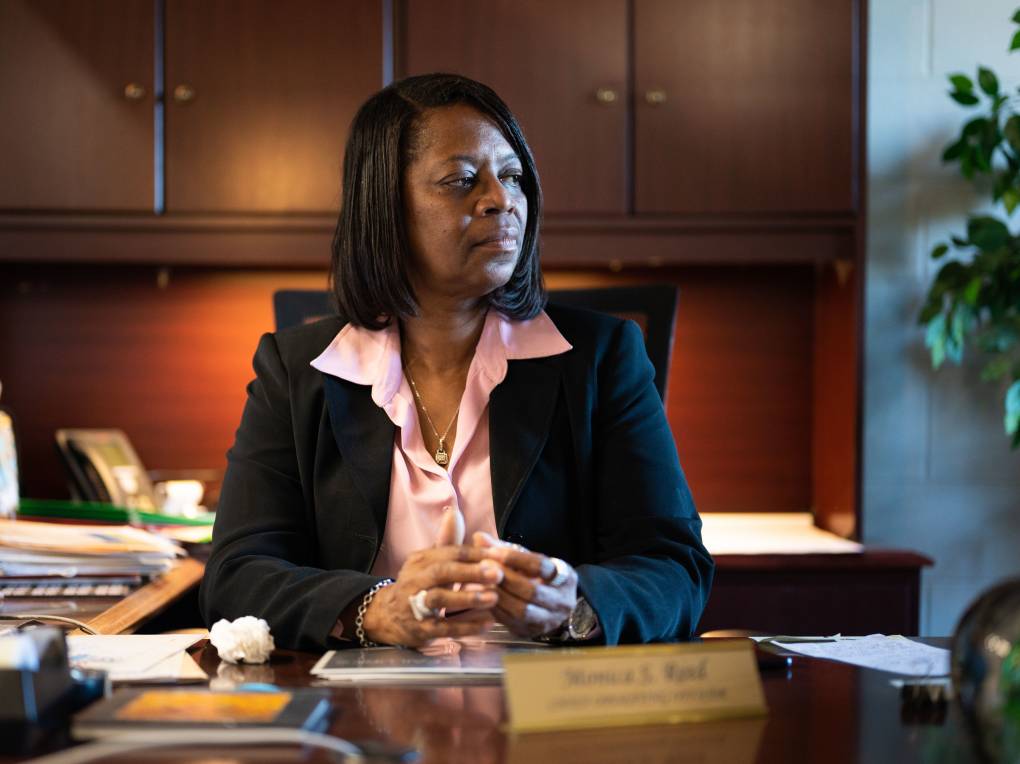
"description": "Diagnosed with cancer five years ago, Monica Reed of Knoxville, Tennessee, was left with nearly $10,000 in medical bills she couldn’t pay. She has sacrificed, including cutting back on food. 'You just do without some things to pay other things,' she says.",
"title": "Diagnosed with cancer five years ago, Monica Reed of Knoxville, Tennessee, was left with nearly $10,000 in medical bills she couldn't pay. Medical debt is more prevalent among the Black community in Knoxville, than among whites.",
"credit": "Jamar Coach for KHN and NPR",
"status": "inherit",
"altTag": "Woman in in a black suit jacket and pink shirt sits at a desk with a brown cabinet behind her.",
"isLoading": false,
"fetchFailed": false
},
"news_11930035": {
"type": "attachments",
"id": "news_11930035",
"meta": {
"index": "attachments_1716263798",
"site": "news",
"id": "11930035",
"found": true
},
"parent": 11929860,
"imgSizes": {
"twentyfourteen-full-width": {
"file": "https://ww2.kqed.org/app/uploads/sites/10/2022/10/RS59623_003_KQED_SutterRNStrikeBerkeley_10242022-qut-1038x576.jpg",
"width": 1038,
"mimeType": "image/jpeg",
"height": 576
},
"thumbnail": {
"file": "https://ww2.kqed.org/app/uploads/sites/10/2022/10/RS59623_003_KQED_SutterRNStrikeBerkeley_10242022-qut-160x107.jpg",
"width": 160,
"mimeType": "image/jpeg",
"height": 107
},
"post-thumbnail": {
"file": "https://ww2.kqed.org/app/uploads/sites/10/2022/10/RS59623_003_KQED_SutterRNStrikeBerkeley_10242022-qut-672x372.jpg",
"width": 672,
"mimeType": "image/jpeg",
"height": 372
},
"kqedFullSize": {
"file": "https://ww2.kqed.org/app/uploads/sites/10/2022/10/RS59623_003_KQED_SutterRNStrikeBerkeley_10242022-qut.jpg",
"width": 1920,
"height": 1280
},
"large": {
"file": "https://ww2.kqed.org/app/uploads/sites/10/2022/10/RS59623_003_KQED_SutterRNStrikeBerkeley_10242022-qut-1020x680.jpg",
"width": 1020,
"mimeType": "image/jpeg",
"height": 680
},
"1536x1536": {
"file": "https://ww2.kqed.org/app/uploads/sites/10/2022/10/RS59623_003_KQED_SutterRNStrikeBerkeley_10242022-qut-1536x1024.jpg",
"width": 1536,
"mimeType": "image/jpeg",
"height": 1024
},
"medium": {
"file": "https://ww2.kqed.org/app/uploads/sites/10/2022/10/RS59623_003_KQED_SutterRNStrikeBerkeley_10242022-qut-800x533.jpg",
"width": 800,
"mimeType": "image/jpeg",
"height": 533
}
},
"publishDate": 1666654426,
"modified": 1666656880,
"caption": "Nurses begin a five-day strike at Alta Bates Summit Medical Center in Berkeley on Oct. 24, 2022.",
"description": null,
"title": "RS59623_003_KQED_SutterRNStrikeBerkeley_10242022-qut",
"credit": "Beth LaBerge/KQED",
"status": "inherit",
"altTag": "People holding yellow and red signs and wearing red nurse outfits stand outside.",
"isLoading": false,
"fetchFailed": false
},
"news_11930003": {
"type": "attachments",
"id": "news_11930003",
"meta": {
"index": "attachments_1716263798",
"site": "news",
"id": "11930003",
"found": true
},
"parent": 11930002,
"imgSizes": {
"twentyfourteen-full-width": {
"file": "https://ww2.kqed.org/app/uploads/sites/10/2022/10/gettyimages-1243881047-b6c4c3e2d81c3622bf53ffe3694b73873a55bece-1038x576.jpg",
"width": 1038,
"mimeType": "image/jpeg",
"height": 576
},
"thumbnail": {
"file": "https://ww2.kqed.org/app/uploads/sites/10/2022/10/gettyimages-1243881047-b6c4c3e2d81c3622bf53ffe3694b73873a55bece-160x120.jpg",
"width": 160,
"mimeType": "image/jpeg",
"height": 120
},
"post-thumbnail": {
"file": "https://ww2.kqed.org/app/uploads/sites/10/2022/10/gettyimages-1243881047-b6c4c3e2d81c3622bf53ffe3694b73873a55bece-672x372.jpg",
"width": 672,
"mimeType": "image/jpeg",
"height": 372
},
"kqedFullSize": {
"file": "https://ww2.kqed.org/app/uploads/sites/10/2022/10/gettyimages-1243881047-b6c4c3e2d81c3622bf53ffe3694b73873a55bece-scaled.jpg",
"width": 2560,
"height": 1920
},
"2048x2048": {
"file": "https://ww2.kqed.org/app/uploads/sites/10/2022/10/gettyimages-1243881047-b6c4c3e2d81c3622bf53ffe3694b73873a55bece-2048x1536.jpg",
"width": 2048,
"mimeType": "image/jpeg",
"height": 1536
},
"large": {
"file": "https://ww2.kqed.org/app/uploads/sites/10/2022/10/gettyimages-1243881047-b6c4c3e2d81c3622bf53ffe3694b73873a55bece-1020x765.jpg",
"width": 1020,
"mimeType": "image/jpeg",
"height": 765
},
"1536x1536": {
"file": "https://ww2.kqed.org/app/uploads/sites/10/2022/10/gettyimages-1243881047-b6c4c3e2d81c3622bf53ffe3694b73873a55bece-1536x1152.jpg",
"width": 1536,
"mimeType": "image/jpeg",
"height": 1152
},
"full-width": {
"file": "https://ww2.kqed.org/app/uploads/sites/10/2022/10/gettyimages-1243881047-b6c4c3e2d81c3622bf53ffe3694b73873a55bece-1920x1440.jpg",
"width": 1920,
"mimeType": "image/jpeg",
"height": 1440
},
"medium": {
"file": "https://ww2.kqed.org/app/uploads/sites/10/2022/10/gettyimages-1243881047-b6c4c3e2d81c3622bf53ffe3694b73873a55bece-800x600.jpg",
"width": 800,
"mimeType": "image/jpeg",
"height": 600
}
},
"publishDate": 1666648126,
"modified": 1666648258,
"caption": "Models of a protein from the respiratory syncytial virus are shown at The University of Texas at Austin on March 31, 2022. A spike in RSV cases among children is pushing some hospitals to capacity.",
"description": "AUSTIN, TX - MARCH 31: A pre-fusion and post-fusion form of a protein from the RSV virus in the Faulkner Nanoscience and Technology Building at The University of Texas at Austin on March 31, 2022. (Photo by Montinique Monroe for The Washington Post via Getty Images)",
"title": "Models of a protein from the respiratory syncytial virus are shown at The University of Texas at Austin on March 31, 2022. A spike in RSV cases among children is pushing some hospitals to capacity.",
"credit": "Montinique Monroe for The Washington Post via Getty Images",
"status": "inherit",
"altTag": "Two colorful models of a protein.",
"isLoading": false,
"fetchFailed": false
}
},
"audioPlayerReducer": {
"postId": "stream_live",
"isPaused": true,
"isPlaying": false,
"pfsActive": false,
"pledgeModalIsOpen": true,
"playerDrawerIsOpen": false,
"liveAudioPlayStartedAt": 0,
"liveAudioPlayContext": ""
},
"authorsReducer": {
"byline_news_11934819": {
"type": "authors",
"id": "byline_news_11934819",
"meta": {
"override": true
},
"slug": "byline_news_11934819",
"name": "Lauren DeLaunay Miller",
"isLoading": false
},
"byline_news_11934623": {
"type": "authors",
"id": "byline_news_11934623",
"meta": {
"override": true
},
"slug": "byline_news_11934623",
"name": "Kristen Hwang",
"isLoading": false
},
"byline_news_11934066": {
"type": "authors",
"id": "byline_news_11934066",
"meta": {
"override": true
},
"slug": "byline_news_11934066",
"name": "\u003ca href=\"https://www.npr.org/people/463234136/laurel-wamsley\">Laura Wansley\u003c/a>",
"isLoading": false
},
"byline_news_11932439": {
"type": "authors",
"id": "byline_news_11932439",
"meta": {
"override": true
},
"slug": "byline_news_11932439",
"name": "\u003ca href=\"https://calmatters.org/author/anaibarra/\">Ana B. Ibarra\u003c/a>",
"isLoading": false
},
"byline_news_11930534": {
"type": "authors",
"id": "byline_news_11930534",
"meta": {
"override": true
},
"slug": "byline_news_11930534",
"name": "Noam Levey",
"isLoading": false
},
"byline_news_11930002": {
"type": "authors",
"id": "byline_news_11930002",
"meta": {
"override": true
},
"slug": "byline_news_11930002",
"name": "Vanessa Romo",
"isLoading": false
},
"tarasiler": {
"type": "authors",
"id": "257",
"meta": {
"index": "authors_1716337520",
"id": "257",
"found": true
},
"name": "Tara Siler",
"firstName": "Tara",
"lastName": "Siler",
"slug": "tarasiler",
"email": "tsiler@kqed.org",
"display_author_email": false,
"staff_mastheads": [
"news"
],
"title": "KQED Contributor",
"bio": "Tara reports and anchors for KQED news. She covers a range of issues from community-police relations to local politics. Tara started out in community radio in the Bay Area, where she was raised. She eventually moved to Washington DC where she covered Congress for eight years for Pacifica and Monitor Radio. Her stories have also been heard on NPR's All Things Considered, Morning Edition and The World.\r\n\r\nTara lives with her husband in Oakland-- where they raised their two sons. She enjoys spending time with her family, gardening and hiking in the Oakland hills... and keeping up with the news.",
"avatar": "https://secure.gravatar.com/avatar/99802f9746fb80b65fd8ec6c57954450?s=600&d=blank&r=g",
"twitter": null,
"facebook": null,
"instagram": null,
"linkedin": null,
"sites": [
{
"site": "news",
"roles": [
"contributor",
"edit_others_posts"
]
},
{
"site": "stateofhealth",
"roles": [
"author"
]
}
],
"headData": {
"title": "Tara Siler | KQED",
"description": "KQED Contributor",
"ogImgSrc": "https://secure.gravatar.com/avatar/99802f9746fb80b65fd8ec6c57954450?s=600&d=blank&r=g",
"twImgSrc": "https://secure.gravatar.com/avatar/99802f9746fb80b65fd8ec6c57954450?s=600&d=blank&r=g"
},
"isLoading": false,
"link": "/author/tarasiler"
},
"esilvers": {
"type": "authors",
"id": "7237",
"meta": {
"index": "authors_1716337520",
"id": "7237",
"found": true
},
"name": "Emma Silvers",
"firstName": "Emma",
"lastName": "Silvers",
"slug": "esilvers",
"email": "esilvers@kqed.org",
"display_author_email": false,
"staff_mastheads": [],
"title": "KQED Contributor",
"bio": "Emma Silvers is an editor at KQED Arts and a former digital producer at KQED News. Born and raised in the Bay Area, she has previously been an arts and entertainment editor at the \u003cem>San Francisco Chronicle\u003c/em>, \u003cem>SF Weekly\u003c/em> and the \u003cem>San Francisco Bay Guardian.\u003c/em> \u003ca href=\"https://www.emmasilvers.com\">Her work\u003c/a> has also appeared in \u003cem>Rolling Stone\u003c/em>, Pitchfork and \u003cem>Mother Jones\u003c/em>. In 2017 she was the recipient of the Society of Professional Journalists-Northern California's award for arts and culture reporting. In 1993 she \u003ca href=\"https://www.kqed.org/pop/16759/wait-what-my-coworker-was-a-voice-over-hyperventilator-for-jurassic-park\">hyperventilated in \u003cem>Jurassic Park\u003c/em>\u003c/a>.",
"avatar": "https://secure.gravatar.com/avatar/247beada39b88ea5759db1f51dba05cf?s=600&d=blank&r=g",
"twitter": "emmaruthless",
"facebook": null,
"instagram": null,
"linkedin": null,
"sites": [
{
"site": "arts",
"roles": [
"editor"
]
},
{
"site": "news",
"roles": [
"editor"
]
},
{
"site": "pop",
"roles": [
"contributor"
]
},
{
"site": "bayareabites",
"roles": [
"editor"
]
},
{
"site": "food",
"roles": [
"contributor"
]
},
{
"site": "liveblog",
"roles": [
"editor"
]
}
],
"headData": {
"title": "Emma Silvers | KQED",
"description": "KQED Contributor",
"ogImgSrc": "https://secure.gravatar.com/avatar/247beada39b88ea5759db1f51dba05cf?s=600&d=blank&r=g",
"twImgSrc": "https://secure.gravatar.com/avatar/247beada39b88ea5759db1f51dba05cf?s=600&d=blank&r=g"
},
"isLoading": false,
"link": "/author/esilvers"
},
"lesleymcclurg": {
"type": "authors",
"id": "11229",
"meta": {
"index": "authors_1716337520",
"id": "11229",
"found": true
},
"name": "Lesley McClurg",
"firstName": "Lesley",
"lastName": "McClurg",
"slug": "lesleymcclurg",
"email": "lmcclurg@KQED.org",
"display_author_email": false,
"staff_mastheads": [
"news",
"science"
],
"title": "KQED Health Correspondent",
"bio": "Lesley McClurg is a health correspondent and fill-in host whose work is regularly rebroadcast on NPR and PBS programs. She’s earned multiple regional Emmy awards, a national and a regional Edward R. Murrow award, and was named Best Beat Reporter by the Association of Health Care Journalists. The Society of Professional Journalists has recognized her work several times, and the Society of Environmental Journalists spotlighted her coverage of California’s historic drought.\r\n\r\nBefore joining KQED in 2016, Lesley covered food and sustainability for Capital Public Radio, environmental issues for Colorado Public Radio, and reported for KUOW and KCTS 9 in Seattle. Away from the newsroom, she loves skiing with her daughter, mountain biking with her partner, and playing with Ollie, the family’s goldendoodle. On deadline, she runs almost entirely on chocolate chips.\r\n\r\n ",
"avatar": "https://secure.gravatar.com/avatar/bab49e972ea10c774fe0f5e29dba1722b158f7c0d58a360923d1389d380b2978?s=600&d=blank&r=g",
"twitter": "lesleywmcclurg",
"bluesky": null,
"facebook": null,
"instagram": null,
"linkedin": null,
"sites": [
{
"site": "arts",
"roles": [
"author"
]
},
{
"site": "news",
"roles": [
"editor"
]
},
{
"site": "futureofyou",
"roles": [
"editor"
]
},
{
"site": "stateofhealth",
"roles": [
"author"
]
},
{
"site": "science",
"roles": [
"editor"
]
},
{
"site": "quest",
"roles": [
"subscriber"
]
},
{
"site": "forum",
"roles": [
"administrator"
]
},
{
"site": "liveblog",
"roles": [
"author"
]
}
],
"headData": {
"title": "Lesley McClurg | KQED",
"description": "KQED Health Correspondent",
"ogImgSrc": "https://secure.gravatar.com/avatar/bab49e972ea10c774fe0f5e29dba1722b158f7c0d58a360923d1389d380b2978?s=600&d=blank&r=g",
"twImgSrc": "https://secure.gravatar.com/avatar/bab49e972ea10c774fe0f5e29dba1722b158f7c0d58a360923d1389d380b2978?s=600&d=blank&r=g"
},
"isLoading": false,
"link": "/author/lesleymcclurg"
},
"bwatt": {
"type": "authors",
"id": "11238",
"meta": {
"index": "authors_1716337520",
"id": "11238",
"found": true
},
"name": "Brian Watt",
"firstName": "Brian",
"lastName": "Watt",
"slug": "bwatt",
"email": "bwatt@KQED.org",
"display_author_email": false,
"staff_mastheads": [
"news"
],
"title": "Morning News Anchor",
"bio": "Brian Watt is KQED's morning radio news anchor. He joined the KQED News team in April of 2016. Prior to that, he worked as a Reporter for KPCC in Los Angeles and a producer at \u003cem>Marketplace.\u003c/em>\r\n\r\nDuring eight years at KPCC, Brian covered business and economics, and his work won several awards. In 2008, he won the Los Angeles Press Club’s first-place award for Business and Financial Reporting, Broadcast. He’s also received honorable mention and been first runner up for the Press Club’s Radio Journalist of the Year. He won two Golden Mike awards from the Radio and TV News Association of Southern California.\r\n\r\nBrian holds degrees in theater from Yale University and the Sorbonne, and has worked as an actor in France, Italy, Brazil, Hungary and . . . Hollywood. He appeared in a few television shows, including \u003cem>The West Wing, Judging Amy\u003c/em> and \u003cem>The District.\u003c/em>\r\n\r\nEmail: bwatt@KQED.org Twitter: @RadioBWatt",
"avatar": "https://secure.gravatar.com/avatar/55393ff57ed34e2be773ba4789dd6a19?s=600&d=blank&r=g",
"twitter": "@RadioBWatt",
"facebook": null,
"instagram": null,
"linkedin": null,
"sites": [
{
"site": "arts",
"roles": [
"contributor"
]
},
{
"site": "news",
"roles": [
"editor"
]
}
],
"headData": {
"title": "Brian Watt | KQED",
"description": "Morning News Anchor",
"ogImgSrc": "https://secure.gravatar.com/avatar/55393ff57ed34e2be773ba4789dd6a19?s=600&d=blank&r=g",
"twImgSrc": "https://secure.gravatar.com/avatar/55393ff57ed34e2be773ba4789dd6a19?s=600&d=blank&r=g"
},
"isLoading": false,
"link": "/author/bwatt"
},
"agonzalez": {
"type": "authors",
"id": "11724",
"meta": {
"index": "authors_1716337520",
"id": "11724",
"found": true
},
"name": "Alexander Gonzalez",
"firstName": "Alexander",
"lastName": "Gonzalez",
"slug": "agonzalez",
"email": "AlexanderGonzalez@KQED.org",
"display_author_email": false,
"staff_mastheads": [
"news"
],
"title": "KQED Contributor",
"bio": null,
"avatar": "https://secure.gravatar.com/avatar/9e291ed34e154df4c662edf858b641d70b4859939bfe40be478408f9dfd057d2?s=600&d=blank&r=g",
"twitter": null,
"bluesky": null,
"facebook": null,
"instagram": null,
"linkedin": null,
"sites": [
{
"site": "arts",
"roles": [
"editor"
]
},
{
"site": "news",
"roles": [
"editor"
]
},
{
"site": "science",
"roles": [
"editor"
]
}
],
"headData": {
"title": "Alexander Gonzalez | KQED",
"description": "KQED Contributor",
"ogImgSrc": "https://secure.gravatar.com/avatar/9e291ed34e154df4c662edf858b641d70b4859939bfe40be478408f9dfd057d2?s=600&d=blank&r=g",
"twImgSrc": "https://secure.gravatar.com/avatar/9e291ed34e154df4c662edf858b641d70b4859939bfe40be478408f9dfd057d2?s=600&d=blank&r=g"
},
"isLoading": false,
"link": "/author/agonzalez"
},
"nnavarro": {
"type": "authors",
"id": "11756",
"meta": {
"index": "authors_1716337520",
"id": "11756",
"found": true
},
"name": "Natalia Navarro",
"firstName": "Natalia",
"lastName": "Navarro",
"slug": "nnavarro",
"email": "nnavarro@kqed.org",
"display_author_email": true,
"staff_mastheads": [
"news"
],
"title": "Afternoon News Anchor",
"bio": "Natalia Navarro is KQED's afternoon radio news anchor. She came to KQED in 2021 from Colorado Public Radio, where she was a reporter and host. She has received several awards for her work covering daily and breaking news from professional organizations such as the San Francisco Press Club, Society of Professional Journalists and the Colorado Broadcasters Association. Natalia is originally from Tucson, Arizona, where she got her start in journalism writing for the Arizona Daily Star, Arizona Public Media and the Tucson Weekly. Natalia earned her bachelor's degree in journalism and economics, and her master's degree in journalism from the University of Arizona.",
"avatar": "https://secure.gravatar.com/avatar/a2bdb19fd9520bdea295a2d5f9b2ad65ec51cf0bf559fb1cc041d3a0a04d62ad?s=600&d=blank&r=g",
"twitter": "@NataliaVNavarro",
"bluesky": null,
"facebook": null,
"instagram": null,
"linkedin": null,
"sites": [
{
"site": "news",
"roles": [
"editor"
]
}
],
"headData": {
"title": "Natalia Navarro | KQED",
"description": "Afternoon News Anchor",
"ogImgSrc": "https://secure.gravatar.com/avatar/a2bdb19fd9520bdea295a2d5f9b2ad65ec51cf0bf559fb1cc041d3a0a04d62ad?s=600&d=blank&r=g",
"twImgSrc": "https://secure.gravatar.com/avatar/a2bdb19fd9520bdea295a2d5f9b2ad65ec51cf0bf559fb1cc041d3a0a04d62ad?s=600&d=blank&r=g"
},
"isLoading": false,
"link": "/author/nnavarro"
},
"swhitney": {
"type": "authors",
"id": "11784",
"meta": {
"index": "authors_1716337520",
"id": "11784",
"found": true
},
"name": "Spencer Whitney",
"firstName": "Spencer",
"lastName": "Whitney",
"slug": "swhitney",
"email": "swhitney@kqed.org",
"display_author_email": false,
"staff_mastheads": [],
"title": "KQED Digital Editor",
"bio": "Spencer Whitney is currently a Digital Editor for KQED News. Prior to joining KQED News, Spencer worked as the Multimedia Editor at the Oakland Post and an Assistant Editor in the Editorial department at the San Francisco Chronicle. He attended Howard University as an undergraduate and interned with SiriusXM. He also attended UC Berkeley's Graduate School of Journalism and had the opportunity to write for the hyperlocal news sites Richmond Confidential and Oakland North.",
"avatar": "https://secure.gravatar.com/avatar/e33ff4fd8b8f0d2796f36472fb32607ca8fc46ef5e537dcfdbdee688d8ea5b80?s=600&d=mm&r=g",
"twitter": null,
"bluesky": null,
"facebook": null,
"instagram": null,
"linkedin": null,
"sites": [
{
"site": "arts",
"roles": [
"editor"
]
},
{
"site": "news",
"roles": [
"editor"
]
},
{
"site": "science",
"roles": [
"editor"
]
},
{
"site": "perspectives",
"roles": [
"editor"
]
}
],
"headData": {
"title": "Spencer Whitney | KQED",
"description": "KQED Digital Editor",
"ogImgSrc": "https://secure.gravatar.com/avatar/e33ff4fd8b8f0d2796f36472fb32607ca8fc46ef5e537dcfdbdee688d8ea5b80?s=600&d=mm&r=g",
"twImgSrc": "https://secure.gravatar.com/avatar/e33ff4fd8b8f0d2796f36472fb32607ca8fc46ef5e537dcfdbdee688d8ea5b80?s=600&d=mm&r=g"
},
"isLoading": false,
"link": "/author/swhitney"
},
"apelit": {
"type": "authors",
"id": "11812",
"meta": {
"index": "authors_1716337520",
"id": "11812",
"found": true
},
"name": "Attila Pelit",
"firstName": "Attila",
"lastName": "Pelit",
"slug": "apelit",
"email": "apelit@kqed.org",
"display_author_email": false,
"staff_mastheads": [],
"title": "KQED Contributor",
"bio": null,
"avatar": "https://secure.gravatar.com/avatar/9b7b8a9e595d58a1f4d853f8608ae584?s=600&d=mm&r=g",
"twitter": null,
"facebook": null,
"instagram": null,
"linkedin": null,
"sites": [
{
"site": "news",
"roles": [
"editor"
]
},
{
"site": "science",
"roles": [
"editor"
]
},
{
"site": "elections",
"roles": [
"editor"
]
},
{
"site": "liveblog",
"roles": [
"editor"
]
}
],
"headData": {
"title": "Attila Pelit | KQED",
"description": "KQED Contributor",
"ogImgSrc": "https://secure.gravatar.com/avatar/9b7b8a9e595d58a1f4d853f8608ae584?s=600&d=mm&r=g",
"twImgSrc": "https://secure.gravatar.com/avatar/9b7b8a9e595d58a1f4d853f8608ae584?s=600&d=mm&r=g"
},
"isLoading": false,
"link": "/author/apelit"
},
"daisynguyen": {
"type": "authors",
"id": "11829",
"meta": {
"index": "authors_1716337520",
"id": "11829",
"found": true
},
"name": "Daisy Nguyen",
"firstName": "Daisy",
"lastName": "Nguyen",
"slug": "daisynguyen",
"email": "daisynguyen@kqed.org",
"display_author_email": true,
"staff_mastheads": [
"news"
],
"title": "KQED Contributor",
"bio": "I have covered early childhood education and child care for KQED since 2022. I focus on policies aimed at increasing access to early care and education and how they shape individual lives. I've been a journalist for more than two decades, with most of that time devoted to covering breaking news throughout California for The Associated Press. I grew up in San Francisco and studied at UC Davis and Columbia University's Graduate School of Journalism. I live in Oakland with my husband and two kids.",
"avatar": "https://secure.gravatar.com/avatar/2da2127c27f7143b53ebd419800fd55f?s=600&d=blank&r=g",
"twitter": null,
"facebook": null,
"instagram": null,
"linkedin": "https://www.linkedin.com/in/daisynguyen/",
"sites": [
{
"site": "news",
"roles": [
"author"
]
},
{
"site": "liveblog",
"roles": [
"author"
]
}
],
"headData": {
"title": "Daisy Nguyen | KQED",
"description": "KQED Contributor",
"ogImgSrc": "https://secure.gravatar.com/avatar/2da2127c27f7143b53ebd419800fd55f?s=600&d=blank&r=g",
"twImgSrc": "https://secure.gravatar.com/avatar/2da2127c27f7143b53ebd419800fd55f?s=600&d=blank&r=g"
},
"isLoading": false,
"link": "/author/daisynguyen"
}
},
"pagesReducer": {
"news_tag_health": {
"type": "terms",
"id": "news_18543",
"meta": {
"index": "terms_1716263798",
"site": "news",
"id": "18543",
"score": 6.886679
},
"featImg": null,
"name": "Health",
"description": null,
"taxonomy": "tag",
"headData": {
"twImgId": null,
"twTitle": null,
"ogTitle": null,
"ogImgId": null,
"twDescription": null,
"description": null,
"title": "Health Archives | KQED News",
"ogDescription": null
},
"ttid": 466,
"slug": "health",
"isLoading": false,
"title": "Health",
"pageMeta": {
"site": "news",
"WpPageTemplate": "page-topic-editorial",
"currentPage": 49
},
"blocks": [
{
"blockName": "kqed/post-list",
"attrs": {
"layout": "cardArticle2",
"query": "posts/news?tag=health",
"seeMore": false,
"paginated": true,
"page": 49
}
},
{
"blockName": "kqed/ad"
}
]
}
},
"pfsSessionReducer": {},
"postsReducer": {
"stream_live": {
"type": "live",
"id": "stream_live",
"audioUrl": "https://streams.kqed.org/kqedradio",
"title": "Live Stream",
"excerpt": "Live Stream information currently unavailable.",
"link": "/radio",
"featImg": "",
"label": {
"name": "KQED Live",
"link": "/"
}
},
"stream_kqedNewscast": {
"type": "posts",
"id": "stream_kqedNewscast",
"audioUrl": "https://www.kqed.org/.stream/anon/radio/RDnews/newscast.mp3?_=1",
"title": "KQED Newscast",
"featImg": "",
"label": {
"name": "88.5 FM",
"link": "/"
}
},
"news_11935500": {
"type": "posts",
"id": "news_11935500",
"meta": {
"index": "posts_1716263798",
"site": "news",
"id": "11935500",
"score": null,
"sort": [
1671231102000
]
},
"guestAuthors": [],
"slug": "this-is-chaos-hospitalizations-surge-amid-mounting-winter-tripledemic",
"title": "'This Is Chaos': Hospitalizations Surge Amid Mounting Winter 'Tripledemic'",
"publishDate": 1671231102,
"format": "standard",
"headTitle": "‘This Is Chaos’: Hospitalizations Surge Amid Mounting Winter ‘Tripledemic’ | KQED",
"labelTerm": {
"site": "news"
},
"content": "\u003cp>A “tripledemic” is straining hospitals across the region, from San Francisco to Santa Cruz and Sacramento, with some at — or well above — capacity. \u003ca href=\"https://www.cdph.ca.gov/Programs/CID/DCDC/CDPH%20Document%20Library/Immunization/Week2022-2348_FINALReport.pdf\">Influenza is spreading (PDF)\u003c/a>, case rates for RSV are still high, and COVID is on the rise, with \u003ca href=\"https://www.cdph.ca.gov/Programs/CID/DCDC/Pages/COVID-19/CalSuWers-Dashboard.aspx\">wastewater data showing a surge\u003c/a> as high as last winter’s omicron spike. There’s also a \u003ca href=\"https://www.kqed.org/news/11934066/tripledemic-causing-shortage-of-fever-reducing-medicines-for-kids\">shortage of fever-reducing medicine for kids\u003c/a>, and doctors and nurses are frantically trying to keep up with crushing patient loads.\u003c/p>\n\u003cp>“We had 100 patients on the board yesterday in a space designed for 29 people,” said Dr. Guy Shochat, who works in the ER unit at UCSF’s Parnassus campus in San Francisco. “There are no downs (in patient numbers) anymore. At three in the morning the patients still keep coming. At three in the morning the waits are still six hours.”\u003c/p>\n\u003cp>Shochat said patients line the hallways and fill the pharmacy area and any other available space.[aside label=\"Related Stories\" postID=\"news_11934066,news_11935249,forum_2010101891483\"]“We didn’t expect a year with COVID, adult RSV and influenza, all early,” Shochat said. “There are over 30 patients admitted for boarding, with many of them sitting over 24 hours in a hallway, admitted and waiting to go upstairs. It’s so hard to smile and be present for your patients, being exhausted before you start, just staring at this and knowing that tomorrow is going to be the same.”\u003c/p>\n\u003cp>The situation has been compounded by an adult RSV strain that has surged early this year, \u003ca href=\"https://www.cdph.ca.gov/Programs/OPA/Pages/CAHAN/Health-Advisory-Early-Respiratory-Syncytial-Virus-Activity-and-Use-of-Palivizumab.aspx\">accounting for 4.7% of respiratory illnesses in the state by the end of September\u003c/a>, a level usually not seen until November, according to the California Department of Public Health.\u003c/p>\n\u003cp>“Every five or six years we have what’s happened this year, where the RSV affects adults, too,” explained Shochat. “We knew there would be a COVID surge in winter, but it hit sooner than expected … So we now have an early severe influenza year and a very early RSV year and a system that was already beyond breaking — it’s just cracked entirely.”\u003c/p>\n\u003cp>It’s a similar situation in other hospitals, too.\u003c/p>\n\u003cp>Dr. Carolyn Robin Lanam, Emergency Department medical director at Mercy San Juan Medical Center in Carmichael, near Sacramento, said their hospital is at capacity and that they’re looking into opening up new overflow areas.\u003c/p>\n\u003cp>“I’ve seen wait times up to six hours … Influenza A, influenza B, RSV, COVID, that’s driving a lot of this,” Lanam said. “We’ve seen a lot of positive patients for all of those viruses in the past few weeks.”\u003c/p>\n\u003cp>[pullquote align=\"right\" size=\"medium\" citation=\"Dr. Guy Shochat, emergency care physician, UCSF\"]‘So we now have an early severe influenza year and a very early RSV year and a system that was already beyond breaking — it’s just cracked entirely.’[/pullquote]Tammy Green, manager of emergency services at Dominican Hospital in Santa Cruz, said the ER is overflowing with people coughing, with every inch of floor space being used to accommodate sick people.\u003c/p>\n\u003cp>“The first thing that’s going to come to mind is, ‘Oh my God. This is chaos,’” Green said. “The hospital is completely full. I mean, every room, every space. We saw almost 200 patients on Thanksgiving Day, and that just blew me away. I thought, ‘Oh my goodness, what is happening?’ And then it just continued like that. We have upwards of 18 patients here in our emergency department waiting for rooms for upwards of 24 hours or more. I am getting nervous leading up to Christmas and New Year’s.”\u003c/p>\n\u003cp>But another factor is at play besides the so-called “tripledemic,” and that is the nursing shortage. According to a 2021 UCSF report, \u003ca href=\"https://healthworkforce.ucsf.edu/sites/healthworkforce.ucsf.edu/files/Impact%20of%20the%20COVID-19%20Pandemic%20on%20California%E2%80%99s%20Registered%20Nurse%20Workforce%20-%20Preliminary%20Data.pdf\">the percentage of registered nurses age 55–64 planning to retire by 2023 more than doubled from 11.4% in 2018 to 25.2% in 2020 (PDF)\u003c/a>. And that was before COVID. The forecast for 2022 remained bleak, with an \u003ca href=\"https://www.rn.ca.gov/pdfs/forms/forecast2022.pdf\">August 2022 UCSF report (PDF)\u003c/a> stressing the “need to rapidly develop and implement strategies to mitigate the potential harm of shortages.”\u003c/p>\n\u003cp>[ad fullwidth]\u003c/p>\n\u003cp>“The nurses all quit,” said Shochat of UCSF. “We lost 20 nurses in the first year and a half of the pandemic. And they were senior nurses, so this was well over 200 years of institutional memory just disappearing. And it’s hurt us … Everyone’s just well and truly burnt out. Hospitals spent so much money paying travel nurses and building out new areas to treat COVID patients that they’re running way over budget. And patient care suffers when staff are overwhelmed.”\u003c/p>\n\u003cp>Shochat warns the situation could get a lot worse if — or when — the doctors start quitting.\u003c/p>\n\u003cp>“Doctors are going to quit. They’re planning to quit,” he said. “They’re just doing it more slowly, working with their financial advisers to figure out whether they’re retiring or if they’re going to [shift jobs]. People are sad and frustrated. It was bad enough three months ago … but how do we handle an influx of 40% over our expected patient load? And we’re short-staffed. Why would I stay? Why would I not just cash in my retirement account?”\u003c/p>\n\u003cp>\u003c!-- iframe plugin v.4.3 wordpress.org/plugins/iframe/ -->\u003cbr>\n\u003ciframe loading=\"lazy\" src=\"https://flo.uri.sh/visualisation/10616374/embed\" title=\"Interactive or visual content\" class=\"flourish-embed-iframe\" frameborder=\"0\" scrolling=\"no\" style=\"width:100%;height:1000px;\" sandbox=\"allow-same-origin allow-forms allow-scripts allow-downloads allow-popups allow-popups-to-escape-sandbox allow-top-navigation-by-user-activation\" width=\"100%\" height=\"500\">\u003c/iframe>\u003c/p>\n\u003cp>As the tripledemic and staffing shortages strain hospitals, medical professionals urge people to take responsibility for staying safe by masking, getting their vaccine boosters and not going to the ER unless they have to.\u003c/p>\n\u003cp>Mercy San Juan’s Lanam says that when it comes to respiratory illnesses, “the treatment is the same for everyone. You should take Tylenol and Motrin and stay well-hydrated. Get a humidifier if it helps for your cough. Drink a lot of tea with honey. There are certain populations at higher risk which would benefit from treatments for flu and COVID, like Tamiflu and Paxlovid. But for the large majority of people, if you’re otherwise healthy, the side effects from the medications aren’t worth it. Your body’s going to recover on its own. If it’s a really young baby or you’re older or you have multiple comorbidities, then definitely see your doctor. Try to see your primary care [physician] as much as possible.”\u003c/p>\n\u003cp>“I desperately want society to understand what’s going on,” said UCSF’s Shochat. “They need to really think twice about casually coming to the ER for a prescription refill. But also, I don’t want them to stay away when they have abdominal pain and have their appendix rupture at home.”\u003c/p>\n\u003cp>Shochat also wants to shed light on another factor that has taken perhaps an even greater toll on medical professionals than any other, one that’s more nuanced than surges and shortages — one he describes as the “breaking of a social contract” between doctors and the public since the beginning of the COVID pandemic.\u003c/p>\n\u003cp>“In the beginning, they called us heroes and they told us to hold the line until the vaccine came out, and we did it,” he said. “We held the line. And then what happened? The vaccine came out and people didn’t bother to get them. And I’m not even talking about the anti-vax folks. Literally, there was a free vaccine on every corner, they went unused. And that broke us. That was wave one of us all giving up. Wave two was we curled ourselves into balls, cried a little bit, and we came back to work and just soldiered along, and now there’s this realization this isn’t going away. It’s just getting worse.”\u003c/p>\n\u003cp>[ad fullwidth]\u003c/p>\n\u003cp>[ad floatright]\u003c/p>\n",
"blocks": [],
"excerpt": "Some hospitals in San Francisco, Santa Cruz and Sacramento are filled with patients — some of them waiting 24 hours for a room — as COVID, influenza and RSV cases strain the system.",
"status": "publish",
"parent": 0,
"modified": 1726005092,
"stats": {
"hasAudio": false,
"hasVideo": false,
"hasChartOrMap": true,
"iframeSrcs": [
"https://flo.uri.sh/visualisation/10616374/embed"
],
"hasGoogleForm": false,
"hasGallery": false,
"hasHearkenModule": false,
"hasPolis": false,
"paragraphCount": 23,
"wordCount": 1364
},
"headData": {
"title": "'This Is Chaos': Hospitalizations Surge Amid Mounting Winter 'Tripledemic' | KQED",
"description": "Some hospitals in San Francisco, Santa Cruz and Sacramento are filled with patients — some of them waiting 24 hours for a room — as COVID, influenza and RSV cases strain the system.",
"ogTitle": "",
"ogDescription": "",
"ogImgId": "",
"twTitle": "",
"twDescription": "",
"twImgId": "",
"schema": {
"@context": "https://schema.org",
"@type": "NewsArticle",
"headline": "'This Is Chaos': Hospitalizations Surge Amid Mounting Winter 'Tripledemic'",
"datePublished": "2022-12-16T14:51:42-08:00",
"dateModified": "2024-09-10T14:51:32-07:00",
"image": "https://cdn.kqed.org/wp-content/uploads/2020/02/KQED-OG-Image@1x.png",
"isAccessibleForFree": "True",
"publisher": {
"@type": "NewsMediaOrganization",
"@id": "https://www.kqed.org/#organization",
"name": "KQED",
"logo": "https://cdn.kqed.org/wp-content/uploads/2020/02/KQED-OG-Image@1x.png",
"url": "https://www.kqed.org",
"sameAs": [
"https://www.facebook.com/KQED",
"https://twitter.com/KQED",
"https://www.instagram.com/kqed/",
"https://www.tiktok.com/@kqedofficial",
"https://www.linkedin.com/company/kqed",
"https://www.youtube.com/channel/UCeC0IOo7i1P_61zVUWbJ4nw"
]
}
}
},
"audioUrl": "https://traffic.omny.fm/d/clips/0af137ef-751e-4b19-a055-aaef00d2d578/ffca7e9f-6831-4[…]f-aaef00f5a073/241e2cf4-25b7-4acf-bc2d-af6d01148e0c/audio.mp3",
"sticky": false,
"excludeFromSiteSearch": "Include",
"articleAge": "0",
"path": "/news/11935500/this-is-chaos-hospitalizations-surge-amid-mounting-winter-tripledemic",
"audioTrackLength": null,
"parsedContent": [
{
"type": "contentString",
"content": "\u003cdiv class=\"post-body\">\u003cp>\u003cp>A “tripledemic” is straining hospitals across the region, from San Francisco to Santa Cruz and Sacramento, with some at — or well above — capacity. \u003ca href=\"https://www.cdph.ca.gov/Programs/CID/DCDC/CDPH%20Document%20Library/Immunization/Week2022-2348_FINALReport.pdf\">Influenza is spreading (PDF)\u003c/a>, case rates for RSV are still high, and COVID is on the rise, with \u003ca href=\"https://www.cdph.ca.gov/Programs/CID/DCDC/Pages/COVID-19/CalSuWers-Dashboard.aspx\">wastewater data showing a surge\u003c/a> as high as last winter’s omicron spike. There’s also a \u003ca href=\"https://www.kqed.org/news/11934066/tripledemic-causing-shortage-of-fever-reducing-medicines-for-kids\">shortage of fever-reducing medicine for kids\u003c/a>, and doctors and nurses are frantically trying to keep up with crushing patient loads.\u003c/p>\n\u003cp>“We had 100 patients on the board yesterday in a space designed for 29 people,” said Dr. Guy Shochat, who works in the ER unit at UCSF’s Parnassus campus in San Francisco. “There are no downs (in patient numbers) anymore. At three in the morning the patients still keep coming. At three in the morning the waits are still six hours.”\u003c/p>\n\u003cp>Shochat said patients line the hallways and fill the pharmacy area and any other available space.\u003c/p>\u003c/div>",
"attributes": {
"named": {},
"numeric": []
}
},
{
"type": "component",
"content": "",
"name": "aside",
"attributes": {
"named": {
"label": "Related Stories ",
"postid": "news_11934066,news_11935249,forum_2010101891483"
},
"numeric": []
}
},
{
"type": "contentString",
"content": "\u003cdiv class=\"post-body\">\u003cp>“We didn’t expect a year with COVID, adult RSV and influenza, all early,” Shochat said. “There are over 30 patients admitted for boarding, with many of them sitting over 24 hours in a hallway, admitted and waiting to go upstairs. It’s so hard to smile and be present for your patients, being exhausted before you start, just staring at this and knowing that tomorrow is going to be the same.”\u003c/p>\n\u003cp>The situation has been compounded by an adult RSV strain that has surged early this year, \u003ca href=\"https://www.cdph.ca.gov/Programs/OPA/Pages/CAHAN/Health-Advisory-Early-Respiratory-Syncytial-Virus-Activity-and-Use-of-Palivizumab.aspx\">accounting for 4.7% of respiratory illnesses in the state by the end of September\u003c/a>, a level usually not seen until November, according to the California Department of Public Health.\u003c/p>\n\u003cp>“Every five or six years we have what’s happened this year, where the RSV affects adults, too,” explained Shochat. “We knew there would be a COVID surge in winter, but it hit sooner than expected … So we now have an early severe influenza year and a very early RSV year and a system that was already beyond breaking — it’s just cracked entirely.”\u003c/p>\n\u003cp>It’s a similar situation in other hospitals, too.\u003c/p>\n\u003cp>Dr. Carolyn Robin Lanam, Emergency Department medical director at Mercy San Juan Medical Center in Carmichael, near Sacramento, said their hospital is at capacity and that they’re looking into opening up new overflow areas.\u003c/p>\n\u003cp>“I’ve seen wait times up to six hours … Influenza A, influenza B, RSV, COVID, that’s driving a lot of this,” Lanam said. “We’ve seen a lot of positive patients for all of those viruses in the past few weeks.”\u003c/p>\n\u003cp>\u003c/p>\u003c/div>",
"attributes": {
"named": {},
"numeric": []
}
},
{
"type": "component",
"content": "‘So we now have an early severe influenza year and a very early RSV year and a system that was already beyond breaking — it’s just cracked entirely.’",
"name": "pullquote",
"attributes": {
"named": {
"align": "right",
"size": "medium",
"citation": "Dr. Guy Shochat, emergency care physician, UCSF",
"label": ""
},
"numeric": []
}
},
{
"type": "contentString",
"content": "\u003cdiv class=\"post-body\">\u003cp>Tammy Green, manager of emergency services at Dominican Hospital in Santa Cruz, said the ER is overflowing with people coughing, with every inch of floor space being used to accommodate sick people.\u003c/p>\n\u003cp>“The first thing that’s going to come to mind is, ‘Oh my God. This is chaos,’” Green said. “The hospital is completely full. I mean, every room, every space. We saw almost 200 patients on Thanksgiving Day, and that just blew me away. I thought, ‘Oh my goodness, what is happening?’ And then it just continued like that. We have upwards of 18 patients here in our emergency department waiting for rooms for upwards of 24 hours or more. I am getting nervous leading up to Christmas and New Year’s.”\u003c/p>\n\u003cp>But another factor is at play besides the so-called “tripledemic,” and that is the nursing shortage. According to a 2021 UCSF report, \u003ca href=\"https://healthworkforce.ucsf.edu/sites/healthworkforce.ucsf.edu/files/Impact%20of%20the%20COVID-19%20Pandemic%20on%20California%E2%80%99s%20Registered%20Nurse%20Workforce%20-%20Preliminary%20Data.pdf\">the percentage of registered nurses age 55–64 planning to retire by 2023 more than doubled from 11.4% in 2018 to 25.2% in 2020 (PDF)\u003c/a>. And that was before COVID. The forecast for 2022 remained bleak, with an \u003ca href=\"https://www.rn.ca.gov/pdfs/forms/forecast2022.pdf\">August 2022 UCSF report (PDF)\u003c/a> stressing the “need to rapidly develop and implement strategies to mitigate the potential harm of shortages.”\u003c/p>\n\u003cp>\u003c/p>\u003c/div>",
"attributes": {
"named": {},
"numeric": []
}
},
{
"type": "component",
"content": "",
"name": "ad",
"attributes": {
"named": {
"label": "fullwidth"
},
"numeric": [
"fullwidth"
]
}
},
{
"type": "contentString",
"content": "\u003cdiv class=\"post-body\">\u003cp>\u003c/p>\n\u003cp>“The nurses all quit,” said Shochat of UCSF. “We lost 20 nurses in the first year and a half of the pandemic. And they were senior nurses, so this was well over 200 years of institutional memory just disappearing. And it’s hurt us … Everyone’s just well and truly burnt out. Hospitals spent so much money paying travel nurses and building out new areas to treat COVID patients that they’re running way over budget. And patient care suffers when staff are overwhelmed.”\u003c/p>\n\u003cp>Shochat warns the situation could get a lot worse if — or when — the doctors start quitting.\u003c/p>\n\u003cp>“Doctors are going to quit. They’re planning to quit,” he said. “They’re just doing it more slowly, working with their financial advisers to figure out whether they’re retiring or if they’re going to [shift jobs]. People are sad and frustrated. It was bad enough three months ago … but how do we handle an influx of 40% over our expected patient load? And we’re short-staffed. Why would I stay? Why would I not just cash in my retirement account?”\u003c/p>\n\u003cp>\u003c!-- iframe plugin v.4.3 wordpress.org/plugins/iframe/ -->\u003cbr>\n\u003ciframe loading=\"lazy\" src=\"https://flo.uri.sh/visualisation/10616374/embed\" title=\"Interactive or visual content\" class=\"flourish-embed-iframe\" frameborder=\"0\" scrolling=\"no\" style=\"width:100%;height:1000px;\" sandbox=\"allow-same-origin allow-forms allow-scripts allow-downloads allow-popups allow-popups-to-escape-sandbox allow-top-navigation-by-user-activation\" width=\"100%\" height=\"500\">\u003c/iframe>\u003c/p>\n\u003cp>As the tripledemic and staffing shortages strain hospitals, medical professionals urge people to take responsibility for staying safe by masking, getting their vaccine boosters and not going to the ER unless they have to.\u003c/p>\n\u003cp>Mercy San Juan’s Lanam says that when it comes to respiratory illnesses, “the treatment is the same for everyone. You should take Tylenol and Motrin and stay well-hydrated. Get a humidifier if it helps for your cough. Drink a lot of tea with honey. There are certain populations at higher risk which would benefit from treatments for flu and COVID, like Tamiflu and Paxlovid. But for the large majority of people, if you’re otherwise healthy, the side effects from the medications aren’t worth it. Your body’s going to recover on its own. If it’s a really young baby or you’re older or you have multiple comorbidities, then definitely see your doctor. Try to see your primary care [physician] as much as possible.”\u003c/p>\n\u003cp>“I desperately want society to understand what’s going on,” said UCSF’s Shochat. “They need to really think twice about casually coming to the ER for a prescription refill. But also, I don’t want them to stay away when they have abdominal pain and have their appendix rupture at home.”\u003c/p>\n\u003cp>Shochat also wants to shed light on another factor that has taken perhaps an even greater toll on medical professionals than any other, one that’s more nuanced than surges and shortages — one he describes as the “breaking of a social contract” between doctors and the public since the beginning of the COVID pandemic.\u003c/p>\n\u003cp>“In the beginning, they called us heroes and they told us to hold the line until the vaccine came out, and we did it,” he said. “We held the line. And then what happened? The vaccine came out and people didn’t bother to get them. And I’m not even talking about the anti-vax folks. Literally, there was a free vaccine on every corner, they went unused. And that broke us. That was wave one of us all giving up. Wave two was we curled ourselves into balls, cried a little bit, and we came back to work and just soldiered along, and now there’s this realization this isn’t going away. It’s just getting worse.”\u003c/p>\n\u003cp>\u003c/p>\u003c/div>",
"attributes": {
"named": {},
"numeric": []
}
},
{
"type": "component",
"content": "",
"name": "ad",
"attributes": {
"named": {
"label": "fullwidth"
},
"numeric": [
"fullwidth"
]
}
},
{
"type": "contentString",
"content": "\u003cdiv class=\"post-body\">\u003cp>\u003c/p>\n\u003cp>\u003c/p>\u003c/div>",
"attributes": {
"named": {},
"numeric": []
}
},
{
"type": "component",
"content": "",
"name": "ad",
"attributes": {
"named": {
"label": "floatright"
},
"numeric": [
"floatright"
]
}
},
{
"type": "contentString",
"content": "\u003cdiv class=\"post-body\">\u003cp>\u003c/p>\n\u003c/div>\u003c/p>",
"attributes": {
"named": {},
"numeric": []
}
}
],
"link": "/news/11935500/this-is-chaos-hospitalizations-surge-amid-mounting-winter-tripledemic",
"authors": [
"11812",
"11229"
],
"categories": [
"news_457",
"news_8"
],
"tags": [
"news_27989",
"news_18543",
"news_22327"
],
"featImg": "news_11935568",
"label": "news"
},
"news_11934819": {
"type": "posts",
"id": "news_11934819",
"meta": {
"index": "posts_1716263798",
"site": "news",
"id": "11934819",
"score": null,
"sort": [
1670688057000
]
},
"guestAuthors": [],
"slug": "for-rural-californians-abortion-is-legal-but-its-not-always-accessible",
"title": "For Rural Californians, Abortion Is Legal. But It's Not Always Accessible",
"publishDate": 1670688057,
"format": "standard",
"headTitle": "For Rural Californians, Abortion Is Legal. But It’s Not Always Accessible | KQED",
"labelTerm": {
"term": 26731,
"site": "news"
},
"content": "\u003cp>The town of Bishop lies at the intersection of two highways, Route 395 and Route 6, that in their own ways serve as a reminder of how isolated this community is. Route 395 runs north to south, mirroring the mountainous skyline that separates the town from the rest of the state. Route 6 begins here in Bishop; a sign on the outskirts of town reads “Provincetown, Massachusetts: 3,198 miles.”\u003c/p>\n\u003cp>This is where Megan (whose real name KQED is withholding to protect her medical privacy) has made her home for the last decade, after moving from the Bay Area.\u003c/p>\n\u003cp>“It’s such an exhilarating experience to drive over the mountains and discover what’s on the other side,” she said. In addition to the town’s rugged beauty, she also fell in love with the “effortlessness of community.”[aside label=\"Related Stories\" postID=\"news_11926949,news_11927686,news_11896908\"]\u003c/p>\n\u003cp>The town of Bishop has a population of under 4,000, but with a number of outlying neighborhoods (officially “census-designated places”), the community is home to around 10,000 people, more than half the population of Inyo County.\u003c/p>\n\u003cp>In April, Megan learned she was unexpectedly pregnant. She knew that if she had to continue her pregnancy, she could. But, she thought, she didn’t have to: She was in California. So, completely confident in her decision to focus on her small business now and revisit having children in a few years, she called her local women’s clinic to schedule an abortion.\u003c/p>\n\u003cp>To her surprise, the staff told her they didn’t do abortions. She called several other clinics but they all had the same answer. “And that’s how I found out that you can’t even get an abortion in Bishop or in the entire Eastern Sierra,” she said.\u003c/p>\n\u003ch2>Rights vs. access\u003c/h2>\n\u003cp>Before she needed an abortion herself, Megan had assumed that the procedure was available all across the state. Reproductive rights are openly supported by Gov. Gavin Newsom, who has promised to \u003ca href=\"https://www.kqed.org/forum/2010101889792/california-aims-to-be-an-abortion-sanctuary-post-roe-is-it-prepared\">make the state a sanctuary\u003c/a> for abortion seekers from all over the country.\u003c/p>\n\u003cp>Ever since the Supreme Court overturned Roe v. Wade, California legislators have been \u003ca href=\"https://www.kqed.org/news/11926949/newsom-signs-slate-of-abortion-protection-bills\">passing bills aimed at providing abortion access\u003c/a> for out-of-state patients. And last month, Californians overwhelmingly voted to enshrine \u003ca href=\"https://ballotpedia.org/California_Proposition_1,_Right_to_Reproductive_Freedom_Amendment_(2022)\">the right to an abortion\u003c/a> in the state’s constitution. But Megan’s experience exemplifies how, in many rural communities, having the right to an abortion doesn’t necessarily mean having access to it.\u003c/p>\n\u003cfigure id=\"attachment_11934858\" class=\"wp-caption aligncenter\" style=\"max-width: 800px\">\u003ca href=\"https://ww2.kqed.org/app/uploads/sites/10/2022/12/More-than-half-of-Inyo-County-residents-live-in-the-Bishop-area.jpg\">\u003cimg loading=\"lazy\" decoding=\"async\" class=\"size-medium wp-image-11934858\" src=\"https://ww2.kqed.org/app/uploads/sites/10/2022/12/More-than-half-of-Inyo-County-residents-live-in-the-Bishop-area-800x600.jpg\" alt=\"a wide landscape with dry grass and plants a mountain range in the background, and highway signs pointing to Reno and Bishop, California\" width=\"800\" height=\"600\" srcset=\"https://cdn.kqed.org/wp-content/uploads/sites/10/2022/12/More-than-half-of-Inyo-County-residents-live-in-the-Bishop-area-800x600.jpg 800w, https://cdn.kqed.org/wp-content/uploads/sites/10/2022/12/More-than-half-of-Inyo-County-residents-live-in-the-Bishop-area-1020x765.jpg 1020w, https://cdn.kqed.org/wp-content/uploads/sites/10/2022/12/More-than-half-of-Inyo-County-residents-live-in-the-Bishop-area-160x120.jpg 160w, https://cdn.kqed.org/wp-content/uploads/sites/10/2022/12/More-than-half-of-Inyo-County-residents-live-in-the-Bishop-area.jpg 1500w\" sizes=\"(max-width: 800px) 100vw, 800px\">\u003c/a>\u003cfigcaption class=\"wp-caption-text\">More than half of Inyo County residents live in the Bishop area. \u003ccite>(Lauren DeLaunay Miller)\u003c/cite>\u003c/figcaption>\u003c/figure>\n\u003cp>Dr. Marty Kim, a local OB/GYN, says Bishop health clinics don’t offer elective abortion services — as opposed to, for example, abortion procedures when a patient’s life is in danger, or during a complicated miscarriage — because of what she calls “rural American politics.”\u003c/p>\n\u003cp>Inyo County is fairly conservative; in the November election, nearly 55% of voters here voted for Republican Brian Dahle for the governor’s seat. Recently, city council and school board members have faced criticism from residents and \u003ca href=\"https://www.inyoregister.com/news/bishop-city-council-member-takes-issue-with-pride-month-critics/article_275e74e8-e283-11ec-b8b2-c317bb0e80bd.html\">church leaders around discussions of LGBTQ+ pride events\u003c/a> and guidelines surrounding COVID-19.\u003c/p>\n\u003cp>Kim believes that those reactions are part of a larger trend, one that indicates the town would respond harshly toward abortion providers. She isn’t ready to put the target on her own back by offering elective abortion procedures, despite her ardent personal support of abortion rights.\u003c/p>\n\u003cp>“What I think is very different and so important about being a doctor in a small town is that you get to be a town leader, whether you want to be one or not,” she said.\u003c/p>\n\u003cp>Kim said this conservatism is felt in the clinic where she works, too, and has contributed to her clinic’s decision not to offer abortion services.\u003c/p>\n\u003cp>The Rural Health Women’s Clinic is part of the Northern Inyo Healthcare District, home to the largest hospital in both Inyo County and neighboring Mono County. If the clinic started offering elective abortions, Kim said, “You’ll have nurses who will refuse to participate in it or won’t do it.” And, she added, “we don’t have extra nurses.”\u003c/p>\n\u003cfigure id=\"attachment_11934857\" class=\"wp-caption aligncenter\" style=\"max-width: 800px\">\u003ca href=\"https://ww2.kqed.org/app/uploads/sites/10/2022/12/Despite-its-modest-appearance-the-Rural-Health-Womens-Clinic-is-critically-important-to-Bishop-residents-.jpg\">\u003cimg loading=\"lazy\" decoding=\"async\" class=\"size-medium wp-image-11934857\" src=\"https://ww2.kqed.org/app/uploads/sites/10/2022/12/Despite-its-modest-appearance-the-Rural-Health-Womens-Clinic-is-critically-important-to-Bishop-residents--800x600.jpg\" alt=\"the exterior of a white building with a sign that reads 'rural health women's clinic'\" width=\"800\" height=\"600\" srcset=\"https://cdn.kqed.org/wp-content/uploads/sites/10/2022/12/Despite-its-modest-appearance-the-Rural-Health-Womens-Clinic-is-critically-important-to-Bishop-residents--800x600.jpg 800w, https://cdn.kqed.org/wp-content/uploads/sites/10/2022/12/Despite-its-modest-appearance-the-Rural-Health-Womens-Clinic-is-critically-important-to-Bishop-residents--1020x765.jpg 1020w, https://cdn.kqed.org/wp-content/uploads/sites/10/2022/12/Despite-its-modest-appearance-the-Rural-Health-Womens-Clinic-is-critically-important-to-Bishop-residents--160x120.jpg 160w, https://cdn.kqed.org/wp-content/uploads/sites/10/2022/12/Despite-its-modest-appearance-the-Rural-Health-Womens-Clinic-is-critically-important-to-Bishop-residents--1536x1152.jpg 1536w, https://cdn.kqed.org/wp-content/uploads/sites/10/2022/12/Despite-its-modest-appearance-the-Rural-Health-Womens-Clinic-is-critically-important-to-Bishop-residents--1920x1440.jpg 1920w, https://cdn.kqed.org/wp-content/uploads/sites/10/2022/12/Despite-its-modest-appearance-the-Rural-Health-Womens-Clinic-is-critically-important-to-Bishop-residents-.jpg 2000w\" sizes=\"(max-width: 800px) 100vw, 800px\">\u003c/a>\u003cfigcaption class=\"wp-caption-text\">Despite its modest appearance, the Rural Health Women’s Clinic is critically important to Bishop residents. \u003ccite>(Lauren DeLaunay Miller)\u003c/cite>\u003c/figcaption>\u003c/figure>\n\u003cp>Kim isn’t the only provider in town who is frustrated by the lack of abortion services. Dayna Stimson is a nurse practitioner at Bishop Community Health Center, a \u003ca href=\"https://www.cms.gov/Outreach-and-Education/Medicare-Learning-Network-MLN/MLNProducts/Downloads/fqhcfactsheet.pdf\">federally qualified health center (PDF)\u003c/a> that receives funding to help underserved populations. This federal funding is what’s keeping Stimson from being able to perform abortions, not the potential for community objections.\u003c/p>\n\u003cp>“If funding were not an issue, I’d be willing to at least try and see what the backlash would be like,” Stimson said. “It’s health care and we’re not going to know what the community response is going to be until somebody decides to step up.”\u003c/p>\n\u003cp>\u003ca href=\"https://files.medi-cal.ca.gov/pubsdoco/publications/masters-mtp/part2/abort.pdf\">The Hyde Amendment (PDF)\u003c/a> prohibits federal funding from supporting elective abortion services, which means that for clinics like Stimson’s to provide abortions, they need to create a separate billing structure. They’re in the process of assessing the feasibility of doing so, but it’s a big lift for such a small clinic.\u003c/p>\n\u003ch2>Logistics, planning and expenses\u003c/h2>\n\u003cp>No matter the reason, the fact that the closest abortion clinic to Bishop is over 200 miles away makes access difficult for people like Megan. First, she tried a clinic in Reno but, faced with a four-week wait, she drove further, to Pomona.\u003c/p>\n\u003cp>“It was just a matter of having a long drive, getting a really miserable motel experience, and waking up at 5:30 a.m. to get it done, and then driving back that day,” said Megan. “So it can be done. It’s just a lot more logistics, planning and expenses.”\u003c/p>\n\u003cp>Megan said she’s grateful that she had the resources to finally access her abortion, but she knows that not everyone does. One obstacle for Inyo County residents like Megan is the lack of available information. The state of California has recently created a \u003ca href=\"http://abortion.ca.gov\">website for abortion information\u003c/a>, but its abortion-finder tool uses as-the-crow-flies directions, which aren’t necessarily helpful for residents of a valley surrounded by mountains.\u003c/p>\n\u003cfigure id=\"attachment_11934860\" class=\"wp-caption aligncenter\" style=\"max-width: 800px\">\u003ca href=\"https://ww2.kqed.org/app/uploads/sites/10/2022/12/In-the-winter-Bishop-becomes-even-more-isolated-when-the-mountain-passes-that-connect-it-to-the-rest-of-the-state-close..jpg\">\u003cimg loading=\"lazy\" decoding=\"async\" class=\"size-medium wp-image-11934860\" src=\"https://ww2.kqed.org/app/uploads/sites/10/2022/12/In-the-winter-Bishop-becomes-even-more-isolated-when-the-mountain-passes-that-connect-it-to-the-rest-of-the-state-close.-800x600.jpg\" alt=\"a landscape photo of snow on mountains in front of dry terrain\" width=\"800\" height=\"600\" srcset=\"https://cdn.kqed.org/wp-content/uploads/sites/10/2022/12/In-the-winter-Bishop-becomes-even-more-isolated-when-the-mountain-passes-that-connect-it-to-the-rest-of-the-state-close.-800x600.jpg 800w, https://cdn.kqed.org/wp-content/uploads/sites/10/2022/12/In-the-winter-Bishop-becomes-even-more-isolated-when-the-mountain-passes-that-connect-it-to-the-rest-of-the-state-close.-1020x765.jpg 1020w, https://cdn.kqed.org/wp-content/uploads/sites/10/2022/12/In-the-winter-Bishop-becomes-even-more-isolated-when-the-mountain-passes-that-connect-it-to-the-rest-of-the-state-close.-160x120.jpg 160w, https://cdn.kqed.org/wp-content/uploads/sites/10/2022/12/In-the-winter-Bishop-becomes-even-more-isolated-when-the-mountain-passes-that-connect-it-to-the-rest-of-the-state-close..jpg 1500w\" sizes=\"(max-width: 800px) 100vw, 800px\">\u003c/a>\u003cfigcaption class=\"wp-caption-text\">In the winter, Bishop becomes even more isolated, when the mountain passes that connect it to the rest of the state close. \u003ccite>(Lauren DeLaunay Miller)\u003c/cite>\u003c/figcaption>\u003c/figure>\n\u003cp>For example, for Bishop’s ZIP code, the tool shows that the closest clinic is in Fresno, which it says is 89 miles away. But Fresno is on the other side of the Sierra Nevada, and to access it by car (there is no public transportation there), it’s a 250-mile drive in the summer or a 350-mile drive in the winter, when the pass through Yosemite National Park closes for snow. In fact, the closest clinics are in Reno, Bakersfield and Lancaster, but appointment availability sometimes means patients like Megan must travel even further.\u003c/p>\n\u003cp>For Megan, the financial burden was manageable, despite spending a few hundred dollars on a motel room near the clinic and gas for the 500-mile round-trip journey. And while she didn’t look for financial assistance to cover those costs, resources are available for Californians in need: \u003ca href=\"https://accessrj.org/\">Access Reproductive Justice\u003c/a>, for example, is an Oakland-based organization that provides information and funding to people who need help accessing abortion care.\u003c/p>\n\u003cp>Thankfully, one cost Megan didn’t need to incur was for the procedure itself. She has Medi-Cal, the state’s Medicaid program, which covers all abortion services performed by a physician regardless of medical necessity.\u003c/p>\n\u003cp>Despite the anxiety she experienced walking through a wall of protestors to access the Pomona clinic, and the pain of the procedure itself, once her abortion was over, Megan said she felt immediate relief. “I felt back to myself,” she said. This is why Megan wants to make sure progress is made in continuing to remove barriers to abortion access. “Your work is not done, California,” she said.\u003c/p>\n\u003cp>[ad fullwidth]\u003c/p>\n\u003cp>[ad floatright]\u003c/p>\n",
"blocks": [],
"excerpt": "In communities like Bishop, in the Eastern Sierras, a person might have to travel 500 miles — and spend a significant amount of time and money — to visit a clinic that provides abortion care.",
"status": "publish",
"parent": 0,
"modified": 1726005096,
"stats": {
"hasAudio": false,
"hasVideo": false,
"hasChartOrMap": false,
"iframeSrcs": [],
"hasGoogleForm": false,
"hasGallery": false,
"hasHearkenModule": false,
"hasPolis": false,
"paragraphCount": 26,
"wordCount": 1419
},
"headData": {
"title": "For Rural Californians, Abortion Is Legal. But It's Not Always Accessible | KQED",
"description": "In communities like Bishop, in the Eastern Sierras, a person might have to travel 500 miles — and spend a significant amount of time and money — to visit a clinic that provides abortion care.",
"ogTitle": "",
"ogDescription": "",
"ogImgId": "",
"twTitle": "",
"twDescription": "",
"twImgId": "",
"schema": {
"@context": "https://schema.org",
"@type": "NewsArticle",
"headline": "For Rural Californians, Abortion Is Legal. But It's Not Always Accessible",
"datePublished": "2022-12-10T08:00:57-08:00",
"dateModified": "2024-09-10T14:51:36-07:00",
"image": "https://cdn.kqed.org/wp-content/uploads/2020/02/KQED-OG-Image@1x.png",
"isAccessibleForFree": "True",
"publisher": {
"@type": "NewsMediaOrganization",
"@id": "https://www.kqed.org/#organization",
"name": "KQED",
"logo": "https://cdn.kqed.org/wp-content/uploads/2020/02/KQED-OG-Image@1x.png",
"url": "https://www.kqed.org",
"sameAs": [
"https://www.facebook.com/KQED",
"https://twitter.com/KQED",
"https://www.instagram.com/kqed/",
"https://www.tiktok.com/@kqedofficial",
"https://www.linkedin.com/company/kqed",
"https://www.youtube.com/channel/UCeC0IOo7i1P_61zVUWbJ4nw"
]
}
}
},
"audioUrl": "https://traffic.omny.fm/d/clips/0af137ef-751e-4b19-a055-aaef00d2d578/ffca7e9f-6831-4[…]f-aaef00f5a073/a35829ad-b8ac-4601-b3f5-af66011733cc/audio.mp3",
"sticky": false,
"nprByline": "Lauren DeLaunay Miller",
"excludeFromSiteSearch": "Include",
"showOnAuthorArchivePages": "No",
"path": "/news/11934819/for-rural-californians-abortion-is-legal-but-its-not-always-accessible",
"audioTrackLength": null,
"parsedContent": [
{
"type": "contentString",
"content": "\u003cdiv class=\"post-body\">\u003cp>\u003cp>The town of Bishop lies at the intersection of two highways, Route 395 and Route 6, that in their own ways serve as a reminder of how isolated this community is. Route 395 runs north to south, mirroring the mountainous skyline that separates the town from the rest of the state. Route 6 begins here in Bishop; a sign on the outskirts of town reads “Provincetown, Massachusetts: 3,198 miles.”\u003c/p>\n\u003cp>This is where Megan (whose real name KQED is withholding to protect her medical privacy) has made her home for the last decade, after moving from the Bay Area.\u003c/p>\n\u003cp>“It’s such an exhilarating experience to drive over the mountains and discover what’s on the other side,” she said. In addition to the town’s rugged beauty, she also fell in love with the “effortlessness of community.”\u003c/p>\u003c/div>",
"attributes": {
"named": {},
"numeric": []
}
},
{
"type": "component",
"content": "",
"name": "aside",
"attributes": {
"named": {
"label": "Related Stories ",
"postid": "news_11926949,news_11927686,news_11896908"
},
"numeric": []
}
},
{
"type": "contentString",
"content": "\u003cdiv class=\"post-body\">\u003cp>\u003c/p>\n\u003cp>The town of Bishop has a population of under 4,000, but with a number of outlying neighborhoods (officially “census-designated places”), the community is home to around 10,000 people, more than half the population of Inyo County.\u003c/p>\n\u003cp>In April, Megan learned she was unexpectedly pregnant. She knew that if she had to continue her pregnancy, she could. But, she thought, she didn’t have to: She was in California. So, completely confident in her decision to focus on her small business now and revisit having children in a few years, she called her local women’s clinic to schedule an abortion.\u003c/p>\n\u003cp>To her surprise, the staff told her they didn’t do abortions. She called several other clinics but they all had the same answer. “And that’s how I found out that you can’t even get an abortion in Bishop or in the entire Eastern Sierra,” she said.\u003c/p>\n\u003ch2>Rights vs. access\u003c/h2>\n\u003cp>Before she needed an abortion herself, Megan had assumed that the procedure was available all across the state. Reproductive rights are openly supported by Gov. Gavin Newsom, who has promised to \u003ca href=\"https://www.kqed.org/forum/2010101889792/california-aims-to-be-an-abortion-sanctuary-post-roe-is-it-prepared\">make the state a sanctuary\u003c/a> for abortion seekers from all over the country.\u003c/p>\n\u003cp>Ever since the Supreme Court overturned Roe v. Wade, California legislators have been \u003ca href=\"https://www.kqed.org/news/11926949/newsom-signs-slate-of-abortion-protection-bills\">passing bills aimed at providing abortion access\u003c/a> for out-of-state patients. And last month, Californians overwhelmingly voted to enshrine \u003ca href=\"https://ballotpedia.org/California_Proposition_1,_Right_to_Reproductive_Freedom_Amendment_(2022)\">the right to an abortion\u003c/a> in the state’s constitution. But Megan’s experience exemplifies how, in many rural communities, having the right to an abortion doesn’t necessarily mean having access to it.\u003c/p>\n\u003cfigure id=\"attachment_11934858\" class=\"wp-caption aligncenter\" style=\"max-width: 800px\">\u003ca href=\"https://ww2.kqed.org/app/uploads/sites/10/2022/12/More-than-half-of-Inyo-County-residents-live-in-the-Bishop-area.jpg\">\u003cimg loading=\"lazy\" decoding=\"async\" class=\"size-medium wp-image-11934858\" src=\"https://ww2.kqed.org/app/uploads/sites/10/2022/12/More-than-half-of-Inyo-County-residents-live-in-the-Bishop-area-800x600.jpg\" alt=\"a wide landscape with dry grass and plants a mountain range in the background, and highway signs pointing to Reno and Bishop, California\" width=\"800\" height=\"600\" srcset=\"https://cdn.kqed.org/wp-content/uploads/sites/10/2022/12/More-than-half-of-Inyo-County-residents-live-in-the-Bishop-area-800x600.jpg 800w, https://cdn.kqed.org/wp-content/uploads/sites/10/2022/12/More-than-half-of-Inyo-County-residents-live-in-the-Bishop-area-1020x765.jpg 1020w, https://cdn.kqed.org/wp-content/uploads/sites/10/2022/12/More-than-half-of-Inyo-County-residents-live-in-the-Bishop-area-160x120.jpg 160w, https://cdn.kqed.org/wp-content/uploads/sites/10/2022/12/More-than-half-of-Inyo-County-residents-live-in-the-Bishop-area.jpg 1500w\" sizes=\"(max-width: 800px) 100vw, 800px\">\u003c/a>\u003cfigcaption class=\"wp-caption-text\">More than half of Inyo County residents live in the Bishop area. \u003ccite>(Lauren DeLaunay Miller)\u003c/cite>\u003c/figcaption>\u003c/figure>\n\u003cp>Dr. Marty Kim, a local OB/GYN, says Bishop health clinics don’t offer elective abortion services — as opposed to, for example, abortion procedures when a patient’s life is in danger, or during a complicated miscarriage — because of what she calls “rural American politics.”\u003c/p>\n\u003cp>Inyo County is fairly conservative; in the November election, nearly 55% of voters here voted for Republican Brian Dahle for the governor’s seat. Recently, city council and school board members have faced criticism from residents and \u003ca href=\"https://www.inyoregister.com/news/bishop-city-council-member-takes-issue-with-pride-month-critics/article_275e74e8-e283-11ec-b8b2-c317bb0e80bd.html\">church leaders around discussions of LGBTQ+ pride events\u003c/a> and guidelines surrounding COVID-19.\u003c/p>\n\u003cp>Kim believes that those reactions are part of a larger trend, one that indicates the town would respond harshly toward abortion providers. She isn’t ready to put the target on her own back by offering elective abortion procedures, despite her ardent personal support of abortion rights.\u003c/p>\n\u003cp>“What I think is very different and so important about being a doctor in a small town is that you get to be a town leader, whether you want to be one or not,” she said.\u003c/p>\n\u003cp>Kim said this conservatism is felt in the clinic where she works, too, and has contributed to her clinic’s decision not to offer abortion services.\u003c/p>\n\u003cp>The Rural Health Women’s Clinic is part of the Northern Inyo Healthcare District, home to the largest hospital in both Inyo County and neighboring Mono County. If the clinic started offering elective abortions, Kim said, “You’ll have nurses who will refuse to participate in it or won’t do it.” And, she added, “we don’t have extra nurses.”\u003c/p>\n\u003cfigure id=\"attachment_11934857\" class=\"wp-caption aligncenter\" style=\"max-width: 800px\">\u003ca href=\"https://ww2.kqed.org/app/uploads/sites/10/2022/12/Despite-its-modest-appearance-the-Rural-Health-Womens-Clinic-is-critically-important-to-Bishop-residents-.jpg\">\u003cimg loading=\"lazy\" decoding=\"async\" class=\"size-medium wp-image-11934857\" src=\"https://ww2.kqed.org/app/uploads/sites/10/2022/12/Despite-its-modest-appearance-the-Rural-Health-Womens-Clinic-is-critically-important-to-Bishop-residents--800x600.jpg\" alt=\"the exterior of a white building with a sign that reads 'rural health women's clinic'\" width=\"800\" height=\"600\" srcset=\"https://cdn.kqed.org/wp-content/uploads/sites/10/2022/12/Despite-its-modest-appearance-the-Rural-Health-Womens-Clinic-is-critically-important-to-Bishop-residents--800x600.jpg 800w, https://cdn.kqed.org/wp-content/uploads/sites/10/2022/12/Despite-its-modest-appearance-the-Rural-Health-Womens-Clinic-is-critically-important-to-Bishop-residents--1020x765.jpg 1020w, https://cdn.kqed.org/wp-content/uploads/sites/10/2022/12/Despite-its-modest-appearance-the-Rural-Health-Womens-Clinic-is-critically-important-to-Bishop-residents--160x120.jpg 160w, https://cdn.kqed.org/wp-content/uploads/sites/10/2022/12/Despite-its-modest-appearance-the-Rural-Health-Womens-Clinic-is-critically-important-to-Bishop-residents--1536x1152.jpg 1536w, https://cdn.kqed.org/wp-content/uploads/sites/10/2022/12/Despite-its-modest-appearance-the-Rural-Health-Womens-Clinic-is-critically-important-to-Bishop-residents--1920x1440.jpg 1920w, https://cdn.kqed.org/wp-content/uploads/sites/10/2022/12/Despite-its-modest-appearance-the-Rural-Health-Womens-Clinic-is-critically-important-to-Bishop-residents-.jpg 2000w\" sizes=\"(max-width: 800px) 100vw, 800px\">\u003c/a>\u003cfigcaption class=\"wp-caption-text\">Despite its modest appearance, the Rural Health Women’s Clinic is critically important to Bishop residents. \u003ccite>(Lauren DeLaunay Miller)\u003c/cite>\u003c/figcaption>\u003c/figure>\n\u003cp>Kim isn’t the only provider in town who is frustrated by the lack of abortion services. Dayna Stimson is a nurse practitioner at Bishop Community Health Center, a \u003ca href=\"https://www.cms.gov/Outreach-and-Education/Medicare-Learning-Network-MLN/MLNProducts/Downloads/fqhcfactsheet.pdf\">federally qualified health center (PDF)\u003c/a> that receives funding to help underserved populations. This federal funding is what’s keeping Stimson from being able to perform abortions, not the potential for community objections.\u003c/p>\n\u003cp>“If funding were not an issue, I’d be willing to at least try and see what the backlash would be like,” Stimson said. “It’s health care and we’re not going to know what the community response is going to be until somebody decides to step up.”\u003c/p>\n\u003cp>\u003ca href=\"https://files.medi-cal.ca.gov/pubsdoco/publications/masters-mtp/part2/abort.pdf\">The Hyde Amendment (PDF)\u003c/a> prohibits federal funding from supporting elective abortion services, which means that for clinics like Stimson’s to provide abortions, they need to create a separate billing structure. They’re in the process of assessing the feasibility of doing so, but it’s a big lift for such a small clinic.\u003c/p>\n\u003ch2>Logistics, planning and expenses\u003c/h2>\n\u003cp>No matter the reason, the fact that the closest abortion clinic to Bishop is over 200 miles away makes access difficult for people like Megan. First, she tried a clinic in Reno but, faced with a four-week wait, she drove further, to Pomona.\u003c/p>\n\u003cp>“It was just a matter of having a long drive, getting a really miserable motel experience, and waking up at 5:30 a.m. to get it done, and then driving back that day,” said Megan. “So it can be done. It’s just a lot more logistics, planning and expenses.”\u003c/p>\n\u003cp>Megan said she’s grateful that she had the resources to finally access her abortion, but she knows that not everyone does. One obstacle for Inyo County residents like Megan is the lack of available information. The state of California has recently created a \u003ca href=\"http://abortion.ca.gov\">website for abortion information\u003c/a>, but its abortion-finder tool uses as-the-crow-flies directions, which aren’t necessarily helpful for residents of a valley surrounded by mountains.\u003c/p>\n\u003cfigure id=\"attachment_11934860\" class=\"wp-caption aligncenter\" style=\"max-width: 800px\">\u003ca href=\"https://ww2.kqed.org/app/uploads/sites/10/2022/12/In-the-winter-Bishop-becomes-even-more-isolated-when-the-mountain-passes-that-connect-it-to-the-rest-of-the-state-close..jpg\">\u003cimg loading=\"lazy\" decoding=\"async\" class=\"size-medium wp-image-11934860\" src=\"https://ww2.kqed.org/app/uploads/sites/10/2022/12/In-the-winter-Bishop-becomes-even-more-isolated-when-the-mountain-passes-that-connect-it-to-the-rest-of-the-state-close.-800x600.jpg\" alt=\"a landscape photo of snow on mountains in front of dry terrain\" width=\"800\" height=\"600\" srcset=\"https://cdn.kqed.org/wp-content/uploads/sites/10/2022/12/In-the-winter-Bishop-becomes-even-more-isolated-when-the-mountain-passes-that-connect-it-to-the-rest-of-the-state-close.-800x600.jpg 800w, https://cdn.kqed.org/wp-content/uploads/sites/10/2022/12/In-the-winter-Bishop-becomes-even-more-isolated-when-the-mountain-passes-that-connect-it-to-the-rest-of-the-state-close.-1020x765.jpg 1020w, https://cdn.kqed.org/wp-content/uploads/sites/10/2022/12/In-the-winter-Bishop-becomes-even-more-isolated-when-the-mountain-passes-that-connect-it-to-the-rest-of-the-state-close.-160x120.jpg 160w, https://cdn.kqed.org/wp-content/uploads/sites/10/2022/12/In-the-winter-Bishop-becomes-even-more-isolated-when-the-mountain-passes-that-connect-it-to-the-rest-of-the-state-close..jpg 1500w\" sizes=\"(max-width: 800px) 100vw, 800px\">\u003c/a>\u003cfigcaption class=\"wp-caption-text\">In the winter, Bishop becomes even more isolated, when the mountain passes that connect it to the rest of the state close. \u003ccite>(Lauren DeLaunay Miller)\u003c/cite>\u003c/figcaption>\u003c/figure>\n\u003cp>For example, for Bishop’s ZIP code, the tool shows that the closest clinic is in Fresno, which it says is 89 miles away. But Fresno is on the other side of the Sierra Nevada, and to access it by car (there is no public transportation there), it’s a 250-mile drive in the summer or a 350-mile drive in the winter, when the pass through Yosemite National Park closes for snow. In fact, the closest clinics are in Reno, Bakersfield and Lancaster, but appointment availability sometimes means patients like Megan must travel even further.\u003c/p>\n\u003cp>For Megan, the financial burden was manageable, despite spending a few hundred dollars on a motel room near the clinic and gas for the 500-mile round-trip journey. And while she didn’t look for financial assistance to cover those costs, resources are available for Californians in need: \u003ca href=\"https://accessrj.org/\">Access Reproductive Justice\u003c/a>, for example, is an Oakland-based organization that provides information and funding to people who need help accessing abortion care.\u003c/p>\n\u003cp>Thankfully, one cost Megan didn’t need to incur was for the procedure itself. She has Medi-Cal, the state’s Medicaid program, which covers all abortion services performed by a physician regardless of medical necessity.\u003c/p>\n\u003cp>Despite the anxiety she experienced walking through a wall of protestors to access the Pomona clinic, and the pain of the procedure itself, once her abortion was over, Megan said she felt immediate relief. “I felt back to myself,” she said. This is why Megan wants to make sure progress is made in continuing to remove barriers to abortion access. “Your work is not done, California,” she said.\u003c/p>\n\u003cp>\u003c/p>\u003c/div>",
"attributes": {
"named": {},
"numeric": []
}
},
{
"type": "component",
"content": "",
"name": "ad",
"attributes": {
"named": {
"label": "fullwidth"
},
"numeric": [
"fullwidth"
]
}
},
{
"type": "contentString",
"content": "\u003cdiv class=\"post-body\">\u003cp>\u003c/p>\n\u003cp>\u003c/p>\u003c/div>",
"attributes": {
"named": {},
"numeric": []
}
},
{
"type": "component",
"content": "",
"name": "ad",
"attributes": {
"named": {
"label": "floatright"
},
"numeric": [
"floatright"
]
}
},
{
"type": "contentString",
"content": "\u003cdiv class=\"post-body\">\u003cp>\u003c/p>\n\u003c/div>\u003c/p>",
"attributes": {
"named": {},
"numeric": []
}
}
],
"link": "/news/11934819/for-rural-californians-abortion-is-legal-but-its-not-always-accessible",
"authors": [
"byline_news_11934819"
],
"programs": [
"news_26731"
],
"categories": [
"news_31795",
"news_457",
"news_8"
],
"tags": [
"news_866",
"news_30251",
"news_22880",
"news_18543",
"news_21603",
"news_4747"
],
"featImg": "news_11934825",
"label": "news_26731"
},
"news_11934868": {
"type": "posts",
"id": "news_11934868",
"meta": {
"index": "posts_1716263798",
"site": "news",
"id": "11934868",
"score": null,
"sort": [
1670636324000
]
},
"guestAuthors": [],
"slug": "masking-required-again-in-high-risk-settings-in-3-bay-area-counties",
"title": "Santa Clara County Moves Into High COVID Tier After Sewer System Tests",
"publishDate": 1670636324,
"format": "standard",
"headTitle": "Santa Clara County Moves Into High COVID Tier After Sewer System Tests | KQED",
"labelTerm": {
"site": "news"
},
"content": "\u003cp>\u003cstrong>Update, 5:30 p.m. Sunday:\u003c/strong> Santa Clara County officials are warning that the upcoming holiday season is expected to coincide with a spike in COVID-19, nearly as severe as the omicron surge last year. The county moved into the high-risk designation over the weekend, prompting the federal Centers for Disease Control and Prevention to recommend people wear high-quality masks in public spaces. Dr. Sara Cody, the county’s health officer, says levels of the virus in San José’s sewer system — which draws from three quarters of the county’s population — are already at about 84% of the omicron peak.\u003c/p>\n\u003cp>“We not only have COVID as we’ve had the last two winters, but we have flu and RSV and other viruses circulating as well,” said Cody. “So it’s like a winter of viral soup. There’s a ton of virus circulating and if you want to be healthy for the holidays, you need to take action and you need to do it now.”\u003c/p>\n\u003cp>RSV refers to respiratory syncytial virus, a respiratory infection common in childhood, that can potentially cause pneumonia and other serious lung ailments. Cody said the flu and RSV seasons also began early this year, though RSV is beginning to plateau.\u003c/p>\n\u003cp>\u003cstrong>Original story, 5:30 p.m. Friday:\u003c/strong> More stringent masking rules have been reinstated for certain high-risk settings in Alameda, Contra Costa and Napa counties to protect against the spread of COVID-19, health officials said Friday.\u003c/p>\n\u003cp>Universal masking is now required for staff and residents in homeless shelters, emergency shelters and cooling and heating centers. It’s also now required in county correctional and detention centers.\u003c/p>\n\u003cp>Per \u003ca href=\"https://www.cdph.ca.gov/Programs/CID/DCDC/Pages/COVID-19/guidance-for-face-coverings.aspx\">state guidance\u003c/a>, masking in these settings becomes required after the level of community spread of COVID-19, as defined by the federal Centers for Disease Control and Prevention, shifts from low to medium. Alameda and Contra Costa county officials said community spread moved from low to medium on Thursday, and that they will require high-risk settings to abide by the state’s guidance. Napa County officials on Friday said they also now are at medium, and will likewise require masking per state guidance.\u003c/p>\n\u003cp>Masking continues to be required in health care and long-term care facilities.\u003c/p>\n\u003cp>[pullquote align=\"right\" size=\"medium\" citation=\"Dr. Joanna Locke, COVID guidance lead, Alameda County Public Health Department\"]‘I don’t think we anticipate getting up to the peak of last winter, but I definitely don’t think we’ve peaked.’[/pullquote]\u003c/p>\n\u003cp>“We moved into medium [level] because we reached over 10 new COVID hospital admissions per 100,000 persons,” said Joanna Locke, COVID guidance lead for Alameda County’s public health department, on Friday. As of Thursday, 149 county residents were hospitalized with COVID-19, she said.\u003c/p>\n\u003cp>“Right now we’re averaging a little over 20 cases per day per 100,000,” said Locke. “The peak of our spring-summer wave was around 50, and our winter peak last year was obviously much higher … I don’t think we anticipate getting up to the peak of last winter, but I definitely don’t think we’ve peaked.”\u003c/p>\n\u003cp>Locke said with the high level of winter respiratory viruses circulating in addition to COVID-19, she thinks everyone should consider wearing a mask in indoor public settings.\u003c/p>\n\u003cp>“I definitely am masking up now when I go into the grocery store. I took a little break earlier in the year and now I’m sending my kids back to school in masks. Really, we all have these masks in our house now and I think [we’re] shifting our culture to the way that some other countries have been for a long time where, when there’s high levels of any virus, you put on your mask.”\u003c/p>\n\u003cp>Alameda County Health Officer Dr. Nicholas Moss reaffirmed the importance of masking as numbers continue to rise in Alameda and Contra Costa.\u003c/p>\n\u003cp>“We have observed worsening increases in COVID-19 case reports and hospitalizations since October,” Moss said in a statement. “Taking actions like masking and staying home when sick can prevent spreading illnesses like COVID-19, flu, and RSV and help protect our health care system from strain.”\u003c/p>\n\u003cp>Solano County also is now at the medium level of community spread, according to the CDC, but the county has not indicated whether it’s reinstating masking rules in those high-risk settings where it’s required by state guidelines. A message to the county’s public health administrator was not returned.\u003c/p>\n\u003cp>\u003cem>This story includes reporting from Bay City News.\u003c/em>\u003c/p>\n\u003cp>[ad fullwidth]\u003c/p>\n\u003cp>\u003c/p>\n",
"blocks": [],
"excerpt": "Santa Clara County officials are warning that the upcoming holiday season is expected to coincide with a spike in COVID-19, nearly as severe as the omicron surge last year. As case rates and hospitalizations tick upward, officials recommend masking in crowded public settings.",
"status": "publish",
"parent": 0,
"modified": 1726005098,
"stats": {
"hasAudio": false,
"hasVideo": false,
"hasChartOrMap": false,
"iframeSrcs": [],
"hasGoogleForm": false,
"hasGallery": false,
"hasHearkenModule": false,
"hasPolis": false,
"paragraphCount": 18,
"wordCount": 804
},
"headData": {
"title": "Santa Clara County Moves Into High COVID Tier After Sewer System Tests | KQED",
"description": "Santa Clara County officials are warning that the upcoming holiday season is expected to coincide with a spike in COVID-19, nearly as severe as the omicron surge last year. As case rates and hospitalizations tick upward, officials recommend masking in crowded public settings.",
"ogTitle": "",
"ogDescription": "",
"ogImgId": "",
"twTitle": "",
"twDescription": "",
"twImgId": "",
"schema": {
"@context": "https://schema.org",
"@type": "NewsArticle",
"headline": "Santa Clara County Moves Into High COVID Tier After Sewer System Tests",
"datePublished": "2022-12-09T17:38:44-08:00",
"dateModified": "2024-09-10T14:51:38-07:00",
"image": "https://cdn.kqed.org/wp-content/uploads/2020/02/KQED-OG-Image@1x.png",
"isAccessibleForFree": "True",
"publisher": {
"@type": "NewsMediaOrganization",
"@id": "https://www.kqed.org/#organization",
"name": "KQED",
"logo": "https://cdn.kqed.org/wp-content/uploads/2020/02/KQED-OG-Image@1x.png",
"url": "https://www.kqed.org",
"sameAs": [
"https://www.facebook.com/KQED",
"https://twitter.com/KQED",
"https://www.instagram.com/kqed/",
"https://www.tiktok.com/@kqedofficial",
"https://www.linkedin.com/company/kqed",
"https://www.youtube.com/channel/UCeC0IOo7i1P_61zVUWbJ4nw"
]
}
}
},
"sticky": false,
"excludeFromSiteSearch": "Include",
"path": "/news/11934868/masking-required-again-in-high-risk-settings-in-3-bay-area-counties",
"audioTrackLength": null,
"parsedContent": [
{
"type": "contentString",
"content": "\u003cdiv class=\"post-body\">\u003cp>\u003cp>\u003cstrong>Update, 5:30 p.m. Sunday:\u003c/strong> Santa Clara County officials are warning that the upcoming holiday season is expected to coincide with a spike in COVID-19, nearly as severe as the omicron surge last year. The county moved into the high-risk designation over the weekend, prompting the federal Centers for Disease Control and Prevention to recommend people wear high-quality masks in public spaces. Dr. Sara Cody, the county’s health officer, says levels of the virus in San José’s sewer system — which draws from three quarters of the county’s population — are already at about 84% of the omicron peak.\u003c/p>\n\u003cp>“We not only have COVID as we’ve had the last two winters, but we have flu and RSV and other viruses circulating as well,” said Cody. “So it’s like a winter of viral soup. There’s a ton of virus circulating and if you want to be healthy for the holidays, you need to take action and you need to do it now.”\u003c/p>\n\u003cp>RSV refers to respiratory syncytial virus, a respiratory infection common in childhood, that can potentially cause pneumonia and other serious lung ailments. Cody said the flu and RSV seasons also began early this year, though RSV is beginning to plateau.\u003c/p>\n\u003cp>\u003cstrong>Original story, 5:30 p.m. Friday:\u003c/strong> More stringent masking rules have been reinstated for certain high-risk settings in Alameda, Contra Costa and Napa counties to protect against the spread of COVID-19, health officials said Friday.\u003c/p>\n\u003cp>Universal masking is now required for staff and residents in homeless shelters, emergency shelters and cooling and heating centers. It’s also now required in county correctional and detention centers.\u003c/p>\n\u003cp>Per \u003ca href=\"https://www.cdph.ca.gov/Programs/CID/DCDC/Pages/COVID-19/guidance-for-face-coverings.aspx\">state guidance\u003c/a>, masking in these settings becomes required after the level of community spread of COVID-19, as defined by the federal Centers for Disease Control and Prevention, shifts from low to medium. Alameda and Contra Costa county officials said community spread moved from low to medium on Thursday, and that they will require high-risk settings to abide by the state’s guidance. Napa County officials on Friday said they also now are at medium, and will likewise require masking per state guidance.\u003c/p>\n\u003cp>Masking continues to be required in health care and long-term care facilities.\u003c/p>\n\u003cp>\u003c/p>\u003c/div>",
"attributes": {
"named": {},
"numeric": []
}
},
{
"type": "component",
"content": "‘I don’t think we anticipate getting up to the peak of last winter, but I definitely don’t think we’ve peaked.’",
"name": "pullquote",
"attributes": {
"named": {
"align": "right",
"size": "medium",
"citation": "Dr. Joanna Locke, COVID guidance lead, Alameda County Public Health Department",
"label": ""
},
"numeric": []
}
},
{
"type": "contentString",
"content": "\u003cdiv class=\"post-body\">\u003cp>\u003c/p>\n\u003cp>“We moved into medium [level] because we reached over 10 new COVID hospital admissions per 100,000 persons,” said Joanna Locke, COVID guidance lead for Alameda County’s public health department, on Friday. As of Thursday, 149 county residents were hospitalized with COVID-19, she said.\u003c/p>\n\u003cp>“Right now we’re averaging a little over 20 cases per day per 100,000,” said Locke. “The peak of our spring-summer wave was around 50, and our winter peak last year was obviously much higher … I don’t think we anticipate getting up to the peak of last winter, but I definitely don’t think we’ve peaked.”\u003c/p>\n\u003cp>Locke said with the high level of winter respiratory viruses circulating in addition to COVID-19, she thinks everyone should consider wearing a mask in indoor public settings.\u003c/p>\n\u003cp>“I definitely am masking up now when I go into the grocery store. I took a little break earlier in the year and now I’m sending my kids back to school in masks. Really, we all have these masks in our house now and I think [we’re] shifting our culture to the way that some other countries have been for a long time where, when there’s high levels of any virus, you put on your mask.”\u003c/p>\n\u003cp>Alameda County Health Officer Dr. Nicholas Moss reaffirmed the importance of masking as numbers continue to rise in Alameda and Contra Costa.\u003c/p>\n\u003cp>“We have observed worsening increases in COVID-19 case reports and hospitalizations since October,” Moss said in a statement. “Taking actions like masking and staying home when sick can prevent spreading illnesses like COVID-19, flu, and RSV and help protect our health care system from strain.”\u003c/p>\n\u003cp>Solano County also is now at the medium level of community spread, according to the CDC, but the county has not indicated whether it’s reinstating masking rules in those high-risk settings where it’s required by state guidelines. A message to the county’s public health administrator was not returned.\u003c/p>\n\u003cp>\u003cem>This story includes reporting from Bay City News.\u003c/em>\u003c/p>\n\u003cp>\u003c/p>\u003c/div>",
"attributes": {
"named": {},
"numeric": []
}
},
{
"type": "component",
"content": "",
"name": "ad",
"attributes": {
"named": {
"label": "fullwidth"
},
"numeric": [
"fullwidth"
]
}
},
{
"type": "contentString",
"content": "\u003cdiv class=\"post-body\">\u003cp>\u003c/p>\n\u003cp>\u003c/p>\n\u003c/div>\u003c/p>",
"attributes": {
"named": {},
"numeric": []
}
}
],
"link": "/news/11934868/masking-required-again-in-high-risk-settings-in-3-bay-area-counties",
"authors": [
"11812",
"11829"
],
"categories": [
"news_457",
"news_8"
],
"tags": [
"news_260",
"news_6456",
"news_1467",
"news_27350",
"news_27804",
"news_27626",
"news_18543",
"news_6565",
"news_23938"
],
"featImg": "news_11934911",
"label": "news"
},
"news_11934281": {
"type": "posts",
"id": "news_11934281",
"meta": {
"index": "posts_1716263798",
"site": "news",
"id": "11934281",
"score": null,
"sort": [
1670627368000
]
},
"guestAuthors": [],
"slug": "heartbroken-visitors-staff-of-shuttered-tenderloin-center-left-reeling-amid-sfs-ongoing-overdose-crisis",
"title": "'Heartbroken': Visitors, Staff of Shuttered Tenderloin Center Left Reeling Amid SF's Ongoing Overdose Crisis",
"publishDate": 1670627368,
"format": "standard",
"headTitle": "‘Heartbroken’: Visitors, Staff of Shuttered Tenderloin Center Left Reeling Amid SF’s Ongoing Overdose Crisis | KQED",
"labelTerm": {
"site": "news"
},
"content": "\u003cp>\u003cb>Update, 2:10 p.m. Monday:\u003c/b> With the recent closing of the Tenderloin Center, local officials have expressed support for opening overdose prevention programs in the city.\u003cb>\u003c/b>\u003c/p>\n\u003cp>“The city attorney has been clear that he would support a nonprofit moving forward with New York’s model of overdose prevention programs, which the U.S. Department of Justice has not taken action on,” said Jen Kwart, spokesperson for San Francisco City Attorney David Chiu. “Under New York’s model, the sites are not operated on city property, with city staff, or with city funding for that use. We continue to await guidance from the U.S. Department of Justice on how local jurisdictions can operate overdose prevention programs consistent with federal law.”\u003c/p>\n\u003cp>According to officials in Mayor London Breed’s office, she is waiting for the Department of Justice to provide legal guidelines on opening an overdose prevention program and defers to the city attorney’s office on legal questions around these sites.\u003c/p>\n\u003cp>“The Tenderloin Emergency Initiative has helped us move forward a lot of positive efforts and outcomes, like deploying Urban Alchemy ambassadors to help stabilize many blocks in the neighborhood, helping hundreds of people into shelter and housing, and preventing overdoses that have saved countless lives,” according to a statement from Breed’s office. “The Tenderloin Center has supported this work, and it has provided a respite from the street for many, helped prevent many overdoses, and connected people to services. We tried something new, knowing there will be successes and lessons learned, and an opportunity to build and grow from there.”\u003c/p>\n\u003cp>Former staffers of the Tenderloin Center shared their concerns about the closure and the impact it could have on people seeking harm-reduction services.\u003cb>\u003c/b>\u003c/p>\n\u003cp>“We refer people to other organizations … that provide similar services. But the main attraction, possibly the most important service, I would say that we provided isn’t happening anywhere, which is safe consumption,” said staffer Bill Buehlman. “We revived people almost every day. I think the most amount of people reversals on one shift that I supervised was six overdose reversals.”\u003c/p>\n\u003cp>Cleo Jenkins, manager of HealthRight 360’s program at the Tenderloin Center, was saddened by the closure.\u003c/p>\n\u003cp>“You don’t feel the impact of the closure until you actually see it come to the end. It’s horrible. It’s despicable,” said Jenkins.\u003c/p>\n\u003cp>\u003cb>Original \u003c/b>\u003cb>story\u003c/b>\u003cb>, 3:09 p.m. Friday: \u003c/b>On Sunday, Dec. 4, the day the Tenderloin Center closed, Vitka Eisen saw people she hadn’t seen in months. Visitors who had come to the site when it first opened in January stopped by to deliver thank-you cards, or give social workers updates on their housing situation.\u003c/p>\n\u003cp>“It was really poignant,” said Eisen, president and CEO of HealthRight 360, one of several nonprofits that provided housing and drug treatment services at the walk-in facility, the city’s only supervised drug-consumption site, located in United Nations Plaza.\u003c/p>\n\u003cp>Eisen noted that many of the regulars she spoke to said they were disappointed but not surprised.[pullquote align=\"right\" size=\"medium\" citation=\"Sarah Shortt, director of public policy and community organizing, HomeRise\"]‘People have come to depend on the kind of care that they have been receiving, and without it … they will become unhealthy [and] they will literally die.’[/pullquote]“People talked about their experiences there. There was also sadness and anger, and a sense of resignation because … the experience of life [for unhoused people] is to be so marginalized and not seen as people,” she said, of those who paid tribute this weekend. “So I think it was kind of like, ‘Yeah, this is happening to us again.'”\u003c/p>\n\u003cp>Opened as part of Mayor London Breed’s \u003ca href=\"https://www.kqed.org/news/11899726/sf-mayor-breed-declares-state-of-emergency-in-tenderloin\">emergency declaration\u003c/a> to tackle the high rate of \u003ca href=\"https://www.kqed.org/news/11896375/the-difference-between-life-and-death-how-some-california-emergency-rooms-are-working-to-stem-the-overdose-crisis\">overdose deaths\u003c/a>, crime and homelessness in the beleaguered Tenderloin neighborhood, the center has provided showers, meals, housing referrals and — most controversially — drug-consumption services to an average of 400 people every day over the last 11 months, according to Dr. Hillary Kunins, director of behavioral health services at the San Francisco Department of Public Health. Workers at the center have used the medication naloxone to reverse more than 300 opioid overdoses this year, she said.\u003c/p>\n\u003cp>The center, Kunins said, was always intended as a temporary site. But it also proved costly to operate — to the tune of about\u003ca href=\"https://sfstandard.com/public-health/city-funded-survey-says-the-tenderloin-center-improved-the-neighborhood-others-arent-convinced/\"> $22 million\u003c/a> — and faced considerable criticism that likely hastened its closure.\u003c/p>\n\u003cp>Despite a city-funded report showing that \u003ca href=\"https://sfstandard.com/public-health/city-funded-survey-says-the-tenderloin-center-improved-the-neighborhood-others-arent-convinced/\">neighborhood conditions around the site had improved since the center opened\u003c/a>, some nearby businesses complained that it resulted in long lines of people on the street waiting for services and intensified drug use and dealing in the immediate vicinity.\u003c/p>\n\u003cp>The center also became the target of critics of safe consumption sites, who said it had failed to get many visitors into\u003ca href=\"https://www.kqed.org/news/11909484/new-tenderloin-site-highlights-challenge-of-connecting-people-to-drug-treatment-and-housing-services\"> longer-term treatment\u003c/a> and, in some cases, had even encouraged more drug use.\u003c/p>\n\u003cp>In moving to close the center, Mayor London Breed largely agreed with the criticism. Last week, she told \u003cem>The San Francisco Chronicle\u003c/em> that it “was designed as place to try and meet people where they are, but get them into some sort of help, some sort of support, and that wasn’t really happening in the way that it should have been happening, and that was part of the problem.”\u003c/p>\n\u003cp>With the site now shuttered, the city plans to increase police presence in the public plaza and limit open hours in an effort to “address harmful behaviors,” \u003ca href=\"https://www.sfexaminer.com/lifestyles/health/un-plaza-to-close-early-after-tenderloin-center-closes/article_ea291aba-767a-11ed-9602-67d3ba350761.html\">\u003ci>The San Francisco Examiner\u003c/i> reported Friday\u003c/a>.\u003c/p>\n\u003cfigure id=\"attachment_11910653\" class=\"wp-caption alignnone\" style=\"max-width: 1920px\">\u003ca href=\"https://ww2.kqed.org/app/uploads/sites/10/2022/04/RS53605_010_SanFrancisco_TLLinkageCenter_02082022-qut.jpg\">\u003cimg loading=\"lazy\" decoding=\"async\" class=\"wp-image-11910653 size-full\" src=\"https://ww2.kqed.org/app/uploads/sites/10/2022/04/RS53605_010_SanFrancisco_TLLinkageCenter_02082022-qut.jpg\" alt=\"A sandwich board sign on the street that says 'Tenderloin Linkage Center Entrance'\" width=\"1920\" height=\"1280\" srcset=\"https://cdn.kqed.org/wp-content/uploads/sites/10/2022/04/RS53605_010_SanFrancisco_TLLinkageCenter_02082022-qut.jpg 1920w, https://cdn.kqed.org/wp-content/uploads/sites/10/2022/04/RS53605_010_SanFrancisco_TLLinkageCenter_02082022-qut-800x533.jpg 800w, https://cdn.kqed.org/wp-content/uploads/sites/10/2022/04/RS53605_010_SanFrancisco_TLLinkageCenter_02082022-qut-1020x680.jpg 1020w, https://cdn.kqed.org/wp-content/uploads/sites/10/2022/04/RS53605_010_SanFrancisco_TLLinkageCenter_02082022-qut-160x107.jpg 160w, https://cdn.kqed.org/wp-content/uploads/sites/10/2022/04/RS53605_010_SanFrancisco_TLLinkageCenter_02082022-qut-1536x1024.jpg 1536w\" sizes=\"auto, (max-width: 1920px) 100vw, 1920px\">\u003c/a>\u003cfigcaption class=\"wp-caption-text\">People wait in line to get into the Tenderloin Center in San Francisco on Feb. 8, 2022. \u003ccite>(Beth LaBerge/KQED)\u003c/cite>\u003c/figcaption>\u003c/figure>\n\u003cp>But harm-reduction advocates argue that the center provided essential services to a population in desperate need of help, and warn that its closure will have dire consequences. Among the likely impacts, they say, will be a spike in unsupervised drug use on the streets, where the risk of overdose is significantly higher.\u003c/p>\n\u003cp>“People have come to depend on the kind of care that they have been receiving, and without it … they will become unhealthy [and] they will literally die,” said Sarah Shortt, director of public policy and community organizing at HomeRise, a supportive housing nonprofit that helped run the center. She said the city has a responsibility to immediately provide replacement services in the neighborhood.\u003c/p>\n\u003cp>In 2021, \u003ca href=\"https://sf.gov/sites/default/files/2022-08/2021_OCME%20Overdose%20Report_1.pdf\">641 people in San Francisco were known to have died from accidental drug overdoses (PDF)\u003c/a>, a slight decline from the previous year, according to data from the San Francisco Medical Examiner’s Office. Of those deaths, 128 — roughly 20% — occurred in the Tenderloin, more than in any other neighborhood in the city. This year, overdose deaths have largely kept pace, with 501 recorded in the city from January through October, \u003ca href=\"https://sf.gov/sites/default/files/2022-11/2022%2011_OCME%20Overdose%20Report.pdf\">102 of them in the Tenderloin (PDF)\u003c/a>.[aside label=\"Related Stories\" postID=\"news_11909484,news_11915870,news_11904277\"]A transitional team is \u003ca href=\"https://sf.gov/information/tenderloin-center\">scheduled to offer support services outside the closed center through Dec. 11\u003c/a>, according to the city’s closure announcement. In the 48 hours after the center closed, Eisen said the team had already reversed three overdoses in the plaza.\u003c/p>\n\u003cp>Breed has said the city expects to open at least one new center in a different location, but specific details have yet to be announced.\u003c/p>\n\u003cp>“We are seeking sites for future centers,” said Kunins, of SFDPH. “Space can be difficult to identify that is appropriate for such a center. Additionally, we know that we need to work with community members and communities to make sure it is sited in an appropriate way and works to extend and complement already existing services in any given neighborhood. So we are eagerly and aggressively continuing to work on that.”\u003c/p>\n\u003cp>But advocates say that even if the city does open another center in the coming months, the gap in services will be detrimental.\u003c/p>\n\u003cp>“I’m incredibly proud of the work we did at the TLC, and I’m also heartbroken,” said Eisen, adding that until two or three weeks ago, she had maintained hope that the city would open another location before closing this one. She also emphasized that the center was designed as an outdoor pop-up site, which could be easily and quickly replicated at a new location.\u003c/p>\n\u003cp>“I don’t understand why you would close a program that was doing a number of things that were necessary, one of which was preventing overdose deaths, and two, moving people who were using drugs on the street or in public spaces into less public spaces,” Eisen said. “If it was effective, why would you close one without opening another?”\u003cbr>\n[ad fullwidth]\u003c/p>\n\u003cp>[ad floatright]\u003c/p>\n",
"blocks": [],
"excerpt": "As the controversial social services and safe consumption site closes, advocates say not having a replacement site lined up could have dire consequences.",
"status": "publish",
"parent": 0,
"modified": 1740516718,
"stats": {
"hasAudio": false,
"hasVideo": false,
"hasChartOrMap": false,
"iframeSrcs": [],
"hasGoogleForm": false,
"hasGallery": false,
"hasHearkenModule": false,
"hasPolis": false,
"paragraphCount": 26,
"wordCount": 1507
},
"headData": {
"title": "'Heartbroken': Visitors, Staff of Shuttered Tenderloin Center Left Reeling Amid SF's Ongoing Overdose Crisis | KQED",
"description": "As the controversial social services and safe consumption site closes, advocates say not having a replacement site lined up could have dire consequences.",
"ogTitle": "",
"ogDescription": "",
"ogImgId": "",
"twTitle": "",
"twDescription": "",
"twImgId": "",
"schema": {
"@context": "https://schema.org",
"@type": "NewsArticle",
"headline": "'Heartbroken': Visitors, Staff of Shuttered Tenderloin Center Left Reeling Amid SF's Ongoing Overdose Crisis",
"datePublished": "2022-12-09T15:09:28-08:00",
"dateModified": "2025-02-25T12:51:58-08:00",
"image": "https://cdn.kqed.org/wp-content/uploads/2020/02/KQED-OG-Image@1x.png",
"isAccessibleForFree": "True",
"publisher": {
"@type": "NewsMediaOrganization",
"@id": "https://www.kqed.org/#organization",
"name": "KQED",
"logo": "https://cdn.kqed.org/wp-content/uploads/2020/02/KQED-OG-Image@1x.png",
"url": "https://www.kqed.org",
"sameAs": [
"https://www.facebook.com/KQED",
"https://twitter.com/KQED",
"https://www.instagram.com/kqed/",
"https://www.tiktok.com/@kqedofficial",
"https://www.linkedin.com/company/kqed",
"https://www.youtube.com/channel/UCeC0IOo7i1P_61zVUWbJ4nw"
]
}
}
},
"sticky": false,
"excludeFromSiteSearch": "Include",
"path": "/news/11934281/heartbroken-visitors-staff-of-shuttered-tenderloin-center-left-reeling-amid-sfs-ongoing-overdose-crisis",
"audioTrackLength": null,
"parsedContent": [
{
"type": "contentString",
"content": "\u003cdiv class=\"post-body\">\u003cp>\u003cp>\u003cb>Update, 2:10 p.m. Monday:\u003c/b> With the recent closing of the Tenderloin Center, local officials have expressed support for opening overdose prevention programs in the city.\u003cb>\u003c/b>\u003c/p>\n\u003cp>“The city attorney has been clear that he would support a nonprofit moving forward with New York’s model of overdose prevention programs, which the U.S. Department of Justice has not taken action on,” said Jen Kwart, spokesperson for San Francisco City Attorney David Chiu. “Under New York’s model, the sites are not operated on city property, with city staff, or with city funding for that use. We continue to await guidance from the U.S. Department of Justice on how local jurisdictions can operate overdose prevention programs consistent with federal law.”\u003c/p>\n\u003cp>According to officials in Mayor London Breed’s office, she is waiting for the Department of Justice to provide legal guidelines on opening an overdose prevention program and defers to the city attorney’s office on legal questions around these sites.\u003c/p>\n\u003cp>“The Tenderloin Emergency Initiative has helped us move forward a lot of positive efforts and outcomes, like deploying Urban Alchemy ambassadors to help stabilize many blocks in the neighborhood, helping hundreds of people into shelter and housing, and preventing overdoses that have saved countless lives,” according to a statement from Breed’s office. “The Tenderloin Center has supported this work, and it has provided a respite from the street for many, helped prevent many overdoses, and connected people to services. We tried something new, knowing there will be successes and lessons learned, and an opportunity to build and grow from there.”\u003c/p>\n\u003cp>Former staffers of the Tenderloin Center shared their concerns about the closure and the impact it could have on people seeking harm-reduction services.\u003cb>\u003c/b>\u003c/p>\n\u003cp>“We refer people to other organizations … that provide similar services. But the main attraction, possibly the most important service, I would say that we provided isn’t happening anywhere, which is safe consumption,” said staffer Bill Buehlman. “We revived people almost every day. I think the most amount of people reversals on one shift that I supervised was six overdose reversals.”\u003c/p>\n\u003cp>Cleo Jenkins, manager of HealthRight 360’s program at the Tenderloin Center, was saddened by the closure.\u003c/p>\n\u003cp>“You don’t feel the impact of the closure until you actually see it come to the end. It’s horrible. It’s despicable,” said Jenkins.\u003c/p>\n\u003cp>\u003cb>Original \u003c/b>\u003cb>story\u003c/b>\u003cb>, 3:09 p.m. Friday: \u003c/b>On Sunday, Dec. 4, the day the Tenderloin Center closed, Vitka Eisen saw people she hadn’t seen in months. Visitors who had come to the site when it first opened in January stopped by to deliver thank-you cards, or give social workers updates on their housing situation.\u003c/p>\n\u003cp>“It was really poignant,” said Eisen, president and CEO of HealthRight 360, one of several nonprofits that provided housing and drug treatment services at the walk-in facility, the city’s only supervised drug-consumption site, located in United Nations Plaza.\u003c/p>\n\u003cp>Eisen noted that many of the regulars she spoke to said they were disappointed but not surprised.\u003c/p>\u003c/div>",
"attributes": {
"named": {},
"numeric": []
}
},
{
"type": "component",
"content": "‘People have come to depend on the kind of care that they have been receiving, and without it … they will become unhealthy [and] they will literally die.’",
"name": "pullquote",
"attributes": {
"named": {
"align": "right",
"size": "medium",
"citation": "Sarah Shortt, director of public policy and community organizing, HomeRise",
"label": ""
},
"numeric": []
}
},
{
"type": "contentString",
"content": "\u003cdiv class=\"post-body\">\u003cp>“People talked about their experiences there. There was also sadness and anger, and a sense of resignation because … the experience of life [for unhoused people] is to be so marginalized and not seen as people,” she said, of those who paid tribute this weekend. “So I think it was kind of like, ‘Yeah, this is happening to us again.'”\u003c/p>\n\u003cp>Opened as part of Mayor London Breed’s \u003ca href=\"https://www.kqed.org/news/11899726/sf-mayor-breed-declares-state-of-emergency-in-tenderloin\">emergency declaration\u003c/a> to tackle the high rate of \u003ca href=\"https://www.kqed.org/news/11896375/the-difference-between-life-and-death-how-some-california-emergency-rooms-are-working-to-stem-the-overdose-crisis\">overdose deaths\u003c/a>, crime and homelessness in the beleaguered Tenderloin neighborhood, the center has provided showers, meals, housing referrals and — most controversially — drug-consumption services to an average of 400 people every day over the last 11 months, according to Dr. Hillary Kunins, director of behavioral health services at the San Francisco Department of Public Health. Workers at the center have used the medication naloxone to reverse more than 300 opioid overdoses this year, she said.\u003c/p>\n\u003cp>The center, Kunins said, was always intended as a temporary site. But it also proved costly to operate — to the tune of about\u003ca href=\"https://sfstandard.com/public-health/city-funded-survey-says-the-tenderloin-center-improved-the-neighborhood-others-arent-convinced/\"> $22 million\u003c/a> — and faced considerable criticism that likely hastened its closure.\u003c/p>\n\u003cp>Despite a city-funded report showing that \u003ca href=\"https://sfstandard.com/public-health/city-funded-survey-says-the-tenderloin-center-improved-the-neighborhood-others-arent-convinced/\">neighborhood conditions around the site had improved since the center opened\u003c/a>, some nearby businesses complained that it resulted in long lines of people on the street waiting for services and intensified drug use and dealing in the immediate vicinity.\u003c/p>\n\u003cp>The center also became the target of critics of safe consumption sites, who said it had failed to get many visitors into\u003ca href=\"https://www.kqed.org/news/11909484/new-tenderloin-site-highlights-challenge-of-connecting-people-to-drug-treatment-and-housing-services\"> longer-term treatment\u003c/a> and, in some cases, had even encouraged more drug use.\u003c/p>\n\u003cp>In moving to close the center, Mayor London Breed largely agreed with the criticism. Last week, she told \u003cem>The San Francisco Chronicle\u003c/em> that it “was designed as place to try and meet people where they are, but get them into some sort of help, some sort of support, and that wasn’t really happening in the way that it should have been happening, and that was part of the problem.”\u003c/p>\n\u003cp>With the site now shuttered, the city plans to increase police presence in the public plaza and limit open hours in an effort to “address harmful behaviors,” \u003ca href=\"https://www.sfexaminer.com/lifestyles/health/un-plaza-to-close-early-after-tenderloin-center-closes/article_ea291aba-767a-11ed-9602-67d3ba350761.html\">\u003ci>The San Francisco Examiner\u003c/i> reported Friday\u003c/a>.\u003c/p>\n\u003cfigure id=\"attachment_11910653\" class=\"wp-caption alignnone\" style=\"max-width: 1920px\">\u003ca href=\"https://ww2.kqed.org/app/uploads/sites/10/2022/04/RS53605_010_SanFrancisco_TLLinkageCenter_02082022-qut.jpg\">\u003cimg loading=\"lazy\" decoding=\"async\" class=\"wp-image-11910653 size-full\" src=\"https://ww2.kqed.org/app/uploads/sites/10/2022/04/RS53605_010_SanFrancisco_TLLinkageCenter_02082022-qut.jpg\" alt=\"A sandwich board sign on the street that says 'Tenderloin Linkage Center Entrance'\" width=\"1920\" height=\"1280\" srcset=\"https://cdn.kqed.org/wp-content/uploads/sites/10/2022/04/RS53605_010_SanFrancisco_TLLinkageCenter_02082022-qut.jpg 1920w, https://cdn.kqed.org/wp-content/uploads/sites/10/2022/04/RS53605_010_SanFrancisco_TLLinkageCenter_02082022-qut-800x533.jpg 800w, https://cdn.kqed.org/wp-content/uploads/sites/10/2022/04/RS53605_010_SanFrancisco_TLLinkageCenter_02082022-qut-1020x680.jpg 1020w, https://cdn.kqed.org/wp-content/uploads/sites/10/2022/04/RS53605_010_SanFrancisco_TLLinkageCenter_02082022-qut-160x107.jpg 160w, https://cdn.kqed.org/wp-content/uploads/sites/10/2022/04/RS53605_010_SanFrancisco_TLLinkageCenter_02082022-qut-1536x1024.jpg 1536w\" sizes=\"auto, (max-width: 1920px) 100vw, 1920px\">\u003c/a>\u003cfigcaption class=\"wp-caption-text\">People wait in line to get into the Tenderloin Center in San Francisco on Feb. 8, 2022. \u003ccite>(Beth LaBerge/KQED)\u003c/cite>\u003c/figcaption>\u003c/figure>\n\u003cp>But harm-reduction advocates argue that the center provided essential services to a population in desperate need of help, and warn that its closure will have dire consequences. Among the likely impacts, they say, will be a spike in unsupervised drug use on the streets, where the risk of overdose is significantly higher.\u003c/p>\n\u003cp>“People have come to depend on the kind of care that they have been receiving, and without it … they will become unhealthy [and] they will literally die,” said Sarah Shortt, director of public policy and community organizing at HomeRise, a supportive housing nonprofit that helped run the center. She said the city has a responsibility to immediately provide replacement services in the neighborhood.\u003c/p>\n\u003cp>In 2021, \u003ca href=\"https://sf.gov/sites/default/files/2022-08/2021_OCME%20Overdose%20Report_1.pdf\">641 people in San Francisco were known to have died from accidental drug overdoses (PDF)\u003c/a>, a slight decline from the previous year, according to data from the San Francisco Medical Examiner’s Office. Of those deaths, 128 — roughly 20% — occurred in the Tenderloin, more than in any other neighborhood in the city. This year, overdose deaths have largely kept pace, with 501 recorded in the city from January through October, \u003ca href=\"https://sf.gov/sites/default/files/2022-11/2022%2011_OCME%20Overdose%20Report.pdf\">102 of them in the Tenderloin (PDF)\u003c/a>.\u003c/p>\u003c/div>",
"attributes": {
"named": {},
"numeric": []
}
},
{
"type": "component",
"content": "",
"name": "aside",
"attributes": {
"named": {
"label": "Related Stories ",
"postid": "news_11909484,news_11915870,news_11904277"
},
"numeric": []
}
},
{
"type": "contentString",
"content": "\u003cdiv class=\"post-body\">\u003cp>A transitional team is \u003ca href=\"https://sf.gov/information/tenderloin-center\">scheduled to offer support services outside the closed center through Dec. 11\u003c/a>, according to the city’s closure announcement. In the 48 hours after the center closed, Eisen said the team had already reversed three overdoses in the plaza.\u003c/p>\n\u003cp>Breed has said the city expects to open at least one new center in a different location, but specific details have yet to be announced.\u003c/p>\n\u003cp>“We are seeking sites for future centers,” said Kunins, of SFDPH. “Space can be difficult to identify that is appropriate for such a center. Additionally, we know that we need to work with community members and communities to make sure it is sited in an appropriate way and works to extend and complement already existing services in any given neighborhood. So we are eagerly and aggressively continuing to work on that.”\u003c/p>\n\u003cp>But advocates say that even if the city does open another center in the coming months, the gap in services will be detrimental.\u003c/p>\n\u003cp>“I’m incredibly proud of the work we did at the TLC, and I’m also heartbroken,” said Eisen, adding that until two or three weeks ago, she had maintained hope that the city would open another location before closing this one. She also emphasized that the center was designed as an outdoor pop-up site, which could be easily and quickly replicated at a new location.\u003c/p>\n\u003cp>“I don’t understand why you would close a program that was doing a number of things that were necessary, one of which was preventing overdose deaths, and two, moving people who were using drugs on the street or in public spaces into less public spaces,” Eisen said. “If it was effective, why would you close one without opening another?”\u003cbr>\n\u003c/p>\u003c/div>",
"attributes": {
"named": {},
"numeric": []
}
},
{
"type": "component",
"content": "",
"name": "ad",
"attributes": {
"named": {
"label": "fullwidth"
},
"numeric": [
"fullwidth"
]
}
},
{
"type": "contentString",
"content": "\u003cdiv class=\"post-body\">\u003cp>\u003c/p>\n\u003cp>\u003c/p>\u003c/div>",
"attributes": {
"named": {},
"numeric": []
}
},
{
"type": "component",
"content": "",
"name": "ad",
"attributes": {
"named": {
"label": "floatright"
},
"numeric": [
"floatright"
]
}
},
{
"type": "contentString",
"content": "\u003cdiv class=\"post-body\">\u003cp>\u003c/p>\n\u003c/div>\u003c/p>",
"attributes": {
"named": {},
"numeric": []
}
}
],
"link": "/news/11934281/heartbroken-visitors-staff-of-shuttered-tenderloin-center-left-reeling-amid-sfs-ongoing-overdose-crisis",
"authors": [
"7237",
"11756"
],
"categories": [
"news_457",
"news_8"
],
"tags": [
"news_18543",
"news_3181",
"news_29607"
],
"featImg": "news_11910682",
"label": "news"
},
"news_11934623": {
"type": "posts",
"id": "news_11934623",
"meta": {
"index": "posts_1716263798",
"site": "news",
"id": "11934623",
"score": null,
"sort": [
1670553306000
]
},
"guestAuthors": [],
"slug": "how-street-medicine-teams-are-tackling-the-unhoused-health-care-crisis",
"title": "How Street Medicine Teams Are Tackling the Unhoused Health Care Crisis",
"publishDate": 1670553306,
"format": "standard",
"headTitle": "How Street Medicine Teams Are Tackling the Unhoused Health Care Crisis | KQED",
"labelTerm": {
"site": "news"
},
"content": "\u003cp>Living on the streets of California is a deadly affair. The\u003ca href=\"https://www.researchgate.net/profile/David-Turbow/publication/336130686_Principal_Component_Analysis_of_Morbidity_and_Mortality_among_the_United_States_Homeless_Population_A_Systematic_Review_and_Meta-Analysis/links/5d913ac9299bf10cff1a0b50/Principal-Component-Analysis-of-Morbidity-and-Mortality-among-the-United-States-Homeless-Population-A-Systematic-Review-and-Meta-Analysis.pdf\"> life expectancy of an unsheltered person is 50\u003c/a>, according to national estimates, nearly 30 years less than that of the average Californian. As \u003ca href=\"https://calmatters.org/housing/2022/10/california-homeless-crisis-latinos/\">homelessness spirals out of control\u003c/a> throughout the state, so too do \u003ca href=\"https://www.nytimes.com/2022/04/18/us/homeless-deaths-los-angeles.html\">deaths on the street\u003c/a>, but it’s those whose lives are the most fragile who are least likely to get medical care.\u003c/p>\n\u003cp>[pullquote size=\"medium\" align=\"right\" citation=\"Brett Feldman, physician assistant\"]‘They have Medi-Cal. They’re eligible for all these benefits, but they can’t access these benefits.’[/pullquote]Now, the state Medi-Cal agency is endeavoring to improve health care access for people experiencing homelessness. Through a series of incentives and regulatory changes, the Health Care Services Department is encouraging Medi-Cal insurers to fund and partner with organizations that bring primary care into encampments.\u003c/p>\n\u003cp>They’re known as street medicine teams. There are at least 25 in California.\u003c/p>\n\u003cp>“Oh, crap. This is where she was, and they just swept that,” said Brett Feldman on a Friday morning in November, looking at a green tent, crumpled and abandoned on Skid Row in Los Angeles. Feldman, a physician assistant, is searching for a female patient in her 40s with severe and unmanaged asthma. She cycles predictably in and out of the hospital, and Feldman knows she’s due for another hospitalization soon.\u003c/p>\n\u003cfigure id=\"attachment_11934632\" class=\"wp-caption aligncenter\" style=\"max-width: 800px\">\u003ca href=\"https://ww2.kqed.org/app/uploads/sites/10/2022/12/Screen-Shot-2022-12-08-at-12.24.25-PM.png\">\u003cimg loading=\"lazy\" decoding=\"async\" class=\"size-medium wp-image-11934632\" src=\"https://ww2.kqed.org/app/uploads/sites/10/2022/12/Screen-Shot-2022-12-08-at-12.24.25-PM-800x526.png\" alt=\"A man wearing a black t-shirt and gray pants leans over to look at a tent on the street.\" width=\"800\" height=\"526\" srcset=\"https://cdn.kqed.org/wp-content/uploads/sites/10/2022/12/Screen-Shot-2022-12-08-at-12.24.25-PM-800x526.png 800w, https://cdn.kqed.org/wp-content/uploads/sites/10/2022/12/Screen-Shot-2022-12-08-at-12.24.25-PM-1020x670.png 1020w, https://cdn.kqed.org/wp-content/uploads/sites/10/2022/12/Screen-Shot-2022-12-08-at-12.24.25-PM-160x105.png 160w, https://cdn.kqed.org/wp-content/uploads/sites/10/2022/12/Screen-Shot-2022-12-08-at-12.24.25-PM-1536x1009.png 1536w, https://cdn.kqed.org/wp-content/uploads/sites/10/2022/12/Screen-Shot-2022-12-08-at-12.24.25-PM.png 1540w\" sizes=\"auto, (max-width: 800px) 100vw, 800px\">\u003c/a>\u003cfigcaption class=\"wp-caption-text\">Physician assistant Brett Feldman asks a man in his encampment if he has seen a patient along Skid Row in Los Angeles on Nov. 18, 2022. The patient was likely pushed out of the area as the Los Angeles sanitation department cleared the unhoused to clean the street near Skid Row. \u003ccite>(Larry Valenzuela/CalMatters)\u003c/cite>\u003c/figcaption>\u003c/figure>\n\u003cp>The road is streaked with water from a cleaning truck, and sanitation workers in fluorescent vests sweep up debris. Parking enforcement and police cruisers line the section of road where a homeless encampment once stood. Nearly 5,000 people live in the half-mile block infamous for the hypervisibility it affords the state’s unrelenting homelessness crisis.[aside postID=\"news_11932895,news_11927968\" label=\"Related Posts\"]Burdened by disproportionate rates of \u003ca href=\"https://escholarship.org/uc/item/44c5j3qz\">substance use disorders, mental health disorders and chronic disease\u003c/a>, people experiencing homelessness are some of the state’s neediest patients, but few receive anything more than emergency services. Barriers like lack of transportation and cumbersome insurance rules keep most from getting regular health care. Instead, they drift through the emergency room during a crisis, \u003ca href=\"https://www.dhcs.ca.gov/CalAIM/Documents/CalAIM-ECM-a11y.pdf\">racking up high costs to the system (PDF)\u003c/a> and deteriorating physically in the interim.\u003c/p>\n\u003cp>Delivering health care this way is costly and not particularly effective for the patient or the system. \u003ca href=\"https://www.dhcs.ca.gov/CalAIM/Documents/CalAIM-ECM-a11y.pdf\">More than half of the state’s $133 billion Medi-Cal budget is spent on the top 5% of high-needs users (PDF)\u003c/a>, according to the California Department of Health Care Services.\u003c/p>\n\u003cp>“Where we have been falling short, especially with this population, is their reality is so different from ours that we haven’t been building reality-based systems for them,” Feldman said. “They have Medi-Cal. They’re eligible for all these benefits, but they can’t access these benefits.”\u003c/p>\n\u003cp>The state’s efforts to bridge the gap between eligibility and access is supported in part through \u003ca href=\"https://calmatters.org/health/2022/02/california-medi-cal-reform/\">CalAIM\u003c/a>, a multiyear plan to revamp the state’s lower-income health insurance program. Grants to hire staff or invest in billing or data collection software offer some stability to teams that have historically been volunteer- or charity-operated. The department also issued a rule change in November \u003ca href=\"https://www.dhcs.ca.gov/formsandpubs/Documents/MMCDAPLsandPolicyLetters/APL2022/APL22-023.pdf\">allowing street medicine teams to tap into and manage unhoused patients’ Medi-Cal benefits (PDF)\u003c/a>, meaning providers can be reimbursed for their work.\u003c/p>\n\u003cp>“One of our core principles of CalAIM is breaking down the walls of health care and meeting people where they are,” said Jacey Cooper, director of the state’s Medi-Cal program. “We really feel like street medicine helps us do that.”\u003c/p>\n\u003ch2>What is street medicine?\u003c/h2>\n\u003cp>Several months ago, Feldman’s Skid Row patient suffered a brain injury from lack of oxygen during an asthma attack. She’s now confined to a wheelchair and reliant on a friend for basic needs like finding food and using the toilet.\u003c/p>\n\u003cp>Newer asthma medications might be able to help end her hospitalization cycle, but until recently only her assigned primary care doctor, whom she has never seen, was allowed to refer her to a specialist for assessment under Byzantine Medi-Cal rules. Feldman had been trying to get her a primary care appointment for more than a year, to no avail.\u003c/p>\n\u003cp>Under the new rules, however, Feldman could have referred the asthmatic patient directly to the lung specialist she needed or gotten prior authorization for the medication since it was recommended during a hospital stay. Instead, without adequate medical care to address her condition, her life has been irrevocably altered.\u003c/p>\n\u003cp>Statistically, she’ll be lucky to live longer than a few more years.\u003c/p>\n\u003cp>“She used to be a staple down here. She knew everybody,” Feldman said. “Now, she can’t walk, is confined to her tent. She’s lonely because she’s used to being part of the Skid Row community. She had a very full life despite being unhoused.”\u003c/p>\n\u003cp>Feldman, co-founder and director of the street medicine program at the University of Southern California’s Keck School of Medicine, said the goal of street medicine is to give some autonomy back to people who usually have very little power left in their lives.\u003c/p>\n\u003cfigure id=\"attachment_11934633\" class=\"wp-caption aligncenter\" style=\"max-width: 800px\">\u003ca href=\"https://ww2.kqed.org/app/uploads/sites/10/2022/12/Screen-Shot-2022-12-08-at-12.24.35-PM.png\">\u003cimg loading=\"lazy\" decoding=\"async\" class=\"size-medium wp-image-11934633\" src=\"https://ww2.kqed.org/app/uploads/sites/10/2022/12/Screen-Shot-2022-12-08-at-12.24.35-PM-800x515.png\" alt=\"A man wearing a black t-shirt uses a stethoscope on a woman's arm in a tent.\" width=\"800\" height=\"515\" srcset=\"https://cdn.kqed.org/wp-content/uploads/sites/10/2022/12/Screen-Shot-2022-12-08-at-12.24.35-PM-800x515.png 800w, https://cdn.kqed.org/wp-content/uploads/sites/10/2022/12/Screen-Shot-2022-12-08-at-12.24.35-PM-1020x657.png 1020w, https://cdn.kqed.org/wp-content/uploads/sites/10/2022/12/Screen-Shot-2022-12-08-at-12.24.35-PM-160x103.png 160w, https://cdn.kqed.org/wp-content/uploads/sites/10/2022/12/Screen-Shot-2022-12-08-at-12.24.35-PM-1536x989.png 1536w, https://cdn.kqed.org/wp-content/uploads/sites/10/2022/12/Screen-Shot-2022-12-08-at-12.24.35-PM.png 1538w\" sizes=\"auto, (max-width: 800px) 100vw, 800px\">\u003c/a>\u003cfigcaption class=\"wp-caption-text\">Physician assistant Brett Feldman checks Carla Bolen’s blood pressure while she sits in her encampment at the Figueroa St. Viaduct above Highway 110 in Elysian Valley Park on Nov. 18, 2022. \u003ccite>(Larry Valenzuela/CalMatters)\u003c/cite>\u003c/figcaption>\u003c/figure>\n\u003cp>Each day he and a team of providers scour the county streets diagnosing chronic and acute conditions, treating mental illness and substance use, delivering medicine, drawing blood for tests and following up with patients who request a visit. Community health workers hand out food and hygiene supplies and help them navigate hurdles as they try to obtain housing and social services.\u003c/p>\n\u003cp>“We know that people who are experiencing homelessness have higher mortality, have higher ER utilization, have higher length of stay when they get admitted,” Cooper said. “We really see this as part of a comprehensive approach to ensuring that we have a true continuum of care for people experiencing homelessness.”\u003c/p>\n\u003cp>The traditional health care system thrives off efficiency: The more patients move through an office, the more the provider gets paid, resulting in brief appointments and little sympathy for circumstances that make patients late. But that setup doesn’t work for unsheltered people who run the risk of getting their belongings stolen if they leave their camp — or who would rather find something to eat than take care of what may seem like a minor malady.\u003c/p>\n\u003cp>\u003ca href=\"https://leginfo.legislature.ca.gov/faces/billTextClient.xhtml?bill_id=202120220AB369\">Less than 30% of unhoused people with Medi-Cal have ever seen their primary care provider\u003c/a>, according to a state legislative analysis of a street medicine bill vetoed by Gov. Gavin Newsom in 2021. The measure passed the Legislature with broad support but was opposed by the state Health Care Services Department for potential duplication of services. In the \u003ca href=\"https://www.gov.ca.gov/wp-content/uploads/2021/10/AB-369-1082021.pdf\">veto (PDF)\u003c/a>, Newsom directed the department to work with street medicine teams to fill any gaps left by CalAIM; one such gap was adjusting billing codes that prevented street medicine reimbursement.\u003c/p>\n\u003cp>“When you’re focused on those very basic needs, like food, safety, shelter, how are you then able to focus on, you know, managing your diabetes or your blood pressure or some of these risk factors that can lead to more serious downstream effects?” said Dr. Kyle Patton, medical director of the street medicine program at Shasta Community Health Center in Redding.\u003c/p>\n\u003cp>On a Monday in September, Patton and Anna Cummings, a case worker, trekked through a wooded area on the north edge of town to meet Amber Schmitt, 47, a patient with an infected leg. The ground is muddy from a storm the night before. Schmitt is paying a friend $700 a month to stay in his apartment, but hidden among the trees and rolling hills is her abandoned encampment, along with dozens of others. Schmitt gets $1,000 a month from Social Security, but it’s not enough to afford a security deposit or rent in the area, she said.\u003c/p>\n\u003cfigure id=\"attachment_11934634\" class=\"wp-caption aligncenter\" style=\"max-width: 800px\">\u003ca href=\"https://ww2.kqed.org/app/uploads/sites/10/2022/12/Screen-Shot-2022-12-08-at-12.24.44-PM.png\">\u003cimg loading=\"lazy\" decoding=\"async\" class=\"size-medium wp-image-11934634\" src=\"https://ww2.kqed.org/app/uploads/sites/10/2022/12/Screen-Shot-2022-12-08-at-12.24.44-PM-800x531.png\" alt=\"A man wearing a dark shirt, sunglasses and jeans looks down at an object in his hands while a woman wearing a black hooded sweatshirt and pants has her bandaged right leg propped up on the trunk of a car.\" width=\"800\" height=\"531\" srcset=\"https://cdn.kqed.org/wp-content/uploads/sites/10/2022/12/Screen-Shot-2022-12-08-at-12.24.44-PM-800x531.png 800w, https://cdn.kqed.org/wp-content/uploads/sites/10/2022/12/Screen-Shot-2022-12-08-at-12.24.44-PM-1020x677.png 1020w, https://cdn.kqed.org/wp-content/uploads/sites/10/2022/12/Screen-Shot-2022-12-08-at-12.24.44-PM-160x106.png 160w, https://cdn.kqed.org/wp-content/uploads/sites/10/2022/12/Screen-Shot-2022-12-08-at-12.24.44-PM-1536x1020.png 1536w, https://cdn.kqed.org/wp-content/uploads/sites/10/2022/12/Screen-Shot-2022-12-08-at-12.24.44-PM.png 1542w\" sizes=\"auto, (max-width: 800px) 100vw, 800px\">\u003c/a>\u003cfigcaption class=\"wp-caption-text\">Dr. Kyle Patton prescribes Amber Schmitt with medication to treat the wound on her leg in the back of his truck on Sept. 19, 2022. \u003ccite>(Larry Valenzuela/CalMatters/CatchLight Local)\u003c/cite>\u003c/figcaption>\u003c/figure>\n\u003cp>The gash on Schmitt’s right shin is mottled and inflamed. She said she scraped it on a fallen branch. Patton cleaned and dressed it for her previously, but she had no choice but to reuse bandages after running out. Now she can barely walk from the pain.\u003c/p>\n\u003cp>“This is a silver-based dressing, which will kill bacteria in wounds,” Patton tells Schmitt after rinsing the area with a saline wash. “We’ll get you some more dressing, too. And then you’ve got some skin breakdown and maceration between your toes. I don’t like the look of that.”\u003c/p>\n\u003cp>He gives her a fungal cream and a bottle of antibiotics. Schmitt is a leukemia survivor and has had a hip replacement on the same injured leg. Her medical history makes her prone to infections and poor circulation in her extremities, Patton said.\u003c/p>\n\u003cp>“There’s people that would maybe make the argument that … they have health insurance here in California, they should just utilize the system as-is. The reality is because of certain factors within the context of their homelessness, they’re not able to do that,” Patton said.\u003c/p>\n\u003cp>Although they qualify for comprehensive health coverage under Medi-Cal, the program wasn’t necessarily designed with unhoused people in mind. For example, Medi-Cal will pay for transportation to and from a doctor’s appointment, but it requires the patient to provide a fixed address and give several week’s notice to the driver, something most people experiencing homelessness aren’t able to arrange.\u003c/p>\n\u003ch2 id=\"h-link-between-homelessness-and-health\">Link between homelessness and health\u003c/h2>\n\u003cp>Health data on unhoused people is sparse, with no state agency and only a handful of counties tracking the information, but it’s clear that most of their deaths are preventable.\u003c/p>\n\u003cp>In \u003ca href=\"https://www.achch.org/uploads/7/2/5/4/72547769/2018-2020_ac_homeless_mortality_report_final_4.11.2022.pdf\">Alameda (PDF) \u003c/a>and \u003ca href=\"https://nhchc.org/wp-content/uploads/2022/10/Mortality-in-PEH-Marin-Co-10-22.pdf\">Marin (PDF)\u003c/a> counties, half result from acute or chronic health conditions like cardiovascular disease, cancer or respiratory failure. In Orange County, these make up a quarter of deaths among the unhoused. In Los Angeles County, heart disease is the second-leading cause of death among people experiencing homelessness, second only to overdoses.\u003c/p>\n\u003cp>Even overdose deaths are considered preventable — yet in San Francisco, overdoses cause 82% of deaths among the unsheltered.\u003c/p>\n\u003cp>“We commonly see conditions that you would see in a typical population, but they’re just not addressed. So, out-of-control high blood pressure, uncontrolled diabetes … also substance use in terms of opioids, we see a whole lot more than in the general population,” said Dr. Absalon Galat, medical director for LA County’s Department of Health Services’ Housing for Health division.\u003c/p>\n\u003cp>Galat’s team started its foray into street medicine in an effort to dole out COVID-19 vaccines, but team members quickly found they needed to do more. The county used COVID-19 relief funds to purchase mobile clinics, and CalAIM funding has helped them hire 60 staff members.\u003c/p>\n\u003cfigure id=\"attachment_11934635\" class=\"wp-caption aligncenter\" style=\"max-width: 800px\">\u003ca href=\"https://ww2.kqed.org/app/uploads/sites/10/2022/12/Screen-Shot-2022-12-08-at-12.24.54-PM.png\">\u003cimg loading=\"lazy\" decoding=\"async\" class=\"size-medium wp-image-11934635\" src=\"https://ww2.kqed.org/app/uploads/sites/10/2022/12/Screen-Shot-2022-12-08-at-12.24.54-PM-800x526.png\" alt=\"A man with a black Raiders hat and gray shirt sits down in a medical facility.\" width=\"800\" height=\"526\" srcset=\"https://cdn.kqed.org/wp-content/uploads/sites/10/2022/12/Screen-Shot-2022-12-08-at-12.24.54-PM-800x526.png 800w, https://cdn.kqed.org/wp-content/uploads/sites/10/2022/12/Screen-Shot-2022-12-08-at-12.24.54-PM-1020x671.png 1020w, https://cdn.kqed.org/wp-content/uploads/sites/10/2022/12/Screen-Shot-2022-12-08-at-12.24.54-PM-160x105.png 160w, https://cdn.kqed.org/wp-content/uploads/sites/10/2022/12/Screen-Shot-2022-12-08-at-12.24.54-PM.png 1058w\" sizes=\"auto, (max-width: 800px) 100vw, 800px\">\u003c/a>\u003cfigcaption class=\"wp-caption-text\">Patient Isaac Pierce gets a checkup in the Los Angeles County Department of Health Services’ mobile clinic parked in Whittier Narrows Park on Nov. 17, 2022. \u003ccite>(Larry Valenzuela/CalMatters)\u003c/cite>\u003c/figcaption>\u003c/figure>\n\u003cp>In September, the county’s \u003ca href=\"https://www.latimes.com/california/story/2022-10-13/la-county-mobile-medical-clinic\">fleet of mobile clinics,\u003c/a> complete with fully outfitted exam rooms, began visiting areas where services are sparse. Smaller teams of clinicians and case workers roam encampments to follow up with patients, treat minor issues and bring patients to the mobile clinic. There’s some disagreement among street medicine providers about whether mobile clinics remove enough barriers because they still require patients to travel to a set location, but Galat said his goal is to improve access, whether it’s by wheel or foot.\u003c/p>\n\u003cp>“People are dying every day,” Galat said. “So we have to try with what we know best in the medical field right now to limit people who are dying.”\u003c/p>\n\u003cfigure id=\"attachment_11934636\" class=\"wp-caption aligncenter\" style=\"max-width: 800px\">\u003ca href=\"https://ww2.kqed.org/app/uploads/sites/10/2022/12/Screen-Shot-2022-12-08-at-12.24.59-PM.png\">\u003cimg loading=\"lazy\" decoding=\"async\" class=\"size-medium wp-image-11934636\" src=\"https://ww2.kqed.org/app/uploads/sites/10/2022/12/Screen-Shot-2022-12-08-at-12.24.59-PM-800x526.png\" alt=\"A light blue medical truck with several photos of people and a medical logo on the side with a ramp and stairs leading inside.\" width=\"800\" height=\"526\" srcset=\"https://cdn.kqed.org/wp-content/uploads/sites/10/2022/12/Screen-Shot-2022-12-08-at-12.24.59-PM-800x526.png 800w, https://cdn.kqed.org/wp-content/uploads/sites/10/2022/12/Screen-Shot-2022-12-08-at-12.24.59-PM-1020x670.png 1020w, https://cdn.kqed.org/wp-content/uploads/sites/10/2022/12/Screen-Shot-2022-12-08-at-12.24.59-PM-160x105.png 160w, https://cdn.kqed.org/wp-content/uploads/sites/10/2022/12/Screen-Shot-2022-12-08-at-12.24.59-PM.png 1056w\" sizes=\"auto, (max-width: 800px) 100vw, 800px\">\u003c/a>\u003cfigcaption class=\"wp-caption-text\">The Los Angeles County Department of Health Services’ mobile clinic parked in Whittier Narrows Park to see unhoused patients on Nov. 17, 2022. \u003ccite>(Larry Valenzuela/CalMatters)\u003c/cite>\u003c/figcaption>\u003c/figure>\n\u003cp>The connection between homelessness and health is inextricable, said Dr. Michelle Schneidermann, director of the People-Centered Care team at the California Health Care Foundation, a statewide health policy think tank.\u003c/p>\n\u003cp>“Either one can lead to the other. A catastrophic health incident or a series of conditions can lead to someone not being able to work, leading to poverty,” Schneidermann said. “We see this all the time, health conditions precipitating homelessness, and the other way around.”\u003c/p>\n\u003cp>Take Danny Doran, 56, who visited LA County’s mobile clinic at Whittier Narrows Park on a recent Thursday to pick up insulin. He spent his career as a plumber and owned a home in Bishop. Three years ago he fell into a diabetic coma and was hospitalized for months. A friend Doran trusted to pay his bills while he was hospitalized emptied his bank account and disappeared — Doran has been unhoused ever since. Several weeks ago he was beaten and robbed by another unhoused man, who left him with a fracture in his skull and a tremor in his hands.\u003c/p>\n\u003cp>“I guess I’m a little bit naive,” Doran said. “We’re all humans and we’re prone to mistakes, you know? So I hate for anyone to have their money stolen like mine was and end up like me on the streets.”\u003c/p>\n\u003cp>At the mobile clinic, Doran said the doctor on staff agreed to be his primary care physician. His previous primary care doctor stopped accepting Medi-Cal insurance, and Doran hasn’t had regular access to insulin ever since.\u003c/p>\n\u003cp>“The doc here, she truly has compassion for her patients. I’m glad our paths crossed,” Doran said.\u003c/p>\n\u003cfigure id=\"attachment_11934637\" class=\"wp-caption aligncenter\" style=\"max-width: 800px\">\u003ca href=\"https://ww2.kqed.org/app/uploads/sites/10/2022/12/Screen-Shot-2022-12-08-at-12.25.07-PM.png\">\u003cimg loading=\"lazy\" decoding=\"async\" class=\"size-medium wp-image-11934637\" src=\"https://ww2.kqed.org/app/uploads/sites/10/2022/12/Screen-Shot-2022-12-08-at-12.25.07-PM-800x523.png\" alt=\"A man wearing black hat, camouflage scarf and black jacket outside near a truck with a medical logo.\" width=\"800\" height=\"523\" srcset=\"https://cdn.kqed.org/wp-content/uploads/sites/10/2022/12/Screen-Shot-2022-12-08-at-12.25.07-PM-800x523.png 800w, https://cdn.kqed.org/wp-content/uploads/sites/10/2022/12/Screen-Shot-2022-12-08-at-12.25.07-PM-1020x666.png 1020w, https://cdn.kqed.org/wp-content/uploads/sites/10/2022/12/Screen-Shot-2022-12-08-at-12.25.07-PM-160x105.png 160w, https://cdn.kqed.org/wp-content/uploads/sites/10/2022/12/Screen-Shot-2022-12-08-at-12.25.07-PM-1536x1003.png 1536w, https://cdn.kqed.org/wp-content/uploads/sites/10/2022/12/Screen-Shot-2022-12-08-at-12.25.07-PM.png 1546w\" sizes=\"auto, (max-width: 800px) 100vw, 800px\">\u003c/a>\u003cfigcaption class=\"wp-caption-text\">Unhoused patient Danny Doran sits in the waiting area for the mobile clinic parked in Whittier Narrows Park on Nov. 17, 2022. Doran is being checked after being assaulted near his encampment just a few days before. \u003ccite>(Larry Valenzuela/CalMatters)\u003c/cite>\u003c/figcaption>\u003c/figure>\n\u003cp>Schneidermann, who is overseeing a study on street medicine programs across California, said CalAIM, which also pays for housing services, is an opportunity for the state to address its most pernicious problem.\u003c/p>\n\u003cp>“Until we can end our crisis of homelessness … we have to find a way to deliver care for people on the streets,” Schneidermann said.\u003c/p>\n\u003ch2>New programs popping up\u003c/h2>\n\u003cp>Prior to CalAIM and the Health Care Services Department’s rule changes, street medicine programs operated outside of traditional health care, funded by philanthropies or the rare health organization willing to lose money. Now, the department’s changes offer some hope for stability, Feldman said.\u003c/p>\n\u003cp>Noting that these programs were birthed out of the pandemic, Feldman said they “might not exist in a few years if they’re not supported, but they have all these patients that rely on them.”\u003c/p>\n\u003cp>A year ago only 25 programs existed across the state, primarily concentrated in urban areas, Feldman said. But ever since CalAIM launched at the beginning of 2022, he’s run into more organizations looking to begin services. CalAIM requires Medi-Cal insurers to coordinate patients’ physical, behavioral, dental and developmental care as well as social services — something many street medicine teams already do. The goal is to make the “system hustle behind the scenes rather than making the patient hustle,” California Health Care Foundations’ Schneidermann said.\u003c/p>\n\u003cp>One such program is run by Anthony Menacho in Sacramento. Unlike USC, Shasta Community Health or LA County’s teams that are staffed full-time, Menacho’s street medicine band is composed entirely of volunteers. They visit six camps every other weekend.\u003c/p>\n\u003cp>The work was funded initially by a $100,000 grant from Health Net, the largest Medi-Cal provider in the state, but Menacho, who trained as a physician assistant with Feldman at USC, wants to be able to do the work full-time and hire more clinicians. He’s working to secure money through CalAIM and the Department of Health Care Services.\u003c/p>\n\u003cp>“We don’t have the academic resources or people behind us to be able to put in a department or infrastructure on the drop of the dime,” Menacho said. “We run on grants, but that’s not true sustainability. We can’t do it ourselves. It has to be a coordinated effort and I think that’s what CalAIM is trying to do.”\u003c/p>\n\u003cp>[ad fullwidth]\u003c/p>\n\u003cp>[ad floatright]\u003c/p>\n",
"blocks": [],
"excerpt": "Unhoused people often have sporadic or no access to health care, resulting in costly, chronic conditions. A new statewide effort encourages Medi-Cal insurers to partner with street teams to improve care.",
"status": "publish",
"parent": 0,
"modified": 1738186424,
"stats": {
"hasAudio": false,
"hasVideo": false,
"hasChartOrMap": false,
"iframeSrcs": [],
"hasGoogleForm": false,
"hasGallery": false,
"hasHearkenModule": false,
"hasPolis": false,
"paragraphCount": 49,
"wordCount": 2901
},
"headData": {
"title": "How Street Medicine Teams Are Tackling the Unhoused Health Care Crisis | KQED",
"description": "Unhoused people often have sporadic or no access to health care, resulting in costly, chronic conditions. A new statewide effort encourages Medi-Cal insurers to partner with street teams to improve care.",
"ogTitle": "",
"ogDescription": "",
"ogImgId": "",
"twTitle": "",
"twDescription": "",
"twImgId": "",
"schema": {
"@context": "https://schema.org",
"@type": "NewsArticle",
"headline": "How Street Medicine Teams Are Tackling the Unhoused Health Care Crisis",
"datePublished": "2022-12-08T18:35:06-08:00",
"dateModified": "2025-01-29T13:33:44-08:00",
"image": "https://cdn.kqed.org/wp-content/uploads/2020/02/KQED-OG-Image@1x.png",
"isAccessibleForFree": "True",
"publisher": {
"@type": "NewsMediaOrganization",
"@id": "https://www.kqed.org/#organization",
"name": "KQED",
"logo": "https://cdn.kqed.org/wp-content/uploads/2020/02/KQED-OG-Image@1x.png",
"url": "https://www.kqed.org",
"sameAs": [
"https://www.facebook.com/KQED",
"https://twitter.com/KQED",
"https://www.instagram.com/kqed/",
"https://www.tiktok.com/@kqedofficial",
"https://www.linkedin.com/company/kqed",
"https://www.youtube.com/channel/UCeC0IOo7i1P_61zVUWbJ4nw"
]
}
}
},
"sticky": false,
"nprByline": "Kristen Hwang",
"excludeFromSiteSearch": "Include",
"showOnAuthorArchivePages": "No",
"path": "/news/11934623/how-street-medicine-teams-are-tackling-the-unhoused-health-care-crisis",
"audioTrackLength": null,
"parsedContent": [
{
"type": "contentString",
"content": "\u003cdiv class=\"post-body\">\u003cp>\u003cp>Living on the streets of California is a deadly affair. The\u003ca href=\"https://www.researchgate.net/profile/David-Turbow/publication/336130686_Principal_Component_Analysis_of_Morbidity_and_Mortality_among_the_United_States_Homeless_Population_A_Systematic_Review_and_Meta-Analysis/links/5d913ac9299bf10cff1a0b50/Principal-Component-Analysis-of-Morbidity-and-Mortality-among-the-United-States-Homeless-Population-A-Systematic-Review-and-Meta-Analysis.pdf\"> life expectancy of an unsheltered person is 50\u003c/a>, according to national estimates, nearly 30 years less than that of the average Californian. As \u003ca href=\"https://calmatters.org/housing/2022/10/california-homeless-crisis-latinos/\">homelessness spirals out of control\u003c/a> throughout the state, so too do \u003ca href=\"https://www.nytimes.com/2022/04/18/us/homeless-deaths-los-angeles.html\">deaths on the street\u003c/a>, but it’s those whose lives are the most fragile who are least likely to get medical care.\u003c/p>\n\u003cp>\u003c/p>\u003c/div>",
"attributes": {
"named": {},
"numeric": []
}
},
{
"type": "component",
"content": "‘They have Medi-Cal. They’re eligible for all these benefits, but they can’t access these benefits.’",
"name": "pullquote",
"attributes": {
"named": {
"size": "medium",
"align": "right",
"citation": "Brett Feldman, physician assistant",
"label": ""
},
"numeric": []
}
},
{
"type": "contentString",
"content": "\u003cdiv class=\"post-body\">\u003cp>Now, the state Medi-Cal agency is endeavoring to improve health care access for people experiencing homelessness. Through a series of incentives and regulatory changes, the Health Care Services Department is encouraging Medi-Cal insurers to fund and partner with organizations that bring primary care into encampments.\u003c/p>\n\u003cp>They’re known as street medicine teams. There are at least 25 in California.\u003c/p>\n\u003cp>“Oh, crap. This is where she was, and they just swept that,” said Brett Feldman on a Friday morning in November, looking at a green tent, crumpled and abandoned on Skid Row in Los Angeles. Feldman, a physician assistant, is searching for a female patient in her 40s with severe and unmanaged asthma. She cycles predictably in and out of the hospital, and Feldman knows she’s due for another hospitalization soon.\u003c/p>\n\u003cfigure id=\"attachment_11934632\" class=\"wp-caption aligncenter\" style=\"max-width: 800px\">\u003ca href=\"https://ww2.kqed.org/app/uploads/sites/10/2022/12/Screen-Shot-2022-12-08-at-12.24.25-PM.png\">\u003cimg loading=\"lazy\" decoding=\"async\" class=\"size-medium wp-image-11934632\" src=\"https://ww2.kqed.org/app/uploads/sites/10/2022/12/Screen-Shot-2022-12-08-at-12.24.25-PM-800x526.png\" alt=\"A man wearing a black t-shirt and gray pants leans over to look at a tent on the street.\" width=\"800\" height=\"526\" srcset=\"https://cdn.kqed.org/wp-content/uploads/sites/10/2022/12/Screen-Shot-2022-12-08-at-12.24.25-PM-800x526.png 800w, https://cdn.kqed.org/wp-content/uploads/sites/10/2022/12/Screen-Shot-2022-12-08-at-12.24.25-PM-1020x670.png 1020w, https://cdn.kqed.org/wp-content/uploads/sites/10/2022/12/Screen-Shot-2022-12-08-at-12.24.25-PM-160x105.png 160w, https://cdn.kqed.org/wp-content/uploads/sites/10/2022/12/Screen-Shot-2022-12-08-at-12.24.25-PM-1536x1009.png 1536w, https://cdn.kqed.org/wp-content/uploads/sites/10/2022/12/Screen-Shot-2022-12-08-at-12.24.25-PM.png 1540w\" sizes=\"auto, (max-width: 800px) 100vw, 800px\">\u003c/a>\u003cfigcaption class=\"wp-caption-text\">Physician assistant Brett Feldman asks a man in his encampment if he has seen a patient along Skid Row in Los Angeles on Nov. 18, 2022. The patient was likely pushed out of the area as the Los Angeles sanitation department cleared the unhoused to clean the street near Skid Row. \u003ccite>(Larry Valenzuela/CalMatters)\u003c/cite>\u003c/figcaption>\u003c/figure>\n\u003cp>The road is streaked with water from a cleaning truck, and sanitation workers in fluorescent vests sweep up debris. Parking enforcement and police cruisers line the section of road where a homeless encampment once stood. Nearly 5,000 people live in the half-mile block infamous for the hypervisibility it affords the state’s unrelenting homelessness crisis.\u003c/p>\u003c/div>",
"attributes": {
"named": {},
"numeric": []
}
},
{
"type": "component",
"content": "",
"name": "aside",
"attributes": {
"named": {
"postid": "news_11932895,news_11927968",
"label": "Related Posts "
},
"numeric": []
}
},
{
"type": "contentString",
"content": "\u003cdiv class=\"post-body\">\u003cp>Burdened by disproportionate rates of \u003ca href=\"https://escholarship.org/uc/item/44c5j3qz\">substance use disorders, mental health disorders and chronic disease\u003c/a>, people experiencing homelessness are some of the state’s neediest patients, but few receive anything more than emergency services. Barriers like lack of transportation and cumbersome insurance rules keep most from getting regular health care. Instead, they drift through the emergency room during a crisis, \u003ca href=\"https://www.dhcs.ca.gov/CalAIM/Documents/CalAIM-ECM-a11y.pdf\">racking up high costs to the system (PDF)\u003c/a> and deteriorating physically in the interim.\u003c/p>\n\u003cp>Delivering health care this way is costly and not particularly effective for the patient or the system. \u003ca href=\"https://www.dhcs.ca.gov/CalAIM/Documents/CalAIM-ECM-a11y.pdf\">More than half of the state’s $133 billion Medi-Cal budget is spent on the top 5% of high-needs users (PDF)\u003c/a>, according to the California Department of Health Care Services.\u003c/p>\n\u003cp>“Where we have been falling short, especially with this population, is their reality is so different from ours that we haven’t been building reality-based systems for them,” Feldman said. “They have Medi-Cal. They’re eligible for all these benefits, but they can’t access these benefits.”\u003c/p>\n\u003cp>The state’s efforts to bridge the gap between eligibility and access is supported in part through \u003ca href=\"https://calmatters.org/health/2022/02/california-medi-cal-reform/\">CalAIM\u003c/a>, a multiyear plan to revamp the state’s lower-income health insurance program. Grants to hire staff or invest in billing or data collection software offer some stability to teams that have historically been volunteer- or charity-operated. The department also issued a rule change in November \u003ca href=\"https://www.dhcs.ca.gov/formsandpubs/Documents/MMCDAPLsandPolicyLetters/APL2022/APL22-023.pdf\">allowing street medicine teams to tap into and manage unhoused patients’ Medi-Cal benefits (PDF)\u003c/a>, meaning providers can be reimbursed for their work.\u003c/p>\n\u003cp>“One of our core principles of CalAIM is breaking down the walls of health care and meeting people where they are,” said Jacey Cooper, director of the state’s Medi-Cal program. “We really feel like street medicine helps us do that.”\u003c/p>\n\u003ch2>What is street medicine?\u003c/h2>\n\u003cp>Several months ago, Feldman’s Skid Row patient suffered a brain injury from lack of oxygen during an asthma attack. She’s now confined to a wheelchair and reliant on a friend for basic needs like finding food and using the toilet.\u003c/p>\n\u003cp>Newer asthma medications might be able to help end her hospitalization cycle, but until recently only her assigned primary care doctor, whom she has never seen, was allowed to refer her to a specialist for assessment under Byzantine Medi-Cal rules. Feldman had been trying to get her a primary care appointment for more than a year, to no avail.\u003c/p>\n\u003cp>Under the new rules, however, Feldman could have referred the asthmatic patient directly to the lung specialist she needed or gotten prior authorization for the medication since it was recommended during a hospital stay. Instead, without adequate medical care to address her condition, her life has been irrevocably altered.\u003c/p>\n\u003cp>Statistically, she’ll be lucky to live longer than a few more years.\u003c/p>\n\u003cp>“She used to be a staple down here. She knew everybody,” Feldman said. “Now, she can’t walk, is confined to her tent. She’s lonely because she’s used to being part of the Skid Row community. She had a very full life despite being unhoused.”\u003c/p>\n\u003cp>Feldman, co-founder and director of the street medicine program at the University of Southern California’s Keck School of Medicine, said the goal of street medicine is to give some autonomy back to people who usually have very little power left in their lives.\u003c/p>\n\u003cfigure id=\"attachment_11934633\" class=\"wp-caption aligncenter\" style=\"max-width: 800px\">\u003ca href=\"https://ww2.kqed.org/app/uploads/sites/10/2022/12/Screen-Shot-2022-12-08-at-12.24.35-PM.png\">\u003cimg loading=\"lazy\" decoding=\"async\" class=\"size-medium wp-image-11934633\" src=\"https://ww2.kqed.org/app/uploads/sites/10/2022/12/Screen-Shot-2022-12-08-at-12.24.35-PM-800x515.png\" alt=\"A man wearing a black t-shirt uses a stethoscope on a woman's arm in a tent.\" width=\"800\" height=\"515\" srcset=\"https://cdn.kqed.org/wp-content/uploads/sites/10/2022/12/Screen-Shot-2022-12-08-at-12.24.35-PM-800x515.png 800w, https://cdn.kqed.org/wp-content/uploads/sites/10/2022/12/Screen-Shot-2022-12-08-at-12.24.35-PM-1020x657.png 1020w, https://cdn.kqed.org/wp-content/uploads/sites/10/2022/12/Screen-Shot-2022-12-08-at-12.24.35-PM-160x103.png 160w, https://cdn.kqed.org/wp-content/uploads/sites/10/2022/12/Screen-Shot-2022-12-08-at-12.24.35-PM-1536x989.png 1536w, https://cdn.kqed.org/wp-content/uploads/sites/10/2022/12/Screen-Shot-2022-12-08-at-12.24.35-PM.png 1538w\" sizes=\"auto, (max-width: 800px) 100vw, 800px\">\u003c/a>\u003cfigcaption class=\"wp-caption-text\">Physician assistant Brett Feldman checks Carla Bolen’s blood pressure while she sits in her encampment at the Figueroa St. Viaduct above Highway 110 in Elysian Valley Park on Nov. 18, 2022. \u003ccite>(Larry Valenzuela/CalMatters)\u003c/cite>\u003c/figcaption>\u003c/figure>\n\u003cp>Each day he and a team of providers scour the county streets diagnosing chronic and acute conditions, treating mental illness and substance use, delivering medicine, drawing blood for tests and following up with patients who request a visit. Community health workers hand out food and hygiene supplies and help them navigate hurdles as they try to obtain housing and social services.\u003c/p>\n\u003cp>“We know that people who are experiencing homelessness have higher mortality, have higher ER utilization, have higher length of stay when they get admitted,” Cooper said. “We really see this as part of a comprehensive approach to ensuring that we have a true continuum of care for people experiencing homelessness.”\u003c/p>\n\u003cp>The traditional health care system thrives off efficiency: The more patients move through an office, the more the provider gets paid, resulting in brief appointments and little sympathy for circumstances that make patients late. But that setup doesn’t work for unsheltered people who run the risk of getting their belongings stolen if they leave their camp — or who would rather find something to eat than take care of what may seem like a minor malady.\u003c/p>\n\u003cp>\u003ca href=\"https://leginfo.legislature.ca.gov/faces/billTextClient.xhtml?bill_id=202120220AB369\">Less than 30% of unhoused people with Medi-Cal have ever seen their primary care provider\u003c/a>, according to a state legislative analysis of a street medicine bill vetoed by Gov. Gavin Newsom in 2021. The measure passed the Legislature with broad support but was opposed by the state Health Care Services Department for potential duplication of services. In the \u003ca href=\"https://www.gov.ca.gov/wp-content/uploads/2021/10/AB-369-1082021.pdf\">veto (PDF)\u003c/a>, Newsom directed the department to work with street medicine teams to fill any gaps left by CalAIM; one such gap was adjusting billing codes that prevented street medicine reimbursement.\u003c/p>\n\u003cp>“When you’re focused on those very basic needs, like food, safety, shelter, how are you then able to focus on, you know, managing your diabetes or your blood pressure or some of these risk factors that can lead to more serious downstream effects?” said Dr. Kyle Patton, medical director of the street medicine program at Shasta Community Health Center in Redding.\u003c/p>\n\u003cp>On a Monday in September, Patton and Anna Cummings, a case worker, trekked through a wooded area on the north edge of town to meet Amber Schmitt, 47, a patient with an infected leg. The ground is muddy from a storm the night before. Schmitt is paying a friend $700 a month to stay in his apartment, but hidden among the trees and rolling hills is her abandoned encampment, along with dozens of others. Schmitt gets $1,000 a month from Social Security, but it’s not enough to afford a security deposit or rent in the area, she said.\u003c/p>\n\u003cfigure id=\"attachment_11934634\" class=\"wp-caption aligncenter\" style=\"max-width: 800px\">\u003ca href=\"https://ww2.kqed.org/app/uploads/sites/10/2022/12/Screen-Shot-2022-12-08-at-12.24.44-PM.png\">\u003cimg loading=\"lazy\" decoding=\"async\" class=\"size-medium wp-image-11934634\" src=\"https://ww2.kqed.org/app/uploads/sites/10/2022/12/Screen-Shot-2022-12-08-at-12.24.44-PM-800x531.png\" alt=\"A man wearing a dark shirt, sunglasses and jeans looks down at an object in his hands while a woman wearing a black hooded sweatshirt and pants has her bandaged right leg propped up on the trunk of a car.\" width=\"800\" height=\"531\" srcset=\"https://cdn.kqed.org/wp-content/uploads/sites/10/2022/12/Screen-Shot-2022-12-08-at-12.24.44-PM-800x531.png 800w, https://cdn.kqed.org/wp-content/uploads/sites/10/2022/12/Screen-Shot-2022-12-08-at-12.24.44-PM-1020x677.png 1020w, https://cdn.kqed.org/wp-content/uploads/sites/10/2022/12/Screen-Shot-2022-12-08-at-12.24.44-PM-160x106.png 160w, https://cdn.kqed.org/wp-content/uploads/sites/10/2022/12/Screen-Shot-2022-12-08-at-12.24.44-PM-1536x1020.png 1536w, https://cdn.kqed.org/wp-content/uploads/sites/10/2022/12/Screen-Shot-2022-12-08-at-12.24.44-PM.png 1542w\" sizes=\"auto, (max-width: 800px) 100vw, 800px\">\u003c/a>\u003cfigcaption class=\"wp-caption-text\">Dr. Kyle Patton prescribes Amber Schmitt with medication to treat the wound on her leg in the back of his truck on Sept. 19, 2022. \u003ccite>(Larry Valenzuela/CalMatters/CatchLight Local)\u003c/cite>\u003c/figcaption>\u003c/figure>\n\u003cp>The gash on Schmitt’s right shin is mottled and inflamed. She said she scraped it on a fallen branch. Patton cleaned and dressed it for her previously, but she had no choice but to reuse bandages after running out. Now she can barely walk from the pain.\u003c/p>\n\u003cp>“This is a silver-based dressing, which will kill bacteria in wounds,” Patton tells Schmitt after rinsing the area with a saline wash. “We’ll get you some more dressing, too. And then you’ve got some skin breakdown and maceration between your toes. I don’t like the look of that.”\u003c/p>\n\u003cp>He gives her a fungal cream and a bottle of antibiotics. Schmitt is a leukemia survivor and has had a hip replacement on the same injured leg. Her medical history makes her prone to infections and poor circulation in her extremities, Patton said.\u003c/p>\n\u003cp>“There’s people that would maybe make the argument that … they have health insurance here in California, they should just utilize the system as-is. The reality is because of certain factors within the context of their homelessness, they’re not able to do that,” Patton said.\u003c/p>\n\u003cp>Although they qualify for comprehensive health coverage under Medi-Cal, the program wasn’t necessarily designed with unhoused people in mind. For example, Medi-Cal will pay for transportation to and from a doctor’s appointment, but it requires the patient to provide a fixed address and give several week’s notice to the driver, something most people experiencing homelessness aren’t able to arrange.\u003c/p>\n\u003ch2 id=\"h-link-between-homelessness-and-health\">Link between homelessness and health\u003c/h2>\n\u003cp>Health data on unhoused people is sparse, with no state agency and only a handful of counties tracking the information, but it’s clear that most of their deaths are preventable.\u003c/p>\n\u003cp>In \u003ca href=\"https://www.achch.org/uploads/7/2/5/4/72547769/2018-2020_ac_homeless_mortality_report_final_4.11.2022.pdf\">Alameda (PDF) \u003c/a>and \u003ca href=\"https://nhchc.org/wp-content/uploads/2022/10/Mortality-in-PEH-Marin-Co-10-22.pdf\">Marin (PDF)\u003c/a> counties, half result from acute or chronic health conditions like cardiovascular disease, cancer or respiratory failure. In Orange County, these make up a quarter of deaths among the unhoused. In Los Angeles County, heart disease is the second-leading cause of death among people experiencing homelessness, second only to overdoses.\u003c/p>\n\u003cp>Even overdose deaths are considered preventable — yet in San Francisco, overdoses cause 82% of deaths among the unsheltered.\u003c/p>\n\u003cp>“We commonly see conditions that you would see in a typical population, but they’re just not addressed. So, out-of-control high blood pressure, uncontrolled diabetes … also substance use in terms of opioids, we see a whole lot more than in the general population,” said Dr. Absalon Galat, medical director for LA County’s Department of Health Services’ Housing for Health division.\u003c/p>\n\u003cp>Galat’s team started its foray into street medicine in an effort to dole out COVID-19 vaccines, but team members quickly found they needed to do more. The county used COVID-19 relief funds to purchase mobile clinics, and CalAIM funding has helped them hire 60 staff members.\u003c/p>\n\u003cfigure id=\"attachment_11934635\" class=\"wp-caption aligncenter\" style=\"max-width: 800px\">\u003ca href=\"https://ww2.kqed.org/app/uploads/sites/10/2022/12/Screen-Shot-2022-12-08-at-12.24.54-PM.png\">\u003cimg loading=\"lazy\" decoding=\"async\" class=\"size-medium wp-image-11934635\" src=\"https://ww2.kqed.org/app/uploads/sites/10/2022/12/Screen-Shot-2022-12-08-at-12.24.54-PM-800x526.png\" alt=\"A man with a black Raiders hat and gray shirt sits down in a medical facility.\" width=\"800\" height=\"526\" srcset=\"https://cdn.kqed.org/wp-content/uploads/sites/10/2022/12/Screen-Shot-2022-12-08-at-12.24.54-PM-800x526.png 800w, https://cdn.kqed.org/wp-content/uploads/sites/10/2022/12/Screen-Shot-2022-12-08-at-12.24.54-PM-1020x671.png 1020w, https://cdn.kqed.org/wp-content/uploads/sites/10/2022/12/Screen-Shot-2022-12-08-at-12.24.54-PM-160x105.png 160w, https://cdn.kqed.org/wp-content/uploads/sites/10/2022/12/Screen-Shot-2022-12-08-at-12.24.54-PM.png 1058w\" sizes=\"auto, (max-width: 800px) 100vw, 800px\">\u003c/a>\u003cfigcaption class=\"wp-caption-text\">Patient Isaac Pierce gets a checkup in the Los Angeles County Department of Health Services’ mobile clinic parked in Whittier Narrows Park on Nov. 17, 2022. \u003ccite>(Larry Valenzuela/CalMatters)\u003c/cite>\u003c/figcaption>\u003c/figure>\n\u003cp>In September, the county’s \u003ca href=\"https://www.latimes.com/california/story/2022-10-13/la-county-mobile-medical-clinic\">fleet of mobile clinics,\u003c/a> complete with fully outfitted exam rooms, began visiting areas where services are sparse. Smaller teams of clinicians and case workers roam encampments to follow up with patients, treat minor issues and bring patients to the mobile clinic. There’s some disagreement among street medicine providers about whether mobile clinics remove enough barriers because they still require patients to travel to a set location, but Galat said his goal is to improve access, whether it’s by wheel or foot.\u003c/p>\n\u003cp>“People are dying every day,” Galat said. “So we have to try with what we know best in the medical field right now to limit people who are dying.”\u003c/p>\n\u003cfigure id=\"attachment_11934636\" class=\"wp-caption aligncenter\" style=\"max-width: 800px\">\u003ca href=\"https://ww2.kqed.org/app/uploads/sites/10/2022/12/Screen-Shot-2022-12-08-at-12.24.59-PM.png\">\u003cimg loading=\"lazy\" decoding=\"async\" class=\"size-medium wp-image-11934636\" src=\"https://ww2.kqed.org/app/uploads/sites/10/2022/12/Screen-Shot-2022-12-08-at-12.24.59-PM-800x526.png\" alt=\"A light blue medical truck with several photos of people and a medical logo on the side with a ramp and stairs leading inside.\" width=\"800\" height=\"526\" srcset=\"https://cdn.kqed.org/wp-content/uploads/sites/10/2022/12/Screen-Shot-2022-12-08-at-12.24.59-PM-800x526.png 800w, https://cdn.kqed.org/wp-content/uploads/sites/10/2022/12/Screen-Shot-2022-12-08-at-12.24.59-PM-1020x670.png 1020w, https://cdn.kqed.org/wp-content/uploads/sites/10/2022/12/Screen-Shot-2022-12-08-at-12.24.59-PM-160x105.png 160w, https://cdn.kqed.org/wp-content/uploads/sites/10/2022/12/Screen-Shot-2022-12-08-at-12.24.59-PM.png 1056w\" sizes=\"auto, (max-width: 800px) 100vw, 800px\">\u003c/a>\u003cfigcaption class=\"wp-caption-text\">The Los Angeles County Department of Health Services’ mobile clinic parked in Whittier Narrows Park to see unhoused patients on Nov. 17, 2022. \u003ccite>(Larry Valenzuela/CalMatters)\u003c/cite>\u003c/figcaption>\u003c/figure>\n\u003cp>The connection between homelessness and health is inextricable, said Dr. Michelle Schneidermann, director of the People-Centered Care team at the California Health Care Foundation, a statewide health policy think tank.\u003c/p>\n\u003cp>“Either one can lead to the other. A catastrophic health incident or a series of conditions can lead to someone not being able to work, leading to poverty,” Schneidermann said. “We see this all the time, health conditions precipitating homelessness, and the other way around.”\u003c/p>\n\u003cp>Take Danny Doran, 56, who visited LA County’s mobile clinic at Whittier Narrows Park on a recent Thursday to pick up insulin. He spent his career as a plumber and owned a home in Bishop. Three years ago he fell into a diabetic coma and was hospitalized for months. A friend Doran trusted to pay his bills while he was hospitalized emptied his bank account and disappeared — Doran has been unhoused ever since. Several weeks ago he was beaten and robbed by another unhoused man, who left him with a fracture in his skull and a tremor in his hands.\u003c/p>\n\u003cp>“I guess I’m a little bit naive,” Doran said. “We’re all humans and we’re prone to mistakes, you know? So I hate for anyone to have their money stolen like mine was and end up like me on the streets.”\u003c/p>\n\u003cp>At the mobile clinic, Doran said the doctor on staff agreed to be his primary care physician. His previous primary care doctor stopped accepting Medi-Cal insurance, and Doran hasn’t had regular access to insulin ever since.\u003c/p>\n\u003cp>“The doc here, she truly has compassion for her patients. I’m glad our paths crossed,” Doran said.\u003c/p>\n\u003cfigure id=\"attachment_11934637\" class=\"wp-caption aligncenter\" style=\"max-width: 800px\">\u003ca href=\"https://ww2.kqed.org/app/uploads/sites/10/2022/12/Screen-Shot-2022-12-08-at-12.25.07-PM.png\">\u003cimg loading=\"lazy\" decoding=\"async\" class=\"size-medium wp-image-11934637\" src=\"https://ww2.kqed.org/app/uploads/sites/10/2022/12/Screen-Shot-2022-12-08-at-12.25.07-PM-800x523.png\" alt=\"A man wearing black hat, camouflage scarf and black jacket outside near a truck with a medical logo.\" width=\"800\" height=\"523\" srcset=\"https://cdn.kqed.org/wp-content/uploads/sites/10/2022/12/Screen-Shot-2022-12-08-at-12.25.07-PM-800x523.png 800w, https://cdn.kqed.org/wp-content/uploads/sites/10/2022/12/Screen-Shot-2022-12-08-at-12.25.07-PM-1020x666.png 1020w, https://cdn.kqed.org/wp-content/uploads/sites/10/2022/12/Screen-Shot-2022-12-08-at-12.25.07-PM-160x105.png 160w, https://cdn.kqed.org/wp-content/uploads/sites/10/2022/12/Screen-Shot-2022-12-08-at-12.25.07-PM-1536x1003.png 1536w, https://cdn.kqed.org/wp-content/uploads/sites/10/2022/12/Screen-Shot-2022-12-08-at-12.25.07-PM.png 1546w\" sizes=\"auto, (max-width: 800px) 100vw, 800px\">\u003c/a>\u003cfigcaption class=\"wp-caption-text\">Unhoused patient Danny Doran sits in the waiting area for the mobile clinic parked in Whittier Narrows Park on Nov. 17, 2022. Doran is being checked after being assaulted near his encampment just a few days before. \u003ccite>(Larry Valenzuela/CalMatters)\u003c/cite>\u003c/figcaption>\u003c/figure>\n\u003cp>Schneidermann, who is overseeing a study on street medicine programs across California, said CalAIM, which also pays for housing services, is an opportunity for the state to address its most pernicious problem.\u003c/p>\n\u003cp>“Until we can end our crisis of homelessness … we have to find a way to deliver care for people on the streets,” Schneidermann said.\u003c/p>\n\u003ch2>New programs popping up\u003c/h2>\n\u003cp>Prior to CalAIM and the Health Care Services Department’s rule changes, street medicine programs operated outside of traditional health care, funded by philanthropies or the rare health organization willing to lose money. Now, the department’s changes offer some hope for stability, Feldman said.\u003c/p>\n\u003cp>Noting that these programs were birthed out of the pandemic, Feldman said they “might not exist in a few years if they’re not supported, but they have all these patients that rely on them.”\u003c/p>\n\u003cp>A year ago only 25 programs existed across the state, primarily concentrated in urban areas, Feldman said. But ever since CalAIM launched at the beginning of 2022, he’s run into more organizations looking to begin services. CalAIM requires Medi-Cal insurers to coordinate patients’ physical, behavioral, dental and developmental care as well as social services — something many street medicine teams already do. The goal is to make the “system hustle behind the scenes rather than making the patient hustle,” California Health Care Foundations’ Schneidermann said.\u003c/p>\n\u003cp>One such program is run by Anthony Menacho in Sacramento. Unlike USC, Shasta Community Health or LA County’s teams that are staffed full-time, Menacho’s street medicine band is composed entirely of volunteers. They visit six camps every other weekend.\u003c/p>\n\u003cp>The work was funded initially by a $100,000 grant from Health Net, the largest Medi-Cal provider in the state, but Menacho, who trained as a physician assistant with Feldman at USC, wants to be able to do the work full-time and hire more clinicians. He’s working to secure money through CalAIM and the Department of Health Care Services.\u003c/p>\n\u003cp>“We don’t have the academic resources or people behind us to be able to put in a department or infrastructure on the drop of the dime,” Menacho said. “We run on grants, but that’s not true sustainability. We can’t do it ourselves. It has to be a coordinated effort and I think that’s what CalAIM is trying to do.”\u003c/p>\n\u003cp>\u003c/p>\u003c/div>",
"attributes": {
"named": {},
"numeric": []
}
},
{
"type": "component",
"content": "",
"name": "ad",
"attributes": {
"named": {
"label": "fullwidth"
},
"numeric": [
"fullwidth"
]
}
},
{
"type": "contentString",
"content": "\u003cdiv class=\"post-body\">\u003cp>\u003c/p>\n\u003cp>\u003c/p>\u003c/div>",
"attributes": {
"named": {},
"numeric": []
}
},
{
"type": "component",
"content": "",
"name": "ad",
"attributes": {
"named": {
"label": "floatright"
},
"numeric": [
"floatright"
]
}
},
{
"type": "contentString",
"content": "\u003cdiv class=\"post-body\">\u003cp>\u003c/p>\n\u003c/div>\u003c/p>",
"attributes": {
"named": {},
"numeric": []
}
}
],
"link": "/news/11934623/how-street-medicine-teams-are-tackling-the-unhoused-health-care-crisis",
"authors": [
"byline_news_11934623"
],
"categories": [
"news_8"
],
"tags": [
"news_21434",
"news_32132",
"news_18543",
"news_29607"
],
"featImg": "news_11934631",
"label": "news"
},
"news_11934066": {
"type": "posts",
"id": "news_11934066",
"meta": {
"index": "posts_1716263798",
"site": "news",
"id": "11934066",
"score": null,
"sort": [
1670193758000
]
},
"guestAuthors": [],
"slug": "tripledemic-causing-shortage-of-fever-reducing-medicines-for-kids",
"title": "'Tripledemic' Causing Shortage of Fever-Reducing Medicines for Kids",
"publishDate": 1670193758,
"format": "standard",
"headTitle": "‘Tripledemic’ Causing Shortage of Fever-Reducing Medicines for Kids | KQED",
"labelTerm": {
"term": 253,
"site": "news"
},
"content": "\u003cp>If you stroll the cold and flu medicine aisle these days, you might notice shelves that are bare, or nearly so. Some medicines that can be particularly hard to find are fever reducers for kids, like children’s Tylenol, Motrin or Advil.\u003c/p>\n\u003cp>Drug manufacturers point to a big spike in demand. That’s not surprising, given the surge in three respiratory viruses right now: \u003ca href=\"https://www.npr.org/sections/health-shots/2022/11/22/1137649962/experts-are-concerned-thanksgiving-gatherings-could-accelerate-a-tripledemic\">COVID, RSV and influenza, what has been termed a “tripledemic.”\u003c/a>\u003c/p>\n\u003cp>Johnson & Johnson makes \u003ca href=\"https://www.tylenol.com/products/children-infants\">Children’s Tylenol\u003c/a> and \u003ca href=\"https://www.motrin.com/products/childrens-motrin\">Children’s Motrin\u003c/a>. It says there is no nationwide shortage — just a lot of demand.\u003c/p>\n\u003cp>“Consumer demand for pediatric pain relievers in the U.S. is high, but there are no supply chain issues and we do not have an overall shortage in the U.S.,” company spokesperson Melissa Witt said in an email to NPR. The company says it is “experiencing high consumer demand and are doing everything we can to make sure people have access to the products they need.”\u003c/p>\n\u003cp>Nationally, sales of pediatric internal analgesics — which includes drugs like acetaminophen and ibuprofen — were up more than 26% in October compared with a year earlier. That’s according to data from the Consumer Healthcare Products Association (CHPA), a trade group that represents manufacturers of over-the-counter drugs.[pullquote align=\"right\" size=\"medium\" citation=\"Anita Brikman, spokesperson, CHPA\"]‘If families start to stock up in worry, as opposed to buying what they need, we are concerned that that could amplify the situation.’[/pullquote]\u003c/p>\n\u003cp>While there may not be a countrywide shortage, there is one part of the U.S. where finding these meds is most difficult: areas near the Canadian border. The Buffalo-Rochester area of western New York is seeing the highest demand in the U.S., CHPA says.\u003c/p>\n\u003cp>Sales for such products in the Buffalo-Rochester market surged 53% in October compared to a year earlier. That’s very likely the result of \u003ca href=\"https://www.thestar.com/politics/federal/2022/11/15/health-canada-says-more-childrens-pain-medication-is-on-the-way-but-not-how-much.html\">an ongoing shortage of kids’ pain and fever medications in Canada\u003c/a>, with Buffalo’s close proximity to Toronto making it an ideal place for Canadians to buy such products in the U.S.\u003c/p>\n\u003cp>A spot check on Thursday in Washington, D.C., of four stores — a Giant supermarket, a CVS, a Target, and a Bed Bath & Beyond — found low supplies of children’s fever-reducers, though each had at least a few of such medicines available. Supplies were low of cold and flu products for adults, as well.\u003c/p>\n\u003cp>“The supply chain is strong,” says Anita Brikman, a spokesperson for CHPA. But parents and caregivers may need to check more than one store, buy a store brand instead of a name brand, or order products online, she suggests.\u003c/p>\n\u003ch2>Parents have a range of options for treating fevers\u003c/h2>\n\u003cp>So what to do if you have a fevered child, and are struggling to find Children’s Tylenol or a similar product?\u003c/p>\n\u003cp>There’s a good chance you don’t even need to use medicine, says Dr. Sean O’Leary, a professor of pediatrics at the University of Colorado School of Medicine and Children’s Hospital Colorado, as well as the chair of the Committee on Infectious Diseases for the American Academy of Pediatrics (AAP).\u003c/p>\n\u003cp>“These medicines are not curative. They don’t alter the duration of the illness or anything like that. They are essentially purely for comfort,” he tells NPR.\u003cstrong> \u003c/strong>“Fevers from common respiratory viruses in and of themselves are not harmful.”\u003c/p>\n\u003cp>He offers a scenario. “If [a child’s] temp is 103, but he’s running around the room having a good time playing, you don’t need to do anything with that. That’s not going to hurt him. Fever is representing our body’s immune response to an infection. On the other hand, if he doesn’t have a fever, but his throat is hurting, something is bothering him, he’s pretty fussy — then that’s where things like ibuprofen or Tylenol, acetaminophen can be helpful.”\u003c/p>\n\u003cp>AAP has guidance on \u003ca href=\"https://www.healthychildren.org/English/health-issues/conditions/fever/Pages/Medications-Used-to-Treat-Fever.aspx\">treating a child’s fever\u003c/a>, as well advice on \u003ca href=\"https://www.healthychildren.org/English/health-issues/conditions/fever/Pages/Treating-a-Fever-Without-Medicine.aspx\">treating a fever without medicine\u003c/a>.\u003c/p>\n\u003cp>Often when kids do have a fever, they do feel pretty crummy, and so that’s a time to use such medicines — “It’s to treat how the child is feeling,” O’Leary says.\u003c/p>\n\u003cp>Fever is a more serious concern in \u003ca href=\"https://www.healthychildren.org/English/health-issues/conditions/fever/Pages/Fever-and-Your-Baby.aspx\">infants\u003c/a> and \u003ca href=\"https://www.healthychildren.org/English/health-issues/conditions/fever/Pages/febrile-seizures.aspx\">children who experience febrile seizures\u003c/a>.\u003c/p>\n\u003cp>“Fever in very young infants, in newborns, is actually a different situation, and that’s something that does need evaluation,” O’Leary says. “Essentially, the younger the child, the more concerned you should be about a fever. For example, a 2-week-old with a fever is something that needs immediate medical attention. A 6-month-old with a fever that’s otherwise doing well does not need immediate medical attention. [Parents] can simply call their child’s pediatrician to get that checked out.”\u003c/p>\n\u003ch2>Be very careful with adapting adult medications\u003c/h2>\n\u003cp>Parents at home might be eyeing their bottle of adult acetaminophen or ibuprofen and wondering if they could give a smaller amount to their sick child. But there’s reason to be very cautious with that — and to consult a doctor or pharmacist first to find out the correct dosage for your particular child.\u003c/p>\n\u003cp>“For both acetaminophen and ibuprofen, there are potential toxicities from taking too much — some of which can be quite severe, particularly for acetaminophen. So you really have to be careful when you do that,” O’Leary says.[pullquote align=\"right\" size=\"medium\" citation=\"Dr. Sean O'Leary, professor of pediatrics, University of Colorado School of Medicine\"]‘These medicines are not curative. They don’t alter the duration of the illness or anything like that. They are essentially purely for comfort. Fevers from common respiratory viruses in and of themselves are not harmful.’[/pullquote]\u003c/p>\n\u003cp>Wendy Mobley-Bukstein, a professor of pharmacy practice at Drake University and the president of the American Pharmacists Association Academy of Pharmacy Practice and Management, agrees.\u003c/p>\n\u003cp>“It’s best to talk to the doctor or pharmacist,” she tells NPR. If a parent or caregiver “can weigh [the child] at home, tell us what they weigh on their scale at home, we can figure out what an appropriate dose would be for them to take,” she says.\u003c/p>\n\u003cp>She explains that repetitively giving a child too large a dose could have liver implications with acetaminophen, and kidney implications with ibuprofen.\u003c/p>\n\u003cp>And Mobley-Bukstein has another piece of advice: Get kids vaccinated for COVID-19 and flu.\u003c/p>\n\u003cp>“Even if you still get the flu or even if you still get COVID, it’s definitely going to lessen the severity of the disease itself. And so just making sure that they’re getting their immunizations is really important,” she says.\u003c/p>\n\u003ch2>PSA: Please don’t hoard the meds\u003c/h2>\n\u003cp>Brikman at the CPHA worries that the notion that there is a shortage will spur parents to buy more than they need.\u003c/p>\n\u003cp>“If families start to stock up in worry, as opposed to buying what they need, we are concerned that that could amplify the situation,” she says.\u003c/p>\n\u003cp>And if you were thinking of stocking up on a bunch of fever meds just in case, Mobley-Bukstein has a practical warning: These products do expire.\u003c/p>\n\u003cp>“So putting a whole bunch of them in your medicine cabinet at home might not serve you if you don’t get sick, or if your kids don’t get sick,” she says. “It’s important for us to remember that they do have expiration dates, that it can be dangerous to give [children] expired medications. And so only buy what you need when you need it, and use up what you have at home before you go and buy new, if it’s still in date.”\u003c/p>\n\u003cp>[ad fullwidth]\u003c/p>\n\u003cp>[ad floatright]\u003c/p>\n",
"blocks": [],
"excerpt": "Drug manufacturers attribute the shortage of children's fever-reducing medicine to a big spike in demand caused by the recent surge in three respiratory viruses: COVID, RSV and influenza.",
"status": "publish",
"parent": 0,
"modified": 1726005106,
"stats": {
"hasAudio": false,
"hasVideo": false,
"hasChartOrMap": false,
"iframeSrcs": [],
"hasGoogleForm": false,
"hasGallery": false,
"hasHearkenModule": false,
"hasPolis": false,
"paragraphCount": 30,
"wordCount": 1391
},
"headData": {
"title": "'Tripledemic' Causing Shortage of Fever-Reducing Medicines for Kids | KQED",
"description": "Drug manufacturers attribute the shortage of children's fever-reducing medicine to a big spike in demand caused by the recent surge in three respiratory viruses: COVID, RSV and influenza.",
"ogTitle": "",
"ogDescription": "",
"ogImgId": "",
"twTitle": "",
"twDescription": "",
"twImgId": "",
"schema": {
"@context": "https://schema.org",
"@type": "NewsArticle",
"headline": "'Tripledemic' Causing Shortage of Fever-Reducing Medicines for Kids",
"datePublished": "2022-12-04T14:42:38-08:00",
"dateModified": "2024-09-10T14:51:46-07:00",
"image": "https://cdn.kqed.org/wp-content/uploads/2020/02/KQED-OG-Image@1x.png",
"isAccessibleForFree": "True",
"publisher": {
"@type": "NewsMediaOrganization",
"@id": "https://www.kqed.org/#organization",
"name": "KQED",
"logo": "https://cdn.kqed.org/wp-content/uploads/2020/02/KQED-OG-Image@1x.png",
"url": "https://www.kqed.org",
"sameAs": [
"https://www.facebook.com/KQED",
"https://twitter.com/KQED",
"https://www.instagram.com/kqed/",
"https://www.tiktok.com/@kqedofficial",
"https://www.linkedin.com/company/kqed",
"https://www.youtube.com/channel/UCeC0IOo7i1P_61zVUWbJ4nw"
]
}
}
},
"sticky": false,
"nprByline": "\u003ca href=\"https://www.npr.org/people/463234136/laurel-wamsley\">Laura Wansley\u003c/a>",
"excludeFromSiteSearch": "Include",
"showOnAuthorArchivePages": "No",
"path": "/news/11934066/tripledemic-causing-shortage-of-fever-reducing-medicines-for-kids",
"audioTrackLength": null,
"parsedContent": [
{
"type": "contentString",
"content": "\u003cdiv class=\"post-body\">\u003cp>\u003cp>If you stroll the cold and flu medicine aisle these days, you might notice shelves that are bare, or nearly so. Some medicines that can be particularly hard to find are fever reducers for kids, like children’s Tylenol, Motrin or Advil.\u003c/p>\n\u003cp>Drug manufacturers point to a big spike in demand. That’s not surprising, given the surge in three respiratory viruses right now: \u003ca href=\"https://www.npr.org/sections/health-shots/2022/11/22/1137649962/experts-are-concerned-thanksgiving-gatherings-could-accelerate-a-tripledemic\">COVID, RSV and influenza, what has been termed a “tripledemic.”\u003c/a>\u003c/p>\n\u003cp>Johnson & Johnson makes \u003ca href=\"https://www.tylenol.com/products/children-infants\">Children’s Tylenol\u003c/a> and \u003ca href=\"https://www.motrin.com/products/childrens-motrin\">Children’s Motrin\u003c/a>. It says there is no nationwide shortage — just a lot of demand.\u003c/p>\n\u003cp>“Consumer demand for pediatric pain relievers in the U.S. is high, but there are no supply chain issues and we do not have an overall shortage in the U.S.,” company spokesperson Melissa Witt said in an email to NPR. The company says it is “experiencing high consumer demand and are doing everything we can to make sure people have access to the products they need.”\u003c/p>\n\u003cp>Nationally, sales of pediatric internal analgesics — which includes drugs like acetaminophen and ibuprofen — were up more than 26% in October compared with a year earlier. That’s according to data from the Consumer Healthcare Products Association (CHPA), a trade group that represents manufacturers of over-the-counter drugs.\u003c/p>\u003c/div>",
"attributes": {
"named": {},
"numeric": []
}
},
{
"type": "component",
"content": "‘If families start to stock up in worry, as opposed to buying what they need, we are concerned that that could amplify the situation.’",
"name": "pullquote",
"attributes": {
"named": {
"align": "right",
"size": "medium",
"citation": "Anita Brikman, spokesperson, CHPA",
"label": ""
},
"numeric": []
}
},
{
"type": "contentString",
"content": "\u003cdiv class=\"post-body\">\u003cp>\u003c/p>\n\u003cp>While there may not be a countrywide shortage, there is one part of the U.S. where finding these meds is most difficult: areas near the Canadian border. The Buffalo-Rochester area of western New York is seeing the highest demand in the U.S., CHPA says.\u003c/p>\n\u003cp>Sales for such products in the Buffalo-Rochester market surged 53% in October compared to a year earlier. That’s very likely the result of \u003ca href=\"https://www.thestar.com/politics/federal/2022/11/15/health-canada-says-more-childrens-pain-medication-is-on-the-way-but-not-how-much.html\">an ongoing shortage of kids’ pain and fever medications in Canada\u003c/a>, with Buffalo’s close proximity to Toronto making it an ideal place for Canadians to buy such products in the U.S.\u003c/p>\n\u003cp>A spot check on Thursday in Washington, D.C., of four stores — a Giant supermarket, a CVS, a Target, and a Bed Bath & Beyond — found low supplies of children’s fever-reducers, though each had at least a few of such medicines available. Supplies were low of cold and flu products for adults, as well.\u003c/p>\n\u003cp>“The supply chain is strong,” says Anita Brikman, a spokesperson for CHPA. But parents and caregivers may need to check more than one store, buy a store brand instead of a name brand, or order products online, she suggests.\u003c/p>\n\u003ch2>Parents have a range of options for treating fevers\u003c/h2>\n\u003cp>So what to do if you have a fevered child, and are struggling to find Children’s Tylenol or a similar product?\u003c/p>\n\u003cp>There’s a good chance you don’t even need to use medicine, says Dr. Sean O’Leary, a professor of pediatrics at the University of Colorado School of Medicine and Children’s Hospital Colorado, as well as the chair of the Committee on Infectious Diseases for the American Academy of Pediatrics (AAP).\u003c/p>\n\u003cp>“These medicines are not curative. They don’t alter the duration of the illness or anything like that. They are essentially purely for comfort,” he tells NPR.\u003cstrong> \u003c/strong>“Fevers from common respiratory viruses in and of themselves are not harmful.”\u003c/p>\n\u003cp>He offers a scenario. “If [a child’s] temp is 103, but he’s running around the room having a good time playing, you don’t need to do anything with that. That’s not going to hurt him. Fever is representing our body’s immune response to an infection. On the other hand, if he doesn’t have a fever, but his throat is hurting, something is bothering him, he’s pretty fussy — then that’s where things like ibuprofen or Tylenol, acetaminophen can be helpful.”\u003c/p>\n\u003cp>AAP has guidance on \u003ca href=\"https://www.healthychildren.org/English/health-issues/conditions/fever/Pages/Medications-Used-to-Treat-Fever.aspx\">treating a child’s fever\u003c/a>, as well advice on \u003ca href=\"https://www.healthychildren.org/English/health-issues/conditions/fever/Pages/Treating-a-Fever-Without-Medicine.aspx\">treating a fever without medicine\u003c/a>.\u003c/p>\n\u003cp>Often when kids do have a fever, they do feel pretty crummy, and so that’s a time to use such medicines — “It’s to treat how the child is feeling,” O’Leary says.\u003c/p>\n\u003cp>Fever is a more serious concern in \u003ca href=\"https://www.healthychildren.org/English/health-issues/conditions/fever/Pages/Fever-and-Your-Baby.aspx\">infants\u003c/a> and \u003ca href=\"https://www.healthychildren.org/English/health-issues/conditions/fever/Pages/febrile-seizures.aspx\">children who experience febrile seizures\u003c/a>.\u003c/p>\n\u003cp>“Fever in very young infants, in newborns, is actually a different situation, and that’s something that does need evaluation,” O’Leary says. “Essentially, the younger the child, the more concerned you should be about a fever. For example, a 2-week-old with a fever is something that needs immediate medical attention. A 6-month-old with a fever that’s otherwise doing well does not need immediate medical attention. [Parents] can simply call their child’s pediatrician to get that checked out.”\u003c/p>\n\u003ch2>Be very careful with adapting adult medications\u003c/h2>\n\u003cp>Parents at home might be eyeing their bottle of adult acetaminophen or ibuprofen and wondering if they could give a smaller amount to their sick child. But there’s reason to be very cautious with that — and to consult a doctor or pharmacist first to find out the correct dosage for your particular child.\u003c/p>\n\u003cp>“For both acetaminophen and ibuprofen, there are potential toxicities from taking too much — some of which can be quite severe, particularly for acetaminophen. So you really have to be careful when you do that,” O’Leary says.\u003c/p>\u003c/div>",
"attributes": {
"named": {},
"numeric": []
}
},
{
"type": "component",
"content": "‘These medicines are not curative. They don’t alter the duration of the illness or anything like that. They are essentially purely for comfort. Fevers from common respiratory viruses in and of themselves are not harmful.’",
"name": "pullquote",
"attributes": {
"named": {
"align": "right",
"size": "medium",
"citation": "Dr. Sean O'Leary, professor of pediatrics, University of Colorado School of Medicine",
"label": ""
},
"numeric": []
}
},
{
"type": "contentString",
"content": "\u003cdiv class=\"post-body\">\u003cp>\u003c/p>\n\u003cp>Wendy Mobley-Bukstein, a professor of pharmacy practice at Drake University and the president of the American Pharmacists Association Academy of Pharmacy Practice and Management, agrees.\u003c/p>\n\u003cp>“It’s best to talk to the doctor or pharmacist,” she tells NPR. If a parent or caregiver “can weigh [the child] at home, tell us what they weigh on their scale at home, we can figure out what an appropriate dose would be for them to take,” she says.\u003c/p>\n\u003cp>She explains that repetitively giving a child too large a dose could have liver implications with acetaminophen, and kidney implications with ibuprofen.\u003c/p>\n\u003cp>And Mobley-Bukstein has another piece of advice: Get kids vaccinated for COVID-19 and flu.\u003c/p>\n\u003cp>“Even if you still get the flu or even if you still get COVID, it’s definitely going to lessen the severity of the disease itself. And so just making sure that they’re getting their immunizations is really important,” she says.\u003c/p>\n\u003ch2>PSA: Please don’t hoard the meds\u003c/h2>\n\u003cp>Brikman at the CPHA worries that the notion that there is a shortage will spur parents to buy more than they need.\u003c/p>\n\u003cp>“If families start to stock up in worry, as opposed to buying what they need, we are concerned that that could amplify the situation,” she says.\u003c/p>\n\u003cp>And if you were thinking of stocking up on a bunch of fever meds just in case, Mobley-Bukstein has a practical warning: These products do expire.\u003c/p>\n\u003cp>“So putting a whole bunch of them in your medicine cabinet at home might not serve you if you don’t get sick, or if your kids don’t get sick,” she says. “It’s important for us to remember that they do have expiration dates, that it can be dangerous to give [children] expired medications. And so only buy what you need when you need it, and use up what you have at home before you go and buy new, if it’s still in date.”\u003c/p>\n\u003cp>\u003c/p>\u003c/div>",
"attributes": {
"named": {},
"numeric": []
}
},
{
"type": "component",
"content": "",
"name": "ad",
"attributes": {
"named": {
"label": "fullwidth"
},
"numeric": [
"fullwidth"
]
}
},
{
"type": "contentString",
"content": "\u003cdiv class=\"post-body\">\u003cp>\u003c/p>\n\u003cp>\u003c/p>\u003c/div>",
"attributes": {
"named": {},
"numeric": []
}
},
{
"type": "component",
"content": "",
"name": "ad",
"attributes": {
"named": {
"label": "floatright"
},
"numeric": [
"floatright"
]
}
},
{
"type": "contentString",
"content": "\u003cdiv class=\"post-body\">\u003cp>\u003c/p>\n\u003c/div>\u003c/p>",
"attributes": {
"named": {},
"numeric": []
}
}
],
"link": "/news/11934066/tripledemic-causing-shortage-of-fever-reducing-medicines-for-kids",
"authors": [
"byline_news_11934066"
],
"categories": [
"news_1758",
"news_457",
"news_8"
],
"tags": [
"news_18543"
],
"affiliates": [
"news_253"
],
"featImg": "news_11934069",
"label": "news_253"
},
"news_11933199": {
"type": "posts",
"id": "news_11933199",
"meta": {
"index": "posts_1716263798",
"site": "news",
"id": "11933199",
"score": null,
"sort": [
1669816923000
]
},
"guestAuthors": [],
"slug": "diapers-food-and-cash-san-francisco-group-helps-black-moms-one-delivery-at-a-time",
"title": "Diapers, Food and Cash: San Francisco Group Helps Black Families, One Delivery at a Time",
"publishDate": 1669816923,
"format": "standard",
"headTitle": "Diapers, Food and Cash: San Francisco Group Helps Black Families, One Delivery at a Time | KQED",
"labelTerm": {},
"content": "\u003cp>\u003cem>This story contains clarifications.\u003c/em>\u003c/p>\n\u003cp>In a storage room behind an old dance studio in San Francisco’s Bayview neighborhood, four volunteers busily pack diapers, wipes, fresh produce and other household essentials into cardboard boxes.\u003c/p>\n\u003cp>Asmara Gebre, a nurse-midwife and founder of \u003ca href=\"https://oneloveblackcommunity.org/\">One Love Black Community\u003c/a>, a local group dedicated to improving Black people’s access to reproductive health care, shuffles through notes. She calls a client who gave birth a month earlier to find out what she needs.\u003c/p>\n\u003cp>“Do you already have a hand pump or just an electric pump?” Gebre asks. “Are you exclusively breastfeeding or formula feeding, too?”[pullquote size=\"medium\" align=\"right\" citation=\"Asmara Gebre, nurse-midwife and founder, One Love Black Community\"]‘I have not met one patient that doesn’t care about their pregnancy or want the best for themselves and their baby, though there are so many factors around them that are influencing their ability to engage or not engage in the kind of quality of care that they want.’[/pullquote]Once the boxes are filled and crammed into car trunks and back seats, the volunteers caravan across San Francisco to make deliveries to expectant and new Black parents.\u003c/p>\n\u003cp>The “Sunday Show Ups” began at the start of the pandemic when Gebre noticed that few of the Black patients at her Zuckerberg San Francisco General Hospital clinic were taking advantage of a pantry a doctor had set up for pregnant patients. Concerned about insufficient outreach to a vulnerable population during an uncertain time, Gebre sought donations on social media for her Black patients, and the grassroots effort took off.\u003c/p>\n\u003cp>“There were disparities in access to masks, access to education and factual information around the pandemic,” Gebre says. “Out of this hard period, we created a space where we can engage in conversations and give back to the community in a positive way.”\u003c/p>\n\u003cfigure id=\"attachment_11933205\" class=\"wp-caption aligncenter\" style=\"max-width: 800px\">\u003ca href=\"https://ww2.kqed.org/app/uploads/sites/10/2022/11/029_KQED_OneLoveBlackCommunity_11132022.jpg\">\u003cimg loading=\"lazy\" decoding=\"async\" class=\"size-medium wp-image-11933205\" src=\"https://ww2.kqed.org/app/uploads/sites/10/2022/11/029_KQED_OneLoveBlackCommunity_11132022-800x533.jpg\" alt=\"A woman wearing a face mask looking down and holding a cellphone stands next to a woman wearing a brown hooded sweater outside. \" width=\"800\" height=\"533\" srcset=\"https://cdn.kqed.org/wp-content/uploads/sites/10/2022/11/029_KQED_OneLoveBlackCommunity_11132022-800x533.jpg 800w, https://cdn.kqed.org/wp-content/uploads/sites/10/2022/11/029_KQED_OneLoveBlackCommunity_11132022-1020x680.jpg 1020w, https://cdn.kqed.org/wp-content/uploads/sites/10/2022/11/029_KQED_OneLoveBlackCommunity_11132022-160x107.jpg 160w, https://cdn.kqed.org/wp-content/uploads/sites/10/2022/11/029_KQED_OneLoveBlackCommunity_11132022-1536x1024.jpg 1536w, https://cdn.kqed.org/wp-content/uploads/sites/10/2022/11/029_KQED_OneLoveBlackCommunity_11132022.jpg 1920w\" sizes=\"(max-width: 800px) 100vw, 800px\">\u003c/a>\u003cfigcaption class=\"wp-caption-text\">One Love Black Community organizer Asmara Gebre speaks with expectant mother Tanisha Bell about resources for her newborn in Bayview-Hunters Point, San Francisco, on Nov. 13, 2022, during the organization’s ‘Sunday Show Up.’ \u003ccite>(Beth LaBerge/KQED)\u003c/cite>\u003c/figcaption>\u003c/figure>\n\u003cp>The focus on Black families is personal and purposeful: Gebre, 34, was living in a home for pregnant people more than 15 years ago. She relates to the multitude of challenges her patients face. As a medical professional, she has seen Black birthing people suffer from higher rates of pregnancy-related complications and preterm births even as the city’s Black population dwindles.\u003c/p>\n\u003cp>In San Francisco, Black birthing people make up \u003ca href=\"https://www.sfdph.org/dph/files/MCHdocs/Epi/2022/5-3%20_Disparities_in_preterm_birth_and_days_of_gestation_lost_2020-2021.pdf\">half of the city’s pregnancy-related deaths, and Black children make up 15% of infant deaths (PDF)\u003c/a> despite representing just 4% of all births. City data also shows nearly 14% of Black infants are born prematurely compared with 7.3% of white infants. It’s a cause for alarm because preterm babies are more likely to experience chronic disease, not to mention learning and behavioral difficulties in school.\u003c/p>\n\u003cp>At first, the donations included masks, hand sanitizer, diapers, children’s books, produce and money. The cash donations allowed Gebre to distribute $200 per household — no strings attached.\u003c/p>\n\u003cp>As her network of volunteers grew, so did her reach.\u003c/p>\n\u003cfigure id=\"attachment_11933208\" class=\"wp-caption aligncenter\" style=\"max-width: 800px\">\u003ca href=\"https://ww2.kqed.org/app/uploads/sites/10/2022/11/063_KQED_OneLoveBlackCommunity_11132022-1.jpg\">\u003cimg loading=\"lazy\" decoding=\"async\" class=\"size-medium wp-image-11933208\" src=\"https://ww2.kqed.org/app/uploads/sites/10/2022/11/063_KQED_OneLoveBlackCommunity_11132022-1-800x533.jpg\" alt=\"Two women standing outside with the woman on the right wearing all black and the woman on the left wearing a green jacket with a black t-shirt.\" width=\"800\" height=\"533\" srcset=\"https://cdn.kqed.org/wp-content/uploads/sites/10/2022/11/063_KQED_OneLoveBlackCommunity_11132022-1-800x533.jpg 800w, https://cdn.kqed.org/wp-content/uploads/sites/10/2022/11/063_KQED_OneLoveBlackCommunity_11132022-1-1020x680.jpg 1020w, https://cdn.kqed.org/wp-content/uploads/sites/10/2022/11/063_KQED_OneLoveBlackCommunity_11132022-1-160x107.jpg 160w, https://cdn.kqed.org/wp-content/uploads/sites/10/2022/11/063_KQED_OneLoveBlackCommunity_11132022-1-1536x1024.jpg 1536w, https://cdn.kqed.org/wp-content/uploads/sites/10/2022/11/063_KQED_OneLoveBlackCommunity_11132022-1.jpg 1920w\" sizes=\"(max-width: 800px) 100vw, 800px\">\u003c/a>\u003cfigcaption class=\"wp-caption-text\">Cassandra Perkins (left) and Asmara Gebre pose for a portrait on Treasure Island after making all their deliveries during One Love Black Community’s ‘Sunday Show Up’ on Nov. 13, 2022. \u003ccite>(Beth LaBerge/KQED)\u003c/cite>\u003c/figcaption>\u003c/figure>\n\u003cp>With the help of her most dedicated volunteer, Cassandra Perkins — an outreach coordinator for the San Francisco Department of Public Health — they expanded their deliveries to new parents participating in the California Black Infant Health program and to pregnant people who are unhoused. They also aligned with several Bay Area initiatives that are trying to address \u003ca href=\"https://www.medicalnewstoday.com/articles/weathering-what-are-the-health-effects-of-stress-and-discrimination\">racial inequalities to improve Black maternal health\u003c/a>.\u003c/p>\n\u003cp>Perkins has spent the last 23 years working in HIV and family planning clinics in the city’s Black neighborhoods. She has an easy smile and is the kind of person who gives away books, socks and toiletries stashed in her car to people she meets on the street.\u003c/p>\n\u003cp>She calls the Sunday Show-Ups her church.\u003c/p>\n\u003cp>“I look like them, so it’s easier for them to relate to me … just to inform, educate and be of service and always treat people with dignity and respect and you get it back tenfold,” Perkins says.\u003c/p>\n\u003cp>She said after birthing patients leave the hospital and recover at home, many of them miss out on information about services focused on Black people’s health. The home visits are filling a crucial gap in postpartum care and establishes One Love Black Community as a reliable source of information to a community wary of outsiders after experiencing decades of poverty, environmental injustice and racial discrimination.\u003c/p>\n\u003cp>Bayview-Hunters Point became a Black neighborhood in the 1940s as African Americans from the Gulf Coast migrated to the Bay Area to work at the nearby Navy shipyard. After World War II ended, jobs evaporated. Black people, who were limited in where they could live in San Francisco due to racist housing policy, were left languishing in the area, surrounded by pollution left over from the shipyard.\u003c/p>\n\u003cp>“If they show initiative in how much they care to help you, then that’s the most helpful because they make you want to put more initiative into yourself,” says Charise Haley, who met Perkins when she was living on the streets and pregnant with her now 10-month-old son.\u003c/p>\n\u003cp>Haley, who continues to cope with losing her partner to suicide, says she’s close to receiving a subsidized apartment.\u003c/p>\n\u003cp>“Cassandra is one of my favorite people because if it wasn’t for her actually believing in what I can do, I probably wouldn’t be where I am right now,” she says about Perkins.\u003c/p>\n\u003cp>Haley was among seven women who received deliveries on one Sunday last month.\u003c/p>\n\u003cfigure id=\"attachment_11933209\" class=\"wp-caption aligncenter\" style=\"max-width: 800px\">\u003ca href=\"https://ww2.kqed.org/app/uploads/sites/10/2022/11/043_KQED_OneLoveBlackCommunity_11132022.jpg\">\u003cimg loading=\"lazy\" decoding=\"async\" class=\"size-medium wp-image-11933209\" src=\"https://ww2.kqed.org/app/uploads/sites/10/2022/11/043_KQED_OneLoveBlackCommunity_11132022-800x533.jpg\" alt=\"A woman wearing glasses puts a small child into a stroller shaped like a toy car.\" width=\"800\" height=\"533\" srcset=\"https://cdn.kqed.org/wp-content/uploads/sites/10/2022/11/043_KQED_OneLoveBlackCommunity_11132022-800x533.jpg 800w, https://cdn.kqed.org/wp-content/uploads/sites/10/2022/11/043_KQED_OneLoveBlackCommunity_11132022-1020x680.jpg 1020w, https://cdn.kqed.org/wp-content/uploads/sites/10/2022/11/043_KQED_OneLoveBlackCommunity_11132022-160x107.jpg 160w, https://cdn.kqed.org/wp-content/uploads/sites/10/2022/11/043_KQED_OneLoveBlackCommunity_11132022-1536x1024.jpg 1536w, https://cdn.kqed.org/wp-content/uploads/sites/10/2022/11/043_KQED_OneLoveBlackCommunity_11132022.jpg 1920w\" sizes=\"(max-width: 800px) 100vw, 800px\">\u003c/a>\u003cfigcaption class=\"wp-caption-text\">Charise Haley picks up her son Isaiah from his toy car outside her home in San Francisco on Nov. 13, 2022, during a visit by One Love Black Community volunteers. \u003ccite>(Beth LaBerge/KQED)\u003c/cite>\u003c/figcaption>\u003c/figure>\n\u003cp>I ride with Gebre in her SUV that’s cluttered with baby supplies in the back and her half-eaten breakfast in the front. A tireless multitasker, she also finds time to lead \u003ca href=\"https://blackcentering.ucsf.edu/\">Black Centering\u003c/a>, a program at SF General where she organizes nature walks, CPR classes and other community-building activities for expectant Black parents.\u003c/p>\n\u003cp>Perkins and Katiana Carey-Simms, a midwifery student, follow in two other cars filled with supplies. Meanwhile, Gebre’s son Devin comes along to pack and haul boxes.\u003c/p>\n\u003cp>We go uphill to an apartment complex overlooking the bay and meet Crystal Hill, who is receiving her first delivery from One Love Black Community. Inside her unit, football plays on the TV while Hill’s 2-month-old boy lies in a baby swing.\u003c/p>\n\u003cp>Big pots of stew simmer in the kitchen, and the aroma prompts Gebre to offer to sign Hill up for six weeks of meals delivered by \u003ca href=\"https://www.m2mpostpartum.org/nourish\">Postpartum Justice\u003c/a>, an organization that recruits Bay Area restaurants to cook nourishing meals for Black people healing from childbirth.\u003c/p>\n\u003cp>“I need to start getting healthy because I have high blood pressure and diabetes that stayed with me after [pregnancy],” Hill, 40, tells her.\u003c/p>\n\u003cp>“This would be a beautiful transition, just having some nice meals and sharing with the family and thinking differently,” Gebre replies.\u003c/p>\n\u003cp>A short drive later, we stop at the Bayview home of a pregnant woman Perkins recently met while shopping at Safeway. Perkins urges the woman, who declines to be interviewed, to enroll in the \u003ca href=\"https://www.expectingjustice.org/\">Abundant Birth Project\u003c/a> because she is in her first trimester and thus eligible. The guaranteed income program gives $1,000 per month to a randomly selected group of Black and Pacific Islander pregnant people who face some of the greatest degrees of income inequality in one of the nation’s most expensive cities.\u003c/p>\n\u003cfigure id=\"attachment_11933210\" class=\"wp-caption aligncenter\" style=\"max-width: 800px\">\u003ca href=\"https://ww2.kqed.org/app/uploads/sites/10/2022/11/037_KQED_OneLoveBlackCommunity_11132022.jpg\">\u003cimg loading=\"lazy\" decoding=\"async\" class=\"size-medium wp-image-11933210\" src=\"https://ww2.kqed.org/app/uploads/sites/10/2022/11/037_KQED_OneLoveBlackCommunity_11132022-800x533.jpg\" alt=\"A woman sitting on a couch holding a baby.\" width=\"800\" height=\"533\" srcset=\"https://cdn.kqed.org/wp-content/uploads/sites/10/2022/11/037_KQED_OneLoveBlackCommunity_11132022-800x533.jpg 800w, https://cdn.kqed.org/wp-content/uploads/sites/10/2022/11/037_KQED_OneLoveBlackCommunity_11132022-1020x680.jpg 1020w, https://cdn.kqed.org/wp-content/uploads/sites/10/2022/11/037_KQED_OneLoveBlackCommunity_11132022-160x107.jpg 160w, https://cdn.kqed.org/wp-content/uploads/sites/10/2022/11/037_KQED_OneLoveBlackCommunity_11132022-1536x1024.jpg 1536w, https://cdn.kqed.org/wp-content/uploads/sites/10/2022/11/037_KQED_OneLoveBlackCommunity_11132022.jpg 1920w\" sizes=\"(max-width: 800px) 100vw, 800px\">\u003c/a>\u003cfigcaption class=\"wp-caption-text\">Sabrina Hall holds her newborn, Harleigh Quin, at her home in Bayview on Nov. 13, 2022, while visiting with volunteers from One Love Black Community. \u003ccite>(Beth LaBerge/KQED)\u003c/cite>\u003c/figcaption>\u003c/figure>\n\u003cp>The experiment is part of a \u003ca href=\"https://www.mayorsforagi.org/\">growing number of guaranteed income programs\u003c/a> responding to racial and economic inequality by giving unconditional cash directly to people in need. Abundant Birth’s goal is to ease financial stress for these people and improve their health outcomes.\u003c/p>\n\u003cp>Gebre stopped taking cash gifts for a while due to tax reasons, but has resumed accepting them as donations after receiving fiscal sponsorship from the San Francisco Public Health Foundation.\u003c/p>\n\u003cp>She estimates 300 women have received deliveries from One Love Black Community in just over two years. This Christmas, she hopes to show up for 100 families with the help of volunteers from a Black sorority for registered nurses, Lambda Chi Chi.\u003c/p>\n\u003cp>She recalls the small acts of kindness that made a big difference for her when she was raising Devin in the Santa Cruz area. Gebre volunteered at a horse ranch when Devin was a boy. When someone there saw her struggling, they slipped a surprise in the book Gebre was reading.\u003c/p>\n\u003cp>[aside label='Early Childhood Education and Care' tag='early-childhood-education-and-care']“I remember one day I was running out of gas and was like, ‘I don’t know how I’m going to get through this week of school.’ I opened the book and there was $100 in cash in there,” Gebre says. “There were so many moments where my community showed up for me. Little things here and there, but they add up.”\u003c/p>\n\u003cp>She says she’s driven to give back because of the support she received.\u003c/p>\n\u003cp>When we reach Sabrina Hall at her home in an industrial part of the Bayview, Gebre and Perkins pitch the postpartum meals and \u003ca href=\"https://womenshealth.ucsf.edu/coe/embrace-perinatal-care-black-families\">online support group\u003c/a> for Black moms facilitated by UC San Francisco.\u003c/p>\n\u003cp>Hall, 41, says she developed gestational diabetes during pregnancy and suffered nerve damage and other complications after delivering her daughter, Harleigh Quin, three weeks early. The baby weighed just 5 pounds.\u003c/p>\n\u003cp>The experience was nonetheless an improvement from four previous pregnancies, Hall says. She participated in the guaranteed income study, and says the extra cash helped her buy baby gear and catch up on some bills.\u003c/p>\n\u003cp>“With my other kids, no one told me about doulas. [There was] just a lack of education,” Hall says. “This birth, I had a doula, I had Black Infant Health — you know, just the support. I had no one to speak for me with the medical office or the staff. And this time I had an advocate.”\u003c/p>\n\u003cfigure id=\"attachment_11933204\" class=\"wp-caption aligncenter\" style=\"max-width: 800px\">\u003ca href=\"https://ww2.kqed.org/app/uploads/sites/10/2022/11/016_KQED_OneLoveBlackCommunity_11132022.jpg\">\u003cimg loading=\"lazy\" decoding=\"async\" class=\"size-medium wp-image-11933204\" src=\"https://ww2.kqed.org/app/uploads/sites/10/2022/11/016_KQED_OneLoveBlackCommunity_11132022-800x533.jpg\" alt=\"Boxes filled with diapers, formula and other essentials sitting in a cart.\" width=\"800\" height=\"533\" srcset=\"https://cdn.kqed.org/wp-content/uploads/sites/10/2022/11/016_KQED_OneLoveBlackCommunity_11132022-800x533.jpg 800w, https://cdn.kqed.org/wp-content/uploads/sites/10/2022/11/016_KQED_OneLoveBlackCommunity_11132022-1020x680.jpg 1020w, https://cdn.kqed.org/wp-content/uploads/sites/10/2022/11/016_KQED_OneLoveBlackCommunity_11132022-160x107.jpg 160w, https://cdn.kqed.org/wp-content/uploads/sites/10/2022/11/016_KQED_OneLoveBlackCommunity_11132022-1536x1024.jpg 1536w, https://cdn.kqed.org/wp-content/uploads/sites/10/2022/11/016_KQED_OneLoveBlackCommunity_11132022.jpg 1920w\" sizes=\"(max-width: 800px) 100vw, 800px\">\u003c/a>\u003cfigcaption class=\"wp-caption-text\">Boxes filled with diapers, formula and other essentials are loaded into a car to be delivered to mothers throughout San Francisco and Treasure Island as a part of One Love Black Community’s ‘Sunday Show Up’ on Nov. 13, 2022. \u003ccite>(Beth LaBerge/KQED)\u003c/cite>\u003c/figcaption>\u003c/figure>\n\u003cp>Back in the car, Gebre says since the guaranteed income pilot launched two years ago, she noticed that patients who receive the money participate more actively in their prenatal care. For example, patients in transitional housing were more likely to find transportation to show up for their appointments.\u003c/p>\n\u003cp>“I have not met one patient that doesn’t care about their pregnancy or want the best for themselves and their baby, though there are so many factors around them that are influencing their ability to engage or not engage in the kind of quality of care that they want,” she says. “When you’re able to provide additional resources to minimize those stress factors — that burden, that toll is no longer present — you can notice the difference in patients and how they engage in care.”\u003c/p>\n\u003cp>She drives across a section of the Bay Bridge and exits onto Treasure Island, passing a housing construction project and new ferry terminal. She parks in front of a cluster of townhouses to check on her former patient Danesha Johnson.\u003c/p>\n\u003cp>“How are you?” Gebre asks while hugging Johnson, who gave birth a month earlier.\u003c/p>\n\u003cp>“The recovery is fine, no complications. I’m fine,” the 21-year-old says.\u003c/p>\n\u003cp>When Johnson’s partner, Darrian Burrows, comes out to carry the supplies inside, Gebre tells Perkins that he assisted her in the delivery room and caught his daughter when Johnson made her final push. Perkins remembers seeing him in the hospital when Johnson was in labor, and she’s overcome with emotions.\u003c/p>\n\u003cp>“That was so beautiful for you to be in the tub with her when she was going through labor to help ease things,” she says as tears fill her eyes.\u003c/p>\n\u003cp>“You’re giving me the chills, because I work in our communities of color and they’re always giving our men a hard time,” Perkins continues. “And some programs, there’s something for the mom and the baby but they don’t want the dad involved. So just to see you all as a couple and loving one another and having a baby brung into this world together … .”\u003c/p>\n\u003cp>Bearing witness to a happy, healthy birth makes her want to keep this thing going, she says.\u003c/p>\n\u003cp>\u003cem>Nov. 30: This story has been updated to reflect that One Love Black Community is inclusive of all Black people accessing reproductive services in San Francisco.\u003c/em>\u003c/p>\n\u003cp>[ad fullwidth]\u003c/p>\n\u003cp>[ad floatright]\u003c/p>\n",
"blocks": [],
"excerpt": "In San Francisco, Black birthing people make up half of the city's pregnancy-related deaths, and Black children make up 15% of infant deaths despite representing just 4% of all births. One Love Black Community focuses on improving Black people's access to reproductive health care.",
"status": "publish",
"parent": 0,
"modified": 1726005109,
"stats": {
"hasAudio": false,
"hasVideo": false,
"hasChartOrMap": false,
"iframeSrcs": [],
"hasGoogleForm": false,
"hasGallery": false,
"hasHearkenModule": false,
"hasPolis": false,
"paragraphCount": 49,
"wordCount": 2288
},
"headData": {
"title": "Diapers, Food and Cash: San Francisco Group Helps Black Families, One Delivery at a Time | KQED",
"description": "In San Francisco, Black birthing people make up half of the city's pregnancy-related deaths, and Black children make up 15% of infant deaths despite representing just 4% of all births. One Love Black Community focuses on improving Black people's access to reproductive health care.",
"ogTitle": "",
"ogDescription": "",
"ogImgId": "",
"twTitle": "",
"twDescription": "",
"twImgId": "",
"schema": {
"@context": "https://schema.org",
"@type": "NewsArticle",
"headline": "Diapers, Food and Cash: San Francisco Group Helps Black Families, One Delivery at a Time",
"datePublished": "2022-11-30T06:02:03-08:00",
"dateModified": "2024-09-10T14:51:49-07:00",
"image": "https://cdn.kqed.org/wp-content/uploads/2020/02/KQED-OG-Image@1x.png",
"isAccessibleForFree": "True",
"publisher": {
"@type": "NewsMediaOrganization",
"@id": "https://www.kqed.org/#organization",
"name": "KQED",
"logo": "https://cdn.kqed.org/wp-content/uploads/2020/02/KQED-OG-Image@1x.png",
"url": "https://www.kqed.org",
"sameAs": [
"https://www.facebook.com/KQED",
"https://twitter.com/KQED",
"https://www.instagram.com/kqed/",
"https://www.tiktok.com/@kqedofficial",
"https://www.linkedin.com/company/kqed",
"https://www.youtube.com/channel/UCeC0IOo7i1P_61zVUWbJ4nw"
]
}
}
},
"source": "Early Childhood Education and Care",
"sourceUrl": "https://www.kqed.org/early-childhood-education-and-care",
"audioUrl": "https://traffic.omny.fm/d/clips/0af137ef-751e-4b19-a055-aaef00d2d578/ffca7e9f-6831-41c5-bcaf-aaef00f5a073/3e407cd5-ce68-447f-94db-af64014c9de2/audio.mp3",
"sticky": false,
"excludeFromSiteSearch": "Include",
"path": "/news/11933199/diapers-food-and-cash-san-francisco-group-helps-black-moms-one-delivery-at-a-time",
"audioTrackLength": null,
"parsedContent": [
{
"type": "contentString",
"content": "\u003cdiv class=\"post-body\">\u003cp>\u003cp>\u003cem>This story contains clarifications.\u003c/em>\u003c/p>\n\u003cp>In a storage room behind an old dance studio in San Francisco’s Bayview neighborhood, four volunteers busily pack diapers, wipes, fresh produce and other household essentials into cardboard boxes.\u003c/p>\n\u003cp>Asmara Gebre, a nurse-midwife and founder of \u003ca href=\"https://oneloveblackcommunity.org/\">One Love Black Community\u003c/a>, a local group dedicated to improving Black people’s access to reproductive health care, shuffles through notes. She calls a client who gave birth a month earlier to find out what she needs.\u003c/p>\n\u003cp>“Do you already have a hand pump or just an electric pump?” Gebre asks. “Are you exclusively breastfeeding or formula feeding, too?”\u003c/p>\u003c/div>",
"attributes": {
"named": {},
"numeric": []
}
},
{
"type": "component",
"content": "‘I have not met one patient that doesn’t care about their pregnancy or want the best for themselves and their baby, though there are so many factors around them that are influencing their ability to engage or not engage in the kind of quality of care that they want.’",
"name": "pullquote",
"attributes": {
"named": {
"size": "medium",
"align": "right",
"citation": "Asmara Gebre, nurse-midwife and founder, One Love Black Community",
"label": ""
},
"numeric": []
}
},
{
"type": "contentString",
"content": "\u003cdiv class=\"post-body\">\u003cp>Once the boxes are filled and crammed into car trunks and back seats, the volunteers caravan across San Francisco to make deliveries to expectant and new Black parents.\u003c/p>\n\u003cp>The “Sunday Show Ups” began at the start of the pandemic when Gebre noticed that few of the Black patients at her Zuckerberg San Francisco General Hospital clinic were taking advantage of a pantry a doctor had set up for pregnant patients. Concerned about insufficient outreach to a vulnerable population during an uncertain time, Gebre sought donations on social media for her Black patients, and the grassroots effort took off.\u003c/p>\n\u003cp>“There were disparities in access to masks, access to education and factual information around the pandemic,” Gebre says. “Out of this hard period, we created a space where we can engage in conversations and give back to the community in a positive way.”\u003c/p>\n\u003cfigure id=\"attachment_11933205\" class=\"wp-caption aligncenter\" style=\"max-width: 800px\">\u003ca href=\"https://ww2.kqed.org/app/uploads/sites/10/2022/11/029_KQED_OneLoveBlackCommunity_11132022.jpg\">\u003cimg loading=\"lazy\" decoding=\"async\" class=\"size-medium wp-image-11933205\" src=\"https://ww2.kqed.org/app/uploads/sites/10/2022/11/029_KQED_OneLoveBlackCommunity_11132022-800x533.jpg\" alt=\"A woman wearing a face mask looking down and holding a cellphone stands next to a woman wearing a brown hooded sweater outside. \" width=\"800\" height=\"533\" srcset=\"https://cdn.kqed.org/wp-content/uploads/sites/10/2022/11/029_KQED_OneLoveBlackCommunity_11132022-800x533.jpg 800w, https://cdn.kqed.org/wp-content/uploads/sites/10/2022/11/029_KQED_OneLoveBlackCommunity_11132022-1020x680.jpg 1020w, https://cdn.kqed.org/wp-content/uploads/sites/10/2022/11/029_KQED_OneLoveBlackCommunity_11132022-160x107.jpg 160w, https://cdn.kqed.org/wp-content/uploads/sites/10/2022/11/029_KQED_OneLoveBlackCommunity_11132022-1536x1024.jpg 1536w, https://cdn.kqed.org/wp-content/uploads/sites/10/2022/11/029_KQED_OneLoveBlackCommunity_11132022.jpg 1920w\" sizes=\"(max-width: 800px) 100vw, 800px\">\u003c/a>\u003cfigcaption class=\"wp-caption-text\">One Love Black Community organizer Asmara Gebre speaks with expectant mother Tanisha Bell about resources for her newborn in Bayview-Hunters Point, San Francisco, on Nov. 13, 2022, during the organization’s ‘Sunday Show Up.’ \u003ccite>(Beth LaBerge/KQED)\u003c/cite>\u003c/figcaption>\u003c/figure>\n\u003cp>The focus on Black families is personal and purposeful: Gebre, 34, was living in a home for pregnant people more than 15 years ago. She relates to the multitude of challenges her patients face. As a medical professional, she has seen Black birthing people suffer from higher rates of pregnancy-related complications and preterm births even as the city’s Black population dwindles.\u003c/p>\n\u003cp>In San Francisco, Black birthing people make up \u003ca href=\"https://www.sfdph.org/dph/files/MCHdocs/Epi/2022/5-3%20_Disparities_in_preterm_birth_and_days_of_gestation_lost_2020-2021.pdf\">half of the city’s pregnancy-related deaths, and Black children make up 15% of infant deaths (PDF)\u003c/a> despite representing just 4% of all births. City data also shows nearly 14% of Black infants are born prematurely compared with 7.3% of white infants. It’s a cause for alarm because preterm babies are more likely to experience chronic disease, not to mention learning and behavioral difficulties in school.\u003c/p>\n\u003cp>At first, the donations included masks, hand sanitizer, diapers, children’s books, produce and money. The cash donations allowed Gebre to distribute $200 per household — no strings attached.\u003c/p>\n\u003cp>As her network of volunteers grew, so did her reach.\u003c/p>\n\u003cfigure id=\"attachment_11933208\" class=\"wp-caption aligncenter\" style=\"max-width: 800px\">\u003ca href=\"https://ww2.kqed.org/app/uploads/sites/10/2022/11/063_KQED_OneLoveBlackCommunity_11132022-1.jpg\">\u003cimg loading=\"lazy\" decoding=\"async\" class=\"size-medium wp-image-11933208\" src=\"https://ww2.kqed.org/app/uploads/sites/10/2022/11/063_KQED_OneLoveBlackCommunity_11132022-1-800x533.jpg\" alt=\"Two women standing outside with the woman on the right wearing all black and the woman on the left wearing a green jacket with a black t-shirt.\" width=\"800\" height=\"533\" srcset=\"https://cdn.kqed.org/wp-content/uploads/sites/10/2022/11/063_KQED_OneLoveBlackCommunity_11132022-1-800x533.jpg 800w, https://cdn.kqed.org/wp-content/uploads/sites/10/2022/11/063_KQED_OneLoveBlackCommunity_11132022-1-1020x680.jpg 1020w, https://cdn.kqed.org/wp-content/uploads/sites/10/2022/11/063_KQED_OneLoveBlackCommunity_11132022-1-160x107.jpg 160w, https://cdn.kqed.org/wp-content/uploads/sites/10/2022/11/063_KQED_OneLoveBlackCommunity_11132022-1-1536x1024.jpg 1536w, https://cdn.kqed.org/wp-content/uploads/sites/10/2022/11/063_KQED_OneLoveBlackCommunity_11132022-1.jpg 1920w\" sizes=\"(max-width: 800px) 100vw, 800px\">\u003c/a>\u003cfigcaption class=\"wp-caption-text\">Cassandra Perkins (left) and Asmara Gebre pose for a portrait on Treasure Island after making all their deliveries during One Love Black Community’s ‘Sunday Show Up’ on Nov. 13, 2022. \u003ccite>(Beth LaBerge/KQED)\u003c/cite>\u003c/figcaption>\u003c/figure>\n\u003cp>With the help of her most dedicated volunteer, Cassandra Perkins — an outreach coordinator for the San Francisco Department of Public Health — they expanded their deliveries to new parents participating in the California Black Infant Health program and to pregnant people who are unhoused. They also aligned with several Bay Area initiatives that are trying to address \u003ca href=\"https://www.medicalnewstoday.com/articles/weathering-what-are-the-health-effects-of-stress-and-discrimination\">racial inequalities to improve Black maternal health\u003c/a>.\u003c/p>\n\u003cp>Perkins has spent the last 23 years working in HIV and family planning clinics in the city’s Black neighborhoods. She has an easy smile and is the kind of person who gives away books, socks and toiletries stashed in her car to people she meets on the street.\u003c/p>\n\u003cp>She calls the Sunday Show-Ups her church.\u003c/p>\n\u003cp>“I look like them, so it’s easier for them to relate to me … just to inform, educate and be of service and always treat people with dignity and respect and you get it back tenfold,” Perkins says.\u003c/p>\n\u003cp>She said after birthing patients leave the hospital and recover at home, many of them miss out on information about services focused on Black people’s health. The home visits are filling a crucial gap in postpartum care and establishes One Love Black Community as a reliable source of information to a community wary of outsiders after experiencing decades of poverty, environmental injustice and racial discrimination.\u003c/p>\n\u003cp>Bayview-Hunters Point became a Black neighborhood in the 1940s as African Americans from the Gulf Coast migrated to the Bay Area to work at the nearby Navy shipyard. After World War II ended, jobs evaporated. Black people, who were limited in where they could live in San Francisco due to racist housing policy, were left languishing in the area, surrounded by pollution left over from the shipyard.\u003c/p>\n\u003cp>“If they show initiative in how much they care to help you, then that’s the most helpful because they make you want to put more initiative into yourself,” says Charise Haley, who met Perkins when she was living on the streets and pregnant with her now 10-month-old son.\u003c/p>\n\u003cp>Haley, who continues to cope with losing her partner to suicide, says she’s close to receiving a subsidized apartment.\u003c/p>\n\u003cp>“Cassandra is one of my favorite people because if it wasn’t for her actually believing in what I can do, I probably wouldn’t be where I am right now,” she says about Perkins.\u003c/p>\n\u003cp>Haley was among seven women who received deliveries on one Sunday last month.\u003c/p>\n\u003cfigure id=\"attachment_11933209\" class=\"wp-caption aligncenter\" style=\"max-width: 800px\">\u003ca href=\"https://ww2.kqed.org/app/uploads/sites/10/2022/11/043_KQED_OneLoveBlackCommunity_11132022.jpg\">\u003cimg loading=\"lazy\" decoding=\"async\" class=\"size-medium wp-image-11933209\" src=\"https://ww2.kqed.org/app/uploads/sites/10/2022/11/043_KQED_OneLoveBlackCommunity_11132022-800x533.jpg\" alt=\"A woman wearing glasses puts a small child into a stroller shaped like a toy car.\" width=\"800\" height=\"533\" srcset=\"https://cdn.kqed.org/wp-content/uploads/sites/10/2022/11/043_KQED_OneLoveBlackCommunity_11132022-800x533.jpg 800w, https://cdn.kqed.org/wp-content/uploads/sites/10/2022/11/043_KQED_OneLoveBlackCommunity_11132022-1020x680.jpg 1020w, https://cdn.kqed.org/wp-content/uploads/sites/10/2022/11/043_KQED_OneLoveBlackCommunity_11132022-160x107.jpg 160w, https://cdn.kqed.org/wp-content/uploads/sites/10/2022/11/043_KQED_OneLoveBlackCommunity_11132022-1536x1024.jpg 1536w, https://cdn.kqed.org/wp-content/uploads/sites/10/2022/11/043_KQED_OneLoveBlackCommunity_11132022.jpg 1920w\" sizes=\"(max-width: 800px) 100vw, 800px\">\u003c/a>\u003cfigcaption class=\"wp-caption-text\">Charise Haley picks up her son Isaiah from his toy car outside her home in San Francisco on Nov. 13, 2022, during a visit by One Love Black Community volunteers. \u003ccite>(Beth LaBerge/KQED)\u003c/cite>\u003c/figcaption>\u003c/figure>\n\u003cp>I ride with Gebre in her SUV that’s cluttered with baby supplies in the back and her half-eaten breakfast in the front. A tireless multitasker, she also finds time to lead \u003ca href=\"https://blackcentering.ucsf.edu/\">Black Centering\u003c/a>, a program at SF General where she organizes nature walks, CPR classes and other community-building activities for expectant Black parents.\u003c/p>\n\u003cp>Perkins and Katiana Carey-Simms, a midwifery student, follow in two other cars filled with supplies. Meanwhile, Gebre’s son Devin comes along to pack and haul boxes.\u003c/p>\n\u003cp>We go uphill to an apartment complex overlooking the bay and meet Crystal Hill, who is receiving her first delivery from One Love Black Community. Inside her unit, football plays on the TV while Hill’s 2-month-old boy lies in a baby swing.\u003c/p>\n\u003cp>Big pots of stew simmer in the kitchen, and the aroma prompts Gebre to offer to sign Hill up for six weeks of meals delivered by \u003ca href=\"https://www.m2mpostpartum.org/nourish\">Postpartum Justice\u003c/a>, an organization that recruits Bay Area restaurants to cook nourishing meals for Black people healing from childbirth.\u003c/p>\n\u003cp>“I need to start getting healthy because I have high blood pressure and diabetes that stayed with me after [pregnancy],” Hill, 40, tells her.\u003c/p>\n\u003cp>“This would be a beautiful transition, just having some nice meals and sharing with the family and thinking differently,” Gebre replies.\u003c/p>\n\u003cp>A short drive later, we stop at the Bayview home of a pregnant woman Perkins recently met while shopping at Safeway. Perkins urges the woman, who declines to be interviewed, to enroll in the \u003ca href=\"https://www.expectingjustice.org/\">Abundant Birth Project\u003c/a> because she is in her first trimester and thus eligible. The guaranteed income program gives $1,000 per month to a randomly selected group of Black and Pacific Islander pregnant people who face some of the greatest degrees of income inequality in one of the nation’s most expensive cities.\u003c/p>\n\u003cfigure id=\"attachment_11933210\" class=\"wp-caption aligncenter\" style=\"max-width: 800px\">\u003ca href=\"https://ww2.kqed.org/app/uploads/sites/10/2022/11/037_KQED_OneLoveBlackCommunity_11132022.jpg\">\u003cimg loading=\"lazy\" decoding=\"async\" class=\"size-medium wp-image-11933210\" src=\"https://ww2.kqed.org/app/uploads/sites/10/2022/11/037_KQED_OneLoveBlackCommunity_11132022-800x533.jpg\" alt=\"A woman sitting on a couch holding a baby.\" width=\"800\" height=\"533\" srcset=\"https://cdn.kqed.org/wp-content/uploads/sites/10/2022/11/037_KQED_OneLoveBlackCommunity_11132022-800x533.jpg 800w, https://cdn.kqed.org/wp-content/uploads/sites/10/2022/11/037_KQED_OneLoveBlackCommunity_11132022-1020x680.jpg 1020w, https://cdn.kqed.org/wp-content/uploads/sites/10/2022/11/037_KQED_OneLoveBlackCommunity_11132022-160x107.jpg 160w, https://cdn.kqed.org/wp-content/uploads/sites/10/2022/11/037_KQED_OneLoveBlackCommunity_11132022-1536x1024.jpg 1536w, https://cdn.kqed.org/wp-content/uploads/sites/10/2022/11/037_KQED_OneLoveBlackCommunity_11132022.jpg 1920w\" sizes=\"(max-width: 800px) 100vw, 800px\">\u003c/a>\u003cfigcaption class=\"wp-caption-text\">Sabrina Hall holds her newborn, Harleigh Quin, at her home in Bayview on Nov. 13, 2022, while visiting with volunteers from One Love Black Community. \u003ccite>(Beth LaBerge/KQED)\u003c/cite>\u003c/figcaption>\u003c/figure>\n\u003cp>The experiment is part of a \u003ca href=\"https://www.mayorsforagi.org/\">growing number of guaranteed income programs\u003c/a> responding to racial and economic inequality by giving unconditional cash directly to people in need. Abundant Birth’s goal is to ease financial stress for these people and improve their health outcomes.\u003c/p>\n\u003cp>Gebre stopped taking cash gifts for a while due to tax reasons, but has resumed accepting them as donations after receiving fiscal sponsorship from the San Francisco Public Health Foundation.\u003c/p>\n\u003cp>She estimates 300 women have received deliveries from One Love Black Community in just over two years. This Christmas, she hopes to show up for 100 families with the help of volunteers from a Black sorority for registered nurses, Lambda Chi Chi.\u003c/p>\n\u003cp>She recalls the small acts of kindness that made a big difference for her when she was raising Devin in the Santa Cruz area. Gebre volunteered at a horse ranch when Devin was a boy. When someone there saw her struggling, they slipped a surprise in the book Gebre was reading.\u003c/p>\n\u003cp>\u003c/p>\u003c/div>",
"attributes": {
"named": {},
"numeric": []
}
},
{
"type": "component",
"content": "",
"name": "aside",
"attributes": {
"named": {
"label": "Early Childhood Education and Care ",
"tag": "early-childhood-education-and-care"
},
"numeric": []
}
},
{
"type": "contentString",
"content": "\u003cdiv class=\"post-body\">\u003cp>“I remember one day I was running out of gas and was like, ‘I don’t know how I’m going to get through this week of school.’ I opened the book and there was $100 in cash in there,” Gebre says. “There were so many moments where my community showed up for me. Little things here and there, but they add up.”\u003c/p>\n\u003cp>She says she’s driven to give back because of the support she received.\u003c/p>\n\u003cp>When we reach Sabrina Hall at her home in an industrial part of the Bayview, Gebre and Perkins pitch the postpartum meals and \u003ca href=\"https://womenshealth.ucsf.edu/coe/embrace-perinatal-care-black-families\">online support group\u003c/a> for Black moms facilitated by UC San Francisco.\u003c/p>\n\u003cp>Hall, 41, says she developed gestational diabetes during pregnancy and suffered nerve damage and other complications after delivering her daughter, Harleigh Quin, three weeks early. The baby weighed just 5 pounds.\u003c/p>\n\u003cp>The experience was nonetheless an improvement from four previous pregnancies, Hall says. She participated in the guaranteed income study, and says the extra cash helped her buy baby gear and catch up on some bills.\u003c/p>\n\u003cp>“With my other kids, no one told me about doulas. [There was] just a lack of education,” Hall says. “This birth, I had a doula, I had Black Infant Health — you know, just the support. I had no one to speak for me with the medical office or the staff. And this time I had an advocate.”\u003c/p>\n\u003cfigure id=\"attachment_11933204\" class=\"wp-caption aligncenter\" style=\"max-width: 800px\">\u003ca href=\"https://ww2.kqed.org/app/uploads/sites/10/2022/11/016_KQED_OneLoveBlackCommunity_11132022.jpg\">\u003cimg loading=\"lazy\" decoding=\"async\" class=\"size-medium wp-image-11933204\" src=\"https://ww2.kqed.org/app/uploads/sites/10/2022/11/016_KQED_OneLoveBlackCommunity_11132022-800x533.jpg\" alt=\"Boxes filled with diapers, formula and other essentials sitting in a cart.\" width=\"800\" height=\"533\" srcset=\"https://cdn.kqed.org/wp-content/uploads/sites/10/2022/11/016_KQED_OneLoveBlackCommunity_11132022-800x533.jpg 800w, https://cdn.kqed.org/wp-content/uploads/sites/10/2022/11/016_KQED_OneLoveBlackCommunity_11132022-1020x680.jpg 1020w, https://cdn.kqed.org/wp-content/uploads/sites/10/2022/11/016_KQED_OneLoveBlackCommunity_11132022-160x107.jpg 160w, https://cdn.kqed.org/wp-content/uploads/sites/10/2022/11/016_KQED_OneLoveBlackCommunity_11132022-1536x1024.jpg 1536w, https://cdn.kqed.org/wp-content/uploads/sites/10/2022/11/016_KQED_OneLoveBlackCommunity_11132022.jpg 1920w\" sizes=\"(max-width: 800px) 100vw, 800px\">\u003c/a>\u003cfigcaption class=\"wp-caption-text\">Boxes filled with diapers, formula and other essentials are loaded into a car to be delivered to mothers throughout San Francisco and Treasure Island as a part of One Love Black Community’s ‘Sunday Show Up’ on Nov. 13, 2022. \u003ccite>(Beth LaBerge/KQED)\u003c/cite>\u003c/figcaption>\u003c/figure>\n\u003cp>Back in the car, Gebre says since the guaranteed income pilot launched two years ago, she noticed that patients who receive the money participate more actively in their prenatal care. For example, patients in transitional housing were more likely to find transportation to show up for their appointments.\u003c/p>\n\u003cp>“I have not met one patient that doesn’t care about their pregnancy or want the best for themselves and their baby, though there are so many factors around them that are influencing their ability to engage or not engage in the kind of quality of care that they want,” she says. “When you’re able to provide additional resources to minimize those stress factors — that burden, that toll is no longer present — you can notice the difference in patients and how they engage in care.”\u003c/p>\n\u003cp>She drives across a section of the Bay Bridge and exits onto Treasure Island, passing a housing construction project and new ferry terminal. She parks in front of a cluster of townhouses to check on her former patient Danesha Johnson.\u003c/p>\n\u003cp>“How are you?” Gebre asks while hugging Johnson, who gave birth a month earlier.\u003c/p>\n\u003cp>“The recovery is fine, no complications. I’m fine,” the 21-year-old says.\u003c/p>\n\u003cp>When Johnson’s partner, Darrian Burrows, comes out to carry the supplies inside, Gebre tells Perkins that he assisted her in the delivery room and caught his daughter when Johnson made her final push. Perkins remembers seeing him in the hospital when Johnson was in labor, and she’s overcome with emotions.\u003c/p>\n\u003cp>“That was so beautiful for you to be in the tub with her when she was going through labor to help ease things,” she says as tears fill her eyes.\u003c/p>\n\u003cp>“You’re giving me the chills, because I work in our communities of color and they’re always giving our men a hard time,” Perkins continues. “And some programs, there’s something for the mom and the baby but they don’t want the dad involved. So just to see you all as a couple and loving one another and having a baby brung into this world together … .”\u003c/p>\n\u003cp>Bearing witness to a happy, healthy birth makes her want to keep this thing going, she says.\u003c/p>\n\u003cp>\u003cem>Nov. 30: This story has been updated to reflect that One Love Black Community is inclusive of all Black people accessing reproductive services in San Francisco.\u003c/em>\u003c/p>\n\u003cp>\u003c/p>\u003c/div>",
"attributes": {
"named": {},
"numeric": []
}
},
{
"type": "component",
"content": "",
"name": "ad",
"attributes": {
"named": {
"label": "fullwidth"
},
"numeric": [
"fullwidth"
]
}
},
{
"type": "contentString",
"content": "\u003cdiv class=\"post-body\">\u003cp>\u003c/p>\n\u003cp>\u003c/p>\u003c/div>",
"attributes": {
"named": {},
"numeric": []
}
},
{
"type": "component",
"content": "",
"name": "ad",
"attributes": {
"named": {
"label": "floatright"
},
"numeric": [
"floatright"
]
}
},
{
"type": "contentString",
"content": "\u003cdiv class=\"post-body\">\u003cp>\u003c/p>\n\u003c/div>\u003c/p>",
"attributes": {
"named": {},
"numeric": []
}
}
],
"link": "/news/11933199/diapers-food-and-cash-san-francisco-group-helps-black-moms-one-delivery-at-a-time",
"authors": [
"11829"
],
"categories": [
"news_18540",
"news_457",
"news_8"
],
"tags": [
"news_30678",
"news_32102",
"news_27626",
"news_18543"
],
"featImg": "news_11933206",
"label": "source_news_11933199"
},
"news_11932956": {
"type": "posts",
"id": "news_11932956",
"meta": {
"index": "posts_1716263798",
"site": "news",
"id": "11932956",
"score": null,
"sort": [
1669133126000
]
},
"guestAuthors": [],
"slug": "covid-19-flu-and-rsv-why-families-need-a-plan-for-thanksgiving-and-beyond",
"title": "COVID-19, Flu and RSV: Why Families Need a Plan for Thanksgiving and Beyond",
"publishDate": 1669133126,
"format": "standard",
"headTitle": "COVID-19, Flu and RSV: Why Families Need a Plan for Thanksgiving and Beyond | KQED",
"labelTerm": {
"site": "news"
},
"content": "\u003cp>As Thanksgiving fast approaches and the holiday season gets underway, California public health leaders are urging folks to bolster protections against a triple threat of respiratory viruses: RSV (respiratory syncytial virus), flu and COVID-19.\u003c/p>\n\u003cp>“In every category that we track — whether it’s test positivity, case rate numbers, wastewater surveillance, hospitalizations — we’re seeing increases for RSV, flu and COVID,” said Dr. Mark Ghaly, secretary of California Health and Human Services, during a news conference last week.\u003c/p>\n\u003cp>According to Ghaly, COVID transmission — both in test positivity and case rates — was up by 25% over the past one to two weeks.\u003c/p>\n\u003cp>This is further compounded by an alarming uptick in cases of flu and RSV, \u003ca href=\"https://www.kqed.org/science/1980524/bay-area-childrens-hospitals-strained-as-rsv-surge-arrives\">a respiratory virus that primarily affects infants and has been straining hospitals across the region\u003c/a>.\u003c/p>\n\u003cp>Another concerning statewide trend? The vaccine uptake for the bivalent booster is low. \u003ca href=\"https://covid19.ca.gov/vaccination-progress-data/#overview\">Only around 16% of eligible Californians have gotten a second booster.\u003c/a>\u003cspan style=\"font-weight: 400;\">[aside postID='news_11924327,news_11914514' label='Resources for staying safe this holiday season']\u003c/span>\u003c/p>\n\u003cp>“I think people are kind of tired of talking about getting boosted, and this is another reason why we need to talk about this,” said Dr. Kavita Trivedi, communicable disease controller for Alameda County’s public health department. “We know that these boosters are still really good at preventing severe disease and hospitalization.”\u003c/p>\n\u003cp>Along with rapid testing and the expansion of treatment options like Paxlovid, boosters can help lower the risk of gathering together, said Dr. Mychi Nguyen, chief medical officer at Asian Health Services, a community health provider with sites across Oakland.\u003c/p>\n\u003cp>“I would tell folks, ‘Have a plan,'” for gathering over the holidays, she said. “It’s very important to make one before, during and after.”\u003c/p>\n\u003cp>Nguyen talked with KQED’s Brian Watt about how to reduce the health risks of gathering this Thanksgiving — for yourself and your loved ones. Keep reading for the highlights of their conversation, which have been edited for length and clarity.\u003c/p>\n\u003cp>\u003cstrong>BRIAN WATT: Are you concerned hospitals and clinics will be overwhelmed in the coming weeks?\u003c/strong>\u003c/p>\n\u003cp>\u003cstrong>DR. MYCHI NGUYEN:\u003c/strong> As we’re approaching the holiday season, we do expect respiratory viruses to increase as people gather with their loved ones and celebrate more.\u003c/p>\n\u003cp>We know that both flu and RSV are circulating earlier this year, with right now not a lot of folks getting boosters or their flu shots. And with the workforce shortage, we’re seeing that hospitals are getting overwhelmed with the number of cases.\u003cspan style=\"font-weight: 400;\">[pullquote size='medium' align='right' citation=\"Dr. Mychi Nguyen, chief medical officer, Asian Health Services\"]‘I would say ‘yes’ to celebrating — with some precautions.’[/pullquote]\u003c/span>\u003cstrong>Given all this, is it a good idea for folks to be getting together for Thanksgiving — in the way we’re used to doing that?\u003c/strong>\u003c/p>\n\u003cp>I would say “yes” to celebrating — with some precautions.\u003c/p>\n\u003cp>I would recommend that folks get tested the morning of, if you’re going to have a holiday dinner. And limit your interactions with folks the weeks and days coming up for the holidays. Something that you may consider is limiting your interactions in crowds.\u003c/p>\n\u003cp>We know that in California — in the Bay Area in particular — if you can have good weather, dine outdoors if possible. Or if it is indoors, have really good ventilation.\u003c/p>\n\u003cp>And even despite your best efforts, if someone does get ill or if you have symptoms, then make sure that you \u003ca href=\"https://www.kqed.org/news/11914514/if-you-get-covid-should-you-try-to-get-paxlovid-heres-how-with-or-without-health-insurance\">get tested right away and seek treatment\u003c/a>.\u003c/p>\n\u003cp>\u003cstrong>Is COVID testing something you should factor into a plan?\u003c/strong>\u003c/p>\n\u003cp>Yes, you don’t want to be the dreaded spreader, especially to a vulnerable loved one. So I would recommend testing the day of or the morning of, if you’re going to gather later that day.\u003c/p>\n\u003cp>It will allow for folks who do test positive to know right away — even if you don’t have symptoms — to know to stay home, and probably join in via Zoom, or other ways. And if you’re \u003cem>having\u003c/em> symptoms, if you’re feeling ill, definitely stay home and don’t gather and find other ways to celebrate.\u003c/p>\n\u003cp>\u003cstrong>If you do get infected with COVID, tell us more about the treatment options.\u003c/strong>\u003c/p>\n\u003cp>As soon as you have symptoms, it is important to test right away, and \u003ca href=\"https://www.kqed.org/news/11914514/if-you-get-covid-should-you-try-to-get-paxlovid-heres-how-with-or-without-health-insurance\">if you are positive, it’s important to seek treatment\u003c/a>. Most adults and some children 12 years and above are eligible. And a lot of folks do not know that they’re eligible for treatment.\u003cspan style=\"font-weight: 400;\">[pullquote size='medium' align='right' citation=\"Dr. Mychi Nguyen, chief medical officer, Asian Health Services\"]‘You don’t want to be the dreaded spreader, especially to a vulnerable loved one. So I would recommend testing the day of or the morning of, if you’re going to gather later that day.’[/pullquote]\u003c/span>Treatment and the medications can prevent risk of hospitalizations and death up to 88%. You must act quickly for the effectiveness to take. It’s usually within the first five to seven days of symptom onset. Treatment is free.\u003c/p>\n\u003cp>\u003cstrong>How useful is it to get boosted right before the holidays? Are we talking about some immediate protection if someone goes and gets boosted right away?\u003c/strong>\u003c/p>\n\u003cp>Full immunity will occur in about two weeks. So really, as we’re approaching the holidays, \u003ca href=\"https://www.kqed.org/news/11924327/where-can-i-find-a-new-omicron-covid-booster-shot-near-me\">getting vaccinated as soon as possible is very important\u003c/a>.\u003c/p>\n\u003cp>\u003cstrong>You mentioned not a lot of folks have gotten their booster. Do you get this sense as well that there is vaccine fatigue?\u003c/strong>\u003c/p>\n\u003cp>There is a sense of vaccine fatigue that I’m seeing in the clinic. One of the things that I do [with patients] is exploring \u003cem>why\u003c/em>.\u003c/p>\n\u003cp>Some of the concerns are perhaps side effects. And so I would ask them what happened at their previous vaccination, and we would talk about making a plan if there’s some pain or a fever.\u003c/p>\n\u003cp>Usually those symptoms last for a couple days. We tell folks that getting COVID creates potentially more illness and [they] also [could] develop long COVID. And so the short-term benefits outweigh a lot of getting sick from COVID long-term.\u003c/p>\n\u003cp>\u003cstrong>Is it concerning that you’re still hearing some of this hesitation as we enter the third year of this pandemic?\u003c/strong>\u003c/p>\n\u003cp>It is concerning. One thing that we know is that COVID is still with us. It is something that we are learning to live with, and it is very different from before.\u003c/p>\n\u003cp>We are in a much better place with vaccines, with testing, with treatment and really getting that information out there. Those strategies should continue to be strategies that help to fight against COVID.\u003c/p>\n\u003cp>[ad fullwidth]\u003c/p>\n\u003cp>\u003cstrong>How do you get the word out at this moment about the importance of getting the bivalent booster? What is this outreach looking like on the ground?\u003c/strong>\u003c/p>\n\u003cp>At Asian Health Services, we serve patients in English and 14 Asian languages. And we know that if folks do not have access in language, it is very, very difficult to even get testing, or vaccinations, or treatment or to learn how to prevent or take care of themselves if they do get sick. So we really provide that cultural competency, that language outreach in different ethnic media. We send patient newsletters. We go and do outreach into the community, and make sure that websites are translated into the different languages.\u003c/p>\n\u003cp>One thing we also know is that in addition to the language barrier, there is a digital divide. Anyone who has helped a family member navigate online accounts or get to a website knows that if you are not tech-savvy, you can get left behind in terms of accessing a lot of these resources.\u003c/p>\n\u003cp>[ad floatright]\u003c/p>\n",
"blocks": [],
"excerpt": "As the holidays approach, California public health leaders are urging folks to bolster protections against the triple threat of RSV, flu and COVID-19.",
"status": "publish",
"parent": 0,
"modified": 1726005112,
"stats": {
"hasAudio": false,
"hasVideo": false,
"hasChartOrMap": false,
"iframeSrcs": [],
"hasGoogleForm": false,
"hasGallery": false,
"hasHearkenModule": false,
"hasPolis": false,
"paragraphCount": 35,
"wordCount": 1327
},
"headData": {
"title": "COVID-19, Flu and RSV: Why Families Need a Plan for Thanksgiving and Beyond | KQED",
"description": "As the holidays approach, California public health leaders are urging folks to bolster protections against the triple threat of RSV, flu and COVID-19.",
"ogTitle": "",
"ogDescription": "",
"ogImgId": "",
"twTitle": "",
"twDescription": "",
"twImgId": "",
"schema": {
"@context": "https://schema.org",
"@type": "NewsArticle",
"headline": "COVID-19, Flu and RSV: Why Families Need a Plan for Thanksgiving and Beyond",
"datePublished": "2022-11-22T08:05:26-08:00",
"dateModified": "2024-09-10T14:51:52-07:00",
"image": "https://cdn.kqed.org/wp-content/uploads/2020/02/KQED-OG-Image@1x.png",
"isAccessibleForFree": "True",
"publisher": {
"@type": "NewsMediaOrganization",
"@id": "https://www.kqed.org/#organization",
"name": "KQED",
"logo": "https://cdn.kqed.org/wp-content/uploads/2020/02/KQED-OG-Image@1x.png",
"url": "https://www.kqed.org",
"sameAs": [
"https://www.facebook.com/KQED",
"https://twitter.com/KQED",
"https://www.instagram.com/kqed/",
"https://www.tiktok.com/@kqedofficial",
"https://www.linkedin.com/company/kqed",
"https://www.youtube.com/channel/UCeC0IOo7i1P_61zVUWbJ4nw"
]
}
}
},
"audioUrl": "https://traffic.omny.fm/d/clips/0af137ef-751e-4b19-a055-aaef00d2d578/ffca7e9f-6831-41c5-bcaf-aaef00f5a073/53a1d1df-7614-4a2c-8c03-af5501411b43/audio.mp3",
"sticky": false,
"excludeFromSiteSearch": "Include",
"path": "/news/11932956/covid-19-flu-and-rsv-why-families-need-a-plan-for-thanksgiving-and-beyond",
"audioTrackLength": null,
"parsedContent": [
{
"type": "contentString",
"content": "\u003cdiv class=\"post-body\">\u003cp>\u003cp>As Thanksgiving fast approaches and the holiday season gets underway, California public health leaders are urging folks to bolster protections against a triple threat of respiratory viruses: RSV (respiratory syncytial virus), flu and COVID-19.\u003c/p>\n\u003cp>“In every category that we track — whether it’s test positivity, case rate numbers, wastewater surveillance, hospitalizations — we’re seeing increases for RSV, flu and COVID,” said Dr. Mark Ghaly, secretary of California Health and Human Services, during a news conference last week.\u003c/p>\n\u003cp>According to Ghaly, COVID transmission — both in test positivity and case rates — was up by 25% over the past one to two weeks.\u003c/p>\n\u003cp>This is further compounded by an alarming uptick in cases of flu and RSV, \u003ca href=\"https://www.kqed.org/science/1980524/bay-area-childrens-hospitals-strained-as-rsv-surge-arrives\">a respiratory virus that primarily affects infants and has been straining hospitals across the region\u003c/a>.\u003c/p>\n\u003cp>Another concerning statewide trend? The vaccine uptake for the bivalent booster is low. \u003ca href=\"https://covid19.ca.gov/vaccination-progress-data/#overview\">Only around 16% of eligible Californians have gotten a second booster.\u003c/a>\u003cspan style=\"font-weight: 400;\">\u003c/p>\u003c/div>",
"attributes": {
"named": {},
"numeric": []
}
},
{
"type": "component",
"content": "",
"name": "aside",
"attributes": {
"named": {
"postid": "news_11924327,news_11914514",
"label": "Resources for staying safe this holiday season "
},
"numeric": []
}
},
{
"type": "contentString",
"content": "\u003cdiv class=\"post-body\">\u003cp>\u003c/span>\u003c/p>\n\u003cp>“I think people are kind of tired of talking about getting boosted, and this is another reason why we need to talk about this,” said Dr. Kavita Trivedi, communicable disease controller for Alameda County’s public health department. “We know that these boosters are still really good at preventing severe disease and hospitalization.”\u003c/p>\n\u003cp>Along with rapid testing and the expansion of treatment options like Paxlovid, boosters can help lower the risk of gathering together, said Dr. Mychi Nguyen, chief medical officer at Asian Health Services, a community health provider with sites across Oakland.\u003c/p>\n\u003cp>“I would tell folks, ‘Have a plan,'” for gathering over the holidays, she said. “It’s very important to make one before, during and after.”\u003c/p>\n\u003cp>Nguyen talked with KQED’s Brian Watt about how to reduce the health risks of gathering this Thanksgiving — for yourself and your loved ones. Keep reading for the highlights of their conversation, which have been edited for length and clarity.\u003c/p>\n\u003cp>\u003cstrong>BRIAN WATT: Are you concerned hospitals and clinics will be overwhelmed in the coming weeks?\u003c/strong>\u003c/p>\n\u003cp>\u003cstrong>DR. MYCHI NGUYEN:\u003c/strong> As we’re approaching the holiday season, we do expect respiratory viruses to increase as people gather with their loved ones and celebrate more.\u003c/p>\n\u003cp>We know that both flu and RSV are circulating earlier this year, with right now not a lot of folks getting boosters or their flu shots. And with the workforce shortage, we’re seeing that hospitals are getting overwhelmed with the number of cases.\u003cspan style=\"font-weight: 400;\">\u003c/p>\u003c/div>",
"attributes": {
"named": {},
"numeric": []
}
},
{
"type": "component",
"content": "‘I would say ‘yes’ to celebrating — with some precautions.’",
"name": "pullquote",
"attributes": {
"named": {
"size": "medium",
"align": "right",
"citation": "Dr. Mychi Nguyen, chief medical officer, Asian Health Services",
"label": ""
},
"numeric": []
}
},
{
"type": "contentString",
"content": "\u003cdiv class=\"post-body\">\u003cp>\u003c/span>\u003cstrong>Given all this, is it a good idea for folks to be getting together for Thanksgiving — in the way we’re used to doing that?\u003c/strong>\u003c/p>\n\u003cp>I would say “yes” to celebrating — with some precautions.\u003c/p>\n\u003cp>I would recommend that folks get tested the morning of, if you’re going to have a holiday dinner. And limit your interactions with folks the weeks and days coming up for the holidays. Something that you may consider is limiting your interactions in crowds.\u003c/p>\n\u003cp>We know that in California — in the Bay Area in particular — if you can have good weather, dine outdoors if possible. Or if it is indoors, have really good ventilation.\u003c/p>\n\u003cp>And even despite your best efforts, if someone does get ill or if you have symptoms, then make sure that you \u003ca href=\"https://www.kqed.org/news/11914514/if-you-get-covid-should-you-try-to-get-paxlovid-heres-how-with-or-without-health-insurance\">get tested right away and seek treatment\u003c/a>.\u003c/p>\n\u003cp>\u003cstrong>Is COVID testing something you should factor into a plan?\u003c/strong>\u003c/p>\n\u003cp>Yes, you don’t want to be the dreaded spreader, especially to a vulnerable loved one. So I would recommend testing the day of or the morning of, if you’re going to gather later that day.\u003c/p>\n\u003cp>It will allow for folks who do test positive to know right away — even if you don’t have symptoms — to know to stay home, and probably join in via Zoom, or other ways. And if you’re \u003cem>having\u003c/em> symptoms, if you’re feeling ill, definitely stay home and don’t gather and find other ways to celebrate.\u003c/p>\n\u003cp>\u003cstrong>If you do get infected with COVID, tell us more about the treatment options.\u003c/strong>\u003c/p>\n\u003cp>As soon as you have symptoms, it is important to test right away, and \u003ca href=\"https://www.kqed.org/news/11914514/if-you-get-covid-should-you-try-to-get-paxlovid-heres-how-with-or-without-health-insurance\">if you are positive, it’s important to seek treatment\u003c/a>. Most adults and some children 12 years and above are eligible. And a lot of folks do not know that they’re eligible for treatment.\u003cspan style=\"font-weight: 400;\">\u003c/p>\u003c/div>",
"attributes": {
"named": {},
"numeric": []
}
},
{
"type": "component",
"content": "‘You don’t want to be the dreaded spreader, especially to a vulnerable loved one. So I would recommend testing the day of or the morning of, if you’re going to gather later that day.’",
"name": "pullquote",
"attributes": {
"named": {
"size": "medium",
"align": "right",
"citation": "Dr. Mychi Nguyen, chief medical officer, Asian Health Services",
"label": ""
},
"numeric": []
}
},
{
"type": "contentString",
"content": "\u003cdiv class=\"post-body\">\u003cp>\u003c/span>Treatment and the medications can prevent risk of hospitalizations and death up to 88%. You must act quickly for the effectiveness to take. It’s usually within the first five to seven days of symptom onset. Treatment is free.\u003c/p>\n\u003cp>\u003cstrong>How useful is it to get boosted right before the holidays? Are we talking about some immediate protection if someone goes and gets boosted right away?\u003c/strong>\u003c/p>\n\u003cp>Full immunity will occur in about two weeks. So really, as we’re approaching the holidays, \u003ca href=\"https://www.kqed.org/news/11924327/where-can-i-find-a-new-omicron-covid-booster-shot-near-me\">getting vaccinated as soon as possible is very important\u003c/a>.\u003c/p>\n\u003cp>\u003cstrong>You mentioned not a lot of folks have gotten their booster. Do you get this sense as well that there is vaccine fatigue?\u003c/strong>\u003c/p>\n\u003cp>There is a sense of vaccine fatigue that I’m seeing in the clinic. One of the things that I do [with patients] is exploring \u003cem>why\u003c/em>.\u003c/p>\n\u003cp>Some of the concerns are perhaps side effects. And so I would ask them what happened at their previous vaccination, and we would talk about making a plan if there’s some pain or a fever.\u003c/p>\n\u003cp>Usually those symptoms last for a couple days. We tell folks that getting COVID creates potentially more illness and [they] also [could] develop long COVID. And so the short-term benefits outweigh a lot of getting sick from COVID long-term.\u003c/p>\n\u003cp>\u003cstrong>Is it concerning that you’re still hearing some of this hesitation as we enter the third year of this pandemic?\u003c/strong>\u003c/p>\n\u003cp>It is concerning. One thing that we know is that COVID is still with us. It is something that we are learning to live with, and it is very different from before.\u003c/p>\n\u003cp>We are in a much better place with vaccines, with testing, with treatment and really getting that information out there. Those strategies should continue to be strategies that help to fight against COVID.\u003c/p>\n\u003cp>\u003c/p>\u003c/div>",
"attributes": {
"named": {},
"numeric": []
}
},
{
"type": "component",
"content": "",
"name": "ad",
"attributes": {
"named": {
"label": "fullwidth"
},
"numeric": [
"fullwidth"
]
}
},
{
"type": "contentString",
"content": "\u003cdiv class=\"post-body\">\u003cp>\u003c/p>\n\u003cp>\u003cstrong>How do you get the word out at this moment about the importance of getting the bivalent booster? What is this outreach looking like on the ground?\u003c/strong>\u003c/p>\n\u003cp>At Asian Health Services, we serve patients in English and 14 Asian languages. And we know that if folks do not have access in language, it is very, very difficult to even get testing, or vaccinations, or treatment or to learn how to prevent or take care of themselves if they do get sick. So we really provide that cultural competency, that language outreach in different ethnic media. We send patient newsletters. We go and do outreach into the community, and make sure that websites are translated into the different languages.\u003c/p>\n\u003cp>One thing we also know is that in addition to the language barrier, there is a digital divide. Anyone who has helped a family member navigate online accounts or get to a website knows that if you are not tech-savvy, you can get left behind in terms of accessing a lot of these resources.\u003c/p>\n\u003cp>\u003c/p>\u003c/div>",
"attributes": {
"named": {},
"numeric": []
}
},
{
"type": "component",
"content": "",
"name": "ad",
"attributes": {
"named": {
"label": "floatright"
},
"numeric": [
"floatright"
]
}
},
{
"type": "contentString",
"content": "\u003cdiv class=\"post-body\">\u003cp>\u003c/p>\n\u003c/div>\u003c/p>",
"attributes": {
"named": {},
"numeric": []
}
}
],
"link": "/news/11932956/covid-19-flu-and-rsv-why-families-need-a-plan-for-thanksgiving-and-beyond",
"authors": [
"11724",
"11238"
],
"categories": [
"news_457",
"news_8"
],
"tags": [
"news_30445",
"news_29029",
"news_27989",
"news_27626",
"news_22326",
"news_18543",
"news_19960",
"news_981"
],
"featImg": "news_11932984",
"label": "news"
},
"news_11932439": {
"type": "posts",
"id": "news_11932439",
"meta": {
"index": "posts_1716263798",
"site": "news",
"id": "11932439",
"score": null,
"sort": [
1668649535000
]
},
"guestAuthors": [],
"slug": "new-rules-for-nurse-practitioners-could-solve-health-care-staffing-shortages-across-california",
"title": "New Rules for Nurse Practitioners Could Solve Health Care Staffing Shortages Across California",
"publishDate": 1668649535,
"format": "standard",
"headTitle": "New Rules for Nurse Practitioners Could Solve Health Care Staffing Shortages Across California | KQED",
"labelTerm": {},
"content": "\u003cp>California’s nursing agency this week approved rules that will allow nurse practitioners to treat patients without physician supervision. It’s a move that aims to expand access to care in the Golden State at a time when workforce shortages plague just about every corner of health care.[pullquote size=\"medium\" align=\"right\" citation=\"Cynthia Jovanov, president, California Association for Nurse Practitioners\"]‘This means that if I want to do a mobile clinic in Skid Row, I don’t have to be held hostage by paperwork to get a partnering physician who may not have the same desire.’[/pullquote]\u003c/p>\n\u003cp>Monday’s vote is one of the last major steps necessary to fully implement a 2020 law that will allow nurse practitioners to practice more freely. Nurse practitioners, who have advanced degrees and training, currently must enter into a written agreement with a physician who oversees their work with patients.\u003c/p>\n\u003cp>Despite some earlier concerns about potential delays, nurse practitioners say they are now confident that applications to start the certification process will go live early in the new year as planned.\u003c/p>\n\u003cp>“Hopefully we don’t crash the website, but we are very excited,” said Cynthia Jovanov, president of the California Association for Nurse Practitioners. “This means that if I want to do a mobile clinic in Skid Row, I don’t have to be held hostage by paperwork to get a partnering physician who may not have the same desire.”\u003c/p>\n\u003cp>Nurse practitioners are a cost-effective way of bringing more primary care providers to communities that need them, particularly in rural areas, said Glenn Melnick, a health economist at the University of Southern California.\u003c/p>\n\u003cp>“And that can benefit the consumer as long as the quality of care is acceptable,” he said.\u003c/p>\n\u003cp>Nurse practitioners in California have been fighting to break free of physician oversight for years. The biggest pushback came from physicians. During legislative debate, the California Medical Association said nurse practitioners have less training than physicians, so allowing them to practice independently could lessen the quality of care and even pose a risk to patients.\u003c/p>\n\u003ch2>Law is not ‘carte blanche’\u003c/h2>\n\u003cp>In 2020, Gov. Gavin Newsom signed into law \u003ca href=\"https://leginfo.legislature.ca.gov/faces/billTextClient.xhtml?bill_id=201920200AB890\">Assembly Bill 890\u003c/a>, which was authored by Assemblymember Jim Wood, a Santa Rosa Democrat. For it to go into full effect, the Board of Registered Nursing had to first iron out details, including how nurse practitioners would transition into their more independent role and what type of additional training or testing, if any, would be needed to obtain certification.\u003c/p>\n\u003cp>The law essentially created two new categories of nurse practitioner. Starting in January, nurse practitioners who have completed 4,600 hours or three years of full-time clinical practice in California can apply for the first category. This first step will allow them to work without contractual physician supervision, but only in certain facilities where at least one doctor or surgeon also practices. The idea is that nurse practitioners would still be able to consult a doctor when needed.\u003c/p>\n\u003cp>“So that does not give them (nurse practitioners) the carte blanche that I think some people were fearful of,” said Loretta Melby, executive officer of the state’s Board of Registered Nursing, during Monday’s meeting. “And then, when they are there for three years in that group setting with a physician or surgeon, only then can they advance to [the second category].”\u003c/p>\n\u003cp>This second designation will allow nurse practitioners full practice authority, without any setting restrictions. And in theory, nurse practitioners would be able to open their own medical practice. Given the phased-in approach, eligible nurse practitioners will likely obtain full independence around January of 2026.\u003c/p>\n\u003cp>\u003ca href=\"https://www.chcf.org/wp-content/uploads/2021/11/TransitionPracticeNPsLessonsOtherStates.pdf\">California’s requirements for nurse practitioners to transition into full independence will be among the most robust in the country (PDF)\u003c/a>, according to one analysis by the California Health Care Foundation.\u003c/p>\n\u003cp>Nurse practitioners can perform physical exams, order lab tests, diagnose ailments and prescribe medication, but in California this has had to be under the oversight of a doctor. Of the 31,000 nurse practitioners in California, an estimated 20,000 will be eligible to apply for expanded authority in 2023, according to the California Association of Nurse Practitioners.\u003c/p>\n\u003cp>Kenny Chen, a family nurse practitioner in South Central Los Angeles, exemplifies the type of clinicians researchers say California needs more of: He is interested in primary care; he speaks multiple languages, including Spanish and his native Mandarin; and he enjoys working with underserved populations.\u003c/p>\n\u003cp>Chen said that while he doesn’t expect major changes to his current role at Martin Luther King, Jr. Outpatient Center, the new law would allow his clinic to hire more nurse practitioners without having to meet physician-to-nurse practitioner ratios. “It can be very difficult to recruit physicians to come work in South Central LA,” Chen said.\u003c/p>\n\u003cp>Giving nurse practitioners more authority, he said, can also attract more of them to California. \u003ca href=\"https://nursejournal.org/nurse-practitioner/np-practice-authority-by-state/\">All other Western states\u003c/a>, for example, already allow nurse practitioners greater independence. California’s restrictions could be a deterrence, he said.\u003c/p>\n\u003cp>Ahead of Monday’s vote, the \u003ca href=\"https://www.rn.ca.gov/pdfs/meetings/brd/brd_nov22_item6-1-2.pdf\">California Medical Association sent a letter to the Board of Registered Nursing (PDF)\u003c/a> stating that the nursing board’s rules for nurse practitioners to transition into their independent roles lacked clarity and didn’t provide any more meaningful guidance than what was already stated in the text of the law.\u003c/p>\n\u003cp>Melby, the nursing board’s executive officer, said she has also heard concerns that the law would expand the scope of services that nurse practitioners can provide, but clarified that the law doesn’t actually change the type of work nurse practitioners will be doing.\u003c/p>\n\u003cp>“What was updated was the supervision requirement,” Melby said. “And so it’s not like the nurse practitioner is now going to have the freedom to go out and perform surgery. That has never been a nurse practitioner scope of practice.”\u003c/p>\n\u003ch2>New rules may increase health care access\u003c/h2>\n\u003cp>According to workforce researchers, allowing nurse practitioners more flexibility is a small but \u003ca href=\"https://www.healthaffairs.org/doi/full/10.1377/hlthaff.2018.0435\">key piece of the puzzle in alleviating California’s provider shortage\u003c/a>.\u003c/p>\n\u003cp>Even prior to the pandemic, California was experiencing a \u003ca href=\"https://calmatters.org/projects/californias-worsening-physician-shortage-doctors/\">shortage of medical providers\u003c/a>. A 2019 report by a commission of health care experts estimated that by 2030, the state would need an additional \u003ca href=\"https://futurehealthworkforce.org/wp-content/uploads/2019/02/ExecutiveSummaryFinalReportCFHWC.pdf\">4,100 primary care clinicians (PDF)\u003c/a>. About 7 million Californians already live in provider shortage areas with a need for primary, mental and dental care, according to the report.\u003c/p>\n\u003cp>Rural counties tend to have the greatest shortages; in counties like Glenn, Trinity, San Benito and Imperial, \u003ca href=\"https://letsgethealthy.ca.gov/goals/redesigning-the-health-system/increasing-access-to-healthcare-providers/\">more than 80% of people live without sufficient access to care\u003c/a>. And when patients do find care, they often rely on nurse practitioners. Some studies have shown that although physicians still make up the biggest proportion of primary care providers in rural areas, \u003ca href=\"https://www.healthaffairs.org/doi/10.1377/hlthaff.2017.1158\">nurse practitioners are choosing to work in rural settings at a faster rate\u003c/a>.\u003c/p>\n\u003cp>Alexa Curtis, a family and psychiatric mental health nurse practitioner at a substance use disorder facility in Nevada County, said the need in rural communities has driven most of her career. Curtis, who is also an associate dean at the School of Nursing and Health Professions at the University of San Francisco, plans to develop a rural street medicine program with a focus on unhoused people with mental health needs and substance use disorders.\u003c/p>\n\u003cp>Once she is granted greater authority, “I will be able to pursue that goal without the barrier and expense of needing to secure a physician supervisor,” she said.\u003c/p>\n\u003cp>But working with other types of providers, including physicians, will always be part of her practice. “It is how we are trained and how we function as nurse practitioners,” she said.\u003c/p>\n\u003cp>Earlier this year, Newsom also signed into law \u003ca href=\"https://leginfo.legislature.ca.gov/faces/billTextClient.xhtml?bill_id=202120220SB1375\">Senate Bill 1375\u003c/a>, which authorizes nurse practitioners to provide reproductive care and first-trimester abortions without doctor supervision.\u003c/p>\n\u003cp>These two wins were huge for nurse practitioners, said Jovanov, the president of the nurse practitioner lobby. “I can tell you that this will lead to many more bills for regulations that need to change,” she said. “We’re on this momentum and that is really exciting.”\u003c/p>\n\u003cp>[ad fullwidth]\u003c/p>\n\u003cp>[ad floatright]\u003c/p>\n",
"blocks": [],
"excerpt": "The new rules will improve access to health care in many communities where it is lacking, supporters say. Some physicians are concerned the rules will expand the scope of services nurse practitioners provide.",
"status": "publish",
"parent": 0,
"modified": 1726005116,
"stats": {
"hasAudio": false,
"hasVideo": false,
"hasChartOrMap": false,
"iframeSrcs": [],
"hasGoogleForm": false,
"hasGallery": false,
"hasHearkenModule": false,
"hasPolis": false,
"paragraphCount": 29,
"wordCount": 1401
},
"headData": {
"title": "New Rules for Nurse Practitioners Could Solve Health Care Staffing Shortages Across California | KQED",
"description": "The new rules will improve access to health care in many communities where it is lacking, supporters say. Some physicians are concerned the rules will expand the scope of services nurse practitioners provide.",
"ogTitle": "",
"ogDescription": "",
"ogImgId": "",
"twTitle": "",
"twDescription": "",
"twImgId": "",
"schema": {
"@context": "https://schema.org",
"@type": "NewsArticle",
"headline": "New Rules for Nurse Practitioners Could Solve Health Care Staffing Shortages Across California",
"datePublished": "2022-11-16T17:45:35-08:00",
"dateModified": "2024-09-10T14:51:56-07:00",
"image": "https://cdn.kqed.org/wp-content/uploads/2020/02/KQED-OG-Image@1x.png",
"isAccessibleForFree": "True",
"publisher": {
"@type": "NewsMediaOrganization",
"@id": "https://www.kqed.org/#organization",
"name": "KQED",
"logo": "https://cdn.kqed.org/wp-content/uploads/2020/02/KQED-OG-Image@1x.png",
"url": "https://www.kqed.org",
"sameAs": [
"https://www.facebook.com/KQED",
"https://twitter.com/KQED",
"https://www.instagram.com/kqed/",
"https://www.tiktok.com/@kqedofficial",
"https://www.linkedin.com/company/kqed",
"https://www.youtube.com/channel/UCeC0IOo7i1P_61zVUWbJ4nw"
]
}
}
},
"source": "CalMatters",
"sourceUrl": "https://calmatters.org/",
"sticky": false,
"nprByline": "\u003ca href=\"https://calmatters.org/author/anaibarra/\">Ana B. Ibarra\u003c/a>",
"excludeFromSiteSearch": "Include",
"showOnAuthorArchivePages": "No",
"path": "/news/11932439/new-rules-for-nurse-practitioners-could-solve-health-care-staffing-shortages-across-california",
"audioTrackLength": null,
"parsedContent": [
{
"type": "contentString",
"content": "\u003cdiv class=\"post-body\">\u003cp>\u003cp>California’s nursing agency this week approved rules that will allow nurse practitioners to treat patients without physician supervision. It’s a move that aims to expand access to care in the Golden State at a time when workforce shortages plague just about every corner of health care.\u003c/p>\u003c/div>",
"attributes": {
"named": {},
"numeric": []
}
},
{
"type": "component",
"content": "‘This means that if I want to do a mobile clinic in Skid Row, I don’t have to be held hostage by paperwork to get a partnering physician who may not have the same desire.’",
"name": "pullquote",
"attributes": {
"named": {
"size": "medium",
"align": "right",
"citation": "Cynthia Jovanov, president, California Association for Nurse Practitioners",
"label": ""
},
"numeric": []
}
},
{
"type": "contentString",
"content": "\u003cdiv class=\"post-body\">\u003cp>\u003c/p>\n\u003cp>Monday’s vote is one of the last major steps necessary to fully implement a 2020 law that will allow nurse practitioners to practice more freely. Nurse practitioners, who have advanced degrees and training, currently must enter into a written agreement with a physician who oversees their work with patients.\u003c/p>\n\u003cp>Despite some earlier concerns about potential delays, nurse practitioners say they are now confident that applications to start the certification process will go live early in the new year as planned.\u003c/p>\n\u003cp>“Hopefully we don’t crash the website, but we are very excited,” said Cynthia Jovanov, president of the California Association for Nurse Practitioners. “This means that if I want to do a mobile clinic in Skid Row, I don’t have to be held hostage by paperwork to get a partnering physician who may not have the same desire.”\u003c/p>\n\u003cp>Nurse practitioners are a cost-effective way of bringing more primary care providers to communities that need them, particularly in rural areas, said Glenn Melnick, a health economist at the University of Southern California.\u003c/p>\n\u003cp>“And that can benefit the consumer as long as the quality of care is acceptable,” he said.\u003c/p>\n\u003cp>Nurse practitioners in California have been fighting to break free of physician oversight for years. The biggest pushback came from physicians. During legislative debate, the California Medical Association said nurse practitioners have less training than physicians, so allowing them to practice independently could lessen the quality of care and even pose a risk to patients.\u003c/p>\n\u003ch2>Law is not ‘carte blanche’\u003c/h2>\n\u003cp>In 2020, Gov. Gavin Newsom signed into law \u003ca href=\"https://leginfo.legislature.ca.gov/faces/billTextClient.xhtml?bill_id=201920200AB890\">Assembly Bill 890\u003c/a>, which was authored by Assemblymember Jim Wood, a Santa Rosa Democrat. For it to go into full effect, the Board of Registered Nursing had to first iron out details, including how nurse practitioners would transition into their more independent role and what type of additional training or testing, if any, would be needed to obtain certification.\u003c/p>\n\u003cp>The law essentially created two new categories of nurse practitioner. Starting in January, nurse practitioners who have completed 4,600 hours or three years of full-time clinical practice in California can apply for the first category. This first step will allow them to work without contractual physician supervision, but only in certain facilities where at least one doctor or surgeon also practices. The idea is that nurse practitioners would still be able to consult a doctor when needed.\u003c/p>\n\u003cp>“So that does not give them (nurse practitioners) the carte blanche that I think some people were fearful of,” said Loretta Melby, executive officer of the state’s Board of Registered Nursing, during Monday’s meeting. “And then, when they are there for three years in that group setting with a physician or surgeon, only then can they advance to [the second category].”\u003c/p>\n\u003cp>This second designation will allow nurse practitioners full practice authority, without any setting restrictions. And in theory, nurse practitioners would be able to open their own medical practice. Given the phased-in approach, eligible nurse practitioners will likely obtain full independence around January of 2026.\u003c/p>\n\u003cp>\u003ca href=\"https://www.chcf.org/wp-content/uploads/2021/11/TransitionPracticeNPsLessonsOtherStates.pdf\">California’s requirements for nurse practitioners to transition into full independence will be among the most robust in the country (PDF)\u003c/a>, according to one analysis by the California Health Care Foundation.\u003c/p>\n\u003cp>Nurse practitioners can perform physical exams, order lab tests, diagnose ailments and prescribe medication, but in California this has had to be under the oversight of a doctor. Of the 31,000 nurse practitioners in California, an estimated 20,000 will be eligible to apply for expanded authority in 2023, according to the California Association of Nurse Practitioners.\u003c/p>\n\u003cp>Kenny Chen, a family nurse practitioner in South Central Los Angeles, exemplifies the type of clinicians researchers say California needs more of: He is interested in primary care; he speaks multiple languages, including Spanish and his native Mandarin; and he enjoys working with underserved populations.\u003c/p>\n\u003cp>Chen said that while he doesn’t expect major changes to his current role at Martin Luther King, Jr. Outpatient Center, the new law would allow his clinic to hire more nurse practitioners without having to meet physician-to-nurse practitioner ratios. “It can be very difficult to recruit physicians to come work in South Central LA,” Chen said.\u003c/p>\n\u003cp>Giving nurse practitioners more authority, he said, can also attract more of them to California. \u003ca href=\"https://nursejournal.org/nurse-practitioner/np-practice-authority-by-state/\">All other Western states\u003c/a>, for example, already allow nurse practitioners greater independence. California’s restrictions could be a deterrence, he said.\u003c/p>\n\u003cp>Ahead of Monday’s vote, the \u003ca href=\"https://www.rn.ca.gov/pdfs/meetings/brd/brd_nov22_item6-1-2.pdf\">California Medical Association sent a letter to the Board of Registered Nursing (PDF)\u003c/a> stating that the nursing board’s rules for nurse practitioners to transition into their independent roles lacked clarity and didn’t provide any more meaningful guidance than what was already stated in the text of the law.\u003c/p>\n\u003cp>Melby, the nursing board’s executive officer, said she has also heard concerns that the law would expand the scope of services that nurse practitioners can provide, but clarified that the law doesn’t actually change the type of work nurse practitioners will be doing.\u003c/p>\n\u003cp>“What was updated was the supervision requirement,” Melby said. “And so it’s not like the nurse practitioner is now going to have the freedom to go out and perform surgery. That has never been a nurse practitioner scope of practice.”\u003c/p>\n\u003ch2>New rules may increase health care access\u003c/h2>\n\u003cp>According to workforce researchers, allowing nurse practitioners more flexibility is a small but \u003ca href=\"https://www.healthaffairs.org/doi/full/10.1377/hlthaff.2018.0435\">key piece of the puzzle in alleviating California’s provider shortage\u003c/a>.\u003c/p>\n\u003cp>Even prior to the pandemic, California was experiencing a \u003ca href=\"https://calmatters.org/projects/californias-worsening-physician-shortage-doctors/\">shortage of medical providers\u003c/a>. A 2019 report by a commission of health care experts estimated that by 2030, the state would need an additional \u003ca href=\"https://futurehealthworkforce.org/wp-content/uploads/2019/02/ExecutiveSummaryFinalReportCFHWC.pdf\">4,100 primary care clinicians (PDF)\u003c/a>. About 7 million Californians already live in provider shortage areas with a need for primary, mental and dental care, according to the report.\u003c/p>\n\u003cp>Rural counties tend to have the greatest shortages; in counties like Glenn, Trinity, San Benito and Imperial, \u003ca href=\"https://letsgethealthy.ca.gov/goals/redesigning-the-health-system/increasing-access-to-healthcare-providers/\">more than 80% of people live without sufficient access to care\u003c/a>. And when patients do find care, they often rely on nurse practitioners. Some studies have shown that although physicians still make up the biggest proportion of primary care providers in rural areas, \u003ca href=\"https://www.healthaffairs.org/doi/10.1377/hlthaff.2017.1158\">nurse practitioners are choosing to work in rural settings at a faster rate\u003c/a>.\u003c/p>\n\u003cp>Alexa Curtis, a family and psychiatric mental health nurse practitioner at a substance use disorder facility in Nevada County, said the need in rural communities has driven most of her career. Curtis, who is also an associate dean at the School of Nursing and Health Professions at the University of San Francisco, plans to develop a rural street medicine program with a focus on unhoused people with mental health needs and substance use disorders.\u003c/p>\n\u003cp>Once she is granted greater authority, “I will be able to pursue that goal without the barrier and expense of needing to secure a physician supervisor,” she said.\u003c/p>\n\u003cp>But working with other types of providers, including physicians, will always be part of her practice. “It is how we are trained and how we function as nurse practitioners,” she said.\u003c/p>\n\u003cp>Earlier this year, Newsom also signed into law \u003ca href=\"https://leginfo.legislature.ca.gov/faces/billTextClient.xhtml?bill_id=202120220SB1375\">Senate Bill 1375\u003c/a>, which authorizes nurse practitioners to provide reproductive care and first-trimester abortions without doctor supervision.\u003c/p>\n\u003cp>These two wins were huge for nurse practitioners, said Jovanov, the president of the nurse practitioner lobby. “I can tell you that this will lead to many more bills for regulations that need to change,” she said. “We’re on this momentum and that is really exciting.”\u003c/p>\n\u003cp>\u003c/p>\u003c/div>",
"attributes": {
"named": {},
"numeric": []
}
},
{
"type": "component",
"content": "",
"name": "ad",
"attributes": {
"named": {
"label": "fullwidth"
},
"numeric": [
"fullwidth"
]
}
},
{
"type": "contentString",
"content": "\u003cdiv class=\"post-body\">\u003cp>\u003c/p>\n\u003cp>\u003c/p>\u003c/div>",
"attributes": {
"named": {},
"numeric": []
}
},
{
"type": "component",
"content": "",
"name": "ad",
"attributes": {
"named": {
"label": "floatright"
},
"numeric": [
"floatright"
]
}
},
{
"type": "contentString",
"content": "\u003cdiv class=\"post-body\">\u003cp>\u003c/p>\n\u003c/div>\u003c/p>",
"attributes": {
"named": {},
"numeric": []
}
}
],
"link": "/news/11932439/new-rules-for-nurse-practitioners-could-solve-health-care-staffing-shortages-across-california",
"authors": [
"byline_news_11932439"
],
"categories": [
"news_457",
"news_8"
],
"tags": [
"news_18543"
],
"featImg": "news_11932451",
"label": "source_news_11932439"
},
"news_11930534": {
"type": "posts",
"id": "news_11930534",
"meta": {
"index": "posts_1716263798",
"site": "news",
"id": "11930534",
"score": null,
"sort": [
1667067609000
]
},
"guestAuthors": [],
"slug": "why-black-americans-are-more-likely-to-be-saddled-with-medical-debt",
"title": "Why Black Americans Are More Likely to Be Saddled With Medical Debt",
"publishDate": 1667067609,
"format": "standard",
"headTitle": "Why Black Americans Are More Likely to Be Saddled With Medical Debt | KQED",
"labelTerm": {},
"content": "\u003cp>When Dr. H.M. Green opened his new medical office building on East Vine Avenue in 1922, Black Knoxville residents could be seen only in the basement of Knoxville General Hospital. They were barred from the city’s other three medical centers.\u003c/p>\n\u003cp>Green, one of America’s leading Black physicians, spent his life working to end health inequities like this. He installed an X-ray machine, an operating room, and a private infirmary in his building to serve Black patients. On the first floor was a pharmacy.\u003c/p>\n\u003cp>[pullquote size=\"large\" align=\"right\" citation=\"Berneta Haynes, staff attorney, National Consumer Law Center\"]‘This legacy of segregation and structural racism underlies the racial health gap. It impacts health outcomes and access. And it impacts the level of medical debt.’[/pullquote]\u003c/p>\n\u003cp>Today the Green Medical Arts Building has been replaced by a tangle of freeways that were built after the city’s Black business district was bulldozed in a midcentury urban renewal project.\u003c/p>\n\u003cp>But the health gaps Green labored to narrow still divide this community. And if segregation is less apparent in medical offices today, its legacy lives on in crushing medical debt that disproportionately burdens this city’s Black community.\u003c/p>\n\u003cp>[ad fullwidth]\u003c/p>\n\u003cp>In and around Knoxville, residents of predominantly Black neighborhoods are more than twice as likely as those in largely white neighborhoods to owe money for medical bills, Urban Institute \u003ca href=\"https://apps.urban.org/features/debt-interactive-map/?type=medical&variable=medcoll&state=47&county=47093\" target=\"_blank\" rel=\"noopener noreferrer\">credit bureau data\u003c/a> shows — it’s one of the widest racial disparities in the country.\u003c/p>\n\u003cp>That tracks with a disturbing national trend. Health care debt in the U.S. now affects more than 100 million people, \u003ca href=\"https://khn.org/news/tag/diagnosis-debt/\" target=\"_blank\" rel=\"noopener noreferrer\">a KHN-NPR investigation\u003c/a> found. But the toll has been especially high on Black communities: 56% of Black adults owe money for a medical or dental bill, compared with 37% of white adults, according to \u003ca href=\"https://www.kff.org/health-costs/report/kff-health-care-debt-survey/\" target=\"_blank\" rel=\"noopener noreferrer\">a nationwide KFF poll\u003c/a> conducted for this project.\u003c/p>\n\u003cp>The explanation for that startling disparity is deeply rooted. Decades of discrimination in housing, employment, and health care blocked generations of Black families from building wealth — savings and assets that are increasingly critical to accessing America’s high-priced medical system.\u003c/p>\n\u003cp>Against that backdrop, patients suffer. People with debt avoid seeking care and become sicker with treatable chronic conditions like diabetes or multiple sclerosis. Worse still, hospitals and doctors sometimes won’t see patients with medical debt — even those in the middle of treatment.\u003c/p>\n\u003cp>“African Americans don’t seek health care until we are really, really sick, and then it costs more,” said Tabace Burns, a former emergency room nurse in Knoxville. Burns, who is also a leader in her church, said she routinely helps members of her congregation find medical care they should have sought earlier.\u003c/p>\n\u003cp>Nationwide, Black adults who have had health care debt are twice as likely as white adults with such debt to say they’ve been denied care because they owe money, the KFF poll found. Many Black Americans also ration their care out of fear of cost.\u003c/p>\n\u003cp>Burns recalled a friend who came to see her about an oozing growth on her breast. “She didn’t have any insurance, so she just thought it would get better,” Burns said.[aside tag=\"debt\" label=\"More Debt-Related Stories\"]\u003c/p>\n\u003cp>Burns helped the woman find an oncologist to treat what turned out to be cancer. There was a cost to waiting so long, though. Because the cancer was so advanced, the friend had to undergo chemotherapy and have both breasts removed.\u003c/p>\n\u003cp>It could have been worse. “What if she didn’t know me? What if she just continued to let her breast leak and it was necrotic?” Burns said. But, she added, if her friend hadn’t been so worried about going into debt, she would have gone to the doctor sooner.\u003c/p>\n\u003cp>It’s a terrible cycle, said Berneta Haynes, a staff attorney at the National Consumer Law Center. “This legacy of segregation and structural racism underlies the racial health gap,” she said. “It impacts health outcomes and access. And it impacts the level of medical debt.”\u003c/p>\n\u003ch3>In ‘The Bottom’\u003c/h3>\n\u003cp>The story of how Knoxville’s Black residents came to be its primary victims of medical debt is written in the city’s changing landscape.\u003c/p>\n\u003cp>Just outside downtown, below refurbished office buildings and former warehouses, is an area once called The Bottom, long the heart of the Black community.\u003c/p>\n\u003cp>This area persevered through decades of Jim Crow segregation and violence. In one of the worst episodes, mobs of white rioters in 1919 vandalized Black-owned stores and shot residents after a young Black man was accused of killing a white woman.\u003c/p>\n\u003cp>It was here that Black physicians like Green opened medical offices alongside grocers, pool halls, and funeral homes. Knoxville’s first Black millionaire, a former enslaved man who’d made a fortune in horse racing and saloons, built a YMCA. Billie Holiday and Cab Calloway performed at the Gem Theatre.\u003c/p>\n\u003cp>Beginning in the late 1950s, the city systematically wiped out The Bottom and surrounding neighborhoods in an urban renewal and highway-building campaign. Officials razed more than 500 homes, 15 churches, and more than 100 Black-owned businesses, including Green’s medical building.\u003c/p>\n\u003cp>More than 2,500 families were displaced. Many ended up in public housing projects. Others left Knoxville. Businesses never reopened. “It changed the whole landscape,” said the Rev. Reneé Kesler, director of the Beck Cultural Exchange Center, a nonprofit that preserves Knoxville’s Black history. “You’ll have generations that won’t recover from that.”\u003c/p>\n\u003cp>What urban renewal left behind in East Knoxville was a neighborhood that’s the poorest in the city — and has the largest share of Black residents.\u003c/p>\n\u003cp>A tiny fraction of residents are homeowners. Blocks are blighted by boarded-up buildings and overgrown lots. Down the street from Knoxville’s oldest Black cemetery, a Dollar General recently closed — one of the few stores around that sold groceries.\u003c/p>\n\u003cp>The neighborhood’s residents are sicker than those elsewhere in Knoxville, with higher levels of diabetes and other chronic illnesses. They are less likely to have health insurance.\u003c/p>\n\u003cp>They also have much more medical debt.\u003c/p>\n\u003cp>More than 30% of the people have a medical bill on their credit record, according to credit bureau data collected \u003ca href=\"https://www.urban.org/urban-wire/communities-color-disproportionally-suffer-medical-debt\">by the nonprofit Urban Institute\u003c/a>. A few miles west in Knoxville’s overwhelmingly white suburbs, fewer than 10% carry such debt.\u003c/p>\n\u003cp>It’s not difficult to understand the difference, said Eboni Winford, a clinical psychologist at Cherokee Health Systems, a network of clinics that serve low-income patients. “Black people are less likely to have generational wealth to pass on, which means we don’t have the pockets of money that we can just use if medical bills arise.”\u003c/p>\n\u003cp>Nationally, the median white family now has about $184,000 in assets such as homes, savings, and retirement accounts, according to an \u003ca href=\"https://www.stlouisfed.org/on-the-economy/2021/january/wealth-gaps-white-black-hispanic-families-2019\" target=\"_blank\" rel=\"noopener noreferrer\">analysis by the Federal Reserve Bank\u003c/a> of St. Louis. The assets of the median Black family total just $23,000.\u003c/p>\n\u003cp>“What happened is we concentrated Black poverty,” said Gwen McKenzie, a Knoxville City Council member who grew up not far from The Bottom. “From there, that’s where it became generational.”\u003c/p>\n\u003ch3>‘Always a sacrifice’\u003c/h3>\n\u003cp>Monica Reed lives just up the hill from where The Bottom once was.\u003c/p>\n\u003cp>She considers herself luckier than most. Born in Knoxville and raised by a single mother, Reed became the first in her family to own a home, a small house built after the city demolished The Bottom. For the past 15 years, she’s worked for a faith-based nonprofit that assists low-income residents of Knoxville.\u003c/p>\n\u003cp>“It hasn’t always been easy,” said Reed, who just turned 60. She raised her son by herself. And though she’s always worked, her modest salary made saving difficult. “I just tried to live a frugal kind of life,” she said. “And by the grace of God, I didn’t become homeless.”\u003c/p>\n\u003cp>She couldn’t escape medical debt, though. Diagnosed with cancer five years ago, Reed underwent surgery and chemotherapy. Although she had health insurance through work, she was left with close to $10,000 in medical bills she couldn’t pay.\u003c/p>\n\u003cp>She’s been pursued by debt collectors and even taken to court. That’s forced Reed to make difficult choices. “There’s always a sacrifice,” she said. “You just do without some things to pay other things.”\u003c/p>\n\u003cp>Reed said she cut back on trips to the grocery store: “I don’t buy a lot of food. Just plain and simple.”\u003c/p>\n\u003cp>She has adjusted, she said. “You just do what you have to do.” What angers Reed, though, is how she’s been treated by the cancer center where she goes for periodic checkups to make sure the cancer remains in remission. When she recently tried to make an appointment, a financial counselor told her she couldn’t schedule it until she made a plan to pay her bills.\u003c/p>\n\u003cp>“I was so upset, I didn’t even find out how much I owed,” Reed said. “I mean, I wasn’t calling about a little toothache. This is something that affects someone’s life.”\u003c/p>\n\u003ch3>Locking in disparities\u003c/h3>\n\u003cp>Health insurance gains made possible by the Affordable Care Act have narrowed some racial health disparities, studies show.\u003c/p>\n\u003cp>The expansion of Medicaid, in particular, has brought new financial security to millions of low-income Americans. In a \u003ca href=\"https://cdn.theatlantic.com/assets/media/files/bgh_draft_2018.pdf\" target=\"_blank\" rel=\"noopener noreferrer\">recent analysis\u003c/a> of credit bureau and census data, researchers estimated that Medicaid expansion helped enrollees avoid more than $1,200 in medical debt.\u003c/p>\n\u003cp>But many of those gains have remained out of reach in Knoxville. Tennessee is among 12 states that have rejected federal funding to expand the Medicaid safety net through the 2010 health care law.\u003c/p>\n\u003cp>Eight of the 12 are Southern states with large Black populations. The decision not to expand has disproportionately affected communities like East Knoxville that are already contending with deep racial disparities in health and wealth.\u003c/p>\n\u003cp>Of the roughly 2.2 million people locked out of health coverage because these states rejected Medicaid expansion, nearly 60% are people of color, according to \u003ca href=\"https://www.kff.org/policy-watch/taking-a-closer-look-at-characteristics-of-people-in-the-coverage-gap/\" target=\"_blank\" rel=\"noopener noreferrer\">a KFF analysis\u003c/a>. About a quarter are Black.\u003c/p>\n\u003cp>Locked out of health insurance, many just try to hang on until they become eligible for Medicare, said Cynthia Finch, an advocate in Knoxville who has worked to improve health in the city’s Black community. “People pray they don’t get sick before they are 65,” she said.\u003c/p>\n\u003cp>If Black patients go into debt, they face yet another challenge: a medical debt collections industry that\u003ca href=\"https://papers.ssrn.com/sol3/papers.cfm?abstract_id=3465203\" target=\"_blank\" rel=\"noopener noreferrer\"> targets Black debtors\u003c/a> more aggressively than their white counterparts, particularly for smaller debts.\u003c/p>\n\u003cp>About 6 in 10 Black adults with medical debts under $2,500 say they or someone in their household has been contacted by a collection agency in the past five years, the KFF poll found. By contrast, only about 4 in 10 white adults with similar debt said the same.\u003c/p>\n\u003cp>At the courthouse in downtown Knoxville, the dockets are filled with debt collection lawsuits filed by some of the region’s largest hospitals: Fort Sanders Regional Medical Center, East Tennessee Children’s Hospital, and Parkwest Medical Center.\u003c/p>\n\u003cp>That discourages many Black patients from seeking care even if they need it, said Cherokee Health’s Derrick Folsom, who helps patients enroll in health insurance. “Somebody knows somebody who’s getting sued for medical bills,” Folsom said. “So they stay away from medical centers.”\u003c/p>\n\u003cp>Reflecting on her experience with medical debt, Reed said she tries to stay upbeat. “I don’t sweat the small stuff,” she said. “What am I going to do against this hospital?”\u003c/p>\n\u003cp>[ad floatright]\u003c/p>\n\u003cp>But, she said, she has realized one thing about the nation’s health care system: “It’s not designed for poor people.”\u003c/p>\n\u003cdiv class=\"fullattribution\">Copyright 2022 NPR. To see more, visit https://www.npr.org.\u003cimg decoding=\"async\" src=\"https://www.google-analytics.com/__utm.gif?utmac=UA-5828686-4&utmdt=Why+Black+Americans+are+more+likely+to+be+saddled+with+medical+debt&utme=8(APIKey)9(MDAxOTAwOTE4MDEyMTkxMDAzNjczZDljZA004)\">\u003c/div>\n\n",
"blocks": [],
"excerpt": "Black communities in the U.S. suffer disproportionately from health care debt. The reasons go back to segregation and a history of racist policies that have limited Black wealth.",
"status": "publish",
"parent": 0,
"modified": 1726005119,
"stats": {
"hasAudio": false,
"hasVideo": false,
"hasChartOrMap": false,
"iframeSrcs": [],
"hasGoogleForm": false,
"hasGallery": false,
"hasHearkenModule": false,
"hasPolis": false,
"paragraphCount": 51,
"wordCount": 2068
},
"headData": {
"title": "Why Black Americans Are More Likely to Be Saddled With Medical Debt | KQED",
"description": "Black communities in the U.S. suffer disproportionately from health care debt. The reasons go back to segregation and a history of racist policies that have limited Black wealth.",
"ogTitle": "",
"ogDescription": "",
"ogImgId": "",
"twTitle": "",
"twDescription": "",
"twImgId": "",
"schema": {
"@context": "https://schema.org",
"@type": "NewsArticle",
"headline": "Why Black Americans Are More Likely to Be Saddled With Medical Debt",
"datePublished": "2022-10-29T11:20:09-07:00",
"dateModified": "2024-09-10T14:51:59-07:00",
"image": "https://cdn.kqed.org/wp-content/uploads/2020/02/KQED-OG-Image@1x.png",
"isAccessibleForFree": "True",
"publisher": {
"@type": "NewsMediaOrganization",
"@id": "https://www.kqed.org/#organization",
"name": "KQED",
"logo": "https://cdn.kqed.org/wp-content/uploads/2020/02/KQED-OG-Image@1x.png",
"url": "https://www.kqed.org",
"sameAs": [
"https://www.facebook.com/KQED",
"https://twitter.com/KQED",
"https://www.instagram.com/kqed/",
"https://www.tiktok.com/@kqedofficial",
"https://www.linkedin.com/company/kqed",
"https://www.youtube.com/channel/UCeC0IOo7i1P_61zVUWbJ4nw"
]
}
}
},
"source": "NPR",
"sourceUrl": "https://www.npr.org/",
"sticky": false,
"nprByline": "Noam Levey",
"nprImageAgency": "Jamar Coach for KHN and NPR",
"nprStoryId": "1131984451",
"nprApiLink": "http://api.npr.org/query?id=1131984451&apiKey=MDAxOTAwOTE4MDEyMTkxMDAzNjczZDljZA004",
"nprHtmlLink": "https://www.npr.org/sections/health-shots/2022/10/27/1131984451/medical-debt-racial-inequities?ft=nprml&f=1131984451",
"nprRetrievedStory": "1",
"nprPubDate": "Fri, 28 Oct 2022 14:25:00 -0400",
"nprStoryDate": "Thu, 27 Oct 2022 16:28:00 -0400",
"nprLastModifiedDate": "Fri, 28 Oct 2022 14:25:56 -0400",
"nprAudio": "https://ondemand.npr.org/anon.npr-mp3/npr/atc/2022/10/20221027_atc_in_knoxville_the_burden_of_medical_debt_reinforces_a_long_history_of_segregation.mp3?orgId=1&topicId=1128&aggIds=1104684885&d=285&p=2&story=1131984451&ft=nprml&f=1131984451",
"nprAudioM3u": "http://api.npr.org/m3u/11132042080-19735d.m3u?orgId=1&topicId=1128&aggIds=1104684885&d=285&p=2&story=1131984451&ft=nprml&f=1131984451",
"excludeFromSiteSearch": "Include",
"showOnAuthorArchivePages": "No",
"path": "/news/11930534/why-black-americans-are-more-likely-to-be-saddled-with-medical-debt",
"audioUrl": "https://ondemand.npr.org/anon.npr-mp3/npr/atc/2022/10/20221027_atc_in_knoxville_the_burden_of_medical_debt_reinforces_a_long_history_of_segregation.mp3?orgId=1&topicId=1128&aggIds=1104684885&d=285&p=2&story=1131984451&ft=nprml&f=1131984451",
"audioTrackLength": null,
"parsedContent": [
{
"type": "contentString",
"content": "\u003cdiv class=\"post-body\">\u003cp>\u003cp>When Dr. H.M. Green opened his new medical office building on East Vine Avenue in 1922, Black Knoxville residents could be seen only in the basement of Knoxville General Hospital. They were barred from the city’s other three medical centers.\u003c/p>\n\u003cp>Green, one of America’s leading Black physicians, spent his life working to end health inequities like this. He installed an X-ray machine, an operating room, and a private infirmary in his building to serve Black patients. On the first floor was a pharmacy.\u003c/p>\n\u003cp>\u003c/p>\u003c/div>",
"attributes": {
"named": {},
"numeric": []
}
},
{
"type": "component",
"content": "‘This legacy of segregation and structural racism underlies the racial health gap. It impacts health outcomes and access. And it impacts the level of medical debt.’",
"name": "pullquote",
"attributes": {
"named": {
"size": "large",
"align": "right",
"citation": "Berneta Haynes, staff attorney, National Consumer Law Center",
"label": ""
},
"numeric": []
}
},
{
"type": "contentString",
"content": "\u003cdiv class=\"post-body\">\u003cp>\u003c/p>\n\u003cp>Today the Green Medical Arts Building has been replaced by a tangle of freeways that were built after the city’s Black business district was bulldozed in a midcentury urban renewal project.\u003c/p>\n\u003cp>But the health gaps Green labored to narrow still divide this community. And if segregation is less apparent in medical offices today, its legacy lives on in crushing medical debt that disproportionately burdens this city’s Black community.\u003c/p>\n\u003cp>\u003c/p>\u003c/div>",
"attributes": {
"named": {},
"numeric": []
}
},
{
"type": "component",
"content": "",
"name": "ad",
"attributes": {
"named": {
"label": "fullwidth"
},
"numeric": [
"fullwidth"
]
}
},
{
"type": "contentString",
"content": "\u003cdiv class=\"post-body\">\u003cp>\u003c/p>\n\u003cp>In and around Knoxville, residents of predominantly Black neighborhoods are more than twice as likely as those in largely white neighborhoods to owe money for medical bills, Urban Institute \u003ca href=\"https://apps.urban.org/features/debt-interactive-map/?type=medical&variable=medcoll&state=47&county=47093\" target=\"_blank\" rel=\"noopener noreferrer\">credit bureau data\u003c/a> shows — it’s one of the widest racial disparities in the country.\u003c/p>\n\u003cp>That tracks with a disturbing national trend. Health care debt in the U.S. now affects more than 100 million people, \u003ca href=\"https://khn.org/news/tag/diagnosis-debt/\" target=\"_blank\" rel=\"noopener noreferrer\">a KHN-NPR investigation\u003c/a> found. But the toll has been especially high on Black communities: 56% of Black adults owe money for a medical or dental bill, compared with 37% of white adults, according to \u003ca href=\"https://www.kff.org/health-costs/report/kff-health-care-debt-survey/\" target=\"_blank\" rel=\"noopener noreferrer\">a nationwide KFF poll\u003c/a> conducted for this project.\u003c/p>\n\u003cp>The explanation for that startling disparity is deeply rooted. Decades of discrimination in housing, employment, and health care blocked generations of Black families from building wealth — savings and assets that are increasingly critical to accessing America’s high-priced medical system.\u003c/p>\n\u003cp>Against that backdrop, patients suffer. People with debt avoid seeking care and become sicker with treatable chronic conditions like diabetes or multiple sclerosis. Worse still, hospitals and doctors sometimes won’t see patients with medical debt — even those in the middle of treatment.\u003c/p>\n\u003cp>“African Americans don’t seek health care until we are really, really sick, and then it costs more,” said Tabace Burns, a former emergency room nurse in Knoxville. Burns, who is also a leader in her church, said she routinely helps members of her congregation find medical care they should have sought earlier.\u003c/p>\n\u003cp>Nationwide, Black adults who have had health care debt are twice as likely as white adults with such debt to say they’ve been denied care because they owe money, the KFF poll found. Many Black Americans also ration their care out of fear of cost.\u003c/p>\n\u003cp>Burns recalled a friend who came to see her about an oozing growth on her breast. “She didn’t have any insurance, so she just thought it would get better,” Burns said.\u003c/p>\u003c/div>",
"attributes": {
"named": {},
"numeric": []
}
},
{
"type": "component",
"content": "",
"name": "aside",
"attributes": {
"named": {
"tag": "debt",
"label": "More Debt-Related Stories "
},
"numeric": []
}
},
{
"type": "contentString",
"content": "\u003cdiv class=\"post-body\">\u003cp>\u003c/p>\n\u003cp>Burns helped the woman find an oncologist to treat what turned out to be cancer. There was a cost to waiting so long, though. Because the cancer was so advanced, the friend had to undergo chemotherapy and have both breasts removed.\u003c/p>\n\u003cp>It could have been worse. “What if she didn’t know me? What if she just continued to let her breast leak and it was necrotic?” Burns said. But, she added, if her friend hadn’t been so worried about going into debt, she would have gone to the doctor sooner.\u003c/p>\n\u003cp>It’s a terrible cycle, said Berneta Haynes, a staff attorney at the National Consumer Law Center. “This legacy of segregation and structural racism underlies the racial health gap,” she said. “It impacts health outcomes and access. And it impacts the level of medical debt.”\u003c/p>\n\u003ch3>In ‘The Bottom’\u003c/h3>\n\u003cp>The story of how Knoxville’s Black residents came to be its primary victims of medical debt is written in the city’s changing landscape.\u003c/p>\n\u003cp>Just outside downtown, below refurbished office buildings and former warehouses, is an area once called The Bottom, long the heart of the Black community.\u003c/p>\n\u003cp>This area persevered through decades of Jim Crow segregation and violence. In one of the worst episodes, mobs of white rioters in 1919 vandalized Black-owned stores and shot residents after a young Black man was accused of killing a white woman.\u003c/p>\n\u003cp>It was here that Black physicians like Green opened medical offices alongside grocers, pool halls, and funeral homes. Knoxville’s first Black millionaire, a former enslaved man who’d made a fortune in horse racing and saloons, built a YMCA. Billie Holiday and Cab Calloway performed at the Gem Theatre.\u003c/p>\n\u003cp>Beginning in the late 1950s, the city systematically wiped out The Bottom and surrounding neighborhoods in an urban renewal and highway-building campaign. Officials razed more than 500 homes, 15 churches, and more than 100 Black-owned businesses, including Green’s medical building.\u003c/p>\n\u003cp>More than 2,500 families were displaced. Many ended up in public housing projects. Others left Knoxville. Businesses never reopened. “It changed the whole landscape,” said the Rev. Reneé Kesler, director of the Beck Cultural Exchange Center, a nonprofit that preserves Knoxville’s Black history. “You’ll have generations that won’t recover from that.”\u003c/p>\n\u003cp>What urban renewal left behind in East Knoxville was a neighborhood that’s the poorest in the city — and has the largest share of Black residents.\u003c/p>\n\u003cp>A tiny fraction of residents are homeowners. Blocks are blighted by boarded-up buildings and overgrown lots. Down the street from Knoxville’s oldest Black cemetery, a Dollar General recently closed — one of the few stores around that sold groceries.\u003c/p>\n\u003cp>The neighborhood’s residents are sicker than those elsewhere in Knoxville, with higher levels of diabetes and other chronic illnesses. They are less likely to have health insurance.\u003c/p>\n\u003cp>They also have much more medical debt.\u003c/p>\n\u003cp>More than 30% of the people have a medical bill on their credit record, according to credit bureau data collected \u003ca href=\"https://www.urban.org/urban-wire/communities-color-disproportionally-suffer-medical-debt\">by the nonprofit Urban Institute\u003c/a>. A few miles west in Knoxville’s overwhelmingly white suburbs, fewer than 10% carry such debt.\u003c/p>\n\u003cp>It’s not difficult to understand the difference, said Eboni Winford, a clinical psychologist at Cherokee Health Systems, a network of clinics that serve low-income patients. “Black people are less likely to have generational wealth to pass on, which means we don’t have the pockets of money that we can just use if medical bills arise.”\u003c/p>\n\u003cp>Nationally, the median white family now has about $184,000 in assets such as homes, savings, and retirement accounts, according to an \u003ca href=\"https://www.stlouisfed.org/on-the-economy/2021/january/wealth-gaps-white-black-hispanic-families-2019\" target=\"_blank\" rel=\"noopener noreferrer\">analysis by the Federal Reserve Bank\u003c/a> of St. Louis. The assets of the median Black family total just $23,000.\u003c/p>\n\u003cp>“What happened is we concentrated Black poverty,” said Gwen McKenzie, a Knoxville City Council member who grew up not far from The Bottom. “From there, that’s where it became generational.”\u003c/p>\n\u003ch3>‘Always a sacrifice’\u003c/h3>\n\u003cp>Monica Reed lives just up the hill from where The Bottom once was.\u003c/p>\n\u003cp>She considers herself luckier than most. Born in Knoxville and raised by a single mother, Reed became the first in her family to own a home, a small house built after the city demolished The Bottom. For the past 15 years, she’s worked for a faith-based nonprofit that assists low-income residents of Knoxville.\u003c/p>\n\u003cp>“It hasn’t always been easy,” said Reed, who just turned 60. She raised her son by herself. And though she’s always worked, her modest salary made saving difficult. “I just tried to live a frugal kind of life,” she said. “And by the grace of God, I didn’t become homeless.”\u003c/p>\n\u003cp>She couldn’t escape medical debt, though. Diagnosed with cancer five years ago, Reed underwent surgery and chemotherapy. Although she had health insurance through work, she was left with close to $10,000 in medical bills she couldn’t pay.\u003c/p>\n\u003cp>She’s been pursued by debt collectors and even taken to court. That’s forced Reed to make difficult choices. “There’s always a sacrifice,” she said. “You just do without some things to pay other things.”\u003c/p>\n\u003cp>Reed said she cut back on trips to the grocery store: “I don’t buy a lot of food. Just plain and simple.”\u003c/p>\n\u003cp>She has adjusted, she said. “You just do what you have to do.” What angers Reed, though, is how she’s been treated by the cancer center where she goes for periodic checkups to make sure the cancer remains in remission. When she recently tried to make an appointment, a financial counselor told her she couldn’t schedule it until she made a plan to pay her bills.\u003c/p>\n\u003cp>“I was so upset, I didn’t even find out how much I owed,” Reed said. “I mean, I wasn’t calling about a little toothache. This is something that affects someone’s life.”\u003c/p>\n\u003ch3>Locking in disparities\u003c/h3>\n\u003cp>Health insurance gains made possible by the Affordable Care Act have narrowed some racial health disparities, studies show.\u003c/p>\n\u003cp>The expansion of Medicaid, in particular, has brought new financial security to millions of low-income Americans. In a \u003ca href=\"https://cdn.theatlantic.com/assets/media/files/bgh_draft_2018.pdf\" target=\"_blank\" rel=\"noopener noreferrer\">recent analysis\u003c/a> of credit bureau and census data, researchers estimated that Medicaid expansion helped enrollees avoid more than $1,200 in medical debt.\u003c/p>\n\u003cp>But many of those gains have remained out of reach in Knoxville. Tennessee is among 12 states that have rejected federal funding to expand the Medicaid safety net through the 2010 health care law.\u003c/p>\n\u003cp>Eight of the 12 are Southern states with large Black populations. The decision not to expand has disproportionately affected communities like East Knoxville that are already contending with deep racial disparities in health and wealth.\u003c/p>\n\u003cp>Of the roughly 2.2 million people locked out of health coverage because these states rejected Medicaid expansion, nearly 60% are people of color, according to \u003ca href=\"https://www.kff.org/policy-watch/taking-a-closer-look-at-characteristics-of-people-in-the-coverage-gap/\" target=\"_blank\" rel=\"noopener noreferrer\">a KFF analysis\u003c/a>. About a quarter are Black.\u003c/p>\n\u003cp>Locked out of health insurance, many just try to hang on until they become eligible for Medicare, said Cynthia Finch, an advocate in Knoxville who has worked to improve health in the city’s Black community. “People pray they don’t get sick before they are 65,” she said.\u003c/p>\n\u003cp>If Black patients go into debt, they face yet another challenge: a medical debt collections industry that\u003ca href=\"https://papers.ssrn.com/sol3/papers.cfm?abstract_id=3465203\" target=\"_blank\" rel=\"noopener noreferrer\"> targets Black debtors\u003c/a> more aggressively than their white counterparts, particularly for smaller debts.\u003c/p>\n\u003cp>About 6 in 10 Black adults with medical debts under $2,500 say they or someone in their household has been contacted by a collection agency in the past five years, the KFF poll found. By contrast, only about 4 in 10 white adults with similar debt said the same.\u003c/p>\n\u003cp>At the courthouse in downtown Knoxville, the dockets are filled with debt collection lawsuits filed by some of the region’s largest hospitals: Fort Sanders Regional Medical Center, East Tennessee Children’s Hospital, and Parkwest Medical Center.\u003c/p>\n\u003cp>That discourages many Black patients from seeking care even if they need it, said Cherokee Health’s Derrick Folsom, who helps patients enroll in health insurance. “Somebody knows somebody who’s getting sued for medical bills,” Folsom said. “So they stay away from medical centers.”\u003c/p>\n\u003cp>Reflecting on her experience with medical debt, Reed said she tries to stay upbeat. “I don’t sweat the small stuff,” she said. “What am I going to do against this hospital?”\u003c/p>\n\u003cp>\u003c/p>\u003c/div>",
"attributes": {
"named": {},
"numeric": []
}
},
{
"type": "component",
"content": "",
"name": "ad",
"attributes": {
"named": {
"label": "floatright"
},
"numeric": [
"floatright"
]
}
},
{
"type": "contentString",
"content": "\u003cdiv class=\"post-body\">\u003cp>\u003c/p>\n\u003cp>But, she said, she has realized one thing about the nation’s health care system: “It’s not designed for poor people.”\u003c/p>\n\u003cdiv class=\"fullattribution\">Copyright 2022 NPR. To see more, visit https://www.npr.org.\u003cimg decoding=\"async\" src=\"https://www.google-analytics.com/__utm.gif?utmac=UA-5828686-4&utmdt=Why+Black+Americans+are+more+likely+to+be+saddled+with+medical+debt&utme=8(APIKey)9(MDAxOTAwOTE4MDEyMTkxMDAzNjczZDljZA004)\">\u003c/div>\n\n\u003c/div>\u003c/p>",
"attributes": {
"named": {},
"numeric": []
}
}
],
"link": "/news/11930534/why-black-americans-are-more-likely-to-be-saddled-with-medical-debt",
"authors": [
"byline_news_11930534"
],
"categories": [
"news_457",
"news_8"
],
"tags": [
"news_20382",
"news_18543"
],
"featImg": "news_11930535",
"label": "source_news_11930534"
},
"news_11929860": {
"type": "posts",
"id": "news_11929860",
"meta": {
"index": "posts_1716263798",
"site": "news",
"id": "11929860",
"score": null,
"sort": [
1666657847000
]
},
"guestAuthors": [],
"slug": "multiple-strikes-in-bay-area-health-care-reflect-a-workforce-decimated-by-labor-shortage",
"title": "Multiple Bay Area Health Care Strikes Reflect a Workforce Under Increasing Strain",
"publishDate": 1666657847,
"format": "standard",
"headTitle": "Multiple Bay Area Health Care Strikes Reflect a Workforce Under Increasing Strain | KQED",
"labelTerm": {
"site": "news"
},
"content": "\u003cp>Nearly 2,000 registered nurses at Alta Bates Summit Medical Center campuses in Oakland and Berkeley began a five-day strike Monday in response to high turnover rates, staff shortages and workplace safety issues.\u003c/p>\n\u003cp>The nurses, represented by the California Nurses Association and National Nurses United, called on Sutter Health to implement workplace violence prevention plans, increase staffing and provide more robust safety resources, including better access to medical-grade safety equipment.\u003c/p>\n\u003cp>“I am seeing nurses leave the medical center for other nursing positions on a regular basis. We have nurses working overtime, and even double shifts, day after day to keep the hospital running,” said Mike Hill, a nurse in Sutter’s intensive care unit.\u003c/p>\n\u003cp>Hill said that while workplace violence in hospitals — mostly of patients toward staff — has always been a concern, there was an uptick in incidents during the pandemic, when many patients didn’t have the family support they needed.\u003c/p>\n\u003cp>“Sometimes it’s intentional. Other times, it’s from anger, fear or a medical condition that causes them to lash out at staff. Either way, it’s dangerous for us as professionals,” said Hill. “It’s not just physical violence. Sometimes it’s verbal threats.”\u003c/p>\n\u003cp>When workplace violence occurs, hospitals announce “code gray” on the intercom system to alert security, Hill said. But like the nursing team, the security department at Alta Bates is understaffed, and in some cases it takes too long for guards to arrive at the scene, Hill said, forcing other nurses to step in to help their colleagues. Hill said more security guards are needed both inside the hospital and in the parking garage, to prevent vehicle break-ins, thefts and attacks on staff.\u003c/p>\n\u003cp>Those concerns about violence, he added, are compounded by the hospital failing to take the necessary measures to effectively protect nurses from COVID exposure and other diseases.\u003c/p>\n\u003cp>Last year, the California Division of Occupational Safety and Health (Cal/OSHA) fined Sutter Health for violations tied to COVID-related workplace safety issues after an investigation was launched in response to the July 2021 \u003ca href=\"https://www.nationalnursesunited.org/press/calosha-finds-alta-bates-summit-medical-center-guilty-eight-serious-violations\">death of an Alta Bates nurse\u003c/a>, who contracted the disease.\u003c/p>\n\u003cp>“Sutter must create working conditions to enhance patient care while also providing a safe work environment that retains nurses,” said Hill.\u003c/p>\n\u003cp>Ann Gaebler, a registered nurse of over 40 years, said she has never seen Sutter “act this disrespectfully” toward nurses, and it’s causing experienced health care providers to leave.\u003c/p>\n\u003cp>“Without proper mentorship, we see young nurses suffering the moral injury and the moral distress of having to care for patients without the support they need, and so they leave,” Gaebler said in a statement. “This is not how you grow the next generation of nurses or how to take care of a community. We need Sutter to step up to address our concerns about retention, so we can continue to provide excellent care to our patients.”[pullquote size=\"medium\" align=\"right\" citation=\"Dr. Joanne Spetz, director, Philip R. Lee Institute for Health Policy Studies, UCSF\"]‘I think the pandemic revealed and exacerbated a lot of problems that existed already, and some of those problems were brewing around stress and burnout and workloads, as we’re hearing from physicians and nurses and other health care professionals.’[/pullquote]\u003c/p>\n\u003cp>In response to the walkout, Sutter management faulted local leaders in the nurses unions, accusing them of putting “politics above the patients and the nurses they represent” despite Sutter being willing to bargain, a spokesperson said in a statement on Monday.\u003c/p>\n\u003cp>“Our attention remains on providing safe, high-quality care to the patients and communities we’re honored to serve, and we are confident in our ability to manage this disruption,” the statement said. “We are hopeful the union shares our desire to reach an agreement and enable our nurses to turn their focus back to the patients the union has asked them to walk away from.”\u003c/p>\n\u003cfigure id=\"attachment_11930036\" class=\"wp-caption aligncenter\" style=\"max-width: 800px\">\u003ca href=\"https://ww2.kqed.org/app/uploads/sites/10/2022/10/RS59635_001_KQED_SutterRNStrikeOakland_10242022-qut.jpg\">\u003cimg loading=\"lazy\" decoding=\"async\" class=\"size-medium wp-image-11930036\" src=\"https://ww2.kqed.org/app/uploads/sites/10/2022/10/RS59635_001_KQED_SutterRNStrikeOakland_10242022-qut-800x533.jpg\" alt=\"People holding yellow and red signs and wearing red nurse outfits walk across the street.\" width=\"800\" height=\"533\" srcset=\"https://cdn.kqed.org/wp-content/uploads/sites/10/2022/10/RS59635_001_KQED_SutterRNStrikeOakland_10242022-qut-800x533.jpg 800w, https://cdn.kqed.org/wp-content/uploads/sites/10/2022/10/RS59635_001_KQED_SutterRNStrikeOakland_10242022-qut-1020x680.jpg 1020w, https://cdn.kqed.org/wp-content/uploads/sites/10/2022/10/RS59635_001_KQED_SutterRNStrikeOakland_10242022-qut-160x107.jpg 160w, https://cdn.kqed.org/wp-content/uploads/sites/10/2022/10/RS59635_001_KQED_SutterRNStrikeOakland_10242022-qut-1536x1024.jpg 1536w, https://cdn.kqed.org/wp-content/uploads/sites/10/2022/10/RS59635_001_KQED_SutterRNStrikeOakland_10242022-qut.jpg 1920w\" sizes=\"auto, (max-width: 800px) 100vw, 800px\">\u003c/a>\u003cfigcaption class=\"wp-caption-text\">Nurses begin a five-day strike at Alta Bates Summit Medical Center in Oakland on Oct. 24, 2022. \u003ccite>(Beth LaBerge/KQED)\u003c/cite>\u003c/figcaption>\u003c/figure>\n\u003cp>Sutter Health’s proposed contract includes a pay increase of more than 20% over four years and a commitment to pursuing initiatives aimed at promoting diversity and advancing equity among its employees, along with continued health coverage for nurses and their families.\u003c/p>\n\u003cp>The Sutter nurses strike is just the latest in a slew of labor actions in recent months among health care workers throughout the Bay Area, mirroring a larger nationwide trend.\u003c/p>\n\u003cp>The walkout comes less than a week after some 2,000 Kaiser Permanente mental health care employees approved \u003ca href=\"https://about.kaiserpermanente.org/who-we-are/labor-relations/new-4-year-agreement-ratified\">a four-year contract\u003c/a>, ending an unprecedented, grueling 10-week strike over staffing shortages, wages and patient care, and just days after the Valley Physicians Group, a union representing about 450 doctors employed by Santa Clara County, announced its intention to hit the picket line on November 1 over similar issues.[aside postID=\"news_11929713,news_11924980\" label=\"Related Posts\"]Even though \u003ca href=\"https://www.bls.gov/opub/ted/2020/union-membership-rate-8-point-6-percent-in-manufacturing-23-point-4-percent-in-utilities-in-2019.htm#:~:text=Bureau%20of%20Labor%20Statistics,-The%20Economics%20Daily&text=In%202019%2C%20the%20union%20membership,hunting%3B%20and%20finance%20and%20insurance.\">less than 7% of health care workers nationwide were unionized\u003c/a> as of 2020, the health care sector \u003ca href=\"https://www.npr.org/sections/health-shots/2021/01/11/955128562/for-health-care-workers-the-pandemic-is-fueling-renewed-interest-in-unions\">also has seen renewed interest in unionization since the pandemic\u003c/a>.\u003c/p>\n\u003cp>“I think the pandemic revealed and exacerbated a lot of problems that existed already, and some of those problems were brewing around stress and burnout and workloads, as we’re hearing from physicians and nurses and other health care professionals,” Dr. Joanne Spetz, director of the Philip R. Lee Institute for Health Policy Studies at UCSF, told KQED.\u003c/p>\n\u003cp>The pandemic, she added, also laid bare the extent of labor shortages across a wide range of essential jobs within health care settings, including custodial staff, nursing assistants, food-service workers and delivery people.\u003c/p>\n\u003cp>“When those jobs are all in short supply, that puts even more pressure on physicians, nurses and others,” Spetz said.\u003c/p>\n\u003cp>And many health care workers are finding that their most common demands — for reduced workloads, more support services, more time for administrative tasks and, in a growing number of instances, tougher security measures — are often not sufficiently met by employers, who often cite nationwide labor shortages and rising costs of doing business.\u003c/p>\n\u003cp>Unionization is more popular than it’s ever been, even across political lines, with \u003ca href=\"https://news.gallup.com/poll/398303/approval-labor-unions-highest-point-1965.aspx\">a recent Gallup poll showing that 71% of Americans approve of labor unions\u003c/a>, the highest approval rating since 1965.\u003c/p>\n\u003cp>But questions remain over how financially well positioned hospitals are to hire and train more people and meet their employees’ increasingly vocal — and organized — demands.\u003c/p>\n\u003cp>“Health care is competing against a lot of other industries and sectors that also are having difficulty recruiting,” Spetz said.\u003c/p>\n\u003cp>“A skilled trade or retail or a restaurant can change their prices pretty quickly, but for health care, they are in these often multiyear insurance contracts and they cannot immediately drum up more revenue in order to pay those higher wages,” said Spetz. “They’re likely to be going back to the insurance industry in the next few years as their contracts come up for renegotiation and ask for more money. And then the insurance companies eventually are going to need to figure out how to pass that on in the price of higher premiums.”\u003c/p>\n\u003cp>And, Spetz added, the pressure of keeping costs down at a time of rampant inflation in a labor-intensive field like health care is exacerbated by the rising costs of supplies and equipment.\u003c/p>\n\u003cp>“Because it takes a while to have the ability to raise revenue … that just puts more financial pressure,” Spetz said, adding that as the pandemic relief money fades, hospitals will be facing financial shortfalls and worrying about “how the money’s going to play out for them.”\u003c/p>\n\u003cp>“A lot of it comes down to building a workplace where health care workers really feel valued, are able to use all their skills, are respected as professionals, regardless of what level they work within the organization … and have the autonomy to use their knowledge and skills to the highest ability,” Spetz said. “You need to be adequately staffed in general. And so that’s going to be the big challenge for employers, is how to create that healthy, supportive work culture. And you have to do that while you’re dealing with labor shortages and plugging all the holes that need to be plugged.”\u003c/p>\n\u003cp>\u003cem>Additional reporting was contributed by Bay City News and KQED’s Laura Klivans.\u003c/em>\u003c/p>\n\u003cp>[ad fullwidth]\u003c/p>\n\u003cp>[ad floatright]\u003c/p>\n",
"blocks": [],
"excerpt": "Thousands of nurses at Alta Bates Summit Medical Center went on strike Monday, marking the latest in a slew of recent actions among health care workers throughout the region.",
"status": "publish",
"parent": 0,
"modified": 1738186432,
"stats": {
"hasAudio": false,
"hasVideo": false,
"hasChartOrMap": false,
"iframeSrcs": [],
"hasGoogleForm": false,
"hasGallery": false,
"hasHearkenModule": false,
"hasPolis": false,
"paragraphCount": 30,
"wordCount": 1455
},
"headData": {
"title": "Multiple Bay Area Health Care Strikes Reflect a Workforce Under Increasing Strain | KQED",
"description": "Thousands of nurses at Alta Bates Summit Medical Center went on strike Monday, marking the latest in a slew of recent actions among health care workers throughout the region.",
"ogTitle": "",
"ogDescription": "",
"ogImgId": "",
"twTitle": "",
"twDescription": "",
"twImgId": "",
"schema": {
"@context": "https://schema.org",
"@type": "NewsArticle",
"headline": "Multiple Bay Area Health Care Strikes Reflect a Workforce Under Increasing Strain",
"datePublished": "2022-10-24T17:30:47-07:00",
"dateModified": "2025-01-29T13:33:52-08:00",
"image": "https://cdn.kqed.org/wp-content/uploads/2020/02/KQED-OG-Image@1x.png",
"isAccessibleForFree": "True",
"publisher": {
"@type": "NewsMediaOrganization",
"@id": "https://www.kqed.org/#organization",
"name": "KQED",
"logo": "https://cdn.kqed.org/wp-content/uploads/2020/02/KQED-OG-Image@1x.png",
"url": "https://www.kqed.org",
"sameAs": [
"https://www.facebook.com/KQED",
"https://twitter.com/KQED",
"https://www.instagram.com/kqed/",
"https://www.tiktok.com/@kqedofficial",
"https://www.linkedin.com/company/kqed",
"https://www.youtube.com/channel/UCeC0IOo7i1P_61zVUWbJ4nw"
]
}
}
},
"audioUrl": "https://traffic.omny.fm/d/clips/0af137ef-751e-4b19-a055-aaef00d2d578/ffca7e9f-6831-4[…]/e3861ac6-5a6e-44bf-896d-af36000bd3d2/audio.mp3?download=true",
"sticky": false,
"excludeFromSiteSearch": "Include",
"path": "/news/11929860/multiple-strikes-in-bay-area-health-care-reflect-a-workforce-decimated-by-labor-shortage",
"audioTrackLength": null,
"parsedContent": [
{
"type": "contentString",
"content": "\u003cdiv class=\"post-body\">\u003cp>\u003cp>Nearly 2,000 registered nurses at Alta Bates Summit Medical Center campuses in Oakland and Berkeley began a five-day strike Monday in response to high turnover rates, staff shortages and workplace safety issues.\u003c/p>\n\u003cp>The nurses, represented by the California Nurses Association and National Nurses United, called on Sutter Health to implement workplace violence prevention plans, increase staffing and provide more robust safety resources, including better access to medical-grade safety equipment.\u003c/p>\n\u003cp>“I am seeing nurses leave the medical center for other nursing positions on a regular basis. We have nurses working overtime, and even double shifts, day after day to keep the hospital running,” said Mike Hill, a nurse in Sutter’s intensive care unit.\u003c/p>\n\u003cp>Hill said that while workplace violence in hospitals — mostly of patients toward staff — has always been a concern, there was an uptick in incidents during the pandemic, when many patients didn’t have the family support they needed.\u003c/p>\n\u003cp>“Sometimes it’s intentional. Other times, it’s from anger, fear or a medical condition that causes them to lash out at staff. Either way, it’s dangerous for us as professionals,” said Hill. “It’s not just physical violence. Sometimes it’s verbal threats.”\u003c/p>\n\u003cp>When workplace violence occurs, hospitals announce “code gray” on the intercom system to alert security, Hill said. But like the nursing team, the security department at Alta Bates is understaffed, and in some cases it takes too long for guards to arrive at the scene, Hill said, forcing other nurses to step in to help their colleagues. Hill said more security guards are needed both inside the hospital and in the parking garage, to prevent vehicle break-ins, thefts and attacks on staff.\u003c/p>\n\u003cp>Those concerns about violence, he added, are compounded by the hospital failing to take the necessary measures to effectively protect nurses from COVID exposure and other diseases.\u003c/p>\n\u003cp>Last year, the California Division of Occupational Safety and Health (Cal/OSHA) fined Sutter Health for violations tied to COVID-related workplace safety issues after an investigation was launched in response to the July 2021 \u003ca href=\"https://www.nationalnursesunited.org/press/calosha-finds-alta-bates-summit-medical-center-guilty-eight-serious-violations\">death of an Alta Bates nurse\u003c/a>, who contracted the disease.\u003c/p>\n\u003cp>“Sutter must create working conditions to enhance patient care while also providing a safe work environment that retains nurses,” said Hill.\u003c/p>\n\u003cp>Ann Gaebler, a registered nurse of over 40 years, said she has never seen Sutter “act this disrespectfully” toward nurses, and it’s causing experienced health care providers to leave.\u003c/p>\n\u003cp>“Without proper mentorship, we see young nurses suffering the moral injury and the moral distress of having to care for patients without the support they need, and so they leave,” Gaebler said in a statement. “This is not how you grow the next generation of nurses or how to take care of a community. We need Sutter to step up to address our concerns about retention, so we can continue to provide excellent care to our patients.”\u003c/p>\u003c/div>",
"attributes": {
"named": {},
"numeric": []
}
},
{
"type": "component",
"content": "‘I think the pandemic revealed and exacerbated a lot of problems that existed already, and some of those problems were brewing around stress and burnout and workloads, as we’re hearing from physicians and nurses and other health care professionals.’",
"name": "pullquote",
"attributes": {
"named": {
"size": "medium",
"align": "right",
"citation": "Dr. Joanne Spetz, director, Philip R. Lee Institute for Health Policy Studies, UCSF",
"label": ""
},
"numeric": []
}
},
{
"type": "contentString",
"content": "\u003cdiv class=\"post-body\">\u003cp>\u003c/p>\n\u003cp>In response to the walkout, Sutter management faulted local leaders in the nurses unions, accusing them of putting “politics above the patients and the nurses they represent” despite Sutter being willing to bargain, a spokesperson said in a statement on Monday.\u003c/p>\n\u003cp>“Our attention remains on providing safe, high-quality care to the patients and communities we’re honored to serve, and we are confident in our ability to manage this disruption,” the statement said. “We are hopeful the union shares our desire to reach an agreement and enable our nurses to turn their focus back to the patients the union has asked them to walk away from.”\u003c/p>\n\u003cfigure id=\"attachment_11930036\" class=\"wp-caption aligncenter\" style=\"max-width: 800px\">\u003ca href=\"https://ww2.kqed.org/app/uploads/sites/10/2022/10/RS59635_001_KQED_SutterRNStrikeOakland_10242022-qut.jpg\">\u003cimg loading=\"lazy\" decoding=\"async\" class=\"size-medium wp-image-11930036\" src=\"https://ww2.kqed.org/app/uploads/sites/10/2022/10/RS59635_001_KQED_SutterRNStrikeOakland_10242022-qut-800x533.jpg\" alt=\"People holding yellow and red signs and wearing red nurse outfits walk across the street.\" width=\"800\" height=\"533\" srcset=\"https://cdn.kqed.org/wp-content/uploads/sites/10/2022/10/RS59635_001_KQED_SutterRNStrikeOakland_10242022-qut-800x533.jpg 800w, https://cdn.kqed.org/wp-content/uploads/sites/10/2022/10/RS59635_001_KQED_SutterRNStrikeOakland_10242022-qut-1020x680.jpg 1020w, https://cdn.kqed.org/wp-content/uploads/sites/10/2022/10/RS59635_001_KQED_SutterRNStrikeOakland_10242022-qut-160x107.jpg 160w, https://cdn.kqed.org/wp-content/uploads/sites/10/2022/10/RS59635_001_KQED_SutterRNStrikeOakland_10242022-qut-1536x1024.jpg 1536w, https://cdn.kqed.org/wp-content/uploads/sites/10/2022/10/RS59635_001_KQED_SutterRNStrikeOakland_10242022-qut.jpg 1920w\" sizes=\"auto, (max-width: 800px) 100vw, 800px\">\u003c/a>\u003cfigcaption class=\"wp-caption-text\">Nurses begin a five-day strike at Alta Bates Summit Medical Center in Oakland on Oct. 24, 2022. \u003ccite>(Beth LaBerge/KQED)\u003c/cite>\u003c/figcaption>\u003c/figure>\n\u003cp>Sutter Health’s proposed contract includes a pay increase of more than 20% over four years and a commitment to pursuing initiatives aimed at promoting diversity and advancing equity among its employees, along with continued health coverage for nurses and their families.\u003c/p>\n\u003cp>The Sutter nurses strike is just the latest in a slew of labor actions in recent months among health care workers throughout the Bay Area, mirroring a larger nationwide trend.\u003c/p>\n\u003cp>The walkout comes less than a week after some 2,000 Kaiser Permanente mental health care employees approved \u003ca href=\"https://about.kaiserpermanente.org/who-we-are/labor-relations/new-4-year-agreement-ratified\">a four-year contract\u003c/a>, ending an unprecedented, grueling 10-week strike over staffing shortages, wages and patient care, and just days after the Valley Physicians Group, a union representing about 450 doctors employed by Santa Clara County, announced its intention to hit the picket line on November 1 over similar issues.\u003c/p>\u003c/div>",
"attributes": {
"named": {},
"numeric": []
}
},
{
"type": "component",
"content": "",
"name": "aside",
"attributes": {
"named": {
"postid": "news_11929713,news_11924980",
"label": "Related Posts "
},
"numeric": []
}
},
{
"type": "contentString",
"content": "\u003cdiv class=\"post-body\">\u003cp>Even though \u003ca href=\"https://www.bls.gov/opub/ted/2020/union-membership-rate-8-point-6-percent-in-manufacturing-23-point-4-percent-in-utilities-in-2019.htm#:~:text=Bureau%20of%20Labor%20Statistics,-The%20Economics%20Daily&text=In%202019%2C%20the%20union%20membership,hunting%3B%20and%20finance%20and%20insurance.\">less than 7% of health care workers nationwide were unionized\u003c/a> as of 2020, the health care sector \u003ca href=\"https://www.npr.org/sections/health-shots/2021/01/11/955128562/for-health-care-workers-the-pandemic-is-fueling-renewed-interest-in-unions\">also has seen renewed interest in unionization since the pandemic\u003c/a>.\u003c/p>\n\u003cp>“I think the pandemic revealed and exacerbated a lot of problems that existed already, and some of those problems were brewing around stress and burnout and workloads, as we’re hearing from physicians and nurses and other health care professionals,” Dr. Joanne Spetz, director of the Philip R. Lee Institute for Health Policy Studies at UCSF, told KQED.\u003c/p>\n\u003cp>The pandemic, she added, also laid bare the extent of labor shortages across a wide range of essential jobs within health care settings, including custodial staff, nursing assistants, food-service workers and delivery people.\u003c/p>\n\u003cp>“When those jobs are all in short supply, that puts even more pressure on physicians, nurses and others,” Spetz said.\u003c/p>\n\u003cp>And many health care workers are finding that their most common demands — for reduced workloads, more support services, more time for administrative tasks and, in a growing number of instances, tougher security measures — are often not sufficiently met by employers, who often cite nationwide labor shortages and rising costs of doing business.\u003c/p>\n\u003cp>Unionization is more popular than it’s ever been, even across political lines, with \u003ca href=\"https://news.gallup.com/poll/398303/approval-labor-unions-highest-point-1965.aspx\">a recent Gallup poll showing that 71% of Americans approve of labor unions\u003c/a>, the highest approval rating since 1965.\u003c/p>\n\u003cp>But questions remain over how financially well positioned hospitals are to hire and train more people and meet their employees’ increasingly vocal — and organized — demands.\u003c/p>\n\u003cp>“Health care is competing against a lot of other industries and sectors that also are having difficulty recruiting,” Spetz said.\u003c/p>\n\u003cp>“A skilled trade or retail or a restaurant can change their prices pretty quickly, but for health care, they are in these often multiyear insurance contracts and they cannot immediately drum up more revenue in order to pay those higher wages,” said Spetz. “They’re likely to be going back to the insurance industry in the next few years as their contracts come up for renegotiation and ask for more money. And then the insurance companies eventually are going to need to figure out how to pass that on in the price of higher premiums.”\u003c/p>\n\u003cp>And, Spetz added, the pressure of keeping costs down at a time of rampant inflation in a labor-intensive field like health care is exacerbated by the rising costs of supplies and equipment.\u003c/p>\n\u003cp>“Because it takes a while to have the ability to raise revenue … that just puts more financial pressure,” Spetz said, adding that as the pandemic relief money fades, hospitals will be facing financial shortfalls and worrying about “how the money’s going to play out for them.”\u003c/p>\n\u003cp>“A lot of it comes down to building a workplace where health care workers really feel valued, are able to use all their skills, are respected as professionals, regardless of what level they work within the organization … and have the autonomy to use their knowledge and skills to the highest ability,” Spetz said. “You need to be adequately staffed in general. And so that’s going to be the big challenge for employers, is how to create that healthy, supportive work culture. And you have to do that while you’re dealing with labor shortages and plugging all the holes that need to be plugged.”\u003c/p>\n\u003cp>\u003cem>Additional reporting was contributed by Bay City News and KQED’s Laura Klivans.\u003c/em>\u003c/p>\n\u003cp>\u003c/p>\u003c/div>",
"attributes": {
"named": {},
"numeric": []
}
},
{
"type": "component",
"content": "",
"name": "ad",
"attributes": {
"named": {
"label": "fullwidth"
},
"numeric": [
"fullwidth"
]
}
},
{
"type": "contentString",
"content": "\u003cdiv class=\"post-body\">\u003cp>\u003c/p>\n\u003cp>\u003c/p>\u003c/div>",
"attributes": {
"named": {},
"numeric": []
}
},
{
"type": "component",
"content": "",
"name": "ad",
"attributes": {
"named": {
"label": "floatright"
},
"numeric": [
"floatright"
]
}
},
{
"type": "contentString",
"content": "\u003cdiv class=\"post-body\">\u003cp>\u003c/p>\n\u003c/div>\u003c/p>",
"attributes": {
"named": {},
"numeric": []
}
}
],
"link": "/news/11929860/multiple-strikes-in-bay-area-health-care-reflect-a-workforce-decimated-by-labor-shortage",
"authors": [
"11812",
"257",
"11784"
],
"categories": [
"news_1758",
"news_457",
"news_34551",
"news_8",
"news_13"
],
"tags": [
"news_17606",
"news_18543",
"news_21790",
"news_19904",
"news_2109",
"news_21789"
],
"featImg": "news_11930035",
"label": "news"
},
"news_11930002": {
"type": "posts",
"id": "news_11930002",
"meta": {
"index": "posts_1716263798",
"site": "news",
"id": "11930002",
"score": null,
"sort": [
1666652265000
]
},
"guestAuthors": [],
"slug": "childrens-hospitals-grapple-with-a-nationwide-surge-in-rsv-infections",
"title": "Children's Hospitals Grapple With a Nationwide Surge in RSV Infections",
"publishDate": 1666652265,
"format": "standard",
"headTitle": "Children’s Hospitals Grapple With a Nationwide Surge in RSV Infections | KQED",
"labelTerm": {
"term": 253,
"site": "news"
},
"content": "\u003cp>An unseasonably early spike in \u003ca href=\"https://www.npr.org/2021/08/14/1027663917/rsv-covid-children\">respiratory syncytial virus\u003c/a> cases among young children is pushing some hospitals to capacity.\u003c/p>\n\u003cp>RSV, as it’s called, is a respiratory virus that mostly manifests as a mild illness with cold-like symptoms in adults but can cause pneumonia and bronchiolitis in very young children. It can be life-threatening in infants and young adults.\u003c/p>\n\u003cp>Most years, infections typically occur in the late fall and winter, often overlapping with flu season. But at least since last year, physicians have begun seeing surges starting during \u003ca href=\"https://www.npr.org/2021/06/24/1009992795/pediatricians-see-off-season-spike-in-rsv-cases-among-kids\">summer months\u003c/a>.[pullquote size=\"medium\" align=\"right\" citation=\"Dr. Laura Romano, Cook Children's Medical Center\"]‘This year, parents are sending their children to daycare and school for the first time following two years of the pandemic. … Children who haven’t been previously exposed to respiratory viruses are getting sick.’[/pullquote]\u003c/p>\n\u003cp>Children’s hospitals in the Washington, D.C. area, including Children’s National Hospital, Inova Fairfax and Johns Hopkins in Baltimore, are at or near capacity, \u003ca href=\"https://dcist.com/story/22/10/20/multiple-childrens-hospitals-are-at-or-near-capacity-across-d-c-maryland-and-virginia/\">DCist reported\u003c/a>.\u003c/p>\n\u003cp>Connecticut Children’s Hospital in Hartford has had its pediatric in-patient beds full for the last few weeks, \u003ca href=\"https://kfor.com/news/health/childrens-hospitals-overflowing-with-respiratory-patients-consider-calling-national-guard/?utm_campaign=socialflow&utm_medium=referral&utm_source=Twitter\">WTNH reported\u003c/a>. With no indication of the spread slowing down, officials there are seeking the help of the National Guard and FEMA to set up tents in order to expand capacity.\u003c/p>\n\u003cp>In Texas, doctors at Cook Children’s hospital in Fort Worth \u003ca href=\"https://www.youtube.com/watch?v=hl38AyRm0e8&t=140s\">told\u003c/a> ABC News they are treating some 300 RSV patients a day.\u003c/p>\n\u003cp>“Last year, more people were wearing face masks and children were more likely to stay home while sick,” Dr. Laura Romano \u003ca href=\"https://www.checkupnewsroom.com/rsv-cases-spiking-higher-and-earlier-so-far-this-year-at-cook-childrens/?utm_source=Twitter&utm_medium=OrganicSocial&utm_campaign=RSVCasesSpiking&utm_term=2022_October&utm_content=RSVCasesSpiking\">said \u003c/a>in Cook Children’s in-house publication.\u003c/p>\n\u003cp>“This year, parents are sending their children to daycare and school for the first time following two years of the pandemic. … Children who haven’t been previously exposed to respiratory viruses are getting sick,” Romano said.\u003c/p>\n\u003cp>Health officials in King County, Wash., are also alarmed as they brace for more cases once winter hits. Dr. Russell Migita with Seattle Children’s Hospital \u003ca href=\"https://www.king5.com/article/news/health/rsv-cases-king-county-rise/281-39dc6773-3935-46e2-acd2-e5da8e7b31c0\">told\u003c/a> King 5 News they are seeing about 20 to 30 positive cases every day, adding that those are “unprecedented” figures.\u003c/p>\n\u003ch3>How RSV shows up\u003c/h3>\n\u003cp>RSV symptoms are similar to a cold and can be harmless in adults, but the CDC says children under the age of 5 are the most affected group. According to the agency’s \u003ca href=\"https://www.cdc.gov/rsv/research/us-surveillance.html\">data\u003c/a>, each year approximately 58,000 children in that age range are hospitalized for RSV. The next most vulnerable group are adults over 65, in whom the infection causes 14,000 deaths a year.\u003c/p>\n\u003cp>RSV can lead to bronchiolitis, an infection that causes airways to become inflamed and clogged with mucus, making it difficult to breathe. If the infection travels to the lung sacs, it can result in pneumonia.\u003c/p>\n\u003cp>Dr. Sara Goza, physician and former president of the American Academy of Pediatrics, \u003ca href=\"https://www.npr.org/2021/06/24/1009992795/pediatricians-see-off-season-spike-in-rsv-cases-among-kids\">talked to NPR last year\u003c/a> about how the infection presents in infants.\u003c/p>\n\u003cp>“A lot of the babies under a year of age will have trouble breathing. They stop eating because they can’t breathe and eat at the same time. And they’re wheezing, so they’re in respiratory distress,” Goza said.\u003c/p>\n\u003cp>Other symptoms include coughing, excessive sleeping and lethargy.\u003c/p>\n\u003cp>There is no vaccine to prevent RSV, but doctors are urging patients to get the flu shot. It doesn’t prevent the infection but it could spare people from more aggressive symptoms and keep them from seeking medical attention at already strained hospitals.\u003c/p>\n\u003cdiv class=\"fullattribution\">Copyright 2022 NPR. To see more, visit https://www.npr.org.\u003cimg decoding=\"async\" src=\"https://www.google-analytics.com/__utm.gif?utmac=UA-5828686-4&utmdt=Children%27s+hospitals+grapple+with+a+nationwide+surge+in+RSV+infections&utme=8(APIKey)9(MDAxOTAwOTE4MDEyMTkxMDAzNjczZDljZA004)\">\u003c/div>\n\u003cp>[ad fullwidth]\u003c/p>\n\u003cp>\u003c/p>\n",
"blocks": [],
"excerpt": "The latest spike is months early and it's pushing care facilities to capacity. Children under the age of 5 are most vulnerable. ",
"status": "publish",
"parent": 0,
"modified": 1726005122,
"stats": {
"hasAudio": false,
"hasVideo": false,
"hasChartOrMap": false,
"iframeSrcs": [],
"hasGoogleForm": false,
"hasGallery": false,
"hasHearkenModule": false,
"hasPolis": false,
"paragraphCount": 17,
"wordCount": 614
},
"headData": {
"title": "Children's Hospitals Grapple With a Nationwide Surge in RSV Infections | KQED",
"description": "The latest spike is months early and it's pushing care facilities to capacity. Children under the age of 5 are most vulnerable. ",
"ogTitle": "",
"ogDescription": "",
"ogImgId": "",
"twTitle": "",
"twDescription": "",
"twImgId": "",
"schema": {
"@context": "https://schema.org",
"@type": "NewsArticle",
"headline": "Children's Hospitals Grapple With a Nationwide Surge in RSV Infections",
"datePublished": "2022-10-24T15:57:45-07:00",
"dateModified": "2024-09-10T14:52:02-07:00",
"image": "https://cdn.kqed.org/wp-content/uploads/2020/02/KQED-OG-Image@1x.png",
"isAccessibleForFree": "True",
"publisher": {
"@type": "NewsMediaOrganization",
"@id": "https://www.kqed.org/#organization",
"name": "KQED",
"logo": "https://cdn.kqed.org/wp-content/uploads/2020/02/KQED-OG-Image@1x.png",
"url": "https://www.kqed.org",
"sameAs": [
"https://www.facebook.com/KQED",
"https://twitter.com/KQED",
"https://www.instagram.com/kqed/",
"https://www.tiktok.com/@kqedofficial",
"https://www.linkedin.com/company/kqed",
"https://www.youtube.com/channel/UCeC0IOo7i1P_61zVUWbJ4nw"
]
}
}
},
"sticky": false,
"nprByline": "Vanessa Romo",
"nprImageAgency": "The Washington Post via Getty Images",
"nprStoryId": "1130764314",
"nprApiLink": "http://api.npr.org/query?id=1130764314&apiKey=MDAxOTAwOTE4MDEyMTkxMDAzNjczZDljZA004",
"nprHtmlLink": "https://www.npr.org/2022/10/24/1130764314/childrens-hospitals-rsv-surge?ft=nprml&f=1130764314",
"nprRetrievedStory": "1",
"nprPubDate": "Mon, 24 Oct 2022 05:00:00 -0400",
"nprStoryDate": "Mon, 24 Oct 2022 05:00:42 -0400",
"nprLastModifiedDate": "Mon, 24 Oct 2022 05:15:35 -0400",
"excludeFromSiteSearch": "Include",
"showOnAuthorArchivePages": "No",
"path": "/news/11930002/childrens-hospitals-grapple-with-a-nationwide-surge-in-rsv-infections",
"audioTrackLength": null,
"parsedContent": [
{
"type": "contentString",
"content": "\u003cdiv class=\"post-body\">\u003cp>\u003cp>An unseasonably early spike in \u003ca href=\"https://www.npr.org/2021/08/14/1027663917/rsv-covid-children\">respiratory syncytial virus\u003c/a> cases among young children is pushing some hospitals to capacity.\u003c/p>\n\u003cp>RSV, as it’s called, is a respiratory virus that mostly manifests as a mild illness with cold-like symptoms in adults but can cause pneumonia and bronchiolitis in very young children. It can be life-threatening in infants and young adults.\u003c/p>\n\u003cp>Most years, infections typically occur in the late fall and winter, often overlapping with flu season. But at least since last year, physicians have begun seeing surges starting during \u003ca href=\"https://www.npr.org/2021/06/24/1009992795/pediatricians-see-off-season-spike-in-rsv-cases-among-kids\">summer months\u003c/a>.\u003c/p>\u003c/div>",
"attributes": {
"named": {},
"numeric": []
}
},
{
"type": "component",
"content": "‘This year, parents are sending their children to daycare and school for the first time following two years of the pandemic. … Children who haven’t been previously exposed to respiratory viruses are getting sick.’",
"name": "pullquote",
"attributes": {
"named": {
"size": "medium",
"align": "right",
"citation": "Dr. Laura Romano, Cook Children's Medical Center",
"label": ""
},
"numeric": []
}
},
{
"type": "contentString",
"content": "\u003cdiv class=\"post-body\">\u003cp>\u003c/p>\n\u003cp>Children’s hospitals in the Washington, D.C. area, including Children’s National Hospital, Inova Fairfax and Johns Hopkins in Baltimore, are at or near capacity, \u003ca href=\"https://dcist.com/story/22/10/20/multiple-childrens-hospitals-are-at-or-near-capacity-across-d-c-maryland-and-virginia/\">DCist reported\u003c/a>.\u003c/p>\n\u003cp>Connecticut Children’s Hospital in Hartford has had its pediatric in-patient beds full for the last few weeks, \u003ca href=\"https://kfor.com/news/health/childrens-hospitals-overflowing-with-respiratory-patients-consider-calling-national-guard/?utm_campaign=socialflow&utm_medium=referral&utm_source=Twitter\">WTNH reported\u003c/a>. With no indication of the spread slowing down, officials there are seeking the help of the National Guard and FEMA to set up tents in order to expand capacity.\u003c/p>\n\u003cp>In Texas, doctors at Cook Children’s hospital in Fort Worth \u003ca href=\"https://www.youtube.com/watch?v=hl38AyRm0e8&t=140s\">told\u003c/a> ABC News they are treating some 300 RSV patients a day.\u003c/p>\n\u003cp>“Last year, more people were wearing face masks and children were more likely to stay home while sick,” Dr. Laura Romano \u003ca href=\"https://www.checkupnewsroom.com/rsv-cases-spiking-higher-and-earlier-so-far-this-year-at-cook-childrens/?utm_source=Twitter&utm_medium=OrganicSocial&utm_campaign=RSVCasesSpiking&utm_term=2022_October&utm_content=RSVCasesSpiking\">said \u003c/a>in Cook Children’s in-house publication.\u003c/p>\n\u003cp>“This year, parents are sending their children to daycare and school for the first time following two years of the pandemic. … Children who haven’t been previously exposed to respiratory viruses are getting sick,” Romano said.\u003c/p>\n\u003cp>Health officials in King County, Wash., are also alarmed as they brace for more cases once winter hits. Dr. Russell Migita with Seattle Children’s Hospital \u003ca href=\"https://www.king5.com/article/news/health/rsv-cases-king-county-rise/281-39dc6773-3935-46e2-acd2-e5da8e7b31c0\">told\u003c/a> King 5 News they are seeing about 20 to 30 positive cases every day, adding that those are “unprecedented” figures.\u003c/p>\n\u003ch3>How RSV shows up\u003c/h3>\n\u003cp>RSV symptoms are similar to a cold and can be harmless in adults, but the CDC says children under the age of 5 are the most affected group. According to the agency’s \u003ca href=\"https://www.cdc.gov/rsv/research/us-surveillance.html\">data\u003c/a>, each year approximately 58,000 children in that age range are hospitalized for RSV. The next most vulnerable group are adults over 65, in whom the infection causes 14,000 deaths a year.\u003c/p>\n\u003cp>RSV can lead to bronchiolitis, an infection that causes airways to become inflamed and clogged with mucus, making it difficult to breathe. If the infection travels to the lung sacs, it can result in pneumonia.\u003c/p>\n\u003cp>Dr. Sara Goza, physician and former president of the American Academy of Pediatrics, \u003ca href=\"https://www.npr.org/2021/06/24/1009992795/pediatricians-see-off-season-spike-in-rsv-cases-among-kids\">talked to NPR last year\u003c/a> about how the infection presents in infants.\u003c/p>\n\u003cp>“A lot of the babies under a year of age will have trouble breathing. They stop eating because they can’t breathe and eat at the same time. And they’re wheezing, so they’re in respiratory distress,” Goza said.\u003c/p>\n\u003cp>Other symptoms include coughing, excessive sleeping and lethargy.\u003c/p>\n\u003cp>There is no vaccine to prevent RSV, but doctors are urging patients to get the flu shot. It doesn’t prevent the infection but it could spare people from more aggressive symptoms and keep them from seeking medical attention at already strained hospitals.\u003c/p>\n\u003cdiv class=\"fullattribution\">Copyright 2022 NPR. To see more, visit https://www.npr.org.\u003cimg decoding=\"async\" src=\"https://www.google-analytics.com/__utm.gif?utmac=UA-5828686-4&utmdt=Children%27s+hospitals+grapple+with+a+nationwide+surge+in+RSV+infections&utme=8(APIKey)9(MDAxOTAwOTE4MDEyMTkxMDAzNjczZDljZA004)\">\u003c/div>\n\u003cp>\u003c/p>\u003c/div>",
"attributes": {
"named": {},
"numeric": []
}
},
{
"type": "component",
"content": "",
"name": "ad",
"attributes": {
"named": {
"label": "fullwidth"
},
"numeric": [
"fullwidth"
]
}
},
{
"type": "contentString",
"content": "\u003cdiv class=\"post-body\">\u003cp>\u003c/p>\n\u003cp>\u003c/p>\n\u003c/div>\u003c/p>",
"attributes": {
"named": {},
"numeric": []
}
}
],
"link": "/news/11930002/childrens-hospitals-grapple-with-a-nationwide-surge-in-rsv-infections",
"authors": [
"byline_news_11930002"
],
"categories": [
"news_457",
"news_8"
],
"tags": [
"news_18543",
"news_27660"
],
"affiliates": [
"news_253"
],
"featImg": "news_11930003",
"label": "news_253"
}
},
"podcastsReducer": {
"isFetching": false,
"fetchFailed": false,
"hasFetched": false,
"podcasts": {}
},
"radioProgramsReducer": {
"isFetching": false,
"fetchFailed": false,
"hasFetched": false,
"radioPrograms": {}
},
"radioSearchSegmentsReducer": {},
"programsReducer": {
"all-things-considered": {
"id": "all-things-considered",
"title": "All Things Considered",
"info": "Every weekday, \u003cem>All Things Considered\u003c/em> hosts Robert Siegel, Audie Cornish, Ari Shapiro, and Kelly McEvers present the program's trademark mix of news, interviews, commentaries, reviews, and offbeat features. Michel Martin hosts on the weekends.",
"airtime": "MON-FRI 1pm-2pm, 4:30pm-6:30pm\u003cbr />SAT-SUN 5pm-6pm",
"imageSrc": "https://cdn.kqed.org/wp-content/uploads/2024/04/All-Things-Considered-Podcast-Tile-360x360-1.jpg",
"officialWebsiteLink": "https://www.npr.org/programs/all-things-considered/",
"meta": {
"site": "news",
"source": "npr"
},
"link": "/radio/program/all-things-considered"
},
"american-suburb-podcast": {
"id": "american-suburb-podcast",
"title": "American Suburb: The Podcast",
"tagline": "The flip side of gentrification, told through one town",
"info": "Gentrification is changing cities across America, forcing people from neighborhoods they have long called home. Call them the displaced. Now those priced out of the Bay Area are looking for a better life in an unlikely place. American Suburb follows this migration to one California town along the Delta, 45 miles from San Francisco. But is this once sleepy suburb ready for them?",
"imageSrc": "https://cdn.kqed.org/wp-content/uploads/2024/04/American-Suburb-Podcast-Tile-703x703-1.jpg",
"officialWebsiteLink": "/news/series/american-suburb-podcast",
"meta": {
"site": "news",
"source": "kqed",
"order": 19
},
"link": "/news/series/american-suburb-podcast/",
"subscribe": {
"npr": "https://rpb3r.app.goo.gl/RBrW",
"apple": "https://itunes.apple.com/WebObjects/MZStore.woa/wa/viewPodcast?mt=2&id=1287748328",
"tuneIn": "https://tunein.com/radio/American-Suburb-p1086805/",
"rss": "https://ww2.kqed.org/news/series/american-suburb-podcast/feed/podcast",
"google": "https://podcasts.google.com/feed/aHR0cHM6Ly9mZWVkcy5tZWdhcGhvbmUuZm0vS1FJTkMzMDExODgxNjA5"
}
},
"baycurious": {
"id": "baycurious",
"title": "Bay Curious",
"tagline": "Exploring the Bay Area, one question at a time",
"info": "KQED’s new podcast, Bay Curious, gets to the bottom of the mysteries — both profound and peculiar — that give the Bay Area its unique identity. And we’ll do it with your help! You ask the questions. You decide what Bay Curious investigates. And you join us on the journey to find the answers.",
"imageSrc": "https://cdn.kqed.org/wp-content/uploads/2024/04/Bay-Curious-Podcast-Tile-703x703-1.jpg",
"imageAlt": "KQED Bay Curious",
"officialWebsiteLink": "/news/series/baycurious",
"meta": {
"site": "news",
"source": "kqed",
"order": 3
},
"link": "/podcasts/baycurious",
"subscribe": {
"apple": "https://podcasts.apple.com/us/podcast/bay-curious/id1172473406",
"npr": "https://www.npr.org/podcasts/500557090/bay-curious",
"rss": "https://ww2.kqed.org/news/category/bay-curious-podcast/feed/podcast",
"amazon": "https://music.amazon.com/podcasts/9a90d476-aa04-455d-9a4c-0871ed6216d4/bay-curious",
"stitcher": "https://www.stitcher.com/podcast/kqed/bay-curious",
"spotify": "https://open.spotify.com/show/6O76IdmhixfijmhTZLIJ8k"
}
},
"bbc-world-service": {
"id": "bbc-world-service",
"title": "BBC World Service",
"info": "The day's top stories from BBC News compiled twice daily in the week, once at weekends.",
"airtime": "MON-FRI 9pm-10pm, TUE-FRI 1am-2am",
"imageSrc": "https://cdn.kqed.org/wp-content/uploads/2024/04/BBC-World-Service-Podcast-Tile-360x360-1.jpg",
"officialWebsiteLink": "https://www.bbc.co.uk/sounds/play/live:bbc_world_service",
"meta": {
"site": "news",
"source": "BBC World Service"
},
"link": "/radio/program/bbc-world-service",
"subscribe": {
"apple": "https://itunes.apple.com/us/podcast/global-news-podcast/id135067274?mt=2",
"tuneIn": "https://tunein.com/radio/BBC-World-Service-p455581/",
"rss": "https://podcasts.files.bbci.co.uk/p02nq0gn.rss"
}
},
"californiareport": {
"id": "californiareport",
"title": "The California Report",
"tagline": "California, day by day",
"info": "KQED’s statewide radio news program providing daily coverage of issues, trends and public policy decisions.",
"imageSrc": "https://cdn.kqed.org/wp-content/uploads/2024/04/The-California-Report-Podcast-Tile-703x703-1.jpg",
"imageAlt": "KQED The California Report",
"officialWebsiteLink": "/californiareport",
"meta": {
"site": "news",
"source": "kqed",
"order": 8
},
"link": "/californiareport",
"subscribe": {
"apple": "https://podcasts.apple.com/us/podcast/kqeds-the-california-report/id79681292",
"amazon": "https://music.amazon.com/podcasts/26099305-72af-4542-9dde-ac1807fe36d5/kqed-s-the-california-report",
"npr": "https://www.npr.org/podcasts/432285393/the-california-report",
"stitcher": "https://www.stitcher.com/podcast/kqedfm-kqeds-the-california-report-podcast-8838",
"rss": "https://ww2.kqed.org/news/tag/tcram/feed/podcast"
}
},
"californiareportmagazine": {
"id": "californiareportmagazine",
"title": "The California Report Magazine",
"tagline": "Your state, your stories",
"info": "Every week, The California Report Magazine takes you on a road trip for the ears: to visit the places and meet the people who make California unique. The in-depth storytelling podcast from the California Report.",
"airtime": "FRI 4:30pm-5pm, 6:30pm-7pm, 11pm-11:30pm",
"imageSrc": "https://cdn.kqed.org/wp-content/uploads/2024/04/The-California-Report-Magazine-Podcast-Tile-703x703-1.jpg",
"imageAlt": "KQED The California Report Magazine",
"officialWebsiteLink": "/californiareportmagazine",
"meta": {
"site": "news",
"source": "kqed",
"order": 10
},
"link": "/californiareportmagazine",
"subscribe": {
"apple": "https://podcasts.apple.com/us/podcast/the-california-report-magazine/id1314750545",
"google": "https://podcasts.google.com/feed/aHR0cHM6Ly9mZWVkcy5tZWdhcGhvbmUuZm0vS1FJTkM3NjkwNjk1OTAz",
"npr": "https://www.npr.org/podcasts/564733126/the-california-report-magazine",
"stitcher": "https://www.stitcher.com/podcast/kqed/the-california-report-magazine",
"rss": "https://ww2.kqed.org/news/tag/tcrmag/feed/podcast"
}
},
"city-arts": {
"id": "city-arts",
"title": "City Arts & Lectures",
"info": "A one-hour radio program to hear celebrated writers, artists and thinkers address contemporary ideas and values, often discussing the creative process. Please note: tapes or transcripts are not available",
"imageSrc": "https://ww2.kqed.org/radio/wp-content/uploads/sites/50/2018/05/cityartsandlecture-300x300.jpg",
"officialWebsiteLink": "https://www.cityarts.net/",
"airtime": "SUN 1pm-2pm, TUE 10pm, WED 1am",
"meta": {
"site": "news",
"source": "City Arts & Lectures"
},
"link": "https://www.cityarts.net",
"subscribe": {
"tuneIn": "https://tunein.com/radio/City-Arts-and-Lectures-p692/",
"rss": "https://www.cityarts.net/feed/"
}
},
"closealltabs": {
"id": "closealltabs",
"title": "Close All Tabs",
"tagline": "Your irreverent guide to the trends redefining our world",
"info": "Close All Tabs breaks down how digital culture shapes our world through thoughtful insights and irreverent humor.",
"imageSrc": "https://cdn.kqed.org/wp-content/uploads/2025/02/CAT_2_Tile-scaled.jpg",
"imageAlt": "KQED Close All Tabs",
"officialWebsiteLink": "/podcasts/closealltabs",
"meta": {
"site": "news",
"source": "kqed",
"order": 1
},
"link": "/podcasts/closealltabs",
"subscribe": {
"apple": "https://podcasts.apple.com/us/podcast/close-all-tabs/id214663465",
"rss": "https://feeds.megaphone.fm/KQINC6993880386",
"amazon": "https://music.amazon.com/podcasts/92d9d4ac-67a3-4eed-b10a-fb45d45b1ef2/close-all-tabs",
"spotify": "https://open.spotify.com/show/6LAJFHnGK1pYXYzv6SIol6?si=deb0cae19813417c"
}
},
"code-switch-life-kit": {
"id": "code-switch-life-kit",
"title": "Code Switch / Life Kit",
"info": "\u003cem>Code Switch\u003c/em>, which listeners will hear in the first part of the hour, has fearless and much-needed conversations about race. Hosted by journalists of color, the show tackles the subject of race head-on, exploring how it impacts every part of society — from politics and pop culture to history, sports and more.\u003cbr />\u003cbr />\u003cem>Life Kit\u003c/em>, which will be in the second part of the hour, guides you through spaces and feelings no one prepares you for — from finances to mental health, from workplace microaggressions to imposter syndrome, from relationships to parenting. The show features experts with real world experience and shares their knowledge. Because everyone needs a little help being human.\u003cbr />\u003cbr />\u003ca href=\"https://www.npr.org/podcasts/510312/codeswitch\">\u003cem>Code Switch\u003c/em> offical site and podcast\u003c/a>\u003cbr />\u003ca href=\"https://www.npr.org/lifekit\">\u003cem>Life Kit\u003c/em> offical site and podcast\u003c/a>\u003cbr />",
"airtime": "SUN 9pm-10pm",
"imageSrc": "https://cdn.kqed.org/wp-content/uploads/2024/04/Code-Switch-Life-Kit-Podcast-Tile-360x360-1.jpg",
"meta": {
"site": "radio",
"source": "npr"
},
"link": "/radio/program/code-switch-life-kit",
"subscribe": {
"apple": "https://podcasts.apple.com/podcast/1112190608?mt=2&at=11l79Y&ct=nprdirectory",
"google": "https://podcasts.google.com/feed/aHR0cHM6Ly93d3cubnByLm9yZy9yc3MvcG9kY2FzdC5waHA_aWQ9NTEwMzEy",
"spotify": "https://open.spotify.com/show/3bExJ9JQpkwNhoHvaIIuyV",
"rss": "https://feeds.npr.org/510312/podcast.xml"
}
},
"commonwealth-club": {
"id": "commonwealth-club",
"title": "Commonwealth Club of California Podcast",
"info": "The Commonwealth Club of California is the nation's oldest and largest public affairs forum. As a non-partisan forum, The Club brings to the public airwaves diverse viewpoints on important topics. The Club's weekly radio broadcast - the oldest in the U.S., dating back to 1924 - is carried across the nation on public radio stations and is now podcasting. Our website archive features audio of our recent programs, as well as selected speeches from our long and distinguished history. This podcast feed is usually updated twice a week and is always un-edited.",
"airtime": "THU 10pm, FRI 1am",
"imageSrc": "https://cdn.kqed.org/wp-content/uploads/2024/04/Commonwealth-Club-Podcast-Tile-360x360-1.jpg",
"officialWebsiteLink": "https://www.commonwealthclub.org/podcasts",
"meta": {
"site": "news",
"source": "Commonwealth Club of California"
},
"link": "/radio/program/commonwealth-club",
"subscribe": {
"apple": "https://itunes.apple.com/us/podcast/commonwealth-club-of-california-podcast/id976334034?mt=2",
"google": "https://podcasts.google.com/feed/aHR0cDovL3d3dy5jb21tb253ZWFsdGhjbHViLm9yZy9hdWRpby9wb2RjYXN0L3dlZWtseS54bWw",
"tuneIn": "https://tunein.com/radio/Commonwealth-Club-of-California-p1060/"
}
},
"forum": {
"id": "forum",
"title": "Forum",
"tagline": "The conversation starts here",
"info": "KQED’s live call-in program discussing local, state, national and international issues, as well as in-depth interviews.",
"airtime": "MON-FRI 9am-11am, 10pm-11pm",
"imageSrc": "https://cdn.kqed.org/wp-content/uploads/2024/04/Forum-Podcast-Tile-703x703-1.jpg",
"imageAlt": "KQED Forum with Mina Kim and Alexis Madrigal",
"officialWebsiteLink": "/forum",
"meta": {
"site": "news",
"source": "kqed",
"order": 9
},
"link": "/forum",
"subscribe": {
"apple": "https://podcasts.apple.com/us/podcast/kqeds-forum/id73329719",
"google": "https://podcasts.google.com/feed/aHR0cHM6Ly9mZWVkcy5tZWdhcGhvbmUuZm0vS1FJTkM5NTU3MzgxNjMz",
"npr": "https://www.npr.org/podcasts/432307980/forum",
"stitcher": "https://www.stitcher.com/podcast/kqedfm-kqeds-forum-podcast",
"rss": "https://feeds.megaphone.fm/KQINC9557381633"
}
},
"freakonomics-radio": {
"id": "freakonomics-radio",
"title": "Freakonomics Radio",
"info": "Freakonomics Radio is a one-hour award-winning podcast and public-radio project hosted by Stephen Dubner, with co-author Steve Levitt as a regular guest. It is produced in partnership with WNYC.",
"imageSrc": "https://ww2.kqed.org/news/wp-content/uploads/sites/10/2018/05/freakonomicsRadio.png",
"officialWebsiteLink": "http://freakonomics.com/",
"airtime": "SUN 1am-2am, SAT 3pm-4pm",
"meta": {
"site": "radio",
"source": "WNYC"
},
"link": "/radio/program/freakonomics-radio",
"subscribe": {
"npr": "https://rpb3r.app.goo.gl/4s8b",
"apple": "https://itunes.apple.com/us/podcast/freakonomics-radio/id354668519",
"tuneIn": "https://tunein.com/podcasts/WNYC-Podcasts/Freakonomics-Radio-p272293/",
"rss": "https://feeds.feedburner.com/freakonomicsradio"
}
},
"fresh-air": {
"id": "fresh-air",
"title": "Fresh Air",
"info": "Hosted by Terry Gross, \u003cem>Fresh Air from WHYY\u003c/em> is the Peabody Award-winning weekday magazine of contemporary arts and issues. One of public radio's most popular programs, Fresh Air features intimate conversations with today's biggest luminaries.",
"airtime": "MON-FRI 7pm-8pm",
"imageSrc": "https://cdn.kqed.org/wp-content/uploads/2024/04/Fresh-Air-Podcast-Tile-360x360-1.jpg",
"officialWebsiteLink": "https://www.npr.org/programs/fresh-air/",
"meta": {
"site": "radio",
"source": "npr"
},
"link": "/radio/program/fresh-air",
"subscribe": {
"npr": "https://rpb3r.app.goo.gl/4s8b",
"apple": "https://itunes.apple.com/WebObjects/MZStore.woa/wa/viewPodcast?s=143441&mt=2&id=214089682&at=11l79Y&ct=nprdirectory",
"tuneIn": "https://tunein.com/radio/Fresh-Air-p17/",
"rss": "https://feeds.npr.org/381444908/podcast.xml"
}
},
"here-and-now": {
"id": "here-and-now",
"title": "Here & Now",
"info": "A live production of NPR and WBUR Boston, in collaboration with stations across the country, Here & Now reflects the fluid world of news as it's happening in the middle of the day, with timely, in-depth news, interviews and conversation. Hosted by Robin Young, Jeremy Hobson and Tonya Mosley.",
"airtime": "MON-THU 11am-12pm",
"imageSrc": "https://cdn.kqed.org/wp-content/uploads/2024/04/Here-And-Now-Podcast-Tile-360x360-1.jpg",
"officialWebsiteLink": "http://www.wbur.org/hereandnow",
"meta": {
"site": "news",
"source": "npr"
},
"link": "/radio/program/here-and-now",
"subsdcribe": {
"apple": "https://itunes.apple.com/WebObjects/MZStore.woa/wa/viewPodcast?mt=2&id=426698661",
"tuneIn": "https://tunein.com/radio/Here--Now-p211/",
"rss": "https://feeds.npr.org/510051/podcast.xml"
}
},
"hidden-brain": {
"id": "hidden-brain",
"title": "Hidden Brain",
"info": "Shankar Vedantam uses science and storytelling to reveal the unconscious patterns that drive human behavior, shape our choices and direct our relationships.",
"imageSrc": "https://ww2.kqed.org/radio/wp-content/uploads/sites/50/2018/05/hiddenbrain.jpg",
"officialWebsiteLink": "https://www.npr.org/series/423302056/hidden-brain",
"airtime": "SUN 7pm-8pm",
"meta": {
"site": "news",
"source": "NPR"
},
"link": "/radio/program/hidden-brain",
"subscribe": {
"apple": "https://itunes.apple.com/us/podcast/hidden-brain/id1028908750?mt=2",
"tuneIn": "https://tunein.com/podcasts/Science-Podcasts/Hidden-Brain-p787503/",
"rss": "https://feeds.npr.org/510308/podcast.xml"
}
},
"how-i-built-this": {
"id": "how-i-built-this",
"title": "How I Built This with Guy Raz",
"info": "Guy Raz dives into the stories behind some of the world's best known companies. How I Built This weaves a narrative journey about innovators, entrepreneurs and idealists—and the movements they built.",
"imageSrc": "https://ww2.kqed.org/news/wp-content/uploads/sites/10/2018/05/howIBuiltThis.png",
"officialWebsiteLink": "https://www.npr.org/podcasts/510313/how-i-built-this",
"airtime": "SUN 7:30pm-8pm",
"meta": {
"site": "news",
"source": "npr"
},
"link": "/radio/program/how-i-built-this",
"subscribe": {
"npr": "https://rpb3r.app.goo.gl/3zxy",
"apple": "https://itunes.apple.com/us/podcast/how-i-built-this-with-guy-raz/id1150510297?mt=2",
"tuneIn": "https://tunein.com/podcasts/Arts--Culture-Podcasts/How-I-Built-This-p910896/",
"rss": "https://feeds.npr.org/510313/podcast.xml"
}
},
"hyphenacion": {
"id": "hyphenacion",
"title": "Hyphenación",
"tagline": "Where conversation and cultura meet",
"info": "What kind of no sabo word is Hyphenación? For us, it’s about living within a hyphenation. Like being a third-gen Mexican-American from the Texas border now living that Bay Area Chicano life. Like Xorje! Each week we bring together a couple of hyphenated Latinos to talk all about personal life choices: family, careers, relationships, belonging … everything is on the table. ",
"imageSrc": "https://cdn.kqed.org/wp-content/uploads/2025/03/Hyphenacion_FinalAssets_PodcastTile.png",
"imageAlt": "KQED Hyphenación",
"officialWebsiteLink": "/podcasts/hyphenacion",
"meta": {
"site": "news",
"source": "kqed",
"order": 15
},
"link": "/podcasts/hyphenacion",
"subscribe": {
"apple": "https://podcasts.apple.com/us/podcast/hyphenaci%C3%B3n/id1191591838",
"spotify": "https://open.spotify.com/show/2p3Fifq96nw9BPcmFdIq0o?si=39209f7b25774f38",
"youtube": "https://www.youtube.com/c/kqedarts",
"amazon": "https://music.amazon.com/podcasts/6c3dd23c-93fb-4aab-97ba-1725fa6315f1/hyphenaci%C3%B3n",
"rss": "https://feeds.megaphone.fm/KQINC2275451163"
}
},
"jerrybrown": {
"id": "jerrybrown",
"title": "The Political Mind of Jerry Brown",
"tagline": "Lessons from a lifetime in politics",
"info": "The Political Mind of Jerry Brown brings listeners the wisdom of the former Governor, Mayor, and presidential candidate. Scott Shafer interviewed Brown for more than 40 hours, covering the former governor's life and half-century in the political game – and Brown has some lessons he'd like to share. ",
"imageSrc": "https://cdn.kqed.org/wp-content/uploads/2024/04/The-Political-Mind-of-Jerry-Brown-Podcast-Tile-703x703-1.jpg",
"imageAlt": "KQED The Political Mind of Jerry Brown",
"officialWebsiteLink": "/podcasts/jerrybrown",
"meta": {
"site": "news",
"source": "kqed",
"order": 18
},
"link": "/podcasts/jerrybrown",
"subscribe": {
"npr": "https://www.npr.org/podcasts/790253322/the-political-mind-of-jerry-brown",
"apple": "https://itunes.apple.com/us/podcast/id1492194549",
"rss": "https://ww2.kqed.org/news/series/jerrybrown/feed/podcast/",
"tuneIn": "http://tun.in/pjGcK",
"stitcher": "https://www.stitcher.com/podcast/kqed/the-political-mind-of-jerry-brown",
"spotify": "https://open.spotify.com/show/54C1dmuyFyKMFttY6X2j6r?si=K8SgRCoISNK6ZbjpXrX5-w",
"amazon": "https://music.amazon.com/podcasts/44420f75-3b0e-4301-ab3b-16da6b09e543/the-political-mind-of-jerry-brown"
}
},
"latino-usa": {
"id": "latino-usa",
"title": "Latino USA",
"airtime": "MON 1am-2am, SUN 6pm-7pm",
"info": "Latino USA, the radio journal of news and culture, is the only national, English-language radio program produced from a Latino perspective.",
"imageSrc": "https://ww2.kqed.org/radio/wp-content/uploads/sites/50/2018/04/latinoUsa.jpg",
"officialWebsiteLink": "http://latinousa.org/",
"meta": {
"site": "news",
"source": "npr"
},
"link": "/radio/program/latino-usa",
"subscribe": {
"npr": "https://rpb3r.app.goo.gl/xtTd",
"apple": "https://itunes.apple.com/WebObjects/MZStore.woa/wa/viewPodcast?s=143441&mt=2&id=79681317&at=11l79Y&ct=nprdirectory",
"tuneIn": "https://tunein.com/radio/Latino-USA-p621/",
"rss": "https://feeds.npr.org/510016/podcast.xml"
}
},
"marketplace": {
"id": "marketplace",
"title": "Marketplace",
"info": "Our flagship program, helmed by Kai Ryssdal, examines what the day in money delivered, through stories, conversations, newsworthy numbers and more. Updated Monday through Friday at about 3:30 p.m. PT.",
"airtime": "MON-FRI 4pm-4:30pm, MON-WED 6:30pm-7pm",
"imageSrc": "https://cdn.kqed.org/wp-content/uploads/2024/04/Marketplace-Podcast-Tile-360x360-1.jpg",
"officialWebsiteLink": "https://www.marketplace.org/",
"meta": {
"site": "news",
"source": "American Public Media"
},
"link": "/radio/program/marketplace",
"subscribe": {
"apple": "https://itunes.apple.com/WebObjects/MZStore.woa/wa/viewPodcast?s=143441&mt=2&id=201853034&at=11l79Y&ct=nprdirectory",
"tuneIn": "https://tunein.com/radio/APM-Marketplace-p88/",
"rss": "https://feeds.publicradio.org/public_feeds/marketplace-pm/rss/rss"
}
},
"masters-of-scale": {
"id": "masters-of-scale",
"title": "Masters of Scale",
"info": "Masters of Scale is an original podcast in which LinkedIn co-founder and Greylock Partner Reid Hoffman sets out to describe and prove theories that explain how great entrepreneurs take their companies from zero to a gazillion in ingenious fashion.",
"airtime": "Every other Wednesday June 12 through October 16 at 8pm (repeats Thursdays at 2am)",
"imageSrc": "https://cdn.kqed.org/wp-content/uploads/2024/04/Masters-of-Scale-Podcast-Tile-360x360-1.jpg",
"officialWebsiteLink": "https://mastersofscale.com/",
"meta": {
"site": "radio",
"source": "WaitWhat"
},
"link": "/radio/program/masters-of-scale",
"subscribe": {
"apple": "http://mastersofscale.app.link/",
"rss": "https://rss.art19.com/masters-of-scale"
}
},
"mindshift": {
"id": "mindshift",
"title": "MindShift",
"tagline": "A podcast about the future of learning and how we raise our kids",
"info": "The MindShift podcast explores the innovations in education that are shaping how kids learn. Hosts Ki Sung and Katrina Schwartz introduce listeners to educators, researchers, parents and students who are developing effective ways to improve how kids learn. We cover topics like how fed-up administrators are developing surprising tactics to deal with classroom disruptions; how listening to podcasts are helping kids develop reading skills; the consequences of overparenting; and why interdisciplinary learning can engage students on all ends of the traditional achievement spectrum. This podcast is part of the MindShift education site, a division of KQED News. KQED is an NPR/PBS member station based in San Francisco. You can also visit the MindShift website for episodes and supplemental blog posts or tweet us \u003ca href=\"https://twitter.com/MindShiftKQED\">@MindShiftKQED\u003c/a> or visit us at \u003ca href=\"/mindshift\">MindShift.KQED.org\u003c/a>",
"imageSrc": "https://cdn.kqed.org/wp-content/uploads/2024/04/Mindshift-Podcast-Tile-703x703-1.jpg",
"imageAlt": "KQED MindShift: How We Will Learn",
"officialWebsiteLink": "/mindshift/",
"meta": {
"site": "news",
"source": "kqed",
"order": 12
},
"link": "/podcasts/mindshift",
"subscribe": {
"apple": "https://podcasts.apple.com/us/podcast/mindshift-podcast/id1078765985",
"google": "https://podcasts.google.com/feed/aHR0cHM6Ly9mZWVkcy5tZWdhcGhvbmUuZm0vS1FJTkM1NzY0NjAwNDI5",
"npr": "https://www.npr.org/podcasts/464615685/mind-shift-podcast",
"stitcher": "https://www.stitcher.com/podcast/kqed/stories-teachers-share",
"spotify": "https://open.spotify.com/show/0MxSpNYZKNprFLCl7eEtyx"
}
},
"morning-edition": {
"id": "morning-edition",
"title": "Morning Edition",
"info": "\u003cem>Morning Edition\u003c/em> takes listeners around the country and the world with multi-faceted stories and commentaries every weekday. Hosts Steve Inskeep, David Greene and Rachel Martin bring you the latest breaking news and features to prepare you for the day.",
"airtime": "MON-FRI 3am-9am",
"imageSrc": "https://cdn.kqed.org/wp-content/uploads/2024/04/Morning-Edition-Podcast-Tile-360x360-1.jpg",
"officialWebsiteLink": "https://www.npr.org/programs/morning-edition/",
"meta": {
"site": "news",
"source": "npr"
},
"link": "/radio/program/morning-edition"
},
"onourwatch": {
"id": "onourwatch",
"title": "On Our Watch",
"tagline": "Deeply-reported investigative journalism",
"info": "For decades, the process for how police police themselves has been inconsistent – if not opaque. In some states, like California, these proceedings were completely hidden. After a new police transparency law unsealed scores of internal affairs files, our reporters set out to examine these cases and the shadow world of police discipline. On Our Watch brings listeners into the rooms where officers are questioned and witnesses are interrogated to find out who this system is really protecting. Is it the officers, or the public they've sworn to serve?",
"imageSrc": "https://cdn.kqed.org/wp-content/uploads/2024/04/On-Our-Watch-Podcast-Tile-703x703-1.jpg",
"imageAlt": "On Our Watch from NPR and KQED",
"officialWebsiteLink": "/podcasts/onourwatch",
"meta": {
"site": "news",
"source": "kqed",
"order": 11
},
"link": "/podcasts/onourwatch",
"subscribe": {
"apple": "https://podcasts.apple.com/podcast/id1567098962",
"google": "https://podcasts.google.com/feed/aHR0cHM6Ly9mZWVkcy5ucHIub3JnLzUxMDM2MC9wb2RjYXN0LnhtbD9zYz1nb29nbGVwb2RjYXN0cw",
"npr": "https://rpb3r.app.goo.gl/onourwatch",
"spotify": "https://open.spotify.com/show/0OLWoyizopu6tY1XiuX70x",
"tuneIn": "https://tunein.com/radio/On-Our-Watch-p1436229/",
"stitcher": "https://www.stitcher.com/show/on-our-watch",
"rss": "https://feeds.npr.org/510360/podcast.xml"
}
},
"on-the-media": {
"id": "on-the-media",
"title": "On The Media",
"info": "Our weekly podcast explores how the media 'sausage' is made, casts an incisive eye on fluctuations in the marketplace of ideas, and examines threats to the freedom of information and expression in America and abroad. For one hour a week, the show tries to lift the veil from the process of \"making media,\" especially news media, because it's through that lens that we see the world and the world sees us",
"airtime": "SUN 2pm-3pm, MON 12am-1am",
"imageSrc": "https://ww2.kqed.org/radio/wp-content/uploads/sites/50/2018/04/onTheMedia.png",
"officialWebsiteLink": "https://www.wnycstudios.org/shows/otm",
"meta": {
"site": "news",
"source": "wnyc"
},
"link": "/radio/program/on-the-media",
"subscribe": {
"apple": "https://itunes.apple.com/us/podcast/on-the-media/id73330715?mt=2",
"tuneIn": "https://tunein.com/radio/On-the-Media-p69/",
"rss": "http://feeds.wnyc.org/onthemedia"
}
},
"pbs-newshour": {
"id": "pbs-newshour",
"title": "PBS NewsHour",
"info": "Analysis, background reports and updates from the PBS NewsHour putting today's news in context.",
"airtime": "MON-FRI 3pm-4pm",
"imageSrc": "https://cdn.kqed.org/wp-content/uploads/2024/04/PBS-News-Hour-Podcast-Tile-360x360-1.jpg",
"officialWebsiteLink": "https://www.pbs.org/newshour/",
"meta": {
"site": "news",
"source": "pbs"
},
"link": "/radio/program/pbs-newshour",
"subscribe": {
"apple": "https://itunes.apple.com/us/podcast/pbs-newshour-full-show/id394432287?mt=2",
"tuneIn": "https://tunein.com/radio/PBS-NewsHour---Full-Show-p425698/",
"rss": "https://www.pbs.org/newshour/feeds/rss/podcasts/show"
}
},
"perspectives": {
"id": "perspectives",
"title": "Perspectives",
"tagline": "KQED's series of daily listener commentaries since 1991",
"info": "KQED's series of daily listener commentaries since 1991.",
"imageSrc": "https://cdn.kqed.org/wp-content/uploads/2025/01/Perspectives_Tile_Final.jpg",
"imageAlt": "KQED Perspectives",
"officialWebsiteLink": "/perspectives/",
"meta": {
"site": "radio",
"source": "kqed",
"order": 14
},
"link": "/perspectives",
"subscribe": {
"apple": "https://podcasts.apple.com/us/podcast/id73801135",
"npr": "https://www.npr.org/podcasts/432309616/perspectives",
"rss": "https://ww2.kqed.org/perspectives/category/perspectives/feed/",
"google": "https://podcasts.google.com/feed/aHR0cHM6Ly93dzIua3FlZC5vcmcvcGVyc3BlY3RpdmVzL2NhdGVnb3J5L3BlcnNwZWN0aXZlcy9mZWVkLw"
}
},
"planet-money": {
"id": "planet-money",
"title": "Planet Money",
"info": "The economy explained. Imagine you could call up a friend and say, Meet me at the bar and tell me what's going on with the economy. Now imagine that's actually a fun evening.",
"airtime": "SUN 3pm-4pm",
"imageSrc": "https://ww2.kqed.org/radio/wp-content/uploads/sites/50/2018/04/planetmoney.jpg",
"officialWebsiteLink": "https://www.npr.org/sections/money/",
"meta": {
"site": "news",
"source": "npr"
},
"link": "/radio/program/planet-money",
"subscribe": {
"npr": "https://rpb3r.app.goo.gl/M4f5",
"apple": "https://itunes.apple.com/us/podcast/planet-money/id290783428?mt=2",
"tuneIn": "https://tunein.com/podcasts/Business--Economics-Podcasts/Planet-Money-p164680/",
"rss": "https://feeds.npr.org/510289/podcast.xml"
}
},
"politicalbreakdown": {
"id": "politicalbreakdown",
"title": "Political Breakdown",
"tagline": "Politics from a personal perspective",
"info": "Political Breakdown is a new series that explores the political intersection of California and the nation. Each week hosts Scott Shafer and Marisa Lagos are joined with a new special guest to unpack politics -- with personality — and offer an insider’s glimpse at how politics happens.",
"airtime": "THU 6:30pm-7pm",
"imageSrc": "https://cdn.kqed.org/wp-content/uploads/2024/04/Political-Breakdown-2024-Podcast-Tile-703x703-1.jpg",
"imageAlt": "KQED Political Breakdown",
"officialWebsiteLink": "/podcasts/politicalbreakdown",
"meta": {
"site": "radio",
"source": "kqed",
"order": 5
},
"link": "/podcasts/politicalbreakdown",
"subscribe": {
"apple": "https://podcasts.apple.com/us/podcast/political-breakdown/id1327641087",
"amazon": "https://music.amazon.com/podcasts/e0c2d153-ad36-4c8d-901d-f1da6a724824/political-breakdown",
"npr": "https://www.npr.org/podcasts/572155894/political-breakdown",
"stitcher": "https://www.stitcher.com/podcast/kqed/political-breakdown",
"spotify": "https://open.spotify.com/show/07RVyIjIdk2WDuVehvBMoN",
"rss": "https://ww2.kqed.org/news/tag/political-breakdown/feed/podcast"
}
},
"possible": {
"id": "possible",
"title": "Possible",
"info": "Possible is hosted by entrepreneur Reid Hoffman and writer Aria Finger. Together in Possible, Hoffman and Finger lead enlightening discussions about building a brighter collective future. The show features interviews with visionary guests like Trevor Noah, Sam Altman and Janette Sadik-Khan. Possible paints an optimistic portrait of the world we can create through science, policy, business, art and our shared humanity. It asks: What if everything goes right for once? How can we get there? Each episode also includes a short fiction story generated by advanced AI GPT-4, serving as a thought-provoking springboard to speculate how humanity could leverage technology for good.",
"airtime": "SUN 2pm",
"imageSrc": "https://cdn.kqed.org/wp-content/uploads/2024/04/Possible-Podcast-Tile-360x360-1.jpg",
"officialWebsiteLink": "https://www.possible.fm/",
"meta": {
"site": "news",
"source": "Possible"
},
"link": "/radio/program/possible",
"subscribe": {
"apple": "https://podcasts.apple.com/us/podcast/possible/id1677184070",
"spotify": "https://open.spotify.com/show/730YpdUSNlMyPQwNnyjp4k"
}
},
"pri-the-world": {
"id": "pri-the-world",
"title": "PRI's The World: Latest Edition",
"info": "Each weekday, host Marco Werman and his team of producers bring you the world's most interesting stories in an hour of radio that reminds us just how small our planet really is.",
"airtime": "MON-FRI 2pm-3pm",
"imageSrc": "https://cdn.kqed.org/wp-content/uploads/2024/04/The-World-Podcast-Tile-360x360-1.jpg",
"officialWebsiteLink": "https://www.pri.org/programs/the-world",
"meta": {
"site": "news",
"source": "PRI"
},
"link": "/radio/program/pri-the-world",
"subscribe": {
"apple": "https://itunes.apple.com/us/podcast/pris-the-world-latest-edition/id278196007?mt=2",
"tuneIn": "https://tunein.com/podcasts/News--Politics-Podcasts/PRIs-The-World-p24/",
"rss": "http://feeds.feedburner.com/pri/theworld"
}
},
"radiolab": {
"id": "radiolab",
"title": "Radiolab",
"info": "A two-time Peabody Award-winner, Radiolab is an investigation told through sounds and stories, and centered around one big idea. In the Radiolab world, information sounds like music and science and culture collide. Hosted by Jad Abumrad and Robert Krulwich, the show is designed for listeners who demand skepticism, but appreciate wonder. WNYC Studios is the producer of other leading podcasts including Freakonomics Radio, Death, Sex & Money, On the Media and many more.",
"airtime": "SUN 12am-1am, SAT 2pm-3pm",
"imageSrc": "https://ww2.kqed.org/radio/wp-content/uploads/sites/50/2018/04/radiolab1400.png",
"officialWebsiteLink": "https://www.wnycstudios.org/shows/radiolab/",
"meta": {
"site": "science",
"source": "WNYC"
},
"link": "/radio/program/radiolab",
"subscribe": {
"apple": "https://itunes.apple.com/us/podcast/radiolab/id152249110?mt=2",
"tuneIn": "https://tunein.com/radio/RadioLab-p68032/",
"rss": "https://feeds.wnyc.org/radiolab"
}
},
"reveal": {
"id": "reveal",
"title": "Reveal",
"info": "Created by The Center for Investigative Reporting and PRX, Reveal is public radios first one-hour weekly radio show and podcast dedicated to investigative reporting. Credible, fact based and without a partisan agenda, Reveal combines the power and artistry of driveway moment storytelling with data-rich reporting on critically important issues. The result is stories that inform and inspire, arming our listeners with information to right injustices, hold the powerful accountable and improve lives.Reveal is hosted by Al Letson and showcases the award-winning work of CIR and newsrooms large and small across the nation. In a radio and podcast market crowded with choices, Reveal focuses on important and often surprising stories that illuminate the world for our listeners.",
"airtime": "SAT 4pm-5pm",
"imageSrc": "https://ww2.kqed.org/radio/wp-content/uploads/sites/50/2018/04/reveal300px.png",
"officialWebsiteLink": "https://www.revealnews.org/episodes/",
"meta": {
"site": "news",
"source": "npr"
},
"link": "/radio/program/reveal",
"subscribe": {
"apple": "https://itunes.apple.com/us/podcast/reveal/id886009669",
"tuneIn": "https://tunein.com/radio/Reveal-p679597/",
"rss": "http://feeds.revealradio.org/revealpodcast"
}
},
"rightnowish": {
"id": "rightnowish",
"title": "Rightnowish",
"tagline": "Art is where you find it",
"info": "Rightnowish digs into life in the Bay Area right now… ish. Journalist Pendarvis Harshaw takes us to galleries painted on the sides of liquor stores in West Oakland. We'll dance in warehouses in the Bayview, make smoothies with kids in South Berkeley, and listen to classical music in a 1984 Cutlass Supreme in Richmond. Every week, Pen talks to movers and shakers about how the Bay Area shapes what they create, and how they shape the place we call home.",
"imageSrc": "https://cdn.kqed.org/wp-content/uploads/2024/04/Rightnowish-Podcast-Tile-500x500-1.jpg",
"imageAlt": "KQED Rightnowish with Pendarvis Harshaw",
"officialWebsiteLink": "/podcasts/rightnowish",
"meta": {
"site": "arts",
"source": "kqed",
"order": 16
},
"link": "/podcasts/rightnowish",
"subscribe": {
"npr": "https://www.npr.org/podcasts/721590300/rightnowish",
"rss": "https://ww2.kqed.org/arts/programs/rightnowish/feed/podcast",
"apple": "https://podcasts.apple.com/us/podcast/rightnowish/id1482187648",
"stitcher": "https://www.stitcher.com/podcast/kqed/rightnowish",
"google": "https://podcasts.google.com/feed/aHR0cHM6Ly9mZWVkcy5tZWdhcGhvbmUuZm0vS1FJTkMxMjU5MTY3NDc4",
"spotify": "https://open.spotify.com/show/7kEJuafTzTVan7B78ttz1I"
}
},
"science-friday": {
"id": "science-friday",
"title": "Science Friday",
"info": "Science Friday is a weekly science talk show, broadcast live over public radio stations nationwide. Each week, the show focuses on science topics that are in the news and tries to bring an educated, balanced discussion to bear on the scientific issues at hand. Panels of expert guests join host Ira Flatow, a veteran science journalist, to discuss science and to take questions from listeners during the call-in portion of the program.",
"airtime": "FRI 11am-1pm",
"imageSrc": "https://cdn.kqed.org/wp-content/uploads/2024/04/Science-Friday-Podcast-Tile-360x360-1.jpg",
"officialWebsiteLink": "https://www.wnycstudios.org/shows/science-friday",
"meta": {
"site": "news",
"source": "npr"
},
"link": "/radio/program/science-friday",
"subscribe": {
"apple": "https://itunes.apple.com/WebObjects/MZStore.woa/wa/viewPodcast?s=143441&mt=2&id=73329284&at=11l79Y&ct=nprdirectory",
"tuneIn": "https://tunein.com/radio/Science-Friday-p394/",
"rss": "http://feeds.wnyc.org/science-friday"
}
},
"snap-judgment": {
"id": "snap-judgment",
"title": "Snap Judgment",
"tagline": "Real stories with killer beats",
"info": "The Snap Judgment radio show and podcast mixes real stories with killer beats to produce cinematic, dramatic radio. Snap's musical brand of storytelling dares listeners to see the world through the eyes of another. This is storytelling... with a BEAT!! Snap first aired on public radio stations nationwide in July 2010. Today, Snap Judgment airs on over 450 public radio stations and is brought to the airwaves by KQED & PRX.",
"airtime": "SAT 1pm-2pm, 9pm-10pm",
"imageSrc": "https://cdn.kqed.org/wp-content/uploads/2024/05/Snap-Judgment-Podcast-Tile-703x703-1.jpg",
"imageAlt": "KQED Snap Judgment",
"officialWebsiteLink": "https://snapjudgment.org",
"meta": {
"site": "arts",
"source": "kqed",
"order": 4
},
"link": "https://snapjudgment.org",
"subscribe": {
"apple": "https://podcasts.apple.com/us/podcast/snap-judgment/id283657561",
"npr": "https://www.npr.org/podcasts/449018144/snap-judgment",
"stitcher": "https://www.pandora.com/podcast/snap-judgment/PC:241?source=stitcher-sunset",
"spotify": "https://open.spotify.com/show/3Cct7ZWmxHNAtLgBTqjC5v",
"rss": "https://snap.feed.snapjudgment.org/"
}
},
"soldout": {
"id": "soldout",
"title": "SOLD OUT: Rethinking Housing in America",
"tagline": "A new future for housing",
"info": "Sold Out: Rethinking Housing in America",
"imageSrc": "https://cdn.kqed.org/wp-content/uploads/2024/04/Sold-Out-Podcast-Tile-703x703-1.jpg",
"imageAlt": "KQED Sold Out: Rethinking Housing in America",
"officialWebsiteLink": "/podcasts/soldout",
"meta": {
"site": "news",
"source": "kqed",
"order": 13
},
"link": "/podcasts/soldout",
"subscribe": {
"npr": "https://www.npr.org/podcasts/911586047/s-o-l-d-o-u-t-a-new-future-for-housing",
"apple": "https://podcasts.apple.com/us/podcast/introducing-sold-out-rethinking-housing-in-america/id1531354937",
"rss": "https://feeds.megaphone.fm/soldout",
"spotify": "https://open.spotify.com/show/38dTBSk2ISFoPiyYNoKn1X",
"stitcher": "https://www.stitcher.com/podcast/kqed/sold-out-rethinking-housing-in-america",
"tunein": "https://tunein.com/radio/SOLD-OUT-Rethinking-Housing-in-America-p1365871/"
}
},
"spooked": {
"id": "spooked",
"title": "Spooked",
"tagline": "True-life supernatural stories",
"info": "",
"imageSrc": "https://cdn.kqed.org/wp-content/uploads/2024/10/Spooked-Podcast-Tile-703x703-1.jpg",
"imageAlt": "KQED Spooked",
"officialWebsiteLink": "https://spookedpodcast.org/",
"meta": {
"site": "news",
"source": "kqed",
"order": 7
},
"link": "https://spookedpodcast.org/",
"subscribe": {
"apple": "https://podcasts.apple.com/us/podcast/spooked/id1279361017",
"npr": "https://www.npr.org/podcasts/549547848/snap-judgment-presents-spooked",
"spotify": "https://open.spotify.com/show/76571Rfl3m7PLJQZKQIGCT",
"rss": "https://feeds.simplecast.com/TBotaapn"
}
},
"tech-nation": {
"id": "tech-nation",
"title": "Tech Nation Radio Podcast",
"info": "Tech Nation is a weekly public radio program, hosted by Dr. Moira Gunn. Founded in 1993, it has grown from a simple interview show to a multi-faceted production, featuring conversations with noted technology and science leaders, and a weekly science and technology-related commentary.",
"airtime": "FRI 10pm",
"imageSrc": "https://cdn.kqed.org/wp-content/uploads/2024/04/Tech-Nation-Radio-Podcast-Tile-360x360-1.jpg",
"officialWebsiteLink": "http://technation.podomatic.com/",
"meta": {
"site": "science",
"source": "Tech Nation Media"
},
"link": "/radio/program/tech-nation",
"subscribe": {
"rss": "https://technation.podomatic.com/rss2.xml"
}
},
"ted-radio-hour": {
"id": "ted-radio-hour",
"title": "TED Radio Hour",
"info": "The TED Radio Hour is a journey through fascinating ideas, astonishing inventions, fresh approaches to old problems, and new ways to think and create.",
"airtime": "SUN 3pm-4pm, SAT 10pm-11pm",
"imageSrc": "https://ww2.kqed.org/radio/wp-content/uploads/sites/50/2018/04/tedRadioHour.jpg",
"officialWebsiteLink": "https://www.npr.org/programs/ted-radio-hour/?showDate=2018-06-22",
"meta": {
"site": "news",
"source": "npr"
},
"link": "/radio/program/ted-radio-hour",
"subscribe": {
"npr": "https://rpb3r.app.goo.gl/8vsS",
"apple": "https://itunes.apple.com/WebObjects/MZStore.woa/wa/viewPodcast?s=143441&mt=2&id=523121474&at=11l79Y&ct=nprdirectory",
"tuneIn": "https://tunein.com/radio/TED-Radio-Hour-p418021/",
"rss": "https://feeds.npr.org/510298/podcast.xml"
}
},
"thebay": {
"id": "thebay",
"title": "The Bay",
"tagline": "Local news to keep you rooted",
"info": "Host Devin Katayama walks you through the biggest story of the day with reporters and newsmakers.",
"imageSrc": "https://cdn.kqed.org/wp-content/uploads/2024/04/The-Bay-Podcast-Tile-703x703-1.jpg",
"imageAlt": "KQED The Bay",
"officialWebsiteLink": "/podcasts/thebay",
"meta": {
"site": "radio",
"source": "kqed",
"order": 2
},
"link": "/podcasts/thebay",
"subscribe": {
"apple": "https://podcasts.apple.com/us/podcast/the-bay/id1350043452",
"amazon": "https://music.amazon.com/podcasts/d800ea4c-7a2c-42f2-b861-edaf78a5db0b/the-bay",
"npr": "https://www.npr.org/podcasts/586725995/the-bay",
"stitcher": "https://www.stitcher.com/podcast/kqed/the-bay",
"spotify": "https://open.spotify.com/show/4BIKBKIujizLHlIlBNaAqQ",
"rss": "https://feeds.megaphone.fm/KQINC8259786327"
}
},
"thelatest": {
"id": "thelatest",
"title": "The Latest",
"tagline": "Trusted local news in real time",
"info": "",
"imageSrc": "https://cdn.kqed.org/wp-content/uploads/2025/05/The-Latest-2025-Podcast-Tile-703x703-1.jpg",
"imageAlt": "KQED The Latest",
"officialWebsiteLink": "/thelatest",
"meta": {
"site": "news",
"source": "kqed",
"order": 6
},
"link": "/thelatest",
"subscribe": {
"apple": "https://podcasts.apple.com/us/podcast/the-latest-from-kqed/id1197721799",
"npr": "https://www.npr.org/podcasts/1257949365/the-latest-from-k-q-e-d",
"spotify": "https://open.spotify.com/show/5KIIXMgM9GTi5AepwOYvIZ?si=bd3053fec7244dba",
"rss": "https://feeds.megaphone.fm/KQINC9137121918"
}
},
"theleap": {
"id": "theleap",
"title": "The Leap",
"tagline": "What if you closed your eyes, and jumped?",
"info": "Stories about people making dramatic, risky changes, told by award-winning public radio reporter Judy Campbell.",
"imageSrc": "https://cdn.kqed.org/wp-content/uploads/2024/04/The-Leap-Podcast-Tile-703x703-1.jpg",
"imageAlt": "KQED The Leap",
"officialWebsiteLink": "/podcasts/theleap",
"meta": {
"site": "news",
"source": "kqed",
"order": 17
},
"link": "/podcasts/theleap",
"subscribe": {
"apple": "https://podcasts.apple.com/us/podcast/the-leap/id1046668171",
"npr": "https://www.npr.org/podcasts/447248267/the-leap",
"stitcher": "https://www.stitcher.com/podcast/kqed/the-leap",
"spotify": "https://open.spotify.com/show/3sSlVHHzU0ytLwuGs1SD1U",
"rss": "https://ww2.kqed.org/news/programs/the-leap/feed/podcast"
}
},
"the-moth-radio-hour": {
"id": "the-moth-radio-hour",
"title": "The Moth Radio Hour",
"info": "Since its launch in 1997, The Moth has presented thousands of true stories, told live and without notes, to standing-room-only crowds worldwide. Moth storytellers stand alone, under a spotlight, with only a microphone and a roomful of strangers. The storyteller and the audience embark on a high-wire act of shared experience which is both terrifying and exhilarating. Since 2008, The Moth podcast has featured many of our favorite stories told live on Moth stages around the country. For information on all of our programs and live events, visit themoth.org.",
"airtime": "SAT 8pm-9pm and SUN 11am-12pm",
"imageSrc": "https://ww2.kqed.org/radio/wp-content/uploads/sites/50/2018/04/theMoth.jpg",
"officialWebsiteLink": "https://themoth.org/",
"meta": {
"site": "arts",
"source": "prx"
},
"link": "/radio/program/the-moth-radio-hour",
"subscribe": {
"apple": "https://itunes.apple.com/us/podcast/the-moth-podcast/id275699983?mt=2",
"tuneIn": "https://tunein.com/radio/The-Moth-p273888/",
"rss": "http://feeds.themoth.org/themothpodcast"
}
},
"the-new-yorker-radio-hour": {
"id": "the-new-yorker-radio-hour",
"title": "The New Yorker Radio Hour",
"info": "The New Yorker Radio Hour is a weekly program presented by the magazine's editor, David Remnick, and produced by WNYC Studios and The New Yorker. Each episode features a diverse mix of interviews, profiles, storytelling, and an occasional burst of humor inspired by the magazine, and shaped by its writers, artists, and editors. This isn't a radio version of a magazine, but something all its own, reflecting the rich possibilities of audio storytelling and conversation. Theme music for the show was composed and performed by Merrill Garbus of tUnE-YArDs.",
"airtime": "SAT 10am-11am",
"imageSrc": "https://cdn.kqed.org/wp-content/uploads/2024/04/The-New-Yorker-Podcast-Tile-360x360-1.jpg",
"officialWebsiteLink": "https://www.wnycstudios.org/shows/tnyradiohour",
"meta": {
"site": "arts",
"source": "WNYC"
},
"link": "/radio/program/the-new-yorker-radio-hour",
"subscribe": {
"apple": "https://itunes.apple.com/us/podcast/id1050430296",
"tuneIn": "https://tunein.com/podcasts/WNYC-Podcasts/New-Yorker-Radio-Hour-p803804/",
"rss": "https://feeds.feedburner.com/newyorkerradiohour"
}
},
"the-sam-sanders-show": {
"id": "the-sam-sanders-show",
"title": "The Sam Sanders Show",
"info": "One of public radio's most dynamic voices, Sam Sanders helped launch The NPR Politics Podcast and hosted NPR's hit show It's Been A Minute. Now, the award-winning host returns with something brand new, The Sam Sanders Show. Every week, Sam Sanders and friends dig into the culture that shapes our lives: what's driving the biggest trends, how artists really think, and even the memes you can't stop scrolling past. Sam is beloved for his way of unpacking the world and bringing you up close to fresh currents and engaging conversations. The Sam Sanders Show is smart, funny and always a good time.",
"airtime": "FRI 12-1pm AND SAT 11am-12pm",
"imageSrc": "https://cdn.kqed.org/wp-content/uploads/2025/11/The-Sam-Sanders-Show-Podcast-Tile-400x400-1.jpg",
"officialWebsiteLink": "https://www.kcrw.com/shows/the-sam-sanders-show/latest",
"meta": {
"site": "arts",
"source": "KCRW"
},
"link": "https://www.kcrw.com/shows/the-sam-sanders-show/latest",
"subscribe": {
"rss": "https://feed.cdnstream1.com/zjb/feed/download/ac/28/59/ac28594c-e1d0-4231-8728-61865cdc80e8.xml"
}
},
"the-splendid-table": {
"id": "the-splendid-table",
"title": "The Splendid Table",
"info": "\u003cem>The Splendid Table\u003c/em> hosts our nation's conversations about cooking, sustainability and food culture.",
"imageSrc": "https://cdn.kqed.org/wp-content/uploads/2024/04/The-Splendid-Table-Podcast-Tile-360x360-1.jpg",
"officialWebsiteLink": "https://www.splendidtable.org/",
"airtime": "SUN 10-11 pm",
"meta": {
"site": "radio",
"source": "npr"
},
"link": "/radio/program/the-splendid-table"
},
"this-american-life": {
"id": "this-american-life",
"title": "This American Life",
"info": "This American Life is a weekly public radio show, heard by 2.2 million people on more than 500 stations. Another 2.5 million people download the weekly podcast. It is hosted by Ira Glass, produced in collaboration with Chicago Public Media, delivered to stations by PRX The Public Radio Exchange, and has won all of the major broadcasting awards.",
"airtime": "SAT 12pm-1pm, 7pm-8pm",
"imageSrc": "https://ww2.kqed.org/radio/wp-content/uploads/sites/50/2018/04/thisAmericanLife.png",
"officialWebsiteLink": "https://www.thisamericanlife.org/",
"meta": {
"site": "news",
"source": "wbez"
},
"link": "/radio/program/this-american-life",
"subscribe": {
"apple": "https://itunes.apple.com/WebObjects/MZStore.woa/wa/viewPodcast?s=143441&mt=2&id=201671138&at=11l79Y&ct=nprdirectory",
"rss": "https://www.thisamericanlife.org/podcast/rss.xml"
}
},
"tinydeskradio": {
"id": "tinydeskradio",
"title": "Tiny Desk Radio",
"info": "We're bringing the best of Tiny Desk to the airwaves, only on public radio.",
"airtime": "SUN 8pm and SAT 9pm",
"imageSrc": "https://cdn.kqed.org/wp-content/uploads/2025/04/300x300-For-Member-Station-Logo-Tiny-Desk-Radio-@2x.png",
"officialWebsiteLink": "https://www.npr.org/series/g-s1-52030/tiny-desk-radio",
"meta": {
"site": "news",
"source": "npr"
},
"link": "/radio/program/tinydeskradio",
"subscribe": {
"rss": "https://feeds.npr.org/g-s1-52030/rss.xml"
}
},
"wait-wait-dont-tell-me": {
"id": "wait-wait-dont-tell-me",
"title": "Wait Wait... Don't Tell Me!",
"info": "Peter Sagal and Bill Kurtis host the weekly NPR News quiz show alongside some of the best and brightest news and entertainment personalities.",
"airtime": "SUN 10am-11am, SAT 11am-12pm, SAT 6pm-7pm",
"imageSrc": "https://cdn.kqed.org/wp-content/uploads/2024/04/Wait-Wait-Podcast-Tile-300x300-1.jpg",
"officialWebsiteLink": "https://www.npr.org/programs/wait-wait-dont-tell-me/",
"meta": {
"site": "news",
"source": "npr"
},
"link": "/radio/program/wait-wait-dont-tell-me",
"subscribe": {
"npr": "https://rpb3r.app.goo.gl/Xogv",
"apple": "https://itunes.apple.com/WebObjects/MZStore.woa/wa/viewPodcast?s=143441&mt=2&id=121493804&at=11l79Y&ct=nprdirectory",
"tuneIn": "https://tunein.com/radio/Wait-Wait-Dont-Tell-Me-p46/",
"rss": "https://feeds.npr.org/344098539/podcast.xml"
}
},
"weekend-edition-saturday": {
"id": "weekend-edition-saturday",
"title": "Weekend Edition Saturday",
"info": "Weekend Edition Saturday wraps up the week's news and offers a mix of analysis and features on a wide range of topics, including arts, sports, entertainment, and human interest stories. The two-hour program is hosted by NPR's Peabody Award-winning Scott Simon.",
"airtime": "SAT 5am-10am",
"imageSrc": "https://cdn.kqed.org/wp-content/uploads/2024/04/Weekend-Edition-Podcast-Tile-360x360-1.jpg",
"officialWebsiteLink": "https://www.npr.org/programs/weekend-edition-saturday/",
"meta": {
"site": "news",
"source": "npr"
},
"link": "/radio/program/weekend-edition-saturday"
},
"weekend-edition-sunday": {
"id": "weekend-edition-sunday",
"title": "Weekend Edition Sunday",
"info": "Weekend Edition Sunday features interviews with newsmakers, artists, scientists, politicians, musicians, writers, theologians and historians. The program has covered news events from Nelson Mandela's 1990 release from a South African prison to the capture of Saddam Hussein.",
"airtime": "SUN 5am-10am",
"imageSrc": "https://cdn.kqed.org/wp-content/uploads/2024/04/Weekend-Edition-Podcast-Tile-360x360-1.jpg",
"officialWebsiteLink": "https://www.npr.org/programs/weekend-edition-sunday/",
"meta": {
"site": "news",
"source": "npr"
},
"link": "/radio/program/weekend-edition-sunday"
}
},
"racesReducer": {},
"racesGenElectionReducer": {},
"racesGenElection2026Reducer": {},
"radioSchedulesReducer": {},
"listsReducer": {
"posts/news?tag=health": {
"isFetching": false,
"latestQuery": {
"from": 576,
"size": 12
},
"vitalsOnly": false,
"totalRequested": 12,
"isLoading": false,
"isLoadingMore": true,
"total": {
"value": 1634,
"relation": "eq"
},
"items": [
"news_11935500",
"news_11934819",
"news_11934868",
"news_11934281",
"news_11934623",
"news_11934066",
"news_11933199",
"news_11932956",
"news_11932439",
"news_11930534",
"news_11929860",
"news_11930002"
],
"complete": true
}
},
"recallGuideReducer": {
"intros": {},
"policy": {},
"candidates": {}
},
"savedArticleReducer": {
"articles": [],
"status": {}
},
"newslettersReducer": {
"isFetching": false,
"fetchFailed": false,
"hasFetched": false,
"newsletters": {},
"isSubscribing": false,
"isUnsubscribing": false,
"subscribedNewsletters": {}
},
"termsReducer": {
"about": {
"name": "About",
"type": "terms",
"id": "about",
"slug": "about",
"link": "/about",
"taxonomy": "site"
},
"arts": {
"name": "Arts & Culture",
"grouping": [
"arts",
"pop",
"trulyca"
],
"description": "KQED Arts provides daily in-depth coverage of the Bay Area's music, art, film, performing arts, literature and arts news, as well as cultural commentary and criticism.",
"type": "terms",
"id": "arts",
"slug": "arts",
"link": "/arts",
"taxonomy": "site"
},
"artschool": {
"name": "Art School",
"parent": "arts",
"type": "terms",
"id": "artschool",
"slug": "artschool",
"link": "/artschool",
"taxonomy": "site"
},
"bayareabites": {
"name": "KQED food",
"grouping": [
"food",
"bayareabites",
"checkplease"
],
"parent": "food",
"type": "terms",
"id": "bayareabites",
"slug": "bayareabites",
"link": "/food",
"taxonomy": "site"
},
"bayareahiphop": {
"name": "Bay Area Hiphop",
"type": "terms",
"id": "bayareahiphop",
"slug": "bayareahiphop",
"link": "/bayareahiphop",
"taxonomy": "site"
},
"campaign21": {
"name": "Campaign 21",
"type": "terms",
"id": "campaign21",
"slug": "campaign21",
"link": "/campaign21",
"taxonomy": "site"
},
"careers": {
"name": "Careers",
"type": "terms",
"id": "careers",
"slug": "careers",
"link": "/careers",
"taxonomy": "site"
},
"checkplease": {
"name": "KQED food",
"grouping": [
"food",
"bayareabites",
"checkplease"
],
"parent": "food",
"type": "terms",
"id": "checkplease",
"slug": "checkplease",
"link": "/food",
"taxonomy": "site"
},
"education": {
"name": "Education",
"grouping": [
"education"
],
"type": "terms",
"id": "education",
"slug": "education",
"link": "/education",
"taxonomy": "site"
},
"elections": {
"name": "Elections",
"type": "terms",
"id": "elections",
"slug": "elections",
"link": "/elections",
"taxonomy": "site"
},
"events": {
"name": "Events",
"type": "terms",
"id": "events",
"slug": "events",
"link": "/events",
"taxonomy": "site"
},
"event": {
"name": "Event",
"alias": "events",
"type": "terms",
"id": "event",
"slug": "event",
"link": "/event",
"taxonomy": "site"
},
"filmschoolshorts": {
"name": "Film School Shorts",
"type": "terms",
"id": "filmschoolshorts",
"slug": "filmschoolshorts",
"link": "/filmschoolshorts",
"taxonomy": "site"
},
"food": {
"name": "KQED food",
"grouping": [
"food",
"bayareabites",
"checkplease"
],
"type": "terms",
"id": "food",
"slug": "food",
"link": "/food",
"taxonomy": "site"
},
"forum": {
"name": "Forum",
"relatedContentQuery": "posts/forum?",
"parent": "news",
"type": "terms",
"id": "forum",
"slug": "forum",
"link": "/forum",
"taxonomy": "site"
},
"futureofyou": {
"name": "Future of You",
"grouping": [
"science",
"futureofyou"
],
"parent": "science",
"type": "terms",
"id": "futureofyou",
"slug": "futureofyou",
"link": "/futureofyou",
"taxonomy": "site"
},
"jpepinheart": {
"name": "KQED food",
"relatedContentQuery": "posts/food,bayareabites,checkplease",
"parent": "food",
"type": "terms",
"id": "jpepinheart",
"slug": "jpepinheart",
"link": "/food",
"taxonomy": "site"
},
"liveblog": {
"name": "Live Blog",
"type": "terms",
"id": "liveblog",
"slug": "liveblog",
"link": "/liveblog",
"taxonomy": "site"
},
"livetv": {
"name": "Live TV",
"parent": "tv",
"type": "terms",
"id": "livetv",
"slug": "livetv",
"link": "/livetv",
"taxonomy": "site"
},
"lowdown": {
"name": "The Lowdown",
"relatedContentQuery": "posts/lowdown?",
"parent": "news",
"type": "terms",
"id": "lowdown",
"slug": "lowdown",
"link": "/lowdown",
"taxonomy": "site"
},
"mindshift": {
"name": "Mindshift",
"parent": "news",
"description": "MindShift explores the future of education by highlighting the innovative – and sometimes counterintuitive – ways educators and parents are helping all children succeed.",
"type": "terms",
"id": "mindshift",
"slug": "mindshift",
"link": "/mindshift",
"taxonomy": "site"
},
"news": {
"name": "News",
"grouping": [
"news",
"forum"
],
"type": "terms",
"id": "news",
"slug": "news",
"link": "/news",
"taxonomy": "site"
},
"newsletters": {
"name": "newsletters",
"type": "terms",
"id": "newsletters",
"slug": "newsletters",
"link": "/newsletters",
"taxonomy": "site"
},
"perspectives": {
"name": "Perspectives",
"parent": "radio",
"type": "terms",
"id": "perspectives",
"slug": "perspectives",
"link": "/perspectives",
"taxonomy": "site"
},
"podcasts": {
"name": "Podcasts",
"type": "terms",
"id": "podcasts",
"slug": "podcasts",
"link": "/podcasts",
"taxonomy": "site"
},
"pop": {
"name": "Pop",
"parent": "arts",
"type": "terms",
"id": "pop",
"slug": "pop",
"link": "/pop",
"taxonomy": "site"
},
"pressroom": {
"name": "Pressroom",
"type": "terms",
"id": "pressroom",
"slug": "pressroom",
"link": "/pressroom",
"taxonomy": "site"
},
"quest": {
"name": "Quest",
"parent": "science",
"type": "terms",
"id": "quest",
"slug": "quest",
"link": "/quest",
"taxonomy": "site"
},
"radio": {
"name": "Radio",
"grouping": [
"forum",
"perspectives"
],
"description": "Listen to KQED Public Radio – home of Forum and The California Report – on 88.5 FM in San Francisco, 89.3 FM in Sacramento, 88.3 FM in Santa Rosa and 88.1 FM in Martinez.",
"type": "terms",
"id": "radio",
"slug": "radio",
"link": "/radio",
"taxonomy": "site"
},
"root": {
"name": "KQED",
"image": "https://ww2.kqed.org/app/uploads/2020/02/KQED-OG-Image@1x.png",
"imageWidth": 1200,
"imageHeight": 630,
"headData": {
"title": "KQED | News, Radio, Podcasts, TV | Public Media for Northern California",
"description": "KQED provides public radio, television, and independent reporting on issues that matter to the Bay Area. We’re the NPR and PBS member station for Northern California."
},
"type": "terms",
"id": "root",
"slug": "root",
"link": "/root",
"taxonomy": "site"
},
"science": {
"name": "Science",
"grouping": [
"science",
"futureofyou"
],
"description": "KQED Science brings you award-winning science and environment coverage from the Bay Area and beyond.",
"type": "terms",
"id": "science",
"slug": "science",
"link": "/science",
"taxonomy": "site"
},
"stateofhealth": {
"name": "State of Health",
"parent": "science",
"type": "terms",
"id": "stateofhealth",
"slug": "stateofhealth",
"link": "/stateofhealth",
"taxonomy": "site"
},
"support": {
"name": "Support",
"type": "terms",
"id": "support",
"slug": "support",
"link": "/support",
"taxonomy": "site"
},
"thedolist": {
"name": "The Do List",
"parent": "arts",
"type": "terms",
"id": "thedolist",
"slug": "thedolist",
"link": "/thedolist",
"taxonomy": "site"
},
"trulyca": {
"name": "Truly CA",
"grouping": [
"arts",
"pop",
"trulyca"
],
"parent": "arts",
"type": "terms",
"id": "trulyca",
"slug": "trulyca",
"link": "/trulyca",
"taxonomy": "site"
},
"tv": {
"name": "TV",
"type": "terms",
"id": "tv",
"slug": "tv",
"link": "/tv",
"taxonomy": "site"
},
"voterguide": {
"name": "Voter Guide",
"parent": "elections",
"alias": "elections",
"type": "terms",
"id": "voterguide",
"slug": "voterguide",
"link": "/voterguide",
"taxonomy": "site"
},
"guiaelectoral": {
"name": "Guia Electoral",
"parent": "elections",
"alias": "elections",
"type": "terms",
"id": "guiaelectoral",
"slug": "guiaelectoral",
"link": "/guiaelectoral",
"taxonomy": "site"
},
"news_tag_health": {
"isLoading": true
},
"news_18543": {
"type": "terms",
"id": "news_18543",
"meta": {
"index": "terms_1716263798",
"site": "news",
"id": "18543",
"found": true
},
"relationships": {},
"featImg": null,
"name": "Health",
"description": null,
"taxonomy": "tag",
"headData": {
"twImgId": null,
"twTitle": null,
"ogTitle": null,
"ogImgId": null,
"twDescription": null,
"description": null,
"title": "Health Archives | KQED News",
"ogDescription": null
},
"ttid": 466,
"slug": "health",
"isLoading": false,
"link": "/news/tag/health"
},
"source_news_11933199": {
"type": "terms",
"id": "source_news_11933199",
"meta": {
"override": true
},
"name": "Early Childhood Education and Care",
"link": "https://www.kqed.org/early-childhood-education-and-care",
"isLoading": false
},
"source_news_11932439": {
"type": "terms",
"id": "source_news_11932439",
"meta": {
"override": true
},
"name": "CalMatters",
"link": "https://calmatters.org/",
"isLoading": false
},
"source_news_11930534": {
"type": "terms",
"id": "source_news_11930534",
"meta": {
"override": true
},
"name": "NPR",
"link": "https://www.npr.org/",
"isLoading": false
},
"news_457": {
"type": "terms",
"id": "news_457",
"meta": {
"index": "terms_1716263798",
"site": "news",
"id": "457",
"found": true
},
"relationships": {},
"featImg": null,
"name": "Health",
"description": null,
"taxonomy": "category",
"headData": {
"twImgId": null,
"twTitle": null,
"ogTitle": null,
"ogImgId": null,
"twDescription": null,
"description": null,
"title": "Health Archives | KQED News",
"ogDescription": null
},
"ttid": 16998,
"slug": "health",
"isLoading": false,
"link": "/news/category/health"
},
"news_8": {
"type": "terms",
"id": "news_8",
"meta": {
"index": "terms_1716263798",
"site": "news",
"id": "8",
"found": true
},
"relationships": {},
"featImg": null,
"name": "News",
"description": null,
"taxonomy": "category",
"headData": {
"twImgId": null,
"twTitle": null,
"ogTitle": null,
"ogImgId": null,
"twDescription": null,
"description": null,
"title": "News Archives | KQED News",
"ogDescription": null
},
"ttid": 8,
"slug": "news",
"isLoading": false,
"link": "/news/category/news"
},
"news_27989": {
"type": "terms",
"id": "news_27989",
"meta": {
"index": "terms_1716263798",
"site": "news",
"id": "27989",
"found": true
},
"relationships": {},
"featImg": null,
"name": "covid",
"description": null,
"taxonomy": "tag",
"headData": {
"twImgId": null,
"twTitle": null,
"ogTitle": null,
"ogImgId": null,
"twDescription": null,
"description": null,
"title": "covid Archives | KQED News",
"ogDescription": null
},
"ttid": 28006,
"slug": "covid",
"isLoading": false,
"link": "/news/tag/covid"
},
"news_22327": {
"type": "terms",
"id": "news_22327",
"meta": {
"index": "terms_1716263798",
"site": "news",
"id": "22327",
"found": true
},
"relationships": {},
"featImg": null,
"name": "influenza",
"description": null,
"taxonomy": "tag",
"headData": {
"twImgId": null,
"twTitle": null,
"ogTitle": null,
"ogImgId": null,
"twDescription": null,
"description": null,
"title": "influenza Archives | KQED News",
"ogDescription": null
},
"ttid": 22344,
"slug": "influenza",
"isLoading": false,
"link": "/news/tag/influenza"
},
"news_26731": {
"type": "terms",
"id": "news_26731",
"meta": {
"index": "terms_1716263798",
"site": "news",
"id": "26731",
"found": true
},
"relationships": {},
"featImg": null,
"name": "The California Report Magazine",
"description": null,
"taxonomy": "program",
"headData": {
"twImgId": null,
"twTitle": null,
"ogTitle": null,
"ogImgId": null,
"twDescription": null,
"description": null,
"title": "The California Report Magazine Archives | KQED News",
"ogDescription": null
},
"ttid": 26748,
"slug": "the-california-report-magazine",
"isLoading": false,
"link": "/news/program/the-california-report-magazine"
},
"news_31795": {
"type": "terms",
"id": "news_31795",
"meta": {
"index": "terms_1716263798",
"site": "news",
"id": "31795",
"found": true
},
"relationships": {},
"featImg": null,
"name": "California",
"description": null,
"taxonomy": "category",
"headData": {
"twImgId": null,
"twTitle": null,
"ogTitle": null,
"ogImgId": null,
"twDescription": null,
"description": null,
"title": "California Archives | KQED News",
"ogDescription": null
},
"ttid": 31812,
"slug": "california",
"isLoading": false,
"link": "/news/category/california"
},
"news_866": {
"type": "terms",
"id": "news_866",
"meta": {
"index": "terms_1716263798",
"site": "news",
"id": "866",
"found": true
},
"relationships": {},
"featImg": null,
"name": "abortion",
"description": null,
"taxonomy": "tag",
"headData": {
"twImgId": null,
"twTitle": null,
"ogTitle": null,
"ogImgId": null,
"twDescription": null,
"description": null,
"title": "abortion Archives | KQED News",
"ogDescription": null
},
"ttid": 876,
"slug": "abortion",
"isLoading": false,
"link": "/news/tag/abortion"
},
"news_30251": {
"type": "terms",
"id": "news_30251",
"meta": {
"index": "terms_1716263798",
"site": "news",
"id": "30251",
"found": true
},
"relationships": {},
"featImg": null,
"name": "abortion access",
"description": null,
"taxonomy": "tag",
"headData": {
"twImgId": null,
"twTitle": null,
"ogTitle": null,
"ogImgId": null,
"twDescription": null,
"description": null,
"title": "abortion access Archives | KQED News",
"ogDescription": null
},
"ttid": 30268,
"slug": "abortion-access",
"isLoading": false,
"link": "/news/tag/abortion-access"
},
"news_22880": {
"type": "terms",
"id": "news_22880",
"meta": {
"index": "terms_1716263798",
"site": "news",
"id": "22880",
"found": true
},
"relationships": {},
"featImg": null,
"name": "abortion rights",
"description": null,
"taxonomy": "tag",
"headData": {
"twImgId": null,
"twTitle": null,
"ogTitle": null,
"ogImgId": null,
"twDescription": null,
"description": null,
"title": "abortion rights Archives | KQED News",
"ogDescription": null
},
"ttid": 22897,
"slug": "abortion-rights",
"isLoading": false,
"link": "/news/tag/abortion-rights"
},
"news_21603": {
"type": "terms",
"id": "news_21603",
"meta": {
"index": "terms_1716263798",
"site": "news",
"id": "21603",
"found": true
},
"relationships": {},
"featImg": null,
"name": "rural California",
"description": null,
"taxonomy": "tag",
"headData": {
"twImgId": null,
"twTitle": null,
"ogTitle": null,
"ogImgId": null,
"twDescription": null,
"description": null,
"title": "rural California Archives | KQED News",
"ogDescription": null
},
"ttid": 21620,
"slug": "rural-california",
"isLoading": false,
"link": "/news/tag/rural-california"
},
"news_4747": {
"type": "terms",
"id": "news_4747",
"meta": {
"index": "terms_1716263798",
"site": "news",
"id": "4747",
"found": true
},
"relationships": {},
"featImg": null,
"name": "Sierra Nevada",
"description": null,
"taxonomy": "tag",
"headData": {
"twImgId": null,
"twTitle": null,
"ogTitle": null,
"ogImgId": null,
"twDescription": null,
"description": null,
"title": "Sierra Nevada Archives | KQED News",
"ogDescription": null
},
"ttid": 4766,
"slug": "sierra-nevada",
"isLoading": false,
"link": "/news/tag/sierra-nevada"
},
"news_260": {
"type": "terms",
"id": "news_260",
"meta": {
"index": "terms_1716263798",
"site": "news",
"id": "260",
"found": true
},
"relationships": {},
"featImg": null,
"name": "Alameda County",
"description": null,
"taxonomy": "tag",
"headData": {
"twImgId": null,
"twTitle": null,
"ogTitle": null,
"ogImgId": null,
"twDescription": null,
"description": null,
"title": "Alameda County Archives | KQED News",
"ogDescription": null
},
"ttid": 268,
"slug": "alameda-county",
"isLoading": false,
"link": "/news/tag/alameda-county"
},
"news_6456": {
"type": "terms",
"id": "news_6456",
"meta": {
"index": "terms_1716263798",
"site": "news",
"id": "6456",
"found": true
},
"relationships": {},
"featImg": null,
"name": "CDPH",
"description": null,
"taxonomy": "tag",
"headData": {
"twImgId": null,
"twTitle": null,
"ogTitle": null,
"ogImgId": null,
"twDescription": null,
"description": null,
"title": "CDPH Archives | KQED News",
"ogDescription": null
},
"ttid": 6480,
"slug": "cdph",
"isLoading": false,
"link": "/news/tag/cdph"
},
"news_1467": {
"type": "terms",
"id": "news_1467",
"meta": {
"index": "terms_1716263798",
"site": "news",
"id": "1467",
"found": true
},
"relationships": {},
"featImg": null,
"name": "Contra Costa County",
"description": null,
"taxonomy": "tag",
"headData": {
"twImgId": null,
"twTitle": null,
"ogTitle": null,
"ogImgId": null,
"twDescription": null,
"description": null,
"title": "Contra Costa County Archives | KQED News",
"ogDescription": null
},
"ttid": 1479,
"slug": "contra-costa-county",
"isLoading": false,
"link": "/news/tag/contra-costa-county"
},
"news_27350": {
"type": "terms",
"id": "news_27350",
"meta": {
"index": "terms_1716263798",
"site": "news",
"id": "27350",
"found": true
},
"relationships": {},
"featImg": null,
"name": "coronavirus",
"description": null,
"taxonomy": "tag",
"headData": {
"twImgId": null,
"twTitle": null,
"ogTitle": null,
"ogImgId": null,
"twDescription": null,
"description": null,
"title": "coronavirus Archives | KQED News",
"ogDescription": null
},
"ttid": 27367,
"slug": "coronavirus",
"isLoading": false,
"link": "/news/tag/coronavirus"
},
"news_27804": {
"type": "terms",
"id": "news_27804",
"meta": {
"index": "terms_1716263798",
"site": "news",
"id": "27804",
"found": true
},
"relationships": {},
"featImg": null,
"name": "face masks",
"description": null,
"taxonomy": "tag",
"headData": {
"twImgId": null,
"twTitle": null,
"ogTitle": null,
"ogImgId": null,
"twDescription": null,
"description": null,
"title": "face masks Archives | KQED News",
"ogDescription": null
},
"ttid": 27821,
"slug": "face-masks",
"isLoading": false,
"link": "/news/tag/face-masks"
},
"news_27626": {
"type": "terms",
"id": "news_27626",
"meta": {
"index": "terms_1716263798",
"site": "news",
"id": "27626",
"found": true
},
"relationships": {},
"featImg": null,
"name": "featured-news",
"description": null,
"taxonomy": "tag",
"headData": {
"twImgId": null,
"twTitle": null,
"ogTitle": null,
"ogImgId": null,
"twDescription": null,
"description": null,
"title": "featured-news Archives | KQED News",
"ogDescription": null
},
"ttid": 27643,
"slug": "featured-news",
"isLoading": false,
"link": "/news/tag/featured-news"
},
"news_6565": {
"type": "terms",
"id": "news_6565",
"meta": {
"index": "terms_1716263798",
"site": "news",
"id": "6565",
"found": true
},
"relationships": {},
"featImg": null,
"name": "Napa County",
"description": null,
"taxonomy": "tag",
"headData": {
"twImgId": null,
"twTitle": null,
"ogTitle": null,
"ogImgId": null,
"twDescription": null,
"description": null,
"title": "Napa County Archives | KQED News",
"ogDescription": null
},
"ttid": 6589,
"slug": "napa-county",
"isLoading": false,
"link": "/news/tag/napa-county"
},
"news_23938": {
"type": "terms",
"id": "news_23938",
"meta": {
"index": "terms_1716263798",
"site": "news",
"id": "23938",
"found": true
},
"relationships": {},
"featImg": null,
"name": "Solano County",
"description": null,
"taxonomy": "tag",
"headData": {
"twImgId": null,
"twTitle": null,
"ogTitle": null,
"ogImgId": null,
"twDescription": null,
"description": null,
"title": "Solano County Archives | KQED News",
"ogDescription": null
},
"ttid": 23955,
"slug": "solano-county",
"isLoading": false,
"link": "/news/tag/solano-county"
},
"news_3181": {
"type": "terms",
"id": "news_3181",
"meta": {
"index": "terms_1716263798",
"site": "news",
"id": "3181",
"found": true
},
"relationships": {},
"featImg": null,
"name": "Tenderloin",
"description": null,
"taxonomy": "tag",
"headData": {
"twImgId": null,
"twTitle": null,
"ogTitle": null,
"ogImgId": null,
"twDescription": null,
"description": null,
"title": "Tenderloin Archives | KQED News",
"ogDescription": null
},
"ttid": 3199,
"slug": "tenderloin",
"isLoading": false,
"link": "/news/tag/tenderloin"
},
"news_29607": {
"type": "terms",
"id": "news_29607",
"meta": {
"index": "terms_1716263798",
"site": "news",
"id": "29607",
"found": true
},
"relationships": {},
"featImg": null,
"name": "unhoused",
"description": null,
"taxonomy": "tag",
"headData": {
"twImgId": null,
"twTitle": null,
"ogTitle": null,
"ogImgId": null,
"twDescription": null,
"description": null,
"title": "unhoused Archives | KQED News",
"ogDescription": null
},
"ttid": 29624,
"slug": "unhoused",
"isLoading": false,
"link": "/news/tag/unhoused"
},
"news_21434": {
"type": "terms",
"id": "news_21434",
"meta": {
"index": "terms_1716263798",
"site": "news",
"id": "21434",
"found": true
},
"relationships": {},
"featImg": null,
"name": "addiction",
"description": null,
"taxonomy": "tag",
"headData": {
"twImgId": null,
"twTitle": null,
"ogTitle": null,
"ogImgId": null,
"twDescription": null,
"description": null,
"title": "addiction Archives | KQED News",
"ogDescription": null
},
"ttid": 21451,
"slug": "addiction",
"isLoading": false,
"link": "/news/tag/addiction"
},
"news_32132": {
"type": "terms",
"id": "news_32132",
"meta": {
"index": "terms_1716263798",
"site": "news",
"id": "32132",
"found": true
},
"relationships": {},
"featImg": null,
"name": "chronic disease",
"description": null,
"taxonomy": "tag",
"headData": {
"twImgId": null,
"twTitle": null,
"ogTitle": null,
"ogImgId": null,
"twDescription": null,
"description": null,
"title": "chronic disease Archives | KQED News",
"ogDescription": null
},
"ttid": 32149,
"slug": "chronic-disease",
"isLoading": false,
"link": "/news/tag/chronic-disease"
},
"news_1758": {
"type": "terms",
"id": "news_1758",
"meta": {
"index": "terms_1716263798",
"site": "news",
"id": "1758",
"found": true
},
"relationships": {},
"featImg": null,
"name": "Economy",
"description": null,
"taxonomy": "category",
"headData": {
"twImgId": null,
"twTitle": null,
"ogTitle": null,
"ogImgId": null,
"twDescription": null,
"description": "Full coverage of the economy",
"title": "Economy Archives | KQED News",
"ogDescription": null
},
"ttid": 2648,
"slug": "economy",
"isLoading": false,
"link": "/news/category/economy"
},
"news_253": {
"type": "terms",
"id": "news_253",
"meta": {
"index": "terms_1716263798",
"site": "news",
"id": "253",
"found": true
},
"relationships": {},
"featImg": null,
"name": "NPR",
"description": null,
"taxonomy": "affiliate",
"headData": {
"twImgId": null,
"twTitle": null,
"ogTitle": null,
"ogImgId": null,
"twDescription": null,
"description": "KQED is the NPR station for the Bay Area, providing award-winning news, programming, and community engagement.",
"title": "NPR Archives - Get the Latest News and Reports from California | KQED",
"ogDescription": null
},
"ttid": 7083,
"slug": "npr",
"isLoading": false,
"link": "/news/affiliate/npr"
},
"news_18540": {
"type": "terms",
"id": "news_18540",
"meta": {
"index": "terms_1716263798",
"site": "news",
"id": "18540",
"found": true
},
"relationships": {},
"featImg": null,
"name": "Education",
"description": null,
"taxonomy": "category",
"headData": {
"twImgId": null,
"twTitle": null,
"ogTitle": null,
"ogImgId": null,
"twDescription": null,
"description": null,
"title": "Education Archives | KQED News",
"ogDescription": null
},
"ttid": 2595,
"slug": "education",
"isLoading": false,
"link": "/news/category/education"
},
"news_30678": {
"type": "terms",
"id": "news_30678",
"meta": {
"index": "terms_1716263798",
"site": "news",
"id": "30678",
"found": true
},
"relationships": {},
"featImg": null,
"name": "Black women",
"description": null,
"taxonomy": "tag",
"headData": {
"twImgId": null,
"twTitle": null,
"ogTitle": null,
"ogImgId": null,
"twDescription": null,
"description": null,
"title": "Black women Archives | KQED News",
"ogDescription": null
},
"ttid": 30695,
"slug": "black-women",
"isLoading": false,
"link": "/news/tag/black-women"
},
"news_32102": {
"type": "terms",
"id": "news_32102",
"meta": {
"index": "terms_1716263798",
"site": "news",
"id": "32102",
"found": true
},
"relationships": {},
"featImg": null,
"name": "early childhood education and care",
"description": null,
"taxonomy": "tag",
"headData": {
"twImgId": null,
"twTitle": null,
"ogTitle": null,
"ogImgId": null,
"twDescription": null,
"description": null,
"title": "early childhood education and care Archives | KQED News",
"ogDescription": null
},
"ttid": 32119,
"slug": "early-childhood-education-and-care",
"isLoading": false,
"link": "/news/tag/early-childhood-education-and-care"
},
"news_30445": {
"type": "terms",
"id": "news_30445",
"meta": {
"index": "terms_1716263798",
"site": "news",
"id": "30445",
"found": true
},
"relationships": {},
"featImg": null,
"name": "boosters",
"description": null,
"taxonomy": "tag",
"headData": {
"twImgId": null,
"twTitle": null,
"ogTitle": null,
"ogImgId": null,
"twDescription": null,
"description": null,
"title": "boosters Archives | KQED News",
"ogDescription": null
},
"ttid": 30462,
"slug": "boosters",
"isLoading": false,
"link": "/news/tag/boosters"
},
"news_29029": {
"type": "terms",
"id": "news_29029",
"meta": {
"index": "terms_1716263798",
"site": "news",
"id": "29029",
"found": true
},
"relationships": {},
"featImg": null,
"name": "Coronavirus Resources and Explainers",
"description": null,
"taxonomy": "tag",
"headData": {
"twImgId": null,
"twTitle": null,
"ogTitle": null,
"ogImgId": null,
"twDescription": null,
"description": null,
"title": "Coronavirus Resources and Explainers Archives | KQED News",
"ogDescription": null
},
"ttid": 29046,
"slug": "coronavirus-resources-and-explainers",
"isLoading": false,
"link": "/news/tag/coronavirus-resources-and-explainers"
},
"news_22326": {
"type": "terms",
"id": "news_22326",
"meta": {
"index": "terms_1716263798",
"site": "news",
"id": "22326",
"found": true
},
"relationships": {},
"featImg": null,
"name": "flu",
"description": null,
"taxonomy": "tag",
"headData": {
"twImgId": null,
"twTitle": null,
"ogTitle": null,
"ogImgId": null,
"twDescription": null,
"description": null,
"title": "flu Archives | KQED News",
"ogDescription": null
},
"ttid": 22343,
"slug": "flu",
"isLoading": false,
"link": "/news/tag/flu"
},
"news_19960": {
"type": "terms",
"id": "news_19960",
"meta": {
"index": "terms_1716263798",
"site": "news",
"id": "19960",
"found": true
},
"relationships": {},
"featImg": null,
"name": "public health",
"description": null,
"taxonomy": "tag",
"headData": {
"twImgId": null,
"twTitle": null,
"ogTitle": null,
"ogImgId": null,
"twDescription": null,
"description": null,
"title": "public health Archives | KQED News",
"ogDescription": null
},
"ttid": 19977,
"slug": "public-health",
"isLoading": false,
"link": "/news/tag/public-health"
},
"news_981": {
"type": "terms",
"id": "news_981",
"meta": {
"index": "terms_1716263798",
"site": "news",
"id": "981",
"found": true
},
"relationships": {},
"name": "Vaccines",
"slug": "vaccines",
"taxonomy": "tag",
"description": null,
"featImg": null,
"headData": {
"title": "Vaccines | KQED News",
"description": null,
"ogTitle": null,
"ogDescription": null,
"ogImgId": null,
"twTitle": null,
"twDescription": null,
"twImgId": null
},
"ttid": 991,
"isLoading": false,
"link": "/news/tag/vaccines"
},
"news_20382": {
"type": "terms",
"id": "news_20382",
"meta": {
"index": "terms_1716263798",
"site": "news",
"id": "20382",
"found": true
},
"relationships": {},
"featImg": null,
"name": "debt",
"description": null,
"taxonomy": "tag",
"headData": {
"twImgId": null,
"twTitle": null,
"ogTitle": null,
"ogImgId": null,
"twDescription": null,
"description": null,
"title": "debt Archives | KQED News",
"ogDescription": null
},
"ttid": 20399,
"slug": "debt",
"isLoading": false,
"link": "/news/tag/debt"
},
"news_34551": {
"type": "terms",
"id": "news_34551",
"meta": {
"index": "terms_1716263798",
"site": "news",
"id": "34551",
"found": true
},
"relationships": {},
"name": "Labor",
"slug": "labor",
"taxonomy": "category",
"description": "We examine worker safety, workplace regulation, employment trends and union organizing.",
"featImg": null,
"headData": {
"title": "Labor | KQED News",
"description": "We examine worker safety, workplace regulation, employment trends and union organizing.",
"ogTitle": null,
"ogDescription": null,
"ogImgId": null,
"twTitle": null,
"twDescription": null,
"twImgId": null
},
"ttid": 34568,
"isLoading": false,
"link": "/news/category/labor"
},
"news_13": {
"type": "terms",
"id": "news_13",
"meta": {
"index": "terms_1716263798",
"site": "news",
"id": "13",
"found": true
},
"relationships": {},
"name": "Politics",
"slug": "politics",
"taxonomy": "category",
"description": null,
"featImg": null,
"headData": {
"title": "Politics | KQED News",
"description": null,
"ogTitle": null,
"ogDescription": null,
"ogImgId": null,
"twTitle": null,
"twDescription": null,
"twImgId": null
},
"ttid": 13,
"isLoading": false,
"link": "/news/category/politics"
},
"news_17606": {
"type": "terms",
"id": "news_17606",
"meta": {
"index": "terms_1716263798",
"site": "news",
"id": "17606",
"found": true
},
"relationships": {},
"featImg": null,
"name": "doctors",
"description": null,
"taxonomy": "tag",
"headData": {
"twImgId": null,
"twTitle": null,
"ogTitle": null,
"ogImgId": null,
"twDescription": null,
"description": null,
"title": "doctors Archives | KQED News",
"ogDescription": null
},
"ttid": 17640,
"slug": "doctors",
"isLoading": false,
"link": "/news/tag/doctors"
},
"news_21790": {
"type": "terms",
"id": "news_21790",
"meta": {
"index": "terms_1716263798",
"site": "news",
"id": "21790",
"found": true
},
"relationships": {},
"featImg": null,
"name": "Kaiser",
"description": null,
"taxonomy": "tag",
"headData": {
"twImgId": null,
"twTitle": null,
"ogTitle": null,
"ogImgId": null,
"twDescription": null,
"description": null,
"title": "Kaiser Archives | KQED News",
"ogDescription": null
},
"ttid": 21807,
"slug": "kaiser",
"isLoading": false,
"link": "/news/tag/kaiser"
},
"news_19904": {
"type": "terms",
"id": "news_19904",
"meta": {
"index": "terms_1716263798",
"site": "news",
"id": "19904",
"found": true
},
"relationships": {},
"name": "Labor",
"slug": "labor",
"taxonomy": "tag",
"description": null,
"featImg": null,
"headData": {
"title": "Labor | KQED News",
"description": null,
"ogTitle": null,
"ogDescription": null,
"ogImgId": null,
"twTitle": null,
"twDescription": null,
"twImgId": null
},
"ttid": 19921,
"isLoading": false,
"link": "/news/tag/labor"
},
"news_2109": {
"type": "terms",
"id": "news_2109",
"meta": {
"index": "terms_1716263798",
"site": "news",
"id": "2109",
"found": true
},
"relationships": {},
"featImg": null,
"name": "mental health",
"description": null,
"taxonomy": "tag",
"headData": {
"twImgId": null,
"twTitle": null,
"ogTitle": null,
"ogImgId": null,
"twDescription": null,
"description": null,
"title": "mental health Archives | KQED News",
"ogDescription": null
},
"ttid": 2124,
"slug": "mental-health",
"isLoading": false,
"link": "/news/tag/mental-health"
},
"news_21789": {
"type": "terms",
"id": "news_21789",
"meta": {
"index": "terms_1716263798",
"site": "news",
"id": "21789",
"found": true
},
"relationships": {},
"featImg": null,
"name": "nurses",
"description": null,
"taxonomy": "tag",
"headData": {
"twImgId": null,
"twTitle": null,
"ogTitle": null,
"ogImgId": null,
"twDescription": null,
"description": null,
"title": "nurses Archives | KQED News",
"ogDescription": null
},
"ttid": 21806,
"slug": "nurses",
"isLoading": false,
"link": "/news/tag/nurses"
},
"news_27660": {
"type": "terms",
"id": "news_27660",
"meta": {
"index": "terms_1716263798",
"site": "news",
"id": "27660",
"found": true
},
"relationships": {},
"featImg": null,
"name": "pandemic",
"description": null,
"taxonomy": "tag",
"headData": {
"twImgId": null,
"twTitle": null,
"ogTitle": null,
"ogImgId": null,
"twDescription": null,
"description": null,
"title": "pandemic Archives | KQED News",
"ogDescription": null
},
"ttid": 27677,
"slug": "pandemic",
"isLoading": false,
"link": "/news/tag/pandemic"
}
},
"userPermissionsReducer": {
"wpLoggedIn": false
},
"eventsReducer": {},
"fssReducer": {},
"tvDailyScheduleReducer": {},
"tvWeeklyScheduleReducer": {},
"tvPrimetimeScheduleReducer": {},
"tvMonthlyScheduleReducer": {},
"userAccountReducer": {
"user": {
"email": null,
"emailStatus": "EMAIL_UNVALIDATED",
"loggedStatus": "LOGGED_OUT",
"loggingChecked": false,
"articles": [],
"firstName": null,
"lastName": null,
"phoneNumber": null,
"fetchingMembership": false,
"membershipError": false,
"memberships": [
{
"id": null,
"startDate": null,
"firstName": null,
"lastName": null,
"familyNumber": null,
"memberNumber": null,
"memberSince": null,
"expirationDate": null,
"pfsEligible": false,
"isSustaining": false,
"membershipLevel": "Prospect",
"membershipStatus": "Non Member",
"lastGiftDate": null,
"renewalDate": null,
"lastDonationAmount": null
}
]
},
"authModal": {
"isOpen": false,
"view": "LANDING_VIEW"
},
"error": null
},
"youthMediaReducer": {},
"checkPleaseReducer": {
"filterData": {
"region": {
"key": "Restaurant Region",
"filters": [
"Any Region"
]
},
"cuisine": {
"key": "Restaurant Cuisine",
"filters": [
"Any Cuisine"
]
}
},
"restaurantDataById": {},
"restaurantIdsSorted": [],
"error": null
},
"userAgentReducer": {
"userAgent": "Mozilla/5.0 AppleWebKit/537.36 (KHTML, like Gecko; compatible; ClaudeBot/1.0; +claudebot@anthropic.com)",
"isBot": true
},
"requestOutcomesReducer": {
"notFound": []
}
}