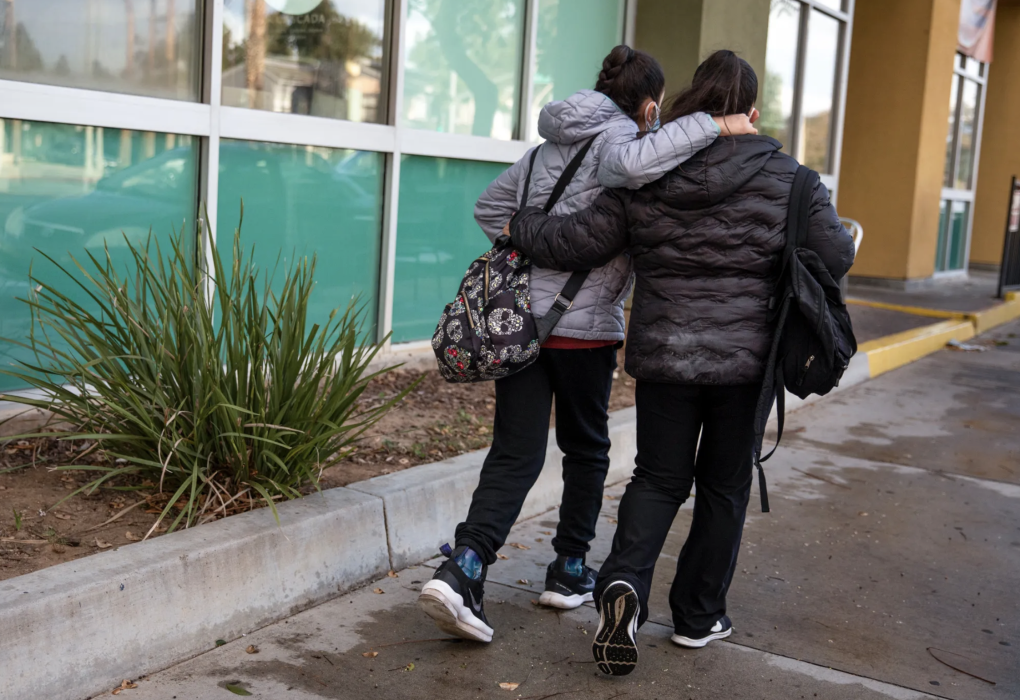
window.__IS_SSR__=true
window.__INITIAL_STATE__={
"attachmentsReducer": {
"audio_0": {
"type": "attachments",
"id": "audio_0",
"imgSizes": {
"kqedFullSize": {
"file": "https://ww2.kqed.org/news/wp-content/themes/KQED-unified/img/audio_bgs/background0.jpg"
}
}
},
"audio_1": {
"type": "attachments",
"id": "audio_1",
"imgSizes": {
"kqedFullSize": {
"file": "https://ww2.kqed.org/news/wp-content/themes/KQED-unified/img/audio_bgs/background1.jpg"
}
}
},
"audio_2": {
"type": "attachments",
"id": "audio_2",
"imgSizes": {
"kqedFullSize": {
"file": "https://ww2.kqed.org/news/wp-content/themes/KQED-unified/img/audio_bgs/background2.jpg"
}
}
},
"audio_3": {
"type": "attachments",
"id": "audio_3",
"imgSizes": {
"kqedFullSize": {
"file": "https://ww2.kqed.org/news/wp-content/themes/KQED-unified/img/audio_bgs/background3.jpg"
}
}
},
"audio_4": {
"type": "attachments",
"id": "audio_4",
"imgSizes": {
"kqedFullSize": {
"file": "https://ww2.kqed.org/news/wp-content/themes/KQED-unified/img/audio_bgs/background4.jpg"
}
}
},
"placeholder": {
"type": "attachments",
"id": "placeholder",
"imgSizes": {
"thumbnail": {
"file": "https://cdn.kqed.org/wp-content/uploads/2024/12/KQED-Default-Image-816638274-2000x1333-1-160x107.jpg",
"width": 160,
"height": 107,
"mimeType": "image/jpeg"
},
"medium": {
"file": "https://cdn.kqed.org/wp-content/uploads/2024/12/KQED-Default-Image-816638274-2000x1333-1-800x533.jpg",
"width": 800,
"height": 533,
"mimeType": "image/jpeg"
},
"medium_large": {
"file": "https://cdn.kqed.org/wp-content/uploads/2024/12/KQED-Default-Image-816638274-2000x1333-1-768x512.jpg",
"width": 768,
"height": 512,
"mimeType": "image/jpeg"
},
"large": {
"file": "https://cdn.kqed.org/wp-content/uploads/2024/12/KQED-Default-Image-816638274-2000x1333-1-1020x680.jpg",
"width": 1020,
"height": 680,
"mimeType": "image/jpeg"
},
"1536x1536": {
"file": "https://cdn.kqed.org/wp-content/uploads/2024/12/KQED-Default-Image-816638274-2000x1333-1-1536x1024.jpg",
"width": 1536,
"height": 1024,
"mimeType": "image/jpeg"
},
"fd-lrg": {
"file": "https://cdn.kqed.org/wp-content/uploads/2024/12/KQED-Default-Image-816638274-2000x1333-1-1536x1024.jpg",
"width": 1536,
"height": 1024,
"mimeType": "image/jpeg"
},
"fd-med": {
"file": "https://cdn.kqed.org/wp-content/uploads/2024/12/KQED-Default-Image-816638274-2000x1333-1-1020x680.jpg",
"width": 1020,
"height": 680,
"mimeType": "image/jpeg"
},
"fd-sm": {
"file": "https://cdn.kqed.org/wp-content/uploads/2024/12/KQED-Default-Image-816638274-2000x1333-1-800x533.jpg",
"width": 800,
"height": 533,
"mimeType": "image/jpeg"
},
"post-thumbnail": {
"file": "https://cdn.kqed.org/wp-content/uploads/2024/12/KQED-Default-Image-816638274-2000x1333-1-672x372.jpg",
"width": 672,
"height": 372,
"mimeType": "image/jpeg"
},
"twentyfourteen-full-width": {
"file": "https://cdn.kqed.org/wp-content/uploads/2024/12/KQED-Default-Image-816638274-2000x1333-1-1038x576.jpg",
"width": 1038,
"height": 576,
"mimeType": "image/jpeg"
},
"xxsmall": {
"file": "https://cdn.kqed.org/wp-content/uploads/2024/12/KQED-Default-Image-816638274-2000x1333-1-160x107.jpg",
"width": 160,
"height": 107,
"mimeType": "image/jpeg"
},
"xsmall": {
"file": "https://cdn.kqed.org/wp-content/uploads/2024/12/KQED-Default-Image-816638274-2000x1333-1-672x372.jpg",
"width": 672,
"height": 372,
"mimeType": "image/jpeg"
},
"small": {
"file": "https://cdn.kqed.org/wp-content/uploads/2024/12/KQED-Default-Image-816638274-2000x1333-1-672x372.jpg",
"width": 672,
"height": 372,
"mimeType": "image/jpeg"
},
"xlarge": {
"file": "https://cdn.kqed.org/wp-content/uploads/2024/12/KQED-Default-Image-816638274-2000x1333-1-1020x680.jpg",
"width": 1020,
"height": 680,
"mimeType": "image/jpeg"
},
"full-width": {
"file": "https://cdn.kqed.org/wp-content/uploads/2024/12/KQED-Default-Image-816638274-2000x1333-1-1920x1280.jpg",
"width": 1920,
"height": 1280,
"mimeType": "image/jpeg"
},
"guest-author-32": {
"file": "https://cdn.kqed.org/wp-content/uploads/2025/01/KQED-Default-Image-816638274-1333x1333-1-160x160.jpg",
"width": 32,
"height": 32,
"mimeType": "image/jpeg"
},
"guest-author-50": {
"file": "https://cdn.kqed.org/wp-content/uploads/2025/01/KQED-Default-Image-816638274-1333x1333-1-160x160.jpg",
"width": 50,
"height": 50,
"mimeType": "image/jpeg"
},
"guest-author-64": {
"file": "https://cdn.kqed.org/wp-content/uploads/2025/01/KQED-Default-Image-816638274-1333x1333-1-160x160.jpg",
"width": 64,
"height": 64,
"mimeType": "image/jpeg"
},
"guest-author-96": {
"file": "https://cdn.kqed.org/wp-content/uploads/2025/01/KQED-Default-Image-816638274-1333x1333-1-160x160.jpg",
"width": 96,
"height": 96,
"mimeType": "image/jpeg"
},
"guest-author-128": {
"file": "https://cdn.kqed.org/wp-content/uploads/2025/01/KQED-Default-Image-816638274-1333x1333-1-160x160.jpg",
"width": 128,
"height": 128,
"mimeType": "image/jpeg"
},
"detail": {
"file": "https://cdn.kqed.org/wp-content/uploads/2025/01/KQED-Default-Image-816638274-1333x1333-1-160x160.jpg",
"width": 160,
"height": 160,
"mimeType": "image/jpeg"
},
"kqedFullSize": {
"file": "https://cdn.kqed.org/wp-content/uploads/2024/12/KQED-Default-Image-816638274-2000x1333-1.jpg",
"width": 2000,
"height": 1333
}
}
},
"news_11940029": {
"type": "attachments",
"id": "news_11940029",
"meta": {
"index": "attachments_1716263798",
"site": "news",
"id": "11940029",
"found": true
},
"parent": 11940023,
"imgSizes": {
"twentyfourteen-full-width": {
"file": "https://ww2.kqed.org/app/uploads/sites/10/2023/02/Screen-Shot-2023-02-02-at-10.32.49-AM-1038x576.png",
"width": 1038,
"mimeType": "image/png",
"height": 576
},
"thumbnail": {
"file": "https://ww2.kqed.org/app/uploads/sites/10/2023/02/Screen-Shot-2023-02-02-at-10.32.49-AM-160x110.png",
"width": 160,
"mimeType": "image/png",
"height": 110
},
"post-thumbnail": {
"file": "https://ww2.kqed.org/app/uploads/sites/10/2023/02/Screen-Shot-2023-02-02-at-10.32.49-AM-672x372.png",
"width": 672,
"mimeType": "image/png",
"height": 372
},
"kqedFullSize": {
"file": "https://ww2.kqed.org/app/uploads/sites/10/2023/02/Screen-Shot-2023-02-02-at-10.32.49-AM.png",
"width": 2242,
"height": 1538
},
"2048x2048": {
"file": "https://ww2.kqed.org/app/uploads/sites/10/2023/02/Screen-Shot-2023-02-02-at-10.32.49-AM-2048x1405.png",
"width": 2048,
"mimeType": "image/png",
"height": 1405
},
"large": {
"file": "https://ww2.kqed.org/app/uploads/sites/10/2023/02/Screen-Shot-2023-02-02-at-10.32.49-AM-1020x700.png",
"width": 1020,
"mimeType": "image/png",
"height": 700
},
"1536x1536": {
"file": "https://ww2.kqed.org/app/uploads/sites/10/2023/02/Screen-Shot-2023-02-02-at-10.32.49-AM-1536x1054.png",
"width": 1536,
"mimeType": "image/png",
"height": 1054
},
"full-width": {
"file": "https://ww2.kqed.org/app/uploads/sites/10/2023/02/Screen-Shot-2023-02-02-at-10.32.49-AM-1920x1317.png",
"width": 1920,
"mimeType": "image/png",
"height": 1317
},
"medium": {
"file": "https://ww2.kqed.org/app/uploads/sites/10/2023/02/Screen-Shot-2023-02-02-at-10.32.49-AM-800x549.png",
"width": 800,
"mimeType": "image/png",
"height": 549
}
},
"publishDate": 1675373840,
"modified": 1675382004,
"caption": "CalAIM seeks to improve the availability of mental health care for young people insured by Medi-Cal, but, a year since its rollout, obstacles remain.",
"description": null,
"title": "Screen Shot 2023-02-02 at 10.32.49 AM",
"credit": "Alisha Jucevic/CalMatters",
"status": "inherit",
"altTag": "Two young people wearing gray and black jackets are walking on a sidewalk down the street with their arms around each other's shoulder and back.",
"isLoading": false,
"fetchFailed": false
},
"news_11939989": {
"type": "attachments",
"id": "news_11939989",
"meta": {
"index": "attachments_1716263798",
"site": "news",
"id": "11939989",
"found": true
},
"parent": 11939987,
"imgSizes": {
"twentyfourteen-full-width": {
"file": "https://ww2.kqed.org/app/uploads/sites/10/2023/02/RS62456_002_KQED_LagunaHondaHospital_01312023-qut-1038x576.jpg",
"width": 1038,
"mimeType": "image/jpeg",
"height": 576
},
"thumbnail": {
"file": "https://ww2.kqed.org/app/uploads/sites/10/2023/02/RS62456_002_KQED_LagunaHondaHospital_01312023-qut-160x107.jpg",
"width": 160,
"mimeType": "image/jpeg",
"height": 107
},
"post-thumbnail": {
"file": "https://ww2.kqed.org/app/uploads/sites/10/2023/02/RS62456_002_KQED_LagunaHondaHospital_01312023-qut-672x372.jpg",
"width": 672,
"mimeType": "image/jpeg",
"height": 372
},
"kqedFullSize": {
"file": "https://ww2.kqed.org/app/uploads/sites/10/2023/02/RS62456_002_KQED_LagunaHondaHospital_01312023-qut.jpg",
"width": 1920,
"height": 1280
},
"large": {
"file": "https://ww2.kqed.org/app/uploads/sites/10/2023/02/RS62456_002_KQED_LagunaHondaHospital_01312023-qut-1020x680.jpg",
"width": 1020,
"mimeType": "image/jpeg",
"height": 680
},
"1536x1536": {
"file": "https://ww2.kqed.org/app/uploads/sites/10/2023/02/RS62456_002_KQED_LagunaHondaHospital_01312023-qut-1536x1024.jpg",
"width": 1536,
"mimeType": "image/jpeg",
"height": 1024
},
"medium": {
"file": "https://ww2.kqed.org/app/uploads/sites/10/2023/02/RS62456_002_KQED_LagunaHondaHospital_01312023-qut-800x533.jpg",
"width": 800,
"mimeType": "image/jpeg",
"height": 533
}
},
"publishDate": 1675302876,
"modified": 1675302970,
"caption": "Laguna Honda Hospital in San Francisco — pictured here on Jan. 31 — was decertified in 2022, and began transferring its patients to other skilled nursing facilities, after state and federal regulators found a series of safety violations.",
"description": null,
"title": "RS62456_002_KQED_LagunaHondaHospital_01312023-qut",
"credit": "Beth LaBerge/KQED",
"status": "inherit",
"altTag": "A view of the front of the large, sandy colored Laguna Honda Hospital in San Francisco, with a stone statue in the foreground",
"isLoading": false,
"fetchFailed": false
},
"news_11939921": {
"type": "attachments",
"id": "news_11939921",
"meta": {
"index": "attachments_1716263798",
"site": "news",
"id": "11939921",
"found": true
},
"parent": 11939793,
"imgSizes": {
"twentyfourteen-full-width": {
"file": "https://ww2.kqed.org/app/uploads/sites/10/2023/01/017_KQED_LagunaHondaHospital_01312023-1038x576.jpg",
"width": 1038,
"mimeType": "image/jpeg",
"height": 576
},
"thumbnail": {
"file": "https://ww2.kqed.org/app/uploads/sites/10/2023/01/017_KQED_LagunaHondaHospital_01312023-160x107.jpg",
"width": 160,
"mimeType": "image/jpeg",
"height": 107
},
"post-thumbnail": {
"file": "https://ww2.kqed.org/app/uploads/sites/10/2023/01/017_KQED_LagunaHondaHospital_01312023-672x372.jpg",
"width": 672,
"mimeType": "image/jpeg",
"height": 372
},
"kqedFullSize": {
"file": "https://ww2.kqed.org/app/uploads/sites/10/2023/01/017_KQED_LagunaHondaHospital_01312023.jpg",
"width": 1920,
"height": 1280
},
"large": {
"file": "https://ww2.kqed.org/app/uploads/sites/10/2023/01/017_KQED_LagunaHondaHospital_01312023-1020x680.jpg",
"width": 1020,
"mimeType": "image/jpeg",
"height": 680
},
"1536x1536": {
"file": "https://ww2.kqed.org/app/uploads/sites/10/2023/01/017_KQED_LagunaHondaHospital_01312023-1536x1024.jpg",
"width": 1536,
"mimeType": "image/jpeg",
"height": 1024
},
"medium": {
"file": "https://ww2.kqed.org/app/uploads/sites/10/2023/01/017_KQED_LagunaHondaHospital_01312023-800x533.jpg",
"width": 800,
"mimeType": "image/jpeg",
"height": 533
}
},
"publishDate": 1675215633,
"modified": 1675223358,
"caption": "Laguna Honda Hospital in San Francisco — pictured here on Jan. 31, 2023 — was decertified in 2022, and began transferring its patients to other skilled nursing facilities, after state and federal regulators found a series of safety violations.",
"description": null,
"title": "017_KQED_LagunaHondaHospital_01312023",
"credit": "Beth LaBerge/KQED",
"status": "inherit",
"altTag": "A view of the front of the large Laguna Honda Hospital in San Francisco.",
"isLoading": false,
"fetchFailed": false
},
"news_11938752": {
"type": "attachments",
"id": "news_11938752",
"meta": {
"index": "attachments_1716263798",
"site": "news",
"id": "11938752",
"found": true
},
"parent": 11938751,
"imgSizes": {
"twentyfourteen-full-width": {
"file": "https://ww2.kqed.org/app/uploads/sites/10/2023/01/KNR10010_0004_frame_993-1038x576.jpeg",
"width": 1038,
"mimeType": "image/jpeg",
"height": 576
},
"thumbnail": {
"file": "https://ww2.kqed.org/app/uploads/sites/10/2023/01/KNR10010_0004_frame_993-160x90.jpeg",
"width": 160,
"mimeType": "image/jpeg",
"height": 90
},
"post-thumbnail": {
"file": "https://ww2.kqed.org/app/uploads/sites/10/2023/01/KNR10010_0004_frame_993-672x372.jpeg",
"width": 672,
"mimeType": "image/jpeg",
"height": 372
},
"kqedFullSize": {
"file": "https://ww2.kqed.org/app/uploads/sites/10/2023/01/KNR10010_0004_frame_993.jpeg",
"width": 1920,
"height": 1080
},
"large": {
"file": "https://ww2.kqed.org/app/uploads/sites/10/2023/01/KNR10010_0004_frame_993-1020x574.jpeg",
"width": 1020,
"mimeType": "image/jpeg",
"height": 574
},
"1536x1536": {
"file": "https://ww2.kqed.org/app/uploads/sites/10/2023/01/KNR10010_0004_frame_993-1536x864.jpeg",
"width": 1536,
"mimeType": "image/jpeg",
"height": 864
},
"medium": {
"file": "https://ww2.kqed.org/app/uploads/sites/10/2023/01/KNR10010_0004_frame_993-800x450.jpeg",
"width": 800,
"mimeType": "image/jpeg",
"height": 450
}
},
"publishDate": 1674263639,
"modified": 1674263663,
"caption": null,
"description": null,
"title": "SF General Hospital",
"credit": null,
"status": "inherit",
"altTag": null,
"isLoading": false,
"fetchFailed": false
},
"news_11938686": {
"type": "attachments",
"id": "news_11938686",
"meta": {
"index": "attachments_1716263798",
"site": "news",
"id": "11938686",
"found": true
},
"parent": 11938681,
"imgSizes": {
"twentyfourteen-full-width": {
"file": "https://ww2.kqed.org/app/uploads/sites/10/2023/01/010423-MaderCommnityHospital-LV_08-CM-copy-1038x576.jpg",
"width": 1038,
"mimeType": "image/jpeg",
"height": 576
},
"thumbnail": {
"file": "https://ww2.kqed.org/app/uploads/sites/10/2023/01/010423-MaderCommnityHospital-LV_08-CM-copy-160x107.jpg",
"width": 160,
"mimeType": "image/jpeg",
"height": 107
},
"post-thumbnail": {
"file": "https://ww2.kqed.org/app/uploads/sites/10/2023/01/010423-MaderCommnityHospital-LV_08-CM-copy-672x372.jpg",
"width": 672,
"mimeType": "image/jpeg",
"height": 372
},
"kqedFullSize": {
"file": "https://ww2.kqed.org/app/uploads/sites/10/2023/01/010423-MaderCommnityHospital-LV_08-CM-copy.jpg",
"width": 2000,
"height": 1333
},
"large": {
"file": "https://ww2.kqed.org/app/uploads/sites/10/2023/01/010423-MaderCommnityHospital-LV_08-CM-copy-1020x680.jpg",
"width": 1020,
"mimeType": "image/jpeg",
"height": 680
},
"1536x1536": {
"file": "https://ww2.kqed.org/app/uploads/sites/10/2023/01/010423-MaderCommnityHospital-LV_08-CM-copy-1536x1024.jpg",
"width": 1536,
"mimeType": "image/jpeg",
"height": 1024
},
"full-width": {
"file": "https://ww2.kqed.org/app/uploads/sites/10/2023/01/010423-MaderCommnityHospital-LV_08-CM-copy-1920x1280.jpg",
"width": 1920,
"mimeType": "image/jpeg",
"height": 1280
},
"medium": {
"file": "https://ww2.kqed.org/app/uploads/sites/10/2023/01/010423-MaderCommnityHospital-LV_08-CM-copy-800x533.jpg",
"width": 800,
"mimeType": "image/jpeg",
"height": 533
}
},
"publishDate": 1674242202,
"modified": 1674250948,
"caption": "Outlines of the Madera Community Hospital sign partially covered by a tarp at the emergency room entrance on Jan. 2, 2023. Madera County Sheriff Tyson Pogue announced a state of emergency for the county when the hospital shut its doors due to bankruptcy.",
"description": null,
"title": "010423-MaderCommnityHospital-LV_08-CM copy",
"credit": "Larry Valenzuela/CalMatters-CatchLight Local",
"status": "inherit",
"altTag": null,
"isLoading": false,
"fetchFailed": false
},
"news_11938586": {
"type": "attachments",
"id": "news_11938586",
"meta": {
"index": "attachments_1716263798",
"site": "news",
"id": "11938586",
"found": true
},
"parent": 11938585,
"imgSizes": {
"twentyfourteen-full-width": {
"file": "https://ww2.kqed.org/app/uploads/sites/10/2023/01/ap22024441331032-1-f0986da3291d51e624d36cef1b107c4e420bb075-1038x576.jpg",
"width": 1038,
"mimeType": "image/jpeg",
"height": 576
},
"thumbnail": {
"file": "https://ww2.kqed.org/app/uploads/sites/10/2023/01/ap22024441331032-1-f0986da3291d51e624d36cef1b107c4e420bb075-160x120.jpg",
"width": 160,
"mimeType": "image/jpeg",
"height": 120
},
"post-thumbnail": {
"file": "https://ww2.kqed.org/app/uploads/sites/10/2023/01/ap22024441331032-1-f0986da3291d51e624d36cef1b107c4e420bb075-672x372.jpg",
"width": 672,
"mimeType": "image/jpeg",
"height": 372
},
"kqedFullSize": {
"file": "https://ww2.kqed.org/app/uploads/sites/10/2023/01/ap22024441331032-1-f0986da3291d51e624d36cef1b107c4e420bb075-scaled.jpg",
"width": 2560,
"height": 1920
},
"2048x2048": {
"file": "https://ww2.kqed.org/app/uploads/sites/10/2023/01/ap22024441331032-1-f0986da3291d51e624d36cef1b107c4e420bb075-2048x1536.jpg",
"width": 2048,
"mimeType": "image/jpeg",
"height": 1536
},
"large": {
"file": "https://ww2.kqed.org/app/uploads/sites/10/2023/01/ap22024441331032-1-f0986da3291d51e624d36cef1b107c4e420bb075-1020x765.jpg",
"width": 1020,
"mimeType": "image/jpeg",
"height": 765
},
"1536x1536": {
"file": "https://ww2.kqed.org/app/uploads/sites/10/2023/01/ap22024441331032-1-f0986da3291d51e624d36cef1b107c4e420bb075-1536x1152.jpg",
"width": 1536,
"mimeType": "image/jpeg",
"height": 1152
},
"full-width": {
"file": "https://ww2.kqed.org/app/uploads/sites/10/2023/01/ap22024441331032-1-f0986da3291d51e624d36cef1b107c4e420bb075-1920x1440.jpg",
"width": 1920,
"mimeType": "image/jpeg",
"height": 1440
},
"medium": {
"file": "https://ww2.kqed.org/app/uploads/sites/10/2023/01/ap22024441331032-1-f0986da3291d51e624d36cef1b107c4e420bb075-800x600.jpg",
"width": 800,
"mimeType": "image/jpeg",
"height": 600
}
},
"publishDate": 1674158762,
"modified": 1674163416,
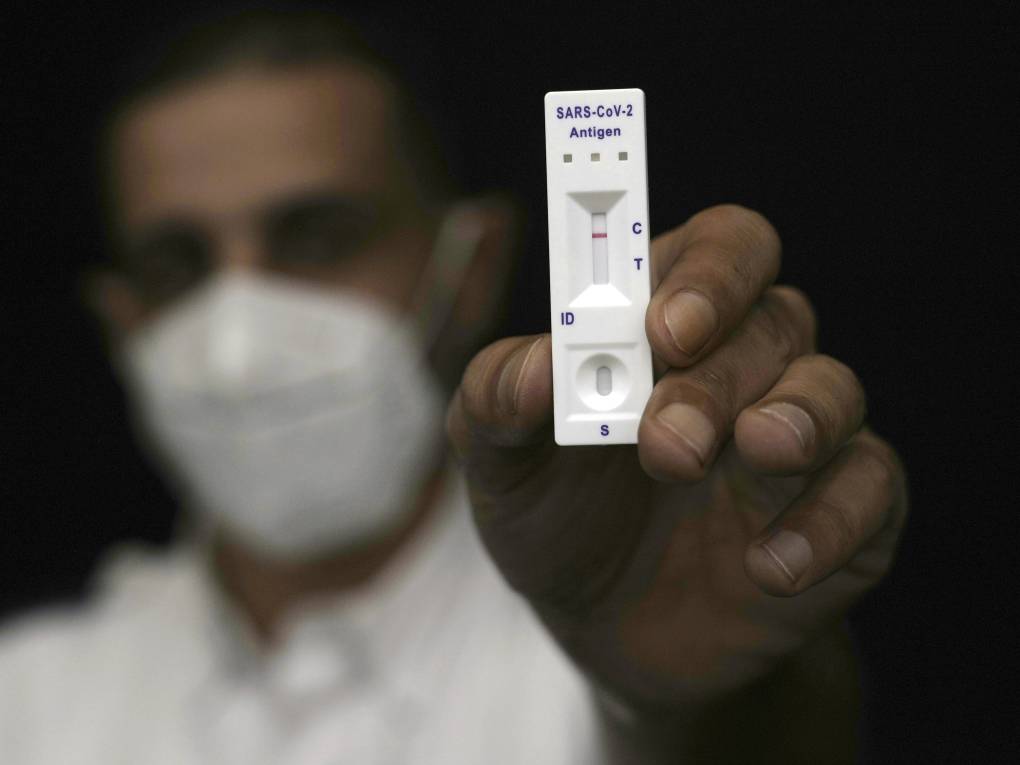
"caption": "A man holds a negative rapid antigen coronavirus test at a makeshift testing center in East Jerusalem on Jan. 24, 2022.",
"description": null,
"title": "Rapid antigen tests are ubiquitous, but some Americans have learned the hard way that a negative test result isn't necessarily the final word.",
"credit": "Mahmoud Illean/AP",
"status": "inherit",
"altTag": "A masked-person holding a COVID rapid test showing a negative result.",
"isLoading": false,
"fetchFailed": false
},
"news_11937385": {
"type": "attachments",
"id": "news_11937385",
"meta": {
"index": "attachments_1716263798",
"site": "news",
"id": "11937385",
"found": true
},
"parent": 11937191,
"imgSizes": {
"twentyfourteen-full-width": {
"file": "https://ww2.kqed.org/app/uploads/sites/10/2023/01/RS59819_005_KQED_CrisisPregnancyCenter_11042022-qut-1-1038x576.jpg",
"width": 1038,
"mimeType": "image/jpeg",
"height": 576
},
"thumbnail": {
"file": "https://ww2.kqed.org/app/uploads/sites/10/2023/01/RS59819_005_KQED_CrisisPregnancyCenter_11042022-qut-1-160x107.jpg",
"width": 160,
"mimeType": "image/jpeg",
"height": 107
},
"post-thumbnail": {
"file": "https://ww2.kqed.org/app/uploads/sites/10/2023/01/RS59819_005_KQED_CrisisPregnancyCenter_11042022-qut-1-672x372.jpg",
"width": 672,
"mimeType": "image/jpeg",
"height": 372
},
"kqedFullSize": {
"file": "https://ww2.kqed.org/app/uploads/sites/10/2023/01/RS59819_005_KQED_CrisisPregnancyCenter_11042022-qut-1.jpg",
"width": 1920,
"height": 1280
},
"large": {
"file": "https://ww2.kqed.org/app/uploads/sites/10/2023/01/RS59819_005_KQED_CrisisPregnancyCenter_11042022-qut-1-1020x680.jpg",
"width": 1020,
"mimeType": "image/jpeg",
"height": 680
},
"1536x1536": {
"file": "https://ww2.kqed.org/app/uploads/sites/10/2023/01/RS59819_005_KQED_CrisisPregnancyCenter_11042022-qut-1-1536x1024.jpg",
"width": 1536,
"mimeType": "image/jpeg",
"height": 1024
},
"medium": {
"file": "https://ww2.kqed.org/app/uploads/sites/10/2023/01/RS59819_005_KQED_CrisisPregnancyCenter_11042022-qut-1-800x533.jpg",
"width": 800,
"mimeType": "image/jpeg",
"height": 533
}
},
"publishDate": 1673209725,
"modified": 1673559580,
"caption": "Teresa Conemac, a volunteer with the Christian anti-abortion organization 40 Days for Life, waits outside a Planned Parenthood clinic in Napa on Nov. 4, 2022. She talks to people coming and going, shares widely debunked claims about the dangers of abortion and birth control, and refers people to the Napa Women's Center, a facility next door opened by faith-based nonprofit Napa Valley Culture of Life. It's one of 170 such anti-abortion centers in California.",
"description": null,
"title": "RS59819_005_KQED_CrisisPregnancyCenter_11042022-qut (1)",
"credit": "Beth LaBerge/KQED",
"status": "inherit",
"altTag": "a woman with blonde hair is seen from behind sitting in orange scrubs outside a Planned Parenthood, next to a painting of Jesus and a sign that reads 'pray to end abortion'",
"isLoading": false,
"fetchFailed": false
},
"news_11937978": {
"type": "attachments",
"id": "news_11937978",
"meta": {
"index": "attachments_1716263798",
"site": "news",
"id": "11937978",
"found": true
},
"parent": 11937977,
"imgSizes": {
"twentyfourteen-full-width": {
"file": "https://ww2.kqed.org/app/uploads/sites/10/2023/01/GettyImages-1408757206-1024x576.jpg",
"width": 1024,
"mimeType": "image/jpeg",
"height": 576
},
"thumbnail": {
"file": "https://ww2.kqed.org/app/uploads/sites/10/2023/01/GettyImages-1408757206-160x107.jpg",
"width": 160,
"mimeType": "image/jpeg",
"height": 107
},
"post-thumbnail": {
"file": "https://ww2.kqed.org/app/uploads/sites/10/2023/01/GettyImages-1408757206-672x372.jpg",
"width": 672,
"mimeType": "image/jpeg",
"height": 372
},
"kqedFullSize": {
"file": "https://ww2.kqed.org/app/uploads/sites/10/2023/01/GettyImages-1408757206.jpg",
"width": 1024,
"height": 684
},
"large": {
"file": "https://ww2.kqed.org/app/uploads/sites/10/2023/01/GettyImages-1408757206-1020x681.jpg",
"width": 1020,
"mimeType": "image/jpeg",
"height": 681
},
"medium": {
"file": "https://ww2.kqed.org/app/uploads/sites/10/2023/01/GettyImages-1408757206-800x534.jpg",
"width": 800,
"mimeType": "image/jpeg",
"height": 534
}
},
"publishDate": 1673573706,
"modified": 1673573800,
"caption": "Mike Lawson injects insulin to control his Type 1 diabetes in Oakland, on April 16, 2019. With the cost of insulin skyrocketing and the availability unpredictable, Lawson and other patients are taking unusual measures, like hoarding or trading, to ensure they have enough of the medication on hand.",
"description": null,
"title": "Mike Lawson injects insulin to control his Type 1 diabetes in Oakland, Calif. on Tuesday, April 16, 2019. With the cost of insulin skyrocketing and the availability unpredictable, Lawson and other patients are taking unusual measures, like hoarding or tra",
"credit": "Paul Chinn/The San Francisco Chronicle via Getty Images",
"status": "inherit",
"altTag": "A white man with glasses injects himself with a syringe near his belly.",
"isLoading": false,
"fetchFailed": false
},
"news_11937897": {
"type": "attachments",
"id": "news_11937897",
"meta": {
"index": "attachments_1716263798",
"site": "news",
"id": "11937897",
"found": true
},
"parent": 11937892,
"imgSizes": {
"twentyfourteen-full-width": {
"file": "https://ww2.kqed.org/app/uploads/sites/10/2023/01/GettyImages-1383390150-1038x576.jpg",
"width": 1038,
"mimeType": "image/jpeg",
"height": 576
},
"thumbnail": {
"file": "https://ww2.kqed.org/app/uploads/sites/10/2023/01/GettyImages-1383390150-160x107.jpg",
"width": 160,
"mimeType": "image/jpeg",
"height": 107
},
"post-thumbnail": {
"file": "https://ww2.kqed.org/app/uploads/sites/10/2023/01/GettyImages-1383390150-672x372.jpg",
"width": 672,
"mimeType": "image/jpeg",
"height": 372
},
"kqedFullSize": {
"file": "https://ww2.kqed.org/app/uploads/sites/10/2023/01/GettyImages-1383390150.jpg",
"width": 2121,
"height": 1414
},
"2048x2048": {
"file": "https://ww2.kqed.org/app/uploads/sites/10/2023/01/GettyImages-1383390150-2048x1365.jpg",
"width": 2048,
"mimeType": "image/jpeg",
"height": 1365
},
"large": {
"file": "https://ww2.kqed.org/app/uploads/sites/10/2023/01/GettyImages-1383390150-1020x680.jpg",
"width": 1020,
"mimeType": "image/jpeg",
"height": 680
},
"1536x1536": {
"file": "https://ww2.kqed.org/app/uploads/sites/10/2023/01/GettyImages-1383390150-1536x1024.jpg",
"width": 1536,
"mimeType": "image/jpeg",
"height": 1024
},
"full-width": {
"file": "https://ww2.kqed.org/app/uploads/sites/10/2023/01/GettyImages-1383390150-1920x1280.jpg",
"width": 1920,
"mimeType": "image/jpeg",
"height": 1280
},
"medium": {
"file": "https://ww2.kqed.org/app/uploads/sites/10/2023/01/GettyImages-1383390150-800x533.jpg",
"width": 800,
"mimeType": "image/jpeg",
"height": 533
}
},
"publishDate": 1673561417,
"modified": 1673576692,
"caption": "One study found that, whether or not a person exercised, if they sat for more than 12–13 hours a day, they were more than twice as likely to die early, compared to people who sat the least.",
"description": null,
"title": "Woman at standing desk home office talking on business video call",
"credit": "martin-dm/Getty Images",
"status": "inherit",
"altTag": "Woman working from home at standing desk is walking on under desk treadmill",
"isLoading": false,
"fetchFailed": false
},
"news_11937114": {
"type": "attachments",
"id": "news_11937114",
"meta": {
"index": "attachments_1716263798",
"site": "news",
"id": "11937114",
"found": true
},
"parent": 11936812,
"imgSizes": {
"twentyfourteen-full-width": {
"file": "https://ww2.kqed.org/app/uploads/sites/10/2023/01/GettyImages-1246022461-1024x576.jpg",
"width": 1024,
"mimeType": "image/jpeg",
"height": 576
},
"thumbnail": {
"file": "https://ww2.kqed.org/app/uploads/sites/10/2023/01/GettyImages-1246022461-160x91.jpg",
"width": 160,
"mimeType": "image/jpeg",
"height": 91
},
"post-thumbnail": {
"file": "https://ww2.kqed.org/app/uploads/sites/10/2023/01/GettyImages-1246022461-672x372.jpg",
"width": 672,
"mimeType": "image/jpeg",
"height": 372
},
"kqedFullSize": {
"file": "https://ww2.kqed.org/app/uploads/sites/10/2023/01/GettyImages-1246022461.jpg",
"width": 1024,
"height": 581
},
"large": {
"file": "https://ww2.kqed.org/app/uploads/sites/10/2023/01/GettyImages-1246022461-1020x579.jpg",
"width": 1020,
"mimeType": "image/jpeg",
"height": 579
},
"medium": {
"file": "https://ww2.kqed.org/app/uploads/sites/10/2023/01/GettyImages-1246022461-800x454.jpg",
"width": 800,
"mimeType": "image/jpeg",
"height": 454
}
},
"publishDate": 1672967933,
"modified": 1672968051,
"caption": "Pedestrians walk along a flooded road in Sebastopol in Sonoma County on Jan. 5, 2023.",
"description": null,
"title": "US-WEATHER-CALIFORNIA",
"credit": "Josh Edelson/AFP via Getty Images",
"status": "inherit",
"altTag": "Pedestrians walk on a flooded road, surrounded by trees.",
"isLoading": false,
"fetchFailed": false
},
"news_11936099": {
"type": "attachments",
"id": "news_11936099",
"meta": {
"index": "attachments_1716263798",
"site": "news",
"id": "11936099",
"found": true
},
"parent": 11936088,
"imgSizes": {
"twentyfourteen-full-width": {
"file": "https://ww2.kqed.org/app/uploads/sites/10/2022/12/RS59015_KQED_MentorProgram_007-qut-1038x576.jpg",
"width": 1038,
"mimeType": "image/jpeg",
"height": 576
},
"thumbnail": {
"file": "https://ww2.kqed.org/app/uploads/sites/10/2022/12/RS59015_KQED_MentorProgram_007-qut-160x107.jpg",
"width": 160,
"mimeType": "image/jpeg",
"height": 107
},
"post-thumbnail": {
"file": "https://ww2.kqed.org/app/uploads/sites/10/2022/12/RS59015_KQED_MentorProgram_007-qut-672x372.jpg",
"width": 672,
"mimeType": "image/jpeg",
"height": 372
},
"kqedFullSize": {
"file": "https://ww2.kqed.org/app/uploads/sites/10/2022/12/RS59015_KQED_MentorProgram_007-qut.jpg",
"width": 1920,
"height": 1282
},
"large": {
"file": "https://ww2.kqed.org/app/uploads/sites/10/2022/12/RS59015_KQED_MentorProgram_007-qut-1020x681.jpg",
"width": 1020,
"mimeType": "image/jpeg",
"height": 681
},
"1536x1536": {
"file": "https://ww2.kqed.org/app/uploads/sites/10/2022/12/RS59015_KQED_MentorProgram_007-qut-1536x1026.jpg",
"width": 1536,
"mimeType": "image/jpeg",
"height": 1026
},
"medium": {
"file": "https://ww2.kqed.org/app/uploads/sites/10/2022/12/RS59015_KQED_MentorProgram_007-qut-800x534.jpg",
"width": 800,
"mimeType": "image/jpeg",
"height": 534
}
},
"publishDate": 1671657209,
"modified": 1672792133,
"caption": "Robin Noel Morales (right), co-founder of Ocelotl, which runs a peer-to-peer mentoring program, talks to (from left, seated) 11th grader Darius Mason, 12th grader Junior Magana Ceja and 12th grader Habeeb Tiamiyu before meeting their middle school mentees at Madison Park Academy in Oakland on Monday, Oct. 3, 2022. The program, co-founded by Bianca Lorenz and Morales, has 11th and 12th grade students mentor two middle school students each week.",
"description": null,
"title": "KQED_MentorProgram",
"credit": "Marlena Sloss/KQED",
"status": "inherit",
"altTag": "A woman with light-brown skin, a tattoo sleeve on her left arm, and long gray-brown hair appears to read out loud from a piece of paper she holds as a Black male student, a Latinx male student and a Black female student stand or sit near her inside a high school classroom. The mood is relaxed and happy.",
"isLoading": false,
"fetchFailed": false
},
"news_11936587": {
"type": "attachments",
"id": "news_11936587",
"meta": {
"index": "attachments_1716263798",
"site": "news",
"id": "11936587",
"found": true
},
"parent": 11936581,
"imgSizes": {
"twentyfourteen-full-width": {
"file": "https://ww2.kqed.org/app/uploads/sites/10/2022/12/GettyImages-1245906171-1024x576.jpg",
"width": 1024,
"mimeType": "image/jpeg",
"height": 576
},
"thumbnail": {
"file": "https://ww2.kqed.org/app/uploads/sites/10/2022/12/GettyImages-1245906171-160x107.jpg",
"width": 160,
"mimeType": "image/jpeg",
"height": 107
},
"post-thumbnail": {
"file": "https://ww2.kqed.org/app/uploads/sites/10/2022/12/GettyImages-1245906171-672x372.jpg",
"width": 672,
"mimeType": "image/jpeg",
"height": 372
},
"kqedFullSize": {
"file": "https://ww2.kqed.org/app/uploads/sites/10/2022/12/GettyImages-1245906171.jpg",
"width": 1024,
"height": 683
},
"large": {
"file": "https://ww2.kqed.org/app/uploads/sites/10/2022/12/GettyImages-1245906171-1020x680.jpg",
"width": 1020,
"mimeType": "image/jpeg",
"height": 680
},
"medium": {
"file": "https://ww2.kqed.org/app/uploads/sites/10/2022/12/GettyImages-1245906171-800x534.jpg",
"width": 800,
"mimeType": "image/jpeg",
"height": 534
}
},
"publishDate": 1672531006,
"modified": 1673036316,
"caption": "A rainstorm causes a flash flood in San Carlos, on Dec. 31, 2022.",
"description": null,
"title": "Flash flood in San Francisco Bay Area",
"credit": "Tayfun Coskun/Anadolu Agency via Getty Images",
"status": "inherit",
"altTag": "An emergency worker with a fluorescent yellow hazmat suit wades in knee-deep flood water on a street as a car drives by behind him.",
"isLoading": false,
"fetchFailed": false
}
},
"audioPlayerReducer": {
"postId": "stream_live",
"isPaused": true,
"isPlaying": false,
"pfsActive": false,
"pledgeModalIsOpen": true,
"playerDrawerIsOpen": false,
"liveAudioPlayStartedAt": 0,
"liveAudioPlayContext": ""
},
"authorsReducer": {
"byline_news_11940023": {
"type": "authors",
"id": "byline_news_11940023",
"meta": {
"override": true
},
"slug": "byline_news_11940023",
"name": "\u003ca href=\"https://calmatters.org/author/jocelyn-wiener/\">Jocelyn Wiener\u003c/a> and \u003ca href=\"https://calmatters.org/author/Kristen-Hwang/\">Kristen Hwang\u003c/a>",
"isLoading": false
},
"byline_news_11938681": {
"type": "authors",
"id": "byline_news_11938681",
"meta": {
"override": true
},
"slug": "byline_news_11938681",
"name": "\u003ca href=\"https://calmatters.org/author/anaibarra/\">Ana B. Ibarra\u003c/a> and \u003ca href=\"https://calmatters.org/author/nicole-foy/\">Nicole Foy\u003c/a>",
"isLoading": false
},
"byline_news_11938585": {
"type": "authors",
"id": "byline_news_11938585",
"meta": {
"override": true
},
"slug": "byline_news_11938585",
"name": "Sydney Lupkin",
"isLoading": false
},
"byline_news_11937977": {
"type": "authors",
"id": "byline_news_11937977",
"meta": {
"override": true
},
"slug": "byline_news_11937977",
"name": "Adam Beam\u003cbr>The Associated Press",
"isLoading": false
},
"byline_news_11937892": {
"type": "authors",
"id": "byline_news_11937892",
"meta": {
"override": true
},
"slug": "byline_news_11937892",
"name": "\u003ca href=\"https://www.npr.org/people/2100208/allison-aubrey\">Allison Aubrey\u003c/a>",
"isLoading": false
},
"byline_news_11936581": {
"type": "authors",
"id": "byline_news_11936581",
"meta": {
"override": true
},
"slug": "byline_news_11936581",
"name": "KQED News Staff",
"isLoading": false
},
"jmcevoy": {
"type": "authors",
"id": "231",
"meta": {
"index": "authors_1716337520",
"id": "231",
"found": true
},
"name": "Julia McEvoy",
"firstName": "Julia",
"lastName": "McEvoy",
"slug": "jmcevoy",
"email": "jmcevoy@KQED.org",
"display_author_email": true,
"staff_mastheads": [
"news"
],
"title": "KQED Senior Editor",
"bio": "Julia McEvoy is KQED's Senior Editor, Education Equity.\r\n\r\nJulia heads KQED’s education coverage examining inequities students face in Bay Area and California schools, and reports on what it will take to educate the next generation.\r\n\r\nJulia's editorial work has received a Peabody Award, a Casey Medal for Coverage of Children and Families, several Edward R. Murrow awards, as well as awards from the Public Radio News Directors Inc. and the Society for Professional Journalists.",
"avatar": "https://secure.gravatar.com/avatar/aec3ce21abe02b302fd33638abd56a22?s=600&d=blank&r=g",
"twitter": "juliamcevoy1",
"facebook": null,
"instagram": null,
"linkedin": null,
"sites": [
{
"site": "news",
"roles": []
},
{
"site": "stateofhealth",
"roles": [
"author"
]
}
],
"headData": {
"title": "Julia McEvoy | KQED",
"description": "KQED Senior Editor",
"ogImgSrc": "https://secure.gravatar.com/avatar/aec3ce21abe02b302fd33638abd56a22?s=600&d=blank&r=g",
"twImgSrc": "https://secure.gravatar.com/avatar/aec3ce21abe02b302fd33638abd56a22?s=600&d=blank&r=g"
},
"isLoading": false,
"link": "/author/jmcevoy"
},
"kqed": {
"type": "authors",
"id": "236",
"meta": {
"index": "authors_1716337520",
"id": "236",
"found": true
},
"name": "KQED News Staff",
"firstName": "KQED News Staff",
"lastName": null,
"slug": "kqed",
"email": "faq@kqed.org",
"display_author_email": false,
"staff_mastheads": [],
"title": null,
"bio": null,
"avatar": "https://secure.gravatar.com/avatar/ef0e801a68c4c54afa9180db14084167?s=600&d=blank&r=g",
"twitter": null,
"facebook": null,
"instagram": null,
"linkedin": null,
"sites": [
{
"site": "arts",
"roles": [
"contributor"
]
},
{
"site": "news",
"roles": [
"editor"
]
},
{
"site": "futureofyou",
"roles": [
"author"
]
}
],
"headData": {
"title": "KQED News Staff | KQED",
"description": null,
"ogImgSrc": "https://secure.gravatar.com/avatar/ef0e801a68c4c54afa9180db14084167?s=600&d=blank&r=g",
"twImgSrc": "https://secure.gravatar.com/avatar/ef0e801a68c4c54afa9180db14084167?s=600&d=blank&r=g"
},
"isLoading": false,
"link": "/author/kqed"
},
"esilvers": {
"type": "authors",
"id": "7237",
"meta": {
"index": "authors_1716337520",
"id": "7237",
"found": true
},
"name": "Emma Silvers",
"firstName": "Emma",
"lastName": "Silvers",
"slug": "esilvers",
"email": "esilvers@kqed.org",
"display_author_email": false,
"staff_mastheads": [],
"title": "KQED Contributor",
"bio": "Emma Silvers is an editor at KQED Arts and a former digital producer at KQED News. Born and raised in the Bay Area, she has previously been an arts and entertainment editor at the \u003cem>San Francisco Chronicle\u003c/em>, \u003cem>SF Weekly\u003c/em> and the \u003cem>San Francisco Bay Guardian.\u003c/em> \u003ca href=\"https://www.emmasilvers.com\">Her work\u003c/a> has also appeared in \u003cem>Rolling Stone\u003c/em>, Pitchfork and \u003cem>Mother Jones\u003c/em>. In 2017 she was the recipient of the Society of Professional Journalists-Northern California's award for arts and culture reporting. In 1993 she \u003ca href=\"https://www.kqed.org/pop/16759/wait-what-my-coworker-was-a-voice-over-hyperventilator-for-jurassic-park\">hyperventilated in \u003cem>Jurassic Park\u003c/em>\u003c/a>.",
"avatar": "https://secure.gravatar.com/avatar/247beada39b88ea5759db1f51dba05cf?s=600&d=blank&r=g",
"twitter": "emmaruthless",
"facebook": null,
"instagram": null,
"linkedin": null,
"sites": [
{
"site": "arts",
"roles": [
"editor"
]
},
{
"site": "news",
"roles": [
"editor"
]
},
{
"site": "pop",
"roles": [
"contributor"
]
},
{
"site": "bayareabites",
"roles": [
"editor"
]
},
{
"site": "food",
"roles": [
"contributor"
]
},
{
"site": "liveblog",
"roles": [
"editor"
]
}
],
"headData": {
"title": "Emma Silvers | KQED",
"description": "KQED Contributor",
"ogImgSrc": "https://secure.gravatar.com/avatar/247beada39b88ea5759db1f51dba05cf?s=600&d=blank&r=g",
"twImgSrc": "https://secure.gravatar.com/avatar/247beada39b88ea5759db1f51dba05cf?s=600&d=blank&r=g"
},
"isLoading": false,
"link": "/author/esilvers"
},
"ebaldassari": {
"type": "authors",
"id": "11652",
"meta": {
"index": "authors_1716337520",
"id": "11652",
"found": true
},
"name": "Erin Baldassari",
"firstName": "Erin",
"lastName": "Baldassari",
"slug": "ebaldassari",
"email": "ebaldassari@KQED.org",
"display_author_email": true,
"staff_mastheads": [
"news"
],
"title": "Staff Writer",
"bio": "Erin Baldassari covers housing for KQED. She's a former print journalist and most recently worked as the transportation reporter for the \u003cem>Mercury News\u003c/em> and \u003cem>East Bay Times. \u003c/em>There, she focused on how the Bay Area’s housing shortage has changed the way people move around the region. She also served on the \u003cem>East Bay Times\u003c/em>’ 2017 Pulitzer Prize-winning team for coverage of the Ghost Ship Fire in Oakland. Prior to that, Erin worked as a breaking news and general assignment reporter for a variety of outlets in the Bay Area and the greater Boston area. A Tufts University alumna, Erin grew up in the foothills of the Sierra Nevada mountains and in Sonoma County. She is a life-long KQED listener.",
"avatar": "https://secure.gravatar.com/avatar/5e95cad64a8ca08288082212e199d2b0cbeb4fd8e8ef5339395f361032bbe005?s=600&d=blank&r=g",
"twitter": "e_baldi",
"bluesky": null,
"facebook": null,
"instagram": null,
"linkedin": null,
"sites": [
{
"site": "news",
"roles": [
"edit_others_posts",
"editor"
]
},
{
"site": "science",
"roles": [
"editor"
]
},
{
"site": "liveblog",
"roles": [
"editor"
]
}
],
"headData": {
"title": "Erin Baldassari | KQED",
"description": "Staff Writer",
"ogImgSrc": "https://secure.gravatar.com/avatar/5e95cad64a8ca08288082212e199d2b0cbeb4fd8e8ef5339395f361032bbe005?s=600&d=blank&r=g",
"twImgSrc": "https://secure.gravatar.com/avatar/5e95cad64a8ca08288082212e199d2b0cbeb4fd8e8ef5339395f361032bbe005?s=600&d=blank&r=g"
},
"isLoading": false,
"link": "/author/ebaldassari"
},
"daisynguyen": {
"type": "authors",
"id": "11829",
"meta": {
"index": "authors_1716337520",
"id": "11829",
"found": true
},
"name": "Daisy Nguyen",
"firstName": "Daisy",
"lastName": "Nguyen",
"slug": "daisynguyen",
"email": "daisynguyen@kqed.org",
"display_author_email": true,
"staff_mastheads": [
"news"
],
"title": "KQED Contributor",
"bio": "I have covered early childhood education and child care for KQED since 2022. I focus on policies aimed at increasing access to early care and education and how they shape individual lives. I've been a journalist for more than two decades, with most of that time devoted to covering breaking news throughout California for The Associated Press. I grew up in San Francisco and studied at UC Davis and Columbia University's Graduate School of Journalism. I live in Oakland with my husband and two kids.",
"avatar": "https://secure.gravatar.com/avatar/2da2127c27f7143b53ebd419800fd55f?s=600&d=blank&r=g",
"twitter": null,
"facebook": null,
"instagram": null,
"linkedin": "https://www.linkedin.com/in/daisynguyen/",
"sites": [
{
"site": "news",
"roles": [
"author"
]
},
{
"site": "liveblog",
"roles": [
"author"
]
}
],
"headData": {
"title": "Daisy Nguyen | KQED",
"description": "KQED Contributor",
"ogImgSrc": "https://secure.gravatar.com/avatar/2da2127c27f7143b53ebd419800fd55f?s=600&d=blank&r=g",
"twImgSrc": "https://secure.gravatar.com/avatar/2da2127c27f7143b53ebd419800fd55f?s=600&d=blank&r=g"
},
"isLoading": false,
"link": "/author/daisynguyen"
},
"sjohnson": {
"type": "authors",
"id": "11840",
"meta": {
"index": "authors_1716337520",
"id": "11840",
"found": true
},
"name": "Sydney Johnson",
"firstName": "Sydney",
"lastName": "Johnson",
"slug": "sjohnson",
"email": "sjohnson@kqed.org",
"display_author_email": false,
"staff_mastheads": [
"news"
],
"title": "KQED Reporter",
"bio": "Sydney Johnson is a general assignment reporter at KQED. She previously reported on public health and city government at the San Francisco Examiner, and before that, she covered statewide education policy for EdSource. Her reporting has won multiple local, state and national awards. Sydney is a graduate of the University of California, Berkeley and lives in San Francisco.",
"avatar": "https://secure.gravatar.com/avatar/97855f2719b72ad6190b7c535fe642c8?s=600&d=blank&r=g",
"twitter": "sydneyfjohnson",
"facebook": null,
"instagram": null,
"linkedin": null,
"sites": [
{
"site": "news",
"roles": [
"editor"
]
}
],
"headData": {
"title": "Sydney Johnson | KQED",
"description": "KQED Reporter",
"ogImgSrc": "https://secure.gravatar.com/avatar/97855f2719b72ad6190b7c535fe642c8?s=600&d=blank&r=g",
"twImgSrc": "https://secure.gravatar.com/avatar/97855f2719b72ad6190b7c535fe642c8?s=600&d=blank&r=g"
},
"isLoading": false,
"link": "/author/sjohnson"
}
},
"pagesReducer": {
"news_tag_health": {
"type": "terms",
"id": "news_18543",
"meta": {
"index": "terms_1716263798",
"site": "news",
"id": "18543",
"score": 6.886699
},
"featImg": null,
"name": "Health",
"description": null,
"taxonomy": "tag",
"headData": {
"twImgId": null,
"twTitle": null,
"ogTitle": null,
"ogImgId": null,
"twDescription": null,
"description": null,
"title": "Health Archives | KQED News",
"ogDescription": null
},
"ttid": 466,
"slug": "health",
"isLoading": false,
"title": "Health",
"pageMeta": {
"site": "news",
"WpPageTemplate": "page-topic-editorial",
"currentPage": 48
},
"blocks": [
{
"blockName": "kqed/post-list",
"attrs": {
"layout": "cardArticle2",
"query": "posts/news?tag=health",
"seeMore": false,
"paginated": true,
"page": 48
}
},
{
"blockName": "kqed/ad"
}
]
}
},
"pfsSessionReducer": {},
"postsReducer": {
"stream_live": {
"type": "live",
"id": "stream_live",
"audioUrl": "https://streams.kqed.org/kqedradio",
"title": "Live Stream",
"excerpt": "Live Stream information currently unavailable.",
"link": "/radio",
"featImg": "",
"label": {
"name": "KQED Live",
"link": "/"
}
},
"stream_kqedNewscast": {
"type": "posts",
"id": "stream_kqedNewscast",
"audioUrl": "https://www.kqed.org/.stream/anon/radio/RDnews/newscast.mp3?_=1",
"title": "KQED Newscast",
"featImg": "",
"label": {
"name": "88.5 FM",
"link": "/"
}
},
"news_11940023": {
"type": "posts",
"id": "news_11940023",
"meta": {
"index": "posts_1716263798",
"site": "news",
"id": "11940023",
"score": null,
"sort": [
1675382773000
]
},
"guestAuthors": [],
"slug": "californias-medi-cal-plan-struggles-to-fix-mental-health-care-for-young-people",
"title": "California's Medi-Cal Plan Struggles to Fix Mental Health Care for Young People",
"publishDate": 1675382773,
"format": "standard",
"headTitle": "California’s Medi-Cal Plan Struggles to Fix Mental Health Care for Young People | KQED",
"labelTerm": {},
"content": "\u003cp>A year has passed since a massive statewide effort called \u003ca href=\"https://www.dhcs.ca.gov/calaim\">CalAIM\u003c/a> began rolling out. Among several significant changes CalAIM promised: an overhaul of the availability of mental health care for young people insured by Medi-Cal, the public insurance program for lower-income Californians.\u003c/p>\n\u003cp>Advocates for youth mental health say they remain enthusiastic about CalAIM’s potential, using words like “game-changing” and “transformational.”\u003c/p>\n\u003cp>But they also say the new framework is being born at a tricky time. Three years into the pandemic, provider burnout and escalating patient need have combined to create a severe \u003ca href=\"https://calmatters.org/health/2022/09/california-shortage-mental-health-workers/\">mental health workforce shortage\u003c/a>. Meanwhile, community-based organizations that provide many of the mental health services outlined under CalAIM say they feel left out of the loop in important conversations about coming payment reforms.[pullquote size=\"medium\" align=\"right\" citation=\"Adrienne Shilton, director of public policy, California Alliance of Child and Family Services\"]‘Where are the people who are going to be delivering these services?’[/pullquote]\u003c/p>\n\u003cp>Gov. Gavin \u003ca href=\"https://ebudget.ca.gov/2023-24/pdf/BudgetSummary/HealthandHumanServices.pdf\">Newsom’s budget proposal (PDF)\u003c/a> — which would delay certain behavioral health investments to combat a \u003ca href=\"https://calmatters.org/california-budget/2023/01/california-budget-newsom-deficit/\">projected $22 billion deficit\u003c/a> — also risks hampering progress for CalAIM.\u003c/p>\n\u003cp>“Our members are really panicked right now,” said Adrienne Shilton, director of public policy for the nonprofit California Alliance of Child and Family Services. In September 2022, hers was one of a dozen organizations that signed \u003ca href=\"https://www.documentcloud.org/documents/23587669-final-dhcs-letter-on-rates-9-12-2022-2\">a letter to the state Department of Health Care Services\u003c/a> expressing concerns about a lack of transparency around the new rate structure.\u003c/p>\n\u003cp>“Providers must have the ability to plan and prepare alongside their county partners,” it said. Shilton’s organization also co-authored \u003ca href=\"https://calmatters.org/wp-content/uploads/2022/06/CA-Alliance-and-CBHDA-Feedback-on-BHCIP-Funding-Delays.pdf\">a letter Wednesday to legislators (PDF)\u003c/a>, decrying the proposed budget delays.\u003c/p>\n\u003cp>Shilton told CalMatters earlier that other issues CalAIM is meant to address, including alleviating burdensome documentation requirements, have yet to change the on-the-ground reality for many providers.[aside postID=\"news_11926757,news_11934623\" label=\"Related Posts\"]\u003ca href=\"https://www.dhcs.ca.gov/calaim\">CalAIM\u003c/a> is about much more than mental health. The initiative, short for California Advancing and Innovating Medi-Cal, is a five-year plan that began rolling out a year ago. It aims to provide children and adults insured by Medi-Cal with better access to a range of health and mental health services. It also strives to use a \u003ca href=\"https://calmatters.org/health/2022/02/california-medi-cal-reform/\">“whole person care”\u003c/a> approach to addressing social issues that affect health, including housing and food insecurity.\u003c/p>\n\u003cp>It also redesigns the payment system to more seamlessly integrate the county mental health plans and managed care organizations that pay for those services.\u003c/p>\n\u003cp>The relevance and urgency of addressing children’s mental health is especially clear: Racism. School closures. Online bullying. Climate disaster. A pandemic pocked with grief, loss and fear.\u003c/p>\n\u003cp>All of these factors have aggravated a youth mental health crisis that’s been raging for more than a decade. Incidence of \u003ca href=\"https://www.auditor.ca.gov/pdfs/reports/2019-125.pdf\">self-harm for young people, which increased dramatically (PDF)\u003c/a> even before the pandemic, has \u003ca href=\"https://calmatters.org/health/2021/09/children-suicide-residential-treatment-crisis-california/\">spiked further\u003c/a> in the past few years.\u003c/p>\n\u003cp>CalAIM has not yet significantly shifted the on-the-ground reality for many of these young people, experts say, but a number of important policy changes are officially underway:\u003c/p>\n\u003cul>\n\u003cli>About 40% of the state’s children and youth are insured by Medi-Cal. They no longer need a formal diagnosis to access specialty mental health services.\u003c/li>\n\u003cli>The state has simplified behavioral health documentation requirements.\u003c/li>\n\u003cli>A “No Wrong Door Policy” should make it easier for children and adults to receive behavioral health care no matter where they enter the system, replacing what can feel like a bureaucratic maze that varies by county.\u003c/li>\n\u003cli>An “enhanced care management” benefit provides services and case management to members of priority populations, including those who are unhoused, experiencing early psychosis or involved with the child welfare or criminal justice systems.\u003c/li>\n\u003c/ul>\n\u003cp>Other efforts, including changing the way mental health services are paid for, also are rolling out this year.\u003c/p>\n\u003cp>Newsom’s administration, which early on made behavioral health a signature issue, is simultaneously unveiling several other ambitious initiatives, all of which require additional staffing and funding: a statewide program to set up new court systems to address the needs of people with severe mental illness, known as \u003ca href=\"https://calmatters.org/housing/2022/09/california-lawmakers-approved-care-court-what-comes-next/\">CARE Court\u003c/a>; expanded crisis response services through state funding \u003ca href=\"https://calmatters.org/health/2022/07/california-mental-health-crisis-hotline/\">for a 988 hotline\u003c/a>; and a \u003ca href=\"https://calmatters.org/health/2022/03/california-children-mental-health-crisis/\">major initiative to improve mental health care for children and youth\u003c/a>, parts of which will be\u003ca href=\"https://www.chhs.ca.gov/wp-content/uploads/2022/10/CYBHI-101-Deck-September-2022.pdf\"> affected by the proposed budget delays (PDF)\u003c/a>.\u003c/p>\n\u003cp>Despite belt-tightening in other areas of the governor’s proposed January budget, CalAIM continues to be funded. Newsom’s proposal would dedicate more than $10 billion to CalAIM implementation, including \u003ca href=\"https://www.dhcs.ca.gov/CalAIM/Pages/CalBH-CBC.aspx\">$6.1 billion over five years\u003c/a> to improve local treatment services and pay for short-term stays in treatment facilities for people with serious mental and behavioral health illnesses.\u003c/p>\n\u003cp>“We’re committed. We’re not touching that,” he said in a press conference earlier this month.\u003c/p>\n\u003cp>The budget proposal does, however, delay more than $1.1 billion in other behavioral health investments over the next two years, including money intended to increase treatment capacity for adults and kids in crisis, and money for workforce development. These \u003ca href=\"https://www.infrastructure.buildingcalhhs.com/wp-content/uploads/2022/05/BHCIP-and-CCE-Infrastructure-Funds-Status-Legislative-Update-April-2022-Update.pdf\">investments were intended in part to shore up CalAIM’s goals (PDF)\u003c/a>, according to state documents.\u003c/p>\n\u003cp>“We’re concerned about the delays,” Shilton said. “This is funding outside of CalAIM but … the system is so stressed. Having this additional investment from the state was really beneficial.”\u003c/p>\n\u003cp>The governor’s office did not respond to questions about the proposed funding delays. He will revise his budget proposal in May, based on actual state revenue, and hammer out a final funding deal with legislators in June.\u003c/p>\n\u003cp>While CalAIM is an important step toward meeting the mental health needs of vulnerable young people, experts say staffing shortages, especially, are complicating the picture. As a result, some say, it’s not yet clear how and when official policy changes will translate into better mental health treatment for individuals. The proposed budget would delay nearly $400 million for health care workforce training, including some social work and behavioral health pipeline programs.\u003c/p>\n\u003cp>“Where are the people who are going to be delivering these services?” Shilton said.\u003c/p>\n\u003cp>Michelle Cabrera, executive director of the County Behavioral Health Directors Association of California, calls CalAIM “an uber-ambitious reform agenda that’s sitting on top of a system that’s really been through the storm.”\u003c/p>\n\u003cp>Counties are being asked to implement “ambitious, sweeping new reforms on top of the worst workforce crisis we’ve ever seen,” she said.\u003c/p>\n\u003cp>In an emailed response to CalMatters, the Department of Health Care Services said the Newsom administration is committed to “collaborating closely” with counties, health plans and others to plan, implement and monitor the various “unprecedented and intersecting initiatives.”\u003c/p>\n\u003cp>Still, community-based organizations that contract with counties and managed care organizations to provide mental health services say they are worried about the payment they will receive for their services and how that could affect their ability to recruit and retain necessary staff.\u003c/p>\n\u003cp>Jodi Kurata, chief executive officer of the Association of Community Human Service Agencies, which represents nonprofit organizations in Los Angeles, said the groups she works with are too overwhelmed dealing with workforce shortages to focus on the administrative transformation underway.\u003c/p>\n\u003cp>“The system right now is just so depleted,” she said.\u003c/p>\n\u003cp>She said she worries that inadequate rates could lead to a further exodus of nonprofit mental health care providers from the Medi-Cal system, a concern others have echoed.\u003c/p>\n\u003cp>The state says a preliminary draft of revised payment rates has been shared with counties. The Department of Health Care Services said it has committed to publishing a fee schedule in the first few months of this year.\u003c/p>\n\u003cp>Cabrera, of the County Behavioral Health Directors Association, said CalAIM’s new payment structure marks an important shift in that the state will now allow counties to pay providers without being capped, and will remove many burdensome documentation requirements. She said counties are just now seeing the new rates, and that the administration’s “aggressive” timeline will likely lead to a “bumpy ride this year” before ultimately resulting in a positive change.\u003c/p>\n\u003ch2>When care depends on your county\u003c/h2>\n\u003cp>Other longstanding funding problems remain unaddressed. This past fall, Young Minds Advocacy, a children’s mental health advocacy organization, published a report showing that \u003ca href=\"https://static1.squarespace.com/static/5e8cda3fbb668903f24a24ca/t/638787ce2c4a6b17b39c295f/1669826513743/30NOV2022_YMA_REPORT.pdf\">longstanding variability in the way the state funds county specialty mental health services has translated into disparities (PDF)\u003c/a> in the kinds of intensive care offered to young Medi-Cal enrollees.\u003c/p>\n\u003cp>For decades, said Patrick Gardner, an attorney who founded the advocacy organization, the state has underfunded certain counties, “and their performance has suffered accordingly, sometimes pretty dramatically.”\u003c/p>\n\u003cp>In his report, Gardner found that counties with significantly lower-than-average state funding generally provided young people with less intensive services than counties with significantly higher-than-average state funding. According to his report, in 2019–20, poorly funded San Joaquin and Madera counties provided just 16% and 17% of the estimated need for care, while the better-funded Santa Clara and Butte counties provided 86%.\u003c/p>\n\u003cp>While CalAIM is moving “in the right direction,” Gardner said, it fails to address this fundamental issue. (Cabrera contends that the analysis fails to capture the services that counties provide without billing Medi-Cal.)\u003c/p>\n\u003cp>Despite these concerns, many mental health care advocates say they are witnessing important changes to the way care is delivered under CalAIM.\u003c/p>\n\u003cp>“We are seeing shifts happening already,” said Leticia Galyean, CEO and president of Seneca Family of Agencies. She said her organization — which serves youth and families in 14 counties — is especially seeing “an immediate benefit” in terms of faster access to specialty mental health care for foster youth, unhoused youth and those involved in the juvenile justice system.\u003c/p>\n\u003cp>Brian Blalock, senior staff attorney at the Youth Law Center, which advocates for youth in the child welfare and juvenile justice systems, called CalAIM “the most important thing California has done in a long time.”\u003c/p>\n\u003cp>“There’s just tremendous opportunity there,” he said.\u003c/p>\n\u003cp>Now, he added, “we as a state can go in either direction — either we realize that promise, or we let this pass us by.”\u003c/p>\n\u003cp>[ad fullwidth]\u003c/p>\n\u003cp>[ad floatright]\u003c/p>\n",
"blocks": [],
"excerpt": "A year into the rollout of CalAIM, payment details are murky and obstacles remain in finding help for Medi-Cal recipients with mental health needs.",
"status": "publish",
"parent": 0,
"modified": 1738185917,
"stats": {
"hasAudio": false,
"hasVideo": false,
"hasChartOrMap": false,
"iframeSrcs": [],
"hasGoogleForm": false,
"hasGallery": false,
"hasHearkenModule": false,
"hasPolis": false,
"paragraphCount": 40,
"wordCount": 1761
},
"headData": {
"title": "California's Medi-Cal Plan Struggles to Fix Mental Health Care for Young People | KQED",
"description": "A year into the rollout of CalAIM, payment details are murky and obstacles remain in finding help for Medi-Cal recipients with mental health needs.",
"ogTitle": "",
"ogDescription": "",
"ogImgId": "",
"twTitle": "",
"twDescription": "",
"twImgId": "",
"schema": {
"@context": "https://schema.org",
"@type": "NewsArticle",
"headline": "California's Medi-Cal Plan Struggles to Fix Mental Health Care for Young People",
"datePublished": "2023-02-02T16:06:13-08:00",
"dateModified": "2025-01-29T13:25:17-08:00",
"image": "https://cdn.kqed.org/wp-content/uploads/2020/02/KQED-OG-Image@1x.png",
"isAccessibleForFree": "True",
"publisher": {
"@type": "NewsMediaOrganization",
"@id": "https://www.kqed.org/#organization",
"name": "KQED",
"logo": "https://cdn.kqed.org/wp-content/uploads/2020/02/KQED-OG-Image@1x.png",
"url": "https://www.kqed.org",
"sameAs": [
"https://www.facebook.com/KQED",
"https://twitter.com/KQED",
"https://www.instagram.com/kqed/",
"https://www.tiktok.com/@kqedofficial",
"https://www.linkedin.com/company/kqed",
"https://www.youtube.com/channel/UCeC0IOo7i1P_61zVUWbJ4nw"
]
}
}
},
"source": "CalMatters",
"sourceUrl": "https://calmatters.org/",
"sticky": false,
"nprByline": "\u003ca href=\"https://calmatters.org/author/jocelyn-wiener/\">Jocelyn Wiener\u003c/a> and \u003ca href=\"https://calmatters.org/author/Kristen-Hwang/\">Kristen Hwang\u003c/a>",
"excludeFromSiteSearch": "Include",
"showOnAuthorArchivePages": "No",
"articleAge": "0",
"path": "/news/11940023/californias-medi-cal-plan-struggles-to-fix-mental-health-care-for-young-people",
"audioTrackLength": null,
"parsedContent": [
{
"type": "contentString",
"content": "\u003cdiv class=\"post-body\">\u003cp>\u003cp>A year has passed since a massive statewide effort called \u003ca href=\"https://www.dhcs.ca.gov/calaim\">CalAIM\u003c/a> began rolling out. Among several significant changes CalAIM promised: an overhaul of the availability of mental health care for young people insured by Medi-Cal, the public insurance program for lower-income Californians.\u003c/p>\n\u003cp>Advocates for youth mental health say they remain enthusiastic about CalAIM’s potential, using words like “game-changing” and “transformational.”\u003c/p>\n\u003cp>But they also say the new framework is being born at a tricky time. Three years into the pandemic, provider burnout and escalating patient need have combined to create a severe \u003ca href=\"https://calmatters.org/health/2022/09/california-shortage-mental-health-workers/\">mental health workforce shortage\u003c/a>. Meanwhile, community-based organizations that provide many of the mental health services outlined under CalAIM say they feel left out of the loop in important conversations about coming payment reforms.\u003c/p>\u003c/div>",
"attributes": {
"named": {},
"numeric": []
}
},
{
"type": "component",
"content": "‘Where are the people who are going to be delivering these services?’",
"name": "pullquote",
"attributes": {
"named": {
"size": "medium",
"align": "right",
"citation": "Adrienne Shilton, director of public policy, California Alliance of Child and Family Services",
"label": ""
},
"numeric": []
}
},
{
"type": "contentString",
"content": "\u003cdiv class=\"post-body\">\u003cp>\u003c/p>\n\u003cp>Gov. Gavin \u003ca href=\"https://ebudget.ca.gov/2023-24/pdf/BudgetSummary/HealthandHumanServices.pdf\">Newsom’s budget proposal (PDF)\u003c/a> — which would delay certain behavioral health investments to combat a \u003ca href=\"https://calmatters.org/california-budget/2023/01/california-budget-newsom-deficit/\">projected $22 billion deficit\u003c/a> — also risks hampering progress for CalAIM.\u003c/p>\n\u003cp>“Our members are really panicked right now,” said Adrienne Shilton, director of public policy for the nonprofit California Alliance of Child and Family Services. In September 2022, hers was one of a dozen organizations that signed \u003ca href=\"https://www.documentcloud.org/documents/23587669-final-dhcs-letter-on-rates-9-12-2022-2\">a letter to the state Department of Health Care Services\u003c/a> expressing concerns about a lack of transparency around the new rate structure.\u003c/p>\n\u003cp>“Providers must have the ability to plan and prepare alongside their county partners,” it said. Shilton’s organization also co-authored \u003ca href=\"https://calmatters.org/wp-content/uploads/2022/06/CA-Alliance-and-CBHDA-Feedback-on-BHCIP-Funding-Delays.pdf\">a letter Wednesday to legislators (PDF)\u003c/a>, decrying the proposed budget delays.\u003c/p>\n\u003cp>Shilton told CalMatters earlier that other issues CalAIM is meant to address, including alleviating burdensome documentation requirements, have yet to change the on-the-ground reality for many providers.\u003c/p>\u003c/div>",
"attributes": {
"named": {},
"numeric": []
}
},
{
"type": "component",
"content": "",
"name": "aside",
"attributes": {
"named": {
"postid": "news_11926757,news_11934623",
"label": "Related Posts "
},
"numeric": []
}
},
{
"type": "contentString",
"content": "\u003cdiv class=\"post-body\">\u003cp>\u003ca href=\"https://www.dhcs.ca.gov/calaim\">CalAIM\u003c/a> is about much more than mental health. The initiative, short for California Advancing and Innovating Medi-Cal, is a five-year plan that began rolling out a year ago. It aims to provide children and adults insured by Medi-Cal with better access to a range of health and mental health services. It also strives to use a \u003ca href=\"https://calmatters.org/health/2022/02/california-medi-cal-reform/\">“whole person care”\u003c/a> approach to addressing social issues that affect health, including housing and food insecurity.\u003c/p>\n\u003cp>It also redesigns the payment system to more seamlessly integrate the county mental health plans and managed care organizations that pay for those services.\u003c/p>\n\u003cp>The relevance and urgency of addressing children’s mental health is especially clear: Racism. School closures. Online bullying. Climate disaster. A pandemic pocked with grief, loss and fear.\u003c/p>\n\u003cp>All of these factors have aggravated a youth mental health crisis that’s been raging for more than a decade. Incidence of \u003ca href=\"https://www.auditor.ca.gov/pdfs/reports/2019-125.pdf\">self-harm for young people, which increased dramatically (PDF)\u003c/a> even before the pandemic, has \u003ca href=\"https://calmatters.org/health/2021/09/children-suicide-residential-treatment-crisis-california/\">spiked further\u003c/a> in the past few years.\u003c/p>\n\u003cp>CalAIM has not yet significantly shifted the on-the-ground reality for many of these young people, experts say, but a number of important policy changes are officially underway:\u003c/p>\n\u003cul>\n\u003cli>About 40% of the state’s children and youth are insured by Medi-Cal. They no longer need a formal diagnosis to access specialty mental health services.\u003c/li>\n\u003cli>The state has simplified behavioral health documentation requirements.\u003c/li>\n\u003cli>A “No Wrong Door Policy” should make it easier for children and adults to receive behavioral health care no matter where they enter the system, replacing what can feel like a bureaucratic maze that varies by county.\u003c/li>\n\u003cli>An “enhanced care management” benefit provides services and case management to members of priority populations, including those who are unhoused, experiencing early psychosis or involved with the child welfare or criminal justice systems.\u003c/li>\n\u003c/ul>\n\u003cp>Other efforts, including changing the way mental health services are paid for, also are rolling out this year.\u003c/p>\n\u003cp>Newsom’s administration, which early on made behavioral health a signature issue, is simultaneously unveiling several other ambitious initiatives, all of which require additional staffing and funding: a statewide program to set up new court systems to address the needs of people with severe mental illness, known as \u003ca href=\"https://calmatters.org/housing/2022/09/california-lawmakers-approved-care-court-what-comes-next/\">CARE Court\u003c/a>; expanded crisis response services through state funding \u003ca href=\"https://calmatters.org/health/2022/07/california-mental-health-crisis-hotline/\">for a 988 hotline\u003c/a>; and a \u003ca href=\"https://calmatters.org/health/2022/03/california-children-mental-health-crisis/\">major initiative to improve mental health care for children and youth\u003c/a>, parts of which will be\u003ca href=\"https://www.chhs.ca.gov/wp-content/uploads/2022/10/CYBHI-101-Deck-September-2022.pdf\"> affected by the proposed budget delays (PDF)\u003c/a>.\u003c/p>\n\u003cp>Despite belt-tightening in other areas of the governor’s proposed January budget, CalAIM continues to be funded. Newsom’s proposal would dedicate more than $10 billion to CalAIM implementation, including \u003ca href=\"https://www.dhcs.ca.gov/CalAIM/Pages/CalBH-CBC.aspx\">$6.1 billion over five years\u003c/a> to improve local treatment services and pay for short-term stays in treatment facilities for people with serious mental and behavioral health illnesses.\u003c/p>\n\u003cp>“We’re committed. We’re not touching that,” he said in a press conference earlier this month.\u003c/p>\n\u003cp>The budget proposal does, however, delay more than $1.1 billion in other behavioral health investments over the next two years, including money intended to increase treatment capacity for adults and kids in crisis, and money for workforce development. These \u003ca href=\"https://www.infrastructure.buildingcalhhs.com/wp-content/uploads/2022/05/BHCIP-and-CCE-Infrastructure-Funds-Status-Legislative-Update-April-2022-Update.pdf\">investments were intended in part to shore up CalAIM’s goals (PDF)\u003c/a>, according to state documents.\u003c/p>\n\u003cp>“We’re concerned about the delays,” Shilton said. “This is funding outside of CalAIM but … the system is so stressed. Having this additional investment from the state was really beneficial.”\u003c/p>\n\u003cp>The governor’s office did not respond to questions about the proposed funding delays. He will revise his budget proposal in May, based on actual state revenue, and hammer out a final funding deal with legislators in June.\u003c/p>\n\u003cp>While CalAIM is an important step toward meeting the mental health needs of vulnerable young people, experts say staffing shortages, especially, are complicating the picture. As a result, some say, it’s not yet clear how and when official policy changes will translate into better mental health treatment for individuals. The proposed budget would delay nearly $400 million for health care workforce training, including some social work and behavioral health pipeline programs.\u003c/p>\n\u003cp>“Where are the people who are going to be delivering these services?” Shilton said.\u003c/p>\n\u003cp>Michelle Cabrera, executive director of the County Behavioral Health Directors Association of California, calls CalAIM “an uber-ambitious reform agenda that’s sitting on top of a system that’s really been through the storm.”\u003c/p>\n\u003cp>Counties are being asked to implement “ambitious, sweeping new reforms on top of the worst workforce crisis we’ve ever seen,” she said.\u003c/p>\n\u003cp>In an emailed response to CalMatters, the Department of Health Care Services said the Newsom administration is committed to “collaborating closely” with counties, health plans and others to plan, implement and monitor the various “unprecedented and intersecting initiatives.”\u003c/p>\n\u003cp>Still, community-based organizations that contract with counties and managed care organizations to provide mental health services say they are worried about the payment they will receive for their services and how that could affect their ability to recruit and retain necessary staff.\u003c/p>\n\u003cp>Jodi Kurata, chief executive officer of the Association of Community Human Service Agencies, which represents nonprofit organizations in Los Angeles, said the groups she works with are too overwhelmed dealing with workforce shortages to focus on the administrative transformation underway.\u003c/p>\n\u003cp>“The system right now is just so depleted,” she said.\u003c/p>\n\u003cp>She said she worries that inadequate rates could lead to a further exodus of nonprofit mental health care providers from the Medi-Cal system, a concern others have echoed.\u003c/p>\n\u003cp>The state says a preliminary draft of revised payment rates has been shared with counties. The Department of Health Care Services said it has committed to publishing a fee schedule in the first few months of this year.\u003c/p>\n\u003cp>Cabrera, of the County Behavioral Health Directors Association, said CalAIM’s new payment structure marks an important shift in that the state will now allow counties to pay providers without being capped, and will remove many burdensome documentation requirements. She said counties are just now seeing the new rates, and that the administration’s “aggressive” timeline will likely lead to a “bumpy ride this year” before ultimately resulting in a positive change.\u003c/p>\n\u003ch2>When care depends on your county\u003c/h2>\n\u003cp>Other longstanding funding problems remain unaddressed. This past fall, Young Minds Advocacy, a children’s mental health advocacy organization, published a report showing that \u003ca href=\"https://static1.squarespace.com/static/5e8cda3fbb668903f24a24ca/t/638787ce2c4a6b17b39c295f/1669826513743/30NOV2022_YMA_REPORT.pdf\">longstanding variability in the way the state funds county specialty mental health services has translated into disparities (PDF)\u003c/a> in the kinds of intensive care offered to young Medi-Cal enrollees.\u003c/p>\n\u003cp>For decades, said Patrick Gardner, an attorney who founded the advocacy organization, the state has underfunded certain counties, “and their performance has suffered accordingly, sometimes pretty dramatically.”\u003c/p>\n\u003cp>In his report, Gardner found that counties with significantly lower-than-average state funding generally provided young people with less intensive services than counties with significantly higher-than-average state funding. According to his report, in 2019–20, poorly funded San Joaquin and Madera counties provided just 16% and 17% of the estimated need for care, while the better-funded Santa Clara and Butte counties provided 86%.\u003c/p>\n\u003cp>While CalAIM is moving “in the right direction,” Gardner said, it fails to address this fundamental issue. (Cabrera contends that the analysis fails to capture the services that counties provide without billing Medi-Cal.)\u003c/p>\n\u003cp>Despite these concerns, many mental health care advocates say they are witnessing important changes to the way care is delivered under CalAIM.\u003c/p>\n\u003cp>“We are seeing shifts happening already,” said Leticia Galyean, CEO and president of Seneca Family of Agencies. She said her organization — which serves youth and families in 14 counties — is especially seeing “an immediate benefit” in terms of faster access to specialty mental health care for foster youth, unhoused youth and those involved in the juvenile justice system.\u003c/p>\n\u003cp>Brian Blalock, senior staff attorney at the Youth Law Center, which advocates for youth in the child welfare and juvenile justice systems, called CalAIM “the most important thing California has done in a long time.”\u003c/p>\n\u003cp>“There’s just tremendous opportunity there,” he said.\u003c/p>\n\u003cp>Now, he added, “we as a state can go in either direction — either we realize that promise, or we let this pass us by.”\u003c/p>\n\u003cp>\u003c/p>\u003c/div>",
"attributes": {
"named": {},
"numeric": []
}
},
{
"type": "component",
"content": "",
"name": "ad",
"attributes": {
"named": {
"label": "fullwidth"
},
"numeric": [
"fullwidth"
]
}
},
{
"type": "contentString",
"content": "\u003cdiv class=\"post-body\">\u003cp>\u003c/p>\n\u003cp>\u003c/p>\u003c/div>",
"attributes": {
"named": {},
"numeric": []
}
},
{
"type": "component",
"content": "",
"name": "ad",
"attributes": {
"named": {
"label": "floatright"
},
"numeric": [
"floatright"
]
}
},
{
"type": "contentString",
"content": "\u003cdiv class=\"post-body\">\u003cp>\u003c/p>\n\u003c/div>\u003c/p>",
"attributes": {
"named": {},
"numeric": []
}
}
],
"link": "/news/11940023/californias-medi-cal-plan-struggles-to-fix-mental-health-care-for-young-people",
"authors": [
"byline_news_11940023"
],
"categories": [
"news_457",
"news_8"
],
"tags": [
"news_18543",
"news_18159",
"news_2605"
],
"featImg": "news_11940029",
"label": "source_news_11940023"
},
"news_11939987": {
"type": "posts",
"id": "news_11939987",
"meta": {
"index": "posts_1716263798",
"site": "news",
"id": "11939987",
"score": null,
"sort": [
1675303794000
]
},
"guestAuthors": [],
"slug": "feds-grant-reprieve-on-laguna-honda-patient-transfers-until-may",
"title": "Feds Grant Reprieve on Laguna Honda Patient Transfers Until May",
"publishDate": 1675303794,
"format": "standard",
"headTitle": "Feds Grant Reprieve on Laguna Honda Patient Transfers Until May | KQED",
"labelTerm": {
"site": "news"
},
"content": "\u003cp>Federal regulators have agreed to continue to hold off on patient discharges and transfers out of Laguna Honda Hospital and Rehabilitation Center until at least May 19, 2023, San Francisco officials confirmed on Wednesday.\u003c/p>\n\u003cp>The reprieve comes just one day ahead of when the pause on patient transfers was set to expire.\u003c/p>\n\u003cp>“The transfers and discharge of residents has been arduous as many have complex healthcare needs, and Laguna Honda and City leadership have strongly advocated against the involuntary transfers,” a statement released Wednesday from Laguna Honda officials reads. “The vast majority of residents and their families are fighting to remain at Laguna Honda and this continued reprieve of involuntary transfers provides stability, continuity of care, and short-term relief.”\u003c/p>\n\u003cp>City leaders, residents and their loved ones celebrated the decision.\u003c/p>\n\u003cp>“Laguna Honda is a critical part of San Francisco’s ability to care for our most vulnerable residents and is essential to the future of our city,” said Mayor London Breed, whose grandmother lived the final years of her life at Laguna Honda. “We appreciate that CMS has agreed to continue this pause of transfers from Laguna Honda while we work collaboratively towards recertification,” she said, referring to the regulatory body, the Centers for Medicare and Medicaid Services.\u003c/p>\n\u003cp>[ad fullwidth]\u003c/p>\n\u003cp>Joe Urban, whose mother-in-law was a resident at Laguna Honda, said CMS “did the right thing.”\u003c/p>\n\u003cp>“Restarting the discharges would have killed a lot of San Franciscans,” Urban said. “There’s no need to do it if Laguna Honda is making progress towards recertification.”\u003c/p>\n\u003cp>But relief may be temporary. The hospital is still working to regain certification with CMS to participate in government-subsidized health care plans like Medicare and Medi-Cal, which cover the majority of patients at Laguna Honda.\u003c/p>\n\u003cp>“I’m worried that May will be here before you know it and we will go through this again,” said Tony Chicotel, staff attorney with California Advocates for Nursing Home Reform. “With each extension, [another extension] become increasingly unlikely, and at some point I think it will stop happening.”\u003c/p>\n\u003cp>[aside label='Related Coverage' tag='laguna-honda-hospital']In April 2022, CMS decertified Laguna Honda after a series of inspections found the hospital out of compliance with safety measures for a skilled nursing facility. The hospital was then required to create and implement a closure plan, which included transferring or discharging all of its residents by September 2022.\u003c/p>\n\u003cp>The hospital, city leaders and senior advocates pushed hard against the transfers, citing how it can be physically and emotionally traumatic for older people and people with disabilities to be uprooted.\u003c/p>\n\u003cp>Laguna Honda transferred 41 residents to other skilled nursing facilities and discharged an additional 16 residents. Of those, 12 people died — eight of them within weeks, and four within months, of leaving Laguna Honda.\u003c/p>\n\u003cp>After reports came in that some residents had died after being transferred, San Francisco sued the federal government for failing to provide adequate time to repeal the original citations.\u003c/p>\n\u003cp>The city and CMS came to an agreement in July 2022 to pause transfers until Feb. 2, 2023.\u003c/p>\n\u003cp>The hospital maintains that it is working to prepare for recertification in the meantime.\u003c/p>\n\u003cp>\u003c/p>\n\u003cp>“This is the humane and compassionate thing to do for the residents of Laguna Honda, their families and staff,” said San Francisco City Attorney David Chiu. “We certainly hope we don’t cut things as close next time. I know that the staff at Laguna Honda will work and do everything they can to address the issues and get us to that recertification. Our hope is we aren’t in this place again.”\u003c/p>\n\n",
"blocks": [],
"excerpt": "San Francisco officials had raised alarm bells about having to resume relocating the hospital's more than 550 remaining patients, many of whom are elderly and lower-income, to other facilities as early as Friday.\r\n",
"status": "publish",
"parent": 0,
"modified": 1726005056,
"stats": {
"hasAudio": false,
"hasVideo": false,
"hasChartOrMap": false,
"iframeSrcs": [],
"hasGoogleForm": false,
"hasGallery": false,
"hasHearkenModule": false,
"hasPolis": false,
"paragraphCount": 18,
"wordCount": 627
},
"headData": {
"title": "Feds Grant Reprieve on Laguna Honda Patient Transfers Until May | KQED",
"description": "San Francisco officials had raised alarm bells about having to resume relocating the hospital's more than 550 remaining patients, many of whom are elderly and lower-income, to other facilities as early as Friday.\r\n",
"ogTitle": "",
"ogDescription": "",
"ogImgId": "",
"twTitle": "",
"twDescription": "",
"twImgId": "",
"schema": {
"@context": "https://schema.org",
"@type": "NewsArticle",
"headline": "Feds Grant Reprieve on Laguna Honda Patient Transfers Until May",
"datePublished": "2023-02-01T18:09:54-08:00",
"dateModified": "2024-09-10T14:50:56-07:00",
"image": "https://cdn.kqed.org/wp-content/uploads/2020/02/KQED-OG-Image@1x.png",
"isAccessibleForFree": "True",
"publisher": {
"@type": "NewsMediaOrganization",
"@id": "https://www.kqed.org/#organization",
"name": "KQED",
"logo": "https://cdn.kqed.org/wp-content/uploads/2020/02/KQED-OG-Image@1x.png",
"url": "https://www.kqed.org",
"sameAs": [
"https://www.facebook.com/KQED",
"https://twitter.com/KQED",
"https://www.instagram.com/kqed/",
"https://www.tiktok.com/@kqedofficial",
"https://www.linkedin.com/company/kqed",
"https://www.youtube.com/channel/UCeC0IOo7i1P_61zVUWbJ4nw"
]
}
}
},
"sticky": false,
"excludeFromSiteSearch": "Include",
"articleAge": "0",
"path": "/news/11939987/feds-grant-reprieve-on-laguna-honda-patient-transfers-until-may",
"audioTrackLength": null,
"parsedContent": [
{
"type": "contentString",
"content": "\u003cdiv class=\"post-body\">\u003cp>\u003cp>Federal regulators have agreed to continue to hold off on patient discharges and transfers out of Laguna Honda Hospital and Rehabilitation Center until at least May 19, 2023, San Francisco officials confirmed on Wednesday.\u003c/p>\n\u003cp>The reprieve comes just one day ahead of when the pause on patient transfers was set to expire.\u003c/p>\n\u003cp>“The transfers and discharge of residents has been arduous as many have complex healthcare needs, and Laguna Honda and City leadership have strongly advocated against the involuntary transfers,” a statement released Wednesday from Laguna Honda officials reads. “The vast majority of residents and their families are fighting to remain at Laguna Honda and this continued reprieve of involuntary transfers provides stability, continuity of care, and short-term relief.”\u003c/p>\n\u003cp>City leaders, residents and their loved ones celebrated the decision.\u003c/p>\n\u003cp>“Laguna Honda is a critical part of San Francisco’s ability to care for our most vulnerable residents and is essential to the future of our city,” said Mayor London Breed, whose grandmother lived the final years of her life at Laguna Honda. “We appreciate that CMS has agreed to continue this pause of transfers from Laguna Honda while we work collaboratively towards recertification,” she said, referring to the regulatory body, the Centers for Medicare and Medicaid Services.\u003c/p>\n\u003cp>\u003c/p>\u003c/div>",
"attributes": {
"named": {},
"numeric": []
}
},
{
"type": "component",
"content": "",
"name": "ad",
"attributes": {
"named": {
"label": "fullwidth"
},
"numeric": [
"fullwidth"
]
}
},
{
"type": "contentString",
"content": "\u003cdiv class=\"post-body\">\u003cp>\u003c/p>\n\u003cp>Joe Urban, whose mother-in-law was a resident at Laguna Honda, said CMS “did the right thing.”\u003c/p>\n\u003cp>“Restarting the discharges would have killed a lot of San Franciscans,” Urban said. “There’s no need to do it if Laguna Honda is making progress towards recertification.”\u003c/p>\n\u003cp>But relief may be temporary. The hospital is still working to regain certification with CMS to participate in government-subsidized health care plans like Medicare and Medi-Cal, which cover the majority of patients at Laguna Honda.\u003c/p>\n\u003cp>“I’m worried that May will be here before you know it and we will go through this again,” said Tony Chicotel, staff attorney with California Advocates for Nursing Home Reform. “With each extension, [another extension] become increasingly unlikely, and at some point I think it will stop happening.”\u003c/p>\n\u003cp>\u003c/p>\u003c/div>",
"attributes": {
"named": {},
"numeric": []
}
},
{
"type": "component",
"content": "",
"name": "aside",
"attributes": {
"named": {
"label": "Related Coverage ",
"tag": "laguna-honda-hospital"
},
"numeric": []
}
},
{
"type": "contentString",
"content": "\u003cdiv class=\"post-body\">\u003cp>In April 2022, CMS decertified Laguna Honda after a series of inspections found the hospital out of compliance with safety measures for a skilled nursing facility. The hospital was then required to create and implement a closure plan, which included transferring or discharging all of its residents by September 2022.\u003c/p>\n\u003cp>The hospital, city leaders and senior advocates pushed hard against the transfers, citing how it can be physically and emotionally traumatic for older people and people with disabilities to be uprooted.\u003c/p>\n\u003cp>Laguna Honda transferred 41 residents to other skilled nursing facilities and discharged an additional 16 residents. Of those, 12 people died — eight of them within weeks, and four within months, of leaving Laguna Honda.\u003c/p>\n\u003cp>After reports came in that some residents had died after being transferred, San Francisco sued the federal government for failing to provide adequate time to repeal the original citations.\u003c/p>\n\u003cp>The city and CMS came to an agreement in July 2022 to pause transfers until Feb. 2, 2023.\u003c/p>\n\u003cp>The hospital maintains that it is working to prepare for recertification in the meantime.\u003c/p>\n\u003cp>\u003c/p>\n\u003cp>“This is the humane and compassionate thing to do for the residents of Laguna Honda, their families and staff,” said San Francisco City Attorney David Chiu. “We certainly hope we don’t cut things as close next time. I know that the staff at Laguna Honda will work and do everything they can to address the issues and get us to that recertification. Our hope is we aren’t in this place again.”\u003c/p>\n\n\u003c/div>\u003c/p>",
"attributes": {
"named": {},
"numeric": []
}
}
],
"link": "/news/11939987/feds-grant-reprieve-on-laguna-honda-patient-transfers-until-may",
"authors": [
"11840"
],
"categories": [
"news_457",
"news_8"
],
"tags": [
"news_18543",
"news_26092",
"news_2605",
"news_20666",
"news_26763",
"news_38"
],
"featImg": "news_11939989",
"label": "news"
},
"news_11939793": {
"type": "posts",
"id": "news_11939793",
"meta": {
"index": "posts_1716263798",
"site": "news",
"id": "11939793",
"score": null,
"sort": [
1675216891000
]
},
"guestAuthors": [],
"slug": "were-down-to-the-wire-again-feds-to-decide-this-week-if-laguna-honda-must-resume-patient-transfers",
"title": "'Down to the Wire Again': SF Officials Blast Feds for Silence on Laguna Honda Patient-Transfer Decision, Just Days Before Deadline",
"publishDate": 1675216891,
"format": "standard",
"headTitle": "‘Down to the Wire Again’: SF Officials Blast Feds for Silence on Laguna Honda Patient-Transfer Decision, Just Days Before Deadline | KQED",
"labelTerm": {
"site": "news"
},
"content": "\u003cp>\u003cstrong>Update, 6 p.m. Tuesday: \u003c/strong>Federal officials have yet to say whether they will allow San Francisco to continue postponing the transfer of hundreds of Laguna Honda Hospital patients to other skilled nursing facilities, frustrated city leaders said Tuesday.[pullquote align=\"right\" size=\"medium\" citation=\"San Francisco Supervisor Myrna Melgar\"]‘It is entirely possible that on Friday, Feb. 3, hundreds of San Franciscans residing at Laguna Honda will face the trauma of possible relocation again from being discharged.’[/pullquote]\u003c/p>\n\u003cp>The clock is ticking. If the Biden administration rejects the city’s requests to continue halting transfers, the hospital could be required to resume relocating its more than 550 remaining patients, many of whom are elderly and lower-income, to other skilled nursing facilities as early as Friday.\u003c/p>\n\u003cp>“It is entirely possible that on Friday, Feb. 3, hundreds of San Franciscans residing at Laguna Honda will face the trauma of possible relocation again from being discharged,” San Francisco Supervisor Myrna Melgar, whose district includes the hospital, said at Tuesday’s Board of Supervisors hearing. “The rigid bureaucracy of the U.S. government has put us into this position.”\u003c/p>\n\u003cp>Hospital officials have said they have no plans to resume transferring patients unless compelled to do so. Twelve of the 57 patients who were initially transferred from the hospital last summer — some of whom had dementia and limited physical and cognitive ability — died within weeks or months of being relocated.\u003c/p>\n\u003cp>“Laguna Honda strongly advocated against these transfers. We warned CMS (the Center for Medicare and Medicaid Services) that the four-month deadline to transfer nearly 700 residents to other facilities was entirely insufficient given the complex nature of our resident population and the lack of available beds at SNFs (skilled nursing facilities) anywhere in the region or the state,” hospital officials said in a public statement earlier this month in response to regulatory citations it received following the deaths of the transferred patients.\u003c/p>\n\u003cp>[ad fullwidth]\u003c/p>\n\u003cp>Roland Pickens, Laguna Honda’s interim CEO, said he is hopeful the current pause on patient transfers will be extended, allowing the hospital to continue working to address deficiencies cited by state and federal regulators.\u003c/p>\n\u003cp>At Tuesday’s hearing, other San Francisco leaders blasted federal officials for so far failing to respond to the city’s extension request, just days before the hospital could be required to resume patient transfers.\u003c/p>\n\u003cp>“This is a powerful and unaccountable bureaucracy,” Supervisor Rafael Mandelman said. “They [CMS] have done significant harm. They have created a ton of stress and anxiety for hundreds more people.”\u003c/p>\n\u003cp>\u003cstrong>Original story, 6 a.m. Tuesday: \u003c/strong>San Francisco officials are expected to find out this week whether federal regulators will allow the city to continue postponing the transfer of patients out of Laguna Honda Hospital.\u003c/p>\n\u003cp>An extension would allow patients and their families to breathe a temporary sigh of relief, just days before the recently decertified hospital could be required to resume relocating its more than 550 remaining charges.\u003c/p>\n\u003cp>\u003ca href=\"https://www.kqed.org/news/11920121/sf-officials-outraged-over-laguna-honda-patient-deaths-following-federally-mandated-transfers\">Regulators paused their initial transfer requirement\u003c/a> in July 2022, after reports that some of the 57 patients who had initially been moved from the hospital had died. In total, 12 former patients are confirmed to have died, nearly all of whom had been transferred last year to other skilled nursing facilities.\u003c/p>\n\u003cp>San Francisco City Attorney David Chiu is now requesting that the pause on transfers extend until at least May 30, 2023, and the status of the relocation plan is scheduled to be addressed at a Board of Supervisors hearing on Tuesday afternoon.\u003c/p>\n\u003cp>“There is a moral and ethical imperative to not continue the transfers,” said Joseph Urban, a health care consultant whose mother-in-law, Betty Campbell, was a resident at Laguna Honda. “We’re down to the wire again.”\u003c/p>\n\u003cp>Citing Campbell’s frail state, Urban and his spouse turned down the hospital’s offer last summer to relocate her. The 86-year-old died recently at the hospital.\u003c/p>\n\u003cp>Opened in 1866, Laguna Honda is one of the oldest and largest public skilled nursing facilities in the country, treating a wide range of medical conditions including dementia, stroke, mental illness and HIV.\u003c/p>\n\u003cp>Although the hospital is still licensed, it was decertified last year by the federal Centers for Medicare and Medicaid Services (CMS) for a series of safety violations. That means it is no longer in good standing with government-provided health care options like Medicare and Medi-Cal, which fund medical costs for the vast majority of its patients.\u003c/p>\n\u003cp>After Laguna Honda lost certification, CMS required the hospital to create and implement a closure plan, including the transfer of all of its nearly 700 patients, many of them elderly and frail.\u003c/p>\n\u003cp>[aside label=\"related coverage\" tag=\"laguna-honda-hospital\"]At the same time, the hospital has been working with consultants to prepare for recertification.\u003c/p>\n\u003cp>“The focus of this meeting needs to be primarily on how the Board of Supervisors can be a force for protecting the most vulnerable: those who are now residents at Laguna Honda and those of us could need a bed there at any time,” Teresa Palmer, a former Laguna Honda physician and geriatrician, wrote in a letter to the board ahead of its Tuesday hearing. “Administration at Laguna Honda and consultants obviously need more time to ‘turn the ship around.’ In order to prevent death and harm to current and future residents, this time needs to be made available by CMS.”\u003c/p>\n\u003cp>Last month, the California Department of Public Health fined Laguna Honda $36,000 for providing inadequate care to the patients who died after their transfers. Nearly all of those patients, who ranged in age from 63 to 100, were considered severely disabled, including some who were on feeding tubes, living with dementia or nonverbal, the agency’s citations show.\u003c/p>\n\u003cp>The citations also noted that the patients who died were identified as “not discharge ready” because they were frail or otherwise not in a condition to be relocated.\u003c/p>\n\u003cp>The \u003ca href=\"https://abc7news.com/amp/laguna-honda-hospital-san-francisco-funding-mayor-london-breed-press-conference-healthcare-in-sf/11747735/\">current regulatory crisis facing Laguna Honda\u003c/a> began last spring, when federal regulators decertified the hospital after conducting a series of safety inspections triggered by two nonfatal drug overdoses the previous year.\u003c/p>\n\u003cp>Because San Francisco lacks an adequate supply of skilled nursing options, especially for people who rely on government health care plans like Medicare, most of those 57 patients were transferred out of the county. Two of the patients were sent to homeless shelters after discharge.\u003c/p>\n\u003cp>In August, city leaders responded to the relocation requirement and subsequent deaths by \u003ca href=\"https://www.kqed.org/news/11921717/san-francisco-sues-feds-over-forced-closure-of-laguna-honda-hospital/\">suing the federal government\u003c/a>, arguing that CMS had imposed an arbitrary and unrealistic closure deadline that didn’t give the city enough time to appeal the original infractions.\u003c/p>\n\u003cp>Several months later, however, the city agreed to drop the lawsuit in exchange for federal regulators temporarily halting the transfers and continuing to pay the $18 million in monthly Medicare and Medi-Cal costs for the remaining residents through November 2023.\u003c/p>\n\u003cp>Patricia McGinnis, executive director of California Advocates for Nursing Home Reform, called out the hurried transfers as a form of abuse and criticized state and federal regulators for pressuring the hospital to carry out the closure plan, despite the severe risk it posed to many patients.\u003c/p>\n\u003cp>[ad floatright]\u003c/p>\n\u003cp>“We call on CMS to stop the Laguna Honda closure before more residents are killed, and the Legislature to investigate CDPH and hold its leaders accountable,” she said.\u003c/p>\n\n",
"blocks": [],
"excerpt": "Federal regulators, who decertified the public skilled nursing facility last year due to a series of safety violations, could order the city to resume transferring its hundreds of remaining patients as early as Friday. As of Tuesday, however, city officials had received no word of that decision.",
"status": "publish",
"parent": 0,
"modified": 1738186418,
"stats": {
"hasAudio": false,
"hasVideo": false,
"hasChartOrMap": false,
"iframeSrcs": [],
"hasGoogleForm": false,
"hasGallery": false,
"hasHearkenModule": false,
"hasPolis": false,
"paragraphCount": 29,
"wordCount": 1260
},
"headData": {
"title": "'Down to the Wire Again': SF Officials Blast Feds for Silence on Laguna Honda Patient-Transfer Decision, Just Days Before Deadline | KQED",
"description": "Federal regulators, who decertified the public skilled nursing facility last year due to a series of safety violations, could order the city to resume transferring its hundreds of remaining patients as early as Friday. As of Tuesday, however, city officials had received no word of that decision.",
"ogTitle": "",
"ogDescription": "",
"ogImgId": "",
"twTitle": "",
"twDescription": "",
"twImgId": "",
"schema": {
"@context": "https://schema.org",
"@type": "NewsArticle",
"headline": "'Down to the Wire Again': SF Officials Blast Feds for Silence on Laguna Honda Patient-Transfer Decision, Just Days Before Deadline",
"datePublished": "2023-01-31T18:01:31-08:00",
"dateModified": "2025-01-29T13:33:38-08:00",
"image": "https://cdn.kqed.org/wp-content/uploads/2020/02/KQED-OG-Image@1x.png",
"isAccessibleForFree": "True",
"publisher": {
"@type": "NewsMediaOrganization",
"@id": "https://www.kqed.org/#organization",
"name": "KQED",
"logo": "https://cdn.kqed.org/wp-content/uploads/2020/02/KQED-OG-Image@1x.png",
"url": "https://www.kqed.org",
"sameAs": [
"https://www.facebook.com/KQED",
"https://twitter.com/KQED",
"https://www.instagram.com/kqed/",
"https://www.tiktok.com/@kqedofficial",
"https://www.linkedin.com/company/kqed",
"https://www.youtube.com/channel/UCeC0IOo7i1P_61zVUWbJ4nw"
]
}
}
},
"sticky": false,
"excludeFromSiteSearch": "Include",
"articleAge": "0",
"path": "/news/11939793/were-down-to-the-wire-again-feds-to-decide-this-week-if-laguna-honda-must-resume-patient-transfers",
"audioTrackLength": null,
"parsedContent": [
{
"type": "contentString",
"content": "\u003cdiv class=\"post-body\">\u003cp>\u003cp>\u003cstrong>Update, 6 p.m. Tuesday: \u003c/strong>Federal officials have yet to say whether they will allow San Francisco to continue postponing the transfer of hundreds of Laguna Honda Hospital patients to other skilled nursing facilities, frustrated city leaders said Tuesday.\u003c/p>\u003c/div>",
"attributes": {
"named": {},
"numeric": []
}
},
{
"type": "component",
"content": "‘It is entirely possible that on Friday, Feb. 3, hundreds of San Franciscans residing at Laguna Honda will face the trauma of possible relocation again from being discharged.’",
"name": "pullquote",
"attributes": {
"named": {
"align": "right",
"size": "medium",
"citation": "San Francisco Supervisor Myrna Melgar",
"label": ""
},
"numeric": []
}
},
{
"type": "contentString",
"content": "\u003cdiv class=\"post-body\">\u003cp>\u003c/p>\n\u003cp>The clock is ticking. If the Biden administration rejects the city’s requests to continue halting transfers, the hospital could be required to resume relocating its more than 550 remaining patients, many of whom are elderly and lower-income, to other skilled nursing facilities as early as Friday.\u003c/p>\n\u003cp>“It is entirely possible that on Friday, Feb. 3, hundreds of San Franciscans residing at Laguna Honda will face the trauma of possible relocation again from being discharged,” San Francisco Supervisor Myrna Melgar, whose district includes the hospital, said at Tuesday’s Board of Supervisors hearing. “The rigid bureaucracy of the U.S. government has put us into this position.”\u003c/p>\n\u003cp>Hospital officials have said they have no plans to resume transferring patients unless compelled to do so. Twelve of the 57 patients who were initially transferred from the hospital last summer — some of whom had dementia and limited physical and cognitive ability — died within weeks or months of being relocated.\u003c/p>\n\u003cp>“Laguna Honda strongly advocated against these transfers. We warned CMS (the Center for Medicare and Medicaid Services) that the four-month deadline to transfer nearly 700 residents to other facilities was entirely insufficient given the complex nature of our resident population and the lack of available beds at SNFs (skilled nursing facilities) anywhere in the region or the state,” hospital officials said in a public statement earlier this month in response to regulatory citations it received following the deaths of the transferred patients.\u003c/p>\n\u003cp>\u003c/p>\u003c/div>",
"attributes": {
"named": {},
"numeric": []
}
},
{
"type": "component",
"content": "",
"name": "ad",
"attributes": {
"named": {
"label": "fullwidth"
},
"numeric": [
"fullwidth"
]
}
},
{
"type": "contentString",
"content": "\u003cdiv class=\"post-body\">\u003cp>\u003c/p>\n\u003cp>Roland Pickens, Laguna Honda’s interim CEO, said he is hopeful the current pause on patient transfers will be extended, allowing the hospital to continue working to address deficiencies cited by state and federal regulators.\u003c/p>\n\u003cp>At Tuesday’s hearing, other San Francisco leaders blasted federal officials for so far failing to respond to the city’s extension request, just days before the hospital could be required to resume patient transfers.\u003c/p>\n\u003cp>“This is a powerful and unaccountable bureaucracy,” Supervisor Rafael Mandelman said. “They [CMS] have done significant harm. They have created a ton of stress and anxiety for hundreds more people.”\u003c/p>\n\u003cp>\u003cstrong>Original story, 6 a.m. Tuesday: \u003c/strong>San Francisco officials are expected to find out this week whether federal regulators will allow the city to continue postponing the transfer of patients out of Laguna Honda Hospital.\u003c/p>\n\u003cp>An extension would allow patients and their families to breathe a temporary sigh of relief, just days before the recently decertified hospital could be required to resume relocating its more than 550 remaining charges.\u003c/p>\n\u003cp>\u003ca href=\"https://www.kqed.org/news/11920121/sf-officials-outraged-over-laguna-honda-patient-deaths-following-federally-mandated-transfers\">Regulators paused their initial transfer requirement\u003c/a> in July 2022, after reports that some of the 57 patients who had initially been moved from the hospital had died. In total, 12 former patients are confirmed to have died, nearly all of whom had been transferred last year to other skilled nursing facilities.\u003c/p>\n\u003cp>San Francisco City Attorney David Chiu is now requesting that the pause on transfers extend until at least May 30, 2023, and the status of the relocation plan is scheduled to be addressed at a Board of Supervisors hearing on Tuesday afternoon.\u003c/p>\n\u003cp>“There is a moral and ethical imperative to not continue the transfers,” said Joseph Urban, a health care consultant whose mother-in-law, Betty Campbell, was a resident at Laguna Honda. “We’re down to the wire again.”\u003c/p>\n\u003cp>Citing Campbell’s frail state, Urban and his spouse turned down the hospital’s offer last summer to relocate her. The 86-year-old died recently at the hospital.\u003c/p>\n\u003cp>Opened in 1866, Laguna Honda is one of the oldest and largest public skilled nursing facilities in the country, treating a wide range of medical conditions including dementia, stroke, mental illness and HIV.\u003c/p>\n\u003cp>Although the hospital is still licensed, it was decertified last year by the federal Centers for Medicare and Medicaid Services (CMS) for a series of safety violations. That means it is no longer in good standing with government-provided health care options like Medicare and Medi-Cal, which fund medical costs for the vast majority of its patients.\u003c/p>\n\u003cp>After Laguna Honda lost certification, CMS required the hospital to create and implement a closure plan, including the transfer of all of its nearly 700 patients, many of them elderly and frail.\u003c/p>\n\u003cp>\u003c/p>\u003c/div>",
"attributes": {
"named": {},
"numeric": []
}
},
{
"type": "component",
"content": "",
"name": "aside",
"attributes": {
"named": {
"label": "related coverage ",
"tag": "laguna-honda-hospital"
},
"numeric": []
}
},
{
"type": "contentString",
"content": "\u003cdiv class=\"post-body\">\u003cp>At the same time, the hospital has been working with consultants to prepare for recertification.\u003c/p>\n\u003cp>“The focus of this meeting needs to be primarily on how the Board of Supervisors can be a force for protecting the most vulnerable: those who are now residents at Laguna Honda and those of us could need a bed there at any time,” Teresa Palmer, a former Laguna Honda physician and geriatrician, wrote in a letter to the board ahead of its Tuesday hearing. “Administration at Laguna Honda and consultants obviously need more time to ‘turn the ship around.’ In order to prevent death and harm to current and future residents, this time needs to be made available by CMS.”\u003c/p>\n\u003cp>Last month, the California Department of Public Health fined Laguna Honda $36,000 for providing inadequate care to the patients who died after their transfers. Nearly all of those patients, who ranged in age from 63 to 100, were considered severely disabled, including some who were on feeding tubes, living with dementia or nonverbal, the agency’s citations show.\u003c/p>\n\u003cp>The citations also noted that the patients who died were identified as “not discharge ready” because they were frail or otherwise not in a condition to be relocated.\u003c/p>\n\u003cp>The \u003ca href=\"https://abc7news.com/amp/laguna-honda-hospital-san-francisco-funding-mayor-london-breed-press-conference-healthcare-in-sf/11747735/\">current regulatory crisis facing Laguna Honda\u003c/a> began last spring, when federal regulators decertified the hospital after conducting a series of safety inspections triggered by two nonfatal drug overdoses the previous year.\u003c/p>\n\u003cp>Because San Francisco lacks an adequate supply of skilled nursing options, especially for people who rely on government health care plans like Medicare, most of those 57 patients were transferred out of the county. Two of the patients were sent to homeless shelters after discharge.\u003c/p>\n\u003cp>In August, city leaders responded to the relocation requirement and subsequent deaths by \u003ca href=\"https://www.kqed.org/news/11921717/san-francisco-sues-feds-over-forced-closure-of-laguna-honda-hospital/\">suing the federal government\u003c/a>, arguing that CMS had imposed an arbitrary and unrealistic closure deadline that didn’t give the city enough time to appeal the original infractions.\u003c/p>\n\u003cp>Several months later, however, the city agreed to drop the lawsuit in exchange for federal regulators temporarily halting the transfers and continuing to pay the $18 million in monthly Medicare and Medi-Cal costs for the remaining residents through November 2023.\u003c/p>\n\u003cp>Patricia McGinnis, executive director of California Advocates for Nursing Home Reform, called out the hurried transfers as a form of abuse and criticized state and federal regulators for pressuring the hospital to carry out the closure plan, despite the severe risk it posed to many patients.\u003c/p>\n\u003cp>\u003c/p>\u003c/div>",
"attributes": {
"named": {},
"numeric": []
}
},
{
"type": "component",
"content": "",
"name": "ad",
"attributes": {
"named": {
"label": "floatright"
},
"numeric": [
"floatright"
]
}
},
{
"type": "contentString",
"content": "\u003cdiv class=\"post-body\">\u003cp>\u003c/p>\n\u003cp>“We call on CMS to stop the Laguna Honda closure before more residents are killed, and the Legislature to investigate CDPH and hold its leaders accountable,” she said.\u003c/p>\n\n\u003c/div>\u003c/p>",
"attributes": {
"named": {},
"numeric": []
}
}
],
"link": "/news/11939793/were-down-to-the-wire-again-feds-to-decide-this-week-if-laguna-honda-must-resume-patient-transfers",
"authors": [
"11840"
],
"categories": [
"news_457",
"news_8"
],
"tags": [
"news_18543",
"news_26092",
"news_2605",
"news_20666",
"news_26763",
"news_196"
],
"featImg": "news_11939921",
"label": "news"
},
"news_11938751": {
"type": "posts",
"id": "news_11938751",
"meta": {
"index": "posts_1716263798",
"site": "news",
"id": "11938751",
"score": null,
"sort": [
1674263701000
]
},
"guestAuthors": [],
"slug": "ca-storm-impact-sf-general-celebrates-150-years",
"title": "CA Storm Impact | Zuckerberg SF General Hospital",
"publishDate": 1674263701,
"format": "video",
"headTitle": "CA Storm Impact | Zuckerberg SF General Hospital | KQED",
"labelTerm": {
"term": 7052,
"site": "news"
},
"content": "\u003cp>\u003cb>Lessons Learned From January’s Storm\u003cbr>\n\u003c/b>\u003cspan style=\"font-weight: 400\">The snowpack in the Sierra Nevada is high, at levels typically not seen until late April and it’s also double what it was at this time last year. The rain has gone a long way toward helping with drought conditions, but there are serious concerns about how much of the water we were able to store versus how much ran off into the ocean. We assess the damage from January’s storms and discuss Gov. Newsom and Pres. Biden’s tour of rain-ravaged areas in the Golden State.\u003c/span>\u003c/p>\n\u003cp>\u003cspan style=\"font-weight: 400\">Guests:\u003c/span>\u003c/p>\n\u003cul>\n\u003cli style=\"font-weight: 400\">\u003cspan style=\"font-weight: 400\">Dan Brekke, KQED editor and reporter\u003c/span>\u003c/li>\n\u003cli style=\"font-weight: 400\">\u003cspan style=\"font-weight: 400\">Brian Watt, KQED morning radio news anchor\u003c/span>\u003c/li>\n\u003c/ul>\n\u003cp>\u003cb>Zuckerberg SF General Hospital Celebrates 150 Years\u003cbr>\n\u003c/b>\u003cspan style=\"font-weight: 400\">Zuckerberg San Francisco General Hospital is part of our social fabric, and for many, it’s a safety net. The hospital sees 100,000 patients each year, and many face food and housing insecurity on top of their health concerns. The hospital is celebrating 150 years of serving our community, and we speak with the leadership about this historic institution, its challenges and what lies ahead.\u003c/span>\u003c/p>\n\u003cp>\u003cspan style=\"font-weight: 400\">Guests:\u003c/span>\u003c/p>\n\u003cul>\n\u003cli style=\"font-weight: 400\">\u003cspan style=\"font-weight: 400\">Dr. Susan Ehrlich, Zuckerberg SF General Hospital CEO\u003c/span>\u003c/li>\n\u003cli style=\"font-weight: 400\">\u003cspan style=\"font-weight: 400\">Kim Meredith, Zuckerberg SF General Hospital Foundation CEO\u003c/span>\u003c/li>\n\u003c/ul>\n\u003cp>\u003cb>Something Beautiful: San Francisco Hearts\u003cbr>\n\u003c/b>\u003cspan style=\"font-weight: 400\">In 2004, The Hearts in San Francisco project debuted. There are 131 heart sculptures created by local artists and placed around San Francisco for all to enjoy. Each year new hearts are designed and the previous ones auctioned off in support of the hospital’s trauma center. According to the hospital, the funds raised go to accessible and equitable health care.\u003c/span>\u003c/p>\n\u003cp>[ad fullwidth]\u003c/p>\u003cp>\u003c/p>\n",
"blocks": [],
"excerpt": null,
"status": "publish",
"parent": 0,
"modified": 1726005062,
"stats": {
"hasAudio": false,
"hasVideo": false,
"hasChartOrMap": false,
"iframeSrcs": [],
"hasGoogleForm": false,
"hasGallery": false,
"hasHearkenModule": false,
"hasPolis": false,
"paragraphCount": 7,
"wordCount": 274
},
"headData": {
"title": "CA Storm Impact | Zuckerberg SF General Hospital | KQED",
"description": "Lessons Learned From January's Storm The snowpack in the Sierra Nevada is high, at levels typically not seen until late April and it's also double what it was at this time last year. The rain has gone a long way toward helping with drought conditions, but there are serious concerns about how much of the water we were able to store versus how much ran off into the ocean. We assess the damage from January's storms and discuss Gov. Newsom and Pres. Biden's tour of rain-ravaged areas in the Golden State. Guests: Dan Brekke, KQED editor and reporter Brian Watt,",
"ogTitle": "",
"ogDescription": "",
"ogImgId": "",
"twTitle": "",
"twDescription": "",
"twImgId": "",
"schema": {
"@context": "https://schema.org",
"@type": "NewsArticle",
"headline": "CA Storm Impact | Zuckerberg SF General Hospital",
"datePublished": "2023-01-20T17:15:01-08:00",
"dateModified": "2024-09-10T14:51:02-07:00",
"image": "https://cdn.kqed.org/wp-content/uploads/2020/02/KQED-OG-Image@1x.png",
"isAccessibleForFree": "True",
"publisher": {
"@type": "NewsMediaOrganization",
"@id": "https://www.kqed.org/#organization",
"name": "KQED",
"logo": "https://cdn.kqed.org/wp-content/uploads/2020/02/KQED-OG-Image@1x.png",
"url": "https://www.kqed.org",
"sameAs": [
"https://www.facebook.com/KQED",
"https://twitter.com/KQED",
"https://www.instagram.com/kqed/",
"https://www.tiktok.com/@kqedofficial",
"https://www.linkedin.com/company/kqed",
"https://www.youtube.com/channel/UCeC0IOo7i1P_61zVUWbJ4nw"
]
}
}
},
"videoEmbed": "https://youtu.be/t2-EM29FEhQ",
"sticky": false,
"excludeFromSiteSearch": "Include",
"articleAge": "0",
"path": "/news/11938751/ca-storm-impact-sf-general-celebrates-150-years",
"audioTrackLength": null,
"parsedContent": [
{
"type": "contentString",
"content": "\u003cdiv class=\"post-body\">\u003cp>\u003cp>\u003cb>Lessons Learned From January’s Storm\u003cbr>\n\u003c/b>\u003cspan style=\"font-weight: 400\">The snowpack in the Sierra Nevada is high, at levels typically not seen until late April and it’s also double what it was at this time last year. The rain has gone a long way toward helping with drought conditions, but there are serious concerns about how much of the water we were able to store versus how much ran off into the ocean. We assess the damage from January’s storms and discuss Gov. Newsom and Pres. Biden’s tour of rain-ravaged areas in the Golden State.\u003c/span>\u003c/p>\n\u003cp>\u003cspan style=\"font-weight: 400\">Guests:\u003c/span>\u003c/p>\n\u003cul>\n\u003cli style=\"font-weight: 400\">\u003cspan style=\"font-weight: 400\">Dan Brekke, KQED editor and reporter\u003c/span>\u003c/li>\n\u003cli style=\"font-weight: 400\">\u003cspan style=\"font-weight: 400\">Brian Watt, KQED morning radio news anchor\u003c/span>\u003c/li>\n\u003c/ul>\n\u003cp>\u003cb>Zuckerberg SF General Hospital Celebrates 150 Years\u003cbr>\n\u003c/b>\u003cspan style=\"font-weight: 400\">Zuckerberg San Francisco General Hospital is part of our social fabric, and for many, it’s a safety net. The hospital sees 100,000 patients each year, and many face food and housing insecurity on top of their health concerns. The hospital is celebrating 150 years of serving our community, and we speak with the leadership about this historic institution, its challenges and what lies ahead.\u003c/span>\u003c/p>\n\u003cp>\u003cspan style=\"font-weight: 400\">Guests:\u003c/span>\u003c/p>\n\u003cul>\n\u003cli style=\"font-weight: 400\">\u003cspan style=\"font-weight: 400\">Dr. Susan Ehrlich, Zuckerberg SF General Hospital CEO\u003c/span>\u003c/li>\n\u003cli style=\"font-weight: 400\">\u003cspan style=\"font-weight: 400\">Kim Meredith, Zuckerberg SF General Hospital Foundation CEO\u003c/span>\u003c/li>\n\u003c/ul>\n\u003cp>\u003cb>Something Beautiful: San Francisco Hearts\u003cbr>\n\u003c/b>\u003cspan style=\"font-weight: 400\">In 2004, The Hearts in San Francisco project debuted. There are 131 heart sculptures created by local artists and placed around San Francisco for all to enjoy. Each year new hearts are designed and the previous ones auctioned off in support of the hospital’s trauma center. According to the hospital, the funds raised go to accessible and equitable health care.\u003c/span>\u003c/p>\n\u003cp>\u003c/p>\u003c/div>",
"attributes": {
"named": {},
"numeric": []
}
},
{
"type": "component",
"content": "",
"name": "ad",
"attributes": {
"named": {
"label": "fullwidth"
},
"numeric": [
"fullwidth"
]
}
},
{
"type": "contentString",
"content": "\u003cdiv class=\"post-body\">\u003cp>\u003c/p>\u003cp>\u003c/p>\n\u003c/div>\u003c/p>",
"attributes": {
"named": {},
"numeric": []
}
}
],
"link": "/news/11938751/ca-storm-impact-sf-general-celebrates-150-years",
"authors": [
"236"
],
"programs": [
"news_7052"
],
"categories": [
"news_19906",
"news_457",
"news_6266",
"news_28250",
"news_356"
],
"tags": [
"news_26437",
"news_31961",
"news_24620",
"news_29524",
"news_18543",
"news_464",
"news_26203",
"news_5909",
"news_3"
],
"featImg": "news_11938752",
"label": "news_7052"
},
"news_11938681": {
"type": "posts",
"id": "news_11938681",
"meta": {
"index": "posts_1716263798",
"site": "news",
"id": "11938681",
"score": null,
"sort": [
1674250776000
]
},
"guestAuthors": [],
"slug": "a-central-valley-community-lost-its-only-hospital-more-statewide-closures-may-follow",
"title": "A Central Valley Community Lost Its Only Hospital. More Statewide Closures May Follow",
"publishDate": 1674250776,
"format": "standard",
"headTitle": "A Central Valley Community Lost Its Only Hospital. More Statewide Closures May Follow | KQED",
"labelTerm": {
"term": 18481,
"site": "news"
},
"content": "\u003cp>In Madera County, one-fifth of residents live in poverty and many don’t have health insurance.\u003c/p>\n\u003cp>The last thing this largely rural, Latino-majority part of the San Joaquin Valley needed was for its only general hospital to close its doors.\u003c/p>\n\u003cp>But years of financial struggles forced the 106-bed Madera Community Hospital and its three clinics to shut down completely in early January. The \u003ca href=\"https://www.maderahospital.org/documents/Press-Release.jpg\">COVID-19 pandemic pushed the 51-year-old hospital over the brink\u003c/a>, hospital leaders said.[pullquote align=\"right\" size=\"medium\" citation=\"State Sen. Anna Caballero (D-Merced)\"]‘It’s a disaster. This is a facility that people depend on. This is a loss of services that is going to be really felt in many of our small communities.’[/pullquote]\u003c/p>\n\u003cp>Now the hospital’s board and local officials are scrambling for solutions, including searching for a new potential buyer. And Madera Community is just one example of California hospitals in financial distress. State lawmakers and industry leaders caution that other nonprofit hospitals are in a dire fiscal situation and, without assistance, could potentially close.\u003c/p>\n\u003cp>“It’s a disaster. This is a facility that people depend on,” said Democratic \u003ca href=\"https://calmatters.org/legislator-tracker/anna-caballero-1955/\">state Sen. Anna Caballero\u003c/a>, who represents the Madera area. “This is a loss of services that is going to be really felt in many of our small communities.”\u003c/p>\n\u003cp>Esther Vargas, 73, knows it. She said it was common for residents in her small community of La Vina to rely on physicians associated with Madera Community Hospital for a variety of health issues that many believe are linked to their area’s exposure to frequent fumigation and crop burning.\u003c/p>\n\u003cp>On particularly bad air days, she said, she can barely go outside without her throat closing up. Now, if she has an asthma attack, she’ll likely have to travel 20 miles farther to an emergency room in Fresno. “I’m going to miss having the hospital,” Vargas said in Spanish.\u003c/p>\n\u003cp>Madera Community, an independent nonprofit private hospital, was the only place adults could go for emergency services within the county. (Madera is also home to Valley Children’s, a pediatric hospital.) And until late December, the hospital was scheduled to be sold to Trinity Health, a nonprofit Catholic health care system that owns Saint Agnes Medical Center in Fresno. The state attorney general’s office, which regulates health care mergers that involve a nonprofit, said Trinity Health pulled out of negotiations after refusing to meet important conditions, which included price caps, as well as maintaining language services, charity programs and privileges for existing staff.\u003c/p>\n\u003cp>“These minimal conditions were necessary because without them, the communities could not be assured of even basic essential services,” the attorney general’s office said in a statement.\u003c/p>\n\u003cp>The California Hospital Association has pushed back on \u003ca href=\"https://oag.ca.gov/system/files/media/madera-community-hospital-decision-12152022.pdf\">the attorney general’s conditions (PDF)\u003c/a>, arguing that some of the requirements were too strict in a situation where the goal was to save a hospital from financial collapse. These conditions are supposed to protect consumers, but in this case, the industry association argues, they did the opposite, forcing the hospital to close and leaving Madera patients with less access to care.\u003c/p>\n\u003cfigure id=\"attachment_11938687\" class=\"wp-caption alignnone\" style=\"max-width: 800px\">\u003cimg loading=\"lazy\" decoding=\"async\" class=\"size-medium wp-image-11938687\" src=\"https://ww2.kqed.org/app/uploads/sites/10/2023/01/010423-MaderCommnityHospital-LV_12-CM-copy-800x533.jpg\" alt='An electronic road sign that reads \"ER and Hospital Closed\" with trees and a big puddle in the backrgound' width=\"800\" height=\"533\" srcset=\"https://cdn.kqed.org/wp-content/uploads/sites/10/2023/01/010423-MaderCommnityHospital-LV_12-CM-copy-800x533.jpg 800w, https://cdn.kqed.org/wp-content/uploads/sites/10/2023/01/010423-MaderCommnityHospital-LV_12-CM-copy-1020x680.jpg 1020w, https://cdn.kqed.org/wp-content/uploads/sites/10/2023/01/010423-MaderCommnityHospital-LV_12-CM-copy-160x107.jpg 160w, https://cdn.kqed.org/wp-content/uploads/sites/10/2023/01/010423-MaderCommnityHospital-LV_12-CM-copy-1536x1024.jpg 1536w, https://cdn.kqed.org/wp-content/uploads/sites/10/2023/01/010423-MaderCommnityHospital-LV_12-CM-copy.jpg 1568w\" sizes=\"(max-width: 800px) 100vw, 800px\">\u003cfigcaption class=\"wp-caption-text\">A road sign announcing the closure of the emergency room and all of Madera Community Hospital outside the main entrance on Jan. 2, 2023. \u003ccite>(Larry Valenzuela/CalMatters-CatchLight Local)\u003c/cite>\u003c/figcaption>\u003c/figure>\n\u003ch2>‘At a tipping point’\u003c/h2>\n\u003cp>Madera Community Hospital’s \u003ca href=\"https://sieraarchiveexternal-oshpd-web-prd.azurewebsites.net/\">financial records\u003c/a>, as kept by the state, show the hospital had been unstable even years prior to the pandemic. The \u003ca href=\"https://www.maderahospital.org/documents/madera-initial-rpt-11032022-redacted.pdf\">hospital’s recent losses were tied to increases in day-to-day costs\u003c/a>, which are difficult to cover for long periods, especially for hospitals with limited reserves, according to one analysis prepared by health economists for the attorney general.\u003c/p>\n\u003cp>Caballero said Madera’s hospital officials first approached her last July in search of help. The state promised the hospital $5 million to keep services running while it finalized its negotiations with Trinity Health. That money was supposed to go to Madera Community Hospital early this year, but that aid is no longer available now that the hospital is closed, Caballero said.\u003c/p>\n\u003cp>The hospital now would likely need a lot more than $5 million to reopen its doors.\u003c/p>\n\u003cp>“They’re not the only hospital. There are other hospitals in very similar situations,” Caballero said. “So my guess is that whatever solution we come up with for Madera has to be able to work for other hospitals as well.”\u003c/p>\n\u003cp>Madera Community, like other hospitals that serve largely lower-income patients, for years had been underfunded, said Carmela Coyle, president of the California Hospital Association.\u003c/p>\n\u003cp>Those hospitals depend largely on government-funded programs, such as Medi-Cal, the state’s health insurance program for lower-income residents, and Medicare, the insurance program for those 65 and older and those with disabilities. Those programs tend to pay providers \u003ca href=\"https://www.aha.org/fact-sheets/2020-01-07-fact-sheet-underpayment-medicare-and-medicaid\">below the cost of care\u003c/a> and \u003ca href=\"https://www.kff.org/medicare/issue-brief/how-much-more-than-medicare-do-private-insurers-pay-a-review-of-the-literature/\">less than what private insurance pays\u003c/a>. In addition, the significant expenses of responding to the COVID-19 pandemic, including paying for expensive travel nurses who came from out of state or other parts of California, overwhelmed the hospital, Coyle said.[pullquote align=\"right\" size=\"medium\" citation=\"Gary Herbst, CEO, Kaweah Health Medical Center\"]‘I’m very frustrated with our state. The governor and the Legislature were celebrating their record $100 billion budget surplus last fiscal year, while hospitals have been pleading with the state for help.’[/pullquote]Trinity Health officials did not answer questions about what specifically in the attorney general’s conditions prompted it to pull out of the deal with Madera Community Hospital, but in a statement from Saint Agnes Medical Center, officials simply said they could not move forward given the “complex circumstances and the additional conditions imposed by the AG.”\u003c/p>\n\u003cp>Coyle said the conditions that set price caps on contract rates and services for a period of five years were likely a major concern. If a buyer is limited in how it can renegotiate contracts with insurance companies because of price caps, then it would be difficult for Trinity Health to pull Madera Community Hospital out of financial trouble, she said.\u003c/p>\n\u003cp>Mirroring a national trend, half of California’s \u003ca href=\"https://www.chcf.org/publication/2022-edition-california-hospitals/\">337 hospitals\u003c/a> are \u003ca href=\"https://www.kaufmanhall.com/sites/default/files/2022-11/KH-NHFR_2022-11.pdf\">operating in the red (PDF)\u003c/a>, Coyle said. And at least a handful of them could soon be in a situation like Madera’s or, at the least, be forced to make significant cuts, she said.\u003c/p>\n\u003cp>“We are at a tipping point. Madera is just the first one,” she said.\u003c/p>\n\u003cp>Late last year, 25-bed Hazel Hawkins Memorial Hospital in Hollister declared a financial emergency and announced it was running out of money. It implemented hiring freezes and wage reductions. The hospital recently received a $3 million loan from the \u003ca href=\"https://www.treasurer.ca.gov/chffa/\">California Health Facilities Financing Authority\u003c/a>, allowing it to keep operating for at least a couple of months.\u003c/p>\n\u003cp>“With this loan and other operational savings endeavors, we have extended the date the District will run out of cash to mid-March,” Mary Casillas, interim CEO of Hazel Hawkins, said in a statement. Casillas said the hospital’s plan is to search for other funding opportunities and partnerships that could help it extend this date.\u003c/p>\n\u003cp>Gary Herbst, CEO of Kaweah Health Medical Center in Visalia — \u003ca href=\"https://www.kaweahhealth.org/about-us/\">a 613-bed hospital\u003c/a> that is Tulare County’s largest — is another hospital official \u003ca href=\"https://www.visaliatimesdelta.com/story/opinion/2022/11/10/kaweah-health-ceo-gary-k-herbst-california-governor-gavin-newsom/10662524002/\">sounding the alarm\u003c/a>.\u003c/p>\n\u003cp>In just the first half of the fiscal year that ends in June, Kaweah has lost about $37 million. If that trend continues, Herbst said, he expects his hospital will see a record loss of about $75 million for fiscal year 2023. For comparison, in fiscal year 2019, prior to the pandemic, the hospital reported a net income of about $28 million, according to internal financial summaries shared with CalMatters.[aside label=\"Related Stories\" postID=\"news_11938546,news_11937928,news_11921717\"]Herbst noted that in the first years of the pandemic, some of the hospital’s losses were offset by federal COVID relief dollars, but that aid is now largely gone. Yet some of his largest expenses, including contracted labor, are ongoing. “Two months ago I had 240 bedside [registered nurses] that were traveling, and I’m paying $200 or more an hour for them,” Herbst said. “We’ve never been that high in contract labor.”\u003c/p>\n\u003cp>Looking to save money, his hospital laid off 130 employees last year, largely administrative staff, Herbst said. Also, top officials have taken pay cuts, the hospital has frozen 401(k) contributions, and now it’s looking to limit the number of elective surgeries it performs on Medi-Cal patients, Herbst said.\u003c/p>\n\u003cp>“I’m very frustrated with our state,” Herbst said. “The governor and the Legislature were celebrating their record $100 billion budget surplus last fiscal year, while hospitals have been pleading with the state for help.”\u003c/p>\n\u003cp>But the \u003ca href=\"https://calmatters.org/california-budget/2023/01/california-budget-newsom-deficit/\">state’s financial outlook\u003c/a> has changed dramatically, with the state now facing a deficit estimated at $22.5 billion. Still, the need is so great, Coyle said, that the hospital association is asking the state for $1.5 billion in one-time immediate financial relief.\u003c/p>\n\u003cp>While that money was not included in Gov. Gavin Newsom’s recent budget proposal, hospitals will lobby so that it is prioritized in the May budget revision, Coyle said. For a longer-term solution, hospital officials want the Legislature to improve Medi-Cal reimbursement rates.\u003c/p>\n\u003ch2>A community in need\u003c/h2>\n\u003cp>Madera County is largely rural, stretching from thousands of acres of almond orchards on the San Joaquin Valley floor to the Sierra Nevada and Yosemite National Park in the east. Many residents in the majority-Latino county work in agriculture, and the presence of thousands of Indigenous Oaxacans helped elect the \u003ca href=\"https://www.fresnobee.com/vida-en-el-valle/noticias/california-es/fresno/article256301187.html\">first person of Mixteca descent\u003c/a> to the Madera City Council in 2021. Census data shows that about 22% of county residents live in poverty and 60% of the 23,783 emergency room visits that Madera Community Hospital recorded from January to September last year involved Medi-Cal patients.\u003c/p>\n\u003cp>Research has shown the negative effects of hospital closures in rural communities, both on residents’ health and the local economy, as hospitals also tend to be large employers. One 2019 study showed that hospital closures in rural areas \u003ca href=\"https://www.nber.org/system/files/working_papers/w26182/w26182.pdf\">increased mortality rates (PDF)\u003c/a> for medical emergencies, such as strokes and sepsis, by nearly 9%.\u003c/p>\n\u003cp>“I think it’s going to lead to more death and more advanced disease that we will see in both the short term and the long term,” said Susana Ramirez, public health communication professor at UC Merced.\u003c/p>\n\u003cp>“We have all of these social, structural and environmental factors that contribute to bad health in this community and we have less infrastructure to help us get healthy,” Ramirez said.\u003c/p>\n\u003cp>Pedro Dominguez, 80, struggled to hold back tears during a recent interview with CalMatters in the Madera offices of the \u003ca href=\"https://www.centrobinacional.org/\">Binational Center for the Development of Oaxacan Indigenous Communities\u003c/a> as he described the situation facing the community. He wasn’t worried for himself, he said, but for his wife, who has severe asthma and other health issues. While they could find new doctors or drive to emergency care in Fresno or Clovis, he also worries about people who don’t have transportation or the money to do the same.\u003c/p>\n\u003cp>“Many people don’t know who to turn to,” Dominguez said in Spanish.\u003c/p>\n\u003cfigure id=\"attachment_11938685\" class=\"wp-caption alignnone\" style=\"max-width: 800px\">\u003cimg loading=\"lazy\" decoding=\"async\" class=\"size-medium wp-image-11938685\" src=\"https://ww2.kqed.org/app/uploads/sites/10/2023/01/011223-Madera-Hospital-portrait-LV_04-CM-copy-800x533.jpg\" alt=\"An older Latino man with a blue shirt and a blue cap looks at the camera with arms crossed, looking worried, houses blurred out in the background.\" width=\"800\" height=\"533\" srcset=\"https://cdn.kqed.org/wp-content/uploads/sites/10/2023/01/011223-Madera-Hospital-portrait-LV_04-CM-copy-800x533.jpg 800w, https://cdn.kqed.org/wp-content/uploads/sites/10/2023/01/011223-Madera-Hospital-portrait-LV_04-CM-copy-1020x680.jpg 1020w, https://cdn.kqed.org/wp-content/uploads/sites/10/2023/01/011223-Madera-Hospital-portrait-LV_04-CM-copy-160x107.jpg 160w, https://cdn.kqed.org/wp-content/uploads/sites/10/2023/01/011223-Madera-Hospital-portrait-LV_04-CM-copy-1536x1024.jpg 1536w, https://cdn.kqed.org/wp-content/uploads/sites/10/2023/01/011223-Madera-Hospital-portrait-LV_04-CM-copy.jpg 1568w\" sizes=\"(max-width: 800px) 100vw, 800px\">\u003cfigcaption class=\"wp-caption-text\">Madera resident 80-year-old Pedro Dominguez standing near a busy street in town on Jan. 12, 2023. Dominguez said the recent closure of the hospital has him concerned for his wife, Elpidia Sanchez de Jesús, who suffers from asthma. \u003ccite>(Larry Valenzuela/CalMatters-CatchLight Local)\u003c/cite>\u003c/figcaption>\u003c/figure>\n\u003cp>For primary care, some are turning to \u003ca href=\"https://www.kvpr.org/local-news/2023-01-13/questions-still-left-as-madera-county-loses-hospital-three-clinics-in-one-month\">other local clinic systems\u003c/a> like Camarena Health, another nonprofit that operates 18 health centers in the county. But those clinics can only absorb so many new patients.\u003c/p>\n\u003cp>Both Madera and Fresno counties have declared emergencies due to the strain on local hospitals and emergency services. Robert Poythress, a Madera County supervisor and secretary of the hospital’s board of trustees, said the “domino effect” ranges from law enforcement increasingly leaving the county to take incarcerated people to Fresno hospitals, to Madera residents no longer being able to walk to the hospital for familiar medical assistance.\u003c/p>\n\u003cp>“There’s certain people that, other than the ER, aren’t going to miss Madera Community because they never used Madera Community,” Poythress said, explaining that some residents who can afford private insurance already prefer to see doctors in Fresno. “It’s the people who are the most disadvantaged, those are the people who are getting hurt the most.”\u003c/p>\n\u003cp>The closure of Madera’s only general hospital leaves the county’s public health department without a primary tool. Most of the county’s public health programs were in some way linked to the hospital, said Sara Bosse, public health director for Madera County.\u003c/p>\n\u003cp>“It impacts how referrals come to our programs,” Bosse said. “Many families were identified through labor and delivery, for example, as needing WIC (Women, Infants and Children) services or home visitation services. We were able to connect with people who were in critical moments of life and health.”\u003c/p>\n\u003cp>The department is now having to make those connections with hospitals outside its county, primarily in Fresno and Merced.\u003c/p>\n\u003cp>There is also the issue of transportation, which was already a chief concern. Now it’s going to be exacerbated as people will have to travel at least 30 minutes to the next closest hospital. People who relied on the hospital’s clinics will also need to find other primary care providers, which could delay care.\u003c/p>\n\u003cp>Elsa Mejia, the Madera mayor pro tem, said she’s been fielding questions from constituents, including many who are Indigenous Oaxacans like herself and her family, who are shocked by the closure and looking for assistance. She said officials working to reopen the hospital need to remember how urgently an “already disadvantaged community” like Madera needs a hospital.\u003c/p>\n\u003cp>“We already have issues here like poverty, access and language barriers,” Mejia said. “It was already very difficult for us and now it’s just gone, we’re stripped of it. It just makes everything a lot worse.”\u003c/p>\n\u003cp>[ad fullwidth]\u003c/p>\n\u003cp>[ad floatright]\u003c/p>\n",
"blocks": [],
"excerpt": "Under post-pandemic financial strain, the lone community hospital in the Central Valley county of Madera closed its doors this month. Legislators and industry officials say other hospitals across the state may suffer the same fate, with half of California's 337 hospitals estimated to be in the red.",
"status": "publish",
"parent": 0,
"modified": 1726005065,
"stats": {
"hasAudio": false,
"hasVideo": false,
"hasChartOrMap": false,
"iframeSrcs": [],
"hasGoogleForm": false,
"hasGallery": false,
"hasHearkenModule": false,
"hasPolis": false,
"paragraphCount": 44,
"wordCount": 2470
},
"headData": {
"title": "A Central Valley Community Lost Its Only Hospital. More Statewide Closures May Follow | KQED",
"description": "Under post-pandemic financial strain, the lone community hospital in the Central Valley county of Madera closed its doors this month. Legislators and industry officials say other hospitals across the state may suffer the same fate, with half of California's 337 hospitals estimated to be in the red.",
"ogTitle": "",
"ogDescription": "",
"ogImgId": "",
"twTitle": "",
"twDescription": "",
"twImgId": "",
"schema": {
"@context": "https://schema.org",
"@type": "NewsArticle",
"headline": "A Central Valley Community Lost Its Only Hospital. More Statewide Closures May Follow",
"datePublished": "2023-01-20T13:39:36-08:00",
"dateModified": "2024-09-10T14:51:05-07:00",
"image": "https://cdn.kqed.org/wp-content/uploads/2020/02/KQED-OG-Image@1x.png",
"isAccessibleForFree": "True",
"publisher": {
"@type": "NewsMediaOrganization",
"@id": "https://www.kqed.org/#organization",
"name": "KQED",
"logo": "https://cdn.kqed.org/wp-content/uploads/2020/02/KQED-OG-Image@1x.png",
"url": "https://www.kqed.org",
"sameAs": [
"https://www.facebook.com/KQED",
"https://twitter.com/KQED",
"https://www.instagram.com/kqed/",
"https://www.tiktok.com/@kqedofficial",
"https://www.linkedin.com/company/kqed",
"https://www.youtube.com/channel/UCeC0IOo7i1P_61zVUWbJ4nw"
]
}
}
},
"sticky": false,
"nprByline": "\u003ca href=\"https://calmatters.org/author/anaibarra/\">Ana B. Ibarra\u003c/a> and \u003ca href=\"https://calmatters.org/author/nicole-foy/\">Nicole Foy\u003c/a>",
"excludeFromSiteSearch": "Include",
"showOnAuthorArchivePages": "No",
"articleAge": "0",
"path": "/news/11938681/a-central-valley-community-lost-its-only-hospital-more-statewide-closures-may-follow",
"audioTrackLength": null,
"parsedContent": [
{
"type": "contentString",
"content": "\u003cdiv class=\"post-body\">\u003cp>\u003cp>In Madera County, one-fifth of residents live in poverty and many don’t have health insurance.\u003c/p>\n\u003cp>The last thing this largely rural, Latino-majority part of the San Joaquin Valley needed was for its only general hospital to close its doors.\u003c/p>\n\u003cp>But years of financial struggles forced the 106-bed Madera Community Hospital and its three clinics to shut down completely in early January. The \u003ca href=\"https://www.maderahospital.org/documents/Press-Release.jpg\">COVID-19 pandemic pushed the 51-year-old hospital over the brink\u003c/a>, hospital leaders said.\u003c/p>\u003c/div>",
"attributes": {
"named": {},
"numeric": []
}
},
{
"type": "component",
"content": "‘It’s a disaster. This is a facility that people depend on. This is a loss of services that is going to be really felt in many of our small communities.’",
"name": "pullquote",
"attributes": {
"named": {
"align": "right",
"size": "medium",
"citation": "State Sen. Anna Caballero (D-Merced)",
"label": ""
},
"numeric": []
}
},
{
"type": "contentString",
"content": "\u003cdiv class=\"post-body\">\u003cp>\u003c/p>\n\u003cp>Now the hospital’s board and local officials are scrambling for solutions, including searching for a new potential buyer. And Madera Community is just one example of California hospitals in financial distress. State lawmakers and industry leaders caution that other nonprofit hospitals are in a dire fiscal situation and, without assistance, could potentially close.\u003c/p>\n\u003cp>“It’s a disaster. This is a facility that people depend on,” said Democratic \u003ca href=\"https://calmatters.org/legislator-tracker/anna-caballero-1955/\">state Sen. Anna Caballero\u003c/a>, who represents the Madera area. “This is a loss of services that is going to be really felt in many of our small communities.”\u003c/p>\n\u003cp>Esther Vargas, 73, knows it. She said it was common for residents in her small community of La Vina to rely on physicians associated with Madera Community Hospital for a variety of health issues that many believe are linked to their area’s exposure to frequent fumigation and crop burning.\u003c/p>\n\u003cp>On particularly bad air days, she said, she can barely go outside without her throat closing up. Now, if she has an asthma attack, she’ll likely have to travel 20 miles farther to an emergency room in Fresno. “I’m going to miss having the hospital,” Vargas said in Spanish.\u003c/p>\n\u003cp>Madera Community, an independent nonprofit private hospital, was the only place adults could go for emergency services within the county. (Madera is also home to Valley Children’s, a pediatric hospital.) And until late December, the hospital was scheduled to be sold to Trinity Health, a nonprofit Catholic health care system that owns Saint Agnes Medical Center in Fresno. The state attorney general’s office, which regulates health care mergers that involve a nonprofit, said Trinity Health pulled out of negotiations after refusing to meet important conditions, which included price caps, as well as maintaining language services, charity programs and privileges for existing staff.\u003c/p>\n\u003cp>“These minimal conditions were necessary because without them, the communities could not be assured of even basic essential services,” the attorney general’s office said in a statement.\u003c/p>\n\u003cp>The California Hospital Association has pushed back on \u003ca href=\"https://oag.ca.gov/system/files/media/madera-community-hospital-decision-12152022.pdf\">the attorney general’s conditions (PDF)\u003c/a>, arguing that some of the requirements were too strict in a situation where the goal was to save a hospital from financial collapse. These conditions are supposed to protect consumers, but in this case, the industry association argues, they did the opposite, forcing the hospital to close and leaving Madera patients with less access to care.\u003c/p>\n\u003cfigure id=\"attachment_11938687\" class=\"wp-caption alignnone\" style=\"max-width: 800px\">\u003cimg loading=\"lazy\" decoding=\"async\" class=\"size-medium wp-image-11938687\" src=\"https://ww2.kqed.org/app/uploads/sites/10/2023/01/010423-MaderCommnityHospital-LV_12-CM-copy-800x533.jpg\" alt='An electronic road sign that reads \"ER and Hospital Closed\" with trees and a big puddle in the backrgound' width=\"800\" height=\"533\" srcset=\"https://cdn.kqed.org/wp-content/uploads/sites/10/2023/01/010423-MaderCommnityHospital-LV_12-CM-copy-800x533.jpg 800w, https://cdn.kqed.org/wp-content/uploads/sites/10/2023/01/010423-MaderCommnityHospital-LV_12-CM-copy-1020x680.jpg 1020w, https://cdn.kqed.org/wp-content/uploads/sites/10/2023/01/010423-MaderCommnityHospital-LV_12-CM-copy-160x107.jpg 160w, https://cdn.kqed.org/wp-content/uploads/sites/10/2023/01/010423-MaderCommnityHospital-LV_12-CM-copy-1536x1024.jpg 1536w, https://cdn.kqed.org/wp-content/uploads/sites/10/2023/01/010423-MaderCommnityHospital-LV_12-CM-copy.jpg 1568w\" sizes=\"(max-width: 800px) 100vw, 800px\">\u003cfigcaption class=\"wp-caption-text\">A road sign announcing the closure of the emergency room and all of Madera Community Hospital outside the main entrance on Jan. 2, 2023. \u003ccite>(Larry Valenzuela/CalMatters-CatchLight Local)\u003c/cite>\u003c/figcaption>\u003c/figure>\n\u003ch2>‘At a tipping point’\u003c/h2>\n\u003cp>Madera Community Hospital’s \u003ca href=\"https://sieraarchiveexternal-oshpd-web-prd.azurewebsites.net/\">financial records\u003c/a>, as kept by the state, show the hospital had been unstable even years prior to the pandemic. The \u003ca href=\"https://www.maderahospital.org/documents/madera-initial-rpt-11032022-redacted.pdf\">hospital’s recent losses were tied to increases in day-to-day costs\u003c/a>, which are difficult to cover for long periods, especially for hospitals with limited reserves, according to one analysis prepared by health economists for the attorney general.\u003c/p>\n\u003cp>Caballero said Madera’s hospital officials first approached her last July in search of help. The state promised the hospital $5 million to keep services running while it finalized its negotiations with Trinity Health. That money was supposed to go to Madera Community Hospital early this year, but that aid is no longer available now that the hospital is closed, Caballero said.\u003c/p>\n\u003cp>The hospital now would likely need a lot more than $5 million to reopen its doors.\u003c/p>\n\u003cp>“They’re not the only hospital. There are other hospitals in very similar situations,” Caballero said. “So my guess is that whatever solution we come up with for Madera has to be able to work for other hospitals as well.”\u003c/p>\n\u003cp>Madera Community, like other hospitals that serve largely lower-income patients, for years had been underfunded, said Carmela Coyle, president of the California Hospital Association.\u003c/p>\n\u003cp>Those hospitals depend largely on government-funded programs, such as Medi-Cal, the state’s health insurance program for lower-income residents, and Medicare, the insurance program for those 65 and older and those with disabilities. Those programs tend to pay providers \u003ca href=\"https://www.aha.org/fact-sheets/2020-01-07-fact-sheet-underpayment-medicare-and-medicaid\">below the cost of care\u003c/a> and \u003ca href=\"https://www.kff.org/medicare/issue-brief/how-much-more-than-medicare-do-private-insurers-pay-a-review-of-the-literature/\">less than what private insurance pays\u003c/a>. In addition, the significant expenses of responding to the COVID-19 pandemic, including paying for expensive travel nurses who came from out of state or other parts of California, overwhelmed the hospital, Coyle said.\u003c/p>\u003c/div>",
"attributes": {
"named": {},
"numeric": []
}
},
{
"type": "component",
"content": "‘I’m very frustrated with our state. The governor and the Legislature were celebrating their record $100 billion budget surplus last fiscal year, while hospitals have been pleading with the state for help.’",
"name": "pullquote",
"attributes": {
"named": {
"align": "right",
"size": "medium",
"citation": "Gary Herbst, CEO, Kaweah Health Medical Center",
"label": ""
},
"numeric": []
}
},
{
"type": "contentString",
"content": "\u003cdiv class=\"post-body\">\u003cp>Trinity Health officials did not answer questions about what specifically in the attorney general’s conditions prompted it to pull out of the deal with Madera Community Hospital, but in a statement from Saint Agnes Medical Center, officials simply said they could not move forward given the “complex circumstances and the additional conditions imposed by the AG.”\u003c/p>\n\u003cp>Coyle said the conditions that set price caps on contract rates and services for a period of five years were likely a major concern. If a buyer is limited in how it can renegotiate contracts with insurance companies because of price caps, then it would be difficult for Trinity Health to pull Madera Community Hospital out of financial trouble, she said.\u003c/p>\n\u003cp>Mirroring a national trend, half of California’s \u003ca href=\"https://www.chcf.org/publication/2022-edition-california-hospitals/\">337 hospitals\u003c/a> are \u003ca href=\"https://www.kaufmanhall.com/sites/default/files/2022-11/KH-NHFR_2022-11.pdf\">operating in the red (PDF)\u003c/a>, Coyle said. And at least a handful of them could soon be in a situation like Madera’s or, at the least, be forced to make significant cuts, she said.\u003c/p>\n\u003cp>“We are at a tipping point. Madera is just the first one,” she said.\u003c/p>\n\u003cp>Late last year, 25-bed Hazel Hawkins Memorial Hospital in Hollister declared a financial emergency and announced it was running out of money. It implemented hiring freezes and wage reductions. The hospital recently received a $3 million loan from the \u003ca href=\"https://www.treasurer.ca.gov/chffa/\">California Health Facilities Financing Authority\u003c/a>, allowing it to keep operating for at least a couple of months.\u003c/p>\n\u003cp>“With this loan and other operational savings endeavors, we have extended the date the District will run out of cash to mid-March,” Mary Casillas, interim CEO of Hazel Hawkins, said in a statement. Casillas said the hospital’s plan is to search for other funding opportunities and partnerships that could help it extend this date.\u003c/p>\n\u003cp>Gary Herbst, CEO of Kaweah Health Medical Center in Visalia — \u003ca href=\"https://www.kaweahhealth.org/about-us/\">a 613-bed hospital\u003c/a> that is Tulare County’s largest — is another hospital official \u003ca href=\"https://www.visaliatimesdelta.com/story/opinion/2022/11/10/kaweah-health-ceo-gary-k-herbst-california-governor-gavin-newsom/10662524002/\">sounding the alarm\u003c/a>.\u003c/p>\n\u003cp>In just the first half of the fiscal year that ends in June, Kaweah has lost about $37 million. If that trend continues, Herbst said, he expects his hospital will see a record loss of about $75 million for fiscal year 2023. For comparison, in fiscal year 2019, prior to the pandemic, the hospital reported a net income of about $28 million, according to internal financial summaries shared with CalMatters.\u003c/p>\u003c/div>",
"attributes": {
"named": {},
"numeric": []
}
},
{
"type": "component",
"content": "",
"name": "aside",
"attributes": {
"named": {
"label": "Related Stories ",
"postid": "news_11938546,news_11937928,news_11921717"
},
"numeric": []
}
},
{
"type": "contentString",
"content": "\u003cdiv class=\"post-body\">\u003cp>Herbst noted that in the first years of the pandemic, some of the hospital’s losses were offset by federal COVID relief dollars, but that aid is now largely gone. Yet some of his largest expenses, including contracted labor, are ongoing. “Two months ago I had 240 bedside [registered nurses] that were traveling, and I’m paying $200 or more an hour for them,” Herbst said. “We’ve never been that high in contract labor.”\u003c/p>\n\u003cp>Looking to save money, his hospital laid off 130 employees last year, largely administrative staff, Herbst said. Also, top officials have taken pay cuts, the hospital has frozen 401(k) contributions, and now it’s looking to limit the number of elective surgeries it performs on Medi-Cal patients, Herbst said.\u003c/p>\n\u003cp>“I’m very frustrated with our state,” Herbst said. “The governor and the Legislature were celebrating their record $100 billion budget surplus last fiscal year, while hospitals have been pleading with the state for help.”\u003c/p>\n\u003cp>But the \u003ca href=\"https://calmatters.org/california-budget/2023/01/california-budget-newsom-deficit/\">state’s financial outlook\u003c/a> has changed dramatically, with the state now facing a deficit estimated at $22.5 billion. Still, the need is so great, Coyle said, that the hospital association is asking the state for $1.5 billion in one-time immediate financial relief.\u003c/p>\n\u003cp>While that money was not included in Gov. Gavin Newsom’s recent budget proposal, hospitals will lobby so that it is prioritized in the May budget revision, Coyle said. For a longer-term solution, hospital officials want the Legislature to improve Medi-Cal reimbursement rates.\u003c/p>\n\u003ch2>A community in need\u003c/h2>\n\u003cp>Madera County is largely rural, stretching from thousands of acres of almond orchards on the San Joaquin Valley floor to the Sierra Nevada and Yosemite National Park in the east. Many residents in the majority-Latino county work in agriculture, and the presence of thousands of Indigenous Oaxacans helped elect the \u003ca href=\"https://www.fresnobee.com/vida-en-el-valle/noticias/california-es/fresno/article256301187.html\">first person of Mixteca descent\u003c/a> to the Madera City Council in 2021. Census data shows that about 22% of county residents live in poverty and 60% of the 23,783 emergency room visits that Madera Community Hospital recorded from January to September last year involved Medi-Cal patients.\u003c/p>\n\u003cp>Research has shown the negative effects of hospital closures in rural communities, both on residents’ health and the local economy, as hospitals also tend to be large employers. One 2019 study showed that hospital closures in rural areas \u003ca href=\"https://www.nber.org/system/files/working_papers/w26182/w26182.pdf\">increased mortality rates (PDF)\u003c/a> for medical emergencies, such as strokes and sepsis, by nearly 9%.\u003c/p>\n\u003cp>“I think it’s going to lead to more death and more advanced disease that we will see in both the short term and the long term,” said Susana Ramirez, public health communication professor at UC Merced.\u003c/p>\n\u003cp>“We have all of these social, structural and environmental factors that contribute to bad health in this community and we have less infrastructure to help us get healthy,” Ramirez said.\u003c/p>\n\u003cp>Pedro Dominguez, 80, struggled to hold back tears during a recent interview with CalMatters in the Madera offices of the \u003ca href=\"https://www.centrobinacional.org/\">Binational Center for the Development of Oaxacan Indigenous Communities\u003c/a> as he described the situation facing the community. He wasn’t worried for himself, he said, but for his wife, who has severe asthma and other health issues. While they could find new doctors or drive to emergency care in Fresno or Clovis, he also worries about people who don’t have transportation or the money to do the same.\u003c/p>\n\u003cp>“Many people don’t know who to turn to,” Dominguez said in Spanish.\u003c/p>\n\u003cfigure id=\"attachment_11938685\" class=\"wp-caption alignnone\" style=\"max-width: 800px\">\u003cimg loading=\"lazy\" decoding=\"async\" class=\"size-medium wp-image-11938685\" src=\"https://ww2.kqed.org/app/uploads/sites/10/2023/01/011223-Madera-Hospital-portrait-LV_04-CM-copy-800x533.jpg\" alt=\"An older Latino man with a blue shirt and a blue cap looks at the camera with arms crossed, looking worried, houses blurred out in the background.\" width=\"800\" height=\"533\" srcset=\"https://cdn.kqed.org/wp-content/uploads/sites/10/2023/01/011223-Madera-Hospital-portrait-LV_04-CM-copy-800x533.jpg 800w, https://cdn.kqed.org/wp-content/uploads/sites/10/2023/01/011223-Madera-Hospital-portrait-LV_04-CM-copy-1020x680.jpg 1020w, https://cdn.kqed.org/wp-content/uploads/sites/10/2023/01/011223-Madera-Hospital-portrait-LV_04-CM-copy-160x107.jpg 160w, https://cdn.kqed.org/wp-content/uploads/sites/10/2023/01/011223-Madera-Hospital-portrait-LV_04-CM-copy-1536x1024.jpg 1536w, https://cdn.kqed.org/wp-content/uploads/sites/10/2023/01/011223-Madera-Hospital-portrait-LV_04-CM-copy.jpg 1568w\" sizes=\"(max-width: 800px) 100vw, 800px\">\u003cfigcaption class=\"wp-caption-text\">Madera resident 80-year-old Pedro Dominguez standing near a busy street in town on Jan. 12, 2023. Dominguez said the recent closure of the hospital has him concerned for his wife, Elpidia Sanchez de Jesús, who suffers from asthma. \u003ccite>(Larry Valenzuela/CalMatters-CatchLight Local)\u003c/cite>\u003c/figcaption>\u003c/figure>\n\u003cp>For primary care, some are turning to \u003ca href=\"https://www.kvpr.org/local-news/2023-01-13/questions-still-left-as-madera-county-loses-hospital-three-clinics-in-one-month\">other local clinic systems\u003c/a> like Camarena Health, another nonprofit that operates 18 health centers in the county. But those clinics can only absorb so many new patients.\u003c/p>\n\u003cp>Both Madera and Fresno counties have declared emergencies due to the strain on local hospitals and emergency services. Robert Poythress, a Madera County supervisor and secretary of the hospital’s board of trustees, said the “domino effect” ranges from law enforcement increasingly leaving the county to take incarcerated people to Fresno hospitals, to Madera residents no longer being able to walk to the hospital for familiar medical assistance.\u003c/p>\n\u003cp>“There’s certain people that, other than the ER, aren’t going to miss Madera Community because they never used Madera Community,” Poythress said, explaining that some residents who can afford private insurance already prefer to see doctors in Fresno. “It’s the people who are the most disadvantaged, those are the people who are getting hurt the most.”\u003c/p>\n\u003cp>The closure of Madera’s only general hospital leaves the county’s public health department without a primary tool. Most of the county’s public health programs were in some way linked to the hospital, said Sara Bosse, public health director for Madera County.\u003c/p>\n\u003cp>“It impacts how referrals come to our programs,” Bosse said. “Many families were identified through labor and delivery, for example, as needing WIC (Women, Infants and Children) services or home visitation services. We were able to connect with people who were in critical moments of life and health.”\u003c/p>\n\u003cp>The department is now having to make those connections with hospitals outside its county, primarily in Fresno and Merced.\u003c/p>\n\u003cp>There is also the issue of transportation, which was already a chief concern. Now it’s going to be exacerbated as people will have to travel at least 30 minutes to the next closest hospital. People who relied on the hospital’s clinics will also need to find other primary care providers, which could delay care.\u003c/p>\n\u003cp>Elsa Mejia, the Madera mayor pro tem, said she’s been fielding questions from constituents, including many who are Indigenous Oaxacans like herself and her family, who are shocked by the closure and looking for assistance. She said officials working to reopen the hospital need to remember how urgently an “already disadvantaged community” like Madera needs a hospital.\u003c/p>\n\u003cp>“We already have issues here like poverty, access and language barriers,” Mejia said. “It was already very difficult for us and now it’s just gone, we’re stripped of it. It just makes everything a lot worse.”\u003c/p>\n\u003cp>\u003c/p>\u003c/div>",
"attributes": {
"named": {},
"numeric": []
}
},
{
"type": "component",
"content": "",
"name": "ad",
"attributes": {
"named": {
"label": "fullwidth"
},
"numeric": [
"fullwidth"
]
}
},
{
"type": "contentString",
"content": "\u003cdiv class=\"post-body\">\u003cp>\u003c/p>\n\u003cp>\u003c/p>\u003c/div>",
"attributes": {
"named": {},
"numeric": []
}
},
{
"type": "component",
"content": "",
"name": "ad",
"attributes": {
"named": {
"label": "floatright"
},
"numeric": [
"floatright"
]
}
},
{
"type": "contentString",
"content": "\u003cdiv class=\"post-body\">\u003cp>\u003c/p>\n\u003c/div>\u003c/p>",
"attributes": {
"named": {},
"numeric": []
}
}
],
"link": "/news/11938681/a-central-valley-community-lost-its-only-hospital-more-statewide-closures-may-follow",
"authors": [
"byline_news_11938681"
],
"categories": [
"news_457",
"news_8"
],
"tags": [
"news_311",
"news_18543"
],
"affiliates": [
"news_18481"
],
"featImg": "news_11938686",
"label": "news_18481"
},
"news_11938585": {
"type": "posts",
"id": "news_11938585",
"meta": {
"index": "posts_1716263798",
"site": "news",
"id": "11938585",
"score": null,
"sort": [
1674163265000
]
},
"guestAuthors": [],
"slug": "are-at-home-rapid-covid-tests-still-reliable-heres-what-you-need-to-know",
"title": "Are At-Home Rapid COVID Tests Still Reliable? What You Need to Know",
"publishDate": 1674163265,
"format": "standard",
"headTitle": "Are At-Home Rapid COVID Tests Still Reliable? What You Need to Know | KQED",
"labelTerm": {
"term": 253,
"site": "news"
},
"content": "\u003cp>As the COVID-19 pandemic enters its fourth year, a negative result on a little plastic at-home test feels a bit less comforting than it once did.\u003c/p>\n\u003cp>Still, you dutifully swab your nostrils before dinner parties, wait 15 minutes for the all-clear and then text the host “negative!” before leaving your KN95 mask at home.\u003c/p>\n\u003cp>It feels like the right thing to do, right?\u003c/p>\n\u003cp>The virus has mutated and \u003ca href=\"https://www.npr.org/sections/health-shots/2023/01/06/1147372029/new-covid-omicron-subvariant-spreading-fast-data\">then mutated again\u003c/a>, with the tests offering at least some sense of control as the Greek letters pile up. But some experts caution against putting too much faith in a negative result.\u003c/p>\n\u003cp>So it’s only fitting to do a reality check on what those rapid COVID-19 tests, also called antigen tests, can do — and what they can’t.\u003c/p>\n\u003ch2>Is the latest omicron variant tripping up at-home tests?\u003c/h2>\n\u003cp>For the most part, the answer is no.\u003c/p>\n\u003cp>That’s because as the virus evolves, scientists are mainly seeing changes in its spike protein, which is what the virus uses to attack and enter healthy cells. But the rapid antigen tests aren’t actually looking for that spike protein.\u003c/p>\n\u003cp>“[The tests] rely on detection of the nucleocapsid protein, which is the protein that is directly encapsulating the viral RNA,” says \u003ca href=\"https://connects.catalyst.harvard.edu/Profiles/display/Person/32693\">Dr. Robin Colgrove\u003c/a>, a professor at Harvard Medical School and chair of the Diagnostics Committee of the Infectious Diseases Society of America.\u003c/p>\n\u003cp>He says this interior protein really hasn’t changed much as the virus has mutated over the years. So, at least for now, the rapid tests can detect it.\u003c/p>\n\u003cp>Federal health agencies are monitoring the situation in case that changes. The Food and Drug Administration is working with the National Institutes of Health to study just how well the at-home tests work as the virus continues to evolve.\u003c/p>\n\u003cp>So far, the agencies have identified only one test — the \u003ca href=\"https://www.fda.gov/medical-devices/coronavirus-covid-19-and-medical-devices/sars-cov-2-viral-mutations-impact-covid-19-tests#63c123b8800ae\">Luminostics Inc. Clip COVID Rapid Antigen Test\u003c/a> — that has been rendered less reliable in the face of new variants. And even then, the FDA says “the impact does not appear to be significant.”\u003c/p>\n\u003ch2>Are antigen tests taking longer to show a positive?\u003c/h2>\n\u003cp>Some people report having negative antigen test results for days, despite having a known COVID-19 exposure and the telltale symptoms. Eventually, they test positive, but it can sometimes take as long as a week.\u003c/p>\n\u003cp>The phenomenon is somewhat mysterious, says Colgrove. He acknowledges that doctors are seeing it, but so far, it’s only anecdotal.\u003c/p>\n\u003cp>“What kind of an experiment would you have to do to answer that question?” he says, explaining that it would be difficult to study.\u003c/p>\n\u003cp>[aside label=\"related coverage\" tag=\"covid\"]Many factors could make it seem as though home tests are taking longer to register a positive result, such as the virus multiplying faster somewhere other than the nostrils in some patients, says \u003ca href=\"https://dlmp.uw.edu/faculty/baird\">Dr. Geoffrey Baird\u003c/a>, chair of the Department of Laboratory Medicine and Pathology at the University of Washington School of Medicine.\u003c/p>\n\u003cp>But Baird says perhaps the biggest factor is human error. After all, people doing these tests at home make mistakes and aren’t trained like those who are doing COVID-19 tests in a lab.\u003c/p>\n\u003cp>“There’s going to be some people who stick it in their mouth,” he says, explaining that not everyone follows the testing instructions as written. Some people even get mucus on the swab, mistakenly thinking mucus will have plenty of virus in it. “Actually you don’t want snot on the thing.”\u003c/p>\n\u003cp>And while, on average, people will get a positive antigen test result around the time they become infectious, Baird says it’s important to remember that there will always be plenty of people on either side of that average: those who test positive much earlier than most and those who test positive much later.\u003c/p>\n\u003ch2>How well do these tests really work?\u003c/h2>\n\u003cp>Antigen tests can be useful in certain situations (more on that in a minute), but Baird stresses that they have their limits. That was true even before the pandemic.\u003c/p>\n\u003cp>“Similar technology has existed for influenza for years and the recommendation was not to use them,” he says.\u003c/p>\n\u003cp>Antigen tests look for specific proteins inside the virus. Users typically swab their nostrils, and the tests take about 15 minutes to render a positive or negative result. But these at-home tests need much more virus to generate a positive result than a PCR test, which is done in a lab and involves letting trace amounts of viral genetic material “amplify” over time — usually a day or so. So even if very little virus is present, there should be enough to trigger a positive result (PCR tests may also keep turning up positive long after someone has cleared the infection).\u003c/p>\n\u003cp>Both kinds of tests have their advantages and disadvantages. And there are two measures of test performance to know about: \u003ca href=\"https://www.npr.org/sections/health-shots/2020/04/15/834497497/antibody-tests-for-coronavirus-can-miss-the-mark\">specificity and sensitivity\u003c/a>.\u003c/p>\n\u003cp>Specificity is how good the test is at avoiding false positives. And sensitivity is how good the test is at finding the virus.\u003c/p>\n\u003cp>\u003ca href=\"https://www.cdc.gov/coronavirus/2019-ncov/lab/resources/antigen-tests-guidelines.html#table1\">According to the CDC\u003c/a>, antigen and PCR tests are both good at avoiding false positives, but PCR tests are generally more sensitive than home tests. That means antigen tests aren’t all that useful for ruling \u003cem>out \u003c/em>COVID-19, but they can be valuable for confirming that cold really \u003cem>is \u003c/em>COVID-19.\u003c/p>\n\u003cp>If you don’t have any symptoms though, don’t count on antigen tests to give you a definitive answer on whether or not you’re in the clear. This is also what researchers found when they took a look at more than 100 studies of antigen tests and \u003ca href=\"https://www.cochranelibrary.com/cdsr/doi/10.1002/14651858.CD013705.pub3/full\">published their findings\u003c/a> in the Cochrane Database of Systematic Reviews this past July.\u003c/p>\n\u003cp>“Rapid antigen tests are considerably less accurate when they are used in people with no signs or symptoms of infection, but do perform better in people who have been in contact with someone who has confirmed COVID‐19,” they wrote.\u003c/p>\n\u003cp>The same researchers also found that not all home tests were equally accurate. Their review included 49 different kinds of tests.\u003c/p>\n\u003cp>“We saw a lot of variation in the sensitivity of different brands of tests and our overall results combine findings from different studies that evaluated the same tests,” lead author Jacqueline Dinnes from the University of Birmingham \u003ca href=\"https://www.cochrane.org/podcasts/10.1002/14651858.CD013705.pub3\">said in a podcast\u003c/a> about the report.\u003c/p>\n\u003ch2>So what are these tests actually good for?\u003c/h2>\n\u003cp>Even though it seems like a good idea to have everyone take a rapid COVID-19 test the day of a gathering to make sure they’re negative, experts say that’s not how the tests were meant to be used.\u003c/p>\n\u003cp>“A positive test is almost always true,” Colgrove says. “So in a person with an exposure or a person with suggestive symptoms, if they do a test and it’s positive, you’re done. You have your diagnosis.”\u003c/p>\n\u003cp>It’s a \u003ca href=\"https://www.npr.org/sections/health-shots/2022/06/30/1108615724/positive-test-isolation\">slightly different story\u003c/a> if you are getting over COVID-19 and are testing to see whether you’re still positive.\u003c/p>\n\u003cp>But a negative “does not rule out” a COVID-19 infection, \u003ca href=\"https://www.cdc.gov/coronavirus/2019-ncov/symptoms-testing/testing.html\">according to the Centers for Disease Control and Prevention\u003c/a>. If someone tests negative, they’re supposed to take another antigen test 48 hours later to see if it turns positive. And if that person has a \u003ca href=\"https://www.fda.gov/medical-devices/safety-communications/home-covid-19-antigen-tests-take-steps-reduce-your-risk-false-negative-results-fda-safety\">known COVID exposure or symptoms\u003c/a>, the FDA \u003ca href=\"https://www.npr.org/2022/08/11/1117060962/covid-19-home-tests-fda\">recommends a third test \u003c/a>48 hours after that.\u003c/p>\n\u003cp>The best way to use the tests is to know their limits and follow instructions for retesting when you get a negative result.\u003c/p>\n\u003cp>“In a person who had suggestive symptoms now, in the middle of the epidemic where the prevalence of the infection is high, a single negative test is not enough to rule out infection,” Colgrove says.\u003c/p>\n\u003cp>If you have COVID-19 symptoms, even if your test is negative, it’s a good idea to be cautious and just stay home.\u003c/p>\n\u003cdiv class=\"fullattribution\">\u003cem>Copyright 2023 NPR. To see more, visit https://www.npr.org.\u003cimg decoding=\"async\" src=\"https://www.google-analytics.com/__utm.gif?utmac=UA-5828686-4&utmdt=Is+it+time+for+a+reality+check+on+rapid+COVID+tests%3F&utme=8(APIKey)9(MDAxOTAwOTE4MDEyMTkxMDAzNjczZDljZA004)\">\u003c/em>\u003c/div>\n\u003cp>[ad fullwidth]\u003c/p>\n\u003cp>[ad floatright]\u003c/p>\n",
"blocks": [],
"excerpt": "At-home rapid tests have become a staple of COVID-19 precautions, but some experts worry that people are relying too much on these tests and that's creating a false sense of security.",
"status": "publish",
"parent": 0,
"modified": 1726005069,
"stats": {
"hasAudio": false,
"hasVideo": false,
"hasChartOrMap": false,
"iframeSrcs": [],
"hasGoogleForm": false,
"hasGallery": false,
"hasHearkenModule": false,
"hasPolis": false,
"paragraphCount": 37,
"wordCount": 1378
},
"headData": {
"title": "Are At-Home Rapid COVID Tests Still Reliable? What You Need to Know | KQED",
"description": "At-home rapid tests have become a staple of COVID-19 precautions, but some experts worry that people are relying too much on these tests and that's creating a false sense of security.",
"ogTitle": "",
"ogDescription": "",
"ogImgId": "",
"twTitle": "",
"twDescription": "",
"twImgId": "",
"schema": {
"@context": "https://schema.org",
"@type": "NewsArticle",
"headline": "Are At-Home Rapid COVID Tests Still Reliable? What You Need to Know",
"datePublished": "2023-01-19T13:21:05-08:00",
"dateModified": "2024-09-10T14:51:09-07:00",
"image": "https://cdn.kqed.org/wp-content/uploads/2020/02/KQED-OG-Image@1x.png",
"isAccessibleForFree": "True",
"publisher": {
"@type": "NewsMediaOrganization",
"@id": "https://www.kqed.org/#organization",
"name": "KQED",
"logo": "https://cdn.kqed.org/wp-content/uploads/2020/02/KQED-OG-Image@1x.png",
"url": "https://www.kqed.org",
"sameAs": [
"https://www.facebook.com/KQED",
"https://twitter.com/KQED",
"https://www.instagram.com/kqed/",
"https://www.tiktok.com/@kqedofficial",
"https://www.linkedin.com/company/kqed",
"https://www.youtube.com/channel/UCeC0IOo7i1P_61zVUWbJ4nw"
]
}
}
},
"sticky": false,
"nprImageCredit": "Mahmoud Illean",
"nprByline": "Sydney Lupkin",
"nprImageAgency": "AP",
"nprStoryId": "1149672577",
"nprApiLink": "http://api.npr.org/query?id=1149672577&apiKey=MDAxOTAwOTE4MDEyMTkxMDAzNjczZDljZA004",
"nprHtmlLink": "https://www.npr.org/sections/health-shots/2023/01/19/1149672577/is-it-time-for-a-reality-check-on-rapid-covid-tests?ft=nprml&f=1149672577",
"nprRetrievedStory": "1",
"nprPubDate": "Thu, 19 Jan 2023 12:02:00 -0500",
"nprStoryDate": "Thu, 19 Jan 2023 12:02:31 -0500",
"nprLastModifiedDate": "Thu, 19 Jan 2023 12:02:32 -0500",
"excludeFromSiteSearch": "Include",
"showOnAuthorArchivePages": "No",
"articleAge": "0",
"path": "/news/11938585/are-at-home-rapid-covid-tests-still-reliable-heres-what-you-need-to-know",
"audioTrackLength": null,
"parsedContent": [
{
"type": "contentString",
"content": "\u003cdiv class=\"post-body\">\u003cp>\u003cp>As the COVID-19 pandemic enters its fourth year, a negative result on a little plastic at-home test feels a bit less comforting than it once did.\u003c/p>\n\u003cp>Still, you dutifully swab your nostrils before dinner parties, wait 15 minutes for the all-clear and then text the host “negative!” before leaving your KN95 mask at home.\u003c/p>\n\u003cp>It feels like the right thing to do, right?\u003c/p>\n\u003cp>The virus has mutated and \u003ca href=\"https://www.npr.org/sections/health-shots/2023/01/06/1147372029/new-covid-omicron-subvariant-spreading-fast-data\">then mutated again\u003c/a>, with the tests offering at least some sense of control as the Greek letters pile up. But some experts caution against putting too much faith in a negative result.\u003c/p>\n\u003cp>So it’s only fitting to do a reality check on what those rapid COVID-19 tests, also called antigen tests, can do — and what they can’t.\u003c/p>\n\u003ch2>Is the latest omicron variant tripping up at-home tests?\u003c/h2>\n\u003cp>For the most part, the answer is no.\u003c/p>\n\u003cp>That’s because as the virus evolves, scientists are mainly seeing changes in its spike protein, which is what the virus uses to attack and enter healthy cells. But the rapid antigen tests aren’t actually looking for that spike protein.\u003c/p>\n\u003cp>“[The tests] rely on detection of the nucleocapsid protein, which is the protein that is directly encapsulating the viral RNA,” says \u003ca href=\"https://connects.catalyst.harvard.edu/Profiles/display/Person/32693\">Dr. Robin Colgrove\u003c/a>, a professor at Harvard Medical School and chair of the Diagnostics Committee of the Infectious Diseases Society of America.\u003c/p>\n\u003cp>He says this interior protein really hasn’t changed much as the virus has mutated over the years. So, at least for now, the rapid tests can detect it.\u003c/p>\n\u003cp>Federal health agencies are monitoring the situation in case that changes. The Food and Drug Administration is working with the National Institutes of Health to study just how well the at-home tests work as the virus continues to evolve.\u003c/p>\n\u003cp>So far, the agencies have identified only one test — the \u003ca href=\"https://www.fda.gov/medical-devices/coronavirus-covid-19-and-medical-devices/sars-cov-2-viral-mutations-impact-covid-19-tests#63c123b8800ae\">Luminostics Inc. Clip COVID Rapid Antigen Test\u003c/a> — that has been rendered less reliable in the face of new variants. And even then, the FDA says “the impact does not appear to be significant.”\u003c/p>\n\u003ch2>Are antigen tests taking longer to show a positive?\u003c/h2>\n\u003cp>Some people report having negative antigen test results for days, despite having a known COVID-19 exposure and the telltale symptoms. Eventually, they test positive, but it can sometimes take as long as a week.\u003c/p>\n\u003cp>The phenomenon is somewhat mysterious, says Colgrove. He acknowledges that doctors are seeing it, but so far, it’s only anecdotal.\u003c/p>\n\u003cp>“What kind of an experiment would you have to do to answer that question?” he says, explaining that it would be difficult to study.\u003c/p>\n\u003cp>\u003c/p>\u003c/div>",
"attributes": {
"named": {},
"numeric": []
}
},
{
"type": "component",
"content": "",
"name": "aside",
"attributes": {
"named": {
"label": "related coverage ",
"tag": "covid"
},
"numeric": []
}
},
{
"type": "contentString",
"content": "\u003cdiv class=\"post-body\">\u003cp>Many factors could make it seem as though home tests are taking longer to register a positive result, such as the virus multiplying faster somewhere other than the nostrils in some patients, says \u003ca href=\"https://dlmp.uw.edu/faculty/baird\">Dr. Geoffrey Baird\u003c/a>, chair of the Department of Laboratory Medicine and Pathology at the University of Washington School of Medicine.\u003c/p>\n\u003cp>But Baird says perhaps the biggest factor is human error. After all, people doing these tests at home make mistakes and aren’t trained like those who are doing COVID-19 tests in a lab.\u003c/p>\n\u003cp>“There’s going to be some people who stick it in their mouth,” he says, explaining that not everyone follows the testing instructions as written. Some people even get mucus on the swab, mistakenly thinking mucus will have plenty of virus in it. “Actually you don’t want snot on the thing.”\u003c/p>\n\u003cp>And while, on average, people will get a positive antigen test result around the time they become infectious, Baird says it’s important to remember that there will always be plenty of people on either side of that average: those who test positive much earlier than most and those who test positive much later.\u003c/p>\n\u003ch2>How well do these tests really work?\u003c/h2>\n\u003cp>Antigen tests can be useful in certain situations (more on that in a minute), but Baird stresses that they have their limits. That was true even before the pandemic.\u003c/p>\n\u003cp>“Similar technology has existed for influenza for years and the recommendation was not to use them,” he says.\u003c/p>\n\u003cp>Antigen tests look for specific proteins inside the virus. Users typically swab their nostrils, and the tests take about 15 minutes to render a positive or negative result. But these at-home tests need much more virus to generate a positive result than a PCR test, which is done in a lab and involves letting trace amounts of viral genetic material “amplify” over time — usually a day or so. So even if very little virus is present, there should be enough to trigger a positive result (PCR tests may also keep turning up positive long after someone has cleared the infection).\u003c/p>\n\u003cp>Both kinds of tests have their advantages and disadvantages. And there are two measures of test performance to know about: \u003ca href=\"https://www.npr.org/sections/health-shots/2020/04/15/834497497/antibody-tests-for-coronavirus-can-miss-the-mark\">specificity and sensitivity\u003c/a>.\u003c/p>\n\u003cp>Specificity is how good the test is at avoiding false positives. And sensitivity is how good the test is at finding the virus.\u003c/p>\n\u003cp>\u003ca href=\"https://www.cdc.gov/coronavirus/2019-ncov/lab/resources/antigen-tests-guidelines.html#table1\">According to the CDC\u003c/a>, antigen and PCR tests are both good at avoiding false positives, but PCR tests are generally more sensitive than home tests. That means antigen tests aren’t all that useful for ruling \u003cem>out \u003c/em>COVID-19, but they can be valuable for confirming that cold really \u003cem>is \u003c/em>COVID-19.\u003c/p>\n\u003cp>If you don’t have any symptoms though, don’t count on antigen tests to give you a definitive answer on whether or not you’re in the clear. This is also what researchers found when they took a look at more than 100 studies of antigen tests and \u003ca href=\"https://www.cochranelibrary.com/cdsr/doi/10.1002/14651858.CD013705.pub3/full\">published their findings\u003c/a> in the Cochrane Database of Systematic Reviews this past July.\u003c/p>\n\u003cp>“Rapid antigen tests are considerably less accurate when they are used in people with no signs or symptoms of infection, but do perform better in people who have been in contact with someone who has confirmed COVID‐19,” they wrote.\u003c/p>\n\u003cp>The same researchers also found that not all home tests were equally accurate. Their review included 49 different kinds of tests.\u003c/p>\n\u003cp>“We saw a lot of variation in the sensitivity of different brands of tests and our overall results combine findings from different studies that evaluated the same tests,” lead author Jacqueline Dinnes from the University of Birmingham \u003ca href=\"https://www.cochrane.org/podcasts/10.1002/14651858.CD013705.pub3\">said in a podcast\u003c/a> about the report.\u003c/p>\n\u003ch2>So what are these tests actually good for?\u003c/h2>\n\u003cp>Even though it seems like a good idea to have everyone take a rapid COVID-19 test the day of a gathering to make sure they’re negative, experts say that’s not how the tests were meant to be used.\u003c/p>\n\u003cp>“A positive test is almost always true,” Colgrove says. “So in a person with an exposure or a person with suggestive symptoms, if they do a test and it’s positive, you’re done. You have your diagnosis.”\u003c/p>\n\u003cp>It’s a \u003ca href=\"https://www.npr.org/sections/health-shots/2022/06/30/1108615724/positive-test-isolation\">slightly different story\u003c/a> if you are getting over COVID-19 and are testing to see whether you’re still positive.\u003c/p>\n\u003cp>But a negative “does not rule out” a COVID-19 infection, \u003ca href=\"https://www.cdc.gov/coronavirus/2019-ncov/symptoms-testing/testing.html\">according to the Centers for Disease Control and Prevention\u003c/a>. If someone tests negative, they’re supposed to take another antigen test 48 hours later to see if it turns positive. And if that person has a \u003ca href=\"https://www.fda.gov/medical-devices/safety-communications/home-covid-19-antigen-tests-take-steps-reduce-your-risk-false-negative-results-fda-safety\">known COVID exposure or symptoms\u003c/a>, the FDA \u003ca href=\"https://www.npr.org/2022/08/11/1117060962/covid-19-home-tests-fda\">recommends a third test \u003c/a>48 hours after that.\u003c/p>\n\u003cp>The best way to use the tests is to know their limits and follow instructions for retesting when you get a negative result.\u003c/p>\n\u003cp>“In a person who had suggestive symptoms now, in the middle of the epidemic where the prevalence of the infection is high, a single negative test is not enough to rule out infection,” Colgrove says.\u003c/p>\n\u003cp>If you have COVID-19 symptoms, even if your test is negative, it’s a good idea to be cautious and just stay home.\u003c/p>\n\u003cdiv class=\"fullattribution\">\u003cem>Copyright 2023 NPR. To see more, visit https://www.npr.org.\u003cimg decoding=\"async\" src=\"https://www.google-analytics.com/__utm.gif?utmac=UA-5828686-4&utmdt=Is+it+time+for+a+reality+check+on+rapid+COVID+tests%3F&utme=8(APIKey)9(MDAxOTAwOTE4MDEyMTkxMDAzNjczZDljZA004)\">\u003c/em>\u003c/div>\n\u003cp>\u003c/p>\u003c/div>",
"attributes": {
"named": {},
"numeric": []
}
},
{
"type": "component",
"content": "",
"name": "ad",
"attributes": {
"named": {
"label": "fullwidth"
},
"numeric": [
"fullwidth"
]
}
},
{
"type": "contentString",
"content": "\u003cdiv class=\"post-body\">\u003cp>\u003c/p>\n\u003cp>\u003c/p>\u003c/div>",
"attributes": {
"named": {},
"numeric": []
}
},
{
"type": "component",
"content": "",
"name": "ad",
"attributes": {
"named": {
"label": "floatright"
},
"numeric": [
"floatright"
]
}
},
{
"type": "contentString",
"content": "\u003cdiv class=\"post-body\">\u003cp>\u003c/p>\n\u003c/div>\u003c/p>",
"attributes": {
"named": {},
"numeric": []
}
}
],
"link": "/news/11938585/are-at-home-rapid-covid-tests-still-reliable-heres-what-you-need-to-know",
"authors": [
"byline_news_11938585"
],
"categories": [
"news_457",
"news_8"
],
"tags": [
"news_27350",
"news_27989",
"news_27504",
"news_18543"
],
"affiliates": [
"news_253"
],
"featImg": "news_11938586",
"label": "news_253"
},
"news_11937191": {
"type": "posts",
"id": "news_11937191",
"meta": {
"index": "posts_1716263798",
"site": "news",
"id": "11937191",
"score": null,
"sort": [
1674133309000
]
},
"guestAuthors": [],
"slug": "abortion-crisis-pregnancy-centers-reproductive-rights-california-roe-v-wade",
"title": "The Anti-Abortion Movement Next Door",
"publishDate": 1674133309,
"format": "standard",
"headTitle": "The Anti-Abortion Movement Next Door | KQED",
"labelTerm": {
"site": "news"
},
"content": "\u003cp>[dropcap]O[/dropcap]n a sunny October afternoon, a young woman exits the Planned Parenthood office in Napa carrying a small white paper bag. She hasn’t taken more than five steps toward her car before she’s approached: “Hi, can I give you some information about free resources?”\u003c/p>\n\u003cp>It’s the Friday before Halloween of 2022, four months after the Supreme Court issued its landmark decision that overturned Roe v. Wade, \u003ca href=\"https://www.npr.org/sections/health-shots/2022/06/24/1107126432/abortion-bans-supreme-court-roe-v-wade\">leading to bans on most abortions in about 13 states\u003c/a> (so far). It’s about a week before the midterms, when California voters will decide to \u003ca href=\"https://www.kqed.org/news/11931183/californians-vote-to-protect-abortion-in-constitution\">enshrine the right to an abortion in the state constitution\u003c/a>.\u003c/p>\n\u003cp>But today, here in Napa, the abortion conversation looks like this: A woman named Teresa Conemac sits on a stool steps away from the Planned Parenthood entrance, wearing scrubs and a badge that reads “client advocate,” praying and performing what she and her fellow volunteers with the Christian anti-abortion organization \u003ca href=\"https://www.40daysforlife.com/en/\">40 Days for Life\u003c/a> call “sidewalk counseling.” She talks to people approaching or exiting the clinic, and gives them pamphlets featuring widely debunked claims about the dangers of abortion and birth control.\u003c/p>\n\u003cfigure id=\"attachment_11937384\" class=\"wp-caption aligncenter\" style=\"max-width: 800px\">\u003ca href=\"https://ww2.kqed.org/app/uploads/sites/10/2023/01/RS59821_009_KQED_CrisisPregnancyCenter_11042022-qut.jpg\">\u003cimg loading=\"lazy\" decoding=\"async\" class=\"wp-image-11937384 size-medium\" src=\"https://ww2.kqed.org/app/uploads/sites/10/2023/01/RS59821_009_KQED_CrisisPregnancyCenter_11042022-qut-800x533.jpg\" alt=\"a older white woman in orange scrubs talks to a Black woman in dark clothing outside a Planned Parenthood health clinic\" width=\"800\" height=\"533\" srcset=\"https://cdn.kqed.org/wp-content/uploads/sites/10/2023/01/RS59821_009_KQED_CrisisPregnancyCenter_11042022-qut-800x533.jpg 800w, https://cdn.kqed.org/wp-content/uploads/sites/10/2023/01/RS59821_009_KQED_CrisisPregnancyCenter_11042022-qut-1020x680.jpg 1020w, https://cdn.kqed.org/wp-content/uploads/sites/10/2023/01/RS59821_009_KQED_CrisisPregnancyCenter_11042022-qut-160x107.jpg 160w, https://cdn.kqed.org/wp-content/uploads/sites/10/2023/01/RS59821_009_KQED_CrisisPregnancyCenter_11042022-qut-1536x1024.jpg 1536w, https://cdn.kqed.org/wp-content/uploads/sites/10/2023/01/RS59821_009_KQED_CrisisPregnancyCenter_11042022-qut.jpg 1920w\" sizes=\"(max-width: 800px) 100vw, 800px\">\u003c/a>\u003cfigcaption class=\"wp-caption-text\">Conemac talks to a person leaving a Planned Parenthood clinic in Napa. \u003ccite>(Beth LaBerge/KQED)\u003c/cite>\u003c/figcaption>\u003c/figure>\n\u003cp>Conemac also tells them about resources at, and distributes cards for, the facility next door: the \u003ca href=\"https://www.youtube.com/watch?v=3xuUaKU87J8\">Napa Women’s Center\u003c/a>, opened by the Christian nonprofit Napa Valley Culture of Life in 2020. No medical professionals work at this facility, but a visitor can take a free pregnancy test, learn about adoption agencies and pick up pamphlets that inaccurately link abortion to \u003ca href=\"https://www.cancer.org/healthy/cancer-causes/medical-treatments/abortion-and-breast-cancer-risk.html\">breast cancer\u003c/a>, \u003ca href=\"https://www.nytimes.com/2019/05/30/well/can-an-abortion-affect-your-fertility.html\">infertility\u003c/a>, \u003ca href=\"https://www.apa.org/monitor/2022/09/news-facts-abortion-mental-health\">depression\u003c/a> and \u003ca href=\"https://pubmed.ncbi.nlm.nih.gov/22270271/\">death\u003c/a>.\u003c/p>\n\u003cp>The Napa Women’s Center is an anti-abortion center — sometimes known as a “crisis pregnancy center.” It’s one of approximately 3,000 such facilities across the country. Established by faith-based organizations, anti-abortion centers exist primarily to dissuade people from having abortions. They often attract clients by opening in close proximity to abortion care clinics and by advertising reproductive health services, despite the vast majority operating without medical licensing.\u003c/p>\n\u003cp>In Napa, it is no accident that an anti-abortion center operates right next to the city’s lone Planned Parenthood, in a state of uneasy tension, on one small city block. Connected by a 6-foot wooden fence, their facades are plain, and notably similar to the casual observer.\u003c/p>\n\u003cp>But behind those doors lie two vastly different worlds. For a pregnant person seeking health care, the choice of which one to enter comes with potentially life-changing consequences. None of the \u003ca href=\"https://www.kqed.org/news/11926949/newsom-signs-slate-of-abortion-protection-bills\">new state laws aimed at strengthening abortion rights\u003c/a> can help a patient who’s standing on the sidewalk outside, deciding between the two, confused about what they’re seeing. And as long as California fails to regulate anti-abortion centers, advocates say, calling itself a sanctuary state won’t change a thing about that.\u003c/p>\n\u003ch2>‘We don’t have a moment to lose’\u003c/h2>\n\u003cp>Anti-abortion centers have existed in some form since the late 1960s, when Catholic activists first sought to counter the growing legalization of abortion in the United States. After the U.S. Supreme Court ruled that the right to an abortion was protected by the Constitution in its 1973 Roe v. Wade decision — which, had it been upheld, would have celebrated a 50th anniversary Jan. 22 — the so-called crisis pregnancy center movement expanded to include evangelical Christians. That expansion led to networks like Heartbeat International, which operates more than 2,000 centers worldwide.\u003c/p>\n\u003cp>Anti-abortion centers proliferated throughout the ’90s and aughts, in part thanks to federal grants for abstinence-only education under President George W. Bush; many received further federal funds due to \u003ca href=\"https://www.kqed.org/news/11730464/california-sues-trump-administration-over-new-abortion-restrictions\">changes made to Title X under the Trump administration\u003c/a>. In 2019, for example, the California-based network of centers calling itself Obria Medical Clinics — which operates in Oakland, Redwood City, Union City and San José — was awarded $5.1 million over three years by the U.S. Department of Health and Human Services.\u003c/p>\n\u003cp>[aside label=\"Related Stories\" postID=\"news_11934819,news_11931183\"]But with the fall of Roe, abortion-rights advocates say these centers have assumed an even more powerful role in the landscape, becoming an increasingly valuable tool in the anti-abortion movement’s arsenal. At the same time, advocates charge, anti-abortion centers only intensify the inequities in abortion access along racial and socioeconomic lines.\u003c/p>\n\u003cp>These centers’ impact might be most dramatic in the \u003ca href=\"https://www.nytimes.com/interactive/2022/us/abortion-laws-roe-v-wade.html\">26 states that either recently banned or plan to heavily restrict abortions\u003c/a>, where even seeking out abortion information could put a pregnant person on the wrong side of the law. But advocates say anti-abortion centers also play a surprisingly significant role in blue states like California, where they \u003ca href=\"https://www.cwlc.org/report-shows-anti-abortion-cpcs-receive-federal-and-state-funding-to-mislead-clients-provide-few-services/#:~:text=The%20number%20of%20CPCs%20in,than%20CPCs%20in%20other%20states\">outnumber clinics that provide abortions by 20%\u003c/a> — and where as many as \u003ca href=\"https://law.ucla.edu/sites/default/files/PDFs/Center_on_Reproductive_Health/California_Abortion_Estimates.pdf?campaign_id=49&emc=edit_ca_20220627&instance_id=65130&nl=california-today®i_id=161520323&segment_id=96906&te=1&user_id=fa2fb80d2a88c6eb21eaedcb8ce6386f\">16,000 people are now expected to travel each year in search of abortion care (PDF)\u003c/a>.\u003c/p>\n\u003cp>“This is one of those issues where time is of the essence to the women who are involved, whose lives are at stake,” says former Los Angeles City Attorney Mike Feuer of the lack of regulation around anti-abortion centers. “And because of what’s happening nationally, we don’t have a moment to lose.”\u003c/p>\n\u003cp>In his last months as city attorney in 2022, Feuer successfully introduced a city ordinance that makes it punishable by up to $10,000 for a facility to “mislead women into believing they offer a full range of reproductive health services, including abortion or abortion referrals” when they do not.\u003c/p>\n\u003cp>“We may already be in a situation where women who are utterly desperate to exercise their full reproductive choices are coming to our city,” says Feuer. “And we need to ensure that when they do, no pregnancy center misleads them about their services and what their options are.”\u003c/p>\n\u003cp>[pullquote align=\"right\" size=\"medium\" citation=\"Christine Henneberg, Bay Area OB-GYN and author\"]‘Working at medical facilities, we have so many regulations on everything we do. But then these places that are \u003cem>not\u003c/em> medical facilities — that are disguising themselves as medical facilities — are totally unregulated? It makes no sense.’[/pullquote]Going unmentioned in LA’s new ordinance is how difficult it’s proven to regulate these facilities — Democratic lawmakers have been trying, and mostly failing, for years. Most recently, California’s 2015 \u003ca href=\"https://leginfo.legislature.ca.gov/faces/billNavClient.xhtml?bill_id=201520160AB775\">Reproductive FACT Act\u003c/a> required reproductive health care facilities to inform clients about the state’s programs that provide low-cost or free contraception and abortion, and forced unlicensed centers to post notices acknowledging that they were not licensed health care providers.\u003c/p>\n\u003cp>In 2018, after the law was challenged by an anti-abortion legal organization, the \u003ca href=\"https://www.npr.org/2018/06/26/606427673/supreme-court-sides-with-california-anti-abortion-pregnancy-centers\">U.S. Supreme Court voted 5–4 to strike it down\u003c/a> on the grounds that it violated the First Amendment.\u003c/p>\n\u003cp>For \u003ca href=\"https://christinehenneberg.com/\">Christine Henneberg\u003c/a>, a Bay Area OB-GYN and abortion provider — who says “a fair number” of her patients have interacted with an anti-abortion center by the time they land in her office — the \u003ca href=\"https://www.latimes.com/opinion/story/2022-06-22/crisis-pregnancy-centers-abortion-deception-regulation\" target=\"_blank\" rel=\"noopener noreferrer\">continued lack of regulation\u003c/a> is “absurd.”\u003c/p>\n\u003cp>“Working at medical facilities, we have so many regulations on everything we do,” says Henneberg. “But then these places that are \u003cem>not\u003c/em> medical facilities — that are disguising themselves as medical facilities — are totally unregulated? It makes no sense.”\u003c/p>\n\u003cp>Absent meaningful regulation, some agencies have focused on education: In June of 2022, California Attorney General Rob Bonta issued \u003ca href=\"https://oag.ca.gov/news/press-releases/attorney-general-bonta-issues-consumer-alert-warning-californians-crisis\">a consumer alert about anti-abortion centers\u003c/a>. And the state’s new hub for abortion resources, abortion.ca.gov, includes a section on \u003ca href=\"https://abortion.ca.gov/find-a-provider/#fake-abortion-information\">how to spot the differences between such centers and legitimate clinics that offer abortion care\u003c/a>.\u003c/p>\n\u003cp>But to Henneberg, it’s unfair to put the onus of research on the consumer.\u003c/p>\n\u003cp>“When you send a patient to get their tonsils removed, the language is of informed consent: You tell them the risks, benefits and alternatives that you can offer them. That is the physician’s responsibility in an ethical sense, and it’s the law,” she says. “You don’t assume, oh, well, they can find out for themselves … it boggles my mind that anyone would think it’s the responsibility of the consumer seeking a legal service to figure this out on their own.”\u003c/p>\n\u003ch2>‘Patients get confused’\u003c/h2>\n\u003cp>Lynda Metz knew immediately that the building she’d entered wasn’t a health clinic. But it was 1995, she was 17, and the center had been the first thing listed when she looked up “pregnancy test” in the Yellow Pages. Pregnant and terrified in a strict Southern Baptist community north of Little Rock, Arkansas, she was happy to take whatever free services were closest to home.\u003c/p>\n\u003cp>“There was nothing clinical about it,” recalls Metz, who went on to have two children by the age of 20. “I peed on the stick, and then a woman pulled me into a room and took out her Bible … and kind of held me hostage for two hours. She showed me pictures of little plastic babies with arms and legs and said, ‘This is what your baby looks like now.’ There was nothing about how to [take care of myself]. Their focus was just baby, baby, baby.”\u003c/p>\n\u003cfigure id=\"attachment_11937406\" class=\"wp-caption aligncenter\" style=\"max-width: 1534px\">\u003cimg loading=\"lazy\" decoding=\"async\" class=\"size-full wp-image-11937406\" src=\"https://ww2.kqed.org/app/uploads/sites/10/2023/01/Screen-Shot-2023-01-08-at-2.46.20-PM.png\" alt=\"a young teen girl with brown hair in a school photo at left, and in a portrait with her infant son on the right\" width=\"1534\" height=\"864\" srcset=\"https://cdn.kqed.org/wp-content/uploads/sites/10/2023/01/Screen-Shot-2023-01-08-at-2.46.20-PM.png 1534w, https://cdn.kqed.org/wp-content/uploads/sites/10/2023/01/Screen-Shot-2023-01-08-at-2.46.20-PM-800x451.png 800w, https://cdn.kqed.org/wp-content/uploads/sites/10/2023/01/Screen-Shot-2023-01-08-at-2.46.20-PM-1020x574.png 1020w, https://cdn.kqed.org/wp-content/uploads/sites/10/2023/01/Screen-Shot-2023-01-08-at-2.46.20-PM-160x90.png 160w\" sizes=\"(max-width: 1534px) 100vw, 1534px\">\u003cfigcaption class=\"wp-caption-text\">On the left, Lynda Metz in a photo from her sophomore year of high school, the year before she became pregnant. On the right, Metz a month before her 18th birthday, with her son Matthew. \u003ccite>(Courtesy Lynda Metz)\u003c/cite>\u003c/figcaption>\u003c/figure>\n\u003cp>Nearly three decades later, search engines have taken the place of the Yellow Pages — with arguably more complicated results. Last August, responding to mounting public pressure, both \u003ca href=\"https://www.cnn.com/2022/08/23/tech/yelp-crisis-pregnancy-centers/index.html\">Yelp\u003c/a> and \u003ca href=\"https://www.washingtonpost.com/technology/2022/08/25/google-maps-abortions/\">Google Maps\u003c/a> announced that their apps would begin labeling so-called crisis pregnancy centers differently from health clinics that provide abortion care.\u003c/p>\n\u003cp>It would appear they’ve followed through, to a point: Up until July, a search for “abortion” on Google Maps returned nearly two dozen anti-abortion centers across the Bay Area’s nine counties, including one in San Francisco, one in Oakland and several in the South Bay. Six months later, that’s no longer the case. However, a search for “pregnancy center” or “women’s clinic” still returns most of these centers. And \u003ca href=\"https://www.bloomberg.com/graphics/2022-google-search-abortion-clinic-crisis-pregnancy-center-ads/\">paid advertisements for anti-abortion centers still regularly appear in Google’s search results\u003c/a> without any disclaimers.\u003c/p>\n\u003cp>Carly Thomsen, assistant professor of gender and sexuality at Middlebury College in Vermont, thinks the algorithm update was a small, overdue step in the right direction — but she doesn’t expect it to put much of a dent in anti-abortion centers’ business model.\u003c/p>\n\u003cp>“I can see how people would think crisis pregnancy centers are using technology to transform their approach, but I actually don’t think that’s true. I think technology has allowed them to make their same strategies more sophisticated and more wide-reaching,” says Thomsen, who recently co-authored a \u003ca href=\"https://www.nytimes.com/interactive/2022/05/12/opinion/crisis-pregnancy-centers-roe.html\">deeply researched opinion piece on these facilities for \u003cem>The New York Times\u003c/em>\u003c/a>. “And that strategy is to use scare tactics and deception to make claims about what they will offer you in terms of support, even though they’re never held accountable for any of these things.”\u003c/p>\n\u003cfigure id=\"attachment_11937631\" class=\"wp-caption aligncenter\" style=\"max-width: 800px\">\u003ca href=\"https://ww2.kqed.org/app/uploads/sites/10/2023/01/RS60260_002_KQED_AlphaPregnancyCenter_11172022-qut-1.jpg\">\u003cimg loading=\"lazy\" decoding=\"async\" class=\"size-medium wp-image-11937631\" src=\"https://ww2.kqed.org/app/uploads/sites/10/2023/01/RS60260_002_KQED_AlphaPregnancyCenter_11172022-qut-1-800x533.jpg\" alt='a mural that says \"live life love\" is seen on the side of a building labeled \"alpha pregnancy center\"' width=\"800\" height=\"533\" srcset=\"https://cdn.kqed.org/wp-content/uploads/sites/10/2023/01/RS60260_002_KQED_AlphaPregnancyCenter_11172022-qut-1-800x533.jpg 800w, https://cdn.kqed.org/wp-content/uploads/sites/10/2023/01/RS60260_002_KQED_AlphaPregnancyCenter_11172022-qut-1-1020x680.jpg 1020w, https://cdn.kqed.org/wp-content/uploads/sites/10/2023/01/RS60260_002_KQED_AlphaPregnancyCenter_11172022-qut-1-160x107.jpg 160w, https://cdn.kqed.org/wp-content/uploads/sites/10/2023/01/RS60260_002_KQED_AlphaPregnancyCenter_11172022-qut-1-1536x1024.jpg 1536w, https://cdn.kqed.org/wp-content/uploads/sites/10/2023/01/RS60260_002_KQED_AlphaPregnancyCenter_11172022-qut-1.jpg 1920w\" sizes=\"(max-width: 800px) 100vw, 800px\">\u003c/a>\u003cfigcaption class=\"wp-caption-text\">The Alpha Pregnancy Center, a faith-based anti-abortion center on Mission Street in the Excelsior neighborhood of San Francisco. After months of public pressure, Google Maps recently updated its algorithm so this center no longer appears when a user searches the word ‘abortion.’ \u003ccite>(Beth LaBerge/KQED)\u003c/cite>\u003c/figcaption>\u003c/figure>\n\u003cp>As a graduate student at UC Santa Barbara, Thomsen was part of a successful effort in 2010 to ban anti-abortion centers from advertising on campus. It’s still the only school, to her knowledge, with that restriction.\u003c/p>\n\u003cp>But perhaps the most insidious tactic, says Thomsen, remains simple geography: By design, religious groups open anti-abortion centers in close proximity to clinics that offer abortion care. In Thomsen’s research on these geographic relationships, she found that more than 99% of clinics that offer abortion care nationwide have an anti-abortion center located close by.\u003c/p>\n\u003cp>“Any place there’s an abortion clinic, there’s a crisis pregnancy center,” she says. “And that’s very intentional.”\u003c/p>\n\u003cp>In other words, say experts: these facilities count on vulnerable people making mistakes.\u003c/p>\n\u003cp>That dynamic is especially evident in places like Napa, where anti-abortion activists work blatantly to direct people away from Planned Parenthood and toward the Napa Women’s Center.\u003c/p>\n\u003cp>“Patients get confused,” says Gloria Martinez, senior director of operations for Planned Parenthood Northern California, of the situation at those two facilities. “Especially if it’s their first time with us or visiting that location, and there’s this person out there in scrubs and this person is telling them, ‘Oh, come over here instead.’”\u003c/p>\n\u003cp>While a \u003ca href=\"https://napavalleyregister.com/news/local/napa-council-votes-for-30-foot-buffer-at-planned-parenthood-center-after-years-of-abortion/article_5338519e-c089-5a82-8bcd-562d833ea369.html\">so-called buffer zone\u003c/a> is supposed to render the clinic’s entrance off-limits to protesters, Martinez says local law enforcement seems hesitant to enforce it due to fears “that the opposition will take action against them” with lawsuits that claim the buffer violates their First Amendment rights.\u003c/p>\n\u003cp>The presence of protesters is one major reason this Napa location of Planned Parenthood is scheduled to close in 2023 after more than 20 years. It will reopen in a new, larger facility elsewhere in Napa — staff are hesitant to say exactly where, lest anti-abortion activists begin planning protests there as well — in the hopes of a better patient experience.\u003c/p>\n\u003cp>As for the current patient experience, it’s difficult to quantify exactly how many people who intend to visit Planned Parenthood end up at the anti-abortion center next door. But there are indicators. During the twice-yearly campaigns by 40 Days for Life — in which anti-abortion protesters are present in larger numbers for, yes, 40 days — Martinez says the no-show rate for appointments at that Planned Parenthood doubles: It normally hovers at around 19%, but during campaigns, the number “skyrockets to 40, sometimes 50%.”\u003c/p>\n\u003cfigure id=\"attachment_11937702\" class=\"wp-caption aligncenter\" style=\"max-width: 800px\">\u003ca href=\"https://ww2.kqed.org/app/uploads/sites/10/2023/01/RS59835_022_KQED_CrisisPregnancyCenter_11042022-qut-2.jpg\">\u003cimg loading=\"lazy\" decoding=\"async\" class=\"wp-image-11937702 size-medium\" src=\"https://ww2.kqed.org/app/uploads/sites/10/2023/01/RS59835_022_KQED_CrisisPregnancyCenter_11042022-qut-2-800x533.jpg\" alt=\"The hand of an older white woman holds a pamphlet describing inaccurate side effects of abortions\" width=\"800\" height=\"533\" srcset=\"https://cdn.kqed.org/wp-content/uploads/sites/10/2023/01/RS59835_022_KQED_CrisisPregnancyCenter_11042022-qut-2-800x533.jpg 800w, https://cdn.kqed.org/wp-content/uploads/sites/10/2023/01/RS59835_022_KQED_CrisisPregnancyCenter_11042022-qut-2-1020x680.jpg 1020w, https://cdn.kqed.org/wp-content/uploads/sites/10/2023/01/RS59835_022_KQED_CrisisPregnancyCenter_11042022-qut-2-160x107.jpg 160w, https://cdn.kqed.org/wp-content/uploads/sites/10/2023/01/RS59835_022_KQED_CrisisPregnancyCenter_11042022-qut-2-1536x1024.jpg 1536w, https://cdn.kqed.org/wp-content/uploads/sites/10/2023/01/RS59835_022_KQED_CrisisPregnancyCenter_11042022-qut-2.jpg 1920w\" sizes=\"(max-width: 800px) 100vw, 800px\">\u003c/a>\u003cfigcaption class=\"wp-caption-text\">40 Days for Life volunteer Teresa Conemac holds pamphlets she distributes outside Planned Parenthood in Napa. \u003ccite>(Beth LaBerge/KQED)\u003c/cite>\u003c/figcaption>\u003c/figure>\n\u003cp>“It’s just another barrier [for patients], when there are already so many barriers,” says Martinez. “So many of our patients are low-income, or maybe they’re facing a language barrier or a transportation barrier.\u003c/p>\n\u003cp>“And then this is another layer that they have to face: harassment. Harassment when seeking health care.”\u003c/p>\n\u003ch2>Targeting communities of color\u003c/h2>\n\u003cp>Even if a person mistakenly visits an anti-abortion center, then eventually finds their way to a clinic that offers abortion care, it’s difficult to overstate the trauma that such an experience can inflict, says Susy Chávez Herrera, communications director for California Latinas for Reproductive Justice in Los Angeles (CLRJ).\u003c/p>\n\u003cp>“It can be really intense, and it can really hurt a person’s well-being,” says Chávez Herrera. “Whether physically, by delaying a procedure that might be needed for medical reasons, or mentally, because of the toll it takes on folks who are seeking a medical service and met with this series of misinformation.”\u003c/p>\n\u003cp>That may be especially true considering the already vulnerable communities targeted by anti-abortion centers, according to advocates: immigrants, first-generation Americans, Black and Latinx people, young people and people from lower-income families living in rural areas.\u003c/p>\n\u003cfigure id=\"attachment_11938511\" class=\"wp-caption aligncenter\" style=\"max-width: 800px\">\u003ca href=\"https://ww2.kqed.org/app/uploads/sites/10/2024/01/IMG_2166-scaled.jpg\">\u003cimg loading=\"lazy\" decoding=\"async\" class=\"size-medium wp-image-11938511\" src=\"https://ww2.kqed.org/app/uploads/sites/10/2024/01/IMG_2166-800x529.jpg\" alt='pamphlets in English and Spanish on a shelf show a Black woman and a Latina woman who are pregnant. The pamphlet is titled \"the first 9 months\"' width=\"800\" height=\"529\" srcset=\"https://cdn.kqed.org/wp-content/uploads/sites/10/2024/01/IMG_2166-800x529.jpg 800w, https://cdn.kqed.org/wp-content/uploads/sites/10/2024/01/IMG_2166-1020x675.jpg 1020w, https://cdn.kqed.org/wp-content/uploads/sites/10/2024/01/IMG_2166-160x106.jpg 160w, https://cdn.kqed.org/wp-content/uploads/sites/10/2024/01/IMG_2166-1536x1016.jpg 1536w, https://cdn.kqed.org/wp-content/uploads/sites/10/2024/01/IMG_2166-2048x1355.jpg 2048w, https://cdn.kqed.org/wp-content/uploads/sites/10/2024/01/IMG_2166-1920x1270.jpg 1920w\" sizes=\"(max-width: 800px) 100vw, 800px\">\u003c/a>\u003cfigcaption class=\"wp-caption-text\">Pamphlets available at the Alpha Pregnancy Center in San Francisco. The APC, unlike the majority of anti-abortion centers, has a medical license. \u003ccite>(Emma Silvers/KQED)\u003c/cite>\u003c/figcaption>\u003c/figure>\n\u003cp>“We know they target the Latinx community,” says Chávez Herrera. “Just driving down the street here in LA, you see billboards from these groups, with this misinformation, in neighborhoods that we know have largely Latinx communities. And we know these anti-abortion clinics set up shop in our communities.”\u003c/p>\n\u003cp>A study by The Alliance, a consortium of law organizations and policy groups studying reproductive justice, found that \u003ca href=\"https://alliancestateadvocates.org/wp-content/uploads/sites/107/Alliance-CPC-Study-Designed-to-Deceive.pdf\">some anti-abortion centers try to appeal to Black communities (PDF)\u003c/a> — which already face disproportionate maternal mortality rates — by “blackwashing” their websites or pamphlets, prominently featuring images of Black women.\u003c/p>\n\u003cp>In the Latinx community, advocates say anti-abortion centers prey on fears undocumented immigrants might have about visiting a government-funded health clinic, wary that it could lead to deportation; others note that anti-abortion centers make a point of advertising on Spanish-language radio.\u003c/p>\n\u003cfigure id=\"attachment_11937634\" class=\"wp-caption aligncenter\" style=\"max-width: 800px\">\u003ca href=\"https://ww2.kqed.org/app/uploads/sites/10/2023/01/Screen-Shot-2022-12-07-at-4.53.34-PM.png\">\u003cimg loading=\"lazy\" decoding=\"async\" class=\"size-medium wp-image-11937634\" src=\"https://ww2.kqed.org/app/uploads/sites/10/2023/01/Screen-Shot-2022-12-07-at-4.53.34-PM-800x439.png\" alt=\"a screenshot of a spanish language website of a crisis pregnancy center called real options medical clinics, featuring a woman in scrubs talking to another woman, a patient\" width=\"800\" height=\"439\" srcset=\"https://cdn.kqed.org/wp-content/uploads/sites/10/2023/01/Screen-Shot-2022-12-07-at-4.53.34-PM-800x439.png 800w, https://cdn.kqed.org/wp-content/uploads/sites/10/2023/01/Screen-Shot-2022-12-07-at-4.53.34-PM-1020x560.png 1020w, https://cdn.kqed.org/wp-content/uploads/sites/10/2023/01/Screen-Shot-2022-12-07-at-4.53.34-PM-160x88.png 160w, https://cdn.kqed.org/wp-content/uploads/sites/10/2023/01/Screen-Shot-2022-12-07-at-4.53.34-PM-1536x844.png 1536w, https://cdn.kqed.org/wp-content/uploads/sites/10/2023/01/Screen-Shot-2022-12-07-at-4.53.34-PM-2048x1125.png 2048w, https://cdn.kqed.org/wp-content/uploads/sites/10/2023/01/Screen-Shot-2022-12-07-at-4.53.34-PM-1920x1055.png 1920w\" sizes=\"(max-width: 800px) 100vw, 800px\">\u003c/a>\u003cfigcaption class=\"wp-caption-text\">A screenshot from the website of Obria Medical Clinics, a network of anti-abortion centers that operates five facilities in the Bay Area, funded partially by federal grants it received under the Trump administration. Obria clinics also advertise that they accept Medi-Cal, which means their clinics receive reimbursements from the taxpayer-funded state program.\u003c/figcaption>\u003c/figure>\n\u003cp>Care Net, one of the two biggest national networks of anti-abortion centers, has had \u003ca href=\"https://www.ncbi.nlm.nih.gov/pmc/articles/PMC9189146/\">a programming arm explicitly devoted to outreach in Black and Latinx communities\u003c/a> since 2003, according to a study in the \u003cem>International Journal of Women’s Health\u003c/em>. Initially dubbed the “Urban Initiative,” tactics include advertising on Black Entertainment Television (BET) and “drawing comparisons between abortion and slavery.”\u003c/p>\n\u003cp>“There’s no question that they target communities of color,” says Thomsen. “So we also need to be talking about crisis pregnancy centers as something that is impeding racial justice.”\u003c/p>\n\u003cfigure id=\"attachment_11937639\" class=\"wp-caption aligncenter\" style=\"max-width: 800px\">\u003ca href=\"https://ww2.kqed.org/app/uploads/sites/10/2023/01/Screen-Shot-2022-12-07-at-4.51.42-PM.png\">\u003cimg loading=\"lazy\" decoding=\"async\" class=\"size-medium wp-image-11937639\" src=\"https://ww2.kqed.org/app/uploads/sites/10/2023/01/Screen-Shot-2022-12-07-at-4.51.42-PM-800x338.png\" alt=\"a Black woman is seen on a website for the Alpha Pregnancy Center, a Christian anti-abortion center \" width=\"800\" height=\"338\" srcset=\"https://cdn.kqed.org/wp-content/uploads/sites/10/2023/01/Screen-Shot-2022-12-07-at-4.51.42-PM-800x338.png 800w, https://cdn.kqed.org/wp-content/uploads/sites/10/2023/01/Screen-Shot-2022-12-07-at-4.51.42-PM-1020x431.png 1020w, https://cdn.kqed.org/wp-content/uploads/sites/10/2023/01/Screen-Shot-2022-12-07-at-4.51.42-PM-160x68.png 160w, https://cdn.kqed.org/wp-content/uploads/sites/10/2023/01/Screen-Shot-2022-12-07-at-4.51.42-PM-1536x650.png 1536w, https://cdn.kqed.org/wp-content/uploads/sites/10/2023/01/Screen-Shot-2022-12-07-at-4.51.42-PM-2048x866.png 2048w, https://cdn.kqed.org/wp-content/uploads/sites/10/2023/01/Screen-Shot-2022-12-07-at-4.51.42-PM-1920x812.png 1920w\" sizes=\"(max-width: 800px) 100vw, 800px\">\u003c/a>\u003cfigcaption class=\"wp-caption-text\">A screenshot from the website of the Alpha Pregnancy Center, an anti-abortion center in San Francisco.\u003c/figcaption>\u003c/figure>\n\u003cp>One small step in the right direction, according to abortion rights advocates, is \u003ca href=\"https://leginfo.legislature.ca.gov/faces/billTextClient.xhtml?bill_id=202120220AB2586\">Assembly Bill 2586\u003c/a>, which was signed by Gov. Gavin Newsom in September as a means of addressing “the reproductive and sexual health inequities that Black, Indigenous and other communities of color face” by issuing grants to community-based organizations that focus on culturally relevant care.\u003c/p>\n\u003cp>[pullquote align=\"right\" size=\"medium\" citation=\"Carly Thomsen, assistant professor of gender and sexuality, Middlebury College\"]‘There’s no question that they target communities of color. So we also need to be talking about crisis pregnancy centers as something that is impeding racial justice.’[/pullquote]The bill’s text included a pointed section about how the “dissemination of misinformation … particularly at the hands of organizations with a demonstrated interest in limiting choice that often misrepresent themselves as health centers, imposes a harmful barrier to reproductive health care access, especially for communities most impacted by a number of other obstacles to care.”\u003c/p>\n\u003cp>While abortion-rights advocates applaud the bill — CLRJ endorsed it enthusiastically — some also note that funding legitimate reproductive health organizations does little to directly curtail the impact that anti-abortion centers have in communities of color, the result of decades of groundwork by anti-abortion activists.\u003c/p>\n\u003cp>“What we’re talking about is an organized campaign of misinformation,” says Chávez Herrera. “And that has been around since well before the repeal [of Roe v. Wade], even in states that are trying to protect abortion rights.”\u003c/p>\n\u003ch2>‘God works in mysterious ways’\u003c/h2>\n\u003cp>On the street in Napa, as Conemac and a fellow volunteer perform their “sidewalk counseling” next to signs they’ve brought that read “EXPOSE PLANNED PARENTHOOD,” people drive by and honk every few minutes in response. In some cases the honk is followed by a middle finger, or a yelled epithet. They also receive thumbs-up signals, and in one case a shout of “God bless you!”\u003c/p>\n\u003cp>But inside the Napa Women’s Center, it’s quiet; the paint and furniture are all soothing beige and pastels. In a room often used to counsel pregnant people, Julie Murillo, executive director of the center, declines to estimate what percentage of the people entering the center are doing so mistakenly, thinking they will be able to access birth control or abortion care. It happens, she says casually, “all the time.”\u003c/p>\n\u003cfigure id=\"attachment_11937694\" class=\"wp-caption aligncenter\" style=\"max-width: 800px\">\u003ca href=\"https://ww2.kqed.org/app/uploads/sites/10/2023/01/RS59827_012_KQED_CrisisPregnancyCenter_11042022-qut.jpg\">\u003cimg loading=\"lazy\" decoding=\"async\" class=\"size-medium wp-image-11937694\" src=\"https://ww2.kqed.org/app/uploads/sites/10/2023/01/RS59827_012_KQED_CrisisPregnancyCenter_11042022-qut-800x533.jpg\" alt=\"a car with signs that read 'expose planned parenthood' outside a crisis pregnancy center\" width=\"800\" height=\"533\" srcset=\"https://cdn.kqed.org/wp-content/uploads/sites/10/2023/01/RS59827_012_KQED_CrisisPregnancyCenter_11042022-qut-800x533.jpg 800w, https://cdn.kqed.org/wp-content/uploads/sites/10/2023/01/RS59827_012_KQED_CrisisPregnancyCenter_11042022-qut-1020x680.jpg 1020w, https://cdn.kqed.org/wp-content/uploads/sites/10/2023/01/RS59827_012_KQED_CrisisPregnancyCenter_11042022-qut-160x107.jpg 160w, https://cdn.kqed.org/wp-content/uploads/sites/10/2023/01/RS59827_012_KQED_CrisisPregnancyCenter_11042022-qut-1536x1024.jpg 1536w, https://cdn.kqed.org/wp-content/uploads/sites/10/2023/01/RS59827_012_KQED_CrisisPregnancyCenter_11042022-qut.jpg 1920w\" sizes=\"(max-width: 800px) 100vw, 800px\">\u003c/a>\u003cfigcaption class=\"wp-caption-text\">A car with signs for the organization 40 Days for Life sits outside the Napa Women’s Center, an anti-abortion center opened by faith-based nonprofit Napa Valley Culture of Life. \u003ccite>(Beth LaBerge/KQED)\u003c/cite>\u003c/figcaption>\u003c/figure>\n\u003cp>“I tell them that we’re not Planned Parenthood, we’re the Napa Women’s Center, and then I ask them if we can help them on what they need,” she says. She’s seated by a shelf full of English and Spanish brochures with titles like “Life Before Birth,” “What You Need to Know About Abortion Procedures” and one advertising information about “abortion pill reversal” — an experimental hormonal treatment not approved by the FDA, which the American College of Obstetricians and Gynecologists has said is potentially dangerous and not supported by science.\u003c/p>\n\u003cp>“We’re not here to lie to anybody,” says Murillo. “We are here to try and tell them the truth about what happens to their bodies, and to help them make good decisions for their life.”\u003c/p>\n\u003cfigure id=\"attachment_11937683\" class=\"wp-caption aligncenter\" style=\"max-width: 800px\">\u003ca href=\"https://ww2.kqed.org/app/uploads/sites/10/2023/01/RS59850_038_KQED_CrisisPregnancyCenter_11042022-qut.jpg\">\u003cimg loading=\"lazy\" decoding=\"async\" class=\"wp-image-11937683 size-medium\" src=\"https://ww2.kqed.org/app/uploads/sites/10/2023/01/RS59850_038_KQED_CrisisPregnancyCenter_11042022-qut-800x533.jpg\" alt=\"Three printed-out signs advertising, among other things, 'abortion pill reversal' in a row of glass panels in a front door.\" width=\"800\" height=\"533\" srcset=\"https://cdn.kqed.org/wp-content/uploads/sites/10/2023/01/RS59850_038_KQED_CrisisPregnancyCenter_11042022-qut-800x533.jpg 800w, https://cdn.kqed.org/wp-content/uploads/sites/10/2023/01/RS59850_038_KQED_CrisisPregnancyCenter_11042022-qut-1020x680.jpg 1020w, https://cdn.kqed.org/wp-content/uploads/sites/10/2023/01/RS59850_038_KQED_CrisisPregnancyCenter_11042022-qut-160x107.jpg 160w, https://cdn.kqed.org/wp-content/uploads/sites/10/2023/01/RS59850_038_KQED_CrisisPregnancyCenter_11042022-qut-1536x1024.jpg 1536w, https://cdn.kqed.org/wp-content/uploads/sites/10/2023/01/RS59850_038_KQED_CrisisPregnancyCenter_11042022-qut.jpg 1920w\" sizes=\"(max-width: 800px) 100vw, 800px\">\u003c/a>\u003cfigcaption class=\"wp-caption-text\">Signs on the door for the Napa Women’s Center advertise ‘abortion pill reversal’ at the facility in Napa on Nov. 4, 2022. \u003ccite>(Beth LaBerge/KQED)\u003c/cite>\u003c/figcaption>\u003c/figure>\n\u003cp>Like most anti-abortion centers, the Napa Women’s Center has no medical professionals on staff. But the organization is in the process of recruiting a nurse practitioner; then, the center plans to begin offering ultrasounds, which anti-abortion activists consider a powerful tool in dissuading a person from having an abortion.\u003c/p>\n\u003cp>The Alpha Pregnancy Center in San Francisco may be an example of what many anti-abortion centers would like to achieve. The facility — which is not located near an abortion care clinic, and which states clearly on its website that it does not offer abortions — \u003ca href=\"https://www.alphapc.org/our-beginnings\">was founded by a group of pastors in 1983. \u003c/a>But the center completed a two-year process to obtain a medical license in 2015, and now has a full-time registered nurse overseeing its medical services, including ultrasounds.\u003c/p>\n\u003cp>For certified OB-GYNs like Henneberg, ultrasounds are also, notably, often the first indication that a patient has mistakenly been to an anti-abortion center before landing in a legitimate medical office.\u003c/p>\n\u003cp>“They’ll ask me questions like, ‘Do I have to look at the ultrasound?’ And I’ll say, ‘No, of course not.’ And they’ll say, ‘Oh, well, the other place made me look at the ultrasound, and I really don’t wanna see it,’” she says. In some cases, according to several reports, \u003ca href=\"https://19thnews.org/2021/10/crisis-pregnancy-centers-ultrasounds-accuracy-stakes/\">an anti-abortion center might perform an ultrasound, then show patients a falsified image of a fetus at a later stage of development\u003c/a> to dissuade them from seeking an abortion.\u003c/p>\n\u003cp>“If you probe a little, often you’ll hear, ‘Yeah, I went to this place first and they told me not to get [an abortion]. And they’re obviously usually annoyed by that,” says Henneberg. “That’s not why they went there.”\u003c/p>\n\u003cfigure id=\"attachment_11937400\" class=\"wp-caption aligncenter\" style=\"max-width: 800px\">\u003ca href=\"https://ww2.kqed.org/app/uploads/sites/10/2023/01/RS59830_014_KQED_CrisisPregnancyCenter_11042022-qut.jpg\">\u003cimg loading=\"lazy\" decoding=\"async\" class=\"size-medium wp-image-11937400\" src=\"https://ww2.kqed.org/app/uploads/sites/10/2023/01/RS59830_014_KQED_CrisisPregnancyCenter_11042022-qut-800x533.jpg\" alt=\"a gray building with words that say 'free pregnancy tests' and 'Napa Women's Center, health and wellness matter'\" width=\"800\" height=\"533\" srcset=\"https://cdn.kqed.org/wp-content/uploads/sites/10/2023/01/RS59830_014_KQED_CrisisPregnancyCenter_11042022-qut-800x533.jpg 800w, https://cdn.kqed.org/wp-content/uploads/sites/10/2023/01/RS59830_014_KQED_CrisisPregnancyCenter_11042022-qut-1020x680.jpg 1020w, https://cdn.kqed.org/wp-content/uploads/sites/10/2023/01/RS59830_014_KQED_CrisisPregnancyCenter_11042022-qut-160x107.jpg 160w, https://cdn.kqed.org/wp-content/uploads/sites/10/2023/01/RS59830_014_KQED_CrisisPregnancyCenter_11042022-qut-1536x1024.jpg 1536w, https://cdn.kqed.org/wp-content/uploads/sites/10/2023/01/RS59830_014_KQED_CrisisPregnancyCenter_11042022-qut.jpg 1920w\" sizes=\"(max-width: 800px) 100vw, 800px\">\u003c/a>\u003cfigcaption class=\"wp-caption-text\">The Napa Women’s Center, a facility opened by faith-based nonprofit Napa Valley Culture of Life, advertises free pregnancy tests. \u003ccite>(Beth LaBerge/KQED)\u003c/cite>\u003c/figcaption>\u003c/figure>\n\u003cp>Murillo remains adamant that Napa Women’s Center staff are not out to trick anyone. And she says that while the center and 40 Days for Life share the same beliefs about abortion — they are hoping to “help people choose life” — they are separate organizations. (Technically, the two nonprofits do have separate tax ID numbers. But in a video advertising the Napa Women’s Center, Napa Valley Culture of Life president Gerry Cruz details how the center grew directly out of 40 Days for Life’s 2009 campaign in front of Planned Parenthood. Volunteers and staff are on a first-name basis, many belong to the same church, and so on.)\u003c/p>\n\u003cp>In discussing the center’s offerings, Murillo is especially proud of the center’s “baby boutique”: In exchange for watching videos on relationships, fetal development and parenting, visitors can earn points, which can be exchanged for diapers or formula.\u003c/p>\n\u003cp>As for Murillo, she comes from a wine and hospitality background. “God works in mysterious ways,” she says, by way of explaining how she landed in this profession, which amounts to a combination of unlicensed social work and, ostensibly, distributing medical information. “You never know where you’re going to end up, and sometimes you just say yes.”\u003c/p>\n\u003ch2>‘I felt tricked’\u003c/h2>\n\u003cp>There are encouraging signs, say some abortion-rights advocates, that anti-abortion centers may finally be garnering attention. In June, a group of four Democratic congressmembers including Sen. Elizabeth Warren introduced the \u003ca href=\"https://www.congress.gov/bill/117th-congress/senate-bill/4469/text?r=18&s=1\">Stop Anti-Abortion Disinformation Act\u003c/a>, which would have the Federal Trade Commission issue rules regarding deceptive advertising by anti-abortion centers. And the newly formed \u003ca href=\"https://oag.ca.gov/news/press-releases/attorney-general-bonta-launches-california-reproductive-rights-task-force\">California Reproductive Rights Task Force\u003c/a> lists “enforcing consumer protection laws against deceptive or unlawful conduct concerning reproductive healthcare” as one of its objectives.\u003c/p>\n\u003cp>But the anti-abortion movement may already be adjusting its strategies in response. Anti-abortion activists have explicitly stated that they view the Dobbs decision as a chance to expand their networks, including opening new centers. The National Institute of Family and Life Advocates has led an effort to help existing anti-abortion centers hire trained nurses and obtain medical licensing — potentially shielding them from lawsuits about false advertising. And some facilities have increasingly touted their so-called baby boutiques, branding themselves primarily as charities, though due to lack of oversight there’s very little data on how much they actually give away.\u003c/p>\n\u003cfigure id=\"attachment_11937697\" class=\"wp-caption aligncenter\" style=\"max-width: 800px\">\u003ca href=\"https://ww2.kqed.org/app/uploads/sites/10/2023/01/GettyImages-1403119190-scaled.jpg\">\u003cimg loading=\"lazy\" decoding=\"async\" class=\"size-medium wp-image-11937697\" src=\"https://ww2.kqed.org/app/uploads/sites/10/2023/01/GettyImages-1403119190-800x533.jpg\" alt=\"a white woman with short blond and gray hair in a pink suit speaks in front of the Capitol building\" width=\"800\" height=\"533\" srcset=\"https://cdn.kqed.org/wp-content/uploads/sites/10/2023/01/GettyImages-1403119190-800x533.jpg 800w, https://cdn.kqed.org/wp-content/uploads/sites/10/2023/01/GettyImages-1403119190-1020x680.jpg 1020w, https://cdn.kqed.org/wp-content/uploads/sites/10/2023/01/GettyImages-1403119190-160x107.jpg 160w, https://cdn.kqed.org/wp-content/uploads/sites/10/2023/01/GettyImages-1403119190-1536x1024.jpg 1536w, https://cdn.kqed.org/wp-content/uploads/sites/10/2023/01/GettyImages-1403119190-2048x1365.jpg 2048w, https://cdn.kqed.org/wp-content/uploads/sites/10/2023/01/GettyImages-1403119190-1920x1280.jpg 1920w\" sizes=\"(max-width: 800px) 100vw, 800px\">\u003c/a>\u003cfigcaption class=\"wp-caption-text\">Sen. Elizabeth Warren (D-MA), seen here speaking about abortion rights at a press conference on June 15, 2022, is one of the members of Congress behind the Stop Anti-Abortion Disinformation Act, which would have the Federal Trade Commission issue rules regarding deceptive advertising by anti-abortion centers. \u003ccite>(Joe Raedle/Getty Images)\u003c/cite>\u003c/figcaption>\u003c/figure>\n\u003cp>In the meantime, according to the Alliance study, as of a 2021 count, anti-abortion centers outnumbered clinics that offer abortion care nationally by an average ratio of 3 to 1.\u003c/p>\n\u003cp>In California, roughly 170 anti-abortion centers continue to operate — and at least 10 have received state funding through Medi-Cal reimbursements, also according to the Alliance study, which noted that “[i]nvestment of public money in CPCs is escalating, especially in the states, with virtually no government oversight, accountability, or transparency.” An untold number of centers also received both federal and state funds during the pandemic through the Paycheck Protection Program.\u003c/p>\n\u003cp>In Napa, as daylight wanes, the 40 Days for Life volunteers pack up their things; Conemac likes to focus on the hours of 10 a.m. to 3 p.m., since that’s when she believes Planned Parenthood pharmacists give out RU-486, otherwise known as the abortion pill. (This location does not perform surgical abortions.) In her place, a group of teenage volunteers from the organization gathers with anti-abortion signs, and stands laughing and talking, flanking the space between the two centers.\u003c/p>\n\u003cfigure id=\"attachment_11937681\" class=\"wp-caption aligncenter\" style=\"max-width: 800px\">\u003ca href=\"https://ww2.kqed.org/app/uploads/sites/10/2023/01/RS59814_039_KQED_CrisisPregnancyCenter_11042022-qut.jpg\">\u003cimg loading=\"lazy\" decoding=\"async\" class=\"wp-image-11937681 size-medium\" src=\"https://ww2.kqed.org/app/uploads/sites/10/2023/01/RS59814_039_KQED_CrisisPregnancyCenter_11042022-qut-800x600.jpg\" alt=\"a row of young teens holds anti-abortion signs on the sidewalk in between a Planned Parenthood and a crisis pregnancy center. From across the street, they seem to be diverse in terms of ethnicity, age., and gender.\" width=\"800\" height=\"600\" srcset=\"https://cdn.kqed.org/wp-content/uploads/sites/10/2023/01/RS59814_039_KQED_CrisisPregnancyCenter_11042022-qut-800x600.jpg 800w, https://cdn.kqed.org/wp-content/uploads/sites/10/2023/01/RS59814_039_KQED_CrisisPregnancyCenter_11042022-qut-1020x765.jpg 1020w, https://cdn.kqed.org/wp-content/uploads/sites/10/2023/01/RS59814_039_KQED_CrisisPregnancyCenter_11042022-qut-160x120.jpg 160w, https://cdn.kqed.org/wp-content/uploads/sites/10/2023/01/RS59814_039_KQED_CrisisPregnancyCenter_11042022-qut-1536x1152.jpg 1536w, https://cdn.kqed.org/wp-content/uploads/sites/10/2023/01/RS59814_039_KQED_CrisisPregnancyCenter_11042022-qut.jpg 1920w\" sizes=\"(max-width: 800px) 100vw, 800px\">\u003c/a>\u003cfigcaption class=\"wp-caption-text\">Young volunteers for 40 Days for Life stand with anti-abortion signs on the sidewalk between Planned Parenthood and the Napa Women’s Center in Napa on Oct. 28, 2022. \u003ccite>(Emma Silvers/KQED)\u003c/cite>\u003c/figcaption>\u003c/figure>\n\u003cp>Some of them look to be around 17. That’s the age Lynda Metz was when she first set foot in an anti-abortion center, scared and confused. Some 27 years later, Metz — now a proudly pro-abortion-rights grandmother still living in a conservative area of Arkansas — can’t help but think about her experience. For one, that center is still in operation, and occasionally she has to drive by it. Or she’ll see a sign from a local business announcing they donate to that facility, and she makes a mental note not to shop there.\u003c/p>\n\u003cp>She also makes a point to talk to other young women in her community, and lets them know they have options. However, as Arkansas is now a state where abortion is “completely banned with very limited exceptions,” according to the Guttmacher Institute, those options are severely limited: A person seeking an abortion has to drive \u003ca href=\"https://states.guttmacher.org/policies/arkansas/abortion-statistics\">an average of more than 300 miles one-way to visit a clinic\u003c/a> that offers them.\u003c/p>\n\u003cp>Mostly, when Metz thinks about her experience, it still feels fresh, and she still feels confused. She can place herself in that room, trapped with that woman and the Bible, realizing she was not going to receive any support or information about her health.\u003c/p>\n\u003cp>“I felt tricked,” she says. And nearly three decades later, she says, “I still just don’t understand. It’s not a necessary service. You are literally tricking people into thinking that this is a certified health clinic.\u003c/p>\n\u003cp>“I mean, how is this still legal?”\u003c/p>\n\u003cp>[ad fullwidth]\u003c/p>\n\u003cp>\u003ci>This story has been updated to reflect The Associated Press’ new guidance on language to describe anti-abortion centers.\u003c/i>\u003c/p>\n\u003cp>[ad floatright]\u003c/p>\n",
"blocks": [],
"excerpt": "In California, a supposed sanctuary state for reproductive rights, Christian anti-abortion centers outnumber abortion care clinics by 20%.",
"status": "publish",
"parent": 0,
"modified": 1726005072,
"stats": {
"hasAudio": false,
"hasVideo": false,
"hasChartOrMap": false,
"iframeSrcs": [],
"hasGoogleForm": false,
"hasGallery": false,
"hasHearkenModule": false,
"hasPolis": false,
"paragraphCount": 75,
"wordCount": 4987
},
"headData": {
"title": "Inside the Anti-Abortion Movement’s Crisis Pregnancy Centers",
"description": "In California, a supposed sanctuary state for reproductive rights, Christian crisis pregnancy centers outnumber abortion care clinics by 20%.",
"ogTitle": "The Anti-Abortion Movement Next Door",
"ogDescription": "In California, a supposed sanctuary state for reproductive rights, Christian crisis pregnancy centers outnumber abortion care clinics by 20%.",
"ogImgId": "",
"twTitle": "The Anti-Abortion Movement Next Door",
"twDescription": "In California, a supposed sanctuary state for reproductive rights, Christian crisis pregnancy centers outnumber abortion care clinics by 20%.",
"twImgId": "",
"socialTitle": "Inside the Anti-Abortion Movement’s Crisis Pregnancy Centers",
"socialDescription": "In California, a supposed sanctuary state for reproductive rights, Christian crisis pregnancy centers outnumber abortion care clinics by 20%.",
"schema": {
"@context": "https://schema.org",
"@type": "NewsArticle",
"headline": "The Anti-Abortion Movement Next Door",
"datePublished": "2023-01-19T05:01:49-08:00",
"dateModified": "2024-09-10T14:51:12-07:00",
"image": "https://cdn.kqed.org/wp-content/uploads/2020/02/KQED-OG-Image@1x.png",
"isAccessibleForFree": "True",
"publisher": {
"@type": "NewsMediaOrganization",
"@id": "https://www.kqed.org/#organization",
"name": "KQED",
"logo": "https://cdn.kqed.org/wp-content/uploads/2020/02/KQED-OG-Image@1x.png",
"url": "https://www.kqed.org",
"sameAs": [
"https://www.facebook.com/KQED",
"https://twitter.com/KQED",
"https://www.instagram.com/kqed/",
"https://www.tiktok.com/@kqedofficial",
"https://www.linkedin.com/company/kqed",
"https://www.youtube.com/channel/UCeC0IOo7i1P_61zVUWbJ4nw"
]
}
}
},
"audioUrl": "https://traffic.omny.fm/d/clips/0af137ef-751e-4b19-a055-aaef00d2d578/ffca7e9f-6831-41c5-bcaf-aaef00f5a073/96af5a34-f15d-46e0-bcda-af9101058e3d/audio.mp3",
"sticky": false,
"excludeFromSiteSearch": "Include",
"articleAge": "0",
"path": "/news/11937191/abortion-crisis-pregnancy-centers-reproductive-rights-california-roe-v-wade",
"audioTrackLength": null,
"parsedContent": [
{
"type": "contentString",
"content": "\u003cdiv class=\"post-body\">\u003cp>\u003cp>\u003c/p>\u003cp>\u003cspan class=\"utils-parseShortcode-shortcodes-__dropcapShortcode__dropcap\">O\u003c/span>\u003c/p>\u003cp>n a sunny October afternoon, a young woman exits the Planned Parenthood office in Napa carrying a small white paper bag. She hasn’t taken more than five steps toward her car before she’s approached: “Hi, can I give you some information about free resources?”\u003c/p>\n\u003cp>It’s the Friday before Halloween of 2022, four months after the Supreme Court issued its landmark decision that overturned Roe v. Wade, \u003ca href=\"https://www.npr.org/sections/health-shots/2022/06/24/1107126432/abortion-bans-supreme-court-roe-v-wade\">leading to bans on most abortions in about 13 states\u003c/a> (so far). It’s about a week before the midterms, when California voters will decide to \u003ca href=\"https://www.kqed.org/news/11931183/californians-vote-to-protect-abortion-in-constitution\">enshrine the right to an abortion in the state constitution\u003c/a>.\u003c/p>\n\u003cp>But today, here in Napa, the abortion conversation looks like this: A woman named Teresa Conemac sits on a stool steps away from the Planned Parenthood entrance, wearing scrubs and a badge that reads “client advocate,” praying and performing what she and her fellow volunteers with the Christian anti-abortion organization \u003ca href=\"https://www.40daysforlife.com/en/\">40 Days for Life\u003c/a> call “sidewalk counseling.” She talks to people approaching or exiting the clinic, and gives them pamphlets featuring widely debunked claims about the dangers of abortion and birth control.\u003c/p>\n\u003cfigure id=\"attachment_11937384\" class=\"wp-caption aligncenter\" style=\"max-width: 800px\">\u003ca href=\"https://ww2.kqed.org/app/uploads/sites/10/2023/01/RS59821_009_KQED_CrisisPregnancyCenter_11042022-qut.jpg\">\u003cimg loading=\"lazy\" decoding=\"async\" class=\"wp-image-11937384 size-medium\" src=\"https://ww2.kqed.org/app/uploads/sites/10/2023/01/RS59821_009_KQED_CrisisPregnancyCenter_11042022-qut-800x533.jpg\" alt=\"a older white woman in orange scrubs talks to a Black woman in dark clothing outside a Planned Parenthood health clinic\" width=\"800\" height=\"533\" srcset=\"https://cdn.kqed.org/wp-content/uploads/sites/10/2023/01/RS59821_009_KQED_CrisisPregnancyCenter_11042022-qut-800x533.jpg 800w, https://cdn.kqed.org/wp-content/uploads/sites/10/2023/01/RS59821_009_KQED_CrisisPregnancyCenter_11042022-qut-1020x680.jpg 1020w, https://cdn.kqed.org/wp-content/uploads/sites/10/2023/01/RS59821_009_KQED_CrisisPregnancyCenter_11042022-qut-160x107.jpg 160w, https://cdn.kqed.org/wp-content/uploads/sites/10/2023/01/RS59821_009_KQED_CrisisPregnancyCenter_11042022-qut-1536x1024.jpg 1536w, https://cdn.kqed.org/wp-content/uploads/sites/10/2023/01/RS59821_009_KQED_CrisisPregnancyCenter_11042022-qut.jpg 1920w\" sizes=\"(max-width: 800px) 100vw, 800px\">\u003c/a>\u003cfigcaption class=\"wp-caption-text\">Conemac talks to a person leaving a Planned Parenthood clinic in Napa. \u003ccite>(Beth LaBerge/KQED)\u003c/cite>\u003c/figcaption>\u003c/figure>\n\u003cp>Conemac also tells them about resources at, and distributes cards for, the facility next door: the \u003ca href=\"https://www.youtube.com/watch?v=3xuUaKU87J8\">Napa Women’s Center\u003c/a>, opened by the Christian nonprofit Napa Valley Culture of Life in 2020. No medical professionals work at this facility, but a visitor can take a free pregnancy test, learn about adoption agencies and pick up pamphlets that inaccurately link abortion to \u003ca href=\"https://www.cancer.org/healthy/cancer-causes/medical-treatments/abortion-and-breast-cancer-risk.html\">breast cancer\u003c/a>, \u003ca href=\"https://www.nytimes.com/2019/05/30/well/can-an-abortion-affect-your-fertility.html\">infertility\u003c/a>, \u003ca href=\"https://www.apa.org/monitor/2022/09/news-facts-abortion-mental-health\">depression\u003c/a> and \u003ca href=\"https://pubmed.ncbi.nlm.nih.gov/22270271/\">death\u003c/a>.\u003c/p>\n\u003cp>The Napa Women’s Center is an anti-abortion center — sometimes known as a “crisis pregnancy center.” It’s one of approximately 3,000 such facilities across the country. Established by faith-based organizations, anti-abortion centers exist primarily to dissuade people from having abortions. They often attract clients by opening in close proximity to abortion care clinics and by advertising reproductive health services, despite the vast majority operating without medical licensing.\u003c/p>\n\u003cp>In Napa, it is no accident that an anti-abortion center operates right next to the city’s lone Planned Parenthood, in a state of uneasy tension, on one small city block. Connected by a 6-foot wooden fence, their facades are plain, and notably similar to the casual observer.\u003c/p>\n\u003cp>But behind those doors lie two vastly different worlds. For a pregnant person seeking health care, the choice of which one to enter comes with potentially life-changing consequences. None of the \u003ca href=\"https://www.kqed.org/news/11926949/newsom-signs-slate-of-abortion-protection-bills\">new state laws aimed at strengthening abortion rights\u003c/a> can help a patient who’s standing on the sidewalk outside, deciding between the two, confused about what they’re seeing. And as long as California fails to regulate anti-abortion centers, advocates say, calling itself a sanctuary state won’t change a thing about that.\u003c/p>\n\u003ch2>‘We don’t have a moment to lose’\u003c/h2>\n\u003cp>Anti-abortion centers have existed in some form since the late 1960s, when Catholic activists first sought to counter the growing legalization of abortion in the United States. After the U.S. Supreme Court ruled that the right to an abortion was protected by the Constitution in its 1973 Roe v. Wade decision — which, had it been upheld, would have celebrated a 50th anniversary Jan. 22 — the so-called crisis pregnancy center movement expanded to include evangelical Christians. That expansion led to networks like Heartbeat International, which operates more than 2,000 centers worldwide.\u003c/p>\n\u003cp>Anti-abortion centers proliferated throughout the ’90s and aughts, in part thanks to federal grants for abstinence-only education under President George W. Bush; many received further federal funds due to \u003ca href=\"https://www.kqed.org/news/11730464/california-sues-trump-administration-over-new-abortion-restrictions\">changes made to Title X under the Trump administration\u003c/a>. In 2019, for example, the California-based network of centers calling itself Obria Medical Clinics — which operates in Oakland, Redwood City, Union City and San José — was awarded $5.1 million over three years by the U.S. Department of Health and Human Services.\u003c/p>\n\u003cp>\u003c/p>\u003c/div>",
"attributes": {
"named": {},
"numeric": []
}
},
{
"type": "component",
"content": "",
"name": "aside",
"attributes": {
"named": {
"label": "Related Stories ",
"postid": "news_11934819,news_11931183"
},
"numeric": []
}
},
{
"type": "contentString",
"content": "\u003cdiv class=\"post-body\">\u003cp>But with the fall of Roe, abortion-rights advocates say these centers have assumed an even more powerful role in the landscape, becoming an increasingly valuable tool in the anti-abortion movement’s arsenal. At the same time, advocates charge, anti-abortion centers only intensify the inequities in abortion access along racial and socioeconomic lines.\u003c/p>\n\u003cp>These centers’ impact might be most dramatic in the \u003ca href=\"https://www.nytimes.com/interactive/2022/us/abortion-laws-roe-v-wade.html\">26 states that either recently banned or plan to heavily restrict abortions\u003c/a>, where even seeking out abortion information could put a pregnant person on the wrong side of the law. But advocates say anti-abortion centers also play a surprisingly significant role in blue states like California, where they \u003ca href=\"https://www.cwlc.org/report-shows-anti-abortion-cpcs-receive-federal-and-state-funding-to-mislead-clients-provide-few-services/#:~:text=The%20number%20of%20CPCs%20in,than%20CPCs%20in%20other%20states\">outnumber clinics that provide abortions by 20%\u003c/a> — and where as many as \u003ca href=\"https://law.ucla.edu/sites/default/files/PDFs/Center_on_Reproductive_Health/California_Abortion_Estimates.pdf?campaign_id=49&emc=edit_ca_20220627&instance_id=65130&nl=california-today®i_id=161520323&segment_id=96906&te=1&user_id=fa2fb80d2a88c6eb21eaedcb8ce6386f\">16,000 people are now expected to travel each year in search of abortion care (PDF)\u003c/a>.\u003c/p>\n\u003cp>“This is one of those issues where time is of the essence to the women who are involved, whose lives are at stake,” says former Los Angeles City Attorney Mike Feuer of the lack of regulation around anti-abortion centers. “And because of what’s happening nationally, we don’t have a moment to lose.”\u003c/p>\n\u003cp>In his last months as city attorney in 2022, Feuer successfully introduced a city ordinance that makes it punishable by up to $10,000 for a facility to “mislead women into believing they offer a full range of reproductive health services, including abortion or abortion referrals” when they do not.\u003c/p>\n\u003cp>“We may already be in a situation where women who are utterly desperate to exercise their full reproductive choices are coming to our city,” says Feuer. “And we need to ensure that when they do, no pregnancy center misleads them about their services and what their options are.”\u003c/p>\n\u003cp>\u003c/p>\u003c/div>",
"attributes": {
"named": {},
"numeric": []
}
},
{
"type": "component",
"content": "‘Working at medical facilities, we have so many regulations on everything we do. But then these places that are \u003cem>not\u003c/em> medical facilities — that are disguising themselves as medical facilities — are totally unregulated? It makes no sense.’",
"name": "pullquote",
"attributes": {
"named": {
"align": "right",
"size": "medium",
"citation": "Christine Henneberg, Bay Area OB-GYN and author",
"label": ""
},
"numeric": []
}
},
{
"type": "contentString",
"content": "\u003cdiv class=\"post-body\">\u003cp>Going unmentioned in LA’s new ordinance is how difficult it’s proven to regulate these facilities — Democratic lawmakers have been trying, and mostly failing, for years. Most recently, California’s 2015 \u003ca href=\"https://leginfo.legislature.ca.gov/faces/billNavClient.xhtml?bill_id=201520160AB775\">Reproductive FACT Act\u003c/a> required reproductive health care facilities to inform clients about the state’s programs that provide low-cost or free contraception and abortion, and forced unlicensed centers to post notices acknowledging that they were not licensed health care providers.\u003c/p>\n\u003cp>In 2018, after the law was challenged by an anti-abortion legal organization, the \u003ca href=\"https://www.npr.org/2018/06/26/606427673/supreme-court-sides-with-california-anti-abortion-pregnancy-centers\">U.S. Supreme Court voted 5–4 to strike it down\u003c/a> on the grounds that it violated the First Amendment.\u003c/p>\n\u003cp>For \u003ca href=\"https://christinehenneberg.com/\">Christine Henneberg\u003c/a>, a Bay Area OB-GYN and abortion provider — who says “a fair number” of her patients have interacted with an anti-abortion center by the time they land in her office — the \u003ca href=\"https://www.latimes.com/opinion/story/2022-06-22/crisis-pregnancy-centers-abortion-deception-regulation\" target=\"_blank\" rel=\"noopener noreferrer\">continued lack of regulation\u003c/a> is “absurd.”\u003c/p>\n\u003cp>“Working at medical facilities, we have so many regulations on everything we do,” says Henneberg. “But then these places that are \u003cem>not\u003c/em> medical facilities — that are disguising themselves as medical facilities — are totally unregulated? It makes no sense.”\u003c/p>\n\u003cp>Absent meaningful regulation, some agencies have focused on education: In June of 2022, California Attorney General Rob Bonta issued \u003ca href=\"https://oag.ca.gov/news/press-releases/attorney-general-bonta-issues-consumer-alert-warning-californians-crisis\">a consumer alert about anti-abortion centers\u003c/a>. And the state’s new hub for abortion resources, abortion.ca.gov, includes a section on \u003ca href=\"https://abortion.ca.gov/find-a-provider/#fake-abortion-information\">how to spot the differences between such centers and legitimate clinics that offer abortion care\u003c/a>.\u003c/p>\n\u003cp>But to Henneberg, it’s unfair to put the onus of research on the consumer.\u003c/p>\n\u003cp>“When you send a patient to get their tonsils removed, the language is of informed consent: You tell them the risks, benefits and alternatives that you can offer them. That is the physician’s responsibility in an ethical sense, and it’s the law,” she says. “You don’t assume, oh, well, they can find out for themselves … it boggles my mind that anyone would think it’s the responsibility of the consumer seeking a legal service to figure this out on their own.”\u003c/p>\n\u003ch2>‘Patients get confused’\u003c/h2>\n\u003cp>Lynda Metz knew immediately that the building she’d entered wasn’t a health clinic. But it was 1995, she was 17, and the center had been the first thing listed when she looked up “pregnancy test” in the Yellow Pages. Pregnant and terrified in a strict Southern Baptist community north of Little Rock, Arkansas, she was happy to take whatever free services were closest to home.\u003c/p>\n\u003cp>“There was nothing clinical about it,” recalls Metz, who went on to have two children by the age of 20. “I peed on the stick, and then a woman pulled me into a room and took out her Bible … and kind of held me hostage for two hours. She showed me pictures of little plastic babies with arms and legs and said, ‘This is what your baby looks like now.’ There was nothing about how to [take care of myself]. Their focus was just baby, baby, baby.”\u003c/p>\n\u003cfigure id=\"attachment_11937406\" class=\"wp-caption aligncenter\" style=\"max-width: 1534px\">\u003cimg loading=\"lazy\" decoding=\"async\" class=\"size-full wp-image-11937406\" src=\"https://ww2.kqed.org/app/uploads/sites/10/2023/01/Screen-Shot-2023-01-08-at-2.46.20-PM.png\" alt=\"a young teen girl with brown hair in a school photo at left, and in a portrait with her infant son on the right\" width=\"1534\" height=\"864\" srcset=\"https://cdn.kqed.org/wp-content/uploads/sites/10/2023/01/Screen-Shot-2023-01-08-at-2.46.20-PM.png 1534w, https://cdn.kqed.org/wp-content/uploads/sites/10/2023/01/Screen-Shot-2023-01-08-at-2.46.20-PM-800x451.png 800w, https://cdn.kqed.org/wp-content/uploads/sites/10/2023/01/Screen-Shot-2023-01-08-at-2.46.20-PM-1020x574.png 1020w, https://cdn.kqed.org/wp-content/uploads/sites/10/2023/01/Screen-Shot-2023-01-08-at-2.46.20-PM-160x90.png 160w\" sizes=\"(max-width: 1534px) 100vw, 1534px\">\u003cfigcaption class=\"wp-caption-text\">On the left, Lynda Metz in a photo from her sophomore year of high school, the year before she became pregnant. On the right, Metz a month before her 18th birthday, with her son Matthew. \u003ccite>(Courtesy Lynda Metz)\u003c/cite>\u003c/figcaption>\u003c/figure>\n\u003cp>Nearly three decades later, search engines have taken the place of the Yellow Pages — with arguably more complicated results. Last August, responding to mounting public pressure, both \u003ca href=\"https://www.cnn.com/2022/08/23/tech/yelp-crisis-pregnancy-centers/index.html\">Yelp\u003c/a> and \u003ca href=\"https://www.washingtonpost.com/technology/2022/08/25/google-maps-abortions/\">Google Maps\u003c/a> announced that their apps would begin labeling so-called crisis pregnancy centers differently from health clinics that provide abortion care.\u003c/p>\n\u003cp>It would appear they’ve followed through, to a point: Up until July, a search for “abortion” on Google Maps returned nearly two dozen anti-abortion centers across the Bay Area’s nine counties, including one in San Francisco, one in Oakland and several in the South Bay. Six months later, that’s no longer the case. However, a search for “pregnancy center” or “women’s clinic” still returns most of these centers. And \u003ca href=\"https://www.bloomberg.com/graphics/2022-google-search-abortion-clinic-crisis-pregnancy-center-ads/\">paid advertisements for anti-abortion centers still regularly appear in Google’s search results\u003c/a> without any disclaimers.\u003c/p>\n\u003cp>Carly Thomsen, assistant professor of gender and sexuality at Middlebury College in Vermont, thinks the algorithm update was a small, overdue step in the right direction — but she doesn’t expect it to put much of a dent in anti-abortion centers’ business model.\u003c/p>\n\u003cp>“I can see how people would think crisis pregnancy centers are using technology to transform their approach, but I actually don’t think that’s true. I think technology has allowed them to make their same strategies more sophisticated and more wide-reaching,” says Thomsen, who recently co-authored a \u003ca href=\"https://www.nytimes.com/interactive/2022/05/12/opinion/crisis-pregnancy-centers-roe.html\">deeply researched opinion piece on these facilities for \u003cem>The New York Times\u003c/em>\u003c/a>. “And that strategy is to use scare tactics and deception to make claims about what they will offer you in terms of support, even though they’re never held accountable for any of these things.”\u003c/p>\n\u003cfigure id=\"attachment_11937631\" class=\"wp-caption aligncenter\" style=\"max-width: 800px\">\u003ca href=\"https://ww2.kqed.org/app/uploads/sites/10/2023/01/RS60260_002_KQED_AlphaPregnancyCenter_11172022-qut-1.jpg\">\u003cimg loading=\"lazy\" decoding=\"async\" class=\"size-medium wp-image-11937631\" src=\"https://ww2.kqed.org/app/uploads/sites/10/2023/01/RS60260_002_KQED_AlphaPregnancyCenter_11172022-qut-1-800x533.jpg\" alt='a mural that says \"live life love\" is seen on the side of a building labeled \"alpha pregnancy center\"' width=\"800\" height=\"533\" srcset=\"https://cdn.kqed.org/wp-content/uploads/sites/10/2023/01/RS60260_002_KQED_AlphaPregnancyCenter_11172022-qut-1-800x533.jpg 800w, https://cdn.kqed.org/wp-content/uploads/sites/10/2023/01/RS60260_002_KQED_AlphaPregnancyCenter_11172022-qut-1-1020x680.jpg 1020w, https://cdn.kqed.org/wp-content/uploads/sites/10/2023/01/RS60260_002_KQED_AlphaPregnancyCenter_11172022-qut-1-160x107.jpg 160w, https://cdn.kqed.org/wp-content/uploads/sites/10/2023/01/RS60260_002_KQED_AlphaPregnancyCenter_11172022-qut-1-1536x1024.jpg 1536w, https://cdn.kqed.org/wp-content/uploads/sites/10/2023/01/RS60260_002_KQED_AlphaPregnancyCenter_11172022-qut-1.jpg 1920w\" sizes=\"(max-width: 800px) 100vw, 800px\">\u003c/a>\u003cfigcaption class=\"wp-caption-text\">The Alpha Pregnancy Center, a faith-based anti-abortion center on Mission Street in the Excelsior neighborhood of San Francisco. After months of public pressure, Google Maps recently updated its algorithm so this center no longer appears when a user searches the word ‘abortion.’ \u003ccite>(Beth LaBerge/KQED)\u003c/cite>\u003c/figcaption>\u003c/figure>\n\u003cp>As a graduate student at UC Santa Barbara, Thomsen was part of a successful effort in 2010 to ban anti-abortion centers from advertising on campus. It’s still the only school, to her knowledge, with that restriction.\u003c/p>\n\u003cp>But perhaps the most insidious tactic, says Thomsen, remains simple geography: By design, religious groups open anti-abortion centers in close proximity to clinics that offer abortion care. In Thomsen’s research on these geographic relationships, she found that more than 99% of clinics that offer abortion care nationwide have an anti-abortion center located close by.\u003c/p>\n\u003cp>“Any place there’s an abortion clinic, there’s a crisis pregnancy center,” she says. “And that’s very intentional.”\u003c/p>\n\u003cp>In other words, say experts: these facilities count on vulnerable people making mistakes.\u003c/p>\n\u003cp>That dynamic is especially evident in places like Napa, where anti-abortion activists work blatantly to direct people away from Planned Parenthood and toward the Napa Women’s Center.\u003c/p>\n\u003cp>“Patients get confused,” says Gloria Martinez, senior director of operations for Planned Parenthood Northern California, of the situation at those two facilities. “Especially if it’s their first time with us or visiting that location, and there’s this person out there in scrubs and this person is telling them, ‘Oh, come over here instead.’”\u003c/p>\n\u003cp>While a \u003ca href=\"https://napavalleyregister.com/news/local/napa-council-votes-for-30-foot-buffer-at-planned-parenthood-center-after-years-of-abortion/article_5338519e-c089-5a82-8bcd-562d833ea369.html\">so-called buffer zone\u003c/a> is supposed to render the clinic’s entrance off-limits to protesters, Martinez says local law enforcement seems hesitant to enforce it due to fears “that the opposition will take action against them” with lawsuits that claim the buffer violates their First Amendment rights.\u003c/p>\n\u003cp>The presence of protesters is one major reason this Napa location of Planned Parenthood is scheduled to close in 2023 after more than 20 years. It will reopen in a new, larger facility elsewhere in Napa — staff are hesitant to say exactly where, lest anti-abortion activists begin planning protests there as well — in the hopes of a better patient experience.\u003c/p>\n\u003cp>As for the current patient experience, it’s difficult to quantify exactly how many people who intend to visit Planned Parenthood end up at the anti-abortion center next door. But there are indicators. During the twice-yearly campaigns by 40 Days for Life — in which anti-abortion protesters are present in larger numbers for, yes, 40 days — Martinez says the no-show rate for appointments at that Planned Parenthood doubles: It normally hovers at around 19%, but during campaigns, the number “skyrockets to 40, sometimes 50%.”\u003c/p>\n\u003cfigure id=\"attachment_11937702\" class=\"wp-caption aligncenter\" style=\"max-width: 800px\">\u003ca href=\"https://ww2.kqed.org/app/uploads/sites/10/2023/01/RS59835_022_KQED_CrisisPregnancyCenter_11042022-qut-2.jpg\">\u003cimg loading=\"lazy\" decoding=\"async\" class=\"wp-image-11937702 size-medium\" src=\"https://ww2.kqed.org/app/uploads/sites/10/2023/01/RS59835_022_KQED_CrisisPregnancyCenter_11042022-qut-2-800x533.jpg\" alt=\"The hand of an older white woman holds a pamphlet describing inaccurate side effects of abortions\" width=\"800\" height=\"533\" srcset=\"https://cdn.kqed.org/wp-content/uploads/sites/10/2023/01/RS59835_022_KQED_CrisisPregnancyCenter_11042022-qut-2-800x533.jpg 800w, https://cdn.kqed.org/wp-content/uploads/sites/10/2023/01/RS59835_022_KQED_CrisisPregnancyCenter_11042022-qut-2-1020x680.jpg 1020w, https://cdn.kqed.org/wp-content/uploads/sites/10/2023/01/RS59835_022_KQED_CrisisPregnancyCenter_11042022-qut-2-160x107.jpg 160w, https://cdn.kqed.org/wp-content/uploads/sites/10/2023/01/RS59835_022_KQED_CrisisPregnancyCenter_11042022-qut-2-1536x1024.jpg 1536w, https://cdn.kqed.org/wp-content/uploads/sites/10/2023/01/RS59835_022_KQED_CrisisPregnancyCenter_11042022-qut-2.jpg 1920w\" sizes=\"(max-width: 800px) 100vw, 800px\">\u003c/a>\u003cfigcaption class=\"wp-caption-text\">40 Days for Life volunteer Teresa Conemac holds pamphlets she distributes outside Planned Parenthood in Napa. \u003ccite>(Beth LaBerge/KQED)\u003c/cite>\u003c/figcaption>\u003c/figure>\n\u003cp>“It’s just another barrier [for patients], when there are already so many barriers,” says Martinez. “So many of our patients are low-income, or maybe they’re facing a language barrier or a transportation barrier.\u003c/p>\n\u003cp>“And then this is another layer that they have to face: harassment. Harassment when seeking health care.”\u003c/p>\n\u003ch2>Targeting communities of color\u003c/h2>\n\u003cp>Even if a person mistakenly visits an anti-abortion center, then eventually finds their way to a clinic that offers abortion care, it’s difficult to overstate the trauma that such an experience can inflict, says Susy Chávez Herrera, communications director for California Latinas for Reproductive Justice in Los Angeles (CLRJ).\u003c/p>\n\u003cp>“It can be really intense, and it can really hurt a person’s well-being,” says Chávez Herrera. “Whether physically, by delaying a procedure that might be needed for medical reasons, or mentally, because of the toll it takes on folks who are seeking a medical service and met with this series of misinformation.”\u003c/p>\n\u003cp>That may be especially true considering the already vulnerable communities targeted by anti-abortion centers, according to advocates: immigrants, first-generation Americans, Black and Latinx people, young people and people from lower-income families living in rural areas.\u003c/p>\n\u003cfigure id=\"attachment_11938511\" class=\"wp-caption aligncenter\" style=\"max-width: 800px\">\u003ca href=\"https://ww2.kqed.org/app/uploads/sites/10/2024/01/IMG_2166-scaled.jpg\">\u003cimg loading=\"lazy\" decoding=\"async\" class=\"size-medium wp-image-11938511\" src=\"https://ww2.kqed.org/app/uploads/sites/10/2024/01/IMG_2166-800x529.jpg\" alt='pamphlets in English and Spanish on a shelf show a Black woman and a Latina woman who are pregnant. The pamphlet is titled \"the first 9 months\"' width=\"800\" height=\"529\" srcset=\"https://cdn.kqed.org/wp-content/uploads/sites/10/2024/01/IMG_2166-800x529.jpg 800w, https://cdn.kqed.org/wp-content/uploads/sites/10/2024/01/IMG_2166-1020x675.jpg 1020w, https://cdn.kqed.org/wp-content/uploads/sites/10/2024/01/IMG_2166-160x106.jpg 160w, https://cdn.kqed.org/wp-content/uploads/sites/10/2024/01/IMG_2166-1536x1016.jpg 1536w, https://cdn.kqed.org/wp-content/uploads/sites/10/2024/01/IMG_2166-2048x1355.jpg 2048w, https://cdn.kqed.org/wp-content/uploads/sites/10/2024/01/IMG_2166-1920x1270.jpg 1920w\" sizes=\"(max-width: 800px) 100vw, 800px\">\u003c/a>\u003cfigcaption class=\"wp-caption-text\">Pamphlets available at the Alpha Pregnancy Center in San Francisco. The APC, unlike the majority of anti-abortion centers, has a medical license. \u003ccite>(Emma Silvers/KQED)\u003c/cite>\u003c/figcaption>\u003c/figure>\n\u003cp>“We know they target the Latinx community,” says Chávez Herrera. “Just driving down the street here in LA, you see billboards from these groups, with this misinformation, in neighborhoods that we know have largely Latinx communities. And we know these anti-abortion clinics set up shop in our communities.”\u003c/p>\n\u003cp>A study by The Alliance, a consortium of law organizations and policy groups studying reproductive justice, found that \u003ca href=\"https://alliancestateadvocates.org/wp-content/uploads/sites/107/Alliance-CPC-Study-Designed-to-Deceive.pdf\">some anti-abortion centers try to appeal to Black communities (PDF)\u003c/a> — which already face disproportionate maternal mortality rates — by “blackwashing” their websites or pamphlets, prominently featuring images of Black women.\u003c/p>\n\u003cp>In the Latinx community, advocates say anti-abortion centers prey on fears undocumented immigrants might have about visiting a government-funded health clinic, wary that it could lead to deportation; others note that anti-abortion centers make a point of advertising on Spanish-language radio.\u003c/p>\n\u003cfigure id=\"attachment_11937634\" class=\"wp-caption aligncenter\" style=\"max-width: 800px\">\u003ca href=\"https://ww2.kqed.org/app/uploads/sites/10/2023/01/Screen-Shot-2022-12-07-at-4.53.34-PM.png\">\u003cimg loading=\"lazy\" decoding=\"async\" class=\"size-medium wp-image-11937634\" src=\"https://ww2.kqed.org/app/uploads/sites/10/2023/01/Screen-Shot-2022-12-07-at-4.53.34-PM-800x439.png\" alt=\"a screenshot of a spanish language website of a crisis pregnancy center called real options medical clinics, featuring a woman in scrubs talking to another woman, a patient\" width=\"800\" height=\"439\" srcset=\"https://cdn.kqed.org/wp-content/uploads/sites/10/2023/01/Screen-Shot-2022-12-07-at-4.53.34-PM-800x439.png 800w, https://cdn.kqed.org/wp-content/uploads/sites/10/2023/01/Screen-Shot-2022-12-07-at-4.53.34-PM-1020x560.png 1020w, https://cdn.kqed.org/wp-content/uploads/sites/10/2023/01/Screen-Shot-2022-12-07-at-4.53.34-PM-160x88.png 160w, https://cdn.kqed.org/wp-content/uploads/sites/10/2023/01/Screen-Shot-2022-12-07-at-4.53.34-PM-1536x844.png 1536w, https://cdn.kqed.org/wp-content/uploads/sites/10/2023/01/Screen-Shot-2022-12-07-at-4.53.34-PM-2048x1125.png 2048w, https://cdn.kqed.org/wp-content/uploads/sites/10/2023/01/Screen-Shot-2022-12-07-at-4.53.34-PM-1920x1055.png 1920w\" sizes=\"(max-width: 800px) 100vw, 800px\">\u003c/a>\u003cfigcaption class=\"wp-caption-text\">A screenshot from the website of Obria Medical Clinics, a network of anti-abortion centers that operates five facilities in the Bay Area, funded partially by federal grants it received under the Trump administration. Obria clinics also advertise that they accept Medi-Cal, which means their clinics receive reimbursements from the taxpayer-funded state program.\u003c/figcaption>\u003c/figure>\n\u003cp>Care Net, one of the two biggest national networks of anti-abortion centers, has had \u003ca href=\"https://www.ncbi.nlm.nih.gov/pmc/articles/PMC9189146/\">a programming arm explicitly devoted to outreach in Black and Latinx communities\u003c/a> since 2003, according to a study in the \u003cem>International Journal of Women’s Health\u003c/em>. Initially dubbed the “Urban Initiative,” tactics include advertising on Black Entertainment Television (BET) and “drawing comparisons between abortion and slavery.”\u003c/p>\n\u003cp>“There’s no question that they target communities of color,” says Thomsen. “So we also need to be talking about crisis pregnancy centers as something that is impeding racial justice.”\u003c/p>\n\u003cfigure id=\"attachment_11937639\" class=\"wp-caption aligncenter\" style=\"max-width: 800px\">\u003ca href=\"https://ww2.kqed.org/app/uploads/sites/10/2023/01/Screen-Shot-2022-12-07-at-4.51.42-PM.png\">\u003cimg loading=\"lazy\" decoding=\"async\" class=\"size-medium wp-image-11937639\" src=\"https://ww2.kqed.org/app/uploads/sites/10/2023/01/Screen-Shot-2022-12-07-at-4.51.42-PM-800x338.png\" alt=\"a Black woman is seen on a website for the Alpha Pregnancy Center, a Christian anti-abortion center \" width=\"800\" height=\"338\" srcset=\"https://cdn.kqed.org/wp-content/uploads/sites/10/2023/01/Screen-Shot-2022-12-07-at-4.51.42-PM-800x338.png 800w, https://cdn.kqed.org/wp-content/uploads/sites/10/2023/01/Screen-Shot-2022-12-07-at-4.51.42-PM-1020x431.png 1020w, https://cdn.kqed.org/wp-content/uploads/sites/10/2023/01/Screen-Shot-2022-12-07-at-4.51.42-PM-160x68.png 160w, https://cdn.kqed.org/wp-content/uploads/sites/10/2023/01/Screen-Shot-2022-12-07-at-4.51.42-PM-1536x650.png 1536w, https://cdn.kqed.org/wp-content/uploads/sites/10/2023/01/Screen-Shot-2022-12-07-at-4.51.42-PM-2048x866.png 2048w, https://cdn.kqed.org/wp-content/uploads/sites/10/2023/01/Screen-Shot-2022-12-07-at-4.51.42-PM-1920x812.png 1920w\" sizes=\"(max-width: 800px) 100vw, 800px\">\u003c/a>\u003cfigcaption class=\"wp-caption-text\">A screenshot from the website of the Alpha Pregnancy Center, an anti-abortion center in San Francisco.\u003c/figcaption>\u003c/figure>\n\u003cp>One small step in the right direction, according to abortion rights advocates, is \u003ca href=\"https://leginfo.legislature.ca.gov/faces/billTextClient.xhtml?bill_id=202120220AB2586\">Assembly Bill 2586\u003c/a>, which was signed by Gov. Gavin Newsom in September as a means of addressing “the reproductive and sexual health inequities that Black, Indigenous and other communities of color face” by issuing grants to community-based organizations that focus on culturally relevant care.\u003c/p>\n\u003cp>\u003c/p>\u003c/div>",
"attributes": {
"named": {},
"numeric": []
}
},
{
"type": "component",
"content": "‘There’s no question that they target communities of color. So we also need to be talking about crisis pregnancy centers as something that is impeding racial justice.’",
"name": "pullquote",
"attributes": {
"named": {
"align": "right",
"size": "medium",
"citation": "Carly Thomsen, assistant professor of gender and sexuality, Middlebury College",
"label": ""
},
"numeric": []
}
},
{
"type": "contentString",
"content": "\u003cdiv class=\"post-body\">\u003cp>The bill’s text included a pointed section about how the “dissemination of misinformation … particularly at the hands of organizations with a demonstrated interest in limiting choice that often misrepresent themselves as health centers, imposes a harmful barrier to reproductive health care access, especially for communities most impacted by a number of other obstacles to care.”\u003c/p>\n\u003cp>While abortion-rights advocates applaud the bill — CLRJ endorsed it enthusiastically — some also note that funding legitimate reproductive health organizations does little to directly curtail the impact that anti-abortion centers have in communities of color, the result of decades of groundwork by anti-abortion activists.\u003c/p>\n\u003cp>“What we’re talking about is an organized campaign of misinformation,” says Chávez Herrera. “And that has been around since well before the repeal [of Roe v. Wade], even in states that are trying to protect abortion rights.”\u003c/p>\n\u003ch2>‘God works in mysterious ways’\u003c/h2>\n\u003cp>On the street in Napa, as Conemac and a fellow volunteer perform their “sidewalk counseling” next to signs they’ve brought that read “EXPOSE PLANNED PARENTHOOD,” people drive by and honk every few minutes in response. In some cases the honk is followed by a middle finger, or a yelled epithet. They also receive thumbs-up signals, and in one case a shout of “God bless you!”\u003c/p>\n\u003cp>But inside the Napa Women’s Center, it’s quiet; the paint and furniture are all soothing beige and pastels. In a room often used to counsel pregnant people, Julie Murillo, executive director of the center, declines to estimate what percentage of the people entering the center are doing so mistakenly, thinking they will be able to access birth control or abortion care. It happens, she says casually, “all the time.”\u003c/p>\n\u003cfigure id=\"attachment_11937694\" class=\"wp-caption aligncenter\" style=\"max-width: 800px\">\u003ca href=\"https://ww2.kqed.org/app/uploads/sites/10/2023/01/RS59827_012_KQED_CrisisPregnancyCenter_11042022-qut.jpg\">\u003cimg loading=\"lazy\" decoding=\"async\" class=\"size-medium wp-image-11937694\" src=\"https://ww2.kqed.org/app/uploads/sites/10/2023/01/RS59827_012_KQED_CrisisPregnancyCenter_11042022-qut-800x533.jpg\" alt=\"a car with signs that read 'expose planned parenthood' outside a crisis pregnancy center\" width=\"800\" height=\"533\" srcset=\"https://cdn.kqed.org/wp-content/uploads/sites/10/2023/01/RS59827_012_KQED_CrisisPregnancyCenter_11042022-qut-800x533.jpg 800w, https://cdn.kqed.org/wp-content/uploads/sites/10/2023/01/RS59827_012_KQED_CrisisPregnancyCenter_11042022-qut-1020x680.jpg 1020w, https://cdn.kqed.org/wp-content/uploads/sites/10/2023/01/RS59827_012_KQED_CrisisPregnancyCenter_11042022-qut-160x107.jpg 160w, https://cdn.kqed.org/wp-content/uploads/sites/10/2023/01/RS59827_012_KQED_CrisisPregnancyCenter_11042022-qut-1536x1024.jpg 1536w, https://cdn.kqed.org/wp-content/uploads/sites/10/2023/01/RS59827_012_KQED_CrisisPregnancyCenter_11042022-qut.jpg 1920w\" sizes=\"(max-width: 800px) 100vw, 800px\">\u003c/a>\u003cfigcaption class=\"wp-caption-text\">A car with signs for the organization 40 Days for Life sits outside the Napa Women’s Center, an anti-abortion center opened by faith-based nonprofit Napa Valley Culture of Life. \u003ccite>(Beth LaBerge/KQED)\u003c/cite>\u003c/figcaption>\u003c/figure>\n\u003cp>“I tell them that we’re not Planned Parenthood, we’re the Napa Women’s Center, and then I ask them if we can help them on what they need,” she says. She’s seated by a shelf full of English and Spanish brochures with titles like “Life Before Birth,” “What You Need to Know About Abortion Procedures” and one advertising information about “abortion pill reversal” — an experimental hormonal treatment not approved by the FDA, which the American College of Obstetricians and Gynecologists has said is potentially dangerous and not supported by science.\u003c/p>\n\u003cp>“We’re not here to lie to anybody,” says Murillo. “We are here to try and tell them the truth about what happens to their bodies, and to help them make good decisions for their life.”\u003c/p>\n\u003cfigure id=\"attachment_11937683\" class=\"wp-caption aligncenter\" style=\"max-width: 800px\">\u003ca href=\"https://ww2.kqed.org/app/uploads/sites/10/2023/01/RS59850_038_KQED_CrisisPregnancyCenter_11042022-qut.jpg\">\u003cimg loading=\"lazy\" decoding=\"async\" class=\"wp-image-11937683 size-medium\" src=\"https://ww2.kqed.org/app/uploads/sites/10/2023/01/RS59850_038_KQED_CrisisPregnancyCenter_11042022-qut-800x533.jpg\" alt=\"Three printed-out signs advertising, among other things, 'abortion pill reversal' in a row of glass panels in a front door.\" width=\"800\" height=\"533\" srcset=\"https://cdn.kqed.org/wp-content/uploads/sites/10/2023/01/RS59850_038_KQED_CrisisPregnancyCenter_11042022-qut-800x533.jpg 800w, https://cdn.kqed.org/wp-content/uploads/sites/10/2023/01/RS59850_038_KQED_CrisisPregnancyCenter_11042022-qut-1020x680.jpg 1020w, https://cdn.kqed.org/wp-content/uploads/sites/10/2023/01/RS59850_038_KQED_CrisisPregnancyCenter_11042022-qut-160x107.jpg 160w, https://cdn.kqed.org/wp-content/uploads/sites/10/2023/01/RS59850_038_KQED_CrisisPregnancyCenter_11042022-qut-1536x1024.jpg 1536w, https://cdn.kqed.org/wp-content/uploads/sites/10/2023/01/RS59850_038_KQED_CrisisPregnancyCenter_11042022-qut.jpg 1920w\" sizes=\"(max-width: 800px) 100vw, 800px\">\u003c/a>\u003cfigcaption class=\"wp-caption-text\">Signs on the door for the Napa Women’s Center advertise ‘abortion pill reversal’ at the facility in Napa on Nov. 4, 2022. \u003ccite>(Beth LaBerge/KQED)\u003c/cite>\u003c/figcaption>\u003c/figure>\n\u003cp>Like most anti-abortion centers, the Napa Women’s Center has no medical professionals on staff. But the organization is in the process of recruiting a nurse practitioner; then, the center plans to begin offering ultrasounds, which anti-abortion activists consider a powerful tool in dissuading a person from having an abortion.\u003c/p>\n\u003cp>The Alpha Pregnancy Center in San Francisco may be an example of what many anti-abortion centers would like to achieve. The facility — which is not located near an abortion care clinic, and which states clearly on its website that it does not offer abortions — \u003ca href=\"https://www.alphapc.org/our-beginnings\">was founded by a group of pastors in 1983. \u003c/a>But the center completed a two-year process to obtain a medical license in 2015, and now has a full-time registered nurse overseeing its medical services, including ultrasounds.\u003c/p>\n\u003cp>For certified OB-GYNs like Henneberg, ultrasounds are also, notably, often the first indication that a patient has mistakenly been to an anti-abortion center before landing in a legitimate medical office.\u003c/p>\n\u003cp>“They’ll ask me questions like, ‘Do I have to look at the ultrasound?’ And I’ll say, ‘No, of course not.’ And they’ll say, ‘Oh, well, the other place made me look at the ultrasound, and I really don’t wanna see it,’” she says. In some cases, according to several reports, \u003ca href=\"https://19thnews.org/2021/10/crisis-pregnancy-centers-ultrasounds-accuracy-stakes/\">an anti-abortion center might perform an ultrasound, then show patients a falsified image of a fetus at a later stage of development\u003c/a> to dissuade them from seeking an abortion.\u003c/p>\n\u003cp>“If you probe a little, often you’ll hear, ‘Yeah, I went to this place first and they told me not to get [an abortion]. And they’re obviously usually annoyed by that,” says Henneberg. “That’s not why they went there.”\u003c/p>\n\u003cfigure id=\"attachment_11937400\" class=\"wp-caption aligncenter\" style=\"max-width: 800px\">\u003ca href=\"https://ww2.kqed.org/app/uploads/sites/10/2023/01/RS59830_014_KQED_CrisisPregnancyCenter_11042022-qut.jpg\">\u003cimg loading=\"lazy\" decoding=\"async\" class=\"size-medium wp-image-11937400\" src=\"https://ww2.kqed.org/app/uploads/sites/10/2023/01/RS59830_014_KQED_CrisisPregnancyCenter_11042022-qut-800x533.jpg\" alt=\"a gray building with words that say 'free pregnancy tests' and 'Napa Women's Center, health and wellness matter'\" width=\"800\" height=\"533\" srcset=\"https://cdn.kqed.org/wp-content/uploads/sites/10/2023/01/RS59830_014_KQED_CrisisPregnancyCenter_11042022-qut-800x533.jpg 800w, https://cdn.kqed.org/wp-content/uploads/sites/10/2023/01/RS59830_014_KQED_CrisisPregnancyCenter_11042022-qut-1020x680.jpg 1020w, https://cdn.kqed.org/wp-content/uploads/sites/10/2023/01/RS59830_014_KQED_CrisisPregnancyCenter_11042022-qut-160x107.jpg 160w, https://cdn.kqed.org/wp-content/uploads/sites/10/2023/01/RS59830_014_KQED_CrisisPregnancyCenter_11042022-qut-1536x1024.jpg 1536w, https://cdn.kqed.org/wp-content/uploads/sites/10/2023/01/RS59830_014_KQED_CrisisPregnancyCenter_11042022-qut.jpg 1920w\" sizes=\"(max-width: 800px) 100vw, 800px\">\u003c/a>\u003cfigcaption class=\"wp-caption-text\">The Napa Women’s Center, a facility opened by faith-based nonprofit Napa Valley Culture of Life, advertises free pregnancy tests. \u003ccite>(Beth LaBerge/KQED)\u003c/cite>\u003c/figcaption>\u003c/figure>\n\u003cp>Murillo remains adamant that Napa Women’s Center staff are not out to trick anyone. And she says that while the center and 40 Days for Life share the same beliefs about abortion — they are hoping to “help people choose life” — they are separate organizations. (Technically, the two nonprofits do have separate tax ID numbers. But in a video advertising the Napa Women’s Center, Napa Valley Culture of Life president Gerry Cruz details how the center grew directly out of 40 Days for Life’s 2009 campaign in front of Planned Parenthood. Volunteers and staff are on a first-name basis, many belong to the same church, and so on.)\u003c/p>\n\u003cp>In discussing the center’s offerings, Murillo is especially proud of the center’s “baby boutique”: In exchange for watching videos on relationships, fetal development and parenting, visitors can earn points, which can be exchanged for diapers or formula.\u003c/p>\n\u003cp>As for Murillo, she comes from a wine and hospitality background. “God works in mysterious ways,” she says, by way of explaining how she landed in this profession, which amounts to a combination of unlicensed social work and, ostensibly, distributing medical information. “You never know where you’re going to end up, and sometimes you just say yes.”\u003c/p>\n\u003ch2>‘I felt tricked’\u003c/h2>\n\u003cp>There are encouraging signs, say some abortion-rights advocates, that anti-abortion centers may finally be garnering attention. In June, a group of four Democratic congressmembers including Sen. Elizabeth Warren introduced the \u003ca href=\"https://www.congress.gov/bill/117th-congress/senate-bill/4469/text?r=18&s=1\">Stop Anti-Abortion Disinformation Act\u003c/a>, which would have the Federal Trade Commission issue rules regarding deceptive advertising by anti-abortion centers. And the newly formed \u003ca href=\"https://oag.ca.gov/news/press-releases/attorney-general-bonta-launches-california-reproductive-rights-task-force\">California Reproductive Rights Task Force\u003c/a> lists “enforcing consumer protection laws against deceptive or unlawful conduct concerning reproductive healthcare” as one of its objectives.\u003c/p>\n\u003cp>But the anti-abortion movement may already be adjusting its strategies in response. Anti-abortion activists have explicitly stated that they view the Dobbs decision as a chance to expand their networks, including opening new centers. The National Institute of Family and Life Advocates has led an effort to help existing anti-abortion centers hire trained nurses and obtain medical licensing — potentially shielding them from lawsuits about false advertising. And some facilities have increasingly touted their so-called baby boutiques, branding themselves primarily as charities, though due to lack of oversight there’s very little data on how much they actually give away.\u003c/p>\n\u003cfigure id=\"attachment_11937697\" class=\"wp-caption aligncenter\" style=\"max-width: 800px\">\u003ca href=\"https://ww2.kqed.org/app/uploads/sites/10/2023/01/GettyImages-1403119190-scaled.jpg\">\u003cimg loading=\"lazy\" decoding=\"async\" class=\"size-medium wp-image-11937697\" src=\"https://ww2.kqed.org/app/uploads/sites/10/2023/01/GettyImages-1403119190-800x533.jpg\" alt=\"a white woman with short blond and gray hair in a pink suit speaks in front of the Capitol building\" width=\"800\" height=\"533\" srcset=\"https://cdn.kqed.org/wp-content/uploads/sites/10/2023/01/GettyImages-1403119190-800x533.jpg 800w, https://cdn.kqed.org/wp-content/uploads/sites/10/2023/01/GettyImages-1403119190-1020x680.jpg 1020w, https://cdn.kqed.org/wp-content/uploads/sites/10/2023/01/GettyImages-1403119190-160x107.jpg 160w, https://cdn.kqed.org/wp-content/uploads/sites/10/2023/01/GettyImages-1403119190-1536x1024.jpg 1536w, https://cdn.kqed.org/wp-content/uploads/sites/10/2023/01/GettyImages-1403119190-2048x1365.jpg 2048w, https://cdn.kqed.org/wp-content/uploads/sites/10/2023/01/GettyImages-1403119190-1920x1280.jpg 1920w\" sizes=\"(max-width: 800px) 100vw, 800px\">\u003c/a>\u003cfigcaption class=\"wp-caption-text\">Sen. Elizabeth Warren (D-MA), seen here speaking about abortion rights at a press conference on June 15, 2022, is one of the members of Congress behind the Stop Anti-Abortion Disinformation Act, which would have the Federal Trade Commission issue rules regarding deceptive advertising by anti-abortion centers. \u003ccite>(Joe Raedle/Getty Images)\u003c/cite>\u003c/figcaption>\u003c/figure>\n\u003cp>In the meantime, according to the Alliance study, as of a 2021 count, anti-abortion centers outnumbered clinics that offer abortion care nationally by an average ratio of 3 to 1.\u003c/p>\n\u003cp>In California, roughly 170 anti-abortion centers continue to operate — and at least 10 have received state funding through Medi-Cal reimbursements, also according to the Alliance study, which noted that “[i]nvestment of public money in CPCs is escalating, especially in the states, with virtually no government oversight, accountability, or transparency.” An untold number of centers also received both federal and state funds during the pandemic through the Paycheck Protection Program.\u003c/p>\n\u003cp>In Napa, as daylight wanes, the 40 Days for Life volunteers pack up their things; Conemac likes to focus on the hours of 10 a.m. to 3 p.m., since that’s when she believes Planned Parenthood pharmacists give out RU-486, otherwise known as the abortion pill. (This location does not perform surgical abortions.) In her place, a group of teenage volunteers from the organization gathers with anti-abortion signs, and stands laughing and talking, flanking the space between the two centers.\u003c/p>\n\u003cfigure id=\"attachment_11937681\" class=\"wp-caption aligncenter\" style=\"max-width: 800px\">\u003ca href=\"https://ww2.kqed.org/app/uploads/sites/10/2023/01/RS59814_039_KQED_CrisisPregnancyCenter_11042022-qut.jpg\">\u003cimg loading=\"lazy\" decoding=\"async\" class=\"wp-image-11937681 size-medium\" src=\"https://ww2.kqed.org/app/uploads/sites/10/2023/01/RS59814_039_KQED_CrisisPregnancyCenter_11042022-qut-800x600.jpg\" alt=\"a row of young teens holds anti-abortion signs on the sidewalk in between a Planned Parenthood and a crisis pregnancy center. From across the street, they seem to be diverse in terms of ethnicity, age., and gender.\" width=\"800\" height=\"600\" srcset=\"https://cdn.kqed.org/wp-content/uploads/sites/10/2023/01/RS59814_039_KQED_CrisisPregnancyCenter_11042022-qut-800x600.jpg 800w, https://cdn.kqed.org/wp-content/uploads/sites/10/2023/01/RS59814_039_KQED_CrisisPregnancyCenter_11042022-qut-1020x765.jpg 1020w, https://cdn.kqed.org/wp-content/uploads/sites/10/2023/01/RS59814_039_KQED_CrisisPregnancyCenter_11042022-qut-160x120.jpg 160w, https://cdn.kqed.org/wp-content/uploads/sites/10/2023/01/RS59814_039_KQED_CrisisPregnancyCenter_11042022-qut-1536x1152.jpg 1536w, https://cdn.kqed.org/wp-content/uploads/sites/10/2023/01/RS59814_039_KQED_CrisisPregnancyCenter_11042022-qut.jpg 1920w\" sizes=\"(max-width: 800px) 100vw, 800px\">\u003c/a>\u003cfigcaption class=\"wp-caption-text\">Young volunteers for 40 Days for Life stand with anti-abortion signs on the sidewalk between Planned Parenthood and the Napa Women’s Center in Napa on Oct. 28, 2022. \u003ccite>(Emma Silvers/KQED)\u003c/cite>\u003c/figcaption>\u003c/figure>\n\u003cp>Some of them look to be around 17. That’s the age Lynda Metz was when she first set foot in an anti-abortion center, scared and confused. Some 27 years later, Metz — now a proudly pro-abortion-rights grandmother still living in a conservative area of Arkansas — can’t help but think about her experience. For one, that center is still in operation, and occasionally she has to drive by it. Or she’ll see a sign from a local business announcing they donate to that facility, and she makes a mental note not to shop there.\u003c/p>\n\u003cp>She also makes a point to talk to other young women in her community, and lets them know they have options. However, as Arkansas is now a state where abortion is “completely banned with very limited exceptions,” according to the Guttmacher Institute, those options are severely limited: A person seeking an abortion has to drive \u003ca href=\"https://states.guttmacher.org/policies/arkansas/abortion-statistics\">an average of more than 300 miles one-way to visit a clinic\u003c/a> that offers them.\u003c/p>\n\u003cp>Mostly, when Metz thinks about her experience, it still feels fresh, and she still feels confused. She can place herself in that room, trapped with that woman and the Bible, realizing she was not going to receive any support or information about her health.\u003c/p>\n\u003cp>“I felt tricked,” she says. And nearly three decades later, she says, “I still just don’t understand. It’s not a necessary service. You are literally tricking people into thinking that this is a certified health clinic.\u003c/p>\n\u003cp>“I mean, how is this still legal?”\u003c/p>\n\u003cp>\u003c/p>\u003c/div>",
"attributes": {
"named": {},
"numeric": []
}
},
{
"type": "component",
"content": "",
"name": "ad",
"attributes": {
"named": {
"label": "fullwidth"
},
"numeric": [
"fullwidth"
]
}
},
{
"type": "contentString",
"content": "\u003cdiv class=\"post-body\">\u003cp>\u003c/p>\n\u003cp>\u003ci>This story has been updated to reflect The Associated Press’ new guidance on language to describe anti-abortion centers.\u003c/i>\u003c/p>\n\u003cp>\u003c/p>\u003c/div>",
"attributes": {
"named": {},
"numeric": []
}
},
{
"type": "component",
"content": "",
"name": "ad",
"attributes": {
"named": {
"label": "floatright"
},
"numeric": [
"floatright"
]
}
},
{
"type": "contentString",
"content": "\u003cdiv class=\"post-body\">\u003cp>\u003c/p>\n\u003c/div>\u003c/p>",
"attributes": {
"named": {},
"numeric": []
}
}
],
"link": "/news/11937191/abortion-crisis-pregnancy-centers-reproductive-rights-california-roe-v-wade",
"authors": [
"7237"
],
"categories": [
"news_31795",
"news_457",
"news_8"
],
"tags": [
"news_866",
"news_30251",
"news_22880",
"news_30275",
"news_27626",
"news_18543",
"news_2520",
"news_20296",
"news_23688"
],
"featImg": "news_11937385",
"label": "news"
},
"news_11937977": {
"type": "posts",
"id": "news_11937977",
"meta": {
"index": "posts_1716263798",
"site": "news",
"id": "11937977",
"score": null,
"sort": [
1673575557000
]
},
"guestAuthors": [],
"slug": "people-are-losing-their-lives-california-latest-state-to-sue-drug-companies-over-illegal-insulin-prices",
"title": "'People Are Losing Their Lives': California Latest State to Sue Drug Companies Over 'Illegal' Insulin Prices",
"publishDate": 1673575557,
"format": "standard",
"headTitle": "‘People Are Losing Their Lives’: California Latest State to Sue Drug Companies Over ‘Illegal’ Insulin Prices | KQED",
"labelTerm": {
"site": "news"
},
"content": "\u003cp>California on Thursday announced it will sue the companies that make and promote most of the nation’s insulin, accusing them of scheming to illegally increase the price of the drug and demanding they return millions of dollars to some diabetics whom state officials say were overcharged for the medicine they must have to survive.\u003c/p>\n\u003cp>\u003ca href=\"https://oag.ca.gov/system/files/attachments/press-docs/2023.01.12%20-%20Eli%20Lilly%20Complaint.pdf\">The lawsuit (PDF)\u003c/a>, to be filed in Los Angeles County Superior Court by Attorney General Rob Bonta, is the latest in a parade of legal actions against these companies from states across the political spectrum — all who have accused the corporate giants of abusing their power to quash competition and boost their profits by keeping the price of insulin high.[pullquote align=\"right\" size=\"medium\" citation=\"Attorney General Rob Bonta\"]‘It is not a partisan issue, all say the same thing: That the status quo is unacceptable and problematic and awful.’[/pullquote]A \u003ca href=\"https://www.rand.org/blog/rand-review/2021/01/the-astronomical-price-of-insulin-hurts-american-families.html\">2021 study\u003c/a> by the RAND Corporation comparing the insulin prices of nearly three dozen countries found prices in the United States were about 10 times higher than everywhere else. The average price of a vial of insulin in the United States was $98, while in nearby Canada it was $12.\u003c/p>\n\u003cp>Attorneys general in \u003ca href=\"https://www.cbs19news.com/story/47854094/ag-derek-schmidt-files-lawsuit-alleging-illegal-practices-have-inflated-insulin-prices-in-kansas\">Kansas\u003c/a>, \u003ca href=\"https://apnews.com/article/health-lawsuits-arkansas-diabetes-083486b27c73d1828cb49578a53165e4\">Arkansas, \u003c/a>\u003ca href=\"https://www.ago.state.ms.us/2021/06/08/ag-lynn-fitch-files-lawsuit-against-insulin-manufacturers-and-pbms-over-insulin-pricing-scheme/\">Mississippi, \u003c/a>\u003ca href=\"https://apnews.com/article/ffabe9fc174d4f2a9b3d952c24d67c95\">Minnesota\u003c/a> and \u003ca href=\"https://apnews.com/article/4c77f57063904e47806bc2000238c140\">Kentucky\u003c/a> have all filed similar lawsuits in recent years.\u003c/p>\n\u003cp>“It is not a partisan issue,” said Bonta, a Democrat who was elected to his first full term in November. Bonta said state attorneys general from both major political parties “all say the same thing: That the status quo is unacceptable and problematic and awful.”\u003c/p>\n\u003cp>Bonta sued three companies who make insulin — Eli Lilly, Novo Nordisk and Sanofi — and three companies who manage prescription drug programs that provide insulin — CVS Caremark, Express Scripts and Optum Rx.\u003c/p>\n\u003cp>Bonta said the manufacturers raise the price of insulin “in lockstep with each other.” The prescription drug managers then negotiate with the manufacturers to get a percentage of that price in exchange for prominently promoting their high-price insulin over cheaper alternatives.\u003c/p>\n\u003cp>“People are losing their lives because they can’t afford the drug,” Bonta said.\u003c/p>\n\u003cp>Insulin manufacturers and prescription drug managers often blame each other for these higher prices. Mike DeAngelis, executive director of corporate communications for CVS Health, said the manufacturers alone set the list price for their products.[aside label=\"Related Stories\" postID=\"news_11920898,perspectives_201601142493\"]“Nothing in our agreements prevents drug manufacturers from lowering the prices of their insulin products and we would welcome such action,” he said. “Allegations that we play any role in determining the prices charged by manufacturers are false. We plan to vigorously defend against this complaint.”\u003c/p>\n\u003cp>A statement from Optum Rx said the company “welcomes the opportunity to show the California Office of the Attorney General, just as it has with other States Attorneys General, how we work every day to provide people with access to affordable drugs, including insulin.”\u003c/p>\n\u003cp>Representatives for Eli Lilly and Sanofi did not respond to a request for comment. A representative for Novo Nordisk declined to comment on the lawsuit. But the company provided some “background information” saying the net prices for its insulin products — the list price minus rebates and discounts — have fallen in each of the past five years “in large part to the significant rebates and discounts manufacturers pay to ensure access for patients.”\u003c/p>\n\u003cp>Insulin is made by the pancreas and is used by the human body to convert the food we eat into energy. People who have diabetes don’t produce enough insulin. People with Type 1 diabetes must take insulin every day to survive.\u003c/p>\n\u003cp>A team of Canadian scientists discovered insulin a century ago. They sold the patent to the University of Toronto for just $1 hoping to avoid a monopoly that could cause high prices. But eventually, the market came to be dominated by just three companies.\u003c/p>\n\u003cp>Kevin Wren, an activist associated with the California chapter of #Insulin4All, said he must take insulin every day to survive. Around 2009, Wren said he was working two jobs and did not have health insurance. He had to ration his insulin, taking less than the recommended dosage to make it last longer — a dangerous practice that he said ended up putting him in the hospital with ketoacidosis, a serious complication of diabetes.[pullquote align=\"right\" size=\"medium\" citation=\"Attorney General Rob Bonta\"]‘California can drive markets. Change emanates and starts here.’[/pullquote]Today, Wren says he has good health insurance and doesn’t have to ration his supply of insulin. He said he skirts the law each month by providing people insulin from someone else’s prescription “all so that they don’t have to ration.”\u003c/p>\n\u003cp>The big insulin manufacturing companies have assistance programs to help people purchase insulin. Novo Nordisk said in 2021, more than a million people used some form of the company’s assistance when purchasing its insulin.\u003c/p>\n\u003cp>California’s state government is considering \u003ca href=\"https://apnews.com/article/health-california-diabetes-government-and-politics-f846c58d4cb327578d1c7b3a9495d496\">making its own insulin\u003c/a> and selling it at a much cheaper price. Last year, the state Legislature approved $100 million for the project, with $50 million set aside for developing three types of insulin and the rest going to a potential manufacturing facility.\u003c/p>\n\u003cp>State officials hope a California brand of generic insulin could disrupt the market and bring all insulin prices down. Bonta says he hopes his lawsuit does the same thing.\u003c/p>\n\u003cp>“California can drive markets,” Bonta said, citing the state’s size and economic power. “Change emanates and starts here.”\u003c/p>\n\u003cp>[ad fullwidth]\u003c/p>\n\u003cp>\u003c/p>\n",
"blocks": [],
"excerpt": "Attorney General Rob Bonta accused insulin manufacturers of raising the price of the drug illegally 'in lockstep with each other' and demanded they return millions of dollars to some diabetics whom state officials say were overcharged for the medicine they must have to survive. ",
"status": "publish",
"parent": 0,
"modified": 1726005075,
"stats": {
"hasAudio": false,
"hasVideo": false,
"hasChartOrMap": false,
"iframeSrcs": [],
"hasGoogleForm": false,
"hasGallery": false,
"hasHearkenModule": false,
"hasPolis": false,
"paragraphCount": 19,
"wordCount": 959
},
"headData": {
"title": "'People Are Losing Their Lives': California Latest State to Sue Drug Companies Over 'Illegal' Insulin Prices | KQED",
"description": "Attorney General Rob Bonta accused insulin manufacturers of raising the price of the drug illegally 'in lockstep with each other' and demanded they return millions of dollars to some diabetics whom state officials say were overcharged for the medicine they must have to survive. ",
"ogTitle": "",
"ogDescription": "",
"ogImgId": "",
"twTitle": "",
"twDescription": "",
"twImgId": "",
"schema": {
"@context": "https://schema.org",
"@type": "NewsArticle",
"headline": "'People Are Losing Their Lives': California Latest State to Sue Drug Companies Over 'Illegal' Insulin Prices",
"datePublished": "2023-01-12T18:05:57-08:00",
"dateModified": "2024-09-10T14:51:15-07:00",
"image": "https://cdn.kqed.org/wp-content/uploads/2020/02/KQED-OG-Image@1x.png",
"isAccessibleForFree": "True",
"publisher": {
"@type": "NewsMediaOrganization",
"@id": "https://www.kqed.org/#organization",
"name": "KQED",
"logo": "https://cdn.kqed.org/wp-content/uploads/2020/02/KQED-OG-Image@1x.png",
"url": "https://www.kqed.org",
"sameAs": [
"https://www.facebook.com/KQED",
"https://twitter.com/KQED",
"https://www.instagram.com/kqed/",
"https://www.tiktok.com/@kqedofficial",
"https://www.linkedin.com/company/kqed",
"https://www.youtube.com/channel/UCeC0IOo7i1P_61zVUWbJ4nw"
]
}
}
},
"sticky": false,
"nprByline": "Adam Beam\u003cbr>The Associated Press",
"excludeFromSiteSearch": "Include",
"showOnAuthorArchivePages": "No",
"articleAge": "0",
"path": "/news/11937977/people-are-losing-their-lives-california-latest-state-to-sue-drug-companies-over-illegal-insulin-prices",
"audioTrackLength": null,
"parsedContent": [
{
"type": "contentString",
"content": "\u003cdiv class=\"post-body\">\u003cp>\u003cp>California on Thursday announced it will sue the companies that make and promote most of the nation’s insulin, accusing them of scheming to illegally increase the price of the drug and demanding they return millions of dollars to some diabetics whom state officials say were overcharged for the medicine they must have to survive.\u003c/p>\n\u003cp>\u003ca href=\"https://oag.ca.gov/system/files/attachments/press-docs/2023.01.12%20-%20Eli%20Lilly%20Complaint.pdf\">The lawsuit (PDF)\u003c/a>, to be filed in Los Angeles County Superior Court by Attorney General Rob Bonta, is the latest in a parade of legal actions against these companies from states across the political spectrum — all who have accused the corporate giants of abusing their power to quash competition and boost their profits by keeping the price of insulin high.\u003c/p>\u003c/div>",
"attributes": {
"named": {},
"numeric": []
}
},
{
"type": "component",
"content": "‘It is not a partisan issue, all say the same thing: That the status quo is unacceptable and problematic and awful.’",
"name": "pullquote",
"attributes": {
"named": {
"align": "right",
"size": "medium",
"citation": "Attorney General Rob Bonta",
"label": ""
},
"numeric": []
}
},
{
"type": "contentString",
"content": "\u003cdiv class=\"post-body\">\u003cp>A \u003ca href=\"https://www.rand.org/blog/rand-review/2021/01/the-astronomical-price-of-insulin-hurts-american-families.html\">2021 study\u003c/a> by the RAND Corporation comparing the insulin prices of nearly three dozen countries found prices in the United States were about 10 times higher than everywhere else. The average price of a vial of insulin in the United States was $98, while in nearby Canada it was $12.\u003c/p>\n\u003cp>Attorneys general in \u003ca href=\"https://www.cbs19news.com/story/47854094/ag-derek-schmidt-files-lawsuit-alleging-illegal-practices-have-inflated-insulin-prices-in-kansas\">Kansas\u003c/a>, \u003ca href=\"https://apnews.com/article/health-lawsuits-arkansas-diabetes-083486b27c73d1828cb49578a53165e4\">Arkansas, \u003c/a>\u003ca href=\"https://www.ago.state.ms.us/2021/06/08/ag-lynn-fitch-files-lawsuit-against-insulin-manufacturers-and-pbms-over-insulin-pricing-scheme/\">Mississippi, \u003c/a>\u003ca href=\"https://apnews.com/article/ffabe9fc174d4f2a9b3d952c24d67c95\">Minnesota\u003c/a> and \u003ca href=\"https://apnews.com/article/4c77f57063904e47806bc2000238c140\">Kentucky\u003c/a> have all filed similar lawsuits in recent years.\u003c/p>\n\u003cp>“It is not a partisan issue,” said Bonta, a Democrat who was elected to his first full term in November. Bonta said state attorneys general from both major political parties “all say the same thing: That the status quo is unacceptable and problematic and awful.”\u003c/p>\n\u003cp>Bonta sued three companies who make insulin — Eli Lilly, Novo Nordisk and Sanofi — and three companies who manage prescription drug programs that provide insulin — CVS Caremark, Express Scripts and Optum Rx.\u003c/p>\n\u003cp>Bonta said the manufacturers raise the price of insulin “in lockstep with each other.” The prescription drug managers then negotiate with the manufacturers to get a percentage of that price in exchange for prominently promoting their high-price insulin over cheaper alternatives.\u003c/p>\n\u003cp>“People are losing their lives because they can’t afford the drug,” Bonta said.\u003c/p>\n\u003cp>Insulin manufacturers and prescription drug managers often blame each other for these higher prices. Mike DeAngelis, executive director of corporate communications for CVS Health, said the manufacturers alone set the list price for their products.\u003c/p>\u003c/div>",
"attributes": {
"named": {},
"numeric": []
}
},
{
"type": "component",
"content": "",
"name": "aside",
"attributes": {
"named": {
"label": "Related Stories ",
"postid": "news_11920898,perspectives_201601142493"
},
"numeric": []
}
},
{
"type": "contentString",
"content": "\u003cdiv class=\"post-body\">\u003cp>“Nothing in our agreements prevents drug manufacturers from lowering the prices of their insulin products and we would welcome such action,” he said. “Allegations that we play any role in determining the prices charged by manufacturers are false. We plan to vigorously defend against this complaint.”\u003c/p>\n\u003cp>A statement from Optum Rx said the company “welcomes the opportunity to show the California Office of the Attorney General, just as it has with other States Attorneys General, how we work every day to provide people with access to affordable drugs, including insulin.”\u003c/p>\n\u003cp>Representatives for Eli Lilly and Sanofi did not respond to a request for comment. A representative for Novo Nordisk declined to comment on the lawsuit. But the company provided some “background information” saying the net prices for its insulin products — the list price minus rebates and discounts — have fallen in each of the past five years “in large part to the significant rebates and discounts manufacturers pay to ensure access for patients.”\u003c/p>\n\u003cp>Insulin is made by the pancreas and is used by the human body to convert the food we eat into energy. People who have diabetes don’t produce enough insulin. People with Type 1 diabetes must take insulin every day to survive.\u003c/p>\n\u003cp>A team of Canadian scientists discovered insulin a century ago. They sold the patent to the University of Toronto for just $1 hoping to avoid a monopoly that could cause high prices. But eventually, the market came to be dominated by just three companies.\u003c/p>\n\u003cp>Kevin Wren, an activist associated with the California chapter of #Insulin4All, said he must take insulin every day to survive. Around 2009, Wren said he was working two jobs and did not have health insurance. He had to ration his insulin, taking less than the recommended dosage to make it last longer — a dangerous practice that he said ended up putting him in the hospital with ketoacidosis, a serious complication of diabetes.\u003c/p>\u003c/div>",
"attributes": {
"named": {},
"numeric": []
}
},
{
"type": "component",
"content": "‘California can drive markets. Change emanates and starts here.’",
"name": "pullquote",
"attributes": {
"named": {
"align": "right",
"size": "medium",
"citation": "Attorney General Rob Bonta",
"label": ""
},
"numeric": []
}
},
{
"type": "contentString",
"content": "\u003cdiv class=\"post-body\">\u003cp>Today, Wren says he has good health insurance and doesn’t have to ration his supply of insulin. He said he skirts the law each month by providing people insulin from someone else’s prescription “all so that they don’t have to ration.”\u003c/p>\n\u003cp>The big insulin manufacturing companies have assistance programs to help people purchase insulin. Novo Nordisk said in 2021, more than a million people used some form of the company’s assistance when purchasing its insulin.\u003c/p>\n\u003cp>California’s state government is considering \u003ca href=\"https://apnews.com/article/health-california-diabetes-government-and-politics-f846c58d4cb327578d1c7b3a9495d496\">making its own insulin\u003c/a> and selling it at a much cheaper price. Last year, the state Legislature approved $100 million for the project, with $50 million set aside for developing three types of insulin and the rest going to a potential manufacturing facility.\u003c/p>\n\u003cp>State officials hope a California brand of generic insulin could disrupt the market and bring all insulin prices down. Bonta says he hopes his lawsuit does the same thing.\u003c/p>\n\u003cp>“California can drive markets,” Bonta said, citing the state’s size and economic power. “Change emanates and starts here.”\u003c/p>\n\u003cp>\u003c/p>\u003c/div>",
"attributes": {
"named": {},
"numeric": []
}
},
{
"type": "component",
"content": "",
"name": "ad",
"attributes": {
"named": {
"label": "fullwidth"
},
"numeric": [
"fullwidth"
]
}
},
{
"type": "contentString",
"content": "\u003cdiv class=\"post-body\">\u003cp>\u003c/p>\n\u003cp>\u003c/p>\n\u003c/div>\u003c/p>",
"attributes": {
"named": {},
"numeric": []
}
}
],
"link": "/news/11937977/people-are-losing-their-lives-california-latest-state-to-sue-drug-companies-over-illegal-insulin-prices",
"authors": [
"byline_news_11937977"
],
"categories": [
"news_1758",
"news_457",
"news_6188",
"news_8"
],
"tags": [
"news_18543",
"news_32295",
"news_3674"
],
"featImg": "news_11937978",
"label": "news"
},
"news_11937892": {
"type": "posts",
"id": "news_11937892",
"meta": {
"index": "posts_1716263798",
"site": "news",
"id": "11937892",
"score": null,
"sort": [
1673568792000
]
},
"guestAuthors": [],
"slug": "it-can-be-a-win-win-brief-but-regular-activity-at-work-can-offset-risks-of-prolonged-sitting",
"title": "Brief but Regular Activity at Work Can Offset Risks of Prolonged Sitting",
"publishDate": 1673568792,
"format": "standard",
"headTitle": "Brief but Regular Activity at Work Can Offset Risks of Prolonged Sitting | KQED",
"labelTerm": {
"term": 253,
"site": "news"
},
"content": "\u003cp>If you sit at your computer all day and then lounge on the sofa for more screen time in the evening, your health can take a hit. A \u003ca href=\"https://www.ahajournals.org/doi/10.1161/CIR.0000000000000440\">body of evidence\u003c/a> links sedentary lifestyles to an increased risk of diabetes, dementia and death from heart disease.\u003c/p>\n\u003cp>And here’s a wake-up call: One study found, irrespective of whether a person exercised, if they sat for more than 12–13 hours a day, they were more than \u003ca href=\"https://www.acpjournals.org/doi/10.7326/M17-0212\">twice as likely to die\u003c/a> early, compared to people who sat the least.\u003c/p>\n\u003cp>A new study finds you can cut that risk with strikingly small amounts of activity.\u003c/p>\n\u003cp>Researcher \u003ca href=\"https://www.columbiacardiology.org/profile/keith-diaz-phd\">Keith Diaz of Columbia University Medical Center\u003c/a> and his colleagues set out to find out what’s the\u003cem> least\u003c/em> amount of physical activity a person must do to offset the health risks of sitting. They recruited volunteers to come to their lab and emulate a typical work day.[pullquote align=\"right\" size=\"medium\" citation=\"Keith Diaz, Associate Professor of Behavioral Medicine, Columbia University Medical Center\"]‘We found that a 5-minute walk every half-hour was able to offset a lot of the harms of sitting.’[/pullquote]“They’d come in and sit for eight hours,” Diaz explains. The volunteers were hooked up to continuous glucose monitors to measure blood sugar levels, and their blood pressure was measured, too. Then, the participants took walking breaks of varying lengths and frequency.\u003c/p>\n\u003cp>“We found that a five minute walk every half-hour was able to offset a lot of the harms of sitting,” Diaz says.\u003c/p>\n\u003cp>The participants walked on a treadmill at a leisurely pace — about 1.9 miles per hour. “We were really struck by just how powerful the effects were,” Diaz says. People who moved five minutes every half-hour, saw blood sugar spikes after a meal reduced by almost 60%.\u003c/p>\n\u003cp>“This is surprising to me,” says \u003ca href=\"https://healthy.kaiserpermanente.org/southern-california/physicians/robert-sallis-6452925\">Robert Sallis, a family medicine doctor\u003c/a> at Kaiser Permanente, and the past president of the American College of Sports Medicine. It’s well known that exercise can help control blood sugar, but he says what’s new here is how beneficial frequent, short bouts of movement can be.\u003c/p>\n\u003cp>“I have never seen that kind of a drop in blood sugar, other than with medication,” Sallis says. He says he’s impressed by the findings, which are published in an American College of Sports Medicine journal, \u003ca href=\"https://journals.lww.com/acsm-msse/Abstract/9900/Breaking_Up_Prolonged_Sitting_to_Improve.200.aspx\">\u003cem>Medicine & Science in Sports & Exercise.\u003c/em>\u003c/a>\u003c/p>\n\u003cp>More than \u003ca href=\"https://www.cdc.gov/diabetes/basics/prediabetes.html\">one out of every three adults in the U.S. has prediabetes\u003c/a>, and nearly \u003ca href=\"https://www.cdc.gov/bloodpressure/facts.htm#:~:text=Nearly%20half%20of%20adults%20in,are%20taking%20medication%20for%20hypertension.\">half of adults have high blood pressure\u003c/a>, according to the Centers for Disease Control and Prevention. Both conditions increase the risk of heart disease which is the top cause of death in the U.S. So, Sallis says many people can benefit from small, frequent movement breaks.\u003c/p>\n\u003cp>Each week, adults are advised to get 150 minutes of moderate-intensity physical activity. The CDC says \u003ca href=\"https://health.gov/our-work/nutrition-physical-activity/physical-activity-guidelines/current-guidelines\">you can break this up into smaller chunks\u003c/a>, 30 minutes a day, five times a week for example or even shorter breaks that are more frequent. “I think it’s easier to find small amounts of time to get some exercise,” Sallis says.\u003c/p>\n\u003cp>The pace of walking in the study was likely too leisurely to count as ‘moderate-intensity’ for most people, but \u003ca href=\"https://publichealth.gwu.edu/departments/exercise-and-nutrition-sciences/loretta-dipietro\">Loretta DiPietro, a professor at the Milken Institute School of Public Health\u003c/a>, says there are simple ways to increase the intensity, including walking faster. “Add some stairs in,” she says. “Swing your arms,” which will help engage more muscles.\u003c/p>\n\u003cfigure id=\"attachment_11937908\" class=\"wp-caption alignnone\" style=\"max-width: 800px\">\u003cimg loading=\"lazy\" decoding=\"async\" class=\"size-medium wp-image-11937908\" src=\"https://ww2.kqed.org/app/uploads/sites/10/2023/01/GettyImages-1278673059-800x533.jpg\" alt=\"Male and female business colleagues working against window in office, a woman walks past them in the foreground.\" width=\"800\" height=\"533\" srcset=\"https://cdn.kqed.org/wp-content/uploads/sites/10/2023/01/GettyImages-1278673059-800x533.jpg 800w, https://cdn.kqed.org/wp-content/uploads/sites/10/2023/01/GettyImages-1278673059-1020x680.jpg 1020w, https://cdn.kqed.org/wp-content/uploads/sites/10/2023/01/GettyImages-1278673059-160x107.jpg 160w, https://cdn.kqed.org/wp-content/uploads/sites/10/2023/01/GettyImages-1278673059-1536x1024.jpg 1536w, https://cdn.kqed.org/wp-content/uploads/sites/10/2023/01/GettyImages-1278673059-2048x1365.jpg 2048w, https://cdn.kqed.org/wp-content/uploads/sites/10/2023/01/GettyImages-1278673059-1920x1280.jpg 1920w\" sizes=\"(max-width: 800px) 100vw, 800px\">\u003cfigcaption class=\"wp-caption-text\">Researchers found that walking five minutes every half-hour can reduce the risk of high blood pressure, diabetes and heart disease. \u003ccite>(Maskot/Getty Images)\u003c/cite>\u003c/figcaption>\u003c/figure>\n\u003cp>Another tip: turn on some music, since the beat can prompt you to step up the pace. You may not lose weight with short breaks, but “this is a wonderful way to improve your metabolic profile,” DiPietro says, which is so key to good health.\u003c/p>\n\u003cp>DiPietro was not involved in the new study, but her prior research has also shown that \u003ca href=\"https://diabetesjournals.org/care/article/36/10/3262/30770/Three-15-min-Bouts-of-Moderate-Postmeal-Walking\">strolls after meals\u003c/a> help improve blood sugar control.\u003c/p>\n\u003cp>She explains the mechanism by which exercise leads to this benefit is well understood: When we exercise, our muscles require glucose — sugar — as the fuel source. DiPietro says when we contract our muscles, our bodies use \u003ca href=\"https://www.ncbi.nlm.nih.gov/pmc/articles/PMC3258103/#:~:text=GLUT4%20is%20an%20insulin%2Dregulated,GLUT4%https://www.ncbi.nlm.nih.gov/pmc/articles/PMC3258103/#:~:text=GLUT4%20is%20an%20insulin%2Dregulated,GLUT4%20storage%20vesicles%20(GSVs).20storage%20vesicles%20(GSVs).\">GLUT4 transporter proteins\u003c/a> which rise to the surface of the muscle cell and escort glucose molecules into the cell. So, physical activity helps to clear glucose out of the bloodstream into the muscle where it can be stored and utilized. And this helps lower blood sugar.\u003c/p>\n\u003cp>At a time when employers are looking for ways to retain workers, DiPietro says encouraging movement during the work day has clear benefits. “The human body was not designed to sit for eight hours at a time,” DiPietro says. “What employers can do is provide options for people,” she says, such as encouraging walking meetings and promoting more flexibility, which has become more common since the pandemic.\u003c/p>\n\u003cp>Employers should be aware that there’s another likely benefit to short, frequent breaks: “People were in a better mood because they took those breaks,” says \u003ca href=\"https://clas.uiowa.edu/hhp/people/kathleen-janz\">Kathleen Janz, professor emeritus \u003c/a>at the University of Iowa who focuses on health promotion. She reviewed the results of the new study for NPR and noted that participants in the study felt less fatigued.\u003c/p>\n\u003cp>It’s a reminder that moving our bodies during the work day isn’t a waste of time, Janz says. In fact it could make us better workers and make us healthier at the same time. “It can be a win-win,” says Janz.\u003c/p>\n\u003cp>[ad fullwidth]\u003c/p>\n\u003cp>\u003c/p>\n",
"blocks": [],
"excerpt": "Sitting 12–13 hours a day has been found to increase the chance of diabetes, heart disease and early death, but researchers have found that just a five-minute walk every 30 minutes can significantly reduce that risk.",
"status": "publish",
"parent": 0,
"modified": 1726005079,
"stats": {
"hasAudio": false,
"hasVideo": false,
"hasChartOrMap": false,
"iframeSrcs": [],
"hasGoogleForm": false,
"hasGallery": false,
"hasHearkenModule": false,
"hasPolis": false,
"paragraphCount": 19,
"wordCount": 996
},
"headData": {
"title": "Brief but Regular Activity at Work Can Offset Risks of Prolonged Sitting | KQED",
"description": "Sitting 12–13 hours a day has been found to increase the chance of diabetes, heart disease and early death, but researchers have found that just a five-minute walk every 30 minutes can significantly reduce that risk.",
"ogTitle": "",
"ogDescription": "",
"ogImgId": "",
"twTitle": "",
"twDescription": "",
"twImgId": "",
"schema": {
"@context": "https://schema.org",
"@type": "NewsArticle",
"headline": "Brief but Regular Activity at Work Can Offset Risks of Prolonged Sitting",
"datePublished": "2023-01-12T16:13:12-08:00",
"dateModified": "2024-09-10T14:51:19-07:00",
"image": "https://cdn.kqed.org/wp-content/uploads/2020/02/KQED-OG-Image@1x.png",
"isAccessibleForFree": "True",
"publisher": {
"@type": "NewsMediaOrganization",
"@id": "https://www.kqed.org/#organization",
"name": "KQED",
"logo": "https://cdn.kqed.org/wp-content/uploads/2020/02/KQED-OG-Image@1x.png",
"url": "https://www.kqed.org",
"sameAs": [
"https://www.facebook.com/KQED",
"https://twitter.com/KQED",
"https://www.instagram.com/kqed/",
"https://www.tiktok.com/@kqedofficial",
"https://www.linkedin.com/company/kqed",
"https://www.youtube.com/channel/UCeC0IOo7i1P_61zVUWbJ4nw"
]
}
}
},
"sticky": false,
"nprByline": "\u003ca href=\"https://www.npr.org/people/2100208/allison-aubrey\">Allison Aubrey\u003c/a>",
"excludeFromSiteSearch": "Include",
"showOnAuthorArchivePages": "No",
"articleAge": "0",
"path": "/news/11937892/it-can-be-a-win-win-brief-but-regular-activity-at-work-can-offset-risks-of-prolonged-sitting",
"audioTrackLength": null,
"parsedContent": [
{
"type": "contentString",
"content": "\u003cdiv class=\"post-body\">\u003cp>\u003cp>If you sit at your computer all day and then lounge on the sofa for more screen time in the evening, your health can take a hit. A \u003ca href=\"https://www.ahajournals.org/doi/10.1161/CIR.0000000000000440\">body of evidence\u003c/a> links sedentary lifestyles to an increased risk of diabetes, dementia and death from heart disease.\u003c/p>\n\u003cp>And here’s a wake-up call: One study found, irrespective of whether a person exercised, if they sat for more than 12–13 hours a day, they were more than \u003ca href=\"https://www.acpjournals.org/doi/10.7326/M17-0212\">twice as likely to die\u003c/a> early, compared to people who sat the least.\u003c/p>\n\u003cp>A new study finds you can cut that risk with strikingly small amounts of activity.\u003c/p>\n\u003cp>Researcher \u003ca href=\"https://www.columbiacardiology.org/profile/keith-diaz-phd\">Keith Diaz of Columbia University Medical Center\u003c/a> and his colleagues set out to find out what’s the\u003cem> least\u003c/em> amount of physical activity a person must do to offset the health risks of sitting. They recruited volunteers to come to their lab and emulate a typical work day.\u003c/p>\u003c/div>",
"attributes": {
"named": {},
"numeric": []
}
},
{
"type": "component",
"content": "‘We found that a 5-minute walk every half-hour was able to offset a lot of the harms of sitting.’",
"name": "pullquote",
"attributes": {
"named": {
"align": "right",
"size": "medium",
"citation": "Keith Diaz, Associate Professor of Behavioral Medicine, Columbia University Medical Center",
"label": ""
},
"numeric": []
}
},
{
"type": "contentString",
"content": "\u003cdiv class=\"post-body\">\u003cp>“They’d come in and sit for eight hours,” Diaz explains. The volunteers were hooked up to continuous glucose monitors to measure blood sugar levels, and their blood pressure was measured, too. Then, the participants took walking breaks of varying lengths and frequency.\u003c/p>\n\u003cp>“We found that a five minute walk every half-hour was able to offset a lot of the harms of sitting,” Diaz says.\u003c/p>\n\u003cp>The participants walked on a treadmill at a leisurely pace — about 1.9 miles per hour. “We were really struck by just how powerful the effects were,” Diaz says. People who moved five minutes every half-hour, saw blood sugar spikes after a meal reduced by almost 60%.\u003c/p>\n\u003cp>“This is surprising to me,” says \u003ca href=\"https://healthy.kaiserpermanente.org/southern-california/physicians/robert-sallis-6452925\">Robert Sallis, a family medicine doctor\u003c/a> at Kaiser Permanente, and the past president of the American College of Sports Medicine. It’s well known that exercise can help control blood sugar, but he says what’s new here is how beneficial frequent, short bouts of movement can be.\u003c/p>\n\u003cp>“I have never seen that kind of a drop in blood sugar, other than with medication,” Sallis says. He says he’s impressed by the findings, which are published in an American College of Sports Medicine journal, \u003ca href=\"https://journals.lww.com/acsm-msse/Abstract/9900/Breaking_Up_Prolonged_Sitting_to_Improve.200.aspx\">\u003cem>Medicine & Science in Sports & Exercise.\u003c/em>\u003c/a>\u003c/p>\n\u003cp>More than \u003ca href=\"https://www.cdc.gov/diabetes/basics/prediabetes.html\">one out of every three adults in the U.S. has prediabetes\u003c/a>, and nearly \u003ca href=\"https://www.cdc.gov/bloodpressure/facts.htm#:~:text=Nearly%20half%20of%20adults%20in,are%20taking%20medication%20for%20hypertension.\">half of adults have high blood pressure\u003c/a>, according to the Centers for Disease Control and Prevention. Both conditions increase the risk of heart disease which is the top cause of death in the U.S. So, Sallis says many people can benefit from small, frequent movement breaks.\u003c/p>\n\u003cp>Each week, adults are advised to get 150 minutes of moderate-intensity physical activity. The CDC says \u003ca href=\"https://health.gov/our-work/nutrition-physical-activity/physical-activity-guidelines/current-guidelines\">you can break this up into smaller chunks\u003c/a>, 30 minutes a day, five times a week for example or even shorter breaks that are more frequent. “I think it’s easier to find small amounts of time to get some exercise,” Sallis says.\u003c/p>\n\u003cp>The pace of walking in the study was likely too leisurely to count as ‘moderate-intensity’ for most people, but \u003ca href=\"https://publichealth.gwu.edu/departments/exercise-and-nutrition-sciences/loretta-dipietro\">Loretta DiPietro, a professor at the Milken Institute School of Public Health\u003c/a>, says there are simple ways to increase the intensity, including walking faster. “Add some stairs in,” she says. “Swing your arms,” which will help engage more muscles.\u003c/p>\n\u003cfigure id=\"attachment_11937908\" class=\"wp-caption alignnone\" style=\"max-width: 800px\">\u003cimg loading=\"lazy\" decoding=\"async\" class=\"size-medium wp-image-11937908\" src=\"https://ww2.kqed.org/app/uploads/sites/10/2023/01/GettyImages-1278673059-800x533.jpg\" alt=\"Male and female business colleagues working against window in office, a woman walks past them in the foreground.\" width=\"800\" height=\"533\" srcset=\"https://cdn.kqed.org/wp-content/uploads/sites/10/2023/01/GettyImages-1278673059-800x533.jpg 800w, https://cdn.kqed.org/wp-content/uploads/sites/10/2023/01/GettyImages-1278673059-1020x680.jpg 1020w, https://cdn.kqed.org/wp-content/uploads/sites/10/2023/01/GettyImages-1278673059-160x107.jpg 160w, https://cdn.kqed.org/wp-content/uploads/sites/10/2023/01/GettyImages-1278673059-1536x1024.jpg 1536w, https://cdn.kqed.org/wp-content/uploads/sites/10/2023/01/GettyImages-1278673059-2048x1365.jpg 2048w, https://cdn.kqed.org/wp-content/uploads/sites/10/2023/01/GettyImages-1278673059-1920x1280.jpg 1920w\" sizes=\"(max-width: 800px) 100vw, 800px\">\u003cfigcaption class=\"wp-caption-text\">Researchers found that walking five minutes every half-hour can reduce the risk of high blood pressure, diabetes and heart disease. \u003ccite>(Maskot/Getty Images)\u003c/cite>\u003c/figcaption>\u003c/figure>\n\u003cp>Another tip: turn on some music, since the beat can prompt you to step up the pace. You may not lose weight with short breaks, but “this is a wonderful way to improve your metabolic profile,” DiPietro says, which is so key to good health.\u003c/p>\n\u003cp>DiPietro was not involved in the new study, but her prior research has also shown that \u003ca href=\"https://diabetesjournals.org/care/article/36/10/3262/30770/Three-15-min-Bouts-of-Moderate-Postmeal-Walking\">strolls after meals\u003c/a> help improve blood sugar control.\u003c/p>\n\u003cp>She explains the mechanism by which exercise leads to this benefit is well understood: When we exercise, our muscles require glucose — sugar — as the fuel source. DiPietro says when we contract our muscles, our bodies use \u003ca href=\"https://www.ncbi.nlm.nih.gov/pmc/articles/PMC3258103/#:~:text=GLUT4%20is%20an%20insulin%2Dregulated,GLUT4%https://www.ncbi.nlm.nih.gov/pmc/articles/PMC3258103/#:~:text=GLUT4%20is%20an%20insulin%2Dregulated,GLUT4%20storage%20vesicles%20(GSVs).20storage%20vesicles%20(GSVs).\">GLUT4 transporter proteins\u003c/a> which rise to the surface of the muscle cell and escort glucose molecules into the cell. So, physical activity helps to clear glucose out of the bloodstream into the muscle where it can be stored and utilized. And this helps lower blood sugar.\u003c/p>\n\u003cp>At a time when employers are looking for ways to retain workers, DiPietro says encouraging movement during the work day has clear benefits. “The human body was not designed to sit for eight hours at a time,” DiPietro says. “What employers can do is provide options for people,” she says, such as encouraging walking meetings and promoting more flexibility, which has become more common since the pandemic.\u003c/p>\n\u003cp>Employers should be aware that there’s another likely benefit to short, frequent breaks: “People were in a better mood because they took those breaks,” says \u003ca href=\"https://clas.uiowa.edu/hhp/people/kathleen-janz\">Kathleen Janz, professor emeritus \u003c/a>at the University of Iowa who focuses on health promotion. She reviewed the results of the new study for NPR and noted that participants in the study felt less fatigued.\u003c/p>\n\u003cp>It’s a reminder that moving our bodies during the work day isn’t a waste of time, Janz says. In fact it could make us better workers and make us healthier at the same time. “It can be a win-win,” says Janz.\u003c/p>\n\u003cp>\u003c/p>\u003c/div>",
"attributes": {
"named": {},
"numeric": []
}
},
{
"type": "component",
"content": "",
"name": "ad",
"attributes": {
"named": {
"label": "fullwidth"
},
"numeric": [
"fullwidth"
]
}
},
{
"type": "contentString",
"content": "\u003cdiv class=\"post-body\">\u003cp>\u003c/p>\n\u003cp>\u003c/p>\n\u003c/div>\u003c/p>",
"attributes": {
"named": {},
"numeric": []
}
}
],
"link": "/news/11937892/it-can-be-a-win-win-brief-but-regular-activity-at-work-can-offset-risks-of-prolonged-sitting",
"authors": [
"byline_news_11937892"
],
"categories": [
"news_457",
"news_8"
],
"tags": [
"news_18543"
],
"affiliates": [
"news_253"
],
"featImg": "news_11937897",
"label": "news_253"
},
"news_11936812": {
"type": "posts",
"id": "news_11936812",
"meta": {
"index": "posts_1716263798",
"site": "news",
"id": "11936812",
"score": null,
"sort": [
1672874025000
]
},
"guestAuthors": [],
"slug": "evacuation-orders-issued-as-storm-barrels-down-on-bay-area",
"title": "Rain and Wind Ease Up in Bay Area but Huge Waves Batter Coast and Flooding, Power Outages Continue",
"publishDate": 1672874025,
"format": "standard",
"headTitle": "Rain and Wind Ease Up in Bay Area but Huge Waves Batter Coast and Flooding, Power Outages Continue | KQED",
"labelTerm": {
"site": "news"
},
"content": "\u003cp>\u003ci>This post will no longer be updated.\u003c/i>\u003c/p>\n\u003cp>\u003cstrong>Update, 12 p.m. Friday:\u003c/strong> The weather in Northern California was significantly calmer on Friday, offering a brief respite before two more atmospheric rivers slam the region this weekend and into next week.\u003c/p>\n\u003cp>As of Friday morning, evacuation and shelter-in-place orders \u003ca href=\"https://www.saccounty.gov/news/latest-news/Pages/Orders-Lift-as-Storm-Calms-Stay-Vigilant.aspx\">had been lifted in Sacramento County\u003c/a>. In \u003ca href=\"https://socoemergency.org/emergency/warnings-and-updates/\">Sonoma County, the evacuation warning was still in effect\u003c/a> for all residents living near the Russian River floodway and its tributaries from Healdsburg to Jenner, where the river is likely to flood in the coming days. \u003ca href=\"https://emergency.marincounty.org/\">Marin County issued a flood watch\u003c/a> from 4 a.m. Saturday to 4 p.m. Tuesday. Various \u003ca href=\"https://www.acpwa.org/about-us/roadclosure.page\">roads also remained closed throughout Alameda and\u003c/a> \u003ca href=\"https://www.contracosta.ca.gov/CivicAlerts.aspx?AID=2811\">Contra Costa counties\u003c/a>.\u003c/p>\n\u003cp>In coastal areas on Friday, wave heights were significantly lower than in previous days, although the surf remained dangerous along much of the coast. As of Friday afternoon, an \u003ca href=\"https://aware.zonehaven.com/zones/US-CA-XCZ-CTL-E051?z=13.023867033084587&latlon=36.9666360309846%2C-121.89697355280151\">evacuation order was lifted \u003c/a>for the low-lying areas of the Rio Del Mar Esplanade in Santa Cruz County, but \u003ca href=\"https://aware.zonehaven.com/zones/US-CA-XCZ-CTL-E028?z=14.196877408496562&latlon=36.97848333718905%2C-121.95149665432541\">an evacuation warning remained in effect\u003c/a> for low-lying residences in sections of nearby Capitola.\u003c/p>\n\u003cp>As of Friday morning, Pacific Gas and Electric had restored power to more than 200,000 customers, but said that tens of thousands of residents in its service area were still without power, including up to 17,000 customers in the Bay Area, according to reporting from Bay City News. The utility reportedly mobilized 3,000 workers and contractors to continue repair work before the next storm.\u003c/p>\n\u003cp>The recent succession of storms have helped with \u003ca href=\"https://droughtmonitor.unl.edu/CurrentMap/StateDroughtMonitor.aspx?West\">California’s drought conditions\u003c/a>, moving the state out of the “exceptional drought” category, but the precipitation won’t be nearly enough to officially end the four-year drought.\u003c/p>\n\u003cp>\u003cb>Update, 4 p.m. Thursday:\u003c/b> Pacific Gas and Electric on Thursday afternoon said about 440,000 customers across its vast service area — including a number of schools — lost power at some point on Wednesday or Thursday morning. Roughly 325,000 have had their power restored, and another 40,000 should be back online by late Thursday, the utility said.\u003c/p>\n\u003cp>Customers who still don’t have power after today could be in for a long wait, said Janisse Quiñones, PG&E’s senior vice president of electric operations.\u003c/p>\n\u003cp>“Because we don’t have access to many of the areas, or the conditions are really dangerous for our crews, trees are falling around them, we have flooding and soil movement when they are trying to restore our service,” Quiñones said in an afternoon press briefing. She noted that winds late Wednesday reached close to 100 mph in some higher-elevation service areas. “Right now our [helicopters] are grounded. The weather is preventing us from bringing any aerial equipment up in the air.”\u003c/p>\n\u003cp>Quiñones said there are 369 PG&E restoration crews currently out in the field, along with about 25 crews from other West Coast utilities providing mutual aid. But the succession of storms and the short windows of time between them have made restoration efforts challenging, she added.\u003c/p>\n\u003cp>“We have a series of storms coming in the system. We got hit on New Year’s [Eve] with a storm, we got hit yesterday with a storm, we’re expecting a storm Saturday, and another storm system Monday, which creates a very limited window of opening for restoration for our crews,” she said.\u003c/p>\n\u003cp>Quiñones urged anyone who sees a downed power line to first call 911 and then contact PG&E — and to never touch or get near it.\u003c/p>\n\u003cp>\u003cb>Update, 2:30 p.m. Thursday: \u003c/b>Authorities have released more information about a 2-year-old boy who was killed by a falling tree in the Sonoma County community of Occidental on Wednesday.\u003c/p>\n\u003cp>The boy was sitting in his living room around 5 p.m. when the tree fell and landed on top of the mobile home, pinning him underneath, sheriff’s Sgt. Juan Valencia told KQED.[aside postID=news_11936674 hero=\"https://ww2.kqed.org/app/uploads/sites/10/2023/01/BL1_5579-1020x680.jpg\"]The boy’s father and some neighbors had pulled the boy from under the tree by the time first responders arrived, Valencia said. They performed CPR and the child was pronounced dead at 5:48 p.m.\u003c/p>\n\u003cp>The boy was one of at least two people who died in Wednesday’s storm. Fairfield police said a 19-year-old woman was killed when her car hydroplaned on a wet road and struck a pole.\u003c/p>\n\u003cp>Meanwhile, authorities shuttered numerous roadways due to downed trees, power lines and other hazards.\u003c/p>\n\u003cp>A rockslide closed a stretch of Highway 1 between Stinson Beach and Muir Beach, Marin County said on Twitter. Further down the coast, a section of the coastal highway in Carmel was closed due to massive waves reaching the roadway, and another section south of Big Sur was closed because of falling rock.\u003c/p>\n\u003cblockquote class=\"twitter-tweet\" data-width=\"550\" data-dnt=\"true\">\n\u003cp lang=\"en\" dir=\"ltr\">Picture of slide on \u003ca href=\"https://twitter.com/hashtag/Hwy1?src=hash&ref_src=twsrc%5Etfw\">#Hwy1\u003c/a> from this morning at Polar Star, one mile south of Ragged Point. Contractor engaged to help clear. Full closure remains in place. Assessments ongoing. Continue to ask public to please keep out of the closure area which will permit crews to work safely. \u003ca href=\"https://t.co/9TmAebtqJn\">pic.twitter.com/9TmAebtqJn\u003c/a>\u003c/p>\n\u003cp>— Caltrans District 5 (@CaltransD5) \u003ca href=\"https://twitter.com/CaltransD5/status/1611101375353716737?ref_src=twsrc%5Etfw\">January 5, 2023\u003c/a>\u003c/p>\u003c/blockquote>\n\u003cp>\u003cscript async src=\"https://platform.twitter.com/widgets.js\" charset=\"utf-8\">\u003c/script>\u003c/p>\n\u003cp>A landslide also blocked a lane of northbound Highway 1 in Pacifica, just past Manor Drive, police said.\u003c/p>\n\u003cp>\u003cb>Update, 1 p.m. Thursday: \u003c/b>Santa Cruz County authorities lifted evacuation orders Thursday morning for potential flood areas as the worst of the storm has passed, but huge waves and high tides from the atmospheric river remained a threat to residents in coastal areas.\u003c/p>\n\u003cp>“If you can evacuate safely, please do so immediately. If you are unable to evacuate, please shelter in place, move away from ocean facing windows,” the county sheriff’s office said in a statement.\u003c/p>\n\u003cp>The National Weather Service warned of dangerous swimming and surfing conditions as 20- to 30-foot-high waves hit the central California coastline. The waves broke apart two piers in Santa Cruz County, and flooded the picture-postcard town of Capitola. Dramatic eyewitness videos show water thrashing against waterfront restaurants and businesses.\u003c/p>\n\u003cblockquote class=\"twitter-tweet\" data-width=\"550\" data-dnt=\"true\">\n\u003cp lang=\"en\" dir=\"ltr\">Capitola Beach and Pier are under siege with tide and surf still rising. \u003ca href=\"https://t.co/89b1CAGfg6\">pic.twitter.com/89b1CAGfg6\u003c/a>\u003c/p>\n\u003cp>— sports business (@soulfocussports) \u003ca href=\"https://twitter.com/soulfocussports/status/1611025441808330756?ref_src=twsrc%5Etfw\">January 5, 2023\u003c/a>\u003c/p>\u003c/blockquote>\n\u003cp>\u003cscript async src=\"https://platform.twitter.com/widgets.js\" charset=\"utf-8\">\u003c/script>\u003c/p>\n\u003cp>Nearby, the California Highway Patrol urged people to avoid coming to Seacliff State Beach in Aptos because of coastal flooding. An old concrete ship broke away from the beach’s pier.\u003c/p>\n\u003cp>In low-lying areas of Marin County, a combination of the rain and tides flooded some roadways. Authorities closed Miller Avenue, a major thoroughfare, and urged drivers to slow down and avoid large bodies of standing water.\u003c/p>\n\u003cp>Meanwhile, forecasters dialed back flood predictions for the Russian River in Sonoma County. The National Weather Service previously projected the area could become inundated by Thursday afternoon, potentially causing minor flooding in Guerneville, Monte Rio and other parts of the popular vacation getaway.\u003c/p>\n\u003cp>The river is now forecast to \u003ca href=\"https://cnrfc.noaa.gov/graphicalRVF.php?id=GUEC1\">reach flood stage on Sunday afternoon\u003c/a>.\u003c/p>\n\u003cp>\u003cstrong>Update, 11 a.m. Thursday: \u003c/strong>Forecasters said lighter rain and isolated thunderstorms are expected to pass through the Bay Area the rest of Thursday, giving residents a bit of a break to clean up and assess damages before another storm arrives Saturday.\u003c/p>\n\u003cp>A flood watch remains in effect until 4 p.m. because additional rainfall to an already soaked region could lead to rapid rises along creeks, streams and flood-prone areas, the National Weather Service said.\u003c/p>\n\u003cp>“We’re not done with the water just yet,” said Brayden Murdock, a meteorologist with the weather service’s Bay Area office. “With our next pattern coming through, it’s going to be almost daily where we see some wet conditions. Luckily not seeing the rainfall amounts like we saw with the main rainband last night, but still we’re not done with this wet pattern.”\u003c/p>\n\u003cp>In the South Bay, gusty winds and towering waves split the Capitola wharf in half and flooded the Santa Cruz County seaside town. The waves also breached the seawall in Pacifica and prompted the weather service to issue a high surf warning until 3 a.m. Friday, urging beachgoers to stay off jetties and coastal rocks and stay out of the surf zone. Beaches could be hit by up to 30-foot waves.\u003c/p>\n\u003cblockquote class=\"twitter-tweet\" data-width=\"550\" data-dnt=\"true\">\n\u003cp lang=\"en\" dir=\"ltr\">The storm has caused significant damage throughout the county and along the coast, including heavy damage to piers in Capitola and Seacliff. High tide and large surf is a dangerous combination - avoid the coast. \u003ca href=\"https://t.co/XiyuJBQUFB\">pic.twitter.com/XiyuJBQUFB\u003c/a>\u003c/p>\n\u003cp>— Santa Cruz County (@sccounty) \u003ca href=\"https://twitter.com/sccounty/status/1611050779439419394?ref_src=twsrc%5Etfw\">January 5, 2023\u003c/a>\u003c/p>\u003c/blockquote>\n\u003cp>\u003cscript async src=\"https://platform.twitter.com/widgets.js\" charset=\"utf-8\">\u003c/script>\u003c/p>\n\u003cp>The latest in a series of atmospheric rivers slammed into the Bay Area late Wednesday, causing widespread flooding and power outages affecting nearly \u003ca href=\"https://pgealerts.alerts.pge.com/outagecenter/\">145,000 Pacific Gas and Electric customers\u003c/a>. The weather contributed to at least two deaths: a toddler who was killed after a tree fell onto a house in the Sonoma County town of Occidental, and a Fairfield woman whose car hydroplaned on a wet road and slammed into a pole.\u003c/p>\n\u003cp>In San Francisco, a family was rescued by firefighters Wednesday evening when a tree fell onto their car on Larkin Street. Near the zoo, another tree fell onto a person who had to be rushed to a trauma center in stable condition, the city’s Fire Department tweeted.\u003c/p>\n\u003cp>Firefighters responded to dozens of calls about downed trees and power lines. Winds gusting to 85 mph forced the cancellation of more than 70 flights at San Francisco International Airport.\u003c/p>\n\u003cp>Nearby in South San Francisco, the winds knocked over the roof of a Valero gas station’s canopy, damaging at least one fueling station. The city \u003ca href=\"https://www.ssf.net/home/showpublisheddocument/28668/638085077593622620\">opened a temporary evacuation center\u003c/a> for the more than 3,000 residents who were without power Thursday morning.\u003c/p>\n\u003cp>\u003cb>Update, 8:30 a.m. Thursday: \u003c/b>Heavy rain and damaging winds from the “bomb cyclone” knocked down trees, flooded roads and cut power to tens of thousands of homes and businesses as of Thursday morning, and contributed to the deaths of at least two people.\u003c/p>\n\u003cp>\u003ca href=\"https://www.pressdemocrat.com/article/news/toddler-dies-after-tree-lands-on-occidental-home/?ref=moststory\">A toddler was killed Wednesday night\u003c/a> after a tree fell and landed on a house in the Sonoma County town of Occidental, volunteer firefighters there told local media. In Fairfield, \u003ca href=\"https://www.facebook.com/FairfieldPolice\">a 19-year-old woman was killed \u003c/a>after she lost control of her vehicle on a flooded road and slammed into a utility pole, police said.\u003c/p>\n\u003cp>The storm dropped heavy rain in parts of the Bay Area. \u003ca href=\"https://forecast.weather.gov/product.php?site=mtr&issuedby=MTR&product=RR6\">A preliminary rainfall report \u003c/a>from the National Weather Service estimates that as much as 4 to 5 inches of rain fell over a 24-hour period in the mountains south of Monterey, while most of the rest of the region received 1 to 2 inches.\u003c/p>\n\u003cp>But any additional rain to areas already soaked by multiple storms since Christmas is prompting fears of mudslides, flooding and downed power lines and trees. California issued a state of emergency to support response to the storm and recovery efforts.\u003c/p>\n\u003cp>Nearly \u003ca href=\"https://poweroutage.us/area/state/california\">170,000 homes and businesses were without power in California Thursday morning\u003c/a>, according to poweroutage.us.\u003c/p>\n\u003cblockquote class=\"twitter-tweet\" data-width=\"550\" data-dnt=\"true\">\n\u003cp lang=\"en\" dir=\"ltr\">Radar Update 6:52 AM - Don't put away those umbrellas yet. Here's a radar loop over the last hour showing showers. Some showers may be heavy at times. Allow extra time for the commute. For the rest of today showers and even thunderstorms are still possible. \u003ca href=\"https://twitter.com/hashtag/cawx?src=hash&ref_src=twsrc%5Etfw\">#cawx\u003c/a> \u003ca href=\"https://t.co/WUq7TQGMDX\">pic.twitter.com/WUq7TQGMDX\u003c/a>\u003c/p>\n\u003cp>— NWS Bay Area (@NWSBayArea) \u003ca href=\"https://twitter.com/NWSBayArea/status/1611012763979231232?ref_src=twsrc%5Etfw\">January 5, 2023\u003c/a>\u003c/p>\u003c/blockquote>\n\u003cp>\u003cscript async src=\"https://platform.twitter.com/widgets.js\" charset=\"utf-8\">\u003c/script>\u003c/p>\n\u003cp>\u003cb>Original story, 8:45 p.m. Wednesday: \u003c/b>Gusting \u003ca href=\"https://twitter.com/NWSBayArea/status/1610799458618609666\">winds of up to 85 mph\u003c/a> in parts of the Bay Area bore down on the region Wednesday afternoon, and the \u003ca href=\"https://twitter.com/NWSBayArea/status/1610779204517498881\">heaviest rainfall of the “bomb cyclone” hit \u003c/a>in the early evening, with heavy rain and winds to continue into Thursday.\u003c/p>\n\u003cp>The storm prompted evacuation warnings, triggered landslides, closed roads and downed trees. But the morning rain totals were less than predicted, with about a half-inch falling in San Francisco, said Mary Ellen Carroll, executive director of San Francisco’s Department of Emergency Management.\u003c/p>\n\u003cp>“It has been a quiet day … until about an hour ago,” Carroll said as winds and rainfall picked up in the late afternoon. “The storm we have all been waiting for is here.”\u003c/p>\n\u003cp>https://twitter.com/NWSBayArea/status/1610779204517498881\u003c/p>\n\u003cp>She pleaded with residents to avoid calling 911, except for life-threatening emergencies, especially as rain totals continued to rise throughout the evening.\u003c/p>\n\u003cp>“911 is extremely busy right now,” she said. “For storm-related issues, that are not life-safety, please use 311. That is the fastest way for us to get the information and dispatch a response.”\u003c/p>\n\u003ch2>Warming centers open\u003c/h2>\n\u003cp>Warming centers and emergency shelters were open across the Bay Area for unhoused residents and those displaced by the storm.\u003c/p>\n\u003cp>In Santa Clara County, the Valley Transportation Authority is offering free rides to warming centers through Friday, Jan. 6. \u003ca href=\"https://emergencymanagement.sccgov.org/residents/cold-weather-safety\">A list of centers in Santa Clara County can be found here.\u003c/a>\u003c/p>\n\u003cp>The Red Cross also posted locations it manages or supports throughout the Bay Area.\u003c/p>\n\u003cp>https://twitter.com/RedCrossNorCal/status/1610831460264742912\u003c/p>\n\u003cp>In San Francisco, the Department of Homelessness and Supportive Housing is collaborating with various nonprofits to provide outreach services and shelter on a first-come, first-served basis at four locations through next week. \u003ca href=\"https://hsh.sfgov.org/services/how-to-get-services/accessing-temporary-shelter/\">A list of those SF locations can be found here.\u003c/a>\u003c/p>\n\u003cp>San Francisco residents experiencing homelessness and in need of support are encouraged to contact the Homeless Outreach Team dispatch line at (628) 652-8000.\u003c/p>\n\u003cp>In the East Bay, a number of warming centers and shelters are now open. Hayward secured additional hotel rooms and is prepared to open an emergency shelter at the Matt Jimenez Community Center in South Hayward for residents without housing or for those forced from home during rainstorms this week.\u003c/p>\n\u003cp>Community members living unsheltered or displaced due to flooding and other storm effects — or aware of someone in need of assistance — may contact the City of Hayward Emergency Operations Center at (510) 583-2182.\u003c/p>\n\u003cp>Oakland is partnering with its year-round shelter at St. Vincent de Paul, located at 675 23rd Street in West Oakland, to double their bed capacity to serve up to 100 people through Friday morning. Shelter beds can be secured through referral, reservation and walk-up on a first-come, first-served basis. People seeking shelter can contact St. Vincent de Paul directly at (510) 638-7600.\u003c/p>\n\u003cp>Oakland also is opening an additional emergency shelter at the Ira Jinkins Center at 9175 Edes Ave., near the Coliseum. This site will be able to accommodate all ages and families, and Oakland Animal Services will provide overnight shelter for pets. This shelter is currently anticipated to be open by 5:30 p.m. Wednesday and will remain open until noon on Friday and can shelter up to 75 people. No referrals are needed.\u003c/p>\n\u003cfigure id=\"attachment_11936995\" class=\"wp-caption alignright\" style=\"max-width: 800px\">\u003cimg loading=\"lazy\" decoding=\"async\" class=\"size-medium wp-image-11936995\" src=\"https://ww2.kqed.org/app/uploads/sites/10/2023/01/B45F2848-0627-4A90-85AA-68FEAAB98F36-800x534.jpg\" alt=\"\" width=\"800\" height=\"534\" srcset=\"https://cdn.kqed.org/wp-content/uploads/sites/10/2023/01/B45F2848-0627-4A90-85AA-68FEAAB98F36-800x534.jpg 800w, https://cdn.kqed.org/wp-content/uploads/sites/10/2023/01/B45F2848-0627-4A90-85AA-68FEAAB98F36-1020x680.jpg 1020w, https://cdn.kqed.org/wp-content/uploads/sites/10/2023/01/B45F2848-0627-4A90-85AA-68FEAAB98F36-160x107.jpg 160w, https://cdn.kqed.org/wp-content/uploads/sites/10/2023/01/B45F2848-0627-4A90-85AA-68FEAAB98F36.jpg 1384w\" sizes=\"auto, (max-width: 800px) 100vw, 800px\">\u003cfigcaption class=\"wp-caption-text\">Members of the San José Conservation Corps pile sandbags along the San Francisquito Creek in East Palo Alto on Jan. 4, 2023. \u003ccite>(Beth LaBerge/KQED)\u003c/cite>\u003c/figcaption>\u003c/figure>\n\u003cp>Fremont opened an emergency storm shelter for Wednesday through Friday at the Washington High School gymnasium, located at 38442 Fremont Boulevard. The shelter can accommodate pets. Warm meals, face masks and beverages will be provided. Winter supplies also are available while they last.\u003c/p>\n\u003cp>In the North Bay, Marin County and Santa Rosa both have opened emergency shelters and warming centers.\u003c/p>\n\u003cp>An emergency shelter at 3240 Kerner Boulevard in San Rafael will open from 5 p.m. on Wednesday until 6:30 a.m. Thursday. A warming center will be open at that location on Thursday from 9 a.m.–3 p.m.\u003c/p>\n\u003cp>And, in downtown Santa Rosa, a temporary warming center will be available Wednesday night at the Catholic Charities Caritas Center, at 301 6th Street, Suite 108. The center is a place to drop in and warm up, charge devices and get out of the storm, the city said. It is not a shelter, and no cots for sleeping will be available. Those seeking a place to sleep will be provided with a referral, officials said.\u003c/p>\n\u003ch2>Road fatality\u003c/h2>\n\u003cp>A \u003ca href=\"https://nixle.us/E6ZAH\">traffic fatality was reported in Fairfield\u003c/a> Wednesday morning when, according to investigators and witness statements, a 19-year-old driver collided with a utility pole after entering the partially flooded Vanden Road at One Lake. The vehicle hydroplaned, causing the driver to lose control of the vehicle. The victim’s name was not released by the Fairfield Police Department.\u003c/p>\n\u003ch2>Thunderstorm warning for Inverness\u003c/h2>\n\u003cp>A \u003ca href=\"https://twitter.com/NWSBayArea/status/1610861507532967936\">severe thunderstorm warning\u003c/a> was in effect for Inverness and Point Reyes Station until 9:30 p.m., according to the National Weather Service.\u003c/p>\n\u003cp>Winds of up to 60 mph were expected, along with hail.\u003c/p>\n\u003ch2>School closures in Sonoma County\u003c/h2>\n\u003cp>Officials in Sonoma County said Wednesday that some districts and school sites would be closed Thursday, Jan. 5, due to flooding, fallen trees, lack of electricity and other concerns related to the storm. \u003ca href=\"https://www.scoe.org/pub/htdocs/storm-update.html\">A full list of the affected schools in Sonoma County can be found here.\u003c/a>\u003c/p>\n\u003ch2>SFPW out of sandbags\u003c/h2>\n\u003cp>As of around 7 p.m., officials from San Francisco’s Department of Public Works said they were shutting down sandbag distribution for the day.\u003c/p>\n\u003cp>The department ran out of sandbags around 6 p.m., after giving away more than 3,400 bags. They were expecting another delivery Wednesday evening, but did not have an estimated arrival time.\u003c/p>\n\u003cp>They plan to reopen sandbag distribution around 6 a.m. on Thursday with a limited supply and will provide updates about any newly arrived supply.\u003c/p>\n\u003ch2>Flash flood warnings\u003c/h2>\n\u003cp>The National Weather Service issued flash flood warnings Wednesday for southwestern Monterey County and northwestern San Benito County.\u003c/p>\n\u003cp>As of around 8 p.m., dam operators \u003ca href=\"https://forecast.weather.gov/wwamap/wwatxtget.php?cwa=MTR&wwa=flash%20flood%20warning\">reported a spillway had been compromised\u003c/a> and that water could overtop the spillway by Thursday morning. The weather service warned that flash flooding may occur immediately downstream, near Lovers Lane, with increased water flows into Pacheco Creek also likely.\u003c/p>\n\u003cp>In Monterey County, doppler radar around 6 p.m. indicated between a quarter- and a half-inch of rain had already fallen, with another half-inch to one-and-a-quarter inches of rain within the next hour. \u003ca href=\"https://inws.ncep.noaa.gov/a/a.php?i=78320965\">Flash flooding was expected\u003c/a> to be ongoing or to begin shortly.\u003c/p>\n\u003cp>“Excessive rainfall over the burn area will result in debris flow moving through the Colorado and Dolan burn areas,” weather officials said in an advisory. “The debris flow can consist of rock, mud, vegetation and other loose materials.”\u003c/p>\n\u003ch2>Jurisdictions proclaim emergency status\u003c/h2>\n\u003cp>\u003ca href=\"https://www.sanjoseca.gov/news-stories/news/emergency-notifications\">San José\u003c/a>, \u003ca href=\"https://www.lovelafayette.org/Home/Components/News/News/9844/18?backlist=%2f\">Lafayette\u003c/a>, \u003ca href=\"https://www.oaklandca.gov/news/2023/city-of-oakland-declares-a-local-state-of-emergency-and-continues-to-provide-resources-to-community-members-impacted-by-the-winter-storm\">Oakland\u003c/a>, \u003ca href=\"https://www.livermoreca.gov/Home/Components/News/News/664/3774\">Livermore\u003c/a>, Santa Clara County and \u003ca href=\"https://sonomacounty.ca.gov/sonoma-county-opens-emergency-operations-center-in-response-to-storms-and-possible-flooding-issues-public-safety-advisory\">Sonoma County\u003c/a> all declared a state of emergency Wednesday in response to the storm.\u003c/p>\n\u003cp>The declarations allow the jurisdictions greater flexibility in contracting and procuring supplies to respond to the storm.\u003c/p>\n\u003ch2>First responders rescue SF family\u003c/h2>\n\u003cp>San Francisco police officers rescued a family trapped in a car that was hit by a falling tree, said San Francisco Fire Department spokesperson Jonathan Baxter.\u003c/p>\n\u003cp>The family, including two adults and one child, were driving near the intersection of Larkin and Grove streets around 6 p.m. Police officers arrived on the scene first and were able to extract the car’s occupants. Firefighters were then able to remove the tree.\u003c/p>\n\u003cp>The family suffered only minor injuries, and Baxter said, “Miraculously, the car only sustained minor damage.”\u003c/p>\n\u003cp>https://twitter.com/SFFDPIO/status/1610823123292786688\u003c/p>\n\u003ch2>Countywide flood emergency\u003c/h2>\n\u003cp>Santa Clara Valley Water District CEO Rick Callender signed a countywide flood emergency Wednesday, which allows the water agency to take immediate action to protect public life and property from flooding and high winds.\u003c/p>\n\u003cp>Localized flooding occurred along San Francisquito Creek, Upper Penitencia Creek, West Little Llagas Creek and Uvas Creek, agency officials said.\u003c/p>\n\u003cp>Uvas Reservoir spilled and is still spilling; spilling also has occurred in Almaden Reservoir. The County of Santa Clara issued evacuation warnings late Wednesday to community members residing in the watershed areas of the Uvas Reservoir and Pacheco Pass River Basin due to weather conditions and risks to the general public and property.\u003c/p>\n\u003ch2>Power outages\u003c/h2>\n\u003cp>As of around 7:45 p.m. Wednesday, more than \u003ca href=\"https://pgealerts.alerts.pge.com/outagecenter/\">96,000 PG&E customers were without power\u003c/a>. The greatest number of outages was on the Peninsula, with 41,189 customers in the dark, according to PG&E.\u003c/p>\n\u003cp>Another 13,861 customers were without power in the South Bay, along with 12,686 in the North Bay, 21,097 in the East Bay, and 6,722 in San Francisco.\u003c/p>\n\u003cp>\u003ca href=\"http://kqed.org/news/11936674/how-to-prepare-for-this-weeks-atmospheric-river-storm-sandbags-emergency-kits-and-more#poweroutages\">\u003cem>\u003cstrong>Check out our guide on how to be prepared for power outages.\u003c/strong>\u003c/em>\u003c/a>\u003c/p>\n\u003ch2>Road closures\u003c/h2>\n\u003cp>As of around 7:15 p.m., a fallen tree was blocking state Highway 1 in both directions in Bodega Bay, according to the California Highway Patrol.\u003c/p>\n\u003cp>The downed tree was reported at North Harbour Way and is blocking both the northbound and southbound lanes.\u003c/p>\n\u003cp>As of around 7 p.m. Wednesday, the \u003ca href=\"https://511.org/alerts/critical\">California Highway Patrol reported\u003c/a> landslides on CA Route 9 near Glengarry Road in Felton and on Route 84 at Mission Boulevard in Fremont, with traffic closed in both directions.\u003c/p>\n\u003cp>Downed wires closed Route 35 at Skeggs Point in San Mateo County and Route 116 at Route 121 in Sonoma County.\u003c/p>\n\u003cfigure id=\"attachment_11936994\" class=\"wp-caption alignright\" style=\"max-width: 800px\">\u003cimg loading=\"lazy\" decoding=\"async\" class=\"size-medium wp-image-11936994\" src=\"https://ww2.kqed.org/app/uploads/sites/10/2023/01/E2081DCF-BC1D-480F-B27A-DBB7E0C45B3A-800x533.jpg\" alt=\"\" width=\"800\" height=\"533\" srcset=\"https://cdn.kqed.org/wp-content/uploads/sites/10/2023/01/E2081DCF-BC1D-480F-B27A-DBB7E0C45B3A-800x533.jpg 800w, https://cdn.kqed.org/wp-content/uploads/sites/10/2023/01/E2081DCF-BC1D-480F-B27A-DBB7E0C45B3A-1020x680.jpg 1020w, https://cdn.kqed.org/wp-content/uploads/sites/10/2023/01/E2081DCF-BC1D-480F-B27A-DBB7E0C45B3A-160x107.jpg 160w, https://cdn.kqed.org/wp-content/uploads/sites/10/2023/01/E2081DCF-BC1D-480F-B27A-DBB7E0C45B3A.jpg 1478w\" sizes=\"auto, (max-width: 800px) 100vw, 800px\">\u003cfigcaption class=\"wp-caption-text\">Two cars are stuck in a flooded underpass at 34th and Webster streets in Oakland on Jan. 4, 2023. \u003ccite>(Beth LaBerge/KQED)\u003c/cite>\u003c/figcaption>\u003c/figure>\n\u003cp>Falling rocks, flooding and concerns about waterlogged soil and potential mudslides prompted Caltrans to close a portion of Highway 1 between Ragged Point in San Luis Obispo County and Deetjen’s Big Sur Inn in Monterey County.\u003c/p>\n\u003cp>The road was closed as of 5 p.m., and there was no estimated time for reopening. Caltrans officials said crews are monitoring water and debris falling from above the roadway at a location one mile south of Ragged Point.\u003c/p>\n\u003cp>\u003ca href=\"https://www.parks.ca.gov/?page_id=517\">Some roads at Mount Diablo State Park are closed\u003c/a> due to rockslides and erosion. North Gate, South Gate and Summit Roads will remain closed until further notice. The closure applies to all visitors including hikers, bicyclists and equestrians and those with campers and vehicles.\u003c/p>\n\u003cp>The Mitchell Canyon and Macedo Ranch entrances, backcountry trails and fire roads remain open, but visitors are asked to use caution and report trail issues to park staff.\u003c/p>\n\u003ch2>BART delays\u003c/h2>\n\u003cp>As of around 7:45 p.m., BART was reporting major systemwide delays due to wet weather conditions.\u003c/p>\n\u003cp>It was operating limited Green line service between Berryessa and Daly City. Passengers traveling from the San Francisco line can board a Dublin/Pleasanton train and transfer at Bayfair to a Berryessa train. Those traveling from the Berryessa line can board a Richmond train and transfer at Bayfair to a Daly City train.\u003c/p>\n\u003cp>There were also major delays between Concord and Pleasant Hill in the Antioch and SFO directions due to an obstruction on the track. And, BART was operating limited Red line service on the Richmond line in the Millbrae direction. Passengers traveling from Richmond can board a Berryessa train, transfer at MacArthur to an SFO train, then transfer to a Millbrae train at SFO.\u003c/p>\n\u003cp>More information can be found at \u003ca href=\"http://www.bart.gov\">www.bart.gov\u003c/a>.\u003c/p>\n\u003ch2>Russian River evacuation order\u003c/h2>\n\u003cp>The Sonoma County Sheriff’s Office issued evacuation orders Wednesday for residents living along the Russian River from Healdsburg to Jenner.\u003c/p>\n\u003cp>Forecasts for Wednesday and overnight into Thursday call for up to 5 inches of rain in the coastal hills and up to 4 inches in higher elevation inland areas. It’s expected that the river will crest at 33 feet by Thursday night and into the early hours on Friday.\u003c/p>\n\u003cp>The river is expected to recede below flood stage by Friday afternoon, but is forecasted to flood again at 40 feet on Sunday night and into Monday.\u003c/p>\n\u003cp>“For your safety, prepare to leave the areas below the 40-foot flood level along the Russian River,” the sheriff’s office said in an advisory. “Be sure to take essential items, such as medicines with you. If you live above the 40-foot level, your access may be reduced or eliminated due to flood waters.”\u003c/p>\n\u003cp>Additional information is available at \u003ca href=\"https://socoemergency.org/emergency/warnings-and-updates/\">www.socopsa.org\u003c/a>.\u003c/p>\n\u003ch2>Other evacuation orders\u003c/h2>\n\u003cp>Heavy rains, wind and runoff prompted an evacuation order earlier in the day for parts of Santa Cruz County, as did concerns about potential flooding, debris flow and other dangers in low-lying areas.\u003c/p>\n\u003cp>\u003ca href=\"https://twitter.com/AlamedaCoAlert/status/1610765768160907279\">Alameda County issued evacuation warnings\u003c/a> “due to the storms, saturated soils and current runoff” for residents on Kilkare Road, Palomares Road and Niles Canyon Road. And evacuation orders were issued for areas of Watsonville in Santa Cruz County, where Corralitos and Salsipuedes creeks were expected to rise above their banks, according to a statement from City Manager René Mendez.\u003c/p>\n\u003cp>Residents at 15 homes in the Seacliff development in Richmond had already evacuated Tuesday night and Wednesday after the hillside above them showed signs of mudslides.\u003c/p>\n\u003cp>A geologist was on-site at Seacliff Wednesday morning, as was a local contractor working to mitigate the damage, but there was no estimate for when the residents would be able to return home.\u003c/p>\n\u003cp>“It’s just a waiting game right now, with this atmospheric river coming in over the next few days,” said Richmond Police Sgt. Donald Patchin.\u003c/p>\n\u003cp>The storm, which began dumping rain Wednesday morning, has already closed several roads and prompted \u003ca href=\"https://aware.zonehaven.com/search?z=8.441138139187743&latlon=37.82682855490971%2C-122.0775452214562\">evacuation warnings and advisories in other parts of Santa Cruz and San Mateo counties\u003c/a>.\u003c/p>\n\u003cp>In Santa Cruz County, a temporary evacuation center was open at Pescadero High School in Pescadero, but as of Wednesday afternoon only a handful of evacuees had trickled in. Laurel Rodriguez-Mitton, an amateur radio emergency services volunteer, was getting ready for an expected increase in visitors later in the evening. The shelter is located inside the gym, where there are cots and tarps on the floor, along with water, snacks and other supplies.\u003c/p>\n\u003cp>“We’ve had a couple of visitors who got to help out, but nobody who needs to be here for hours on end,” Rodriquez-Mitton said. “We’re expecting probably more people coming in as the storm gets worse.”\u003c/p>\n\u003cp>Of particular concern in Santa Cruz County is Butano Canyon, where the CZU Lightning Complex fire scarred the mountainside in 2020, leaving the slopes vulnerable to mudslide, said Kathleen Moazed, president of the La Honda Fire Brigade.\u003c/p>\n\u003cp>“It’s very steep and hilly and wooded,” Moazed said, adding that there is only one road in and out. “I understand a number of people have already evacuated — a precautionary evacuation, just voluntary — in the past couple of days.”\u003c/p>\n\u003cp>\u003ca href=\"https://aware.zonehaven.com/search\">\u003cstrong>\u003cem>See a list of evacuation orders, warnings and advisories here.\u003c/em>\u003c/strong>\u003c/a>\u003c/p>\n\u003cp>Evacuation orders for multiple areas of Santa Cruz County were issued Wednesday afternoon as more rainfall hit the county, bringing higher flood risks. Evacuation orders in those areas are mandatory and the areas are closed to public access.\u003c/p>\n\u003cp>Additional locations that will see flooding include San Francisco, Santa Rosa, Richmond, Napa, Petaluma, San Rafael, Novato, Rohnert Park and Sebastopol, the National Weather Service said.\u003c/p>\n\u003ch2>State of emergency\u003c/h2>\n\u003cp>The evacuations follow a state of emergency issued Wednesday by the California Governor’s Office, along with the activation of the state’s Flood Operations Center. The center covers forecasting and reservoir operations coordination, and provides technical support and flood-fighting materials, such as sandbags, for local agencies.[pullquote align=\"right\" size=\"medium\" citation=\"Gov. Gavin Newsom\"]‘California is mobilizing to keep people safe from the impacts of the incoming storm. This state of emergency will allow the state to respond quickly as the storm develops and support local officials in their ongoing response.’[/pullquote]“California is mobilizing to keep people safe from the impacts of the incoming storm,” Gov. Gavin Newsom said in a statement. “This state of emergency will allow the state to respond quickly as the storm develops and support local officials in their ongoing response.”\u003c/p>\n\u003cp>The National Weather Service has forecast widespread flooding, along with washed-out roads, power outages, downed trees and the “likely loss of human life.”\u003c/p>\n\u003ch2>Flood watch\u003c/h2>\n\u003cp>Nearly all of Northern and Central California is under a flood watch and high-wind warning, and the agency took the unusual step of advising residents to prepare “go-bags” and insurance documentation in advance.\u003c/p>\n\u003cp>https://twitter.com/NWSBayArea/status/1610802122521735169\u003c/p>\n\u003ch2>Girding for the storm\u003c/h2>\n\u003cp>City officials across the region scrambled Wednesday to prepare for the latest storm, while also dealing with the aftereffects of another \u003ca href=\"https://www.kqed.org/news/11936581/please-stay-home-bay-area-sees-widespread-flooding-road-closures-and-evacuations\">massive deluge over New Year’s Eve\u003c/a>.\u003c/p>\n\u003cp>In East Palo Alto, workers on Wednesday built a 3-foot tarp wall and lined sandbags along the San Francisquito Creek, which overtopped a levee in the last storm and flooded apartments and garages.\u003c/p>\n\u003cp>East Palo Alto, like many Bay Area communities of color, has a long history of flooding. The creek serves as the dividing line between East Palo Alto and its affluent neighbors, Palo Alto and Menlo Park.\u003c/p>\n\u003cp>“The thing about the creek is that it’s a shared resource,” said East Palo Alto Vice Mayor Antonio López. “It’s a reminder [that] regardless of the different class, race or ZIP codes that we come from, we have this fault line that affects all of us.”\u003c/p>\n\u003cp>The city reserved 75 rooms at nearby hotels for people the floodwaters displace.\u003c/p>\n\u003cp>But Wednesday’s storm won’t be the end of the region’s wet weather. Residual flooding could extend into the weekend, along with additional storms lingering into next week.\u003c/p>\n\u003cp>\u003cem>Bay City News and KQED reporters Dana Cronin and Ezra David Romero contributed to this story. \u003c/em>\u003c/p>\n\u003cp>[ad fullwidth]\u003c/p>\n\u003cp>[ad floatright]\u003c/p>\n",
"blocks": [],
"excerpt": "Lighter conditions on Thursday afternoon offered a respite to a hard-hit Bay Area reeling from the latest storm, but flooding and mudslide dangers, high-surf warnings and evacuation orders remained in some coastal areas.",
"status": "publish",
"parent": 0,
"modified": 1738793711,
"stats": {
"hasAudio": false,
"hasVideo": false,
"hasChartOrMap": false,
"iframeSrcs": [],
"hasGoogleForm": false,
"hasGallery": false,
"hasHearkenModule": false,
"hasPolis": false,
"paragraphCount": 128,
"wordCount": 5003
},
"headData": {
"title": "Rain and Wind Ease Up in Bay Area but Huge Waves Batter Coast and Flooding, Power Outages Continue | KQED",
"description": "Lighter conditions on Thursday afternoon offered a respite to a hard-hit Bay Area reeling from the latest storm, but flooding and mudslide dangers, high-surf warnings and evacuation orders remained in some coastal areas.",
"ogTitle": "",
"ogDescription": "",
"ogImgId": "",
"twTitle": "",
"twDescription": "",
"twImgId": "",
"schema": {
"@context": "https://schema.org",
"@type": "NewsArticle",
"headline": "Rain and Wind Ease Up in Bay Area but Huge Waves Batter Coast and Flooding, Power Outages Continue",
"datePublished": "2023-01-04T15:13:45-08:00",
"dateModified": "2025-02-05T14:15:11-08:00",
"image": "https://cdn.kqed.org/wp-content/uploads/2020/02/KQED-OG-Image@1x.png",
"isAccessibleForFree": "True",
"publisher": {
"@type": "NewsMediaOrganization",
"@id": "https://www.kqed.org/#organization",
"name": "KQED",
"logo": "https://cdn.kqed.org/wp-content/uploads/2020/02/KQED-OG-Image@1x.png",
"url": "https://www.kqed.org",
"sameAs": [
"https://www.facebook.com/KQED",
"https://twitter.com/KQED",
"https://www.instagram.com/kqed/",
"https://www.tiktok.com/@kqedofficial",
"https://www.linkedin.com/company/kqed",
"https://www.youtube.com/channel/UCeC0IOo7i1P_61zVUWbJ4nw"
]
}
}
},
"sticky": false,
"excludeFromSiteSearch": "Include",
"articleAge": "0",
"path": "/news/11936812/evacuation-orders-issued-as-storm-barrels-down-on-bay-area",
"audioTrackLength": null,
"parsedContent": [
{
"type": "contentString",
"content": "\u003cdiv class=\"post-body\">\u003cp>\u003cp>\u003ci>This post will no longer be updated.\u003c/i>\u003c/p>\n\u003cp>\u003cstrong>Update, 12 p.m. Friday:\u003c/strong> The weather in Northern California was significantly calmer on Friday, offering a brief respite before two more atmospheric rivers slam the region this weekend and into next week.\u003c/p>\n\u003cp>As of Friday morning, evacuation and shelter-in-place orders \u003ca href=\"https://www.saccounty.gov/news/latest-news/Pages/Orders-Lift-as-Storm-Calms-Stay-Vigilant.aspx\">had been lifted in Sacramento County\u003c/a>. In \u003ca href=\"https://socoemergency.org/emergency/warnings-and-updates/\">Sonoma County, the evacuation warning was still in effect\u003c/a> for all residents living near the Russian River floodway and its tributaries from Healdsburg to Jenner, where the river is likely to flood in the coming days. \u003ca href=\"https://emergency.marincounty.org/\">Marin County issued a flood watch\u003c/a> from 4 a.m. Saturday to 4 p.m. Tuesday. Various \u003ca href=\"https://www.acpwa.org/about-us/roadclosure.page\">roads also remained closed throughout Alameda and\u003c/a> \u003ca href=\"https://www.contracosta.ca.gov/CivicAlerts.aspx?AID=2811\">Contra Costa counties\u003c/a>.\u003c/p>\n\u003cp>In coastal areas on Friday, wave heights were significantly lower than in previous days, although the surf remained dangerous along much of the coast. As of Friday afternoon, an \u003ca href=\"https://aware.zonehaven.com/zones/US-CA-XCZ-CTL-E051?z=13.023867033084587&latlon=36.9666360309846%2C-121.89697355280151\">evacuation order was lifted \u003c/a>for the low-lying areas of the Rio Del Mar Esplanade in Santa Cruz County, but \u003ca href=\"https://aware.zonehaven.com/zones/US-CA-XCZ-CTL-E028?z=14.196877408496562&latlon=36.97848333718905%2C-121.95149665432541\">an evacuation warning remained in effect\u003c/a> for low-lying residences in sections of nearby Capitola.\u003c/p>\n\u003cp>As of Friday morning, Pacific Gas and Electric had restored power to more than 200,000 customers, but said that tens of thousands of residents in its service area were still without power, including up to 17,000 customers in the Bay Area, according to reporting from Bay City News. The utility reportedly mobilized 3,000 workers and contractors to continue repair work before the next storm.\u003c/p>\n\u003cp>The recent succession of storms have helped with \u003ca href=\"https://droughtmonitor.unl.edu/CurrentMap/StateDroughtMonitor.aspx?West\">California’s drought conditions\u003c/a>, moving the state out of the “exceptional drought” category, but the precipitation won’t be nearly enough to officially end the four-year drought.\u003c/p>\n\u003cp>\u003cb>Update, 4 p.m. Thursday:\u003c/b> Pacific Gas and Electric on Thursday afternoon said about 440,000 customers across its vast service area — including a number of schools — lost power at some point on Wednesday or Thursday morning. Roughly 325,000 have had their power restored, and another 40,000 should be back online by late Thursday, the utility said.\u003c/p>\n\u003cp>Customers who still don’t have power after today could be in for a long wait, said Janisse Quiñones, PG&E’s senior vice president of electric operations.\u003c/p>\n\u003cp>“Because we don’t have access to many of the areas, or the conditions are really dangerous for our crews, trees are falling around them, we have flooding and soil movement when they are trying to restore our service,” Quiñones said in an afternoon press briefing. She noted that winds late Wednesday reached close to 100 mph in some higher-elevation service areas. “Right now our [helicopters] are grounded. The weather is preventing us from bringing any aerial equipment up in the air.”\u003c/p>\n\u003cp>Quiñones said there are 369 PG&E restoration crews currently out in the field, along with about 25 crews from other West Coast utilities providing mutual aid. But the succession of storms and the short windows of time between them have made restoration efforts challenging, she added.\u003c/p>\n\u003cp>“We have a series of storms coming in the system. We got hit on New Year’s [Eve] with a storm, we got hit yesterday with a storm, we’re expecting a storm Saturday, and another storm system Monday, which creates a very limited window of opening for restoration for our crews,” she said.\u003c/p>\n\u003cp>Quiñones urged anyone who sees a downed power line to first call 911 and then contact PG&E — and to never touch or get near it.\u003c/p>\n\u003cp>\u003cb>Update, 2:30 p.m. Thursday: \u003c/b>Authorities have released more information about a 2-year-old boy who was killed by a falling tree in the Sonoma County community of Occidental on Wednesday.\u003c/p>\n\u003cp>The boy was sitting in his living room around 5 p.m. when the tree fell and landed on top of the mobile home, pinning him underneath, sheriff’s Sgt. Juan Valencia told KQED.\u003c/p>\u003c/div>",
"attributes": {
"named": {},
"numeric": []
}
},
{
"type": "component",
"content": "",
"name": "aside",
"attributes": {
"named": {
"postid": "news_11936674",
"hero": "https://ww2.kqed.org/app/uploads/sites/10/2023/01/BL1_5579-1020x680.jpg",
"label": ""
},
"numeric": []
}
},
{
"type": "contentString",
"content": "\u003cdiv class=\"post-body\">\u003cp>The boy’s father and some neighbors had pulled the boy from under the tree by the time first responders arrived, Valencia said. They performed CPR and the child was pronounced dead at 5:48 p.m.\u003c/p>\n\u003cp>The boy was one of at least two people who died in Wednesday’s storm. Fairfield police said a 19-year-old woman was killed when her car hydroplaned on a wet road and struck a pole.\u003c/p>\n\u003cp>Meanwhile, authorities shuttered numerous roadways due to downed trees, power lines and other hazards.\u003c/p>\n\u003cp>A rockslide closed a stretch of Highway 1 between Stinson Beach and Muir Beach, Marin County said on Twitter. Further down the coast, a section of the coastal highway in Carmel was closed due to massive waves reaching the roadway, and another section south of Big Sur was closed because of falling rock.\u003c/p>\n\u003cblockquote class=\"twitter-tweet\" data-width=\"550\" data-dnt=\"true\">\n\u003cp lang=\"en\" dir=\"ltr\">Picture of slide on \u003ca href=\"https://twitter.com/hashtag/Hwy1?src=hash&ref_src=twsrc%5Etfw\">#Hwy1\u003c/a> from this morning at Polar Star, one mile south of Ragged Point. Contractor engaged to help clear. Full closure remains in place. Assessments ongoing. Continue to ask public to please keep out of the closure area which will permit crews to work safely. \u003ca href=\"https://t.co/9TmAebtqJn\">pic.twitter.com/9TmAebtqJn\u003c/a>\u003c/p>\n\u003cp>— Caltrans District 5 (@CaltransD5) \u003ca href=\"https://twitter.com/CaltransD5/status/1611101375353716737?ref_src=twsrc%5Etfw\">January 5, 2023\u003c/a>\u003c/p>\u003c/blockquote>\n\u003cp>\u003cscript async src=\"https://platform.twitter.com/widgets.js\" charset=\"utf-8\">\u003c/script>\u003c/p>\n\u003cp>A landslide also blocked a lane of northbound Highway 1 in Pacifica, just past Manor Drive, police said.\u003c/p>\n\u003cp>\u003cb>Update, 1 p.m. Thursday: \u003c/b>Santa Cruz County authorities lifted evacuation orders Thursday morning for potential flood areas as the worst of the storm has passed, but huge waves and high tides from the atmospheric river remained a threat to residents in coastal areas.\u003c/p>\n\u003cp>“If you can evacuate safely, please do so immediately. If you are unable to evacuate, please shelter in place, move away from ocean facing windows,” the county sheriff’s office said in a statement.\u003c/p>\n\u003cp>The National Weather Service warned of dangerous swimming and surfing conditions as 20- to 30-foot-high waves hit the central California coastline. The waves broke apart two piers in Santa Cruz County, and flooded the picture-postcard town of Capitola. Dramatic eyewitness videos show water thrashing against waterfront restaurants and businesses.\u003c/p>\n\u003cblockquote class=\"twitter-tweet\" data-width=\"550\" data-dnt=\"true\">\n\u003cp lang=\"en\" dir=\"ltr\">Capitola Beach and Pier are under siege with tide and surf still rising. \u003ca href=\"https://t.co/89b1CAGfg6\">pic.twitter.com/89b1CAGfg6\u003c/a>\u003c/p>\n\u003cp>— sports business (@soulfocussports) \u003ca href=\"https://twitter.com/soulfocussports/status/1611025441808330756?ref_src=twsrc%5Etfw\">January 5, 2023\u003c/a>\u003c/p>\u003c/blockquote>\n\u003cp>\u003cscript async src=\"https://platform.twitter.com/widgets.js\" charset=\"utf-8\">\u003c/script>\u003c/p>\n\u003cp>Nearby, the California Highway Patrol urged people to avoid coming to Seacliff State Beach in Aptos because of coastal flooding. An old concrete ship broke away from the beach’s pier.\u003c/p>\n\u003cp>In low-lying areas of Marin County, a combination of the rain and tides flooded some roadways. Authorities closed Miller Avenue, a major thoroughfare, and urged drivers to slow down and avoid large bodies of standing water.\u003c/p>\n\u003cp>Meanwhile, forecasters dialed back flood predictions for the Russian River in Sonoma County. The National Weather Service previously projected the area could become inundated by Thursday afternoon, potentially causing minor flooding in Guerneville, Monte Rio and other parts of the popular vacation getaway.\u003c/p>\n\u003cp>The river is now forecast to \u003ca href=\"https://cnrfc.noaa.gov/graphicalRVF.php?id=GUEC1\">reach flood stage on Sunday afternoon\u003c/a>.\u003c/p>\n\u003cp>\u003cstrong>Update, 11 a.m. Thursday: \u003c/strong>Forecasters said lighter rain and isolated thunderstorms are expected to pass through the Bay Area the rest of Thursday, giving residents a bit of a break to clean up and assess damages before another storm arrives Saturday.\u003c/p>\n\u003cp>A flood watch remains in effect until 4 p.m. because additional rainfall to an already soaked region could lead to rapid rises along creeks, streams and flood-prone areas, the National Weather Service said.\u003c/p>\n\u003cp>“We’re not done with the water just yet,” said Brayden Murdock, a meteorologist with the weather service’s Bay Area office. “With our next pattern coming through, it’s going to be almost daily where we see some wet conditions. Luckily not seeing the rainfall amounts like we saw with the main rainband last night, but still we’re not done with this wet pattern.”\u003c/p>\n\u003cp>In the South Bay, gusty winds and towering waves split the Capitola wharf in half and flooded the Santa Cruz County seaside town. The waves also breached the seawall in Pacifica and prompted the weather service to issue a high surf warning until 3 a.m. Friday, urging beachgoers to stay off jetties and coastal rocks and stay out of the surf zone. Beaches could be hit by up to 30-foot waves.\u003c/p>\n\u003cblockquote class=\"twitter-tweet\" data-width=\"550\" data-dnt=\"true\">\n\u003cp lang=\"en\" dir=\"ltr\">The storm has caused significant damage throughout the county and along the coast, including heavy damage to piers in Capitola and Seacliff. High tide and large surf is a dangerous combination - avoid the coast. \u003ca href=\"https://t.co/XiyuJBQUFB\">pic.twitter.com/XiyuJBQUFB\u003c/a>\u003c/p>\n\u003cp>— Santa Cruz County (@sccounty) \u003ca href=\"https://twitter.com/sccounty/status/1611050779439419394?ref_src=twsrc%5Etfw\">January 5, 2023\u003c/a>\u003c/p>\u003c/blockquote>\n\u003cp>\u003cscript async src=\"https://platform.twitter.com/widgets.js\" charset=\"utf-8\">\u003c/script>\u003c/p>\n\u003cp>The latest in a series of atmospheric rivers slammed into the Bay Area late Wednesday, causing widespread flooding and power outages affecting nearly \u003ca href=\"https://pgealerts.alerts.pge.com/outagecenter/\">145,000 Pacific Gas and Electric customers\u003c/a>. The weather contributed to at least two deaths: a toddler who was killed after a tree fell onto a house in the Sonoma County town of Occidental, and a Fairfield woman whose car hydroplaned on a wet road and slammed into a pole.\u003c/p>\n\u003cp>In San Francisco, a family was rescued by firefighters Wednesday evening when a tree fell onto their car on Larkin Street. Near the zoo, another tree fell onto a person who had to be rushed to a trauma center in stable condition, the city’s Fire Department tweeted.\u003c/p>\n\u003cp>Firefighters responded to dozens of calls about downed trees and power lines. Winds gusting to 85 mph forced the cancellation of more than 70 flights at San Francisco International Airport.\u003c/p>\n\u003cp>Nearby in South San Francisco, the winds knocked over the roof of a Valero gas station’s canopy, damaging at least one fueling station. The city \u003ca href=\"https://www.ssf.net/home/showpublisheddocument/28668/638085077593622620\">opened a temporary evacuation center\u003c/a> for the more than 3,000 residents who were without power Thursday morning.\u003c/p>\n\u003cp>\u003cb>Update, 8:30 a.m. Thursday: \u003c/b>Heavy rain and damaging winds from the “bomb cyclone” knocked down trees, flooded roads and cut power to tens of thousands of homes and businesses as of Thursday morning, and contributed to the deaths of at least two people.\u003c/p>\n\u003cp>\u003ca href=\"https://www.pressdemocrat.com/article/news/toddler-dies-after-tree-lands-on-occidental-home/?ref=moststory\">A toddler was killed Wednesday night\u003c/a> after a tree fell and landed on a house in the Sonoma County town of Occidental, volunteer firefighters there told local media. In Fairfield, \u003ca href=\"https://www.facebook.com/FairfieldPolice\">a 19-year-old woman was killed \u003c/a>after she lost control of her vehicle on a flooded road and slammed into a utility pole, police said.\u003c/p>\n\u003cp>The storm dropped heavy rain in parts of the Bay Area. \u003ca href=\"https://forecast.weather.gov/product.php?site=mtr&issuedby=MTR&product=RR6\">A preliminary rainfall report \u003c/a>from the National Weather Service estimates that as much as 4 to 5 inches of rain fell over a 24-hour period in the mountains south of Monterey, while most of the rest of the region received 1 to 2 inches.\u003c/p>\n\u003cp>But any additional rain to areas already soaked by multiple storms since Christmas is prompting fears of mudslides, flooding and downed power lines and trees. California issued a state of emergency to support response to the storm and recovery efforts.\u003c/p>\n\u003cp>Nearly \u003ca href=\"https://poweroutage.us/area/state/california\">170,000 homes and businesses were without power in California Thursday morning\u003c/a>, according to poweroutage.us.\u003c/p>\n\u003cblockquote class=\"twitter-tweet\" data-width=\"550\" data-dnt=\"true\">\n\u003cp lang=\"en\" dir=\"ltr\">Radar Update 6:52 AM - Don't put away those umbrellas yet. Here's a radar loop over the last hour showing showers. Some showers may be heavy at times. Allow extra time for the commute. For the rest of today showers and even thunderstorms are still possible. \u003ca href=\"https://twitter.com/hashtag/cawx?src=hash&ref_src=twsrc%5Etfw\">#cawx\u003c/a> \u003ca href=\"https://t.co/WUq7TQGMDX\">pic.twitter.com/WUq7TQGMDX\u003c/a>\u003c/p>\n\u003cp>— NWS Bay Area (@NWSBayArea) \u003ca href=\"https://twitter.com/NWSBayArea/status/1611012763979231232?ref_src=twsrc%5Etfw\">January 5, 2023\u003c/a>\u003c/p>\u003c/blockquote>\n\u003cp>\u003cscript async src=\"https://platform.twitter.com/widgets.js\" charset=\"utf-8\">\u003c/script>\u003c/p>\n\u003cp>\u003cb>Original story, 8:45 p.m. Wednesday: \u003c/b>Gusting \u003ca href=\"https://twitter.com/NWSBayArea/status/1610799458618609666\">winds of up to 85 mph\u003c/a> in parts of the Bay Area bore down on the region Wednesday afternoon, and the \u003ca href=\"https://twitter.com/NWSBayArea/status/1610779204517498881\">heaviest rainfall of the “bomb cyclone” hit \u003c/a>in the early evening, with heavy rain and winds to continue into Thursday.\u003c/p>\n\u003cp>The storm prompted evacuation warnings, triggered landslides, closed roads and downed trees. But the morning rain totals were less than predicted, with about a half-inch falling in San Francisco, said Mary Ellen Carroll, executive director of San Francisco’s Department of Emergency Management.\u003c/p>\n\u003cp>“It has been a quiet day … until about an hour ago,” Carroll said as winds and rainfall picked up in the late afternoon. “The storm we have all been waiting for is here.”\u003c/p>\u003c/p>\u003c/div>",
"attributes": {
"named": {},
"numeric": []
}
},
{
"type": "component",
"content": "",
"name": "singleTwitterStatus",
"attributes": {
"named": {
"id": "1610779204517498881"
},
"numeric": []
}
},
{
"type": "contentString",
"content": "\u003cdiv class=\"post-body\">\u003cp>\n\u003cp>She pleaded with residents to avoid calling 911, except for life-threatening emergencies, especially as rain totals continued to rise throughout the evening.\u003c/p>\n\u003cp>“911 is extremely busy right now,” she said. “For storm-related issues, that are not life-safety, please use 311. That is the fastest way for us to get the information and dispatch a response.”\u003c/p>\n\u003ch2>Warming centers open\u003c/h2>\n\u003cp>Warming centers and emergency shelters were open across the Bay Area for unhoused residents and those displaced by the storm.\u003c/p>\n\u003cp>In Santa Clara County, the Valley Transportation Authority is offering free rides to warming centers through Friday, Jan. 6. \u003ca href=\"https://emergencymanagement.sccgov.org/residents/cold-weather-safety\">A list of centers in Santa Clara County can be found here.\u003c/a>\u003c/p>\n\u003cp>The Red Cross also posted locations it manages or supports throughout the Bay Area.\u003c/p>\u003c/p>\u003c/div>",
"attributes": {
"named": {},
"numeric": []
}
},
{
"type": "component",
"content": "",
"name": "singleTwitterStatus",
"attributes": {
"named": {
"id": "1610831460264742912"
},
"numeric": []
}
},
{
"type": "contentString",
"content": "\u003cdiv class=\"post-body\">\u003cp>\n\u003cp>In San Francisco, the Department of Homelessness and Supportive Housing is collaborating with various nonprofits to provide outreach services and shelter on a first-come, first-served basis at four locations through next week. \u003ca href=\"https://hsh.sfgov.org/services/how-to-get-services/accessing-temporary-shelter/\">A list of those SF locations can be found here.\u003c/a>\u003c/p>\n\u003cp>San Francisco residents experiencing homelessness and in need of support are encouraged to contact the Homeless Outreach Team dispatch line at (628) 652-8000.\u003c/p>\n\u003cp>In the East Bay, a number of warming centers and shelters are now open. Hayward secured additional hotel rooms and is prepared to open an emergency shelter at the Matt Jimenez Community Center in South Hayward for residents without housing or for those forced from home during rainstorms this week.\u003c/p>\n\u003cp>Community members living unsheltered or displaced due to flooding and other storm effects — or aware of someone in need of assistance — may contact the City of Hayward Emergency Operations Center at (510) 583-2182.\u003c/p>\n\u003cp>Oakland is partnering with its year-round shelter at St. Vincent de Paul, located at 675 23rd Street in West Oakland, to double their bed capacity to serve up to 100 people through Friday morning. Shelter beds can be secured through referral, reservation and walk-up on a first-come, first-served basis. People seeking shelter can contact St. Vincent de Paul directly at (510) 638-7600.\u003c/p>\n\u003cp>Oakland also is opening an additional emergency shelter at the Ira Jinkins Center at 9175 Edes Ave., near the Coliseum. This site will be able to accommodate all ages and families, and Oakland Animal Services will provide overnight shelter for pets. This shelter is currently anticipated to be open by 5:30 p.m. Wednesday and will remain open until noon on Friday and can shelter up to 75 people. No referrals are needed.\u003c/p>\n\u003cfigure id=\"attachment_11936995\" class=\"wp-caption alignright\" style=\"max-width: 800px\">\u003cimg loading=\"lazy\" decoding=\"async\" class=\"size-medium wp-image-11936995\" src=\"https://ww2.kqed.org/app/uploads/sites/10/2023/01/B45F2848-0627-4A90-85AA-68FEAAB98F36-800x534.jpg\" alt=\"\" width=\"800\" height=\"534\" srcset=\"https://cdn.kqed.org/wp-content/uploads/sites/10/2023/01/B45F2848-0627-4A90-85AA-68FEAAB98F36-800x534.jpg 800w, https://cdn.kqed.org/wp-content/uploads/sites/10/2023/01/B45F2848-0627-4A90-85AA-68FEAAB98F36-1020x680.jpg 1020w, https://cdn.kqed.org/wp-content/uploads/sites/10/2023/01/B45F2848-0627-4A90-85AA-68FEAAB98F36-160x107.jpg 160w, https://cdn.kqed.org/wp-content/uploads/sites/10/2023/01/B45F2848-0627-4A90-85AA-68FEAAB98F36.jpg 1384w\" sizes=\"auto, (max-width: 800px) 100vw, 800px\">\u003cfigcaption class=\"wp-caption-text\">Members of the San José Conservation Corps pile sandbags along the San Francisquito Creek in East Palo Alto on Jan. 4, 2023. \u003ccite>(Beth LaBerge/KQED)\u003c/cite>\u003c/figcaption>\u003c/figure>\n\u003cp>Fremont opened an emergency storm shelter for Wednesday through Friday at the Washington High School gymnasium, located at 38442 Fremont Boulevard. The shelter can accommodate pets. Warm meals, face masks and beverages will be provided. Winter supplies also are available while they last.\u003c/p>\n\u003cp>In the North Bay, Marin County and Santa Rosa both have opened emergency shelters and warming centers.\u003c/p>\n\u003cp>An emergency shelter at 3240 Kerner Boulevard in San Rafael will open from 5 p.m. on Wednesday until 6:30 a.m. Thursday. A warming center will be open at that location on Thursday from 9 a.m.–3 p.m.\u003c/p>\n\u003cp>And, in downtown Santa Rosa, a temporary warming center will be available Wednesday night at the Catholic Charities Caritas Center, at 301 6th Street, Suite 108. The center is a place to drop in and warm up, charge devices and get out of the storm, the city said. It is not a shelter, and no cots for sleeping will be available. Those seeking a place to sleep will be provided with a referral, officials said.\u003c/p>\n\u003ch2>Road fatality\u003c/h2>\n\u003cp>A \u003ca href=\"https://nixle.us/E6ZAH\">traffic fatality was reported in Fairfield\u003c/a> Wednesday morning when, according to investigators and witness statements, a 19-year-old driver collided with a utility pole after entering the partially flooded Vanden Road at One Lake. The vehicle hydroplaned, causing the driver to lose control of the vehicle. The victim’s name was not released by the Fairfield Police Department.\u003c/p>\n\u003ch2>Thunderstorm warning for Inverness\u003c/h2>\n\u003cp>A \u003ca href=\"https://twitter.com/NWSBayArea/status/1610861507532967936\">severe thunderstorm warning\u003c/a> was in effect for Inverness and Point Reyes Station until 9:30 p.m., according to the National Weather Service.\u003c/p>\n\u003cp>Winds of up to 60 mph were expected, along with hail.\u003c/p>\n\u003ch2>School closures in Sonoma County\u003c/h2>\n\u003cp>Officials in Sonoma County said Wednesday that some districts and school sites would be closed Thursday, Jan. 5, due to flooding, fallen trees, lack of electricity and other concerns related to the storm. \u003ca href=\"https://www.scoe.org/pub/htdocs/storm-update.html\">A full list of the affected schools in Sonoma County can be found here.\u003c/a>\u003c/p>\n\u003ch2>SFPW out of sandbags\u003c/h2>\n\u003cp>As of around 7 p.m., officials from San Francisco’s Department of Public Works said they were shutting down sandbag distribution for the day.\u003c/p>\n\u003cp>The department ran out of sandbags around 6 p.m., after giving away more than 3,400 bags. They were expecting another delivery Wednesday evening, but did not have an estimated arrival time.\u003c/p>\n\u003cp>They plan to reopen sandbag distribution around 6 a.m. on Thursday with a limited supply and will provide updates about any newly arrived supply.\u003c/p>\n\u003ch2>Flash flood warnings\u003c/h2>\n\u003cp>The National Weather Service issued flash flood warnings Wednesday for southwestern Monterey County and northwestern San Benito County.\u003c/p>\n\u003cp>As of around 8 p.m., dam operators \u003ca href=\"https://forecast.weather.gov/wwamap/wwatxtget.php?cwa=MTR&wwa=flash%20flood%20warning\">reported a spillway had been compromised\u003c/a> and that water could overtop the spillway by Thursday morning. The weather service warned that flash flooding may occur immediately downstream, near Lovers Lane, with increased water flows into Pacheco Creek also likely.\u003c/p>\n\u003cp>In Monterey County, doppler radar around 6 p.m. indicated between a quarter- and a half-inch of rain had already fallen, with another half-inch to one-and-a-quarter inches of rain within the next hour. \u003ca href=\"https://inws.ncep.noaa.gov/a/a.php?i=78320965\">Flash flooding was expected\u003c/a> to be ongoing or to begin shortly.\u003c/p>\n\u003cp>“Excessive rainfall over the burn area will result in debris flow moving through the Colorado and Dolan burn areas,” weather officials said in an advisory. “The debris flow can consist of rock, mud, vegetation and other loose materials.”\u003c/p>\n\u003ch2>Jurisdictions proclaim emergency status\u003c/h2>\n\u003cp>\u003ca href=\"https://www.sanjoseca.gov/news-stories/news/emergency-notifications\">San José\u003c/a>, \u003ca href=\"https://www.lovelafayette.org/Home/Components/News/News/9844/18?backlist=%2f\">Lafayette\u003c/a>, \u003ca href=\"https://www.oaklandca.gov/news/2023/city-of-oakland-declares-a-local-state-of-emergency-and-continues-to-provide-resources-to-community-members-impacted-by-the-winter-storm\">Oakland\u003c/a>, \u003ca href=\"https://www.livermoreca.gov/Home/Components/News/News/664/3774\">Livermore\u003c/a>, Santa Clara County and \u003ca href=\"https://sonomacounty.ca.gov/sonoma-county-opens-emergency-operations-center-in-response-to-storms-and-possible-flooding-issues-public-safety-advisory\">Sonoma County\u003c/a> all declared a state of emergency Wednesday in response to the storm.\u003c/p>\n\u003cp>The declarations allow the jurisdictions greater flexibility in contracting and procuring supplies to respond to the storm.\u003c/p>\n\u003ch2>First responders rescue SF family\u003c/h2>\n\u003cp>San Francisco police officers rescued a family trapped in a car that was hit by a falling tree, said San Francisco Fire Department spokesperson Jonathan Baxter.\u003c/p>\n\u003cp>The family, including two adults and one child, were driving near the intersection of Larkin and Grove streets around 6 p.m. Police officers arrived on the scene first and were able to extract the car’s occupants. Firefighters were then able to remove the tree.\u003c/p>\n\u003cp>The family suffered only minor injuries, and Baxter said, “Miraculously, the car only sustained minor damage.”\u003c/p>\u003c/p>\u003c/div>",
"attributes": {
"named": {},
"numeric": []
}
},
{
"type": "component",
"content": "",
"name": "singleTwitterStatus",
"attributes": {
"named": {
"id": "1610823123292786688"
},
"numeric": []
}
},
{
"type": "contentString",
"content": "\u003cdiv class=\"post-body\">\u003cp>\n\u003ch2>Countywide flood emergency\u003c/h2>\n\u003cp>Santa Clara Valley Water District CEO Rick Callender signed a countywide flood emergency Wednesday, which allows the water agency to take immediate action to protect public life and property from flooding and high winds.\u003c/p>\n\u003cp>Localized flooding occurred along San Francisquito Creek, Upper Penitencia Creek, West Little Llagas Creek and Uvas Creek, agency officials said.\u003c/p>\n\u003cp>Uvas Reservoir spilled and is still spilling; spilling also has occurred in Almaden Reservoir. The County of Santa Clara issued evacuation warnings late Wednesday to community members residing in the watershed areas of the Uvas Reservoir and Pacheco Pass River Basin due to weather conditions and risks to the general public and property.\u003c/p>\n\u003ch2>Power outages\u003c/h2>\n\u003cp>As of around 7:45 p.m. Wednesday, more than \u003ca href=\"https://pgealerts.alerts.pge.com/outagecenter/\">96,000 PG&E customers were without power\u003c/a>. The greatest number of outages was on the Peninsula, with 41,189 customers in the dark, according to PG&E.\u003c/p>\n\u003cp>Another 13,861 customers were without power in the South Bay, along with 12,686 in the North Bay, 21,097 in the East Bay, and 6,722 in San Francisco.\u003c/p>\n\u003cp>\u003ca href=\"http://kqed.org/news/11936674/how-to-prepare-for-this-weeks-atmospheric-river-storm-sandbags-emergency-kits-and-more#poweroutages\">\u003cem>\u003cstrong>Check out our guide on how to be prepared for power outages.\u003c/strong>\u003c/em>\u003c/a>\u003c/p>\n\u003ch2>Road closures\u003c/h2>\n\u003cp>As of around 7:15 p.m., a fallen tree was blocking state Highway 1 in both directions in Bodega Bay, according to the California Highway Patrol.\u003c/p>\n\u003cp>The downed tree was reported at North Harbour Way and is blocking both the northbound and southbound lanes.\u003c/p>\n\u003cp>As of around 7 p.m. Wednesday, the \u003ca href=\"https://511.org/alerts/critical\">California Highway Patrol reported\u003c/a> landslides on CA Route 9 near Glengarry Road in Felton and on Route 84 at Mission Boulevard in Fremont, with traffic closed in both directions.\u003c/p>\n\u003cp>Downed wires closed Route 35 at Skeggs Point in San Mateo County and Route 116 at Route 121 in Sonoma County.\u003c/p>\n\u003cfigure id=\"attachment_11936994\" class=\"wp-caption alignright\" style=\"max-width: 800px\">\u003cimg loading=\"lazy\" decoding=\"async\" class=\"size-medium wp-image-11936994\" src=\"https://ww2.kqed.org/app/uploads/sites/10/2023/01/E2081DCF-BC1D-480F-B27A-DBB7E0C45B3A-800x533.jpg\" alt=\"\" width=\"800\" height=\"533\" srcset=\"https://cdn.kqed.org/wp-content/uploads/sites/10/2023/01/E2081DCF-BC1D-480F-B27A-DBB7E0C45B3A-800x533.jpg 800w, https://cdn.kqed.org/wp-content/uploads/sites/10/2023/01/E2081DCF-BC1D-480F-B27A-DBB7E0C45B3A-1020x680.jpg 1020w, https://cdn.kqed.org/wp-content/uploads/sites/10/2023/01/E2081DCF-BC1D-480F-B27A-DBB7E0C45B3A-160x107.jpg 160w, https://cdn.kqed.org/wp-content/uploads/sites/10/2023/01/E2081DCF-BC1D-480F-B27A-DBB7E0C45B3A.jpg 1478w\" sizes=\"auto, (max-width: 800px) 100vw, 800px\">\u003cfigcaption class=\"wp-caption-text\">Two cars are stuck in a flooded underpass at 34th and Webster streets in Oakland on Jan. 4, 2023. \u003ccite>(Beth LaBerge/KQED)\u003c/cite>\u003c/figcaption>\u003c/figure>\n\u003cp>Falling rocks, flooding and concerns about waterlogged soil and potential mudslides prompted Caltrans to close a portion of Highway 1 between Ragged Point in San Luis Obispo County and Deetjen’s Big Sur Inn in Monterey County.\u003c/p>\n\u003cp>The road was closed as of 5 p.m., and there was no estimated time for reopening. Caltrans officials said crews are monitoring water and debris falling from above the roadway at a location one mile south of Ragged Point.\u003c/p>\n\u003cp>\u003ca href=\"https://www.parks.ca.gov/?page_id=517\">Some roads at Mount Diablo State Park are closed\u003c/a> due to rockslides and erosion. North Gate, South Gate and Summit Roads will remain closed until further notice. The closure applies to all visitors including hikers, bicyclists and equestrians and those with campers and vehicles.\u003c/p>\n\u003cp>The Mitchell Canyon and Macedo Ranch entrances, backcountry trails and fire roads remain open, but visitors are asked to use caution and report trail issues to park staff.\u003c/p>\n\u003ch2>BART delays\u003c/h2>\n\u003cp>As of around 7:45 p.m., BART was reporting major systemwide delays due to wet weather conditions.\u003c/p>\n\u003cp>It was operating limited Green line service between Berryessa and Daly City. Passengers traveling from the San Francisco line can board a Dublin/Pleasanton train and transfer at Bayfair to a Berryessa train. Those traveling from the Berryessa line can board a Richmond train and transfer at Bayfair to a Daly City train.\u003c/p>\n\u003cp>There were also major delays between Concord and Pleasant Hill in the Antioch and SFO directions due to an obstruction on the track. And, BART was operating limited Red line service on the Richmond line in the Millbrae direction. Passengers traveling from Richmond can board a Berryessa train, transfer at MacArthur to an SFO train, then transfer to a Millbrae train at SFO.\u003c/p>\n\u003cp>More information can be found at \u003ca href=\"http://www.bart.gov\">www.bart.gov\u003c/a>.\u003c/p>\n\u003ch2>Russian River evacuation order\u003c/h2>\n\u003cp>The Sonoma County Sheriff’s Office issued evacuation orders Wednesday for residents living along the Russian River from Healdsburg to Jenner.\u003c/p>\n\u003cp>Forecasts for Wednesday and overnight into Thursday call for up to 5 inches of rain in the coastal hills and up to 4 inches in higher elevation inland areas. It’s expected that the river will crest at 33 feet by Thursday night and into the early hours on Friday.\u003c/p>\n\u003cp>The river is expected to recede below flood stage by Friday afternoon, but is forecasted to flood again at 40 feet on Sunday night and into Monday.\u003c/p>\n\u003cp>“For your safety, prepare to leave the areas below the 40-foot flood level along the Russian River,” the sheriff’s office said in an advisory. “Be sure to take essential items, such as medicines with you. If you live above the 40-foot level, your access may be reduced or eliminated due to flood waters.”\u003c/p>\n\u003cp>Additional information is available at \u003ca href=\"https://socoemergency.org/emergency/warnings-and-updates/\">www.socopsa.org\u003c/a>.\u003c/p>\n\u003ch2>Other evacuation orders\u003c/h2>\n\u003cp>Heavy rains, wind and runoff prompted an evacuation order earlier in the day for parts of Santa Cruz County, as did concerns about potential flooding, debris flow and other dangers in low-lying areas.\u003c/p>\n\u003cp>\u003ca href=\"https://twitter.com/AlamedaCoAlert/status/1610765768160907279\">Alameda County issued evacuation warnings\u003c/a> “due to the storms, saturated soils and current runoff” for residents on Kilkare Road, Palomares Road and Niles Canyon Road. And evacuation orders were issued for areas of Watsonville in Santa Cruz County, where Corralitos and Salsipuedes creeks were expected to rise above their banks, according to a statement from City Manager René Mendez.\u003c/p>\n\u003cp>Residents at 15 homes in the Seacliff development in Richmond had already evacuated Tuesday night and Wednesday after the hillside above them showed signs of mudslides.\u003c/p>\n\u003cp>A geologist was on-site at Seacliff Wednesday morning, as was a local contractor working to mitigate the damage, but there was no estimate for when the residents would be able to return home.\u003c/p>\n\u003cp>“It’s just a waiting game right now, with this atmospheric river coming in over the next few days,” said Richmond Police Sgt. Donald Patchin.\u003c/p>\n\u003cp>The storm, which began dumping rain Wednesday morning, has already closed several roads and prompted \u003ca href=\"https://aware.zonehaven.com/search?z=8.441138139187743&latlon=37.82682855490971%2C-122.0775452214562\">evacuation warnings and advisories in other parts of Santa Cruz and San Mateo counties\u003c/a>.\u003c/p>\n\u003cp>In Santa Cruz County, a temporary evacuation center was open at Pescadero High School in Pescadero, but as of Wednesday afternoon only a handful of evacuees had trickled in. Laurel Rodriguez-Mitton, an amateur radio emergency services volunteer, was getting ready for an expected increase in visitors later in the evening. The shelter is located inside the gym, where there are cots and tarps on the floor, along with water, snacks and other supplies.\u003c/p>\n\u003cp>“We’ve had a couple of visitors who got to help out, but nobody who needs to be here for hours on end,” Rodriquez-Mitton said. “We’re expecting probably more people coming in as the storm gets worse.”\u003c/p>\n\u003cp>Of particular concern in Santa Cruz County is Butano Canyon, where the CZU Lightning Complex fire scarred the mountainside in 2020, leaving the slopes vulnerable to mudslide, said Kathleen Moazed, president of the La Honda Fire Brigade.\u003c/p>\n\u003cp>“It’s very steep and hilly and wooded,” Moazed said, adding that there is only one road in and out. “I understand a number of people have already evacuated — a precautionary evacuation, just voluntary — in the past couple of days.”\u003c/p>\n\u003cp>\u003ca href=\"https://aware.zonehaven.com/search\">\u003cstrong>\u003cem>See a list of evacuation orders, warnings and advisories here.\u003c/em>\u003c/strong>\u003c/a>\u003c/p>\n\u003cp>Evacuation orders for multiple areas of Santa Cruz County were issued Wednesday afternoon as more rainfall hit the county, bringing higher flood risks. Evacuation orders in those areas are mandatory and the areas are closed to public access.\u003c/p>\n\u003cp>Additional locations that will see flooding include San Francisco, Santa Rosa, Richmond, Napa, Petaluma, San Rafael, Novato, Rohnert Park and Sebastopol, the National Weather Service said.\u003c/p>\n\u003ch2>State of emergency\u003c/h2>\n\u003cp>The evacuations follow a state of emergency issued Wednesday by the California Governor’s Office, along with the activation of the state’s Flood Operations Center. The center covers forecasting and reservoir operations coordination, and provides technical support and flood-fighting materials, such as sandbags, for local agencies.\u003c/p>\u003c/div>",
"attributes": {
"named": {},
"numeric": []
}
},
{
"type": "component",
"content": "‘California is mobilizing to keep people safe from the impacts of the incoming storm. This state of emergency will allow the state to respond quickly as the storm develops and support local officials in their ongoing response.’",
"name": "pullquote",
"attributes": {
"named": {
"align": "right",
"size": "medium",
"citation": "Gov. Gavin Newsom",
"label": ""
},
"numeric": []
}
},
{
"type": "contentString",
"content": "\u003cdiv class=\"post-body\">\u003cp>“California is mobilizing to keep people safe from the impacts of the incoming storm,” Gov. Gavin Newsom said in a statement. “This state of emergency will allow the state to respond quickly as the storm develops and support local officials in their ongoing response.”\u003c/p>\n\u003cp>The National Weather Service has forecast widespread flooding, along with washed-out roads, power outages, downed trees and the “likely loss of human life.”\u003c/p>\n\u003ch2>Flood watch\u003c/h2>\n\u003cp>Nearly all of Northern and Central California is under a flood watch and high-wind warning, and the agency took the unusual step of advising residents to prepare “go-bags” and insurance documentation in advance.\u003c/p>\u003c/p>\u003c/div>",
"attributes": {
"named": {},
"numeric": []
}
},
{
"type": "component",
"content": "",
"name": "singleTwitterStatus",
"attributes": {
"named": {
"id": "1610802122521735169"
},
"numeric": []
}
},
{
"type": "contentString",
"content": "\u003cdiv class=\"post-body\">\u003cp>\n\u003ch2>Girding for the storm\u003c/h2>\n\u003cp>City officials across the region scrambled Wednesday to prepare for the latest storm, while also dealing with the aftereffects of another \u003ca href=\"https://www.kqed.org/news/11936581/please-stay-home-bay-area-sees-widespread-flooding-road-closures-and-evacuations\">massive deluge over New Year’s Eve\u003c/a>.\u003c/p>\n\u003cp>In East Palo Alto, workers on Wednesday built a 3-foot tarp wall and lined sandbags along the San Francisquito Creek, which overtopped a levee in the last storm and flooded apartments and garages.\u003c/p>\n\u003cp>East Palo Alto, like many Bay Area communities of color, has a long history of flooding. The creek serves as the dividing line between East Palo Alto and its affluent neighbors, Palo Alto and Menlo Park.\u003c/p>\n\u003cp>“The thing about the creek is that it’s a shared resource,” said East Palo Alto Vice Mayor Antonio López. “It’s a reminder [that] regardless of the different class, race or ZIP codes that we come from, we have this fault line that affects all of us.”\u003c/p>\n\u003cp>The city reserved 75 rooms at nearby hotels for people the floodwaters displace.\u003c/p>\n\u003cp>But Wednesday’s storm won’t be the end of the region’s wet weather. Residual flooding could extend into the weekend, along with additional storms lingering into next week.\u003c/p>\n\u003cp>\u003cem>Bay City News and KQED reporters Dana Cronin and Ezra David Romero contributed to this story. \u003c/em>\u003c/p>\n\u003cp>\u003c/p>\u003c/div>",
"attributes": {
"named": {},
"numeric": []
}
},
{
"type": "component",
"content": "",
"name": "ad",
"attributes": {
"named": {
"label": "fullwidth"
},
"numeric": [
"fullwidth"
]
}
},
{
"type": "contentString",
"content": "\u003cdiv class=\"post-body\">\u003cp>\u003c/p>\n\u003cp>\u003c/p>\u003c/div>",
"attributes": {
"named": {},
"numeric": []
}
},
{
"type": "component",
"content": "",
"name": "ad",
"attributes": {
"named": {
"label": "floatright"
},
"numeric": [
"floatright"
]
}
},
{
"type": "contentString",
"content": "\u003cdiv class=\"post-body\">\u003cp>\u003c/p>\n\u003c/div>\u003c/p>",
"attributes": {
"named": {},
"numeric": []
}
}
],
"link": "/news/11936812/evacuation-orders-issued-as-storm-barrels-down-on-bay-area",
"authors": [
"11652",
"11829"
],
"categories": [
"news_457",
"news_8"
],
"tags": [
"news_20061",
"news_30126",
"news_31961",
"news_19542",
"news_27626",
"news_3431",
"news_18543",
"news_3"
],
"featImg": "news_11937114",
"label": "news"
},
"news_11936088": {
"type": "posts",
"id": "news_11936088",
"meta": {
"index": "posts_1716263798",
"site": "news",
"id": "11936088",
"score": null,
"sort": [
1672779616000
]
},
"guestAuthors": [],
"slug": "oakland-schools-peer-to-peer-counseling-program-helps-students-cope-with-mental-health-crises",
"title": "Oakland School's Peer-to-Peer Counseling Program Helps Students Cope With Trauma",
"publishDate": 1672779616,
"format": "standard",
"headTitle": "Oakland School’s Peer-to-Peer Counseling Program Helps Students Cope With Trauma | KQED",
"labelTerm": {
"site": "news"
},
"content": "\u003cp>A week after a student discharged a gun on campus at Madison Park Academy in Oakland’s Sobrante Park neighborhood on Aug. 29, 2022, it wasn’t just the adults who were on edge.\u003c/p>\n\u003cp>“It was fifth period at the time, and I just started about 10 minutes in and we heard over the intercom the principal, ‘It’s on lockdown! The school’s on lockdown,’” senior Habeeb Tiamiyu recalled. “You could really tell it’s serious because of the tone of her voice.”\u003c/p>\n\u003cp>“Everyone started to panic because we don’t know what’s going on out there,” said senior Laila Goodman, who began texting her mom from inside the school.[pullquote align=\"right\" size=\"medium\" citation=\"Robin Noel Morales, mental health therapist\"]‘If you are open and pretty brave and courageous and kids can trust you, and then you come with real information that feels like it is necessary and needed, and you are consistent and put some time in, then it is a recipe we know works.’[/pullquote]These high school students, who are part of the Madison Park Academy Mentoring Program, wanted to step in and help their younger peers. Their program’s goal is to help create positivity inside the school located in one of the city’s neighborhoods most affected by systemic racism.\u003c/p>\n\u003cp>The campus, which is a combined middle and high school, had gone into lockdown for hours. The shooting had happened during lunch period in the middle school part of campus, when a 12-year-old accidentally shot a 13-year-old, who was hospitalized and survived.\u003c/p>\n\u003cp>“I didn’t know whether we were going to make it out,” Laila said. “I hated thinking like that, but it’s the first thing that came to mind.”\u003c/p>\n\u003cp>She and her peers would take on a leadership role in the following days. Some mentors, like them, were already in their second year of being trained through the mentorship program, and though the shooting was scary and disturbing, they began to rely on their training as they looked for ways to respond.\u003c/p>\n\u003ch2>How trauma intervention happens\u003c/h2>\n\u003cp>In the following days, the mentorship class began having its own discussion about whether it would help, or hurt, for them to try to speak with the middle schoolers.\u003c/p>\n\u003cp>“So I feel like this isn’t a type of situation that we can just put behind us because it was intense,” said London Edwards, a senior.\u003c/p>\n\u003cp>The mentors decided to write a script and practiced it. Once they were ready, 37 peer-to-peer mentors, accompanied by an adult staffer, fanned out in teams of four across nearly a dozen classrooms to talk with middle school students about coping strategies for trauma.\u003c/p>\n\u003cp>Some of the sessions were led by the school’s “language navigators,” who spoke Spanish and met with English language learner classes.\u003c/p>\n\u003cfigure id=\"attachment_11936105\" class=\"wp-caption alignnone\" style=\"max-width: 1920px\">\u003cimg loading=\"lazy\" decoding=\"async\" class=\"size-full wp-image-11936105\" src=\"https://ww2.kqed.org/app/uploads/sites/10/2022/12/RS59021_KQED_MentorProgram_013-qut.jpg\" alt=\"Five students sit side by side, a Black boy, two Black girls, a Latina girl, and a Latino boy.\" width=\"1920\" height=\"1281\" srcset=\"https://cdn.kqed.org/wp-content/uploads/sites/10/2022/12/RS59021_KQED_MentorProgram_013-qut.jpg 1920w, https://cdn.kqed.org/wp-content/uploads/sites/10/2022/12/RS59021_KQED_MentorProgram_013-qut-800x534.jpg 800w, https://cdn.kqed.org/wp-content/uploads/sites/10/2022/12/RS59021_KQED_MentorProgram_013-qut-1020x681.jpg 1020w, https://cdn.kqed.org/wp-content/uploads/sites/10/2022/12/RS59021_KQED_MentorProgram_013-qut-160x107.jpg 160w, https://cdn.kqed.org/wp-content/uploads/sites/10/2022/12/RS59021_KQED_MentorProgram_013-qut-1536x1025.jpg 1536w\" sizes=\"(max-width: 1920px) 100vw, 1920px\">\u003cfigcaption class=\"wp-caption-text\">Peer-to-peer mentor program 12th grade mentors (from left) Habeeb Tiamiyu, London Edwards, Laila Goodman, Xiomara Armenta and Dany Santos sit for a portrait at Madison Park Academy in Oakland on Monday, Oct. 3, 2022. \u003ccite>(Marlena Sloss/KQED)\u003c/cite>\u003c/figcaption>\u003c/figure>\n\u003cp>In a packed classroom of fidgety eighth graders, London stood up at the board, script in hand.\u003c/p>\n\u003cp>“Why do you think we are here to talk to you about trauma?” she asked them.\u003c/p>\n\u003cp>No one initially spoke up, but, unperturbed, London asked them to turn and talk about it with their friends. The eighth graders burst into excited chatter. When London called them back to answer, several hands were raised.\u003c/p>\n\u003cp>“I think you 11th and 12th graders are here to talk to us because of what happened on Monday,” one girl said.\u003c/p>\n\u003cp>The mentors then asked the students what they do to feel better after something traumatic happens, again giving them time to talk together first.\u003c/p>\n\u003cp>Several hands rose, and the students listened quietly to each other’s answers — which ranged broadly from writing down emotions on a piece of paper to painting or listening to music.\u003c/p>\n\u003cp>The mentor spoke up again, telling them that there’s a lot they can do when trauma happens, and that some responses are more positive than others, but suppressing might not be a good idea in the long run. Then began a lively back-and-forth between mentors and eighth graders throughout the room, who gave a thumbs-up or thumbs-down to various choices they could make if they were to experience trauma.\u003c/p>\n\u003ch2>Kids are the experts in their own lives\u003c/h2>\n\u003cp>Robin Noel Morales, \u003ca href=\"http://achealthyschools.org/wp-content/uploads/2020/04/mpa-mentoring-curriculum-1.30.20.pdf\">who founded the peer-to-peer program in 2015 (PDF)\u003c/a>, watched the process unfold: the fruits of those efforts realized during one of the school’s toughest moments.\u003c/p>\n\u003cp>In 2015, when Morales, a mental health therapist, arrived at Oakland Unified’s Madison Park 6–12 campus, which is majority Black and Latinx, she noticed that the teaching staff — almost all of whom came from outside the neighborhood — was referring about 250 students a year (out of 700 total students) for therapy or behavior issues. She suspected the adults had trouble understanding students’ lived experiences.\u003c/p>\n\u003cp>“It wasn’t possible to individually sit down with everyone, so I really did try to take on the idea that the school was my client. That means the adults as well as the kids,” she recalled.\u003c/p>\n\u003cp>Morales also believed that basic mental health for a school goes beyond deep psychotherapy.\u003c/p>\n\u003cp>“People just want to have someone lay eyes on them,” she said. “And that thing about, ‘How are you doing?’ And then someone’s actually got time for the answer.”\u003c/p>\n\u003cp>She found a colleague who aligned with her on social justice issues in Bianca Lorenz, the school’s college and career pathways coach. They began building the peer-to-peer program, expanding on a model that Morales had seen when she was working with kids who were incarcerated. Those young people were each partnered with a mentor from San Francisco State University.\u003c/p>\n\u003cfigure id=\"attachment_11936108\" class=\"wp-caption aligncenter\" style=\"max-width: 1920px\">\u003cimg loading=\"lazy\" decoding=\"async\" class=\"wp-image-11936108 size-full\" src=\"https://ww2.kqed.org/app/uploads/sites/10/2022/12/RS59075_KQED_MentorProgram_015-qut.jpg\" alt=\"A Latina woman with long brown hair smiles at the camera with a colorful wall in the background.\" width=\"1920\" height=\"1282\" srcset=\"https://cdn.kqed.org/wp-content/uploads/sites/10/2022/12/RS59075_KQED_MentorProgram_015-qut.jpg 1920w, https://cdn.kqed.org/wp-content/uploads/sites/10/2022/12/RS59075_KQED_MentorProgram_015-qut-800x534.jpg 800w, https://cdn.kqed.org/wp-content/uploads/sites/10/2022/12/RS59075_KQED_MentorProgram_015-qut-1020x681.jpg 1020w, https://cdn.kqed.org/wp-content/uploads/sites/10/2022/12/RS59075_KQED_MentorProgram_015-qut-160x107.jpg 160w, https://cdn.kqed.org/wp-content/uploads/sites/10/2022/12/RS59075_KQED_MentorProgram_015-qut-1536x1026.jpg 1536w\" sizes=\"(max-width: 1920px) 100vw, 1920px\">\u003cfigcaption class=\"wp-caption-text\">Bianca Lorenz, co-founder of Ocelotl, which runs a peer-to-peer mentor program, stands for a portrait at Madison Park Academy in Oakland on Monday, Oct. 3, 2022. \u003ccite>(Marlena Sloss/KQED)\u003c/cite>\u003c/figcaption>\u003c/figure>\n\u003cp>“If you are open and pretty brave and courageous and kids can trust you, and then you come with real information that feels like it is necessary and needed, and you are consistent and put some time in, then it is a recipe we know works,” Morales said.\u003c/p>\n\u003cp>She and Lorenz also co-founded \u003ca href=\"https://ocelotlyouth.org\">Ocelotl\u003c/a> two years ago and are now consulting with other school districts, such as Hayward, helping them strengthen their peer-based mentoring programs.\u003c/p>\n\u003ch2>Developing strong bonds\u003c/h2>\n\u003cp>Each student mentor is expected to take on the role of campus emotional leader, demonstrating care and compassion. Ideally, they act as strong buffers to the emotionally challenging experience of being a middle schooler, helping their younger peers navigate relationships with one another and react in healthy ways when feeling threatened.\u003c/p>\n\u003cp>Take Giana Mason. She had been near tears in sixth grade at Madison Park, facing a lot of bullying online and in the halls. She felt she was to the point where she’d have to defend herself physically. Her meetings with her mentor, Laila Goodman, showed her there were other options. “She helped me stay out of a lot of drama,” Giana said. “So now it’s like I can kind of think about what she’s told me and help my friends with it and stuff.”\u003c/p>\n\u003cfigure id=\"attachment_11936103\" class=\"wp-caption alignright\" style=\"max-width: 1920px\">\u003cimg loading=\"lazy\" decoding=\"async\" class=\"size-full wp-image-11936103\" src=\"https://ww2.kqed.org/app/uploads/sites/10/2022/12/RS59018_KQED_MentorProgram_010-qut.jpg\" alt=\"Two black female high school students sit in class and laugh together.\" width=\"1920\" height=\"1282\" srcset=\"https://cdn.kqed.org/wp-content/uploads/sites/10/2022/12/RS59018_KQED_MentorProgram_010-qut.jpg 1920w, https://cdn.kqed.org/wp-content/uploads/sites/10/2022/12/RS59018_KQED_MentorProgram_010-qut-800x534.jpg 800w, https://cdn.kqed.org/wp-content/uploads/sites/10/2022/12/RS59018_KQED_MentorProgram_010-qut-1020x681.jpg 1020w, https://cdn.kqed.org/wp-content/uploads/sites/10/2022/12/RS59018_KQED_MentorProgram_010-qut-160x107.jpg 160w, https://cdn.kqed.org/wp-content/uploads/sites/10/2022/12/RS59018_KQED_MentorProgram_010-qut-1536x1026.jpg 1536w\" sizes=\"(max-width: 1920px) 100vw, 1920px\">\u003cfigcaption class=\"wp-caption-text\">Twelfth grader Laila Goodman (left) and her previous mentee, seventh grader Giana Mason, sit for a portrait at Madison Park Academy in Oakland on Monday, Oct. 3, 2022. \u003ccite>(Marlena Sloss/KQED)\u003c/cite>\u003c/figcaption>\u003c/figure>\n\u003cp>The mentor training, overseen by mental health professionals, is a rigorous, six-week course, which teaches students about the assessments and documentation mental health care professionals use.\u003c/p>\n\u003cp>“So kids kind of come into this being like, ‘I’m not sure if I am up to the task,’” said Lorenz, the coach at Madison Park. “‘Can I be someone that someone can count on, or can I not be?’”\u003c/p>\n\u003cp>Some mentors who select the course are “A” students, but Lorenz said the program also has mentors who have struggled academically and socially in the past and who can relate to kids getting in trouble at school.\u003c/p>\n\u003cp>“So I think for a lot of kids, it is sometimes shifting even their own perspective of themselves,” she said. “Some of the toughest things [about] the training is kids themselves really believing in it, and shifting how they show up every day.”\u003c/p>\n\u003ch2>Long-term investment\u003c/h2>\n\u003cp>This year, for the first time, the Oakland school district is investing $10,000 from its budget to support Madison Park’s peer-to-peer mentoring program. The district has over $103 million in\u003ca href=\"https://www.kqed.org/news/11924343/california-is-investing-billions-in-student-mental-health-how-one-school-is-using-the-money\"> COVID relief money from the state and federal governments\u003c/a> for addressing students’ behavioral and mental health needs.[aside postID=mindshift_60624 hero='https://ww2.kqed.org/app/uploads/sites/23/2022/12/iStock-Gabriel-Codarcea-1020x680.jpg']The district has another $63 million to support and expand the community schools model, also used by Madison Park Academy, district-wide. Both Morales and Lorenz — a school district employee whose position as college and career coach is paid for by \u003ca href=\"https://oaklandside.org/2021/04/26/college-and-career-pathways-oakland-schools-measure/\">Measure H (previously known as Measure N)\u003c/a>, which was just renewed by voters this year — would like to see another position funded at the school to expand the mentorship program, so more students could join and help change school culture.\u003c/p>\n\u003cp>Lorenz said students take the mentorship course for credit as an elective, and they gain clinical skills and also are introduced to a career path.\u003c/p>\n\u003cp>A month after the push into classrooms, some of the mentors felt it had been worth it that, in a way, the trauma was a shared experience that had brought the school community closer together.\u003c/p>\n\u003cp>“I feel like they [middle schoolers] might feel even more safe with us because we’re able to talk about hard topics with them. So I feel like it’s a good step in the direction of mentoring,” Laila said.\u003c/p>\n\u003cp>[ad fullwidth]\u003c/p>\n\u003cp>[ad floatright]\u003c/p>\n",
"blocks": [],
"excerpt": "The Madison Park Academy Mentoring Program trains older students to mentor younger ones coping with mental health issues in a peer-to-peer program that is producing results and that may soon be adopted in other schools.",
"status": "publish",
"parent": 0,
"modified": 1726005085,
"stats": {
"hasAudio": false,
"hasVideo": false,
"hasChartOrMap": false,
"iframeSrcs": [],
"hasGoogleForm": false,
"hasGallery": false,
"hasHearkenModule": false,
"hasPolis": false,
"paragraphCount": 37,
"wordCount": 1758
},
"headData": {
"title": "Oakland School's Peer-to-Peer Counseling Program Helps Students Cope With Trauma | KQED",
"description": "The Madison Park Academy Mentoring Program trains older students to mentor younger ones coping with mental health issues in a peer-to-peer program that is producing results and that may soon be adopted in other schools.",
"ogTitle": "",
"ogDescription": "",
"ogImgId": "",
"twTitle": "",
"twDescription": "",
"twImgId": "",
"schema": {
"@context": "https://schema.org",
"@type": "NewsArticle",
"headline": "Oakland School's Peer-to-Peer Counseling Program Helps Students Cope With Trauma",
"datePublished": "2023-01-03T13:00:16-08:00",
"dateModified": "2024-09-10T14:51:25-07:00",
"image": "https://cdn.kqed.org/wp-content/uploads/2020/02/KQED-OG-Image@1x.png",
"isAccessibleForFree": "True",
"publisher": {
"@type": "NewsMediaOrganization",
"@id": "https://www.kqed.org/#organization",
"name": "KQED",
"logo": "https://cdn.kqed.org/wp-content/uploads/2020/02/KQED-OG-Image@1x.png",
"url": "https://www.kqed.org",
"sameAs": [
"https://www.facebook.com/KQED",
"https://twitter.com/KQED",
"https://www.instagram.com/kqed/",
"https://www.tiktok.com/@kqedofficial",
"https://www.linkedin.com/company/kqed",
"https://www.youtube.com/channel/UCeC0IOo7i1P_61zVUWbJ4nw"
]
}
}
},
"audioUrl": "https://traffic.omny.fm/d/clips/0af137ef-751e-4b19-a055-aaef00d2d578/ffca7e9f-6831-4[…]f-aaef00f5a073/7a646096-1924-4f2a-a84b-af72013eceb0/audio.mp3",
"sticky": false,
"excludeFromSiteSearch": "Include",
"articleAge": "0",
"path": "/news/11936088/oakland-schools-peer-to-peer-counseling-program-helps-students-cope-with-mental-health-crises",
"audioTrackLength": null,
"parsedContent": [
{
"type": "contentString",
"content": "\u003cdiv class=\"post-body\">\u003cp>\u003cp>A week after a student discharged a gun on campus at Madison Park Academy in Oakland’s Sobrante Park neighborhood on Aug. 29, 2022, it wasn’t just the adults who were on edge.\u003c/p>\n\u003cp>“It was fifth period at the time, and I just started about 10 minutes in and we heard over the intercom the principal, ‘It’s on lockdown! The school’s on lockdown,’” senior Habeeb Tiamiyu recalled. “You could really tell it’s serious because of the tone of her voice.”\u003c/p>\n\u003cp>“Everyone started to panic because we don’t know what’s going on out there,” said senior Laila Goodman, who began texting her mom from inside the school.\u003c/p>\u003c/div>",
"attributes": {
"named": {},
"numeric": []
}
},
{
"type": "component",
"content": "‘If you are open and pretty brave and courageous and kids can trust you, and then you come with real information that feels like it is necessary and needed, and you are consistent and put some time in, then it is a recipe we know works.’",
"name": "pullquote",
"attributes": {
"named": {
"align": "right",
"size": "medium",
"citation": "Robin Noel Morales, mental health therapist",
"label": ""
},
"numeric": []
}
},
{
"type": "contentString",
"content": "\u003cdiv class=\"post-body\">\u003cp>These high school students, who are part of the Madison Park Academy Mentoring Program, wanted to step in and help their younger peers. Their program’s goal is to help create positivity inside the school located in one of the city’s neighborhoods most affected by systemic racism.\u003c/p>\n\u003cp>The campus, which is a combined middle and high school, had gone into lockdown for hours. The shooting had happened during lunch period in the middle school part of campus, when a 12-year-old accidentally shot a 13-year-old, who was hospitalized and survived.\u003c/p>\n\u003cp>“I didn’t know whether we were going to make it out,” Laila said. “I hated thinking like that, but it’s the first thing that came to mind.”\u003c/p>\n\u003cp>She and her peers would take on a leadership role in the following days. Some mentors, like them, were already in their second year of being trained through the mentorship program, and though the shooting was scary and disturbing, they began to rely on their training as they looked for ways to respond.\u003c/p>\n\u003ch2>How trauma intervention happens\u003c/h2>\n\u003cp>In the following days, the mentorship class began having its own discussion about whether it would help, or hurt, for them to try to speak with the middle schoolers.\u003c/p>\n\u003cp>“So I feel like this isn’t a type of situation that we can just put behind us because it was intense,” said London Edwards, a senior.\u003c/p>\n\u003cp>The mentors decided to write a script and practiced it. Once they were ready, 37 peer-to-peer mentors, accompanied by an adult staffer, fanned out in teams of four across nearly a dozen classrooms to talk with middle school students about coping strategies for trauma.\u003c/p>\n\u003cp>Some of the sessions were led by the school’s “language navigators,” who spoke Spanish and met with English language learner classes.\u003c/p>\n\u003cfigure id=\"attachment_11936105\" class=\"wp-caption alignnone\" style=\"max-width: 1920px\">\u003cimg loading=\"lazy\" decoding=\"async\" class=\"size-full wp-image-11936105\" src=\"https://ww2.kqed.org/app/uploads/sites/10/2022/12/RS59021_KQED_MentorProgram_013-qut.jpg\" alt=\"Five students sit side by side, a Black boy, two Black girls, a Latina girl, and a Latino boy.\" width=\"1920\" height=\"1281\" srcset=\"https://cdn.kqed.org/wp-content/uploads/sites/10/2022/12/RS59021_KQED_MentorProgram_013-qut.jpg 1920w, https://cdn.kqed.org/wp-content/uploads/sites/10/2022/12/RS59021_KQED_MentorProgram_013-qut-800x534.jpg 800w, https://cdn.kqed.org/wp-content/uploads/sites/10/2022/12/RS59021_KQED_MentorProgram_013-qut-1020x681.jpg 1020w, https://cdn.kqed.org/wp-content/uploads/sites/10/2022/12/RS59021_KQED_MentorProgram_013-qut-160x107.jpg 160w, https://cdn.kqed.org/wp-content/uploads/sites/10/2022/12/RS59021_KQED_MentorProgram_013-qut-1536x1025.jpg 1536w\" sizes=\"(max-width: 1920px) 100vw, 1920px\">\u003cfigcaption class=\"wp-caption-text\">Peer-to-peer mentor program 12th grade mentors (from left) Habeeb Tiamiyu, London Edwards, Laila Goodman, Xiomara Armenta and Dany Santos sit for a portrait at Madison Park Academy in Oakland on Monday, Oct. 3, 2022. \u003ccite>(Marlena Sloss/KQED)\u003c/cite>\u003c/figcaption>\u003c/figure>\n\u003cp>In a packed classroom of fidgety eighth graders, London stood up at the board, script in hand.\u003c/p>\n\u003cp>“Why do you think we are here to talk to you about trauma?” she asked them.\u003c/p>\n\u003cp>No one initially spoke up, but, unperturbed, London asked them to turn and talk about it with their friends. The eighth graders burst into excited chatter. When London called them back to answer, several hands were raised.\u003c/p>\n\u003cp>“I think you 11th and 12th graders are here to talk to us because of what happened on Monday,” one girl said.\u003c/p>\n\u003cp>The mentors then asked the students what they do to feel better after something traumatic happens, again giving them time to talk together first.\u003c/p>\n\u003cp>Several hands rose, and the students listened quietly to each other’s answers — which ranged broadly from writing down emotions on a piece of paper to painting or listening to music.\u003c/p>\n\u003cp>The mentor spoke up again, telling them that there’s a lot they can do when trauma happens, and that some responses are more positive than others, but suppressing might not be a good idea in the long run. Then began a lively back-and-forth between mentors and eighth graders throughout the room, who gave a thumbs-up or thumbs-down to various choices they could make if they were to experience trauma.\u003c/p>\n\u003ch2>Kids are the experts in their own lives\u003c/h2>\n\u003cp>Robin Noel Morales, \u003ca href=\"http://achealthyschools.org/wp-content/uploads/2020/04/mpa-mentoring-curriculum-1.30.20.pdf\">who founded the peer-to-peer program in 2015 (PDF)\u003c/a>, watched the process unfold: the fruits of those efforts realized during one of the school’s toughest moments.\u003c/p>\n\u003cp>In 2015, when Morales, a mental health therapist, arrived at Oakland Unified’s Madison Park 6–12 campus, which is majority Black and Latinx, she noticed that the teaching staff — almost all of whom came from outside the neighborhood — was referring about 250 students a year (out of 700 total students) for therapy or behavior issues. She suspected the adults had trouble understanding students’ lived experiences.\u003c/p>\n\u003cp>“It wasn’t possible to individually sit down with everyone, so I really did try to take on the idea that the school was my client. That means the adults as well as the kids,” she recalled.\u003c/p>\n\u003cp>Morales also believed that basic mental health for a school goes beyond deep psychotherapy.\u003c/p>\n\u003cp>“People just want to have someone lay eyes on them,” she said. “And that thing about, ‘How are you doing?’ And then someone’s actually got time for the answer.”\u003c/p>\n\u003cp>She found a colleague who aligned with her on social justice issues in Bianca Lorenz, the school’s college and career pathways coach. They began building the peer-to-peer program, expanding on a model that Morales had seen when she was working with kids who were incarcerated. Those young people were each partnered with a mentor from San Francisco State University.\u003c/p>\n\u003cfigure id=\"attachment_11936108\" class=\"wp-caption aligncenter\" style=\"max-width: 1920px\">\u003cimg loading=\"lazy\" decoding=\"async\" class=\"wp-image-11936108 size-full\" src=\"https://ww2.kqed.org/app/uploads/sites/10/2022/12/RS59075_KQED_MentorProgram_015-qut.jpg\" alt=\"A Latina woman with long brown hair smiles at the camera with a colorful wall in the background.\" width=\"1920\" height=\"1282\" srcset=\"https://cdn.kqed.org/wp-content/uploads/sites/10/2022/12/RS59075_KQED_MentorProgram_015-qut.jpg 1920w, https://cdn.kqed.org/wp-content/uploads/sites/10/2022/12/RS59075_KQED_MentorProgram_015-qut-800x534.jpg 800w, https://cdn.kqed.org/wp-content/uploads/sites/10/2022/12/RS59075_KQED_MentorProgram_015-qut-1020x681.jpg 1020w, https://cdn.kqed.org/wp-content/uploads/sites/10/2022/12/RS59075_KQED_MentorProgram_015-qut-160x107.jpg 160w, https://cdn.kqed.org/wp-content/uploads/sites/10/2022/12/RS59075_KQED_MentorProgram_015-qut-1536x1026.jpg 1536w\" sizes=\"(max-width: 1920px) 100vw, 1920px\">\u003cfigcaption class=\"wp-caption-text\">Bianca Lorenz, co-founder of Ocelotl, which runs a peer-to-peer mentor program, stands for a portrait at Madison Park Academy in Oakland on Monday, Oct. 3, 2022. \u003ccite>(Marlena Sloss/KQED)\u003c/cite>\u003c/figcaption>\u003c/figure>\n\u003cp>“If you are open and pretty brave and courageous and kids can trust you, and then you come with real information that feels like it is necessary and needed, and you are consistent and put some time in, then it is a recipe we know works,” Morales said.\u003c/p>\n\u003cp>She and Lorenz also co-founded \u003ca href=\"https://ocelotlyouth.org\">Ocelotl\u003c/a> two years ago and are now consulting with other school districts, such as Hayward, helping them strengthen their peer-based mentoring programs.\u003c/p>\n\u003ch2>Developing strong bonds\u003c/h2>\n\u003cp>Each student mentor is expected to take on the role of campus emotional leader, demonstrating care and compassion. Ideally, they act as strong buffers to the emotionally challenging experience of being a middle schooler, helping their younger peers navigate relationships with one another and react in healthy ways when feeling threatened.\u003c/p>\n\u003cp>Take Giana Mason. She had been near tears in sixth grade at Madison Park, facing a lot of bullying online and in the halls. She felt she was to the point where she’d have to defend herself physically. Her meetings with her mentor, Laila Goodman, showed her there were other options. “She helped me stay out of a lot of drama,” Giana said. “So now it’s like I can kind of think about what she’s told me and help my friends with it and stuff.”\u003c/p>\n\u003cfigure id=\"attachment_11936103\" class=\"wp-caption alignright\" style=\"max-width: 1920px\">\u003cimg loading=\"lazy\" decoding=\"async\" class=\"size-full wp-image-11936103\" src=\"https://ww2.kqed.org/app/uploads/sites/10/2022/12/RS59018_KQED_MentorProgram_010-qut.jpg\" alt=\"Two black female high school students sit in class and laugh together.\" width=\"1920\" height=\"1282\" srcset=\"https://cdn.kqed.org/wp-content/uploads/sites/10/2022/12/RS59018_KQED_MentorProgram_010-qut.jpg 1920w, https://cdn.kqed.org/wp-content/uploads/sites/10/2022/12/RS59018_KQED_MentorProgram_010-qut-800x534.jpg 800w, https://cdn.kqed.org/wp-content/uploads/sites/10/2022/12/RS59018_KQED_MentorProgram_010-qut-1020x681.jpg 1020w, https://cdn.kqed.org/wp-content/uploads/sites/10/2022/12/RS59018_KQED_MentorProgram_010-qut-160x107.jpg 160w, https://cdn.kqed.org/wp-content/uploads/sites/10/2022/12/RS59018_KQED_MentorProgram_010-qut-1536x1026.jpg 1536w\" sizes=\"(max-width: 1920px) 100vw, 1920px\">\u003cfigcaption class=\"wp-caption-text\">Twelfth grader Laila Goodman (left) and her previous mentee, seventh grader Giana Mason, sit for a portrait at Madison Park Academy in Oakland on Monday, Oct. 3, 2022. \u003ccite>(Marlena Sloss/KQED)\u003c/cite>\u003c/figcaption>\u003c/figure>\n\u003cp>The mentor training, overseen by mental health professionals, is a rigorous, six-week course, which teaches students about the assessments and documentation mental health care professionals use.\u003c/p>\n\u003cp>“So kids kind of come into this being like, ‘I’m not sure if I am up to the task,’” said Lorenz, the coach at Madison Park. “‘Can I be someone that someone can count on, or can I not be?’”\u003c/p>\n\u003cp>Some mentors who select the course are “A” students, but Lorenz said the program also has mentors who have struggled academically and socially in the past and who can relate to kids getting in trouble at school.\u003c/p>\n\u003cp>“So I think for a lot of kids, it is sometimes shifting even their own perspective of themselves,” she said. “Some of the toughest things [about] the training is kids themselves really believing in it, and shifting how they show up every day.”\u003c/p>\n\u003ch2>Long-term investment\u003c/h2>\n\u003cp>This year, for the first time, the Oakland school district is investing $10,000 from its budget to support Madison Park’s peer-to-peer mentoring program. The district has over $103 million in\u003ca href=\"https://www.kqed.org/news/11924343/california-is-investing-billions-in-student-mental-health-how-one-school-is-using-the-money\"> COVID relief money from the state and federal governments\u003c/a> for addressing students’ behavioral and mental health needs.\u003c/p>\u003c/div>",
"attributes": {
"named": {},
"numeric": []
}
},
{
"type": "component",
"content": "",
"name": "aside",
"attributes": {
"named": {
"postid": "mindshift_60624",
"hero": "https://ww2.kqed.org/app/uploads/sites/23/2022/12/iStock-Gabriel-Codarcea-1020x680.jpg",
"label": ""
},
"numeric": []
}
},
{
"type": "contentString",
"content": "\u003cdiv class=\"post-body\">\u003cp>The district has another $63 million to support and expand the community schools model, also used by Madison Park Academy, district-wide. Both Morales and Lorenz — a school district employee whose position as college and career coach is paid for by \u003ca href=\"https://oaklandside.org/2021/04/26/college-and-career-pathways-oakland-schools-measure/\">Measure H (previously known as Measure N)\u003c/a>, which was just renewed by voters this year — would like to see another position funded at the school to expand the mentorship program, so more students could join and help change school culture.\u003c/p>\n\u003cp>Lorenz said students take the mentorship course for credit as an elective, and they gain clinical skills and also are introduced to a career path.\u003c/p>\n\u003cp>A month after the push into classrooms, some of the mentors felt it had been worth it that, in a way, the trauma was a shared experience that had brought the school community closer together.\u003c/p>\n\u003cp>“I feel like they [middle schoolers] might feel even more safe with us because we’re able to talk about hard topics with them. So I feel like it’s a good step in the direction of mentoring,” Laila said.\u003c/p>\n\u003cp>\u003c/p>\u003c/div>",
"attributes": {
"named": {},
"numeric": []
}
},
{
"type": "component",
"content": "",
"name": "ad",
"attributes": {
"named": {
"label": "fullwidth"
},
"numeric": [
"fullwidth"
]
}
},
{
"type": "contentString",
"content": "\u003cdiv class=\"post-body\">\u003cp>\u003c/p>\n\u003cp>\u003c/p>\u003c/div>",
"attributes": {
"named": {},
"numeric": []
}
},
{
"type": "component",
"content": "",
"name": "ad",
"attributes": {
"named": {
"label": "floatright"
},
"numeric": [
"floatright"
]
}
},
{
"type": "contentString",
"content": "\u003cdiv class=\"post-body\">\u003cp>\u003c/p>\n\u003c/div>\u003c/p>",
"attributes": {
"named": {},
"numeric": []
}
}
],
"link": "/news/11936088/oakland-schools-peer-to-peer-counseling-program-helps-students-cope-with-mental-health-crises",
"authors": [
"231"
],
"categories": [
"news_457",
"news_8"
],
"tags": [
"news_18543",
"news_23074"
],
"featImg": "news_11936099",
"label": "news"
},
"news_11936581": {
"type": "posts",
"id": "news_11936581",
"meta": {
"index": "posts_1716263798",
"site": "news",
"id": "11936581",
"score": null,
"sort": [
1672535400000
]
},
"guestAuthors": [],
"slug": "please-stay-home-bay-area-sees-widespread-flooding-road-closures-and-evacuations",
"title": "'Please Stay Home': Bay Area Sees Widespread Flooding, Road Closures and Evacuations",
"publishDate": 1672535400,
"format": "standard",
"headTitle": "‘Please Stay Home’: Bay Area Sees Widespread Flooding, Road Closures and Evacuations | KQED",
"labelTerm": {
"site": "news"
},
"content": "\u003cp>\u003cstrong>Skip to:\u003c/strong>\u003c/p>\n\u003cul>\n\u003cli>\u003cstrong>\u003ca href=\"#resources\">Where can I find the latest on Bay Area weather?\u003c/a>\u003c/strong>\u003c/li>\n\u003cli>\u003cstrong>\u003ca href=\"#alerts\">How do I sign up for emergency weather updates?\u003c/a>\u003c/strong>\u003c/li>\n\u003cli>\u003ca href=\"https://water.ca.gov/What-We-Do/Flood-Preparedness/Flood-Preparedness-Week\">\u003cstrong>How to prepare for floods in California \u003c/strong>\u003c/a>\u003c/li>\n\u003c/ul>\n\u003cp>An atmospheric river drenched the San Francisco Bay Area on New Year’s Eve, causing widespread flooding and road closures.\u003c/p>\n\u003cp>San Francisco recorded more than 5 inches of rain before the day was done, \u003ca href=\"https://twitter.com/NWSBayArea/status/1609307541481353218?s=20&t=Ti83fEX57IfGgDUGYpAjWg\">breaking the previous rainfall record\u003c/a> for New Year’s Eve. Oakland broke its previous record as well.\u003c/p>\n\u003cp>“There’s widespread flooding in urban areas with poor drainage and in creeks and small streams, including San Mateo Creek near Arroyo Court, San Francisquito Creek, Alameda Creek, and also down in Santa Cruz with a flooding warning for Corralitos Creek and the San Lorenzo River near Big Trees,” said National Weather Service meteorologist Brooke Bingaman. “If you don’t have to drive today, don’t. That will allow emergency service people to get out and fix things, as there have been reports of downed trees, and it just means less work for them if you’re not dragging through a flooded road and need rescuing.”[pullquote align=\"right\" size=\"medium\" citation=\"Ashley Keehn, public information officer, Santa Cruz County Sheriff's Office\"]‘Our deputies are out there risking their lives to try to save other people so they don’t have to risk their lives once those water levels get to that dangerous point.’[/pullquote]The California Highway Patrol closed both lanes of traffic on Highway 101 in South San Francisco \u003ca href=\"https://twitter.com/SFFDPIO/status/1609299772535623680\">midday due to major flooding\u003c/a>. The CHP said it had no prediction of when the highway could be reopened as of Saturday evening.\u003c/p>\n\u003cp>Jonathan Baxter, a public information officer for the San Francisco Fire Department, said the department was responding to hundreds of emergencies, including flooding and landslides, and asked everyone to stay home if possible.\u003c/p>\n\u003cp>“We are asking the public to call 311 and not call 911 unless it’s a life-threatening emergency,” said Baxter. “Also, the New Year’s Eve light show will go on today but we are asking the public to not come into the city until after 7 p.m.”\u003c/p>\n\u003cp>The San Francisco Department of Public Works said they had responded to 10 downed trees, some of which hit parked cars, a small mudslide in Glen Park, and roadway flooding at Marina Boulevard, as well as at the intersection of 17th and Folsom Streets. SFDPW public information officer Rachel Gordon added the department had also given away hundreds of sandbags to residents and businesses and that they will continue giving away sandbags at their yard on Marin and Kansas Streets until 5 p.m. Saturday, with every resident and business able to pick up ten free bags.\u003c/p>\n\u003cp>Gordon says New Years Day will be a good time to prepare for the next storm expected later in the week, with the public able to pick up sandbags during normal giveaway hours from 8 a.m.–2 p.m. Monday to Saturday. Gordon also encourages people to clear leaves and any other debris that might have gathered in or around the storm drains near their homes to prevent additional flooding.\u003c/p>\n\u003cp>In the Santa Cruz Mountains, \u003ca href=\"https://twitter.com/sccounty/status/1609275102830694401\"> evacuation orders were issued\u003c/a> for about 80 homes in the areas of Paradise Park and Felton. Ashley Keehn, a public information officer with the Santa Cruz County Sheriff’s Office, said that the nearby San Lorenzo River had risen dangerously high.\u003c/p>\n\u003cp>“Our deputies are out there risking their lives to try to save other people so they don’t have to risk their lives once those water levels get to that dangerous point,” said Keehn. “Unless there is a reason to be on the road, please stay home, that’s probably the safest place to be,”\u003c/p>\n\u003cp>Lieutenant Ray Kelly, a public information officer for the Alameda County Sheriff’s department, said that overflowing local creeks caused road closures in parts of Castro Valley and that water pooling on the 580 and 880 highways contributed to multiple car accidents. He also urged people to stay home.\u003c/p>\n\u003cp>Flooding was also reported in Marin City where\u003ca href=\"https://www.kqed.org/science/1980525/it-comes-to-race-marin-city-residents-demand-flood-protections\"> residents have been demanding flood protections\u003c/a> and an overhaul of their long-neglected water system, having experienced flooding regularly for decades.\u003c/p>\n\u003cp>“Sausalito has seven or eight ways for water to go out from there, and we only have one way — and that’s into the wetland,” said local resident and climate activist Terrie Harris Greene, who was out placing sandbags and surveying flooding in the neighborhood on New Year’s Eve. “Now, we have been advocating with the county of Marin that, on Donahue Street, we must have a drain system put in there.”\u003c/p>\n\u003cp>The California Governor’s Office of Emergency Services\u003ca href=\"https://news.caloes.ca.gov/cal-oes-prepositions-personnel-and-resources-due-to-winter-weather/\"> announced they were prepositioning flood fighting personnel\u003c/a>, resources and materials to be available if needed. CalOES urged the public “to remain aware of their surrounding conditions … to have an emergency plan in place, emergency preparedness kits at home and vehicles full of fuel … [and to] sign-up for\u003ca href=\"https://calalerts.org/\"> emergency alerts\u003c/a>, listen to local authorities and warnings, and be prepared to evacuate if necessary.”\u003c/p>\n\u003cp>The storm is forecast to pass by this evening, with dry conditions expected tomorrow, but Brooke Bingaman with the National Weather Service says another storm is expected by mid week.\u003c/p>\n\u003cp>“Today’s cold front should be a fairly quick-moving system, which is a plus,” said Bingaman, “However, even though we’re expecting dry conditions [on Sunday], after that we’re going to start getting into a wet pattern. The concern is that our soils won’t get enough time to dry out, they’re very saturated at this point, so essentially the things we’re seeing today are likely going to be a repeat in the first week of January.”\u003c/p>\n\u003cp>The storm expected next week would be the third atmospheric river to hit the area since just after Christmas.\u003c/p>\n\u003ch2>\u003ca id=\"resources\">\u003c/a>Resources for tracking Bay Area weather\u003c/h2>\n\u003cp>There are plenty of online resources and apps available for tracking weather in real time, especially ahead of rain, storms and extreme conditions. Below is a list of sites KQED regularly uses in our reporting.\u003c/p>\n\u003cp>Websites to track basic weather information:\u003c/p>\n\u003cul>\n\u003cli>\u003ca href=\"http://www.wrh.noaa.gov/mtr/\">National Weather Service, San Francisco Bay Area\u003c/a>\u003c/li>\n\u003cli>\u003ca href=\"http://www.cnrfc.noaa.gov/\">California Nevada River Forecast Center\u003c/a>\u003c/li>\n\u003cli>\u003ca href=\"https://opensnow.com/dailysnow/tahoe\">Tahoe Daily Snow\u003c/a>\u003c/li>\n\u003c/ul>\n\u003cp>Comprehensive scientific sites for weather watch:\u003c/p>\n\u003cul>\n\u003cli>\u003ca href=\"http://earth.nullschool.net/\">Earth\u003c/a>\u003c/li>\n\u003cli>\u003ca href=\"http://www.cpc.ncep.noaa.gov/\">National Oceanic and Atmospheric Administration (NOAA) Climate Prediction Center\u003c/a>\u003c/li>\n\u003cli>\u003ca href=\"http://www.weatherwest.com/\">Weather West: California weather and climate perspectives\u003c/a>\u003c/li>\n\u003c/ul>\n\u003ch2>\u003ca id=\"alerts\">\u003c/a>Where to sign up for Bay Area emergency weather alerts\u003c/h2>\n\u003cul>\n\u003cli>\u003ca href=\"https://www.acgov.org/emergencysite/\">Alameda County emergency alerts\u003c/a>\u003c/li>\n\u003cli>\u003ca href=\"https://www.cityofberkeley.info/EmergencyAlerting/\">City of Berkeley emergency alerts\u003c/a>\u003c/li>\n\u003cli>\u003ca href=\"https://www.contracosta.ca.gov/2269/Emergency-Alerts-Resources\">Contra Costa County emergency alerts\u003c/a>\u003c/li>\n\u003cli>\u003ca href=\"https://emergency.marincounty.org/\">Marin County emergency alerts\u003c/a>\u003c/li>\n\u003cli>\u003ca href=\"https://www.countyofnapa.org/2481/Emergency-Alerts\">Napa County emergency alerts\u003c/a>\u003c/li>\n\u003cli>\u003ca href=\"https://sfdem.org/get-city-alerts\">San Francisco County emergency alerts\u003c/a>\u003c/li>\n\u003cli>\u003ca href=\"https://cmo.smcgov.org/smc-alert\">San Mateo County emergency alerts\u003c/a>\u003c/li>\n\u003cli>\u003ca href=\"https://emergencymanagement.sccgov.org/AlertSCC\">Santa Clara County emergency alerts\u003c/a>\u003c/li>\n\u003cli>\u003ca href=\"https://www.solanocounty.com/depts/oes/emergency.asp\">Solano County emergency alerts\u003c/a>\u003c/li>\n\u003cli>\u003ca href=\"https://socoemergency.org/get-ready/sign-up/\">Sonoma County emergency alerts\u003c/a>\u003c/li>\n\u003c/ul>\n\u003cp>[ad fullwidth]\u003c/p>\n\u003cp>[ad floatright]\u003c/p>\n",
"blocks": [],
"excerpt": "Officials advise the public to stay off the roads unless necessary and to be aware of their surroundings. While the storm is expected to subside late Saturday, similar conditions are anticipated in the first week of January.",
"status": "publish",
"parent": 0,
"modified": 1726005088,
"stats": {
"hasAudio": false,
"hasVideo": false,
"hasChartOrMap": false,
"iframeSrcs": [],
"hasGoogleForm": false,
"hasGallery": false,
"hasHearkenModule": false,
"hasPolis": false,
"paragraphCount": 22,
"wordCount": 1172
},
"headData": {
"title": "'Please Stay Home': Bay Area Sees Widespread Flooding, Road Closures and Evacuations | KQED",
"description": "Officials advise the public to stay off the roads unless necessary and to be aware of their surroundings. While the storm is expected to subside late Saturday, similar conditions are anticipated in the first week of January.",
"ogTitle": "",
"ogDescription": "",
"ogImgId": "",
"twTitle": "",
"twDescription": "",
"twImgId": "",
"schema": {
"@context": "https://schema.org",
"@type": "NewsArticle",
"headline": "'Please Stay Home': Bay Area Sees Widespread Flooding, Road Closures and Evacuations",
"datePublished": "2022-12-31T17:10:00-08:00",
"dateModified": "2024-09-10T14:51:28-07:00",
"image": "https://cdn.kqed.org/wp-content/uploads/2020/02/KQED-OG-Image@1x.png",
"isAccessibleForFree": "True",
"publisher": {
"@type": "NewsMediaOrganization",
"@id": "https://www.kqed.org/#organization",
"name": "KQED",
"logo": "https://cdn.kqed.org/wp-content/uploads/2020/02/KQED-OG-Image@1x.png",
"url": "https://www.kqed.org",
"sameAs": [
"https://www.facebook.com/KQED",
"https://twitter.com/KQED",
"https://www.instagram.com/kqed/",
"https://www.tiktok.com/@kqedofficial",
"https://www.linkedin.com/company/kqed",
"https://www.youtube.com/channel/UCeC0IOo7i1P_61zVUWbJ4nw"
]
}
}
},
"sticky": false,
"nprByline": "KQED News Staff",
"excludeFromSiteSearch": "Include",
"showOnAuthorArchivePages": "No",
"articleAge": "0",
"path": "/news/11936581/please-stay-home-bay-area-sees-widespread-flooding-road-closures-and-evacuations",
"audioTrackLength": null,
"parsedContent": [
{
"type": "contentString",
"content": "\u003cdiv class=\"post-body\">\u003cp>\u003cp>\u003cstrong>Skip to:\u003c/strong>\u003c/p>\n\u003cul>\n\u003cli>\u003cstrong>\u003ca href=\"#resources\">Where can I find the latest on Bay Area weather?\u003c/a>\u003c/strong>\u003c/li>\n\u003cli>\u003cstrong>\u003ca href=\"#alerts\">How do I sign up for emergency weather updates?\u003c/a>\u003c/strong>\u003c/li>\n\u003cli>\u003ca href=\"https://water.ca.gov/What-We-Do/Flood-Preparedness/Flood-Preparedness-Week\">\u003cstrong>How to prepare for floods in California \u003c/strong>\u003c/a>\u003c/li>\n\u003c/ul>\n\u003cp>An atmospheric river drenched the San Francisco Bay Area on New Year’s Eve, causing widespread flooding and road closures.\u003c/p>\n\u003cp>San Francisco recorded more than 5 inches of rain before the day was done, \u003ca href=\"https://twitter.com/NWSBayArea/status/1609307541481353218?s=20&t=Ti83fEX57IfGgDUGYpAjWg\">breaking the previous rainfall record\u003c/a> for New Year’s Eve. Oakland broke its previous record as well.\u003c/p>\n\u003cp>“There’s widespread flooding in urban areas with poor drainage and in creeks and small streams, including San Mateo Creek near Arroyo Court, San Francisquito Creek, Alameda Creek, and also down in Santa Cruz with a flooding warning for Corralitos Creek and the San Lorenzo River near Big Trees,” said National Weather Service meteorologist Brooke Bingaman. “If you don’t have to drive today, don’t. That will allow emergency service people to get out and fix things, as there have been reports of downed trees, and it just means less work for them if you’re not dragging through a flooded road and need rescuing.”\u003c/p>\u003c/div>",
"attributes": {
"named": {},
"numeric": []
}
},
{
"type": "component",
"content": "‘Our deputies are out there risking their lives to try to save other people so they don’t have to risk their lives once those water levels get to that dangerous point.’",
"name": "pullquote",
"attributes": {
"named": {
"align": "right",
"size": "medium",
"citation": "Ashley Keehn, public information officer, Santa Cruz County Sheriff's Office",
"label": ""
},
"numeric": []
}
},
{
"type": "contentString",
"content": "\u003cdiv class=\"post-body\">\u003cp>The California Highway Patrol closed both lanes of traffic on Highway 101 in South San Francisco \u003ca href=\"https://twitter.com/SFFDPIO/status/1609299772535623680\">midday due to major flooding\u003c/a>. The CHP said it had no prediction of when the highway could be reopened as of Saturday evening.\u003c/p>\n\u003cp>Jonathan Baxter, a public information officer for the San Francisco Fire Department, said the department was responding to hundreds of emergencies, including flooding and landslides, and asked everyone to stay home if possible.\u003c/p>\n\u003cp>“We are asking the public to call 311 and not call 911 unless it’s a life-threatening emergency,” said Baxter. “Also, the New Year’s Eve light show will go on today but we are asking the public to not come into the city until after 7 p.m.”\u003c/p>\n\u003cp>The San Francisco Department of Public Works said they had responded to 10 downed trees, some of which hit parked cars, a small mudslide in Glen Park, and roadway flooding at Marina Boulevard, as well as at the intersection of 17th and Folsom Streets. SFDPW public information officer Rachel Gordon added the department had also given away hundreds of sandbags to residents and businesses and that they will continue giving away sandbags at their yard on Marin and Kansas Streets until 5 p.m. Saturday, with every resident and business able to pick up ten free bags.\u003c/p>\n\u003cp>Gordon says New Years Day will be a good time to prepare for the next storm expected later in the week, with the public able to pick up sandbags during normal giveaway hours from 8 a.m.–2 p.m. Monday to Saturday. Gordon also encourages people to clear leaves and any other debris that might have gathered in or around the storm drains near their homes to prevent additional flooding.\u003c/p>\n\u003cp>In the Santa Cruz Mountains, \u003ca href=\"https://twitter.com/sccounty/status/1609275102830694401\"> evacuation orders were issued\u003c/a> for about 80 homes in the areas of Paradise Park and Felton. Ashley Keehn, a public information officer with the Santa Cruz County Sheriff’s Office, said that the nearby San Lorenzo River had risen dangerously high.\u003c/p>\n\u003cp>“Our deputies are out there risking their lives to try to save other people so they don’t have to risk their lives once those water levels get to that dangerous point,” said Keehn. “Unless there is a reason to be on the road, please stay home, that’s probably the safest place to be,”\u003c/p>\n\u003cp>Lieutenant Ray Kelly, a public information officer for the Alameda County Sheriff’s department, said that overflowing local creeks caused road closures in parts of Castro Valley and that water pooling on the 580 and 880 highways contributed to multiple car accidents. He also urged people to stay home.\u003c/p>\n\u003cp>Flooding was also reported in Marin City where\u003ca href=\"https://www.kqed.org/science/1980525/it-comes-to-race-marin-city-residents-demand-flood-protections\"> residents have been demanding flood protections\u003c/a> and an overhaul of their long-neglected water system, having experienced flooding regularly for decades.\u003c/p>\n\u003cp>“Sausalito has seven or eight ways for water to go out from there, and we only have one way — and that’s into the wetland,” said local resident and climate activist Terrie Harris Greene, who was out placing sandbags and surveying flooding in the neighborhood on New Year’s Eve. “Now, we have been advocating with the county of Marin that, on Donahue Street, we must have a drain system put in there.”\u003c/p>\n\u003cp>The California Governor’s Office of Emergency Services\u003ca href=\"https://news.caloes.ca.gov/cal-oes-prepositions-personnel-and-resources-due-to-winter-weather/\"> announced they were prepositioning flood fighting personnel\u003c/a>, resources and materials to be available if needed. CalOES urged the public “to remain aware of their surrounding conditions … to have an emergency plan in place, emergency preparedness kits at home and vehicles full of fuel … [and to] sign-up for\u003ca href=\"https://calalerts.org/\"> emergency alerts\u003c/a>, listen to local authorities and warnings, and be prepared to evacuate if necessary.”\u003c/p>\n\u003cp>The storm is forecast to pass by this evening, with dry conditions expected tomorrow, but Brooke Bingaman with the National Weather Service says another storm is expected by mid week.\u003c/p>\n\u003cp>“Today’s cold front should be a fairly quick-moving system, which is a plus,” said Bingaman, “However, even though we’re expecting dry conditions [on Sunday], after that we’re going to start getting into a wet pattern. The concern is that our soils won’t get enough time to dry out, they’re very saturated at this point, so essentially the things we’re seeing today are likely going to be a repeat in the first week of January.”\u003c/p>\n\u003cp>The storm expected next week would be the third atmospheric river to hit the area since just after Christmas.\u003c/p>\n\u003ch2>\u003ca id=\"resources\">\u003c/a>Resources for tracking Bay Area weather\u003c/h2>\n\u003cp>There are plenty of online resources and apps available for tracking weather in real time, especially ahead of rain, storms and extreme conditions. Below is a list of sites KQED regularly uses in our reporting.\u003c/p>\n\u003cp>Websites to track basic weather information:\u003c/p>\n\u003cul>\n\u003cli>\u003ca href=\"http://www.wrh.noaa.gov/mtr/\">National Weather Service, San Francisco Bay Area\u003c/a>\u003c/li>\n\u003cli>\u003ca href=\"http://www.cnrfc.noaa.gov/\">California Nevada River Forecast Center\u003c/a>\u003c/li>\n\u003cli>\u003ca href=\"https://opensnow.com/dailysnow/tahoe\">Tahoe Daily Snow\u003c/a>\u003c/li>\n\u003c/ul>\n\u003cp>Comprehensive scientific sites for weather watch:\u003c/p>\n\u003cul>\n\u003cli>\u003ca href=\"http://earth.nullschool.net/\">Earth\u003c/a>\u003c/li>\n\u003cli>\u003ca href=\"http://www.cpc.ncep.noaa.gov/\">National Oceanic and Atmospheric Administration (NOAA) Climate Prediction Center\u003c/a>\u003c/li>\n\u003cli>\u003ca href=\"http://www.weatherwest.com/\">Weather West: California weather and climate perspectives\u003c/a>\u003c/li>\n\u003c/ul>\n\u003ch2>\u003ca id=\"alerts\">\u003c/a>Where to sign up for Bay Area emergency weather alerts\u003c/h2>\n\u003cul>\n\u003cli>\u003ca href=\"https://www.acgov.org/emergencysite/\">Alameda County emergency alerts\u003c/a>\u003c/li>\n\u003cli>\u003ca href=\"https://www.cityofberkeley.info/EmergencyAlerting/\">City of Berkeley emergency alerts\u003c/a>\u003c/li>\n\u003cli>\u003ca href=\"https://www.contracosta.ca.gov/2269/Emergency-Alerts-Resources\">Contra Costa County emergency alerts\u003c/a>\u003c/li>\n\u003cli>\u003ca href=\"https://emergency.marincounty.org/\">Marin County emergency alerts\u003c/a>\u003c/li>\n\u003cli>\u003ca href=\"https://www.countyofnapa.org/2481/Emergency-Alerts\">Napa County emergency alerts\u003c/a>\u003c/li>\n\u003cli>\u003ca href=\"https://sfdem.org/get-city-alerts\">San Francisco County emergency alerts\u003c/a>\u003c/li>\n\u003cli>\u003ca href=\"https://cmo.smcgov.org/smc-alert\">San Mateo County emergency alerts\u003c/a>\u003c/li>\n\u003cli>\u003ca href=\"https://emergencymanagement.sccgov.org/AlertSCC\">Santa Clara County emergency alerts\u003c/a>\u003c/li>\n\u003cli>\u003ca href=\"https://www.solanocounty.com/depts/oes/emergency.asp\">Solano County emergency alerts\u003c/a>\u003c/li>\n\u003cli>\u003ca href=\"https://socoemergency.org/get-ready/sign-up/\">Sonoma County emergency alerts\u003c/a>\u003c/li>\n\u003c/ul>\n\u003cp>\u003c/p>\u003c/div>",
"attributes": {
"named": {},
"numeric": []
}
},
{
"type": "component",
"content": "",
"name": "ad",
"attributes": {
"named": {
"label": "fullwidth"
},
"numeric": [
"fullwidth"
]
}
},
{
"type": "contentString",
"content": "\u003cdiv class=\"post-body\">\u003cp>\u003c/p>\n\u003cp>\u003c/p>\u003c/div>",
"attributes": {
"named": {},
"numeric": []
}
},
{
"type": "component",
"content": "",
"name": "ad",
"attributes": {
"named": {
"label": "floatright"
},
"numeric": [
"floatright"
]
}
},
{
"type": "contentString",
"content": "\u003cdiv class=\"post-body\">\u003cp>\u003c/p>\n\u003c/div>\u003c/p>",
"attributes": {
"named": {},
"numeric": []
}
}
],
"link": "/news/11936581/please-stay-home-bay-area-sees-widespread-flooding-road-closures-and-evacuations",
"authors": [
"byline_news_11936581"
],
"categories": [
"news_19906",
"news_457",
"news_8"
],
"tags": [
"news_20061",
"news_20534",
"news_19542",
"news_27626",
"news_3431",
"news_18543",
"news_1142",
"news_20517",
"news_3"
],
"featImg": "news_11936587",
"label": "news"
}
},
"podcastsReducer": {
"isFetching": false,
"fetchFailed": false,
"hasFetched": false,
"podcasts": {}
},
"radioProgramsReducer": {
"isFetching": false,
"fetchFailed": false,
"hasFetched": false,
"radioPrograms": {}
},
"radioSearchSegmentsReducer": {},
"programsReducer": {
"all-things-considered": {
"id": "all-things-considered",
"title": "All Things Considered",
"info": "Every weekday, \u003cem>All Things Considered\u003c/em> hosts Robert Siegel, Audie Cornish, Ari Shapiro, and Kelly McEvers present the program's trademark mix of news, interviews, commentaries, reviews, and offbeat features. Michel Martin hosts on the weekends.",
"airtime": "MON-FRI 1pm-2pm, 4:30pm-6:30pm\u003cbr />SAT-SUN 5pm-6pm",
"imageSrc": "https://cdn.kqed.org/wp-content/uploads/2024/04/All-Things-Considered-Podcast-Tile-360x360-1.jpg",
"officialWebsiteLink": "https://www.npr.org/programs/all-things-considered/",
"meta": {
"site": "news",
"source": "npr"
},
"link": "/radio/program/all-things-considered"
},
"american-suburb-podcast": {
"id": "american-suburb-podcast",
"title": "American Suburb: The Podcast",
"tagline": "The flip side of gentrification, told through one town",
"info": "Gentrification is changing cities across America, forcing people from neighborhoods they have long called home. Call them the displaced. Now those priced out of the Bay Area are looking for a better life in an unlikely place. American Suburb follows this migration to one California town along the Delta, 45 miles from San Francisco. But is this once sleepy suburb ready for them?",
"imageSrc": "https://cdn.kqed.org/wp-content/uploads/2024/04/American-Suburb-Podcast-Tile-703x703-1.jpg",
"officialWebsiteLink": "/news/series/american-suburb-podcast",
"meta": {
"site": "news",
"source": "kqed",
"order": 19
},
"link": "/news/series/american-suburb-podcast/",
"subscribe": {
"npr": "https://rpb3r.app.goo.gl/RBrW",
"apple": "https://itunes.apple.com/WebObjects/MZStore.woa/wa/viewPodcast?mt=2&id=1287748328",
"tuneIn": "https://tunein.com/radio/American-Suburb-p1086805/",
"rss": "https://ww2.kqed.org/news/series/american-suburb-podcast/feed/podcast",
"google": "https://podcasts.google.com/feed/aHR0cHM6Ly9mZWVkcy5tZWdhcGhvbmUuZm0vS1FJTkMzMDExODgxNjA5"
}
},
"baycurious": {
"id": "baycurious",
"title": "Bay Curious",
"tagline": "Exploring the Bay Area, one question at a time",
"info": "KQED’s new podcast, Bay Curious, gets to the bottom of the mysteries — both profound and peculiar — that give the Bay Area its unique identity. And we’ll do it with your help! You ask the questions. You decide what Bay Curious investigates. And you join us on the journey to find the answers.",
"imageSrc": "https://cdn.kqed.org/wp-content/uploads/2024/04/Bay-Curious-Podcast-Tile-703x703-1.jpg",
"imageAlt": "KQED Bay Curious",
"officialWebsiteLink": "/news/series/baycurious",
"meta": {
"site": "news",
"source": "kqed",
"order": 3
},
"link": "/podcasts/baycurious",
"subscribe": {
"apple": "https://podcasts.apple.com/us/podcast/bay-curious/id1172473406",
"npr": "https://www.npr.org/podcasts/500557090/bay-curious",
"rss": "https://ww2.kqed.org/news/category/bay-curious-podcast/feed/podcast",
"amazon": "https://music.amazon.com/podcasts/9a90d476-aa04-455d-9a4c-0871ed6216d4/bay-curious",
"stitcher": "https://www.stitcher.com/podcast/kqed/bay-curious",
"spotify": "https://open.spotify.com/show/6O76IdmhixfijmhTZLIJ8k"
}
},
"bbc-world-service": {
"id": "bbc-world-service",
"title": "BBC World Service",
"info": "The day's top stories from BBC News compiled twice daily in the week, once at weekends.",
"airtime": "MON-FRI 9pm-10pm, TUE-FRI 1am-2am",
"imageSrc": "https://cdn.kqed.org/wp-content/uploads/2024/04/BBC-World-Service-Podcast-Tile-360x360-1.jpg",
"officialWebsiteLink": "https://www.bbc.co.uk/sounds/play/live:bbc_world_service",
"meta": {
"site": "news",
"source": "BBC World Service"
},
"link": "/radio/program/bbc-world-service",
"subscribe": {
"apple": "https://itunes.apple.com/us/podcast/global-news-podcast/id135067274?mt=2",
"tuneIn": "https://tunein.com/radio/BBC-World-Service-p455581/",
"rss": "https://podcasts.files.bbci.co.uk/p02nq0gn.rss"
}
},
"californiareport": {
"id": "californiareport",
"title": "The California Report",
"tagline": "California, day by day",
"info": "KQED’s statewide radio news program providing daily coverage of issues, trends and public policy decisions.",
"imageSrc": "https://cdn.kqed.org/wp-content/uploads/2024/04/The-California-Report-Podcast-Tile-703x703-1.jpg",
"imageAlt": "KQED The California Report",
"officialWebsiteLink": "/californiareport",
"meta": {
"site": "news",
"source": "kqed",
"order": 8
},
"link": "/californiareport",
"subscribe": {
"apple": "https://podcasts.apple.com/us/podcast/kqeds-the-california-report/id79681292",
"amazon": "https://music.amazon.com/podcasts/26099305-72af-4542-9dde-ac1807fe36d5/kqed-s-the-california-report",
"npr": "https://www.npr.org/podcasts/432285393/the-california-report",
"stitcher": "https://www.stitcher.com/podcast/kqedfm-kqeds-the-california-report-podcast-8838",
"rss": "https://ww2.kqed.org/news/tag/tcram/feed/podcast"
}
},
"californiareportmagazine": {
"id": "californiareportmagazine",
"title": "The California Report Magazine",
"tagline": "Your state, your stories",
"info": "Every week, The California Report Magazine takes you on a road trip for the ears: to visit the places and meet the people who make California unique. The in-depth storytelling podcast from the California Report.",
"airtime": "FRI 4:30pm-5pm, 6:30pm-7pm, 11pm-11:30pm",
"imageSrc": "https://cdn.kqed.org/wp-content/uploads/2024/04/The-California-Report-Magazine-Podcast-Tile-703x703-1.jpg",
"imageAlt": "KQED The California Report Magazine",
"officialWebsiteLink": "/californiareportmagazine",
"meta": {
"site": "news",
"source": "kqed",
"order": 10
},
"link": "/californiareportmagazine",
"subscribe": {
"apple": "https://podcasts.apple.com/us/podcast/the-california-report-magazine/id1314750545",
"google": "https://podcasts.google.com/feed/aHR0cHM6Ly9mZWVkcy5tZWdhcGhvbmUuZm0vS1FJTkM3NjkwNjk1OTAz",
"npr": "https://www.npr.org/podcasts/564733126/the-california-report-magazine",
"stitcher": "https://www.stitcher.com/podcast/kqed/the-california-report-magazine",
"rss": "https://ww2.kqed.org/news/tag/tcrmag/feed/podcast"
}
},
"city-arts": {
"id": "city-arts",
"title": "City Arts & Lectures",
"info": "A one-hour radio program to hear celebrated writers, artists and thinkers address contemporary ideas and values, often discussing the creative process. Please note: tapes or transcripts are not available",
"imageSrc": "https://ww2.kqed.org/radio/wp-content/uploads/sites/50/2018/05/cityartsandlecture-300x300.jpg",
"officialWebsiteLink": "https://www.cityarts.net/",
"airtime": "SUN 1pm-2pm, TUE 10pm, WED 1am",
"meta": {
"site": "news",
"source": "City Arts & Lectures"
},
"link": "https://www.cityarts.net",
"subscribe": {
"tuneIn": "https://tunein.com/radio/City-Arts-and-Lectures-p692/",
"rss": "https://www.cityarts.net/feed/"
}
},
"closealltabs": {
"id": "closealltabs",
"title": "Close All Tabs",
"tagline": "Your irreverent guide to the trends redefining our world",
"info": "Close All Tabs breaks down how digital culture shapes our world through thoughtful insights and irreverent humor.",
"imageSrc": "https://cdn.kqed.org/wp-content/uploads/2025/02/CAT_2_Tile-scaled.jpg",
"imageAlt": "KQED Close All Tabs",
"officialWebsiteLink": "/podcasts/closealltabs",
"meta": {
"site": "news",
"source": "kqed",
"order": 1
},
"link": "/podcasts/closealltabs",
"subscribe": {
"apple": "https://podcasts.apple.com/us/podcast/close-all-tabs/id214663465",
"rss": "https://feeds.megaphone.fm/KQINC6993880386",
"amazon": "https://music.amazon.com/podcasts/92d9d4ac-67a3-4eed-b10a-fb45d45b1ef2/close-all-tabs",
"spotify": "https://open.spotify.com/show/6LAJFHnGK1pYXYzv6SIol6?si=deb0cae19813417c"
}
},
"code-switch-life-kit": {
"id": "code-switch-life-kit",
"title": "Code Switch / Life Kit",
"info": "\u003cem>Code Switch\u003c/em>, which listeners will hear in the first part of the hour, has fearless and much-needed conversations about race. Hosted by journalists of color, the show tackles the subject of race head-on, exploring how it impacts every part of society — from politics and pop culture to history, sports and more.\u003cbr />\u003cbr />\u003cem>Life Kit\u003c/em>, which will be in the second part of the hour, guides you through spaces and feelings no one prepares you for — from finances to mental health, from workplace microaggressions to imposter syndrome, from relationships to parenting. The show features experts with real world experience and shares their knowledge. Because everyone needs a little help being human.\u003cbr />\u003cbr />\u003ca href=\"https://www.npr.org/podcasts/510312/codeswitch\">\u003cem>Code Switch\u003c/em> offical site and podcast\u003c/a>\u003cbr />\u003ca href=\"https://www.npr.org/lifekit\">\u003cem>Life Kit\u003c/em> offical site and podcast\u003c/a>\u003cbr />",
"airtime": "SUN 9pm-10pm",
"imageSrc": "https://cdn.kqed.org/wp-content/uploads/2024/04/Code-Switch-Life-Kit-Podcast-Tile-360x360-1.jpg",
"meta": {
"site": "radio",
"source": "npr"
},
"link": "/radio/program/code-switch-life-kit",
"subscribe": {
"apple": "https://podcasts.apple.com/podcast/1112190608?mt=2&at=11l79Y&ct=nprdirectory",
"google": "https://podcasts.google.com/feed/aHR0cHM6Ly93d3cubnByLm9yZy9yc3MvcG9kY2FzdC5waHA_aWQ9NTEwMzEy",
"spotify": "https://open.spotify.com/show/3bExJ9JQpkwNhoHvaIIuyV",
"rss": "https://feeds.npr.org/510312/podcast.xml"
}
},
"commonwealth-club": {
"id": "commonwealth-club",
"title": "Commonwealth Club of California Podcast",
"info": "The Commonwealth Club of California is the nation's oldest and largest public affairs forum. As a non-partisan forum, The Club brings to the public airwaves diverse viewpoints on important topics. The Club's weekly radio broadcast - the oldest in the U.S., dating back to 1924 - is carried across the nation on public radio stations and is now podcasting. Our website archive features audio of our recent programs, as well as selected speeches from our long and distinguished history. This podcast feed is usually updated twice a week and is always un-edited.",
"airtime": "THU 10pm, FRI 1am",
"imageSrc": "https://cdn.kqed.org/wp-content/uploads/2024/04/Commonwealth-Club-Podcast-Tile-360x360-1.jpg",
"officialWebsiteLink": "https://www.commonwealthclub.org/podcasts",
"meta": {
"site": "news",
"source": "Commonwealth Club of California"
},
"link": "/radio/program/commonwealth-club",
"subscribe": {
"apple": "https://itunes.apple.com/us/podcast/commonwealth-club-of-california-podcast/id976334034?mt=2",
"google": "https://podcasts.google.com/feed/aHR0cDovL3d3dy5jb21tb253ZWFsdGhjbHViLm9yZy9hdWRpby9wb2RjYXN0L3dlZWtseS54bWw",
"tuneIn": "https://tunein.com/radio/Commonwealth-Club-of-California-p1060/"
}
},
"forum": {
"id": "forum",
"title": "Forum",
"tagline": "The conversation starts here",
"info": "KQED’s live call-in program discussing local, state, national and international issues, as well as in-depth interviews.",
"airtime": "MON-FRI 9am-11am, 10pm-11pm",
"imageSrc": "https://cdn.kqed.org/wp-content/uploads/2024/04/Forum-Podcast-Tile-703x703-1.jpg",
"imageAlt": "KQED Forum with Mina Kim and Alexis Madrigal",
"officialWebsiteLink": "/forum",
"meta": {
"site": "news",
"source": "kqed",
"order": 9
},
"link": "/forum",
"subscribe": {
"apple": "https://podcasts.apple.com/us/podcast/kqeds-forum/id73329719",
"google": "https://podcasts.google.com/feed/aHR0cHM6Ly9mZWVkcy5tZWdhcGhvbmUuZm0vS1FJTkM5NTU3MzgxNjMz",
"npr": "https://www.npr.org/podcasts/432307980/forum",
"stitcher": "https://www.stitcher.com/podcast/kqedfm-kqeds-forum-podcast",
"rss": "https://feeds.megaphone.fm/KQINC9557381633"
}
},
"freakonomics-radio": {
"id": "freakonomics-radio",
"title": "Freakonomics Radio",
"info": "Freakonomics Radio is a one-hour award-winning podcast and public-radio project hosted by Stephen Dubner, with co-author Steve Levitt as a regular guest. It is produced in partnership with WNYC.",
"imageSrc": "https://ww2.kqed.org/news/wp-content/uploads/sites/10/2018/05/freakonomicsRadio.png",
"officialWebsiteLink": "http://freakonomics.com/",
"airtime": "SUN 1am-2am, SAT 3pm-4pm",
"meta": {
"site": "radio",
"source": "WNYC"
},
"link": "/radio/program/freakonomics-radio",
"subscribe": {
"npr": "https://rpb3r.app.goo.gl/4s8b",
"apple": "https://itunes.apple.com/us/podcast/freakonomics-radio/id354668519",
"tuneIn": "https://tunein.com/podcasts/WNYC-Podcasts/Freakonomics-Radio-p272293/",
"rss": "https://feeds.feedburner.com/freakonomicsradio"
}
},
"fresh-air": {
"id": "fresh-air",
"title": "Fresh Air",
"info": "Hosted by Terry Gross, \u003cem>Fresh Air from WHYY\u003c/em> is the Peabody Award-winning weekday magazine of contemporary arts and issues. One of public radio's most popular programs, Fresh Air features intimate conversations with today's biggest luminaries.",
"airtime": "MON-FRI 7pm-8pm",
"imageSrc": "https://cdn.kqed.org/wp-content/uploads/2024/04/Fresh-Air-Podcast-Tile-360x360-1.jpg",
"officialWebsiteLink": "https://www.npr.org/programs/fresh-air/",
"meta": {
"site": "radio",
"source": "npr"
},
"link": "/radio/program/fresh-air",
"subscribe": {
"npr": "https://rpb3r.app.goo.gl/4s8b",
"apple": "https://itunes.apple.com/WebObjects/MZStore.woa/wa/viewPodcast?s=143441&mt=2&id=214089682&at=11l79Y&ct=nprdirectory",
"tuneIn": "https://tunein.com/radio/Fresh-Air-p17/",
"rss": "https://feeds.npr.org/381444908/podcast.xml"
}
},
"here-and-now": {
"id": "here-and-now",
"title": "Here & Now",
"info": "A live production of NPR and WBUR Boston, in collaboration with stations across the country, Here & Now reflects the fluid world of news as it's happening in the middle of the day, with timely, in-depth news, interviews and conversation. Hosted by Robin Young, Jeremy Hobson and Tonya Mosley.",
"airtime": "MON-THU 11am-12pm",
"imageSrc": "https://cdn.kqed.org/wp-content/uploads/2024/04/Here-And-Now-Podcast-Tile-360x360-1.jpg",
"officialWebsiteLink": "http://www.wbur.org/hereandnow",
"meta": {
"site": "news",
"source": "npr"
},
"link": "/radio/program/here-and-now",
"subsdcribe": {
"apple": "https://itunes.apple.com/WebObjects/MZStore.woa/wa/viewPodcast?mt=2&id=426698661",
"tuneIn": "https://tunein.com/radio/Here--Now-p211/",
"rss": "https://feeds.npr.org/510051/podcast.xml"
}
},
"hidden-brain": {
"id": "hidden-brain",
"title": "Hidden Brain",
"info": "Shankar Vedantam uses science and storytelling to reveal the unconscious patterns that drive human behavior, shape our choices and direct our relationships.",
"imageSrc": "https://ww2.kqed.org/radio/wp-content/uploads/sites/50/2018/05/hiddenbrain.jpg",
"officialWebsiteLink": "https://www.npr.org/series/423302056/hidden-brain",
"airtime": "SUN 7pm-8pm",
"meta": {
"site": "news",
"source": "NPR"
},
"link": "/radio/program/hidden-brain",
"subscribe": {
"apple": "https://itunes.apple.com/us/podcast/hidden-brain/id1028908750?mt=2",
"tuneIn": "https://tunein.com/podcasts/Science-Podcasts/Hidden-Brain-p787503/",
"rss": "https://feeds.npr.org/510308/podcast.xml"
}
},
"how-i-built-this": {
"id": "how-i-built-this",
"title": "How I Built This with Guy Raz",
"info": "Guy Raz dives into the stories behind some of the world's best known companies. How I Built This weaves a narrative journey about innovators, entrepreneurs and idealists—and the movements they built.",
"imageSrc": "https://ww2.kqed.org/news/wp-content/uploads/sites/10/2018/05/howIBuiltThis.png",
"officialWebsiteLink": "https://www.npr.org/podcasts/510313/how-i-built-this",
"airtime": "SUN 7:30pm-8pm",
"meta": {
"site": "news",
"source": "npr"
},
"link": "/radio/program/how-i-built-this",
"subscribe": {
"npr": "https://rpb3r.app.goo.gl/3zxy",
"apple": "https://itunes.apple.com/us/podcast/how-i-built-this-with-guy-raz/id1150510297?mt=2",
"tuneIn": "https://tunein.com/podcasts/Arts--Culture-Podcasts/How-I-Built-This-p910896/",
"rss": "https://feeds.npr.org/510313/podcast.xml"
}
},
"hyphenacion": {
"id": "hyphenacion",
"title": "Hyphenación",
"tagline": "Where conversation and cultura meet",
"info": "What kind of no sabo word is Hyphenación? For us, it’s about living within a hyphenation. Like being a third-gen Mexican-American from the Texas border now living that Bay Area Chicano life. Like Xorje! Each week we bring together a couple of hyphenated Latinos to talk all about personal life choices: family, careers, relationships, belonging … everything is on the table. ",
"imageSrc": "https://cdn.kqed.org/wp-content/uploads/2025/03/Hyphenacion_FinalAssets_PodcastTile.png",
"imageAlt": "KQED Hyphenación",
"officialWebsiteLink": "/podcasts/hyphenacion",
"meta": {
"site": "news",
"source": "kqed",
"order": 15
},
"link": "/podcasts/hyphenacion",
"subscribe": {
"apple": "https://podcasts.apple.com/us/podcast/hyphenaci%C3%B3n/id1191591838",
"spotify": "https://open.spotify.com/show/2p3Fifq96nw9BPcmFdIq0o?si=39209f7b25774f38",
"youtube": "https://www.youtube.com/c/kqedarts",
"amazon": "https://music.amazon.com/podcasts/6c3dd23c-93fb-4aab-97ba-1725fa6315f1/hyphenaci%C3%B3n",
"rss": "https://feeds.megaphone.fm/KQINC2275451163"
}
},
"jerrybrown": {
"id": "jerrybrown",
"title": "The Political Mind of Jerry Brown",
"tagline": "Lessons from a lifetime in politics",
"info": "The Political Mind of Jerry Brown brings listeners the wisdom of the former Governor, Mayor, and presidential candidate. Scott Shafer interviewed Brown for more than 40 hours, covering the former governor's life and half-century in the political game – and Brown has some lessons he'd like to share. ",
"imageSrc": "https://cdn.kqed.org/wp-content/uploads/2024/04/The-Political-Mind-of-Jerry-Brown-Podcast-Tile-703x703-1.jpg",
"imageAlt": "KQED The Political Mind of Jerry Brown",
"officialWebsiteLink": "/podcasts/jerrybrown",
"meta": {
"site": "news",
"source": "kqed",
"order": 18
},
"link": "/podcasts/jerrybrown",
"subscribe": {
"npr": "https://www.npr.org/podcasts/790253322/the-political-mind-of-jerry-brown",
"apple": "https://itunes.apple.com/us/podcast/id1492194549",
"rss": "https://ww2.kqed.org/news/series/jerrybrown/feed/podcast/",
"tuneIn": "http://tun.in/pjGcK",
"stitcher": "https://www.stitcher.com/podcast/kqed/the-political-mind-of-jerry-brown",
"spotify": "https://open.spotify.com/show/54C1dmuyFyKMFttY6X2j6r?si=K8SgRCoISNK6ZbjpXrX5-w",
"amazon": "https://music.amazon.com/podcasts/44420f75-3b0e-4301-ab3b-16da6b09e543/the-political-mind-of-jerry-brown"
}
},
"latino-usa": {
"id": "latino-usa",
"title": "Latino USA",
"airtime": "MON 1am-2am, SUN 6pm-7pm",
"info": "Latino USA, the radio journal of news and culture, is the only national, English-language radio program produced from a Latino perspective.",
"imageSrc": "https://ww2.kqed.org/radio/wp-content/uploads/sites/50/2018/04/latinoUsa.jpg",
"officialWebsiteLink": "http://latinousa.org/",
"meta": {
"site": "news",
"source": "npr"
},
"link": "/radio/program/latino-usa",
"subscribe": {
"npr": "https://rpb3r.app.goo.gl/xtTd",
"apple": "https://itunes.apple.com/WebObjects/MZStore.woa/wa/viewPodcast?s=143441&mt=2&id=79681317&at=11l79Y&ct=nprdirectory",
"tuneIn": "https://tunein.com/radio/Latino-USA-p621/",
"rss": "https://feeds.npr.org/510016/podcast.xml"
}
},
"marketplace": {
"id": "marketplace",
"title": "Marketplace",
"info": "Our flagship program, helmed by Kai Ryssdal, examines what the day in money delivered, through stories, conversations, newsworthy numbers and more. Updated Monday through Friday at about 3:30 p.m. PT.",
"airtime": "MON-FRI 4pm-4:30pm, MON-WED 6:30pm-7pm",
"imageSrc": "https://cdn.kqed.org/wp-content/uploads/2024/04/Marketplace-Podcast-Tile-360x360-1.jpg",
"officialWebsiteLink": "https://www.marketplace.org/",
"meta": {
"site": "news",
"source": "American Public Media"
},
"link": "/radio/program/marketplace",
"subscribe": {
"apple": "https://itunes.apple.com/WebObjects/MZStore.woa/wa/viewPodcast?s=143441&mt=2&id=201853034&at=11l79Y&ct=nprdirectory",
"tuneIn": "https://tunein.com/radio/APM-Marketplace-p88/",
"rss": "https://feeds.publicradio.org/public_feeds/marketplace-pm/rss/rss"
}
},
"masters-of-scale": {
"id": "masters-of-scale",
"title": "Masters of Scale",
"info": "Masters of Scale is an original podcast in which LinkedIn co-founder and Greylock Partner Reid Hoffman sets out to describe and prove theories that explain how great entrepreneurs take their companies from zero to a gazillion in ingenious fashion.",
"airtime": "Every other Wednesday June 12 through October 16 at 8pm (repeats Thursdays at 2am)",
"imageSrc": "https://cdn.kqed.org/wp-content/uploads/2024/04/Masters-of-Scale-Podcast-Tile-360x360-1.jpg",
"officialWebsiteLink": "https://mastersofscale.com/",
"meta": {
"site": "radio",
"source": "WaitWhat"
},
"link": "/radio/program/masters-of-scale",
"subscribe": {
"apple": "http://mastersofscale.app.link/",
"rss": "https://rss.art19.com/masters-of-scale"
}
},
"mindshift": {
"id": "mindshift",
"title": "MindShift",
"tagline": "A podcast about the future of learning and how we raise our kids",
"info": "The MindShift podcast explores the innovations in education that are shaping how kids learn. Hosts Ki Sung and Katrina Schwartz introduce listeners to educators, researchers, parents and students who are developing effective ways to improve how kids learn. We cover topics like how fed-up administrators are developing surprising tactics to deal with classroom disruptions; how listening to podcasts are helping kids develop reading skills; the consequences of overparenting; and why interdisciplinary learning can engage students on all ends of the traditional achievement spectrum. This podcast is part of the MindShift education site, a division of KQED News. KQED is an NPR/PBS member station based in San Francisco. You can also visit the MindShift website for episodes and supplemental blog posts or tweet us \u003ca href=\"https://twitter.com/MindShiftKQED\">@MindShiftKQED\u003c/a> or visit us at \u003ca href=\"/mindshift\">MindShift.KQED.org\u003c/a>",
"imageSrc": "https://cdn.kqed.org/wp-content/uploads/2024/04/Mindshift-Podcast-Tile-703x703-1.jpg",
"imageAlt": "KQED MindShift: How We Will Learn",
"officialWebsiteLink": "/mindshift/",
"meta": {
"site": "news",
"source": "kqed",
"order": 12
},
"link": "/podcasts/mindshift",
"subscribe": {
"apple": "https://podcasts.apple.com/us/podcast/mindshift-podcast/id1078765985",
"google": "https://podcasts.google.com/feed/aHR0cHM6Ly9mZWVkcy5tZWdhcGhvbmUuZm0vS1FJTkM1NzY0NjAwNDI5",
"npr": "https://www.npr.org/podcasts/464615685/mind-shift-podcast",
"stitcher": "https://www.stitcher.com/podcast/kqed/stories-teachers-share",
"spotify": "https://open.spotify.com/show/0MxSpNYZKNprFLCl7eEtyx"
}
},
"morning-edition": {
"id": "morning-edition",
"title": "Morning Edition",
"info": "\u003cem>Morning Edition\u003c/em> takes listeners around the country and the world with multi-faceted stories and commentaries every weekday. Hosts Steve Inskeep, David Greene and Rachel Martin bring you the latest breaking news and features to prepare you for the day.",
"airtime": "MON-FRI 3am-9am",
"imageSrc": "https://cdn.kqed.org/wp-content/uploads/2024/04/Morning-Edition-Podcast-Tile-360x360-1.jpg",
"officialWebsiteLink": "https://www.npr.org/programs/morning-edition/",
"meta": {
"site": "news",
"source": "npr"
},
"link": "/radio/program/morning-edition"
},
"onourwatch": {
"id": "onourwatch",
"title": "On Our Watch",
"tagline": "Deeply-reported investigative journalism",
"info": "For decades, the process for how police police themselves has been inconsistent – if not opaque. In some states, like California, these proceedings were completely hidden. After a new police transparency law unsealed scores of internal affairs files, our reporters set out to examine these cases and the shadow world of police discipline. On Our Watch brings listeners into the rooms where officers are questioned and witnesses are interrogated to find out who this system is really protecting. Is it the officers, or the public they've sworn to serve?",
"imageSrc": "https://cdn.kqed.org/wp-content/uploads/2024/04/On-Our-Watch-Podcast-Tile-703x703-1.jpg",
"imageAlt": "On Our Watch from NPR and KQED",
"officialWebsiteLink": "/podcasts/onourwatch",
"meta": {
"site": "news",
"source": "kqed",
"order": 11
},
"link": "/podcasts/onourwatch",
"subscribe": {
"apple": "https://podcasts.apple.com/podcast/id1567098962",
"google": "https://podcasts.google.com/feed/aHR0cHM6Ly9mZWVkcy5ucHIub3JnLzUxMDM2MC9wb2RjYXN0LnhtbD9zYz1nb29nbGVwb2RjYXN0cw",
"npr": "https://rpb3r.app.goo.gl/onourwatch",
"spotify": "https://open.spotify.com/show/0OLWoyizopu6tY1XiuX70x",
"tuneIn": "https://tunein.com/radio/On-Our-Watch-p1436229/",
"stitcher": "https://www.stitcher.com/show/on-our-watch",
"rss": "https://feeds.npr.org/510360/podcast.xml"
}
},
"on-the-media": {
"id": "on-the-media",
"title": "On The Media",
"info": "Our weekly podcast explores how the media 'sausage' is made, casts an incisive eye on fluctuations in the marketplace of ideas, and examines threats to the freedom of information and expression in America and abroad. For one hour a week, the show tries to lift the veil from the process of \"making media,\" especially news media, because it's through that lens that we see the world and the world sees us",
"airtime": "SUN 2pm-3pm, MON 12am-1am",
"imageSrc": "https://ww2.kqed.org/radio/wp-content/uploads/sites/50/2018/04/onTheMedia.png",
"officialWebsiteLink": "https://www.wnycstudios.org/shows/otm",
"meta": {
"site": "news",
"source": "wnyc"
},
"link": "/radio/program/on-the-media",
"subscribe": {
"apple": "https://itunes.apple.com/us/podcast/on-the-media/id73330715?mt=2",
"tuneIn": "https://tunein.com/radio/On-the-Media-p69/",
"rss": "http://feeds.wnyc.org/onthemedia"
}
},
"pbs-newshour": {
"id": "pbs-newshour",
"title": "PBS NewsHour",
"info": "Analysis, background reports and updates from the PBS NewsHour putting today's news in context.",
"airtime": "MON-FRI 3pm-4pm",
"imageSrc": "https://cdn.kqed.org/wp-content/uploads/2024/04/PBS-News-Hour-Podcast-Tile-360x360-1.jpg",
"officialWebsiteLink": "https://www.pbs.org/newshour/",
"meta": {
"site": "news",
"source": "pbs"
},
"link": "/radio/program/pbs-newshour",
"subscribe": {
"apple": "https://itunes.apple.com/us/podcast/pbs-newshour-full-show/id394432287?mt=2",
"tuneIn": "https://tunein.com/radio/PBS-NewsHour---Full-Show-p425698/",
"rss": "https://www.pbs.org/newshour/feeds/rss/podcasts/show"
}
},
"perspectives": {
"id": "perspectives",
"title": "Perspectives",
"tagline": "KQED's series of daily listener commentaries since 1991",
"info": "KQED's series of daily listener commentaries since 1991.",
"imageSrc": "https://cdn.kqed.org/wp-content/uploads/2025/01/Perspectives_Tile_Final.jpg",
"imageAlt": "KQED Perspectives",
"officialWebsiteLink": "/perspectives/",
"meta": {
"site": "radio",
"source": "kqed",
"order": 14
},
"link": "/perspectives",
"subscribe": {
"apple": "https://podcasts.apple.com/us/podcast/id73801135",
"npr": "https://www.npr.org/podcasts/432309616/perspectives",
"rss": "https://ww2.kqed.org/perspectives/category/perspectives/feed/",
"google": "https://podcasts.google.com/feed/aHR0cHM6Ly93dzIua3FlZC5vcmcvcGVyc3BlY3RpdmVzL2NhdGVnb3J5L3BlcnNwZWN0aXZlcy9mZWVkLw"
}
},
"planet-money": {
"id": "planet-money",
"title": "Planet Money",
"info": "The economy explained. Imagine you could call up a friend and say, Meet me at the bar and tell me what's going on with the economy. Now imagine that's actually a fun evening.",
"airtime": "SUN 3pm-4pm",
"imageSrc": "https://ww2.kqed.org/radio/wp-content/uploads/sites/50/2018/04/planetmoney.jpg",
"officialWebsiteLink": "https://www.npr.org/sections/money/",
"meta": {
"site": "news",
"source": "npr"
},
"link": "/radio/program/planet-money",
"subscribe": {
"npr": "https://rpb3r.app.goo.gl/M4f5",
"apple": "https://itunes.apple.com/us/podcast/planet-money/id290783428?mt=2",
"tuneIn": "https://tunein.com/podcasts/Business--Economics-Podcasts/Planet-Money-p164680/",
"rss": "https://feeds.npr.org/510289/podcast.xml"
}
},
"politicalbreakdown": {
"id": "politicalbreakdown",
"title": "Political Breakdown",
"tagline": "Politics from a personal perspective",
"info": "Political Breakdown is a new series that explores the political intersection of California and the nation. Each week hosts Scott Shafer and Marisa Lagos are joined with a new special guest to unpack politics -- with personality — and offer an insider’s glimpse at how politics happens.",
"airtime": "THU 6:30pm-7pm",
"imageSrc": "https://cdn.kqed.org/wp-content/uploads/2024/04/Political-Breakdown-2024-Podcast-Tile-703x703-1.jpg",
"imageAlt": "KQED Political Breakdown",
"officialWebsiteLink": "/podcasts/politicalbreakdown",
"meta": {
"site": "radio",
"source": "kqed",
"order": 5
},
"link": "/podcasts/politicalbreakdown",
"subscribe": {
"apple": "https://podcasts.apple.com/us/podcast/political-breakdown/id1327641087",
"amazon": "https://music.amazon.com/podcasts/e0c2d153-ad36-4c8d-901d-f1da6a724824/political-breakdown",
"npr": "https://www.npr.org/podcasts/572155894/political-breakdown",
"stitcher": "https://www.stitcher.com/podcast/kqed/political-breakdown",
"spotify": "https://open.spotify.com/show/07RVyIjIdk2WDuVehvBMoN",
"rss": "https://ww2.kqed.org/news/tag/political-breakdown/feed/podcast"
}
},
"possible": {
"id": "possible",
"title": "Possible",
"info": "Possible is hosted by entrepreneur Reid Hoffman and writer Aria Finger. Together in Possible, Hoffman and Finger lead enlightening discussions about building a brighter collective future. The show features interviews with visionary guests like Trevor Noah, Sam Altman and Janette Sadik-Khan. Possible paints an optimistic portrait of the world we can create through science, policy, business, art and our shared humanity. It asks: What if everything goes right for once? How can we get there? Each episode also includes a short fiction story generated by advanced AI GPT-4, serving as a thought-provoking springboard to speculate how humanity could leverage technology for good.",
"airtime": "SUN 2pm",
"imageSrc": "https://cdn.kqed.org/wp-content/uploads/2024/04/Possible-Podcast-Tile-360x360-1.jpg",
"officialWebsiteLink": "https://www.possible.fm/",
"meta": {
"site": "news",
"source": "Possible"
},
"link": "/radio/program/possible",
"subscribe": {
"apple": "https://podcasts.apple.com/us/podcast/possible/id1677184070",
"spotify": "https://open.spotify.com/show/730YpdUSNlMyPQwNnyjp4k"
}
},
"pri-the-world": {
"id": "pri-the-world",
"title": "PRI's The World: Latest Edition",
"info": "Each weekday, host Marco Werman and his team of producers bring you the world's most interesting stories in an hour of radio that reminds us just how small our planet really is.",
"airtime": "MON-FRI 2pm-3pm",
"imageSrc": "https://cdn.kqed.org/wp-content/uploads/2024/04/The-World-Podcast-Tile-360x360-1.jpg",
"officialWebsiteLink": "https://www.pri.org/programs/the-world",
"meta": {
"site": "news",
"source": "PRI"
},
"link": "/radio/program/pri-the-world",
"subscribe": {
"apple": "https://itunes.apple.com/us/podcast/pris-the-world-latest-edition/id278196007?mt=2",
"tuneIn": "https://tunein.com/podcasts/News--Politics-Podcasts/PRIs-The-World-p24/",
"rss": "http://feeds.feedburner.com/pri/theworld"
}
},
"radiolab": {
"id": "radiolab",
"title": "Radiolab",
"info": "A two-time Peabody Award-winner, Radiolab is an investigation told through sounds and stories, and centered around one big idea. In the Radiolab world, information sounds like music and science and culture collide. Hosted by Jad Abumrad and Robert Krulwich, the show is designed for listeners who demand skepticism, but appreciate wonder. WNYC Studios is the producer of other leading podcasts including Freakonomics Radio, Death, Sex & Money, On the Media and many more.",
"airtime": "SUN 12am-1am, SAT 2pm-3pm",
"imageSrc": "https://ww2.kqed.org/radio/wp-content/uploads/sites/50/2018/04/radiolab1400.png",
"officialWebsiteLink": "https://www.wnycstudios.org/shows/radiolab/",
"meta": {
"site": "science",
"source": "WNYC"
},
"link": "/radio/program/radiolab",
"subscribe": {
"apple": "https://itunes.apple.com/us/podcast/radiolab/id152249110?mt=2",
"tuneIn": "https://tunein.com/radio/RadioLab-p68032/",
"rss": "https://feeds.wnyc.org/radiolab"
}
},
"reveal": {
"id": "reveal",
"title": "Reveal",
"info": "Created by The Center for Investigative Reporting and PRX, Reveal is public radios first one-hour weekly radio show and podcast dedicated to investigative reporting. Credible, fact based and without a partisan agenda, Reveal combines the power and artistry of driveway moment storytelling with data-rich reporting on critically important issues. The result is stories that inform and inspire, arming our listeners with information to right injustices, hold the powerful accountable and improve lives.Reveal is hosted by Al Letson and showcases the award-winning work of CIR and newsrooms large and small across the nation. In a radio and podcast market crowded with choices, Reveal focuses on important and often surprising stories that illuminate the world for our listeners.",
"airtime": "SAT 4pm-5pm",
"imageSrc": "https://ww2.kqed.org/radio/wp-content/uploads/sites/50/2018/04/reveal300px.png",
"officialWebsiteLink": "https://www.revealnews.org/episodes/",
"meta": {
"site": "news",
"source": "npr"
},
"link": "/radio/program/reveal",
"subscribe": {
"apple": "https://itunes.apple.com/us/podcast/reveal/id886009669",
"tuneIn": "https://tunein.com/radio/Reveal-p679597/",
"rss": "http://feeds.revealradio.org/revealpodcast"
}
},
"rightnowish": {
"id": "rightnowish",
"title": "Rightnowish",
"tagline": "Art is where you find it",
"info": "Rightnowish digs into life in the Bay Area right now… ish. Journalist Pendarvis Harshaw takes us to galleries painted on the sides of liquor stores in West Oakland. We'll dance in warehouses in the Bayview, make smoothies with kids in South Berkeley, and listen to classical music in a 1984 Cutlass Supreme in Richmond. Every week, Pen talks to movers and shakers about how the Bay Area shapes what they create, and how they shape the place we call home.",
"imageSrc": "https://cdn.kqed.org/wp-content/uploads/2024/04/Rightnowish-Podcast-Tile-500x500-1.jpg",
"imageAlt": "KQED Rightnowish with Pendarvis Harshaw",
"officialWebsiteLink": "/podcasts/rightnowish",
"meta": {
"site": "arts",
"source": "kqed",
"order": 16
},
"link": "/podcasts/rightnowish",
"subscribe": {
"npr": "https://www.npr.org/podcasts/721590300/rightnowish",
"rss": "https://ww2.kqed.org/arts/programs/rightnowish/feed/podcast",
"apple": "https://podcasts.apple.com/us/podcast/rightnowish/id1482187648",
"stitcher": "https://www.stitcher.com/podcast/kqed/rightnowish",
"google": "https://podcasts.google.com/feed/aHR0cHM6Ly9mZWVkcy5tZWdhcGhvbmUuZm0vS1FJTkMxMjU5MTY3NDc4",
"spotify": "https://open.spotify.com/show/7kEJuafTzTVan7B78ttz1I"
}
},
"science-friday": {
"id": "science-friday",
"title": "Science Friday",
"info": "Science Friday is a weekly science talk show, broadcast live over public radio stations nationwide. Each week, the show focuses on science topics that are in the news and tries to bring an educated, balanced discussion to bear on the scientific issues at hand. Panels of expert guests join host Ira Flatow, a veteran science journalist, to discuss science and to take questions from listeners during the call-in portion of the program.",
"airtime": "FRI 11am-1pm",
"imageSrc": "https://cdn.kqed.org/wp-content/uploads/2024/04/Science-Friday-Podcast-Tile-360x360-1.jpg",
"officialWebsiteLink": "https://www.wnycstudios.org/shows/science-friday",
"meta": {
"site": "news",
"source": "npr"
},
"link": "/radio/program/science-friday",
"subscribe": {
"apple": "https://itunes.apple.com/WebObjects/MZStore.woa/wa/viewPodcast?s=143441&mt=2&id=73329284&at=11l79Y&ct=nprdirectory",
"tuneIn": "https://tunein.com/radio/Science-Friday-p394/",
"rss": "http://feeds.wnyc.org/science-friday"
}
},
"snap-judgment": {
"id": "snap-judgment",
"title": "Snap Judgment",
"tagline": "Real stories with killer beats",
"info": "The Snap Judgment radio show and podcast mixes real stories with killer beats to produce cinematic, dramatic radio. Snap's musical brand of storytelling dares listeners to see the world through the eyes of another. This is storytelling... with a BEAT!! Snap first aired on public radio stations nationwide in July 2010. Today, Snap Judgment airs on over 450 public radio stations and is brought to the airwaves by KQED & PRX.",
"airtime": "SAT 1pm-2pm, 9pm-10pm",
"imageSrc": "https://cdn.kqed.org/wp-content/uploads/2024/05/Snap-Judgment-Podcast-Tile-703x703-1.jpg",
"imageAlt": "KQED Snap Judgment",
"officialWebsiteLink": "https://snapjudgment.org",
"meta": {
"site": "arts",
"source": "kqed",
"order": 4
},
"link": "https://snapjudgment.org",
"subscribe": {
"apple": "https://podcasts.apple.com/us/podcast/snap-judgment/id283657561",
"npr": "https://www.npr.org/podcasts/449018144/snap-judgment",
"stitcher": "https://www.pandora.com/podcast/snap-judgment/PC:241?source=stitcher-sunset",
"spotify": "https://open.spotify.com/show/3Cct7ZWmxHNAtLgBTqjC5v",
"rss": "https://snap.feed.snapjudgment.org/"
}
},
"soldout": {
"id": "soldout",
"title": "SOLD OUT: Rethinking Housing in America",
"tagline": "A new future for housing",
"info": "Sold Out: Rethinking Housing in America",
"imageSrc": "https://cdn.kqed.org/wp-content/uploads/2024/04/Sold-Out-Podcast-Tile-703x703-1.jpg",
"imageAlt": "KQED Sold Out: Rethinking Housing in America",
"officialWebsiteLink": "/podcasts/soldout",
"meta": {
"site": "news",
"source": "kqed",
"order": 13
},
"link": "/podcasts/soldout",
"subscribe": {
"npr": "https://www.npr.org/podcasts/911586047/s-o-l-d-o-u-t-a-new-future-for-housing",
"apple": "https://podcasts.apple.com/us/podcast/introducing-sold-out-rethinking-housing-in-america/id1531354937",
"rss": "https://feeds.megaphone.fm/soldout",
"spotify": "https://open.spotify.com/show/38dTBSk2ISFoPiyYNoKn1X",
"stitcher": "https://www.stitcher.com/podcast/kqed/sold-out-rethinking-housing-in-america",
"tunein": "https://tunein.com/radio/SOLD-OUT-Rethinking-Housing-in-America-p1365871/"
}
},
"spooked": {
"id": "spooked",
"title": "Spooked",
"tagline": "True-life supernatural stories",
"info": "",
"imageSrc": "https://cdn.kqed.org/wp-content/uploads/2024/10/Spooked-Podcast-Tile-703x703-1.jpg",
"imageAlt": "KQED Spooked",
"officialWebsiteLink": "https://spookedpodcast.org/",
"meta": {
"site": "news",
"source": "kqed",
"order": 7
},
"link": "https://spookedpodcast.org/",
"subscribe": {
"apple": "https://podcasts.apple.com/us/podcast/spooked/id1279361017",
"npr": "https://www.npr.org/podcasts/549547848/snap-judgment-presents-spooked",
"spotify": "https://open.spotify.com/show/76571Rfl3m7PLJQZKQIGCT",
"rss": "https://feeds.simplecast.com/TBotaapn"
}
},
"tech-nation": {
"id": "tech-nation",
"title": "Tech Nation Radio Podcast",
"info": "Tech Nation is a weekly public radio program, hosted by Dr. Moira Gunn. Founded in 1993, it has grown from a simple interview show to a multi-faceted production, featuring conversations with noted technology and science leaders, and a weekly science and technology-related commentary.",
"airtime": "FRI 10pm",
"imageSrc": "https://cdn.kqed.org/wp-content/uploads/2024/04/Tech-Nation-Radio-Podcast-Tile-360x360-1.jpg",
"officialWebsiteLink": "http://technation.podomatic.com/",
"meta": {
"site": "science",
"source": "Tech Nation Media"
},
"link": "/radio/program/tech-nation",
"subscribe": {
"rss": "https://technation.podomatic.com/rss2.xml"
}
},
"ted-radio-hour": {
"id": "ted-radio-hour",
"title": "TED Radio Hour",
"info": "The TED Radio Hour is a journey through fascinating ideas, astonishing inventions, fresh approaches to old problems, and new ways to think and create.",
"airtime": "SUN 3pm-4pm, SAT 10pm-11pm",
"imageSrc": "https://ww2.kqed.org/radio/wp-content/uploads/sites/50/2018/04/tedRadioHour.jpg",
"officialWebsiteLink": "https://www.npr.org/programs/ted-radio-hour/?showDate=2018-06-22",
"meta": {
"site": "news",
"source": "npr"
},
"link": "/radio/program/ted-radio-hour",
"subscribe": {
"npr": "https://rpb3r.app.goo.gl/8vsS",
"apple": "https://itunes.apple.com/WebObjects/MZStore.woa/wa/viewPodcast?s=143441&mt=2&id=523121474&at=11l79Y&ct=nprdirectory",
"tuneIn": "https://tunein.com/radio/TED-Radio-Hour-p418021/",
"rss": "https://feeds.npr.org/510298/podcast.xml"
}
},
"thebay": {
"id": "thebay",
"title": "The Bay",
"tagline": "Local news to keep you rooted",
"info": "Host Devin Katayama walks you through the biggest story of the day with reporters and newsmakers.",
"imageSrc": "https://cdn.kqed.org/wp-content/uploads/2024/04/The-Bay-Podcast-Tile-703x703-1.jpg",
"imageAlt": "KQED The Bay",
"officialWebsiteLink": "/podcasts/thebay",
"meta": {
"site": "radio",
"source": "kqed",
"order": 2
},
"link": "/podcasts/thebay",
"subscribe": {
"apple": "https://podcasts.apple.com/us/podcast/the-bay/id1350043452",
"amazon": "https://music.amazon.com/podcasts/d800ea4c-7a2c-42f2-b861-edaf78a5db0b/the-bay",
"npr": "https://www.npr.org/podcasts/586725995/the-bay",
"stitcher": "https://www.stitcher.com/podcast/kqed/the-bay",
"spotify": "https://open.spotify.com/show/4BIKBKIujizLHlIlBNaAqQ",
"rss": "https://feeds.megaphone.fm/KQINC8259786327"
}
},
"thelatest": {
"id": "thelatest",
"title": "The Latest",
"tagline": "Trusted local news in real time",
"info": "",
"imageSrc": "https://cdn.kqed.org/wp-content/uploads/2025/05/The-Latest-2025-Podcast-Tile-703x703-1.jpg",
"imageAlt": "KQED The Latest",
"officialWebsiteLink": "/thelatest",
"meta": {
"site": "news",
"source": "kqed",
"order": 6
},
"link": "/thelatest",
"subscribe": {
"apple": "https://podcasts.apple.com/us/podcast/the-latest-from-kqed/id1197721799",
"npr": "https://www.npr.org/podcasts/1257949365/the-latest-from-k-q-e-d",
"spotify": "https://open.spotify.com/show/5KIIXMgM9GTi5AepwOYvIZ?si=bd3053fec7244dba",
"rss": "https://feeds.megaphone.fm/KQINC9137121918"
}
},
"theleap": {
"id": "theleap",
"title": "The Leap",
"tagline": "What if you closed your eyes, and jumped?",
"info": "Stories about people making dramatic, risky changes, told by award-winning public radio reporter Judy Campbell.",
"imageSrc": "https://cdn.kqed.org/wp-content/uploads/2024/04/The-Leap-Podcast-Tile-703x703-1.jpg",
"imageAlt": "KQED The Leap",
"officialWebsiteLink": "/podcasts/theleap",
"meta": {
"site": "news",
"source": "kqed",
"order": 17
},
"link": "/podcasts/theleap",
"subscribe": {
"apple": "https://podcasts.apple.com/us/podcast/the-leap/id1046668171",
"npr": "https://www.npr.org/podcasts/447248267/the-leap",
"stitcher": "https://www.stitcher.com/podcast/kqed/the-leap",
"spotify": "https://open.spotify.com/show/3sSlVHHzU0ytLwuGs1SD1U",
"rss": "https://ww2.kqed.org/news/programs/the-leap/feed/podcast"
}
},
"the-moth-radio-hour": {
"id": "the-moth-radio-hour",
"title": "The Moth Radio Hour",
"info": "Since its launch in 1997, The Moth has presented thousands of true stories, told live and without notes, to standing-room-only crowds worldwide. Moth storytellers stand alone, under a spotlight, with only a microphone and a roomful of strangers. The storyteller and the audience embark on a high-wire act of shared experience which is both terrifying and exhilarating. Since 2008, The Moth podcast has featured many of our favorite stories told live on Moth stages around the country. For information on all of our programs and live events, visit themoth.org.",
"airtime": "SAT 8pm-9pm and SUN 11am-12pm",
"imageSrc": "https://ww2.kqed.org/radio/wp-content/uploads/sites/50/2018/04/theMoth.jpg",
"officialWebsiteLink": "https://themoth.org/",
"meta": {
"site": "arts",
"source": "prx"
},
"link": "/radio/program/the-moth-radio-hour",
"subscribe": {
"apple": "https://itunes.apple.com/us/podcast/the-moth-podcast/id275699983?mt=2",
"tuneIn": "https://tunein.com/radio/The-Moth-p273888/",
"rss": "http://feeds.themoth.org/themothpodcast"
}
},
"the-new-yorker-radio-hour": {
"id": "the-new-yorker-radio-hour",
"title": "The New Yorker Radio Hour",
"info": "The New Yorker Radio Hour is a weekly program presented by the magazine's editor, David Remnick, and produced by WNYC Studios and The New Yorker. Each episode features a diverse mix of interviews, profiles, storytelling, and an occasional burst of humor inspired by the magazine, and shaped by its writers, artists, and editors. This isn't a radio version of a magazine, but something all its own, reflecting the rich possibilities of audio storytelling and conversation. Theme music for the show was composed and performed by Merrill Garbus of tUnE-YArDs.",
"airtime": "SAT 10am-11am",
"imageSrc": "https://cdn.kqed.org/wp-content/uploads/2024/04/The-New-Yorker-Podcast-Tile-360x360-1.jpg",
"officialWebsiteLink": "https://www.wnycstudios.org/shows/tnyradiohour",
"meta": {
"site": "arts",
"source": "WNYC"
},
"link": "/radio/program/the-new-yorker-radio-hour",
"subscribe": {
"apple": "https://itunes.apple.com/us/podcast/id1050430296",
"tuneIn": "https://tunein.com/podcasts/WNYC-Podcasts/New-Yorker-Radio-Hour-p803804/",
"rss": "https://feeds.feedburner.com/newyorkerradiohour"
}
},
"the-sam-sanders-show": {
"id": "the-sam-sanders-show",
"title": "The Sam Sanders Show",
"info": "One of public radio's most dynamic voices, Sam Sanders helped launch The NPR Politics Podcast and hosted NPR's hit show It's Been A Minute. Now, the award-winning host returns with something brand new, The Sam Sanders Show. Every week, Sam Sanders and friends dig into the culture that shapes our lives: what's driving the biggest trends, how artists really think, and even the memes you can't stop scrolling past. Sam is beloved for his way of unpacking the world and bringing you up close to fresh currents and engaging conversations. The Sam Sanders Show is smart, funny and always a good time.",
"airtime": "FRI 12-1pm AND SAT 11am-12pm",
"imageSrc": "https://cdn.kqed.org/wp-content/uploads/2025/11/The-Sam-Sanders-Show-Podcast-Tile-400x400-1.jpg",
"officialWebsiteLink": "https://www.kcrw.com/shows/the-sam-sanders-show/latest",
"meta": {
"site": "arts",
"source": "KCRW"
},
"link": "https://www.kcrw.com/shows/the-sam-sanders-show/latest",
"subscribe": {
"rss": "https://feed.cdnstream1.com/zjb/feed/download/ac/28/59/ac28594c-e1d0-4231-8728-61865cdc80e8.xml"
}
},
"the-splendid-table": {
"id": "the-splendid-table",
"title": "The Splendid Table",
"info": "\u003cem>The Splendid Table\u003c/em> hosts our nation's conversations about cooking, sustainability and food culture.",
"imageSrc": "https://cdn.kqed.org/wp-content/uploads/2024/04/The-Splendid-Table-Podcast-Tile-360x360-1.jpg",
"officialWebsiteLink": "https://www.splendidtable.org/",
"airtime": "SUN 10-11 pm",
"meta": {
"site": "radio",
"source": "npr"
},
"link": "/radio/program/the-splendid-table"
},
"this-american-life": {
"id": "this-american-life",
"title": "This American Life",
"info": "This American Life is a weekly public radio show, heard by 2.2 million people on more than 500 stations. Another 2.5 million people download the weekly podcast. It is hosted by Ira Glass, produced in collaboration with Chicago Public Media, delivered to stations by PRX The Public Radio Exchange, and has won all of the major broadcasting awards.",
"airtime": "SAT 12pm-1pm, 7pm-8pm",
"imageSrc": "https://ww2.kqed.org/radio/wp-content/uploads/sites/50/2018/04/thisAmericanLife.png",
"officialWebsiteLink": "https://www.thisamericanlife.org/",
"meta": {
"site": "news",
"source": "wbez"
},
"link": "/radio/program/this-american-life",
"subscribe": {
"apple": "https://itunes.apple.com/WebObjects/MZStore.woa/wa/viewPodcast?s=143441&mt=2&id=201671138&at=11l79Y&ct=nprdirectory",
"rss": "https://www.thisamericanlife.org/podcast/rss.xml"
}
},
"tinydeskradio": {
"id": "tinydeskradio",
"title": "Tiny Desk Radio",
"info": "We're bringing the best of Tiny Desk to the airwaves, only on public radio.",
"airtime": "SUN 8pm and SAT 9pm",
"imageSrc": "https://cdn.kqed.org/wp-content/uploads/2025/04/300x300-For-Member-Station-Logo-Tiny-Desk-Radio-@2x.png",
"officialWebsiteLink": "https://www.npr.org/series/g-s1-52030/tiny-desk-radio",
"meta": {
"site": "news",
"source": "npr"
},
"link": "/radio/program/tinydeskradio",
"subscribe": {
"rss": "https://feeds.npr.org/g-s1-52030/rss.xml"
}
},
"wait-wait-dont-tell-me": {
"id": "wait-wait-dont-tell-me",
"title": "Wait Wait... Don't Tell Me!",
"info": "Peter Sagal and Bill Kurtis host the weekly NPR News quiz show alongside some of the best and brightest news and entertainment personalities.",
"airtime": "SUN 10am-11am, SAT 11am-12pm, SAT 6pm-7pm",
"imageSrc": "https://cdn.kqed.org/wp-content/uploads/2024/04/Wait-Wait-Podcast-Tile-300x300-1.jpg",
"officialWebsiteLink": "https://www.npr.org/programs/wait-wait-dont-tell-me/",
"meta": {
"site": "news",
"source": "npr"
},
"link": "/radio/program/wait-wait-dont-tell-me",
"subscribe": {
"npr": "https://rpb3r.app.goo.gl/Xogv",
"apple": "https://itunes.apple.com/WebObjects/MZStore.woa/wa/viewPodcast?s=143441&mt=2&id=121493804&at=11l79Y&ct=nprdirectory",
"tuneIn": "https://tunein.com/radio/Wait-Wait-Dont-Tell-Me-p46/",
"rss": "https://feeds.npr.org/344098539/podcast.xml"
}
},
"weekend-edition-saturday": {
"id": "weekend-edition-saturday",
"title": "Weekend Edition Saturday",
"info": "Weekend Edition Saturday wraps up the week's news and offers a mix of analysis and features on a wide range of topics, including arts, sports, entertainment, and human interest stories. The two-hour program is hosted by NPR's Peabody Award-winning Scott Simon.",
"airtime": "SAT 5am-10am",
"imageSrc": "https://cdn.kqed.org/wp-content/uploads/2024/04/Weekend-Edition-Podcast-Tile-360x360-1.jpg",
"officialWebsiteLink": "https://www.npr.org/programs/weekend-edition-saturday/",
"meta": {
"site": "news",
"source": "npr"
},
"link": "/radio/program/weekend-edition-saturday"
},
"weekend-edition-sunday": {
"id": "weekend-edition-sunday",
"title": "Weekend Edition Sunday",
"info": "Weekend Edition Sunday features interviews with newsmakers, artists, scientists, politicians, musicians, writers, theologians and historians. The program has covered news events from Nelson Mandela's 1990 release from a South African prison to the capture of Saddam Hussein.",
"airtime": "SUN 5am-10am",
"imageSrc": "https://cdn.kqed.org/wp-content/uploads/2024/04/Weekend-Edition-Podcast-Tile-360x360-1.jpg",
"officialWebsiteLink": "https://www.npr.org/programs/weekend-edition-sunday/",
"meta": {
"site": "news",
"source": "npr"
},
"link": "/radio/program/weekend-edition-sunday"
}
},
"racesReducer": {},
"racesGenElectionReducer": {},
"racesGenElection2026Reducer": {},
"radioSchedulesReducer": {},
"listsReducer": {
"posts/news?tag=health": {
"isFetching": false,
"latestQuery": {
"from": 564,
"size": 12
},
"vitalsOnly": false,
"totalRequested": 12,
"isLoading": false,
"isLoadingMore": true,
"total": {
"value": 1634,
"relation": "eq"
},
"items": [
"news_11940023",
"news_11939987",
"news_11939793",
"news_11938751",
"news_11938681",
"news_11938585",
"news_11937191",
"news_11937977",
"news_11937892",
"news_11936812",
"news_11936088",
"news_11936581"
],
"complete": true
}
},
"recallGuideReducer": {
"intros": {},
"policy": {},
"candidates": {}
},
"savedArticleReducer": {
"articles": [],
"status": {}
},
"newslettersReducer": {
"isFetching": false,
"fetchFailed": false,
"hasFetched": false,
"newsletters": {},
"isSubscribing": false,
"isUnsubscribing": false,
"subscribedNewsletters": {}
},
"termsReducer": {
"about": {
"name": "About",
"type": "terms",
"id": "about",
"slug": "about",
"link": "/about",
"taxonomy": "site"
},
"arts": {
"name": "Arts & Culture",
"grouping": [
"arts",
"pop",
"trulyca"
],
"description": "KQED Arts provides daily in-depth coverage of the Bay Area's music, art, film, performing arts, literature and arts news, as well as cultural commentary and criticism.",
"type": "terms",
"id": "arts",
"slug": "arts",
"link": "/arts",
"taxonomy": "site"
},
"artschool": {
"name": "Art School",
"parent": "arts",
"type": "terms",
"id": "artschool",
"slug": "artschool",
"link": "/artschool",
"taxonomy": "site"
},
"bayareabites": {
"name": "KQED food",
"grouping": [
"food",
"bayareabites",
"checkplease"
],
"parent": "food",
"type": "terms",
"id": "bayareabites",
"slug": "bayareabites",
"link": "/food",
"taxonomy": "site"
},
"bayareahiphop": {
"name": "Bay Area Hiphop",
"type": "terms",
"id": "bayareahiphop",
"slug": "bayareahiphop",
"link": "/bayareahiphop",
"taxonomy": "site"
},
"campaign21": {
"name": "Campaign 21",
"type": "terms",
"id": "campaign21",
"slug": "campaign21",
"link": "/campaign21",
"taxonomy": "site"
},
"careers": {
"name": "Careers",
"type": "terms",
"id": "careers",
"slug": "careers",
"link": "/careers",
"taxonomy": "site"
},
"checkplease": {
"name": "KQED food",
"grouping": [
"food",
"bayareabites",
"checkplease"
],
"parent": "food",
"type": "terms",
"id": "checkplease",
"slug": "checkplease",
"link": "/food",
"taxonomy": "site"
},
"education": {
"name": "Education",
"grouping": [
"education"
],
"type": "terms",
"id": "education",
"slug": "education",
"link": "/education",
"taxonomy": "site"
},
"elections": {
"name": "Elections",
"type": "terms",
"id": "elections",
"slug": "elections",
"link": "/elections",
"taxonomy": "site"
},
"events": {
"name": "Events",
"type": "terms",
"id": "events",
"slug": "events",
"link": "/events",
"taxonomy": "site"
},
"event": {
"name": "Event",
"alias": "events",
"type": "terms",
"id": "event",
"slug": "event",
"link": "/event",
"taxonomy": "site"
},
"filmschoolshorts": {
"name": "Film School Shorts",
"type": "terms",
"id": "filmschoolshorts",
"slug": "filmschoolshorts",
"link": "/filmschoolshorts",
"taxonomy": "site"
},
"food": {
"name": "KQED food",
"grouping": [
"food",
"bayareabites",
"checkplease"
],
"type": "terms",
"id": "food",
"slug": "food",
"link": "/food",
"taxonomy": "site"
},
"forum": {
"name": "Forum",
"relatedContentQuery": "posts/forum?",
"parent": "news",
"type": "terms",
"id": "forum",
"slug": "forum",
"link": "/forum",
"taxonomy": "site"
},
"futureofyou": {
"name": "Future of You",
"grouping": [
"science",
"futureofyou"
],
"parent": "science",
"type": "terms",
"id": "futureofyou",
"slug": "futureofyou",
"link": "/futureofyou",
"taxonomy": "site"
},
"jpepinheart": {
"name": "KQED food",
"relatedContentQuery": "posts/food,bayareabites,checkplease",
"parent": "food",
"type": "terms",
"id": "jpepinheart",
"slug": "jpepinheart",
"link": "/food",
"taxonomy": "site"
},
"liveblog": {
"name": "Live Blog",
"type": "terms",
"id": "liveblog",
"slug": "liveblog",
"link": "/liveblog",
"taxonomy": "site"
},
"livetv": {
"name": "Live TV",
"parent": "tv",
"type": "terms",
"id": "livetv",
"slug": "livetv",
"link": "/livetv",
"taxonomy": "site"
},
"lowdown": {
"name": "The Lowdown",
"relatedContentQuery": "posts/lowdown?",
"parent": "news",
"type": "terms",
"id": "lowdown",
"slug": "lowdown",
"link": "/lowdown",
"taxonomy": "site"
},
"mindshift": {
"name": "Mindshift",
"parent": "news",
"description": "MindShift explores the future of education by highlighting the innovative – and sometimes counterintuitive – ways educators and parents are helping all children succeed.",
"type": "terms",
"id": "mindshift",
"slug": "mindshift",
"link": "/mindshift",
"taxonomy": "site"
},
"news": {
"name": "News",
"grouping": [
"news",
"forum"
],
"type": "terms",
"id": "news",
"slug": "news",
"link": "/news",
"taxonomy": "site"
},
"newsletters": {
"name": "newsletters",
"type": "terms",
"id": "newsletters",
"slug": "newsletters",
"link": "/newsletters",
"taxonomy": "site"
},
"perspectives": {
"name": "Perspectives",
"parent": "radio",
"type": "terms",
"id": "perspectives",
"slug": "perspectives",
"link": "/perspectives",
"taxonomy": "site"
},
"podcasts": {
"name": "Podcasts",
"type": "terms",
"id": "podcasts",
"slug": "podcasts",
"link": "/podcasts",
"taxonomy": "site"
},
"pop": {
"name": "Pop",
"parent": "arts",
"type": "terms",
"id": "pop",
"slug": "pop",
"link": "/pop",
"taxonomy": "site"
},
"pressroom": {
"name": "Pressroom",
"type": "terms",
"id": "pressroom",
"slug": "pressroom",
"link": "/pressroom",
"taxonomy": "site"
},
"quest": {
"name": "Quest",
"parent": "science",
"type": "terms",
"id": "quest",
"slug": "quest",
"link": "/quest",
"taxonomy": "site"
},
"radio": {
"name": "Radio",
"grouping": [
"forum",
"perspectives"
],
"description": "Listen to KQED Public Radio – home of Forum and The California Report – on 88.5 FM in San Francisco, 89.3 FM in Sacramento, 88.3 FM in Santa Rosa and 88.1 FM in Martinez.",
"type": "terms",
"id": "radio",
"slug": "radio",
"link": "/radio",
"taxonomy": "site"
},
"root": {
"name": "KQED",
"image": "https://ww2.kqed.org/app/uploads/2020/02/KQED-OG-Image@1x.png",
"imageWidth": 1200,
"imageHeight": 630,
"headData": {
"title": "KQED | News, Radio, Podcasts, TV | Public Media for Northern California",
"description": "KQED provides public radio, television, and independent reporting on issues that matter to the Bay Area. We’re the NPR and PBS member station for Northern California."
},
"type": "terms",
"id": "root",
"slug": "root",
"link": "/root",
"taxonomy": "site"
},
"science": {
"name": "Science",
"grouping": [
"science",
"futureofyou"
],
"description": "KQED Science brings you award-winning science and environment coverage from the Bay Area and beyond.",
"type": "terms",
"id": "science",
"slug": "science",
"link": "/science",
"taxonomy": "site"
},
"stateofhealth": {
"name": "State of Health",
"parent": "science",
"type": "terms",
"id": "stateofhealth",
"slug": "stateofhealth",
"link": "/stateofhealth",
"taxonomy": "site"
},
"support": {
"name": "Support",
"type": "terms",
"id": "support",
"slug": "support",
"link": "/support",
"taxonomy": "site"
},
"thedolist": {
"name": "The Do List",
"parent": "arts",
"type": "terms",
"id": "thedolist",
"slug": "thedolist",
"link": "/thedolist",
"taxonomy": "site"
},
"trulyca": {
"name": "Truly CA",
"grouping": [
"arts",
"pop",
"trulyca"
],
"parent": "arts",
"type": "terms",
"id": "trulyca",
"slug": "trulyca",
"link": "/trulyca",
"taxonomy": "site"
},
"tv": {
"name": "TV",
"type": "terms",
"id": "tv",
"slug": "tv",
"link": "/tv",
"taxonomy": "site"
},
"voterguide": {
"name": "Voter Guide",
"parent": "elections",
"alias": "elections",
"type": "terms",
"id": "voterguide",
"slug": "voterguide",
"link": "/voterguide",
"taxonomy": "site"
},
"guiaelectoral": {
"name": "Guia Electoral",
"parent": "elections",
"alias": "elections",
"type": "terms",
"id": "guiaelectoral",
"slug": "guiaelectoral",
"link": "/guiaelectoral",
"taxonomy": "site"
},
"news_tag_health": {
"isLoading": true
},
"news_18543": {
"type": "terms",
"id": "news_18543",
"meta": {
"index": "terms_1716263798",
"site": "news",
"id": "18543",
"found": true
},
"relationships": {},
"featImg": null,
"name": "Health",
"description": null,
"taxonomy": "tag",
"headData": {
"twImgId": null,
"twTitle": null,
"ogTitle": null,
"ogImgId": null,
"twDescription": null,
"description": null,
"title": "Health Archives | KQED News",
"ogDescription": null
},
"ttid": 466,
"slug": "health",
"isLoading": false,
"link": "/news/tag/health"
},
"source_news_11940023": {
"type": "terms",
"id": "source_news_11940023",
"meta": {
"override": true
},
"name": "CalMatters",
"link": "https://calmatters.org/",
"isLoading": false
},
"news_457": {
"type": "terms",
"id": "news_457",
"meta": {
"index": "terms_1716263798",
"site": "news",
"id": "457",
"found": true
},
"relationships": {},
"featImg": null,
"name": "Health",
"description": null,
"taxonomy": "category",
"headData": {
"twImgId": null,
"twTitle": null,
"ogTitle": null,
"ogImgId": null,
"twDescription": null,
"description": null,
"title": "Health Archives | KQED News",
"ogDescription": null
},
"ttid": 16998,
"slug": "health",
"isLoading": false,
"link": "/news/category/health"
},
"news_8": {
"type": "terms",
"id": "news_8",
"meta": {
"index": "terms_1716263798",
"site": "news",
"id": "8",
"found": true
},
"relationships": {},
"featImg": null,
"name": "News",
"description": null,
"taxonomy": "category",
"headData": {
"twImgId": null,
"twTitle": null,
"ogTitle": null,
"ogImgId": null,
"twDescription": null,
"description": null,
"title": "News Archives | KQED News",
"ogDescription": null
},
"ttid": 8,
"slug": "news",
"isLoading": false,
"link": "/news/category/news"
},
"news_18159": {
"type": "terms",
"id": "news_18159",
"meta": {
"index": "terms_1716263798",
"site": "news",
"id": "18159",
"found": true
},
"relationships": {},
"featImg": null,
"name": "insurance",
"description": null,
"taxonomy": "tag",
"headData": {
"twImgId": null,
"twTitle": null,
"ogTitle": null,
"ogImgId": null,
"twDescription": null,
"description": null,
"title": "insurance Archives | KQED News",
"ogDescription": null
},
"ttid": 18193,
"slug": "insurance",
"isLoading": false,
"link": "/news/tag/insurance"
},
"news_2605": {
"type": "terms",
"id": "news_2605",
"meta": {
"index": "terms_1716263798",
"site": "news",
"id": "2605",
"found": true
},
"relationships": {},
"featImg": null,
"name": "Medi-Cal",
"description": null,
"taxonomy": "tag",
"headData": {
"twImgId": null,
"twTitle": null,
"ogTitle": null,
"ogImgId": null,
"twDescription": null,
"description": null,
"title": "Medi-Cal Archives | KQED News",
"ogDescription": null
},
"ttid": 2621,
"slug": "medi-cal",
"isLoading": false,
"link": "/news/tag/medi-cal"
},
"news_26092": {
"type": "terms",
"id": "news_26092",
"meta": {
"index": "terms_1716263798",
"site": "news",
"id": "26092",
"found": true
},
"relationships": {},
"featImg": null,
"name": "laguna honda hospital",
"description": null,
"taxonomy": "tag",
"headData": {
"twImgId": null,
"twTitle": null,
"ogTitle": null,
"ogImgId": null,
"twDescription": null,
"description": null,
"title": "laguna honda hospital Archives | KQED News",
"ogDescription": null
},
"ttid": 26109,
"slug": "laguna-honda-hospital",
"isLoading": false,
"link": "/news/tag/laguna-honda-hospital"
},
"news_20666": {
"type": "terms",
"id": "news_20666",
"meta": {
"index": "terms_1716263798",
"site": "news",
"id": "20666",
"found": true
},
"relationships": {},
"featImg": null,
"name": "Medicaid",
"description": null,
"taxonomy": "tag",
"headData": {
"twImgId": null,
"twTitle": null,
"ogTitle": null,
"ogImgId": null,
"twDescription": null,
"description": null,
"title": "Medicaid Archives | KQED News",
"ogDescription": null
},
"ttid": 20683,
"slug": "medicaid",
"isLoading": false,
"link": "/news/tag/medicaid"
},
"news_26763": {
"type": "terms",
"id": "news_26763",
"meta": {
"index": "terms_1716263798",
"site": "news",
"id": "26763",
"found": true
},
"relationships": {},
"featImg": null,
"name": "Medicare",
"description": null,
"taxonomy": "tag",
"headData": {
"twImgId": null,
"twTitle": null,
"ogTitle": null,
"ogImgId": null,
"twDescription": null,
"description": null,
"title": "Medicare Archives | KQED News",
"ogDescription": null
},
"ttid": 26780,
"slug": "medicare",
"isLoading": false,
"link": "/news/tag/medicare"
},
"news_38": {
"type": "terms",
"id": "news_38",
"meta": {
"index": "terms_1716263798",
"site": "news",
"id": "38",
"found": true
},
"relationships": {},
"featImg": null,
"name": "San Francisco",
"description": null,
"taxonomy": "tag",
"headData": {
"twImgId": null,
"twTitle": null,
"ogTitle": null,
"ogImgId": null,
"twDescription": null,
"description": null,
"title": "San Francisco Archives | KQED News",
"ogDescription": null
},
"ttid": 58,
"slug": "san-francisco",
"isLoading": false,
"link": "/news/tag/san-francisco"
},
"news_196": {
"type": "terms",
"id": "news_196",
"meta": {
"index": "terms_1716263798",
"site": "news",
"id": "196",
"found": true
},
"relationships": {},
"featImg": null,
"name": "San Francisco Board of Supervisors",
"description": null,
"taxonomy": "tag",
"headData": {
"twImgId": null,
"twTitle": null,
"ogTitle": null,
"ogImgId": null,
"twDescription": null,
"description": null,
"title": "San Francisco Board of Supervisors Archives | KQED News",
"ogDescription": null
},
"ttid": 204,
"slug": "san-francisco-board-of-supervisors",
"isLoading": false,
"link": "/news/tag/san-francisco-board-of-supervisors"
},
"news_7052": {
"type": "terms",
"id": "news_7052",
"meta": {
"index": "terms_1716263798",
"site": "news",
"id": "7052",
"found": true
},
"relationships": {
"ogImgId": {
"data": {
"type": "attachments",
"id": "news_117396"
}
}
},
"featImg": "https://ww2.kqed.org/app/uploads/sites/10/2014/10/KQED-Newsroom-Logo-Web-Banners-051.png",
"name": "KQED Newsroom",
"description": null,
"taxonomy": "program",
"headData": {
"twImgId": null,
"twTitle": null,
"ogTitle": "KQED Newsroom",
"ogImgId": "news_117396",
"twDescription": null,
"description": "KQED Newsroom airs every Friday on KQED-9",
"title": "KQED Newsroom | KQED Arts",
"ogDescription": "KQED Newsroom is our weekly show highlighting the issues that matter most to the people of Northern California."
},
"ttid": 7078,
"slug": "kqed-newsroom",
"isLoading": false,
"link": "/news/program/kqed-newsroom"
},
"news_19906": {
"type": "terms",
"id": "news_19906",
"meta": {
"index": "terms_1716263798",
"site": "news",
"id": "19906",
"found": true
},
"relationships": {},
"featImg": null,
"name": "Environment",
"description": null,
"taxonomy": "category",
"headData": {
"twImgId": null,
"twTitle": null,
"ogTitle": null,
"ogImgId": null,
"twDescription": null,
"description": null,
"title": "Environment Archives | KQED News",
"ogDescription": null
},
"ttid": 19923,
"slug": "environment",
"isLoading": false,
"link": "/news/category/environment"
},
"news_6266": {
"type": "terms",
"id": "news_6266",
"meta": {
"index": "terms_1716263798",
"site": "news",
"id": "6266",
"found": true
},
"relationships": {},
"featImg": null,
"name": "Housing",
"description": null,
"taxonomy": "category",
"headData": {
"twImgId": null,
"twTitle": null,
"ogTitle": null,
"ogImgId": null,
"twDescription": null,
"description": null,
"title": "Housing Archives | KQED News",
"ogDescription": null
},
"ttid": 6290,
"slug": "housing",
"isLoading": false,
"link": "/news/category/housing"
},
"news_28250": {
"type": "terms",
"id": "news_28250",
"meta": {
"index": "terms_1716263798",
"site": "news",
"id": "28250",
"found": true
},
"relationships": {},
"featImg": null,
"name": "Local",
"description": null,
"taxonomy": "category",
"headData": {
"twImgId": null,
"twTitle": null,
"ogTitle": null,
"ogImgId": null,
"twDescription": null,
"description": null,
"title": "Local Archives | KQED News",
"ogDescription": null
},
"ttid": 28267,
"slug": "local",
"isLoading": false,
"link": "/news/category/local"
},
"news_356": {
"type": "terms",
"id": "news_356",
"meta": {
"index": "terms_1716263798",
"site": "news",
"id": "356",
"found": true
},
"relationships": {},
"featImg": null,
"name": "Science",
"description": null,
"taxonomy": "category",
"headData": {
"twImgId": null,
"twTitle": null,
"ogTitle": null,
"ogImgId": null,
"twDescription": null,
"description": null,
"title": "Science Archives | KQED News",
"ogDescription": null
},
"ttid": 364,
"slug": "science",
"isLoading": false,
"link": "/news/category/science"
},
"news_26437": {
"type": "terms",
"id": "news_26437",
"meta": {
"index": "terms_1716263798",
"site": "news",
"id": "26437",
"found": true
},
"relationships": {},
"featImg": null,
"name": "Brian Watt",
"description": null,
"taxonomy": "tag",
"headData": {
"twImgId": null,
"twTitle": null,
"ogTitle": null,
"ogImgId": null,
"twDescription": null,
"description": null,
"title": "Brian Watt Archives | KQED News",
"ogDescription": null
},
"ttid": 26454,
"slug": "brian-watt",
"isLoading": false,
"link": "/news/tag/brian-watt"
},
"news_31961": {
"type": "terms",
"id": "news_31961",
"meta": {
"index": "terms_1716263798",
"site": "news",
"id": "31961",
"found": true
},
"relationships": {},
"featImg": null,
"name": "California storm",
"description": null,
"taxonomy": "tag",
"headData": {
"twImgId": null,
"twTitle": null,
"ogTitle": null,
"ogImgId": null,
"twDescription": null,
"description": null,
"title": "California storm Archives | KQED News",
"ogDescription": null
},
"ttid": 31978,
"slug": "california-storm",
"isLoading": false,
"link": "/news/tag/california-storm"
},
"news_24620": {
"type": "terms",
"id": "news_24620",
"meta": {
"index": "terms_1716263798",
"site": "news",
"id": "24620",
"found": true
},
"relationships": {},
"featImg": null,
"name": "Dan Brekke",
"description": null,
"taxonomy": "tag",
"headData": {
"twImgId": null,
"twTitle": null,
"ogTitle": null,
"ogImgId": null,
"twDescription": null,
"description": null,
"title": "Dan Brekke Archives | KQED News",
"ogDescription": null
},
"ttid": 24637,
"slug": "dan-brekke",
"isLoading": false,
"link": "/news/tag/dan-brekke"
},
"news_29524": {
"type": "terms",
"id": "news_29524",
"meta": {
"index": "terms_1716263798",
"site": "news",
"id": "29524",
"found": true
},
"relationships": {},
"featImg": null,
"name": "Fentanyl overdoses",
"description": null,
"taxonomy": "tag",
"headData": {
"twImgId": null,
"twTitle": null,
"ogTitle": null,
"ogImgId": null,
"twDescription": null,
"description": null,
"title": "Fentanyl overdoses Archives | KQED News",
"ogDescription": null
},
"ttid": 29541,
"slug": "fentanyl-overdoses",
"isLoading": false,
"link": "/news/tag/fentanyl-overdoses"
},
"news_464": {
"type": "terms",
"id": "news_464",
"meta": {
"index": "terms_1716263798",
"site": "news",
"id": "464",
"found": true
},
"relationships": {},
"featImg": null,
"name": "reservoirs",
"description": null,
"taxonomy": "tag",
"headData": {
"twImgId": null,
"twTitle": null,
"ogTitle": null,
"ogImgId": null,
"twDescription": null,
"description": null,
"title": "reservoirs Archives | KQED News",
"ogDescription": null
},
"ttid": 473,
"slug": "reservoirs",
"isLoading": false,
"link": "/news/tag/reservoirs"
},
"news_26203": {
"type": "terms",
"id": "news_26203",
"meta": {
"index": "terms_1716263798",
"site": "news",
"id": "26203",
"found": true
},
"relationships": {},
"featImg": null,
"name": "San Francisco Department of Public Health",
"description": null,
"taxonomy": "tag",
"headData": {
"twImgId": null,
"twTitle": null,
"ogTitle": null,
"ogImgId": null,
"twDescription": null,
"description": null,
"title": "San Francisco Department of Public Health Archives | KQED News",
"ogDescription": null
},
"ttid": 26220,
"slug": "san-francisco-department-of-public-health",
"isLoading": false,
"link": "/news/tag/san-francisco-department-of-public-health"
},
"news_5909": {
"type": "terms",
"id": "news_5909",
"meta": {
"index": "terms_1716263798",
"site": "news",
"id": "5909",
"found": true
},
"relationships": {},
"featImg": null,
"name": "sewage",
"description": null,
"taxonomy": "tag",
"headData": {
"twImgId": null,
"twTitle": null,
"ogTitle": null,
"ogImgId": null,
"twDescription": null,
"description": null,
"title": "sewage Archives | KQED News",
"ogDescription": null
},
"ttid": 5933,
"slug": "sewage",
"isLoading": false,
"link": "/news/tag/sewage"
},
"news_3": {
"type": "terms",
"id": "news_3",
"meta": {
"index": "terms_1716263798",
"site": "news",
"id": "3",
"found": true
},
"relationships": {},
"featImg": null,
"name": "weather",
"description": null,
"taxonomy": "tag",
"headData": {
"twImgId": null,
"twTitle": null,
"ogTitle": null,
"ogImgId": null,
"twDescription": null,
"description": null,
"title": "weather Archives | KQED News",
"ogDescription": null
},
"ttid": 3,
"slug": "weather",
"isLoading": false,
"link": "/news/tag/weather"
},
"news_311": {
"type": "terms",
"id": "news_311",
"meta": {
"index": "terms_1716263798",
"site": "news",
"id": "311",
"found": true
},
"relationships": {},
"featImg": null,
"name": "Central Valley",
"description": null,
"taxonomy": "tag",
"headData": {
"twImgId": null,
"twTitle": null,
"ogTitle": null,
"ogImgId": null,
"twDescription": null,
"description": null,
"title": "Central Valley Archives | KQED News",
"ogDescription": null
},
"ttid": 319,
"slug": "central-valley",
"isLoading": false,
"link": "/news/tag/central-valley"
},
"news_18481": {
"type": "terms",
"id": "news_18481",
"meta": {
"index": "terms_1716263798",
"site": "news",
"id": "18481",
"found": true
},
"relationships": {},
"featImg": null,
"name": "CALmatters",
"description": null,
"taxonomy": "affiliate",
"headData": {
"twImgId": null,
"twTitle": null,
"ogTitle": null,
"ogImgId": null,
"twDescription": null,
"description": null,
"title": "CALmatters Archives | KQED Arts",
"ogDescription": null
},
"ttid": 18515,
"slug": "calmatters",
"isLoading": false,
"link": "/news/affiliate/calmatters"
},
"news_27350": {
"type": "terms",
"id": "news_27350",
"meta": {
"index": "terms_1716263798",
"site": "news",
"id": "27350",
"found": true
},
"relationships": {},
"featImg": null,
"name": "coronavirus",
"description": null,
"taxonomy": "tag",
"headData": {
"twImgId": null,
"twTitle": null,
"ogTitle": null,
"ogImgId": null,
"twDescription": null,
"description": null,
"title": "coronavirus Archives | KQED News",
"ogDescription": null
},
"ttid": 27367,
"slug": "coronavirus",
"isLoading": false,
"link": "/news/tag/coronavirus"
},
"news_27989": {
"type": "terms",
"id": "news_27989",
"meta": {
"index": "terms_1716263798",
"site": "news",
"id": "27989",
"found": true
},
"relationships": {},
"featImg": null,
"name": "covid",
"description": null,
"taxonomy": "tag",
"headData": {
"twImgId": null,
"twTitle": null,
"ogTitle": null,
"ogImgId": null,
"twDescription": null,
"description": null,
"title": "covid Archives | KQED News",
"ogDescription": null
},
"ttid": 28006,
"slug": "covid",
"isLoading": false,
"link": "/news/tag/covid"
},
"news_27504": {
"type": "terms",
"id": "news_27504",
"meta": {
"index": "terms_1716263798",
"site": "news",
"id": "27504",
"found": true
},
"relationships": {},
"featImg": null,
"name": "covid-19",
"description": null,
"taxonomy": "tag",
"headData": {
"twImgId": null,
"twTitle": null,
"ogTitle": null,
"ogImgId": null,
"twDescription": null,
"description": null,
"title": "covid-19 Archives | KQED News",
"ogDescription": null
},
"ttid": 27521,
"slug": "covid-19",
"isLoading": false,
"link": "/news/tag/covid-19"
},
"news_253": {
"type": "terms",
"id": "news_253",
"meta": {
"index": "terms_1716263798",
"site": "news",
"id": "253",
"found": true
},
"relationships": {},
"featImg": null,
"name": "NPR",
"description": null,
"taxonomy": "affiliate",
"headData": {
"twImgId": null,
"twTitle": null,
"ogTitle": null,
"ogImgId": null,
"twDescription": null,
"description": "KQED is the NPR station for the Bay Area, providing award-winning news, programming, and community engagement.",
"title": "NPR Archives - Get the Latest News and Reports from California | KQED",
"ogDescription": null
},
"ttid": 7083,
"slug": "npr",
"isLoading": false,
"link": "/news/affiliate/npr"
},
"news_31795": {
"type": "terms",
"id": "news_31795",
"meta": {
"index": "terms_1716263798",
"site": "news",
"id": "31795",
"found": true
},
"relationships": {},
"featImg": null,
"name": "California",
"description": null,
"taxonomy": "category",
"headData": {
"twImgId": null,
"twTitle": null,
"ogTitle": null,
"ogImgId": null,
"twDescription": null,
"description": null,
"title": "California Archives | KQED News",
"ogDescription": null
},
"ttid": 31812,
"slug": "california",
"isLoading": false,
"link": "/news/category/california"
},
"news_866": {
"type": "terms",
"id": "news_866",
"meta": {
"index": "terms_1716263798",
"site": "news",
"id": "866",
"found": true
},
"relationships": {},
"featImg": null,
"name": "abortion",
"description": null,
"taxonomy": "tag",
"headData": {
"twImgId": null,
"twTitle": null,
"ogTitle": null,
"ogImgId": null,
"twDescription": null,
"description": null,
"title": "abortion Archives | KQED News",
"ogDescription": null
},
"ttid": 876,
"slug": "abortion",
"isLoading": false,
"link": "/news/tag/abortion"
},
"news_30251": {
"type": "terms",
"id": "news_30251",
"meta": {
"index": "terms_1716263798",
"site": "news",
"id": "30251",
"found": true
},
"relationships": {},
"featImg": null,
"name": "abortion access",
"description": null,
"taxonomy": "tag",
"headData": {
"twImgId": null,
"twTitle": null,
"ogTitle": null,
"ogImgId": null,
"twDescription": null,
"description": null,
"title": "abortion access Archives | KQED News",
"ogDescription": null
},
"ttid": 30268,
"slug": "abortion-access",
"isLoading": false,
"link": "/news/tag/abortion-access"
},
"news_22880": {
"type": "terms",
"id": "news_22880",
"meta": {
"index": "terms_1716263798",
"site": "news",
"id": "22880",
"found": true
},
"relationships": {},
"featImg": null,
"name": "abortion rights",
"description": null,
"taxonomy": "tag",
"headData": {
"twImgId": null,
"twTitle": null,
"ogTitle": null,
"ogImgId": null,
"twDescription": null,
"description": null,
"title": "abortion rights Archives | KQED News",
"ogDescription": null
},
"ttid": 22897,
"slug": "abortion-rights",
"isLoading": false,
"link": "/news/tag/abortion-rights"
},
"news_30275": {
"type": "terms",
"id": "news_30275",
"meta": {
"index": "terms_1716263798",
"site": "news",
"id": "30275",
"found": true
},
"relationships": {},
"featImg": null,
"name": "California abortion laws",
"description": null,
"taxonomy": "tag",
"headData": {
"twImgId": null,
"twTitle": null,
"ogTitle": null,
"ogImgId": null,
"twDescription": null,
"description": null,
"title": "California abortion laws Archives | KQED News",
"ogDescription": null
},
"ttid": 30292,
"slug": "california-abortion-laws",
"isLoading": false,
"link": "/news/tag/california-abortion-laws"
},
"news_27626": {
"type": "terms",
"id": "news_27626",
"meta": {
"index": "terms_1716263798",
"site": "news",
"id": "27626",
"found": true
},
"relationships": {},
"featImg": null,
"name": "featured-news",
"description": null,
"taxonomy": "tag",
"headData": {
"twImgId": null,
"twTitle": null,
"ogTitle": null,
"ogImgId": null,
"twDescription": null,
"description": null,
"title": "featured-news Archives | KQED News",
"ogDescription": null
},
"ttid": 27643,
"slug": "featured-news",
"isLoading": false,
"link": "/news/tag/featured-news"
},
"news_2520": {
"type": "terms",
"id": "news_2520",
"meta": {
"index": "terms_1716263798",
"site": "news",
"id": "2520",
"found": true
},
"relationships": {},
"featImg": null,
"name": "Napa",
"description": null,
"taxonomy": "tag",
"headData": {
"twImgId": null,
"twTitle": null,
"ogTitle": null,
"ogImgId": null,
"twDescription": null,
"description": null,
"title": "Napa Archives | KQED News",
"ogDescription": null
},
"ttid": 2535,
"slug": "napa",
"isLoading": false,
"link": "/news/tag/napa"
},
"news_20296": {
"type": "terms",
"id": "news_20296",
"meta": {
"index": "terms_1716263798",
"site": "news",
"id": "20296",
"found": true
},
"relationships": {},
"featImg": null,
"name": "planned parenthood",
"description": null,
"taxonomy": "tag",
"headData": {
"twImgId": null,
"twTitle": null,
"ogTitle": null,
"ogImgId": null,
"twDescription": null,
"description": null,
"title": "planned parenthood Archives | KQED News",
"ogDescription": null
},
"ttid": 20313,
"slug": "planned-parenthood",
"isLoading": false,
"link": "/news/tag/planned-parenthood"
},
"news_23688": {
"type": "terms",
"id": "news_23688",
"meta": {
"index": "terms_1716263798",
"site": "news",
"id": "23688",
"found": true
},
"relationships": {},
"featImg": null,
"name": "roe v. wade",
"description": null,
"taxonomy": "tag",
"headData": {
"twImgId": null,
"twTitle": null,
"ogTitle": null,
"ogImgId": null,
"twDescription": null,
"description": null,
"title": "roe v. wade Archives | KQED News",
"ogDescription": null
},
"ttid": 23705,
"slug": "roe-v-wade",
"isLoading": false,
"link": "/news/tag/roe-v-wade"
},
"news_1758": {
"type": "terms",
"id": "news_1758",
"meta": {
"index": "terms_1716263798",
"site": "news",
"id": "1758",
"found": true
},
"relationships": {},
"featImg": null,
"name": "Economy",
"description": null,
"taxonomy": "category",
"headData": {
"twImgId": null,
"twTitle": null,
"ogTitle": null,
"ogImgId": null,
"twDescription": null,
"description": "Full coverage of the economy",
"title": "Economy Archives | KQED News",
"ogDescription": null
},
"ttid": 2648,
"slug": "economy",
"isLoading": false,
"link": "/news/category/economy"
},
"news_6188": {
"type": "terms",
"id": "news_6188",
"meta": {
"index": "terms_1716263798",
"site": "news",
"id": "6188",
"found": true
},
"relationships": {},
"featImg": null,
"name": "Law and Justice",
"description": null,
"taxonomy": "category",
"headData": {
"twImgId": null,
"twTitle": null,
"ogTitle": null,
"ogImgId": null,
"twDescription": null,
"description": null,
"title": "Law and Justice Archives | KQED News",
"ogDescription": null
},
"ttid": 6212,
"slug": "law-and-justice",
"isLoading": false,
"link": "/news/category/law-and-justice"
},
"news_32295": {
"type": "terms",
"id": "news_32295",
"meta": {
"index": "terms_1716263798",
"site": "news",
"id": "32295",
"found": true
},
"relationships": {},
"featImg": null,
"name": "pharmaceuticals",
"description": null,
"taxonomy": "tag",
"headData": {
"twImgId": null,
"twTitle": null,
"ogTitle": null,
"ogImgId": null,
"twDescription": null,
"description": null,
"title": "pharmaceuticals Archives | KQED News",
"ogDescription": null
},
"ttid": 32312,
"slug": "pharmaceuticals",
"isLoading": false,
"link": "/news/tag/pharmaceuticals"
},
"news_3674": {
"type": "terms",
"id": "news_3674",
"meta": {
"index": "terms_1716263798",
"site": "news",
"id": "3674",
"found": true
},
"relationships": {},
"featImg": null,
"name": "Rob Bonta",
"description": null,
"taxonomy": "tag",
"headData": {
"twImgId": null,
"twTitle": null,
"ogTitle": null,
"ogImgId": null,
"twDescription": null,
"description": null,
"title": "Rob Bonta Archives | KQED News",
"ogDescription": null
},
"ttid": 3692,
"slug": "rob-bonta",
"isLoading": false,
"link": "/news/tag/rob-bonta"
},
"news_20061": {
"type": "terms",
"id": "news_20061",
"meta": {
"index": "terms_1716263798",
"site": "news",
"id": "20061",
"found": true
},
"relationships": {},
"featImg": null,
"name": "Atmospheric River",
"description": null,
"taxonomy": "tag",
"headData": {
"twImgId": null,
"twTitle": null,
"ogTitle": null,
"ogImgId": null,
"twDescription": null,
"description": null,
"title": "Atmospheric River Archives | KQED News",
"ogDescription": null
},
"ttid": 20078,
"slug": "atmospheric-river",
"isLoading": false,
"link": "/news/tag/atmospheric-river"
},
"news_30126": {
"type": "terms",
"id": "news_30126",
"meta": {
"index": "terms_1716263798",
"site": "news",
"id": "30126",
"found": true
},
"relationships": {},
"featImg": null,
"name": "bomb cyclone",
"description": null,
"taxonomy": "tag",
"headData": {
"twImgId": null,
"twTitle": null,
"ogTitle": null,
"ogImgId": null,
"twDescription": null,
"description": null,
"title": "bomb cyclone Archives | KQED News",
"ogDescription": null
},
"ttid": 30143,
"slug": "bomb-cyclone",
"isLoading": false,
"link": "/news/tag/bomb-cyclone"
},
"news_19542": {
"type": "terms",
"id": "news_19542",
"meta": {
"index": "terms_1716263798",
"site": "news",
"id": "19542",
"found": true
},
"relationships": {},
"featImg": null,
"name": "featured",
"description": null,
"taxonomy": "tag",
"headData": {
"twImgId": null,
"twTitle": null,
"ogTitle": null,
"ogImgId": null,
"twDescription": null,
"description": null,
"title": "featured Archives | KQED News",
"ogDescription": null
},
"ttid": 19559,
"slug": "featured",
"isLoading": false,
"link": "/news/tag/featured"
},
"news_3431": {
"type": "terms",
"id": "news_3431",
"meta": {
"index": "terms_1716263798",
"site": "news",
"id": "3431",
"found": true
},
"relationships": {},
"name": "Flooding",
"slug": "flooding",
"taxonomy": "tag",
"description": null,
"featImg": null,
"headData": {
"title": "Flooding | KQED News",
"description": null,
"ogTitle": null,
"ogDescription": null,
"ogImgId": null,
"twTitle": null,
"twDescription": null,
"twImgId": null
},
"ttid": 3449,
"isLoading": false,
"link": "/news/tag/flooding"
},
"news_23074": {
"type": "terms",
"id": "news_23074",
"meta": {
"index": "terms_1716263798",
"site": "news",
"id": "23074",
"found": true
},
"relationships": {},
"featImg": null,
"name": "shootings",
"description": null,
"taxonomy": "tag",
"headData": {
"twImgId": null,
"twTitle": null,
"ogTitle": null,
"ogImgId": null,
"twDescription": null,
"description": null,
"title": "shootings Archives | KQED News",
"ogDescription": null
},
"ttid": 23091,
"slug": "shootings",
"isLoading": false,
"link": "/news/tag/shootings"
},
"news_20534": {
"type": "terms",
"id": "news_20534",
"meta": {
"index": "terms_1716263798",
"site": "news",
"id": "20534",
"found": true
},
"relationships": {},
"featImg": null,
"name": "evacuations",
"description": null,
"taxonomy": "tag",
"headData": {
"twImgId": null,
"twTitle": null,
"ogTitle": null,
"ogImgId": null,
"twDescription": null,
"description": null,
"title": "evacuations Archives | KQED News",
"ogDescription": null
},
"ttid": 20551,
"slug": "evacuations",
"isLoading": false,
"link": "/news/tag/evacuations"
},
"news_1142": {
"type": "terms",
"id": "news_1142",
"meta": {
"index": "terms_1716263798",
"site": "news",
"id": "1142",
"found": true
},
"relationships": {},
"featImg": null,
"name": "landslides",
"description": null,
"taxonomy": "tag",
"headData": {
"twImgId": null,
"twTitle": null,
"ogTitle": null,
"ogImgId": null,
"twDescription": null,
"description": null,
"title": "landslides Archives | KQED News",
"ogDescription": null
},
"ttid": 1153,
"slug": "landslides",
"isLoading": false,
"link": "/news/tag/landslides"
},
"news_20517": {
"type": "terms",
"id": "news_20517",
"meta": {
"index": "terms_1716263798",
"site": "news",
"id": "20517",
"found": true
},
"relationships": {},
"featImg": null,
"name": "transportation",
"description": null,
"taxonomy": "tag",
"headData": {
"twImgId": null,
"twTitle": null,
"ogTitle": null,
"ogImgId": null,
"twDescription": null,
"description": null,
"title": "transportation Archives | KQED News",
"ogDescription": null
},
"ttid": 20534,
"slug": "transportation",
"isLoading": false,
"link": "/news/tag/transportation"
}
},
"userPermissionsReducer": {
"wpLoggedIn": false
},
"eventsReducer": {},
"fssReducer": {},
"tvDailyScheduleReducer": {},
"tvWeeklyScheduleReducer": {},
"tvPrimetimeScheduleReducer": {},
"tvMonthlyScheduleReducer": {},
"userAccountReducer": {
"user": {
"email": null,
"emailStatus": "EMAIL_UNVALIDATED",
"loggedStatus": "LOGGED_OUT",
"loggingChecked": false,
"articles": [],
"firstName": null,
"lastName": null,
"phoneNumber": null,
"fetchingMembership": false,
"membershipError": false,
"memberships": [
{
"id": null,
"startDate": null,
"firstName": null,
"lastName": null,
"familyNumber": null,
"memberNumber": null,
"memberSince": null,
"expirationDate": null,
"pfsEligible": false,
"isSustaining": false,
"membershipLevel": "Prospect",
"membershipStatus": "Non Member",
"lastGiftDate": null,
"renewalDate": null,
"lastDonationAmount": null
}
]
},
"authModal": {
"isOpen": false,
"view": "LANDING_VIEW"
},
"error": null
},
"youthMediaReducer": {},
"checkPleaseReducer": {
"filterData": {
"region": {
"key": "Restaurant Region",
"filters": [
"Any Region"
]
},
"cuisine": {
"key": "Restaurant Cuisine",
"filters": [
"Any Cuisine"
]
}
},
"restaurantDataById": {},
"restaurantIdsSorted": [],
"error": null
},
"userAgentReducer": {
"userAgent": "Mozilla/5.0 AppleWebKit/537.36 (KHTML, like Gecko; compatible; ClaudeBot/1.0; +claudebot@anthropic.com)",
"isBot": true
},
"requestOutcomesReducer": {
"notFound": []
}
}