window.__IS_SSR__=true
window.__INITIAL_STATE__={
"attachmentsReducer": {
"audio_0": {
"type": "attachments",
"id": "audio_0",
"imgSizes": {
"kqedFullSize": {
"file": "https://ww2.kqed.org/news/wp-content/themes/KQED-unified/img/audio_bgs/background0.jpg"
}
}
},
"audio_1": {
"type": "attachments",
"id": "audio_1",
"imgSizes": {
"kqedFullSize": {
"file": "https://ww2.kqed.org/news/wp-content/themes/KQED-unified/img/audio_bgs/background1.jpg"
}
}
},
"audio_2": {
"type": "attachments",
"id": "audio_2",
"imgSizes": {
"kqedFullSize": {
"file": "https://ww2.kqed.org/news/wp-content/themes/KQED-unified/img/audio_bgs/background2.jpg"
}
}
},
"audio_3": {
"type": "attachments",
"id": "audio_3",
"imgSizes": {
"kqedFullSize": {
"file": "https://ww2.kqed.org/news/wp-content/themes/KQED-unified/img/audio_bgs/background3.jpg"
}
}
},
"audio_4": {
"type": "attachments",
"id": "audio_4",
"imgSizes": {
"kqedFullSize": {
"file": "https://ww2.kqed.org/news/wp-content/themes/KQED-unified/img/audio_bgs/background4.jpg"
}
}
},
"placeholder": {
"type": "attachments",
"id": "placeholder",
"imgSizes": {
"thumbnail": {
"file": "https://cdn.kqed.org/wp-content/uploads/2024/12/KQED-Default-Image-816638274-2000x1333-1-160x107.jpg",
"width": 160,
"height": 107,
"mimeType": "image/jpeg"
},
"medium": {
"file": "https://cdn.kqed.org/wp-content/uploads/2024/12/KQED-Default-Image-816638274-2000x1333-1-800x533.jpg",
"width": 800,
"height": 533,
"mimeType": "image/jpeg"
},
"medium_large": {
"file": "https://cdn.kqed.org/wp-content/uploads/2024/12/KQED-Default-Image-816638274-2000x1333-1-768x512.jpg",
"width": 768,
"height": 512,
"mimeType": "image/jpeg"
},
"large": {
"file": "https://cdn.kqed.org/wp-content/uploads/2024/12/KQED-Default-Image-816638274-2000x1333-1-1020x680.jpg",
"width": 1020,
"height": 680,
"mimeType": "image/jpeg"
},
"1536x1536": {
"file": "https://cdn.kqed.org/wp-content/uploads/2024/12/KQED-Default-Image-816638274-2000x1333-1-1536x1024.jpg",
"width": 1536,
"height": 1024,
"mimeType": "image/jpeg"
},
"fd-lrg": {
"file": "https://cdn.kqed.org/wp-content/uploads/2024/12/KQED-Default-Image-816638274-2000x1333-1-1536x1024.jpg",
"width": 1536,
"height": 1024,
"mimeType": "image/jpeg"
},
"fd-med": {
"file": "https://cdn.kqed.org/wp-content/uploads/2024/12/KQED-Default-Image-816638274-2000x1333-1-1020x680.jpg",
"width": 1020,
"height": 680,
"mimeType": "image/jpeg"
},
"fd-sm": {
"file": "https://cdn.kqed.org/wp-content/uploads/2024/12/KQED-Default-Image-816638274-2000x1333-1-800x533.jpg",
"width": 800,
"height": 533,
"mimeType": "image/jpeg"
},
"post-thumbnail": {
"file": "https://cdn.kqed.org/wp-content/uploads/2024/12/KQED-Default-Image-816638274-2000x1333-1-672x372.jpg",
"width": 672,
"height": 372,
"mimeType": "image/jpeg"
},
"twentyfourteen-full-width": {
"file": "https://cdn.kqed.org/wp-content/uploads/2024/12/KQED-Default-Image-816638274-2000x1333-1-1038x576.jpg",
"width": 1038,
"height": 576,
"mimeType": "image/jpeg"
},
"xxsmall": {
"file": "https://cdn.kqed.org/wp-content/uploads/2024/12/KQED-Default-Image-816638274-2000x1333-1-160x107.jpg",
"width": 160,
"height": 107,
"mimeType": "image/jpeg"
},
"xsmall": {
"file": "https://cdn.kqed.org/wp-content/uploads/2024/12/KQED-Default-Image-816638274-2000x1333-1-672x372.jpg",
"width": 672,
"height": 372,
"mimeType": "image/jpeg"
},
"small": {
"file": "https://cdn.kqed.org/wp-content/uploads/2024/12/KQED-Default-Image-816638274-2000x1333-1-672x372.jpg",
"width": 672,
"height": 372,
"mimeType": "image/jpeg"
},
"xlarge": {
"file": "https://cdn.kqed.org/wp-content/uploads/2024/12/KQED-Default-Image-816638274-2000x1333-1-1020x680.jpg",
"width": 1020,
"height": 680,
"mimeType": "image/jpeg"
},
"full-width": {
"file": "https://cdn.kqed.org/wp-content/uploads/2024/12/KQED-Default-Image-816638274-2000x1333-1-1920x1280.jpg",
"width": 1920,
"height": 1280,
"mimeType": "image/jpeg"
},
"guest-author-32": {
"file": "https://cdn.kqed.org/wp-content/uploads/2025/01/KQED-Default-Image-816638274-1333x1333-1-160x160.jpg",
"width": 32,
"height": 32,
"mimeType": "image/jpeg"
},
"guest-author-50": {
"file": "https://cdn.kqed.org/wp-content/uploads/2025/01/KQED-Default-Image-816638274-1333x1333-1-160x160.jpg",
"width": 50,
"height": 50,
"mimeType": "image/jpeg"
},
"guest-author-64": {
"file": "https://cdn.kqed.org/wp-content/uploads/2025/01/KQED-Default-Image-816638274-1333x1333-1-160x160.jpg",
"width": 64,
"height": 64,
"mimeType": "image/jpeg"
},
"guest-author-96": {
"file": "https://cdn.kqed.org/wp-content/uploads/2025/01/KQED-Default-Image-816638274-1333x1333-1-160x160.jpg",
"width": 96,
"height": 96,
"mimeType": "image/jpeg"
},
"guest-author-128": {
"file": "https://cdn.kqed.org/wp-content/uploads/2025/01/KQED-Default-Image-816638274-1333x1333-1-160x160.jpg",
"width": 128,
"height": 128,
"mimeType": "image/jpeg"
},
"detail": {
"file": "https://cdn.kqed.org/wp-content/uploads/2025/01/KQED-Default-Image-816638274-1333x1333-1-160x160.jpg",
"width": 160,
"height": 160,
"mimeType": "image/jpeg"
},
"kqedFullSize": {
"file": "https://cdn.kqed.org/wp-content/uploads/2024/12/KQED-Default-Image-816638274-2000x1333-1.jpg",
"width": 2000,
"height": 1333
}
}
},
"news_11944683": {
"type": "attachments",
"id": "news_11944683",
"meta": {
"index": "attachments_1716263798",
"site": "news",
"id": "11944683",
"found": true
},
"parent": 11944543,
"imgSizes": {
"twentyfourteen-full-width": {
"file": "https://ww2.kqed.org/app/uploads/sites/10/2023/03/pexels-thirdman-5327584-1038x576.jpg",
"width": 1038,
"mimeType": "image/jpeg",
"height": 576
},
"thumbnail": {
"file": "https://ww2.kqed.org/app/uploads/sites/10/2023/03/pexels-thirdman-5327584-160x107.jpg",
"width": 160,
"mimeType": "image/jpeg",
"height": 107
},
"post-thumbnail": {
"file": "https://ww2.kqed.org/app/uploads/sites/10/2023/03/pexels-thirdman-5327584-672x372.jpg",
"width": 672,
"mimeType": "image/jpeg",
"height": 372
},
"kqedFullSize": {
"file": "https://ww2.kqed.org/app/uploads/sites/10/2023/03/pexels-thirdman-5327584.jpg",
"width": 1920,
"height": 1280
},
"large": {
"file": "https://ww2.kqed.org/app/uploads/sites/10/2023/03/pexels-thirdman-5327584-1020x680.jpg",
"width": 1020,
"mimeType": "image/jpeg",
"height": 680
},
"1536x1536": {
"file": "https://ww2.kqed.org/app/uploads/sites/10/2023/03/pexels-thirdman-5327584-1536x1024.jpg",
"width": 1536,
"mimeType": "image/jpeg",
"height": 1024
},
"medium": {
"file": "https://ww2.kqed.org/app/uploads/sites/10/2023/03/pexels-thirdman-5327584-800x533.jpg",
"width": 800,
"mimeType": "image/jpeg",
"height": 533
}
},
"publishDate": 1679679715,
"modified": 1679679803,
"caption": "Medi-Cal eligibility changes mean you'll need to take action to keep your coverage, starting April.",
"description": null,
"title": "medi-cal-eligibility-change-login",
"credit": "Thirdman/Pexels",
"status": "inherit",
"altTag": "A photograph of a person with lighter skin in medical uniform wearing a stethoscope, attending to another person whose face we can't see, wearing a beige shirt.",
"isLoading": false,
"fetchFailed": false
},
"news_11944294": {
"type": "attachments",
"id": "news_11944294",
"meta": {
"index": "attachments_1716263798",
"site": "news",
"id": "11944294",
"found": true
},
"parent": 11944282,
"imgSizes": {
"twentyfourteen-full-width": {
"file": "https://ww2.kqed.org/app/uploads/sites/10/2023/03/RS63528_015_KQED_GubbioProjectLydiaBransten_03092023-qut-1536x1024-1-1038x576.jpeg",
"width": 1038,
"mimeType": "image/jpeg",
"height": 576
},
"thumbnail": {
"file": "https://ww2.kqed.org/app/uploads/sites/10/2023/03/RS63528_015_KQED_GubbioProjectLydiaBransten_03092023-qut-1536x1024-1-160x107.jpeg",
"width": 160,
"mimeType": "image/jpeg",
"height": 107
},
"post-thumbnail": {
"file": "https://ww2.kqed.org/app/uploads/sites/10/2023/03/RS63528_015_KQED_GubbioProjectLydiaBransten_03092023-qut-1536x1024-1-672x372.jpeg",
"width": 672,
"mimeType": "image/jpeg",
"height": 372
},
"kqedFullSize": {
"file": "https://ww2.kqed.org/app/uploads/sites/10/2023/03/RS63528_015_KQED_GubbioProjectLydiaBransten_03092023-qut-1536x1024-1.jpeg",
"width": 1536,
"height": 1024
},
"large": {
"file": "https://ww2.kqed.org/app/uploads/sites/10/2023/03/RS63528_015_KQED_GubbioProjectLydiaBransten_03092023-qut-1536x1024-1-1020x680.jpeg",
"width": 1020,
"mimeType": "image/jpeg",
"height": 680
},
"medium": {
"file": "https://ww2.kqed.org/app/uploads/sites/10/2023/03/RS63528_015_KQED_GubbioProjectLydiaBransten_03092023-qut-1536x1024-1-800x533.jpeg",
"width": 800,
"mimeType": "image/jpeg",
"height": 533
}
},
"publishDate": 1679442980,
"modified": 1679444340,
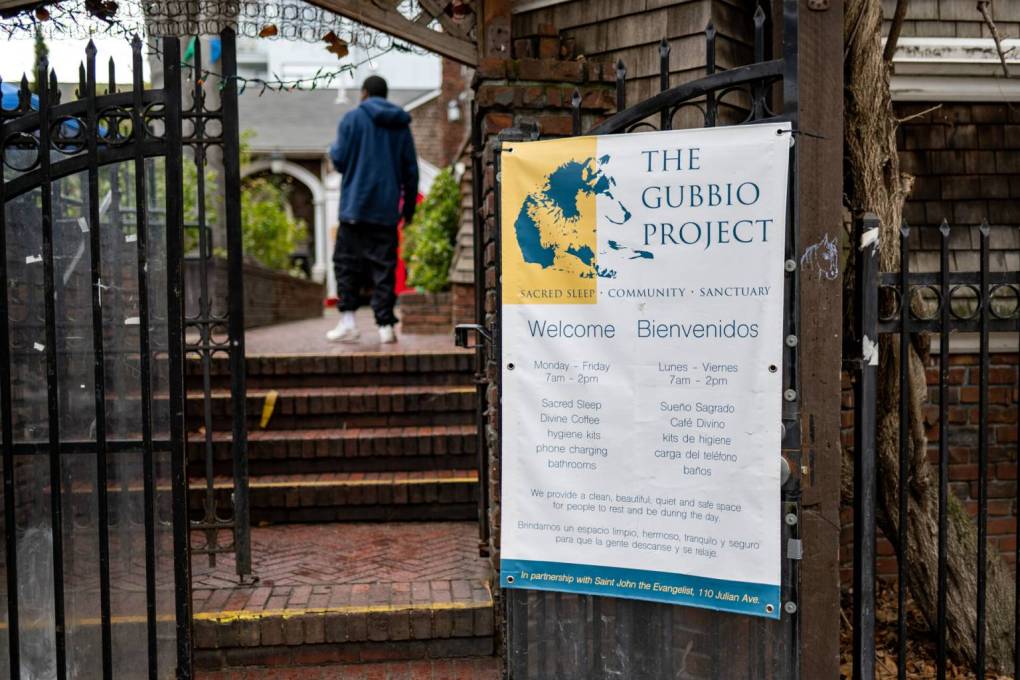
"caption": "The Gubbio Project, a nonprofit offering services for unhoused people, hopes to open a safe-consumption site in the Mission District.",
"description": null,
"title": "RS63528_015_KQED_GubbioProjectLydiaBransten_03092023-qut-1536x1024",
"credit": "Beth LaBerge/KQED",
"status": "inherit",
"altTag": "A figure stands atop brick steps in what appears to be a courtyard beyond a metal gateway with a sign reading 'Gubbio Project' on the metal gate",
"isLoading": false,
"fetchFailed": false
},
"news_11944047": {
"type": "attachments",
"id": "news_11944047",
"meta": {
"index": "attachments_1716263798",
"site": "news",
"id": "11944047",
"found": true
},
"parent": 11944046,
"imgSizes": {
"twentyfourteen-full-width": {
"file": "https://ww2.kqed.org/app/uploads/sites/10/2023/03/GettyImages-1248539583-1024x576.jpg",
"width": 1024,
"mimeType": "image/jpeg",
"height": 576
},
"thumbnail": {
"file": "https://ww2.kqed.org/app/uploads/sites/10/2023/03/GettyImages-1248539583-160x116.jpg",
"width": 160,
"mimeType": "image/jpeg",
"height": 116
},
"post-thumbnail": {
"file": "https://ww2.kqed.org/app/uploads/sites/10/2023/03/GettyImages-1248539583-672x372.jpg",
"width": 672,
"mimeType": "image/jpeg",
"height": 372
},
"kqedFullSize": {
"file": "https://ww2.kqed.org/app/uploads/sites/10/2023/03/GettyImages-1248539583.jpg",
"width": 1024,
"height": 743
},
"large": {
"file": "https://ww2.kqed.org/app/uploads/sites/10/2023/03/GettyImages-1248539583-1020x740.jpg",
"width": 1020,
"mimeType": "image/jpeg",
"height": 740
},
"medium": {
"file": "https://ww2.kqed.org/app/uploads/sites/10/2023/03/GettyImages-1248539583-800x580.jpg",
"width": 800,
"mimeType": "image/jpeg",
"height": 580
}
},
"publishDate": 1679182584,
"modified": 1679350515,
"caption": "Gov. Gavin Newsom speaks about his plan to have insulin available to everyone for $30 during his tour of the state of California, at the Kaiser Permanente central refill pharmacy in Downey on Saturday, March 18, 2023.",
"description": null,
"title": "Governor Gavin Newsom speaks about his plan to have insulin available to everyone during the Tour of the State of California.",
"credit": "Keith Birmingham/MediaNews Group/Pasadena Star-News via Getty Images",
"status": "inherit",
"altTag": "A white middle-aged man with a dark suit and tie gesticulates while speaking behind a dais on which is written \"$30 insulin by CalRx\" with freezers full of medicine behind him.",
"isLoading": false,
"fetchFailed": false
},
"news_11943823": {
"type": "attachments",
"id": "news_11943823",
"meta": {
"index": "attachments_1716263798",
"site": "news",
"id": "11943823",
"found": true
},
"parent": 11943821,
"imgSizes": {
"twentyfourteen-full-width": {
"file": "https://ww2.kqed.org/app/uploads/sites/10/2023/03/Sequence-01.00_00_28_09.Still003-1038x576.png",
"width": 1038,
"mimeType": "image/png",
"height": 576
},
"thumbnail": {
"file": "https://ww2.kqed.org/app/uploads/sites/10/2023/03/Sequence-01.00_00_28_09.Still003-160x90.png",
"width": 160,
"mimeType": "image/png",
"height": 90
},
"post-thumbnail": {
"file": "https://ww2.kqed.org/app/uploads/sites/10/2023/03/Sequence-01.00_00_28_09.Still003-672x372.png",
"width": 672,
"mimeType": "image/png",
"height": 372
},
"kqedFullSize": {
"file": "https://ww2.kqed.org/app/uploads/sites/10/2023/03/Sequence-01.00_00_28_09.Still003.png",
"width": 1280,
"height": 720
},
"large": {
"file": "https://ww2.kqed.org/app/uploads/sites/10/2023/03/Sequence-01.00_00_28_09.Still003-1020x574.png",
"width": 1020,
"mimeType": "image/png",
"height": 574
},
"medium": {
"file": "https://ww2.kqed.org/app/uploads/sites/10/2023/03/Sequence-01.00_00_28_09.Still003-800x450.png",
"width": 800,
"mimeType": "image/png",
"height": 450
}
},
"publishDate": 1679006539,
"modified": 1679006559,
"caption": "Jyesha Wren, a midwife and co-founder and program coordinator of BElovedBIRTH Black Centering in Oakland",
"description": null,
"title": "Sequence 01.00_00_28_09.Still003",
"credit": "Courtesy of Alameda Health System",
"status": "inherit",
"altTag": null,
"isLoading": false,
"fetchFailed": false
},
"news_11943325": {
"type": "attachments",
"id": "news_11943325",
"meta": {
"index": "attachments_1716263798",
"site": "news",
"id": "11943325",
"found": true
},
"parent": 11943309,
"imgSizes": {
"twentyfourteen-full-width": {
"file": "https://ww2.kqed.org/app/uploads/sites/10/2023/03/RS63526_011_KQED_GubbioProjectLydiaBransten_03092023-qut-1038x576.jpg",
"width": 1038,
"mimeType": "image/jpeg",
"height": 576
},
"thumbnail": {
"file": "https://ww2.kqed.org/app/uploads/sites/10/2023/03/RS63526_011_KQED_GubbioProjectLydiaBransten_03092023-qut-160x107.jpg",
"width": 160,
"mimeType": "image/jpeg",
"height": 107
},
"post-thumbnail": {
"file": "https://ww2.kqed.org/app/uploads/sites/10/2023/03/RS63526_011_KQED_GubbioProjectLydiaBransten_03092023-qut-672x372.jpg",
"width": 672,
"mimeType": "image/jpeg",
"height": 372
},
"kqedFullSize": {
"file": "https://ww2.kqed.org/app/uploads/sites/10/2023/03/RS63526_011_KQED_GubbioProjectLydiaBransten_03092023-qut.jpg",
"width": 1920,
"height": 1280
},
"large": {
"file": "https://ww2.kqed.org/app/uploads/sites/10/2023/03/RS63526_011_KQED_GubbioProjectLydiaBransten_03092023-qut-1020x680.jpg",
"width": 1020,
"mimeType": "image/jpeg",
"height": 680
},
"1536x1536": {
"file": "https://ww2.kqed.org/app/uploads/sites/10/2023/03/RS63526_011_KQED_GubbioProjectLydiaBransten_03092023-qut-1536x1024.jpg",
"width": 1536,
"mimeType": "image/jpeg",
"height": 1024
},
"medium": {
"file": "https://ww2.kqed.org/app/uploads/sites/10/2023/03/RS63526_011_KQED_GubbioProjectLydiaBransten_03092023-qut-800x533.jpg",
"width": 800,
"mimeType": "image/jpeg",
"height": 533
}
},
"publishDate": 1678559939,
"modified": 1678562509,
"caption": "Lydia Bransten serves free coffee at the Gubbio Project, a nonprofit offering services for unhoused people, in San Francisco on March 9, 2023.",
"description": null,
"title": "RS63526_011_KQED_GubbioProjectLydiaBransten_03092023-qut",
"credit": "Beth LaBerge/KQED",
"status": "inherit",
"altTag": "An older white woman with a blue shawl smiles as she hands a white cup to a person with a hoodie seen from behind, under a tent with another person in the background.",
"isLoading": false,
"fetchFailed": false
},
"news_11943289": {
"type": "attachments",
"id": "news_11943289",
"meta": {
"index": "attachments_1716263798",
"site": "news",
"id": "11943289",
"found": true
},
"parent": 11943288,
"imgSizes": {
"twentyfourteen-full-width": {
"file": "https://ww2.kqed.org/app/uploads/sites/10/2023/03/SWR-PGM_frame_158-1-1038x576.jpeg",
"width": 1038,
"mimeType": "image/jpeg",
"height": 576
},
"thumbnail": {
"file": "https://ww2.kqed.org/app/uploads/sites/10/2023/03/SWR-PGM_frame_158-1-160x90.jpeg",
"width": 160,
"mimeType": "image/jpeg",
"height": 90
},
"post-thumbnail": {
"file": "https://ww2.kqed.org/app/uploads/sites/10/2023/03/SWR-PGM_frame_158-1-672x372.jpeg",
"width": 672,
"mimeType": "image/jpeg",
"height": 372
},
"kqedFullSize": {
"file": "https://ww2.kqed.org/app/uploads/sites/10/2023/03/SWR-PGM_frame_158-1.jpeg",
"width": 1920,
"height": 1080
},
"large": {
"file": "https://ww2.kqed.org/app/uploads/sites/10/2023/03/SWR-PGM_frame_158-1-1020x574.jpeg",
"width": 1020,
"mimeType": "image/jpeg",
"height": 574
},
"1536x1536": {
"file": "https://ww2.kqed.org/app/uploads/sites/10/2023/03/SWR-PGM_frame_158-1-1536x864.jpeg",
"width": 1536,
"mimeType": "image/jpeg",
"height": 864
},
"medium": {
"file": "https://ww2.kqed.org/app/uploads/sites/10/2023/03/SWR-PGM_frame_158-1-800x450.jpeg",
"width": 800,
"mimeType": "image/jpeg",
"height": 450
}
},
"publishDate": 1678488908,
"modified": 1678488908,
"caption": null,
"description": null,
"title": "SWR PGM_frame_158 (1)",
"credit": null,
"status": "inherit",
"altTag": null,
"isLoading": false,
"fetchFailed": false
},
"news_11942628": {
"type": "attachments",
"id": "news_11942628",
"meta": {
"index": "attachments_1716263798",
"site": "news",
"id": "11942628",
"found": true
},
"parent": 11942625,
"imgSizes": {
"twentyfourteen-full-width": {
"file": "https://ww2.kqed.org/app/uploads/sites/10/2023/03/nurse-with-patient-getting-a-booster-shot-1020x576.jpg",
"width": 1020,
"mimeType": "image/jpeg",
"height": 576
},
"thumbnail": {
"file": "https://ww2.kqed.org/app/uploads/sites/10/2023/03/nurse-with-patient-getting-a-booster-shot-160x101.jpg",
"width": 160,
"mimeType": "image/jpeg",
"height": 101
},
"post-thumbnail": {
"file": "https://ww2.kqed.org/app/uploads/sites/10/2023/03/nurse-with-patient-getting-a-booster-shot-672x372.jpg",
"width": 672,
"mimeType": "image/jpeg",
"height": 372
},
"kqedFullSize": {
"file": "https://ww2.kqed.org/app/uploads/sites/10/2023/03/nurse-with-patient-getting-a-booster-shot.jpg",
"width": 1020,
"height": 642
},
"medium": {
"file": "https://ww2.kqed.org/app/uploads/sites/10/2023/03/nurse-with-patient-getting-a-booster-shot-800x504.jpg",
"width": 800,
"mimeType": "image/jpeg",
"height": 504
}
},
"publishDate": 1678074421,
"modified": 1678074451,
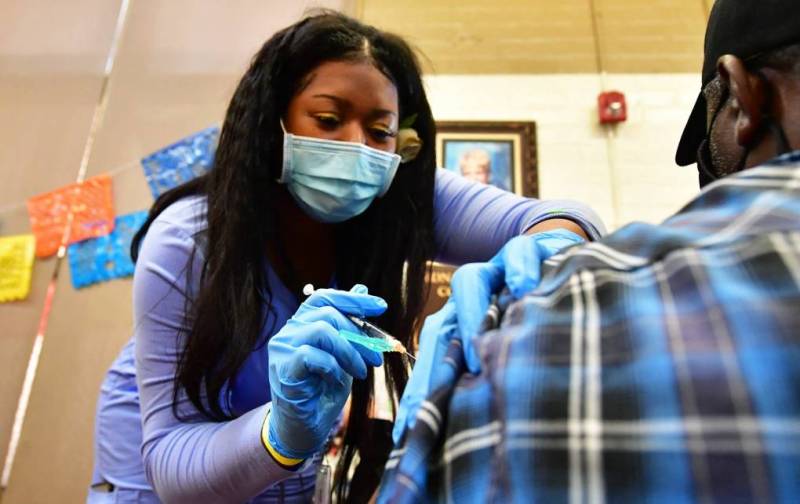
"caption": "La enfermera vocacional Cleopatra Oniya administra la vacuna de refuerzo de Pfizer en un centro de vacunación y pruebas de COVID-19, el cual está decorado en celebración del Cinco de Mayo, en el Ted Watkins Memorial Park de Los Ángeles el 5 de mayo de 2022.",
"description": null,
"title": "nurse with patient getting a booster shot",
"credit": "Frederic J. Brown/AFP vía Getty Images",
"status": "inherit",
"altTag": null,
"isLoading": false,
"fetchFailed": false
},
"news_11941683": {
"type": "attachments",
"id": "news_11941683",
"meta": {
"index": "attachments_1716263798",
"site": "news",
"id": "11941683",
"found": true
},
"parent": 11941618,
"imgSizes": {
"twentyfourteen-full-width": {
"file": "https://ww2.kqed.org/app/uploads/sites/10/2023/02/RS63001_016_KQED_SFGeneralMethadoneClinic_02102023-qut-1038x576.jpg",
"width": 1038,
"mimeType": "image/jpeg",
"height": 576
},
"thumbnail": {
"file": "https://ww2.kqed.org/app/uploads/sites/10/2023/02/RS63001_016_KQED_SFGeneralMethadoneClinic_02102023-qut-160x107.jpg",
"width": 160,
"mimeType": "image/jpeg",
"height": 107
},
"post-thumbnail": {
"file": "https://ww2.kqed.org/app/uploads/sites/10/2023/02/RS63001_016_KQED_SFGeneralMethadoneClinic_02102023-qut-672x372.jpg",
"width": 672,
"mimeType": "image/jpeg",
"height": 372
},
"kqedFullSize": {
"file": "https://ww2.kqed.org/app/uploads/sites/10/2023/02/RS63001_016_KQED_SFGeneralMethadoneClinic_02102023-qut.jpg",
"width": 1920,
"height": 1280
},
"large": {
"file": "https://ww2.kqed.org/app/uploads/sites/10/2023/02/RS63001_016_KQED_SFGeneralMethadoneClinic_02102023-qut-1020x680.jpg",
"width": 1020,
"mimeType": "image/jpeg",
"height": 680
},
"1536x1536": {
"file": "https://ww2.kqed.org/app/uploads/sites/10/2023/02/RS63001_016_KQED_SFGeneralMethadoneClinic_02102023-qut-1536x1024.jpg",
"width": 1536,
"mimeType": "image/jpeg",
"height": 1024
},
"medium": {
"file": "https://ww2.kqed.org/app/uploads/sites/10/2023/02/RS63001_016_KQED_SFGeneralMethadoneClinic_02102023-qut-800x533.jpg",
"width": 800,
"mimeType": "image/jpeg",
"height": 533
}
},
"publishDate": 1677195258,
"modified": 1677279845,
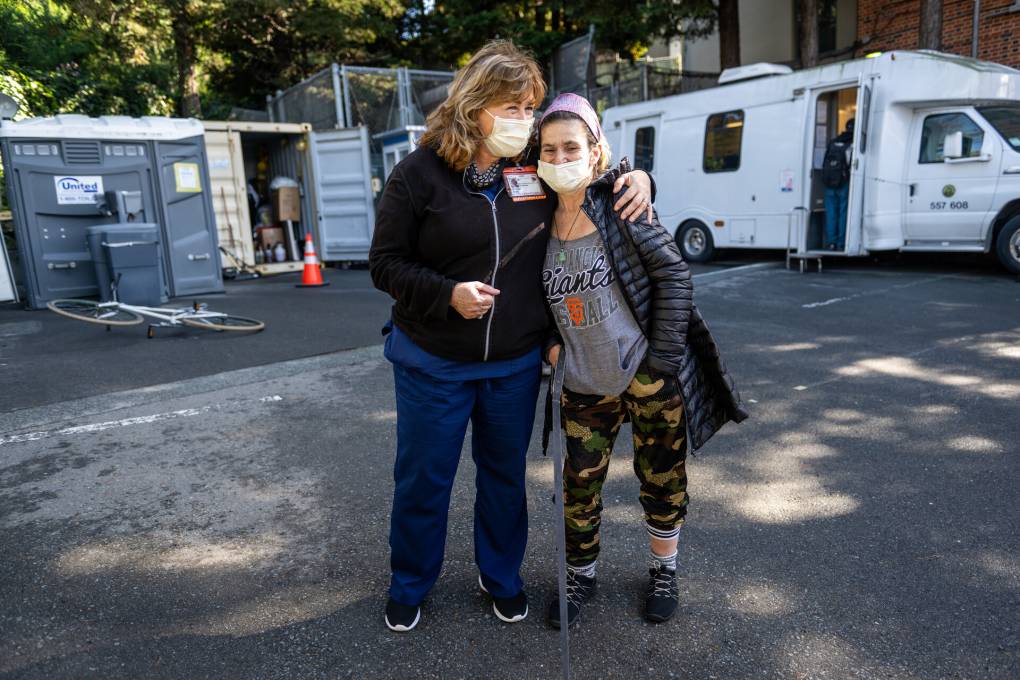
"caption": "Tamra Lombardo (right), a patient, and registered nurse Hasija Sisic embrace in front of the Opiate Treatment Outpatient Program mobile methadone clinic in a parking lot outside San Francisco General Hospital on Feb. 10, 2023.",
"description": null,
"title": "RS63001_016_KQED_SFGeneralMethadoneClinic_02102023-qut",
"credit": "Beth LaBerge/KQED",
"status": "inherit",
"altTag": "Two women with light-coilored skin and wearing face masks stand in front of a trailer, with their arms around each other.",
"isLoading": false,
"fetchFailed": false
},
"news_11941901": {
"type": "attachments",
"id": "news_11941901",
"meta": {
"index": "attachments_1716263798",
"site": "news",
"id": "11941901",
"found": true
},
"parent": 11941887,
"imgSizes": {
"twentyfourteen-full-width": {
"file": "https://ww2.kqed.org/app/uploads/sites/10/2023/02/GettyImages-1261956751-1024x576.jpg",
"width": 1024,
"mimeType": "image/jpeg",
"height": 576
},
"thumbnail": {
"file": "https://ww2.kqed.org/app/uploads/sites/10/2023/02/GettyImages-1261956751-160x107.jpg",
"width": 160,
"mimeType": "image/jpeg",
"height": 107
},
"post-thumbnail": {
"file": "https://ww2.kqed.org/app/uploads/sites/10/2023/02/GettyImages-1261956751-672x372.jpg",
"width": 672,
"mimeType": "image/jpeg",
"height": 372
},
"kqedFullSize": {
"file": "https://ww2.kqed.org/app/uploads/sites/10/2023/02/GettyImages-1261956751.jpg",
"width": 1024,
"height": 683
},
"large": {
"file": "https://ww2.kqed.org/app/uploads/sites/10/2023/02/GettyImages-1261956751-1020x680.jpg",
"width": 1020,
"mimeType": "image/jpeg",
"height": 680
},
"medium": {
"file": "https://ww2.kqed.org/app/uploads/sites/10/2023/02/GettyImages-1261956751-800x534.jpg",
"width": 800,
"mimeType": "image/jpeg",
"height": 534
}
},
"publishDate": 1677291624,
"modified": 1677526714,
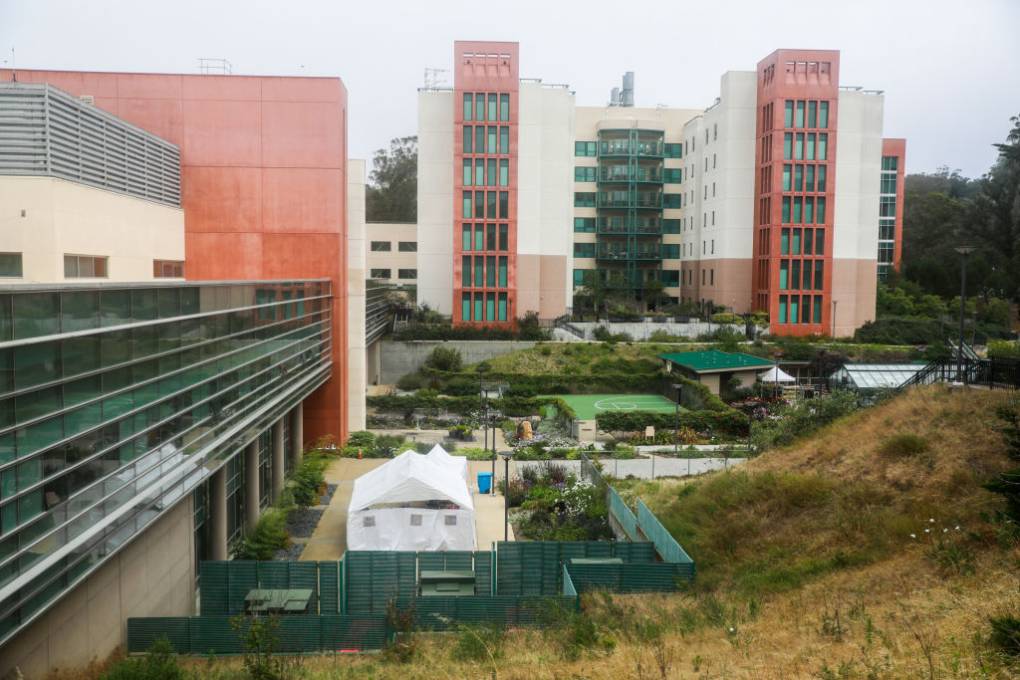
"caption": "A view of Laguna Honda hospital in San Francisco, June 25, 2020.",
"description": null,
"title": "SFChronicleVirusDaily",
"credit": "Gabrielle Lurie/The San Francisco Chronicle via Getty Images",
"status": "inherit",
"altTag": "Hospital buildings.",
"isLoading": false,
"fetchFailed": false
},
"news_11941542": {
"type": "attachments",
"id": "news_11941542",
"meta": {
"index": "attachments_1716263798",
"site": "news",
"id": "11941542",
"found": true
},
"parent": 11941531,
"imgSizes": {
"twentyfourteen-full-width": {
"file": "https://ww2.kqed.org/app/uploads/sites/10/2023/02/RS63121_GettyImages-1240474358-qut-1038x576.jpg",
"width": 1038,
"mimeType": "image/jpeg",
"height": 576
},
"thumbnail": {
"file": "https://ww2.kqed.org/app/uploads/sites/10/2023/02/RS63121_GettyImages-1240474358-qut-160x101.jpg",
"width": 160,
"mimeType": "image/jpeg",
"height": 101
},
"post-thumbnail": {
"file": "https://ww2.kqed.org/app/uploads/sites/10/2023/02/RS63121_GettyImages-1240474358-qut-672x372.jpg",
"width": 672,
"mimeType": "image/jpeg",
"height": 372
},
"kqedFullSize": {
"file": "https://ww2.kqed.org/app/uploads/sites/10/2023/02/RS63121_GettyImages-1240474358-qut.jpg",
"width": 1920,
"height": 1209
},
"large": {
"file": "https://ww2.kqed.org/app/uploads/sites/10/2023/02/RS63121_GettyImages-1240474358-qut-1020x642.jpg",
"width": 1020,
"mimeType": "image/jpeg",
"height": 642
},
"1536x1536": {
"file": "https://ww2.kqed.org/app/uploads/sites/10/2023/02/RS63121_GettyImages-1240474358-qut-1536x967.jpg",
"width": 1536,
"mimeType": "image/jpeg",
"height": 967
},
"medium": {
"file": "https://ww2.kqed.org/app/uploads/sites/10/2023/02/RS63121_GettyImages-1240474358-qut-800x504.jpg",
"width": 800,
"mimeType": "image/jpeg",
"height": 504
}
},
"publishDate": 1677088378,
"modified": 1677092491,
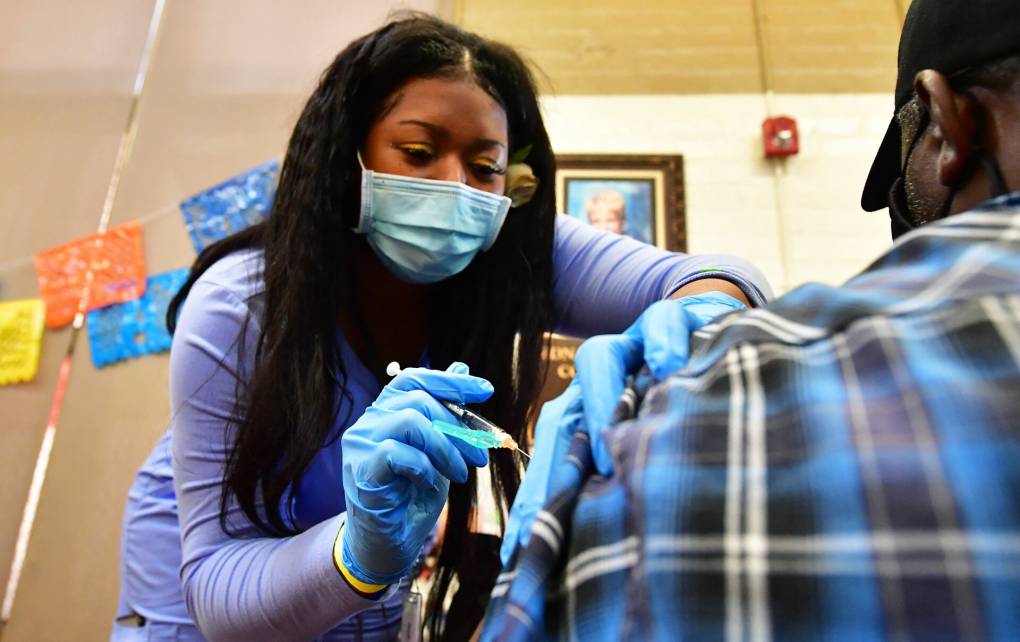
"caption": "Vocational Nurse Cleopatra Oniya administers the Pfizer booster shot at a COVID vaccination and testing site decorated for Cinco de Mayo at Ted Watkins Memorial Park in Los Angeles on May 5, 2022.",
"description": null,
"title": "can-i-get-second-bivalent-booster",
"credit": "Frederic J. Brown/AFP via Getty Images",
"status": "inherit",
"altTag": "A Black woman wearing a blue surgical mask and a blue shirt faces the camera, leaning over to administer a vaccine to a person wearing a blue checked shirt, whose back is to the camera.",
"isLoading": false,
"fetchFailed": false
},
"news_11940770": {
"type": "attachments",
"id": "news_11940770",
"meta": {
"index": "attachments_1716263798",
"site": "news",
"id": "11940770",
"found": true
},
"parent": 11940765,
"imgSizes": {
"twentyfourteen-full-width": {
"file": "https://ww2.kqed.org/app/uploads/sites/10/2023/02/RS62526_02022023_lagunahondapresser-308-qut-1-1038x576.jpg",
"width": 1038,
"mimeType": "image/jpeg",
"height": 576
},
"thumbnail": {
"file": "https://ww2.kqed.org/app/uploads/sites/10/2023/02/RS62526_02022023_lagunahondapresser-308-qut-1-160x106.jpg",
"width": 160,
"mimeType": "image/jpeg",
"height": 106
},
"post-thumbnail": {
"file": "https://ww2.kqed.org/app/uploads/sites/10/2023/02/RS62526_02022023_lagunahondapresser-308-qut-1-672x372.jpg",
"width": 672,
"mimeType": "image/jpeg",
"height": 372
},
"kqedFullSize": {
"file": "https://ww2.kqed.org/app/uploads/sites/10/2023/02/RS62526_02022023_lagunahondapresser-308-qut-1.jpg",
"width": 1920,
"height": 1277
},
"large": {
"file": "https://ww2.kqed.org/app/uploads/sites/10/2023/02/RS62526_02022023_lagunahondapresser-308-qut-1-1020x678.jpg",
"width": 1020,
"mimeType": "image/jpeg",
"height": 678
},
"1536x1536": {
"file": "https://ww2.kqed.org/app/uploads/sites/10/2023/02/RS62526_02022023_lagunahondapresser-308-qut-1-1536x1022.jpg",
"width": 1536,
"mimeType": "image/jpeg",
"height": 1022
},
"medium": {
"file": "https://ww2.kqed.org/app/uploads/sites/10/2023/02/RS62526_02022023_lagunahondapresser-308-qut-1-800x532.jpg",
"width": 800,
"mimeType": "image/jpeg",
"height": 532
}
},
"publishDate": 1676078707,
"modified": 1676328350,
"caption": "Cristina Gutierrez, 74, speaks out during a protest against the discharge and transfer of patients from the Laguna Honda Hospital and Rehabilitation Center, in San Francisco on Feb. 2, 2023.",
"description": null,
"title": "RS62526_02022023_lagunahondapresser 308-qut",
"credit": "Kori Suzuki/KQED",
"status": "inherit",
"altTag": "Three women with banners stand outside the Laguna Honda hospital entrance with protest signs in their hands.",
"isLoading": false,
"fetchFailed": false
},
"news_11903520": {
"type": "attachments",
"id": "news_11903520",
"meta": {
"index": "attachments_1716263798",
"site": "news",
"id": "11903520",
"found": true
},
"parent": 11903519,
"imgSizes": {
"twentyfourteen-full-width": {
"file": "https://ww2.kqed.org/app/uploads/sites/10/2022/02/gettyimages-1237841710-0e2d34b5a4a0fac5654ed14f679a263903429e05-1038x576.jpg",
"width": 1038,
"mimeType": "image/jpeg",
"height": 576
},
"thumbnail": {
"file": "https://ww2.kqed.org/app/uploads/sites/10/2022/02/gettyimages-1237841710-0e2d34b5a4a0fac5654ed14f679a263903429e05-160x120.jpg",
"width": 160,
"mimeType": "image/jpeg",
"height": 120
},
"post-thumbnail": {
"file": "https://ww2.kqed.org/app/uploads/sites/10/2022/02/gettyimages-1237841710-0e2d34b5a4a0fac5654ed14f679a263903429e05-672x372.jpg",
"width": 672,
"mimeType": "image/jpeg",
"height": 372
},
"kqedFullSize": {
"file": "https://ww2.kqed.org/app/uploads/sites/10/2022/02/gettyimages-1237841710-0e2d34b5a4a0fac5654ed14f679a263903429e05-scaled-e1643742445285.jpg",
"width": 1920,
"height": 1439
},
"2048x2048": {
"file": "https://ww2.kqed.org/app/uploads/sites/10/2022/02/gettyimages-1237841710-0e2d34b5a4a0fac5654ed14f679a263903429e05-2048x1534.jpg",
"width": 2048,
"mimeType": "image/jpeg",
"height": 1534
},
"large": {
"file": "https://ww2.kqed.org/app/uploads/sites/10/2022/02/gettyimages-1237841710-0e2d34b5a4a0fac5654ed14f679a263903429e05-1020x764.jpg",
"width": 1020,
"mimeType": "image/jpeg",
"height": 764
},
"1536x1536": {
"file": "https://ww2.kqed.org/app/uploads/sites/10/2022/02/gettyimages-1237841710-0e2d34b5a4a0fac5654ed14f679a263903429e05-1536x1151.jpg",
"width": 1536,
"mimeType": "image/jpeg",
"height": 1151
},
"full-width": {
"file": "https://ww2.kqed.org/app/uploads/sites/10/2022/02/gettyimages-1237841710-0e2d34b5a4a0fac5654ed14f679a263903429e05-1920x1438.jpg",
"width": 1920,
"mimeType": "image/jpeg",
"height": 1438
},
"medium": {
"file": "https://ww2.kqed.org/app/uploads/sites/10/2022/02/gettyimages-1237841710-0e2d34b5a4a0fac5654ed14f679a263903429e05-800x599.jpg",
"width": 800,
"mimeType": "image/jpeg",
"height": 599
}
},
"publishDate": 1643740683,
"modified": 1675713358,
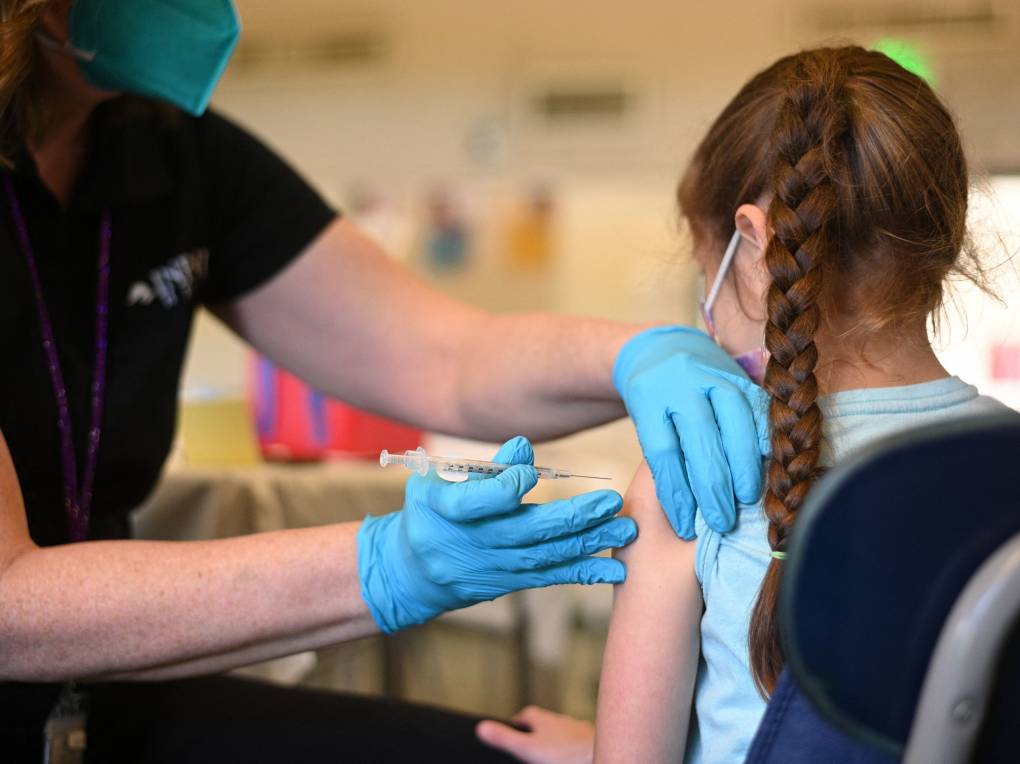
"caption": "A nurse administers a pediatric dose of a COVID-19 vaccine to a girl at an LA Care Health Plan vaccination clinic at Los Angeles Mission College on Jan. 19, 2022.",
"description": "A nurse administers a pediatric dose of a COVID-19 vaccine to a girl at an LA Care Health Plan vaccination clinic at Los Angeles Mission College on Jan. 19, 2022.",
"title": "A nurse administers a pediatric dose of the Covid-19 vaccine to a girl at a L.A. Care Health Plan vaccination clinic at Los Angeles Mission College in the Sylmar neighborhood in Los Angeles, Ca., January 19, 2022.",
"credit": "Robyn Beck/AFP via Getty Images",
"status": "inherit",
"altTag": "young child with braided hair facing away from camera gets vaccination shot in her left arm",
"isLoading": false,
"fetchFailed": false
}
},
"audioPlayerReducer": {
"postId": "stream_live",
"isPaused": true,
"isPlaying": false,
"pfsActive": false,
"pledgeModalIsOpen": true,
"playerDrawerIsOpen": false,
"liveAudioPlayStartedAt": 0,
"liveAudioPlayContext": ""
},
"authorsReducer": {
"byline_news_11944046": {
"type": "authors",
"id": "byline_news_11944046",
"meta": {
"override": true
},
"slug": "byline_news_11944046",
"name": "Michael R. Blood\u003cbr>The Associated Press",
"isLoading": false
},
"byline_news_11940199": {
"type": "authors",
"id": "byline_news_11940199",
"meta": {
"override": true
},
"slug": "byline_news_11940199",
"name": "Adam Beam\u003cbr>The Associated Press",
"isLoading": false
},
"kqed": {
"type": "authors",
"id": "236",
"meta": {
"index": "authors_1716337520",
"id": "236",
"found": true
},
"name": "KQED News Staff",
"firstName": "KQED News Staff",
"lastName": null,
"slug": "kqed",
"email": "faq@kqed.org",
"display_author_email": false,
"staff_mastheads": [],
"title": null,
"bio": null,
"avatar": "https://secure.gravatar.com/avatar/ef0e801a68c4c54afa9180db14084167?s=600&d=blank&r=g",
"twitter": null,
"facebook": null,
"instagram": null,
"linkedin": null,
"sites": [
{
"site": "arts",
"roles": [
"contributor"
]
},
{
"site": "news",
"roles": [
"editor"
]
},
{
"site": "futureofyou",
"roles": [
"author"
]
}
],
"headData": {
"title": "KQED News Staff | KQED",
"description": null,
"ogImgSrc": "https://secure.gravatar.com/avatar/ef0e801a68c4c54afa9180db14084167?s=600&d=blank&r=g",
"twImgSrc": "https://secure.gravatar.com/avatar/ef0e801a68c4c54afa9180db14084167?s=600&d=blank&r=g"
},
"isLoading": false,
"link": "/author/kqed"
},
"ecruzguevarra": {
"type": "authors",
"id": "8654",
"meta": {
"index": "authors_1716337520",
"id": "8654",
"found": true
},
"name": "Ericka Cruz Guevarra",
"firstName": "Ericka",
"lastName": "Cruz Guevarra",
"slug": "ecruzguevarra",
"email": "ecruzguevarra@kqed.org",
"display_author_email": true,
"staff_mastheads": [
"news"
],
"title": "Producer, The Bay Podcast",
"bio": "Ericka Cruz Guevarra is host of \u003ca href=\"https://www.kqed.org/podcasts/thebay\">\u003cem>The Bay\u003c/em>\u003c/a> podcast at KQED. Before host, she was the show’s producer. Her work in that capacity includes a three-part reported series on policing in Vallejo, which won a 2020 excellence in journalism award from the Society of Professional Journalists. Ericka has worked as a breaking news reporter at Oregon Public Broadcasting, helped produce the Code Switch podcast, and was KQED’s inaugural Raul Ramirez Diversity Fund intern. She’s also an alumna of NPR’s Next Generation Radio program. Send her an email if you have strong feelings about whether Fairfield and Suisun City are the Bay. Ericka is represented by SAG-AFTRA.",
"avatar": "https://secure.gravatar.com/avatar/accefc1de4bafc7e234b69bcb9b6f6536c130fd84709bc3069ef11a78787e1bb?s=600&d=blank&r=g",
"twitter": "NotoriousECG",
"bluesky": null,
"facebook": null,
"instagram": null,
"linkedin": null,
"sites": [
{
"site": "arts",
"roles": [
"subscriber"
]
},
{
"site": "news",
"roles": [
"editor",
"manage_categories"
]
},
{
"site": "futureofyou",
"roles": [
"subscriber"
]
},
{
"site": "stateofhealth",
"roles": [
"subscriber"
]
},
{
"site": "science",
"roles": [
"editor"
]
},
{
"site": "forum",
"roles": [
"subscriber"
]
}
],
"headData": {
"title": "Ericka Cruz Guevarra | KQED",
"description": "Producer, The Bay Podcast",
"ogImgSrc": "https://secure.gravatar.com/avatar/accefc1de4bafc7e234b69bcb9b6f6536c130fd84709bc3069ef11a78787e1bb?s=600&d=blank&r=g",
"twImgSrc": "https://secure.gravatar.com/avatar/accefc1de4bafc7e234b69bcb9b6f6536c130fd84709bc3069ef11a78787e1bb?s=600&d=blank&r=g"
},
"isLoading": false,
"link": "/author/ecruzguevarra"
},
"amontecillo": {
"type": "authors",
"id": "11649",
"meta": {
"index": "authors_1716337520",
"id": "11649",
"found": true
},
"name": "Alan Montecillo",
"firstName": "Alan",
"lastName": "Montecillo",
"slug": "amontecillo",
"email": "amontecillo@kqed.org",
"display_author_email": false,
"staff_mastheads": [
"news"
],
"title": "KQED Contributor",
"bio": "Alan Montecillo is the senior editor of \u003cem>\u003ca href=\"http://kqed.org/thebay\">The Bay\u003c/a>, \u003c/em> KQED's local news podcast. Before moving to the Bay Area, he worked as a senior talk show producer for WILL in Champaign-Urbana, Illinois and at Oregon Public Broadcasting in Portland, Oregon. He has won journalism awards from the Society of Professional Journalists Northern California, the Public Media Journalists Association, The Signal Awards, and has also received a regional Edward R. Murrow award. Alan is a Filipino American from Hong Kong and a graduate of Reed College.",
"avatar": "https://secure.gravatar.com/avatar/268f53a2066899ea9efdd8a5900218b17c822d9862cbc9326cccec53ef41d349?s=600&d=blank&r=g",
"twitter": "alanmontecillo",
"bluesky": null,
"facebook": null,
"instagram": null,
"linkedin": null,
"sites": [
{
"site": "",
"roles": [
"editor"
]
},
{
"site": "news",
"roles": [
"editor",
"manage_categories"
]
}
],
"headData": {
"title": "Alan Montecillo | KQED",
"description": "KQED Contributor",
"ogImgSrc": "https://secure.gravatar.com/avatar/268f53a2066899ea9efdd8a5900218b17c822d9862cbc9326cccec53ef41d349?s=600&d=blank&r=g",
"twImgSrc": "https://secure.gravatar.com/avatar/268f53a2066899ea9efdd8a5900218b17c822d9862cbc9326cccec53ef41d349?s=600&d=blank&r=g"
},
"isLoading": false,
"link": "/author/amontecillo"
},
"ccabreralomeli": {
"type": "authors",
"id": "11708",
"meta": {
"index": "authors_1716337520",
"id": "11708",
"found": true
},
"name": "Carlos Cabrera-Lomelí",
"firstName": "Carlos",
"lastName": "Cabrera-Lomelí",
"slug": "ccabreralomeli",
"email": "ccabreralomeli@KQED.org",
"display_author_email": true,
"staff_mastheads": [
"news"
],
"title": "Community Reporter",
"bio": "Carlos Cabrera-Lomelí is a community reporter with KQED's digital engagement team. He also reports and co-produces for KQED's bilingual news hub KQED en Español. He grew up in San Francisco's Mission District and has previously worked with Univision, 48 Hills and REFORMA in Mexico City.",
"avatar": "https://secure.gravatar.com/avatar/c309be9665e484f887b818c89e273ecc673004f426f36b24d00a4d813a2e0518?s=600&d=blank&r=g",
"twitter": "@LomeliCabrera",
"bluesky": null,
"facebook": null,
"instagram": null,
"linkedin": null,
"sites": [
{
"site": "arts",
"roles": [
"editor"
]
},
{
"site": "news",
"roles": [
"editor"
]
},
{
"site": "about",
"roles": [
"editor"
]
},
{
"site": "science",
"roles": [
"editor"
]
},
{
"site": "perspectives",
"roles": [
"editor"
]
},
{
"site": "elections",
"roles": [
"editor"
]
},
{
"site": "liveblog",
"roles": [
"contributor"
]
}
],
"headData": {
"title": "Carlos Cabrera-Lomelí | KQED",
"description": "Community Reporter",
"ogImgSrc": "https://secure.gravatar.com/avatar/c309be9665e484f887b818c89e273ecc673004f426f36b24d00a4d813a2e0518?s=600&d=blank&r=g",
"twImgSrc": "https://secure.gravatar.com/avatar/c309be9665e484f887b818c89e273ecc673004f426f36b24d00a4d813a2e0518?s=600&d=blank&r=g"
},
"isLoading": false,
"link": "/author/ccabreralomeli"
},
"mesquinca": {
"type": "authors",
"id": "11802",
"meta": {
"index": "authors_1716337520",
"id": "11802",
"found": true
},
"name": "Maria Esquinca",
"firstName": "Maria",
"lastName": "Esquinca",
"slug": "mesquinca",
"email": "mesquinca@kqed.org",
"display_author_email": false,
"staff_mastheads": [],
"title": "Producer, The Bay",
"bio": "María Esquinca is a producer of The Bay. Before that, she was a New York Women’s Foundation IGNITE Fellow at Latino USA. She worked at Radio Bilingue where she covered the San Joaquin Valley. Maria has interned at WLRN, News 21, The New York Times Student Journalism Institute and at Crain’s Detroit Business as a Dow Jones News Fund Business Reporting Intern. She is an MFA graduate from the University of Miami. In 2017, she graduated from the Walter Cronkite School of Journalism and Mass Communication with a Master of Mass Communication. A fronteriza, she was born in Ciudad Juárez, Chihuahua, Mexico and grew up in El Paso, Texas.",
"avatar": "https://secure.gravatar.com/avatar/77cedba18aae91da775038ba06dcd8d0?s=600&d=blank&r=g",
"twitter": "@m_esquinca",
"facebook": null,
"instagram": null,
"linkedin": null,
"sites": [
{
"site": "news",
"roles": []
}
],
"headData": {
"title": "Maria Esquinca | KQED",
"description": "Producer, The Bay",
"ogImgSrc": "https://secure.gravatar.com/avatar/77cedba18aae91da775038ba06dcd8d0?s=600&d=blank&r=g",
"twImgSrc": "https://secure.gravatar.com/avatar/77cedba18aae91da775038ba06dcd8d0?s=600&d=blank&r=g"
},
"isLoading": false,
"link": "/author/mesquinca"
},
"sjohnson": {
"type": "authors",
"id": "11840",
"meta": {
"index": "authors_1716337520",
"id": "11840",
"found": true
},
"name": "Sydney Johnson",
"firstName": "Sydney",
"lastName": "Johnson",
"slug": "sjohnson",
"email": "sjohnson@kqed.org",
"display_author_email": false,
"staff_mastheads": [
"news"
],
"title": "KQED Reporter",
"bio": "Sydney Johnson is a general assignment reporter at KQED. She previously reported on public health and city government at the San Francisco Examiner, and before that, she covered statewide education policy for EdSource. Her reporting has won multiple local, state and national awards. Sydney is a graduate of the University of California, Berkeley and lives in San Francisco.",
"avatar": "https://secure.gravatar.com/avatar/97855f2719b72ad6190b7c535fe642c8?s=600&d=blank&r=g",
"twitter": "sydneyfjohnson",
"facebook": null,
"instagram": null,
"linkedin": null,
"sites": [
{
"site": "news",
"roles": [
"editor"
]
}
],
"headData": {
"title": "Sydney Johnson | KQED",
"description": "KQED Reporter",
"ogImgSrc": "https://secure.gravatar.com/avatar/97855f2719b72ad6190b7c535fe642c8?s=600&d=blank&r=g",
"twImgSrc": "https://secure.gravatar.com/avatar/97855f2719b72ad6190b7c535fe642c8?s=600&d=blank&r=g"
},
"isLoading": false,
"link": "/author/sjohnson"
}
},
"pagesReducer": {
"news_tag_health": {
"type": "terms",
"id": "news_18543",
"meta": {
"index": "terms_1716263798",
"site": "news",
"id": "18543",
"score": 6.886679
},
"featImg": null,
"name": "Health",
"description": null,
"taxonomy": "tag",
"headData": {
"twImgId": null,
"twTitle": null,
"ogTitle": null,
"ogImgId": null,
"twDescription": null,
"description": null,
"title": "Health Archives | KQED News",
"ogDescription": null
},
"ttid": 466,
"slug": "health",
"isLoading": false,
"title": "Health",
"pageMeta": {
"site": "news",
"WpPageTemplate": "page-topic-editorial",
"currentPage": 47
},
"blocks": [
{
"blockName": "kqed/post-list",
"attrs": {
"layout": "cardArticle2",
"query": "posts/news?tag=health",
"seeMore": false,
"paginated": true,
"page": 47
}
},
{
"blockName": "kqed/ad"
}
]
}
},
"pfsSessionReducer": {},
"postsReducer": {
"stream_live": {
"type": "live",
"id": "stream_live",
"audioUrl": "https://streams.kqed.org/kqedradio",
"title": "Live Stream",
"excerpt": "Live Stream information currently unavailable.",
"link": "/radio",
"featImg": "",
"label": {
"name": "KQED Live",
"link": "/"
}
},
"stream_kqedNewscast": {
"type": "posts",
"id": "stream_kqedNewscast",
"audioUrl": "https://www.kqed.org/.stream/anon/radio/RDnews/newscast.mp3?_=1",
"title": "KQED Newscast",
"featImg": "",
"label": {
"name": "88.5 FM",
"link": "/"
}
},
"news_11944543": {
"type": "posts",
"id": "news_11944543",
"meta": {
"index": "posts_1716263798",
"site": "news",
"id": "11944543",
"score": null,
"sort": [
1679687668000
]
},
"guestAuthors": [],
"slug": "on-medi-cal-eligibility-changes-starting-in-april-could-mean-you-lose-coverage-heres-what-to-do",
"title": "On Medi-Cal? Eligibility Changes Starting in April Could Mean You Lose Coverage. Here's What to Do",
"publishDate": 1679687668,
"format": "image",
"headTitle": "On Medi-Cal? Eligibility Changes Starting in April Could Mean You Lose Coverage. Here’s What to Do | KQED",
"labelTerm": {
"site": "news"
},
"content": "\u003cp>Starting April 1, Californians who depend on \u003ca href=\"https://www.dhcs.ca.gov/Pages/myMedi-Cal.aspx\">Medi-Cal\u003c/a> — the state’s Medicaid health care program — for their health care expenses will need to once again \u003ca href=\"https://www.dhcs.ca.gov/Pages/Keep-Your-Medi-Cal.aspx\">go through a redetermination process to renew their eligibility and keep their Medi-Cal coverage\u003c/a>.\u003c/p>\n\u003cp>Thanks to \u003ca href=\"https://www.hhs.gov/about/news/2023/02/09/fact-sheet-covid-19-public-health-emergency-transition-roadmap.html\">the federal COVID Public Health Emergency (PHE)\u003c/a> declared in 2020, Medicaid programs around the nation like Medi-Cal have been able to waive annual eligibility requirements. This means that for the past three years, Medicaid beneficiaries had their health care costs covered without having to go through an annual renewal process, which could have found them no longer eligible to receive Medicaid.\u003c/p>\n\u003cp>But at the end of last year, Congress approved the Consolidated Appropriations Act — putting \u003ca href=\"https://www.hhs.gov/about/news/2023/02/09/fact-sheet-covid-19-public-health-emergency-transition-roadmap.html\">an end date of March 31 on automatic Medicaid renewal\u003c/a>.\u003c/p>\n\u003cp>\u003cstrong>Jump to:\u003c/strong>\u003c/p>\n\u003cul>\n\u003cli>\u003cstrong>\u003ca href=\"#keepmedicaid\">What do I need to do to keep my Medi-Cal coverage?\u003c/a>\u003c/strong>\u003c/li>\n\u003cli>\u003cstrong>\u003ca href=\"#helpmedicaid\">Find my Bay Area county’s Medi-Cal office\u003c/a>\u003c/strong>\u003c/li>\n\u003c/ul>\n\u003ch2>Who will be affected by these Medi-Cal changes?\u003c/h2>\n\u003cp>This change will affect the millions of people nationwide who depend on Medicaid to cover essential care, prescriptions and other health care services, including the 12 million people enrolled in Medi-Cal within California.\u003c/p>\n\u003cp>The Urban Institute, a public policy think tank, released a study at the end of 2022 that estimates that \u003ca href=\"https://www.urban.org/research/publication/impact-covid-19-public-health-emergency-expiration-all-types-health-coverage\">18 million people nationwide may lose their Medicaid\u003c/a> coverage during a 14-month period following the end of the PHE — either because they are found to no longer qualify for Medi-Cal, or because they fail to renew on time. \u003ca href=\"https://www.dhcs.ca.gov/Documents/PHE-UOP/Medi-Cal-COVID-19-PHE-Unwinding-Plan.pdf\">In California, that number could be as high as 3 million.\u003c/a>\u003c/p>\n\u003cul>\n\u003cli>\u003cstrong>\u003ca href=\"#tellus\">Tell us: What else do you need information about right now?\u003c/a>\u003c/strong>\u003c/li>\n\u003c/ul>\n\u003cp>Disability rights advocates also worry that the renewal process could leave people without health coverage. “Administrative and procedural barriers can also lead to someone being dis-enrolled, with \u003ca href=\"https://www.teenvogue.com/story/medicaid-coverage-covid\">low-income people and people of color disproportionately at higher risk due to structural inequities\u003c/a>,” wrote San Francisco disability rights activist Alice Wong in a recent column for \u003cem>Teen Vogue.\u003c/em>\u003c/p>\n\u003cp>Individuals who received Medi-Cal benefits before the pandemic began may remember what it’s like to renew eligibility: Your county’s health and human services agency sends to your mailbox a thick packet full of forms to fill out and verify your residency, income, health information and other personal details.\u003c/p>\n\u003cp>But regardless of whether you have been on Medi-Cal for decades, or joined far more recently during the pandemic, \u003ca href=\"https://www.dhcs.ca.gov/Pages/Keep-Your-Medi-Cal.aspx\">the redetermination process will be required for all Medi-Cal beneficiaries\u003c/a>. This means that every single person on Medi-Cal needs to be aware of the coming changes starting in April, to make sure they keep health care coverage in some form.\u003c/p>\n\u003cp>Keep reading for what you need to know.\u003c/p>\n\u003cfigure id=\"attachment_11944676\" class=\"wp-caption alignnone\" style=\"max-width: 1920px\">\u003cimg loading=\"lazy\" decoding=\"async\" class=\"size-full wp-image-11944676\" src=\"https://ww2.kqed.org/app/uploads/sites/10/2023/03/pexels-rodnae-productions-7821577.jpg\" alt=\"A photograph shot from behind of two people, whose faces we can't see, operating a laptop to fill out a form.\" width=\"1920\" height=\"1280\" srcset=\"https://cdn.kqed.org/wp-content/uploads/sites/10/2023/03/pexels-rodnae-productions-7821577.jpg 1920w, https://cdn.kqed.org/wp-content/uploads/sites/10/2023/03/pexels-rodnae-productions-7821577-800x533.jpg 800w, https://cdn.kqed.org/wp-content/uploads/sites/10/2023/03/pexels-rodnae-productions-7821577-1020x680.jpg 1020w, https://cdn.kqed.org/wp-content/uploads/sites/10/2023/03/pexels-rodnae-productions-7821577-160x107.jpg 160w, https://cdn.kqed.org/wp-content/uploads/sites/10/2023/03/pexels-rodnae-productions-7821577-1536x1024.jpg 1536w\" sizes=\"auto, (max-width: 1920px) 100vw, 1920px\">\u003cfigcaption class=\"wp-caption-text\">Changes are coming to Medi-Cal eligibility, and you’ll have to act to keep coverage. \u003ccite>(RODNAE Productions/Pexels)\u003c/cite>\u003c/figcaption>\u003c/figure>\n\u003ch2>\u003ca id=\"keepmedicaid\">\u003c/a>On Medi-Cal? Here’s what to expect starting April 1\u003c/h2>\n\u003cp>Nobody will be automatically dropped from their Medi-Cal coverage on April 1, says María Reyes, community health education manager for La Clínica de la Raza, which provides health services to lower-income communities in Alameda, Contra Costa and Solano counties.\u003c/p>\n\u003cp>Instead, that date marks the start of the process to reenroll people on Medi-Cal.\u003c/p>\n\u003cp>Once the Medi-Cal renewal waiver ends on March 31, there will be two ways people can renew their benefits: through the mail or \u003ca href=\"https://www.dhcs.ca.gov/Pages/Keep-Your-Medi-Cal.aspx\">online at the Medi-Cal website\u003c/a>. But it’s important to remember that the deadline to renew will be different for everyone, says Reyes.\u003c/p>\n\u003cp>The deadline to renew your personal coverage, she says, is based on your Medi-Cal “anniversary”:\u003c/p>\n\u003cul>\n\u003cli>If you had Medi-Cal \u003cstrong>before 2020\u003c/strong>, your anniversary is the date when you last renewed your coverage before the pandemic, but:\u003c/li>\n\u003cli>If you enrolled \u003cstrong>after 2020\u003c/strong> and haven’t gone through the renewal process yet, your anniversary falls on the date you first applied.\u003c/li>\n\u003c/ul>\n\u003cp>Reyes recommends that you confirm the exact date of your coverage anniversary — because you should receive a renewal packet in the mail ahead of this date.\u003c/p>\n\u003cp>\u003cstrong>Option 1: Renew your Medi-Cal coverage by mail\u003c/strong>\u003c/p>\n\u003cp>“As people meet their anniversary date, they’ll be getting these packets,” she says, adding that the packets will include a letter with information specific to your coverage. “This letter will let you know you have X amount of time, from the time you receive the letter, to submit your renewal packet and the documents they are requesting from you.”\u003c/p>\n\u003cp>\u003ca href=\"https://calmatters.org/health/2023/03/medi-cal-eligibility-2/\">These packets will be going out in phases monthly up through June 2024\u003c/a>, and will include \u003ca href=\"https://www.dhcs.ca.gov/formsandpubs/forms/Forms/mc210rv-eng.pdf\">an annual redetermination form (PDF)\u003c/a> which asks for information about a beneficiary’s income, living situation and disability status, among other factors. You may be asked to submit additional documents depending on your circumstances. You should fill it out and return it as soon as possible, if you don’t plan on renewing your Medi-Cal online (see Option 2).\u003c/p>\n\u003cp>“If, for some reason, your county office doesn’t get the packet by the deadline, they’ll send another reminder letter letting you know they haven’t received your documents,” Reyes said, adding that there may be a \u003cem>third\u003c/em> letter in the mail if a beneficiary misses the second deadline. There should, she assures, be several opportunities for people to be reminded of this deadline. “It’s not going to be a sudden stop of services,” she said.\u003c/p>\n\u003cp>\u003cstrong>Option 2: Renew your Medi-Cal coverage online\u003c/strong>\u003c/p>\n\u003cp>In some cases, you may be able to renew online. In the Bay Area, counties use either one of two renewal portals:\u003c/p>\n\u003cul>\n\u003cli>If you live in Alameda, San Francisco, San Mateo, Solano and Sonoma counties, visit \u003ca href=\"https://www.mybenefitscalwin.org/#/home\">MyBenefitsCalWin\u003c/a> to renew your Medi-Cal.\u003c/li>\n\u003cli>If you live in Contra Costa, Marin, Napa or Santa Clara counties, visit \u003ca href=\"https://benefitscal.com/\">BenefitsCal\u003c/a> to renew your Medi-Cal.\u003c/li>\n\u003c/ul>\n\u003cp>If you live somewhere else in California, \u003ca href=\"https://www.dhcs.ca.gov/Pages/Keep-Your-Medi-Cal.aspx\">see which website your county uses for your to renew your Medi-Cal\u003c/a>.\u003c/p>\n\u003ch2>What if I am found to no longer be eligible for Medi-Cal?\u003c/h2>\n\u003cp>If you don’t renew your Medi-Cal by the deadline (see Options 1 and 2, in the previous section), or are found to no longer be eligible, you’ll be removed from Medi-Cal coverage. And if that happens, you’ll have other options for subsidized health care coverage — but at a cost.\u003c/p>\n\u003cp>Yingjia Huang, assistant deputy director for health care benefits and eligibility at the Department of Health Care Services, told CalMatters that \u003ca href=\"https://calmatters.org/health/2023/03/medi-cal-eligibility-2/\">if you no longer qualify for Medi-Cal because your income has gone up, you’ll be “automatically” transitioned\u003c/a> into a similar plan through Covered California. “The system automatically will review their eligibility for Covered California, and Covered California will send out the enrollment notice to the member, informing them of their options and to pay the plan premium,” said Huang. There’ll be “no administrative burden on a member,” she stressed.\u003c/p>\n\u003cp>But of course, this may come with a new monthly premium that many folks on Medi-Cal haven’t had to pay before — and might not feel able to when factoring in their other expenses.\u003c/p>\n\u003cp>The state emphasizes that \u003ca href=\"https://www.coveredca.com/marketing-blog/health-insurance-costs-less-thanks-to-the-inflation-reduction-act/\">nearly half of people getting health care through Covered California pay less than $50\u003c/a>, while nearly a quarter of people don’t pay a monthly premium at all.\u003c/p>\n\u003cp>[ad fullwidth]\u003c/p>\n\u003ch2>What happens if I don’t get my renewal packet in the mail?\u003c/h2>\n\u003cp>Reyes is keen to reiterate that no one will be automatically dropped from their Medi-Cal coverage on April 1. “Starting on that date, people should be on the lookout for these renewal packages that they will need to complete,” she said.\u003c/p>\n\u003cp>If your coverage anniversary rolls around and you have not received a renewal packet, there may be several possibilities to explain why:\u003c/p>\n\u003cul>\n\u003cli>You may have the wrong date on file for your anniversary, or:\u003c/li>\n\u003cli>Your county may be sending the packet to an old address (more likely \u003ca href=\"https://www.sfhsa.org/services/health/medi-cal/renew-your-medi-cal-coverage\">if you moved during the pandemic\u003c/a>).\u003c/li>\n\u003c/ul>\n\u003cp>In either case, you should confirm your information with your county directly. You can do this online:\u003c/p>\n\u003cul>\n\u003cli>If you live in Alameda, San Francisco, San Mateo, Solano and Sonoma counties, visit \u003ca href=\"https://www.mybenefitscalwin.org/#/home\">MyBenefitsCalWin\u003c/a> to update your Medi-Cal contact information.\u003c/li>\n\u003cli>If you live in Contra Costa, Marin, Napa or Santa Clara counties, visit \u003ca href=\"https://benefitscal.com/\">BenefitsCal\u003c/a> to update your Medi-Cal contact information.\u003c/li>\n\u003c/ul>\n\u003cp>You can also contact the office in your county that manages Medi-Cal enrollment. Find your county in the list below.\u003c/p>\n\u003ch2>\u003ca id=\"helpmedicaid\">\u003c/a>Get direct assistance with Medi-Cal and update your contact details\u003c/h2>\n\u003cp>\u003cstrong>Alameda County\u003c/strong>: \u003ca href=\"https://www.alamedacountysocialservices.org/our-services/Health-and-Food/Medi-Cal/index\">Social Services Agency\u003c/a>, 24100 Amador Street, Hayward; call (888) 999-4772.\u003c/p>\n\u003cp>\u003cstrong>Contra Costa County\u003c/strong>: \u003ca href=\"https://ehsd.org/benefits/medi-cal-and-health-coverage-options/\">Employment and Human Services\u003c/a>, multiple addresses; call (866) 663-3225.\u003c/p>\n\u003cp>\u003cstrong>Marin County\u003c/strong>: \u003ca href=\"https://www.marinhhs.org/medi-cal\">Health and Human Services\u003c/a>, 120 N. Redwood Drive, San Rafael; call (877) 410-8817.\u003c/p>\n\u003cp>\u003cstrong>Napa County\u003c/strong>: \u003ca href=\"https://www.countyofnapa.org/3304/Self-Sufficiency-Services\">Health and Human Services\u003c/a>, 2751 Napa Valley Corporate Drive, Napa; call (707) 253-4511.\u003c/p>\n\u003cp>\u003cstrong>San Francisco\u003c/strong>: \u003ca href=\"https://www.sfhsa.org/services/health/medi-cal/renew-your-medi-cal-coverage\">Human Services Agency\u003c/a>, 1440 Harrison Street, San Francisco; call (415) 558-4700.\u003c/p>\n\u003cp>\u003cstrong>San Mateo County\u003c/strong>: \u003ca href=\"https://www.smcgov.org/hsa/health-coverage\">Human Services\u003c/a>, 400 Harbor Boulevard, Building B, Belmont; call (800) 223-8383.\u003c/p>\n\u003cp>\u003cstrong>Santa Clara County\u003c/strong>: \u003ca href=\"https://socialservices.sccgov.org/health-coverage\">Social Services Agency\u003c/a>, 1867 Senter Road, San José; call (408) 758-3800.\u003c/p>\n\u003cp>\u003cstrong>Solano County\u003c/strong>: \u003ca href=\"https://www.solanocounty.com/depts/hss/ees/medical/default.asp\">Health and Social Services\u003c/a>, multiple addresses; call (707) 784-3900.\u003c/p>\n\u003cp>\u003cstrong>Sonoma County\u003c/strong>: \u003ca href=\"https://sonomacounty.ca.gov/health-and-human-services/human-services/divisions-and-services/economic-assistance/health-care-benefits/medi-cal-and-county-medical-services-program\">Department of Human Services\u003c/a>, 2550 Paulin Drive, Santa Rosa, or 5350 Old Redwood Highway, Suite 100, Petaluma; call (877) 699-6868.\u003c/p>\n\u003ch2>Remember, you don’t have to go through this alone\u003c/h2>\n\u003cp>If you are a parent or caregiver and managing a family all by yourself, working multiple jobs or managing a chronic illness, the Medi-Cal renewal process is another item on a long list of responsibilities you are already juggling. You might also be facing \u003ca href=\"https://www.kqed.org/news/11943420/your-calfresh-benefits-will-drop-in-april-heres-what-you-can-do\">a drop in your CalFresh benefits (SNAP, or food stamps)\u003c/a> at the same time as this Medi-Cal renewal, starting in April.\u003c/p>\n\u003cp>Many organizations across California are helping folks send their renewal packets in on time and keep their coverage. One of them is La Clínica de la Raza, which has set up a service that provides individual assistance to Medi-Cal recipients living in Alameda, Contra Costa or Solano counties while completing the renewal requirements.\u003c/p>\n\u003cp>“We don’t want people to lose coverage, especially because preventative services are important — particularly for those who have chronic conditions,” said Reyes, from La Clínica. “We want to make sure that they’re not at risk of losing coverage, not being able to see their provider, not able to refill their prescriptions. So taking action as soon as possible is important.”\u003c/p>\n\u003cp>If you are on Medi-Cal and live in Alameda, Contra Costa or Solano counties, contact La Clínica de la Raza at (855) 494-4658. Help is available in both English and Spanish.\u003c/p>\n\u003cp>Reyes adds that your county’s social services agency is also a helpful resource when navigating the renewal process and some counties have even set up service centers to answer reenrollment questions in person. \u003ca href=\"#helpmedicaid\">Find contact information for your county’s social services agency (above).\u003c/a>\u003c/p>\n\u003ch2>\u003ca id=\"tellus\">\u003c/a>Tell us: What else do you need information about?\u003c/h2>\n\u003cp>At KQED News, we know that it can sometimes be hard to track down the answers to navigate life in the Bay Area in 2023. We’ve published \u003ca href=\"https://www.kqed.org/news/tag/coronavirus-resources-and-explainers\">clear, helpful explainers and guides about issues like COVID\u003c/a>, \u003ca href=\"https://www.kqed.org/news/11936674/how-to-prepare-for-this-weeks-atmospheric-river-storm-sandbags-emergency-kits-and-more\">how to cope with intense winter weather\u003c/a> and \u003ca href=\"https://www.kqed.org/news/11821950/how-to-safely-attend-a-protest-in-the-bay-area\">how to exercise your right to protest safely\u003c/a>.\u003c/p>\n\u003cp>So tell us: What do you need to know more about? Tell us, and you could see your question answered online or on social media. What you submit will make our reporting stronger, and help us decide what to cover here on our site, and on KQED Public Radio, too.\u003c/p>\n\u003cp>[hearken id=\"10483\" src=\"https://modules.wearehearken.com/kqed/embed/10483.js\"]\u003c/p>\n\u003cp>\u003cem>KQED’s Carly Severn contributed to this story.\u003c/em>\u003c/p>\n\u003cp>[ad floatright]\u003c/p>\n",
"blocks": [],
"excerpt": "Starting in April, Californians who depend on Medi-Cal will need to once again renew their eligibility. Here's what you need to know.",
"status": "publish",
"parent": 0,
"modified": 1738186402,
"stats": {
"hasAudio": false,
"hasVideo": false,
"hasChartOrMap": false,
"iframeSrcs": [],
"hasGoogleForm": false,
"hasGallery": false,
"hasHearkenModule": true,
"hasPolis": false,
"paragraphCount": 50,
"wordCount": 2034
},
"headData": {
"title": "On Medi-Cal? Eligibility Changes Starting in April Could Mean You Lose Coverage. Here's What to Do | KQED",
"description": "Starting in April, Californians who depend on Medi-Cal will need to once again renew their eligibility. Here's what you need to know.",
"ogTitle": "",
"ogDescription": "",
"ogImgId": "",
"twTitle": "",
"twDescription": "",
"twImgId": "",
"schema": {
"@context": "https://schema.org",
"@type": "NewsArticle",
"headline": "On Medi-Cal? Eligibility Changes Starting in April Could Mean You Lose Coverage. Here's What to Do",
"datePublished": "2023-03-24T12:54:28-07:00",
"dateModified": "2025-01-29T13:33:22-08:00",
"image": "https://cdn.kqed.org/wp-content/uploads/2020/02/KQED-OG-Image@1x.png",
"isAccessibleForFree": "True",
"publisher": {
"@type": "NewsMediaOrganization",
"@id": "https://www.kqed.org/#organization",
"name": "KQED",
"logo": "https://cdn.kqed.org/wp-content/uploads/2020/02/KQED-OG-Image@1x.png",
"url": "https://www.kqed.org",
"sameAs": [
"https://www.facebook.com/KQED",
"https://twitter.com/KQED",
"https://www.instagram.com/kqed/",
"https://www.tiktok.com/@kqedofficial",
"https://www.linkedin.com/company/kqed",
"https://www.youtube.com/channel/UCeC0IOo7i1P_61zVUWbJ4nw"
]
}
}
},
"sticky": false,
"excludeFromSiteSearch": "Include",
"articleAge": "0",
"path": "/news/11944543/on-medi-cal-eligibility-changes-starting-in-april-could-mean-you-lose-coverage-heres-what-to-do",
"audioTrackLength": null,
"parsedContent": [
{
"type": "contentString",
"content": "\u003cdiv class=\"post-body\">\u003cp>\u003cp>Starting April 1, Californians who depend on \u003ca href=\"https://www.dhcs.ca.gov/Pages/myMedi-Cal.aspx\">Medi-Cal\u003c/a> — the state’s Medicaid health care program — for their health care expenses will need to once again \u003ca href=\"https://www.dhcs.ca.gov/Pages/Keep-Your-Medi-Cal.aspx\">go through a redetermination process to renew their eligibility and keep their Medi-Cal coverage\u003c/a>.\u003c/p>\n\u003cp>Thanks to \u003ca href=\"https://www.hhs.gov/about/news/2023/02/09/fact-sheet-covid-19-public-health-emergency-transition-roadmap.html\">the federal COVID Public Health Emergency (PHE)\u003c/a> declared in 2020, Medicaid programs around the nation like Medi-Cal have been able to waive annual eligibility requirements. This means that for the past three years, Medicaid beneficiaries had their health care costs covered without having to go through an annual renewal process, which could have found them no longer eligible to receive Medicaid.\u003c/p>\n\u003cp>But at the end of last year, Congress approved the Consolidated Appropriations Act — putting \u003ca href=\"https://www.hhs.gov/about/news/2023/02/09/fact-sheet-covid-19-public-health-emergency-transition-roadmap.html\">an end date of March 31 on automatic Medicaid renewal\u003c/a>.\u003c/p>\n\u003cp>\u003cstrong>Jump to:\u003c/strong>\u003c/p>\n\u003cul>\n\u003cli>\u003cstrong>\u003ca href=\"#keepmedicaid\">What do I need to do to keep my Medi-Cal coverage?\u003c/a>\u003c/strong>\u003c/li>\n\u003cli>\u003cstrong>\u003ca href=\"#helpmedicaid\">Find my Bay Area county’s Medi-Cal office\u003c/a>\u003c/strong>\u003c/li>\n\u003c/ul>\n\u003ch2>Who will be affected by these Medi-Cal changes?\u003c/h2>\n\u003cp>This change will affect the millions of people nationwide who depend on Medicaid to cover essential care, prescriptions and other health care services, including the 12 million people enrolled in Medi-Cal within California.\u003c/p>\n\u003cp>The Urban Institute, a public policy think tank, released a study at the end of 2022 that estimates that \u003ca href=\"https://www.urban.org/research/publication/impact-covid-19-public-health-emergency-expiration-all-types-health-coverage\">18 million people nationwide may lose their Medicaid\u003c/a> coverage during a 14-month period following the end of the PHE — either because they are found to no longer qualify for Medi-Cal, or because they fail to renew on time. \u003ca href=\"https://www.dhcs.ca.gov/Documents/PHE-UOP/Medi-Cal-COVID-19-PHE-Unwinding-Plan.pdf\">In California, that number could be as high as 3 million.\u003c/a>\u003c/p>\n\u003cul>\n\u003cli>\u003cstrong>\u003ca href=\"#tellus\">Tell us: What else do you need information about right now?\u003c/a>\u003c/strong>\u003c/li>\n\u003c/ul>\n\u003cp>Disability rights advocates also worry that the renewal process could leave people without health coverage. “Administrative and procedural barriers can also lead to someone being dis-enrolled, with \u003ca href=\"https://www.teenvogue.com/story/medicaid-coverage-covid\">low-income people and people of color disproportionately at higher risk due to structural inequities\u003c/a>,” wrote San Francisco disability rights activist Alice Wong in a recent column for \u003cem>Teen Vogue.\u003c/em>\u003c/p>\n\u003cp>Individuals who received Medi-Cal benefits before the pandemic began may remember what it’s like to renew eligibility: Your county’s health and human services agency sends to your mailbox a thick packet full of forms to fill out and verify your residency, income, health information and other personal details.\u003c/p>\n\u003cp>But regardless of whether you have been on Medi-Cal for decades, or joined far more recently during the pandemic, \u003ca href=\"https://www.dhcs.ca.gov/Pages/Keep-Your-Medi-Cal.aspx\">the redetermination process will be required for all Medi-Cal beneficiaries\u003c/a>. This means that every single person on Medi-Cal needs to be aware of the coming changes starting in April, to make sure they keep health care coverage in some form.\u003c/p>\n\u003cp>Keep reading for what you need to know.\u003c/p>\n\u003cfigure id=\"attachment_11944676\" class=\"wp-caption alignnone\" style=\"max-width: 1920px\">\u003cimg loading=\"lazy\" decoding=\"async\" class=\"size-full wp-image-11944676\" src=\"https://ww2.kqed.org/app/uploads/sites/10/2023/03/pexels-rodnae-productions-7821577.jpg\" alt=\"A photograph shot from behind of two people, whose faces we can't see, operating a laptop to fill out a form.\" width=\"1920\" height=\"1280\" srcset=\"https://cdn.kqed.org/wp-content/uploads/sites/10/2023/03/pexels-rodnae-productions-7821577.jpg 1920w, https://cdn.kqed.org/wp-content/uploads/sites/10/2023/03/pexels-rodnae-productions-7821577-800x533.jpg 800w, https://cdn.kqed.org/wp-content/uploads/sites/10/2023/03/pexels-rodnae-productions-7821577-1020x680.jpg 1020w, https://cdn.kqed.org/wp-content/uploads/sites/10/2023/03/pexels-rodnae-productions-7821577-160x107.jpg 160w, https://cdn.kqed.org/wp-content/uploads/sites/10/2023/03/pexels-rodnae-productions-7821577-1536x1024.jpg 1536w\" sizes=\"auto, (max-width: 1920px) 100vw, 1920px\">\u003cfigcaption class=\"wp-caption-text\">Changes are coming to Medi-Cal eligibility, and you’ll have to act to keep coverage. \u003ccite>(RODNAE Productions/Pexels)\u003c/cite>\u003c/figcaption>\u003c/figure>\n\u003ch2>\u003ca id=\"keepmedicaid\">\u003c/a>On Medi-Cal? Here’s what to expect starting April 1\u003c/h2>\n\u003cp>Nobody will be automatically dropped from their Medi-Cal coverage on April 1, says María Reyes, community health education manager for La Clínica de la Raza, which provides health services to lower-income communities in Alameda, Contra Costa and Solano counties.\u003c/p>\n\u003cp>Instead, that date marks the start of the process to reenroll people on Medi-Cal.\u003c/p>\n\u003cp>Once the Medi-Cal renewal waiver ends on March 31, there will be two ways people can renew their benefits: through the mail or \u003ca href=\"https://www.dhcs.ca.gov/Pages/Keep-Your-Medi-Cal.aspx\">online at the Medi-Cal website\u003c/a>. But it’s important to remember that the deadline to renew will be different for everyone, says Reyes.\u003c/p>\n\u003cp>The deadline to renew your personal coverage, she says, is based on your Medi-Cal “anniversary”:\u003c/p>\n\u003cul>\n\u003cli>If you had Medi-Cal \u003cstrong>before 2020\u003c/strong>, your anniversary is the date when you last renewed your coverage before the pandemic, but:\u003c/li>\n\u003cli>If you enrolled \u003cstrong>after 2020\u003c/strong> and haven’t gone through the renewal process yet, your anniversary falls on the date you first applied.\u003c/li>\n\u003c/ul>\n\u003cp>Reyes recommends that you confirm the exact date of your coverage anniversary — because you should receive a renewal packet in the mail ahead of this date.\u003c/p>\n\u003cp>\u003cstrong>Option 1: Renew your Medi-Cal coverage by mail\u003c/strong>\u003c/p>\n\u003cp>“As people meet their anniversary date, they’ll be getting these packets,” she says, adding that the packets will include a letter with information specific to your coverage. “This letter will let you know you have X amount of time, from the time you receive the letter, to submit your renewal packet and the documents they are requesting from you.”\u003c/p>\n\u003cp>\u003ca href=\"https://calmatters.org/health/2023/03/medi-cal-eligibility-2/\">These packets will be going out in phases monthly up through June 2024\u003c/a>, and will include \u003ca href=\"https://www.dhcs.ca.gov/formsandpubs/forms/Forms/mc210rv-eng.pdf\">an annual redetermination form (PDF)\u003c/a> which asks for information about a beneficiary’s income, living situation and disability status, among other factors. You may be asked to submit additional documents depending on your circumstances. You should fill it out and return it as soon as possible, if you don’t plan on renewing your Medi-Cal online (see Option 2).\u003c/p>\n\u003cp>“If, for some reason, your county office doesn’t get the packet by the deadline, they’ll send another reminder letter letting you know they haven’t received your documents,” Reyes said, adding that there may be a \u003cem>third\u003c/em> letter in the mail if a beneficiary misses the second deadline. There should, she assures, be several opportunities for people to be reminded of this deadline. “It’s not going to be a sudden stop of services,” she said.\u003c/p>\n\u003cp>\u003cstrong>Option 2: Renew your Medi-Cal coverage online\u003c/strong>\u003c/p>\n\u003cp>In some cases, you may be able to renew online. In the Bay Area, counties use either one of two renewal portals:\u003c/p>\n\u003cul>\n\u003cli>If you live in Alameda, San Francisco, San Mateo, Solano and Sonoma counties, visit \u003ca href=\"https://www.mybenefitscalwin.org/#/home\">MyBenefitsCalWin\u003c/a> to renew your Medi-Cal.\u003c/li>\n\u003cli>If you live in Contra Costa, Marin, Napa or Santa Clara counties, visit \u003ca href=\"https://benefitscal.com/\">BenefitsCal\u003c/a> to renew your Medi-Cal.\u003c/li>\n\u003c/ul>\n\u003cp>If you live somewhere else in California, \u003ca href=\"https://www.dhcs.ca.gov/Pages/Keep-Your-Medi-Cal.aspx\">see which website your county uses for your to renew your Medi-Cal\u003c/a>.\u003c/p>\n\u003ch2>What if I am found to no longer be eligible for Medi-Cal?\u003c/h2>\n\u003cp>If you don’t renew your Medi-Cal by the deadline (see Options 1 and 2, in the previous section), or are found to no longer be eligible, you’ll be removed from Medi-Cal coverage. And if that happens, you’ll have other options for subsidized health care coverage — but at a cost.\u003c/p>\n\u003cp>Yingjia Huang, assistant deputy director for health care benefits and eligibility at the Department of Health Care Services, told CalMatters that \u003ca href=\"https://calmatters.org/health/2023/03/medi-cal-eligibility-2/\">if you no longer qualify for Medi-Cal because your income has gone up, you’ll be “automatically” transitioned\u003c/a> into a similar plan through Covered California. “The system automatically will review their eligibility for Covered California, and Covered California will send out the enrollment notice to the member, informing them of their options and to pay the plan premium,” said Huang. There’ll be “no administrative burden on a member,” she stressed.\u003c/p>\n\u003cp>But of course, this may come with a new monthly premium that many folks on Medi-Cal haven’t had to pay before — and might not feel able to when factoring in their other expenses.\u003c/p>\n\u003cp>The state emphasizes that \u003ca href=\"https://www.coveredca.com/marketing-blog/health-insurance-costs-less-thanks-to-the-inflation-reduction-act/\">nearly half of people getting health care through Covered California pay less than $50\u003c/a>, while nearly a quarter of people don’t pay a monthly premium at all.\u003c/p>\n\u003cp>\u003c/p>\u003c/div>",
"attributes": {
"named": {},
"numeric": []
}
},
{
"type": "component",
"content": "",
"name": "ad",
"attributes": {
"named": {
"label": "fullwidth"
},
"numeric": [
"fullwidth"
]
}
},
{
"type": "contentString",
"content": "\u003cdiv class=\"post-body\">\u003cp>\u003c/p>\n\u003ch2>What happens if I don’t get my renewal packet in the mail?\u003c/h2>\n\u003cp>Reyes is keen to reiterate that no one will be automatically dropped from their Medi-Cal coverage on April 1. “Starting on that date, people should be on the lookout for these renewal packages that they will need to complete,” she said.\u003c/p>\n\u003cp>If your coverage anniversary rolls around and you have not received a renewal packet, there may be several possibilities to explain why:\u003c/p>\n\u003cul>\n\u003cli>You may have the wrong date on file for your anniversary, or:\u003c/li>\n\u003cli>Your county may be sending the packet to an old address (more likely \u003ca href=\"https://www.sfhsa.org/services/health/medi-cal/renew-your-medi-cal-coverage\">if you moved during the pandemic\u003c/a>).\u003c/li>\n\u003c/ul>\n\u003cp>In either case, you should confirm your information with your county directly. You can do this online:\u003c/p>\n\u003cul>\n\u003cli>If you live in Alameda, San Francisco, San Mateo, Solano and Sonoma counties, visit \u003ca href=\"https://www.mybenefitscalwin.org/#/home\">MyBenefitsCalWin\u003c/a> to update your Medi-Cal contact information.\u003c/li>\n\u003cli>If you live in Contra Costa, Marin, Napa or Santa Clara counties, visit \u003ca href=\"https://benefitscal.com/\">BenefitsCal\u003c/a> to update your Medi-Cal contact information.\u003c/li>\n\u003c/ul>\n\u003cp>You can also contact the office in your county that manages Medi-Cal enrollment. Find your county in the list below.\u003c/p>\n\u003ch2>\u003ca id=\"helpmedicaid\">\u003c/a>Get direct assistance with Medi-Cal and update your contact details\u003c/h2>\n\u003cp>\u003cstrong>Alameda County\u003c/strong>: \u003ca href=\"https://www.alamedacountysocialservices.org/our-services/Health-and-Food/Medi-Cal/index\">Social Services Agency\u003c/a>, 24100 Amador Street, Hayward; call (888) 999-4772.\u003c/p>\n\u003cp>\u003cstrong>Contra Costa County\u003c/strong>: \u003ca href=\"https://ehsd.org/benefits/medi-cal-and-health-coverage-options/\">Employment and Human Services\u003c/a>, multiple addresses; call (866) 663-3225.\u003c/p>\n\u003cp>\u003cstrong>Marin County\u003c/strong>: \u003ca href=\"https://www.marinhhs.org/medi-cal\">Health and Human Services\u003c/a>, 120 N. Redwood Drive, San Rafael; call (877) 410-8817.\u003c/p>\n\u003cp>\u003cstrong>Napa County\u003c/strong>: \u003ca href=\"https://www.countyofnapa.org/3304/Self-Sufficiency-Services\">Health and Human Services\u003c/a>, 2751 Napa Valley Corporate Drive, Napa; call (707) 253-4511.\u003c/p>\n\u003cp>\u003cstrong>San Francisco\u003c/strong>: \u003ca href=\"https://www.sfhsa.org/services/health/medi-cal/renew-your-medi-cal-coverage\">Human Services Agency\u003c/a>, 1440 Harrison Street, San Francisco; call (415) 558-4700.\u003c/p>\n\u003cp>\u003cstrong>San Mateo County\u003c/strong>: \u003ca href=\"https://www.smcgov.org/hsa/health-coverage\">Human Services\u003c/a>, 400 Harbor Boulevard, Building B, Belmont; call (800) 223-8383.\u003c/p>\n\u003cp>\u003cstrong>Santa Clara County\u003c/strong>: \u003ca href=\"https://socialservices.sccgov.org/health-coverage\">Social Services Agency\u003c/a>, 1867 Senter Road, San José; call (408) 758-3800.\u003c/p>\n\u003cp>\u003cstrong>Solano County\u003c/strong>: \u003ca href=\"https://www.solanocounty.com/depts/hss/ees/medical/default.asp\">Health and Social Services\u003c/a>, multiple addresses; call (707) 784-3900.\u003c/p>\n\u003cp>\u003cstrong>Sonoma County\u003c/strong>: \u003ca href=\"https://sonomacounty.ca.gov/health-and-human-services/human-services/divisions-and-services/economic-assistance/health-care-benefits/medi-cal-and-county-medical-services-program\">Department of Human Services\u003c/a>, 2550 Paulin Drive, Santa Rosa, or 5350 Old Redwood Highway, Suite 100, Petaluma; call (877) 699-6868.\u003c/p>\n\u003ch2>Remember, you don’t have to go through this alone\u003c/h2>\n\u003cp>If you are a parent or caregiver and managing a family all by yourself, working multiple jobs or managing a chronic illness, the Medi-Cal renewal process is another item on a long list of responsibilities you are already juggling. You might also be facing \u003ca href=\"https://www.kqed.org/news/11943420/your-calfresh-benefits-will-drop-in-april-heres-what-you-can-do\">a drop in your CalFresh benefits (SNAP, or food stamps)\u003c/a> at the same time as this Medi-Cal renewal, starting in April.\u003c/p>\n\u003cp>Many organizations across California are helping folks send their renewal packets in on time and keep their coverage. One of them is La Clínica de la Raza, which has set up a service that provides individual assistance to Medi-Cal recipients living in Alameda, Contra Costa or Solano counties while completing the renewal requirements.\u003c/p>\n\u003cp>“We don’t want people to lose coverage, especially because preventative services are important — particularly for those who have chronic conditions,” said Reyes, from La Clínica. “We want to make sure that they’re not at risk of losing coverage, not being able to see their provider, not able to refill their prescriptions. So taking action as soon as possible is important.”\u003c/p>\n\u003cp>If you are on Medi-Cal and live in Alameda, Contra Costa or Solano counties, contact La Clínica de la Raza at (855) 494-4658. Help is available in both English and Spanish.\u003c/p>\n\u003cp>Reyes adds that your county’s social services agency is also a helpful resource when navigating the renewal process and some counties have even set up service centers to answer reenrollment questions in person. \u003ca href=\"#helpmedicaid\">Find contact information for your county’s social services agency (above).\u003c/a>\u003c/p>\n\u003ch2>\u003ca id=\"tellus\">\u003c/a>Tell us: What else do you need information about?\u003c/h2>\n\u003cp>At KQED News, we know that it can sometimes be hard to track down the answers to navigate life in the Bay Area in 2023. We’ve published \u003ca href=\"https://www.kqed.org/news/tag/coronavirus-resources-and-explainers\">clear, helpful explainers and guides about issues like COVID\u003c/a>, \u003ca href=\"https://www.kqed.org/news/11936674/how-to-prepare-for-this-weeks-atmospheric-river-storm-sandbags-emergency-kits-and-more\">how to cope with intense winter weather\u003c/a> and \u003ca href=\"https://www.kqed.org/news/11821950/how-to-safely-attend-a-protest-in-the-bay-area\">how to exercise your right to protest safely\u003c/a>.\u003c/p>\n\u003cp>So tell us: What do you need to know more about? Tell us, and you could see your question answered online or on social media. What you submit will make our reporting stronger, and help us decide what to cover here on our site, and on KQED Public Radio, too.\u003c/p>\n\u003cp>\u003c/p>\u003c/div>",
"attributes": {
"named": {},
"numeric": []
}
},
{
"type": "component",
"content": "",
"name": "hearken",
"attributes": {
"named": {
"id": "10483",
"src": "https://modules.wearehearken.com/kqed/embed/10483.js",
"label": ""
},
"numeric": []
}
},
{
"type": "contentString",
"content": "\u003cdiv class=\"post-body\">\u003cp>\u003c/p>\n\u003cp>\u003cem>KQED’s Carly Severn contributed to this story.\u003c/em>\u003c/p>\n\u003cp>\u003c/p>\u003c/div>",
"attributes": {
"named": {},
"numeric": []
}
},
{
"type": "component",
"content": "",
"name": "ad",
"attributes": {
"named": {
"label": "floatright"
},
"numeric": [
"floatright"
]
}
},
{
"type": "contentString",
"content": "\u003cdiv class=\"post-body\">\u003cp>\u003c/p>\n\u003c/div>\u003c/p>",
"attributes": {
"named": {},
"numeric": []
}
}
],
"link": "/news/11944543/on-medi-cal-eligibility-changes-starting-in-april-could-mean-you-lose-coverage-heres-what-to-do",
"authors": [
"11708"
],
"categories": [
"news_457",
"news_8"
],
"tags": [
"news_32707",
"news_29029",
"news_27626",
"news_18543",
"news_2605",
"news_20666"
],
"featImg": "news_11944683",
"label": "news"
},
"news_11944282": {
"type": "posts",
"id": "news_11944282",
"meta": {
"index": "posts_1716263798",
"site": "news",
"id": "11944282",
"score": null,
"sort": [
1679444602000
]
},
"guestAuthors": [],
"slug": "san-francisco-will-allow-city-officials-to-fundraise-for-safe-consumption-sites",
"title": "San Francisco Will Allow City Officials to Fundraise for Safe-Consumption Sites",
"publishDate": 1679444602,
"format": "standard",
"headTitle": "San Francisco Will Allow City Officials to Fundraise for Safe-Consumption Sites | KQED",
"labelTerm": {
"site": "news"
},
"content": "\u003cp>San Francisco leaders are making an exception to their own ethics policy so city officials can solicit donations for safe-consumption sites.\u003c/p>\n\u003cp>The Board of Supervisors passed a resolution on Tuesday that allows Mayor London Breed, her officers and officials at the Department of Public Health to seek out donations for nonprofits, which would then use the private funds to operate safe-consumption sites, where medical staff can supervise people using drugs and respond if there is an overdose.\u003c/p>\n\u003cp>The vote allows city leaders to bypass an ethics policy put in place after a \u003ca href=\"https://sfstandard.com/politics/city-hall/after-nuru-scandal-sf-anti-corruption-proposal-seeks-to-prevent-bribes-cloaked-as-donations/\">recent corruption scandal surrounding the Department of Public Works\u003c/a>. Today, city leaders are largely prohibited from soliciting behested payments, which include donations made by individuals, foundations or companies at the request of a public official, either to a city department or nonprofit.\u003c/p>\n\u003cp>Supporters of the \u003ca href=\"https://sfgov.legistar.com/View.ashx?M=F&ID=11602593&GUID=162FF29F-60F8-457A-8D1C-B3E56D2921F2\">resolution (PDF)\u003c/a> said in a previous hearing that the opioid epidemic is dire, and that directing private donations to nonprofits that will operate safe-consumption sites is an appropriate reason to seek a waiver for the anti-corruption law.\u003c/p>\n\u003cp>The waiver lasts for six months, after which supervisors could potentially reapply for the waiver.\u003c/p>\n\u003cp>[ad fullwidth]\u003c/p>\n\u003cp>Watchdogs on the city’s ethics commission did not comment on the specific proposal, but said the rules are in place to uphold good governance and that waivers are permitted.\u003c/p>\n\u003cp>“The prohibition on soliciting behested payments is an important pillar of the city’s ethics rules. These rules help ensure that government decisions are made on the merits and that special interests can’t use charitable donations to curry favor with public officials,” Michael Canning, policy and legislative affairs manager for the San Francisco Ethics Commission, told KQED. “Any waivers issued for these rules should be carefully considered, serve the public interest, and not create an appearance of impropriety in the eyes of the public.”\u003c/p>\n\u003cp>San Francisco officials are largely in agreement that safe-consumption sites are a tool they want to employ to help reduce overdose deaths. Currently, \u003ca href=\"https://www.kqed.org/news/11943309/sf-supervisors-carve-path-for-privately-run-safe-consumption-sites-but-can-nonprofits-fund-them-alone\">the city is poised to replicate a model used in New York City\u003c/a>, which has two operating safe-consumption sites privately paid for and operated by nonprofits.\u003c/p>\n\u003cp>[aside postID=news_11943309 hero='https://ww2.kqed.org/app/uploads/sites/10/2023/03/RS63526_011_KQED_GubbioProjectLydiaBransten_03092023-qut-1020x680.jpg']But because safe-consumption sites are still illegal at the state and federal levels, funding them remains a puzzle.\u003c/p>\n\u003cp>This year, San Francisco passed a local policy that would allow the city to move forward with a funding model similar to that in New York.\u003c/p>\n\u003cp>Still, the nonprofits eager to run the services said funding them alone will be difficult. The two sites in New York City, operated by a nonprofit called OnPoint NYC, cost around $1.4 million annually, OnPoint’s executive director Sam Rivera previously stated.\u003c/p>\n\u003cp>The privately run sites in New York provide a calm and sterile indoor space for people with substance use disorders to use drugs in a safer environment and potentially get connected to treatment, city officials who visited told KQED. The program boasts that staff have intervened in 819 overdoses and that zero overdose deaths have occurred there. Mayor Eric Adams has said he wants more of them.\u003c/p>\n\u003cp>There are nearly 200 safe-consumption sites operating around the world, including in Canada, Australia, Norway, Portugal and Spain, and they have had success at keeping drug users alive and reversing opioid overdoses with a medication called naloxone. Also at the sites, patients can typically access a variety of services, such as showers and meals, or sign up for housing and other health programs.\u003c/p>\n\u003cp>San Francisco also ran a safe-consumption site in 2022, as part of Mayor London Breed’s emergency initiative for \u003ca href=\"https://sf.gov/sites/default/files/2023-03/2022_OCME%20Overdose%20Report_0.pdf\">the Tenderloin neighborhood, where a large portion of overdoses in San Francisco have occurred (PDF)\u003c/a>, according to data from the Office of the Chief Medical Examiner.\u003c/p>\n\u003cp>But, Breed ordered that the Department of Public Health shut down the facility after 11 months of operating, stating then that it was never intended to be permanently located at United Nations Plaza, a bustling corridor of businesses, residences, government buildings and public events.\u003c/p>\n\u003cp>\u003c/p>\n\u003cp>Many overdose prevention advocates criticized how there was little support for the hundreds of daily visitors at the Tenderloin Center once it abruptly closed. Overdose deaths in the months following slightly increased in San Francisco, according to medical examiner data.\u003c/p>\n\n",
"blocks": [],
"excerpt": "San Francisco supervisors approved a waiver on Tuesday to ethics rules that prohibit city officials from soliciting donations.",
"status": "publish",
"parent": 0,
"modified": 1738095938,
"stats": {
"hasAudio": false,
"hasVideo": false,
"hasChartOrMap": false,
"iframeSrcs": [],
"hasGoogleForm": false,
"hasGallery": false,
"hasHearkenModule": false,
"hasPolis": false,
"paragraphCount": 18,
"wordCount": 737
},
"headData": {
"title": "San Francisco Will Allow City Officials to Fundraise for Safe-Consumption Sites | KQED",
"description": "San Francisco supervisors approved a waiver on Tuesday to ethics rules that prohibit city officials from soliciting donations.",
"ogTitle": "",
"ogDescription": "",
"ogImgId": "",
"twTitle": "",
"twDescription": "",
"twImgId": "",
"schema": {
"@context": "https://schema.org",
"@type": "NewsArticle",
"headline": "San Francisco Will Allow City Officials to Fundraise for Safe-Consumption Sites",
"datePublished": "2023-03-21T17:23:22-07:00",
"dateModified": "2025-01-28T12:25:38-08:00",
"image": "https://cdn.kqed.org/wp-content/uploads/2020/02/KQED-OG-Image@1x.png",
"isAccessibleForFree": "True",
"publisher": {
"@type": "NewsMediaOrganization",
"@id": "https://www.kqed.org/#organization",
"name": "KQED",
"logo": "https://cdn.kqed.org/wp-content/uploads/2020/02/KQED-OG-Image@1x.png",
"url": "https://www.kqed.org",
"sameAs": [
"https://www.facebook.com/KQED",
"https://twitter.com/KQED",
"https://www.instagram.com/kqed/",
"https://www.tiktok.com/@kqedofficial",
"https://www.linkedin.com/company/kqed",
"https://www.youtube.com/channel/UCeC0IOo7i1P_61zVUWbJ4nw"
]
}
}
},
"sticky": false,
"excludeFromSiteSearch": "Include",
"articleAge": "0",
"path": "/news/11944282/san-francisco-will-allow-city-officials-to-fundraise-for-safe-consumption-sites",
"audioTrackLength": null,
"parsedContent": [
{
"type": "contentString",
"content": "\u003cdiv class=\"post-body\">\u003cp>\u003cp>San Francisco leaders are making an exception to their own ethics policy so city officials can solicit donations for safe-consumption sites.\u003c/p>\n\u003cp>The Board of Supervisors passed a resolution on Tuesday that allows Mayor London Breed, her officers and officials at the Department of Public Health to seek out donations for nonprofits, which would then use the private funds to operate safe-consumption sites, where medical staff can supervise people using drugs and respond if there is an overdose.\u003c/p>\n\u003cp>The vote allows city leaders to bypass an ethics policy put in place after a \u003ca href=\"https://sfstandard.com/politics/city-hall/after-nuru-scandal-sf-anti-corruption-proposal-seeks-to-prevent-bribes-cloaked-as-donations/\">recent corruption scandal surrounding the Department of Public Works\u003c/a>. Today, city leaders are largely prohibited from soliciting behested payments, which include donations made by individuals, foundations or companies at the request of a public official, either to a city department or nonprofit.\u003c/p>\n\u003cp>Supporters of the \u003ca href=\"https://sfgov.legistar.com/View.ashx?M=F&ID=11602593&GUID=162FF29F-60F8-457A-8D1C-B3E56D2921F2\">resolution (PDF)\u003c/a> said in a previous hearing that the opioid epidemic is dire, and that directing private donations to nonprofits that will operate safe-consumption sites is an appropriate reason to seek a waiver for the anti-corruption law.\u003c/p>\n\u003cp>The waiver lasts for six months, after which supervisors could potentially reapply for the waiver.\u003c/p>\n\u003cp>\u003c/p>\u003c/div>",
"attributes": {
"named": {},
"numeric": []
}
},
{
"type": "component",
"content": "",
"name": "ad",
"attributes": {
"named": {
"label": "fullwidth"
},
"numeric": [
"fullwidth"
]
}
},
{
"type": "contentString",
"content": "\u003cdiv class=\"post-body\">\u003cp>\u003c/p>\n\u003cp>Watchdogs on the city’s ethics commission did not comment on the specific proposal, but said the rules are in place to uphold good governance and that waivers are permitted.\u003c/p>\n\u003cp>“The prohibition on soliciting behested payments is an important pillar of the city’s ethics rules. These rules help ensure that government decisions are made on the merits and that special interests can’t use charitable donations to curry favor with public officials,” Michael Canning, policy and legislative affairs manager for the San Francisco Ethics Commission, told KQED. “Any waivers issued for these rules should be carefully considered, serve the public interest, and not create an appearance of impropriety in the eyes of the public.”\u003c/p>\n\u003cp>San Francisco officials are largely in agreement that safe-consumption sites are a tool they want to employ to help reduce overdose deaths. Currently, \u003ca href=\"https://www.kqed.org/news/11943309/sf-supervisors-carve-path-for-privately-run-safe-consumption-sites-but-can-nonprofits-fund-them-alone\">the city is poised to replicate a model used in New York City\u003c/a>, which has two operating safe-consumption sites privately paid for and operated by nonprofits.\u003c/p>\n\u003cp>\u003c/p>\u003c/div>",
"attributes": {
"named": {},
"numeric": []
}
},
{
"type": "component",
"content": "",
"name": "aside",
"attributes": {
"named": {
"postid": "news_11943309",
"hero": "https://ww2.kqed.org/app/uploads/sites/10/2023/03/RS63526_011_KQED_GubbioProjectLydiaBransten_03092023-qut-1020x680.jpg",
"label": ""
},
"numeric": []
}
},
{
"type": "contentString",
"content": "\u003cdiv class=\"post-body\">\u003cp>But because safe-consumption sites are still illegal at the state and federal levels, funding them remains a puzzle.\u003c/p>\n\u003cp>This year, San Francisco passed a local policy that would allow the city to move forward with a funding model similar to that in New York.\u003c/p>\n\u003cp>Still, the nonprofits eager to run the services said funding them alone will be difficult. The two sites in New York City, operated by a nonprofit called OnPoint NYC, cost around $1.4 million annually, OnPoint’s executive director Sam Rivera previously stated.\u003c/p>\n\u003cp>The privately run sites in New York provide a calm and sterile indoor space for people with substance use disorders to use drugs in a safer environment and potentially get connected to treatment, city officials who visited told KQED. The program boasts that staff have intervened in 819 overdoses and that zero overdose deaths have occurred there. Mayor Eric Adams has said he wants more of them.\u003c/p>\n\u003cp>There are nearly 200 safe-consumption sites operating around the world, including in Canada, Australia, Norway, Portugal and Spain, and they have had success at keeping drug users alive and reversing opioid overdoses with a medication called naloxone. Also at the sites, patients can typically access a variety of services, such as showers and meals, or sign up for housing and other health programs.\u003c/p>\n\u003cp>San Francisco also ran a safe-consumption site in 2022, as part of Mayor London Breed’s emergency initiative for \u003ca href=\"https://sf.gov/sites/default/files/2023-03/2022_OCME%20Overdose%20Report_0.pdf\">the Tenderloin neighborhood, where a large portion of overdoses in San Francisco have occurred (PDF)\u003c/a>, according to data from the Office of the Chief Medical Examiner.\u003c/p>\n\u003cp>But, Breed ordered that the Department of Public Health shut down the facility after 11 months of operating, stating then that it was never intended to be permanently located at United Nations Plaza, a bustling corridor of businesses, residences, government buildings and public events.\u003c/p>\n\u003cp>\u003c/p>\n\u003cp>Many overdose prevention advocates criticized how there was little support for the hundreds of daily visitors at the Tenderloin Center once it abruptly closed. Overdose deaths in the months following slightly increased in San Francisco, according to medical examiner data.\u003c/p>\n\n\u003c/div>\u003c/p>",
"attributes": {
"named": {},
"numeric": []
}
}
],
"link": "/news/11944282/san-francisco-will-allow-city-officials-to-fundraise-for-safe-consumption-sites",
"authors": [
"11840"
],
"categories": [
"news_457",
"news_8",
"news_13"
],
"tags": [
"news_25703",
"news_18543",
"news_22774",
"news_17968",
"news_38",
"news_168"
],
"featImg": "news_11944294",
"label": "news"
},
"news_11944046": {
"type": "posts",
"id": "news_11944046",
"meta": {
"index": "posts_1716263798",
"site": "news",
"id": "11944046",
"score": null,
"sort": [
1679184335000
]
},
"guestAuthors": [],
"slug": "gov-newsom-announces-partnership-with-drugmaker-to-produce-affordable-state-branded-insulin",
"title": "Gov. Newsom Announces Partnership With Drugmaker to Produce Affordable, State-Branded Insulin",
"publishDate": 1679184335,
"format": "standard",
"headTitle": "Gov. Newsom Announces Partnership With Drugmaker to Produce Affordable, State-Branded Insulin | KQED",
"labelTerm": {
"site": "news"
},
"content": "\u003cp>\u003cem>Updated Sunday at 2 p.m.\u003c/em>\u003c/p>\n\u003cp>The state of California and a generic drug manufacturer announced a 10-year partnership Saturday to produce affordable, state-branded insulin that they hope will rival longtime producers and push down prices for a medication used by millions of Americans.\u003c/p>\n\u003cp>The product is not expected on store shelves until at least next year, and it was difficult to predict what effect it would have on a market already shaken by change. Earlier this week another major insulin maker promised steep price cuts as pressure builds on drugmakers and insurers to slash the cost of the drug.\u003c/p>\n\u003cp>For those who have been fighting for insulin access, it is a welcome win. “I am elated. I was getting texts all yesterday and the day before,” said Kevin Wren, a patient advocate and volunteer with California \u003ca href=\"https://www.t1international.com/CA/\">#Insulin4All\u003c/a>. “This is huge for everyone with diabetes.”\u003c/p>\n\u003cp>Wren said the price of insulin has risen exponentially since he was diagnosed with diabetes in 2001. “I survived when many have not,” Wren said. He added that something like this on the state level is a win for everyone, especially for those with insulin-dependent diabetes in California.\u003c/p>\n\u003cp>“We’re getting another, other major win in the fight for insulin access,” he said. Back in 2009, he rationed his own insulin because he didn’t have enough money to afford the cost of rent and groceries in addition to insulin — “making one vial last twice as long by having smaller doses or using less and just letting my blood sugar run high, which makes you feel terrible,” Wren said.\u003c/p>\n\u003cp>#Insulin4All is trying to work at the federal level to advocate for a price cap on insulin nationwide.\u003c/p>\n\u003cp>https://twitter.com/KQEDnews/status/1637163217398173696\u003c/p>\n\u003cp>Democratic Gov. Gavin Newsom said he hoped California’s emergence as an insulin-maker would prompt prices to collapse. Research has shown that \u003ca href=\"https://apnews.com/article/health-prices-diabetes-congress-a2f9986b7bf3500b81d1ec80a01e5abb\">prices for the drug have more than tripled\u003c/a> in the past couple of decades.\u003c/p>\n\u003cp>“We are intent to make this about market disruption,” Newsom said at a ceremony announcing the pact at a pharmaceutical warehouse near Los Angeles. He called it “a game changer” for 8 million Americans who use insulin to treat diabetes.[aside label=\"Related Stories\" postID=\"news_11937977,news_11920898\"]Many questions remain. The state and its partner, the nonprofit \u003ca href=\"https://civicarx.org/\">Civica\u003c/a>, have yet to locate a California-based manufacturing facility. Regulatory approvals will be needed. Newsom said a 10-milliliter vial of the state-branded insulin would sell for $30, but it’s possible competitors could slash their prices and undercut the state product.\u003c/p>\n\u003cp>“Is this perfect? We don’t know yet,” Newsom acknowledged at one point.\u003c/p>\n\u003cp>Just days ago, President Joe Biden said his administration is focused “intensely” on lowering health care costs, including pressuring pharmaceutical companies to lower the costs of insulin. Legislation enacted last year capped co-payments for insulin at $35 per month for Medicare beneficiaries. Biden has proposed extending that cap to all Americans.\u003c/p>\n\u003cp>Novo Nordisk said Tuesday that \u003ca href=\"https://apnews.com/article/novo-insulin-price-cuts-8c9eed1f35ad81a29653b6061702ef8d\">it will slash some of its U.S. insulin prices up to 75% starting next year\u003c/a>. The announcement comes less than two weeks after rival Eli Lilly said it will drop some of its prices by 70% or more later this year.\u003c/p>\n\u003cp>Anthony Wright, executive director of Health Access California, a statewide consumer health care advocacy group, welcomed Newsom’s announcement, saying efforts by California and others to develop a competing generic are likely a factor in getting insulin manufacturers to cut their prices.[pullquote align=\"right\" size=\"medium\" citation=\"Gov. Gavin Newsom\"]‘We are intent to make this about market disruption.’[/pullquote]Still, there are obstacles.\u003c/p>\n\u003cp>“The work to develop a generic, get FDA approval and set up manufacturing will take real time,” Wright said in an email. “There may even be more time in the effort to get doctors to prescribe the drug, insurers and [pharmacy benefit managers] to include it on their formularies and patients and the public to accept and ask for it.”\u003c/p>\n\u003cp>There could be other risks. State analysts have warned that \u003ca href=\"https://lao.ca.gov/Publications/Report/4560\">California’s entry into the market could prompt other manufacturers to reduce the availability\u003c/a> of their drugs, a potential unintended consequence.\u003c/p>\n\u003cp>State lawmakers approved \u003ca href=\"https://apnews.com/article/health-california-diabetes-government-and-politics-f846c58d4cb327578d1c7b3a9495d496\">$100 million for the project\u003c/a> last year, with $50 million dedicated to developing three types of insulin and the rest set aside to invest in a manufacturing facility.\u003c/p>\n\u003cfigure id=\"attachment_11944052\" class=\"wp-caption alignnone\" style=\"max-width: 800px\">\u003cimg loading=\"lazy\" decoding=\"async\" class=\"size-medium wp-image-11944052\" src=\"https://ww2.kqed.org/app/uploads/sites/10/2030/03/GettyImages-1248563230-800x536.jpg\" alt=\"A middle aged woman in a white dress with a face mask talks with a white middle aged man as he smiles with onlookers behind them.\" width=\"800\" height=\"536\" srcset=\"https://cdn.kqed.org/wp-content/uploads/sites/10/2030/03/GettyImages-1248563230-800x536.jpg 800w, https://cdn.kqed.org/wp-content/uploads/sites/10/2030/03/GettyImages-1248563230-1020x683.jpg 1020w, https://cdn.kqed.org/wp-content/uploads/sites/10/2030/03/GettyImages-1248563230-160x107.jpg 160w, https://cdn.kqed.org/wp-content/uploads/sites/10/2030/03/GettyImages-1248563230.jpg 1024w\" sizes=\"(max-width: 800px) 100vw, 800px\">\u003cfigcaption class=\"wp-caption-text\">Dr. Tanya Spirtos, president-elect of the California Medical Association (left), speaks briefly with Gov. Newsom (center) following a press conference. \u003ccite>(Francine Orr/Los Angeles Times via Getty Images)\u003c/cite>\u003c/figcaption>\u003c/figure>\n\u003cp>Even with the challenges of entering a competitive, established market, Newsom said taxpayers would have “very ample protections.”\u003c/p>\n\u003cp>If for whatever reason the deal didn’t work out to the state’s benefit, “there’s all kinds of provisions that would allow us to … pull out,” he said.\u003c/p>\n\u003cp>According to state documents, the proposed program could save many patients between $2,000 and $4,000 a year. In addition, lower costs could result in substantial savings because the state buys the product every year for the millions of people on its publicly funded health plans.\u003c/p>\n\u003cp>The state also is exploring the possibility of bringing other drugs to market, including the overdose medication \u003ca href=\"https://apnews.com/article/naloxone-narcan-overdose-availability-ec12f62eef12ebc67de77afdbb6f11b9\">naloxone\u003c/a>. The drug, available as a nasal spray and in an injectable form, is considered a key tool in the battle against a nationwide overdose crisis.\u003c/p>\n\u003cp>“We are not stopping here,” Newsom said.\u003c/p>\n\u003cp>[ad fullwidth]\u003c/p>\n\u003cp>\u003cem>This post includes additional reporting from \u003ca href=\"https://www.kqed.org/author/lsarah\">KQED’s Lakshmi Sarah\u003c/a>. \u003c/em>\u003c/p>\n\u003cp>\u003c/p>\n",
"blocks": [],
"excerpt": "Newsom announced the $50 million deal with Civica Rx, a not-for-profit generic drug producer, to manufacture insulin for CalRx. The governor said a similar plan was underway to produce naloxone — or Narcan — a medicine used to treat opioid overdoses.",
"status": "publish",
"parent": 0,
"modified": 1726005027,
"stats": {
"hasAudio": false,
"hasVideo": false,
"hasChartOrMap": false,
"iframeSrcs": [],
"hasGoogleForm": false,
"hasGallery": false,
"hasHearkenModule": false,
"hasPolis": false,
"paragraphCount": 24,
"wordCount": 970
},
"headData": {
"title": "Gov. Newsom Announces Partnership With Drugmaker to Produce Affordable, State-Branded Insulin | KQED",
"description": "Newsom announced the $50 million deal with Civica Rx, a not-for-profit generic drug producer, to manufacture insulin for CalRx. The governor said a similar plan was underway to produce naloxone — or Narcan — a medicine used to treat opioid overdoses.",
"ogTitle": "",
"ogDescription": "",
"ogImgId": "",
"twTitle": "",
"twDescription": "",
"twImgId": "",
"schema": {
"@context": "https://schema.org",
"@type": "NewsArticle",
"headline": "Gov. Newsom Announces Partnership With Drugmaker to Produce Affordable, State-Branded Insulin",
"datePublished": "2023-03-18T17:05:35-07:00",
"dateModified": "2024-09-10T14:50:27-07:00",
"image": "https://cdn.kqed.org/wp-content/uploads/2020/02/KQED-OG-Image@1x.png",
"isAccessibleForFree": "True",
"publisher": {
"@type": "NewsMediaOrganization",
"@id": "https://www.kqed.org/#organization",
"name": "KQED",
"logo": "https://cdn.kqed.org/wp-content/uploads/2020/02/KQED-OG-Image@1x.png",
"url": "https://www.kqed.org",
"sameAs": [
"https://www.facebook.com/KQED",
"https://twitter.com/KQED",
"https://www.instagram.com/kqed/",
"https://www.tiktok.com/@kqedofficial",
"https://www.linkedin.com/company/kqed",
"https://www.youtube.com/channel/UCeC0IOo7i1P_61zVUWbJ4nw"
]
}
}
},
"sticky": false,
"nprByline": "Michael R. Blood\u003cbr>The Associated Press",
"excludeFromSiteSearch": "Include",
"showOnAuthorArchivePages": "No",
"articleAge": "0",
"path": "/news/11944046/gov-newsom-announces-partnership-with-drugmaker-to-produce-affordable-state-branded-insulin",
"audioTrackLength": null,
"parsedContent": [
{
"type": "contentString",
"content": "\u003cdiv class=\"post-body\">\u003cp>\u003cp>\u003cem>Updated Sunday at 2 p.m.\u003c/em>\u003c/p>\n\u003cp>The state of California and a generic drug manufacturer announced a 10-year partnership Saturday to produce affordable, state-branded insulin that they hope will rival longtime producers and push down prices for a medication used by millions of Americans.\u003c/p>\n\u003cp>The product is not expected on store shelves until at least next year, and it was difficult to predict what effect it would have on a market already shaken by change. Earlier this week another major insulin maker promised steep price cuts as pressure builds on drugmakers and insurers to slash the cost of the drug.\u003c/p>\n\u003cp>For those who have been fighting for insulin access, it is a welcome win. “I am elated. I was getting texts all yesterday and the day before,” said Kevin Wren, a patient advocate and volunteer with California \u003ca href=\"https://www.t1international.com/CA/\">#Insulin4All\u003c/a>. “This is huge for everyone with diabetes.”\u003c/p>\n\u003cp>Wren said the price of insulin has risen exponentially since he was diagnosed with diabetes in 2001. “I survived when many have not,” Wren said. He added that something like this on the state level is a win for everyone, especially for those with insulin-dependent diabetes in California.\u003c/p>\n\u003cp>“We’re getting another, other major win in the fight for insulin access,” he said. Back in 2009, he rationed his own insulin because he didn’t have enough money to afford the cost of rent and groceries in addition to insulin — “making one vial last twice as long by having smaller doses or using less and just letting my blood sugar run high, which makes you feel terrible,” Wren said.\u003c/p>\n\u003cp>#Insulin4All is trying to work at the federal level to advocate for a price cap on insulin nationwide.\u003c/p>\u003c/p>\u003c/div>",
"attributes": {
"named": {},
"numeric": []
}
},
{
"type": "component",
"content": "",
"name": "singleTwitterStatus",
"attributes": {
"named": {
"id": "1637163217398173696"
},
"numeric": []
}
},
{
"type": "contentString",
"content": "\u003cdiv class=\"post-body\">\u003cp>\n\u003cp>Democratic Gov. Gavin Newsom said he hoped California’s emergence as an insulin-maker would prompt prices to collapse. Research has shown that \u003ca href=\"https://apnews.com/article/health-prices-diabetes-congress-a2f9986b7bf3500b81d1ec80a01e5abb\">prices for the drug have more than tripled\u003c/a> in the past couple of decades.\u003c/p>\n\u003cp>“We are intent to make this about market disruption,” Newsom said at a ceremony announcing the pact at a pharmaceutical warehouse near Los Angeles. He called it “a game changer” for 8 million Americans who use insulin to treat diabetes.\u003c/p>\u003c/div>",
"attributes": {
"named": {},
"numeric": []
}
},
{
"type": "component",
"content": "",
"name": "aside",
"attributes": {
"named": {
"label": "Related Stories ",
"postid": "news_11937977,news_11920898"
},
"numeric": []
}
},
{
"type": "contentString",
"content": "\u003cdiv class=\"post-body\">\u003cp>Many questions remain. The state and its partner, the nonprofit \u003ca href=\"https://civicarx.org/\">Civica\u003c/a>, have yet to locate a California-based manufacturing facility. Regulatory approvals will be needed. Newsom said a 10-milliliter vial of the state-branded insulin would sell for $30, but it’s possible competitors could slash their prices and undercut the state product.\u003c/p>\n\u003cp>“Is this perfect? We don’t know yet,” Newsom acknowledged at one point.\u003c/p>\n\u003cp>Just days ago, President Joe Biden said his administration is focused “intensely” on lowering health care costs, including pressuring pharmaceutical companies to lower the costs of insulin. Legislation enacted last year capped co-payments for insulin at $35 per month for Medicare beneficiaries. Biden has proposed extending that cap to all Americans.\u003c/p>\n\u003cp>Novo Nordisk said Tuesday that \u003ca href=\"https://apnews.com/article/novo-insulin-price-cuts-8c9eed1f35ad81a29653b6061702ef8d\">it will slash some of its U.S. insulin prices up to 75% starting next year\u003c/a>. The announcement comes less than two weeks after rival Eli Lilly said it will drop some of its prices by 70% or more later this year.\u003c/p>\n\u003cp>Anthony Wright, executive director of Health Access California, a statewide consumer health care advocacy group, welcomed Newsom’s announcement, saying efforts by California and others to develop a competing generic are likely a factor in getting insulin manufacturers to cut their prices.\u003c/p>\u003c/div>",
"attributes": {
"named": {},
"numeric": []
}
},
{
"type": "component",
"content": "‘We are intent to make this about market disruption.’",
"name": "pullquote",
"attributes": {
"named": {
"align": "right",
"size": "medium",
"citation": "Gov. Gavin Newsom",
"label": ""
},
"numeric": []
}
},
{
"type": "contentString",
"content": "\u003cdiv class=\"post-body\">\u003cp>Still, there are obstacles.\u003c/p>\n\u003cp>“The work to develop a generic, get FDA approval and set up manufacturing will take real time,” Wright said in an email. “There may even be more time in the effort to get doctors to prescribe the drug, insurers and [pharmacy benefit managers] to include it on their formularies and patients and the public to accept and ask for it.”\u003c/p>\n\u003cp>There could be other risks. State analysts have warned that \u003ca href=\"https://lao.ca.gov/Publications/Report/4560\">California’s entry into the market could prompt other manufacturers to reduce the availability\u003c/a> of their drugs, a potential unintended consequence.\u003c/p>\n\u003cp>State lawmakers approved \u003ca href=\"https://apnews.com/article/health-california-diabetes-government-and-politics-f846c58d4cb327578d1c7b3a9495d496\">$100 million for the project\u003c/a> last year, with $50 million dedicated to developing three types of insulin and the rest set aside to invest in a manufacturing facility.\u003c/p>\n\u003cfigure id=\"attachment_11944052\" class=\"wp-caption alignnone\" style=\"max-width: 800px\">\u003cimg loading=\"lazy\" decoding=\"async\" class=\"size-medium wp-image-11944052\" src=\"https://ww2.kqed.org/app/uploads/sites/10/2030/03/GettyImages-1248563230-800x536.jpg\" alt=\"A middle aged woman in a white dress with a face mask talks with a white middle aged man as he smiles with onlookers behind them.\" width=\"800\" height=\"536\" srcset=\"https://cdn.kqed.org/wp-content/uploads/sites/10/2030/03/GettyImages-1248563230-800x536.jpg 800w, https://cdn.kqed.org/wp-content/uploads/sites/10/2030/03/GettyImages-1248563230-1020x683.jpg 1020w, https://cdn.kqed.org/wp-content/uploads/sites/10/2030/03/GettyImages-1248563230-160x107.jpg 160w, https://cdn.kqed.org/wp-content/uploads/sites/10/2030/03/GettyImages-1248563230.jpg 1024w\" sizes=\"(max-width: 800px) 100vw, 800px\">\u003cfigcaption class=\"wp-caption-text\">Dr. Tanya Spirtos, president-elect of the California Medical Association (left), speaks briefly with Gov. Newsom (center) following a press conference. \u003ccite>(Francine Orr/Los Angeles Times via Getty Images)\u003c/cite>\u003c/figcaption>\u003c/figure>\n\u003cp>Even with the challenges of entering a competitive, established market, Newsom said taxpayers would have “very ample protections.”\u003c/p>\n\u003cp>If for whatever reason the deal didn’t work out to the state’s benefit, “there’s all kinds of provisions that would allow us to … pull out,” he said.\u003c/p>\n\u003cp>According to state documents, the proposed program could save many patients between $2,000 and $4,000 a year. In addition, lower costs could result in substantial savings because the state buys the product every year for the millions of people on its publicly funded health plans.\u003c/p>\n\u003cp>The state also is exploring the possibility of bringing other drugs to market, including the overdose medication \u003ca href=\"https://apnews.com/article/naloxone-narcan-overdose-availability-ec12f62eef12ebc67de77afdbb6f11b9\">naloxone\u003c/a>. The drug, available as a nasal spray and in an injectable form, is considered a key tool in the battle against a nationwide overdose crisis.\u003c/p>\n\u003cp>“We are not stopping here,” Newsom said.\u003c/p>\n\u003cp>\u003c/p>\u003c/div>",
"attributes": {
"named": {},
"numeric": []
}
},
{
"type": "component",
"content": "",
"name": "ad",
"attributes": {
"named": {
"label": "fullwidth"
},
"numeric": [
"fullwidth"
]
}
},
{
"type": "contentString",
"content": "\u003cdiv class=\"post-body\">\u003cp>\u003c/p>\n\u003cp>\u003cem>This post includes additional reporting from \u003ca href=\"https://www.kqed.org/author/lsarah\">KQED’s Lakshmi Sarah\u003c/a>. \u003c/em>\u003c/p>\n\u003cp>\u003c/p>\n\u003c/div>\u003c/p>",
"attributes": {
"named": {},
"numeric": []
}
}
],
"link": "/news/11944046/gov-newsom-announces-partnership-with-drugmaker-to-produce-affordable-state-branded-insulin",
"authors": [
"byline_news_11944046"
],
"categories": [
"news_31795",
"news_457",
"news_8"
],
"tags": [
"news_18543",
"news_30252",
"news_30965"
],
"featImg": "news_11944047",
"label": "news"
},
"news_11943821": {
"type": "posts",
"id": "news_11943821",
"meta": {
"index": "posts_1716263798",
"site": "news",
"id": "11943821",
"score": null,
"sort": [
1679047221000
]
},
"guestAuthors": [],
"slug": "alameda-countys-answer-to-black-maternal-mortality-is-working",
"title": "Alameda County’s Answer to Black Maternal Mortality is Working",
"publishDate": 1679047221,
"format": "audio",
"headTitle": "Alameda County’s Answer to Black Maternal Mortality is Working | KQED",
"labelTerm": {},
"content": "\u003cp>\u003cspan style=\"font-weight: 400\">The U.S. ranks 55th in the world in maternal mortality rates. Those rates are even worse for Black women, whose maternal mortality rate is \u003c/span>\u003ca href=\"https://usafacts.org/articles/the-us-maternal-mortality-rate-peaked-during-the-pandemic-and-was-highest-for-black-women/\">\u003cspan style=\"font-weight: 400\">more than two times higher \u003c/span>\u003c/a>\u003cspan style=\"font-weight: 400\">than any other racial or ethnic group. Patients and advocates cite lower access to quality care and racism in the medical system as main drivers of these outcomes. \u003c/span>\u003c/p>\n\u003cp>\u003cspan style=\"font-weight: 400\">A program in Alameda County is providing an answer to that problem. BElovedBIRTH Black Centering, operating through the Alameda Health System, is completely rethinking what birthing looks like for Black folks. The program provides group perinatal care by, for, and with Black people — and it’s leading to better outcomes for the families involved.\u003c/span>\u003c/p>\n\u003cp>\u003ca href=\"https://drive.google.com/file/d/1RDpcaSgvoXj5VCCDpYp96htbwveaMHaK/view?usp=share_link\">\u003cem>Episode transcript\u003c/em>\u003c/a>\u003c/p>\n\u003cp>\u003cb>Guest: Jyesha Wren\u003c/b>\u003cspan style=\"font-weight: 400\">, a midwife and co-founder and program coordinator of BElovedBIRTH Black Centering in Oakland\u003c/span>\u003c/p>\n\u003cp id=\"embed-code\" class=\"inconsolata\">\n\u003c!-- iframe plugin v.4.3 wordpress.org/plugins/iframe/ -->\u003cbr>\n\u003ciframe loading=\"lazy\" frameborder=\"0\" height=\"200\" scrolling=\"no\" src=\"https://playlist.megaphone.fm/?e=KQINC5968392936&light=true\" width=\"100%\" class=\"iframe-class\">\u003c/iframe>\n\u003c/p>\n\u003cp>[ad fullwidth]\u003c/p>\n\u003cp>\u003c/p>\n\u003cp>\u003cb>Links:\u003c/b>\u003c/p>\n\u003cul>\n\u003cli>\u003ca href=\"https://www.alamedahealthsystem.org/family-birthing-center/black-centering/\">\u003cb>BElovedBIRTH Black Centering web page\u003c/b>\u003c/a>\u003c/li>\n\u003cli>\u003ca href=\"https://www.instagram.com/beblkcentering/?hl=en\">\u003cb>BElovedBIRTH’s Instagram\u003c/b>\u003c/a>\u003c/li>\n\u003cli>\u003ca href=\"https://oaklandside.org/2023/02/03/oakland-programs-are-supporting-black-postpartum-women/\">\u003cb>Oakland programs are supporting Black postpartum women\u003c/b>\u003c/a>\u003c/li>\n\u003c/ul>\n\n",
"blocks": [],
"excerpt": "The U.S. ranks 55th in the world in maternal mortality rates, and it's especially bad for Black women. A program in Alameda County is providing an answer to that problem. ",
"status": "publish",
"parent": 0,
"modified": 1726005030,
"stats": {
"hasAudio": true,
"hasVideo": false,
"hasChartOrMap": false,
"iframeSrcs": [],
"hasGoogleForm": false,
"hasGallery": false,
"hasHearkenModule": false,
"hasPolis": false,
"paragraphCount": 7,
"wordCount": 153
},
"headData": {
"title": "Alameda County’s Answer to Black Maternal Mortality is Working | KQED",
"description": "The U.S. ranks 55th in the world in maternal mortality rates, and it's especially bad for Black women. A program in Alameda County is providing an answer to that problem. ",
"ogTitle": "",
"ogDescription": "",
"ogImgId": "",
"twTitle": "",
"twDescription": "",
"twImgId": "",
"schema": {
"@context": "https://schema.org",
"@type": "NewsArticle",
"headline": "Alameda County’s Answer to Black Maternal Mortality is Working",
"datePublished": "2023-03-17T03:00:21-07:00",
"dateModified": "2024-09-10T14:50:30-07:00",
"image": "https://cdn.kqed.org/wp-content/uploads/2020/02/KQED-OG-Image@1x.png",
"isAccessibleForFree": "True",
"publisher": {
"@type": "NewsMediaOrganization",
"@id": "https://www.kqed.org/#organization",
"name": "KQED",
"logo": "https://cdn.kqed.org/wp-content/uploads/2020/02/KQED-OG-Image@1x.png",
"url": "https://www.kqed.org",
"sameAs": [
"https://www.facebook.com/KQED",
"https://twitter.com/KQED",
"https://www.instagram.com/kqed/",
"https://www.tiktok.com/@kqedofficial",
"https://www.linkedin.com/company/kqed",
"https://www.youtube.com/channel/UCeC0IOo7i1P_61zVUWbJ4nw"
]
}
}
},
"source": "The Bay",
"sourceUrl": "https://www.kqed.org/podcasts/thebay",
"audioUrl": "https://www.podtrac.com/pts/redirect.mp3/chrt.fm/track/A511B8/traffic.megaphone.fm/KQINC5968392936.mp3?updated=1679013262",
"sticky": false,
"excludeFromSiteSearch": "Include",
"articleAge": "0",
"path": "/news/11943821/alameda-countys-answer-to-black-maternal-mortality-is-working",
"audioTrackLength": null,
"parsedContent": [
{
"type": "contentString",
"content": "\u003cdiv class=\"post-body\">\u003cp>\u003cp>\u003cspan style=\"font-weight: 400\">The U.S. ranks 55th in the world in maternal mortality rates. Those rates are even worse for Black women, whose maternal mortality rate is \u003c/span>\u003ca href=\"https://usafacts.org/articles/the-us-maternal-mortality-rate-peaked-during-the-pandemic-and-was-highest-for-black-women/\">\u003cspan style=\"font-weight: 400\">more than two times higher \u003c/span>\u003c/a>\u003cspan style=\"font-weight: 400\">than any other racial or ethnic group. Patients and advocates cite lower access to quality care and racism in the medical system as main drivers of these outcomes. \u003c/span>\u003c/p>\n\u003cp>\u003cspan style=\"font-weight: 400\">A program in Alameda County is providing an answer to that problem. BElovedBIRTH Black Centering, operating through the Alameda Health System, is completely rethinking what birthing looks like for Black folks. The program provides group perinatal care by, for, and with Black people — and it’s leading to better outcomes for the families involved.\u003c/span>\u003c/p>\n\u003cp>\u003ca href=\"https://drive.google.com/file/d/1RDpcaSgvoXj5VCCDpYp96htbwveaMHaK/view?usp=share_link\">\u003cem>Episode transcript\u003c/em>\u003c/a>\u003c/p>\n\u003cp>\u003cb>Guest: Jyesha Wren\u003c/b>\u003cspan style=\"font-weight: 400\">, a midwife and co-founder and program coordinator of BElovedBIRTH Black Centering in Oakland\u003c/span>\u003c/p>\n\u003cp id=\"embed-code\" class=\"inconsolata\">\n\u003c!-- iframe plugin v.4.3 wordpress.org/plugins/iframe/ -->\u003cbr>\n\u003ciframe loading=\"lazy\" frameborder=\"0\" height=\"200\" scrolling=\"no\" src=\"https://playlist.megaphone.fm/?e=KQINC5968392936&light=true\" width=\"100%\" class=\"iframe-class\">\u003c/iframe>\n\u003c/p>\n\u003cp>\u003c/p>\u003c/div>",
"attributes": {
"named": {},
"numeric": []
}
},
{
"type": "component",
"content": "",
"name": "ad",
"attributes": {
"named": {
"label": "fullwidth"
},
"numeric": [
"fullwidth"
]
}
},
{
"type": "contentString",
"content": "\u003cdiv class=\"post-body\">\u003cp>\u003c/p>\n\u003cp>\u003c/p>\n\u003cp>\u003cb>Links:\u003c/b>\u003c/p>\n\u003cul>\n\u003cli>\u003ca href=\"https://www.alamedahealthsystem.org/family-birthing-center/black-centering/\">\u003cb>BElovedBIRTH Black Centering web page\u003c/b>\u003c/a>\u003c/li>\n\u003cli>\u003ca href=\"https://www.instagram.com/beblkcentering/?hl=en\">\u003cb>BElovedBIRTH’s Instagram\u003c/b>\u003c/a>\u003c/li>\n\u003cli>\u003ca href=\"https://oaklandside.org/2023/02/03/oakland-programs-are-supporting-black-postpartum-women/\">\u003cb>Oakland programs are supporting Black postpartum women\u003c/b>\u003c/a>\u003c/li>\n\u003c/ul>\n\n\u003c/div>\u003c/p>",
"attributes": {
"named": {},
"numeric": []
}
}
],
"link": "/news/11943821/alameda-countys-answer-to-black-maternal-mortality-is-working",
"authors": [
"8654",
"11844",
"11802",
"11649"
],
"programs": [
"news_28779"
],
"categories": [
"news_457",
"news_8",
"news_33520"
],
"tags": [
"news_30678",
"news_18543",
"news_20219",
"news_22598"
],
"featImg": "news_11943823",
"label": "source_news_11943821"
},
"news_11943309": {
"type": "posts",
"id": "news_11943309",
"meta": {
"index": "posts_1716263798",
"site": "news",
"id": "11943309",
"score": null,
"sort": [
1678905611000
]
},
"guestAuthors": [],
"slug": "sf-supervisors-carve-path-for-privately-run-safe-consumption-sites-but-can-nonprofits-fund-them-alone",
"title": "To Open Safe Consumption Sites, San Francisco Seeks Private Donations for Nonprofits",
"publishDate": 1678905611,
"format": "standard",
"headTitle": "To Open Safe Consumption Sites, San Francisco Seeks Private Donations for Nonprofits | KQED",
"labelTerm": {
"site": "news"
},
"content": "\u003cp>\u003cstrong>Update, 11:30 a.m. Wednesday:\u003c/strong> A \u003ca href=\"https://sfgov.legistar.com/View.ashx?M=F&ID=11602593&GUID=162FF29F-60F8-457A-8D1C-B3E56D2921F2\">proposal (PDF)\u003c/a> moved forward on Wednesday that could allow San Francisco Mayor London Breed and the city’s Department of Public Health to solicit donations that nonprofits and other private organizations could utilize to operate safe consumption sites, facilities where people can smoke or inject drugs in a medically supervised setting.\u003c/p>\n\u003cp>The proposal would waive a \u003ca href=\"https://sfethics.org/guidance/city-officers/behested-payments#:~:text=As%20adopted%2C%20Ordinance%20No.,behested%20payment%20from%20interested%20parties.\">new governmental rule\u003c/a>, put in place after a \u003ca href=\"https://sfstandard.com/politics/city-hall/after-nuru-scandal-sf-anti-corruption-proposal-seeks-to-prevent-bribes-cloaked-as-donations/\">recent corruption scandal between Public Works staff and the garbage collector Recology\u003c/a>, that restricts city employees from seeking private donations. The funds would go directly to the nonprofits themselves.\u003c/p>\n\u003cp>The city’s budget and finance committee unanimously passed the proposal. The full Board of Supervisors must still review and approve the waiver before it will go into effect.\u003c/p>\n\u003cp>“This is an area where it is appropriate to solicit private donations to help pay for this, and it’s important,” said Supervisor Rafael Mandelman.\u003c/p>\n\u003cp>If passed, it would be the second time the Board of Supervisors has made an exception to the behested payments ordinance. The first waiver occurred in January, when \u003ca href=\"https://sanfrancisco.granicus.com/player/clip/42901?view_id=10&redirect=true&h=4fbaf9f2f6d72d7db92e818682e147e7\">supervisors unanimously approved an exception to solicit donations for Civic Bridge\u003c/a>, a 16-week cohort-based program that allows private businesses to work on innovation projects for the city.\u003c/p>\n\u003cp>“We are grateful to have the Board of Supervisors understand the importance of supervised consumption sites,” a member of the Safer Inside coalition, an overdose prevention advocacy group, said during public comment at the committee meeting Wednesday. “We need to do everything we can to allow for opening these as soon as possible, and this resolution represents one more step towards making that a reality.”\u003c/p>\n\u003cp>\u003cstrong>Original story: \u003c/strong>San Francisco supervisors this week unanimously approved a measure allowing nonprofits and other private organizations to open and operate safe consumption sites, where users can smoke or inject high-potency drugs under close medical supervision. No such sites currently exist in the city since the closure of the Tenderloin Center in December.\u003c/p>\n\u003cp>But without a guaranteed funding source, the timeline for when the first “overdose prevention centers,” as they’re known, might open is still largely unclear. Under the legislation, nonprofits will have to cobble together the sizable amount of funding needed to run the sites, which by one recent estimate could each end up costing well over $1 million a year.\u003c/p>\n\u003cp>“There is opening up a site, and then there’s opening up a site and doing it the right way with the best achievable outcomes because it’s well-funded,” said Lydia Bransten, executive director of the Gubbio Project, which hopes to open a site in the Mission District by the summer. “And we want to open a site that is adequately funded so we can have a skilled team of people, proper equipment and environment.”\u003c/p>\n\u003cfigure id=\"attachment_11943326\" class=\"wp-caption aligncenter\" style=\"max-width: 800px\">\u003cimg loading=\"lazy\" decoding=\"async\" class=\"size-medium wp-image-11943326\" src=\"https://ww2.kqed.org/app/uploads/sites/10/2023/03/RS63528_015_KQED_GubbioProjectLydiaBransten_03092023-qut-800x533.jpg\" alt='A sign that says \"the Gubbio project\" hangs on a metal gate that leads through to some steps and a courtyard where someone is walking.' width=\"800\" height=\"533\" srcset=\"https://cdn.kqed.org/wp-content/uploads/sites/10/2023/03/RS63528_015_KQED_GubbioProjectLydiaBransten_03092023-qut-800x533.jpg 800w, https://cdn.kqed.org/wp-content/uploads/sites/10/2023/03/RS63528_015_KQED_GubbioProjectLydiaBransten_03092023-qut-1020x680.jpg 1020w, https://cdn.kqed.org/wp-content/uploads/sites/10/2023/03/RS63528_015_KQED_GubbioProjectLydiaBransten_03092023-qut-160x107.jpg 160w, https://cdn.kqed.org/wp-content/uploads/sites/10/2023/03/RS63528_015_KQED_GubbioProjectLydiaBransten_03092023-qut-1536x1024.jpg 1536w, https://cdn.kqed.org/wp-content/uploads/sites/10/2023/03/RS63528_015_KQED_GubbioProjectLydiaBransten_03092023-qut.jpg 1920w\" sizes=\"(max-width: 800px) 100vw, 800px\">\u003cfigcaption class=\"wp-caption-text\">A sign for the Gubbio Project, a nonprofit offering services for unhoused people, hangs on the front gate in San Francisco on March 9, 2023. \u003ccite>(Beth LaBerge/KQED)\u003c/cite>\u003c/figcaption>\u003c/figure>\n\u003cp>Bransten’s vision hinges largely on whether city leaders will allow cash-strapped groups like hers to dip into the $120 million windfall San Francisco recently amassed from \u003ca href=\"https://www.sfcityattorney.org/2022/08/10/san-francisco-wins-landmark-opioid-trial-against-walgreens/\">successful opioid-related lawsuits against pharmacies and drug manufacturers\u003c/a>. The city, however, has yet to commit to making that money available, given the inherent legal concerns: The sites are still technically prohibited under state and federal law.\u003c/p>\n\u003cp>Without access to that, some public health advocates worry that most nonprofits won’t have the resources to quickly open and run the sites, which they argue are desperately needed to tackle the city’s ongoing overdose crisis.\u003c/p>\n\u003cp>[ad fullwidth]\u003c/p>\n\u003cp>Since 2020, \u003ca href=\"https://sf.gov/resource/2020/ocme-accidental-overdose-reports\">more than 2,000 people in the city have died of drug overdoses\u003c/a>, according to San Francisco’s Office of the Chief Medical Examiner.\u003c/p>\n\u003cp>“We are way over time for this,” said Supervisor Hillary Ronen, who introduced the ordinance in January, with the backing of Mayor London Breed.\u003c/p>\n\u003cp>Bransten, Ronen and other supporters of safe consumption sites are now urging that the city release the funds, which are specifically earmarked for overdose prevention.\u003c/p>\n\u003cp>“The key to open these doors is in the city attorney’s pocket,” Bransten added.\u003c/p>\n\u003cp>Safe consumption sites are foremost aimed at keeping chronic users alive and connecting them with rehabilitation services. Although the sites have operated for years — with mostly positive results — in Canada, Australia and multiple European countries, the concept has stoked intense controversy in the United States, and been largely left out of the overdose-prevention strategy playbook.\u003c/p>\n\u003cfigure id=\"attachment_11943327\" class=\"wp-caption aligncenter\" style=\"max-width: 800px\">\u003cimg loading=\"lazy\" decoding=\"async\" class=\"size-medium wp-image-11943327\" src=\"https://ww2.kqed.org/app/uploads/sites/10/2023/03/RS63516_001_KQED_GubbioProjectLydiaBransten_03092023-qut-800x533.jpg\" alt=\"A white older woman with a blue shawl smiles while conversing with a smiling man in his 40s with a camouflage jacket and a green beanie inside a church with sun streaming through stained glass windows behind them.\" width=\"800\" height=\"533\" srcset=\"https://cdn.kqed.org/wp-content/uploads/sites/10/2023/03/RS63516_001_KQED_GubbioProjectLydiaBransten_03092023-qut-800x533.jpg 800w, https://cdn.kqed.org/wp-content/uploads/sites/10/2023/03/RS63516_001_KQED_GubbioProjectLydiaBransten_03092023-qut-1020x680.jpg 1020w, https://cdn.kqed.org/wp-content/uploads/sites/10/2023/03/RS63516_001_KQED_GubbioProjectLydiaBransten_03092023-qut-160x107.jpg 160w, https://cdn.kqed.org/wp-content/uploads/sites/10/2023/03/RS63516_001_KQED_GubbioProjectLydiaBransten_03092023-qut-1536x1024.jpg 1536w, https://cdn.kqed.org/wp-content/uploads/sites/10/2023/03/RS63516_001_KQED_GubbioProjectLydiaBransten_03092023-qut.jpg 1920w\" sizes=\"(max-width: 800px) 100vw, 800px\">\u003cfigcaption class=\"wp-caption-text\">Lydia Bransten talks with a colleague in the sleeping area at the Gubbio Project, a nonprofit offering services for unhoused people in San Francisco on March 9, 2023. \u003ccite>(Beth LaBerge/KQED)\u003c/cite>\u003c/figcaption>\u003c/figure>\n\u003cp>San Francisco’s new legislation sanctioning the sites comes just over a year after the city opened the short-lived Tenderloin Center in United Nations Plaza, its first full-scale, publicly funded safe consumption site. The hub offered meals, showers, laundry and social services, along with spaces where visitors could inject or inhale illicit drugs under the supervision of staff members equipped with naloxone, a nasal spray used to reverse opioid overdoses.\u003c/p>\n\u003cp>\u003ca href=\"https://sf.gov/data/reducing-fatal-and-non-fatal-overdoses-tenderloin#overdoses-reversed-at-the-tenderloin-center\">More than 330 overdoses were reversed during the site’s 11 months of operation\u003c/a>, according to city data, and zero overdose deaths occurred on-site.[pullquote align=\"right\" size=\"medium\" citation=\"Lydia Bransten, executive director, Gubbio Project\"]‘There is opening up a site, and then there’s opening up a site and doing it the right way with the best achievable outcomes because it’s well-funded.’[/pullquote]Despite that achievement, many people remained wary of the drug use happening inside the site. Critics, including a number of nearby businesses, complained the site was too centrally located, and said that the hundreds of people who lined up outside every day waiting for services caused major disruptions in the neighborhood.\u003c/p>\n\u003cp>The program, some argued, also lacked coordination with law enforcement, which they say was needed to keep drug dealers from swarming the area and to stop patients from consuming drugs outside with site-provided paraphernalia immediately after walking out the door.\u003c/p>\n\u003cp>In June, just months after Breed heralded the new program as a key part of her state-of-emergency initiatives in the Tenderloin, the mayor announced — to the dismay of advocates — that \u003ca href=\"https://sfstandard.com/public-health/controversial-tenderloin-center-to-shutter-in-december/\">the site would be shuttered by the end of the year\u003c/a>, arguing it was never intended to be a permanent location.\u003c/p>\n\u003cp>\u003ca href=\"https://sf.gov/news/san-francisco-takes-step-allow-privately-funded-overdose-prevention-sites-open\">The current legislation\u003c/a> allows San Francisco to open safe consumption sites that are run and funded by private groups, partially shielding the city from the potential legal repercussions of operating programs that violate federal law.\u003c/p>\n\u003cp>And rather than a single central site location, like the Tenderloin Center, the new approach would create multiple smaller “\u003ca href=\"https://sf.gov/news/san-francisco-releases-roadmap-reduce-drug-overdoses-and-promote-wellness-and-recovery-people\">wellness hubs\u003c/a>” in various neighborhoods throughout the city, each equipped with safe consumption services and other resources.[aside label=\"Related Stories\" postID=\"news_11934281,news_11915870,news_11904277\"]City Attorney David Chiu, whose office litigated the major opioid trials, said he supports the nonprofit operating model outlined in the new legislation, but has yet to sign off on allocating the funds for the sites without clear federal guidelines and approvals.\u003c/p>\n\u003cp>“Our office continues to monitor any developments in the law, and we eagerly await anticipated guidelines from the federal government on how local governments can operate overdose prevention programs in compliance with federal law,” Chiu said in an email. While the Biden administration has expressed some interest and support for the sites, it has yet to formally sanction them, he noted.\u003c/p>\n\u003cp>Chiu said he hopes those involved “can focus less on the things we can’t do that unnecessarily increase risk and instead focus on the things we can do to make this a reality in San Francisco.”\u003c/p>\n\u003cp>Meanwhile, other city departments are seeking ways to privately fundraise for the sites. On March 15, the city’s Budget and Finance Committee will vote on an item that would make an exception to the city’s \u003ca href=\"https://sfethics.org/guidance/city-officers/behested-payments\">behested payments rule\u003c/a> and allow the mayor’s office and the Department of Public Health to solicit donations for the sites.\u003c/p>\n\u003cp>Bransten joined Ronen and fellow Supervisor Matt Dorsey last week on a tour of a pair of \u003ca href=\"https://onpointnyc.org/\">safe consumption sites in New York City\u003c/a> — the only two currently operating in the entire country. The trip also included a visit to meet with the attorney general in \u003ca href=\"https://preventoverdoseri.org/overdose-prevention-centers/\">Rhode Island\u003c/a>, which in 2021 became the first state to authorize safe consumption services, but has yet to open any centers.\u003c/p>\n\u003cfigure id=\"attachment_11943330\" class=\"wp-caption aligncenter\" style=\"max-width: 800px\">\u003cimg loading=\"lazy\" decoding=\"async\" class=\"size-medium wp-image-11943330\" src=\"https://ww2.kqed.org/app/uploads/sites/10/2023/03/GettyImages-1243750473-800x534.jpg\" alt=\"A white man in a blue suit with a red tie speaking behind a dais with a microphone and a San Francisco Police emblem with an African American woman with shoulder length hair and a blue dress listening on.\" width=\"800\" height=\"534\" srcset=\"https://cdn.kqed.org/wp-content/uploads/sites/10/2023/03/GettyImages-1243750473-800x534.jpg 800w, https://cdn.kqed.org/wp-content/uploads/sites/10/2023/03/GettyImages-1243750473-1020x680.jpg 1020w, https://cdn.kqed.org/wp-content/uploads/sites/10/2023/03/GettyImages-1243750473-160x107.jpg 160w, https://cdn.kqed.org/wp-content/uploads/sites/10/2023/03/GettyImages-1243750473.jpg 1024w\" sizes=\"(max-width: 800px) 100vw, 800px\">\u003cfigcaption class=\"wp-caption-text\">San Francisco Supervisor Matt Dorsey, with Mayor London Breed, delivers remarks on the city’s strategies to confront open-air drug dealing at police headquarters in San Francisco, on Oct. 5, 2022. \u003ccite>(Tayfun Coskun/Anadolu Agency via Getty Images)\u003c/cite>\u003c/figcaption>\u003c/figure>\n\u003cp>“It was an amazing experience and honestly I was choked up the entire time,” said Bransten of the New York sites, called OnPoint, which are also run and funded by private groups. She described them as offering a calm, clean and welcoming environment where patients appeared to be well-cared-for.\u003c/p>\n\u003cp>Nearly 400 overdoses were averted in OnPoint’s first year of operation, and there were no recorded overdose deaths at the sites, according to city officials. New York \u003ca href=\"https://www.nyc.gov/office-of-the-mayor/news/575-22/mayor-eric-adams-takes-action-curb-opioid-overdoses-expanding-access-tools-test-for\">Mayor Eric Adams has expressed support of expanding the model\u003c/a>.\u003c/p>\n\u003cp>Dorsey, who supports directing some of San Francisco’s settlement dollars to safe consumption sites, noted that the two sites in New York also appeared to have brokered a strong relationship with law enforcement, which helped maintain safety and order in the surrounding communities.\u003c/p>\n\u003cp>“They are a good neighbor. This is not a neighborhood nuisance at all. It’s Exhibit A for how to do this right,” Dorsey, who has spoken publicly about his own experiences with substance use disorder, said of the New York sites.\u003c/p>\n\u003cp>“San Francisco is a lightning rod in American politics. It can be scary to be in a position where the feds are coming after you,” Dorsey added. “But I’ve seen our city attorney act boldly and aggressively for righteous causes. I think we are in another one of those moments, and I’m hoping there is a creative solution.”\u003c/p>\n\u003cp>\u003cem>This story was originally published on March 11.\u003c/em>\u003c/p>\n\u003cp>[ad floatright]\u003c/p>\n",
"blocks": [],
"excerpt": "Running an overdose prevention center could cost well over $1 million a year. And while new legislation clears the path for legal operation in the city, whether nonprofits will have the funding is another matter.",
"status": "publish",
"parent": 0,
"modified": 1726005035,
"stats": {
"hasAudio": false,
"hasVideo": false,
"hasChartOrMap": false,
"iframeSrcs": [],
"hasGoogleForm": false,
"hasGallery": false,
"hasHearkenModule": false,
"hasPolis": false,
"paragraphCount": 34,
"wordCount": 1755
},
"headData": {
"title": "To Open Safe Consumption Sites, San Francisco Seeks Private Donations for Nonprofits | KQED",
"description": "Running an overdose prevention center could cost well over $1 million a year. And while new legislation clears the path for legal operation in the city, whether nonprofits will have the funding is another matter.",
"ogTitle": "",
"ogDescription": "",
"ogImgId": "",
"twTitle": "",
"twDescription": "",
"twImgId": "",
"schema": {
"@context": "https://schema.org",
"@type": "NewsArticle",
"headline": "To Open Safe Consumption Sites, San Francisco Seeks Private Donations for Nonprofits",
"datePublished": "2023-03-15T11:40:11-07:00",
"dateModified": "2024-09-10T14:50:35-07:00",
"image": "https://cdn.kqed.org/wp-content/uploads/2020/02/KQED-OG-Image@1x.png",
"isAccessibleForFree": "True",
"publisher": {
"@type": "NewsMediaOrganization",
"@id": "https://www.kqed.org/#organization",
"name": "KQED",
"logo": "https://cdn.kqed.org/wp-content/uploads/2020/02/KQED-OG-Image@1x.png",
"url": "https://www.kqed.org",
"sameAs": [
"https://www.facebook.com/KQED",
"https://twitter.com/KQED",
"https://www.instagram.com/kqed/",
"https://www.tiktok.com/@kqedofficial",
"https://www.linkedin.com/company/kqed",
"https://www.youtube.com/channel/UCeC0IOo7i1P_61zVUWbJ4nw"
]
}
}
},
"sticky": false,
"excludeFromSiteSearch": "Include",
"articleAge": "0",
"path": "/news/11943309/sf-supervisors-carve-path-for-privately-run-safe-consumption-sites-but-can-nonprofits-fund-them-alone",
"audioTrackLength": null,
"parsedContent": [
{
"type": "contentString",
"content": "\u003cdiv class=\"post-body\">\u003cp>\u003cp>\u003cstrong>Update, 11:30 a.m. Wednesday:\u003c/strong> A \u003ca href=\"https://sfgov.legistar.com/View.ashx?M=F&ID=11602593&GUID=162FF29F-60F8-457A-8D1C-B3E56D2921F2\">proposal (PDF)\u003c/a> moved forward on Wednesday that could allow San Francisco Mayor London Breed and the city’s Department of Public Health to solicit donations that nonprofits and other private organizations could utilize to operate safe consumption sites, facilities where people can smoke or inject drugs in a medically supervised setting.\u003c/p>\n\u003cp>The proposal would waive a \u003ca href=\"https://sfethics.org/guidance/city-officers/behested-payments#:~:text=As%20adopted%2C%20Ordinance%20No.,behested%20payment%20from%20interested%20parties.\">new governmental rule\u003c/a>, put in place after a \u003ca href=\"https://sfstandard.com/politics/city-hall/after-nuru-scandal-sf-anti-corruption-proposal-seeks-to-prevent-bribes-cloaked-as-donations/\">recent corruption scandal between Public Works staff and the garbage collector Recology\u003c/a>, that restricts city employees from seeking private donations. The funds would go directly to the nonprofits themselves.\u003c/p>\n\u003cp>The city’s budget and finance committee unanimously passed the proposal. The full Board of Supervisors must still review and approve the waiver before it will go into effect.\u003c/p>\n\u003cp>“This is an area where it is appropriate to solicit private donations to help pay for this, and it’s important,” said Supervisor Rafael Mandelman.\u003c/p>\n\u003cp>If passed, it would be the second time the Board of Supervisors has made an exception to the behested payments ordinance. The first waiver occurred in January, when \u003ca href=\"https://sanfrancisco.granicus.com/player/clip/42901?view_id=10&redirect=true&h=4fbaf9f2f6d72d7db92e818682e147e7\">supervisors unanimously approved an exception to solicit donations for Civic Bridge\u003c/a>, a 16-week cohort-based program that allows private businesses to work on innovation projects for the city.\u003c/p>\n\u003cp>“We are grateful to have the Board of Supervisors understand the importance of supervised consumption sites,” a member of the Safer Inside coalition, an overdose prevention advocacy group, said during public comment at the committee meeting Wednesday. “We need to do everything we can to allow for opening these as soon as possible, and this resolution represents one more step towards making that a reality.”\u003c/p>\n\u003cp>\u003cstrong>Original story: \u003c/strong>San Francisco supervisors this week unanimously approved a measure allowing nonprofits and other private organizations to open and operate safe consumption sites, where users can smoke or inject high-potency drugs under close medical supervision. No such sites currently exist in the city since the closure of the Tenderloin Center in December.\u003c/p>\n\u003cp>But without a guaranteed funding source, the timeline for when the first “overdose prevention centers,” as they’re known, might open is still largely unclear. Under the legislation, nonprofits will have to cobble together the sizable amount of funding needed to run the sites, which by one recent estimate could each end up costing well over $1 million a year.\u003c/p>\n\u003cp>“There is opening up a site, and then there’s opening up a site and doing it the right way with the best achievable outcomes because it’s well-funded,” said Lydia Bransten, executive director of the Gubbio Project, which hopes to open a site in the Mission District by the summer. “And we want to open a site that is adequately funded so we can have a skilled team of people, proper equipment and environment.”\u003c/p>\n\u003cfigure id=\"attachment_11943326\" class=\"wp-caption aligncenter\" style=\"max-width: 800px\">\u003cimg loading=\"lazy\" decoding=\"async\" class=\"size-medium wp-image-11943326\" src=\"https://ww2.kqed.org/app/uploads/sites/10/2023/03/RS63528_015_KQED_GubbioProjectLydiaBransten_03092023-qut-800x533.jpg\" alt='A sign that says \"the Gubbio project\" hangs on a metal gate that leads through to some steps and a courtyard where someone is walking.' width=\"800\" height=\"533\" srcset=\"https://cdn.kqed.org/wp-content/uploads/sites/10/2023/03/RS63528_015_KQED_GubbioProjectLydiaBransten_03092023-qut-800x533.jpg 800w, https://cdn.kqed.org/wp-content/uploads/sites/10/2023/03/RS63528_015_KQED_GubbioProjectLydiaBransten_03092023-qut-1020x680.jpg 1020w, https://cdn.kqed.org/wp-content/uploads/sites/10/2023/03/RS63528_015_KQED_GubbioProjectLydiaBransten_03092023-qut-160x107.jpg 160w, https://cdn.kqed.org/wp-content/uploads/sites/10/2023/03/RS63528_015_KQED_GubbioProjectLydiaBransten_03092023-qut-1536x1024.jpg 1536w, https://cdn.kqed.org/wp-content/uploads/sites/10/2023/03/RS63528_015_KQED_GubbioProjectLydiaBransten_03092023-qut.jpg 1920w\" sizes=\"(max-width: 800px) 100vw, 800px\">\u003cfigcaption class=\"wp-caption-text\">A sign for the Gubbio Project, a nonprofit offering services for unhoused people, hangs on the front gate in San Francisco on March 9, 2023. \u003ccite>(Beth LaBerge/KQED)\u003c/cite>\u003c/figcaption>\u003c/figure>\n\u003cp>Bransten’s vision hinges largely on whether city leaders will allow cash-strapped groups like hers to dip into the $120 million windfall San Francisco recently amassed from \u003ca href=\"https://www.sfcityattorney.org/2022/08/10/san-francisco-wins-landmark-opioid-trial-against-walgreens/\">successful opioid-related lawsuits against pharmacies and drug manufacturers\u003c/a>. The city, however, has yet to commit to making that money available, given the inherent legal concerns: The sites are still technically prohibited under state and federal law.\u003c/p>\n\u003cp>Without access to that, some public health advocates worry that most nonprofits won’t have the resources to quickly open and run the sites, which they argue are desperately needed to tackle the city’s ongoing overdose crisis.\u003c/p>\n\u003cp>\u003c/p>\u003c/div>",
"attributes": {
"named": {},
"numeric": []
}
},
{
"type": "component",
"content": "",
"name": "ad",
"attributes": {
"named": {
"label": "fullwidth"
},
"numeric": [
"fullwidth"
]
}
},
{
"type": "contentString",
"content": "\u003cdiv class=\"post-body\">\u003cp>\u003c/p>\n\u003cp>Since 2020, \u003ca href=\"https://sf.gov/resource/2020/ocme-accidental-overdose-reports\">more than 2,000 people in the city have died of drug overdoses\u003c/a>, according to San Francisco’s Office of the Chief Medical Examiner.\u003c/p>\n\u003cp>“We are way over time for this,” said Supervisor Hillary Ronen, who introduced the ordinance in January, with the backing of Mayor London Breed.\u003c/p>\n\u003cp>Bransten, Ronen and other supporters of safe consumption sites are now urging that the city release the funds, which are specifically earmarked for overdose prevention.\u003c/p>\n\u003cp>“The key to open these doors is in the city attorney’s pocket,” Bransten added.\u003c/p>\n\u003cp>Safe consumption sites are foremost aimed at keeping chronic users alive and connecting them with rehabilitation services. Although the sites have operated for years — with mostly positive results — in Canada, Australia and multiple European countries, the concept has stoked intense controversy in the United States, and been largely left out of the overdose-prevention strategy playbook.\u003c/p>\n\u003cfigure id=\"attachment_11943327\" class=\"wp-caption aligncenter\" style=\"max-width: 800px\">\u003cimg loading=\"lazy\" decoding=\"async\" class=\"size-medium wp-image-11943327\" src=\"https://ww2.kqed.org/app/uploads/sites/10/2023/03/RS63516_001_KQED_GubbioProjectLydiaBransten_03092023-qut-800x533.jpg\" alt=\"A white older woman with a blue shawl smiles while conversing with a smiling man in his 40s with a camouflage jacket and a green beanie inside a church with sun streaming through stained glass windows behind them.\" width=\"800\" height=\"533\" srcset=\"https://cdn.kqed.org/wp-content/uploads/sites/10/2023/03/RS63516_001_KQED_GubbioProjectLydiaBransten_03092023-qut-800x533.jpg 800w, https://cdn.kqed.org/wp-content/uploads/sites/10/2023/03/RS63516_001_KQED_GubbioProjectLydiaBransten_03092023-qut-1020x680.jpg 1020w, https://cdn.kqed.org/wp-content/uploads/sites/10/2023/03/RS63516_001_KQED_GubbioProjectLydiaBransten_03092023-qut-160x107.jpg 160w, https://cdn.kqed.org/wp-content/uploads/sites/10/2023/03/RS63516_001_KQED_GubbioProjectLydiaBransten_03092023-qut-1536x1024.jpg 1536w, https://cdn.kqed.org/wp-content/uploads/sites/10/2023/03/RS63516_001_KQED_GubbioProjectLydiaBransten_03092023-qut.jpg 1920w\" sizes=\"(max-width: 800px) 100vw, 800px\">\u003cfigcaption class=\"wp-caption-text\">Lydia Bransten talks with a colleague in the sleeping area at the Gubbio Project, a nonprofit offering services for unhoused people in San Francisco on March 9, 2023. \u003ccite>(Beth LaBerge/KQED)\u003c/cite>\u003c/figcaption>\u003c/figure>\n\u003cp>San Francisco’s new legislation sanctioning the sites comes just over a year after the city opened the short-lived Tenderloin Center in United Nations Plaza, its first full-scale, publicly funded safe consumption site. The hub offered meals, showers, laundry and social services, along with spaces where visitors could inject or inhale illicit drugs under the supervision of staff members equipped with naloxone, a nasal spray used to reverse opioid overdoses.\u003c/p>\n\u003cp>\u003ca href=\"https://sf.gov/data/reducing-fatal-and-non-fatal-overdoses-tenderloin#overdoses-reversed-at-the-tenderloin-center\">More than 330 overdoses were reversed during the site’s 11 months of operation\u003c/a>, according to city data, and zero overdose deaths occurred on-site.\u003c/p>\u003c/div>",
"attributes": {
"named": {},
"numeric": []
}
},
{
"type": "component",
"content": "‘There is opening up a site, and then there’s opening up a site and doing it the right way with the best achievable outcomes because it’s well-funded.’",
"name": "pullquote",
"attributes": {
"named": {
"align": "right",
"size": "medium",
"citation": "Lydia Bransten, executive director, Gubbio Project",
"label": ""
},
"numeric": []
}
},
{
"type": "contentString",
"content": "\u003cdiv class=\"post-body\">\u003cp>Despite that achievement, many people remained wary of the drug use happening inside the site. Critics, including a number of nearby businesses, complained the site was too centrally located, and said that the hundreds of people who lined up outside every day waiting for services caused major disruptions in the neighborhood.\u003c/p>\n\u003cp>The program, some argued, also lacked coordination with law enforcement, which they say was needed to keep drug dealers from swarming the area and to stop patients from consuming drugs outside with site-provided paraphernalia immediately after walking out the door.\u003c/p>\n\u003cp>In June, just months after Breed heralded the new program as a key part of her state-of-emergency initiatives in the Tenderloin, the mayor announced — to the dismay of advocates — that \u003ca href=\"https://sfstandard.com/public-health/controversial-tenderloin-center-to-shutter-in-december/\">the site would be shuttered by the end of the year\u003c/a>, arguing it was never intended to be a permanent location.\u003c/p>\n\u003cp>\u003ca href=\"https://sf.gov/news/san-francisco-takes-step-allow-privately-funded-overdose-prevention-sites-open\">The current legislation\u003c/a> allows San Francisco to open safe consumption sites that are run and funded by private groups, partially shielding the city from the potential legal repercussions of operating programs that violate federal law.\u003c/p>\n\u003cp>And rather than a single central site location, like the Tenderloin Center, the new approach would create multiple smaller “\u003ca href=\"https://sf.gov/news/san-francisco-releases-roadmap-reduce-drug-overdoses-and-promote-wellness-and-recovery-people\">wellness hubs\u003c/a>” in various neighborhoods throughout the city, each equipped with safe consumption services and other resources.\u003c/p>\u003c/div>",
"attributes": {
"named": {},
"numeric": []
}
},
{
"type": "component",
"content": "",
"name": "aside",
"attributes": {
"named": {
"label": "Related Stories ",
"postid": "news_11934281,news_11915870,news_11904277"
},
"numeric": []
}
},
{
"type": "contentString",
"content": "\u003cdiv class=\"post-body\">\u003cp>City Attorney David Chiu, whose office litigated the major opioid trials, said he supports the nonprofit operating model outlined in the new legislation, but has yet to sign off on allocating the funds for the sites without clear federal guidelines and approvals.\u003c/p>\n\u003cp>“Our office continues to monitor any developments in the law, and we eagerly await anticipated guidelines from the federal government on how local governments can operate overdose prevention programs in compliance with federal law,” Chiu said in an email. While the Biden administration has expressed some interest and support for the sites, it has yet to formally sanction them, he noted.\u003c/p>\n\u003cp>Chiu said he hopes those involved “can focus less on the things we can’t do that unnecessarily increase risk and instead focus on the things we can do to make this a reality in San Francisco.”\u003c/p>\n\u003cp>Meanwhile, other city departments are seeking ways to privately fundraise for the sites. On March 15, the city’s Budget and Finance Committee will vote on an item that would make an exception to the city’s \u003ca href=\"https://sfethics.org/guidance/city-officers/behested-payments\">behested payments rule\u003c/a> and allow the mayor’s office and the Department of Public Health to solicit donations for the sites.\u003c/p>\n\u003cp>Bransten joined Ronen and fellow Supervisor Matt Dorsey last week on a tour of a pair of \u003ca href=\"https://onpointnyc.org/\">safe consumption sites in New York City\u003c/a> — the only two currently operating in the entire country. The trip also included a visit to meet with the attorney general in \u003ca href=\"https://preventoverdoseri.org/overdose-prevention-centers/\">Rhode Island\u003c/a>, which in 2021 became the first state to authorize safe consumption services, but has yet to open any centers.\u003c/p>\n\u003cfigure id=\"attachment_11943330\" class=\"wp-caption aligncenter\" style=\"max-width: 800px\">\u003cimg loading=\"lazy\" decoding=\"async\" class=\"size-medium wp-image-11943330\" src=\"https://ww2.kqed.org/app/uploads/sites/10/2023/03/GettyImages-1243750473-800x534.jpg\" alt=\"A white man in a blue suit with a red tie speaking behind a dais with a microphone and a San Francisco Police emblem with an African American woman with shoulder length hair and a blue dress listening on.\" width=\"800\" height=\"534\" srcset=\"https://cdn.kqed.org/wp-content/uploads/sites/10/2023/03/GettyImages-1243750473-800x534.jpg 800w, https://cdn.kqed.org/wp-content/uploads/sites/10/2023/03/GettyImages-1243750473-1020x680.jpg 1020w, https://cdn.kqed.org/wp-content/uploads/sites/10/2023/03/GettyImages-1243750473-160x107.jpg 160w, https://cdn.kqed.org/wp-content/uploads/sites/10/2023/03/GettyImages-1243750473.jpg 1024w\" sizes=\"(max-width: 800px) 100vw, 800px\">\u003cfigcaption class=\"wp-caption-text\">San Francisco Supervisor Matt Dorsey, with Mayor London Breed, delivers remarks on the city’s strategies to confront open-air drug dealing at police headquarters in San Francisco, on Oct. 5, 2022. \u003ccite>(Tayfun Coskun/Anadolu Agency via Getty Images)\u003c/cite>\u003c/figcaption>\u003c/figure>\n\u003cp>“It was an amazing experience and honestly I was choked up the entire time,” said Bransten of the New York sites, called OnPoint, which are also run and funded by private groups. She described them as offering a calm, clean and welcoming environment where patients appeared to be well-cared-for.\u003c/p>\n\u003cp>Nearly 400 overdoses were averted in OnPoint’s first year of operation, and there were no recorded overdose deaths at the sites, according to city officials. New York \u003ca href=\"https://www.nyc.gov/office-of-the-mayor/news/575-22/mayor-eric-adams-takes-action-curb-opioid-overdoses-expanding-access-tools-test-for\">Mayor Eric Adams has expressed support of expanding the model\u003c/a>.\u003c/p>\n\u003cp>Dorsey, who supports directing some of San Francisco’s settlement dollars to safe consumption sites, noted that the two sites in New York also appeared to have brokered a strong relationship with law enforcement, which helped maintain safety and order in the surrounding communities.\u003c/p>\n\u003cp>“They are a good neighbor. This is not a neighborhood nuisance at all. It’s Exhibit A for how to do this right,” Dorsey, who has spoken publicly about his own experiences with substance use disorder, said of the New York sites.\u003c/p>\n\u003cp>“San Francisco is a lightning rod in American politics. It can be scary to be in a position where the feds are coming after you,” Dorsey added. “But I’ve seen our city attorney act boldly and aggressively for righteous causes. I think we are in another one of those moments, and I’m hoping there is a creative solution.”\u003c/p>\n\u003cp>\u003cem>This story was originally published on March 11.\u003c/em>\u003c/p>\n\u003cp>\u003c/p>\u003c/div>",
"attributes": {
"named": {},
"numeric": []
}
},
{
"type": "component",
"content": "",
"name": "ad",
"attributes": {
"named": {
"label": "floatright"
},
"numeric": [
"floatright"
]
}
},
{
"type": "contentString",
"content": "\u003cdiv class=\"post-body\">\u003cp>\u003c/p>\n\u003c/div>\u003c/p>",
"attributes": {
"named": {},
"numeric": []
}
}
],
"link": "/news/11943309/sf-supervisors-carve-path-for-privately-run-safe-consumption-sites-but-can-nonprofits-fund-them-alone",
"authors": [
"11840"
],
"categories": [
"news_457",
"news_8"
],
"tags": [
"news_18543",
"news_17968",
"news_38"
],
"featImg": "news_11943325",
"label": "news"
},
"news_11943288": {
"type": "posts",
"id": "news_11943288",
"meta": {
"index": "posts_1716263798",
"site": "news",
"id": "11943288",
"score": null,
"sort": [
1678490769000
]
},
"guestAuthors": [],
"slug": "post-roe-calepa-secretary-yana-garcia",
"title": "Post-Roe | CalEPA Secretary Yana Garcia",
"publishDate": 1678490769,
"format": "video",
"headTitle": "Post-Roe | CalEPA Secretary Yana Garcia | KQED",
"labelTerm": {
"term": 7052,
"site": "news"
},
"content": "\u003cp>\u003cb>Post-Roe\u003cbr>\n\u003c/b>\u003cspan style=\"font-weight: 400\">A move to stop selling abortion pills by Walgreens has led California to cut ties with the pharmaceutical giant. We check in with\u003c/span>\u003cspan style=\"font-weight: 400\"> Katherine Tangalakis-Lippert, reporter for Insider, on the latest fight surrounding reproductive rights.\u003c/span>\u003c/p>\n\u003cp>\u003cb>CalEPA Secretary Yana Garcia\u003cbr>\n\u003c/b>\u003cspan style=\"font-weight: 400\">Plus, the California Environmental Protection Agency often leads policies that are ahead of the nation in the fight against climate change. We sit down with the newest Cal EPA secretary, Yana Garcia, to discuss what she plans to accomplish.\u003c/span>\u003c/p>\n\u003cp>\u003cb>Something Beautiful: Chinese Culture Center of SF\u003cbr>\n\u003c/b>\u003cspan style=\"font-weight: 400\">In 1965, one year after the passage of the Civil Rights Act, the Chinese Culture Center of San Francisco was founded to combat racism and inequity. Fifty years later, the center is still elevating underserved communities, and it’s this week’s look at Something Beautiful.\u003c/span>\u003c/p>\n\u003cp>[ad fullwidth]\u003c/p>\u003cp>\u003c/p>\n",
"blocks": [],
"excerpt": null,
"status": "publish",
"parent": 0,
"modified": 1740178513,
"stats": {
"hasAudio": false,
"hasVideo": false,
"hasChartOrMap": false,
"iframeSrcs": [],
"hasGoogleForm": false,
"hasGallery": false,
"hasHearkenModule": false,
"hasPolis": false,
"paragraphCount": 5,
"wordCount": 139
},
"headData": {
"title": "Post-Roe | CalEPA Secretary Yana Garcia | KQED",
"description": "Post-Roe A move to stop selling abortion pills by Walgreens has led California to cut ties with the pharmaceutical giant. We check in with Katherine Tangalakis-Lippert, reporter for Insider, on the latest fight surrounding reproductive rights. CalEPA Secretary Yana Garcia Plus, the California Environmental Protection Agency often leads policies that are ahead of the nation in the fight against climate change. We sit down with the newest Cal EPA secretary, Yana Garcia, to discuss what she plans to accomplish. Something Beautiful: Chinese Culture Center of SF In 1965, one year after the passage of the Civil Rights Act, the Chinese Culture",
"ogTitle": "",
"ogDescription": "",
"ogImgId": "",
"twTitle": "",
"twDescription": "",
"twImgId": "",
"schema": {
"@context": "https://schema.org",
"@type": "NewsArticle",
"headline": "Post-Roe | CalEPA Secretary Yana Garcia",
"datePublished": "2023-03-10T15:26:09-08:00",
"dateModified": "2025-02-21T14:55:13-08:00",
"image": "https://cdn.kqed.org/wp-content/uploads/2020/02/KQED-OG-Image@1x.png",
"isAccessibleForFree": "True",
"publisher": {
"@type": "NewsMediaOrganization",
"@id": "https://www.kqed.org/#organization",
"name": "KQED",
"logo": "https://cdn.kqed.org/wp-content/uploads/2020/02/KQED-OG-Image@1x.png",
"url": "https://www.kqed.org",
"sameAs": [
"https://www.facebook.com/KQED",
"https://twitter.com/KQED",
"https://www.instagram.com/kqed/",
"https://www.tiktok.com/@kqedofficial",
"https://www.linkedin.com/company/kqed",
"https://www.youtube.com/channel/UCeC0IOo7i1P_61zVUWbJ4nw"
]
}
}
},
"videoEmbed": "https://youtu.be/viMJw41C_fM",
"sticky": false,
"excludeFromSiteSearch": "Include",
"articleAge": "0",
"path": "/news/11943288/post-roe-calepa-secretary-yana-garcia",
"audioTrackLength": null,
"parsedContent": [
{
"type": "contentString",
"content": "\u003cdiv class=\"post-body\">\u003cp>\u003cp>\u003cb>Post-Roe\u003cbr>\n\u003c/b>\u003cspan style=\"font-weight: 400\">A move to stop selling abortion pills by Walgreens has led California to cut ties with the pharmaceutical giant. We check in with\u003c/span>\u003cspan style=\"font-weight: 400\"> Katherine Tangalakis-Lippert, reporter for Insider, on the latest fight surrounding reproductive rights.\u003c/span>\u003c/p>\n\u003cp>\u003cb>CalEPA Secretary Yana Garcia\u003cbr>\n\u003c/b>\u003cspan style=\"font-weight: 400\">Plus, the California Environmental Protection Agency often leads policies that are ahead of the nation in the fight against climate change. We sit down with the newest Cal EPA secretary, Yana Garcia, to discuss what she plans to accomplish.\u003c/span>\u003c/p>\n\u003cp>\u003cb>Something Beautiful: Chinese Culture Center of SF\u003cbr>\n\u003c/b>\u003cspan style=\"font-weight: 400\">In 1965, one year after the passage of the Civil Rights Act, the Chinese Culture Center of San Francisco was founded to combat racism and inequity. Fifty years later, the center is still elevating underserved communities, and it’s this week’s look at Something Beautiful.\u003c/span>\u003c/p>\n\u003cp>\u003c/p>\u003c/div>",
"attributes": {
"named": {},
"numeric": []
}
},
{
"type": "component",
"content": "",
"name": "ad",
"attributes": {
"named": {
"label": "fullwidth"
},
"numeric": [
"fullwidth"
]
}
},
{
"type": "contentString",
"content": "\u003cdiv class=\"post-body\">\u003cp>\u003c/p>\u003cp>\u003c/p>\n\u003c/div>\u003c/p>",
"attributes": {
"named": {},
"numeric": []
}
}
],
"link": "/news/11943288/post-roe-calepa-secretary-yana-garcia",
"authors": [
"236"
],
"programs": [
"news_7052"
],
"categories": [
"news_223",
"news_31795",
"news_19906",
"news_457",
"news_8"
],
"tags": [
"news_866",
"news_20023",
"news_18543",
"news_1631",
"news_2211"
],
"featImg": "news_11943289",
"label": "news_7052"
},
"news_11942625": {
"type": "posts",
"id": "news_11942625",
"meta": {
"index": "posts_1716263798",
"site": "news",
"id": "11942625",
"score": null,
"sort": [
1678223737000
]
},
"guestAuthors": [],
"slug": "cuando-puedo-recibir-una-segunda-vacuna-bivalente-de-refuerzo-contra-covid-19",
"title": "La vacuna bivalente de refuerzo contra COVID-19: ¿Cuándo podré recibir una segunda dosis?",
"publishDate": 1678223737,
"format": "standard",
"headTitle": "La vacuna bivalente de refuerzo contra COVID-19: ¿Cuándo podré recibir una segunda dosis? | KQED",
"labelTerm": {},
"content": "\u003cp>\u003cem>\u003ca href=\"https://www.kqed.org/news/11941531/when-can-i-get-a-second-bivalent-covid-booster-heres-what-we-know-right-now\">Leer en inglés\u003c/a>\u003c/em>\u003c/p>\n\u003cp>Han pasado casi seis meses desde que \u003ca href=\"https://www.kqed.org/news/11924327/where-can-i-find-a-new-omicron-covid-booster-shot-near-me\">está disponible la vacuna bivalente de refuerzo contra COVID-19\u003c/a> y muchas personas ya se están preguntando: “¿Cuándo puedo recibir mi segunda dosis de la bivalente de refuerzo?”.\u003c/p>\n\u003cp>La respuesta es breve: Mientras ya hayas recibido una dosis de la vacuna bivalente de refuerzo contra COVID-19, no hay necesidad de apresurarse.\u003c/p>\n\u003cul>\n\u003cli>\u003ca href=\"#pregunta\">\u003cstrong>¿Tiene alguna pregunta sobre COVID-19? Compartala con nosotros.\u003c/strong>\u003c/a>\u003c/li>\n\u003c/ul>\n\u003cp>Según el Dr. Peter Chin-Hong, experto en enfermedades infecciosas de la Universidad de California, San Francisco (UCSF por sus siglas en inglés), la mayoría de las personas sanas que están al día con sus vacunas contra COVID-19 deben recibir otra dosis de refuerzo al cabo de un año.\u003c/p>\n\u003cp>“Todo indica a que habrá un refuerzo contra COVID-19 cada año”, dijo Chin-Hong a KQED. “Hasta ahora sabemos que la inmunidad que las vacunas de refuerzo otorgan duran alrededor de un año en general”.\u003c/p>\n\u003cp>“Si ha recibido la serie original de las vacunas, ya cuenta con protección frente a enfermedades graves, hospitalización y muerte durante al menos un año, probablemente incluso más para la mayoría de la gente”, afirmó.\u003c/p>\n\u003cp>Según los Centros para el Control y la Prevención de Enfermedades (CDC, por sus siglas en inglés), \u003ca href=\"https://espanol.cdc.gov/coronavirus/2019-ncov/vaccines/stay-up-to-date.html\">para estar al día con las vacunas contra COVID-19\u003c/a>, una persona debe haber completado la serie original de las vacunas y haber recibido la vacuna de refuerzo más reciente. \u003ca href=\"https://www.kqed.org/news/11924327/where-can-i-find-a-new-omicron-covid-booster-shot-near-me#where\">Averigüe dónde puede recibir la vacuna bivalente de refuerzo \u003c/a>(enlace sólo en inglés).\u003c/p>\n\u003cp>La vacuna bivalente de refuerzo bivalente, que se presenta en una sola dosis, protege tanto contra la cepa original del virus, como contra las variantes ómicron que han surgido y siguen siendo dominantes. Los organismos sanitarios federales autorizaron la dosis de refuerzo actualizada para las personas mayores de 12 años en septiembre de 2022 y para los mayores de 6 meses en diciembre de 2022.\u003cbr>\n[ad fullwidth]\u003c/p>\n\u003ch2>¿Quiénes deberían recibir una vacuna bivalente de refuerzo antes de tiempo?\u003c/h2>\n\u003cp>Los funcionarios de salud del estado dijeron a KQED que no hay recomendaciones adicionales para las vacunas de refuerzo en este momento, pero que actualizarán la orientación estatal en el futuro basándose en los cambios o en más información de la Administración de Alimentos y Medicamentos (FDA, por sus siglas en inglés) y de los CDC.\u003c/p>\n\u003cp>Sin embargo, Chin-Hong añadió: “Hay muchas advertencias, lo que significa que tal vez algunos individuos inmunocomprometidos son personas mayores y pueden necesitar una vacuna de refuerzo con más frecuencia”.\u003c/p>\n\u003cp>Según Chin-Hong, las personas inmunocomprometidas o que se hayan sometido recientemente a intervenciones que puedan alterar su sistema inmunológico deberían consultar a su médico sobre la posibilidad de recibir dosis adicionales de la vacuna bivalente.\u003c/p>\n\u003cp>Chin-Hong señaló que le preocupa más la baja aceptación de la vacuna bivalente entre el público en general, que las dosis adicionales para personas que ya están al día con sus vacunas.\u003c/p>\n\u003cfigure id=\"attachment_11942627\" class=\"wp-caption aligncenter\" style=\"max-width: 1920px\">\u003cimg loading=\"lazy\" decoding=\"async\" class=\"size-full wp-image-11942627\" src=\"https://ww2.kqed.org/app/uploads/sites/10/2023/03/elderly-asian-lady-receiving-booster-shot-1.jpg\" alt=\"\" width=\"1920\" height=\"1369\" srcset=\"https://cdn.kqed.org/wp-content/uploads/sites/10/2023/03/elderly-asian-lady-receiving-booster-shot-1.jpg 1920w, https://cdn.kqed.org/wp-content/uploads/sites/10/2023/03/elderly-asian-lady-receiving-booster-shot-1-800x570.jpg 800w, https://cdn.kqed.org/wp-content/uploads/sites/10/2023/03/elderly-asian-lady-receiving-booster-shot-1-1020x727.jpg 1020w, https://cdn.kqed.org/wp-content/uploads/sites/10/2023/03/elderly-asian-lady-receiving-booster-shot-1-160x114.jpg 160w, https://cdn.kqed.org/wp-content/uploads/sites/10/2023/03/elderly-asian-lady-receiving-booster-shot-1-1536x1095.jpg 1536w\" sizes=\"(max-width: 1920px) 100vw, 1920px\">\u003cfigcaption class=\"wp-caption-text\">La farmacóloga de Safeway, Shahrzad Khoobyari (derecha), administra una inyección de refuerzo de Pfizer contra COVID-19 en el brazo de Chen Knifsend en una clínica de vacunas de San Rafael el 1 de octubre de 2021. \u003ccite>(Justin Sullivan/Getty Images)\u003c/cite>\u003c/figcaption>\u003c/figure>\n\u003cp>Tan sólo el 38% de los habitantes de San Francisco ha recibido la vacuna bivalente de refuerzo, frente al 86% que completó la serie inicial, esto según datos del Departamento de Salud Pública de San Francisco. En toda California, alrededor de una cuarta parte de los residentes han recibido las dosis bivalente de refuerzo, y el 61% la vacuna inicial.\u003c/p>\n\u003cp>Esto es preocupante, según Chin-Hong, porque la mayoría de las personas que dan positivo a COVID-19 en los hospitales hoy en día no están vacunadas o no están al día en sus vacunas.\u003c/p>\n\u003cp>“Más del 70% de las personas hospitalizadas ahora mismo no han recibido ni un solo refuerzo, y el resto no están vacunadas”, dijo Chin-Hong. “La inmensa mayoría de las personas vacunadas ni siquiera han recibido un refuerzo. Así que ese es realmente el objetivo”.\u003c/p>\n\u003cp>Los departamentos de salud locales animan a todos a vacunarse contra COVID-19 con la dosis bivalente de refuerzo si aún no lo han hecho.\u003c/p>\n\u003ch2>Su inmunidad y cuando reforzar\u003c/h2>\n\u003cp>La inmunidad proporcionada por una vacuna de refuerzo suele empezar a desaparecer unos cinco o seis meses después de la inyección.\u003c/p>\n\u003cp>Pero el sistema inmunológico no empieza de cero cuando la inmunidad de una vacuna empieza a disminuir.\u003c/p>\n\u003cp>Según Chin-Hong, la vacuna otorga a las células un modelo de protección contra el COVID-19, y la vacuna de refuerzo actúa como un “recordatorio” para el sistema inmune. Para la mayoría de las personas que ya han sido infectadas por COVID-19, esa experiencia también les proporciona un nivel de inmunidad.\u003c/p>\n\u003cp>[aside label='Más en español' tag='kqed-en-espanol']“Cuantas más veces sea recordado su sistema, más dura la inmunidad”, dijo Chin-Hong. “Para mí, eso es una victoria, porque como médico especialista en enfermedades infecciosas, me preocupa más que la gente no entre al hospital, que no sea ingresada en la unidad de cuidados intensivos y no muera”.\u003c/p>\n\u003cp>En enero, un comité de la FDA se reunió para debatir la \u003ca href=\"https://www.kqed.org/news/11938916/fda-considers-major-shift-in-covid-vaccine-strategy\">simplificación del calendario de vacunación contra COVID-19 a una solo dosis cada año para la mayoría de las personas\u003c/a> (enlace sólo en inglés).\u003c/p>\n\u003cp>Según este enfoque, se recomendaría a la mayoría de las personas que se vacunen anualmente con la dosis más reciente, probablemente en otoño o invierno, así como la vacuna contra la gripe. Y, al igual que con la vacuna antigripal, se esperaría que los fabricantes de medicamentos actualizarán la vacuna anual para adaptarla a la variante dominante de ese año, como el último refuerzo bivalente contra COVID-19 que se actualizó para atacar tanto a la cepa original del coronavirus como a las variantes omicrón dominantes.\u003c/p>\n\u003ch2>El futuro de la vacuna contra COVID-19\u003c/h2>\n\u003cp>La recomendación llega en un momento en que las \u003ca href=\"https://www.kqed.org/news/11941075/californias-covid-emergency-ends-feb-28-what-does-that-actually-mean-for-you\">autoridades locales, estatales y federales están poniendo fin a muchos programas y fuentes de financiación relacionados con COVID-19\u003c/a> (enlace sólo en inglés) que han proporcionado clínicas de pruebas, tratamiento accesible y vacunación.\u003c/p>\n\u003cp>Las vacunas contra COVID-19 seguirán siendo gratuitas o cubiertas por seguros médicos una vez que finalice la orden federal de emergencia por COVID el 11 de mayo, esto según las autoridades sanitarias estadounidenses. Pero puede ser que en el futuro, las vacunas sean más difíciles de conseguir.\u003c/p>\n\u003cp>Las personas que no tienen seguro podrían enfrentarse a nuevos costos una vez que termine la orden federal de emergencia. Sin embargo, \u003ca href=\"https://www.ltfrespuestalatina.com/covid-vaccination-testing\">algunas clínicas, incluidos centros comunitarios en San Francisco, han dicho que seguirán proporcionando vacunas gratuitas\u003c/a> a los residentes sin seguro médico mientras existan suministros disponibles.\u003c/p>\n\u003ch2>\u003ca id=\"pregunta\">\u003c/a>¿Qué otra pregunta tiene sobre COVID-19?\u003c/h2>\n\u003cp>Este reportaje se inspiró en parte a las preguntas que recibimos del público sobre la dosis bivalente de refuerzo y cuándo podemos esperar una segunda dosis.\u003c/p>\n\u003cp>¿Tiene alguna otra pregunta sobre COVID-19? No importa el tema, comparta su pregunta con nosotros en el siguiente formulario de Google, que en este momento, sólo está disponible en inglés. Puede que vea su pregunta publicada y respondida en el portal KQED.org, a través de la emisora de radio KQED o en nuestras redes sociales. También hemos dejado espacio para que nos cuente cualquier cosa que quiera compartir sobre cómo COVID-19 ha afectado a su vida. Si quiere, puede permanecer en el anonimato.\u003c/p>\n\u003cp>https://docs.google.com/forms/d/e/1FAIpQLScNhCXWDUmb3AeOpu6259r2ivjMlQi8FhfR9Cu_w4pzDAuqaw/viewform?embedded=true\u003c/p>\n\u003cp>No podremos responder personalmente a todas las preguntas, pero lo que comparta con nosotros nos ayudará a que nuestra cobertura sea más útil y relevante para usted y las personas que usted conoce. Siempre agradecemos su tiempo y energía para ayudarnos a servir a nuestras comunidades.\u003c/p>\n\u003chr>\n\u003cp>\u003cem>Este artículo fue traducido por la periodista \u003ca href=\"https://www.kqed.org/author/mpena/\">María Peña\u003c/a> y editado por el periodista \u003ca href=\"https://www.kqed.org/author/ccabreralomeli\">Carlos Cabrera-Lomelí\u003c/a>.\u003c/em>\u003cbr>\n[ad fullwidth]\u003c/p>\n\u003cp>[ad floatright]\u003c/p>\n",
"blocks": [],
"excerpt": "La vacuna bivalente ofrece mayor protección contra las variantes más receintes del COVID-19. La primera dosis se hizo disponible en 2022 y por eso investigamos si pronto se ofrecerá una segunda.",
"status": "publish",
"parent": 0,
"modified": 1726005038,
"stats": {
"hasAudio": false,
"hasVideo": false,
"hasChartOrMap": false,
"iframeSrcs": [],
"hasGoogleForm": true,
"hasGallery": false,
"hasHearkenModule": false,
"hasPolis": false,
"paragraphCount": 30,
"wordCount": 1599
},
"headData": {
"title": "La vacuna bivalente de refuerzo contra COVID-19: ¿Cuándo podré recibir una segunda dosis? | KQED",
"description": "La vacuna bivalente ofrece mayor protección contra las variantes más receintes del COVID-19. La primera dosis se hizo disponible en 2022 y por eso investigamos si pronto se ofrecerá una segunda.",
"ogTitle": "",
"ogDescription": "",
"ogImgId": "",
"twTitle": "",
"twDescription": "",
"twImgId": "",
"schema": {
"@context": "https://schema.org",
"@type": "NewsArticle",
"headline": "La vacuna bivalente de refuerzo contra COVID-19: ¿Cuándo podré recibir una segunda dosis?",
"datePublished": "2023-03-07T13:15:37-08:00",
"dateModified": "2024-09-10T14:50:38-07:00",
"image": "https://cdn.kqed.org/wp-content/uploads/2020/02/KQED-OG-Image@1x.png",
"isAccessibleForFree": "True",
"publisher": {
"@type": "NewsMediaOrganization",
"@id": "https://www.kqed.org/#organization",
"name": "KQED",
"logo": "https://cdn.kqed.org/wp-content/uploads/2020/02/KQED-OG-Image@1x.png",
"url": "https://www.kqed.org",
"sameAs": [
"https://www.facebook.com/KQED",
"https://twitter.com/KQED",
"https://www.instagram.com/kqed/",
"https://www.tiktok.com/@kqedofficial",
"https://www.linkedin.com/company/kqed",
"https://www.youtube.com/channel/UCeC0IOo7i1P_61zVUWbJ4nw"
]
}
}
},
"source": "KQED en Español",
"sourceUrl": "https://kqed.org/kqedenespanol",
"sticky": false,
"excludeFromSiteSearch": "Include",
"articleAge": "0",
"path": "/news/11942625/cuando-puedo-recibir-una-segunda-vacuna-bivalente-de-refuerzo-contra-covid-19",
"audioTrackLength": null,
"parsedContent": [
{
"type": "contentString",
"content": "\u003cdiv class=\"post-body\">\u003cp>\u003cp>\u003cem>\u003ca href=\"https://www.kqed.org/news/11941531/when-can-i-get-a-second-bivalent-covid-booster-heres-what-we-know-right-now\">Leer en inglés\u003c/a>\u003c/em>\u003c/p>\n\u003cp>Han pasado casi seis meses desde que \u003ca href=\"https://www.kqed.org/news/11924327/where-can-i-find-a-new-omicron-covid-booster-shot-near-me\">está disponible la vacuna bivalente de refuerzo contra COVID-19\u003c/a> y muchas personas ya se están preguntando: “¿Cuándo puedo recibir mi segunda dosis de la bivalente de refuerzo?”.\u003c/p>\n\u003cp>La respuesta es breve: Mientras ya hayas recibido una dosis de la vacuna bivalente de refuerzo contra COVID-19, no hay necesidad de apresurarse.\u003c/p>\n\u003cul>\n\u003cli>\u003ca href=\"#pregunta\">\u003cstrong>¿Tiene alguna pregunta sobre COVID-19? Compartala con nosotros.\u003c/strong>\u003c/a>\u003c/li>\n\u003c/ul>\n\u003cp>Según el Dr. Peter Chin-Hong, experto en enfermedades infecciosas de la Universidad de California, San Francisco (UCSF por sus siglas en inglés), la mayoría de las personas sanas que están al día con sus vacunas contra COVID-19 deben recibir otra dosis de refuerzo al cabo de un año.\u003c/p>\n\u003cp>“Todo indica a que habrá un refuerzo contra COVID-19 cada año”, dijo Chin-Hong a KQED. “Hasta ahora sabemos que la inmunidad que las vacunas de refuerzo otorgan duran alrededor de un año en general”.\u003c/p>\n\u003cp>“Si ha recibido la serie original de las vacunas, ya cuenta con protección frente a enfermedades graves, hospitalización y muerte durante al menos un año, probablemente incluso más para la mayoría de la gente”, afirmó.\u003c/p>\n\u003cp>Según los Centros para el Control y la Prevención de Enfermedades (CDC, por sus siglas en inglés), \u003ca href=\"https://espanol.cdc.gov/coronavirus/2019-ncov/vaccines/stay-up-to-date.html\">para estar al día con las vacunas contra COVID-19\u003c/a>, una persona debe haber completado la serie original de las vacunas y haber recibido la vacuna de refuerzo más reciente. \u003ca href=\"https://www.kqed.org/news/11924327/where-can-i-find-a-new-omicron-covid-booster-shot-near-me#where\">Averigüe dónde puede recibir la vacuna bivalente de refuerzo \u003c/a>(enlace sólo en inglés).\u003c/p>\n\u003cp>La vacuna bivalente de refuerzo bivalente, que se presenta en una sola dosis, protege tanto contra la cepa original del virus, como contra las variantes ómicron que han surgido y siguen siendo dominantes. Los organismos sanitarios federales autorizaron la dosis de refuerzo actualizada para las personas mayores de 12 años en septiembre de 2022 y para los mayores de 6 meses en diciembre de 2022.\u003cbr>\n\u003c/p>\u003c/div>",
"attributes": {
"named": {},
"numeric": []
}
},
{
"type": "component",
"content": "",
"name": "ad",
"attributes": {
"named": {
"label": "fullwidth"
},
"numeric": [
"fullwidth"
]
}
},
{
"type": "contentString",
"content": "\u003cdiv class=\"post-body\">\u003cp>\u003c/p>\n\u003ch2>¿Quiénes deberían recibir una vacuna bivalente de refuerzo antes de tiempo?\u003c/h2>\n\u003cp>Los funcionarios de salud del estado dijeron a KQED que no hay recomendaciones adicionales para las vacunas de refuerzo en este momento, pero que actualizarán la orientación estatal en el futuro basándose en los cambios o en más información de la Administración de Alimentos y Medicamentos (FDA, por sus siglas en inglés) y de los CDC.\u003c/p>\n\u003cp>Sin embargo, Chin-Hong añadió: “Hay muchas advertencias, lo que significa que tal vez algunos individuos inmunocomprometidos son personas mayores y pueden necesitar una vacuna de refuerzo con más frecuencia”.\u003c/p>\n\u003cp>Según Chin-Hong, las personas inmunocomprometidas o que se hayan sometido recientemente a intervenciones que puedan alterar su sistema inmunológico deberían consultar a su médico sobre la posibilidad de recibir dosis adicionales de la vacuna bivalente.\u003c/p>\n\u003cp>Chin-Hong señaló que le preocupa más la baja aceptación de la vacuna bivalente entre el público en general, que las dosis adicionales para personas que ya están al día con sus vacunas.\u003c/p>\n\u003cfigure id=\"attachment_11942627\" class=\"wp-caption aligncenter\" style=\"max-width: 1920px\">\u003cimg loading=\"lazy\" decoding=\"async\" class=\"size-full wp-image-11942627\" src=\"https://ww2.kqed.org/app/uploads/sites/10/2023/03/elderly-asian-lady-receiving-booster-shot-1.jpg\" alt=\"\" width=\"1920\" height=\"1369\" srcset=\"https://cdn.kqed.org/wp-content/uploads/sites/10/2023/03/elderly-asian-lady-receiving-booster-shot-1.jpg 1920w, https://cdn.kqed.org/wp-content/uploads/sites/10/2023/03/elderly-asian-lady-receiving-booster-shot-1-800x570.jpg 800w, https://cdn.kqed.org/wp-content/uploads/sites/10/2023/03/elderly-asian-lady-receiving-booster-shot-1-1020x727.jpg 1020w, https://cdn.kqed.org/wp-content/uploads/sites/10/2023/03/elderly-asian-lady-receiving-booster-shot-1-160x114.jpg 160w, https://cdn.kqed.org/wp-content/uploads/sites/10/2023/03/elderly-asian-lady-receiving-booster-shot-1-1536x1095.jpg 1536w\" sizes=\"(max-width: 1920px) 100vw, 1920px\">\u003cfigcaption class=\"wp-caption-text\">La farmacóloga de Safeway, Shahrzad Khoobyari (derecha), administra una inyección de refuerzo de Pfizer contra COVID-19 en el brazo de Chen Knifsend en una clínica de vacunas de San Rafael el 1 de octubre de 2021. \u003ccite>(Justin Sullivan/Getty Images)\u003c/cite>\u003c/figcaption>\u003c/figure>\n\u003cp>Tan sólo el 38% de los habitantes de San Francisco ha recibido la vacuna bivalente de refuerzo, frente al 86% que completó la serie inicial, esto según datos del Departamento de Salud Pública de San Francisco. En toda California, alrededor de una cuarta parte de los residentes han recibido las dosis bivalente de refuerzo, y el 61% la vacuna inicial.\u003c/p>\n\u003cp>Esto es preocupante, según Chin-Hong, porque la mayoría de las personas que dan positivo a COVID-19 en los hospitales hoy en día no están vacunadas o no están al día en sus vacunas.\u003c/p>\n\u003cp>“Más del 70% de las personas hospitalizadas ahora mismo no han recibido ni un solo refuerzo, y el resto no están vacunadas”, dijo Chin-Hong. “La inmensa mayoría de las personas vacunadas ni siquiera han recibido un refuerzo. Así que ese es realmente el objetivo”.\u003c/p>\n\u003cp>Los departamentos de salud locales animan a todos a vacunarse contra COVID-19 con la dosis bivalente de refuerzo si aún no lo han hecho.\u003c/p>\n\u003ch2>Su inmunidad y cuando reforzar\u003c/h2>\n\u003cp>La inmunidad proporcionada por una vacuna de refuerzo suele empezar a desaparecer unos cinco o seis meses después de la inyección.\u003c/p>\n\u003cp>Pero el sistema inmunológico no empieza de cero cuando la inmunidad de una vacuna empieza a disminuir.\u003c/p>\n\u003cp>Según Chin-Hong, la vacuna otorga a las células un modelo de protección contra el COVID-19, y la vacuna de refuerzo actúa como un “recordatorio” para el sistema inmune. Para la mayoría de las personas que ya han sido infectadas por COVID-19, esa experiencia también les proporciona un nivel de inmunidad.\u003c/p>\n\u003cp>\u003c/p>\u003c/div>",
"attributes": {
"named": {},
"numeric": []
}
},
{
"type": "component",
"content": "",
"name": "aside",
"attributes": {
"named": {
"label": "Más en español ",
"tag": "kqed-en-espanol"
},
"numeric": []
}
},
{
"type": "contentString",
"content": "\u003cdiv class=\"post-body\">\u003cp>“Cuantas más veces sea recordado su sistema, más dura la inmunidad”, dijo Chin-Hong. “Para mí, eso es una victoria, porque como médico especialista en enfermedades infecciosas, me preocupa más que la gente no entre al hospital, que no sea ingresada en la unidad de cuidados intensivos y no muera”.\u003c/p>\n\u003cp>En enero, un comité de la FDA se reunió para debatir la \u003ca href=\"https://www.kqed.org/news/11938916/fda-considers-major-shift-in-covid-vaccine-strategy\">simplificación del calendario de vacunación contra COVID-19 a una solo dosis cada año para la mayoría de las personas\u003c/a> (enlace sólo en inglés).\u003c/p>\n\u003cp>Según este enfoque, se recomendaría a la mayoría de las personas que se vacunen anualmente con la dosis más reciente, probablemente en otoño o invierno, así como la vacuna contra la gripe. Y, al igual que con la vacuna antigripal, se esperaría que los fabricantes de medicamentos actualizarán la vacuna anual para adaptarla a la variante dominante de ese año, como el último refuerzo bivalente contra COVID-19 que se actualizó para atacar tanto a la cepa original del coronavirus como a las variantes omicrón dominantes.\u003c/p>\n\u003ch2>El futuro de la vacuna contra COVID-19\u003c/h2>\n\u003cp>La recomendación llega en un momento en que las \u003ca href=\"https://www.kqed.org/news/11941075/californias-covid-emergency-ends-feb-28-what-does-that-actually-mean-for-you\">autoridades locales, estatales y federales están poniendo fin a muchos programas y fuentes de financiación relacionados con COVID-19\u003c/a> (enlace sólo en inglés) que han proporcionado clínicas de pruebas, tratamiento accesible y vacunación.\u003c/p>\n\u003cp>Las vacunas contra COVID-19 seguirán siendo gratuitas o cubiertas por seguros médicos una vez que finalice la orden federal de emergencia por COVID el 11 de mayo, esto según las autoridades sanitarias estadounidenses. Pero puede ser que en el futuro, las vacunas sean más difíciles de conseguir.\u003c/p>\n\u003cp>Las personas que no tienen seguro podrían enfrentarse a nuevos costos una vez que termine la orden federal de emergencia. Sin embargo, \u003ca href=\"https://www.ltfrespuestalatina.com/covid-vaccination-testing\">algunas clínicas, incluidos centros comunitarios en San Francisco, han dicho que seguirán proporcionando vacunas gratuitas\u003c/a> a los residentes sin seguro médico mientras existan suministros disponibles.\u003c/p>\n\u003ch2>\u003ca id=\"pregunta\">\u003c/a>¿Qué otra pregunta tiene sobre COVID-19?\u003c/h2>\n\u003cp>Este reportaje se inspiró en parte a las preguntas que recibimos del público sobre la dosis bivalente de refuerzo y cuándo podemos esperar una segunda dosis.\u003c/p>\n\u003cp>¿Tiene alguna otra pregunta sobre COVID-19? No importa el tema, comparta su pregunta con nosotros en el siguiente formulario de Google, que en este momento, sólo está disponible en inglés. Puede que vea su pregunta publicada y respondida en el portal KQED.org, a través de la emisora de radio KQED o en nuestras redes sociales. También hemos dejado espacio para que nos cuente cualquier cosa que quiera compartir sobre cómo COVID-19 ha afectado a su vida. Si quiere, puede permanecer en el anonimato.\u003c/p>\u003c/p>\u003cp>\u003cdiv class='utils-parseShortcode-shortcodes-__shortcodes__shortcodeWrapper'>\n \u003ciframe\n src='https://docs.google.com/forms/d/e/1FAIpQLScNhCXWDUmb3AeOpu6259r2ivjMlQi8FhfR9Cu_w4pzDAuqaw/viewform?embedded=true?embedded=true'\n title='https://docs.google.com/forms/d/e/1FAIpQLScNhCXWDUmb3AeOpu6259r2ivjMlQi8FhfR9Cu_w4pzDAuqaw/viewform?embedded=true'\n width='760' height='500'\n frameborder='0'\n marginheight='0' marginwidth='0'>\u003c/iframe>\u003c/div>\u003c/p>\u003cp>\u003cp>No podremos responder personalmente a todas las preguntas, pero lo que comparta con nosotros nos ayudará a que nuestra cobertura sea más útil y relevante para usted y las personas que usted conoce. Siempre agradecemos su tiempo y energía para ayudarnos a servir a nuestras comunidades.\u003c/p>\n\u003chr>\n\u003cp>\u003cem>Este artículo fue traducido por la periodista \u003ca href=\"https://www.kqed.org/author/mpena/\">María Peña\u003c/a> y editado por el periodista \u003ca href=\"https://www.kqed.org/author/ccabreralomeli\">Carlos Cabrera-Lomelí\u003c/a>.\u003c/em>\u003cbr>\n\u003c/p>\u003c/div>",
"attributes": {
"named": {},
"numeric": []
}
},
{
"type": "component",
"content": "",
"name": "ad",
"attributes": {
"named": {
"label": "fullwidth"
},
"numeric": [
"fullwidth"
]
}
},
{
"type": "contentString",
"content": "\u003cdiv class=\"post-body\">\u003cp>\u003c/p>\n\u003cp>\u003c/p>\u003c/div>",
"attributes": {
"named": {},
"numeric": []
}
},
{
"type": "component",
"content": "",
"name": "ad",
"attributes": {
"named": {
"label": "floatright"
},
"numeric": [
"floatright"
]
}
},
{
"type": "contentString",
"content": "\u003cdiv class=\"post-body\">\u003cp>\u003c/p>\n\u003c/div>\u003c/p>",
"attributes": {
"named": {},
"numeric": []
}
}
],
"link": "/news/11942625/cuando-puedo-recibir-una-segunda-vacuna-bivalente-de-refuerzo-contra-covid-19",
"authors": [
"11840"
],
"categories": [
"news_457",
"news_28523"
],
"tags": [
"news_29914",
"news_27350",
"news_27735",
"news_28586",
"news_18543",
"news_27775",
"news_28444",
"news_28875",
"news_28935",
"news_28584"
],
"featImg": "news_11942628",
"label": "source_news_11942625"
},
"news_11941618": {
"type": "posts",
"id": "news_11941618",
"meta": {
"index": "posts_1716263798",
"site": "news",
"id": "11941618",
"score": null,
"sort": [
1677333653000
]
},
"guestAuthors": [],
"slug": "sfs-mobile-clinics-made-opioid-treatment-more-accessible-during-the-pandemic-but-will-they-stay",
"title": "SF's Mobile Clinics Made Opioid Treatment More Accessible During the Pandemic. But Will They Stay?",
"publishDate": 1677333653,
"format": "standard",
"headTitle": "SF’s Mobile Clinics Made Opioid Treatment More Accessible During the Pandemic. But Will They Stay? | KQED",
"labelTerm": {
"site": "news"
},
"content": "\u003cp>Things at the opiate treatment program at San Francisco General Hospital look a good deal different these days from before the pandemic hit.\u003c/p>\n\u003cp>For starters, there’s now an option to pick up methadone from a mobile clinic stationed in the hospital’s shaded parking lot, rather than in the traditional clinic inside Ward 93. More crucially, patients can now get the dosage level they need, when they need it, and are able to take their medications home with them — allowances that were previously restricted.\u003c/p>\n\u003cp>In the spring of 2020, as many medical facilities limited their indoor services, the mobile clinic’s two vans set up shop, enabling patients to continue receiving their addiction-related medications and other treatments without interruption.\u003c/p>\n\u003cp>[ad fullwidth]\u003c/p>\n\u003cp>Early indicators suggest the changes have helped more patients stick with their substance-use treatments at the hospital’s 50-year-old Opiate Treatment Outpatient Program (OTOP).\u003c/p>\n\u003cp>“More people are coming, and more people are staying” with their treatment plan, said Dr. Lisa Fortuna, chief of psychiatry at SF General.\u003c/p>\n\u003cp>But as local and federal pandemic emergency orders — and many of the programs that came with them — come to an end, the future of the mobile clinic is uncertain.\u003c/p>\n\u003cp>Tamra Lombardo, a former heroin user who has received treatment from OTOP for nearly 10 years, said the outdoor site is more discreet and much easier to access compared to the hospital ward, which she frequented before the pandemic.\u003c/p>\n\u003cfigure id=\"attachment_11941679\" class=\"wp-caption alignnone\" style=\"max-width: 1920px\">\u003ca href=\"https://ww2.kqed.org/app/uploads/sites/10/2023/02/RS62988_002_KQED_SFGeneralMethadoneClinic_02102023-qut.jpg\">\u003cimg loading=\"lazy\" decoding=\"async\" class=\"wp-image-11941679 size-full\" src=\"https://ww2.kqed.org/app/uploads/sites/10/2023/02/RS62988_002_KQED_SFGeneralMethadoneClinic_02102023-qut.jpg\" alt=\"A woman with light brown skin and black hair pulled into a bun wearing a face mask fills medication.\" width=\"1920\" height=\"1280\" srcset=\"https://cdn.kqed.org/wp-content/uploads/sites/10/2023/02/RS62988_002_KQED_SFGeneralMethadoneClinic_02102023-qut.jpg 1920w, https://cdn.kqed.org/wp-content/uploads/sites/10/2023/02/RS62988_002_KQED_SFGeneralMethadoneClinic_02102023-qut-800x533.jpg 800w, https://cdn.kqed.org/wp-content/uploads/sites/10/2023/02/RS62988_002_KQED_SFGeneralMethadoneClinic_02102023-qut-1020x680.jpg 1020w, https://cdn.kqed.org/wp-content/uploads/sites/10/2023/02/RS62988_002_KQED_SFGeneralMethadoneClinic_02102023-qut-160x107.jpg 160w, https://cdn.kqed.org/wp-content/uploads/sites/10/2023/02/RS62988_002_KQED_SFGeneralMethadoneClinic_02102023-qut-1536x1024.jpg 1536w\" sizes=\"auto, (max-width: 1920px) 100vw, 1920px\">\u003c/a>\u003cfigcaption class=\"wp-caption-text\">Registered nurse Sheena Simon prepares medication inside a mobile methadone clinic operated by SF General’s Opiate Treatment Outpatient Program, on Feb. 10, 2023. \u003ccite>(Beth LaBerge/KQED)\u003c/cite>\u003c/figcaption>\u003c/figure>\n\u003cp>“I haven’t missed no days here. It’s more convenient and a lot smoother. It’s way better, I think,” said Lombardo, 52, after picking up the cherry-flavored dose of methadone from one of the clinic’s vans on a recent Friday, with her dog Eddy at her side. Finding a program that works, she added, has allowed her to focus on her work as a caregiver.\u003c/p>\n\u003cp>Lombardo is one of about 600 OTOP patients, roughly 75% of whom now use the program’s mobile clinic, according to Hasija Sisic, a nurse manager. Participation in the program, which dropped considerably during the first year of the pandemic, has since rebounded and even exceeded pre-pandemic levels, according to data provided by the program.\u003c/p>\n\u003cp>That retention is sorely needed as cities throughout the region, and country, continue to grapple with an overdose epidemic driven by potent opioids like fentanyl. In San Francisco alone, \u003ca href=\"https://sf.gov/resource/2020/ocme-accidental-overdose-reports\">nearly 2,000 people have died of drug overdoses since 2020\u003c/a>, according to data from the Office of the Chief Medical Examiner.\u003c/p>\n\u003cp>Seven days a week, OTOP nurses work out of the clinic’s large white vans in the hospital parking lot, near Potrero Boulevard. On Monday through Friday, one of the vans also parks in the Bayview neighborhood. [pullquote align=\"right\" size=\"medium\" citation=\"Tamra Lombardo, patient, Opiate Treatment Outpatient Program\"]‘I don’t have to use the junk out there anymore. I’ve lost a lot of people I know to that.’[/pullquote]On a recent Friday afternoon, nurses outside the hospital dispensed methadone and buprenorphine — medications used to reduce withdrawal symptoms — while offering program patients snacks, water and canisters of naloxone, an overdose-reversal nasal spray.\u003c/p>\n\u003cp>After picking up their doses, patients talked with counselors in person or on iPads in heated booths inside the vans. At the start of the pandemic, the program gave out free mobile phones to almost all patients, many of whom lack reliable internet access, so they could be reached for daily check-ins.\u003c/p>\n\u003cp>Sisic said she hopes the mobile sites will continue to operate, even as emergency orders sunset.\u003c/p>\n\u003cp>“We are still talking to the state to at least consider that this might be a good option to keep, because there are a lot of regulations,” she said. “But it’s very needed and we do have the skills.”\u003c/p>\n\u003cp>Opioid withdrawal symptoms can be extremely painful and, in some cases, fatal. So when methadone was approved by the U.S. Food and Drug Administration in 1972, San Francisco became an early adopter in dispensing it. That effort was later incorporated into the city’s strategy to help combat HIV among injection drug users during the start of the AIDS epidemic in the early 1980s.\u003c/p>\n\u003cfigure id=\"attachment_11941681\" class=\"wp-caption alignnone\" style=\"max-width: 1920px\">\u003ca href=\"https://ww2.kqed.org/app/uploads/sites/10/2023/02/RS62998_014_KQED_SFGeneralMethadoneClinic_02102023-qut.jpg\">\u003cimg loading=\"lazy\" decoding=\"async\" class=\"wp-image-11941681 size-full\" src=\"https://ww2.kqed.org/app/uploads/sites/10/2023/02/RS62998_014_KQED_SFGeneralMethadoneClinic_02102023-qut.jpg\" alt=\"A woman with light skin and a purple bandana stands in the doorway of a large white van, with her dog on a leash outside.\" width=\"1920\" height=\"1280\" srcset=\"https://cdn.kqed.org/wp-content/uploads/sites/10/2023/02/RS62998_014_KQED_SFGeneralMethadoneClinic_02102023-qut.jpg 1920w, https://cdn.kqed.org/wp-content/uploads/sites/10/2023/02/RS62998_014_KQED_SFGeneralMethadoneClinic_02102023-qut-800x533.jpg 800w, https://cdn.kqed.org/wp-content/uploads/sites/10/2023/02/RS62998_014_KQED_SFGeneralMethadoneClinic_02102023-qut-1020x680.jpg 1020w, https://cdn.kqed.org/wp-content/uploads/sites/10/2023/02/RS62998_014_KQED_SFGeneralMethadoneClinic_02102023-qut-160x107.jpg 160w, https://cdn.kqed.org/wp-content/uploads/sites/10/2023/02/RS62998_014_KQED_SFGeneralMethadoneClinic_02102023-qut-1536x1024.jpg 1536w\" sizes=\"auto, (max-width: 1920px) 100vw, 1920px\">\u003c/a>\u003cfigcaption class=\"wp-caption-text\">Tamra Lombardo, a patient, speaks with a nurse at OTOP’s mobile methadone clinic at San Francisco General Hospital on Feb. 10, 2023. \u003ccite>(Beth LaBerge/KQED)\u003c/cite>\u003c/figcaption>\u003c/figure>\n\u003cp>But many health experts now argue that standard treatment for substance-use disorders has failed to keep pace with the ever-expanding landscape of increasingly potent and dangerous street drugs.\u003c/p>\n\u003cp>Treating the withdrawal symptoms of fentanyl, for example, an opioid that’s 50 times more potent than heroin, requires a higher initial dose of methadone than what’s typically allowed by the Substance Abuse and Mental Health Services Administration, the federal agency that regulates how opioid-treatment drugs are administered.\u003c/p>\n\u003cp>Before the pandemic, federal health authorities strictly regulated many aspects of opiate treatment programs in an effort to stem overdoses of methadone, which is itself an opioid. Rules around treatment dictate everything from dosage levels to when and where patients consume their medications.\u003c/p>\n\u003cp>Some of those rules were temporarily relaxed at the start of the pandemic, as drug treatment centers scrambled to prevent overcrowding and continue programs.[aside label=\"related coverage\" tag=\"opioid-crisis\"]Under the updated COVID-era federal regulations, health care providers can prescribe higher doses of methadone depending on a patient’s needs. Stabilized patients also have more access to take-home medications and can attend counseling by video or phone rather than in person.\u003c/p>\n\u003cp>Before the pandemic, “we couldn’t go up as quickly on dosage to get to the appropriate dosage that stops cravings of opioids,” said Dr. Andrew Tompkins, head of UCSF’s Division of Substance Abuse and Addiction Medicine. “And all counseling had to be face-to-face. We weren’t allowed to use telehealth or telephone.”\u003c/p>\n\u003cp>Now about 82% of patients in the program qualify for at least one take-home dose, up from the roughly 25% who qualified before the pandemic, Tompkins said.\u003c/p>\n\u003cp>And so far, \u003ca href=\"https://www.chcf.org/wp-content/uploads/2022/04/LearningCOVID19PandemicPoliciesMethadoneOpioidTreatment.pdf\">concerns about take-home methadone doses leading to increased overdoses “have not borne out” (PDF)\u003c/a>, according to a recent UCSF report. In observing opiate treatment programs in five different states, the study’s authors found no significant increase in methadone diversion or overdose after take-home regulations were relaxed in 2020, as compared to previous years.\u003c/p>\n\u003cp>The study goes on to suggest that expanding methadone and buprenorphine treatment options can begin to address some of that history of “medical racism and treatment segregation.”\u003c/p>\n\u003cp>A recently proposed federal rule change could make the loosened \u003ca href=\"https://www.hhs.gov/about/news/2022/12/13/samhsa-proposes-update-federal-rules-expand-access-opioid-use-disorder-treatment-help-close-gap-in-care.html\">opiate treatment rules permanent\u003c/a>. Specifically, it would allow providers to continue prescribing take-home doses of methadone and allow treatment programs to be initiated through telehealth consultations.\u003c/p>\n\u003cp>Being able to receive take-home medication has been a welcome change for patients like Debra Allen, a Tenderloin resident, who has attempted opioid treatment for years to combat her cocaine and heroin addiction.\u003c/p>\n\u003cp>The mobile clinic allows her to more easily hop on and off the bus to pick up her medication, and it’s a calmer environment than the buzzing methadone clinic inside the hospital, she said.\u003c/p>\n\u003cfigure id=\"attachment_11941680\" class=\"wp-caption alignnone\" style=\"max-width: 1920px\">\u003ca href=\"https://ww2.kqed.org/app/uploads/sites/10/2023/02/RS62991_009_KQED_SFGeneralMethadoneClinic_02102023-qut.jpg\">\u003cimg loading=\"lazy\" decoding=\"async\" class=\"size-full wp-image-11941680\" src=\"https://ww2.kqed.org/app/uploads/sites/10/2023/02/RS62991_009_KQED_SFGeneralMethadoneClinic_02102023-qut.jpg\" alt=\"A Black woman drinks out of a disposable cup, as a nurse behind a window watches.\" width=\"1920\" height=\"1280\" srcset=\"https://cdn.kqed.org/wp-content/uploads/sites/10/2023/02/RS62991_009_KQED_SFGeneralMethadoneClinic_02102023-qut.jpg 1920w, https://cdn.kqed.org/wp-content/uploads/sites/10/2023/02/RS62991_009_KQED_SFGeneralMethadoneClinic_02102023-qut-800x533.jpg 800w, https://cdn.kqed.org/wp-content/uploads/sites/10/2023/02/RS62991_009_KQED_SFGeneralMethadoneClinic_02102023-qut-1020x680.jpg 1020w, https://cdn.kqed.org/wp-content/uploads/sites/10/2023/02/RS62991_009_KQED_SFGeneralMethadoneClinic_02102023-qut-160x107.jpg 160w, https://cdn.kqed.org/wp-content/uploads/sites/10/2023/02/RS62991_009_KQED_SFGeneralMethadoneClinic_02102023-qut-1536x1024.jpg 1536w\" sizes=\"auto, (max-width: 1920px) 100vw, 1920px\">\u003c/a>\u003cfigcaption class=\"wp-caption-text\">Patient Debra Allen takes her methadone dose while speaking with nurse Heather Cruz at OTOP’s mobile methadone clinic at San Francisco General Hospital on Feb. 10, 2023. \u003ccite>(Beth LaBerge/KQED)\u003c/cite>\u003c/figcaption>\u003c/figure>\n\u003cp>“This site is nice. I’ve been here a long time. Other ones are nasty and dirty. Here they keep the bathroom clean,” Allen said.\u003c/p>\n\u003cp>“You can be using so long you get immune and you have to go up [with your dosage],” she said, adding that this treatment approach “makes me not want heroin.”\u003c/p>\n\u003cp>Lombardo, one of the longtime patients, said she’ll keep returning for treatment as long as the vans are around.\u003c/p>\n\u003cp>“I don’t have to use the junk out there anymore. I’ve lost a lot of people I know to that,” she said. To other folks who might be considering treatment, she recommended the mobile clinics: “Take the time to try it. The more you put into it, the more you will get out of it.”\u003c/p>\n\u003cp>[ad floatright]\u003c/p>\n",
"blocks": [],
"excerpt": "Early indicators suggest that SF General Hospital's mobile opiate clinic, which started during the pandemic, is helping more people stick with treatment. But its future, after emergency orders sunset, remains uncertain.",
"status": "publish",
"parent": 0,
"modified": 1738095948,
"stats": {
"hasAudio": false,
"hasVideo": false,
"hasChartOrMap": false,
"iframeSrcs": [],
"hasGoogleForm": false,
"hasGallery": false,
"hasHearkenModule": false,
"hasPolis": false,
"paragraphCount": 32,
"wordCount": 1452
},
"headData": {
"title": "SF's Mobile Clinics Made Opioid Treatment More Accessible During the Pandemic. But Will They Stay? | KQED",
"description": "Early indicators suggest that SF General Hospital's mobile opiate clinic, which started during the pandemic, is helping more people stick with treatment. But its future, after emergency orders sunset, remains uncertain.",
"ogTitle": "",
"ogDescription": "",
"ogImgId": "",
"twTitle": "",
"twDescription": "",
"twImgId": "",
"schema": {
"@context": "https://schema.org",
"@type": "NewsArticle",
"headline": "SF's Mobile Clinics Made Opioid Treatment More Accessible During the Pandemic. But Will They Stay?",
"datePublished": "2023-02-25T06:00:53-08:00",
"dateModified": "2025-01-28T12:25:48-08:00",
"image": "https://cdn.kqed.org/wp-content/uploads/2020/02/KQED-OG-Image@1x.png",
"isAccessibleForFree": "True",
"publisher": {
"@type": "NewsMediaOrganization",
"@id": "https://www.kqed.org/#organization",
"name": "KQED",
"logo": "https://cdn.kqed.org/wp-content/uploads/2020/02/KQED-OG-Image@1x.png",
"url": "https://www.kqed.org",
"sameAs": [
"https://www.facebook.com/KQED",
"https://twitter.com/KQED",
"https://www.instagram.com/kqed/",
"https://www.tiktok.com/@kqedofficial",
"https://www.linkedin.com/company/kqed",
"https://www.youtube.com/channel/UCeC0IOo7i1P_61zVUWbJ4nw"
]
}
}
},
"audioUrl": "https://traffic.omny.fm/d/clips/0af137ef-751e-4b19-a055-aaef00d2d578/ffca7e9f-6831-41c5-bcaf-aaef00f5a073/4b42db4f-5997-4f17-bbb1-afb6014e8695/audio.mp3",
"sticky": false,
"excludeFromSiteSearch": "Include",
"articleAge": "0",
"path": "/news/11941618/sfs-mobile-clinics-made-opioid-treatment-more-accessible-during-the-pandemic-but-will-they-stay",
"audioTrackLength": null,
"parsedContent": [
{
"type": "contentString",
"content": "\u003cdiv class=\"post-body\">\u003cp>\u003cp>Things at the opiate treatment program at San Francisco General Hospital look a good deal different these days from before the pandemic hit.\u003c/p>\n\u003cp>For starters, there’s now an option to pick up methadone from a mobile clinic stationed in the hospital’s shaded parking lot, rather than in the traditional clinic inside Ward 93. More crucially, patients can now get the dosage level they need, when they need it, and are able to take their medications home with them — allowances that were previously restricted.\u003c/p>\n\u003cp>In the spring of 2020, as many medical facilities limited their indoor services, the mobile clinic’s two vans set up shop, enabling patients to continue receiving their addiction-related medications and other treatments without interruption.\u003c/p>\n\u003cp>\u003c/p>\u003c/div>",
"attributes": {
"named": {},
"numeric": []
}
},
{
"type": "component",
"content": "",
"name": "ad",
"attributes": {
"named": {
"label": "fullwidth"
},
"numeric": [
"fullwidth"
]
}
},
{
"type": "contentString",
"content": "\u003cdiv class=\"post-body\">\u003cp>\u003c/p>\n\u003cp>Early indicators suggest the changes have helped more patients stick with their substance-use treatments at the hospital’s 50-year-old Opiate Treatment Outpatient Program (OTOP).\u003c/p>\n\u003cp>“More people are coming, and more people are staying” with their treatment plan, said Dr. Lisa Fortuna, chief of psychiatry at SF General.\u003c/p>\n\u003cp>But as local and federal pandemic emergency orders — and many of the programs that came with them — come to an end, the future of the mobile clinic is uncertain.\u003c/p>\n\u003cp>Tamra Lombardo, a former heroin user who has received treatment from OTOP for nearly 10 years, said the outdoor site is more discreet and much easier to access compared to the hospital ward, which she frequented before the pandemic.\u003c/p>\n\u003cfigure id=\"attachment_11941679\" class=\"wp-caption alignnone\" style=\"max-width: 1920px\">\u003ca href=\"https://ww2.kqed.org/app/uploads/sites/10/2023/02/RS62988_002_KQED_SFGeneralMethadoneClinic_02102023-qut.jpg\">\u003cimg loading=\"lazy\" decoding=\"async\" class=\"wp-image-11941679 size-full\" src=\"https://ww2.kqed.org/app/uploads/sites/10/2023/02/RS62988_002_KQED_SFGeneralMethadoneClinic_02102023-qut.jpg\" alt=\"A woman with light brown skin and black hair pulled into a bun wearing a face mask fills medication.\" width=\"1920\" height=\"1280\" srcset=\"https://cdn.kqed.org/wp-content/uploads/sites/10/2023/02/RS62988_002_KQED_SFGeneralMethadoneClinic_02102023-qut.jpg 1920w, https://cdn.kqed.org/wp-content/uploads/sites/10/2023/02/RS62988_002_KQED_SFGeneralMethadoneClinic_02102023-qut-800x533.jpg 800w, https://cdn.kqed.org/wp-content/uploads/sites/10/2023/02/RS62988_002_KQED_SFGeneralMethadoneClinic_02102023-qut-1020x680.jpg 1020w, https://cdn.kqed.org/wp-content/uploads/sites/10/2023/02/RS62988_002_KQED_SFGeneralMethadoneClinic_02102023-qut-160x107.jpg 160w, https://cdn.kqed.org/wp-content/uploads/sites/10/2023/02/RS62988_002_KQED_SFGeneralMethadoneClinic_02102023-qut-1536x1024.jpg 1536w\" sizes=\"auto, (max-width: 1920px) 100vw, 1920px\">\u003c/a>\u003cfigcaption class=\"wp-caption-text\">Registered nurse Sheena Simon prepares medication inside a mobile methadone clinic operated by SF General’s Opiate Treatment Outpatient Program, on Feb. 10, 2023. \u003ccite>(Beth LaBerge/KQED)\u003c/cite>\u003c/figcaption>\u003c/figure>\n\u003cp>“I haven’t missed no days here. It’s more convenient and a lot smoother. It’s way better, I think,” said Lombardo, 52, after picking up the cherry-flavored dose of methadone from one of the clinic’s vans on a recent Friday, with her dog Eddy at her side. Finding a program that works, she added, has allowed her to focus on her work as a caregiver.\u003c/p>\n\u003cp>Lombardo is one of about 600 OTOP patients, roughly 75% of whom now use the program’s mobile clinic, according to Hasija Sisic, a nurse manager. Participation in the program, which dropped considerably during the first year of the pandemic, has since rebounded and even exceeded pre-pandemic levels, according to data provided by the program.\u003c/p>\n\u003cp>That retention is sorely needed as cities throughout the region, and country, continue to grapple with an overdose epidemic driven by potent opioids like fentanyl. In San Francisco alone, \u003ca href=\"https://sf.gov/resource/2020/ocme-accidental-overdose-reports\">nearly 2,000 people have died of drug overdoses since 2020\u003c/a>, according to data from the Office of the Chief Medical Examiner.\u003c/p>\n\u003cp>Seven days a week, OTOP nurses work out of the clinic’s large white vans in the hospital parking lot, near Potrero Boulevard. On Monday through Friday, one of the vans also parks in the Bayview neighborhood. \u003c/p>\u003c/div>",
"attributes": {
"named": {},
"numeric": []
}
},
{
"type": "component",
"content": "‘I don’t have to use the junk out there anymore. I’ve lost a lot of people I know to that.’",
"name": "pullquote",
"attributes": {
"named": {
"align": "right",
"size": "medium",
"citation": "Tamra Lombardo, patient, Opiate Treatment Outpatient Program",
"label": ""
},
"numeric": []
}
},
{
"type": "contentString",
"content": "\u003cdiv class=\"post-body\">\u003cp>On a recent Friday afternoon, nurses outside the hospital dispensed methadone and buprenorphine — medications used to reduce withdrawal symptoms — while offering program patients snacks, water and canisters of naloxone, an overdose-reversal nasal spray.\u003c/p>\n\u003cp>After picking up their doses, patients talked with counselors in person or on iPads in heated booths inside the vans. At the start of the pandemic, the program gave out free mobile phones to almost all patients, many of whom lack reliable internet access, so they could be reached for daily check-ins.\u003c/p>\n\u003cp>Sisic said she hopes the mobile sites will continue to operate, even as emergency orders sunset.\u003c/p>\n\u003cp>“We are still talking to the state to at least consider that this might be a good option to keep, because there are a lot of regulations,” she said. “But it’s very needed and we do have the skills.”\u003c/p>\n\u003cp>Opioid withdrawal symptoms can be extremely painful and, in some cases, fatal. So when methadone was approved by the U.S. Food and Drug Administration in 1972, San Francisco became an early adopter in dispensing it. That effort was later incorporated into the city’s strategy to help combat HIV among injection drug users during the start of the AIDS epidemic in the early 1980s.\u003c/p>\n\u003cfigure id=\"attachment_11941681\" class=\"wp-caption alignnone\" style=\"max-width: 1920px\">\u003ca href=\"https://ww2.kqed.org/app/uploads/sites/10/2023/02/RS62998_014_KQED_SFGeneralMethadoneClinic_02102023-qut.jpg\">\u003cimg loading=\"lazy\" decoding=\"async\" class=\"wp-image-11941681 size-full\" src=\"https://ww2.kqed.org/app/uploads/sites/10/2023/02/RS62998_014_KQED_SFGeneralMethadoneClinic_02102023-qut.jpg\" alt=\"A woman with light skin and a purple bandana stands in the doorway of a large white van, with her dog on a leash outside.\" width=\"1920\" height=\"1280\" srcset=\"https://cdn.kqed.org/wp-content/uploads/sites/10/2023/02/RS62998_014_KQED_SFGeneralMethadoneClinic_02102023-qut.jpg 1920w, https://cdn.kqed.org/wp-content/uploads/sites/10/2023/02/RS62998_014_KQED_SFGeneralMethadoneClinic_02102023-qut-800x533.jpg 800w, https://cdn.kqed.org/wp-content/uploads/sites/10/2023/02/RS62998_014_KQED_SFGeneralMethadoneClinic_02102023-qut-1020x680.jpg 1020w, https://cdn.kqed.org/wp-content/uploads/sites/10/2023/02/RS62998_014_KQED_SFGeneralMethadoneClinic_02102023-qut-160x107.jpg 160w, https://cdn.kqed.org/wp-content/uploads/sites/10/2023/02/RS62998_014_KQED_SFGeneralMethadoneClinic_02102023-qut-1536x1024.jpg 1536w\" sizes=\"auto, (max-width: 1920px) 100vw, 1920px\">\u003c/a>\u003cfigcaption class=\"wp-caption-text\">Tamra Lombardo, a patient, speaks with a nurse at OTOP’s mobile methadone clinic at San Francisco General Hospital on Feb. 10, 2023. \u003ccite>(Beth LaBerge/KQED)\u003c/cite>\u003c/figcaption>\u003c/figure>\n\u003cp>But many health experts now argue that standard treatment for substance-use disorders has failed to keep pace with the ever-expanding landscape of increasingly potent and dangerous street drugs.\u003c/p>\n\u003cp>Treating the withdrawal symptoms of fentanyl, for example, an opioid that’s 50 times more potent than heroin, requires a higher initial dose of methadone than what’s typically allowed by the Substance Abuse and Mental Health Services Administration, the federal agency that regulates how opioid-treatment drugs are administered.\u003c/p>\n\u003cp>Before the pandemic, federal health authorities strictly regulated many aspects of opiate treatment programs in an effort to stem overdoses of methadone, which is itself an opioid. Rules around treatment dictate everything from dosage levels to when and where patients consume their medications.\u003c/p>\n\u003cp>Some of those rules were temporarily relaxed at the start of the pandemic, as drug treatment centers scrambled to prevent overcrowding and continue programs.\u003c/p>\u003c/div>",
"attributes": {
"named": {},
"numeric": []
}
},
{
"type": "component",
"content": "",
"name": "aside",
"attributes": {
"named": {
"label": "related coverage ",
"tag": "opioid-crisis"
},
"numeric": []
}
},
{
"type": "contentString",
"content": "\u003cdiv class=\"post-body\">\u003cp>Under the updated COVID-era federal regulations, health care providers can prescribe higher doses of methadone depending on a patient’s needs. Stabilized patients also have more access to take-home medications and can attend counseling by video or phone rather than in person.\u003c/p>\n\u003cp>Before the pandemic, “we couldn’t go up as quickly on dosage to get to the appropriate dosage that stops cravings of opioids,” said Dr. Andrew Tompkins, head of UCSF’s Division of Substance Abuse and Addiction Medicine. “And all counseling had to be face-to-face. We weren’t allowed to use telehealth or telephone.”\u003c/p>\n\u003cp>Now about 82% of patients in the program qualify for at least one take-home dose, up from the roughly 25% who qualified before the pandemic, Tompkins said.\u003c/p>\n\u003cp>And so far, \u003ca href=\"https://www.chcf.org/wp-content/uploads/2022/04/LearningCOVID19PandemicPoliciesMethadoneOpioidTreatment.pdf\">concerns about take-home methadone doses leading to increased overdoses “have not borne out” (PDF)\u003c/a>, according to a recent UCSF report. In observing opiate treatment programs in five different states, the study’s authors found no significant increase in methadone diversion or overdose after take-home regulations were relaxed in 2020, as compared to previous years.\u003c/p>\n\u003cp>The study goes on to suggest that expanding methadone and buprenorphine treatment options can begin to address some of that history of “medical racism and treatment segregation.”\u003c/p>\n\u003cp>A recently proposed federal rule change could make the loosened \u003ca href=\"https://www.hhs.gov/about/news/2022/12/13/samhsa-proposes-update-federal-rules-expand-access-opioid-use-disorder-treatment-help-close-gap-in-care.html\">opiate treatment rules permanent\u003c/a>. Specifically, it would allow providers to continue prescribing take-home doses of methadone and allow treatment programs to be initiated through telehealth consultations.\u003c/p>\n\u003cp>Being able to receive take-home medication has been a welcome change for patients like Debra Allen, a Tenderloin resident, who has attempted opioid treatment for years to combat her cocaine and heroin addiction.\u003c/p>\n\u003cp>The mobile clinic allows her to more easily hop on and off the bus to pick up her medication, and it’s a calmer environment than the buzzing methadone clinic inside the hospital, she said.\u003c/p>\n\u003cfigure id=\"attachment_11941680\" class=\"wp-caption alignnone\" style=\"max-width: 1920px\">\u003ca href=\"https://ww2.kqed.org/app/uploads/sites/10/2023/02/RS62991_009_KQED_SFGeneralMethadoneClinic_02102023-qut.jpg\">\u003cimg loading=\"lazy\" decoding=\"async\" class=\"size-full wp-image-11941680\" src=\"https://ww2.kqed.org/app/uploads/sites/10/2023/02/RS62991_009_KQED_SFGeneralMethadoneClinic_02102023-qut.jpg\" alt=\"A Black woman drinks out of a disposable cup, as a nurse behind a window watches.\" width=\"1920\" height=\"1280\" srcset=\"https://cdn.kqed.org/wp-content/uploads/sites/10/2023/02/RS62991_009_KQED_SFGeneralMethadoneClinic_02102023-qut.jpg 1920w, https://cdn.kqed.org/wp-content/uploads/sites/10/2023/02/RS62991_009_KQED_SFGeneralMethadoneClinic_02102023-qut-800x533.jpg 800w, https://cdn.kqed.org/wp-content/uploads/sites/10/2023/02/RS62991_009_KQED_SFGeneralMethadoneClinic_02102023-qut-1020x680.jpg 1020w, https://cdn.kqed.org/wp-content/uploads/sites/10/2023/02/RS62991_009_KQED_SFGeneralMethadoneClinic_02102023-qut-160x107.jpg 160w, https://cdn.kqed.org/wp-content/uploads/sites/10/2023/02/RS62991_009_KQED_SFGeneralMethadoneClinic_02102023-qut-1536x1024.jpg 1536w\" sizes=\"auto, (max-width: 1920px) 100vw, 1920px\">\u003c/a>\u003cfigcaption class=\"wp-caption-text\">Patient Debra Allen takes her methadone dose while speaking with nurse Heather Cruz at OTOP’s mobile methadone clinic at San Francisco General Hospital on Feb. 10, 2023. \u003ccite>(Beth LaBerge/KQED)\u003c/cite>\u003c/figcaption>\u003c/figure>\n\u003cp>“This site is nice. I’ve been here a long time. Other ones are nasty and dirty. Here they keep the bathroom clean,” Allen said.\u003c/p>\n\u003cp>“You can be using so long you get immune and you have to go up [with your dosage],” she said, adding that this treatment approach “makes me not want heroin.”\u003c/p>\n\u003cp>Lombardo, one of the longtime patients, said she’ll keep returning for treatment as long as the vans are around.\u003c/p>\n\u003cp>“I don’t have to use the junk out there anymore. I’ve lost a lot of people I know to that,” she said. To other folks who might be considering treatment, she recommended the mobile clinics: “Take the time to try it. The more you put into it, the more you will get out of it.”\u003c/p>\n\u003cp>\u003c/p>\u003c/div>",
"attributes": {
"named": {},
"numeric": []
}
},
{
"type": "component",
"content": "",
"name": "ad",
"attributes": {
"named": {
"label": "floatright"
},
"numeric": [
"floatright"
]
}
},
{
"type": "contentString",
"content": "\u003cdiv class=\"post-body\">\u003cp>\u003c/p>\n\u003c/div>\u003c/p>",
"attributes": {
"named": {},
"numeric": []
}
}
],
"link": "/news/11941618/sfs-mobile-clinics-made-opioid-treatment-more-accessible-during-the-pandemic-but-will-they-stay",
"authors": [
"11840"
],
"categories": [
"news_457",
"news_8"
],
"tags": [
"news_30249",
"news_27626",
"news_23051",
"news_18543",
"news_22774",
"news_20220"
],
"featImg": "news_11941683",
"label": "news"
},
"news_11941887": {
"type": "posts",
"id": "news_11941887",
"meta": {
"index": "posts_1716263798",
"site": "news",
"id": "11941887",
"score": null,
"sort": [
1677292732000
]
},
"guestAuthors": [],
"slug": "health-secretary-xavier-becerra-visits-san-francisco-hospital-fighting-off-closure",
"title": "Health Secretary Xavier Becerra Visits San Francisco Hospital Fighting Off Closure",
"publishDate": 1677292732,
"format": "standard",
"headTitle": "Health Secretary Xavier Becerra Visits San Francisco Hospital Fighting Off Closure | KQED",
"labelTerm": {
"site": "news"
},
"content": "\u003cp>U.S. Department of Health and Human Services Secretary Xavier Becerra on Friday toured the country’s largest public nursing home, based in San Francisco, which continues to face threats of closure.\u003c/p>\n\u003cp>The one-hour tour marked Becerra’s first visit to Laguna Honda Hospital and Rehabilitation Center since he became head of the country’s health care arm in 2021.\u003c/p>\n\u003cp>“This tour was indispensable,” Becerra told KQED after the visit. “Going through, meeting a lot of the personnel, many who have been here for decades, it’s important to get a sense from them how they feel.” [pullquote align=\"right\" size=\"medium\" citation=\"Xavier Becerra, secretary, Dept. of Health and Human Services\"]‘This tour was indispensable. Going through, meeting a lot of the personnel, many who have been here for decades, it’s important to get a sense from them how they feel.’[/pullquote]He visited the facility to observe some of the areas and processes that Laguna Honda must bring up to code in order to get recertified, such as medicine storage and cleaning, and to see how patients with mental illness and substance use disorder are cared for at the facility.\u003c/p>\n\u003cp>Reporters were not allowed on the tour, but Becerra said he spoke to nurses and patients who told him they hope he will protect Laguna Honda.\u003c/p>\n\u003cp>“Most of them said, ‘Help us keep Laguna Honda open,’” Becerra said. “A facility like this is critical to a community, and a facility like this understands it has to meet standards so that anyone who needs to send their loved ones here can know that the health and safety that we would all expect is being provided.”\u003c/p>\n\u003cp>It’s been a year of constant uncertainty and crisis for staff and patients at Laguna Honda. In 2022, \u003ca href=\"https://abc7news.com/amp/laguna-honda-hospital-san-francisco-funding-mayor-london-breed-press-conference-healthcare-in-sf/11747735/\">federal regulators decertified the hospital\u003c/a> after it was found to be out of compliance on a number of safety issues, including medication storage, hygiene practices and having a lighter near an oxygen tank.\u003c/p>\n\u003cfigure id=\"attachment_11941889\" class=\"wp-caption alignright\" style=\"max-width: 800px\">\u003cimg loading=\"lazy\" decoding=\"async\" class=\"wp-image-11941889 size-medium\" src=\"https://ww2.kqed.org/app/uploads/sites/10/2023/02/GettyImages-1405644957-800x534.jpg\" alt=\"Middle-aged Latino man with glasses looks toward the camera.\" width=\"800\" height=\"534\" srcset=\"https://cdn.kqed.org/wp-content/uploads/sites/10/2023/02/GettyImages-1405644957-800x534.jpg 800w, https://cdn.kqed.org/wp-content/uploads/sites/10/2023/02/GettyImages-1405644957-1020x680.jpg 1020w, https://cdn.kqed.org/wp-content/uploads/sites/10/2023/02/GettyImages-1405644957-160x107.jpg 160w, https://cdn.kqed.org/wp-content/uploads/sites/10/2023/02/GettyImages-1405644957.jpg 1024w\" sizes=\"auto, (max-width: 800px) 100vw, 800px\">\u003cfigcaption class=\"wp-caption-text\">US Secretary of Health and Human Services Xavier Becerra during a news conference at the headquarters of HHS June 28, 2022, in Washington, DC. \u003ccite>(Alex Wong/Getty Images)\u003c/cite>\u003c/figcaption>\u003c/figure>\n\u003cp>Despite objections from hospital and city leaders, the regulators mandated that the hospital remove as many of the patients as possible while staff simultaneously worked toward regaining certification.\u003c/p>\n\u003cp>\u003ca href=\"https://www.kqed.org/news/11920121/sf-officials-outraged-over-laguna-honda-patient-deaths-following-federally-mandated-transfers\">Regulators paused their initial transfer requirement\u003c/a> in July 2022, after reports that some of the 57 patients who had initially been moved from the hospital had died. In total, 12 former patients are confirmed to have died, nearly all of whom had been transferred last year to other skilled nursing facilities.\u003c/p>\n\u003cp>Becerra’s tour comes months after local and national leaders including Mayor London Breed and Sen. Dianne Feinstein called on Becerra to halt involuntary patient transfers out of the hospital, which previously held more than 700 patients and now has below 600.\u003c/p>\n\u003cp>Laguna Honda is still a licensed nursing facility. But losing certification with the Centers for Medicare and Medicaid Services, which Becerra oversees, would mean cutting the 156-year-old hospital from government subsidized health care plans, which the vast majority of Laguna Honda patients rely on.\u003c/p>\n\u003cp>The hospital is now working toward recertification, and CMS has agreed to continue Medicare and Medi-Cal payments through November. And any involuntary transfers will be paused until at least May.\u003c/p>\n\u003cp>Becerra, who previously served as California attorney general, toured the facility alongside Mayor London Breed, California Health and Human Services Agency Secretary Dr. Mark Ghaly, San Francisco City Attorney David Chiu, San Francisco Public Health Department Director Grant Colfax and Laguna Honda interim CEO Roland Pickens.[aside label=\"Related Stories\" postID=\"news_11940765,news_11921717\"]Regarding progress toward recertification, Colfax said that the hospital successfully met the 126 action items that regulators told the hospital to correct in January, and that they are on track to meet the 133 milestones required by the end of February.\u003c/p>\n\u003cp>“We are really supporting a new culture of accountability,” Colfax said.\u003c/p>\n\u003cp>Some of those changes have included repeated training for staff on infection control and prevention. More than 6,000 clinical observations take place every week, where staff check whether nurses and other staff are appropriately washing hands, wearing masks, cleaning and disinfecting, according to Pickens.\u003c/p>\n\u003cp>Pickens also shared that the hospital is continuing to explore options for how to better care for patients with mental illness and substance use disorders. That will be critical to operations moving forward, because the initial series of inspections that led to the hospital getting decertified were triggered after two nonfatal overdoses occurred at the hospital with substances brought from outside.\u003c/p>\n\u003cp>Recertification likely will not occur before May, Pickens said, but he did not further speculate on the exact timeline ahead.\u003c/p>\n\u003cp>“Laguna Honda is here to serve the needs of the San Francisco community. And in our community, we know we have individuals with substance use disorders and mental illness. That doesn’t go away just because someone becomes old or elderly,” Pickens said. “We are looking at how we provide those services … and will be proposing new models for how we can do a better job at that.”\u003c/p>\n\u003cp>[ad fullwidth]\u003c/p>\n\u003cp>\u003c/p>\n",
"blocks": [],
"excerpt": "The former California attorney general on Friday toured parts of Laguna Honda Hospital and Rehabilitation Center that have been cited as out of compliance.",
"status": "publish",
"parent": 0,
"modified": 1738186408,
"stats": {
"hasAudio": false,
"hasVideo": false,
"hasChartOrMap": false,
"iframeSrcs": [],
"hasGoogleForm": false,
"hasGallery": false,
"hasHearkenModule": false,
"hasPolis": false,
"paragraphCount": 19,
"wordCount": 884
},
"headData": {
"title": "Health Secretary Xavier Becerra Visits San Francisco Hospital Fighting Off Closure | KQED",
"description": "The former California attorney general on Friday toured parts of Laguna Honda Hospital and Rehabilitation Center that have been cited as out of compliance.",
"ogTitle": "",
"ogDescription": "",
"ogImgId": "",
"twTitle": "",
"twDescription": "",
"twImgId": "",
"schema": {
"@context": "https://schema.org",
"@type": "NewsArticle",
"headline": "Health Secretary Xavier Becerra Visits San Francisco Hospital Fighting Off Closure",
"datePublished": "2023-02-24T18:38:52-08:00",
"dateModified": "2025-01-29T13:33:28-08:00",
"image": "https://cdn.kqed.org/wp-content/uploads/2020/02/KQED-OG-Image@1x.png",
"isAccessibleForFree": "True",
"publisher": {
"@type": "NewsMediaOrganization",
"@id": "https://www.kqed.org/#organization",
"name": "KQED",
"logo": "https://cdn.kqed.org/wp-content/uploads/2020/02/KQED-OG-Image@1x.png",
"url": "https://www.kqed.org",
"sameAs": [
"https://www.facebook.com/KQED",
"https://twitter.com/KQED",
"https://www.instagram.com/kqed/",
"https://www.tiktok.com/@kqedofficial",
"https://www.linkedin.com/company/kqed",
"https://www.youtube.com/channel/UCeC0IOo7i1P_61zVUWbJ4nw"
]
}
}
},
"sticky": false,
"excludeFromSiteSearch": "Include",
"articleAge": "0",
"path": "/news/11941887/health-secretary-xavier-becerra-visits-san-francisco-hospital-fighting-off-closure",
"audioTrackLength": null,
"parsedContent": [
{
"type": "contentString",
"content": "\u003cdiv class=\"post-body\">\u003cp>\u003cp>U.S. Department of Health and Human Services Secretary Xavier Becerra on Friday toured the country’s largest public nursing home, based in San Francisco, which continues to face threats of closure.\u003c/p>\n\u003cp>The one-hour tour marked Becerra’s first visit to Laguna Honda Hospital and Rehabilitation Center since he became head of the country’s health care arm in 2021.\u003c/p>\n\u003cp>“This tour was indispensable,” Becerra told KQED after the visit. “Going through, meeting a lot of the personnel, many who have been here for decades, it’s important to get a sense from them how they feel.” \u003c/p>\u003c/div>",
"attributes": {
"named": {},
"numeric": []
}
},
{
"type": "component",
"content": "‘This tour was indispensable. Going through, meeting a lot of the personnel, many who have been here for decades, it’s important to get a sense from them how they feel.’",
"name": "pullquote",
"attributes": {
"named": {
"align": "right",
"size": "medium",
"citation": "Xavier Becerra, secretary, Dept. of Health and Human Services",
"label": ""
},
"numeric": []
}
},
{
"type": "contentString",
"content": "\u003cdiv class=\"post-body\">\u003cp>He visited the facility to observe some of the areas and processes that Laguna Honda must bring up to code in order to get recertified, such as medicine storage and cleaning, and to see how patients with mental illness and substance use disorder are cared for at the facility.\u003c/p>\n\u003cp>Reporters were not allowed on the tour, but Becerra said he spoke to nurses and patients who told him they hope he will protect Laguna Honda.\u003c/p>\n\u003cp>“Most of them said, ‘Help us keep Laguna Honda open,’” Becerra said. “A facility like this is critical to a community, and a facility like this understands it has to meet standards so that anyone who needs to send their loved ones here can know that the health and safety that we would all expect is being provided.”\u003c/p>\n\u003cp>It’s been a year of constant uncertainty and crisis for staff and patients at Laguna Honda. In 2022, \u003ca href=\"https://abc7news.com/amp/laguna-honda-hospital-san-francisco-funding-mayor-london-breed-press-conference-healthcare-in-sf/11747735/\">federal regulators decertified the hospital\u003c/a> after it was found to be out of compliance on a number of safety issues, including medication storage, hygiene practices and having a lighter near an oxygen tank.\u003c/p>\n\u003cfigure id=\"attachment_11941889\" class=\"wp-caption alignright\" style=\"max-width: 800px\">\u003cimg loading=\"lazy\" decoding=\"async\" class=\"wp-image-11941889 size-medium\" src=\"https://ww2.kqed.org/app/uploads/sites/10/2023/02/GettyImages-1405644957-800x534.jpg\" alt=\"Middle-aged Latino man with glasses looks toward the camera.\" width=\"800\" height=\"534\" srcset=\"https://cdn.kqed.org/wp-content/uploads/sites/10/2023/02/GettyImages-1405644957-800x534.jpg 800w, https://cdn.kqed.org/wp-content/uploads/sites/10/2023/02/GettyImages-1405644957-1020x680.jpg 1020w, https://cdn.kqed.org/wp-content/uploads/sites/10/2023/02/GettyImages-1405644957-160x107.jpg 160w, https://cdn.kqed.org/wp-content/uploads/sites/10/2023/02/GettyImages-1405644957.jpg 1024w\" sizes=\"auto, (max-width: 800px) 100vw, 800px\">\u003cfigcaption class=\"wp-caption-text\">US Secretary of Health and Human Services Xavier Becerra during a news conference at the headquarters of HHS June 28, 2022, in Washington, DC. \u003ccite>(Alex Wong/Getty Images)\u003c/cite>\u003c/figcaption>\u003c/figure>\n\u003cp>Despite objections from hospital and city leaders, the regulators mandated that the hospital remove as many of the patients as possible while staff simultaneously worked toward regaining certification.\u003c/p>\n\u003cp>\u003ca href=\"https://www.kqed.org/news/11920121/sf-officials-outraged-over-laguna-honda-patient-deaths-following-federally-mandated-transfers\">Regulators paused their initial transfer requirement\u003c/a> in July 2022, after reports that some of the 57 patients who had initially been moved from the hospital had died. In total, 12 former patients are confirmed to have died, nearly all of whom had been transferred last year to other skilled nursing facilities.\u003c/p>\n\u003cp>Becerra’s tour comes months after local and national leaders including Mayor London Breed and Sen. Dianne Feinstein called on Becerra to halt involuntary patient transfers out of the hospital, which previously held more than 700 patients and now has below 600.\u003c/p>\n\u003cp>Laguna Honda is still a licensed nursing facility. But losing certification with the Centers for Medicare and Medicaid Services, which Becerra oversees, would mean cutting the 156-year-old hospital from government subsidized health care plans, which the vast majority of Laguna Honda patients rely on.\u003c/p>\n\u003cp>The hospital is now working toward recertification, and CMS has agreed to continue Medicare and Medi-Cal payments through November. And any involuntary transfers will be paused until at least May.\u003c/p>\n\u003cp>Becerra, who previously served as California attorney general, toured the facility alongside Mayor London Breed, California Health and Human Services Agency Secretary Dr. Mark Ghaly, San Francisco City Attorney David Chiu, San Francisco Public Health Department Director Grant Colfax and Laguna Honda interim CEO Roland Pickens.\u003c/p>\u003c/div>",
"attributes": {
"named": {},
"numeric": []
}
},
{
"type": "component",
"content": "",
"name": "aside",
"attributes": {
"named": {
"label": "Related Stories ",
"postid": "news_11940765,news_11921717"
},
"numeric": []
}
},
{
"type": "contentString",
"content": "\u003cdiv class=\"post-body\">\u003cp>Regarding progress toward recertification, Colfax said that the hospital successfully met the 126 action items that regulators told the hospital to correct in January, and that they are on track to meet the 133 milestones required by the end of February.\u003c/p>\n\u003cp>“We are really supporting a new culture of accountability,” Colfax said.\u003c/p>\n\u003cp>Some of those changes have included repeated training for staff on infection control and prevention. More than 6,000 clinical observations take place every week, where staff check whether nurses and other staff are appropriately washing hands, wearing masks, cleaning and disinfecting, according to Pickens.\u003c/p>\n\u003cp>Pickens also shared that the hospital is continuing to explore options for how to better care for patients with mental illness and substance use disorders. That will be critical to operations moving forward, because the initial series of inspections that led to the hospital getting decertified were triggered after two nonfatal overdoses occurred at the hospital with substances brought from outside.\u003c/p>\n\u003cp>Recertification likely will not occur before May, Pickens said, but he did not further speculate on the exact timeline ahead.\u003c/p>\n\u003cp>“Laguna Honda is here to serve the needs of the San Francisco community. And in our community, we know we have individuals with substance use disorders and mental illness. That doesn’t go away just because someone becomes old or elderly,” Pickens said. “We are looking at how we provide those services … and will be proposing new models for how we can do a better job at that.”\u003c/p>\n\u003cp>\u003c/p>\u003c/div>",
"attributes": {
"named": {},
"numeric": []
}
},
{
"type": "component",
"content": "",
"name": "ad",
"attributes": {
"named": {
"label": "fullwidth"
},
"numeric": [
"fullwidth"
]
}
},
{
"type": "contentString",
"content": "\u003cdiv class=\"post-body\">\u003cp>\u003c/p>\n\u003cp>\u003c/p>\n\u003c/div>\u003c/p>",
"attributes": {
"named": {},
"numeric": []
}
}
],
"link": "/news/11941887/health-secretary-xavier-becerra-visits-san-francisco-hospital-fighting-off-closure",
"authors": [
"11840"
],
"categories": [
"news_457",
"news_8"
],
"tags": [
"news_18543",
"news_26092",
"news_20378"
],
"featImg": "news_11941901",
"label": "news"
},
"news_11941531": {
"type": "posts",
"id": "news_11941531",
"meta": {
"index": "posts_1716263798",
"site": "news",
"id": "11941531",
"score": null,
"sort": [
1677093664000
]
},
"guestAuthors": [],
"slug": "when-can-i-get-a-second-bivalent-covid-booster-heres-what-we-know-right-now",
"title": "When Can I Get a Second Bivalent COVID Booster? Here's What We Know Right Now",
"publishDate": 1677093664,
"format": "standard",
"headTitle": "When Can I Get a Second Bivalent COVID Booster? Here’s What We Know Right Now | KQED",
"labelTerm": {
"site": "news"
},
"content": "\u003cp>\u003ca href=\"https://www.kqed.org/news/11942625/cuando-puedo-recibir-una-segunda-vacuna-bivalente-de-refuerzo-contra-covid-19\">\u003cem>Leer en español.\u003c/em>\u003c/a>\u003c/p>\n\u003cp>\u003cstrong>Update, 4:05 p.m. Wednesday:\u003c/strong> The Centers for Disease Control and Prevention (CDC) have announced that as of Wednesday, \u003ca href=\"https://www.cdc.gov/media/releases/2023/s0419-covid-vaccines.html\">certain people who are at higher risk of severe illness, hospitalization or death from COVID can get a second bivalent booster shot\u003c/a> from Moderna or Pfizer — specifically, people age 65 and older, and people who are immunocompromised.\u003c/p>\n\u003cp>\u003ca href=\"https://www.kqed.org/news/11945763/can-i-get-second-bivalent-booster-cdc-who-eligible\">Read more about who can now get a second dose of the bivalent vaccine, and how to find a vaccine near you.\u003c/a>\u003c/p>\n\u003cp>\u003cstrong>Original story.\u003c/strong> It’s been almost six months since \u003ca href=\"https://www.kqed.org/news/11924327/where-can-i-find-a-new-omicron-covid-booster-shot-near-me\">the bivalent COVID vaccine booster became available\u003c/a>. And many people are now wondering, “When can I get my second bivalent booster dose?”\u003c/p>\n\u003cp>The short answer: As long as you’ve already got one dose of the bivalent COVID-19 booster shot, there’s no need to rush.\u003c/p>\n\u003cul>\n\u003cli>\u003cstrong>\u003ca href=\"#tellus\">Tell us: What else do you need information about right now?\u003c/a>\u003c/strong>\u003c/li>\n\u003c/ul>\n\u003cp>That’s according to Dr. Peter Chin-Hong, infectious disease expert at UCSF, who says that most healthy people who are up to date on their COVID vaccines can expect to get another booster shot after about a year.\u003c/p>\n\u003cp>“All roads lead to an annual COVID booster,” Chin-Hong told KQED. “We know so far that immunity from the booster in general should last for about a year.”\u003c/p>\n\u003cp>“If you’ve gotten the primary series, you have protection from serious disease, hospitalization and death for at least a year — probably even longer for most people,” he said.[aside postID=news_11924327 hero='https://cdn.kqed.org/wp-content/uploads/sites/10/2022/12/RS61679_GettyImages-1241629214-qut.jpg']\u003c/p>\n\u003cp>To \u003ca href=\"https://www.cdc.gov/coronavirus/2019-ncov/vaccines/stay-up-to-date.html\">be up-to-date on COVID vaccinations\u003c/a>, a person must have completed their primary vaccine series \u003cem>and\u003c/em> received the most recently recommended booster, according to the Centers for Disease Control and Prevention (CDC). \u003ca href=\"https://www.kqed.org/news/11924327/where-can-i-find-a-new-omicron-covid-booster-shot-near-me\">Find where to get a COVID bivalent booster near you.\u003c/a>\u003c/p>\n\u003cp>The updated bivalent booster, which comes as a single dose, protects against both the original virus strain and the omicron variants that have emerged and remain dominant. Federal health agencies \u003ca href=\"https://www.kqed.org/news/11924327/where-can-i-find-a-new-omicron-covid-booster-shot-near-me\">authorized the updated booster for people ages 12 and older in September and for anyone over 6 months in December\u003c/a>.\u003c/p>\n\u003ch2>\u003ca id=\"secondbivalentboosterearly\">\u003c/a>Who needs an earlier bivalent booster?\u003c/h2>\n\u003cp>People 65 and older can qualify for a second bivalent booster shot at least four months after their original bivalent shot, according to\u003ca href=\"https://www.kqed.org/news/11945610/fda-approves-second-bivalent-covid-booster-shots-for-some-people\"> forthcoming guidance from the Food and Drug Administration (FDA) and CDC obtained by NPR\u003c/a>.\u003c/p>\n\u003cp>Anyone who is immunocompromised and who received the booster shot within two months may also qualify.\u003c/p>\n\u003cp>People who are immunocompromised or who have recently had procedures that could disrupt their immune system should ask their doctor about additional bivalent booster shots and whether that’s something they could benefit from, Chin-Hong said.\u003c/p>\n\u003cp>According to NPR, \u003ca href=\"https://www.kqed.org/news/11945610/fda-approves-second-bivalent-covid-booster-shots-for-some-people\">the FDA’s latest authorization applies to only the most recent COVID vaccine\u003c/a>, a bivalent shot that’s formulated to address the dominant omicron subvariants BA.4 and BA.5.\u003c/p>\n\u003cfigure id=\"attachment_11896509\" class=\"wp-caption alignnone\" style=\"max-width: 1920px\">\u003cimg loading=\"lazy\" decoding=\"async\" class=\"size-full wp-image-11896509\" src=\"https://ww2.kqed.org/app/uploads/sites/10/2021/11/GettyImages-1344322689-scaled-e1638298015129.jpg\" alt=\"A woman in a mask receives a shot from a another woman in a white lab coat.\" width=\"1920\" height=\"1369\">\u003cfigcaption class=\"wp-caption-text\">Safeway pharmacist Shahrzad Khoobyari (right) administers a Pfizer COVID-19 booster shot into the arm of Chen Knifsend at a San Rafael vaccine clinic on Oct. 1, 2021. \u003ccite>(Justin Sullivan/Getty Images)\u003c/cite>\u003c/figcaption>\u003c/figure>\n\u003cp>Most people, however, still need to get that first bivalent shot, Chin-Hong said.\u003c/p>\n\u003cp>Just 39% of San Franciscans have received the bivalent booster, compared with 86% who completed the vaccine’s initial series, according to data from the San Francisco Department of Public Health. Across California, around a quarter of residents have received the bivalent booster, and 61% got the initial vaccine.\u003c/p>\n\u003cp>That’s concerning, Chin-Hong said, because the majority of people who are testing positive for COVID in hospitals today are either not vaccinated or not up to date on their vaccines.\u003c/p>\n\u003cp>“More than 70% of the people being hospitalized right now haven’t gotten a single booster, and the rest are unvaccinated,” Chin-Hong said. “The vast majority of vaccinated people haven’t even gotten a booster. So that’s really the focus.”\u003c/p>\n\u003cp>Local health departments are encouraging everyone to \u003ca href=\"https://www.kqed.org/news/11924327/where-can-i-find-a-new-omicron-covid-booster-shot-near-me\">get the bivalent COVID booster\u003c/a> if they have not yet already.\u003c/p>\n\u003ch2>Your immunity and booster timing\u003c/h2>\n\u003cp>Immunity provided by a booster typically starts to wear off about five or six months after the jab.\u003c/p>\n\u003cp>\u003cem>But\u003c/em> the immune system doesn’t start from scratch when a vaccine’s immunity begins to wane.\u003c/p>\n\u003cp>The vaccine provides a blueprint to the body’s cells for how to protect against COVID, Chin-Hong explained — and a booster shot acts as a “reminder” to the immune system. For the majority of people who have been infected with COVID already, that experience provides them with a layer of immunity also.\u003c/p>\n\u003cp>“The more times your system gets reminded, the longer immunity lasts,” said Chin-Hong. “That, to me, is a victory — because as an infectious disease doctor, I’m more concerned that people don’t come into the hospital, are not put in the ICU and do not die.”\u003c/p>\n\u003cp>In January, an FDA committee met to discuss \u003ca href=\"https://www.kqed.org/news/11938916/fda-considers-major-shift-in-covid-vaccine-strategy\">simplifying the COVID vaccine schedule to a single annual dose for most people\u003c/a>.\u003c/p>\n\u003cp>Under that approach, most people would be advised to get the latest version of the vaccine annually, likely in the fall or winter, similar to the flu vaccine. And also like with the flu vaccine, drug manufacturers would update the annual shot to match the dominant variant that year — like the latest bivalent COVID booster was updated to target both the original coronavirus strain \u003cem>and\u003c/em> the dominant omicron variants.\u003c/p>\n\u003cp>[ad fullwidth]\u003c/p>\n\u003ch2>The future of finding a COVID vaccine\u003c/h2>\n\u003cp>The recommendation comes as \u003ca href=\"https://www.kqed.org/news/11941075/californias-covid-emergency-ends-feb-28-what-does-that-actually-mean-for-you\">local, state and federal authorities are winding down many COVID programs and funding streams\u003c/a> that have provided many accessible testing, vaccination and treatment clinics.\u003c/p>\n\u003cp>\u003ca href=\"https://www.kqed.org/news/11941075/californias-covid-emergency-ends-feb-28-what-does-that-actually-mean-for-you\">COVID vaccinations will continue to be free or covered by insurance\u003c/a> after the federal COVID emergency order ends on May 11, U.S. health officials have announced. But these may be harder to come by.\u003c/p>\n\u003cp>People who don’t have insurance could face new costs after the federal emergency order ends. However, \u003ca href=\"https://www.ltfrespuestalatina.com/covid-vaccination-testing\">some clinics, including community-based sites in San Francisco, have said they will continue to provide free vaccines\u003c/a> to uninsured residents as long as supplies are available.\u003c/p>\n\u003cp>“Having just one bivalent booster is going to take you through the year,” Chin-Hong underscored. “If everyone got the bivalent booster that they’re supposed to do, that’s really the most important point.”\u003c/p>\n\u003ch2>\u003ca id=\"tellus\">\u003c/a>Tell us: What else do you need information about?\u003c/h2>\n\u003cp>At KQED News, we know that it can sometimes be hard to track down the answers to navigate life in the Bay Area in 2023. We’ve published \u003ca href=\"https://www.kqed.org/news/tag/coronavirus-resources-and-explainers\">clear, helpful explainers and guides about COVID\u003c/a>, \u003ca href=\"https://www.kqed.org/news/11936674/how-to-prepare-for-this-weeks-atmospheric-river-storm-sandbags-emergency-kits-and-more\">how to cope with intense winter weather\u003c/a> and \u003ca href=\"https://www.kqed.org/news/11821950/how-to-safely-attend-a-protest-in-the-bay-area\">how to exercise your right to protest safely\u003c/a>.\u003c/p>\n\u003cp>So tell us: What do you need to know more about? Tell us, and you could see your question answered online or on social media. What you submit will make our reporting stronger, and help us decide what to cover here on our site, and on KQED Public Radio, too.\u003c/p>\n\u003cp>[hearken id=\"10483\" src=\"https://modules.wearehearken.com/kqed/embed/10483.js\"]\u003c/p>\n\u003cp>[ad floatright]\u003c/p>\n",
"blocks": [],
"excerpt": "'Everyone can brace for that shot in the arm once a year,' said Dr. Peter Chin-Hong, an infectious disease expert at UCSF.\r\n",
"status": "publish",
"parent": 0,
"modified": 1726005047,
"stats": {
"hasAudio": false,
"hasVideo": false,
"hasChartOrMap": false,
"iframeSrcs": [],
"hasGoogleForm": false,
"hasGallery": false,
"hasHearkenModule": true,
"hasPolis": false,
"paragraphCount": 34,
"wordCount": 1232
},
"headData": {
"title": "When Can I Get a Second Bivalent COVID Booster? Here's What We Know Right Now | KQED",
"description": "'Everyone can brace for that shot in the arm once a year,' said Dr. Peter Chin-Hong, an infectious disease expert at UCSF.\r\n",
"ogTitle": "",
"ogDescription": "",
"ogImgId": "",
"twTitle": "",
"twDescription": "",
"twImgId": "",
"schema": {
"@context": "https://schema.org",
"@type": "NewsArticle",
"headline": "When Can I Get a Second Bivalent COVID Booster? Here's What We Know Right Now",
"datePublished": "2023-02-22T11:21:04-08:00",
"dateModified": "2024-09-10T14:50:47-07:00",
"image": "https://cdn.kqed.org/wp-content/uploads/2020/02/KQED-OG-Image@1x.png",
"isAccessibleForFree": "True",
"publisher": {
"@type": "NewsMediaOrganization",
"@id": "https://www.kqed.org/#organization",
"name": "KQED",
"logo": "https://cdn.kqed.org/wp-content/uploads/2020/02/KQED-OG-Image@1x.png",
"url": "https://www.kqed.org",
"sameAs": [
"https://www.facebook.com/KQED",
"https://twitter.com/KQED",
"https://www.instagram.com/kqed/",
"https://www.tiktok.com/@kqedofficial",
"https://www.linkedin.com/company/kqed",
"https://www.youtube.com/channel/UCeC0IOo7i1P_61zVUWbJ4nw"
]
}
}
},
"sticky": false,
"excludeFromSiteSearch": "Include",
"articleAge": "0",
"path": "/news/11941531/when-can-i-get-a-second-bivalent-covid-booster-heres-what-we-know-right-now",
"audioTrackLength": null,
"parsedContent": [
{
"type": "contentString",
"content": "\u003cdiv class=\"post-body\">\u003cp>\u003cp>\u003ca href=\"https://www.kqed.org/news/11942625/cuando-puedo-recibir-una-segunda-vacuna-bivalente-de-refuerzo-contra-covid-19\">\u003cem>Leer en español.\u003c/em>\u003c/a>\u003c/p>\n\u003cp>\u003cstrong>Update, 4:05 p.m. Wednesday:\u003c/strong> The Centers for Disease Control and Prevention (CDC) have announced that as of Wednesday, \u003ca href=\"https://www.cdc.gov/media/releases/2023/s0419-covid-vaccines.html\">certain people who are at higher risk of severe illness, hospitalization or death from COVID can get a second bivalent booster shot\u003c/a> from Moderna or Pfizer — specifically, people age 65 and older, and people who are immunocompromised.\u003c/p>\n\u003cp>\u003ca href=\"https://www.kqed.org/news/11945763/can-i-get-second-bivalent-booster-cdc-who-eligible\">Read more about who can now get a second dose of the bivalent vaccine, and how to find a vaccine near you.\u003c/a>\u003c/p>\n\u003cp>\u003cstrong>Original story.\u003c/strong> It’s been almost six months since \u003ca href=\"https://www.kqed.org/news/11924327/where-can-i-find-a-new-omicron-covid-booster-shot-near-me\">the bivalent COVID vaccine booster became available\u003c/a>. And many people are now wondering, “When can I get my second bivalent booster dose?”\u003c/p>\n\u003cp>The short answer: As long as you’ve already got one dose of the bivalent COVID-19 booster shot, there’s no need to rush.\u003c/p>\n\u003cul>\n\u003cli>\u003cstrong>\u003ca href=\"#tellus\">Tell us: What else do you need information about right now?\u003c/a>\u003c/strong>\u003c/li>\n\u003c/ul>\n\u003cp>That’s according to Dr. Peter Chin-Hong, infectious disease expert at UCSF, who says that most healthy people who are up to date on their COVID vaccines can expect to get another booster shot after about a year.\u003c/p>\n\u003cp>“All roads lead to an annual COVID booster,” Chin-Hong told KQED. “We know so far that immunity from the booster in general should last for about a year.”\u003c/p>\n\u003cp>“If you’ve gotten the primary series, you have protection from serious disease, hospitalization and death for at least a year — probably even longer for most people,” he said.\u003c/p>\u003c/div>",
"attributes": {
"named": {},
"numeric": []
}
},
{
"type": "component",
"content": "",
"name": "aside",
"attributes": {
"named": {
"postid": "news_11924327",
"hero": "https://cdn.kqed.org/wp-content/uploads/sites/10/2022/12/RS61679_GettyImages-1241629214-qut.jpg",
"label": ""
},
"numeric": []
}
},
{
"type": "contentString",
"content": "\u003cdiv class=\"post-body\">\u003cp>\u003c/p>\n\u003cp>To \u003ca href=\"https://www.cdc.gov/coronavirus/2019-ncov/vaccines/stay-up-to-date.html\">be up-to-date on COVID vaccinations\u003c/a>, a person must have completed their primary vaccine series \u003cem>and\u003c/em> received the most recently recommended booster, according to the Centers for Disease Control and Prevention (CDC). \u003ca href=\"https://www.kqed.org/news/11924327/where-can-i-find-a-new-omicron-covid-booster-shot-near-me\">Find where to get a COVID bivalent booster near you.\u003c/a>\u003c/p>\n\u003cp>The updated bivalent booster, which comes as a single dose, protects against both the original virus strain and the omicron variants that have emerged and remain dominant. Federal health agencies \u003ca href=\"https://www.kqed.org/news/11924327/where-can-i-find-a-new-omicron-covid-booster-shot-near-me\">authorized the updated booster for people ages 12 and older in September and for anyone over 6 months in December\u003c/a>.\u003c/p>\n\u003ch2>\u003ca id=\"secondbivalentboosterearly\">\u003c/a>Who needs an earlier bivalent booster?\u003c/h2>\n\u003cp>People 65 and older can qualify for a second bivalent booster shot at least four months after their original bivalent shot, according to\u003ca href=\"https://www.kqed.org/news/11945610/fda-approves-second-bivalent-covid-booster-shots-for-some-people\"> forthcoming guidance from the Food and Drug Administration (FDA) and CDC obtained by NPR\u003c/a>.\u003c/p>\n\u003cp>Anyone who is immunocompromised and who received the booster shot within two months may also qualify.\u003c/p>\n\u003cp>People who are immunocompromised or who have recently had procedures that could disrupt their immune system should ask their doctor about additional bivalent booster shots and whether that’s something they could benefit from, Chin-Hong said.\u003c/p>\n\u003cp>According to NPR, \u003ca href=\"https://www.kqed.org/news/11945610/fda-approves-second-bivalent-covid-booster-shots-for-some-people\">the FDA’s latest authorization applies to only the most recent COVID vaccine\u003c/a>, a bivalent shot that’s formulated to address the dominant omicron subvariants BA.4 and BA.5.\u003c/p>\n\u003cfigure id=\"attachment_11896509\" class=\"wp-caption alignnone\" style=\"max-width: 1920px\">\u003cimg loading=\"lazy\" decoding=\"async\" class=\"size-full wp-image-11896509\" src=\"https://ww2.kqed.org/app/uploads/sites/10/2021/11/GettyImages-1344322689-scaled-e1638298015129.jpg\" alt=\"A woman in a mask receives a shot from a another woman in a white lab coat.\" width=\"1920\" height=\"1369\">\u003cfigcaption class=\"wp-caption-text\">Safeway pharmacist Shahrzad Khoobyari (right) administers a Pfizer COVID-19 booster shot into the arm of Chen Knifsend at a San Rafael vaccine clinic on Oct. 1, 2021. \u003ccite>(Justin Sullivan/Getty Images)\u003c/cite>\u003c/figcaption>\u003c/figure>\n\u003cp>Most people, however, still need to get that first bivalent shot, Chin-Hong said.\u003c/p>\n\u003cp>Just 39% of San Franciscans have received the bivalent booster, compared with 86% who completed the vaccine’s initial series, according to data from the San Francisco Department of Public Health. Across California, around a quarter of residents have received the bivalent booster, and 61% got the initial vaccine.\u003c/p>\n\u003cp>That’s concerning, Chin-Hong said, because the majority of people who are testing positive for COVID in hospitals today are either not vaccinated or not up to date on their vaccines.\u003c/p>\n\u003cp>“More than 70% of the people being hospitalized right now haven’t gotten a single booster, and the rest are unvaccinated,” Chin-Hong said. “The vast majority of vaccinated people haven’t even gotten a booster. So that’s really the focus.”\u003c/p>\n\u003cp>Local health departments are encouraging everyone to \u003ca href=\"https://www.kqed.org/news/11924327/where-can-i-find-a-new-omicron-covid-booster-shot-near-me\">get the bivalent COVID booster\u003c/a> if they have not yet already.\u003c/p>\n\u003ch2>Your immunity and booster timing\u003c/h2>\n\u003cp>Immunity provided by a booster typically starts to wear off about five or six months after the jab.\u003c/p>\n\u003cp>\u003cem>But\u003c/em> the immune system doesn’t start from scratch when a vaccine’s immunity begins to wane.\u003c/p>\n\u003cp>The vaccine provides a blueprint to the body’s cells for how to protect against COVID, Chin-Hong explained — and a booster shot acts as a “reminder” to the immune system. For the majority of people who have been infected with COVID already, that experience provides them with a layer of immunity also.\u003c/p>\n\u003cp>“The more times your system gets reminded, the longer immunity lasts,” said Chin-Hong. “That, to me, is a victory — because as an infectious disease doctor, I’m more concerned that people don’t come into the hospital, are not put in the ICU and do not die.”\u003c/p>\n\u003cp>In January, an FDA committee met to discuss \u003ca href=\"https://www.kqed.org/news/11938916/fda-considers-major-shift-in-covid-vaccine-strategy\">simplifying the COVID vaccine schedule to a single annual dose for most people\u003c/a>.\u003c/p>\n\u003cp>Under that approach, most people would be advised to get the latest version of the vaccine annually, likely in the fall or winter, similar to the flu vaccine. And also like with the flu vaccine, drug manufacturers would update the annual shot to match the dominant variant that year — like the latest bivalent COVID booster was updated to target both the original coronavirus strain \u003cem>and\u003c/em> the dominant omicron variants.\u003c/p>\n\u003cp>\u003c/p>\u003c/div>",
"attributes": {
"named": {},
"numeric": []
}
},
{
"type": "component",
"content": "",
"name": "ad",
"attributes": {
"named": {
"label": "fullwidth"
},
"numeric": [
"fullwidth"
]
}
},
{
"type": "contentString",
"content": "\u003cdiv class=\"post-body\">\u003cp>\u003c/p>\n\u003ch2>The future of finding a COVID vaccine\u003c/h2>\n\u003cp>The recommendation comes as \u003ca href=\"https://www.kqed.org/news/11941075/californias-covid-emergency-ends-feb-28-what-does-that-actually-mean-for-you\">local, state and federal authorities are winding down many COVID programs and funding streams\u003c/a> that have provided many accessible testing, vaccination and treatment clinics.\u003c/p>\n\u003cp>\u003ca href=\"https://www.kqed.org/news/11941075/californias-covid-emergency-ends-feb-28-what-does-that-actually-mean-for-you\">COVID vaccinations will continue to be free or covered by insurance\u003c/a> after the federal COVID emergency order ends on May 11, U.S. health officials have announced. But these may be harder to come by.\u003c/p>\n\u003cp>People who don’t have insurance could face new costs after the federal emergency order ends. However, \u003ca href=\"https://www.ltfrespuestalatina.com/covid-vaccination-testing\">some clinics, including community-based sites in San Francisco, have said they will continue to provide free vaccines\u003c/a> to uninsured residents as long as supplies are available.\u003c/p>\n\u003cp>“Having just one bivalent booster is going to take you through the year,” Chin-Hong underscored. “If everyone got the bivalent booster that they’re supposed to do, that’s really the most important point.”\u003c/p>\n\u003ch2>\u003ca id=\"tellus\">\u003c/a>Tell us: What else do you need information about?\u003c/h2>\n\u003cp>At KQED News, we know that it can sometimes be hard to track down the answers to navigate life in the Bay Area in 2023. We’ve published \u003ca href=\"https://www.kqed.org/news/tag/coronavirus-resources-and-explainers\">clear, helpful explainers and guides about COVID\u003c/a>, \u003ca href=\"https://www.kqed.org/news/11936674/how-to-prepare-for-this-weeks-atmospheric-river-storm-sandbags-emergency-kits-and-more\">how to cope with intense winter weather\u003c/a> and \u003ca href=\"https://www.kqed.org/news/11821950/how-to-safely-attend-a-protest-in-the-bay-area\">how to exercise your right to protest safely\u003c/a>.\u003c/p>\n\u003cp>So tell us: What do you need to know more about? Tell us, and you could see your question answered online or on social media. What you submit will make our reporting stronger, and help us decide what to cover here on our site, and on KQED Public Radio, too.\u003c/p>\n\u003cp>\u003c/p>\u003c/div>",
"attributes": {
"named": {},
"numeric": []
}
},
{
"type": "component",
"content": "",
"name": "hearken",
"attributes": {
"named": {
"id": "10483",
"src": "https://modules.wearehearken.com/kqed/embed/10483.js",
"label": ""
},
"numeric": []
}
},
{
"type": "contentString",
"content": "\u003cdiv class=\"post-body\">\u003cp>\u003c/p>\n\u003cp>\u003c/p>\u003c/div>",
"attributes": {
"named": {},
"numeric": []
}
},
{
"type": "component",
"content": "",
"name": "ad",
"attributes": {
"named": {
"label": "floatright"
},
"numeric": [
"floatright"
]
}
},
{
"type": "contentString",
"content": "\u003cdiv class=\"post-body\">\u003cp>\u003c/p>\n\u003c/div>\u003c/p>",
"attributes": {
"named": {},
"numeric": []
}
}
],
"link": "/news/11941531/when-can-i-get-a-second-bivalent-covid-booster-heres-what-we-know-right-now",
"authors": [
"11840"
],
"categories": [
"news_457",
"news_8",
"news_356"
],
"tags": [
"news_29029",
"news_27989",
"news_28801",
"news_27626",
"news_18543"
],
"featImg": "news_11941542",
"label": "news"
},
"news_11940765": {
"type": "posts",
"id": "news_11940765",
"meta": {
"index": "posts_1716263798",
"site": "news",
"id": "11940765",
"score": null,
"sort": [
1676080418000
]
},
"guestAuthors": [],
"slug": "sf-supervisor-sits-out-xavier-becerra-event-to-protest-his-response-to-laguna-honda-crisis",
"title": "SF Supervisor Sits Out Event for Health Secretary Becerra in Protest Over Laguna Honda Crisis",
"publishDate": 1676080418,
"format": "standard",
"headTitle": "SF Supervisor Sits Out Event for Health Secretary Becerra in Protest Over Laguna Honda Crisis | KQED",
"labelTerm": {
"site": "news"
},
"content": "\u003cp>\u003cem>\u003ca href=\"#anchor\">This report contains a correction.\u003c/a>\u003c/em>\u003c/p>\n\u003cp>A San Francisco supervisor \u003ca href=\"https://twitter.com/HillaryRonen/status/1623737084463951873/photo/1\">refused to attend an event\u003c/a> with Health and Human Services Secretary Xavier Becerra this week, citing his agency’s failure to help resolve the ongoing regulatory crisis that threatens to close the Laguna Honda Hospital and Rehabilitation Center.\u003c/p>\n\u003cp>“Instead of offering to assist the City, Becerra and his employees have done everything to threaten and punish Laguna Honda and by extension its patients,” Supervisor Hillary Ronen wrote in a letter to the executive director of the San Francisco General Hospital Foundation, which held a gala on Thursday that featured Becerra as a guest speaker.\u003c/p>\n\u003cp>“I can’t possibly go to an event featuring someone who is causing so much harm to the poorest and most vulnerable residents in San Francisco,” Ronen told KQED. “I need people to understand the damage that the secretary is doing to the people of San Francisco and the impact, and this is my way of protesting in a polite and small way.”[aside label=\"more Laguna Honda coverage\" tag=\"laguna-honda-hospital\"]Ronen and the majority of her fellow supervisors, along with Mayor London Breed and Sen. Dianne Feinstein, have called on Becerra, California’s former attorney general, to refrain from requiring the hospital to remove patients while it works toward recertification.\u003c/p>\n\u003cp>The majority of residents at Laguna Honda, one of the largest skilled nursing facilities in the country, are older and require specialized care for conditions including dementia, physical and post-stroke rehabilitation, HIV and mental illness.\u003c/p>\n\u003cp>But last year, \u003ca href=\"https://abc7news.com/amp/laguna-honda-hospital-san-francisco-funding-mayor-london-breed-press-conference-healthcare-in-sf/11747735/\">after Laguna Honda failed a series of federal on-site safety inspections\u003c/a>, a division of Becerra’s agency suspended government-provided health care options like Medicare and Medi-Cal, which make up the bulk of its funding. The hospital was subsequently ordered to immediately begin transferring or discharging patients.\u003c/p>\n\u003cp>The result was disastrous: Twelve of the 57 patients initially transferred from the hospital last summer — some of whom had dementia and limited physical and cognitive ability — died within weeks or months of being relocated.\u003c/p>\n\u003cp>The \u003ca href=\"https://www.kqed.org/news/11939987/feds-grant-reprieve-on-laguna-honda-patient-transfers-until-may\">hospital now has until at least May to hold off\u003c/a> on transferring its remaining patients, following an 11th-hour federal reprieve earlier this month.\u003c/p>\n\u003cp>“That is causing everyone unneeded stress. Just say [patient transfers] are off the table during the recertification process,” Ronen said.\u003c/p>\n\u003cp>Becerra, who has rarely spoken publicly about Laguna Honda, told reporters he’s optimistic the 156-year-old facility will remain open, saying, “Laguna Honda is showing good faith and trying to move forward.”\u003c/p>\n\u003cp>But Becerra also said his hands are tied.\u003c/p>\n\u003cp>“We are, by law, required to make sure that patients are cared for safely and with the care they’re supposed to have,” he said during a press event on Thursday at Wellman’s Pharmacy in San Francisco’s Chinatown. “That’s outlined very clearly. We have no choice by law but to say that the safety of patients must come first.”\u003c/p>\n\u003cp>Ronen said Becerra also declined an invitation this week from Mayor London Breed — whose cousin and grandmother both received care at Laguna Honda — to see the hospital for himself. Neither Breed nor Becerra responded to requests for comment by publication time.\u003c/p>\n\u003cp>On Saturday, a spokesperson for Becerra disputed that he had declined the invitation, saying, “He wants to visit Laguna Honda and plans to do so in the coming weeks.”\u003c/p>\n\u003cp>Ronen acknowledged the serious deficiencies the hospital was cited for last year, including improper medication storage and illicit substances on site, but insisted those issues could be resolved without the simultaneous threat of having to move patients out.\u003c/p>\n\u003cp>Ronen also said she was recently told that the hospital, which currently has an interim CEO, may have to hire a permanent leader in order to be federally recertified. But it’s been nearly impossible to find someone qualified to take over an institution that’s facing the constant threat of closure, she said.\u003c/p>\n\u003cp>“We are gumming up our entire hospital system, and frankly the homeless crisis in our streets is made worse by this,” Ronen said, pointing to how the hospital takes in many older, lower-income San Franciscans with complex health needs. “We are begging for fairness at this point.”\u003c/p>\n\u003cp>\u003cem>This story has been updated to include a response from a U.S. Health and Human Services spokesperson received on Feb. 11.\u003c/em>\u003c/p>\n\u003cp>\u003ca id=\"anchor\">\u003c/a>\u003cem>Feb. 13: The original version of this story stated that Health and Human Services Secretary Xavier Becerra was honored at a San Francisco General Hospital Foundation event on Feb. 9. In fact, he spoke at the event but was not officially honored.\u003c/em>\u003c/p>\n\u003cp>[ad fullwidth]\u003c/p>\n\u003cp>\u003c/p>\n",
"blocks": [],
"excerpt": "San Francisco Supervisor Hillary Ronen refused to attend a gala featuring the U.S. Health and Human Services secretary, citing his agency's failure to help resolve the ongoing regulatory crisis that threatens to close the city's Laguna Honda Hospital and Rehabilitation Center.",
"status": "publish",
"parent": 0,
"modified": 1738186413,
"stats": {
"hasAudio": false,
"hasVideo": false,
"hasChartOrMap": false,
"iframeSrcs": [],
"hasGoogleForm": false,
"hasGallery": false,
"hasHearkenModule": false,
"hasPolis": false,
"paragraphCount": 21,
"wordCount": 799
},
"headData": {
"title": "SF Supervisor Sits Out Event for Health Secretary Becerra in Protest Over Laguna Honda Crisis | KQED",
"description": "San Francisco Supervisor Hillary Ronen refused to attend a gala featuring the U.S. Health and Human Services secretary, citing his agency's failure to help resolve the ongoing regulatory crisis that threatens to close the city's Laguna Honda Hospital and Rehabilitation Center.",
"ogTitle": "",
"ogDescription": "",
"ogImgId": "",
"twTitle": "",
"twDescription": "",
"twImgId": "",
"schema": {
"@context": "https://schema.org",
"@type": "NewsArticle",
"headline": "SF Supervisor Sits Out Event for Health Secretary Becerra in Protest Over Laguna Honda Crisis",
"datePublished": "2023-02-10T17:53:38-08:00",
"dateModified": "2025-01-29T13:33:33-08:00",
"image": "https://cdn.kqed.org/wp-content/uploads/2020/02/KQED-OG-Image@1x.png",
"isAccessibleForFree": "True",
"publisher": {
"@type": "NewsMediaOrganization",
"@id": "https://www.kqed.org/#organization",
"name": "KQED",
"logo": "https://cdn.kqed.org/wp-content/uploads/2020/02/KQED-OG-Image@1x.png",
"url": "https://www.kqed.org",
"sameAs": [
"https://www.facebook.com/KQED",
"https://twitter.com/KQED",
"https://www.instagram.com/kqed/",
"https://www.tiktok.com/@kqedofficial",
"https://www.linkedin.com/company/kqed",
"https://www.youtube.com/channel/UCeC0IOo7i1P_61zVUWbJ4nw"
]
}
}
},
"sticky": false,
"excludeFromSiteSearch": "Include",
"articleAge": "0",
"path": "/news/11940765/sf-supervisor-sits-out-xavier-becerra-event-to-protest-his-response-to-laguna-honda-crisis",
"audioTrackLength": null,
"parsedContent": [
{
"type": "contentString",
"content": "\u003cdiv class=\"post-body\">\u003cp>\u003cp>\u003cem>\u003ca href=\"#anchor\">This report contains a correction.\u003c/a>\u003c/em>\u003c/p>\n\u003cp>A San Francisco supervisor \u003ca href=\"https://twitter.com/HillaryRonen/status/1623737084463951873/photo/1\">refused to attend an event\u003c/a> with Health and Human Services Secretary Xavier Becerra this week, citing his agency’s failure to help resolve the ongoing regulatory crisis that threatens to close the Laguna Honda Hospital and Rehabilitation Center.\u003c/p>\n\u003cp>“Instead of offering to assist the City, Becerra and his employees have done everything to threaten and punish Laguna Honda and by extension its patients,” Supervisor Hillary Ronen wrote in a letter to the executive director of the San Francisco General Hospital Foundation, which held a gala on Thursday that featured Becerra as a guest speaker.\u003c/p>\n\u003cp>“I can’t possibly go to an event featuring someone who is causing so much harm to the poorest and most vulnerable residents in San Francisco,” Ronen told KQED. “I need people to understand the damage that the secretary is doing to the people of San Francisco and the impact, and this is my way of protesting in a polite and small way.”\u003c/p>\u003c/div>",
"attributes": {
"named": {},
"numeric": []
}
},
{
"type": "component",
"content": "",
"name": "aside",
"attributes": {
"named": {
"label": "more Laguna Honda coverage ",
"tag": "laguna-honda-hospital"
},
"numeric": []
}
},
{
"type": "contentString",
"content": "\u003cdiv class=\"post-body\">\u003cp>Ronen and the majority of her fellow supervisors, along with Mayor London Breed and Sen. Dianne Feinstein, have called on Becerra, California’s former attorney general, to refrain from requiring the hospital to remove patients while it works toward recertification.\u003c/p>\n\u003cp>The majority of residents at Laguna Honda, one of the largest skilled nursing facilities in the country, are older and require specialized care for conditions including dementia, physical and post-stroke rehabilitation, HIV and mental illness.\u003c/p>\n\u003cp>But last year, \u003ca href=\"https://abc7news.com/amp/laguna-honda-hospital-san-francisco-funding-mayor-london-breed-press-conference-healthcare-in-sf/11747735/\">after Laguna Honda failed a series of federal on-site safety inspections\u003c/a>, a division of Becerra’s agency suspended government-provided health care options like Medicare and Medi-Cal, which make up the bulk of its funding. The hospital was subsequently ordered to immediately begin transferring or discharging patients.\u003c/p>\n\u003cp>The result was disastrous: Twelve of the 57 patients initially transferred from the hospital last summer — some of whom had dementia and limited physical and cognitive ability — died within weeks or months of being relocated.\u003c/p>\n\u003cp>The \u003ca href=\"https://www.kqed.org/news/11939987/feds-grant-reprieve-on-laguna-honda-patient-transfers-until-may\">hospital now has until at least May to hold off\u003c/a> on transferring its remaining patients, following an 11th-hour federal reprieve earlier this month.\u003c/p>\n\u003cp>“That is causing everyone unneeded stress. Just say [patient transfers] are off the table during the recertification process,” Ronen said.\u003c/p>\n\u003cp>Becerra, who has rarely spoken publicly about Laguna Honda, told reporters he’s optimistic the 156-year-old facility will remain open, saying, “Laguna Honda is showing good faith and trying to move forward.”\u003c/p>\n\u003cp>But Becerra also said his hands are tied.\u003c/p>\n\u003cp>“We are, by law, required to make sure that patients are cared for safely and with the care they’re supposed to have,” he said during a press event on Thursday at Wellman’s Pharmacy in San Francisco’s Chinatown. “That’s outlined very clearly. We have no choice by law but to say that the safety of patients must come first.”\u003c/p>\n\u003cp>Ronen said Becerra also declined an invitation this week from Mayor London Breed — whose cousin and grandmother both received care at Laguna Honda — to see the hospital for himself. Neither Breed nor Becerra responded to requests for comment by publication time.\u003c/p>\n\u003cp>On Saturday, a spokesperson for Becerra disputed that he had declined the invitation, saying, “He wants to visit Laguna Honda and plans to do so in the coming weeks.”\u003c/p>\n\u003cp>Ronen acknowledged the serious deficiencies the hospital was cited for last year, including improper medication storage and illicit substances on site, but insisted those issues could be resolved without the simultaneous threat of having to move patients out.\u003c/p>\n\u003cp>Ronen also said she was recently told that the hospital, which currently has an interim CEO, may have to hire a permanent leader in order to be federally recertified. But it’s been nearly impossible to find someone qualified to take over an institution that’s facing the constant threat of closure, she said.\u003c/p>\n\u003cp>“We are gumming up our entire hospital system, and frankly the homeless crisis in our streets is made worse by this,” Ronen said, pointing to how the hospital takes in many older, lower-income San Franciscans with complex health needs. “We are begging for fairness at this point.”\u003c/p>\n\u003cp>\u003cem>This story has been updated to include a response from a U.S. Health and Human Services spokesperson received on Feb. 11.\u003c/em>\u003c/p>\n\u003cp>\u003ca id=\"anchor\">\u003c/a>\u003cem>Feb. 13: The original version of this story stated that Health and Human Services Secretary Xavier Becerra was honored at a San Francisco General Hospital Foundation event on Feb. 9. In fact, he spoke at the event but was not officially honored.\u003c/em>\u003c/p>\n\u003cp>\u003c/p>\u003c/div>",
"attributes": {
"named": {},
"numeric": []
}
},
{
"type": "component",
"content": "",
"name": "ad",
"attributes": {
"named": {
"label": "fullwidth"
},
"numeric": [
"fullwidth"
]
}
},
{
"type": "contentString",
"content": "\u003cdiv class=\"post-body\">\u003cp>\u003c/p>\n\u003cp>\u003c/p>\n\u003c/div>\u003c/p>",
"attributes": {
"named": {},
"numeric": []
}
}
],
"link": "/news/11940765/sf-supervisor-sits-out-xavier-becerra-event-to-protest-his-response-to-laguna-honda-crisis",
"authors": [
"11840"
],
"categories": [
"news_457",
"news_8"
],
"tags": [
"news_18543",
"news_24298",
"news_26092"
],
"featImg": "news_11940770",
"label": "news"
},
"news_11940199": {
"type": "posts",
"id": "news_11940199",
"meta": {
"index": "posts_1716263798",
"site": "news",
"id": "11940199",
"score": null,
"sort": [
1675633421000
]
},
"guestAuthors": [],
"slug": "california-wont-require-covid-vaccine-for-children-to-attend-schools",
"title": "California Won't Require COVID Vaccine for Children to Attend Schools",
"publishDate": 1675633421,
"format": "standard",
"headTitle": "California Won’t Require COVID Vaccine for Children to Attend Schools | KQED",
"labelTerm": {
"site": "news"
},
"content": "\u003cp>Children in California won’t have to get the coronavirus vaccine to attend schools, state public health officials confirmed Friday, ending \u003ca href=\"https://apnews.com/article/coronavirus-pandemic-health-education-california-gavin-newsom-575ef3be2c5c2600664fa48c08041abd\">one of the last major restrictions of the pandemic in the nation’s most populous state\u003c/a>.\u003c/p>\n\u003cp>Gov. Gavin Newsom first announced the policy in 2021, saying it would eventually apply to all of California’s 6.7 million public and private schoolchildren.[pullquote size=\"medium\" align=\"right\" citation=\"Jonathan Zachreson, founder, Reopen California Schools\"]‘This is long overdue. … A lot of families have been stressed from this decision and worried about it for quite some time.’[/pullquote]\u003c/p>\n\u003cp>But since then, the crisis first caused by a mysterious virus in late 2019 has mostly receded from public consciousness. COVID-19 is still widespread, but the availability of multiple vaccines has lessened the virus’s effects for many — offering relief to what had been an overwhelmed public health system.\u003c/p>\n\u003cp>Nearly all of the pandemic restrictions put in place by Newsom have been lifted, and he won’t be able to issue any new ones after Feb. 28, when \u003ca href=\"https://apnews.com/article/health-california-covid-gavin-newsom-government-and-politics-0a013cc71e580d33fe59f93bc6c2b16e\">the state’s coronavirus emergency declaration officially ends\u003c/a>.\u003c/p>\n\u003cp>One of the last remaining questions was what would happen to the state’s vaccine mandate for schoolchildren, a policy that came from the California Department of Public Health and was not affected by the lifting of the emergency declaration.\u003c/p>\n\u003cp>Friday, the Department of Public Health confirmed it was backing off its original plan.\u003c/p>\n\u003cp>“CDPH is not currently exploring emergency rulemaking to add COVID-19 to the list of required school vaccinations, but we continue to strongly recommend COVID-19 immunization for students and staff to keep everyone safer in the classroom,” the department said in a statement. “Any changes to required K-12 immunizations are properly addressed through the legislative process.”[aside postID=\"news_11938916,news_11938623\" label=\"Related Posts\"]The announcement was welcome news for Jonathan Zachreson, a father of three who lives in Roseville. Zachreson founded the group Reopen California Schools to oppose many of the state’s coronavirus policies. His activism led to him being elected to the Roseville City School District board in November.\u003c/p>\n\u003cp>“This is long overdue. … A lot of families have been stressed from this decision and worried about it for quite some time,” he said. “I wish CDPH would make a bigger statement publicly or Newsom would make a public statement … to let families know and school districts know that this is no longer going to be an issue for them.”\u003c/p>\n\u003cp>Representatives for Newsom did not respond to an email requesting comment.\u003c/p>\n\u003cp>California has had lots of influence over the country’s pandemic policies. It was the first state to issue a statewide stay-at-home order — and other states were swift to follow.\u003c/p>\n\u003cp>But most states did not follow California’s lead when it came to the vaccine mandate for public schools. Officials in Louisiana announced a similar mandate, \u003ca href=\"https://apnews.com/article/covid-health-louisiana-john-bel-edwards-government-and-politics-8701c884fa21879dd7fe06ab5abc2bee\">but later backed off\u003c/a>. Schools in the District of Columbia plan to require the COVID-19 vaccine starting in the fall.\u003c/p>\n\u003cp>Republican U.S. Rep. Kevin Kiley, a former member of the state Assembly who challenged Newsom in a failed recall attempt in 2021 over his pandemic policies, published a blog post declaring: “We won. To Gavin Newsom: You lost.”\u003c/p>\n\u003cp>Kevin Gordon, a lobbyist representing most of the state’s school districts, said he did not think the policy change was the result of political pressure by Republicans, but instead a reflection of the virus’s slowing transmission rates.\u003c/p>\n\u003cp>“The public’s appetite for these kinds of mandates is definitely not what it used to be,” he said. “If you started to now impose a heavy mandate when the amount of transmission is significantly lower than it was statewide, a one-size-fits-all solution doesn’t work right now.”\u003c/p>\n\u003cp>[ad fullwidth]\u003c/p>\n\u003cp>\u003c/p>\n",
"blocks": [],
"excerpt": "Children in California won't have to get the coronavirus vaccine to attend schools, state public health officials confirmed Friday, ending one of the last major restrictions of the pandemic in the nation’s most populous state.",
"status": "publish",
"parent": 0,
"modified": 1740614095,
"stats": {
"hasAudio": false,
"hasVideo": false,
"hasChartOrMap": false,
"iframeSrcs": [],
"hasGoogleForm": false,
"hasGallery": false,
"hasHearkenModule": false,
"hasPolis": false,
"paragraphCount": 16,
"wordCount": 668
},
"headData": {
"title": "California Won't Require COVID Vaccine for Children to Attend Schools | KQED",
"description": "Children in California won't have to get the coronavirus vaccine to attend schools, state public health officials confirmed Friday, ending one of the last major restrictions of the pandemic in the nation’s most populous state.",
"ogTitle": "",
"ogDescription": "",
"ogImgId": "",
"twTitle": "",
"twDescription": "",
"twImgId": "",
"schema": {
"@context": "https://schema.org",
"@type": "NewsArticle",
"headline": "California Won't Require COVID Vaccine for Children to Attend Schools",
"datePublished": "2023-02-05T13:43:41-08:00",
"dateModified": "2025-02-26T15:54:55-08:00",
"image": "https://cdn.kqed.org/wp-content/uploads/2020/02/KQED-OG-Image@1x.png",
"isAccessibleForFree": "True",
"publisher": {
"@type": "NewsMediaOrganization",
"@id": "https://www.kqed.org/#organization",
"name": "KQED",
"logo": "https://cdn.kqed.org/wp-content/uploads/2020/02/KQED-OG-Image@1x.png",
"url": "https://www.kqed.org",
"sameAs": [
"https://www.facebook.com/KQED",
"https://twitter.com/KQED",
"https://www.instagram.com/kqed/",
"https://www.tiktok.com/@kqedofficial",
"https://www.linkedin.com/company/kqed",
"https://www.youtube.com/channel/UCeC0IOo7i1P_61zVUWbJ4nw"
]
}
}
},
"sticky": false,
"nprByline": "Adam Beam\u003cbr>The Associated Press",
"excludeFromSiteSearch": "Include",
"showOnAuthorArchivePages": "No",
"articleAge": "0",
"path": "/news/11940199/california-wont-require-covid-vaccine-for-children-to-attend-schools",
"audioTrackLength": null,
"parsedContent": [
{
"type": "contentString",
"content": "\u003cdiv class=\"post-body\">\u003cp>\u003cp>Children in California won’t have to get the coronavirus vaccine to attend schools, state public health officials confirmed Friday, ending \u003ca href=\"https://apnews.com/article/coronavirus-pandemic-health-education-california-gavin-newsom-575ef3be2c5c2600664fa48c08041abd\">one of the last major restrictions of the pandemic in the nation’s most populous state\u003c/a>.\u003c/p>\n\u003cp>Gov. Gavin Newsom first announced the policy in 2021, saying it would eventually apply to all of California’s 6.7 million public and private schoolchildren.\u003c/p>\u003c/div>",
"attributes": {
"named": {},
"numeric": []
}
},
{
"type": "component",
"content": "‘This is long overdue. … A lot of families have been stressed from this decision and worried about it for quite some time.’",
"name": "pullquote",
"attributes": {
"named": {
"size": "medium",
"align": "right",
"citation": "Jonathan Zachreson, founder, Reopen California Schools",
"label": ""
},
"numeric": []
}
},
{
"type": "contentString",
"content": "\u003cdiv class=\"post-body\">\u003cp>\u003c/p>\n\u003cp>But since then, the crisis first caused by a mysterious virus in late 2019 has mostly receded from public consciousness. COVID-19 is still widespread, but the availability of multiple vaccines has lessened the virus’s effects for many — offering relief to what had been an overwhelmed public health system.\u003c/p>\n\u003cp>Nearly all of the pandemic restrictions put in place by Newsom have been lifted, and he won’t be able to issue any new ones after Feb. 28, when \u003ca href=\"https://apnews.com/article/health-california-covid-gavin-newsom-government-and-politics-0a013cc71e580d33fe59f93bc6c2b16e\">the state’s coronavirus emergency declaration officially ends\u003c/a>.\u003c/p>\n\u003cp>One of the last remaining questions was what would happen to the state’s vaccine mandate for schoolchildren, a policy that came from the California Department of Public Health and was not affected by the lifting of the emergency declaration.\u003c/p>\n\u003cp>Friday, the Department of Public Health confirmed it was backing off its original plan.\u003c/p>\n\u003cp>“CDPH is not currently exploring emergency rulemaking to add COVID-19 to the list of required school vaccinations, but we continue to strongly recommend COVID-19 immunization for students and staff to keep everyone safer in the classroom,” the department said in a statement. “Any changes to required K-12 immunizations are properly addressed through the legislative process.”\u003c/p>\u003c/div>",
"attributes": {
"named": {},
"numeric": []
}
},
{
"type": "component",
"content": "",
"name": "aside",
"attributes": {
"named": {
"postid": "news_11938916,news_11938623",
"label": "Related Posts "
},
"numeric": []
}
},
{
"type": "contentString",
"content": "\u003cdiv class=\"post-body\">\u003cp>The announcement was welcome news for Jonathan Zachreson, a father of three who lives in Roseville. Zachreson founded the group Reopen California Schools to oppose many of the state’s coronavirus policies. His activism led to him being elected to the Roseville City School District board in November.\u003c/p>\n\u003cp>“This is long overdue. … A lot of families have been stressed from this decision and worried about it for quite some time,” he said. “I wish CDPH would make a bigger statement publicly or Newsom would make a public statement … to let families know and school districts know that this is no longer going to be an issue for them.”\u003c/p>\n\u003cp>Representatives for Newsom did not respond to an email requesting comment.\u003c/p>\n\u003cp>California has had lots of influence over the country’s pandemic policies. It was the first state to issue a statewide stay-at-home order — and other states were swift to follow.\u003c/p>\n\u003cp>But most states did not follow California’s lead when it came to the vaccine mandate for public schools. Officials in Louisiana announced a similar mandate, \u003ca href=\"https://apnews.com/article/covid-health-louisiana-john-bel-edwards-government-and-politics-8701c884fa21879dd7fe06ab5abc2bee\">but later backed off\u003c/a>. Schools in the District of Columbia plan to require the COVID-19 vaccine starting in the fall.\u003c/p>\n\u003cp>Republican U.S. Rep. Kevin Kiley, a former member of the state Assembly who challenged Newsom in a failed recall attempt in 2021 over his pandemic policies, published a blog post declaring: “We won. To Gavin Newsom: You lost.”\u003c/p>\n\u003cp>Kevin Gordon, a lobbyist representing most of the state’s school districts, said he did not think the policy change was the result of political pressure by Republicans, but instead a reflection of the virus’s slowing transmission rates.\u003c/p>\n\u003cp>“The public’s appetite for these kinds of mandates is definitely not what it used to be,” he said. “If you started to now impose a heavy mandate when the amount of transmission is significantly lower than it was statewide, a one-size-fits-all solution doesn’t work right now.”\u003c/p>\n\u003cp>\u003c/p>\u003c/div>",
"attributes": {
"named": {},
"numeric": []
}
},
{
"type": "component",
"content": "",
"name": "ad",
"attributes": {
"named": {
"label": "fullwidth"
},
"numeric": [
"fullwidth"
]
}
},
{
"type": "contentString",
"content": "\u003cdiv class=\"post-body\">\u003cp>\u003c/p>\n\u003cp>\u003c/p>\n\u003c/div>\u003c/p>",
"attributes": {
"named": {},
"numeric": []
}
}
],
"link": "/news/11940199/california-wont-require-covid-vaccine-for-children-to-attend-schools",
"authors": [
"byline_news_11940199"
],
"categories": [
"news_457",
"news_8"
],
"tags": [
"news_30911",
"news_28801",
"news_18543"
],
"featImg": "news_11903520",
"label": "news"
}
},
"podcastsReducer": {
"isFetching": false,
"fetchFailed": false,
"hasFetched": false,
"podcasts": {}
},
"radioProgramsReducer": {
"isFetching": false,
"fetchFailed": false,
"hasFetched": false,
"radioPrograms": {}
},
"radioSearchSegmentsReducer": {},
"programsReducer": {
"all-things-considered": {
"id": "all-things-considered",
"title": "All Things Considered",
"info": "Every weekday, \u003cem>All Things Considered\u003c/em> hosts Robert Siegel, Audie Cornish, Ari Shapiro, and Kelly McEvers present the program's trademark mix of news, interviews, commentaries, reviews, and offbeat features. Michel Martin hosts on the weekends.",
"airtime": "MON-FRI 1pm-2pm, 4:30pm-6:30pm\u003cbr />SAT-SUN 5pm-6pm",
"imageSrc": "https://cdn.kqed.org/wp-content/uploads/2024/04/All-Things-Considered-Podcast-Tile-360x360-1.jpg",
"officialWebsiteLink": "https://www.npr.org/programs/all-things-considered/",
"meta": {
"site": "news",
"source": "npr"
},
"link": "/radio/program/all-things-considered"
},
"american-suburb-podcast": {
"id": "american-suburb-podcast",
"title": "American Suburb: The Podcast",
"tagline": "The flip side of gentrification, told through one town",
"info": "Gentrification is changing cities across America, forcing people from neighborhoods they have long called home. Call them the displaced. Now those priced out of the Bay Area are looking for a better life in an unlikely place. American Suburb follows this migration to one California town along the Delta, 45 miles from San Francisco. But is this once sleepy suburb ready for them?",
"imageSrc": "https://cdn.kqed.org/wp-content/uploads/2024/04/American-Suburb-Podcast-Tile-703x703-1.jpg",
"officialWebsiteLink": "/news/series/american-suburb-podcast",
"meta": {
"site": "news",
"source": "kqed",
"order": 19
},
"link": "/news/series/american-suburb-podcast/",
"subscribe": {
"npr": "https://rpb3r.app.goo.gl/RBrW",
"apple": "https://itunes.apple.com/WebObjects/MZStore.woa/wa/viewPodcast?mt=2&id=1287748328",
"tuneIn": "https://tunein.com/radio/American-Suburb-p1086805/",
"rss": "https://ww2.kqed.org/news/series/american-suburb-podcast/feed/podcast",
"google": "https://podcasts.google.com/feed/aHR0cHM6Ly9mZWVkcy5tZWdhcGhvbmUuZm0vS1FJTkMzMDExODgxNjA5"
}
},
"baycurious": {
"id": "baycurious",
"title": "Bay Curious",
"tagline": "Exploring the Bay Area, one question at a time",
"info": "KQED’s new podcast, Bay Curious, gets to the bottom of the mysteries — both profound and peculiar — that give the Bay Area its unique identity. And we’ll do it with your help! You ask the questions. You decide what Bay Curious investigates. And you join us on the journey to find the answers.",
"imageSrc": "https://cdn.kqed.org/wp-content/uploads/2024/04/Bay-Curious-Podcast-Tile-703x703-1.jpg",
"imageAlt": "KQED Bay Curious",
"officialWebsiteLink": "/news/series/baycurious",
"meta": {
"site": "news",
"source": "kqed",
"order": 3
},
"link": "/podcasts/baycurious",
"subscribe": {
"apple": "https://podcasts.apple.com/us/podcast/bay-curious/id1172473406",
"npr": "https://www.npr.org/podcasts/500557090/bay-curious",
"rss": "https://ww2.kqed.org/news/category/bay-curious-podcast/feed/podcast",
"amazon": "https://music.amazon.com/podcasts/9a90d476-aa04-455d-9a4c-0871ed6216d4/bay-curious",
"stitcher": "https://www.stitcher.com/podcast/kqed/bay-curious",
"spotify": "https://open.spotify.com/show/6O76IdmhixfijmhTZLIJ8k"
}
},
"bbc-world-service": {
"id": "bbc-world-service",
"title": "BBC World Service",
"info": "The day's top stories from BBC News compiled twice daily in the week, once at weekends.",
"airtime": "MON-FRI 9pm-10pm, TUE-FRI 1am-2am",
"imageSrc": "https://cdn.kqed.org/wp-content/uploads/2024/04/BBC-World-Service-Podcast-Tile-360x360-1.jpg",
"officialWebsiteLink": "https://www.bbc.co.uk/sounds/play/live:bbc_world_service",
"meta": {
"site": "news",
"source": "BBC World Service"
},
"link": "/radio/program/bbc-world-service",
"subscribe": {
"apple": "https://itunes.apple.com/us/podcast/global-news-podcast/id135067274?mt=2",
"tuneIn": "https://tunein.com/radio/BBC-World-Service-p455581/",
"rss": "https://podcasts.files.bbci.co.uk/p02nq0gn.rss"
}
},
"californiareport": {
"id": "californiareport",
"title": "The California Report",
"tagline": "California, day by day",
"info": "KQED’s statewide radio news program providing daily coverage of issues, trends and public policy decisions.",
"imageSrc": "https://cdn.kqed.org/wp-content/uploads/2024/04/The-California-Report-Podcast-Tile-703x703-1.jpg",
"imageAlt": "KQED The California Report",
"officialWebsiteLink": "/californiareport",
"meta": {
"site": "news",
"source": "kqed",
"order": 8
},
"link": "/californiareport",
"subscribe": {
"apple": "https://podcasts.apple.com/us/podcast/kqeds-the-california-report/id79681292",
"amazon": "https://music.amazon.com/podcasts/26099305-72af-4542-9dde-ac1807fe36d5/kqed-s-the-california-report",
"npr": "https://www.npr.org/podcasts/432285393/the-california-report",
"stitcher": "https://www.stitcher.com/podcast/kqedfm-kqeds-the-california-report-podcast-8838",
"rss": "https://ww2.kqed.org/news/tag/tcram/feed/podcast"
}
},
"californiareportmagazine": {
"id": "californiareportmagazine",
"title": "The California Report Magazine",
"tagline": "Your state, your stories",
"info": "Every week, The California Report Magazine takes you on a road trip for the ears: to visit the places and meet the people who make California unique. The in-depth storytelling podcast from the California Report.",
"airtime": "FRI 4:30pm-5pm, 6:30pm-7pm, 11pm-11:30pm",
"imageSrc": "https://cdn.kqed.org/wp-content/uploads/2024/04/The-California-Report-Magazine-Podcast-Tile-703x703-1.jpg",
"imageAlt": "KQED The California Report Magazine",
"officialWebsiteLink": "/californiareportmagazine",
"meta": {
"site": "news",
"source": "kqed",
"order": 10
},
"link": "/californiareportmagazine",
"subscribe": {
"apple": "https://podcasts.apple.com/us/podcast/the-california-report-magazine/id1314750545",
"google": "https://podcasts.google.com/feed/aHR0cHM6Ly9mZWVkcy5tZWdhcGhvbmUuZm0vS1FJTkM3NjkwNjk1OTAz",
"npr": "https://www.npr.org/podcasts/564733126/the-california-report-magazine",
"stitcher": "https://www.stitcher.com/podcast/kqed/the-california-report-magazine",
"rss": "https://ww2.kqed.org/news/tag/tcrmag/feed/podcast"
}
},
"city-arts": {
"id": "city-arts",
"title": "City Arts & Lectures",
"info": "A one-hour radio program to hear celebrated writers, artists and thinkers address contemporary ideas and values, often discussing the creative process. Please note: tapes or transcripts are not available",
"imageSrc": "https://ww2.kqed.org/radio/wp-content/uploads/sites/50/2018/05/cityartsandlecture-300x300.jpg",
"officialWebsiteLink": "https://www.cityarts.net/",
"airtime": "SUN 1pm-2pm, TUE 10pm, WED 1am",
"meta": {
"site": "news",
"source": "City Arts & Lectures"
},
"link": "https://www.cityarts.net",
"subscribe": {
"tuneIn": "https://tunein.com/radio/City-Arts-and-Lectures-p692/",
"rss": "https://www.cityarts.net/feed/"
}
},
"closealltabs": {
"id": "closealltabs",
"title": "Close All Tabs",
"tagline": "Your irreverent guide to the trends redefining our world",
"info": "Close All Tabs breaks down how digital culture shapes our world through thoughtful insights and irreverent humor.",
"imageSrc": "https://cdn.kqed.org/wp-content/uploads/2025/02/CAT_2_Tile-scaled.jpg",
"imageAlt": "KQED Close All Tabs",
"officialWebsiteLink": "/podcasts/closealltabs",
"meta": {
"site": "news",
"source": "kqed",
"order": 1
},
"link": "/podcasts/closealltabs",
"subscribe": {
"apple": "https://podcasts.apple.com/us/podcast/close-all-tabs/id214663465",
"rss": "https://feeds.megaphone.fm/KQINC6993880386",
"amazon": "https://music.amazon.com/podcasts/92d9d4ac-67a3-4eed-b10a-fb45d45b1ef2/close-all-tabs",
"spotify": "https://open.spotify.com/show/6LAJFHnGK1pYXYzv6SIol6?si=deb0cae19813417c"
}
},
"code-switch-life-kit": {
"id": "code-switch-life-kit",
"title": "Code Switch / Life Kit",
"info": "\u003cem>Code Switch\u003c/em>, which listeners will hear in the first part of the hour, has fearless and much-needed conversations about race. Hosted by journalists of color, the show tackles the subject of race head-on, exploring how it impacts every part of society — from politics and pop culture to history, sports and more.\u003cbr />\u003cbr />\u003cem>Life Kit\u003c/em>, which will be in the second part of the hour, guides you through spaces and feelings no one prepares you for — from finances to mental health, from workplace microaggressions to imposter syndrome, from relationships to parenting. The show features experts with real world experience and shares their knowledge. Because everyone needs a little help being human.\u003cbr />\u003cbr />\u003ca href=\"https://www.npr.org/podcasts/510312/codeswitch\">\u003cem>Code Switch\u003c/em> offical site and podcast\u003c/a>\u003cbr />\u003ca href=\"https://www.npr.org/lifekit\">\u003cem>Life Kit\u003c/em> offical site and podcast\u003c/a>\u003cbr />",
"airtime": "SUN 9pm-10pm",
"imageSrc": "https://cdn.kqed.org/wp-content/uploads/2024/04/Code-Switch-Life-Kit-Podcast-Tile-360x360-1.jpg",
"meta": {
"site": "radio",
"source": "npr"
},
"link": "/radio/program/code-switch-life-kit",
"subscribe": {
"apple": "https://podcasts.apple.com/podcast/1112190608?mt=2&at=11l79Y&ct=nprdirectory",
"google": "https://podcasts.google.com/feed/aHR0cHM6Ly93d3cubnByLm9yZy9yc3MvcG9kY2FzdC5waHA_aWQ9NTEwMzEy",
"spotify": "https://open.spotify.com/show/3bExJ9JQpkwNhoHvaIIuyV",
"rss": "https://feeds.npr.org/510312/podcast.xml"
}
},
"commonwealth-club": {
"id": "commonwealth-club",
"title": "Commonwealth Club of California Podcast",
"info": "The Commonwealth Club of California is the nation's oldest and largest public affairs forum. As a non-partisan forum, The Club brings to the public airwaves diverse viewpoints on important topics. The Club's weekly radio broadcast - the oldest in the U.S., dating back to 1924 - is carried across the nation on public radio stations and is now podcasting. Our website archive features audio of our recent programs, as well as selected speeches from our long and distinguished history. This podcast feed is usually updated twice a week and is always un-edited.",
"airtime": "THU 10pm, FRI 1am",
"imageSrc": "https://cdn.kqed.org/wp-content/uploads/2024/04/Commonwealth-Club-Podcast-Tile-360x360-1.jpg",
"officialWebsiteLink": "https://www.commonwealthclub.org/podcasts",
"meta": {
"site": "news",
"source": "Commonwealth Club of California"
},
"link": "/radio/program/commonwealth-club",
"subscribe": {
"apple": "https://itunes.apple.com/us/podcast/commonwealth-club-of-california-podcast/id976334034?mt=2",
"google": "https://podcasts.google.com/feed/aHR0cDovL3d3dy5jb21tb253ZWFsdGhjbHViLm9yZy9hdWRpby9wb2RjYXN0L3dlZWtseS54bWw",
"tuneIn": "https://tunein.com/radio/Commonwealth-Club-of-California-p1060/"
}
},
"forum": {
"id": "forum",
"title": "Forum",
"tagline": "The conversation starts here",
"info": "KQED’s live call-in program discussing local, state, national and international issues, as well as in-depth interviews.",
"airtime": "MON-FRI 9am-11am, 10pm-11pm",
"imageSrc": "https://cdn.kqed.org/wp-content/uploads/2024/04/Forum-Podcast-Tile-703x703-1.jpg",
"imageAlt": "KQED Forum with Mina Kim and Alexis Madrigal",
"officialWebsiteLink": "/forum",
"meta": {
"site": "news",
"source": "kqed",
"order": 9
},
"link": "/forum",
"subscribe": {
"apple": "https://podcasts.apple.com/us/podcast/kqeds-forum/id73329719",
"google": "https://podcasts.google.com/feed/aHR0cHM6Ly9mZWVkcy5tZWdhcGhvbmUuZm0vS1FJTkM5NTU3MzgxNjMz",
"npr": "https://www.npr.org/podcasts/432307980/forum",
"stitcher": "https://www.stitcher.com/podcast/kqedfm-kqeds-forum-podcast",
"rss": "https://feeds.megaphone.fm/KQINC9557381633"
}
},
"freakonomics-radio": {
"id": "freakonomics-radio",
"title": "Freakonomics Radio",
"info": "Freakonomics Radio is a one-hour award-winning podcast and public-radio project hosted by Stephen Dubner, with co-author Steve Levitt as a regular guest. It is produced in partnership with WNYC.",
"imageSrc": "https://ww2.kqed.org/news/wp-content/uploads/sites/10/2018/05/freakonomicsRadio.png",
"officialWebsiteLink": "http://freakonomics.com/",
"airtime": "SUN 1am-2am, SAT 3pm-4pm",
"meta": {
"site": "radio",
"source": "WNYC"
},
"link": "/radio/program/freakonomics-radio",
"subscribe": {
"npr": "https://rpb3r.app.goo.gl/4s8b",
"apple": "https://itunes.apple.com/us/podcast/freakonomics-radio/id354668519",
"tuneIn": "https://tunein.com/podcasts/WNYC-Podcasts/Freakonomics-Radio-p272293/",
"rss": "https://feeds.feedburner.com/freakonomicsradio"
}
},
"fresh-air": {
"id": "fresh-air",
"title": "Fresh Air",
"info": "Hosted by Terry Gross, \u003cem>Fresh Air from WHYY\u003c/em> is the Peabody Award-winning weekday magazine of contemporary arts and issues. One of public radio's most popular programs, Fresh Air features intimate conversations with today's biggest luminaries.",
"airtime": "MON-FRI 7pm-8pm",
"imageSrc": "https://cdn.kqed.org/wp-content/uploads/2024/04/Fresh-Air-Podcast-Tile-360x360-1.jpg",
"officialWebsiteLink": "https://www.npr.org/programs/fresh-air/",
"meta": {
"site": "radio",
"source": "npr"
},
"link": "/radio/program/fresh-air",
"subscribe": {
"npr": "https://rpb3r.app.goo.gl/4s8b",
"apple": "https://itunes.apple.com/WebObjects/MZStore.woa/wa/viewPodcast?s=143441&mt=2&id=214089682&at=11l79Y&ct=nprdirectory",
"tuneIn": "https://tunein.com/radio/Fresh-Air-p17/",
"rss": "https://feeds.npr.org/381444908/podcast.xml"
}
},
"here-and-now": {
"id": "here-and-now",
"title": "Here & Now",
"info": "A live production of NPR and WBUR Boston, in collaboration with stations across the country, Here & Now reflects the fluid world of news as it's happening in the middle of the day, with timely, in-depth news, interviews and conversation. Hosted by Robin Young, Jeremy Hobson and Tonya Mosley.",
"airtime": "MON-THU 11am-12pm",
"imageSrc": "https://cdn.kqed.org/wp-content/uploads/2024/04/Here-And-Now-Podcast-Tile-360x360-1.jpg",
"officialWebsiteLink": "http://www.wbur.org/hereandnow",
"meta": {
"site": "news",
"source": "npr"
},
"link": "/radio/program/here-and-now",
"subsdcribe": {
"apple": "https://itunes.apple.com/WebObjects/MZStore.woa/wa/viewPodcast?mt=2&id=426698661",
"tuneIn": "https://tunein.com/radio/Here--Now-p211/",
"rss": "https://feeds.npr.org/510051/podcast.xml"
}
},
"hidden-brain": {
"id": "hidden-brain",
"title": "Hidden Brain",
"info": "Shankar Vedantam uses science and storytelling to reveal the unconscious patterns that drive human behavior, shape our choices and direct our relationships.",
"imageSrc": "https://ww2.kqed.org/radio/wp-content/uploads/sites/50/2018/05/hiddenbrain.jpg",
"officialWebsiteLink": "https://www.npr.org/series/423302056/hidden-brain",
"airtime": "SUN 7pm-8pm",
"meta": {
"site": "news",
"source": "NPR"
},
"link": "/radio/program/hidden-brain",
"subscribe": {
"apple": "https://itunes.apple.com/us/podcast/hidden-brain/id1028908750?mt=2",
"tuneIn": "https://tunein.com/podcasts/Science-Podcasts/Hidden-Brain-p787503/",
"rss": "https://feeds.npr.org/510308/podcast.xml"
}
},
"how-i-built-this": {
"id": "how-i-built-this",
"title": "How I Built This with Guy Raz",
"info": "Guy Raz dives into the stories behind some of the world's best known companies. How I Built This weaves a narrative journey about innovators, entrepreneurs and idealists—and the movements they built.",
"imageSrc": "https://ww2.kqed.org/news/wp-content/uploads/sites/10/2018/05/howIBuiltThis.png",
"officialWebsiteLink": "https://www.npr.org/podcasts/510313/how-i-built-this",
"airtime": "SUN 7:30pm-8pm",
"meta": {
"site": "news",
"source": "npr"
},
"link": "/radio/program/how-i-built-this",
"subscribe": {
"npr": "https://rpb3r.app.goo.gl/3zxy",
"apple": "https://itunes.apple.com/us/podcast/how-i-built-this-with-guy-raz/id1150510297?mt=2",
"tuneIn": "https://tunein.com/podcasts/Arts--Culture-Podcasts/How-I-Built-This-p910896/",
"rss": "https://feeds.npr.org/510313/podcast.xml"
}
},
"hyphenacion": {
"id": "hyphenacion",
"title": "Hyphenación",
"tagline": "Where conversation and cultura meet",
"info": "What kind of no sabo word is Hyphenación? For us, it’s about living within a hyphenation. Like being a third-gen Mexican-American from the Texas border now living that Bay Area Chicano life. Like Xorje! Each week we bring together a couple of hyphenated Latinos to talk all about personal life choices: family, careers, relationships, belonging … everything is on the table. ",
"imageSrc": "https://cdn.kqed.org/wp-content/uploads/2025/03/Hyphenacion_FinalAssets_PodcastTile.png",
"imageAlt": "KQED Hyphenación",
"officialWebsiteLink": "/podcasts/hyphenacion",
"meta": {
"site": "news",
"source": "kqed",
"order": 15
},
"link": "/podcasts/hyphenacion",
"subscribe": {
"apple": "https://podcasts.apple.com/us/podcast/hyphenaci%C3%B3n/id1191591838",
"spotify": "https://open.spotify.com/show/2p3Fifq96nw9BPcmFdIq0o?si=39209f7b25774f38",
"youtube": "https://www.youtube.com/c/kqedarts",
"amazon": "https://music.amazon.com/podcasts/6c3dd23c-93fb-4aab-97ba-1725fa6315f1/hyphenaci%C3%B3n",
"rss": "https://feeds.megaphone.fm/KQINC2275451163"
}
},
"jerrybrown": {
"id": "jerrybrown",
"title": "The Political Mind of Jerry Brown",
"tagline": "Lessons from a lifetime in politics",
"info": "The Political Mind of Jerry Brown brings listeners the wisdom of the former Governor, Mayor, and presidential candidate. Scott Shafer interviewed Brown for more than 40 hours, covering the former governor's life and half-century in the political game – and Brown has some lessons he'd like to share. ",
"imageSrc": "https://cdn.kqed.org/wp-content/uploads/2024/04/The-Political-Mind-of-Jerry-Brown-Podcast-Tile-703x703-1.jpg",
"imageAlt": "KQED The Political Mind of Jerry Brown",
"officialWebsiteLink": "/podcasts/jerrybrown",
"meta": {
"site": "news",
"source": "kqed",
"order": 18
},
"link": "/podcasts/jerrybrown",
"subscribe": {
"npr": "https://www.npr.org/podcasts/790253322/the-political-mind-of-jerry-brown",
"apple": "https://itunes.apple.com/us/podcast/id1492194549",
"rss": "https://ww2.kqed.org/news/series/jerrybrown/feed/podcast/",
"tuneIn": "http://tun.in/pjGcK",
"stitcher": "https://www.stitcher.com/podcast/kqed/the-political-mind-of-jerry-brown",
"spotify": "https://open.spotify.com/show/54C1dmuyFyKMFttY6X2j6r?si=K8SgRCoISNK6ZbjpXrX5-w",
"amazon": "https://music.amazon.com/podcasts/44420f75-3b0e-4301-ab3b-16da6b09e543/the-political-mind-of-jerry-brown"
}
},
"latino-usa": {
"id": "latino-usa",
"title": "Latino USA",
"airtime": "MON 1am-2am, SUN 6pm-7pm",
"info": "Latino USA, the radio journal of news and culture, is the only national, English-language radio program produced from a Latino perspective.",
"imageSrc": "https://ww2.kqed.org/radio/wp-content/uploads/sites/50/2018/04/latinoUsa.jpg",
"officialWebsiteLink": "http://latinousa.org/",
"meta": {
"site": "news",
"source": "npr"
},
"link": "/radio/program/latino-usa",
"subscribe": {
"npr": "https://rpb3r.app.goo.gl/xtTd",
"apple": "https://itunes.apple.com/WebObjects/MZStore.woa/wa/viewPodcast?s=143441&mt=2&id=79681317&at=11l79Y&ct=nprdirectory",
"tuneIn": "https://tunein.com/radio/Latino-USA-p621/",
"rss": "https://feeds.npr.org/510016/podcast.xml"
}
},
"marketplace": {
"id": "marketplace",
"title": "Marketplace",
"info": "Our flagship program, helmed by Kai Ryssdal, examines what the day in money delivered, through stories, conversations, newsworthy numbers and more. Updated Monday through Friday at about 3:30 p.m. PT.",
"airtime": "MON-FRI 4pm-4:30pm, MON-WED 6:30pm-7pm",
"imageSrc": "https://cdn.kqed.org/wp-content/uploads/2024/04/Marketplace-Podcast-Tile-360x360-1.jpg",
"officialWebsiteLink": "https://www.marketplace.org/",
"meta": {
"site": "news",
"source": "American Public Media"
},
"link": "/radio/program/marketplace",
"subscribe": {
"apple": "https://itunes.apple.com/WebObjects/MZStore.woa/wa/viewPodcast?s=143441&mt=2&id=201853034&at=11l79Y&ct=nprdirectory",
"tuneIn": "https://tunein.com/radio/APM-Marketplace-p88/",
"rss": "https://feeds.publicradio.org/public_feeds/marketplace-pm/rss/rss"
}
},
"masters-of-scale": {
"id": "masters-of-scale",
"title": "Masters of Scale",
"info": "Masters of Scale is an original podcast in which LinkedIn co-founder and Greylock Partner Reid Hoffman sets out to describe and prove theories that explain how great entrepreneurs take their companies from zero to a gazillion in ingenious fashion.",
"airtime": "Every other Wednesday June 12 through October 16 at 8pm (repeats Thursdays at 2am)",
"imageSrc": "https://cdn.kqed.org/wp-content/uploads/2024/04/Masters-of-Scale-Podcast-Tile-360x360-1.jpg",
"officialWebsiteLink": "https://mastersofscale.com/",
"meta": {
"site": "radio",
"source": "WaitWhat"
},
"link": "/radio/program/masters-of-scale",
"subscribe": {
"apple": "http://mastersofscale.app.link/",
"rss": "https://rss.art19.com/masters-of-scale"
}
},
"mindshift": {
"id": "mindshift",
"title": "MindShift",
"tagline": "A podcast about the future of learning and how we raise our kids",
"info": "The MindShift podcast explores the innovations in education that are shaping how kids learn. Hosts Ki Sung and Katrina Schwartz introduce listeners to educators, researchers, parents and students who are developing effective ways to improve how kids learn. We cover topics like how fed-up administrators are developing surprising tactics to deal with classroom disruptions; how listening to podcasts are helping kids develop reading skills; the consequences of overparenting; and why interdisciplinary learning can engage students on all ends of the traditional achievement spectrum. This podcast is part of the MindShift education site, a division of KQED News. KQED is an NPR/PBS member station based in San Francisco. You can also visit the MindShift website for episodes and supplemental blog posts or tweet us \u003ca href=\"https://twitter.com/MindShiftKQED\">@MindShiftKQED\u003c/a> or visit us at \u003ca href=\"/mindshift\">MindShift.KQED.org\u003c/a>",
"imageSrc": "https://cdn.kqed.org/wp-content/uploads/2024/04/Mindshift-Podcast-Tile-703x703-1.jpg",
"imageAlt": "KQED MindShift: How We Will Learn",
"officialWebsiteLink": "/mindshift/",
"meta": {
"site": "news",
"source": "kqed",
"order": 12
},
"link": "/podcasts/mindshift",
"subscribe": {
"apple": "https://podcasts.apple.com/us/podcast/mindshift-podcast/id1078765985",
"google": "https://podcasts.google.com/feed/aHR0cHM6Ly9mZWVkcy5tZWdhcGhvbmUuZm0vS1FJTkM1NzY0NjAwNDI5",
"npr": "https://www.npr.org/podcasts/464615685/mind-shift-podcast",
"stitcher": "https://www.stitcher.com/podcast/kqed/stories-teachers-share",
"spotify": "https://open.spotify.com/show/0MxSpNYZKNprFLCl7eEtyx"
}
},
"morning-edition": {
"id": "morning-edition",
"title": "Morning Edition",
"info": "\u003cem>Morning Edition\u003c/em> takes listeners around the country and the world with multi-faceted stories and commentaries every weekday. Hosts Steve Inskeep, David Greene and Rachel Martin bring you the latest breaking news and features to prepare you for the day.",
"airtime": "MON-FRI 3am-9am",
"imageSrc": "https://cdn.kqed.org/wp-content/uploads/2024/04/Morning-Edition-Podcast-Tile-360x360-1.jpg",
"officialWebsiteLink": "https://www.npr.org/programs/morning-edition/",
"meta": {
"site": "news",
"source": "npr"
},
"link": "/radio/program/morning-edition"
},
"onourwatch": {
"id": "onourwatch",
"title": "On Our Watch",
"tagline": "Deeply-reported investigative journalism",
"info": "For decades, the process for how police police themselves has been inconsistent – if not opaque. In some states, like California, these proceedings were completely hidden. After a new police transparency law unsealed scores of internal affairs files, our reporters set out to examine these cases and the shadow world of police discipline. On Our Watch brings listeners into the rooms where officers are questioned and witnesses are interrogated to find out who this system is really protecting. Is it the officers, or the public they've sworn to serve?",
"imageSrc": "https://cdn.kqed.org/wp-content/uploads/2024/04/On-Our-Watch-Podcast-Tile-703x703-1.jpg",
"imageAlt": "On Our Watch from NPR and KQED",
"officialWebsiteLink": "/podcasts/onourwatch",
"meta": {
"site": "news",
"source": "kqed",
"order": 11
},
"link": "/podcasts/onourwatch",
"subscribe": {
"apple": "https://podcasts.apple.com/podcast/id1567098962",
"google": "https://podcasts.google.com/feed/aHR0cHM6Ly9mZWVkcy5ucHIub3JnLzUxMDM2MC9wb2RjYXN0LnhtbD9zYz1nb29nbGVwb2RjYXN0cw",
"npr": "https://rpb3r.app.goo.gl/onourwatch",
"spotify": "https://open.spotify.com/show/0OLWoyizopu6tY1XiuX70x",
"tuneIn": "https://tunein.com/radio/On-Our-Watch-p1436229/",
"stitcher": "https://www.stitcher.com/show/on-our-watch",
"rss": "https://feeds.npr.org/510360/podcast.xml"
}
},
"on-the-media": {
"id": "on-the-media",
"title": "On The Media",
"info": "Our weekly podcast explores how the media 'sausage' is made, casts an incisive eye on fluctuations in the marketplace of ideas, and examines threats to the freedom of information and expression in America and abroad. For one hour a week, the show tries to lift the veil from the process of \"making media,\" especially news media, because it's through that lens that we see the world and the world sees us",
"airtime": "SUN 2pm-3pm, MON 12am-1am",
"imageSrc": "https://ww2.kqed.org/radio/wp-content/uploads/sites/50/2018/04/onTheMedia.png",
"officialWebsiteLink": "https://www.wnycstudios.org/shows/otm",
"meta": {
"site": "news",
"source": "wnyc"
},
"link": "/radio/program/on-the-media",
"subscribe": {
"apple": "https://itunes.apple.com/us/podcast/on-the-media/id73330715?mt=2",
"tuneIn": "https://tunein.com/radio/On-the-Media-p69/",
"rss": "http://feeds.wnyc.org/onthemedia"
}
},
"pbs-newshour": {
"id": "pbs-newshour",
"title": "PBS NewsHour",
"info": "Analysis, background reports and updates from the PBS NewsHour putting today's news in context.",
"airtime": "MON-FRI 3pm-4pm",
"imageSrc": "https://cdn.kqed.org/wp-content/uploads/2024/04/PBS-News-Hour-Podcast-Tile-360x360-1.jpg",
"officialWebsiteLink": "https://www.pbs.org/newshour/",
"meta": {
"site": "news",
"source": "pbs"
},
"link": "/radio/program/pbs-newshour",
"subscribe": {
"apple": "https://itunes.apple.com/us/podcast/pbs-newshour-full-show/id394432287?mt=2",
"tuneIn": "https://tunein.com/radio/PBS-NewsHour---Full-Show-p425698/",
"rss": "https://www.pbs.org/newshour/feeds/rss/podcasts/show"
}
},
"perspectives": {
"id": "perspectives",
"title": "Perspectives",
"tagline": "KQED's series of daily listener commentaries since 1991",
"info": "KQED's series of daily listener commentaries since 1991.",
"imageSrc": "https://cdn.kqed.org/wp-content/uploads/2025/01/Perspectives_Tile_Final.jpg",
"imageAlt": "KQED Perspectives",
"officialWebsiteLink": "/perspectives/",
"meta": {
"site": "radio",
"source": "kqed",
"order": 14
},
"link": "/perspectives",
"subscribe": {
"apple": "https://podcasts.apple.com/us/podcast/id73801135",
"npr": "https://www.npr.org/podcasts/432309616/perspectives",
"rss": "https://ww2.kqed.org/perspectives/category/perspectives/feed/",
"google": "https://podcasts.google.com/feed/aHR0cHM6Ly93dzIua3FlZC5vcmcvcGVyc3BlY3RpdmVzL2NhdGVnb3J5L3BlcnNwZWN0aXZlcy9mZWVkLw"
}
},
"planet-money": {
"id": "planet-money",
"title": "Planet Money",
"info": "The economy explained. Imagine you could call up a friend and say, Meet me at the bar and tell me what's going on with the economy. Now imagine that's actually a fun evening.",
"airtime": "SUN 3pm-4pm",
"imageSrc": "https://ww2.kqed.org/radio/wp-content/uploads/sites/50/2018/04/planetmoney.jpg",
"officialWebsiteLink": "https://www.npr.org/sections/money/",
"meta": {
"site": "news",
"source": "npr"
},
"link": "/radio/program/planet-money",
"subscribe": {
"npr": "https://rpb3r.app.goo.gl/M4f5",
"apple": "https://itunes.apple.com/us/podcast/planet-money/id290783428?mt=2",
"tuneIn": "https://tunein.com/podcasts/Business--Economics-Podcasts/Planet-Money-p164680/",
"rss": "https://feeds.npr.org/510289/podcast.xml"
}
},
"politicalbreakdown": {
"id": "politicalbreakdown",
"title": "Political Breakdown",
"tagline": "Politics from a personal perspective",
"info": "Political Breakdown is a new series that explores the political intersection of California and the nation. Each week hosts Scott Shafer and Marisa Lagos are joined with a new special guest to unpack politics -- with personality — and offer an insider’s glimpse at how politics happens.",
"airtime": "THU 6:30pm-7pm",
"imageSrc": "https://cdn.kqed.org/wp-content/uploads/2024/04/Political-Breakdown-2024-Podcast-Tile-703x703-1.jpg",
"imageAlt": "KQED Political Breakdown",
"officialWebsiteLink": "/podcasts/politicalbreakdown",
"meta": {
"site": "radio",
"source": "kqed",
"order": 5
},
"link": "/podcasts/politicalbreakdown",
"subscribe": {
"apple": "https://podcasts.apple.com/us/podcast/political-breakdown/id1327641087",
"amazon": "https://music.amazon.com/podcasts/e0c2d153-ad36-4c8d-901d-f1da6a724824/political-breakdown",
"npr": "https://www.npr.org/podcasts/572155894/political-breakdown",
"stitcher": "https://www.stitcher.com/podcast/kqed/political-breakdown",
"spotify": "https://open.spotify.com/show/07RVyIjIdk2WDuVehvBMoN",
"rss": "https://ww2.kqed.org/news/tag/political-breakdown/feed/podcast"
}
},
"possible": {
"id": "possible",
"title": "Possible",
"info": "Possible is hosted by entrepreneur Reid Hoffman and writer Aria Finger. Together in Possible, Hoffman and Finger lead enlightening discussions about building a brighter collective future. The show features interviews with visionary guests like Trevor Noah, Sam Altman and Janette Sadik-Khan. Possible paints an optimistic portrait of the world we can create through science, policy, business, art and our shared humanity. It asks: What if everything goes right for once? How can we get there? Each episode also includes a short fiction story generated by advanced AI GPT-4, serving as a thought-provoking springboard to speculate how humanity could leverage technology for good.",
"airtime": "SUN 2pm",
"imageSrc": "https://cdn.kqed.org/wp-content/uploads/2024/04/Possible-Podcast-Tile-360x360-1.jpg",
"officialWebsiteLink": "https://www.possible.fm/",
"meta": {
"site": "news",
"source": "Possible"
},
"link": "/radio/program/possible",
"subscribe": {
"apple": "https://podcasts.apple.com/us/podcast/possible/id1677184070",
"spotify": "https://open.spotify.com/show/730YpdUSNlMyPQwNnyjp4k"
}
},
"pri-the-world": {
"id": "pri-the-world",
"title": "PRI's The World: Latest Edition",
"info": "Each weekday, host Marco Werman and his team of producers bring you the world's most interesting stories in an hour of radio that reminds us just how small our planet really is.",
"airtime": "MON-FRI 2pm-3pm",
"imageSrc": "https://cdn.kqed.org/wp-content/uploads/2024/04/The-World-Podcast-Tile-360x360-1.jpg",
"officialWebsiteLink": "https://www.pri.org/programs/the-world",
"meta": {
"site": "news",
"source": "PRI"
},
"link": "/radio/program/pri-the-world",
"subscribe": {
"apple": "https://itunes.apple.com/us/podcast/pris-the-world-latest-edition/id278196007?mt=2",
"tuneIn": "https://tunein.com/podcasts/News--Politics-Podcasts/PRIs-The-World-p24/",
"rss": "http://feeds.feedburner.com/pri/theworld"
}
},
"radiolab": {
"id": "radiolab",
"title": "Radiolab",
"info": "A two-time Peabody Award-winner, Radiolab is an investigation told through sounds and stories, and centered around one big idea. In the Radiolab world, information sounds like music and science and culture collide. Hosted by Jad Abumrad and Robert Krulwich, the show is designed for listeners who demand skepticism, but appreciate wonder. WNYC Studios is the producer of other leading podcasts including Freakonomics Radio, Death, Sex & Money, On the Media and many more.",
"airtime": "SUN 12am-1am, SAT 2pm-3pm",
"imageSrc": "https://ww2.kqed.org/radio/wp-content/uploads/sites/50/2018/04/radiolab1400.png",
"officialWebsiteLink": "https://www.wnycstudios.org/shows/radiolab/",
"meta": {
"site": "science",
"source": "WNYC"
},
"link": "/radio/program/radiolab",
"subscribe": {
"apple": "https://itunes.apple.com/us/podcast/radiolab/id152249110?mt=2",
"tuneIn": "https://tunein.com/radio/RadioLab-p68032/",
"rss": "https://feeds.wnyc.org/radiolab"
}
},
"reveal": {
"id": "reveal",
"title": "Reveal",
"info": "Created by The Center for Investigative Reporting and PRX, Reveal is public radios first one-hour weekly radio show and podcast dedicated to investigative reporting. Credible, fact based and without a partisan agenda, Reveal combines the power and artistry of driveway moment storytelling with data-rich reporting on critically important issues. The result is stories that inform and inspire, arming our listeners with information to right injustices, hold the powerful accountable and improve lives.Reveal is hosted by Al Letson and showcases the award-winning work of CIR and newsrooms large and small across the nation. In a radio and podcast market crowded with choices, Reveal focuses on important and often surprising stories that illuminate the world for our listeners.",
"airtime": "SAT 4pm-5pm",
"imageSrc": "https://ww2.kqed.org/radio/wp-content/uploads/sites/50/2018/04/reveal300px.png",
"officialWebsiteLink": "https://www.revealnews.org/episodes/",
"meta": {
"site": "news",
"source": "npr"
},
"link": "/radio/program/reveal",
"subscribe": {
"apple": "https://itunes.apple.com/us/podcast/reveal/id886009669",
"tuneIn": "https://tunein.com/radio/Reveal-p679597/",
"rss": "http://feeds.revealradio.org/revealpodcast"
}
},
"rightnowish": {
"id": "rightnowish",
"title": "Rightnowish",
"tagline": "Art is where you find it",
"info": "Rightnowish digs into life in the Bay Area right now… ish. Journalist Pendarvis Harshaw takes us to galleries painted on the sides of liquor stores in West Oakland. We'll dance in warehouses in the Bayview, make smoothies with kids in South Berkeley, and listen to classical music in a 1984 Cutlass Supreme in Richmond. Every week, Pen talks to movers and shakers about how the Bay Area shapes what they create, and how they shape the place we call home.",
"imageSrc": "https://cdn.kqed.org/wp-content/uploads/2024/04/Rightnowish-Podcast-Tile-500x500-1.jpg",
"imageAlt": "KQED Rightnowish with Pendarvis Harshaw",
"officialWebsiteLink": "/podcasts/rightnowish",
"meta": {
"site": "arts",
"source": "kqed",
"order": 16
},
"link": "/podcasts/rightnowish",
"subscribe": {
"npr": "https://www.npr.org/podcasts/721590300/rightnowish",
"rss": "https://ww2.kqed.org/arts/programs/rightnowish/feed/podcast",
"apple": "https://podcasts.apple.com/us/podcast/rightnowish/id1482187648",
"stitcher": "https://www.stitcher.com/podcast/kqed/rightnowish",
"google": "https://podcasts.google.com/feed/aHR0cHM6Ly9mZWVkcy5tZWdhcGhvbmUuZm0vS1FJTkMxMjU5MTY3NDc4",
"spotify": "https://open.spotify.com/show/7kEJuafTzTVan7B78ttz1I"
}
},
"science-friday": {
"id": "science-friday",
"title": "Science Friday",
"info": "Science Friday is a weekly science talk show, broadcast live over public radio stations nationwide. Each week, the show focuses on science topics that are in the news and tries to bring an educated, balanced discussion to bear on the scientific issues at hand. Panels of expert guests join host Ira Flatow, a veteran science journalist, to discuss science and to take questions from listeners during the call-in portion of the program.",
"airtime": "FRI 11am-1pm",
"imageSrc": "https://cdn.kqed.org/wp-content/uploads/2024/04/Science-Friday-Podcast-Tile-360x360-1.jpg",
"officialWebsiteLink": "https://www.wnycstudios.org/shows/science-friday",
"meta": {
"site": "news",
"source": "npr"
},
"link": "/radio/program/science-friday",
"subscribe": {
"apple": "https://itunes.apple.com/WebObjects/MZStore.woa/wa/viewPodcast?s=143441&mt=2&id=73329284&at=11l79Y&ct=nprdirectory",
"tuneIn": "https://tunein.com/radio/Science-Friday-p394/",
"rss": "http://feeds.wnyc.org/science-friday"
}
},
"snap-judgment": {
"id": "snap-judgment",
"title": "Snap Judgment",
"tagline": "Real stories with killer beats",
"info": "The Snap Judgment radio show and podcast mixes real stories with killer beats to produce cinematic, dramatic radio. Snap's musical brand of storytelling dares listeners to see the world through the eyes of another. This is storytelling... with a BEAT!! Snap first aired on public radio stations nationwide in July 2010. Today, Snap Judgment airs on over 450 public radio stations and is brought to the airwaves by KQED & PRX.",
"airtime": "SAT 1pm-2pm, 9pm-10pm",
"imageSrc": "https://cdn.kqed.org/wp-content/uploads/2024/05/Snap-Judgment-Podcast-Tile-703x703-1.jpg",
"imageAlt": "KQED Snap Judgment",
"officialWebsiteLink": "https://snapjudgment.org",
"meta": {
"site": "arts",
"source": "kqed",
"order": 4
},
"link": "https://snapjudgment.org",
"subscribe": {
"apple": "https://podcasts.apple.com/us/podcast/snap-judgment/id283657561",
"npr": "https://www.npr.org/podcasts/449018144/snap-judgment",
"stitcher": "https://www.pandora.com/podcast/snap-judgment/PC:241?source=stitcher-sunset",
"spotify": "https://open.spotify.com/show/3Cct7ZWmxHNAtLgBTqjC5v",
"rss": "https://snap.feed.snapjudgment.org/"
}
},
"soldout": {
"id": "soldout",
"title": "SOLD OUT: Rethinking Housing in America",
"tagline": "A new future for housing",
"info": "Sold Out: Rethinking Housing in America",
"imageSrc": "https://cdn.kqed.org/wp-content/uploads/2024/04/Sold-Out-Podcast-Tile-703x703-1.jpg",
"imageAlt": "KQED Sold Out: Rethinking Housing in America",
"officialWebsiteLink": "/podcasts/soldout",
"meta": {
"site": "news",
"source": "kqed",
"order": 13
},
"link": "/podcasts/soldout",
"subscribe": {
"npr": "https://www.npr.org/podcasts/911586047/s-o-l-d-o-u-t-a-new-future-for-housing",
"apple": "https://podcasts.apple.com/us/podcast/introducing-sold-out-rethinking-housing-in-america/id1531354937",
"rss": "https://feeds.megaphone.fm/soldout",
"spotify": "https://open.spotify.com/show/38dTBSk2ISFoPiyYNoKn1X",
"stitcher": "https://www.stitcher.com/podcast/kqed/sold-out-rethinking-housing-in-america",
"tunein": "https://tunein.com/radio/SOLD-OUT-Rethinking-Housing-in-America-p1365871/"
}
},
"spooked": {
"id": "spooked",
"title": "Spooked",
"tagline": "True-life supernatural stories",
"info": "",
"imageSrc": "https://cdn.kqed.org/wp-content/uploads/2024/10/Spooked-Podcast-Tile-703x703-1.jpg",
"imageAlt": "KQED Spooked",
"officialWebsiteLink": "https://spookedpodcast.org/",
"meta": {
"site": "news",
"source": "kqed",
"order": 7
},
"link": "https://spookedpodcast.org/",
"subscribe": {
"apple": "https://podcasts.apple.com/us/podcast/spooked/id1279361017",
"npr": "https://www.npr.org/podcasts/549547848/snap-judgment-presents-spooked",
"spotify": "https://open.spotify.com/show/76571Rfl3m7PLJQZKQIGCT",
"rss": "https://feeds.simplecast.com/TBotaapn"
}
},
"tech-nation": {
"id": "tech-nation",
"title": "Tech Nation Radio Podcast",
"info": "Tech Nation is a weekly public radio program, hosted by Dr. Moira Gunn. Founded in 1993, it has grown from a simple interview show to a multi-faceted production, featuring conversations with noted technology and science leaders, and a weekly science and technology-related commentary.",
"airtime": "FRI 10pm",
"imageSrc": "https://cdn.kqed.org/wp-content/uploads/2024/04/Tech-Nation-Radio-Podcast-Tile-360x360-1.jpg",
"officialWebsiteLink": "http://technation.podomatic.com/",
"meta": {
"site": "science",
"source": "Tech Nation Media"
},
"link": "/radio/program/tech-nation",
"subscribe": {
"rss": "https://technation.podomatic.com/rss2.xml"
}
},
"ted-radio-hour": {
"id": "ted-radio-hour",
"title": "TED Radio Hour",
"info": "The TED Radio Hour is a journey through fascinating ideas, astonishing inventions, fresh approaches to old problems, and new ways to think and create.",
"airtime": "SUN 3pm-4pm, SAT 10pm-11pm",
"imageSrc": "https://ww2.kqed.org/radio/wp-content/uploads/sites/50/2018/04/tedRadioHour.jpg",
"officialWebsiteLink": "https://www.npr.org/programs/ted-radio-hour/?showDate=2018-06-22",
"meta": {
"site": "news",
"source": "npr"
},
"link": "/radio/program/ted-radio-hour",
"subscribe": {
"npr": "https://rpb3r.app.goo.gl/8vsS",
"apple": "https://itunes.apple.com/WebObjects/MZStore.woa/wa/viewPodcast?s=143441&mt=2&id=523121474&at=11l79Y&ct=nprdirectory",
"tuneIn": "https://tunein.com/radio/TED-Radio-Hour-p418021/",
"rss": "https://feeds.npr.org/510298/podcast.xml"
}
},
"thebay": {
"id": "thebay",
"title": "The Bay",
"tagline": "Local news to keep you rooted",
"info": "Host Devin Katayama walks you through the biggest story of the day with reporters and newsmakers.",
"imageSrc": "https://cdn.kqed.org/wp-content/uploads/2024/04/The-Bay-Podcast-Tile-703x703-1.jpg",
"imageAlt": "KQED The Bay",
"officialWebsiteLink": "/podcasts/thebay",
"meta": {
"site": "radio",
"source": "kqed",
"order": 2
},
"link": "/podcasts/thebay",
"subscribe": {
"apple": "https://podcasts.apple.com/us/podcast/the-bay/id1350043452",
"amazon": "https://music.amazon.com/podcasts/d800ea4c-7a2c-42f2-b861-edaf78a5db0b/the-bay",
"npr": "https://www.npr.org/podcasts/586725995/the-bay",
"stitcher": "https://www.stitcher.com/podcast/kqed/the-bay",
"spotify": "https://open.spotify.com/show/4BIKBKIujizLHlIlBNaAqQ",
"rss": "https://feeds.megaphone.fm/KQINC8259786327"
}
},
"thelatest": {
"id": "thelatest",
"title": "The Latest",
"tagline": "Trusted local news in real time",
"info": "",
"imageSrc": "https://cdn.kqed.org/wp-content/uploads/2025/05/The-Latest-2025-Podcast-Tile-703x703-1.jpg",
"imageAlt": "KQED The Latest",
"officialWebsiteLink": "/thelatest",
"meta": {
"site": "news",
"source": "kqed",
"order": 6
},
"link": "/thelatest",
"subscribe": {
"apple": "https://podcasts.apple.com/us/podcast/the-latest-from-kqed/id1197721799",
"npr": "https://www.npr.org/podcasts/1257949365/the-latest-from-k-q-e-d",
"spotify": "https://open.spotify.com/show/5KIIXMgM9GTi5AepwOYvIZ?si=bd3053fec7244dba",
"rss": "https://feeds.megaphone.fm/KQINC9137121918"
}
},
"theleap": {
"id": "theleap",
"title": "The Leap",
"tagline": "What if you closed your eyes, and jumped?",
"info": "Stories about people making dramatic, risky changes, told by award-winning public radio reporter Judy Campbell.",
"imageSrc": "https://cdn.kqed.org/wp-content/uploads/2024/04/The-Leap-Podcast-Tile-703x703-1.jpg",
"imageAlt": "KQED The Leap",
"officialWebsiteLink": "/podcasts/theleap",
"meta": {
"site": "news",
"source": "kqed",
"order": 17
},
"link": "/podcasts/theleap",
"subscribe": {
"apple": "https://podcasts.apple.com/us/podcast/the-leap/id1046668171",
"npr": "https://www.npr.org/podcasts/447248267/the-leap",
"stitcher": "https://www.stitcher.com/podcast/kqed/the-leap",
"spotify": "https://open.spotify.com/show/3sSlVHHzU0ytLwuGs1SD1U",
"rss": "https://ww2.kqed.org/news/programs/the-leap/feed/podcast"
}
},
"the-moth-radio-hour": {
"id": "the-moth-radio-hour",
"title": "The Moth Radio Hour",
"info": "Since its launch in 1997, The Moth has presented thousands of true stories, told live and without notes, to standing-room-only crowds worldwide. Moth storytellers stand alone, under a spotlight, with only a microphone and a roomful of strangers. The storyteller and the audience embark on a high-wire act of shared experience which is both terrifying and exhilarating. Since 2008, The Moth podcast has featured many of our favorite stories told live on Moth stages around the country. For information on all of our programs and live events, visit themoth.org.",
"airtime": "SAT 8pm-9pm and SUN 11am-12pm",
"imageSrc": "https://ww2.kqed.org/radio/wp-content/uploads/sites/50/2018/04/theMoth.jpg",
"officialWebsiteLink": "https://themoth.org/",
"meta": {
"site": "arts",
"source": "prx"
},
"link": "/radio/program/the-moth-radio-hour",
"subscribe": {
"apple": "https://itunes.apple.com/us/podcast/the-moth-podcast/id275699983?mt=2",
"tuneIn": "https://tunein.com/radio/The-Moth-p273888/",
"rss": "http://feeds.themoth.org/themothpodcast"
}
},
"the-new-yorker-radio-hour": {
"id": "the-new-yorker-radio-hour",
"title": "The New Yorker Radio Hour",
"info": "The New Yorker Radio Hour is a weekly program presented by the magazine's editor, David Remnick, and produced by WNYC Studios and The New Yorker. Each episode features a diverse mix of interviews, profiles, storytelling, and an occasional burst of humor inspired by the magazine, and shaped by its writers, artists, and editors. This isn't a radio version of a magazine, but something all its own, reflecting the rich possibilities of audio storytelling and conversation. Theme music for the show was composed and performed by Merrill Garbus of tUnE-YArDs.",
"airtime": "SAT 10am-11am",
"imageSrc": "https://cdn.kqed.org/wp-content/uploads/2024/04/The-New-Yorker-Podcast-Tile-360x360-1.jpg",
"officialWebsiteLink": "https://www.wnycstudios.org/shows/tnyradiohour",
"meta": {
"site": "arts",
"source": "WNYC"
},
"link": "/radio/program/the-new-yorker-radio-hour",
"subscribe": {
"apple": "https://itunes.apple.com/us/podcast/id1050430296",
"tuneIn": "https://tunein.com/podcasts/WNYC-Podcasts/New-Yorker-Radio-Hour-p803804/",
"rss": "https://feeds.feedburner.com/newyorkerradiohour"
}
},
"the-sam-sanders-show": {
"id": "the-sam-sanders-show",
"title": "The Sam Sanders Show",
"info": "One of public radio's most dynamic voices, Sam Sanders helped launch The NPR Politics Podcast and hosted NPR's hit show It's Been A Minute. Now, the award-winning host returns with something brand new, The Sam Sanders Show. Every week, Sam Sanders and friends dig into the culture that shapes our lives: what's driving the biggest trends, how artists really think, and even the memes you can't stop scrolling past. Sam is beloved for his way of unpacking the world and bringing you up close to fresh currents and engaging conversations. The Sam Sanders Show is smart, funny and always a good time.",
"airtime": "FRI 12-1pm AND SAT 11am-12pm",
"imageSrc": "https://cdn.kqed.org/wp-content/uploads/2025/11/The-Sam-Sanders-Show-Podcast-Tile-400x400-1.jpg",
"officialWebsiteLink": "https://www.kcrw.com/shows/the-sam-sanders-show/latest",
"meta": {
"site": "arts",
"source": "KCRW"
},
"link": "https://www.kcrw.com/shows/the-sam-sanders-show/latest",
"subscribe": {
"rss": "https://feed.cdnstream1.com/zjb/feed/download/ac/28/59/ac28594c-e1d0-4231-8728-61865cdc80e8.xml"
}
},
"the-splendid-table": {
"id": "the-splendid-table",
"title": "The Splendid Table",
"info": "\u003cem>The Splendid Table\u003c/em> hosts our nation's conversations about cooking, sustainability and food culture.",
"imageSrc": "https://cdn.kqed.org/wp-content/uploads/2024/04/The-Splendid-Table-Podcast-Tile-360x360-1.jpg",
"officialWebsiteLink": "https://www.splendidtable.org/",
"airtime": "SUN 10-11 pm",
"meta": {
"site": "radio",
"source": "npr"
},
"link": "/radio/program/the-splendid-table"
},
"this-american-life": {
"id": "this-american-life",
"title": "This American Life",
"info": "This American Life is a weekly public radio show, heard by 2.2 million people on more than 500 stations. Another 2.5 million people download the weekly podcast. It is hosted by Ira Glass, produced in collaboration with Chicago Public Media, delivered to stations by PRX The Public Radio Exchange, and has won all of the major broadcasting awards.",
"airtime": "SAT 12pm-1pm, 7pm-8pm",
"imageSrc": "https://ww2.kqed.org/radio/wp-content/uploads/sites/50/2018/04/thisAmericanLife.png",
"officialWebsiteLink": "https://www.thisamericanlife.org/",
"meta": {
"site": "news",
"source": "wbez"
},
"link": "/radio/program/this-american-life",
"subscribe": {
"apple": "https://itunes.apple.com/WebObjects/MZStore.woa/wa/viewPodcast?s=143441&mt=2&id=201671138&at=11l79Y&ct=nprdirectory",
"rss": "https://www.thisamericanlife.org/podcast/rss.xml"
}
},
"tinydeskradio": {
"id": "tinydeskradio",
"title": "Tiny Desk Radio",
"info": "We're bringing the best of Tiny Desk to the airwaves, only on public radio.",
"airtime": "SUN 8pm and SAT 9pm",
"imageSrc": "https://cdn.kqed.org/wp-content/uploads/2025/04/300x300-For-Member-Station-Logo-Tiny-Desk-Radio-@2x.png",
"officialWebsiteLink": "https://www.npr.org/series/g-s1-52030/tiny-desk-radio",
"meta": {
"site": "news",
"source": "npr"
},
"link": "/radio/program/tinydeskradio",
"subscribe": {
"rss": "https://feeds.npr.org/g-s1-52030/rss.xml"
}
},
"wait-wait-dont-tell-me": {
"id": "wait-wait-dont-tell-me",
"title": "Wait Wait... Don't Tell Me!",
"info": "Peter Sagal and Bill Kurtis host the weekly NPR News quiz show alongside some of the best and brightest news and entertainment personalities.",
"airtime": "SUN 10am-11am, SAT 11am-12pm, SAT 6pm-7pm",
"imageSrc": "https://cdn.kqed.org/wp-content/uploads/2024/04/Wait-Wait-Podcast-Tile-300x300-1.jpg",
"officialWebsiteLink": "https://www.npr.org/programs/wait-wait-dont-tell-me/",
"meta": {
"site": "news",
"source": "npr"
},
"link": "/radio/program/wait-wait-dont-tell-me",
"subscribe": {
"npr": "https://rpb3r.app.goo.gl/Xogv",
"apple": "https://itunes.apple.com/WebObjects/MZStore.woa/wa/viewPodcast?s=143441&mt=2&id=121493804&at=11l79Y&ct=nprdirectory",
"tuneIn": "https://tunein.com/radio/Wait-Wait-Dont-Tell-Me-p46/",
"rss": "https://feeds.npr.org/344098539/podcast.xml"
}
},
"weekend-edition-saturday": {
"id": "weekend-edition-saturday",
"title": "Weekend Edition Saturday",
"info": "Weekend Edition Saturday wraps up the week's news and offers a mix of analysis and features on a wide range of topics, including arts, sports, entertainment, and human interest stories. The two-hour program is hosted by NPR's Peabody Award-winning Scott Simon.",
"airtime": "SAT 5am-10am",
"imageSrc": "https://cdn.kqed.org/wp-content/uploads/2024/04/Weekend-Edition-Podcast-Tile-360x360-1.jpg",
"officialWebsiteLink": "https://www.npr.org/programs/weekend-edition-saturday/",
"meta": {
"site": "news",
"source": "npr"
},
"link": "/radio/program/weekend-edition-saturday"
},
"weekend-edition-sunday": {
"id": "weekend-edition-sunday",
"title": "Weekend Edition Sunday",
"info": "Weekend Edition Sunday features interviews with newsmakers, artists, scientists, politicians, musicians, writers, theologians and historians. The program has covered news events from Nelson Mandela's 1990 release from a South African prison to the capture of Saddam Hussein.",
"airtime": "SUN 5am-10am",
"imageSrc": "https://cdn.kqed.org/wp-content/uploads/2024/04/Weekend-Edition-Podcast-Tile-360x360-1.jpg",
"officialWebsiteLink": "https://www.npr.org/programs/weekend-edition-sunday/",
"meta": {
"site": "news",
"source": "npr"
},
"link": "/radio/program/weekend-edition-sunday"
}
},
"racesReducer": {},
"racesGenElectionReducer": {},
"racesGenElection2026Reducer": {},
"radioSchedulesReducer": {},
"listsReducer": {
"posts/news?tag=health": {
"isFetching": false,
"latestQuery": {
"from": 552,
"size": 12
},
"vitalsOnly": false,
"totalRequested": 12,
"isLoading": false,
"isLoadingMore": true,
"total": {
"value": 1634,
"relation": "eq"
},
"items": [
"news_11944543",
"news_11944282",
"news_11944046",
"news_11943821",
"news_11943309",
"news_11943288",
"news_11942625",
"news_11941618",
"news_11941887",
"news_11941531",
"news_11940765",
"news_11940199"
],
"complete": true
}
},
"recallGuideReducer": {
"intros": {},
"policy": {},
"candidates": {}
},
"savedArticleReducer": {
"articles": [],
"status": {}
},
"newslettersReducer": {
"isFetching": false,
"fetchFailed": false,
"hasFetched": false,
"newsletters": {},
"isSubscribing": false,
"isUnsubscribing": false,
"subscribedNewsletters": {}
},
"termsReducer": {
"about": {
"name": "About",
"type": "terms",
"id": "about",
"slug": "about",
"link": "/about",
"taxonomy": "site"
},
"arts": {
"name": "Arts & Culture",
"grouping": [
"arts",
"pop",
"trulyca"
],
"description": "KQED Arts provides daily in-depth coverage of the Bay Area's music, art, film, performing arts, literature and arts news, as well as cultural commentary and criticism.",
"type": "terms",
"id": "arts",
"slug": "arts",
"link": "/arts",
"taxonomy": "site"
},
"artschool": {
"name": "Art School",
"parent": "arts",
"type": "terms",
"id": "artschool",
"slug": "artschool",
"link": "/artschool",
"taxonomy": "site"
},
"bayareabites": {
"name": "KQED food",
"grouping": [
"food",
"bayareabites",
"checkplease"
],
"parent": "food",
"type": "terms",
"id": "bayareabites",
"slug": "bayareabites",
"link": "/food",
"taxonomy": "site"
},
"bayareahiphop": {
"name": "Bay Area Hiphop",
"type": "terms",
"id": "bayareahiphop",
"slug": "bayareahiphop",
"link": "/bayareahiphop",
"taxonomy": "site"
},
"campaign21": {
"name": "Campaign 21",
"type": "terms",
"id": "campaign21",
"slug": "campaign21",
"link": "/campaign21",
"taxonomy": "site"
},
"careers": {
"name": "Careers",
"type": "terms",
"id": "careers",
"slug": "careers",
"link": "/careers",
"taxonomy": "site"
},
"checkplease": {
"name": "KQED food",
"grouping": [
"food",
"bayareabites",
"checkplease"
],
"parent": "food",
"type": "terms",
"id": "checkplease",
"slug": "checkplease",
"link": "/food",
"taxonomy": "site"
},
"education": {
"name": "Education",
"grouping": [
"education"
],
"type": "terms",
"id": "education",
"slug": "education",
"link": "/education",
"taxonomy": "site"
},
"elections": {
"name": "Elections",
"type": "terms",
"id": "elections",
"slug": "elections",
"link": "/elections",
"taxonomy": "site"
},
"events": {
"name": "Events",
"type": "terms",
"id": "events",
"slug": "events",
"link": "/events",
"taxonomy": "site"
},
"event": {
"name": "Event",
"alias": "events",
"type": "terms",
"id": "event",
"slug": "event",
"link": "/event",
"taxonomy": "site"
},
"filmschoolshorts": {
"name": "Film School Shorts",
"type": "terms",
"id": "filmschoolshorts",
"slug": "filmschoolshorts",
"link": "/filmschoolshorts",
"taxonomy": "site"
},
"food": {
"name": "KQED food",
"grouping": [
"food",
"bayareabites",
"checkplease"
],
"type": "terms",
"id": "food",
"slug": "food",
"link": "/food",
"taxonomy": "site"
},
"forum": {
"name": "Forum",
"relatedContentQuery": "posts/forum?",
"parent": "news",
"type": "terms",
"id": "forum",
"slug": "forum",
"link": "/forum",
"taxonomy": "site"
},
"futureofyou": {
"name": "Future of You",
"grouping": [
"science",
"futureofyou"
],
"parent": "science",
"type": "terms",
"id": "futureofyou",
"slug": "futureofyou",
"link": "/futureofyou",
"taxonomy": "site"
},
"jpepinheart": {
"name": "KQED food",
"relatedContentQuery": "posts/food,bayareabites,checkplease",
"parent": "food",
"type": "terms",
"id": "jpepinheart",
"slug": "jpepinheart",
"link": "/food",
"taxonomy": "site"
},
"liveblog": {
"name": "Live Blog",
"type": "terms",
"id": "liveblog",
"slug": "liveblog",
"link": "/liveblog",
"taxonomy": "site"
},
"livetv": {
"name": "Live TV",
"parent": "tv",
"type": "terms",
"id": "livetv",
"slug": "livetv",
"link": "/livetv",
"taxonomy": "site"
},
"lowdown": {
"name": "The Lowdown",
"relatedContentQuery": "posts/lowdown?",
"parent": "news",
"type": "terms",
"id": "lowdown",
"slug": "lowdown",
"link": "/lowdown",
"taxonomy": "site"
},
"mindshift": {
"name": "Mindshift",
"parent": "news",
"description": "MindShift explores the future of education by highlighting the innovative – and sometimes counterintuitive – ways educators and parents are helping all children succeed.",
"type": "terms",
"id": "mindshift",
"slug": "mindshift",
"link": "/mindshift",
"taxonomy": "site"
},
"news": {
"name": "News",
"grouping": [
"news",
"forum"
],
"type": "terms",
"id": "news",
"slug": "news",
"link": "/news",
"taxonomy": "site"
},
"newsletters": {
"name": "newsletters",
"type": "terms",
"id": "newsletters",
"slug": "newsletters",
"link": "/newsletters",
"taxonomy": "site"
},
"perspectives": {
"name": "Perspectives",
"parent": "radio",
"type": "terms",
"id": "perspectives",
"slug": "perspectives",
"link": "/perspectives",
"taxonomy": "site"
},
"podcasts": {
"name": "Podcasts",
"type": "terms",
"id": "podcasts",
"slug": "podcasts",
"link": "/podcasts",
"taxonomy": "site"
},
"pop": {
"name": "Pop",
"parent": "arts",
"type": "terms",
"id": "pop",
"slug": "pop",
"link": "/pop",
"taxonomy": "site"
},
"pressroom": {
"name": "Pressroom",
"type": "terms",
"id": "pressroom",
"slug": "pressroom",
"link": "/pressroom",
"taxonomy": "site"
},
"quest": {
"name": "Quest",
"parent": "science",
"type": "terms",
"id": "quest",
"slug": "quest",
"link": "/quest",
"taxonomy": "site"
},
"radio": {
"name": "Radio",
"grouping": [
"forum",
"perspectives"
],
"description": "Listen to KQED Public Radio – home of Forum and The California Report – on 88.5 FM in San Francisco, 89.3 FM in Sacramento, 88.3 FM in Santa Rosa and 88.1 FM in Martinez.",
"type": "terms",
"id": "radio",
"slug": "radio",
"link": "/radio",
"taxonomy": "site"
},
"root": {
"name": "KQED",
"image": "https://ww2.kqed.org/app/uploads/2020/02/KQED-OG-Image@1x.png",
"imageWidth": 1200,
"imageHeight": 630,
"headData": {
"title": "KQED | News, Radio, Podcasts, TV | Public Media for Northern California",
"description": "KQED provides public radio, television, and independent reporting on issues that matter to the Bay Area. We’re the NPR and PBS member station for Northern California."
},
"type": "terms",
"id": "root",
"slug": "root",
"link": "/root",
"taxonomy": "site"
},
"science": {
"name": "Science",
"grouping": [
"science",
"futureofyou"
],
"description": "KQED Science brings you award-winning science and environment coverage from the Bay Area and beyond.",
"type": "terms",
"id": "science",
"slug": "science",
"link": "/science",
"taxonomy": "site"
},
"stateofhealth": {
"name": "State of Health",
"parent": "science",
"type": "terms",
"id": "stateofhealth",
"slug": "stateofhealth",
"link": "/stateofhealth",
"taxonomy": "site"
},
"support": {
"name": "Support",
"type": "terms",
"id": "support",
"slug": "support",
"link": "/support",
"taxonomy": "site"
},
"thedolist": {
"name": "The Do List",
"parent": "arts",
"type": "terms",
"id": "thedolist",
"slug": "thedolist",
"link": "/thedolist",
"taxonomy": "site"
},
"trulyca": {
"name": "Truly CA",
"grouping": [
"arts",
"pop",
"trulyca"
],
"parent": "arts",
"type": "terms",
"id": "trulyca",
"slug": "trulyca",
"link": "/trulyca",
"taxonomy": "site"
},
"tv": {
"name": "TV",
"type": "terms",
"id": "tv",
"slug": "tv",
"link": "/tv",
"taxonomy": "site"
},
"voterguide": {
"name": "Voter Guide",
"parent": "elections",
"alias": "elections",
"type": "terms",
"id": "voterguide",
"slug": "voterguide",
"link": "/voterguide",
"taxonomy": "site"
},
"guiaelectoral": {
"name": "Guia Electoral",
"parent": "elections",
"alias": "elections",
"type": "terms",
"id": "guiaelectoral",
"slug": "guiaelectoral",
"link": "/guiaelectoral",
"taxonomy": "site"
},
"news_tag_health": {
"isLoading": true
},
"news_18543": {
"type": "terms",
"id": "news_18543",
"meta": {
"index": "terms_1716263798",
"site": "news",
"id": "18543",
"found": true
},
"relationships": {},
"featImg": null,
"name": "Health",
"description": null,
"taxonomy": "tag",
"headData": {
"twImgId": null,
"twTitle": null,
"ogTitle": null,
"ogImgId": null,
"twDescription": null,
"description": null,
"title": "Health Archives | KQED News",
"ogDescription": null
},
"ttid": 466,
"slug": "health",
"isLoading": false,
"link": "/news/tag/health"
},
"source_news_11943821": {
"type": "terms",
"id": "source_news_11943821",
"meta": {
"override": true
},
"name": "The Bay",
"link": "https://www.kqed.org/podcasts/thebay",
"isLoading": false
},
"source_news_11942625": {
"type": "terms",
"id": "source_news_11942625",
"meta": {
"override": true
},
"name": "KQED en Español",
"link": "https://kqed.org/kqedenespanol",
"isLoading": false
},
"news_457": {
"type": "terms",
"id": "news_457",
"meta": {
"index": "terms_1716263798",
"site": "news",
"id": "457",
"found": true
},
"relationships": {},
"featImg": null,
"name": "Health",
"description": null,
"taxonomy": "category",
"headData": {
"twImgId": null,
"twTitle": null,
"ogTitle": null,
"ogImgId": null,
"twDescription": null,
"description": null,
"title": "Health Archives | KQED News",
"ogDescription": null
},
"ttid": 16998,
"slug": "health",
"isLoading": false,
"link": "/news/category/health"
},
"news_8": {
"type": "terms",
"id": "news_8",
"meta": {
"index": "terms_1716263798",
"site": "news",
"id": "8",
"found": true
},
"relationships": {},
"featImg": null,
"name": "News",
"description": null,
"taxonomy": "category",
"headData": {
"twImgId": null,
"twTitle": null,
"ogTitle": null,
"ogImgId": null,
"twDescription": null,
"description": null,
"title": "News Archives | KQED News",
"ogDescription": null
},
"ttid": 8,
"slug": "news",
"isLoading": false,
"link": "/news/category/news"
},
"news_32707": {
"type": "terms",
"id": "news_32707",
"meta": {
"index": "terms_1716263798",
"site": "news",
"id": "32707",
"found": true
},
"relationships": {},
"featImg": null,
"name": "audience-news",
"description": null,
"taxonomy": "tag",
"headData": {
"twImgId": null,
"twTitle": null,
"ogTitle": null,
"ogImgId": null,
"twDescription": null,
"description": null,
"title": "audience-news Archives | KQED News",
"ogDescription": null
},
"ttid": 32724,
"slug": "audience-news",
"isLoading": false,
"link": "/news/tag/audience-news"
},
"news_29029": {
"type": "terms",
"id": "news_29029",
"meta": {
"index": "terms_1716263798",
"site": "news",
"id": "29029",
"found": true
},
"relationships": {},
"featImg": null,
"name": "Coronavirus Resources and Explainers",
"description": null,
"taxonomy": "tag",
"headData": {
"twImgId": null,
"twTitle": null,
"ogTitle": null,
"ogImgId": null,
"twDescription": null,
"description": null,
"title": "Coronavirus Resources and Explainers Archives | KQED News",
"ogDescription": null
},
"ttid": 29046,
"slug": "coronavirus-resources-and-explainers",
"isLoading": false,
"link": "/news/tag/coronavirus-resources-and-explainers"
},
"news_27626": {
"type": "terms",
"id": "news_27626",
"meta": {
"index": "terms_1716263798",
"site": "news",
"id": "27626",
"found": true
},
"relationships": {},
"featImg": null,
"name": "featured-news",
"description": null,
"taxonomy": "tag",
"headData": {
"twImgId": null,
"twTitle": null,
"ogTitle": null,
"ogImgId": null,
"twDescription": null,
"description": null,
"title": "featured-news Archives | KQED News",
"ogDescription": null
},
"ttid": 27643,
"slug": "featured-news",
"isLoading": false,
"link": "/news/tag/featured-news"
},
"news_2605": {
"type": "terms",
"id": "news_2605",
"meta": {
"index": "terms_1716263798",
"site": "news",
"id": "2605",
"found": true
},
"relationships": {},
"featImg": null,
"name": "Medi-Cal",
"description": null,
"taxonomy": "tag",
"headData": {
"twImgId": null,
"twTitle": null,
"ogTitle": null,
"ogImgId": null,
"twDescription": null,
"description": null,
"title": "Medi-Cal Archives | KQED News",
"ogDescription": null
},
"ttid": 2621,
"slug": "medi-cal",
"isLoading": false,
"link": "/news/tag/medi-cal"
},
"news_20666": {
"type": "terms",
"id": "news_20666",
"meta": {
"index": "terms_1716263798",
"site": "news",
"id": "20666",
"found": true
},
"relationships": {},
"featImg": null,
"name": "Medicaid",
"description": null,
"taxonomy": "tag",
"headData": {
"twImgId": null,
"twTitle": null,
"ogTitle": null,
"ogImgId": null,
"twDescription": null,
"description": null,
"title": "Medicaid Archives | KQED News",
"ogDescription": null
},
"ttid": 20683,
"slug": "medicaid",
"isLoading": false,
"link": "/news/tag/medicaid"
},
"news_13": {
"type": "terms",
"id": "news_13",
"meta": {
"index": "terms_1716263798",
"site": "news",
"id": "13",
"found": true
},
"relationships": {},
"name": "Politics",
"slug": "politics",
"taxonomy": "category",
"description": null,
"featImg": null,
"headData": {
"title": "Politics | KQED News",
"description": null,
"ogTitle": null,
"ogDescription": null,
"ogImgId": null,
"twTitle": null,
"twDescription": null,
"twImgId": null
},
"ttid": 13,
"isLoading": false,
"link": "/news/category/politics"
},
"news_25703": {
"type": "terms",
"id": "news_25703",
"meta": {
"index": "terms_1716263798",
"site": "news",
"id": "25703",
"found": true
},
"relationships": {},
"featImg": null,
"name": "drug abuse",
"description": null,
"taxonomy": "tag",
"headData": {
"twImgId": null,
"twTitle": null,
"ogTitle": null,
"ogImgId": null,
"twDescription": null,
"description": null,
"title": "drug abuse Archives | KQED News",
"ogDescription": null
},
"ttid": 25720,
"slug": "drug-abuse",
"isLoading": false,
"link": "/news/tag/drug-abuse"
},
"news_22774": {
"type": "terms",
"id": "news_22774",
"meta": {
"index": "terms_1716263798",
"site": "news",
"id": "22774",
"found": true
},
"relationships": {},
"featImg": null,
"name": "opioids",
"description": null,
"taxonomy": "tag",
"headData": {
"twImgId": null,
"twTitle": null,
"ogTitle": null,
"ogImgId": null,
"twDescription": null,
"description": null,
"title": "opioids Archives | KQED News",
"ogDescription": null
},
"ttid": 22791,
"slug": "opioids",
"isLoading": false,
"link": "/news/tag/opioids"
},
"news_17968": {
"type": "terms",
"id": "news_17968",
"meta": {
"index": "terms_1716263798",
"site": "news",
"id": "17968",
"found": true
},
"relationships": {},
"name": "Politics",
"slug": "politics",
"taxonomy": "tag",
"description": null,
"featImg": null,
"headData": {
"title": "Politics | KQED News",
"description": null,
"ogTitle": null,
"ogDescription": null,
"ogImgId": null,
"twTitle": null,
"twDescription": null,
"twImgId": null
},
"ttid": 18002,
"isLoading": false,
"link": "/news/tag/politics"
},
"news_38": {
"type": "terms",
"id": "news_38",
"meta": {
"index": "terms_1716263798",
"site": "news",
"id": "38",
"found": true
},
"relationships": {},
"featImg": null,
"name": "San Francisco",
"description": null,
"taxonomy": "tag",
"headData": {
"twImgId": null,
"twTitle": null,
"ogTitle": null,
"ogImgId": null,
"twDescription": null,
"description": null,
"title": "San Francisco Archives | KQED News",
"ogDescription": null
},
"ttid": 58,
"slug": "san-francisco",
"isLoading": false,
"link": "/news/tag/san-francisco"
},
"news_168": {
"type": "terms",
"id": "news_168",
"meta": {
"index": "terms_1716263798",
"site": "news",
"id": "168",
"found": true
},
"relationships": {},
"featImg": null,
"name": "San Francisco Supervisors",
"description": null,
"taxonomy": "tag",
"headData": {
"twImgId": null,
"twTitle": null,
"ogTitle": null,
"ogImgId": null,
"twDescription": null,
"description": null,
"title": "San Francisco Supervisors Archives | KQED News",
"ogDescription": null
},
"ttid": 175,
"slug": "san-francisco-supervisors",
"isLoading": false,
"link": "/news/tag/san-francisco-supervisors"
},
"news_31795": {
"type": "terms",
"id": "news_31795",
"meta": {
"index": "terms_1716263798",
"site": "news",
"id": "31795",
"found": true
},
"relationships": {},
"featImg": null,
"name": "California",
"description": null,
"taxonomy": "category",
"headData": {
"twImgId": null,
"twTitle": null,
"ogTitle": null,
"ogImgId": null,
"twDescription": null,
"description": null,
"title": "California Archives | KQED News",
"ogDescription": null
},
"ttid": 31812,
"slug": "california",
"isLoading": false,
"link": "/news/category/california"
},
"news_30252": {
"type": "terms",
"id": "news_30252",
"meta": {
"index": "terms_1716263798",
"site": "news",
"id": "30252",
"found": true
},
"relationships": {},
"featImg": null,
"name": "Naloxone",
"description": null,
"taxonomy": "tag",
"headData": {
"twImgId": null,
"twTitle": null,
"ogTitle": null,
"ogImgId": null,
"twDescription": null,
"description": null,
"title": "Naloxone Archives | KQED News",
"ogDescription": null
},
"ttid": 30269,
"slug": "naloxone",
"isLoading": false,
"link": "/news/tag/naloxone"
},
"news_30965": {
"type": "terms",
"id": "news_30965",
"meta": {
"index": "terms_1716263798",
"site": "news",
"id": "30965",
"found": true
},
"relationships": {},
"featImg": null,
"name": "Narcan",
"description": null,
"taxonomy": "tag",
"headData": {
"twImgId": null,
"twTitle": null,
"ogTitle": null,
"ogImgId": null,
"twDescription": null,
"description": null,
"title": "Narcan Archives | KQED News",
"ogDescription": null
},
"ttid": 30982,
"slug": "narcan",
"isLoading": false,
"link": "/news/tag/narcan"
},
"news_28779": {
"type": "terms",
"id": "news_28779",
"meta": {
"index": "terms_1716263798",
"site": "news",
"id": "28779",
"found": true
},
"relationships": {},
"featImg": null,
"name": "The Bay",
"description": null,
"taxonomy": "program",
"headData": {
"twImgId": null,
"twTitle": null,
"ogTitle": null,
"ogImgId": null,
"twDescription": null,
"description": "The Bay is a daily news and culture program from KQED that covers the latest headlines, trends, and stories that matter to the Bay Area.",
"title": "The Bay Area Archives | KQED",
"ogDescription": null
},
"ttid": 28796,
"slug": "the-bay",
"isLoading": false,
"link": "/news/program/the-bay"
},
"news_33520": {
"type": "terms",
"id": "news_33520",
"meta": {
"index": "terms_1716263798",
"site": "news",
"id": "33520",
"found": true
},
"relationships": {},
"featImg": null,
"name": "Podcast",
"description": null,
"taxonomy": "category",
"headData": {
"twImgId": null,
"twTitle": null,
"ogTitle": null,
"ogImgId": null,
"twDescription": null,
"description": null,
"title": "Podcast Archives | KQED News",
"ogDescription": null
},
"ttid": 33537,
"slug": "podcast",
"isLoading": false,
"link": "/news/category/podcast"
},
"news_30678": {
"type": "terms",
"id": "news_30678",
"meta": {
"index": "terms_1716263798",
"site": "news",
"id": "30678",
"found": true
},
"relationships": {},
"featImg": null,
"name": "Black women",
"description": null,
"taxonomy": "tag",
"headData": {
"twImgId": null,
"twTitle": null,
"ogTitle": null,
"ogImgId": null,
"twDescription": null,
"description": null,
"title": "Black women Archives | KQED News",
"ogDescription": null
},
"ttid": 30695,
"slug": "black-women",
"isLoading": false,
"link": "/news/tag/black-women"
},
"news_20219": {
"type": "terms",
"id": "news_20219",
"meta": {
"index": "terms_1716263798",
"site": "news",
"id": "20219",
"found": true
},
"relationships": {},
"featImg": null,
"name": "race",
"description": null,
"taxonomy": "tag",
"headData": {
"twImgId": null,
"twTitle": null,
"ogTitle": null,
"ogImgId": null,
"twDescription": null,
"description": null,
"title": "race Archives | KQED News",
"ogDescription": null
},
"ttid": 20236,
"slug": "race",
"isLoading": false,
"link": "/news/tag/race"
},
"news_22598": {
"type": "terms",
"id": "news_22598",
"meta": {
"index": "terms_1716263798",
"site": "news",
"id": "22598",
"found": true
},
"relationships": {},
"featImg": null,
"name": "The Bay",
"description": "\u003cimg class=\"alignnone size-medium wp-image-11638190\" src=\"https://ww2.kqed.org/news/wp-content/uploads/sites/10/2018/02/TheBay_1200x6301.png\" alt=\"\" />\r\n\u003cbr/>\r\n\r\nEvery good story starts local. So that’s where we start. \u003ci>The Bay\u003c/i> is storytelling for daily news. KQED host Devin Katayama talks with reporters to help us make sense of what’s happening in the Bay Area. One story. One conversation. One idea.\r\n\r\n\u003cstrong>Subscribe to The Bay:\u003c/strong>\r\n\r\n\u003ca href=\"https://itunes.apple.com/us/podcast/the-bay/id1350043452?mt=2\">\u003cimg src=\"https://ww2.kqed.org/news/wp-content/uploads/sites/10/2018/01/Listen_on_Apple_Podcasts_sRGB_US-e1515635079510.png\" />\u003c/a>",
"taxonomy": "tag",
"headData": {
"twImgId": null,
"twTitle": null,
"ogTitle": null,
"ogImgId": null,
"twDescription": null,
"description": "Every good story starts local. So that’s where we start. The Bay is storytelling for daily news. KQED host Devin Katayama talks with reporters to help us make sense of what’s happening in the Bay Area. One story. One conversation. One idea. Subscribe to The Bay:",
"title": "The Bay Archives | KQED News",
"ogDescription": null
},
"ttid": 22615,
"slug": "the-bay",
"isLoading": false,
"link": "/news/tag/the-bay"
},
"news_7052": {
"type": "terms",
"id": "news_7052",
"meta": {
"index": "terms_1716263798",
"site": "news",
"id": "7052",
"found": true
},
"relationships": {
"ogImgId": {
"data": {
"type": "attachments",
"id": "news_117396"
}
}
},
"featImg": "https://ww2.kqed.org/app/uploads/sites/10/2014/10/KQED-Newsroom-Logo-Web-Banners-051.png",
"name": "KQED Newsroom",
"description": null,
"taxonomy": "program",
"headData": {
"twImgId": null,
"twTitle": null,
"ogTitle": "KQED Newsroom",
"ogImgId": "news_117396",
"twDescription": null,
"description": "KQED Newsroom airs every Friday on KQED-9",
"title": "KQED Newsroom | KQED Arts",
"ogDescription": "KQED Newsroom is our weekly show highlighting the issues that matter most to the people of Northern California."
},
"ttid": 7078,
"slug": "kqed-newsroom",
"isLoading": false,
"link": "/news/program/kqed-newsroom"
},
"news_223": {
"type": "terms",
"id": "news_223",
"meta": {
"index": "terms_1716263798",
"site": "news",
"id": "223",
"found": true
},
"relationships": {},
"featImg": null,
"name": "Arts and Culture",
"description": null,
"taxonomy": "category",
"headData": {
"twImgId": null,
"twTitle": null,
"ogTitle": null,
"ogImgId": null,
"twDescription": null,
"description": null,
"title": "Arts and Culture Archives | KQED News",
"ogDescription": null
},
"ttid": 231,
"slug": "arts-and-culture",
"isLoading": false,
"link": "/news/category/arts-and-culture"
},
"news_19906": {
"type": "terms",
"id": "news_19906",
"meta": {
"index": "terms_1716263798",
"site": "news",
"id": "19906",
"found": true
},
"relationships": {},
"featImg": null,
"name": "Environment",
"description": null,
"taxonomy": "category",
"headData": {
"twImgId": null,
"twTitle": null,
"ogTitle": null,
"ogImgId": null,
"twDescription": null,
"description": null,
"title": "Environment Archives | KQED News",
"ogDescription": null
},
"ttid": 19923,
"slug": "environment",
"isLoading": false,
"link": "/news/category/environment"
},
"news_866": {
"type": "terms",
"id": "news_866",
"meta": {
"index": "terms_1716263798",
"site": "news",
"id": "866",
"found": true
},
"relationships": {},
"featImg": null,
"name": "abortion",
"description": null,
"taxonomy": "tag",
"headData": {
"twImgId": null,
"twTitle": null,
"ogTitle": null,
"ogImgId": null,
"twDescription": null,
"description": null,
"title": "abortion Archives | KQED News",
"ogDescription": null
},
"ttid": 876,
"slug": "abortion",
"isLoading": false,
"link": "/news/tag/abortion"
},
"news_20023": {
"type": "terms",
"id": "news_20023",
"meta": {
"index": "terms_1716263798",
"site": "news",
"id": "20023",
"found": true
},
"relationships": {},
"featImg": null,
"name": "environment",
"description": null,
"taxonomy": "tag",
"headData": {
"twImgId": null,
"twTitle": null,
"ogTitle": null,
"ogImgId": null,
"twDescription": null,
"description": null,
"title": "environment Archives | KQED News",
"ogDescription": null
},
"ttid": 20040,
"slug": "environment",
"isLoading": false,
"link": "/news/tag/environment"
},
"news_1631": {
"type": "terms",
"id": "news_1631",
"meta": {
"index": "terms_1716263798",
"site": "news",
"id": "1631",
"found": true
},
"relationships": {},
"name": "Technology",
"slug": "technology",
"taxonomy": "tag",
"description": null,
"featImg": null,
"headData": {
"title": "Technology | KQED News",
"description": null,
"ogTitle": null,
"ogDescription": null,
"ogImgId": null,
"twTitle": null,
"twDescription": null,
"twImgId": null
},
"ttid": 1643,
"isLoading": false,
"link": "/news/tag/technology"
},
"news_2211": {
"type": "terms",
"id": "news_2211",
"meta": {
"index": "terms_1716263798",
"site": "news",
"id": "2211",
"found": true
},
"relationships": {},
"featImg": null,
"name": "Walgreens",
"description": null,
"taxonomy": "tag",
"headData": {
"twImgId": null,
"twTitle": null,
"ogTitle": null,
"ogImgId": null,
"twDescription": null,
"description": null,
"title": "Walgreens Archives | KQED News",
"ogDescription": null
},
"ttid": 2226,
"slug": "walgreens",
"isLoading": false,
"link": "/news/tag/walgreens"
},
"news_28523": {
"type": "terms",
"id": "news_28523",
"meta": {
"index": "terms_1716263798",
"site": "news",
"id": "28523",
"found": true
},
"relationships": {},
"featImg": null,
"name": "KQED en Español",
"description": null,
"taxonomy": "category",
"headData": {
"twImgId": null,
"twTitle": null,
"ogTitle": null,
"ogImgId": null,
"twDescription": null,
"description": null,
"title": "KQED en Español Archives | KQED News",
"ogDescription": null
},
"ttid": 28540,
"slug": "kqed-en-espanol",
"isLoading": false,
"link": "/news/category/kqed-en-espanol"
},
"news_29914": {
"type": "terms",
"id": "news_29914",
"meta": {
"index": "terms_1716263798",
"site": "news",
"id": "29914",
"found": true
},
"relationships": {},
"featImg": null,
"name": "booster shots",
"description": null,
"taxonomy": "tag",
"headData": {
"twImgId": null,
"twTitle": null,
"ogTitle": null,
"ogImgId": null,
"twDescription": null,
"description": null,
"title": "booster shots Archives | KQED News",
"ogDescription": null
},
"ttid": 29931,
"slug": "booster-shots",
"isLoading": false,
"link": "/news/tag/booster-shots"
},
"news_27350": {
"type": "terms",
"id": "news_27350",
"meta": {
"index": "terms_1716263798",
"site": "news",
"id": "27350",
"found": true
},
"relationships": {},
"featImg": null,
"name": "coronavirus",
"description": null,
"taxonomy": "tag",
"headData": {
"twImgId": null,
"twTitle": null,
"ogTitle": null,
"ogImgId": null,
"twDescription": null,
"description": null,
"title": "coronavirus Archives | KQED News",
"ogDescription": null
},
"ttid": 27367,
"slug": "coronavirus",
"isLoading": false,
"link": "/news/tag/coronavirus"
},
"news_27735": {
"type": "terms",
"id": "news_27735",
"meta": {
"index": "terms_1716263798",
"site": "news",
"id": "27735",
"found": true
},
"relationships": {},
"featImg": null,
"name": "elcoronavirus",
"description": null,
"taxonomy": "tag",
"headData": {
"twImgId": null,
"twTitle": null,
"ogTitle": null,
"ogImgId": null,
"twDescription": null,
"description": null,
"title": "elcoronavirus Archives | KQED News",
"ogDescription": null
},
"ttid": 27752,
"slug": "elcoronavirus",
"isLoading": false,
"link": "/news/tag/elcoronavirus"
},
"news_28586": {
"type": "terms",
"id": "news_28586",
"meta": {
"index": "terms_1716263798",
"site": "news",
"id": "28586",
"found": true
},
"relationships": {},
"featImg": null,
"name": "en español",
"description": null,
"taxonomy": "tag",
"headData": {
"twImgId": null,
"twTitle": null,
"ogTitle": null,
"ogImgId": null,
"twDescription": null,
"description": null,
"title": "en español Archives | KQED News",
"ogDescription": null
},
"ttid": 28603,
"slug": "en-espanol",
"isLoading": false,
"link": "/news/tag/en-espanol"
},
"news_27775": {
"type": "terms",
"id": "news_27775",
"meta": {
"index": "terms_1716263798",
"site": "news",
"id": "27775",
"found": true
},
"relationships": {},
"featImg": null,
"name": "kqed en español",
"description": null,
"taxonomy": "tag",
"headData": {
"twImgId": null,
"twTitle": null,
"ogTitle": null,
"ogImgId": null,
"twDescription": null,
"description": null,
"title": "kqed en español Archives | KQED News",
"ogDescription": null
},
"ttid": 27792,
"slug": "kqed-en-espanol",
"isLoading": false,
"link": "/news/tag/kqed-en-espanol"
},
"news_28444": {
"type": "terms",
"id": "news_28444",
"meta": {
"index": "terms_1716263798",
"site": "news",
"id": "28444",
"found": true
},
"relationships": {},
"featImg": null,
"name": "kqedenespanol",
"description": null,
"taxonomy": "tag",
"headData": {
"twImgId": null,
"twTitle": null,
"ogTitle": null,
"ogImgId": null,
"twDescription": null,
"description": null,
"title": "kqedenespanol Archives | KQED News",
"ogDescription": null
},
"ttid": 28461,
"slug": "kqedenespanol",
"isLoading": false,
"link": "/news/tag/kqedenespanol"
},
"news_28875": {
"type": "terms",
"id": "news_28875",
"meta": {
"index": "terms_1716263798",
"site": "news",
"id": "28875",
"found": true
},
"relationships": {},
"featImg": null,
"name": "vacuna",
"description": null,
"taxonomy": "tag",
"headData": {
"twImgId": null,
"twTitle": null,
"ogTitle": null,
"ogImgId": null,
"twDescription": null,
"description": null,
"title": "vacuna Archives | KQED News",
"ogDescription": null
},
"ttid": 28892,
"slug": "vacuna",
"isLoading": false,
"link": "/news/tag/vacuna"
},
"news_28935": {
"type": "terms",
"id": "news_28935",
"meta": {
"index": "terms_1716263798",
"site": "news",
"id": "28935",
"found": true
},
"relationships": {},
"featImg": null,
"name": "vacuna contra covid-19",
"description": null,
"taxonomy": "tag",
"headData": {
"twImgId": null,
"twTitle": null,
"ogTitle": null,
"ogImgId": null,
"twDescription": null,
"description": null,
"title": "vacuna contra covid-19 Archives | KQED News",
"ogDescription": null
},
"ttid": 28952,
"slug": "vacuna-contra-covid-19",
"isLoading": false,
"link": "/news/tag/vacuna-contra-covid-19"
},
"news_28584": {
"type": "terms",
"id": "news_28584",
"meta": {
"index": "terms_1716263798",
"site": "news",
"id": "28584",
"found": true
},
"relationships": {},
"featImg": null,
"name": "vacunas",
"description": null,
"taxonomy": "tag",
"headData": {
"twImgId": null,
"twTitle": null,
"ogTitle": null,
"ogImgId": null,
"twDescription": null,
"description": null,
"title": "vacunas Archives | KQED News",
"ogDescription": null
},
"ttid": 28601,
"slug": "vacunas",
"isLoading": false,
"link": "/news/tag/vacunas"
},
"news_30249": {
"type": "terms",
"id": "news_30249",
"meta": {
"index": "terms_1716263798",
"site": "news",
"id": "30249",
"found": true
},
"relationships": {},
"featImg": null,
"name": "drug overdoses",
"description": null,
"taxonomy": "tag",
"headData": {
"twImgId": null,
"twTitle": null,
"ogTitle": null,
"ogImgId": null,
"twDescription": null,
"description": null,
"title": "drug overdoses Archives | KQED News",
"ogDescription": null
},
"ttid": 30266,
"slug": "drug-overdoses",
"isLoading": false,
"link": "/news/tag/drug-overdoses"
},
"news_23051": {
"type": "terms",
"id": "news_23051",
"meta": {
"index": "terms_1716263798",
"site": "news",
"id": "23051",
"found": true
},
"relationships": {},
"featImg": null,
"name": "fentanyl",
"description": null,
"taxonomy": "tag",
"headData": {
"twImgId": null,
"twTitle": null,
"ogTitle": null,
"ogImgId": null,
"twDescription": null,
"description": null,
"title": "fentanyl Archives | KQED News",
"ogDescription": null
},
"ttid": 23068,
"slug": "fentanyl",
"isLoading": false,
"link": "/news/tag/fentanyl"
},
"news_20220": {
"type": "terms",
"id": "news_20220",
"meta": {
"index": "terms_1716263798",
"site": "news",
"id": "20220",
"found": true
},
"relationships": {},
"featImg": null,
"name": "San Francisco General Hospital",
"description": null,
"taxonomy": "tag",
"headData": {
"twImgId": null,
"twTitle": null,
"ogTitle": null,
"ogImgId": null,
"twDescription": null,
"description": null,
"title": "San Francisco General Hospital Archives | KQED News",
"ogDescription": null
},
"ttid": 20237,
"slug": "san-francisco-general-hospital",
"isLoading": false,
"link": "/news/tag/san-francisco-general-hospital"
},
"news_26092": {
"type": "terms",
"id": "news_26092",
"meta": {
"index": "terms_1716263798",
"site": "news",
"id": "26092",
"found": true
},
"relationships": {},
"featImg": null,
"name": "laguna honda hospital",
"description": null,
"taxonomy": "tag",
"headData": {
"twImgId": null,
"twTitle": null,
"ogTitle": null,
"ogImgId": null,
"twDescription": null,
"description": null,
"title": "laguna honda hospital Archives | KQED News",
"ogDescription": null
},
"ttid": 26109,
"slug": "laguna-honda-hospital",
"isLoading": false,
"link": "/news/tag/laguna-honda-hospital"
},
"news_20378": {
"type": "terms",
"id": "news_20378",
"meta": {
"index": "terms_1716263798",
"site": "news",
"id": "20378",
"found": true
},
"relationships": {},
"featImg": null,
"name": "Xavier Becerra",
"description": null,
"taxonomy": "tag",
"headData": {
"twImgId": null,
"twTitle": null,
"ogTitle": null,
"ogImgId": null,
"twDescription": null,
"description": null,
"title": "Xavier Becerra Archives | KQED News",
"ogDescription": null
},
"ttid": 20395,
"slug": "xavier-becerra",
"isLoading": false,
"link": "/news/tag/xavier-becerra"
},
"news_356": {
"type": "terms",
"id": "news_356",
"meta": {
"index": "terms_1716263798",
"site": "news",
"id": "356",
"found": true
},
"relationships": {},
"featImg": null,
"name": "Science",
"description": null,
"taxonomy": "category",
"headData": {
"twImgId": null,
"twTitle": null,
"ogTitle": null,
"ogImgId": null,
"twDescription": null,
"description": null,
"title": "Science Archives | KQED News",
"ogDescription": null
},
"ttid": 364,
"slug": "science",
"isLoading": false,
"link": "/news/category/science"
},
"news_27989": {
"type": "terms",
"id": "news_27989",
"meta": {
"index": "terms_1716263798",
"site": "news",
"id": "27989",
"found": true
},
"relationships": {},
"featImg": null,
"name": "covid",
"description": null,
"taxonomy": "tag",
"headData": {
"twImgId": null,
"twTitle": null,
"ogTitle": null,
"ogImgId": null,
"twDescription": null,
"description": null,
"title": "covid Archives | KQED News",
"ogDescription": null
},
"ttid": 28006,
"slug": "covid",
"isLoading": false,
"link": "/news/tag/covid"
},
"news_28801": {
"type": "terms",
"id": "news_28801",
"meta": {
"index": "terms_1716263798",
"site": "news",
"id": "28801",
"found": true
},
"relationships": {},
"name": "COVID vaccines",
"slug": "covid-vaccines",
"taxonomy": "tag",
"description": null,
"featImg": null,
"headData": {
"title": "COVID vaccines | KQED News",
"description": null,
"ogTitle": null,
"ogDescription": null,
"ogImgId": null,
"twTitle": null,
"twDescription": null,
"twImgId": null
},
"ttid": 28818,
"isLoading": false,
"link": "/news/tag/covid-vaccines"
},
"news_24298": {
"type": "terms",
"id": "news_24298",
"meta": {
"index": "terms_1716263798",
"site": "news",
"id": "24298",
"found": true
},
"relationships": {},
"featImg": null,
"name": "hillary ronen",
"description": null,
"taxonomy": "tag",
"headData": {
"twImgId": null,
"twTitle": null,
"ogTitle": null,
"ogImgId": null,
"twDescription": null,
"description": null,
"title": "hillary ronen Archives | KQED News",
"ogDescription": null
},
"ttid": 24315,
"slug": "hillary-ronen",
"isLoading": false,
"link": "/news/tag/hillary-ronen"
},
"news_30911": {
"type": "terms",
"id": "news_30911",
"meta": {
"index": "terms_1716263798",
"site": "news",
"id": "30911",
"found": true
},
"relationships": {},
"featImg": null,
"name": "california schools",
"description": null,
"taxonomy": "tag",
"headData": {
"twImgId": null,
"twTitle": null,
"ogTitle": null,
"ogImgId": null,
"twDescription": null,
"description": null,
"title": "california schools Archives | KQED News",
"ogDescription": null
},
"ttid": 30928,
"slug": "california-schools",
"isLoading": false,
"link": "/news/tag/california-schools"
}
},
"userPermissionsReducer": {
"wpLoggedIn": false
},
"eventsReducer": {},
"fssReducer": {},
"tvDailyScheduleReducer": {},
"tvWeeklyScheduleReducer": {},
"tvPrimetimeScheduleReducer": {},
"tvMonthlyScheduleReducer": {},
"userAccountReducer": {
"user": {
"email": null,
"emailStatus": "EMAIL_UNVALIDATED",
"loggedStatus": "LOGGED_OUT",
"loggingChecked": false,
"articles": [],
"firstName": null,
"lastName": null,
"phoneNumber": null,
"fetchingMembership": false,
"membershipError": false,
"memberships": [
{
"id": null,
"startDate": null,
"firstName": null,
"lastName": null,
"familyNumber": null,
"memberNumber": null,
"memberSince": null,
"expirationDate": null,
"pfsEligible": false,
"isSustaining": false,
"membershipLevel": "Prospect",
"membershipStatus": "Non Member",
"lastGiftDate": null,
"renewalDate": null,
"lastDonationAmount": null
}
]
},
"authModal": {
"isOpen": false,
"view": "LANDING_VIEW"
},
"error": null
},
"youthMediaReducer": {},
"checkPleaseReducer": {
"filterData": {
"region": {
"key": "Restaurant Region",
"filters": [
"Any Region"
]
},
"cuisine": {
"key": "Restaurant Cuisine",
"filters": [
"Any Cuisine"
]
}
},
"restaurantDataById": {},
"restaurantIdsSorted": [],
"error": null
},
"userAgentReducer": {
"userAgent": "Mozilla/5.0 AppleWebKit/537.36 (KHTML, like Gecko; compatible; ClaudeBot/1.0; +claudebot@anthropic.com)",
"isBot": true
},
"requestOutcomesReducer": {
"notFound": []
}
}