window.__IS_SSR__=true
window.__INITIAL_STATE__={
"attachmentsReducer": {
"audio_0": {
"type": "attachments",
"id": "audio_0",
"imgSizes": {
"kqedFullSize": {
"file": "https://ww2.kqed.org/news/wp-content/themes/KQED-unified/img/audio_bgs/background0.jpg"
}
}
},
"audio_1": {
"type": "attachments",
"id": "audio_1",
"imgSizes": {
"kqedFullSize": {
"file": "https://ww2.kqed.org/news/wp-content/themes/KQED-unified/img/audio_bgs/background1.jpg"
}
}
},
"audio_2": {
"type": "attachments",
"id": "audio_2",
"imgSizes": {
"kqedFullSize": {
"file": "https://ww2.kqed.org/news/wp-content/themes/KQED-unified/img/audio_bgs/background2.jpg"
}
}
},
"audio_3": {
"type": "attachments",
"id": "audio_3",
"imgSizes": {
"kqedFullSize": {
"file": "https://ww2.kqed.org/news/wp-content/themes/KQED-unified/img/audio_bgs/background3.jpg"
}
}
},
"audio_4": {
"type": "attachments",
"id": "audio_4",
"imgSizes": {
"kqedFullSize": {
"file": "https://ww2.kqed.org/news/wp-content/themes/KQED-unified/img/audio_bgs/background4.jpg"
}
}
},
"placeholder": {
"type": "attachments",
"id": "placeholder",
"imgSizes": {
"thumbnail": {
"file": "https://cdn.kqed.org/wp-content/uploads/2024/12/KQED-Default-Image-816638274-2000x1333-1-160x107.jpg",
"width": 160,
"height": 107,
"mimeType": "image/jpeg"
},
"medium": {
"file": "https://cdn.kqed.org/wp-content/uploads/2024/12/KQED-Default-Image-816638274-2000x1333-1-800x533.jpg",
"width": 800,
"height": 533,
"mimeType": "image/jpeg"
},
"medium_large": {
"file": "https://cdn.kqed.org/wp-content/uploads/2024/12/KQED-Default-Image-816638274-2000x1333-1-768x512.jpg",
"width": 768,
"height": 512,
"mimeType": "image/jpeg"
},
"large": {
"file": "https://cdn.kqed.org/wp-content/uploads/2024/12/KQED-Default-Image-816638274-2000x1333-1-1020x680.jpg",
"width": 1020,
"height": 680,
"mimeType": "image/jpeg"
},
"1536x1536": {
"file": "https://cdn.kqed.org/wp-content/uploads/2024/12/KQED-Default-Image-816638274-2000x1333-1-1536x1024.jpg",
"width": 1536,
"height": 1024,
"mimeType": "image/jpeg"
},
"fd-lrg": {
"file": "https://cdn.kqed.org/wp-content/uploads/2024/12/KQED-Default-Image-816638274-2000x1333-1-1536x1024.jpg",
"width": 1536,
"height": 1024,
"mimeType": "image/jpeg"
},
"fd-med": {
"file": "https://cdn.kqed.org/wp-content/uploads/2024/12/KQED-Default-Image-816638274-2000x1333-1-1020x680.jpg",
"width": 1020,
"height": 680,
"mimeType": "image/jpeg"
},
"fd-sm": {
"file": "https://cdn.kqed.org/wp-content/uploads/2024/12/KQED-Default-Image-816638274-2000x1333-1-800x533.jpg",
"width": 800,
"height": 533,
"mimeType": "image/jpeg"
},
"post-thumbnail": {
"file": "https://cdn.kqed.org/wp-content/uploads/2024/12/KQED-Default-Image-816638274-2000x1333-1-672x372.jpg",
"width": 672,
"height": 372,
"mimeType": "image/jpeg"
},
"twentyfourteen-full-width": {
"file": "https://cdn.kqed.org/wp-content/uploads/2024/12/KQED-Default-Image-816638274-2000x1333-1-1038x576.jpg",
"width": 1038,
"height": 576,
"mimeType": "image/jpeg"
},
"xxsmall": {
"file": "https://cdn.kqed.org/wp-content/uploads/2024/12/KQED-Default-Image-816638274-2000x1333-1-160x107.jpg",
"width": 160,
"height": 107,
"mimeType": "image/jpeg"
},
"xsmall": {
"file": "https://cdn.kqed.org/wp-content/uploads/2024/12/KQED-Default-Image-816638274-2000x1333-1-672x372.jpg",
"width": 672,
"height": 372,
"mimeType": "image/jpeg"
},
"small": {
"file": "https://cdn.kqed.org/wp-content/uploads/2024/12/KQED-Default-Image-816638274-2000x1333-1-672x372.jpg",
"width": 672,
"height": 372,
"mimeType": "image/jpeg"
},
"xlarge": {
"file": "https://cdn.kqed.org/wp-content/uploads/2024/12/KQED-Default-Image-816638274-2000x1333-1-1020x680.jpg",
"width": 1020,
"height": 680,
"mimeType": "image/jpeg"
},
"full-width": {
"file": "https://cdn.kqed.org/wp-content/uploads/2024/12/KQED-Default-Image-816638274-2000x1333-1-1920x1280.jpg",
"width": 1920,
"height": 1280,
"mimeType": "image/jpeg"
},
"guest-author-32": {
"file": "https://cdn.kqed.org/wp-content/uploads/2025/01/KQED-Default-Image-816638274-1333x1333-1-160x160.jpg",
"width": 32,
"height": 32,
"mimeType": "image/jpeg"
},
"guest-author-50": {
"file": "https://cdn.kqed.org/wp-content/uploads/2025/01/KQED-Default-Image-816638274-1333x1333-1-160x160.jpg",
"width": 50,
"height": 50,
"mimeType": "image/jpeg"
},
"guest-author-64": {
"file": "https://cdn.kqed.org/wp-content/uploads/2025/01/KQED-Default-Image-816638274-1333x1333-1-160x160.jpg",
"width": 64,
"height": 64,
"mimeType": "image/jpeg"
},
"guest-author-96": {
"file": "https://cdn.kqed.org/wp-content/uploads/2025/01/KQED-Default-Image-816638274-1333x1333-1-160x160.jpg",
"width": 96,
"height": 96,
"mimeType": "image/jpeg"
},
"guest-author-128": {
"file": "https://cdn.kqed.org/wp-content/uploads/2025/01/KQED-Default-Image-816638274-1333x1333-1-160x160.jpg",
"width": 128,
"height": 128,
"mimeType": "image/jpeg"
},
"detail": {
"file": "https://cdn.kqed.org/wp-content/uploads/2025/01/KQED-Default-Image-816638274-1333x1333-1-160x160.jpg",
"width": 160,
"height": 160,
"mimeType": "image/jpeg"
},
"kqedFullSize": {
"file": "https://cdn.kqed.org/wp-content/uploads/2024/12/KQED-Default-Image-816638274-2000x1333-1.jpg",
"width": 2000,
"height": 1333
}
}
},
"news_11884846": {
"type": "attachments",
"id": "news_11884846",
"meta": {
"index": "attachments_1716263798",
"site": "news",
"id": "11884846",
"found": true
},
"parent": 11884835,
"imgSizes": {
"twentyfourteen-full-width": {
"file": "https://ww2.kqed.org/app/uploads/sites/10/2021/08/RS48738_017_SanFrancisco_GordonLauElementary_04212021-qut-1038x576.jpg",
"width": 1038,
"mimeType": "image/jpeg",
"height": 576
},
"thumbnail": {
"file": "https://ww2.kqed.org/app/uploads/sites/10/2021/08/RS48738_017_SanFrancisco_GordonLauElementary_04212021-qut-160x107.jpg",
"width": 160,
"mimeType": "image/jpeg",
"height": 107
},
"post-thumbnail": {
"file": "https://ww2.kqed.org/app/uploads/sites/10/2021/08/RS48738_017_SanFrancisco_GordonLauElementary_04212021-qut-672x372.jpg",
"width": 672,
"mimeType": "image/jpeg",
"height": 372
},
"kqedFullSize": {
"file": "https://ww2.kqed.org/app/uploads/sites/10/2021/08/RS48738_017_SanFrancisco_GordonLauElementary_04212021-qut.jpg",
"width": 1920,
"height": 1280
},
"large": {
"file": "https://ww2.kqed.org/app/uploads/sites/10/2021/08/RS48738_017_SanFrancisco_GordonLauElementary_04212021-qut-1020x680.jpg",
"width": 1020,
"mimeType": "image/jpeg",
"height": 680
},
"1536x1536": {
"file": "https://ww2.kqed.org/app/uploads/sites/10/2021/08/RS48738_017_SanFrancisco_GordonLauElementary_04212021-qut-1536x1024.jpg",
"width": 1536,
"mimeType": "image/jpeg",
"height": 1024
},
"medium": {
"file": "https://ww2.kqed.org/app/uploads/sites/10/2021/08/RS48738_017_SanFrancisco_GordonLauElementary_04212021-qut-800x533.jpg",
"width": 800,
"mimeType": "image/jpeg",
"height": 533
}
},
"publishDate": 1628803880,
"modified": 1630425017,
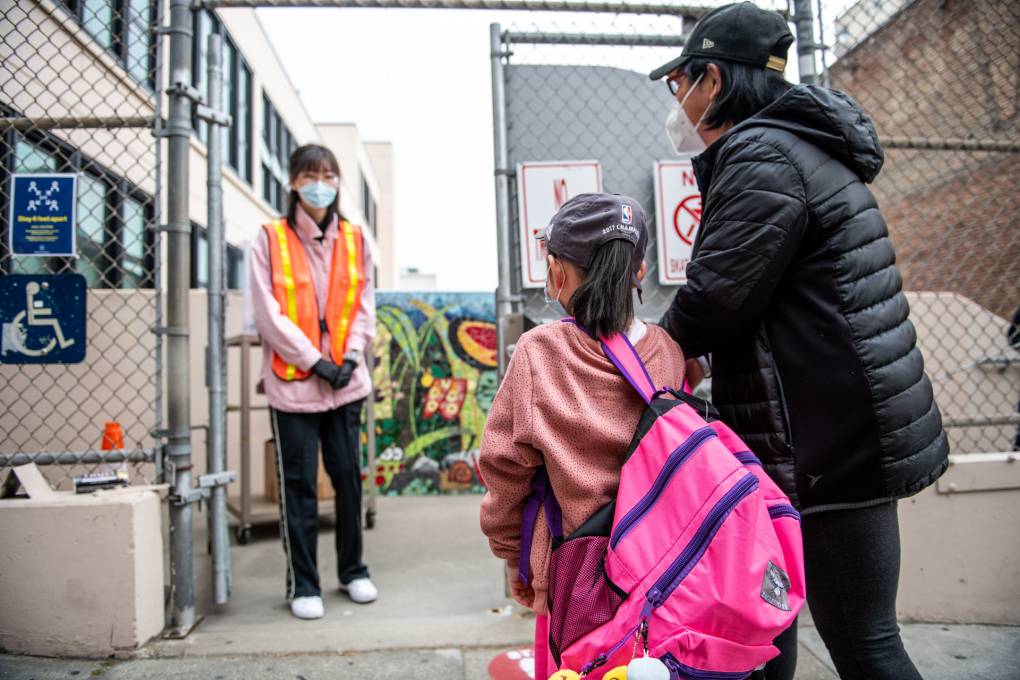
"caption": "Joyce Lee gets ready to drop off her daughter at Gordon Lau Elementary School in San Francisco on April 21, 2021.",
"description": "Joyce Lee gets ready to drop off her daughter at Gordon Lau Elementary School in San Francisco on April 21, 2021.",
"title": "delta-variant-schools-children",
"credit": "Beth LaBerge/KQED News",
"status": "inherit",
"altTag": "Mom crouches down with hand in young kid's enormous pink backpack, both wearing baseball caps and masks",
"isLoading": false,
"fetchFailed": false
},
"news_11884623": {
"type": "attachments",
"id": "news_11884623",
"meta": {
"index": "attachments_1716263798",
"site": "news",
"id": "11884623",
"found": true
},
"parent": 11884622,
"imgSizes": {
"twentyfourteen-full-width": {
"file": "https://ww2.kqed.org/app/uploads/sites/10/2021/08/gettyimages-1232668997_custom-45aef38b9ac495d0a953edfbb404ba7f3849fa59-1038x576.jpg",
"width": 1038,
"mimeType": "image/jpeg",
"height": 576
},
"thumbnail": {
"file": "https://ww2.kqed.org/app/uploads/sites/10/2021/08/gettyimages-1232668997_custom-45aef38b9ac495d0a953edfbb404ba7f3849fa59-160x107.jpg",
"width": 160,
"mimeType": "image/jpeg",
"height": 107
},
"post-thumbnail": {
"file": "https://ww2.kqed.org/app/uploads/sites/10/2021/08/gettyimages-1232668997_custom-45aef38b9ac495d0a953edfbb404ba7f3849fa59-672x372.jpg",
"width": 672,
"mimeType": "image/jpeg",
"height": 372
},
"kqedFullSize": {
"file": "https://ww2.kqed.org/app/uploads/sites/10/2021/08/gettyimages-1232668997_custom-45aef38b9ac495d0a953edfbb404ba7f3849fa59-e1628708342617.jpg",
"width": 1920,
"height": 1279
},
"large": {
"file": "https://ww2.kqed.org/app/uploads/sites/10/2021/08/gettyimages-1232668997_custom-45aef38b9ac495d0a953edfbb404ba7f3849fa59-1020x679.jpg",
"width": 1020,
"mimeType": "image/jpeg",
"height": 679
},
"1536x1536": {
"file": "https://ww2.kqed.org/app/uploads/sites/10/2021/08/gettyimages-1232668997_custom-45aef38b9ac495d0a953edfbb404ba7f3849fa59-1536x1023.jpg",
"width": 1536,
"mimeType": "image/jpeg",
"height": 1023
},
"full-width": {
"file": "https://ww2.kqed.org/app/uploads/sites/10/2021/08/gettyimages-1232668997_custom-45aef38b9ac495d0a953edfbb404ba7f3849fa59-1920x1279.jpg",
"width": 1920,
"mimeType": "image/jpeg",
"height": 1279
},
"medium": {
"file": "https://ww2.kqed.org/app/uploads/sites/10/2021/08/gettyimages-1232668997_custom-45aef38b9ac495d0a953edfbb404ba7f3849fa59-800x533.jpg",
"width": 800,
"mimeType": "image/jpeg",
"height": 533
}
},
"publishDate": 1628705931,
"modified": 1629762359,
"caption": "Kindergartner Allyson Zavala joined with other students and school superintendent Austin Buetner for a class selfie in April inside teacher Alicia Pizzi's classroom at Maurice Sendak Elementary School in North Hollywood.",
"description": "Kindergartner Allyson Zavala joined with other students and school officials for a class selfie in April 2021, inside teacher Alicia Pizzi's classroom at Maurice Sendak Elementary School in North Hollywood.",
"title": "Kindergartner Allyson Zavala joined with other students and school superintendent Austin Buetner for a class selfie in April inside teacher Alicia Pizzi's classroom at Maurice Sendak Elementary School in North Hollywood, Calif.",
"credit": "Robert Gauthier/Los Angeles Times via Getty Images",
"status": "inherit",
"altTag": "masked kindergartners in masks at desks raising hands",
"isLoading": false,
"fetchFailed": false
},
"news_11884612": {
"type": "attachments",
"id": "news_11884612",
"meta": {
"index": "attachments_1716263798",
"site": "news",
"id": "11884612",
"found": true
},
"parent": 11884606,
"imgSizes": {
"twentyfourteen-full-width": {
"file": "https://ww2.kqed.org/app/uploads/sites/10/2021/08/GettyImages-1307454937-1-1038x576.jpg",
"width": 1038,
"mimeType": "image/jpeg",
"height": 576
},
"thumbnail": {
"file": "https://ww2.kqed.org/app/uploads/sites/10/2021/08/GettyImages-1307454937-1-160x108.jpg",
"width": 160,
"mimeType": "image/jpeg",
"height": 108
},
"post-thumbnail": {
"file": "https://ww2.kqed.org/app/uploads/sites/10/2021/08/GettyImages-1307454937-1-672x372.jpg",
"width": 672,
"mimeType": "image/jpeg",
"height": 372
},
"kqedFullSize": {
"file": "https://ww2.kqed.org/app/uploads/sites/10/2021/08/GettyImages-1307454937-1.jpg",
"width": 1920,
"height": 1296
},
"large": {
"file": "https://ww2.kqed.org/app/uploads/sites/10/2021/08/GettyImages-1307454937-1-1020x689.jpg",
"width": 1020,
"mimeType": "image/jpeg",
"height": 689
},
"1536x1536": {
"file": "https://ww2.kqed.org/app/uploads/sites/10/2021/08/GettyImages-1307454937-1-1536x1037.jpg",
"width": 1536,
"mimeType": "image/jpeg",
"height": 1037
},
"medium": {
"file": "https://ww2.kqed.org/app/uploads/sites/10/2021/08/GettyImages-1307454937-1-800x540.jpg",
"width": 800,
"mimeType": "image/jpeg",
"height": 540
}
},
"publishDate": 1628704361,
"modified": 1633123943,
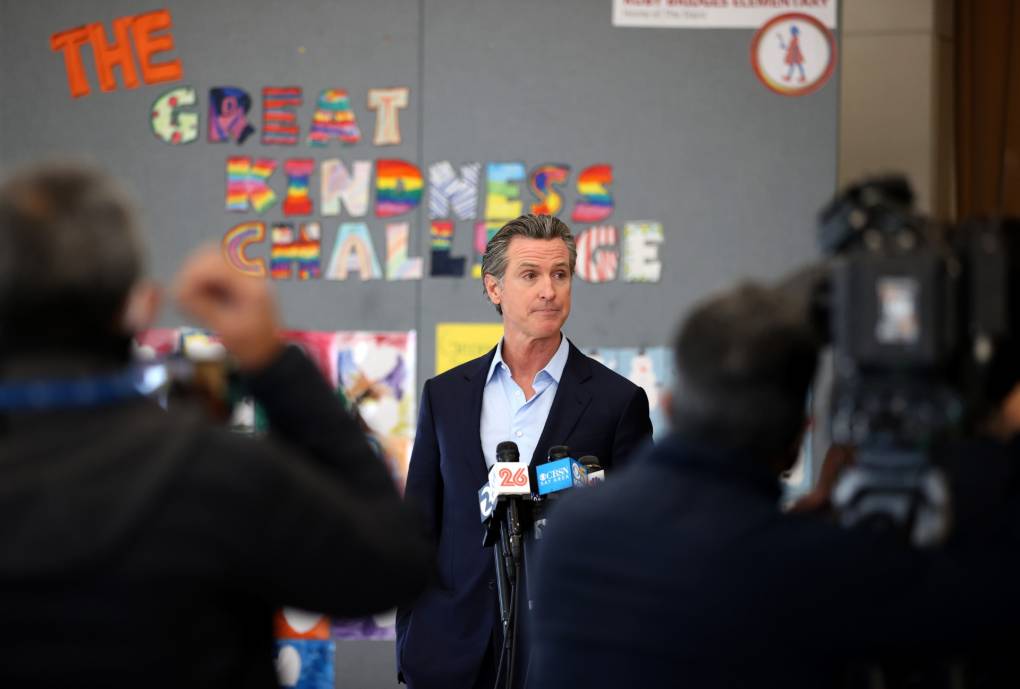
"caption": "Gov. Gavin Newsom speaks during a news conference after touring an elementary school on March 16, 2021, in Alameda. ",
"description": "Gov. Gavin Newsom speaks during a news conference after touring an elementary school on March 16, 2021, in Alameda. ",
"title": "GettyImages-1307454937 (1)",
"credit": "Justin Sullivan/Getty Images",
"status": "inherit",
"altTag": "Gavin Newsom, without a tie, speaks into a bank of microphones in front of a board with colorful letters that spell \"The Great Kindness Challenge.\"",
"isLoading": false,
"fetchFailed": false
},
"news_11884601": {
"type": "attachments",
"id": "news_11884601",
"meta": {
"index": "attachments_1716263798",
"site": "news",
"id": "11884601",
"found": true
},
"parent": 11884508,
"imgSizes": {
"twentyfourteen-full-width": {
"file": "https://ww2.kqed.org/app/uploads/sites/10/2021/08/pjimage1-1-1038x576.jpg",
"width": 1038,
"mimeType": "image/jpeg",
"height": 576
},
"thumbnail": {
"file": "https://ww2.kqed.org/app/uploads/sites/10/2021/08/pjimage1-1-160x90.jpg",
"width": 160,
"mimeType": "image/jpeg",
"height": 90
},
"post-thumbnail": {
"file": "https://ww2.kqed.org/app/uploads/sites/10/2021/08/pjimage1-1-672x372.jpg",
"width": 672,
"mimeType": "image/jpeg",
"height": 372
},
"kqedFullSize": {
"file": "https://ww2.kqed.org/app/uploads/sites/10/2021/08/pjimage1-1.jpg",
"width": 1920,
"height": 1080
},
"large": {
"file": "https://ww2.kqed.org/app/uploads/sites/10/2021/08/pjimage1-1-1020x574.jpg",
"width": 1020,
"mimeType": "image/jpeg",
"height": 574
},
"1536x1536": {
"file": "https://ww2.kqed.org/app/uploads/sites/10/2021/08/pjimage1-1-1536x864.jpg",
"width": 1536,
"mimeType": "image/jpeg",
"height": 864
},
"medium": {
"file": "https://ww2.kqed.org/app/uploads/sites/10/2021/08/pjimage1-1-800x450.jpg",
"width": 800,
"mimeType": "image/jpeg",
"height": 450
}
},
"publishDate": 1628699258,
"modified": 1628699291,
"caption": "Andreanna Yanez-Vierra is teaching first grade at Hoover Elementary School in Burlingame this fall. Ralph Bedwell is teaching English at Pinole Valley High School.",
"description": null,
"title": "pjimage(1)",
"credit": null,
"status": "inherit",
"altTag": null,
"isLoading": false,
"fetchFailed": false
},
"news_11884570": {
"type": "attachments",
"id": "news_11884570",
"meta": {
"index": "attachments_1716263798",
"site": "news",
"id": "11884570",
"found": true
},
"parent": 11884547,
"imgSizes": {
"twentyfourteen-full-width": {
"file": "https://ww2.kqed.org/app/uploads/sites/10/2021/08/RS48733_012_SanFrancisco_GordonLauElementary_04212021-qut-1038x576.jpg",
"width": 1038,
"mimeType": "image/jpeg",
"height": 576
},
"thumbnail": {
"file": "https://ww2.kqed.org/app/uploads/sites/10/2021/08/RS48733_012_SanFrancisco_GordonLauElementary_04212021-qut-160x107.jpg",
"width": 160,
"mimeType": "image/jpeg",
"height": 107
},
"post-thumbnail": {
"file": "https://ww2.kqed.org/app/uploads/sites/10/2021/08/RS48733_012_SanFrancisco_GordonLauElementary_04212021-qut-672x372.jpg",
"width": 672,
"mimeType": "image/jpeg",
"height": 372
},
"kqedFullSize": {
"file": "https://ww2.kqed.org/app/uploads/sites/10/2021/08/RS48733_012_SanFrancisco_GordonLauElementary_04212021-qut.jpg",
"width": 1920,
"height": 1280
},
"large": {
"file": "https://ww2.kqed.org/app/uploads/sites/10/2021/08/RS48733_012_SanFrancisco_GordonLauElementary_04212021-qut-1020x680.jpg",
"width": 1020,
"mimeType": "image/jpeg",
"height": 680
},
"1536x1536": {
"file": "https://ww2.kqed.org/app/uploads/sites/10/2021/08/RS48733_012_SanFrancisco_GordonLauElementary_04212021-qut-1536x1024.jpg",
"width": 1536,
"mimeType": "image/jpeg",
"height": 1024
},
"medium": {
"file": "https://ww2.kqed.org/app/uploads/sites/10/2021/08/RS48733_012_SanFrancisco_GordonLauElementary_04212021-qut-800x533.jpg",
"width": 800,
"mimeType": "image/jpeg",
"height": 533
}
},
"publishDate": 1628639308,
"modified": 1628704028,
"caption": "A student and her parent check in with staff at Gordon Lau Elementary School in San Francisco on April 21, 2021. SFUSD will now require all staff to either get vaccinated against COVID or undergo weekly testing.",
"description": "A student and her parent check in with staff at Gordon Lau Elementary School in San Francisco on April 21, 2021. SFUSD will now require all of its staff to either get vaccinated against COVID or undergo weekly testing.",
"title": "RS48733_012_SanFrancisco_GordonLauElementary_04212021-qut",
"credit": "Beth LaBerge/KQED",
"status": "inherit",
"altTag": null,
"isLoading": false,
"fetchFailed": false
},
"news_11884180": {
"type": "attachments",
"id": "news_11884180",
"meta": {
"index": "attachments_1716263798",
"site": "news",
"id": "11884180",
"found": true
},
"parent": 11884171,
"imgSizes": {
"twentyfourteen-full-width": {
"file": "https://ww2.kqed.org/app/uploads/sites/10/2021/08/RS44657_004_KQED_Oakland_WatsonFamily_08182020-qut-1038x576.jpg",
"width": 1038,
"mimeType": "image/jpeg",
"height": 576
},
"thumbnail": {
"file": "https://ww2.kqed.org/app/uploads/sites/10/2021/08/RS44657_004_KQED_Oakland_WatsonFamily_08182020-qut-160x107.jpg",
"width": 160,
"mimeType": "image/jpeg",
"height": 107
},
"post-thumbnail": {
"file": "https://ww2.kqed.org/app/uploads/sites/10/2021/08/RS44657_004_KQED_Oakland_WatsonFamily_08182020-qut-672x372.jpg",
"width": 672,
"mimeType": "image/jpeg",
"height": 372
},
"kqedFullSize": {
"file": "https://ww2.kqed.org/app/uploads/sites/10/2021/08/RS44657_004_KQED_Oakland_WatsonFamily_08182020-qut.jpg",
"width": 1920,
"height": 1280
},
"large": {
"file": "https://ww2.kqed.org/app/uploads/sites/10/2021/08/RS44657_004_KQED_Oakland_WatsonFamily_08182020-qut-1020x680.jpg",
"width": 1020,
"mimeType": "image/jpeg",
"height": 680
},
"1536x1536": {
"file": "https://ww2.kqed.org/app/uploads/sites/10/2021/08/RS44657_004_KQED_Oakland_WatsonFamily_08182020-qut-1536x1024.jpg",
"width": 1536,
"mimeType": "image/jpeg",
"height": 1024
},
"medium": {
"file": "https://ww2.kqed.org/app/uploads/sites/10/2021/08/RS44657_004_KQED_Oakland_WatsonFamily_08182020-qut-800x533.jpg",
"width": 800,
"mimeType": "image/jpeg",
"height": 533
}
},
"publishDate": 1628284114,
"modified": 1628284136,
"caption": "(From left) Donte and Kim Watson with their children Halima and Mikhayah outside of their home in Oakland on Aug. 18, 2020.",
"description": null,
"title": "RS44657_004_KQED_Oakland_WatsonFamily_08182020-qut",
"credit": "Beth LaBerge/KQED",
"status": "inherit",
"altTag": null,
"isLoading": false,
"fetchFailed": false
},
"news_11884276": {
"type": "attachments",
"id": "news_11884276",
"meta": {
"index": "attachments_1716263798",
"site": "news",
"id": "11884276",
"found": true
},
"parent": 11884275,
"imgSizes": {
"twentyfourteen-full-width": {
"file": "https://ww2.kqed.org/app/uploads/sites/10/2021/08/gettyimages-1332533413_wide-e1ad756e903603a65f943b996d1ab8d212665b39-1038x576.jpg",
"width": 1038,
"mimeType": "image/jpeg",
"height": 576
},
"thumbnail": {
"file": "https://ww2.kqed.org/app/uploads/sites/10/2021/08/gettyimages-1332533413_wide-e1ad756e903603a65f943b996d1ab8d212665b39-160x90.jpg",
"width": 160,
"mimeType": "image/jpeg",
"height": 90
},
"post-thumbnail": {
"file": "https://ww2.kqed.org/app/uploads/sites/10/2021/08/gettyimages-1332533413_wide-e1ad756e903603a65f943b996d1ab8d212665b39-672x372.jpg",
"width": 672,
"mimeType": "image/jpeg",
"height": 372
},
"kqedFullSize": {
"file": "https://ww2.kqed.org/app/uploads/sites/10/2021/08/gettyimages-1332533413_wide-e1ad756e903603a65f943b996d1ab8d212665b39-scaled.jpg",
"width": 2560,
"height": 1440
},
"2048x2048": {
"file": "https://ww2.kqed.org/app/uploads/sites/10/2021/08/gettyimages-1332533413_wide-e1ad756e903603a65f943b996d1ab8d212665b39-2048x1152.jpg",
"width": 2048,
"mimeType": "image/jpeg",
"height": 1152
},
"large": {
"file": "https://ww2.kqed.org/app/uploads/sites/10/2021/08/gettyimages-1332533413_wide-e1ad756e903603a65f943b996d1ab8d212665b39-1020x574.jpg",
"width": 1020,
"mimeType": "image/jpeg",
"height": 574
},
"1536x1536": {
"file": "https://ww2.kqed.org/app/uploads/sites/10/2021/08/gettyimages-1332533413_wide-e1ad756e903603a65f943b996d1ab8d212665b39-1536x864.jpg",
"width": 1536,
"mimeType": "image/jpeg",
"height": 864
},
"full-width": {
"file": "https://ww2.kqed.org/app/uploads/sites/10/2021/08/gettyimages-1332533413_wide-e1ad756e903603a65f943b996d1ab8d212665b39-1920x1080.jpg",
"width": 1920,
"mimeType": "image/jpeg",
"height": 1080
},
"medium": {
"file": "https://ww2.kqed.org/app/uploads/sites/10/2021/08/gettyimages-1332533413_wide-e1ad756e903603a65f943b996d1ab8d212665b39-800x450.jpg",
"width": 800,
"mimeType": "image/jpeg",
"height": 450
}
},
"publishDate": 1628454075,
"modified": 1628546984,
"caption": "Secretary of Education Dr. Miguel Cardona answers questions during the daily briefing at the White House Aug. 5, 2021, in Washington, D.C. Cardona answered a range of questions related to children returning to school in the fall. ",
"description": "WASHINGTON, DC - AUGUST 05: Secretary of Education Dr. Miguel Cardona answers questions during the daily briefing at the White House August 5, 2021 in Washington, DC. Cardona answered a range of questions related to schoolchildren returning to schools in the fall. (Photo by Win McNamee/Getty Images)",
"title": "U.S. Education Secretary Miguel Cardona answers questions during a White House news briefing on Thursday.",
"credit": "Win McNamee/Getty Images",
"status": "inherit",
"altTag": null,
"isLoading": false,
"fetchFailed": false
},
"news_11884096": {
"type": "attachments",
"id": "news_11884096",
"meta": {
"index": "attachments_1716263798",
"site": "news",
"id": "11884096",
"found": true
},
"parent": 11883979,
"imgSizes": {
"twentyfourteen-full-width": {
"file": "https://ww2.kqed.org/app/uploads/sites/10/2021/08/IMG_5419-1038x576.jpg",
"width": 1038,
"mimeType": "image/jpeg",
"height": 576
},
"thumbnail": {
"file": "https://ww2.kqed.org/app/uploads/sites/10/2021/08/IMG_5419-160x107.jpg",
"width": 160,
"mimeType": "image/jpeg",
"height": 107
},
"post-thumbnail": {
"file": "https://ww2.kqed.org/app/uploads/sites/10/2021/08/IMG_5419-672x372.jpg",
"width": 672,
"mimeType": "image/jpeg",
"height": 372
},
"kqedFullSize": {
"file": "https://ww2.kqed.org/app/uploads/sites/10/2021/08/IMG_5419-scaled.jpg",
"width": 2560,
"height": 1706
},
"2048x2048": {
"file": "https://ww2.kqed.org/app/uploads/sites/10/2021/08/IMG_5419-2048x1365.jpg",
"width": 2048,
"mimeType": "image/jpeg",
"height": 1365
},
"large": {
"file": "https://ww2.kqed.org/app/uploads/sites/10/2021/08/IMG_5419-1020x680.jpg",
"width": 1020,
"mimeType": "image/jpeg",
"height": 680
},
"1536x1536": {
"file": "https://ww2.kqed.org/app/uploads/sites/10/2021/08/IMG_5419-1536x1024.jpg",
"width": 1536,
"mimeType": "image/jpeg",
"height": 1024
},
"full-width": {
"file": "https://ww2.kqed.org/app/uploads/sites/10/2021/08/IMG_5419-1920x1280.jpg",
"width": 1920,
"mimeType": "image/jpeg",
"height": 1280
},
"medium": {
"file": "https://ww2.kqed.org/app/uploads/sites/10/2021/08/IMG_5419-800x533.jpg",
"width": 800,
"mimeType": "image/jpeg",
"height": 533
}
},
"publishDate": 1628261407,
"modified": 1628294563,
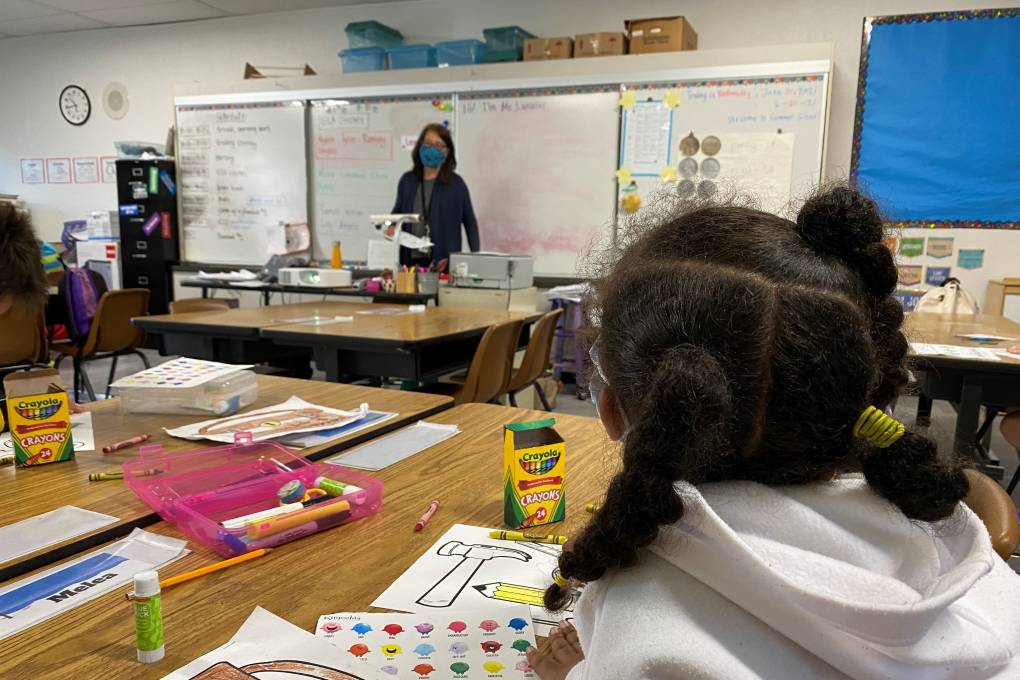
"caption": "Social worker Vinita Lee helps third graders in Castro Valley Unified's summer school program understand how to handle their emotions by creating a 'toolbox' of responses. This year, CVUSD tripled summer school attendance with the goal of providing more students with the tools they may need to return to in-person learning.",
"description": "Social worker, Vinita Lee, helps third graders in Castro Valley Unified's summer school program understand how to handle their emotions by creating a 'tool box' of responses.",
"title": "IMG_5419",
"credit": "Julia McEvoy/KQED",
"status": "inherit",
"altTag": "The view from behind a student's shoulder inside a classroom. The whiteboard is visible and a teacher stands in front of it, teaching a lesson. The student is sitting at their desk and both the student and teacher are wearing facemasks and are keeping distance from each other.",
"isLoading": false,
"fetchFailed": false
},
"news_11884149": {
"type": "attachments",
"id": "news_11884149",
"meta": {
"index": "attachments_1716263798",
"site": "news",
"id": "11884149",
"found": true
},
"parent": 11884148,
"imgSizes": {
"twentyfourteen-full-width": {
"file": "https://ww2.kqed.org/app/uploads/sites/10/2021/08/LAUSD-3-1200x750-1-1038x576.jpg",
"width": 1038,
"mimeType": "image/jpeg",
"height": 576
},
"thumbnail": {
"file": "https://ww2.kqed.org/app/uploads/sites/10/2021/08/LAUSD-3-1200x750-1-160x100.jpg",
"width": 160,
"mimeType": "image/jpeg",
"height": 100
},
"post-thumbnail": {
"file": "https://ww2.kqed.org/app/uploads/sites/10/2021/08/LAUSD-3-1200x750-1-672x372.jpg",
"width": 672,
"mimeType": "image/jpeg",
"height": 372
},
"kqedFullSize": {
"file": "https://ww2.kqed.org/app/uploads/sites/10/2021/08/LAUSD-3-1200x750-1.jpg",
"width": 1200,
"height": 750
},
"large": {
"file": "https://ww2.kqed.org/app/uploads/sites/10/2021/08/LAUSD-3-1200x750-1-1020x638.jpg",
"width": 1020,
"mimeType": "image/jpeg",
"height": 638
},
"medium": {
"file": "https://ww2.kqed.org/app/uploads/sites/10/2021/08/LAUSD-3-1200x750-1-800x500.jpg",
"width": 800,
"mimeType": "image/jpeg",
"height": 500
}
},
"publishDate": 1628278624,
"modified": 1628278674,
"caption": "A Los Angeles Unified School District student receives a COVID test before school on April 13, 2021.",
"description": "A Los Angeles Unified School District student receives a COVID test before school on April 13, 2021.",
"title": "LAUSD-3-1200x750",
"credit": "Betty Márquez Rosales/EdSource",
"status": "inherit",
"altTag": "A Los Angeles Unified School District student receives a COVID test before school on April 13, 2021.",
"isLoading": false,
"fetchFailed": false
},
"news_11883568": {
"type": "attachments",
"id": "news_11883568",
"meta": {
"index": "attachments_1716263798",
"site": "news",
"id": "11883568",
"found": true
},
"parent": 11883567,
"imgSizes": {
"twentyfourteen-full-width": {
"file": "https://ww2.kqed.org/app/uploads/sites/10/2021/08/VaccinationSiteLAMC-scaled-1-1038x576.jpeg",
"width": 1038,
"mimeType": "image/jpeg",
"height": 576
},
"thumbnail": {
"file": "https://ww2.kqed.org/app/uploads/sites/10/2021/08/VaccinationSiteLAMC-scaled-1-160x120.jpeg",
"width": 160,
"mimeType": "image/jpeg",
"height": 120
},
"post-thumbnail": {
"file": "https://ww2.kqed.org/app/uploads/sites/10/2021/08/VaccinationSiteLAMC-scaled-1-672x372.jpeg",
"width": 672,
"mimeType": "image/jpeg",
"height": 372
},
"kqedFullSize": {
"file": "https://ww2.kqed.org/app/uploads/sites/10/2021/08/VaccinationSiteLAMC-scaled-1-e1628024346125.jpeg",
"width": 1920,
"height": 1440
},
"2048x2048": {
"file": "https://ww2.kqed.org/app/uploads/sites/10/2021/08/VaccinationSiteLAMC-scaled-1-2048x1536.jpeg",
"width": 2048,
"mimeType": "image/jpeg",
"height": 1536
},
"large": {
"file": "https://ww2.kqed.org/app/uploads/sites/10/2021/08/VaccinationSiteLAMC-scaled-1-1020x765.jpeg",
"width": 1020,
"mimeType": "image/jpeg",
"height": 765
},
"1536x1536": {
"file": "https://ww2.kqed.org/app/uploads/sites/10/2021/08/VaccinationSiteLAMC-scaled-1-1536x1152.jpeg",
"width": 1536,
"mimeType": "image/jpeg",
"height": 1152
},
"full-width": {
"file": "https://ww2.kqed.org/app/uploads/sites/10/2021/08/VaccinationSiteLAMC-scaled-1-1920x1440.jpeg",
"width": 1920,
"mimeType": "image/jpeg",
"height": 1440
},
"medium": {
"file": "https://ww2.kqed.org/app/uploads/sites/10/2021/08/VaccinationSiteLAMC-scaled-1-800x600.jpeg",
"width": 800,
"mimeType": "image/jpeg",
"height": 600
}
},
"publishDate": 1628024296,
"modified": 1628025161,
"caption": "Los Angeles Mission College offered cash incentives for students who agreed to be vaccinated on July 21, 2021.",
"description": null,
"title": "VaccinationSiteLAMC-scaled",
"credit": "Matthew Reagan/CalMatters",
"status": "inherit",
"altTag": "A sign that shows where vaccinations are taking place.",
"isLoading": false,
"fetchFailed": false
},
"news_11883330": {
"type": "attachments",
"id": "news_11883330",
"meta": {
"index": "attachments_1716263798",
"site": "news",
"id": "11883330",
"found": true
},
"parent": 11883324,
"imgSizes": {
"twentyfourteen-full-width": {
"file": "https://ww2.kqed.org/app/uploads/sites/10/2021/07/RS47777_078_SanFrancisco_ReopenSchoolsMarch_03132021-qut-1038x576.jpeg",
"width": 1038,
"mimeType": "image/jpeg",
"height": 576
},
"thumbnail": {
"file": "https://ww2.kqed.org/app/uploads/sites/10/2021/07/RS47777_078_SanFrancisco_ReopenSchoolsMarch_03132021-qut-160x107.jpeg",
"width": 160,
"mimeType": "image/jpeg",
"height": 107
},
"post-thumbnail": {
"file": "https://ww2.kqed.org/app/uploads/sites/10/2021/07/RS47777_078_SanFrancisco_ReopenSchoolsMarch_03132021-qut-672x372.jpeg",
"width": 672,
"mimeType": "image/jpeg",
"height": 372
},
"kqedFullSize": {
"file": "https://ww2.kqed.org/app/uploads/sites/10/2021/07/RS47777_078_SanFrancisco_ReopenSchoolsMarch_03132021-qut.jpeg",
"width": 1920,
"height": 1278
},
"large": {
"file": "https://ww2.kqed.org/app/uploads/sites/10/2021/07/RS47777_078_SanFrancisco_ReopenSchoolsMarch_03132021-qut-1020x679.jpeg",
"width": 1020,
"mimeType": "image/jpeg",
"height": 679
},
"1536x1536": {
"file": "https://ww2.kqed.org/app/uploads/sites/10/2021/07/RS47777_078_SanFrancisco_ReopenSchoolsMarch_03132021-qut-1536x1022.jpeg",
"width": 1536,
"mimeType": "image/jpeg",
"height": 1022
},
"medium": {
"file": "https://ww2.kqed.org/app/uploads/sites/10/2021/07/RS47777_078_SanFrancisco_ReopenSchoolsMarch_03132021-qut-800x533.jpeg",
"width": 800,
"mimeType": "image/jpeg",
"height": 533
}
},
"publishDate": 1627755639,
"modified": 1630424954,
"caption": "Mayor London Breed speaks during a rally to reopen San Francisco public schools on March 13, 2021, the one year anniversary of school buildings being closed.",
"description": "Mayor London Breed speaks during a rally to reopen San Francisco public schools on March 13, 2021, the one year anniversary of school buildings being closed.",
"title": "RS47777_078_SanFrancisco_ReopenSchoolsMarch_03132021-qut",
"credit": "Beth LaBerge/KQED",
"status": "inherit",
"altTag": "Protest sign saying \"I want school! Full time. I miss my friends\" in foreground of crowd before City Hall. Protestors in yellow T-shirts, Mayor Breed at podium in background.",
"isLoading": false,
"fetchFailed": false
},
"news_11882698": {
"type": "attachments",
"id": "news_11882698",
"meta": {
"index": "attachments_1716263798",
"site": "news",
"id": "11882698",
"found": true
},
"parent": 11882605,
"imgSizes": {
"twentyfourteen-full-width": {
"file": "https://ww2.kqed.org/app/uploads/sites/10/2021/07/GettyImages-1314853312-1-1038x576.jpg",
"width": 1038,
"mimeType": "image/jpeg",
"height": 576
},
"thumbnail": {
"file": "https://ww2.kqed.org/app/uploads/sites/10/2021/07/GettyImages-1314853312-1-160x107.jpg",
"width": 160,
"mimeType": "image/jpeg",
"height": 107
},
"post-thumbnail": {
"file": "https://ww2.kqed.org/app/uploads/sites/10/2021/07/GettyImages-1314853312-1-672x372.jpg",
"width": 672,
"mimeType": "image/jpeg",
"height": 372
},
"kqedFullSize": {
"file": "https://ww2.kqed.org/app/uploads/sites/10/2021/07/GettyImages-1314853312-1.jpg",
"width": 1280,
"height": 853
},
"large": {
"file": "https://ww2.kqed.org/app/uploads/sites/10/2021/07/GettyImages-1314853312-1-1020x680.jpg",
"width": 1020,
"mimeType": "image/jpeg",
"height": 680
},
"medium": {
"file": "https://ww2.kqed.org/app/uploads/sites/10/2021/07/GettyImages-1314853312-1-800x533.jpg",
"width": 800,
"mimeType": "image/jpeg",
"height": 533
}
},
"publishDate": 1627426987,
"modified": 1627428713,
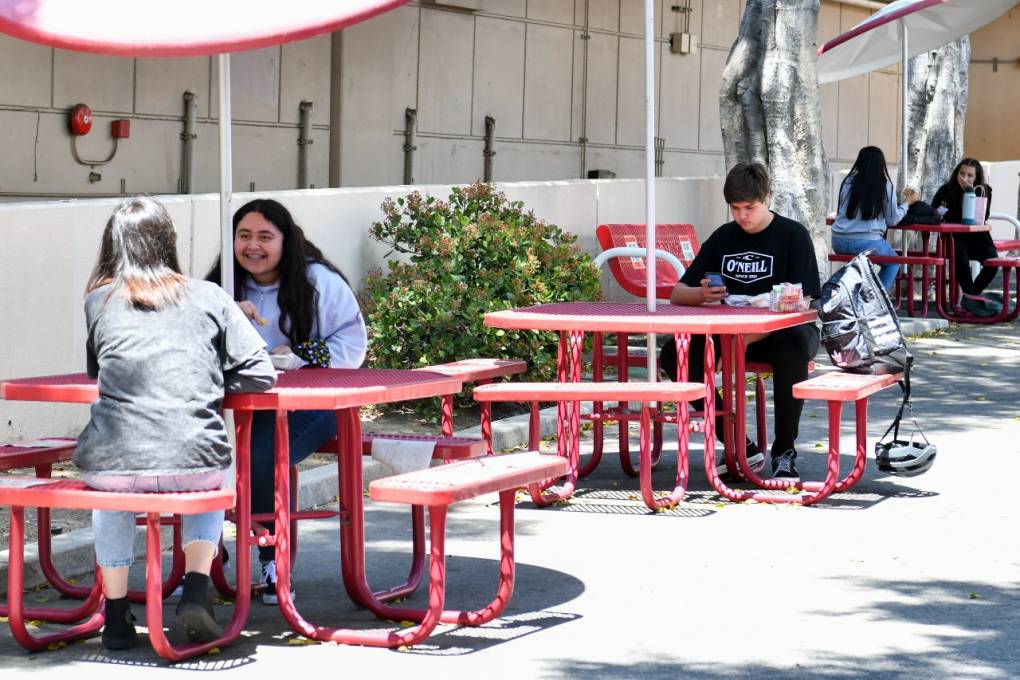
"caption": "Students on their lunch break observe social distance protocols at Hollywood High School on April 27, 2021 in Los Angeles. ",
"description": "LOS ANGELES, CALIFORNIA - APRIL 27: Students on their lunch break observe social distance protocols at Hollywood High School on April 27, 2021 in Los Angeles, California. Los Angeles Unified School District middle and high schools have reopened this week for in-person instruction. COVID-19 protocols in place include testing for all students and staff, vaccinations for all staff, and a completed daily health check for anyone arriving on campus ",
"title": "GettyImages-1314853312 (1)",
"credit": "Rodin Eckenroth/Getty Images",
"status": "inherit",
"altTag": null,
"isLoading": false,
"fetchFailed": false
}
},
"audioPlayerReducer": {
"postId": "stream_live",
"isPaused": true,
"isPlaying": false,
"pfsActive": false,
"pledgeModalIsOpen": true,
"playerDrawerIsOpen": false,
"liveAudioPlayStartedAt": 0,
"liveAudioPlayContext": ""
},
"authorsReducer": {
"byline_news_11884622": {
"type": "authors",
"id": "byline_news_11884622",
"meta": {
"override": true
},
"slug": "byline_news_11884622",
"name": "\u003ca href=\"https://www.npr.org/people/729920828/pien-huang\">Pien Huang\u003c/a>",
"isLoading": false
},
"byline_news_11884606": {
"type": "authors",
"id": "byline_news_11884606",
"meta": {
"override": true
},
"slug": "byline_news_11884606",
"name": "\u003ca href=\"https://calmatters.org/author/joe-hong/\">Joe Hong\u003c/a>, CalMatters \u003cbr> \u003ca href=\"https://www.kqed.org/author/jrodriguez\">Joe Fitzgerald Rodriguez\u003c/a>, KQED",
"isLoading": false
},
"byline_news_11884275": {
"type": "authors",
"id": "byline_news_11884275",
"meta": {
"override": true
},
"slug": "byline_news_11884275",
"name": "Clare Lombardo",
"isLoading": false
},
"byline_news_11884148": {
"type": "authors",
"id": "byline_news_11884148",
"meta": {
"override": true
},
"slug": "byline_news_11884148",
"name": "Carolyn Jones\u003cbr>EdSource",
"isLoading": false
},
"byline_news_11883567": {
"type": "authors",
"id": "byline_news_11883567",
"meta": {
"override": true
},
"slug": "byline_news_11883567",
"name": "Emma Hall and Matthew Reagan",
"isLoading": false
},
"byline_news_11882605": {
"type": "authors",
"id": "byline_news_11882605",
"meta": {
"override": true
},
"slug": "byline_news_11882605",
"name": "Ali Tadayon\u003cbr>EdSource",
"isLoading": false
},
"jmcevoy": {
"type": "authors",
"id": "231",
"meta": {
"index": "authors_1716337520",
"id": "231",
"found": true
},
"name": "Julia McEvoy",
"firstName": "Julia",
"lastName": "McEvoy",
"slug": "jmcevoy",
"email": "jmcevoy@KQED.org",
"display_author_email": true,
"staff_mastheads": [
"news"
],
"title": "KQED Senior Editor",
"bio": "Julia McEvoy is KQED's Senior Editor, Education Equity.\r\n\r\nJulia heads KQED’s education coverage examining inequities students face in Bay Area and California schools, and reports on what it will take to educate the next generation.\r\n\r\nJulia's editorial work has received a Peabody Award, a Casey Medal for Coverage of Children and Families, several Edward R. Murrow awards, as well as awards from the Public Radio News Directors Inc. and the Society for Professional Journalists.",
"avatar": "https://secure.gravatar.com/avatar/aec3ce21abe02b302fd33638abd56a22?s=600&d=blank&r=g",
"twitter": "juliamcevoy1",
"facebook": null,
"instagram": null,
"linkedin": null,
"sites": [
{
"site": "news",
"roles": []
},
{
"site": "stateofhealth",
"roles": [
"author"
]
}
],
"headData": {
"title": "Julia McEvoy | KQED",
"description": "KQED Senior Editor",
"ogImgSrc": "https://secure.gravatar.com/avatar/aec3ce21abe02b302fd33638abd56a22?s=600&d=blank&r=g",
"twImgSrc": "https://secure.gravatar.com/avatar/aec3ce21abe02b302fd33638abd56a22?s=600&d=blank&r=g"
},
"isLoading": false,
"link": "/author/jmcevoy"
},
"kqednewsstaffandwires": {
"type": "authors",
"id": "237",
"meta": {
"index": "authors_1716337520",
"id": "237",
"found": true
},
"name": "KQED News Staff and Wires",
"firstName": "KQED News Staff and Wires",
"lastName": null,
"slug": "kqednewsstaffandwires",
"email": "onlinenewsstaff@kqed.org",
"display_author_email": false,
"staff_mastheads": [],
"title": null,
"bio": null,
"avatar": "https://secure.gravatar.com/avatar/72295af8ebbfbd19a4948f5271285664?s=600&d=blank&r=g",
"twitter": null,
"facebook": null,
"instagram": null,
"linkedin": null,
"sites": [
{
"site": "arts",
"roles": [
"contributor"
]
},
{
"site": "news",
"roles": [
"contributor"
]
},
{
"site": "lowdown",
"roles": [
"author"
]
},
{
"site": "stateofhealth",
"roles": [
"contributor"
]
},
{
"site": "food",
"roles": [
"author"
]
}
],
"headData": {
"title": "KQED News Staff and Wires | KQED",
"description": null,
"ogImgSrc": "https://secure.gravatar.com/avatar/72295af8ebbfbd19a4948f5271285664?s=600&d=blank&r=g",
"twImgSrc": "https://secure.gravatar.com/avatar/72295af8ebbfbd19a4948f5271285664?s=600&d=blank&r=g"
},
"isLoading": false,
"link": "/author/kqednewsstaffandwires"
},
"minakim": {
"type": "authors",
"id": "243",
"meta": {
"index": "authors_1716337520",
"id": "243",
"found": true
},
"name": "Mina Kim",
"firstName": "Mina",
"lastName": "Kim",
"slug": "minakim",
"email": "mkim@kqed.org",
"display_author_email": false,
"staff_mastheads": [
"news"
],
"title": "Host, Forum",
"bio": "Mina Kim is host of the 10 a.m. statewide hour of Forum; a live daily talk show for curious Californians on issues that matter to the state and nation, with a particular emphasis on race and equity.\r\n\r\nBefore joining the Forum team, Mina was KQED’s evening news anchor, and health reporter for The California Report. Her award-winning work has included natural disasters in Napa and gun violence in Oakland. Mina grew up in St. John’s, Newfoundland.",
"avatar": "https://secure.gravatar.com/avatar/145ce657a2d08cb86d93686beb958982?s=600&d=blank&r=g",
"twitter": "mkimreporter",
"facebook": null,
"instagram": null,
"linkedin": null,
"sites": [
{
"site": "news",
"roles": [
"contributor"
]
},
{
"site": "stateofhealth",
"roles": [
"author"
]
},
{
"site": "forum",
"roles": [
"editor"
]
}
],
"headData": {
"title": "Mina Kim | KQED",
"description": "Host, Forum",
"ogImgSrc": "https://secure.gravatar.com/avatar/145ce657a2d08cb86d93686beb958982?s=600&d=blank&r=g",
"twImgSrc": "https://secure.gravatar.com/avatar/145ce657a2d08cb86d93686beb958982?s=600&d=blank&r=g"
},
"isLoading": false,
"link": "/author/minakim"
},
"dkatayama": {
"type": "authors",
"id": "7240",
"meta": {
"index": "authors_1716337520",
"id": "7240",
"found": true
},
"name": "Devin Katayama",
"firstName": "Devin",
"lastName": "Katayama",
"slug": "dkatayama",
"email": "dkatayama@kqed.org",
"display_author_email": true,
"staff_mastheads": [
"news"
],
"title": "Editor of Talent and Development",
"bio": "Devin Katayama is former Editor of Talent and Development for KQED. He supported our internship program and on-call staff by looking for equitable opportunities to improve the newsroom.\r\n\r\nHe previously hosted The Bay and American Suburb podcasts from KQED News. Prior to returning to the Bay Area in 2015, Devin was the education reporter for WFPL in Louisville and worked as a producer with radio stations in Chicago and Portland, OR. His work has appeared on NPR’s \u003cem>Morning Edition, All Things Considered, The Takeaway\u003c/em> and \u003cem>Here and Now.\u003c/em>\r\n\r\nDevin earned his MA in Journalism from Columbia College Chicago, where he was a Follett Fellow and the recipient of the 2011 Studs Terkel Community Media Workshop Scholarship for his story on Chicago's homeless youth. He won WBUR's 2014 Daniel Schorr award and a regional RTNDA Edward R. Murrow Award for his documentary \"At Risk\" that looked at issues facing some of Louisville's students. Devin has also received numerous local awards from the Associated Press and the Society of Professional Journalists.",
"avatar": "https://secure.gravatar.com/avatar/d0d2978a31002fb2de107921a8e18405?s=600&d=blank&r=g",
"twitter": "RadioDevin",
"facebook": null,
"instagram": null,
"linkedin": null,
"sites": [
{
"site": "arts",
"roles": []
},
{
"site": "news",
"roles": [
"author"
]
},
{
"site": "stateofhealth",
"roles": [
"author"
]
},
{
"site": "forum",
"roles": [
"editor"
]
},
{
"site": "perspectives",
"roles": [
"editor"
]
}
],
"headData": {
"title": "Devin Katayama | KQED",
"description": "Editor of Talent and Development",
"ogImgSrc": "https://secure.gravatar.com/avatar/d0d2978a31002fb2de107921a8e18405?s=600&d=blank&r=g",
"twImgSrc": "https://secure.gravatar.com/avatar/d0d2978a31002fb2de107921a8e18405?s=600&d=blank&r=g"
},
"isLoading": false,
"link": "/author/dkatayama"
},
"ecruzguevarra": {
"type": "authors",
"id": "8654",
"meta": {
"index": "authors_1716337520",
"id": "8654",
"found": true
},
"name": "Ericka Cruz Guevarra",
"firstName": "Ericka",
"lastName": "Cruz Guevarra",
"slug": "ecruzguevarra",
"email": "ecruzguevarra@kqed.org",
"display_author_email": true,
"staff_mastheads": [
"news"
],
"title": "Producer, The Bay Podcast",
"bio": "Ericka Cruz Guevarra is host of \u003ca href=\"https://www.kqed.org/podcasts/thebay\">\u003cem>The Bay\u003c/em>\u003c/a> podcast at KQED. Before host, she was the show’s producer. Her work in that capacity includes a three-part reported series on policing in Vallejo, which won a 2020 excellence in journalism award from the Society of Professional Journalists. Ericka has worked as a breaking news reporter at Oregon Public Broadcasting, helped produce the Code Switch podcast, and was KQED’s inaugural Raul Ramirez Diversity Fund intern. She’s also an alumna of NPR’s Next Generation Radio program. Send her an email if you have strong feelings about whether Fairfield and Suisun City are the Bay. Ericka is represented by SAG-AFTRA.",
"avatar": "https://secure.gravatar.com/avatar/accefc1de4bafc7e234b69bcb9b6f6536c130fd84709bc3069ef11a78787e1bb?s=600&d=blank&r=g",
"twitter": "NotoriousECG",
"bluesky": null,
"facebook": null,
"instagram": null,
"linkedin": null,
"sites": [
{
"site": "arts",
"roles": [
"subscriber"
]
},
{
"site": "news",
"roles": [
"editor",
"manage_categories"
]
},
{
"site": "futureofyou",
"roles": [
"subscriber"
]
},
{
"site": "stateofhealth",
"roles": [
"subscriber"
]
},
{
"site": "science",
"roles": [
"editor"
]
},
{
"site": "forum",
"roles": [
"subscriber"
]
}
],
"headData": {
"title": "Ericka Cruz Guevarra | KQED",
"description": "Producer, The Bay Podcast",
"ogImgSrc": "https://secure.gravatar.com/avatar/accefc1de4bafc7e234b69bcb9b6f6536c130fd84709bc3069ef11a78787e1bb?s=600&d=blank&r=g",
"twImgSrc": "https://secure.gravatar.com/avatar/accefc1de4bafc7e234b69bcb9b6f6536c130fd84709bc3069ef11a78787e1bb?s=600&d=blank&r=g"
},
"isLoading": false,
"link": "/author/ecruzguevarra"
},
"lsarah": {
"type": "authors",
"id": "11626",
"meta": {
"index": "authors_1716337520",
"id": "11626",
"found": true
},
"name": "Lakshmi Sarah",
"firstName": "Lakshmi",
"lastName": "Sarah",
"slug": "lsarah",
"email": "lsarah@kqed.org",
"display_author_email": false,
"staff_mastheads": [],
"title": "Digital Producer",
"bio": "Lakshmi Sarah is an educator, author and journalist with a focus on innovative storytelling. She has worked with newspapers, radio and magazines from Ahmedabad, India to Los Angeles, California. She has written and produced for Die Zeit, Global Voices, AJ+, KQED, Fusion Media Group and the New York Times.",
"avatar": "https://secure.gravatar.com/avatar/652dcaecd8b28826fc17a8b2d6bb4e93?s=600&d=blank&r=g",
"twitter": "lakitalki",
"facebook": null,
"instagram": "https://www.instagram.com/laki.talki/",
"linkedin": "https://www.linkedin.com/in/lakisarah/",
"sites": [
{
"site": "arts",
"roles": []
},
{
"site": "news",
"roles": []
},
{
"site": "bayareabites",
"roles": []
},
{
"site": "science",
"roles": []
}
],
"headData": {
"title": "Lakshmi Sarah | KQED",
"description": "Digital Producer",
"ogImgSrc": "https://secure.gravatar.com/avatar/652dcaecd8b28826fc17a8b2d6bb4e93?s=600&d=blank&r=g",
"twImgSrc": "https://secure.gravatar.com/avatar/652dcaecd8b28826fc17a8b2d6bb4e93?s=600&d=blank&r=g"
},
"isLoading": false,
"link": "/author/lsarah"
},
"amontecillo": {
"type": "authors",
"id": "11649",
"meta": {
"index": "authors_1716337520",
"id": "11649",
"found": true
},
"name": "Alan Montecillo",
"firstName": "Alan",
"lastName": "Montecillo",
"slug": "amontecillo",
"email": "amontecillo@kqed.org",
"display_author_email": false,
"staff_mastheads": [
"news"
],
"title": "KQED Contributor",
"bio": "Alan Montecillo is the senior editor of \u003cem>\u003ca href=\"http://kqed.org/thebay\">The Bay\u003c/a>, \u003c/em> KQED's local news podcast. Before moving to the Bay Area, he worked as a senior talk show producer for WILL in Champaign-Urbana, Illinois and at Oregon Public Broadcasting in Portland, Oregon. He has won journalism awards from the Society of Professional Journalists Northern California, the Public Media Journalists Association, The Signal Awards, and has also received a regional Edward R. Murrow award. Alan is a Filipino American from Hong Kong and a graduate of Reed College.",
"avatar": "https://secure.gravatar.com/avatar/268f53a2066899ea9efdd8a5900218b17c822d9862cbc9326cccec53ef41d349?s=600&d=blank&r=g",
"twitter": "alanmontecillo",
"bluesky": null,
"facebook": null,
"instagram": null,
"linkedin": null,
"sites": [
{
"site": "",
"roles": [
"editor"
]
},
{
"site": "news",
"roles": [
"editor",
"manage_categories"
]
}
],
"headData": {
"title": "Alan Montecillo | KQED",
"description": "KQED Contributor",
"ogImgSrc": "https://secure.gravatar.com/avatar/268f53a2066899ea9efdd8a5900218b17c822d9862cbc9326cccec53ef41d349?s=600&d=blank&r=g",
"twImgSrc": "https://secure.gravatar.com/avatar/268f53a2066899ea9efdd8a5900218b17c822d9862cbc9326cccec53ef41d349?s=600&d=blank&r=g"
},
"isLoading": false,
"link": "/author/amontecillo"
},
"nnavarro": {
"type": "authors",
"id": "11756",
"meta": {
"index": "authors_1716337520",
"id": "11756",
"found": true
},
"name": "Natalia Navarro",
"firstName": "Natalia",
"lastName": "Navarro",
"slug": "nnavarro",
"email": "nnavarro@kqed.org",
"display_author_email": true,
"staff_mastheads": [
"news"
],
"title": "Afternoon News Anchor",
"bio": "Natalia Navarro is KQED's afternoon radio news anchor. She came to KQED in 2021 from Colorado Public Radio, where she was a reporter and host. She has received several awards for her work covering daily and breaking news from professional organizations such as the San Francisco Press Club, Society of Professional Journalists and the Colorado Broadcasters Association. Natalia is originally from Tucson, Arizona, where she got her start in journalism writing for the Arizona Daily Star, Arizona Public Media and the Tucson Weekly. Natalia earned her bachelor's degree in journalism and economics, and her master's degree in journalism from the University of Arizona.",
"avatar": "https://secure.gravatar.com/avatar/a2bdb19fd9520bdea295a2d5f9b2ad65ec51cf0bf559fb1cc041d3a0a04d62ad?s=600&d=blank&r=g",
"twitter": "@NataliaVNavarro",
"bluesky": null,
"facebook": null,
"instagram": null,
"linkedin": null,
"sites": [
{
"site": "news",
"roles": [
"editor"
]
}
],
"headData": {
"title": "Natalia Navarro | KQED",
"description": "Afternoon News Anchor",
"ogImgSrc": "https://secure.gravatar.com/avatar/a2bdb19fd9520bdea295a2d5f9b2ad65ec51cf0bf559fb1cc041d3a0a04d62ad?s=600&d=blank&r=g",
"twImgSrc": "https://secure.gravatar.com/avatar/a2bdb19fd9520bdea295a2d5f9b2ad65ec51cf0bf559fb1cc041d3a0a04d62ad?s=600&d=blank&r=g"
},
"isLoading": false,
"link": "/author/nnavarro"
},
"mjacksonretondo": {
"type": "authors",
"id": "11759",
"meta": {
"index": "authors_1716337520",
"id": "11759",
"found": true
},
"name": "Marlena Jackson-Retondo",
"firstName": "Marlena",
"lastName": "Jackson-Retondo",
"slug": "mjacksonretondo",
"email": "mjacksonretondo@kqed.org",
"display_author_email": false,
"staff_mastheads": [],
"title": "Engagement Producer",
"bio": "Marlena Jackson-Retondo is the engagement producer for KQED's \u003cem>Forum \u003c/em>and \u003cem>Mindshift\u003c/em>. Prior to joining the team in 2022, Marlena was an intern with the KQED Digital News Engagement team. She grew up in the Bay Area.\u003cem> \u003c/em>",
"avatar": "https://secure.gravatar.com/avatar/94ab429312e9a676559e31d1894130df?s=600&d=blank&r=g",
"twitter": null,
"facebook": null,
"instagram": null,
"linkedin": null,
"sites": [
{
"site": "arts",
"roles": [
"editor"
]
},
{
"site": "news",
"roles": [
"contributor"
]
},
{
"site": "mindshift",
"roles": [
"editor"
]
},
{
"site": "forum",
"roles": [
"editor"
]
}
],
"headData": {
"title": "Marlena Jackson-Retondo | KQED",
"description": "Engagement Producer",
"ogImgSrc": "https://secure.gravatar.com/avatar/94ab429312e9a676559e31d1894130df?s=600&d=blank&r=g",
"twImgSrc": "https://secure.gravatar.com/avatar/94ab429312e9a676559e31d1894130df?s=600&d=blank&r=g"
},
"isLoading": false,
"link": "/author/mjacksonretondo"
}
},
"pagesReducer": {
"news_tag_education": {
"type": "terms",
"id": "news_20013",
"meta": {
"index": "terms_1716263798",
"site": "news",
"id": "20013",
"score": 6.9701343
},
"featImg": null,
"name": "education",
"description": null,
"taxonomy": "tag",
"headData": {
"twImgId": null,
"twTitle": null,
"ogTitle": null,
"ogImgId": null,
"twDescription": null,
"description": null,
"title": "education Archives | KQED News",
"ogDescription": null
},
"ttid": 20030,
"slug": "education",
"isLoading": false,
"title": "education",
"pageMeta": {
"site": "news",
"WpPageTemplate": "page-topic-editorial",
"currentPage": 76
},
"blocks": [
{
"blockName": "kqed/post-list",
"attrs": {
"layout": "cardArticle2",
"query": "posts/news?tag=education",
"seeMore": false,
"paginated": true,
"page": 76
}
},
{
"blockName": "kqed/ad"
}
]
}
},
"pfsSessionReducer": {},
"postsReducer": {
"stream_live": {
"type": "live",
"id": "stream_live",
"audioUrl": "https://streams.kqed.org/kqedradio",
"title": "Live Stream",
"excerpt": "Live Stream information currently unavailable.",
"link": "/radio",
"featImg": "",
"label": {
"name": "KQED Live",
"link": "/"
}
},
"stream_kqedNewscast": {
"type": "posts",
"id": "stream_kqedNewscast",
"audioUrl": "https://www.kqed.org/.stream/anon/radio/RDnews/newscast.mp3?_=1",
"title": "KQED Newscast",
"featImg": "",
"label": {
"name": "88.5 FM",
"link": "/"
}
},
"news_11884835": {
"type": "posts",
"id": "news_11884835",
"meta": {
"index": "posts_1716263798",
"site": "news",
"id": "11884835",
"score": null,
"sort": [
1628810374000
]
},
"guestAuthors": [],
"slug": "children-schools-and-the-delta-variant-parents-and-caregivers-questions-answered",
"title": "Children, Schools and the Delta Variant: Parents' and Caregivers' Questions Answered",
"publishDate": 1628810374,
"format": "standard",
"headTitle": "Children, Schools and the Delta Variant: Parents’ and Caregivers’ Questions Answered | KQED",
"labelTerm": {
"site": "news"
},
"content": "\u003cp>\u003cem>Skip to:\u003c/em>\u003c/p>\n\u003cul>\n\u003cli>\u003ca href=\"#protocol\">What is proper COVID protocol in schools?\u003c/a>\u003c/li>\n\u003cli>\u003ca href=\"#vaccines\">Do vaccines work against the delta variant?\u003c/a>\u003c/li>\n\u003cli>\u003ca href=\"#breakthroughs\">How worried should I be for kids about breakthrough infections?\u003c/a>\u003c/li>\n\u003cli>\u003ca href=\"#covidkids\">How does COVID affect kids?\u003c/a>\u003c/li>\n\u003cli>\u003ca href=\"#unvaccinated\">What if I have an unvaccinated child in my house?\u003c/a>\u003c/li>\n\u003c/ul>\n\u003cp>As children in the Bay Area begin in-person learning this fall, and with new evidence that the COVID-19 delta variant is highly contagious and spreads as easily as chickenpox, \u003ca href=\"https://www.kqed.org/news/11884622/how-to-keep-your-child-safe-from-the-delta-variant\">questions and concerns about the safety of children\u003c/a> under 12 not yet eligible for the vaccine have arisen. So what do parents and caregivers need to know about their children’s safety in school?\u003c/p>\n\u003cp>KQED Forum’s \u003ca href=\"https://www.kqed.org/forum/2010101884772/navigating-covid-19s-delta-variant-with-young-children\">Mina Kim spoke to Dr. Yvonne Maldonado\u003c/a>, professor of pediatrics and of epidemiology and chief of the Division of Pediatric Infectious Diseases at the Stanford University School of Medicine, to answer audience questions around schools, the delta variant and how to reduce risk to unvaccinated children.\u003c/p>\n\u003ch3>\u003ca id=\"protocol\">\u003c/a>What is proper COVID protocol in schools?\u003c/h3>\n\u003cp>Transmission of COVID-19 can often begin with unvaccinated teachers and staff. So “at the very minimum, adults need to be vaccinated,” says Maldonado. “Anyone who can be vaccinated should be vaccinated, especially the teachers and staff.”\u003cspan style=\"font-weight: 400\">[aside postID=\"news_11884196\"]\u003c/span>\u003c/p>\n\u003cp>On Wednesday, Gov. Gavin Newsom issued \u003ca href=\"https://www.kqed.org/news/11884606/newsom-mandates-covid-vaccines-or-regular-tests-for-all-california-teachers\">a mandate that all California teachers and school employees be vaccinated\u003c/a> for COVID-19 or be tested weekly. The mandate includes staffers working on school campuses, and it’s the first such statewide mandate in the nation.\u003c/p>\n\u003cp>Maldonado also urges masking, citing \u003ca href=\"https://services.aap.org/en/pages/2019-novel-coronavirus-covid-19-infections/\">the American Academy of Pediatrics’s recent guidance\u003c/a> that “everyone at schools should mask.” As far as distancing goes, she said, three feet should do the trick: Maldonado notes that the medical and scientific fields have found that three feet of distancing is actually as sufficient as the previously recommended six feet — an update that would allow for more space for indoor activities in schools. And of course, Maldonado also stresses the continued importance of handwashing and sanitizing in school spaces.\u003c/p>\n\u003cp>Day care centers have been a really great example of the efficacy of proper COVID-19 precautions, Maldonado said. Although masks are not recommended for children under 2 years of age, if the adults in day care centers continue to mask, the children who are not yet vaccinated will be kept safer from COVID.\u003c/p>\n\u003cfigure id=\"attachment_11881272\" class=\"wp-caption alignnone\" style=\"max-width: 1920px\">\u003cimg loading=\"lazy\" decoding=\"async\" class=\"size-full wp-image-11881272\" src=\"https://ww2.kqed.org/app/uploads/sites/10/2021/07/gettyimages-1328725352-edit_custom-01a2457a3dbbf7d6a89b577ec16236cf4d7511d5-scaled-e1626375372623.jpg\" alt=\"\" width=\"1920\" height=\"1279\">\u003cfigcaption class=\"wp-caption-text\">Children and teachers from the KU Kids @ Deanwood child care center in Washington, D.C., complete a mural celebrating the expansion of the child tax credit on July 14, 2021. \u003ccite>(Jemal Countess/Getty Images for Community Change)\u003c/cite>\u003c/figcaption>\u003c/figure>\n\u003ch3>\u003ca id=\"vaccines\">\u003c/a>How is delta worse? And is the vaccine effective against it?\u003c/h3>\n\u003cp>The COVID-19 delta variant produces a viral load that is much higher than other variants, said Maldonado. Among the vaccinated, the infection rate is low — however, vaccinated people who \u003cem>are\u003c/em> infected with the delta variant still carry the same amount of the virus in their nose and throat compared to people who are unvaccinated and infected with the delta variant. What this means is that those who are vaccinated “don’t tend to be as sick as the unvaccinated,” explains Maldonado. “But they could potentially spread [COVID] more.”\u003cspan style=\"font-weight: 400\">[aside postID=\"news_11884622\"]\u003c/span>\u003c/p>\n\u003cp>Maldonado stresses that this does not mean that the COVID-19 vaccine is ineffective — or that it doesn’t work against the delta variant. “Vaccines are still highly effective and highly critical,” she said, and even if a vaccinated person has a breakthrough infection, their risk of hospitalization and death is very low.\u003c/p>\n\u003cp>As she notes, “over 99.7% to 99.8% of the people who are hospitalized and are dying, unfortunately, are unvaccinated people.”\u003c/p>\n\u003ch3>\u003ca id=\"breakthroughs\">\u003c/a>How worried should we be about breakthrough infections?\u003c/h3>\n\u003cp>As far as breakthrough infections go, “the good news is it appears that among vaccinated people, the virus drops off rapidly as the immune system kicks in,” said Maldonado.\u003c/p>\n\u003cp>We don’t know much about breakthrough infections as far as tracking goes, explains Maldonado, because the CDC halted tracking of breakthroughs unless they were severe cases. But Maldonado herself is now involved in a nation-wide five-site \u003ca href=\"https://www.cdc.gov/vaccines/pubs/surv-manual/chpt19-enhancing-surv.html#special\">sentinel surveillance\u003c/a> project. (The CDC defines “sentinel surveillance” as when “a network of healthcare providers or hospitals are recruited by the health department to regularly report specified health events.”)\u003c/p>\n\u003cp>This project will begin tracking all breakthrough infections within the populations surrounding each site. And because Stanford is one of the five sites involved, this means that the breakthrough cases in the Bay Area will now be monitored.\u003c/p>\n\u003cp>Although the CDC is not able to track every breakthrough infection, they are continuing to monitor breakthrough infections of those who have been hospitalized or have died from their infections. Along with this tracking, the CDC is also tracking the genetic makeup of that virus, says Maldonado.\u003c/p>\n\u003ch3>\u003ca id=\"covidkids\">\u003c/a>How are children affected by COVID? What can adults do?\u003c/h3>\n\u003cp>Again, the greatest protection against COVID-19 and the delta variant for children who are not yet eligible for the vaccine is for adults to be vaccinated, urges Maldonado.\u003c/p>\n\u003cp>Over 4 million infections have been reported in children, which makes up for 14% to 15% of all cases in the U.S. A particularly difficult statistic: Between 380 and 700 children have died due to the disease, “based on data that’s reported from most of the states and some modeling data that accounts for underreporting of deaths,” says Maldonado.\u003c/p>\n\u003cp>As Maldonado states, “this is a very big deal” when looked at relative to the usual number of yearly deaths among children under 18. This means that at this moment, COVID-19 falls within the top 10 most common causes of death for those under 18 years of age, excluding newborns.\u003c/p>\n\u003cp>[ad fullwidth]\u003c/p>\n\u003cp>To parents and caregivers who might be wondering about the possibility of signing a medical waiver to grant vaccine access to a child under 12 years of age, the FDA is not allowing that to happen, and these actions would be in direct violation of federal regulations. Remember, stresses Maldonado, the best way to protect unvaccinated children as an adult is to get vaccinated, mask up and practice good hand hygiene.\u003c/p>\n\u003cp>Continuing to vaccinate children 12 to 18 who are eligible for vaccination is also key. Only 50% of teens 16 to 17 years old are vaccinated, notes Maldonado — and only 38% of teens 12 to 15 years old have gotten their shots.\u003c/p>\n\u003cp>Any parents or caregivers or those concerned overall with the safety of children during COVID-19 can visit the American Academy of Pediatrics website to find state-by-state vaccination data. \u003ca href=\"https://www.kqed.org/news/11884622/how-to-keep-your-child-safe-from-the-delta-variant\">Read more information about keeping children safe from the delta variant.\u003c/a>\u003c/p>\n\u003cfigure id=\"attachment_11882375\" class=\"wp-caption alignnone\" style=\"max-width: 1920px\">\u003cimg loading=\"lazy\" decoding=\"async\" class=\"size-full wp-image-11882375\" src=\"https://ww2.kqed.org/app/uploads/sites/10/2021/07/RS49597_004_SanFrancisco_AlexPadillaMissionKids_06012021-qut.jpeg\" alt=\"\" width=\"1920\" height=\"1280\" srcset=\"https://cdn.kqed.org/wp-content/uploads/sites/10/2021/07/RS49597_004_SanFrancisco_AlexPadillaMissionKids_06012021-qut.jpeg 1920w, https://cdn.kqed.org/wp-content/uploads/sites/10/2021/07/RS49597_004_SanFrancisco_AlexPadillaMissionKids_06012021-qut-800x533.jpeg 800w, https://cdn.kqed.org/wp-content/uploads/sites/10/2021/07/RS49597_004_SanFrancisco_AlexPadillaMissionKids_06012021-qut-1020x680.jpeg 1020w, https://cdn.kqed.org/wp-content/uploads/sites/10/2021/07/RS49597_004_SanFrancisco_AlexPadillaMissionKids_06012021-qut-160x107.jpeg 160w, https://cdn.kqed.org/wp-content/uploads/sites/10/2021/07/RS49597_004_SanFrancisco_AlexPadillaMissionKids_06012021-qut-1536x1024.jpeg 1536w\" sizes=\"(max-width: 1920px) 100vw, 1920px\">\u003cfigcaption class=\"wp-caption-text\">Children play at Mission Kids preschool in San Francisco on June 1, 2021, during a visit by then-Sen. Alex Padilla. \u003ccite>(Beth LaBerge/KQED)\u003c/cite>\u003c/figcaption>\u003c/figure>\n\u003ch3>\u003ca id=\"unvaccinated\">\u003c/a>What if I have an unvaccinated child in my home?\u003c/h3>\n\u003cp>When it comes to an adult in the household testing positive for COVID-19, how concerned should you be about unvaccinated children?\u003c/p>\n\u003cp>Maldonado advises that the infected adult “stay separate from the rest of those in the household as much as possible.” She again encourages masking inside the home, and to take meals separately from those not infected and those who may be unvaccinated.\u003c/p>\n\u003cp>The good news is that 80% of vaccinated people who test positive for breakthrough cases of COVID-19 do not experience symptoms at all, said Maldonado. There is also, she added, a newly FDA-approved treatment available within a 96-hour timeframe after diagnosis. This treatment consists of a small injection of a monoclonal antibody, which will result in an 80% reduction in the risk of infection in those who are in contact with the person who has tested positive. Maldonado advises that adults who test positive for COVID-19 contact a health care provider to ask more about this treatment.\u003c/p>\n\u003cp>[ad floatright]\u003c/p>\n",
"blocks": [],
"excerpt": "As the delta variant spreads and children in the Bay Area begin in-person learning, what do caregivers need to know about kids' safety in school?",
"status": "publish",
"parent": 0,
"modified": 1726006242,
"stats": {
"hasAudio": false,
"hasVideo": false,
"hasChartOrMap": false,
"iframeSrcs": [],
"hasGoogleForm": false,
"hasGallery": false,
"hasHearkenModule": false,
"hasPolis": false,
"paragraphCount": 25,
"wordCount": 1337
},
"headData": {
"title": "Children, Schools and the Delta Variant: Parents' and Caregivers' Questions Answered | KQED",
"description": "As the delta variant spreads and children in the Bay Area begin in-person learning, what do caregivers need to know about kids' safety in school?",
"ogTitle": "",
"ogDescription": "",
"ogImgId": "",
"twTitle": "",
"twDescription": "",
"twImgId": "",
"schema": {
"@context": "https://schema.org",
"@type": "NewsArticle",
"headline": "Children, Schools and the Delta Variant: Parents' and Caregivers' Questions Answered",
"datePublished": "2021-08-12T16:19:34-07:00",
"dateModified": "2024-09-10T15:10:42-07:00",
"image": "https://cdn.kqed.org/wp-content/uploads/2020/02/KQED-OG-Image@1x.png",
"isAccessibleForFree": "True",
"publisher": {
"@type": "NewsMediaOrganization",
"@id": "https://www.kqed.org/#organization",
"name": "KQED",
"logo": "https://cdn.kqed.org/wp-content/uploads/2020/02/KQED-OG-Image@1x.png",
"url": "https://www.kqed.org",
"sameAs": [
"https://www.facebook.com/KQED",
"https://twitter.com/KQED",
"https://www.instagram.com/kqed/",
"https://www.tiktok.com/@kqedofficial",
"https://www.linkedin.com/company/kqed",
"https://www.youtube.com/channel/UCeC0IOo7i1P_61zVUWbJ4nw"
]
}
}
},
"sticky": false,
"path": "/news/11884835/children-schools-and-the-delta-variant-parents-and-caregivers-questions-answered",
"audioTrackLength": null,
"parsedContent": [
{
"type": "contentString",
"content": "\u003cdiv class=\"post-body\">\u003cp>\u003cp>\u003cem>Skip to:\u003c/em>\u003c/p>\n\u003cul>\n\u003cli>\u003ca href=\"#protocol\">What is proper COVID protocol in schools?\u003c/a>\u003c/li>\n\u003cli>\u003ca href=\"#vaccines\">Do vaccines work against the delta variant?\u003c/a>\u003c/li>\n\u003cli>\u003ca href=\"#breakthroughs\">How worried should I be for kids about breakthrough infections?\u003c/a>\u003c/li>\n\u003cli>\u003ca href=\"#covidkids\">How does COVID affect kids?\u003c/a>\u003c/li>\n\u003cli>\u003ca href=\"#unvaccinated\">What if I have an unvaccinated child in my house?\u003c/a>\u003c/li>\n\u003c/ul>\n\u003cp>As children in the Bay Area begin in-person learning this fall, and with new evidence that the COVID-19 delta variant is highly contagious and spreads as easily as chickenpox, \u003ca href=\"https://www.kqed.org/news/11884622/how-to-keep-your-child-safe-from-the-delta-variant\">questions and concerns about the safety of children\u003c/a> under 12 not yet eligible for the vaccine have arisen. So what do parents and caregivers need to know about their children’s safety in school?\u003c/p>\n\u003cp>KQED Forum’s \u003ca href=\"https://www.kqed.org/forum/2010101884772/navigating-covid-19s-delta-variant-with-young-children\">Mina Kim spoke to Dr. Yvonne Maldonado\u003c/a>, professor of pediatrics and of epidemiology and chief of the Division of Pediatric Infectious Diseases at the Stanford University School of Medicine, to answer audience questions around schools, the delta variant and how to reduce risk to unvaccinated children.\u003c/p>\n\u003ch3>\u003ca id=\"protocol\">\u003c/a>What is proper COVID protocol in schools?\u003c/h3>\n\u003cp>Transmission of COVID-19 can often begin with unvaccinated teachers and staff. So “at the very minimum, adults need to be vaccinated,” says Maldonado. “Anyone who can be vaccinated should be vaccinated, especially the teachers and staff.”\u003cspan style=\"font-weight: 400\">\u003c/p>\u003c/div>",
"attributes": {
"named": {},
"numeric": []
}
},
{
"type": "component",
"content": "",
"name": "aside",
"attributes": {
"named": {
"postid": "news_11884196",
"label": ""
},
"numeric": []
}
},
{
"type": "contentString",
"content": "\u003cdiv class=\"post-body\">\u003cp>\u003c/span>\u003c/p>\n\u003cp>On Wednesday, Gov. Gavin Newsom issued \u003ca href=\"https://www.kqed.org/news/11884606/newsom-mandates-covid-vaccines-or-regular-tests-for-all-california-teachers\">a mandate that all California teachers and school employees be vaccinated\u003c/a> for COVID-19 or be tested weekly. The mandate includes staffers working on school campuses, and it’s the first such statewide mandate in the nation.\u003c/p>\n\u003cp>Maldonado also urges masking, citing \u003ca href=\"https://services.aap.org/en/pages/2019-novel-coronavirus-covid-19-infections/\">the American Academy of Pediatrics’s recent guidance\u003c/a> that “everyone at schools should mask.” As far as distancing goes, she said, three feet should do the trick: Maldonado notes that the medical and scientific fields have found that three feet of distancing is actually as sufficient as the previously recommended six feet — an update that would allow for more space for indoor activities in schools. And of course, Maldonado also stresses the continued importance of handwashing and sanitizing in school spaces.\u003c/p>\n\u003cp>Day care centers have been a really great example of the efficacy of proper COVID-19 precautions, Maldonado said. Although masks are not recommended for children under 2 years of age, if the adults in day care centers continue to mask, the children who are not yet vaccinated will be kept safer from COVID.\u003c/p>\n\u003cfigure id=\"attachment_11881272\" class=\"wp-caption alignnone\" style=\"max-width: 1920px\">\u003cimg loading=\"lazy\" decoding=\"async\" class=\"size-full wp-image-11881272\" src=\"https://ww2.kqed.org/app/uploads/sites/10/2021/07/gettyimages-1328725352-edit_custom-01a2457a3dbbf7d6a89b577ec16236cf4d7511d5-scaled-e1626375372623.jpg\" alt=\"\" width=\"1920\" height=\"1279\">\u003cfigcaption class=\"wp-caption-text\">Children and teachers from the KU Kids @ Deanwood child care center in Washington, D.C., complete a mural celebrating the expansion of the child tax credit on July 14, 2021. \u003ccite>(Jemal Countess/Getty Images for Community Change)\u003c/cite>\u003c/figcaption>\u003c/figure>\n\u003ch3>\u003ca id=\"vaccines\">\u003c/a>How is delta worse? And is the vaccine effective against it?\u003c/h3>\n\u003cp>The COVID-19 delta variant produces a viral load that is much higher than other variants, said Maldonado. Among the vaccinated, the infection rate is low — however, vaccinated people who \u003cem>are\u003c/em> infected with the delta variant still carry the same amount of the virus in their nose and throat compared to people who are unvaccinated and infected with the delta variant. What this means is that those who are vaccinated “don’t tend to be as sick as the unvaccinated,” explains Maldonado. “But they could potentially spread [COVID] more.”\u003cspan style=\"font-weight: 400\">\u003c/p>\u003c/div>",
"attributes": {
"named": {},
"numeric": []
}
},
{
"type": "component",
"content": "",
"name": "aside",
"attributes": {
"named": {
"postid": "news_11884622",
"label": ""
},
"numeric": []
}
},
{
"type": "contentString",
"content": "\u003cdiv class=\"post-body\">\u003cp>\u003c/span>\u003c/p>\n\u003cp>Maldonado stresses that this does not mean that the COVID-19 vaccine is ineffective — or that it doesn’t work against the delta variant. “Vaccines are still highly effective and highly critical,” she said, and even if a vaccinated person has a breakthrough infection, their risk of hospitalization and death is very low.\u003c/p>\n\u003cp>As she notes, “over 99.7% to 99.8% of the people who are hospitalized and are dying, unfortunately, are unvaccinated people.”\u003c/p>\n\u003ch3>\u003ca id=\"breakthroughs\">\u003c/a>How worried should we be about breakthrough infections?\u003c/h3>\n\u003cp>As far as breakthrough infections go, “the good news is it appears that among vaccinated people, the virus drops off rapidly as the immune system kicks in,” said Maldonado.\u003c/p>\n\u003cp>We don’t know much about breakthrough infections as far as tracking goes, explains Maldonado, because the CDC halted tracking of breakthroughs unless they were severe cases. But Maldonado herself is now involved in a nation-wide five-site \u003ca href=\"https://www.cdc.gov/vaccines/pubs/surv-manual/chpt19-enhancing-surv.html#special\">sentinel surveillance\u003c/a> project. (The CDC defines “sentinel surveillance” as when “a network of healthcare providers or hospitals are recruited by the health department to regularly report specified health events.”)\u003c/p>\n\u003cp>This project will begin tracking all breakthrough infections within the populations surrounding each site. And because Stanford is one of the five sites involved, this means that the breakthrough cases in the Bay Area will now be monitored.\u003c/p>\n\u003cp>Although the CDC is not able to track every breakthrough infection, they are continuing to monitor breakthrough infections of those who have been hospitalized or have died from their infections. Along with this tracking, the CDC is also tracking the genetic makeup of that virus, says Maldonado.\u003c/p>\n\u003ch3>\u003ca id=\"covidkids\">\u003c/a>How are children affected by COVID? What can adults do?\u003c/h3>\n\u003cp>Again, the greatest protection against COVID-19 and the delta variant for children who are not yet eligible for the vaccine is for adults to be vaccinated, urges Maldonado.\u003c/p>\n\u003cp>Over 4 million infections have been reported in children, which makes up for 14% to 15% of all cases in the U.S. A particularly difficult statistic: Between 380 and 700 children have died due to the disease, “based on data that’s reported from most of the states and some modeling data that accounts for underreporting of deaths,” says Maldonado.\u003c/p>\n\u003cp>As Maldonado states, “this is a very big deal” when looked at relative to the usual number of yearly deaths among children under 18. This means that at this moment, COVID-19 falls within the top 10 most common causes of death for those under 18 years of age, excluding newborns.\u003c/p>\n\u003cp>\u003c/p>\u003c/div>",
"attributes": {
"named": {},
"numeric": []
}
},
{
"type": "component",
"content": "",
"name": "ad",
"attributes": {
"named": {
"label": "fullwidth"
},
"numeric": [
"fullwidth"
]
}
},
{
"type": "contentString",
"content": "\u003cdiv class=\"post-body\">\u003cp>\u003c/p>\n\u003cp>To parents and caregivers who might be wondering about the possibility of signing a medical waiver to grant vaccine access to a child under 12 years of age, the FDA is not allowing that to happen, and these actions would be in direct violation of federal regulations. Remember, stresses Maldonado, the best way to protect unvaccinated children as an adult is to get vaccinated, mask up and practice good hand hygiene.\u003c/p>\n\u003cp>Continuing to vaccinate children 12 to 18 who are eligible for vaccination is also key. Only 50% of teens 16 to 17 years old are vaccinated, notes Maldonado — and only 38% of teens 12 to 15 years old have gotten their shots.\u003c/p>\n\u003cp>Any parents or caregivers or those concerned overall with the safety of children during COVID-19 can visit the American Academy of Pediatrics website to find state-by-state vaccination data. \u003ca href=\"https://www.kqed.org/news/11884622/how-to-keep-your-child-safe-from-the-delta-variant\">Read more information about keeping children safe from the delta variant.\u003c/a>\u003c/p>\n\u003cfigure id=\"attachment_11882375\" class=\"wp-caption alignnone\" style=\"max-width: 1920px\">\u003cimg loading=\"lazy\" decoding=\"async\" class=\"size-full wp-image-11882375\" src=\"https://ww2.kqed.org/app/uploads/sites/10/2021/07/RS49597_004_SanFrancisco_AlexPadillaMissionKids_06012021-qut.jpeg\" alt=\"\" width=\"1920\" height=\"1280\" srcset=\"https://cdn.kqed.org/wp-content/uploads/sites/10/2021/07/RS49597_004_SanFrancisco_AlexPadillaMissionKids_06012021-qut.jpeg 1920w, https://cdn.kqed.org/wp-content/uploads/sites/10/2021/07/RS49597_004_SanFrancisco_AlexPadillaMissionKids_06012021-qut-800x533.jpeg 800w, https://cdn.kqed.org/wp-content/uploads/sites/10/2021/07/RS49597_004_SanFrancisco_AlexPadillaMissionKids_06012021-qut-1020x680.jpeg 1020w, https://cdn.kqed.org/wp-content/uploads/sites/10/2021/07/RS49597_004_SanFrancisco_AlexPadillaMissionKids_06012021-qut-160x107.jpeg 160w, https://cdn.kqed.org/wp-content/uploads/sites/10/2021/07/RS49597_004_SanFrancisco_AlexPadillaMissionKids_06012021-qut-1536x1024.jpeg 1536w\" sizes=\"(max-width: 1920px) 100vw, 1920px\">\u003cfigcaption class=\"wp-caption-text\">Children play at Mission Kids preschool in San Francisco on June 1, 2021, during a visit by then-Sen. Alex Padilla. \u003ccite>(Beth LaBerge/KQED)\u003c/cite>\u003c/figcaption>\u003c/figure>\n\u003ch3>\u003ca id=\"unvaccinated\">\u003c/a>What if I have an unvaccinated child in my home?\u003c/h3>\n\u003cp>When it comes to an adult in the household testing positive for COVID-19, how concerned should you be about unvaccinated children?\u003c/p>\n\u003cp>Maldonado advises that the infected adult “stay separate from the rest of those in the household as much as possible.” She again encourages masking inside the home, and to take meals separately from those not infected and those who may be unvaccinated.\u003c/p>\n\u003cp>The good news is that 80% of vaccinated people who test positive for breakthrough cases of COVID-19 do not experience symptoms at all, said Maldonado. There is also, she added, a newly FDA-approved treatment available within a 96-hour timeframe after diagnosis. This treatment consists of a small injection of a monoclonal antibody, which will result in an 80% reduction in the risk of infection in those who are in contact with the person who has tested positive. Maldonado advises that adults who test positive for COVID-19 contact a health care provider to ask more about this treatment.\u003c/p>\n\u003cp>\u003c/p>\u003c/div>",
"attributes": {
"named": {},
"numeric": []
}
},
{
"type": "component",
"content": "",
"name": "ad",
"attributes": {
"named": {
"label": "floatright"
},
"numeric": [
"floatright"
]
}
},
{
"type": "contentString",
"content": "\u003cdiv class=\"post-body\">\u003cp>\u003c/p>\n\u003c/div>\u003c/p>",
"attributes": {
"named": {},
"numeric": []
}
}
],
"link": "/news/11884835/children-schools-and-the-delta-variant-parents-and-caregivers-questions-answered",
"authors": [
"243",
"11759"
],
"categories": [
"news_457",
"news_8"
],
"tags": [
"news_29546",
"news_29644",
"news_20013",
"news_18543",
"news_2998"
],
"featImg": "news_11884846",
"label": "news"
},
"news_11884622": {
"type": "posts",
"id": "news_11884622",
"meta": {
"index": "posts_1716263798",
"site": "news",
"id": "11884622",
"score": null,
"sort": [
1628721496000
]
},
"parent": 0,
"labelTerm": {},
"blocks": [],
"publishDate": 1628721496,
"format": "standard",
"disqusTitle": "How to Keep Your Child Safe From the Delta Variant",
"title": "How to Keep Your Child Safe From the Delta Variant",
"headTitle": "KQED News",
"content": "\u003cp>\u003cspan style=\"font-weight: 400\">It's inevitable that when kids mix as they head back to school, germs spread. And in a pandemic year fueled by the delta variant, some of those germs may cause COVID-19. The CDC has advice for keeping your child protected from this highly contagious version of the coronavirus now and this fall: Mask up in schools and other crowded venues, and make sure everyone age 12 and older in the family gets a COVID-19 shot.\u003c/span>\u003c/p>\n\u003cp>\u003cspan style=\"font-weight: 400\">But what if your kids are younger than that? What if they develop symptoms or come into contact with someone who tests positive for the coronavirus?\u003c/span>\u003c/p>\n\u003cp>\u003cspan style=\"font-weight: 400\">Rules for testing and quarantining vary from place to place, so we asked several public health experts — all parents — about their personal strategies for keeping their kids and families safe these days.\u003c/span>\u003c/p>\n\u003ch3>\u003cb>What Do I Do if My Kid Wakes Up with the Sniffles?\u003c/b>\u003c/h3>\n\u003cp>\u003ci>\u003cspan style=\"font-weight: 400\">Keep your child at home and consult the pediatrician.\u003c/span>\u003c/i>\u003c/p>\n\u003cp>\u003cspan style=\"font-weight: 400\">\"This happened to us [recently], for camp,\" says\u003c/span>\u003ca href=\"http://www.mmg.pitt.edu/person/seema-s-lakdawala\"> \u003cspan style=\"font-weight: 400\">Seema Lakdawala\u003c/span>\u003c/a>\u003cspan style=\"font-weight: 400\">, a virologist who studies flu transmission at the University of Pittsburgh. She has two daughters, ages 5 and 8. \"My [8-year-old] daughter woke up and was sneezing and had a runny nose.\"\u003c/span>\u003c/p>\n\u003cp>\u003cspan style=\"font-weight: 400\">She kept her daughter home and then called the pediatrician to talk through her symptoms. The likely culprit was allergies, the doctor told her; the child has known allergies to grass pollen, and it's already hay fever season where she lives. Sure enough, when Lakdawala gave her daughter allergy medication, her symptoms resolved.\u003c/span>\u003c/p>\n\u003cp>\u003cspan style=\"font-weight: 400\">The key, says Lakdawala, is that her daughter had no known exposures to COVID-19. \"If we had been on a plane recently, or otherwise traveling, then I would definitely want to get her tested for COVID,\" the parent says.\u003c/span>\u003c/p>\n\u003cp>\u003ci>\u003cspan style=\"font-weight: 400\">Test for the coronavirus when warranted.\u003c/span>\u003c/i>\u003c/p>\n\u003cp>\u003cspan style=\"font-weight: 400\">Ahead of those sniffles, while everyone's healthy, figure out where your child and others in your home can get\u003c/span>\u003ca href=\"https://www.npr.org/sections/health-shots/2020/05/01/847368012/how-reliable-are-covid-19-tests-depends-which-one-you-mean\"> \u003cspan style=\"font-weight: 400\">PCR-tested\u003c/span>\u003c/a>\u003cspan style=\"font-weight: 400\"> for the coronavirus on short notice with quick results. \"Our pediatrician's office, like many pediatric clinics, has walk-in hours for children who are sick,\" says\u003c/span>\u003ca href=\"https://www.bumc.bu.edu/busm/profile/cassandra-pierre/\"> \u003cspan style=\"font-weight: 400\">Dr. Cassandra Pierre\u003c/span>\u003c/a>\u003cspan style=\"font-weight: 400\">, medical director of public health programs at Boston Medical Center and the parent of 3-year-old twins. \"Those hours are in the morning, which means my child could get tested and, hopefully, get the results in the same day.\"\u003c/span>\u003c/p>\n\u003cp>\u003cspan style=\"font-weight: 400\">Keep your child at home until those test results come back, says Pierre.\u003c/span>\u003c/p>\n\u003cp>\u003cspan style=\"font-weight: 400\">[ad fullwidth]\u003c/span>\u003c/p>\n\u003cp>\u003cspan style=\"font-weight: 400\">Another option is to buy some over-the-counter,\u003c/span>\u003ca href=\"https://www.npr.org/2021/04/22/989934597/as-at-home-coronavirus-tests-hit-pharmacies-what-role-can-they-play-in-the-pande\"> \u003cspan style=\"font-weight: 400\">rapid antigen tests\u003c/span>\u003c/a>\u003cspan style=\"font-weight: 400\"> from the pharmacy now and keep them in your medicine cabinet for a time when you might need them, says\u003c/span>\u003ca href=\"https://www.centerforhealthsecurity.org/our-people/gronvall/\"> \u003cspan style=\"font-weight: 400\">Gigi Gronvall\u003c/span>\u003c/a>\u003cspan style=\"font-weight: 400\">, an immunologist and researcher at the Johns Hopkins Center for Health Security. She has two kids, ages 11 and 14. These swab tests are less sensitive than PCR tests (so they might miss very minor infections). But they're quick, easy to use, and considered to be fairly accurate in people who are actively sick. \"They certainly provide peace of mind, especially if [people are] symptomatic,\" Gronvall says.\u003c/span>\u003c/p>\n\u003cp>\u003ci>\u003cspan style=\"font-weight: 400\">Even if those symptoms turn out to be \"just a cold,\" try not to spread it.\u003c/span>\u003c/i>\u003c/p>\n\u003cp>\u003cspan style=\"font-weight: 400\">Whatever your child's COVID-19 status, please don't send them back to school if they're still coughing and sneezing, Pierre says.\u003c/span>\u003c/p>\n\u003cp>\u003cspan style=\"font-weight: 400\">Her 3-year-old was home sick from day care with a cold the day we spoke with her. \"If my son is still sick tomorrow, still stuffy and having nasal secretions, I wouldn't necessarily put him right back and expose other children to another respiratory virus,\" Pierre says. As difficult as it is to arrange for child care, the pandemic has driven home to her that \"we really rely on the decisions that other people make,\" she says. \"I want to make sure that I'm making good decisions to prevent other children and parents potentially from getting sick.\"\u003c/span>\u003c/p>\n\u003cp>\u003cspan style=\"font-weight: 400\">If kids must return to camp or school or day care with mild cold symptoms, they should wear masks consistently, says\u003c/span>\u003ca href=\"https://profiles.ucsf.edu/monica.gandhi\"> \u003cspan style=\"font-weight: 400\">Dr. Monica Gandhi\u003c/span>\u003c/a>\u003cspan style=\"font-weight: 400\">, an infectious disease doctor at UCSF.\u003c/span>\u003c/p>\n\u003cp>\u003cspan style=\"font-weight: 400\">[aside postID=news_11881535]\u003c/span>\u003c/p>\n\u003ch3>\u003cb>What If My Child Tests Positive for the Coronavirus?\u003c/b>\u003c/h3>\n\u003cp>\u003cspan style=\"font-weight: 400\">\"Don't panic,\" says Pierre. \"The first thing to remember is that children are incredibly resilient.\" Most cases of COVID-19 in\u003c/span>\u003ca href=\"https://www.cdc.gov/coronavirus/2019-ncov/faq.html#Children\"> \u003cspan style=\"font-weight: 400\">children are mild\u003c/span>\u003c/a>\u003cspan style=\"font-weight: 400\">. Keep a close eye on your child and check in with the pediatrician, particularly if your child has underlying health conditions that may need monitoring.\u003c/span>\u003c/p>\n\u003cp>\u003ci>\u003cspan style=\"font-weight: 400\">Think ahead of time about who will take care of whom — and how — if somebody gets sick.\u003c/span>\u003c/i>\u003c/p>\n\u003cp>\u003cspan style=\"font-weight: 400\">Households are complicated, so think right now about how you could limit the sick child's contact with others in your home. Consider how you and any other members could best divvy up care. If your situation requires backup, Lakdawala suggests reaching out to fully vaccinated family members, friends or neighbors who may be able to step in and offer help.\u003c/span>\u003c/p>\n\u003cp>\u003cspan style=\"font-weight: 400\"> Lakdawala and her husband have walked through this scenario. They are both fully vaccinated, but their two children are not yet eligible. If one child tests positive for the coronavirus, she says, they will split the household into parent-child pairs in different parts of the house. They might then take turns in the kitchen and minimize the amount of time they're in enclosed spaces with each other.\u003c/span>\u003c/p>\n\u003cp>\u003ci>\u003cspan style=\"font-weight: 400\">Layer protections to reduce the risk of household transmission.\u003c/span>\u003c/i>\u003c/p>\n\u003cp>\u003cspan style=\"font-weight: 400\">Space is limited for most families in the U.S. Still, there are proven ways to reduce the risks of transmission. The key is to rely on multiple types of protection.\u003c/span>\u003c/p>\n\u003cp>\u003cspan style=\"font-weight: 400\">COVID-19 is primarily transmitted\u003c/span>\u003ca href=\"https://www.cdc.gov/coronavirus/2019-ncov/science/science-briefs/sars-cov-2-transmission.html\"> \u003cspan style=\"font-weight: 400\">through the air\u003c/span>\u003c/a>\u003cspan style=\"font-weight: 400\">, so Pierre notes that \"respiratory hygiene is your No. 1 priority.\"\u003c/span>\u003c/p>\n\u003cp>\u003cspan style=\"font-weight: 400\">If indoor space is shared with a sick person, everyone in the house\u003c/span>\u003ca href=\"https://www.npr.org/sections/health-shots/2021/07/17/1017075240/delta-variant-is-spreading-fast-and-new-cases-are-rising-is-time-to-mask-up-agai\"> \u003cspan style=\"font-weight: 400\">should wear masks\u003c/span>\u003c/a>\u003cspan style=\"font-weight: 400\"> as much as possible, says Gandhi. This means at all times, except when eating, drinking and sleeping. For the sick person, this reduces the amount of virus they exhale into the air, and for others in the household, it limits the amount of virus they breathe in. If a room is available, an older child who is sick with COVID-19 may be able to isolate there, says Pierre. This limits the presence of the virus to a specific part of the home.\u003c/span>\u003c/p>\n\u003cp>\u003cspan style=\"font-weight: 400\">Get fresh air into the house to disperse any clouds of virus that may be lingering in the air, Lakdawala advises: \"Open the windows, turn on the fans, get some air circulating.\"\u003c/span> \u003cspan style=\"font-weight: 400\">Air purifiers, available in \u003ca href=\"https://www.kqed.org/news/11884658/free-air-filters-for-lower-income-people-with-asthma-how-bay-area-homes-can-sign-up\">six Bay Area counties\u003c/a> to lower-income residents with asthma,\u003c/span>\u003cspan style=\"font-weight: 400\"> could help filter virus out of the air in a closed room, Pierre adds.\u003c/span>\u003c/p>\n\u003cp>\u003cspan style=\"font-weight: 400\">Another possible route of transmission is picking up the live virus on your hands and touching your eyes, nose or mouth. So periodically\u003c/span>\u003ca href=\"https://www.cdc.gov/coronavirus/2019-ncov/prevent-getting-sick/disinfecting-your-home.html\"> \u003cspan style=\"font-weight: 400\">clean and disinfect\u003c/span>\u003c/a>\u003cspan style=\"font-weight: 400\"> shared surfaces such as the bathroom counter or kitchen table, particularly if a sick person has been coughing or sneezing nearby, Pierre says. After a few days (the CDC recommends\u003c/span>\u003ca href=\"https://www.cdc.gov/coronavirus/2019-ncov/symptoms-testing/testing.html\"> \u003cspan style=\"font-weight: 400\">three to five days\u003c/span>\u003c/a>\u003cspan style=\"font-weight: 400\"> after a known exposure), it's a good idea to get the rest of the household tested for the coronavirus.\u003c/span>\u003c/p>\n\u003cp>\u003cspan style=\"font-weight: 400\">The best defense, Pierre says, is vaccines. \"We really should be thinking about getting as many people in the household vaccinated as possible to protect themselves, but also to protect the child.\" Vaccinated people can provide care\u003c/span>\u003ca href=\"https://www.cdc.gov/coronavirus/2019-ncov/vaccines/fully-vaccinated-guidance.html#anchor_1617376555813\"> \u003cspan style=\"font-weight: 400\">without needing to quarantine\u003c/span>\u003c/a>\u003cspan style=\"font-weight: 400\">, so long as they remain healthy, without COVID-19 symptoms.\u003c/span>\u003c/p>\n\u003cp>\u003ci>\u003cspan style=\"font-weight: 400\">Keep your child home until they're no longer contagious.\u003c/span>\u003c/i>\u003c/p>\n\u003cp>\u003cspan style=\"font-weight: 400\">Though asymptomatic infections can spread disease, too, people with COVID-19 are most likely to spread the infection to others when symptoms first appear. So\u003c/span>\u003ca href=\"https://www.cdc.gov/coronavirus/2019-ncov/if-you-are-sick/quarantine.html?CDC_AA_refVal=https%3A%2F%2Fwww.cdc.gov%2Fcoronavirus%2F2019-ncov%2Fif-you-are-sick%2Fisolation.html\"> \u003cspan style=\"font-weight: 400\">10 days after symptoms first appear\u003c/span>\u003c/a>\u003cspan style=\"font-weight: 400\">, if those symptoms have resolved without the continued use of fever-reducing medicine, the illness is no longer considered contagious, Gronvall says. Sometimes, children develop symptoms such as loss of taste and smell that can last longer, \"but as far as there being a danger to others, these symptoms don't need to interfere with them going back to school,\" she says.\u003c/span>\u003c/p>\n\u003cp>\u003cspan style=\"font-weight: 400\">Again, if child care is an issue, fully vaccinated family members, friends or neighbors may be able to help.\u003c/span>\u003c/p>\n\u003cfigure id=\"attachment_11884679\" class=\"wp-caption aligncenter\" style=\"max-width: 1920px\">\u003cimg class=\"size-full wp-image-11884679\" src=\"https://ww2.kqed.org/app/uploads/sites/10/2021/08/RS46334_012_KQED_SanFrancisco_Playgrounds_12102020-qut.jpg\" alt=\"young child on slide wearing a mask\" width=\"1920\" height=\"1280\" srcset=\"https://ww2.kqed.org/app/uploads/sites/10/2021/08/RS46334_012_KQED_SanFrancisco_Playgrounds_12102020-qut.jpg 1920w, https://ww2.kqed.org/app/uploads/sites/10/2021/08/RS46334_012_KQED_SanFrancisco_Playgrounds_12102020-qut-800x533.jpg 800w, https://ww2.kqed.org/app/uploads/sites/10/2021/08/RS46334_012_KQED_SanFrancisco_Playgrounds_12102020-qut-1020x680.jpg 1020w, https://ww2.kqed.org/app/uploads/sites/10/2021/08/RS46334_012_KQED_SanFrancisco_Playgrounds_12102020-qut-160x107.jpg 160w, https://ww2.kqed.org/app/uploads/sites/10/2021/08/RS46334_012_KQED_SanFrancisco_Playgrounds_12102020-qut-1536x1024.jpg 1536w\" sizes=\"(max-width: 1920px) 100vw, 1920px\">\u003cfigcaption class=\"wp-caption-text\">A child goes down a concrete slide at Youngblood Coleman Playground in San Francisco. \u003ccite>(Beth LaBerge/KQED)\u003c/cite>\u003c/figcaption>\u003c/figure>\n\u003ch3>\u003cb>What Kind of Mask Should a Child Wear?\u003c/b>\u003c/h3>\n\u003cp>\u003cspan style=\"font-weight: 400\">Wear any mask that fits well — with no gaps around the mouth, nose or chin — and is comfortable. While adults these days are being encouraged\u003c/span>\u003ca href=\"https://www.npr.org/sections/health-shots/2021/02/03/962197192/5-hacks-to-make-your-face-mask-more-protective\"> \u003cspan style=\"font-weight: 400\">to step up our mask game\u003c/span>\u003c/a>\u003cspan style=\"font-weight: 400\"> beyond cloth versions, the advice for children may be a little different. \"The best mask is one that they can wear for long periods of time, even in school,\" Pierre says. \"A cotton mask is the most comfortable, lightweight and breathable.\"\u003c/span>\u003c/p>\n\u003cp>\u003cspan style=\"font-weight: 400\">Bonus points if the kids like the design: A child is more likely to wear a mask they find appealing, and to wear it consistently and correctly. \u003c/span>\u003c/p>\n\u003cp>\u003cspan style=\"font-weight: 400\">\"My kids have the cutest masks,\" Lakdawala says. \"They have the ones that look like little cat faces and smiley faces or dogs or bears or whatever.\" Gronvall's 11-year-old prefers a mask that is \"silky and has pictures of cats in outer space that have lasers coming out of their eyes,\" so she has ordered several of those masks to send with him to school. \u003c/span>\u003c/p>\n\u003cp>\u003cspan style=\"font-weight: 400\">Kids can also DIY existing masks with art supplies.\u003c/span>\u003c/p>\n\u003cp>\u003cspan style=\"font-weight: 400\">If you want to add more protection, Gandhi suggests wearing two masks, which creates a tighter mask fit on the face, or adding a filter layer to a child's mask. \"You can buy a cloth mask with a pocket, and\u003c/span>\u003ca href=\"https://www.medrxiv.org/content/10.1101/2020.11.18.20233353v1\"> \u003cspan style=\"font-weight: 400\">use vacuum bag material as a filter\u003c/span>\u003c/a>\u003cspan style=\"font-weight: 400\">. It's thin and it blocks virus very effectively,\" she says. Still, she agrees that the bottom line with kids is comfort. So if these interventions make them less likely to wear the mask, she says you can skip them.\u003c/span>\u003c/p>\n\u003ch3>\u003cb>Is It OK to Hug Our Kids When They're Sick with COVID-19?\u003c/b>\u003c/h3>\n\u003cp>\u003cspan style=\"font-weight: 400\">The reassurance of physical contact — hugs and cuddles — can be important, especially for little ones, Lakdawala says. \"I'm not going to deny or deprive my child of that comfort when they're not feeling well.\" And you may feel that way, too. But Pierre says that if the kids are older, \"I would recommend physical distancing.\"\u003c/span>\u003c/p>\n\u003cp>\u003ca href=\"https://www.cidrap.umn.edu/news-perspective/2020/11/covid-19-most-contagious-first-5-days-illness-study-finds\">\u003cspan style=\"font-weight: 400\">Studies suggest\u003c/span>\u003c/a>\u003cspan style=\"font-weight: 400\"> that a person with COVID-19 is most infectious in the first five days, so Gandhi says she'd aim to limit close contact in that period. \"For the first five days, I'd let them watch TV and I would try to not be as cuddly,\" she says.\u003c/span>\u003c/p>\n\u003cp>\u003cspan style=\"font-weight: 400\">\"At night, if a child has a fever and needs comfort, that can be difficult,\" says Pierre. Nobody recommends wearing a protective mask while sleeping, but if you're sharing a bed with a sick child, you might consider facing in the same direction from behind them, or away — so they're not breathing directly into your face — and opening up the windows or using air purifiers to help clear the air.\u003c/span>\u003c/p>\n\u003cp>\u003cspan style=\"font-weight: 400\">Lakdawala says wearing masks when someone is sick with COVID-19, and, again, divvying up care responsibilities (including hugs), can help reduce the risk that everyone in the household gets sick.\u003c/span>\u003c/p>\n\u003cp>\u003cspan style=\"font-weight: 400\">[aside label='Coronavirus Coverage' tag='coronavirus,vaccines,vaccination']\u003c/span>\u003c/p>\n\u003ch3>\u003cb>What Do I Do if My Child Is Sent Home From School After a COVID-19 Exposure?\u003c/b>\u003c/h3>\n\u003cp>\u003ci>\u003cspan style=\"font-weight: 400\">If your child is unvaccinated, quarantine your child, wear masks, watch for symptoms and test.\u003c/span>\u003c/i>\u003c/p>\n\u003cp>\u003cspan style=\"font-weight: 400\">If the school district provides specific instructions for quarantining, follow that guidance, Pierre says. The CDC has a specific definition for \"close contact\" between kids in schools, and\u003c/span>\u003ca href=\"https://www.cdc.gov/coronavirus/2019-ncov/php/contact-tracing/contact-tracing-plan/appendix.html#contact\"> \u003cspan style=\"font-weight: 400\">it is more lenient\u003c/span>\u003c/a>\u003cspan style=\"font-weight: 400\"> than in other settings: \"If your child is physically distancing 3 feet from another child who's sick and both of them are wearing masks consistently, we would not actually consider that to be an exposure,\" says Pierre. \"But if that is not what has happened, then the child needs\u003c/span>\u003ca href=\"https://www.cdc.gov/coronavirus/2019-ncov/if-you-are-sick/quarantine.html\"> \u003cspan style=\"font-weight: 400\">to be quarantined\u003c/span>\u003c/a>\u003cspan style=\"font-weight: 400\">.\"\u003c/span>\u003c/p>\n\u003cp>\u003cspan style=\"font-weight: 400\">In the house, take reasonable precautions, says Pierre, \"but it's not necessarily with the rigor of having to go to your room and stay there,\" unless your child develops symptoms or tests positive for the coronavirus. Instead, try to keep some physical distance between the quarantining child and other household members, and have the child and/or those other family members wear a mask, especially those who are the most vulnerable and unvaccinated.\u003c/span>\u003c/p>\n\u003cp>\u003cspan style=\"font-weight: 400\">In Lakdawala's home, her two children — both too young to be vaccinated — typically share a room. If one were in quarantine, \"I would separate them in terms of where they would sleep, but I would probably still send the other one to school if it was just an exposure,\" she says.\u003c/span>\u003c/p>\n\u003cp>\u003cspan style=\"font-weight: 400\">She would wait a few days and then get the quarantining child tested for the coronavirus with a PCR test. In the interim, she'd\u003c/span>\u003ca href=\"https://www.cdc.gov/coronavirus/2019-ncov/symptoms-testing/symptoms.html\"> \u003cspan style=\"font-weight: 400\">watch for symptoms\u003c/span>\u003c/a>\u003cspan style=\"font-weight: 400\">. If no symptoms develop or the test comes back negative, it's fine to resume all the usual activities\u003c/span>\u003ca href=\"https://www.cdc.gov/coronavirus/2019-ncov/community/schools-childcare/k-12-guidance.html#contact-tracing\"> \u003cspan style=\"font-weight: 400\">after seven to 14 days\u003c/span>\u003c/a>\u003cspan style=\"font-weight: 400\">, depending on your school's policy.\u003c/span>\u003c/p>\n\u003cp>\u003cspan style=\"font-weight: 400\">And while the child in quarantine is staying home, Lakdawala says, the rest of the household can keep on with essential business — school, work, grocery shopping and the like — with some precautions. The whole family should refrain from playdates or gatherings and wear masks in public, indoor settings.\u003c/span>\u003c/p>\n\u003cp>\u003cem>NPR editor and producer \u003c/em>\u003ca href=\"https://www.npr.org/people/468930062/jane-greenhalgh\">\u003cem>Jane Greenhalgh\u003c/em>\u003c/a>\u003cem> and correspondent \u003c/em>\u003ca href=\"https://www.npr.org/people/146944972/rob-stein/\">\u003cem>Rob Stein\u003c/em>\u003c/a>\u003cem> contributed reporting, and KQED's Jenny Pritchett contributed to this story.\u003c/em>\u003c/p>\n\u003cdiv class=\"fullattribution\">Copyright 2021 NPR. To see more, visit npr.org.\u003cimg src=\"https://www.google-analytics.com/__utm.gif?utmac=UA-5828686-4&utmdt=How+To+Keep+Your+Child+Safe+From+The+Delta+Variant&utme=8(APIKey)9(MDAxOTAwOTE4MDEyMTkxMDAzNjczZDljZA004)\">\u003c/div>\n\u003cp>[ad floatright]\u003c/p>\n",
"disqusIdentifier": "11884622 https://ww2.kqed.org/news/?p=11884622",
"disqusUrl": "https://ww2.kqed.org/news/2021/08/11/how-to-keep-your-child-safe-from-the-delta-variant/",
"stats": {
"hasVideo": false,
"hasChartOrMap": false,
"hasAudio": false,
"hasPolis": false,
"wordCount": 2281,
"hasGoogleForm": false,
"hasGallery": false,
"hasHearkenModule": false,
"iframeSrcs": [],
"paragraphCount": 49
},
"modified": 1628805665,
"excerpt": "Some public health experts are also parents of little kids, and have to strategize to keep those too young to be vaccinated from getting or spreading the delta variant. Here are their tips.",
"headData": {
"twImgId": "",
"twTitle": "",
"ogTitle": "",
"ogImgId": "",
"twDescription": "",
"description": "Some public health experts are also parents of little kids, and have to strategize to keep those too young to be vaccinated from getting or spreading the delta variant. Here are their tips.",
"title": "How to Keep Your Child Safe From the Delta Variant | KQED",
"ogDescription": "",
"schema": {
"@context": "https://schema.org",
"@type": "NewsArticle",
"headline": "How to Keep Your Child Safe From the Delta Variant",
"datePublished": "2021-08-11T15:38:16-07:00",
"dateModified": "2021-08-12T15:01:05-07:00",
"image": "https://cdn.kqed.org/wp-content/uploads/2020/02/KQED-OG-Image@1x.png",
"isAccessibleForFree": "True",
"publisher": {
"@type": "NewsMediaOrganization",
"@id": "https://www.kqed.org/#organization",
"name": "KQED",
"logo": "https://cdn.kqed.org/wp-content/uploads/2020/02/KQED-OG-Image@1x.png",
"url": "https://www.kqed.org",
"sameAs": [
"https://www.facebook.com/KQED",
"https://twitter.com/KQED",
"https://www.instagram.com/kqed/",
"https://www.tiktok.com/@kqedofficial",
"https://www.linkedin.com/company/kqed",
"https://www.youtube.com/channel/UCeC0IOo7i1P_61zVUWbJ4nw"
]
}
}
},
"guestAuthors": [],
"slug": "how-to-keep-your-child-safe-from-the-delta-variant",
"status": "publish",
"sourceUrl": "https://www.npr.org/",
"nprApiLink": "http://api.npr.org/query?id=1025663559&apiKey=MDAxOTAwOTE4MDEyMTkxMDAzNjczZDljZA004",
"nprByline": "\u003ca href=\"https://www.npr.org/people/729920828/pien-huang\">Pien Huang\u003c/a>",
"nprStoryDate": "Tue, 10 Aug 2021 05:00:00 -0400",
"nprLastModifiedDate": "Tue, 10 Aug 2021 08:46:44 -0400",
"nprHtmlLink": "https://www.npr.org/sections/health-shots/2021/08/10/1025663559/how-to-keep-your-child-safe-from-the-delta-variant?ft=nprml&f=1025663559",
"nprImageAgency": "Los Angeles Times via Getty Images",
"nprImageCredit": "Robert Gauthier",
"source": "NPR",
"nprStoryId": "1025663559",
"nprRetrievedStory": "1",
"nprPubDate": "Tue, 10 Aug 2021 08:46:00 -0400",
"path": "/news/11884622/how-to-keep-your-child-safe-from-the-delta-variant",
"audioTrackLength": null,
"parsedContent": [
{
"type": "contentString",
"content": "\u003cdiv class=\"post-body\">\u003cp>\u003cp>\u003cspan style=\"font-weight: 400\">It's inevitable that when kids mix as they head back to school, germs spread. And in a pandemic year fueled by the delta variant, some of those germs may cause COVID-19. The CDC has advice for keeping your child protected from this highly contagious version of the coronavirus now and this fall: Mask up in schools and other crowded venues, and make sure everyone age 12 and older in the family gets a COVID-19 shot.\u003c/span>\u003c/p>\n\u003cp>\u003cspan style=\"font-weight: 400\">But what if your kids are younger than that? What if they develop symptoms or come into contact with someone who tests positive for the coronavirus?\u003c/span>\u003c/p>\n\u003cp>\u003cspan style=\"font-weight: 400\">Rules for testing and quarantining vary from place to place, so we asked several public health experts — all parents — about their personal strategies for keeping their kids and families safe these days.\u003c/span>\u003c/p>\n\u003ch3>\u003cb>What Do I Do if My Kid Wakes Up with the Sniffles?\u003c/b>\u003c/h3>\n\u003cp>\u003ci>\u003cspan style=\"font-weight: 400\">Keep your child at home and consult the pediatrician.\u003c/span>\u003c/i>\u003c/p>\n\u003cp>\u003cspan style=\"font-weight: 400\">\"This happened to us [recently], for camp,\" says\u003c/span>\u003ca href=\"http://www.mmg.pitt.edu/person/seema-s-lakdawala\"> \u003cspan style=\"font-weight: 400\">Seema Lakdawala\u003c/span>\u003c/a>\u003cspan style=\"font-weight: 400\">, a virologist who studies flu transmission at the University of Pittsburgh. She has two daughters, ages 5 and 8. \"My [8-year-old] daughter woke up and was sneezing and had a runny nose.\"\u003c/span>\u003c/p>\n\u003cp>\u003cspan style=\"font-weight: 400\">She kept her daughter home and then called the pediatrician to talk through her symptoms. The likely culprit was allergies, the doctor told her; the child has known allergies to grass pollen, and it's already hay fever season where she lives. Sure enough, when Lakdawala gave her daughter allergy medication, her symptoms resolved.\u003c/span>\u003c/p>\n\u003cp>\u003cspan style=\"font-weight: 400\">The key, says Lakdawala, is that her daughter had no known exposures to COVID-19. \"If we had been on a plane recently, or otherwise traveling, then I would definitely want to get her tested for COVID,\" the parent says.\u003c/span>\u003c/p>\n\u003cp>\u003ci>\u003cspan style=\"font-weight: 400\">Test for the coronavirus when warranted.\u003c/span>\u003c/i>\u003c/p>\n\u003cp>\u003cspan style=\"font-weight: 400\">Ahead of those sniffles, while everyone's healthy, figure out where your child and others in your home can get\u003c/span>\u003ca href=\"https://www.npr.org/sections/health-shots/2020/05/01/847368012/how-reliable-are-covid-19-tests-depends-which-one-you-mean\"> \u003cspan style=\"font-weight: 400\">PCR-tested\u003c/span>\u003c/a>\u003cspan style=\"font-weight: 400\"> for the coronavirus on short notice with quick results. \"Our pediatrician's office, like many pediatric clinics, has walk-in hours for children who are sick,\" says\u003c/span>\u003ca href=\"https://www.bumc.bu.edu/busm/profile/cassandra-pierre/\"> \u003cspan style=\"font-weight: 400\">Dr. Cassandra Pierre\u003c/span>\u003c/a>\u003cspan style=\"font-weight: 400\">, medical director of public health programs at Boston Medical Center and the parent of 3-year-old twins. \"Those hours are in the morning, which means my child could get tested and, hopefully, get the results in the same day.\"\u003c/span>\u003c/p>\n\u003cp>\u003cspan style=\"font-weight: 400\">Keep your child at home until those test results come back, says Pierre.\u003c/span>\u003c/p>\n\u003cp>\u003cspan style=\"font-weight: 400\">\u003c/p>\u003c/div>",
"attributes": {
"named": {},
"numeric": []
}
},
{
"type": "component",
"content": "",
"name": "ad",
"attributes": {
"named": {
"label": "fullwidth"
},
"numeric": [
"fullwidth"
]
}
},
{
"type": "contentString",
"content": "\u003cdiv class=\"post-body\">\u003cp>\u003c/span>\u003c/p>\n\u003cp>\u003cspan style=\"font-weight: 400\">Another option is to buy some over-the-counter,\u003c/span>\u003ca href=\"https://www.npr.org/2021/04/22/989934597/as-at-home-coronavirus-tests-hit-pharmacies-what-role-can-they-play-in-the-pande\"> \u003cspan style=\"font-weight: 400\">rapid antigen tests\u003c/span>\u003c/a>\u003cspan style=\"font-weight: 400\"> from the pharmacy now and keep them in your medicine cabinet for a time when you might need them, says\u003c/span>\u003ca href=\"https://www.centerforhealthsecurity.org/our-people/gronvall/\"> \u003cspan style=\"font-weight: 400\">Gigi Gronvall\u003c/span>\u003c/a>\u003cspan style=\"font-weight: 400\">, an immunologist and researcher at the Johns Hopkins Center for Health Security. She has two kids, ages 11 and 14. These swab tests are less sensitive than PCR tests (so they might miss very minor infections). But they're quick, easy to use, and considered to be fairly accurate in people who are actively sick. \"They certainly provide peace of mind, especially if [people are] symptomatic,\" Gronvall says.\u003c/span>\u003c/p>\n\u003cp>\u003ci>\u003cspan style=\"font-weight: 400\">Even if those symptoms turn out to be \"just a cold,\" try not to spread it.\u003c/span>\u003c/i>\u003c/p>\n\u003cp>\u003cspan style=\"font-weight: 400\">Whatever your child's COVID-19 status, please don't send them back to school if they're still coughing and sneezing, Pierre says.\u003c/span>\u003c/p>\n\u003cp>\u003cspan style=\"font-weight: 400\">Her 3-year-old was home sick from day care with a cold the day we spoke with her. \"If my son is still sick tomorrow, still stuffy and having nasal secretions, I wouldn't necessarily put him right back and expose other children to another respiratory virus,\" Pierre says. As difficult as it is to arrange for child care, the pandemic has driven home to her that \"we really rely on the decisions that other people make,\" she says. \"I want to make sure that I'm making good decisions to prevent other children and parents potentially from getting sick.\"\u003c/span>\u003c/p>\n\u003cp>\u003cspan style=\"font-weight: 400\">If kids must return to camp or school or day care with mild cold symptoms, they should wear masks consistently, says\u003c/span>\u003ca href=\"https://profiles.ucsf.edu/monica.gandhi\"> \u003cspan style=\"font-weight: 400\">Dr. Monica Gandhi\u003c/span>\u003c/a>\u003cspan style=\"font-weight: 400\">, an infectious disease doctor at UCSF.\u003c/span>\u003c/p>\n\u003cp>\u003cspan style=\"font-weight: 400\">\u003c/p>\u003c/div>",
"attributes": {
"named": {},
"numeric": []
}
},
{
"type": "component",
"content": "",
"name": "aside",
"attributes": {
"named": {
"postid": "news_11881535",
"label": ""
},
"numeric": []
}
},
{
"type": "contentString",
"content": "\u003cdiv class=\"post-body\">\u003cp>\u003c/span>\u003c/p>\n\u003ch3>\u003cb>What If My Child Tests Positive for the Coronavirus?\u003c/b>\u003c/h3>\n\u003cp>\u003cspan style=\"font-weight: 400\">\"Don't panic,\" says Pierre. \"The first thing to remember is that children are incredibly resilient.\" Most cases of COVID-19 in\u003c/span>\u003ca href=\"https://www.cdc.gov/coronavirus/2019-ncov/faq.html#Children\"> \u003cspan style=\"font-weight: 400\">children are mild\u003c/span>\u003c/a>\u003cspan style=\"font-weight: 400\">. Keep a close eye on your child and check in with the pediatrician, particularly if your child has underlying health conditions that may need monitoring.\u003c/span>\u003c/p>\n\u003cp>\u003ci>\u003cspan style=\"font-weight: 400\">Think ahead of time about who will take care of whom — and how — if somebody gets sick.\u003c/span>\u003c/i>\u003c/p>\n\u003cp>\u003cspan style=\"font-weight: 400\">Households are complicated, so think right now about how you could limit the sick child's contact with others in your home. Consider how you and any other members could best divvy up care. If your situation requires backup, Lakdawala suggests reaching out to fully vaccinated family members, friends or neighbors who may be able to step in and offer help.\u003c/span>\u003c/p>\n\u003cp>\u003cspan style=\"font-weight: 400\"> Lakdawala and her husband have walked through this scenario. They are both fully vaccinated, but their two children are not yet eligible. If one child tests positive for the coronavirus, she says, they will split the household into parent-child pairs in different parts of the house. They might then take turns in the kitchen and minimize the amount of time they're in enclosed spaces with each other.\u003c/span>\u003c/p>\n\u003cp>\u003ci>\u003cspan style=\"font-weight: 400\">Layer protections to reduce the risk of household transmission.\u003c/span>\u003c/i>\u003c/p>\n\u003cp>\u003cspan style=\"font-weight: 400\">Space is limited for most families in the U.S. Still, there are proven ways to reduce the risks of transmission. The key is to rely on multiple types of protection.\u003c/span>\u003c/p>\n\u003cp>\u003cspan style=\"font-weight: 400\">COVID-19 is primarily transmitted\u003c/span>\u003ca href=\"https://www.cdc.gov/coronavirus/2019-ncov/science/science-briefs/sars-cov-2-transmission.html\"> \u003cspan style=\"font-weight: 400\">through the air\u003c/span>\u003c/a>\u003cspan style=\"font-weight: 400\">, so Pierre notes that \"respiratory hygiene is your No. 1 priority.\"\u003c/span>\u003c/p>\n\u003cp>\u003cspan style=\"font-weight: 400\">If indoor space is shared with a sick person, everyone in the house\u003c/span>\u003ca href=\"https://www.npr.org/sections/health-shots/2021/07/17/1017075240/delta-variant-is-spreading-fast-and-new-cases-are-rising-is-time-to-mask-up-agai\"> \u003cspan style=\"font-weight: 400\">should wear masks\u003c/span>\u003c/a>\u003cspan style=\"font-weight: 400\"> as much as possible, says Gandhi. This means at all times, except when eating, drinking and sleeping. For the sick person, this reduces the amount of virus they exhale into the air, and for others in the household, it limits the amount of virus they breathe in. If a room is available, an older child who is sick with COVID-19 may be able to isolate there, says Pierre. This limits the presence of the virus to a specific part of the home.\u003c/span>\u003c/p>\n\u003cp>\u003cspan style=\"font-weight: 400\">Get fresh air into the house to disperse any clouds of virus that may be lingering in the air, Lakdawala advises: \"Open the windows, turn on the fans, get some air circulating.\"\u003c/span> \u003cspan style=\"font-weight: 400\">Air purifiers, available in \u003ca href=\"https://www.kqed.org/news/11884658/free-air-filters-for-lower-income-people-with-asthma-how-bay-area-homes-can-sign-up\">six Bay Area counties\u003c/a> to lower-income residents with asthma,\u003c/span>\u003cspan style=\"font-weight: 400\"> could help filter virus out of the air in a closed room, Pierre adds.\u003c/span>\u003c/p>\n\u003cp>\u003cspan style=\"font-weight: 400\">Another possible route of transmission is picking up the live virus on your hands and touching your eyes, nose or mouth. So periodically\u003c/span>\u003ca href=\"https://www.cdc.gov/coronavirus/2019-ncov/prevent-getting-sick/disinfecting-your-home.html\"> \u003cspan style=\"font-weight: 400\">clean and disinfect\u003c/span>\u003c/a>\u003cspan style=\"font-weight: 400\"> shared surfaces such as the bathroom counter or kitchen table, particularly if a sick person has been coughing or sneezing nearby, Pierre says. After a few days (the CDC recommends\u003c/span>\u003ca href=\"https://www.cdc.gov/coronavirus/2019-ncov/symptoms-testing/testing.html\"> \u003cspan style=\"font-weight: 400\">three to five days\u003c/span>\u003c/a>\u003cspan style=\"font-weight: 400\"> after a known exposure), it's a good idea to get the rest of the household tested for the coronavirus.\u003c/span>\u003c/p>\n\u003cp>\u003cspan style=\"font-weight: 400\">The best defense, Pierre says, is vaccines. \"We really should be thinking about getting as many people in the household vaccinated as possible to protect themselves, but also to protect the child.\" Vaccinated people can provide care\u003c/span>\u003ca href=\"https://www.cdc.gov/coronavirus/2019-ncov/vaccines/fully-vaccinated-guidance.html#anchor_1617376555813\"> \u003cspan style=\"font-weight: 400\">without needing to quarantine\u003c/span>\u003c/a>\u003cspan style=\"font-weight: 400\">, so long as they remain healthy, without COVID-19 symptoms.\u003c/span>\u003c/p>\n\u003cp>\u003ci>\u003cspan style=\"font-weight: 400\">Keep your child home until they're no longer contagious.\u003c/span>\u003c/i>\u003c/p>\n\u003cp>\u003cspan style=\"font-weight: 400\">Though asymptomatic infections can spread disease, too, people with COVID-19 are most likely to spread the infection to others when symptoms first appear. So\u003c/span>\u003ca href=\"https://www.cdc.gov/coronavirus/2019-ncov/if-you-are-sick/quarantine.html?CDC_AA_refVal=https%3A%2F%2Fwww.cdc.gov%2Fcoronavirus%2F2019-ncov%2Fif-you-are-sick%2Fisolation.html\"> \u003cspan style=\"font-weight: 400\">10 days after symptoms first appear\u003c/span>\u003c/a>\u003cspan style=\"font-weight: 400\">, if those symptoms have resolved without the continued use of fever-reducing medicine, the illness is no longer considered contagious, Gronvall says. Sometimes, children develop symptoms such as loss of taste and smell that can last longer, \"but as far as there being a danger to others, these symptoms don't need to interfere with them going back to school,\" she says.\u003c/span>\u003c/p>\n\u003cp>\u003cspan style=\"font-weight: 400\">Again, if child care is an issue, fully vaccinated family members, friends or neighbors may be able to help.\u003c/span>\u003c/p>\n\u003cfigure id=\"attachment_11884679\" class=\"wp-caption aligncenter\" style=\"max-width: 1920px\">\u003cimg class=\"size-full wp-image-11884679\" src=\"https://ww2.kqed.org/app/uploads/sites/10/2021/08/RS46334_012_KQED_SanFrancisco_Playgrounds_12102020-qut.jpg\" alt=\"young child on slide wearing a mask\" width=\"1920\" height=\"1280\" srcset=\"https://ww2.kqed.org/app/uploads/sites/10/2021/08/RS46334_012_KQED_SanFrancisco_Playgrounds_12102020-qut.jpg 1920w, https://ww2.kqed.org/app/uploads/sites/10/2021/08/RS46334_012_KQED_SanFrancisco_Playgrounds_12102020-qut-800x533.jpg 800w, https://ww2.kqed.org/app/uploads/sites/10/2021/08/RS46334_012_KQED_SanFrancisco_Playgrounds_12102020-qut-1020x680.jpg 1020w, https://ww2.kqed.org/app/uploads/sites/10/2021/08/RS46334_012_KQED_SanFrancisco_Playgrounds_12102020-qut-160x107.jpg 160w, https://ww2.kqed.org/app/uploads/sites/10/2021/08/RS46334_012_KQED_SanFrancisco_Playgrounds_12102020-qut-1536x1024.jpg 1536w\" sizes=\"(max-width: 1920px) 100vw, 1920px\">\u003cfigcaption class=\"wp-caption-text\">A child goes down a concrete slide at Youngblood Coleman Playground in San Francisco. \u003ccite>(Beth LaBerge/KQED)\u003c/cite>\u003c/figcaption>\u003c/figure>\n\u003ch3>\u003cb>What Kind of Mask Should a Child Wear?\u003c/b>\u003c/h3>\n\u003cp>\u003cspan style=\"font-weight: 400\">Wear any mask that fits well — with no gaps around the mouth, nose or chin — and is comfortable. While adults these days are being encouraged\u003c/span>\u003ca href=\"https://www.npr.org/sections/health-shots/2021/02/03/962197192/5-hacks-to-make-your-face-mask-more-protective\"> \u003cspan style=\"font-weight: 400\">to step up our mask game\u003c/span>\u003c/a>\u003cspan style=\"font-weight: 400\"> beyond cloth versions, the advice for children may be a little different. \"The best mask is one that they can wear for long periods of time, even in school,\" Pierre says. \"A cotton mask is the most comfortable, lightweight and breathable.\"\u003c/span>\u003c/p>\n\u003cp>\u003cspan style=\"font-weight: 400\">Bonus points if the kids like the design: A child is more likely to wear a mask they find appealing, and to wear it consistently and correctly. \u003c/span>\u003c/p>\n\u003cp>\u003cspan style=\"font-weight: 400\">\"My kids have the cutest masks,\" Lakdawala says. \"They have the ones that look like little cat faces and smiley faces or dogs or bears or whatever.\" Gronvall's 11-year-old prefers a mask that is \"silky and has pictures of cats in outer space that have lasers coming out of their eyes,\" so she has ordered several of those masks to send with him to school. \u003c/span>\u003c/p>\n\u003cp>\u003cspan style=\"font-weight: 400\">Kids can also DIY existing masks with art supplies.\u003c/span>\u003c/p>\n\u003cp>\u003cspan style=\"font-weight: 400\">If you want to add more protection, Gandhi suggests wearing two masks, which creates a tighter mask fit on the face, or adding a filter layer to a child's mask. \"You can buy a cloth mask with a pocket, and\u003c/span>\u003ca href=\"https://www.medrxiv.org/content/10.1101/2020.11.18.20233353v1\"> \u003cspan style=\"font-weight: 400\">use vacuum bag material as a filter\u003c/span>\u003c/a>\u003cspan style=\"font-weight: 400\">. It's thin and it blocks virus very effectively,\" she says. Still, she agrees that the bottom line with kids is comfort. So if these interventions make them less likely to wear the mask, she says you can skip them.\u003c/span>\u003c/p>\n\u003ch3>\u003cb>Is It OK to Hug Our Kids When They're Sick with COVID-19?\u003c/b>\u003c/h3>\n\u003cp>\u003cspan style=\"font-weight: 400\">The reassurance of physical contact — hugs and cuddles — can be important, especially for little ones, Lakdawala says. \"I'm not going to deny or deprive my child of that comfort when they're not feeling well.\" And you may feel that way, too. But Pierre says that if the kids are older, \"I would recommend physical distancing.\"\u003c/span>\u003c/p>\n\u003cp>\u003ca href=\"https://www.cidrap.umn.edu/news-perspective/2020/11/covid-19-most-contagious-first-5-days-illness-study-finds\">\u003cspan style=\"font-weight: 400\">Studies suggest\u003c/span>\u003c/a>\u003cspan style=\"font-weight: 400\"> that a person with COVID-19 is most infectious in the first five days, so Gandhi says she'd aim to limit close contact in that period. \"For the first five days, I'd let them watch TV and I would try to not be as cuddly,\" she says.\u003c/span>\u003c/p>\n\u003cp>\u003cspan style=\"font-weight: 400\">\"At night, if a child has a fever and needs comfort, that can be difficult,\" says Pierre. Nobody recommends wearing a protective mask while sleeping, but if you're sharing a bed with a sick child, you might consider facing in the same direction from behind them, or away — so they're not breathing directly into your face — and opening up the windows or using air purifiers to help clear the air.\u003c/span>\u003c/p>\n\u003cp>\u003cspan style=\"font-weight: 400\">Lakdawala says wearing masks when someone is sick with COVID-19, and, again, divvying up care responsibilities (including hugs), can help reduce the risk that everyone in the household gets sick.\u003c/span>\u003c/p>\n\u003cp>\u003cspan style=\"font-weight: 400\">\u003c/p>\u003c/div>",
"attributes": {
"named": {},
"numeric": []
}
},
{
"type": "component",
"content": "",
"name": "aside",
"attributes": {
"named": {
"label": "Coronavirus Coverage ",
"tag": "coronavirus,vaccines,vaccination"
},
"numeric": []
}
},
{
"type": "contentString",
"content": "\u003cdiv class=\"post-body\">\u003cp>\u003c/span>\u003c/p>\n\u003ch3>\u003cb>What Do I Do if My Child Is Sent Home From School After a COVID-19 Exposure?\u003c/b>\u003c/h3>\n\u003cp>\u003ci>\u003cspan style=\"font-weight: 400\">If your child is unvaccinated, quarantine your child, wear masks, watch for symptoms and test.\u003c/span>\u003c/i>\u003c/p>\n\u003cp>\u003cspan style=\"font-weight: 400\">If the school district provides specific instructions for quarantining, follow that guidance, Pierre says. The CDC has a specific definition for \"close contact\" between kids in schools, and\u003c/span>\u003ca href=\"https://www.cdc.gov/coronavirus/2019-ncov/php/contact-tracing/contact-tracing-plan/appendix.html#contact\"> \u003cspan style=\"font-weight: 400\">it is more lenient\u003c/span>\u003c/a>\u003cspan style=\"font-weight: 400\"> than in other settings: \"If your child is physically distancing 3 feet from another child who's sick and both of them are wearing masks consistently, we would not actually consider that to be an exposure,\" says Pierre. \"But if that is not what has happened, then the child needs\u003c/span>\u003ca href=\"https://www.cdc.gov/coronavirus/2019-ncov/if-you-are-sick/quarantine.html\"> \u003cspan style=\"font-weight: 400\">to be quarantined\u003c/span>\u003c/a>\u003cspan style=\"font-weight: 400\">.\"\u003c/span>\u003c/p>\n\u003cp>\u003cspan style=\"font-weight: 400\">In the house, take reasonable precautions, says Pierre, \"but it's not necessarily with the rigor of having to go to your room and stay there,\" unless your child develops symptoms or tests positive for the coronavirus. Instead, try to keep some physical distance between the quarantining child and other household members, and have the child and/or those other family members wear a mask, especially those who are the most vulnerable and unvaccinated.\u003c/span>\u003c/p>\n\u003cp>\u003cspan style=\"font-weight: 400\">In Lakdawala's home, her two children — both too young to be vaccinated — typically share a room. If one were in quarantine, \"I would separate them in terms of where they would sleep, but I would probably still send the other one to school if it was just an exposure,\" she says.\u003c/span>\u003c/p>\n\u003cp>\u003cspan style=\"font-weight: 400\">She would wait a few days and then get the quarantining child tested for the coronavirus with a PCR test. In the interim, she'd\u003c/span>\u003ca href=\"https://www.cdc.gov/coronavirus/2019-ncov/symptoms-testing/symptoms.html\"> \u003cspan style=\"font-weight: 400\">watch for symptoms\u003c/span>\u003c/a>\u003cspan style=\"font-weight: 400\">. If no symptoms develop or the test comes back negative, it's fine to resume all the usual activities\u003c/span>\u003ca href=\"https://www.cdc.gov/coronavirus/2019-ncov/community/schools-childcare/k-12-guidance.html#contact-tracing\"> \u003cspan style=\"font-weight: 400\">after seven to 14 days\u003c/span>\u003c/a>\u003cspan style=\"font-weight: 400\">, depending on your school's policy.\u003c/span>\u003c/p>\n\u003cp>\u003cspan style=\"font-weight: 400\">And while the child in quarantine is staying home, Lakdawala says, the rest of the household can keep on with essential business — school, work, grocery shopping and the like — with some precautions. The whole family should refrain from playdates or gatherings and wear masks in public, indoor settings.\u003c/span>\u003c/p>\n\u003cp>\u003cem>NPR editor and producer \u003c/em>\u003ca href=\"https://www.npr.org/people/468930062/jane-greenhalgh\">\u003cem>Jane Greenhalgh\u003c/em>\u003c/a>\u003cem> and correspondent \u003c/em>\u003ca href=\"https://www.npr.org/people/146944972/rob-stein/\">\u003cem>Rob Stein\u003c/em>\u003c/a>\u003cem> contributed reporting, and KQED's Jenny Pritchett contributed to this story.\u003c/em>\u003c/p>\n\u003cdiv class=\"fullattribution\">Copyright 2021 NPR. To see more, visit npr.org.\u003cimg src=\"https://www.google-analytics.com/__utm.gif?utmac=UA-5828686-4&utmdt=How+To+Keep+Your+Child+Safe+From+The+Delta+Variant&utme=8(APIKey)9(MDAxOTAwOTE4MDEyMTkxMDAzNjczZDljZA004)\">\u003c/div>\n\u003cp>\u003c/p>\u003c/div>",
"attributes": {
"named": {},
"numeric": []
}
},
{
"type": "component",
"content": "",
"name": "ad",
"attributes": {
"named": {
"label": "floatright"
},
"numeric": [
"floatright"
]
}
},
{
"type": "contentString",
"content": "\u003cdiv class=\"post-body\">\u003cp>\u003c/p>\n\u003c/div>\u003c/p>",
"attributes": {
"named": {},
"numeric": []
}
}
],
"link": "/news/11884622/how-to-keep-your-child-safe-from-the-delta-variant",
"authors": [
"byline_news_11884622"
],
"categories": [
"news_18540",
"news_457",
"news_8",
"news_13"
],
"tags": [
"news_18538",
"news_2043",
"news_27350",
"news_29029",
"news_28801",
"news_20013",
"news_17762",
"news_981"
],
"featImg": "news_11884623",
"label": "source_news_11884622"
},
"news_11884606": {
"type": "posts",
"id": "news_11884606",
"meta": {
"index": "posts_1716263798",
"site": "news",
"id": "11884606",
"score": null,
"sort": [
1628707684000
]
},
"guestAuthors": [],
"slug": "newsom-mandates-covid-vaccines-or-regular-tests-for-all-california-teachers",
"title": "Newsom Mandates COVID Vaccines or Regular Tests for All California Teachers",
"publishDate": 1628707684,
"format": "standard",
"headTitle": "Newsom Mandates COVID Vaccines or Regular Tests for All California Teachers | KQED",
"labelTerm": {
"site": "news"
},
"content": "\u003cp>After \u003ca href=\"https://calmatters.org/education/2021/08/california-vaccines-teachers-mandate/\">months of reluctance\u003c/a>, Gov. Gavin Newsom issued a mandate on Wednesday that all California teachers and staff working on school campuses be vaccinated for COVID-19 or be tested weekly.\u003c/p>\n\u003cp>It’s the first such statewide mandate in the nation.\u003c/p>\n\u003cp>“We think this is the right thing to do, and we think this is a sustainable way to keep schools open,” Newsom said at a Wednesday press conference at Carl B. Munck Elementary School in Oakland.\u003c/p>\n\u003cp>Newsom said the mandate would apply to staff as well as teachers, including “custodial staff, the bus drivers, folks that are critical to supporting the entire school ecosystem.”\u003c/p>\n\u003cp>Until now, Newsom had stopped short of such a requirement: He spent the past several months voicing confidence in school safety protocols that were based on increased ventilation and masking, while urging all school employees to be vaccinated.\u003c/p>\n\u003cp>At the Wednesday press conference, Newsom was flanked by Oakland school officials and representatives, including Democratic Rep. Barbara Lee, who said there was “no substitute” for in-person learning, which vaccines make possible.\u003c/p>\n\u003cp>“Our children, especially children from low-income communities — they cannot afford to take steps backward on their education,” she said. “As one of the greatest artists of all time, Marvin Gaye, reminded us: \u003ca href=\"https://www.youtube.com/watch?v=ELNL_vRX4eQ\">Save the children\u003c/a>.”\u003c/p>\n\u003cp>Children under 12 are not yet eligible for the vaccine.\u003c/p>\n\u003cp>Staffers at schools statewide will have various options to prove they’ve been vaccinated, \u003ca href=\"https://www.cdph.ca.gov/Programs/CID/DCDC/Pages/COVID-19/Order-of-the-State-Public-Health-Officer-Vaccine-Verification-for-Workers-in-Schools.aspx\">according to the state’s health order\u003c/a>: They can present either a COVID-19 vaccination record card, a photocopy of the card, a photo of their vaccination card on a phone (or another electronic device), alternate documentation of vaccination from a health care provider, a digital record with a QR code compatible with a SMART Health Card reader, or documentation of vaccination from other contracted employers.\u003c/p>\n\u003cp>Staffers who are unvaccinated, even if they don’t have symptoms, must get COVID-19 tests at least once weekly with PCR or antigen testing, according to the California Department of Public Health. Those previously infected with the coronavirus are not exempt from the testing or vaccine requirements.\u003c/p>\n\u003cp>Additionally, schools will be required to have a plan in place to track which workers are vaccinated and to track the testing. Schools also must report this data to local public health departments.\u003c/p>\n\u003cp>The state’s health order applies only to K-12 schools, not higher education. Some funding is available to help schools implement the new requirements, including subsidized COVID-19 testing provided by the California Department of Public Health.\u003c/p>\n\u003cp>https://twitter.com/CAgovernor/status/1425513813869170694\u003c/p>\n\u003cp>Before the announcement, districts across the state formed a patchwork of various vaccination rules for school employees. San José Unified, San Francisco Unified, San Diego Unified and others were already requiring teachers to either be vaccinated or undergo regular testing. Other districts throughout California were requiring neither.\u003c/p>\n\u003cp>[aside postID=news_11884547]Both the University of California and California State University systems have issued vaccine mandates for students. The UC will also require faculty to be vaccinated.\u003c/p>\n\u003cp>Megan Bacigalupi, the founder and executive director of OpenSchoolsCA, said this requirement should have come sooner. Her children’s district, Oakland Unified, started its school year on Monday.\u003c/p>\n\u003cp>“I wish this vaccine requirement would have happened earlier in the summer when it could’ve had a bigger impact,” she said. “I’m certainly happy to see [Newsom] do it, but I don’t know why it took this long.”\u003c/p>\n\u003cp>[ad fullwidth]\u003c/p>\n\u003cp>Before the mandate, California teacher vaccines and testing vaccine requirements were negotiated between teachers unions and local school districts. One legal expert \u003ca href=\"https://calmatters.org/education/2021/08/california-vaccines-teachers-mandate/\">told CalMatters\u003c/a> that because the vaccines were not yet fully approved by the U.S. Food and Drug Administration, a unilateral mandate from either the state or local districts could be vulnerable to legal challenges.\u003c/p>\n\u003cp>At Sacramento City Unified, district administrators and the teachers union met on Tuesday afternoon to discuss a vaccine or testing requirement for teachers. According to David Fisher, president of the Sacramento City Teachers Association, no formal agreement was reached, but he said the union and the district appeared to be on the same page.\u003c/p>\n\u003cp>Fisher said that with the delta variant, vaccinations alone aren’t enough. He said SCTA is calling for weekly testing for even vaccinated teachers who could pass the more contagious delta variant to unvaccinated students or staff.\u003c/p>\n\u003cp>“I think there should be an increased emphasis on testing,” he said. “While the science becomes more clear, we think universal testing should be a goal.”\u003c/p>\n\u003cp>https://twitter.com/CAgovernor/status/1425522323126329346\u003c/p>\n\u003cp>In the past two weeks, the state also issued \u003ca href=\"https://www.gov.ca.gov/2021/07/26/california-implements-first-in-the-nation-measures-to-encourage-state-employees-and-health-care-workers-to-get-vaccinated/\">vaccination or regular testing mandates for state employees and health care workers\u003c/a>. On Sunday, Randi Weingarten, president of the American Federation of Teachers, the country’s second largest teachers union, added to this momentum by calling for vaccine requirements for educators.\u003c/p>\n\u003cp>Dr. Anthony Fauci, director of the National Institute of Allergy and Infectious Diseases and President Biden’s chief medical adviser on COVID-19, said Tuesday morning in an \u003ca href=\"https://www.msnbc.com/morning-joe/watch/dr-fauci-there-s-no-doubt-these-vaccines-will-be-fully-approved-by-fda-118264901984\">interview on MSNBC,\u003c/a> “I’m going to upset some people on this, but I think we should [require teacher vaccinations]. We’ve had 615,000-plus deaths, and we are in a major surge now as we’re going into the fall, into the school season. This is very serious business.”\u003c/p>\n\u003cp>Bacigalupi said she’s hoping Newsom will issue a stronger vaccination mandate once the vaccines are officially approved by the FDA.\u003c/p>\n\u003cp>“I’m assuming that districts and the governor are potentially waiting for the vaccine to be fully authorized,” she said. “Once it’s fully authorized, I don’t understand why it wouldn’t be fully mandated.”\u003c/p>\n\u003cp>\u003c/p>\n",
"blocks": [],
"excerpt": "Gov. Gavin Newsom's announcement marks the first such statewide mandate for teachers and school staff in the nation.",
"status": "publish",
"parent": 0,
"modified": 1721130241,
"stats": {
"hasAudio": false,
"hasVideo": false,
"hasChartOrMap": false,
"iframeSrcs": [],
"hasGoogleForm": false,
"hasGallery": false,
"hasHearkenModule": false,
"hasPolis": false,
"paragraphCount": 26,
"wordCount": 986
},
"headData": {
"title": "Newsom Mandates COVID Vaccines or Regular Tests for All California Teachers | KQED",
"description": "Gov. Gavin Newsom's announcement marks the first such statewide mandate for teachers and school staff in the nation.",
"ogTitle": "",
"ogDescription": "",
"ogImgId": "",
"twTitle": "",
"twDescription": "",
"twImgId": "",
"schema": {
"@context": "https://schema.org",
"@type": "NewsArticle",
"headline": "Newsom Mandates COVID Vaccines or Regular Tests for All California Teachers",
"datePublished": "2021-08-11T11:48:04-07:00",
"dateModified": "2024-07-16T04:44:01-07:00",
"image": "https://cdn.kqed.org/wp-content/uploads/2020/02/KQED-OG-Image@1x.png",
"isAccessibleForFree": "True",
"publisher": {
"@type": "NewsMediaOrganization",
"@id": "https://www.kqed.org/#organization",
"name": "KQED",
"logo": "https://cdn.kqed.org/wp-content/uploads/2020/02/KQED-OG-Image@1x.png",
"url": "https://www.kqed.org",
"sameAs": [
"https://www.facebook.com/KQED",
"https://twitter.com/KQED",
"https://www.instagram.com/kqed/",
"https://www.tiktok.com/@kqedofficial",
"https://www.linkedin.com/company/kqed",
"https://www.youtube.com/channel/UCeC0IOo7i1P_61zVUWbJ4nw"
]
}
}
},
"sticky": false,
"nprByline": "\u003ca href=\"https://calmatters.org/author/joe-hong/\">Joe Hong\u003c/a>, CalMatters \u003cbr> \u003ca href=\"https://www.kqed.org/author/jrodriguez\">Joe Fitzgerald Rodriguez\u003c/a>, KQED",
"path": "/news/11884606/newsom-mandates-covid-vaccines-or-regular-tests-for-all-california-teachers",
"audioTrackLength": null,
"parsedContent": [
{
"type": "contentString",
"content": "\u003cdiv class=\"post-body\">\u003cp>\u003cp>After \u003ca href=\"https://calmatters.org/education/2021/08/california-vaccines-teachers-mandate/\">months of reluctance\u003c/a>, Gov. Gavin Newsom issued a mandate on Wednesday that all California teachers and staff working on school campuses be vaccinated for COVID-19 or be tested weekly.\u003c/p>\n\u003cp>It’s the first such statewide mandate in the nation.\u003c/p>\n\u003cp>“We think this is the right thing to do, and we think this is a sustainable way to keep schools open,” Newsom said at a Wednesday press conference at Carl B. Munck Elementary School in Oakland.\u003c/p>\n\u003cp>Newsom said the mandate would apply to staff as well as teachers, including “custodial staff, the bus drivers, folks that are critical to supporting the entire school ecosystem.”\u003c/p>\n\u003cp>Until now, Newsom had stopped short of such a requirement: He spent the past several months voicing confidence in school safety protocols that were based on increased ventilation and masking, while urging all school employees to be vaccinated.\u003c/p>\n\u003cp>At the Wednesday press conference, Newsom was flanked by Oakland school officials and representatives, including Democratic Rep. Barbara Lee, who said there was “no substitute” for in-person learning, which vaccines make possible.\u003c/p>\n\u003cp>“Our children, especially children from low-income communities — they cannot afford to take steps backward on their education,” she said. “As one of the greatest artists of all time, Marvin Gaye, reminded us: \u003ca href=\"https://www.youtube.com/watch?v=ELNL_vRX4eQ\">Save the children\u003c/a>.”\u003c/p>\n\u003cp>Children under 12 are not yet eligible for the vaccine.\u003c/p>\n\u003cp>Staffers at schools statewide will have various options to prove they’ve been vaccinated, \u003ca href=\"https://www.cdph.ca.gov/Programs/CID/DCDC/Pages/COVID-19/Order-of-the-State-Public-Health-Officer-Vaccine-Verification-for-Workers-in-Schools.aspx\">according to the state’s health order\u003c/a>: They can present either a COVID-19 vaccination record card, a photocopy of the card, a photo of their vaccination card on a phone (or another electronic device), alternate documentation of vaccination from a health care provider, a digital record with a QR code compatible with a SMART Health Card reader, or documentation of vaccination from other contracted employers.\u003c/p>\n\u003cp>Staffers who are unvaccinated, even if they don’t have symptoms, must get COVID-19 tests at least once weekly with PCR or antigen testing, according to the California Department of Public Health. Those previously infected with the coronavirus are not exempt from the testing or vaccine requirements.\u003c/p>\n\u003cp>Additionally, schools will be required to have a plan in place to track which workers are vaccinated and to track the testing. Schools also must report this data to local public health departments.\u003c/p>\n\u003cp>The state’s health order applies only to K-12 schools, not higher education. Some funding is available to help schools implement the new requirements, including subsidized COVID-19 testing provided by the California Department of Public Health.\u003c/p>\u003c/p>\u003c/div>",
"attributes": {
"named": {},
"numeric": []
}
},
{
"type": "component",
"content": "",
"name": "singleTwitterStatus",
"attributes": {
"named": {
"id": "1425513813869170694"
},
"numeric": []
}
},
{
"type": "contentString",
"content": "\u003cdiv class=\"post-body\">\u003cp>\n\u003cp>Before the announcement, districts across the state formed a patchwork of various vaccination rules for school employees. San José Unified, San Francisco Unified, San Diego Unified and others were already requiring teachers to either be vaccinated or undergo regular testing. Other districts throughout California were requiring neither.\u003c/p>\n\u003cp>\u003c/p>\u003c/div>",
"attributes": {
"named": {},
"numeric": []
}
},
{
"type": "component",
"content": "",
"name": "aside",
"attributes": {
"named": {
"postid": "news_11884547",
"label": ""
},
"numeric": []
}
},
{
"type": "contentString",
"content": "\u003cdiv class=\"post-body\">\u003cp>Both the University of California and California State University systems have issued vaccine mandates for students. The UC will also require faculty to be vaccinated.\u003c/p>\n\u003cp>Megan Bacigalupi, the founder and executive director of OpenSchoolsCA, said this requirement should have come sooner. Her children’s district, Oakland Unified, started its school year on Monday.\u003c/p>\n\u003cp>“I wish this vaccine requirement would have happened earlier in the summer when it could’ve had a bigger impact,” she said. “I’m certainly happy to see [Newsom] do it, but I don’t know why it took this long.”\u003c/p>\n\u003cp>\u003c/p>\u003c/div>",
"attributes": {
"named": {},
"numeric": []
}
},
{
"type": "component",
"content": "",
"name": "ad",
"attributes": {
"named": {
"label": "fullwidth"
},
"numeric": [
"fullwidth"
]
}
},
{
"type": "contentString",
"content": "\u003cdiv class=\"post-body\">\u003cp>\u003c/p>\n\u003cp>Before the mandate, California teacher vaccines and testing vaccine requirements were negotiated between teachers unions and local school districts. One legal expert \u003ca href=\"https://calmatters.org/education/2021/08/california-vaccines-teachers-mandate/\">told CalMatters\u003c/a> that because the vaccines were not yet fully approved by the U.S. Food and Drug Administration, a unilateral mandate from either the state or local districts could be vulnerable to legal challenges.\u003c/p>\n\u003cp>At Sacramento City Unified, district administrators and the teachers union met on Tuesday afternoon to discuss a vaccine or testing requirement for teachers. According to David Fisher, president of the Sacramento City Teachers Association, no formal agreement was reached, but he said the union and the district appeared to be on the same page.\u003c/p>\n\u003cp>Fisher said that with the delta variant, vaccinations alone aren’t enough. He said SCTA is calling for weekly testing for even vaccinated teachers who could pass the more contagious delta variant to unvaccinated students or staff.\u003c/p>\n\u003cp>“I think there should be an increased emphasis on testing,” he said. “While the science becomes more clear, we think universal testing should be a goal.”\u003c/p>\u003c/p>\u003c/div>",
"attributes": {
"named": {},
"numeric": []
}
},
{
"type": "component",
"content": "",
"name": "singleTwitterStatus",
"attributes": {
"named": {
"id": "1425522323126329346"
},
"numeric": []
}
},
{
"type": "contentString",
"content": "\u003cdiv class=\"post-body\">\u003cp>\n\u003cp>In the past two weeks, the state also issued \u003ca href=\"https://www.gov.ca.gov/2021/07/26/california-implements-first-in-the-nation-measures-to-encourage-state-employees-and-health-care-workers-to-get-vaccinated/\">vaccination or regular testing mandates for state employees and health care workers\u003c/a>. On Sunday, Randi Weingarten, president of the American Federation of Teachers, the country’s second largest teachers union, added to this momentum by calling for vaccine requirements for educators.\u003c/p>\n\u003cp>Dr. Anthony Fauci, director of the National Institute of Allergy and Infectious Diseases and President Biden’s chief medical adviser on COVID-19, said Tuesday morning in an \u003ca href=\"https://www.msnbc.com/morning-joe/watch/dr-fauci-there-s-no-doubt-these-vaccines-will-be-fully-approved-by-fda-118264901984\">interview on MSNBC,\u003c/a> “I’m going to upset some people on this, but I think we should [require teacher vaccinations]. We’ve had 615,000-plus deaths, and we are in a major surge now as we’re going into the fall, into the school season. This is very serious business.”\u003c/p>\n\u003cp>Bacigalupi said she’s hoping Newsom will issue a stronger vaccination mandate once the vaccines are officially approved by the FDA.\u003c/p>\n\u003cp>“I’m assuming that districts and the governor are potentially waiting for the vaccine to be fully authorized,” she said. “Once it’s fully authorized, I don’t understand why it wouldn’t be fully mandated.”\u003c/p>\n\u003cp>\u003c/p>\n\u003c/div>\u003c/p>",
"attributes": {
"named": {},
"numeric": []
}
}
],
"link": "/news/11884606/newsom-mandates-covid-vaccines-or-regular-tests-for-all-california-teachers",
"authors": [
"byline_news_11884606"
],
"categories": [
"news_18540",
"news_457",
"news_8",
"news_13"
],
"tags": [
"news_18538",
"news_27350",
"news_28801",
"news_29644",
"news_20013",
"news_27626",
"news_16",
"news_2998",
"news_17615",
"news_981"
],
"featImg": "news_11884612",
"label": "news"
},
"news_11884508": {
"type": "posts",
"id": "news_11884508",
"meta": {
"index": "posts_1716263798",
"site": "news",
"id": "11884508",
"score": null,
"sort": [
1628676027000
]
},
"parent": 0,
"labelTerm": {},
"blocks": [],
"publishDate": 1628676027,
"format": "audio",
"title": "Getting Ready to Teach in Person Again",
"headTitle": "Getting Ready to Teach in Person Again | KQED",
"content": "\u003cp>\u003cspan style=\"font-weight: 400\">Bay Area teachers have been preparing to teach in-person again. There’s so much to get ready for — whether it’s taking steps to keep people safe from COVID-19, or figuring out how to navigate student group projects. But above all, these two Bay Area teachers are excited to return to what was lost: connecting in person with their students.\u003c/span>\u003c/p>\n\u003cp>\u003cb>Guests\u003c/b>\u003cspan style=\"font-weight: 400\">: Andreanna Yanez-Vierra, 1st grade teacher at Hoover Elementary School in Burlingame; Ralph Bedwell, English teacher at Pinole Valley High \u003c/span>\u003c/p>\n\u003cp>Transcript \u003ca href=\"https://bit.ly/3fRDmHO\">here\u003c/a>.\u003c/p>\n\u003cp id=\"embed-code\" class=\"inconsolata\">\n\u003c!-- iframe plugin v.4.3 wordpress.org/plugins/iframe/ -->\u003cbr>\n\u003ciframe loading=\"lazy\" frameborder=\"0\" height=\"200\" scrolling=\"no\" src=\"https://playlist.megaphone.fm?e=KQINC2557226990&light=true\" width=\"100%\" class=\"iframe-class\">\u003c/iframe>\n\u003c/p>\n\u003cp>\u003ci>Follow \u003c/i>\u003ca href=\"https://www.kqed.org/news/tag/the-bay\">\u003ci>The Bay\u003c/i>\u003c/a>\u003ci> to hear more local Bay Area stories like this one. New episodes are released Monday, Wednesday and Friday at 3 a.m. Find The Bay on \u003c/i>\u003ca href=\"https://podcasts.apple.com/us/podcast/the-bay/id1350043452?mt=2\">\u003ci>Apple Podcasts\u003c/i>\u003c/a>\u003ci>, \u003c/i>\u003ca href=\"https://open.spotify.com/show/4BIKBKIujizLHlIlBNaAqQ\">\u003ci>Spotify\u003c/i>\u003c/a>\u003ci>, \u003c/i>\u003ca href=\"https://www.stitcher.com/podcast/kqed/the-bay\">\u003ci>Stitcher\u003c/i>\u003c/a>\u003ci>, NPR One or via \u003c/i>\u003ca href=\"https://www.amazon.com/KQED-The-Bay-Flash-Briefing/dp/B07H6YYV23\">\u003ci>Alexa\u003c/i>\u003c/a>.\u003c/p>\n\u003cp>[ad fullwidth]\u003c/p>\n\u003cp>\u003c/p>\n\u003cp> \u003c/p>\n\n",
"stats": {
"hasVideo": false,
"hasChartOrMap": false,
"hasAudio": true,
"hasPolis": false,
"wordCount": 130,
"hasGoogleForm": false,
"hasGallery": false,
"hasHearkenModule": false,
"iframeSrcs": [],
"paragraphCount": 6
},
"modified": 1700692732,
"excerpt": null,
"headData": {
"twImgId": "",
"twTitle": "",
"ogTitle": "",
"ogImgId": "",
"twDescription": "",
"description": "Bay Area teachers have been preparing to teach in-person again. There’s so much to get ready for — whether it’s taking steps to keep people safe from COVID-19, or figuring out how to navigate student group projects. But above all, these two Bay Area teachers are excited to return to what was lost: connecting in",
"title": "Getting Ready to Teach in Person Again | KQED",
"ogDescription": "",
"schema": {
"@context": "https://schema.org",
"@type": "NewsArticle",
"headline": "Getting Ready to Teach in Person Again",
"datePublished": "2021-08-11T03:00:27-07:00",
"dateModified": "2023-11-22T14:38:52-08:00",
"image": "https://cdn.kqed.org/wp-content/uploads/2020/02/KQED-OG-Image@1x.png",
"isAccessibleForFree": "True",
"publisher": {
"@type": "NewsMediaOrganization",
"@id": "https://www.kqed.org/#organization",
"name": "KQED",
"logo": "https://cdn.kqed.org/wp-content/uploads/2020/02/KQED-OG-Image@1x.png",
"url": "https://www.kqed.org",
"sameAs": [
"https://www.facebook.com/KQED",
"https://twitter.com/KQED",
"https://www.instagram.com/kqed/",
"https://www.tiktok.com/@kqedofficial",
"https://www.linkedin.com/company/kqed",
"https://www.youtube.com/channel/UCeC0IOo7i1P_61zVUWbJ4nw"
]
}
}
},
"guestAuthors": [],
"slug": "getting-ready-to-teach-in-person-again",
"status": "publish",
"sourceUrl": "https://www.kqed.org/podcasts/thebay",
"audioUrl": "https://www.podtrac.com/pts/redirect.mp3/traffic.megaphone.fm/KQINC2557226990.mp3?updated=1628642589",
"source": "The Bay",
"path": "/news/11884508/getting-ready-to-teach-in-person-again",
"audioTrackLength": null,
"parsedContent": [
{
"type": "contentString",
"content": "\u003cdiv class=\"post-body\">\u003cp>\u003cp>\u003cspan style=\"font-weight: 400\">Bay Area teachers have been preparing to teach in-person again. There’s so much to get ready for — whether it’s taking steps to keep people safe from COVID-19, or figuring out how to navigate student group projects. But above all, these two Bay Area teachers are excited to return to what was lost: connecting in person with their students.\u003c/span>\u003c/p>\n\u003cp>\u003cb>Guests\u003c/b>\u003cspan style=\"font-weight: 400\">: Andreanna Yanez-Vierra, 1st grade teacher at Hoover Elementary School in Burlingame; Ralph Bedwell, English teacher at Pinole Valley High \u003c/span>\u003c/p>\n\u003cp>Transcript \u003ca href=\"https://bit.ly/3fRDmHO\">here\u003c/a>.\u003c/p>\n\u003cp id=\"embed-code\" class=\"inconsolata\">\n\u003c!-- iframe plugin v.4.3 wordpress.org/plugins/iframe/ -->\u003cbr>\n\u003ciframe loading=\"lazy\" frameborder=\"0\" height=\"200\" scrolling=\"no\" src=\"https://playlist.megaphone.fm?e=KQINC2557226990&light=true\" width=\"100%\" class=\"iframe-class\">\u003c/iframe>\n\u003c/p>\n\u003cp>\u003ci>Follow \u003c/i>\u003ca href=\"https://www.kqed.org/news/tag/the-bay\">\u003ci>The Bay\u003c/i>\u003c/a>\u003ci> to hear more local Bay Area stories like this one. New episodes are released Monday, Wednesday and Friday at 3 a.m. Find The Bay on \u003c/i>\u003ca href=\"https://podcasts.apple.com/us/podcast/the-bay/id1350043452?mt=2\">\u003ci>Apple Podcasts\u003c/i>\u003c/a>\u003ci>, \u003c/i>\u003ca href=\"https://open.spotify.com/show/4BIKBKIujizLHlIlBNaAqQ\">\u003ci>Spotify\u003c/i>\u003c/a>\u003ci>, \u003c/i>\u003ca href=\"https://www.stitcher.com/podcast/kqed/the-bay\">\u003ci>Stitcher\u003c/i>\u003c/a>\u003ci>, NPR One or via \u003c/i>\u003ca href=\"https://www.amazon.com/KQED-The-Bay-Flash-Briefing/dp/B07H6YYV23\">\u003ci>Alexa\u003c/i>\u003c/a>.\u003c/p>\n\u003cp>\u003c/p>\u003c/div>",
"attributes": {
"named": {},
"numeric": []
}
},
{
"type": "component",
"content": "",
"name": "ad",
"attributes": {
"named": {
"label": "fullwidth"
},
"numeric": [
"fullwidth"
]
}
},
{
"type": "contentString",
"content": "\u003cdiv class=\"post-body\">\u003cp>\u003c/p>\n\u003cp>\u003c/p>\n\u003cp> \u003c/p>\n\n\u003c/div>\u003c/p>",
"attributes": {
"named": {},
"numeric": []
}
}
],
"link": "/news/11884508/getting-ready-to-teach-in-person-again",
"authors": [
"7240",
"8654",
"11649"
],
"programs": [
"news_28779"
],
"categories": [
"news_8",
"news_33520"
],
"tags": [
"news_20013",
"news_2998",
"news_2044",
"news_22598"
],
"featImg": "news_11884601",
"label": "source_news_11884508"
},
"news_11884547": {
"type": "posts",
"id": "news_11884547",
"meta": {
"index": "posts_1716263798",
"site": "news",
"id": "11884547",
"score": null,
"sort": [
1628639572000
]
},
"parent": 0,
"labelTerm": {
"site": "news"
},
"blocks": [],
"publishDate": 1628639572,
"format": "standard",
"disqusTitle": "SFUSD to Require COVID Vaccinations for Staff — or Weekly Testing",
"title": "SFUSD to Require COVID Vaccinations for Staff — or Weekly Testing",
"headTitle": "KQED News",
"content": "\u003cp>The San Francisco Unified School District will require all of its employees to be fully vaccinated against COVID-19 or get tested for the coronavirus at least weekly, \u003ca href=\"https://www.sfusd.edu/announcements/2021-08-10-new-vaccination-requirement-all-sfusd-employees\">district officials announced Tuesday\u003c/a>.\u003c/p>\n\u003cp>The new policy, which takes effect on Sept. 7, affects approximately 10,000 workers, but does not apply to students.\u003c/p>\n\u003cp>SFUSD is giving its employees until Aug. 31 to submit their vaccination verification. More than half of SFUSD staff has been vaccinated to date, according to the announcement.\u003c/p>\n\u003cp>The union representing city teachers, United Educators of San Francisco, has advocated for a vaccine mandate, and supported the decision.\u003c/p>\n\u003cp>\"As we all return to school buildings in person, we are glad that we can move forward welcoming students and families with excitement and ensuring the safety conditions possible in the midst of this continuing pandemic,\" UESF President Cassondra Curiel said.\u003c/p>\n\u003cp>[ad fullwidth]\u003c/p>\n\u003cp>Curiel acknowledged there would be disagreement over the decision.\u003c/p>\n\u003cp>\"But ultimately, I believe that the majority of educators are in line with this kind of policy and also wanting to do what’s best for a great number of our population, which is students that aren’t yet eligible for the vaccine and also for people in our population who might be medically vulnerable and cannot obtain that vaccine yet or ever,\" Curiel told KQED.\u003c/p>\n\u003cp>Tuesday marked the first day back to work for SFUSD staff, while students return to class Monday, Aug. 16.\u003c/p>\n\u003cp>All students and staff will continue to have access to COVID-19 testing through SFUSD’s \u003ca href=\"https://www.color.com/sfusd\">partnership with Color\u003c/a>, district officials said.\u003c/p>\n\u003cp>As cases continue to climb throughout the city and the nation, district leaders said the move is necessary.\u003c/p>\n\u003cp>\"As we move to a full return to in-person learning on August 16, we are doing so with all of the current health and safety requirements in place,\" SFUSD Superintendent Vincent Matthews said in a statement. \"Given that we are in the midst of rising cases and new variants in our community, a vaccine requirement is a necessary step to keeping our students, staff and families safe.\"\u003c/p>\n\u003cp>[aside tag=\"coronavirus, COVID-19\" label=\"Related Posts\"]\u003c/p>\n\u003cp>In addition to the vaccination requirement for staff, students and staff will also have to adhere to indoor mask mandates — regardless of vaccination status — in alignment with the citywide health order that went into effect last week.\u003c/p>\n\u003cp>San José and Long Beach unified school districts have issued similar requirements in recent days. Los Angeles Unified, the state’s largest district, is requiring all students and employees to undergo weekly COVID-19 testing, regardless of vaccination status.\u003c/p>\n\u003cp>In the past few weeks, Gov. Gavin Newsom has mandated that state employees and health care workers must be fully vaccinated for employment. For schools, Newsom has issued a mandatory mask mandate for indoor classes that applies to teachers and students but has left the decision of whether to require vaccines up to local districts.\u003c/p>\n\u003cp>Dr. Anthony Fauci, director of the National Institute of Allergy and Infectious Diseases and President Biden's chief medical adviser on COVID-19, \u003ca href=\"https://www.npr.org/sections/coronavirus-live-updates/2021/08/10/1026384528/fauci-teachers-vaccination-mandates-schools-students-covid\">said on Tuesday that COVID-19 vaccines should be mandatory for school teachers\u003c/a>, citing the need to protect children who are too young to be vaccinated during a pandemic that has grown worse with the spread of the delta variant.\u003c/p>\n\u003cp>\"I'm going to upset some people on this, but I think we should [require teacher vaccinations],\" Fauci said in an interview on MSNBC.\u003c/p>\n\u003cp>\u003c/p>\n\u003cp>\u003cem>This story includes reporting from KQED's Don Clyde and Kaushikee Nayudu, NPR, The Associated Press and Bay City News.\u003c/em>\u003c/p>\n\n",
"disqusIdentifier": "11884547 https://ww2.kqed.org/news/?p=11884547",
"disqusUrl": "https://ww2.kqed.org/news/2021/08/10/sfusd-to-require-covid-vaccinations-for-staff-or-weekly-testing/",
"stats": {
"hasVideo": false,
"hasChartOrMap": false,
"hasAudio": false,
"hasPolis": false,
"wordCount": 598,
"hasGoogleForm": false,
"hasGallery": false,
"hasHearkenModule": false,
"iframeSrcs": [],
"paragraphCount": 20
},
"modified": 1628704415,
"excerpt": "The new policy, which takes effect on Sept. 7, affects approximately 10,000 workers but does not apply to students.",
"headData": {
"twImgId": "",
"twTitle": "",
"ogTitle": "",
"ogImgId": "",
"twDescription": "",
"description": "The new policy, which takes effect on Sept. 7, affects approximately 10,000 workers but does not apply to students.",
"title": "SFUSD to Require COVID Vaccinations for Staff — or Weekly Testing | KQED",
"ogDescription": "",
"schema": {
"@context": "https://schema.org",
"@type": "NewsArticle",
"headline": "SFUSD to Require COVID Vaccinations for Staff — or Weekly Testing",
"datePublished": "2021-08-10T16:52:52-07:00",
"dateModified": "2021-08-11T10:53:35-07:00",
"image": "https://cdn.kqed.org/wp-content/uploads/2020/02/KQED-OG-Image@1x.png",
"isAccessibleForFree": "True",
"publisher": {
"@type": "NewsMediaOrganization",
"@id": "https://www.kqed.org/#organization",
"name": "KQED",
"logo": "https://cdn.kqed.org/wp-content/uploads/2020/02/KQED-OG-Image@1x.png",
"url": "https://www.kqed.org",
"sameAs": [
"https://www.facebook.com/KQED",
"https://twitter.com/KQED",
"https://www.instagram.com/kqed/",
"https://www.tiktok.com/@kqedofficial",
"https://www.linkedin.com/company/kqed",
"https://www.youtube.com/channel/UCeC0IOo7i1P_61zVUWbJ4nw"
]
}
}
},
"guestAuthors": [],
"slug": "sfusd-to-require-covid-vaccinations-for-staff-or-weekly-testing",
"status": "publish",
"path": "/news/11884547/sfusd-to-require-covid-vaccinations-for-staff-or-weekly-testing",
"audioTrackLength": null,
"parsedContent": [
{
"type": "contentString",
"content": "\u003cdiv class=\"post-body\">\u003cp>\u003cp>The San Francisco Unified School District will require all of its employees to be fully vaccinated against COVID-19 or get tested for the coronavirus at least weekly, \u003ca href=\"https://www.sfusd.edu/announcements/2021-08-10-new-vaccination-requirement-all-sfusd-employees\">district officials announced Tuesday\u003c/a>.\u003c/p>\n\u003cp>The new policy, which takes effect on Sept. 7, affects approximately 10,000 workers, but does not apply to students.\u003c/p>\n\u003cp>SFUSD is giving its employees until Aug. 31 to submit their vaccination verification. More than half of SFUSD staff has been vaccinated to date, according to the announcement.\u003c/p>\n\u003cp>The union representing city teachers, United Educators of San Francisco, has advocated for a vaccine mandate, and supported the decision.\u003c/p>\n\u003cp>\"As we all return to school buildings in person, we are glad that we can move forward welcoming students and families with excitement and ensuring the safety conditions possible in the midst of this continuing pandemic,\" UESF President Cassondra Curiel said.\u003c/p>\n\u003cp>\u003c/p>\u003c/div>",
"attributes": {
"named": {},
"numeric": []
}
},
{
"type": "component",
"content": "",
"name": "ad",
"attributes": {
"named": {
"label": "fullwidth"
},
"numeric": [
"fullwidth"
]
}
},
{
"type": "contentString",
"content": "\u003cdiv class=\"post-body\">\u003cp>\u003c/p>\n\u003cp>Curiel acknowledged there would be disagreement over the decision.\u003c/p>\n\u003cp>\"But ultimately, I believe that the majority of educators are in line with this kind of policy and also wanting to do what’s best for a great number of our population, which is students that aren’t yet eligible for the vaccine and also for people in our population who might be medically vulnerable and cannot obtain that vaccine yet or ever,\" Curiel told KQED.\u003c/p>\n\u003cp>Tuesday marked the first day back to work for SFUSD staff, while students return to class Monday, Aug. 16.\u003c/p>\n\u003cp>All students and staff will continue to have access to COVID-19 testing through SFUSD’s \u003ca href=\"https://www.color.com/sfusd\">partnership with Color\u003c/a>, district officials said.\u003c/p>\n\u003cp>As cases continue to climb throughout the city and the nation, district leaders said the move is necessary.\u003c/p>\n\u003cp>\"As we move to a full return to in-person learning on August 16, we are doing so with all of the current health and safety requirements in place,\" SFUSD Superintendent Vincent Matthews said in a statement. \"Given that we are in the midst of rising cases and new variants in our community, a vaccine requirement is a necessary step to keeping our students, staff and families safe.\"\u003c/p>\n\u003cp>\u003c/p>\u003c/div>",
"attributes": {
"named": {},
"numeric": []
}
},
{
"type": "component",
"content": "",
"name": "aside",
"attributes": {
"named": {
"tag": "coronavirus, COVID-19",
"label": "Related Posts "
},
"numeric": []
}
},
{
"type": "contentString",
"content": "\u003cdiv class=\"post-body\">\u003cp>\u003c/p>\n\u003cp>In addition to the vaccination requirement for staff, students and staff will also have to adhere to indoor mask mandates — regardless of vaccination status — in alignment with the citywide health order that went into effect last week.\u003c/p>\n\u003cp>San José and Long Beach unified school districts have issued similar requirements in recent days. Los Angeles Unified, the state’s largest district, is requiring all students and employees to undergo weekly COVID-19 testing, regardless of vaccination status.\u003c/p>\n\u003cp>In the past few weeks, Gov. Gavin Newsom has mandated that state employees and health care workers must be fully vaccinated for employment. For schools, Newsom has issued a mandatory mask mandate for indoor classes that applies to teachers and students but has left the decision of whether to require vaccines up to local districts.\u003c/p>\n\u003cp>Dr. Anthony Fauci, director of the National Institute of Allergy and Infectious Diseases and President Biden's chief medical adviser on COVID-19, \u003ca href=\"https://www.npr.org/sections/coronavirus-live-updates/2021/08/10/1026384528/fauci-teachers-vaccination-mandates-schools-students-covid\">said on Tuesday that COVID-19 vaccines should be mandatory for school teachers\u003c/a>, citing the need to protect children who are too young to be vaccinated during a pandemic that has grown worse with the spread of the delta variant.\u003c/p>\n\u003cp>\"I'm going to upset some people on this, but I think we should [require teacher vaccinations],\" Fauci said in an interview on MSNBC.\u003c/p>\n\u003cp>\u003c/p>\n\u003cp>\u003cem>This story includes reporting from KQED's Don Clyde and Kaushikee Nayudu, NPR, The Associated Press and Bay City News.\u003c/em>\u003c/p>\n\n\u003c/div>\u003c/p>",
"attributes": {
"named": {},
"numeric": []
}
}
],
"link": "/news/11884547/sfusd-to-require-covid-vaccinations-for-staff-or-weekly-testing",
"authors": [
"237"
],
"categories": [
"news_18540",
"news_8"
],
"tags": [
"news_27350",
"news_28801",
"news_27504",
"news_20013",
"news_3946",
"news_2998",
"news_1290",
"news_3228",
"news_981"
],
"featImg": "news_11884570",
"label": "news"
},
"news_11884339": {
"type": "posts",
"id": "news_11884339",
"meta": {
"index": "posts_1716263798",
"site": "news",
"id": "11884339",
"score": null,
"sort": [
1628523924000
]
},
"parent": 0,
"labelTerm": {},
"blocks": [],
"publishDate": 1628523924,
"format": "audio",
"title": "Bay Area Students Are Going Back to School. Are Families Ready?",
"headTitle": "Bay Area Students Are Going Back to School. Are Families Ready? | KQED",
"content": "\u003cp>\u003cspan style=\"font-weight: 400\">Many Bay Area students are starting school this week, and in California, classes will mostly be in person. At the same time, COVID cases are rising due to the delta variant. But after a year of remote learning, families and students have mixed feelings about going back to school.\u003c/span>\u003c/p>\n\u003ch5 id=\"embed-code\" class=\"inconsolata\">\n\u003c!-- iframe plugin v.4.3 wordpress.org/plugins/iframe/ -->\u003cbr>\n\u003ciframe loading=\"lazy\" frameborder=\"0\" height=\"200\" scrolling=\"no\" src=\"https://playlist.megaphone.fm?e=KQINC3356127210&light=true\" width=\"100%\" class=\"iframe-class\">\u003c/iframe>\u003cbr>\n\u003c/h5>\n\u003cp>Read the episode transcript \u003ca href=\"https://bit.ly/3fJi3bE\" target=\"_blank\" rel=\"noopener noreferrer\">here\u003c/a>.\u003c/p>\n\u003cp>\u003cspan style=\"font-weight: 400\">Guest: Julia McEvoy, KQED senior editor of education and equity\u003c/span>\u003c/p>\n\u003cp>\u003ci>\u003cspan style=\"font-weight: 400\">Follow \u003c/span>\u003c/i>\u003ca href=\"https://www.kqed.org/news/tag/the-bay\">\u003ci>\u003cspan style=\"font-weight: 400\">The Bay\u003c/span>\u003c/i>\u003c/a>\u003ci>\u003cspan style=\"font-weight: 400\"> to hear more local Bay Area stories like this one. New episodes are released Monday, Wednesday and Friday at 3 a.m. Find The Bay on \u003c/span>\u003c/i>\u003ca href=\"https://podcasts.apple.com/us/podcast/the-bay/id1350043452?mt=2\">\u003ci>\u003cspan style=\"font-weight: 400\">Apple Podcasts\u003c/span>\u003c/i>\u003c/a>\u003ci>\u003cspan style=\"font-weight: 400\">, \u003c/span>\u003c/i>\u003ca href=\"https://open.spotify.com/show/4BIKBKIujizLHlIlBNaAqQ\">\u003ci>\u003cspan style=\"font-weight: 400\">Spotify\u003c/span>\u003c/i>\u003c/a>\u003ci>\u003cspan style=\"font-weight: 400\">, \u003c/span>\u003c/i>\u003ca href=\"https://www.stitcher.com/podcast/kqed/the-bay\">\u003ci>\u003cspan style=\"font-weight: 400\">Stitcher\u003c/span>\u003c/i>\u003c/a>\u003ci>\u003cspan style=\"font-weight: 400\">, or NPR One or via \u003c/span>\u003c/i>\u003ca href=\"https://www.amazon.com/KQED-The-Bay-Flash-Briefing/dp/B07H6YYV23\">\u003ci>\u003cspan style=\"font-weight: 400\">Alexa\u003c/span>\u003c/i>\u003c/a>\u003cspan style=\"font-weight: 400\">. \u003c/span>\u003c/p>\n\u003cp>[ad fullwidth]\u003c/p>\u003cp>\u003c/p>\n",
"stats": {
"hasVideo": false,
"hasChartOrMap": false,
"hasAudio": true,
"hasPolis": false,
"wordCount": 107,
"hasGoogleForm": false,
"hasGallery": false,
"hasHearkenModule": false,
"iframeSrcs": [],
"paragraphCount": 6
},
"modified": 1700692739,
"excerpt": null,
"headData": {
"twImgId": "",
"twTitle": "",
"ogTitle": "",
"ogImgId": "",
"twDescription": "",
"description": "Many Bay Area students are starting school this week, and in California, classes will mostly be in person. At the same time, COVID cases are rising due to the delta variant. But after a year of remote learning, families and students have mixed feelings about going back to school. Read the episode transcript here. Guest:",
"title": "Bay Area Students Are Going Back to School. Are Families Ready? | KQED",
"ogDescription": "",
"schema": {
"@context": "https://schema.org",
"@type": "NewsArticle",
"headline": "Bay Area Students Are Going Back to School. Are Families Ready?",
"datePublished": "2021-08-09T08:45:24-07:00",
"dateModified": "2023-11-22T14:38:59-08:00",
"image": "https://cdn.kqed.org/wp-content/uploads/2020/02/KQED-OG-Image@1x.png",
"isAccessibleForFree": "True",
"publisher": {
"@type": "NewsMediaOrganization",
"@id": "https://www.kqed.org/#organization",
"name": "KQED",
"logo": "https://cdn.kqed.org/wp-content/uploads/2020/02/KQED-OG-Image@1x.png",
"url": "https://www.kqed.org",
"sameAs": [
"https://www.facebook.com/KQED",
"https://twitter.com/KQED",
"https://www.instagram.com/kqed/",
"https://www.tiktok.com/@kqedofficial",
"https://www.linkedin.com/company/kqed",
"https://www.youtube.com/channel/UCeC0IOo7i1P_61zVUWbJ4nw"
]
}
}
},
"guestAuthors": [],
"slug": "bay-area-students-are-going-back-to-school-are-families-ready-2",
"status": "publish",
"sourceUrl": "https://www.kqed.org/podcasts/thebay",
"audioUrl": "https://www.podtrac.com/pts/redirect.mp3/traffic.megaphone.fm/KQINC3356127210.mp3?updated=1628293799",
"source": "The Bay",
"path": "/news/11884339/bay-area-students-are-going-back-to-school-are-families-ready-2",
"audioTrackLength": null,
"parsedContent": [
{
"type": "contentString",
"content": "\u003cdiv class=\"post-body\">\u003cp>\u003cp>\u003cspan style=\"font-weight: 400\">Many Bay Area students are starting school this week, and in California, classes will mostly be in person. At the same time, COVID cases are rising due to the delta variant. But after a year of remote learning, families and students have mixed feelings about going back to school.\u003c/span>\u003c/p>\n\u003ch5 id=\"embed-code\" class=\"inconsolata\">\n\u003c!-- iframe plugin v.4.3 wordpress.org/plugins/iframe/ -->\u003cbr>\n\u003ciframe loading=\"lazy\" frameborder=\"0\" height=\"200\" scrolling=\"no\" src=\"https://playlist.megaphone.fm?e=KQINC3356127210&light=true\" width=\"100%\" class=\"iframe-class\">\u003c/iframe>\u003cbr>\n\u003c/h5>\n\u003cp>Read the episode transcript \u003ca href=\"https://bit.ly/3fJi3bE\" target=\"_blank\" rel=\"noopener noreferrer\">here\u003c/a>.\u003c/p>\n\u003cp>\u003cspan style=\"font-weight: 400\">Guest: Julia McEvoy, KQED senior editor of education and equity\u003c/span>\u003c/p>\n\u003cp>\u003ci>\u003cspan style=\"font-weight: 400\">Follow \u003c/span>\u003c/i>\u003ca href=\"https://www.kqed.org/news/tag/the-bay\">\u003ci>\u003cspan style=\"font-weight: 400\">The Bay\u003c/span>\u003c/i>\u003c/a>\u003ci>\u003cspan style=\"font-weight: 400\"> to hear more local Bay Area stories like this one. New episodes are released Monday, Wednesday and Friday at 3 a.m. Find The Bay on \u003c/span>\u003c/i>\u003ca href=\"https://podcasts.apple.com/us/podcast/the-bay/id1350043452?mt=2\">\u003ci>\u003cspan style=\"font-weight: 400\">Apple Podcasts\u003c/span>\u003c/i>\u003c/a>\u003ci>\u003cspan style=\"font-weight: 400\">, \u003c/span>\u003c/i>\u003ca href=\"https://open.spotify.com/show/4BIKBKIujizLHlIlBNaAqQ\">\u003ci>\u003cspan style=\"font-weight: 400\">Spotify\u003c/span>\u003c/i>\u003c/a>\u003ci>\u003cspan style=\"font-weight: 400\">, \u003c/span>\u003c/i>\u003ca href=\"https://www.stitcher.com/podcast/kqed/the-bay\">\u003ci>\u003cspan style=\"font-weight: 400\">Stitcher\u003c/span>\u003c/i>\u003c/a>\u003ci>\u003cspan style=\"font-weight: 400\">, or NPR One or via \u003c/span>\u003c/i>\u003ca href=\"https://www.amazon.com/KQED-The-Bay-Flash-Briefing/dp/B07H6YYV23\">\u003ci>\u003cspan style=\"font-weight: 400\">Alexa\u003c/span>\u003c/i>\u003c/a>\u003cspan style=\"font-weight: 400\">. \u003c/span>\u003c/p>\n\u003cp>\u003c/p>\u003c/div>",
"attributes": {
"named": {},
"numeric": []
}
},
{
"type": "component",
"content": "",
"name": "ad",
"attributes": {
"named": {
"label": "fullwidth"
},
"numeric": [
"fullwidth"
]
}
},
{
"type": "contentString",
"content": "\u003cdiv class=\"post-body\">\u003cp>\u003c/p>\u003cp>\u003c/p>\n\u003c/div>\u003c/p>",
"attributes": {
"named": {},
"numeric": []
}
}
],
"link": "/news/11884339/bay-area-students-are-going-back-to-school-are-families-ready-2",
"authors": [
"7240",
"231",
"8654",
"11649"
],
"programs": [
"news_28779"
],
"categories": [
"news_8",
"news_33520"
],
"tags": [
"news_20013",
"news_28515",
"news_29223",
"news_22598"
],
"featImg": "news_11884180",
"label": "source_news_11884339"
},
"news_11884275": {
"type": "posts",
"id": "news_11884275",
"meta": {
"index": "posts_1716263798",
"site": "news",
"id": "11884275",
"score": null,
"sort": [
1628454912000
]
},
"parent": 0,
"labelTerm": {},
"blocks": [],
"publishDate": 1628454912,
"format": "standard",
"disqusTitle": "Education Department Announces 'Final Extension' of Student Loan Payment Freeze",
"title": "Education Department Announces 'Final Extension' of Student Loan Payment Freeze",
"headTitle": "KQED News",
"content": "\u003cp>The U.S. Department of Education announced that federal student loan payments will remain on pause through the end of January.\u003c/p>\n\u003cp>Loan payments, interest accruals and collections of defaulted federal student loans have all been on hold since the start of the pandemic — first thanks to the CARES Act, then \u003ca href=\"https://www.npr.org/sections/inauguration-day-live-updates/2021/01/20/958845207/president-biden-will-extend-student-loan-payment-freeze-through-september-30\">due to\u003c/a> \u003ca href=\"https://www.npr.org/sections/coronavirus-live-updates/2020/12/04/943293547/education-dept-extends-student-loan-payment-freeze-through-january\" target=\"_blank\" rel=\"noopener noreferrer\">extensions\u003c/a> from former President Donald Trump, former Education Secretary Betsy DeVos and President Biden.[aside tag=\"education, loans\" label=\"More Related Stories\"]\u003c/p>\n\u003cp>Before Friday's announcement of the Jan. 31 extension, payments were set to resume in October.\u003c/p>\n\u003cp>The Education Department called this latest extension the final one.\u003c/p>\n\u003cp>\"The payment pause has been a lifeline that allowed millions of Americans to focus on their families, health, and finances instead of student loans during the national emergency,\" U.S. Education Secretary Miguel Cardona said in a news release. \"As our nation's economy continues to recover from a deep hole, this final extension will give students and borrowers the time they need to plan for restart and ensure a smooth pathway back to repayment.\"\u003c/p>\n\u003cp>In a \u003ca href=\"https://www.pewtrusts.org/en/research-and-analysis/articles/2021/07/15/many-student-loan-borrowers-will-need-help-when-federal-pause-ends-survey-shows\" target=\"_blank\" rel=\"noopener noreferrer\">Pew Charitable Trusts survey conducted this spring\u003c/a>, when the moratorium was still set to expire on Sept. 30, two-thirds of respondents said they'd have a tough time affording payments once the freeze was lifted. [ad fullwidth]\u003c/p>\n\u003cp>Democratic lawmakers — including Sen. Elizabeth Warren, D-Mass., Rep. Ayanna Pressley, D-Mass., and Senate Majority Leader Chuck Schumer, D-N.Y. — \u003ca href=\"https://www.warren.senate.gov/newsroom/press-releases/warren-schumer-pressley-courtney-lead-call-on-biden-to-extend-pause-on-student-loan-payments\" target=\"_blank\" rel=\"noopener noreferrer\">had previously urged\u003c/a> the Biden administration to extend the moratorium through at least March.\u003c/p>\n\u003cdiv class=\"fullattribution\">Copyright 2021 NPR. To see more, visit npr.org.\u003cimg src=\"https://www.google-analytics.com/__utm.gif?utmac=UA-5828686-4&utmdt=Education+Department+Announces+%27Final+Extension%27+Of+Student+Loan+Payment+Freeze&utme=8(APIKey)9(MDAxOTAwOTE4MDEyMTkxMDAzNjczZDljZA004)\">\u003c/div>\n\u003cp>\u003c/p>\n",
"disqusIdentifier": "11884275 https://ww2.kqed.org/news/?p=11884275",
"disqusUrl": "https://ww2.kqed.org/news/2021/08/08/education-department-announces-final-extension-of-student-loan-payment-freeze/",
"stats": {
"hasVideo": false,
"hasChartOrMap": false,
"hasAudio": false,
"hasPolis": false,
"wordCount": 263,
"hasGoogleForm": false,
"hasGallery": false,
"hasHearkenModule": false,
"iframeSrcs": [],
"paragraphCount": 8
},
"modified": 1628546988,
"excerpt": "At the beginning of the pandemic, federal student loan borrowers were granted a reprieve on their loan payments. The U.S. Education Department says that reprieve will end on Jan. 31.",
"headData": {
"twImgId": "",
"twTitle": "",
"ogTitle": "",
"ogImgId": "",
"twDescription": "",
"description": "At the beginning of the pandemic, federal student loan borrowers were granted a reprieve on their loan payments. The U.S. Education Department says that reprieve will end on Jan. 31.",
"title": "Education Department Announces 'Final Extension' of Student Loan Payment Freeze | KQED",
"ogDescription": "",
"schema": {
"@context": "https://schema.org",
"@type": "NewsArticle",
"headline": "Education Department Announces 'Final Extension' of Student Loan Payment Freeze",
"datePublished": "2021-08-08T13:35:12-07:00",
"dateModified": "2021-08-09T15:09:48-07:00",
"image": "https://cdn.kqed.org/wp-content/uploads/2020/02/KQED-OG-Image@1x.png",
"isAccessibleForFree": "True",
"publisher": {
"@type": "NewsMediaOrganization",
"@id": "https://www.kqed.org/#organization",
"name": "KQED",
"logo": "https://cdn.kqed.org/wp-content/uploads/2020/02/KQED-OG-Image@1x.png",
"url": "https://www.kqed.org",
"sameAs": [
"https://www.facebook.com/KQED",
"https://twitter.com/KQED",
"https://www.instagram.com/kqed/",
"https://www.tiktok.com/@kqedofficial",
"https://www.linkedin.com/company/kqed",
"https://www.youtube.com/channel/UCeC0IOo7i1P_61zVUWbJ4nw"
]
}
}
},
"guestAuthors": [],
"slug": "education-department-announces-final-extension-of-student-loan-payment-freeze",
"status": "publish",
"sourceUrl": "https://www.npr.org/",
"nprApiLink": "http://api.npr.org/query?id=1025556501&apiKey=MDAxOTAwOTE4MDEyMTkxMDAzNjczZDljZA004",
"nprByline": "Clare Lombardo",
"nprStoryDate": "Fri, 06 Aug 2021 17:44:31 -0400",
"nprLastModifiedDate": "Fri, 06 Aug 2021 18:34:37 -0400",
"nprHtmlLink": "https://www.npr.org/2021/08/06/1025556501/education-department-announces-final-extension-of-student-loan-payment-freeze?ft=nprml&f=1025556501",
"nprImageAgency": "Getty Images",
"nprImageCredit": "Win McNamee",
"source": "NPR",
"nprStoryId": "1025556501",
"nprRetrievedStory": "1",
"nprPubDate": "Fri, 06 Aug 2021 18:34:00 -0400",
"path": "/news/11884275/education-department-announces-final-extension-of-student-loan-payment-freeze",
"audioTrackLength": null,
"parsedContent": [
{
"type": "contentString",
"content": "\u003cdiv class=\"post-body\">\u003cp>\u003cp>The U.S. Department of Education announced that federal student loan payments will remain on pause through the end of January.\u003c/p>\n\u003cp>Loan payments, interest accruals and collections of defaulted federal student loans have all been on hold since the start of the pandemic — first thanks to the CARES Act, then \u003ca href=\"https://www.npr.org/sections/inauguration-day-live-updates/2021/01/20/958845207/president-biden-will-extend-student-loan-payment-freeze-through-september-30\">due to\u003c/a> \u003ca href=\"https://www.npr.org/sections/coronavirus-live-updates/2020/12/04/943293547/education-dept-extends-student-loan-payment-freeze-through-january\" target=\"_blank\" rel=\"noopener noreferrer\">extensions\u003c/a> from former President Donald Trump, former Education Secretary Betsy DeVos and President Biden.\u003c/p>\u003c/div>",
"attributes": {
"named": {},
"numeric": []
}
},
{
"type": "component",
"content": "",
"name": "aside",
"attributes": {
"named": {
"tag": "education, loans",
"label": "More Related Stories "
},
"numeric": []
}
},
{
"type": "contentString",
"content": "\u003cdiv class=\"post-body\">\u003cp>\u003c/p>\n\u003cp>Before Friday's announcement of the Jan. 31 extension, payments were set to resume in October.\u003c/p>\n\u003cp>The Education Department called this latest extension the final one.\u003c/p>\n\u003cp>\"The payment pause has been a lifeline that allowed millions of Americans to focus on their families, health, and finances instead of student loans during the national emergency,\" U.S. Education Secretary Miguel Cardona said in a news release. \"As our nation's economy continues to recover from a deep hole, this final extension will give students and borrowers the time they need to plan for restart and ensure a smooth pathway back to repayment.\"\u003c/p>\n\u003cp>In a \u003ca href=\"https://www.pewtrusts.org/en/research-and-analysis/articles/2021/07/15/many-student-loan-borrowers-will-need-help-when-federal-pause-ends-survey-shows\" target=\"_blank\" rel=\"noopener noreferrer\">Pew Charitable Trusts survey conducted this spring\u003c/a>, when the moratorium was still set to expire on Sept. 30, two-thirds of respondents said they'd have a tough time affording payments once the freeze was lifted. \u003c/p>\u003c/div>",
"attributes": {
"named": {},
"numeric": []
}
},
{
"type": "component",
"content": "",
"name": "ad",
"attributes": {
"named": {
"label": "fullwidth"
},
"numeric": [
"fullwidth"
]
}
},
{
"type": "contentString",
"content": "\u003cdiv class=\"post-body\">\u003cp>\u003c/p>\n\u003cp>Democratic lawmakers — including Sen. Elizabeth Warren, D-Mass., Rep. Ayanna Pressley, D-Mass., and Senate Majority Leader Chuck Schumer, D-N.Y. — \u003ca href=\"https://www.warren.senate.gov/newsroom/press-releases/warren-schumer-pressley-courtney-lead-call-on-biden-to-extend-pause-on-student-loan-payments\" target=\"_blank\" rel=\"noopener noreferrer\">had previously urged\u003c/a> the Biden administration to extend the moratorium through at least March.\u003c/p>\n\u003cdiv class=\"fullattribution\">Copyright 2021 NPR. To see more, visit npr.org.\u003cimg src=\"https://www.google-analytics.com/__utm.gif?utmac=UA-5828686-4&utmdt=Education+Department+Announces+%27Final+Extension%27+Of+Student+Loan+Payment+Freeze&utme=8(APIKey)9(MDAxOTAwOTE4MDEyMTkxMDAzNjczZDljZA004)\">\u003c/div>\n\u003cp>\u003c/p>\n\u003c/div>\u003c/p>",
"attributes": {
"named": {},
"numeric": []
}
}
],
"link": "/news/11884275/education-department-announces-final-extension-of-student-loan-payment-freeze",
"authors": [
"byline_news_11884275"
],
"categories": [
"news_1758",
"news_18540",
"news_8"
],
"tags": [
"news_20013",
"news_29779"
],
"featImg": "news_11884276",
"label": "source_news_11884275"
},
"news_11883979": {
"type": "posts",
"id": "news_11883979",
"meta": {
"index": "posts_1716263798",
"site": "news",
"id": "11883979",
"score": null,
"sort": [
1628291675000
]
},
"guestAuthors": [],
"slug": "in-castro-valley-students-and-teachers-work-together-to-heal-the-scars-of-the-pandemic",
"title": "In Castro Valley, Students and Teachers Work Together to Heal the Scars of the Pandemic",
"publishDate": 1628291675,
"format": "standard",
"headTitle": "In Castro Valley, Students and Teachers Work Together to Heal the Scars of the Pandemic | KQED",
"labelTerm": {
"site": "news"
},
"content": "\u003cp>Jocelyn Barajas is bent over a soup of crushed strawberries, holding a pipette.\u003c/p>\n\u003cp>She’s a rising high school freshman in Castro Valley taking summer classes this year. Her science class has started a new experiment, with their goal being to extract DNA from strawberries.\u003c/p>\n\u003cp>At first, Jocelyn was not thrilled with the idea of summer school. Going through her last year of middle school during a pandemic made her lose some faith in education. All her classes were online and she says teachers never gave kids a chance to share what they were going through.\u003c/p>\n\u003cp>“People probably went through depression and we didn’t know about it because we always had our camera offs,” she said. “We never had or could have spoken because there was so little time in all of our virtual classes.”\u003cbr>\n[ad fullwidth]\u003cbr>\nSeveral of Jocelyn’s classmates at Castro Valley High School feel the same way. Online learning made it really difficult for them to engage with what they were learning about.\u003c/p>\n\u003cp>“Every time I was on a Zoom call or a Google Meet call, I would just storm out and go to a different couch and just watch YouTube,” said Rico Lupian, another incoming freshman.\u003c/p>\n\u003cp>[pullquote align=\"right\" size=\"medium\" citation=\"Jocelyn Barajas, Rising High School Freshman\"]‘People probably went through depression and we didn’t know about it because we always had our cameras off.’[/pullquote]Months of isolation away from the classroom has helped bring down the emotional well-being among many students in the Castro Valley Unified School District, they and their teachers told KQED. School officials hope to start the healing process through art and increased access to mental health professionals.\u003c/p>\n\u003cp>To help students readjust to classroom life before the new school year, officials at CVUSD tripled summer school attendance. But experienced educators, like Jazz Monique Hudson, noticed something was off when the students started coming in.\u003c/p>\n\u003cp>She is an \u003ca href=\"http://www.jazzhudson.com/about/\">arts educator \u003c/a>who teaches writing and poetry as part of the \u003ca href=\"https://www.fsmei.org\">Freedom Soul Media Education Initiatives\u003c/a>, which uses a culturally relevant curriculum. “We cannot approach education the same way we did before,” she said. “Not at all.”\u003c/p>\n\u003cfigure id=\"attachment_11884099\" class=\"wp-caption alignnone\" style=\"max-width: 2560px\">\u003cimg loading=\"lazy\" decoding=\"async\" class=\"size-full wp-image-11884099\" src=\"https://ww2.kqed.org/app/uploads/sites/10/2021/08/IMG_5449-scaled.jpg\" alt=\"A head shot of Jazz Monique Hudson. She is wearing a dark-colored jacket and is smiling at the camera. Behind her is a school building.\" width=\"2560\" height=\"1920\" srcset=\"https://cdn.kqed.org/wp-content/uploads/sites/10/2021/08/IMG_5449-scaled.jpg 2560w, https://cdn.kqed.org/wp-content/uploads/sites/10/2021/08/IMG_5449-800x600.jpg 800w, https://cdn.kqed.org/wp-content/uploads/sites/10/2021/08/IMG_5449-1020x765.jpg 1020w, https://cdn.kqed.org/wp-content/uploads/sites/10/2021/08/IMG_5449-160x120.jpg 160w, https://cdn.kqed.org/wp-content/uploads/sites/10/2021/08/IMG_5449-1536x1152.jpg 1536w, https://cdn.kqed.org/wp-content/uploads/sites/10/2021/08/IMG_5449-2048x1536.jpg 2048w, https://cdn.kqed.org/wp-content/uploads/sites/10/2021/08/IMG_5449-1920x1440.jpg 1920w\" sizes=\"auto, (max-width: 2560px) 100vw, 2560px\">\u003cfigcaption class=\"wp-caption-text\">Jazz Monique Hudson is an arts educator and Oakland youth poet laureate who teaches writing and poetry in Castro Valley Unified School District. For her, working with kids in person again has been an opportunity to learn more about how they’ve been processing trauma and what she can do to support them. \u003ccite>(Julia McEvoy/KQED)\u003c/cite>\u003c/figcaption>\u003c/figure>\n\u003cp>“[We must process] things around anxiety and, like, learning how to be back in the classroom,” she explained. “Let alone use a pencil and paper, because it’s been all on a Chromebook.”\u003c/p>\n\u003cp>Hudson gave her students a writing assignment the first week: to write down who they are. When she noticed that a lot of them were struggling to get something down on paper, she stopped the whole lesson and asked them to share instead what they were feeling at the moment.\u003c/p>\n\u003cp>[pullquote align=\"right\" size=\"medium\" citation=\"Jazz Monique Hudson, Artist and Educator\"]‘The pandemic was a trauma and a harm and it should be treated as such.’[/pullquote]“A lot of the journal prompts were, ‘I’m feeling anxiety about being in a classroom. I don’t know how to talk to people. I don’t know how to make friends’,” she said.\u003c/p>\n\u003cp>In teaching, Hudson explains, resiliency among children can sometimes be understood as the process of a person learning how to restore themselves back to a feeling of wholeness after a difficult or traumatic event.\u003c/p>\n\u003cp>“But I’ve never seen a situation of a person moving into resiliency and going back to who they were before that trauma or before that harm,” she said. “The pandemic was a trauma and a harm and it should be treated as such.”\u003c/p>\n\u003cfigure id=\"attachment_11884098\" class=\"wp-caption alignnone\" style=\"max-width: 2560px\">\u003cimg loading=\"lazy\" decoding=\"async\" class=\"wp-image-11884098 size-full\" src=\"https://ww2.kqed.org/app/uploads/sites/10/2021/08/IMG_5387-scaled.jpg\" alt=\"A whiteboard with a big piece of paper attached to it. On the big piece of paper, there are several categories drawn with a marker. The large piece of paper is titled 'Mental Health,' and the categories are, 'I'm great!', 'I'm okay,' 'I'm meh,' 'I'm struggling,' and 'Please check-in.' There are many post-its in the first two categories.\" width=\"2560\" height=\"1920\" srcset=\"https://cdn.kqed.org/wp-content/uploads/sites/10/2021/08/IMG_5387-scaled.jpg 2560w, https://cdn.kqed.org/wp-content/uploads/sites/10/2021/08/IMG_5387-800x600.jpg 800w, https://cdn.kqed.org/wp-content/uploads/sites/10/2021/08/IMG_5387-1020x765.jpg 1020w, https://cdn.kqed.org/wp-content/uploads/sites/10/2021/08/IMG_5387-160x120.jpg 160w, https://cdn.kqed.org/wp-content/uploads/sites/10/2021/08/IMG_5387-1536x1152.jpg 1536w, https://cdn.kqed.org/wp-content/uploads/sites/10/2021/08/IMG_5387-2048x1536.jpg 2048w, https://cdn.kqed.org/wp-content/uploads/sites/10/2021/08/IMG_5387-1920x1440.jpg 1920w\" sizes=\"auto, (max-width: 2560px) 100vw, 2560px\">\u003cfigcaption class=\"wp-caption-text\">Daily activities, like sharing with the class how you’re feeling, are meant to help students stay connected to their emotions and articulate what’s going in their lives. Jazz Monique Hudson, educator at Castro Valley Unified, says that months of online learning and isolation have made it harder for students to communicate. “We cannot approach education the same way we did before,” she said. \u003ccite>(Julia McEvoy/KQED)\u003c/cite>\u003c/figcaption>\u003c/figure>\n\u003ch3>Fostering Mental Wellness\u003c/h3>\n\u003cp>As part of the summer school experience, the district enlisted a team of artists to teach writing courses over the summer, where students could talk about their emotions.\u003c/p>\n\u003cp>One of these artists is a 2016 Oakland Youth Poet Laureate, \u003ca href=\"https://www.youtube.com/watch?v=dLml8bvLnmY\">Azariah Cole-Shephard\u003c/a>. She’s had conversations with several of her students to learn how they’ve dealt with everything that’s happened during the pandemic. What’s struck her is how the past year has so deeply eroded their sense of self-worth.\u003c/p>\n\u003cp>[pullquote align=\"right\" size=\"medium\" citation=\"Azariah Cole-Shepard, Artist and Educator\"]‘Poetry is an important vehicle for trauma management and mental wellness because it teaches you how to cope with the things that are going on around you.’[/pullquote]Some of her students have complicated relationships with their parents or family members, and being in close quarters with them for over a year has affected their well-being.\u003c/p>\n\u003cp>Many openly hear, she said, “that they’re incapable of things.”\u003c/p>\n\u003cp>In Cole-Shephard’s classroom, students can write about what’s been going on in their lives, using poetry as a tool to understand a little more what they’re feeling.\u003c/p>\n\u003cp>“Poetry is an important vehicle for trauma management and mental wellness because it teaches you how to cope with the things that are going on around you, but then also serves as a vehicle for guidance in the healing process,” she said.\u003c/p>\n\u003cp>She hopes that in her class, students can understand that just because they’re going through a dark time in life, they don’t need to stay in it.\u003c/p>\n\u003cp>“Giving them the ability to do things like create images to go along with the poetry or create comic strips that incorporate a story,” she said, are activities that are resonating with the students.\u003c/p>\n\u003cp>KQED spoke with several students enrolled in the summer school program to understand what’s on their minds a few days before the fall semester starts on Aug. 10.\u003c/p>\n\u003cp>Jocelyn, the incoming high school freshman, said most of her family came down with COVID-19. Her brother is rarely home because he has to work.\u003c/p>\n\u003cp>“So I was pretty lonely, which is why I had to move in with my grandparents,” Jocelyn said.\u003c/p>\n\u003cp>Jocelyn’s grades also suffered while she struggled with learning from home. She said the quality of her educational experience dropped.\u003c/p>\n\u003cp>“We didn’t learn a lot,” Jocelyn said. “We got less than what we deserved.”\u003c/p>\n\u003cp>One of her classmates, Gracelynn Nichol, also had to move in with her grandparents after her mother lost her job. “It was rough. My mom still doesn’t have a job,” she said. “My mental health was so messed up during the whole pandemic.”\u003c/p>\n\u003cp>And for Rico Lupian, being at home all the time made it harder to process the hard news of COVID-19 infections in his family. “My mom’s sister got COVID. She’s cured now,” he said. “And then her whole family got COVID.”\u003c/p>\n\u003cfigure id=\"attachment_11884100\" class=\"wp-caption alignnone\" style=\"max-width: 2560px\">\u003cimg loading=\"lazy\" decoding=\"async\" class=\"wp-image-11884100 size-full\" src=\"https://ww2.kqed.org/app/uploads/sites/10/2021/08/IMG_5396-scaled.jpg\" alt=\"A teacher explains something to a student at the student's desk. The teacher has long, curly hair and is wearing a white shirt. The teacher reads and points to some papers. The student is sitting down at their desk and looks at what the teacher points at.\" width=\"2560\" height=\"1920\" srcset=\"https://cdn.kqed.org/wp-content/uploads/sites/10/2021/08/IMG_5396-scaled.jpg 2560w, https://cdn.kqed.org/wp-content/uploads/sites/10/2021/08/IMG_5396-800x600.jpg 800w, https://cdn.kqed.org/wp-content/uploads/sites/10/2021/08/IMG_5396-1020x765.jpg 1020w, https://cdn.kqed.org/wp-content/uploads/sites/10/2021/08/IMG_5396-160x120.jpg 160w, https://cdn.kqed.org/wp-content/uploads/sites/10/2021/08/IMG_5396-1536x1152.jpg 1536w, https://cdn.kqed.org/wp-content/uploads/sites/10/2021/08/IMG_5396-2048x1536.jpg 2048w, https://cdn.kqed.org/wp-content/uploads/sites/10/2021/08/IMG_5396-1920x1440.jpg 1920w\" sizes=\"auto, (max-width: 2560px) 100vw, 2560px\">\u003cfigcaption class=\"wp-caption-text\">A writing class at Castro Valley High’s summer school program. \u003ccite>(Julia McEvoy)\u003c/cite>\u003c/figcaption>\u003c/figure>\n\u003ch3>‘A Veil Has Been Lifted Off the Adults’ Eyes’\u003c/h3>\n\u003cp>While many students kept their computer cameras off during distance learning, others did not. In those cases, distance learning allowed teachers to see inside kids’ homes, giving them a real look — albeit through computer screens — at what some families and students were experiencing during the pandemic.\u003c/p>\n\u003cp>Marion Meadows, the district’s head of behavioral health, shared what some of the teachers noticed through their virtual classrooms.\u003c/p>\n\u003cp>“They could see depression,” she said. “They could see kids using drugs in the background, they could see their family life.”\u003c/p>\n\u003cp>Learning more about how students are experiencing the pandemic was a wake-up call for teachers, who in turn relayed what they saw to administrators.\u003c/p>\n\u003cp>“It’s like a veil has been lifted off the adults’ eyes,” Meadows said.\u003c/p>\n\u003cp>Besides preparing classroom discussions about mental health and trauma management, Meadows says district teachers spent the past year developing anti-racist lesson plans for every single grade. If teachers intend to connect with their students, she says, they’ve got to understand how the pandemic replicated racist systems already in place.\u003c/p>\n\u003cp>[aside label ='Related Coverage' tag='distance-learning']“Lack of access to health care, socioeconomic disparities, health disparities,” she explained. “The pandemic worsened it and then added an academic piece on it and an isolation piece on it.”\u003c/p>\n\u003cp>Thanks to the \u003ca href=\"https://oese.ed.gov/offices/education-stabilization-fund/elementary-secondary-school-emergency-relief-fund/\">Elementary and Secondary School Emergency Relief Fund\u003c/a>, part of the federal government’s CARES Act, the district has money to actually translate the teachers’ plans into action.\u003c/p>\n\u003cp>It spent some of those dollars to hire more social workers and restorative justice practitioners who could train teachers on how to create spaces where students feel safe talking about what’s bothering them. It even launched parent support circles to help families cope with stress.\u003c/p>\n\u003cp>For many students, going back to school itself is the start of healing. Seeing the inside of a classroom once again signaled that things are going back to normal. Rico thinks there is something to that.\u003c/p>\n\u003cp>“I finally get to see all my friends,” he said. “I get to make new friends and it just feels good just to be in school.”\u003cbr>\n[ad fullwidth]\u003c/p>\n\u003cp>[ad floatright]\u003c/p>\n",
"blocks": [],
"excerpt": "When some Castro Valley students returned for in-person learning after months of isolation, teachers realized something was different about their mental health.",
"status": "publish",
"parent": 0,
"modified": 1740613370,
"stats": {
"hasAudio": false,
"hasVideo": false,
"hasChartOrMap": false,
"iframeSrcs": [],
"hasGoogleForm": false,
"hasGallery": false,
"hasHearkenModule": false,
"hasPolis": false,
"paragraphCount": 40,
"wordCount": 1689
},
"headData": {
"title": "In Castro Valley, Students and Teachers Work Together to Heal the Scars of the Pandemic | KQED",
"description": "When some Castro Valley students returned for in-person learning after months of isolation, teachers realized something was different about their mental health.",
"ogTitle": "",
"ogDescription": "",
"ogImgId": "",
"twTitle": "",
"twDescription": "",
"twImgId": "",
"schema": {
"@context": "https://schema.org",
"@type": "NewsArticle",
"headline": "In Castro Valley, Students and Teachers Work Together to Heal the Scars of the Pandemic",
"datePublished": "2021-08-06T16:14:35-07:00",
"dateModified": "2025-02-26T15:42:50-08:00",
"image": "https://cdn.kqed.org/wp-content/uploads/2020/02/KQED-OG-Image@1x.png",
"isAccessibleForFree": "True",
"publisher": {
"@type": "NewsMediaOrganization",
"@id": "https://www.kqed.org/#organization",
"name": "KQED",
"logo": "https://cdn.kqed.org/wp-content/uploads/2020/02/KQED-OG-Image@1x.png",
"url": "https://www.kqed.org",
"sameAs": [
"https://www.facebook.com/KQED",
"https://twitter.com/KQED",
"https://www.instagram.com/kqed/",
"https://www.tiktok.com/@kqedofficial",
"https://www.linkedin.com/company/kqed",
"https://www.youtube.com/channel/UCeC0IOo7i1P_61zVUWbJ4nw"
]
}
}
},
"audioUrl": "https://traffic.omny.fm/d/clips/0af137ef-751e-4b19-a055-aaef00d2d578/ffca7e9f-6831-41c5-bcaf-aaef00f5a073/0a216b05-f5f0-47f3-b4bc-ad7a011770cb/audio.mp3",
"sticky": false,
"path": "/news/11883979/in-castro-valley-students-and-teachers-work-together-to-heal-the-scars-of-the-pandemic",
"audioTrackLength": null,
"parsedContent": [
{
"type": "contentString",
"content": "\u003cdiv class=\"post-body\">\u003cp>\u003cp>Jocelyn Barajas is bent over a soup of crushed strawberries, holding a pipette.\u003c/p>\n\u003cp>She’s a rising high school freshman in Castro Valley taking summer classes this year. Her science class has started a new experiment, with their goal being to extract DNA from strawberries.\u003c/p>\n\u003cp>At first, Jocelyn was not thrilled with the idea of summer school. Going through her last year of middle school during a pandemic made her lose some faith in education. All her classes were online and she says teachers never gave kids a chance to share what they were going through.\u003c/p>\n\u003cp>“People probably went through depression and we didn’t know about it because we always had our camera offs,” she said. “We never had or could have spoken because there was so little time in all of our virtual classes.”\u003cbr>\n\u003c/p>\u003c/div>",
"attributes": {
"named": {},
"numeric": []
}
},
{
"type": "component",
"content": "",
"name": "ad",
"attributes": {
"named": {
"label": "fullwidth"
},
"numeric": [
"fullwidth"
]
}
},
{
"type": "contentString",
"content": "\u003cdiv class=\"post-body\">\u003cp>\u003cbr>\nSeveral of Jocelyn’s classmates at Castro Valley High School feel the same way. Online learning made it really difficult for them to engage with what they were learning about.\u003c/p>\n\u003cp>“Every time I was on a Zoom call or a Google Meet call, I would just storm out and go to a different couch and just watch YouTube,” said Rico Lupian, another incoming freshman.\u003c/p>\n\u003cp>\u003c/p>\u003c/div>",
"attributes": {
"named": {},
"numeric": []
}
},
{
"type": "component",
"content": "‘People probably went through depression and we didn’t know about it because we always had our cameras off.’",
"name": "pullquote",
"attributes": {
"named": {
"align": "right",
"size": "medium",
"citation": "Jocelyn Barajas, Rising High School Freshman",
"label": ""
},
"numeric": []
}
},
{
"type": "contentString",
"content": "\u003cdiv class=\"post-body\">\u003cp>Months of isolation away from the classroom has helped bring down the emotional well-being among many students in the Castro Valley Unified School District, they and their teachers told KQED. School officials hope to start the healing process through art and increased access to mental health professionals.\u003c/p>\n\u003cp>To help students readjust to classroom life before the new school year, officials at CVUSD tripled summer school attendance. But experienced educators, like Jazz Monique Hudson, noticed something was off when the students started coming in.\u003c/p>\n\u003cp>She is an \u003ca href=\"http://www.jazzhudson.com/about/\">arts educator \u003c/a>who teaches writing and poetry as part of the \u003ca href=\"https://www.fsmei.org\">Freedom Soul Media Education Initiatives\u003c/a>, which uses a culturally relevant curriculum. “We cannot approach education the same way we did before,” she said. “Not at all.”\u003c/p>\n\u003cfigure id=\"attachment_11884099\" class=\"wp-caption alignnone\" style=\"max-width: 2560px\">\u003cimg loading=\"lazy\" decoding=\"async\" class=\"size-full wp-image-11884099\" src=\"https://ww2.kqed.org/app/uploads/sites/10/2021/08/IMG_5449-scaled.jpg\" alt=\"A head shot of Jazz Monique Hudson. She is wearing a dark-colored jacket and is smiling at the camera. Behind her is a school building.\" width=\"2560\" height=\"1920\" srcset=\"https://cdn.kqed.org/wp-content/uploads/sites/10/2021/08/IMG_5449-scaled.jpg 2560w, https://cdn.kqed.org/wp-content/uploads/sites/10/2021/08/IMG_5449-800x600.jpg 800w, https://cdn.kqed.org/wp-content/uploads/sites/10/2021/08/IMG_5449-1020x765.jpg 1020w, https://cdn.kqed.org/wp-content/uploads/sites/10/2021/08/IMG_5449-160x120.jpg 160w, https://cdn.kqed.org/wp-content/uploads/sites/10/2021/08/IMG_5449-1536x1152.jpg 1536w, https://cdn.kqed.org/wp-content/uploads/sites/10/2021/08/IMG_5449-2048x1536.jpg 2048w, https://cdn.kqed.org/wp-content/uploads/sites/10/2021/08/IMG_5449-1920x1440.jpg 1920w\" sizes=\"auto, (max-width: 2560px) 100vw, 2560px\">\u003cfigcaption class=\"wp-caption-text\">Jazz Monique Hudson is an arts educator and Oakland youth poet laureate who teaches writing and poetry in Castro Valley Unified School District. For her, working with kids in person again has been an opportunity to learn more about how they’ve been processing trauma and what she can do to support them. \u003ccite>(Julia McEvoy/KQED)\u003c/cite>\u003c/figcaption>\u003c/figure>\n\u003cp>“[We must process] things around anxiety and, like, learning how to be back in the classroom,” she explained. “Let alone use a pencil and paper, because it’s been all on a Chromebook.”\u003c/p>\n\u003cp>Hudson gave her students a writing assignment the first week: to write down who they are. When she noticed that a lot of them were struggling to get something down on paper, she stopped the whole lesson and asked them to share instead what they were feeling at the moment.\u003c/p>\n\u003cp>\u003c/p>\u003c/div>",
"attributes": {
"named": {},
"numeric": []
}
},
{
"type": "component",
"content": "‘The pandemic was a trauma and a harm and it should be treated as such.’",
"name": "pullquote",
"attributes": {
"named": {
"align": "right",
"size": "medium",
"citation": "Jazz Monique Hudson, Artist and Educator",
"label": ""
},
"numeric": []
}
},
{
"type": "contentString",
"content": "\u003cdiv class=\"post-body\">\u003cp>“A lot of the journal prompts were, ‘I’m feeling anxiety about being in a classroom. I don’t know how to talk to people. I don’t know how to make friends’,” she said.\u003c/p>\n\u003cp>In teaching, Hudson explains, resiliency among children can sometimes be understood as the process of a person learning how to restore themselves back to a feeling of wholeness after a difficult or traumatic event.\u003c/p>\n\u003cp>“But I’ve never seen a situation of a person moving into resiliency and going back to who they were before that trauma or before that harm,” she said. “The pandemic was a trauma and a harm and it should be treated as such.”\u003c/p>\n\u003cfigure id=\"attachment_11884098\" class=\"wp-caption alignnone\" style=\"max-width: 2560px\">\u003cimg loading=\"lazy\" decoding=\"async\" class=\"wp-image-11884098 size-full\" src=\"https://ww2.kqed.org/app/uploads/sites/10/2021/08/IMG_5387-scaled.jpg\" alt=\"A whiteboard with a big piece of paper attached to it. On the big piece of paper, there are several categories drawn with a marker. The large piece of paper is titled 'Mental Health,' and the categories are, 'I'm great!', 'I'm okay,' 'I'm meh,' 'I'm struggling,' and 'Please check-in.' There are many post-its in the first two categories.\" width=\"2560\" height=\"1920\" srcset=\"https://cdn.kqed.org/wp-content/uploads/sites/10/2021/08/IMG_5387-scaled.jpg 2560w, https://cdn.kqed.org/wp-content/uploads/sites/10/2021/08/IMG_5387-800x600.jpg 800w, https://cdn.kqed.org/wp-content/uploads/sites/10/2021/08/IMG_5387-1020x765.jpg 1020w, https://cdn.kqed.org/wp-content/uploads/sites/10/2021/08/IMG_5387-160x120.jpg 160w, https://cdn.kqed.org/wp-content/uploads/sites/10/2021/08/IMG_5387-1536x1152.jpg 1536w, https://cdn.kqed.org/wp-content/uploads/sites/10/2021/08/IMG_5387-2048x1536.jpg 2048w, https://cdn.kqed.org/wp-content/uploads/sites/10/2021/08/IMG_5387-1920x1440.jpg 1920w\" sizes=\"auto, (max-width: 2560px) 100vw, 2560px\">\u003cfigcaption class=\"wp-caption-text\">Daily activities, like sharing with the class how you’re feeling, are meant to help students stay connected to their emotions and articulate what’s going in their lives. Jazz Monique Hudson, educator at Castro Valley Unified, says that months of online learning and isolation have made it harder for students to communicate. “We cannot approach education the same way we did before,” she said. \u003ccite>(Julia McEvoy/KQED)\u003c/cite>\u003c/figcaption>\u003c/figure>\n\u003ch3>Fostering Mental Wellness\u003c/h3>\n\u003cp>As part of the summer school experience, the district enlisted a team of artists to teach writing courses over the summer, where students could talk about their emotions.\u003c/p>\n\u003cp>One of these artists is a 2016 Oakland Youth Poet Laureate, \u003ca href=\"https://www.youtube.com/watch?v=dLml8bvLnmY\">Azariah Cole-Shephard\u003c/a>. She’s had conversations with several of her students to learn how they’ve dealt with everything that’s happened during the pandemic. What’s struck her is how the past year has so deeply eroded their sense of self-worth.\u003c/p>\n\u003cp>\u003c/p>\u003c/div>",
"attributes": {
"named": {},
"numeric": []
}
},
{
"type": "component",
"content": "‘Poetry is an important vehicle for trauma management and mental wellness because it teaches you how to cope with the things that are going on around you.’",
"name": "pullquote",
"attributes": {
"named": {
"align": "right",
"size": "medium",
"citation": "Azariah Cole-Shepard, Artist and Educator",
"label": ""
},
"numeric": []
}
},
{
"type": "contentString",
"content": "\u003cdiv class=\"post-body\">\u003cp>Some of her students have complicated relationships with their parents or family members, and being in close quarters with them for over a year has affected their well-being.\u003c/p>\n\u003cp>Many openly hear, she said, “that they’re incapable of things.”\u003c/p>\n\u003cp>In Cole-Shephard’s classroom, students can write about what’s been going on in their lives, using poetry as a tool to understand a little more what they’re feeling.\u003c/p>\n\u003cp>“Poetry is an important vehicle for trauma management and mental wellness because it teaches you how to cope with the things that are going on around you, but then also serves as a vehicle for guidance in the healing process,” she said.\u003c/p>\n\u003cp>She hopes that in her class, students can understand that just because they’re going through a dark time in life, they don’t need to stay in it.\u003c/p>\n\u003cp>“Giving them the ability to do things like create images to go along with the poetry or create comic strips that incorporate a story,” she said, are activities that are resonating with the students.\u003c/p>\n\u003cp>KQED spoke with several students enrolled in the summer school program to understand what’s on their minds a few days before the fall semester starts on Aug. 10.\u003c/p>\n\u003cp>Jocelyn, the incoming high school freshman, said most of her family came down with COVID-19. Her brother is rarely home because he has to work.\u003c/p>\n\u003cp>“So I was pretty lonely, which is why I had to move in with my grandparents,” Jocelyn said.\u003c/p>\n\u003cp>Jocelyn’s grades also suffered while she struggled with learning from home. She said the quality of her educational experience dropped.\u003c/p>\n\u003cp>“We didn’t learn a lot,” Jocelyn said. “We got less than what we deserved.”\u003c/p>\n\u003cp>One of her classmates, Gracelynn Nichol, also had to move in with her grandparents after her mother lost her job. “It was rough. My mom still doesn’t have a job,” she said. “My mental health was so messed up during the whole pandemic.”\u003c/p>\n\u003cp>And for Rico Lupian, being at home all the time made it harder to process the hard news of COVID-19 infections in his family. “My mom’s sister got COVID. She’s cured now,” he said. “And then her whole family got COVID.”\u003c/p>\n\u003cfigure id=\"attachment_11884100\" class=\"wp-caption alignnone\" style=\"max-width: 2560px\">\u003cimg loading=\"lazy\" decoding=\"async\" class=\"wp-image-11884100 size-full\" src=\"https://ww2.kqed.org/app/uploads/sites/10/2021/08/IMG_5396-scaled.jpg\" alt=\"A teacher explains something to a student at the student's desk. The teacher has long, curly hair and is wearing a white shirt. The teacher reads and points to some papers. The student is sitting down at their desk and looks at what the teacher points at.\" width=\"2560\" height=\"1920\" srcset=\"https://cdn.kqed.org/wp-content/uploads/sites/10/2021/08/IMG_5396-scaled.jpg 2560w, https://cdn.kqed.org/wp-content/uploads/sites/10/2021/08/IMG_5396-800x600.jpg 800w, https://cdn.kqed.org/wp-content/uploads/sites/10/2021/08/IMG_5396-1020x765.jpg 1020w, https://cdn.kqed.org/wp-content/uploads/sites/10/2021/08/IMG_5396-160x120.jpg 160w, https://cdn.kqed.org/wp-content/uploads/sites/10/2021/08/IMG_5396-1536x1152.jpg 1536w, https://cdn.kqed.org/wp-content/uploads/sites/10/2021/08/IMG_5396-2048x1536.jpg 2048w, https://cdn.kqed.org/wp-content/uploads/sites/10/2021/08/IMG_5396-1920x1440.jpg 1920w\" sizes=\"auto, (max-width: 2560px) 100vw, 2560px\">\u003cfigcaption class=\"wp-caption-text\">A writing class at Castro Valley High’s summer school program. \u003ccite>(Julia McEvoy)\u003c/cite>\u003c/figcaption>\u003c/figure>\n\u003ch3>‘A Veil Has Been Lifted Off the Adults’ Eyes’\u003c/h3>\n\u003cp>While many students kept their computer cameras off during distance learning, others did not. In those cases, distance learning allowed teachers to see inside kids’ homes, giving them a real look — albeit through computer screens — at what some families and students were experiencing during the pandemic.\u003c/p>\n\u003cp>Marion Meadows, the district’s head of behavioral health, shared what some of the teachers noticed through their virtual classrooms.\u003c/p>\n\u003cp>“They could see depression,” she said. “They could see kids using drugs in the background, they could see their family life.”\u003c/p>\n\u003cp>Learning more about how students are experiencing the pandemic was a wake-up call for teachers, who in turn relayed what they saw to administrators.\u003c/p>\n\u003cp>“It’s like a veil has been lifted off the adults’ eyes,” Meadows said.\u003c/p>\n\u003cp>Besides preparing classroom discussions about mental health and trauma management, Meadows says district teachers spent the past year developing anti-racist lesson plans for every single grade. If teachers intend to connect with their students, she says, they’ve got to understand how the pandemic replicated racist systems already in place.\u003c/p>\n\u003cp>\u003c/p>\u003c/div>",
"attributes": {
"named": {},
"numeric": []
}
},
{
"type": "component",
"content": "",
"name": "aside",
"attributes": {
"named": {
"label": "Related Coverage ",
"tag": "distance-learning"
},
"numeric": []
}
},
{
"type": "contentString",
"content": "\u003cdiv class=\"post-body\">\u003cp>“Lack of access to health care, socioeconomic disparities, health disparities,” she explained. “The pandemic worsened it and then added an academic piece on it and an isolation piece on it.”\u003c/p>\n\u003cp>Thanks to the \u003ca href=\"https://oese.ed.gov/offices/education-stabilization-fund/elementary-secondary-school-emergency-relief-fund/\">Elementary and Secondary School Emergency Relief Fund\u003c/a>, part of the federal government’s CARES Act, the district has money to actually translate the teachers’ plans into action.\u003c/p>\n\u003cp>It spent some of those dollars to hire more social workers and restorative justice practitioners who could train teachers on how to create spaces where students feel safe talking about what’s bothering them. It even launched parent support circles to help families cope with stress.\u003c/p>\n\u003cp>For many students, going back to school itself is the start of healing. Seeing the inside of a classroom once again signaled that things are going back to normal. Rico thinks there is something to that.\u003c/p>\n\u003cp>“I finally get to see all my friends,” he said. “I get to make new friends and it just feels good just to be in school.”\u003cbr>\n\u003c/p>\u003c/div>",
"attributes": {
"named": {},
"numeric": []
}
},
{
"type": "component",
"content": "",
"name": "ad",
"attributes": {
"named": {
"label": "fullwidth"
},
"numeric": [
"fullwidth"
]
}
},
{
"type": "contentString",
"content": "\u003cdiv class=\"post-body\">\u003cp>\u003c/p>\n\u003cp>\u003c/p>\u003c/div>",
"attributes": {
"named": {},
"numeric": []
}
},
{
"type": "component",
"content": "",
"name": "ad",
"attributes": {
"named": {
"label": "floatright"
},
"numeric": [
"floatright"
]
}
},
{
"type": "contentString",
"content": "\u003cdiv class=\"post-body\">\u003cp>\u003c/p>\n\u003c/div>\u003c/p>",
"attributes": {
"named": {},
"numeric": []
}
}
],
"link": "/news/11883979/in-castro-valley-students-and-teachers-work-together-to-heal-the-scars-of-the-pandemic",
"authors": [
"231"
],
"categories": [
"news_18540",
"news_8"
],
"tags": [
"news_260",
"news_5012",
"news_27666",
"news_20013",
"news_2109",
"news_3457"
],
"featImg": "news_11884096",
"label": "news"
},
"news_11884148": {
"type": "posts",
"id": "news_11884148",
"meta": {
"index": "posts_1716263798",
"site": "news",
"id": "11884148",
"score": null,
"sort": [
1628280994000
]
},
"parent": 0,
"labelTerm": {},
"blocks": [],
"publishDate": 1628280994,
"format": "standard",
"disqusTitle": "Why Some Schools Are Mandating COVID Tests While Others Aren’t",
"title": "Why Some Schools Are Mandating COVID Tests While Others Aren’t",
"headTitle": "KQED News",
"content": "\u003cp>As students in California prepare to return to in-person instruction, schools are piecing together COVID-19 testing and vaccination measures that are as varied as the state itself.\u003c/p>\n\u003cp>The state is \u003ca href=\"https://schools.covid19.ca.gov/\">urging schools\u003c/a> to test students and staff regularly and encourage everyone on campus who’s eligible to get vaccinated. But neither vaccinations nor testing is required, and schools have flexibility as to how they implement measures to prevent COVID outbreaks.\u003c/p>\n\u003cp>The result is a patchwork of safety plans that are likely to change as conditions evolve. \u003ca href=\"https://achieve.lausd.net/latestnews\">Los Angeles Unified School District\u003c/a>, for example, is testing all students and staff weekly, regardless of whether they’ve been vaccinated. \u003ca href=\"https://docs.google.com/document/d/1DKIgwCu4tWuWCijywMNW-pAKDMoA9GhzdPol3bAtjPw/edit\">San Francisco Unified\u003c/a>, meanwhile, is recommending that students and staff get tested if they have symptoms, but is not requiring tests.\u003c/p>\n\u003cp>“Testing is an important part of tracking the spread of COVID,” said Dr. Robert Schooley, an infectious disease specialist at UC San Diego's School of Medicine and co-creator of the university’s coronavirus safety plan. “There’s no optimal way for schools to use testing, but we do know that it should be targeted and done frequently enough for school and public health officials to know what’s going on with the school population.”\u003c/p>\n\u003cp>[pullquote size=\"medium\" align=\"right\" citation=\"Dr. Robert Schooley, infectious disease specialist at UC San Diego's School of Medicine\"]'Testing is an important part of tracking the spread of COVID. There’s no optimal way for schools to use testing, but we do know that it should be targeted and done frequently enough for school and public health officials to know what’s going on with the school population.’[/pullquote]\u003c/p>\n\u003cp>The rapidly changing safety plans come amid a surge of COVID cases linked to the delta variant, a dramatically more transmissible strain of the original coronavirus that’s now dominant in California. Over the past month, new COVID infections in California grew by more than 400%, with young people leading the surge, according to the \u003ca href=\"https://covid19.ca.gov/state-dashboard/#todays-update\">California Department of Public Health\u003c/a>.\u003c/p>\n\u003cp>As a result, many California counties have reinstituted indoor mask mandates, even for people who are vaccinated.\u003c/p>\n\u003cp>Many employers, including California-based companies Google, Apple, Lyft, Uber and Twitter, have delayed plans to bring employees back to the office, according to \u003ca href=\"https://www.nytimes.com/2021/08/02/business/vaccine-return-to-office.html\">The New York Times\u003c/a>. Disneyland is requiring most of its employees to be vaccinated. On July 26, Gov. Gavin Newsom announced all state employees are required to be vaccinated or face weekly COVID tests.\u003c/p>\n\u003cp>[ad fullwidth]\u003c/p>\n\u003cp>But for most schools, tests are only one part of a broader safety plan. Vaccinations, social distancing, ventilation, regular cleaning, contact tracing and masking are also important ways to stop the spread of COVID, public health officials said. The only measure that the state requires is masking. Everyone on campus, regardless of whether they’re vaccinated, must wear masks indoors, the state announced last month.\u003c/p>\n\u003cp>Public health experts \u003ca href=\"https://news.usc.edu/188998/covid-delta-variant-schools-vaccination-mandates-usc-experts/\">predict\u003c/a> a jump in COVID cases linked to schools reopening. Although children are less likely than adults to get sick or die from COVID, they’re also less likely to be vaccinated. Vaccines are only available to those ages 12 and older, and only 11.5% of 12-to-18-year-olds nationwide have been fully vaccinated, according to the \u003ca href=\"https://www.mayoclinic.org/coronavirus-covid-19/vaccine-tracker\">Mayo Clinic\u003c/a>.\u003c/p>\n\u003cp>Children are also at risk of contracting a rare disorder called multisystem inflammatory syndrome, a potentially deadly condition linked to COVID. So far, more than 300 children in California, and 4,196 nationwide, have been diagnosed with MIS-C, according to the \u003ca href=\"https://www.cdc.gov/mis/cases/index.html\">Centers for Disease Control and Prevention\u003c/a>. At least 37 nationally have died.\u003c/p>\n\u003cp>Testing in K-12 schools “remains a powerful tool” for preventing transmission of COVID, according to state public health authorities. The state is offering free tests for all public, charter and private schools in California and suggesting schools use one of four \u003ca href=\"https://testing.covid19.ca.gov/wp-content/uploads/sites/332/2021/07/School-Testing-Considerations.pdf\">testing protocols\u003c/a> depending on the infection rate in the community or if there’s an outbreak at school:\u003c/p>\n\u003cul>\n\u003cli>Low community rate: periodic testing of asymptomatic students and staff\u003c/li>\n\u003cli>High community rate: weekly or biweekly testing of everyone who’s unvaccinated\u003c/li>\n\u003cli>Outbreak at school: testing every unvaccinated person who’s been in close contact with someone who’s tested positive\u003c/li>\n\u003cli>Symptomatic individuals: testing anyone who has symptoms of COVID\u003c/li>\n\u003c/ul>\n\u003cp>Another choice facing schools is the type of test to offer: either polymerase chain reaction, also called a PCR test, or a rapid test. Both are done by inserting a cotton swab in the nose. PCR tests are slightly more accurate but take about 48 hours to produce a result. Rapid tests are less accurate but might be more convenient for schools trying to test large numbers of people, Schooley said.\u003c/p>\n\u003cp>Vaccination policies are up to each individual district, and in many cases are subject to union approval. Teachers and other school staff are exempt from the state’s vaccination requirement because they’re employees of their districts.\u003c/p>\n\u003cp>Meanwhile, districts are adopting a variety of testing policies.\u003c/p>\n\u003cp>\u003ca href=\"https://sites.google.com/mercedcsd.org/mcsdcovid-19inforesources/home\">Merced City Schools\u003c/a> is offering free tests to students and staff but isn’t requiring tests unless there’s been an outbreak. In that case, the district will test anyone who’s been in contact with someone who’s tested positive or has symptoms.\u003c/p>\n\u003cp>[aside tag=\"coronavirus\" label=\"Related Posts\"]\u003c/p>\n\u003cp>The decision was a collaborative effort between school and local public health authorities, said Sergio Mendez, the district’s director of pupil services.\u003c/p>\n\u003cp>“We’re feeling very confident in the layers of mitigation we’ve put in. Testing is a big part of it,” Mendez said.\u003c/p>\n\u003cp>\u003ca href=\"https://sbcusd.com/cms/One.aspx?portalId=59953&pageId=36986778\">San Bernardino City Schools\u003c/a> is assigning “COVID liaisons” to coordinate testing and contact tracing at each school campus. The liaisons, who work for an outside company, will “be responsible for responding to COVID-19 concerns at the school level, providing guidance and information for students, families and staff. Liaisons will also play a key role in mitigation and management,” said district spokeswoman Maria Garcia.\u003c/p>\n\u003cp>Testing will be available for free at each school, but it won’t be required. The district is also asking children and their families to complete a health assessment every day before school.\u003c/p>\n\u003cp>San Jose Unified is \u003ca href=\"https://edsource.org/news-updates#san-jose-unified-to-require-staff-to-be-vaccinated-or-tested-twice-weekly-for-covid\">requiring\u003c/a> teachers and school staff to get tested twice a week for COVID if they’re not vaccinated. \u003ca href=\"https://www.wccusd.net/cms/lib/CA01001466/Centricity/Domain/3328/REOPENING%20PRESENTATION.pdf\">West Contra Costa Unified\u003c/a>, in the East Bay Area, is strongly encouraging — but not requiring — regular tests for those who are unvaccinated. The district is only testing those who have symptoms.\u003c/p>\n\u003cp>Los Angeles Unified’s interim superintendent, Megan Reilly, last week announced the district’s requirement that all students and staff be tested weekly, citing recommendations from the Los Angeles County Department of Public Health. The \u003ca href=\"https://achieve.lausd.net/covidtestingappt\">district is offering free tests\u003c/a> at a dozen locations around the city, as well as a mobile testing clinic that will visit school campuses. It’s also upgrading its ventilation systems, encouraging social distancing, regularly cleaning classrooms and urging everyone to get vaccinated.\u003c/p>\n\u003cp>“We believe Los Angeles Unified has the highest COVID safety standards of any public school district in the nation,” Reilly wrote in a letter to parents last week.\u003cbr>\n\u003cem>\u003cbr>\nEdSource's Ali Tadayon contributed to this report.\u003c/em>\u003c/p>\n\u003cp>\u003cem>This article was originally published by \u003ca href=\"https://edsource.org/\">EdSource\u003c/a>.\u003c/em>\u003c/p>\n\u003cp>[ad floatright]\u003c/p>\n",
"disqusIdentifier": "11884148 https://ww2.kqed.org/news/?p=11884148",
"disqusUrl": "https://ww2.kqed.org/news/2021/08/06/why-some-schools-are-mandating-covid-tests-while-others-arent/",
"stats": {
"hasVideo": false,
"hasChartOrMap": false,
"hasAudio": false,
"hasPolis": false,
"wordCount": 1239,
"hasGoogleForm": false,
"hasGallery": false,
"hasHearkenModule": false,
"iframeSrcs": [],
"paragraphCount": 27
},
"modified": 1628280994,
"excerpt": "The state is urging schools to test students and staff regularly and encourage everyone on campus who’s eligible to get vaccinated. But neither vaccinations nor testing is required, and schools have flexibility as to how they implement measures to prevent COVID outbreaks.",
"headData": {
"twImgId": "",
"twTitle": "",
"ogTitle": "",
"ogImgId": "",
"twDescription": "",
"description": "The state is urging schools to test students and staff regularly and encourage everyone on campus who’s eligible to get vaccinated. But neither vaccinations nor testing is required, and schools have flexibility as to how they implement measures to prevent COVID outbreaks.",
"title": "Why Some Schools Are Mandating COVID Tests While Others Aren’t | KQED",
"ogDescription": "",
"schema": {
"@context": "https://schema.org",
"@type": "NewsArticle",
"headline": "Why Some Schools Are Mandating COVID Tests While Others Aren’t",
"datePublished": "2021-08-06T13:16:34-07:00",
"dateModified": "2021-08-06T13:16:34-07:00",
"image": "https://cdn.kqed.org/wp-content/uploads/2020/02/KQED-OG-Image@1x.png",
"isAccessibleForFree": "True",
"publisher": {
"@type": "NewsMediaOrganization",
"@id": "https://www.kqed.org/#organization",
"name": "KQED",
"logo": "https://cdn.kqed.org/wp-content/uploads/2020/02/KQED-OG-Image@1x.png",
"url": "https://www.kqed.org",
"sameAs": [
"https://www.facebook.com/KQED",
"https://twitter.com/KQED",
"https://www.instagram.com/kqed/",
"https://www.tiktok.com/@kqedofficial",
"https://www.linkedin.com/company/kqed",
"https://www.youtube.com/channel/UCeC0IOo7i1P_61zVUWbJ4nw"
]
}
}
},
"guestAuthors": [],
"slug": "why-some-schools-are-mandating-covid-tests-while-others-arent",
"status": "publish",
"sourceUrl": "https://edsource.org/",
"nprByline": "Carolyn Jones\u003cbr>EdSource",
"source": "EdSource",
"path": "/news/11884148/why-some-schools-are-mandating-covid-tests-while-others-arent",
"audioTrackLength": null,
"parsedContent": [
{
"type": "contentString",
"content": "\u003cdiv class=\"post-body\">\u003cp>\u003cp>As students in California prepare to return to in-person instruction, schools are piecing together COVID-19 testing and vaccination measures that are as varied as the state itself.\u003c/p>\n\u003cp>The state is \u003ca href=\"https://schools.covid19.ca.gov/\">urging schools\u003c/a> to test students and staff regularly and encourage everyone on campus who’s eligible to get vaccinated. But neither vaccinations nor testing is required, and schools have flexibility as to how they implement measures to prevent COVID outbreaks.\u003c/p>\n\u003cp>The result is a patchwork of safety plans that are likely to change as conditions evolve. \u003ca href=\"https://achieve.lausd.net/latestnews\">Los Angeles Unified School District\u003c/a>, for example, is testing all students and staff weekly, regardless of whether they’ve been vaccinated. \u003ca href=\"https://docs.google.com/document/d/1DKIgwCu4tWuWCijywMNW-pAKDMoA9GhzdPol3bAtjPw/edit\">San Francisco Unified\u003c/a>, meanwhile, is recommending that students and staff get tested if they have symptoms, but is not requiring tests.\u003c/p>\n\u003cp>“Testing is an important part of tracking the spread of COVID,” said Dr. Robert Schooley, an infectious disease specialist at UC San Diego's School of Medicine and co-creator of the university’s coronavirus safety plan. “There’s no optimal way for schools to use testing, but we do know that it should be targeted and done frequently enough for school and public health officials to know what’s going on with the school population.”\u003c/p>\n\u003cp>\u003c/p>\u003c/div>",
"attributes": {
"named": {},
"numeric": []
}
},
{
"type": "component",
"content": "'Testing is an important part of tracking the spread of COVID. There’s no optimal way for schools to use testing, but we do know that it should be targeted and done frequently enough for school and public health officials to know what’s going on with the school population.’",
"name": "pullquote",
"attributes": {
"named": {
"size": "medium",
"align": "right",
"citation": "Dr. Robert Schooley, infectious disease specialist at UC San Diego's School of Medicine",
"label": ""
},
"numeric": []
}
},
{
"type": "contentString",
"content": "\u003cdiv class=\"post-body\">\u003cp>\u003c/p>\n\u003cp>The rapidly changing safety plans come amid a surge of COVID cases linked to the delta variant, a dramatically more transmissible strain of the original coronavirus that’s now dominant in California. Over the past month, new COVID infections in California grew by more than 400%, with young people leading the surge, according to the \u003ca href=\"https://covid19.ca.gov/state-dashboard/#todays-update\">California Department of Public Health\u003c/a>.\u003c/p>\n\u003cp>As a result, many California counties have reinstituted indoor mask mandates, even for people who are vaccinated.\u003c/p>\n\u003cp>Many employers, including California-based companies Google, Apple, Lyft, Uber and Twitter, have delayed plans to bring employees back to the office, according to \u003ca href=\"https://www.nytimes.com/2021/08/02/business/vaccine-return-to-office.html\">The New York Times\u003c/a>. Disneyland is requiring most of its employees to be vaccinated. On July 26, Gov. Gavin Newsom announced all state employees are required to be vaccinated or face weekly COVID tests.\u003c/p>\n\u003cp>\u003c/p>\u003c/div>",
"attributes": {
"named": {},
"numeric": []
}
},
{
"type": "component",
"content": "",
"name": "ad",
"attributes": {
"named": {
"label": "fullwidth"
},
"numeric": [
"fullwidth"
]
}
},
{
"type": "contentString",
"content": "\u003cdiv class=\"post-body\">\u003cp>\u003c/p>\n\u003cp>But for most schools, tests are only one part of a broader safety plan. Vaccinations, social distancing, ventilation, regular cleaning, contact tracing and masking are also important ways to stop the spread of COVID, public health officials said. The only measure that the state requires is masking. Everyone on campus, regardless of whether they’re vaccinated, must wear masks indoors, the state announced last month.\u003c/p>\n\u003cp>Public health experts \u003ca href=\"https://news.usc.edu/188998/covid-delta-variant-schools-vaccination-mandates-usc-experts/\">predict\u003c/a> a jump in COVID cases linked to schools reopening. Although children are less likely than adults to get sick or die from COVID, they’re also less likely to be vaccinated. Vaccines are only available to those ages 12 and older, and only 11.5% of 12-to-18-year-olds nationwide have been fully vaccinated, according to the \u003ca href=\"https://www.mayoclinic.org/coronavirus-covid-19/vaccine-tracker\">Mayo Clinic\u003c/a>.\u003c/p>\n\u003cp>Children are also at risk of contracting a rare disorder called multisystem inflammatory syndrome, a potentially deadly condition linked to COVID. So far, more than 300 children in California, and 4,196 nationwide, have been diagnosed with MIS-C, according to the \u003ca href=\"https://www.cdc.gov/mis/cases/index.html\">Centers for Disease Control and Prevention\u003c/a>. At least 37 nationally have died.\u003c/p>\n\u003cp>Testing in K-12 schools “remains a powerful tool” for preventing transmission of COVID, according to state public health authorities. The state is offering free tests for all public, charter and private schools in California and suggesting schools use one of four \u003ca href=\"https://testing.covid19.ca.gov/wp-content/uploads/sites/332/2021/07/School-Testing-Considerations.pdf\">testing protocols\u003c/a> depending on the infection rate in the community or if there’s an outbreak at school:\u003c/p>\n\u003cul>\n\u003cli>Low community rate: periodic testing of asymptomatic students and staff\u003c/li>\n\u003cli>High community rate: weekly or biweekly testing of everyone who’s unvaccinated\u003c/li>\n\u003cli>Outbreak at school: testing every unvaccinated person who’s been in close contact with someone who’s tested positive\u003c/li>\n\u003cli>Symptomatic individuals: testing anyone who has symptoms of COVID\u003c/li>\n\u003c/ul>\n\u003cp>Another choice facing schools is the type of test to offer: either polymerase chain reaction, also called a PCR test, or a rapid test. Both are done by inserting a cotton swab in the nose. PCR tests are slightly more accurate but take about 48 hours to produce a result. Rapid tests are less accurate but might be more convenient for schools trying to test large numbers of people, Schooley said.\u003c/p>\n\u003cp>Vaccination policies are up to each individual district, and in many cases are subject to union approval. Teachers and other school staff are exempt from the state’s vaccination requirement because they’re employees of their districts.\u003c/p>\n\u003cp>Meanwhile, districts are adopting a variety of testing policies.\u003c/p>\n\u003cp>\u003ca href=\"https://sites.google.com/mercedcsd.org/mcsdcovid-19inforesources/home\">Merced City Schools\u003c/a> is offering free tests to students and staff but isn’t requiring tests unless there’s been an outbreak. In that case, the district will test anyone who’s been in contact with someone who’s tested positive or has symptoms.\u003c/p>\n\u003cp>\u003c/p>\u003c/div>",
"attributes": {
"named": {},
"numeric": []
}
},
{
"type": "component",
"content": "",
"name": "aside",
"attributes": {
"named": {
"tag": "coronavirus",
"label": "Related Posts "
},
"numeric": []
}
},
{
"type": "contentString",
"content": "\u003cdiv class=\"post-body\">\u003cp>\u003c/p>\n\u003cp>The decision was a collaborative effort between school and local public health authorities, said Sergio Mendez, the district’s director of pupil services.\u003c/p>\n\u003cp>“We’re feeling very confident in the layers of mitigation we’ve put in. Testing is a big part of it,” Mendez said.\u003c/p>\n\u003cp>\u003ca href=\"https://sbcusd.com/cms/One.aspx?portalId=59953&pageId=36986778\">San Bernardino City Schools\u003c/a> is assigning “COVID liaisons” to coordinate testing and contact tracing at each school campus. The liaisons, who work for an outside company, will “be responsible for responding to COVID-19 concerns at the school level, providing guidance and information for students, families and staff. Liaisons will also play a key role in mitigation and management,” said district spokeswoman Maria Garcia.\u003c/p>\n\u003cp>Testing will be available for free at each school, but it won’t be required. The district is also asking children and their families to complete a health assessment every day before school.\u003c/p>\n\u003cp>San Jose Unified is \u003ca href=\"https://edsource.org/news-updates#san-jose-unified-to-require-staff-to-be-vaccinated-or-tested-twice-weekly-for-covid\">requiring\u003c/a> teachers and school staff to get tested twice a week for COVID if they’re not vaccinated. \u003ca href=\"https://www.wccusd.net/cms/lib/CA01001466/Centricity/Domain/3328/REOPENING%20PRESENTATION.pdf\">West Contra Costa Unified\u003c/a>, in the East Bay Area, is strongly encouraging — but not requiring — regular tests for those who are unvaccinated. The district is only testing those who have symptoms.\u003c/p>\n\u003cp>Los Angeles Unified’s interim superintendent, Megan Reilly, last week announced the district’s requirement that all students and staff be tested weekly, citing recommendations from the Los Angeles County Department of Public Health. The \u003ca href=\"https://achieve.lausd.net/covidtestingappt\">district is offering free tests\u003c/a> at a dozen locations around the city, as well as a mobile testing clinic that will visit school campuses. It’s also upgrading its ventilation systems, encouraging social distancing, regularly cleaning classrooms and urging everyone to get vaccinated.\u003c/p>\n\u003cp>“We believe Los Angeles Unified has the highest COVID safety standards of any public school district in the nation,” Reilly wrote in a letter to parents last week.\u003cbr>\n\u003cem>\u003cbr>\nEdSource's Ali Tadayon contributed to this report.\u003c/em>\u003c/p>\n\u003cp>\u003cem>This article was originally published by \u003ca href=\"https://edsource.org/\">EdSource\u003c/a>.\u003c/em>\u003c/p>\n\u003cp>\u003c/p>\u003c/div>",
"attributes": {
"named": {},
"numeric": []
}
},
{
"type": "component",
"content": "",
"name": "ad",
"attributes": {
"named": {
"label": "floatright"
},
"numeric": [
"floatright"
]
}
},
{
"type": "contentString",
"content": "\u003cdiv class=\"post-body\">\u003cp>\u003c/p>\n\u003c/div>\u003c/p>",
"attributes": {
"named": {},
"numeric": []
}
}
],
"link": "/news/11884148/why-some-schools-are-mandating-covid-tests-while-others-arent",
"authors": [
"byline_news_11884148"
],
"categories": [
"news_18540",
"news_8"
],
"tags": [
"news_27350",
"news_27989",
"news_27504",
"news_20013"
],
"featImg": "news_11884149",
"label": "source_news_11884148"
},
"news_11883567": {
"type": "posts",
"id": "news_11883567",
"meta": {
"index": "posts_1716263798",
"site": "news",
"id": "11883567",
"score": null,
"sort": [
1628026295000
]
},
"guestAuthors": [],
"slug": "community-colleges-offer-cash-textbooks-to-students-who-get-vaccinated",
"title": "Community Colleges Offer Cash, Textbooks to Students Who Get Vaccinated",
"publishDate": 1628026295,
"format": "standard",
"headTitle": "Community Colleges Offer Cash, Textbooks to Students Who Get Vaccinated | KQED",
"labelTerm": {},
"content": "\u003cp>Jaime Barrientos, a psychology student at Los Angeles Mission College, was searching for information on fall classes a couple weeks ago when he noticed that coronavirus vaccines were being offered during on-campus registration. He messaged a friend who was also unvaccinated and hadn’t planned on getting the shot, and the two of them spent the afternoon in the school’s library filling out paperwork for their first dose of the Pfizer regimen.\u003c/p>\n\u003cp>What got Barrientos and his skeptical friend out of the house to get vaccinated?\u003c/p>\n\u003cp>“The money,” the duo said in unison.\u003c/p>\n\u003cp>In an effort to increase vaccination among its 250,000 students, the Los Angeles Community College District offered $75 to each student who got vaccinated at two campus events — one July 21 at L.A. Mission and another at Los Angeles Valley College on July 31. Students who brought along a friend or family member could earn $150.\u003c/p>\n\u003cp>While the University of California and California State University have both mandated vaccination for students, faculty and staff who spend time on campus, most of California’s 73 community college districts are choosing instead to encourage or incentivize vaccination. Some are offering money, textbooks or other inducements to get students to sign up.\u003c/p>\n\u003cp>[ad fullwidth]\u003c/p>\n\u003cp>The California Community Colleges Chancellor’s Office released an \u003ca href=\"https://www.cccco.edu/-/media/CCCCO-Website/Files/General-Counsel/2021-01-advisory-mandated-covid-19-vaccinations-a11y.pdf?la=en&hash=80473DB866E97BE0A9650603A745C3FC85871377\">advisory\u003c/a> strongly urging all community college districts to adopt vaccination mandates, citing the surge in COVID-19 cases fueled by the delta variant. But system officials say they lack the legal authority to require vaccinations for students and staff across the state.\u003c/p>\n\u003cp>That power rests with the individual California community colleges districts. At least seven districts — San Diego, Grossmont-Cuyamaca, Foothill-De Anza, Long Beach City College, Cabrillo College, Pasadena City College and MiraCosta College — have announced a vaccine requirement for the fall term.\u003c/p>\n\u003cp>Some have added other safety measures. For example, at the San Diego Community College District, where 25% of classes are in person, students must wear a mask while on campus, regardless of vaccination status.\u003c/p>\n\u003cp>[aside label=\"Related Stories\" tag=\"higher-education\"]The vaccine requirements have been contentious. San Joaquin Delta College in Stockton considered a \u003ca href=\"https://go.boarddocs.com/ca/delta/Board.nsf/files/C4NV7N7F61D6/%24file/Delta%20-%20Return%20to%20Campus%20Plan%202021%20-%20070621e.pdf\">return-to-campus plan\u003c/a> that required vaccination, but trustees voted against the mandate in a July 6 \u003ca href=\"https://deltacollege-edu.zoom.us/rec/play/yMB7pSwIrWIsxKSRAS4oO3DhO7BRiAFcoiEkt3ktbpkxfZqKmN8wsKPmQCuSMKIm_AL2V2PBJ5Eflc_G.oAbMomnUhkhLBC4p?startTime=1625617854000&_x_zm_rtaid=e2AEKtdMQQG0CW7o8baRlA.1626905291513.e89be48aaec840fc91c76bfb65518780&_x_zm_rhtaid=856\">board meeting\u003c/a> after community members voiced concern about the safety of the vaccine and a timeline requiring that students be vaccinated by Aug. 13. Instead, the college is telling students to mask up and social distance, and offering \u003ca href=\"https://fox40.com/news/local-news/delta-college-offers-free-textbooks-parking-for-vaccinated-students/\">free textbooks\u003c/a> to those who are vaccinated.\u003c/p>\n\u003cp>Most of the state’s 116 community colleges will offer some combination of in-person and online classes this fall, with the balance varying by district.\u003c/p>\n\u003cp>At Los Angeles Mission College registration, the cash rewards for vaccination seemed to be having some impact. About three-quarters of people who received vaccines asked specifically about their incentives, said Dana Walker, a nurse administering the shots. With an hour left in the event, about 35 people had been vaccinated, she said.\u003c/p>\n\u003cp>In addition to the $75, students vaccinated at the event received a free pass to Six Flags Magic Mountain provided by a grant from Kaiser Permanente.\u003c/p>\n\u003cp>More vaccination clinics will be offered during registration fairs at the Los Angeles Community College District’s other campuses on Aug. 7, said district spokesperson William Boyer. But the district, the state’s largest, is not requiring vaccination for students, faculty and staff. Instead, they’ll be required to wear masks while on campus — about half of fall classes will be held in person — and watch a training video on COVID safety protocols.\u003c/p>\n\u003cp>That’s because the vaccine has yet to be approved by the U.S. Food and Drug Use Administration for non-emergency use, Boyer said.\u003c/p>\n\u003cp>[pullquote size='medium' align='right' citation=\"William Boyer, Los Angeles Community College District spokesperson \"]‘The best legal advice we had was that you cannot mandate a vaccine that has only been approved under emergency-use conditions.’[/pullquote]\u003c/p>\n\u003cp>“The best legal advice we had was that you cannot mandate a vaccine that has only been approved under emergency-use conditions,” he said. “There has been no FDA approval for these vaccines to be used in regular life.”\u003c/p>\n\u003cp>But LACCD’s understanding of the law is different from that of the UC and CSU systems, which are both mandating vaccination for students before full FDA approval, after first saying that they would wait for it.\u003c/p>\n\u003cp>California State University announced its decision last week, after over 1,000 professors signed an \u003ca href=\"https://www.fresnobee.com/opinion/readers-opinion/article252967388.html\">open letter\u003c/a> to the chancellor’s office calling for the vaccine requirement.\u003c/p>\n\u003cp>“With over 480,000 students, it makes sense to implement a vaccine mandate because we have an enormous impact, not only within our own campus borders but also within the communities in which we’re located,” said Blain Roberts, a history professor at Fresno State and one of the faculty members who wrote the open letter.\u003c/p>\n\u003cp>The move came as the delta variant fuels a rise in coronavirus cases nationwide. The Centers for Disease Control and Prevention on Tuesday said everyone, regardless of vaccination status, should mask in public indoor spaces in areas where transmission rates are high.\u003c/p>\n\u003cp>There is no legal precedent for requiring vaccines approved under emergency use, which may be why some colleges are reluctant to announce mandates now, said Dorit Reiss, a professor at UC Hastings College of the Law.\u003c/p>\n\u003cp>[pullquote size='medium' align='right' citation=\"Gerardo Chavez, Student Senate for California Community Colleges president\"]‘There are certain student populations who are eager to attend in-person courses because of their mental health and just overall experience with student life, and there’s also hesitancy from students returning back to campus, especially with the increase of infection.’[/pullquote]\u003c/p>\n\u003cp>In June, a federal judge threw out a lawsuit against Houston Methodist Hospital after finding that an employee vaccine mandate did not break any U.S. law. The Texas case offers the closest test of requiring a vaccine approved under emergency use to date, Reiss said.\u003c/p>\n\u003cp>The Student Senate for California Community Colleges hasn’t taken a position on a vaccine requirement, but SSCCC President Gerardo Chavez said student opinion on the issue was mixed.\u003c/p>\n\u003cp>“There are certain student populations who are eager to attend in-person courses because of their mental health and just overall experience with student life, and there’s also hesitancy from students returning back to campus, especially with the increase of infection,” he said.\u003c/p>\n\u003cp>[ad floatright]\u003c/p>\n\u003cp>\u003cem>Hall and Reagan are interns with the \u003ca href=\"https://calmatters.org/projects/college-journalism-network/\">CalMatters College Journalism Network\u003c/a>, a collaboration between CalMatters and student journalists from across California. This story and other higher education coverage are supported by the College Futures Foundation.\u003c/em>\u003c/p>\n\n",
"blocks": [],
"excerpt": "While both the University of California and California State University are requiring students to be vaccinated for the fall term, community college districts are opting for a mix of mandates, incentives and encouragement.",
"status": "publish",
"parent": 0,
"modified": 1740614342,
"stats": {
"hasAudio": false,
"hasVideo": false,
"hasChartOrMap": false,
"iframeSrcs": [],
"hasGoogleForm": false,
"hasGallery": false,
"hasHearkenModule": false,
"hasPolis": false,
"paragraphCount": 28,
"wordCount": 1154
},
"headData": {
"title": "Community Colleges Offer Cash, Textbooks to Students Who Get Vaccinated | KQED",
"description": "While both the University of California and California State University are requiring students to be vaccinated for the fall term, community college districts are opting for a mix of mandates, incentives and encouragement.",
"ogTitle": "",
"ogDescription": "",
"ogImgId": "",
"twTitle": "",
"twDescription": "",
"twImgId": "",
"schema": {
"@context": "https://schema.org",
"@type": "NewsArticle",
"headline": "Community Colleges Offer Cash, Textbooks to Students Who Get Vaccinated",
"datePublished": "2021-08-03T14:31:35-07:00",
"dateModified": "2025-02-26T15:59:02-08:00",
"image": "https://cdn.kqed.org/wp-content/uploads/2020/02/KQED-OG-Image@1x.png",
"isAccessibleForFree": "True",
"publisher": {
"@type": "NewsMediaOrganization",
"@id": "https://www.kqed.org/#organization",
"name": "KQED",
"logo": "https://cdn.kqed.org/wp-content/uploads/2020/02/KQED-OG-Image@1x.png",
"url": "https://www.kqed.org",
"sameAs": [
"https://www.facebook.com/KQED",
"https://twitter.com/KQED",
"https://www.instagram.com/kqed/",
"https://www.tiktok.com/@kqedofficial",
"https://www.linkedin.com/company/kqed",
"https://www.youtube.com/channel/UCeC0IOo7i1P_61zVUWbJ4nw"
]
}
}
},
"source": "CalMatters",
"sourceUrl": "https://calmatters.org/",
"sticky": false,
"nprByline": "Emma Hall and Matthew Reagan",
"path": "/news/11883567/community-colleges-offer-cash-textbooks-to-students-who-get-vaccinated",
"audioTrackLength": null,
"parsedContent": [
{
"type": "contentString",
"content": "\u003cdiv class=\"post-body\">\u003cp>\u003cp>Jaime Barrientos, a psychology student at Los Angeles Mission College, was searching for information on fall classes a couple weeks ago when he noticed that coronavirus vaccines were being offered during on-campus registration. He messaged a friend who was also unvaccinated and hadn’t planned on getting the shot, and the two of them spent the afternoon in the school’s library filling out paperwork for their first dose of the Pfizer regimen.\u003c/p>\n\u003cp>What got Barrientos and his skeptical friend out of the house to get vaccinated?\u003c/p>\n\u003cp>“The money,” the duo said in unison.\u003c/p>\n\u003cp>In an effort to increase vaccination among its 250,000 students, the Los Angeles Community College District offered $75 to each student who got vaccinated at two campus events — one July 21 at L.A. Mission and another at Los Angeles Valley College on July 31. Students who brought along a friend or family member could earn $150.\u003c/p>\n\u003cp>While the University of California and California State University have both mandated vaccination for students, faculty and staff who spend time on campus, most of California’s 73 community college districts are choosing instead to encourage or incentivize vaccination. Some are offering money, textbooks or other inducements to get students to sign up.\u003c/p>\n\u003cp>\u003c/p>\u003c/div>",
"attributes": {
"named": {},
"numeric": []
}
},
{
"type": "component",
"content": "",
"name": "ad",
"attributes": {
"named": {
"label": "fullwidth"
},
"numeric": [
"fullwidth"
]
}
},
{
"type": "contentString",
"content": "\u003cdiv class=\"post-body\">\u003cp>\u003c/p>\n\u003cp>The California Community Colleges Chancellor’s Office released an \u003ca href=\"https://www.cccco.edu/-/media/CCCCO-Website/Files/General-Counsel/2021-01-advisory-mandated-covid-19-vaccinations-a11y.pdf?la=en&hash=80473DB866E97BE0A9650603A745C3FC85871377\">advisory\u003c/a> strongly urging all community college districts to adopt vaccination mandates, citing the surge in COVID-19 cases fueled by the delta variant. But system officials say they lack the legal authority to require vaccinations for students and staff across the state.\u003c/p>\n\u003cp>That power rests with the individual California community colleges districts. At least seven districts — San Diego, Grossmont-Cuyamaca, Foothill-De Anza, Long Beach City College, Cabrillo College, Pasadena City College and MiraCosta College — have announced a vaccine requirement for the fall term.\u003c/p>\n\u003cp>Some have added other safety measures. For example, at the San Diego Community College District, where 25% of classes are in person, students must wear a mask while on campus, regardless of vaccination status.\u003c/p>\n\u003cp>\u003c/p>\u003c/div>",
"attributes": {
"named": {},
"numeric": []
}
},
{
"type": "component",
"content": "",
"name": "aside",
"attributes": {
"named": {
"label": "Related Stories ",
"tag": "higher-education"
},
"numeric": []
}
},
{
"type": "contentString",
"content": "\u003cdiv class=\"post-body\">\u003cp>The vaccine requirements have been contentious. San Joaquin Delta College in Stockton considered a \u003ca href=\"https://go.boarddocs.com/ca/delta/Board.nsf/files/C4NV7N7F61D6/%24file/Delta%20-%20Return%20to%20Campus%20Plan%202021%20-%20070621e.pdf\">return-to-campus plan\u003c/a> that required vaccination, but trustees voted against the mandate in a July 6 \u003ca href=\"https://deltacollege-edu.zoom.us/rec/play/yMB7pSwIrWIsxKSRAS4oO3DhO7BRiAFcoiEkt3ktbpkxfZqKmN8wsKPmQCuSMKIm_AL2V2PBJ5Eflc_G.oAbMomnUhkhLBC4p?startTime=1625617854000&_x_zm_rtaid=e2AEKtdMQQG0CW7o8baRlA.1626905291513.e89be48aaec840fc91c76bfb65518780&_x_zm_rhtaid=856\">board meeting\u003c/a> after community members voiced concern about the safety of the vaccine and a timeline requiring that students be vaccinated by Aug. 13. Instead, the college is telling students to mask up and social distance, and offering \u003ca href=\"https://fox40.com/news/local-news/delta-college-offers-free-textbooks-parking-for-vaccinated-students/\">free textbooks\u003c/a> to those who are vaccinated.\u003c/p>\n\u003cp>Most of the state’s 116 community colleges will offer some combination of in-person and online classes this fall, with the balance varying by district.\u003c/p>\n\u003cp>At Los Angeles Mission College registration, the cash rewards for vaccination seemed to be having some impact. About three-quarters of people who received vaccines asked specifically about their incentives, said Dana Walker, a nurse administering the shots. With an hour left in the event, about 35 people had been vaccinated, she said.\u003c/p>\n\u003cp>In addition to the $75, students vaccinated at the event received a free pass to Six Flags Magic Mountain provided by a grant from Kaiser Permanente.\u003c/p>\n\u003cp>More vaccination clinics will be offered during registration fairs at the Los Angeles Community College District’s other campuses on Aug. 7, said district spokesperson William Boyer. But the district, the state’s largest, is not requiring vaccination for students, faculty and staff. Instead, they’ll be required to wear masks while on campus — about half of fall classes will be held in person — and watch a training video on COVID safety protocols.\u003c/p>\n\u003cp>That’s because the vaccine has yet to be approved by the U.S. Food and Drug Use Administration for non-emergency use, Boyer said.\u003c/p>\n\u003cp>\u003c/p>\u003c/div>",
"attributes": {
"named": {},
"numeric": []
}
},
{
"type": "component",
"content": "‘The best legal advice we had was that you cannot mandate a vaccine that has only been approved under emergency-use conditions.’",
"name": "pullquote",
"attributes": {
"named": {
"size": "medium",
"align": "right",
"citation": "William Boyer, Los Angeles Community College District spokesperson ",
"label": ""
},
"numeric": []
}
},
{
"type": "contentString",
"content": "\u003cdiv class=\"post-body\">\u003cp>\u003c/p>\n\u003cp>“The best legal advice we had was that you cannot mandate a vaccine that has only been approved under emergency-use conditions,” he said. “There has been no FDA approval for these vaccines to be used in regular life.”\u003c/p>\n\u003cp>But LACCD’s understanding of the law is different from that of the UC and CSU systems, which are both mandating vaccination for students before full FDA approval, after first saying that they would wait for it.\u003c/p>\n\u003cp>California State University announced its decision last week, after over 1,000 professors signed an \u003ca href=\"https://www.fresnobee.com/opinion/readers-opinion/article252967388.html\">open letter\u003c/a> to the chancellor’s office calling for the vaccine requirement.\u003c/p>\n\u003cp>“With over 480,000 students, it makes sense to implement a vaccine mandate because we have an enormous impact, not only within our own campus borders but also within the communities in which we’re located,” said Blain Roberts, a history professor at Fresno State and one of the faculty members who wrote the open letter.\u003c/p>\n\u003cp>The move came as the delta variant fuels a rise in coronavirus cases nationwide. The Centers for Disease Control and Prevention on Tuesday said everyone, regardless of vaccination status, should mask in public indoor spaces in areas where transmission rates are high.\u003c/p>\n\u003cp>There is no legal precedent for requiring vaccines approved under emergency use, which may be why some colleges are reluctant to announce mandates now, said Dorit Reiss, a professor at UC Hastings College of the Law.\u003c/p>\n\u003cp>\u003c/p>\u003c/div>",
"attributes": {
"named": {},
"numeric": []
}
},
{
"type": "component",
"content": "‘There are certain student populations who are eager to attend in-person courses because of their mental health and just overall experience with student life, and there’s also hesitancy from students returning back to campus, especially with the increase of infection.’",
"name": "pullquote",
"attributes": {
"named": {
"size": "medium",
"align": "right",
"citation": "Gerardo Chavez, Student Senate for California Community Colleges president",
"label": ""
},
"numeric": []
}
},
{
"type": "contentString",
"content": "\u003cdiv class=\"post-body\">\u003cp>\u003c/p>\n\u003cp>In June, a federal judge threw out a lawsuit against Houston Methodist Hospital after finding that an employee vaccine mandate did not break any U.S. law. The Texas case offers the closest test of requiring a vaccine approved under emergency use to date, Reiss said.\u003c/p>\n\u003cp>The Student Senate for California Community Colleges hasn’t taken a position on a vaccine requirement, but SSCCC President Gerardo Chavez said student opinion on the issue was mixed.\u003c/p>\n\u003cp>“There are certain student populations who are eager to attend in-person courses because of their mental health and just overall experience with student life, and there’s also hesitancy from students returning back to campus, especially with the increase of infection,” he said.\u003c/p>\n\u003cp>\u003c/p>\u003c/div>",
"attributes": {
"named": {},
"numeric": []
}
},
{
"type": "component",
"content": "",
"name": "ad",
"attributes": {
"named": {
"label": "floatright"
},
"numeric": [
"floatright"
]
}
},
{
"type": "contentString",
"content": "\u003cdiv class=\"post-body\">\u003cp>\u003c/p>\n\u003cp>\u003cem>Hall and Reagan are interns with the \u003ca href=\"https://calmatters.org/projects/college-journalism-network/\">CalMatters College Journalism Network\u003c/a>, a collaboration between CalMatters and student journalists from across California. This story and other higher education coverage are supported by the College Futures Foundation.\u003c/em>\u003c/p>\n\n\u003c/div>\u003c/p>",
"attributes": {
"named": {},
"numeric": []
}
}
],
"link": "/news/11883567/community-colleges-offer-cash-textbooks-to-students-who-get-vaccinated",
"authors": [
"byline_news_11883567"
],
"categories": [
"news_18540",
"news_8"
],
"tags": [
"news_20652",
"news_28801",
"news_20013",
"news_4843"
],
"featImg": "news_11883568",
"label": "source_news_11883567"
},
"news_11883324": {
"type": "posts",
"id": "news_11883324",
"meta": {
"index": "posts_1716263798",
"site": "news",
"id": "11883324",
"score": null,
"sort": [
1627819202000
]
},
"parent": 0,
"labelTerm": {
"site": "news"
},
"blocks": [],
"publishDate": 1627819202,
"format": "audio",
"disqusTitle": "Kids Are Heading Back to School. Here's How to Keep Them Safe as Delta Variant Spreads",
"title": "Kids Are Heading Back to School. Here's How to Keep Them Safe as Delta Variant Spreads",
"headTitle": "KQED News",
"content": "\u003cp>California's \u003ca href=\"https://www.cdph.ca.gov/Programs/CID/DCDC/Pages/COVID-19/K-12-Guidance-2021-22-School-Year.aspx\" target=\"_blank\" rel=\"noopener noreferrer\">current rules\u003c/a> for schools require all staff, students and visitors to wear masks inside school buildings when classes begin in just a few weeks. It's a big moment for kids and families as many children will be seeing the inside of a classroom for the first time in 18 months — but returning to school comes in the shadow of the delta variant.\u003c/p>\n\u003cp>KQED's Natalia Navarro spoke with pediatrician and UCSF associate professor Sunitha Kaiser about how to keep kids safe from COVID-19 as they head back to class.\u003c/p>\n\u003cp>\u003cem>This interview has been edited for length and clarity.\u003c/em>\u003c/p>\n\u003cp>\u003cstrong>KQED's Natalia Navarro: Do you think schools can reopen safely — and how will that work?\u003c/strong>\u003c/p>\n\u003cp>\u003cstrong>Professor Sunitha Kaiser:\u003c/strong> Yes, we're confident that schools can reopen safely. But each school district will be monitoring very closely for rises in COVID infections over time, and anything concerning. They'll be keeping a very close eye to continue to ensure safety.\u003c/p>\n\u003cp>[ad fullwidth]\u003c/p>\n\u003cp>We know how to keep kids safe from this virus: continue to have schools tackle multiple strategies of minimizing the risks, keeping kids and adults masked, trying to promote physical distance and ventilation, and keeping folks out of school when they have symptoms.\u003c/p>\n\u003cp>But we also know vaccines are incredibly effective. We know that most kids are actually getting COVID at home from close household contacts. The best way to boost safety is for whoever is eligible to get vaccinated — close household contacts and family members — to get vaccinated.\u003c/p>\n\u003cp>\u003cstrong>Do you think FDA approval for Pfizer for children under 12 is coming soon?\u003c/strong>\u003c/p>\n\u003cp>I hope so. We think that it will come by the end of this calendar year. But it does depend on the pace and findings of the trials in children, which are still ongoing. We do hope that by the end of the year, even the youngest children will be able to get vaccinated. But it already makes a tremendous difference in school settings for children 12 and older to be vaccinated.\u003c/p>\n\u003cp>\u003cstrong>From your research during last winter's surge before vaccines, what works to prevent transmission between kids?\u003c/strong>\u003c/p>\n\u003cp>We studied over 50 sites around San Francisco that supported kids and coming in person to do their online learning. We studied them for four months during the highest peak in San Francisco, much higher than current levels when vaccinations were not yet widely available. We observed over 1,700 children and over 200 adults, and there was only one case of hub-based COVID transmission and adult-to-adult case.\u003c/p>\n\u003cp>It really signified an overwhelming level of safety with the strategies they had in place, which at the time did not include vaccinations. The core principles we've learned that prevent COVID are masking, maximizing physical distance, keeping kids and adults out that have any COVID symptoms and maximizing ventilation.\u003c/p>\n\u003cp>\u003cstrong>What questions should parents and caregivers be asking their districts going into this fall?\u003c/strong>\u003c/p>\n\u003cp>They should be asking their districts what their COVID prevention strategies are, including the ones we've discussed, and how they're going to monitor and ensure our safety going forward. They should also ask proactively how the school is going to work in partnership with health care entities or others to ensure the availability of testing for rapid testing for any children or adults who need it, which will continue to add a layer of safety. There's much better infrastructure for that now than there has been in the past. [aside tag=\"coronavirus\" label=\"More Related Stories\"]\u003c/p>\n\u003cp>\u003cstrong>You mentioned that COVID transmission is more common between adults than between kids. If you were a teacher, would you be nervous right now?\u003c/strong>\u003c/p>\n\u003cp>The best thing teachers can do to ease their anxiety is get vaccinated. That's the biggest thing we can do to decrease our own personal risk, regardless of our work situation, because we know that we have these incredibly effective vaccines. Thus far, even against delta, they show really strong protection against severe disease.\u003c/p>\n\u003cp>Then I would encourage them to be increasingly secure in the fact that now we have recommendations around keeping everyone masked indoors regardless of vaccination status. And we're going to have a growing portion of folks getting vaccinated which can drive down community problems and overall risk.\u003c/p>\n\u003cp>\u003c/p>\n\u003cp>\u003cem>Unvaccinated Californians can go to \u003ca title=\"myturn.ca.gov\" href=\"https://myturn.ca.gov/\" target=\"_blank\" rel=\"noopener noreferrer\" data-auth=\"NotApplicable\" data-linkindex=\"6\">myturn.ca.gov\u003c/a> or call (833) 422-4255 to schedule their appointment or go to \u003ca title=\"myturn.ca.gov/clinic\" href=\"https://myturn.ca.gov/clinic.html\" target=\"_blank\" rel=\"noopener noreferrer\" data-auth=\"NotApplicable\" data-linkindex=\"7\">myturn.ca.gov/clinic\u003c/a> to find a walk-in clinic in their county.\u003c/em>\u003c/p>\n\n",
"disqusIdentifier": "11883324 https://ww2.kqed.org/news/?p=11883324",
"disqusUrl": "https://ww2.kqed.org/news/2021/08/01/kids-are-heading-back-to-school-heres-how-to-keep-them-safe-as-delta-variant-spreads/",
"stats": {
"hasVideo": false,
"hasChartOrMap": false,
"hasAudio": false,
"hasPolis": false,
"wordCount": 758,
"hasGoogleForm": false,
"hasGallery": false,
"hasHearkenModule": false,
"iframeSrcs": [],
"paragraphCount": 20
},
"modified": 1657153841,
"excerpt": "KQED's Natalia Navarro interviewed pediatrician and UCSF associate professor Sunitha Kaiser to talk about how to keep kids safe from COVID-19 as schools begin to re-open.",
"headData": {
"twImgId": "",
"twTitle": "",
"ogTitle": "",
"ogImgId": "",
"twDescription": "",
"description": "KQED's Natalia Navarro interviewed pediatrician and UCSF associate professor Sunitha Kaiser to talk about how to keep kids safe from COVID-19 as schools begin to re-open.",
"title": "Kids Are Heading Back to School. Here's How to Keep Them Safe as Delta Variant Spreads | KQED",
"ogDescription": "",
"schema": {
"@context": "https://schema.org",
"@type": "NewsArticle",
"headline": "Kids Are Heading Back to School. Here's How to Keep Them Safe as Delta Variant Spreads",
"datePublished": "2021-08-01T05:00:02-07:00",
"dateModified": "2022-07-06T17:30:41-07:00",
"image": "https://cdn.kqed.org/wp-content/uploads/2020/02/KQED-OG-Image@1x.png",
"isAccessibleForFree": "True",
"publisher": {
"@type": "NewsMediaOrganization",
"@id": "https://www.kqed.org/#organization",
"name": "KQED",
"logo": "https://cdn.kqed.org/wp-content/uploads/2020/02/KQED-OG-Image@1x.png",
"url": "https://www.kqed.org",
"sameAs": [
"https://www.facebook.com/KQED",
"https://twitter.com/KQED",
"https://www.instagram.com/kqed/",
"https://www.tiktok.com/@kqedofficial",
"https://www.linkedin.com/company/kqed",
"https://www.youtube.com/channel/UCeC0IOo7i1P_61zVUWbJ4nw"
]
}
}
},
"guestAuthors": [],
"slug": "kids-are-heading-back-to-school-heres-how-to-keep-them-safe-as-delta-variant-spreads",
"status": "publish",
"audioUrl": "https://www.kqed.org/.stream/anon/radio/RDnews/2021/07/SchoolVaccinesNavarro.mp3",
"excludeFromSiteSearch": "Include",
"path": "/news/11883324/kids-are-heading-back-to-school-heres-how-to-keep-them-safe-as-delta-variant-spreads",
"audioTrackLength": null,
"parsedContent": [
{
"type": "contentString",
"content": "\u003cdiv class=\"post-body\">\u003cp>\u003cp>California's \u003ca href=\"https://www.cdph.ca.gov/Programs/CID/DCDC/Pages/COVID-19/K-12-Guidance-2021-22-School-Year.aspx\" target=\"_blank\" rel=\"noopener noreferrer\">current rules\u003c/a> for schools require all staff, students and visitors to wear masks inside school buildings when classes begin in just a few weeks. It's a big moment for kids and families as many children will be seeing the inside of a classroom for the first time in 18 months — but returning to school comes in the shadow of the delta variant.\u003c/p>\n\u003cp>KQED's Natalia Navarro spoke with pediatrician and UCSF associate professor Sunitha Kaiser about how to keep kids safe from COVID-19 as they head back to class.\u003c/p>\n\u003cp>\u003cem>This interview has been edited for length and clarity.\u003c/em>\u003c/p>\n\u003cp>\u003cstrong>KQED's Natalia Navarro: Do you think schools can reopen safely — and how will that work?\u003c/strong>\u003c/p>\n\u003cp>\u003cstrong>Professor Sunitha Kaiser:\u003c/strong> Yes, we're confident that schools can reopen safely. But each school district will be monitoring very closely for rises in COVID infections over time, and anything concerning. They'll be keeping a very close eye to continue to ensure safety.\u003c/p>\n\u003cp>\u003c/p>\u003c/div>",
"attributes": {
"named": {},
"numeric": []
}
},
{
"type": "component",
"content": "",
"name": "ad",
"attributes": {
"named": {
"label": "fullwidth"
},
"numeric": [
"fullwidth"
]
}
},
{
"type": "contentString",
"content": "\u003cdiv class=\"post-body\">\u003cp>\u003c/p>\n\u003cp>We know how to keep kids safe from this virus: continue to have schools tackle multiple strategies of minimizing the risks, keeping kids and adults masked, trying to promote physical distance and ventilation, and keeping folks out of school when they have symptoms.\u003c/p>\n\u003cp>But we also know vaccines are incredibly effective. We know that most kids are actually getting COVID at home from close household contacts. The best way to boost safety is for whoever is eligible to get vaccinated — close household contacts and family members — to get vaccinated.\u003c/p>\n\u003cp>\u003cstrong>Do you think FDA approval for Pfizer for children under 12 is coming soon?\u003c/strong>\u003c/p>\n\u003cp>I hope so. We think that it will come by the end of this calendar year. But it does depend on the pace and findings of the trials in children, which are still ongoing. We do hope that by the end of the year, even the youngest children will be able to get vaccinated. But it already makes a tremendous difference in school settings for children 12 and older to be vaccinated.\u003c/p>\n\u003cp>\u003cstrong>From your research during last winter's surge before vaccines, what works to prevent transmission between kids?\u003c/strong>\u003c/p>\n\u003cp>We studied over 50 sites around San Francisco that supported kids and coming in person to do their online learning. We studied them for four months during the highest peak in San Francisco, much higher than current levels when vaccinations were not yet widely available. We observed over 1,700 children and over 200 adults, and there was only one case of hub-based COVID transmission and adult-to-adult case.\u003c/p>\n\u003cp>It really signified an overwhelming level of safety with the strategies they had in place, which at the time did not include vaccinations. The core principles we've learned that prevent COVID are masking, maximizing physical distance, keeping kids and adults out that have any COVID symptoms and maximizing ventilation.\u003c/p>\n\u003cp>\u003cstrong>What questions should parents and caregivers be asking their districts going into this fall?\u003c/strong>\u003c/p>\n\u003cp>They should be asking their districts what their COVID prevention strategies are, including the ones we've discussed, and how they're going to monitor and ensure our safety going forward. They should also ask proactively how the school is going to work in partnership with health care entities or others to ensure the availability of testing for rapid testing for any children or adults who need it, which will continue to add a layer of safety. There's much better infrastructure for that now than there has been in the past. \u003c/p>\u003c/div>",
"attributes": {
"named": {},
"numeric": []
}
},
{
"type": "component",
"content": "",
"name": "aside",
"attributes": {
"named": {
"tag": "coronavirus",
"label": "More Related Stories "
},
"numeric": []
}
},
{
"type": "contentString",
"content": "\u003cdiv class=\"post-body\">\u003cp>\u003c/p>\n\u003cp>\u003cstrong>You mentioned that COVID transmission is more common between adults than between kids. If you were a teacher, would you be nervous right now?\u003c/strong>\u003c/p>\n\u003cp>The best thing teachers can do to ease their anxiety is get vaccinated. That's the biggest thing we can do to decrease our own personal risk, regardless of our work situation, because we know that we have these incredibly effective vaccines. Thus far, even against delta, they show really strong protection against severe disease.\u003c/p>\n\u003cp>Then I would encourage them to be increasingly secure in the fact that now we have recommendations around keeping everyone masked indoors regardless of vaccination status. And we're going to have a growing portion of folks getting vaccinated which can drive down community problems and overall risk.\u003c/p>\n\u003cp>\u003c/p>\n\u003cp>\u003cem>Unvaccinated Californians can go to \u003ca title=\"myturn.ca.gov\" href=\"https://myturn.ca.gov/\" target=\"_blank\" rel=\"noopener noreferrer\" data-auth=\"NotApplicable\" data-linkindex=\"6\">myturn.ca.gov\u003c/a> or call (833) 422-4255 to schedule their appointment or go to \u003ca title=\"myturn.ca.gov/clinic\" href=\"https://myturn.ca.gov/clinic.html\" target=\"_blank\" rel=\"noopener noreferrer\" data-auth=\"NotApplicable\" data-linkindex=\"7\">myturn.ca.gov/clinic\u003c/a> to find a walk-in clinic in their county.\u003c/em>\u003c/p>\n\n\u003c/div>\u003c/p>",
"attributes": {
"named": {},
"numeric": []
}
}
],
"link": "/news/11883324/kids-are-heading-back-to-school-heres-how-to-keep-them-safe-as-delta-variant-spreads",
"authors": [
"11756",
"11626"
],
"categories": [
"news_18540",
"news_457",
"news_28250",
"news_8",
"news_13"
],
"tags": [
"news_27350",
"news_27989",
"news_18863",
"news_29644",
"news_20013",
"news_22602"
],
"featImg": "news_11883330",
"label": "news"
},
"news_11882605": {
"type": "posts",
"id": "news_11882605",
"meta": {
"index": "posts_1716263798",
"site": "news",
"id": "11882605",
"score": null,
"sort": [
1627427796000
]
},
"guestAuthors": [],
"slug": "free-school-meals-for-all-here-to-stay-in-california",
"title": "Free School Meals for All Here to Stay in California",
"publishDate": 1627427796,
"format": "standard",
"headTitle": "Free School Meals for All Here to Stay in California | KQED",
"labelTerm": {},
"content": "\u003cp>With \u003ca href=\"https://www.feedingamerica.org/sites/default/files/2021-03/National%20Projections%20Brief_3.9.2021_0.pdf\">1 in every 6 children\u003c/a> facing hunger in the U.S., California is the first state to promise every public school student — all \u003ca href=\"https://www.cde.ca.gov/nr/ne/yr21/yr21rel32.asp\">6 million of them\u003c/a> — free school meals.\u003c/p>\n\u003cp>The universal school meals program, which will launch in the 2022-2023 school year, is part of the landmark state budget agreement reached between Gov. Gavin Newsom and the Legislature last month. Days later, \u003ca href=\"https://www.newscentermaine.com/article/news/local/as-seen-on-tv/new-law-requires-free-school-meals-for-all-maine-public-students-regardless-of-family-income-starting-2022-2023/97-4e822474-cd25-4641-958e-c0c8599971c3\">Maine\u003c/a> became the second state to commit to offering a universal school meals program with the signing of its budget.\u003c/p>\n\u003cp>The program ensures that all students will be offered breakfast and lunch at their school, which state Sen. Nancy Skinner, D-Berkeley, said is “essential to learning.” Skinner has led the effort to establish a universal school meal program.\u003c/p>\n\u003cp>“We know that many California children are food insecure, and if you’re hungry you cannot learn well,” Skinner said. “The whole point of school is learning, and everything we can do to create an environment that allows children to thrive and learn is what we need to do.”\u003c/p>\n\u003cp>[ad fullwidth]\u003c/p>\n\u003cp>Skinner \u003ca href=\"https://edsource.org/2021/california-moving-to-pioneer-free-meals-for-all-students/652779\">introduced a bill\u003c/a> in March that would have established a universal school meal program.\u003c/p>\n\u003cp>After the program garnered bipartisan support and the California Department of Finance forecast \u003ca href=\"https://edsource.org/2021/here-are-the-highlights-of-the-may-state-budget-revision/654773\">unexpectedly large projected revenues\u003c/a>, lawmakers opted to include it in the state budget rather than as a separate bill.\u003c/p>\n\u003cp>The final agreement between Newsom and the Legislature calls for $650 million through the Proposition 98 fund each year to reimburse school districts starting in 2022, as well as $54 million in the 2021-22 fiscal year to supplement state meal reimbursements. Proposition 98 is the formula that determines what portion of the general fund goes to community colleges and K-12 schools.\u003c/p>\n\u003cp>The state program is set to begin in the 2022-23 school year because the U.S. Department of Agriculture has already \u003ca href=\"https://edsource.org/2021/usda-extends-free-meals-through-next-school-year/653335\">committed\u003c/a> to paying for school meals for all students through the 2021-22 school year.\u003c/p>\n\u003cp>[pullquote size='medium' align='right' citation=\"State Sen. Nancy Skinner, D-Berkeley\"]‘The whole point of school is learning, and everything we can do to create an environment that allows children to thrive and learn is what we need to do.’[/pullquote]The USDA has reimbursed districts for providing free meals to all students since the start of the pandemic. Before the pandemic, districts were only reimbursed for feeding students who were enrolled in the National School Lunch Program. Advocates said being able to feed students without having to check whether they qualified for free lunches allowed districts to serve more families at a time when many faced hunger and hardship.\u003c/p>\n\u003cp>Waiving the eligibility requirements allowed the Oakland Unified School District, for example, to distribute as many as 18,000 \u003ca href=\"https://edsource.org/2020/grab-and-go-and-drive-up-allow-families-to-pick-up-food-at-closed-california-schools/626088\">grab-and-go meals\u003c/a> a day during the pandemic, said OUSD spokesman John Sasaki.\u003c/p>\n\u003cp>“That just goes to show the need that was there,” Sasaki said.\u003c/p>\n\u003cp>Previously, as part of the National School Lunch Program \u003ca href=\"https://www.fns.usda.gov/cn/applying-free-and-reduced-price-school-meals\">application process\u003c/a>, families had to disclose their household income, how many people lived in the household, their children’s immigration status or if their children were homeless or runaways. Some families feared giving out that information, and students may have felt embarrassed to receive a free meal while others paid for it.\u003c/p>\n\u003cp>[aside label=\"More Education Stories\" tag=\"education\"]Schools in New York City began serving free meals to all students in 2017 after finding that some students would rather go hungry than admit they didn’t have enough money to pay for lunch. The decision followed a national outcry over \u003ca href=\"https://www.nytimes.com/2017/04/30/well/family/lunch-shaming-children-parents-school-bills.html)\">“lunch shaming”\u003c/a> — publicly shaming students for unpaid school meal bills, or even school staff throwing away their lunches rather than allowing them to eat.\u003c/p>\n\u003cp>Advocates believed that though \u003ca href=\"https://www.cde.ca.gov/nr/ne/yr20/yr20rel29.asp\">3.9 million students\u003c/a> — 63% of California’s student body — participated in the program, the need was actually much higher.\u003c/p>\n\u003cp>“It’s such good news that everybody gets food with no strings attached, but to be able to do it in a way that nobody is called out is the best thing about this,” Sasaki said. “We want to make sure kids are never given a hard time for being who they are or being in the situation they are in.”\u003c/p>\n\u003cp>Districts will still be asking families to fill out household income eligibility forms, however. That’s because the number of families in the district that make so little that they qualify for the federal free and reduced-price lunch program remains a \u003ca href=\"https://www.cde.ca.gov/fg/aa/lc/index.asp\">key factor\u003c/a> in the state’s \u003ca href=\"https://edsource.org/2016/local-control-funding-formula-guide-lcff/89272\">Local Control Funding Formula\u003c/a>. The formula gives additional state funds to districts based on the number of low-income students, English learners, foster children and homeless youth they serve.\u003c/p>\n\u003cp>Tony Wold, West Contra Costa Unified School District associate superintendent of business services, said the district was concerned that fewer families would fill out the household income eligibility forms because they didn’t have to in order to receive free meals. That could have potentially led to a reduction in supplemental funds for the cash-strapped district. To help solve the problem, the district had outreach workers call families directly, explaining why it was important for families to submit the information.\u003c/p>\n\u003cp>[pullquote size='medium' align='right' citation=\"Spokesman John Sasaki, Oakland Unified School District\"]‘We want to make sure kids are never given a hard time for being who they are or being in the situation they are in.’[/pullquote]\u003c/p>\n\u003cp>The outreach workers’ “big lift” resulted in more families filling out the forms than the previous year, Wold said, which kept the district’s unduplicated pupils percentage constant. That statistic measures the share of a district’s students who are low-income, homeless, foster youth or English learners — all of which drive the Local Control Funding Formula.\u003c/p>\n\u003cp>Outreach workers at Oakland Unified emphasize to families who are skeptical about the forms that they determine how much money goes to the classroom, Sasaki said.\u003c/p>\n\u003cp>California School Boards Association spokesman Troy Flint said the organization anticipates it will be harder for districts to collect income eligibility forms with the new universal meals program. The association hopes the state will provide some support to schools’ “diligent and creative efforts” to collect the forms, though the group isn’t calling for any specific change.\u003c/p>\n\u003cp>“This administration has prioritized steering additional money toward high-need students, particularly into concentration grants, so there’s reason to believe they might be willing to work toward a modification here,” Flint said.\u003c/p>\n\u003cp>[ad floatright]\u003c/p>\n",
"blocks": [],
"excerpt": "The universal school meals program, which will launch in the 2022-2023 school year, will ensure that all students in California public schools will be offered breakfast and lunch.",
"status": "publish",
"parent": 0,
"modified": 1726006272,
"stats": {
"hasAudio": false,
"hasVideo": false,
"hasChartOrMap": false,
"iframeSrcs": [],
"hasGoogleForm": false,
"hasGallery": false,
"hasHearkenModule": false,
"hasPolis": false,
"paragraphCount": 24,
"wordCount": 1113
},
"headData": {
"title": "Free School Meals for All Here to Stay in California | KQED",
"description": "The universal school meals program, which will launch in the 2022-2023 school year, will ensure that all students in California public schools will be offered breakfast and lunch.",
"ogTitle": "",
"ogDescription": "",
"ogImgId": "",
"twTitle": "",
"twDescription": "",
"twImgId": "",
"schema": {
"@context": "https://schema.org",
"@type": "NewsArticle",
"headline": "Free School Meals for All Here to Stay in California",
"datePublished": "2021-07-27T16:16:36-07:00",
"dateModified": "2024-09-10T15:11:12-07:00",
"image": "https://cdn.kqed.org/wp-content/uploads/2020/02/KQED-OG-Image@1x.png",
"isAccessibleForFree": "True",
"publisher": {
"@type": "NewsMediaOrganization",
"@id": "https://www.kqed.org/#organization",
"name": "KQED",
"logo": "https://cdn.kqed.org/wp-content/uploads/2020/02/KQED-OG-Image@1x.png",
"url": "https://www.kqed.org",
"sameAs": [
"https://www.facebook.com/KQED",
"https://twitter.com/KQED",
"https://www.instagram.com/kqed/",
"https://www.tiktok.com/@kqedofficial",
"https://www.linkedin.com/company/kqed",
"https://www.youtube.com/channel/UCeC0IOo7i1P_61zVUWbJ4nw"
]
}
}
},
"source": "EdSource",
"sourceUrl": "https://edsource.org/2021/free-school-meals-here-to-stay-in-california/658564",
"sticky": false,
"nprByline": "Ali Tadayon\u003cbr>EdSource",
"path": "/news/11882605/free-school-meals-for-all-here-to-stay-in-california",
"audioTrackLength": null,
"parsedContent": [
{
"type": "contentString",
"content": "\u003cdiv class=\"post-body\">\u003cp>\u003cp>With \u003ca href=\"https://www.feedingamerica.org/sites/default/files/2021-03/National%20Projections%20Brief_3.9.2021_0.pdf\">1 in every 6 children\u003c/a> facing hunger in the U.S., California is the first state to promise every public school student — all \u003ca href=\"https://www.cde.ca.gov/nr/ne/yr21/yr21rel32.asp\">6 million of them\u003c/a> — free school meals.\u003c/p>\n\u003cp>The universal school meals program, which will launch in the 2022-2023 school year, is part of the landmark state budget agreement reached between Gov. Gavin Newsom and the Legislature last month. Days later, \u003ca href=\"https://www.newscentermaine.com/article/news/local/as-seen-on-tv/new-law-requires-free-school-meals-for-all-maine-public-students-regardless-of-family-income-starting-2022-2023/97-4e822474-cd25-4641-958e-c0c8599971c3\">Maine\u003c/a> became the second state to commit to offering a universal school meals program with the signing of its budget.\u003c/p>\n\u003cp>The program ensures that all students will be offered breakfast and lunch at their school, which state Sen. Nancy Skinner, D-Berkeley, said is “essential to learning.” Skinner has led the effort to establish a universal school meal program.\u003c/p>\n\u003cp>“We know that many California children are food insecure, and if you’re hungry you cannot learn well,” Skinner said. “The whole point of school is learning, and everything we can do to create an environment that allows children to thrive and learn is what we need to do.”\u003c/p>\n\u003cp>\u003c/p>\u003c/div>",
"attributes": {
"named": {},
"numeric": []
}
},
{
"type": "component",
"content": "",
"name": "ad",
"attributes": {
"named": {
"label": "fullwidth"
},
"numeric": [
"fullwidth"
]
}
},
{
"type": "contentString",
"content": "\u003cdiv class=\"post-body\">\u003cp>\u003c/p>\n\u003cp>Skinner \u003ca href=\"https://edsource.org/2021/california-moving-to-pioneer-free-meals-for-all-students/652779\">introduced a bill\u003c/a> in March that would have established a universal school meal program.\u003c/p>\n\u003cp>After the program garnered bipartisan support and the California Department of Finance forecast \u003ca href=\"https://edsource.org/2021/here-are-the-highlights-of-the-may-state-budget-revision/654773\">unexpectedly large projected revenues\u003c/a>, lawmakers opted to include it in the state budget rather than as a separate bill.\u003c/p>\n\u003cp>The final agreement between Newsom and the Legislature calls for $650 million through the Proposition 98 fund each year to reimburse school districts starting in 2022, as well as $54 million in the 2021-22 fiscal year to supplement state meal reimbursements. Proposition 98 is the formula that determines what portion of the general fund goes to community colleges and K-12 schools.\u003c/p>\n\u003cp>The state program is set to begin in the 2022-23 school year because the U.S. Department of Agriculture has already \u003ca href=\"https://edsource.org/2021/usda-extends-free-meals-through-next-school-year/653335\">committed\u003c/a> to paying for school meals for all students through the 2021-22 school year.\u003c/p>\n\u003cp>\u003c/p>\u003c/div>",
"attributes": {
"named": {},
"numeric": []
}
},
{
"type": "component",
"content": "‘The whole point of school is learning, and everything we can do to create an environment that allows children to thrive and learn is what we need to do.’",
"name": "pullquote",
"attributes": {
"named": {
"size": "medium",
"align": "right",
"citation": "State Sen. Nancy Skinner, D-Berkeley",
"label": ""
},
"numeric": []
}
},
{
"type": "contentString",
"content": "\u003cdiv class=\"post-body\">\u003cp>The USDA has reimbursed districts for providing free meals to all students since the start of the pandemic. Before the pandemic, districts were only reimbursed for feeding students who were enrolled in the National School Lunch Program. Advocates said being able to feed students without having to check whether they qualified for free lunches allowed districts to serve more families at a time when many faced hunger and hardship.\u003c/p>\n\u003cp>Waiving the eligibility requirements allowed the Oakland Unified School District, for example, to distribute as many as 18,000 \u003ca href=\"https://edsource.org/2020/grab-and-go-and-drive-up-allow-families-to-pick-up-food-at-closed-california-schools/626088\">grab-and-go meals\u003c/a> a day during the pandemic, said OUSD spokesman John Sasaki.\u003c/p>\n\u003cp>“That just goes to show the need that was there,” Sasaki said.\u003c/p>\n\u003cp>Previously, as part of the National School Lunch Program \u003ca href=\"https://www.fns.usda.gov/cn/applying-free-and-reduced-price-school-meals\">application process\u003c/a>, families had to disclose their household income, how many people lived in the household, their children’s immigration status or if their children were homeless or runaways. Some families feared giving out that information, and students may have felt embarrassed to receive a free meal while others paid for it.\u003c/p>\n\u003cp>\u003c/p>\u003c/div>",
"attributes": {
"named": {},
"numeric": []
}
},
{
"type": "component",
"content": "",
"name": "aside",
"attributes": {
"named": {
"label": "More Education Stories ",
"tag": "education"
},
"numeric": []
}
},
{
"type": "contentString",
"content": "\u003cdiv class=\"post-body\">\u003cp>Schools in New York City began serving free meals to all students in 2017 after finding that some students would rather go hungry than admit they didn’t have enough money to pay for lunch. The decision followed a national outcry over \u003ca href=\"https://www.nytimes.com/2017/04/30/well/family/lunch-shaming-children-parents-school-bills.html)\">“lunch shaming”\u003c/a> — publicly shaming students for unpaid school meal bills, or even school staff throwing away their lunches rather than allowing them to eat.\u003c/p>\n\u003cp>Advocates believed that though \u003ca href=\"https://www.cde.ca.gov/nr/ne/yr20/yr20rel29.asp\">3.9 million students\u003c/a> — 63% of California’s student body — participated in the program, the need was actually much higher.\u003c/p>\n\u003cp>“It’s such good news that everybody gets food with no strings attached, but to be able to do it in a way that nobody is called out is the best thing about this,” Sasaki said. “We want to make sure kids are never given a hard time for being who they are or being in the situation they are in.”\u003c/p>\n\u003cp>Districts will still be asking families to fill out household income eligibility forms, however. That’s because the number of families in the district that make so little that they qualify for the federal free and reduced-price lunch program remains a \u003ca href=\"https://www.cde.ca.gov/fg/aa/lc/index.asp\">key factor\u003c/a> in the state’s \u003ca href=\"https://edsource.org/2016/local-control-funding-formula-guide-lcff/89272\">Local Control Funding Formula\u003c/a>. The formula gives additional state funds to districts based on the number of low-income students, English learners, foster children and homeless youth they serve.\u003c/p>\n\u003cp>Tony Wold, West Contra Costa Unified School District associate superintendent of business services, said the district was concerned that fewer families would fill out the household income eligibility forms because they didn’t have to in order to receive free meals. That could have potentially led to a reduction in supplemental funds for the cash-strapped district. To help solve the problem, the district had outreach workers call families directly, explaining why it was important for families to submit the information.\u003c/p>\n\u003cp>\u003c/p>\u003c/div>",
"attributes": {
"named": {},
"numeric": []
}
},
{
"type": "component",
"content": "‘We want to make sure kids are never given a hard time for being who they are or being in the situation they are in.’",
"name": "pullquote",
"attributes": {
"named": {
"size": "medium",
"align": "right",
"citation": "Spokesman John Sasaki, Oakland Unified School District",
"label": ""
},
"numeric": []
}
},
{
"type": "contentString",
"content": "\u003cdiv class=\"post-body\">\u003cp>\u003c/p>\n\u003cp>The outreach workers’ “big lift” resulted in more families filling out the forms than the previous year, Wold said, which kept the district’s unduplicated pupils percentage constant. That statistic measures the share of a district’s students who are low-income, homeless, foster youth or English learners — all of which drive the Local Control Funding Formula.\u003c/p>\n\u003cp>Outreach workers at Oakland Unified emphasize to families who are skeptical about the forms that they determine how much money goes to the classroom, Sasaki said.\u003c/p>\n\u003cp>California School Boards Association spokesman Troy Flint said the organization anticipates it will be harder for districts to collect income eligibility forms with the new universal meals program. The association hopes the state will provide some support to schools’ “diligent and creative efforts” to collect the forms, though the group isn’t calling for any specific change.\u003c/p>\n\u003cp>“This administration has prioritized steering additional money toward high-need students, particularly into concentration grants, so there’s reason to believe they might be willing to work toward a modification here,” Flint said.\u003c/p>\n\u003cp>\u003c/p>\u003c/div>",
"attributes": {
"named": {},
"numeric": []
}
},
{
"type": "component",
"content": "",
"name": "ad",
"attributes": {
"named": {
"label": "floatright"
},
"numeric": [
"floatright"
]
}
},
{
"type": "contentString",
"content": "\u003cdiv class=\"post-body\">\u003cp>\u003c/p>\n\u003c/div>\u003c/p>",
"attributes": {
"named": {},
"numeric": []
}
}
],
"link": "/news/11882605/free-school-meals-for-all-here-to-stay-in-california",
"authors": [
"byline_news_11882605"
],
"categories": [
"news_18540",
"news_457",
"news_8",
"news_13"
],
"tags": [
"news_20013",
"news_18543",
"news_1826"
],
"featImg": "news_11882698",
"label": "source_news_11882605"
}
},
"podcastsReducer": {
"isFetching": false,
"fetchFailed": false,
"hasFetched": false,
"podcasts": {}
},
"radioProgramsReducer": {
"isFetching": false,
"fetchFailed": false,
"hasFetched": false,
"radioPrograms": {}
},
"radioSearchSegmentsReducer": {},
"programsReducer": {
"all-things-considered": {
"id": "all-things-considered",
"title": "All Things Considered",
"info": "Every weekday, \u003cem>All Things Considered\u003c/em> hosts Robert Siegel, Audie Cornish, Ari Shapiro, and Kelly McEvers present the program's trademark mix of news, interviews, commentaries, reviews, and offbeat features. Michel Martin hosts on the weekends.",
"airtime": "MON-FRI 1pm-2pm, 4:30pm-6:30pm\u003cbr />SAT-SUN 5pm-6pm",
"imageSrc": "https://cdn.kqed.org/wp-content/uploads/2024/04/All-Things-Considered-Podcast-Tile-360x360-1.jpg",
"officialWebsiteLink": "https://www.npr.org/programs/all-things-considered/",
"meta": {
"site": "news",
"source": "npr"
},
"link": "/radio/program/all-things-considered"
},
"american-suburb-podcast": {
"id": "american-suburb-podcast",
"title": "American Suburb: The Podcast",
"tagline": "The flip side of gentrification, told through one town",
"info": "Gentrification is changing cities across America, forcing people from neighborhoods they have long called home. Call them the displaced. Now those priced out of the Bay Area are looking for a better life in an unlikely place. American Suburb follows this migration to one California town along the Delta, 45 miles from San Francisco. But is this once sleepy suburb ready for them?",
"imageSrc": "https://cdn.kqed.org/wp-content/uploads/2024/04/American-Suburb-Podcast-Tile-703x703-1.jpg",
"officialWebsiteLink": "/news/series/american-suburb-podcast",
"meta": {
"site": "news",
"source": "kqed",
"order": 19
},
"link": "/news/series/american-suburb-podcast/",
"subscribe": {
"npr": "https://rpb3r.app.goo.gl/RBrW",
"apple": "https://itunes.apple.com/WebObjects/MZStore.woa/wa/viewPodcast?mt=2&id=1287748328",
"tuneIn": "https://tunein.com/radio/American-Suburb-p1086805/",
"rss": "https://ww2.kqed.org/news/series/american-suburb-podcast/feed/podcast",
"google": "https://podcasts.google.com/feed/aHR0cHM6Ly9mZWVkcy5tZWdhcGhvbmUuZm0vS1FJTkMzMDExODgxNjA5"
}
},
"baycurious": {
"id": "baycurious",
"title": "Bay Curious",
"tagline": "Exploring the Bay Area, one question at a time",
"info": "KQED’s new podcast, Bay Curious, gets to the bottom of the mysteries — both profound and peculiar — that give the Bay Area its unique identity. And we’ll do it with your help! You ask the questions. You decide what Bay Curious investigates. And you join us on the journey to find the answers.",
"imageSrc": "https://cdn.kqed.org/wp-content/uploads/2024/04/Bay-Curious-Podcast-Tile-703x703-1.jpg",
"imageAlt": "KQED Bay Curious",
"officialWebsiteLink": "/news/series/baycurious",
"meta": {
"site": "news",
"source": "kqed",
"order": 3
},
"link": "/podcasts/baycurious",
"subscribe": {
"apple": "https://podcasts.apple.com/us/podcast/bay-curious/id1172473406",
"npr": "https://www.npr.org/podcasts/500557090/bay-curious",
"rss": "https://ww2.kqed.org/news/category/bay-curious-podcast/feed/podcast",
"amazon": "https://music.amazon.com/podcasts/9a90d476-aa04-455d-9a4c-0871ed6216d4/bay-curious",
"stitcher": "https://www.stitcher.com/podcast/kqed/bay-curious",
"spotify": "https://open.spotify.com/show/6O76IdmhixfijmhTZLIJ8k"
}
},
"bbc-world-service": {
"id": "bbc-world-service",
"title": "BBC World Service",
"info": "The day's top stories from BBC News compiled twice daily in the week, once at weekends.",
"airtime": "MON-FRI 9pm-10pm, TUE-FRI 1am-2am",
"imageSrc": "https://cdn.kqed.org/wp-content/uploads/2024/04/BBC-World-Service-Podcast-Tile-360x360-1.jpg",
"officialWebsiteLink": "https://www.bbc.co.uk/sounds/play/live:bbc_world_service",
"meta": {
"site": "news",
"source": "BBC World Service"
},
"link": "/radio/program/bbc-world-service",
"subscribe": {
"apple": "https://itunes.apple.com/us/podcast/global-news-podcast/id135067274?mt=2",
"tuneIn": "https://tunein.com/radio/BBC-World-Service-p455581/",
"rss": "https://podcasts.files.bbci.co.uk/p02nq0gn.rss"
}
},
"californiareport": {
"id": "californiareport",
"title": "The California Report",
"tagline": "California, day by day",
"info": "KQED’s statewide radio news program providing daily coverage of issues, trends and public policy decisions.",
"imageSrc": "https://cdn.kqed.org/wp-content/uploads/2024/04/The-California-Report-Podcast-Tile-703x703-1.jpg",
"imageAlt": "KQED The California Report",
"officialWebsiteLink": "/californiareport",
"meta": {
"site": "news",
"source": "kqed",
"order": 8
},
"link": "/californiareport",
"subscribe": {
"apple": "https://podcasts.apple.com/us/podcast/kqeds-the-california-report/id79681292",
"amazon": "https://music.amazon.com/podcasts/26099305-72af-4542-9dde-ac1807fe36d5/kqed-s-the-california-report",
"npr": "https://www.npr.org/podcasts/432285393/the-california-report",
"stitcher": "https://www.stitcher.com/podcast/kqedfm-kqeds-the-california-report-podcast-8838",
"rss": "https://ww2.kqed.org/news/tag/tcram/feed/podcast"
}
},
"californiareportmagazine": {
"id": "californiareportmagazine",
"title": "The California Report Magazine",
"tagline": "Your state, your stories",
"info": "Every week, The California Report Magazine takes you on a road trip for the ears: to visit the places and meet the people who make California unique. The in-depth storytelling podcast from the California Report.",
"airtime": "FRI 4:30pm-5pm, 6:30pm-7pm, 11pm-11:30pm",
"imageSrc": "https://cdn.kqed.org/wp-content/uploads/2024/04/The-California-Report-Magazine-Podcast-Tile-703x703-1.jpg",
"imageAlt": "KQED The California Report Magazine",
"officialWebsiteLink": "/californiareportmagazine",
"meta": {
"site": "news",
"source": "kqed",
"order": 10
},
"link": "/californiareportmagazine",
"subscribe": {
"apple": "https://podcasts.apple.com/us/podcast/the-california-report-magazine/id1314750545",
"google": "https://podcasts.google.com/feed/aHR0cHM6Ly9mZWVkcy5tZWdhcGhvbmUuZm0vS1FJTkM3NjkwNjk1OTAz",
"npr": "https://www.npr.org/podcasts/564733126/the-california-report-magazine",
"stitcher": "https://www.stitcher.com/podcast/kqed/the-california-report-magazine",
"rss": "https://ww2.kqed.org/news/tag/tcrmag/feed/podcast"
}
},
"city-arts": {
"id": "city-arts",
"title": "City Arts & Lectures",
"info": "A one-hour radio program to hear celebrated writers, artists and thinkers address contemporary ideas and values, often discussing the creative process. Please note: tapes or transcripts are not available",
"imageSrc": "https://ww2.kqed.org/radio/wp-content/uploads/sites/50/2018/05/cityartsandlecture-300x300.jpg",
"officialWebsiteLink": "https://www.cityarts.net/",
"airtime": "SUN 1pm-2pm, TUE 10pm, WED 1am",
"meta": {
"site": "news",
"source": "City Arts & Lectures"
},
"link": "https://www.cityarts.net",
"subscribe": {
"tuneIn": "https://tunein.com/radio/City-Arts-and-Lectures-p692/",
"rss": "https://www.cityarts.net/feed/"
}
},
"closealltabs": {
"id": "closealltabs",
"title": "Close All Tabs",
"tagline": "Your irreverent guide to the trends redefining our world",
"info": "Close All Tabs breaks down how digital culture shapes our world through thoughtful insights and irreverent humor.",
"imageSrc": "https://cdn.kqed.org/wp-content/uploads/2025/02/CAT_2_Tile-scaled.jpg",
"imageAlt": "KQED Close All Tabs",
"officialWebsiteLink": "/podcasts/closealltabs",
"meta": {
"site": "news",
"source": "kqed",
"order": 1
},
"link": "/podcasts/closealltabs",
"subscribe": {
"apple": "https://podcasts.apple.com/us/podcast/close-all-tabs/id214663465",
"rss": "https://feeds.megaphone.fm/KQINC6993880386",
"amazon": "https://music.amazon.com/podcasts/92d9d4ac-67a3-4eed-b10a-fb45d45b1ef2/close-all-tabs",
"spotify": "https://open.spotify.com/show/6LAJFHnGK1pYXYzv6SIol6?si=deb0cae19813417c"
}
},
"code-switch-life-kit": {
"id": "code-switch-life-kit",
"title": "Code Switch / Life Kit",
"info": "\u003cem>Code Switch\u003c/em>, which listeners will hear in the first part of the hour, has fearless and much-needed conversations about race. Hosted by journalists of color, the show tackles the subject of race head-on, exploring how it impacts every part of society — from politics and pop culture to history, sports and more.\u003cbr />\u003cbr />\u003cem>Life Kit\u003c/em>, which will be in the second part of the hour, guides you through spaces and feelings no one prepares you for — from finances to mental health, from workplace microaggressions to imposter syndrome, from relationships to parenting. The show features experts with real world experience and shares their knowledge. Because everyone needs a little help being human.\u003cbr />\u003cbr />\u003ca href=\"https://www.npr.org/podcasts/510312/codeswitch\">\u003cem>Code Switch\u003c/em> offical site and podcast\u003c/a>\u003cbr />\u003ca href=\"https://www.npr.org/lifekit\">\u003cem>Life Kit\u003c/em> offical site and podcast\u003c/a>\u003cbr />",
"airtime": "SUN 9pm-10pm",
"imageSrc": "https://cdn.kqed.org/wp-content/uploads/2024/04/Code-Switch-Life-Kit-Podcast-Tile-360x360-1.jpg",
"meta": {
"site": "radio",
"source": "npr"
},
"link": "/radio/program/code-switch-life-kit",
"subscribe": {
"apple": "https://podcasts.apple.com/podcast/1112190608?mt=2&at=11l79Y&ct=nprdirectory",
"google": "https://podcasts.google.com/feed/aHR0cHM6Ly93d3cubnByLm9yZy9yc3MvcG9kY2FzdC5waHA_aWQ9NTEwMzEy",
"spotify": "https://open.spotify.com/show/3bExJ9JQpkwNhoHvaIIuyV",
"rss": "https://feeds.npr.org/510312/podcast.xml"
}
},
"commonwealth-club": {
"id": "commonwealth-club",
"title": "Commonwealth Club of California Podcast",
"info": "The Commonwealth Club of California is the nation's oldest and largest public affairs forum. As a non-partisan forum, The Club brings to the public airwaves diverse viewpoints on important topics. The Club's weekly radio broadcast - the oldest in the U.S., dating back to 1924 - is carried across the nation on public radio stations and is now podcasting. Our website archive features audio of our recent programs, as well as selected speeches from our long and distinguished history. This podcast feed is usually updated twice a week and is always un-edited.",
"airtime": "THU 10pm, FRI 1am",
"imageSrc": "https://cdn.kqed.org/wp-content/uploads/2024/04/Commonwealth-Club-Podcast-Tile-360x360-1.jpg",
"officialWebsiteLink": "https://www.commonwealthclub.org/podcasts",
"meta": {
"site": "news",
"source": "Commonwealth Club of California"
},
"link": "/radio/program/commonwealth-club",
"subscribe": {
"apple": "https://itunes.apple.com/us/podcast/commonwealth-club-of-california-podcast/id976334034?mt=2",
"google": "https://podcasts.google.com/feed/aHR0cDovL3d3dy5jb21tb253ZWFsdGhjbHViLm9yZy9hdWRpby9wb2RjYXN0L3dlZWtseS54bWw",
"tuneIn": "https://tunein.com/radio/Commonwealth-Club-of-California-p1060/"
}
},
"forum": {
"id": "forum",
"title": "Forum",
"tagline": "The conversation starts here",
"info": "KQED’s live call-in program discussing local, state, national and international issues, as well as in-depth interviews.",
"airtime": "MON-FRI 9am-11am, 10pm-11pm",
"imageSrc": "https://cdn.kqed.org/wp-content/uploads/2024/04/Forum-Podcast-Tile-703x703-1.jpg",
"imageAlt": "KQED Forum with Mina Kim and Alexis Madrigal",
"officialWebsiteLink": "/forum",
"meta": {
"site": "news",
"source": "kqed",
"order": 9
},
"link": "/forum",
"subscribe": {
"apple": "https://podcasts.apple.com/us/podcast/kqeds-forum/id73329719",
"google": "https://podcasts.google.com/feed/aHR0cHM6Ly9mZWVkcy5tZWdhcGhvbmUuZm0vS1FJTkM5NTU3MzgxNjMz",
"npr": "https://www.npr.org/podcasts/432307980/forum",
"stitcher": "https://www.stitcher.com/podcast/kqedfm-kqeds-forum-podcast",
"rss": "https://feeds.megaphone.fm/KQINC9557381633"
}
},
"freakonomics-radio": {
"id": "freakonomics-radio",
"title": "Freakonomics Radio",
"info": "Freakonomics Radio is a one-hour award-winning podcast and public-radio project hosted by Stephen Dubner, with co-author Steve Levitt as a regular guest. It is produced in partnership with WNYC.",
"imageSrc": "https://ww2.kqed.org/news/wp-content/uploads/sites/10/2018/05/freakonomicsRadio.png",
"officialWebsiteLink": "http://freakonomics.com/",
"airtime": "SUN 1am-2am, SAT 3pm-4pm",
"meta": {
"site": "radio",
"source": "WNYC"
},
"link": "/radio/program/freakonomics-radio",
"subscribe": {
"npr": "https://rpb3r.app.goo.gl/4s8b",
"apple": "https://itunes.apple.com/us/podcast/freakonomics-radio/id354668519",
"tuneIn": "https://tunein.com/podcasts/WNYC-Podcasts/Freakonomics-Radio-p272293/",
"rss": "https://feeds.feedburner.com/freakonomicsradio"
}
},
"fresh-air": {
"id": "fresh-air",
"title": "Fresh Air",
"info": "Hosted by Terry Gross, \u003cem>Fresh Air from WHYY\u003c/em> is the Peabody Award-winning weekday magazine of contemporary arts and issues. One of public radio's most popular programs, Fresh Air features intimate conversations with today's biggest luminaries.",
"airtime": "MON-FRI 7pm-8pm",
"imageSrc": "https://cdn.kqed.org/wp-content/uploads/2024/04/Fresh-Air-Podcast-Tile-360x360-1.jpg",
"officialWebsiteLink": "https://www.npr.org/programs/fresh-air/",
"meta": {
"site": "radio",
"source": "npr"
},
"link": "/radio/program/fresh-air",
"subscribe": {
"npr": "https://rpb3r.app.goo.gl/4s8b",
"apple": "https://itunes.apple.com/WebObjects/MZStore.woa/wa/viewPodcast?s=143441&mt=2&id=214089682&at=11l79Y&ct=nprdirectory",
"tuneIn": "https://tunein.com/radio/Fresh-Air-p17/",
"rss": "https://feeds.npr.org/381444908/podcast.xml"
}
},
"here-and-now": {
"id": "here-and-now",
"title": "Here & Now",
"info": "A live production of NPR and WBUR Boston, in collaboration with stations across the country, Here & Now reflects the fluid world of news as it's happening in the middle of the day, with timely, in-depth news, interviews and conversation. Hosted by Robin Young, Jeremy Hobson and Tonya Mosley.",
"airtime": "MON-THU 11am-12pm",
"imageSrc": "https://cdn.kqed.org/wp-content/uploads/2024/04/Here-And-Now-Podcast-Tile-360x360-1.jpg",
"officialWebsiteLink": "http://www.wbur.org/hereandnow",
"meta": {
"site": "news",
"source": "npr"
},
"link": "/radio/program/here-and-now",
"subsdcribe": {
"apple": "https://itunes.apple.com/WebObjects/MZStore.woa/wa/viewPodcast?mt=2&id=426698661",
"tuneIn": "https://tunein.com/radio/Here--Now-p211/",
"rss": "https://feeds.npr.org/510051/podcast.xml"
}
},
"hidden-brain": {
"id": "hidden-brain",
"title": "Hidden Brain",
"info": "Shankar Vedantam uses science and storytelling to reveal the unconscious patterns that drive human behavior, shape our choices and direct our relationships.",
"imageSrc": "https://ww2.kqed.org/radio/wp-content/uploads/sites/50/2018/05/hiddenbrain.jpg",
"officialWebsiteLink": "https://www.npr.org/series/423302056/hidden-brain",
"airtime": "SUN 7pm-8pm",
"meta": {
"site": "news",
"source": "NPR"
},
"link": "/radio/program/hidden-brain",
"subscribe": {
"apple": "https://itunes.apple.com/us/podcast/hidden-brain/id1028908750?mt=2",
"tuneIn": "https://tunein.com/podcasts/Science-Podcasts/Hidden-Brain-p787503/",
"rss": "https://feeds.npr.org/510308/podcast.xml"
}
},
"how-i-built-this": {
"id": "how-i-built-this",
"title": "How I Built This with Guy Raz",
"info": "Guy Raz dives into the stories behind some of the world's best known companies. How I Built This weaves a narrative journey about innovators, entrepreneurs and idealists—and the movements they built.",
"imageSrc": "https://ww2.kqed.org/news/wp-content/uploads/sites/10/2018/05/howIBuiltThis.png",
"officialWebsiteLink": "https://www.npr.org/podcasts/510313/how-i-built-this",
"airtime": "SUN 7:30pm-8pm",
"meta": {
"site": "news",
"source": "npr"
},
"link": "/radio/program/how-i-built-this",
"subscribe": {
"npr": "https://rpb3r.app.goo.gl/3zxy",
"apple": "https://itunes.apple.com/us/podcast/how-i-built-this-with-guy-raz/id1150510297?mt=2",
"tuneIn": "https://tunein.com/podcasts/Arts--Culture-Podcasts/How-I-Built-This-p910896/",
"rss": "https://feeds.npr.org/510313/podcast.xml"
}
},
"hyphenacion": {
"id": "hyphenacion",
"title": "Hyphenación",
"tagline": "Where conversation and cultura meet",
"info": "What kind of no sabo word is Hyphenación? For us, it’s about living within a hyphenation. Like being a third-gen Mexican-American from the Texas border now living that Bay Area Chicano life. Like Xorje! Each week we bring together a couple of hyphenated Latinos to talk all about personal life choices: family, careers, relationships, belonging … everything is on the table. ",
"imageSrc": "https://cdn.kqed.org/wp-content/uploads/2025/03/Hyphenacion_FinalAssets_PodcastTile.png",
"imageAlt": "KQED Hyphenación",
"officialWebsiteLink": "/podcasts/hyphenacion",
"meta": {
"site": "news",
"source": "kqed",
"order": 15
},
"link": "/podcasts/hyphenacion",
"subscribe": {
"apple": "https://podcasts.apple.com/us/podcast/hyphenaci%C3%B3n/id1191591838",
"spotify": "https://open.spotify.com/show/2p3Fifq96nw9BPcmFdIq0o?si=39209f7b25774f38",
"youtube": "https://www.youtube.com/c/kqedarts",
"amazon": "https://music.amazon.com/podcasts/6c3dd23c-93fb-4aab-97ba-1725fa6315f1/hyphenaci%C3%B3n",
"rss": "https://feeds.megaphone.fm/KQINC2275451163"
}
},
"jerrybrown": {
"id": "jerrybrown",
"title": "The Political Mind of Jerry Brown",
"tagline": "Lessons from a lifetime in politics",
"info": "The Political Mind of Jerry Brown brings listeners the wisdom of the former Governor, Mayor, and presidential candidate. Scott Shafer interviewed Brown for more than 40 hours, covering the former governor's life and half-century in the political game – and Brown has some lessons he'd like to share. ",
"imageSrc": "https://cdn.kqed.org/wp-content/uploads/2024/04/The-Political-Mind-of-Jerry-Brown-Podcast-Tile-703x703-1.jpg",
"imageAlt": "KQED The Political Mind of Jerry Brown",
"officialWebsiteLink": "/podcasts/jerrybrown",
"meta": {
"site": "news",
"source": "kqed",
"order": 18
},
"link": "/podcasts/jerrybrown",
"subscribe": {
"npr": "https://www.npr.org/podcasts/790253322/the-political-mind-of-jerry-brown",
"apple": "https://itunes.apple.com/us/podcast/id1492194549",
"rss": "https://ww2.kqed.org/news/series/jerrybrown/feed/podcast/",
"tuneIn": "http://tun.in/pjGcK",
"stitcher": "https://www.stitcher.com/podcast/kqed/the-political-mind-of-jerry-brown",
"spotify": "https://open.spotify.com/show/54C1dmuyFyKMFttY6X2j6r?si=K8SgRCoISNK6ZbjpXrX5-w",
"amazon": "https://music.amazon.com/podcasts/44420f75-3b0e-4301-ab3b-16da6b09e543/the-political-mind-of-jerry-brown"
}
},
"latino-usa": {
"id": "latino-usa",
"title": "Latino USA",
"airtime": "MON 1am-2am, SUN 6pm-7pm",
"info": "Latino USA, the radio journal of news and culture, is the only national, English-language radio program produced from a Latino perspective.",
"imageSrc": "https://ww2.kqed.org/radio/wp-content/uploads/sites/50/2018/04/latinoUsa.jpg",
"officialWebsiteLink": "http://latinousa.org/",
"meta": {
"site": "news",
"source": "npr"
},
"link": "/radio/program/latino-usa",
"subscribe": {
"npr": "https://rpb3r.app.goo.gl/xtTd",
"apple": "https://itunes.apple.com/WebObjects/MZStore.woa/wa/viewPodcast?s=143441&mt=2&id=79681317&at=11l79Y&ct=nprdirectory",
"tuneIn": "https://tunein.com/radio/Latino-USA-p621/",
"rss": "https://feeds.npr.org/510016/podcast.xml"
}
},
"marketplace": {
"id": "marketplace",
"title": "Marketplace",
"info": "Our flagship program, helmed by Kai Ryssdal, examines what the day in money delivered, through stories, conversations, newsworthy numbers and more. Updated Monday through Friday at about 3:30 p.m. PT.",
"airtime": "MON-FRI 4pm-4:30pm, MON-WED 6:30pm-7pm",
"imageSrc": "https://cdn.kqed.org/wp-content/uploads/2024/04/Marketplace-Podcast-Tile-360x360-1.jpg",
"officialWebsiteLink": "https://www.marketplace.org/",
"meta": {
"site": "news",
"source": "American Public Media"
},
"link": "/radio/program/marketplace",
"subscribe": {
"apple": "https://itunes.apple.com/WebObjects/MZStore.woa/wa/viewPodcast?s=143441&mt=2&id=201853034&at=11l79Y&ct=nprdirectory",
"tuneIn": "https://tunein.com/radio/APM-Marketplace-p88/",
"rss": "https://feeds.publicradio.org/public_feeds/marketplace-pm/rss/rss"
}
},
"masters-of-scale": {
"id": "masters-of-scale",
"title": "Masters of Scale",
"info": "Masters of Scale is an original podcast in which LinkedIn co-founder and Greylock Partner Reid Hoffman sets out to describe and prove theories that explain how great entrepreneurs take their companies from zero to a gazillion in ingenious fashion.",
"airtime": "Every other Wednesday June 12 through October 16 at 8pm (repeats Thursdays at 2am)",
"imageSrc": "https://cdn.kqed.org/wp-content/uploads/2024/04/Masters-of-Scale-Podcast-Tile-360x360-1.jpg",
"officialWebsiteLink": "https://mastersofscale.com/",
"meta": {
"site": "radio",
"source": "WaitWhat"
},
"link": "/radio/program/masters-of-scale",
"subscribe": {
"apple": "http://mastersofscale.app.link/",
"rss": "https://rss.art19.com/masters-of-scale"
}
},
"mindshift": {
"id": "mindshift",
"title": "MindShift",
"tagline": "A podcast about the future of learning and how we raise our kids",
"info": "The MindShift podcast explores the innovations in education that are shaping how kids learn. Hosts Ki Sung and Katrina Schwartz introduce listeners to educators, researchers, parents and students who are developing effective ways to improve how kids learn. We cover topics like how fed-up administrators are developing surprising tactics to deal with classroom disruptions; how listening to podcasts are helping kids develop reading skills; the consequences of overparenting; and why interdisciplinary learning can engage students on all ends of the traditional achievement spectrum. This podcast is part of the MindShift education site, a division of KQED News. KQED is an NPR/PBS member station based in San Francisco. You can also visit the MindShift website for episodes and supplemental blog posts or tweet us \u003ca href=\"https://twitter.com/MindShiftKQED\">@MindShiftKQED\u003c/a> or visit us at \u003ca href=\"/mindshift\">MindShift.KQED.org\u003c/a>",
"imageSrc": "https://cdn.kqed.org/wp-content/uploads/2024/04/Mindshift-Podcast-Tile-703x703-1.jpg",
"imageAlt": "KQED MindShift: How We Will Learn",
"officialWebsiteLink": "/mindshift/",
"meta": {
"site": "news",
"source": "kqed",
"order": 12
},
"link": "/podcasts/mindshift",
"subscribe": {
"apple": "https://podcasts.apple.com/us/podcast/mindshift-podcast/id1078765985",
"google": "https://podcasts.google.com/feed/aHR0cHM6Ly9mZWVkcy5tZWdhcGhvbmUuZm0vS1FJTkM1NzY0NjAwNDI5",
"npr": "https://www.npr.org/podcasts/464615685/mind-shift-podcast",
"stitcher": "https://www.stitcher.com/podcast/kqed/stories-teachers-share",
"spotify": "https://open.spotify.com/show/0MxSpNYZKNprFLCl7eEtyx"
}
},
"morning-edition": {
"id": "morning-edition",
"title": "Morning Edition",
"info": "\u003cem>Morning Edition\u003c/em> takes listeners around the country and the world with multi-faceted stories and commentaries every weekday. Hosts Steve Inskeep, David Greene and Rachel Martin bring you the latest breaking news and features to prepare you for the day.",
"airtime": "MON-FRI 3am-9am",
"imageSrc": "https://cdn.kqed.org/wp-content/uploads/2024/04/Morning-Edition-Podcast-Tile-360x360-1.jpg",
"officialWebsiteLink": "https://www.npr.org/programs/morning-edition/",
"meta": {
"site": "news",
"source": "npr"
},
"link": "/radio/program/morning-edition"
},
"onourwatch": {
"id": "onourwatch",
"title": "On Our Watch",
"tagline": "Deeply-reported investigative journalism",
"info": "For decades, the process for how police police themselves has been inconsistent – if not opaque. In some states, like California, these proceedings were completely hidden. After a new police transparency law unsealed scores of internal affairs files, our reporters set out to examine these cases and the shadow world of police discipline. On Our Watch brings listeners into the rooms where officers are questioned and witnesses are interrogated to find out who this system is really protecting. Is it the officers, or the public they've sworn to serve?",
"imageSrc": "https://cdn.kqed.org/wp-content/uploads/2024/04/On-Our-Watch-Podcast-Tile-703x703-1.jpg",
"imageAlt": "On Our Watch from NPR and KQED",
"officialWebsiteLink": "/podcasts/onourwatch",
"meta": {
"site": "news",
"source": "kqed",
"order": 11
},
"link": "/podcasts/onourwatch",
"subscribe": {
"apple": "https://podcasts.apple.com/podcast/id1567098962",
"google": "https://podcasts.google.com/feed/aHR0cHM6Ly9mZWVkcy5ucHIub3JnLzUxMDM2MC9wb2RjYXN0LnhtbD9zYz1nb29nbGVwb2RjYXN0cw",
"npr": "https://rpb3r.app.goo.gl/onourwatch",
"spotify": "https://open.spotify.com/show/0OLWoyizopu6tY1XiuX70x",
"tuneIn": "https://tunein.com/radio/On-Our-Watch-p1436229/",
"stitcher": "https://www.stitcher.com/show/on-our-watch",
"rss": "https://feeds.npr.org/510360/podcast.xml"
}
},
"on-the-media": {
"id": "on-the-media",
"title": "On The Media",
"info": "Our weekly podcast explores how the media 'sausage' is made, casts an incisive eye on fluctuations in the marketplace of ideas, and examines threats to the freedom of information and expression in America and abroad. For one hour a week, the show tries to lift the veil from the process of \"making media,\" especially news media, because it's through that lens that we see the world and the world sees us",
"airtime": "SUN 2pm-3pm, MON 12am-1am",
"imageSrc": "https://ww2.kqed.org/radio/wp-content/uploads/sites/50/2018/04/onTheMedia.png",
"officialWebsiteLink": "https://www.wnycstudios.org/shows/otm",
"meta": {
"site": "news",
"source": "wnyc"
},
"link": "/radio/program/on-the-media",
"subscribe": {
"apple": "https://itunes.apple.com/us/podcast/on-the-media/id73330715?mt=2",
"tuneIn": "https://tunein.com/radio/On-the-Media-p69/",
"rss": "http://feeds.wnyc.org/onthemedia"
}
},
"pbs-newshour": {
"id": "pbs-newshour",
"title": "PBS NewsHour",
"info": "Analysis, background reports and updates from the PBS NewsHour putting today's news in context.",
"airtime": "MON-FRI 3pm-4pm",
"imageSrc": "https://cdn.kqed.org/wp-content/uploads/2024/04/PBS-News-Hour-Podcast-Tile-360x360-1.jpg",
"officialWebsiteLink": "https://www.pbs.org/newshour/",
"meta": {
"site": "news",
"source": "pbs"
},
"link": "/radio/program/pbs-newshour",
"subscribe": {
"apple": "https://itunes.apple.com/us/podcast/pbs-newshour-full-show/id394432287?mt=2",
"tuneIn": "https://tunein.com/radio/PBS-NewsHour---Full-Show-p425698/",
"rss": "https://www.pbs.org/newshour/feeds/rss/podcasts/show"
}
},
"perspectives": {
"id": "perspectives",
"title": "Perspectives",
"tagline": "KQED's series of daily listener commentaries since 1991",
"info": "KQED's series of daily listener commentaries since 1991.",
"imageSrc": "https://cdn.kqed.org/wp-content/uploads/2025/01/Perspectives_Tile_Final.jpg",
"imageAlt": "KQED Perspectives",
"officialWebsiteLink": "/perspectives/",
"meta": {
"site": "radio",
"source": "kqed",
"order": 14
},
"link": "/perspectives",
"subscribe": {
"apple": "https://podcasts.apple.com/us/podcast/id73801135",
"npr": "https://www.npr.org/podcasts/432309616/perspectives",
"rss": "https://ww2.kqed.org/perspectives/category/perspectives/feed/",
"google": "https://podcasts.google.com/feed/aHR0cHM6Ly93dzIua3FlZC5vcmcvcGVyc3BlY3RpdmVzL2NhdGVnb3J5L3BlcnNwZWN0aXZlcy9mZWVkLw"
}
},
"planet-money": {
"id": "planet-money",
"title": "Planet Money",
"info": "The economy explained. Imagine you could call up a friend and say, Meet me at the bar and tell me what's going on with the economy. Now imagine that's actually a fun evening.",
"airtime": "SUN 3pm-4pm",
"imageSrc": "https://ww2.kqed.org/radio/wp-content/uploads/sites/50/2018/04/planetmoney.jpg",
"officialWebsiteLink": "https://www.npr.org/sections/money/",
"meta": {
"site": "news",
"source": "npr"
},
"link": "/radio/program/planet-money",
"subscribe": {
"npr": "https://rpb3r.app.goo.gl/M4f5",
"apple": "https://itunes.apple.com/us/podcast/planet-money/id290783428?mt=2",
"tuneIn": "https://tunein.com/podcasts/Business--Economics-Podcasts/Planet-Money-p164680/",
"rss": "https://feeds.npr.org/510289/podcast.xml"
}
},
"politicalbreakdown": {
"id": "politicalbreakdown",
"title": "Political Breakdown",
"tagline": "Politics from a personal perspective",
"info": "Political Breakdown is a new series that explores the political intersection of California and the nation. Each week hosts Scott Shafer and Marisa Lagos are joined with a new special guest to unpack politics -- with personality — and offer an insider’s glimpse at how politics happens.",
"airtime": "THU 6:30pm-7pm",
"imageSrc": "https://cdn.kqed.org/wp-content/uploads/2024/04/Political-Breakdown-2024-Podcast-Tile-703x703-1.jpg",
"imageAlt": "KQED Political Breakdown",
"officialWebsiteLink": "/podcasts/politicalbreakdown",
"meta": {
"site": "radio",
"source": "kqed",
"order": 5
},
"link": "/podcasts/politicalbreakdown",
"subscribe": {
"apple": "https://podcasts.apple.com/us/podcast/political-breakdown/id1327641087",
"amazon": "https://music.amazon.com/podcasts/e0c2d153-ad36-4c8d-901d-f1da6a724824/political-breakdown",
"npr": "https://www.npr.org/podcasts/572155894/political-breakdown",
"stitcher": "https://www.stitcher.com/podcast/kqed/political-breakdown",
"spotify": "https://open.spotify.com/show/07RVyIjIdk2WDuVehvBMoN",
"rss": "https://ww2.kqed.org/news/tag/political-breakdown/feed/podcast"
}
},
"possible": {
"id": "possible",
"title": "Possible",
"info": "Possible is hosted by entrepreneur Reid Hoffman and writer Aria Finger. Together in Possible, Hoffman and Finger lead enlightening discussions about building a brighter collective future. The show features interviews with visionary guests like Trevor Noah, Sam Altman and Janette Sadik-Khan. Possible paints an optimistic portrait of the world we can create through science, policy, business, art and our shared humanity. It asks: What if everything goes right for once? How can we get there? Each episode also includes a short fiction story generated by advanced AI GPT-4, serving as a thought-provoking springboard to speculate how humanity could leverage technology for good.",
"airtime": "SUN 2pm",
"imageSrc": "https://cdn.kqed.org/wp-content/uploads/2024/04/Possible-Podcast-Tile-360x360-1.jpg",
"officialWebsiteLink": "https://www.possible.fm/",
"meta": {
"site": "news",
"source": "Possible"
},
"link": "/radio/program/possible",
"subscribe": {
"apple": "https://podcasts.apple.com/us/podcast/possible/id1677184070",
"spotify": "https://open.spotify.com/show/730YpdUSNlMyPQwNnyjp4k"
}
},
"pri-the-world": {
"id": "pri-the-world",
"title": "PRI's The World: Latest Edition",
"info": "Each weekday, host Marco Werman and his team of producers bring you the world's most interesting stories in an hour of radio that reminds us just how small our planet really is.",
"airtime": "MON-FRI 2pm-3pm",
"imageSrc": "https://cdn.kqed.org/wp-content/uploads/2024/04/The-World-Podcast-Tile-360x360-1.jpg",
"officialWebsiteLink": "https://www.pri.org/programs/the-world",
"meta": {
"site": "news",
"source": "PRI"
},
"link": "/radio/program/pri-the-world",
"subscribe": {
"apple": "https://itunes.apple.com/us/podcast/pris-the-world-latest-edition/id278196007?mt=2",
"tuneIn": "https://tunein.com/podcasts/News--Politics-Podcasts/PRIs-The-World-p24/",
"rss": "http://feeds.feedburner.com/pri/theworld"
}
},
"radiolab": {
"id": "radiolab",
"title": "Radiolab",
"info": "A two-time Peabody Award-winner, Radiolab is an investigation told through sounds and stories, and centered around one big idea. In the Radiolab world, information sounds like music and science and culture collide. Hosted by Jad Abumrad and Robert Krulwich, the show is designed for listeners who demand skepticism, but appreciate wonder. WNYC Studios is the producer of other leading podcasts including Freakonomics Radio, Death, Sex & Money, On the Media and many more.",
"airtime": "SUN 12am-1am, SAT 2pm-3pm",
"imageSrc": "https://ww2.kqed.org/radio/wp-content/uploads/sites/50/2018/04/radiolab1400.png",
"officialWebsiteLink": "https://www.wnycstudios.org/shows/radiolab/",
"meta": {
"site": "science",
"source": "WNYC"
},
"link": "/radio/program/radiolab",
"subscribe": {
"apple": "https://itunes.apple.com/us/podcast/radiolab/id152249110?mt=2",
"tuneIn": "https://tunein.com/radio/RadioLab-p68032/",
"rss": "https://feeds.wnyc.org/radiolab"
}
},
"reveal": {
"id": "reveal",
"title": "Reveal",
"info": "Created by The Center for Investigative Reporting and PRX, Reveal is public radios first one-hour weekly radio show and podcast dedicated to investigative reporting. Credible, fact based and without a partisan agenda, Reveal combines the power and artistry of driveway moment storytelling with data-rich reporting on critically important issues. The result is stories that inform and inspire, arming our listeners with information to right injustices, hold the powerful accountable and improve lives.Reveal is hosted by Al Letson and showcases the award-winning work of CIR and newsrooms large and small across the nation. In a radio and podcast market crowded with choices, Reveal focuses on important and often surprising stories that illuminate the world for our listeners.",
"airtime": "SAT 4pm-5pm",
"imageSrc": "https://ww2.kqed.org/radio/wp-content/uploads/sites/50/2018/04/reveal300px.png",
"officialWebsiteLink": "https://www.revealnews.org/episodes/",
"meta": {
"site": "news",
"source": "npr"
},
"link": "/radio/program/reveal",
"subscribe": {
"apple": "https://itunes.apple.com/us/podcast/reveal/id886009669",
"tuneIn": "https://tunein.com/radio/Reveal-p679597/",
"rss": "http://feeds.revealradio.org/revealpodcast"
}
},
"rightnowish": {
"id": "rightnowish",
"title": "Rightnowish",
"tagline": "Art is where you find it",
"info": "Rightnowish digs into life in the Bay Area right now… ish. Journalist Pendarvis Harshaw takes us to galleries painted on the sides of liquor stores in West Oakland. We'll dance in warehouses in the Bayview, make smoothies with kids in South Berkeley, and listen to classical music in a 1984 Cutlass Supreme in Richmond. Every week, Pen talks to movers and shakers about how the Bay Area shapes what they create, and how they shape the place we call home.",
"imageSrc": "https://cdn.kqed.org/wp-content/uploads/2024/04/Rightnowish-Podcast-Tile-500x500-1.jpg",
"imageAlt": "KQED Rightnowish with Pendarvis Harshaw",
"officialWebsiteLink": "/podcasts/rightnowish",
"meta": {
"site": "arts",
"source": "kqed",
"order": 16
},
"link": "/podcasts/rightnowish",
"subscribe": {
"npr": "https://www.npr.org/podcasts/721590300/rightnowish",
"rss": "https://ww2.kqed.org/arts/programs/rightnowish/feed/podcast",
"apple": "https://podcasts.apple.com/us/podcast/rightnowish/id1482187648",
"stitcher": "https://www.stitcher.com/podcast/kqed/rightnowish",
"google": "https://podcasts.google.com/feed/aHR0cHM6Ly9mZWVkcy5tZWdhcGhvbmUuZm0vS1FJTkMxMjU5MTY3NDc4",
"spotify": "https://open.spotify.com/show/7kEJuafTzTVan7B78ttz1I"
}
},
"science-friday": {
"id": "science-friday",
"title": "Science Friday",
"info": "Science Friday is a weekly science talk show, broadcast live over public radio stations nationwide. Each week, the show focuses on science topics that are in the news and tries to bring an educated, balanced discussion to bear on the scientific issues at hand. Panels of expert guests join host Ira Flatow, a veteran science journalist, to discuss science and to take questions from listeners during the call-in portion of the program.",
"airtime": "FRI 11am-1pm",
"imageSrc": "https://cdn.kqed.org/wp-content/uploads/2024/04/Science-Friday-Podcast-Tile-360x360-1.jpg",
"officialWebsiteLink": "https://www.wnycstudios.org/shows/science-friday",
"meta": {
"site": "news",
"source": "npr"
},
"link": "/radio/program/science-friday",
"subscribe": {
"apple": "https://itunes.apple.com/WebObjects/MZStore.woa/wa/viewPodcast?s=143441&mt=2&id=73329284&at=11l79Y&ct=nprdirectory",
"tuneIn": "https://tunein.com/radio/Science-Friday-p394/",
"rss": "http://feeds.wnyc.org/science-friday"
}
},
"snap-judgment": {
"id": "snap-judgment",
"title": "Snap Judgment",
"tagline": "Real stories with killer beats",
"info": "The Snap Judgment radio show and podcast mixes real stories with killer beats to produce cinematic, dramatic radio. Snap's musical brand of storytelling dares listeners to see the world through the eyes of another. This is storytelling... with a BEAT!! Snap first aired on public radio stations nationwide in July 2010. Today, Snap Judgment airs on over 450 public radio stations and is brought to the airwaves by KQED & PRX.",
"airtime": "SAT 1pm-2pm, 9pm-10pm",
"imageSrc": "https://cdn.kqed.org/wp-content/uploads/2024/05/Snap-Judgment-Podcast-Tile-703x703-1.jpg",
"imageAlt": "KQED Snap Judgment",
"officialWebsiteLink": "https://snapjudgment.org",
"meta": {
"site": "arts",
"source": "kqed",
"order": 4
},
"link": "https://snapjudgment.org",
"subscribe": {
"apple": "https://podcasts.apple.com/us/podcast/snap-judgment/id283657561",
"npr": "https://www.npr.org/podcasts/449018144/snap-judgment",
"stitcher": "https://www.pandora.com/podcast/snap-judgment/PC:241?source=stitcher-sunset",
"spotify": "https://open.spotify.com/show/3Cct7ZWmxHNAtLgBTqjC5v",
"rss": "https://snap.feed.snapjudgment.org/"
}
},
"soldout": {
"id": "soldout",
"title": "SOLD OUT: Rethinking Housing in America",
"tagline": "A new future for housing",
"info": "Sold Out: Rethinking Housing in America",
"imageSrc": "https://cdn.kqed.org/wp-content/uploads/2024/04/Sold-Out-Podcast-Tile-703x703-1.jpg",
"imageAlt": "KQED Sold Out: Rethinking Housing in America",
"officialWebsiteLink": "/podcasts/soldout",
"meta": {
"site": "news",
"source": "kqed",
"order": 13
},
"link": "/podcasts/soldout",
"subscribe": {
"npr": "https://www.npr.org/podcasts/911586047/s-o-l-d-o-u-t-a-new-future-for-housing",
"apple": "https://podcasts.apple.com/us/podcast/introducing-sold-out-rethinking-housing-in-america/id1531354937",
"rss": "https://feeds.megaphone.fm/soldout",
"spotify": "https://open.spotify.com/show/38dTBSk2ISFoPiyYNoKn1X",
"stitcher": "https://www.stitcher.com/podcast/kqed/sold-out-rethinking-housing-in-america",
"tunein": "https://tunein.com/radio/SOLD-OUT-Rethinking-Housing-in-America-p1365871/"
}
},
"spooked": {
"id": "spooked",
"title": "Spooked",
"tagline": "True-life supernatural stories",
"info": "",
"imageSrc": "https://cdn.kqed.org/wp-content/uploads/2024/10/Spooked-Podcast-Tile-703x703-1.jpg",
"imageAlt": "KQED Spooked",
"officialWebsiteLink": "https://spookedpodcast.org/",
"meta": {
"site": "news",
"source": "kqed",
"order": 7
},
"link": "https://spookedpodcast.org/",
"subscribe": {
"apple": "https://podcasts.apple.com/us/podcast/spooked/id1279361017",
"npr": "https://www.npr.org/podcasts/549547848/snap-judgment-presents-spooked",
"spotify": "https://open.spotify.com/show/76571Rfl3m7PLJQZKQIGCT",
"rss": "https://feeds.simplecast.com/TBotaapn"
}
},
"tech-nation": {
"id": "tech-nation",
"title": "Tech Nation Radio Podcast",
"info": "Tech Nation is a weekly public radio program, hosted by Dr. Moira Gunn. Founded in 1993, it has grown from a simple interview show to a multi-faceted production, featuring conversations with noted technology and science leaders, and a weekly science and technology-related commentary.",
"airtime": "FRI 10pm",
"imageSrc": "https://cdn.kqed.org/wp-content/uploads/2024/04/Tech-Nation-Radio-Podcast-Tile-360x360-1.jpg",
"officialWebsiteLink": "http://technation.podomatic.com/",
"meta": {
"site": "science",
"source": "Tech Nation Media"
},
"link": "/radio/program/tech-nation",
"subscribe": {
"rss": "https://technation.podomatic.com/rss2.xml"
}
},
"ted-radio-hour": {
"id": "ted-radio-hour",
"title": "TED Radio Hour",
"info": "The TED Radio Hour is a journey through fascinating ideas, astonishing inventions, fresh approaches to old problems, and new ways to think and create.",
"airtime": "SUN 3pm-4pm, SAT 10pm-11pm",
"imageSrc": "https://ww2.kqed.org/radio/wp-content/uploads/sites/50/2018/04/tedRadioHour.jpg",
"officialWebsiteLink": "https://www.npr.org/programs/ted-radio-hour/?showDate=2018-06-22",
"meta": {
"site": "news",
"source": "npr"
},
"link": "/radio/program/ted-radio-hour",
"subscribe": {
"npr": "https://rpb3r.app.goo.gl/8vsS",
"apple": "https://itunes.apple.com/WebObjects/MZStore.woa/wa/viewPodcast?s=143441&mt=2&id=523121474&at=11l79Y&ct=nprdirectory",
"tuneIn": "https://tunein.com/radio/TED-Radio-Hour-p418021/",
"rss": "https://feeds.npr.org/510298/podcast.xml"
}
},
"thebay": {
"id": "thebay",
"title": "The Bay",
"tagline": "Local news to keep you rooted",
"info": "Host Devin Katayama walks you through the biggest story of the day with reporters and newsmakers.",
"imageSrc": "https://cdn.kqed.org/wp-content/uploads/2024/04/The-Bay-Podcast-Tile-703x703-1.jpg",
"imageAlt": "KQED The Bay",
"officialWebsiteLink": "/podcasts/thebay",
"meta": {
"site": "radio",
"source": "kqed",
"order": 2
},
"link": "/podcasts/thebay",
"subscribe": {
"apple": "https://podcasts.apple.com/us/podcast/the-bay/id1350043452",
"amazon": "https://music.amazon.com/podcasts/d800ea4c-7a2c-42f2-b861-edaf78a5db0b/the-bay",
"npr": "https://www.npr.org/podcasts/586725995/the-bay",
"stitcher": "https://www.stitcher.com/podcast/kqed/the-bay",
"spotify": "https://open.spotify.com/show/4BIKBKIujizLHlIlBNaAqQ",
"rss": "https://feeds.megaphone.fm/KQINC8259786327"
}
},
"thelatest": {
"id": "thelatest",
"title": "The Latest",
"tagline": "Trusted local news in real time",
"info": "",
"imageSrc": "https://cdn.kqed.org/wp-content/uploads/2025/05/The-Latest-2025-Podcast-Tile-703x703-1.jpg",
"imageAlt": "KQED The Latest",
"officialWebsiteLink": "/thelatest",
"meta": {
"site": "news",
"source": "kqed",
"order": 6
},
"link": "/thelatest",
"subscribe": {
"apple": "https://podcasts.apple.com/us/podcast/the-latest-from-kqed/id1197721799",
"npr": "https://www.npr.org/podcasts/1257949365/the-latest-from-k-q-e-d",
"spotify": "https://open.spotify.com/show/5KIIXMgM9GTi5AepwOYvIZ?si=bd3053fec7244dba",
"rss": "https://feeds.megaphone.fm/KQINC9137121918"
}
},
"theleap": {
"id": "theleap",
"title": "The Leap",
"tagline": "What if you closed your eyes, and jumped?",
"info": "Stories about people making dramatic, risky changes, told by award-winning public radio reporter Judy Campbell.",
"imageSrc": "https://cdn.kqed.org/wp-content/uploads/2024/04/The-Leap-Podcast-Tile-703x703-1.jpg",
"imageAlt": "KQED The Leap",
"officialWebsiteLink": "/podcasts/theleap",
"meta": {
"site": "news",
"source": "kqed",
"order": 17
},
"link": "/podcasts/theleap",
"subscribe": {
"apple": "https://podcasts.apple.com/us/podcast/the-leap/id1046668171",
"npr": "https://www.npr.org/podcasts/447248267/the-leap",
"stitcher": "https://www.stitcher.com/podcast/kqed/the-leap",
"spotify": "https://open.spotify.com/show/3sSlVHHzU0ytLwuGs1SD1U",
"rss": "https://ww2.kqed.org/news/programs/the-leap/feed/podcast"
}
},
"the-moth-radio-hour": {
"id": "the-moth-radio-hour",
"title": "The Moth Radio Hour",
"info": "Since its launch in 1997, The Moth has presented thousands of true stories, told live and without notes, to standing-room-only crowds worldwide. Moth storytellers stand alone, under a spotlight, with only a microphone and a roomful of strangers. The storyteller and the audience embark on a high-wire act of shared experience which is both terrifying and exhilarating. Since 2008, The Moth podcast has featured many of our favorite stories told live on Moth stages around the country. For information on all of our programs and live events, visit themoth.org.",
"airtime": "SAT 8pm-9pm and SUN 11am-12pm",
"imageSrc": "https://ww2.kqed.org/radio/wp-content/uploads/sites/50/2018/04/theMoth.jpg",
"officialWebsiteLink": "https://themoth.org/",
"meta": {
"site": "arts",
"source": "prx"
},
"link": "/radio/program/the-moth-radio-hour",
"subscribe": {
"apple": "https://itunes.apple.com/us/podcast/the-moth-podcast/id275699983?mt=2",
"tuneIn": "https://tunein.com/radio/The-Moth-p273888/",
"rss": "http://feeds.themoth.org/themothpodcast"
}
},
"the-new-yorker-radio-hour": {
"id": "the-new-yorker-radio-hour",
"title": "The New Yorker Radio Hour",
"info": "The New Yorker Radio Hour is a weekly program presented by the magazine's editor, David Remnick, and produced by WNYC Studios and The New Yorker. Each episode features a diverse mix of interviews, profiles, storytelling, and an occasional burst of humor inspired by the magazine, and shaped by its writers, artists, and editors. This isn't a radio version of a magazine, but something all its own, reflecting the rich possibilities of audio storytelling and conversation. Theme music for the show was composed and performed by Merrill Garbus of tUnE-YArDs.",
"airtime": "SAT 10am-11am",
"imageSrc": "https://cdn.kqed.org/wp-content/uploads/2024/04/The-New-Yorker-Podcast-Tile-360x360-1.jpg",
"officialWebsiteLink": "https://www.wnycstudios.org/shows/tnyradiohour",
"meta": {
"site": "arts",
"source": "WNYC"
},
"link": "/radio/program/the-new-yorker-radio-hour",
"subscribe": {
"apple": "https://itunes.apple.com/us/podcast/id1050430296",
"tuneIn": "https://tunein.com/podcasts/WNYC-Podcasts/New-Yorker-Radio-Hour-p803804/",
"rss": "https://feeds.feedburner.com/newyorkerradiohour"
}
},
"the-sam-sanders-show": {
"id": "the-sam-sanders-show",
"title": "The Sam Sanders Show",
"info": "One of public radio's most dynamic voices, Sam Sanders helped launch The NPR Politics Podcast and hosted NPR's hit show It's Been A Minute. Now, the award-winning host returns with something brand new, The Sam Sanders Show. Every week, Sam Sanders and friends dig into the culture that shapes our lives: what's driving the biggest trends, how artists really think, and even the memes you can't stop scrolling past. Sam is beloved for his way of unpacking the world and bringing you up close to fresh currents and engaging conversations. The Sam Sanders Show is smart, funny and always a good time.",
"airtime": "FRI 12-1pm AND SAT 11am-12pm",
"imageSrc": "https://cdn.kqed.org/wp-content/uploads/2025/11/The-Sam-Sanders-Show-Podcast-Tile-400x400-1.jpg",
"officialWebsiteLink": "https://www.kcrw.com/shows/the-sam-sanders-show/latest",
"meta": {
"site": "arts",
"source": "KCRW"
},
"link": "https://www.kcrw.com/shows/the-sam-sanders-show/latest",
"subscribe": {
"rss": "https://feed.cdnstream1.com/zjb/feed/download/ac/28/59/ac28594c-e1d0-4231-8728-61865cdc80e8.xml"
}
},
"the-splendid-table": {
"id": "the-splendid-table",
"title": "The Splendid Table",
"info": "\u003cem>The Splendid Table\u003c/em> hosts our nation's conversations about cooking, sustainability and food culture.",
"imageSrc": "https://cdn.kqed.org/wp-content/uploads/2024/04/The-Splendid-Table-Podcast-Tile-360x360-1.jpg",
"officialWebsiteLink": "https://www.splendidtable.org/",
"airtime": "SUN 10-11 pm",
"meta": {
"site": "radio",
"source": "npr"
},
"link": "/radio/program/the-splendid-table"
},
"this-american-life": {
"id": "this-american-life",
"title": "This American Life",
"info": "This American Life is a weekly public radio show, heard by 2.2 million people on more than 500 stations. Another 2.5 million people download the weekly podcast. It is hosted by Ira Glass, produced in collaboration with Chicago Public Media, delivered to stations by PRX The Public Radio Exchange, and has won all of the major broadcasting awards.",
"airtime": "SAT 12pm-1pm, 7pm-8pm",
"imageSrc": "https://ww2.kqed.org/radio/wp-content/uploads/sites/50/2018/04/thisAmericanLife.png",
"officialWebsiteLink": "https://www.thisamericanlife.org/",
"meta": {
"site": "news",
"source": "wbez"
},
"link": "/radio/program/this-american-life",
"subscribe": {
"apple": "https://itunes.apple.com/WebObjects/MZStore.woa/wa/viewPodcast?s=143441&mt=2&id=201671138&at=11l79Y&ct=nprdirectory",
"rss": "https://www.thisamericanlife.org/podcast/rss.xml"
}
},
"tinydeskradio": {
"id": "tinydeskradio",
"title": "Tiny Desk Radio",
"info": "We're bringing the best of Tiny Desk to the airwaves, only on public radio.",
"airtime": "SUN 8pm and SAT 9pm",
"imageSrc": "https://cdn.kqed.org/wp-content/uploads/2025/04/300x300-For-Member-Station-Logo-Tiny-Desk-Radio-@2x.png",
"officialWebsiteLink": "https://www.npr.org/series/g-s1-52030/tiny-desk-radio",
"meta": {
"site": "news",
"source": "npr"
},
"link": "/radio/program/tinydeskradio",
"subscribe": {
"rss": "https://feeds.npr.org/g-s1-52030/rss.xml"
}
},
"wait-wait-dont-tell-me": {
"id": "wait-wait-dont-tell-me",
"title": "Wait Wait... Don't Tell Me!",
"info": "Peter Sagal and Bill Kurtis host the weekly NPR News quiz show alongside some of the best and brightest news and entertainment personalities.",
"airtime": "SUN 10am-11am, SAT 11am-12pm, SAT 6pm-7pm",
"imageSrc": "https://cdn.kqed.org/wp-content/uploads/2024/04/Wait-Wait-Podcast-Tile-300x300-1.jpg",
"officialWebsiteLink": "https://www.npr.org/programs/wait-wait-dont-tell-me/",
"meta": {
"site": "news",
"source": "npr"
},
"link": "/radio/program/wait-wait-dont-tell-me",
"subscribe": {
"npr": "https://rpb3r.app.goo.gl/Xogv",
"apple": "https://itunes.apple.com/WebObjects/MZStore.woa/wa/viewPodcast?s=143441&mt=2&id=121493804&at=11l79Y&ct=nprdirectory",
"tuneIn": "https://tunein.com/radio/Wait-Wait-Dont-Tell-Me-p46/",
"rss": "https://feeds.npr.org/344098539/podcast.xml"
}
},
"weekend-edition-saturday": {
"id": "weekend-edition-saturday",
"title": "Weekend Edition Saturday",
"info": "Weekend Edition Saturday wraps up the week's news and offers a mix of analysis and features on a wide range of topics, including arts, sports, entertainment, and human interest stories. The two-hour program is hosted by NPR's Peabody Award-winning Scott Simon.",
"airtime": "SAT 5am-10am",
"imageSrc": "https://cdn.kqed.org/wp-content/uploads/2024/04/Weekend-Edition-Podcast-Tile-360x360-1.jpg",
"officialWebsiteLink": "https://www.npr.org/programs/weekend-edition-saturday/",
"meta": {
"site": "news",
"source": "npr"
},
"link": "/radio/program/weekend-edition-saturday"
},
"weekend-edition-sunday": {
"id": "weekend-edition-sunday",
"title": "Weekend Edition Sunday",
"info": "Weekend Edition Sunday features interviews with newsmakers, artists, scientists, politicians, musicians, writers, theologians and historians. The program has covered news events from Nelson Mandela's 1990 release from a South African prison to the capture of Saddam Hussein.",
"airtime": "SUN 5am-10am",
"imageSrc": "https://cdn.kqed.org/wp-content/uploads/2024/04/Weekend-Edition-Podcast-Tile-360x360-1.jpg",
"officialWebsiteLink": "https://www.npr.org/programs/weekend-edition-sunday/",
"meta": {
"site": "news",
"source": "npr"
},
"link": "/radio/program/weekend-edition-sunday"
}
},
"racesReducer": {},
"racesGenElectionReducer": {},
"racesGenElection2026Reducer": {},
"racesGenElection2026PresidentialReducer": {},
"radioSchedulesReducer": {},
"listsReducer": {
"posts/news?tag=education": {
"isFetching": false,
"latestQuery": {
"from": 900,
"size": 12
},
"vitalsOnly": false,
"totalRequested": 12,
"isLoading": false,
"isLoadingMore": true,
"total": {
"value": 1523,
"relation": "eq"
},
"items": [
"news_11884835",
"news_11884622",
"news_11884606",
"news_11884508",
"news_11884547",
"news_11884339",
"news_11884275",
"news_11883979",
"news_11884148",
"news_11883567",
"news_11883324",
"news_11882605"
],
"complete": true
}
},
"recallGuideReducer": {
"intros": {},
"policy": {},
"candidates": {}
},
"savedArticleReducer": {
"articles": [],
"status": {}
},
"newslettersReducer": {
"isFetching": false,
"fetchFailed": false,
"hasFetched": false,
"newsletters": {},
"isSubscribing": false,
"isUnsubscribing": false,
"subscribedNewsletters": {}
},
"termsReducer": {
"about": {
"name": "About",
"type": "terms",
"id": "about",
"slug": "about",
"link": "/about",
"taxonomy": "site"
},
"arts": {
"name": "Arts & Culture",
"grouping": [
"arts",
"pop",
"trulyca"
],
"description": "KQED Arts provides daily in-depth coverage of the Bay Area's music, art, film, performing arts, literature and arts news, as well as cultural commentary and criticism.",
"type": "terms",
"id": "arts",
"slug": "arts",
"link": "/arts",
"taxonomy": "site"
},
"artschool": {
"name": "Art School",
"parent": "arts",
"type": "terms",
"id": "artschool",
"slug": "artschool",
"link": "/artschool",
"taxonomy": "site"
},
"bayareabites": {
"name": "KQED food",
"grouping": [
"food",
"bayareabites",
"checkplease"
],
"parent": "food",
"type": "terms",
"id": "bayareabites",
"slug": "bayareabites",
"link": "/food",
"taxonomy": "site"
},
"bayareahiphop": {
"name": "Bay Area Hiphop",
"type": "terms",
"id": "bayareahiphop",
"slug": "bayareahiphop",
"link": "/bayareahiphop",
"taxonomy": "site"
},
"campaign21": {
"name": "Campaign 21",
"type": "terms",
"id": "campaign21",
"slug": "campaign21",
"link": "/campaign21",
"taxonomy": "site"
},
"careers": {
"name": "Careers",
"type": "terms",
"id": "careers",
"slug": "careers",
"link": "/careers",
"taxonomy": "site"
},
"checkplease": {
"name": "KQED food",
"grouping": [
"food",
"bayareabites",
"checkplease"
],
"parent": "food",
"type": "terms",
"id": "checkplease",
"slug": "checkplease",
"link": "/food",
"taxonomy": "site"
},
"education": {
"name": "Education",
"grouping": [
"education"
],
"type": "terms",
"id": "education",
"slug": "education",
"link": "/education",
"taxonomy": "site"
},
"elections": {
"name": "Elections",
"type": "terms",
"id": "elections",
"slug": "elections",
"link": "/elections",
"taxonomy": "site"
},
"events": {
"name": "Events",
"type": "terms",
"id": "events",
"slug": "events",
"link": "/events",
"taxonomy": "site"
},
"event": {
"name": "Event",
"alias": "events",
"type": "terms",
"id": "event",
"slug": "event",
"link": "/event",
"taxonomy": "site"
},
"filmschoolshorts": {
"name": "Film School Shorts",
"type": "terms",
"id": "filmschoolshorts",
"slug": "filmschoolshorts",
"link": "/filmschoolshorts",
"taxonomy": "site"
},
"food": {
"name": "KQED food",
"grouping": [
"food",
"bayareabites",
"checkplease"
],
"type": "terms",
"id": "food",
"slug": "food",
"link": "/food",
"taxonomy": "site"
},
"forum": {
"name": "Forum",
"relatedContentQuery": "posts/forum?",
"parent": "news",
"type": "terms",
"id": "forum",
"slug": "forum",
"link": "/forum",
"taxonomy": "site"
},
"futureofyou": {
"name": "Future of You",
"grouping": [
"science",
"futureofyou"
],
"parent": "science",
"type": "terms",
"id": "futureofyou",
"slug": "futureofyou",
"link": "/futureofyou",
"taxonomy": "site"
},
"jpepinheart": {
"name": "KQED food",
"relatedContentQuery": "posts/food,bayareabites,checkplease",
"parent": "food",
"type": "terms",
"id": "jpepinheart",
"slug": "jpepinheart",
"link": "/food",
"taxonomy": "site"
},
"liveblog": {
"name": "Live Blog",
"type": "terms",
"id": "liveblog",
"slug": "liveblog",
"link": "/liveblog",
"taxonomy": "site"
},
"livetv": {
"name": "Live TV",
"parent": "tv",
"type": "terms",
"id": "livetv",
"slug": "livetv",
"link": "/livetv",
"taxonomy": "site"
},
"lowdown": {
"name": "The Lowdown",
"relatedContentQuery": "posts/lowdown?",
"parent": "news",
"type": "terms",
"id": "lowdown",
"slug": "lowdown",
"link": "/lowdown",
"taxonomy": "site"
},
"mindshift": {
"name": "Mindshift",
"parent": "news",
"description": "MindShift explores the future of education by highlighting the innovative – and sometimes counterintuitive – ways educators and parents are helping all children succeed.",
"type": "terms",
"id": "mindshift",
"slug": "mindshift",
"link": "/mindshift",
"taxonomy": "site"
},
"news": {
"name": "News",
"grouping": [
"news",
"forum"
],
"type": "terms",
"id": "news",
"slug": "news",
"link": "/news",
"taxonomy": "site"
},
"newsletters": {
"name": "newsletters",
"type": "terms",
"id": "newsletters",
"slug": "newsletters",
"link": "/newsletters",
"taxonomy": "site"
},
"perspectives": {
"name": "Perspectives",
"parent": "radio",
"type": "terms",
"id": "perspectives",
"slug": "perspectives",
"link": "/perspectives",
"taxonomy": "site"
},
"podcasts": {
"name": "Podcasts",
"type": "terms",
"id": "podcasts",
"slug": "podcasts",
"link": "/podcasts",
"taxonomy": "site"
},
"pop": {
"name": "Pop",
"parent": "arts",
"type": "terms",
"id": "pop",
"slug": "pop",
"link": "/pop",
"taxonomy": "site"
},
"pressroom": {
"name": "Pressroom",
"type": "terms",
"id": "pressroom",
"slug": "pressroom",
"link": "/pressroom",
"taxonomy": "site"
},
"quest": {
"name": "Quest",
"parent": "science",
"type": "terms",
"id": "quest",
"slug": "quest",
"link": "/quest",
"taxonomy": "site"
},
"radio": {
"name": "Radio",
"grouping": [
"forum",
"perspectives"
],
"description": "Listen to KQED Public Radio – home of Forum and The California Report – on 88.5 FM in San Francisco, 89.3 FM in Sacramento, 88.3 FM in Santa Rosa and 88.1 FM in Martinez.",
"type": "terms",
"id": "radio",
"slug": "radio",
"link": "/radio",
"taxonomy": "site"
},
"root": {
"name": "KQED",
"image": "https://ww2.kqed.org/app/uploads/2020/02/KQED-OG-Image@1x.png",
"imageWidth": 1200,
"imageHeight": 630,
"headData": {
"title": "KQED | News, Radio, Podcasts, TV | Public Media for Northern California",
"description": "KQED provides public radio, television, and independent reporting on issues that matter to the Bay Area. We’re the NPR and PBS member station for Northern California."
},
"type": "terms",
"id": "root",
"slug": "root",
"link": "/root",
"taxonomy": "site"
},
"science": {
"name": "Science",
"grouping": [
"science",
"futureofyou"
],
"description": "KQED Science brings you award-winning science and environment coverage from the Bay Area and beyond.",
"type": "terms",
"id": "science",
"slug": "science",
"link": "/science",
"taxonomy": "site"
},
"stateofhealth": {
"name": "State of Health",
"parent": "science",
"type": "terms",
"id": "stateofhealth",
"slug": "stateofhealth",
"link": "/stateofhealth",
"taxonomy": "site"
},
"support": {
"name": "Support",
"type": "terms",
"id": "support",
"slug": "support",
"link": "/support",
"taxonomy": "site"
},
"thedolist": {
"name": "The Do List",
"parent": "arts",
"type": "terms",
"id": "thedolist",
"slug": "thedolist",
"link": "/thedolist",
"taxonomy": "site"
},
"trulyca": {
"name": "Truly CA",
"grouping": [
"arts",
"pop",
"trulyca"
],
"parent": "arts",
"type": "terms",
"id": "trulyca",
"slug": "trulyca",
"link": "/trulyca",
"taxonomy": "site"
},
"tv": {
"name": "TV",
"type": "terms",
"id": "tv",
"slug": "tv",
"link": "/tv",
"taxonomy": "site"
},
"voterguide": {
"name": "Voter Guide",
"parent": "elections",
"alias": "elections",
"type": "terms",
"id": "voterguide",
"slug": "voterguide",
"link": "/voterguide",
"taxonomy": "site"
},
"guiaelectoral": {
"name": "Guia Electoral",
"parent": "elections",
"alias": "elections",
"type": "terms",
"id": "guiaelectoral",
"slug": "guiaelectoral",
"link": "/guiaelectoral",
"taxonomy": "site"
},
"news_tag_education": {
"isLoading": true
},
"news_20013": {
"type": "terms",
"id": "news_20013",
"meta": {
"index": "terms_1716263798",
"site": "news",
"id": "20013",
"found": true
},
"relationships": {},
"featImg": null,
"name": "education",
"description": null,
"taxonomy": "tag",
"headData": {
"twImgId": null,
"twTitle": null,
"ogTitle": null,
"ogImgId": null,
"twDescription": null,
"description": null,
"title": "education Archives | KQED News",
"ogDescription": null
},
"ttid": 20030,
"slug": "education",
"isLoading": false,
"link": "/news/tag/education"
},
"source_news_11884622": {
"type": "terms",
"id": "source_news_11884622",
"meta": {
"override": true
},
"name": "NPR",
"link": "https://www.npr.org/",
"isLoading": false
},
"source_news_11884508": {
"type": "terms",
"id": "source_news_11884508",
"meta": {
"override": true
},
"name": "The Bay",
"link": "https://www.kqed.org/podcasts/thebay",
"isLoading": false
},
"source_news_11884339": {
"type": "terms",
"id": "source_news_11884339",
"meta": {
"override": true
},
"name": "The Bay",
"link": "https://www.kqed.org/podcasts/thebay",
"isLoading": false
},
"source_news_11884275": {
"type": "terms",
"id": "source_news_11884275",
"meta": {
"override": true
},
"name": "NPR",
"link": "https://www.npr.org/",
"isLoading": false
},
"source_news_11884148": {
"type": "terms",
"id": "source_news_11884148",
"meta": {
"override": true
},
"name": "EdSource",
"link": "https://edsource.org/",
"isLoading": false
},
"source_news_11883567": {
"type": "terms",
"id": "source_news_11883567",
"meta": {
"override": true
},
"name": "CalMatters",
"link": "https://calmatters.org/",
"isLoading": false
},
"source_news_11882605": {
"type": "terms",
"id": "source_news_11882605",
"meta": {
"override": true
},
"name": "EdSource",
"link": "https://edsource.org/2021/free-school-meals-here-to-stay-in-california/658564",
"isLoading": false
},
"news_457": {
"type": "terms",
"id": "news_457",
"meta": {
"index": "terms_1716263798",
"site": "news",
"id": "457",
"found": true
},
"relationships": {},
"featImg": null,
"name": "Health",
"description": null,
"taxonomy": "category",
"headData": {
"twImgId": null,
"twTitle": null,
"ogTitle": null,
"ogImgId": null,
"twDescription": null,
"description": null,
"title": "Health Archives | KQED News",
"ogDescription": null
},
"ttid": 16998,
"slug": "health",
"isLoading": false,
"link": "/news/category/health"
},
"news_8": {
"type": "terms",
"id": "news_8",
"meta": {
"index": "terms_1716263798",
"site": "news",
"id": "8",
"found": true
},
"relationships": {},
"featImg": null,
"name": "News",
"description": null,
"taxonomy": "category",
"headData": {
"twImgId": null,
"twTitle": null,
"ogTitle": null,
"ogImgId": null,
"twDescription": null,
"description": null,
"title": "News Archives | KQED News",
"ogDescription": null
},
"ttid": 8,
"slug": "news",
"isLoading": false,
"link": "/news/category/news"
},
"news_29546": {
"type": "terms",
"id": "news_29546",
"meta": {
"index": "terms_1716263798",
"site": "news",
"id": "29546",
"found": true
},
"relationships": {},
"featImg": null,
"name": "Covid 19 Pandemic",
"description": null,
"taxonomy": "tag",
"headData": {
"twImgId": null,
"twTitle": null,
"ogTitle": null,
"ogImgId": null,
"twDescription": null,
"description": null,
"title": "Covid 19 Pandemic Archives | KQED News",
"ogDescription": null
},
"ttid": 29563,
"slug": "covid-19-pandemic",
"isLoading": false,
"link": "/news/tag/covid-19-pandemic"
},
"news_29644": {
"type": "terms",
"id": "news_29644",
"meta": {
"index": "terms_1716263798",
"site": "news",
"id": "29644",
"found": true
},
"relationships": {},
"featImg": null,
"name": "delta variant",
"description": null,
"taxonomy": "tag",
"headData": {
"twImgId": null,
"twTitle": null,
"ogTitle": null,
"ogImgId": null,
"twDescription": null,
"description": null,
"title": "delta variant Archives | KQED News",
"ogDescription": null
},
"ttid": 29661,
"slug": "delta-variant",
"isLoading": false,
"link": "/news/tag/delta-variant"
},
"news_18543": {
"type": "terms",
"id": "news_18543",
"meta": {
"index": "terms_1716263798",
"site": "news",
"id": "18543",
"found": true
},
"relationships": {},
"featImg": null,
"name": "Health",
"description": null,
"taxonomy": "tag",
"headData": {
"twImgId": null,
"twTitle": null,
"ogTitle": null,
"ogImgId": null,
"twDescription": null,
"description": null,
"title": "Health Archives | KQED News",
"ogDescription": null
},
"ttid": 466,
"slug": "health",
"isLoading": false,
"link": "/news/tag/health"
},
"news_2998": {
"type": "terms",
"id": "news_2998",
"meta": {
"index": "terms_1716263798",
"site": "news",
"id": "2998",
"found": true
},
"relationships": {},
"featImg": null,
"name": "schools",
"description": null,
"taxonomy": "tag",
"headData": {
"twImgId": null,
"twTitle": null,
"ogTitle": null,
"ogImgId": null,
"twDescription": null,
"description": null,
"title": "schools Archives | KQED News",
"ogDescription": null
},
"ttid": 3016,
"slug": "schools",
"isLoading": false,
"link": "/news/tag/schools"
},
"news_18540": {
"type": "terms",
"id": "news_18540",
"meta": {
"index": "terms_1716263798",
"site": "news",
"id": "18540",
"found": true
},
"relationships": {},
"featImg": null,
"name": "Education",
"description": null,
"taxonomy": "category",
"headData": {
"twImgId": null,
"twTitle": null,
"ogTitle": null,
"ogImgId": null,
"twDescription": null,
"description": null,
"title": "Education Archives | KQED News",
"ogDescription": null
},
"ttid": 2595,
"slug": "education",
"isLoading": false,
"link": "/news/category/education"
},
"news_13": {
"type": "terms",
"id": "news_13",
"meta": {
"index": "terms_1716263798",
"site": "news",
"id": "13",
"found": true
},
"relationships": {},
"name": "Politics",
"slug": "politics",
"taxonomy": "category",
"description": null,
"featImg": null,
"headData": {
"title": "Politics | KQED News",
"description": null,
"ogTitle": null,
"ogDescription": null,
"ogImgId": null,
"twTitle": null,
"twDescription": null,
"twImgId": null
},
"ttid": 13,
"isLoading": false,
"link": "/news/category/politics"
},
"news_18538": {
"type": "terms",
"id": "news_18538",
"meta": {
"index": "terms_1716263798",
"site": "news",
"id": "18538",
"found": true
},
"relationships": {},
"featImg": null,
"name": "California",
"description": null,
"taxonomy": "tag",
"headData": {
"twImgId": null,
"twTitle": null,
"ogTitle": null,
"ogImgId": null,
"twDescription": null,
"description": null,
"title": "California Archives | KQED News",
"ogDescription": null
},
"ttid": 31,
"slug": "california",
"isLoading": false,
"link": "/news/tag/california"
},
"news_2043": {
"type": "terms",
"id": "news_2043",
"meta": {
"index": "terms_1716263798",
"site": "news",
"id": "2043",
"found": true
},
"relationships": {},
"featImg": null,
"name": "children",
"description": null,
"taxonomy": "tag",
"headData": {
"twImgId": null,
"twTitle": null,
"ogTitle": null,
"ogImgId": null,
"twDescription": null,
"description": null,
"title": "children Archives | KQED News",
"ogDescription": null
},
"ttid": 2058,
"slug": "children",
"isLoading": false,
"link": "/news/tag/children"
},
"news_27350": {
"type": "terms",
"id": "news_27350",
"meta": {
"index": "terms_1716263798",
"site": "news",
"id": "27350",
"found": true
},
"relationships": {},
"featImg": null,
"name": "coronavirus",
"description": null,
"taxonomy": "tag",
"headData": {
"twImgId": null,
"twTitle": null,
"ogTitle": null,
"ogImgId": null,
"twDescription": null,
"description": null,
"title": "coronavirus Archives | KQED News",
"ogDescription": null
},
"ttid": 27367,
"slug": "coronavirus",
"isLoading": false,
"link": "/news/tag/coronavirus"
},
"news_29029": {
"type": "terms",
"id": "news_29029",
"meta": {
"index": "terms_1716263798",
"site": "news",
"id": "29029",
"found": true
},
"relationships": {},
"featImg": null,
"name": "Coronavirus Resources and Explainers",
"description": null,
"taxonomy": "tag",
"headData": {
"twImgId": null,
"twTitle": null,
"ogTitle": null,
"ogImgId": null,
"twDescription": null,
"description": null,
"title": "Coronavirus Resources and Explainers Archives | KQED News",
"ogDescription": null
},
"ttid": 29046,
"slug": "coronavirus-resources-and-explainers",
"isLoading": false,
"link": "/news/tag/coronavirus-resources-and-explainers"
},
"news_28801": {
"type": "terms",
"id": "news_28801",
"meta": {
"index": "terms_1716263798",
"site": "news",
"id": "28801",
"found": true
},
"relationships": {},
"name": "COVID vaccines",
"slug": "covid-vaccines",
"taxonomy": "tag",
"description": null,
"featImg": null,
"headData": {
"title": "COVID vaccines | KQED News",
"description": null,
"ogTitle": null,
"ogDescription": null,
"ogImgId": null,
"twTitle": null,
"twDescription": null,
"twImgId": null
},
"ttid": 28818,
"isLoading": false,
"link": "/news/tag/covid-vaccines"
},
"news_17762": {
"type": "terms",
"id": "news_17762",
"meta": {
"index": "terms_1716263798",
"site": "news",
"id": "17762",
"found": true
},
"relationships": {},
"featImg": null,
"name": "kids",
"description": null,
"taxonomy": "tag",
"headData": {
"twImgId": null,
"twTitle": null,
"ogTitle": null,
"ogImgId": null,
"twDescription": null,
"description": null,
"title": "kids Archives | KQED News",
"ogDescription": null
},
"ttid": 17796,
"slug": "kids",
"isLoading": false,
"link": "/news/tag/kids"
},
"news_981": {
"type": "terms",
"id": "news_981",
"meta": {
"index": "terms_1716263798",
"site": "news",
"id": "981",
"found": true
},
"relationships": {},
"name": "Vaccines",
"slug": "vaccines",
"taxonomy": "tag",
"description": null,
"featImg": null,
"headData": {
"title": "Vaccines | KQED News",
"description": null,
"ogTitle": null,
"ogDescription": null,
"ogImgId": null,
"twTitle": null,
"twDescription": null,
"twImgId": null
},
"ttid": 991,
"isLoading": false,
"link": "/news/tag/vaccines"
},
"news_27626": {
"type": "terms",
"id": "news_27626",
"meta": {
"index": "terms_1716263798",
"site": "news",
"id": "27626",
"found": true
},
"relationships": {},
"featImg": null,
"name": "featured-news",
"description": null,
"taxonomy": "tag",
"headData": {
"twImgId": null,
"twTitle": null,
"ogTitle": null,
"ogImgId": null,
"twDescription": null,
"description": null,
"title": "featured-news Archives | KQED News",
"ogDescription": null
},
"ttid": 27643,
"slug": "featured-news",
"isLoading": false,
"link": "/news/tag/featured-news"
},
"news_16": {
"type": "terms",
"id": "news_16",
"meta": {
"index": "terms_1716263798",
"site": "news",
"id": "16",
"found": true
},
"relationships": {},
"featImg": null,
"name": "Gavin Newsom",
"description": null,
"taxonomy": "tag",
"headData": {
"twImgId": null,
"twTitle": null,
"ogTitle": null,
"ogImgId": null,
"twDescription": null,
"description": null,
"title": "Gavin Newsom Archives | KQED News",
"ogDescription": null
},
"ttid": 16,
"slug": "gavin-newsom",
"isLoading": false,
"link": "/news/tag/gavin-newsom"
},
"news_17615": {
"type": "terms",
"id": "news_17615",
"meta": {
"index": "terms_1716263798",
"site": "news",
"id": "17615",
"found": true
},
"relationships": {},
"featImg": null,
"name": "vaccinations",
"description": null,
"taxonomy": "tag",
"headData": {
"twImgId": null,
"twTitle": null,
"ogTitle": null,
"ogImgId": null,
"twDescription": null,
"description": null,
"title": "vaccinations Archives | KQED News",
"ogDescription": null
},
"ttid": 17649,
"slug": "vaccinations",
"isLoading": false,
"link": "/news/tag/vaccinations"
},
"news_28779": {
"type": "terms",
"id": "news_28779",
"meta": {
"index": "terms_1716263798",
"site": "news",
"id": "28779",
"found": true
},
"relationships": {},
"featImg": null,
"name": "The Bay",
"description": null,
"taxonomy": "program",
"headData": {
"twImgId": null,
"twTitle": null,
"ogTitle": null,
"ogImgId": null,
"twDescription": null,
"description": "The Bay is a daily news and culture program from KQED that covers the latest headlines, trends, and stories that matter to the Bay Area.",
"title": "The Bay Area Archives | KQED",
"ogDescription": null
},
"ttid": 28796,
"slug": "the-bay",
"isLoading": false,
"link": "/news/program/the-bay"
},
"news_33520": {
"type": "terms",
"id": "news_33520",
"meta": {
"index": "terms_1716263798",
"site": "news",
"id": "33520",
"found": true
},
"relationships": {},
"featImg": null,
"name": "Podcast",
"description": null,
"taxonomy": "category",
"headData": {
"twImgId": null,
"twTitle": null,
"ogTitle": null,
"ogImgId": null,
"twDescription": null,
"description": null,
"title": "Podcast Archives | KQED News",
"ogDescription": null
},
"ttid": 33537,
"slug": "podcast",
"isLoading": false,
"link": "/news/category/podcast"
},
"news_2044": {
"type": "terms",
"id": "news_2044",
"meta": {
"index": "terms_1716263798",
"site": "news",
"id": "2044",
"found": true
},
"relationships": {},
"featImg": null,
"name": "teachers",
"description": null,
"taxonomy": "tag",
"headData": {
"twImgId": null,
"twTitle": null,
"ogTitle": null,
"ogImgId": null,
"twDescription": null,
"description": null,
"title": "teachers Archives | KQED News",
"ogDescription": null
},
"ttid": 2059,
"slug": "teachers",
"isLoading": false,
"link": "/news/tag/teachers"
},
"news_22598": {
"type": "terms",
"id": "news_22598",
"meta": {
"index": "terms_1716263798",
"site": "news",
"id": "22598",
"found": true
},
"relationships": {},
"featImg": null,
"name": "The Bay",
"description": "\u003cimg class=\"alignnone size-medium wp-image-11638190\" src=\"https://ww2.kqed.org/news/wp-content/uploads/sites/10/2018/02/TheBay_1200x6301.png\" alt=\"\" />\r\n\u003cbr/>\r\n\r\nEvery good story starts local. So that’s where we start. \u003ci>The Bay\u003c/i> is storytelling for daily news. KQED host Devin Katayama talks with reporters to help us make sense of what’s happening in the Bay Area. One story. One conversation. One idea.\r\n\r\n\u003cstrong>Subscribe to The Bay:\u003c/strong>\r\n\r\n\u003ca href=\"https://itunes.apple.com/us/podcast/the-bay/id1350043452?mt=2\">\u003cimg src=\"https://ww2.kqed.org/news/wp-content/uploads/sites/10/2018/01/Listen_on_Apple_Podcasts_sRGB_US-e1515635079510.png\" />\u003c/a>",
"taxonomy": "tag",
"headData": {
"twImgId": null,
"twTitle": null,
"ogTitle": null,
"ogImgId": null,
"twDescription": null,
"description": "Every good story starts local. So that’s where we start. The Bay is storytelling for daily news. KQED host Devin Katayama talks with reporters to help us make sense of what’s happening in the Bay Area. One story. One conversation. One idea. Subscribe to The Bay:",
"title": "The Bay Archives | KQED News",
"ogDescription": null
},
"ttid": 22615,
"slug": "the-bay",
"isLoading": false,
"link": "/news/tag/the-bay"
},
"news_27504": {
"type": "terms",
"id": "news_27504",
"meta": {
"index": "terms_1716263798",
"site": "news",
"id": "27504",
"found": true
},
"relationships": {},
"featImg": null,
"name": "covid-19",
"description": null,
"taxonomy": "tag",
"headData": {
"twImgId": null,
"twTitle": null,
"ogTitle": null,
"ogImgId": null,
"twDescription": null,
"description": null,
"title": "covid-19 Archives | KQED News",
"ogDescription": null
},
"ttid": 27521,
"slug": "covid-19",
"isLoading": false,
"link": "/news/tag/covid-19"
},
"news_3946": {
"type": "terms",
"id": "news_3946",
"meta": {
"index": "terms_1716263798",
"site": "news",
"id": "3946",
"found": true
},
"relationships": {},
"featImg": null,
"name": "San Francisco Unified School District",
"description": null,
"taxonomy": "tag",
"headData": {
"twImgId": null,
"twTitle": null,
"ogTitle": null,
"ogImgId": null,
"twDescription": null,
"description": null,
"title": "San Francisco Unified School District Archives | KQED News",
"ogDescription": null
},
"ttid": 3965,
"slug": "san-francisco-unified-school-district",
"isLoading": false,
"link": "/news/tag/san-francisco-unified-school-district"
},
"news_1290": {
"type": "terms",
"id": "news_1290",
"meta": {
"index": "terms_1716263798",
"site": "news",
"id": "1290",
"found": true
},
"relationships": {},
"featImg": null,
"name": "SFUSD",
"description": null,
"taxonomy": "tag",
"headData": {
"twImgId": null,
"twTitle": null,
"ogTitle": null,
"ogImgId": null,
"twDescription": null,
"description": null,
"title": "SFUSD Archives | KQED News",
"ogDescription": null
},
"ttid": 1302,
"slug": "sfusd",
"isLoading": false,
"link": "/news/tag/sfusd"
},
"news_3228": {
"type": "terms",
"id": "news_3228",
"meta": {
"index": "terms_1716263798",
"site": "news",
"id": "3228",
"found": true
},
"relationships": {},
"featImg": null,
"name": "vaccination",
"description": null,
"taxonomy": "tag",
"headData": {
"twImgId": null,
"twTitle": null,
"ogTitle": null,
"ogImgId": null,
"twDescription": null,
"description": null,
"title": "vaccination Archives | KQED News",
"ogDescription": null
},
"ttid": 3246,
"slug": "vaccination",
"isLoading": false,
"link": "/news/tag/vaccination"
},
"news_28515": {
"type": "terms",
"id": "news_28515",
"meta": {
"index": "terms_1716263798",
"site": "news",
"id": "28515",
"found": true
},
"relationships": {},
"featImg": null,
"name": "remote learning",
"description": null,
"taxonomy": "tag",
"headData": {
"twImgId": null,
"twTitle": null,
"ogTitle": null,
"ogImgId": null,
"twDescription": null,
"description": null,
"title": "remote learning Archives | KQED News",
"ogDescription": null
},
"ttid": 28532,
"slug": "remote-learning",
"isLoading": false,
"link": "/news/tag/remote-learning"
},
"news_29223": {
"type": "terms",
"id": "news_29223",
"meta": {
"index": "terms_1716263798",
"site": "news",
"id": "29223",
"found": true
},
"relationships": {},
"featImg": null,
"name": "schools reopening",
"description": null,
"taxonomy": "tag",
"headData": {
"twImgId": null,
"twTitle": null,
"ogTitle": null,
"ogImgId": null,
"twDescription": null,
"description": null,
"title": "schools reopening Archives | KQED News",
"ogDescription": null
},
"ttid": 29240,
"slug": "schools-reopening",
"isLoading": false,
"link": "/news/tag/schools-reopening"
},
"news_1758": {
"type": "terms",
"id": "news_1758",
"meta": {
"index": "terms_1716263798",
"site": "news",
"id": "1758",
"found": true
},
"relationships": {},
"featImg": null,
"name": "Economy",
"description": null,
"taxonomy": "category",
"headData": {
"twImgId": null,
"twTitle": null,
"ogTitle": null,
"ogImgId": null,
"twDescription": null,
"description": "Full coverage of the economy",
"title": "Economy Archives | KQED News",
"ogDescription": null
},
"ttid": 2648,
"slug": "economy",
"isLoading": false,
"link": "/news/category/economy"
},
"news_29779": {
"type": "terms",
"id": "news_29779",
"meta": {
"index": "terms_1716263798",
"site": "news",
"id": "29779",
"found": true
},
"relationships": {},
"name": "loan",
"slug": "loan",
"taxonomy": "tag",
"description": null,
"featImg": null,
"headData": {
"title": "loan | KQED News",
"description": null,
"ogTitle": null,
"ogDescription": null,
"ogImgId": null,
"twTitle": null,
"twDescription": null,
"twImgId": null,
"metaRobotsNoIndex": "noindex"
},
"ttid": 29796,
"isLoading": false,
"link": "/news/tag/loan"
},
"news_260": {
"type": "terms",
"id": "news_260",
"meta": {
"index": "terms_1716263798",
"site": "news",
"id": "260",
"found": true
},
"relationships": {},
"featImg": null,
"name": "Alameda County",
"description": null,
"taxonomy": "tag",
"headData": {
"twImgId": null,
"twTitle": null,
"ogTitle": null,
"ogImgId": null,
"twDescription": null,
"description": null,
"title": "Alameda County Archives | KQED News",
"ogDescription": null
},
"ttid": 268,
"slug": "alameda-county",
"isLoading": false,
"link": "/news/tag/alameda-county"
},
"news_5012": {
"type": "terms",
"id": "news_5012",
"meta": {
"index": "terms_1716263798",
"site": "news",
"id": "5012",
"found": true
},
"relationships": {},
"name": "Castro Valley",
"slug": "castro-valley",
"taxonomy": "tag",
"description": null,
"featImg": null,
"headData": {
"title": "Castro Valley | KQED News",
"description": null,
"ogTitle": null,
"ogDescription": null,
"ogImgId": null,
"twTitle": null,
"twDescription": null,
"twImgId": null,
"metaRobotsNoIndex": "noindex"
},
"ttid": 5031,
"isLoading": false,
"link": "/news/tag/castro-valley"
},
"news_27666": {
"type": "terms",
"id": "news_27666",
"meta": {
"index": "terms_1716263798",
"site": "news",
"id": "27666",
"found": true
},
"relationships": {},
"featImg": null,
"name": "distance learning",
"description": null,
"taxonomy": "tag",
"headData": {
"twImgId": null,
"twTitle": null,
"ogTitle": null,
"ogImgId": null,
"twDescription": null,
"description": null,
"title": "distance learning Archives | KQED News",
"ogDescription": null
},
"ttid": 27683,
"slug": "distance-learning",
"isLoading": false,
"link": "/news/tag/distance-learning"
},
"news_2109": {
"type": "terms",
"id": "news_2109",
"meta": {
"index": "terms_1716263798",
"site": "news",
"id": "2109",
"found": true
},
"relationships": {},
"featImg": null,
"name": "mental health",
"description": null,
"taxonomy": "tag",
"headData": {
"twImgId": null,
"twTitle": null,
"ogTitle": null,
"ogImgId": null,
"twDescription": null,
"description": null,
"title": "mental health Archives | KQED News",
"ogDescription": null
},
"ttid": 2124,
"slug": "mental-health",
"isLoading": false,
"link": "/news/tag/mental-health"
},
"news_3457": {
"type": "terms",
"id": "news_3457",
"meta": {
"index": "terms_1716263798",
"site": "news",
"id": "3457",
"found": true
},
"relationships": {},
"name": "Students",
"slug": "students",
"taxonomy": "tag",
"description": null,
"featImg": null,
"headData": {
"title": "Students | KQED News",
"description": null,
"ogTitle": null,
"ogDescription": null,
"ogImgId": null,
"twTitle": null,
"twDescription": null,
"twImgId": null
},
"ttid": 3475,
"isLoading": false,
"link": "/news/tag/students"
},
"news_27989": {
"type": "terms",
"id": "news_27989",
"meta": {
"index": "terms_1716263798",
"site": "news",
"id": "27989",
"found": true
},
"relationships": {},
"featImg": null,
"name": "covid",
"description": null,
"taxonomy": "tag",
"headData": {
"twImgId": null,
"twTitle": null,
"ogTitle": null,
"ogImgId": null,
"twDescription": null,
"description": null,
"title": "covid Archives | KQED News",
"ogDescription": null
},
"ttid": 28006,
"slug": "covid",
"isLoading": false,
"link": "/news/tag/covid"
},
"news_20652": {
"type": "terms",
"id": "news_20652",
"meta": {
"index": "terms_1716263798",
"site": "news",
"id": "20652",
"found": true
},
"relationships": {},
"featImg": null,
"name": "community college",
"description": null,
"taxonomy": "tag",
"headData": {
"twImgId": null,
"twTitle": null,
"ogTitle": null,
"ogImgId": null,
"twDescription": null,
"description": null,
"title": "community college Archives | KQED News",
"ogDescription": null
},
"ttid": 20669,
"slug": "community-college",
"isLoading": false,
"link": "/news/tag/community-college"
},
"news_4843": {
"type": "terms",
"id": "news_4843",
"meta": {
"index": "terms_1716263798",
"site": "news",
"id": "4843",
"found": true
},
"relationships": {},
"featImg": null,
"name": "higher education",
"description": null,
"taxonomy": "tag",
"headData": {
"twImgId": null,
"twTitle": null,
"ogTitle": null,
"ogImgId": null,
"twDescription": null,
"description": null,
"title": "higher education Archives | KQED News",
"ogDescription": null
},
"ttid": 4862,
"slug": "higher-education",
"isLoading": false,
"link": "/news/tag/higher-education"
},
"news_28250": {
"type": "terms",
"id": "news_28250",
"meta": {
"index": "terms_1716263798",
"site": "news",
"id": "28250",
"found": true
},
"relationships": {},
"featImg": null,
"name": "Local",
"description": null,
"taxonomy": "category",
"headData": {
"twImgId": null,
"twTitle": null,
"ogTitle": null,
"ogImgId": null,
"twDescription": null,
"description": null,
"title": "Local Archives | KQED News",
"ogDescription": null
},
"ttid": 28267,
"slug": "local",
"isLoading": false,
"link": "/news/category/local"
},
"news_18863": {
"type": "terms",
"id": "news_18863",
"meta": {
"index": "terms_1716263798",
"site": "news",
"id": "18863",
"found": true
},
"relationships": {},
"featImg": null,
"name": "Delta",
"description": null,
"taxonomy": "tag",
"headData": {
"twImgId": null,
"twTitle": null,
"ogTitle": null,
"ogImgId": null,
"twDescription": null,
"description": null,
"title": "Delta Archives | KQED News",
"ogDescription": null
},
"ttid": 18880,
"slug": "delta",
"isLoading": false,
"link": "/news/tag/delta"
},
"news_22602": {
"type": "terms",
"id": "news_22602",
"meta": {
"index": "terms_1716263798",
"site": "news",
"id": "22602",
"found": true
},
"relationships": {},
"featImg": null,
"name": "school",
"description": null,
"taxonomy": "tag",
"headData": {
"twImgId": null,
"twTitle": null,
"ogTitle": null,
"ogImgId": null,
"twDescription": null,
"description": null,
"title": "school Archives | KQED News",
"ogDescription": null
},
"ttid": 22619,
"slug": "school",
"isLoading": false,
"link": "/news/tag/school"
},
"news_1826": {
"type": "terms",
"id": "news_1826",
"meta": {
"index": "terms_1716263798",
"site": "news",
"id": "1826",
"found": true
},
"relationships": {},
"featImg": null,
"name": "Oakland Unified School District",
"description": null,
"taxonomy": "tag",
"headData": {
"twImgId": null,
"twTitle": null,
"ogTitle": null,
"ogImgId": null,
"twDescription": null,
"description": null,
"title": "Oakland Unified School District Archives | KQED News",
"ogDescription": null
},
"ttid": 1841,
"slug": "oakland-unified-school-district",
"isLoading": false,
"link": "/news/tag/oakland-unified-school-district"
}
},
"userPermissionsReducer": {
"wpLoggedIn": false
},
"eventsReducer": {},
"fssReducer": {},
"tvDailyScheduleReducer": {},
"tvWeeklyScheduleReducer": {},
"tvPrimetimeScheduleReducer": {},
"tvMonthlyScheduleReducer": {},
"userAccountReducer": {
"user": {
"email": null,
"emailStatus": "EMAIL_UNVALIDATED",
"loggedStatus": "LOGGED_OUT",
"loggingChecked": false,
"articles": [],
"firstName": null,
"lastName": null,
"phoneNumber": null,
"fetchingMembership": false,
"membershipError": false,
"memberships": [
{
"id": null,
"startDate": null,
"firstName": null,
"lastName": null,
"familyNumber": null,
"memberNumber": null,
"memberSince": null,
"expirationDate": null,
"pfsEligible": false,
"isSustaining": false,
"membershipLevel": "Prospect",
"membershipStatus": "Non Member",
"lastGiftDate": null,
"renewalDate": null,
"lastDonationAmount": null
}
]
},
"authModal": {
"isOpen": false,
"view": "LANDING_VIEW"
},
"error": null
},
"youthMediaReducer": {},
"checkPleaseReducer": {
"filterData": {
"region": {
"key": "Restaurant Region",
"filters": [
"Any Region"
]
},
"cuisine": {
"key": "Restaurant Cuisine",
"filters": [
"Any Cuisine"
]
}
},
"restaurantDataById": {},
"restaurantIdsSorted": [],
"error": null
},
"userAgentReducer": {
"userAgent": "Mozilla/5.0 AppleWebKit/537.36 (KHTML, like Gecko; compatible; ClaudeBot/1.0; +claudebot@anthropic.com)",
"isBot": true
},
"requestOutcomesReducer": {
"notFound": []
}
}