window.__IS_SSR__=true
window.__INITIAL_STATE__={
"attachmentsReducer": {
"audio_0": {
"type": "attachments",
"id": "audio_0",
"imgSizes": {
"kqedFullSize": {
"file": "https://ww2.kqed.org/news/wp-content/themes/KQED-unified/img/audio_bgs/background0.jpg"
}
}
},
"audio_1": {
"type": "attachments",
"id": "audio_1",
"imgSizes": {
"kqedFullSize": {
"file": "https://ww2.kqed.org/news/wp-content/themes/KQED-unified/img/audio_bgs/background1.jpg"
}
}
},
"audio_2": {
"type": "attachments",
"id": "audio_2",
"imgSizes": {
"kqedFullSize": {
"file": "https://ww2.kqed.org/news/wp-content/themes/KQED-unified/img/audio_bgs/background2.jpg"
}
}
},
"audio_3": {
"type": "attachments",
"id": "audio_3",
"imgSizes": {
"kqedFullSize": {
"file": "https://ww2.kqed.org/news/wp-content/themes/KQED-unified/img/audio_bgs/background3.jpg"
}
}
},
"audio_4": {
"type": "attachments",
"id": "audio_4",
"imgSizes": {
"kqedFullSize": {
"file": "https://ww2.kqed.org/news/wp-content/themes/KQED-unified/img/audio_bgs/background4.jpg"
}
}
},
"placeholder": {
"type": "attachments",
"id": "placeholder",
"imgSizes": {
"thumbnail": {
"file": "https://cdn.kqed.org/wp-content/uploads/2024/12/KQED-Default-Image-816638274-2000x1333-1-160x107.jpg",
"width": 160,
"height": 107,
"mimeType": "image/jpeg"
},
"medium": {
"file": "https://cdn.kqed.org/wp-content/uploads/2024/12/KQED-Default-Image-816638274-2000x1333-1-800x533.jpg",
"width": 800,
"height": 533,
"mimeType": "image/jpeg"
},
"medium_large": {
"file": "https://cdn.kqed.org/wp-content/uploads/2024/12/KQED-Default-Image-816638274-2000x1333-1-768x512.jpg",
"width": 768,
"height": 512,
"mimeType": "image/jpeg"
},
"large": {
"file": "https://cdn.kqed.org/wp-content/uploads/2024/12/KQED-Default-Image-816638274-2000x1333-1-1020x680.jpg",
"width": 1020,
"height": 680,
"mimeType": "image/jpeg"
},
"1536x1536": {
"file": "https://cdn.kqed.org/wp-content/uploads/2024/12/KQED-Default-Image-816638274-2000x1333-1-1536x1024.jpg",
"width": 1536,
"height": 1024,
"mimeType": "image/jpeg"
},
"fd-lrg": {
"file": "https://cdn.kqed.org/wp-content/uploads/2024/12/KQED-Default-Image-816638274-2000x1333-1-1536x1024.jpg",
"width": 1536,
"height": 1024,
"mimeType": "image/jpeg"
},
"fd-med": {
"file": "https://cdn.kqed.org/wp-content/uploads/2024/12/KQED-Default-Image-816638274-2000x1333-1-1020x680.jpg",
"width": 1020,
"height": 680,
"mimeType": "image/jpeg"
},
"fd-sm": {
"file": "https://cdn.kqed.org/wp-content/uploads/2024/12/KQED-Default-Image-816638274-2000x1333-1-800x533.jpg",
"width": 800,
"height": 533,
"mimeType": "image/jpeg"
},
"post-thumbnail": {
"file": "https://cdn.kqed.org/wp-content/uploads/2024/12/KQED-Default-Image-816638274-2000x1333-1-672x372.jpg",
"width": 672,
"height": 372,
"mimeType": "image/jpeg"
},
"twentyfourteen-full-width": {
"file": "https://cdn.kqed.org/wp-content/uploads/2024/12/KQED-Default-Image-816638274-2000x1333-1-1038x576.jpg",
"width": 1038,
"height": 576,
"mimeType": "image/jpeg"
},
"xxsmall": {
"file": "https://cdn.kqed.org/wp-content/uploads/2024/12/KQED-Default-Image-816638274-2000x1333-1-160x107.jpg",
"width": 160,
"height": 107,
"mimeType": "image/jpeg"
},
"xsmall": {
"file": "https://cdn.kqed.org/wp-content/uploads/2024/12/KQED-Default-Image-816638274-2000x1333-1-672x372.jpg",
"width": 672,
"height": 372,
"mimeType": "image/jpeg"
},
"small": {
"file": "https://cdn.kqed.org/wp-content/uploads/2024/12/KQED-Default-Image-816638274-2000x1333-1-672x372.jpg",
"width": 672,
"height": 372,
"mimeType": "image/jpeg"
},
"xlarge": {
"file": "https://cdn.kqed.org/wp-content/uploads/2024/12/KQED-Default-Image-816638274-2000x1333-1-1020x680.jpg",
"width": 1020,
"height": 680,
"mimeType": "image/jpeg"
},
"full-width": {
"file": "https://cdn.kqed.org/wp-content/uploads/2024/12/KQED-Default-Image-816638274-2000x1333-1-1920x1280.jpg",
"width": 1920,
"height": 1280,
"mimeType": "image/jpeg"
},
"guest-author-32": {
"file": "https://cdn.kqed.org/wp-content/uploads/2025/01/KQED-Default-Image-816638274-1333x1333-1-160x160.jpg",
"width": 32,
"height": 32,
"mimeType": "image/jpeg"
},
"guest-author-50": {
"file": "https://cdn.kqed.org/wp-content/uploads/2025/01/KQED-Default-Image-816638274-1333x1333-1-160x160.jpg",
"width": 50,
"height": 50,
"mimeType": "image/jpeg"
},
"guest-author-64": {
"file": "https://cdn.kqed.org/wp-content/uploads/2025/01/KQED-Default-Image-816638274-1333x1333-1-160x160.jpg",
"width": 64,
"height": 64,
"mimeType": "image/jpeg"
},
"guest-author-96": {
"file": "https://cdn.kqed.org/wp-content/uploads/2025/01/KQED-Default-Image-816638274-1333x1333-1-160x160.jpg",
"width": 96,
"height": 96,
"mimeType": "image/jpeg"
},
"guest-author-128": {
"file": "https://cdn.kqed.org/wp-content/uploads/2025/01/KQED-Default-Image-816638274-1333x1333-1-160x160.jpg",
"width": 128,
"height": 128,
"mimeType": "image/jpeg"
},
"detail": {
"file": "https://cdn.kqed.org/wp-content/uploads/2025/01/KQED-Default-Image-816638274-1333x1333-1-160x160.jpg",
"width": 160,
"height": 160,
"mimeType": "image/jpeg"
},
"kqedFullSize": {
"file": "https://cdn.kqed.org/wp-content/uploads/2024/12/KQED-Default-Image-816638274-2000x1333-1.jpg",
"width": 2000,
"height": 1333
}
}
},
"news_11882375": {
"type": "attachments",
"id": "news_11882375",
"meta": {
"index": "attachments_1716263798",
"site": "news",
"id": "11882375",
"found": true
},
"parent": 11882372,
"imgSizes": {
"twentyfourteen-full-width": {
"file": "https://ww2.kqed.org/app/uploads/sites/10/2021/07/RS49597_004_SanFrancisco_AlexPadillaMissionKids_06012021-qut-1038x576.jpeg",
"width": 1038,
"mimeType": "image/jpeg",
"height": 576
},
"thumbnail": {
"file": "https://ww2.kqed.org/app/uploads/sites/10/2021/07/RS49597_004_SanFrancisco_AlexPadillaMissionKids_06012021-qut-160x107.jpeg",
"width": 160,
"mimeType": "image/jpeg",
"height": 107
},
"post-thumbnail": {
"file": "https://ww2.kqed.org/app/uploads/sites/10/2021/07/RS49597_004_SanFrancisco_AlexPadillaMissionKids_06012021-qut-672x372.jpeg",
"width": 672,
"mimeType": "image/jpeg",
"height": 372
},
"kqedFullSize": {
"file": "https://ww2.kqed.org/app/uploads/sites/10/2021/07/RS49597_004_SanFrancisco_AlexPadillaMissionKids_06012021-qut.jpeg",
"width": 1920,
"height": 1280
},
"large": {
"file": "https://ww2.kqed.org/app/uploads/sites/10/2021/07/RS49597_004_SanFrancisco_AlexPadillaMissionKids_06012021-qut-1020x680.jpeg",
"width": 1020,
"mimeType": "image/jpeg",
"height": 680
},
"1536x1536": {
"file": "https://ww2.kqed.org/app/uploads/sites/10/2021/07/RS49597_004_SanFrancisco_AlexPadillaMissionKids_06012021-qut-1536x1024.jpeg",
"width": 1536,
"mimeType": "image/jpeg",
"height": 1024
},
"medium": {
"file": "https://ww2.kqed.org/app/uploads/sites/10/2021/07/RS49597_004_SanFrancisco_AlexPadillaMissionKids_06012021-qut-800x533.jpeg",
"width": 800,
"mimeType": "image/jpeg",
"height": 533
}
},
"publishDate": 1627243027,
"modified": 1627337095,
"caption": "Children play at Mission Kids Preschool in San Francisco on June 1, 2021 during a visit by then-Sen. Alex Padilla.",
"description": null,
"title": "RS49597_004_SanFrancisco_AlexPadillaMissionKids_06012021-qut",
"credit": "Beth LaBerge/KQED",
"status": "inherit",
"altTag": null,
"isLoading": false,
"fetchFailed": false
},
"news_11881745": {
"type": "attachments",
"id": "news_11881745",
"meta": {
"index": "attachments_1716263798",
"site": "news",
"id": "11881745",
"found": true
},
"parent": 11881743,
"imgSizes": {
"twentyfourteen-full-width": {
"file": "https://ww2.kqed.org/app/uploads/sites/10/2021/07/LosAngeles_AW-1038x576.jpg",
"width": 1038,
"mimeType": "image/jpeg",
"height": 576
},
"thumbnail": {
"file": "https://ww2.kqed.org/app/uploads/sites/10/2021/07/LosAngeles_AW-160x107.jpg",
"width": 160,
"mimeType": "image/jpeg",
"height": 107
},
"post-thumbnail": {
"file": "https://ww2.kqed.org/app/uploads/sites/10/2021/07/LosAngeles_AW-672x372.jpg",
"width": 672,
"mimeType": "image/jpeg",
"height": 372
},
"kqedFullSize": {
"file": "https://ww2.kqed.org/app/uploads/sites/10/2021/07/LosAngeles_AW.jpg",
"width": 1200,
"height": 802
},
"large": {
"file": "https://ww2.kqed.org/app/uploads/sites/10/2021/07/LosAngeles_AW-1020x682.jpg",
"width": 1020,
"mimeType": "image/jpeg",
"height": 682
},
"medium": {
"file": "https://ww2.kqed.org/app/uploads/sites/10/2021/07/LosAngeles_AW-800x535.jpg",
"width": 800,
"mimeType": "image/jpeg",
"height": 535
}
},
"publishDate": 1626800845,
"modified": 1626800876,
"caption": "Students sit outside of Royce Hall at UCLA — among the University of California campuses that could experience tuition hikes every year under a pending proposal.",
"description": null,
"title": "LosAngeles_AW",
"credit": "Anne Wernikoff/CalMatters",
"status": "inherit",
"altTag": null,
"isLoading": false,
"fetchFailed": false
},
"news_11881646": {
"type": "attachments",
"id": "news_11881646",
"meta": {
"index": "attachments_1716263798",
"site": "news",
"id": "11881646",
"found": true
},
"parent": 11881642,
"imgSizes": {
"twentyfourteen-full-width": {
"file": "https://ww2.kqed.org/app/uploads/sites/10/2021/07/1920_GettyImages-1314853179-1038x576.jpg",
"width": 1038,
"mimeType": "image/jpeg",
"height": 576
},
"thumbnail": {
"file": "https://ww2.kqed.org/app/uploads/sites/10/2021/07/1920_GettyImages-1314853179-160x103.jpg",
"width": 160,
"mimeType": "image/jpeg",
"height": 103
},
"post-thumbnail": {
"file": "https://ww2.kqed.org/app/uploads/sites/10/2021/07/1920_GettyImages-1314853179-672x372.jpg",
"width": 672,
"mimeType": "image/jpeg",
"height": 372
},
"kqedFullSize": {
"file": "https://ww2.kqed.org/app/uploads/sites/10/2021/07/1920_GettyImages-1314853179.jpg",
"width": 1920,
"height": 1233
},
"large": {
"file": "https://ww2.kqed.org/app/uploads/sites/10/2021/07/1920_GettyImages-1314853179-1020x655.jpg",
"width": 1020,
"mimeType": "image/jpeg",
"height": 655
},
"1536x1536": {
"file": "https://ww2.kqed.org/app/uploads/sites/10/2021/07/1920_GettyImages-1314853179-1536x986.jpg",
"width": 1536,
"mimeType": "image/jpeg",
"height": 986
},
"medium": {
"file": "https://ww2.kqed.org/app/uploads/sites/10/2021/07/1920_GettyImages-1314853179-800x514.jpg",
"width": 800,
"mimeType": "image/jpeg",
"height": 514
}
},
"publishDate": 1626727903,
"modified": 1626731108,
"caption": "A returning student receives pre-packaged lunch at Hollywood High School on April 27, 2021 in Los Angeles. ",
"description": null,
"title": "1920_GettyImages-1314853179",
"credit": "Rodin Eckenroth/Getty Images",
"status": "inherit",
"altTag": null,
"isLoading": false,
"fetchFailed": false
},
"news_11871239": {
"type": "attachments",
"id": "news_11871239",
"meta": {
"index": "attachments_1716263798",
"site": "news",
"id": "11871239",
"found": true
},
"parent": 11870309,
"imgSizes": {
"twentyfourteen-full-width": {
"file": "https://ww2.kqed.org/app/uploads/sites/10/2021/04/RS48814_006_Berkeley_EthnicStudiesDanaMoran_04232021-qut-1038x576.jpg",
"width": 1038,
"mimeType": "image/jpeg",
"height": 576
},
"thumbnail": {
"file": "https://ww2.kqed.org/app/uploads/sites/10/2021/04/RS48814_006_Berkeley_EthnicStudiesDanaMoran_04232021-qut-160x107.jpg",
"width": 160,
"mimeType": "image/jpeg",
"height": 107
},
"post-thumbnail": {
"file": "https://ww2.kqed.org/app/uploads/sites/10/2021/04/RS48814_006_Berkeley_EthnicStudiesDanaMoran_04232021-qut-672x372.jpg",
"width": 672,
"mimeType": "image/jpeg",
"height": 372
},
"kqedFullSize": {
"file": "https://ww2.kqed.org/app/uploads/sites/10/2021/04/RS48814_006_Berkeley_EthnicStudiesDanaMoran_04232021-qut.jpg",
"width": 1920,
"height": 1280
},
"large": {
"file": "https://ww2.kqed.org/app/uploads/sites/10/2021/04/RS48814_006_Berkeley_EthnicStudiesDanaMoran_04232021-qut-1020x680.jpg",
"width": 1020,
"mimeType": "image/jpeg",
"height": 680
},
"1536x1536": {
"file": "https://ww2.kqed.org/app/uploads/sites/10/2021/04/RS48814_006_Berkeley_EthnicStudiesDanaMoran_04232021-qut-1536x1024.jpg",
"width": 1536,
"mimeType": "image/jpeg",
"height": 1024
},
"medium": {
"file": "https://ww2.kqed.org/app/uploads/sites/10/2021/04/RS48814_006_Berkeley_EthnicStudiesDanaMoran_04232021-qut-800x533.jpg",
"width": 800,
"mimeType": "image/jpeg",
"height": 533
}
},
"publishDate": 1619474800,
"modified": 1626474552,
"caption": "Berkeley Unified School District teacher Dana Moran, pictured outside Berkeley High School. Moran has taught ethnic studies at Berkeley High since 1993.",
"description": "Berkeley Unified School District teacher Dana Moran, pictured outside Berkeley High. Moran has taught ethnic studies at Berkeley High since 1993.",
"title": "RS48814_006_Berkeley_EthnicStudiesDanaMoran_04232021-qut",
"credit": "Beth LaBerge/KQED",
"status": "inherit",
"altTag": null,
"isLoading": false,
"fetchFailed": false
},
"news_11881078": {
"type": "attachments",
"id": "news_11881078",
"meta": {
"index": "attachments_1716263798",
"site": "news",
"id": "11881078",
"found": true
},
"parent": 11881022,
"imgSizes": {
"twentyfourteen-full-width": {
"file": "https://ww2.kqed.org/app/uploads/sites/10/2021/07/GettyImages-1314853108-1024x576.jpg",
"width": 1024,
"mimeType": "image/jpeg",
"height": 576
},
"thumbnail": {
"file": "https://ww2.kqed.org/app/uploads/sites/10/2021/07/GettyImages-1314853108-160x107.jpg",
"width": 160,
"mimeType": "image/jpeg",
"height": 107
},
"post-thumbnail": {
"file": "https://ww2.kqed.org/app/uploads/sites/10/2021/07/GettyImages-1314853108-672x372.jpg",
"width": 672,
"mimeType": "image/jpeg",
"height": 372
},
"kqedFullSize": {
"file": "https://ww2.kqed.org/app/uploads/sites/10/2021/07/GettyImages-1314853108.jpg",
"width": 1024,
"height": 683
},
"large": {
"file": "https://ww2.kqed.org/app/uploads/sites/10/2021/07/GettyImages-1314853108-1020x680.jpg",
"width": 1020,
"mimeType": "image/jpeg",
"height": 680
},
"medium": {
"file": "https://ww2.kqed.org/app/uploads/sites/10/2021/07/GettyImages-1314853108-800x534.jpg",
"width": 800,
"mimeType": "image/jpeg",
"height": 534
}
},
"publishDate": 1626217291,
"modified": 1626217380,
"caption": "Returning students walk the hallway at Hollywood High School in Los Angeles on April 27, 2021, where schools reopened after more than a year.",
"description": null,
"title": "High Schools Return To In Person Learning In Los Angeles",
"credit": "Rodin Eckenroth/Getty Images",
"status": "inherit",
"altTag": null,
"isLoading": false,
"fetchFailed": false
},
"news_11880806": {
"type": "attachments",
"id": "news_11880806",
"meta": {
"index": "attachments_1716263798",
"site": "news",
"id": "11880806",
"found": true
},
"parent": 11880805,
"imgSizes": {
"twentyfourteen-full-width": {
"file": "https://ww2.kqed.org/app/uploads/sites/10/2021/07/RS49617_023_SanFrancisco_AlexPadillaMissionKids_06012021-qut-1038x576.jpeg",
"width": 1038,
"mimeType": "image/jpeg",
"height": 576
},
"thumbnail": {
"file": "https://ww2.kqed.org/app/uploads/sites/10/2021/07/RS49617_023_SanFrancisco_AlexPadillaMissionKids_06012021-qut-160x107.jpeg",
"width": 160,
"mimeType": "image/jpeg",
"height": 107
},
"post-thumbnail": {
"file": "https://ww2.kqed.org/app/uploads/sites/10/2021/07/RS49617_023_SanFrancisco_AlexPadillaMissionKids_06012021-qut-672x372.jpeg",
"width": 672,
"mimeType": "image/jpeg",
"height": 372
},
"kqedFullSize": {
"file": "https://ww2.kqed.org/app/uploads/sites/10/2021/07/RS49617_023_SanFrancisco_AlexPadillaMissionKids_06012021-qut.jpeg",
"width": 1920,
"height": 1278
},
"large": {
"file": "https://ww2.kqed.org/app/uploads/sites/10/2021/07/RS49617_023_SanFrancisco_AlexPadillaMissionKids_06012021-qut-1020x679.jpeg",
"width": 1020,
"mimeType": "image/jpeg",
"height": 679
},
"1536x1536": {
"file": "https://ww2.kqed.org/app/uploads/sites/10/2021/07/RS49617_023_SanFrancisco_AlexPadillaMissionKids_06012021-qut-1536x1022.jpeg",
"width": 1536,
"mimeType": "image/jpeg",
"height": 1022
},
"medium": {
"file": "https://ww2.kqed.org/app/uploads/sites/10/2021/07/RS49617_023_SanFrancisco_AlexPadillaMissionKids_06012021-qut-800x533.jpeg",
"width": 800,
"mimeType": "image/jpeg",
"height": 533
}
},
"publishDate": 1625937474,
"modified": 1626109782,
"caption": "Children at Mission Kids Preschool in San Francisco listen to Sen. Alex Padilla speak during a visit to the school on June 1, 2021.",
"description": null,
"title": "RS49617_023_SanFrancisco_AlexPadillaMissionKids_06012021-qut",
"credit": "Beth LaBerge/KQED",
"status": "inherit",
"altTag": null,
"isLoading": false,
"fetchFailed": false
},
"news_11880733": {
"type": "attachments",
"id": "news_11880733",
"meta": {
"index": "attachments_1716263798",
"site": "news",
"id": "11880733",
"found": true
},
"parent": 11880730,
"imgSizes": {
"twentyfourteen-full-width": {
"file": "https://ww2.kqed.org/app/uploads/sites/10/2021/07/RS49604_010_SanFrancisco_AlexPadillaMissionKids_06012021-qut-1038x576.jpg",
"width": 1038,
"mimeType": "image/jpeg",
"height": 576
},
"thumbnail": {
"file": "https://ww2.kqed.org/app/uploads/sites/10/2021/07/RS49604_010_SanFrancisco_AlexPadillaMissionKids_06012021-qut-160x107.jpg",
"width": 160,
"mimeType": "image/jpeg",
"height": 107
},
"post-thumbnail": {
"file": "https://ww2.kqed.org/app/uploads/sites/10/2021/07/RS49604_010_SanFrancisco_AlexPadillaMissionKids_06012021-qut-672x372.jpg",
"width": 672,
"mimeType": "image/jpeg",
"height": 372
},
"kqedFullSize": {
"file": "https://ww2.kqed.org/app/uploads/sites/10/2021/07/RS49604_010_SanFrancisco_AlexPadillaMissionKids_06012021-qut.jpg",
"width": 1920,
"height": 1280
},
"large": {
"file": "https://ww2.kqed.org/app/uploads/sites/10/2021/07/RS49604_010_SanFrancisco_AlexPadillaMissionKids_06012021-qut-1020x680.jpg",
"width": 1020,
"mimeType": "image/jpeg",
"height": 680
},
"1536x1536": {
"file": "https://ww2.kqed.org/app/uploads/sites/10/2021/07/RS49604_010_SanFrancisco_AlexPadillaMissionKids_06012021-qut-1536x1024.jpg",
"width": 1536,
"mimeType": "image/jpeg",
"height": 1024
},
"medium": {
"file": "https://ww2.kqed.org/app/uploads/sites/10/2021/07/RS49604_010_SanFrancisco_AlexPadillaMissionKids_06012021-qut-800x533.jpg",
"width": 800,
"mimeType": "image/jpeg",
"height": 533
}
},
"publishDate": 1625853789,
"modified": 1644935808,
"caption": "A child uses a keyboard at Mission Kids Preschool in San Francisco on June 1, 2021. When kids are too young for vaccines, masks are critical in reducing the risk of COVID-19 transmission. That's part of the newly updated CDC guidelines for the coming school year — and for any travel plans parents are making for summer.",
"description": "A child uses a keyboard at Mission Kids Preschool in San Francisco on June 1, 2021. When kids are too young for vaccines, masks are critical in reducing the risk of COVID-19 transmission. That's part of the newly updated CDC guidelines for the coming school year — and for any travel plans parents are making for summer.",
"title": "RS49604_010_SanFrancisco_AlexPadillaMissionKids_06012021-qut",
"credit": "Beth LaBerge/KQED",
"status": "inherit",
"altTag": null,
"isLoading": false,
"fetchFailed": false
},
"news_11880511": {
"type": "attachments",
"id": "news_11880511",
"meta": {
"index": "attachments_1716263798",
"site": "news",
"id": "11880511",
"found": true
},
"parent": 11880470,
"imgSizes": {
"twentyfourteen-full-width": {
"file": "https://ww2.kqed.org/app/uploads/sites/10/2021/07/RS44115_004_KQED_Oakland_SchoolPods_ElisaCecaci_07272020-qut-1038x576.jpg",
"width": 1038,
"mimeType": "image/jpeg",
"height": 576
},
"thumbnail": {
"file": "https://ww2.kqed.org/app/uploads/sites/10/2021/07/RS44115_004_KQED_Oakland_SchoolPods_ElisaCecaci_07272020-qut-160x107.jpg",
"width": 160,
"mimeType": "image/jpeg",
"height": 107
},
"post-thumbnail": {
"file": "https://ww2.kqed.org/app/uploads/sites/10/2021/07/RS44115_004_KQED_Oakland_SchoolPods_ElisaCecaci_07272020-qut-672x372.jpg",
"width": 672,
"mimeType": "image/jpeg",
"height": 372
},
"kqedFullSize": {
"file": "https://ww2.kqed.org/app/uploads/sites/10/2021/07/RS44115_004_KQED_Oakland_SchoolPods_ElisaCecaci_07272020-qut.jpg",
"width": 1920,
"height": 1280
},
"large": {
"file": "https://ww2.kqed.org/app/uploads/sites/10/2021/07/RS44115_004_KQED_Oakland_SchoolPods_ElisaCecaci_07272020-qut-1020x680.jpg",
"width": 1020,
"mimeType": "image/jpeg",
"height": 680
},
"1536x1536": {
"file": "https://ww2.kqed.org/app/uploads/sites/10/2021/07/RS44115_004_KQED_Oakland_SchoolPods_ElisaCecaci_07272020-qut-1536x1024.jpg",
"width": 1536,
"mimeType": "image/jpeg",
"height": 1024
},
"medium": {
"file": "https://ww2.kqed.org/app/uploads/sites/10/2021/07/RS44115_004_KQED_Oakland_SchoolPods_ElisaCecaci_07272020-qut-800x533.jpg",
"width": 800,
"mimeType": "image/jpeg",
"height": 533
}
},
"publishDate": 1625685491,
"modified": 1625685517,
"caption": "Keli'i, 6, and Kanoa, 18, study on their front porch in Oakland on July 27, 2020. ",
"description": null,
"title": "RS44115_004_KQED_Oakland_SchoolPods_ElisaCecaci_07272020-qut",
"credit": "Beth LaBerge/KQED",
"status": "inherit",
"altTag": null,
"isLoading": false,
"fetchFailed": false
},
"news_11879697": {
"type": "attachments",
"id": "news_11879697",
"meta": {
"index": "attachments_1716263798",
"site": "news",
"id": "11879697",
"found": true
},
"parent": 11879696,
"imgSizes": {
"twentyfourteen-full-width": {
"file": "https://ww2.kqed.org/app/uploads/sites/10/2021/06/iStock-1166892600-1038x576.jpeg",
"width": 1038,
"mimeType": "image/jpeg",
"height": 576
},
"thumbnail": {
"file": "https://ww2.kqed.org/app/uploads/sites/10/2021/06/iStock-1166892600-160x107.jpeg",
"width": 160,
"mimeType": "image/jpeg",
"height": 107
},
"post-thumbnail": {
"file": "https://ww2.kqed.org/app/uploads/sites/10/2021/06/iStock-1166892600-672x372.jpeg",
"width": 672,
"mimeType": "image/jpeg",
"height": 372
},
"kqedFullSize": {
"file": "https://ww2.kqed.org/app/uploads/sites/10/2021/06/iStock-1166892600.jpeg",
"width": 1200,
"height": 800
},
"large": {
"file": "https://ww2.kqed.org/app/uploads/sites/10/2021/06/iStock-1166892600-1020x680.jpeg",
"width": 1020,
"mimeType": "image/jpeg",
"height": 680
},
"medium": {
"file": "https://ww2.kqed.org/app/uploads/sites/10/2021/06/iStock-1166892600-800x533.jpeg",
"width": 800,
"mimeType": "image/jpeg",
"height": 533
}
},
"publishDate": 1624986467,
"modified": 1624986603,
"caption": "California schools, particularly those serving high-needs students, are being allocated a record amount of funding in the state budget.",
"description": null,
"title": "iStock-1166892600",
"credit": "iStock",
"status": "inherit",
"altTag": null,
"isLoading": false,
"fetchFailed": false
},
"news_11829281": {
"type": "attachments",
"id": "news_11829281",
"meta": {
"index": "attachments_1716263798",
"site": "news",
"id": "11829281",
"found": true
},
"parent": 11829180,
"imgSizes": {
"apple_news_ca_landscape_5_5": {
"file": "https://ww2.kqed.org/app/uploads/sites/10/2020/07/RS43885_IMG_2893-qut-1044x783.jpg",
"width": 1044,
"mimeType": "image/jpeg",
"height": 783
},
"apple_news_ca_square_4_0": {
"file": "https://ww2.kqed.org/app/uploads/sites/10/2020/07/RS43885_IMG_2893-qut-470x470.jpg",
"width": 470,
"mimeType": "image/jpeg",
"height": 470
},
"twentyfourteen-full-width": {
"file": "https://ww2.kqed.org/app/uploads/sites/10/2020/07/RS43885_IMG_2893-qut-1038x576.jpg",
"width": 1038,
"mimeType": "image/jpeg",
"height": 576
},
"thumbnail": {
"file": "https://ww2.kqed.org/app/uploads/sites/10/2020/07/RS43885_IMG_2893-qut-160x120.jpg",
"width": 160,
"mimeType": "image/jpeg",
"height": 120
},
"post-thumbnail": {
"file": "https://ww2.kqed.org/app/uploads/sites/10/2020/07/RS43885_IMG_2893-qut-672x372.jpg",
"width": 672,
"mimeType": "image/jpeg",
"height": 372
},
"kqedFullSize": {
"file": "https://ww2.kqed.org/app/uploads/sites/10/2020/07/RS43885_IMG_2893-qut.jpg",
"width": 1920,
"height": 1440
},
"apple_news_ca_landscape_4_7": {
"file": "https://ww2.kqed.org/app/uploads/sites/10/2020/07/RS43885_IMG_2893-qut-632x474.jpg",
"width": 632,
"mimeType": "image/jpeg",
"height": 474
},
"large": {
"file": "https://ww2.kqed.org/app/uploads/sites/10/2020/07/RS43885_IMG_2893-qut-1020x765.jpg",
"width": 1020,
"mimeType": "image/jpeg",
"height": 765
},
"apple_news_ca_landscape_4_0": {
"file": "https://ww2.kqed.org/app/uploads/sites/10/2020/07/RS43885_IMG_2893-qut-536x402.jpg",
"width": 536,
"mimeType": "image/jpeg",
"height": 402
},
"apple_news_ca_portrait_12_9": {
"file": "https://ww2.kqed.org/app/uploads/sites/10/2020/07/RS43885_IMG_2893-qut-1122x1440.jpg",
"width": 1122,
"mimeType": "image/jpeg",
"height": 1440
},
"medium": {
"file": "https://ww2.kqed.org/app/uploads/sites/10/2020/07/RS43885_IMG_2893-qut-800x600.jpg",
"width": 800,
"mimeType": "image/jpeg",
"height": 600
},
"apple_news_ca_portrait_4_0": {
"file": "https://ww2.kqed.org/app/uploads/sites/10/2020/07/RS43885_IMG_2893-qut-354x472.jpg",
"width": 354,
"mimeType": "image/jpeg",
"height": 472
},
"apple_news_ca_portrait_9_7": {
"file": "https://ww2.kqed.org/app/uploads/sites/10/2020/07/RS43885_IMG_2893-qut-840x1120.jpg",
"width": 840,
"mimeType": "image/jpeg",
"height": 1120
},
"apple_news_ca_landscape_12_9": {
"file": "https://ww2.kqed.org/app/uploads/sites/10/2020/07/RS43885_IMG_2893-qut-1832x1374.jpg",
"width": 1832,
"mimeType": "image/jpeg",
"height": 1374
},
"apple_news_ca_square_9_7": {
"file": "https://ww2.kqed.org/app/uploads/sites/10/2020/07/RS43885_IMG_2893-qut-1104x1104.jpg",
"width": 1104,
"mimeType": "image/jpeg",
"height": 1104
},
"1536x1536": {
"file": "https://ww2.kqed.org/app/uploads/sites/10/2020/07/RS43885_IMG_2893-qut-1536x1152.jpg",
"width": 1536,
"mimeType": "image/jpeg",
"height": 1152
},
"apple_news_ca_portrait_4_7": {
"file": "https://ww2.kqed.org/app/uploads/sites/10/2020/07/RS43885_IMG_2893-qut-414x552.jpg",
"width": 414,
"mimeType": "image/jpeg",
"height": 552
},
"apple_news_ca_square_12_9": {
"file": "https://ww2.kqed.org/app/uploads/sites/10/2020/07/RS43885_IMG_2893-qut-1472x1440.jpg",
"width": 1472,
"mimeType": "image/jpeg",
"height": 1440
},
"apple_news_ca_portrait_5_5": {
"file": "https://ww2.kqed.org/app/uploads/sites/10/2020/07/RS43885_IMG_2893-qut-687x916.jpg",
"width": 687,
"mimeType": "image/jpeg",
"height": 916
},
"apple_news_ca_square_4_7": {
"file": "https://ww2.kqed.org/app/uploads/sites/10/2020/07/RS43885_IMG_2893-qut-550x550.jpg",
"width": 550,
"mimeType": "image/jpeg",
"height": 550
},
"apple_news_ca_landscape_9_7": {
"file": "https://ww2.kqed.org/app/uploads/sites/10/2020/07/RS43885_IMG_2893-qut-1376x1032.jpg",
"width": 1376,
"mimeType": "image/jpeg",
"height": 1032
},
"apple_news_ca_square_5_5": {
"file": "https://ww2.kqed.org/app/uploads/sites/10/2020/07/RS43885_IMG_2893-qut-912x912.jpg",
"width": 912,
"mimeType": "image/jpeg",
"height": 912
}
},
"publishDate": 1594939518,
"modified": 1624914222,
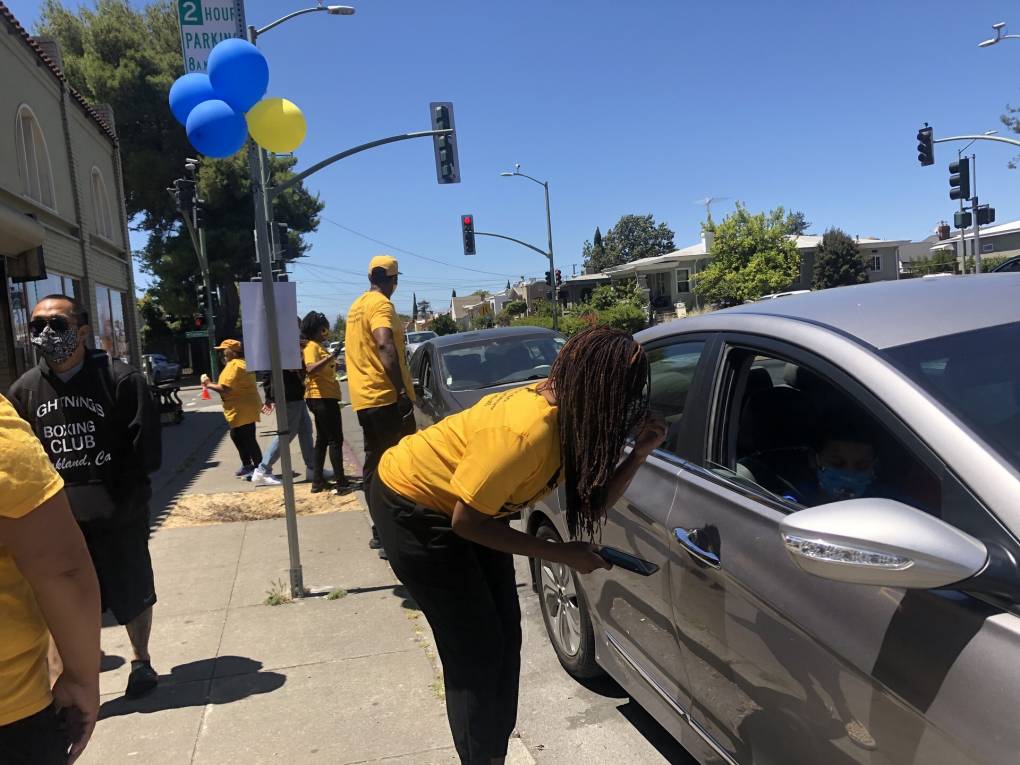
"caption": "The Oakland REACH organizers in East Oakland last summer handing out laptops and other school supplies to the families of Oakland students.",
"description": null,
"title": "RS43885_IMG_2893-qut",
"credit": "Vanessa Rancaño/KQED",
"status": "inherit",
"altTag": null,
"isLoading": false,
"fetchFailed": false
},
"news_11879410": {
"type": "attachments",
"id": "news_11879410",
"meta": {
"index": "attachments_1716263798",
"site": "news",
"id": "11879410",
"found": true
},
"parent": 11879404,
"imgSizes": {
"twentyfourteen-full-width": {
"file": "https://ww2.kqed.org/app/uploads/sites/10/2021/06/RS46661_026_Oakland_MLKCarCaravan_01182021-qut-1038x576.jpg",
"width": 1038,
"mimeType": "image/jpeg",
"height": 576
},
"thumbnail": {
"file": "https://ww2.kqed.org/app/uploads/sites/10/2021/06/RS46661_026_Oakland_MLKCarCaravan_01182021-qut-160x107.jpg",
"width": 160,
"mimeType": "image/jpeg",
"height": 107
},
"post-thumbnail": {
"file": "https://ww2.kqed.org/app/uploads/sites/10/2021/06/RS46661_026_Oakland_MLKCarCaravan_01182021-qut-672x372.jpg",
"width": 672,
"mimeType": "image/jpeg",
"height": 372
},
"kqedFullSize": {
"file": "https://ww2.kqed.org/app/uploads/sites/10/2021/06/RS46661_026_Oakland_MLKCarCaravan_01182021-qut.jpg",
"width": 1920,
"height": 1278
},
"large": {
"file": "https://ww2.kqed.org/app/uploads/sites/10/2021/06/RS46661_026_Oakland_MLKCarCaravan_01182021-qut-1020x679.jpg",
"width": 1020,
"mimeType": "image/jpeg",
"height": 679
},
"1536x1536": {
"file": "https://ww2.kqed.org/app/uploads/sites/10/2021/06/RS46661_026_Oakland_MLKCarCaravan_01182021-qut-1536x1022.jpg",
"width": 1536,
"mimeType": "image/jpeg",
"height": 1022
},
"medium": {
"file": "https://ww2.kqed.org/app/uploads/sites/10/2021/06/RS46661_026_Oakland_MLKCarCaravan_01182021-qut-800x533.jpg",
"width": 800,
"mimeType": "image/jpeg",
"height": 533
}
},
"publishDate": 1624655582,
"modified": 1624655607,
"caption": "Odessa Helfrich-Batt holds a sign that says, \"Defund OPD\" during a Martin Luther King Day car caravan at Middle Harbor Shoreline Park near the Port of Oakland on Jan. 18, 2021.",
"description": "Odessa Helfrich-Batt holds a sign that says, \"Defund OPD\" during a Martin Luther King Day car caravan at Middle Harbor Shoreline Park near the Port of Oakland on Jan. 18, 2021.",
"title": "RS46661_026_Oakland_MLKCarCaravan_01182021-qut",
"credit": "Beth LaBerge/KQED",
"status": "inherit",
"altTag": null,
"isLoading": false,
"fetchFailed": false
},
"news_11879208": {
"type": "attachments",
"id": "news_11879208",
"meta": {
"index": "attachments_1716263798",
"site": "news",
"id": "11879208",
"found": true
},
"parent": 11879198,
"imgSizes": {
"twentyfourteen-full-width": {
"file": "https://ww2.kqed.org/app/uploads/sites/10/2021/06/BETTYREIDSOSKIN-1038x576.jpg",
"width": 1038,
"mimeType": "image/jpeg",
"height": 576
},
"thumbnail": {
"file": "https://ww2.kqed.org/app/uploads/sites/10/2021/06/BETTYREIDSOSKIN-160x122.jpg",
"width": 160,
"mimeType": "image/jpeg",
"height": 122
},
"post-thumbnail": {
"file": "https://ww2.kqed.org/app/uploads/sites/10/2021/06/BETTYREIDSOSKIN-672x372.jpg",
"width": 672,
"mimeType": "image/jpeg",
"height": 372
},
"kqedFullSize": {
"file": "https://ww2.kqed.org/app/uploads/sites/10/2021/06/BETTYREIDSOSKIN.jpg",
"width": 1920,
"height": 1460
},
"large": {
"file": "https://ww2.kqed.org/app/uploads/sites/10/2021/06/BETTYREIDSOSKIN-1020x776.jpg",
"width": 1020,
"mimeType": "image/jpeg",
"height": 776
},
"1536x1536": {
"file": "https://ww2.kqed.org/app/uploads/sites/10/2021/06/BETTYREIDSOSKIN-1536x1168.jpg",
"width": 1536,
"mimeType": "image/jpeg",
"height": 1168
},
"medium": {
"file": "https://ww2.kqed.org/app/uploads/sites/10/2021/06/BETTYREIDSOSKIN-800x608.jpg",
"width": 800,
"mimeType": "image/jpeg",
"height": 608
}
},
"publishDate": 1624565792,
"modified": 1652736039,
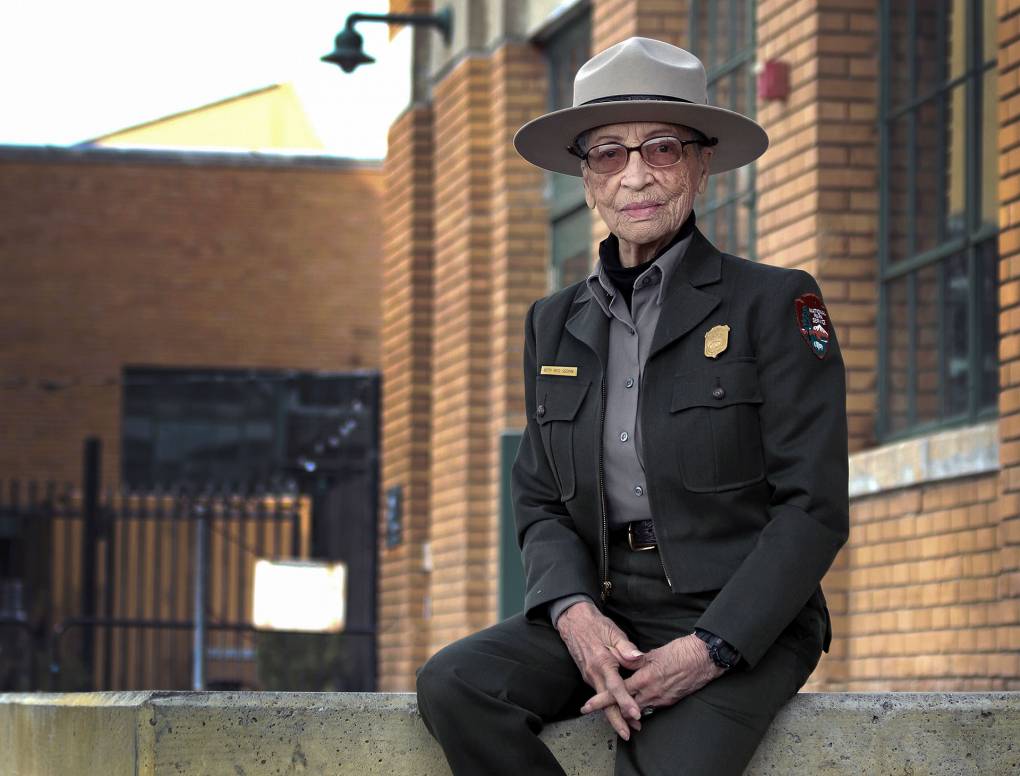
"caption": "National Park Service Ranger Betty Reid Soskin, now 100, at the Rosie the Riveter Visitor Center in Richmond, in 2017. ",
"description": "National Park Service Ranger Betty Reid Soskin, now 100, at the Rosie the Riveter Visitor Center in Richmond, in 2017. ",
"title": "BETTYREIDSOSKIN",
"credit": "Courtesy Luther Bailey/National Park Service",
"status": "inherit",
"altTag": "An elderly woman in a U.S. Park Service uniform and hat.",
"isLoading": false,
"fetchFailed": false
}
},
"audioPlayerReducer": {
"postId": "stream_live",
"isPaused": true,
"isPlaying": false,
"pfsActive": false,
"pledgeModalIsOpen": true,
"playerDrawerIsOpen": false,
"liveAudioPlayStartedAt": 0,
"liveAudioPlayContext": ""
},
"authorsReducer": {
"byline_news_11881743": {
"type": "authors",
"id": "byline_news_11881743",
"meta": {
"override": true
},
"slug": "byline_news_11881743",
"name": "\u003ca href=\"https://calmatters.org/author/mikhailzinshteyn/\">Mikhail Zinshteyn\u003c/a>\u003cbr>CalMatters",
"isLoading": false
},
"byline_news_11881642": {
"type": "authors",
"id": "byline_news_11881642",
"meta": {
"override": true
},
"slug": "byline_news_11881642",
"name": "Jocelyn Gecker \u003cbr> The Associated Press",
"isLoading": false
},
"byline_news_11880805": {
"type": "authors",
"id": "byline_news_11880805",
"meta": {
"override": true
},
"slug": "byline_news_11880805",
"name": "Jocelyn Gecker \u003cbr> Associated Press",
"isLoading": false
},
"byline_news_11880730": {
"type": "authors",
"id": "byline_news_11880730",
"meta": {
"override": true
},
"slug": "byline_news_11880730",
"name": "Sheila Mulrooney Eldred",
"isLoading": false
},
"byline_news_11879696": {
"type": "authors",
"id": "byline_news_11879696",
"meta": {
"override": true
},
"slug": "byline_news_11879696",
"name": "\u003ca href=\"https://calmatters.org/author/joe-hong/\">Joe Hong\u003c/a>",
"isLoading": false
},
"gmarzorati": {
"type": "authors",
"id": "227",
"meta": {
"index": "authors_1716337520",
"id": "227",
"found": true
},
"name": "Guy Marzorati",
"firstName": "Guy",
"lastName": "Marzorati",
"slug": "gmarzorati",
"email": "gmarzorati@KQED.org",
"display_author_email": true,
"staff_mastheads": [
"news"
],
"title": "Correspondent",
"bio": "Guy Marzorati is a correspondent on KQED's California Politics and Government Desk, based in San Jose. A graduate of Santa Clara University, Guy joined KQED in 2013. He reports on state and local politics and produces KQED's digital voter guide.",
"avatar": "https://secure.gravatar.com/avatar/e7038b8dbfd55b104369b76b1cd0b9de?s=600&d=blank&r=g",
"twitter": "guymarzorati",
"facebook": null,
"instagram": null,
"linkedin": null,
"sites": [
{
"site": "",
"roles": [
"editor"
]
},
{
"site": "news",
"roles": [
"editor"
]
},
{
"site": "science",
"roles": [
"editor"
]
},
{
"site": "forum",
"roles": [
"editor"
]
},
{
"site": "elections",
"roles": [
"editor"
]
},
{
"site": "liveblog",
"roles": [
"editor"
]
}
],
"headData": {
"title": "Guy Marzorati | KQED",
"description": "Correspondent",
"ogImgSrc": "https://secure.gravatar.com/avatar/e7038b8dbfd55b104369b76b1cd0b9de?s=600&d=blank&r=g",
"twImgSrc": "https://secure.gravatar.com/avatar/e7038b8dbfd55b104369b76b1cd0b9de?s=600&d=blank&r=g"
},
"isLoading": false,
"link": "/author/gmarzorati"
},
"kqednewsstaffandwires": {
"type": "authors",
"id": "237",
"meta": {
"index": "authors_1716337520",
"id": "237",
"found": true
},
"name": "KQED News Staff and Wires",
"firstName": "KQED News Staff and Wires",
"lastName": null,
"slug": "kqednewsstaffandwires",
"email": "onlinenewsstaff@kqed.org",
"display_author_email": false,
"staff_mastheads": [],
"title": null,
"bio": null,
"avatar": "https://secure.gravatar.com/avatar/72295af8ebbfbd19a4948f5271285664?s=600&d=blank&r=g",
"twitter": null,
"facebook": null,
"instagram": null,
"linkedin": null,
"sites": [
{
"site": "arts",
"roles": [
"contributor"
]
},
{
"site": "news",
"roles": [
"contributor"
]
},
{
"site": "lowdown",
"roles": [
"author"
]
},
{
"site": "stateofhealth",
"roles": [
"contributor"
]
},
{
"site": "food",
"roles": [
"author"
]
}
],
"headData": {
"title": "KQED News Staff and Wires | KQED",
"description": null,
"ogImgSrc": "https://secure.gravatar.com/avatar/72295af8ebbfbd19a4948f5271285664?s=600&d=blank&r=g",
"twImgSrc": "https://secure.gravatar.com/avatar/72295af8ebbfbd19a4948f5271285664?s=600&d=blank&r=g"
},
"isLoading": false,
"link": "/author/kqednewsstaffandwires"
},
"vrancano": {
"type": "authors",
"id": "11276",
"meta": {
"index": "authors_1716337520",
"id": "11276",
"found": true
},
"name": "Vanessa Rancaño",
"firstName": "Vanessa",
"lastName": "Rancaño",
"slug": "vrancano",
"email": "vrancano@kqed.org",
"display_author_email": false,
"staff_mastheads": [
"news"
],
"title": "Reporter",
"bio": "Vanessa Rancaño is a features reporter for KQED. She’s also covered homelessness and education for the station and reported from the Central Valley. Her work has aired across public radio, from flagship national news shows to longform narrative podcasts. Before taking up a mic, she worked as a freelance print journalist. She’s been recognized with a number of national and regional awards. Vanessa grew up in California's Central Valley. She's a former NPR Kroc Fellow, and a graduate of the UC Berkeley Graduate School of Journalism.",
"avatar": "https://secure.gravatar.com/avatar/b3a383dfb0e7ee1c17568f2cf067904ab654d6e3de9743fc661f3c788ade1bed?s=600&d=blank&r=g",
"twitter": "vanessarancano",
"bluesky": null,
"facebook": null,
"instagram": null,
"linkedin": null,
"sites": [
{
"site": "arts",
"roles": [
"editor"
]
},
{
"site": "news",
"roles": [
"editor"
]
},
{
"site": "liveblog",
"roles": [
"contributor"
]
}
],
"headData": {
"title": "Vanessa Rancaño | KQED",
"description": "Reporter",
"ogImgSrc": "https://secure.gravatar.com/avatar/b3a383dfb0e7ee1c17568f2cf067904ab654d6e3de9743fc661f3c788ade1bed?s=600&d=blank&r=g",
"twImgSrc": "https://secure.gravatar.com/avatar/b3a383dfb0e7ee1c17568f2cf067904ab654d6e3de9743fc661f3c788ade1bed?s=600&d=blank&r=g"
},
"isLoading": false,
"link": "/author/vrancano"
},
"lsarah": {
"type": "authors",
"id": "11626",
"meta": {
"index": "authors_1716337520",
"id": "11626",
"found": true
},
"name": "Lakshmi Sarah",
"firstName": "Lakshmi",
"lastName": "Sarah",
"slug": "lsarah",
"email": "lsarah@kqed.org",
"display_author_email": false,
"staff_mastheads": [],
"title": "Digital Producer",
"bio": "Lakshmi Sarah is an educator, author and journalist with a focus on innovative storytelling. She has worked with newspapers, radio and magazines from Ahmedabad, India to Los Angeles, California. She has written and produced for Die Zeit, Global Voices, AJ+, KQED, Fusion Media Group and the New York Times.",
"avatar": "https://secure.gravatar.com/avatar/652dcaecd8b28826fc17a8b2d6bb4e93?s=600&d=blank&r=g",
"twitter": "lakitalki",
"facebook": null,
"instagram": "https://www.instagram.com/laki.talki/",
"linkedin": "https://www.linkedin.com/in/lakisarah/",
"sites": [
{
"site": "arts",
"roles": []
},
{
"site": "news",
"roles": []
},
{
"site": "bayareabites",
"roles": []
},
{
"site": "science",
"roles": []
}
],
"headData": {
"title": "Lakshmi Sarah | KQED",
"description": "Digital Producer",
"ogImgSrc": "https://secure.gravatar.com/avatar/652dcaecd8b28826fc17a8b2d6bb4e93?s=600&d=blank&r=g",
"twImgSrc": "https://secure.gravatar.com/avatar/652dcaecd8b28826fc17a8b2d6bb4e93?s=600&d=blank&r=g"
},
"isLoading": false,
"link": "/author/lsarah"
},
"ehung": {
"type": "authors",
"id": "11730",
"meta": {
"index": "authors_1716337520",
"id": "11730",
"found": true
},
"name": "Emily Hung",
"firstName": "Emily",
"lastName": "Hung",
"slug": "ehung",
"email": "ehung@kqed.org",
"display_author_email": false,
"staff_mastheads": [],
"title": "KQED Contributor",
"bio": null,
"avatar": "https://secure.gravatar.com/avatar/a7f01e26e3d60d4e8a1d5d22bca0618b?s=600&d=blank&r=g",
"twitter": "emilyhung_",
"facebook": null,
"instagram": null,
"linkedin": null,
"sites": [
{
"site": "news",
"roles": [
"author"
]
},
{
"site": "forum",
"roles": [
"editor"
]
},
{
"site": "perspectives",
"roles": [
"administrator"
]
}
],
"headData": {
"title": "Emily Hung | KQED",
"description": "KQED Contributor",
"ogImgSrc": "https://secure.gravatar.com/avatar/a7f01e26e3d60d4e8a1d5d22bca0618b?s=600&d=blank&r=g",
"twImgSrc": "https://secure.gravatar.com/avatar/a7f01e26e3d60d4e8a1d5d22bca0618b?s=600&d=blank&r=g"
},
"isLoading": false,
"link": "/author/ehung"
},
"amadrigal": {
"type": "authors",
"id": "11757",
"meta": {
"index": "authors_1716337520",
"id": "11757",
"found": true
},
"name": "Alexis Madrigal",
"firstName": "Alexis",
"lastName": "Madrigal",
"slug": "amadrigal",
"email": "amadrigal@kqed.org",
"display_author_email": true,
"staff_mastheads": [],
"title": "Co-Host Forum",
"bio": "Alexis Madrigal is the co-host of Forum. He is also a contributing writer at \u003cem>The Atlantic \u003c/em>and the co-founder of the COVID Tracking Project. He's the creator of the podcast, \u003cem>Containers\u003c/em>, and has been a staff writer at \u003cem>Wired. \u003c/em>He was a visiting scholar at UC Berkeley's Information School, and is working on a book about Oakland and the Bay Area's revolutionary ideas.",
"avatar": "https://secure.gravatar.com/avatar/ffeee1fe99a3e31957381f377ca63502bdcc0c3dbccaaa701e579a10aa0c5e1f?s=600&d=blank&r=g",
"twitter": "alexismadrigal",
"bluesky": null,
"facebook": null,
"instagram": null,
"linkedin": null,
"sites": [
{
"site": "arts",
"roles": [
"editor"
]
},
{
"site": "news",
"roles": [
"editor"
]
},
{
"site": "forum",
"roles": [
"editor"
]
}
],
"headData": {
"title": "Alexis Madrigal | KQED",
"description": "Co-Host Forum",
"ogImgSrc": "https://secure.gravatar.com/avatar/ffeee1fe99a3e31957381f377ca63502bdcc0c3dbccaaa701e579a10aa0c5e1f?s=600&d=blank&r=g",
"twImgSrc": "https://secure.gravatar.com/avatar/ffeee1fe99a3e31957381f377ca63502bdcc0c3dbccaaa701e579a10aa0c5e1f?s=600&d=blank&r=g"
},
"isLoading": false,
"link": "/author/amadrigal"
}
},
"pagesReducer": {
"news_tag_education": {
"type": "terms",
"id": "news_20013",
"meta": {
"index": "terms_1716263798",
"site": "news",
"id": "20013",
"score": 6.9701543
},
"featImg": null,
"name": "education",
"description": null,
"taxonomy": "tag",
"headData": {
"twImgId": null,
"twTitle": null,
"ogTitle": null,
"ogImgId": null,
"twDescription": null,
"description": null,
"title": "education Archives | KQED News",
"ogDescription": null
},
"ttid": 20030,
"slug": "education",
"isLoading": false,
"title": "education",
"pageMeta": {
"site": "news",
"WpPageTemplate": "page-topic-editorial",
"currentPage": 77
},
"blocks": [
{
"blockName": "kqed/post-list",
"attrs": {
"layout": "cardArticle2",
"query": "posts/news?tag=education",
"seeMore": false,
"paginated": true,
"page": 77
}
},
{
"blockName": "kqed/ad"
}
]
}
},
"pfsSessionReducer": {},
"postsReducer": {
"stream_live": {
"type": "live",
"id": "stream_live",
"audioUrl": "https://streams.kqed.org/kqedradio",
"title": "Live Stream",
"excerpt": "Live Stream information currently unavailable.",
"link": "/radio",
"featImg": "",
"label": {
"name": "KQED Live",
"link": "/"
}
},
"stream_kqedNewscast": {
"type": "posts",
"id": "stream_kqedNewscast",
"audioUrl": "https://www.kqed.org/.stream/anon/radio/RDnews/newscast.mp3?_=1",
"title": "KQED Newscast",
"featImg": "",
"label": {
"name": "88.5 FM",
"link": "/"
}
},
"news_11882372": {
"type": "posts",
"id": "news_11882372",
"meta": {
"index": "posts_1716263798",
"site": "news",
"id": "11882372",
"score": null,
"sort": [
1627328417000
]
},
"guestAuthors": [],
"slug": "a-critical-part-of-our-infrastructure-how-california-plans-to-bolster-child-care",
"title": "'A Critical Part of Our Infrastructure': How California Plans to Bolster Child Care",
"publishDate": 1627328417,
"format": "audio",
"headTitle": "‘A Critical Part of Our Infrastructure’: How California Plans to Bolster Child Care | KQED",
"labelTerm": {
"site": "news"
},
"content": "\u003cp>California has almost 3 million children 5 years old and younger. As many parents of young children know, finding affordable, high-quality child care is hard to find — especially in the Bay Area.\u003c/p>\n\u003cp>Hundreds of thousands of families who qualify for child care programs can’t access them because there simply aren’t enough slots. The pandemic, which led to the \u003ca href=\"https://calmatters.org/children-and-youth/2021/03/child-care-centers-close/\" target=\"_blank\" rel=\"noopener noreferrer\">closure of 8,500 care facilities\u003c/a>, only worsened the bottleneck. [pullquote size=\"medium\" align=\"right\" citation=\"Deborah Stipek, professor, Stanford University Graduate School of Education\"]‘Every dollar we invest in those first five years comes back to us multiple times.’[/pullquote]\u003c/p>\n\u003cp>Lack of child care means that in many households, at least one parent, usually the mother, according to labor statistics, isn’t able to work. The pandemic caused a “she-cession” rather than a recession, by disproportionately pulling women out of the workforce for lack of child care, said Democratic state Sen. Nancy Skinner, D-Berkeley, who chairs the California Senate Budget and Fiscal Review Committee.\u003c/p>\n\u003cp>On July 23, California signed a \u003ca href=\"https://apnews.com/article/lifestyle-business-health-government-and-politics-california-ecf40600c46de16e7fb12c3d70d390bf\" target=\"_blank\" rel=\"noopener noreferrer\">first-time contract with 40,000 child care providers\u003c/a> under a new collective bargaining agreement.\u003c/p>\n\u003cp>The contract with \u003ca href=\"https://apnews.com/article/lifestyle-business-health-government-and-politics-california-ecf40600c46de16e7fb12c3d70d390bf\" target=\"_blank\" rel=\"noopener noreferrer\">Child Care Providers United\u003c/a> increased wage rates and began phasing in 200,000 subsidized child care slots that the governor and advocates said are crucial to reopening a state economy pummeled by the pandemic.\u003c/p>\n\u003cp>[ad fullwidth]\u003c/p>\n\u003cp>A state \u003ca href=\"https://leginfo.legislature.ca.gov/faces/billTextClient.xhtml?bill_id=202120220AB131\" target=\"_blank\" rel=\"noopener noreferrer\">bill\u003c/a> also includes $40 million to help providers with training and professional development and $579 million to help child care and preschool providers who suffered during the pandemic.\u003c/p>\n\u003cp>With the new law, “women and parents can get back to work in California,” Skinner said.\u003c/p>\n\u003cp>The bargaining agreement also empowers caregivers who are primarily women, many of them women of color, Gov. Gavin Newsom said.\u003c/p>\n\u003cp>“This is about fundamental infrastructure — the human capital — that’s as important as roads and bridges,” he said.\u003c/p>\n\u003cp>On July 19, \u003ca href=\"https://www.kqed.org/forum/2010101884471/next-steps-for-a-childcare-system-in-crisis\" target=\"_blank\" rel=\"noopener noreferrer\">KQED Forum host Alexis Madrigal\u003c/a> spoke with the following guests to gain a better understanding of some of the child care issues facing the state.\u003c/p>\n\u003cul>\n\u003cli>\u003cstrong>Lea Austin\u003c/strong>, executive director, UC Berkeley Center for the Study of Child Care Employment\u003c/li>\n\u003cli>\u003cstrong>Eileen Boris\u003c/strong>, Hull professor and distinguished professor of feminist studies, UC Santa Barbara\u003c/li>\n\u003cli>\u003cstrong>Deborah Stipek\u003c/strong>, professor, Stanford University Graduate School of Education\u003c/li>\n\u003cli>\u003cstrong>Micaela Mota\u003c/strong>, mother, parent leader, Parent Voices California\u003c/li>\n\u003c/ul>\n\u003cp>\u003cem>The following interview has been edited for length and clarity.\u003c/em>\u003c/p>\n\u003cp>\u003cstrong>Alexis Madrigal:\u003c/strong> \u003cem>What ugly truth did the pandemic reveal about America’s child care system?\u003c/em>\u003c/p>\n\u003cp>\u003cstrong>Lea Austin: \u003c/strong>It really revealed just how fragile and broken our child care system is. We had a system coming into the pandemic where we didn’t have enough child care available for families. It’s incredibly expensive for families, but that still doesn’t actually cover the full cost of what it takes to provide early care and education services. We’re relying on a market and the market doesn’t work. So what that means is the system gets subsidized on the backs of the people doing the work — with incredibly low wages.\u003c/p>\n\u003ch3>The True Cost of Child Care\u003c/h3>\n\u003cp>\u003cem>Your center has done some research into the true cost of child care for very young children. Could you walk us through what those estimates showed?\u003c/em>\u003c/p>\n\u003cp>\u003cstrong>Lea Austin:\u003c/strong> If we were covering the full cost of early care and education in California on the low end, that’s about $30 billion a year for child care and early learning. That’s a system that is acceptable for families, that is universal and a system that is paying the people, mostly women, living wages.\u003c/p>\n\u003cp>Today we have a system where our workforce in child care is 80% of what it was in March of 2020. We didn’t have enough before. We don’t have enough now. And there’s just not enough incentive for people to stay doing this work and to support the robust system that we need.\u003c/p>\n\u003cp>\u003cem>Have we ever done child care well in the United States?\u003c/em>\u003c/p>\n\u003cp>\u003cstrong>Eileen Boris:\u003c/strong> WWII. War has a way of people focusing on what the government can do. It was during WWII, in 1943, that federal money for public facilities was used for child care. After the war, these funds dissipated from the federal government. But California parents and teachers and public organizations running the gamut came together to continue these child care centers in California. In 1957, they actually became part of the Department of Education.\u003c/p>\n\u003cp>But there was a hitch. Once you move from a program, which could benefit us all, to a program that is targeted for those of us with the least resources, then the program becomes stigmatized and it becomes associated not with education, but with uplifting of the poor.\u003c/p>\n\u003cp>\u003cem>As a parent, from your perspective, what would you like to see done?\u003c/em>\u003c/p>\n\u003cp>\u003cstrong>Micaela Mota: \u003c/strong>What I would like to see done is that our country is able to see the importance of what child care means for our nation. I am now a school psychologist and continue to be a mental health provider and child care actually provides the foundation for all of the necessary skills that our children need once they enter school. I want for us to all know the importance of child care. I want us to all to be able to afford child care and see that it’s a necessity — it’s essential.\u003c/p>\n\u003ch3>What California Is Currently Doing\u003c/h3>\n\u003cp>\u003cem>Deborah Stipek, a professor at the Stanford University Graduate School of Education, can you to talk briefly about what California is doing at this moment in time?\u003c/em>\u003c/p>\n\u003cp>\u003cstrong>Deborah Stipek:\u003c/strong> This is really a wonderful time in California because we have a Legislature and governor who I think really appreciates the importance of those early years and the value in investing in the high-quality experiences for children in those early years. The current budget has a number of funding that it points to addressing some of the access problems that we’ve been talking about and also some strategies for increasing quality. These early years in children’s development are laying the foundation for their future social and academic emotional development.\u003c/p>\n\u003cp>We know now with the research, that an enormous amount of brain development occurs in those first five years. The other thing that points to the importance of quality is that if you look at all of the evidence on the long-term benefits of preschool, it comes from very high-quality preschool programs. We can’t assume that just increasing preschool or increasing child care is necessarily going to promote better experiences or long-term benefits for children. We really need to invest also in the quality of that care and those educational programs.\u003c/p>\n\u003ch3>How Important Is Early Childhood Education?\u003c/h3>\n\u003cp>\u003cem>One thing we haven’t touched on is the importance of this kind of early childhood education for educational and life outcomes for kids. How big of a lever is this?\u003c/em>\u003c/p>\n\u003cp>\u003cstrong>Deborah Stipek:\u003c/strong> It can be a pretty big lever. One thing I wanted to mention that I don’t think many people know, is that the achievement gap that we worry about for children in K-12 actually exists before they enter kindergarten. California has a larger achievement gap than most other states in K-12. But the reason it is larger than most other states is that it has an unusually large gap between lower-income children and middle- and upper-income children when they enter kindergarten.\u003c/p>\n\u003cp>By providing high-quality early childhood educational opportunities, we can actually reduce those costs. Not only is the individual benefiting, but society is benefiting. Every dollar we invest in those first five years comes back to us multiple times. It’s just hard to make an argument, I think, for people, for legislators who tend to think short term to get them focused on the long term. [pullquote size=\"medium\" align=\"right\" citation=\"Lea Austin, executive director, UC Berkeley Center for the Study of Child Care Employment\"]‘The problem is a commitment and a valuing of early care and education in California and in this country.’[/pullquote]\u003c/p>\n\u003cp>\u003cem>There is going to be a universal transitional program here in California. Can you tell us a little more about it, and whether you think it’s really going to to make a big impact?\u003c/em>\u003c/p>\n\u003cp>\u003cem>\u003cstrong>Deborah Stipek: \u003c/strong>\u003c/em>Providing care only to people who are eligible because of their very low income, such as in Head Start or in state pre-K is segregating low-income children — which the research suggests is not a good idea.\u003c/p>\n\u003cp>The research has shown that transitional kindergarten actually has many benefits for children. And when the studies have compared children who are in transitional kindergarten to same-age children who are in preschool settings, transitional kindergarten children actually are better prepared academically and they’re no different socially and emotionally.\u003c/p>\n\u003cp>Again, I go back to the training and support of the teachers right now. As you all know, 4-year-olds are very different from 11-year-olds. People need to be well prepared to meet their developmental needs and to provide an appropriate and developmentally appropriate program. I would prefer having what most states have, which is an early childhood teacher credential that really prepares people to focus on young children.\u003c/p>\n\u003ch3>Shifting Value\u003c/h3>\n\u003cp>\u003cem>What’s the way out of this logjam?\u003c/em>\u003c/p>\n\u003cp>\u003cstrong>Lea Austin:\u003c/strong> It’s not that hard. The problem is a commitment and a valuing of early care and education in California and in this country. We know how technically to solve the problem. [aside tag=\"child-care\" label=\"related coverage\"]\u003c/p>\n\u003cp>It’s a matter of saying this is a critical part of our infrastructure. It’s necessary to support families, it’s necessary to support our economy, and it’s necessary to make sure the people doing this work are not worried about feeding their own families. The problem is getting movement on that, getting the general public, and our legislators to support that in full.\u003c/p>\n\u003cp>Some of my colleagues at the Economic Policy Institute have done some estimates to help us understand what the harm is and what the loss is for not doing that. They’ve estimated that parents are foregoing $30-$35 billion in income and lost household income because they either have to leave the labor force, or reduce their hours.\u003c/p>\n\u003cp>There’s a lot that we’re losing now, there’s ways in which people are harmed and there’s a lot we can be doing to make change and improve the system.\u003c/p>\n\u003cp>\u003cem>Listen to \u003ca href=\"https://www.kqed.org/forum/2010101884471/next-steps-for-a-childcare-system-in-crisis\" target=\"_blank\" rel=\"noopener noreferrer\">KQED Forum\u003c/a> to hear the full episode.\u003c/em>\u003c/p>\n\u003cp>[ad floatright]\u003c/p>\n\u003cp>\u003cem>Additional reporting from The Associated Press’s Don Thompson used in this report.\u003c/em>\u003c/p>\n\n",
"blocks": [],
"excerpt": "'This is about fundamental infrastructure — the human capital — that’s as important as roads and bridges,' said Gov. Gavin Newsom.",
"status": "publish",
"parent": 0,
"modified": 1721157053,
"stats": {
"hasAudio": false,
"hasVideo": false,
"hasChartOrMap": false,
"iframeSrcs": [],
"hasGoogleForm": false,
"hasGallery": false,
"hasHearkenModule": false,
"hasPolis": false,
"paragraphCount": 40,
"wordCount": 1830
},
"headData": {
"title": "'A Critical Part of Our Infrastructure': How California Plans to Bolster Child Care | KQED",
"description": "'This is about fundamental infrastructure — the human capital — that’s as important as roads and bridges,' said Gov. Gavin Newsom.",
"ogTitle": "",
"ogDescription": "",
"ogImgId": "",
"twTitle": "",
"twDescription": "",
"twImgId": "",
"schema": {
"@context": "https://schema.org",
"@type": "NewsArticle",
"headline": "'A Critical Part of Our Infrastructure': How California Plans to Bolster Child Care",
"datePublished": "2021-07-26T12:40:17-07:00",
"dateModified": "2024-07-16T12:10:53-07:00",
"image": "https://cdn.kqed.org/wp-content/uploads/2020/02/KQED-OG-Image@1x.png",
"isAccessibleForFree": "True",
"publisher": {
"@type": "NewsMediaOrganization",
"@id": "https://www.kqed.org/#organization",
"name": "KQED",
"logo": "https://cdn.kqed.org/wp-content/uploads/2020/02/KQED-OG-Image@1x.png",
"url": "https://www.kqed.org",
"sameAs": [
"https://www.facebook.com/KQED",
"https://twitter.com/KQED",
"https://www.instagram.com/kqed/",
"https://www.tiktok.com/@kqedofficial",
"https://www.linkedin.com/company/kqed",
"https://www.youtube.com/channel/UCeC0IOo7i1P_61zVUWbJ4nw"
]
}
}
},
"sticky": false,
"path": "/news/11882372/a-critical-part-of-our-infrastructure-how-california-plans-to-bolster-child-care",
"audioTrackLength": null,
"parsedContent": [
{
"type": "contentString",
"content": "\u003cdiv class=\"post-body\">\u003cp>\u003cp>California has almost 3 million children 5 years old and younger. As many parents of young children know, finding affordable, high-quality child care is hard to find — especially in the Bay Area.\u003c/p>\n\u003cp>Hundreds of thousands of families who qualify for child care programs can’t access them because there simply aren’t enough slots. The pandemic, which led to the \u003ca href=\"https://calmatters.org/children-and-youth/2021/03/child-care-centers-close/\" target=\"_blank\" rel=\"noopener noreferrer\">closure of 8,500 care facilities\u003c/a>, only worsened the bottleneck. \u003c/p>\u003c/div>",
"attributes": {
"named": {},
"numeric": []
}
},
{
"type": "component",
"content": "‘Every dollar we invest in those first five years comes back to us multiple times.’",
"name": "pullquote",
"attributes": {
"named": {
"size": "medium",
"align": "right",
"citation": "Deborah Stipek, professor, Stanford University Graduate School of Education",
"label": ""
},
"numeric": []
}
},
{
"type": "contentString",
"content": "\u003cdiv class=\"post-body\">\u003cp>\u003c/p>\n\u003cp>Lack of child care means that in many households, at least one parent, usually the mother, according to labor statistics, isn’t able to work. The pandemic caused a “she-cession” rather than a recession, by disproportionately pulling women out of the workforce for lack of child care, said Democratic state Sen. Nancy Skinner, D-Berkeley, who chairs the California Senate Budget and Fiscal Review Committee.\u003c/p>\n\u003cp>On July 23, California signed a \u003ca href=\"https://apnews.com/article/lifestyle-business-health-government-and-politics-california-ecf40600c46de16e7fb12c3d70d390bf\" target=\"_blank\" rel=\"noopener noreferrer\">first-time contract with 40,000 child care providers\u003c/a> under a new collective bargaining agreement.\u003c/p>\n\u003cp>The contract with \u003ca href=\"https://apnews.com/article/lifestyle-business-health-government-and-politics-california-ecf40600c46de16e7fb12c3d70d390bf\" target=\"_blank\" rel=\"noopener noreferrer\">Child Care Providers United\u003c/a> increased wage rates and began phasing in 200,000 subsidized child care slots that the governor and advocates said are crucial to reopening a state economy pummeled by the pandemic.\u003c/p>\n\u003cp>\u003c/p>\u003c/div>",
"attributes": {
"named": {},
"numeric": []
}
},
{
"type": "component",
"content": "",
"name": "ad",
"attributes": {
"named": {
"label": "fullwidth"
},
"numeric": [
"fullwidth"
]
}
},
{
"type": "contentString",
"content": "\u003cdiv class=\"post-body\">\u003cp>\u003c/p>\n\u003cp>A state \u003ca href=\"https://leginfo.legislature.ca.gov/faces/billTextClient.xhtml?bill_id=202120220AB131\" target=\"_blank\" rel=\"noopener noreferrer\">bill\u003c/a> also includes $40 million to help providers with training and professional development and $579 million to help child care and preschool providers who suffered during the pandemic.\u003c/p>\n\u003cp>With the new law, “women and parents can get back to work in California,” Skinner said.\u003c/p>\n\u003cp>The bargaining agreement also empowers caregivers who are primarily women, many of them women of color, Gov. Gavin Newsom said.\u003c/p>\n\u003cp>“This is about fundamental infrastructure — the human capital — that’s as important as roads and bridges,” he said.\u003c/p>\n\u003cp>On July 19, \u003ca href=\"https://www.kqed.org/forum/2010101884471/next-steps-for-a-childcare-system-in-crisis\" target=\"_blank\" rel=\"noopener noreferrer\">KQED Forum host Alexis Madrigal\u003c/a> spoke with the following guests to gain a better understanding of some of the child care issues facing the state.\u003c/p>\n\u003cul>\n\u003cli>\u003cstrong>Lea Austin\u003c/strong>, executive director, UC Berkeley Center for the Study of Child Care Employment\u003c/li>\n\u003cli>\u003cstrong>Eileen Boris\u003c/strong>, Hull professor and distinguished professor of feminist studies, UC Santa Barbara\u003c/li>\n\u003cli>\u003cstrong>Deborah Stipek\u003c/strong>, professor, Stanford University Graduate School of Education\u003c/li>\n\u003cli>\u003cstrong>Micaela Mota\u003c/strong>, mother, parent leader, Parent Voices California\u003c/li>\n\u003c/ul>\n\u003cp>\u003cem>The following interview has been edited for length and clarity.\u003c/em>\u003c/p>\n\u003cp>\u003cstrong>Alexis Madrigal:\u003c/strong> \u003cem>What ugly truth did the pandemic reveal about America’s child care system?\u003c/em>\u003c/p>\n\u003cp>\u003cstrong>Lea Austin: \u003c/strong>It really revealed just how fragile and broken our child care system is. We had a system coming into the pandemic where we didn’t have enough child care available for families. It’s incredibly expensive for families, but that still doesn’t actually cover the full cost of what it takes to provide early care and education services. We’re relying on a market and the market doesn’t work. So what that means is the system gets subsidized on the backs of the people doing the work — with incredibly low wages.\u003c/p>\n\u003ch3>The True Cost of Child Care\u003c/h3>\n\u003cp>\u003cem>Your center has done some research into the true cost of child care for very young children. Could you walk us through what those estimates showed?\u003c/em>\u003c/p>\n\u003cp>\u003cstrong>Lea Austin:\u003c/strong> If we were covering the full cost of early care and education in California on the low end, that’s about $30 billion a year for child care and early learning. That’s a system that is acceptable for families, that is universal and a system that is paying the people, mostly women, living wages.\u003c/p>\n\u003cp>Today we have a system where our workforce in child care is 80% of what it was in March of 2020. We didn’t have enough before. We don’t have enough now. And there’s just not enough incentive for people to stay doing this work and to support the robust system that we need.\u003c/p>\n\u003cp>\u003cem>Have we ever done child care well in the United States?\u003c/em>\u003c/p>\n\u003cp>\u003cstrong>Eileen Boris:\u003c/strong> WWII. War has a way of people focusing on what the government can do. It was during WWII, in 1943, that federal money for public facilities was used for child care. After the war, these funds dissipated from the federal government. But California parents and teachers and public organizations running the gamut came together to continue these child care centers in California. In 1957, they actually became part of the Department of Education.\u003c/p>\n\u003cp>But there was a hitch. Once you move from a program, which could benefit us all, to a program that is targeted for those of us with the least resources, then the program becomes stigmatized and it becomes associated not with education, but with uplifting of the poor.\u003c/p>\n\u003cp>\u003cem>As a parent, from your perspective, what would you like to see done?\u003c/em>\u003c/p>\n\u003cp>\u003cstrong>Micaela Mota: \u003c/strong>What I would like to see done is that our country is able to see the importance of what child care means for our nation. I am now a school psychologist and continue to be a mental health provider and child care actually provides the foundation for all of the necessary skills that our children need once they enter school. I want for us to all know the importance of child care. I want us to all to be able to afford child care and see that it’s a necessity — it’s essential.\u003c/p>\n\u003ch3>What California Is Currently Doing\u003c/h3>\n\u003cp>\u003cem>Deborah Stipek, a professor at the Stanford University Graduate School of Education, can you to talk briefly about what California is doing at this moment in time?\u003c/em>\u003c/p>\n\u003cp>\u003cstrong>Deborah Stipek:\u003c/strong> This is really a wonderful time in California because we have a Legislature and governor who I think really appreciates the importance of those early years and the value in investing in the high-quality experiences for children in those early years. The current budget has a number of funding that it points to addressing some of the access problems that we’ve been talking about and also some strategies for increasing quality. These early years in children’s development are laying the foundation for their future social and academic emotional development.\u003c/p>\n\u003cp>We know now with the research, that an enormous amount of brain development occurs in those first five years. The other thing that points to the importance of quality is that if you look at all of the evidence on the long-term benefits of preschool, it comes from very high-quality preschool programs. We can’t assume that just increasing preschool or increasing child care is necessarily going to promote better experiences or long-term benefits for children. We really need to invest also in the quality of that care and those educational programs.\u003c/p>\n\u003ch3>How Important Is Early Childhood Education?\u003c/h3>\n\u003cp>\u003cem>One thing we haven’t touched on is the importance of this kind of early childhood education for educational and life outcomes for kids. How big of a lever is this?\u003c/em>\u003c/p>\n\u003cp>\u003cstrong>Deborah Stipek:\u003c/strong> It can be a pretty big lever. One thing I wanted to mention that I don’t think many people know, is that the achievement gap that we worry about for children in K-12 actually exists before they enter kindergarten. California has a larger achievement gap than most other states in K-12. But the reason it is larger than most other states is that it has an unusually large gap between lower-income children and middle- and upper-income children when they enter kindergarten.\u003c/p>\n\u003cp>By providing high-quality early childhood educational opportunities, we can actually reduce those costs. Not only is the individual benefiting, but society is benefiting. Every dollar we invest in those first five years comes back to us multiple times. It’s just hard to make an argument, I think, for people, for legislators who tend to think short term to get them focused on the long term. \u003c/p>\u003c/div>",
"attributes": {
"named": {},
"numeric": []
}
},
{
"type": "component",
"content": "‘The problem is a commitment and a valuing of early care and education in California and in this country.’",
"name": "pullquote",
"attributes": {
"named": {
"size": "medium",
"align": "right",
"citation": "Lea Austin, executive director, UC Berkeley Center for the Study of Child Care Employment",
"label": ""
},
"numeric": []
}
},
{
"type": "contentString",
"content": "\u003cdiv class=\"post-body\">\u003cp>\u003c/p>\n\u003cp>\u003cem>There is going to be a universal transitional program here in California. Can you tell us a little more about it, and whether you think it’s really going to to make a big impact?\u003c/em>\u003c/p>\n\u003cp>\u003cem>\u003cstrong>Deborah Stipek: \u003c/strong>\u003c/em>Providing care only to people who are eligible because of their very low income, such as in Head Start or in state pre-K is segregating low-income children — which the research suggests is not a good idea.\u003c/p>\n\u003cp>The research has shown that transitional kindergarten actually has many benefits for children. And when the studies have compared children who are in transitional kindergarten to same-age children who are in preschool settings, transitional kindergarten children actually are better prepared academically and they’re no different socially and emotionally.\u003c/p>\n\u003cp>Again, I go back to the training and support of the teachers right now. As you all know, 4-year-olds are very different from 11-year-olds. People need to be well prepared to meet their developmental needs and to provide an appropriate and developmentally appropriate program. I would prefer having what most states have, which is an early childhood teacher credential that really prepares people to focus on young children.\u003c/p>\n\u003ch3>Shifting Value\u003c/h3>\n\u003cp>\u003cem>What’s the way out of this logjam?\u003c/em>\u003c/p>\n\u003cp>\u003cstrong>Lea Austin:\u003c/strong> It’s not that hard. The problem is a commitment and a valuing of early care and education in California and in this country. We know how technically to solve the problem. \u003c/p>\u003c/div>",
"attributes": {
"named": {},
"numeric": []
}
},
{
"type": "component",
"content": "",
"name": "aside",
"attributes": {
"named": {
"tag": "child-care",
"label": "related coverage "
},
"numeric": []
}
},
{
"type": "contentString",
"content": "\u003cdiv class=\"post-body\">\u003cp>\u003c/p>\n\u003cp>It’s a matter of saying this is a critical part of our infrastructure. It’s necessary to support families, it’s necessary to support our economy, and it’s necessary to make sure the people doing this work are not worried about feeding their own families. The problem is getting movement on that, getting the general public, and our legislators to support that in full.\u003c/p>\n\u003cp>Some of my colleagues at the Economic Policy Institute have done some estimates to help us understand what the harm is and what the loss is for not doing that. They’ve estimated that parents are foregoing $30-$35 billion in income and lost household income because they either have to leave the labor force, or reduce their hours.\u003c/p>\n\u003cp>There’s a lot that we’re losing now, there’s ways in which people are harmed and there’s a lot we can be doing to make change and improve the system.\u003c/p>\n\u003cp>\u003cem>Listen to \u003ca href=\"https://www.kqed.org/forum/2010101884471/next-steps-for-a-childcare-system-in-crisis\" target=\"_blank\" rel=\"noopener noreferrer\">KQED Forum\u003c/a> to hear the full episode.\u003c/em>\u003c/p>\n\u003cp>\u003c/p>\u003c/div>",
"attributes": {
"named": {},
"numeric": []
}
},
{
"type": "component",
"content": "",
"name": "ad",
"attributes": {
"named": {
"label": "floatright"
},
"numeric": [
"floatright"
]
}
},
{
"type": "contentString",
"content": "\u003cdiv class=\"post-body\">\u003cp>\u003c/p>\n\u003cp>\u003cem>Additional reporting from The Associated Press’s Don Thompson used in this report.\u003c/em>\u003c/p>\n\n\u003c/div>\u003c/p>",
"attributes": {
"named": {},
"numeric": []
}
}
],
"link": "/news/11882372/a-critical-part-of-our-infrastructure-how-california-plans-to-bolster-child-care",
"authors": [
"11757",
"11626"
],
"categories": [
"news_1758",
"news_28250",
"news_8",
"news_13"
],
"tags": [
"news_20754",
"news_2043",
"news_20013",
"news_28844"
],
"featImg": "news_11882375",
"label": "news"
},
"news_11881743": {
"type": "posts",
"id": "news_11881743",
"meta": {
"index": "posts_1716263798",
"site": "news",
"id": "11881743",
"score": null,
"sort": [
1626809199000
]
},
"parent": 0,
"labelTerm": {},
"blocks": [],
"publishDate": 1626809199,
"format": "standard",
"disqusTitle": "UC Tuition Hike: Regents Approve 'Forever' Increase",
"title": "UC Tuition Hike: Regents Approve 'Forever' Increase",
"headTitle": "CALmatters | KQED News",
"content": "\u003cp>\u003cstrong>Update, 5 p.m. Thursday, July 22:\u003c/strong>\u003cbr>\nThe University of California Board of Regents voted to begin increasing tuition in 2022-23. The Board of Regents voted to largely keep the proposal as laid out below, but with some modifications, including that the hike is no longer indefinite and will be voted on again in five years, and that a greater share of revenue from the increase will go to financial aid for in-state students.\u003c/p>\n\u003cp>\u003cstrong>Original story:\u003c/strong>\u003cbr>\nGet ready for whiplash: After receiving \u003ca href=\"https://regents.universityofcalifornia.edu/regmeet/july21/p2.pdf\">$1.3 billion in new money\u003c/a> from lawmakers this year, the University of California now wants to raise tuition on each incoming undergraduate class. Every year. Indefinitely.\u003c/p>\n\u003cp>Once tuition spikes for an incoming class, it would stay flat for six years for that class — allowing students to more reliably calculate the multiyear cost of a degree.\u003c/p>\n\u003cp>The UC Board of Regents will vote Thursday on a tuition-hike plan two years in the works that was initially derailed by the COVID-19 pandemic but has since been resuscitated.\u003c/p>\n\u003cp>UC officials project that in-state tuition and systemwide fees \u003ca href=\"https://regents.universityofcalifornia.edu/regmeet/july21/b1attach4.pdf#page=7\">would grow by $534 in 2022-23\u003c/a> and increase by a slightly lower amount for each subsequent incoming class of undergraduate students.\u003c/p>\n\u003cp>The upshot is that in 2026-27, California undergraduates entering the UC would owe a projected $15,078 in annual tuition and statewide fees — about $2,500 more than what in-state undergraduates pay now.\u003c/p>\n\u003cp>\u003c!-- iframe plugin v.4.3 wordpress.org/plugins/iframe/ -->\u003cbr>\n\u003ciframe src=\"https://e.infogram.com/_/Uj9MnXqdgAi2JUNhVCPX?src=embed\" title=\"Projected tuition increases at the UC\" width=\"800\" height=\"925\" scrolling=\"no\" frameborder=\"0\" style=\"border:none;\" allowfullscreen=\"allowfullscreen\" class=\"iframe-class\">\u003c/iframe>\u003c/p>\n\u003cp>The proposal is a complicated one, stippled with tuition hike estimates pegged to inflation and studded with various exemptions meant to cap what students would ultimately owe. But what’s definite is that this marks a dramatic departure for the UC: After doubling tuition during the great recession in response to deep state cuts, the UC raised tuition just once since 2011.\u003c/p>\n\u003cp>“I do believe (the tuition increase is) likely to pass even though I would not like it to,” said Alexis Atsilvsgi Zaragoza, a UC Berkeley undergraduate and a student voting member of the Board of Regents who’ll be casting her first vote at this week’s meeting. \u003c/p>\n\u003cp>Her dissent has powerful allies. Speaker of the Assembly Anthony Rendon, a Long Beach Democrat, and Senate President Pro Tempore Toni G. Atkins, the two leaders of the Legislature, oppose the tuition increases at this time, they told CalMatters in emails. \u003c/p>\n\u003cp>[ad fullwidth]\u003c/p>\n\u003cp>“Families have been struggling during this pandemic and this year has been difficult enough for so many Californians,” said Atkins, a San Diego Democrat.\u003c/p>\n\u003cp>UC President Michael V. Drake declined to be interviewed for this story. \u003ca href=\"https://www.youtube.com/watch?v=vgiyF6R9NTE&t=12350s\">At the May Regents meeting\u003c/a>, Drake said the tuition plan will “help campuses preserve academic excellence and critical support services.\u003c/p>\n\u003cp>“It’s no secret that UC’s funding has been unstable for years.”\u003c/p>\n\u003cp>His office argues that the UC needs stable revenue from tuition to counter the long trend of state disinvestment. The system four decades ago got about 80% of funding to educate students from state support. Today, that share has shrunk to closer to 40%, nearly identical to how much revenue the system collects from tuition. \u003ca href=\"https://calmatters.org/education/2021/06/california-college-budget/\">This year’s massive infusion of state cash to the UC\u003c/a> does little to reverse that trend.\u003c/p>\n\u003cp>\u003c!-- iframe plugin v.4.3 wordpress.org/plugins/iframe/ -->\u003cbr>\n\u003ciframe src=\"https://e.infogram.com/c4661e74-01b9-4fc0-81a2-1f3a7617df21?src=embed\" title=\"Declining state support for the UC\" width=\"800\" height=\"975\" scrolling=\"no\" frameborder=\"0\" style=\"border:none;\" allowfullscreen=\"allowfullscreen\" class=\"iframe-class\">\u003c/iframe>\u003c/p>\n\u003cp>The UC president’s office projects \u003ca href=\"https://regents.universityofcalifornia.edu/regmeet/july21/b1attach2.pdf\">soaring costs totaling $2.1 billion by 2026-27\u003c/a> on top of current expenses, a shortfall it argues must be plugged with tuition hikes along with more money from the Legislature. The new added revenue \u003ca href=\"https://regents.universityofcalifornia.edu/regmeet/july21/b1attach3.pdf\">would pay for more faculty hires\u003c/a>, salary and benefits increases, plus a slew of student support services and programs aiming to \u003ca href=\"https://www.universityofcalifornia.edu/news/uc-s-ambitious-plan-help-more-students-earn-degree\">boost graduation rates\u003c/a>.\u003c/p>\n\u003cp>And the UC maintains that the proposed tuition model is ultimately better for all students. \u003c/p>\n\u003cp>Low-income students who don’t pay tuition anyway because they qualify for financial aid would get even more money for books, housing and food, because about 36% of the revenues from the tuition hikes would go back to student aid. \u003c/p>\n\u003cp>And with tuition growing only once per graduating class and tied to inflation, the cost of attendance will be predictable and stable for higher-income students who’ll pay full freight.\u003c/p>\n\u003ch3>Specifics of the Proposed Tuition Hike\u003c/h3>\n\u003cp>The \u003ca href=\"https://regents.universityofcalifornia.edu/regmeet/july21/b1attach1.pdf\">proposed plan would increase tuition for each new incoming undergraduate class of students\u003c/a> starting in 2022-23. Every tuition hike would be pegged to inflation. Undergraduate students also would pay a surcharge of 2% or less, which would be phased out within a few years.\u003c/p>\n\u003cp>New and continuing students in state-funded graduate programs would \u003ca href=\"https://regents.universityofcalifornia.edu/regmeet/july21/b1.pdf\">see a different kind of tuition hike\u003c/a>: theirs would be annual, rather than occurring once for every incoming class, and grow with inflation starting in 2022-23.\u003c/p>\n\u003cp>The proposal ties tuition growth to a three-year rolling average of inflation. Doing so keeps tuition from changing drastically if consumer prices soar. \u003c/p>\n\u003cp>The proposed hike would cap tuition growth \u003ca href=\"https://regents.universityofcalifornia.edu/regmeet/july21/b1.pdf\">in any year at 6%\u003c/a>. Another provision would grow tuition by a smaller amount if state lawmakers increase their share of UC’s budget \u003ca href=\"https://regents.universityofcalifornia.edu/regmeet/july21/b1.pdf#page=2\">by more than 5%\u003c/a>. But that kind of increase is rare: UC’s state support has grown by less than 4.6% per year \u003ca href=\"https://www.ucop.edu/operating-budget/_files/rbudget/2020-21-budget-detail.pdf#page=168\">after hitting 5% in 2014-15\u003c/a>.\u003c/p>\n\u003cp>[aside tag=\"university of california,tuition\" label=\"Related Coverage.\"]\u003c/p>\n\u003cp>Zaragoza, the student regent, says a cap of 6% is still too high; she’ll push for a lower threshold. She wants trigger language in the regents’ proposal that would force the UC to pause tuition hikes in extreme cases like, say, a global pandemic. And she’d like the regents to be required to renew the plan regularly — at least once a decade.\u003c/p>\n\u003cp>“We’re using the messaging of a ‘forever hike,’ ” said Josh Lewis, a rising senior at Berkeley and chair of government relations for the UC Student Association. The systemwide student group opposes any tuition increase and is organizing a phalanx of students to protest the proposed hikes at this week’s Board of Regents meeting. The association is also submitting commentary pieces in all UC campus student papers and has met with regents.\u003c/p>\n\u003cp>Lewis said he wants the state to boost its support to the UC in lieu of tuition hikes.\u003c/p>\n\u003cp>And the regents themselves aren’t unified in support. Lt. Gov. Eleni Kounalakis, who serves as a regent, tweeted her opposition while noting how the cost of tuition to UC Berkeley’s Haas School of Business has skyrocketed since she attended in the 1990s.\u003c/p>\n\u003cp>https://twitter.com/EleniForCA/status/1415064500479283203?ref_src=twsrc%5Etfw%7Ctwcamp%5Etweetembed%7Ctwterm%5E1415064500479283203%7Ctwgr%5E%7Ctwcon%5Es1_c10&ref_url=https%3A%2F%2Fcalmatters.org%2Feducation%2Fhigher-education%2F2021%2F07%2Fuc-tuition-hike%2F\u003c/p>\n\u003cp>But at least one influential lawmaker is comfortable with the UC plan. Assemblymember Kevin McCarty, a Sacramento Democrat who chairs the budget subcommittee on education, said \u003ca href=\"https://www.assembly.ca.gov/media/assembly-budget-subcommittee-2-education-finance-20210201/video\">at a February hearing\u003c/a> that “moderate and predictable” tuition increases of the kind the regents are considering do “make sense.”\u003c/p>\n\u003cp>There’s at least one kink in the UC’s revenue-boosting arguments. California law gives the governor’s director of finance the power to reduce the state funds headed to the UC (and California State University) if the university raises tuition. That’s because every increase to tuition means the state budget spends more on the Cal Grant, the state’s main student aid grant — something a third of UC undergraduates get, and which is automatically pegged to what the UC charges for tuition.\u003c/p>\n\u003ch3>Most Students Won’t Actually Pay\u003c/h3>\n\u003cp>Currently, \u003ca href=\"https://admission.universityofcalifornia.edu/tuition-financial-aid/\">56% of California undergraduates at the UC\u003c/a> don’t pay any tuition due to a combination of state, federal and university aid. \u003c/p>\n\u003cp>That’s not changing under the proposed UC tuition model. The UC calculates that students who aren’t in wealthier households will ultimately owe less in overall college costs under this increase than if tuition stayed flat. That paradox is due to the fact that the UC plans to spend \u003ca href=\"https://regents.universityofcalifornia.edu/regmeet/july21/b1.pdf#page=5\">more than a third of the increased tuition revenue\u003c/a> on student financial aid. That money plus state and federal grants translate into \u003ca href=\"https://regents.universityofcalifornia.edu/regmeet/july21/b1.pdf#page=10\">savings of nearly $2,000 a year by 2028-29\u003c/a> for students whose parents earn $120,000 or less.\u003c/p>\n\u003cp>Despite all that financial aid, students in dire need still fall through the cracks. There are \u003ca href=\"https://calmatters.org/education/2018/04/homeless-college-students-california/\">students living out of cars and vans\u003c/a>. A 2020 UC report found that 6% of undergraduates who get federal grant aid \u003ca href=\"https://www.ucop.edu/global-food-initiative/_files/regents-special-committee-basic-needs-report.pdf#page=38\">still experience homelessness\u003c/a>. \u003c/p>\n\u003cp>For families with incomes of $150,000, UC’s tuition increase plan would result in added tuition costs, growing to about $2,000 by 2028-29 for undergraduates. Those costs will grow even more for wealthier families who don’t qualify for the state’s middle-class scholarship.\u003c/p>\n\u003cp>The proposed tuition hike is basically “a progressive tax,” said UC Regent Cecilia Estolano, now the body’s chair, who said she was undecided on the proposal at the May meeting. \u003c/p>\n\u003cp>“You’re going to charge more affluent people a bit more, but you’re going to give them a promise in exchange: Everybody will have the faculty and staff ratio that they expect out of the University of California,” she said.\u003c/p>\n\u003cp>[ad floatright]\u003c/p>\n",
"disqusIdentifier": "11881743 https://ww2.kqed.org/news/?p=11881743",
"disqusUrl": "https://ww2.kqed.org/news/2021/07/20/uc-tuition-hike-regents-to-vote-thursday-on-forever-increase/",
"stats": {
"hasVideo": false,
"hasChartOrMap": true,
"hasAudio": false,
"hasPolis": false,
"wordCount": 1569,
"hasGoogleForm": false,
"hasGallery": false,
"hasHearkenModule": false,
"iframeSrcs": [
"https://e.infogram.com/_/Uj9MnXqdgAi2JUNhVCPX",
"https://e.infogram.com/c4661e74-01b9-4fc0-81a2-1f3a7617df21"
],
"paragraphCount": 38
},
"modified": 1627073906,
"excerpt": "Thursday’s vote could allow UC campuses to raise tuition every year, indefinitely — despite receiving extra state cash. Student groups are outraged and key lawmakers oppose the move, but UC says it needs more money and that financial aid will blunt the hit to students.",
"headData": {
"twImgId": "",
"twTitle": "",
"ogTitle": "",
"ogImgId": "",
"twDescription": "",
"description": "Thursday’s vote could allow UC campuses to raise tuition every year, indefinitely — despite receiving extra state cash. Student groups are outraged and key lawmakers oppose the move, but UC says it needs more money and that financial aid will blunt the hit to students.",
"title": "UC Tuition Hike: Regents Approve 'Forever' Increase | KQED",
"ogDescription": "",
"schema": {
"@context": "https://schema.org",
"@type": "NewsArticle",
"headline": "UC Tuition Hike: Regents Approve 'Forever' Increase",
"datePublished": "2021-07-20T12:26:39-07:00",
"dateModified": "2021-07-23T13:58:26-07:00",
"image": "https://cdn.kqed.org/wp-content/uploads/2020/02/KQED-OG-Image@1x.png",
"isAccessibleForFree": "True",
"publisher": {
"@type": "NewsMediaOrganization",
"@id": "https://www.kqed.org/#organization",
"name": "KQED",
"logo": "https://cdn.kqed.org/wp-content/uploads/2020/02/KQED-OG-Image@1x.png",
"url": "https://www.kqed.org",
"sameAs": [
"https://www.facebook.com/KQED",
"https://twitter.com/KQED",
"https://www.instagram.com/kqed/",
"https://www.tiktok.com/@kqedofficial",
"https://www.linkedin.com/company/kqed",
"https://www.youtube.com/channel/UCeC0IOo7i1P_61zVUWbJ4nw"
]
}
}
},
"guestAuthors": [],
"slug": "uc-tuition-hike-regents-to-vote-thursday-on-forever-increase",
"status": "publish",
"sourceUrl": "https://calmatters.org/",
"nprByline": "\u003ca href=\"https://calmatters.org/author/mikhailzinshteyn/\">Mikhail Zinshteyn\u003c/a>\u003cbr>CalMatters",
"source": "CalMatters",
"path": "/news/11881743/uc-tuition-hike-regents-to-vote-thursday-on-forever-increase",
"audioTrackLength": null,
"parsedContent": [
{
"type": "contentString",
"content": "\u003cdiv class=\"post-body\">\u003cp>\u003cp>\u003cstrong>Update, 5 p.m. Thursday, July 22:\u003c/strong>\u003cbr>\nThe University of California Board of Regents voted to begin increasing tuition in 2022-23. The Board of Regents voted to largely keep the proposal as laid out below, but with some modifications, including that the hike is no longer indefinite and will be voted on again in five years, and that a greater share of revenue from the increase will go to financial aid for in-state students.\u003c/p>\n\u003cp>\u003cstrong>Original story:\u003c/strong>\u003cbr>\nGet ready for whiplash: After receiving \u003ca href=\"https://regents.universityofcalifornia.edu/regmeet/july21/p2.pdf\">$1.3 billion in new money\u003c/a> from lawmakers this year, the University of California now wants to raise tuition on each incoming undergraduate class. Every year. Indefinitely.\u003c/p>\n\u003cp>Once tuition spikes for an incoming class, it would stay flat for six years for that class — allowing students to more reliably calculate the multiyear cost of a degree.\u003c/p>\n\u003cp>The UC Board of Regents will vote Thursday on a tuition-hike plan two years in the works that was initially derailed by the COVID-19 pandemic but has since been resuscitated.\u003c/p>\n\u003cp>UC officials project that in-state tuition and systemwide fees \u003ca href=\"https://regents.universityofcalifornia.edu/regmeet/july21/b1attach4.pdf#page=7\">would grow by $534 in 2022-23\u003c/a> and increase by a slightly lower amount for each subsequent incoming class of undergraduate students.\u003c/p>\n\u003cp>The upshot is that in 2026-27, California undergraduates entering the UC would owe a projected $15,078 in annual tuition and statewide fees — about $2,500 more than what in-state undergraduates pay now.\u003c/p>\n\u003cp>\u003c!-- iframe plugin v.4.3 wordpress.org/plugins/iframe/ -->\u003cbr>\n\u003ciframe src=\"https://e.infogram.com/_/Uj9MnXqdgAi2JUNhVCPX?src=embed\" title=\"Projected tuition increases at the UC\" width=\"800\" height=\"925\" scrolling=\"no\" frameborder=\"0\" style=\"border:none;\" allowfullscreen=\"allowfullscreen\" class=\"iframe-class\">\u003c/iframe>\u003c/p>\n\u003cp>The proposal is a complicated one, stippled with tuition hike estimates pegged to inflation and studded with various exemptions meant to cap what students would ultimately owe. But what’s definite is that this marks a dramatic departure for the UC: After doubling tuition during the great recession in response to deep state cuts, the UC raised tuition just once since 2011.\u003c/p>\n\u003cp>“I do believe (the tuition increase is) likely to pass even though I would not like it to,” said Alexis Atsilvsgi Zaragoza, a UC Berkeley undergraduate and a student voting member of the Board of Regents who’ll be casting her first vote at this week’s meeting. \u003c/p>\n\u003cp>Her dissent has powerful allies. Speaker of the Assembly Anthony Rendon, a Long Beach Democrat, and Senate President Pro Tempore Toni G. Atkins, the two leaders of the Legislature, oppose the tuition increases at this time, they told CalMatters in emails. \u003c/p>\n\u003cp>\u003c/p>\u003c/div>",
"attributes": {
"named": {},
"numeric": []
}
},
{
"type": "component",
"content": "",
"name": "ad",
"attributes": {
"named": {
"label": "fullwidth"
},
"numeric": [
"fullwidth"
]
}
},
{
"type": "contentString",
"content": "\u003cdiv class=\"post-body\">\u003cp>\u003c/p>\n\u003cp>“Families have been struggling during this pandemic and this year has been difficult enough for so many Californians,” said Atkins, a San Diego Democrat.\u003c/p>\n\u003cp>UC President Michael V. Drake declined to be interviewed for this story. \u003ca href=\"https://www.youtube.com/watch?v=vgiyF6R9NTE&t=12350s\">At the May Regents meeting\u003c/a>, Drake said the tuition plan will “help campuses preserve academic excellence and critical support services.\u003c/p>\n\u003cp>“It’s no secret that UC’s funding has been unstable for years.”\u003c/p>\n\u003cp>His office argues that the UC needs stable revenue from tuition to counter the long trend of state disinvestment. The system four decades ago got about 80% of funding to educate students from state support. Today, that share has shrunk to closer to 40%, nearly identical to how much revenue the system collects from tuition. \u003ca href=\"https://calmatters.org/education/2021/06/california-college-budget/\">This year’s massive infusion of state cash to the UC\u003c/a> does little to reverse that trend.\u003c/p>\n\u003cp>\u003c!-- iframe plugin v.4.3 wordpress.org/plugins/iframe/ -->\u003cbr>\n\u003ciframe src=\"https://e.infogram.com/c4661e74-01b9-4fc0-81a2-1f3a7617df21?src=embed\" title=\"Declining state support for the UC\" width=\"800\" height=\"975\" scrolling=\"no\" frameborder=\"0\" style=\"border:none;\" allowfullscreen=\"allowfullscreen\" class=\"iframe-class\">\u003c/iframe>\u003c/p>\n\u003cp>The UC president’s office projects \u003ca href=\"https://regents.universityofcalifornia.edu/regmeet/july21/b1attach2.pdf\">soaring costs totaling $2.1 billion by 2026-27\u003c/a> on top of current expenses, a shortfall it argues must be plugged with tuition hikes along with more money from the Legislature. The new added revenue \u003ca href=\"https://regents.universityofcalifornia.edu/regmeet/july21/b1attach3.pdf\">would pay for more faculty hires\u003c/a>, salary and benefits increases, plus a slew of student support services and programs aiming to \u003ca href=\"https://www.universityofcalifornia.edu/news/uc-s-ambitious-plan-help-more-students-earn-degree\">boost graduation rates\u003c/a>.\u003c/p>\n\u003cp>And the UC maintains that the proposed tuition model is ultimately better for all students. \u003c/p>\n\u003cp>Low-income students who don’t pay tuition anyway because they qualify for financial aid would get even more money for books, housing and food, because about 36% of the revenues from the tuition hikes would go back to student aid. \u003c/p>\n\u003cp>And with tuition growing only once per graduating class and tied to inflation, the cost of attendance will be predictable and stable for higher-income students who’ll pay full freight.\u003c/p>\n\u003ch3>Specifics of the Proposed Tuition Hike\u003c/h3>\n\u003cp>The \u003ca href=\"https://regents.universityofcalifornia.edu/regmeet/july21/b1attach1.pdf\">proposed plan would increase tuition for each new incoming undergraduate class of students\u003c/a> starting in 2022-23. Every tuition hike would be pegged to inflation. Undergraduate students also would pay a surcharge of 2% or less, which would be phased out within a few years.\u003c/p>\n\u003cp>New and continuing students in state-funded graduate programs would \u003ca href=\"https://regents.universityofcalifornia.edu/regmeet/july21/b1.pdf\">see a different kind of tuition hike\u003c/a>: theirs would be annual, rather than occurring once for every incoming class, and grow with inflation starting in 2022-23.\u003c/p>\n\u003cp>The proposal ties tuition growth to a three-year rolling average of inflation. Doing so keeps tuition from changing drastically if consumer prices soar. \u003c/p>\n\u003cp>The proposed hike would cap tuition growth \u003ca href=\"https://regents.universityofcalifornia.edu/regmeet/july21/b1.pdf\">in any year at 6%\u003c/a>. Another provision would grow tuition by a smaller amount if state lawmakers increase their share of UC’s budget \u003ca href=\"https://regents.universityofcalifornia.edu/regmeet/july21/b1.pdf#page=2\">by more than 5%\u003c/a>. But that kind of increase is rare: UC’s state support has grown by less than 4.6% per year \u003ca href=\"https://www.ucop.edu/operating-budget/_files/rbudget/2020-21-budget-detail.pdf#page=168\">after hitting 5% in 2014-15\u003c/a>.\u003c/p>\n\u003cp>\u003c/p>\u003c/div>",
"attributes": {
"named": {},
"numeric": []
}
},
{
"type": "component",
"content": "",
"name": "aside",
"attributes": {
"named": {
"tag": "university of california,tuition",
"label": "Related Coverage. "
},
"numeric": []
}
},
{
"type": "contentString",
"content": "\u003cdiv class=\"post-body\">\u003cp>\u003c/p>\n\u003cp>Zaragoza, the student regent, says a cap of 6% is still too high; she’ll push for a lower threshold. She wants trigger language in the regents’ proposal that would force the UC to pause tuition hikes in extreme cases like, say, a global pandemic. And she’d like the regents to be required to renew the plan regularly — at least once a decade.\u003c/p>\n\u003cp>“We’re using the messaging of a ‘forever hike,’ ” said Josh Lewis, a rising senior at Berkeley and chair of government relations for the UC Student Association. The systemwide student group opposes any tuition increase and is organizing a phalanx of students to protest the proposed hikes at this week’s Board of Regents meeting. The association is also submitting commentary pieces in all UC campus student papers and has met with regents.\u003c/p>\n\u003cp>Lewis said he wants the state to boost its support to the UC in lieu of tuition hikes.\u003c/p>\n\u003cp>And the regents themselves aren’t unified in support. Lt. Gov. Eleni Kounalakis, who serves as a regent, tweeted her opposition while noting how the cost of tuition to UC Berkeley’s Haas School of Business has skyrocketed since she attended in the 1990s.\u003c/p>\u003c/p>\u003c/div>",
"attributes": {
"named": {},
"numeric": []
}
},
{
"type": "component",
"content": "",
"name": "singleTwitterStatus",
"attributes": {
"named": {
"id": "1415064500479283203"
},
"numeric": []
}
},
{
"type": "contentString",
"content": "\u003cdiv class=\"post-body\">\u003cp>\n\u003cp>But at least one influential lawmaker is comfortable with the UC plan. Assemblymember Kevin McCarty, a Sacramento Democrat who chairs the budget subcommittee on education, said \u003ca href=\"https://www.assembly.ca.gov/media/assembly-budget-subcommittee-2-education-finance-20210201/video\">at a February hearing\u003c/a> that “moderate and predictable” tuition increases of the kind the regents are considering do “make sense.”\u003c/p>\n\u003cp>There’s at least one kink in the UC’s revenue-boosting arguments. California law gives the governor’s director of finance the power to reduce the state funds headed to the UC (and California State University) if the university raises tuition. That’s because every increase to tuition means the state budget spends more on the Cal Grant, the state’s main student aid grant — something a third of UC undergraduates get, and which is automatically pegged to what the UC charges for tuition.\u003c/p>\n\u003ch3>Most Students Won’t Actually Pay\u003c/h3>\n\u003cp>Currently, \u003ca href=\"https://admission.universityofcalifornia.edu/tuition-financial-aid/\">56% of California undergraduates at the UC\u003c/a> don’t pay any tuition due to a combination of state, federal and university aid. \u003c/p>\n\u003cp>That’s not changing under the proposed UC tuition model. The UC calculates that students who aren’t in wealthier households will ultimately owe less in overall college costs under this increase than if tuition stayed flat. That paradox is due to the fact that the UC plans to spend \u003ca href=\"https://regents.universityofcalifornia.edu/regmeet/july21/b1.pdf#page=5\">more than a third of the increased tuition revenue\u003c/a> on student financial aid. That money plus state and federal grants translate into \u003ca href=\"https://regents.universityofcalifornia.edu/regmeet/july21/b1.pdf#page=10\">savings of nearly $2,000 a year by 2028-29\u003c/a> for students whose parents earn $120,000 or less.\u003c/p>\n\u003cp>Despite all that financial aid, students in dire need still fall through the cracks. There are \u003ca href=\"https://calmatters.org/education/2018/04/homeless-college-students-california/\">students living out of cars and vans\u003c/a>. A 2020 UC report found that 6% of undergraduates who get federal grant aid \u003ca href=\"https://www.ucop.edu/global-food-initiative/_files/regents-special-committee-basic-needs-report.pdf#page=38\">still experience homelessness\u003c/a>. \u003c/p>\n\u003cp>For families with incomes of $150,000, UC’s tuition increase plan would result in added tuition costs, growing to about $2,000 by 2028-29 for undergraduates. Those costs will grow even more for wealthier families who don’t qualify for the state’s middle-class scholarship.\u003c/p>\n\u003cp>The proposed tuition hike is basically “a progressive tax,” said UC Regent Cecilia Estolano, now the body’s chair, who said she was undecided on the proposal at the May meeting. \u003c/p>\n\u003cp>“You’re going to charge more affluent people a bit more, but you’re going to give them a promise in exchange: Everybody will have the faculty and staff ratio that they expect out of the University of California,” she said.\u003c/p>\n\u003cp>\u003c/p>\u003c/div>",
"attributes": {
"named": {},
"numeric": []
}
},
{
"type": "component",
"content": "",
"name": "ad",
"attributes": {
"named": {
"label": "floatright"
},
"numeric": [
"floatright"
]
}
},
{
"type": "contentString",
"content": "\u003cdiv class=\"post-body\">\u003cp>\u003c/p>\n\u003c/div>\u003c/p>",
"attributes": {
"named": {},
"numeric": []
}
}
],
"link": "/news/11881743/uc-tuition-hike-regents-to-vote-thursday-on-forever-increase",
"authors": [
"byline_news_11881743"
],
"categories": [
"news_18540",
"news_8"
],
"tags": [
"news_18538",
"news_22772",
"news_20013",
"news_27626",
"news_797",
"news_2100",
"news_206"
],
"affiliates": [
"news_18481"
],
"featImg": "news_11881745",
"label": "source_news_11881743"
},
"news_11881642": {
"type": "posts",
"id": "news_11881642",
"meta": {
"index": "posts_1716263798",
"site": "news",
"id": "11881642",
"score": null,
"sort": [
1626728870000
]
},
"guestAuthors": [],
"slug": "california-launches-the-largest-free-school-lunch-program-in-the-country",
"title": "California Launches the Largest Free School Lunch Program in the Country",
"publishDate": 1626728870,
"format": "standard",
"headTitle": "California Launches the Largest Free School Lunch Program in the Country | KQED",
"labelTerm": {},
"content": "\u003cp>When classrooms in California reopen for the fall term, all 6.2 million public school students will have the option to eat school meals for free, regardless of their family’s income.\u003c/p>\n\u003cp>The undertaking, made possible by an unexpected budget surplus, will be the largest free student lunch program in the country. School officials, lawmakers, anti-hunger organizations and parents are applauding it as a pioneering way to prevent the stigma of accepting free lunches and feed more hungry children.[pullquote size=\"medium\" align=\"right\" citation=\"State Sen. Nancy Skinner, D-Berkeley\"]‘If you’re a hungry child, you’re not going to learn well. Why should we have to go through a bureaucratic hassle to get a kid fed, when we could just have universal meals?’[/pullquote]\u003c/p>\n\u003cp>“This is so historic. It’s beyond life-changing,” said Erin Primer, director of food services for the San Luis Coastal Unified School District on California’s central coast.\u003c/p>\n\u003cp>Several U.S. cities, including New York, Boston and Chicago, already offer free school meals for all. But until recently, statewide universal meal programs were considered too costly and unrealistic. California became the first state to adopt a universal program late last month, and Maine followed shortly after with a similar plan.\u003c/p>\n\u003cp>“We’ve completely leveled the playing field when it comes to school food,” Primer said. The extra funding will also allow her to offer tastier, better-quality food such as fresh bread, produce and cheese from local producers, she said.\u003cbr>\n[ad fullwidth]\u003c/p>\n\u003cp>Under federal rules, a family of four must make less than $34,000 a year to qualify for free meals and $48,000 to qualify for reduced-price meals. The caps shift annually but are based on federal poverty measures that don’t take into account the high cost of living and taxes in California.\u003c/p>\n\u003cp>“So it’s just for the most poor families, and not even all of them because some people failed to sign up or were fearful to sign up,” said Kat Taylor, a philanthropist and major funder of the Center for Ecoliteracy and the TomKat Ranch that backed California’s plan.\u003c/p>\n\u003cp>About 60% of California students qualify, but experts say the number of children who need food assistance is much higher in a state with vast income inequality. Communities of color are disproportionately affected and immigrant communities in particular are fearful of applying because of detailed forms that ask intrusive questions such as their family income, Social Security number and children’s immigration status.\u003c/p>\n\u003cp>Schools reported a declining percentage of families applying for free and reduced-price meals during the Trump administration, which attempted to tighten immigration policies and public benefits.\u003c/p>\n\u003cp>Like school officials statewide, Primer has countless tales of children who struggled to pay for school meals or were too ashamed to eat for free. There was the child whose mother called Primer, distraught because she made a few hundred dollars too much to qualify; the father who is in the country illegally and feared that filling out the free meal application could get him deported; and constant cases of high schoolers not wanting friends to know they need free food, so they skip eating.\u003c/p>\n\u003cp>When the pandemic hit, it changed everything — including how school meals were served — and provided an impetus for the universal program, which had bipartisan, unanimous support. Lawmakers previously had only pursued targeted bills such as easing school lunch debt.\u003c/p>\n\u003cp>After schools shut in March 2020, many transformed their parking lots into pickup sites, and federal funding allowed schools to offer meals to anyone. There were no applications, qualifications and no questions asked.\u003c/p>\n\u003cp>The massive turnout showed how much families rely on the meals.\u003c/p>\n\u003cp>The Los Angeles Unified School District, the state’s largest with 600,000 students, handed out upward of 400,000 meals a day, said spokeswoman Shannon Haber. San Luis Coastal, with 7,500 students, gave out 30,000 meals a week at the height of the pandemic, nearly triple the number before. The district includes the wealthy city of San Luis Obispo and lower-income areas.\u003c/p>\n\u003cp>“I thought it was a pipe dream for a long time,” said Sen. Nancy Skinner, D-Berkeley, a longtime advocate for universal free meals.\u003c/p>\n\u003cp>Backed by over 200 organizations in a coalition called “School Meals for All,” Skinner and other lawmakers pushed for funding in the state budget, seizing the momentum at a time when California is flush with cash. The $262 billion budget provides $54 million for the coming school year, supplementing funding from the Biden administration through June 2022. After that, California will spend $650 million annually.\u003c/p>\n\u003cp>“If you’re a hungry child, you’re not going to learn well,” said Skinner. “Why should we have to go through a bureaucratic hassle to get a kid fed, when we could just have universal meals?”\u003c/p>\n\u003cp>Senate Education Committee Republicans supported the plan as a way to help families struggling with California’s high cost of living. State Sen. Brian Dahle, a Republican from a largely rural area of Northern California, said he had watched kids at his children’s school steal leftover food when cafeteria workers weren’t looking.\u003c/p>\n\u003cp>“For a lot of them that was their dinner and they were sneaking it or taking it off someone’s plate when they didn’t finish it,” said Dahle.\u003c/p>\n\u003cp>Schools rarely turn hungry kids away. But for children who didn’t qualify and needed lunch, their parents were billed and many racked up huge debts. In recent years, some schools threatened to not let students graduate middle or high school until lunch debts were paid, or stamped the hands of students who owed money, said Jessica Bartholow, chief of staff for Skinner who previously was an anti-hunger advocate.[aside tag=\"education\" label=\"More Related Stories\"]\u003c/p>\n\u003cp>Some schools would hire debt collectors to hound parents, but at the end of the year schools have to use general fund dollars to pay off lunch program debts, she said.\u003c/p>\n\u003cp>For Tina Self, a mother of three, avoiding the cost of $3 school lunches every day will be an enormous relief.\u003c/p>\n\u003cp>“It might seem like a little bit, but it helps a lot,” said Self, who lives in San Luis Obispo where a gallon of gas can cost just shy of $5 a gallon and rent is “crazy.”\u003c/p>\n\u003cp>“Lucky for us we both have a job and we have two running cars,” she said of herself and her husband. “But we’re barely making it as it is.”\u003c/p>\n\u003cp>Tony Wold, associate superintendent of the West Contra Costa Unified School District, says it’s about time lunches were free.\u003c/p>\n\u003cp>“Just like you need to give students textbooks and a computer, there are certain things you need to do. And this is one of them,” Wold said.\u003c/p>\n\u003cp>[ad floatright]\u003c/p>\n",
"blocks": [],
"excerpt": "When classrooms in California reopen for the fall term, all 6.2 million public school students will have the option to eat school meals for free, regardless of their family’s income.",
"status": "publish",
"parent": 0,
"modified": 1726006278,
"stats": {
"hasAudio": false,
"hasVideo": false,
"hasChartOrMap": false,
"iframeSrcs": [],
"hasGoogleForm": false,
"hasGallery": false,
"hasHearkenModule": false,
"hasPolis": false,
"paragraphCount": 27,
"wordCount": 1185
},
"headData": {
"title": "California Launches the Largest Free School Lunch Program in the Country | KQED",
"description": "When classrooms in California reopen for the fall term, all 6.2 million public school students will have the option to eat school meals for free, regardless of their family’s income.",
"ogTitle": "",
"ogDescription": "",
"ogImgId": "",
"twTitle": "",
"twDescription": "",
"twImgId": "",
"schema": {
"@context": "https://schema.org",
"@type": "NewsArticle",
"headline": "California Launches the Largest Free School Lunch Program in the Country",
"datePublished": "2021-07-19T14:07:50-07:00",
"dateModified": "2024-09-10T15:11:18-07:00",
"image": "https://cdn.kqed.org/wp-content/uploads/2020/02/KQED-OG-Image@1x.png",
"isAccessibleForFree": "True",
"publisher": {
"@type": "NewsMediaOrganization",
"@id": "https://www.kqed.org/#organization",
"name": "KQED",
"logo": "https://cdn.kqed.org/wp-content/uploads/2020/02/KQED-OG-Image@1x.png",
"url": "https://www.kqed.org",
"sameAs": [
"https://www.facebook.com/KQED",
"https://twitter.com/KQED",
"https://www.instagram.com/kqed/",
"https://www.tiktok.com/@kqedofficial",
"https://www.linkedin.com/company/kqed",
"https://www.youtube.com/channel/UCeC0IOo7i1P_61zVUWbJ4nw"
]
}
}
},
"source": "Food",
"sourceUrl": "/food/",
"sticky": false,
"nprByline": "Jocelyn Gecker \u003cbr> The Associated Press",
"path": "/news/11881642/california-launches-the-largest-free-school-lunch-program-in-the-country",
"audioTrackLength": null,
"parsedContent": [
{
"type": "contentString",
"content": "\u003cdiv class=\"post-body\">\u003cp>\u003cp>When classrooms in California reopen for the fall term, all 6.2 million public school students will have the option to eat school meals for free, regardless of their family’s income.\u003c/p>\n\u003cp>The undertaking, made possible by an unexpected budget surplus, will be the largest free student lunch program in the country. School officials, lawmakers, anti-hunger organizations and parents are applauding it as a pioneering way to prevent the stigma of accepting free lunches and feed more hungry children.\u003c/p>\u003c/div>",
"attributes": {
"named": {},
"numeric": []
}
},
{
"type": "component",
"content": "‘If you’re a hungry child, you’re not going to learn well. Why should we have to go through a bureaucratic hassle to get a kid fed, when we could just have universal meals?’",
"name": "pullquote",
"attributes": {
"named": {
"size": "medium",
"align": "right",
"citation": "State Sen. Nancy Skinner, D-Berkeley",
"label": ""
},
"numeric": []
}
},
{
"type": "contentString",
"content": "\u003cdiv class=\"post-body\">\u003cp>\u003c/p>\n\u003cp>“This is so historic. It’s beyond life-changing,” said Erin Primer, director of food services for the San Luis Coastal Unified School District on California’s central coast.\u003c/p>\n\u003cp>Several U.S. cities, including New York, Boston and Chicago, already offer free school meals for all. But until recently, statewide universal meal programs were considered too costly and unrealistic. California became the first state to adopt a universal program late last month, and Maine followed shortly after with a similar plan.\u003c/p>\n\u003cp>“We’ve completely leveled the playing field when it comes to school food,” Primer said. The extra funding will also allow her to offer tastier, better-quality food such as fresh bread, produce and cheese from local producers, she said.\u003cbr>\n\u003c/p>\u003c/div>",
"attributes": {
"named": {},
"numeric": []
}
},
{
"type": "component",
"content": "",
"name": "ad",
"attributes": {
"named": {
"label": "fullwidth"
},
"numeric": [
"fullwidth"
]
}
},
{
"type": "contentString",
"content": "\u003cdiv class=\"post-body\">\u003cp>\u003c/p>\n\u003cp>Under federal rules, a family of four must make less than $34,000 a year to qualify for free meals and $48,000 to qualify for reduced-price meals. The caps shift annually but are based on federal poverty measures that don’t take into account the high cost of living and taxes in California.\u003c/p>\n\u003cp>“So it’s just for the most poor families, and not even all of them because some people failed to sign up or were fearful to sign up,” said Kat Taylor, a philanthropist and major funder of the Center for Ecoliteracy and the TomKat Ranch that backed California’s plan.\u003c/p>\n\u003cp>About 60% of California students qualify, but experts say the number of children who need food assistance is much higher in a state with vast income inequality. Communities of color are disproportionately affected and immigrant communities in particular are fearful of applying because of detailed forms that ask intrusive questions such as their family income, Social Security number and children’s immigration status.\u003c/p>\n\u003cp>Schools reported a declining percentage of families applying for free and reduced-price meals during the Trump administration, which attempted to tighten immigration policies and public benefits.\u003c/p>\n\u003cp>Like school officials statewide, Primer has countless tales of children who struggled to pay for school meals or were too ashamed to eat for free. There was the child whose mother called Primer, distraught because she made a few hundred dollars too much to qualify; the father who is in the country illegally and feared that filling out the free meal application could get him deported; and constant cases of high schoolers not wanting friends to know they need free food, so they skip eating.\u003c/p>\n\u003cp>When the pandemic hit, it changed everything — including how school meals were served — and provided an impetus for the universal program, which had bipartisan, unanimous support. Lawmakers previously had only pursued targeted bills such as easing school lunch debt.\u003c/p>\n\u003cp>After schools shut in March 2020, many transformed their parking lots into pickup sites, and federal funding allowed schools to offer meals to anyone. There were no applications, qualifications and no questions asked.\u003c/p>\n\u003cp>The massive turnout showed how much families rely on the meals.\u003c/p>\n\u003cp>The Los Angeles Unified School District, the state’s largest with 600,000 students, handed out upward of 400,000 meals a day, said spokeswoman Shannon Haber. San Luis Coastal, with 7,500 students, gave out 30,000 meals a week at the height of the pandemic, nearly triple the number before. The district includes the wealthy city of San Luis Obispo and lower-income areas.\u003c/p>\n\u003cp>“I thought it was a pipe dream for a long time,” said Sen. Nancy Skinner, D-Berkeley, a longtime advocate for universal free meals.\u003c/p>\n\u003cp>Backed by over 200 organizations in a coalition called “School Meals for All,” Skinner and other lawmakers pushed for funding in the state budget, seizing the momentum at a time when California is flush with cash. The $262 billion budget provides $54 million for the coming school year, supplementing funding from the Biden administration through June 2022. After that, California will spend $650 million annually.\u003c/p>\n\u003cp>“If you’re a hungry child, you’re not going to learn well,” said Skinner. “Why should we have to go through a bureaucratic hassle to get a kid fed, when we could just have universal meals?”\u003c/p>\n\u003cp>Senate Education Committee Republicans supported the plan as a way to help families struggling with California’s high cost of living. State Sen. Brian Dahle, a Republican from a largely rural area of Northern California, said he had watched kids at his children’s school steal leftover food when cafeteria workers weren’t looking.\u003c/p>\n\u003cp>“For a lot of them that was their dinner and they were sneaking it or taking it off someone’s plate when they didn’t finish it,” said Dahle.\u003c/p>\n\u003cp>Schools rarely turn hungry kids away. But for children who didn’t qualify and needed lunch, their parents were billed and many racked up huge debts. In recent years, some schools threatened to not let students graduate middle or high school until lunch debts were paid, or stamped the hands of students who owed money, said Jessica Bartholow, chief of staff for Skinner who previously was an anti-hunger advocate.\u003c/p>\u003c/div>",
"attributes": {
"named": {},
"numeric": []
}
},
{
"type": "component",
"content": "",
"name": "aside",
"attributes": {
"named": {
"tag": "education",
"label": "More Related Stories "
},
"numeric": []
}
},
{
"type": "contentString",
"content": "\u003cdiv class=\"post-body\">\u003cp>\u003c/p>\n\u003cp>Some schools would hire debt collectors to hound parents, but at the end of the year schools have to use general fund dollars to pay off lunch program debts, she said.\u003c/p>\n\u003cp>For Tina Self, a mother of three, avoiding the cost of $3 school lunches every day will be an enormous relief.\u003c/p>\n\u003cp>“It might seem like a little bit, but it helps a lot,” said Self, who lives in San Luis Obispo where a gallon of gas can cost just shy of $5 a gallon and rent is “crazy.”\u003c/p>\n\u003cp>“Lucky for us we both have a job and we have two running cars,” she said of herself and her husband. “But we’re barely making it as it is.”\u003c/p>\n\u003cp>Tony Wold, associate superintendent of the West Contra Costa Unified School District, says it’s about time lunches were free.\u003c/p>\n\u003cp>“Just like you need to give students textbooks and a computer, there are certain things you need to do. And this is one of them,” Wold said.\u003c/p>\n\u003cp>\u003c/p>\u003c/div>",
"attributes": {
"named": {},
"numeric": []
}
},
{
"type": "component",
"content": "",
"name": "ad",
"attributes": {
"named": {
"label": "floatright"
},
"numeric": [
"floatright"
]
}
},
{
"type": "contentString",
"content": "\u003cdiv class=\"post-body\">\u003cp>\u003c/p>\n\u003c/div>\u003c/p>",
"attributes": {
"named": {},
"numeric": []
}
}
],
"link": "/news/11881642/california-launches-the-largest-free-school-lunch-program-in-the-country",
"authors": [
"byline_news_11881642"
],
"categories": [
"news_18540",
"news_24114",
"news_457",
"news_8"
],
"tags": [
"news_20013",
"news_27626",
"news_333",
"news_18543",
"news_22602",
"news_3365"
],
"featImg": "news_11881646",
"label": "source_news_11881642"
},
"news_11870309": {
"type": "posts",
"id": "news_11870309",
"meta": {
"index": "posts_1716263798",
"site": "news",
"id": "11870309",
"score": null,
"sort": [
1626469649000
]
},
"guestAuthors": [],
"slug": "as-high-school-ethnic-studies-bill-advances-some-bay-area-schools-are-ahead-of-the-curve",
"title": "As High School Ethnic Studies Bill Advances, Some Bay Area Schools Are Ahead of the Curve",
"publishDate": 1626469649,
"format": "standard",
"headTitle": "As High School Ethnic Studies Bill Advances, Some Bay Area Schools Are Ahead of the Curve | KQED",
"labelTerm": {
"site": "news"
},
"content": "\u003cp>A bill that cleared another hurdle in the Legislature this week would make a one-semester ethnic studies class a graduation requirement for California high school students, beginning with those graduating in the 2029-30 school year.\u003c/p>\n\u003cp>\u003ca href=\"https://leginfo.legislature.ca.gov/faces/billTextClient.xhtml?bill_id=202120220AB101\">Assembly Bill 101\u003c/a>, authored by Assemblymember Jose Medina, D-Riverside, would require public schools to offer at least one ethnic studies course starting in the 2025-26 school year. The Senate Education Committee passed the measure Wednesday by a 4-2 vote. It heads to the Senate Appropriations Committee next month. If the Senate passes the bill — which was already approved by the Assembly on May 27 — Gov. Gavin Newsom could sign it into law by Oct. 10.\u003c/p>\n\u003cp>The measure was first introduced in January 2019 as \u003ca href=\"https://leginfo.legislature.ca.gov/faces/billTextClient.xhtml?bill_id=201920200AB331\">AB 331\u003c/a>, but Newsom \u003ca href=\"https://edsource.org/2020/gov-newsom-vetoes-requirement-for-ethnic-studies-course-in-high-school/640877\">unexpectedly vetoed\u003c/a> it last September, saying the ethnic studies model curriculum needed revising. Medina reintroduced the bill as AB 101 in December — and the California State Board of Education passed an \u003ca href=\"https://edsource.org/2021/after-8-hours-250-plus-speakers-california-board-adopts-ethnic-studies-model-curriculum/651641\">ethnic studies model curriculum\u003c/a> in March.\u003c/p>\n\u003cp>[aside postID=news_11865712]The model curriculum is voluntary for school districts to adopt and is intended to build upon classes already offered in high schools across the state. It will serve as a guide for schools and lays out the goals and principles of ethnic studies, suggested lesson plans, and instructional approaches.\u003c/p>\n\u003cp>State Superintendent of Public Instruction Tony Thurmond said in March that he recognized the importance of introducing a non-ethnocentric curriculum that would teach students of color about their history.\u003c/p>\n\u003cp>“After the killing of George Floyd, we sought to provide support to our students for the trauma that the nation, that the world had witnessed,” Thurmond said. “Our students said to us that they wanted to see representations of themselves. They asked us why they didn’t learn about their own histories in school.”\u003c/p>\n\u003cp>AB 101 has the support of organizations such as the California Teachers Association, the Hispanic Association of Colleges and Universities and GENup, a student-led advocacy group.\u003c/p>\n\u003cp>“It’s a big step, no doubt,” Medina said during Wednesday’s hearing. “I think it is something that is overdue in the state and in this country.”\u003c/p>\n\u003cp>[ad fullwidth]\u003c/p>\n\u003cp>Republican Sen. Brian Dahle, who sits on the education committee and represents the state’s far-northeastern region, worries AB 101 would put rural school districts at a disadvantage as they might not have the resources or expertise to put together an ethnic studies curriculum.\u003c/p>\n\u003cp>“This bill is going to come into law, and then there’s not going to be anything other than what has been proposed,” Dahle said during the hearing. “Let’s talk about the timing of this bill and what curriculum will be available for the thousands of school districts in our state that don’t have the resources to come up with this type of well-balanced curriculum.”\u003c/p>\n\u003cp>In response, Medina said the bill would give school districts about four years to come up with a curriculum and pointed to the over-900-page state ethnic studies model curriculum districts can utilize.\u003c/p>\n\u003ch3>Districts already moving ahead with ethnic studies\u003c/h3>\n\u003cp>Some school districts in the Bay Area and across the state aren’t waiting for AB 101. The Los Gatos-Saratoga Union High School District is set to pilot its first ethnic studies class this fall — a course asking first-year students to examine power structures in topics like race, nationality, ethnicity and socioeconomic and cultural groups in the U.S.\u003c/p>\n\u003cp>[aside postID=news_11830384 hero='https://ww2.kqed.org/app/uploads/sites/10/2020/07/1495678.750x-672x372.png']At Saratoga High School, first-year students will have the option of taking either the new ethnic studies class or world geography for a semester.\u003c/p>\n\u003cp>Mike Davey, a social studies teacher at Saratoga High, co-created the ethnic studies class. He said he hopes students who take it can continue to address issues they’ll learn about, such as systemic racism and white privilege, throughout the rest of high school — and he emphasized the importance of allowing students to judge facts for themselves.\u003c/p>\n\u003cp>“Some kids may not believe [systemic racism and white privilege exist] when they come in, but if you give facts and say, ‘You be the judge of these facts,’ then hopefully they understand the problem,” Davey said. “And then they can work on a solution.”\u003c/p>\n\u003cp>Davey said his team drew on resources from experts, including the Oakland-based Equal Justice Society, an advocacy group focused on school discipline, the school-to-prison pipeline and inequities in the criminal justice system.\u003c/p>\n\u003cp>The San Francisco Unified School District \u003ca href=\"https://www.sfusd.edu/about-sfusd/sfusd-news/current-news-sfusd/sfusd-adds-ethnic-studies-graduation-requirement\">announced in March\u003c/a> it will make at least two semesters of an ethnic studies class mandatory in its schools starting with the class of 2028.\u003c/p>\n\u003cp>The Los Angeles Unified School District — the largest in the state — and the Fresno Unified School District also have announced plans to require an ethnic studies course for graduation. LAUSD \u003ca href=\"https://abc7.com/lausd-los-angeles-board-of-education-unified-school-district-ethnic-studies/6390045/\">will require the course\u003c/a> as a graduation requirement by the 2023-24 school year, and \u003ca href=\"https://www.fresnobee.com/news/local/education-lab/article244950637.html\">FUSD\u003c/a> will require it beginning this upcoming school year.\u003c/p>\n\u003cp>But at least one Bay Area high school has required an ethnic studies class long before current statewide efforts gained steam.\u003c/p>\n\u003ch3>Lessons from Berkeley High, ethnic studies vanguard\u003c/h3>\n\u003cfigure id=\"attachment_11881446\" class=\"wp-caption aligncenter\" style=\"max-width: 1920px\">\u003cimg loading=\"lazy\" decoding=\"async\" class=\"wp-image-11881446 size-full\" src=\"https://ww2.kqed.org/app/uploads/sites/10/2021/07/RS48817_009_Berkeley_EthnicStudiesDanaMoran_04232021-qut.jpg\" alt=\"A woman, hands in her sweatshirt pocket, stands outside the windowed front of a school.\" width=\"1920\" height=\"1280\" srcset=\"https://cdn.kqed.org/wp-content/uploads/sites/10/2021/07/RS48817_009_Berkeley_EthnicStudiesDanaMoran_04232021-qut.jpg 1920w, https://cdn.kqed.org/wp-content/uploads/sites/10/2021/07/RS48817_009_Berkeley_EthnicStudiesDanaMoran_04232021-qut-800x533.jpg 800w, https://cdn.kqed.org/wp-content/uploads/sites/10/2021/07/RS48817_009_Berkeley_EthnicStudiesDanaMoran_04232021-qut-1020x680.jpg 1020w, https://cdn.kqed.org/wp-content/uploads/sites/10/2021/07/RS48817_009_Berkeley_EthnicStudiesDanaMoran_04232021-qut-160x107.jpg 160w, https://cdn.kqed.org/wp-content/uploads/sites/10/2021/07/RS48817_009_Berkeley_EthnicStudiesDanaMoran_04232021-qut-1536x1024.jpg 1536w\" sizes=\"(max-width: 1920px) 100vw, 1920px\">\u003cfigcaption class=\"wp-caption-text\">Berkeley Unified School District teacher Dana Moran, pictured outside Berkeley High School in April. Moran has taught ethnic studies at Berkeley High since 1993. \u003ccite>(Beth LaBerge/KQED)\u003c/cite>\u003c/figcaption>\u003c/figure>\n\u003cp>At Berkeley High School, ethnic studies has been a mandatory class for ninth grade students since 1990, after a group of parents, students and teachers fought to make the class a district requirement.\u003c/p>\n\u003cp>The ethnic studies class focuses on culture, race and immigration through sociological, political and historical lenses. It encourages students to make personal connections while investigating the history of current politics and global dynamics and themes of systemic racism.\u003c/p>\n\u003cp>Dana Moran has been teaching ethnic studies at Berkeley High since 1993, and is now one of seven teachers who currently head seven separate ethnic studies courses.\u003c/p>\n\u003cp>“In 1990, the board decided to make it a requirement for graduation, but they had no curriculum and no teachers,” she said. “It was given basically to every teacher who had a free period, so English teachers and the baseball and football coaches were both given an ethnic studies section. And it was, I think, a pretty unmitigated disaster at that point.”\u003c/p>\n\u003cp>Three years after the board made ethnic studies a requirement, Berkeley High’s principal made it his mission to hire a group of teachers for the class. Moran was one of them.\u003c/p>\n\u003cp>[pullquote size=\"medium\" align=\"right\" citation=\"Abby Sanchez, Berkeley High graduate\"]‘[Ethnic studies] really helped me understand the history of the United States, not as a country that once was oppressive, and then changed — but rather how oppression has been part of U.S. history and still is.’[/pullquote]The class curricula undergo frequent revisions, and Moran said what is currently being taught at the school is very similar to the state’s ethnic studies model curriculum. But because ethnic studies is a one-semester class, there is not enough time to cover all the topics listed in the model curriculum.\u003c/p>\n\u003cp>Moran acknowledged it is not possible to comprehensively dive into every racial group that Berkeley High’s body is composed of in one semester, but said the classes aim to be as inclusive as possible.\u003c/p>\n\u003cp>“We certainly invite students to check if we’re wrong or add things if they know something,” she said. “We try to make space for students to jump in and add things they know, want to say or feel like needs to be contributed.”\u003c/p>\n\u003cp>Abby Sanchez, who graduated from Berkeley High in 2020 and now attends Barnard College in New York, took the ethnic studies class during her first year of high school with Courtney Anderson, a former Berkeley High teacher.\u003c/p>\n\u003cp>She said some of the topics she learned about for the first time had a big impact on her, topics including Jim Crow segregation laws, the war on drugs and housing accessibility for people of color, in addition to the history of \u003ca href=\"https://www.kqed.org/lowdown/18486/redlining\">redlining\u003c/a> in the Bay Area.\u003c/p>\n\u003cp>“It really helped me understand the history of the United States, not as a country that once was oppressive, and then changed,” Sanchez said, “but rather, how oppression has been part of U.S. history and still is.”\u003c/p>\n\u003cp>[aside label='More Education Coverage' tag='education']The class also involved discussion on more sensitive issues.\u003c/p>\n\u003cp>“I learned about Mexican repatriation, and as a Mexican-identifying person, it’s so hard to learn that,” she said, referring to the forced deportation of hundreds of thousands of Mexicans and Mexican Americans during the Great Depression, most of whom were U.S. citizens. “But, all my classmates were learning it with me. There were no classmates that were like, ‘Oh, this didn’t exist. This didn’t happen.’”\u003c/p>\n\u003cp>Sanchez also said that unlike a regular history class, she thought the ethnic studies course helped bridge a gap in historical context between when slavery began in the U.S. up until today.\u003c/p>\n\u003cp>“In comparison to the AP U.S. history class, there is so much more about lives today, so much more about the history of oppressed peoples and their story, because they’re neglected in everyday academia,” she said. “It’s so easy to silence them, and then we just forget that it happened as a generation because we didn’t experience it. This class was really an important way to make sure their stories continue to be told.”\u003c/p>\n\u003cp>Mexica Greco, who graduated from Berkeley High in June and plans to attend St. Olaf College in Minnesota this fall, also took Anderson’s ethnic studies class her freshman year. Greco describes herself as mixed race, but predominantly Asian. She said she had been exposed before to many of the topics that were covered in the class.\u003c/p>\n\u003cp>“I’m a person of color, and my mom is an immigrant,” she said. “I’ve learned about my history from my mom and my dad, but I remember my classmates not really knowing much and sometimes asking me questions.”\u003c/p>\n\u003cfigure id=\"attachment_11881502\" class=\"wp-caption alignright\" style=\"max-width: 1685px\">\u003cimg loading=\"lazy\" decoding=\"async\" class=\"size-full wp-image-11881502\" src=\"https://ww2.kqed.org/app/uploads/sites/10/2021/07/Greco.jpg\" alt=\"\" width=\"1685\" height=\"1953\" srcset=\"https://cdn.kqed.org/wp-content/uploads/sites/10/2021/07/Greco.jpg 1685w, https://cdn.kqed.org/wp-content/uploads/sites/10/2021/07/Greco-800x927.jpg 800w, https://cdn.kqed.org/wp-content/uploads/sites/10/2021/07/Greco-1020x1182.jpg 1020w, https://cdn.kqed.org/wp-content/uploads/sites/10/2021/07/Greco-160x185.jpg 160w, https://cdn.kqed.org/wp-content/uploads/sites/10/2021/07/Greco-1325x1536.jpg 1325w\" sizes=\"(max-width: 1685px) 100vw, 1685px\">\u003cfigcaption class=\"wp-caption-text\">Mexica Greco graduated from Berkeley High in June. She plans to attend St. Olaf College in Minnesota this fall. \u003ccite>(Courtesy Mexica Greco)\u003c/cite>\u003c/figcaption>\u003c/figure>\n\u003cp>Greco said the class has made her more aware of the inequities that exist in society, to an extent, but she thinks it should be offered to upperclassmen as opposed to freshmen.\u003c/p>\n\u003cp>“Just because it was a freshman class, it wasn’t as serious as it could have been,” Greco said. “If I took this class as a senior, I would have been able to understand a lot more. I personally think it was good in the moment for what it is, but a lot more could have been covered for an older group of kids.”\u003c/p>\n\u003ch3>Could Ethnic Studies Courses Actually Improve Student Outcomes?\u003c/h3>\n\u003cp>A \u003ca href=\"https://cepa.stanford.edu/content/causal-effects-cultural-relevance-evidence-ethnic-studies-curriculum\">2017 study\u003c/a> published by Thomas Dee, professor at Stanford University, and Emily Penner, assistant professor of education at UC Irvine, reinforces the growing movement for schools to offer ethnic studies.\u003c/p>\n\u003cp>The study looked at outcomes for students of a ninth grade ethnic studies pilot class at several SFUSD high schools beginning in 2010.\u003c/p>\n\u003cp>Students whose eighth grade GPA was below 2.0 were, by default, assigned to the ethnic studies class during their freshman year with the choice of opting out. The study observed end-of-ninth grade outcomes for these students, which Dee said was predictive of high school persistence, such as attendance, credit accumulation, GPA and graduation.\u003c/p>\n\u003cp>Dee and Penner’s study saw a jump in attendance and GPA, in addition to greater credit accumulation for students who took the ethnic studies class relative to those who were less likely to take the course.\u003c/p>\n\u003cp>“This evidence is suggesting that there’s considerable power in innovative curriculum and pedagogy, like those embedded in ethnic studies,” Dee said. “It’s probably been as influential as any research I’ve ever done. San Francisco Unified went to scale with their ethnic studies course in the wake of our findings. And I think it’s fair to say they contributed to some of the momentum for ethnic studies throughout California.”\u003c/p>\n\u003cp>Dee and Penner have continued to track high school completion and college entrance outcomes for all students in the original study over the years.\u003c/p>\n\u003cp>“We’re going beyond the immediate grade nine outcomes to seeing if ethnic studies leads to an increase in educational attainment, in particular, high school completion,” Dee said. “It’s so important because one of the most well-documented facts in education policy is that graduating from high school has substantial, long-run benefits for kids.”\u003c/p>\n\u003cp>The results are expected to be released in a research publication in the coming months.\u003c/p>\n\u003cp>“I think the ethnic studies model curriculum will show its most promise in places where districts take the model curriculum as a point of departure both for adapting the curriculum to their local circumstances and to supporting teacher capacity to deliver it,” Dee said.\u003c/p>\n\u003cp>[ad floatright]\u003c/p>\n",
"blocks": [],
"excerpt": "A bill to make ethnic studies a California high school graduation requirement cleared another hurdle this week. Some Bay Area schools are already moving forward with classes — and others have offered them for decades.",
"status": "publish",
"parent": 0,
"modified": 1721129694,
"stats": {
"hasAudio": false,
"hasVideo": false,
"hasChartOrMap": false,
"iframeSrcs": [],
"hasGoogleForm": false,
"hasGallery": false,
"hasHearkenModule": false,
"hasPolis": false,
"paragraphCount": 49,
"wordCount": 2266
},
"headData": {
"title": "As High School Ethnic Studies Bill Advances, Some Bay Area Schools Are Ahead of the Curve | KQED",
"description": "A bill to make ethnic studies a California high school graduation requirement cleared another hurdle this week. Some Bay Area schools are already moving forward with classes — and others have offered them for decades.",
"ogTitle": "",
"ogDescription": "",
"ogImgId": "",
"twTitle": "",
"twDescription": "",
"twImgId": "",
"schema": {
"@context": "https://schema.org",
"@type": "NewsArticle",
"headline": "As High School Ethnic Studies Bill Advances, Some Bay Area Schools Are Ahead of the Curve",
"datePublished": "2021-07-16T14:07:29-07:00",
"dateModified": "2024-07-16T04:34:54-07:00",
"image": "https://cdn.kqed.org/wp-content/uploads/2020/02/KQED-OG-Image@1x.png",
"isAccessibleForFree": "True",
"publisher": {
"@type": "NewsMediaOrganization",
"@id": "https://www.kqed.org/#organization",
"name": "KQED",
"logo": "https://cdn.kqed.org/wp-content/uploads/2020/02/KQED-OG-Image@1x.png",
"url": "https://www.kqed.org",
"sameAs": [
"https://www.facebook.com/KQED",
"https://twitter.com/KQED",
"https://www.instagram.com/kqed/",
"https://www.tiktok.com/@kqedofficial",
"https://www.linkedin.com/company/kqed",
"https://www.youtube.com/channel/UCeC0IOo7i1P_61zVUWbJ4nw"
]
}
}
},
"sticky": false,
"path": "/news/11870309/as-high-school-ethnic-studies-bill-advances-some-bay-area-schools-are-ahead-of-the-curve",
"audioTrackLength": null,
"parsedContent": [
{
"type": "contentString",
"content": "\u003cdiv class=\"post-body\">\u003cp>\u003cp>A bill that cleared another hurdle in the Legislature this week would make a one-semester ethnic studies class a graduation requirement for California high school students, beginning with those graduating in the 2029-30 school year.\u003c/p>\n\u003cp>\u003ca href=\"https://leginfo.legislature.ca.gov/faces/billTextClient.xhtml?bill_id=202120220AB101\">Assembly Bill 101\u003c/a>, authored by Assemblymember Jose Medina, D-Riverside, would require public schools to offer at least one ethnic studies course starting in the 2025-26 school year. The Senate Education Committee passed the measure Wednesday by a 4-2 vote. It heads to the Senate Appropriations Committee next month. If the Senate passes the bill — which was already approved by the Assembly on May 27 — Gov. Gavin Newsom could sign it into law by Oct. 10.\u003c/p>\n\u003cp>The measure was first introduced in January 2019 as \u003ca href=\"https://leginfo.legislature.ca.gov/faces/billTextClient.xhtml?bill_id=201920200AB331\">AB 331\u003c/a>, but Newsom \u003ca href=\"https://edsource.org/2020/gov-newsom-vetoes-requirement-for-ethnic-studies-course-in-high-school/640877\">unexpectedly vetoed\u003c/a> it last September, saying the ethnic studies model curriculum needed revising. Medina reintroduced the bill as AB 101 in December — and the California State Board of Education passed an \u003ca href=\"https://edsource.org/2021/after-8-hours-250-plus-speakers-california-board-adopts-ethnic-studies-model-curriculum/651641\">ethnic studies model curriculum\u003c/a> in March.\u003c/p>\n\u003cp>\u003c/p>\u003c/div>",
"attributes": {
"named": {},
"numeric": []
}
},
{
"type": "component",
"content": "",
"name": "aside",
"attributes": {
"named": {
"postid": "news_11865712",
"label": ""
},
"numeric": []
}
},
{
"type": "contentString",
"content": "\u003cdiv class=\"post-body\">\u003cp>The model curriculum is voluntary for school districts to adopt and is intended to build upon classes already offered in high schools across the state. It will serve as a guide for schools and lays out the goals and principles of ethnic studies, suggested lesson plans, and instructional approaches.\u003c/p>\n\u003cp>State Superintendent of Public Instruction Tony Thurmond said in March that he recognized the importance of introducing a non-ethnocentric curriculum that would teach students of color about their history.\u003c/p>\n\u003cp>“After the killing of George Floyd, we sought to provide support to our students for the trauma that the nation, that the world had witnessed,” Thurmond said. “Our students said to us that they wanted to see representations of themselves. They asked us why they didn’t learn about their own histories in school.”\u003c/p>\n\u003cp>AB 101 has the support of organizations such as the California Teachers Association, the Hispanic Association of Colleges and Universities and GENup, a student-led advocacy group.\u003c/p>\n\u003cp>“It’s a big step, no doubt,” Medina said during Wednesday’s hearing. “I think it is something that is overdue in the state and in this country.”\u003c/p>\n\u003cp>\u003c/p>\u003c/div>",
"attributes": {
"named": {},
"numeric": []
}
},
{
"type": "component",
"content": "",
"name": "ad",
"attributes": {
"named": {
"label": "fullwidth"
},
"numeric": [
"fullwidth"
]
}
},
{
"type": "contentString",
"content": "\u003cdiv class=\"post-body\">\u003cp>\u003c/p>\n\u003cp>Republican Sen. Brian Dahle, who sits on the education committee and represents the state’s far-northeastern region, worries AB 101 would put rural school districts at a disadvantage as they might not have the resources or expertise to put together an ethnic studies curriculum.\u003c/p>\n\u003cp>“This bill is going to come into law, and then there’s not going to be anything other than what has been proposed,” Dahle said during the hearing. “Let’s talk about the timing of this bill and what curriculum will be available for the thousands of school districts in our state that don’t have the resources to come up with this type of well-balanced curriculum.”\u003c/p>\n\u003cp>In response, Medina said the bill would give school districts about four years to come up with a curriculum and pointed to the over-900-page state ethnic studies model curriculum districts can utilize.\u003c/p>\n\u003ch3>Districts already moving ahead with ethnic studies\u003c/h3>\n\u003cp>Some school districts in the Bay Area and across the state aren’t waiting for AB 101. The Los Gatos-Saratoga Union High School District is set to pilot its first ethnic studies class this fall — a course asking first-year students to examine power structures in topics like race, nationality, ethnicity and socioeconomic and cultural groups in the U.S.\u003c/p>\n\u003cp>\u003c/p>\u003c/div>",
"attributes": {
"named": {},
"numeric": []
}
},
{
"type": "component",
"content": "",
"name": "aside",
"attributes": {
"named": {
"postid": "news_11830384",
"hero": "https://ww2.kqed.org/app/uploads/sites/10/2020/07/1495678.750x-672x372.png",
"label": ""
},
"numeric": []
}
},
{
"type": "contentString",
"content": "\u003cdiv class=\"post-body\">\u003cp>At Saratoga High School, first-year students will have the option of taking either the new ethnic studies class or world geography for a semester.\u003c/p>\n\u003cp>Mike Davey, a social studies teacher at Saratoga High, co-created the ethnic studies class. He said he hopes students who take it can continue to address issues they’ll learn about, such as systemic racism and white privilege, throughout the rest of high school — and he emphasized the importance of allowing students to judge facts for themselves.\u003c/p>\n\u003cp>“Some kids may not believe [systemic racism and white privilege exist] when they come in, but if you give facts and say, ‘You be the judge of these facts,’ then hopefully they understand the problem,” Davey said. “And then they can work on a solution.”\u003c/p>\n\u003cp>Davey said his team drew on resources from experts, including the Oakland-based Equal Justice Society, an advocacy group focused on school discipline, the school-to-prison pipeline and inequities in the criminal justice system.\u003c/p>\n\u003cp>The San Francisco Unified School District \u003ca href=\"https://www.sfusd.edu/about-sfusd/sfusd-news/current-news-sfusd/sfusd-adds-ethnic-studies-graduation-requirement\">announced in March\u003c/a> it will make at least two semesters of an ethnic studies class mandatory in its schools starting with the class of 2028.\u003c/p>\n\u003cp>The Los Angeles Unified School District — the largest in the state — and the Fresno Unified School District also have announced plans to require an ethnic studies course for graduation. LAUSD \u003ca href=\"https://abc7.com/lausd-los-angeles-board-of-education-unified-school-district-ethnic-studies/6390045/\">will require the course\u003c/a> as a graduation requirement by the 2023-24 school year, and \u003ca href=\"https://www.fresnobee.com/news/local/education-lab/article244950637.html\">FUSD\u003c/a> will require it beginning this upcoming school year.\u003c/p>\n\u003cp>But at least one Bay Area high school has required an ethnic studies class long before current statewide efforts gained steam.\u003c/p>\n\u003ch3>Lessons from Berkeley High, ethnic studies vanguard\u003c/h3>\n\u003cfigure id=\"attachment_11881446\" class=\"wp-caption aligncenter\" style=\"max-width: 1920px\">\u003cimg loading=\"lazy\" decoding=\"async\" class=\"wp-image-11881446 size-full\" src=\"https://ww2.kqed.org/app/uploads/sites/10/2021/07/RS48817_009_Berkeley_EthnicStudiesDanaMoran_04232021-qut.jpg\" alt=\"A woman, hands in her sweatshirt pocket, stands outside the windowed front of a school.\" width=\"1920\" height=\"1280\" srcset=\"https://cdn.kqed.org/wp-content/uploads/sites/10/2021/07/RS48817_009_Berkeley_EthnicStudiesDanaMoran_04232021-qut.jpg 1920w, https://cdn.kqed.org/wp-content/uploads/sites/10/2021/07/RS48817_009_Berkeley_EthnicStudiesDanaMoran_04232021-qut-800x533.jpg 800w, https://cdn.kqed.org/wp-content/uploads/sites/10/2021/07/RS48817_009_Berkeley_EthnicStudiesDanaMoran_04232021-qut-1020x680.jpg 1020w, https://cdn.kqed.org/wp-content/uploads/sites/10/2021/07/RS48817_009_Berkeley_EthnicStudiesDanaMoran_04232021-qut-160x107.jpg 160w, https://cdn.kqed.org/wp-content/uploads/sites/10/2021/07/RS48817_009_Berkeley_EthnicStudiesDanaMoran_04232021-qut-1536x1024.jpg 1536w\" sizes=\"(max-width: 1920px) 100vw, 1920px\">\u003cfigcaption class=\"wp-caption-text\">Berkeley Unified School District teacher Dana Moran, pictured outside Berkeley High School in April. Moran has taught ethnic studies at Berkeley High since 1993. \u003ccite>(Beth LaBerge/KQED)\u003c/cite>\u003c/figcaption>\u003c/figure>\n\u003cp>At Berkeley High School, ethnic studies has been a mandatory class for ninth grade students since 1990, after a group of parents, students and teachers fought to make the class a district requirement.\u003c/p>\n\u003cp>The ethnic studies class focuses on culture, race and immigration through sociological, political and historical lenses. It encourages students to make personal connections while investigating the history of current politics and global dynamics and themes of systemic racism.\u003c/p>\n\u003cp>Dana Moran has been teaching ethnic studies at Berkeley High since 1993, and is now one of seven teachers who currently head seven separate ethnic studies courses.\u003c/p>\n\u003cp>“In 1990, the board decided to make it a requirement for graduation, but they had no curriculum and no teachers,” she said. “It was given basically to every teacher who had a free period, so English teachers and the baseball and football coaches were both given an ethnic studies section. And it was, I think, a pretty unmitigated disaster at that point.”\u003c/p>\n\u003cp>Three years after the board made ethnic studies a requirement, Berkeley High’s principal made it his mission to hire a group of teachers for the class. Moran was one of them.\u003c/p>\n\u003cp>\u003c/p>\u003c/div>",
"attributes": {
"named": {},
"numeric": []
}
},
{
"type": "component",
"content": "‘[Ethnic studies] really helped me understand the history of the United States, not as a country that once was oppressive, and then changed — but rather how oppression has been part of U.S. history and still is.’",
"name": "pullquote",
"attributes": {
"named": {
"size": "medium",
"align": "right",
"citation": "Abby Sanchez, Berkeley High graduate",
"label": ""
},
"numeric": []
}
},
{
"type": "contentString",
"content": "\u003cdiv class=\"post-body\">\u003cp>The class curricula undergo frequent revisions, and Moran said what is currently being taught at the school is very similar to the state’s ethnic studies model curriculum. But because ethnic studies is a one-semester class, there is not enough time to cover all the topics listed in the model curriculum.\u003c/p>\n\u003cp>Moran acknowledged it is not possible to comprehensively dive into every racial group that Berkeley High’s body is composed of in one semester, but said the classes aim to be as inclusive as possible.\u003c/p>\n\u003cp>“We certainly invite students to check if we’re wrong or add things if they know something,” she said. “We try to make space for students to jump in and add things they know, want to say or feel like needs to be contributed.”\u003c/p>\n\u003cp>Abby Sanchez, who graduated from Berkeley High in 2020 and now attends Barnard College in New York, took the ethnic studies class during her first year of high school with Courtney Anderson, a former Berkeley High teacher.\u003c/p>\n\u003cp>She said some of the topics she learned about for the first time had a big impact on her, topics including Jim Crow segregation laws, the war on drugs and housing accessibility for people of color, in addition to the history of \u003ca href=\"https://www.kqed.org/lowdown/18486/redlining\">redlining\u003c/a> in the Bay Area.\u003c/p>\n\u003cp>“It really helped me understand the history of the United States, not as a country that once was oppressive, and then changed,” Sanchez said, “but rather, how oppression has been part of U.S. history and still is.”\u003c/p>\n\u003cp>\u003c/p>\u003c/div>",
"attributes": {
"named": {},
"numeric": []
}
},
{
"type": "component",
"content": "",
"name": "aside",
"attributes": {
"named": {
"label": "More Education Coverage ",
"tag": "education"
},
"numeric": []
}
},
{
"type": "contentString",
"content": "\u003cdiv class=\"post-body\">\u003cp>The class also involved discussion on more sensitive issues.\u003c/p>\n\u003cp>“I learned about Mexican repatriation, and as a Mexican-identifying person, it’s so hard to learn that,” she said, referring to the forced deportation of hundreds of thousands of Mexicans and Mexican Americans during the Great Depression, most of whom were U.S. citizens. “But, all my classmates were learning it with me. There were no classmates that were like, ‘Oh, this didn’t exist. This didn’t happen.’”\u003c/p>\n\u003cp>Sanchez also said that unlike a regular history class, she thought the ethnic studies course helped bridge a gap in historical context between when slavery began in the U.S. up until today.\u003c/p>\n\u003cp>“In comparison to the AP U.S. history class, there is so much more about lives today, so much more about the history of oppressed peoples and their story, because they’re neglected in everyday academia,” she said. “It’s so easy to silence them, and then we just forget that it happened as a generation because we didn’t experience it. This class was really an important way to make sure their stories continue to be told.”\u003c/p>\n\u003cp>Mexica Greco, who graduated from Berkeley High in June and plans to attend St. Olaf College in Minnesota this fall, also took Anderson’s ethnic studies class her freshman year. Greco describes herself as mixed race, but predominantly Asian. She said she had been exposed before to many of the topics that were covered in the class.\u003c/p>\n\u003cp>“I’m a person of color, and my mom is an immigrant,” she said. “I’ve learned about my history from my mom and my dad, but I remember my classmates not really knowing much and sometimes asking me questions.”\u003c/p>\n\u003cfigure id=\"attachment_11881502\" class=\"wp-caption alignright\" style=\"max-width: 1685px\">\u003cimg loading=\"lazy\" decoding=\"async\" class=\"size-full wp-image-11881502\" src=\"https://ww2.kqed.org/app/uploads/sites/10/2021/07/Greco.jpg\" alt=\"\" width=\"1685\" height=\"1953\" srcset=\"https://cdn.kqed.org/wp-content/uploads/sites/10/2021/07/Greco.jpg 1685w, https://cdn.kqed.org/wp-content/uploads/sites/10/2021/07/Greco-800x927.jpg 800w, https://cdn.kqed.org/wp-content/uploads/sites/10/2021/07/Greco-1020x1182.jpg 1020w, https://cdn.kqed.org/wp-content/uploads/sites/10/2021/07/Greco-160x185.jpg 160w, https://cdn.kqed.org/wp-content/uploads/sites/10/2021/07/Greco-1325x1536.jpg 1325w\" sizes=\"(max-width: 1685px) 100vw, 1685px\">\u003cfigcaption class=\"wp-caption-text\">Mexica Greco graduated from Berkeley High in June. She plans to attend St. Olaf College in Minnesota this fall. \u003ccite>(Courtesy Mexica Greco)\u003c/cite>\u003c/figcaption>\u003c/figure>\n\u003cp>Greco said the class has made her more aware of the inequities that exist in society, to an extent, but she thinks it should be offered to upperclassmen as opposed to freshmen.\u003c/p>\n\u003cp>“Just because it was a freshman class, it wasn’t as serious as it could have been,” Greco said. “If I took this class as a senior, I would have been able to understand a lot more. I personally think it was good in the moment for what it is, but a lot more could have been covered for an older group of kids.”\u003c/p>\n\u003ch3>Could Ethnic Studies Courses Actually Improve Student Outcomes?\u003c/h3>\n\u003cp>A \u003ca href=\"https://cepa.stanford.edu/content/causal-effects-cultural-relevance-evidence-ethnic-studies-curriculum\">2017 study\u003c/a> published by Thomas Dee, professor at Stanford University, and Emily Penner, assistant professor of education at UC Irvine, reinforces the growing movement for schools to offer ethnic studies.\u003c/p>\n\u003cp>The study looked at outcomes for students of a ninth grade ethnic studies pilot class at several SFUSD high schools beginning in 2010.\u003c/p>\n\u003cp>Students whose eighth grade GPA was below 2.0 were, by default, assigned to the ethnic studies class during their freshman year with the choice of opting out. The study observed end-of-ninth grade outcomes for these students, which Dee said was predictive of high school persistence, such as attendance, credit accumulation, GPA and graduation.\u003c/p>\n\u003cp>Dee and Penner’s study saw a jump in attendance and GPA, in addition to greater credit accumulation for students who took the ethnic studies class relative to those who were less likely to take the course.\u003c/p>\n\u003cp>“This evidence is suggesting that there’s considerable power in innovative curriculum and pedagogy, like those embedded in ethnic studies,” Dee said. “It’s probably been as influential as any research I’ve ever done. San Francisco Unified went to scale with their ethnic studies course in the wake of our findings. And I think it’s fair to say they contributed to some of the momentum for ethnic studies throughout California.”\u003c/p>\n\u003cp>Dee and Penner have continued to track high school completion and college entrance outcomes for all students in the original study over the years.\u003c/p>\n\u003cp>“We’re going beyond the immediate grade nine outcomes to seeing if ethnic studies leads to an increase in educational attainment, in particular, high school completion,” Dee said. “It’s so important because one of the most well-documented facts in education policy is that graduating from high school has substantial, long-run benefits for kids.”\u003c/p>\n\u003cp>The results are expected to be released in a research publication in the coming months.\u003c/p>\n\u003cp>“I think the ethnic studies model curriculum will show its most promise in places where districts take the model curriculum as a point of departure both for adapting the curriculum to their local circumstances and to supporting teacher capacity to deliver it,” Dee said.\u003c/p>\n\u003cp>\u003c/p>\u003c/div>",
"attributes": {
"named": {},
"numeric": []
}
},
{
"type": "component",
"content": "",
"name": "ad",
"attributes": {
"named": {
"label": "floatright"
},
"numeric": [
"floatright"
]
}
},
{
"type": "contentString",
"content": "\u003cdiv class=\"post-body\">\u003cp>\u003c/p>\n\u003c/div>\u003c/p>",
"attributes": {
"named": {},
"numeric": []
}
}
],
"link": "/news/11870309/as-high-school-ethnic-studies-bill-advances-some-bay-area-schools-are-ahead-of-the-curve",
"authors": [
"11730"
],
"categories": [
"news_18540",
"news_8"
],
"tags": [
"news_1101",
"news_18538",
"news_20013",
"news_19203",
"news_20219",
"news_19216",
"news_3946",
"news_1290"
],
"featImg": "news_11871239",
"label": "news"
},
"news_11881022": {
"type": "posts",
"id": "news_11881022",
"meta": {
"index": "posts_1716263798",
"site": "news",
"id": "11881022",
"score": null,
"sort": [
1626220359000
]
},
"parent": 0,
"labelTerm": {
"site": "news"
},
"blocks": [],
"publishDate": 1626220359,
"format": "standard",
"disqusTitle": "Facing Backlash, California Officials Revise New School Mask Rules",
"title": "Facing Backlash, California Officials Revise New School Mask Rules",
"headTitle": "KQED News",
"content": "\u003cp>Less than a day after telling schools they would have to send students home who refuse to wear masks in class, California public health officials abruptly changed course Tuesday, saying districts will be able to independently decide how to enforce the state's school masking requirement when in-person classes resume next month.\u003c/p>\n\u003cp>The California Department of Public Health first \u003ca href=\"https://www.cdph.ca.gov/Programs/CID/DCDC/Pages/COVID-19/K-12-Guidance-2021-22-School-Year.aspx\">released details\u003c/a> of the new rules on Monday, which mandate almost all students and staff at K-12 public schools to continue wearing masks indoors at all times, even if they are fully vaccinated. Under those rules, schools would be required to \"exclude students from campus if they are not exempt from wearing a face covering under (the rules) and refuse to wear one provided by the school.\"\u003c/p>\n\u003cp>Those rules, which acknowledge the difficulty of social distancing in schools, also allow students and teachers to sit as close to each other as they want, and loosen quarantine restrictions for students who have been exposed to someone with the coronavirus, in some cases allowing masked students who remain asymptomatic to continue attending in-person classes. They also make mask-wearing optional in outdoor areas on school grounds.\u003c/p>\n\u003cp>But those new rules, which are significantly looser than they were last spring, were largely overshadowed by the state's ongoing mask requirement, which sparked anger among some parent groups and reignited criticism of Gov. Gavin Newsom, who is facing a recall election in September.\u003c/p>\n\u003cp>In response to the backlash, state officials quickly revised that mandate.\u003c/p>\n\u003cp>[ad fullwidth]\u003c/p>\n\u003cp>\"There has been some confusion about the guidance so we wanted to offer some clarification and make sure you have the latest guidance,\" the agency said in a statement released Tuesday morning. \"Mask enforcement will continue to be handled by local schools as the state recognizes the unique needs of each district and child.\"\u003c/p>\n\u003cp>[aside label=\"related coverage\" tag=\"school-reopening\"]Troy Flint, spokesman for the California School Boards Association, said the updated rule \"is a huge difference in terms of how districts would operate and how the public is going to receive this guidance.\"\u003c/p>\n\u003cp>The rule could also force districts into some tough decisions. All California schools are required to resume in-person instruction when the new school year starts, but the new rules also require districts to provide remote learning options to students if officials send them home for refusing to wear masks.\u003c/p>\n\u003cp>\"If you have a district that chooses to take a harder line on masking and a subset of parents that doesn't want to comply, the school is obligated to provide independent study in a really robust way that asks more of the district than has been done in the past,\" Flint said.\u003c/p>\n\u003cp>In a \u003ca href=\"https://www.cdc.gov/coronavirus/2019-ncov/community/schools-childcare/k-12-guidance.html\">new set of guidelines\u003c/a> released last week, the Centers for Disease Control and Prevention said teachers and students who are fully vaccinated don’t have to wear masks indoors but recommended that students and staff stay at least 3 feet apart to reduce the spread of a disease that is primarily transmitted through the air.\u003c/p>\n\u003cp>State officials, however, were worried that imposing social distancing would make it harder for some schools to accommodate all students. So they chose to not require physical distancing in exchange for universal mask-wearing, a precaution they said would also help prevent the spread of new strains of the virus, like the delta variant.\u003c/p>\n\u003cp>The new state guidelines additionally recommend, but don't require, that older students get vaccinated. They also strongly urge schools to limit non-essential visitors, have their students eat lunch outdoors when possible and utilize the state's free COVID-19 testing resources.\u003c/p>\n\u003cp>Dr. Naomi Bardach, a UCSF pediatrician who heads the state’s Safe Schools for All plan, said the CDC's looser school mask guidelines are problematic in that they reinforce a divide between vaccinated and unvaccinated students.\u003c/p>\n\u003cp>\"The way the CDC guidance is written, it says vaccinated students don't have to wear masks and unvaccinated students have to wear a mask. And so that allows, all of a sudden, for two classes,\" Bardach said. \"And it really opens up the possibility of stigma, of bullying.\"\u003c/p>\n\u003cp>Two-thirds of California public school students 12 and older are not fully vaccinated, according to Bardach, who stressed that requiring everyone to wear masks will make schools much safer and simplify enforcement for school officials.\u003c/p>\n\u003cp>\"And so we actually would like to allow schools to open in a way that is a less controversial environment for those students as they walk through the doors,\" she said.\u003c/p>\n\u003cp>The state's mask requirement, though, angered some parents who say it will create additional stress for children who have already had two school years upended through remote learning and missed milestones like proms, sports, concerts and graduations.\u003c/p>\n\u003cp>\"We’re continuing to put the burden of this pandemic on our children, and it needs to stop,\" said Jonathan Zachreson, a father of three and founder of the group Reopen California Schools.\u003c/p>\n\u003cp>Newsom faced heavy criticism for not moving more quickly to return students to classrooms during the last school year. Many districts, including Los Angeles, with more than 550,000 K-12 students, only instituted part-time, in-person instruction for the final weeks of the spring semester.\u003c/p>\n\u003cp>Dr. Monica Gandhi, an infectious disease specialist and professor of medicine at UCSF who has advocated for California to loosen mask guidelines for fully vaccinated people, said the state's new school mask rules seemed reasonable.\u003c/p>\n\u003cp>She said that while eliminating the physical distancing requirement is one of the best things the state can do to get kids back in classrooms, the mask-requirement question is still a gray area because there is so little data about children.\u003c/p>\n\u003cp>\"We’ve just got to get the kids back and then we can sort out those kinds of details,\" Gandhi said.\u003c/p>\n\u003cp>But Dr. Jeffrey Klausner, a clinical professor of population and public health sciences at the University of Southern California, said the rules go too far and are not based on local data. He said it's unreasonable \"in a state of 40 million people, just to say everyone has to be the same.\"\u003c/p>\n\u003cp>\"I think they’d have better trust and credibility with Californians if they were a little more nuanced and smarter about it,\" he said.\u003c/p>\n\u003cp>[ad floatright]\u003c/p>\n\u003cp>\u003cem>This post includes reporting from KQED's Julia McEvoy and Adam Beam of the Associated Press.\u003c/em>\u003c/p>\n\n",
"disqusIdentifier": "11881022 https://ww2.kqed.org/news/?p=11881022",
"disqusUrl": "https://ww2.kqed.org/news/2021/07/13/facing-backlash-california-officials-revise-new-school-mask-rules/",
"stats": {
"hasVideo": false,
"hasChartOrMap": false,
"hasAudio": false,
"hasPolis": false,
"wordCount": 1077,
"hasGoogleForm": false,
"hasGallery": false,
"hasHearkenModule": false,
"iframeSrcs": [],
"paragraphCount": 27
},
"modified": 1626222487,
"excerpt": "State health officials quickly revised their school masking mandate for the coming semester, saying that local schools could decide how to enforce the rule. ",
"headData": {
"twImgId": "",
"twTitle": "",
"ogTitle": "",
"ogImgId": "",
"twDescription": "",
"description": "State health officials quickly revised their school masking mandate for the coming semester, saying that local schools could decide how to enforce the rule. ",
"title": "Facing Backlash, California Officials Revise New School Mask Rules | KQED",
"ogDescription": "",
"schema": {
"@context": "https://schema.org",
"@type": "NewsArticle",
"headline": "Facing Backlash, California Officials Revise New School Mask Rules",
"datePublished": "2021-07-13T16:52:39-07:00",
"dateModified": "2021-07-13T17:28:07-07:00",
"image": "https://cdn.kqed.org/wp-content/uploads/2020/02/KQED-OG-Image@1x.png",
"isAccessibleForFree": "True",
"publisher": {
"@type": "NewsMediaOrganization",
"@id": "https://www.kqed.org/#organization",
"name": "KQED",
"logo": "https://cdn.kqed.org/wp-content/uploads/2020/02/KQED-OG-Image@1x.png",
"url": "https://www.kqed.org",
"sameAs": [
"https://www.facebook.com/KQED",
"https://twitter.com/KQED",
"https://www.instagram.com/kqed/",
"https://www.tiktok.com/@kqedofficial",
"https://www.linkedin.com/company/kqed",
"https://www.youtube.com/channel/UCeC0IOo7i1P_61zVUWbJ4nw"
]
}
}
},
"guestAuthors": [],
"slug": "facing-backlash-california-officials-revise-new-school-mask-rules",
"status": "publish",
"audioUrl": "https://traffic.omny.fm/d/clips/0af137ef-751e-4b19-a055-aaef00d2d578/ffca7e9f-6831-41c5-bcaf-aaef00f5a073/f8d38b38-6077-40eb-9f44-ad64010ee496/audio.mp3",
"path": "/news/11881022/facing-backlash-california-officials-revise-new-school-mask-rules",
"audioTrackLength": null,
"parsedContent": [
{
"type": "contentString",
"content": "\u003cdiv class=\"post-body\">\u003cp>\u003cp>Less than a day after telling schools they would have to send students home who refuse to wear masks in class, California public health officials abruptly changed course Tuesday, saying districts will be able to independently decide how to enforce the state's school masking requirement when in-person classes resume next month.\u003c/p>\n\u003cp>The California Department of Public Health first \u003ca href=\"https://www.cdph.ca.gov/Programs/CID/DCDC/Pages/COVID-19/K-12-Guidance-2021-22-School-Year.aspx\">released details\u003c/a> of the new rules on Monday, which mandate almost all students and staff at K-12 public schools to continue wearing masks indoors at all times, even if they are fully vaccinated. Under those rules, schools would be required to \"exclude students from campus if they are not exempt from wearing a face covering under (the rules) and refuse to wear one provided by the school.\"\u003c/p>\n\u003cp>Those rules, which acknowledge the difficulty of social distancing in schools, also allow students and teachers to sit as close to each other as they want, and loosen quarantine restrictions for students who have been exposed to someone with the coronavirus, in some cases allowing masked students who remain asymptomatic to continue attending in-person classes. They also make mask-wearing optional in outdoor areas on school grounds.\u003c/p>\n\u003cp>But those new rules, which are significantly looser than they were last spring, were largely overshadowed by the state's ongoing mask requirement, which sparked anger among some parent groups and reignited criticism of Gov. Gavin Newsom, who is facing a recall election in September.\u003c/p>\n\u003cp>In response to the backlash, state officials quickly revised that mandate.\u003c/p>\n\u003cp>\u003c/p>\u003c/div>",
"attributes": {
"named": {},
"numeric": []
}
},
{
"type": "component",
"content": "",
"name": "ad",
"attributes": {
"named": {
"label": "fullwidth"
},
"numeric": [
"fullwidth"
]
}
},
{
"type": "contentString",
"content": "\u003cdiv class=\"post-body\">\u003cp>\u003c/p>\n\u003cp>\"There has been some confusion about the guidance so we wanted to offer some clarification and make sure you have the latest guidance,\" the agency said in a statement released Tuesday morning. \"Mask enforcement will continue to be handled by local schools as the state recognizes the unique needs of each district and child.\"\u003c/p>\n\u003cp>\u003c/p>\u003c/div>",
"attributes": {
"named": {},
"numeric": []
}
},
{
"type": "component",
"content": "",
"name": "aside",
"attributes": {
"named": {
"label": "related coverage ",
"tag": "school-reopening"
},
"numeric": []
}
},
{
"type": "contentString",
"content": "\u003cdiv class=\"post-body\">\u003cp>Troy Flint, spokesman for the California School Boards Association, said the updated rule \"is a huge difference in terms of how districts would operate and how the public is going to receive this guidance.\"\u003c/p>\n\u003cp>The rule could also force districts into some tough decisions. All California schools are required to resume in-person instruction when the new school year starts, but the new rules also require districts to provide remote learning options to students if officials send them home for refusing to wear masks.\u003c/p>\n\u003cp>\"If you have a district that chooses to take a harder line on masking and a subset of parents that doesn't want to comply, the school is obligated to provide independent study in a really robust way that asks more of the district than has been done in the past,\" Flint said.\u003c/p>\n\u003cp>In a \u003ca href=\"https://www.cdc.gov/coronavirus/2019-ncov/community/schools-childcare/k-12-guidance.html\">new set of guidelines\u003c/a> released last week, the Centers for Disease Control and Prevention said teachers and students who are fully vaccinated don’t have to wear masks indoors but recommended that students and staff stay at least 3 feet apart to reduce the spread of a disease that is primarily transmitted through the air.\u003c/p>\n\u003cp>State officials, however, were worried that imposing social distancing would make it harder for some schools to accommodate all students. So they chose to not require physical distancing in exchange for universal mask-wearing, a precaution they said would also help prevent the spread of new strains of the virus, like the delta variant.\u003c/p>\n\u003cp>The new state guidelines additionally recommend, but don't require, that older students get vaccinated. They also strongly urge schools to limit non-essential visitors, have their students eat lunch outdoors when possible and utilize the state's free COVID-19 testing resources.\u003c/p>\n\u003cp>Dr. Naomi Bardach, a UCSF pediatrician who heads the state’s Safe Schools for All plan, said the CDC's looser school mask guidelines are problematic in that they reinforce a divide between vaccinated and unvaccinated students.\u003c/p>\n\u003cp>\"The way the CDC guidance is written, it says vaccinated students don't have to wear masks and unvaccinated students have to wear a mask. And so that allows, all of a sudden, for two classes,\" Bardach said. \"And it really opens up the possibility of stigma, of bullying.\"\u003c/p>\n\u003cp>Two-thirds of California public school students 12 and older are not fully vaccinated, according to Bardach, who stressed that requiring everyone to wear masks will make schools much safer and simplify enforcement for school officials.\u003c/p>\n\u003cp>\"And so we actually would like to allow schools to open in a way that is a less controversial environment for those students as they walk through the doors,\" she said.\u003c/p>\n\u003cp>The state's mask requirement, though, angered some parents who say it will create additional stress for children who have already had two school years upended through remote learning and missed milestones like proms, sports, concerts and graduations.\u003c/p>\n\u003cp>\"We’re continuing to put the burden of this pandemic on our children, and it needs to stop,\" said Jonathan Zachreson, a father of three and founder of the group Reopen California Schools.\u003c/p>\n\u003cp>Newsom faced heavy criticism for not moving more quickly to return students to classrooms during the last school year. Many districts, including Los Angeles, with more than 550,000 K-12 students, only instituted part-time, in-person instruction for the final weeks of the spring semester.\u003c/p>\n\u003cp>Dr. Monica Gandhi, an infectious disease specialist and professor of medicine at UCSF who has advocated for California to loosen mask guidelines for fully vaccinated people, said the state's new school mask rules seemed reasonable.\u003c/p>\n\u003cp>She said that while eliminating the physical distancing requirement is one of the best things the state can do to get kids back in classrooms, the mask-requirement question is still a gray area because there is so little data about children.\u003c/p>\n\u003cp>\"We’ve just got to get the kids back and then we can sort out those kinds of details,\" Gandhi said.\u003c/p>\n\u003cp>But Dr. Jeffrey Klausner, a clinical professor of population and public health sciences at the University of Southern California, said the rules go too far and are not based on local data. He said it's unreasonable \"in a state of 40 million people, just to say everyone has to be the same.\"\u003c/p>\n\u003cp>\"I think they’d have better trust and credibility with Californians if they were a little more nuanced and smarter about it,\" he said.\u003c/p>\n\u003cp>\u003c/p>\u003c/div>",
"attributes": {
"named": {},
"numeric": []
}
},
{
"type": "component",
"content": "",
"name": "ad",
"attributes": {
"named": {
"label": "floatright"
},
"numeric": [
"floatright"
]
}
},
{
"type": "contentString",
"content": "\u003cdiv class=\"post-body\">\u003cp>\u003c/p>\n\u003cp>\u003cem>This post includes reporting from KQED's Julia McEvoy and Adam Beam of the Associated Press.\u003c/em>\u003c/p>\n\n\u003c/div>\u003c/p>",
"attributes": {
"named": {},
"numeric": []
}
}
],
"link": "/news/11881022/facing-backlash-california-officials-revise-new-school-mask-rules",
"authors": [
"237"
],
"categories": [
"news_18540",
"news_8"
],
"tags": [
"news_27350",
"news_27504",
"news_20013",
"news_27626",
"news_29575",
"news_28267"
],
"featImg": "news_11881078",
"label": "news"
},
"news_11880805": {
"type": "posts",
"id": "news_11880805",
"meta": {
"index": "posts_1716263798",
"site": "news",
"id": "11880805",
"score": null,
"sort": [
1625938988000
]
},
"guestAuthors": [],
"slug": "california-to-require-face-masks-at-schools-this-fall",
"title": "California to Require Face Masks at Schools This Fall",
"publishDate": 1625938988,
"format": "standard",
"headTitle": "California to Require Face Masks at Schools This Fall | KQED",
"labelTerm": {
"site": "news"
},
"content": "\u003cp>California will require that masks be worn at schools when classrooms open this fall.\u003c/p>\n\u003cp>On Friday, the Centers for Disease Control and Prevention said vaccinated teachers and students \u003ca href=\"https://www.kqed.org/news/11880730/cdc-updates-guidelines-on-k-12-schools-plus-tips-for-travel-and-family-gatherings\" target=\"_blank\" rel=\"noopener noreferrer\">don’t need to wear face coverings inside school buildings\u003c/a>. But, ahead of new school guidelines expected next week, health officials in California also said Friday that requiring face coverings will allow all schools to reopen this fall for full in-person instruction. [pullquote size=\"medium\" align=\"right\" citation=\"Dr. Mark Ghaly, California Health and Human Services Agency secretary\"]‘We believe that with masking and with testing, we can get kids back to in person 100% in our schools.’[/pullquote]\u003c/p>\n\u003cp>California Health and Human Services Agency Secretary Dr. Mark Ghaly said that not all schools can accommodate physical distancing of at least 3 feet or more, so the best preventive measure is wearing masks indoors.\u003c/p>\n\u003cp>The California Department of Public Health said in a statement that the mask requirement “also will ensure that all kids are treated the same,” without any stigma attached to those who are vaccinated or unvaccinated.\u003c/p>\n\u003cp>“We believe that with masking and with testing, we can get kids back to in person 100% in our schools,” Ghaly said.\u003c/p>\n\u003cp>Ghaly noted the CDC guidance released Friday says that when it is not possible to maintain at least 3 feet of physical distance, “it is especially important to layer multiple other prevention strategies, such as indoor masking.”\u003c/p>\n\u003cp>The health department plans to release more detailed guidance for school reopening next week, said Ghaly, who joined Gov. Gavin Newsom at a Napa Valley elementary school to sign a bill that provides record funding for California schools.\u003c/p>\n\u003cp>Newsom invited a group of young students to help him sign the legislation, which directs how most of the $123.9 billion for K-12 education in the 2021-2022 fiscal year must be spent. [ad fullwidth]\u003c/p>\n\u003cp>As part of a broad new education spending package made possible by the state’s surprise budget surplus, the state’s two-year kindergarten program will be expanded to include all 4-year-olds for free. The program aims to phase in the expansion by 2025 at a cost of $2.7 billion per year.\u003c/p>\n\u003cp>The new plan also puts more money toward after school and summer school programs, particularly in districts that serve high-needs students.\u003c/p>\n\u003cp>“This is a transformational budget. This is unlike anything we have ever done in this state,” Newsom said.\u003c/p>\n\u003cp>This year’s budget also adds money to fund free school meals for all students, with $54 million allocated for this year and $650 million in future years.\u003c/p>\n\u003cp>Newsom’s kindergarten expansion fulfills a promise that he and Democratic legislative leaders made to foot the bill for universal 4-year-old kindergarten statewide. [aside tag=\"education, coronavirus\" label=\"Related Stories\"]\u003c/p>\n\u003cp>Currently, there are about 91,000 4-year-olds enrolled in transitional kindergarten. The new plan would boost enrollment to about 250,000.\u003c/p>\n\u003cp>The bill achieves many longtime priorities for Democrats in the Legislature, said Assemblymember Cecilia Aguiar-Curry, D-Winters, who joined the signing ceremony.\u003c/p>\n\u003cp>“We are changing lives,” said Aguiar-Curry. “By the signing of this today, we’re not going to leave anyone behind.”\u003c/p>\n\u003cp>Newsom has said the funding aims to address many of the inequities that the coronavirus pandemic exposed, including the need for robust mental health services to address childhood depression and trauma, more teachers and lower teacher-student ratios.\u003c/p>\n\u003cp>\u003c/p>\n",
"blocks": [],
"excerpt": "California Health and Human Services Agency Secretary Dr. Mark Ghaly said that not all schools can accommodate physical distancing of at least 3 feet or more, so the best preventive measure is wearing masks indoors.",
"status": "publish",
"parent": 0,
"modified": 1726006287,
"stats": {
"hasAudio": false,
"hasVideo": false,
"hasChartOrMap": false,
"iframeSrcs": [],
"hasGoogleForm": false,
"hasGallery": false,
"hasHearkenModule": false,
"hasPolis": false,
"paragraphCount": 18,
"wordCount": 592
},
"headData": {
"title": "California to Require Face Masks at Schools This Fall | KQED",
"description": "California Health and Human Services Agency Secretary Dr. Mark Ghaly said that not all schools can accommodate physical distancing of at least 3 feet or more, so the best preventive measure is wearing masks indoors.",
"ogTitle": "",
"ogDescription": "",
"ogImgId": "",
"twTitle": "",
"twDescription": "",
"twImgId": "",
"schema": {
"@context": "https://schema.org",
"@type": "NewsArticle",
"headline": "California to Require Face Masks at Schools This Fall",
"datePublished": "2021-07-10T10:43:08-07:00",
"dateModified": "2024-09-10T15:11:27-07:00",
"image": "https://cdn.kqed.org/wp-content/uploads/2020/02/KQED-OG-Image@1x.png",
"isAccessibleForFree": "True",
"publisher": {
"@type": "NewsMediaOrganization",
"@id": "https://www.kqed.org/#organization",
"name": "KQED",
"logo": "https://cdn.kqed.org/wp-content/uploads/2020/02/KQED-OG-Image@1x.png",
"url": "https://www.kqed.org",
"sameAs": [
"https://www.facebook.com/KQED",
"https://twitter.com/KQED",
"https://www.instagram.com/kqed/",
"https://www.tiktok.com/@kqedofficial",
"https://www.linkedin.com/company/kqed",
"https://www.youtube.com/channel/UCeC0IOo7i1P_61zVUWbJ4nw"
]
}
}
},
"sticky": false,
"nprByline": "Jocelyn Gecker \u003cbr> Associated Press",
"path": "/news/11880805/california-to-require-face-masks-at-schools-this-fall",
"audioTrackLength": null,
"parsedContent": [
{
"type": "contentString",
"content": "\u003cdiv class=\"post-body\">\u003cp>\u003cp>California will require that masks be worn at schools when classrooms open this fall.\u003c/p>\n\u003cp>On Friday, the Centers for Disease Control and Prevention said vaccinated teachers and students \u003ca href=\"https://www.kqed.org/news/11880730/cdc-updates-guidelines-on-k-12-schools-plus-tips-for-travel-and-family-gatherings\" target=\"_blank\" rel=\"noopener noreferrer\">don’t need to wear face coverings inside school buildings\u003c/a>. But, ahead of new school guidelines expected next week, health officials in California also said Friday that requiring face coverings will allow all schools to reopen this fall for full in-person instruction. \u003c/p>\u003c/div>",
"attributes": {
"named": {},
"numeric": []
}
},
{
"type": "component",
"content": "‘We believe that with masking and with testing, we can get kids back to in person 100% in our schools.’",
"name": "pullquote",
"attributes": {
"named": {
"size": "medium",
"align": "right",
"citation": "Dr. Mark Ghaly, California Health and Human Services Agency secretary",
"label": ""
},
"numeric": []
}
},
{
"type": "contentString",
"content": "\u003cdiv class=\"post-body\">\u003cp>\u003c/p>\n\u003cp>California Health and Human Services Agency Secretary Dr. Mark Ghaly said that not all schools can accommodate physical distancing of at least 3 feet or more, so the best preventive measure is wearing masks indoors.\u003c/p>\n\u003cp>The California Department of Public Health said in a statement that the mask requirement “also will ensure that all kids are treated the same,” without any stigma attached to those who are vaccinated or unvaccinated.\u003c/p>\n\u003cp>“We believe that with masking and with testing, we can get kids back to in person 100% in our schools,” Ghaly said.\u003c/p>\n\u003cp>Ghaly noted the CDC guidance released Friday says that when it is not possible to maintain at least 3 feet of physical distance, “it is especially important to layer multiple other prevention strategies, such as indoor masking.”\u003c/p>\n\u003cp>The health department plans to release more detailed guidance for school reopening next week, said Ghaly, who joined Gov. Gavin Newsom at a Napa Valley elementary school to sign a bill that provides record funding for California schools.\u003c/p>\n\u003cp>Newsom invited a group of young students to help him sign the legislation, which directs how most of the $123.9 billion for K-12 education in the 2021-2022 fiscal year must be spent. \u003c/p>\u003c/div>",
"attributes": {
"named": {},
"numeric": []
}
},
{
"type": "component",
"content": "",
"name": "ad",
"attributes": {
"named": {
"label": "fullwidth"
},
"numeric": [
"fullwidth"
]
}
},
{
"type": "contentString",
"content": "\u003cdiv class=\"post-body\">\u003cp>\u003c/p>\n\u003cp>As part of a broad new education spending package made possible by the state’s surprise budget surplus, the state’s two-year kindergarten program will be expanded to include all 4-year-olds for free. The program aims to phase in the expansion by 2025 at a cost of $2.7 billion per year.\u003c/p>\n\u003cp>The new plan also puts more money toward after school and summer school programs, particularly in districts that serve high-needs students.\u003c/p>\n\u003cp>“This is a transformational budget. This is unlike anything we have ever done in this state,” Newsom said.\u003c/p>\n\u003cp>This year’s budget also adds money to fund free school meals for all students, with $54 million allocated for this year and $650 million in future years.\u003c/p>\n\u003cp>Newsom’s kindergarten expansion fulfills a promise that he and Democratic legislative leaders made to foot the bill for universal 4-year-old kindergarten statewide. \u003c/p>\u003c/div>",
"attributes": {
"named": {},
"numeric": []
}
},
{
"type": "component",
"content": "",
"name": "aside",
"attributes": {
"named": {
"tag": "education, coronavirus",
"label": "Related Stories "
},
"numeric": []
}
},
{
"type": "contentString",
"content": "\u003cdiv class=\"post-body\">\u003cp>\u003c/p>\n\u003cp>Currently, there are about 91,000 4-year-olds enrolled in transitional kindergarten. The new plan would boost enrollment to about 250,000.\u003c/p>\n\u003cp>The bill achieves many longtime priorities for Democrats in the Legislature, said Assemblymember Cecilia Aguiar-Curry, D-Winters, who joined the signing ceremony.\u003c/p>\n\u003cp>“We are changing lives,” said Aguiar-Curry. “By the signing of this today, we’re not going to leave anyone behind.”\u003c/p>\n\u003cp>Newsom has said the funding aims to address many of the inequities that the coronavirus pandemic exposed, including the need for robust mental health services to address childhood depression and trauma, more teachers and lower teacher-student ratios.\u003c/p>\n\u003cp>\u003c/p>\n\u003c/div>\u003c/p>",
"attributes": {
"named": {},
"numeric": []
}
}
],
"link": "/news/11880805/california-to-require-face-masks-at-schools-this-fall",
"authors": [
"byline_news_11880805"
],
"categories": [
"news_18540",
"news_457",
"news_8"
],
"tags": [
"news_27350",
"news_27504",
"news_20013",
"news_29660",
"news_18543",
"news_22602"
],
"featImg": "news_11880806",
"label": "news"
},
"news_11880730": {
"type": "posts",
"id": "news_11880730",
"meta": {
"index": "posts_1716263798",
"site": "news",
"id": "11880730",
"score": null,
"sort": [
1625857015000
]
},
"guestAuthors": [],
"slug": "cdc-updates-guidelines-on-k-12-schools-plus-tips-for-travel-and-family-gatherings",
"title": "CDC Updates Guidelines on K-12 Schools, Plus Tips for Travel and Family Gatherings",
"publishDate": 1625857015,
"format": "standard",
"headTitle": "CDC Updates Guidelines on K-12 Schools, Plus Tips for Travel and Family Gatherings | KQED",
"labelTerm": {},
"content": "\u003cp>It’s only July, but the Centers for Disease Control and Prevention is focusing on the coming school year, and its message is clear: It wants students back in the classroom.\u003c/p>\n\u003cp>On Friday, the agency issued updated guidance for K-12 schools, highlighting the importance of getting as many eligible kids vaccinated as possible in order to return classrooms to normal, or near normal.\u003c/p>\n\u003cp>[pullquote size=\"medium\" align=\"right\" citation=\"Dr. Jill Weatherhead, Baylor College of Medicine\"]‘There’s always going to be some risk, but we can reduce it in the healthiest way possible.’[/pullquote]So far, just 1 out of 3 kids ages 12 to 17 have received a COVID vaccine nationally. The Biden administration is hoping to boost these numbers before school starts in the fall.\u003c/p>\n\u003cp>“For families who haven’t gotten their kids vaccinated yet, now is the time,” said Erin Sauber-Schatz, lead for the Community Interventions and Critical Populations Task Force at the CDC. “It takes five weeks to get fully vaccinated. If you got your first shot today, the second would be July 30 and you’d be fully vaccinated on Aug. 13. So now’s the time if you haven’t gotten vaccinated yet.”\u003c/p>\n\u003cp>If a high school could document that everyone in the building were fully vaccinated, she said, school would look a lot like it did pre-pandemic. Of course, the reality is that most schools will have a mix of vaccinated and unvaccinated students and staff.\u003c/p>\n\u003cp>The updated guidelines note that fully vaccinated staff and students may not need to wear masks at school. (Although because of the CDC order requiring masks on public transportation, they would have to mask up on school buses.)\u003c/p>\n\u003cp>For students too young to be vaccinated at this time, the CDC suggests multiple strategies to reduce the risk of transmission: notably, mask-wearing for ages 2 and up and physical distancing when possible of a minimum of 3 feet in indoor school settings (even when children are vaccinated).\u003c/p>\n\u003cp>Additional protective measures advocated in the CDC guidelines include hand-washing and good indoor ventilation and cleaning procedures. In addition, the CDC urges any students or staff with signs of infectious illness to stay home, be tested for COVID and quarantine if indicated.\u003c/p>\n\u003cp>The guidelines put a priority on in-school instruction and emphasize the need to be flexible. “If 3 feet is not feasible, it should not keep kids out of school,” Sauber-Schatz said. “In our guidance we focus on the most important prevention strategies, and they should be removed one at a time and then closely monitored” to make sure infection rates don’t rise.\u003c/p>\n\u003cp>The CDC adds that enforcement of these guidelines is up to local jurisdictions.\u003c/p>\n\u003ch3>In California:\u003c/h3>\n\u003cp>State public health officials announced Friday that they will release updated guidance for the fall school semester next week encouraging schools to return to full in-person classes.\u003c/p>\n\u003cp>The guidance will align with the CDC’s and focus on COVID-19 testing support for schools and safety measures like wearing face coverings indoors. Officials with the California Department of Public Health said they’ll require students and staff to continue wearing face coverings indoors, regardless of vaccination status, to “ensure that all kids are treated the same.”\u003c/p>\n\u003cp>“At the outset of the new year, students should be able to walk into school without worrying about whether they will feel different or singled out for being vaccinated or unvaccinated,” state Health and Human Services Agency Secretary Dr. Mark Ghaly said in a statement.\u003c/p>\n\u003cp>In California, \u003ca href=\"https://covid19.ca.gov/vaccination-progress-data/#progress-by-group\" target=\"_blank\" rel=\"noopener noreferrer\">more than 34% of the 3.1 million kids\u003c/a> ages 12 to 17 are fully vaccinated as of Friday, that’s according to the CDPH’s vaccine data portal.\u003c/p>\n\u003cp>To help fund the state’s school system, Gov. Gavin Newsom also signed a funding package Friday that will allocate nearly $124 billion to support expanded after school and summer learning programs, increase school staff sizes and make pre-kindergarten available for free for all of the state’s 4-year-olds by 2025.\u003c/p>\n\u003cp>San Francisco’s Health Officer Dr. Susan Philip released a statement Friday supporting the full return to in-person classrooms for all grades in the fall, citing low community transmission and high vaccination rates in the city.\u003c/p>\n\u003cp>“There were less than five cases of COVID transmission in schools with in-person learning among 48,000 students and teachers during the last school year, including during the height of our winter surge,” she said in the statement, and added that current vaccines are effective against the more infections delta variant spreading in the state.\u003c/p>\n\u003cp>Philip said in school settings, masks will be required, but only indoors, and physical distancing will not be required. Additional safety procedures will be in place, including increased ventilation and symptom screenings.\u003c/p>\n\u003cp>Meanwhile, in the immediate weeks ahead, parents may also be wondering about how to keep unvaccinated kids safe during summer vacations and outings.\u003c/p>\n\u003cp>The CDC recommends \u003ca href=\"https://www.cdc.gov/coronavirus/2019-ncov/travelers/travel-risk.html\">not traveling until you’re fully vaccinated\u003c/a>, but that leaves many families with a conundrum, said Mayo Clinic pediatric infectious disease specialist \u003ca href=\"https://www.mayoclinic.org/biographies/rajapakse-nipunie-s-m-d-m-p-h/bio-20308514\">Dr. Nipunie Rajapakse\u003c/a> and Baylor College of Medicine assistant professor of adult and pediatric infectious diseases \u003ca href=\"https://urldefense.com/v3/__https:/www.bcm.edu/people-search/jill-weatherhead-32866__;!!Iwwt!CRCarT-rT3I8tHi1Ah0Rkwy31yjBE15DbG1JHnZqWti4jbpB8ch0qnQp9mLc%24\">Dr. Jill Weatherhead\u003c/a>.\u003c/p>\n\u003cp>“That really puts families in a tough spot when you have parents and older siblings who have been vaccinated and younger siblings who have not,” Weatherhead said.\u003c/p>\n\u003cp>Don’t worry: You probably don’t need to leave unvaccinated kids at home, according to our sources — though much depends on a family’s individual circumstances and risk tolerance. But Weatherhead and Rajapakse said that many families will be able to make traveling with unvaccinated kids acceptably safe. Here’s how:\u003c/p>\n\u003ch3>Flying:\u003c/h3>\n\u003cp>Last summer, Weatherhead’s husband drove the couple’s two young kids from Houston to their annual summer vacation in Michigan. This year, they flew — with plenty of hand sanitizer and distancing whenever possible. They were able to snag flights on a carrier that flies out of an airport that isn’t superbusy and allowed them to choose their own seats upon boarding. Of course, that’s not an option on most carriers, and Delta, one of the last U.S. airlines to leave middle rows vacant, began booking those seats in May.\u003c/p>\n\u003cp>Flights haven’t turned out to be superspreaders, although it matters who is seated near you: On \u003ca href=\"https://wwwnc.cdc.gov/eid/article/27/3/20-4714_article\">a September flight \u003c/a>from Dubai, United Arab Emirates, to New Zealand, at least four people within two rows of a contagious passenger got COVID-19.\u003c/p>\n\u003cp>“You never know who is seated near you, especially on long flights when you’re in close proximity,” Rajapakse said. “And at airports, people from different parts of the country and the world are mixing in a confined area.”\u003c/p>\n\u003cp>[ad fullwidth]\u003c/p>\n\u003cp>With no way of knowing which passengers are vaccinated, make sure unvaccinated kids keep their masks on as much as possible (\u003ca href=\"https://www.cdc.gov/coronavirus/2019-ncov/travelers/travel-risk.html\">masks are still required in airports and on flights\u003c/a>). In addition, unvaccinated kids should also adhere to physical distancing guidelines while traveling and good hand hygiene — and get tested before and after the flight, according to the \u003ca href=\"https://www.cdc.gov/coronavirus/2019-ncov/travelers/travel-during-covid19.html\">CDC\u003c/a>.\u003c/p>\n\u003cp>That could mean finding a less-busy area in the airport to wait in before your flight, toting your own hand sanitizer, avoiding crowded restaurants and kiosks, and keeping snack and water breaks as brief as possible. If your kids need a snack on board, make sure they wait until other passengers have finished eating and masked up again.\u003c/p>\n\u003cp>“There’s always going to be some risk, but we can reduce it in the healthiest way possible,” Weatherhead said.\u003c/p>\n\u003ch3>Family Reunions:\u003c/h3>\n\u003cp>To avoid awkward scenarios, have the COVID conversation ahead of time, Weatherhead suggests.\u003c/p>\n\u003cp>“People should have open discussions with the people they’re visiting about what makes them feel safe,” she said. “The more you can communicate that ahead of time, the more enjoyable it will be for everyone.”\u003c/p>\n\u003cp>For example, Weatherhead suggests saying: “Please, everyone get vaccinated because I’m bringing my 2-year-old and I want to see you, but I want to protect her.”\u003c/p>\n\u003cp>The easiest way to protect everyone in your family is to encourage the adults to get vaccinated and to ensure their tweens and teens are fully vaccinated before the planned gathering, Rajapakse and Weatherhead agreed.\u003c/p>\n\u003cp>“If there are unvaccinated individuals, the risk goes up for everyone,” Rajapakse said.\u003c/p>\n\u003cp>The more you can “cocoon” unvaccinated kids by surrounding them with vaccinated people, the more you can protect them, Weatherhead said. “It’s the safest thing you can do besides staying home.”\u003c/p>\n\u003cp>Once you’re there, you can further reduce risks by planning outdoor activities and spacing out tables at meals, Weatherhead added.\u003c/p>\n\u003ch3>At Home:\u003c/h3>\n\u003cp>Precautions shouldn’t end after your trip, even if most people in your community have let their guard down. With the delta variant now accounting for over half of new COVID-19 cases in the U.S., it’s important for anyone who’s not vaccinated to adhere to mask wearing and physical distancing — especially if you live in an area with low vaccination rates and high transmission, Rajapakse said.\u003c/p>\n\u003cp>[aside tag=\"coronavirus-resources-and-explainers\" label=\"COVID-19 Resources and Explainers\"]Instead of focusing on national numbers, Rajapakse recommends staying on top of your community’s rates: “Knowing who you’re around and what’s going on in your community and who you’re interacting with is the more important statistic,” she said. “As we see the virus circulation rates go down, we will see risks go down — but the risk to kids is not zero, especially with the delta variant.”\u003c/p>\n\u003cp>If your under-12 kids are reluctant to be the only ones in a store wearing masks, put your own on.\u003c/p>\n\u003cp>“Even though my husband and I are vaccinated, we wear masks to protect them as much as we can and to model that behavior for them,” Weatherhead said.\u003c/p>\n\u003cp>And remember, vaccines for kids are on the way.\u003c/p>\n\u003cp>\u003cem>Sheila Mulrooney Eldred is a freelance health journalist in Minneapolis. She’s written about COVID-19 for many publications, including Medscape, Kaiser Health News, Science News for Students and The Washington Post. More at \u003c/em>\u003ca href=\"https://urldefense.com/v3/__http:/sheilaeldred.pressfolios.com__;!!Iwwt!EK3837L0Aze-xksfoR3K5AMElHCnihZwm5GA1qwGU6K4a94b-GMJup_1kYqv%24\">\u003cem>sheilaeldred.pressfolios.com\u003c/em>\u003c/a>\u003cem>. On Twitter: \u003c/em>\u003ca href=\"https://twitter.com/milepostmedia?lang=en\">\u003cem>@milepostmedia\u003c/em>\u003c/a>\u003cem>.\u003c/em>\u003c/p>\n\u003cp>\u003cem>Bay City News and KQED’s Julie Chang contributed to this report.\u003c/em>\u003c/p>\n\u003cdiv class=\"fullattribution\">Copyright 2021 NPR. To see more, visit https://www.npr.org.\u003cimg decoding=\"async\" src=\"https://www.google-analytics.com/__utm.gif?utmac=UA-5828686-4&utmdt=CDC+Updates+Guidelines+To+Protect+Kids+From+COVID+In+School.+Plus%3A+Vacation+Tips&utme=8(APIKey)9(MDAxOTAwOTE4MDEyMTkxMDAzNjczZDljZA004)\">\u003c/div>\n\u003cp>[ad floatright]\u003c/p>\n",
"blocks": [],
"excerpt": "The updated guidance promotes vaccination for those old enough and says vaccinated kids may not need masks. What about kids too young for vaccines? And as summer begins, what about vacation risks?",
"status": "publish",
"parent": 0,
"modified": 1721111570,
"stats": {
"hasAudio": false,
"hasVideo": false,
"hasChartOrMap": false,
"iframeSrcs": [],
"hasGoogleForm": false,
"hasGallery": false,
"hasHearkenModule": false,
"hasPolis": false,
"paragraphCount": 44,
"wordCount": 1804
},
"headData": {
"title": "CDC Updates Guidelines on K-12 Schools, Plus Tips for Travel and Family Gatherings | KQED",
"description": "The updated guidance promotes vaccination for those old enough and says vaccinated kids may not need masks. What about kids too young for vaccines? And as summer begins, what about vacation risks?",
"ogTitle": "",
"ogDescription": "",
"ogImgId": "",
"twTitle": "",
"twDescription": "",
"twImgId": "",
"schema": {
"@context": "https://schema.org",
"@type": "NewsArticle",
"headline": "CDC Updates Guidelines on K-12 Schools, Plus Tips for Travel and Family Gatherings",
"datePublished": "2021-07-09T11:56:55-07:00",
"dateModified": "2024-07-15T23:32:50-07:00",
"image": "https://cdn.kqed.org/wp-content/uploads/2020/02/KQED-OG-Image@1x.png",
"isAccessibleForFree": "True",
"publisher": {
"@type": "NewsMediaOrganization",
"@id": "https://www.kqed.org/#organization",
"name": "KQED",
"logo": "https://cdn.kqed.org/wp-content/uploads/2020/02/KQED-OG-Image@1x.png",
"url": "https://www.kqed.org",
"sameAs": [
"https://www.facebook.com/KQED",
"https://twitter.com/KQED",
"https://www.instagram.com/kqed/",
"https://www.tiktok.com/@kqedofficial",
"https://www.linkedin.com/company/kqed",
"https://www.youtube.com/channel/UCeC0IOo7i1P_61zVUWbJ4nw"
]
}
}
},
"source": "NPR",
"sourceUrl": "https://www.npr.org/",
"sticky": false,
"nprImageCredit": "Ben Hasty",
"nprByline": "Sheila Mulrooney Eldred",
"nprImageAgency": "MediaNews Group/Reading Eagle/Getty Images",
"nprStoryId": "1014543918",
"nprApiLink": "http://api.npr.org/query?id=1014543918&apiKey=MDAxOTAwOTE4MDEyMTkxMDAzNjczZDljZA004",
"nprHtmlLink": "https://www.npr.org/sections/goatsandsoda/2021/07/09/1014543918/coronavirus-faq-whats-the-latest-advice-to-protect-kids-in-school-and-on-vacatio?ft=nprml&f=1014543918",
"nprRetrievedStory": "1",
"nprPubDate": "Fri, 09 Jul 2021 13:20:00 -0400",
"nprStoryDate": "Fri, 09 Jul 2021 11:06:23 -0400",
"nprLastModifiedDate": "Fri, 09 Jul 2021 13:20:56 -0400",
"path": "/news/11880730/cdc-updates-guidelines-on-k-12-schools-plus-tips-for-travel-and-family-gatherings",
"audioTrackLength": null,
"parsedContent": [
{
"type": "contentString",
"content": "\u003cdiv class=\"post-body\">\u003cp>\u003cp>It’s only July, but the Centers for Disease Control and Prevention is focusing on the coming school year, and its message is clear: It wants students back in the classroom.\u003c/p>\n\u003cp>On Friday, the agency issued updated guidance for K-12 schools, highlighting the importance of getting as many eligible kids vaccinated as possible in order to return classrooms to normal, or near normal.\u003c/p>\n\u003cp>\u003c/p>\u003c/div>",
"attributes": {
"named": {},
"numeric": []
}
},
{
"type": "component",
"content": "‘There’s always going to be some risk, but we can reduce it in the healthiest way possible.’",
"name": "pullquote",
"attributes": {
"named": {
"size": "medium",
"align": "right",
"citation": "Dr. Jill Weatherhead, Baylor College of Medicine",
"label": ""
},
"numeric": []
}
},
{
"type": "contentString",
"content": "\u003cdiv class=\"post-body\">\u003cp>So far, just 1 out of 3 kids ages 12 to 17 have received a COVID vaccine nationally. The Biden administration is hoping to boost these numbers before school starts in the fall.\u003c/p>\n\u003cp>“For families who haven’t gotten their kids vaccinated yet, now is the time,” said Erin Sauber-Schatz, lead for the Community Interventions and Critical Populations Task Force at the CDC. “It takes five weeks to get fully vaccinated. If you got your first shot today, the second would be July 30 and you’d be fully vaccinated on Aug. 13. So now’s the time if you haven’t gotten vaccinated yet.”\u003c/p>\n\u003cp>If a high school could document that everyone in the building were fully vaccinated, she said, school would look a lot like it did pre-pandemic. Of course, the reality is that most schools will have a mix of vaccinated and unvaccinated students and staff.\u003c/p>\n\u003cp>The updated guidelines note that fully vaccinated staff and students may not need to wear masks at school. (Although because of the CDC order requiring masks on public transportation, they would have to mask up on school buses.)\u003c/p>\n\u003cp>For students too young to be vaccinated at this time, the CDC suggests multiple strategies to reduce the risk of transmission: notably, mask-wearing for ages 2 and up and physical distancing when possible of a minimum of 3 feet in indoor school settings (even when children are vaccinated).\u003c/p>\n\u003cp>Additional protective measures advocated in the CDC guidelines include hand-washing and good indoor ventilation and cleaning procedures. In addition, the CDC urges any students or staff with signs of infectious illness to stay home, be tested for COVID and quarantine if indicated.\u003c/p>\n\u003cp>The guidelines put a priority on in-school instruction and emphasize the need to be flexible. “If 3 feet is not feasible, it should not keep kids out of school,” Sauber-Schatz said. “In our guidance we focus on the most important prevention strategies, and they should be removed one at a time and then closely monitored” to make sure infection rates don’t rise.\u003c/p>\n\u003cp>The CDC adds that enforcement of these guidelines is up to local jurisdictions.\u003c/p>\n\u003ch3>In California:\u003c/h3>\n\u003cp>State public health officials announced Friday that they will release updated guidance for the fall school semester next week encouraging schools to return to full in-person classes.\u003c/p>\n\u003cp>The guidance will align with the CDC’s and focus on COVID-19 testing support for schools and safety measures like wearing face coverings indoors. Officials with the California Department of Public Health said they’ll require students and staff to continue wearing face coverings indoors, regardless of vaccination status, to “ensure that all kids are treated the same.”\u003c/p>\n\u003cp>“At the outset of the new year, students should be able to walk into school without worrying about whether they will feel different or singled out for being vaccinated or unvaccinated,” state Health and Human Services Agency Secretary Dr. Mark Ghaly said in a statement.\u003c/p>\n\u003cp>In California, \u003ca href=\"https://covid19.ca.gov/vaccination-progress-data/#progress-by-group\" target=\"_blank\" rel=\"noopener noreferrer\">more than 34% of the 3.1 million kids\u003c/a> ages 12 to 17 are fully vaccinated as of Friday, that’s according to the CDPH’s vaccine data portal.\u003c/p>\n\u003cp>To help fund the state’s school system, Gov. Gavin Newsom also signed a funding package Friday that will allocate nearly $124 billion to support expanded after school and summer learning programs, increase school staff sizes and make pre-kindergarten available for free for all of the state’s 4-year-olds by 2025.\u003c/p>\n\u003cp>San Francisco’s Health Officer Dr. Susan Philip released a statement Friday supporting the full return to in-person classrooms for all grades in the fall, citing low community transmission and high vaccination rates in the city.\u003c/p>\n\u003cp>“There were less than five cases of COVID transmission in schools with in-person learning among 48,000 students and teachers during the last school year, including during the height of our winter surge,” she said in the statement, and added that current vaccines are effective against the more infections delta variant spreading in the state.\u003c/p>\n\u003cp>Philip said in school settings, masks will be required, but only indoors, and physical distancing will not be required. Additional safety procedures will be in place, including increased ventilation and symptom screenings.\u003c/p>\n\u003cp>Meanwhile, in the immediate weeks ahead, parents may also be wondering about how to keep unvaccinated kids safe during summer vacations and outings.\u003c/p>\n\u003cp>The CDC recommends \u003ca href=\"https://www.cdc.gov/coronavirus/2019-ncov/travelers/travel-risk.html\">not traveling until you’re fully vaccinated\u003c/a>, but that leaves many families with a conundrum, said Mayo Clinic pediatric infectious disease specialist \u003ca href=\"https://www.mayoclinic.org/biographies/rajapakse-nipunie-s-m-d-m-p-h/bio-20308514\">Dr. Nipunie Rajapakse\u003c/a> and Baylor College of Medicine assistant professor of adult and pediatric infectious diseases \u003ca href=\"https://urldefense.com/v3/__https:/www.bcm.edu/people-search/jill-weatherhead-32866__;!!Iwwt!CRCarT-rT3I8tHi1Ah0Rkwy31yjBE15DbG1JHnZqWti4jbpB8ch0qnQp9mLc%24\">Dr. Jill Weatherhead\u003c/a>.\u003c/p>\n\u003cp>“That really puts families in a tough spot when you have parents and older siblings who have been vaccinated and younger siblings who have not,” Weatherhead said.\u003c/p>\n\u003cp>Don’t worry: You probably don’t need to leave unvaccinated kids at home, according to our sources — though much depends on a family’s individual circumstances and risk tolerance. But Weatherhead and Rajapakse said that many families will be able to make traveling with unvaccinated kids acceptably safe. Here’s how:\u003c/p>\n\u003ch3>Flying:\u003c/h3>\n\u003cp>Last summer, Weatherhead’s husband drove the couple’s two young kids from Houston to their annual summer vacation in Michigan. This year, they flew — with plenty of hand sanitizer and distancing whenever possible. They were able to snag flights on a carrier that flies out of an airport that isn’t superbusy and allowed them to choose their own seats upon boarding. Of course, that’s not an option on most carriers, and Delta, one of the last U.S. airlines to leave middle rows vacant, began booking those seats in May.\u003c/p>\n\u003cp>Flights haven’t turned out to be superspreaders, although it matters who is seated near you: On \u003ca href=\"https://wwwnc.cdc.gov/eid/article/27/3/20-4714_article\">a September flight \u003c/a>from Dubai, United Arab Emirates, to New Zealand, at least four people within two rows of a contagious passenger got COVID-19.\u003c/p>\n\u003cp>“You never know who is seated near you, especially on long flights when you’re in close proximity,” Rajapakse said. “And at airports, people from different parts of the country and the world are mixing in a confined area.”\u003c/p>\n\u003cp>\u003c/p>\u003c/div>",
"attributes": {
"named": {},
"numeric": []
}
},
{
"type": "component",
"content": "",
"name": "ad",
"attributes": {
"named": {
"label": "fullwidth"
},
"numeric": [
"fullwidth"
]
}
},
{
"type": "contentString",
"content": "\u003cdiv class=\"post-body\">\u003cp>\u003c/p>\n\u003cp>With no way of knowing which passengers are vaccinated, make sure unvaccinated kids keep their masks on as much as possible (\u003ca href=\"https://www.cdc.gov/coronavirus/2019-ncov/travelers/travel-risk.html\">masks are still required in airports and on flights\u003c/a>). In addition, unvaccinated kids should also adhere to physical distancing guidelines while traveling and good hand hygiene — and get tested before and after the flight, according to the \u003ca href=\"https://www.cdc.gov/coronavirus/2019-ncov/travelers/travel-during-covid19.html\">CDC\u003c/a>.\u003c/p>\n\u003cp>That could mean finding a less-busy area in the airport to wait in before your flight, toting your own hand sanitizer, avoiding crowded restaurants and kiosks, and keeping snack and water breaks as brief as possible. If your kids need a snack on board, make sure they wait until other passengers have finished eating and masked up again.\u003c/p>\n\u003cp>“There’s always going to be some risk, but we can reduce it in the healthiest way possible,” Weatherhead said.\u003c/p>\n\u003ch3>Family Reunions:\u003c/h3>\n\u003cp>To avoid awkward scenarios, have the COVID conversation ahead of time, Weatherhead suggests.\u003c/p>\n\u003cp>“People should have open discussions with the people they’re visiting about what makes them feel safe,” she said. “The more you can communicate that ahead of time, the more enjoyable it will be for everyone.”\u003c/p>\n\u003cp>For example, Weatherhead suggests saying: “Please, everyone get vaccinated because I’m bringing my 2-year-old and I want to see you, but I want to protect her.”\u003c/p>\n\u003cp>The easiest way to protect everyone in your family is to encourage the adults to get vaccinated and to ensure their tweens and teens are fully vaccinated before the planned gathering, Rajapakse and Weatherhead agreed.\u003c/p>\n\u003cp>“If there are unvaccinated individuals, the risk goes up for everyone,” Rajapakse said.\u003c/p>\n\u003cp>The more you can “cocoon” unvaccinated kids by surrounding them with vaccinated people, the more you can protect them, Weatherhead said. “It’s the safest thing you can do besides staying home.”\u003c/p>\n\u003cp>Once you’re there, you can further reduce risks by planning outdoor activities and spacing out tables at meals, Weatherhead added.\u003c/p>\n\u003ch3>At Home:\u003c/h3>\n\u003cp>Precautions shouldn’t end after your trip, even if most people in your community have let their guard down. With the delta variant now accounting for over half of new COVID-19 cases in the U.S., it’s important for anyone who’s not vaccinated to adhere to mask wearing and physical distancing — especially if you live in an area with low vaccination rates and high transmission, Rajapakse said.\u003c/p>\n\u003cp>\u003c/p>\u003c/div>",
"attributes": {
"named": {},
"numeric": []
}
},
{
"type": "component",
"content": "",
"name": "aside",
"attributes": {
"named": {
"tag": "coronavirus-resources-and-explainers",
"label": "COVID-19 Resources and Explainers "
},
"numeric": []
}
},
{
"type": "contentString",
"content": "\u003cdiv class=\"post-body\">\u003cp>Instead of focusing on national numbers, Rajapakse recommends staying on top of your community’s rates: “Knowing who you’re around and what’s going on in your community and who you’re interacting with is the more important statistic,” she said. “As we see the virus circulation rates go down, we will see risks go down — but the risk to kids is not zero, especially with the delta variant.”\u003c/p>\n\u003cp>If your under-12 kids are reluctant to be the only ones in a store wearing masks, put your own on.\u003c/p>\n\u003cp>“Even though my husband and I are vaccinated, we wear masks to protect them as much as we can and to model that behavior for them,” Weatherhead said.\u003c/p>\n\u003cp>And remember, vaccines for kids are on the way.\u003c/p>\n\u003cp>\u003cem>Sheila Mulrooney Eldred is a freelance health journalist in Minneapolis. She’s written about COVID-19 for many publications, including Medscape, Kaiser Health News, Science News for Students and The Washington Post. More at \u003c/em>\u003ca href=\"https://urldefense.com/v3/__http:/sheilaeldred.pressfolios.com__;!!Iwwt!EK3837L0Aze-xksfoR3K5AMElHCnihZwm5GA1qwGU6K4a94b-GMJup_1kYqv%24\">\u003cem>sheilaeldred.pressfolios.com\u003c/em>\u003c/a>\u003cem>. On Twitter: \u003c/em>\u003ca href=\"https://twitter.com/milepostmedia?lang=en\">\u003cem>@milepostmedia\u003c/em>\u003c/a>\u003cem>.\u003c/em>\u003c/p>\n\u003cp>\u003cem>Bay City News and KQED’s Julie Chang contributed to this report.\u003c/em>\u003c/p>\n\u003cdiv class=\"fullattribution\">Copyright 2021 NPR. To see more, visit https://www.npr.org.\u003cimg decoding=\"async\" src=\"https://www.google-analytics.com/__utm.gif?utmac=UA-5828686-4&utmdt=CDC+Updates+Guidelines+To+Protect+Kids+From+COVID+In+School.+Plus%3A+Vacation+Tips&utme=8(APIKey)9(MDAxOTAwOTE4MDEyMTkxMDAzNjczZDljZA004)\">\u003c/div>\n\u003cp>\u003c/p>\u003c/div>",
"attributes": {
"named": {},
"numeric": []
}
},
{
"type": "component",
"content": "",
"name": "ad",
"attributes": {
"named": {
"label": "floatright"
},
"numeric": [
"floatright"
]
}
},
{
"type": "contentString",
"content": "\u003cdiv class=\"post-body\">\u003cp>\u003c/p>\n\u003c/div>\u003c/p>",
"attributes": {
"named": {},
"numeric": []
}
}
],
"link": "/news/11880730/cdc-updates-guidelines-on-k-12-schools-plus-tips-for-travel-and-family-gatherings",
"authors": [
"byline_news_11880730"
],
"categories": [
"news_457",
"news_8"
],
"tags": [
"news_22221",
"news_27350",
"news_29029",
"news_28801",
"news_27504",
"news_20013",
"news_27651",
"news_28267",
"news_981"
],
"featImg": "news_11880733",
"label": "source_news_11880730"
},
"news_11880470": {
"type": "posts",
"id": "news_11880470",
"meta": {
"index": "posts_1716263798",
"site": "news",
"id": "11880470",
"score": null,
"sort": [
1625700756000
]
},
"parent": 0,
"labelTerm": {
"site": "news"
},
"blocks": [],
"publishDate": 1625700756,
"format": "standard",
"disqusTitle": "Newsom, Legislative Leaders Agree to Expanded Independent Study for Remote Learners",
"title": "Newsom, Legislative Leaders Agree to Expanded Independent Study for Remote Learners",
"headTitle": "KQED News",
"content": "\u003cp>Facing a lingering demand for distance learning as California emerges from the COVID-19 pandemic, Gov. Gavin Newsom and legislative leaders have agreed to expand the state's independent study program and require that every public school district offer the remote learning option.\u003c/p>\n\u003cp>In-person learning will be the default for California schools next year, but the independent study plan, set for a vote in the state Legislature on Thursday, is an acknowledgement that some parents may be hesitant to send their children back to the classroom because of health or learning concerns — and would leave the public school system to pursue remote learning.\u003c/p>\n\u003cp>[pullquote size='medium' align='right' citation=\"Lisa Gardiner, California Teachers Association spokesperson\"]'While in-person learning will be a safe and preferred option for most students this fall, there must be options for students who are medically fragile, cannot be vaccinated or whose parents do not feel safe sending them to school.'[/pullquote]\u003c/p>\n\u003cp>\"Districts were concerned about enrollment and we were concerned that districts may encourage people to go to independent study as a proxy for distance learning,\" said Assembly Budget Chair Phil Ting, D-San Francisco. \"We really wanted to tighten up how independent study could be utilized by districts.\"\u003c/p>\n\u003cp>Independent study has existed in California schools for decades, but has been used by a small fraction of students — including child athletes, and those with severe health issues.\u003c/p>\n\u003cp>While many families found distance learning to be a poor substitute for classroom instruction during the pandemic, some came to \u003ca href=\"https://www.kqed.org/news/11869776/were-not-a-monolith-some-black-and-brown-parents-in-oakland-feel-conflicted-as-in-person-learning-returns\" target=\"_blank\" rel=\"noopener noreferrer\">prefer the remote education\u003c/a> their children were receiving.\u003c/p>\n\u003cp>\"This budget proposal strikes a good balance of flexibility to meet the needs of students and families and local school districts,\" said Lisa Gardiner, spokeswoman for the California Teachers Association. \"While in-person learning will be a safe and preferred option for most students this fall, there must be options for students who are medically fragile, cannot be vaccinated or whose parents do not feel safe sending them to school.\"\u003c/p>\n\u003cp>[ad fullwidth]\u003c/p>\n\u003cp>In his \u003ca href=\"https://www.kqed.org/news/11873813/newsom-proposes-a-return-to-in-person-learning-beginning-next-school-year\" target=\"_blank\" rel=\"noopener noreferrer\">revised budget proposal released\u003c/a> in May, Newsom made independent study optional for districts, but proposed more rules for the program — requiring districts provide an internet connection for students and monitor their progress on a daily basis.\u003c/p>\n\u003cp>The final deal reached between the governor and legislative leaders, \u003ca href=\"https://leginfo.legislature.ca.gov/faces/billNavClient.xhtml?bill_id=202120220AB130\" target=\"_blank\" rel=\"noopener noreferrer\">contained\u003c/a> in \u003ca href=\"https://leginfo.legislature.ca.gov/faces/billNavClient.xhtml?bill_id=202120220SB130\" target=\"_blank\" rel=\"noopener noreferrer\">two bills\u003c/a> connected to the state budget, requires all districts to offer independent study.\u003c/p>\n\u003cp>[aside label=\"Education Stories\" tag=\"remote-learning\"]\u003c/p>\n\u003cp>The only exception would be if the program places an \"unreasonable fiscal burden\" on the district, and if the agency can't reach a deal to transfer the student to another district offering independent study.\u003c/p>\n\u003cp>A statement from the California Association of Suburban School Districts says the group \"appreciates the compromise language in AB/SB 130 on independent study that provides an option for independent study in instances in which parents or guardians determine that in-person instruction would put a student’s health at risk.\"\u003c/p>\n\u003cp>Lawmakers are envisioning an independent study program that goes beyond the historic practice of having students pick up a study packet every few weeks.\u003c/p>\n\u003cp>Credentialed teachers will have to document live daily interaction with their students and kids in grades K-3 must get at least one hour a day of live instruction. Curriculum, instructional minutes and teacher-to-student ratios will have to align with what's offered to in-person students, and students will be provided with a connected device.\u003c/p>\n\u003cp>Importantly, Ting said, the bills provide parents with transparency about the independent study program, and a clear path to return their children to the classroom, if desired.\u003c/p>\n\u003cp>\"What we really were focused on is making sure that students that were going into independent study, say for the semester, really understood what they were getting into,\" he said. \"We ask that they have a parent-teacher conference with the administration, so parents are given the pros and cons of what you're really getting out of independent study.\"\u003c/p>\n\u003cp>Under the agreement, districts must set benchmarks for a student's progress. Late or unsatisfactory work would lead to \"an evaluation of whether or not the pupil should be allowed to continue in course-based independent study.\"\u003c/p>\n\u003cp>And if a family wishes to return their child to the classroom from independent study, districts will have make the transition happen within five school days.\u003c/p>\n\u003cp>\u003c/p>\n",
"disqusIdentifier": "11880470 https://ww2.kqed.org/news/?p=11880470",
"disqusUrl": "https://ww2.kqed.org/news/2021/07/07/newsom-legislative-leaders-agree-to-expanded-independent-study-for-remote-learners/",
"stats": {
"hasVideo": false,
"hasChartOrMap": false,
"hasAudio": false,
"hasPolis": false,
"wordCount": 726,
"hasGoogleForm": false,
"hasGallery": false,
"hasHearkenModule": false,
"iframeSrcs": [],
"paragraphCount": 20
},
"modified": 1625703305,
"excerpt": "California school districts will be required to offer independent study as a distance learning option.",
"headData": {
"twImgId": "",
"twTitle": "",
"ogTitle": "",
"ogImgId": "",
"twDescription": "",
"description": "California school districts will be required to offer independent study as a distance learning option.",
"title": "Newsom, Legislative Leaders Agree to Expanded Independent Study for Remote Learners | KQED",
"ogDescription": "",
"schema": {
"@context": "https://schema.org",
"@type": "NewsArticle",
"headline": "Newsom, Legislative Leaders Agree to Expanded Independent Study for Remote Learners",
"datePublished": "2021-07-07T16:32:36-07:00",
"dateModified": "2021-07-07T17:15:05-07:00",
"image": "https://cdn.kqed.org/wp-content/uploads/2020/02/KQED-OG-Image@1x.png",
"isAccessibleForFree": "True",
"publisher": {
"@type": "NewsMediaOrganization",
"@id": "https://www.kqed.org/#organization",
"name": "KQED",
"logo": "https://cdn.kqed.org/wp-content/uploads/2020/02/KQED-OG-Image@1x.png",
"url": "https://www.kqed.org",
"sameAs": [
"https://www.facebook.com/KQED",
"https://twitter.com/KQED",
"https://www.instagram.com/kqed/",
"https://www.tiktok.com/@kqedofficial",
"https://www.linkedin.com/company/kqed",
"https://www.youtube.com/channel/UCeC0IOo7i1P_61zVUWbJ4nw"
]
}
}
},
"guestAuthors": [],
"slug": "newsom-legislative-leaders-agree-to-expanded-independent-study-for-remote-learners",
"status": "publish",
"path": "/news/11880470/newsom-legislative-leaders-agree-to-expanded-independent-study-for-remote-learners",
"audioTrackLength": null,
"parsedContent": [
{
"type": "contentString",
"content": "\u003cdiv class=\"post-body\">\u003cp>\u003cp>Facing a lingering demand for distance learning as California emerges from the COVID-19 pandemic, Gov. Gavin Newsom and legislative leaders have agreed to expand the state's independent study program and require that every public school district offer the remote learning option.\u003c/p>\n\u003cp>In-person learning will be the default for California schools next year, but the independent study plan, set for a vote in the state Legislature on Thursday, is an acknowledgement that some parents may be hesitant to send their children back to the classroom because of health or learning concerns — and would leave the public school system to pursue remote learning.\u003c/p>\n\u003cp>\u003c/p>\u003c/div>",
"attributes": {
"named": {},
"numeric": []
}
},
{
"type": "component",
"content": "'While in-person learning will be a safe and preferred option for most students this fall, there must be options for students who are medically fragile, cannot be vaccinated or whose parents do not feel safe sending them to school.'",
"name": "pullquote",
"attributes": {
"named": {
"size": "medium",
"align": "right",
"citation": "Lisa Gardiner, California Teachers Association spokesperson",
"label": ""
},
"numeric": []
}
},
{
"type": "contentString",
"content": "\u003cdiv class=\"post-body\">\u003cp>\u003c/p>\n\u003cp>\"Districts were concerned about enrollment and we were concerned that districts may encourage people to go to independent study as a proxy for distance learning,\" said Assembly Budget Chair Phil Ting, D-San Francisco. \"We really wanted to tighten up how independent study could be utilized by districts.\"\u003c/p>\n\u003cp>Independent study has existed in California schools for decades, but has been used by a small fraction of students — including child athletes, and those with severe health issues.\u003c/p>\n\u003cp>While many families found distance learning to be a poor substitute for classroom instruction during the pandemic, some came to \u003ca href=\"https://www.kqed.org/news/11869776/were-not-a-monolith-some-black-and-brown-parents-in-oakland-feel-conflicted-as-in-person-learning-returns\" target=\"_blank\" rel=\"noopener noreferrer\">prefer the remote education\u003c/a> their children were receiving.\u003c/p>\n\u003cp>\"This budget proposal strikes a good balance of flexibility to meet the needs of students and families and local school districts,\" said Lisa Gardiner, spokeswoman for the California Teachers Association. \"While in-person learning will be a safe and preferred option for most students this fall, there must be options for students who are medically fragile, cannot be vaccinated or whose parents do not feel safe sending them to school.\"\u003c/p>\n\u003cp>\u003c/p>\u003c/div>",
"attributes": {
"named": {},
"numeric": []
}
},
{
"type": "component",
"content": "",
"name": "ad",
"attributes": {
"named": {
"label": "fullwidth"
},
"numeric": [
"fullwidth"
]
}
},
{
"type": "contentString",
"content": "\u003cdiv class=\"post-body\">\u003cp>\u003c/p>\n\u003cp>In his \u003ca href=\"https://www.kqed.org/news/11873813/newsom-proposes-a-return-to-in-person-learning-beginning-next-school-year\" target=\"_blank\" rel=\"noopener noreferrer\">revised budget proposal released\u003c/a> in May, Newsom made independent study optional for districts, but proposed more rules for the program — requiring districts provide an internet connection for students and monitor their progress on a daily basis.\u003c/p>\n\u003cp>The final deal reached between the governor and legislative leaders, \u003ca href=\"https://leginfo.legislature.ca.gov/faces/billNavClient.xhtml?bill_id=202120220AB130\" target=\"_blank\" rel=\"noopener noreferrer\">contained\u003c/a> in \u003ca href=\"https://leginfo.legislature.ca.gov/faces/billNavClient.xhtml?bill_id=202120220SB130\" target=\"_blank\" rel=\"noopener noreferrer\">two bills\u003c/a> connected to the state budget, requires all districts to offer independent study.\u003c/p>\n\u003cp>\u003c/p>\u003c/div>",
"attributes": {
"named": {},
"numeric": []
}
},
{
"type": "component",
"content": "",
"name": "aside",
"attributes": {
"named": {
"label": "Education Stories ",
"tag": "remote-learning"
},
"numeric": []
}
},
{
"type": "contentString",
"content": "\u003cdiv class=\"post-body\">\u003cp>\u003c/p>\n\u003cp>The only exception would be if the program places an \"unreasonable fiscal burden\" on the district, and if the agency can't reach a deal to transfer the student to another district offering independent study.\u003c/p>\n\u003cp>A statement from the California Association of Suburban School Districts says the group \"appreciates the compromise language in AB/SB 130 on independent study that provides an option for independent study in instances in which parents or guardians determine that in-person instruction would put a student’s health at risk.\"\u003c/p>\n\u003cp>Lawmakers are envisioning an independent study program that goes beyond the historic practice of having students pick up a study packet every few weeks.\u003c/p>\n\u003cp>Credentialed teachers will have to document live daily interaction with their students and kids in grades K-3 must get at least one hour a day of live instruction. Curriculum, instructional minutes and teacher-to-student ratios will have to align with what's offered to in-person students, and students will be provided with a connected device.\u003c/p>\n\u003cp>Importantly, Ting said, the bills provide parents with transparency about the independent study program, and a clear path to return their children to the classroom, if desired.\u003c/p>\n\u003cp>\"What we really were focused on is making sure that students that were going into independent study, say for the semester, really understood what they were getting into,\" he said. \"We ask that they have a parent-teacher conference with the administration, so parents are given the pros and cons of what you're really getting out of independent study.\"\u003c/p>\n\u003cp>Under the agreement, districts must set benchmarks for a student's progress. Late or unsatisfactory work would lead to \"an evaluation of whether or not the pupil should be allowed to continue in course-based independent study.\"\u003c/p>\n\u003cp>And if a family wishes to return their child to the classroom from independent study, districts will have make the transition happen within five school days.\u003c/p>\n\u003cp>\u003c/p>\n\u003c/div>\u003c/p>",
"attributes": {
"named": {},
"numeric": []
}
}
],
"link": "/news/11880470/newsom-legislative-leaders-agree-to-expanded-independent-study-for-remote-learners",
"authors": [
"227"
],
"categories": [
"news_18540",
"news_8",
"news_13"
],
"tags": [
"news_20013",
"news_17968",
"news_28515"
],
"featImg": "news_11880511",
"label": "news"
},
"news_11879696": {
"type": "posts",
"id": "news_11879696",
"meta": {
"index": "posts_1716263798",
"site": "news",
"id": "11879696",
"score": null,
"sort": [
1624988628000
]
},
"guestAuthors": [],
"slug": "special-ed-and-high-needs-students-get-windfall-in-budget-deal",
"title": "Special Ed and High-Needs Students Get Windfall in Budget Deal",
"publishDate": 1624988628,
"format": "standard",
"headTitle": "Special Ed and High-Needs Students Get Windfall in Budget Deal | KQED",
"labelTerm": {},
"content": "\u003cp>California schools are poised to get a record-breaking amount of money in the state budget to help students recover from 15 months of pandemic-related chaos, virtual classrooms, hybrid schedules and ever-shifting guidance.\u003c/p>\n\u003cp>Districts with lots of high-needs students, including those with disabilities, stand to get even more money.\u003c/p>\n\u003cp>Educators will use some of the extra funding to hire counselors who are better suited to address the mental health impacts of the pandemic. Lawmakers hope the unprecedented funding will also help address the pre-pandemic costs of special education and \u003ca href=\"https://calmatters.org/economy/2018/07/california-teacher-pension-debt/\">employee pensions\u003c/a>.\u003c/p>\n\u003cp>“The pandemic hit everybody, and everybody could use more mental health support and counseling,” said Sara Noguchi, superintendent of Modesto City Schools. “But the pension costs each year are also significant. And that is just one of the areas that’s been difficult to manage.”\u003c/p>\n\u003ch3>More Money Across the Board\u003c/h3>\n\u003cp>The state will spend an unprecedented $93.7 billion from its general fund on education this year, with most California districts raking in millions of dollars in new funding.\u003c/p>\n\u003cp>[ad fullwidth]\u003c/p>\n\u003cp>Modesto’s district, for example, which has close to 30,000 students, is getting an extra $16.5 million this year. And that money comes with almost no strings attached and can be spent on anything from payroll to maintenance.\u003c/p>\n\u003cp>But that’s just the beginning.\u003c/p>\n\u003cp>The state calculates funding for school districts using what’s called the Local Control Funding Formula. Under the formula, all districts receive a base amount of money per student, and more money for foster children, English learners or those qualifying for \u003ca href=\"https://www.cde.ca.gov/ls/nu/rs/scales2021.asp\">free or reduced-price lunch\u003c/a>. If any of those groups make up more than half of a district’s enrollment, the district gets additional money.\u003c/p>\n\u003cp>The budget deal also reflects Gov. Gavin Newsom’s proposal to direct $1.1 billion to districts with a high concentration of those vulnerable student groups; the Legislature had wanted to spread the money out over all districts that have high-needs students.\u003c/p>\n\u003ch3>Extra Attention for Special Ed\u003c/h3>\n\u003cp>Education experts are calling this fiscal year “the year of special ed,” with good reason: Not only are California lawmakers increasing state special ed spending by $656 million, President Biden’s administration has promised even more funding over the next several years.\u003c/p>\n\u003cp>“Special education funding has never, ever been the amount that is needed,” said Jonathan Kaplan, a senior policy analyst at the California Budget and Policy Center. “The federal government is the one that requires schools to provide an appropriate education, but they’ve never provided the funding. State dollars are provided to supplement what the federal government is providing.”\u003c/p>\n\u003cp>This year, California will provide a 4.05% cost-of-living adjustment for all special education programs.\u003c/p>\n\u003cp>In addition, the state will also provide another $550 million for “dispute resolution” for students who received little or no special education services during the pandemic.\u003c/p>\n\u003ch3>Early Childhood Education\u003c/h3>\n\u003cp>[aside label=\"more education coverage\" tag=\"education\"]The final budget deal also dedicates ongoing funding to transitional kindergarten, an intermediate grade level established to accommodate 4-year-olds who won’t turn 5 by Sept. 1, the cutoff for kindergarten admission.\u003c/p>\n\u003cp>The budget deal includes a timeline to implement transitional kindergarten for all 4-year-olds in California by the 2025-26 school year. The plan would cost $2.7 billion once fully implemented.\u003c/p>\n\u003cp>The state is also spending billions to expand child care subsidies. This year, $1.5 billion will go toward 120,000 additional kids, mostly those of essential workers. Next year, child care subsidy spending would increase to $2.7 billion.\u003c/p>\n\u003cp>“I’ve never seen such an expansion and an attempt to improve the quality of child care, really since the advent of pre-K in the 1960s,” said Bruce Fuller, a professor of education at UC Berkeley. “The expansion of early education, in sheer dollar amounts, rivals the increases in K-12.”\u003c/p>\n\u003ch3>\u003cstrong>Easing the Fiscal Burden of Pensions\u003c/strong>\u003c/h3>\n\u003cp>In past years, increases in overall education funding were dwarfed by the tens of millions of dollars some districts were required to pay to employee retirement funds. The cost of pension liability stressed district budgets, especially during the pandemic.\u003c/p>\n\u003cp>“Every year the pension costs continue to rise,” said Noguchi, from Modesto. “Last year, there was no cost-of-living adjustment but an increase in pension costs.”\u003c/p>\n\u003cp>The overall increase in funding this year would help districts with their pension liabilities, a fiscal burden that has pushed some districts into deficits.\u003c/p>\n\u003ch3>More Teachers, More Class Time, More Meals\u003c/h3>\n\u003cp>The budget deal also includes $2.8 billion in one-time funding to help school districts recruit, retain and train teachers. With a high number of \u003ca href=\"https://calmatters.org/education/2021/06/california-teacher-retirement/\">teacher retirements\u003c/a> this year, some districts face a looming staffing shortage. As the pandemic recedes, more teachers could keep class sizes low and allow students who fell behind to receive more one-on-one attention.\u003c/p>\n\u003cp>The state is also providing $1.8 billion this year as part of a multiyear $5 billion funding package to expand \u003ca href=\"https://calmatters.org/education/2021/06/summer-school-options-california/\">summer school\u003c/a> and after school programs. Districts with more low-income students, foster children and English learners would get more funding.\u003c/p>\n\u003cp>\u003c/p>\n\u003cp>In line with the Legislature’s proposal, the budget will also invest $54 million this year and $650 million in ongoing spending to pay for breakfasts and lunches for students.\u003c/p>\n\n",
"blocks": [],
"excerpt": "A historic boost in state funding will allow educators to make investments in high-needs students, special education and early childhood education.",
"status": "publish",
"parent": 0,
"modified": 1721149633,
"stats": {
"hasAudio": false,
"hasVideo": false,
"hasChartOrMap": false,
"iframeSrcs": [],
"hasGoogleForm": false,
"hasGallery": false,
"hasHearkenModule": false,
"hasPolis": false,
"paragraphCount": 25,
"wordCount": 917
},
"headData": {
"title": "Special Ed and High-Needs Students Get Windfall in Budget Deal | KQED",
"description": "A historic boost in state funding will allow educators to make investments in high-needs students, special education and early childhood education.",
"ogTitle": "",
"ogDescription": "",
"ogImgId": "",
"twTitle": "",
"twDescription": "",
"twImgId": "",
"schema": {
"@context": "https://schema.org",
"@type": "NewsArticle",
"headline": "Special Ed and High-Needs Students Get Windfall in Budget Deal",
"datePublished": "2021-06-29T10:43:48-07:00",
"dateModified": "2024-07-16T10:07:13-07:00",
"image": "https://cdn.kqed.org/wp-content/uploads/2020/02/KQED-OG-Image@1x.png",
"isAccessibleForFree": "True",
"publisher": {
"@type": "NewsMediaOrganization",
"@id": "https://www.kqed.org/#organization",
"name": "KQED",
"logo": "https://cdn.kqed.org/wp-content/uploads/2020/02/KQED-OG-Image@1x.png",
"url": "https://www.kqed.org",
"sameAs": [
"https://www.facebook.com/KQED",
"https://twitter.com/KQED",
"https://www.instagram.com/kqed/",
"https://www.tiktok.com/@kqedofficial",
"https://www.linkedin.com/company/kqed",
"https://www.youtube.com/channel/UCeC0IOo7i1P_61zVUWbJ4nw"
]
}
}
},
"source": "CalMatters",
"sourceUrl": "https://calmatters.org/",
"sticky": false,
"nprByline": "\u003ca href=\"https://calmatters.org/author/joe-hong/\">Joe Hong\u003c/a>",
"path": "/news/11879696/special-ed-and-high-needs-students-get-windfall-in-budget-deal",
"audioTrackLength": null,
"parsedContent": [
{
"type": "contentString",
"content": "\u003cdiv class=\"post-body\">\u003cp>\u003cp>California schools are poised to get a record-breaking amount of money in the state budget to help students recover from 15 months of pandemic-related chaos, virtual classrooms, hybrid schedules and ever-shifting guidance.\u003c/p>\n\u003cp>Districts with lots of high-needs students, including those with disabilities, stand to get even more money.\u003c/p>\n\u003cp>Educators will use some of the extra funding to hire counselors who are better suited to address the mental health impacts of the pandemic. Lawmakers hope the unprecedented funding will also help address the pre-pandemic costs of special education and \u003ca href=\"https://calmatters.org/economy/2018/07/california-teacher-pension-debt/\">employee pensions\u003c/a>.\u003c/p>\n\u003cp>“The pandemic hit everybody, and everybody could use more mental health support and counseling,” said Sara Noguchi, superintendent of Modesto City Schools. “But the pension costs each year are also significant. And that is just one of the areas that’s been difficult to manage.”\u003c/p>\n\u003ch3>More Money Across the Board\u003c/h3>\n\u003cp>The state will spend an unprecedented $93.7 billion from its general fund on education this year, with most California districts raking in millions of dollars in new funding.\u003c/p>\n\u003cp>\u003c/p>\u003c/div>",
"attributes": {
"named": {},
"numeric": []
}
},
{
"type": "component",
"content": "",
"name": "ad",
"attributes": {
"named": {
"label": "fullwidth"
},
"numeric": [
"fullwidth"
]
}
},
{
"type": "contentString",
"content": "\u003cdiv class=\"post-body\">\u003cp>\u003c/p>\n\u003cp>Modesto’s district, for example, which has close to 30,000 students, is getting an extra $16.5 million this year. And that money comes with almost no strings attached and can be spent on anything from payroll to maintenance.\u003c/p>\n\u003cp>But that’s just the beginning.\u003c/p>\n\u003cp>The state calculates funding for school districts using what’s called the Local Control Funding Formula. Under the formula, all districts receive a base amount of money per student, and more money for foster children, English learners or those qualifying for \u003ca href=\"https://www.cde.ca.gov/ls/nu/rs/scales2021.asp\">free or reduced-price lunch\u003c/a>. If any of those groups make up more than half of a district’s enrollment, the district gets additional money.\u003c/p>\n\u003cp>The budget deal also reflects Gov. Gavin Newsom’s proposal to direct $1.1 billion to districts with a high concentration of those vulnerable student groups; the Legislature had wanted to spread the money out over all districts that have high-needs students.\u003c/p>\n\u003ch3>Extra Attention for Special Ed\u003c/h3>\n\u003cp>Education experts are calling this fiscal year “the year of special ed,” with good reason: Not only are California lawmakers increasing state special ed spending by $656 million, President Biden’s administration has promised even more funding over the next several years.\u003c/p>\n\u003cp>“Special education funding has never, ever been the amount that is needed,” said Jonathan Kaplan, a senior policy analyst at the California Budget and Policy Center. “The federal government is the one that requires schools to provide an appropriate education, but they’ve never provided the funding. State dollars are provided to supplement what the federal government is providing.”\u003c/p>\n\u003cp>This year, California will provide a 4.05% cost-of-living adjustment for all special education programs.\u003c/p>\n\u003cp>In addition, the state will also provide another $550 million for “dispute resolution” for students who received little or no special education services during the pandemic.\u003c/p>\n\u003ch3>Early Childhood Education\u003c/h3>\n\u003cp>\u003c/p>\u003c/div>",
"attributes": {
"named": {},
"numeric": []
}
},
{
"type": "component",
"content": "",
"name": "aside",
"attributes": {
"named": {
"label": "more education coverage ",
"tag": "education"
},
"numeric": []
}
},
{
"type": "contentString",
"content": "\u003cdiv class=\"post-body\">\u003cp>The final budget deal also dedicates ongoing funding to transitional kindergarten, an intermediate grade level established to accommodate 4-year-olds who won’t turn 5 by Sept. 1, the cutoff for kindergarten admission.\u003c/p>\n\u003cp>The budget deal includes a timeline to implement transitional kindergarten for all 4-year-olds in California by the 2025-26 school year. The plan would cost $2.7 billion once fully implemented.\u003c/p>\n\u003cp>The state is also spending billions to expand child care subsidies. This year, $1.5 billion will go toward 120,000 additional kids, mostly those of essential workers. Next year, child care subsidy spending would increase to $2.7 billion.\u003c/p>\n\u003cp>“I’ve never seen such an expansion and an attempt to improve the quality of child care, really since the advent of pre-K in the 1960s,” said Bruce Fuller, a professor of education at UC Berkeley. “The expansion of early education, in sheer dollar amounts, rivals the increases in K-12.”\u003c/p>\n\u003ch3>\u003cstrong>Easing the Fiscal Burden of Pensions\u003c/strong>\u003c/h3>\n\u003cp>In past years, increases in overall education funding were dwarfed by the tens of millions of dollars some districts were required to pay to employee retirement funds. The cost of pension liability stressed district budgets, especially during the pandemic.\u003c/p>\n\u003cp>“Every year the pension costs continue to rise,” said Noguchi, from Modesto. “Last year, there was no cost-of-living adjustment but an increase in pension costs.”\u003c/p>\n\u003cp>The overall increase in funding this year would help districts with their pension liabilities, a fiscal burden that has pushed some districts into deficits.\u003c/p>\n\u003ch3>More Teachers, More Class Time, More Meals\u003c/h3>\n\u003cp>The budget deal also includes $2.8 billion in one-time funding to help school districts recruit, retain and train teachers. With a high number of \u003ca href=\"https://calmatters.org/education/2021/06/california-teacher-retirement/\">teacher retirements\u003c/a> this year, some districts face a looming staffing shortage. As the pandemic recedes, more teachers could keep class sizes low and allow students who fell behind to receive more one-on-one attention.\u003c/p>\n\u003cp>The state is also providing $1.8 billion this year as part of a multiyear $5 billion funding package to expand \u003ca href=\"https://calmatters.org/education/2021/06/summer-school-options-california/\">summer school\u003c/a> and after school programs. Districts with more low-income students, foster children and English learners would get more funding.\u003c/p>\n\u003cp>\u003c/p>\n\u003cp>In line with the Legislature’s proposal, the budget will also invest $54 million this year and $650 million in ongoing spending to pay for breakfasts and lunches for students.\u003c/p>\n\n\u003c/div>\u003c/p>",
"attributes": {
"named": {},
"numeric": []
}
}
],
"link": "/news/11879696/special-ed-and-high-needs-students-get-windfall-in-budget-deal",
"authors": [
"byline_news_11879696"
],
"categories": [
"news_18540",
"news_8",
"news_13"
],
"tags": [
"news_20013",
"news_17968",
"news_4449",
"news_70"
],
"featImg": "news_11879697",
"label": "source_news_11879696"
},
"news_11879097": {
"type": "posts",
"id": "news_11879097",
"meta": {
"index": "posts_1716263798",
"site": "news",
"id": "11879097",
"score": null,
"sort": [
1624905817000
]
},
"parent": 0,
"labelTerm": {
"site": "news"
},
"blocks": [],
"publishDate": 1624905817,
"format": "audio",
"disqusTitle": "The ‘Secret Sauce’: How a Parent-Led Project Is Reimagining Public Schools for Oakland's Black and Latino Students",
"title": "The ‘Secret Sauce’: How a Parent-Led Project Is Reimagining Public Schools for Oakland's Black and Latino Students",
"headTitle": "KQED News",
"content": "\u003cp>After the chaos that marked the end of Oakland's 2019-20 school year, when many teachers scrambled to move classrooms online even as thousands of students lacked the required technology, Lakisha Young knew she had to do something.\u003c/p>\n\u003cp>[pullquote align=\"right\" size=\"medium\" citation=\"Lakisha Young, executive director of The Oakland REACH\"]'These issues are not new issues, but we have a new opportunity to do something. Why can't we create something that puts folks on the right path, that brings a sense of hope and of progress?'[/pullquote]“Immediately, when COVID hit, you heard so many people saying, ‘Oh my God, it's just going to get worse for Black and brown kids. It’s just gonna get worse,’ ” she said. “Well, then what are you going to do about it?”\u003c/p>\n\u003cp>For years, members of \u003ca href=\"https://www.kqed.org/news/11829180/how-an-oakland-parent-advocate-group-is-making-distance-learning-possible-this-summer\">The Oakland REACH\u003c/a>, the parent advocacy group Young founded, \u003ca href=\"https://www.kqed.org/mindshift/56629/how-families-are-pushing-schools-to-teach-reading-skills-more-effectively\" target=\"_blank\" rel=\"noopener noreferrer\">have been showing up\u003c/a> at Oakland Unified School District board meetings demanding better schools, but academic outcomes for many students have barely budged. The district hasn't been able to get more than a quarter of Black and Latino kids up to state reading standards.\u003c/p>\n\u003cp>“We have no interest in continuing the learning that our children are getting,” Young said.\u003c/p>\n\u003cp>But when the COVID-19 pandemic hit last year, and billions of dollars in state and federal relief funds began flowing into school districts, REACH saw an opportunity to remake an education system they contend was failing their kids long before COVID closed schools.\u003c/p>\n\u003cp>[ad fullwidth]\u003c/p>\n\u003cp>“These issues are not new issues, but we have a new opportunity to do something,” Young said. “Why can't we create something that puts folks on the right path, that brings a sense of hope and of progress?”\u003c/p>\n\u003cp>To that end, Young and her team built an academic program from scratch, designed to supplement, not replace, the education students get at school.\u003c/p>\n\u003cp>“We’ve been able to fundraise to make sure our kids can get access to things that normally only wealthy, privileged families gain access to,” said Michael De Sousa, REACH’s chief program officer.\u003c/p>\n\u003cp>The program, which \u003ca href=\"https://www.kqed.org/news/11829180/how-an-oakland-parent-advocate-group-is-making-distance-learning-possible-this-summer\" target=\"_blank\" rel=\"noopener noreferrer\">began as a summer school initiative last year\u003c/a>, continued into the new school year, offering afternoon online art, karate, cooking, STEM and literature classes for kids of all ages, plus tutoring and intensive-reading help.\u003c/p>\n\u003cfigure id=\"attachment_11829275\" class=\"wp-caption aligncenter\" style=\"max-width: 1920px\">\u003cimg class=\"wp-image-11829275 size-full\" src=\"https://ww2.kqed.org/app/uploads/sites/10/2020/07/RS43909_001_KQED_Oakland_REACH_07092020-qut.jpg\" alt=\"\" width=\"1920\" height=\"1280\" srcset=\"https://ww2.kqed.org/app/uploads/sites/10/2020/07/RS43909_001_KQED_Oakland_REACH_07092020-qut.jpg 1920w, https://ww2.kqed.org/app/uploads/sites/10/2020/07/RS43909_001_KQED_Oakland_REACH_07092020-qut-800x533.jpg 800w, https://ww2.kqed.org/app/uploads/sites/10/2020/07/RS43909_001_KQED_Oakland_REACH_07092020-qut-1020x680.jpg 1020w, https://ww2.kqed.org/app/uploads/sites/10/2020/07/RS43909_001_KQED_Oakland_REACH_07092020-qut-160x107.jpg 160w, https://ww2.kqed.org/app/uploads/sites/10/2020/07/RS43909_001_KQED_Oakland_REACH_07092020-qut-1536x1024.jpg 1536w\" sizes=\"(max-width: 1920px) 100vw, 1920px\">\u003cfigcaption class=\"wp-caption-text\">Lakisha Young, co-founder and executive director of The Oakland REACH, on July 9, 2020. \u003ccite>(Beth LaBerge/KQED)\u003c/cite>\u003c/figcaption>\u003c/figure>\n\u003cp>It served over 350 students throughout district and charter schools during the school year; about 400 are enrolled this summer in an expanded program that added new courses and one-on-one mentorship for high schoolers.\u003c/p>\n\u003cp>Young’s goal is to see the model adopted across the city, and she’s found a willing partner in OUSD. With the support of a \u003ca href=\"https://www.ousd.org/site/default.aspx?PageType=3&DomainID=4875&ModuleInstanceID=34476&ViewID=6446EE88-D30C-497E-9316-3F8874B3E108&RenderLoc=0&FlexDataID=35661&PageID=13526\" target=\"_blank\" rel=\"noopener noreferrer\">$900,000 grant\u003c/a> from the Center on Reinventing Public Education and TNTP (formerly The New Teacher Project), REACH and the district are expanding the program to six elementary schools.\u003c/p>\n\u003cp>“The brilliance of this moment is we all had to stretch and do something different out of necessity,” OUSD Superintendent Kyla Johnson-Trammell said at a national education conference recently, where she and Young talked about their sometimes tense partnership.\u003c/p>\n\u003cp>“There have been many touchy, uncomfortable conversations that Lakisha and I have had in terms of, ‘This isn't working,’ \" she said. “But to me, \u003cem>that\u003c/em> \u003cem>is\u003c/em> the work.”\u003c/p>\n\u003cp>Johnson-Trammell acknowledges that her district needs to do more to get more kids in the most underserved communities reading at grade level and better prepared for college.\u003c/p>\n\u003cp>“It really is being radical in terms of, ‘Is there a different way to conceive of how a system operates?’ ” she said.\u003c/p>\n\u003cp>By fall, the goal is to expand the program to another 325 families, whose kids would have access to reading support and enrichment classes.\u003c/p>\n\u003cp>Howard Elementary School in East Oakland, one of the six schools in the pilot program, had just one literacy tutor before the partnership began. Now they’ve added three, allowing for smaller groups and more targeted instruction, according to Nikki Williams, the school’s principal.\u003c/p>\n\u003cp>“It’s about increasing the depth of the support,” she said. “Going from six [students per group] to four can really make a big difference, especially when you're talking about foundational skills.”\u003c/p>\n\u003cp>Students were selected based on literacy levels and staff recommendations, Williams says, noting that the program offers them more opportunities than what her school could provide alone.\u003c/p>\n\u003cp>“They're really a partner and a support to what's happening during the school day,” she said.\u003c/p>\n\u003cp>For Leonard Taylor’s daughter, Am’Briyah, who'll be starting second grade in the fall, the intensive literacy coaching made a difference this past year. Early in the school year, Taylor didn’t have child care, so Am’Briyah had to do her distance learning Zoom classes in the car while he delivered food for Grubhub — and she quickly started falling behind.\u003c/p>\n\u003cp>“It's hard to pay attention to the computer when you’re riding around and stuff is moving,” Taylor said.\u003c/p>\n\u003cp>He credits the REACH program’s small class sizes and one-on-one support for getting his daughter caught up.\u003c/p>\n\u003cp>“Actually, she's [now] above her reading level,” he said. “I feel better now because she's in tune, she shows interest. She doesn't even want to go to her regular school class; The Oakland REACH program, she's ready.”\u003c/p>\n\u003cfigure id=\"attachment_11875277\" class=\"wp-caption aligncenter\" style=\"max-width: 1920px\">\u003cimg class=\"wp-image-11875277 size-full\" src=\"https://ww2.kqed.org/app/uploads/sites/10/2021/05/RS36182_IMG_9404-14-qut.jpg\" alt=\"\" width=\"1920\" height=\"1280\" srcset=\"https://ww2.kqed.org/app/uploads/sites/10/2021/05/RS36182_IMG_9404-14-qut.jpg 1920w, https://ww2.kqed.org/app/uploads/sites/10/2021/05/RS36182_IMG_9404-14-qut-800x533.jpg 800w, https://ww2.kqed.org/app/uploads/sites/10/2021/05/RS36182_IMG_9404-14-qut-1020x680.jpg 1020w, https://ww2.kqed.org/app/uploads/sites/10/2021/05/RS36182_IMG_9404-14-qut-160x107.jpg 160w, https://ww2.kqed.org/app/uploads/sites/10/2021/05/RS36182_IMG_9404-14-qut-1536x1024.jpg 1536w\" sizes=\"(max-width: 1920px) 100vw, 1920px\">\u003cfigcaption class=\"wp-caption-text\">A group of Oakland REACH students. \u003ccite>(Olivia Obineme/KQED)\u003c/cite>\u003c/figcaption>\u003c/figure>\n\u003cp>Preliminary data collected by REACH last summer showed that during five weeks of online instruction, students, on average, made the kind of reading progress that’s normally expected over two months of in-person instruction.\u003c/p>\n\u003cp>“One of the things that I really appreciate from the partnership is that we keep coming back to the science of reading,” said Romy Trigg-Smith, OUSD's early literacy coordinator.\u003c/p>\n\u003cp>That means grounding not only literacy tutors, but also parents, in an evidence-based approach to teaching reading. REACH holds workshops to help parents understand their kids’ reading assessment data and to demonstrate what quality reading instruction should look like, with the goal of getting parents to advocate for it and support their kids at home.\u003c/p>\n\u003cp>[aside label=\"related coverage\" tag=\"oakland-reach\"]Am’Briyah was one of just two students in an afternoon reading class this year led by Irene Segura, a former OUSD reading tutor. Segura’s new title with REACH is “literacy liberator.” She and nearly all the other coaches are Black or Latino, like their students. She credits the individualized attention for helping the kids make rapid reading gains, and says the program’s focus on the whole family is key.\u003c/p>\n\u003cp>“It's very family driven,” she said. “We involve the family so that they know exactly what they're teaching and can do a lot of the activities at home. And it's just a place where we keep each other safe and we care for each other and we solve problems together.”\u003c/p>\n\u003cp>Having the program so firmly grounded in family and community is what makes it unique, says Williams, the principal at Howard Elementary. “Sometimes hearing it parent-to-parent is so much more powerful. You can say, ‘My kids struggle with the same thing. Here is what I can do to support you,’ ” she said. “I think that just brings power to the message.”\u003c/p>\n\u003cp>Through the program, every family gets assigned a caseworker from their own community to help them navigate the school system and access everything from housing to employment services. REACH co-founder Keta Brown works with 18 families from all over Oakland and San Leandro.\u003c/p>\n\u003cp>“When you have these relationships, you understand the challenges of each family,” she said.\u003c/p>\n\u003cp>Sometimes that means making a house call to help a grandparent set up a Wi-Fi hotspot, or walking a parent through the school enrollment process. Brown says her goal is always to empower parents, not do things for them.\u003c/p>\n\u003cp>“There's a difference,” Brown said. “It's like cooking. You know, I'm not going to keep cooking all the food. We're gonna get our ingredients together and we're gonna lay out the recipe and you might want to add a little different twist. And at the end of the day it’s the dish that works for you.”\u003c/p>\n\u003cfigure id=\"attachment_11829280\" class=\"wp-caption aligncenter\" style=\"max-width: 800px\">\u003cimg class=\"wp-image-11829280 size-medium\" src=\"https://ww2.kqed.org/app/uploads/sites/10/2020/07/RS43884_IMG_2889-qut-800x600.jpg\" alt=\"\" width=\"800\" height=\"600\" srcset=\"https://ww2.kqed.org/app/uploads/sites/10/2020/07/RS43884_IMG_2889-qut-800x600.jpg 800w, https://ww2.kqed.org/app/uploads/sites/10/2020/07/RS43884_IMG_2889-qut-1020x765.jpg 1020w, https://ww2.kqed.org/app/uploads/sites/10/2020/07/RS43884_IMG_2889-qut-160x120.jpg 160w, https://ww2.kqed.org/app/uploads/sites/10/2020/07/RS43884_IMG_2889-qut-1536x1152.jpg 1536w, https://ww2.kqed.org/app/uploads/sites/10/2020/07/RS43884_IMG_2889-qut-1832x1374.jpg 1832w, https://ww2.kqed.org/app/uploads/sites/10/2020/07/RS43884_IMG_2889-qut-1376x1032.jpg 1376w, https://ww2.kqed.org/app/uploads/sites/10/2020/07/RS43884_IMG_2889-qut-1044x783.jpg 1044w, https://ww2.kqed.org/app/uploads/sites/10/2020/07/RS43884_IMG_2889-qut-632x474.jpg 632w, https://ww2.kqed.org/app/uploads/sites/10/2020/07/RS43884_IMG_2889-qut-536x402.jpg 536w, https://ww2.kqed.org/app/uploads/sites/10/2020/07/RS43884_IMG_2889-qut.jpg 1920w\" sizes=\"(max-width: 800px) 100vw, 800px\">\u003cfigcaption class=\"wp-caption-text\">The Oakland REACH parents preparing to distribute computers and other school supplies last summer when they first launched the learning program. \u003ccite>(Vanessa Rancaño/KQED)\u003c/cite>\u003c/figcaption>\u003c/figure>\n\u003cp>Although the district has family outreach staff, a single coordinator might serve hundreds of families. The REACH model brings that ratio down to 20 families per caseworker, at most.\u003c/p>\n\u003cp>“For me, what was really exciting was understanding what they call their secret sauce,” Trigg-Smith, the OUSD early literacy coordinator said. “How does that family support look different from how our family liaisons work? How can we learn from those practices?”\u003c/p>\n\u003cp>REACH’s Lakisha Young hopes her group’s model demonstrates to district administrators that outreach alone isn't enough; listening and responding to parents’ needs is also essential in getting them more involved in their kids' education.\u003c/p>\n\u003cp>“It's not just about engaging families,” she said. “It's helping families step into their power — making sure that the voices of families are really front and center in guiding solutions.”\u003c/p>\n\u003cp>Young says her goal is to help the district expand the program over the next couple of years, eventually handing it over to them completely.\u003c/p>\n\u003cp>[ad floatright]\u003c/p>\n\u003cp>“We would like to see this become the new normal,” she said.\u003c/p>\n\n",
"disqusIdentifier": "11879097 https://ww2.kqed.org/news/?p=11879097",
"disqusUrl": "https://ww2.kqed.org/news/2021/06/28/the-secret-sauce-how-a-parent-led-project-is-reimagining-public-schools-for-oaklands-black-and-latino-students/",
"stats": {
"hasVideo": false,
"hasChartOrMap": false,
"hasAudio": false,
"hasPolis": false,
"wordCount": 1690,
"hasGoogleForm": false,
"hasGallery": false,
"hasHearkenModule": false,
"iframeSrcs": [],
"paragraphCount": 42
},
"modified": 1624914225,
"excerpt": "The Oakland REACH, which began as a summer school initiative in 2020, provided academic support and counseling to about 350 students and their families this last school year, with some 400 students now enrolled in the summer program. ",
"headData": {
"twImgId": "",
"twTitle": "",
"ogTitle": "",
"ogImgId": "",
"twDescription": "",
"description": "The Oakland REACH, which began as a summer school initiative in 2020, provided academic support and counseling to about 350 students and their families this last school year, with some 400 students now enrolled in the summer program. ",
"title": "The ‘Secret Sauce’: How a Parent-Led Project Is Reimagining Public Schools for Oakland's Black and Latino Students | KQED",
"ogDescription": "",
"schema": {
"@context": "https://schema.org",
"@type": "NewsArticle",
"headline": "The ‘Secret Sauce’: How a Parent-Led Project Is Reimagining Public Schools for Oakland's Black and Latino Students",
"datePublished": "2021-06-28T11:43:37-07:00",
"dateModified": "2021-06-28T14:03:45-07:00",
"image": "https://cdn.kqed.org/wp-content/uploads/2020/02/KQED-OG-Image@1x.png",
"isAccessibleForFree": "True",
"publisher": {
"@type": "NewsMediaOrganization",
"@id": "https://www.kqed.org/#organization",
"name": "KQED",
"logo": "https://cdn.kqed.org/wp-content/uploads/2020/02/KQED-OG-Image@1x.png",
"url": "https://www.kqed.org",
"sameAs": [
"https://www.facebook.com/KQED",
"https://twitter.com/KQED",
"https://www.instagram.com/kqed/",
"https://www.tiktok.com/@kqedofficial",
"https://www.linkedin.com/company/kqed",
"https://www.youtube.com/channel/UCeC0IOo7i1P_61zVUWbJ4nw"
]
}
}
},
"guestAuthors": [],
"slug": "the-secret-sauce-how-a-parent-led-project-is-reimagining-public-schools-for-oaklands-black-and-latino-students",
"status": "publish",
"audioUrl": "https://ww2.kqed.org/app/uploads/sites/10/2021/06/mix_9m26s-audio-joiner.com_.mp3",
"path": "/news/11879097/the-secret-sauce-how-a-parent-led-project-is-reimagining-public-schools-for-oaklands-black-and-latino-students",
"audioTrackLength": null,
"parsedContent": [
{
"type": "contentString",
"content": "\u003cdiv class=\"post-body\">\u003cp>\u003cp>After the chaos that marked the end of Oakland's 2019-20 school year, when many teachers scrambled to move classrooms online even as thousands of students lacked the required technology, Lakisha Young knew she had to do something.\u003c/p>\n\u003cp>\u003c/p>\u003c/div>",
"attributes": {
"named": {},
"numeric": []
}
},
{
"type": "component",
"content": "'These issues are not new issues, but we have a new opportunity to do something. Why can't we create something that puts folks on the right path, that brings a sense of hope and of progress?'",
"name": "pullquote",
"attributes": {
"named": {
"align": "right",
"size": "medium",
"citation": "Lakisha Young, executive director of The Oakland REACH",
"label": ""
},
"numeric": []
}
},
{
"type": "contentString",
"content": "\u003cdiv class=\"post-body\">\u003cp>“Immediately, when COVID hit, you heard so many people saying, ‘Oh my God, it's just going to get worse for Black and brown kids. It’s just gonna get worse,’ ” she said. “Well, then what are you going to do about it?”\u003c/p>\n\u003cp>For years, members of \u003ca href=\"https://www.kqed.org/news/11829180/how-an-oakland-parent-advocate-group-is-making-distance-learning-possible-this-summer\">The Oakland REACH\u003c/a>, the parent advocacy group Young founded, \u003ca href=\"https://www.kqed.org/mindshift/56629/how-families-are-pushing-schools-to-teach-reading-skills-more-effectively\" target=\"_blank\" rel=\"noopener noreferrer\">have been showing up\u003c/a> at Oakland Unified School District board meetings demanding better schools, but academic outcomes for many students have barely budged. The district hasn't been able to get more than a quarter of Black and Latino kids up to state reading standards.\u003c/p>\n\u003cp>“We have no interest in continuing the learning that our children are getting,” Young said.\u003c/p>\n\u003cp>But when the COVID-19 pandemic hit last year, and billions of dollars in state and federal relief funds began flowing into school districts, REACH saw an opportunity to remake an education system they contend was failing their kids long before COVID closed schools.\u003c/p>\n\u003cp>\u003c/p>\u003c/div>",
"attributes": {
"named": {},
"numeric": []
}
},
{
"type": "component",
"content": "",
"name": "ad",
"attributes": {
"named": {
"label": "fullwidth"
},
"numeric": [
"fullwidth"
]
}
},
{
"type": "contentString",
"content": "\u003cdiv class=\"post-body\">\u003cp>\u003c/p>\n\u003cp>“These issues are not new issues, but we have a new opportunity to do something,” Young said. “Why can't we create something that puts folks on the right path, that brings a sense of hope and of progress?”\u003c/p>\n\u003cp>To that end, Young and her team built an academic program from scratch, designed to supplement, not replace, the education students get at school.\u003c/p>\n\u003cp>“We’ve been able to fundraise to make sure our kids can get access to things that normally only wealthy, privileged families gain access to,” said Michael De Sousa, REACH’s chief program officer.\u003c/p>\n\u003cp>The program, which \u003ca href=\"https://www.kqed.org/news/11829180/how-an-oakland-parent-advocate-group-is-making-distance-learning-possible-this-summer\" target=\"_blank\" rel=\"noopener noreferrer\">began as a summer school initiative last year\u003c/a>, continued into the new school year, offering afternoon online art, karate, cooking, STEM and literature classes for kids of all ages, plus tutoring and intensive-reading help.\u003c/p>\n\u003cfigure id=\"attachment_11829275\" class=\"wp-caption aligncenter\" style=\"max-width: 1920px\">\u003cimg class=\"wp-image-11829275 size-full\" src=\"https://ww2.kqed.org/app/uploads/sites/10/2020/07/RS43909_001_KQED_Oakland_REACH_07092020-qut.jpg\" alt=\"\" width=\"1920\" height=\"1280\" srcset=\"https://ww2.kqed.org/app/uploads/sites/10/2020/07/RS43909_001_KQED_Oakland_REACH_07092020-qut.jpg 1920w, https://ww2.kqed.org/app/uploads/sites/10/2020/07/RS43909_001_KQED_Oakland_REACH_07092020-qut-800x533.jpg 800w, https://ww2.kqed.org/app/uploads/sites/10/2020/07/RS43909_001_KQED_Oakland_REACH_07092020-qut-1020x680.jpg 1020w, https://ww2.kqed.org/app/uploads/sites/10/2020/07/RS43909_001_KQED_Oakland_REACH_07092020-qut-160x107.jpg 160w, https://ww2.kqed.org/app/uploads/sites/10/2020/07/RS43909_001_KQED_Oakland_REACH_07092020-qut-1536x1024.jpg 1536w\" sizes=\"(max-width: 1920px) 100vw, 1920px\">\u003cfigcaption class=\"wp-caption-text\">Lakisha Young, co-founder and executive director of The Oakland REACH, on July 9, 2020. \u003ccite>(Beth LaBerge/KQED)\u003c/cite>\u003c/figcaption>\u003c/figure>\n\u003cp>It served over 350 students throughout district and charter schools during the school year; about 400 are enrolled this summer in an expanded program that added new courses and one-on-one mentorship for high schoolers.\u003c/p>\n\u003cp>Young’s goal is to see the model adopted across the city, and she’s found a willing partner in OUSD. With the support of a \u003ca href=\"https://www.ousd.org/site/default.aspx?PageType=3&DomainID=4875&ModuleInstanceID=34476&ViewID=6446EE88-D30C-497E-9316-3F8874B3E108&RenderLoc=0&FlexDataID=35661&PageID=13526\" target=\"_blank\" rel=\"noopener noreferrer\">$900,000 grant\u003c/a> from the Center on Reinventing Public Education and TNTP (formerly The New Teacher Project), REACH and the district are expanding the program to six elementary schools.\u003c/p>\n\u003cp>“The brilliance of this moment is we all had to stretch and do something different out of necessity,” OUSD Superintendent Kyla Johnson-Trammell said at a national education conference recently, where she and Young talked about their sometimes tense partnership.\u003c/p>\n\u003cp>“There have been many touchy, uncomfortable conversations that Lakisha and I have had in terms of, ‘This isn't working,’ \" she said. “But to me, \u003cem>that\u003c/em> \u003cem>is\u003c/em> the work.”\u003c/p>\n\u003cp>Johnson-Trammell acknowledges that her district needs to do more to get more kids in the most underserved communities reading at grade level and better prepared for college.\u003c/p>\n\u003cp>“It really is being radical in terms of, ‘Is there a different way to conceive of how a system operates?’ ” she said.\u003c/p>\n\u003cp>By fall, the goal is to expand the program to another 325 families, whose kids would have access to reading support and enrichment classes.\u003c/p>\n\u003cp>Howard Elementary School in East Oakland, one of the six schools in the pilot program, had just one literacy tutor before the partnership began. Now they’ve added three, allowing for smaller groups and more targeted instruction, according to Nikki Williams, the school’s principal.\u003c/p>\n\u003cp>“It’s about increasing the depth of the support,” she said. “Going from six [students per group] to four can really make a big difference, especially when you're talking about foundational skills.”\u003c/p>\n\u003cp>Students were selected based on literacy levels and staff recommendations, Williams says, noting that the program offers them more opportunities than what her school could provide alone.\u003c/p>\n\u003cp>“They're really a partner and a support to what's happening during the school day,” she said.\u003c/p>\n\u003cp>For Leonard Taylor’s daughter, Am’Briyah, who'll be starting second grade in the fall, the intensive literacy coaching made a difference this past year. Early in the school year, Taylor didn’t have child care, so Am’Briyah had to do her distance learning Zoom classes in the car while he delivered food for Grubhub — and she quickly started falling behind.\u003c/p>\n\u003cp>“It's hard to pay attention to the computer when you’re riding around and stuff is moving,” Taylor said.\u003c/p>\n\u003cp>He credits the REACH program’s small class sizes and one-on-one support for getting his daughter caught up.\u003c/p>\n\u003cp>“Actually, she's [now] above her reading level,” he said. “I feel better now because she's in tune, she shows interest. She doesn't even want to go to her regular school class; The Oakland REACH program, she's ready.”\u003c/p>\n\u003cfigure id=\"attachment_11875277\" class=\"wp-caption aligncenter\" style=\"max-width: 1920px\">\u003cimg class=\"wp-image-11875277 size-full\" src=\"https://ww2.kqed.org/app/uploads/sites/10/2021/05/RS36182_IMG_9404-14-qut.jpg\" alt=\"\" width=\"1920\" height=\"1280\" srcset=\"https://ww2.kqed.org/app/uploads/sites/10/2021/05/RS36182_IMG_9404-14-qut.jpg 1920w, https://ww2.kqed.org/app/uploads/sites/10/2021/05/RS36182_IMG_9404-14-qut-800x533.jpg 800w, https://ww2.kqed.org/app/uploads/sites/10/2021/05/RS36182_IMG_9404-14-qut-1020x680.jpg 1020w, https://ww2.kqed.org/app/uploads/sites/10/2021/05/RS36182_IMG_9404-14-qut-160x107.jpg 160w, https://ww2.kqed.org/app/uploads/sites/10/2021/05/RS36182_IMG_9404-14-qut-1536x1024.jpg 1536w\" sizes=\"(max-width: 1920px) 100vw, 1920px\">\u003cfigcaption class=\"wp-caption-text\">A group of Oakland REACH students. \u003ccite>(Olivia Obineme/KQED)\u003c/cite>\u003c/figcaption>\u003c/figure>\n\u003cp>Preliminary data collected by REACH last summer showed that during five weeks of online instruction, students, on average, made the kind of reading progress that’s normally expected over two months of in-person instruction.\u003c/p>\n\u003cp>“One of the things that I really appreciate from the partnership is that we keep coming back to the science of reading,” said Romy Trigg-Smith, OUSD's early literacy coordinator.\u003c/p>\n\u003cp>That means grounding not only literacy tutors, but also parents, in an evidence-based approach to teaching reading. REACH holds workshops to help parents understand their kids’ reading assessment data and to demonstrate what quality reading instruction should look like, with the goal of getting parents to advocate for it and support their kids at home.\u003c/p>\n\u003cp>\u003c/p>\u003c/div>",
"attributes": {
"named": {},
"numeric": []
}
},
{
"type": "component",
"content": "",
"name": "aside",
"attributes": {
"named": {
"label": "related coverage ",
"tag": "oakland-reach"
},
"numeric": []
}
},
{
"type": "contentString",
"content": "\u003cdiv class=\"post-body\">\u003cp>Am’Briyah was one of just two students in an afternoon reading class this year led by Irene Segura, a former OUSD reading tutor. Segura’s new title with REACH is “literacy liberator.” She and nearly all the other coaches are Black or Latino, like their students. She credits the individualized attention for helping the kids make rapid reading gains, and says the program’s focus on the whole family is key.\u003c/p>\n\u003cp>“It's very family driven,” she said. “We involve the family so that they know exactly what they're teaching and can do a lot of the activities at home. And it's just a place where we keep each other safe and we care for each other and we solve problems together.”\u003c/p>\n\u003cp>Having the program so firmly grounded in family and community is what makes it unique, says Williams, the principal at Howard Elementary. “Sometimes hearing it parent-to-parent is so much more powerful. You can say, ‘My kids struggle with the same thing. Here is what I can do to support you,’ ” she said. “I think that just brings power to the message.”\u003c/p>\n\u003cp>Through the program, every family gets assigned a caseworker from their own community to help them navigate the school system and access everything from housing to employment services. REACH co-founder Keta Brown works with 18 families from all over Oakland and San Leandro.\u003c/p>\n\u003cp>“When you have these relationships, you understand the challenges of each family,” she said.\u003c/p>\n\u003cp>Sometimes that means making a house call to help a grandparent set up a Wi-Fi hotspot, or walking a parent through the school enrollment process. Brown says her goal is always to empower parents, not do things for them.\u003c/p>\n\u003cp>“There's a difference,” Brown said. “It's like cooking. You know, I'm not going to keep cooking all the food. We're gonna get our ingredients together and we're gonna lay out the recipe and you might want to add a little different twist. And at the end of the day it’s the dish that works for you.”\u003c/p>\n\u003cfigure id=\"attachment_11829280\" class=\"wp-caption aligncenter\" style=\"max-width: 800px\">\u003cimg class=\"wp-image-11829280 size-medium\" src=\"https://ww2.kqed.org/app/uploads/sites/10/2020/07/RS43884_IMG_2889-qut-800x600.jpg\" alt=\"\" width=\"800\" height=\"600\" srcset=\"https://ww2.kqed.org/app/uploads/sites/10/2020/07/RS43884_IMG_2889-qut-800x600.jpg 800w, https://ww2.kqed.org/app/uploads/sites/10/2020/07/RS43884_IMG_2889-qut-1020x765.jpg 1020w, https://ww2.kqed.org/app/uploads/sites/10/2020/07/RS43884_IMG_2889-qut-160x120.jpg 160w, https://ww2.kqed.org/app/uploads/sites/10/2020/07/RS43884_IMG_2889-qut-1536x1152.jpg 1536w, https://ww2.kqed.org/app/uploads/sites/10/2020/07/RS43884_IMG_2889-qut-1832x1374.jpg 1832w, https://ww2.kqed.org/app/uploads/sites/10/2020/07/RS43884_IMG_2889-qut-1376x1032.jpg 1376w, https://ww2.kqed.org/app/uploads/sites/10/2020/07/RS43884_IMG_2889-qut-1044x783.jpg 1044w, https://ww2.kqed.org/app/uploads/sites/10/2020/07/RS43884_IMG_2889-qut-632x474.jpg 632w, https://ww2.kqed.org/app/uploads/sites/10/2020/07/RS43884_IMG_2889-qut-536x402.jpg 536w, https://ww2.kqed.org/app/uploads/sites/10/2020/07/RS43884_IMG_2889-qut.jpg 1920w\" sizes=\"(max-width: 800px) 100vw, 800px\">\u003cfigcaption class=\"wp-caption-text\">The Oakland REACH parents preparing to distribute computers and other school supplies last summer when they first launched the learning program. \u003ccite>(Vanessa Rancaño/KQED)\u003c/cite>\u003c/figcaption>\u003c/figure>\n\u003cp>Although the district has family outreach staff, a single coordinator might serve hundreds of families. The REACH model brings that ratio down to 20 families per caseworker, at most.\u003c/p>\n\u003cp>“For me, what was really exciting was understanding what they call their secret sauce,” Trigg-Smith, the OUSD early literacy coordinator said. “How does that family support look different from how our family liaisons work? How can we learn from those practices?”\u003c/p>\n\u003cp>REACH’s Lakisha Young hopes her group’s model demonstrates to district administrators that outreach alone isn't enough; listening and responding to parents’ needs is also essential in getting them more involved in their kids' education.\u003c/p>\n\u003cp>“It's not just about engaging families,” she said. “It's helping families step into their power — making sure that the voices of families are really front and center in guiding solutions.”\u003c/p>\n\u003cp>Young says her goal is to help the district expand the program over the next couple of years, eventually handing it over to them completely.\u003c/p>\n\u003cp>\u003c/p>\u003c/div>",
"attributes": {
"named": {},
"numeric": []
}
},
{
"type": "component",
"content": "",
"name": "ad",
"attributes": {
"named": {
"label": "floatright"
},
"numeric": [
"floatright"
]
}
},
{
"type": "contentString",
"content": "\u003cdiv class=\"post-body\">\u003cp>\u003c/p>\n\u003cp>“We would like to see this become the new normal,” she said.\u003c/p>\n\n\u003c/div>\u003c/p>",
"attributes": {
"named": {},
"numeric": []
}
}
],
"link": "/news/11879097/the-secret-sauce-how-a-parent-led-project-is-reimagining-public-schools-for-oaklands-black-and-latino-students",
"authors": [
"11276"
],
"categories": [
"news_18540",
"news_8"
],
"tags": [
"news_20013",
"news_24471",
"news_3202",
"news_3366"
],
"featImg": "news_11829281",
"label": "news"
},
"news_11879404": {
"type": "posts",
"id": "news_11879404",
"meta": {
"index": "posts_1716263798",
"site": "news",
"id": "11879404",
"score": null,
"sort": [
1624668414000
]
},
"guestAuthors": [],
"slug": "oakland-just-redirected-18-million-away-from-police-into-violence-prevention-programs",
"title": "Oakland Just Redirected $18 Million Away From Police — Into Violence Prevention Programs",
"publishDate": 1624668414,
"format": "standard",
"headTitle": "Oakland Just Redirected $18 Million Away From Police — Into Violence Prevention Programs | KQED",
"labelTerm": {
"site": "news"
},
"content": "\u003cp>Oakland city councilmembers redirected $18 million proposed for police spending from the mayor’s budget to alternative methods of violence prevention when the council passed a $3.8 billion budget Thursday evening.\u003c/p>\n\u003cp>The vote came at about 5:30 p.m. following hours of public comment and discussion at a virtual meeting.\u003c/p>\n\u003cp>[pullquote size=\"medium\" align=\"right\" citation=\"James Burch, policy director for the Anti Police-Terror Project\"]‘We’re talking about a police budget that is well over $300 million every year consistently and continues to increase — even this year.’[/pullquote]The cuts to police spending were made from Mayor Libby Schaaf’s proposed budget for fiscal years 2021-2023 released in May, which would have added two police academy classes to the usual four over the two-year budget cycle.\u003c/p>\n\u003cp>The mayor’s budget proposal was then amended by Council President Nikki Fortunato Bas and Councilmembers Carroll Fife, Dan Kalb and Noel Gallo. The amendment was what passed on Thursday.\u003c/p>\n\u003cp>“The budget passed today by the Oakland City Council makes bold investments to reimagine public safety through violence prevention and non-police strategies that I strongly support,” Schaaf said in a statement.\u003c/p>\n\u003cp>“Unfortunately, it also cuts 50 police officers who respond to Oaklanders’ 911 calls and enforce traffic safety,” Schaaf said.\u003c/p>\n\u003cfigure id=\"attachment_11879475\" class=\"wp-caption alignnone\" style=\"max-width: 800px\">\u003cimg loading=\"lazy\" decoding=\"async\" class=\"size-medium wp-image-11879475\" src=\"https://ww2.kqed.org/app/uploads/sites/10/2021/06/RS50148_011_Oakland_JuneteenthShootingVigil_06222021-qut-800x533.jpg\" alt=\"\" width=\"800\" height=\"533\" srcset=\"https://cdn.kqed.org/wp-content/uploads/sites/10/2021/06/RS50148_011_Oakland_JuneteenthShootingVigil_06222021-qut-800x533.jpg 800w, https://cdn.kqed.org/wp-content/uploads/sites/10/2021/06/RS50148_011_Oakland_JuneteenthShootingVigil_06222021-qut-1020x680.jpg 1020w, https://cdn.kqed.org/wp-content/uploads/sites/10/2021/06/RS50148_011_Oakland_JuneteenthShootingVigil_06222021-qut-160x107.jpg 160w, https://cdn.kqed.org/wp-content/uploads/sites/10/2021/06/RS50148_011_Oakland_JuneteenthShootingVigil_06222021-qut-1536x1024.jpg 1536w, https://cdn.kqed.org/wp-content/uploads/sites/10/2021/06/RS50148_011_Oakland_JuneteenthShootingVigil_06222021-qut.jpg 1920w\" sizes=\"(max-width: 800px) 100vw, 800px\">\u003cfigcaption class=\"wp-caption-text\">A few hundred people gathered at Lake Merritt for a vigil calling for peace on June 22, 2021, following the Juneteenth shooting that wounded seven people and left one man dead. \u003ccite>(Beth LaBerge/KQED)\u003c/cite>\u003c/figcaption>\u003c/figure>\n\u003cp>Six councilmembers voted in favor of the new budget, while Councilmembers Loren Taylor and Treva Reid opposed it because of concerns over an equitable distribution of city funds.\u003c/p>\n\u003cp>Both Taylor and Reid represent East Oakland.\u003c/p>\n\u003cp>The changes come amid a historic increase in violence in the city, with at least 61 homicides so far this year — nearly all by firearms — up about 90% from a year ago, Oakland Police Chief LeRonne Armstrong said Wednesday.\u003c/p>\n\u003cp>The violence was palpable last weekend when gunfire killed one and wounded at least six others in a shooting near Lake Merritt.\u003c/p>\n\u003cp>But Armstrong reportedly said no number of officers at the lake would have prevented the tragedy and some councilmembers used that statement to bolster their argument for less spending on police.\u003c/p>\n\u003cfigure id=\"attachment_11879449\" class=\"wp-caption alignnone\" style=\"max-width: 800px\">\u003cimg loading=\"lazy\" decoding=\"async\" class=\"size-medium wp-image-11879449\" src=\"https://ww2.kqed.org/app/uploads/sites/10/2021/06/RS50143_006_Oakland_JuneteenthShootingVigil_06222021-qut-800x533.jpg\" alt=\"\" width=\"800\" height=\"533\" srcset=\"https://cdn.kqed.org/wp-content/uploads/sites/10/2021/06/RS50143_006_Oakland_JuneteenthShootingVigil_06222021-qut-800x533.jpg 800w, https://cdn.kqed.org/wp-content/uploads/sites/10/2021/06/RS50143_006_Oakland_JuneteenthShootingVigil_06222021-qut-1020x680.jpg 1020w, https://cdn.kqed.org/wp-content/uploads/sites/10/2021/06/RS50143_006_Oakland_JuneteenthShootingVigil_06222021-qut-160x107.jpg 160w, https://cdn.kqed.org/wp-content/uploads/sites/10/2021/06/RS50143_006_Oakland_JuneteenthShootingVigil_06222021-qut-1536x1024.jpg 1536w, https://cdn.kqed.org/wp-content/uploads/sites/10/2021/06/RS50143_006_Oakland_JuneteenthShootingVigil_06222021-qut.jpg 1920w\" sizes=\"(max-width: 800px) 100vw, 800px\">\u003cfigcaption class=\"wp-caption-text\">Councilmember Nikki Fortunato Bas speaks at Lake Merritt during a vigil calling for peace on June 22, 2021, following the Juneteenth shooting that wounded seven people and left one man dead. \u003ccite>(Beth LaBerge/KQED)\u003c/cite>\u003c/figcaption>\u003c/figure>\n\u003cp>Many Oakland residents have been demanding less spending since the murder of George Floyd by police in Minneapolis, calling on city leaders to cut the Police Department’s budget by 50% and invest that money in alternatives to police.\u003c/p>\n\u003cp>One such group was the Anti Police-Terror Project. James Burch, policy director for the group, said the vote marked a tremendous victory after a six-year campaign. “And it speaks to how difficult it has been for us to gain traction and demand common sense out of the city council,” he said.\u003c/p>\n\u003cp>[ad fullwidth]\u003c/p>\n\u003cp>But Burch highlighted that while police won’t be seeing that $18 million, it’s “a drop in the bucket.”\u003c/p>\n\u003cp>“We’re talking about a police budget that is well over $300 million every year consistently and continues to increase — even this year. And so it’s important that we maintain that perspective,” he said.\u003c/p>\n\u003cp>[pullquote size=\"medium\" align=\"right\" citation=\"Oakland Councilmember Loren Taylor\"]‘We are asking people to jump out of an airplane without a parachute, promising to get to them before they need it to land.’[/pullquote]The previous two-year budget spent $665 million for police and constituted 19.6% of the city budget. The mayor’s proposed budget had slightly increased the total dollars for police to $692 million but decreased the percentage police use from the city budget to 17.9%.\u003c/p>\n\u003cp>APTP has been calling on investments like \u003ca href=\"https://www.kqed.org/news/11874272/build-something-powerful-oakland-aims-to-remove-police-from-some-nonviolent-911-calls\" target=\"_blank\" rel=\"noopener noreferrer\">Mobile Assistance Community Responders of Oakland\u003c/a>, also known as MACRO, which the council also supports.\u003c/p>\n\u003cp>Under a pilot program, trained MACRO personnel will respond to non-violent, non-criminal mental and behavioral health calls instead of police.\u003c/p>\n\u003cp>The budget passed Thursday will invest $4 million in MACRO.\u003c/p>\n\u003cfigure id=\"attachment_11879450\" class=\"wp-caption alignnone\" style=\"max-width: 800px\">\u003cimg loading=\"lazy\" decoding=\"async\" class=\"size-medium wp-image-11879450\" src=\"https://ww2.kqed.org/app/uploads/sites/10/2021/06/RS50164_027_Oakland_JuneteenthShootingVigil_06222021-qut-800x533.jpg\" alt=\"\" width=\"800\" height=\"533\" srcset=\"https://cdn.kqed.org/wp-content/uploads/sites/10/2021/06/RS50164_027_Oakland_JuneteenthShootingVigil_06222021-qut-800x533.jpg 800w, https://cdn.kqed.org/wp-content/uploads/sites/10/2021/06/RS50164_027_Oakland_JuneteenthShootingVigil_06222021-qut-1020x680.jpg 1020w, https://cdn.kqed.org/wp-content/uploads/sites/10/2021/06/RS50164_027_Oakland_JuneteenthShootingVigil_06222021-qut-160x107.jpg 160w, https://cdn.kqed.org/wp-content/uploads/sites/10/2021/06/RS50164_027_Oakland_JuneteenthShootingVigil_06222021-qut-1536x1024.jpg 1536w, https://cdn.kqed.org/wp-content/uploads/sites/10/2021/06/RS50164_027_Oakland_JuneteenthShootingVigil_06222021-qut.jpg 1920w\" sizes=\"(max-width: 800px) 100vw, 800px\">\u003cfigcaption class=\"wp-caption-text\">Oakland Councilmember Carol Fife speaks at Lake Merritt during a vigil calling for peace on June 22, 2021, following the Juneteenth shooting that wounded seven people and left one man dead. \u003ccite>(Beth LaBerge/KQED)\u003c/cite>\u003c/figcaption>\u003c/figure>\n\u003cp>Although the investments in alternatives to police are expected to reduce violence, Taylor expressed concern that they are not proven or in place.\u003c/p>\n\u003cp>[aside tag=\"opd\" label=\"More on Oakland police\"]“We are asking people to jump out of an airplane without a parachute, promising to get to them before they need it to land,” Taylor said in a statement.\u003c/p>\n\u003cp>Before the final vote, Reid put forth an amendment to add a third police academy class in the first year of the budget and reduce the number of classes to one in the second year.\u003c/p>\n\u003cp>Reid expressed concern about redirecting the proposed police spending when bullets are flying into the homes of East Oaklanders who she represents.\u003c/p>\n\u003cp>Reid’s amendment failed by a vote of 6-3, with Kalb, Taylor and Reid as the three votes in favor.\u003c/p>\n\u003cp>\u003cem>This story includes reporting from Bay City News and KQED’s Raquel Maria Dillon and Julie Chang.\u003c/em>\u003c/p>\n\u003cp>\u003c/p>\n",
"blocks": [],
"excerpt": "Many Oakland residents have been calling on city leaders to cut the police department's budget in half and invest that money in alternatives to police.",
"status": "publish",
"parent": 0,
"modified": 1721103134,
"stats": {
"hasAudio": false,
"hasVideo": false,
"hasChartOrMap": false,
"iframeSrcs": [],
"hasGoogleForm": false,
"hasGallery": false,
"hasHearkenModule": false,
"hasPolis": false,
"paragraphCount": 27,
"wordCount": 915
},
"headData": {
"title": "Oakland Just Redirected $18 Million Away From Police — Into Violence Prevention Programs | KQED",
"description": "Many Oakland residents have been calling on city leaders to cut the police department's budget in half and invest that money in alternatives to police.",
"ogTitle": "",
"ogDescription": "",
"ogImgId": "",
"twTitle": "",
"twDescription": "",
"twImgId": "",
"schema": {
"@context": "https://schema.org",
"@type": "NewsArticle",
"headline": "Oakland Just Redirected $18 Million Away From Police — Into Violence Prevention Programs",
"datePublished": "2021-06-25T17:46:54-07:00",
"dateModified": "2024-07-15T21:12:14-07:00",
"image": "https://cdn.kqed.org/wp-content/uploads/2020/02/KQED-OG-Image@1x.png",
"isAccessibleForFree": "True",
"publisher": {
"@type": "NewsMediaOrganization",
"@id": "https://www.kqed.org/#organization",
"name": "KQED",
"logo": "https://cdn.kqed.org/wp-content/uploads/2020/02/KQED-OG-Image@1x.png",
"url": "https://www.kqed.org",
"sameAs": [
"https://www.facebook.com/KQED",
"https://twitter.com/KQED",
"https://www.instagram.com/kqed/",
"https://www.tiktok.com/@kqedofficial",
"https://www.linkedin.com/company/kqed",
"https://www.youtube.com/channel/UCeC0IOo7i1P_61zVUWbJ4nw"
]
}
}
},
"audioUrl": "https://www.kqed.org/.stream/anon/radio/RDnews/2021/06/DillonOakBudgetFolo20210625.mp3",
"sticky": false,
"path": "/news/11879404/oakland-just-redirected-18-million-away-from-police-into-violence-prevention-programs",
"audioTrackLength": null,
"parsedContent": [
{
"type": "contentString",
"content": "\u003cdiv class=\"post-body\">\u003cp>\u003cp>Oakland city councilmembers redirected $18 million proposed for police spending from the mayor’s budget to alternative methods of violence prevention when the council passed a $3.8 billion budget Thursday evening.\u003c/p>\n\u003cp>The vote came at about 5:30 p.m. following hours of public comment and discussion at a virtual meeting.\u003c/p>\n\u003cp>\u003c/p>\u003c/div>",
"attributes": {
"named": {},
"numeric": []
}
},
{
"type": "component",
"content": "‘We’re talking about a police budget that is well over $300 million every year consistently and continues to increase — even this year.’",
"name": "pullquote",
"attributes": {
"named": {
"size": "medium",
"align": "right",
"citation": "James Burch, policy director for the Anti Police-Terror Project",
"label": ""
},
"numeric": []
}
},
{
"type": "contentString",
"content": "\u003cdiv class=\"post-body\">\u003cp>The cuts to police spending were made from Mayor Libby Schaaf’s proposed budget for fiscal years 2021-2023 released in May, which would have added two police academy classes to the usual four over the two-year budget cycle.\u003c/p>\n\u003cp>The mayor’s budget proposal was then amended by Council President Nikki Fortunato Bas and Councilmembers Carroll Fife, Dan Kalb and Noel Gallo. The amendment was what passed on Thursday.\u003c/p>\n\u003cp>“The budget passed today by the Oakland City Council makes bold investments to reimagine public safety through violence prevention and non-police strategies that I strongly support,” Schaaf said in a statement.\u003c/p>\n\u003cp>“Unfortunately, it also cuts 50 police officers who respond to Oaklanders’ 911 calls and enforce traffic safety,” Schaaf said.\u003c/p>\n\u003cfigure id=\"attachment_11879475\" class=\"wp-caption alignnone\" style=\"max-width: 800px\">\u003cimg loading=\"lazy\" decoding=\"async\" class=\"size-medium wp-image-11879475\" src=\"https://ww2.kqed.org/app/uploads/sites/10/2021/06/RS50148_011_Oakland_JuneteenthShootingVigil_06222021-qut-800x533.jpg\" alt=\"\" width=\"800\" height=\"533\" srcset=\"https://cdn.kqed.org/wp-content/uploads/sites/10/2021/06/RS50148_011_Oakland_JuneteenthShootingVigil_06222021-qut-800x533.jpg 800w, https://cdn.kqed.org/wp-content/uploads/sites/10/2021/06/RS50148_011_Oakland_JuneteenthShootingVigil_06222021-qut-1020x680.jpg 1020w, https://cdn.kqed.org/wp-content/uploads/sites/10/2021/06/RS50148_011_Oakland_JuneteenthShootingVigil_06222021-qut-160x107.jpg 160w, https://cdn.kqed.org/wp-content/uploads/sites/10/2021/06/RS50148_011_Oakland_JuneteenthShootingVigil_06222021-qut-1536x1024.jpg 1536w, https://cdn.kqed.org/wp-content/uploads/sites/10/2021/06/RS50148_011_Oakland_JuneteenthShootingVigil_06222021-qut.jpg 1920w\" sizes=\"(max-width: 800px) 100vw, 800px\">\u003cfigcaption class=\"wp-caption-text\">A few hundred people gathered at Lake Merritt for a vigil calling for peace on June 22, 2021, following the Juneteenth shooting that wounded seven people and left one man dead. \u003ccite>(Beth LaBerge/KQED)\u003c/cite>\u003c/figcaption>\u003c/figure>\n\u003cp>Six councilmembers voted in favor of the new budget, while Councilmembers Loren Taylor and Treva Reid opposed it because of concerns over an equitable distribution of city funds.\u003c/p>\n\u003cp>Both Taylor and Reid represent East Oakland.\u003c/p>\n\u003cp>The changes come amid a historic increase in violence in the city, with at least 61 homicides so far this year — nearly all by firearms — up about 90% from a year ago, Oakland Police Chief LeRonne Armstrong said Wednesday.\u003c/p>\n\u003cp>The violence was palpable last weekend when gunfire killed one and wounded at least six others in a shooting near Lake Merritt.\u003c/p>\n\u003cp>But Armstrong reportedly said no number of officers at the lake would have prevented the tragedy and some councilmembers used that statement to bolster their argument for less spending on police.\u003c/p>\n\u003cfigure id=\"attachment_11879449\" class=\"wp-caption alignnone\" style=\"max-width: 800px\">\u003cimg loading=\"lazy\" decoding=\"async\" class=\"size-medium wp-image-11879449\" src=\"https://ww2.kqed.org/app/uploads/sites/10/2021/06/RS50143_006_Oakland_JuneteenthShootingVigil_06222021-qut-800x533.jpg\" alt=\"\" width=\"800\" height=\"533\" srcset=\"https://cdn.kqed.org/wp-content/uploads/sites/10/2021/06/RS50143_006_Oakland_JuneteenthShootingVigil_06222021-qut-800x533.jpg 800w, https://cdn.kqed.org/wp-content/uploads/sites/10/2021/06/RS50143_006_Oakland_JuneteenthShootingVigil_06222021-qut-1020x680.jpg 1020w, https://cdn.kqed.org/wp-content/uploads/sites/10/2021/06/RS50143_006_Oakland_JuneteenthShootingVigil_06222021-qut-160x107.jpg 160w, https://cdn.kqed.org/wp-content/uploads/sites/10/2021/06/RS50143_006_Oakland_JuneteenthShootingVigil_06222021-qut-1536x1024.jpg 1536w, https://cdn.kqed.org/wp-content/uploads/sites/10/2021/06/RS50143_006_Oakland_JuneteenthShootingVigil_06222021-qut.jpg 1920w\" sizes=\"(max-width: 800px) 100vw, 800px\">\u003cfigcaption class=\"wp-caption-text\">Councilmember Nikki Fortunato Bas speaks at Lake Merritt during a vigil calling for peace on June 22, 2021, following the Juneteenth shooting that wounded seven people and left one man dead. \u003ccite>(Beth LaBerge/KQED)\u003c/cite>\u003c/figcaption>\u003c/figure>\n\u003cp>Many Oakland residents have been demanding less spending since the murder of George Floyd by police in Minneapolis, calling on city leaders to cut the Police Department’s budget by 50% and invest that money in alternatives to police.\u003c/p>\n\u003cp>One such group was the Anti Police-Terror Project. James Burch, policy director for the group, said the vote marked a tremendous victory after a six-year campaign. “And it speaks to how difficult it has been for us to gain traction and demand common sense out of the city council,” he said.\u003c/p>\n\u003cp>\u003c/p>\u003c/div>",
"attributes": {
"named": {},
"numeric": []
}
},
{
"type": "component",
"content": "",
"name": "ad",
"attributes": {
"named": {
"label": "fullwidth"
},
"numeric": [
"fullwidth"
]
}
},
{
"type": "contentString",
"content": "\u003cdiv class=\"post-body\">\u003cp>\u003c/p>\n\u003cp>But Burch highlighted that while police won’t be seeing that $18 million, it’s “a drop in the bucket.”\u003c/p>\n\u003cp>“We’re talking about a police budget that is well over $300 million every year consistently and continues to increase — even this year. And so it’s important that we maintain that perspective,” he said.\u003c/p>\n\u003cp>\u003c/p>\u003c/div>",
"attributes": {
"named": {},
"numeric": []
}
},
{
"type": "component",
"content": "‘We are asking people to jump out of an airplane without a parachute, promising to get to them before they need it to land.’",
"name": "pullquote",
"attributes": {
"named": {
"size": "medium",
"align": "right",
"citation": "Oakland Councilmember Loren Taylor",
"label": ""
},
"numeric": []
}
},
{
"type": "contentString",
"content": "\u003cdiv class=\"post-body\">\u003cp>The previous two-year budget spent $665 million for police and constituted 19.6% of the city budget. The mayor’s proposed budget had slightly increased the total dollars for police to $692 million but decreased the percentage police use from the city budget to 17.9%.\u003c/p>\n\u003cp>APTP has been calling on investments like \u003ca href=\"https://www.kqed.org/news/11874272/build-something-powerful-oakland-aims-to-remove-police-from-some-nonviolent-911-calls\" target=\"_blank\" rel=\"noopener noreferrer\">Mobile Assistance Community Responders of Oakland\u003c/a>, also known as MACRO, which the council also supports.\u003c/p>\n\u003cp>Under a pilot program, trained MACRO personnel will respond to non-violent, non-criminal mental and behavioral health calls instead of police.\u003c/p>\n\u003cp>The budget passed Thursday will invest $4 million in MACRO.\u003c/p>\n\u003cfigure id=\"attachment_11879450\" class=\"wp-caption alignnone\" style=\"max-width: 800px\">\u003cimg loading=\"lazy\" decoding=\"async\" class=\"size-medium wp-image-11879450\" src=\"https://ww2.kqed.org/app/uploads/sites/10/2021/06/RS50164_027_Oakland_JuneteenthShootingVigil_06222021-qut-800x533.jpg\" alt=\"\" width=\"800\" height=\"533\" srcset=\"https://cdn.kqed.org/wp-content/uploads/sites/10/2021/06/RS50164_027_Oakland_JuneteenthShootingVigil_06222021-qut-800x533.jpg 800w, https://cdn.kqed.org/wp-content/uploads/sites/10/2021/06/RS50164_027_Oakland_JuneteenthShootingVigil_06222021-qut-1020x680.jpg 1020w, https://cdn.kqed.org/wp-content/uploads/sites/10/2021/06/RS50164_027_Oakland_JuneteenthShootingVigil_06222021-qut-160x107.jpg 160w, https://cdn.kqed.org/wp-content/uploads/sites/10/2021/06/RS50164_027_Oakland_JuneteenthShootingVigil_06222021-qut-1536x1024.jpg 1536w, https://cdn.kqed.org/wp-content/uploads/sites/10/2021/06/RS50164_027_Oakland_JuneteenthShootingVigil_06222021-qut.jpg 1920w\" sizes=\"(max-width: 800px) 100vw, 800px\">\u003cfigcaption class=\"wp-caption-text\">Oakland Councilmember Carol Fife speaks at Lake Merritt during a vigil calling for peace on June 22, 2021, following the Juneteenth shooting that wounded seven people and left one man dead. \u003ccite>(Beth LaBerge/KQED)\u003c/cite>\u003c/figcaption>\u003c/figure>\n\u003cp>Although the investments in alternatives to police are expected to reduce violence, Taylor expressed concern that they are not proven or in place.\u003c/p>\n\u003cp>\u003c/p>\u003c/div>",
"attributes": {
"named": {},
"numeric": []
}
},
{
"type": "component",
"content": "",
"name": "aside",
"attributes": {
"named": {
"tag": "opd",
"label": "More on Oakland police "
},
"numeric": []
}
},
{
"type": "contentString",
"content": "\u003cdiv class=\"post-body\">\u003cp>“We are asking people to jump out of an airplane without a parachute, promising to get to them before they need it to land,” Taylor said in a statement.\u003c/p>\n\u003cp>Before the final vote, Reid put forth an amendment to add a third police academy class in the first year of the budget and reduce the number of classes to one in the second year.\u003c/p>\n\u003cp>Reid expressed concern about redirecting the proposed police spending when bullets are flying into the homes of East Oaklanders who she represents.\u003c/p>\n\u003cp>Reid’s amendment failed by a vote of 6-3, with Kalb, Taylor and Reid as the three votes in favor.\u003c/p>\n\u003cp>\u003cem>This story includes reporting from Bay City News and KQED’s Raquel Maria Dillon and Julie Chang.\u003c/em>\u003c/p>\n\u003cp>\u003c/p>\n\u003c/div>\u003c/p>",
"attributes": {
"named": {},
"numeric": []
}
}
],
"link": "/news/11879404/oakland-just-redirected-18-million-away-from-police-into-violence-prevention-programs",
"authors": [
"237"
],
"categories": [
"news_28250",
"news_8",
"news_13"
],
"tags": [
"news_20013",
"news_2109",
"news_412",
"news_416",
"news_1526",
"news_17968"
],
"featImg": "news_11879410",
"label": "news"
},
"news_11879198": {
"type": "posts",
"id": "news_11879198",
"meta": {
"index": "posts_1716263798",
"site": "news",
"id": "11879198",
"score": null,
"sort": [
1624569516000
]
},
"parent": 0,
"labelTerm": {
"site": "news"
},
"blocks": [],
"publishDate": 1624569516,
"format": "standard",
"disqusTitle": "Betty Reid Soskin, Groundbreaking Park Ranger, to Have East Bay Middle School Renamed in Her Honor",
"title": "Betty Reid Soskin, Groundbreaking Park Ranger, to Have East Bay Middle School Renamed in Her Honor",
"headTitle": "KQED News",
"content": "\u003cp>An El Sobrante middle school will be renamed in honor of National Park Service Ranger Betty Reid Soskin following a vote by the West Contra Costa Unified School District's Board of Education Wednesday night.\u003c/p>\n\u003cp>The vote came after eight months of consideration to rename Juan Crespi Middle School. According to the district, social justice movements during the COVID-19 pandemic \u003ca href=\"https://edsource.org/2021/how-a-california-middle-schools-history-project-led-to-name-change/656664\">inspired the school to assign students a project\u003c/a> researching their former namesake, a Spanish Franciscan missionary, and the mission system's exploitation of the Indigenous people living in California.\u003c/p>\n\u003cp>Eighth grader Anaya Zenad, along with faculty members, led a series of community meetings earlier this year and petitioned the WCCUSD school board to change the name, \u003ca href=\"https://edsource.org/2021/how-a-california-middle-schools-history-project-led-to-name-change/656664\">according to EdSource\u003c/a>.\u003c/p>\n\u003cp>“I’m a person of color, and I don’t want to be treated horribly in school where I want to learn,” Zenad, who is Mexican American, told EdSource. “If that represents our school, then why would I even come?”\u003c/p>\n\u003cp>Principal Guthrie Fleischman told EdSource the idea for the research project arose last summer, in the wake of the nation's racial reckoning following the police murder of George Floyd.\u003c/p>\n\u003cp>“Students have always been told a very whitewashed version of history,\" Fleischman said. \"Essentially we wanted to provide an alternative perspective ... A name can be motivating, a call to action, or it can harbor trauma and violence and abuse.\"\u003c/p>\n\u003cp>[ad fullwidth]\u003c/p>\n\u003cp>The Juan Crespi Renaming Committee came up with two options for a new name: Chochenyo Middle School, to recognize the language spoken by Indigenous tribes in the Richmond area, or Betty Reid Soskin.\u003c/p>\n\u003cp>\"The district must be agents of change,\" WCCUSD trustee Jamela Smith-Folds said in a statement. \"Naming a middle school Betty Reid Soskin is creating conditions for positive change.\"\u003c/p>\n\u003cp>Soskin, 99, is the United States' oldest National Park Service ranger. A graduate of Oakland's Castlemont High School, she works at the Rosie the Riveter World War II Home Front National Historical Park in Richmond, which honors World War II home front workers and recognizes the contribution of Richmond's shipyards.\u003c/p>\n\u003cp>Before working at the museum, Soskin was herself a home front worker in Richmond. \u003c/p>\n\u003cp>[aside postID=news_11876326 label='Related Coverage']During World War II, she worked as a file clerk helping Black workers. She was active in the civil rights struggle and founded a record store in Berkeley. Now, she helps teach park visitors about the contributions of women and African Americans to the war effort, and about the experience of Black home front workers – an otherwise \"missing\" part of the story, she wrote in an article for Newsweek. \u003c/p>\n\u003cp>\"What gets remembered is a function of who's in the room doing the remembering,\" Soskin \u003ca href=\"https://www.npr.org/2014/05/15/312707926/oldest-national-park-ranger-shares-what-gets-remembered\">told NPR in 2014\u003c/a>, recalling her involvement in hashing out plans for the park's creation in 2001. \u003c/p>\n\u003cp>As the only person of color at the planning table, Soskin said she drew deeper connections between Richmond's World War II-era home front historic sites that define the park, and those sites' histories of racial segregation. She said she was \"the only person in the room who had any reason to remember that.\"\u003c/p>\n\u003cp>Soskin spoke to KQED in 2018, when her memoir \"\u003ca href=\"https://www.hayhouse.com/sign-my-name-to-freedom-ebook\">Sign My Name to Freedom\u003c/a>\" was released. \u003c/p>\n\u003cp>https://www.youtube.com/watch?v=re-EjNHty64\u003c/p>\n\u003cp>\"Betty Reid Soskin is a national icon, leader, and symbol of inspiration in the WCCUSD community,\" WCCUSD trustee Demetrio Gonzalez-Hoy said in a statement. \u003c/p>\n\u003cp>\"I am thankful to the now Betty Reid Soskin community to be a small part of the process of this renaming and to the families, communities, and especially the students who advocated for this change.\"\u003c/p>\n\u003cp>\u003cem>This story includes reporting from Bay City News, EdSource's Ali Tadayon and KQED's David Marks.\u003c/em>\u003c/p>\n\u003cp>\u003c/p>\n",
"disqusIdentifier": "11879198 https://ww2.kqed.org/news/?p=11879198",
"disqusUrl": "https://ww2.kqed.org/news/2021/06/24/betty-reid-soskin-groundbreaking-park-ranger-to-have-east-bay-middle-school-renamed-in-her-honor/",
"stats": {
"hasVideo": true,
"hasChartOrMap": false,
"hasAudio": false,
"hasPolis": false,
"wordCount": 632,
"hasGoogleForm": false,
"hasGallery": false,
"hasHearkenModule": false,
"iframeSrcs": [],
"paragraphCount": 19
},
"modified": 1624572347,
"excerpt": "After a student and faculty-led renaming effort, the West Contra Costa Unified School District's board voted Wednesday to remove the name of Juan Crespi, a Spanish missionary.",
"headData": {
"twImgId": "",
"twTitle": "",
"ogTitle": "",
"ogImgId": "",
"twDescription": "",
"description": "After a student and faculty-led renaming effort, the West Contra Costa Unified School District's board voted Wednesday to remove the name of Juan Crespi, a Spanish missionary.",
"title": "Betty Reid Soskin, Groundbreaking Park Ranger, to Have East Bay Middle School Renamed in Her Honor | KQED",
"ogDescription": "",
"schema": {
"@context": "https://schema.org",
"@type": "NewsArticle",
"headline": "Betty Reid Soskin, Groundbreaking Park Ranger, to Have East Bay Middle School Renamed in Her Honor",
"datePublished": "2021-06-24T14:18:36-07:00",
"dateModified": "2021-06-24T15:05:47-07:00",
"image": "https://cdn.kqed.org/wp-content/uploads/2020/02/KQED-OG-Image@1x.png",
"isAccessibleForFree": "True",
"publisher": {
"@type": "NewsMediaOrganization",
"@id": "https://www.kqed.org/#organization",
"name": "KQED",
"logo": "https://cdn.kqed.org/wp-content/uploads/2020/02/KQED-OG-Image@1x.png",
"url": "https://www.kqed.org",
"sameAs": [
"https://www.facebook.com/KQED",
"https://twitter.com/KQED",
"https://www.instagram.com/kqed/",
"https://www.tiktok.com/@kqedofficial",
"https://www.linkedin.com/company/kqed",
"https://www.youtube.com/channel/UCeC0IOo7i1P_61zVUWbJ4nw"
]
}
}
},
"guestAuthors": [],
"slug": "betty-reid-soskin-groundbreaking-park-ranger-to-have-east-bay-middle-school-renamed-in-her-honor",
"status": "publish",
"path": "/news/11879198/betty-reid-soskin-groundbreaking-park-ranger-to-have-east-bay-middle-school-renamed-in-her-honor",
"audioTrackLength": null,
"parsedContent": [
{
"type": "contentString",
"content": "\u003cdiv class=\"post-body\">\u003cp>\u003cp>An El Sobrante middle school will be renamed in honor of National Park Service Ranger Betty Reid Soskin following a vote by the West Contra Costa Unified School District's Board of Education Wednesday night.\u003c/p>\n\u003cp>The vote came after eight months of consideration to rename Juan Crespi Middle School. According to the district, social justice movements during the COVID-19 pandemic \u003ca href=\"https://edsource.org/2021/how-a-california-middle-schools-history-project-led-to-name-change/656664\">inspired the school to assign students a project\u003c/a> researching their former namesake, a Spanish Franciscan missionary, and the mission system's exploitation of the Indigenous people living in California.\u003c/p>\n\u003cp>Eighth grader Anaya Zenad, along with faculty members, led a series of community meetings earlier this year and petitioned the WCCUSD school board to change the name, \u003ca href=\"https://edsource.org/2021/how-a-california-middle-schools-history-project-led-to-name-change/656664\">according to EdSource\u003c/a>.\u003c/p>\n\u003cp>“I’m a person of color, and I don’t want to be treated horribly in school where I want to learn,” Zenad, who is Mexican American, told EdSource. “If that represents our school, then why would I even come?”\u003c/p>\n\u003cp>Principal Guthrie Fleischman told EdSource the idea for the research project arose last summer, in the wake of the nation's racial reckoning following the police murder of George Floyd.\u003c/p>\n\u003cp>“Students have always been told a very whitewashed version of history,\" Fleischman said. \"Essentially we wanted to provide an alternative perspective ... A name can be motivating, a call to action, or it can harbor trauma and violence and abuse.\"\u003c/p>\n\u003cp>\u003c/p>\u003c/div>",
"attributes": {
"named": {},
"numeric": []
}
},
{
"type": "component",
"content": "",
"name": "ad",
"attributes": {
"named": {
"label": "fullwidth"
},
"numeric": [
"fullwidth"
]
}
},
{
"type": "contentString",
"content": "\u003cdiv class=\"post-body\">\u003cp>\u003c/p>\n\u003cp>The Juan Crespi Renaming Committee came up with two options for a new name: Chochenyo Middle School, to recognize the language spoken by Indigenous tribes in the Richmond area, or Betty Reid Soskin.\u003c/p>\n\u003cp>\"The district must be agents of change,\" WCCUSD trustee Jamela Smith-Folds said in a statement. \"Naming a middle school Betty Reid Soskin is creating conditions for positive change.\"\u003c/p>\n\u003cp>Soskin, 99, is the United States' oldest National Park Service ranger. A graduate of Oakland's Castlemont High School, she works at the Rosie the Riveter World War II Home Front National Historical Park in Richmond, which honors World War II home front workers and recognizes the contribution of Richmond's shipyards.\u003c/p>\n\u003cp>Before working at the museum, Soskin was herself a home front worker in Richmond. \u003c/p>\n\u003cp>\u003c/p>\u003c/div>",
"attributes": {
"named": {},
"numeric": []
}
},
{
"type": "component",
"content": "",
"name": "aside",
"attributes": {
"named": {
"postid": "news_11876326",
"label": "Related Coverage "
},
"numeric": []
}
},
{
"type": "contentString",
"content": "\u003cdiv class=\"post-body\">\u003cp>During World War II, she worked as a file clerk helping Black workers. She was active in the civil rights struggle and founded a record store in Berkeley. Now, she helps teach park visitors about the contributions of women and African Americans to the war effort, and about the experience of Black home front workers – an otherwise \"missing\" part of the story, she wrote in an article for Newsweek. \u003c/p>\n\u003cp>\"What gets remembered is a function of who's in the room doing the remembering,\" Soskin \u003ca href=\"https://www.npr.org/2014/05/15/312707926/oldest-national-park-ranger-shares-what-gets-remembered\">told NPR in 2014\u003c/a>, recalling her involvement in hashing out plans for the park's creation in 2001. \u003c/p>\n\u003cp>As the only person of color at the planning table, Soskin said she drew deeper connections between Richmond's World War II-era home front historic sites that define the park, and those sites' histories of racial segregation. She said she was \"the only person in the room who had any reason to remember that.\"\u003c/p>\n\u003cp>Soskin spoke to KQED in 2018, when her memoir \"\u003ca href=\"https://www.hayhouse.com/sign-my-name-to-freedom-ebook\">Sign My Name to Freedom\u003c/a>\" was released. \u003c/p>\u003c/p>\u003cp>\u003cspan class='utils-parseShortcode-shortcodes-__youtubeShortcode__embedYoutube'>\n \u003cspan class='utils-parseShortcode-shortcodes-__youtubeShortcode__embedYoutubeInside'>\n \u003ciframe\n loading='lazy'\n class='utils-parseShortcode-shortcodes-__youtubeShortcode__youtubePlayer'\n type='text/html'\n src='//www.youtube.com/embed/re-EjNHty64'\n title='//www.youtube.com/embed/re-EjNHty64'\n allowfullscreen='true'\n style='border:0;'>\u003c/iframe>\n \u003c/span>\n \u003c/span>\u003c/p>\u003cp>\u003cp>\"Betty Reid Soskin is a national icon, leader, and symbol of inspiration in the WCCUSD community,\" WCCUSD trustee Demetrio Gonzalez-Hoy said in a statement. \u003c/p>\n\u003cp>\"I am thankful to the now Betty Reid Soskin community to be a small part of the process of this renaming and to the families, communities, and especially the students who advocated for this change.\"\u003c/p>\n\u003cp>\u003cem>This story includes reporting from Bay City News, EdSource's Ali Tadayon and KQED's David Marks.\u003c/em>\u003c/p>\n\u003cp>\u003c/p>\n\u003c/div>\u003c/p>",
"attributes": {
"named": {},
"numeric": []
}
}
],
"link": "/news/11879198/betty-reid-soskin-groundbreaking-park-ranger-to-have-east-bay-middle-school-renamed-in-her-honor",
"authors": [
"237"
],
"categories": [
"news_18540",
"news_8"
],
"tags": [
"news_22600",
"news_20013",
"news_29617",
"news_29618",
"news_28818",
"news_579"
],
"featImg": "news_11879208",
"label": "news"
}
},
"podcastsReducer": {
"isFetching": false,
"fetchFailed": false,
"hasFetched": false,
"podcasts": {}
},
"radioProgramsReducer": {
"isFetching": false,
"fetchFailed": false,
"hasFetched": false,
"radioPrograms": {}
},
"radioSearchSegmentsReducer": {},
"programsReducer": {
"all-things-considered": {
"id": "all-things-considered",
"title": "All Things Considered",
"info": "Every weekday, \u003cem>All Things Considered\u003c/em> hosts Robert Siegel, Audie Cornish, Ari Shapiro, and Kelly McEvers present the program's trademark mix of news, interviews, commentaries, reviews, and offbeat features. Michel Martin hosts on the weekends.",
"airtime": "MON-FRI 1pm-2pm, 4:30pm-6:30pm\u003cbr />SAT-SUN 5pm-6pm",
"imageSrc": "https://cdn.kqed.org/wp-content/uploads/2024/04/All-Things-Considered-Podcast-Tile-360x360-1.jpg",
"officialWebsiteLink": "https://www.npr.org/programs/all-things-considered/",
"meta": {
"site": "news",
"source": "npr"
},
"link": "/radio/program/all-things-considered"
},
"american-suburb-podcast": {
"id": "american-suburb-podcast",
"title": "American Suburb: The Podcast",
"tagline": "The flip side of gentrification, told through one town",
"info": "Gentrification is changing cities across America, forcing people from neighborhoods they have long called home. Call them the displaced. Now those priced out of the Bay Area are looking for a better life in an unlikely place. American Suburb follows this migration to one California town along the Delta, 45 miles from San Francisco. But is this once sleepy suburb ready for them?",
"imageSrc": "https://cdn.kqed.org/wp-content/uploads/2024/04/American-Suburb-Podcast-Tile-703x703-1.jpg",
"officialWebsiteLink": "/news/series/american-suburb-podcast",
"meta": {
"site": "news",
"source": "kqed",
"order": 19
},
"link": "/news/series/american-suburb-podcast/",
"subscribe": {
"npr": "https://rpb3r.app.goo.gl/RBrW",
"apple": "https://itunes.apple.com/WebObjects/MZStore.woa/wa/viewPodcast?mt=2&id=1287748328",
"tuneIn": "https://tunein.com/radio/American-Suburb-p1086805/",
"rss": "https://ww2.kqed.org/news/series/american-suburb-podcast/feed/podcast",
"google": "https://podcasts.google.com/feed/aHR0cHM6Ly9mZWVkcy5tZWdhcGhvbmUuZm0vS1FJTkMzMDExODgxNjA5"
}
},
"baycurious": {
"id": "baycurious",
"title": "Bay Curious",
"tagline": "Exploring the Bay Area, one question at a time",
"info": "KQED’s new podcast, Bay Curious, gets to the bottom of the mysteries — both profound and peculiar — that give the Bay Area its unique identity. And we’ll do it with your help! You ask the questions. You decide what Bay Curious investigates. And you join us on the journey to find the answers.",
"imageSrc": "https://cdn.kqed.org/wp-content/uploads/2024/04/Bay-Curious-Podcast-Tile-703x703-1.jpg",
"imageAlt": "KQED Bay Curious",
"officialWebsiteLink": "/news/series/baycurious",
"meta": {
"site": "news",
"source": "kqed",
"order": 3
},
"link": "/podcasts/baycurious",
"subscribe": {
"apple": "https://podcasts.apple.com/us/podcast/bay-curious/id1172473406",
"npr": "https://www.npr.org/podcasts/500557090/bay-curious",
"rss": "https://ww2.kqed.org/news/category/bay-curious-podcast/feed/podcast",
"amazon": "https://music.amazon.com/podcasts/9a90d476-aa04-455d-9a4c-0871ed6216d4/bay-curious",
"stitcher": "https://www.stitcher.com/podcast/kqed/bay-curious",
"spotify": "https://open.spotify.com/show/6O76IdmhixfijmhTZLIJ8k"
}
},
"bbc-world-service": {
"id": "bbc-world-service",
"title": "BBC World Service",
"info": "The day's top stories from BBC News compiled twice daily in the week, once at weekends.",
"airtime": "MON-FRI 9pm-10pm, TUE-FRI 1am-2am",
"imageSrc": "https://cdn.kqed.org/wp-content/uploads/2024/04/BBC-World-Service-Podcast-Tile-360x360-1.jpg",
"officialWebsiteLink": "https://www.bbc.co.uk/sounds/play/live:bbc_world_service",
"meta": {
"site": "news",
"source": "BBC World Service"
},
"link": "/radio/program/bbc-world-service",
"subscribe": {
"apple": "https://itunes.apple.com/us/podcast/global-news-podcast/id135067274?mt=2",
"tuneIn": "https://tunein.com/radio/BBC-World-Service-p455581/",
"rss": "https://podcasts.files.bbci.co.uk/p02nq0gn.rss"
}
},
"californiareport": {
"id": "californiareport",
"title": "The California Report",
"tagline": "California, day by day",
"info": "KQED’s statewide radio news program providing daily coverage of issues, trends and public policy decisions.",
"imageSrc": "https://cdn.kqed.org/wp-content/uploads/2024/04/The-California-Report-Podcast-Tile-703x703-1.jpg",
"imageAlt": "KQED The California Report",
"officialWebsiteLink": "/californiareport",
"meta": {
"site": "news",
"source": "kqed",
"order": 8
},
"link": "/californiareport",
"subscribe": {
"apple": "https://podcasts.apple.com/us/podcast/kqeds-the-california-report/id79681292",
"amazon": "https://music.amazon.com/podcasts/26099305-72af-4542-9dde-ac1807fe36d5/kqed-s-the-california-report",
"npr": "https://www.npr.org/podcasts/432285393/the-california-report",
"stitcher": "https://www.stitcher.com/podcast/kqedfm-kqeds-the-california-report-podcast-8838",
"rss": "https://ww2.kqed.org/news/tag/tcram/feed/podcast"
}
},
"californiareportmagazine": {
"id": "californiareportmagazine",
"title": "The California Report Magazine",
"tagline": "Your state, your stories",
"info": "Every week, The California Report Magazine takes you on a road trip for the ears: to visit the places and meet the people who make California unique. The in-depth storytelling podcast from the California Report.",
"airtime": "FRI 4:30pm-5pm, 6:30pm-7pm, 11pm-11:30pm",
"imageSrc": "https://cdn.kqed.org/wp-content/uploads/2024/04/The-California-Report-Magazine-Podcast-Tile-703x703-1.jpg",
"imageAlt": "KQED The California Report Magazine",
"officialWebsiteLink": "/californiareportmagazine",
"meta": {
"site": "news",
"source": "kqed",
"order": 10
},
"link": "/californiareportmagazine",
"subscribe": {
"apple": "https://podcasts.apple.com/us/podcast/the-california-report-magazine/id1314750545",
"google": "https://podcasts.google.com/feed/aHR0cHM6Ly9mZWVkcy5tZWdhcGhvbmUuZm0vS1FJTkM3NjkwNjk1OTAz",
"npr": "https://www.npr.org/podcasts/564733126/the-california-report-magazine",
"stitcher": "https://www.stitcher.com/podcast/kqed/the-california-report-magazine",
"rss": "https://ww2.kqed.org/news/tag/tcrmag/feed/podcast"
}
},
"city-arts": {
"id": "city-arts",
"title": "City Arts & Lectures",
"info": "A one-hour radio program to hear celebrated writers, artists and thinkers address contemporary ideas and values, often discussing the creative process. Please note: tapes or transcripts are not available",
"imageSrc": "https://ww2.kqed.org/radio/wp-content/uploads/sites/50/2018/05/cityartsandlecture-300x300.jpg",
"officialWebsiteLink": "https://www.cityarts.net/",
"airtime": "SUN 1pm-2pm, TUE 10pm, WED 1am",
"meta": {
"site": "news",
"source": "City Arts & Lectures"
},
"link": "https://www.cityarts.net",
"subscribe": {
"tuneIn": "https://tunein.com/radio/City-Arts-and-Lectures-p692/",
"rss": "https://www.cityarts.net/feed/"
}
},
"closealltabs": {
"id": "closealltabs",
"title": "Close All Tabs",
"tagline": "Your irreverent guide to the trends redefining our world",
"info": "Close All Tabs breaks down how digital culture shapes our world through thoughtful insights and irreverent humor.",
"imageSrc": "https://cdn.kqed.org/wp-content/uploads/2025/02/CAT_2_Tile-scaled.jpg",
"imageAlt": "KQED Close All Tabs",
"officialWebsiteLink": "/podcasts/closealltabs",
"meta": {
"site": "news",
"source": "kqed",
"order": 1
},
"link": "/podcasts/closealltabs",
"subscribe": {
"apple": "https://podcasts.apple.com/us/podcast/close-all-tabs/id214663465",
"rss": "https://feeds.megaphone.fm/KQINC6993880386",
"amazon": "https://music.amazon.com/podcasts/92d9d4ac-67a3-4eed-b10a-fb45d45b1ef2/close-all-tabs",
"spotify": "https://open.spotify.com/show/6LAJFHnGK1pYXYzv6SIol6?si=deb0cae19813417c"
}
},
"code-switch-life-kit": {
"id": "code-switch-life-kit",
"title": "Code Switch / Life Kit",
"info": "\u003cem>Code Switch\u003c/em>, which listeners will hear in the first part of the hour, has fearless and much-needed conversations about race. Hosted by journalists of color, the show tackles the subject of race head-on, exploring how it impacts every part of society — from politics and pop culture to history, sports and more.\u003cbr />\u003cbr />\u003cem>Life Kit\u003c/em>, which will be in the second part of the hour, guides you through spaces and feelings no one prepares you for — from finances to mental health, from workplace microaggressions to imposter syndrome, from relationships to parenting. The show features experts with real world experience and shares their knowledge. Because everyone needs a little help being human.\u003cbr />\u003cbr />\u003ca href=\"https://www.npr.org/podcasts/510312/codeswitch\">\u003cem>Code Switch\u003c/em> offical site and podcast\u003c/a>\u003cbr />\u003ca href=\"https://www.npr.org/lifekit\">\u003cem>Life Kit\u003c/em> offical site and podcast\u003c/a>\u003cbr />",
"airtime": "SUN 9pm-10pm",
"imageSrc": "https://cdn.kqed.org/wp-content/uploads/2024/04/Code-Switch-Life-Kit-Podcast-Tile-360x360-1.jpg",
"meta": {
"site": "radio",
"source": "npr"
},
"link": "/radio/program/code-switch-life-kit",
"subscribe": {
"apple": "https://podcasts.apple.com/podcast/1112190608?mt=2&at=11l79Y&ct=nprdirectory",
"google": "https://podcasts.google.com/feed/aHR0cHM6Ly93d3cubnByLm9yZy9yc3MvcG9kY2FzdC5waHA_aWQ9NTEwMzEy",
"spotify": "https://open.spotify.com/show/3bExJ9JQpkwNhoHvaIIuyV",
"rss": "https://feeds.npr.org/510312/podcast.xml"
}
},
"commonwealth-club": {
"id": "commonwealth-club",
"title": "Commonwealth Club of California Podcast",
"info": "The Commonwealth Club of California is the nation's oldest and largest public affairs forum. As a non-partisan forum, The Club brings to the public airwaves diverse viewpoints on important topics. The Club's weekly radio broadcast - the oldest in the U.S., dating back to 1924 - is carried across the nation on public radio stations and is now podcasting. Our website archive features audio of our recent programs, as well as selected speeches from our long and distinguished history. This podcast feed is usually updated twice a week and is always un-edited.",
"airtime": "THU 10pm, FRI 1am",
"imageSrc": "https://cdn.kqed.org/wp-content/uploads/2024/04/Commonwealth-Club-Podcast-Tile-360x360-1.jpg",
"officialWebsiteLink": "https://www.commonwealthclub.org/podcasts",
"meta": {
"site": "news",
"source": "Commonwealth Club of California"
},
"link": "/radio/program/commonwealth-club",
"subscribe": {
"apple": "https://itunes.apple.com/us/podcast/commonwealth-club-of-california-podcast/id976334034?mt=2",
"google": "https://podcasts.google.com/feed/aHR0cDovL3d3dy5jb21tb253ZWFsdGhjbHViLm9yZy9hdWRpby9wb2RjYXN0L3dlZWtseS54bWw",
"tuneIn": "https://tunein.com/radio/Commonwealth-Club-of-California-p1060/"
}
},
"forum": {
"id": "forum",
"title": "Forum",
"tagline": "The conversation starts here",
"info": "KQED’s live call-in program discussing local, state, national and international issues, as well as in-depth interviews.",
"airtime": "MON-FRI 9am-11am, 10pm-11pm",
"imageSrc": "https://cdn.kqed.org/wp-content/uploads/2024/04/Forum-Podcast-Tile-703x703-1.jpg",
"imageAlt": "KQED Forum with Mina Kim and Alexis Madrigal",
"officialWebsiteLink": "/forum",
"meta": {
"site": "news",
"source": "kqed",
"order": 9
},
"link": "/forum",
"subscribe": {
"apple": "https://podcasts.apple.com/us/podcast/kqeds-forum/id73329719",
"google": "https://podcasts.google.com/feed/aHR0cHM6Ly9mZWVkcy5tZWdhcGhvbmUuZm0vS1FJTkM5NTU3MzgxNjMz",
"npr": "https://www.npr.org/podcasts/432307980/forum",
"stitcher": "https://www.stitcher.com/podcast/kqedfm-kqeds-forum-podcast",
"rss": "https://feeds.megaphone.fm/KQINC9557381633"
}
},
"freakonomics-radio": {
"id": "freakonomics-radio",
"title": "Freakonomics Radio",
"info": "Freakonomics Radio is a one-hour award-winning podcast and public-radio project hosted by Stephen Dubner, with co-author Steve Levitt as a regular guest. It is produced in partnership with WNYC.",
"imageSrc": "https://ww2.kqed.org/news/wp-content/uploads/sites/10/2018/05/freakonomicsRadio.png",
"officialWebsiteLink": "http://freakonomics.com/",
"airtime": "SUN 1am-2am, SAT 3pm-4pm",
"meta": {
"site": "radio",
"source": "WNYC"
},
"link": "/radio/program/freakonomics-radio",
"subscribe": {
"npr": "https://rpb3r.app.goo.gl/4s8b",
"apple": "https://itunes.apple.com/us/podcast/freakonomics-radio/id354668519",
"tuneIn": "https://tunein.com/podcasts/WNYC-Podcasts/Freakonomics-Radio-p272293/",
"rss": "https://feeds.feedburner.com/freakonomicsradio"
}
},
"fresh-air": {
"id": "fresh-air",
"title": "Fresh Air",
"info": "Hosted by Terry Gross, \u003cem>Fresh Air from WHYY\u003c/em> is the Peabody Award-winning weekday magazine of contemporary arts and issues. One of public radio's most popular programs, Fresh Air features intimate conversations with today's biggest luminaries.",
"airtime": "MON-FRI 7pm-8pm",
"imageSrc": "https://cdn.kqed.org/wp-content/uploads/2024/04/Fresh-Air-Podcast-Tile-360x360-1.jpg",
"officialWebsiteLink": "https://www.npr.org/programs/fresh-air/",
"meta": {
"site": "radio",
"source": "npr"
},
"link": "/radio/program/fresh-air",
"subscribe": {
"npr": "https://rpb3r.app.goo.gl/4s8b",
"apple": "https://itunes.apple.com/WebObjects/MZStore.woa/wa/viewPodcast?s=143441&mt=2&id=214089682&at=11l79Y&ct=nprdirectory",
"tuneIn": "https://tunein.com/radio/Fresh-Air-p17/",
"rss": "https://feeds.npr.org/381444908/podcast.xml"
}
},
"here-and-now": {
"id": "here-and-now",
"title": "Here & Now",
"info": "A live production of NPR and WBUR Boston, in collaboration with stations across the country, Here & Now reflects the fluid world of news as it's happening in the middle of the day, with timely, in-depth news, interviews and conversation. Hosted by Robin Young, Jeremy Hobson and Tonya Mosley.",
"airtime": "MON-THU 11am-12pm",
"imageSrc": "https://cdn.kqed.org/wp-content/uploads/2024/04/Here-And-Now-Podcast-Tile-360x360-1.jpg",
"officialWebsiteLink": "http://www.wbur.org/hereandnow",
"meta": {
"site": "news",
"source": "npr"
},
"link": "/radio/program/here-and-now",
"subsdcribe": {
"apple": "https://itunes.apple.com/WebObjects/MZStore.woa/wa/viewPodcast?mt=2&id=426698661",
"tuneIn": "https://tunein.com/radio/Here--Now-p211/",
"rss": "https://feeds.npr.org/510051/podcast.xml"
}
},
"hidden-brain": {
"id": "hidden-brain",
"title": "Hidden Brain",
"info": "Shankar Vedantam uses science and storytelling to reveal the unconscious patterns that drive human behavior, shape our choices and direct our relationships.",
"imageSrc": "https://ww2.kqed.org/radio/wp-content/uploads/sites/50/2018/05/hiddenbrain.jpg",
"officialWebsiteLink": "https://www.npr.org/series/423302056/hidden-brain",
"airtime": "SUN 7pm-8pm",
"meta": {
"site": "news",
"source": "NPR"
},
"link": "/radio/program/hidden-brain",
"subscribe": {
"apple": "https://itunes.apple.com/us/podcast/hidden-brain/id1028908750?mt=2",
"tuneIn": "https://tunein.com/podcasts/Science-Podcasts/Hidden-Brain-p787503/",
"rss": "https://feeds.npr.org/510308/podcast.xml"
}
},
"how-i-built-this": {
"id": "how-i-built-this",
"title": "How I Built This with Guy Raz",
"info": "Guy Raz dives into the stories behind some of the world's best known companies. How I Built This weaves a narrative journey about innovators, entrepreneurs and idealists—and the movements they built.",
"imageSrc": "https://ww2.kqed.org/news/wp-content/uploads/sites/10/2018/05/howIBuiltThis.png",
"officialWebsiteLink": "https://www.npr.org/podcasts/510313/how-i-built-this",
"airtime": "SUN 7:30pm-8pm",
"meta": {
"site": "news",
"source": "npr"
},
"link": "/radio/program/how-i-built-this",
"subscribe": {
"npr": "https://rpb3r.app.goo.gl/3zxy",
"apple": "https://itunes.apple.com/us/podcast/how-i-built-this-with-guy-raz/id1150510297?mt=2",
"tuneIn": "https://tunein.com/podcasts/Arts--Culture-Podcasts/How-I-Built-This-p910896/",
"rss": "https://feeds.npr.org/510313/podcast.xml"
}
},
"hyphenacion": {
"id": "hyphenacion",
"title": "Hyphenación",
"tagline": "Where conversation and cultura meet",
"info": "What kind of no sabo word is Hyphenación? For us, it’s about living within a hyphenation. Like being a third-gen Mexican-American from the Texas border now living that Bay Area Chicano life. Like Xorje! Each week we bring together a couple of hyphenated Latinos to talk all about personal life choices: family, careers, relationships, belonging … everything is on the table. ",
"imageSrc": "https://cdn.kqed.org/wp-content/uploads/2025/03/Hyphenacion_FinalAssets_PodcastTile.png",
"imageAlt": "KQED Hyphenación",
"officialWebsiteLink": "/podcasts/hyphenacion",
"meta": {
"site": "news",
"source": "kqed",
"order": 15
},
"link": "/podcasts/hyphenacion",
"subscribe": {
"apple": "https://podcasts.apple.com/us/podcast/hyphenaci%C3%B3n/id1191591838",
"spotify": "https://open.spotify.com/show/2p3Fifq96nw9BPcmFdIq0o?si=39209f7b25774f38",
"youtube": "https://www.youtube.com/c/kqedarts",
"amazon": "https://music.amazon.com/podcasts/6c3dd23c-93fb-4aab-97ba-1725fa6315f1/hyphenaci%C3%B3n",
"rss": "https://feeds.megaphone.fm/KQINC2275451163"
}
},
"jerrybrown": {
"id": "jerrybrown",
"title": "The Political Mind of Jerry Brown",
"tagline": "Lessons from a lifetime in politics",
"info": "The Political Mind of Jerry Brown brings listeners the wisdom of the former Governor, Mayor, and presidential candidate. Scott Shafer interviewed Brown for more than 40 hours, covering the former governor's life and half-century in the political game – and Brown has some lessons he'd like to share. ",
"imageSrc": "https://cdn.kqed.org/wp-content/uploads/2024/04/The-Political-Mind-of-Jerry-Brown-Podcast-Tile-703x703-1.jpg",
"imageAlt": "KQED The Political Mind of Jerry Brown",
"officialWebsiteLink": "/podcasts/jerrybrown",
"meta": {
"site": "news",
"source": "kqed",
"order": 18
},
"link": "/podcasts/jerrybrown",
"subscribe": {
"npr": "https://www.npr.org/podcasts/790253322/the-political-mind-of-jerry-brown",
"apple": "https://itunes.apple.com/us/podcast/id1492194549",
"rss": "https://ww2.kqed.org/news/series/jerrybrown/feed/podcast/",
"tuneIn": "http://tun.in/pjGcK",
"stitcher": "https://www.stitcher.com/podcast/kqed/the-political-mind-of-jerry-brown",
"spotify": "https://open.spotify.com/show/54C1dmuyFyKMFttY6X2j6r?si=K8SgRCoISNK6ZbjpXrX5-w",
"amazon": "https://music.amazon.com/podcasts/44420f75-3b0e-4301-ab3b-16da6b09e543/the-political-mind-of-jerry-brown"
}
},
"latino-usa": {
"id": "latino-usa",
"title": "Latino USA",
"airtime": "MON 1am-2am, SUN 6pm-7pm",
"info": "Latino USA, the radio journal of news and culture, is the only national, English-language radio program produced from a Latino perspective.",
"imageSrc": "https://ww2.kqed.org/radio/wp-content/uploads/sites/50/2018/04/latinoUsa.jpg",
"officialWebsiteLink": "http://latinousa.org/",
"meta": {
"site": "news",
"source": "npr"
},
"link": "/radio/program/latino-usa",
"subscribe": {
"npr": "https://rpb3r.app.goo.gl/xtTd",
"apple": "https://itunes.apple.com/WebObjects/MZStore.woa/wa/viewPodcast?s=143441&mt=2&id=79681317&at=11l79Y&ct=nprdirectory",
"tuneIn": "https://tunein.com/radio/Latino-USA-p621/",
"rss": "https://feeds.npr.org/510016/podcast.xml"
}
},
"marketplace": {
"id": "marketplace",
"title": "Marketplace",
"info": "Our flagship program, helmed by Kai Ryssdal, examines what the day in money delivered, through stories, conversations, newsworthy numbers and more. Updated Monday through Friday at about 3:30 p.m. PT.",
"airtime": "MON-FRI 4pm-4:30pm, MON-WED 6:30pm-7pm",
"imageSrc": "https://cdn.kqed.org/wp-content/uploads/2024/04/Marketplace-Podcast-Tile-360x360-1.jpg",
"officialWebsiteLink": "https://www.marketplace.org/",
"meta": {
"site": "news",
"source": "American Public Media"
},
"link": "/radio/program/marketplace",
"subscribe": {
"apple": "https://itunes.apple.com/WebObjects/MZStore.woa/wa/viewPodcast?s=143441&mt=2&id=201853034&at=11l79Y&ct=nprdirectory",
"tuneIn": "https://tunein.com/radio/APM-Marketplace-p88/",
"rss": "https://feeds.publicradio.org/public_feeds/marketplace-pm/rss/rss"
}
},
"masters-of-scale": {
"id": "masters-of-scale",
"title": "Masters of Scale",
"info": "Masters of Scale is an original podcast in which LinkedIn co-founder and Greylock Partner Reid Hoffman sets out to describe and prove theories that explain how great entrepreneurs take their companies from zero to a gazillion in ingenious fashion.",
"airtime": "Every other Wednesday June 12 through October 16 at 8pm (repeats Thursdays at 2am)",
"imageSrc": "https://cdn.kqed.org/wp-content/uploads/2024/04/Masters-of-Scale-Podcast-Tile-360x360-1.jpg",
"officialWebsiteLink": "https://mastersofscale.com/",
"meta": {
"site": "radio",
"source": "WaitWhat"
},
"link": "/radio/program/masters-of-scale",
"subscribe": {
"apple": "http://mastersofscale.app.link/",
"rss": "https://rss.art19.com/masters-of-scale"
}
},
"mindshift": {
"id": "mindshift",
"title": "MindShift",
"tagline": "A podcast about the future of learning and how we raise our kids",
"info": "The MindShift podcast explores the innovations in education that are shaping how kids learn. Hosts Ki Sung and Katrina Schwartz introduce listeners to educators, researchers, parents and students who are developing effective ways to improve how kids learn. We cover topics like how fed-up administrators are developing surprising tactics to deal with classroom disruptions; how listening to podcasts are helping kids develop reading skills; the consequences of overparenting; and why interdisciplinary learning can engage students on all ends of the traditional achievement spectrum. This podcast is part of the MindShift education site, a division of KQED News. KQED is an NPR/PBS member station based in San Francisco. You can also visit the MindShift website for episodes and supplemental blog posts or tweet us \u003ca href=\"https://twitter.com/MindShiftKQED\">@MindShiftKQED\u003c/a> or visit us at \u003ca href=\"/mindshift\">MindShift.KQED.org\u003c/a>",
"imageSrc": "https://cdn.kqed.org/wp-content/uploads/2024/04/Mindshift-Podcast-Tile-703x703-1.jpg",
"imageAlt": "KQED MindShift: How We Will Learn",
"officialWebsiteLink": "/mindshift/",
"meta": {
"site": "news",
"source": "kqed",
"order": 12
},
"link": "/podcasts/mindshift",
"subscribe": {
"apple": "https://podcasts.apple.com/us/podcast/mindshift-podcast/id1078765985",
"google": "https://podcasts.google.com/feed/aHR0cHM6Ly9mZWVkcy5tZWdhcGhvbmUuZm0vS1FJTkM1NzY0NjAwNDI5",
"npr": "https://www.npr.org/podcasts/464615685/mind-shift-podcast",
"stitcher": "https://www.stitcher.com/podcast/kqed/stories-teachers-share",
"spotify": "https://open.spotify.com/show/0MxSpNYZKNprFLCl7eEtyx"
}
},
"morning-edition": {
"id": "morning-edition",
"title": "Morning Edition",
"info": "\u003cem>Morning Edition\u003c/em> takes listeners around the country and the world with multi-faceted stories and commentaries every weekday. Hosts Steve Inskeep, David Greene and Rachel Martin bring you the latest breaking news and features to prepare you for the day.",
"airtime": "MON-FRI 3am-9am",
"imageSrc": "https://cdn.kqed.org/wp-content/uploads/2024/04/Morning-Edition-Podcast-Tile-360x360-1.jpg",
"officialWebsiteLink": "https://www.npr.org/programs/morning-edition/",
"meta": {
"site": "news",
"source": "npr"
},
"link": "/radio/program/morning-edition"
},
"onourwatch": {
"id": "onourwatch",
"title": "On Our Watch",
"tagline": "Deeply-reported investigative journalism",
"info": "For decades, the process for how police police themselves has been inconsistent – if not opaque. In some states, like California, these proceedings were completely hidden. After a new police transparency law unsealed scores of internal affairs files, our reporters set out to examine these cases and the shadow world of police discipline. On Our Watch brings listeners into the rooms where officers are questioned and witnesses are interrogated to find out who this system is really protecting. Is it the officers, or the public they've sworn to serve?",
"imageSrc": "https://cdn.kqed.org/wp-content/uploads/2024/04/On-Our-Watch-Podcast-Tile-703x703-1.jpg",
"imageAlt": "On Our Watch from NPR and KQED",
"officialWebsiteLink": "/podcasts/onourwatch",
"meta": {
"site": "news",
"source": "kqed",
"order": 11
},
"link": "/podcasts/onourwatch",
"subscribe": {
"apple": "https://podcasts.apple.com/podcast/id1567098962",
"google": "https://podcasts.google.com/feed/aHR0cHM6Ly9mZWVkcy5ucHIub3JnLzUxMDM2MC9wb2RjYXN0LnhtbD9zYz1nb29nbGVwb2RjYXN0cw",
"npr": "https://rpb3r.app.goo.gl/onourwatch",
"spotify": "https://open.spotify.com/show/0OLWoyizopu6tY1XiuX70x",
"tuneIn": "https://tunein.com/radio/On-Our-Watch-p1436229/",
"stitcher": "https://www.stitcher.com/show/on-our-watch",
"rss": "https://feeds.npr.org/510360/podcast.xml"
}
},
"on-the-media": {
"id": "on-the-media",
"title": "On The Media",
"info": "Our weekly podcast explores how the media 'sausage' is made, casts an incisive eye on fluctuations in the marketplace of ideas, and examines threats to the freedom of information and expression in America and abroad. For one hour a week, the show tries to lift the veil from the process of \"making media,\" especially news media, because it's through that lens that we see the world and the world sees us",
"airtime": "SUN 2pm-3pm, MON 12am-1am",
"imageSrc": "https://ww2.kqed.org/radio/wp-content/uploads/sites/50/2018/04/onTheMedia.png",
"officialWebsiteLink": "https://www.wnycstudios.org/shows/otm",
"meta": {
"site": "news",
"source": "wnyc"
},
"link": "/radio/program/on-the-media",
"subscribe": {
"apple": "https://itunes.apple.com/us/podcast/on-the-media/id73330715?mt=2",
"tuneIn": "https://tunein.com/radio/On-the-Media-p69/",
"rss": "http://feeds.wnyc.org/onthemedia"
}
},
"pbs-newshour": {
"id": "pbs-newshour",
"title": "PBS NewsHour",
"info": "Analysis, background reports and updates from the PBS NewsHour putting today's news in context.",
"airtime": "MON-FRI 3pm-4pm",
"imageSrc": "https://cdn.kqed.org/wp-content/uploads/2024/04/PBS-News-Hour-Podcast-Tile-360x360-1.jpg",
"officialWebsiteLink": "https://www.pbs.org/newshour/",
"meta": {
"site": "news",
"source": "pbs"
},
"link": "/radio/program/pbs-newshour",
"subscribe": {
"apple": "https://itunes.apple.com/us/podcast/pbs-newshour-full-show/id394432287?mt=2",
"tuneIn": "https://tunein.com/radio/PBS-NewsHour---Full-Show-p425698/",
"rss": "https://www.pbs.org/newshour/feeds/rss/podcasts/show"
}
},
"perspectives": {
"id": "perspectives",
"title": "Perspectives",
"tagline": "KQED's series of daily listener commentaries since 1991",
"info": "KQED's series of daily listener commentaries since 1991.",
"imageSrc": "https://cdn.kqed.org/wp-content/uploads/2025/01/Perspectives_Tile_Final.jpg",
"imageAlt": "KQED Perspectives",
"officialWebsiteLink": "/perspectives/",
"meta": {
"site": "radio",
"source": "kqed",
"order": 14
},
"link": "/perspectives",
"subscribe": {
"apple": "https://podcasts.apple.com/us/podcast/id73801135",
"npr": "https://www.npr.org/podcasts/432309616/perspectives",
"rss": "https://ww2.kqed.org/perspectives/category/perspectives/feed/",
"google": "https://podcasts.google.com/feed/aHR0cHM6Ly93dzIua3FlZC5vcmcvcGVyc3BlY3RpdmVzL2NhdGVnb3J5L3BlcnNwZWN0aXZlcy9mZWVkLw"
}
},
"planet-money": {
"id": "planet-money",
"title": "Planet Money",
"info": "The economy explained. Imagine you could call up a friend and say, Meet me at the bar and tell me what's going on with the economy. Now imagine that's actually a fun evening.",
"airtime": "SUN 3pm-4pm",
"imageSrc": "https://ww2.kqed.org/radio/wp-content/uploads/sites/50/2018/04/planetmoney.jpg",
"officialWebsiteLink": "https://www.npr.org/sections/money/",
"meta": {
"site": "news",
"source": "npr"
},
"link": "/radio/program/planet-money",
"subscribe": {
"npr": "https://rpb3r.app.goo.gl/M4f5",
"apple": "https://itunes.apple.com/us/podcast/planet-money/id290783428?mt=2",
"tuneIn": "https://tunein.com/podcasts/Business--Economics-Podcasts/Planet-Money-p164680/",
"rss": "https://feeds.npr.org/510289/podcast.xml"
}
},
"politicalbreakdown": {
"id": "politicalbreakdown",
"title": "Political Breakdown",
"tagline": "Politics from a personal perspective",
"info": "Political Breakdown is a new series that explores the political intersection of California and the nation. Each week hosts Scott Shafer and Marisa Lagos are joined with a new special guest to unpack politics -- with personality — and offer an insider’s glimpse at how politics happens.",
"airtime": "THU 6:30pm-7pm",
"imageSrc": "https://cdn.kqed.org/wp-content/uploads/2024/04/Political-Breakdown-2024-Podcast-Tile-703x703-1.jpg",
"imageAlt": "KQED Political Breakdown",
"officialWebsiteLink": "/podcasts/politicalbreakdown",
"meta": {
"site": "radio",
"source": "kqed",
"order": 5
},
"link": "/podcasts/politicalbreakdown",
"subscribe": {
"apple": "https://podcasts.apple.com/us/podcast/political-breakdown/id1327641087",
"amazon": "https://music.amazon.com/podcasts/e0c2d153-ad36-4c8d-901d-f1da6a724824/political-breakdown",
"npr": "https://www.npr.org/podcasts/572155894/political-breakdown",
"stitcher": "https://www.stitcher.com/podcast/kqed/political-breakdown",
"spotify": "https://open.spotify.com/show/07RVyIjIdk2WDuVehvBMoN",
"rss": "https://ww2.kqed.org/news/tag/political-breakdown/feed/podcast"
}
},
"possible": {
"id": "possible",
"title": "Possible",
"info": "Possible is hosted by entrepreneur Reid Hoffman and writer Aria Finger. Together in Possible, Hoffman and Finger lead enlightening discussions about building a brighter collective future. The show features interviews with visionary guests like Trevor Noah, Sam Altman and Janette Sadik-Khan. Possible paints an optimistic portrait of the world we can create through science, policy, business, art and our shared humanity. It asks: What if everything goes right for once? How can we get there? Each episode also includes a short fiction story generated by advanced AI GPT-4, serving as a thought-provoking springboard to speculate how humanity could leverage technology for good.",
"airtime": "SUN 2pm",
"imageSrc": "https://cdn.kqed.org/wp-content/uploads/2024/04/Possible-Podcast-Tile-360x360-1.jpg",
"officialWebsiteLink": "https://www.possible.fm/",
"meta": {
"site": "news",
"source": "Possible"
},
"link": "/radio/program/possible",
"subscribe": {
"apple": "https://podcasts.apple.com/us/podcast/possible/id1677184070",
"spotify": "https://open.spotify.com/show/730YpdUSNlMyPQwNnyjp4k"
}
},
"pri-the-world": {
"id": "pri-the-world",
"title": "PRI's The World: Latest Edition",
"info": "Each weekday, host Marco Werman and his team of producers bring you the world's most interesting stories in an hour of radio that reminds us just how small our planet really is.",
"airtime": "MON-FRI 2pm-3pm",
"imageSrc": "https://cdn.kqed.org/wp-content/uploads/2024/04/The-World-Podcast-Tile-360x360-1.jpg",
"officialWebsiteLink": "https://www.pri.org/programs/the-world",
"meta": {
"site": "news",
"source": "PRI"
},
"link": "/radio/program/pri-the-world",
"subscribe": {
"apple": "https://itunes.apple.com/us/podcast/pris-the-world-latest-edition/id278196007?mt=2",
"tuneIn": "https://tunein.com/podcasts/News--Politics-Podcasts/PRIs-The-World-p24/",
"rss": "http://feeds.feedburner.com/pri/theworld"
}
},
"radiolab": {
"id": "radiolab",
"title": "Radiolab",
"info": "A two-time Peabody Award-winner, Radiolab is an investigation told through sounds and stories, and centered around one big idea. In the Radiolab world, information sounds like music and science and culture collide. Hosted by Jad Abumrad and Robert Krulwich, the show is designed for listeners who demand skepticism, but appreciate wonder. WNYC Studios is the producer of other leading podcasts including Freakonomics Radio, Death, Sex & Money, On the Media and many more.",
"airtime": "SUN 12am-1am, SAT 2pm-3pm",
"imageSrc": "https://ww2.kqed.org/radio/wp-content/uploads/sites/50/2018/04/radiolab1400.png",
"officialWebsiteLink": "https://www.wnycstudios.org/shows/radiolab/",
"meta": {
"site": "science",
"source": "WNYC"
},
"link": "/radio/program/radiolab",
"subscribe": {
"apple": "https://itunes.apple.com/us/podcast/radiolab/id152249110?mt=2",
"tuneIn": "https://tunein.com/radio/RadioLab-p68032/",
"rss": "https://feeds.wnyc.org/radiolab"
}
},
"reveal": {
"id": "reveal",
"title": "Reveal",
"info": "Created by The Center for Investigative Reporting and PRX, Reveal is public radios first one-hour weekly radio show and podcast dedicated to investigative reporting. Credible, fact based and without a partisan agenda, Reveal combines the power and artistry of driveway moment storytelling with data-rich reporting on critically important issues. The result is stories that inform and inspire, arming our listeners with information to right injustices, hold the powerful accountable and improve lives.Reveal is hosted by Al Letson and showcases the award-winning work of CIR and newsrooms large and small across the nation. In a radio and podcast market crowded with choices, Reveal focuses on important and often surprising stories that illuminate the world for our listeners.",
"airtime": "SAT 4pm-5pm",
"imageSrc": "https://ww2.kqed.org/radio/wp-content/uploads/sites/50/2018/04/reveal300px.png",
"officialWebsiteLink": "https://www.revealnews.org/episodes/",
"meta": {
"site": "news",
"source": "npr"
},
"link": "/radio/program/reveal",
"subscribe": {
"apple": "https://itunes.apple.com/us/podcast/reveal/id886009669",
"tuneIn": "https://tunein.com/radio/Reveal-p679597/",
"rss": "http://feeds.revealradio.org/revealpodcast"
}
},
"rightnowish": {
"id": "rightnowish",
"title": "Rightnowish",
"tagline": "Art is where you find it",
"info": "Rightnowish digs into life in the Bay Area right now… ish. Journalist Pendarvis Harshaw takes us to galleries painted on the sides of liquor stores in West Oakland. We'll dance in warehouses in the Bayview, make smoothies with kids in South Berkeley, and listen to classical music in a 1984 Cutlass Supreme in Richmond. Every week, Pen talks to movers and shakers about how the Bay Area shapes what they create, and how they shape the place we call home.",
"imageSrc": "https://cdn.kqed.org/wp-content/uploads/2024/04/Rightnowish-Podcast-Tile-500x500-1.jpg",
"imageAlt": "KQED Rightnowish with Pendarvis Harshaw",
"officialWebsiteLink": "/podcasts/rightnowish",
"meta": {
"site": "arts",
"source": "kqed",
"order": 16
},
"link": "/podcasts/rightnowish",
"subscribe": {
"npr": "https://www.npr.org/podcasts/721590300/rightnowish",
"rss": "https://ww2.kqed.org/arts/programs/rightnowish/feed/podcast",
"apple": "https://podcasts.apple.com/us/podcast/rightnowish/id1482187648",
"stitcher": "https://www.stitcher.com/podcast/kqed/rightnowish",
"google": "https://podcasts.google.com/feed/aHR0cHM6Ly9mZWVkcy5tZWdhcGhvbmUuZm0vS1FJTkMxMjU5MTY3NDc4",
"spotify": "https://open.spotify.com/show/7kEJuafTzTVan7B78ttz1I"
}
},
"science-friday": {
"id": "science-friday",
"title": "Science Friday",
"info": "Science Friday is a weekly science talk show, broadcast live over public radio stations nationwide. Each week, the show focuses on science topics that are in the news and tries to bring an educated, balanced discussion to bear on the scientific issues at hand. Panels of expert guests join host Ira Flatow, a veteran science journalist, to discuss science and to take questions from listeners during the call-in portion of the program.",
"airtime": "FRI 11am-1pm",
"imageSrc": "https://cdn.kqed.org/wp-content/uploads/2024/04/Science-Friday-Podcast-Tile-360x360-1.jpg",
"officialWebsiteLink": "https://www.wnycstudios.org/shows/science-friday",
"meta": {
"site": "news",
"source": "npr"
},
"link": "/radio/program/science-friday",
"subscribe": {
"apple": "https://itunes.apple.com/WebObjects/MZStore.woa/wa/viewPodcast?s=143441&mt=2&id=73329284&at=11l79Y&ct=nprdirectory",
"tuneIn": "https://tunein.com/radio/Science-Friday-p394/",
"rss": "http://feeds.wnyc.org/science-friday"
}
},
"snap-judgment": {
"id": "snap-judgment",
"title": "Snap Judgment",
"tagline": "Real stories with killer beats",
"info": "The Snap Judgment radio show and podcast mixes real stories with killer beats to produce cinematic, dramatic radio. Snap's musical brand of storytelling dares listeners to see the world through the eyes of another. This is storytelling... with a BEAT!! Snap first aired on public radio stations nationwide in July 2010. Today, Snap Judgment airs on over 450 public radio stations and is brought to the airwaves by KQED & PRX.",
"airtime": "SAT 1pm-2pm, 9pm-10pm",
"imageSrc": "https://cdn.kqed.org/wp-content/uploads/2024/05/Snap-Judgment-Podcast-Tile-703x703-1.jpg",
"imageAlt": "KQED Snap Judgment",
"officialWebsiteLink": "https://snapjudgment.org",
"meta": {
"site": "arts",
"source": "kqed",
"order": 4
},
"link": "https://snapjudgment.org",
"subscribe": {
"apple": "https://podcasts.apple.com/us/podcast/snap-judgment/id283657561",
"npr": "https://www.npr.org/podcasts/449018144/snap-judgment",
"stitcher": "https://www.pandora.com/podcast/snap-judgment/PC:241?source=stitcher-sunset",
"spotify": "https://open.spotify.com/show/3Cct7ZWmxHNAtLgBTqjC5v",
"rss": "https://snap.feed.snapjudgment.org/"
}
},
"soldout": {
"id": "soldout",
"title": "SOLD OUT: Rethinking Housing in America",
"tagline": "A new future for housing",
"info": "Sold Out: Rethinking Housing in America",
"imageSrc": "https://cdn.kqed.org/wp-content/uploads/2024/04/Sold-Out-Podcast-Tile-703x703-1.jpg",
"imageAlt": "KQED Sold Out: Rethinking Housing in America",
"officialWebsiteLink": "/podcasts/soldout",
"meta": {
"site": "news",
"source": "kqed",
"order": 13
},
"link": "/podcasts/soldout",
"subscribe": {
"npr": "https://www.npr.org/podcasts/911586047/s-o-l-d-o-u-t-a-new-future-for-housing",
"apple": "https://podcasts.apple.com/us/podcast/introducing-sold-out-rethinking-housing-in-america/id1531354937",
"rss": "https://feeds.megaphone.fm/soldout",
"spotify": "https://open.spotify.com/show/38dTBSk2ISFoPiyYNoKn1X",
"stitcher": "https://www.stitcher.com/podcast/kqed/sold-out-rethinking-housing-in-america",
"tunein": "https://tunein.com/radio/SOLD-OUT-Rethinking-Housing-in-America-p1365871/"
}
},
"spooked": {
"id": "spooked",
"title": "Spooked",
"tagline": "True-life supernatural stories",
"info": "",
"imageSrc": "https://cdn.kqed.org/wp-content/uploads/2024/10/Spooked-Podcast-Tile-703x703-1.jpg",
"imageAlt": "KQED Spooked",
"officialWebsiteLink": "https://spookedpodcast.org/",
"meta": {
"site": "news",
"source": "kqed",
"order": 7
},
"link": "https://spookedpodcast.org/",
"subscribe": {
"apple": "https://podcasts.apple.com/us/podcast/spooked/id1279361017",
"npr": "https://www.npr.org/podcasts/549547848/snap-judgment-presents-spooked",
"spotify": "https://open.spotify.com/show/76571Rfl3m7PLJQZKQIGCT",
"rss": "https://feeds.simplecast.com/TBotaapn"
}
},
"tech-nation": {
"id": "tech-nation",
"title": "Tech Nation Radio Podcast",
"info": "Tech Nation is a weekly public radio program, hosted by Dr. Moira Gunn. Founded in 1993, it has grown from a simple interview show to a multi-faceted production, featuring conversations with noted technology and science leaders, and a weekly science and technology-related commentary.",
"airtime": "FRI 10pm",
"imageSrc": "https://cdn.kqed.org/wp-content/uploads/2024/04/Tech-Nation-Radio-Podcast-Tile-360x360-1.jpg",
"officialWebsiteLink": "http://technation.podomatic.com/",
"meta": {
"site": "science",
"source": "Tech Nation Media"
},
"link": "/radio/program/tech-nation",
"subscribe": {
"rss": "https://technation.podomatic.com/rss2.xml"
}
},
"ted-radio-hour": {
"id": "ted-radio-hour",
"title": "TED Radio Hour",
"info": "The TED Radio Hour is a journey through fascinating ideas, astonishing inventions, fresh approaches to old problems, and new ways to think and create.",
"airtime": "SUN 3pm-4pm, SAT 10pm-11pm",
"imageSrc": "https://ww2.kqed.org/radio/wp-content/uploads/sites/50/2018/04/tedRadioHour.jpg",
"officialWebsiteLink": "https://www.npr.org/programs/ted-radio-hour/?showDate=2018-06-22",
"meta": {
"site": "news",
"source": "npr"
},
"link": "/radio/program/ted-radio-hour",
"subscribe": {
"npr": "https://rpb3r.app.goo.gl/8vsS",
"apple": "https://itunes.apple.com/WebObjects/MZStore.woa/wa/viewPodcast?s=143441&mt=2&id=523121474&at=11l79Y&ct=nprdirectory",
"tuneIn": "https://tunein.com/radio/TED-Radio-Hour-p418021/",
"rss": "https://feeds.npr.org/510298/podcast.xml"
}
},
"thebay": {
"id": "thebay",
"title": "The Bay",
"tagline": "Local news to keep you rooted",
"info": "Host Devin Katayama walks you through the biggest story of the day with reporters and newsmakers.",
"imageSrc": "https://cdn.kqed.org/wp-content/uploads/2024/04/The-Bay-Podcast-Tile-703x703-1.jpg",
"imageAlt": "KQED The Bay",
"officialWebsiteLink": "/podcasts/thebay",
"meta": {
"site": "radio",
"source": "kqed",
"order": 2
},
"link": "/podcasts/thebay",
"subscribe": {
"apple": "https://podcasts.apple.com/us/podcast/the-bay/id1350043452",
"amazon": "https://music.amazon.com/podcasts/d800ea4c-7a2c-42f2-b861-edaf78a5db0b/the-bay",
"npr": "https://www.npr.org/podcasts/586725995/the-bay",
"stitcher": "https://www.stitcher.com/podcast/kqed/the-bay",
"spotify": "https://open.spotify.com/show/4BIKBKIujizLHlIlBNaAqQ",
"rss": "https://feeds.megaphone.fm/KQINC8259786327"
}
},
"thelatest": {
"id": "thelatest",
"title": "The Latest",
"tagline": "Trusted local news in real time",
"info": "",
"imageSrc": "https://cdn.kqed.org/wp-content/uploads/2025/05/The-Latest-2025-Podcast-Tile-703x703-1.jpg",
"imageAlt": "KQED The Latest",
"officialWebsiteLink": "/thelatest",
"meta": {
"site": "news",
"source": "kqed",
"order": 6
},
"link": "/thelatest",
"subscribe": {
"apple": "https://podcasts.apple.com/us/podcast/the-latest-from-kqed/id1197721799",
"npr": "https://www.npr.org/podcasts/1257949365/the-latest-from-k-q-e-d",
"spotify": "https://open.spotify.com/show/5KIIXMgM9GTi5AepwOYvIZ?si=bd3053fec7244dba",
"rss": "https://feeds.megaphone.fm/KQINC9137121918"
}
},
"theleap": {
"id": "theleap",
"title": "The Leap",
"tagline": "What if you closed your eyes, and jumped?",
"info": "Stories about people making dramatic, risky changes, told by award-winning public radio reporter Judy Campbell.",
"imageSrc": "https://cdn.kqed.org/wp-content/uploads/2024/04/The-Leap-Podcast-Tile-703x703-1.jpg",
"imageAlt": "KQED The Leap",
"officialWebsiteLink": "/podcasts/theleap",
"meta": {
"site": "news",
"source": "kqed",
"order": 17
},
"link": "/podcasts/theleap",
"subscribe": {
"apple": "https://podcasts.apple.com/us/podcast/the-leap/id1046668171",
"npr": "https://www.npr.org/podcasts/447248267/the-leap",
"stitcher": "https://www.stitcher.com/podcast/kqed/the-leap",
"spotify": "https://open.spotify.com/show/3sSlVHHzU0ytLwuGs1SD1U",
"rss": "https://ww2.kqed.org/news/programs/the-leap/feed/podcast"
}
},
"the-moth-radio-hour": {
"id": "the-moth-radio-hour",
"title": "The Moth Radio Hour",
"info": "Since its launch in 1997, The Moth has presented thousands of true stories, told live and without notes, to standing-room-only crowds worldwide. Moth storytellers stand alone, under a spotlight, with only a microphone and a roomful of strangers. The storyteller and the audience embark on a high-wire act of shared experience which is both terrifying and exhilarating. Since 2008, The Moth podcast has featured many of our favorite stories told live on Moth stages around the country. For information on all of our programs and live events, visit themoth.org.",
"airtime": "SAT 8pm-9pm and SUN 11am-12pm",
"imageSrc": "https://ww2.kqed.org/radio/wp-content/uploads/sites/50/2018/04/theMoth.jpg",
"officialWebsiteLink": "https://themoth.org/",
"meta": {
"site": "arts",
"source": "prx"
},
"link": "/radio/program/the-moth-radio-hour",
"subscribe": {
"apple": "https://itunes.apple.com/us/podcast/the-moth-podcast/id275699983?mt=2",
"tuneIn": "https://tunein.com/radio/The-Moth-p273888/",
"rss": "http://feeds.themoth.org/themothpodcast"
}
},
"the-new-yorker-radio-hour": {
"id": "the-new-yorker-radio-hour",
"title": "The New Yorker Radio Hour",
"info": "The New Yorker Radio Hour is a weekly program presented by the magazine's editor, David Remnick, and produced by WNYC Studios and The New Yorker. Each episode features a diverse mix of interviews, profiles, storytelling, and an occasional burst of humor inspired by the magazine, and shaped by its writers, artists, and editors. This isn't a radio version of a magazine, but something all its own, reflecting the rich possibilities of audio storytelling and conversation. Theme music for the show was composed and performed by Merrill Garbus of tUnE-YArDs.",
"airtime": "SAT 10am-11am",
"imageSrc": "https://cdn.kqed.org/wp-content/uploads/2024/04/The-New-Yorker-Podcast-Tile-360x360-1.jpg",
"officialWebsiteLink": "https://www.wnycstudios.org/shows/tnyradiohour",
"meta": {
"site": "arts",
"source": "WNYC"
},
"link": "/radio/program/the-new-yorker-radio-hour",
"subscribe": {
"apple": "https://itunes.apple.com/us/podcast/id1050430296",
"tuneIn": "https://tunein.com/podcasts/WNYC-Podcasts/New-Yorker-Radio-Hour-p803804/",
"rss": "https://feeds.feedburner.com/newyorkerradiohour"
}
},
"the-sam-sanders-show": {
"id": "the-sam-sanders-show",
"title": "The Sam Sanders Show",
"info": "One of public radio's most dynamic voices, Sam Sanders helped launch The NPR Politics Podcast and hosted NPR's hit show It's Been A Minute. Now, the award-winning host returns with something brand new, The Sam Sanders Show. Every week, Sam Sanders and friends dig into the culture that shapes our lives: what's driving the biggest trends, how artists really think, and even the memes you can't stop scrolling past. Sam is beloved for his way of unpacking the world and bringing you up close to fresh currents and engaging conversations. The Sam Sanders Show is smart, funny and always a good time.",
"airtime": "FRI 12-1pm AND SAT 11am-12pm",
"imageSrc": "https://cdn.kqed.org/wp-content/uploads/2025/11/The-Sam-Sanders-Show-Podcast-Tile-400x400-1.jpg",
"officialWebsiteLink": "https://www.kcrw.com/shows/the-sam-sanders-show/latest",
"meta": {
"site": "arts",
"source": "KCRW"
},
"link": "https://www.kcrw.com/shows/the-sam-sanders-show/latest",
"subscribe": {
"rss": "https://feed.cdnstream1.com/zjb/feed/download/ac/28/59/ac28594c-e1d0-4231-8728-61865cdc80e8.xml"
}
},
"the-splendid-table": {
"id": "the-splendid-table",
"title": "The Splendid Table",
"info": "\u003cem>The Splendid Table\u003c/em> hosts our nation's conversations about cooking, sustainability and food culture.",
"imageSrc": "https://cdn.kqed.org/wp-content/uploads/2024/04/The-Splendid-Table-Podcast-Tile-360x360-1.jpg",
"officialWebsiteLink": "https://www.splendidtable.org/",
"airtime": "SUN 10-11 pm",
"meta": {
"site": "radio",
"source": "npr"
},
"link": "/radio/program/the-splendid-table"
},
"this-american-life": {
"id": "this-american-life",
"title": "This American Life",
"info": "This American Life is a weekly public radio show, heard by 2.2 million people on more than 500 stations. Another 2.5 million people download the weekly podcast. It is hosted by Ira Glass, produced in collaboration with Chicago Public Media, delivered to stations by PRX The Public Radio Exchange, and has won all of the major broadcasting awards.",
"airtime": "SAT 12pm-1pm, 7pm-8pm",
"imageSrc": "https://ww2.kqed.org/radio/wp-content/uploads/sites/50/2018/04/thisAmericanLife.png",
"officialWebsiteLink": "https://www.thisamericanlife.org/",
"meta": {
"site": "news",
"source": "wbez"
},
"link": "/radio/program/this-american-life",
"subscribe": {
"apple": "https://itunes.apple.com/WebObjects/MZStore.woa/wa/viewPodcast?s=143441&mt=2&id=201671138&at=11l79Y&ct=nprdirectory",
"rss": "https://www.thisamericanlife.org/podcast/rss.xml"
}
},
"tinydeskradio": {
"id": "tinydeskradio",
"title": "Tiny Desk Radio",
"info": "We're bringing the best of Tiny Desk to the airwaves, only on public radio.",
"airtime": "SUN 8pm and SAT 9pm",
"imageSrc": "https://cdn.kqed.org/wp-content/uploads/2025/04/300x300-For-Member-Station-Logo-Tiny-Desk-Radio-@2x.png",
"officialWebsiteLink": "https://www.npr.org/series/g-s1-52030/tiny-desk-radio",
"meta": {
"site": "news",
"source": "npr"
},
"link": "/radio/program/tinydeskradio",
"subscribe": {
"rss": "https://feeds.npr.org/g-s1-52030/rss.xml"
}
},
"wait-wait-dont-tell-me": {
"id": "wait-wait-dont-tell-me",
"title": "Wait Wait... Don't Tell Me!",
"info": "Peter Sagal and Bill Kurtis host the weekly NPR News quiz show alongside some of the best and brightest news and entertainment personalities.",
"airtime": "SUN 10am-11am, SAT 11am-12pm, SAT 6pm-7pm",
"imageSrc": "https://cdn.kqed.org/wp-content/uploads/2024/04/Wait-Wait-Podcast-Tile-300x300-1.jpg",
"officialWebsiteLink": "https://www.npr.org/programs/wait-wait-dont-tell-me/",
"meta": {
"site": "news",
"source": "npr"
},
"link": "/radio/program/wait-wait-dont-tell-me",
"subscribe": {
"npr": "https://rpb3r.app.goo.gl/Xogv",
"apple": "https://itunes.apple.com/WebObjects/MZStore.woa/wa/viewPodcast?s=143441&mt=2&id=121493804&at=11l79Y&ct=nprdirectory",
"tuneIn": "https://tunein.com/radio/Wait-Wait-Dont-Tell-Me-p46/",
"rss": "https://feeds.npr.org/344098539/podcast.xml"
}
},
"weekend-edition-saturday": {
"id": "weekend-edition-saturday",
"title": "Weekend Edition Saturday",
"info": "Weekend Edition Saturday wraps up the week's news and offers a mix of analysis and features on a wide range of topics, including arts, sports, entertainment, and human interest stories. The two-hour program is hosted by NPR's Peabody Award-winning Scott Simon.",
"airtime": "SAT 5am-10am",
"imageSrc": "https://cdn.kqed.org/wp-content/uploads/2024/04/Weekend-Edition-Podcast-Tile-360x360-1.jpg",
"officialWebsiteLink": "https://www.npr.org/programs/weekend-edition-saturday/",
"meta": {
"site": "news",
"source": "npr"
},
"link": "/radio/program/weekend-edition-saturday"
},
"weekend-edition-sunday": {
"id": "weekend-edition-sunday",
"title": "Weekend Edition Sunday",
"info": "Weekend Edition Sunday features interviews with newsmakers, artists, scientists, politicians, musicians, writers, theologians and historians. The program has covered news events from Nelson Mandela's 1990 release from a South African prison to the capture of Saddam Hussein.",
"airtime": "SUN 5am-10am",
"imageSrc": "https://cdn.kqed.org/wp-content/uploads/2024/04/Weekend-Edition-Podcast-Tile-360x360-1.jpg",
"officialWebsiteLink": "https://www.npr.org/programs/weekend-edition-sunday/",
"meta": {
"site": "news",
"source": "npr"
},
"link": "/radio/program/weekend-edition-sunday"
}
},
"racesReducer": {},
"racesGenElectionReducer": {},
"racesGenElection2026Reducer": {},
"racesGenElection2026PresidentialReducer": {},
"radioSchedulesReducer": {},
"listsReducer": {
"posts/news?tag=education": {
"isFetching": false,
"latestQuery": {
"from": 912,
"size": 12
},
"vitalsOnly": false,
"totalRequested": 12,
"isLoading": false,
"isLoadingMore": true,
"total": {
"value": 1523,
"relation": "eq"
},
"items": [
"news_11882372",
"news_11881743",
"news_11881642",
"news_11870309",
"news_11881022",
"news_11880805",
"news_11880730",
"news_11880470",
"news_11879696",
"news_11879097",
"news_11879404",
"news_11879198"
],
"complete": true
}
},
"recallGuideReducer": {
"intros": {},
"policy": {},
"candidates": {}
},
"savedArticleReducer": {
"articles": [],
"status": {}
},
"newslettersReducer": {
"isFetching": false,
"fetchFailed": false,
"hasFetched": false,
"newsletters": {},
"isSubscribing": false,
"isUnsubscribing": false,
"subscribedNewsletters": {}
},
"termsReducer": {
"about": {
"name": "About",
"type": "terms",
"id": "about",
"slug": "about",
"link": "/about",
"taxonomy": "site"
},
"arts": {
"name": "Arts & Culture",
"grouping": [
"arts",
"pop",
"trulyca"
],
"description": "KQED Arts provides daily in-depth coverage of the Bay Area's music, art, film, performing arts, literature and arts news, as well as cultural commentary and criticism.",
"type": "terms",
"id": "arts",
"slug": "arts",
"link": "/arts",
"taxonomy": "site"
},
"artschool": {
"name": "Art School",
"parent": "arts",
"type": "terms",
"id": "artschool",
"slug": "artschool",
"link": "/artschool",
"taxonomy": "site"
},
"bayareabites": {
"name": "KQED food",
"grouping": [
"food",
"bayareabites",
"checkplease"
],
"parent": "food",
"type": "terms",
"id": "bayareabites",
"slug": "bayareabites",
"link": "/food",
"taxonomy": "site"
},
"bayareahiphop": {
"name": "Bay Area Hiphop",
"type": "terms",
"id": "bayareahiphop",
"slug": "bayareahiphop",
"link": "/bayareahiphop",
"taxonomy": "site"
},
"campaign21": {
"name": "Campaign 21",
"type": "terms",
"id": "campaign21",
"slug": "campaign21",
"link": "/campaign21",
"taxonomy": "site"
},
"careers": {
"name": "Careers",
"type": "terms",
"id": "careers",
"slug": "careers",
"link": "/careers",
"taxonomy": "site"
},
"checkplease": {
"name": "KQED food",
"grouping": [
"food",
"bayareabites",
"checkplease"
],
"parent": "food",
"type": "terms",
"id": "checkplease",
"slug": "checkplease",
"link": "/food",
"taxonomy": "site"
},
"education": {
"name": "Education",
"grouping": [
"education"
],
"type": "terms",
"id": "education",
"slug": "education",
"link": "/education",
"taxonomy": "site"
},
"elections": {
"name": "Elections",
"type": "terms",
"id": "elections",
"slug": "elections",
"link": "/elections",
"taxonomy": "site"
},
"events": {
"name": "Events",
"type": "terms",
"id": "events",
"slug": "events",
"link": "/events",
"taxonomy": "site"
},
"event": {
"name": "Event",
"alias": "events",
"type": "terms",
"id": "event",
"slug": "event",
"link": "/event",
"taxonomy": "site"
},
"filmschoolshorts": {
"name": "Film School Shorts",
"type": "terms",
"id": "filmschoolshorts",
"slug": "filmschoolshorts",
"link": "/filmschoolshorts",
"taxonomy": "site"
},
"food": {
"name": "KQED food",
"grouping": [
"food",
"bayareabites",
"checkplease"
],
"type": "terms",
"id": "food",
"slug": "food",
"link": "/food",
"taxonomy": "site"
},
"forum": {
"name": "Forum",
"relatedContentQuery": "posts/forum?",
"parent": "news",
"type": "terms",
"id": "forum",
"slug": "forum",
"link": "/forum",
"taxonomy": "site"
},
"futureofyou": {
"name": "Future of You",
"grouping": [
"science",
"futureofyou"
],
"parent": "science",
"type": "terms",
"id": "futureofyou",
"slug": "futureofyou",
"link": "/futureofyou",
"taxonomy": "site"
},
"jpepinheart": {
"name": "KQED food",
"relatedContentQuery": "posts/food,bayareabites,checkplease",
"parent": "food",
"type": "terms",
"id": "jpepinheart",
"slug": "jpepinheart",
"link": "/food",
"taxonomy": "site"
},
"liveblog": {
"name": "Live Blog",
"type": "terms",
"id": "liveblog",
"slug": "liveblog",
"link": "/liveblog",
"taxonomy": "site"
},
"livetv": {
"name": "Live TV",
"parent": "tv",
"type": "terms",
"id": "livetv",
"slug": "livetv",
"link": "/livetv",
"taxonomy": "site"
},
"lowdown": {
"name": "The Lowdown",
"relatedContentQuery": "posts/lowdown?",
"parent": "news",
"type": "terms",
"id": "lowdown",
"slug": "lowdown",
"link": "/lowdown",
"taxonomy": "site"
},
"mindshift": {
"name": "Mindshift",
"parent": "news",
"description": "MindShift explores the future of education by highlighting the innovative – and sometimes counterintuitive – ways educators and parents are helping all children succeed.",
"type": "terms",
"id": "mindshift",
"slug": "mindshift",
"link": "/mindshift",
"taxonomy": "site"
},
"news": {
"name": "News",
"grouping": [
"news",
"forum"
],
"type": "terms",
"id": "news",
"slug": "news",
"link": "/news",
"taxonomy": "site"
},
"newsletters": {
"name": "newsletters",
"type": "terms",
"id": "newsletters",
"slug": "newsletters",
"link": "/newsletters",
"taxonomy": "site"
},
"perspectives": {
"name": "Perspectives",
"parent": "radio",
"type": "terms",
"id": "perspectives",
"slug": "perspectives",
"link": "/perspectives",
"taxonomy": "site"
},
"podcasts": {
"name": "Podcasts",
"type": "terms",
"id": "podcasts",
"slug": "podcasts",
"link": "/podcasts",
"taxonomy": "site"
},
"pop": {
"name": "Pop",
"parent": "arts",
"type": "terms",
"id": "pop",
"slug": "pop",
"link": "/pop",
"taxonomy": "site"
},
"pressroom": {
"name": "Pressroom",
"type": "terms",
"id": "pressroom",
"slug": "pressroom",
"link": "/pressroom",
"taxonomy": "site"
},
"quest": {
"name": "Quest",
"parent": "science",
"type": "terms",
"id": "quest",
"slug": "quest",
"link": "/quest",
"taxonomy": "site"
},
"radio": {
"name": "Radio",
"grouping": [
"forum",
"perspectives"
],
"description": "Listen to KQED Public Radio – home of Forum and The California Report – on 88.5 FM in San Francisco, 89.3 FM in Sacramento, 88.3 FM in Santa Rosa and 88.1 FM in Martinez.",
"type": "terms",
"id": "radio",
"slug": "radio",
"link": "/radio",
"taxonomy": "site"
},
"root": {
"name": "KQED",
"image": "https://ww2.kqed.org/app/uploads/2020/02/KQED-OG-Image@1x.png",
"imageWidth": 1200,
"imageHeight": 630,
"headData": {
"title": "KQED | News, Radio, Podcasts, TV | Public Media for Northern California",
"description": "KQED provides public radio, television, and independent reporting on issues that matter to the Bay Area. We’re the NPR and PBS member station for Northern California."
},
"type": "terms",
"id": "root",
"slug": "root",
"link": "/root",
"taxonomy": "site"
},
"science": {
"name": "Science",
"grouping": [
"science",
"futureofyou"
],
"description": "KQED Science brings you award-winning science and environment coverage from the Bay Area and beyond.",
"type": "terms",
"id": "science",
"slug": "science",
"link": "/science",
"taxonomy": "site"
},
"stateofhealth": {
"name": "State of Health",
"parent": "science",
"type": "terms",
"id": "stateofhealth",
"slug": "stateofhealth",
"link": "/stateofhealth",
"taxonomy": "site"
},
"support": {
"name": "Support",
"type": "terms",
"id": "support",
"slug": "support",
"link": "/support",
"taxonomy": "site"
},
"thedolist": {
"name": "The Do List",
"parent": "arts",
"type": "terms",
"id": "thedolist",
"slug": "thedolist",
"link": "/thedolist",
"taxonomy": "site"
},
"trulyca": {
"name": "Truly CA",
"grouping": [
"arts",
"pop",
"trulyca"
],
"parent": "arts",
"type": "terms",
"id": "trulyca",
"slug": "trulyca",
"link": "/trulyca",
"taxonomy": "site"
},
"tv": {
"name": "TV",
"type": "terms",
"id": "tv",
"slug": "tv",
"link": "/tv",
"taxonomy": "site"
},
"voterguide": {
"name": "Voter Guide",
"parent": "elections",
"alias": "elections",
"type": "terms",
"id": "voterguide",
"slug": "voterguide",
"link": "/voterguide",
"taxonomy": "site"
},
"guiaelectoral": {
"name": "Guia Electoral",
"parent": "elections",
"alias": "elections",
"type": "terms",
"id": "guiaelectoral",
"slug": "guiaelectoral",
"link": "/guiaelectoral",
"taxonomy": "site"
},
"news_tag_education": {
"isLoading": true
},
"news_20013": {
"type": "terms",
"id": "news_20013",
"meta": {
"index": "terms_1716263798",
"site": "news",
"id": "20013",
"found": true
},
"relationships": {},
"featImg": null,
"name": "education",
"description": null,
"taxonomy": "tag",
"headData": {
"twImgId": null,
"twTitle": null,
"ogTitle": null,
"ogImgId": null,
"twDescription": null,
"description": null,
"title": "education Archives | KQED News",
"ogDescription": null
},
"ttid": 20030,
"slug": "education",
"isLoading": false,
"link": "/news/tag/education"
},
"source_news_11881743": {
"type": "terms",
"id": "source_news_11881743",
"meta": {
"override": true
},
"name": "CalMatters",
"link": "https://calmatters.org/",
"isLoading": false
},
"source_news_11881642": {
"type": "terms",
"id": "source_news_11881642",
"meta": {
"override": true
},
"name": "Food",
"link": "/food/",
"isLoading": false
},
"source_news_11880730": {
"type": "terms",
"id": "source_news_11880730",
"meta": {
"override": true
},
"name": "NPR",
"link": "https://www.npr.org/",
"isLoading": false
},
"source_news_11879696": {
"type": "terms",
"id": "source_news_11879696",
"meta": {
"override": true
},
"name": "CalMatters",
"link": "https://calmatters.org/",
"isLoading": false
},
"news_1758": {
"type": "terms",
"id": "news_1758",
"meta": {
"index": "terms_1716263798",
"site": "news",
"id": "1758",
"found": true
},
"relationships": {},
"featImg": null,
"name": "Economy",
"description": null,
"taxonomy": "category",
"headData": {
"twImgId": null,
"twTitle": null,
"ogTitle": null,
"ogImgId": null,
"twDescription": null,
"description": "Full coverage of the economy",
"title": "Economy Archives | KQED News",
"ogDescription": null
},
"ttid": 2648,
"slug": "economy",
"isLoading": false,
"link": "/news/category/economy"
},
"news_28250": {
"type": "terms",
"id": "news_28250",
"meta": {
"index": "terms_1716263798",
"site": "news",
"id": "28250",
"found": true
},
"relationships": {},
"featImg": null,
"name": "Local",
"description": null,
"taxonomy": "category",
"headData": {
"twImgId": null,
"twTitle": null,
"ogTitle": null,
"ogImgId": null,
"twDescription": null,
"description": null,
"title": "Local Archives | KQED News",
"ogDescription": null
},
"ttid": 28267,
"slug": "local",
"isLoading": false,
"link": "/news/category/local"
},
"news_8": {
"type": "terms",
"id": "news_8",
"meta": {
"index": "terms_1716263798",
"site": "news",
"id": "8",
"found": true
},
"relationships": {},
"featImg": null,
"name": "News",
"description": null,
"taxonomy": "category",
"headData": {
"twImgId": null,
"twTitle": null,
"ogTitle": null,
"ogImgId": null,
"twDescription": null,
"description": null,
"title": "News Archives | KQED News",
"ogDescription": null
},
"ttid": 8,
"slug": "news",
"isLoading": false,
"link": "/news/category/news"
},
"news_13": {
"type": "terms",
"id": "news_13",
"meta": {
"index": "terms_1716263798",
"site": "news",
"id": "13",
"found": true
},
"relationships": {},
"name": "Politics",
"slug": "politics",
"taxonomy": "category",
"description": null,
"featImg": null,
"headData": {
"title": "Politics | KQED News",
"description": null,
"ogTitle": null,
"ogDescription": null,
"ogImgId": null,
"twTitle": null,
"twDescription": null,
"twImgId": null
},
"ttid": 13,
"isLoading": false,
"link": "/news/category/politics"
},
"news_20754": {
"type": "terms",
"id": "news_20754",
"meta": {
"index": "terms_1716263798",
"site": "news",
"id": "20754",
"found": true
},
"relationships": {},
"featImg": null,
"name": "child care",
"description": null,
"taxonomy": "tag",
"headData": {
"twImgId": null,
"twTitle": null,
"ogTitle": null,
"ogImgId": null,
"twDescription": null,
"description": null,
"title": "child care Archives | KQED News",
"ogDescription": null
},
"ttid": 20771,
"slug": "child-care",
"isLoading": false,
"link": "/news/tag/child-care"
},
"news_2043": {
"type": "terms",
"id": "news_2043",
"meta": {
"index": "terms_1716263798",
"site": "news",
"id": "2043",
"found": true
},
"relationships": {},
"featImg": null,
"name": "children",
"description": null,
"taxonomy": "tag",
"headData": {
"twImgId": null,
"twTitle": null,
"ogTitle": null,
"ogImgId": null,
"twDescription": null,
"description": null,
"title": "children Archives | KQED News",
"ogDescription": null
},
"ttid": 2058,
"slug": "children",
"isLoading": false,
"link": "/news/tag/children"
},
"news_28844": {
"type": "terms",
"id": "news_28844",
"meta": {
"index": "terms_1716263798",
"site": "news",
"id": "28844",
"found": true
},
"relationships": {},
"featImg": null,
"name": "recession",
"description": null,
"taxonomy": "tag",
"headData": {
"twImgId": null,
"twTitle": null,
"ogTitle": null,
"ogImgId": null,
"twDescription": null,
"description": null,
"title": "recession Archives | KQED News",
"ogDescription": null
},
"ttid": 28861,
"slug": "recession",
"isLoading": false,
"link": "/news/tag/recession"
},
"news_18540": {
"type": "terms",
"id": "news_18540",
"meta": {
"index": "terms_1716263798",
"site": "news",
"id": "18540",
"found": true
},
"relationships": {},
"featImg": null,
"name": "Education",
"description": null,
"taxonomy": "category",
"headData": {
"twImgId": null,
"twTitle": null,
"ogTitle": null,
"ogImgId": null,
"twDescription": null,
"description": null,
"title": "Education Archives | KQED News",
"ogDescription": null
},
"ttid": 2595,
"slug": "education",
"isLoading": false,
"link": "/news/category/education"
},
"news_18538": {
"type": "terms",
"id": "news_18538",
"meta": {
"index": "terms_1716263798",
"site": "news",
"id": "18538",
"found": true
},
"relationships": {},
"featImg": null,
"name": "California",
"description": null,
"taxonomy": "tag",
"headData": {
"twImgId": null,
"twTitle": null,
"ogTitle": null,
"ogImgId": null,
"twDescription": null,
"description": null,
"title": "California Archives | KQED News",
"ogDescription": null
},
"ttid": 31,
"slug": "california",
"isLoading": false,
"link": "/news/tag/california"
},
"news_22772": {
"type": "terms",
"id": "news_22772",
"meta": {
"index": "terms_1716263798",
"site": "news",
"id": "22772",
"found": true
},
"relationships": {},
"featImg": null,
"name": "CALmatters",
"description": null,
"taxonomy": "tag",
"headData": {
"twImgId": null,
"twTitle": null,
"ogTitle": null,
"ogImgId": null,
"twDescription": null,
"description": null,
"title": "CALmatters Archives | KQED News",
"ogDescription": null
},
"ttid": 22789,
"slug": "calmatters",
"isLoading": false,
"link": "/news/tag/calmatters"
},
"news_27626": {
"type": "terms",
"id": "news_27626",
"meta": {
"index": "terms_1716263798",
"site": "news",
"id": "27626",
"found": true
},
"relationships": {},
"featImg": null,
"name": "featured-news",
"description": null,
"taxonomy": "tag",
"headData": {
"twImgId": null,
"twTitle": null,
"ogTitle": null,
"ogImgId": null,
"twDescription": null,
"description": null,
"title": "featured-news Archives | KQED News",
"ogDescription": null
},
"ttid": 27643,
"slug": "featured-news",
"isLoading": false,
"link": "/news/tag/featured-news"
},
"news_797": {
"type": "terms",
"id": "news_797",
"meta": {
"index": "terms_1716263798",
"site": "news",
"id": "797",
"found": true
},
"relationships": {},
"featImg": null,
"name": "tuition",
"description": null,
"taxonomy": "tag",
"headData": {
"twImgId": null,
"twTitle": null,
"ogTitle": null,
"ogImgId": null,
"twDescription": null,
"description": null,
"title": "tuition Archives | KQED News",
"ogDescription": null
},
"ttid": 807,
"slug": "tuition",
"isLoading": false,
"link": "/news/tag/tuition"
},
"news_2100": {
"type": "terms",
"id": "news_2100",
"meta": {
"index": "terms_1716263798",
"site": "news",
"id": "2100",
"found": true
},
"relationships": {},
"featImg": null,
"name": "UC regents",
"description": null,
"taxonomy": "tag",
"headData": {
"twImgId": null,
"twTitle": null,
"ogTitle": null,
"ogImgId": null,
"twDescription": null,
"description": null,
"title": "UC regents Archives | KQED News",
"ogDescription": null
},
"ttid": 2115,
"slug": "uc-regents",
"isLoading": false,
"link": "/news/tag/uc-regents"
},
"news_206": {
"type": "terms",
"id": "news_206",
"meta": {
"index": "terms_1716263798",
"site": "news",
"id": "206",
"found": true
},
"relationships": {},
"featImg": null,
"name": "University of California",
"description": null,
"taxonomy": "tag",
"headData": {
"twImgId": null,
"twTitle": null,
"ogTitle": null,
"ogImgId": null,
"twDescription": null,
"description": null,
"title": "University of California Archives | KQED News",
"ogDescription": null
},
"ttid": 214,
"slug": "university-of-california",
"isLoading": false,
"link": "/news/tag/university-of-california"
},
"news_18481": {
"type": "terms",
"id": "news_18481",
"meta": {
"index": "terms_1716263798",
"site": "news",
"id": "18481",
"found": true
},
"relationships": {},
"featImg": null,
"name": "CALmatters",
"description": null,
"taxonomy": "affiliate",
"headData": {
"twImgId": null,
"twTitle": null,
"ogTitle": null,
"ogImgId": null,
"twDescription": null,
"description": null,
"title": "CALmatters Archives | KQED Arts",
"ogDescription": null
},
"ttid": 18515,
"slug": "calmatters",
"isLoading": false,
"link": "/news/affiliate/calmatters"
},
"news_24114": {
"type": "terms",
"id": "news_24114",
"meta": {
"index": "terms_1716263798",
"site": "news",
"id": "24114",
"found": true
},
"relationships": {},
"featImg": null,
"name": "Food",
"description": null,
"taxonomy": "category",
"headData": {
"twImgId": null,
"twTitle": null,
"ogTitle": null,
"ogImgId": null,
"twDescription": null,
"description": null,
"title": "Food Archives | KQED News",
"ogDescription": null
},
"ttid": 24131,
"slug": "food",
"isLoading": false,
"link": "/news/category/food"
},
"news_457": {
"type": "terms",
"id": "news_457",
"meta": {
"index": "terms_1716263798",
"site": "news",
"id": "457",
"found": true
},
"relationships": {},
"featImg": null,
"name": "Health",
"description": null,
"taxonomy": "category",
"headData": {
"twImgId": null,
"twTitle": null,
"ogTitle": null,
"ogImgId": null,
"twDescription": null,
"description": null,
"title": "Health Archives | KQED News",
"ogDescription": null
},
"ttid": 16998,
"slug": "health",
"isLoading": false,
"link": "/news/category/health"
},
"news_333": {
"type": "terms",
"id": "news_333",
"meta": {
"index": "terms_1716263798",
"site": "news",
"id": "333",
"found": true
},
"relationships": {},
"featImg": null,
"name": "Food",
"description": null,
"taxonomy": "tag",
"headData": {
"twImgId": null,
"twTitle": null,
"ogTitle": null,
"ogImgId": null,
"twDescription": null,
"description": null,
"title": "Food Archives | KQED News",
"ogDescription": null
},
"ttid": 341,
"slug": "food",
"isLoading": false,
"link": "/news/tag/food"
},
"news_18543": {
"type": "terms",
"id": "news_18543",
"meta": {
"index": "terms_1716263798",
"site": "news",
"id": "18543",
"found": true
},
"relationships": {},
"featImg": null,
"name": "Health",
"description": null,
"taxonomy": "tag",
"headData": {
"twImgId": null,
"twTitle": null,
"ogTitle": null,
"ogImgId": null,
"twDescription": null,
"description": null,
"title": "Health Archives | KQED News",
"ogDescription": null
},
"ttid": 466,
"slug": "health",
"isLoading": false,
"link": "/news/tag/health"
},
"news_22602": {
"type": "terms",
"id": "news_22602",
"meta": {
"index": "terms_1716263798",
"site": "news",
"id": "22602",
"found": true
},
"relationships": {},
"featImg": null,
"name": "school",
"description": null,
"taxonomy": "tag",
"headData": {
"twImgId": null,
"twTitle": null,
"ogTitle": null,
"ogImgId": null,
"twDescription": null,
"description": null,
"title": "school Archives | KQED News",
"ogDescription": null
},
"ttid": 22619,
"slug": "school",
"isLoading": false,
"link": "/news/tag/school"
},
"news_3365": {
"type": "terms",
"id": "news_3365",
"meta": {
"index": "terms_1716263798",
"site": "news",
"id": "3365",
"found": true
},
"relationships": {},
"featImg": null,
"name": "school lunch",
"description": null,
"taxonomy": "tag",
"headData": {
"twImgId": null,
"twTitle": null,
"ogTitle": null,
"ogImgId": null,
"twDescription": null,
"description": null,
"title": "school lunch Archives | KQED News",
"ogDescription": null
},
"ttid": 3383,
"slug": "school-lunch",
"isLoading": false,
"link": "/news/tag/school-lunch"
},
"news_1101": {
"type": "terms",
"id": "news_1101",
"meta": {
"index": "terms_1716263798",
"site": "news",
"id": "1101",
"found": true
},
"relationships": {},
"featImg": null,
"name": "Berkeley High School",
"description": null,
"taxonomy": "tag",
"headData": {
"twImgId": null,
"twTitle": null,
"ogTitle": null,
"ogImgId": null,
"twDescription": null,
"description": null,
"title": "Berkeley High School Archives | KQED News",
"ogDescription": null
},
"ttid": 1112,
"slug": "berkeley-high-school",
"isLoading": false,
"link": "/news/tag/berkeley-high-school"
},
"news_19203": {
"type": "terms",
"id": "news_19203",
"meta": {
"index": "terms_1716263798",
"site": "news",
"id": "19203",
"found": true
},
"relationships": {},
"featImg": null,
"name": "ethnic studies",
"description": null,
"taxonomy": "tag",
"headData": {
"twImgId": null,
"twTitle": null,
"ogTitle": null,
"ogImgId": null,
"twDescription": null,
"description": null,
"title": "ethnic studies Archives | KQED News",
"ogDescription": null
},
"ttid": 19220,
"slug": "ethnic-studies",
"isLoading": false,
"link": "/news/tag/ethnic-studies"
},
"news_20219": {
"type": "terms",
"id": "news_20219",
"meta": {
"index": "terms_1716263798",
"site": "news",
"id": "20219",
"found": true
},
"relationships": {},
"featImg": null,
"name": "race",
"description": null,
"taxonomy": "tag",
"headData": {
"twImgId": null,
"twTitle": null,
"ogTitle": null,
"ogImgId": null,
"twDescription": null,
"description": null,
"title": "race Archives | KQED News",
"ogDescription": null
},
"ttid": 20236,
"slug": "race",
"isLoading": false,
"link": "/news/tag/race"
},
"news_19216": {
"type": "terms",
"id": "news_19216",
"meta": {
"index": "terms_1716263798",
"site": "news",
"id": "19216",
"found": true
},
"relationships": {},
"featImg": null,
"name": "racism",
"description": null,
"taxonomy": "tag",
"headData": {
"twImgId": null,
"twTitle": null,
"ogTitle": null,
"ogImgId": null,
"twDescription": null,
"description": null,
"title": "racism Archives | KQED News",
"ogDescription": null
},
"ttid": 19233,
"slug": "racism",
"isLoading": false,
"link": "/news/tag/racism"
},
"news_3946": {
"type": "terms",
"id": "news_3946",
"meta": {
"index": "terms_1716263798",
"site": "news",
"id": "3946",
"found": true
},
"relationships": {},
"featImg": null,
"name": "San Francisco Unified School District",
"description": null,
"taxonomy": "tag",
"headData": {
"twImgId": null,
"twTitle": null,
"ogTitle": null,
"ogImgId": null,
"twDescription": null,
"description": null,
"title": "San Francisco Unified School District Archives | KQED News",
"ogDescription": null
},
"ttid": 3965,
"slug": "san-francisco-unified-school-district",
"isLoading": false,
"link": "/news/tag/san-francisco-unified-school-district"
},
"news_1290": {
"type": "terms",
"id": "news_1290",
"meta": {
"index": "terms_1716263798",
"site": "news",
"id": "1290",
"found": true
},
"relationships": {},
"featImg": null,
"name": "SFUSD",
"description": null,
"taxonomy": "tag",
"headData": {
"twImgId": null,
"twTitle": null,
"ogTitle": null,
"ogImgId": null,
"twDescription": null,
"description": null,
"title": "SFUSD Archives | KQED News",
"ogDescription": null
},
"ttid": 1302,
"slug": "sfusd",
"isLoading": false,
"link": "/news/tag/sfusd"
},
"news_27350": {
"type": "terms",
"id": "news_27350",
"meta": {
"index": "terms_1716263798",
"site": "news",
"id": "27350",
"found": true
},
"relationships": {},
"featImg": null,
"name": "coronavirus",
"description": null,
"taxonomy": "tag",
"headData": {
"twImgId": null,
"twTitle": null,
"ogTitle": null,
"ogImgId": null,
"twDescription": null,
"description": null,
"title": "coronavirus Archives | KQED News",
"ogDescription": null
},
"ttid": 27367,
"slug": "coronavirus",
"isLoading": false,
"link": "/news/tag/coronavirus"
},
"news_27504": {
"type": "terms",
"id": "news_27504",
"meta": {
"index": "terms_1716263798",
"site": "news",
"id": "27504",
"found": true
},
"relationships": {},
"featImg": null,
"name": "covid-19",
"description": null,
"taxonomy": "tag",
"headData": {
"twImgId": null,
"twTitle": null,
"ogTitle": null,
"ogImgId": null,
"twDescription": null,
"description": null,
"title": "covid-19 Archives | KQED News",
"ogDescription": null
},
"ttid": 27521,
"slug": "covid-19",
"isLoading": false,
"link": "/news/tag/covid-19"
},
"news_29575": {
"type": "terms",
"id": "news_29575",
"meta": {
"index": "terms_1716263798",
"site": "news",
"id": "29575",
"found": true
},
"relationships": {},
"featImg": null,
"name": "mask mandates",
"description": null,
"taxonomy": "tag",
"headData": {
"twImgId": null,
"twTitle": null,
"ogTitle": null,
"ogImgId": null,
"twDescription": null,
"description": null,
"title": "mask mandates Archives | KQED News",
"ogDescription": null
},
"ttid": 29592,
"slug": "mask-mandates",
"isLoading": false,
"link": "/news/tag/mask-mandates"
},
"news_28267": {
"type": "terms",
"id": "news_28267",
"meta": {
"index": "terms_1716263798",
"site": "news",
"id": "28267",
"found": true
},
"relationships": {},
"featImg": null,
"name": "school reopening",
"description": null,
"taxonomy": "tag",
"headData": {
"twImgId": null,
"twTitle": null,
"ogTitle": null,
"ogImgId": null,
"twDescription": null,
"description": null,
"title": "school reopening Archives | KQED News",
"ogDescription": null
},
"ttid": 28284,
"slug": "school-reopening",
"isLoading": false,
"link": "/news/tag/school-reopening"
},
"news_29660": {
"type": "terms",
"id": "news_29660",
"meta": {
"index": "terms_1716263798",
"site": "news",
"id": "29660",
"found": true
},
"relationships": {},
"featImg": null,
"name": "face mask",
"description": null,
"taxonomy": "tag",
"headData": {
"twImgId": null,
"twTitle": null,
"ogTitle": null,
"ogImgId": null,
"twDescription": null,
"description": null,
"title": "face mask Archives | KQED News",
"ogDescription": null
},
"ttid": 29677,
"slug": "face-mask",
"isLoading": false,
"link": "/news/tag/face-mask"
},
"news_22221": {
"type": "terms",
"id": "news_22221",
"meta": {
"index": "terms_1716263798",
"site": "news",
"id": "22221",
"found": true
},
"relationships": {},
"featImg": null,
"name": "cdc",
"description": null,
"taxonomy": "tag",
"headData": {
"twImgId": null,
"twTitle": null,
"ogTitle": null,
"ogImgId": null,
"twDescription": null,
"description": null,
"title": "cdc Archives | KQED News",
"ogDescription": null
},
"ttid": 22238,
"slug": "cdc",
"isLoading": false,
"link": "/news/tag/cdc"
},
"news_29029": {
"type": "terms",
"id": "news_29029",
"meta": {
"index": "terms_1716263798",
"site": "news",
"id": "29029",
"found": true
},
"relationships": {},
"featImg": null,
"name": "Coronavirus Resources and Explainers",
"description": null,
"taxonomy": "tag",
"headData": {
"twImgId": null,
"twTitle": null,
"ogTitle": null,
"ogImgId": null,
"twDescription": null,
"description": null,
"title": "Coronavirus Resources and Explainers Archives | KQED News",
"ogDescription": null
},
"ttid": 29046,
"slug": "coronavirus-resources-and-explainers",
"isLoading": false,
"link": "/news/tag/coronavirus-resources-and-explainers"
},
"news_28801": {
"type": "terms",
"id": "news_28801",
"meta": {
"index": "terms_1716263798",
"site": "news",
"id": "28801",
"found": true
},
"relationships": {},
"name": "COVID vaccines",
"slug": "covid-vaccines",
"taxonomy": "tag",
"description": null,
"featImg": null,
"headData": {
"title": "COVID vaccines | KQED News",
"description": null,
"ogTitle": null,
"ogDescription": null,
"ogImgId": null,
"twTitle": null,
"twDescription": null,
"twImgId": null
},
"ttid": 28818,
"isLoading": false,
"link": "/news/tag/covid-vaccines"
},
"news_27651": {
"type": "terms",
"id": "news_27651",
"meta": {
"index": "terms_1716263798",
"site": "news",
"id": "27651",
"found": true
},
"relationships": {},
"featImg": null,
"name": "masks",
"description": null,
"taxonomy": "tag",
"headData": {
"twImgId": null,
"twTitle": null,
"ogTitle": null,
"ogImgId": null,
"twDescription": null,
"description": null,
"title": "masks Archives | KQED News",
"ogDescription": null
},
"ttid": 27668,
"slug": "masks",
"isLoading": false,
"link": "/news/tag/masks"
},
"news_981": {
"type": "terms",
"id": "news_981",
"meta": {
"index": "terms_1716263798",
"site": "news",
"id": "981",
"found": true
},
"relationships": {},
"name": "Vaccines",
"slug": "vaccines",
"taxonomy": "tag",
"description": null,
"featImg": null,
"headData": {
"title": "Vaccines | KQED News",
"description": null,
"ogTitle": null,
"ogDescription": null,
"ogImgId": null,
"twTitle": null,
"twDescription": null,
"twImgId": null
},
"ttid": 991,
"isLoading": false,
"link": "/news/tag/vaccines"
},
"news_17968": {
"type": "terms",
"id": "news_17968",
"meta": {
"index": "terms_1716263798",
"site": "news",
"id": "17968",
"found": true
},
"relationships": {},
"name": "Politics",
"slug": "politics",
"taxonomy": "tag",
"description": null,
"featImg": null,
"headData": {
"title": "Politics | KQED News",
"description": null,
"ogTitle": null,
"ogDescription": null,
"ogImgId": null,
"twTitle": null,
"twDescription": null,
"twImgId": null
},
"ttid": 18002,
"isLoading": false,
"link": "/news/tag/politics"
},
"news_28515": {
"type": "terms",
"id": "news_28515",
"meta": {
"index": "terms_1716263798",
"site": "news",
"id": "28515",
"found": true
},
"relationships": {},
"featImg": null,
"name": "remote learning",
"description": null,
"taxonomy": "tag",
"headData": {
"twImgId": null,
"twTitle": null,
"ogTitle": null,
"ogImgId": null,
"twDescription": null,
"description": null,
"title": "remote learning Archives | KQED News",
"ogDescription": null
},
"ttid": 28532,
"slug": "remote-learning",
"isLoading": false,
"link": "/news/tag/remote-learning"
},
"news_4449": {
"type": "terms",
"id": "news_4449",
"meta": {
"index": "terms_1716263798",
"site": "news",
"id": "4449",
"found": true
},
"relationships": {},
"featImg": null,
"name": "special education",
"description": null,
"taxonomy": "tag",
"headData": {
"twImgId": null,
"twTitle": null,
"ogTitle": null,
"ogImgId": null,
"twDescription": null,
"description": null,
"title": "special education Archives | KQED News",
"ogDescription": null
},
"ttid": 4468,
"slug": "special-education",
"isLoading": false,
"link": "/news/tag/special-education"
},
"news_70": {
"type": "terms",
"id": "news_70",
"meta": {
"index": "terms_1716263798",
"site": "news",
"id": "70",
"found": true
},
"relationships": {},
"featImg": null,
"name": "state budget",
"description": null,
"taxonomy": "tag",
"headData": {
"twImgId": null,
"twTitle": null,
"ogTitle": null,
"ogImgId": null,
"twDescription": null,
"description": null,
"title": "state budget Archives | KQED News",
"ogDescription": null
},
"ttid": 71,
"slug": "state-budget",
"isLoading": false,
"link": "/news/tag/state-budget"
},
"news_24471": {
"type": "terms",
"id": "news_24471",
"meta": {
"index": "terms_1716263798",
"site": "news",
"id": "24471",
"found": true
},
"relationships": {},
"featImg": null,
"name": "Oakland Reach",
"description": null,
"taxonomy": "tag",
"headData": {
"twImgId": null,
"twTitle": null,
"ogTitle": null,
"ogImgId": null,
"twDescription": null,
"description": null,
"title": "Oakland Reach Archives | KQED News",
"ogDescription": null
},
"ttid": 24488,
"slug": "oakland-reach",
"isLoading": false,
"link": "/news/tag/oakland-reach"
},
"news_3202": {
"type": "terms",
"id": "news_3202",
"meta": {
"index": "terms_1716263798",
"site": "news",
"id": "3202",
"found": true
},
"relationships": {},
"featImg": null,
"name": "Oakland schools",
"description": null,
"taxonomy": "tag",
"headData": {
"twImgId": null,
"twTitle": null,
"ogTitle": null,
"ogImgId": null,
"twDescription": null,
"description": null,
"title": "Oakland schools Archives | KQED News",
"ogDescription": null
},
"ttid": 3220,
"slug": "oakland-schools",
"isLoading": false,
"link": "/news/tag/oakland-schools"
},
"news_3366": {
"type": "terms",
"id": "news_3366",
"meta": {
"index": "terms_1716263798",
"site": "news",
"id": "3366",
"found": true
},
"relationships": {},
"featImg": null,
"name": "OUSD",
"description": null,
"taxonomy": "tag",
"headData": {
"twImgId": null,
"twTitle": null,
"ogTitle": null,
"ogImgId": null,
"twDescription": null,
"description": null,
"title": "OUSD Archives | KQED News",
"ogDescription": null
},
"ttid": 3384,
"slug": "ousd",
"isLoading": false,
"link": "/news/tag/ousd"
},
"news_2109": {
"type": "terms",
"id": "news_2109",
"meta": {
"index": "terms_1716263798",
"site": "news",
"id": "2109",
"found": true
},
"relationships": {},
"featImg": null,
"name": "mental health",
"description": null,
"taxonomy": "tag",
"headData": {
"twImgId": null,
"twTitle": null,
"ogTitle": null,
"ogImgId": null,
"twDescription": null,
"description": null,
"title": "mental health Archives | KQED News",
"ogDescription": null
},
"ttid": 2124,
"slug": "mental-health",
"isLoading": false,
"link": "/news/tag/mental-health"
},
"news_412": {
"type": "terms",
"id": "news_412",
"meta": {
"index": "terms_1716263798",
"site": "news",
"id": "412",
"found": true
},
"relationships": {},
"featImg": null,
"name": "Oakland police",
"description": null,
"taxonomy": "tag",
"headData": {
"twImgId": null,
"twTitle": null,
"ogTitle": null,
"ogImgId": null,
"twDescription": null,
"description": null,
"title": "Oakland police Archives | KQED News",
"ogDescription": null
},
"ttid": 421,
"slug": "oakland-police",
"isLoading": false,
"link": "/news/tag/oakland-police"
},
"news_416": {
"type": "terms",
"id": "news_416",
"meta": {
"index": "terms_1716263798",
"site": "news",
"id": "416",
"found": true
},
"relationships": {},
"featImg": null,
"name": "Oakland Police Department",
"description": null,
"taxonomy": "tag",
"headData": {
"twImgId": null,
"twTitle": null,
"ogTitle": null,
"ogImgId": null,
"twDescription": null,
"description": null,
"title": "Oakland Police Department Archives | KQED News",
"ogDescription": null
},
"ttid": 425,
"slug": "oakland-police-department",
"isLoading": false,
"link": "/news/tag/oakland-police-department"
},
"news_1526": {
"type": "terms",
"id": "news_1526",
"meta": {
"index": "terms_1716263798",
"site": "news",
"id": "1526",
"found": true
},
"relationships": {},
"featImg": null,
"name": "OPD",
"description": null,
"taxonomy": "tag",
"headData": {
"twImgId": null,
"twTitle": null,
"ogTitle": null,
"ogImgId": null,
"twDescription": null,
"description": null,
"title": "OPD Archives | KQED News",
"ogDescription": null
},
"ttid": 1538,
"slug": "opd",
"isLoading": false,
"link": "/news/tag/opd"
},
"news_22600": {
"type": "terms",
"id": "news_22600",
"meta": {
"index": "terms_1716263798",
"site": "news",
"id": "22600",
"found": true
},
"relationships": {},
"featImg": null,
"name": "Betty Reid Soskin",
"description": null,
"taxonomy": "tag",
"headData": {
"twImgId": null,
"twTitle": null,
"ogTitle": null,
"ogImgId": null,
"twDescription": null,
"description": null,
"title": "Betty Reid Soskin Archives | KQED News",
"ogDescription": null
},
"ttid": 22617,
"slug": "betty-reid-soskin",
"isLoading": false,
"link": "/news/tag/betty-reid-soskin"
},
"news_29617": {
"type": "terms",
"id": "news_29617",
"meta": {
"index": "terms_1716263798",
"site": "news",
"id": "29617",
"found": true
},
"relationships": {},
"name": "el sobrante",
"slug": "el-sobrante",
"taxonomy": "tag",
"description": null,
"featImg": null,
"headData": {
"title": "el sobrante | KQED News",
"description": null,
"ogTitle": null,
"ogDescription": null,
"ogImgId": null,
"twTitle": null,
"twDescription": null,
"twImgId": null,
"metaRobotsNoIndex": "noindex"
},
"ttid": 29634,
"isLoading": false,
"link": "/news/tag/el-sobrante"
},
"news_28818": {
"type": "terms",
"id": "news_28818",
"meta": {
"index": "terms_1716263798",
"site": "news",
"id": "28818",
"found": true
},
"relationships": {},
"featImg": null,
"name": "renaming",
"description": null,
"taxonomy": "tag",
"headData": {
"twImgId": null,
"twTitle": null,
"ogTitle": null,
"ogImgId": null,
"twDescription": null,
"description": null,
"title": "renaming Archives | KQED News",
"ogDescription": null
},
"ttid": 28835,
"slug": "renaming",
"isLoading": false,
"link": "/news/tag/renaming"
},
"news_579": {
"type": "terms",
"id": "news_579",
"meta": {
"index": "terms_1716263798",
"site": "news",
"id": "579",
"found": true
},
"relationships": {},
"featImg": null,
"name": "Richmond",
"description": null,
"taxonomy": "tag",
"headData": {
"twImgId": null,
"twTitle": null,
"ogTitle": null,
"ogImgId": null,
"twDescription": null,
"description": null,
"title": "Richmond Archives | KQED News",
"ogDescription": null
},
"ttid": 2717,
"slug": "richmond",
"isLoading": false,
"link": "/news/tag/richmond"
}
},
"userPermissionsReducer": {
"wpLoggedIn": false
},
"eventsReducer": {},
"fssReducer": {},
"tvDailyScheduleReducer": {},
"tvWeeklyScheduleReducer": {},
"tvPrimetimeScheduleReducer": {},
"tvMonthlyScheduleReducer": {},
"userAccountReducer": {
"user": {
"email": null,
"emailStatus": "EMAIL_UNVALIDATED",
"loggedStatus": "LOGGED_OUT",
"loggingChecked": false,
"articles": [],
"firstName": null,
"lastName": null,
"phoneNumber": null,
"fetchingMembership": false,
"membershipError": false,
"memberships": [
{
"id": null,
"startDate": null,
"firstName": null,
"lastName": null,
"familyNumber": null,
"memberNumber": null,
"memberSince": null,
"expirationDate": null,
"pfsEligible": false,
"isSustaining": false,
"membershipLevel": "Prospect",
"membershipStatus": "Non Member",
"lastGiftDate": null,
"renewalDate": null,
"lastDonationAmount": null
}
]
},
"authModal": {
"isOpen": false,
"view": "LANDING_VIEW"
},
"error": null
},
"youthMediaReducer": {},
"checkPleaseReducer": {
"filterData": {
"region": {
"key": "Restaurant Region",
"filters": [
"Any Region"
]
},
"cuisine": {
"key": "Restaurant Cuisine",
"filters": [
"Any Cuisine"
]
}
},
"restaurantDataById": {},
"restaurantIdsSorted": [],
"error": null
},
"userAgentReducer": {
"userAgent": "Mozilla/5.0 AppleWebKit/537.36 (KHTML, like Gecko; compatible; ClaudeBot/1.0; +claudebot@anthropic.com)",
"isBot": true
},
"requestOutcomesReducer": {
"notFound": []
}
}