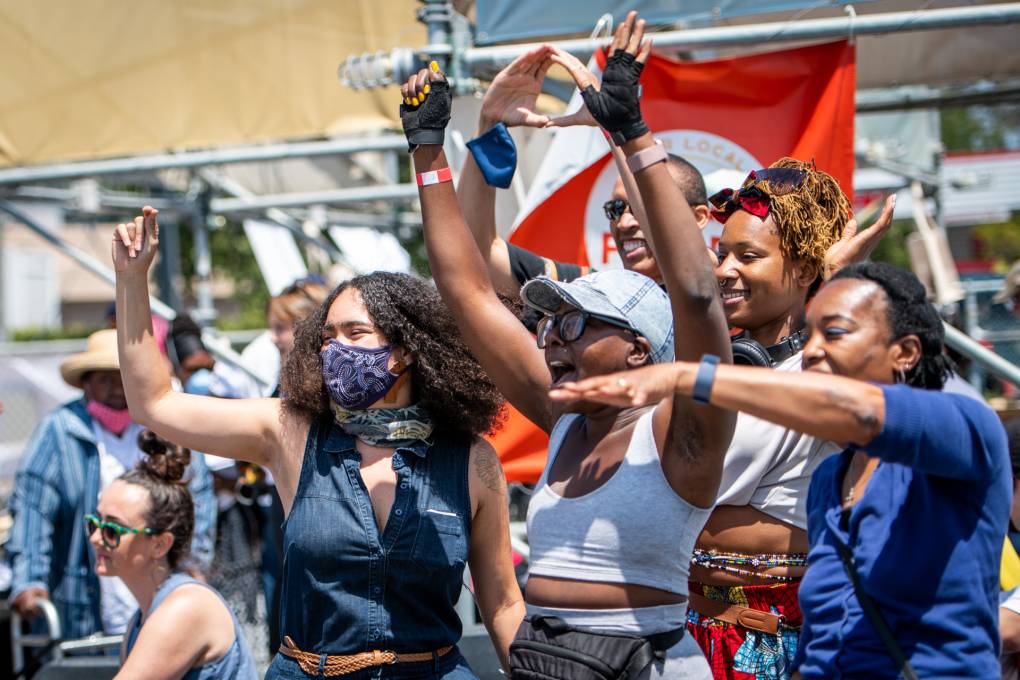
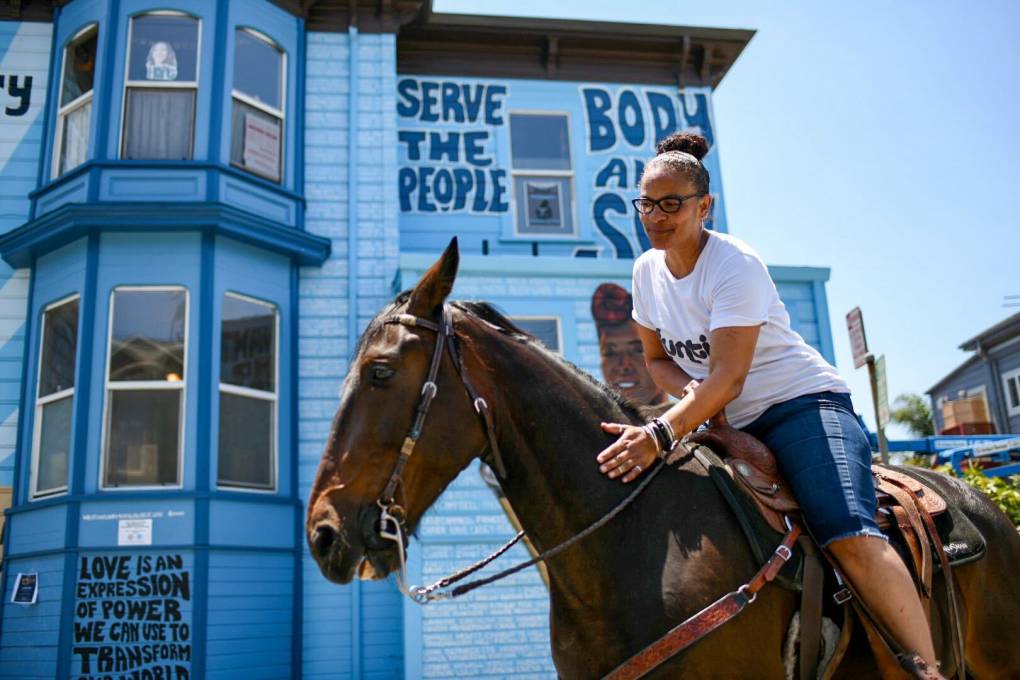
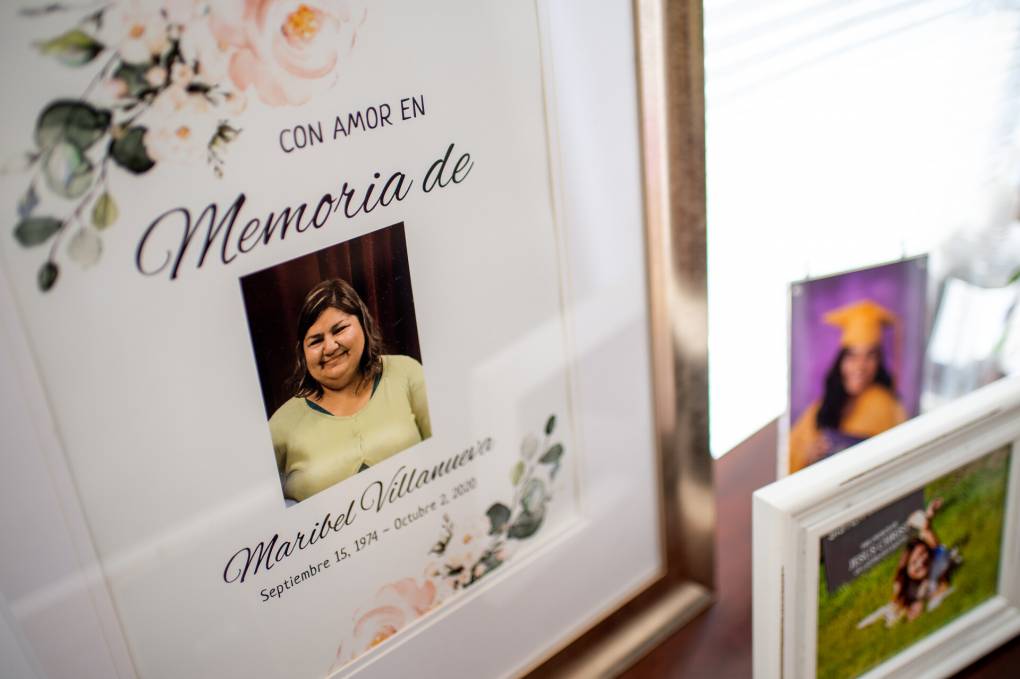
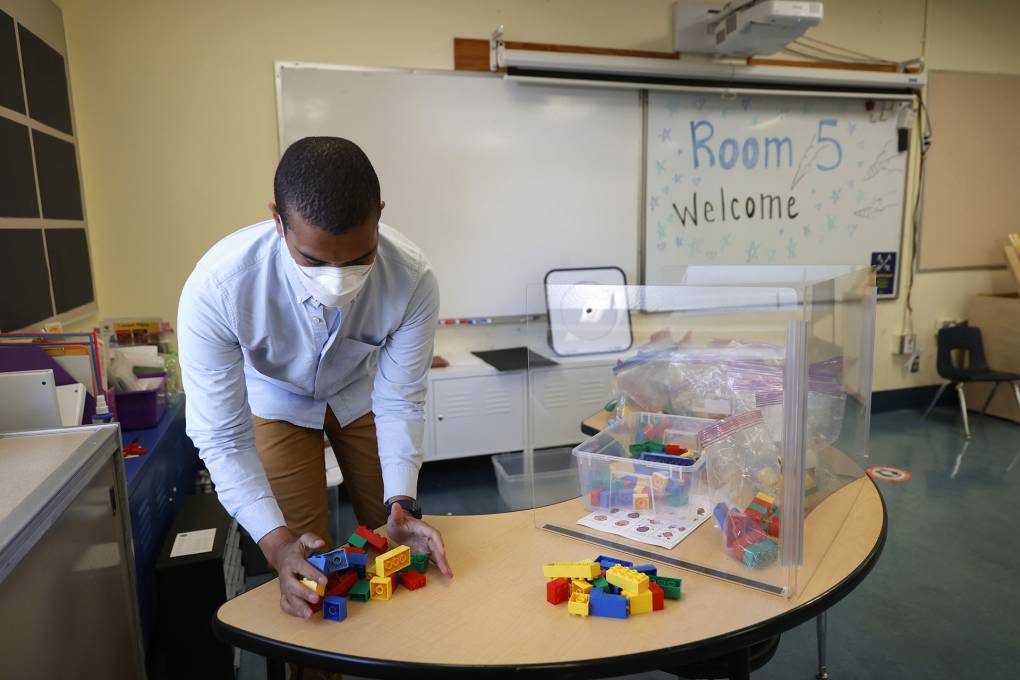
window.__IS_SSR__=true
window.__INITIAL_STATE__={
"attachmentsReducer": {
"audio_0": {
"type": "attachments",
"id": "audio_0",
"imgSizes": {
"kqedFullSize": {
"file": "https://ww2.kqed.org/news/wp-content/themes/KQED-unified/img/audio_bgs/background0.jpg"
}
}
},
"audio_1": {
"type": "attachments",
"id": "audio_1",
"imgSizes": {
"kqedFullSize": {
"file": "https://ww2.kqed.org/news/wp-content/themes/KQED-unified/img/audio_bgs/background1.jpg"
}
}
},
"audio_2": {
"type": "attachments",
"id": "audio_2",
"imgSizes": {
"kqedFullSize": {
"file": "https://ww2.kqed.org/news/wp-content/themes/KQED-unified/img/audio_bgs/background2.jpg"
}
}
},
"audio_3": {
"type": "attachments",
"id": "audio_3",
"imgSizes": {
"kqedFullSize": {
"file": "https://ww2.kqed.org/news/wp-content/themes/KQED-unified/img/audio_bgs/background3.jpg"
}
}
},
"audio_4": {
"type": "attachments",
"id": "audio_4",
"imgSizes": {
"kqedFullSize": {
"file": "https://ww2.kqed.org/news/wp-content/themes/KQED-unified/img/audio_bgs/background4.jpg"
}
}
},
"placeholder": {
"type": "attachments",
"id": "placeholder",
"imgSizes": {
"thumbnail": {
"file": "https://cdn.kqed.org/wp-content/uploads/2024/12/KQED-Default-Image-816638274-2000x1333-1-160x107.jpg",
"width": 160,
"height": 107,
"mimeType": "image/jpeg"
},
"medium": {
"file": "https://cdn.kqed.org/wp-content/uploads/2024/12/KQED-Default-Image-816638274-2000x1333-1-800x533.jpg",
"width": 800,
"height": 533,
"mimeType": "image/jpeg"
},
"medium_large": {
"file": "https://cdn.kqed.org/wp-content/uploads/2024/12/KQED-Default-Image-816638274-2000x1333-1-768x512.jpg",
"width": 768,
"height": 512,
"mimeType": "image/jpeg"
},
"large": {
"file": "https://cdn.kqed.org/wp-content/uploads/2024/12/KQED-Default-Image-816638274-2000x1333-1-1020x680.jpg",
"width": 1020,
"height": 680,
"mimeType": "image/jpeg"
},
"1536x1536": {
"file": "https://cdn.kqed.org/wp-content/uploads/2024/12/KQED-Default-Image-816638274-2000x1333-1-1536x1024.jpg",
"width": 1536,
"height": 1024,
"mimeType": "image/jpeg"
},
"fd-lrg": {
"file": "https://cdn.kqed.org/wp-content/uploads/2024/12/KQED-Default-Image-816638274-2000x1333-1-1536x1024.jpg",
"width": 1536,
"height": 1024,
"mimeType": "image/jpeg"
},
"fd-med": {
"file": "https://cdn.kqed.org/wp-content/uploads/2024/12/KQED-Default-Image-816638274-2000x1333-1-1020x680.jpg",
"width": 1020,
"height": 680,
"mimeType": "image/jpeg"
},
"fd-sm": {
"file": "https://cdn.kqed.org/wp-content/uploads/2024/12/KQED-Default-Image-816638274-2000x1333-1-800x533.jpg",
"width": 800,
"height": 533,
"mimeType": "image/jpeg"
},
"post-thumbnail": {
"file": "https://cdn.kqed.org/wp-content/uploads/2024/12/KQED-Default-Image-816638274-2000x1333-1-672x372.jpg",
"width": 672,
"height": 372,
"mimeType": "image/jpeg"
},
"twentyfourteen-full-width": {
"file": "https://cdn.kqed.org/wp-content/uploads/2024/12/KQED-Default-Image-816638274-2000x1333-1-1038x576.jpg",
"width": 1038,
"height": 576,
"mimeType": "image/jpeg"
},
"xxsmall": {
"file": "https://cdn.kqed.org/wp-content/uploads/2024/12/KQED-Default-Image-816638274-2000x1333-1-160x107.jpg",
"width": 160,
"height": 107,
"mimeType": "image/jpeg"
},
"xsmall": {
"file": "https://cdn.kqed.org/wp-content/uploads/2024/12/KQED-Default-Image-816638274-2000x1333-1-672x372.jpg",
"width": 672,
"height": 372,
"mimeType": "image/jpeg"
},
"small": {
"file": "https://cdn.kqed.org/wp-content/uploads/2024/12/KQED-Default-Image-816638274-2000x1333-1-672x372.jpg",
"width": 672,
"height": 372,
"mimeType": "image/jpeg"
},
"xlarge": {
"file": "https://cdn.kqed.org/wp-content/uploads/2024/12/KQED-Default-Image-816638274-2000x1333-1-1020x680.jpg",
"width": 1020,
"height": 680,
"mimeType": "image/jpeg"
},
"full-width": {
"file": "https://cdn.kqed.org/wp-content/uploads/2024/12/KQED-Default-Image-816638274-2000x1333-1-1920x1280.jpg",
"width": 1920,
"height": 1280,
"mimeType": "image/jpeg"
},
"guest-author-32": {
"file": "https://cdn.kqed.org/wp-content/uploads/2025/01/KQED-Default-Image-816638274-1333x1333-1-160x160.jpg",
"width": 32,
"height": 32,
"mimeType": "image/jpeg"
},
"guest-author-50": {
"file": "https://cdn.kqed.org/wp-content/uploads/2025/01/KQED-Default-Image-816638274-1333x1333-1-160x160.jpg",
"width": 50,
"height": 50,
"mimeType": "image/jpeg"
},
"guest-author-64": {
"file": "https://cdn.kqed.org/wp-content/uploads/2025/01/KQED-Default-Image-816638274-1333x1333-1-160x160.jpg",
"width": 64,
"height": 64,
"mimeType": "image/jpeg"
},
"guest-author-96": {
"file": "https://cdn.kqed.org/wp-content/uploads/2025/01/KQED-Default-Image-816638274-1333x1333-1-160x160.jpg",
"width": 96,
"height": 96,
"mimeType": "image/jpeg"
},
"guest-author-128": {
"file": "https://cdn.kqed.org/wp-content/uploads/2025/01/KQED-Default-Image-816638274-1333x1333-1-160x160.jpg",
"width": 128,
"height": 128,
"mimeType": "image/jpeg"
},
"detail": {
"file": "https://cdn.kqed.org/wp-content/uploads/2025/01/KQED-Default-Image-816638274-1333x1333-1-160x160.jpg",
"width": 160,
"height": 160,
"mimeType": "image/jpeg"
},
"kqedFullSize": {
"file": "https://cdn.kqed.org/wp-content/uploads/2024/12/KQED-Default-Image-816638274-2000x1333-1.jpg",
"width": 2000,
"height": 1333
}
}
},
"news_11878731": {
"type": "attachments",
"id": "news_11878731",
"meta": {
"index": "attachments_1716263798",
"site": "news",
"id": "11878731",
"found": true
},
"parent": 11878712,
"imgSizes": {
"twentyfourteen-full-width": {
"file": "https://ww2.kqed.org/app/uploads/sites/10/2021/06/020_Oakland_BlackLiberationWalkingTourParty_06192021-1038x576.jpg",
"width": 1038,
"mimeType": "image/jpeg",
"height": 576
},
"thumbnail": {
"file": "https://ww2.kqed.org/app/uploads/sites/10/2021/06/020_Oakland_BlackLiberationWalkingTourParty_06192021-160x107.jpg",
"width": 160,
"mimeType": "image/jpeg",
"height": 107
},
"post-thumbnail": {
"file": "https://ww2.kqed.org/app/uploads/sites/10/2021/06/020_Oakland_BlackLiberationWalkingTourParty_06192021-672x372.jpg",
"width": 672,
"mimeType": "image/jpeg",
"height": 372
},
"kqedFullSize": {
"file": "https://ww2.kqed.org/app/uploads/sites/10/2021/06/020_Oakland_BlackLiberationWalkingTourParty_06192021.jpg",
"width": 1920,
"height": 1280
},
"large": {
"file": "https://ww2.kqed.org/app/uploads/sites/10/2021/06/020_Oakland_BlackLiberationWalkingTourParty_06192021-1020x680.jpg",
"width": 1020,
"mimeType": "image/jpeg",
"height": 680
},
"1536x1536": {
"file": "https://ww2.kqed.org/app/uploads/sites/10/2021/06/020_Oakland_BlackLiberationWalkingTourParty_06192021-1536x1024.jpg",
"width": 1536,
"mimeType": "image/jpeg",
"height": 1024
},
"medium": {
"file": "https://ww2.kqed.org/app/uploads/sites/10/2021/06/020_Oakland_BlackLiberationWalkingTourParty_06192021-800x533.jpg",
"width": 800,
"mimeType": "image/jpeg",
"height": 533
}
},
"publishDate": 1624216382,
"modified": 1624216400,
"caption": "People dance to Samba Funk during the Black Liberation Walking Tour launch party and Juneteenth Celebration at SPARC-it-Place in Oakland on June 19, 2021.",
"description": null,
"title": "020_Oakland_BlackLiberationWalkingTourParty_06192021",
"credit": "Beth LaBerge/KQED",
"status": "inherit",
"altTag": null,
"isLoading": false,
"fetchFailed": false
},
"news_11878701": {
"type": "attachments",
"id": "news_11878701",
"meta": {
"index": "attachments_1716263798",
"site": "news",
"id": "11878701",
"found": true
},
"parent": 11878694,
"imgSizes": {
"twentyfourteen-full-width": {
"file": "https://ww2.kqed.org/app/uploads/sites/10/2021/06/Image-from-iOS-1-1038x576.jpg",
"width": 1038,
"mimeType": "image/jpeg",
"height": 576
},
"thumbnail": {
"file": "https://ww2.kqed.org/app/uploads/sites/10/2021/06/Image-from-iOS-1-160x107.jpg",
"width": 160,
"mimeType": "image/jpeg",
"height": 107
},
"post-thumbnail": {
"file": "https://ww2.kqed.org/app/uploads/sites/10/2021/06/Image-from-iOS-1-672x372.jpg",
"width": 672,
"mimeType": "image/jpeg",
"height": 372
},
"kqedFullSize": {
"file": "https://ww2.kqed.org/app/uploads/sites/10/2021/06/Image-from-iOS-1.jpg",
"width": 1620,
"height": 1080
},
"large": {
"file": "https://ww2.kqed.org/app/uploads/sites/10/2021/06/Image-from-iOS-1-1020x680.jpg",
"width": 1020,
"mimeType": "image/jpeg",
"height": 680
},
"1536x1536": {
"file": "https://ww2.kqed.org/app/uploads/sites/10/2021/06/Image-from-iOS-1-1536x1024.jpg",
"width": 1536,
"mimeType": "image/jpeg",
"height": 1024
},
"medium": {
"file": "https://ww2.kqed.org/app/uploads/sites/10/2021/06/Image-from-iOS-1-800x533.jpg",
"width": 800,
"mimeType": "image/jpeg",
"height": 533
}
},
"publishDate": 1624143398,
"modified": 1624143418,
"caption": "Jilchristina Vest rides JJ, the horse of Oakland Black Cowboy Donnell McAlister, during a Juneteenth block party to celebrate the opening of the Black Panther Mini Museum in Oakland on June 19, 2021.",
"description": null,
"title": "Image from iOS",
"credit": "Beth LaBerge/KQED",
"status": "inherit",
"altTag": null,
"isLoading": false,
"fetchFailed": false
},
"news_11877894": {
"type": "attachments",
"id": "news_11877894",
"meta": {
"index": "attachments_1716263798",
"site": "news",
"id": "11877894",
"found": true
},
"parent": 11877888,
"imgSizes": {
"twentyfourteen-full-width": {
"file": "https://ww2.kqed.org/app/uploads/sites/10/2021/06/cadet-weis-1038x576.jpg",
"width": 1038,
"mimeType": "image/jpeg",
"height": 576
},
"thumbnail": {
"file": "https://ww2.kqed.org/app/uploads/sites/10/2021/06/cadet-weis-160x95.jpg",
"width": 160,
"mimeType": "image/jpeg",
"height": 95
},
"post-thumbnail": {
"file": "https://ww2.kqed.org/app/uploads/sites/10/2021/06/cadet-weis-672x372.jpg",
"width": 672,
"mimeType": "image/jpeg",
"height": 372
},
"kqedFullSize": {
"file": "https://ww2.kqed.org/app/uploads/sites/10/2021/06/cadet-weis-e1623799606562.jpg",
"width": 1556,
"height": 921
},
"large": {
"file": "https://ww2.kqed.org/app/uploads/sites/10/2021/06/cadet-weis-1020x604.jpg",
"width": 1020,
"mimeType": "image/jpeg",
"height": 604
},
"1536x1536": {
"file": "https://ww2.kqed.org/app/uploads/sites/10/2021/06/cadet-weis-1536x909.jpg",
"width": 1536,
"mimeType": "image/jpeg",
"height": 909
},
"medium": {
"file": "https://ww2.kqed.org/app/uploads/sites/10/2021/06/cadet-weis-800x474.jpg",
"width": 800,
"mimeType": "image/jpeg",
"height": 474
}
},
"publishDate": 1623698354,
"modified": 1623876255,
"caption": "Cadet Group Commander Jennifer Weis explains the new Space Force Delta logo to senior cadets. Her Air Force junior ROTC unit has been selected to convert to a Space Force junior ROTC Unit. ",
"description": null,
"title": "cadet weis",
"credit": "Courtesy Master Sgt. Sonny Padua",
"status": "inherit",
"altTag": null,
"isLoading": false,
"fetchFailed": false
},
"news_11877775": {
"type": "attachments",
"id": "news_11877775",
"meta": {
"index": "attachments_1716263798",
"site": "news",
"id": "11877775",
"found": true
},
"parent": 11877103,
"imgSizes": {
"twentyfourteen-full-width": {
"file": "https://ww2.kqed.org/app/uploads/sites/10/2021/06/RS49780_023_Oakland_MaribelVillanueva_06102021-qut-1038x576.jpg",
"width": 1038,
"mimeType": "image/jpeg",
"height": 576
},
"thumbnail": {
"file": "https://ww2.kqed.org/app/uploads/sites/10/2021/06/RS49780_023_Oakland_MaribelVillanueva_06102021-qut-160x107.jpg",
"width": 160,
"mimeType": "image/jpeg",
"height": 107
},
"post-thumbnail": {
"file": "https://ww2.kqed.org/app/uploads/sites/10/2021/06/RS49780_023_Oakland_MaribelVillanueva_06102021-qut-672x372.jpg",
"width": 672,
"mimeType": "image/jpeg",
"height": 372
},
"kqedFullSize": {
"file": "https://ww2.kqed.org/app/uploads/sites/10/2021/06/RS49780_023_Oakland_MaribelVillanueva_06102021-qut.jpg",
"width": 1920,
"height": 1278
},
"large": {
"file": "https://ww2.kqed.org/app/uploads/sites/10/2021/06/RS49780_023_Oakland_MaribelVillanueva_06102021-qut-1020x679.jpg",
"width": 1020,
"mimeType": "image/jpeg",
"height": 679
},
"1536x1536": {
"file": "https://ww2.kqed.org/app/uploads/sites/10/2021/06/RS49780_023_Oakland_MaribelVillanueva_06102021-qut-1536x1022.jpg",
"width": 1536,
"mimeType": "image/jpeg",
"height": 1022
},
"medium": {
"file": "https://ww2.kqed.org/app/uploads/sites/10/2021/06/RS49780_023_Oakland_MaribelVillanueva_06102021-qut-800x533.jpg",
"width": 800,
"mimeType": "image/jpeg",
"height": 533
}
},
"publishDate": 1623444740,
"modified": 1623456258,
"caption": "A framed memorial for Maribel Villanueva sits among family photos at her sister Susana Villanueva Torres' home in Oakland on June 10, 2021.",
"description": "A framed memorial for Maribel Villanueva sits amongst family photos at her sister Susana Villanueva Torres' home in Oakland on June 10, 2021.",
"title": "RS49780_023_Oakland_MaribelVillanueva_06102021-qut",
"credit": "Beth LaBerge/KQED",
"status": "inherit",
"altTag": null,
"isLoading": false,
"fetchFailed": false
},
"news_11877739": {
"type": "attachments",
"id": "news_11877739",
"meta": {
"index": "attachments_1716263798",
"site": "news",
"id": "11877739",
"found": true
},
"parent": 11877661,
"imgSizes": {
"twentyfourteen-full-width": {
"file": "https://ww2.kqed.org/app/uploads/sites/10/2021/06/GettyImages-1311697471-1038x576.jpg",
"width": 1038,
"mimeType": "image/jpeg",
"height": 576
},
"thumbnail": {
"file": "https://ww2.kqed.org/app/uploads/sites/10/2021/06/GettyImages-1311697471-160x107.jpg",
"width": 160,
"mimeType": "image/jpeg",
"height": 107
},
"post-thumbnail": {
"file": "https://ww2.kqed.org/app/uploads/sites/10/2021/06/GettyImages-1311697471-672x372.jpg",
"width": 672,
"mimeType": "image/jpeg",
"height": 372
},
"kqedFullSize": {
"file": "https://ww2.kqed.org/app/uploads/sites/10/2021/06/GettyImages-1311697471.jpg",
"width": 1920,
"height": 1280
},
"large": {
"file": "https://ww2.kqed.org/app/uploads/sites/10/2021/06/GettyImages-1311697471-1020x680.jpg",
"width": 1020,
"mimeType": "image/jpeg",
"height": 680
},
"1536x1536": {
"file": "https://ww2.kqed.org/app/uploads/sites/10/2021/06/GettyImages-1311697471-1536x1024.jpg",
"width": 1536,
"mimeType": "image/jpeg",
"height": 1024
},
"medium": {
"file": "https://ww2.kqed.org/app/uploads/sites/10/2021/06/GettyImages-1311697471-800x533.jpg",
"width": 800,
"mimeType": "image/jpeg",
"height": 533
}
},
"publishDate": 1623438510,
"modified": 1643402608,
"caption": "Chris Johnson, a teacher at Bryant Elementary School in San Francisco, prepares to welcome 16 kindergarteners to class on April 9, 2021.",
"description": "A San Francisco elementary school teacher sets up his classroom for in-person instruction. A UCSF study looked at learning hubs in the city and found that in-school transmission among students were low.",
"title": "San Francisco Public Schools Prepare For In Person Learning",
"credit": "Justin Sullivan/Getty Images",
"status": "inherit",
"altTag": "A masked teacher sets up an activity on a table.",
"isLoading": false,
"fetchFailed": false
},
"news_11867959": {
"type": "attachments",
"id": "news_11867959",
"meta": {
"index": "attachments_1716263798",
"site": "news",
"id": "11867959",
"found": true
},
"parent": 11867881,
"imgSizes": {
"twentyfourteen-full-width": {
"file": "https://ww2.kqed.org/app/uploads/sites/10/2021/04/RS47864_018_Oakland_03112021-qut-1038x576.jpg",
"width": 1038,
"mimeType": "image/jpeg",
"height": 576
},
"thumbnail": {
"file": "https://ww2.kqed.org/app/uploads/sites/10/2021/04/RS47864_018_Oakland_03112021-qut-160x107.jpg",
"width": 160,
"mimeType": "image/jpeg",
"height": 107
},
"post-thumbnail": {
"file": "https://ww2.kqed.org/app/uploads/sites/10/2021/04/RS47864_018_Oakland_03112021-qut-672x372.jpg",
"width": 672,
"mimeType": "image/jpeg",
"height": 372
},
"kqedFullSize": {
"file": "https://ww2.kqed.org/app/uploads/sites/10/2021/04/RS47864_018_Oakland_03112021-qut.jpg",
"width": 1920,
"height": 1280
},
"large": {
"file": "https://ww2.kqed.org/app/uploads/sites/10/2021/04/RS47864_018_Oakland_03112021-qut-1020x680.jpg",
"width": 1020,
"mimeType": "image/jpeg",
"height": 680
},
"1536x1536": {
"file": "https://ww2.kqed.org/app/uploads/sites/10/2021/04/RS47864_018_Oakland_03112021-qut-1536x1024.jpg",
"width": 1536,
"mimeType": "image/jpeg",
"height": 1024
},
"medium": {
"file": "https://ww2.kqed.org/app/uploads/sites/10/2021/04/RS47864_018_Oakland_03112021-qut-800x533.jpg",
"width": 800,
"mimeType": "image/jpeg",
"height": 533
}
},
"publishDate": 1617419116,
"modified": 1617419217,
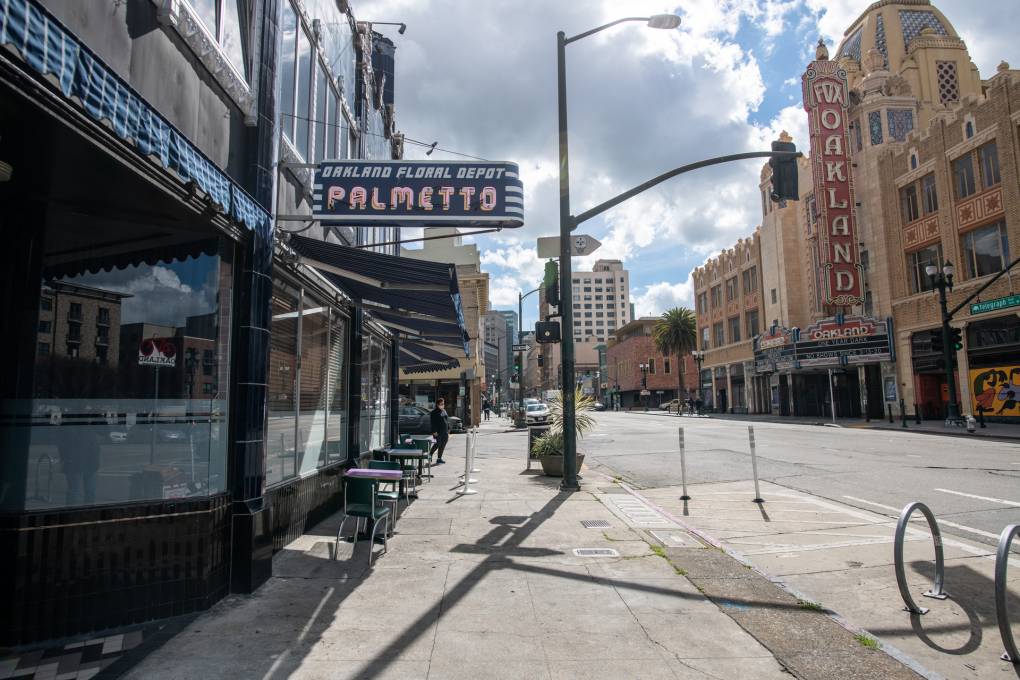
"caption": "The Fox Theater in Oakland on March 11, 2021. The city is the latest to host a guaranteed income pilot program. ",
"description": null,
"title": "RS47864_018_Oakland_03112021-qut",
"credit": "Beth LaBerge/KQED",
"status": "inherit",
"altTag": null,
"isLoading": false,
"fetchFailed": false
},
"news_11876357": {
"type": "attachments",
"id": "news_11876357",
"meta": {
"index": "attachments_1716263798",
"site": "news",
"id": "11876357",
"found": true
},
"parent": 11876356,
"imgSizes": {
"twentyfourteen-full-width": {
"file": "https://ww2.kqed.org/app/uploads/sites/10/2021/06/Abbi-Berry-@-FSFS-Rally-courtesy-R.-Hansen-1038x576.jpg",
"width": 1038,
"mimeType": "image/jpeg",
"height": 576
},
"thumbnail": {
"file": "https://ww2.kqed.org/app/uploads/sites/10/2021/06/Abbi-Berry-@-FSFS-Rally-courtesy-R.-Hansen-160x107.jpg",
"width": 160,
"mimeType": "image/jpeg",
"height": 107
},
"post-thumbnail": {
"file": "https://ww2.kqed.org/app/uploads/sites/10/2021/06/Abbi-Berry-@-FSFS-Rally-courtesy-R.-Hansen-672x372.jpg",
"width": 672,
"mimeType": "image/jpeg",
"height": 372
},
"kqedFullSize": {
"file": "https://ww2.kqed.org/app/uploads/sites/10/2021/06/Abbi-Berry-@-FSFS-Rally-courtesy-R.-Hansen.jpg",
"width": 1920,
"height": 1280
},
"large": {
"file": "https://ww2.kqed.org/app/uploads/sites/10/2021/06/Abbi-Berry-@-FSFS-Rally-courtesy-R.-Hansen-1020x680.jpg",
"width": 1020,
"mimeType": "image/jpeg",
"height": 680
},
"1536x1536": {
"file": "https://ww2.kqed.org/app/uploads/sites/10/2021/06/Abbi-Berry-@-FSFS-Rally-courtesy-R.-Hansen-1536x1024.jpg",
"width": 1536,
"mimeType": "image/jpeg",
"height": 1024
},
"medium": {
"file": "https://ww2.kqed.org/app/uploads/sites/10/2021/06/Abbi-Berry-@-FSFS-Rally-courtesy-R.-Hansen-800x533.jpg",
"width": 800,
"mimeType": "image/jpeg",
"height": 533
}
},
"publishDate": 1622667219,
"modified": 1622750743,
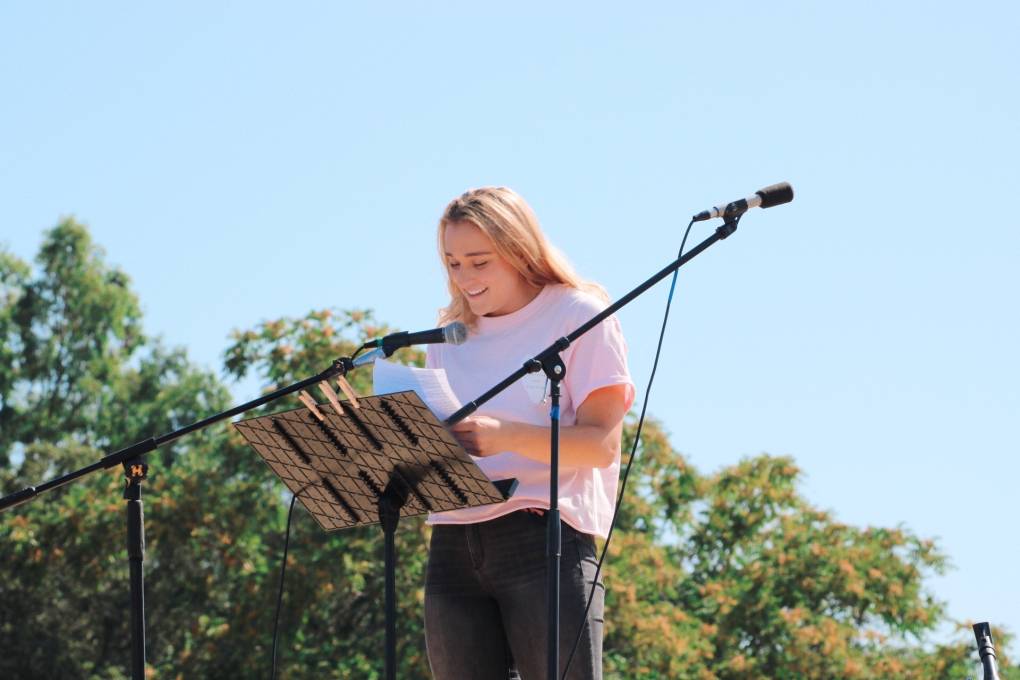
"caption": "Abbi Berry, who graduated from Los Gatos High School in 2018, speaks during a rally over sexual abuse on campus.",
"description": null,
"title": "Processed with VSCO with al3 preset",
"credit": "Courtesy of R. Hansen",
"status": "inherit",
"altTag": null,
"isLoading": false,
"fetchFailed": false
},
"news_11876101": {
"type": "attachments",
"id": "news_11876101",
"meta": {
"index": "attachments_1716263798",
"site": "news",
"id": "11876101",
"found": true
},
"parent": 11876100,
"imgSizes": {
"twentyfourteen-full-width": {
"file": "https://ww2.kqed.org/app/uploads/sites/10/2021/05/IMG_4679-1038x576.jpg",
"width": 1038,
"mimeType": "image/jpeg",
"height": 576
},
"thumbnail": {
"file": "https://ww2.kqed.org/app/uploads/sites/10/2021/05/IMG_4679-160x120.jpg",
"width": 160,
"mimeType": "image/jpeg",
"height": 120
},
"post-thumbnail": {
"file": "https://ww2.kqed.org/app/uploads/sites/10/2021/05/IMG_4679-672x372.jpg",
"width": 672,
"mimeType": "image/jpeg",
"height": 372
},
"kqedFullSize": {
"file": "https://ww2.kqed.org/app/uploads/sites/10/2021/05/IMG_4679-scaled.jpg",
"width": 2560,
"height": 1920
},
"2048x2048": {
"file": "https://ww2.kqed.org/app/uploads/sites/10/2021/05/IMG_4679-2048x1536.jpg",
"width": 2048,
"mimeType": "image/jpeg",
"height": 1536
},
"large": {
"file": "https://ww2.kqed.org/app/uploads/sites/10/2021/05/IMG_4679-1020x765.jpg",
"width": 1020,
"mimeType": "image/jpeg",
"height": 765
},
"1536x1536": {
"file": "https://ww2.kqed.org/app/uploads/sites/10/2021/05/IMG_4679-1536x1152.jpg",
"width": 1536,
"mimeType": "image/jpeg",
"height": 1152
},
"full-width": {
"file": "https://ww2.kqed.org/app/uploads/sites/10/2021/05/IMG_4679-1920x1440.jpg",
"width": 1920,
"mimeType": "image/jpeg",
"height": 1440
},
"medium": {
"file": "https://ww2.kqed.org/app/uploads/sites/10/2021/05/IMG_4679-800x600.jpg",
"width": 800,
"mimeType": "image/jpeg",
"height": 600
}
},
"publishDate": 1622495336,
"modified": 1622495394,
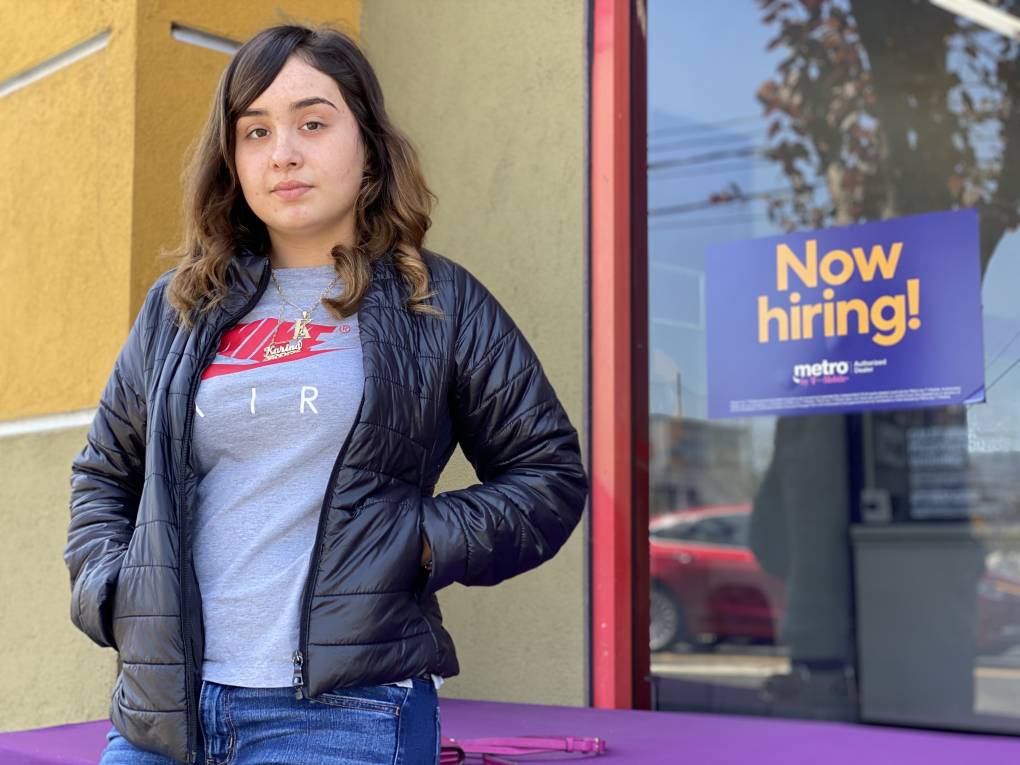
"caption": "Work is top priority for Fremont graduate, Karina Dealba Perez.",
"description": null,
"title": "IMG_4679",
"credit": "Julia McEvoy/KQED",
"status": "inherit",
"altTag": null,
"isLoading": false,
"fetchFailed": false
},
"news_11859102": {
"type": "attachments",
"id": "news_11859102",
"meta": {
"index": "attachments_1716263798",
"site": "news",
"id": "11859102",
"found": true
},
"parent": 11859065,
"imgSizes": {
"apple_news_ca_landscape_5_5": {
"file": "https://ww2.kqed.org/app/uploads/sites/10/2021/02/010_SanFrancisco_LowellHSRally_02052021-1044x783.jpg",
"width": 1044,
"mimeType": "image/jpeg",
"height": 783
},
"apple_news_ca_square_4_0": {
"file": "https://ww2.kqed.org/app/uploads/sites/10/2021/02/010_SanFrancisco_LowellHSRally_02052021-470x470.jpg",
"width": 470,
"mimeType": "image/jpeg",
"height": 470
},
"twentyfourteen-full-width": {
"file": "https://ww2.kqed.org/app/uploads/sites/10/2021/02/010_SanFrancisco_LowellHSRally_02052021-1038x576.jpg",
"width": 1038,
"mimeType": "image/jpeg",
"height": 576
},
"thumbnail": {
"file": "https://ww2.kqed.org/app/uploads/sites/10/2021/02/010_SanFrancisco_LowellHSRally_02052021-160x107.jpg",
"width": 160,
"mimeType": "image/jpeg",
"height": 107
},
"post-thumbnail": {
"file": "https://ww2.kqed.org/app/uploads/sites/10/2021/02/010_SanFrancisco_LowellHSRally_02052021-672x372.jpg",
"width": 672,
"mimeType": "image/jpeg",
"height": 372
},
"kqedFullSize": {
"file": "https://ww2.kqed.org/app/uploads/sites/10/2021/02/010_SanFrancisco_LowellHSRally_02052021.jpg",
"width": 1920,
"height": 1278
},
"apple_news_ca_landscape_4_7": {
"file": "https://ww2.kqed.org/app/uploads/sites/10/2021/02/010_SanFrancisco_LowellHSRally_02052021-632x474.jpg",
"width": 632,
"mimeType": "image/jpeg",
"height": 474
},
"large": {
"file": "https://ww2.kqed.org/app/uploads/sites/10/2021/02/010_SanFrancisco_LowellHSRally_02052021-1020x679.jpg",
"width": 1020,
"mimeType": "image/jpeg",
"height": 679
},
"apple_news_ca_landscape_4_0": {
"file": "https://ww2.kqed.org/app/uploads/sites/10/2021/02/010_SanFrancisco_LowellHSRally_02052021-536x402.jpg",
"width": 536,
"mimeType": "image/jpeg",
"height": 402
},
"apple_news_ca_portrait_12_9": {
"file": "https://ww2.kqed.org/app/uploads/sites/10/2021/02/010_SanFrancisco_LowellHSRally_02052021-1122x1278.jpg",
"width": 1122,
"mimeType": "image/jpeg",
"height": 1278
},
"medium": {
"file": "https://ww2.kqed.org/app/uploads/sites/10/2021/02/010_SanFrancisco_LowellHSRally_02052021-800x533.jpg",
"width": 800,
"mimeType": "image/jpeg",
"height": 533
},
"apple_news_ca_portrait_4_0": {
"file": "https://ww2.kqed.org/app/uploads/sites/10/2021/02/010_SanFrancisco_LowellHSRally_02052021-354x472.jpg",
"width": 354,
"mimeType": "image/jpeg",
"height": 472
},
"apple_news_ca_portrait_9_7": {
"file": "https://ww2.kqed.org/app/uploads/sites/10/2021/02/010_SanFrancisco_LowellHSRally_02052021-840x1120.jpg",
"width": 840,
"mimeType": "image/jpeg",
"height": 1120
},
"apple_news_ca_landscape_12_9": {
"file": "https://ww2.kqed.org/app/uploads/sites/10/2021/02/010_SanFrancisco_LowellHSRally_02052021-1832x1278.jpg",
"width": 1832,
"mimeType": "image/jpeg",
"height": 1278
},
"apple_news_ca_square_9_7": {
"file": "https://ww2.kqed.org/app/uploads/sites/10/2021/02/010_SanFrancisco_LowellHSRally_02052021-1104x1104.jpg",
"width": 1104,
"mimeType": "image/jpeg",
"height": 1104
},
"1536x1536": {
"file": "https://ww2.kqed.org/app/uploads/sites/10/2021/02/010_SanFrancisco_LowellHSRally_02052021-1536x1022.jpg",
"width": 1536,
"mimeType": "image/jpeg",
"height": 1022
},
"apple_news_ca_portrait_4_7": {
"file": "https://ww2.kqed.org/app/uploads/sites/10/2021/02/010_SanFrancisco_LowellHSRally_02052021-414x552.jpg",
"width": 414,
"mimeType": "image/jpeg",
"height": 552
},
"apple_news_ca_square_12_9": {
"file": "https://ww2.kqed.org/app/uploads/sites/10/2021/02/010_SanFrancisco_LowellHSRally_02052021-1472x1278.jpg",
"width": 1472,
"mimeType": "image/jpeg",
"height": 1278
},
"apple_news_ca_portrait_5_5": {
"file": "https://ww2.kqed.org/app/uploads/sites/10/2021/02/010_SanFrancisco_LowellHSRally_02052021-687x916.jpg",
"width": 687,
"mimeType": "image/jpeg",
"height": 916
},
"apple_news_ca_square_4_7": {
"file": "https://ww2.kqed.org/app/uploads/sites/10/2021/02/010_SanFrancisco_LowellHSRally_02052021-550x550.jpg",
"width": 550,
"mimeType": "image/jpeg",
"height": 550
},
"apple_news_ca_landscape_9_7": {
"file": "https://ww2.kqed.org/app/uploads/sites/10/2021/02/010_SanFrancisco_LowellHSRally_02052021-1376x1032.jpg",
"width": 1376,
"mimeType": "image/jpeg",
"height": 1032
},
"apple_news_ca_square_5_5": {
"file": "https://ww2.kqed.org/app/uploads/sites/10/2021/02/010_SanFrancisco_LowellHSRally_02052021-912x912.jpg",
"width": 912,
"mimeType": "image/jpeg",
"height": 912
}
},
"publishDate": 1612645163,
"modified": 1612645205,
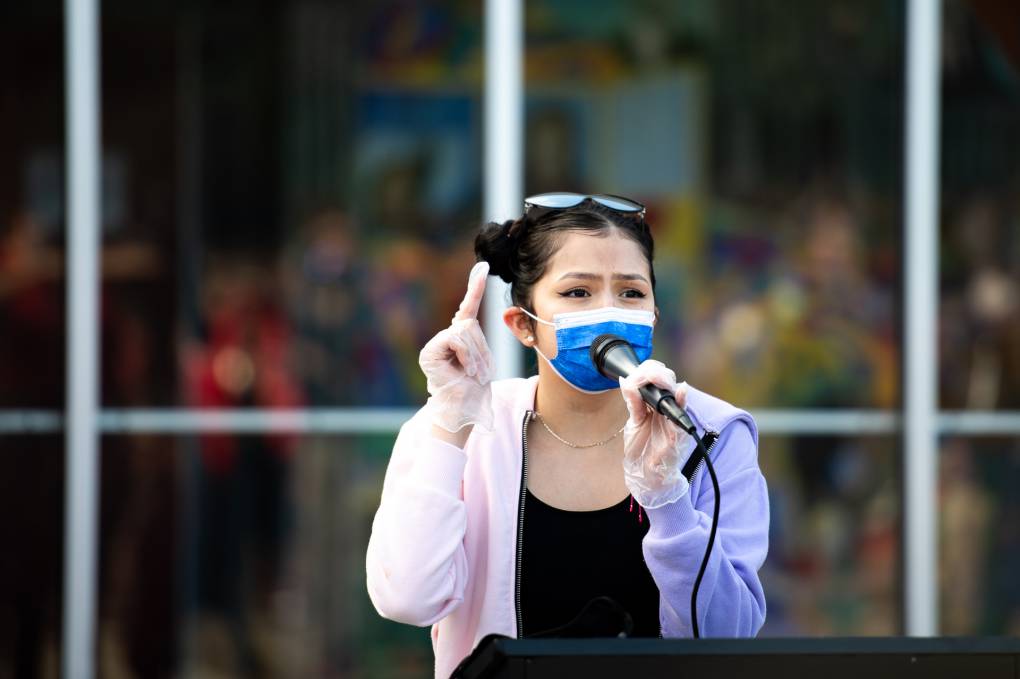
"caption": "Student delegate Kathya Correa Almanza speaks during a rally at Lowell High School on Feb. 5, 2021, against recent racist incidents at the school.",
"description": null,
"title": "010_SanFrancisco_LowellHSRally_02052021",
"credit": "Beth LaBerge/KQED",
"status": "inherit",
"altTag": "Student delegate Kathya Correa Almanza speaks during a rally at Lowell High School on Feb. 5, 2021, against recent racist incidents at the school.",
"isLoading": false,
"fetchFailed": false
},
"news_11875903": {
"type": "attachments",
"id": "news_11875903",
"meta": {
"index": "attachments_1716263798",
"site": "news",
"id": "11875903",
"found": true
},
"parent": 11875883,
"imgSizes": {
"twentyfourteen-full-width": {
"file": "https://ww2.kqed.org/app/uploads/sites/10/2021/05/RS44115_004_KQED_Oakland_SchoolPods_ElisaCecaci_07272020-qut-1038x576.jpeg",
"width": 1038,
"mimeType": "image/jpeg",
"height": 576
},
"thumbnail": {
"file": "https://ww2.kqed.org/app/uploads/sites/10/2021/05/RS44115_004_KQED_Oakland_SchoolPods_ElisaCecaci_07272020-qut-160x107.jpeg",
"width": 160,
"mimeType": "image/jpeg",
"height": 107
},
"post-thumbnail": {
"file": "https://ww2.kqed.org/app/uploads/sites/10/2021/05/RS44115_004_KQED_Oakland_SchoolPods_ElisaCecaci_07272020-qut-672x372.jpeg",
"width": 672,
"mimeType": "image/jpeg",
"height": 372
},
"kqedFullSize": {
"file": "https://ww2.kqed.org/app/uploads/sites/10/2021/05/RS44115_004_KQED_Oakland_SchoolPods_ElisaCecaci_07272020-qut.jpeg",
"width": 1920,
"height": 1280
},
"large": {
"file": "https://ww2.kqed.org/app/uploads/sites/10/2021/05/RS44115_004_KQED_Oakland_SchoolPods_ElisaCecaci_07272020-qut-1020x680.jpeg",
"width": 1020,
"mimeType": "image/jpeg",
"height": 680
},
"1536x1536": {
"file": "https://ww2.kqed.org/app/uploads/sites/10/2021/05/RS44115_004_KQED_Oakland_SchoolPods_ElisaCecaci_07272020-qut-1536x1024.jpeg",
"width": 1536,
"mimeType": "image/jpeg",
"height": 1024
},
"medium": {
"file": "https://ww2.kqed.org/app/uploads/sites/10/2021/05/RS44115_004_KQED_Oakland_SchoolPods_ElisaCecaci_07272020-qut-800x533.jpeg",
"width": 800,
"mimeType": "image/jpeg",
"height": 533
}
},
"publishDate": 1622230182,
"modified": 1622230328,
"caption": "After more than a year of distance learning, some students and parents are counting on summer school to help make up for lost learning. ",
"description": "Keli'i, 6, and Kanoa, 18, study on their front porch in Oakland on July 27, 2020. ",
"title": "distance learning",
"credit": "Beth LaBerge/KQED",
"status": "inherit",
"altTag": null,
"isLoading": false,
"fetchFailed": false
},
"news_11875277": {
"type": "attachments",
"id": "news_11875277",
"meta": {
"index": "attachments_1716263798",
"site": "news",
"id": "11875277",
"found": true
},
"parent": 11875271,
"imgSizes": {
"twentyfourteen-full-width": {
"file": "https://ww2.kqed.org/app/uploads/sites/10/2021/05/RS36182_IMG_9404-14-qut-1038x576.jpg",
"width": 1038,
"mimeType": "image/jpeg",
"height": 576
},
"thumbnail": {
"file": "https://ww2.kqed.org/app/uploads/sites/10/2021/05/RS36182_IMG_9404-14-qut-160x107.jpg",
"width": 160,
"mimeType": "image/jpeg",
"height": 107
},
"post-thumbnail": {
"file": "https://ww2.kqed.org/app/uploads/sites/10/2021/05/RS36182_IMG_9404-14-qut-672x372.jpg",
"width": 672,
"mimeType": "image/jpeg",
"height": 372
},
"kqedFullSize": {
"file": "https://ww2.kqed.org/app/uploads/sites/10/2021/05/RS36182_IMG_9404-14-qut.jpg",
"width": 1920,
"height": 1280
},
"large": {
"file": "https://ww2.kqed.org/app/uploads/sites/10/2021/05/RS36182_IMG_9404-14-qut-1020x680.jpg",
"width": 1020,
"mimeType": "image/jpeg",
"height": 680
},
"1536x1536": {
"file": "https://ww2.kqed.org/app/uploads/sites/10/2021/05/RS36182_IMG_9404-14-qut-1536x1024.jpg",
"width": 1536,
"mimeType": "image/jpeg",
"height": 1024
},
"medium": {
"file": "https://ww2.kqed.org/app/uploads/sites/10/2021/05/RS36182_IMG_9404-14-qut-800x533.jpg",
"width": 800,
"mimeType": "image/jpeg",
"height": 533
}
},
"publishDate": 1621977870,
"modified": 1624904813,
"caption": "A group of Oakland REACH students.",
"description": null,
"title": "RS36182_IMG_9404-14-qut",
"credit": "Olivia Obineme/KQED",
"status": "inherit",
"altTag": null,
"isLoading": false,
"fetchFailed": false
},
"news_11875357": {
"type": "attachments",
"id": "news_11875357",
"meta": {
"index": "attachments_1716263798",
"site": "news",
"id": "11875357",
"found": true
},
"parent": 11875304,
"imgSizes": {
"twentyfourteen-full-width": {
"file": "https://ww2.kqed.org/app/uploads/sites/10/2021/05/RS49518_040_Oakland_APTPGeorgeFloyd_05252021-qut-1038x576.jpg",
"width": 1038,
"mimeType": "image/jpeg",
"height": 576
},
"thumbnail": {
"file": "https://ww2.kqed.org/app/uploads/sites/10/2021/05/RS49518_040_Oakland_APTPGeorgeFloyd_05252021-qut-160x106.jpg",
"width": 160,
"mimeType": "image/jpeg",
"height": 106
},
"post-thumbnail": {
"file": "https://ww2.kqed.org/app/uploads/sites/10/2021/05/RS49518_040_Oakland_APTPGeorgeFloyd_05252021-qut-672x372.jpg",
"width": 672,
"mimeType": "image/jpeg",
"height": 372
},
"kqedFullSize": {
"file": "https://ww2.kqed.org/app/uploads/sites/10/2021/05/RS49518_040_Oakland_APTPGeorgeFloyd_05252021-qut.jpg",
"width": 1696,
"height": 1128
},
"large": {
"file": "https://ww2.kqed.org/app/uploads/sites/10/2021/05/RS49518_040_Oakland_APTPGeorgeFloyd_05252021-qut-1020x678.jpg",
"width": 1020,
"mimeType": "image/jpeg",
"height": 678
},
"1536x1536": {
"file": "https://ww2.kqed.org/app/uploads/sites/10/2021/05/RS49518_040_Oakland_APTPGeorgeFloyd_05252021-qut-1536x1022.jpg",
"width": 1536,
"mimeType": "image/jpeg",
"height": 1022
},
"medium": {
"file": "https://ww2.kqed.org/app/uploads/sites/10/2021/05/RS49518_040_Oakland_APTPGeorgeFloyd_05252021-qut-800x532.jpg",
"width": 800,
"mimeType": "image/jpeg",
"height": 532
}
},
"publishDate": 1621992985,
"modified": 1622057580,
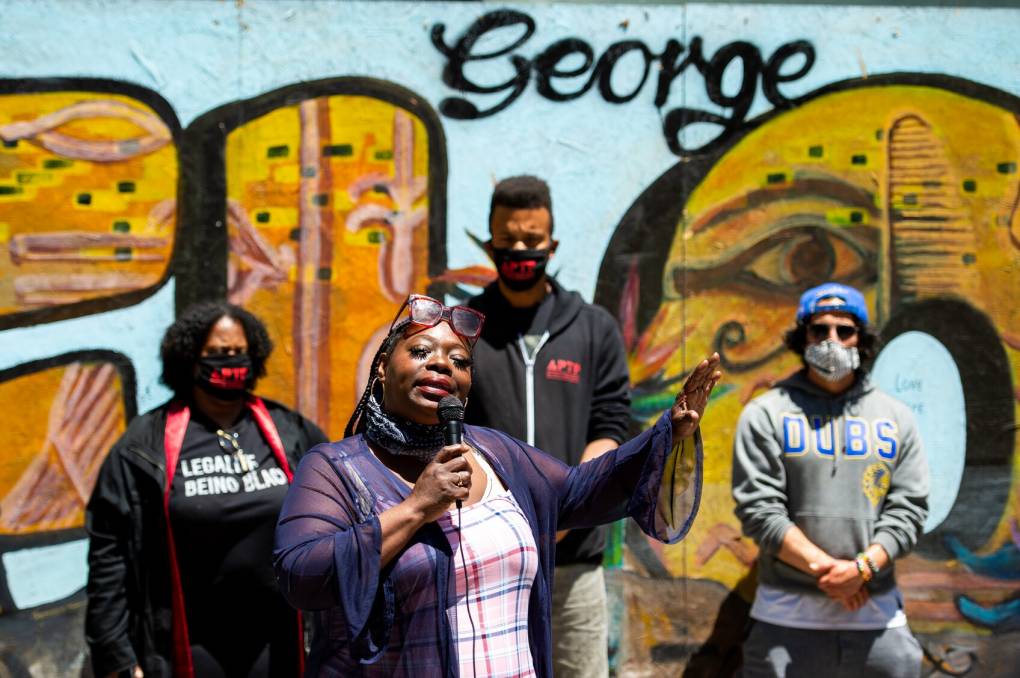
"caption": "Barbara Doss, mother of Dujuan Armstrong, speaks during an event in downtown Oakland organized by the Anti Police-Terror Project and the Defund Police Coalition on May 25, 2021 to honor George Floyd one year after his murder. Armstrong died of asphyxiation while being restrained in custody at Santa Rita Jail in 2018.",
"description": "Barbara Doss, mother of Dujuan Armstrong, speaks during an event to honor the one year anniversary of the murder of George Floyd organized by the Anti Police-Terror Project and the Defund Police Coalition in downtown Oakland on May 25, 2021. Armstrong died of asphyxiation while being restrained in custody at Santa Rita Jail in 2018.",
"title": "RS49518_040_Oakland_APTPGeorgeFloyd_05252021-qut",
"credit": "Beth LaBerge/KQED",
"status": "inherit",
"altTag": "Barbara Doss, mother of Dujuan Armstrong, speaks to a crowd in Oakland.",
"isLoading": false,
"fetchFailed": false
}
},
"audioPlayerReducer": {
"postId": "stream_live",
"isPaused": true,
"isPlaying": false,
"pfsActive": false,
"pledgeModalIsOpen": true,
"playerDrawerIsOpen": false,
"liveAudioPlayStartedAt": 0,
"liveAudioPlayContext": ""
},
"authorsReducer": {
"jmcevoy": {
"type": "authors",
"id": "231",
"meta": {
"index": "authors_1716337520",
"id": "231",
"found": true
},
"name": "Julia McEvoy",
"firstName": "Julia",
"lastName": "McEvoy",
"slug": "jmcevoy",
"email": "jmcevoy@KQED.org",
"display_author_email": true,
"staff_mastheads": [
"news"
],
"title": "KQED Senior Editor",
"bio": "Julia McEvoy is KQED's Senior Editor, Education Equity.\r\n\r\nJulia heads KQED’s education coverage examining inequities students face in Bay Area and California schools, and reports on what it will take to educate the next generation.\r\n\r\nJulia's editorial work has received a Peabody Award, a Casey Medal for Coverage of Children and Families, several Edward R. Murrow awards, as well as awards from the Public Radio News Directors Inc. and the Society for Professional Journalists.",
"avatar": "https://secure.gravatar.com/avatar/aec3ce21abe02b302fd33638abd56a22?s=600&d=blank&r=g",
"twitter": "juliamcevoy1",
"facebook": null,
"instagram": null,
"linkedin": null,
"sites": [
{
"site": "news",
"roles": []
},
{
"site": "stateofhealth",
"roles": [
"author"
]
}
],
"headData": {
"title": "Julia McEvoy | KQED",
"description": "KQED Senior Editor",
"ogImgSrc": "https://secure.gravatar.com/avatar/aec3ce21abe02b302fd33638abd56a22?s=600&d=blank&r=g",
"twImgSrc": "https://secure.gravatar.com/avatar/aec3ce21abe02b302fd33638abd56a22?s=600&d=blank&r=g"
},
"isLoading": false,
"link": "/author/jmcevoy"
},
"dkatayama": {
"type": "authors",
"id": "7240",
"meta": {
"index": "authors_1716337520",
"id": "7240",
"found": true
},
"name": "Devin Katayama",
"firstName": "Devin",
"lastName": "Katayama",
"slug": "dkatayama",
"email": "dkatayama@kqed.org",
"display_author_email": true,
"staff_mastheads": [
"news"
],
"title": "Editor of Talent and Development",
"bio": "Devin Katayama is former Editor of Talent and Development for KQED. He supported our internship program and on-call staff by looking for equitable opportunities to improve the newsroom.\r\n\r\nHe previously hosted The Bay and American Suburb podcasts from KQED News. Prior to returning to the Bay Area in 2015, Devin was the education reporter for WFPL in Louisville and worked as a producer with radio stations in Chicago and Portland, OR. His work has appeared on NPR’s \u003cem>Morning Edition, All Things Considered, The Takeaway\u003c/em> and \u003cem>Here and Now.\u003c/em>\r\n\r\nDevin earned his MA in Journalism from Columbia College Chicago, where he was a Follett Fellow and the recipient of the 2011 Studs Terkel Community Media Workshop Scholarship for his story on Chicago's homeless youth. He won WBUR's 2014 Daniel Schorr award and a regional RTNDA Edward R. Murrow Award for his documentary \"At Risk\" that looked at issues facing some of Louisville's students. Devin has also received numerous local awards from the Associated Press and the Society of Professional Journalists.",
"avatar": "https://secure.gravatar.com/avatar/d0d2978a31002fb2de107921a8e18405?s=600&d=blank&r=g",
"twitter": "RadioDevin",
"facebook": null,
"instagram": null,
"linkedin": null,
"sites": [
{
"site": "arts",
"roles": []
},
{
"site": "news",
"roles": [
"author"
]
},
{
"site": "stateofhealth",
"roles": [
"author"
]
},
{
"site": "forum",
"roles": [
"editor"
]
},
{
"site": "perspectives",
"roles": [
"editor"
]
}
],
"headData": {
"title": "Devin Katayama | KQED",
"description": "Editor of Talent and Development",
"ogImgSrc": "https://secure.gravatar.com/avatar/d0d2978a31002fb2de107921a8e18405?s=600&d=blank&r=g",
"twImgSrc": "https://secure.gravatar.com/avatar/d0d2978a31002fb2de107921a8e18405?s=600&d=blank&r=g"
},
"isLoading": false,
"link": "/author/dkatayama"
},
"afont": {
"type": "authors",
"id": "8637",
"meta": {
"index": "authors_1716337520",
"id": "8637",
"found": true
},
"name": "Amanda Font",
"firstName": "Amanda",
"lastName": "Font",
"slug": "afont",
"email": "afont@kqed.org",
"display_author_email": false,
"staff_mastheads": [],
"title": "KQED Contributor",
"bio": "Amanda Font is a producer on \u003cem>The Latest\u003c/em> podcast, and the host and co-producer of the series \u003cem>Audible Cosmos\u003c/em>. She has previously worked as a producer and reporter on the \u003cem>Bay Curious\u003c/em> podcast, and director of \u003cem>The California Report Magazine\u003c/em>. She grew up in the deserts of Southern California and moved north for the trees. Amanda earned a B.A. from the BECA program at San Francisco State, where she worked in the university's radio station. Amanda Font is represented by SAG-AFTRA.",
"avatar": "https://secure.gravatar.com/avatar/d9e81cf0117d5849b9cfb7ab4b1422f1?s=600&d=blank&r=g",
"twitter": null,
"facebook": null,
"instagram": null,
"linkedin": null,
"sites": [
{
"site": "news",
"roles": [
"add_users",
"create_users"
]
},
{
"site": "science",
"roles": []
},
{
"site": "forum",
"roles": [
"administrator"
]
},
{
"site": "perspectives",
"roles": [
"administrator"
]
},
{
"site": "radio",
"roles": [
"administrator"
]
}
],
"headData": {
"title": "Amanda Font | KQED",
"description": "KQED Contributor",
"ogImgSrc": "https://secure.gravatar.com/avatar/d9e81cf0117d5849b9cfb7ab4b1422f1?s=600&d=blank&r=g",
"twImgSrc": "https://secure.gravatar.com/avatar/d9e81cf0117d5849b9cfb7ab4b1422f1?s=600&d=blank&r=g"
},
"isLoading": false,
"link": "/author/afont"
},
"ecruzguevarra": {
"type": "authors",
"id": "8654",
"meta": {
"index": "authors_1716337520",
"id": "8654",
"found": true
},
"name": "Ericka Cruz Guevarra",
"firstName": "Ericka",
"lastName": "Cruz Guevarra",
"slug": "ecruzguevarra",
"email": "ecruzguevarra@kqed.org",
"display_author_email": true,
"staff_mastheads": [
"news"
],
"title": "Producer, The Bay Podcast",
"bio": "Ericka Cruz Guevarra is host of \u003ca href=\"https://www.kqed.org/podcasts/thebay\">\u003cem>The Bay\u003c/em>\u003c/a> podcast at KQED. Before host, she was the show’s producer. Her work in that capacity includes a three-part reported series on policing in Vallejo, which won a 2020 excellence in journalism award from the Society of Professional Journalists. Ericka has worked as a breaking news reporter at Oregon Public Broadcasting, helped produce the Code Switch podcast, and was KQED’s inaugural Raul Ramirez Diversity Fund intern. She’s also an alumna of NPR’s Next Generation Radio program. Send her an email if you have strong feelings about whether Fairfield and Suisun City are the Bay. Ericka is represented by SAG-AFTRA.",
"avatar": "https://secure.gravatar.com/avatar/accefc1de4bafc7e234b69bcb9b6f6536c130fd84709bc3069ef11a78787e1bb?s=600&d=blank&r=g",
"twitter": "NotoriousECG",
"bluesky": null,
"facebook": null,
"instagram": null,
"linkedin": null,
"sites": [
{
"site": "arts",
"roles": [
"subscriber"
]
},
{
"site": "news",
"roles": [
"editor",
"manage_categories"
]
},
{
"site": "futureofyou",
"roles": [
"subscriber"
]
},
{
"site": "stateofhealth",
"roles": [
"subscriber"
]
},
{
"site": "science",
"roles": [
"editor"
]
},
{
"site": "forum",
"roles": [
"subscriber"
]
}
],
"headData": {
"title": "Ericka Cruz Guevarra | KQED",
"description": "Producer, The Bay Podcast",
"ogImgSrc": "https://secure.gravatar.com/avatar/accefc1de4bafc7e234b69bcb9b6f6536c130fd84709bc3069ef11a78787e1bb?s=600&d=blank&r=g",
"twImgSrc": "https://secure.gravatar.com/avatar/accefc1de4bafc7e234b69bcb9b6f6536c130fd84709bc3069ef11a78787e1bb?s=600&d=blank&r=g"
},
"isLoading": false,
"link": "/author/ecruzguevarra"
},
"vrancano": {
"type": "authors",
"id": "11276",
"meta": {
"index": "authors_1716337520",
"id": "11276",
"found": true
},
"name": "Vanessa Rancaño",
"firstName": "Vanessa",
"lastName": "Rancaño",
"slug": "vrancano",
"email": "vrancano@kqed.org",
"display_author_email": false,
"staff_mastheads": [
"news"
],
"title": "Reporter",
"bio": "Vanessa Rancaño is a features reporter for KQED. She’s also covered homelessness and education for the station and reported from the Central Valley. Her work has aired across public radio, from flagship national news shows to longform narrative podcasts. Before taking up a mic, she worked as a freelance print journalist. She’s been recognized with a number of national and regional awards. Vanessa grew up in California's Central Valley. She's a former NPR Kroc Fellow, and a graduate of the UC Berkeley Graduate School of Journalism.",
"avatar": "https://secure.gravatar.com/avatar/b3a383dfb0e7ee1c17568f2cf067904ab654d6e3de9743fc661f3c788ade1bed?s=600&d=blank&r=g",
"twitter": "vanessarancano",
"bluesky": null,
"facebook": null,
"instagram": null,
"linkedin": null,
"sites": [
{
"site": "arts",
"roles": [
"editor"
]
},
{
"site": "news",
"roles": [
"editor"
]
},
{
"site": "liveblog",
"roles": [
"contributor"
]
}
],
"headData": {
"title": "Vanessa Rancaño | KQED",
"description": "Reporter",
"ogImgSrc": "https://secure.gravatar.com/avatar/b3a383dfb0e7ee1c17568f2cf067904ab654d6e3de9743fc661f3c788ade1bed?s=600&d=blank&r=g",
"twImgSrc": "https://secure.gravatar.com/avatar/b3a383dfb0e7ee1c17568f2cf067904ab654d6e3de9743fc661f3c788ade1bed?s=600&d=blank&r=g"
},
"isLoading": false,
"link": "/author/vrancano"
},
"katewolffe": {
"type": "authors",
"id": "11523",
"meta": {
"index": "authors_1716337520",
"id": "11523",
"found": true
},
"name": "Kate Wolffe",
"firstName": "Kate",
"lastName": "Wolffe",
"slug": "katewolffe",
"email": "kwolffe@kqed.org",
"display_author_email": true,
"staff_mastheads": [
"news"
],
"title": "KQED Reporter + Weekend Host",
"bio": "Kate Wolffe reports on local Bay Area happenings for KQED, and hosts the news on weekend afternoons. She joined KQED in 2018 as an intern on the Forum team, before moving to cover topics ranging from politics to criminal justice to homelessness. A Bay Area native and UC Berkeley graduate, Kate loves to discover new corners of the region.",
"avatar": "https://secure.gravatar.com/avatar/22455f14db824a03ee252f73052fe939?s=600&d=blank&r=g",
"twitter": "katewolffe",
"facebook": null,
"instagram": null,
"linkedin": null,
"sites": [
{
"site": "arts",
"roles": [
"editor"
]
},
{
"site": "news",
"roles": [
"author",
"edit_others_posts"
]
},
{
"site": "forum",
"roles": [
"editor"
]
}
],
"headData": {
"title": "Kate Wolffe | KQED",
"description": "KQED Reporter + Weekend Host",
"ogImgSrc": "https://secure.gravatar.com/avatar/22455f14db824a03ee252f73052fe939?s=600&d=blank&r=g",
"twImgSrc": "https://secure.gravatar.com/avatar/22455f14db824a03ee252f73052fe939?s=600&d=blank&r=g"
},
"isLoading": false,
"link": "/author/katewolffe"
},
"lsarah": {
"type": "authors",
"id": "11626",
"meta": {
"index": "authors_1716337520",
"id": "11626",
"found": true
},
"name": "Lakshmi Sarah",
"firstName": "Lakshmi",
"lastName": "Sarah",
"slug": "lsarah",
"email": "lsarah@kqed.org",
"display_author_email": false,
"staff_mastheads": [],
"title": "Digital Producer",
"bio": "Lakshmi Sarah is an educator, author and journalist with a focus on innovative storytelling. She has worked with newspapers, radio and magazines from Ahmedabad, India to Los Angeles, California. She has written and produced for Die Zeit, Global Voices, AJ+, KQED, Fusion Media Group and the New York Times.",
"avatar": "https://secure.gravatar.com/avatar/652dcaecd8b28826fc17a8b2d6bb4e93?s=600&d=blank&r=g",
"twitter": "lakitalki",
"facebook": null,
"instagram": "https://www.instagram.com/laki.talki/",
"linkedin": "https://www.linkedin.com/in/lakisarah/",
"sites": [
{
"site": "arts",
"roles": []
},
{
"site": "news",
"roles": []
},
{
"site": "bayareabites",
"roles": []
},
{
"site": "science",
"roles": []
}
],
"headData": {
"title": "Lakshmi Sarah | KQED",
"description": "Digital Producer",
"ogImgSrc": "https://secure.gravatar.com/avatar/652dcaecd8b28826fc17a8b2d6bb4e93?s=600&d=blank&r=g",
"twImgSrc": "https://secure.gravatar.com/avatar/652dcaecd8b28826fc17a8b2d6bb4e93?s=600&d=blank&r=g"
},
"isLoading": false,
"link": "/author/lsarah"
},
"hmcdede": {
"type": "authors",
"id": "11635",
"meta": {
"index": "authors_1716337520",
"id": "11635",
"found": true
},
"name": "Holly McDede",
"firstName": "Holly",
"lastName": "McDede",
"slug": "hmcdede",
"email": "hmcdede@KQED.org",
"display_author_email": false,
"staff_mastheads": [],
"title": "KQED Contributor",
"bio": null,
"avatar": "https://secure.gravatar.com/avatar/999d9bf31bb3a2f0511932d99526cb3e?s=600&d=blank&r=g",
"twitter": null,
"facebook": null,
"instagram": null,
"linkedin": null,
"sites": [
{
"site": "arts",
"roles": [
"editor"
]
},
{
"site": "news",
"roles": [
"edit_others_posts",
"editor"
]
},
{
"site": "science",
"roles": [
"editor"
]
},
{
"site": "forum",
"roles": [
"editor"
]
},
{
"site": "perspectives",
"roles": [
"administrator"
]
}
],
"headData": {
"title": "Holly McDede | KQED",
"description": "KQED Contributor",
"ogImgSrc": "https://secure.gravatar.com/avatar/999d9bf31bb3a2f0511932d99526cb3e?s=600&d=blank&r=g",
"twImgSrc": "https://secure.gravatar.com/avatar/999d9bf31bb3a2f0511932d99526cb3e?s=600&d=blank&r=g"
},
"isLoading": false,
"link": "/author/hmcdede"
},
"amontecillo": {
"type": "authors",
"id": "11649",
"meta": {
"index": "authors_1716337520",
"id": "11649",
"found": true
},
"name": "Alan Montecillo",
"firstName": "Alan",
"lastName": "Montecillo",
"slug": "amontecillo",
"email": "amontecillo@kqed.org",
"display_author_email": false,
"staff_mastheads": [
"news"
],
"title": "KQED Contributor",
"bio": "Alan Montecillo is the senior editor of \u003cem>\u003ca href=\"http://kqed.org/thebay\">The Bay\u003c/a>, \u003c/em> KQED's local news podcast. Before moving to the Bay Area, he worked as a senior talk show producer for WILL in Champaign-Urbana, Illinois and at Oregon Public Broadcasting in Portland, Oregon. He has won journalism awards from the Society of Professional Journalists Northern California, the Public Media Journalists Association, The Signal Awards, and has also received a regional Edward R. Murrow award. Alan is a Filipino American from Hong Kong and a graduate of Reed College.",
"avatar": "https://secure.gravatar.com/avatar/268f53a2066899ea9efdd8a5900218b17c822d9862cbc9326cccec53ef41d349?s=600&d=blank&r=g",
"twitter": "alanmontecillo",
"bluesky": null,
"facebook": null,
"instagram": null,
"linkedin": null,
"sites": [
{
"site": "",
"roles": [
"editor"
]
},
{
"site": "news",
"roles": [
"editor",
"manage_categories"
]
}
],
"headData": {
"title": "Alan Montecillo | KQED",
"description": "KQED Contributor",
"ogImgSrc": "https://secure.gravatar.com/avatar/268f53a2066899ea9efdd8a5900218b17c822d9862cbc9326cccec53ef41d349?s=600&d=blank&r=g",
"twImgSrc": "https://secure.gravatar.com/avatar/268f53a2066899ea9efdd8a5900218b17c822d9862cbc9326cccec53ef41d349?s=600&d=blank&r=g"
},
"isLoading": false,
"link": "/author/amontecillo"
},
"ccabreralomeli": {
"type": "authors",
"id": "11708",
"meta": {
"index": "authors_1716337520",
"id": "11708",
"found": true
},
"name": "Carlos Cabrera-Lomelí",
"firstName": "Carlos",
"lastName": "Cabrera-Lomelí",
"slug": "ccabreralomeli",
"email": "ccabreralomeli@KQED.org",
"display_author_email": true,
"staff_mastheads": [
"news"
],
"title": "Community Reporter",
"bio": "Carlos Cabrera-Lomelí is a community reporter with KQED's digital engagement team. He also reports and co-produces for KQED's bilingual news hub KQED en Español. He grew up in San Francisco's Mission District and has previously worked with Univision, 48 Hills and REFORMA in Mexico City.",
"avatar": "https://secure.gravatar.com/avatar/c309be9665e484f887b818c89e273ecc673004f426f36b24d00a4d813a2e0518?s=600&d=blank&r=g",
"twitter": "@LomeliCabrera",
"bluesky": null,
"facebook": null,
"instagram": null,
"linkedin": null,
"sites": [
{
"site": "arts",
"roles": [
"editor"
]
},
{
"site": "news",
"roles": [
"editor"
]
},
{
"site": "about",
"roles": [
"editor"
]
},
{
"site": "science",
"roles": [
"editor"
]
},
{
"site": "perspectives",
"roles": [
"editor"
]
},
{
"site": "elections",
"roles": [
"editor"
]
},
{
"site": "liveblog",
"roles": [
"contributor"
]
}
],
"headData": {
"title": "Carlos Cabrera-Lomelí | KQED",
"description": "Community Reporter",
"ogImgSrc": "https://secure.gravatar.com/avatar/c309be9665e484f887b818c89e273ecc673004f426f36b24d00a4d813a2e0518?s=600&d=blank&r=g",
"twImgSrc": "https://secure.gravatar.com/avatar/c309be9665e484f887b818c89e273ecc673004f426f36b24d00a4d813a2e0518?s=600&d=blank&r=g"
},
"isLoading": false,
"link": "/author/ccabreralomeli"
},
"mjohnson": {
"type": "authors",
"id": "11729",
"meta": {
"index": "authors_1716337520",
"id": "11729",
"found": true
},
"name": "MJ Johnson",
"firstName": "MJ",
"lastName": "Johnson",
"slug": "mjohnson",
"email": "mjohnson@kqed.org",
"display_author_email": false,
"staff_mastheads": [],
"title": "KQED Contributor",
"bio": " \u003ci>MJ Johnson is a visual journalist and writer who was born and raised in Japan. She received her B.A. in Journalism from San Francisco State University and has worked as a local reporter for the San Francisco Examiner and the Golden Gate Xpress. Her interest in journalism comes from a desire to absorb and understand media through a multicultural lens, leading her to cover stories on race, identity and history. \u003c/i>",
"avatar": "https://secure.gravatar.com/avatar/62308b3d5f2db77681f1d24bbe76b6de?s=600&d=blank&r=g",
"twitter": null,
"facebook": null,
"instagram": null,
"linkedin": null,
"sites": [
{
"site": "news",
"roles": []
}
],
"headData": {
"title": "MJ Johnson | KQED",
"description": "KQED Contributor",
"ogImgSrc": "https://secure.gravatar.com/avatar/62308b3d5f2db77681f1d24bbe76b6de?s=600&d=blank&r=g",
"twImgSrc": "https://secure.gravatar.com/avatar/62308b3d5f2db77681f1d24bbe76b6de?s=600&d=blank&r=g"
},
"isLoading": false,
"link": "/author/mjohnson"
},
"smartos": {
"type": "authors",
"id": "11741",
"meta": {
"index": "authors_1716337520",
"id": "11741",
"found": true
},
"name": "Shaylyn Martos",
"firstName": "Shaylyn",
"lastName": "Martos",
"slug": "smartos",
"email": "smartos@kqed.org",
"display_author_email": false,
"staff_mastheads": [],
"title": "KQED Contributor",
"bio": null,
"avatar": "https://secure.gravatar.com/avatar/ca566efb61a864c9a7fff48e77d45f31?s=600&d=blank&r=g",
"twitter": "@shaylynmartos",
"facebook": null,
"instagram": null,
"linkedin": null,
"sites": [
{
"site": "news",
"roles": [
"author"
]
}
],
"headData": {
"title": "Shaylyn Martos | KQED",
"description": "KQED Contributor",
"ogImgSrc": "https://secure.gravatar.com/avatar/ca566efb61a864c9a7fff48e77d45f31?s=600&d=blank&r=g",
"twImgSrc": "https://secure.gravatar.com/avatar/ca566efb61a864c9a7fff48e77d45f31?s=600&d=blank&r=g"
},
"isLoading": false,
"link": "/author/smartos"
},
"eromero": {
"type": "authors",
"id": "11746",
"meta": {
"index": "authors_1716337520",
"id": "11746",
"found": true
},
"name": "Ezra David Romero",
"firstName": "Ezra David",
"lastName": "Romero",
"slug": "eromero",
"email": "eromero@kqed.org",
"display_author_email": true,
"staff_mastheads": [
"news",
"science"
],
"title": "Climate Reporter",
"bio": "Ezra David Romero is a climate reporter for KQED News. He covers the absence and excess of water in the Bay Area — think sea level rise, flooding and drought. For nearly a decade he’s covered how warming temperatures are altering the lives of Californians. He’s reported on farmers worried their pistachio trees aren’t getting enough sleep, families desperate for water, scientists studying dying giant sequoias, and alongside firefighters containing wildfires. His work has appeared on local stations across California and nationally on public radio shows like Morning Edition, Here and Now, All Things Considered and Science Friday. ",
"avatar": "https://secure.gravatar.com/avatar/c76404d287c10ed40224227551ac36e24352c7306f106632caf6fead76f8801f?s=600&d=blank&r=g",
"twitter": "ezraromero",
"bluesky": null,
"facebook": null,
"instagram": null,
"linkedin": null,
"sites": [
{
"site": "arts",
"roles": [
"editor"
]
},
{
"site": "news",
"roles": [
"editor"
]
},
{
"site": "science",
"roles": [
"editor"
]
},
{
"site": "liveblog",
"roles": [
"author"
]
}
],
"headData": {
"title": "Ezra David Romero | KQED",
"description": "Climate Reporter",
"ogImgSrc": "https://secure.gravatar.com/avatar/c76404d287c10ed40224227551ac36e24352c7306f106632caf6fead76f8801f?s=600&d=blank&r=g",
"twImgSrc": "https://secure.gravatar.com/avatar/c76404d287c10ed40224227551ac36e24352c7306f106632caf6fead76f8801f?s=600&d=blank&r=g"
},
"isLoading": false,
"link": "/author/eromero"
}
},
"pagesReducer": {
"news_tag_education": {
"type": "terms",
"id": "news_20013",
"meta": {
"index": "terms_1716263798",
"site": "news",
"id": "20013",
"score": 6.9701543
},
"featImg": null,
"name": "education",
"description": null,
"taxonomy": "tag",
"headData": {
"twImgId": null,
"twTitle": null,
"ogTitle": null,
"ogImgId": null,
"twDescription": null,
"description": null,
"title": "education Archives | KQED News",
"ogDescription": null
},
"ttid": 20030,
"slug": "education",
"isLoading": false,
"title": "education",
"pageMeta": {
"site": "news",
"WpPageTemplate": "page-topic-editorial",
"currentPage": 78
},
"blocks": [
{
"blockName": "kqed/post-list",
"attrs": {
"layout": "cardArticle2",
"query": "posts/news?tag=education",
"seeMore": false,
"paginated": true,
"page": 78
}
},
{
"blockName": "kqed/ad"
}
]
}
},
"pfsSessionReducer": {},
"postsReducer": {
"stream_live": {
"type": "live",
"id": "stream_live",
"audioUrl": "https://streams.kqed.org/kqedradio",
"title": "Live Stream",
"excerpt": "Live Stream information currently unavailable.",
"link": "/radio",
"featImg": "",
"label": {
"name": "KQED Live",
"link": "/"
}
},
"stream_kqedNewscast": {
"type": "posts",
"id": "stream_kqedNewscast",
"audioUrl": "https://www.kqed.org/.stream/anon/radio/RDnews/newscast.mp3?_=1",
"title": "KQED Newscast",
"featImg": "",
"label": {
"name": "88.5 FM",
"link": "/"
}
},
"news_11878712": {
"type": "posts",
"id": "news_11878712",
"meta": {
"index": "posts_1716263798",
"site": "news",
"id": "11878712",
"score": null,
"sort": [
1624215372000
]
},
"guestAuthors": [],
"slug": "this-is-who-we-are-the-black-liberation-walking-tour-launches-in-oakland",
"title": "'This Is Who We Are': Black Liberation Walking Tour Launches in Oakland",
"publishDate": 1624215372,
"format": "audio",
"headTitle": "‘This Is Who We Are’: Black Liberation Walking Tour Launches in Oakland | KQED",
"labelTerm": {
"site": "news"
},
"content": "\u003cp>About 150 people attended the official launch of the \u003ca href=\"https://www.blwt.org/tour\" target=\"_blank\" rel=\"noopener noreferrer\">Black Liberation Walking Tour\u003c/a> — a new walking tour of West Oakland’s Hoover Durant neighborhood — on Juneteenth.\u003c/p>\n\u003cp>The all-day event included singing, dancing, drums and West African music, in addition to food vendors and speeches. [pullquote size=\"medium\" align=\"right\" citation=\"Gene Anderson, lifelong Oakland resident\"]‘A lot of Black history has been erased and forgotten. … This is one way to help resurface that history, but also a way for the neighborhood to claim itself: This is who we are.’[/pullquote]\u003c/p>\n\u003cp>The self-guided tour was made out of a “burning desire to share the stories of so much that has happened in this neighborhood to others that live here now, [and] that will live here in the future,” said creator David Peters, a third-generation West Oaklander.\u003c/p>\n\u003cp>Peters said he wants to celebrate the neighborhood’s vibrant but sometimes forgotten history.\u003c/p>\n\u003cp>There are nine locations on the tour, which takes about an hour, but since it’s self-guided via mobile phone, individuals can go faster or slower as needed. Those taking the tour can \u003ca href=\"https://www.blwt.org/tour\" target=\"_blank\" rel=\"noopener noreferrer\">scan a QR code on a smartphone to follow along\u003c/a>.\u003c/p>\n\u003cfigure id=\"attachment_11878714\" class=\"wp-caption alignnone\" style=\"max-width: 800px\">\u003cimg loading=\"lazy\" decoding=\"async\" class=\"size-medium wp-image-11878714\" src=\"https://ww2.kqed.org/app/uploads/sites/10/2021/06/Image-from-iOS-6-800x533.jpg\" alt=\"\" width=\"800\" height=\"533\" srcset=\"https://cdn.kqed.org/wp-content/uploads/sites/10/2021/06/Image-from-iOS-6-800x533.jpg 800w, https://cdn.kqed.org/wp-content/uploads/sites/10/2021/06/Image-from-iOS-6-1020x680.jpg 1020w, https://cdn.kqed.org/wp-content/uploads/sites/10/2021/06/Image-from-iOS-6-160x107.jpg 160w, https://cdn.kqed.org/wp-content/uploads/sites/10/2021/06/Image-from-iOS-6-1536x1024.jpg 1536w, https://cdn.kqed.org/wp-content/uploads/sites/10/2021/06/Image-from-iOS-6.jpg 1620w\" sizes=\"(max-width: 800px) 100vw, 800px\">\u003cfigcaption class=\"wp-caption-text\">David Peters speaks about the Black Liberation Walking Tour during a launch party and Juneteenth Celebration at SPARC-it-Place in Oakland on June 19, 2021. \u003ccite>(Beth LaBerge/KQED)\u003c/cite>\u003c/figcaption>\u003c/figure>\n\u003cp>Each location has a different story to tell, Peters said, noting that with gentrification, displacement and families moving out “these stories become lost.”\u003c/p>\n\u003cp>[ad fullwidth]\u003c/p>\n\u003cp>Some of the locations on the tour include St. Augustine’s Church, Flint’s Barbecue and the home of columnist \u003ca href=\"https://library.csun.edu/SCA/Peek-in-the-Stacks/delilah-beasley\" target=\"_blank\" rel=\"noopener noreferrer\">Delilah Beasley\u003c/a>, who was a columnist for the Oakland Tribune in 1923.\u003c/p>\n\u003cp>Peters said he felt it was important to bring the stories together “in order to build community cohesion, to build community power.”\u003c/p>\n\u003cp>The tour is grounded in the idea that if people who live in the area know more about where they live, they may be more respectful of its history and perhaps not so eager to “tear things down,” Peters said.\u003c/p>\n\u003cp>“A lot of Black history has been erased and forgotten,” said Gene Anderson, a lifelong resident of Oakland who helped conduct historical research for the walking tour. “This is one way to help resurface that history, but also a way for the neighborhood to claim itself: This is who we are.” [aside tag=\"juneteenth\" label=\"More Related Stories\"]\u003c/p>\n\u003cp>Husband and wife pair Susan Bodnar-Deren, a professor of sociology, and Dingani Mthethwa, a professor of history, both at Virginia Commonwealth University, attended the event and went on the self-guided walking tour. Learning about West Oakland’s history, both said they saw similarities to the struggles of Black people in Richmond, Virginia, and in South Africa, where Mthethwa is originally from. “Hearing this story brings in all those memories and parallels,” Mthethwa said.\u003c/p>\n\u003cp>“It is so nice to see Oakland as one of those places I’m proud to say I’m from,” said Tamika Nicole, a singer who grew up in Oakland and sang “\u003ca href=\"https://www.pbs.org/black-culture/explore/black-authors-spoken-word-poetry/lift-every-voice-and-sing/\" target=\"_blank\" rel=\"noopener noreferrer\">Lift Every Voice and Sing\u003c/a>” (also known as the Black National Anthem) at the event. She said she felt blessed to have had the opportunity to learn Black history and ethnic studies. “We have the opportunity to be around lots of other people and celebrate all of our contributions.”\u003c/p>\n\u003cp>\u003c/p>\n\u003cp>Despite the joy of celebrating Juneteenth, Nicole said there’s also much more to be done: “We did ask for us to stop being killed, but we got a holiday. So here we are.”\u003c/p>\n\n",
"blocks": [],
"excerpt": "'A lot of Black history has been erased and forgotten,' Gene Anderson said. 'This is one way to help resurface, that history, but also a way for the neighborhood to claim itself: This is who we are.'",
"status": "publish",
"parent": 0,
"modified": 1721157391,
"stats": {
"hasAudio": false,
"hasVideo": false,
"hasChartOrMap": false,
"iframeSrcs": [],
"hasGoogleForm": false,
"hasGallery": false,
"hasHearkenModule": false,
"hasPolis": false,
"paragraphCount": 15,
"wordCount": 628
},
"headData": {
"title": "'This Is Who We Are': Black Liberation Walking Tour Launches in Oakland | KQED",
"description": "'A lot of Black history has been erased and forgotten,' Gene Anderson said. 'This is one way to help resurface, that history, but also a way for the neighborhood to claim itself: This is who we are.'",
"ogTitle": "",
"ogDescription": "",
"ogImgId": "",
"twTitle": "",
"twDescription": "",
"twImgId": "",
"schema": {
"@context": "https://schema.org",
"@type": "NewsArticle",
"headline": "'This Is Who We Are': Black Liberation Walking Tour Launches in Oakland",
"datePublished": "2021-06-20T11:56:12-07:00",
"dateModified": "2024-07-16T12:16:31-07:00",
"image": "https://cdn.kqed.org/wp-content/uploads/2020/02/KQED-OG-Image@1x.png",
"isAccessibleForFree": "True",
"publisher": {
"@type": "NewsMediaOrganization",
"@id": "https://www.kqed.org/#organization",
"name": "KQED",
"logo": "https://cdn.kqed.org/wp-content/uploads/2020/02/KQED-OG-Image@1x.png",
"url": "https://www.kqed.org",
"sameAs": [
"https://www.facebook.com/KQED",
"https://twitter.com/KQED",
"https://www.instagram.com/kqed/",
"https://www.tiktok.com/@kqedofficial",
"https://www.linkedin.com/company/kqed",
"https://www.youtube.com/channel/UCeC0IOo7i1P_61zVUWbJ4nw"
]
}
}
},
"audioUrl": "https://www.kqed.org/.stream/anon/radio/RDnews/2021/06/JohnsonJuneteenthWalkingTour20210619.mp3",
"sticky": false,
"path": "/news/11878712/this-is-who-we-are-the-black-liberation-walking-tour-launches-in-oakland",
"audioTrackLength": null,
"parsedContent": [
{
"type": "contentString",
"content": "\u003cdiv class=\"post-body\">\u003cp>\u003cp>About 150 people attended the official launch of the \u003ca href=\"https://www.blwt.org/tour\" target=\"_blank\" rel=\"noopener noreferrer\">Black Liberation Walking Tour\u003c/a> — a new walking tour of West Oakland’s Hoover Durant neighborhood — on Juneteenth.\u003c/p>\n\u003cp>The all-day event included singing, dancing, drums and West African music, in addition to food vendors and speeches. \u003c/p>\u003c/div>",
"attributes": {
"named": {},
"numeric": []
}
},
{
"type": "component",
"content": "‘A lot of Black history has been erased and forgotten. … This is one way to help resurface that history, but also a way for the neighborhood to claim itself: This is who we are.’",
"name": "pullquote",
"attributes": {
"named": {
"size": "medium",
"align": "right",
"citation": "Gene Anderson, lifelong Oakland resident",
"label": ""
},
"numeric": []
}
},
{
"type": "contentString",
"content": "\u003cdiv class=\"post-body\">\u003cp>\u003c/p>\n\u003cp>The self-guided tour was made out of a “burning desire to share the stories of so much that has happened in this neighborhood to others that live here now, [and] that will live here in the future,” said creator David Peters, a third-generation West Oaklander.\u003c/p>\n\u003cp>Peters said he wants to celebrate the neighborhood’s vibrant but sometimes forgotten history.\u003c/p>\n\u003cp>There are nine locations on the tour, which takes about an hour, but since it’s self-guided via mobile phone, individuals can go faster or slower as needed. Those taking the tour can \u003ca href=\"https://www.blwt.org/tour\" target=\"_blank\" rel=\"noopener noreferrer\">scan a QR code on a smartphone to follow along\u003c/a>.\u003c/p>\n\u003cfigure id=\"attachment_11878714\" class=\"wp-caption alignnone\" style=\"max-width: 800px\">\u003cimg loading=\"lazy\" decoding=\"async\" class=\"size-medium wp-image-11878714\" src=\"https://ww2.kqed.org/app/uploads/sites/10/2021/06/Image-from-iOS-6-800x533.jpg\" alt=\"\" width=\"800\" height=\"533\" srcset=\"https://cdn.kqed.org/wp-content/uploads/sites/10/2021/06/Image-from-iOS-6-800x533.jpg 800w, https://cdn.kqed.org/wp-content/uploads/sites/10/2021/06/Image-from-iOS-6-1020x680.jpg 1020w, https://cdn.kqed.org/wp-content/uploads/sites/10/2021/06/Image-from-iOS-6-160x107.jpg 160w, https://cdn.kqed.org/wp-content/uploads/sites/10/2021/06/Image-from-iOS-6-1536x1024.jpg 1536w, https://cdn.kqed.org/wp-content/uploads/sites/10/2021/06/Image-from-iOS-6.jpg 1620w\" sizes=\"(max-width: 800px) 100vw, 800px\">\u003cfigcaption class=\"wp-caption-text\">David Peters speaks about the Black Liberation Walking Tour during a launch party and Juneteenth Celebration at SPARC-it-Place in Oakland on June 19, 2021. \u003ccite>(Beth LaBerge/KQED)\u003c/cite>\u003c/figcaption>\u003c/figure>\n\u003cp>Each location has a different story to tell, Peters said, noting that with gentrification, displacement and families moving out “these stories become lost.”\u003c/p>\n\u003cp>\u003c/p>\u003c/div>",
"attributes": {
"named": {},
"numeric": []
}
},
{
"type": "component",
"content": "",
"name": "ad",
"attributes": {
"named": {
"label": "fullwidth"
},
"numeric": [
"fullwidth"
]
}
},
{
"type": "contentString",
"content": "\u003cdiv class=\"post-body\">\u003cp>\u003c/p>\n\u003cp>Some of the locations on the tour include St. Augustine’s Church, Flint’s Barbecue and the home of columnist \u003ca href=\"https://library.csun.edu/SCA/Peek-in-the-Stacks/delilah-beasley\" target=\"_blank\" rel=\"noopener noreferrer\">Delilah Beasley\u003c/a>, who was a columnist for the Oakland Tribune in 1923.\u003c/p>\n\u003cp>Peters said he felt it was important to bring the stories together “in order to build community cohesion, to build community power.”\u003c/p>\n\u003cp>The tour is grounded in the idea that if people who live in the area know more about where they live, they may be more respectful of its history and perhaps not so eager to “tear things down,” Peters said.\u003c/p>\n\u003cp>“A lot of Black history has been erased and forgotten,” said Gene Anderson, a lifelong resident of Oakland who helped conduct historical research for the walking tour. “This is one way to help resurface that history, but also a way for the neighborhood to claim itself: This is who we are.” \u003c/p>\u003c/div>",
"attributes": {
"named": {},
"numeric": []
}
},
{
"type": "component",
"content": "",
"name": "aside",
"attributes": {
"named": {
"tag": "juneteenth",
"label": "More Related Stories "
},
"numeric": []
}
},
{
"type": "contentString",
"content": "\u003cdiv class=\"post-body\">\u003cp>\u003c/p>\n\u003cp>Husband and wife pair Susan Bodnar-Deren, a professor of sociology, and Dingani Mthethwa, a professor of history, both at Virginia Commonwealth University, attended the event and went on the self-guided walking tour. Learning about West Oakland’s history, both said they saw similarities to the struggles of Black people in Richmond, Virginia, and in South Africa, where Mthethwa is originally from. “Hearing this story brings in all those memories and parallels,” Mthethwa said.\u003c/p>\n\u003cp>“It is so nice to see Oakland as one of those places I’m proud to say I’m from,” said Tamika Nicole, a singer who grew up in Oakland and sang “\u003ca href=\"https://www.pbs.org/black-culture/explore/black-authors-spoken-word-poetry/lift-every-voice-and-sing/\" target=\"_blank\" rel=\"noopener noreferrer\">Lift Every Voice and Sing\u003c/a>” (also known as the Black National Anthem) at the event. She said she felt blessed to have had the opportunity to learn Black history and ethnic studies. “We have the opportunity to be around lots of other people and celebrate all of our contributions.”\u003c/p>\n\u003cp>\u003c/p>\n\u003cp>Despite the joy of celebrating Juneteenth, Nicole said there’s also much more to be done: “We did ask for us to stop being killed, but we got a holiday. So here we are.”\u003c/p>\n\n\u003c/div>\u003c/p>",
"attributes": {
"named": {},
"numeric": []
}
}
],
"link": "/news/11878712/this-is-who-we-are-the-black-liberation-walking-tour-launches-in-oakland",
"authors": [
"11729"
],
"categories": [
"news_223",
"news_28250",
"news_8"
],
"tags": [
"news_29600",
"news_20519",
"news_20013",
"news_4613"
],
"featImg": "news_11878731",
"label": "news"
},
"news_11878694": {
"type": "posts",
"id": "news_11878694",
"meta": {
"index": "posts_1716263798",
"site": "news",
"id": "11878694",
"score": null,
"sort": [
1624144187000
]
},
"guestAuthors": [],
"slug": "this-is-american-history-oakland-mini-museum-on-the-black-panther-party-opens-juneteenth",
"title": "'This Is American History': Oakland Mini Museum on the Black Panther Party Opens on Juneteenth",
"publishDate": 1624144187,
"format": "audio",
"headTitle": "‘This Is American History’: Oakland Mini Museum on the Black Panther Party Opens on Juneteenth | KQED",
"labelTerm": {
"site": "news"
},
"content": "\u003cp>In celebration of Juneteenth this year, \u003ca href=\"https://westoaklandmuralproject.org/\" target=\"_blank\" rel=\"noopener noreferrer\">The West Oakland Mural Project\u003c/a> opened a small museum to highlight Black Panther Party history.\u003c/p>\n\u003cp>“It’s going to stay here for as long as I am able to sustain it,” said Jilchristina Vest, the visionary and owner of the house and museum, on what she’s calling a “mini museum.”\u003c/p>\n\u003cp>KQED’s Kate Wolffe spoke with Vest about what she hopes to share with the community, the significance of the location and what it means to open this weekend.\u003c/p>\n\u003cfigure id=\"attachment_11878702\" class=\"wp-caption alignnone\" style=\"max-width: 800px\">\u003cimg loading=\"lazy\" decoding=\"async\" class=\"size-medium wp-image-11878702\" src=\"https://ww2.kqed.org/app/uploads/sites/10/2021/06/Image-from-iOS-2-800x533.jpg\" alt=\"\" width=\"800\" height=\"533\" srcset=\"https://cdn.kqed.org/wp-content/uploads/sites/10/2021/06/Image-from-iOS-2-800x533.jpg 800w, https://cdn.kqed.org/wp-content/uploads/sites/10/2021/06/Image-from-iOS-2-1020x680.jpg 1020w, https://cdn.kqed.org/wp-content/uploads/sites/10/2021/06/Image-from-iOS-2-160x107.jpg 160w, https://cdn.kqed.org/wp-content/uploads/sites/10/2021/06/Image-from-iOS-2-1536x1024.jpg 1536w, https://cdn.kqed.org/wp-content/uploads/sites/10/2021/06/Image-from-iOS-2.jpg 1620w\" sizes=\"(max-width: 800px) 100vw, 800px\">\u003cfigcaption class=\"wp-caption-text\">Abené (left) and Julian Rucker look at displays in the Black Panther Mini Museum in Oakland on June 19, 2021. \u003ccite>(Beth LaBerge/KQED)\u003c/cite>\u003c/figcaption>\u003c/figure>\n\u003cp>\u003cem>The following interview has been edited for length and clarity.\u003c/em>\u003c/p>\n\u003ch3>\u003cstrong>What can people find inside the mini museum?\u003c/strong>\u003c/h3>\n\u003cp>\u003cstrong>Jilchristina Vest:\u003c/strong> The mini museum is a combination of several 8-foot banners that have a lot of beautiful photographs and a lot of really amazing information on them. There’s a lot of news articles — and information to take away, things you’ve never seen. A lot of it has been educational material that \u003ca href=\"https://www.kqed.org/news/11858928/west-oakland-mural-honors-women-of-black-panther-party\" target=\"_blank\" rel=\"noopener noreferrer\">Ericka Huggins\u003c/a> has used in classrooms, as well as museum exhibits and pop ups.\u003cbr>\n[pullquote size=\"medium\" align=\"right\" citation=\"Jilchristina Vest\"]‘Oakland should be nothing but unabashedly proud that they are the birthplace of, in my opinion, the most dynamic group of humanitarians that ever gathered in one place at any point in history.’[/pullquote]\u003c/p>\n\u003cp>The items in the museum belong to Lisbet Tellefsen, who has curated other exhibits. These items have never been displayed all at the same time.\u003c/p>\n\u003cp>You really get to dive deep and learn about the Panthers taking elders to the grocery store, and making sure that people had their sugar checked and their blood pressure checked. It’s very in-depth and it’s very concentrated on 60 survival programs — giving people what they need.\u003c/p>\n\u003cp>What I have experienced so far, of people leaving the museum, is people walk away lighter and happier, joyful, taller and feeling proud and grateful to have this information in their brain. [ad fullwidth]\u003c/p>\n\u003ch3>\u003cstrong>Can you describe the history of this street and the legacy of the Black Panther Party here?\u003c/strong>\u003c/h3>\n\u003cp>I bought my house in 2000 and I purchased a house here in West Oakland because of the Black Panther legacy, and how it’s attached to West Oakland. About five years after I moved in, I realized that the house is across the street from where Huey P. Newton was killed in 1989. I did not know that when I bought the house.\u003c/p>\n\u003cp>It just became even more profound because of the Black Panther Party. Most recently, on Feb. 17, on Huey P. Newton’s birthday, they renamed Ninth Street Dr. Huey P. Newton Way. Coming up in October, they’re going to be installing a bust from the Huey P. Newton Foundation.\u003c/p>\n\u003cp>Now the mural is sitting on Huey P. Newton Way, which wasn’t the case when the mural was born last summer — everything really seems to be falling in place beautifully.\u003c/p>\n\u003cp>What I think is so important is there’s a large group of people that know a fuller story of who the Black Panther Party was. A majority of Americans have been fed misinformation and a very biased and negative story of who the Black Panther Party was. It’s very, very important to me to teach and educate people who they really were and this museum and the mural makes it very obvious.\u003c/p>\n\u003ch3>Can you talk a bit about preserving the legacy of the Black Panther Party?\u003c/h3>\n\u003cp>I think that there’s a movement right now, specifically in Oakland, and I hope that I am a part of that spark. I definitely want to be a part of the movement to ask Oakland to stand up and start behaving as if they are proud of this legacy. [aside postID=news_11873838,news_11858928]\u003c/p>\n\u003cp>Oakland should be nothing but unabashedly proud that they are the birthplace of, in my opinion, the most dynamic group of humanitarians that ever gathered in one place at any point in history. Oakland gave birth to that.\u003c/p>\n\u003cp>There’s a lot of Black Panthers still in the Bay Area that want to participate in that. Nobody’s trying to hide any part of the history — we’re trying to complete the story. This movement, this mural, this museum, my mission is to try to complete the story, give all the information.\u003c/p>\n\u003cp>This, along with all kinds of history that has been labeled Black history or ethnic history, and therefore [some say] we don’t have to teach it. This is American history. American citizens were helped by the Black Panther Party.\u003c/p>\n\u003cp>\u003c/p>\n",
"blocks": [],
"excerpt": "In celebration of Juneteenth this year, The West Oakland Mural Project opened a mini museum to highlight Black Panther Party history.",
"status": "publish",
"parent": 0,
"modified": 1721129811,
"stats": {
"hasAudio": false,
"hasVideo": false,
"hasChartOrMap": false,
"iframeSrcs": [],
"hasGoogleForm": false,
"hasGallery": false,
"hasHearkenModule": false,
"hasPolis": false,
"paragraphCount": 17,
"wordCount": 812
},
"headData": {
"title": "'This Is American History': Oakland Mini Museum on the Black Panther Party Opens on Juneteenth | KQED",
"description": "In celebration of Juneteenth this year, The West Oakland Mural Project opened a mini museum to highlight Black Panther Party history.",
"ogTitle": "",
"ogDescription": "",
"ogImgId": "",
"twTitle": "",
"twDescription": "",
"twImgId": "",
"schema": {
"@context": "https://schema.org",
"@type": "NewsArticle",
"headline": "'This Is American History': Oakland Mini Museum on the Black Panther Party Opens on Juneteenth",
"datePublished": "2021-06-19T16:09:47-07:00",
"dateModified": "2024-07-16T04:36:51-07:00",
"image": "https://cdn.kqed.org/wp-content/uploads/2020/02/KQED-OG-Image@1x.png",
"isAccessibleForFree": "True",
"publisher": {
"@type": "NewsMediaOrganization",
"@id": "https://www.kqed.org/#organization",
"name": "KQED",
"logo": "https://cdn.kqed.org/wp-content/uploads/2020/02/KQED-OG-Image@1x.png",
"url": "https://www.kqed.org",
"sameAs": [
"https://www.facebook.com/KQED",
"https://twitter.com/KQED",
"https://www.instagram.com/kqed/",
"https://www.tiktok.com/@kqedofficial",
"https://www.linkedin.com/company/kqed",
"https://www.youtube.com/channel/UCeC0IOo7i1P_61zVUWbJ4nw"
]
}
}
},
"audioUrl": "https://www.kqed.org/.stream/anon/radio/RDnews/2021/06/WolffeBlackPantherMuseum20210619.mp3",
"sticky": false,
"path": "/news/11878694/this-is-american-history-oakland-mini-museum-on-the-black-panther-party-opens-juneteenth",
"audioDuration": 236000,
"audioTrackLength": null,
"parsedContent": [
{
"type": "contentString",
"content": "\u003cdiv class=\"post-body\">\u003cp>\u003cp>In celebration of Juneteenth this year, \u003ca href=\"https://westoaklandmuralproject.org/\" target=\"_blank\" rel=\"noopener noreferrer\">The West Oakland Mural Project\u003c/a> opened a small museum to highlight Black Panther Party history.\u003c/p>\n\u003cp>“It’s going to stay here for as long as I am able to sustain it,” said Jilchristina Vest, the visionary and owner of the house and museum, on what she’s calling a “mini museum.”\u003c/p>\n\u003cp>KQED’s Kate Wolffe spoke with Vest about what she hopes to share with the community, the significance of the location and what it means to open this weekend.\u003c/p>\n\u003cfigure id=\"attachment_11878702\" class=\"wp-caption alignnone\" style=\"max-width: 800px\">\u003cimg loading=\"lazy\" decoding=\"async\" class=\"size-medium wp-image-11878702\" src=\"https://ww2.kqed.org/app/uploads/sites/10/2021/06/Image-from-iOS-2-800x533.jpg\" alt=\"\" width=\"800\" height=\"533\" srcset=\"https://cdn.kqed.org/wp-content/uploads/sites/10/2021/06/Image-from-iOS-2-800x533.jpg 800w, https://cdn.kqed.org/wp-content/uploads/sites/10/2021/06/Image-from-iOS-2-1020x680.jpg 1020w, https://cdn.kqed.org/wp-content/uploads/sites/10/2021/06/Image-from-iOS-2-160x107.jpg 160w, https://cdn.kqed.org/wp-content/uploads/sites/10/2021/06/Image-from-iOS-2-1536x1024.jpg 1536w, https://cdn.kqed.org/wp-content/uploads/sites/10/2021/06/Image-from-iOS-2.jpg 1620w\" sizes=\"(max-width: 800px) 100vw, 800px\">\u003cfigcaption class=\"wp-caption-text\">Abené (left) and Julian Rucker look at displays in the Black Panther Mini Museum in Oakland on June 19, 2021. \u003ccite>(Beth LaBerge/KQED)\u003c/cite>\u003c/figcaption>\u003c/figure>\n\u003cp>\u003cem>The following interview has been edited for length and clarity.\u003c/em>\u003c/p>\n\u003ch3>\u003cstrong>What can people find inside the mini museum?\u003c/strong>\u003c/h3>\n\u003cp>\u003cstrong>Jilchristina Vest:\u003c/strong> The mini museum is a combination of several 8-foot banners that have a lot of beautiful photographs and a lot of really amazing information on them. There’s a lot of news articles — and information to take away, things you’ve never seen. A lot of it has been educational material that \u003ca href=\"https://www.kqed.org/news/11858928/west-oakland-mural-honors-women-of-black-panther-party\" target=\"_blank\" rel=\"noopener noreferrer\">Ericka Huggins\u003c/a> has used in classrooms, as well as museum exhibits and pop ups.\u003cbr>\n\u003c/p>\u003c/div>",
"attributes": {
"named": {},
"numeric": []
}
},
{
"type": "component",
"content": "‘Oakland should be nothing but unabashedly proud that they are the birthplace of, in my opinion, the most dynamic group of humanitarians that ever gathered in one place at any point in history.’",
"name": "pullquote",
"attributes": {
"named": {
"size": "medium",
"align": "right",
"citation": "Jilchristina Vest",
"label": ""
},
"numeric": []
}
},
{
"type": "contentString",
"content": "\u003cdiv class=\"post-body\">\u003cp>\u003c/p>\n\u003cp>The items in the museum belong to Lisbet Tellefsen, who has curated other exhibits. These items have never been displayed all at the same time.\u003c/p>\n\u003cp>You really get to dive deep and learn about the Panthers taking elders to the grocery store, and making sure that people had their sugar checked and their blood pressure checked. It’s very in-depth and it’s very concentrated on 60 survival programs — giving people what they need.\u003c/p>\n\u003cp>What I have experienced so far, of people leaving the museum, is people walk away lighter and happier, joyful, taller and feeling proud and grateful to have this information in their brain. \u003c/p>\u003c/div>",
"attributes": {
"named": {},
"numeric": []
}
},
{
"type": "component",
"content": "",
"name": "ad",
"attributes": {
"named": {
"label": "fullwidth"
},
"numeric": [
"fullwidth"
]
}
},
{
"type": "contentString",
"content": "\u003cdiv class=\"post-body\">\u003cp>\u003c/p>\n\u003ch3>\u003cstrong>Can you describe the history of this street and the legacy of the Black Panther Party here?\u003c/strong>\u003c/h3>\n\u003cp>I bought my house in 2000 and I purchased a house here in West Oakland because of the Black Panther legacy, and how it’s attached to West Oakland. About five years after I moved in, I realized that the house is across the street from where Huey P. Newton was killed in 1989. I did not know that when I bought the house.\u003c/p>\n\u003cp>It just became even more profound because of the Black Panther Party. Most recently, on Feb. 17, on Huey P. Newton’s birthday, they renamed Ninth Street Dr. Huey P. Newton Way. Coming up in October, they’re going to be installing a bust from the Huey P. Newton Foundation.\u003c/p>\n\u003cp>Now the mural is sitting on Huey P. Newton Way, which wasn’t the case when the mural was born last summer — everything really seems to be falling in place beautifully.\u003c/p>\n\u003cp>What I think is so important is there’s a large group of people that know a fuller story of who the Black Panther Party was. A majority of Americans have been fed misinformation and a very biased and negative story of who the Black Panther Party was. It’s very, very important to me to teach and educate people who they really were and this museum and the mural makes it very obvious.\u003c/p>\n\u003ch3>Can you talk a bit about preserving the legacy of the Black Panther Party?\u003c/h3>\n\u003cp>I think that there’s a movement right now, specifically in Oakland, and I hope that I am a part of that spark. I definitely want to be a part of the movement to ask Oakland to stand up and start behaving as if they are proud of this legacy. \u003c/p>\u003c/div>",
"attributes": {
"named": {},
"numeric": []
}
},
{
"type": "component",
"content": "",
"name": "aside",
"attributes": {
"named": {
"postid": "news_11873838,news_11858928",
"label": ""
},
"numeric": []
}
},
{
"type": "contentString",
"content": "\u003cdiv class=\"post-body\">\u003cp>\u003c/p>\n\u003cp>Oakland should be nothing but unabashedly proud that they are the birthplace of, in my opinion, the most dynamic group of humanitarians that ever gathered in one place at any point in history. Oakland gave birth to that.\u003c/p>\n\u003cp>There’s a lot of Black Panthers still in the Bay Area that want to participate in that. Nobody’s trying to hide any part of the history — we’re trying to complete the story. This movement, this mural, this museum, my mission is to try to complete the story, give all the information.\u003c/p>\n\u003cp>This, along with all kinds of history that has been labeled Black history or ethnic history, and therefore [some say] we don’t have to teach it. This is American history. American citizens were helped by the Black Panther Party.\u003c/p>\n\u003cp>\u003c/p>\n\u003c/div>\u003c/p>",
"attributes": {
"named": {},
"numeric": []
}
}
],
"link": "/news/11878694/this-is-american-history-oakland-mini-museum-on-the-black-panther-party-opens-juneteenth",
"authors": [
"11523",
"11626"
],
"categories": [
"news_223",
"news_28250",
"news_8"
],
"tags": [
"news_29600",
"news_22590",
"news_20013",
"news_160",
"news_23528",
"news_28289"
],
"featImg": "news_11878701",
"label": "news"
},
"news_11877888": {
"type": "posts",
"id": "news_11877888",
"meta": {
"index": "posts_1716263798",
"site": "news",
"id": "11877888",
"score": null,
"sort": [
1623852017000
]
},
"parent": 0,
"labelTerm": {
"site": "news",
"term": 26731
},
"blocks": [],
"publishDate": 1623852017,
"format": "audio",
"disqusTitle": "Space Force Lands at a Southern California High School",
"title": "Space Force Lands at a Southern California High School",
"headTitle": "The California Report Magazine | KQED News",
"content": "\u003cp>When you think about Space Force — if you think about Space Force — there’s a good chance you're picturing the \u003ca href=\"https://www.youtube.com/watch?v=bdpYpulGCKc&ab_channel=NetflixNetflixVerified\" target=\"_blank\" rel=\"noopener noreferrer\">Netflix parody\u003c/a> series starring Steve Carell and John Malkovich. Or perhaps you saw the official insignia last summer, and thought, \"Wait, isn’t that the \u003ca href=\"https://www.washingtonpost.com/national-security/2020/01/25/space-force-logo/\" target=\"_blank\" rel=\"noopener noreferrer\">Starfleet logo from Star Trek?\u003c/a>\" (For the record, the logo was adapted from the Air Force Space Command logo, originally created in 1961, predating Star Trek.)\u003c/p>\n\u003cp>But it's no joke: In December 2019, Space Force officially became the newest independent military branch since the creation of the Air Force in 1947. [pullquote size=\"medium\" align=\"right\" citation=\"Natalie Ritter\"]'I always wanted to be in ROTC and so when I heard it was Space Force ROTC, I got even more excited because it's two things that I really love and they're coming together and I get to be a part of that.'[/pullquote]\u003c/p>\n\u003cp>And it's expanding rapidly, right here in California; \u003ca href=\"https://www.nbclosangeles.com/news/local/la-air-force-base-to-become-command-site-for-us-space-force/2569343/\" target=\"_blank\" rel=\"noopener noreferrer\">Los Angeles Air Force Base\u003c/a> and \u003ca href=\"https://sanfrancisco.cbslocal.com/2021/05/15/afb-renamed-vandenberg-space-force-base/\" target=\"_blank\" rel=\"noopener noreferrer\">Vandenberg Air Force Base \u003c/a>are both now official Space Force bases.\u003c/p>\n\u003cp>Along with these military bases, the Space Force has selected 10 junior ROTC (Reserve Officers' Training Corps) units for conversion across the country. One of them is the The Academy of Academic Excellence (AAE), a small K-12 charter school, in Apple Valley, a town in the high desert in San Bernardino County.\u003c/p>\n\u003cfigure id=\"attachment_11877899\" class=\"wp-caption alignnone\" style=\"max-width: 800px\">\u003ca href=\"https://ww2.kqed.org/app/uploads/sites/10/2021/06/Padua-and-Armstrong-scaled.jpg\">\u003cimg class=\"size-medium wp-image-11877899\" src=\"https://ww2.kqed.org/app/uploads/sites/10/2021/06/Padua-and-Armstrong-800x449.jpg\" alt=\"\" width=\"800\" height=\"449\" srcset=\"https://ww2.kqed.org/app/uploads/sites/10/2021/06/Padua-and-Armstrong-800x449.jpg 800w, https://ww2.kqed.org/app/uploads/sites/10/2021/06/Padua-and-Armstrong-1020x573.jpg 1020w, https://ww2.kqed.org/app/uploads/sites/10/2021/06/Padua-and-Armstrong-160x90.jpg 160w, https://ww2.kqed.org/app/uploads/sites/10/2021/06/Padua-and-Armstrong-1536x862.jpg 1536w, https://ww2.kqed.org/app/uploads/sites/10/2021/06/Padua-and-Armstrong-2048x1150.jpg 2048w, https://ww2.kqed.org/app/uploads/sites/10/2021/06/Padua-and-Armstrong-1920x1078.jpg 1920w\" sizes=\"(max-width: 800px) 100vw, 800px\">\u003c/a>\u003cfigcaption class=\"wp-caption-text\">Master Sgt. (Ret.) Sonny Padua (left) and Col. (Ret.) George Armstrong (right) stand in front of a Space Force flag in the junior RTOC classroom at the Academy of Academic Excellence in Apple Valley. Col. Armstrong helped launch the school's Air Force junior ROTC program, which he runs, along with Master Sgt. Padua.\u003c/figcaption>\u003c/figure>\n\u003cp>The school’s current Air Force junior ROTC unit launched in 2007 with the help of Colonel (Ret.) George Armstrong, who now leads the unit as their senior aerospace science instructor.\u003c/p>\n\u003cp>[ad fullwidth]\u003c/p>\n\u003cp>Col. Armstrong moved to Apple Valley after retiring from the Air Force in 1998 with a goal. “As I was looking where to move after I retired, I was also looking to teach junior ROTC in high school,” he said. When he found the academy, he knew it was the right place. “Because they were doing air and space back then. They had their connection with NASA and all that. And I said, well, this is perfect. We need to get a unit going.”\u003c/p>\n\u003cp>AAE is one of two schools run by the Lewis Center for Educational Research, and both have an emphasis on STEAM education (science, technology, engineering, the arts and mathematics). The organization also helps run the 34-meter \u003ca href=\"http://gavrt.lewiscenter.org/\" target=\"_blank\" rel=\"noopener noreferrer\">Goldstone Apple Valley Radio Telescope\u003c/a> (GAVRT) as part of a partnership with NASA and the Jet Propulsion Laboratory. Access to the telescope allows students to participate in the collection of real scientific data. They also scan for radio signals in space to help the Search for Extraterrestrial Intelligence (SETI).\u003c/p>\n\u003cp>The academy averages around 120 students per grade level. And the \u003ca href=\"https://www.aaeafjrotc.org/\" target=\"_blank\" rel=\"noopener noreferrer\">existing Air Force junior ROTC\u003c/a> is a popular program at the school. The first year, 38 students joined. But for several years, around 25% of the eligible high school-age students have joined the unit.\u003c/p>\n\u003cp>“I wish I could find a formula or bottle it,” said Armstrong. “For some reason, all of the top-end students join ROTC here. And this year we have 171.” The cadets are part of the color guard, drill team, perform community service and learn military discipline, though most don’t end up joining the military. They have twice been selected as a distinguished unit with merit.\u003c/p>\n\u003cp>All these factors seem to make AAE' s Air Force junior ROTC unit a natural choice to pilot a brand new Space Force program. But Armstrong said they were nearly overlooked, because they weren’t close to an associated base at the time. It was by chance they discovered it was even a possibility.\u003c/p>\n\u003cp>Earlier this year the cadets were learning about a type of satellites called CubeSats. “The size of a loaf of bread,” Armstrong said. \"I said, 'Hey, cadets, how about if we develop our own CubeSat?' ”\u003c/p>\n\u003cp>The school’s principal suggested to the colonel that the students could use GAVRT to remotely control some existing satellites. Armstrong got in touch with the regional director of Air Force junion ROTC to see if there was existing curriculum he could use to teach the cadets. The director told him, \"You just emailed me at the right time.\" They were looking for units to convert to Space Force junior ROTC.\u003c/p>\n\u003cp>The unit applied and was accepted. At a school where junior ROTC is a big deal, there was a lot of excitement. Jennifer Weis, 17, is the cadet group commander of the school’s Air Force unit. She recalls when they first heard the news. \u003c/p>\n\u003cp>“I was having a staff meeting with senior staff, then my phone chimes,\" Weis said. \"And I literally started screaming into the mic saying, ‘Oh, my gosh, we're going to turn into a Space Force! It's just been announced!'”\u003c/p>\n\u003cfigure id=\"attachment_11877901\" class=\"wp-caption alignnone\" style=\"max-width: 800px\">\u003ca href=\"https://ww2.kqed.org/app/uploads/sites/10/2021/06/instructors-2-scaled.jpg\">\u003cimg class=\"size-medium wp-image-11877901\" src=\"https://ww2.kqed.org/app/uploads/sites/10/2021/06/instructors-2-800x1067.jpg\" alt=\"\" width=\"800\" height=\"1067\" srcset=\"https://ww2.kqed.org/app/uploads/sites/10/2021/06/instructors-2-800x1067.jpg 800w, https://ww2.kqed.org/app/uploads/sites/10/2021/06/instructors-2-1020x1360.jpg 1020w, https://ww2.kqed.org/app/uploads/sites/10/2021/06/instructors-2-160x213.jpg 160w, https://ww2.kqed.org/app/uploads/sites/10/2021/06/instructors-2-1152x1536.jpg 1152w, https://ww2.kqed.org/app/uploads/sites/10/2021/06/instructors-2-1536x2048.jpg 1536w, https://ww2.kqed.org/app/uploads/sites/10/2021/06/instructors-2-scaled.jpg 1920w\" sizes=\"(max-width: 800px) 100vw, 800px\">\u003c/a>\u003cfigcaption class=\"wp-caption-text\">Col. (Ret.) George Armstrong (rear), Cadet Group Commander Jennifer Weis (center left), cadet Faith Zinn (center right) and Master Sgt. (Ret.) Sonny Padua (front) stand in their junior ROTC classroom on the Academy of Academic Excellence campus.\u003c/figcaption>\u003c/figure>\n\u003cp>As a graduating senior, Weis won’t be able to participate in the new unit, but she’s still excited for the cadets who will. She says she’s found a lot of support in the program. “We have people you wouldn't think would be in ROTC. Like I used to be a ballerina and nobody would expect me to be the group commander of an ROTC unit.” [aside tag=\"space\" label=\"More Related Stories\"]\u003c/p>\n\u003cp>Weis says they spent the last part of the school year preparing for the start of the new term in August, when the Space Force conversion will be official. “I'm just happy for the incoming cadets who actually have the opportunity to participate.”\u003c/p>\n\u003cp>That includes incoming freshman like 14-year-old astronomy enthusiast Natalie Ritter. “I always wanted to be in ROTC and so when I heard it was Space Force ROTC, I got even more excited because it's two things that I really love and they're coming together and I get to be a part of that.”\u003c/p>\n\u003cp>Ritter has big plans for the future. “I’d like to be an aerospace engineer and a pilot,” she said. “Even beyond that, maybe an astronaut, if I can. I'd for sure want to fly a rocket if I got the chance.\"\u003c/p>\n\u003cp>[ad floatright]\u003c/p>\n\u003cp>She hopes four years as a Space Force junior ROTC Cadet will help set her on a path to the stars.\u003c/p>\n\n",
"disqusIdentifier": "11877888 https://ww2.kqed.org/news/?p=11877888",
"disqusUrl": "https://ww2.kqed.org/news/2021/06/16/space-force-lands-in-a-southern-california-high-school/",
"stats": {
"hasVideo": false,
"hasChartOrMap": false,
"hasAudio": false,
"hasPolis": false,
"wordCount": 1165,
"hasGoogleForm": false,
"hasGallery": false,
"hasHearkenModule": false,
"iframeSrcs": [],
"paragraphCount": 21
},
"modified": 1623876320,
"excerpt": "In December 2019, Space Force officially became the newest independent military branch since the creation of the Air Force in 1947.",
"headData": {
"twImgId": "",
"twTitle": "",
"ogTitle": "",
"ogImgId": "",
"twDescription": "",
"description": "In December 2019, Space Force officially became the newest independent military branch since the creation of the Air Force in 1947.",
"title": "Space Force Lands at a Southern California High School | KQED",
"ogDescription": "",
"schema": {
"@context": "https://schema.org",
"@type": "NewsArticle",
"headline": "Space Force Lands at a Southern California High School",
"datePublished": "2021-06-16T07:00:17-07:00",
"dateModified": "2021-06-16T13:45:20-07:00",
"image": "https://cdn.kqed.org/wp-content/uploads/2020/02/KQED-OG-Image@1x.png",
"isAccessibleForFree": "True",
"publisher": {
"@type": "NewsMediaOrganization",
"@id": "https://www.kqed.org/#organization",
"name": "KQED",
"logo": "https://cdn.kqed.org/wp-content/uploads/2020/02/KQED-OG-Image@1x.png",
"url": "https://www.kqed.org",
"sameAs": [
"https://www.facebook.com/KQED",
"https://twitter.com/KQED",
"https://www.instagram.com/kqed/",
"https://www.tiktok.com/@kqedofficial",
"https://www.linkedin.com/company/kqed",
"https://www.youtube.com/channel/UCeC0IOo7i1P_61zVUWbJ4nw"
]
}
}
},
"guestAuthors": [],
"slug": "space-force-lands-in-a-southern-california-high-school",
"status": "publish",
"audioUrl": "https://traffic.omny.fm/d/clips/0af137ef-751e-4b19-a055-aaef00d2d578/ffca7e9f-6831-41c5-bcaf-aaef00f5a073/ccba9fc8-2b58-4014-911d-ad440180a6ab/audio.mp3",
"path": "/news/11877888/space-force-lands-in-a-southern-california-high-school",
"audioTrackLength": null,
"parsedContent": [
{
"type": "contentString",
"content": "\u003cdiv class=\"post-body\">\u003cp>\u003cp>When you think about Space Force — if you think about Space Force — there’s a good chance you're picturing the \u003ca href=\"https://www.youtube.com/watch?v=bdpYpulGCKc&ab_channel=NetflixNetflixVerified\" target=\"_blank\" rel=\"noopener noreferrer\">Netflix parody\u003c/a> series starring Steve Carell and John Malkovich. Or perhaps you saw the official insignia last summer, and thought, \"Wait, isn’t that the \u003ca href=\"https://www.washingtonpost.com/national-security/2020/01/25/space-force-logo/\" target=\"_blank\" rel=\"noopener noreferrer\">Starfleet logo from Star Trek?\u003c/a>\" (For the record, the logo was adapted from the Air Force Space Command logo, originally created in 1961, predating Star Trek.)\u003c/p>\n\u003cp>But it's no joke: In December 2019, Space Force officially became the newest independent military branch since the creation of the Air Force in 1947. \u003c/p>\u003c/div>",
"attributes": {
"named": {},
"numeric": []
}
},
{
"type": "component",
"content": "'I always wanted to be in ROTC and so when I heard it was Space Force ROTC, I got even more excited because it's two things that I really love and they're coming together and I get to be a part of that.'",
"name": "pullquote",
"attributes": {
"named": {
"size": "medium",
"align": "right",
"citation": "Natalie Ritter",
"label": ""
},
"numeric": []
}
},
{
"type": "contentString",
"content": "\u003cdiv class=\"post-body\">\u003cp>\u003c/p>\n\u003cp>And it's expanding rapidly, right here in California; \u003ca href=\"https://www.nbclosangeles.com/news/local/la-air-force-base-to-become-command-site-for-us-space-force/2569343/\" target=\"_blank\" rel=\"noopener noreferrer\">Los Angeles Air Force Base\u003c/a> and \u003ca href=\"https://sanfrancisco.cbslocal.com/2021/05/15/afb-renamed-vandenberg-space-force-base/\" target=\"_blank\" rel=\"noopener noreferrer\">Vandenberg Air Force Base \u003c/a>are both now official Space Force bases.\u003c/p>\n\u003cp>Along with these military bases, the Space Force has selected 10 junior ROTC (Reserve Officers' Training Corps) units for conversion across the country. One of them is the The Academy of Academic Excellence (AAE), a small K-12 charter school, in Apple Valley, a town in the high desert in San Bernardino County.\u003c/p>\n\u003cfigure id=\"attachment_11877899\" class=\"wp-caption alignnone\" style=\"max-width: 800px\">\u003ca href=\"https://ww2.kqed.org/app/uploads/sites/10/2021/06/Padua-and-Armstrong-scaled.jpg\">\u003cimg class=\"size-medium wp-image-11877899\" src=\"https://ww2.kqed.org/app/uploads/sites/10/2021/06/Padua-and-Armstrong-800x449.jpg\" alt=\"\" width=\"800\" height=\"449\" srcset=\"https://ww2.kqed.org/app/uploads/sites/10/2021/06/Padua-and-Armstrong-800x449.jpg 800w, https://ww2.kqed.org/app/uploads/sites/10/2021/06/Padua-and-Armstrong-1020x573.jpg 1020w, https://ww2.kqed.org/app/uploads/sites/10/2021/06/Padua-and-Armstrong-160x90.jpg 160w, https://ww2.kqed.org/app/uploads/sites/10/2021/06/Padua-and-Armstrong-1536x862.jpg 1536w, https://ww2.kqed.org/app/uploads/sites/10/2021/06/Padua-and-Armstrong-2048x1150.jpg 2048w, https://ww2.kqed.org/app/uploads/sites/10/2021/06/Padua-and-Armstrong-1920x1078.jpg 1920w\" sizes=\"(max-width: 800px) 100vw, 800px\">\u003c/a>\u003cfigcaption class=\"wp-caption-text\">Master Sgt. (Ret.) Sonny Padua (left) and Col. (Ret.) George Armstrong (right) stand in front of a Space Force flag in the junior RTOC classroom at the Academy of Academic Excellence in Apple Valley. Col. Armstrong helped launch the school's Air Force junior ROTC program, which he runs, along with Master Sgt. Padua.\u003c/figcaption>\u003c/figure>\n\u003cp>The school’s current Air Force junior ROTC unit launched in 2007 with the help of Colonel (Ret.) George Armstrong, who now leads the unit as their senior aerospace science instructor.\u003c/p>\n\u003cp>\u003c/p>\u003c/div>",
"attributes": {
"named": {},
"numeric": []
}
},
{
"type": "component",
"content": "",
"name": "ad",
"attributes": {
"named": {
"label": "fullwidth"
},
"numeric": [
"fullwidth"
]
}
},
{
"type": "contentString",
"content": "\u003cdiv class=\"post-body\">\u003cp>\u003c/p>\n\u003cp>Col. Armstrong moved to Apple Valley after retiring from the Air Force in 1998 with a goal. “As I was looking where to move after I retired, I was also looking to teach junior ROTC in high school,” he said. When he found the academy, he knew it was the right place. “Because they were doing air and space back then. They had their connection with NASA and all that. And I said, well, this is perfect. We need to get a unit going.”\u003c/p>\n\u003cp>AAE is one of two schools run by the Lewis Center for Educational Research, and both have an emphasis on STEAM education (science, technology, engineering, the arts and mathematics). The organization also helps run the 34-meter \u003ca href=\"http://gavrt.lewiscenter.org/\" target=\"_blank\" rel=\"noopener noreferrer\">Goldstone Apple Valley Radio Telescope\u003c/a> (GAVRT) as part of a partnership with NASA and the Jet Propulsion Laboratory. Access to the telescope allows students to participate in the collection of real scientific data. They also scan for radio signals in space to help the Search for Extraterrestrial Intelligence (SETI).\u003c/p>\n\u003cp>The academy averages around 120 students per grade level. And the \u003ca href=\"https://www.aaeafjrotc.org/\" target=\"_blank\" rel=\"noopener noreferrer\">existing Air Force junior ROTC\u003c/a> is a popular program at the school. The first year, 38 students joined. But for several years, around 25% of the eligible high school-age students have joined the unit.\u003c/p>\n\u003cp>“I wish I could find a formula or bottle it,” said Armstrong. “For some reason, all of the top-end students join ROTC here. And this year we have 171.” The cadets are part of the color guard, drill team, perform community service and learn military discipline, though most don’t end up joining the military. They have twice been selected as a distinguished unit with merit.\u003c/p>\n\u003cp>All these factors seem to make AAE' s Air Force junior ROTC unit a natural choice to pilot a brand new Space Force program. But Armstrong said they were nearly overlooked, because they weren’t close to an associated base at the time. It was by chance they discovered it was even a possibility.\u003c/p>\n\u003cp>Earlier this year the cadets were learning about a type of satellites called CubeSats. “The size of a loaf of bread,” Armstrong said. \"I said, 'Hey, cadets, how about if we develop our own CubeSat?' ”\u003c/p>\n\u003cp>The school’s principal suggested to the colonel that the students could use GAVRT to remotely control some existing satellites. Armstrong got in touch with the regional director of Air Force junion ROTC to see if there was existing curriculum he could use to teach the cadets. The director told him, \"You just emailed me at the right time.\" They were looking for units to convert to Space Force junior ROTC.\u003c/p>\n\u003cp>The unit applied and was accepted. At a school where junior ROTC is a big deal, there was a lot of excitement. Jennifer Weis, 17, is the cadet group commander of the school’s Air Force unit. She recalls when they first heard the news. \u003c/p>\n\u003cp>“I was having a staff meeting with senior staff, then my phone chimes,\" Weis said. \"And I literally started screaming into the mic saying, ‘Oh, my gosh, we're going to turn into a Space Force! It's just been announced!'”\u003c/p>\n\u003cfigure id=\"attachment_11877901\" class=\"wp-caption alignnone\" style=\"max-width: 800px\">\u003ca href=\"https://ww2.kqed.org/app/uploads/sites/10/2021/06/instructors-2-scaled.jpg\">\u003cimg class=\"size-medium wp-image-11877901\" src=\"https://ww2.kqed.org/app/uploads/sites/10/2021/06/instructors-2-800x1067.jpg\" alt=\"\" width=\"800\" height=\"1067\" srcset=\"https://ww2.kqed.org/app/uploads/sites/10/2021/06/instructors-2-800x1067.jpg 800w, https://ww2.kqed.org/app/uploads/sites/10/2021/06/instructors-2-1020x1360.jpg 1020w, https://ww2.kqed.org/app/uploads/sites/10/2021/06/instructors-2-160x213.jpg 160w, https://ww2.kqed.org/app/uploads/sites/10/2021/06/instructors-2-1152x1536.jpg 1152w, https://ww2.kqed.org/app/uploads/sites/10/2021/06/instructors-2-1536x2048.jpg 1536w, https://ww2.kqed.org/app/uploads/sites/10/2021/06/instructors-2-scaled.jpg 1920w\" sizes=\"(max-width: 800px) 100vw, 800px\">\u003c/a>\u003cfigcaption class=\"wp-caption-text\">Col. (Ret.) George Armstrong (rear), Cadet Group Commander Jennifer Weis (center left), cadet Faith Zinn (center right) and Master Sgt. (Ret.) Sonny Padua (front) stand in their junior ROTC classroom on the Academy of Academic Excellence campus.\u003c/figcaption>\u003c/figure>\n\u003cp>As a graduating senior, Weis won’t be able to participate in the new unit, but she’s still excited for the cadets who will. She says she’s found a lot of support in the program. “We have people you wouldn't think would be in ROTC. Like I used to be a ballerina and nobody would expect me to be the group commander of an ROTC unit.” \u003c/p>\u003c/div>",
"attributes": {
"named": {},
"numeric": []
}
},
{
"type": "component",
"content": "",
"name": "aside",
"attributes": {
"named": {
"tag": "space",
"label": "More Related Stories "
},
"numeric": []
}
},
{
"type": "contentString",
"content": "\u003cdiv class=\"post-body\">\u003cp>\u003c/p>\n\u003cp>Weis says they spent the last part of the school year preparing for the start of the new term in August, when the Space Force conversion will be official. “I'm just happy for the incoming cadets who actually have the opportunity to participate.”\u003c/p>\n\u003cp>That includes incoming freshman like 14-year-old astronomy enthusiast Natalie Ritter. “I always wanted to be in ROTC and so when I heard it was Space Force ROTC, I got even more excited because it's two things that I really love and they're coming together and I get to be a part of that.”\u003c/p>\n\u003cp>Ritter has big plans for the future. “I’d like to be an aerospace engineer and a pilot,” she said. “Even beyond that, maybe an astronaut, if I can. I'd for sure want to fly a rocket if I got the chance.\"\u003c/p>\n\u003cp>\u003c/p>\u003c/div>",
"attributes": {
"named": {},
"numeric": []
}
},
{
"type": "component",
"content": "",
"name": "ad",
"attributes": {
"named": {
"label": "floatright"
},
"numeric": [
"floatright"
]
}
},
{
"type": "contentString",
"content": "\u003cdiv class=\"post-body\">\u003cp>\u003c/p>\n\u003cp>She hopes four years as a Space Force junior ROTC Cadet will help set her on a path to the stars.\u003c/p>\n\n\u003c/div>\u003c/p>",
"attributes": {
"named": {},
"numeric": []
}
}
],
"link": "/news/11877888/space-force-lands-in-a-southern-california-high-school",
"authors": [
"8637"
],
"programs": [
"news_26731"
],
"categories": [
"news_8",
"news_356"
],
"tags": [
"news_20013",
"news_29574",
"news_21417"
],
"featImg": "news_11877894",
"label": "news_26731"
},
"news_11877103": {
"type": "posts",
"id": "news_11877103",
"meta": {
"index": "posts_1716263798",
"site": "news",
"id": "11877103",
"score": null,
"sort": [
1623452527000
]
},
"guestAuthors": [],
"slug": "an-oakland-moms-death-from-covid-how-two-women-are-trying-to-fill-her-shoes",
"title": "An Oakland Mom's Death from COVID: How Two Women are Trying to Fill Her Shoes",
"publishDate": 1623452527,
"format": "standard",
"headTitle": "An Oakland Mom’s Death from COVID: How Two Women are Trying to Fill Her Shoes | KQED",
"labelTerm": {
"term": 26731,
"site": "news"
},
"content": "\u003cp>\u003cem>More than 60,000 Californians have died from COVID-19, and \u003ca href=\"https://podcasts.apple.com/us/podcast/the-california-report-magazine/id1314750545?mt=2\">The California Report Magazine\u003c/a> has launched a series to remember some of them. This week’s tribute honors Maribel Villanueva, who died last October at 46, leaving behind her 10-year-old son, David. David’s aunt, Susana Villanueva Torres, and his teacher, Mayra Alvarado, say Maribel’s death called each of them to take on roles they never imagined.\u003c/em>\u003c/p>\n\u003cfigure id=\"attachment_11877112\" class=\"wp-caption alignright\" style=\"max-width: 332px\">\u003cimg loading=\"lazy\" decoding=\"async\" class=\" wp-image-11877112\" src=\"https://ww2.kqed.org/app/uploads/sites/10/2021/06/IMG_1002-800x1401.jpeg\" alt=\"\" width=\"332\" height=\"581\" srcset=\"https://cdn.kqed.org/wp-content/uploads/sites/10/2021/06/IMG_1002-800x1401.jpeg 800w, https://cdn.kqed.org/wp-content/uploads/sites/10/2021/06/IMG_1002-160x280.jpeg 160w, https://cdn.kqed.org/wp-content/uploads/sites/10/2021/06/IMG_1002.jpeg 828w\" sizes=\"(max-width: 332px) 100vw, 332px\">\u003cfigcaption class=\"wp-caption-text\">David Lara and his mom Maribel Villanueva celebrating his 10th birthday. \u003ccite>(Courtesy of Susana Villanueva Torres)\u003c/cite>\u003c/figcaption>\u003c/figure>\n\u003cp>“It’s hard to lose your mom at 10 years old, especially when you didn’t have a chance to say goodbye,” said Susana Villanueva Torres, David’s aunt. Her sister, Maribel Villanueva, was a single mom. After her death, Torres and her husband took custody of David.\u003c/p>\n\u003cp>In a way, David’s elementary school teacher also became a sort of surrogate mom when he eventually returned to class, though Mayra Alvarado recalls not being prepared whatsoever to handle the death of a school parent. “I was just in shock. I was like, no, this can’t be happening. I know [COVID deaths] happen especially in our communities. But I still was in disbelief.”\u003c/p>\n\u003cp>It’s been painful to lose so many of our elderly to COVID-19. But there are also many families, especially Latino families, grieving the deaths of those who are younger. Maribel Villanueva was one of \u003ca href=\"https://www.cdph.ca.gov/Programs/CID/DCDC/Pages/COVID-19/Race-Ethnicity.aspx\" target=\"_blank\" rel=\"noopener noreferrer\">2,389 Latino residents\u003c/a> between the ages of 34 and 49 in the state who died; by comparison 333 whites in that age group died. The ripple effect of death in those families has been life altering.\u003c/p>\n\u003ch3>Being the Best Mom Despite Hardships\u003c/h3>\n\u003cp>Torres had always thought of her older sister as resilient. Maribel — everyone called her Mari — was the middle child. “She fought the good fight when she was here,” Torres said. “Like everybody else she had moments of hardship.”\u003c/p>\n\u003cp>Sitting on the front porch of her two-story home in Oakland, Torres said that hardship was one reason she and her husband welcomed Mari, her son and his grandmother to live under their wing, in a downstairs apartment, for little rent. “We grew up in a domestic violence, alcohol kind of environment. It was hard. I was able to cope in a different way than she did. She was very sensitive. David’s dad not being around … it was hard.”\u003c/p>\n\u003cfigure id=\"attachment_11877771\" class=\"wp-caption alignnone\" style=\"max-width: 800px\">\u003cimg loading=\"lazy\" decoding=\"async\" class=\"size-medium wp-image-11877771\" src=\"https://ww2.kqed.org/app/uploads/sites/10/2021/06/RS49761_001_Oakland_MaribelVillanueva_06102021-qut-800x533.jpg\" alt=\"\" width=\"800\" height=\"533\" srcset=\"https://cdn.kqed.org/wp-content/uploads/sites/10/2021/06/RS49761_001_Oakland_MaribelVillanueva_06102021-qut-800x533.jpg 800w, https://cdn.kqed.org/wp-content/uploads/sites/10/2021/06/RS49761_001_Oakland_MaribelVillanueva_06102021-qut-1020x679.jpg 1020w, https://cdn.kqed.org/wp-content/uploads/sites/10/2021/06/RS49761_001_Oakland_MaribelVillanueva_06102021-qut-160x107.jpg 160w, https://cdn.kqed.org/wp-content/uploads/sites/10/2021/06/RS49761_001_Oakland_MaribelVillanueva_06102021-qut-1536x1022.jpg 1536w, https://cdn.kqed.org/wp-content/uploads/sites/10/2021/06/RS49761_001_Oakland_MaribelVillanueva_06102021-qut.jpg 1920w\" sizes=\"(max-width: 800px) 100vw, 800px\">\u003cfigcaption class=\"wp-caption-text\">Susana Villanueva Torres and her nephew David Lara sit in a hammock in the family’s backyard in Oakland on June 10, 2021. \u003ccite>(Beth LaBerge/KQED)\u003c/cite>\u003c/figcaption>\u003c/figure>\n\u003cp>Torres said her sister was a terrific cook, and loved children, always babysitting her niece and nephew when they were young. Mari found work in a child care center and also cleaned homes. What Mari earned she spent on instilling in her son, David, a sense of possibility, Torres added.\u003c/p>\n\u003cp>On one occasion, David’s mom saved up to take him to the Monterey Bay Aquarium. Not having access to a car made the trip less convenient, but they managed with public transit. Tickets alone would have cost her almost $90. “And they stayed there for a weekend. Her plan was to take him to Disneyland for one of his birthdays,” Torres said.\u003c/p>\n\u003cp>When Mari got sick, Torres was the one who drove her to the community clinic and then to the hospital, and connected with her via Zoom. She recalled telling her sister, “Stay strong, keep fighting. David, it’s fine. He’s here with us, don’t worry about him.”\u003c/p>\n\u003cfigure id=\"attachment_11877772\" class=\"wp-caption alignnone\" style=\"max-width: 800px\">\u003cimg loading=\"lazy\" decoding=\"async\" class=\"size-medium wp-image-11877772\" src=\"https://ww2.kqed.org/app/uploads/sites/10/2021/06/RS49766_006_Oakland_MaribelVillanueva_06102021-qut-800x533.jpg\" alt=\"\" width=\"800\" height=\"533\" srcset=\"https://cdn.kqed.org/wp-content/uploads/sites/10/2021/06/RS49766_006_Oakland_MaribelVillanueva_06102021-qut-800x533.jpg 800w, https://cdn.kqed.org/wp-content/uploads/sites/10/2021/06/RS49766_006_Oakland_MaribelVillanueva_06102021-qut-1020x679.jpg 1020w, https://cdn.kqed.org/wp-content/uploads/sites/10/2021/06/RS49766_006_Oakland_MaribelVillanueva_06102021-qut-160x107.jpg 160w, https://cdn.kqed.org/wp-content/uploads/sites/10/2021/06/RS49766_006_Oakland_MaribelVillanueva_06102021-qut-1536x1022.jpg 1536w, https://cdn.kqed.org/wp-content/uploads/sites/10/2021/06/RS49766_006_Oakland_MaribelVillanueva_06102021-qut.jpg 1920w\" sizes=\"(max-width: 800px) 100vw, 800px\">\u003cfigcaption class=\"wp-caption-text\">David Lara playing basketball in the family’s backyard in Oakland on June 10, 2021. David said he’s excited about playing basketball and soccer this summer. He’ll also be taking swimming lessons, he said. \u003ccite>(Beth LaBerge/KQED)\u003c/cite>\u003c/figcaption>\u003c/figure>\n\u003cp>It fell on Torres to set up the last virtual visit with Mari and her son. She was also the one who had to make the hard decisions when the doctors said there was nothing more to be done.\u003c/p>\n\u003cp>“It just happened really quick,” she said. “You don’t have time to say goodbyes, [don’t] have time to be there with them in their hardest moments.”\u003c/p>\n\u003cp>[aside postID=news_11859088 hero='https://ww2.kqed.org/app/uploads/sites/10/2021/02/GettyImages-1230373813-copy-1020x574.jpg']After Mari died on Oct. 2, Torres found herself trying to figure out the cost of the funeral. “You’re in the middle of making all the decisions and you’re in the middle of so much pressure, so it was hard to grieve.”\u003c/p>\n\u003cp>Church members brought them food and flowers. And another community, David’s school, stepped up to help raise money for his mom’s funeral.\u003c/p>\n\u003ch3>Lessons on Empathy\u003c/h3>\n\u003cp>David attends Manzanita SEED Dual Language Immersion Elementary School in Oakland where there was also grief and confusion upon learning one of the school’s parents had died of COVID-19.\u003c/p>\n\u003cp>Manzanita SEED draws students from the city’s Fruitvale neighborhood, which is majority Latino and has been hard hit by the virus. When word spread that a parent from her school had died of COVID, David’s fifth grade teacher, Mayra Alvarado grew worried about how she could help her students process the news.\u003c/p>\n\u003cp>“I was just in shock,” she said. “I was like, no, this can’t be happening.” Then, she learned it was David’s mom.\u003c/p>\n\u003cp>Alvarado wondered what role she should take on to help David, so she kept checking in with Torres. “If he needs time, let him take time to catch up,” she told Torres. “He’s a very engaged student whenever he’s in classes. He’s a really funny kid. He’s just a pleasure to have in class.”\u003c/p>\n\u003cfigure id=\"attachment_11877774\" class=\"wp-caption alignnone\" style=\"max-width: 800px\">\u003cimg loading=\"lazy\" decoding=\"async\" class=\"size-medium wp-image-11877774\" src=\"https://ww2.kqed.org/app/uploads/sites/10/2021/06/RS49778_021_Oakland_MaribelVillanueva_06102021-qut-800x533.jpg\" alt=\"\" width=\"800\" height=\"533\" srcset=\"https://cdn.kqed.org/wp-content/uploads/sites/10/2021/06/RS49778_021_Oakland_MaribelVillanueva_06102021-qut-800x533.jpg 800w, https://cdn.kqed.org/wp-content/uploads/sites/10/2021/06/RS49778_021_Oakland_MaribelVillanueva_06102021-qut-1020x679.jpg 1020w, https://cdn.kqed.org/wp-content/uploads/sites/10/2021/06/RS49778_021_Oakland_MaribelVillanueva_06102021-qut-160x107.jpg 160w, https://cdn.kqed.org/wp-content/uploads/sites/10/2021/06/RS49778_021_Oakland_MaribelVillanueva_06102021-qut-1536x1022.jpg 1536w, https://cdn.kqed.org/wp-content/uploads/sites/10/2021/06/RS49778_021_Oakland_MaribelVillanueva_06102021-qut.jpg 1920w\" sizes=\"(max-width: 800px) 100vw, 800px\">\u003cfigcaption class=\"wp-caption-text\">Mayra Alvarado and David Lara hug in the family’s backyard in Oakland on June 10, 2021. \u003ccite>(Beth LaBerge/KQED)\u003c/cite>\u003c/figcaption>\u003c/figure>\n\u003cp>Alvarado knew how much Mari cared about David’s education. “I see a lot of the drive in David [because his mom] had this high expectation of him and just always wanted him to be on top of it.”\u003c/p>\n\u003cp>Both women decided it would be best for David to get back on Zoom with the class. But that raised more questions for Alvarado about how she should support the rest of the kids through the trauma of a classmate losing a parent.\u003c/p>\n\u003cp>[aside label=\"COVID-19 obituaries\" postID=news_11870867,news_11869618,science_1975078]Alvarado met first with David before he came back to class to see how he was feeling. They talked about how he would feel if some of his classmates wanted to reach out to him and talk about his mom. “He said no,” recalled Alvarado. “Unless he brings it up, he doesn’t want [to talk about] it. I was like, ‘OK, I respect that. And thank you for letting me know. I’ll let your classmates know.’ ”\u003c/p>\n\u003cp>Alvarado then worked with the school’s behavioral therapist to create a space in her Zoom class for kids to discuss how they felt before David’s return. When questions came up about the virus, Alvarado had to negotiate these sensitive discussions remotely, like when students shared in the chat that one of their family members had COVID-19. Fortunately no one else in the class lost a parent, but they could feel David’s pain and fear.\u003c/p>\n\u003cp>“The empathy, right? Of knowing what it felt like to feel scared. Some kids were expressing in the chat, ‘We are young, I can’t imagine losing my parent at this age.’ There was a lot of empathy for David’s feelings,” Alvarado said.\u003c/p>\n\u003cp>[ad fullwidth]\u003c/p>\n\u003ch3>Moving Forward From a Life-Altering Year\u003c/h3>\n\u003cp>As David was returning to school, Torres and her husband decided it would be best for David to live with them. They moved him upstairs, where he could stay in the same home with them and his cousin. Torres found herself starting to make Mari’s green enchiladas, David’s favorite.\u003c/p>\n\u003cfigure id=\"attachment_11877108\" class=\"wp-caption alignleft\" style=\"max-width: 327px\">\u003cimg loading=\"lazy\" decoding=\"async\" class=\" wp-image-11877108\" src=\"https://ww2.kqed.org/app/uploads/sites/10/2021/06/IMG-20210603-WA0001-800x1067.jpg\" alt=\"\" width=\"327\" height=\"436\" srcset=\"https://cdn.kqed.org/wp-content/uploads/sites/10/2021/06/IMG-20210603-WA0001-800x1067.jpg 800w, https://cdn.kqed.org/wp-content/uploads/sites/10/2021/06/IMG-20210603-WA0001-1020x1360.jpg 1020w, https://cdn.kqed.org/wp-content/uploads/sites/10/2021/06/IMG-20210603-WA0001-160x213.jpg 160w, https://cdn.kqed.org/wp-content/uploads/sites/10/2021/06/IMG-20210603-WA0001-1152x1536.jpg 1152w, https://cdn.kqed.org/wp-content/uploads/sites/10/2021/06/IMG-20210603-WA0001.jpg 1200w\" sizes=\"(max-width: 327px) 100vw, 327px\">\u003cfigcaption class=\"wp-caption-text\">David Lara and his teacher Mayra Alvarado at the end of school party. \u003ccite>(Courtesy of Susana Villanueva Torres)\u003c/cite>\u003c/figcaption>\u003c/figure>\n\u003cp>“I think he’s coping well. I think at the beginning it was just like everybody, did this really happen? He was in denial,” said Torres. “He came downstairs one day and we talked and I said, ‘Do you miss your mom?’ He started crying. And I said, ‘It’s going to take a while. You know, years pass by and we are still going to miss her. And that’s OK. If you need to cry, cry, if you need to scream, scream. Whatever you need to do. I’m always here if you want to talk about anything.’ ”\u003c/p>\n\u003cp>Alvarado, the teacher, reminded David how much his mom cared about his learning. “I know how proud she would be of you and how proud she is of all the work that you’re doing,” she said. “How awesome [that] you’re participating in class.”\u003c/p>\n\u003cp>At the end of the school year, Alvarado’s fifth grade class met up in person, masks on, at a nearby park. Torres was there, taking photos. She said David hugged everyone and then he hugged the air. He told her later he was hugging his mom.\u003c/p>\n\u003cp>In a photo from that day, David and his teacher Alvarado are both smiling widely at the camera. David did great, Alvarado said — as great as can be expected in a life-altering year.\u003c/p>\n\u003cp>[ad floatright]\u003c/p>\n",
"blocks": [],
"excerpt": "After a single mom died from COVID, a teacher and an aunt filled the void for her 10-year-old son. ",
"status": "publish",
"parent": 0,
"modified": 1721132275,
"stats": {
"hasAudio": false,
"hasVideo": false,
"hasChartOrMap": false,
"iframeSrcs": [],
"hasGoogleForm": false,
"hasGallery": false,
"hasHearkenModule": false,
"hasPolis": false,
"paragraphCount": 29,
"wordCount": 1677
},
"headData": {
"title": "An Oakland Mom's Death from COVID: How Two Women are Trying to Fill Her Shoes | KQED",
"description": "After a single mom died from COVID, a teacher and an aunt filled the void for her 10-year-old son. ",
"ogTitle": "",
"ogDescription": "",
"ogImgId": "",
"twTitle": "",
"twDescription": "",
"twImgId": "",
"schema": {
"@context": "https://schema.org",
"@type": "NewsArticle",
"headline": "An Oakland Mom's Death from COVID: How Two Women are Trying to Fill Her Shoes",
"datePublished": "2021-06-11T16:02:07-07:00",
"dateModified": "2024-07-16T05:17:55-07:00",
"image": "https://cdn.kqed.org/wp-content/uploads/2020/02/KQED-OG-Image@1x.png",
"isAccessibleForFree": "True",
"publisher": {
"@type": "NewsMediaOrganization",
"@id": "https://www.kqed.org/#organization",
"name": "KQED",
"logo": "https://cdn.kqed.org/wp-content/uploads/2020/02/KQED-OG-Image@1x.png",
"url": "https://www.kqed.org",
"sameAs": [
"https://www.facebook.com/KQED",
"https://twitter.com/KQED",
"https://www.instagram.com/kqed/",
"https://www.tiktok.com/@kqedofficial",
"https://www.linkedin.com/company/kqed",
"https://www.youtube.com/channel/UCeC0IOo7i1P_61zVUWbJ4nw"
]
}
}
},
"audioUrl": "https://traffic.omny.fm/d/clips/0af137ef-751e-4b19-a055-aaef00d2d578/ffca7e9f-6831-4[…]f-aaef00f5a073/225d75a2-413d-4fc9-877e-ad440175f02f/audio.mp3",
"sticky": false,
"excludeFromSiteSearch": "Include",
"path": "/news/11877103/an-oakland-moms-death-from-covid-how-two-women-are-trying-to-fill-her-shoes",
"audioTrackLength": null,
"parsedContent": [
{
"type": "contentString",
"content": "\u003cdiv class=\"post-body\">\u003cp>\u003cp>\u003cem>More than 60,000 Californians have died from COVID-19, and \u003ca href=\"https://podcasts.apple.com/us/podcast/the-california-report-magazine/id1314750545?mt=2\">The California Report Magazine\u003c/a> has launched a series to remember some of them. This week’s tribute honors Maribel Villanueva, who died last October at 46, leaving behind her 10-year-old son, David. David’s aunt, Susana Villanueva Torres, and his teacher, Mayra Alvarado, say Maribel’s death called each of them to take on roles they never imagined.\u003c/em>\u003c/p>\n\u003cfigure id=\"attachment_11877112\" class=\"wp-caption alignright\" style=\"max-width: 332px\">\u003cimg loading=\"lazy\" decoding=\"async\" class=\" wp-image-11877112\" src=\"https://ww2.kqed.org/app/uploads/sites/10/2021/06/IMG_1002-800x1401.jpeg\" alt=\"\" width=\"332\" height=\"581\" srcset=\"https://cdn.kqed.org/wp-content/uploads/sites/10/2021/06/IMG_1002-800x1401.jpeg 800w, https://cdn.kqed.org/wp-content/uploads/sites/10/2021/06/IMG_1002-160x280.jpeg 160w, https://cdn.kqed.org/wp-content/uploads/sites/10/2021/06/IMG_1002.jpeg 828w\" sizes=\"(max-width: 332px) 100vw, 332px\">\u003cfigcaption class=\"wp-caption-text\">David Lara and his mom Maribel Villanueva celebrating his 10th birthday. \u003ccite>(Courtesy of Susana Villanueva Torres)\u003c/cite>\u003c/figcaption>\u003c/figure>\n\u003cp>“It’s hard to lose your mom at 10 years old, especially when you didn’t have a chance to say goodbye,” said Susana Villanueva Torres, David’s aunt. Her sister, Maribel Villanueva, was a single mom. After her death, Torres and her husband took custody of David.\u003c/p>\n\u003cp>In a way, David’s elementary school teacher also became a sort of surrogate mom when he eventually returned to class, though Mayra Alvarado recalls not being prepared whatsoever to handle the death of a school parent. “I was just in shock. I was like, no, this can’t be happening. I know [COVID deaths] happen especially in our communities. But I still was in disbelief.”\u003c/p>\n\u003cp>It’s been painful to lose so many of our elderly to COVID-19. But there are also many families, especially Latino families, grieving the deaths of those who are younger. Maribel Villanueva was one of \u003ca href=\"https://www.cdph.ca.gov/Programs/CID/DCDC/Pages/COVID-19/Race-Ethnicity.aspx\" target=\"_blank\" rel=\"noopener noreferrer\">2,389 Latino residents\u003c/a> between the ages of 34 and 49 in the state who died; by comparison 333 whites in that age group died. The ripple effect of death in those families has been life altering.\u003c/p>\n\u003ch3>Being the Best Mom Despite Hardships\u003c/h3>\n\u003cp>Torres had always thought of her older sister as resilient. Maribel — everyone called her Mari — was the middle child. “She fought the good fight when she was here,” Torres said. “Like everybody else she had moments of hardship.”\u003c/p>\n\u003cp>Sitting on the front porch of her two-story home in Oakland, Torres said that hardship was one reason she and her husband welcomed Mari, her son and his grandmother to live under their wing, in a downstairs apartment, for little rent. “We grew up in a domestic violence, alcohol kind of environment. It was hard. I was able to cope in a different way than she did. She was very sensitive. David’s dad not being around … it was hard.”\u003c/p>\n\u003cfigure id=\"attachment_11877771\" class=\"wp-caption alignnone\" style=\"max-width: 800px\">\u003cimg loading=\"lazy\" decoding=\"async\" class=\"size-medium wp-image-11877771\" src=\"https://ww2.kqed.org/app/uploads/sites/10/2021/06/RS49761_001_Oakland_MaribelVillanueva_06102021-qut-800x533.jpg\" alt=\"\" width=\"800\" height=\"533\" srcset=\"https://cdn.kqed.org/wp-content/uploads/sites/10/2021/06/RS49761_001_Oakland_MaribelVillanueva_06102021-qut-800x533.jpg 800w, https://cdn.kqed.org/wp-content/uploads/sites/10/2021/06/RS49761_001_Oakland_MaribelVillanueva_06102021-qut-1020x679.jpg 1020w, https://cdn.kqed.org/wp-content/uploads/sites/10/2021/06/RS49761_001_Oakland_MaribelVillanueva_06102021-qut-160x107.jpg 160w, https://cdn.kqed.org/wp-content/uploads/sites/10/2021/06/RS49761_001_Oakland_MaribelVillanueva_06102021-qut-1536x1022.jpg 1536w, https://cdn.kqed.org/wp-content/uploads/sites/10/2021/06/RS49761_001_Oakland_MaribelVillanueva_06102021-qut.jpg 1920w\" sizes=\"(max-width: 800px) 100vw, 800px\">\u003cfigcaption class=\"wp-caption-text\">Susana Villanueva Torres and her nephew David Lara sit in a hammock in the family’s backyard in Oakland on June 10, 2021. \u003ccite>(Beth LaBerge/KQED)\u003c/cite>\u003c/figcaption>\u003c/figure>\n\u003cp>Torres said her sister was a terrific cook, and loved children, always babysitting her niece and nephew when they were young. Mari found work in a child care center and also cleaned homes. What Mari earned she spent on instilling in her son, David, a sense of possibility, Torres added.\u003c/p>\n\u003cp>On one occasion, David’s mom saved up to take him to the Monterey Bay Aquarium. Not having access to a car made the trip less convenient, but they managed with public transit. Tickets alone would have cost her almost $90. “And they stayed there for a weekend. Her plan was to take him to Disneyland for one of his birthdays,” Torres said.\u003c/p>\n\u003cp>When Mari got sick, Torres was the one who drove her to the community clinic and then to the hospital, and connected with her via Zoom. She recalled telling her sister, “Stay strong, keep fighting. David, it’s fine. He’s here with us, don’t worry about him.”\u003c/p>\n\u003cfigure id=\"attachment_11877772\" class=\"wp-caption alignnone\" style=\"max-width: 800px\">\u003cimg loading=\"lazy\" decoding=\"async\" class=\"size-medium wp-image-11877772\" src=\"https://ww2.kqed.org/app/uploads/sites/10/2021/06/RS49766_006_Oakland_MaribelVillanueva_06102021-qut-800x533.jpg\" alt=\"\" width=\"800\" height=\"533\" srcset=\"https://cdn.kqed.org/wp-content/uploads/sites/10/2021/06/RS49766_006_Oakland_MaribelVillanueva_06102021-qut-800x533.jpg 800w, https://cdn.kqed.org/wp-content/uploads/sites/10/2021/06/RS49766_006_Oakland_MaribelVillanueva_06102021-qut-1020x679.jpg 1020w, https://cdn.kqed.org/wp-content/uploads/sites/10/2021/06/RS49766_006_Oakland_MaribelVillanueva_06102021-qut-160x107.jpg 160w, https://cdn.kqed.org/wp-content/uploads/sites/10/2021/06/RS49766_006_Oakland_MaribelVillanueva_06102021-qut-1536x1022.jpg 1536w, https://cdn.kqed.org/wp-content/uploads/sites/10/2021/06/RS49766_006_Oakland_MaribelVillanueva_06102021-qut.jpg 1920w\" sizes=\"(max-width: 800px) 100vw, 800px\">\u003cfigcaption class=\"wp-caption-text\">David Lara playing basketball in the family’s backyard in Oakland on June 10, 2021. David said he’s excited about playing basketball and soccer this summer. He’ll also be taking swimming lessons, he said. \u003ccite>(Beth LaBerge/KQED)\u003c/cite>\u003c/figcaption>\u003c/figure>\n\u003cp>It fell on Torres to set up the last virtual visit with Mari and her son. She was also the one who had to make the hard decisions when the doctors said there was nothing more to be done.\u003c/p>\n\u003cp>“It just happened really quick,” she said. “You don’t have time to say goodbyes, [don’t] have time to be there with them in their hardest moments.”\u003c/p>\n\u003cp>\u003c/p>\u003c/div>",
"attributes": {
"named": {},
"numeric": []
}
},
{
"type": "component",
"content": "",
"name": "aside",
"attributes": {
"named": {
"postid": "news_11859088",
"hero": "https://ww2.kqed.org/app/uploads/sites/10/2021/02/GettyImages-1230373813-copy-1020x574.jpg",
"label": ""
},
"numeric": []
}
},
{
"type": "contentString",
"content": "\u003cdiv class=\"post-body\">\u003cp>After Mari died on Oct. 2, Torres found herself trying to figure out the cost of the funeral. “You’re in the middle of making all the decisions and you’re in the middle of so much pressure, so it was hard to grieve.”\u003c/p>\n\u003cp>Church members brought them food and flowers. And another community, David’s school, stepped up to help raise money for his mom’s funeral.\u003c/p>\n\u003ch3>Lessons on Empathy\u003c/h3>\n\u003cp>David attends Manzanita SEED Dual Language Immersion Elementary School in Oakland where there was also grief and confusion upon learning one of the school’s parents had died of COVID-19.\u003c/p>\n\u003cp>Manzanita SEED draws students from the city’s Fruitvale neighborhood, which is majority Latino and has been hard hit by the virus. When word spread that a parent from her school had died of COVID, David’s fifth grade teacher, Mayra Alvarado grew worried about how she could help her students process the news.\u003c/p>\n\u003cp>“I was just in shock,” she said. “I was like, no, this can’t be happening.” Then, she learned it was David’s mom.\u003c/p>\n\u003cp>Alvarado wondered what role she should take on to help David, so she kept checking in with Torres. “If he needs time, let him take time to catch up,” she told Torres. “He’s a very engaged student whenever he’s in classes. He’s a really funny kid. He’s just a pleasure to have in class.”\u003c/p>\n\u003cfigure id=\"attachment_11877774\" class=\"wp-caption alignnone\" style=\"max-width: 800px\">\u003cimg loading=\"lazy\" decoding=\"async\" class=\"size-medium wp-image-11877774\" src=\"https://ww2.kqed.org/app/uploads/sites/10/2021/06/RS49778_021_Oakland_MaribelVillanueva_06102021-qut-800x533.jpg\" alt=\"\" width=\"800\" height=\"533\" srcset=\"https://cdn.kqed.org/wp-content/uploads/sites/10/2021/06/RS49778_021_Oakland_MaribelVillanueva_06102021-qut-800x533.jpg 800w, https://cdn.kqed.org/wp-content/uploads/sites/10/2021/06/RS49778_021_Oakland_MaribelVillanueva_06102021-qut-1020x679.jpg 1020w, https://cdn.kqed.org/wp-content/uploads/sites/10/2021/06/RS49778_021_Oakland_MaribelVillanueva_06102021-qut-160x107.jpg 160w, https://cdn.kqed.org/wp-content/uploads/sites/10/2021/06/RS49778_021_Oakland_MaribelVillanueva_06102021-qut-1536x1022.jpg 1536w, https://cdn.kqed.org/wp-content/uploads/sites/10/2021/06/RS49778_021_Oakland_MaribelVillanueva_06102021-qut.jpg 1920w\" sizes=\"(max-width: 800px) 100vw, 800px\">\u003cfigcaption class=\"wp-caption-text\">Mayra Alvarado and David Lara hug in the family’s backyard in Oakland on June 10, 2021. \u003ccite>(Beth LaBerge/KQED)\u003c/cite>\u003c/figcaption>\u003c/figure>\n\u003cp>Alvarado knew how much Mari cared about David’s education. “I see a lot of the drive in David [because his mom] had this high expectation of him and just always wanted him to be on top of it.”\u003c/p>\n\u003cp>Both women decided it would be best for David to get back on Zoom with the class. But that raised more questions for Alvarado about how she should support the rest of the kids through the trauma of a classmate losing a parent.\u003c/p>\n\u003cp>\u003c/p>\u003c/div>",
"attributes": {
"named": {},
"numeric": []
}
},
{
"type": "component",
"content": "",
"name": "aside",
"attributes": {
"named": {
"label": "COVID-19 obituaries ",
"postid": "news_11870867,news_11869618,science_1975078"
},
"numeric": []
}
},
{
"type": "contentString",
"content": "\u003cdiv class=\"post-body\">\u003cp>Alvarado met first with David before he came back to class to see how he was feeling. They talked about how he would feel if some of his classmates wanted to reach out to him and talk about his mom. “He said no,” recalled Alvarado. “Unless he brings it up, he doesn’t want [to talk about] it. I was like, ‘OK, I respect that. And thank you for letting me know. I’ll let your classmates know.’ ”\u003c/p>\n\u003cp>Alvarado then worked with the school’s behavioral therapist to create a space in her Zoom class for kids to discuss how they felt before David’s return. When questions came up about the virus, Alvarado had to negotiate these sensitive discussions remotely, like when students shared in the chat that one of their family members had COVID-19. Fortunately no one else in the class lost a parent, but they could feel David’s pain and fear.\u003c/p>\n\u003cp>“The empathy, right? Of knowing what it felt like to feel scared. Some kids were expressing in the chat, ‘We are young, I can’t imagine losing my parent at this age.’ There was a lot of empathy for David’s feelings,” Alvarado said.\u003c/p>\n\u003cp>\u003c/p>\u003c/div>",
"attributes": {
"named": {},
"numeric": []
}
},
{
"type": "component",
"content": "",
"name": "ad",
"attributes": {
"named": {
"label": "fullwidth"
},
"numeric": [
"fullwidth"
]
}
},
{
"type": "contentString",
"content": "\u003cdiv class=\"post-body\">\u003cp>\u003c/p>\n\u003ch3>Moving Forward From a Life-Altering Year\u003c/h3>\n\u003cp>As David was returning to school, Torres and her husband decided it would be best for David to live with them. They moved him upstairs, where he could stay in the same home with them and his cousin. Torres found herself starting to make Mari’s green enchiladas, David’s favorite.\u003c/p>\n\u003cfigure id=\"attachment_11877108\" class=\"wp-caption alignleft\" style=\"max-width: 327px\">\u003cimg loading=\"lazy\" decoding=\"async\" class=\" wp-image-11877108\" src=\"https://ww2.kqed.org/app/uploads/sites/10/2021/06/IMG-20210603-WA0001-800x1067.jpg\" alt=\"\" width=\"327\" height=\"436\" srcset=\"https://cdn.kqed.org/wp-content/uploads/sites/10/2021/06/IMG-20210603-WA0001-800x1067.jpg 800w, https://cdn.kqed.org/wp-content/uploads/sites/10/2021/06/IMG-20210603-WA0001-1020x1360.jpg 1020w, https://cdn.kqed.org/wp-content/uploads/sites/10/2021/06/IMG-20210603-WA0001-160x213.jpg 160w, https://cdn.kqed.org/wp-content/uploads/sites/10/2021/06/IMG-20210603-WA0001-1152x1536.jpg 1152w, https://cdn.kqed.org/wp-content/uploads/sites/10/2021/06/IMG-20210603-WA0001.jpg 1200w\" sizes=\"(max-width: 327px) 100vw, 327px\">\u003cfigcaption class=\"wp-caption-text\">David Lara and his teacher Mayra Alvarado at the end of school party. \u003ccite>(Courtesy of Susana Villanueva Torres)\u003c/cite>\u003c/figcaption>\u003c/figure>\n\u003cp>“I think he’s coping well. I think at the beginning it was just like everybody, did this really happen? He was in denial,” said Torres. “He came downstairs one day and we talked and I said, ‘Do you miss your mom?’ He started crying. And I said, ‘It’s going to take a while. You know, years pass by and we are still going to miss her. And that’s OK. If you need to cry, cry, if you need to scream, scream. Whatever you need to do. I’m always here if you want to talk about anything.’ ”\u003c/p>\n\u003cp>Alvarado, the teacher, reminded David how much his mom cared about his learning. “I know how proud she would be of you and how proud she is of all the work that you’re doing,” she said. “How awesome [that] you’re participating in class.”\u003c/p>\n\u003cp>At the end of the school year, Alvarado’s fifth grade class met up in person, masks on, at a nearby park. Torres was there, taking photos. She said David hugged everyone and then he hugged the air. He told her later he was hugging his mom.\u003c/p>\n\u003cp>In a photo from that day, David and his teacher Alvarado are both smiling widely at the camera. David did great, Alvarado said — as great as can be expected in a life-altering year.\u003c/p>\n\u003cp>\u003c/p>\u003c/div>",
"attributes": {
"named": {},
"numeric": []
}
},
{
"type": "component",
"content": "",
"name": "ad",
"attributes": {
"named": {
"label": "floatright"
},
"numeric": [
"floatright"
]
}
},
{
"type": "contentString",
"content": "\u003cdiv class=\"post-body\">\u003cp>\u003c/p>\n\u003c/div>\u003c/p>",
"attributes": {
"named": {},
"numeric": []
}
}
],
"link": "/news/11877103/an-oakland-moms-death-from-covid-how-two-women-are-trying-to-fill-her-shoes",
"authors": [
"231"
],
"programs": [
"news_26731"
],
"categories": [
"news_457",
"news_8"
],
"tags": [
"news_29216",
"news_29546",
"news_29566",
"news_27504",
"news_20013",
"news_85",
"news_28373",
"news_2998"
],
"featImg": "news_11877775",
"label": "news_26731"
},
"news_11877661": {
"type": "posts",
"id": "news_11877661",
"meta": {
"index": "posts_1716263798",
"site": "news",
"id": "11877661",
"score": null,
"sort": [
1623441194000
]
},
"guestAuthors": [],
"slug": "low-risk-of-in-school-covid-transmission-according-to-ucsf-study",
"title": "Schools Can Reopen Safely If They Follow Protocols, According to UCSF Study",
"publishDate": 1623441194,
"format": "standard",
"headTitle": "Schools Can Reopen Safely If They Follow Protocols, According to UCSF Study | KQED",
"labelTerm": {
"site": "news"
},
"content": "\u003cp>Researchers with UCSF say a safe return to schools in-person this fall depends a lot on how well those schools stick to an array of COVID-19 mitigation measures.\u003c/p>\n\u003cp>\u003ca href=\"https://pediatrics.aappublications.org/content/early/2021/06/09/peds.2021-051438\" target=\"_blank\" rel=\"noopener noreferrer\">In a study \u003c/a>published in the journal Pediatrics on Thursday, researchers cited new evidence from looking at how staff from San Francisco’s learning hubs kept kids ages 5 to 12 safe while they were gathering inside makeshift classrooms over the winter months when the city was experiencing high rates of COVID-19.\u003c/p>\n\u003cp>[pullquote size=\"medium\" align=\"right\" citation=\"Dr. Sunitha Kaiser, UCSF pediatrician\"]‘The studies that have been done to date haven’t really honed in on those most disadvantaged neighborhoods. And that was really the advantage that the San Francisco community has provided.’[/pullquote]“The children and families that were served by the hubs represented the highest risk that San Francisco as a city experienced,” said Dr. Sunitha Kaiser, a UCSF pediatrician and the study’s lead author. “The delightful surprise was the shockingly low level of in-hub COVID transmission.”\u003c/p>\n\u003cp>Researchers said the study is important because many parents from parts of the Bay Area that were most devastated by the coronavirus have expressed fear over returning their unvaccinated children to school campuses this fall.\u003c/p>\n\u003cp>The study comes at a time when Gov. Gavin Newsom \u003ca href=\"https://www.kqed.org/news/11870787/will-california-lawmakers-allow-distance-learning-to-continue-next-year\" target=\"_blank\" rel=\"noopener noreferrer\">has been pushing\u003c/a> for all schools to fully reopen in-person this fall. Earlier this week, the state \u003ca href=\"https://www.gov.ca.gov/2021/06/07/california-releases-new-summer-programming-and-school-reopening-data-launches-parental-engagement-campaign/\" target=\"_blank\" rel=\"noopener noreferrer\">launched an initiative\u003c/a> to build confidence among parents who remain concerned about sending their unvaccinated young children back inside schools.\u003c/p>\n\u003cp>San Francisco’s learning hubs served students largely coming from families more at risk of contracting the virus, including children of essential workers and from low-income families, as well as students living in foster care or experiencing homelessness.\u003c/p>\n\u003cp>[aside postID=news_11851837 hero='https://ww2.kqed.org/app/uploads/sites/10/2020/12/RS46436_Beth-Wilmurt2-qut-1020x765.jpg']There were a total of 36 positive COVID-19 cases in the hubs during the study’s time frame, but only one of them proved to be a hub-based transmission, according to the city’s Department of Public Health. The 85 hubs served a total of 1,738 students with 295 supervising adults, and offered services from 8 a.m. to 5 p.m. The study focused on 54 of the hubs.\u003c/p>\n\u003cp>When the hubs were established after schools shuttered last year, Kaiser saw it as an opportunity to fill a gap in the body of research on in-school transmission. Two large studies out of \u003ca href=\"https://pediatrics.aappublications.org/content/pediatrics/early/2021/01/06/peds.2020-048090.full.pdf\" target=\"_blank\" rel=\"noopener noreferrer\">North Carolina\u003c/a> and \u003ca href=\"https://www.cdc.gov/mmwr/volumes/70/wr/mm7004e3.htm\" target=\"_blank\" rel=\"noopener noreferrer\">Wisconsin\u003c/a> found low rates of in-school transmission, but neither study had focused exclusively on an urban school district.\u003c/p>\n\u003cp>“The studies that have been done to date haven’t really honed in on those most disadvantaged neighborhoods. And that was really the advantage that the San Francisco community has provided,” Kaiser said. “Their goal was to support those kids that were really getting left behind in the remote learning environment that just weren’t showing up.”\u003c/p>\n\u003cp>Kaiser’s team observed how well staff were able to get children to follow protocols such as keeping 6 feet apart and keeping masks on, especially after eating together. And they noted what worked, such as staff using hula hoops to help kids understand the radius of safety or using pool noodles when children would play tag to prevent kids from touching one another.\u003c/p>\n\u003cp>[ad fullwidth]\u003c/p>\n\u003cp>The researchers also collected data on hand washing, symptom screening and what ventilation measures were in place. What struck Kaiser about the relative lack of in-hub transmission is that this happened despite the fact that a lot of kids weren’t always wearing masks or staying properly distanced and vaccinations had yet to fully be available to adults.\u003c/p>\n\u003cp>[pullquote size=\"medium\" align=\"right\" citation=\"Dr. Naomi Bardach, head of California’s Safe Schools for All\"]‘It’s nerve-wracking for families to send their kids back to school when they’ve been so personally affected by COVID, [but] there are also some families who’ve gone through most of the year doing distance learning [and] they actually have some system that works really well.’[/pullquote]What worked, she said, is that enough of these protocols were being followed that they created a sort of layering effect; if one piece of prevention isn’t perfect, that’s OK.\u003c/p>\n\u003cp>“What we show is that when they are trying on all fronts,” like symptom screening, having adequate masks and hand hygiene supplies and maximizing ventilation, then in-person learning “can be done safely,” she added.\u003c/p>\n\u003cp>The message to parents hesitating to return their young, unvaccinated children to school buildings full time this fall, Kaiser said, is that it is safe.\u003c/p>\n\u003cp>Take masks for example, Kaiser said. “There’s times that we’re going to have to take them off for eating. But if we do it in that same stable cohort of kids, then we’re not mixing multiple groups together.”\u003c/p>\n\u003cp>[aside tag=\"distance-learning\" label=\"Related coverage\"]The study’s findings are information both parents and schools can use, said Dr. Naomi Bardach, a co-author of the report. Bardach also heads the \u003ca href=\"https://schools.covid19.ca.gov/\" target=\"_blank\" rel=\"noopener noreferrer\">California’s Safe Schools for All initiative\u003c/a>, the state’s framework to support schools’ return to in-person instruction.\u003c/p>\n\u003cp>“It’s nerve-wracking for families to send their kids back to school when they’ve been so personally affected by COVID,” Bardach said. But the other piece, she said, is that some families have gone through most of the year doing distance learning and “they actually have some system that works really well.”\u003c/p>\n\u003cp>A recent \u003ca href=\"https://edsource.org/2021/new-data-55-of-california-public-school-students-remain-in-distance-learning/653848\" target=\"_blank\" rel=\"noopener noreferrer\">EdSource analysis\u003c/a> found that as of April, 55% of parents across the state were still keeping their children in distance learning. Parents and teachers have blamed some of that on the inconvenience of the hybrid schooling model, which requires caregivers to drop off and pick up children in the middle of their work day.\u003c/p>\n\u003cp>Bardach said she’s working with schools to make campuses safer and keep parents informed, with hopes they’ll feel empowered to ask questions about a school’s safety plans.\u003c/p>\n\u003cp>\u003c/p>\n",
"blocks": [],
"excerpt": "San Francisco's learning hubs served students largely coming from families more at risk of contracting the virus. Researchers say that layering mitigation tactics — like symptom screenings on top of having adequate hygiene supplies and maximizing ventilation — helped prevent virus spread.",
"status": "publish",
"parent": 0,
"modified": 1721127126,
"stats": {
"hasAudio": false,
"hasVideo": false,
"hasChartOrMap": false,
"iframeSrcs": [],
"hasGoogleForm": false,
"hasGallery": false,
"hasHearkenModule": false,
"hasPolis": false,
"paragraphCount": 21,
"wordCount": 1068
},
"headData": {
"title": "Schools Can Reopen Safely If They Follow Protocols, According to UCSF Study | KQED",
"description": "San Francisco's learning hubs served students largely coming from families more at risk of contracting the virus. Researchers say that layering mitigation tactics — like symptom screenings on top of having adequate hygiene supplies and maximizing ventilation — helped prevent virus spread.",
"ogTitle": "",
"ogDescription": "",
"ogImgId": "",
"twTitle": "",
"twDescription": "",
"twImgId": "",
"schema": {
"@context": "https://schema.org",
"@type": "NewsArticle",
"headline": "Schools Can Reopen Safely If They Follow Protocols, According to UCSF Study",
"datePublished": "2021-06-11T12:53:14-07:00",
"dateModified": "2024-07-16T03:52:06-07:00",
"image": "https://cdn.kqed.org/wp-content/uploads/2020/02/KQED-OG-Image@1x.png",
"isAccessibleForFree": "True",
"publisher": {
"@type": "NewsMediaOrganization",
"@id": "https://www.kqed.org/#organization",
"name": "KQED",
"logo": "https://cdn.kqed.org/wp-content/uploads/2020/02/KQED-OG-Image@1x.png",
"url": "https://www.kqed.org",
"sameAs": [
"https://www.facebook.com/KQED",
"https://twitter.com/KQED",
"https://www.instagram.com/kqed/",
"https://www.tiktok.com/@kqedofficial",
"https://www.linkedin.com/company/kqed",
"https://www.youtube.com/channel/UCeC0IOo7i1P_61zVUWbJ4nw"
]
}
}
},
"audioUrl": "https://www.kqed.org/.stream/anon/radio/RDnews/2021/06/McEvoyLearningHubs.mp3",
"sticky": false,
"path": "/news/11877661/low-risk-of-in-school-covid-transmission-according-to-ucsf-study",
"audioTrackLength": null,
"parsedContent": [
{
"type": "contentString",
"content": "\u003cdiv class=\"post-body\">\u003cp>\u003cp>Researchers with UCSF say a safe return to schools in-person this fall depends a lot on how well those schools stick to an array of COVID-19 mitigation measures.\u003c/p>\n\u003cp>\u003ca href=\"https://pediatrics.aappublications.org/content/early/2021/06/09/peds.2021-051438\" target=\"_blank\" rel=\"noopener noreferrer\">In a study \u003c/a>published in the journal Pediatrics on Thursday, researchers cited new evidence from looking at how staff from San Francisco’s learning hubs kept kids ages 5 to 12 safe while they were gathering inside makeshift classrooms over the winter months when the city was experiencing high rates of COVID-19.\u003c/p>\n\u003cp>\u003c/p>\u003c/div>",
"attributes": {
"named": {},
"numeric": []
}
},
{
"type": "component",
"content": "‘The studies that have been done to date haven’t really honed in on those most disadvantaged neighborhoods. And that was really the advantage that the San Francisco community has provided.’",
"name": "pullquote",
"attributes": {
"named": {
"size": "medium",
"align": "right",
"citation": "Dr. Sunitha Kaiser, UCSF pediatrician",
"label": ""
},
"numeric": []
}
},
{
"type": "contentString",
"content": "\u003cdiv class=\"post-body\">\u003cp>“The children and families that were served by the hubs represented the highest risk that San Francisco as a city experienced,” said Dr. Sunitha Kaiser, a UCSF pediatrician and the study’s lead author. “The delightful surprise was the shockingly low level of in-hub COVID transmission.”\u003c/p>\n\u003cp>Researchers said the study is important because many parents from parts of the Bay Area that were most devastated by the coronavirus have expressed fear over returning their unvaccinated children to school campuses this fall.\u003c/p>\n\u003cp>The study comes at a time when Gov. Gavin Newsom \u003ca href=\"https://www.kqed.org/news/11870787/will-california-lawmakers-allow-distance-learning-to-continue-next-year\" target=\"_blank\" rel=\"noopener noreferrer\">has been pushing\u003c/a> for all schools to fully reopen in-person this fall. Earlier this week, the state \u003ca href=\"https://www.gov.ca.gov/2021/06/07/california-releases-new-summer-programming-and-school-reopening-data-launches-parental-engagement-campaign/\" target=\"_blank\" rel=\"noopener noreferrer\">launched an initiative\u003c/a> to build confidence among parents who remain concerned about sending their unvaccinated young children back inside schools.\u003c/p>\n\u003cp>San Francisco’s learning hubs served students largely coming from families more at risk of contracting the virus, including children of essential workers and from low-income families, as well as students living in foster care or experiencing homelessness.\u003c/p>\n\u003cp>\u003c/p>\u003c/div>",
"attributes": {
"named": {},
"numeric": []
}
},
{
"type": "component",
"content": "",
"name": "aside",
"attributes": {
"named": {
"postid": "news_11851837",
"hero": "https://ww2.kqed.org/app/uploads/sites/10/2020/12/RS46436_Beth-Wilmurt2-qut-1020x765.jpg",
"label": ""
},
"numeric": []
}
},
{
"type": "contentString",
"content": "\u003cdiv class=\"post-body\">\u003cp>There were a total of 36 positive COVID-19 cases in the hubs during the study’s time frame, but only one of them proved to be a hub-based transmission, according to the city’s Department of Public Health. The 85 hubs served a total of 1,738 students with 295 supervising adults, and offered services from 8 a.m. to 5 p.m. The study focused on 54 of the hubs.\u003c/p>\n\u003cp>When the hubs were established after schools shuttered last year, Kaiser saw it as an opportunity to fill a gap in the body of research on in-school transmission. Two large studies out of \u003ca href=\"https://pediatrics.aappublications.org/content/pediatrics/early/2021/01/06/peds.2020-048090.full.pdf\" target=\"_blank\" rel=\"noopener noreferrer\">North Carolina\u003c/a> and \u003ca href=\"https://www.cdc.gov/mmwr/volumes/70/wr/mm7004e3.htm\" target=\"_blank\" rel=\"noopener noreferrer\">Wisconsin\u003c/a> found low rates of in-school transmission, but neither study had focused exclusively on an urban school district.\u003c/p>\n\u003cp>“The studies that have been done to date haven’t really honed in on those most disadvantaged neighborhoods. And that was really the advantage that the San Francisco community has provided,” Kaiser said. “Their goal was to support those kids that were really getting left behind in the remote learning environment that just weren’t showing up.”\u003c/p>\n\u003cp>Kaiser’s team observed how well staff were able to get children to follow protocols such as keeping 6 feet apart and keeping masks on, especially after eating together. And they noted what worked, such as staff using hula hoops to help kids understand the radius of safety or using pool noodles when children would play tag to prevent kids from touching one another.\u003c/p>\n\u003cp>\u003c/p>\u003c/div>",
"attributes": {
"named": {},
"numeric": []
}
},
{
"type": "component",
"content": "",
"name": "ad",
"attributes": {
"named": {
"label": "fullwidth"
},
"numeric": [
"fullwidth"
]
}
},
{
"type": "contentString",
"content": "\u003cdiv class=\"post-body\">\u003cp>\u003c/p>\n\u003cp>The researchers also collected data on hand washing, symptom screening and what ventilation measures were in place. What struck Kaiser about the relative lack of in-hub transmission is that this happened despite the fact that a lot of kids weren’t always wearing masks or staying properly distanced and vaccinations had yet to fully be available to adults.\u003c/p>\n\u003cp>\u003c/p>\u003c/div>",
"attributes": {
"named": {},
"numeric": []
}
},
{
"type": "component",
"content": "‘It’s nerve-wracking for families to send their kids back to school when they’ve been so personally affected by COVID, [but] there are also some families who’ve gone through most of the year doing distance learning [and] they actually have some system that works really well.’",
"name": "pullquote",
"attributes": {
"named": {
"size": "medium",
"align": "right",
"citation": "Dr. Naomi Bardach, head of California’s Safe Schools for All",
"label": ""
},
"numeric": []
}
},
{
"type": "contentString",
"content": "\u003cdiv class=\"post-body\">\u003cp>What worked, she said, is that enough of these protocols were being followed that they created a sort of layering effect; if one piece of prevention isn’t perfect, that’s OK.\u003c/p>\n\u003cp>“What we show is that when they are trying on all fronts,” like symptom screening, having adequate masks and hand hygiene supplies and maximizing ventilation, then in-person learning “can be done safely,” she added.\u003c/p>\n\u003cp>The message to parents hesitating to return their young, unvaccinated children to school buildings full time this fall, Kaiser said, is that it is safe.\u003c/p>\n\u003cp>Take masks for example, Kaiser said. “There’s times that we’re going to have to take them off for eating. But if we do it in that same stable cohort of kids, then we’re not mixing multiple groups together.”\u003c/p>\n\u003cp>\u003c/p>\u003c/div>",
"attributes": {
"named": {},
"numeric": []
}
},
{
"type": "component",
"content": "",
"name": "aside",
"attributes": {
"named": {
"tag": "distance-learning",
"label": "Related coverage "
},
"numeric": []
}
},
{
"type": "contentString",
"content": "\u003cdiv class=\"post-body\">\u003cp>The study’s findings are information both parents and schools can use, said Dr. Naomi Bardach, a co-author of the report. Bardach also heads the \u003ca href=\"https://schools.covid19.ca.gov/\" target=\"_blank\" rel=\"noopener noreferrer\">California’s Safe Schools for All initiative\u003c/a>, the state’s framework to support schools’ return to in-person instruction.\u003c/p>\n\u003cp>“It’s nerve-wracking for families to send their kids back to school when they’ve been so personally affected by COVID,” Bardach said. But the other piece, she said, is that some families have gone through most of the year doing distance learning and “they actually have some system that works really well.”\u003c/p>\n\u003cp>A recent \u003ca href=\"https://edsource.org/2021/new-data-55-of-california-public-school-students-remain-in-distance-learning/653848\" target=\"_blank\" rel=\"noopener noreferrer\">EdSource analysis\u003c/a> found that as of April, 55% of parents across the state were still keeping their children in distance learning. Parents and teachers have blamed some of that on the inconvenience of the hybrid schooling model, which requires caregivers to drop off and pick up children in the middle of their work day.\u003c/p>\n\u003cp>Bardach said she’s working with schools to make campuses safer and keep parents informed, with hopes they’ll feel empowered to ask questions about a school’s safety plans.\u003c/p>\n\u003cp>\u003c/p>\n\u003c/div>\u003c/p>",
"attributes": {
"named": {},
"numeric": []
}
}
],
"link": "/news/11877661/low-risk-of-in-school-covid-transmission-according-to-ucsf-study",
"authors": [
"231"
],
"categories": [
"news_18540",
"news_457",
"news_8"
],
"tags": [
"news_27666",
"news_20013",
"news_38",
"news_22602",
"news_29229"
],
"featImg": "news_11877739",
"label": "news"
},
"news_11877187": {
"type": "posts",
"id": "news_11877187",
"meta": {
"index": "posts_1716263798",
"site": "news",
"id": "11877187",
"score": null,
"sort": [
1623186366000
]
},
"guestAuthors": [],
"slug": "how-to-apply-for-oaklands-universal-basic-income-pilot-program",
"title": "How to Apply for Oakland's Guaranteed Basic Income Pilot Program",
"publishDate": 1623186366,
"format": "standard",
"headTitle": "How to Apply for Oakland’s Guaranteed Basic Income Pilot Program | KQED",
"labelTerm": {
"site": "news"
},
"content": "\u003cp>Applications opened Tuesday for East Oakland residents to apply to receive $500 a month for 18 months as part of Oakland’s new guaranteed income program. It is the latest experiment in a nationwide movement to aid low-income families by providing direct cash payments with no strings attached.\u003c/p>\n\u003cp>Three hundred residents will be selected for the Oakland Resilient Families program \u003ca href=\"https://data.oaklandca.gov/stories/s/Financial-Health/2z9b-x57f\">which prioritizes Black, Indigenous and people of color who are making less than $60,650 annually for a family of three\u003c/a>. The program will expand to 300 more families citywide this summer in other parts of Oakland and is open to undocumented residents.\u003c/p>\n\u003cp>Applicants will need to upload a file that demonstrates proof of residence, like a driver’s license or other state ID, during the application process. Bills or paycheck stubs can also substitute for IDs. Applicants will also need to share information about annual household income to determine if they’re eligible for the program.\u003c/p>\n\u003cp>\u003ca href=\"https://fund.uptogether.org/eastoakland\">Visit the Oakland Resilient Families website to apply.\u003c/a>\u003c/p>\n\u003cp>“Poverty is not a personal failure, it is a policy failure,” Oakland Mayor Libby Schaaf said at a press conference. “And the policy of guaranteed income is one that is designed to lift up the dignity of individuals and chart their own path to self-sufficiency.”\u003c/p>\n\u003cp>[ad fullwidth]\u003c/p>\n\u003cp>A key premise of the basic income experiments is to let residents use the payments however they see fit, bucking the post-welfare reform trend of placing requirements or restrictions around government aid.\u003c/p>\n\u003cp>\u003ca href=\"https://www.kqed.org/news/11867881/oakland-guaranteed-income-program-now-says-its-not-exclusively-for-people-of-color\">The city initially asked exclusively for applicants of color\u003c/a>, however, its website now states all residents who meet the program’s criteria are welcome to apply, regardless of race.\u003c/p>\n\u003cp>District 6 City Councilmember Loren Taylor, whose district serves East Oakland, said the city will start outreach on Saturday into the one-block radius of East Oakland initially being targeted by the demonstration project, in partnership with 200 nonprofit organizations that are helping to get the word out.\u003c/p>\n\u003cp>Taylor said some 9,000 people have already subscribed to the email list to be notified when applications become available.\u003c/p>\n\u003cp>”We’ve got a lot of work ahead of ourselves over the next 22 days as we get as many of the eligible families as possible to complete the applications for phase one,” Taylor said. “Our focused outreach is to focus on the roughly one square mile between Havenscourt to 94th Avenue and between International and MacArthur Boulevard.”\u003c/p>\n\u003cp>The program is one of several guaranteed income programs throughout the Bay Area. Santa Clara began one a year ago, and \u003ca href=\"https://www.kqed.org/news/11866002/following-stocktons-lead-guaranteed-income-programs-to-launch-in-oakland-and-marin-county\">Marin began one last month\u003c/a>. \u003ca href=\"https://www.sfchronicle.com/projects/2021/bay-area-guaranteed-income-programs/\">Others in San Francisco are also underway\u003c/a>.\u003c/p>\n\u003cp>In Stockton, which completed \u003ca href=\"https://www.npr.org/2021/03/04/973653719/california-program-giving-500-no-strings-attached-stipends-pays-off-study-finds\">its program\u003c/a> in February of last year, \u003ca href=\"https://static1.squarespace.com/static/6039d612b17d055cac14070f/t/603ef1194c474b329f33c329/1614737690661/SEED_Preliminary+Analysis-SEEDs+First+Year_Final+Report_Individual+Pages+-2.pdf\">initial results\u003c/a> showed that families who got the stipends were more likely to get jobs, be able to afford child care, and the cash helped them cover unexpected expenses with most of it being spent on basic necessities.\u003c/p>\n\u003cp>Oakland’s program doesn’t quite meet the threshold of a true “universal” basic income program, the program’s operators said. UBI, as opposed to guaranteed income, is meant to go to everyone and provide enough of a payment to cover \u003cem>all\u003c/em> basic needs. By contrast, a \u003cem>guaranteed\u003c/em> income is meant to provide an income floor but not meant to be a replacement for wages, and can also be targeted to those who most need it, according to Oakland’s guaranteed basic income website.\u003c/p>\n\u003cp>Treva Reid, District 7 councilmember also serving East Oakland, said the Oakland neighborhood is disproportionately impacted by economic inequities, and that the weight of “multiple pandemics and systemic challenges” has only further harmed many of the residents.\u003c/p>\n\u003cp>“For many of our low-income residents in East Oakland, an additional $500 means having much-needed money to maintain their housing, to pay their rent, to pay for child care, to secure resources that not only will help economically support their families,” Reid said, adding that the program could help stabilize these families to prevent them from being pushed out of Oakland.\u003c/p>\n\u003cp>\u003c/p>\n\u003cp>\u003cem>KQED’s Guy Marzorati contributed to this story.\u003c/em>\u003c/p>\n\n",
"blocks": [],
"excerpt": "The program will prioritize East Oakland residents and initially be open to only 300 people, but will expand to 300 more families citywide this summer in other parts of Oakland, and is open to undocumented residents.",
"status": "publish",
"parent": 0,
"modified": 1721129745,
"stats": {
"hasAudio": false,
"hasVideo": false,
"hasChartOrMap": false,
"iframeSrcs": [],
"hasGoogleForm": false,
"hasGallery": false,
"hasHearkenModule": false,
"hasPolis": false,
"paragraphCount": 18,
"wordCount": 700
},
"headData": {
"title": "How to Apply for Oakland's Guaranteed Basic Income Pilot Program | KQED",
"description": "The program will prioritize East Oakland residents and initially be open to only 300 people, but will expand to 300 more families citywide this summer in other parts of Oakland, and is open to undocumented residents.",
"ogTitle": "",
"ogDescription": "",
"ogImgId": "",
"twTitle": "",
"twDescription": "",
"twImgId": "",
"schema": {
"@context": "https://schema.org",
"@type": "NewsArticle",
"headline": "How to Apply for Oakland's Guaranteed Basic Income Pilot Program",
"datePublished": "2021-06-08T14:06:06-07:00",
"dateModified": "2024-07-16T04:35:45-07:00",
"image": "https://cdn.kqed.org/wp-content/uploads/2020/02/KQED-OG-Image@1x.png",
"isAccessibleForFree": "True",
"publisher": {
"@type": "NewsMediaOrganization",
"@id": "https://www.kqed.org/#organization",
"name": "KQED",
"logo": "https://cdn.kqed.org/wp-content/uploads/2020/02/KQED-OG-Image@1x.png",
"url": "https://www.kqed.org",
"sameAs": [
"https://www.facebook.com/KQED",
"https://twitter.com/KQED",
"https://www.instagram.com/kqed/",
"https://www.tiktok.com/@kqedofficial",
"https://www.linkedin.com/company/kqed",
"https://www.youtube.com/channel/UCeC0IOo7i1P_61zVUWbJ4nw"
]
}
}
},
"sticky": false,
"path": "/news/11877187/how-to-apply-for-oaklands-universal-basic-income-pilot-program",
"audioTrackLength": null,
"parsedContent": [
{
"type": "contentString",
"content": "\u003cdiv class=\"post-body\">\u003cp>\u003cp>Applications opened Tuesday for East Oakland residents to apply to receive $500 a month for 18 months as part of Oakland’s new guaranteed income program. It is the latest experiment in a nationwide movement to aid low-income families by providing direct cash payments with no strings attached.\u003c/p>\n\u003cp>Three hundred residents will be selected for the Oakland Resilient Families program \u003ca href=\"https://data.oaklandca.gov/stories/s/Financial-Health/2z9b-x57f\">which prioritizes Black, Indigenous and people of color who are making less than $60,650 annually for a family of three\u003c/a>. The program will expand to 300 more families citywide this summer in other parts of Oakland and is open to undocumented residents.\u003c/p>\n\u003cp>Applicants will need to upload a file that demonstrates proof of residence, like a driver’s license or other state ID, during the application process. Bills or paycheck stubs can also substitute for IDs. Applicants will also need to share information about annual household income to determine if they’re eligible for the program.\u003c/p>\n\u003cp>\u003ca href=\"https://fund.uptogether.org/eastoakland\">Visit the Oakland Resilient Families website to apply.\u003c/a>\u003c/p>\n\u003cp>“Poverty is not a personal failure, it is a policy failure,” Oakland Mayor Libby Schaaf said at a press conference. “And the policy of guaranteed income is one that is designed to lift up the dignity of individuals and chart their own path to self-sufficiency.”\u003c/p>\n\u003cp>\u003c/p>\u003c/div>",
"attributes": {
"named": {},
"numeric": []
}
},
{
"type": "component",
"content": "",
"name": "ad",
"attributes": {
"named": {
"label": "fullwidth"
},
"numeric": [
"fullwidth"
]
}
},
{
"type": "contentString",
"content": "\u003cdiv class=\"post-body\">\u003cp>\u003c/p>\n\u003cp>A key premise of the basic income experiments is to let residents use the payments however they see fit, bucking the post-welfare reform trend of placing requirements or restrictions around government aid.\u003c/p>\n\u003cp>\u003ca href=\"https://www.kqed.org/news/11867881/oakland-guaranteed-income-program-now-says-its-not-exclusively-for-people-of-color\">The city initially asked exclusively for applicants of color\u003c/a>, however, its website now states all residents who meet the program’s criteria are welcome to apply, regardless of race.\u003c/p>\n\u003cp>District 6 City Councilmember Loren Taylor, whose district serves East Oakland, said the city will start outreach on Saturday into the one-block radius of East Oakland initially being targeted by the demonstration project, in partnership with 200 nonprofit organizations that are helping to get the word out.\u003c/p>\n\u003cp>Taylor said some 9,000 people have already subscribed to the email list to be notified when applications become available.\u003c/p>\n\u003cp>”We’ve got a lot of work ahead of ourselves over the next 22 days as we get as many of the eligible families as possible to complete the applications for phase one,” Taylor said. “Our focused outreach is to focus on the roughly one square mile between Havenscourt to 94th Avenue and between International and MacArthur Boulevard.”\u003c/p>\n\u003cp>The program is one of several guaranteed income programs throughout the Bay Area. Santa Clara began one a year ago, and \u003ca href=\"https://www.kqed.org/news/11866002/following-stocktons-lead-guaranteed-income-programs-to-launch-in-oakland-and-marin-county\">Marin began one last month\u003c/a>. \u003ca href=\"https://www.sfchronicle.com/projects/2021/bay-area-guaranteed-income-programs/\">Others in San Francisco are also underway\u003c/a>.\u003c/p>\n\u003cp>In Stockton, which completed \u003ca href=\"https://www.npr.org/2021/03/04/973653719/california-program-giving-500-no-strings-attached-stipends-pays-off-study-finds\">its program\u003c/a> in February of last year, \u003ca href=\"https://static1.squarespace.com/static/6039d612b17d055cac14070f/t/603ef1194c474b329f33c329/1614737690661/SEED_Preliminary+Analysis-SEEDs+First+Year_Final+Report_Individual+Pages+-2.pdf\">initial results\u003c/a> showed that families who got the stipends were more likely to get jobs, be able to afford child care, and the cash helped them cover unexpected expenses with most of it being spent on basic necessities.\u003c/p>\n\u003cp>Oakland’s program doesn’t quite meet the threshold of a true “universal” basic income program, the program’s operators said. UBI, as opposed to guaranteed income, is meant to go to everyone and provide enough of a payment to cover \u003cem>all\u003c/em> basic needs. By contrast, a \u003cem>guaranteed\u003c/em> income is meant to provide an income floor but not meant to be a replacement for wages, and can also be targeted to those who most need it, according to Oakland’s guaranteed basic income website.\u003c/p>\n\u003cp>Treva Reid, District 7 councilmember also serving East Oakland, said the Oakland neighborhood is disproportionately impacted by economic inequities, and that the weight of “multiple pandemics and systemic challenges” has only further harmed many of the residents.\u003c/p>\n\u003cp>“For many of our low-income residents in East Oakland, an additional $500 means having much-needed money to maintain their housing, to pay their rent, to pay for child care, to secure resources that not only will help economically support their families,” Reid said, adding that the program could help stabilize these families to prevent them from being pushed out of Oakland.\u003c/p>\n\u003cp>\u003c/p>\n\u003cp>\u003cem>KQED’s Guy Marzorati contributed to this story.\u003c/em>\u003c/p>\n\n\u003c/div>\u003c/p>",
"attributes": {
"named": {},
"numeric": []
}
}
],
"link": "/news/11877187/how-to-apply-for-oaklands-universal-basic-income-pilot-program",
"authors": [
"231"
],
"categories": [
"news_8"
],
"tags": [
"news_20013",
"news_19904",
"news_6905",
"news_19961"
],
"featImg": "news_11867959",
"label": "news"
},
"news_11876356": {
"type": "posts",
"id": "news_11876356",
"meta": {
"index": "posts_1716263798",
"site": "news",
"id": "11876356",
"score": null,
"sort": [
1622811634000
]
},
"guestAuthors": [],
"slug": "how-high-school-students-launched-their-own-metoo-movement-during-the-pandemic",
"title": "How High School Students Launched Their Own #MeToo Movement During the Pandemic",
"publishDate": 1622811634,
"format": "audio",
"headTitle": "How High School Students Launched Their Own #MeToo Movement During the Pandemic | KQED",
"labelTerm": {
"term": 26731,
"site": "news"
},
"content": "\u003cp>When most schools across California shut down last year, teenagers were stuck at home. For many of them, that meant months alone to reflect on experiences of trauma in high school. But they didn’t all keep that pain to themselves. Instead, young people created dozens of Instagram accounts for students and alums to share their stories.\u003c/p>\n\u003cp>Linh is one of those students. We’re only using her middle name to protect her privacy. She’s a senior at Mira Mesa High School in San Diego County, and she runs an Instagram account called @metooinsd where students and alums anonymously share experiences of harassment and assault.\u003c/p>\n\u003cp>https://www.instagram.com/p/CPEC75-j731/\u003c/p>\n\u003cp>She said part of what motivated her to run the account is her own experience as a survivor. She said she was sexually assaulted by an ex-boyfriend, but didn’t recognize how damaging the relationship was until after it was over.\u003c/p>\n\u003cp>“I was gaslighted to the point where I thought, ‘He loves me’ or whatever, which obviously is not true,” she said. “But when you’re in it like that, it feels like it is true.”\u003c/p>\n\u003cp>[pullquote size=\"medium\" align=\"right\" citation=\"Linh, Mira Mesa High School senior\"]‘If I stop, that’s letting them win, and I refuse to do that.’[/pullquote]Linh said she still had to see him in band even after he was reported. The ex-boyfriend denied the allegations, and said he was never disciplined.\u003c/p>\n\u003cp>“There were times where, you know, there was a concert and I walk into the storage room. He’s right there and I just left,” she said. “I couldn’t be there. I still had to see him, in the hallways, in the library, I still had to see him.”\u003c/p>\n\u003cp>The account she runs has helped Linh heal, and feel less alone. She said she’s gotten threats for running the account, but it’s too important to stop now.\u003c/p>\n\u003cp>“If I stop, that’s letting them win, and I refuse to do that,” she said.\u003c/p>\n\u003cp>[aside postID='news_11859164' label='Related Coverage']In an email, Maureen Magee, spokesperson with the San Diego Unified School District, said the district has made police aware of the account, and that allegations made anonymously are difficult to investigate. Magee said the district has also worked with student leaders to get the word out about how to recognize and report abuse.\u003c/p>\n\u003cp>There are dozens of accounts like the San Diego Instagram page throughout California, including one for students in the affluent Silicon Valley town of Los Gatos.\u003c/p>\n\u003cp>A senior there, Natalie Brooks, made a film about the #MeToo movement happening at her school, and the backlash students faced for speaking out.\u003c/p>\n\u003cp>https://www.instagram.com/p/CJjVlz7pX90/\u003c/p>\n\u003cp>“LG is idyllic, perfect teens in perfect clothes from perfect families. And don’t forget the money. But like most seemingly perfect things, you can’t see the cracks . . . yet,” the film begins.\u003c/p>\n\u003cp>A post by one 15-year-old student, Mia Lozoya, inspired others to share their stories, and eventually set up their own \u003ca href=\"https://www.instagram.com/metoo.losgatos/\" target=\"_blank\" rel=\"noopener noreferrer\">Instagram account\u003c/a>. Since then, more than 100 students and alums have posted their experiences with harassment and assault on the account.\u003c/p>\n\u003cp>But student organizers say there was still a lot of pushback in response to the attention they were bringing to the football team.\u003c/p>\n\u003cfigure id=\"attachment_11876387\" class=\"wp-caption alignnone\" style=\"max-width: 800px\">\u003cimg loading=\"lazy\" decoding=\"async\" class=\"size-medium wp-image-11876387\" src=\"https://ww2.kqed.org/app/uploads/sites/10/2021/06/Mia-Lozoya-@-LGHS-Rally-Courtesy-R.-Hansen-800x602.jpg\" alt=\"\" width=\"800\" height=\"602\" srcset=\"https://cdn.kqed.org/wp-content/uploads/sites/10/2021/06/Mia-Lozoya-@-LGHS-Rally-Courtesy-R.-Hansen-800x602.jpg 800w, https://cdn.kqed.org/wp-content/uploads/sites/10/2021/06/Mia-Lozoya-@-LGHS-Rally-Courtesy-R.-Hansen-1020x768.jpg 1020w, https://cdn.kqed.org/wp-content/uploads/sites/10/2021/06/Mia-Lozoya-@-LGHS-Rally-Courtesy-R.-Hansen-160x120.jpg 160w, https://cdn.kqed.org/wp-content/uploads/sites/10/2021/06/Mia-Lozoya-@-LGHS-Rally-Courtesy-R.-Hansen-1536x1157.jpg 1536w, https://cdn.kqed.org/wp-content/uploads/sites/10/2021/06/Mia-Lozoya-@-LGHS-Rally-Courtesy-R.-Hansen.jpg 1700w\" sizes=\"(max-width: 800px) 100vw, 800px\">\u003cfigcaption class=\"wp-caption-text\">Mia Lozoya ignited a movement at Los Gatos High School when she shared her experience with sexual assault on Instagram. \u003ccite>(Courtesy of R. Hansen)\u003c/cite>\u003c/figcaption>\u003c/figure>\n\u003cp>A Los Gatos alum, Abbi Berry, saw the post from Lozoya, and wrote an email describing how the culture of the football team allowed players to continue to abuse young women.\u003c/p>\n\u003cp>“And my mom didn’t want me to send it. She was like, you could get in trouble or you could get this backlash. And I remember literally being like, I don’t care, this is an issue,” she said. “And I was so angry. I was just so — I was just livid. I was enraged.”\u003c/p>\n\u003cp>She sent the email to all Los Gatos High School staff, and wrote that the entire community was complicit in these issues. She signed it as a survivor.\u003c/p>\n\u003cfigure id=\"attachment_11876388\" class=\"wp-caption alignnone\" style=\"max-width: 800px\">\u003cimg loading=\"lazy\" decoding=\"async\" class=\"size-medium wp-image-11876388\" src=\"https://ww2.kqed.org/app/uploads/sites/10/2021/06/LGHS-Rally-Courtesy-A.-Panu-800x534.jpg\" alt=\"\" width=\"800\" height=\"534\" srcset=\"https://cdn.kqed.org/wp-content/uploads/sites/10/2021/06/LGHS-Rally-Courtesy-A.-Panu-800x534.jpg 800w, https://cdn.kqed.org/wp-content/uploads/sites/10/2021/06/LGHS-Rally-Courtesy-A.-Panu-160x107.jpg 160w, https://cdn.kqed.org/wp-content/uploads/sites/10/2021/06/LGHS-Rally-Courtesy-A.-Panu.jpg 1000w\" sizes=\"(max-width: 800px) 100vw, 800px\">\u003cfigcaption class=\"wp-caption-text\">Students and alums rallied over sexual assault at the Los Gatos High School football field July 2020. \u003ccite>(Courtesy of A. Panu)\u003c/cite>\u003c/figcaption>\u003c/figure>\n\u003cp>One teacher and football coach hit “reply all,” and responded. He wrote: “Wrong. If this young lady has had something bad happen to her in the past, she should take it up with the individual who is responsible.”\u003c/p>\n\u003cp>Berry said that confirmed her biggest fear that people would invalidate her statement because she had signed the email as a survivor. She was disappointed to see teachers taking sides.\u003c/p>\n\u003cp>The teacher did not respond to requests for comment.\u003c/p>\n\u003cp>[ad fullwidth]Berry is worried about the students who’ve faced backlash and lost friends for speaking out.\u003c/p>\n\u003cp>“I was just really scared for them,” she said, “I know how much reputation counts in high school.”\u003c/p>\n\u003cp>Megan Farrell is the Los Gatos-Saratoga Union High School District’s Title IX coordinator, and she handles sexual misconduct claims. She said there are many reasons young people are reluctant to turn to their schools to report abuse. They might not be ready to tell their parents, or want to talk to police, who schools have an obligation to tell.\u003c/p>\n\u003cp>There were no Title IX complaints filed against students in the district in the 2019-2020 school year, and only two this school year.\u003c/p>\n\u003cfigure id=\"attachment_11876389\" class=\"wp-caption alignnone\" style=\"max-width: 800px\">\u003cimg loading=\"lazy\" decoding=\"async\" class=\"size-medium wp-image-11876389\" src=\"https://ww2.kqed.org/app/uploads/sites/10/2021/06/Crowd-Gives-Mia-Lozoya-Standing-Ovation-Courtesy-A.-Panu-800x534.jpg\" alt=\"\" width=\"800\" height=\"534\" srcset=\"https://cdn.kqed.org/wp-content/uploads/sites/10/2021/06/Crowd-Gives-Mia-Lozoya-Standing-Ovation-Courtesy-A.-Panu-800x534.jpg 800w, https://cdn.kqed.org/wp-content/uploads/sites/10/2021/06/Crowd-Gives-Mia-Lozoya-Standing-Ovation-Courtesy-A.-Panu-160x107.jpg 160w, https://cdn.kqed.org/wp-content/uploads/sites/10/2021/06/Crowd-Gives-Mia-Lozoya-Standing-Ovation-Courtesy-A.-Panu.jpg 1000w\" sizes=\"(max-width: 800px) 100vw, 800px\">\u003cfigcaption class=\"wp-caption-text\">A crowd applauds Mia Lozoya during a rally at the Los Gatos High School field July 2020. \u003ccite>(Courtesy of A. Panu)\u003c/cite>\u003c/figcaption>\u003c/figure>\n\u003cp>Farrell said the district set up an anonymous tip line in response to the anonymous Instagram account.\u003c/p>\n\u003cp>[aside postID=\"news_11801840,news_11754307,news_11643771\" label=\"More on the #MeToo movement\"]“So that students would have another outlet to reach out and provide any kind of information that they needed to provide to us. And anonymous reports are difficult to investigate,” she said. “But if we have some information, at least we can go down the road and start looking into a matter.”\u003c/p>\n\u003cp>The district had also launched an inquiry into whether the district has a culture that allows abuse to continue, and hired a consultant focused on restorative justice to give community members impacted by these issues a chance to talk.\u003c/p>\n\u003cp>Abbi Berry, the Los Gatos alum, said she knows real change will take a long time and a lot of persistence. And she said if nothing else, the online movement has at least started a conversation in way that wasn’t happening before.\u003c/p>\n\u003cp>“Regardless of whether we may not have been able to change policies, or moved mountains for the school, we got the town talking about it,” she said. “We definitely shocked the town, and I think it’ll change, even a little bit, for the better.”\u003c/p>\n\u003cp>Over in Mira Mesa, Linh is still running the San Diego account. Her mom said she’s proud of how much she’s seen her daughter grow. We’re not using her name to protect her daughter’s identity.\u003c/p>\n\u003cp>[pullquote size=\"medium\" align=\"right\" citation=\"Abbi Berry, Los Gatos High School alum\"]‘We definitely shocked the town, and I think it’ll change, even a little bit, for the better.’[/pullquote]“I really am grateful that she found the strength to help other people. In middle school and high school, she retreated a bit, but in our household she’s always had a voice. And I think she’s finding it again,” her mom said.\u003c/p>\n\u003cp>Linh is encouraging others at her school to start a club to address sexual assault on campus. The students leading these efforts hope the support networks they’ve built online can find a way to continue in person when more students return to school.\u003c/p>\n\u003cp>\u003cem>This reporting was supported by the USC Annenberg \u003ca href=\"https://centerforhealthjournalism.org/\" target=\"_blank\" rel=\"noopener noreferrer\">Center for Health Journalism\u003c/a> Impact Fund.\u003c/em>\u003c/p>\n\u003cp>[ad floatright]\u003c/p>\n",
"blocks": [],
"excerpt": "Hundreds of young people turned to social media to share their #MeToo stories. One Los Gatos High School alum said the movement has started a conversation in way that wasn’t happening before.",
"status": "publish",
"parent": 0,
"modified": 1721129698,
"stats": {
"hasAudio": false,
"hasVideo": false,
"hasChartOrMap": false,
"iframeSrcs": [],
"hasGoogleForm": false,
"hasGallery": false,
"hasHearkenModule": false,
"hasPolis": false,
"paragraphCount": 34,
"wordCount": 1384
},
"headData": {
"title": "How High School Students Launched Their Own #MeToo Movement During the Pandemic | KQED",
"description": "Hundreds of young people turned to social media to share their #MeToo stories. One Los Gatos High School alum said the movement has started a conversation in way that wasn’t happening before.",
"ogTitle": "",
"ogDescription": "",
"ogImgId": "",
"twTitle": "",
"twDescription": "",
"twImgId": "",
"schema": {
"@context": "https://schema.org",
"@type": "NewsArticle",
"headline": "How High School Students Launched Their Own #MeToo Movement During the Pandemic",
"datePublished": "2021-06-04T06:00:34-07:00",
"dateModified": "2024-07-16T04:34:58-07:00",
"image": "https://cdn.kqed.org/wp-content/uploads/2020/02/KQED-OG-Image@1x.png",
"isAccessibleForFree": "True",
"publisher": {
"@type": "NewsMediaOrganization",
"@id": "https://www.kqed.org/#organization",
"name": "KQED",
"logo": "https://cdn.kqed.org/wp-content/uploads/2020/02/KQED-OG-Image@1x.png",
"url": "https://www.kqed.org",
"sameAs": [
"https://www.facebook.com/KQED",
"https://twitter.com/KQED",
"https://www.instagram.com/kqed/",
"https://www.tiktok.com/@kqedofficial",
"https://www.linkedin.com/company/kqed",
"https://www.youtube.com/channel/UCeC0IOo7i1P_61zVUWbJ4nw"
]
}
}
},
"audioUrl": "https://traffic.omny.fm/d/clips/0af137ef-751e-4b19-a055-aaef00d2d578/ffca7e9f-6831-41c5-bcaf-aaef00f5a073/343fec88-558c-4595-9c9c-ad3d01678ed0/audio.mp3",
"sticky": false,
"path": "/news/11876356/how-high-school-students-launched-their-own-metoo-movement-during-the-pandemic",
"audioDuration": 712000,
"audioTrackLength": null,
"parsedContent": [
{
"type": "contentString",
"content": "\u003cdiv class=\"post-body\">\u003cp>\u003cp>When most schools across California shut down last year, teenagers were stuck at home. For many of them, that meant months alone to reflect on experiences of trauma in high school. But they didn’t all keep that pain to themselves. Instead, young people created dozens of Instagram accounts for students and alums to share their stories.\u003c/p>\n\u003cp>Linh is one of those students. We’re only using her middle name to protect her privacy. She’s a senior at Mira Mesa High School in San Diego County, and she runs an Instagram account called @metooinsd where students and alums anonymously share experiences of harassment and assault.\u003c/p>\u003c/p>\u003c/div>",
"attributes": {
"named": {},
"numeric": []
}
},
{
"type": "component",
"content": "",
"name": "instagramLink",
"attributes": {
"named": {
"instagramUrl": "https://www.instagram.com/p/CPEC75-j731/"
},
"numeric": []
}
},
{
"type": "contentString",
"content": "\u003cdiv class=\"post-body\">\u003cp>\u003cp>She said part of what motivated her to run the account is her own experience as a survivor. She said she was sexually assaulted by an ex-boyfriend, but didn’t recognize how damaging the relationship was until after it was over.\u003c/p>\n\u003cp>“I was gaslighted to the point where I thought, ‘He loves me’ or whatever, which obviously is not true,” she said. “But when you’re in it like that, it feels like it is true.”\u003c/p>\n\u003cp>\u003c/p>\u003c/div>",
"attributes": {
"named": {},
"numeric": []
}
},
{
"type": "component",
"content": "‘If I stop, that’s letting them win, and I refuse to do that.’",
"name": "pullquote",
"attributes": {
"named": {
"size": "medium",
"align": "right",
"citation": "Linh, Mira Mesa High School senior",
"label": ""
},
"numeric": []
}
},
{
"type": "contentString",
"content": "\u003cdiv class=\"post-body\">\u003cp>Linh said she still had to see him in band even after he was reported. The ex-boyfriend denied the allegations, and said he was never disciplined.\u003c/p>\n\u003cp>“There were times where, you know, there was a concert and I walk into the storage room. He’s right there and I just left,” she said. “I couldn’t be there. I still had to see him, in the hallways, in the library, I still had to see him.”\u003c/p>\n\u003cp>The account she runs has helped Linh heal, and feel less alone. She said she’s gotten threats for running the account, but it’s too important to stop now.\u003c/p>\n\u003cp>“If I stop, that’s letting them win, and I refuse to do that,” she said.\u003c/p>\n\u003cp>\u003c/p>\u003c/div>",
"attributes": {
"named": {},
"numeric": []
}
},
{
"type": "component",
"content": "",
"name": "aside",
"attributes": {
"named": {
"postid": "news_11859164",
"label": "Related Coverage "
},
"numeric": []
}
},
{
"type": "contentString",
"content": "\u003cdiv class=\"post-body\">\u003cp>In an email, Maureen Magee, spokesperson with the San Diego Unified School District, said the district has made police aware of the account, and that allegations made anonymously are difficult to investigate. Magee said the district has also worked with student leaders to get the word out about how to recognize and report abuse.\u003c/p>\n\u003cp>There are dozens of accounts like the San Diego Instagram page throughout California, including one for students in the affluent Silicon Valley town of Los Gatos.\u003c/p>\n\u003cp>A senior there, Natalie Brooks, made a film about the #MeToo movement happening at her school, and the backlash students faced for speaking out.\u003c/p>\u003c/p>\u003c/div>",
"attributes": {
"named": {},
"numeric": []
}
},
{
"type": "component",
"content": "",
"name": "instagramLink",
"attributes": {
"named": {
"instagramUrl": "https://www.instagram.com/p/CJjVlz7pX90/"
},
"numeric": []
}
},
{
"type": "contentString",
"content": "\u003cdiv class=\"post-body\">\u003cp>\u003cp>“LG is idyllic, perfect teens in perfect clothes from perfect families. And don’t forget the money. But like most seemingly perfect things, you can’t see the cracks . . . yet,” the film begins.\u003c/p>\n\u003cp>A post by one 15-year-old student, Mia Lozoya, inspired others to share their stories, and eventually set up their own \u003ca href=\"https://www.instagram.com/metoo.losgatos/\" target=\"_blank\" rel=\"noopener noreferrer\">Instagram account\u003c/a>. Since then, more than 100 students and alums have posted their experiences with harassment and assault on the account.\u003c/p>\n\u003cp>But student organizers say there was still a lot of pushback in response to the attention they were bringing to the football team.\u003c/p>\n\u003cfigure id=\"attachment_11876387\" class=\"wp-caption alignnone\" style=\"max-width: 800px\">\u003cimg loading=\"lazy\" decoding=\"async\" class=\"size-medium wp-image-11876387\" src=\"https://ww2.kqed.org/app/uploads/sites/10/2021/06/Mia-Lozoya-@-LGHS-Rally-Courtesy-R.-Hansen-800x602.jpg\" alt=\"\" width=\"800\" height=\"602\" srcset=\"https://cdn.kqed.org/wp-content/uploads/sites/10/2021/06/Mia-Lozoya-@-LGHS-Rally-Courtesy-R.-Hansen-800x602.jpg 800w, https://cdn.kqed.org/wp-content/uploads/sites/10/2021/06/Mia-Lozoya-@-LGHS-Rally-Courtesy-R.-Hansen-1020x768.jpg 1020w, https://cdn.kqed.org/wp-content/uploads/sites/10/2021/06/Mia-Lozoya-@-LGHS-Rally-Courtesy-R.-Hansen-160x120.jpg 160w, https://cdn.kqed.org/wp-content/uploads/sites/10/2021/06/Mia-Lozoya-@-LGHS-Rally-Courtesy-R.-Hansen-1536x1157.jpg 1536w, https://cdn.kqed.org/wp-content/uploads/sites/10/2021/06/Mia-Lozoya-@-LGHS-Rally-Courtesy-R.-Hansen.jpg 1700w\" sizes=\"(max-width: 800px) 100vw, 800px\">\u003cfigcaption class=\"wp-caption-text\">Mia Lozoya ignited a movement at Los Gatos High School when she shared her experience with sexual assault on Instagram. \u003ccite>(Courtesy of R. Hansen)\u003c/cite>\u003c/figcaption>\u003c/figure>\n\u003cp>A Los Gatos alum, Abbi Berry, saw the post from Lozoya, and wrote an email describing how the culture of the football team allowed players to continue to abuse young women.\u003c/p>\n\u003cp>“And my mom didn’t want me to send it. She was like, you could get in trouble or you could get this backlash. And I remember literally being like, I don’t care, this is an issue,” she said. “And I was so angry. I was just so — I was just livid. I was enraged.”\u003c/p>\n\u003cp>She sent the email to all Los Gatos High School staff, and wrote that the entire community was complicit in these issues. She signed it as a survivor.\u003c/p>\n\u003cfigure id=\"attachment_11876388\" class=\"wp-caption alignnone\" style=\"max-width: 800px\">\u003cimg loading=\"lazy\" decoding=\"async\" class=\"size-medium wp-image-11876388\" src=\"https://ww2.kqed.org/app/uploads/sites/10/2021/06/LGHS-Rally-Courtesy-A.-Panu-800x534.jpg\" alt=\"\" width=\"800\" height=\"534\" srcset=\"https://cdn.kqed.org/wp-content/uploads/sites/10/2021/06/LGHS-Rally-Courtesy-A.-Panu-800x534.jpg 800w, https://cdn.kqed.org/wp-content/uploads/sites/10/2021/06/LGHS-Rally-Courtesy-A.-Panu-160x107.jpg 160w, https://cdn.kqed.org/wp-content/uploads/sites/10/2021/06/LGHS-Rally-Courtesy-A.-Panu.jpg 1000w\" sizes=\"(max-width: 800px) 100vw, 800px\">\u003cfigcaption class=\"wp-caption-text\">Students and alums rallied over sexual assault at the Los Gatos High School football field July 2020. \u003ccite>(Courtesy of A. Panu)\u003c/cite>\u003c/figcaption>\u003c/figure>\n\u003cp>One teacher and football coach hit “reply all,” and responded. He wrote: “Wrong. If this young lady has had something bad happen to her in the past, she should take it up with the individual who is responsible.”\u003c/p>\n\u003cp>Berry said that confirmed her biggest fear that people would invalidate her statement because she had signed the email as a survivor. She was disappointed to see teachers taking sides.\u003c/p>\n\u003cp>The teacher did not respond to requests for comment.\u003c/p>\n\u003cp>\u003c/p>\u003c/div>",
"attributes": {
"named": {},
"numeric": []
}
},
{
"type": "component",
"content": "",
"name": "ad",
"attributes": {
"named": {
"label": "fullwidth"
},
"numeric": [
"fullwidth"
]
}
},
{
"type": "contentString",
"content": "\u003cdiv class=\"post-body\">\u003cp>Berry is worried about the students who’ve faced backlash and lost friends for speaking out.\u003c/p>\n\u003cp>“I was just really scared for them,” she said, “I know how much reputation counts in high school.”\u003c/p>\n\u003cp>Megan Farrell is the Los Gatos-Saratoga Union High School District’s Title IX coordinator, and she handles sexual misconduct claims. She said there are many reasons young people are reluctant to turn to their schools to report abuse. They might not be ready to tell their parents, or want to talk to police, who schools have an obligation to tell.\u003c/p>\n\u003cp>There were no Title IX complaints filed against students in the district in the 2019-2020 school year, and only two this school year.\u003c/p>\n\u003cfigure id=\"attachment_11876389\" class=\"wp-caption alignnone\" style=\"max-width: 800px\">\u003cimg loading=\"lazy\" decoding=\"async\" class=\"size-medium wp-image-11876389\" src=\"https://ww2.kqed.org/app/uploads/sites/10/2021/06/Crowd-Gives-Mia-Lozoya-Standing-Ovation-Courtesy-A.-Panu-800x534.jpg\" alt=\"\" width=\"800\" height=\"534\" srcset=\"https://cdn.kqed.org/wp-content/uploads/sites/10/2021/06/Crowd-Gives-Mia-Lozoya-Standing-Ovation-Courtesy-A.-Panu-800x534.jpg 800w, https://cdn.kqed.org/wp-content/uploads/sites/10/2021/06/Crowd-Gives-Mia-Lozoya-Standing-Ovation-Courtesy-A.-Panu-160x107.jpg 160w, https://cdn.kqed.org/wp-content/uploads/sites/10/2021/06/Crowd-Gives-Mia-Lozoya-Standing-Ovation-Courtesy-A.-Panu.jpg 1000w\" sizes=\"(max-width: 800px) 100vw, 800px\">\u003cfigcaption class=\"wp-caption-text\">A crowd applauds Mia Lozoya during a rally at the Los Gatos High School field July 2020. \u003ccite>(Courtesy of A. Panu)\u003c/cite>\u003c/figcaption>\u003c/figure>\n\u003cp>Farrell said the district set up an anonymous tip line in response to the anonymous Instagram account.\u003c/p>\n\u003cp>\u003c/p>\u003c/div>",
"attributes": {
"named": {},
"numeric": []
}
},
{
"type": "component",
"content": "",
"name": "aside",
"attributes": {
"named": {
"postid": "news_11801840,news_11754307,news_11643771",
"label": "More on the #MeToo movement "
},
"numeric": []
}
},
{
"type": "contentString",
"content": "\u003cdiv class=\"post-body\">\u003cp>“So that students would have another outlet to reach out and provide any kind of information that they needed to provide to us. And anonymous reports are difficult to investigate,” she said. “But if we have some information, at least we can go down the road and start looking into a matter.”\u003c/p>\n\u003cp>The district had also launched an inquiry into whether the district has a culture that allows abuse to continue, and hired a consultant focused on restorative justice to give community members impacted by these issues a chance to talk.\u003c/p>\n\u003cp>Abbi Berry, the Los Gatos alum, said she knows real change will take a long time and a lot of persistence. And she said if nothing else, the online movement has at least started a conversation in way that wasn’t happening before.\u003c/p>\n\u003cp>“Regardless of whether we may not have been able to change policies, or moved mountains for the school, we got the town talking about it,” she said. “We definitely shocked the town, and I think it’ll change, even a little bit, for the better.”\u003c/p>\n\u003cp>Over in Mira Mesa, Linh is still running the San Diego account. Her mom said she’s proud of how much she’s seen her daughter grow. We’re not using her name to protect her daughter’s identity.\u003c/p>\n\u003cp>\u003c/p>\u003c/div>",
"attributes": {
"named": {},
"numeric": []
}
},
{
"type": "component",
"content": "‘We definitely shocked the town, and I think it’ll change, even a little bit, for the better.’",
"name": "pullquote",
"attributes": {
"named": {
"size": "medium",
"align": "right",
"citation": "Abbi Berry, Los Gatos High School alum",
"label": ""
},
"numeric": []
}
},
{
"type": "contentString",
"content": "\u003cdiv class=\"post-body\">\u003cp>“I really am grateful that she found the strength to help other people. In middle school and high school, she retreated a bit, but in our household she’s always had a voice. And I think she’s finding it again,” her mom said.\u003c/p>\n\u003cp>Linh is encouraging others at her school to start a club to address sexual assault on campus. The students leading these efforts hope the support networks they’ve built online can find a way to continue in person when more students return to school.\u003c/p>\n\u003cp>\u003cem>This reporting was supported by the USC Annenberg \u003ca href=\"https://centerforhealthjournalism.org/\" target=\"_blank\" rel=\"noopener noreferrer\">Center for Health Journalism\u003c/a> Impact Fund.\u003c/em>\u003c/p>\n\u003cp>\u003c/p>\u003c/div>",
"attributes": {
"named": {},
"numeric": []
}
},
{
"type": "component",
"content": "",
"name": "ad",
"attributes": {
"named": {
"label": "floatright"
},
"numeric": [
"floatright"
]
}
},
{
"type": "contentString",
"content": "\u003cdiv class=\"post-body\">\u003cp>\u003c/p>\n\u003c/div>\u003c/p>",
"attributes": {
"named": {},
"numeric": []
}
}
],
"link": "/news/11876356/how-high-school-students-launched-their-own-metoo-movement-during-the-pandemic",
"authors": [
"11635"
],
"programs": [
"news_26731"
],
"categories": [
"news_457",
"news_6188",
"news_8"
],
"tags": [
"news_20013",
"news_26182",
"news_21804",
"news_4486",
"news_1527",
"news_2838",
"news_1089",
"news_6215"
],
"featImg": "news_11876357",
"label": "news_26731"
},
"news_11876100": {
"type": "posts",
"id": "news_11876100",
"meta": {
"index": "posts_1716263798",
"site": "news",
"id": "11876100",
"score": null,
"sort": [
1622680115000
]
},
"parent": 0,
"labelTerm": {
"site": "news"
},
"blocks": [],
"publishDate": 1622680115,
"format": "audio",
"disqusTitle": "For Oakland Student and Her Teacher, Graduation Means Both Celebration and Loss",
"title": "For Oakland Student and Her Teacher, Graduation Means Both Celebration and Loss",
"headTitle": "KQED News",
"content": "\u003cp>Students at Oakland’s Fremont High School will collect their diplomas in person this week, part of a wave of Oakland public school seniors who’ve managed to make it through a year of distance learning. But at Fremont High where staff focus heavily on getting English language learners to academic success, the pandemic has left gaps, unraveling the kind of in-person support system that helped students not only graduate but plan their next steps.\u003c/p>\n\u003cp>The Friday before graduation Karina Dealba Perez was inside Fremont High bent over a computer, working on her post graduation plan with her teacher, Maya Brodkey. They were looking over the AmeriCorps community service program while other students in the room were getting last minute projects done in order to graduate on time.\u003c/p>\n\u003cp>There was a moment in this school year when Dealba Perez wasn’t sure she was going to graduate. She was working so many hours to support her family that school went by the wayside. Even when her father got his restaurant job back this spring, things didn’t get easier on the family financially.\u003c/p>\n\u003cp>“We just had a funeral and we have a lot of funeral expenses going on and it’s a lot,” Dealba Perez explained. Her cousin who had been living with her family died of gunshot wounds earlier this year.\u003c/p>\n\u003cp>“My mom was his guardian so he was like a brother to me,\" she said. \"We didn’t have money, we weren’t prepared for it,\" said Dealba Perez. She says she stopped going to classes for almost a month, but once she let her teacher know, Brodkey helped her out.\u003c/p>\n\u003cp>[ad fullwidth]\u003c/p>\n\u003cp>Brodkey gave Dealba Perez work she could do on her own time, as part of a capstone project to help make up for lost attendance. It’s common at Fremont High for teachers to be more than educators and yet, at this point in the pandemic, Maya Brodkey was also having financial issues of her own.\u003c/p>\n\u003cp>“My partner had to close her business due to COVID and all of a sudden Oakland rent was really expensive and we had to move someplace where we could afford to be,” Brodkey said. The couple decided to try out living in Eureka, roughly five hours north of the Bay Area, where rent was cheaper, until school reopened in person.\u003c/p>\n\u003cp>Brodkey’s partner found work and Brodkey taught remotely. They both planned to return to Oakland, but when they tried to find housing in February, Brodkey said rents had increased even more. “In some ways I'm making a decision and in some ways the decision was made for me,” she said, of her choice to quit teaching in Fremont after this year. She’s looking for a teaching post in Eureka now.\u003c/p>\n\u003cp>Brodkey says she applied to teach at Fremont five years ago because people who work at the school are \"scrappy and creative\" and fight hard for their English language learner students, who make up the majority of the school. But she says things have been different for this graduating class.\u003c/p>\n\u003cp>“I’m very worried about them going out into the world with I think much less preparation than seniors normally get,\" she said. \"And this year, there's been so many students that have just kind of fallen off the map.” Of 153 seniors who began the year at Fremont, 138 will graduate according to school administrators, a graduation rate of about 90 percent, similar to the senior class from last year, according to Nidya Baez, Fremont High School's assistant principal.\u003c/p>\n\u003cp>Brodkey says school staff was able to reconnect with many students by doing outreach to homes and helping provide assistance to families, but the continuous in-person support that the school prides itself on took a hit during distance learning. Brodkey says that’s the kind of support that can not only help determine whether a kid graduates, but also sets them up for their future.\u003c/p>\n\u003cp>“There are students who could have had a more solid post-high school plan, who don't have that because that support hasn't been there,\" Brodkey said, adding that not all seniors are interested in college because many see work as a priority.\u003c/p>\n\u003cp>“There's a lot of students who really would benefit from something structured and something that's really going to put them on a path for some kind of career, build a real strong skill set,” Brodkey said. For the last couple of years, she's brought in speakers from places like AmeriCorps, California Conservation Corps and Cal Fire to talk about other post high school options. This year, she said there was increased interest for these programs, even if it was done virtually this year.\u003c/p>\n\u003cp>Dealba Perez herself needed a plan. “I didn't even apply for colleges because I was so busy with work,\" she said. \"Ms. Brodkey was helping me with programs that were going to be in the summer.” Dealba Perez liked the idea of entering a program that would give her exposure to different career paths.\u003c/p>\n\u003cp>Brodkey said this kind of plan also protects students from moving onto community college without a focus, potentially using up credits while trying to find a direction, resulting in them having to pay for college before they have determined a career path.\u003c/p>\n\u003cp>Dealba Perez is counting on a program like AmeriCorps to pay her living expenses over the summer so she doesn’t have to work. As she and Brodkey wrap up their in-person session at Fremont they agree to stay in contact over the summer to follow up on more applications. But until she has something solid, Dealba Perez says she will be picking up more hours where she works now, at the phone store. [aside tag=\"education\" label=\"More Related Stories\"]\u003c/p>\n\u003cp>\"It was a struggle for everybody in one way or another. To just be able to want to continue,\" she said, and to have motivation to graduate. \"It's something to be very proud of, something you push yourself to.\"\u003c/p>\n\u003cp>Karina’s parents were in the stands at Fremont High June 1, although she's disappointed that due to COVID-19 only two guests per graduate will be allowed. Her advisor, Ms. Brodkey, also attended, making the trip from Eureka to Fremont High one last time.\u003c/p>\n\u003cp>[ad floatright]\u003c/p>\n\u003cp>\"I've been teaching some of these students for three years, so seeing them graduate is important to me,\" Brodkey said, adding that she wishes she could have done even more. \"This class is graduating with even more uncertainty about what the future holds for them than previous classes. And I think that uncertainty is exacerbated by the fact that we haven't been able to support them as much as we would have in-person.\"\u003c/p>\n\n",
"disqusIdentifier": "11876100 https://ww2.kqed.org/news/?p=11876100",
"disqusUrl": "https://ww2.kqed.org/news/2021/06/02/for-oakland-student-and-her-teacher-graduation-means-both-celebration-and-loss/",
"stats": {
"hasVideo": false,
"hasChartOrMap": false,
"hasAudio": false,
"hasPolis": false,
"wordCount": 1165,
"hasGoogleForm": false,
"hasGallery": false,
"hasHearkenModule": false,
"iframeSrcs": [],
"paragraphCount": 21
},
"modified": 1622756919,
"excerpt": "Students at Oakland’s Fremont High will collect their diplomas in person this week, part of a wave of Oakland public school seniors who’ve managed to make it through a year of distance learning. But for one student and her teacher, the joy also comes with a sense of loss.",
"headData": {
"twImgId": "",
"twTitle": "",
"ogTitle": "",
"ogImgId": "",
"twDescription": "",
"description": "Students at Oakland’s Fremont High will collect their diplomas in person this week, part of a wave of Oakland public school seniors who’ve managed to make it through a year of distance learning. But for one student and her teacher, the joy also comes with a sense of loss.",
"title": "For Oakland Student and Her Teacher, Graduation Means Both Celebration and Loss | KQED",
"ogDescription": "",
"schema": {
"@context": "https://schema.org",
"@type": "NewsArticle",
"headline": "For Oakland Student and Her Teacher, Graduation Means Both Celebration and Loss",
"datePublished": "2021-06-02T17:28:35-07:00",
"dateModified": "2021-06-03T14:48:39-07:00",
"image": "https://cdn.kqed.org/wp-content/uploads/2020/02/KQED-OG-Image@1x.png",
"isAccessibleForFree": "True",
"publisher": {
"@type": "NewsMediaOrganization",
"@id": "https://www.kqed.org/#organization",
"name": "KQED",
"logo": "https://cdn.kqed.org/wp-content/uploads/2020/02/KQED-OG-Image@1x.png",
"url": "https://www.kqed.org",
"sameAs": [
"https://www.facebook.com/KQED",
"https://twitter.com/KQED",
"https://www.instagram.com/kqed/",
"https://www.tiktok.com/@kqedofficial",
"https://www.linkedin.com/company/kqed",
"https://www.youtube.com/channel/UCeC0IOo7i1P_61zVUWbJ4nw"
]
}
}
},
"guestAuthors": [],
"slug": "for-oakland-student-and-her-teacher-graduation-means-both-celebration-and-loss",
"status": "publish",
"audioUrl": "https://traffic.omny.fm/d/clips/0af137ef-751e-4b19-a055-aaef00d2d578/ffca7e9f-6831-4[…]f-aaef00f5a073/ea75838c-c7b5-4c69-aa2a-ad3a012548ad/audio.mp3",
"path": "/news/11876100/for-oakland-student-and-her-teacher-graduation-means-both-celebration-and-loss",
"audioTrackLength": null,
"parsedContent": [
{
"type": "contentString",
"content": "\u003cdiv class=\"post-body\">\u003cp>\u003cp>Students at Oakland’s Fremont High School will collect their diplomas in person this week, part of a wave of Oakland public school seniors who’ve managed to make it through a year of distance learning. But at Fremont High where staff focus heavily on getting English language learners to academic success, the pandemic has left gaps, unraveling the kind of in-person support system that helped students not only graduate but plan their next steps.\u003c/p>\n\u003cp>The Friday before graduation Karina Dealba Perez was inside Fremont High bent over a computer, working on her post graduation plan with her teacher, Maya Brodkey. They were looking over the AmeriCorps community service program while other students in the room were getting last minute projects done in order to graduate on time.\u003c/p>\n\u003cp>There was a moment in this school year when Dealba Perez wasn’t sure she was going to graduate. She was working so many hours to support her family that school went by the wayside. Even when her father got his restaurant job back this spring, things didn’t get easier on the family financially.\u003c/p>\n\u003cp>“We just had a funeral and we have a lot of funeral expenses going on and it’s a lot,” Dealba Perez explained. Her cousin who had been living with her family died of gunshot wounds earlier this year.\u003c/p>\n\u003cp>“My mom was his guardian so he was like a brother to me,\" she said. \"We didn’t have money, we weren’t prepared for it,\" said Dealba Perez. She says she stopped going to classes for almost a month, but once she let her teacher know, Brodkey helped her out.\u003c/p>\n\u003cp>\u003c/p>\u003c/div>",
"attributes": {
"named": {},
"numeric": []
}
},
{
"type": "component",
"content": "",
"name": "ad",
"attributes": {
"named": {
"label": "fullwidth"
},
"numeric": [
"fullwidth"
]
}
},
{
"type": "contentString",
"content": "\u003cdiv class=\"post-body\">\u003cp>\u003c/p>\n\u003cp>Brodkey gave Dealba Perez work she could do on her own time, as part of a capstone project to help make up for lost attendance. It’s common at Fremont High for teachers to be more than educators and yet, at this point in the pandemic, Maya Brodkey was also having financial issues of her own.\u003c/p>\n\u003cp>“My partner had to close her business due to COVID and all of a sudden Oakland rent was really expensive and we had to move someplace where we could afford to be,” Brodkey said. The couple decided to try out living in Eureka, roughly five hours north of the Bay Area, where rent was cheaper, until school reopened in person.\u003c/p>\n\u003cp>Brodkey’s partner found work and Brodkey taught remotely. They both planned to return to Oakland, but when they tried to find housing in February, Brodkey said rents had increased even more. “In some ways I'm making a decision and in some ways the decision was made for me,” she said, of her choice to quit teaching in Fremont after this year. She’s looking for a teaching post in Eureka now.\u003c/p>\n\u003cp>Brodkey says she applied to teach at Fremont five years ago because people who work at the school are \"scrappy and creative\" and fight hard for their English language learner students, who make up the majority of the school. But she says things have been different for this graduating class.\u003c/p>\n\u003cp>“I’m very worried about them going out into the world with I think much less preparation than seniors normally get,\" she said. \"And this year, there's been so many students that have just kind of fallen off the map.” Of 153 seniors who began the year at Fremont, 138 will graduate according to school administrators, a graduation rate of about 90 percent, similar to the senior class from last year, according to Nidya Baez, Fremont High School's assistant principal.\u003c/p>\n\u003cp>Brodkey says school staff was able to reconnect with many students by doing outreach to homes and helping provide assistance to families, but the continuous in-person support that the school prides itself on took a hit during distance learning. Brodkey says that’s the kind of support that can not only help determine whether a kid graduates, but also sets them up for their future.\u003c/p>\n\u003cp>“There are students who could have had a more solid post-high school plan, who don't have that because that support hasn't been there,\" Brodkey said, adding that not all seniors are interested in college because many see work as a priority.\u003c/p>\n\u003cp>“There's a lot of students who really would benefit from something structured and something that's really going to put them on a path for some kind of career, build a real strong skill set,” Brodkey said. For the last couple of years, she's brought in speakers from places like AmeriCorps, California Conservation Corps and Cal Fire to talk about other post high school options. This year, she said there was increased interest for these programs, even if it was done virtually this year.\u003c/p>\n\u003cp>Dealba Perez herself needed a plan. “I didn't even apply for colleges because I was so busy with work,\" she said. \"Ms. Brodkey was helping me with programs that were going to be in the summer.” Dealba Perez liked the idea of entering a program that would give her exposure to different career paths.\u003c/p>\n\u003cp>Brodkey said this kind of plan also protects students from moving onto community college without a focus, potentially using up credits while trying to find a direction, resulting in them having to pay for college before they have determined a career path.\u003c/p>\n\u003cp>Dealba Perez is counting on a program like AmeriCorps to pay her living expenses over the summer so she doesn’t have to work. As she and Brodkey wrap up their in-person session at Fremont they agree to stay in contact over the summer to follow up on more applications. But until she has something solid, Dealba Perez says she will be picking up more hours where she works now, at the phone store. \u003c/p>\u003c/div>",
"attributes": {
"named": {},
"numeric": []
}
},
{
"type": "component",
"content": "",
"name": "aside",
"attributes": {
"named": {
"tag": "education",
"label": "More Related Stories "
},
"numeric": []
}
},
{
"type": "contentString",
"content": "\u003cdiv class=\"post-body\">\u003cp>\u003c/p>\n\u003cp>\"It was a struggle for everybody in one way or another. To just be able to want to continue,\" she said, and to have motivation to graduate. \"It's something to be very proud of, something you push yourself to.\"\u003c/p>\n\u003cp>Karina’s parents were in the stands at Fremont High June 1, although she's disappointed that due to COVID-19 only two guests per graduate will be allowed. Her advisor, Ms. Brodkey, also attended, making the trip from Eureka to Fremont High one last time.\u003c/p>\n\u003cp>\u003c/p>\u003c/div>",
"attributes": {
"named": {},
"numeric": []
}
},
{
"type": "component",
"content": "",
"name": "ad",
"attributes": {
"named": {
"label": "floatright"
},
"numeric": [
"floatright"
]
}
},
{
"type": "contentString",
"content": "\u003cdiv class=\"post-body\">\u003cp>\u003c/p>\n\u003cp>\"I've been teaching some of these students for three years, so seeing them graduate is important to me,\" Brodkey said, adding that she wishes she could have done even more. \"This class is graduating with even more uncertainty about what the future holds for them than previous classes. And I think that uncertainty is exacerbated by the fact that we haven't been able to support them as much as we would have in-person.\"\u003c/p>\n\n\u003c/div>\u003c/p>",
"attributes": {
"named": {},
"numeric": []
}
}
],
"link": "/news/11876100/for-oakland-student-and-her-teacher-graduation-means-both-celebration-and-loss",
"authors": [
"231"
],
"categories": [
"news_18540",
"news_8"
],
"tags": [
"news_20013",
"news_66",
"news_27967",
"news_4922",
"news_18"
],
"featImg": "news_11876101",
"label": "news"
},
"news_11876083": {
"type": "posts",
"id": "news_11876083",
"meta": {
"index": "posts_1716263798",
"site": "news",
"id": "11876083",
"score": null,
"sort": [
1622578024000
]
},
"parent": 0,
"labelTerm": {
"site": "news"
},
"blocks": [],
"publishDate": 1622578024,
"format": "standard",
"disqusTitle": "How San Francisco's Student Delegates Redefined What Youth Leadership Looks Like",
"title": "How San Francisco's Student Delegates Redefined What Youth Leadership Looks Like",
"headTitle": "KQED News",
"content": "\u003cp>It has been a turbulent year for the San Francisco school board in ways that its two student delegates could never have foreseen. As both delegates graduate this week, they leave behind a legacy of activism their peers say sets the bar for what it means to be a student leader.\u003c/p>\n\u003cp>Shavonne Hines-Foster, a Lowell High School senior, fought fiercely for Black students and called on administrators to do a better job confronting racism.[pullquote size=\"medium\" align=\"right\" citation=\"Shavonne Hines-Foster, Lowell senior and San Francisco school board delegate\"]'No one who looked like me had been on the seat in the past few years. People put faith in me to lead with strength and compassion.'[/pullquote]\u003c/p>\n\u003cp>Her colleague, Kathya Correa Almanza, is graduating from June Jordan School for Equity. As a student delegate she advocated for transformational education for all students with poise and clarity.\u003c/p>\n\u003cp>That representation has been particularly important during a year when most students have been away from their schools and more isolated. Both students also had to learn how to navigate their roles amid adult debates over the reopening of schools, offensive tweets and lawsuits, said Correa Almanza.\u003c/p>\n\u003cp>\"I expected education to be this place where everyone agrees on what is right because it's for the students,\" Correa Almanza said. \"San Francisco is divided in so many ways, you know, we have different neighborhoods, we have different incomes. But to see how [that] played out was something that surprised me a lot.\"\u003c/p>\n\u003ch3>Students Advocating for Their Communities\u003c/h3>\n\u003cp>Correa Almanza's experience prepared her for this role. She was a high school debater, and over time, began using the power of her words for more than winning debate rounds. Her peers saw her as a leader, and pushed her to run for their student delegate. But she was nervous.\u003c/p>\n\u003cp>[ad fullwidth]\u003c/p>\n\u003cp>\"This is a role where people wouldn't expect to see a young Latina from a low-income household [and] single mother,\" Correa Almanza said. \"People would not expect someone that identifies like me to be in this role.\"\u003c/p>\n\u003cp>She reached out to San Francisco Board of Education President Gabriela López, the youngest woman ever elected to office in San Francisco, to talk about how she was feeling. After that conversation, and winning the election, Correa Almanza remained unfazed even when hundreds of people often tuned in over Zoom for board meetings. She says she understood what she had to do to be a strong leader.\u003c/p>\n\u003cp>When Hines-Foster decided to run, she was thinking about her community.\u003c/p>\n\u003cfigure id=\"attachment_11859101\" class=\"wp-caption alignnone\" style=\"max-width: 800px\">\u003cimg class=\"size-medium wp-image-11859101\" src=\"https://ww2.kqed.org/app/uploads/sites/10/2021/02/005_SanFrancisco_LowellHSRally_02052021-800x533.jpg\" alt=\"Lowell Black Student Union co-president Shavonne Hines-Foster speaks during a rally held at Lowell High School on Feb. 5, 2021, to address recent racist incidents at the school.\" width=\"800\" height=\"533\" srcset=\"https://ww2.kqed.org/app/uploads/sites/10/2021/02/005_SanFrancisco_LowellHSRally_02052021-800x533.jpg 800w, https://ww2.kqed.org/app/uploads/sites/10/2021/02/005_SanFrancisco_LowellHSRally_02052021-1020x679.jpg 1020w, https://ww2.kqed.org/app/uploads/sites/10/2021/02/005_SanFrancisco_LowellHSRally_02052021-160x107.jpg 160w, https://ww2.kqed.org/app/uploads/sites/10/2021/02/005_SanFrancisco_LowellHSRally_02052021-1536x1022.jpg 1536w, https://ww2.kqed.org/app/uploads/sites/10/2021/02/005_SanFrancisco_LowellHSRally_02052021.jpg 1920w\" sizes=\"(max-width: 800px) 100vw, 800px\">\u003cfigcaption class=\"wp-caption-text\">Lowell Black Student Union co-President Shavonne Hines-Foster speaks during a rally held at Lowell High School on Feb. 5, 2021, to address recent racist incidents at the school. \u003ccite>(Beth LaBerge/KQED)\u003c/cite>\u003c/figcaption>\u003c/figure>\n\u003cp>\"No one who looked like me had been on the seat in the past few years,\" Hines-Foster said. \"People put faith in me to lead with strength and compassion.\"\u003c/p>\n\u003cp>She remembers how in elementary school her teacher didn’t have anything planned for Black History Month.\u003c/p>\n\u003cp>\"So she actually told my mom, 'You can do it yourself.' So my mom had to give her own Black history lesson to my first grade class,\" Hines-Foster said.\u003c/p>\n\u003ch3>Finding Ways to Be Heard, in Spite of the Critics\u003c/h3>\n\u003cp>On the school board, Hines-Foster called out racism and inaction. She advocated for a Black studies curriculum, and for victims of sexual assault. But she said speaking out also led to threats online.\u003c/p>\n\u003cp>\"People don't want me to take up space. But I think honestly, I kind of brush it off because these people aren't saying these things with their chests,\" Hines-Foster said.\u003c/p>\n\u003cp>Even if people didn't want to listen, Hines-Foster found ways to be heard. She kept her peers updated through posts and livestreams on Instagram.\u003c/p>\n\u003cp>In February, Correa Almanza and Hines-Foster co-authored a resolution with other board members to end Lowell’s selective admissions policy based on grades and test scores. This year’s enrollment figures show that the policy change has made a difference. A greater percentage of Black and Hispanic students have been accepted into Lowell for the upcoming school year.\u003c/p>\n\u003cp>\"I was like, really, man, I hope these numbers come out good, because if [they don't], I'm probably going to get roasted by my whole school,\" Hines-Foster said. \"Like, 'You took away admissions and it didn't even work!' So I was like, 'Please, please, let something change.' So when the numbers came out, I was really happy.\"\u003c/p>\n\u003cp>Hines-Foster is also proud of her advocacy around bringing a Black studies curriculum to the district. She and Correa Almanza co-sponsored a Black studies resolution that gives every student in the district the chance to participate in Black studies by the school year 2022-2023. They also both began drafting a Title IX resolution to improve the reporting process for students who experience harassment or assault.\u003c/p>\n\u003ch3>Passing Off the Baton to the Next Student Leader\u003c/h3>\n\u003cp>Now that Correa Almanza and Hines-Foster are graduating, they're handing the baton to next year’s student delegates, Joanna Lam and Agnes Liang. Lam will be a senior at Lowell, and Agnes Liang will be a senior at Mission High School.\u003c/p>\n\u003cp>Lam is Cambodian American, the child of refugees and says she has been advocating for other students since kindergarten when she was on the student council.\u003c/p>\n\u003cp>\"I have young cousins who are in elementary school right now, and I want to make this district a place where they can grow up, and make their future overall better,\" Lam said.\u003c/p>\n\u003cp>She does think the student delegates can make a difference, even if their votes are only advisory.\u003c/p>\n\u003cp>\"The influence of student voice is questionable. But if you have people behind you with that voice, it's something much more powerful,\" Lam said.\u003c/p>\n\u003cp>Lam says she plans to continue using social media in creative ways to keep students engaged. On the final day of the student delegate election, Lam went on Instagram to dye her hair pink if more students voted.\u003c/p>\n\u003cp>[ad floatright]\u003c/p>\n\u003cp>She says next year, she’s focused on the reopening of schools in person, and making sure the district adequately supports students' mental health needs. She hopes that some day, student delegates' votes can be counted on the school board, too.\u003c/p>\n\n",
"disqusIdentifier": "11876083 https://ww2.kqed.org/news/?p=11876083",
"disqusUrl": "https://ww2.kqed.org/news/2021/06/01/how-san-franciscos-student-delegates-redefined-what-youth-leadership-looks-like/",
"stats": {
"hasVideo": false,
"hasChartOrMap": false,
"hasAudio": false,
"hasPolis": false,
"wordCount": 1071,
"hasGoogleForm": false,
"hasGallery": false,
"hasHearkenModule": false,
"iframeSrcs": [],
"paragraphCount": 27
},
"modified": 1622621010,
"excerpt": "It has been a turbulent year for the San Francisco school board in ways that its two student delegates could never have foreseen. As both delegates graduate this week, they leave behind a legacy of activism their peers say sets the bar for what it means to be a student leader.",
"headData": {
"twImgId": "",
"twTitle": "",
"ogTitle": "",
"ogImgId": "",
"twDescription": "",
"description": "It has been a turbulent year for the San Francisco school board in ways that its two student delegates could never have foreseen. As both delegates graduate this week, they leave behind a legacy of activism their peers say sets the bar for what it means to be a student leader.",
"title": "How San Francisco's Student Delegates Redefined What Youth Leadership Looks Like | KQED",
"ogDescription": "",
"schema": {
"@context": "https://schema.org",
"@type": "NewsArticle",
"headline": "How San Francisco's Student Delegates Redefined What Youth Leadership Looks Like",
"datePublished": "2021-06-01T13:07:04-07:00",
"dateModified": "2021-06-02T01:03:30-07:00",
"image": "https://cdn.kqed.org/wp-content/uploads/2020/02/KQED-OG-Image@1x.png",
"isAccessibleForFree": "True",
"publisher": {
"@type": "NewsMediaOrganization",
"@id": "https://www.kqed.org/#organization",
"name": "KQED",
"logo": "https://cdn.kqed.org/wp-content/uploads/2020/02/KQED-OG-Image@1x.png",
"url": "https://www.kqed.org",
"sameAs": [
"https://www.facebook.com/KQED",
"https://twitter.com/KQED",
"https://www.instagram.com/kqed/",
"https://www.tiktok.com/@kqedofficial",
"https://www.linkedin.com/company/kqed",
"https://www.youtube.com/channel/UCeC0IOo7i1P_61zVUWbJ4nw"
]
}
}
},
"guestAuthors": [],
"slug": "how-san-franciscos-student-delegates-redefined-what-youth-leadership-looks-like",
"status": "publish",
"path": "/news/11876083/how-san-franciscos-student-delegates-redefined-what-youth-leadership-looks-like",
"audioTrackLength": null,
"parsedContent": [
{
"type": "contentString",
"content": "\u003cdiv class=\"post-body\">\u003cp>\u003cp>It has been a turbulent year for the San Francisco school board in ways that its two student delegates could never have foreseen. As both delegates graduate this week, they leave behind a legacy of activism their peers say sets the bar for what it means to be a student leader.\u003c/p>\n\u003cp>Shavonne Hines-Foster, a Lowell High School senior, fought fiercely for Black students and called on administrators to do a better job confronting racism.\u003c/p>\u003c/div>",
"attributes": {
"named": {},
"numeric": []
}
},
{
"type": "component",
"content": "'No one who looked like me had been on the seat in the past few years. People put faith in me to lead with strength and compassion.'",
"name": "pullquote",
"attributes": {
"named": {
"size": "medium",
"align": "right",
"citation": "Shavonne Hines-Foster, Lowell senior and San Francisco school board delegate",
"label": ""
},
"numeric": []
}
},
{
"type": "contentString",
"content": "\u003cdiv class=\"post-body\">\u003cp>\u003c/p>\n\u003cp>Her colleague, Kathya Correa Almanza, is graduating from June Jordan School for Equity. As a student delegate she advocated for transformational education for all students with poise and clarity.\u003c/p>\n\u003cp>That representation has been particularly important during a year when most students have been away from their schools and more isolated. Both students also had to learn how to navigate their roles amid adult debates over the reopening of schools, offensive tweets and lawsuits, said Correa Almanza.\u003c/p>\n\u003cp>\"I expected education to be this place where everyone agrees on what is right because it's for the students,\" Correa Almanza said. \"San Francisco is divided in so many ways, you know, we have different neighborhoods, we have different incomes. But to see how [that] played out was something that surprised me a lot.\"\u003c/p>\n\u003ch3>Students Advocating for Their Communities\u003c/h3>\n\u003cp>Correa Almanza's experience prepared her for this role. She was a high school debater, and over time, began using the power of her words for more than winning debate rounds. Her peers saw her as a leader, and pushed her to run for their student delegate. But she was nervous.\u003c/p>\n\u003cp>\u003c/p>\u003c/div>",
"attributes": {
"named": {},
"numeric": []
}
},
{
"type": "component",
"content": "",
"name": "ad",
"attributes": {
"named": {
"label": "fullwidth"
},
"numeric": [
"fullwidth"
]
}
},
{
"type": "contentString",
"content": "\u003cdiv class=\"post-body\">\u003cp>\u003c/p>\n\u003cp>\"This is a role where people wouldn't expect to see a young Latina from a low-income household [and] single mother,\" Correa Almanza said. \"People would not expect someone that identifies like me to be in this role.\"\u003c/p>\n\u003cp>She reached out to San Francisco Board of Education President Gabriela López, the youngest woman ever elected to office in San Francisco, to talk about how she was feeling. After that conversation, and winning the election, Correa Almanza remained unfazed even when hundreds of people often tuned in over Zoom for board meetings. She says she understood what she had to do to be a strong leader.\u003c/p>\n\u003cp>When Hines-Foster decided to run, she was thinking about her community.\u003c/p>\n\u003cfigure id=\"attachment_11859101\" class=\"wp-caption alignnone\" style=\"max-width: 800px\">\u003cimg class=\"size-medium wp-image-11859101\" src=\"https://ww2.kqed.org/app/uploads/sites/10/2021/02/005_SanFrancisco_LowellHSRally_02052021-800x533.jpg\" alt=\"Lowell Black Student Union co-president Shavonne Hines-Foster speaks during a rally held at Lowell High School on Feb. 5, 2021, to address recent racist incidents at the school.\" width=\"800\" height=\"533\" srcset=\"https://ww2.kqed.org/app/uploads/sites/10/2021/02/005_SanFrancisco_LowellHSRally_02052021-800x533.jpg 800w, https://ww2.kqed.org/app/uploads/sites/10/2021/02/005_SanFrancisco_LowellHSRally_02052021-1020x679.jpg 1020w, https://ww2.kqed.org/app/uploads/sites/10/2021/02/005_SanFrancisco_LowellHSRally_02052021-160x107.jpg 160w, https://ww2.kqed.org/app/uploads/sites/10/2021/02/005_SanFrancisco_LowellHSRally_02052021-1536x1022.jpg 1536w, https://ww2.kqed.org/app/uploads/sites/10/2021/02/005_SanFrancisco_LowellHSRally_02052021.jpg 1920w\" sizes=\"(max-width: 800px) 100vw, 800px\">\u003cfigcaption class=\"wp-caption-text\">Lowell Black Student Union co-President Shavonne Hines-Foster speaks during a rally held at Lowell High School on Feb. 5, 2021, to address recent racist incidents at the school. \u003ccite>(Beth LaBerge/KQED)\u003c/cite>\u003c/figcaption>\u003c/figure>\n\u003cp>\"No one who looked like me had been on the seat in the past few years,\" Hines-Foster said. \"People put faith in me to lead with strength and compassion.\"\u003c/p>\n\u003cp>She remembers how in elementary school her teacher didn’t have anything planned for Black History Month.\u003c/p>\n\u003cp>\"So she actually told my mom, 'You can do it yourself.' So my mom had to give her own Black history lesson to my first grade class,\" Hines-Foster said.\u003c/p>\n\u003ch3>Finding Ways to Be Heard, in Spite of the Critics\u003c/h3>\n\u003cp>On the school board, Hines-Foster called out racism and inaction. She advocated for a Black studies curriculum, and for victims of sexual assault. But she said speaking out also led to threats online.\u003c/p>\n\u003cp>\"People don't want me to take up space. But I think honestly, I kind of brush it off because these people aren't saying these things with their chests,\" Hines-Foster said.\u003c/p>\n\u003cp>Even if people didn't want to listen, Hines-Foster found ways to be heard. She kept her peers updated through posts and livestreams on Instagram.\u003c/p>\n\u003cp>In February, Correa Almanza and Hines-Foster co-authored a resolution with other board members to end Lowell’s selective admissions policy based on grades and test scores. This year’s enrollment figures show that the policy change has made a difference. A greater percentage of Black and Hispanic students have been accepted into Lowell for the upcoming school year.\u003c/p>\n\u003cp>\"I was like, really, man, I hope these numbers come out good, because if [they don't], I'm probably going to get roasted by my whole school,\" Hines-Foster said. \"Like, 'You took away admissions and it didn't even work!' So I was like, 'Please, please, let something change.' So when the numbers came out, I was really happy.\"\u003c/p>\n\u003cp>Hines-Foster is also proud of her advocacy around bringing a Black studies curriculum to the district. She and Correa Almanza co-sponsored a Black studies resolution that gives every student in the district the chance to participate in Black studies by the school year 2022-2023. They also both began drafting a Title IX resolution to improve the reporting process for students who experience harassment or assault.\u003c/p>\n\u003ch3>Passing Off the Baton to the Next Student Leader\u003c/h3>\n\u003cp>Now that Correa Almanza and Hines-Foster are graduating, they're handing the baton to next year’s student delegates, Joanna Lam and Agnes Liang. Lam will be a senior at Lowell, and Agnes Liang will be a senior at Mission High School.\u003c/p>\n\u003cp>Lam is Cambodian American, the child of refugees and says she has been advocating for other students since kindergarten when she was on the student council.\u003c/p>\n\u003cp>\"I have young cousins who are in elementary school right now, and I want to make this district a place where they can grow up, and make their future overall better,\" Lam said.\u003c/p>\n\u003cp>She does think the student delegates can make a difference, even if their votes are only advisory.\u003c/p>\n\u003cp>\"The influence of student voice is questionable. But if you have people behind you with that voice, it's something much more powerful,\" Lam said.\u003c/p>\n\u003cp>Lam says she plans to continue using social media in creative ways to keep students engaged. On the final day of the student delegate election, Lam went on Instagram to dye her hair pink if more students voted.\u003c/p>\n\u003cp>\u003c/p>\u003c/div>",
"attributes": {
"named": {},
"numeric": []
}
},
{
"type": "component",
"content": "",
"name": "ad",
"attributes": {
"named": {
"label": "floatright"
},
"numeric": [
"floatright"
]
}
},
{
"type": "contentString",
"content": "\u003cdiv class=\"post-body\">\u003cp>\u003c/p>\n\u003cp>She says next year, she’s focused on the reopening of schools in person, and making sure the district adequately supports students' mental health needs. She hopes that some day, student delegates' votes can be counted on the school board, too.\u003c/p>\n\n\u003c/div>\u003c/p>",
"attributes": {
"named": {},
"numeric": []
}
}
],
"link": "/news/11876083/how-san-franciscos-student-delegates-redefined-what-youth-leadership-looks-like",
"authors": [
"11635"
],
"categories": [
"news_18540",
"news_28250",
"news_8"
],
"tags": [
"news_20013",
"news_27967",
"news_38",
"news_98"
],
"featImg": "news_11859102",
"label": "news"
},
"news_11875883": {
"type": "posts",
"id": "news_11875883",
"meta": {
"index": "posts_1716263798",
"site": "news",
"id": "11875883",
"score": null,
"sort": [
1622293224000
]
},
"guestAuthors": [],
"slug": "oakland-students-wont-see-a-major-summer-school-expansion-this-year",
"title": "Oakland Students Won't See a Major Summer School Expansion This Year",
"publishDate": 1622293224,
"format": "audio",
"headTitle": "Oakland Students Won’t See a Major Summer School Expansion This Year | KQED",
"labelTerm": {
"site": "news"
},
"content": "\u003cp>After a year of distance learning, Ericka Njemanze knows her third grade twins are behind.\u003c/p>\n\u003cp>“At the rate it’s going right now, I don’t think they’re ready for fourth grade at all,” she says.\u003c/p>\n\u003cp>Now she’s counting on five additional weeks of learning to make up the difference.\u003c/p>\n\u003cp>Summer school has traditionally offered struggling students a chance to catch up so they’re better prepared to start the next grade. But this year, as California school districts collect billions in pandemic relief money, many parents have their hopes set on those extra classes in June and July to compensate for any learning loss suffered during a school year in which kids, for the first time, learned completely at home through lessons given online.\u003c/p>\n\u003cp>“It’s going to have to be a whole lot of catching up,” Njemanze says.\u003c/p>\n\u003cp>[ad fullwidth]\u003c/p>\n\u003cp>She’s hoping her twins can brush up on their writing skills and practice their division.\u003c/p>\n\u003cp>“Something,” she says, “because they’re really not where they’re supposed to be.”\u003c/p>\n\u003cp>Njemanze’s kids have attended summer school for the past three years. This year, she was hoping the district would offer something extra because, right now, they have extra needs.\u003c/p>\n\u003cp>“With all the money, I would think that they would have been able to hire more teachers,” she says.\u003c/p>\n\u003cp>The Oakland Unified School District is expecting about $277 million in state and federal COVID relief money over the next three years, according to a district spokesperson.\u003c/p>\n\u003cp>But the cash isn’t translating into a major expansion of summer school, and in most ways it is business as usual. There’s still an intensive focus on literacy and small-group support for young students, plus hands-on enrichment activities.\u003c/p>\n\u003cp>“We have great interest from families,” says Julie McCalmont, the district’s summer learning program coordinator. “What we’re finding is our teachers are not as excited, and so we do have a little bit of a teacher shortage that we’re really racing to close.”\u003c/p>\n\u003cp>[aside label=\"More Coverage\" tag=\"distance-learning\"]\u003c/p>\n\u003cp>She’s planning to enroll the same number of students as usual, about 6,000. The most significant change this year is that families can choose between in-person classes and remote learning. Social distancing guidelines also mean classrooms are capped at 14 students.\u003c/p>\n\u003cp>“We need a lot more teachers in order to serve the same amount of students,” McCalmont says.\u003c/p>\n\u003cp>All that added labor — not just teachers, but extra support staff — will cost the district an extra $2 million, she says.\u003c/p>\n\u003cp>If the influx of COVID relief money does lead to more robust summer offerings, they won’t come until next year, according to McCalmont. Because while the funds will still be around, the COVID protocols may not. If that’s the case, she’d like to see the district spend the money on serving as many as 10,000 students.\u003c/p>\n\u003cp>“The real story is what we’re going to be dreaming up for 2022 when we are all back on our campuses together, where we don’t have to focus so much energy on operations and COVID response, [so] we can really focus on instructional design and student learning,” she says. “This is when we’re going to see the COVID money really ignite innovation.”\u003c/p>\n\u003cp>A couple weeks before the end of the school year, she was worried about simply maintaining regular programming. \u003c/p>\n\u003cp>“A successful summer will be maintaining the normal number of students that we always serve, given the pandemic and given the exhaustion point of so many of our teachers,” she says.\u003c/p>\n\u003cp>But after a major recruitment push from the district, another 50 teachers signed up. In all, about 400 teachers stepped forward to teach this summer, enough to serve all the students who signed up.\u003c/p>\n\u003cp>Darielle Vigay, a seventh grade history teacher, has taught the past three summers. But this year, she’s prioritizing her own children.\u003c/p>\n\u003cp>“I just really wanted to dedicate that time to my kids and being able to get them out of the house,” she says. “My family needed it.”\u003c/p>\n\u003cp>And she sees value in teachers and students taking a break to focus on themselves.\u003c/p>\n\u003cp>“While there’s definitely learning loss that happened, if our mental health isn’t right, Aug. 9 is going to be really hard,” she says, referring to the start of the next school year.\u003c/p>\n\u003cp>Teachers are paid their same hourly rate over the summer, and the district isn’t offering any additional financial incentives this year.\u003c/p>\n\u003cp>For Sam Petty, a fifth grade teacher, the extra income is welcome. But he regularly signs up because he sees summer school as an opportunity for a valuable learning experience.\u003c/p>\n\u003cp>“I use it as my own kind of training camp,” he says. “I take what I’ve learned from there to use it in the coming year.”\u003c/p>\n\u003cp>Last summer, the classes were crucial in helping him figure out how to effectively teach through distance learning. This year, it’s about working the kinks out of the return to in-classroom instruction.\u003c/p>\n\u003cp>“It’s pretty clear that we’re not going back to distance learning next year fully,” he says. “This is my chance to get my sea legs under me again.”\u003c/p>\n\u003cp>After more than a year at home, Ericka Njemanze’s daughter Kyra is looking forward to summer school. She’s excited to see her friends, but she’ll be bringing along her hand sanitizer.\u003c/p>\n\u003cp>“I’m just nervous about new things in the classroom,” she says.\u003c/p>\n\u003cp>Despite that anxiety, Kyra can’t wait to get off the computer and onto campus to polish her multiplication and division skills, “So you can get smarter and you can prepare for the fourth grade.”\u003c/p>\n\u003cp>\u003c/p>\n\u003cp>That’s what her mom is hoping, too.\u003c/p>\n\n",
"blocks": [],
"excerpt": "Parents are looking to summer school to make up for pandemic learning loss. It may not be all they hoped for.\r\n\r\n",
"status": "publish",
"parent": 0,
"modified": 1721125678,
"stats": {
"hasAudio": false,
"hasVideo": false,
"hasChartOrMap": false,
"iframeSrcs": [],
"hasGoogleForm": false,
"hasGallery": false,
"hasHearkenModule": false,
"hasPolis": false,
"paragraphCount": 36,
"wordCount": 1043
},
"headData": {
"title": "Oakland Students Won't See a Major Summer School Expansion This Year | KQED",
"description": "Parents are looking to summer school to make up for pandemic learning loss. It may not be all they hoped for.\r\n\r\n",
"ogTitle": "",
"ogDescription": "",
"ogImgId": "",
"twTitle": "",
"twDescription": "",
"twImgId": "",
"schema": {
"@context": "https://schema.org",
"@type": "NewsArticle",
"headline": "Oakland Students Won't See a Major Summer School Expansion This Year",
"datePublished": "2021-05-29T06:00:24-07:00",
"dateModified": "2024-07-16T03:27:58-07:00",
"image": "https://cdn.kqed.org/wp-content/uploads/2020/02/KQED-OG-Image@1x.png",
"isAccessibleForFree": "True",
"publisher": {
"@type": "NewsMediaOrganization",
"@id": "https://www.kqed.org/#organization",
"name": "KQED",
"logo": "https://cdn.kqed.org/wp-content/uploads/2020/02/KQED-OG-Image@1x.png",
"url": "https://www.kqed.org",
"sameAs": [
"https://www.facebook.com/KQED",
"https://twitter.com/KQED",
"https://www.instagram.com/kqed/",
"https://www.tiktok.com/@kqedofficial",
"https://www.linkedin.com/company/kqed",
"https://www.youtube.com/channel/UCeC0IOo7i1P_61zVUWbJ4nw"
]
}
}
},
"audioUrl": "https://www.kqed.org/.stream/anon/radio/RDnews/2021/05/RancanoOaklandSummerSchool.mp3",
"sticky": false,
"path": "/news/11875883/oakland-students-wont-see-a-major-summer-school-expansion-this-year",
"audioTrackLength": null,
"parsedContent": [
{
"type": "contentString",
"content": "\u003cdiv class=\"post-body\">\u003cp>\u003cp>After a year of distance learning, Ericka Njemanze knows her third grade twins are behind.\u003c/p>\n\u003cp>“At the rate it’s going right now, I don’t think they’re ready for fourth grade at all,” she says.\u003c/p>\n\u003cp>Now she’s counting on five additional weeks of learning to make up the difference.\u003c/p>\n\u003cp>Summer school has traditionally offered struggling students a chance to catch up so they’re better prepared to start the next grade. But this year, as California school districts collect billions in pandemic relief money, many parents have their hopes set on those extra classes in June and July to compensate for any learning loss suffered during a school year in which kids, for the first time, learned completely at home through lessons given online.\u003c/p>\n\u003cp>“It’s going to have to be a whole lot of catching up,” Njemanze says.\u003c/p>\n\u003cp>\u003c/p>\u003c/div>",
"attributes": {
"named": {},
"numeric": []
}
},
{
"type": "component",
"content": "",
"name": "ad",
"attributes": {
"named": {
"label": "fullwidth"
},
"numeric": [
"fullwidth"
]
}
},
{
"type": "contentString",
"content": "\u003cdiv class=\"post-body\">\u003cp>\u003c/p>\n\u003cp>She’s hoping her twins can brush up on their writing skills and practice their division.\u003c/p>\n\u003cp>“Something,” she says, “because they’re really not where they’re supposed to be.”\u003c/p>\n\u003cp>Njemanze’s kids have attended summer school for the past three years. This year, she was hoping the district would offer something extra because, right now, they have extra needs.\u003c/p>\n\u003cp>“With all the money, I would think that they would have been able to hire more teachers,” she says.\u003c/p>\n\u003cp>The Oakland Unified School District is expecting about $277 million in state and federal COVID relief money over the next three years, according to a district spokesperson.\u003c/p>\n\u003cp>But the cash isn’t translating into a major expansion of summer school, and in most ways it is business as usual. There’s still an intensive focus on literacy and small-group support for young students, plus hands-on enrichment activities.\u003c/p>\n\u003cp>“We have great interest from families,” says Julie McCalmont, the district’s summer learning program coordinator. “What we’re finding is our teachers are not as excited, and so we do have a little bit of a teacher shortage that we’re really racing to close.”\u003c/p>\n\u003cp>\u003c/p>\u003c/div>",
"attributes": {
"named": {},
"numeric": []
}
},
{
"type": "component",
"content": "",
"name": "aside",
"attributes": {
"named": {
"label": "More Coverage ",
"tag": "distance-learning"
},
"numeric": []
}
},
{
"type": "contentString",
"content": "\u003cdiv class=\"post-body\">\u003cp>\u003c/p>\n\u003cp>She’s planning to enroll the same number of students as usual, about 6,000. The most significant change this year is that families can choose between in-person classes and remote learning. Social distancing guidelines also mean classrooms are capped at 14 students.\u003c/p>\n\u003cp>“We need a lot more teachers in order to serve the same amount of students,” McCalmont says.\u003c/p>\n\u003cp>All that added labor — not just teachers, but extra support staff — will cost the district an extra $2 million, she says.\u003c/p>\n\u003cp>If the influx of COVID relief money does lead to more robust summer offerings, they won’t come until next year, according to McCalmont. Because while the funds will still be around, the COVID protocols may not. If that’s the case, she’d like to see the district spend the money on serving as many as 10,000 students.\u003c/p>\n\u003cp>“The real story is what we’re going to be dreaming up for 2022 when we are all back on our campuses together, where we don’t have to focus so much energy on operations and COVID response, [so] we can really focus on instructional design and student learning,” she says. “This is when we’re going to see the COVID money really ignite innovation.”\u003c/p>\n\u003cp>A couple weeks before the end of the school year, she was worried about simply maintaining regular programming. \u003c/p>\n\u003cp>“A successful summer will be maintaining the normal number of students that we always serve, given the pandemic and given the exhaustion point of so many of our teachers,” she says.\u003c/p>\n\u003cp>But after a major recruitment push from the district, another 50 teachers signed up. In all, about 400 teachers stepped forward to teach this summer, enough to serve all the students who signed up.\u003c/p>\n\u003cp>Darielle Vigay, a seventh grade history teacher, has taught the past three summers. But this year, she’s prioritizing her own children.\u003c/p>\n\u003cp>“I just really wanted to dedicate that time to my kids and being able to get them out of the house,” she says. “My family needed it.”\u003c/p>\n\u003cp>And she sees value in teachers and students taking a break to focus on themselves.\u003c/p>\n\u003cp>“While there’s definitely learning loss that happened, if our mental health isn’t right, Aug. 9 is going to be really hard,” she says, referring to the start of the next school year.\u003c/p>\n\u003cp>Teachers are paid their same hourly rate over the summer, and the district isn’t offering any additional financial incentives this year.\u003c/p>\n\u003cp>For Sam Petty, a fifth grade teacher, the extra income is welcome. But he regularly signs up because he sees summer school as an opportunity for a valuable learning experience.\u003c/p>\n\u003cp>“I use it as my own kind of training camp,” he says. “I take what I’ve learned from there to use it in the coming year.”\u003c/p>\n\u003cp>Last summer, the classes were crucial in helping him figure out how to effectively teach through distance learning. This year, it’s about working the kinks out of the return to in-classroom instruction.\u003c/p>\n\u003cp>“It’s pretty clear that we’re not going back to distance learning next year fully,” he says. “This is my chance to get my sea legs under me again.”\u003c/p>\n\u003cp>After more than a year at home, Ericka Njemanze’s daughter Kyra is looking forward to summer school. She’s excited to see her friends, but she’ll be bringing along her hand sanitizer.\u003c/p>\n\u003cp>“I’m just nervous about new things in the classroom,” she says.\u003c/p>\n\u003cp>Despite that anxiety, Kyra can’t wait to get off the computer and onto campus to polish her multiplication and division skills, “So you can get smarter and you can prepare for the fourth grade.”\u003c/p>\n\u003cp>\u003c/p>\n\u003cp>That’s what her mom is hoping, too.\u003c/p>\n\n\u003c/div>\u003c/p>",
"attributes": {
"named": {},
"numeric": []
}
}
],
"link": "/news/11875883/oakland-students-wont-see-a-major-summer-school-expansion-this-year",
"authors": [
"11276"
],
"categories": [
"news_18540",
"news_8"
],
"tags": [
"news_27989",
"news_27666",
"news_20013",
"news_1826",
"news_3366"
],
"featImg": "news_11875903",
"label": "news"
},
"news_11875271": {
"type": "posts",
"id": "news_11875271",
"meta": {
"index": "posts_1716263798",
"site": "news",
"id": "11875271",
"score": null,
"sort": [
1622023215000
]
},
"guestAuthors": [],
"slug": "the-black-and-brown-parents-in-oakland-reimagining-education-for-their-kids",
"title": "The Black and Brown Families in Oakland Reimagining Education for Their Kids",
"publishDate": 1622023215,
"format": "audio",
"headTitle": "The Black and Brown Families in Oakland Reimagining Education for Their Kids | KQED",
"labelTerm": {},
"content": "\u003cp>For years, Black and brown parents of Oakland Unified students have been pushing the district to do more to support kids in low-income communities of color.\u003c/p>\n\u003cp>Then the pandemic hit, prompting fears of even more disparities in learning. So a group called \u003ca href=\"https://oaklandreach.org/\" target=\"_blank\" rel=\"noopener noreferrer\">The Oakland REACH\u003c/a> decided to take matters into their own hands, and use the pandemic as an opportunity to continue reimagining their kids’ education.\u003c/p>\n\u003cp>\u003cstrong>Guest\u003c/strong>: \u003ca href=\"https://twitter.com/vanessarancano\" target=\"_blank\" rel=\"noopener noreferrer\">Vanessa Rancaño\u003c/a>, KQED education reporter\u003c/p>\n\u003cp>Episode transcript \u003ca href=\"https://bit.ly/3oSiQu0\">here\u003c/a>.\u003c/p>\n\u003cp>\u003cem>Subscribe to our newsletter \u003c/em>\u003ca href=\"https://docs.google.com/forms/d/e/1FAIpQLSfeiQTfCnzwvOkxyTf8kUNPHsaoishgMkbMpQ25W5UpHOn9bw/viewform\" target=\"_blank\" rel=\"noopener noreferrer\">\u003cem>here\u003c/em>\u003c/a>\u003cem>.\u003c/em>\u003c/p>\n\u003cp>[ad fullwidth]\u003c/p>\n\u003cp>\u003c/p>\n\u003cp>\u003ci>\u003cspan style=\"font-weight: 400\">Follow \u003c/span>\u003c/i>\u003ca href=\"https://www.kqed.org/news/tag/the-bay\">\u003ci>\u003cspan style=\"font-weight: 400\">The Bay\u003c/span>\u003c/i>\u003c/a>\u003ci>\u003cspan style=\"font-weight: 400\"> to hear more local Bay Area stories like this one. New episodes are released Monday, Wednesday and Friday at 3 a.m. Find The Bay on \u003c/span>\u003c/i>\u003ca href=\"https://podcasts.apple.com/us/podcast/the-bay/id1350043452?mt=2\">\u003ci>\u003cspan style=\"font-weight: 400\">Apple Podcasts\u003c/span>\u003c/i>\u003c/a>\u003ci>\u003cspan style=\"font-weight: 400\">, \u003c/span>\u003c/i>\u003ca href=\"https://open.spotify.com/show/4BIKBKIujizLHlIlBNaAqQ\">\u003ci>\u003cspan style=\"font-weight: 400\">Spotify\u003c/span>\u003c/i>\u003c/a>\u003ci>\u003cspan style=\"font-weight: 400\">, \u003c/span>\u003c/i>\u003ca href=\"https://www.stitcher.com/podcast/kqed/the-bay\">\u003ci>\u003cspan style=\"font-weight: 400\">Stitcher\u003c/span>\u003c/i>\u003c/a>\u003ci>\u003cspan style=\"font-weight: 400\">, NPR One or via \u003c/span>\u003c/i>\u003ca href=\"https://www.amazon.com/KQED-The-Bay-Flash-Briefing/dp/B07H6YYV23\">\u003ci>\u003cspan style=\"font-weight: 400\">Alexa\u003c/span>\u003c/i>\u003c/a>\u003cspan style=\"font-weight: 400\">. \u003c/span>\u003c/p>\n\n",
"blocks": [],
"excerpt": null,
"status": "publish",
"parent": 0,
"modified": 1721129626,
"stats": {
"hasAudio": false,
"hasVideo": false,
"hasChartOrMap": false,
"iframeSrcs": [],
"hasGoogleForm": false,
"hasGallery": false,
"hasHearkenModule": false,
"hasPolis": false,
"paragraphCount": 8,
"wordCount": 125
},
"headData": {
"title": "The Black and Brown Families in Oakland Reimagining Education for Their Kids | KQED",
"description": "For years, Black and brown parents of Oakland Unified students have been pushing the district to do more to support kids in low-income communities of color. Then the pandemic hit, prompting fears of even more disparities in learning. So a group called The Oakland REACH decided to take matters into their own hands, and use",
"ogTitle": "",
"ogDescription": "",
"ogImgId": "",
"twTitle": "",
"twDescription": "",
"twImgId": "",
"schema": {
"@context": "https://schema.org",
"@type": "NewsArticle",
"headline": "The Black and Brown Families in Oakland Reimagining Education for Their Kids",
"datePublished": "2021-05-26T03:00:15-07:00",
"dateModified": "2024-07-16T04:33:46-07:00",
"image": "https://cdn.kqed.org/wp-content/uploads/2020/02/KQED-OG-Image@1x.png",
"isAccessibleForFree": "True",
"publisher": {
"@type": "NewsMediaOrganization",
"@id": "https://www.kqed.org/#organization",
"name": "KQED",
"logo": "https://cdn.kqed.org/wp-content/uploads/2020/02/KQED-OG-Image@1x.png",
"url": "https://www.kqed.org",
"sameAs": [
"https://www.facebook.com/KQED",
"https://twitter.com/KQED",
"https://www.instagram.com/kqed/",
"https://www.tiktok.com/@kqedofficial",
"https://www.linkedin.com/company/kqed",
"https://www.youtube.com/channel/UCeC0IOo7i1P_61zVUWbJ4nw"
]
}
}
},
"source": "The Bay",
"sourceUrl": "https://www.kqed.org/podcasts/thebay",
"audioUrl": "https://www.podtrac.com/pts/redirect.mp3/traffic.megaphone.fm/KQINC4525546573.mp3?updated=1621994858",
"sticky": false,
"path": "/news/11875271/the-black-and-brown-parents-in-oakland-reimagining-education-for-their-kids",
"audioTrackLength": null,
"parsedContent": [
{
"type": "contentString",
"content": "\u003cdiv class=\"post-body\">\u003cp>\u003cp>For years, Black and brown parents of Oakland Unified students have been pushing the district to do more to support kids in low-income communities of color.\u003c/p>\n\u003cp>Then the pandemic hit, prompting fears of even more disparities in learning. So a group called \u003ca href=\"https://oaklandreach.org/\" target=\"_blank\" rel=\"noopener noreferrer\">The Oakland REACH\u003c/a> decided to take matters into their own hands, and use the pandemic as an opportunity to continue reimagining their kids’ education.\u003c/p>\n\u003cp>\u003cstrong>Guest\u003c/strong>: \u003ca href=\"https://twitter.com/vanessarancano\" target=\"_blank\" rel=\"noopener noreferrer\">Vanessa Rancaño\u003c/a>, KQED education reporter\u003c/p>\n\u003cp>Episode transcript \u003ca href=\"https://bit.ly/3oSiQu0\">here\u003c/a>.\u003c/p>\n\u003cp>\u003cem>Subscribe to our newsletter \u003c/em>\u003ca href=\"https://docs.google.com/forms/d/e/1FAIpQLSfeiQTfCnzwvOkxyTf8kUNPHsaoishgMkbMpQ25W5UpHOn9bw/viewform\" target=\"_blank\" rel=\"noopener noreferrer\">\u003cem>here\u003c/em>\u003c/a>\u003cem>.\u003c/em>\u003c/p>\n\u003cp>\u003c/p>\u003c/div>",
"attributes": {
"named": {},
"numeric": []
}
},
{
"type": "component",
"content": "",
"name": "ad",
"attributes": {
"named": {
"label": "fullwidth"
},
"numeric": [
"fullwidth"
]
}
},
{
"type": "contentString",
"content": "\u003cdiv class=\"post-body\">\u003cp>\u003c/p>\n\u003cp>\u003c/p>\n\u003cp>\u003ci>\u003cspan style=\"font-weight: 400\">Follow \u003c/span>\u003c/i>\u003ca href=\"https://www.kqed.org/news/tag/the-bay\">\u003ci>\u003cspan style=\"font-weight: 400\">The Bay\u003c/span>\u003c/i>\u003c/a>\u003ci>\u003cspan style=\"font-weight: 400\"> to hear more local Bay Area stories like this one. New episodes are released Monday, Wednesday and Friday at 3 a.m. Find The Bay on \u003c/span>\u003c/i>\u003ca href=\"https://podcasts.apple.com/us/podcast/the-bay/id1350043452?mt=2\">\u003ci>\u003cspan style=\"font-weight: 400\">Apple Podcasts\u003c/span>\u003c/i>\u003c/a>\u003ci>\u003cspan style=\"font-weight: 400\">, \u003c/span>\u003c/i>\u003ca href=\"https://open.spotify.com/show/4BIKBKIujizLHlIlBNaAqQ\">\u003ci>\u003cspan style=\"font-weight: 400\">Spotify\u003c/span>\u003c/i>\u003c/a>\u003ci>\u003cspan style=\"font-weight: 400\">, \u003c/span>\u003c/i>\u003ca href=\"https://www.stitcher.com/podcast/kqed/the-bay\">\u003ci>\u003cspan style=\"font-weight: 400\">Stitcher\u003c/span>\u003c/i>\u003c/a>\u003ci>\u003cspan style=\"font-weight: 400\">, NPR One or via \u003c/span>\u003c/i>\u003ca href=\"https://www.amazon.com/KQED-The-Bay-Flash-Briefing/dp/B07H6YYV23\">\u003ci>\u003cspan style=\"font-weight: 400\">Alexa\u003c/span>\u003c/i>\u003c/a>\u003cspan style=\"font-weight: 400\">. \u003c/span>\u003c/p>\n\n\u003c/div>\u003c/p>",
"attributes": {
"named": {},
"numeric": []
}
}
],
"link": "/news/11875271/the-black-and-brown-parents-in-oakland-reimagining-education-for-their-kids",
"authors": [
"7240",
"11276",
"8654",
"11741",
"11649"
],
"programs": [
"news_28779"
],
"categories": [
"news_18540",
"news_8",
"news_33520"
],
"tags": [
"news_20013",
"news_1826",
"news_22598"
],
"featImg": "news_11875277",
"label": "source_news_11875271"
},
"news_11875304": {
"type": "posts",
"id": "news_11875304",
"meta": {
"index": "posts_1716263798",
"site": "news",
"id": "11875304",
"score": null,
"sort": [
1621996245000
]
},
"guestAuthors": [],
"slug": "walk-the-walk-oakland-community-members-say-not-enough-has-been-done-a-year-after-george-floyds-death",
"title": "'Walk the Walk': Oakland Community Members Say Not Enough Has Been Done a Year After George Floyd’s Death",
"publishDate": 1621996245,
"format": "standard",
"headTitle": "‘Walk the Walk’: Oakland Community Members Say Not Enough Has Been Done a Year After George Floyd’s Death | KQED",
"labelTerm": {
"site": "news"
},
"content": "\u003cp>George Floyd’s presence can still be felt in downtown Oakland, where murals bearing his likeness remain, along with numerous signs saying his name in large yellow letters, covering some business windows along Broadway.\u003c/p>\n\u003cp>Exactly one year ago, Floyd went out to buy cigarettes at a grocery store in Minneapolis. A store employee called the police, thinking Floyd had used counterfeit currency. The officers confronted Floyd and one of them, Derek Chauvin, knelt on Floyd’s neck for nearly nine minutes even as the 46-year-old Black man pleaded that he couldn’t breathe.\u003c/p>\n\u003cp>Floyd’s murder, for which Chauvin was \u003ca href=\"https://www.kqed.org/news/11870396/court-says-jury-has-reached-verdict-in-derek-chauvins-murder-trial\">convicted\u003c/a> in April, sparked hundreds of protests across the country led by organizers who demanded accountability for Floyd’s death, an end to police brutality and major structural reform in the nation’s policing systems.\u003c/p>\n\u003cfigure id=\"attachment_11875360\" class=\"wp-caption alignnone\" style=\"max-width: 1505px\">\u003cimg loading=\"lazy\" decoding=\"async\" class=\"size-full wp-image-11875360\" src=\"https://ww2.kqed.org/app/uploads/sites/10/2021/05/RS49502_024_Oakland_APTPGeorgeFloyd_05252021-qut.jpg\" alt=\"James Burch from Anti-Police Terror Project (APTP) speaks to a crowd in Oakland on May 25, 2021.\" width=\"1505\" height=\"1003\" srcset=\"https://cdn.kqed.org/wp-content/uploads/sites/10/2021/05/RS49502_024_Oakland_APTPGeorgeFloyd_05252021-qut.jpg 1505w, https://cdn.kqed.org/wp-content/uploads/sites/10/2021/05/RS49502_024_Oakland_APTPGeorgeFloyd_05252021-qut-800x533.jpg 800w, https://cdn.kqed.org/wp-content/uploads/sites/10/2021/05/RS49502_024_Oakland_APTPGeorgeFloyd_05252021-qut-1020x680.jpg 1020w, https://cdn.kqed.org/wp-content/uploads/sites/10/2021/05/RS49502_024_Oakland_APTPGeorgeFloyd_05252021-qut-160x107.jpg 160w\" sizes=\"(max-width: 1505px) 100vw, 1505px\">\u003cfigcaption class=\"wp-caption-text\">James Burch from Anti Police-Terror Project (APTP) speaks during an event organized by the Anti Police-Terror Project and the Defund Police Coalition on May 25, 2021 to honor George Floyd one year after his murder. \u003ccite>(Beth LaBerge/KQED)\u003c/cite>\u003c/figcaption>\u003c/figure>\n\u003cp>Not too far from Frank Ogawa/Oscar Grant Plaza in downtown Oakland – the site of dozens of such demonstrations – organizers from the Anti Police-Terror Project (APTP) and the Defund Police Coalition on Tuesday held a press conference to honor George Floyd on the anniversary of his murder. Despite pressure put on city officials and a promise to reinvest dollars spent on policing into communities, advocates said change still hasn’t come.\u003c/p>\n\u003cp>“At the height of the George Floyd uprising, there was an intense political pressure put on the City Council and the mayor,” said James Burch, APTP policy director. “They committed to a pathway to reimagine public safety, and [to] reinvest 50% of the dollars spent on policing … That’s where we were last summer. And between then and now, some members of city government have retreated and retrenched themselves into the status quo.”\u003cbr>\n[ad fullwidth]\u003cbr>\n[pullquote align=\"right\" size=\"medium\" citation=\"Barbara Doss, mother of Dujuan Armstrong, who died in Santa Rita Jail in 2018\"]‘There is no justice … If I do get justice, what is the justice?.’[/pullquote]Among those attending the event was Barbara Doss, the mother of Dujuan Armstrong, who \u003ca href=\"https://www.theguardian.com/us-news/2021/may/19/us-police-shootings-george-floyd-press-releases-reports\">lost his life in Santa Rita Jail\u003c/a> in Dublin on June 23, 2018. According to the \u003ca href=\"https://www.documentcloud.org/documents/6396888-Dujuan-Armstrong2018-02007.html\">coroner’s report\u003c/a>, officers in the jail immobilized Armstrong using a full-body restraining device called a WRAP and covered his head with a hood, making it extremely difficult for him to breathe and resulting in his death by asphyxiation.\u003c/p>\n\u003cp>Doss still bears the pain of the death of both her son, and of Floyd.\u003c/p>\n\u003cp>“I’m here to demand justice for my son … and not just for Dejuan but we got more people out here that no one even hears about,” she said. “I’m not going to let it lie down. I’m not letting it die down.”\u003c/p>\n\u003cp>At the end of 2019, Armstrong’s family \u003ca href=\"https://www.mercurynews.com/2019/12/04/family-of-inmate-who-died-in-death-trap-device-sues-for-wrongful-death/\">sued Alameda County\u003c/a>. And while Doss continues to demand accountability from the county, she questions what more this will give her family.\u003c/p>\n\u003cp>“There is no justice,” she said. “If I do get justice, what is the justice?”\u003c/p>\n\u003cp>Addie Kitchen, whose grandson \u003ca href=\"https://www.sfchronicle.com/crime/article/Steven-Taylor-s-grandmother-I-m-hurt-but-15542028.php\">Steven Taylor\u003c/a> was shot and killed by a police officer in a San Leandro Walmart last year while experiencing a mental health crisis, also indicated the magnitude of change that’s needed.\u003c/p>\n\u003cfigure id=\"attachment_11875363\" class=\"wp-caption alignnone\" style=\"max-width: 1920px\">\u003cimg loading=\"lazy\" decoding=\"async\" class=\"size-full wp-image-11875363\" src=\"https://ww2.kqed.org/app/uploads/sites/10/2021/05/RS49486_005_Oakland_APTPGeorgeFloyd_05252021-qut-1.jpg\" alt=\"Addie Kitchen, the grandmother of Steven Taylor, speaks to a crowd in Oakland.\" width=\"1920\" height=\"1278\" srcset=\"https://cdn.kqed.org/wp-content/uploads/sites/10/2021/05/RS49486_005_Oakland_APTPGeorgeFloyd_05252021-qut-1.jpg 1920w, https://cdn.kqed.org/wp-content/uploads/sites/10/2021/05/RS49486_005_Oakland_APTPGeorgeFloyd_05252021-qut-1-800x533.jpg 800w, https://cdn.kqed.org/wp-content/uploads/sites/10/2021/05/RS49486_005_Oakland_APTPGeorgeFloyd_05252021-qut-1-1020x679.jpg 1020w, https://cdn.kqed.org/wp-content/uploads/sites/10/2021/05/RS49486_005_Oakland_APTPGeorgeFloyd_05252021-qut-1-160x107.jpg 160w, https://cdn.kqed.org/wp-content/uploads/sites/10/2021/05/RS49486_005_Oakland_APTPGeorgeFloyd_05252021-qut-1-1536x1022.jpg 1536w\" sizes=\"(max-width: 1920px) 100vw, 1920px\">\u003cfigcaption class=\"wp-caption-text\">Addie Kitchen, the grandmother of Steven Taylor, speaks during an event organized by the Anti Police-Terror Project and the Defund Police Coalition on May 25, 2021 to honor George Floyd one year after his murder. \u003ccite>(Beth LaBerge/KQED)\u003c/cite>\u003c/figcaption>\u003c/figure>\n\u003cp>“People have asked me how I feel about the conviction of Chauvin for Floyd’s murder,” Kitchen said at the press conference. “And I keep telling them it’s a pebble in the ocean. It doesn’t even make a ripple. There is so much more that needs to be done.”\u003c/p>\n\u003cp>She pointed out that \u003ca href=\"https://www.kqed.org/news/11870691/we-need-justice-mourners-demand-alameda-police-provide-answers-in-death-of-mario-gonzalez\">Mario Gonzalez\u003c/a> died in the hands of the Alameda city police on April 19, 2021, one year and one day after her grandson’s death. That incident \u003ca href=\"https://www.kqed.org/news/11871887/alameda-leaders-weigh-police-reforms-after-death-of-mario-gonzalez\">spurred police reform proposals\u003c/a> such as requiring a non-police response to certain types of 911 calls, including those related to potential mental health issues.\u003c/p>\n\u003cp>“Things are still the same. We need changes. We need the politicians and leaders to do their job. We’re asking for protection from law enforcement,” Kitchen said.\u003c/p>\n\u003cp>[aside label ='Related Coverage' tag='george-floyd']APTP and its coalition members have been critical of Oakland Mayor Libby Schaaf’s \u003ca href=\"https://www.kqed.org/news/11873608/dozens-of-oakland-police-officers-collect-6-figure-overtime-payments-straining-citys-budget\">proposed budget\u003c/a> for the 2021-2023 budget cycle, which would increase total police spending from about $317 million to $341 million starting in July — or roughly 41% of the city’s general fund.\u003c/p>\n\u003cp>For some organizers, that move felt like a contradiction of what Schaaf had promised last year: to invest more in community-driven public safety mechanisms like mental health and gender-based violence services.\u003c/p>\n\u003cp>“Libby Schaaf continues to fund more police,” said Marlene Sanchez of the Ella Baker Center, a civil rights and organizing group. “If you’re going to talk the talk, then walk the walk. We want to see a budget that really reflects our values.”\u003c/p>\n\u003cp>Earlier on Tuesday, the Oakland NAACP and other groups hosted a separate George Floyd remembrance event in East Oakland, where speakers included Rep. Barbara Lee, D-Oakland, and newly minted California Attorney General Rob Bonta.\u003c/p>\n\u003cfigure id=\"attachment_11875367\" class=\"wp-caption alignnone\" style=\"max-width: 2560px\">\u003cimg loading=\"lazy\" decoding=\"async\" class=\"size-full wp-image-11875367\" src=\"https://ww2.kqed.org/app/uploads/sites/10/2021/05/RS49437_003_Oakland_NAACPGeorgeFloyd_05252021-scaled.jpg\" alt=\"A person dances wearing a facemask.\" width=\"2560\" height=\"1704\" srcset=\"https://cdn.kqed.org/wp-content/uploads/sites/10/2021/05/RS49437_003_Oakland_NAACPGeorgeFloyd_05252021-scaled.jpg 2560w, https://cdn.kqed.org/wp-content/uploads/sites/10/2021/05/RS49437_003_Oakland_NAACPGeorgeFloyd_05252021-800x532.jpg 800w, https://cdn.kqed.org/wp-content/uploads/sites/10/2021/05/RS49437_003_Oakland_NAACPGeorgeFloyd_05252021-1020x679.jpg 1020w, https://cdn.kqed.org/wp-content/uploads/sites/10/2021/05/RS49437_003_Oakland_NAACPGeorgeFloyd_05252021-160x106.jpg 160w, https://cdn.kqed.org/wp-content/uploads/sites/10/2021/05/RS49437_003_Oakland_NAACPGeorgeFloyd_05252021-1536x1022.jpg 1536w, https://cdn.kqed.org/wp-content/uploads/sites/10/2021/05/RS49437_003_Oakland_NAACPGeorgeFloyd_05252021-2048x1363.jpg 2048w, https://cdn.kqed.org/wp-content/uploads/sites/10/2021/05/RS49437_003_Oakland_NAACPGeorgeFloyd_05252021-1920x1278.jpg 1920w\" sizes=\"(max-width: 2560px) 100vw, 2560px\">\u003cfigcaption class=\"wp-caption-text\">High school senior Zoei Brown dances during a community remembrance event held by the Oakland NAACP at Youth UpRising in Oakland on May 25, 2021to pay tribute to George Floyd. \u003ccite>(Beth LaBerge/KQED)\u003c/cite>\u003c/figcaption>\u003c/figure>\n\u003cp>“The doors to accountability, well they’ve been cracked open,” Lee said. “But until we realize a world in which Mr. Floyd and so many others were never ever killed in the first place, our fight must continue … We’re here to do just that today, once again to demand justice, to demand respect and to demand Black lives matter in these United States of America.”\u003c/p>\n\u003cp>Oakland Police Chief LeRonne Armstrong, also one of the speakers, said law enforcement reform is possible.\u003c/p>\n\u003cp>“When I took on this job, I promised that we would reform this department,” Armstrong said. “It has to be centered around getting rid of those that should no longer wear badges. So holding people accountable is critical.”\u003c/p>\n\u003cfigure id=\"attachment_11875368\" class=\"wp-caption alignnone\" style=\"max-width: 2560px\">\u003cimg loading=\"lazy\" decoding=\"async\" class=\"size-full wp-image-11875368\" src=\"https://ww2.kqed.org/app/uploads/sites/10/2021/05/RS49479_045_Oakland_NAACPGeorgeFloyd_05252021-scaled.jpg\" alt=\"Oakland Police Chief LeRonne Armstrong speaks during a remembrance event to pay tribute to George Floyd.\" width=\"2560\" height=\"1704\" srcset=\"https://cdn.kqed.org/wp-content/uploads/sites/10/2021/05/RS49479_045_Oakland_NAACPGeorgeFloyd_05252021-scaled.jpg 2560w, https://cdn.kqed.org/wp-content/uploads/sites/10/2021/05/RS49479_045_Oakland_NAACPGeorgeFloyd_05252021-800x532.jpg 800w, https://cdn.kqed.org/wp-content/uploads/sites/10/2021/05/RS49479_045_Oakland_NAACPGeorgeFloyd_05252021-1020x679.jpg 1020w, https://cdn.kqed.org/wp-content/uploads/sites/10/2021/05/RS49479_045_Oakland_NAACPGeorgeFloyd_05252021-160x106.jpg 160w, https://cdn.kqed.org/wp-content/uploads/sites/10/2021/05/RS49479_045_Oakland_NAACPGeorgeFloyd_05252021-1536x1022.jpg 1536w, https://cdn.kqed.org/wp-content/uploads/sites/10/2021/05/RS49479_045_Oakland_NAACPGeorgeFloyd_05252021-2048x1363.jpg 2048w, https://cdn.kqed.org/wp-content/uploads/sites/10/2021/05/RS49479_045_Oakland_NAACPGeorgeFloyd_05252021-1920x1278.jpg 1920w\" sizes=\"(max-width: 2560px) 100vw, 2560px\">\u003cfigcaption class=\"wp-caption-text\">Oakland Police Chief LeRonne Armstrong speaks during a remembrance event held by the Oakland NAACP at Youth UpRising in Oakland on May 25, 2021 to pay tribute to George Floyd. ‘When I took on this job, I promised that we would reform this department,’ Armstrong said. He became chief on February 2021. \u003ccite>(Beth LaBerge/KQED)\u003c/cite>\u003c/figcaption>\u003c/figure>\n\u003cp>For 29-year-old Leo Mercer, an Oakland-based activist who attended the East Oakland remembrance event, what the past year has taught him is how important care – for others and for himself – is for organizing work.\u003c/p>\n\u003cp>“I have to move with a little more strategy … to think about my own public safety,” he said.\u003c/p>\n\u003cp>He grew up in Oakland but now lives in Hayward because of how high his rent became. But Oakland is still his home and his hope is that anyone, regardless of their color, can live in the city without having to fear for their lives. He also wants to remind people that Black people are not the enemy.\u003c/p>\n\u003cp>“If I could say anything to the community it would be, ‘look up,” he said. “I don’t want to hurt you. I don’t want to be hurt. It ain’t us doing it to each other.”\u003cbr>\n[ad fullwidth]\u003c/p>\n\u003cp>[ad floatright]\u003c/p>\n",
"blocks": [],
"excerpt": "Community members gathered in Oakland on Tuesday to remember George Floyd one year after he was killed by a Minneapolis police officer, and to envision a way forward.",
"status": "publish",
"parent": 0,
"modified": 1721128294,
"stats": {
"hasAudio": false,
"hasVideo": false,
"hasChartOrMap": false,
"iframeSrcs": [],
"hasGoogleForm": false,
"hasGallery": false,
"hasHearkenModule": false,
"hasPolis": false,
"paragraphCount": 25,
"wordCount": 1350
},
"headData": {
"title": "'Walk the Walk': Oakland Community Members Say Not Enough Has Been Done a Year After George Floyd’s Death | KQED",
"description": "Community members gathered in Oakland on Tuesday to remember George Floyd one year after he was killed by a Minneapolis police officer, and to envision a way forward.",
"ogTitle": "",
"ogDescription": "",
"ogImgId": "",
"twTitle": "",
"twDescription": "",
"twImgId": "",
"schema": {
"@context": "https://schema.org",
"@type": "NewsArticle",
"headline": "'Walk the Walk': Oakland Community Members Say Not Enough Has Been Done a Year After George Floyd’s Death",
"datePublished": "2021-05-25T19:30:45-07:00",
"dateModified": "2024-07-16T04:11:34-07:00",
"image": "https://cdn.kqed.org/wp-content/uploads/2020/02/KQED-OG-Image@1x.png",
"isAccessibleForFree": "True",
"publisher": {
"@type": "NewsMediaOrganization",
"@id": "https://www.kqed.org/#organization",
"name": "KQED",
"logo": "https://cdn.kqed.org/wp-content/uploads/2020/02/KQED-OG-Image@1x.png",
"url": "https://www.kqed.org",
"sameAs": [
"https://www.facebook.com/KQED",
"https://twitter.com/KQED",
"https://www.instagram.com/kqed/",
"https://www.tiktok.com/@kqedofficial",
"https://www.linkedin.com/company/kqed",
"https://www.youtube.com/channel/UCeC0IOo7i1P_61zVUWbJ4nw"
]
}
}
},
"sticky": false,
"path": "/news/11875304/walk-the-walk-oakland-community-members-say-not-enough-has-been-done-a-year-after-george-floyds-death",
"audioTrackLength": null,
"parsedContent": [
{
"type": "contentString",
"content": "\u003cdiv class=\"post-body\">\u003cp>\u003cp>George Floyd’s presence can still be felt in downtown Oakland, where murals bearing his likeness remain, along with numerous signs saying his name in large yellow letters, covering some business windows along Broadway.\u003c/p>\n\u003cp>Exactly one year ago, Floyd went out to buy cigarettes at a grocery store in Minneapolis. A store employee called the police, thinking Floyd had used counterfeit currency. The officers confronted Floyd and one of them, Derek Chauvin, knelt on Floyd’s neck for nearly nine minutes even as the 46-year-old Black man pleaded that he couldn’t breathe.\u003c/p>\n\u003cp>Floyd’s murder, for which Chauvin was \u003ca href=\"https://www.kqed.org/news/11870396/court-says-jury-has-reached-verdict-in-derek-chauvins-murder-trial\">convicted\u003c/a> in April, sparked hundreds of protests across the country led by organizers who demanded accountability for Floyd’s death, an end to police brutality and major structural reform in the nation’s policing systems.\u003c/p>\n\u003cfigure id=\"attachment_11875360\" class=\"wp-caption alignnone\" style=\"max-width: 1505px\">\u003cimg loading=\"lazy\" decoding=\"async\" class=\"size-full wp-image-11875360\" src=\"https://ww2.kqed.org/app/uploads/sites/10/2021/05/RS49502_024_Oakland_APTPGeorgeFloyd_05252021-qut.jpg\" alt=\"James Burch from Anti-Police Terror Project (APTP) speaks to a crowd in Oakland on May 25, 2021.\" width=\"1505\" height=\"1003\" srcset=\"https://cdn.kqed.org/wp-content/uploads/sites/10/2021/05/RS49502_024_Oakland_APTPGeorgeFloyd_05252021-qut.jpg 1505w, https://cdn.kqed.org/wp-content/uploads/sites/10/2021/05/RS49502_024_Oakland_APTPGeorgeFloyd_05252021-qut-800x533.jpg 800w, https://cdn.kqed.org/wp-content/uploads/sites/10/2021/05/RS49502_024_Oakland_APTPGeorgeFloyd_05252021-qut-1020x680.jpg 1020w, https://cdn.kqed.org/wp-content/uploads/sites/10/2021/05/RS49502_024_Oakland_APTPGeorgeFloyd_05252021-qut-160x107.jpg 160w\" sizes=\"(max-width: 1505px) 100vw, 1505px\">\u003cfigcaption class=\"wp-caption-text\">James Burch from Anti Police-Terror Project (APTP) speaks during an event organized by the Anti Police-Terror Project and the Defund Police Coalition on May 25, 2021 to honor George Floyd one year after his murder. \u003ccite>(Beth LaBerge/KQED)\u003c/cite>\u003c/figcaption>\u003c/figure>\n\u003cp>Not too far from Frank Ogawa/Oscar Grant Plaza in downtown Oakland – the site of dozens of such demonstrations – organizers from the Anti Police-Terror Project (APTP) and the Defund Police Coalition on Tuesday held a press conference to honor George Floyd on the anniversary of his murder. Despite pressure put on city officials and a promise to reinvest dollars spent on policing into communities, advocates said change still hasn’t come.\u003c/p>\n\u003cp>“At the height of the George Floyd uprising, there was an intense political pressure put on the City Council and the mayor,” said James Burch, APTP policy director. “They committed to a pathway to reimagine public safety, and [to] reinvest 50% of the dollars spent on policing … That’s where we were last summer. And between then and now, some members of city government have retreated and retrenched themselves into the status quo.”\u003cbr>\n\u003c/p>\u003c/div>",
"attributes": {
"named": {},
"numeric": []
}
},
{
"type": "component",
"content": "",
"name": "ad",
"attributes": {
"named": {
"label": "fullwidth"
},
"numeric": [
"fullwidth"
]
}
},
{
"type": "contentString",
"content": "\u003cdiv class=\"post-body\">\u003cp>\u003cbr>\n\u003c/p>\u003c/div>",
"attributes": {
"named": {},
"numeric": []
}
},
{
"type": "component",
"content": "‘There is no justice … If I do get justice, what is the justice?.’",
"name": "pullquote",
"attributes": {
"named": {
"align": "right",
"size": "medium",
"citation": "Barbara Doss, mother of Dujuan Armstrong, who died in Santa Rita Jail in 2018",
"label": ""
},
"numeric": []
}
},
{
"type": "contentString",
"content": "\u003cdiv class=\"post-body\">\u003cp>Among those attending the event was Barbara Doss, the mother of Dujuan Armstrong, who \u003ca href=\"https://www.theguardian.com/us-news/2021/may/19/us-police-shootings-george-floyd-press-releases-reports\">lost his life in Santa Rita Jail\u003c/a> in Dublin on June 23, 2018. According to the \u003ca href=\"https://www.documentcloud.org/documents/6396888-Dujuan-Armstrong2018-02007.html\">coroner’s report\u003c/a>, officers in the jail immobilized Armstrong using a full-body restraining device called a WRAP and covered his head with a hood, making it extremely difficult for him to breathe and resulting in his death by asphyxiation.\u003c/p>\n\u003cp>Doss still bears the pain of the death of both her son, and of Floyd.\u003c/p>\n\u003cp>“I’m here to demand justice for my son … and not just for Dejuan but we got more people out here that no one even hears about,” she said. “I’m not going to let it lie down. I’m not letting it die down.”\u003c/p>\n\u003cp>At the end of 2019, Armstrong’s family \u003ca href=\"https://www.mercurynews.com/2019/12/04/family-of-inmate-who-died-in-death-trap-device-sues-for-wrongful-death/\">sued Alameda County\u003c/a>. And while Doss continues to demand accountability from the county, she questions what more this will give her family.\u003c/p>\n\u003cp>“There is no justice,” she said. “If I do get justice, what is the justice?”\u003c/p>\n\u003cp>Addie Kitchen, whose grandson \u003ca href=\"https://www.sfchronicle.com/crime/article/Steven-Taylor-s-grandmother-I-m-hurt-but-15542028.php\">Steven Taylor\u003c/a> was shot and killed by a police officer in a San Leandro Walmart last year while experiencing a mental health crisis, also indicated the magnitude of change that’s needed.\u003c/p>\n\u003cfigure id=\"attachment_11875363\" class=\"wp-caption alignnone\" style=\"max-width: 1920px\">\u003cimg loading=\"lazy\" decoding=\"async\" class=\"size-full wp-image-11875363\" src=\"https://ww2.kqed.org/app/uploads/sites/10/2021/05/RS49486_005_Oakland_APTPGeorgeFloyd_05252021-qut-1.jpg\" alt=\"Addie Kitchen, the grandmother of Steven Taylor, speaks to a crowd in Oakland.\" width=\"1920\" height=\"1278\" srcset=\"https://cdn.kqed.org/wp-content/uploads/sites/10/2021/05/RS49486_005_Oakland_APTPGeorgeFloyd_05252021-qut-1.jpg 1920w, https://cdn.kqed.org/wp-content/uploads/sites/10/2021/05/RS49486_005_Oakland_APTPGeorgeFloyd_05252021-qut-1-800x533.jpg 800w, https://cdn.kqed.org/wp-content/uploads/sites/10/2021/05/RS49486_005_Oakland_APTPGeorgeFloyd_05252021-qut-1-1020x679.jpg 1020w, https://cdn.kqed.org/wp-content/uploads/sites/10/2021/05/RS49486_005_Oakland_APTPGeorgeFloyd_05252021-qut-1-160x107.jpg 160w, https://cdn.kqed.org/wp-content/uploads/sites/10/2021/05/RS49486_005_Oakland_APTPGeorgeFloyd_05252021-qut-1-1536x1022.jpg 1536w\" sizes=\"(max-width: 1920px) 100vw, 1920px\">\u003cfigcaption class=\"wp-caption-text\">Addie Kitchen, the grandmother of Steven Taylor, speaks during an event organized by the Anti Police-Terror Project and the Defund Police Coalition on May 25, 2021 to honor George Floyd one year after his murder. \u003ccite>(Beth LaBerge/KQED)\u003c/cite>\u003c/figcaption>\u003c/figure>\n\u003cp>“People have asked me how I feel about the conviction of Chauvin for Floyd’s murder,” Kitchen said at the press conference. “And I keep telling them it’s a pebble in the ocean. It doesn’t even make a ripple. There is so much more that needs to be done.”\u003c/p>\n\u003cp>She pointed out that \u003ca href=\"https://www.kqed.org/news/11870691/we-need-justice-mourners-demand-alameda-police-provide-answers-in-death-of-mario-gonzalez\">Mario Gonzalez\u003c/a> died in the hands of the Alameda city police on April 19, 2021, one year and one day after her grandson’s death. That incident \u003ca href=\"https://www.kqed.org/news/11871887/alameda-leaders-weigh-police-reforms-after-death-of-mario-gonzalez\">spurred police reform proposals\u003c/a> such as requiring a non-police response to certain types of 911 calls, including those related to potential mental health issues.\u003c/p>\n\u003cp>“Things are still the same. We need changes. We need the politicians and leaders to do their job. We’re asking for protection from law enforcement,” Kitchen said.\u003c/p>\n\u003cp>\u003c/p>\u003c/div>",
"attributes": {
"named": {},
"numeric": []
}
},
{
"type": "component",
"content": "",
"name": "aside",
"attributes": {
"named": {
"label": "Related Coverage ",
"tag": "george-floyd"
},
"numeric": []
}
},
{
"type": "contentString",
"content": "\u003cdiv class=\"post-body\">\u003cp>APTP and its coalition members have been critical of Oakland Mayor Libby Schaaf’s \u003ca href=\"https://www.kqed.org/news/11873608/dozens-of-oakland-police-officers-collect-6-figure-overtime-payments-straining-citys-budget\">proposed budget\u003c/a> for the 2021-2023 budget cycle, which would increase total police spending from about $317 million to $341 million starting in July — or roughly 41% of the city’s general fund.\u003c/p>\n\u003cp>For some organizers, that move felt like a contradiction of what Schaaf had promised last year: to invest more in community-driven public safety mechanisms like mental health and gender-based violence services.\u003c/p>\n\u003cp>“Libby Schaaf continues to fund more police,” said Marlene Sanchez of the Ella Baker Center, a civil rights and organizing group. “If you’re going to talk the talk, then walk the walk. We want to see a budget that really reflects our values.”\u003c/p>\n\u003cp>Earlier on Tuesday, the Oakland NAACP and other groups hosted a separate George Floyd remembrance event in East Oakland, where speakers included Rep. Barbara Lee, D-Oakland, and newly minted California Attorney General Rob Bonta.\u003c/p>\n\u003cfigure id=\"attachment_11875367\" class=\"wp-caption alignnone\" style=\"max-width: 2560px\">\u003cimg loading=\"lazy\" decoding=\"async\" class=\"size-full wp-image-11875367\" src=\"https://ww2.kqed.org/app/uploads/sites/10/2021/05/RS49437_003_Oakland_NAACPGeorgeFloyd_05252021-scaled.jpg\" alt=\"A person dances wearing a facemask.\" width=\"2560\" height=\"1704\" srcset=\"https://cdn.kqed.org/wp-content/uploads/sites/10/2021/05/RS49437_003_Oakland_NAACPGeorgeFloyd_05252021-scaled.jpg 2560w, https://cdn.kqed.org/wp-content/uploads/sites/10/2021/05/RS49437_003_Oakland_NAACPGeorgeFloyd_05252021-800x532.jpg 800w, https://cdn.kqed.org/wp-content/uploads/sites/10/2021/05/RS49437_003_Oakland_NAACPGeorgeFloyd_05252021-1020x679.jpg 1020w, https://cdn.kqed.org/wp-content/uploads/sites/10/2021/05/RS49437_003_Oakland_NAACPGeorgeFloyd_05252021-160x106.jpg 160w, https://cdn.kqed.org/wp-content/uploads/sites/10/2021/05/RS49437_003_Oakland_NAACPGeorgeFloyd_05252021-1536x1022.jpg 1536w, https://cdn.kqed.org/wp-content/uploads/sites/10/2021/05/RS49437_003_Oakland_NAACPGeorgeFloyd_05252021-2048x1363.jpg 2048w, https://cdn.kqed.org/wp-content/uploads/sites/10/2021/05/RS49437_003_Oakland_NAACPGeorgeFloyd_05252021-1920x1278.jpg 1920w\" sizes=\"(max-width: 2560px) 100vw, 2560px\">\u003cfigcaption class=\"wp-caption-text\">High school senior Zoei Brown dances during a community remembrance event held by the Oakland NAACP at Youth UpRising in Oakland on May 25, 2021to pay tribute to George Floyd. \u003ccite>(Beth LaBerge/KQED)\u003c/cite>\u003c/figcaption>\u003c/figure>\n\u003cp>“The doors to accountability, well they’ve been cracked open,” Lee said. “But until we realize a world in which Mr. Floyd and so many others were never ever killed in the first place, our fight must continue … We’re here to do just that today, once again to demand justice, to demand respect and to demand Black lives matter in these United States of America.”\u003c/p>\n\u003cp>Oakland Police Chief LeRonne Armstrong, also one of the speakers, said law enforcement reform is possible.\u003c/p>\n\u003cp>“When I took on this job, I promised that we would reform this department,” Armstrong said. “It has to be centered around getting rid of those that should no longer wear badges. So holding people accountable is critical.”\u003c/p>\n\u003cfigure id=\"attachment_11875368\" class=\"wp-caption alignnone\" style=\"max-width: 2560px\">\u003cimg loading=\"lazy\" decoding=\"async\" class=\"size-full wp-image-11875368\" src=\"https://ww2.kqed.org/app/uploads/sites/10/2021/05/RS49479_045_Oakland_NAACPGeorgeFloyd_05252021-scaled.jpg\" alt=\"Oakland Police Chief LeRonne Armstrong speaks during a remembrance event to pay tribute to George Floyd.\" width=\"2560\" height=\"1704\" srcset=\"https://cdn.kqed.org/wp-content/uploads/sites/10/2021/05/RS49479_045_Oakland_NAACPGeorgeFloyd_05252021-scaled.jpg 2560w, https://cdn.kqed.org/wp-content/uploads/sites/10/2021/05/RS49479_045_Oakland_NAACPGeorgeFloyd_05252021-800x532.jpg 800w, https://cdn.kqed.org/wp-content/uploads/sites/10/2021/05/RS49479_045_Oakland_NAACPGeorgeFloyd_05252021-1020x679.jpg 1020w, https://cdn.kqed.org/wp-content/uploads/sites/10/2021/05/RS49479_045_Oakland_NAACPGeorgeFloyd_05252021-160x106.jpg 160w, https://cdn.kqed.org/wp-content/uploads/sites/10/2021/05/RS49479_045_Oakland_NAACPGeorgeFloyd_05252021-1536x1022.jpg 1536w, https://cdn.kqed.org/wp-content/uploads/sites/10/2021/05/RS49479_045_Oakland_NAACPGeorgeFloyd_05252021-2048x1363.jpg 2048w, https://cdn.kqed.org/wp-content/uploads/sites/10/2021/05/RS49479_045_Oakland_NAACPGeorgeFloyd_05252021-1920x1278.jpg 1920w\" sizes=\"(max-width: 2560px) 100vw, 2560px\">\u003cfigcaption class=\"wp-caption-text\">Oakland Police Chief LeRonne Armstrong speaks during a remembrance event held by the Oakland NAACP at Youth UpRising in Oakland on May 25, 2021 to pay tribute to George Floyd. ‘When I took on this job, I promised that we would reform this department,’ Armstrong said. He became chief on February 2021. \u003ccite>(Beth LaBerge/KQED)\u003c/cite>\u003c/figcaption>\u003c/figure>\n\u003cp>For 29-year-old Leo Mercer, an Oakland-based activist who attended the East Oakland remembrance event, what the past year has taught him is how important care – for others and for himself – is for organizing work.\u003c/p>\n\u003cp>“I have to move with a little more strategy … to think about my own public safety,” he said.\u003c/p>\n\u003cp>He grew up in Oakland but now lives in Hayward because of how high his rent became. But Oakland is still his home and his hope is that anyone, regardless of their color, can live in the city without having to fear for their lives. He also wants to remind people that Black people are not the enemy.\u003c/p>\n\u003cp>“If I could say anything to the community it would be, ‘look up,” he said. “I don’t want to hurt you. I don’t want to be hurt. It ain’t us doing it to each other.”\u003cbr>\n\u003c/p>\u003c/div>",
"attributes": {
"named": {},
"numeric": []
}
},
{
"type": "component",
"content": "",
"name": "ad",
"attributes": {
"named": {
"label": "fullwidth"
},
"numeric": [
"fullwidth"
]
}
},
{
"type": "contentString",
"content": "\u003cdiv class=\"post-body\">\u003cp>\u003c/p>\n\u003cp>\u003c/p>\u003c/div>",
"attributes": {
"named": {},
"numeric": []
}
},
{
"type": "component",
"content": "",
"name": "ad",
"attributes": {
"named": {
"label": "floatright"
},
"numeric": [
"floatright"
]
}
},
{
"type": "contentString",
"content": "\u003cdiv class=\"post-body\">\u003cp>\u003c/p>\n\u003c/div>\u003c/p>",
"attributes": {
"named": {},
"numeric": []
}
}
],
"link": "/news/11875304/walk-the-walk-oakland-community-members-say-not-enough-has-been-done-a-year-after-george-floyds-death",
"authors": [
"11746",
"11708"
],
"categories": [
"news_6188",
"news_8"
],
"tags": [
"news_20013",
"news_27626",
"news_28031",
"news_28248",
"news_28089",
"news_4379",
"news_18046",
"news_745"
],
"featImg": "news_11875357",
"label": "news"
}
},
"podcastsReducer": {
"isFetching": false,
"fetchFailed": false,
"hasFetched": false,
"podcasts": {}
},
"radioProgramsReducer": {
"isFetching": false,
"fetchFailed": false,
"hasFetched": false,
"radioPrograms": {}
},
"radioSearchSegmentsReducer": {},
"programsReducer": {
"all-things-considered": {
"id": "all-things-considered",
"title": "All Things Considered",
"info": "Every weekday, \u003cem>All Things Considered\u003c/em> hosts Robert Siegel, Audie Cornish, Ari Shapiro, and Kelly McEvers present the program's trademark mix of news, interviews, commentaries, reviews, and offbeat features. Michel Martin hosts on the weekends.",
"airtime": "MON-FRI 1pm-2pm, 4:30pm-6:30pm\u003cbr />SAT-SUN 5pm-6pm",
"imageSrc": "https://cdn.kqed.org/wp-content/uploads/2024/04/All-Things-Considered-Podcast-Tile-360x360-1.jpg",
"officialWebsiteLink": "https://www.npr.org/programs/all-things-considered/",
"meta": {
"site": "news",
"source": "npr"
},
"link": "/radio/program/all-things-considered"
},
"american-suburb-podcast": {
"id": "american-suburb-podcast",
"title": "American Suburb: The Podcast",
"tagline": "The flip side of gentrification, told through one town",
"info": "Gentrification is changing cities across America, forcing people from neighborhoods they have long called home. Call them the displaced. Now those priced out of the Bay Area are looking for a better life in an unlikely place. American Suburb follows this migration to one California town along the Delta, 45 miles from San Francisco. But is this once sleepy suburb ready for them?",
"imageSrc": "https://cdn.kqed.org/wp-content/uploads/2024/04/American-Suburb-Podcast-Tile-703x703-1.jpg",
"officialWebsiteLink": "/news/series/american-suburb-podcast",
"meta": {
"site": "news",
"source": "kqed",
"order": 19
},
"link": "/news/series/american-suburb-podcast/",
"subscribe": {
"npr": "https://rpb3r.app.goo.gl/RBrW",
"apple": "https://itunes.apple.com/WebObjects/MZStore.woa/wa/viewPodcast?mt=2&id=1287748328",
"tuneIn": "https://tunein.com/radio/American-Suburb-p1086805/",
"rss": "https://ww2.kqed.org/news/series/american-suburb-podcast/feed/podcast",
"google": "https://podcasts.google.com/feed/aHR0cHM6Ly9mZWVkcy5tZWdhcGhvbmUuZm0vS1FJTkMzMDExODgxNjA5"
}
},
"baycurious": {
"id": "baycurious",
"title": "Bay Curious",
"tagline": "Exploring the Bay Area, one question at a time",
"info": "KQED’s new podcast, Bay Curious, gets to the bottom of the mysteries — both profound and peculiar — that give the Bay Area its unique identity. And we’ll do it with your help! You ask the questions. You decide what Bay Curious investigates. And you join us on the journey to find the answers.",
"imageSrc": "https://cdn.kqed.org/wp-content/uploads/2024/04/Bay-Curious-Podcast-Tile-703x703-1.jpg",
"imageAlt": "KQED Bay Curious",
"officialWebsiteLink": "/news/series/baycurious",
"meta": {
"site": "news",
"source": "kqed",
"order": 3
},
"link": "/podcasts/baycurious",
"subscribe": {
"apple": "https://podcasts.apple.com/us/podcast/bay-curious/id1172473406",
"npr": "https://www.npr.org/podcasts/500557090/bay-curious",
"rss": "https://ww2.kqed.org/news/category/bay-curious-podcast/feed/podcast",
"amazon": "https://music.amazon.com/podcasts/9a90d476-aa04-455d-9a4c-0871ed6216d4/bay-curious",
"stitcher": "https://www.stitcher.com/podcast/kqed/bay-curious",
"spotify": "https://open.spotify.com/show/6O76IdmhixfijmhTZLIJ8k"
}
},
"bbc-world-service": {
"id": "bbc-world-service",
"title": "BBC World Service",
"info": "The day's top stories from BBC News compiled twice daily in the week, once at weekends.",
"airtime": "MON-FRI 9pm-10pm, TUE-FRI 1am-2am",
"imageSrc": "https://cdn.kqed.org/wp-content/uploads/2024/04/BBC-World-Service-Podcast-Tile-360x360-1.jpg",
"officialWebsiteLink": "https://www.bbc.co.uk/sounds/play/live:bbc_world_service",
"meta": {
"site": "news",
"source": "BBC World Service"
},
"link": "/radio/program/bbc-world-service",
"subscribe": {
"apple": "https://itunes.apple.com/us/podcast/global-news-podcast/id135067274?mt=2",
"tuneIn": "https://tunein.com/radio/BBC-World-Service-p455581/",
"rss": "https://podcasts.files.bbci.co.uk/p02nq0gn.rss"
}
},
"californiareport": {
"id": "californiareport",
"title": "The California Report",
"tagline": "California, day by day",
"info": "KQED’s statewide radio news program providing daily coverage of issues, trends and public policy decisions.",
"imageSrc": "https://cdn.kqed.org/wp-content/uploads/2024/04/The-California-Report-Podcast-Tile-703x703-1.jpg",
"imageAlt": "KQED The California Report",
"officialWebsiteLink": "/californiareport",
"meta": {
"site": "news",
"source": "kqed",
"order": 8
},
"link": "/californiareport",
"subscribe": {
"apple": "https://podcasts.apple.com/us/podcast/kqeds-the-california-report/id79681292",
"amazon": "https://music.amazon.com/podcasts/26099305-72af-4542-9dde-ac1807fe36d5/kqed-s-the-california-report",
"npr": "https://www.npr.org/podcasts/432285393/the-california-report",
"stitcher": "https://www.stitcher.com/podcast/kqedfm-kqeds-the-california-report-podcast-8838",
"rss": "https://ww2.kqed.org/news/tag/tcram/feed/podcast"
}
},
"californiareportmagazine": {
"id": "californiareportmagazine",
"title": "The California Report Magazine",
"tagline": "Your state, your stories",
"info": "Every week, The California Report Magazine takes you on a road trip for the ears: to visit the places and meet the people who make California unique. The in-depth storytelling podcast from the California Report.",
"airtime": "FRI 4:30pm-5pm, 6:30pm-7pm, 11pm-11:30pm",
"imageSrc": "https://cdn.kqed.org/wp-content/uploads/2024/04/The-California-Report-Magazine-Podcast-Tile-703x703-1.jpg",
"imageAlt": "KQED The California Report Magazine",
"officialWebsiteLink": "/californiareportmagazine",
"meta": {
"site": "news",
"source": "kqed",
"order": 10
},
"link": "/californiareportmagazine",
"subscribe": {
"apple": "https://podcasts.apple.com/us/podcast/the-california-report-magazine/id1314750545",
"google": "https://podcasts.google.com/feed/aHR0cHM6Ly9mZWVkcy5tZWdhcGhvbmUuZm0vS1FJTkM3NjkwNjk1OTAz",
"npr": "https://www.npr.org/podcasts/564733126/the-california-report-magazine",
"stitcher": "https://www.stitcher.com/podcast/kqed/the-california-report-magazine",
"rss": "https://ww2.kqed.org/news/tag/tcrmag/feed/podcast"
}
},
"city-arts": {
"id": "city-arts",
"title": "City Arts & Lectures",
"info": "A one-hour radio program to hear celebrated writers, artists and thinkers address contemporary ideas and values, often discussing the creative process. Please note: tapes or transcripts are not available",
"imageSrc": "https://ww2.kqed.org/radio/wp-content/uploads/sites/50/2018/05/cityartsandlecture-300x300.jpg",
"officialWebsiteLink": "https://www.cityarts.net/",
"airtime": "SUN 1pm-2pm, TUE 10pm, WED 1am",
"meta": {
"site": "news",
"source": "City Arts & Lectures"
},
"link": "https://www.cityarts.net",
"subscribe": {
"tuneIn": "https://tunein.com/radio/City-Arts-and-Lectures-p692/",
"rss": "https://www.cityarts.net/feed/"
}
},
"closealltabs": {
"id": "closealltabs",
"title": "Close All Tabs",
"tagline": "Your irreverent guide to the trends redefining our world",
"info": "Close All Tabs breaks down how digital culture shapes our world through thoughtful insights and irreverent humor.",
"imageSrc": "https://cdn.kqed.org/wp-content/uploads/2025/02/CAT_2_Tile-scaled.jpg",
"imageAlt": "KQED Close All Tabs",
"officialWebsiteLink": "/podcasts/closealltabs",
"meta": {
"site": "news",
"source": "kqed",
"order": 1
},
"link": "/podcasts/closealltabs",
"subscribe": {
"apple": "https://podcasts.apple.com/us/podcast/close-all-tabs/id214663465",
"rss": "https://feeds.megaphone.fm/KQINC6993880386",
"amazon": "https://music.amazon.com/podcasts/92d9d4ac-67a3-4eed-b10a-fb45d45b1ef2/close-all-tabs",
"spotify": "https://open.spotify.com/show/6LAJFHnGK1pYXYzv6SIol6?si=deb0cae19813417c"
}
},
"code-switch-life-kit": {
"id": "code-switch-life-kit",
"title": "Code Switch / Life Kit",
"info": "\u003cem>Code Switch\u003c/em>, which listeners will hear in the first part of the hour, has fearless and much-needed conversations about race. Hosted by journalists of color, the show tackles the subject of race head-on, exploring how it impacts every part of society — from politics and pop culture to history, sports and more.\u003cbr />\u003cbr />\u003cem>Life Kit\u003c/em>, which will be in the second part of the hour, guides you through spaces and feelings no one prepares you for — from finances to mental health, from workplace microaggressions to imposter syndrome, from relationships to parenting. The show features experts with real world experience and shares their knowledge. Because everyone needs a little help being human.\u003cbr />\u003cbr />\u003ca href=\"https://www.npr.org/podcasts/510312/codeswitch\">\u003cem>Code Switch\u003c/em> offical site and podcast\u003c/a>\u003cbr />\u003ca href=\"https://www.npr.org/lifekit\">\u003cem>Life Kit\u003c/em> offical site and podcast\u003c/a>\u003cbr />",
"airtime": "SUN 9pm-10pm",
"imageSrc": "https://cdn.kqed.org/wp-content/uploads/2024/04/Code-Switch-Life-Kit-Podcast-Tile-360x360-1.jpg",
"meta": {
"site": "radio",
"source": "npr"
},
"link": "/radio/program/code-switch-life-kit",
"subscribe": {
"apple": "https://podcasts.apple.com/podcast/1112190608?mt=2&at=11l79Y&ct=nprdirectory",
"google": "https://podcasts.google.com/feed/aHR0cHM6Ly93d3cubnByLm9yZy9yc3MvcG9kY2FzdC5waHA_aWQ9NTEwMzEy",
"spotify": "https://open.spotify.com/show/3bExJ9JQpkwNhoHvaIIuyV",
"rss": "https://feeds.npr.org/510312/podcast.xml"
}
},
"commonwealth-club": {
"id": "commonwealth-club",
"title": "Commonwealth Club of California Podcast",
"info": "The Commonwealth Club of California is the nation's oldest and largest public affairs forum. As a non-partisan forum, The Club brings to the public airwaves diverse viewpoints on important topics. The Club's weekly radio broadcast - the oldest in the U.S., dating back to 1924 - is carried across the nation on public radio stations and is now podcasting. Our website archive features audio of our recent programs, as well as selected speeches from our long and distinguished history. This podcast feed is usually updated twice a week and is always un-edited.",
"airtime": "THU 10pm, FRI 1am",
"imageSrc": "https://cdn.kqed.org/wp-content/uploads/2024/04/Commonwealth-Club-Podcast-Tile-360x360-1.jpg",
"officialWebsiteLink": "https://www.commonwealthclub.org/podcasts",
"meta": {
"site": "news",
"source": "Commonwealth Club of California"
},
"link": "/radio/program/commonwealth-club",
"subscribe": {
"apple": "https://itunes.apple.com/us/podcast/commonwealth-club-of-california-podcast/id976334034?mt=2",
"google": "https://podcasts.google.com/feed/aHR0cDovL3d3dy5jb21tb253ZWFsdGhjbHViLm9yZy9hdWRpby9wb2RjYXN0L3dlZWtseS54bWw",
"tuneIn": "https://tunein.com/radio/Commonwealth-Club-of-California-p1060/"
}
},
"forum": {
"id": "forum",
"title": "Forum",
"tagline": "The conversation starts here",
"info": "KQED’s live call-in program discussing local, state, national and international issues, as well as in-depth interviews.",
"airtime": "MON-FRI 9am-11am, 10pm-11pm",
"imageSrc": "https://cdn.kqed.org/wp-content/uploads/2024/04/Forum-Podcast-Tile-703x703-1.jpg",
"imageAlt": "KQED Forum with Mina Kim and Alexis Madrigal",
"officialWebsiteLink": "/forum",
"meta": {
"site": "news",
"source": "kqed",
"order": 9
},
"link": "/forum",
"subscribe": {
"apple": "https://podcasts.apple.com/us/podcast/kqeds-forum/id73329719",
"google": "https://podcasts.google.com/feed/aHR0cHM6Ly9mZWVkcy5tZWdhcGhvbmUuZm0vS1FJTkM5NTU3MzgxNjMz",
"npr": "https://www.npr.org/podcasts/432307980/forum",
"stitcher": "https://www.stitcher.com/podcast/kqedfm-kqeds-forum-podcast",
"rss": "https://feeds.megaphone.fm/KQINC9557381633"
}
},
"freakonomics-radio": {
"id": "freakonomics-radio",
"title": "Freakonomics Radio",
"info": "Freakonomics Radio is a one-hour award-winning podcast and public-radio project hosted by Stephen Dubner, with co-author Steve Levitt as a regular guest. It is produced in partnership with WNYC.",
"imageSrc": "https://ww2.kqed.org/news/wp-content/uploads/sites/10/2018/05/freakonomicsRadio.png",
"officialWebsiteLink": "http://freakonomics.com/",
"airtime": "SUN 1am-2am, SAT 3pm-4pm",
"meta": {
"site": "radio",
"source": "WNYC"
},
"link": "/radio/program/freakonomics-radio",
"subscribe": {
"npr": "https://rpb3r.app.goo.gl/4s8b",
"apple": "https://itunes.apple.com/us/podcast/freakonomics-radio/id354668519",
"tuneIn": "https://tunein.com/podcasts/WNYC-Podcasts/Freakonomics-Radio-p272293/",
"rss": "https://feeds.feedburner.com/freakonomicsradio"
}
},
"fresh-air": {
"id": "fresh-air",
"title": "Fresh Air",
"info": "Hosted by Terry Gross, \u003cem>Fresh Air from WHYY\u003c/em> is the Peabody Award-winning weekday magazine of contemporary arts and issues. One of public radio's most popular programs, Fresh Air features intimate conversations with today's biggest luminaries.",
"airtime": "MON-FRI 7pm-8pm",
"imageSrc": "https://cdn.kqed.org/wp-content/uploads/2024/04/Fresh-Air-Podcast-Tile-360x360-1.jpg",
"officialWebsiteLink": "https://www.npr.org/programs/fresh-air/",
"meta": {
"site": "radio",
"source": "npr"
},
"link": "/radio/program/fresh-air",
"subscribe": {
"npr": "https://rpb3r.app.goo.gl/4s8b",
"apple": "https://itunes.apple.com/WebObjects/MZStore.woa/wa/viewPodcast?s=143441&mt=2&id=214089682&at=11l79Y&ct=nprdirectory",
"tuneIn": "https://tunein.com/radio/Fresh-Air-p17/",
"rss": "https://feeds.npr.org/381444908/podcast.xml"
}
},
"here-and-now": {
"id": "here-and-now",
"title": "Here & Now",
"info": "A live production of NPR and WBUR Boston, in collaboration with stations across the country, Here & Now reflects the fluid world of news as it's happening in the middle of the day, with timely, in-depth news, interviews and conversation. Hosted by Robin Young, Jeremy Hobson and Tonya Mosley.",
"airtime": "MON-THU 11am-12pm",
"imageSrc": "https://cdn.kqed.org/wp-content/uploads/2024/04/Here-And-Now-Podcast-Tile-360x360-1.jpg",
"officialWebsiteLink": "http://www.wbur.org/hereandnow",
"meta": {
"site": "news",
"source": "npr"
},
"link": "/radio/program/here-and-now",
"subsdcribe": {
"apple": "https://itunes.apple.com/WebObjects/MZStore.woa/wa/viewPodcast?mt=2&id=426698661",
"tuneIn": "https://tunein.com/radio/Here--Now-p211/",
"rss": "https://feeds.npr.org/510051/podcast.xml"
}
},
"hidden-brain": {
"id": "hidden-brain",
"title": "Hidden Brain",
"info": "Shankar Vedantam uses science and storytelling to reveal the unconscious patterns that drive human behavior, shape our choices and direct our relationships.",
"imageSrc": "https://ww2.kqed.org/radio/wp-content/uploads/sites/50/2018/05/hiddenbrain.jpg",
"officialWebsiteLink": "https://www.npr.org/series/423302056/hidden-brain",
"airtime": "SUN 7pm-8pm",
"meta": {
"site": "news",
"source": "NPR"
},
"link": "/radio/program/hidden-brain",
"subscribe": {
"apple": "https://itunes.apple.com/us/podcast/hidden-brain/id1028908750?mt=2",
"tuneIn": "https://tunein.com/podcasts/Science-Podcasts/Hidden-Brain-p787503/",
"rss": "https://feeds.npr.org/510308/podcast.xml"
}
},
"how-i-built-this": {
"id": "how-i-built-this",
"title": "How I Built This with Guy Raz",
"info": "Guy Raz dives into the stories behind some of the world's best known companies. How I Built This weaves a narrative journey about innovators, entrepreneurs and idealists—and the movements they built.",
"imageSrc": "https://ww2.kqed.org/news/wp-content/uploads/sites/10/2018/05/howIBuiltThis.png",
"officialWebsiteLink": "https://www.npr.org/podcasts/510313/how-i-built-this",
"airtime": "SUN 7:30pm-8pm",
"meta": {
"site": "news",
"source": "npr"
},
"link": "/radio/program/how-i-built-this",
"subscribe": {
"npr": "https://rpb3r.app.goo.gl/3zxy",
"apple": "https://itunes.apple.com/us/podcast/how-i-built-this-with-guy-raz/id1150510297?mt=2",
"tuneIn": "https://tunein.com/podcasts/Arts--Culture-Podcasts/How-I-Built-This-p910896/",
"rss": "https://feeds.npr.org/510313/podcast.xml"
}
},
"hyphenacion": {
"id": "hyphenacion",
"title": "Hyphenación",
"tagline": "Where conversation and cultura meet",
"info": "What kind of no sabo word is Hyphenación? For us, it’s about living within a hyphenation. Like being a third-gen Mexican-American from the Texas border now living that Bay Area Chicano life. Like Xorje! Each week we bring together a couple of hyphenated Latinos to talk all about personal life choices: family, careers, relationships, belonging … everything is on the table. ",
"imageSrc": "https://cdn.kqed.org/wp-content/uploads/2025/03/Hyphenacion_FinalAssets_PodcastTile.png",
"imageAlt": "KQED Hyphenación",
"officialWebsiteLink": "/podcasts/hyphenacion",
"meta": {
"site": "news",
"source": "kqed",
"order": 15
},
"link": "/podcasts/hyphenacion",
"subscribe": {
"apple": "https://podcasts.apple.com/us/podcast/hyphenaci%C3%B3n/id1191591838",
"spotify": "https://open.spotify.com/show/2p3Fifq96nw9BPcmFdIq0o?si=39209f7b25774f38",
"youtube": "https://www.youtube.com/c/kqedarts",
"amazon": "https://music.amazon.com/podcasts/6c3dd23c-93fb-4aab-97ba-1725fa6315f1/hyphenaci%C3%B3n",
"rss": "https://feeds.megaphone.fm/KQINC2275451163"
}
},
"jerrybrown": {
"id": "jerrybrown",
"title": "The Political Mind of Jerry Brown",
"tagline": "Lessons from a lifetime in politics",
"info": "The Political Mind of Jerry Brown brings listeners the wisdom of the former Governor, Mayor, and presidential candidate. Scott Shafer interviewed Brown for more than 40 hours, covering the former governor's life and half-century in the political game – and Brown has some lessons he'd like to share. ",
"imageSrc": "https://cdn.kqed.org/wp-content/uploads/2024/04/The-Political-Mind-of-Jerry-Brown-Podcast-Tile-703x703-1.jpg",
"imageAlt": "KQED The Political Mind of Jerry Brown",
"officialWebsiteLink": "/podcasts/jerrybrown",
"meta": {
"site": "news",
"source": "kqed",
"order": 18
},
"link": "/podcasts/jerrybrown",
"subscribe": {
"npr": "https://www.npr.org/podcasts/790253322/the-political-mind-of-jerry-brown",
"apple": "https://itunes.apple.com/us/podcast/id1492194549",
"rss": "https://ww2.kqed.org/news/series/jerrybrown/feed/podcast/",
"tuneIn": "http://tun.in/pjGcK",
"stitcher": "https://www.stitcher.com/podcast/kqed/the-political-mind-of-jerry-brown",
"spotify": "https://open.spotify.com/show/54C1dmuyFyKMFttY6X2j6r?si=K8SgRCoISNK6ZbjpXrX5-w",
"amazon": "https://music.amazon.com/podcasts/44420f75-3b0e-4301-ab3b-16da6b09e543/the-political-mind-of-jerry-brown"
}
},
"latino-usa": {
"id": "latino-usa",
"title": "Latino USA",
"airtime": "MON 1am-2am, SUN 6pm-7pm",
"info": "Latino USA, the radio journal of news and culture, is the only national, English-language radio program produced from a Latino perspective.",
"imageSrc": "https://ww2.kqed.org/radio/wp-content/uploads/sites/50/2018/04/latinoUsa.jpg",
"officialWebsiteLink": "http://latinousa.org/",
"meta": {
"site": "news",
"source": "npr"
},
"link": "/radio/program/latino-usa",
"subscribe": {
"npr": "https://rpb3r.app.goo.gl/xtTd",
"apple": "https://itunes.apple.com/WebObjects/MZStore.woa/wa/viewPodcast?s=143441&mt=2&id=79681317&at=11l79Y&ct=nprdirectory",
"tuneIn": "https://tunein.com/radio/Latino-USA-p621/",
"rss": "https://feeds.npr.org/510016/podcast.xml"
}
},
"marketplace": {
"id": "marketplace",
"title": "Marketplace",
"info": "Our flagship program, helmed by Kai Ryssdal, examines what the day in money delivered, through stories, conversations, newsworthy numbers and more. Updated Monday through Friday at about 3:30 p.m. PT.",
"airtime": "MON-FRI 4pm-4:30pm, MON-WED 6:30pm-7pm",
"imageSrc": "https://cdn.kqed.org/wp-content/uploads/2024/04/Marketplace-Podcast-Tile-360x360-1.jpg",
"officialWebsiteLink": "https://www.marketplace.org/",
"meta": {
"site": "news",
"source": "American Public Media"
},
"link": "/radio/program/marketplace",
"subscribe": {
"apple": "https://itunes.apple.com/WebObjects/MZStore.woa/wa/viewPodcast?s=143441&mt=2&id=201853034&at=11l79Y&ct=nprdirectory",
"tuneIn": "https://tunein.com/radio/APM-Marketplace-p88/",
"rss": "https://feeds.publicradio.org/public_feeds/marketplace-pm/rss/rss"
}
},
"masters-of-scale": {
"id": "masters-of-scale",
"title": "Masters of Scale",
"info": "Masters of Scale is an original podcast in which LinkedIn co-founder and Greylock Partner Reid Hoffman sets out to describe and prove theories that explain how great entrepreneurs take their companies from zero to a gazillion in ingenious fashion.",
"airtime": "Every other Wednesday June 12 through October 16 at 8pm (repeats Thursdays at 2am)",
"imageSrc": "https://cdn.kqed.org/wp-content/uploads/2024/04/Masters-of-Scale-Podcast-Tile-360x360-1.jpg",
"officialWebsiteLink": "https://mastersofscale.com/",
"meta": {
"site": "radio",
"source": "WaitWhat"
},
"link": "/radio/program/masters-of-scale",
"subscribe": {
"apple": "http://mastersofscale.app.link/",
"rss": "https://rss.art19.com/masters-of-scale"
}
},
"mindshift": {
"id": "mindshift",
"title": "MindShift",
"tagline": "A podcast about the future of learning and how we raise our kids",
"info": "The MindShift podcast explores the innovations in education that are shaping how kids learn. Hosts Ki Sung and Katrina Schwartz introduce listeners to educators, researchers, parents and students who are developing effective ways to improve how kids learn. We cover topics like how fed-up administrators are developing surprising tactics to deal with classroom disruptions; how listening to podcasts are helping kids develop reading skills; the consequences of overparenting; and why interdisciplinary learning can engage students on all ends of the traditional achievement spectrum. This podcast is part of the MindShift education site, a division of KQED News. KQED is an NPR/PBS member station based in San Francisco. You can also visit the MindShift website for episodes and supplemental blog posts or tweet us \u003ca href=\"https://twitter.com/MindShiftKQED\">@MindShiftKQED\u003c/a> or visit us at \u003ca href=\"/mindshift\">MindShift.KQED.org\u003c/a>",
"imageSrc": "https://cdn.kqed.org/wp-content/uploads/2024/04/Mindshift-Podcast-Tile-703x703-1.jpg",
"imageAlt": "KQED MindShift: How We Will Learn",
"officialWebsiteLink": "/mindshift/",
"meta": {
"site": "news",
"source": "kqed",
"order": 12
},
"link": "/podcasts/mindshift",
"subscribe": {
"apple": "https://podcasts.apple.com/us/podcast/mindshift-podcast/id1078765985",
"google": "https://podcasts.google.com/feed/aHR0cHM6Ly9mZWVkcy5tZWdhcGhvbmUuZm0vS1FJTkM1NzY0NjAwNDI5",
"npr": "https://www.npr.org/podcasts/464615685/mind-shift-podcast",
"stitcher": "https://www.stitcher.com/podcast/kqed/stories-teachers-share",
"spotify": "https://open.spotify.com/show/0MxSpNYZKNprFLCl7eEtyx"
}
},
"morning-edition": {
"id": "morning-edition",
"title": "Morning Edition",
"info": "\u003cem>Morning Edition\u003c/em> takes listeners around the country and the world with multi-faceted stories and commentaries every weekday. Hosts Steve Inskeep, David Greene and Rachel Martin bring you the latest breaking news and features to prepare you for the day.",
"airtime": "MON-FRI 3am-9am",
"imageSrc": "https://cdn.kqed.org/wp-content/uploads/2024/04/Morning-Edition-Podcast-Tile-360x360-1.jpg",
"officialWebsiteLink": "https://www.npr.org/programs/morning-edition/",
"meta": {
"site": "news",
"source": "npr"
},
"link": "/radio/program/morning-edition"
},
"onourwatch": {
"id": "onourwatch",
"title": "On Our Watch",
"tagline": "Deeply-reported investigative journalism",
"info": "For decades, the process for how police police themselves has been inconsistent – if not opaque. In some states, like California, these proceedings were completely hidden. After a new police transparency law unsealed scores of internal affairs files, our reporters set out to examine these cases and the shadow world of police discipline. On Our Watch brings listeners into the rooms where officers are questioned and witnesses are interrogated to find out who this system is really protecting. Is it the officers, or the public they've sworn to serve?",
"imageSrc": "https://cdn.kqed.org/wp-content/uploads/2024/04/On-Our-Watch-Podcast-Tile-703x703-1.jpg",
"imageAlt": "On Our Watch from NPR and KQED",
"officialWebsiteLink": "/podcasts/onourwatch",
"meta": {
"site": "news",
"source": "kqed",
"order": 11
},
"link": "/podcasts/onourwatch",
"subscribe": {
"apple": "https://podcasts.apple.com/podcast/id1567098962",
"google": "https://podcasts.google.com/feed/aHR0cHM6Ly9mZWVkcy5ucHIub3JnLzUxMDM2MC9wb2RjYXN0LnhtbD9zYz1nb29nbGVwb2RjYXN0cw",
"npr": "https://rpb3r.app.goo.gl/onourwatch",
"spotify": "https://open.spotify.com/show/0OLWoyizopu6tY1XiuX70x",
"tuneIn": "https://tunein.com/radio/On-Our-Watch-p1436229/",
"stitcher": "https://www.stitcher.com/show/on-our-watch",
"rss": "https://feeds.npr.org/510360/podcast.xml"
}
},
"on-the-media": {
"id": "on-the-media",
"title": "On The Media",
"info": "Our weekly podcast explores how the media 'sausage' is made, casts an incisive eye on fluctuations in the marketplace of ideas, and examines threats to the freedom of information and expression in America and abroad. For one hour a week, the show tries to lift the veil from the process of \"making media,\" especially news media, because it's through that lens that we see the world and the world sees us",
"airtime": "SUN 2pm-3pm, MON 12am-1am",
"imageSrc": "https://ww2.kqed.org/radio/wp-content/uploads/sites/50/2018/04/onTheMedia.png",
"officialWebsiteLink": "https://www.wnycstudios.org/shows/otm",
"meta": {
"site": "news",
"source": "wnyc"
},
"link": "/radio/program/on-the-media",
"subscribe": {
"apple": "https://itunes.apple.com/us/podcast/on-the-media/id73330715?mt=2",
"tuneIn": "https://tunein.com/radio/On-the-Media-p69/",
"rss": "http://feeds.wnyc.org/onthemedia"
}
},
"pbs-newshour": {
"id": "pbs-newshour",
"title": "PBS NewsHour",
"info": "Analysis, background reports and updates from the PBS NewsHour putting today's news in context.",
"airtime": "MON-FRI 3pm-4pm",
"imageSrc": "https://cdn.kqed.org/wp-content/uploads/2024/04/PBS-News-Hour-Podcast-Tile-360x360-1.jpg",
"officialWebsiteLink": "https://www.pbs.org/newshour/",
"meta": {
"site": "news",
"source": "pbs"
},
"link": "/radio/program/pbs-newshour",
"subscribe": {
"apple": "https://itunes.apple.com/us/podcast/pbs-newshour-full-show/id394432287?mt=2",
"tuneIn": "https://tunein.com/radio/PBS-NewsHour---Full-Show-p425698/",
"rss": "https://www.pbs.org/newshour/feeds/rss/podcasts/show"
}
},
"perspectives": {
"id": "perspectives",
"title": "Perspectives",
"tagline": "KQED's series of daily listener commentaries since 1991",
"info": "KQED's series of daily listener commentaries since 1991.",
"imageSrc": "https://cdn.kqed.org/wp-content/uploads/2025/01/Perspectives_Tile_Final.jpg",
"imageAlt": "KQED Perspectives",
"officialWebsiteLink": "/perspectives/",
"meta": {
"site": "radio",
"source": "kqed",
"order": 14
},
"link": "/perspectives",
"subscribe": {
"apple": "https://podcasts.apple.com/us/podcast/id73801135",
"npr": "https://www.npr.org/podcasts/432309616/perspectives",
"rss": "https://ww2.kqed.org/perspectives/category/perspectives/feed/",
"google": "https://podcasts.google.com/feed/aHR0cHM6Ly93dzIua3FlZC5vcmcvcGVyc3BlY3RpdmVzL2NhdGVnb3J5L3BlcnNwZWN0aXZlcy9mZWVkLw"
}
},
"planet-money": {
"id": "planet-money",
"title": "Planet Money",
"info": "The economy explained. Imagine you could call up a friend and say, Meet me at the bar and tell me what's going on with the economy. Now imagine that's actually a fun evening.",
"airtime": "SUN 3pm-4pm",
"imageSrc": "https://ww2.kqed.org/radio/wp-content/uploads/sites/50/2018/04/planetmoney.jpg",
"officialWebsiteLink": "https://www.npr.org/sections/money/",
"meta": {
"site": "news",
"source": "npr"
},
"link": "/radio/program/planet-money",
"subscribe": {
"npr": "https://rpb3r.app.goo.gl/M4f5",
"apple": "https://itunes.apple.com/us/podcast/planet-money/id290783428?mt=2",
"tuneIn": "https://tunein.com/podcasts/Business--Economics-Podcasts/Planet-Money-p164680/",
"rss": "https://feeds.npr.org/510289/podcast.xml"
}
},
"politicalbreakdown": {
"id": "politicalbreakdown",
"title": "Political Breakdown",
"tagline": "Politics from a personal perspective",
"info": "Political Breakdown is a new series that explores the political intersection of California and the nation. Each week hosts Scott Shafer and Marisa Lagos are joined with a new special guest to unpack politics -- with personality — and offer an insider’s glimpse at how politics happens.",
"airtime": "THU 6:30pm-7pm",
"imageSrc": "https://cdn.kqed.org/wp-content/uploads/2024/04/Political-Breakdown-2024-Podcast-Tile-703x703-1.jpg",
"imageAlt": "KQED Political Breakdown",
"officialWebsiteLink": "/podcasts/politicalbreakdown",
"meta": {
"site": "radio",
"source": "kqed",
"order": 5
},
"link": "/podcasts/politicalbreakdown",
"subscribe": {
"apple": "https://podcasts.apple.com/us/podcast/political-breakdown/id1327641087",
"amazon": "https://music.amazon.com/podcasts/e0c2d153-ad36-4c8d-901d-f1da6a724824/political-breakdown",
"npr": "https://www.npr.org/podcasts/572155894/political-breakdown",
"stitcher": "https://www.stitcher.com/podcast/kqed/political-breakdown",
"spotify": "https://open.spotify.com/show/07RVyIjIdk2WDuVehvBMoN",
"rss": "https://ww2.kqed.org/news/tag/political-breakdown/feed/podcast"
}
},
"possible": {
"id": "possible",
"title": "Possible",
"info": "Possible is hosted by entrepreneur Reid Hoffman and writer Aria Finger. Together in Possible, Hoffman and Finger lead enlightening discussions about building a brighter collective future. The show features interviews with visionary guests like Trevor Noah, Sam Altman and Janette Sadik-Khan. Possible paints an optimistic portrait of the world we can create through science, policy, business, art and our shared humanity. It asks: What if everything goes right for once? How can we get there? Each episode also includes a short fiction story generated by advanced AI GPT-4, serving as a thought-provoking springboard to speculate how humanity could leverage technology for good.",
"airtime": "SUN 2pm",
"imageSrc": "https://cdn.kqed.org/wp-content/uploads/2024/04/Possible-Podcast-Tile-360x360-1.jpg",
"officialWebsiteLink": "https://www.possible.fm/",
"meta": {
"site": "news",
"source": "Possible"
},
"link": "/radio/program/possible",
"subscribe": {
"apple": "https://podcasts.apple.com/us/podcast/possible/id1677184070",
"spotify": "https://open.spotify.com/show/730YpdUSNlMyPQwNnyjp4k"
}
},
"pri-the-world": {
"id": "pri-the-world",
"title": "PRI's The World: Latest Edition",
"info": "Each weekday, host Marco Werman and his team of producers bring you the world's most interesting stories in an hour of radio that reminds us just how small our planet really is.",
"airtime": "MON-FRI 2pm-3pm",
"imageSrc": "https://cdn.kqed.org/wp-content/uploads/2024/04/The-World-Podcast-Tile-360x360-1.jpg",
"officialWebsiteLink": "https://www.pri.org/programs/the-world",
"meta": {
"site": "news",
"source": "PRI"
},
"link": "/radio/program/pri-the-world",
"subscribe": {
"apple": "https://itunes.apple.com/us/podcast/pris-the-world-latest-edition/id278196007?mt=2",
"tuneIn": "https://tunein.com/podcasts/News--Politics-Podcasts/PRIs-The-World-p24/",
"rss": "http://feeds.feedburner.com/pri/theworld"
}
},
"radiolab": {
"id": "radiolab",
"title": "Radiolab",
"info": "A two-time Peabody Award-winner, Radiolab is an investigation told through sounds and stories, and centered around one big idea. In the Radiolab world, information sounds like music and science and culture collide. Hosted by Jad Abumrad and Robert Krulwich, the show is designed for listeners who demand skepticism, but appreciate wonder. WNYC Studios is the producer of other leading podcasts including Freakonomics Radio, Death, Sex & Money, On the Media and many more.",
"airtime": "SUN 12am-1am, SAT 2pm-3pm",
"imageSrc": "https://ww2.kqed.org/radio/wp-content/uploads/sites/50/2018/04/radiolab1400.png",
"officialWebsiteLink": "https://www.wnycstudios.org/shows/radiolab/",
"meta": {
"site": "science",
"source": "WNYC"
},
"link": "/radio/program/radiolab",
"subscribe": {
"apple": "https://itunes.apple.com/us/podcast/radiolab/id152249110?mt=2",
"tuneIn": "https://tunein.com/radio/RadioLab-p68032/",
"rss": "https://feeds.wnyc.org/radiolab"
}
},
"reveal": {
"id": "reveal",
"title": "Reveal",
"info": "Created by The Center for Investigative Reporting and PRX, Reveal is public radios first one-hour weekly radio show and podcast dedicated to investigative reporting. Credible, fact based and without a partisan agenda, Reveal combines the power and artistry of driveway moment storytelling with data-rich reporting on critically important issues. The result is stories that inform and inspire, arming our listeners with information to right injustices, hold the powerful accountable and improve lives.Reveal is hosted by Al Letson and showcases the award-winning work of CIR and newsrooms large and small across the nation. In a radio and podcast market crowded with choices, Reveal focuses on important and often surprising stories that illuminate the world for our listeners.",
"airtime": "SAT 4pm-5pm",
"imageSrc": "https://ww2.kqed.org/radio/wp-content/uploads/sites/50/2018/04/reveal300px.png",
"officialWebsiteLink": "https://www.revealnews.org/episodes/",
"meta": {
"site": "news",
"source": "npr"
},
"link": "/radio/program/reveal",
"subscribe": {
"apple": "https://itunes.apple.com/us/podcast/reveal/id886009669",
"tuneIn": "https://tunein.com/radio/Reveal-p679597/",
"rss": "http://feeds.revealradio.org/revealpodcast"
}
},
"rightnowish": {
"id": "rightnowish",
"title": "Rightnowish",
"tagline": "Art is where you find it",
"info": "Rightnowish digs into life in the Bay Area right now… ish. Journalist Pendarvis Harshaw takes us to galleries painted on the sides of liquor stores in West Oakland. We'll dance in warehouses in the Bayview, make smoothies with kids in South Berkeley, and listen to classical music in a 1984 Cutlass Supreme in Richmond. Every week, Pen talks to movers and shakers about how the Bay Area shapes what they create, and how they shape the place we call home.",
"imageSrc": "https://cdn.kqed.org/wp-content/uploads/2024/04/Rightnowish-Podcast-Tile-500x500-1.jpg",
"imageAlt": "KQED Rightnowish with Pendarvis Harshaw",
"officialWebsiteLink": "/podcasts/rightnowish",
"meta": {
"site": "arts",
"source": "kqed",
"order": 16
},
"link": "/podcasts/rightnowish",
"subscribe": {
"npr": "https://www.npr.org/podcasts/721590300/rightnowish",
"rss": "https://ww2.kqed.org/arts/programs/rightnowish/feed/podcast",
"apple": "https://podcasts.apple.com/us/podcast/rightnowish/id1482187648",
"stitcher": "https://www.stitcher.com/podcast/kqed/rightnowish",
"google": "https://podcasts.google.com/feed/aHR0cHM6Ly9mZWVkcy5tZWdhcGhvbmUuZm0vS1FJTkMxMjU5MTY3NDc4",
"spotify": "https://open.spotify.com/show/7kEJuafTzTVan7B78ttz1I"
}
},
"science-friday": {
"id": "science-friday",
"title": "Science Friday",
"info": "Science Friday is a weekly science talk show, broadcast live over public radio stations nationwide. Each week, the show focuses on science topics that are in the news and tries to bring an educated, balanced discussion to bear on the scientific issues at hand. Panels of expert guests join host Ira Flatow, a veteran science journalist, to discuss science and to take questions from listeners during the call-in portion of the program.",
"airtime": "FRI 11am-1pm",
"imageSrc": "https://cdn.kqed.org/wp-content/uploads/2024/04/Science-Friday-Podcast-Tile-360x360-1.jpg",
"officialWebsiteLink": "https://www.wnycstudios.org/shows/science-friday",
"meta": {
"site": "news",
"source": "npr"
},
"link": "/radio/program/science-friday",
"subscribe": {
"apple": "https://itunes.apple.com/WebObjects/MZStore.woa/wa/viewPodcast?s=143441&mt=2&id=73329284&at=11l79Y&ct=nprdirectory",
"tuneIn": "https://tunein.com/radio/Science-Friday-p394/",
"rss": "http://feeds.wnyc.org/science-friday"
}
},
"snap-judgment": {
"id": "snap-judgment",
"title": "Snap Judgment",
"tagline": "Real stories with killer beats",
"info": "The Snap Judgment radio show and podcast mixes real stories with killer beats to produce cinematic, dramatic radio. Snap's musical brand of storytelling dares listeners to see the world through the eyes of another. This is storytelling... with a BEAT!! Snap first aired on public radio stations nationwide in July 2010. Today, Snap Judgment airs on over 450 public radio stations and is brought to the airwaves by KQED & PRX.",
"airtime": "SAT 1pm-2pm, 9pm-10pm",
"imageSrc": "https://cdn.kqed.org/wp-content/uploads/2024/05/Snap-Judgment-Podcast-Tile-703x703-1.jpg",
"imageAlt": "KQED Snap Judgment",
"officialWebsiteLink": "https://snapjudgment.org",
"meta": {
"site": "arts",
"source": "kqed",
"order": 4
},
"link": "https://snapjudgment.org",
"subscribe": {
"apple": "https://podcasts.apple.com/us/podcast/snap-judgment/id283657561",
"npr": "https://www.npr.org/podcasts/449018144/snap-judgment",
"stitcher": "https://www.pandora.com/podcast/snap-judgment/PC:241?source=stitcher-sunset",
"spotify": "https://open.spotify.com/show/3Cct7ZWmxHNAtLgBTqjC5v",
"rss": "https://snap.feed.snapjudgment.org/"
}
},
"soldout": {
"id": "soldout",
"title": "SOLD OUT: Rethinking Housing in America",
"tagline": "A new future for housing",
"info": "Sold Out: Rethinking Housing in America",
"imageSrc": "https://cdn.kqed.org/wp-content/uploads/2024/04/Sold-Out-Podcast-Tile-703x703-1.jpg",
"imageAlt": "KQED Sold Out: Rethinking Housing in America",
"officialWebsiteLink": "/podcasts/soldout",
"meta": {
"site": "news",
"source": "kqed",
"order": 13
},
"link": "/podcasts/soldout",
"subscribe": {
"npr": "https://www.npr.org/podcasts/911586047/s-o-l-d-o-u-t-a-new-future-for-housing",
"apple": "https://podcasts.apple.com/us/podcast/introducing-sold-out-rethinking-housing-in-america/id1531354937",
"rss": "https://feeds.megaphone.fm/soldout",
"spotify": "https://open.spotify.com/show/38dTBSk2ISFoPiyYNoKn1X",
"stitcher": "https://www.stitcher.com/podcast/kqed/sold-out-rethinking-housing-in-america",
"tunein": "https://tunein.com/radio/SOLD-OUT-Rethinking-Housing-in-America-p1365871/"
}
},
"spooked": {
"id": "spooked",
"title": "Spooked",
"tagline": "True-life supernatural stories",
"info": "",
"imageSrc": "https://cdn.kqed.org/wp-content/uploads/2024/10/Spooked-Podcast-Tile-703x703-1.jpg",
"imageAlt": "KQED Spooked",
"officialWebsiteLink": "https://spookedpodcast.org/",
"meta": {
"site": "news",
"source": "kqed",
"order": 7
},
"link": "https://spookedpodcast.org/",
"subscribe": {
"apple": "https://podcasts.apple.com/us/podcast/spooked/id1279361017",
"npr": "https://www.npr.org/podcasts/549547848/snap-judgment-presents-spooked",
"spotify": "https://open.spotify.com/show/76571Rfl3m7PLJQZKQIGCT",
"rss": "https://feeds.simplecast.com/TBotaapn"
}
},
"tech-nation": {
"id": "tech-nation",
"title": "Tech Nation Radio Podcast",
"info": "Tech Nation is a weekly public radio program, hosted by Dr. Moira Gunn. Founded in 1993, it has grown from a simple interview show to a multi-faceted production, featuring conversations with noted technology and science leaders, and a weekly science and technology-related commentary.",
"airtime": "FRI 10pm",
"imageSrc": "https://cdn.kqed.org/wp-content/uploads/2024/04/Tech-Nation-Radio-Podcast-Tile-360x360-1.jpg",
"officialWebsiteLink": "http://technation.podomatic.com/",
"meta": {
"site": "science",
"source": "Tech Nation Media"
},
"link": "/radio/program/tech-nation",
"subscribe": {
"rss": "https://technation.podomatic.com/rss2.xml"
}
},
"ted-radio-hour": {
"id": "ted-radio-hour",
"title": "TED Radio Hour",
"info": "The TED Radio Hour is a journey through fascinating ideas, astonishing inventions, fresh approaches to old problems, and new ways to think and create.",
"airtime": "SUN 3pm-4pm, SAT 10pm-11pm",
"imageSrc": "https://ww2.kqed.org/radio/wp-content/uploads/sites/50/2018/04/tedRadioHour.jpg",
"officialWebsiteLink": "https://www.npr.org/programs/ted-radio-hour/?showDate=2018-06-22",
"meta": {
"site": "news",
"source": "npr"
},
"link": "/radio/program/ted-radio-hour",
"subscribe": {
"npr": "https://rpb3r.app.goo.gl/8vsS",
"apple": "https://itunes.apple.com/WebObjects/MZStore.woa/wa/viewPodcast?s=143441&mt=2&id=523121474&at=11l79Y&ct=nprdirectory",
"tuneIn": "https://tunein.com/radio/TED-Radio-Hour-p418021/",
"rss": "https://feeds.npr.org/510298/podcast.xml"
}
},
"thebay": {
"id": "thebay",
"title": "The Bay",
"tagline": "Local news to keep you rooted",
"info": "Host Devin Katayama walks you through the biggest story of the day with reporters and newsmakers.",
"imageSrc": "https://cdn.kqed.org/wp-content/uploads/2024/04/The-Bay-Podcast-Tile-703x703-1.jpg",
"imageAlt": "KQED The Bay",
"officialWebsiteLink": "/podcasts/thebay",
"meta": {
"site": "radio",
"source": "kqed",
"order": 2
},
"link": "/podcasts/thebay",
"subscribe": {
"apple": "https://podcasts.apple.com/us/podcast/the-bay/id1350043452",
"amazon": "https://music.amazon.com/podcasts/d800ea4c-7a2c-42f2-b861-edaf78a5db0b/the-bay",
"npr": "https://www.npr.org/podcasts/586725995/the-bay",
"stitcher": "https://www.stitcher.com/podcast/kqed/the-bay",
"spotify": "https://open.spotify.com/show/4BIKBKIujizLHlIlBNaAqQ",
"rss": "https://feeds.megaphone.fm/KQINC8259786327"
}
},
"thelatest": {
"id": "thelatest",
"title": "The Latest",
"tagline": "Trusted local news in real time",
"info": "",
"imageSrc": "https://cdn.kqed.org/wp-content/uploads/2025/05/The-Latest-2025-Podcast-Tile-703x703-1.jpg",
"imageAlt": "KQED The Latest",
"officialWebsiteLink": "/thelatest",
"meta": {
"site": "news",
"source": "kqed",
"order": 6
},
"link": "/thelatest",
"subscribe": {
"apple": "https://podcasts.apple.com/us/podcast/the-latest-from-kqed/id1197721799",
"npr": "https://www.npr.org/podcasts/1257949365/the-latest-from-k-q-e-d",
"spotify": "https://open.spotify.com/show/5KIIXMgM9GTi5AepwOYvIZ?si=bd3053fec7244dba",
"rss": "https://feeds.megaphone.fm/KQINC9137121918"
}
},
"theleap": {
"id": "theleap",
"title": "The Leap",
"tagline": "What if you closed your eyes, and jumped?",
"info": "Stories about people making dramatic, risky changes, told by award-winning public radio reporter Judy Campbell.",
"imageSrc": "https://cdn.kqed.org/wp-content/uploads/2024/04/The-Leap-Podcast-Tile-703x703-1.jpg",
"imageAlt": "KQED The Leap",
"officialWebsiteLink": "/podcasts/theleap",
"meta": {
"site": "news",
"source": "kqed",
"order": 17
},
"link": "/podcasts/theleap",
"subscribe": {
"apple": "https://podcasts.apple.com/us/podcast/the-leap/id1046668171",
"npr": "https://www.npr.org/podcasts/447248267/the-leap",
"stitcher": "https://www.stitcher.com/podcast/kqed/the-leap",
"spotify": "https://open.spotify.com/show/3sSlVHHzU0ytLwuGs1SD1U",
"rss": "https://ww2.kqed.org/news/programs/the-leap/feed/podcast"
}
},
"the-moth-radio-hour": {
"id": "the-moth-radio-hour",
"title": "The Moth Radio Hour",
"info": "Since its launch in 1997, The Moth has presented thousands of true stories, told live and without notes, to standing-room-only crowds worldwide. Moth storytellers stand alone, under a spotlight, with only a microphone and a roomful of strangers. The storyteller and the audience embark on a high-wire act of shared experience which is both terrifying and exhilarating. Since 2008, The Moth podcast has featured many of our favorite stories told live on Moth stages around the country. For information on all of our programs and live events, visit themoth.org.",
"airtime": "SAT 8pm-9pm and SUN 11am-12pm",
"imageSrc": "https://ww2.kqed.org/radio/wp-content/uploads/sites/50/2018/04/theMoth.jpg",
"officialWebsiteLink": "https://themoth.org/",
"meta": {
"site": "arts",
"source": "prx"
},
"link": "/radio/program/the-moth-radio-hour",
"subscribe": {
"apple": "https://itunes.apple.com/us/podcast/the-moth-podcast/id275699983?mt=2",
"tuneIn": "https://tunein.com/radio/The-Moth-p273888/",
"rss": "http://feeds.themoth.org/themothpodcast"
}
},
"the-new-yorker-radio-hour": {
"id": "the-new-yorker-radio-hour",
"title": "The New Yorker Radio Hour",
"info": "The New Yorker Radio Hour is a weekly program presented by the magazine's editor, David Remnick, and produced by WNYC Studios and The New Yorker. Each episode features a diverse mix of interviews, profiles, storytelling, and an occasional burst of humor inspired by the magazine, and shaped by its writers, artists, and editors. This isn't a radio version of a magazine, but something all its own, reflecting the rich possibilities of audio storytelling and conversation. Theme music for the show was composed and performed by Merrill Garbus of tUnE-YArDs.",
"airtime": "SAT 10am-11am",
"imageSrc": "https://cdn.kqed.org/wp-content/uploads/2024/04/The-New-Yorker-Podcast-Tile-360x360-1.jpg",
"officialWebsiteLink": "https://www.wnycstudios.org/shows/tnyradiohour",
"meta": {
"site": "arts",
"source": "WNYC"
},
"link": "/radio/program/the-new-yorker-radio-hour",
"subscribe": {
"apple": "https://itunes.apple.com/us/podcast/id1050430296",
"tuneIn": "https://tunein.com/podcasts/WNYC-Podcasts/New-Yorker-Radio-Hour-p803804/",
"rss": "https://feeds.feedburner.com/newyorkerradiohour"
}
},
"the-sam-sanders-show": {
"id": "the-sam-sanders-show",
"title": "The Sam Sanders Show",
"info": "One of public radio's most dynamic voices, Sam Sanders helped launch The NPR Politics Podcast and hosted NPR's hit show It's Been A Minute. Now, the award-winning host returns with something brand new, The Sam Sanders Show. Every week, Sam Sanders and friends dig into the culture that shapes our lives: what's driving the biggest trends, how artists really think, and even the memes you can't stop scrolling past. Sam is beloved for his way of unpacking the world and bringing you up close to fresh currents and engaging conversations. The Sam Sanders Show is smart, funny and always a good time.",
"airtime": "FRI 12-1pm AND SAT 11am-12pm",
"imageSrc": "https://cdn.kqed.org/wp-content/uploads/2025/11/The-Sam-Sanders-Show-Podcast-Tile-400x400-1.jpg",
"officialWebsiteLink": "https://www.kcrw.com/shows/the-sam-sanders-show/latest",
"meta": {
"site": "arts",
"source": "KCRW"
},
"link": "https://www.kcrw.com/shows/the-sam-sanders-show/latest",
"subscribe": {
"rss": "https://feed.cdnstream1.com/zjb/feed/download/ac/28/59/ac28594c-e1d0-4231-8728-61865cdc80e8.xml"
}
},
"the-splendid-table": {
"id": "the-splendid-table",
"title": "The Splendid Table",
"info": "\u003cem>The Splendid Table\u003c/em> hosts our nation's conversations about cooking, sustainability and food culture.",
"imageSrc": "https://cdn.kqed.org/wp-content/uploads/2024/04/The-Splendid-Table-Podcast-Tile-360x360-1.jpg",
"officialWebsiteLink": "https://www.splendidtable.org/",
"airtime": "SUN 10-11 pm",
"meta": {
"site": "radio",
"source": "npr"
},
"link": "/radio/program/the-splendid-table"
},
"this-american-life": {
"id": "this-american-life",
"title": "This American Life",
"info": "This American Life is a weekly public radio show, heard by 2.2 million people on more than 500 stations. Another 2.5 million people download the weekly podcast. It is hosted by Ira Glass, produced in collaboration with Chicago Public Media, delivered to stations by PRX The Public Radio Exchange, and has won all of the major broadcasting awards.",
"airtime": "SAT 12pm-1pm, 7pm-8pm",
"imageSrc": "https://ww2.kqed.org/radio/wp-content/uploads/sites/50/2018/04/thisAmericanLife.png",
"officialWebsiteLink": "https://www.thisamericanlife.org/",
"meta": {
"site": "news",
"source": "wbez"
},
"link": "/radio/program/this-american-life",
"subscribe": {
"apple": "https://itunes.apple.com/WebObjects/MZStore.woa/wa/viewPodcast?s=143441&mt=2&id=201671138&at=11l79Y&ct=nprdirectory",
"rss": "https://www.thisamericanlife.org/podcast/rss.xml"
}
},
"tinydeskradio": {
"id": "tinydeskradio",
"title": "Tiny Desk Radio",
"info": "We're bringing the best of Tiny Desk to the airwaves, only on public radio.",
"airtime": "SUN 8pm and SAT 9pm",
"imageSrc": "https://cdn.kqed.org/wp-content/uploads/2025/04/300x300-For-Member-Station-Logo-Tiny-Desk-Radio-@2x.png",
"officialWebsiteLink": "https://www.npr.org/series/g-s1-52030/tiny-desk-radio",
"meta": {
"site": "news",
"source": "npr"
},
"link": "/radio/program/tinydeskradio",
"subscribe": {
"rss": "https://feeds.npr.org/g-s1-52030/rss.xml"
}
},
"wait-wait-dont-tell-me": {
"id": "wait-wait-dont-tell-me",
"title": "Wait Wait... Don't Tell Me!",
"info": "Peter Sagal and Bill Kurtis host the weekly NPR News quiz show alongside some of the best and brightest news and entertainment personalities.",
"airtime": "SUN 10am-11am, SAT 11am-12pm, SAT 6pm-7pm",
"imageSrc": "https://cdn.kqed.org/wp-content/uploads/2024/04/Wait-Wait-Podcast-Tile-300x300-1.jpg",
"officialWebsiteLink": "https://www.npr.org/programs/wait-wait-dont-tell-me/",
"meta": {
"site": "news",
"source": "npr"
},
"link": "/radio/program/wait-wait-dont-tell-me",
"subscribe": {
"npr": "https://rpb3r.app.goo.gl/Xogv",
"apple": "https://itunes.apple.com/WebObjects/MZStore.woa/wa/viewPodcast?s=143441&mt=2&id=121493804&at=11l79Y&ct=nprdirectory",
"tuneIn": "https://tunein.com/radio/Wait-Wait-Dont-Tell-Me-p46/",
"rss": "https://feeds.npr.org/344098539/podcast.xml"
}
},
"weekend-edition-saturday": {
"id": "weekend-edition-saturday",
"title": "Weekend Edition Saturday",
"info": "Weekend Edition Saturday wraps up the week's news and offers a mix of analysis and features on a wide range of topics, including arts, sports, entertainment, and human interest stories. The two-hour program is hosted by NPR's Peabody Award-winning Scott Simon.",
"airtime": "SAT 5am-10am",
"imageSrc": "https://cdn.kqed.org/wp-content/uploads/2024/04/Weekend-Edition-Podcast-Tile-360x360-1.jpg",
"officialWebsiteLink": "https://www.npr.org/programs/weekend-edition-saturday/",
"meta": {
"site": "news",
"source": "npr"
},
"link": "/radio/program/weekend-edition-saturday"
},
"weekend-edition-sunday": {
"id": "weekend-edition-sunday",
"title": "Weekend Edition Sunday",
"info": "Weekend Edition Sunday features interviews with newsmakers, artists, scientists, politicians, musicians, writers, theologians and historians. The program has covered news events from Nelson Mandela's 1990 release from a South African prison to the capture of Saddam Hussein.",
"airtime": "SUN 5am-10am",
"imageSrc": "https://cdn.kqed.org/wp-content/uploads/2024/04/Weekend-Edition-Podcast-Tile-360x360-1.jpg",
"officialWebsiteLink": "https://www.npr.org/programs/weekend-edition-sunday/",
"meta": {
"site": "news",
"source": "npr"
},
"link": "/radio/program/weekend-edition-sunday"
}
},
"racesReducer": {},
"racesGenElectionReducer": {},
"racesGenElection2026Reducer": {},
"racesGenElection2026PresidentialReducer": {},
"radioSchedulesReducer": {},
"listsReducer": {
"posts/news?tag=education": {
"isFetching": false,
"latestQuery": {
"from": 924,
"size": 12
},
"vitalsOnly": false,
"totalRequested": 12,
"isLoading": false,
"isLoadingMore": true,
"total": {
"value": 1523,
"relation": "eq"
},
"items": [
"news_11878712",
"news_11878694",
"news_11877888",
"news_11877103",
"news_11877661",
"news_11877187",
"news_11876356",
"news_11876100",
"news_11876083",
"news_11875883",
"news_11875271",
"news_11875304"
],
"complete": true
}
},
"recallGuideReducer": {
"intros": {},
"policy": {},
"candidates": {}
},
"savedArticleReducer": {
"articles": [],
"status": {}
},
"newslettersReducer": {
"isFetching": false,
"fetchFailed": false,
"hasFetched": false,
"newsletters": {},
"isSubscribing": false,
"isUnsubscribing": false,
"subscribedNewsletters": {}
},
"termsReducer": {
"about": {
"name": "About",
"type": "terms",
"id": "about",
"slug": "about",
"link": "/about",
"taxonomy": "site"
},
"arts": {
"name": "Arts & Culture",
"grouping": [
"arts",
"pop",
"trulyca"
],
"description": "KQED Arts provides daily in-depth coverage of the Bay Area's music, art, film, performing arts, literature and arts news, as well as cultural commentary and criticism.",
"type": "terms",
"id": "arts",
"slug": "arts",
"link": "/arts",
"taxonomy": "site"
},
"artschool": {
"name": "Art School",
"parent": "arts",
"type": "terms",
"id": "artschool",
"slug": "artschool",
"link": "/artschool",
"taxonomy": "site"
},
"bayareabites": {
"name": "KQED food",
"grouping": [
"food",
"bayareabites",
"checkplease"
],
"parent": "food",
"type": "terms",
"id": "bayareabites",
"slug": "bayareabites",
"link": "/food",
"taxonomy": "site"
},
"bayareahiphop": {
"name": "Bay Area Hiphop",
"type": "terms",
"id": "bayareahiphop",
"slug": "bayareahiphop",
"link": "/bayareahiphop",
"taxonomy": "site"
},
"campaign21": {
"name": "Campaign 21",
"type": "terms",
"id": "campaign21",
"slug": "campaign21",
"link": "/campaign21",
"taxonomy": "site"
},
"careers": {
"name": "Careers",
"type": "terms",
"id": "careers",
"slug": "careers",
"link": "/careers",
"taxonomy": "site"
},
"checkplease": {
"name": "KQED food",
"grouping": [
"food",
"bayareabites",
"checkplease"
],
"parent": "food",
"type": "terms",
"id": "checkplease",
"slug": "checkplease",
"link": "/food",
"taxonomy": "site"
},
"education": {
"name": "Education",
"grouping": [
"education"
],
"type": "terms",
"id": "education",
"slug": "education",
"link": "/education",
"taxonomy": "site"
},
"elections": {
"name": "Elections",
"type": "terms",
"id": "elections",
"slug": "elections",
"link": "/elections",
"taxonomy": "site"
},
"events": {
"name": "Events",
"type": "terms",
"id": "events",
"slug": "events",
"link": "/events",
"taxonomy": "site"
},
"event": {
"name": "Event",
"alias": "events",
"type": "terms",
"id": "event",
"slug": "event",
"link": "/event",
"taxonomy": "site"
},
"filmschoolshorts": {
"name": "Film School Shorts",
"type": "terms",
"id": "filmschoolshorts",
"slug": "filmschoolshorts",
"link": "/filmschoolshorts",
"taxonomy": "site"
},
"food": {
"name": "KQED food",
"grouping": [
"food",
"bayareabites",
"checkplease"
],
"type": "terms",
"id": "food",
"slug": "food",
"link": "/food",
"taxonomy": "site"
},
"forum": {
"name": "Forum",
"relatedContentQuery": "posts/forum?",
"parent": "news",
"type": "terms",
"id": "forum",
"slug": "forum",
"link": "/forum",
"taxonomy": "site"
},
"futureofyou": {
"name": "Future of You",
"grouping": [
"science",
"futureofyou"
],
"parent": "science",
"type": "terms",
"id": "futureofyou",
"slug": "futureofyou",
"link": "/futureofyou",
"taxonomy": "site"
},
"jpepinheart": {
"name": "KQED food",
"relatedContentQuery": "posts/food,bayareabites,checkplease",
"parent": "food",
"type": "terms",
"id": "jpepinheart",
"slug": "jpepinheart",
"link": "/food",
"taxonomy": "site"
},
"liveblog": {
"name": "Live Blog",
"type": "terms",
"id": "liveblog",
"slug": "liveblog",
"link": "/liveblog",
"taxonomy": "site"
},
"livetv": {
"name": "Live TV",
"parent": "tv",
"type": "terms",
"id": "livetv",
"slug": "livetv",
"link": "/livetv",
"taxonomy": "site"
},
"lowdown": {
"name": "The Lowdown",
"relatedContentQuery": "posts/lowdown?",
"parent": "news",
"type": "terms",
"id": "lowdown",
"slug": "lowdown",
"link": "/lowdown",
"taxonomy": "site"
},
"mindshift": {
"name": "Mindshift",
"parent": "news",
"description": "MindShift explores the future of education by highlighting the innovative – and sometimes counterintuitive – ways educators and parents are helping all children succeed.",
"type": "terms",
"id": "mindshift",
"slug": "mindshift",
"link": "/mindshift",
"taxonomy": "site"
},
"news": {
"name": "News",
"grouping": [
"news",
"forum"
],
"type": "terms",
"id": "news",
"slug": "news",
"link": "/news",
"taxonomy": "site"
},
"newsletters": {
"name": "newsletters",
"type": "terms",
"id": "newsletters",
"slug": "newsletters",
"link": "/newsletters",
"taxonomy": "site"
},
"perspectives": {
"name": "Perspectives",
"parent": "radio",
"type": "terms",
"id": "perspectives",
"slug": "perspectives",
"link": "/perspectives",
"taxonomy": "site"
},
"podcasts": {
"name": "Podcasts",
"type": "terms",
"id": "podcasts",
"slug": "podcasts",
"link": "/podcasts",
"taxonomy": "site"
},
"pop": {
"name": "Pop",
"parent": "arts",
"type": "terms",
"id": "pop",
"slug": "pop",
"link": "/pop",
"taxonomy": "site"
},
"pressroom": {
"name": "Pressroom",
"type": "terms",
"id": "pressroom",
"slug": "pressroom",
"link": "/pressroom",
"taxonomy": "site"
},
"quest": {
"name": "Quest",
"parent": "science",
"type": "terms",
"id": "quest",
"slug": "quest",
"link": "/quest",
"taxonomy": "site"
},
"radio": {
"name": "Radio",
"grouping": [
"forum",
"perspectives"
],
"description": "Listen to KQED Public Radio – home of Forum and The California Report – on 88.5 FM in San Francisco, 89.3 FM in Sacramento, 88.3 FM in Santa Rosa and 88.1 FM in Martinez.",
"type": "terms",
"id": "radio",
"slug": "radio",
"link": "/radio",
"taxonomy": "site"
},
"root": {
"name": "KQED",
"image": "https://ww2.kqed.org/app/uploads/2020/02/KQED-OG-Image@1x.png",
"imageWidth": 1200,
"imageHeight": 630,
"headData": {
"title": "KQED | News, Radio, Podcasts, TV | Public Media for Northern California",
"description": "KQED provides public radio, television, and independent reporting on issues that matter to the Bay Area. We’re the NPR and PBS member station for Northern California."
},
"type": "terms",
"id": "root",
"slug": "root",
"link": "/root",
"taxonomy": "site"
},
"science": {
"name": "Science",
"grouping": [
"science",
"futureofyou"
],
"description": "KQED Science brings you award-winning science and environment coverage from the Bay Area and beyond.",
"type": "terms",
"id": "science",
"slug": "science",
"link": "/science",
"taxonomy": "site"
},
"stateofhealth": {
"name": "State of Health",
"parent": "science",
"type": "terms",
"id": "stateofhealth",
"slug": "stateofhealth",
"link": "/stateofhealth",
"taxonomy": "site"
},
"support": {
"name": "Support",
"type": "terms",
"id": "support",
"slug": "support",
"link": "/support",
"taxonomy": "site"
},
"thedolist": {
"name": "The Do List",
"parent": "arts",
"type": "terms",
"id": "thedolist",
"slug": "thedolist",
"link": "/thedolist",
"taxonomy": "site"
},
"trulyca": {
"name": "Truly CA",
"grouping": [
"arts",
"pop",
"trulyca"
],
"parent": "arts",
"type": "terms",
"id": "trulyca",
"slug": "trulyca",
"link": "/trulyca",
"taxonomy": "site"
},
"tv": {
"name": "TV",
"type": "terms",
"id": "tv",
"slug": "tv",
"link": "/tv",
"taxonomy": "site"
},
"voterguide": {
"name": "Voter Guide",
"parent": "elections",
"alias": "elections",
"type": "terms",
"id": "voterguide",
"slug": "voterguide",
"link": "/voterguide",
"taxonomy": "site"
},
"guiaelectoral": {
"name": "Guia Electoral",
"parent": "elections",
"alias": "elections",
"type": "terms",
"id": "guiaelectoral",
"slug": "guiaelectoral",
"link": "/guiaelectoral",
"taxonomy": "site"
},
"news_tag_education": {
"isLoading": true
},
"news_20013": {
"type": "terms",
"id": "news_20013",
"meta": {
"index": "terms_1716263798",
"site": "news",
"id": "20013",
"found": true
},
"relationships": {},
"featImg": null,
"name": "education",
"description": null,
"taxonomy": "tag",
"headData": {
"twImgId": null,
"twTitle": null,
"ogTitle": null,
"ogImgId": null,
"twDescription": null,
"description": null,
"title": "education Archives | KQED News",
"ogDescription": null
},
"ttid": 20030,
"slug": "education",
"isLoading": false,
"link": "/news/tag/education"
},
"source_news_11875271": {
"type": "terms",
"id": "source_news_11875271",
"meta": {
"override": true
},
"name": "The Bay",
"link": "https://www.kqed.org/podcasts/thebay",
"isLoading": false
},
"news_223": {
"type": "terms",
"id": "news_223",
"meta": {
"index": "terms_1716263798",
"site": "news",
"id": "223",
"found": true
},
"relationships": {},
"featImg": null,
"name": "Arts and Culture",
"description": null,
"taxonomy": "category",
"headData": {
"twImgId": null,
"twTitle": null,
"ogTitle": null,
"ogImgId": null,
"twDescription": null,
"description": null,
"title": "Arts and Culture Archives | KQED News",
"ogDescription": null
},
"ttid": 231,
"slug": "arts-and-culture",
"isLoading": false,
"link": "/news/category/arts-and-culture"
},
"news_28250": {
"type": "terms",
"id": "news_28250",
"meta": {
"index": "terms_1716263798",
"site": "news",
"id": "28250",
"found": true
},
"relationships": {},
"featImg": null,
"name": "Local",
"description": null,
"taxonomy": "category",
"headData": {
"twImgId": null,
"twTitle": null,
"ogTitle": null,
"ogImgId": null,
"twDescription": null,
"description": null,
"title": "Local Archives | KQED News",
"ogDescription": null
},
"ttid": 28267,
"slug": "local",
"isLoading": false,
"link": "/news/category/local"
},
"news_8": {
"type": "terms",
"id": "news_8",
"meta": {
"index": "terms_1716263798",
"site": "news",
"id": "8",
"found": true
},
"relationships": {},
"featImg": null,
"name": "News",
"description": null,
"taxonomy": "category",
"headData": {
"twImgId": null,
"twTitle": null,
"ogTitle": null,
"ogImgId": null,
"twDescription": null,
"description": null,
"title": "News Archives | KQED News",
"ogDescription": null
},
"ttid": 8,
"slug": "news",
"isLoading": false,
"link": "/news/category/news"
},
"news_29600": {
"type": "terms",
"id": "news_29600",
"meta": {
"index": "terms_1716263798",
"site": "news",
"id": "29600",
"found": true
},
"relationships": {},
"featImg": null,
"name": "black history",
"description": null,
"taxonomy": "tag",
"headData": {
"twImgId": null,
"twTitle": null,
"ogTitle": null,
"ogImgId": null,
"twDescription": null,
"description": null,
"title": "black history Archives | KQED News",
"ogDescription": null
},
"ttid": 29617,
"slug": "black-history",
"isLoading": false,
"link": "/news/tag/black-history"
},
"news_20519": {
"type": "terms",
"id": "news_20519",
"meta": {
"index": "terms_1716263798",
"site": "news",
"id": "20519",
"found": true
},
"relationships": {},
"featImg": null,
"name": "displacement",
"description": null,
"taxonomy": "tag",
"headData": {
"twImgId": null,
"twTitle": null,
"ogTitle": null,
"ogImgId": null,
"twDescription": null,
"description": null,
"title": "displacement Archives | KQED News",
"ogDescription": null
},
"ttid": 20536,
"slug": "displacement",
"isLoading": false,
"link": "/news/tag/displacement"
},
"news_4613": {
"type": "terms",
"id": "news_4613",
"meta": {
"index": "terms_1716263798",
"site": "news",
"id": "4613",
"found": true
},
"relationships": {},
"featImg": null,
"name": "gentrification",
"description": null,
"taxonomy": "tag",
"headData": {
"twImgId": null,
"twTitle": null,
"ogTitle": null,
"ogImgId": null,
"twDescription": null,
"description": null,
"title": "gentrification Archives | KQED News",
"ogDescription": null
},
"ttid": 4632,
"slug": "gentrification",
"isLoading": false,
"link": "/news/tag/gentrification"
},
"news_22590": {
"type": "terms",
"id": "news_22590",
"meta": {
"index": "terms_1716263798",
"site": "news",
"id": "22590",
"found": true
},
"relationships": {},
"featImg": null,
"name": "Black Panther Party",
"description": null,
"taxonomy": "tag",
"headData": {
"twImgId": null,
"twTitle": null,
"ogTitle": null,
"ogImgId": null,
"twDescription": null,
"description": null,
"title": "Black Panther Party Archives | KQED News",
"ogDescription": null
},
"ttid": 22607,
"slug": "black-panther-party",
"isLoading": false,
"link": "/news/tag/black-panther-party"
},
"news_160": {
"type": "terms",
"id": "news_160",
"meta": {
"index": "terms_1716263798",
"site": "news",
"id": "160",
"found": true
},
"relationships": {},
"featImg": null,
"name": "history",
"description": null,
"taxonomy": "tag",
"headData": {
"twImgId": null,
"twTitle": null,
"ogTitle": null,
"ogImgId": null,
"twDescription": null,
"description": null,
"title": "history Archives | KQED News",
"ogDescription": null
},
"ttid": 167,
"slug": "history",
"isLoading": false,
"link": "/news/tag/history"
},
"news_23528": {
"type": "terms",
"id": "news_23528",
"meta": {
"index": "terms_1716263798",
"site": "news",
"id": "23528",
"found": true
},
"relationships": {},
"featImg": null,
"name": "Juneteenth",
"description": null,
"taxonomy": "tag",
"headData": {
"twImgId": null,
"twTitle": null,
"ogTitle": null,
"ogImgId": null,
"twDescription": null,
"description": null,
"title": "Juneteenth Archives | KQED News",
"ogDescription": null
},
"ttid": 23545,
"slug": "juneteenth",
"isLoading": false,
"link": "/news/tag/juneteenth"
},
"news_28289": {
"type": "terms",
"id": "news_28289",
"meta": {
"index": "terms_1716263798",
"site": "news",
"id": "28289",
"found": true
},
"relationships": {},
"featImg": null,
"name": "racial reckoning",
"description": null,
"taxonomy": "tag",
"headData": {
"twImgId": null,
"twTitle": null,
"ogTitle": null,
"ogImgId": null,
"twDescription": null,
"description": null,
"title": "racial reckoning Archives | KQED News",
"ogDescription": null
},
"ttid": 28306,
"slug": "racial-reckoning",
"isLoading": false,
"link": "/news/tag/racial-reckoning"
},
"news_26731": {
"type": "terms",
"id": "news_26731",
"meta": {
"index": "terms_1716263798",
"site": "news",
"id": "26731",
"found": true
},
"relationships": {},
"featImg": null,
"name": "The California Report Magazine",
"description": null,
"taxonomy": "program",
"headData": {
"twImgId": null,
"twTitle": null,
"ogTitle": null,
"ogImgId": null,
"twDescription": null,
"description": null,
"title": "The California Report Magazine Archives | KQED News",
"ogDescription": null
},
"ttid": 26748,
"slug": "the-california-report-magazine",
"isLoading": false,
"link": "/news/program/the-california-report-magazine"
},
"news_356": {
"type": "terms",
"id": "news_356",
"meta": {
"index": "terms_1716263798",
"site": "news",
"id": "356",
"found": true
},
"relationships": {},
"featImg": null,
"name": "Science",
"description": null,
"taxonomy": "category",
"headData": {
"twImgId": null,
"twTitle": null,
"ogTitle": null,
"ogImgId": null,
"twDescription": null,
"description": null,
"title": "Science Archives | KQED News",
"ogDescription": null
},
"ttid": 364,
"slug": "science",
"isLoading": false,
"link": "/news/category/science"
},
"news_21417": {
"type": "terms",
"id": "news_21417",
"meta": {
"index": "terms_1716263798",
"site": "news",
"id": "21417",
"found": true
},
"relationships": {},
"featImg": null,
"name": "U.S. Military",
"description": null,
"taxonomy": "tag",
"headData": {
"twImgId": null,
"twTitle": null,
"ogTitle": null,
"ogImgId": null,
"twDescription": null,
"description": null,
"title": "U.S. Military Archives | KQED News",
"ogDescription": null
},
"ttid": 21434,
"slug": "u-s-military",
"isLoading": false,
"link": "/news/tag/u-s-military"
},
"news_457": {
"type": "terms",
"id": "news_457",
"meta": {
"index": "terms_1716263798",
"site": "news",
"id": "457",
"found": true
},
"relationships": {},
"featImg": null,
"name": "Health",
"description": null,
"taxonomy": "category",
"headData": {
"twImgId": null,
"twTitle": null,
"ogTitle": null,
"ogImgId": null,
"twDescription": null,
"description": null,
"title": "Health Archives | KQED News",
"ogDescription": null
},
"ttid": 16998,
"slug": "health",
"isLoading": false,
"link": "/news/category/health"
},
"news_29216": {
"type": "terms",
"id": "news_29216",
"meta": {
"index": "terms_1716263798",
"site": "news",
"id": "29216",
"found": true
},
"relationships": {},
"name": "A Year of COVID",
"slug": "a-year-of-covid",
"taxonomy": "tag",
"description": null,
"featImg": null,
"headData": {
"title": "A Year of COVID | KQED News",
"description": null,
"ogTitle": null,
"ogDescription": null,
"ogImgId": null,
"twTitle": null,
"twDescription": null,
"twImgId": null,
"metaRobotsNoIndex": "noindex"
},
"ttid": 29233,
"isLoading": false,
"link": "/news/tag/a-year-of-covid"
},
"news_29546": {
"type": "terms",
"id": "news_29546",
"meta": {
"index": "terms_1716263798",
"site": "news",
"id": "29546",
"found": true
},
"relationships": {},
"featImg": null,
"name": "Covid 19 Pandemic",
"description": null,
"taxonomy": "tag",
"headData": {
"twImgId": null,
"twTitle": null,
"ogTitle": null,
"ogImgId": null,
"twDescription": null,
"description": null,
"title": "Covid 19 Pandemic Archives | KQED News",
"ogDescription": null
},
"ttid": 29563,
"slug": "covid-19-pandemic",
"isLoading": false,
"link": "/news/tag/covid-19-pandemic"
},
"news_29566": {
"type": "terms",
"id": "news_29566",
"meta": {
"index": "terms_1716263798",
"site": "news",
"id": "29566",
"found": true
},
"relationships": {},
"featImg": null,
"name": "COVID Deaths",
"description": null,
"taxonomy": "tag",
"headData": {
"twImgId": null,
"twTitle": null,
"ogTitle": null,
"ogImgId": null,
"twDescription": null,
"description": null,
"title": "COVID Deaths Archives | KQED News",
"ogDescription": null
},
"ttid": 29583,
"slug": "covid-deaths",
"isLoading": false,
"link": "/news/tag/covid-deaths"
},
"news_27504": {
"type": "terms",
"id": "news_27504",
"meta": {
"index": "terms_1716263798",
"site": "news",
"id": "27504",
"found": true
},
"relationships": {},
"featImg": null,
"name": "covid-19",
"description": null,
"taxonomy": "tag",
"headData": {
"twImgId": null,
"twTitle": null,
"ogTitle": null,
"ogImgId": null,
"twDescription": null,
"description": null,
"title": "covid-19 Archives | KQED News",
"ogDescription": null
},
"ttid": 27521,
"slug": "covid-19",
"isLoading": false,
"link": "/news/tag/covid-19"
},
"news_85": {
"type": "terms",
"id": "news_85",
"meta": {
"index": "terms_1716263798",
"site": "news",
"id": "85",
"found": true
},
"relationships": {},
"featImg": null,
"name": "Fruitvale",
"description": null,
"taxonomy": "tag",
"headData": {
"twImgId": null,
"twTitle": null,
"ogTitle": null,
"ogImgId": null,
"twDescription": null,
"description": null,
"title": "Fruitvale Archives | KQED News",
"ogDescription": null
},
"ttid": 87,
"slug": "fruitvale",
"isLoading": false,
"link": "/news/tag/fruitvale"
},
"news_28373": {
"type": "terms",
"id": "news_28373",
"meta": {
"index": "terms_1716263798",
"site": "news",
"id": "28373",
"found": true
},
"relationships": {},
"featImg": null,
"name": "parents",
"description": null,
"taxonomy": "tag",
"headData": {
"twImgId": null,
"twTitle": null,
"ogTitle": null,
"ogImgId": null,
"twDescription": null,
"description": null,
"title": "parents Archives | KQED News",
"ogDescription": null
},
"ttid": 28390,
"slug": "parents",
"isLoading": false,
"link": "/news/tag/parents"
},
"news_2998": {
"type": "terms",
"id": "news_2998",
"meta": {
"index": "terms_1716263798",
"site": "news",
"id": "2998",
"found": true
},
"relationships": {},
"featImg": null,
"name": "schools",
"description": null,
"taxonomy": "tag",
"headData": {
"twImgId": null,
"twTitle": null,
"ogTitle": null,
"ogImgId": null,
"twDescription": null,
"description": null,
"title": "schools Archives | KQED News",
"ogDescription": null
},
"ttid": 3016,
"slug": "schools",
"isLoading": false,
"link": "/news/tag/schools"
},
"news_18540": {
"type": "terms",
"id": "news_18540",
"meta": {
"index": "terms_1716263798",
"site": "news",
"id": "18540",
"found": true
},
"relationships": {},
"featImg": null,
"name": "Education",
"description": null,
"taxonomy": "category",
"headData": {
"twImgId": null,
"twTitle": null,
"ogTitle": null,
"ogImgId": null,
"twDescription": null,
"description": null,
"title": "Education Archives | KQED News",
"ogDescription": null
},
"ttid": 2595,
"slug": "education",
"isLoading": false,
"link": "/news/category/education"
},
"news_27666": {
"type": "terms",
"id": "news_27666",
"meta": {
"index": "terms_1716263798",
"site": "news",
"id": "27666",
"found": true
},
"relationships": {},
"featImg": null,
"name": "distance learning",
"description": null,
"taxonomy": "tag",
"headData": {
"twImgId": null,
"twTitle": null,
"ogTitle": null,
"ogImgId": null,
"twDescription": null,
"description": null,
"title": "distance learning Archives | KQED News",
"ogDescription": null
},
"ttid": 27683,
"slug": "distance-learning",
"isLoading": false,
"link": "/news/tag/distance-learning"
},
"news_38": {
"type": "terms",
"id": "news_38",
"meta": {
"index": "terms_1716263798",
"site": "news",
"id": "38",
"found": true
},
"relationships": {},
"featImg": null,
"name": "San Francisco",
"description": null,
"taxonomy": "tag",
"headData": {
"twImgId": null,
"twTitle": null,
"ogTitle": null,
"ogImgId": null,
"twDescription": null,
"description": null,
"title": "San Francisco Archives | KQED News",
"ogDescription": null
},
"ttid": 58,
"slug": "san-francisco",
"isLoading": false,
"link": "/news/tag/san-francisco"
},
"news_22602": {
"type": "terms",
"id": "news_22602",
"meta": {
"index": "terms_1716263798",
"site": "news",
"id": "22602",
"found": true
},
"relationships": {},
"featImg": null,
"name": "school",
"description": null,
"taxonomy": "tag",
"headData": {
"twImgId": null,
"twTitle": null,
"ogTitle": null,
"ogImgId": null,
"twDescription": null,
"description": null,
"title": "school Archives | KQED News",
"ogDescription": null
},
"ttid": 22619,
"slug": "school",
"isLoading": false,
"link": "/news/tag/school"
},
"news_29229": {
"type": "terms",
"id": "news_29229",
"meta": {
"index": "terms_1716263798",
"site": "news",
"id": "29229",
"found": true
},
"relationships": {},
"featImg": null,
"name": "school reopenings",
"description": null,
"taxonomy": "tag",
"headData": {
"twImgId": null,
"twTitle": null,
"ogTitle": null,
"ogImgId": null,
"twDescription": null,
"description": null,
"title": "school reopenings Archives | KQED News",
"ogDescription": null
},
"ttid": 29246,
"slug": "school-reopenings",
"isLoading": false,
"link": "/news/tag/school-reopenings"
},
"news_19904": {
"type": "terms",
"id": "news_19904",
"meta": {
"index": "terms_1716263798",
"site": "news",
"id": "19904",
"found": true
},
"relationships": {},
"name": "Labor",
"slug": "labor",
"taxonomy": "tag",
"description": null,
"featImg": null,
"headData": {
"title": "Labor | KQED News",
"description": null,
"ogTitle": null,
"ogDescription": null,
"ogImgId": null,
"twTitle": null,
"twDescription": null,
"twImgId": null
},
"ttid": 19921,
"isLoading": false,
"link": "/news/tag/labor"
},
"news_6905": {
"type": "terms",
"id": "news_6905",
"meta": {
"index": "terms_1716263798",
"site": "news",
"id": "6905",
"found": true
},
"relationships": {},
"featImg": null,
"name": "Libby Schaaf",
"description": null,
"taxonomy": "tag",
"headData": {
"twImgId": null,
"twTitle": null,
"ogTitle": null,
"ogImgId": null,
"twDescription": null,
"description": null,
"title": "Libby Schaaf Archives | KQED News",
"ogDescription": null
},
"ttid": 6929,
"slug": "libby-schaaf",
"isLoading": false,
"link": "/news/tag/libby-schaaf"
},
"news_19961": {
"type": "terms",
"id": "news_19961",
"meta": {
"index": "terms_1716263798",
"site": "news",
"id": "19961",
"found": true
},
"relationships": {},
"featImg": null,
"name": "universal basic income",
"description": null,
"taxonomy": "tag",
"headData": {
"twImgId": null,
"twTitle": null,
"ogTitle": null,
"ogImgId": null,
"twDescription": null,
"description": null,
"title": "universal basic income Archives | KQED News",
"ogDescription": null
},
"ttid": 19978,
"slug": "universal-basic-income",
"isLoading": false,
"link": "/news/tag/universal-basic-income"
},
"news_6188": {
"type": "terms",
"id": "news_6188",
"meta": {
"index": "terms_1716263798",
"site": "news",
"id": "6188",
"found": true
},
"relationships": {},
"featImg": null,
"name": "Law and Justice",
"description": null,
"taxonomy": "category",
"headData": {
"twImgId": null,
"twTitle": null,
"ogTitle": null,
"ogImgId": null,
"twDescription": null,
"description": null,
"title": "Law and Justice Archives | KQED News",
"ogDescription": null
},
"ttid": 6212,
"slug": "law-and-justice",
"isLoading": false,
"link": "/news/category/law-and-justice"
},
"news_26182": {
"type": "terms",
"id": "news_26182",
"meta": {
"index": "terms_1716263798",
"site": "news",
"id": "26182",
"found": true
},
"relationships": {},
"featImg": null,
"name": "Los Gatos",
"description": null,
"taxonomy": "tag",
"headData": {
"twImgId": null,
"twTitle": null,
"ogTitle": null,
"ogImgId": null,
"twDescription": null,
"description": null,
"title": "Los Gatos Archives | KQED News",
"ogDescription": null
},
"ttid": 26199,
"slug": "los-gatos",
"isLoading": false,
"link": "/news/tag/los-gatos"
},
"news_21804": {
"type": "terms",
"id": "news_21804",
"meta": {
"index": "terms_1716263798",
"site": "news",
"id": "21804",
"found": true
},
"relationships": {},
"featImg": null,
"name": "MeToo",
"description": null,
"taxonomy": "tag",
"headData": {
"twImgId": null,
"twTitle": null,
"ogTitle": null,
"ogImgId": null,
"twDescription": null,
"description": null,
"title": "MeToo Archives | KQED News",
"ogDescription": null
},
"ttid": 21821,
"slug": "metoo",
"isLoading": false,
"link": "/news/tag/metoo"
},
"news_4486": {
"type": "terms",
"id": "news_4486",
"meta": {
"index": "terms_1716263798",
"site": "news",
"id": "4486",
"found": true
},
"relationships": {},
"featImg": null,
"name": "San Diego",
"description": null,
"taxonomy": "tag",
"headData": {
"twImgId": null,
"twTitle": null,
"ogTitle": null,
"ogImgId": null,
"twDescription": null,
"description": null,
"title": "San Diego Archives | KQED News",
"ogDescription": null
},
"ttid": 4505,
"slug": "san-diego",
"isLoading": false,
"link": "/news/tag/san-diego"
},
"news_1527": {
"type": "terms",
"id": "news_1527",
"meta": {
"index": "terms_1716263798",
"site": "news",
"id": "1527",
"found": true
},
"relationships": {},
"featImg": null,
"name": "sexual assault",
"description": null,
"taxonomy": "tag",
"headData": {
"twImgId": null,
"twTitle": null,
"ogTitle": null,
"ogImgId": null,
"twDescription": null,
"description": null,
"title": "sexual assault Archives | KQED News",
"ogDescription": null
},
"ttid": 1539,
"slug": "sexual-assault",
"isLoading": false,
"link": "/news/tag/sexual-assault"
},
"news_2838": {
"type": "terms",
"id": "news_2838",
"meta": {
"index": "terms_1716263798",
"site": "news",
"id": "2838",
"found": true
},
"relationships": {},
"featImg": null,
"name": "sexual harassment",
"description": null,
"taxonomy": "tag",
"headData": {
"twImgId": null,
"twTitle": null,
"ogTitle": null,
"ogImgId": null,
"twDescription": null,
"description": null,
"title": "sexual harassment Archives | KQED News",
"ogDescription": null
},
"ttid": 2856,
"slug": "sexual-harassment",
"isLoading": false,
"link": "/news/tag/sexual-harassment"
},
"news_1089": {
"type": "terms",
"id": "news_1089",
"meta": {
"index": "terms_1716263798",
"site": "news",
"id": "1089",
"found": true
},
"relationships": {},
"featImg": null,
"name": "social media",
"description": null,
"taxonomy": "tag",
"headData": {
"twImgId": null,
"twTitle": null,
"ogTitle": null,
"ogImgId": null,
"twDescription": null,
"description": null,
"title": "social media Archives | KQED News",
"ogDescription": null
},
"ttid": 1100,
"slug": "social-media",
"isLoading": false,
"link": "/news/tag/social-media"
},
"news_6215": {
"type": "terms",
"id": "news_6215",
"meta": {
"index": "terms_1716263798",
"site": "news",
"id": "6215",
"found": true
},
"relationships": {},
"featImg": null,
"name": "Title IX",
"description": null,
"taxonomy": "tag",
"headData": {
"twImgId": null,
"twTitle": null,
"ogTitle": null,
"ogImgId": null,
"twDescription": null,
"description": null,
"title": "Title IX Archives | KQED News",
"ogDescription": null
},
"ttid": 6239,
"slug": "title-ix",
"isLoading": false,
"link": "/news/tag/title-ix"
},
"news_66": {
"type": "terms",
"id": "news_66",
"meta": {
"index": "terms_1716263798",
"site": "news",
"id": "66",
"found": true
},
"relationships": {},
"featImg": null,
"name": "Fremont",
"description": null,
"taxonomy": "tag",
"headData": {
"twImgId": null,
"twTitle": null,
"ogTitle": null,
"ogImgId": null,
"twDescription": null,
"description": null,
"title": "Fremont Archives | KQED News",
"ogDescription": null
},
"ttid": 67,
"slug": "fremont",
"isLoading": false,
"link": "/news/tag/fremont"
},
"news_27967": {
"type": "terms",
"id": "news_27967",
"meta": {
"index": "terms_1716263798",
"site": "news",
"id": "27967",
"found": true
},
"relationships": {},
"featImg": null,
"name": "graduation",
"description": null,
"taxonomy": "tag",
"headData": {
"twImgId": null,
"twTitle": null,
"ogTitle": null,
"ogImgId": null,
"twDescription": null,
"description": null,
"title": "graduation Archives | KQED News",
"ogDescription": null
},
"ttid": 27984,
"slug": "graduation",
"isLoading": false,
"link": "/news/tag/graduation"
},
"news_4922": {
"type": "terms",
"id": "news_4922",
"meta": {
"index": "terms_1716263798",
"site": "news",
"id": "4922",
"found": true
},
"relationships": {},
"featImg": null,
"name": "high school",
"description": null,
"taxonomy": "tag",
"headData": {
"twImgId": null,
"twTitle": null,
"ogTitle": null,
"ogImgId": null,
"twDescription": null,
"description": null,
"title": "high school Archives | KQED News",
"ogDescription": null
},
"ttid": 4941,
"slug": "high-school",
"isLoading": false,
"link": "/news/tag/high-school"
},
"news_98": {
"type": "terms",
"id": "news_98",
"meta": {
"index": "terms_1716263798",
"site": "news",
"id": "98",
"found": true
},
"relationships": {},
"featImg": null,
"name": "Youth",
"description": null,
"taxonomy": "tag",
"headData": {
"twImgId": null,
"twTitle": null,
"ogTitle": null,
"ogImgId": null,
"twDescription": null,
"description": null,
"title": "Youth Archives | KQED News",
"ogDescription": null
},
"ttid": 101,
"slug": "youth",
"isLoading": false,
"link": "/news/tag/youth"
},
"news_27989": {
"type": "terms",
"id": "news_27989",
"meta": {
"index": "terms_1716263798",
"site": "news",
"id": "27989",
"found": true
},
"relationships": {},
"featImg": null,
"name": "covid",
"description": null,
"taxonomy": "tag",
"headData": {
"twImgId": null,
"twTitle": null,
"ogTitle": null,
"ogImgId": null,
"twDescription": null,
"description": null,
"title": "covid Archives | KQED News",
"ogDescription": null
},
"ttid": 28006,
"slug": "covid",
"isLoading": false,
"link": "/news/tag/covid"
},
"news_1826": {
"type": "terms",
"id": "news_1826",
"meta": {
"index": "terms_1716263798",
"site": "news",
"id": "1826",
"found": true
},
"relationships": {},
"featImg": null,
"name": "Oakland Unified School District",
"description": null,
"taxonomy": "tag",
"headData": {
"twImgId": null,
"twTitle": null,
"ogTitle": null,
"ogImgId": null,
"twDescription": null,
"description": null,
"title": "Oakland Unified School District Archives | KQED News",
"ogDescription": null
},
"ttid": 1841,
"slug": "oakland-unified-school-district",
"isLoading": false,
"link": "/news/tag/oakland-unified-school-district"
},
"news_3366": {
"type": "terms",
"id": "news_3366",
"meta": {
"index": "terms_1716263798",
"site": "news",
"id": "3366",
"found": true
},
"relationships": {},
"featImg": null,
"name": "OUSD",
"description": null,
"taxonomy": "tag",
"headData": {
"twImgId": null,
"twTitle": null,
"ogTitle": null,
"ogImgId": null,
"twDescription": null,
"description": null,
"title": "OUSD Archives | KQED News",
"ogDescription": null
},
"ttid": 3384,
"slug": "ousd",
"isLoading": false,
"link": "/news/tag/ousd"
},
"news_28779": {
"type": "terms",
"id": "news_28779",
"meta": {
"index": "terms_1716263798",
"site": "news",
"id": "28779",
"found": true
},
"relationships": {},
"featImg": null,
"name": "The Bay",
"description": null,
"taxonomy": "program",
"headData": {
"twImgId": null,
"twTitle": null,
"ogTitle": null,
"ogImgId": null,
"twDescription": null,
"description": "The Bay is a daily news and culture program from KQED that covers the latest headlines, trends, and stories that matter to the Bay Area.",
"title": "The Bay Area Archives | KQED",
"ogDescription": null
},
"ttid": 28796,
"slug": "the-bay",
"isLoading": false,
"link": "/news/program/the-bay"
},
"news_33520": {
"type": "terms",
"id": "news_33520",
"meta": {
"index": "terms_1716263798",
"site": "news",
"id": "33520",
"found": true
},
"relationships": {},
"featImg": null,
"name": "Podcast",
"description": null,
"taxonomy": "category",
"headData": {
"twImgId": null,
"twTitle": null,
"ogTitle": null,
"ogImgId": null,
"twDescription": null,
"description": null,
"title": "Podcast Archives | KQED News",
"ogDescription": null
},
"ttid": 33537,
"slug": "podcast",
"isLoading": false,
"link": "/news/category/podcast"
},
"news_22598": {
"type": "terms",
"id": "news_22598",
"meta": {
"index": "terms_1716263798",
"site": "news",
"id": "22598",
"found": true
},
"relationships": {},
"featImg": null,
"name": "The Bay",
"description": "\u003cimg class=\"alignnone size-medium wp-image-11638190\" src=\"https://ww2.kqed.org/news/wp-content/uploads/sites/10/2018/02/TheBay_1200x6301.png\" alt=\"\" />\r\n\u003cbr/>\r\n\r\nEvery good story starts local. So that’s where we start. \u003ci>The Bay\u003c/i> is storytelling for daily news. KQED host Devin Katayama talks with reporters to help us make sense of what’s happening in the Bay Area. One story. One conversation. One idea.\r\n\r\n\u003cstrong>Subscribe to The Bay:\u003c/strong>\r\n\r\n\u003ca href=\"https://itunes.apple.com/us/podcast/the-bay/id1350043452?mt=2\">\u003cimg src=\"https://ww2.kqed.org/news/wp-content/uploads/sites/10/2018/01/Listen_on_Apple_Podcasts_sRGB_US-e1515635079510.png\" />\u003c/a>",
"taxonomy": "tag",
"headData": {
"twImgId": null,
"twTitle": null,
"ogTitle": null,
"ogImgId": null,
"twDescription": null,
"description": "Every good story starts local. So that’s where we start. The Bay is storytelling for daily news. KQED host Devin Katayama talks with reporters to help us make sense of what’s happening in the Bay Area. One story. One conversation. One idea. Subscribe to The Bay:",
"title": "The Bay Archives | KQED News",
"ogDescription": null
},
"ttid": 22615,
"slug": "the-bay",
"isLoading": false,
"link": "/news/tag/the-bay"
},
"news_27626": {
"type": "terms",
"id": "news_27626",
"meta": {
"index": "terms_1716263798",
"site": "news",
"id": "27626",
"found": true
},
"relationships": {},
"featImg": null,
"name": "featured-news",
"description": null,
"taxonomy": "tag",
"headData": {
"twImgId": null,
"twTitle": null,
"ogTitle": null,
"ogImgId": null,
"twDescription": null,
"description": null,
"title": "featured-news Archives | KQED News",
"ogDescription": null
},
"ttid": 27643,
"slug": "featured-news",
"isLoading": false,
"link": "/news/tag/featured-news"
},
"news_28031": {
"type": "terms",
"id": "news_28031",
"meta": {
"index": "terms_1716263798",
"site": "news",
"id": "28031",
"found": true
},
"relationships": {},
"featImg": null,
"name": "George Floyd",
"description": null,
"taxonomy": "tag",
"headData": {
"twImgId": null,
"twTitle": null,
"ogTitle": null,
"ogImgId": null,
"twDescription": null,
"description": null,
"title": "George Floyd Archives | KQED News",
"ogDescription": null
},
"ttid": 28048,
"slug": "george-floyd",
"isLoading": false,
"link": "/news/tag/george-floyd"
},
"news_28248": {
"type": "terms",
"id": "news_28248",
"meta": {
"index": "terms_1716263798",
"site": "news",
"id": "28248",
"found": true
},
"relationships": {},
"featImg": null,
"name": "George Floyd Protests",
"description": null,
"taxonomy": "tag",
"headData": {
"twImgId": null,
"twTitle": null,
"ogTitle": null,
"ogImgId": null,
"twDescription": null,
"description": null,
"title": "George Floyd Protests Archives | KQED News",
"ogDescription": null
},
"ttid": 28265,
"slug": "george-floyd-protests",
"isLoading": false,
"link": "/news/tag/george-floyd-protests"
},
"news_28089": {
"type": "terms",
"id": "news_28089",
"meta": {
"index": "terms_1716263798",
"site": "news",
"id": "28089",
"found": true
},
"relationships": {},
"featImg": null,
"name": "police killings",
"description": null,
"taxonomy": "tag",
"headData": {
"twImgId": null,
"twTitle": null,
"ogTitle": null,
"ogImgId": null,
"twDescription": null,
"description": null,
"title": "police killings Archives | KQED News",
"ogDescription": null
},
"ttid": 28106,
"slug": "police-killings",
"isLoading": false,
"link": "/news/tag/police-killings"
},
"news_4379": {
"type": "terms",
"id": "news_4379",
"meta": {
"index": "terms_1716263798",
"site": "news",
"id": "4379",
"found": true
},
"relationships": {},
"featImg": null,
"name": "police shootings",
"description": null,
"taxonomy": "tag",
"headData": {
"twImgId": null,
"twTitle": null,
"ogTitle": null,
"ogImgId": null,
"twDescription": null,
"description": null,
"title": "police shootings Archives | KQED News",
"ogDescription": null
},
"ttid": 4398,
"slug": "police-shootings",
"isLoading": false,
"link": "/news/tag/police-shootings"
},
"news_18046": {
"type": "terms",
"id": "news_18046",
"meta": {
"index": "terms_1716263798",
"site": "news",
"id": "18046",
"found": true
},
"relationships": {},
"featImg": null,
"name": "police violence",
"description": null,
"taxonomy": "tag",
"headData": {
"twImgId": null,
"twTitle": null,
"ogTitle": null,
"ogImgId": null,
"twDescription": null,
"description": null,
"title": "police violence Archives | KQED News",
"ogDescription": null
},
"ttid": 18080,
"slug": "police-violence",
"isLoading": false,
"link": "/news/tag/police-violence"
},
"news_745": {
"type": "terms",
"id": "news_745",
"meta": {
"index": "terms_1716263798",
"site": "news",
"id": "745",
"found": true
},
"relationships": {},
"featImg": null,
"name": "protests",
"description": null,
"taxonomy": "tag",
"headData": {
"twImgId": null,
"twTitle": null,
"ogTitle": null,
"ogImgId": null,
"twDescription": null,
"description": null,
"title": "protests Archives | KQED News",
"ogDescription": null
},
"ttid": 754,
"slug": "protests",
"isLoading": false,
"link": "/news/tag/protests"
}
},
"userPermissionsReducer": {
"wpLoggedIn": false
},
"eventsReducer": {},
"fssReducer": {},
"tvDailyScheduleReducer": {},
"tvWeeklyScheduleReducer": {},
"tvPrimetimeScheduleReducer": {},
"tvMonthlyScheduleReducer": {},
"userAccountReducer": {
"user": {
"email": null,
"emailStatus": "EMAIL_UNVALIDATED",
"loggedStatus": "LOGGED_OUT",
"loggingChecked": false,
"articles": [],
"firstName": null,
"lastName": null,
"phoneNumber": null,
"fetchingMembership": false,
"membershipError": false,
"memberships": [
{
"id": null,
"startDate": null,
"firstName": null,
"lastName": null,
"familyNumber": null,
"memberNumber": null,
"memberSince": null,
"expirationDate": null,
"pfsEligible": false,
"isSustaining": false,
"membershipLevel": "Prospect",
"membershipStatus": "Non Member",
"lastGiftDate": null,
"renewalDate": null,
"lastDonationAmount": null
}
]
},
"authModal": {
"isOpen": false,
"view": "LANDING_VIEW"
},
"error": null
},
"youthMediaReducer": {},
"checkPleaseReducer": {
"filterData": {
"region": {
"key": "Restaurant Region",
"filters": [
"Any Region"
]
},
"cuisine": {
"key": "Restaurant Cuisine",
"filters": [
"Any Cuisine"
]
}
},
"restaurantDataById": {},
"restaurantIdsSorted": [],
"error": null
},
"userAgentReducer": {
"userAgent": "Mozilla/5.0 AppleWebKit/537.36 (KHTML, like Gecko; compatible; ClaudeBot/1.0; +claudebot@anthropic.com)",
"isBot": true
},
"requestOutcomesReducer": {
"notFound": []
}
}