window.__IS_SSR__=true
window.__INITIAL_STATE__={
"attachmentsReducer": {
"audio_0": {
"type": "attachments",
"id": "audio_0",
"imgSizes": {
"kqedFullSize": {
"file": "https://ww2.kqed.org/news/wp-content/themes/KQED-unified/img/audio_bgs/background0.jpg"
}
}
},
"audio_1": {
"type": "attachments",
"id": "audio_1",
"imgSizes": {
"kqedFullSize": {
"file": "https://ww2.kqed.org/news/wp-content/themes/KQED-unified/img/audio_bgs/background1.jpg"
}
}
},
"audio_2": {
"type": "attachments",
"id": "audio_2",
"imgSizes": {
"kqedFullSize": {
"file": "https://ww2.kqed.org/news/wp-content/themes/KQED-unified/img/audio_bgs/background2.jpg"
}
}
},
"audio_3": {
"type": "attachments",
"id": "audio_3",
"imgSizes": {
"kqedFullSize": {
"file": "https://ww2.kqed.org/news/wp-content/themes/KQED-unified/img/audio_bgs/background3.jpg"
}
}
},
"audio_4": {
"type": "attachments",
"id": "audio_4",
"imgSizes": {
"kqedFullSize": {
"file": "https://ww2.kqed.org/news/wp-content/themes/KQED-unified/img/audio_bgs/background4.jpg"
}
}
},
"placeholder": {
"type": "attachments",
"id": "placeholder",
"imgSizes": {
"thumbnail": {
"file": "https://cdn.kqed.org/wp-content/uploads/2024/12/KQED-Default-Image-816638274-2000x1333-1-160x107.jpg",
"width": 160,
"height": 107,
"mimeType": "image/jpeg"
},
"medium": {
"file": "https://cdn.kqed.org/wp-content/uploads/2024/12/KQED-Default-Image-816638274-2000x1333-1-800x533.jpg",
"width": 800,
"height": 533,
"mimeType": "image/jpeg"
},
"medium_large": {
"file": "https://cdn.kqed.org/wp-content/uploads/2024/12/KQED-Default-Image-816638274-2000x1333-1-768x512.jpg",
"width": 768,
"height": 512,
"mimeType": "image/jpeg"
},
"large": {
"file": "https://cdn.kqed.org/wp-content/uploads/2024/12/KQED-Default-Image-816638274-2000x1333-1-1020x680.jpg",
"width": 1020,
"height": 680,
"mimeType": "image/jpeg"
},
"1536x1536": {
"file": "https://cdn.kqed.org/wp-content/uploads/2024/12/KQED-Default-Image-816638274-2000x1333-1-1536x1024.jpg",
"width": 1536,
"height": 1024,
"mimeType": "image/jpeg"
},
"fd-lrg": {
"file": "https://cdn.kqed.org/wp-content/uploads/2024/12/KQED-Default-Image-816638274-2000x1333-1-1536x1024.jpg",
"width": 1536,
"height": 1024,
"mimeType": "image/jpeg"
},
"fd-med": {
"file": "https://cdn.kqed.org/wp-content/uploads/2024/12/KQED-Default-Image-816638274-2000x1333-1-1020x680.jpg",
"width": 1020,
"height": 680,
"mimeType": "image/jpeg"
},
"fd-sm": {
"file": "https://cdn.kqed.org/wp-content/uploads/2024/12/KQED-Default-Image-816638274-2000x1333-1-800x533.jpg",
"width": 800,
"height": 533,
"mimeType": "image/jpeg"
},
"post-thumbnail": {
"file": "https://cdn.kqed.org/wp-content/uploads/2024/12/KQED-Default-Image-816638274-2000x1333-1-672x372.jpg",
"width": 672,
"height": 372,
"mimeType": "image/jpeg"
},
"twentyfourteen-full-width": {
"file": "https://cdn.kqed.org/wp-content/uploads/2024/12/KQED-Default-Image-816638274-2000x1333-1-1038x576.jpg",
"width": 1038,
"height": 576,
"mimeType": "image/jpeg"
},
"xxsmall": {
"file": "https://cdn.kqed.org/wp-content/uploads/2024/12/KQED-Default-Image-816638274-2000x1333-1-160x107.jpg",
"width": 160,
"height": 107,
"mimeType": "image/jpeg"
},
"xsmall": {
"file": "https://cdn.kqed.org/wp-content/uploads/2024/12/KQED-Default-Image-816638274-2000x1333-1-672x372.jpg",
"width": 672,
"height": 372,
"mimeType": "image/jpeg"
},
"small": {
"file": "https://cdn.kqed.org/wp-content/uploads/2024/12/KQED-Default-Image-816638274-2000x1333-1-672x372.jpg",
"width": 672,
"height": 372,
"mimeType": "image/jpeg"
},
"xlarge": {
"file": "https://cdn.kqed.org/wp-content/uploads/2024/12/KQED-Default-Image-816638274-2000x1333-1-1020x680.jpg",
"width": 1020,
"height": 680,
"mimeType": "image/jpeg"
},
"full-width": {
"file": "https://cdn.kqed.org/wp-content/uploads/2024/12/KQED-Default-Image-816638274-2000x1333-1-1920x1280.jpg",
"width": 1920,
"height": 1280,
"mimeType": "image/jpeg"
},
"guest-author-32": {
"file": "https://cdn.kqed.org/wp-content/uploads/2025/01/KQED-Default-Image-816638274-1333x1333-1-160x160.jpg",
"width": 32,
"height": 32,
"mimeType": "image/jpeg"
},
"guest-author-50": {
"file": "https://cdn.kqed.org/wp-content/uploads/2025/01/KQED-Default-Image-816638274-1333x1333-1-160x160.jpg",
"width": 50,
"height": 50,
"mimeType": "image/jpeg"
},
"guest-author-64": {
"file": "https://cdn.kqed.org/wp-content/uploads/2025/01/KQED-Default-Image-816638274-1333x1333-1-160x160.jpg",
"width": 64,
"height": 64,
"mimeType": "image/jpeg"
},
"guest-author-96": {
"file": "https://cdn.kqed.org/wp-content/uploads/2025/01/KQED-Default-Image-816638274-1333x1333-1-160x160.jpg",
"width": 96,
"height": 96,
"mimeType": "image/jpeg"
},
"guest-author-128": {
"file": "https://cdn.kqed.org/wp-content/uploads/2025/01/KQED-Default-Image-816638274-1333x1333-1-160x160.jpg",
"width": 128,
"height": 128,
"mimeType": "image/jpeg"
},
"detail": {
"file": "https://cdn.kqed.org/wp-content/uploads/2025/01/KQED-Default-Image-816638274-1333x1333-1-160x160.jpg",
"width": 160,
"height": 160,
"mimeType": "image/jpeg"
},
"kqedFullSize": {
"file": "https://cdn.kqed.org/wp-content/uploads/2024/12/KQED-Default-Image-816638274-2000x1333-1.jpg",
"width": 2000,
"height": 1333
}
}
},
"news_11874666": {
"type": "attachments",
"id": "news_11874666",
"meta": {
"index": "attachments_1716263798",
"site": "news",
"id": "11874666",
"found": true
},
"parent": 11874662,
"imgSizes": {
"twentyfourteen-full-width": {
"file": "https://ww2.kqed.org/app/uploads/sites/10/2021/05/RS49240_NUP_191641_0348-qut-1000x576.jpg",
"width": 1000,
"mimeType": "image/jpeg",
"height": 576
},
"thumbnail": {
"file": "https://ww2.kqed.org/app/uploads/sites/10/2021/05/RS49240_NUP_191641_0348-qut-160x107.jpg",
"width": 160,
"mimeType": "image/jpeg",
"height": 107
},
"post-thumbnail": {
"file": "https://ww2.kqed.org/app/uploads/sites/10/2021/05/RS49240_NUP_191641_0348-qut-672x372.jpg",
"width": 672,
"mimeType": "image/jpeg",
"height": 372
},
"kqedFullSize": {
"file": "https://ww2.kqed.org/app/uploads/sites/10/2021/05/RS49240_NUP_191641_0348-qut.jpg",
"width": 1000,
"height": 667
},
"medium": {
"file": "https://ww2.kqed.org/app/uploads/sites/10/2021/05/RS49240_NUP_191641_0348-qut-800x534.jpg",
"width": 800,
"mimeType": "image/jpeg",
"height": 534
}
},
"publishDate": 1621619666,
"modified": 1621619734,
"caption": "Oakland Chef Nelson Germán, the only California contestant competing on Season 18 of Top Chef. ",
"description": "TOP CHEF -- \"Meet You at the Drive-In\" Episode 1805 -- Pictured: Nelson German -- (Photo by: David Moir/Bravo)",
"title": "Top Chef - Season 18",
"credit": "David Moir/Bravo",
"status": "inherit",
"altTag": null,
"isLoading": false,
"fetchFailed": false
},
"news_11873824": {
"type": "attachments",
"id": "news_11873824",
"meta": {
"index": "attachments_1716263798",
"site": "news",
"id": "11873824",
"found": true
},
"parent": 11873813,
"imgSizes": {
"twentyfourteen-full-width": {
"file": "https://ww2.kqed.org/app/uploads/sites/10/2021/05/RS41755_024_KQED_Oakland_GavinNewsom_03022020_0058-qut-1038x576.jpg",
"width": 1038,
"mimeType": "image/jpeg",
"height": 576
},
"thumbnail": {
"file": "https://ww2.kqed.org/app/uploads/sites/10/2021/05/RS41755_024_KQED_Oakland_GavinNewsom_03022020_0058-qut-160x107.jpg",
"width": 160,
"mimeType": "image/jpeg",
"height": 107
},
"post-thumbnail": {
"file": "https://ww2.kqed.org/app/uploads/sites/10/2021/05/RS41755_024_KQED_Oakland_GavinNewsom_03022020_0058-qut-672x372.jpg",
"width": 672,
"mimeType": "image/jpeg",
"height": 372
},
"kqedFullSize": {
"file": "https://ww2.kqed.org/app/uploads/sites/10/2021/05/RS41755_024_KQED_Oakland_GavinNewsom_03022020_0058-qut.jpg",
"width": 1920,
"height": 1278
},
"large": {
"file": "https://ww2.kqed.org/app/uploads/sites/10/2021/05/RS41755_024_KQED_Oakland_GavinNewsom_03022020_0058-qut-1020x679.jpg",
"width": 1020,
"mimeType": "image/jpeg",
"height": 679
},
"1536x1536": {
"file": "https://ww2.kqed.org/app/uploads/sites/10/2021/05/RS41755_024_KQED_Oakland_GavinNewsom_03022020_0058-qut-1536x1022.jpg",
"width": 1536,
"mimeType": "image/jpeg",
"height": 1022
},
"medium": {
"file": "https://ww2.kqed.org/app/uploads/sites/10/2021/05/RS41755_024_KQED_Oakland_GavinNewsom_03022020_0058-qut-800x533.jpg",
"width": 800,
"mimeType": "image/jpeg",
"height": 533
}
},
"publishDate": 1621039964,
"modified": 1621040016,
"caption": "Gavin Newsom visits Manzanita Community Elementary School in Oakland on Mar. 2, 2020.\n\n",
"description": null,
"title": "RS41755_024_KQED_Oakland_GavinNewsom_03022020_0058-qut",
"credit": "Beth LaBerge/KQED",
"status": "inherit",
"altTag": null,
"isLoading": false,
"fetchFailed": false
},
"news_11735050": {
"type": "attachments",
"id": "news_11735050",
"meta": {
"index": "attachments_1716263798",
"site": "news",
"id": "11735050",
"found": true
},
"parent": 11735027,
"imgSizes": {
"post-thumbnail": {
"file": "https://ww2.kqed.org/app/uploads/sites/10/2019/03/RS21086_160906_sequoiaElementary_bhs07-qut-672x372.jpg",
"width": 672,
"mimeType": "image/jpeg",
"height": 372
},
"kqedFullSize": {
"file": "https://ww2.kqed.org/app/uploads/sites/10/2019/03/RS21086_160906_sequoiaElementary_bhs07-qut.jpg",
"width": 1920,
"height": 1280
},
"guest-author-50": {
"file": "https://ww2.kqed.org/app/uploads/sites/10/2019/03/RS21086_160906_sequoiaElementary_bhs07-qut-50x50.jpg",
"width": 50,
"mimeType": "image/jpeg",
"height": 50
},
"guest-author-96": {
"file": "https://ww2.kqed.org/app/uploads/sites/10/2019/03/RS21086_160906_sequoiaElementary_bhs07-qut-96x96.jpg",
"width": 96,
"mimeType": "image/jpeg",
"height": 96
},
"apple_news_ca_portrait_12_9": {
"file": "https://ww2.kqed.org/app/uploads/sites/10/2019/03/RS21086_160906_sequoiaElementary_bhs07-qut-1122x1280.jpg",
"width": 1122,
"mimeType": "image/jpeg",
"height": 1280
},
"medium": {
"file": "https://ww2.kqed.org/app/uploads/sites/10/2019/03/RS21086_160906_sequoiaElementary_bhs07-qut-800x533.jpg",
"width": 800,
"mimeType": "image/jpeg",
"height": 533
},
"guest-author-32": {
"file": "https://ww2.kqed.org/app/uploads/sites/10/2019/03/RS21086_160906_sequoiaElementary_bhs07-qut-32x32.jpg",
"width": 32,
"mimeType": "image/jpeg",
"height": 32
},
"apple_news_ca_portrait_9_7": {
"file": "https://ww2.kqed.org/app/uploads/sites/10/2019/03/RS21086_160906_sequoiaElementary_bhs07-qut-840x1120.jpg",
"width": 840,
"mimeType": "image/jpeg",
"height": 1120
},
"apple_news_ca_square_9_7": {
"file": "https://ww2.kqed.org/app/uploads/sites/10/2019/03/RS21086_160906_sequoiaElementary_bhs07-qut-1104x1104.jpg",
"width": 1104,
"mimeType": "image/jpeg",
"height": 1104
},
"apple_news_ca_portrait_4_7": {
"file": "https://ww2.kqed.org/app/uploads/sites/10/2019/03/RS21086_160906_sequoiaElementary_bhs07-qut-414x552.jpg",
"width": 414,
"mimeType": "image/jpeg",
"height": 552
},
"apple_news_ca_square_12_9": {
"file": "https://ww2.kqed.org/app/uploads/sites/10/2019/03/RS21086_160906_sequoiaElementary_bhs07-qut-1472x1280.jpg",
"width": 1472,
"mimeType": "image/jpeg",
"height": 1280
},
"apple_news_ca_portrait_5_5": {
"file": "https://ww2.kqed.org/app/uploads/sites/10/2019/03/RS21086_160906_sequoiaElementary_bhs07-qut-687x916.jpg",
"width": 687,
"mimeType": "image/jpeg",
"height": 916
},
"apple_news_ca_square_4_7": {
"file": "https://ww2.kqed.org/app/uploads/sites/10/2019/03/RS21086_160906_sequoiaElementary_bhs07-qut-550x550.jpg",
"width": 550,
"mimeType": "image/jpeg",
"height": 550
},
"apple_news_ca_square_5_5": {
"file": "https://ww2.kqed.org/app/uploads/sites/10/2019/03/RS21086_160906_sequoiaElementary_bhs07-qut-912x912.jpg",
"width": 912,
"mimeType": "image/jpeg",
"height": 912
},
"apple_news_ca_landscape_5_5": {
"file": "https://ww2.kqed.org/app/uploads/sites/10/2019/03/RS21086_160906_sequoiaElementary_bhs07-qut-1044x783.jpg",
"width": 1044,
"mimeType": "image/jpeg",
"height": 783
},
"apple_news_ca_square_4_0": {
"file": "https://ww2.kqed.org/app/uploads/sites/10/2019/03/RS21086_160906_sequoiaElementary_bhs07-qut-470x470.jpg",
"width": 470,
"mimeType": "image/jpeg",
"height": 470
},
"twentyfourteen-full-width": {
"file": "https://ww2.kqed.org/app/uploads/sites/10/2019/03/RS21086_160906_sequoiaElementary_bhs07-qut-1038x576.jpg",
"width": 1038,
"mimeType": "image/jpeg",
"height": 576
},
"thumbnail": {
"file": "https://ww2.kqed.org/app/uploads/sites/10/2019/03/RS21086_160906_sequoiaElementary_bhs07-qut-160x107.jpg",
"width": 160,
"mimeType": "image/jpeg",
"height": 107
},
"apple_news_ca_landscape_4_7": {
"file": "https://ww2.kqed.org/app/uploads/sites/10/2019/03/RS21086_160906_sequoiaElementary_bhs07-qut-632x474.jpg",
"width": 632,
"mimeType": "image/jpeg",
"height": 474
},
"large": {
"file": "https://ww2.kqed.org/app/uploads/sites/10/2019/03/RS21086_160906_sequoiaElementary_bhs07-qut-1020x680.jpg",
"width": 1020,
"mimeType": "image/jpeg",
"height": 680
},
"complete_open_graph": {
"file": "https://ww2.kqed.org/app/uploads/sites/10/2019/03/RS21086_160906_sequoiaElementary_bhs07-qut-1200x800.jpg",
"width": 1200,
"mimeType": "image/jpeg",
"height": 800
},
"apple_news_ca_landscape_4_0": {
"file": "https://ww2.kqed.org/app/uploads/sites/10/2019/03/RS21086_160906_sequoiaElementary_bhs07-qut-536x402.jpg",
"width": 536,
"mimeType": "image/jpeg",
"height": 402
},
"guest-author-64": {
"file": "https://ww2.kqed.org/app/uploads/sites/10/2019/03/RS21086_160906_sequoiaElementary_bhs07-qut-64x64.jpg",
"width": 64,
"mimeType": "image/jpeg",
"height": 64
},
"apple_news_ca_portrait_4_0": {
"file": "https://ww2.kqed.org/app/uploads/sites/10/2019/03/RS21086_160906_sequoiaElementary_bhs07-qut-354x472.jpg",
"width": 354,
"mimeType": "image/jpeg",
"height": 472
},
"apple_news_ca_landscape_12_9": {
"file": "https://ww2.kqed.org/app/uploads/sites/10/2019/03/RS21086_160906_sequoiaElementary_bhs07-qut-1832x1280.jpg",
"width": 1832,
"mimeType": "image/jpeg",
"height": 1280
},
"full-width": {
"file": "https://ww2.kqed.org/app/uploads/sites/10/2019/03/RS21086_160906_sequoiaElementary_bhs07-qut-1920x1280.jpg",
"width": 1920,
"mimeType": "image/jpeg",
"height": 1280
},
"guest-author-128": {
"file": "https://ww2.kqed.org/app/uploads/sites/10/2019/03/RS21086_160906_sequoiaElementary_bhs07-qut-128x128.jpg",
"width": 128,
"mimeType": "image/jpeg",
"height": 128
},
"apple_news_ca_landscape_9_7": {
"file": "https://ww2.kqed.org/app/uploads/sites/10/2019/03/RS21086_160906_sequoiaElementary_bhs07-qut-1376x1032.jpg",
"width": 1376,
"mimeType": "image/jpeg",
"height": 1032
}
},
"publishDate": 1553389661,
"modified": 1620865338,
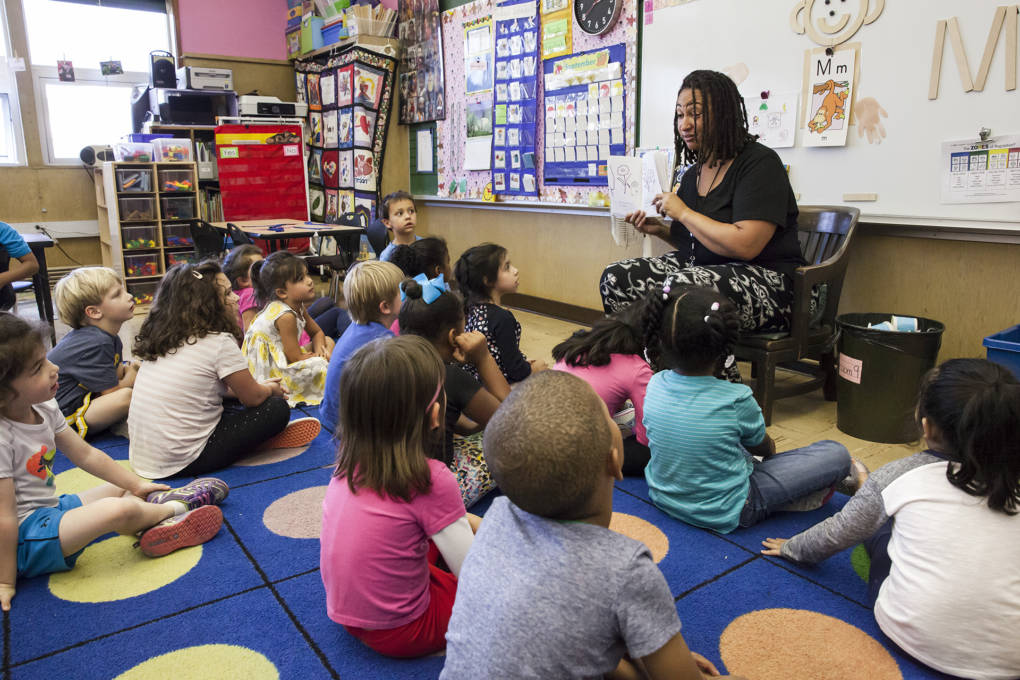
"caption": "Tontra Love, a transitional kindergarten teacher at Sequoia Elementary School in Oakland, reads to her students at the end of class on Sept. 6, 2016.",
"description": "Tontra Love, a T-K (transitional kindergarten) teacher at Sequoia Elementary School in Oakland, reads to her students at the end of class on Tuesday, September 6, 2016.",
"title": "RS21086_160906_sequoiaElementary_bhs07-qut",
"credit": "Brittany Hosea-Small/KQED",
"status": "inherit",
"altTag": "Tontra Love, a T-K (transitional kindergarten) teacher at Sequoia Elementary School in Oakland, reads to her students at the end of class on Tuesday, September 6, 2016.",
"isLoading": false,
"fetchFailed": false
},
"news_11872228": {
"type": "attachments",
"id": "news_11872228",
"meta": {
"index": "attachments_1716263798",
"site": "news",
"id": "11872228",
"found": true
},
"parent": 11872011,
"imgSizes": {
"twentyfourteen-full-width": {
"file": "https://ww2.kqed.org/app/uploads/sites/10/2021/05/Image-from-iOS-1038x576.jpg",
"width": 1038,
"mimeType": "image/jpeg",
"height": 576
},
"thumbnail": {
"file": "https://ww2.kqed.org/app/uploads/sites/10/2021/05/Image-from-iOS-160x120.jpg",
"width": 160,
"mimeType": "image/jpeg",
"height": 120
},
"post-thumbnail": {
"file": "https://ww2.kqed.org/app/uploads/sites/10/2021/05/Image-from-iOS-672x372.jpg",
"width": 672,
"mimeType": "image/jpeg",
"height": 372
},
"kqedFullSize": {
"file": "https://ww2.kqed.org/app/uploads/sites/10/2021/05/Image-from-iOS-scaled.jpg",
"width": 2560,
"height": 1920
},
"2048x2048": {
"file": "https://ww2.kqed.org/app/uploads/sites/10/2021/05/Image-from-iOS-2048x1536.jpg",
"width": 2048,
"mimeType": "image/jpeg",
"height": 1536
},
"large": {
"file": "https://ww2.kqed.org/app/uploads/sites/10/2021/05/Image-from-iOS-1020x765.jpg",
"width": 1020,
"mimeType": "image/jpeg",
"height": 765
},
"1536x1536": {
"file": "https://ww2.kqed.org/app/uploads/sites/10/2021/05/Image-from-iOS-1536x1152.jpg",
"width": 1536,
"mimeType": "image/jpeg",
"height": 1152
},
"full-width": {
"file": "https://ww2.kqed.org/app/uploads/sites/10/2021/05/Image-from-iOS-1920x1440.jpg",
"width": 1920,
"mimeType": "image/jpeg",
"height": 1440
},
"medium": {
"file": "https://ww2.kqed.org/app/uploads/sites/10/2021/05/Image-from-iOS-800x600.jpg",
"width": 800,
"mimeType": "image/jpeg",
"height": 600
}
},
"publishDate": 1620170434,
"modified": 1620767681,
"caption": "Yummy Grill, an Afghan kebab restaurant on International Boulevard, has struggled through the pandemic. After three failed attempts applying for a PPP loan through Chase Bank, it just recently received one through a Utah-based small-business specialist.",
"description": "Yummy Grill, an Afghan kebab restaurant on International Boulevard, has struggled through the pandemic. Only five percent of businesses in this neighborhood who applied for a PPP loan, received one. Yummy Grill only recently received PPP funding through Lendio, a Utah-based small business specialist.",
"title": "Yummy Grill, an Afghan kebab restaurant on International Boulevard, has struggled through the pandemic. Only five percent of businesses in this neighborhood who applied for a PPP loan, received one. Yummy Grill only recently received PPP funding through Lendio, a Utah-based small business specialist.",
"credit": "Adhiti Bandlamudi/KQED",
"status": "inherit",
"altTag": "Yummy Grill, an Afghan kebab restaurant on International Boulevard, has struggled through the pandemic. Only five percent of businesses in this neighborhood who applied for a PPP loan, received one. Yummy Grill only recently received PPP funding through Lendio, a Utah-based small business specialist.",
"isLoading": false,
"fetchFailed": false
},
"news_11873075": {
"type": "attachments",
"id": "news_11873075",
"meta": {
"index": "attachments_1716263798",
"site": "news",
"id": "11873075",
"found": true
},
"parent": 11872984,
"imgSizes": {
"twentyfourteen-full-width": {
"file": "https://ww2.kqed.org/app/uploads/sites/10/2021/05/RS48902_002_SanFrancisco_CCSFRally_05062021-qut-1-1038x576.jpg",
"width": 1038,
"mimeType": "image/jpeg",
"height": 576
},
"thumbnail": {
"file": "https://ww2.kqed.org/app/uploads/sites/10/2021/05/RS48902_002_SanFrancisco_CCSFRally_05062021-qut-1-160x107.jpg",
"width": 160,
"mimeType": "image/jpeg",
"height": 107
},
"post-thumbnail": {
"file": "https://ww2.kqed.org/app/uploads/sites/10/2021/05/RS48902_002_SanFrancisco_CCSFRally_05062021-qut-1-672x372.jpg",
"width": 672,
"mimeType": "image/jpeg",
"height": 372
},
"kqedFullSize": {
"file": "https://ww2.kqed.org/app/uploads/sites/10/2021/05/RS48902_002_SanFrancisco_CCSFRally_05062021-qut-1.jpg",
"width": 1920,
"height": 1280
},
"large": {
"file": "https://ww2.kqed.org/app/uploads/sites/10/2021/05/RS48902_002_SanFrancisco_CCSFRally_05062021-qut-1-1020x680.jpg",
"width": 1020,
"mimeType": "image/jpeg",
"height": 680
},
"1536x1536": {
"file": "https://ww2.kqed.org/app/uploads/sites/10/2021/05/RS48902_002_SanFrancisco_CCSFRally_05062021-qut-1-1536x1024.jpg",
"width": 1536,
"mimeType": "image/jpeg",
"height": 1024
},
"medium": {
"file": "https://ww2.kqed.org/app/uploads/sites/10/2021/05/RS48902_002_SanFrancisco_CCSFRally_05062021-qut-1-800x533.jpg",
"width": 800,
"mimeType": "image/jpeg",
"height": 533
}
},
"publishDate": 1620695034,
"modified": 1647906028,
"caption": "Demonstrator Akeylah Hernandez holds a sign that says, 'Save City College,' during a rally outside Mission High School in San Francisco on May 6, 2021, to demand trustees cancel planned layoffs to CCSF faculty. ",
"description": "Demonstrator Akeylah Hernandez holds a sign that says, 'Save City College' during a rally outside of Mission High School in San Francisco on May 6, 2021, to demand trustees cancel planned layoffs to CCSF faculty. ",
"title": "RS48902_002_SanFrancisco_CCSFRally_05062021-qut (1)",
"credit": "Beth LaBerge/KQED",
"status": "inherit",
"altTag": "A person in an orange sweatshirt holds wearing a mask holds up a cardboard sign that says \"Save City College\" on a sunny day.",
"isLoading": false,
"fetchFailed": false
},
"news_11872880": {
"type": "attachments",
"id": "news_11872880",
"meta": {
"index": "attachments_1716263798",
"site": "news",
"id": "11872880",
"found": true
},
"parent": 11872868,
"imgSizes": {
"twentyfourteen-full-width": {
"file": "https://ww2.kqed.org/app/uploads/sites/10/2021/05/RS48917_018_SanFrancisco_CCSFRally_05062021-qut-1038x576.jpeg",
"width": 1038,
"mimeType": "image/jpeg",
"height": 576
},
"thumbnail": {
"file": "https://ww2.kqed.org/app/uploads/sites/10/2021/05/RS48917_018_SanFrancisco_CCSFRally_05062021-qut-160x107.jpeg",
"width": 160,
"mimeType": "image/jpeg",
"height": 107
},
"post-thumbnail": {
"file": "https://ww2.kqed.org/app/uploads/sites/10/2021/05/RS48917_018_SanFrancisco_CCSFRally_05062021-qut-672x372.jpeg",
"width": 672,
"mimeType": "image/jpeg",
"height": 372
},
"kqedFullSize": {
"file": "https://ww2.kqed.org/app/uploads/sites/10/2021/05/RS48917_018_SanFrancisco_CCSFRally_05062021-qut.jpeg",
"width": 1920,
"height": 1280
},
"large": {
"file": "https://ww2.kqed.org/app/uploads/sites/10/2021/05/RS48917_018_SanFrancisco_CCSFRally_05062021-qut-1020x680.jpeg",
"width": 1020,
"mimeType": "image/jpeg",
"height": 680
},
"1536x1536": {
"file": "https://ww2.kqed.org/app/uploads/sites/10/2021/05/RS48917_018_SanFrancisco_CCSFRally_05062021-qut-1536x1024.jpeg",
"width": 1536,
"mimeType": "image/jpeg",
"height": 1024
},
"medium": {
"file": "https://ww2.kqed.org/app/uploads/sites/10/2021/05/RS48917_018_SanFrancisco_CCSFRally_05062021-qut-800x533.jpeg",
"width": 800,
"mimeType": "image/jpeg",
"height": 533
}
},
"publishDate": 1620574398,
"modified": 1620666741,
"caption": "Demonstrators march through the Mission District during a rally in San Francisco on May 6, 2021 to demand the end of layoffs for City College of San Francisco faculty.",
"description": null,
"title": "RS48917_018_SanFrancisco_CCSFRally_05062021-qut",
"credit": "Beth LaBerge/KQED",
"status": "inherit",
"altTag": null,
"isLoading": false,
"fetchFailed": false
},
"news_11872738": {
"type": "attachments",
"id": "news_11872738",
"meta": {
"index": "attachments_1716263798",
"site": "news",
"id": "11872738",
"found": true
},
"parent": 11872330,
"imgSizes": {
"twentyfourteen-full-width": {
"file": "https://ww2.kqed.org/app/uploads/sites/10/2021/05/SaveCCSFRally1-1038x576.jpg",
"width": 1038,
"mimeType": "image/jpeg",
"height": 576
},
"thumbnail": {
"file": "https://ww2.kqed.org/app/uploads/sites/10/2021/05/SaveCCSFRally1-160x107.jpg",
"width": 160,
"mimeType": "image/jpeg",
"height": 107
},
"post-thumbnail": {
"file": "https://ww2.kqed.org/app/uploads/sites/10/2021/05/SaveCCSFRally1-672x372.jpg",
"width": 672,
"mimeType": "image/jpeg",
"height": 372
},
"kqedFullSize": {
"file": "https://ww2.kqed.org/app/uploads/sites/10/2021/05/SaveCCSFRally1.jpg",
"width": 1920,
"height": 1278
},
"large": {
"file": "https://ww2.kqed.org/app/uploads/sites/10/2021/05/SaveCCSFRally1-1020x679.jpg",
"width": 1020,
"mimeType": "image/jpeg",
"height": 679
},
"1536x1536": {
"file": "https://ww2.kqed.org/app/uploads/sites/10/2021/05/SaveCCSFRally1-1536x1022.jpg",
"width": 1536,
"mimeType": "image/jpeg",
"height": 1022
},
"medium": {
"file": "https://ww2.kqed.org/app/uploads/sites/10/2021/05/SaveCCSFRally1-800x533.jpg",
"width": 800,
"mimeType": "image/jpeg",
"height": 533
}
},
"publishDate": 1620412624,
"modified": 1620413151,
"caption": "Demonstrators march through the Castro neighborhood during a rally in San Francisco on May 6, 2021, to protest layoffs and cuts at City College of San Francisco.",
"description": "Demonstrators march through the Castro neighborhood during a rally in San Francisco on May 6, 2021, to protest layoffs and cuts at City College of San Francisco.",
"title": "SaveCCSFRally1",
"credit": "Beth LaBerge/KQED",
"status": "inherit",
"altTag": null,
"isLoading": false,
"fetchFailed": false
},
"news_11870879": {
"type": "attachments",
"id": "news_11870879",
"meta": {
"index": "attachments_1716263798",
"site": "news",
"id": "11870879",
"found": true
},
"parent": 11870787,
"imgSizes": {
"twentyfourteen-full-width": {
"file": "https://ww2.kqed.org/app/uploads/sites/10/2021/04/RS48254_006_Oakland_SchoolReopening_03302021-qut-1038x576.jpg",
"width": 1038,
"mimeType": "image/jpeg",
"height": 576
},
"thumbnail": {
"file": "https://ww2.kqed.org/app/uploads/sites/10/2021/04/RS48254_006_Oakland_SchoolReopening_03302021-qut-160x107.jpg",
"width": 160,
"mimeType": "image/jpeg",
"height": 107
},
"post-thumbnail": {
"file": "https://ww2.kqed.org/app/uploads/sites/10/2021/04/RS48254_006_Oakland_SchoolReopening_03302021-qut-672x372.jpg",
"width": 672,
"mimeType": "image/jpeg",
"height": 372
},
"kqedFullSize": {
"file": "https://ww2.kqed.org/app/uploads/sites/10/2021/04/RS48254_006_Oakland_SchoolReopening_03302021-qut.jpg",
"width": 1920,
"height": 1280
},
"large": {
"file": "https://ww2.kqed.org/app/uploads/sites/10/2021/04/RS48254_006_Oakland_SchoolReopening_03302021-qut-1020x680.jpg",
"width": 1020,
"mimeType": "image/jpeg",
"height": 680
},
"1536x1536": {
"file": "https://ww2.kqed.org/app/uploads/sites/10/2021/04/RS48254_006_Oakland_SchoolReopening_03302021-qut-1536x1024.jpg",
"width": 1536,
"mimeType": "image/jpeg",
"height": 1024
},
"medium": {
"file": "https://ww2.kqed.org/app/uploads/sites/10/2021/04/RS48254_006_Oakland_SchoolReopening_03302021-qut-800x533.jpg",
"width": 800,
"mimeType": "image/jpeg",
"height": 533
}
},
"publishDate": 1619193380,
"modified": 1619222498,
"caption": "A sign in front of Sankofa United Elementary School in North Oakland on March 30, 2021 welcomes students back to the classroom.",
"description": null,
"title": "RS48254_006_Oakland_SchoolReopening_03302021-qut",
"credit": "Beth LaBerge/KQED",
"status": "inherit",
"altTag": null,
"isLoading": false,
"fetchFailed": false
},
"news_11870024": {
"type": "attachments",
"id": "news_11870024",
"meta": {
"index": "attachments_1716263798",
"site": "news",
"id": "11870024",
"found": true
},
"parent": 11869404,
"imgSizes": {
"twentyfourteen-full-width": {
"file": "https://ww2.kqed.org/app/uploads/sites/10/2029/04/covidhighschool-1038x576.jpg",
"width": 1038,
"mimeType": "image/jpeg",
"height": 576
},
"thumbnail": {
"file": "https://ww2.kqed.org/app/uploads/sites/10/2029/04/covidhighschool-160x120.jpg",
"width": 160,
"mimeType": "image/jpeg",
"height": 120
},
"post-thumbnail": {
"file": "https://ww2.kqed.org/app/uploads/sites/10/2029/04/covidhighschool-672x372.jpg",
"width": 672,
"mimeType": "image/jpeg",
"height": 372
},
"kqedFullSize": {
"file": "https://ww2.kqed.org/app/uploads/sites/10/2029/04/covidhighschool-scaled-e1618851959588.jpg",
"width": 1920,
"height": 1440
},
"2048x2048": {
"file": "https://ww2.kqed.org/app/uploads/sites/10/2029/04/covidhighschool-2048x1536.jpg",
"width": 2048,
"mimeType": "image/jpeg",
"height": 1536
},
"large": {
"file": "https://ww2.kqed.org/app/uploads/sites/10/2029/04/covidhighschool-1020x765.jpg",
"width": 1020,
"mimeType": "image/jpeg",
"height": 765
},
"1536x1536": {
"file": "https://ww2.kqed.org/app/uploads/sites/10/2029/04/covidhighschool-1536x1152.jpg",
"width": 1536,
"mimeType": "image/jpeg",
"height": 1152
},
"full-width": {
"file": "https://ww2.kqed.org/app/uploads/sites/10/2029/04/covidhighschool-1920x1440.jpg",
"width": 1920,
"mimeType": "image/jpeg",
"height": 1440
},
"medium": {
"file": "https://ww2.kqed.org/app/uploads/sites/10/2029/04/covidhighschool-800x600.jpg",
"width": 800,
"mimeType": "image/jpeg",
"height": 600
}
},
"publishDate": 1618851913,
"modified": 1618874237,
"caption": null,
"description": null,
"title": "covidhighschool",
"credit": null,
"status": "inherit",
"altTag": null,
"isLoading": false,
"fetchFailed": false
},
"news_11870068": {
"type": "attachments",
"id": "news_11870068",
"meta": {
"index": "attachments_1716263798",
"site": "news",
"id": "11870068",
"found": true
},
"parent": 11869976,
"imgSizes": {
"twentyfourteen-full-width": {
"file": "https://ww2.kqed.org/app/uploads/sites/10/2021/04/converted-IMG_2729-1038x576.jpg",
"width": 1038,
"mimeType": "image/jpeg",
"height": 576
},
"thumbnail": {
"file": "https://ww2.kqed.org/app/uploads/sites/10/2021/04/converted-IMG_2729-160x120.jpg",
"width": 160,
"mimeType": "image/jpeg",
"height": 120
},
"post-thumbnail": {
"file": "https://ww2.kqed.org/app/uploads/sites/10/2021/04/converted-IMG_2729-672x372.jpg",
"width": 672,
"mimeType": "image/jpeg",
"height": 372
},
"kqedFullSize": {
"file": "https://ww2.kqed.org/app/uploads/sites/10/2021/04/converted-IMG_2729-scaled-e1618864685746.jpg",
"width": 1920,
"height": 1440
},
"2048x2048": {
"file": "https://ww2.kqed.org/app/uploads/sites/10/2021/04/converted-IMG_2729-2048x1536.jpg",
"width": 2048,
"mimeType": "image/jpeg",
"height": 1536
},
"large": {
"file": "https://ww2.kqed.org/app/uploads/sites/10/2021/04/converted-IMG_2729-1020x765.jpg",
"width": 1020,
"mimeType": "image/jpeg",
"height": 765
},
"1536x1536": {
"file": "https://ww2.kqed.org/app/uploads/sites/10/2021/04/converted-IMG_2729-1536x1152.jpg",
"width": 1536,
"mimeType": "image/jpeg",
"height": 1152
},
"full-width": {
"file": "https://ww2.kqed.org/app/uploads/sites/10/2021/04/converted-IMG_2729-1920x1440.jpg",
"width": 1920,
"mimeType": "image/jpeg",
"height": 1440
},
"medium": {
"file": "https://ww2.kqed.org/app/uploads/sites/10/2021/04/converted-IMG_2729-800x600.jpg",
"width": 800,
"mimeType": "image/jpeg",
"height": 600
}
},
"publishDate": 1618864060,
"modified": 1618865669,
"caption": "Beverly Sanchez, a teacher at Kingsley Elementary School in the East Hollywood neighborhood of Los Angeles, sits in a wicker chair in an outdoor kindergarten classroom. Handmade wooden planters form its boundary.",
"description": null,
"title": "converted-IMG_2729",
"credit": "Deepa Fernandes/KQED",
"status": "inherit",
"altTag": null,
"isLoading": false,
"fetchFailed": false
},
"news_11869966": {
"type": "attachments",
"id": "news_11869966",
"meta": {
"index": "attachments_1716263798",
"site": "news",
"id": "11869966",
"found": true
},
"parent": 11869776,
"imgSizes": {
"twentyfourteen-full-width": {
"file": "https://ww2.kqed.org/app/uploads/sites/10/2021/04/RS48642_032_Oakland_AustinFamily_04142021-qut-1038x576.jpg",
"width": 1038,
"mimeType": "image/jpeg",
"height": 576
},
"thumbnail": {
"file": "https://ww2.kqed.org/app/uploads/sites/10/2021/04/RS48642_032_Oakland_AustinFamily_04142021-qut-160x107.jpg",
"width": 160,
"mimeType": "image/jpeg",
"height": 107
},
"post-thumbnail": {
"file": "https://ww2.kqed.org/app/uploads/sites/10/2021/04/RS48642_032_Oakland_AustinFamily_04142021-qut-672x372.jpg",
"width": 672,
"mimeType": "image/jpeg",
"height": 372
},
"kqedFullSize": {
"file": "https://ww2.kqed.org/app/uploads/sites/10/2021/04/RS48642_032_Oakland_AustinFamily_04142021-qut.jpg",
"width": 1920,
"height": 1280
},
"large": {
"file": "https://ww2.kqed.org/app/uploads/sites/10/2021/04/RS48642_032_Oakland_AustinFamily_04142021-qut-1020x680.jpg",
"width": 1020,
"mimeType": "image/jpeg",
"height": 680
},
"1536x1536": {
"file": "https://ww2.kqed.org/app/uploads/sites/10/2021/04/RS48642_032_Oakland_AustinFamily_04142021-qut-1536x1024.jpg",
"width": 1536,
"mimeType": "image/jpeg",
"height": 1024
},
"medium": {
"file": "https://ww2.kqed.org/app/uploads/sites/10/2021/04/RS48642_032_Oakland_AustinFamily_04142021-qut-800x533.jpg",
"width": 800,
"mimeType": "image/jpeg",
"height": 533
}
},
"publishDate": 1618618571,
"modified": 1618722231,
"caption": "Ryan Austin, artist educator, helps her son Onyx with school through Zoom at their home in Oakland on April 14, 2021. According to Austin, Onyx has thrived during distance learning because the family can actively engage in his learning. However, Austin is quick to point out that this is only possible due to the fact that both her and her husband, Michael, work from home.",
"description": "Ryan Austin, artist educator, helps her son Onyx with school through Zoom at their home in Oakland on April 14, 2021.",
"title": "RS48642_032_Oakland_AustinFamily_04142021-qut",
"credit": "Beth LaBerge/KQED",
"status": "inherit",
"altTag": "Ryan Austin, artist educator, helps her son Onyx with school through Zoom at their home in Oakland on April 14, 2021.",
"isLoading": false,
"fetchFailed": false
},
"news_11869803": {
"type": "attachments",
"id": "news_11869803",
"meta": {
"index": "attachments_1716263798",
"site": "news",
"id": "11869803",
"found": true
},
"parent": 11869618,
"imgSizes": {
"thumbnail": {
"file": "https://ww2.kqed.org/app/uploads/sites/10/2021/04/7-Ages-4-6-Typical-day-at-home-with-Alvin-160x119.jpeg",
"width": 160,
"mimeType": "image/jpeg",
"height": 119
},
"kqedFullSize": {
"file": "https://ww2.kqed.org/app/uploads/sites/10/2021/04/7-Ages-4-6-Typical-day-at-home-with-Alvin.jpeg",
"width": 403,
"height": 299
}
},
"publishDate": 1618591381,
"modified": 1618616211,
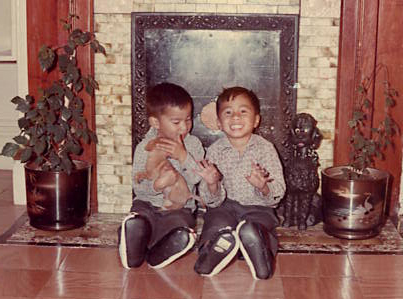
"caption": "Eric and Hank Warner were born two years apart. Their mom loved to dress them as twins. ",
"description": null,
"title": "7-Ages 4 & 6, Typical day at home with Alvin",
"credit": "Courtesy of Hank Warner.",
"status": "inherit",
"altTag": null,
"isLoading": false,
"fetchFailed": false
}
},
"audioPlayerReducer": {
"postId": "stream_live",
"isPaused": true,
"isPlaying": false,
"pfsActive": false,
"pledgeModalIsOpen": true,
"playerDrawerIsOpen": false,
"liveAudioPlayStartedAt": 0,
"liveAudioPlayContext": ""
},
"authorsReducer": {
"byline_news_11869976": {
"type": "authors",
"id": "byline_news_11869976",
"meta": {
"override": true
},
"slug": "byline_news_11869976",
"name": "Deepa Fernandes",
"isLoading": false
},
"dmarks": {
"type": "authors",
"id": "182",
"meta": {
"index": "authors_1716337520",
"id": "182",
"found": true
},
"name": "David Marks",
"firstName": "David",
"lastName": "Marks",
"slug": "dmarks",
"email": "dmarks@kqed.org",
"display_author_email": false,
"staff_mastheads": [],
"title": "KQED Editor",
"bio": "David Marks is a senior digital editor for KQED News. \u003c/a>Reach him at dmarks@kqed.org.",
"avatar": "https://secure.gravatar.com/avatar/b88bd6227ce6cb96ae33fefaf42b2a29?s=600&d=mm&r=g",
"twitter": "divadskram",
"facebook": null,
"instagram": null,
"linkedin": null,
"sites": [
{
"site": "news",
"roles": []
},
{
"site": "science",
"roles": []
},
{
"site": "perspectives",
"roles": []
},
{
"site": "liveblog",
"roles": []
}
],
"headData": {
"title": "David Marks | KQED",
"description": "KQED Editor",
"ogImgSrc": "https://secure.gravatar.com/avatar/b88bd6227ce6cb96ae33fefaf42b2a29?s=600&d=mm&r=g",
"twImgSrc": "https://secure.gravatar.com/avatar/b88bd6227ce6cb96ae33fefaf42b2a29?s=600&d=mm&r=g"
},
"isLoading": false,
"link": "/author/dmarks"
},
"gmarzorati": {
"type": "authors",
"id": "227",
"meta": {
"index": "authors_1716337520",
"id": "227",
"found": true
},
"name": "Guy Marzorati",
"firstName": "Guy",
"lastName": "Marzorati",
"slug": "gmarzorati",
"email": "gmarzorati@KQED.org",
"display_author_email": true,
"staff_mastheads": [
"news"
],
"title": "Correspondent",
"bio": "Guy Marzorati is a correspondent on KQED's California Politics and Government Desk, based in San Jose. A graduate of Santa Clara University, Guy joined KQED in 2013. He reports on state and local politics and produces KQED's digital voter guide.",
"avatar": "https://secure.gravatar.com/avatar/e7038b8dbfd55b104369b76b1cd0b9de?s=600&d=blank&r=g",
"twitter": "guymarzorati",
"facebook": null,
"instagram": null,
"linkedin": null,
"sites": [
{
"site": "",
"roles": [
"editor"
]
},
{
"site": "news",
"roles": [
"editor"
]
},
{
"site": "science",
"roles": [
"editor"
]
},
{
"site": "forum",
"roles": [
"editor"
]
},
{
"site": "elections",
"roles": [
"editor"
]
},
{
"site": "liveblog",
"roles": [
"editor"
]
}
],
"headData": {
"title": "Guy Marzorati | KQED",
"description": "Correspondent",
"ogImgSrc": "https://secure.gravatar.com/avatar/e7038b8dbfd55b104369b76b1cd0b9de?s=600&d=blank&r=g",
"twImgSrc": "https://secure.gravatar.com/avatar/e7038b8dbfd55b104369b76b1cd0b9de?s=600&d=blank&r=g"
},
"isLoading": false,
"link": "/author/gmarzorati"
},
"jmcevoy": {
"type": "authors",
"id": "231",
"meta": {
"index": "authors_1716337520",
"id": "231",
"found": true
},
"name": "Julia McEvoy",
"firstName": "Julia",
"lastName": "McEvoy",
"slug": "jmcevoy",
"email": "jmcevoy@KQED.org",
"display_author_email": true,
"staff_mastheads": [
"news"
],
"title": "KQED Senior Editor",
"bio": "Julia McEvoy is KQED's Senior Editor, Education Equity.\r\n\r\nJulia heads KQED’s education coverage examining inequities students face in Bay Area and California schools, and reports on what it will take to educate the next generation.\r\n\r\nJulia's editorial work has received a Peabody Award, a Casey Medal for Coverage of Children and Families, several Edward R. Murrow awards, as well as awards from the Public Radio News Directors Inc. and the Society for Professional Journalists.",
"avatar": "https://secure.gravatar.com/avatar/aec3ce21abe02b302fd33638abd56a22?s=600&d=blank&r=g",
"twitter": "juliamcevoy1",
"facebook": null,
"instagram": null,
"linkedin": null,
"sites": [
{
"site": "news",
"roles": []
},
{
"site": "stateofhealth",
"roles": [
"author"
]
}
],
"headData": {
"title": "Julia McEvoy | KQED",
"description": "KQED Senior Editor",
"ogImgSrc": "https://secure.gravatar.com/avatar/aec3ce21abe02b302fd33638abd56a22?s=600&d=blank&r=g",
"twImgSrc": "https://secure.gravatar.com/avatar/aec3ce21abe02b302fd33638abd56a22?s=600&d=blank&r=g"
},
"isLoading": false,
"link": "/author/jmcevoy"
},
"kqed": {
"type": "authors",
"id": "236",
"meta": {
"index": "authors_1716337520",
"id": "236",
"found": true
},
"name": "KQED News Staff",
"firstName": "KQED News Staff",
"lastName": null,
"slug": "kqed",
"email": "faq@kqed.org",
"display_author_email": false,
"staff_mastheads": [],
"title": null,
"bio": null,
"avatar": "https://secure.gravatar.com/avatar/ef0e801a68c4c54afa9180db14084167?s=600&d=blank&r=g",
"twitter": null,
"facebook": null,
"instagram": null,
"linkedin": null,
"sites": [
{
"site": "arts",
"roles": [
"contributor"
]
},
{
"site": "news",
"roles": [
"editor"
]
},
{
"site": "futureofyou",
"roles": [
"author"
]
}
],
"headData": {
"title": "KQED News Staff | KQED",
"description": null,
"ogImgSrc": "https://secure.gravatar.com/avatar/ef0e801a68c4c54afa9180db14084167?s=600&d=blank&r=g",
"twImgSrc": "https://secure.gravatar.com/avatar/ef0e801a68c4c54afa9180db14084167?s=600&d=blank&r=g"
},
"isLoading": false,
"link": "/author/kqed"
},
"kqednewsstaffandwires": {
"type": "authors",
"id": "237",
"meta": {
"index": "authors_1716337520",
"id": "237",
"found": true
},
"name": "KQED News Staff and Wires",
"firstName": "KQED News Staff and Wires",
"lastName": null,
"slug": "kqednewsstaffandwires",
"email": "onlinenewsstaff@kqed.org",
"display_author_email": false,
"staff_mastheads": [],
"title": null,
"bio": null,
"avatar": "https://secure.gravatar.com/avatar/72295af8ebbfbd19a4948f5271285664?s=600&d=blank&r=g",
"twitter": null,
"facebook": null,
"instagram": null,
"linkedin": null,
"sites": [
{
"site": "arts",
"roles": [
"contributor"
]
},
{
"site": "news",
"roles": [
"contributor"
]
},
{
"site": "lowdown",
"roles": [
"author"
]
},
{
"site": "stateofhealth",
"roles": [
"contributor"
]
},
{
"site": "food",
"roles": [
"author"
]
}
],
"headData": {
"title": "KQED News Staff and Wires | KQED",
"description": null,
"ogImgSrc": "https://secure.gravatar.com/avatar/72295af8ebbfbd19a4948f5271285664?s=600&d=blank&r=g",
"twImgSrc": "https://secure.gravatar.com/avatar/72295af8ebbfbd19a4948f5271285664?s=600&d=blank&r=g"
},
"isLoading": false,
"link": "/author/kqednewsstaffandwires"
},
"sasha-khokha": {
"type": "authors",
"id": "254",
"meta": {
"index": "authors_1716337520",
"id": "254",
"found": true
},
"name": "Sasha Khokha",
"firstName": "Sasha",
"lastName": "Khokha",
"slug": "sasha-khokha",
"email": "skhokha@kqed.org",
"display_author_email": true,
"staff_mastheads": [
"news"
],
"title": "Host, The California Report Magazine",
"bio": "Sasha Khokha is the host of \u003cem>The California Report's \u003c/em> weekly magazine program, which takes listeners on sound-rich excursions to meet the people that make the Golden State unique -- through audio documentaries and long-form stories. As \u003cem>The California Report's\u003c/em> Central Valley Bureau Chief based in Fresno for nearly a dozen years, Sasha brought the lives and concerns of rural Californians to listeners around the state. Her reporting helped expose the hidden price immigrant women janitors and farmworkers may pay to keep their jobs: sexual assault at work. It inspired two new California laws to protect them from sexual harassment. She was a key member of the reporting team for the Frontline film \u003cem>Rape on the Night Shift, \u003c/em>which was nominated for two national Emmys. Sasha has also won a national Edward R. Murrow and a national PRNDI award for investigative reporting, as well as multiple prizes from the Society for Professional Journalists. Sasha is a proud alum of the UC Berkeley Graduate School of Journalism and Brown University and a member of the South Asian Journalists Association.",
"avatar": "https://secure.gravatar.com/avatar/e4b5e1541aaeea2aa356aa1fb2a68950?s=600&d=blank&r=g",
"twitter": "KQEDSashaKhokha",
"facebook": null,
"instagram": null,
"linkedin": null,
"sites": [
{
"site": "news",
"roles": [
"editor"
]
},
{
"site": "stateofhealth",
"roles": [
"author"
]
},
{
"site": "science",
"roles": [
"author"
]
},
{
"site": "quest",
"roles": [
"subscriber"
]
}
],
"headData": {
"title": "Sasha Khokha | KQED",
"description": "Host, The California Report Magazine",
"ogImgSrc": "https://secure.gravatar.com/avatar/e4b5e1541aaeea2aa356aa1fb2a68950?s=600&d=blank&r=g",
"twImgSrc": "https://secure.gravatar.com/avatar/e4b5e1541aaeea2aa356aa1fb2a68950?s=600&d=blank&r=g"
},
"isLoading": false,
"link": "/author/sasha-khokha"
},
"matthewgreen": {
"type": "authors",
"id": "1263",
"meta": {
"index": "authors_1716337520",
"id": "1263",
"found": true
},
"name": "Matthew Green",
"firstName": "Matthew",
"lastName": "Green",
"slug": "matthewgreen",
"email": "mgreen@kqed.org",
"display_author_email": false,
"staff_mastheads": [],
"title": "KQED Editor/Reporter",
"bio": "Matthew Green is a digital media producer for KQED News. He previously produced \u003ca href=\"http://www.kqed.org/lowdown\">The Lowdown\u003c/a>, KQED’s multimedia news education blog. Matthew's written for numerous Bay Area publications, including the Oakland Tribune and San Francisco Chronicle. He also taught journalism classes at Fremont High School in East Oakland.\r\n\r\nEmail: mgreen@kqed.org; Twitter: @MGreenKQED",
"avatar": "https://secure.gravatar.com/avatar/3bf498d1267ca02c8494f33d8cfc575e?s=600&d=blank&r=g",
"twitter": "MGreenKQED",
"facebook": null,
"instagram": null,
"linkedin": null,
"sites": [
{
"site": "news",
"roles": []
},
{
"site": "lowdown",
"roles": []
},
{
"site": "science",
"roles": []
},
{
"site": "education",
"roles": []
},
{
"site": "quest",
"roles": []
},
{
"site": "liveblog",
"roles": []
}
],
"headData": {
"title": "Matthew Green | KQED",
"description": "KQED Editor/Reporter",
"ogImgSrc": "https://secure.gravatar.com/avatar/3bf498d1267ca02c8494f33d8cfc575e?s=600&d=blank&r=g",
"twImgSrc": "https://secure.gravatar.com/avatar/3bf498d1267ca02c8494f33d8cfc575e?s=600&d=blank&r=g"
},
"isLoading": false,
"link": "/author/matthewgreen"
},
"shossaini": {
"type": "authors",
"id": "3214",
"meta": {
"index": "authors_1716337520",
"id": "3214",
"found": true
},
"name": "Sara Hossaini",
"firstName": "Sara",
"lastName": "Hossaini",
"slug": "shossaini",
"email": "shossaini@kqed.org",
"display_author_email": true,
"staff_mastheads": [
"news"
],
"title": "KQED Reporter",
"bio": "Sara Hossaini came to general assignment reporting at KQED in 2013 after two winters reporting at Wyoming Public Radio. She holds a bachelor's degree in broadcast journalism from the University of Nebraska-Lincoln. Her radio romance began after a bitter breakup with documentary film (Ok, maybe it's still complicated). Her first simultaneous jobs in San Francisco were as Associate Producer on a PBS film series through the Center for Asian American Media and as a butler. She likes to trot, plot and make things with her hands.",
"avatar": "https://secure.gravatar.com/avatar/060e9f56b9554e17942e89f413242774?s=600&d=blank&r=g",
"twitter": "mshossaini",
"facebook": null,
"instagram": null,
"linkedin": null,
"sites": [
{
"site": "news",
"roles": [
"author"
]
},
{
"site": "stateofhealth",
"roles": [
"author"
]
}
],
"headData": {
"title": "Sara Hossaini | KQED",
"description": "KQED Reporter",
"ogImgSrc": "https://secure.gravatar.com/avatar/060e9f56b9554e17942e89f413242774?s=600&d=blank&r=g",
"twImgSrc": "https://secure.gravatar.com/avatar/060e9f56b9554e17942e89f413242774?s=600&d=blank&r=g"
},
"isLoading": false,
"link": "/author/shossaini"
},
"abandlamudi": {
"type": "authors",
"id": "11672",
"meta": {
"index": "authors_1716337520",
"id": "11672",
"found": true
},
"name": "Adhiti Bandlamudi",
"firstName": "Adhiti",
"lastName": "Bandlamudi",
"slug": "abandlamudi",
"email": "abandlamudi@kqed.org",
"display_author_email": false,
"staff_mastheads": [
"news"
],
"title": "KQED Housing Reporter",
"bio": "Adhiti Bandlamudi reports for KQED's Housing desk. She focuses on how housing gets built across the Bay Area. Before joining KQED in 2020, she reported for WUNC in Durham, North Carolina, WABE in Atlanta, Georgia and Capital Public Radio in Sacramento. In 2017, she was awarded a Kroc Fellowship at NPR where she reported on everything from sprinkles to the Golden State Killer's arrest. When she's not reporting, she's baking new recipes in her kitchen or watching movies with friends and family. She's originally from Georgia and has strong opinions about Great British Bake Off.",
"avatar": "https://secure.gravatar.com/avatar/868129c8b257bb99a3500e2c86a65400?s=600&d=mm&r=g",
"twitter": "oddity_adhiti",
"facebook": null,
"instagram": null,
"linkedin": null,
"sites": [
{
"site": "arts",
"roles": [
"author"
]
},
{
"site": "news",
"roles": [
"editor"
]
},
{
"site": "liveblog",
"roles": [
"author"
]
}
],
"headData": {
"title": "Adhiti Bandlamudi | KQED",
"description": "KQED Housing Reporter",
"ogImgSrc": "https://secure.gravatar.com/avatar/868129c8b257bb99a3500e2c86a65400?s=600&d=mm&r=g",
"twImgSrc": "https://secure.gravatar.com/avatar/868129c8b257bb99a3500e2c86a65400?s=600&d=mm&r=g"
},
"isLoading": false,
"link": "/author/abandlamudi"
},
"jrodriguez": {
"type": "authors",
"id": "11690",
"meta": {
"index": "authors_1716337520",
"id": "11690",
"found": true
},
"name": "Joe Fitzgerald Rodriguez",
"firstName": "Joe",
"lastName": "Fitzgerald Rodriguez",
"slug": "jrodriguez",
"email": "jrodriguez@kqed.org",
"display_author_email": true,
"staff_mastheads": [
"news"
],
"title": "Reporter and Producer",
"bio": "Joe Fitzgerald Rodriguez is a reporter and digital producer for KQED covering politics. Joe most recently wrote for the \u003cem>San Francisco Examiner\u003c/em> as a political columnist covering The City. He was raised in San Francisco and has spent his reporting career in his beloved, foggy, city by the bay. Joe was 12-years-old when he conducted his first interview in journalism, grilling former San Francisco Mayor Willie Brown for the Marina Middle School newspaper, \u003cem>The Penguin Press, \u003c/em>and he continues to report on the San Francisco Bay Area to this day.",
"avatar": "https://secure.gravatar.com/avatar/2247beb0564c1e9c62228d5649d2edac?s=600&d=blank&r=g",
"twitter": "FitztheReporter",
"facebook": null,
"instagram": "https://www.instagram.com/fitzthereporter/",
"linkedin": null,
"sites": [
{
"site": "",
"roles": [
"editor"
]
},
{
"site": "arts",
"roles": [
"editor"
]
},
{
"site": "news",
"roles": [
"editor"
]
},
{
"site": "science",
"roles": [
"editor"
]
},
{
"site": "elections",
"roles": [
"editor"
]
},
{
"site": "liveblog",
"roles": [
"editor"
]
}
],
"headData": {
"title": "Joe Fitzgerald Rodriguez | KQED",
"description": "Reporter and Producer",
"ogImgSrc": "https://secure.gravatar.com/avatar/2247beb0564c1e9c62228d5649d2edac?s=600&d=blank&r=g",
"twImgSrc": "https://secure.gravatar.com/avatar/2247beb0564c1e9c62228d5649d2edac?s=600&d=blank&r=g"
},
"isLoading": false,
"link": "/author/jrodriguez"
},
"ccabreralomeli": {
"type": "authors",
"id": "11708",
"meta": {
"index": "authors_1716337520",
"id": "11708",
"found": true
},
"name": "Carlos Cabrera-Lomelí",
"firstName": "Carlos",
"lastName": "Cabrera-Lomelí",
"slug": "ccabreralomeli",
"email": "ccabreralomeli@KQED.org",
"display_author_email": true,
"staff_mastheads": [
"news"
],
"title": "Community Reporter",
"bio": "Carlos Cabrera-Lomelí is a community reporter with KQED's digital engagement team. He also reports and co-produces for KQED's bilingual news hub KQED en Español. He grew up in San Francisco's Mission District and has previously worked with Univision, 48 Hills and REFORMA in Mexico City.",
"avatar": "https://secure.gravatar.com/avatar/c309be9665e484f887b818c89e273ecc673004f426f36b24d00a4d813a2e0518?s=600&d=blank&r=g",
"twitter": "@LomeliCabrera",
"bluesky": null,
"facebook": null,
"instagram": null,
"linkedin": null,
"sites": [
{
"site": "arts",
"roles": [
"editor"
]
},
{
"site": "news",
"roles": [
"editor"
]
},
{
"site": "about",
"roles": [
"editor"
]
},
{
"site": "science",
"roles": [
"editor"
]
},
{
"site": "perspectives",
"roles": [
"editor"
]
},
{
"site": "elections",
"roles": [
"editor"
]
},
{
"site": "liveblog",
"roles": [
"contributor"
]
}
],
"headData": {
"title": "Carlos Cabrera-Lomelí | KQED",
"description": "Community Reporter",
"ogImgSrc": "https://secure.gravatar.com/avatar/c309be9665e484f887b818c89e273ecc673004f426f36b24d00a4d813a2e0518?s=600&d=blank&r=g",
"twImgSrc": "https://secure.gravatar.com/avatar/c309be9665e484f887b818c89e273ecc673004f426f36b24d00a4d813a2e0518?s=600&d=blank&r=g"
},
"isLoading": false,
"link": "/author/ccabreralomeli"
}
},
"pagesReducer": {
"news_tag_education": {
"type": "terms",
"id": "news_20013",
"meta": {
"index": "terms_1716263798",
"site": "news",
"id": "20013",
"score": 6.9701343
},
"featImg": null,
"name": "education",
"description": null,
"taxonomy": "tag",
"headData": {
"twImgId": null,
"twTitle": null,
"ogTitle": null,
"ogImgId": null,
"twDescription": null,
"description": null,
"title": "education Archives | KQED News",
"ogDescription": null
},
"ttid": 20030,
"slug": "education",
"isLoading": false,
"title": "education",
"pageMeta": {
"site": "news",
"WpPageTemplate": "page-topic-editorial",
"currentPage": 79
},
"blocks": [
{
"blockName": "kqed/post-list",
"attrs": {
"layout": "cardArticle2",
"query": "posts/news?tag=education",
"seeMore": false,
"paginated": true,
"page": 79
}
},
{
"blockName": "kqed/ad"
}
]
}
},
"pfsSessionReducer": {},
"postsReducer": {
"stream_live": {
"type": "live",
"id": "stream_live",
"audioUrl": "https://streams.kqed.org/kqedradio",
"title": "Live Stream",
"excerpt": "Live Stream information currently unavailable.",
"link": "/radio",
"featImg": "",
"label": {
"name": "KQED Live",
"link": "/"
}
},
"stream_kqedNewscast": {
"type": "posts",
"id": "stream_kqedNewscast",
"audioUrl": "https://www.kqed.org/.stream/anon/radio/RDnews/newscast.mp3?_=1",
"title": "KQED Newscast",
"featImg": "",
"label": {
"name": "88.5 FM",
"link": "/"
}
},
"news_11874662": {
"type": "posts",
"id": "news_11874662",
"meta": {
"index": "posts_1716263798",
"site": "news",
"id": "11874662",
"score": null,
"sort": [
1621811754000
]
},
"guestAuthors": [],
"slug": "californias-only-top-chef-contestant-taps-his-afro-latino-roots",
"title": "California's Only 'Top Chef' Contestant Taps His Afro-Latino Roots",
"publishDate": 1621811754,
"format": "standard",
"headTitle": "California’s Only ‘Top Chef’ Contestant Taps His Afro-Latino Roots | KQED",
"labelTerm": {},
"content": "\u003cp>“U.D.O.” or “Unidentified Dominican Object”: that was Oakland chef Nelson German’s sci-fi solution to a movie-themed challenge on this season of Bravo’s \u003ca href=\"https://www.bravotv.com/top-chef\">Top Chef\u003c/a>.\u003c/p>\n\u003cp>The dish was a variation on a pupusa, a flat disk made of corn, jerk pork and candied yams.\u003c/p>\n\u003cp>German, who is Dominican American, was the only California contestant on the show this season.\u003c/p>\n\u003cp>“The pressure was on,” German says, in the kitchen of his newest Oakland restaurant, \u003ca href=\"https://www.sobremesaoak.com/\">SobreMesa\u003c/a>. “The minute you see that big Top Chef sign for the first time, it’s like you’re a line cook all over again. I just kept thinking about why I’m here. It’s representing a movement, showing a person of color can run beautiful restaurants and bars and really be a fantastic chef and give back to the community.”\u003c/p>\n\u003ch1>‘Everything’s Telling a Story’\u003c/h1>\n\u003cp>\u003ca href=\"https://ar-ar.facebook.com/KQED/videos/check-please-bay-area-reviews-alamar-kitchen-bar-sabores-del-sur-pearl-6101/484654918795182/\">German’s two restaurants, both in Oakland\u003c/a>, showcase his Afro-Caribbean culinary roots and the dishes he grew up eating as the child of Dominican immigrants.\u003c/p>\n\u003cfigure id=\"attachment_11874668\" class=\"wp-caption alignnone\" style=\"max-width: 800px\">\u003cimg loading=\"lazy\" decoding=\"async\" class=\"size-medium wp-image-11874668\" src=\"https://ww2.kqed.org/app/uploads/sites/10/2021/05/RS49232_SobreMesa_Bar_Straight_Thomas-Kuoh-Photography-qut-800x533.jpg\" alt=\"\" width=\"800\" height=\"533\" srcset=\"https://cdn.kqed.org/wp-content/uploads/sites/10/2021/05/RS49232_SobreMesa_Bar_Straight_Thomas-Kuoh-Photography-qut-800x533.jpg 800w, https://cdn.kqed.org/wp-content/uploads/sites/10/2021/05/RS49232_SobreMesa_Bar_Straight_Thomas-Kuoh-Photography-qut-1020x680.jpg 1020w, https://cdn.kqed.org/wp-content/uploads/sites/10/2021/05/RS49232_SobreMesa_Bar_Straight_Thomas-Kuoh-Photography-qut-160x107.jpg 160w, https://cdn.kqed.org/wp-content/uploads/sites/10/2021/05/RS49232_SobreMesa_Bar_Straight_Thomas-Kuoh-Photography-qut-1536x1024.jpg 1536w, https://cdn.kqed.org/wp-content/uploads/sites/10/2021/05/RS49232_SobreMesa_Bar_Straight_Thomas-Kuoh-Photography-qut.jpg 1920w\" sizes=\"(max-width: 800px) 100vw, 800px\">\u003cfigcaption class=\"wp-caption-text\">The interior of Sobre Mesa, with its lush paintings and glowing purple lights, is meant to tell a story about the diversity of the African diaspora. \u003ccite>(Thomas Kuoh Photography)\u003c/cite>\u003c/figcaption>\u003c/figure>\n\u003cp>“Sobre mesa” means over the table — the time after the meal when people can sit back and connect in conversation. The tables are elegant, carved natural wood with orange vinyl booths. Lush electric paintings of tropical leaves hang on dark green walls, all lit by glowing purple ceiling lamps.\u003c/p>\n\u003cp>[ad fullwidth]\u003c/p>\n\u003cp>“The music, the colors, the drinks. Everything’s telling a story,” German says. “It was time for me to really show exactly who I am, exactly where I come from and tell a broad story of the African diaspora. It’s not just about being Latino, it’s the African side. There’s more to us, Black people who are all over the world: the Caribbean islands, of course, Africa, the motherland, Europe, South America. We have influenced the world.”\u003c/p>\n\u003cfigure id=\"attachment_11874670\" class=\"wp-caption alignright\" style=\"max-width: 600px\">\u003cimg loading=\"lazy\" decoding=\"async\" class=\"wp-image-11874670 size-full\" src=\"https://ww2.kqed.org/app/uploads/sites/10/2021/05/RS49236_IMG_4269-qut-e1621807338753.jpg\" alt=\"\" width=\"600\" height=\"800\" srcset=\"https://cdn.kqed.org/wp-content/uploads/sites/10/2021/05/RS49236_IMG_4269-qut-e1621807338753.jpg 600w, https://cdn.kqed.org/wp-content/uploads/sites/10/2021/05/RS49236_IMG_4269-qut-e1621807338753-160x213.jpg 160w\" sizes=\"(max-width: 600px) 100vw, 600px\">\u003cfigcaption class=\"wp-caption-text\">Chef Nelson German adds mezcal to his gambas al ajillo, flavored with Ethiopian spiced butter. \u003ccite>(Marisa Lagos/KQED)\u003c/cite>\u003c/figcaption>\u003c/figure>\n\u003cp>The day KQED visited SobreMesa, German cooked up \u003cem>gambas al ajillo,\u003c/em> a traditionally Spanish garlic shrimp dish.\u003c/p>\n\u003cp>“What’s cool about this version is it’s a Pan-African,” he explained, as he added in Ethiopian spiced butter, then lemon thyme and baby fennel for a California feel.\u003c/p>\n\u003cp>To complement the shrimp, he shook up a signature cocktail, a daiquiri with allspice dram and plantain syrup.\u003c/p>\n\u003cfigure id=\"attachment_11874985\" class=\"wp-caption alignleft\" style=\"max-width: 634px\">\u003cimg loading=\"lazy\" decoding=\"async\" class=\"size-full wp-image-11874985\" src=\"https://ww2.kqed.org/app/uploads/sites/10/2021/05/cocktail_noExif.jpg\" alt=\"\" width=\"634\" height=\"848\" srcset=\"https://cdn.kqed.org/wp-content/uploads/sites/10/2021/05/cocktail_noExif.jpg 634w, https://cdn.kqed.org/wp-content/uploads/sites/10/2021/05/cocktail_noExif-160x214.jpg 160w\" sizes=\"(max-width: 634px) 100vw, 634px\">\u003cfigcaption class=\"wp-caption-text\">Chef Nelson German serves up a signature daiquiri, with plantain syrup. Many of the rare liquors at SobreMesa come from Afro-Caribbean countries. \u003ccite>(Marisa Lagos/KQED)\u003c/cite>\u003c/figcaption>\u003c/figure>\n\u003cp>“The food enhances the cocktails, not the other way around” he says. “That’s what’s unique about it. It’s not your typical bar food. It’s so different, but still familiar in a way, especially for people of color.”\u003c/p>\n\u003cp>Growing up in New York City, German says cooking in his Dominican family was very gendered: his mom and Grandma ruled the kitchen. But when he and his friends went to New York’s Copacabana club one night, they started fantasizing about starting their own nightclub and restaurant.\u003c/p>\n\u003cp>“We had just turned twenty-one. We wanted to party, right?” laughed German. But he was serious about the dream, and signed up for culinary school the next day.\u003c/p>\n\u003cp>He worked his way up, cooking at upscale restaurants in New York, and studying Mediterranean cuisine in Spain, France and Italy. When he moved to his wife’s hometown of Oakland, \u003ca href=\"https://www.kqed.org/bayareabites/137985/with-seafood-restaurant-alamar-oakland-chef-nelson-german-breaks-from-black-chef-stereotypes\">he opened the Michelin-recommended seafood restaurant alaMar\u003c/a> with the intent to infuse the food with all those experiences, and his Dominican roots.\u003c/p>\n\u003cp>Moving to Oakland, and connecting with the Black community there, helped him tap into what it means to have pride in the African parts of his Dominican culture. “I wanted to tell my story,” German says. “So I started adding the oxtail that I grew up eating, my mom’s braised chicken with the plantains and the rice and beans, and people started flocking more into the restaurant.”\u003c/p>\n\u003ch2>New Challenges & New Opportunities\u003c/h2>\n\u003cp>He opened his next restaurant, SobreMesa, in 2019, \u003ca href=\"https://sf.eater.com/2020/3/17/21182514/bay-area-chefs-response-shelter-in-place-takeout-delivery-covid-19-coronavirus-lockdown\">just nine days\u003c/a> before the state shut down restaurants due to shelter-in-place. Trying to make sure his restaurants survived the pandemic was far more cutthroat than any episode of Top Chef.\u003c/p>\n\u003cp>“As a business owner, you have a sense of control,” he says. “To have no control over anything and not knowing what’s going to happen is the scariest thing in the world.”\u003c/p>\n\u003cp>German got lucky, though. He was tapped for the \u003ca href=\"https://www.leeinitiative.org/rwrp\">Restaurant Workers Relief Program\u003c/a> started by Top Chef alum Ed Lee, to cook meals for laid-off restaurant workers throughout the Bay Area.\u003c/p>\n\u003cp>“People saw what we were doing and came back to support us,” he recalled. “Even the ones picking up free meals would come back on the weekend and buy a meal from us to support us back. That’s what’s special about this town. People kept us afloat, kept us alive.”\u003c/p>\n\u003cfigure id=\"attachment_11874681\" class=\"wp-caption alignnone\" style=\"max-width: 800px\">\u003cimg loading=\"lazy\" decoding=\"async\" class=\"size-medium wp-image-11874681\" src=\"https://ww2.kqed.org/app/uploads/sites/10/2021/05/RS49226_Nelson-German-qut-800x1067.jpg\" alt=\"\" width=\"800\" height=\"1067\" srcset=\"https://cdn.kqed.org/wp-content/uploads/sites/10/2021/05/RS49226_Nelson-German-qut-800x1067.jpg 800w, https://cdn.kqed.org/wp-content/uploads/sites/10/2021/05/RS49226_Nelson-German-qut-1020x1360.jpg 1020w, https://cdn.kqed.org/wp-content/uploads/sites/10/2021/05/RS49226_Nelson-German-qut-160x213.jpg 160w, https://cdn.kqed.org/wp-content/uploads/sites/10/2021/05/RS49226_Nelson-German-qut-1152x1536.jpg 1152w, https://cdn.kqed.org/wp-content/uploads/sites/10/2021/05/RS49226_Nelson-German-qut-1536x2048.jpg 1536w, https://cdn.kqed.org/wp-content/uploads/sites/10/2021/05/RS49226_Nelson-German-qut.jpg 1920w\" sizes=\"(max-width: 800px) 100vw, 800px\">\u003cfigcaption class=\"wp-caption-text\">Chef Nelson German on the set of Top Chef. The other contestants say his quiet patience was a calming force on the show. \u003ccite>(Stephanie Diani/Bravo)\u003c/cite>\u003c/figcaption>\u003c/figure>\n\u003cp>One weird silver lining was that, because the restaurants were closed for dining, German had the time to go on Top Chef, a grueling two-month stint in Portland where he had to quarantine away from his wife and employees.\u003c/p>\n\u003cp>This season of the Bravo show includes a number of Black and Latinx chefs and judges, and some episodes pay tribute to Pan-African and indigenous cuisines.\u003c/p>\n\u003cp>One cooking challenge that really inspired German began with a visit to West African restaurant\u003ca href=\"https://www.akadipdx.com/gallery\"> Akadi\u003c/a> in Portland.\u003c/p>\n\u003cfigure id=\"attachment_11874679\" class=\"wp-caption alignright\" style=\"max-width: 1024px\">\u003cimg loading=\"lazy\" decoding=\"async\" class=\"size-full wp-image-11874679\" src=\"https://ww2.kqed.org/app/uploads/sites/10/2021/05/RS49235_chefcooking__KathleenSheffer-qut.jpg\" alt=\"\" width=\"1024\" height=\"684\" srcset=\"https://cdn.kqed.org/wp-content/uploads/sites/10/2021/05/RS49235_chefcooking__KathleenSheffer-qut.jpg 1024w, https://cdn.kqed.org/wp-content/uploads/sites/10/2021/05/RS49235_chefcooking__KathleenSheffer-qut-800x534.jpg 800w, https://cdn.kqed.org/wp-content/uploads/sites/10/2021/05/RS49235_chefcooking__KathleenSheffer-qut-1020x681.jpg 1020w, https://cdn.kqed.org/wp-content/uploads/sites/10/2021/05/RS49235_chefcooking__KathleenSheffer-qut-160x107.jpg 160w\" sizes=\"(max-width: 1024px) 100vw, 1024px\">\u003cfigcaption class=\"wp-caption-text\">Chef Nelson German cooking seafood at alaMar, his first restaurant. \u003ccite>(Kathleen Sheffer)\u003c/cite>\u003c/figcaption>\u003c/figure>\n\u003cp>“Early in my career, it was all about doing Spanish or French or Italian, not the food that I grew up eating. It was really special to dig into that finally. I did the braised roasted chicken with plantains. Had to throw the plantains in there. I was in heaven, cooking.”\u003c/p>\n\u003cp>But that feeling didn’t last. In the next episode, German and his competitors cooked outside in an orchard for a challenge focused on fruit they picked themselves. German ended up injuring his knees running through the orchard. He was distracted by the pain when he was cooking, and his dish bombed. The judges panned his seared scallops with apple béarnaise, an apple shallot relish and sautéed pears, saying that it was too heavy and cheesy.\u003c/p>\n\u003cp>Since he hadn’t won much praise from the judges for his Dominican-inspired dishes, he says he decided to draw from his experience with Mediterranean cooking instead, since so much of what’s considered ‘high cuisine’ in the U.S. is Eurocentric. “I just didn’t cook with my heart,” German recalled.\u003c/p>\n\u003cp>A while later, German had to pack up his knives — he was sent home in a double elimination challenge. His knees didn’t recover from his sprint through the orchard. He spent three weeks in a wheelchair and was unable to win back his spot through a stint on Last Chance Kitchen.\u003c/p>\n\u003cp>https://www.instagram.com/p/COzXFRXBGBK/\u003c/p>\n\u003cp>But, he says, Top Chef has upped his game.\u003c/p>\n\u003cp>“Being in the business so long, you can be complacent. But it lit a fire in me. I know what I need to do to make my food be better.”\u003c/p>\n\u003cp>This reporter’s 8-year-old, Joaquín, who wants to be a chef— and idolized seeing a fellow Oaklander on the show — is devastated. Would German give him some advice?\u003c/p>\n\u003cp>[ad floatright]\u003c/p>\n\u003cp>“Definitely learn about your culture and appreciate it. That’s going to go a long way for you as a chef,” he says. “Just cook with your heart all the time, always know that and always remember where you came from.”\u003c/p>\n\n",
"blocks": [],
"excerpt": "Chef Nelson German's newest Oakland restaurant opened just 9 days before shelter-in-place. But it survived. ",
"status": "publish",
"parent": 0,
"modified": 1721157272,
"stats": {
"hasAudio": false,
"hasVideo": false,
"hasChartOrMap": false,
"iframeSrcs": [],
"hasGoogleForm": false,
"hasGallery": false,
"hasHearkenModule": false,
"hasPolis": false,
"paragraphCount": 32,
"wordCount": 1408
},
"headData": {
"title": "California's Only 'Top Chef' Contestant Taps His Afro-Latino Roots | KQED",
"description": "Chef Nelson German's newest Oakland restaurant opened just 9 days before shelter-in-place. But it survived. ",
"ogTitle": "",
"ogDescription": "",
"ogImgId": "",
"twTitle": "",
"twDescription": "",
"twImgId": "",
"schema": {
"@context": "https://schema.org",
"@type": "NewsArticle",
"headline": "California's Only 'Top Chef' Contestant Taps His Afro-Latino Roots",
"datePublished": "2021-05-23T16:15:54-07:00",
"dateModified": "2024-07-16T12:14:32-07:00",
"image": "https://cdn.kqed.org/wp-content/uploads/2020/02/KQED-OG-Image@1x.png",
"isAccessibleForFree": "True",
"publisher": {
"@type": "NewsMediaOrganization",
"@id": "https://www.kqed.org/#organization",
"name": "KQED",
"logo": "https://cdn.kqed.org/wp-content/uploads/2020/02/KQED-OG-Image@1x.png",
"url": "https://www.kqed.org",
"sameAs": [
"https://www.facebook.com/KQED",
"https://twitter.com/KQED",
"https://www.instagram.com/kqed/",
"https://www.tiktok.com/@kqedofficial",
"https://www.linkedin.com/company/kqed",
"https://www.youtube.com/channel/UCeC0IOo7i1P_61zVUWbJ4nw"
]
}
}
},
"source": "Food",
"sourceUrl": "https://www.kqed.org/food",
"audioUrl": "https://traffic.omny.fm/d/clips/0af137ef-751e-4b19-a055-aaef00d2d578/ffca7e9f-6831-41c5-bcaf-aaef00f5a073/e9172c75-074f-4571-8145-ad300011e0b2/audio.mp3",
"sticky": false,
"path": "/news/11874662/californias-only-top-chef-contestant-taps-his-afro-latino-roots",
"audioTrackLength": null,
"parsedContent": [
{
"type": "contentString",
"content": "\u003cdiv class=\"post-body\">\u003cp>\u003cp>“U.D.O.” or “Unidentified Dominican Object”: that was Oakland chef Nelson German’s sci-fi solution to a movie-themed challenge on this season of Bravo’s \u003ca href=\"https://www.bravotv.com/top-chef\">Top Chef\u003c/a>.\u003c/p>\n\u003cp>The dish was a variation on a pupusa, a flat disk made of corn, jerk pork and candied yams.\u003c/p>\n\u003cp>German, who is Dominican American, was the only California contestant on the show this season.\u003c/p>\n\u003cp>“The pressure was on,” German says, in the kitchen of his newest Oakland restaurant, \u003ca href=\"https://www.sobremesaoak.com/\">SobreMesa\u003c/a>. “The minute you see that big Top Chef sign for the first time, it’s like you’re a line cook all over again. I just kept thinking about why I’m here. It’s representing a movement, showing a person of color can run beautiful restaurants and bars and really be a fantastic chef and give back to the community.”\u003c/p>\n\u003ch1>‘Everything’s Telling a Story’\u003c/h1>\n\u003cp>\u003ca href=\"https://ar-ar.facebook.com/KQED/videos/check-please-bay-area-reviews-alamar-kitchen-bar-sabores-del-sur-pearl-6101/484654918795182/\">German’s two restaurants, both in Oakland\u003c/a>, showcase his Afro-Caribbean culinary roots and the dishes he grew up eating as the child of Dominican immigrants.\u003c/p>\n\u003cfigure id=\"attachment_11874668\" class=\"wp-caption alignnone\" style=\"max-width: 800px\">\u003cimg loading=\"lazy\" decoding=\"async\" class=\"size-medium wp-image-11874668\" src=\"https://ww2.kqed.org/app/uploads/sites/10/2021/05/RS49232_SobreMesa_Bar_Straight_Thomas-Kuoh-Photography-qut-800x533.jpg\" alt=\"\" width=\"800\" height=\"533\" srcset=\"https://cdn.kqed.org/wp-content/uploads/sites/10/2021/05/RS49232_SobreMesa_Bar_Straight_Thomas-Kuoh-Photography-qut-800x533.jpg 800w, https://cdn.kqed.org/wp-content/uploads/sites/10/2021/05/RS49232_SobreMesa_Bar_Straight_Thomas-Kuoh-Photography-qut-1020x680.jpg 1020w, https://cdn.kqed.org/wp-content/uploads/sites/10/2021/05/RS49232_SobreMesa_Bar_Straight_Thomas-Kuoh-Photography-qut-160x107.jpg 160w, https://cdn.kqed.org/wp-content/uploads/sites/10/2021/05/RS49232_SobreMesa_Bar_Straight_Thomas-Kuoh-Photography-qut-1536x1024.jpg 1536w, https://cdn.kqed.org/wp-content/uploads/sites/10/2021/05/RS49232_SobreMesa_Bar_Straight_Thomas-Kuoh-Photography-qut.jpg 1920w\" sizes=\"(max-width: 800px) 100vw, 800px\">\u003cfigcaption class=\"wp-caption-text\">The interior of Sobre Mesa, with its lush paintings and glowing purple lights, is meant to tell a story about the diversity of the African diaspora. \u003ccite>(Thomas Kuoh Photography)\u003c/cite>\u003c/figcaption>\u003c/figure>\n\u003cp>“Sobre mesa” means over the table — the time after the meal when people can sit back and connect in conversation. The tables are elegant, carved natural wood with orange vinyl booths. Lush electric paintings of tropical leaves hang on dark green walls, all lit by glowing purple ceiling lamps.\u003c/p>\n\u003cp>\u003c/p>\u003c/div>",
"attributes": {
"named": {},
"numeric": []
}
},
{
"type": "component",
"content": "",
"name": "ad",
"attributes": {
"named": {
"label": "fullwidth"
},
"numeric": [
"fullwidth"
]
}
},
{
"type": "contentString",
"content": "\u003cdiv class=\"post-body\">\u003cp>\u003c/p>\n\u003cp>“The music, the colors, the drinks. Everything’s telling a story,” German says. “It was time for me to really show exactly who I am, exactly where I come from and tell a broad story of the African diaspora. It’s not just about being Latino, it’s the African side. There’s more to us, Black people who are all over the world: the Caribbean islands, of course, Africa, the motherland, Europe, South America. We have influenced the world.”\u003c/p>\n\u003cfigure id=\"attachment_11874670\" class=\"wp-caption alignright\" style=\"max-width: 600px\">\u003cimg loading=\"lazy\" decoding=\"async\" class=\"wp-image-11874670 size-full\" src=\"https://ww2.kqed.org/app/uploads/sites/10/2021/05/RS49236_IMG_4269-qut-e1621807338753.jpg\" alt=\"\" width=\"600\" height=\"800\" srcset=\"https://cdn.kqed.org/wp-content/uploads/sites/10/2021/05/RS49236_IMG_4269-qut-e1621807338753.jpg 600w, https://cdn.kqed.org/wp-content/uploads/sites/10/2021/05/RS49236_IMG_4269-qut-e1621807338753-160x213.jpg 160w\" sizes=\"(max-width: 600px) 100vw, 600px\">\u003cfigcaption class=\"wp-caption-text\">Chef Nelson German adds mezcal to his gambas al ajillo, flavored with Ethiopian spiced butter. \u003ccite>(Marisa Lagos/KQED)\u003c/cite>\u003c/figcaption>\u003c/figure>\n\u003cp>The day KQED visited SobreMesa, German cooked up \u003cem>gambas al ajillo,\u003c/em> a traditionally Spanish garlic shrimp dish.\u003c/p>\n\u003cp>“What’s cool about this version is it’s a Pan-African,” he explained, as he added in Ethiopian spiced butter, then lemon thyme and baby fennel for a California feel.\u003c/p>\n\u003cp>To complement the shrimp, he shook up a signature cocktail, a daiquiri with allspice dram and plantain syrup.\u003c/p>\n\u003cfigure id=\"attachment_11874985\" class=\"wp-caption alignleft\" style=\"max-width: 634px\">\u003cimg loading=\"lazy\" decoding=\"async\" class=\"size-full wp-image-11874985\" src=\"https://ww2.kqed.org/app/uploads/sites/10/2021/05/cocktail_noExif.jpg\" alt=\"\" width=\"634\" height=\"848\" srcset=\"https://cdn.kqed.org/wp-content/uploads/sites/10/2021/05/cocktail_noExif.jpg 634w, https://cdn.kqed.org/wp-content/uploads/sites/10/2021/05/cocktail_noExif-160x214.jpg 160w\" sizes=\"(max-width: 634px) 100vw, 634px\">\u003cfigcaption class=\"wp-caption-text\">Chef Nelson German serves up a signature daiquiri, with plantain syrup. Many of the rare liquors at SobreMesa come from Afro-Caribbean countries. \u003ccite>(Marisa Lagos/KQED)\u003c/cite>\u003c/figcaption>\u003c/figure>\n\u003cp>“The food enhances the cocktails, not the other way around” he says. “That’s what’s unique about it. It’s not your typical bar food. It’s so different, but still familiar in a way, especially for people of color.”\u003c/p>\n\u003cp>Growing up in New York City, German says cooking in his Dominican family was very gendered: his mom and Grandma ruled the kitchen. But when he and his friends went to New York’s Copacabana club one night, they started fantasizing about starting their own nightclub and restaurant.\u003c/p>\n\u003cp>“We had just turned twenty-one. We wanted to party, right?” laughed German. But he was serious about the dream, and signed up for culinary school the next day.\u003c/p>\n\u003cp>He worked his way up, cooking at upscale restaurants in New York, and studying Mediterranean cuisine in Spain, France and Italy. When he moved to his wife’s hometown of Oakland, \u003ca href=\"https://www.kqed.org/bayareabites/137985/with-seafood-restaurant-alamar-oakland-chef-nelson-german-breaks-from-black-chef-stereotypes\">he opened the Michelin-recommended seafood restaurant alaMar\u003c/a> with the intent to infuse the food with all those experiences, and his Dominican roots.\u003c/p>\n\u003cp>Moving to Oakland, and connecting with the Black community there, helped him tap into what it means to have pride in the African parts of his Dominican culture. “I wanted to tell my story,” German says. “So I started adding the oxtail that I grew up eating, my mom’s braised chicken with the plantains and the rice and beans, and people started flocking more into the restaurant.”\u003c/p>\n\u003ch2>New Challenges & New Opportunities\u003c/h2>\n\u003cp>He opened his next restaurant, SobreMesa, in 2019, \u003ca href=\"https://sf.eater.com/2020/3/17/21182514/bay-area-chefs-response-shelter-in-place-takeout-delivery-covid-19-coronavirus-lockdown\">just nine days\u003c/a> before the state shut down restaurants due to shelter-in-place. Trying to make sure his restaurants survived the pandemic was far more cutthroat than any episode of Top Chef.\u003c/p>\n\u003cp>“As a business owner, you have a sense of control,” he says. “To have no control over anything and not knowing what’s going to happen is the scariest thing in the world.”\u003c/p>\n\u003cp>German got lucky, though. He was tapped for the \u003ca href=\"https://www.leeinitiative.org/rwrp\">Restaurant Workers Relief Program\u003c/a> started by Top Chef alum Ed Lee, to cook meals for laid-off restaurant workers throughout the Bay Area.\u003c/p>\n\u003cp>“People saw what we were doing and came back to support us,” he recalled. “Even the ones picking up free meals would come back on the weekend and buy a meal from us to support us back. That’s what’s special about this town. People kept us afloat, kept us alive.”\u003c/p>\n\u003cfigure id=\"attachment_11874681\" class=\"wp-caption alignnone\" style=\"max-width: 800px\">\u003cimg loading=\"lazy\" decoding=\"async\" class=\"size-medium wp-image-11874681\" src=\"https://ww2.kqed.org/app/uploads/sites/10/2021/05/RS49226_Nelson-German-qut-800x1067.jpg\" alt=\"\" width=\"800\" height=\"1067\" srcset=\"https://cdn.kqed.org/wp-content/uploads/sites/10/2021/05/RS49226_Nelson-German-qut-800x1067.jpg 800w, https://cdn.kqed.org/wp-content/uploads/sites/10/2021/05/RS49226_Nelson-German-qut-1020x1360.jpg 1020w, https://cdn.kqed.org/wp-content/uploads/sites/10/2021/05/RS49226_Nelson-German-qut-160x213.jpg 160w, https://cdn.kqed.org/wp-content/uploads/sites/10/2021/05/RS49226_Nelson-German-qut-1152x1536.jpg 1152w, https://cdn.kqed.org/wp-content/uploads/sites/10/2021/05/RS49226_Nelson-German-qut-1536x2048.jpg 1536w, https://cdn.kqed.org/wp-content/uploads/sites/10/2021/05/RS49226_Nelson-German-qut.jpg 1920w\" sizes=\"(max-width: 800px) 100vw, 800px\">\u003cfigcaption class=\"wp-caption-text\">Chef Nelson German on the set of Top Chef. The other contestants say his quiet patience was a calming force on the show. \u003ccite>(Stephanie Diani/Bravo)\u003c/cite>\u003c/figcaption>\u003c/figure>\n\u003cp>One weird silver lining was that, because the restaurants were closed for dining, German had the time to go on Top Chef, a grueling two-month stint in Portland where he had to quarantine away from his wife and employees.\u003c/p>\n\u003cp>This season of the Bravo show includes a number of Black and Latinx chefs and judges, and some episodes pay tribute to Pan-African and indigenous cuisines.\u003c/p>\n\u003cp>One cooking challenge that really inspired German began with a visit to West African restaurant\u003ca href=\"https://www.akadipdx.com/gallery\"> Akadi\u003c/a> in Portland.\u003c/p>\n\u003cfigure id=\"attachment_11874679\" class=\"wp-caption alignright\" style=\"max-width: 1024px\">\u003cimg loading=\"lazy\" decoding=\"async\" class=\"size-full wp-image-11874679\" src=\"https://ww2.kqed.org/app/uploads/sites/10/2021/05/RS49235_chefcooking__KathleenSheffer-qut.jpg\" alt=\"\" width=\"1024\" height=\"684\" srcset=\"https://cdn.kqed.org/wp-content/uploads/sites/10/2021/05/RS49235_chefcooking__KathleenSheffer-qut.jpg 1024w, https://cdn.kqed.org/wp-content/uploads/sites/10/2021/05/RS49235_chefcooking__KathleenSheffer-qut-800x534.jpg 800w, https://cdn.kqed.org/wp-content/uploads/sites/10/2021/05/RS49235_chefcooking__KathleenSheffer-qut-1020x681.jpg 1020w, https://cdn.kqed.org/wp-content/uploads/sites/10/2021/05/RS49235_chefcooking__KathleenSheffer-qut-160x107.jpg 160w\" sizes=\"(max-width: 1024px) 100vw, 1024px\">\u003cfigcaption class=\"wp-caption-text\">Chef Nelson German cooking seafood at alaMar, his first restaurant. \u003ccite>(Kathleen Sheffer)\u003c/cite>\u003c/figcaption>\u003c/figure>\n\u003cp>“Early in my career, it was all about doing Spanish or French or Italian, not the food that I grew up eating. It was really special to dig into that finally. I did the braised roasted chicken with plantains. Had to throw the plantains in there. I was in heaven, cooking.”\u003c/p>\n\u003cp>But that feeling didn’t last. In the next episode, German and his competitors cooked outside in an orchard for a challenge focused on fruit they picked themselves. German ended up injuring his knees running through the orchard. He was distracted by the pain when he was cooking, and his dish bombed. The judges panned his seared scallops with apple béarnaise, an apple shallot relish and sautéed pears, saying that it was too heavy and cheesy.\u003c/p>\n\u003cp>Since he hadn’t won much praise from the judges for his Dominican-inspired dishes, he says he decided to draw from his experience with Mediterranean cooking instead, since so much of what’s considered ‘high cuisine’ in the U.S. is Eurocentric. “I just didn’t cook with my heart,” German recalled.\u003c/p>\n\u003cp>A while later, German had to pack up his knives — he was sent home in a double elimination challenge. His knees didn’t recover from his sprint through the orchard. He spent three weeks in a wheelchair and was unable to win back his spot through a stint on Last Chance Kitchen.\u003c/p>\u003c/p>\u003c/div>",
"attributes": {
"named": {},
"numeric": []
}
},
{
"type": "component",
"content": "",
"name": "instagramLink",
"attributes": {
"named": {
"instagramUrl": "https://www.instagram.com/p/COzXFRXBGBK/"
},
"numeric": []
}
},
{
"type": "contentString",
"content": "\u003cdiv class=\"post-body\">\u003cp>\u003cp>But, he says, Top Chef has upped his game.\u003c/p>\n\u003cp>“Being in the business so long, you can be complacent. But it lit a fire in me. I know what I need to do to make my food be better.”\u003c/p>\n\u003cp>This reporter’s 8-year-old, Joaquín, who wants to be a chef— and idolized seeing a fellow Oaklander on the show — is devastated. Would German give him some advice?\u003c/p>\n\u003cp>\u003c/p>\u003c/div>",
"attributes": {
"named": {},
"numeric": []
}
},
{
"type": "component",
"content": "",
"name": "ad",
"attributes": {
"named": {
"label": "floatright"
},
"numeric": [
"floatright"
]
}
},
{
"type": "contentString",
"content": "\u003cdiv class=\"post-body\">\u003cp>\u003c/p>\n\u003cp>“Definitely learn about your culture and appreciate it. That’s going to go a long way for you as a chef,” he says. “Just cook with your heart all the time, always know that and always remember where you came from.”\u003c/p>\n\n\u003c/div>\u003c/p>",
"attributes": {
"named": {},
"numeric": []
}
}
],
"link": "/news/11874662/californias-only-top-chef-contestant-taps-his-afro-latino-roots",
"authors": [
"254"
],
"programs": [
"news_72",
"news_26731"
],
"categories": [
"news_24114",
"news_8"
],
"tags": [
"news_20013",
"news_333",
"news_27660",
"news_22714"
],
"featImg": "news_11874666",
"label": "source_news_11874662"
},
"news_11873813": {
"type": "posts",
"id": "news_11873813",
"meta": {
"index": "posts_1716263798",
"site": "news",
"id": "11873813",
"score": null,
"sort": [
1621042958000
]
},
"parent": 0,
"labelTerm": {
"site": "news"
},
"blocks": [],
"publishDate": 1621042958,
"format": "standard",
"disqusTitle": "Newsom Proposes a Return to In-Person Learning Beginning Next School Year",
"title": "Newsom Proposes a Return to In-Person Learning Beginning Next School Year",
"headTitle": "KQED News",
"content": "\u003cp>After more than a year of allowing school districts to shutter classrooms because of the coronavirus pandemic, Gov. Gavin Newsom on Friday proposed to end distance learning in the 2021-2022 school year — but also suggested the state continue to give students the option to learn at home through more traditional independent study programs.\u003c/p>\n\u003cp>\"We want kids back in-person this fall, full time,\" Newsom said as he presented his revised budget proposal in Sacramento.\u003c/p>\n\u003cp>For months, Newsom has implored schools to return to in-person instruction, even \u003ca href=\"https://www.kqed.org/news/11863208/california-legislature-approves-plan-to-reopen-schools\" target=\"_blank\" rel=\"noopener noreferrer\">sending districts billions of dollars\u003c/a> to do so. But many have resisted, and the Republican candidates hoping to unseat Newsom in this year's recall election have paraded the state's \u003ca href=\"https://www.returntolearntracker.net/\" target=\"_blank\" rel=\"noopener noreferrer\">low rates of traditional instruction\u003c/a>. The governor, having granted districts authority for distance learning in last year's state budget, was left at the mercy of \u003ca href=\"https://www.kqed.org/news/11863474/local-control-in-reopening-debate-puts-scrutiny-on-elected-school-boards\" target=\"_blank\" rel=\"noopener noreferrer\">local reopening deliberations\u003c/a>.\u003c/p>\n\u003cp>Now, Newsom said he does not want to repeat the distance learning allowance in the state's next spending plan, and instead wants a return to a default of in-person instruction.\u003c/p>\n\u003cp>\"On June 30, midnight, the statute in the state of California will make that crystal clear that that is indeed a requirement,\" he said.\u003c/p>\n\u003cp>[ad fullwidth]\u003c/p>\n\u003cp>Still, the governor acknowledged that many parents would not wholeheartedly embrace a return to class for their children, either because of health concerns, or because they have \u003ca href=\"https://www.kqed.org/news/11869776/were-not-a-monolith-some-black-and-brown-parents-in-oakland-feel-conflicted-as-in-person-learning-returns\" target=\"_blank\" rel=\"noopener noreferrer\">come to prefer distance learning. \u003c/a>\u003c/p>\n\u003cp>He wants to assuage concerns by spending $2 billion on improving school building ventilation and coronavirus testing. And he is proposing to reform the state's traditional remote learning option, called independent study, in anticipation of heightened interest.\u003c/p>\n\u003cp>\"We recognize we got a lot more work still to do to deal with anxiety, not just with teachers but with parents, about our ability to safely bring back kids into full-time in-person instruction,\" Newsom said.\u003c/p>\n\u003cp>Newsom's announcement was celebrated by parent groups who have advocated for a full return to in-person instruction. Those groups have argued that allowing school districts the flexibility to offer distance learning has led to predominately remote or hybrid instruction in districts like Fremont, Oakland and San Francisco, \u003ca href=\"https://www.ppic.org/publication/ppic-statewide-survey-californians-and-education-april-2021/\" target=\"_blank\" rel=\"noopener noreferrer\">with disastrous impacts on learning\u003c/a> and mental health.\u003c/p>\n\u003cp>\"This is not a done deal and the devil’s in the final details, but this is a good sign,\" \u003ca href=\"https://twitter.com/sf_dtd/status/1393270457646735362\" target=\"_blank\" rel=\"noopener noreferrer\">tweeted \u003c/a>Decreasing the Distance, a San Francisco-based group advocating for re-opening.\u003c/p>\n\u003cp>The governor's proposal would revert the state's school guidelines to their pre-pandemic norm, in which school funding is determined by in-person attendance.\u003c/p>\n\u003cp>And the hybrid instruction in which some teachers or students are not physically in the classroom (sometimes called \"Zoom in a Room\") will not be accepted as in-person instruction.\u003c/p>\n\u003cp>Instead, school districts will be allowed (but not required) to offer an independent study option for families who want to stick with distance learning.\u003c/p>\n\u003cp>\"It seems like the governor is pointing toward a fair compromise which should prioritize full-time in-person instruction for all families who want it, while still leaving open existing options for school districts to provide some form of online learning and virtual academies for those families who feel it works better for their situation,\" said Troy Flint, spokesman for the California School Boards Association.\u003c/p>\n\u003cp>Independent study was first authorized in 1976 as an alternative for students with unique circumstances, such as child actors or athletes, who were unable to make it into class every day. It remains a limited program; in 2015, just 2% of students received a majority of their instruction through independent study, according to the state Department of Education.\u003c/p>\n\u003cp>In anticipation of higher interest in independent study next year, the Newsom administration is proposing more guardrails on the program, requiring districts to provide internet connectivity to students and track their daily interaction with teachers. [aside tag=\"politics\" label=\"More Politics Stories\"]\u003c/p>\n\u003cp>\"We're talking about a well-developed, comprehensive program that does have direct teacher interaction and is designed from the ground-up to work virtually, not something that is ported over from in-person instruction to deal with this crisis situation,\" Flint said.\u003c/p>\n\u003cp>Currently, some districts make a determination on each student's application to participate in independent study. The Newsom administration is expected to include language in budget trailer bills giving guidance to districts on how to deal with higher demand for the program.\u003c/p>\n\u003cp>School boards, teacher unions and a bipartisan group of legislators called on the governor to maintain a distance learning option in the budget. They say some parents will take their kids out of public schools if they lack a robust distance learning alternative.\u003c/p>\n\u003cp>\"This is a matter of equity,\" said California Teachers Association spokeswoman Lisa Gardiner, in a statement. \"We know some families from underserved communities who have been devastated by COVID may not be ready to send their children back to school, and we need options for those students who are medically fragile.\"\u003c/p>\n\u003cp>While critics of Newsom have hoped to make school closures an issue in the recall election, very little daylight exists between the governor's position and those of his leading opponents.\u003c/p>\n\u003cp>\u003c/p>\n\u003cp>When asked whether districts should offer a distance learning option in the fall, former San Diego mayor Kevin Faulconer told KQED \"I think for some folks who may need that, absolutely. But our schools need to be open for kids to be in class fully.\"\u003c/p>\n\n",
"disqusIdentifier": "11873813 https://ww2.kqed.org/news/?p=11873813",
"disqusUrl": "https://ww2.kqed.org/news/2021/05/14/newsom-proposes-a-return-to-in-person-learning-beginning-next-school-year/",
"stats": {
"hasVideo": false,
"hasChartOrMap": false,
"hasAudio": false,
"hasPolis": false,
"wordCount": 908,
"hasGoogleForm": false,
"hasGallery": false,
"hasHearkenModule": false,
"iframeSrcs": [],
"paragraphCount": 24
},
"modified": 1621294662,
"excerpt": "Newsom's budget would maintain independent study as an option for students hoping to learn at home. ",
"headData": {
"twImgId": "",
"twTitle": "",
"ogTitle": "",
"ogImgId": "",
"twDescription": "",
"description": "Newsom's budget would maintain independent study as an option for students hoping to learn at home. ",
"title": "Newsom Proposes a Return to In-Person Learning Beginning Next School Year | KQED",
"ogDescription": "",
"schema": {
"@context": "https://schema.org",
"@type": "NewsArticle",
"headline": "Newsom Proposes a Return to In-Person Learning Beginning Next School Year",
"datePublished": "2021-05-14T18:42:38-07:00",
"dateModified": "2021-05-17T16:37:42-07:00",
"image": "https://cdn.kqed.org/wp-content/uploads/2020/02/KQED-OG-Image@1x.png",
"isAccessibleForFree": "True",
"publisher": {
"@type": "NewsMediaOrganization",
"@id": "https://www.kqed.org/#organization",
"name": "KQED",
"logo": "https://cdn.kqed.org/wp-content/uploads/2020/02/KQED-OG-Image@1x.png",
"url": "https://www.kqed.org",
"sameAs": [
"https://www.facebook.com/KQED",
"https://twitter.com/KQED",
"https://www.instagram.com/kqed/",
"https://www.tiktok.com/@kqedofficial",
"https://www.linkedin.com/company/kqed",
"https://www.youtube.com/channel/UCeC0IOo7i1P_61zVUWbJ4nw"
]
}
}
},
"guestAuthors": [],
"slug": "newsom-proposes-a-return-to-in-person-learning-beginning-next-school-year",
"status": "publish",
"path": "/news/11873813/newsom-proposes-a-return-to-in-person-learning-beginning-next-school-year",
"audioTrackLength": null,
"parsedContent": [
{
"type": "contentString",
"content": "\u003cdiv class=\"post-body\">\u003cp>\u003cp>After more than a year of allowing school districts to shutter classrooms because of the coronavirus pandemic, Gov. Gavin Newsom on Friday proposed to end distance learning in the 2021-2022 school year — but also suggested the state continue to give students the option to learn at home through more traditional independent study programs.\u003c/p>\n\u003cp>\"We want kids back in-person this fall, full time,\" Newsom said as he presented his revised budget proposal in Sacramento.\u003c/p>\n\u003cp>For months, Newsom has implored schools to return to in-person instruction, even \u003ca href=\"https://www.kqed.org/news/11863208/california-legislature-approves-plan-to-reopen-schools\" target=\"_blank\" rel=\"noopener noreferrer\">sending districts billions of dollars\u003c/a> to do so. But many have resisted, and the Republican candidates hoping to unseat Newsom in this year's recall election have paraded the state's \u003ca href=\"https://www.returntolearntracker.net/\" target=\"_blank\" rel=\"noopener noreferrer\">low rates of traditional instruction\u003c/a>. The governor, having granted districts authority for distance learning in last year's state budget, was left at the mercy of \u003ca href=\"https://www.kqed.org/news/11863474/local-control-in-reopening-debate-puts-scrutiny-on-elected-school-boards\" target=\"_blank\" rel=\"noopener noreferrer\">local reopening deliberations\u003c/a>.\u003c/p>\n\u003cp>Now, Newsom said he does not want to repeat the distance learning allowance in the state's next spending plan, and instead wants a return to a default of in-person instruction.\u003c/p>\n\u003cp>\"On June 30, midnight, the statute in the state of California will make that crystal clear that that is indeed a requirement,\" he said.\u003c/p>\n\u003cp>\u003c/p>\u003c/div>",
"attributes": {
"named": {},
"numeric": []
}
},
{
"type": "component",
"content": "",
"name": "ad",
"attributes": {
"named": {
"label": "fullwidth"
},
"numeric": [
"fullwidth"
]
}
},
{
"type": "contentString",
"content": "\u003cdiv class=\"post-body\">\u003cp>\u003c/p>\n\u003cp>Still, the governor acknowledged that many parents would not wholeheartedly embrace a return to class for their children, either because of health concerns, or because they have \u003ca href=\"https://www.kqed.org/news/11869776/were-not-a-monolith-some-black-and-brown-parents-in-oakland-feel-conflicted-as-in-person-learning-returns\" target=\"_blank\" rel=\"noopener noreferrer\">come to prefer distance learning. \u003c/a>\u003c/p>\n\u003cp>He wants to assuage concerns by spending $2 billion on improving school building ventilation and coronavirus testing. And he is proposing to reform the state's traditional remote learning option, called independent study, in anticipation of heightened interest.\u003c/p>\n\u003cp>\"We recognize we got a lot more work still to do to deal with anxiety, not just with teachers but with parents, about our ability to safely bring back kids into full-time in-person instruction,\" Newsom said.\u003c/p>\n\u003cp>Newsom's announcement was celebrated by parent groups who have advocated for a full return to in-person instruction. Those groups have argued that allowing school districts the flexibility to offer distance learning has led to predominately remote or hybrid instruction in districts like Fremont, Oakland and San Francisco, \u003ca href=\"https://www.ppic.org/publication/ppic-statewide-survey-californians-and-education-april-2021/\" target=\"_blank\" rel=\"noopener noreferrer\">with disastrous impacts on learning\u003c/a> and mental health.\u003c/p>\n\u003cp>\"This is not a done deal and the devil’s in the final details, but this is a good sign,\" \u003ca href=\"https://twitter.com/sf_dtd/status/1393270457646735362\" target=\"_blank\" rel=\"noopener noreferrer\">tweeted \u003c/a>Decreasing the Distance, a San Francisco-based group advocating for re-opening.\u003c/p>\n\u003cp>The governor's proposal would revert the state's school guidelines to their pre-pandemic norm, in which school funding is determined by in-person attendance.\u003c/p>\n\u003cp>And the hybrid instruction in which some teachers or students are not physically in the classroom (sometimes called \"Zoom in a Room\") will not be accepted as in-person instruction.\u003c/p>\n\u003cp>Instead, school districts will be allowed (but not required) to offer an independent study option for families who want to stick with distance learning.\u003c/p>\n\u003cp>\"It seems like the governor is pointing toward a fair compromise which should prioritize full-time in-person instruction for all families who want it, while still leaving open existing options for school districts to provide some form of online learning and virtual academies for those families who feel it works better for their situation,\" said Troy Flint, spokesman for the California School Boards Association.\u003c/p>\n\u003cp>Independent study was first authorized in 1976 as an alternative for students with unique circumstances, such as child actors or athletes, who were unable to make it into class every day. It remains a limited program; in 2015, just 2% of students received a majority of their instruction through independent study, according to the state Department of Education.\u003c/p>\n\u003cp>In anticipation of higher interest in independent study next year, the Newsom administration is proposing more guardrails on the program, requiring districts to provide internet connectivity to students and track their daily interaction with teachers. \u003c/p>\u003c/div>",
"attributes": {
"named": {},
"numeric": []
}
},
{
"type": "component",
"content": "",
"name": "aside",
"attributes": {
"named": {
"tag": "politics",
"label": "More Politics Stories "
},
"numeric": []
}
},
{
"type": "contentString",
"content": "\u003cdiv class=\"post-body\">\u003cp>\u003c/p>\n\u003cp>\"We're talking about a well-developed, comprehensive program that does have direct teacher interaction and is designed from the ground-up to work virtually, not something that is ported over from in-person instruction to deal with this crisis situation,\" Flint said.\u003c/p>\n\u003cp>Currently, some districts make a determination on each student's application to participate in independent study. The Newsom administration is expected to include language in budget trailer bills giving guidance to districts on how to deal with higher demand for the program.\u003c/p>\n\u003cp>School boards, teacher unions and a bipartisan group of legislators called on the governor to maintain a distance learning option in the budget. They say some parents will take their kids out of public schools if they lack a robust distance learning alternative.\u003c/p>\n\u003cp>\"This is a matter of equity,\" said California Teachers Association spokeswoman Lisa Gardiner, in a statement. \"We know some families from underserved communities who have been devastated by COVID may not be ready to send their children back to school, and we need options for those students who are medically fragile.\"\u003c/p>\n\u003cp>While critics of Newsom have hoped to make school closures an issue in the recall election, very little daylight exists between the governor's position and those of his leading opponents.\u003c/p>\n\u003cp>\u003c/p>\n\u003cp>When asked whether districts should offer a distance learning option in the fall, former San Diego mayor Kevin Faulconer told KQED \"I think for some folks who may need that, absolutely. But our schools need to be open for kids to be in class fully.\"\u003c/p>\n\n\u003c/div>\u003c/p>",
"attributes": {
"named": {},
"numeric": []
}
}
],
"link": "/news/11873813/newsom-proposes-a-return-to-in-person-learning-beginning-next-school-year",
"authors": [
"227"
],
"categories": [
"news_8"
],
"tags": [
"news_27666",
"news_20013",
"news_16",
"news_17968",
"news_28267",
"news_2998"
],
"featImg": "news_11873824",
"label": "news"
},
"news_11873432": {
"type": "posts",
"id": "news_11873432",
"meta": {
"index": "posts_1716263798",
"site": "news",
"id": "11873432",
"score": null,
"sort": [
1620863806000
]
},
"parent": 0,
"labelTerm": {
"site": "news"
},
"blocks": [],
"publishDate": 1620863806,
"format": "standard",
"disqusTitle": "Newsom Proposes Universal Transitional Kindergarten, New Programs for Low-Income Students",
"title": "Newsom Proposes Universal Transitional Kindergarten, New Programs for Low-Income Students",
"headTitle": "KQED News",
"content": "\u003cp>All 4-year-olds in California could go to kindergarten for free under a new proposal that Gov. Gavin Newsom introduced Wednesday, part of a broad new education spending package made possible by the state's surprise budget surplus.\u003c/p>\n\u003cp>That surplus means California will have $93.7 billion to spend on public education this year, money calculated by a voter-approved formula. That's $36 billion more than the state had to spend last year, and it is $17.7 billion north of the governor's initial estimate in January.\u003c/p>\n\u003cp>Under Newsom's plan, some of that surplus would be used to strengthen the state’s early education system, including expanding transitional kindergarten to 4-year-olds by the 2024 school year, part of his promise to tackle inequalities laid bare by the pandemic.\u003c/p>\n\u003cp>\"We are looking to transform, not go back to where we were, but to transform our educational system,\" Newsom said Wednesday at an elementary school in Castroville, where he announced the plan. \"It was transformed last year for all the wrong reasons. We’re now going to transform it in the next five years for all the right reasons.\"\u003c/p>\n\u003cp>The governor’s plan would also put more money toward after-school and summer school programs in districts that serve many high-needs students, and would open college savings accounts for some low-income students.\u003c/p>\n\u003cp>[ad fullwidth]\u003c/p>\n\u003cp>\"It’s really acknowledging how important schools are in our everyday life,” said Assemblyman Phil Ting, a Democrat from San Francisco and chair of the Assembly Budget Committee. \"For many families, schools are a place where they get food, they get health care, they get social services. It’s acknowledging that schools are no longer a place where we just get educated, they’re really a community hub for many of our neighborhoods.\"\u003c/p>\n\u003cp>The announcement is part of a \u003ca href=\"https://www.sfchronicle.com/politics/article/Newsom-wants-to-spend-another-9-billion-to-house-16167257.php\">statewide tour\u003c/a> Newsom is making this week to unveil his various plans to spend the state's unexpected budget surplus. It comes after the governor and state legislators approved a budget last year that raised taxes and cut spending to cover what they anticipated would be a massive pandemic-induced deficit this year. That plan included delaying more than $12.5 billion in payments to public school districts.\u003c/p>\n\u003cp>But the shortfall never happened. The pandemic mostly affected lower-wage workers, while those with higher salaries \u003ca href=\"https://apnews.com/article/business-personal-taxes-pandemics-legislature-state-governments-2522f2b710bbb32383ab33865a1a9333#:~:text=(AP)%20%E2%80%94%20At%20the%20end,value%20plummet%20more%20than%2030%25.\">kept their jobs and kept paying taxes\u003c/a>. Combined with a surging stock market and the state's progressive tax structure, Newsom announced Monday that the state would actually have a \u003ca href=\"https://apnews.com/article/california-health-personal-taxes-immigration-business-555e6ec5ba03fa7a0eaade211df21c08\">$76 billion surplus.\u003c/a>\u003c/p>\n\u003cp>[aside label=\"related coverage\" tag=\"kindergarten\"]The surplus is good timing for Newsom, who will face a recall election later this year fueled by anger over his handling of the pandemic, including the slow pace of school reopenings. Newsom this week has already announced a bonanza of new spending proposals, including returning $8.1 billion to taxpayers in the form of tax rebates and spending \u003ca href=\"https://apnews.com/article/california-health-coronavirus-pandemic-government-and-politics-5ce86f5447d5cf3505e59fdc22876788\">$12 billion\u003c/a> to tackle the state's homelessness problem.\u003c/p>\n\u003cp>Newsom's kindergarten expansion proposal fulfills a promise that he and Democratic legislative leaders made to foot the bill for universal 4-year-old kindergarten across the state.\u003c/p>\n\u003cp>California's transitional kindergarten program now enrolls \u003ca href=\"https://edsource.org/2019/california-lags-behind-other-states-in-quality-and-access-to-state-funded-preschool/611306\">just over a third\u003c/a> of the state's 4-year-olds — about 91,000 students. If Newsom's plan is approved, that would increase to about 250,000 students by 2024, according to his administration.\u003c/p>\n\u003cp>\"We know based on research that investing early will help kids to graduate high school, get better jobs, so it just puts you on the right track,\" said Patricia Lozano, executive director of Early Edge California, a nonprofit that advocates for early learning. \"If this happens, we're going to have the biggest universal preschool program in the nation and we're going to do it right, with the quality components in place: with small classes, with teachers who are supported.\"\u003c/p>\n\u003cp>But that expansion may also be cause for concern for some local school district officials worried about running out of teachers. Teacher retirements increased 26% during the second half of 2020, according to the California State Teachers’ Retirement System. A state survey found that 56% of those who retired cited the difficulty of teaching during the coronavirus pandemic.\u003c/p>\n\u003cp>Newsom’s plan would try to address that problem by giving $1.1 billion to certain underserved school districts to hire more staff, his administration said.\u003c/p>\n\u003cp>California does not require anyone to go to school until age 6. But school districts are required to offer kindergarten programs for students who turn 5 by Sept. 2 of each year and a two-year transitional kindergarten program for students who turn 5 by Dec. 2. Newsom’s plan would eventually make all children who turn 4 by Sept. 1 eligible — but not required — to enroll in the transitional kindergarten program, his administration said.\u003c/p>\n\u003cp>The plan would be rolled out in phases, making more children eligible for kindergarten each year until the plan is fully implemented in the 2024-25 school year. The Newsom administration says it will cost $2.7 billion per year by that time.\u003c/p>\n\u003cp>The governor’s plan would also spend $3.3 billion to expand incentive programs for teachers, including a program that gives grants of up to $20,000 to teachers who work in high-needs public schools, his administration said.\u003c/p>\n\u003cp>In addition, Newsom wants to pay for an after-school program and six weeks of summer school for districts with high concentrations of low-income students, children learning to speak English and kids in foster care. The programs would be available to an estimated one out of every three public school students — about 2.1 million children — up to sixth grade, at a cost of $5 billion by the time it’s fully implemented in the 2025-26 school year, his administration said.\u003c/p>\n\u003cp>Newsom has also said he wants to use $2.1 billion to start college savings accounts for students from low-income families and students who are learning to speak English or are in foster care. Each student's account would get $500. Children who are homeless or in foster care would get $1,000.\u003c/p>\n\u003cp>About 3.8 million students would be eligible for the money, which the state would start paying for next year. The Newsom administration said it would cost about $170 million to keep it going, with an estimated 320,000 new students coming in each year.\u003c/p>\n\u003cp>[ad floatright]\u003c/p>\n\u003cp>\u003cem>This post includes reporting from KQED's Vanessa Rancaño and Matthew Green, and Adam Beam of the Associated Press.\u003c/em>\u003c/p>\n\n",
"disqusIdentifier": "11873432 https://ww2.kqed.org/news/?p=11873432",
"disqusUrl": "https://ww2.kqed.org/news/2021/05/12/newsom-proposes-universal-transitional-kindergarten-new-programs-for-low-income-students/",
"stats": {
"hasVideo": false,
"hasChartOrMap": false,
"hasAudio": false,
"hasPolis": false,
"wordCount": 1118,
"hasGoogleForm": false,
"hasGallery": false,
"hasHearkenModule": false,
"iframeSrcs": [],
"paragraphCount": 23
},
"modified": 1620865342,
"excerpt": "Under Newsom's plan, some of that surplus would be used to strengthen the state’s early education system, including expanding transitional kindergarten to 4-year-olds by the 2024 school year, part of his promise to tackle inequalities laid bare by the pandemic.",
"headData": {
"twImgId": "",
"twTitle": "",
"ogTitle": "",
"ogImgId": "",
"twDescription": "",
"description": "Under Newsom's plan, some of that surplus would be used to strengthen the state’s early education system, including expanding transitional kindergarten to 4-year-olds by the 2024 school year, part of his promise to tackle inequalities laid bare by the pandemic.",
"title": "Newsom Proposes Universal Transitional Kindergarten, New Programs for Low-Income Students | KQED",
"ogDescription": "",
"schema": {
"@context": "https://schema.org",
"@type": "NewsArticle",
"headline": "Newsom Proposes Universal Transitional Kindergarten, New Programs for Low-Income Students",
"datePublished": "2021-05-12T16:56:46-07:00",
"dateModified": "2021-05-12T17:22:22-07:00",
"image": "https://cdn.kqed.org/wp-content/uploads/2020/02/KQED-OG-Image@1x.png",
"isAccessibleForFree": "True",
"publisher": {
"@type": "NewsMediaOrganization",
"@id": "https://www.kqed.org/#organization",
"name": "KQED",
"logo": "https://cdn.kqed.org/wp-content/uploads/2020/02/KQED-OG-Image@1x.png",
"url": "https://www.kqed.org",
"sameAs": [
"https://www.facebook.com/KQED",
"https://twitter.com/KQED",
"https://www.instagram.com/kqed/",
"https://www.tiktok.com/@kqedofficial",
"https://www.linkedin.com/company/kqed",
"https://www.youtube.com/channel/UCeC0IOo7i1P_61zVUWbJ4nw"
]
}
}
},
"guestAuthors": [],
"slug": "newsom-proposes-universal-transitional-kindergarten-new-programs-for-low-income-students",
"status": "publish",
"path": "/news/11873432/newsom-proposes-universal-transitional-kindergarten-new-programs-for-low-income-students",
"audioTrackLength": null,
"parsedContent": [
{
"type": "contentString",
"content": "\u003cdiv class=\"post-body\">\u003cp>\u003cp>All 4-year-olds in California could go to kindergarten for free under a new proposal that Gov. Gavin Newsom introduced Wednesday, part of a broad new education spending package made possible by the state's surprise budget surplus.\u003c/p>\n\u003cp>That surplus means California will have $93.7 billion to spend on public education this year, money calculated by a voter-approved formula. That's $36 billion more than the state had to spend last year, and it is $17.7 billion north of the governor's initial estimate in January.\u003c/p>\n\u003cp>Under Newsom's plan, some of that surplus would be used to strengthen the state’s early education system, including expanding transitional kindergarten to 4-year-olds by the 2024 school year, part of his promise to tackle inequalities laid bare by the pandemic.\u003c/p>\n\u003cp>\"We are looking to transform, not go back to where we were, but to transform our educational system,\" Newsom said Wednesday at an elementary school in Castroville, where he announced the plan. \"It was transformed last year for all the wrong reasons. We’re now going to transform it in the next five years for all the right reasons.\"\u003c/p>\n\u003cp>The governor’s plan would also put more money toward after-school and summer school programs in districts that serve many high-needs students, and would open college savings accounts for some low-income students.\u003c/p>\n\u003cp>\u003c/p>\u003c/div>",
"attributes": {
"named": {},
"numeric": []
}
},
{
"type": "component",
"content": "",
"name": "ad",
"attributes": {
"named": {
"label": "fullwidth"
},
"numeric": [
"fullwidth"
]
}
},
{
"type": "contentString",
"content": "\u003cdiv class=\"post-body\">\u003cp>\u003c/p>\n\u003cp>\"It’s really acknowledging how important schools are in our everyday life,” said Assemblyman Phil Ting, a Democrat from San Francisco and chair of the Assembly Budget Committee. \"For many families, schools are a place where they get food, they get health care, they get social services. It’s acknowledging that schools are no longer a place where we just get educated, they’re really a community hub for many of our neighborhoods.\"\u003c/p>\n\u003cp>The announcement is part of a \u003ca href=\"https://www.sfchronicle.com/politics/article/Newsom-wants-to-spend-another-9-billion-to-house-16167257.php\">statewide tour\u003c/a> Newsom is making this week to unveil his various plans to spend the state's unexpected budget surplus. It comes after the governor and state legislators approved a budget last year that raised taxes and cut spending to cover what they anticipated would be a massive pandemic-induced deficit this year. That plan included delaying more than $12.5 billion in payments to public school districts.\u003c/p>\n\u003cp>But the shortfall never happened. The pandemic mostly affected lower-wage workers, while those with higher salaries \u003ca href=\"https://apnews.com/article/business-personal-taxes-pandemics-legislature-state-governments-2522f2b710bbb32383ab33865a1a9333#:~:text=(AP)%20%E2%80%94%20At%20the%20end,value%20plummet%20more%20than%2030%25.\">kept their jobs and kept paying taxes\u003c/a>. Combined with a surging stock market and the state's progressive tax structure, Newsom announced Monday that the state would actually have a \u003ca href=\"https://apnews.com/article/california-health-personal-taxes-immigration-business-555e6ec5ba03fa7a0eaade211df21c08\">$76 billion surplus.\u003c/a>\u003c/p>\n\u003cp>\u003c/p>\u003c/div>",
"attributes": {
"named": {},
"numeric": []
}
},
{
"type": "component",
"content": "",
"name": "aside",
"attributes": {
"named": {
"label": "related coverage ",
"tag": "kindergarten"
},
"numeric": []
}
},
{
"type": "contentString",
"content": "\u003cdiv class=\"post-body\">\u003cp>The surplus is good timing for Newsom, who will face a recall election later this year fueled by anger over his handling of the pandemic, including the slow pace of school reopenings. Newsom this week has already announced a bonanza of new spending proposals, including returning $8.1 billion to taxpayers in the form of tax rebates and spending \u003ca href=\"https://apnews.com/article/california-health-coronavirus-pandemic-government-and-politics-5ce86f5447d5cf3505e59fdc22876788\">$12 billion\u003c/a> to tackle the state's homelessness problem.\u003c/p>\n\u003cp>Newsom's kindergarten expansion proposal fulfills a promise that he and Democratic legislative leaders made to foot the bill for universal 4-year-old kindergarten across the state.\u003c/p>\n\u003cp>California's transitional kindergarten program now enrolls \u003ca href=\"https://edsource.org/2019/california-lags-behind-other-states-in-quality-and-access-to-state-funded-preschool/611306\">just over a third\u003c/a> of the state's 4-year-olds — about 91,000 students. If Newsom's plan is approved, that would increase to about 250,000 students by 2024, according to his administration.\u003c/p>\n\u003cp>\"We know based on research that investing early will help kids to graduate high school, get better jobs, so it just puts you on the right track,\" said Patricia Lozano, executive director of Early Edge California, a nonprofit that advocates for early learning. \"If this happens, we're going to have the biggest universal preschool program in the nation and we're going to do it right, with the quality components in place: with small classes, with teachers who are supported.\"\u003c/p>\n\u003cp>But that expansion may also be cause for concern for some local school district officials worried about running out of teachers. Teacher retirements increased 26% during the second half of 2020, according to the California State Teachers’ Retirement System. A state survey found that 56% of those who retired cited the difficulty of teaching during the coronavirus pandemic.\u003c/p>\n\u003cp>Newsom’s plan would try to address that problem by giving $1.1 billion to certain underserved school districts to hire more staff, his administration said.\u003c/p>\n\u003cp>California does not require anyone to go to school until age 6. But school districts are required to offer kindergarten programs for students who turn 5 by Sept. 2 of each year and a two-year transitional kindergarten program for students who turn 5 by Dec. 2. Newsom’s plan would eventually make all children who turn 4 by Sept. 1 eligible — but not required — to enroll in the transitional kindergarten program, his administration said.\u003c/p>\n\u003cp>The plan would be rolled out in phases, making more children eligible for kindergarten each year until the plan is fully implemented in the 2024-25 school year. The Newsom administration says it will cost $2.7 billion per year by that time.\u003c/p>\n\u003cp>The governor’s plan would also spend $3.3 billion to expand incentive programs for teachers, including a program that gives grants of up to $20,000 to teachers who work in high-needs public schools, his administration said.\u003c/p>\n\u003cp>In addition, Newsom wants to pay for an after-school program and six weeks of summer school for districts with high concentrations of low-income students, children learning to speak English and kids in foster care. The programs would be available to an estimated one out of every three public school students — about 2.1 million children — up to sixth grade, at a cost of $5 billion by the time it’s fully implemented in the 2025-26 school year, his administration said.\u003c/p>\n\u003cp>Newsom has also said he wants to use $2.1 billion to start college savings accounts for students from low-income families and students who are learning to speak English or are in foster care. Each student's account would get $500. Children who are homeless or in foster care would get $1,000.\u003c/p>\n\u003cp>About 3.8 million students would be eligible for the money, which the state would start paying for next year. The Newsom administration said it would cost about $170 million to keep it going, with an estimated 320,000 new students coming in each year.\u003c/p>\n\u003cp>\u003c/p>\u003c/div>",
"attributes": {
"named": {},
"numeric": []
}
},
{
"type": "component",
"content": "",
"name": "ad",
"attributes": {
"named": {
"label": "floatright"
},
"numeric": [
"floatright"
]
}
},
{
"type": "contentString",
"content": "\u003cdiv class=\"post-body\">\u003cp>\u003c/p>\n\u003cp>\u003cem>This post includes reporting from KQED's Vanessa Rancaño and Matthew Green, and Adam Beam of the Associated Press.\u003c/em>\u003c/p>\n\n\u003c/div>\u003c/p>",
"attributes": {
"named": {},
"numeric": []
}
}
],
"link": "/news/11873432/newsom-proposes-universal-transitional-kindergarten-new-programs-for-low-income-students",
"authors": [
"237"
],
"categories": [
"news_18540",
"news_8"
],
"tags": [
"news_29460",
"news_20013",
"news_16",
"news_22350",
"news_29459",
"news_2252"
],
"featImg": "news_11735050",
"label": "news"
},
"news_11872011": {
"type": "posts",
"id": "news_11872011",
"meta": {
"index": "posts_1716263798",
"site": "news",
"id": "11872011",
"score": null,
"sort": [
1620770611000
]
},
"guestAuthors": [],
"slug": "unequal-distribution-how-businesses-in-east-oakland-and-other-communities-of-color-missed-out-on-ppp-loans",
"title": "Unequal Distribution: How Businesses in East Oakland and Other Communities of Color Missed Out on PPP Loans",
"publishDate": 1620770611,
"format": "standard",
"headTitle": "Unequal Distribution: How Businesses in East Oakland and Other Communities of Color Missed Out on PPP Loans | KQED",
"labelTerm": {
"site": "news"
},
"content": "\u003cp>International Boulevard in East Oakland lives up to its name. In particular, the stretch between 42nd and 83rd avenues is home to hundreds of Mexican panaderias, Vietnamese nail salons, Black barber shops and other minority-owned businesses.\u003c/p>\n\u003cp>Before COVID-19 hit, this busy thoroughfare was bustling with foot traffic. But more than a year into the pandemic, almost every other shop is boarded up or closed with metal gates.\u003c/p>\n\u003cp>Across the United States, as the pandemic ravaged local economies, scores of small-business owners applied for forgivable Paycheck Protection Program loans, a federal initiative that injected some $700 billion into businesses as much of the economy shut down. Many often waited months to receive support as they struggled to stay afloat.\u003c/p>\n\u003cp>[aside label=\"related coverage\" tag=\"paycheck-protection-program\"]Yet, \u003ca href=\"https://revealnews.org/article/which-neighborhoods-were-neglected-by-the-paycheck-protection-program/\">a Reveal analysis\u003c/a> of more than 5 million PPP loans issued during the first two rounds of funding from April through August found sweeping racial disparities in how that money was distributed, with businesses in largely white neighborhoods receiving loans at a far greater rate than those in neighborhoods with significant minority populations.\u003c/p>\n\u003cp>Such was the case in this stretch of East Oakland along International Boulevard, where just about 5% of businesses received PPP loans during that period, the analysis found.\u003c/p>\n\u003cp>Compare that to the 49% of businesses who received PPP loans in Montclair, a predominantly white neighborhood in the nearby Oakland Hills.\u003c/p>\n\u003cp>The loan data, which Reveal obtained after successfully suing the U.S. Small Business Administration, provides the number of loans issued per location, but does not include the number of applicants, which means the approval/denial rate in each area is unclear.\u003c/p>\n\u003cp>[Read more about the methodology of Reveal’s analysis \u003ca href=\"https://revealnews.org/article/which-neighborhoods-were-neglected-by-the-paycheck-protection-program/\">here\u003c/a>.]\u003c/p>\n\u003cp>Therefore, the low loan rates in many communities of color may have resulted from a large percentage of businesses not applying — as opposed to having had their applications rejected.\u003c/p>\n\u003cp>But the results are nonetheless disturbing to equitable lending advocates, who note that under federal law, banks must meet the credit needs of the communities they operate in, income notwithstanding. And regardless of whether businesses in many Black and brown communities simply didn’t apply for PPP loans or were rejected, the gaping disparities in reception rates suggest the program failed to effectively serve all communities equally, those advocates say.\u003c/p>\n\u003cp>Many small-business owners, particularly non-English speakers, say they\u003ca href=\"https://smallbusinessmajority.org/press-release/ppp-application-deadline-expires-small-business-majority-releases-stories-struggling-small-business-owners\"> struggled to navigate the complicated PPP application process\u003c/a> or find the resources needed to help them apply.\u003c/p>\n\u003cdiv style=\"width: 100%\" align=\"center\">\n\u003c!-- iframe plugin v.4.3 wordpress.org/plugins/iframe/ -->\u003cbr>\n\u003ciframe loading=\"lazy\" width=\"1000\" height=\"800\" frameborder=\"0\" src=\"https://mgreen.carto.com/builder/c0d6b729-9e21-460a-a814-fce1a83e060e/embed\" scrolling=\"yes\" class=\"iframe-class\">\u003c/iframe>\n\u003c/div>\n\u003ch2>\u003c/h2>\n\u003ch2>Questionable Distribution\u003c/h2>\n\u003cp>Farid Ahmed Bakhtary owns Yummy Grill, an Afghan kebab shop nestled between a strip mall and King Street on International Boulevard. He applied for a PPP loan through Chase Bank three different times, and was declined each time.\u003c/p>\n\u003cp>“We’ve gone through all this struggle and hardship,” Bakhtary said. “Hopefully, there is a light at the end of the tunnel.”\u003c/p>\n\u003cp>He eventually applied through \u003ca href=\"https://www.lendio.com/\">Lendio\u003c/a>, a Utah-based small-business specialist, to get his loan approved. “Some of these big banks, I think it’s not helping the small businesses,” Bakhtary said.\u003c/p>\n\u003cp>Iba Reller, a spokeswoman for Chase Bank, wouldn’t speak specifically about East Oakland or Yummy Grill, but said that nationally more than 32% of her bank’s PPP loans in 2020 were to small businesses in communities of color.\u003c/p>\n\u003cfigure id=\"attachment_11872235\" class=\"wp-caption aligncenter\" style=\"max-width: 2560px\">\u003cimg loading=\"lazy\" decoding=\"async\" class=\"wp-image-11872235 size-full\" src=\"https://ww2.kqed.org/app/uploads/sites/10/2021/05/Image-from-iOS-1-scaled.jpg\" alt=\"Similar to other once busy thoroughfares around the Bay, International Boulevard has suffered during the pandemic. After receiving little to no support from the federal government or banks, some businesses have been forced to close. \" width=\"2560\" height=\"1920\" srcset=\"https://cdn.kqed.org/wp-content/uploads/sites/10/2021/05/Image-from-iOS-1-scaled.jpg 2560w, https://cdn.kqed.org/wp-content/uploads/sites/10/2021/05/Image-from-iOS-1-800x600.jpg 800w, https://cdn.kqed.org/wp-content/uploads/sites/10/2021/05/Image-from-iOS-1-1020x765.jpg 1020w, https://cdn.kqed.org/wp-content/uploads/sites/10/2021/05/Image-from-iOS-1-160x120.jpg 160w, https://cdn.kqed.org/wp-content/uploads/sites/10/2021/05/Image-from-iOS-1-1536x1152.jpg 1536w, https://cdn.kqed.org/wp-content/uploads/sites/10/2021/05/Image-from-iOS-1-2048x1536.jpg 2048w, https://cdn.kqed.org/wp-content/uploads/sites/10/2021/05/Image-from-iOS-1-1920x1440.jpg 1920w\" sizes=\"auto, (max-width: 2560px) 100vw, 2560px\">\u003cfigcaption class=\"wp-caption-text\">Similar to other once-busy thoroughfares in cities around the Bay Area, International Boulevard in East Oakland has suffered during the pandemic. After receiving little to no support from the federal government or banks, some businesses have been forced to close. \u003ccite>(Adhiti Bandlamudi/KQED News)\u003c/cite>\u003c/figcaption>\u003c/figure>\n\u003cp>“Our goal has always been to help as many customers — and their employees — as possible,” Reller said in an email. “We proactively marketed the program specifically to minority-owned businesses, in English and in Spanish, to ensure awareness and how to apply.”\u003c/p>\n\u003cp>Still, Reveal’s analysis found that Chase Bank, one of the biggest PPP lenders, approved about 6,600 PPP loans during the first two rounds of the program in the \u003ca href=\"https://censusreporter.org/profiles/31000US41860-san-francisco-oakland-berkeley-ca-metro-area/\">San Francisco-Oakland-Berkeley metropolitan region\u003c/a> (which includes San Francisco, much of the East Bay and some cities in the South Bay and North Bay). But just over 250 of those went to businesses in predominantly Latinx commercial neighborhoods and a meager 14 to those in predominantly Black neighborhoods, while almost 3,000 went to businesses in white neighborhoods.\u003c/p>\n\u003ch3>‘We Knew There Was Going to Be a Problem’\u003c/h3>\n\u003cp>Paulina Gonzalez-Brito, executive director of the nonprofit \u003ca href=\"https://calreinvest.org/\">California Reinvestment Coalition\u003c/a>, says she was not surprised to find communities of color struggling to land support from the federal government’s PPP loan program.\u003c/p>\n\u003cp>“As soon as we saw the government was going to run the PPP program through the banks, we knew that there was going to be a problem for these small-business owners,” she said.\u003c/p>\n\u003cfigure id=\"attachment_11873194\" class=\"wp-caption alignright\" style=\"max-width: 640px\">\u003ca href=\"https://ww2.kqed.org/app/uploads/sites/10/2021/05/mcGAM-how-big-banks-distributed-ppp-loans-4-1.png\">\u003cimg loading=\"lazy\" decoding=\"async\" class=\"size-large wp-image-11873194\" src=\"https://ww2.kqed.org/app/uploads/sites/10/2021/05/mcGAM-how-big-banks-distributed-ppp-loans-4-1-1020x605.png\" alt=\"\" width=\"640\" height=\"380\" srcset=\"https://cdn.kqed.org/wp-content/uploads/sites/10/2021/05/mcGAM-how-big-banks-distributed-ppp-loans-4-1-1020x605.png 1020w, https://cdn.kqed.org/wp-content/uploads/sites/10/2021/05/mcGAM-how-big-banks-distributed-ppp-loans-4-1-800x474.png 800w, https://cdn.kqed.org/wp-content/uploads/sites/10/2021/05/mcGAM-how-big-banks-distributed-ppp-loans-4-1-160x95.png 160w, https://cdn.kqed.org/wp-content/uploads/sites/10/2021/05/mcGAM-how-big-banks-distributed-ppp-loans-4-1.png 1240w\" sizes=\"auto, (max-width: 640px) 100vw, 640px\">\u003c/a>\u003cfigcaption class=\"wp-caption-text\">Mixed neighborhoods refer to U.S. Census tracts with no racial majority. \u003cbr>Data provided by \u003ca href=\"https://revealnews.org/article/which-neighborhoods-were-neglected-by-the-paycheck-protection-program/\">Reveal\u003c/a> based on figures from the U.S. Small Business Administration, and the U.S. Census, Department of Housing and Urban Development, and Postal Service. \u003ccite>(Chart by Adhiti Bandlamudi)\u003c/cite>\u003c/figcaption>\u003c/figure>\n\u003cp>Chase Bank isn’t the only bank that made a disproportionate share of its PPP loan to businesses in predominantly white neighborhoods. On the whole, Latinx and Black neighborhoods in the Bay Area received the lowest percentage of PPP loans from all major banks and credit unions, further increasing the wealth gap already widened during the pandemic.\u003c/p>\n\u003cp>Gonzales-Brito is also concerned with how much big banks profited during the pandemic from individual retail customers. In the last three months of 2020, 12 of America’s 15 largest banks, including Chase Bank, Wells Fargo and Bank of America, each \u003ca href=\"https://prospect.org/economy/big-banks-charged-billions-in-overdraft-fees-during-pandemic/\">made more than $1 billion\u003c/a> in overdraft fees. Gonzalez-Brito points out that communities of color are more likely to be affected by these fees, especially during the pandemic.\u003c/p>\n\u003cp>“It’s the way our banks, for generations, have not worked for our communities,” she said.\u003c/p>\n\u003cp>\u003ci>Editor’s note: KQED is among the local businesses and media organizations that have received a Paycheck Protection Program loan. This helps us continue to provide essential information and service to our audiences during the COVID-19 pandemic.\u003c/i>\u003c/p>\n\u003cp>\u003cem>This story was done in collaboration with the Center for Investigative Reporting’s Reveal podcast. Read the original investigation, which looked at businesses in Southern California, \u003ca href=\"https://revealnews.org/article/rampant-racial-disparities-plagued-how-billions-of-dollars-in-PPP-loans-were-distributed-in-the-U.S/\">here\u003c/a>.\u003cbr>\n\u003c/em>\u003cbr>\n[ad fullwidth]\u003c/p>\n\u003cp>[ad floatright]\u003c/p>\n",
"blocks": [],
"excerpt": "The Paycheck Protection Program promised to support small businesses as they struggled through the pandemic. But businesses in predominantly white neighborhoods received a much greater percentage of PPP loans than those in neighborhoods of color. ",
"status": "publish",
"parent": 0,
"modified": 1740181441,
"stats": {
"hasAudio": false,
"hasVideo": false,
"hasChartOrMap": true,
"iframeSrcs": [
"https://mgreen.carto.com/builder/c0d6b729-9e21-460a-a814-fce1a83e060e/embed"
],
"hasGoogleForm": false,
"hasGallery": false,
"hasHearkenModule": false,
"hasPolis": false,
"paragraphCount": 25,
"wordCount": 1088
},
"headData": {
"title": "Unequal Distribution: How Businesses in East Oakland and Other Communities of Color Missed Out on PPP Loans | KQED",
"description": "The Paycheck Protection Program promised to support small businesses as they struggled through the pandemic. But businesses in predominantly white neighborhoods received a much greater percentage of PPP loans than those in neighborhoods of color. ",
"ogTitle": "",
"ogDescription": "",
"ogImgId": "",
"twTitle": "",
"twDescription": "",
"twImgId": "",
"schema": {
"@context": "https://schema.org",
"@type": "NewsArticle",
"headline": "Unequal Distribution: How Businesses in East Oakland and Other Communities of Color Missed Out on PPP Loans",
"datePublished": "2021-05-11T15:03:31-07:00",
"dateModified": "2025-02-21T15:44:01-08:00",
"image": "https://cdn.kqed.org/wp-content/uploads/2020/02/KQED-OG-Image@1x.png",
"isAccessibleForFree": "True",
"publisher": {
"@type": "NewsMediaOrganization",
"@id": "https://www.kqed.org/#organization",
"name": "KQED",
"logo": "https://cdn.kqed.org/wp-content/uploads/2020/02/KQED-OG-Image@1x.png",
"url": "https://www.kqed.org",
"sameAs": [
"https://www.facebook.com/KQED",
"https://twitter.com/KQED",
"https://www.instagram.com/kqed/",
"https://www.tiktok.com/@kqedofficial",
"https://www.linkedin.com/company/kqed",
"https://www.youtube.com/channel/UCeC0IOo7i1P_61zVUWbJ4nw"
]
}
}
},
"audioUrl": "https://traffic.omny.fm/d/clips/0af137ef-751e-4b19-a055-aaef00d2d578/ffca7e9f-6831-41c5-bcaf-aaef00f5a073/ee0d339d-4957-4373-99a6-ad1d012516e8/audio.mp3",
"sticky": false,
"excludeFromSiteSearch": "Include",
"articleAge": "0",
"path": "/news/11872011/unequal-distribution-how-businesses-in-east-oakland-and-other-communities-of-color-missed-out-on-ppp-loans",
"audioTrackLength": null,
"parsedContent": [
{
"type": "contentString",
"content": "\u003cdiv class=\"post-body\">\u003cp>\u003cp>International Boulevard in East Oakland lives up to its name. In particular, the stretch between 42nd and 83rd avenues is home to hundreds of Mexican panaderias, Vietnamese nail salons, Black barber shops and other minority-owned businesses.\u003c/p>\n\u003cp>Before COVID-19 hit, this busy thoroughfare was bustling with foot traffic. But more than a year into the pandemic, almost every other shop is boarded up or closed with metal gates.\u003c/p>\n\u003cp>Across the United States, as the pandemic ravaged local economies, scores of small-business owners applied for forgivable Paycheck Protection Program loans, a federal initiative that injected some $700 billion into businesses as much of the economy shut down. Many often waited months to receive support as they struggled to stay afloat.\u003c/p>\n\u003cp>\u003c/p>\u003c/div>",
"attributes": {
"named": {},
"numeric": []
}
},
{
"type": "component",
"content": "",
"name": "aside",
"attributes": {
"named": {
"label": "related coverage ",
"tag": "paycheck-protection-program"
},
"numeric": []
}
},
{
"type": "contentString",
"content": "\u003cdiv class=\"post-body\">\u003cp>Yet, \u003ca href=\"https://revealnews.org/article/which-neighborhoods-were-neglected-by-the-paycheck-protection-program/\">a Reveal analysis\u003c/a> of more than 5 million PPP loans issued during the first two rounds of funding from April through August found sweeping racial disparities in how that money was distributed, with businesses in largely white neighborhoods receiving loans at a far greater rate than those in neighborhoods with significant minority populations.\u003c/p>\n\u003cp>Such was the case in this stretch of East Oakland along International Boulevard, where just about 5% of businesses received PPP loans during that period, the analysis found.\u003c/p>\n\u003cp>Compare that to the 49% of businesses who received PPP loans in Montclair, a predominantly white neighborhood in the nearby Oakland Hills.\u003c/p>\n\u003cp>The loan data, which Reveal obtained after successfully suing the U.S. Small Business Administration, provides the number of loans issued per location, but does not include the number of applicants, which means the approval/denial rate in each area is unclear.\u003c/p>\n\u003cp>[Read more about the methodology of Reveal’s analysis \u003ca href=\"https://revealnews.org/article/which-neighborhoods-were-neglected-by-the-paycheck-protection-program/\">here\u003c/a>.]\u003c/p>\n\u003cp>Therefore, the low loan rates in many communities of color may have resulted from a large percentage of businesses not applying — as opposed to having had their applications rejected.\u003c/p>\n\u003cp>But the results are nonetheless disturbing to equitable lending advocates, who note that under federal law, banks must meet the credit needs of the communities they operate in, income notwithstanding. And regardless of whether businesses in many Black and brown communities simply didn’t apply for PPP loans or were rejected, the gaping disparities in reception rates suggest the program failed to effectively serve all communities equally, those advocates say.\u003c/p>\n\u003cp>Many small-business owners, particularly non-English speakers, say they\u003ca href=\"https://smallbusinessmajority.org/press-release/ppp-application-deadline-expires-small-business-majority-releases-stories-struggling-small-business-owners\"> struggled to navigate the complicated PPP application process\u003c/a> or find the resources needed to help them apply.\u003c/p>\n\u003cdiv style=\"width: 100%\" align=\"center\">\n\u003c!-- iframe plugin v.4.3 wordpress.org/plugins/iframe/ -->\u003cbr>\n\u003ciframe loading=\"lazy\" width=\"1000\" height=\"800\" frameborder=\"0\" src=\"https://mgreen.carto.com/builder/c0d6b729-9e21-460a-a814-fce1a83e060e/embed\" scrolling=\"yes\" class=\"iframe-class\">\u003c/iframe>\n\u003c/div>\n\u003ch2>\u003c/h2>\n\u003ch2>Questionable Distribution\u003c/h2>\n\u003cp>Farid Ahmed Bakhtary owns Yummy Grill, an Afghan kebab shop nestled between a strip mall and King Street on International Boulevard. He applied for a PPP loan through Chase Bank three different times, and was declined each time.\u003c/p>\n\u003cp>“We’ve gone through all this struggle and hardship,” Bakhtary said. “Hopefully, there is a light at the end of the tunnel.”\u003c/p>\n\u003cp>He eventually applied through \u003ca href=\"https://www.lendio.com/\">Lendio\u003c/a>, a Utah-based small-business specialist, to get his loan approved. “Some of these big banks, I think it’s not helping the small businesses,” Bakhtary said.\u003c/p>\n\u003cp>Iba Reller, a spokeswoman for Chase Bank, wouldn’t speak specifically about East Oakland or Yummy Grill, but said that nationally more than 32% of her bank’s PPP loans in 2020 were to small businesses in communities of color.\u003c/p>\n\u003cfigure id=\"attachment_11872235\" class=\"wp-caption aligncenter\" style=\"max-width: 2560px\">\u003cimg loading=\"lazy\" decoding=\"async\" class=\"wp-image-11872235 size-full\" src=\"https://ww2.kqed.org/app/uploads/sites/10/2021/05/Image-from-iOS-1-scaled.jpg\" alt=\"Similar to other once busy thoroughfares around the Bay, International Boulevard has suffered during the pandemic. After receiving little to no support from the federal government or banks, some businesses have been forced to close. \" width=\"2560\" height=\"1920\" srcset=\"https://cdn.kqed.org/wp-content/uploads/sites/10/2021/05/Image-from-iOS-1-scaled.jpg 2560w, https://cdn.kqed.org/wp-content/uploads/sites/10/2021/05/Image-from-iOS-1-800x600.jpg 800w, https://cdn.kqed.org/wp-content/uploads/sites/10/2021/05/Image-from-iOS-1-1020x765.jpg 1020w, https://cdn.kqed.org/wp-content/uploads/sites/10/2021/05/Image-from-iOS-1-160x120.jpg 160w, https://cdn.kqed.org/wp-content/uploads/sites/10/2021/05/Image-from-iOS-1-1536x1152.jpg 1536w, https://cdn.kqed.org/wp-content/uploads/sites/10/2021/05/Image-from-iOS-1-2048x1536.jpg 2048w, https://cdn.kqed.org/wp-content/uploads/sites/10/2021/05/Image-from-iOS-1-1920x1440.jpg 1920w\" sizes=\"auto, (max-width: 2560px) 100vw, 2560px\">\u003cfigcaption class=\"wp-caption-text\">Similar to other once-busy thoroughfares in cities around the Bay Area, International Boulevard in East Oakland has suffered during the pandemic. After receiving little to no support from the federal government or banks, some businesses have been forced to close. \u003ccite>(Adhiti Bandlamudi/KQED News)\u003c/cite>\u003c/figcaption>\u003c/figure>\n\u003cp>“Our goal has always been to help as many customers — and their employees — as possible,” Reller said in an email. “We proactively marketed the program specifically to minority-owned businesses, in English and in Spanish, to ensure awareness and how to apply.”\u003c/p>\n\u003cp>Still, Reveal’s analysis found that Chase Bank, one of the biggest PPP lenders, approved about 6,600 PPP loans during the first two rounds of the program in the \u003ca href=\"https://censusreporter.org/profiles/31000US41860-san-francisco-oakland-berkeley-ca-metro-area/\">San Francisco-Oakland-Berkeley metropolitan region\u003c/a> (which includes San Francisco, much of the East Bay and some cities in the South Bay and North Bay). But just over 250 of those went to businesses in predominantly Latinx commercial neighborhoods and a meager 14 to those in predominantly Black neighborhoods, while almost 3,000 went to businesses in white neighborhoods.\u003c/p>\n\u003ch3>‘We Knew There Was Going to Be a Problem’\u003c/h3>\n\u003cp>Paulina Gonzalez-Brito, executive director of the nonprofit \u003ca href=\"https://calreinvest.org/\">California Reinvestment Coalition\u003c/a>, says she was not surprised to find communities of color struggling to land support from the federal government’s PPP loan program.\u003c/p>\n\u003cp>“As soon as we saw the government was going to run the PPP program through the banks, we knew that there was going to be a problem for these small-business owners,” she said.\u003c/p>\n\u003cfigure id=\"attachment_11873194\" class=\"wp-caption alignright\" style=\"max-width: 640px\">\u003ca href=\"https://ww2.kqed.org/app/uploads/sites/10/2021/05/mcGAM-how-big-banks-distributed-ppp-loans-4-1.png\">\u003cimg loading=\"lazy\" decoding=\"async\" class=\"size-large wp-image-11873194\" src=\"https://ww2.kqed.org/app/uploads/sites/10/2021/05/mcGAM-how-big-banks-distributed-ppp-loans-4-1-1020x605.png\" alt=\"\" width=\"640\" height=\"380\" srcset=\"https://cdn.kqed.org/wp-content/uploads/sites/10/2021/05/mcGAM-how-big-banks-distributed-ppp-loans-4-1-1020x605.png 1020w, https://cdn.kqed.org/wp-content/uploads/sites/10/2021/05/mcGAM-how-big-banks-distributed-ppp-loans-4-1-800x474.png 800w, https://cdn.kqed.org/wp-content/uploads/sites/10/2021/05/mcGAM-how-big-banks-distributed-ppp-loans-4-1-160x95.png 160w, https://cdn.kqed.org/wp-content/uploads/sites/10/2021/05/mcGAM-how-big-banks-distributed-ppp-loans-4-1.png 1240w\" sizes=\"auto, (max-width: 640px) 100vw, 640px\">\u003c/a>\u003cfigcaption class=\"wp-caption-text\">Mixed neighborhoods refer to U.S. Census tracts with no racial majority. \u003cbr>Data provided by \u003ca href=\"https://revealnews.org/article/which-neighborhoods-were-neglected-by-the-paycheck-protection-program/\">Reveal\u003c/a> based on figures from the U.S. Small Business Administration, and the U.S. Census, Department of Housing and Urban Development, and Postal Service. \u003ccite>(Chart by Adhiti Bandlamudi)\u003c/cite>\u003c/figcaption>\u003c/figure>\n\u003cp>Chase Bank isn’t the only bank that made a disproportionate share of its PPP loan to businesses in predominantly white neighborhoods. On the whole, Latinx and Black neighborhoods in the Bay Area received the lowest percentage of PPP loans from all major banks and credit unions, further increasing the wealth gap already widened during the pandemic.\u003c/p>\n\u003cp>Gonzales-Brito is also concerned with how much big banks profited during the pandemic from individual retail customers. In the last three months of 2020, 12 of America’s 15 largest banks, including Chase Bank, Wells Fargo and Bank of America, each \u003ca href=\"https://prospect.org/economy/big-banks-charged-billions-in-overdraft-fees-during-pandemic/\">made more than $1 billion\u003c/a> in overdraft fees. Gonzalez-Brito points out that communities of color are more likely to be affected by these fees, especially during the pandemic.\u003c/p>\n\u003cp>“It’s the way our banks, for generations, have not worked for our communities,” she said.\u003c/p>\n\u003cp>\u003ci>Editor’s note: KQED is among the local businesses and media organizations that have received a Paycheck Protection Program loan. This helps us continue to provide essential information and service to our audiences during the COVID-19 pandemic.\u003c/i>\u003c/p>\n\u003cp>\u003cem>This story was done in collaboration with the Center for Investigative Reporting’s Reveal podcast. Read the original investigation, which looked at businesses in Southern California, \u003ca href=\"https://revealnews.org/article/rampant-racial-disparities-plagued-how-billions-of-dollars-in-PPP-loans-were-distributed-in-the-U.S/\">here\u003c/a>.\u003cbr>\n\u003c/em>\u003cbr>\n\u003c/p>\u003c/div>",
"attributes": {
"named": {},
"numeric": []
}
},
{
"type": "component",
"content": "",
"name": "ad",
"attributes": {
"named": {
"label": "fullwidth"
},
"numeric": [
"fullwidth"
]
}
},
{
"type": "contentString",
"content": "\u003cdiv class=\"post-body\">\u003cp>\u003c/p>\n\u003cp>\u003c/p>\u003c/div>",
"attributes": {
"named": {},
"numeric": []
}
},
{
"type": "component",
"content": "",
"name": "ad",
"attributes": {
"named": {
"label": "floatright"
},
"numeric": [
"floatright"
]
}
},
{
"type": "contentString",
"content": "\u003cdiv class=\"post-body\">\u003cp>\u003c/p>\n\u003c/div>\u003c/p>",
"attributes": {
"named": {},
"numeric": []
}
}
],
"link": "/news/11872011/unequal-distribution-how-businesses-in-east-oakland-and-other-communities-of-color-missed-out-on-ppp-loans",
"authors": [
"11672",
"1263"
],
"categories": [
"news_1758",
"news_18540",
"news_8"
],
"tags": [
"news_27510",
"news_69",
"news_18066",
"news_20013",
"news_27626",
"news_18543",
"news_27814",
"news_20920"
],
"featImg": "news_11872228",
"label": "news"
},
"news_11872984": {
"type": "posts",
"id": "news_11872984",
"meta": {
"index": "posts_1716263798",
"site": "news",
"id": "11872984",
"score": null,
"sort": [
1620701593000
]
},
"guestAuthors": [],
"slug": "ccsf-approves-plan-to-avoid-layoffs-sf-mulls-permanent-fund-for-threatened-classes",
"title": "CCSF Approves Plan to Avoid Layoffs — SF Mulls Permanent Fund for Threatened Classes",
"publishDate": 1620701593,
"format": "standard",
"headTitle": "CCSF Approves Plan to Avoid Layoffs — SF Mulls Permanent Fund for Threatened Classes | KQED",
"labelTerm": {
"site": "news"
},
"content": "\u003cp>City College of San Francisco has averted 163 layoffs and hundreds more potential job losses — for now.\u003c/p>\n\u003cp>In a special meeting Monday, CCSF’s board of trustees voted to approve a \u003ca href=\"https://www.kqed.org/news/11872868/ccsf-faculty-may-trade-layoffs-for-across-the-board-salary-cuts\">contract\u003c/a> with its teachers for the 2021-2022 school year that would cut faculty pay across the board.\u003c/p>\n\u003cp>The trustees said they were thankful for teachers’ sacrifice, which will see their pay slashed by as much as 11%. However, the alternative would mean broad cuts to vital classes, administrators had argued, from car mechanic training to English as second language classes used by thousands of new immigrants annually.\u003c/p>\n\u003cp>State funding would likely not rescue the college, board of trustees President Shanell Williams said at the meeting. Instead, state leaders want to see the college change who it focuses on.\u003c/p>\n\u003cp>“I just want to be very candid, we heard very clearly from our federal leaders, our state leaders, that they want to see that structural change at our college,” she said. “They were not really receptive to providing funding in that way.”\u003c/p>\n\u003cp>[ad fullwidth]\u003c/p>\n\u003cp>The contract’s approval also means fewer changes to class schedules and programs, preserving courses \u003ca href=\"https://www.kqed.org/news/11872330/my-heart-dropped-ccsf-students-rally-to-protest-cuts-that-threaten-to-transform-college\">the community rallied for last week to see preserved\u003c/a>.\u003c/p>\n\u003cp>Students were particularly fearful to lose Cantonese-language courses, vital to train the local workforce to communicate with monolingual Chinese communities at a time of rising racist violence and COVID-19 concerns.\u003c/p>\n\u003cp>[aside postID=\"news_11872868\" label=\"CCSF Teachers Threatened With Layoffs\"]\u003c/p>\n\u003cp>Student Lauren Chinn told the trustees that taking Cantonese at City College helped her get Cantonese speakers counted in the census.\u003c/p>\n\u003cp>“Taking Cantonese at City College has been a way for me to reconnect with my roots,” she said.\u003c/p>\n\u003cp>Faculty pay cuts were approved by teachers themselves in a vote earlier Monday afternoon by CCSF members of the American Federation of Teachers Local 2121. Out of 732 faculty who voted, 603 said yes to the pay cuts.\u003c/p>\n\u003cp>Layoff notices were \u003ca href=\"https://www.sfexaminer.com/news/ccsf-community-outraged-over-proposed-cuts-layoffs/\">sent to 163 faculty by college administrators in March\u003c/a> as the school faced a $33 million budget shortfall amid historic declining enrollment. Failing to meet its financial needs may lead to a state takeover of the school, the trustees have warned.\u003c/p>\n\u003cp>The class cuts at CCSF are forcing a fork-in-the-road moment, the union and San Francisco leaders say: Should the college focus its dwindling dollars on younger two-year transfer students who are bound to universities? Or maintain its historic broader mission of serving older and returning students, workforce training and English as second language courses aimed at newcomer immigrants?\u003c/p>\n\u003cp>In some ways, the college’s hand has been guided to the former choice by the state under a funding scheme called the “\u003ca href=\"https://www.cccco.edu/About-Us/Chancellors-Office/Divisions/College-Finance-and-Facilities-Planning/Student-Centered-Funding-Formula\">Student Centered Funding Formula\u003c/a>” first implemented in 2019 that prioritizes funding not only by enrollment, as was the case previously, but also calculations including “student success” as measured by certificates, associate degrees or students transferring to four-year colleges and universities.\u003c/p>\n\u003cp>CCSF was given a reprieve from mandates to meet that formula until 2023 — but the college is now tasked with streamlining classes to ready itself for that date.\u003c/p>\n\u003cp>While the vote Monday saved jobs, for now, the state funding formula is a structural issue the college still needs to solve, trustee Alan Wong told the public.\u003c/p>\n\u003cp>[pullquote size=\"medium\" align=\"right\" citation=\"Lauren Chinn, CCSF student\"]‘Taking Cantonese at City College has been a way for me to reconnect with my roots.’[/pullquote]\u003c/p>\n\u003cp>“This is a one-year deal. And City College will continue to have a structural budget deficit and funding gap,” Wong said. “Immediately after approving this tentative agreement, we must turn our attention to long-term funding.”\u003c/p>\n\u003cp>While state leaders aren’t receptive to funding the vision some locally have for CCSF, San Francisco elected officials are working behind the scenes to find new funding to pay for classes that California government won’t foot the bill for.\u003c/p>\n\u003ch3>SF Supes Support Stepping in for CCSF\u003c/h3>\n\u003cp>San Francisco Supervisors Gordon Mar and Hillary Ronen view the binary of serving younger students and the broader workforce as a false choice. They’re seeking city funding to pay for classes they think buttress the city’s economy and its culture.\u003c/p>\n\u003cp>Mar said the funding will likely come from his previous legislation, the Workforce Education and Recovery Fund.\u003c/p>\n\u003cp>“I’m hopeful my colleagues and Mayor [London] Breed will support a significant expansion of WERF as an investment in City College and economic opportunity for residents and communities impacted by the pandemic,” Mar told KQED in a statement. “I continue to discuss the best way to accomplish this with City College leadership and other City officials and hope to bring a proposal forward in the coming weeks.”\u003c/p>\n\u003cp>The mayor’s office said they are in conversations with the college’s administration to “better understand the long-term health and needs” of City College.\u003c/p>\n\u003cp>Ronen framed her support for City College as sorely needed for San Francisco’s economic recovery from the pandemic.\u003c/p>\n\u003cp>“As the city prepares for a long road to recovery ahead, our city government, our local businesses, and our residents alike will rely on City College’s workforce training and professional development programs more than ever before,” she said in a statement. “It is in the City’s own best interest to preserve these programs in order to fill our most urgent workforce needs and provide thousands of marginally employed San Franciscans with reliable pathways to job opportunities and financial stability.”\u003c/p>\n\u003cp>There seems to be broad support at the Board of Supervisors to aid City College. Supervisors Rafael Mandelman, Aaron Peskin, Dean Preston, Connie Chan and Matt Haney all told KQED they support funding CCSF to maintain classes to some degree, though all mentioned a need to suss out either particular funding sources, or to what degree they’d fund CCSF classes.\u003c/p>\n\u003cp>“We need to get down to brass tacks. What do we need City College to do that the state doesn’t? And how much do we need to pay for that?” Mandelman said.\u003c/p>\n\u003cp>Mandelman said that unlike the state, San Francisco believes City College should be a place for older and returning students, and that maintaining a large number of campuses across San Francisco’s many diverse neighborhoods (another frequent target of state officials’ desire to slash CCSF resources) may also be a need.\u003c/p>\n\u003cp>But, Mandelman said, “Somebody’s gotta pay for it,” and the city needs to “expect more from City College” in terms of managing its resources better.\u003c/p>\n\u003cp>Haney said it’s \u003ca href=\"https://missionlocal.org/2020/06/breaking-state-will-not-retroactively-claw-back-hundreds-of-millions-of-dollars-from-san-francisco-other-counties/\">possible future tax windfalls\u003c/a> could help pay for City College classes San Francisco wants to maintain. A property transfer tax earmarked for City College may need to be better put to use to maintain classes as well, he said. “City College has not received most of that money,” Haney said. “It just goes into the city general fund.”\u003c/p>\n\u003cp>And Peskin said he feels the state needs to change its tune on its priorities for City College.\u003c/p>\n\u003cp>[aside postID=\"news_11872330\" label=\"Students Worry for Cantonese Classes\"]\u003c/p>\n\u003cp>“I’m willing to spend some city money, but the state needs to step up to the plate, too,” he said, specifically calling for San Francisco Assemblymembers Phil Ting and David Chiu, as well as state Sen. Scott Wiener, D-San Francisco, to continue advocacy on behalf of City College.\u003c/p>\n\u003cp>One supervisor who has a \u003cem>conditional\u003c/em> stance on City College is Supervisor Shamann Walton, who wants assurances that a new campus will be built in the southeast side of the city before he’ll commit any funds to CCSF.\u003c/p>\n\u003cp>“I’m not going to support them getting millions of dollars from the city and county of San Francisco if they’re going to rip off the southeast sector,” Walton \u003ca href=\"https://www.sfexaminer.com/news/ccsf-seeks-city-funding-as-cuts-state-takeover-loom/\">told The San Francisco Examiner a week ago\u003c/a>. Walton told KQED his comments stand.\u003c/p>\n\u003cp>Supervisor Myrna Melgar joined Walton in that feeling. She told KQED, of a CCSF funding effort, “I would vote for it if there is a solid plan” for accountability, and also “for promises kept to the Bayview for investments in that campus from the bond approved last year.”\u003c/p>\n\u003cp>That hiccup aside, the number of city leaders indicating support for CCSF may mean San Francisco will put its money where its mouth is and fund the classes its city leaders have said for years its residents need.\u003c/p>\n\u003cp>[ad floatright]\u003c/p>\n\u003cp>\u003cem>KQED’s Erika Kelly contributed to this story. \u003c/em>\u003c/p>\n\n",
"blocks": [],
"excerpt": "In a special meeting Monday, CCSF's board of trustees voted to approve a contract with its teachers for the 2021-2022 school year that would cut faculty pay across the board.",
"status": "publish",
"parent": 0,
"modified": 1721104506,
"stats": {
"hasAudio": false,
"hasVideo": false,
"hasChartOrMap": false,
"iframeSrcs": [],
"hasGoogleForm": false,
"hasGallery": false,
"hasHearkenModule": false,
"hasPolis": false,
"paragraphCount": 40,
"wordCount": 1468
},
"headData": {
"title": "CCSF Approves Plan to Avoid Layoffs — SF Mulls Permanent Fund for Threatened Classes | KQED",
"description": "In a special meeting Monday, CCSF's board of trustees voted to approve a contract with its teachers for the 2021-2022 school year that would cut faculty pay across the board.",
"ogTitle": "",
"ogDescription": "",
"ogImgId": "",
"twTitle": "",
"twDescription": "",
"twImgId": "",
"schema": {
"@context": "https://schema.org",
"@type": "NewsArticle",
"headline": "CCSF Approves Plan to Avoid Layoffs — SF Mulls Permanent Fund for Threatened Classes",
"datePublished": "2021-05-10T19:53:13-07:00",
"dateModified": "2024-07-15T21:35:06-07:00",
"image": "https://cdn.kqed.org/wp-content/uploads/2020/02/KQED-OG-Image@1x.png",
"isAccessibleForFree": "True",
"publisher": {
"@type": "NewsMediaOrganization",
"@id": "https://www.kqed.org/#organization",
"name": "KQED",
"logo": "https://cdn.kqed.org/wp-content/uploads/2020/02/KQED-OG-Image@1x.png",
"url": "https://www.kqed.org",
"sameAs": [
"https://www.facebook.com/KQED",
"https://twitter.com/KQED",
"https://www.instagram.com/kqed/",
"https://www.tiktok.com/@kqedofficial",
"https://www.linkedin.com/company/kqed",
"https://www.youtube.com/channel/UCeC0IOo7i1P_61zVUWbJ4nw"
]
}
}
},
"audioUrl": "https://ww2.kqed.org/app/uploads/sites/10/2021/05/KellyCityCollegeFunding20210511.mp3",
"sticky": false,
"path": "/news/11872984/ccsf-approves-plan-to-avoid-layoffs-sf-mulls-permanent-fund-for-threatened-classes",
"audioTrackLength": null,
"parsedContent": [
{
"type": "contentString",
"content": "\u003cdiv class=\"post-body\">\u003cp>\u003cp>City College of San Francisco has averted 163 layoffs and hundreds more potential job losses — for now.\u003c/p>\n\u003cp>In a special meeting Monday, CCSF’s board of trustees voted to approve a \u003ca href=\"https://www.kqed.org/news/11872868/ccsf-faculty-may-trade-layoffs-for-across-the-board-salary-cuts\">contract\u003c/a> with its teachers for the 2021-2022 school year that would cut faculty pay across the board.\u003c/p>\n\u003cp>The trustees said they were thankful for teachers’ sacrifice, which will see their pay slashed by as much as 11%. However, the alternative would mean broad cuts to vital classes, administrators had argued, from car mechanic training to English as second language classes used by thousands of new immigrants annually.\u003c/p>\n\u003cp>State funding would likely not rescue the college, board of trustees President Shanell Williams said at the meeting. Instead, state leaders want to see the college change who it focuses on.\u003c/p>\n\u003cp>“I just want to be very candid, we heard very clearly from our federal leaders, our state leaders, that they want to see that structural change at our college,” she said. “They were not really receptive to providing funding in that way.”\u003c/p>\n\u003cp>\u003c/p>\u003c/div>",
"attributes": {
"named": {},
"numeric": []
}
},
{
"type": "component",
"content": "",
"name": "ad",
"attributes": {
"named": {
"label": "fullwidth"
},
"numeric": [
"fullwidth"
]
}
},
{
"type": "contentString",
"content": "\u003cdiv class=\"post-body\">\u003cp>\u003c/p>\n\u003cp>The contract’s approval also means fewer changes to class schedules and programs, preserving courses \u003ca href=\"https://www.kqed.org/news/11872330/my-heart-dropped-ccsf-students-rally-to-protest-cuts-that-threaten-to-transform-college\">the community rallied for last week to see preserved\u003c/a>.\u003c/p>\n\u003cp>Students were particularly fearful to lose Cantonese-language courses, vital to train the local workforce to communicate with monolingual Chinese communities at a time of rising racist violence and COVID-19 concerns.\u003c/p>\n\u003cp>\u003c/p>\u003c/div>",
"attributes": {
"named": {},
"numeric": []
}
},
{
"type": "component",
"content": "",
"name": "aside",
"attributes": {
"named": {
"postid": "news_11872868",
"label": "CCSF Teachers Threatened With Layoffs "
},
"numeric": []
}
},
{
"type": "contentString",
"content": "\u003cdiv class=\"post-body\">\u003cp>\u003c/p>\n\u003cp>Student Lauren Chinn told the trustees that taking Cantonese at City College helped her get Cantonese speakers counted in the census.\u003c/p>\n\u003cp>“Taking Cantonese at City College has been a way for me to reconnect with my roots,” she said.\u003c/p>\n\u003cp>Faculty pay cuts were approved by teachers themselves in a vote earlier Monday afternoon by CCSF members of the American Federation of Teachers Local 2121. Out of 732 faculty who voted, 603 said yes to the pay cuts.\u003c/p>\n\u003cp>Layoff notices were \u003ca href=\"https://www.sfexaminer.com/news/ccsf-community-outraged-over-proposed-cuts-layoffs/\">sent to 163 faculty by college administrators in March\u003c/a> as the school faced a $33 million budget shortfall amid historic declining enrollment. Failing to meet its financial needs may lead to a state takeover of the school, the trustees have warned.\u003c/p>\n\u003cp>The class cuts at CCSF are forcing a fork-in-the-road moment, the union and San Francisco leaders say: Should the college focus its dwindling dollars on younger two-year transfer students who are bound to universities? Or maintain its historic broader mission of serving older and returning students, workforce training and English as second language courses aimed at newcomer immigrants?\u003c/p>\n\u003cp>In some ways, the college’s hand has been guided to the former choice by the state under a funding scheme called the “\u003ca href=\"https://www.cccco.edu/About-Us/Chancellors-Office/Divisions/College-Finance-and-Facilities-Planning/Student-Centered-Funding-Formula\">Student Centered Funding Formula\u003c/a>” first implemented in 2019 that prioritizes funding not only by enrollment, as was the case previously, but also calculations including “student success” as measured by certificates, associate degrees or students transferring to four-year colleges and universities.\u003c/p>\n\u003cp>CCSF was given a reprieve from mandates to meet that formula until 2023 — but the college is now tasked with streamlining classes to ready itself for that date.\u003c/p>\n\u003cp>While the vote Monday saved jobs, for now, the state funding formula is a structural issue the college still needs to solve, trustee Alan Wong told the public.\u003c/p>\n\u003cp>\u003c/p>\u003c/div>",
"attributes": {
"named": {},
"numeric": []
}
},
{
"type": "component",
"content": "‘Taking Cantonese at City College has been a way for me to reconnect with my roots.’",
"name": "pullquote",
"attributes": {
"named": {
"size": "medium",
"align": "right",
"citation": "Lauren Chinn, CCSF student",
"label": ""
},
"numeric": []
}
},
{
"type": "contentString",
"content": "\u003cdiv class=\"post-body\">\u003cp>\u003c/p>\n\u003cp>“This is a one-year deal. And City College will continue to have a structural budget deficit and funding gap,” Wong said. “Immediately after approving this tentative agreement, we must turn our attention to long-term funding.”\u003c/p>\n\u003cp>While state leaders aren’t receptive to funding the vision some locally have for CCSF, San Francisco elected officials are working behind the scenes to find new funding to pay for classes that California government won’t foot the bill for.\u003c/p>\n\u003ch3>SF Supes Support Stepping in for CCSF\u003c/h3>\n\u003cp>San Francisco Supervisors Gordon Mar and Hillary Ronen view the binary of serving younger students and the broader workforce as a false choice. They’re seeking city funding to pay for classes they think buttress the city’s economy and its culture.\u003c/p>\n\u003cp>Mar said the funding will likely come from his previous legislation, the Workforce Education and Recovery Fund.\u003c/p>\n\u003cp>“I’m hopeful my colleagues and Mayor [London] Breed will support a significant expansion of WERF as an investment in City College and economic opportunity for residents and communities impacted by the pandemic,” Mar told KQED in a statement. “I continue to discuss the best way to accomplish this with City College leadership and other City officials and hope to bring a proposal forward in the coming weeks.”\u003c/p>\n\u003cp>The mayor’s office said they are in conversations with the college’s administration to “better understand the long-term health and needs” of City College.\u003c/p>\n\u003cp>Ronen framed her support for City College as sorely needed for San Francisco’s economic recovery from the pandemic.\u003c/p>\n\u003cp>“As the city prepares for a long road to recovery ahead, our city government, our local businesses, and our residents alike will rely on City College’s workforce training and professional development programs more than ever before,” she said in a statement. “It is in the City’s own best interest to preserve these programs in order to fill our most urgent workforce needs and provide thousands of marginally employed San Franciscans with reliable pathways to job opportunities and financial stability.”\u003c/p>\n\u003cp>There seems to be broad support at the Board of Supervisors to aid City College. Supervisors Rafael Mandelman, Aaron Peskin, Dean Preston, Connie Chan and Matt Haney all told KQED they support funding CCSF to maintain classes to some degree, though all mentioned a need to suss out either particular funding sources, or to what degree they’d fund CCSF classes.\u003c/p>\n\u003cp>“We need to get down to brass tacks. What do we need City College to do that the state doesn’t? And how much do we need to pay for that?” Mandelman said.\u003c/p>\n\u003cp>Mandelman said that unlike the state, San Francisco believes City College should be a place for older and returning students, and that maintaining a large number of campuses across San Francisco’s many diverse neighborhoods (another frequent target of state officials’ desire to slash CCSF resources) may also be a need.\u003c/p>\n\u003cp>But, Mandelman said, “Somebody’s gotta pay for it,” and the city needs to “expect more from City College” in terms of managing its resources better.\u003c/p>\n\u003cp>Haney said it’s \u003ca href=\"https://missionlocal.org/2020/06/breaking-state-will-not-retroactively-claw-back-hundreds-of-millions-of-dollars-from-san-francisco-other-counties/\">possible future tax windfalls\u003c/a> could help pay for City College classes San Francisco wants to maintain. A property transfer tax earmarked for City College may need to be better put to use to maintain classes as well, he said. “City College has not received most of that money,” Haney said. “It just goes into the city general fund.”\u003c/p>\n\u003cp>And Peskin said he feels the state needs to change its tune on its priorities for City College.\u003c/p>\n\u003cp>\u003c/p>\u003c/div>",
"attributes": {
"named": {},
"numeric": []
}
},
{
"type": "component",
"content": "",
"name": "aside",
"attributes": {
"named": {
"postid": "news_11872330",
"label": "Students Worry for Cantonese Classes "
},
"numeric": []
}
},
{
"type": "contentString",
"content": "\u003cdiv class=\"post-body\">\u003cp>\u003c/p>\n\u003cp>“I’m willing to spend some city money, but the state needs to step up to the plate, too,” he said, specifically calling for San Francisco Assemblymembers Phil Ting and David Chiu, as well as state Sen. Scott Wiener, D-San Francisco, to continue advocacy on behalf of City College.\u003c/p>\n\u003cp>One supervisor who has a \u003cem>conditional\u003c/em> stance on City College is Supervisor Shamann Walton, who wants assurances that a new campus will be built in the southeast side of the city before he’ll commit any funds to CCSF.\u003c/p>\n\u003cp>“I’m not going to support them getting millions of dollars from the city and county of San Francisco if they’re going to rip off the southeast sector,” Walton \u003ca href=\"https://www.sfexaminer.com/news/ccsf-seeks-city-funding-as-cuts-state-takeover-loom/\">told The San Francisco Examiner a week ago\u003c/a>. Walton told KQED his comments stand.\u003c/p>\n\u003cp>Supervisor Myrna Melgar joined Walton in that feeling. She told KQED, of a CCSF funding effort, “I would vote for it if there is a solid plan” for accountability, and also “for promises kept to the Bayview for investments in that campus from the bond approved last year.”\u003c/p>\n\u003cp>That hiccup aside, the number of city leaders indicating support for CCSF may mean San Francisco will put its money where its mouth is and fund the classes its city leaders have said for years its residents need.\u003c/p>\n\u003cp>\u003c/p>\u003c/div>",
"attributes": {
"named": {},
"numeric": []
}
},
{
"type": "component",
"content": "",
"name": "ad",
"attributes": {
"named": {
"label": "floatright"
},
"numeric": [
"floatright"
]
}
},
{
"type": "contentString",
"content": "\u003cdiv class=\"post-body\">\u003cp>\u003c/p>\n\u003cp>\u003cem>KQED’s Erika Kelly contributed to this story. \u003c/em>\u003c/p>\n\n\u003c/div>\u003c/p>",
"attributes": {
"named": {},
"numeric": []
}
}
],
"link": "/news/11872984/ccsf-approves-plan-to-avoid-layoffs-sf-mulls-permanent-fund-for-threatened-classes",
"authors": [
"11690"
],
"categories": [
"news_18540",
"news_8"
],
"tags": [
"news_29437",
"news_2863",
"news_18085",
"news_20013",
"news_27626",
"news_19904",
"news_38",
"news_2044"
],
"featImg": "news_11873075",
"label": "news"
},
"news_11872868": {
"type": "posts",
"id": "news_11872868",
"meta": {
"index": "posts_1716263798",
"site": "news",
"id": "11872868",
"score": null,
"sort": [
1620577114000
]
},
"parent": 0,
"labelTerm": {
"site": "news"
},
"blocks": [],
"publishDate": 1620577114,
"format": "audio",
"disqusTitle": "CCSF Faculty May Trade Layoffs for Across-the-Board Salary Cuts",
"title": "CCSF Faculty May Trade Layoffs for Across-the-Board Salary Cuts",
"headTitle": "KQED News",
"content": "\u003cp>A majority of the threatened layoffs at City College of San Francisco may soon be rescinded, but the deal came with a financial cost since faculty face the prospect of pay cuts across the board.\u003c/p>\n\u003cp>The agreement, announced early Saturday morning, comes after days of bargaining meetings between City College of San Francisco’s faculty union and administration.\u003c/p>\n\u003cp>Union members have until Monday afternoon to approve the deal. If approved, the board of trustees will vote on the proposal later that day.[pullquote size=\"medium\" align=\"right\" citation=\"Alan Wong, City College of San Francisco trustee\"]'This agreement allows the college to continue its mission as a community college by preserving classes that serve all our diverse communities.'[/pullquote]\u003c/p>\n\u003cp>\"This agreement allows the college to continue its mission as a community college by preserving classes that serve all our diverse communities,\" said CCSF trustee Alan Wong in a text message Saturday.\u003c/p>\n\u003cp>The proposed one-year deal means there will be no cuts for full-time faculty, and part-time faculty will mostly be rehired to their positions for the 2021-2022 school year. It also means fewer changes to class schedules and programs, preserving courses the community pushed to be preserved.\u003c/p>\n\u003cp>[ad fullwidth]\u003c/p>\n\u003cp>In exchange, all faculty will take a 4% to 11% salary cut.\u003c/p>\n\u003cp>\"We're very happy that we've reached an agreement, but it actually is quite a painful agreement for our members,\" said Robin Pugh, a full-time instructor at City College. Her salary will be cut by about 10% this next school year.\u003c/p>\n\u003cp>\"This is a very positive thing as painful as it is for our members, but it doesn’t mean that the budget problem is permanently fixed,\" Pugh said.\u003c/p>\n\u003cp>The deal is only temporary.\u003c/p>\n\u003cp>That's why, while the clock keeps ticking over the next year, the American Federation of Teachers Local 2121 and CCSF administration agreed to work together to preserve classes they say are needed to continue serving San Francisco more broadly.\u003c/p>\n\u003cp>Previously, \u003ca href=\"https://www.kqed.org/news/11872330/my-heart-dropped-ccsf-students-rally-to-protest-cuts-that-threaten-to-transform-college\">the union framed the cuts\u003c/a> as a winnowing of the school's mission to a focus only on university transfer students instead of serving a broader community of older and returning students, or people training for new careers.\u003c/p>\n\u003cp>On Thursday evening in San Francisco, a \"Fight Back for CCSF\" rally, organized as an AAPI and Black solidarity action by the student-led \u003ca href=\"https://www.instagram.com/ccsfcollective/\">CCSF Collective\u003c/a>, saw students demand CCSF trustees cancel planned layoffs.\u003c/p>\n\u003cp>Demonstrators also turned the spotlight on the harm that class cuts may have on the city's immigrant communities in a time of rising anti-Asian hate, from Cantonese courses that train workers who help the city's Chinese community, to some English as a Second Language classes considered crucial for new immigrants.\u003c/p>\n\u003cfigure id=\"attachment_11872882\" class=\"wp-caption alignnone\" style=\"max-width: 800px\">\u003cimg class=\"size-medium wp-image-11872882\" src=\"https://ww2.kqed.org/app/uploads/sites/10/2021/05/RS48915_016_SanFrancisco_CCSFRally_05062021-qut-800x533.jpeg\" alt=\"\" width=\"800\" height=\"533\" srcset=\"https://ww2.kqed.org/app/uploads/sites/10/2021/05/RS48915_016_SanFrancisco_CCSFRally_05062021-qut-800x533.jpeg 800w, https://ww2.kqed.org/app/uploads/sites/10/2021/05/RS48915_016_SanFrancisco_CCSFRally_05062021-qut-1020x679.jpeg 1020w, https://ww2.kqed.org/app/uploads/sites/10/2021/05/RS48915_016_SanFrancisco_CCSFRally_05062021-qut-160x107.jpeg 160w, https://ww2.kqed.org/app/uploads/sites/10/2021/05/RS48915_016_SanFrancisco_CCSFRally_05062021-qut-1536x1022.jpeg 1536w, https://ww2.kqed.org/app/uploads/sites/10/2021/05/RS48915_016_SanFrancisco_CCSFRally_05062021-qut.jpeg 1920w\" sizes=\"(max-width: 800px) 100vw, 800px\">\u003cfigcaption class=\"wp-caption-text\">A demonstrator holds a sign reading 'Save Cantonese at CCSF' during a rally outside of Mission High School in San Francisco on May 6, 2021 to demand that the end to layoffs for City College of San Francisco faculty. \u003ccite>(Beth LaBerge/KQED)\u003c/cite>\u003c/figcaption>\u003c/figure>\n\u003cp>\"When I heard that the Cantonese program was going to be defunded permanently, my heart dropped,\" said Julia Quon, a doula and birth worker who was raised in the Sunset District, at Thursday's rally. \"These Cantonese classes were not only a way for me to connect with my heritage, but also to connect with the families that I work with.\" [aside postID=news_11872330]\u003c/p>\n\u003cp>Quon started a \"Save Cantonese at CCSF\" group with her classmates and told KQED earlier this week that it shocked her to learn CCSF may no longer offer Cantonese — especially in light of ongoing attacks against Asians and Asian Americans.\u003c/p>\n\u003cp>\"Cantonese classes are necessary in fighting anti-Asian hate because this language is spoken by so many residents in San Francisco,\" she said. \"If people are able to communicate with these victims and survivors in their own language, it helps give people a voice. Imagine being attacked, and going to the authorities, and every single person there has no idea what you're saying.\"\u003c/p>\n\u003cp>The college is currently facing declining enrollment, with its population peaking at 100,000 students in 2009. But a subsequent threat to the college's accreditation, demographic changes in San Francisco itself and, finally, the pandemic, led to a decline in enrollment by tens of thousands.\u003c/p>\n\u003cp>That declining enrollment prompted a drop in funding. The previously announced faculty layoffs were designed to bring the college in line with a state funding scheme called the \"Student-Centered Funding Formula\" first implemented by state officials in 2019 that prioritizes funding not only by enrollment — as was the case previously — but also on calculations including \"student success\" as measured by certificates, associate degrees or students transferring to four-year colleges and universities. [aside tag=\"college\" label=\"More Related Stories\"]\u003c/p>\n\u003cp>CCSF was given a reprieve from mandates to meet that formula until 2023 — but the college is now tasked with streamlining classes to ready itself for that date. Instead, school leaders may now turn to additional funding to buttress the college.\u003c/p>\n\u003cp>Wong, one of the college's trustees, said he is committed to honoring the tentative agreement to work on fighting for more funding for the college.\u003c/p>\n\u003cp>\"Education is significantly underfunded in California,\" Wong said. \"City College and our stakeholder groups need to work hard as a team to secure more funding from city, state and federal sources.\"\u003c/p>\n\u003cp>The CCSF board of trustees will hold a special meeting to vote on the agreement on Monday.\u003c/p>\n\u003cp>\u003c/p>\n\u003cp>\u003cem>KQED's Emily Hung contributed to this story. \u003c/em>\u003c/p>\n\n",
"disqusIdentifier": "11872868 https://ww2.kqed.org/news/?p=11872868",
"disqusUrl": "https://ww2.kqed.org/news/2021/05/09/ccsf-faculty-may-trade-layoffs-for-across-the-board-salary-cuts/",
"stats": {
"hasVideo": false,
"hasChartOrMap": false,
"hasAudio": false,
"hasPolis": false,
"wordCount": 924,
"hasGoogleForm": false,
"hasGallery": false,
"hasHearkenModule": false,
"iframeSrcs": [],
"paragraphCount": 25
},
"modified": 1620671841,
"excerpt": "A majority of the threatened layoffs at City College of San Francisco may soon be rescinded, but the deal came with a financial cost as faculty face the prospect of pay cuts across the board.",
"headData": {
"twImgId": "",
"twTitle": "",
"ogTitle": "",
"ogImgId": "",
"twDescription": "",
"description": "A majority of the threatened layoffs at City College of San Francisco may soon be rescinded, but the deal came with a financial cost as faculty face the prospect of pay cuts across the board.",
"title": "CCSF Faculty May Trade Layoffs for Across-the-Board Salary Cuts | KQED",
"ogDescription": "",
"schema": {
"@context": "https://schema.org",
"@type": "NewsArticle",
"headline": "CCSF Faculty May Trade Layoffs for Across-the-Board Salary Cuts",
"datePublished": "2021-05-09T09:18:34-07:00",
"dateModified": "2021-05-10T11:37:21-07:00",
"image": "https://cdn.kqed.org/wp-content/uploads/2020/02/KQED-OG-Image@1x.png",
"isAccessibleForFree": "True",
"publisher": {
"@type": "NewsMediaOrganization",
"@id": "https://www.kqed.org/#organization",
"name": "KQED",
"logo": "https://cdn.kqed.org/wp-content/uploads/2020/02/KQED-OG-Image@1x.png",
"url": "https://www.kqed.org",
"sameAs": [
"https://www.facebook.com/KQED",
"https://twitter.com/KQED",
"https://www.instagram.com/kqed/",
"https://www.tiktok.com/@kqedofficial",
"https://www.linkedin.com/company/kqed",
"https://www.youtube.com/channel/UCeC0IOo7i1P_61zVUWbJ4nw"
]
}
}
},
"guestAuthors": [],
"slug": "ccsf-faculty-may-trade-layoffs-for-across-the-board-salary-cuts",
"status": "publish",
"audioUrl": "https://traffic.omny.fm/d/clips/0af137ef-751e-4b19-a055-aaef00d2d578/ffca7e9f-6831-41c5-bcaf-aaef00f5a073/717bb53d-0001-4176-bc58-ad24011e9c6a/audio.mp3",
"path": "/news/11872868/ccsf-faculty-may-trade-layoffs-for-across-the-board-salary-cuts",
"audioDuration": 271000,
"audioTrackLength": null,
"parsedContent": [
{
"type": "contentString",
"content": "\u003cdiv class=\"post-body\">\u003cp>\u003cp>A majority of the threatened layoffs at City College of San Francisco may soon be rescinded, but the deal came with a financial cost since faculty face the prospect of pay cuts across the board.\u003c/p>\n\u003cp>The agreement, announced early Saturday morning, comes after days of bargaining meetings between City College of San Francisco’s faculty union and administration.\u003c/p>\n\u003cp>Union members have until Monday afternoon to approve the deal. If approved, the board of trustees will vote on the proposal later that day.\u003c/p>\u003c/div>",
"attributes": {
"named": {},
"numeric": []
}
},
{
"type": "component",
"content": "'This agreement allows the college to continue its mission as a community college by preserving classes that serve all our diverse communities.'",
"name": "pullquote",
"attributes": {
"named": {
"size": "medium",
"align": "right",
"citation": "Alan Wong, City College of San Francisco trustee",
"label": ""
},
"numeric": []
}
},
{
"type": "contentString",
"content": "\u003cdiv class=\"post-body\">\u003cp>\u003c/p>\n\u003cp>\"This agreement allows the college to continue its mission as a community college by preserving classes that serve all our diverse communities,\" said CCSF trustee Alan Wong in a text message Saturday.\u003c/p>\n\u003cp>The proposed one-year deal means there will be no cuts for full-time faculty, and part-time faculty will mostly be rehired to their positions for the 2021-2022 school year. It also means fewer changes to class schedules and programs, preserving courses the community pushed to be preserved.\u003c/p>\n\u003cp>\u003c/p>\u003c/div>",
"attributes": {
"named": {},
"numeric": []
}
},
{
"type": "component",
"content": "",
"name": "ad",
"attributes": {
"named": {
"label": "fullwidth"
},
"numeric": [
"fullwidth"
]
}
},
{
"type": "contentString",
"content": "\u003cdiv class=\"post-body\">\u003cp>\u003c/p>\n\u003cp>In exchange, all faculty will take a 4% to 11% salary cut.\u003c/p>\n\u003cp>\"We're very happy that we've reached an agreement, but it actually is quite a painful agreement for our members,\" said Robin Pugh, a full-time instructor at City College. Her salary will be cut by about 10% this next school year.\u003c/p>\n\u003cp>\"This is a very positive thing as painful as it is for our members, but it doesn’t mean that the budget problem is permanently fixed,\" Pugh said.\u003c/p>\n\u003cp>The deal is only temporary.\u003c/p>\n\u003cp>That's why, while the clock keeps ticking over the next year, the American Federation of Teachers Local 2121 and CCSF administration agreed to work together to preserve classes they say are needed to continue serving San Francisco more broadly.\u003c/p>\n\u003cp>Previously, \u003ca href=\"https://www.kqed.org/news/11872330/my-heart-dropped-ccsf-students-rally-to-protest-cuts-that-threaten-to-transform-college\">the union framed the cuts\u003c/a> as a winnowing of the school's mission to a focus only on university transfer students instead of serving a broader community of older and returning students, or people training for new careers.\u003c/p>\n\u003cp>On Thursday evening in San Francisco, a \"Fight Back for CCSF\" rally, organized as an AAPI and Black solidarity action by the student-led \u003ca href=\"https://www.instagram.com/ccsfcollective/\">CCSF Collective\u003c/a>, saw students demand CCSF trustees cancel planned layoffs.\u003c/p>\n\u003cp>Demonstrators also turned the spotlight on the harm that class cuts may have on the city's immigrant communities in a time of rising anti-Asian hate, from Cantonese courses that train workers who help the city's Chinese community, to some English as a Second Language classes considered crucial for new immigrants.\u003c/p>\n\u003cfigure id=\"attachment_11872882\" class=\"wp-caption alignnone\" style=\"max-width: 800px\">\u003cimg class=\"size-medium wp-image-11872882\" src=\"https://ww2.kqed.org/app/uploads/sites/10/2021/05/RS48915_016_SanFrancisco_CCSFRally_05062021-qut-800x533.jpeg\" alt=\"\" width=\"800\" height=\"533\" srcset=\"https://ww2.kqed.org/app/uploads/sites/10/2021/05/RS48915_016_SanFrancisco_CCSFRally_05062021-qut-800x533.jpeg 800w, https://ww2.kqed.org/app/uploads/sites/10/2021/05/RS48915_016_SanFrancisco_CCSFRally_05062021-qut-1020x679.jpeg 1020w, https://ww2.kqed.org/app/uploads/sites/10/2021/05/RS48915_016_SanFrancisco_CCSFRally_05062021-qut-160x107.jpeg 160w, https://ww2.kqed.org/app/uploads/sites/10/2021/05/RS48915_016_SanFrancisco_CCSFRally_05062021-qut-1536x1022.jpeg 1536w, https://ww2.kqed.org/app/uploads/sites/10/2021/05/RS48915_016_SanFrancisco_CCSFRally_05062021-qut.jpeg 1920w\" sizes=\"(max-width: 800px) 100vw, 800px\">\u003cfigcaption class=\"wp-caption-text\">A demonstrator holds a sign reading 'Save Cantonese at CCSF' during a rally outside of Mission High School in San Francisco on May 6, 2021 to demand that the end to layoffs for City College of San Francisco faculty. \u003ccite>(Beth LaBerge/KQED)\u003c/cite>\u003c/figcaption>\u003c/figure>\n\u003cp>\"When I heard that the Cantonese program was going to be defunded permanently, my heart dropped,\" said Julia Quon, a doula and birth worker who was raised in the Sunset District, at Thursday's rally. \"These Cantonese classes were not only a way for me to connect with my heritage, but also to connect with the families that I work with.\" \u003c/p>\u003c/div>",
"attributes": {
"named": {},
"numeric": []
}
},
{
"type": "component",
"content": "",
"name": "aside",
"attributes": {
"named": {
"postid": "news_11872330",
"label": ""
},
"numeric": []
}
},
{
"type": "contentString",
"content": "\u003cdiv class=\"post-body\">\u003cp>\u003c/p>\n\u003cp>Quon started a \"Save Cantonese at CCSF\" group with her classmates and told KQED earlier this week that it shocked her to learn CCSF may no longer offer Cantonese — especially in light of ongoing attacks against Asians and Asian Americans.\u003c/p>\n\u003cp>\"Cantonese classes are necessary in fighting anti-Asian hate because this language is spoken by so many residents in San Francisco,\" she said. \"If people are able to communicate with these victims and survivors in their own language, it helps give people a voice. Imagine being attacked, and going to the authorities, and every single person there has no idea what you're saying.\"\u003c/p>\n\u003cp>The college is currently facing declining enrollment, with its population peaking at 100,000 students in 2009. But a subsequent threat to the college's accreditation, demographic changes in San Francisco itself and, finally, the pandemic, led to a decline in enrollment by tens of thousands.\u003c/p>\n\u003cp>That declining enrollment prompted a drop in funding. The previously announced faculty layoffs were designed to bring the college in line with a state funding scheme called the \"Student-Centered Funding Formula\" first implemented by state officials in 2019 that prioritizes funding not only by enrollment — as was the case previously — but also on calculations including \"student success\" as measured by certificates, associate degrees or students transferring to four-year colleges and universities. \u003c/p>\u003c/div>",
"attributes": {
"named": {},
"numeric": []
}
},
{
"type": "component",
"content": "",
"name": "aside",
"attributes": {
"named": {
"tag": "college",
"label": "More Related Stories "
},
"numeric": []
}
},
{
"type": "contentString",
"content": "\u003cdiv class=\"post-body\">\u003cp>\u003c/p>\n\u003cp>CCSF was given a reprieve from mandates to meet that formula until 2023 — but the college is now tasked with streamlining classes to ready itself for that date. Instead, school leaders may now turn to additional funding to buttress the college.\u003c/p>\n\u003cp>Wong, one of the college's trustees, said he is committed to honoring the tentative agreement to work on fighting for more funding for the college.\u003c/p>\n\u003cp>\"Education is significantly underfunded in California,\" Wong said. \"City College and our stakeholder groups need to work hard as a team to secure more funding from city, state and federal sources.\"\u003c/p>\n\u003cp>The CCSF board of trustees will hold a special meeting to vote on the agreement on Monday.\u003c/p>\n\u003cp>\u003c/p>\n\u003cp>\u003cem>KQED's Emily Hung contributed to this story. \u003c/em>\u003c/p>\n\n\u003c/div>\u003c/p>",
"attributes": {
"named": {},
"numeric": []
}
}
],
"link": "/news/11872868/ccsf-faculty-may-trade-layoffs-for-across-the-board-salary-cuts",
"authors": [
"11690"
],
"categories": [
"news_18540",
"news_8"
],
"tags": [
"news_29437",
"news_18085",
"news_20652",
"news_20013",
"news_27626",
"news_38"
],
"featImg": "news_11872880",
"label": "news"
},
"news_11872330": {
"type": "posts",
"id": "news_11872330",
"meta": {
"index": "posts_1716263798",
"site": "news",
"id": "11872330",
"score": null,
"sort": [
1620427752000
]
},
"parent": 0,
"labelTerm": {
"site": "news"
},
"blocks": [],
"publishDate": 1620427752,
"format": "image",
"disqusTitle": "'My Heart Dropped': CCSF Students Rally to Protest Cuts That Threaten to Transform College",
"title": "'My Heart Dropped': CCSF Students Rally to Protest Cuts That Threaten to Transform College",
"headTitle": "KQED News",
"content": "\u003cp>Classes and jobs are on the chopping block at City College of San Francisco, as nearly 200 faculty and staff members may be laid off pending an upcoming vote of the college's Board of Trustees slated for Monday.\u003c/p>\n\u003cp>The school, which faces a $33 million budget shortfall for the upcoming 2021-2022 academic year, \u003ca href=\"https://www.sfexaminer.com/news/ccsf-community-outraged-over-proposed-cuts-layoffs/\">sent preliminary layoff notices to 163 faculty members and 34 administrators\u003c/a> in early March. Monday's vote by the trustees could begin the process of sending finalized layoff notices.\u003c/p>\n\u003cp>College administrators \u003ca href=\"https://www.sfexaminer.com/news/ccsf-seeks-city-funding-as-cuts-state-takeover-loom/\">have said the cuts are necessary to stave off a state takeover\u003c/a> should City College not meet its fiscal responsibilities. In a time of financial uncertainty, they've argued publicly, the college must focus its mission on who it can best serve. According to the American Federation of Teachers 2121, the union that represents CCSF faculty, the cuts could also affect hundreds of additional part-time workers, which would bring total layoffs to between 500 and 600 people.\u003c/p>\n\u003cp>Classes in nearly every subject the school teaches may be affected, from auto repair to astronomy, LGBT studies, photography, aircraft maintenance, health education and more.\u003c/p>\n\u003cp>[pullquote size=\"medium\" align=\"right\" citation=\"Julia Quon, health worker and CCSF student\"]'When I heard that the Cantonese program was going to be defunded permanently, my heart dropped. Cantonese classes are necessary in fighting anti-Asian hate because this language is spoken by so many residents in San Francisco.'[/pullquote]\u003c/p>\n\u003cp>The union framed the cuts as a winnowing of the school's mission to a focus only on university transfer students instead of serving a broader community of older and returning students, or people training for new careers.\u003c/p>\n\u003cp>\"City College is the economic and jobs engine that students of color, low-income, and immigrants need to recover from the COVID-19 pandemic,\" the union wrote in an April 29 \u003ca href=\"https://www.aft2121.org/2021/04/what-will-your-ccsf-legacy-be-an-open-letter-to-the-ccsf-trustees/\">open letter\u003c/a> to CCSF trustees. \"Yet the District plans to rob over 30,000 students every semester of the educational opportunities they need.\"\u003c/p>\n\u003cp>An emergency bargaining session between the union and CCSF is scheduled for Saturday.\u003c/p>\n\u003cp>At a \"Fight Back for CCSF\" rally Thursday evening in San Francisco, which was organized as an AAPI and Black solidarity action by the student-led \u003ca href=\"https://www.instagram.com/ccsfcollective/\">CCSF Collective\u003c/a>, speakers demanded CCSF trustees cancel planned layoffs. They also turned the spotlight on the harm that class cuts may have on the city's immigrant communities in a time of rising anti-Asian hate, from Cantonese courses that train workers who help the city's Chinese community to some English as a Second Language classes considered crucial for new immigrants.\u003c/p>\n\u003cfigure id=\"attachment_11872789\" class=\"wp-caption aligncenter\" style=\"max-width: 1920px\">\u003cimg class=\"size-full wp-image-11872789\" src=\"https://ww2.kqed.org/app/uploads/sites/10/2021/05/RS48914_015_SanFrancisco_CCSFRally_05062021-qut.jpg\" alt=\"\" width=\"1920\" height=\"1278\" srcset=\"https://ww2.kqed.org/app/uploads/sites/10/2021/05/RS48914_015_SanFrancisco_CCSFRally_05062021-qut.jpg 1920w, https://ww2.kqed.org/app/uploads/sites/10/2021/05/RS48914_015_SanFrancisco_CCSFRally_05062021-qut-800x533.jpg 800w, https://ww2.kqed.org/app/uploads/sites/10/2021/05/RS48914_015_SanFrancisco_CCSFRally_05062021-qut-1020x679.jpg 1020w, https://ww2.kqed.org/app/uploads/sites/10/2021/05/RS48914_015_SanFrancisco_CCSFRally_05062021-qut-160x107.jpg 160w, https://ww2.kqed.org/app/uploads/sites/10/2021/05/RS48914_015_SanFrancisco_CCSFRally_05062021-qut-1536x1022.jpg 1536w\" sizes=\"(max-width: 1920px) 100vw, 1920px\">\u003cfigcaption class=\"wp-caption-text\">Julia Quon, who organized a Save Cantonese at CCSF group with her fellow classmates, speaks at a Fight for City College rally outside of Mission High School in San Francisco on May 6, 2021. \u003ccite>(Beth LaBerge/KQED)\u003c/cite>\u003c/figcaption>\u003c/figure>\n\u003cp>\"When I heard that the Cantonese program was going to be defunded permanently, my heart dropped,\" said Julia Quon, a doula and birth worker who was raised in the Sunset District, at Thursday's rally. \"These Cantonese classes were not only a way for me to connect with my heritage, but also to connect with the families that I work with.\"\u003c/p>\n\u003cp>Quon, who started a \"Save Cantonese at CCSF\" group with a group of her classmates, told KQED earlier this week that it shocked her to learn City College may no longer offer Cantonese — especially in light of ongoing attacks against Asians.\u003c/p>\n\u003cp>\"Cantonese classes are necessary in fighting anti-Asian hate because this language is spoken by so many residents in San Francisco,\" she said. \"If people are able to communicate with these victims and survivors in their own language, it helps give people a voice. Imagine being attacked, and going to the authorities, and every single person there has no idea what you're saying.\"\u003c/p>\n\u003cfigure id=\"attachment_11872791\" class=\"wp-caption aligncenter\" style=\"max-width: 1920px\">\u003cimg class=\"size-full wp-image-11872791\" src=\"https://ww2.kqed.org/app/uploads/sites/10/2021/05/RS48910_010_SanFrancisco_CCSFRally_05062021-qut.jpg\" alt=\"\" width=\"1920\" height=\"1278\" srcset=\"https://ww2.kqed.org/app/uploads/sites/10/2021/05/RS48910_010_SanFrancisco_CCSFRally_05062021-qut.jpg 1920w, https://ww2.kqed.org/app/uploads/sites/10/2021/05/RS48910_010_SanFrancisco_CCSFRally_05062021-qut-800x533.jpg 800w, https://ww2.kqed.org/app/uploads/sites/10/2021/05/RS48910_010_SanFrancisco_CCSFRally_05062021-qut-1020x679.jpg 1020w, https://ww2.kqed.org/app/uploads/sites/10/2021/05/RS48910_010_SanFrancisco_CCSFRally_05062021-qut-160x107.jpg 160w, https://ww2.kqed.org/app/uploads/sites/10/2021/05/RS48910_010_SanFrancisco_CCSFRally_05062021-qut-1536x1022.jpg 1536w\" sizes=\"(max-width: 1920px) 100vw, 1920px\">\u003cfigcaption class=\"wp-caption-text\">Uncle Damien Posey, founder of Us 4 Us Bay Area, speaks during a Fight for City College rally outside of Mission High School in San Francisco on May 6, 2021. \u003ccite>(Beth LaBerge/KQED)\u003c/cite>\u003c/figcaption>\u003c/figure>\n\u003cp>Uncle Damien Posey, community organizer and founder of \u003ca href=\"https://www.us4usbayarea.org/\">Us 4 Us Bay Area\u003c/a>, discussed his own personal history as someone who was formerly incarcerated, and described CCSF as being there for him when he needed it most.\u003c/p>\n\u003cp>\"When I came home from doing 10 years, you know who was there for me? City College,\" Posey said at Thursday's rally. \"City College was there for me ... Access to education is absolutely the last thing that should be cut.\"\u003c/p>\n\u003cp>The class cuts at CCSF are designed to bring the college in line with a state funding scheme called the \"\u003ca href=\"https://www.cccco.edu/About-Us/Chancellors-Office/Divisions/College-Finance-and-Facilities-Planning/Student-Centered-Funding-Formula\">Student-Centered Funding Formula\u003c/a>\" first implemented in 2019 that prioritizes funding not only by enrollment, as was the case previously, but also calculations including \"student success\" as measured by certificates, associate degrees or students transferring to four-year colleges and universities.\u003c/p>\n\u003cp>CCSF was given a reprieve from mandates to meet that formula until 2023 — but the college is now tasked with streamlining classes to ready itself for that date.\u003c/p>\n\u003cp>\"The state sees the school as a school that should not have more than 180 full-time faculty, but the school has 555 full-time faculty,\" Dr. Rajen Vurdien, interim chancellor of CCSF, said in a Zoom town hall meeting in March, which AFT 2121 tweeted in a video. \"I have had multiple conversations with the state chancellor, with the department of the treasury, they've all said exactly the same thing: City College will learn to live within its means.\"\u003c/p>\n\u003cp>Left out in that restructuring, opponents argue, are those who explore City College's vast offering of courses, trying to figure out their future careers by sampling a bit of this, and a bit of that, college faculty argue. Noncredit courses that focus on workforce training, which the state's community college system does not broadly offer to the same degree as City College, also face cuts.\u003c/p>\n\u003cfigure id=\"attachment_11872807\" class=\"wp-caption aligncenter\" style=\"max-width: 1920px\">\u003cimg class=\"size-full wp-image-11872807\" src=\"https://ww2.kqed.org/app/uploads/sites/10/2021/05/RS48913_013_SanFrancisco_CCSFRally_05062021-qut.jpg\" alt=\"students hold rally signs\" width=\"1920\" height=\"1278\" srcset=\"https://ww2.kqed.org/app/uploads/sites/10/2021/05/RS48913_013_SanFrancisco_CCSFRally_05062021-qut.jpg 1920w, https://ww2.kqed.org/app/uploads/sites/10/2021/05/RS48913_013_SanFrancisco_CCSFRally_05062021-qut-800x533.jpg 800w, https://ww2.kqed.org/app/uploads/sites/10/2021/05/RS48913_013_SanFrancisco_CCSFRally_05062021-qut-1020x679.jpg 1020w, https://ww2.kqed.org/app/uploads/sites/10/2021/05/RS48913_013_SanFrancisco_CCSFRally_05062021-qut-160x107.jpg 160w, https://ww2.kqed.org/app/uploads/sites/10/2021/05/RS48913_013_SanFrancisco_CCSFRally_05062021-qut-1536x1022.jpg 1536w\" sizes=\"(max-width: 1920px) 100vw, 1920px\">\u003cfigcaption class=\"wp-caption-text\">A demonstrator holds a sign that says, 'Fight for City College' during a rally outside Mission High School in San Francisco on May 6, 2021. \u003ccite>(Beth LaBerge/KQED)\u003c/cite>\u003c/figcaption>\u003c/figure>\n\u003cp>These changes are similar to ones that \u003ca href=\"https://www.nytimes.com/2014/07/15/upshot/city-college-of-san-francisco-survives.html\">accreditors wanted CCSF to make when they threatened the school with closure in 2012\u003c/a>, a threat that very nearly toppled the institution. The City Attorney's Office successfully won against those accreditors in court in 2014, ensuring the college's survival.\u003c/p>\n\u003cp>Since then, however, circumstances may have led the college to commit those same cuts itself.\u003c/p>\n\u003cp>The college has also faced declining enrollment, said Rosie Zepeda, a City College spokesperson. Its population peaked around 2009 at 100,000 students, but a subsequent threat to the college's accreditation, demographic changes in San Francisco itself and, finally, the pandemic, led to a decline in enrollment by tens of thousands, Zepeda said.\u003c/p>\n\u003cp>[ad fullwidth]\u003c/p>\n\u003cp>One of the shrinking groups is the number of San Franciscans who said, in the U.S. Census Bureau's most recent American Community Survey, that they speak English \"less than very well,\" \u003ca href=\"https://www.ccsf.edu/sites/default/files/2020/document/Multi-Year-Budget-and-Enrollment-Plan-Draft-2020-10-25-ADA.pdf\">according to a report by the college in November last year\u003c/a>.\u003c/p>\n\u003cp>\"We've been operating with an overblown schedule which eventually led to over-expenditures in faculty salaries,\" Zepeda said. \"And so given the number of students that we have now, which has been going down so drastically, so greatly impacted by the pandemic ... We have to operate within that headcount.\"\u003c/p>\n\u003cp>The college has tried the \"build it and they will come\" approach, Zepeda said, after San Francisco began offering Free City College. They offered robust classes, but students just weren't taking them.\u003c/p>\n\u003cp>\"That didn't come to fruition at all,\" she said. And now the college may shrink.\u003c/p>\n\u003cp>But the proposed layoffs could reduce the number of ethnic studies and ESL classes being offered.\u003c/p>\n\u003cfigure id=\"attachment_11872809\" class=\"wp-caption aligncenter\" style=\"max-width: 1920px\">\u003cimg class=\"size-full wp-image-11872809\" src=\"https://ww2.kqed.org/app/uploads/sites/10/2021/05/RS48906_006_SanFrancisco_CCSFRally_05062021-qut.jpg\" alt=\"\" width=\"1920\" height=\"1280\" srcset=\"https://ww2.kqed.org/app/uploads/sites/10/2021/05/RS48906_006_SanFrancisco_CCSFRally_05062021-qut.jpg 1920w, https://ww2.kqed.org/app/uploads/sites/10/2021/05/RS48906_006_SanFrancisco_CCSFRally_05062021-qut-800x533.jpg 800w, https://ww2.kqed.org/app/uploads/sites/10/2021/05/RS48906_006_SanFrancisco_CCSFRally_05062021-qut-1020x680.jpg 1020w, https://ww2.kqed.org/app/uploads/sites/10/2021/05/RS48906_006_SanFrancisco_CCSFRally_05062021-qut-160x107.jpg 160w, https://ww2.kqed.org/app/uploads/sites/10/2021/05/RS48906_006_SanFrancisco_CCSFRally_05062021-qut-1536x1024.jpg 1536w\" sizes=\"(max-width: 1920px) 100vw, 1920px\">\u003cfigcaption class=\"wp-caption-text\">A demonstrator holds a 'Fight for City College' sign during a rally outside Mission High School in San Francisco on May 6, 2021. \u003ccite>(Beth LaBerge/KQED)\u003c/cite>\u003c/figcaption>\u003c/figure>\n\u003cp>Faculty like Dr. Lily Ann Villaraza, who is among those who received layoff notices in March, are worried about the long-term impact on certain departments. She chairs the Philippine Studies Department, whose classes, she says, offer more than academic support.\u003c/p>\n\u003cp>“It’s the conversations that we have students who are struggling with their identities, who are trying to find their space,” she said during a May 3 news conference organized by AFT 2121. “I get the privilege of hearing students tell me, you know what, I feel better about who I am and where I’m going.”\u003c/p>\n\u003cp>That sentiment was borne out at Thursday's rally.\u003c/p>\n\u003cp>\"As a Filipino American student at CCSF, the Philippine Studies department has given me an opportunity to rediscover and reconnect with my Filipino roots... And has given me more reason and purpose to serve my community,\" said Joemar Olit, CCSF student and member of Anakbayan SF, a student organization for democracy in the Philippines.\u003c/p>\n\u003cp>\"As a Filipino who was born in America, I did not know much about my Filipino background. Taking the classes offered by the Philippine Studies department has given me a better understanding of who I am. As a Filipino. As a Filipino American.\"\u003c/p>\n\u003cp>Among other concerns is the future of ESL classes, which typically serve as a lifeline for many folks who are starting a new life in the U.S.\u003c/p>\n\u003cp>“The ESL program is critical for immigrants who need our support acquiring language skills,” said Fanny Law, an ESL instructor who also received a layoff notice in March, during the May 3 news conference.\u003c/p>\n\u003cp>Maria Rivera benefited from that program. An immigrant from El Salvador, she said taking English courses at City College’s Mission campus launched her path in higher education.\u003c/p>\n\u003cp>“All the departments that helped me a lot — ESL, Transitional Studies and Latino Services — they were key to my success,” she said during the May 3 news conference. “ESL classes are important because immigrants, we need to speak the language of the city to be able to give back.”\u003c/p>\n\u003cp>Rivera said City College staff guided her as she worked to earn her high school degree and complete the requirements to transfer to a four-year institution. She’s now studying math at UC Berkeley to become a math teacher.\u003c/p>\n\u003cp>“The city needs to fund these classes,” Rivera said, urging city officials and City College trustees against making the proposed cuts. “If you educate parents and the community, the future generations are gonna be educated, and that’s where the future of the city is.”\u003c/p>\n\u003cp>[ad floatright]\u003c/p>\n",
"disqusIdentifier": "11872330 https://ww2.kqed.org/news/?p=11872330",
"disqusUrl": "https://ww2.kqed.org/news/2021/05/07/my-heart-dropped-ccsf-students-rally-to-protest-cuts-that-threaten-to-transform-college/",
"stats": {
"hasVideo": false,
"hasChartOrMap": false,
"hasAudio": false,
"hasPolis": false,
"wordCount": 1778,
"hasGoogleForm": false,
"hasGallery": false,
"hasHearkenModule": false,
"iframeSrcs": [],
"paragraphCount": 39
},
"modified": 1620497209,
"excerpt": "Speakers at Thursday's SF rally demanded City College trustees cancel planned layoffs and warned cuts could harm the city's immigrant communities in a time of rising anti-Asian hate.",
"headData": {
"twImgId": "",
"twTitle": "",
"ogTitle": "",
"ogImgId": "",
"twDescription": "",
"description": "Speakers at Thursday's SF rally demanded City College trustees cancel planned layoffs and warned cuts could harm the city's immigrant communities in a time of rising anti-Asian hate.",
"title": "'My Heart Dropped': CCSF Students Rally to Protest Cuts That Threaten to Transform College | KQED",
"ogDescription": "",
"schema": {
"@context": "https://schema.org",
"@type": "NewsArticle",
"headline": "'My Heart Dropped': CCSF Students Rally to Protest Cuts That Threaten to Transform College",
"datePublished": "2021-05-07T15:49:12-07:00",
"dateModified": "2021-05-08T11:06:49-07:00",
"image": "https://cdn.kqed.org/wp-content/uploads/2020/02/KQED-OG-Image@1x.png",
"isAccessibleForFree": "True",
"publisher": {
"@type": "NewsMediaOrganization",
"@id": "https://www.kqed.org/#organization",
"name": "KQED",
"logo": "https://cdn.kqed.org/wp-content/uploads/2020/02/KQED-OG-Image@1x.png",
"url": "https://www.kqed.org",
"sameAs": [
"https://www.facebook.com/KQED",
"https://twitter.com/KQED",
"https://www.instagram.com/kqed/",
"https://www.tiktok.com/@kqedofficial",
"https://www.linkedin.com/company/kqed",
"https://www.youtube.com/channel/UCeC0IOo7i1P_61zVUWbJ4nw"
]
}
}
},
"guestAuthors": [],
"slug": "my-heart-dropped-ccsf-students-rally-to-protest-cuts-that-threaten-to-transform-college",
"status": "publish",
"path": "/news/11872330/my-heart-dropped-ccsf-students-rally-to-protest-cuts-that-threaten-to-transform-college",
"audioTrackLength": null,
"parsedContent": [
{
"type": "contentString",
"content": "\u003cdiv class=\"post-body\">\u003cp>\u003cp>Classes and jobs are on the chopping block at City College of San Francisco, as nearly 200 faculty and staff members may be laid off pending an upcoming vote of the college's Board of Trustees slated for Monday.\u003c/p>\n\u003cp>The school, which faces a $33 million budget shortfall for the upcoming 2021-2022 academic year, \u003ca href=\"https://www.sfexaminer.com/news/ccsf-community-outraged-over-proposed-cuts-layoffs/\">sent preliminary layoff notices to 163 faculty members and 34 administrators\u003c/a> in early March. Monday's vote by the trustees could begin the process of sending finalized layoff notices.\u003c/p>\n\u003cp>College administrators \u003ca href=\"https://www.sfexaminer.com/news/ccsf-seeks-city-funding-as-cuts-state-takeover-loom/\">have said the cuts are necessary to stave off a state takeover\u003c/a> should City College not meet its fiscal responsibilities. In a time of financial uncertainty, they've argued publicly, the college must focus its mission on who it can best serve. According to the American Federation of Teachers 2121, the union that represents CCSF faculty, the cuts could also affect hundreds of additional part-time workers, which would bring total layoffs to between 500 and 600 people.\u003c/p>\n\u003cp>Classes in nearly every subject the school teaches may be affected, from auto repair to astronomy, LGBT studies, photography, aircraft maintenance, health education and more.\u003c/p>\n\u003cp>\u003c/p>\u003c/div>",
"attributes": {
"named": {},
"numeric": []
}
},
{
"type": "component",
"content": "'When I heard that the Cantonese program was going to be defunded permanently, my heart dropped. Cantonese classes are necessary in fighting anti-Asian hate because this language is spoken by so many residents in San Francisco.'",
"name": "pullquote",
"attributes": {
"named": {
"size": "medium",
"align": "right",
"citation": "Julia Quon, health worker and CCSF student",
"label": ""
},
"numeric": []
}
},
{
"type": "contentString",
"content": "\u003cdiv class=\"post-body\">\u003cp>\u003c/p>\n\u003cp>The union framed the cuts as a winnowing of the school's mission to a focus only on university transfer students instead of serving a broader community of older and returning students, or people training for new careers.\u003c/p>\n\u003cp>\"City College is the economic and jobs engine that students of color, low-income, and immigrants need to recover from the COVID-19 pandemic,\" the union wrote in an April 29 \u003ca href=\"https://www.aft2121.org/2021/04/what-will-your-ccsf-legacy-be-an-open-letter-to-the-ccsf-trustees/\">open letter\u003c/a> to CCSF trustees. \"Yet the District plans to rob over 30,000 students every semester of the educational opportunities they need.\"\u003c/p>\n\u003cp>An emergency bargaining session between the union and CCSF is scheduled for Saturday.\u003c/p>\n\u003cp>At a \"Fight Back for CCSF\" rally Thursday evening in San Francisco, which was organized as an AAPI and Black solidarity action by the student-led \u003ca href=\"https://www.instagram.com/ccsfcollective/\">CCSF Collective\u003c/a>, speakers demanded CCSF trustees cancel planned layoffs. They also turned the spotlight on the harm that class cuts may have on the city's immigrant communities in a time of rising anti-Asian hate, from Cantonese courses that train workers who help the city's Chinese community to some English as a Second Language classes considered crucial for new immigrants.\u003c/p>\n\u003cfigure id=\"attachment_11872789\" class=\"wp-caption aligncenter\" style=\"max-width: 1920px\">\u003cimg class=\"size-full wp-image-11872789\" src=\"https://ww2.kqed.org/app/uploads/sites/10/2021/05/RS48914_015_SanFrancisco_CCSFRally_05062021-qut.jpg\" alt=\"\" width=\"1920\" height=\"1278\" srcset=\"https://ww2.kqed.org/app/uploads/sites/10/2021/05/RS48914_015_SanFrancisco_CCSFRally_05062021-qut.jpg 1920w, https://ww2.kqed.org/app/uploads/sites/10/2021/05/RS48914_015_SanFrancisco_CCSFRally_05062021-qut-800x533.jpg 800w, https://ww2.kqed.org/app/uploads/sites/10/2021/05/RS48914_015_SanFrancisco_CCSFRally_05062021-qut-1020x679.jpg 1020w, https://ww2.kqed.org/app/uploads/sites/10/2021/05/RS48914_015_SanFrancisco_CCSFRally_05062021-qut-160x107.jpg 160w, https://ww2.kqed.org/app/uploads/sites/10/2021/05/RS48914_015_SanFrancisco_CCSFRally_05062021-qut-1536x1022.jpg 1536w\" sizes=\"(max-width: 1920px) 100vw, 1920px\">\u003cfigcaption class=\"wp-caption-text\">Julia Quon, who organized a Save Cantonese at CCSF group with her fellow classmates, speaks at a Fight for City College rally outside of Mission High School in San Francisco on May 6, 2021. \u003ccite>(Beth LaBerge/KQED)\u003c/cite>\u003c/figcaption>\u003c/figure>\n\u003cp>\"When I heard that the Cantonese program was going to be defunded permanently, my heart dropped,\" said Julia Quon, a doula and birth worker who was raised in the Sunset District, at Thursday's rally. \"These Cantonese classes were not only a way for me to connect with my heritage, but also to connect with the families that I work with.\"\u003c/p>\n\u003cp>Quon, who started a \"Save Cantonese at CCSF\" group with a group of her classmates, told KQED earlier this week that it shocked her to learn City College may no longer offer Cantonese — especially in light of ongoing attacks against Asians.\u003c/p>\n\u003cp>\"Cantonese classes are necessary in fighting anti-Asian hate because this language is spoken by so many residents in San Francisco,\" she said. \"If people are able to communicate with these victims and survivors in their own language, it helps give people a voice. Imagine being attacked, and going to the authorities, and every single person there has no idea what you're saying.\"\u003c/p>\n\u003cfigure id=\"attachment_11872791\" class=\"wp-caption aligncenter\" style=\"max-width: 1920px\">\u003cimg class=\"size-full wp-image-11872791\" src=\"https://ww2.kqed.org/app/uploads/sites/10/2021/05/RS48910_010_SanFrancisco_CCSFRally_05062021-qut.jpg\" alt=\"\" width=\"1920\" height=\"1278\" srcset=\"https://ww2.kqed.org/app/uploads/sites/10/2021/05/RS48910_010_SanFrancisco_CCSFRally_05062021-qut.jpg 1920w, https://ww2.kqed.org/app/uploads/sites/10/2021/05/RS48910_010_SanFrancisco_CCSFRally_05062021-qut-800x533.jpg 800w, https://ww2.kqed.org/app/uploads/sites/10/2021/05/RS48910_010_SanFrancisco_CCSFRally_05062021-qut-1020x679.jpg 1020w, https://ww2.kqed.org/app/uploads/sites/10/2021/05/RS48910_010_SanFrancisco_CCSFRally_05062021-qut-160x107.jpg 160w, https://ww2.kqed.org/app/uploads/sites/10/2021/05/RS48910_010_SanFrancisco_CCSFRally_05062021-qut-1536x1022.jpg 1536w\" sizes=\"(max-width: 1920px) 100vw, 1920px\">\u003cfigcaption class=\"wp-caption-text\">Uncle Damien Posey, founder of Us 4 Us Bay Area, speaks during a Fight for City College rally outside of Mission High School in San Francisco on May 6, 2021. \u003ccite>(Beth LaBerge/KQED)\u003c/cite>\u003c/figcaption>\u003c/figure>\n\u003cp>Uncle Damien Posey, community organizer and founder of \u003ca href=\"https://www.us4usbayarea.org/\">Us 4 Us Bay Area\u003c/a>, discussed his own personal history as someone who was formerly incarcerated, and described CCSF as being there for him when he needed it most.\u003c/p>\n\u003cp>\"When I came home from doing 10 years, you know who was there for me? City College,\" Posey said at Thursday's rally. \"City College was there for me ... Access to education is absolutely the last thing that should be cut.\"\u003c/p>\n\u003cp>The class cuts at CCSF are designed to bring the college in line with a state funding scheme called the \"\u003ca href=\"https://www.cccco.edu/About-Us/Chancellors-Office/Divisions/College-Finance-and-Facilities-Planning/Student-Centered-Funding-Formula\">Student-Centered Funding Formula\u003c/a>\" first implemented in 2019 that prioritizes funding not only by enrollment, as was the case previously, but also calculations including \"student success\" as measured by certificates, associate degrees or students transferring to four-year colleges and universities.\u003c/p>\n\u003cp>CCSF was given a reprieve from mandates to meet that formula until 2023 — but the college is now tasked with streamlining classes to ready itself for that date.\u003c/p>\n\u003cp>\"The state sees the school as a school that should not have more than 180 full-time faculty, but the school has 555 full-time faculty,\" Dr. Rajen Vurdien, interim chancellor of CCSF, said in a Zoom town hall meeting in March, which AFT 2121 tweeted in a video. \"I have had multiple conversations with the state chancellor, with the department of the treasury, they've all said exactly the same thing: City College will learn to live within its means.\"\u003c/p>\n\u003cp>Left out in that restructuring, opponents argue, are those who explore City College's vast offering of courses, trying to figure out their future careers by sampling a bit of this, and a bit of that, college faculty argue. Noncredit courses that focus on workforce training, which the state's community college system does not broadly offer to the same degree as City College, also face cuts.\u003c/p>\n\u003cfigure id=\"attachment_11872807\" class=\"wp-caption aligncenter\" style=\"max-width: 1920px\">\u003cimg class=\"size-full wp-image-11872807\" src=\"https://ww2.kqed.org/app/uploads/sites/10/2021/05/RS48913_013_SanFrancisco_CCSFRally_05062021-qut.jpg\" alt=\"students hold rally signs\" width=\"1920\" height=\"1278\" srcset=\"https://ww2.kqed.org/app/uploads/sites/10/2021/05/RS48913_013_SanFrancisco_CCSFRally_05062021-qut.jpg 1920w, https://ww2.kqed.org/app/uploads/sites/10/2021/05/RS48913_013_SanFrancisco_CCSFRally_05062021-qut-800x533.jpg 800w, https://ww2.kqed.org/app/uploads/sites/10/2021/05/RS48913_013_SanFrancisco_CCSFRally_05062021-qut-1020x679.jpg 1020w, https://ww2.kqed.org/app/uploads/sites/10/2021/05/RS48913_013_SanFrancisco_CCSFRally_05062021-qut-160x107.jpg 160w, https://ww2.kqed.org/app/uploads/sites/10/2021/05/RS48913_013_SanFrancisco_CCSFRally_05062021-qut-1536x1022.jpg 1536w\" sizes=\"(max-width: 1920px) 100vw, 1920px\">\u003cfigcaption class=\"wp-caption-text\">A demonstrator holds a sign that says, 'Fight for City College' during a rally outside Mission High School in San Francisco on May 6, 2021. \u003ccite>(Beth LaBerge/KQED)\u003c/cite>\u003c/figcaption>\u003c/figure>\n\u003cp>These changes are similar to ones that \u003ca href=\"https://www.nytimes.com/2014/07/15/upshot/city-college-of-san-francisco-survives.html\">accreditors wanted CCSF to make when they threatened the school with closure in 2012\u003c/a>, a threat that very nearly toppled the institution. The City Attorney's Office successfully won against those accreditors in court in 2014, ensuring the college's survival.\u003c/p>\n\u003cp>Since then, however, circumstances may have led the college to commit those same cuts itself.\u003c/p>\n\u003cp>The college has also faced declining enrollment, said Rosie Zepeda, a City College spokesperson. Its population peaked around 2009 at 100,000 students, but a subsequent threat to the college's accreditation, demographic changes in San Francisco itself and, finally, the pandemic, led to a decline in enrollment by tens of thousands, Zepeda said.\u003c/p>\n\u003cp>\u003c/p>\u003c/div>",
"attributes": {
"named": {},
"numeric": []
}
},
{
"type": "component",
"content": "",
"name": "ad",
"attributes": {
"named": {
"label": "fullwidth"
},
"numeric": [
"fullwidth"
]
}
},
{
"type": "contentString",
"content": "\u003cdiv class=\"post-body\">\u003cp>\u003c/p>\n\u003cp>One of the shrinking groups is the number of San Franciscans who said, in the U.S. Census Bureau's most recent American Community Survey, that they speak English \"less than very well,\" \u003ca href=\"https://www.ccsf.edu/sites/default/files/2020/document/Multi-Year-Budget-and-Enrollment-Plan-Draft-2020-10-25-ADA.pdf\">according to a report by the college in November last year\u003c/a>.\u003c/p>\n\u003cp>\"We've been operating with an overblown schedule which eventually led to over-expenditures in faculty salaries,\" Zepeda said. \"And so given the number of students that we have now, which has been going down so drastically, so greatly impacted by the pandemic ... We have to operate within that headcount.\"\u003c/p>\n\u003cp>The college has tried the \"build it and they will come\" approach, Zepeda said, after San Francisco began offering Free City College. They offered robust classes, but students just weren't taking them.\u003c/p>\n\u003cp>\"That didn't come to fruition at all,\" she said. And now the college may shrink.\u003c/p>\n\u003cp>But the proposed layoffs could reduce the number of ethnic studies and ESL classes being offered.\u003c/p>\n\u003cfigure id=\"attachment_11872809\" class=\"wp-caption aligncenter\" style=\"max-width: 1920px\">\u003cimg class=\"size-full wp-image-11872809\" src=\"https://ww2.kqed.org/app/uploads/sites/10/2021/05/RS48906_006_SanFrancisco_CCSFRally_05062021-qut.jpg\" alt=\"\" width=\"1920\" height=\"1280\" srcset=\"https://ww2.kqed.org/app/uploads/sites/10/2021/05/RS48906_006_SanFrancisco_CCSFRally_05062021-qut.jpg 1920w, https://ww2.kqed.org/app/uploads/sites/10/2021/05/RS48906_006_SanFrancisco_CCSFRally_05062021-qut-800x533.jpg 800w, https://ww2.kqed.org/app/uploads/sites/10/2021/05/RS48906_006_SanFrancisco_CCSFRally_05062021-qut-1020x680.jpg 1020w, https://ww2.kqed.org/app/uploads/sites/10/2021/05/RS48906_006_SanFrancisco_CCSFRally_05062021-qut-160x107.jpg 160w, https://ww2.kqed.org/app/uploads/sites/10/2021/05/RS48906_006_SanFrancisco_CCSFRally_05062021-qut-1536x1024.jpg 1536w\" sizes=\"(max-width: 1920px) 100vw, 1920px\">\u003cfigcaption class=\"wp-caption-text\">A demonstrator holds a 'Fight for City College' sign during a rally outside Mission High School in San Francisco on May 6, 2021. \u003ccite>(Beth LaBerge/KQED)\u003c/cite>\u003c/figcaption>\u003c/figure>\n\u003cp>Faculty like Dr. Lily Ann Villaraza, who is among those who received layoff notices in March, are worried about the long-term impact on certain departments. She chairs the Philippine Studies Department, whose classes, she says, offer more than academic support.\u003c/p>\n\u003cp>“It’s the conversations that we have students who are struggling with their identities, who are trying to find their space,” she said during a May 3 news conference organized by AFT 2121. “I get the privilege of hearing students tell me, you know what, I feel better about who I am and where I’m going.”\u003c/p>\n\u003cp>That sentiment was borne out at Thursday's rally.\u003c/p>\n\u003cp>\"As a Filipino American student at CCSF, the Philippine Studies department has given me an opportunity to rediscover and reconnect with my Filipino roots... And has given me more reason and purpose to serve my community,\" said Joemar Olit, CCSF student and member of Anakbayan SF, a student organization for democracy in the Philippines.\u003c/p>\n\u003cp>\"As a Filipino who was born in America, I did not know much about my Filipino background. Taking the classes offered by the Philippine Studies department has given me a better understanding of who I am. As a Filipino. As a Filipino American.\"\u003c/p>\n\u003cp>Among other concerns is the future of ESL classes, which typically serve as a lifeline for many folks who are starting a new life in the U.S.\u003c/p>\n\u003cp>“The ESL program is critical for immigrants who need our support acquiring language skills,” said Fanny Law, an ESL instructor who also received a layoff notice in March, during the May 3 news conference.\u003c/p>\n\u003cp>Maria Rivera benefited from that program. An immigrant from El Salvador, she said taking English courses at City College’s Mission campus launched her path in higher education.\u003c/p>\n\u003cp>“All the departments that helped me a lot — ESL, Transitional Studies and Latino Services — they were key to my success,” she said during the May 3 news conference. “ESL classes are important because immigrants, we need to speak the language of the city to be able to give back.”\u003c/p>\n\u003cp>Rivera said City College staff guided her as she worked to earn her high school degree and complete the requirements to transfer to a four-year institution. She’s now studying math at UC Berkeley to become a math teacher.\u003c/p>\n\u003cp>“The city needs to fund these classes,” Rivera said, urging city officials and City College trustees against making the proposed cuts. “If you educate parents and the community, the future generations are gonna be educated, and that’s where the future of the city is.”\u003c/p>\n\u003cp>\u003c/p>\u003c/div>",
"attributes": {
"named": {},
"numeric": []
}
},
{
"type": "component",
"content": "",
"name": "ad",
"attributes": {
"named": {
"label": "floatright"
},
"numeric": [
"floatright"
]
}
},
{
"type": "contentString",
"content": "\u003cdiv class=\"post-body\">\u003cp>\u003c/p>\n\u003c/div>\u003c/p>",
"attributes": {
"named": {},
"numeric": []
}
}
],
"link": "/news/11872330/my-heart-dropped-ccsf-students-rally-to-protest-cuts-that-threaten-to-transform-college",
"authors": [
"11690",
"182"
],
"categories": [
"news_18540",
"news_8"
],
"tags": [
"news_29437",
"news_2863",
"news_27504",
"news_20013",
"news_27626",
"news_19904",
"news_29434",
"news_38"
],
"featImg": "news_11872738",
"label": "news"
},
"news_11870787": {
"type": "posts",
"id": "news_11870787",
"meta": {
"index": "posts_1716263798",
"site": "news",
"id": "11870787",
"score": null,
"sort": [
1619424050000
]
},
"parent": 0,
"labelTerm": {
"site": "news"
},
"blocks": [],
"publishDate": 1619424050,
"format": "standard",
"disqusTitle": "Will California Lawmakers Allow Distance Learning to Continue Next Year?",
"title": "Will California Lawmakers Allow Distance Learning to Continue Next Year?",
"headTitle": "KQED News",
"content": "\u003cp>California schools have moved to reopen at a lunch-line pace this year.\u003c/p>\n\u003cp>Despite billions of dollars funneled from the state Capitol, the share of districts offering full-time, in-person learning ranks among the lowest in the U.S.\u003c/p>\n\u003cp>But as more districts begin opening their doors, typically in a hybrid format, state lawmakers are turning their focus to next school year as part of the annual state budget process.\u003c/p>\n\u003cp>And despite declarations from Gov. Gavin Newsom, state legislators, school officials and teachers unions that classroom instruction is the best form of education for most students, many of those involved in budget discussions say the state’s spending plan could once again allow for distance or hybrid learning in the fall.\u003c/p>\n\u003cp>That possibility is a reflection of the fact that the COVID-19 pandemic may have forever changed the way school is taught in the state. After more than a year of remote instruction, some families have \u003ca href=\"https://www.kqed.org/news/11869776/were-not-a-monolith-some-black-and-brown-parents-in-oakland-feel-conflicted-as-in-person-learning-returns\" target=\"_blank\" rel=\"noopener noreferrer\">come to prefer that setup for their children.\u003c/a>[pullquote align=\"right\" size=\"medium\" citation=\"Kevin Gordon, president of Capitol Advisors\"]'What we're hearing very broadly from schools all across the state is that they do want to have some level of flexibility to continue to provide distance learning for some families.'[/pullquote]\"What we're hearing very broadly from schools all across the state is that they do want to have some level of flexibility to continue to provide distance learning for some families,\" said Kevin Gordon, president of Capitol Advisors, a lobbying firm representing hundreds of California school districts.\u003c/p>\n\u003cp>But any continuation of distance learning in the fall would also be a political risk for Newsom, who has been criticized for the slow pace of California's school reopening and will likely face a recall election toward the end of the year.\u003c/p>\n\u003cp>And districts acknowledge the need for some limits on distance learning in the state budget, Gordon said, to ensure that the goal of full-time, in-person instruction is not diluted through local deliberations and negotiations with labor unions.\u003c/p>\n\u003cp>\"I think there is a genuine fear and I think a legitimate fear that if the Legislature doesn't have some guardrails on a future distance learning strategy, that there are going to be different kinds of pressure that would water down the effort to get kids back into an in-person instruction approach,\" he said.\u003c/p>\n\u003cp>That delicate balance has been elusive during this current school year. In June, Newsom \u003ca href=\"https://leginfo.legislature.ca.gov/faces/billTextClient.xhtml?bill_id=201920200SB98\" target=\"_blank\" rel=\"noopener noreferrer\">signed a budget bill\u003c/a> that authorized distance learning and lowered the requirement for instructional minutes.\u003c/p>\n\u003cp>As California's coronavirus caseload waxed and waned over the last year, the budget ensured that decisions over whether to open classrooms would ultimately be left to local school boards, who frequently \u003ca href=\"https://www.kqed.org/news/11861466/sfusd-isnt-alone-escalating-pressures-facing-lawmakers-in-school-reopening-debate-across-bay-area\" target=\"_blank\" rel=\"noopener noreferrer\">faced competing pressures\u003c/a> from parents and teachers unions, often resulting in gridlock.\u003c/p>\n\u003cp>Despite \u003ca href=\"https://www.kqed.org/news/11863208/california-legislature-approves-plan-to-reopen-schools\" target=\"_blank\" rel=\"noopener noreferrer\">billions in state incentive grants to reopen classrooms\u003c/a>, just 17% of California districts have so far returned to full in-person learning, \u003ca href=\"https://www.returntolearntracker.net/\" target=\"_blank\" rel=\"noopener noreferrer\">the 10th-lowest mark among states in the U.S.\u003c/a>, according to data gathered by the American Enterprise Institute and the College Crisis Initiative of Davidson College earlier this month.\u003c/p>\n\u003cp>Now, Newsom and legislators must again decide whether to give districts such deference in the state's next spending plan, which the Legislature must pass before June 15 — although pieces of the budget can be adopted later in the summer.\u003c/p>\n\u003cp>A return to pre-pandemic rules would mean only students approved for independent study or those in non-classroom-based charter schools could enroll in distance learning.\u003c/p>\n\u003cp>Newsom's press office \u003ca href=\"https://twitter.com/GovPressOffice/status/1383835528500445185\" target=\"_blank\" rel=\"noopener noreferrer\">tweeted this week\u003c/a> that the governor did not include an extension of this year's distance learning allowance in his initial 2021-2022 budget proposal unveiled in January.\u003c/p>\n\u003cp>https://twitter.com/GovPressOffice/status/1383835528500445185\u003c/p>\n\u003cp>\"It's up to the democratic process to confirm the Gov’s position, in spring budget negotiations w the Leg[islature],\" the tweet stated.\u003c/p>\n\u003cp>But recently, Newsom has only gone so far as to say he expects a return to in-person instruction in the fall.\u003c/p>\n\u003cp>\"Mandates are often not looked upon as favorably as you would like to think,\" he said earlier this month during a visit to a Santa Rosa elementary school.\u003c/p>\n\u003cp>And while some Democrats, \u003ca href=\"https://www.sfchronicle.com/education/article/Newsom-California-schools-should-fully-reopen-in-16101323.php\" target=\"_blank\" rel=\"noopener noreferrer\">including state Sen. Scott Wiener, \u003c/a>D-San Francisco, have called for an end to distance learning in the fall, others are taking a wait-and-see approach.\u003c/p>\n\u003cp>[aside label=\"related coverage\" tag=\"school-reopening\"]\"It’s our goal to take a hard look at the time we do the budget as to what the circumstances are of the pandemic at that point, and decide if there’s tweaks or changes that we want to make,\" said state Sen. John Laird, D-Santa Cruz, chair of the Senate's budget subcommittee on education.\u003c/p>\n\u003cp>The state's largest teachers union, the California Teachers Association, is also calling for legislators to preserve the option of distance learning in the budget and leave the final decision to local school districts.\u003c/p>\n\u003cp>\"It has to be a community-based decision where everyone comes together to decide on what's best for them,\" said E. Toby Boyd, the union's president.\u003c/p>\n\u003cp>While the recall campaign has made shuttered schools a key part of its attack on Newsom, key Republicans in the state Legislature share the CTA's desire for\u003ca href=\"https://www.kqed.org/news/11863474/local-control-in-reopening-debate-puts-scrutiny-on-elected-school-boards\" target=\"_blank\" rel=\"noopener noreferrer\"> local control\u003c/a> over decisions to reopen in the fall.\u003c/p>\n\u003cp>\"I think ultimately the healthiest way to proceed is to give the school districts the ability to make the choices that best meet the needs of their region or their district,\" said state Sen. Rosilicie Ochoa Bogh, R-Yucaipa, the lone Republican on the budget education subcommittee.\u003c/p>\n\u003cp>\"We don't know what the health environment will be in the fall,\" she added. \"I think it's our responsibility to make sure that we have accommodations for families that can't or won't vaccinate.\"\u003c/p>\n\u003cp>[ad fullwidth]\u003c/p>\n\u003cp>For parent advocates pushing for a full return to classroom learning, the idea of local decision-making conjures up the prospect of repeating what happened this spring, when prolonged negotiations resulted in something less than a full return to the pre-pandemic school schedule.\u003c/p>\n\u003cp>Large Bay Area districts such as San Francisco, Oakland and Fremont have opted to pass up millions of dollars in state funding by not returning all elementary and some older students to class, a requirement of the incentive bill.\u003c/p>\n\u003cp>\"If the state allows so much flexibility that it’s really up to the districts, then we’re going to see this huge variation with what children are actually able to access in terms of high-quality, in-person instruction,\" said Meredith Willa Dodson, co-founder of Decreasing the Distance, a school reopening advocacy group in San Francisco created during the pandemic.\u003c/p>\n\u003cp>Dodson said her group is scrambling to shift its lobbying efforts to the state Capitol before budget negotiations move into high gear after Newsom releases his revised budget in May.\u003c/p>\n\u003cp>“Since we’ve been around, we haven’t even approached thinking about state advocacy until the last few weeks,\" she said.\u003c/p>\n\u003cp>[ad floatright]\u003c/p>\n",
"disqusIdentifier": "11870787 https://ww2.kqed.org/news/?p=11870787",
"disqusUrl": "https://ww2.kqed.org/news/2021/04/26/will-california-lawmakers-allow-distance-learning-to-continue-next-year/",
"stats": {
"hasVideo": false,
"hasChartOrMap": false,
"hasAudio": false,
"hasPolis": false,
"wordCount": 1192,
"hasGoogleForm": false,
"hasGallery": false,
"hasHearkenModule": false,
"iframeSrcs": [],
"paragraphCount": 31
},
"modified": 1619463440,
"excerpt": "Gov. Gavin Newsom and legislators must decide whether to include an allowance for distance learning in the June state budget. ",
"headData": {
"twImgId": "",
"twTitle": "",
"ogTitle": "",
"ogImgId": "",
"twDescription": "",
"description": "Gov. Gavin Newsom and legislators must decide whether to include an allowance for distance learning in the June state budget. ",
"title": "Will California Lawmakers Allow Distance Learning to Continue Next Year? | KQED",
"ogDescription": "",
"schema": {
"@context": "https://schema.org",
"@type": "NewsArticle",
"headline": "Will California Lawmakers Allow Distance Learning to Continue Next Year?",
"datePublished": "2021-04-26T01:00:50-07:00",
"dateModified": "2021-04-26T11:57:20-07:00",
"image": "https://cdn.kqed.org/wp-content/uploads/2020/02/KQED-OG-Image@1x.png",
"isAccessibleForFree": "True",
"publisher": {
"@type": "NewsMediaOrganization",
"@id": "https://www.kqed.org/#organization",
"name": "KQED",
"logo": "https://cdn.kqed.org/wp-content/uploads/2020/02/KQED-OG-Image@1x.png",
"url": "https://www.kqed.org",
"sameAs": [
"https://www.facebook.com/KQED",
"https://twitter.com/KQED",
"https://www.instagram.com/kqed/",
"https://www.tiktok.com/@kqedofficial",
"https://www.linkedin.com/company/kqed",
"https://www.youtube.com/channel/UCeC0IOo7i1P_61zVUWbJ4nw"
]
}
}
},
"guestAuthors": [],
"slug": "will-california-lawmakers-allow-distance-learning-to-continue-next-year",
"status": "publish",
"path": "/news/11870787/will-california-lawmakers-allow-distance-learning-to-continue-next-year",
"audioTrackLength": null,
"parsedContent": [
{
"type": "contentString",
"content": "\u003cdiv class=\"post-body\">\u003cp>\u003cp>California schools have moved to reopen at a lunch-line pace this year.\u003c/p>\n\u003cp>Despite billions of dollars funneled from the state Capitol, the share of districts offering full-time, in-person learning ranks among the lowest in the U.S.\u003c/p>\n\u003cp>But as more districts begin opening their doors, typically in a hybrid format, state lawmakers are turning their focus to next school year as part of the annual state budget process.\u003c/p>\n\u003cp>And despite declarations from Gov. Gavin Newsom, state legislators, school officials and teachers unions that classroom instruction is the best form of education for most students, many of those involved in budget discussions say the state’s spending plan could once again allow for distance or hybrid learning in the fall.\u003c/p>\n\u003cp>That possibility is a reflection of the fact that the COVID-19 pandemic may have forever changed the way school is taught in the state. After more than a year of remote instruction, some families have \u003ca href=\"https://www.kqed.org/news/11869776/were-not-a-monolith-some-black-and-brown-parents-in-oakland-feel-conflicted-as-in-person-learning-returns\" target=\"_blank\" rel=\"noopener noreferrer\">come to prefer that setup for their children.\u003c/a>\u003c/p>\u003c/div>",
"attributes": {
"named": {},
"numeric": []
}
},
{
"type": "component",
"content": "'What we're hearing very broadly from schools all across the state is that they do want to have some level of flexibility to continue to provide distance learning for some families.'",
"name": "pullquote",
"attributes": {
"named": {
"align": "right",
"size": "medium",
"citation": "Kevin Gordon, president of Capitol Advisors",
"label": ""
},
"numeric": []
}
},
{
"type": "contentString",
"content": "\u003cdiv class=\"post-body\">\u003cp>\"What we're hearing very broadly from schools all across the state is that they do want to have some level of flexibility to continue to provide distance learning for some families,\" said Kevin Gordon, president of Capitol Advisors, a lobbying firm representing hundreds of California school districts.\u003c/p>\n\u003cp>But any continuation of distance learning in the fall would also be a political risk for Newsom, who has been criticized for the slow pace of California's school reopening and will likely face a recall election toward the end of the year.\u003c/p>\n\u003cp>And districts acknowledge the need for some limits on distance learning in the state budget, Gordon said, to ensure that the goal of full-time, in-person instruction is not diluted through local deliberations and negotiations with labor unions.\u003c/p>\n\u003cp>\"I think there is a genuine fear and I think a legitimate fear that if the Legislature doesn't have some guardrails on a future distance learning strategy, that there are going to be different kinds of pressure that would water down the effort to get kids back into an in-person instruction approach,\" he said.\u003c/p>\n\u003cp>That delicate balance has been elusive during this current school year. In June, Newsom \u003ca href=\"https://leginfo.legislature.ca.gov/faces/billTextClient.xhtml?bill_id=201920200SB98\" target=\"_blank\" rel=\"noopener noreferrer\">signed a budget bill\u003c/a> that authorized distance learning and lowered the requirement for instructional minutes.\u003c/p>\n\u003cp>As California's coronavirus caseload waxed and waned over the last year, the budget ensured that decisions over whether to open classrooms would ultimately be left to local school boards, who frequently \u003ca href=\"https://www.kqed.org/news/11861466/sfusd-isnt-alone-escalating-pressures-facing-lawmakers-in-school-reopening-debate-across-bay-area\" target=\"_blank\" rel=\"noopener noreferrer\">faced competing pressures\u003c/a> from parents and teachers unions, often resulting in gridlock.\u003c/p>\n\u003cp>Despite \u003ca href=\"https://www.kqed.org/news/11863208/california-legislature-approves-plan-to-reopen-schools\" target=\"_blank\" rel=\"noopener noreferrer\">billions in state incentive grants to reopen classrooms\u003c/a>, just 17% of California districts have so far returned to full in-person learning, \u003ca href=\"https://www.returntolearntracker.net/\" target=\"_blank\" rel=\"noopener noreferrer\">the 10th-lowest mark among states in the U.S.\u003c/a>, according to data gathered by the American Enterprise Institute and the College Crisis Initiative of Davidson College earlier this month.\u003c/p>\n\u003cp>Now, Newsom and legislators must again decide whether to give districts such deference in the state's next spending plan, which the Legislature must pass before June 15 — although pieces of the budget can be adopted later in the summer.\u003c/p>\n\u003cp>A return to pre-pandemic rules would mean only students approved for independent study or those in non-classroom-based charter schools could enroll in distance learning.\u003c/p>\n\u003cp>Newsom's press office \u003ca href=\"https://twitter.com/GovPressOffice/status/1383835528500445185\" target=\"_blank\" rel=\"noopener noreferrer\">tweeted this week\u003c/a> that the governor did not include an extension of this year's distance learning allowance in his initial 2021-2022 budget proposal unveiled in January.\u003c/p>\u003c/p>\u003c/div>",
"attributes": {
"named": {},
"numeric": []
}
},
{
"type": "component",
"content": "",
"name": "singleTwitterStatus",
"attributes": {
"named": {
"id": "1383835528500445185"
},
"numeric": []
}
},
{
"type": "contentString",
"content": "\u003cdiv class=\"post-body\">\u003cp>\n\u003cp>\"It's up to the democratic process to confirm the Gov’s position, in spring budget negotiations w the Leg[islature],\" the tweet stated.\u003c/p>\n\u003cp>But recently, Newsom has only gone so far as to say he expects a return to in-person instruction in the fall.\u003c/p>\n\u003cp>\"Mandates are often not looked upon as favorably as you would like to think,\" he said earlier this month during a visit to a Santa Rosa elementary school.\u003c/p>\n\u003cp>And while some Democrats, \u003ca href=\"https://www.sfchronicle.com/education/article/Newsom-California-schools-should-fully-reopen-in-16101323.php\" target=\"_blank\" rel=\"noopener noreferrer\">including state Sen. Scott Wiener, \u003c/a>D-San Francisco, have called for an end to distance learning in the fall, others are taking a wait-and-see approach.\u003c/p>\n\u003cp>\u003c/p>\u003c/div>",
"attributes": {
"named": {},
"numeric": []
}
},
{
"type": "component",
"content": "",
"name": "aside",
"attributes": {
"named": {
"label": "related coverage ",
"tag": "school-reopening"
},
"numeric": []
}
},
{
"type": "contentString",
"content": "\u003cdiv class=\"post-body\">\u003cp>\"It’s our goal to take a hard look at the time we do the budget as to what the circumstances are of the pandemic at that point, and decide if there’s tweaks or changes that we want to make,\" said state Sen. John Laird, D-Santa Cruz, chair of the Senate's budget subcommittee on education.\u003c/p>\n\u003cp>The state's largest teachers union, the California Teachers Association, is also calling for legislators to preserve the option of distance learning in the budget and leave the final decision to local school districts.\u003c/p>\n\u003cp>\"It has to be a community-based decision where everyone comes together to decide on what's best for them,\" said E. Toby Boyd, the union's president.\u003c/p>\n\u003cp>While the recall campaign has made shuttered schools a key part of its attack on Newsom, key Republicans in the state Legislature share the CTA's desire for\u003ca href=\"https://www.kqed.org/news/11863474/local-control-in-reopening-debate-puts-scrutiny-on-elected-school-boards\" target=\"_blank\" rel=\"noopener noreferrer\"> local control\u003c/a> over decisions to reopen in the fall.\u003c/p>\n\u003cp>\"I think ultimately the healthiest way to proceed is to give the school districts the ability to make the choices that best meet the needs of their region or their district,\" said state Sen. Rosilicie Ochoa Bogh, R-Yucaipa, the lone Republican on the budget education subcommittee.\u003c/p>\n\u003cp>\"We don't know what the health environment will be in the fall,\" she added. \"I think it's our responsibility to make sure that we have accommodations for families that can't or won't vaccinate.\"\u003c/p>\n\u003cp>\u003c/p>\u003c/div>",
"attributes": {
"named": {},
"numeric": []
}
},
{
"type": "component",
"content": "",
"name": "ad",
"attributes": {
"named": {
"label": "fullwidth"
},
"numeric": [
"fullwidth"
]
}
},
{
"type": "contentString",
"content": "\u003cdiv class=\"post-body\">\u003cp>\u003c/p>\n\u003cp>For parent advocates pushing for a full return to classroom learning, the idea of local decision-making conjures up the prospect of repeating what happened this spring, when prolonged negotiations resulted in something less than a full return to the pre-pandemic school schedule.\u003c/p>\n\u003cp>Large Bay Area districts such as San Francisco, Oakland and Fremont have opted to pass up millions of dollars in state funding by not returning all elementary and some older students to class, a requirement of the incentive bill.\u003c/p>\n\u003cp>\"If the state allows so much flexibility that it’s really up to the districts, then we’re going to see this huge variation with what children are actually able to access in terms of high-quality, in-person instruction,\" said Meredith Willa Dodson, co-founder of Decreasing the Distance, a school reopening advocacy group in San Francisco created during the pandemic.\u003c/p>\n\u003cp>Dodson said her group is scrambling to shift its lobbying efforts to the state Capitol before budget negotiations move into high gear after Newsom releases his revised budget in May.\u003c/p>\n\u003cp>“Since we’ve been around, we haven’t even approached thinking about state advocacy until the last few weeks,\" she said.\u003c/p>\n\u003cp>\u003c/p>\u003c/div>",
"attributes": {
"named": {},
"numeric": []
}
},
{
"type": "component",
"content": "",
"name": "ad",
"attributes": {
"named": {
"label": "floatright"
},
"numeric": [
"floatright"
]
}
},
{
"type": "contentString",
"content": "\u003cdiv class=\"post-body\">\u003cp>\u003c/p>\n\u003c/div>\u003c/p>",
"attributes": {
"named": {},
"numeric": []
}
}
],
"link": "/news/11870787/will-california-lawmakers-allow-distance-learning-to-continue-next-year",
"authors": [
"227"
],
"categories": [
"news_18540",
"news_8"
],
"tags": [
"news_2704",
"news_20013",
"news_16",
"news_17968",
"news_28267"
],
"featImg": "news_11870879",
"label": "news"
},
"news_11869404": {
"type": "posts",
"id": "news_11869404",
"meta": {
"index": "posts_1716263798",
"site": "news",
"id": "11869404",
"score": null,
"sort": [
1618938631000
]
},
"parent": 0,
"labelTerm": {
"site": "news"
},
"blocks": [],
"publishDate": 1618938631,
"format": "aside",
"disqusTitle": "Boredom, Anxiety and Hope: Bay Area High School Students on Their Year of COVID",
"title": "Boredom, Anxiety and Hope: Bay Area High School Students on Their Year of COVID",
"headTitle": "KQED News",
"content": "\u003cp>As their younger peers have returned to physical classrooms, high school students in Berkeley, Oakland and San Francisco have mostly remained in distance learning, though some are due to come back next week.\u003c/p>\n\u003cp>KQED spoke with three students at Berkeley High School and one at Oakland's Fremont High School to hear how they have coped with this year of COVID, and what they are looking forward to when they finally \u003ca href=\"https://www.kqed.org/news/11863282/what-students-think-about-reopening-schools-california-newsom\" target=\"_blank\" rel=\"noopener noreferrer\">make it back\u003c/a> inside their schools.\u003cbr>\n\u003cem>\u003cbr>\nEdited for length and clarity.\u003c/em>\u003c/p>\n\u003cp>\u003cstrong>Sascha Amendola, 15, Berkeley High School\u003c/strong>\u003c/p>\n\u003cp>\u003cem>\"I woke up one day and was like, 'Wow, I used to be so much closer to this one person.' \"\u003c/em>\u003c/p>\n\u003cfigure id=\"attachment_11869416\" class=\"wp-caption aligncenter\" style=\"max-width: 800px\">\u003ca href=\"https://ww2.kqed.org/app/uploads/sites/10/2021/04/RS48327_007_Berkeley_HSStudent_03192021-qut.jpg\">\u003cimg class=\"wp-image-11869416 size-medium\" src=\"https://ww2.kqed.org/app/uploads/sites/10/2021/04/RS48327_007_Berkeley_HSStudent_03192021-qut-800x533.jpg\" alt=\"\" width=\"800\" height=\"533\" srcset=\"https://ww2.kqed.org/app/uploads/sites/10/2021/04/RS48327_007_Berkeley_HSStudent_03192021-qut-800x533.jpg 800w, https://ww2.kqed.org/app/uploads/sites/10/2021/04/RS48327_007_Berkeley_HSStudent_03192021-qut-1020x680.jpg 1020w, https://ww2.kqed.org/app/uploads/sites/10/2021/04/RS48327_007_Berkeley_HSStudent_03192021-qut-160x107.jpg 160w, https://ww2.kqed.org/app/uploads/sites/10/2021/04/RS48327_007_Berkeley_HSStudent_03192021-qut-1536x1024.jpg 1536w, https://ww2.kqed.org/app/uploads/sites/10/2021/04/RS48327_007_Berkeley_HSStudent_03192021-qut.jpg 1920w\" sizes=\"(max-width: 800px) 100vw, 800px\">\u003c/a>\u003cfigcaption class=\"wp-caption-text\">Photo by Beth LaBerge/KQED\u003c/figcaption>\u003c/figure>\n\u003cp>I do really want to go back to school, and I feel like I would just learn better, and my grades would probably stay up instead of maybe slowly deteriorating.\u003c/p>\n\u003cp>There are friends like my girlfriend who are like, \"Oh, it's too dangerous.\" She's high risk.\u003c/p>\n\u003cp>I'm not mad about it. I just hate the coronavirus. I want to play basketball and stuff with my friends. A lot of them are going back to in-person school. It's going to be really hard not to give them a high five or something. But I'm definitely keeping myself safe.\u003c/p>\n\u003cp>I feel like quarantine has made everybody a little less social. I woke up one day and was like, \"Wow, I used to be so much closer to this one person.\"\u003c/p>\n\u003cp>When you're with a friend, you can do stuff without Wi-Fi cutting out. Or you walk around, get food and go places. It's just a lot easier to bond with them. You know, FaceTime, all you do is just talk, you don't really do anything else.\u003c/p>\n\u003cp>I don't know anyone that's purposely skipped class, but I know people that didn't turn on their alarms and slept in through the whole school day. And then sometimes people have joined them on video when they're in their beds, and then they're like, \"Turn the camera off.\" One time in the team sports class, someone forgot to turn the camera off and you could see them holding a video game controller, playing a game.\u003c/p>\n\u003cp>Some people, they're so upset and in pain that they don't want to do anything. Someone will be like, \"I should just kill myself,\" in a joking way. Which means they're not OK and they need someone to talk to and comfort them and nurture them.\u003c/p>\n\u003cp>One time I was on FaceTime with someone and they were doing schoolwork, and there was silence for a little while, and then I was like, \"How are you?\" And they're like, \"Not good.\" And then they really got into it and started crying and broke down in front of me. And I thought, \"Damn, I should have seen this; there are always little hints telling you that this person is not well, and you should always pay attention.\"\u003c/p>\n\u003cp>\u003cstrong>Karina Dealba Perez, 17, Fremont High School\u003c/strong>\u003c/p>\n\u003cp>\u003cem>\"Some days I wake up, I have to go to work at nine in the morning, and I have to miss class.\"\u003c/em>\u003c/p>\n\u003cfigure id=\"attachment_11870024\" class=\"wp-caption aligncenter\" style=\"max-width: 800px\">\u003ca href=\"https://ww2.kqed.org/app/uploads/sites/10/2029/04/covidhighschool-scaled-e1618851959588.jpg\">\u003cimg class=\"wp-image-11870024 size-medium\" src=\"https://ww2.kqed.org/app/uploads/sites/10/2029/04/covidhighschool-800x600.jpg\" alt=\"\" width=\"800\" height=\"600\">\u003c/a>\u003cfigcaption class=\"wp-caption-text\">Photo by Julia McEvoy/KQED\u003c/figcaption>\u003c/figure>\n\u003cp>Junior year was my first time on honor roll, with my grades getting much better. Then we got into distance learning and it just went really downhill. I'm a senior, and since the start of online learning, I've been failing.\u003c/p>\n\u003cp>I had been working before, but I only worked weekends. But then since my parents weren't working, I had to put in a lot of hours, usually more than 40. And that's what really didn't allow me to focus on school as well. But I really had no choice. So I was like, you know what? I'm not even going to focus on school right now. And now that the school year is over, it's hitting me that I have to graduate. I don't want to be a dropout.\u003c/p>\n\u003cp>My mom's really worried. She's like, \"I want you [in school],\" but she also understands that we need money coming in, we're not stable. She hadn't been working because my brother had kids, so she has to take care of them while he goes to work.\u003c/p>\n\u003cp>Other students, I understand, don't go through the same thing. They're OK. They're stable. They can get on the computer in the morning and continue on with their days. Some days I wake up, I have to go to work at nine in the morning, and I have to miss class.\u003c/p>\n\u003cp>Before COVID, I was honestly thinking of college. I want to attend because I would be the first of my siblings to go. My parents, they didn't even graduate high school. So, I wanted to show them that I can do more with myself. I definitely still want to focus on school.\u003c/p>\n\u003cp>\u003cstrong>Simone Schubert, 14, Berkeley High School\u003c/strong>\u003c/p>\n\u003cp>\u003cem>\"I've learned not to really get excited about anything because generally something happens with COVID and it doesn't happen.\"\u003c/em>\u003c/p>\n\u003cfigure id=\"attachment_11870326\" class=\"wp-caption aligncenter\" style=\"max-width: 800px\">\u003ca href=\"https://ww2.kqed.org/app/uploads/sites/10/2020/04/BerkeleyHighSchoolStudent.jpg\">\u003cimg class=\"size-medium wp-image-11870326\" src=\"https://ww2.kqed.org/app/uploads/sites/10/2020/04/BerkeleyHighSchoolStudent-800x533.jpg\" alt=\"\" width=\"800\" height=\"533\" srcset=\"https://ww2.kqed.org/app/uploads/sites/10/2020/04/BerkeleyHighSchoolStudent-800x533.jpg 800w, https://ww2.kqed.org/app/uploads/sites/10/2020/04/BerkeleyHighSchoolStudent-1020x680.jpg 1020w, https://ww2.kqed.org/app/uploads/sites/10/2020/04/BerkeleyHighSchoolStudent-160x107.jpg 160w, https://ww2.kqed.org/app/uploads/sites/10/2020/04/BerkeleyHighSchoolStudent-1536x1024.jpg 1536w, https://ww2.kqed.org/app/uploads/sites/10/2020/04/BerkeleyHighSchoolStudent.jpg 1920w\" sizes=\"(max-width: 800px) 100vw, 800px\">\u003c/a>\u003cfigcaption class=\"wp-caption-text\">Photo by Beth LaBerge/KQED\u003c/figcaption>\u003c/figure>\n\u003cp>I'm kind of excited to be actually meeting the people I've been in some classes with for the past few months — my teachers and my classmates. But throughout the past year, I've learned not to really get excited about anything because generally something happens with COVID and it doesn't happen.\u003c/p>\n\u003cp>For me, I'm actually quite fine with doing distance learning, and I've got pretty good grades. I don't really know how I'd be doing at Berkeley High — it would be my first year there.\u003c/p>\n\u003cp>There are a lot of different problems with going back to school. One of the things I was thinking about was going to the bathroom, because during COVID you just don't want to touch anything. You just kind of feel weird if you bump into a bookshelf or a railing or something.\u003c/p>\n\u003cp>There are a lot of different things the adults in charge of the school system have to think about, a lot of moving parts. For students it's kind of simple: We just think about how it would affect our lives. But this would also affect all of our teachers as well. There will always be people who are upset about the way things are, whether or not the way things are is very good or very bad. There always will be hate. What we do about it is what really matters.\u003c/p>\n\u003cp>\u003cstrong>Kai Lim-Moreno, 14, Berkeley High School\u003c/strong>\u003c/p>\n\u003cp>\u003cem>\"I just have to look on the bright side and think ... I haven't lost any family and that I'm still alive.\"\u003c/em>\u003c/p>\n\u003cfigure id=\"attachment_11869450\" class=\"wp-caption aligncenter\" style=\"max-width: 800px\">\u003ca href=\"https://ww2.kqed.org/app/uploads/sites/10/2021/04/RS47839_011_Berkeley_HighSchoolStudentKaiLimMoreno_03122021-qut.jpg\">\u003cimg class=\"wp-image-11869450 size-medium\" src=\"https://ww2.kqed.org/app/uploads/sites/10/2021/04/RS47839_011_Berkeley_HighSchoolStudentKaiLimMoreno_03122021-qut-800x533.jpg\" alt=\"\" width=\"800\" height=\"533\" srcset=\"https://ww2.kqed.org/app/uploads/sites/10/2021/04/RS47839_011_Berkeley_HighSchoolStudentKaiLimMoreno_03122021-qut-800x533.jpg 800w, https://ww2.kqed.org/app/uploads/sites/10/2021/04/RS47839_011_Berkeley_HighSchoolStudentKaiLimMoreno_03122021-qut-1020x680.jpg 1020w, https://ww2.kqed.org/app/uploads/sites/10/2021/04/RS47839_011_Berkeley_HighSchoolStudentKaiLimMoreno_03122021-qut-160x107.jpg 160w, https://ww2.kqed.org/app/uploads/sites/10/2021/04/RS47839_011_Berkeley_HighSchoolStudentKaiLimMoreno_03122021-qut-1536x1024.jpg 1536w, https://ww2.kqed.org/app/uploads/sites/10/2021/04/RS47839_011_Berkeley_HighSchoolStudentKaiLimMoreno_03122021-qut.jpg 1920w\" sizes=\"(max-width: 800px) 100vw, 800px\">\u003c/a>\u003cfigcaption class=\"wp-caption-text\">Photo by Beth LaBerge/KQED\u003c/figcaption>\u003c/figure>\n\u003cp>I'm really excited to get to actually walk around the Berkeley campus and see what it's like, and get to meet people face to face that are in my classes. It has taken a long time, but I feel like we've taken longer because we're looking at different ideas and planning it out so that we don't have to worry about having to shut down again. I know they're not taking this long because they just want to make kids wait longer. They're doing it because they're trying to make it as safe as possible.\u003c/p>\n\u003cp>I feel like it's nobody's fault that teachers don't want to go back. Teachers are trying to protect themselves and their students. At the end of the day, it just comes down to somebody is always going to not be happy.\u003c/p>\n\u003cp>At the beginning of the school year, I was so bored I couldn't think of anything to do anymore. I just kept doing the same things over and over and nothing felt new or interesting. There was no mystery about what's going to happen anymore. That started to really affect me. There's nothing for me to look forward to — I know everything that's going to happen.\u003c/p>\n\u003cp>But I joined the crew team, which really helps because it's in person, four days a week. I get to see my friends and I'm getting exercise. I didn't exercise before, but I started getting out in the fresh air and just enjoying things and talking to friends more. Sometimes I'll have a really great day, and the next day I'll have a hard day when I'll just be thinking about all the things I could be doing. But then I just remind myself that I will get to do it again, that I have to live in the moment, and the more I think about all I could be doing the sadder I'm going to get. I just have to look on the bright side and think of all the positive things I'm getting to do and that I haven't lost any family and that I'm still alive.\u003c/p>\n\u003cp>Surprisingly, I have been able to keep up academically. I'm getting challenged enough that I feel like I'm learning things. I feel like they've found a way to make it work online, and my teachers will have something they add in to make it fun and make sense.\u003c/p>\n\u003cp>I feel that everyone's doing the best we can, and sometimes teachers don't realize that some kids aren't in a position where they can turn their camera on or they're having a harder time turning in homework on time because it's loud at their house and they're sharing a room or they have to go to work with their parents.\u003c/p>\n\u003cp>We are technically obligated to keep our cameras on, and if you can't, you have to email the teacher and tell them. But a lot of kids don't turn their camera on. I think probably kids turn their camera off and walk away from their computer or go back to bed or go on their phone, because I'll be in breakout rooms and there are people in my classes who I've never seen or heard speak. I just will never hear from those people. And so I don't know who they are or if they're actually ever in class. I know people who don't like school will just turn their camera off, and I'll go on Instagram later and they'll have been posting all through class. I don't leave my phone in the living room during school. I don't touch it because it's just another distraction.\u003c/p>\n\u003cp>[ad fullwidth]\u003c/p>\n\u003cp>[ad floatright]\u003c/p>\n",
"disqusIdentifier": "11869404 https://ww2.kqed.org/news/?p=11869404",
"disqusUrl": "https://ww2.kqed.org/news/2021/04/20/boredom-anxiety-and-hope-bay-area-high-school-students-on-their-year-of-covid/",
"stats": {
"hasVideo": false,
"hasChartOrMap": false,
"hasAudio": false,
"hasPolis": false,
"wordCount": 1802,
"hasGoogleForm": false,
"hasGallery": false,
"hasHearkenModule": false,
"iframeSrcs": [],
"paragraphCount": 36
},
"modified": 1618948334,
"excerpt": "High school students in Berkeley, Oakland and San Francisco remain in distance learning, even as their younger peers return to physical classrooms. We talked to four of them to find out what it's been like going to school entirely online.",
"headData": {
"twImgId": "",
"twTitle": "",
"ogTitle": "",
"ogImgId": "",
"twDescription": "",
"description": "0",
"title": "Boredom, Anxiety and Hope: Bay Area High School Students on Their Year of COVID | KQED",
"ogDescription": "",
"schema": {
"@context": "https://schema.org",
"@type": "NewsArticle",
"headline": "Boredom, Anxiety and Hope: Bay Area High School Students on Their Year of COVID",
"datePublished": "2021-04-20T10:10:31-07:00",
"dateModified": "2021-04-20T12:52:14-07:00",
"image": "https://cdn.kqed.org/wp-content/uploads/2020/02/KQED-OG-Image@1x.png",
"isAccessibleForFree": "True",
"publisher": {
"@type": "NewsMediaOrganization",
"@id": "https://www.kqed.org/#organization",
"name": "KQED",
"logo": "https://cdn.kqed.org/wp-content/uploads/2020/02/KQED-OG-Image@1x.png",
"url": "https://www.kqed.org",
"sameAs": [
"https://www.facebook.com/KQED",
"https://twitter.com/KQED",
"https://www.instagram.com/kqed/",
"https://www.tiktok.com/@kqedofficial",
"https://www.linkedin.com/company/kqed",
"https://www.youtube.com/channel/UCeC0IOo7i1P_61zVUWbJ4nw"
]
}
}
},
"guestAuthors": [],
"slug": "boredom-anxiety-and-hope-bay-area-high-school-students-on-their-year-of-covid",
"status": "publish",
"path": "/news/11869404/boredom-anxiety-and-hope-bay-area-high-school-students-on-their-year-of-covid",
"audioTrackLength": null,
"parsedContent": [
{
"type": "contentString",
"content": "\u003cdiv class=\"post-body\">\u003cp>\u003cp>As their younger peers have returned to physical classrooms, high school students in Berkeley, Oakland and San Francisco have mostly remained in distance learning, though some are due to come back next week.\u003c/p>\n\u003cp>KQED spoke with three students at Berkeley High School and one at Oakland's Fremont High School to hear how they have coped with this year of COVID, and what they are looking forward to when they finally \u003ca href=\"https://www.kqed.org/news/11863282/what-students-think-about-reopening-schools-california-newsom\" target=\"_blank\" rel=\"noopener noreferrer\">make it back\u003c/a> inside their schools.\u003cbr>\n\u003cem>\u003cbr>\nEdited for length and clarity.\u003c/em>\u003c/p>\n\u003cp>\u003cstrong>Sascha Amendola, 15, Berkeley High School\u003c/strong>\u003c/p>\n\u003cp>\u003cem>\"I woke up one day and was like, 'Wow, I used to be so much closer to this one person.' \"\u003c/em>\u003c/p>\n\u003cfigure id=\"attachment_11869416\" class=\"wp-caption aligncenter\" style=\"max-width: 800px\">\u003ca href=\"https://ww2.kqed.org/app/uploads/sites/10/2021/04/RS48327_007_Berkeley_HSStudent_03192021-qut.jpg\">\u003cimg class=\"wp-image-11869416 size-medium\" src=\"https://ww2.kqed.org/app/uploads/sites/10/2021/04/RS48327_007_Berkeley_HSStudent_03192021-qut-800x533.jpg\" alt=\"\" width=\"800\" height=\"533\" srcset=\"https://ww2.kqed.org/app/uploads/sites/10/2021/04/RS48327_007_Berkeley_HSStudent_03192021-qut-800x533.jpg 800w, https://ww2.kqed.org/app/uploads/sites/10/2021/04/RS48327_007_Berkeley_HSStudent_03192021-qut-1020x680.jpg 1020w, https://ww2.kqed.org/app/uploads/sites/10/2021/04/RS48327_007_Berkeley_HSStudent_03192021-qut-160x107.jpg 160w, https://ww2.kqed.org/app/uploads/sites/10/2021/04/RS48327_007_Berkeley_HSStudent_03192021-qut-1536x1024.jpg 1536w, https://ww2.kqed.org/app/uploads/sites/10/2021/04/RS48327_007_Berkeley_HSStudent_03192021-qut.jpg 1920w\" sizes=\"(max-width: 800px) 100vw, 800px\">\u003c/a>\u003cfigcaption class=\"wp-caption-text\">Photo by Beth LaBerge/KQED\u003c/figcaption>\u003c/figure>\n\u003cp>I do really want to go back to school, and I feel like I would just learn better, and my grades would probably stay up instead of maybe slowly deteriorating.\u003c/p>\n\u003cp>There are friends like my girlfriend who are like, \"Oh, it's too dangerous.\" She's high risk.\u003c/p>\n\u003cp>I'm not mad about it. I just hate the coronavirus. I want to play basketball and stuff with my friends. A lot of them are going back to in-person school. It's going to be really hard not to give them a high five or something. But I'm definitely keeping myself safe.\u003c/p>\n\u003cp>I feel like quarantine has made everybody a little less social. I woke up one day and was like, \"Wow, I used to be so much closer to this one person.\"\u003c/p>\n\u003cp>When you're with a friend, you can do stuff without Wi-Fi cutting out. Or you walk around, get food and go places. It's just a lot easier to bond with them. You know, FaceTime, all you do is just talk, you don't really do anything else.\u003c/p>\n\u003cp>I don't know anyone that's purposely skipped class, but I know people that didn't turn on their alarms and slept in through the whole school day. And then sometimes people have joined them on video when they're in their beds, and then they're like, \"Turn the camera off.\" One time in the team sports class, someone forgot to turn the camera off and you could see them holding a video game controller, playing a game.\u003c/p>\n\u003cp>Some people, they're so upset and in pain that they don't want to do anything. Someone will be like, \"I should just kill myself,\" in a joking way. Which means they're not OK and they need someone to talk to and comfort them and nurture them.\u003c/p>\n\u003cp>One time I was on FaceTime with someone and they were doing schoolwork, and there was silence for a little while, and then I was like, \"How are you?\" And they're like, \"Not good.\" And then they really got into it and started crying and broke down in front of me. And I thought, \"Damn, I should have seen this; there are always little hints telling you that this person is not well, and you should always pay attention.\"\u003c/p>\n\u003cp>\u003cstrong>Karina Dealba Perez, 17, Fremont High School\u003c/strong>\u003c/p>\n\u003cp>\u003cem>\"Some days I wake up, I have to go to work at nine in the morning, and I have to miss class.\"\u003c/em>\u003c/p>\n\u003cfigure id=\"attachment_11870024\" class=\"wp-caption aligncenter\" style=\"max-width: 800px\">\u003ca href=\"https://ww2.kqed.org/app/uploads/sites/10/2029/04/covidhighschool-scaled-e1618851959588.jpg\">\u003cimg class=\"wp-image-11870024 size-medium\" src=\"https://ww2.kqed.org/app/uploads/sites/10/2029/04/covidhighschool-800x600.jpg\" alt=\"\" width=\"800\" height=\"600\">\u003c/a>\u003cfigcaption class=\"wp-caption-text\">Photo by Julia McEvoy/KQED\u003c/figcaption>\u003c/figure>\n\u003cp>Junior year was my first time on honor roll, with my grades getting much better. Then we got into distance learning and it just went really downhill. I'm a senior, and since the start of online learning, I've been failing.\u003c/p>\n\u003cp>I had been working before, but I only worked weekends. But then since my parents weren't working, I had to put in a lot of hours, usually more than 40. And that's what really didn't allow me to focus on school as well. But I really had no choice. So I was like, you know what? I'm not even going to focus on school right now. And now that the school year is over, it's hitting me that I have to graduate. I don't want to be a dropout.\u003c/p>\n\u003cp>My mom's really worried. She's like, \"I want you [in school],\" but she also understands that we need money coming in, we're not stable. She hadn't been working because my brother had kids, so she has to take care of them while he goes to work.\u003c/p>\n\u003cp>Other students, I understand, don't go through the same thing. They're OK. They're stable. They can get on the computer in the morning and continue on with their days. Some days I wake up, I have to go to work at nine in the morning, and I have to miss class.\u003c/p>\n\u003cp>Before COVID, I was honestly thinking of college. I want to attend because I would be the first of my siblings to go. My parents, they didn't even graduate high school. So, I wanted to show them that I can do more with myself. I definitely still want to focus on school.\u003c/p>\n\u003cp>\u003cstrong>Simone Schubert, 14, Berkeley High School\u003c/strong>\u003c/p>\n\u003cp>\u003cem>\"I've learned not to really get excited about anything because generally something happens with COVID and it doesn't happen.\"\u003c/em>\u003c/p>\n\u003cfigure id=\"attachment_11870326\" class=\"wp-caption aligncenter\" style=\"max-width: 800px\">\u003ca href=\"https://ww2.kqed.org/app/uploads/sites/10/2020/04/BerkeleyHighSchoolStudent.jpg\">\u003cimg class=\"size-medium wp-image-11870326\" src=\"https://ww2.kqed.org/app/uploads/sites/10/2020/04/BerkeleyHighSchoolStudent-800x533.jpg\" alt=\"\" width=\"800\" height=\"533\" srcset=\"https://ww2.kqed.org/app/uploads/sites/10/2020/04/BerkeleyHighSchoolStudent-800x533.jpg 800w, https://ww2.kqed.org/app/uploads/sites/10/2020/04/BerkeleyHighSchoolStudent-1020x680.jpg 1020w, https://ww2.kqed.org/app/uploads/sites/10/2020/04/BerkeleyHighSchoolStudent-160x107.jpg 160w, https://ww2.kqed.org/app/uploads/sites/10/2020/04/BerkeleyHighSchoolStudent-1536x1024.jpg 1536w, https://ww2.kqed.org/app/uploads/sites/10/2020/04/BerkeleyHighSchoolStudent.jpg 1920w\" sizes=\"(max-width: 800px) 100vw, 800px\">\u003c/a>\u003cfigcaption class=\"wp-caption-text\">Photo by Beth LaBerge/KQED\u003c/figcaption>\u003c/figure>\n\u003cp>I'm kind of excited to be actually meeting the people I've been in some classes with for the past few months — my teachers and my classmates. But throughout the past year, I've learned not to really get excited about anything because generally something happens with COVID and it doesn't happen.\u003c/p>\n\u003cp>For me, I'm actually quite fine with doing distance learning, and I've got pretty good grades. I don't really know how I'd be doing at Berkeley High — it would be my first year there.\u003c/p>\n\u003cp>There are a lot of different problems with going back to school. One of the things I was thinking about was going to the bathroom, because during COVID you just don't want to touch anything. You just kind of feel weird if you bump into a bookshelf or a railing or something.\u003c/p>\n\u003cp>There are a lot of different things the adults in charge of the school system have to think about, a lot of moving parts. For students it's kind of simple: We just think about how it would affect our lives. But this would also affect all of our teachers as well. There will always be people who are upset about the way things are, whether or not the way things are is very good or very bad. There always will be hate. What we do about it is what really matters.\u003c/p>\n\u003cp>\u003cstrong>Kai Lim-Moreno, 14, Berkeley High School\u003c/strong>\u003c/p>\n\u003cp>\u003cem>\"I just have to look on the bright side and think ... I haven't lost any family and that I'm still alive.\"\u003c/em>\u003c/p>\n\u003cfigure id=\"attachment_11869450\" class=\"wp-caption aligncenter\" style=\"max-width: 800px\">\u003ca href=\"https://ww2.kqed.org/app/uploads/sites/10/2021/04/RS47839_011_Berkeley_HighSchoolStudentKaiLimMoreno_03122021-qut.jpg\">\u003cimg class=\"wp-image-11869450 size-medium\" src=\"https://ww2.kqed.org/app/uploads/sites/10/2021/04/RS47839_011_Berkeley_HighSchoolStudentKaiLimMoreno_03122021-qut-800x533.jpg\" alt=\"\" width=\"800\" height=\"533\" srcset=\"https://ww2.kqed.org/app/uploads/sites/10/2021/04/RS47839_011_Berkeley_HighSchoolStudentKaiLimMoreno_03122021-qut-800x533.jpg 800w, https://ww2.kqed.org/app/uploads/sites/10/2021/04/RS47839_011_Berkeley_HighSchoolStudentKaiLimMoreno_03122021-qut-1020x680.jpg 1020w, https://ww2.kqed.org/app/uploads/sites/10/2021/04/RS47839_011_Berkeley_HighSchoolStudentKaiLimMoreno_03122021-qut-160x107.jpg 160w, https://ww2.kqed.org/app/uploads/sites/10/2021/04/RS47839_011_Berkeley_HighSchoolStudentKaiLimMoreno_03122021-qut-1536x1024.jpg 1536w, https://ww2.kqed.org/app/uploads/sites/10/2021/04/RS47839_011_Berkeley_HighSchoolStudentKaiLimMoreno_03122021-qut.jpg 1920w\" sizes=\"(max-width: 800px) 100vw, 800px\">\u003c/a>\u003cfigcaption class=\"wp-caption-text\">Photo by Beth LaBerge/KQED\u003c/figcaption>\u003c/figure>\n\u003cp>I'm really excited to get to actually walk around the Berkeley campus and see what it's like, and get to meet people face to face that are in my classes. It has taken a long time, but I feel like we've taken longer because we're looking at different ideas and planning it out so that we don't have to worry about having to shut down again. I know they're not taking this long because they just want to make kids wait longer. They're doing it because they're trying to make it as safe as possible.\u003c/p>\n\u003cp>I feel like it's nobody's fault that teachers don't want to go back. Teachers are trying to protect themselves and their students. At the end of the day, it just comes down to somebody is always going to not be happy.\u003c/p>\n\u003cp>At the beginning of the school year, I was so bored I couldn't think of anything to do anymore. I just kept doing the same things over and over and nothing felt new or interesting. There was no mystery about what's going to happen anymore. That started to really affect me. There's nothing for me to look forward to — I know everything that's going to happen.\u003c/p>\n\u003cp>But I joined the crew team, which really helps because it's in person, four days a week. I get to see my friends and I'm getting exercise. I didn't exercise before, but I started getting out in the fresh air and just enjoying things and talking to friends more. Sometimes I'll have a really great day, and the next day I'll have a hard day when I'll just be thinking about all the things I could be doing. But then I just remind myself that I will get to do it again, that I have to live in the moment, and the more I think about all I could be doing the sadder I'm going to get. I just have to look on the bright side and think of all the positive things I'm getting to do and that I haven't lost any family and that I'm still alive.\u003c/p>\n\u003cp>Surprisingly, I have been able to keep up academically. I'm getting challenged enough that I feel like I'm learning things. I feel like they've found a way to make it work online, and my teachers will have something they add in to make it fun and make sense.\u003c/p>\n\u003cp>I feel that everyone's doing the best we can, and sometimes teachers don't realize that some kids aren't in a position where they can turn their camera on or they're having a harder time turning in homework on time because it's loud at their house and they're sharing a room or they have to go to work with their parents.\u003c/p>\n\u003cp>We are technically obligated to keep our cameras on, and if you can't, you have to email the teacher and tell them. But a lot of kids don't turn their camera on. I think probably kids turn their camera off and walk away from their computer or go back to bed or go on their phone, because I'll be in breakout rooms and there are people in my classes who I've never seen or heard speak. I just will never hear from those people. And so I don't know who they are or if they're actually ever in class. I know people who don't like school will just turn their camera off, and I'll go on Instagram later and they'll have been posting all through class. I don't leave my phone in the living room during school. I don't touch it because it's just another distraction.\u003c/p>\n\u003cp>\u003c/p>\u003c/div>",
"attributes": {
"named": {},
"numeric": []
}
},
{
"type": "component",
"content": "",
"name": "ad",
"attributes": {
"named": {
"label": "fullwidth"
},
"numeric": [
"fullwidth"
]
}
},
{
"type": "contentString",
"content": "\u003cdiv class=\"post-body\">\u003cp>\u003c/p>\n\u003cp>\u003c/p>\u003c/div>",
"attributes": {
"named": {},
"numeric": []
}
},
{
"type": "component",
"content": "",
"name": "ad",
"attributes": {
"named": {
"label": "floatright"
},
"numeric": [
"floatright"
]
}
},
{
"type": "contentString",
"content": "\u003cdiv class=\"post-body\">\u003cp>\u003c/p>\n\u003c/div>\u003c/p>",
"attributes": {
"named": {},
"numeric": []
}
}
],
"link": "/news/11869404/boredom-anxiety-and-hope-bay-area-high-school-students-on-their-year-of-covid",
"authors": [
"231"
],
"categories": [
"news_18540",
"news_8"
],
"tags": [
"news_27350",
"news_27989",
"news_20013"
],
"featImg": "news_11870024",
"label": "news"
},
"news_11869976": {
"type": "posts",
"id": "news_11869976",
"meta": {
"index": "posts_1716263798",
"site": "news",
"id": "11869976",
"score": null,
"sort": [
1618865844000
]
},
"parent": 0,
"labelTerm": {
"site": "news",
"term": 26731
},
"blocks": [],
"publishDate": 1618865844,
"format": "standard",
"disqusTitle": "Without Walls: How Some LA and OC Schools Are Embracing Outdoor Learning",
"title": "Without Walls: How Some LA and OC Schools Are Embracing Outdoor Learning",
"headTitle": "The California Report Magazine | KQED News",
"content": "\u003cp>The East Hollywood neighborhood surrounding Kingsley Elementary School in Los Angeles was hit hard by COVID-19. So when Karina Salazar, the school’s principal, began planning for her campus to reopen for in-person learning this month, she knew families would be nervous about sending their children back.\u003c/p>\n\u003cp>She thought if she could offer students the chance to be outdoors for part of the day, it might alleviate some concern for both parents and teachers.\u003c/p>\n\u003cp>[pullquote align=\"right\" size=\"medium\" citation=\"Nick Melvoin, LAUSD board member\"]'I think we've been dead set in our ways on what a classroom should look like, going back to when many of us were kids.'[/pullquote]\u003c/p>\n\u003cp>Salazar is not new to outdoor education. Prior to the pandemic, the school created a native plant and organic vegetable garden, complete with a chicken coop. Students did science units there, and relished the opportunity to care for the school's roosters, Roy and Al, Salazar said.\u003c/p>\n\u003cp>Yet Salazar wanted to go further, and with support from experts in outdoor learning, Kingsley Elementary — which reopens for in-person learning on Monday — is piloting a program that will do just that. With four brand new nature classrooms set up atop the asphalt playground space, teachers will be able to sign up to bring their students outside.\u003c/p>\n\u003cp>Kingsley’s new outdoor setup comes as the Los Angeles Unified School District pushes to expand outdoor learning options. The school board \u003ca href=\"https://achieve.lausd.net/site/default.aspx?PageType=3&DomainID=4&ModuleInstanceID=4466&ViewID=6446EE88-D30C-497E-9316-3F8874B3E108&RenderLoc=0&FlexDataID=105264&PageID=1\">just approved a resolution \u003c/a>that calls for more funding and resources to grow existing outdoor education programs like the two nature-based camps it operates.\u003c/p>\n\u003cfigure id=\"attachment_11870070\" class=\"wp-caption aligncenter\" style=\"max-width: 1920px\">\u003ca href=\"https://ww2.kqed.org/app/uploads/sites/10/2021/04/converted-IMG_2739-scaled-e1618864768577.jpg\">\u003cimg class=\"size-full wp-image-11870070\" src=\"https://ww2.kqed.org/app/uploads/sites/10/2021/04/converted-IMG_2739-scaled-e1618864768577.jpg\" alt=\"\" width=\"1920\" height=\"1440\">\u003c/a>\u003cfigcaption class=\"wp-caption-text\">A shaded outdoor classroom set up at Kingsley Elementary. \u003ccite>(Deepa Fernandes/KQED)\u003c/cite>\u003c/figcaption>\u003c/figure>\n\u003cp>Yet, few other schools in the district are so far following Kingsley's lead. Nick Melvoin, an LAUSD board member, hopes that will change with the new resolution.\u003c/p>\n\u003cp>“I really think it's a failure of imagination,” Melvoin said. “I think we've been dead set in our ways on what a classroom should look like, going back to when many of us were kids ... and it's a classroom with desks and with walls.”\u003c/p>\n\u003cp>In LAUSD schools, only about 40% of elementary school students are opting to return to in-person classes, according to a district spokesperson.\u003c/p>\n\u003cp>“I think that had we done a better job of setting up these outdoor classrooms, we actually could have opened schools earlier than we are now,” Melvoin said. “Even schools where we haven't been able to do the work of putting in gardens or grass, even if we're converting a blacktop by putting in a tent and adaptive seating, we could fit more students in, and that would mitigate the need for an AM and a PM session.”\u003c/p>\n\u003ch3>No Walls\u003c/h3>\n\u003cp>Kingsley's outdoor classrooms have no walls. Instead, the boundaries are marked by planted shrubs. Traditional plastic bucket seats have been replaced with wicker armchairs and tree stumps.\u003c/p>\n\u003cp>Students will rotate between their regular inside classrooms and the outdoor spaces when the school reopens for in-person learning.\u003c/p>\n\u003cp>“By establishing the conditions where teachers can be outside with their students and have an outdoor classroom that provides that sense of openness, it adds that additional layer of security,” Salazar said.\u003c/p>\n\u003cp>The classrooms that Salazar and her staff built, with support from Green Schoolyards America, are little nature hubs. Two classrooms have natural toned desks and stools with a wicker armchair for the teacher, a setup more redolent of college than your typical elementary school. Another classroom uses a bed of mulch to form the floor.\u003c/p>\n\u003cfigure id=\"attachment_11870071\" class=\"wp-caption aligncenter\" style=\"max-width: 1920px\">\u003ca href=\"https://ww2.kqed.org/app/uploads/sites/10/2021/04/converted-IMG_2749-scaled-e1618864874179.jpg\">\u003cimg class=\"size-full wp-image-11870071\" src=\"https://ww2.kqed.org/app/uploads/sites/10/2021/04/converted-IMG_2749-scaled-e1618864874179.jpg\" alt=\"\" width=\"1920\" height=\"1440\">\u003c/a>\u003cfigcaption class=\"wp-caption-text\">Kingsley Elementary School Principal Karina Salazar sits at a handmade wooden desk created and donated by a local carpenter. There will be 12 of these desks in this outdoor classroom, which has a mulch floor and sage shrubs in planters to demarcate its boundaries. \u003ccite>(Deepa Fernandes/KQED)\u003c/cite>\u003c/figcaption>\u003c/figure>\n\u003cp>All the outside classrooms have large wooden or aluminum planters with fragrant shrubs to demarcate the room’s boundaries. There are also bright colored woolen rugs atop the mulch or asphalt.\u003c/p>\n\u003cp>Donations flowed in to help build out Kingsley's classrooms. A local arboretum gave dozens of tree stumps that will be used as seats for small group work or reading circles under the shade. For the mulch-floor classroom, a local carpenter, Arnold Bautista, made by hand 12 vintage-style wooden desks with built-in seats. LAUSD delivered two big event tents to shade one classroom and the outdoor teacher lounge.\u003c/p>\n\u003cp>[ad fullwidth]\u003c/p>\n\u003cp>Claire Latané, a Cal Poly Pomona landscape design professor, was part of the school’s outdoor classroom design team. Outdoor classrooms have so many benefits, she believes, in addition to offering heightened safety against COVID-19.\u003c/p>\n\u003cp>She points to a recent master’s\u003ca href=\"http://broncoscholar.library.cpp.edu/handle/10211.3/213384\"> thesis on the topic\u003c/a>, which found that when teachers being observed took their classes outside for just two 30-minute sessions a week for 12 weeks, many students who had been struggling bounced back.\u003c/p>\n\u003ch3>Teacher Prep\u003c/h3>\n\u003cp>Salazar knew her staff would need support to transition to teaching outdoors. “Our school team spent a whole weekend in professional development sessions by grade span so we could really customize the content,” Salazar said. An upcoming training will address behavior and classroom management in outdoor environments.\u003c/p>\n\u003cp>Buy-in from teachers was also crucial, Salazar said. After surveying her teachers early on, she found strong support for the idea of spending some part of the day teaching outside.\u003c/p>\n\u003cp>“It's not being forced on them, it's really an element of choice and teacher empowerment,” she said.\u003c/p>\n\u003cfigure id=\"attachment_11870069\" class=\"wp-caption aligncenter\" style=\"max-width: 1920px\">\u003ca href=\"https://ww2.kqed.org/app/uploads/sites/10/2021/04/converted-IMG_2738-1-scaled-e1618864941421.jpg\">\u003cimg class=\"size-full wp-image-11870069\" src=\"https://ww2.kqed.org/app/uploads/sites/10/2021/04/converted-IMG_2738-1-scaled-e1618864941421.jpg\" alt=\"\" width=\"1920\" height=\"1440\">\u003c/a>\u003cfigcaption class=\"wp-caption-text\">Kingsley Elementary School's vegetable garden. \u003ccite>(Deepa Fernandes/KQED)\u003c/cite>\u003c/figcaption>\u003c/figure>\n\u003cp>Now, as teachers return to campus and see the new classrooms set up in the playground, the excitement is palpable, Salazar said.\u003c/p>\n\u003cp>“I’m so excited about this,” said second grade teacher Anna Maschek as she walked through the classrooms for the first time.\u003c/p>\n\u003cp>[aside label=\"related coverage\" tag=\"school-reopening\"]Her colleague, Dennis Staine, said his students will love attending class outside.\u003c/p>\n\u003cp>“Especially with COVID and everything, allowing the kids to be outside, allowing them to see, to smell, to touch, to hear all these things that they haven't really been able to do,” he said.\u003c/p>\n\u003ch3>Outside Learning in the OC\u003c/h3>\n\u003cp>Another elementary school, in Orange County, is using its outdoor space to get as many students as possible back on campus for the full school day, four days a week. At \u003ca href=\"https://www.journeyschool.net/about/\">the Journey School\u003c/a>, a charter school in Aliso Viejo, kindergarten through second grade classes have already been back in person since November.\u003c/p>\n\u003cp>The school had full-time outdoor kindergarten classrooms long before the pandemic hit. In the Waldorf-inspired play-based program, outdoor learning spaces are strategically set up to facilitate different kinds of learning: the children garden, they build with random pieces of wood, they cook and they paint.\u003c/p>\n\u003cp>A peek into Adam Kilcollins' first grade classroom reveals a unique setup, one that school Executive Director Gavin Keller says has helped keep everyone healthy, even through the winter COVID-19 spikes.\u003c/p>\n\u003cfigure id=\"attachment_11870067\" class=\"wp-caption aligncenter\" style=\"max-width: 1920px\">\u003ca href=\"https://ww2.kqed.org/app/uploads/sites/10/2021/04/converted-IMG_2572-scaled-e1618865021242.jpg\">\u003cimg class=\"size-full wp-image-11870067\" src=\"https://ww2.kqed.org/app/uploads/sites/10/2021/04/converted-IMG_2572-scaled-e1618865021242.jpg\" alt=\"\" width=\"1920\" height=\"1440\">\u003c/a>\u003cfigcaption class=\"wp-caption-text\">Raz Allen, a teaching aide, helps students sitting at outside tables at the Journey School in Aliso Viejo. \u003ccite>(Deepa Fernandes/KQED)\u003c/cite>\u003c/figcaption>\u003c/figure>\n\u003cp>Kilcollins’ class is divided into three groups. One cohort is sitting 6 feet apart on long picnic tables under tent canopies just outside the door to their indoor classroom. Another cohort is inside the classroom with Kilcollins. A third group, whose families have opted to keep them home, are participating remotely.\u003c/p>\n\u003cp>Every two days, the inside and outside groups switch places.\u003c/p>\n\u003cp>During a recent math class, Kilcollins kept an eye on his “outside friends” through his classroom windows, frequently swiveling his head to see his inside students, all while monitoring his laptop and document camera at a standing desk to keep track of kids at home.\u003c/p>\n\u003cp>Keller, the Journey School director, says his teachers are juggling a lot, but have really seemed to embrace this method. And parents, he adds, love that their kids can be back almost full time.\u003c/p>\n\u003cp>The school also provides a teaching aide to help children sitting outside. And while they have their laptops open to hear Kilcollins’ Zoom lesson, they are using pencil and paper to do the actual work, reducing the amount of screen time.\u003c/p>\n\u003cp>“There are some challenges in having an outdoor classroom,” Keller said, noting that weather is a big one. “We had a storm three weeks ago that came through that was fairly significant and we were unable to offer that instruction outdoors. And in that scenario, we pivoted to remote learning for those students that were scheduled to be outside.”\u003c/p>\n\u003cfigure id=\"attachment_11870079\" class=\"wp-caption aligncenter\" style=\"max-width: 1920px\">\u003ca href=\"https://ww2.kqed.org/app/uploads/sites/10/2021/04/converted-IMG_2611-scaled-e1618865383966.jpg\">\u003cimg class=\"wp-image-11870079 size-full\" src=\"https://ww2.kqed.org/app/uploads/sites/10/2021/04/converted-IMG_2611-scaled-e1618865383966.jpg\" alt=\"\" width=\"1920\" height=\"1440\">\u003c/a>\u003cfigcaption class=\"wp-caption-text\">Plexiglass separators are used at the Journey School to provide more protection for the students sitting outside at picnic tables who are following along with a lesson taught over Zoom by their teacher, who is inside the adjacent classroom. \u003ccite>(Deepa Fernandes/KQED)\u003c/cite>\u003c/figcaption>\u003c/figure>\n\u003cp>When the weather pushes 100 degrees, as it can in May and June, Keller says the outside cohort will stay home.\u003c/p>\n\u003cp>Even if the Centers for Disease Control and Prevention eventually removes the social distancing requirements and all children can fit back in the classroom, Keller says the outdoor setup will remain.\u003c/p>\n\u003cp>“I think that it's really handy for teachers to have an outdoor learning classroom immediately adjacent to their classroom building for students that might need a break, for small group work, for just getting outside and doing some work in the fresh air,” Keller said.\u003c/p>\n\u003cp>\u003cem>Deepa Fernandes is a reporting fellow at Pacific Oaks College, which is funded in part by First 5 LA. \u003c/em>\u003c/p>\n\u003cp>[ad floatright]\u003c/p>\n",
"disqusIdentifier": "11869976 https://ww2.kqed.org/news/?p=11869976",
"disqusUrl": "https://ww2.kqed.org/news/2021/04/19/without-walls-how-some-la-and-oc-schools-are-embracing-outdoor-learning/",
"stats": {
"hasVideo": false,
"hasChartOrMap": false,
"hasAudio": false,
"hasPolis": false,
"wordCount": 1626,
"hasGoogleForm": false,
"hasGallery": false,
"hasHearkenModule": false,
"iframeSrcs": [],
"paragraphCount": 40
},
"modified": 1618874037,
"excerpt": "As schools across the state begin to slowly reopen for in-person learning, a small but growing number are developing outdoor classrooms as both safety precaution and a way to expand educational opportunities.",
"headData": {
"twImgId": "",
"twTitle": "",
"ogTitle": "",
"ogImgId": "",
"twDescription": "",
"description": "As schools across the state begin to slowly reopen for in-person learning, a small but growing number are developing outdoor classrooms as both safety precaution and a way to expand educational opportunities.",
"title": "Without Walls: How Some LA and OC Schools Are Embracing Outdoor Learning | KQED",
"ogDescription": "",
"schema": {
"@context": "https://schema.org",
"@type": "NewsArticle",
"headline": "Without Walls: How Some LA and OC Schools Are Embracing Outdoor Learning",
"datePublished": "2021-04-19T13:57:24-07:00",
"dateModified": "2021-04-19T16:13:57-07:00",
"image": "https://cdn.kqed.org/wp-content/uploads/2020/02/KQED-OG-Image@1x.png",
"isAccessibleForFree": "True",
"publisher": {
"@type": "NewsMediaOrganization",
"@id": "https://www.kqed.org/#organization",
"name": "KQED",
"logo": "https://cdn.kqed.org/wp-content/uploads/2020/02/KQED-OG-Image@1x.png",
"url": "https://www.kqed.org",
"sameAs": [
"https://www.facebook.com/KQED",
"https://twitter.com/KQED",
"https://www.instagram.com/kqed/",
"https://www.tiktok.com/@kqedofficial",
"https://www.linkedin.com/company/kqed",
"https://www.youtube.com/channel/UCeC0IOo7i1P_61zVUWbJ4nw"
]
}
}
},
"guestAuthors": [],
"slug": "without-walls-how-some-la-and-oc-schools-are-embracing-outdoor-learning",
"status": "publish",
"audioUrl": "https://traffic.omny.fm/d/clips/0af137ef-751e-4b19-a055-aaef00d2d578/ffca7e9f-6831-41c5-bcaf-aaef00f5a073/933dee86-1de6-446a-8f01-ad0f017d4277/audio.mp3",
"nprByline": "Deepa Fernandes",
"path": "/news/11869976/without-walls-how-some-la-and-oc-schools-are-embracing-outdoor-learning",
"audioTrackLength": null,
"parsedContent": [
{
"type": "contentString",
"content": "\u003cdiv class=\"post-body\">\u003cp>\u003cp>The East Hollywood neighborhood surrounding Kingsley Elementary School in Los Angeles was hit hard by COVID-19. So when Karina Salazar, the school’s principal, began planning for her campus to reopen for in-person learning this month, she knew families would be nervous about sending their children back.\u003c/p>\n\u003cp>She thought if she could offer students the chance to be outdoors for part of the day, it might alleviate some concern for both parents and teachers.\u003c/p>\n\u003cp>\u003c/p>\u003c/div>",
"attributes": {
"named": {},
"numeric": []
}
},
{
"type": "component",
"content": "'I think we've been dead set in our ways on what a classroom should look like, going back to when many of us were kids.'",
"name": "pullquote",
"attributes": {
"named": {
"align": "right",
"size": "medium",
"citation": "Nick Melvoin, LAUSD board member",
"label": ""
},
"numeric": []
}
},
{
"type": "contentString",
"content": "\u003cdiv class=\"post-body\">\u003cp>\u003c/p>\n\u003cp>Salazar is not new to outdoor education. Prior to the pandemic, the school created a native plant and organic vegetable garden, complete with a chicken coop. Students did science units there, and relished the opportunity to care for the school's roosters, Roy and Al, Salazar said.\u003c/p>\n\u003cp>Yet Salazar wanted to go further, and with support from experts in outdoor learning, Kingsley Elementary — which reopens for in-person learning on Monday — is piloting a program that will do just that. With four brand new nature classrooms set up atop the asphalt playground space, teachers will be able to sign up to bring their students outside.\u003c/p>\n\u003cp>Kingsley’s new outdoor setup comes as the Los Angeles Unified School District pushes to expand outdoor learning options. The school board \u003ca href=\"https://achieve.lausd.net/site/default.aspx?PageType=3&DomainID=4&ModuleInstanceID=4466&ViewID=6446EE88-D30C-497E-9316-3F8874B3E108&RenderLoc=0&FlexDataID=105264&PageID=1\">just approved a resolution \u003c/a>that calls for more funding and resources to grow existing outdoor education programs like the two nature-based camps it operates.\u003c/p>\n\u003cfigure id=\"attachment_11870070\" class=\"wp-caption aligncenter\" style=\"max-width: 1920px\">\u003ca href=\"https://ww2.kqed.org/app/uploads/sites/10/2021/04/converted-IMG_2739-scaled-e1618864768577.jpg\">\u003cimg class=\"size-full wp-image-11870070\" src=\"https://ww2.kqed.org/app/uploads/sites/10/2021/04/converted-IMG_2739-scaled-e1618864768577.jpg\" alt=\"\" width=\"1920\" height=\"1440\">\u003c/a>\u003cfigcaption class=\"wp-caption-text\">A shaded outdoor classroom set up at Kingsley Elementary. \u003ccite>(Deepa Fernandes/KQED)\u003c/cite>\u003c/figcaption>\u003c/figure>\n\u003cp>Yet, few other schools in the district are so far following Kingsley's lead. Nick Melvoin, an LAUSD board member, hopes that will change with the new resolution.\u003c/p>\n\u003cp>“I really think it's a failure of imagination,” Melvoin said. “I think we've been dead set in our ways on what a classroom should look like, going back to when many of us were kids ... and it's a classroom with desks and with walls.”\u003c/p>\n\u003cp>In LAUSD schools, only about 40% of elementary school students are opting to return to in-person classes, according to a district spokesperson.\u003c/p>\n\u003cp>“I think that had we done a better job of setting up these outdoor classrooms, we actually could have opened schools earlier than we are now,” Melvoin said. “Even schools where we haven't been able to do the work of putting in gardens or grass, even if we're converting a blacktop by putting in a tent and adaptive seating, we could fit more students in, and that would mitigate the need for an AM and a PM session.”\u003c/p>\n\u003ch3>No Walls\u003c/h3>\n\u003cp>Kingsley's outdoor classrooms have no walls. Instead, the boundaries are marked by planted shrubs. Traditional plastic bucket seats have been replaced with wicker armchairs and tree stumps.\u003c/p>\n\u003cp>Students will rotate between their regular inside classrooms and the outdoor spaces when the school reopens for in-person learning.\u003c/p>\n\u003cp>“By establishing the conditions where teachers can be outside with their students and have an outdoor classroom that provides that sense of openness, it adds that additional layer of security,” Salazar said.\u003c/p>\n\u003cp>The classrooms that Salazar and her staff built, with support from Green Schoolyards America, are little nature hubs. Two classrooms have natural toned desks and stools with a wicker armchair for the teacher, a setup more redolent of college than your typical elementary school. Another classroom uses a bed of mulch to form the floor.\u003c/p>\n\u003cfigure id=\"attachment_11870071\" class=\"wp-caption aligncenter\" style=\"max-width: 1920px\">\u003ca href=\"https://ww2.kqed.org/app/uploads/sites/10/2021/04/converted-IMG_2749-scaled-e1618864874179.jpg\">\u003cimg class=\"size-full wp-image-11870071\" src=\"https://ww2.kqed.org/app/uploads/sites/10/2021/04/converted-IMG_2749-scaled-e1618864874179.jpg\" alt=\"\" width=\"1920\" height=\"1440\">\u003c/a>\u003cfigcaption class=\"wp-caption-text\">Kingsley Elementary School Principal Karina Salazar sits at a handmade wooden desk created and donated by a local carpenter. There will be 12 of these desks in this outdoor classroom, which has a mulch floor and sage shrubs in planters to demarcate its boundaries. \u003ccite>(Deepa Fernandes/KQED)\u003c/cite>\u003c/figcaption>\u003c/figure>\n\u003cp>All the outside classrooms have large wooden or aluminum planters with fragrant shrubs to demarcate the room’s boundaries. There are also bright colored woolen rugs atop the mulch or asphalt.\u003c/p>\n\u003cp>Donations flowed in to help build out Kingsley's classrooms. A local arboretum gave dozens of tree stumps that will be used as seats for small group work or reading circles under the shade. For the mulch-floor classroom, a local carpenter, Arnold Bautista, made by hand 12 vintage-style wooden desks with built-in seats. LAUSD delivered two big event tents to shade one classroom and the outdoor teacher lounge.\u003c/p>\n\u003cp>\u003c/p>\u003c/div>",
"attributes": {
"named": {},
"numeric": []
}
},
{
"type": "component",
"content": "",
"name": "ad",
"attributes": {
"named": {
"label": "fullwidth"
},
"numeric": [
"fullwidth"
]
}
},
{
"type": "contentString",
"content": "\u003cdiv class=\"post-body\">\u003cp>\u003c/p>\n\u003cp>Claire Latané, a Cal Poly Pomona landscape design professor, was part of the school’s outdoor classroom design team. Outdoor classrooms have so many benefits, she believes, in addition to offering heightened safety against COVID-19.\u003c/p>\n\u003cp>She points to a recent master’s\u003ca href=\"http://broncoscholar.library.cpp.edu/handle/10211.3/213384\"> thesis on the topic\u003c/a>, which found that when teachers being observed took their classes outside for just two 30-minute sessions a week for 12 weeks, many students who had been struggling bounced back.\u003c/p>\n\u003ch3>Teacher Prep\u003c/h3>\n\u003cp>Salazar knew her staff would need support to transition to teaching outdoors. “Our school team spent a whole weekend in professional development sessions by grade span so we could really customize the content,” Salazar said. An upcoming training will address behavior and classroom management in outdoor environments.\u003c/p>\n\u003cp>Buy-in from teachers was also crucial, Salazar said. After surveying her teachers early on, she found strong support for the idea of spending some part of the day teaching outside.\u003c/p>\n\u003cp>“It's not being forced on them, it's really an element of choice and teacher empowerment,” she said.\u003c/p>\n\u003cfigure id=\"attachment_11870069\" class=\"wp-caption aligncenter\" style=\"max-width: 1920px\">\u003ca href=\"https://ww2.kqed.org/app/uploads/sites/10/2021/04/converted-IMG_2738-1-scaled-e1618864941421.jpg\">\u003cimg class=\"size-full wp-image-11870069\" src=\"https://ww2.kqed.org/app/uploads/sites/10/2021/04/converted-IMG_2738-1-scaled-e1618864941421.jpg\" alt=\"\" width=\"1920\" height=\"1440\">\u003c/a>\u003cfigcaption class=\"wp-caption-text\">Kingsley Elementary School's vegetable garden. \u003ccite>(Deepa Fernandes/KQED)\u003c/cite>\u003c/figcaption>\u003c/figure>\n\u003cp>Now, as teachers return to campus and see the new classrooms set up in the playground, the excitement is palpable, Salazar said.\u003c/p>\n\u003cp>“I’m so excited about this,” said second grade teacher Anna Maschek as she walked through the classrooms for the first time.\u003c/p>\n\u003cp>\u003c/p>\u003c/div>",
"attributes": {
"named": {},
"numeric": []
}
},
{
"type": "component",
"content": "",
"name": "aside",
"attributes": {
"named": {
"label": "related coverage ",
"tag": "school-reopening"
},
"numeric": []
}
},
{
"type": "contentString",
"content": "\u003cdiv class=\"post-body\">\u003cp>Her colleague, Dennis Staine, said his students will love attending class outside.\u003c/p>\n\u003cp>“Especially with COVID and everything, allowing the kids to be outside, allowing them to see, to smell, to touch, to hear all these things that they haven't really been able to do,” he said.\u003c/p>\n\u003ch3>Outside Learning in the OC\u003c/h3>\n\u003cp>Another elementary school, in Orange County, is using its outdoor space to get as many students as possible back on campus for the full school day, four days a week. At \u003ca href=\"https://www.journeyschool.net/about/\">the Journey School\u003c/a>, a charter school in Aliso Viejo, kindergarten through second grade classes have already been back in person since November.\u003c/p>\n\u003cp>The school had full-time outdoor kindergarten classrooms long before the pandemic hit. In the Waldorf-inspired play-based program, outdoor learning spaces are strategically set up to facilitate different kinds of learning: the children garden, they build with random pieces of wood, they cook and they paint.\u003c/p>\n\u003cp>A peek into Adam Kilcollins' first grade classroom reveals a unique setup, one that school Executive Director Gavin Keller says has helped keep everyone healthy, even through the winter COVID-19 spikes.\u003c/p>\n\u003cfigure id=\"attachment_11870067\" class=\"wp-caption aligncenter\" style=\"max-width: 1920px\">\u003ca href=\"https://ww2.kqed.org/app/uploads/sites/10/2021/04/converted-IMG_2572-scaled-e1618865021242.jpg\">\u003cimg class=\"size-full wp-image-11870067\" src=\"https://ww2.kqed.org/app/uploads/sites/10/2021/04/converted-IMG_2572-scaled-e1618865021242.jpg\" alt=\"\" width=\"1920\" height=\"1440\">\u003c/a>\u003cfigcaption class=\"wp-caption-text\">Raz Allen, a teaching aide, helps students sitting at outside tables at the Journey School in Aliso Viejo. \u003ccite>(Deepa Fernandes/KQED)\u003c/cite>\u003c/figcaption>\u003c/figure>\n\u003cp>Kilcollins’ class is divided into three groups. One cohort is sitting 6 feet apart on long picnic tables under tent canopies just outside the door to their indoor classroom. Another cohort is inside the classroom with Kilcollins. A third group, whose families have opted to keep them home, are participating remotely.\u003c/p>\n\u003cp>Every two days, the inside and outside groups switch places.\u003c/p>\n\u003cp>During a recent math class, Kilcollins kept an eye on his “outside friends” through his classroom windows, frequently swiveling his head to see his inside students, all while monitoring his laptop and document camera at a standing desk to keep track of kids at home.\u003c/p>\n\u003cp>Keller, the Journey School director, says his teachers are juggling a lot, but have really seemed to embrace this method. And parents, he adds, love that their kids can be back almost full time.\u003c/p>\n\u003cp>The school also provides a teaching aide to help children sitting outside. And while they have their laptops open to hear Kilcollins’ Zoom lesson, they are using pencil and paper to do the actual work, reducing the amount of screen time.\u003c/p>\n\u003cp>“There are some challenges in having an outdoor classroom,” Keller said, noting that weather is a big one. “We had a storm three weeks ago that came through that was fairly significant and we were unable to offer that instruction outdoors. And in that scenario, we pivoted to remote learning for those students that were scheduled to be outside.”\u003c/p>\n\u003cfigure id=\"attachment_11870079\" class=\"wp-caption aligncenter\" style=\"max-width: 1920px\">\u003ca href=\"https://ww2.kqed.org/app/uploads/sites/10/2021/04/converted-IMG_2611-scaled-e1618865383966.jpg\">\u003cimg class=\"wp-image-11870079 size-full\" src=\"https://ww2.kqed.org/app/uploads/sites/10/2021/04/converted-IMG_2611-scaled-e1618865383966.jpg\" alt=\"\" width=\"1920\" height=\"1440\">\u003c/a>\u003cfigcaption class=\"wp-caption-text\">Plexiglass separators are used at the Journey School to provide more protection for the students sitting outside at picnic tables who are following along with a lesson taught over Zoom by their teacher, who is inside the adjacent classroom. \u003ccite>(Deepa Fernandes/KQED)\u003c/cite>\u003c/figcaption>\u003c/figure>\n\u003cp>When the weather pushes 100 degrees, as it can in May and June, Keller says the outside cohort will stay home.\u003c/p>\n\u003cp>Even if the Centers for Disease Control and Prevention eventually removes the social distancing requirements and all children can fit back in the classroom, Keller says the outdoor setup will remain.\u003c/p>\n\u003cp>“I think that it's really handy for teachers to have an outdoor learning classroom immediately adjacent to their classroom building for students that might need a break, for small group work, for just getting outside and doing some work in the fresh air,” Keller said.\u003c/p>\n\u003cp>\u003cem>Deepa Fernandes is a reporting fellow at Pacific Oaks College, which is funded in part by First 5 LA. \u003c/em>\u003c/p>\n\u003cp>\u003c/p>\u003c/div>",
"attributes": {
"named": {},
"numeric": []
}
},
{
"type": "component",
"content": "",
"name": "ad",
"attributes": {
"named": {
"label": "floatright"
},
"numeric": [
"floatright"
]
}
},
{
"type": "contentString",
"content": "\u003cdiv class=\"post-body\">\u003cp>\u003c/p>\n\u003c/div>\u003c/p>",
"attributes": {
"named": {},
"numeric": []
}
}
],
"link": "/news/11869976/without-walls-how-some-la-and-oc-schools-are-embracing-outdoor-learning",
"authors": [
"byline_news_11869976"
],
"programs": [
"news_26731"
],
"categories": [
"news_18540",
"news_8"
],
"tags": [
"news_20013",
"news_18969",
"news_4",
"news_18371",
"news_29366",
"news_28267"
],
"featImg": "news_11870068",
"label": "news_26731"
},
"news_11869776": {
"type": "posts",
"id": "news_11869776",
"meta": {
"index": "posts_1716263798",
"site": "news",
"id": "11869776",
"score": null,
"sort": [
1618761652000
]
},
"parent": 0,
"labelTerm": {
"site": "news"
},
"blocks": [],
"publishDate": 1618761652,
"format": "standard",
"disqusTitle": "'We're Not a Monolith': Some Black and Brown Parents in Oakland Feel Conflicted as In-Person Learning Returns",
"title": "'We're Not a Monolith': Some Black and Brown Parents in Oakland Feel Conflicted as In-Person Learning Returns",
"headTitle": "KQED News",
"content": "\u003cp>On Monday, the Oakland Unified School District will welcome back third through sixth graders at select schools. But as kids prepare a gradual return to in-person learning, some parents are still feeling hesitant about ending distance learning altogether.\u003c/p>\n\u003cp>Ryan Austin, artist educator and Oakland resident, said she's seen the wide range of effects that distance learning can have on kids, in part based on the kind of support systems they have at home.\u003c/p>\n\u003cp>Austin’s sister, Arayna, is an OUSD sixth grader. She attends all her classes through Zoom and does her best to keep up with schoolwork. But Austin said it’s difficult for her to engage with the material and her classmates.\u003c/p>\n\u003cp>“She’s not very present,” Austin said. “I’m witnessing a dearth of her education experience.”\u003c/p>\n\u003cp>But Austin's 6-year-old son, Onyx, who attends a private school in the city, has been thriving during his remote classes. That's in part because Austin and her husband, Michael, work from home, she said, and they’ve been able to spend a lot of time together with Onyx to work with him to understand what his learning styles and interests are.\u003c/p>\n\u003cfigure id=\"attachment_11869967\" class=\"wp-caption alignnone\" style=\"max-width: 1920px\">\u003cimg class=\"size-full wp-image-11869967\" src=\"https://ww2.kqed.org/app/uploads/sites/10/2021/04/RS48640_030_Oakland_AustinFamily_04142021-qut.jpg\" alt=\"Ryan Austin helps her son Onyx with school through Zoom at their home in Oakland on April 14, 2021.\" width=\"1920\" height=\"1280\" srcset=\"https://ww2.kqed.org/app/uploads/sites/10/2021/04/RS48640_030_Oakland_AustinFamily_04142021-qut.jpg 1920w, https://ww2.kqed.org/app/uploads/sites/10/2021/04/RS48640_030_Oakland_AustinFamily_04142021-qut-800x533.jpg 800w, https://ww2.kqed.org/app/uploads/sites/10/2021/04/RS48640_030_Oakland_AustinFamily_04142021-qut-1020x680.jpg 1020w, https://ww2.kqed.org/app/uploads/sites/10/2021/04/RS48640_030_Oakland_AustinFamily_04142021-qut-160x107.jpg 160w, https://ww2.kqed.org/app/uploads/sites/10/2021/04/RS48640_030_Oakland_AustinFamily_04142021-qut-1536x1024.jpg 1536w\" sizes=\"(max-width: 1920px) 100vw, 1920px\">\u003cfigcaption class=\"wp-caption-text\">Ryan Austin helps her son Onyx with school through Zoom at their home in Oakland on April 14, 2021. Austin has expressed concern that the reopening debate has used the narratives of Black and brown parents without actively engaging these families and their needs. \u003ccite>(Beth LaBerge./KQED)\u003c/cite>\u003c/figcaption>\u003c/figure>\n\u003cp>“We’ve hit our stride. He’s learned the expectations about how his day goes, he’s fallen into a rhythm,” Austin said. When she is able to, she sometimes audits Onyx’s classes to learn how her son is adjusting to distance learning and jots down what he needs extra help with.\u003c/p>\n\u003cp>Staying at home has also helped boost Onyx’s health. When he entered kindergarten last school year, he had to miss 11 days of school after coming down with a heavy cold. This especially worried his parents because Onyx has serious allergies.\u003c/p>\n\u003cp>This school year, Onyx has not missed a single day of school.\u003c/p>\n\u003cp>“As a family, we’ve maintained that it’s best for him to keep learning here at home,” Austin said. “We just want to make sure that there are better safety protocols before we put him back into a space where we know he will be exposed to all kinds of illnesses, namely COVID-19.”\u003c/p>\n\u003cp>Despite the fact that Onyx is allowed to return to in-person classes, Austin said she's keeping him home for now.\u003c/p>\n\u003cp>Why? Because Austin and her husband can be at home throughout the day to provide him support.\u003c/p>\n\u003cp>“We’re aware that we have a privilege that we’re able to be here with him, that other people don’t have,” Austin pointed out, “so I wouldn’t dare to tell other folks to not take their kids to school.”\u003c/p>\n\u003cp>Other parents she knows are front-line workers who don’t have the option to stay home with their kids. Having schools reopen allowed them to drop off their kids and head to work knowing that they won’t be alone in the house.\u003c/p>\n\u003cp>As districts across California have grappled with difficult conversations around reopening, Austin said she's been troubled by a certain aspect of the \u003ca href=\"https://www.kqed.org/news/11858457/as-battle-over-reopening-san-francisco-schools-turns-ugly-equity-emerges-as-fault-line\" target=\"_blank\" rel=\"noopener noreferrer\">school reopening conversation\u003c/a>: Organizations and advocates — both for and against reopening the Bay Area’s schools — have both cited the needs and experiences of Black and brown parents to support their viewpoints.\u003c/p>\n\u003cp>“Going back to school, the narrative that is out there for Black and brown folks doesn’t necessarily represent everybody,” she said. “We’re not a monolith.”\u003c/p>\n\u003cp>Austin feels that those pushing to delay or speed reopening should be talking less \u003cem>about\u003c/em> Black and brown parents, and should be spending more time talking \u003cem>with\u003c/em> them.\u003c/p>\n\u003cfigure id=\"attachment_11869981\" class=\"wp-caption aligncenter\" style=\"max-width: 1920px\">\u003cimg class=\"wp-image-11869981 size-full\" src=\"https://ww2.kqed.org/app/uploads/sites/10/2021/04/RS48625_015_Oakland_AustinFamily_04142021-qut.jpg\" alt=\"\" width=\"1920\" height=\"1280\" srcset=\"https://ww2.kqed.org/app/uploads/sites/10/2021/04/RS48625_015_Oakland_AustinFamily_04142021-qut.jpg 1920w, https://ww2.kqed.org/app/uploads/sites/10/2021/04/RS48625_015_Oakland_AustinFamily_04142021-qut-800x533.jpg 800w, https://ww2.kqed.org/app/uploads/sites/10/2021/04/RS48625_015_Oakland_AustinFamily_04142021-qut-1020x680.jpg 1020w, https://ww2.kqed.org/app/uploads/sites/10/2021/04/RS48625_015_Oakland_AustinFamily_04142021-qut-160x107.jpg 160w, https://ww2.kqed.org/app/uploads/sites/10/2021/04/RS48625_015_Oakland_AustinFamily_04142021-qut-1536x1024.jpg 1536w\" sizes=\"(max-width: 1920px) 100vw, 1920px\">\u003cfigcaption class=\"wp-caption-text\">Austin's husband, Michael, and their son Onyx at their home in Oakland on April 14, 2021. \u003ccite>(Beth LaBerge/KQED)\u003c/cite>\u003c/figcaption>\u003c/figure>\n\u003ch3>For Parents of Color, Mixed Data and Mixed Experiences\u003c/h3>\n\u003cp>In March, OUSD \u003ca href=\"https://dashboards.ousd.org/views/MSPElementary/TK-5PreferencebyGroup?%3Aembed=y\">released the results\u003c/a> of the form it sent out to parents of kids in transitional kindergarten through fifth grade. The choice the district offered parents was simple: a return in-person, at least part-time, or remaining in distance learning for the remainder of the school year.\u003c/p>\n\u003cp>Parents of white students are the group with the highest preference for in-person learning at 76%, while 21% chose distance learning.\u003c/p>\n\u003cp>But results are more mixed among Black and Latino families.\u003c/p>\n\u003cp>Of the Black parents surveyed, 52% said they favored in-person learning, while 36% chose to continue distance learning. With Latino students, the margin is even smaller: 52% of parents selected in-person and 48% went with distance learning.\u003c/p>\n\u003cp>Among parents of Native American students, both options tied at 49%, while slightly more than a majority, 52%, of Asian families preferred to continue distance learning.\u003c/p>\n\u003cfigure id=\"attachment_11869970\" class=\"wp-caption alignright\" style=\"max-width: 835px\">\u003cimg class=\"size-full wp-image-11869970\" src=\"https://ww2.kqed.org/app/uploads/sites/10/2021/04/OUSD-form-results.jpg\" alt=\"A screen grab of the OUSD dashboard tracking the results of the TK-5 Mandatory Student Preference form where parents could decide whether their child would return to in-person classes or continue distance learning.\" width=\"835\" height=\"721\" srcset=\"https://ww2.kqed.org/app/uploads/sites/10/2021/04/OUSD-form-results.jpg 835w, https://ww2.kqed.org/app/uploads/sites/10/2021/04/OUSD-form-results-800x691.jpg 800w, https://ww2.kqed.org/app/uploads/sites/10/2021/04/OUSD-form-results-160x138.jpg 160w\" sizes=\"(max-width: 835px) 100vw, 835px\">\u003cfigcaption class=\"wp-caption-text\">A screen grab of the OUSD dashboard tracking the results of the TK-5 Mandatory Student Preference form where parents could decide whether their child would return to in-person classes or continue distance learning.\u003c/figcaption>\u003c/figure>\n\u003cp>While the survey shows a majority of white families are in support of returning to in-person learning, the situation isn't as clear cut for families of color. And the small margins between the numbers suggest that race is not the best indicator of what those families might do in regards to school reopening.\u003c/p>\n\u003cp>Fruitvale resident Antonio Escobar is the parent of two kids. He said he felt relief when he heard schools were reopening.\u003c/p>\n\u003cp>Having his first grader and pre-kindergarten student home all the time has been extremely difficult for him and his wife. Because they both have jobs outside the house, they’ve had to coordinate a system during the pandemic so that one parent is always home.\u003c/p>\n\u003cp>“When the kids are in the house, they just want to play. If they go into class, they don’t learn much because they are so distracted,” he said in Spanish.\u003c/p>\n\u003cp>If the kids need help with their classes, Escobar is not always sure how to help them. His biggest concern is that they’re not learning what they need to, and his family doesn’t have the time or the resources to provide extra academic support.\u003c/p>\n\u003cp>“It’s going to be so much better as the kids go back to school because there they can actually focus and do their schoolwork,” he explained.\u003c/p>\n\u003cp>On the other hand, Claudia Guzmán, also a Fruitvale resident, decided her first grader, Alexis, would continue distance learning.\u003c/p>\n\u003cp>“When they go in, they will need to have the mask on the whole day, wash their hands every so often and keep social distance. So I think it will be difficult for him to keep his facemask on all day and just take it off to eat,” Guzmán said.\u003c/p>\n\u003cp>She’s a stay-at-home mom which, as she points out, allows her to assist Alexis with any bumps in the road, like bad Wi-Fi or a new lesson. “So being at home seems better to me even though I know he's not concentrating as much as he should be,” Claudia adds. [ad fullwidth]\u003c/p>\n\u003ch3>\u003cstrong>Unpacking 'School Hesitancy' \u003c/strong>\u003c/h3>\n\u003cp>With many parents expressing feelings of anxiety, or saying they're uncomfortable sending their kids back to school after over a year at home, some researchers have \u003ca href=\"https://www.crpe.org/thelens/whats-behind-racial-divide-school-reopening\" target=\"_blank\" rel=\"noopener noreferrer\">started to use the term “school hesitancy”\u003c/a> to describe the discomfort that families may have about the return to in-person learning. The term draws its inspiration from “vaccine hesitancy” — the reluctance someone may feel about getting vaccinated.\u003c/p>\n\u003cp>But the term \"vaccine hesitancy\" has also gotten some pushback from public health experts for not representing the full picture.\u003c/p>\n\u003cp>“I don't use that terminology. People want information about the vaccine. And I think that's a perfectly reasonable thing to ask for before you say, ‘I’m going to get a vaccine,’ ” said \u003ca href=\"https://cancer.ucsf.edu/people/rhoads.kim\">Dr. Kim Rhoads\u003c/a>, an epidemiologist and biostatistician at UCSF who \u003ca href=\"https://www.kqed.org/news/11852147/ucsf-doctor-challenges-reports-of-high-covid-rates-in-black-community\">helped start Umoja\u003c/a>, a coalition of community groups helping get Black residents in Oakland vaccinated and tested for COVID-19. [aside tag=\"school-reopening\" label=\"more coverage\"]\u003c/p>\n\u003cp>This information, Rhoads affirms, should be “from people that they know and trust.”\u003c/p>\n\u003cp>And other experts say the same goes for \"school hesitancy.\"\u003c/p>\n\u003cp>\u003ca href=\"https://med.stanford.edu/profiles/yvonne-maldonado\">Dr. Yvonne Maldonado\u003c/a> is a professor of pediatrics and epidemiology at Stanford. She’s been a part of vaccination efforts in East Palo Alto and East San Jose and has found that many parents of color are just looking for a bit more information and assurance on how health guidelines will be carried out in schools.\u003c/p>\n\u003cp>“What we’re hearing is that [parents] want their kids to go back. A lot of them have to work and they don’t like leaving their kids alone at home and there’s nobody that can come into the house even if they could afford it,” Maldonado said.\u003c/p>\n\u003cp>She argues that the \u003ca href=\"https://www.kqed.org/news/11865058/childrens-mental-health-still-big-concern-as-schools-begin-reopening\">growing number of cases of depression and dysregulation\u003c/a> among kids in distance learning is a reason to address the return to schools as a public health issue instead of a political one.\u003c/p>\n\u003cp>“We’re talking about mental health issues and physical health problems,” she explained.\u003c/p>\n\u003cp>Maldonado also notes that low-income students and students of color could be the most affected if school authorities don’t adopt a public health model of talking to families about returning to in-person classes. This could include community members reaching out to families one-to-one to explain what precautions schools are taking to prevent infections and the possible health risks of extending distance learning.\u003c/p>\n\u003cp>But she stresses that it should be the school district taking on this responsibility, not necessarily parents.\u003c/p>\n\u003cp>\"It’s like saying, ‘Well the parent should have told the doctor what to do.’ That’s not their job, it should be the school district,\" she said.\u003c/p>\n\u003cp>For its part, OUSD said they have employed a variety of strategies to engage families of color in the reopening process. John Sasaki, a spokesperson for OUSD, references the multiple listening sessions held through Zoom where medical staff from UCSF Benioff Children's Hospital answered questions from parents and students.\u003c/p>\n\u003cp>“We just want to make sure that we are being a good source for this information,” Sasaki said.\u003c/p>\n\u003cp>OUSD reopened its doors on March 30 to pre-K through second graders in several dozen schools. To demonstrate how it had prepared to follow health protocols, the district invited the media to Garfield Elementary School — \u003ca href=\"https://www.kqed.org/news/11866418/some-oakland-elementary-schools-to-remain-closed-next-week-as-many-teachers-choose-to-stay-home\" target=\"_blank\" rel=\"noopener noreferrer\">one of the schools included in the reopening.\u003c/a>\u003c/p>\n\u003cp>“We invited our community in to see what our schools look like with all the precautions we put in place, the kinds of markings on the floor, the kind of signage we have, the kinds of air filters, the PPE [personal protective equipment] that’s on hand, the spacing of desks,” he explained.\u003c/p>\n\u003cfigure id=\"attachment_11866508\" class=\"wp-caption alignnone\" style=\"max-width: 2016px\">\u003cimg class=\"wp-image-11866508 size-full\" src=\"https://ww2.kqed.org/app/uploads/sites/10/2021/03/OUSD2.jpeg\" alt=\"\" width=\"2016\" height=\"1512\" srcset=\"https://ww2.kqed.org/app/uploads/sites/10/2021/03/OUSD2.jpeg 2016w, https://ww2.kqed.org/app/uploads/sites/10/2021/03/OUSD2-800x600.jpeg 800w, https://ww2.kqed.org/app/uploads/sites/10/2021/03/OUSD2-1020x765.jpeg 1020w, https://ww2.kqed.org/app/uploads/sites/10/2021/03/OUSD2-160x120.jpeg 160w, https://ww2.kqed.org/app/uploads/sites/10/2021/03/OUSD2-1536x1152.jpeg 1536w, https://ww2.kqed.org/app/uploads/sites/10/2021/03/OUSD2-1920x1440.jpeg 1920w\" sizes=\"(max-width: 2016px) 100vw, 2016px\">\u003cfigcaption class=\"wp-caption-text\">Bathrooms at Garfield Elementary School in preparation for students' return on March 30. \u003ccite>(Vanessa Rancano/KQED)\u003c/cite>\u003c/figcaption>\u003c/figure>\n\u003cp>But parents, like Ryan Austin, suggest a more direct approach. She’s seen how \u003ca href=\"https://www.kqed.org/news/11852147/ucsf-doctor-challenges-reports-of-high-covid-rates-in-black-community\" target=\"_blank\" rel=\"noopener noreferrer\">community-led vaccination efforts\u003c/a> in predominantly Black neighborhoods in Oakland have disproven any assumption that Black residents fear the vaccine, and thinks a similar strategy can address any concerns holding back parents of color from sending their children back to in-person learning.\u003c/p>\n\u003cp>“It’s the same argument that they make about vaccinations, that Black and brown people just don’t want to get vaccinated, which is not true,\" Austin said. \"If you're not doing the work to reach out to people in culturally relevant ways, you're going to miss them every time.\"\u003c/p>\n\u003cp>\u003cem>This post includes reporting from \u003ca href=\"https://www.kqed.org/author/qkim\">Queena Kim\u003c/a> and \u003ca href=\"https://www.kqed.org/author/vrancano\">Vanessa Rancaño\u003c/a>.\u003c/em>\u003c/p>\n\u003cp>[ad floatright]\u003c/p>\n",
"disqusIdentifier": "11869776 https://ww2.kqed.org/news/?p=11869776",
"disqusUrl": "https://ww2.kqed.org/news/2021/04/18/were-not-a-monolith-some-black-and-brown-parents-in-oakland-feel-conflicted-as-in-person-learning-returns/",
"stats": {
"hasVideo": false,
"hasChartOrMap": false,
"hasAudio": false,
"hasPolis": false,
"wordCount": 2067,
"hasGoogleForm": false,
"hasGallery": false,
"hasHearkenModule": false,
"iframeSrcs": [],
"paragraphCount": 50
},
"modified": 1618860650,
"excerpt": "As Oakland Unified School District is set to welcome back more students this Monday, Black and brown parents share what their experiences have been during reopening.",
"headData": {
"twImgId": "",
"twTitle": "",
"ogTitle": "",
"ogImgId": "",
"twDescription": "",
"description": "As Oakland Unified School District is set to welcome back more students this Monday, Black and brown parents share what their experiences have been during reopening.",
"title": "'We're Not a Monolith': Some Black and Brown Parents in Oakland Feel Conflicted as In-Person Learning Returns | KQED",
"ogDescription": "",
"schema": {
"@context": "https://schema.org",
"@type": "NewsArticle",
"headline": "'We're Not a Monolith': Some Black and Brown Parents in Oakland Feel Conflicted as In-Person Learning Returns",
"datePublished": "2021-04-18T09:00:52-07:00",
"dateModified": "2021-04-19T12:30:50-07:00",
"image": "https://cdn.kqed.org/wp-content/uploads/2020/02/KQED-OG-Image@1x.png",
"isAccessibleForFree": "True",
"publisher": {
"@type": "NewsMediaOrganization",
"@id": "https://www.kqed.org/#organization",
"name": "KQED",
"logo": "https://cdn.kqed.org/wp-content/uploads/2020/02/KQED-OG-Image@1x.png",
"url": "https://www.kqed.org",
"sameAs": [
"https://www.facebook.com/KQED",
"https://twitter.com/KQED",
"https://www.instagram.com/kqed/",
"https://www.tiktok.com/@kqedofficial",
"https://www.linkedin.com/company/kqed",
"https://www.youtube.com/channel/UCeC0IOo7i1P_61zVUWbJ4nw"
]
}
}
},
"guestAuthors": [],
"slug": "were-not-a-monolith-some-black-and-brown-parents-in-oakland-feel-conflicted-as-in-person-learning-returns",
"status": "publish",
"path": "/news/11869776/were-not-a-monolith-some-black-and-brown-parents-in-oakland-feel-conflicted-as-in-person-learning-returns",
"audioTrackLength": null,
"parsedContent": [
{
"type": "contentString",
"content": "\u003cdiv class=\"post-body\">\u003cp>\u003cp>On Monday, the Oakland Unified School District will welcome back third through sixth graders at select schools. But as kids prepare a gradual return to in-person learning, some parents are still feeling hesitant about ending distance learning altogether.\u003c/p>\n\u003cp>Ryan Austin, artist educator and Oakland resident, said she's seen the wide range of effects that distance learning can have on kids, in part based on the kind of support systems they have at home.\u003c/p>\n\u003cp>Austin’s sister, Arayna, is an OUSD sixth grader. She attends all her classes through Zoom and does her best to keep up with schoolwork. But Austin said it’s difficult for her to engage with the material and her classmates.\u003c/p>\n\u003cp>“She’s not very present,” Austin said. “I’m witnessing a dearth of her education experience.”\u003c/p>\n\u003cp>But Austin's 6-year-old son, Onyx, who attends a private school in the city, has been thriving during his remote classes. That's in part because Austin and her husband, Michael, work from home, she said, and they’ve been able to spend a lot of time together with Onyx to work with him to understand what his learning styles and interests are.\u003c/p>\n\u003cfigure id=\"attachment_11869967\" class=\"wp-caption alignnone\" style=\"max-width: 1920px\">\u003cimg class=\"size-full wp-image-11869967\" src=\"https://ww2.kqed.org/app/uploads/sites/10/2021/04/RS48640_030_Oakland_AustinFamily_04142021-qut.jpg\" alt=\"Ryan Austin helps her son Onyx with school through Zoom at their home in Oakland on April 14, 2021.\" width=\"1920\" height=\"1280\" srcset=\"https://ww2.kqed.org/app/uploads/sites/10/2021/04/RS48640_030_Oakland_AustinFamily_04142021-qut.jpg 1920w, https://ww2.kqed.org/app/uploads/sites/10/2021/04/RS48640_030_Oakland_AustinFamily_04142021-qut-800x533.jpg 800w, https://ww2.kqed.org/app/uploads/sites/10/2021/04/RS48640_030_Oakland_AustinFamily_04142021-qut-1020x680.jpg 1020w, https://ww2.kqed.org/app/uploads/sites/10/2021/04/RS48640_030_Oakland_AustinFamily_04142021-qut-160x107.jpg 160w, https://ww2.kqed.org/app/uploads/sites/10/2021/04/RS48640_030_Oakland_AustinFamily_04142021-qut-1536x1024.jpg 1536w\" sizes=\"(max-width: 1920px) 100vw, 1920px\">\u003cfigcaption class=\"wp-caption-text\">Ryan Austin helps her son Onyx with school through Zoom at their home in Oakland on April 14, 2021. Austin has expressed concern that the reopening debate has used the narratives of Black and brown parents without actively engaging these families and their needs. \u003ccite>(Beth LaBerge./KQED)\u003c/cite>\u003c/figcaption>\u003c/figure>\n\u003cp>“We’ve hit our stride. He’s learned the expectations about how his day goes, he’s fallen into a rhythm,” Austin said. When she is able to, she sometimes audits Onyx’s classes to learn how her son is adjusting to distance learning and jots down what he needs extra help with.\u003c/p>\n\u003cp>Staying at home has also helped boost Onyx’s health. When he entered kindergarten last school year, he had to miss 11 days of school after coming down with a heavy cold. This especially worried his parents because Onyx has serious allergies.\u003c/p>\n\u003cp>This school year, Onyx has not missed a single day of school.\u003c/p>\n\u003cp>“As a family, we’ve maintained that it’s best for him to keep learning here at home,” Austin said. “We just want to make sure that there are better safety protocols before we put him back into a space where we know he will be exposed to all kinds of illnesses, namely COVID-19.”\u003c/p>\n\u003cp>Despite the fact that Onyx is allowed to return to in-person classes, Austin said she's keeping him home for now.\u003c/p>\n\u003cp>Why? Because Austin and her husband can be at home throughout the day to provide him support.\u003c/p>\n\u003cp>“We’re aware that we have a privilege that we’re able to be here with him, that other people don’t have,” Austin pointed out, “so I wouldn’t dare to tell other folks to not take their kids to school.”\u003c/p>\n\u003cp>Other parents she knows are front-line workers who don’t have the option to stay home with their kids. Having schools reopen allowed them to drop off their kids and head to work knowing that they won’t be alone in the house.\u003c/p>\n\u003cp>As districts across California have grappled with difficult conversations around reopening, Austin said she's been troubled by a certain aspect of the \u003ca href=\"https://www.kqed.org/news/11858457/as-battle-over-reopening-san-francisco-schools-turns-ugly-equity-emerges-as-fault-line\" target=\"_blank\" rel=\"noopener noreferrer\">school reopening conversation\u003c/a>: Organizations and advocates — both for and against reopening the Bay Area’s schools — have both cited the needs and experiences of Black and brown parents to support their viewpoints.\u003c/p>\n\u003cp>“Going back to school, the narrative that is out there for Black and brown folks doesn’t necessarily represent everybody,” she said. “We’re not a monolith.”\u003c/p>\n\u003cp>Austin feels that those pushing to delay or speed reopening should be talking less \u003cem>about\u003c/em> Black and brown parents, and should be spending more time talking \u003cem>with\u003c/em> them.\u003c/p>\n\u003cfigure id=\"attachment_11869981\" class=\"wp-caption aligncenter\" style=\"max-width: 1920px\">\u003cimg class=\"wp-image-11869981 size-full\" src=\"https://ww2.kqed.org/app/uploads/sites/10/2021/04/RS48625_015_Oakland_AustinFamily_04142021-qut.jpg\" alt=\"\" width=\"1920\" height=\"1280\" srcset=\"https://ww2.kqed.org/app/uploads/sites/10/2021/04/RS48625_015_Oakland_AustinFamily_04142021-qut.jpg 1920w, https://ww2.kqed.org/app/uploads/sites/10/2021/04/RS48625_015_Oakland_AustinFamily_04142021-qut-800x533.jpg 800w, https://ww2.kqed.org/app/uploads/sites/10/2021/04/RS48625_015_Oakland_AustinFamily_04142021-qut-1020x680.jpg 1020w, https://ww2.kqed.org/app/uploads/sites/10/2021/04/RS48625_015_Oakland_AustinFamily_04142021-qut-160x107.jpg 160w, https://ww2.kqed.org/app/uploads/sites/10/2021/04/RS48625_015_Oakland_AustinFamily_04142021-qut-1536x1024.jpg 1536w\" sizes=\"(max-width: 1920px) 100vw, 1920px\">\u003cfigcaption class=\"wp-caption-text\">Austin's husband, Michael, and their son Onyx at their home in Oakland on April 14, 2021. \u003ccite>(Beth LaBerge/KQED)\u003c/cite>\u003c/figcaption>\u003c/figure>\n\u003ch3>For Parents of Color, Mixed Data and Mixed Experiences\u003c/h3>\n\u003cp>In March, OUSD \u003ca href=\"https://dashboards.ousd.org/views/MSPElementary/TK-5PreferencebyGroup?%3Aembed=y\">released the results\u003c/a> of the form it sent out to parents of kids in transitional kindergarten through fifth grade. The choice the district offered parents was simple: a return in-person, at least part-time, or remaining in distance learning for the remainder of the school year.\u003c/p>\n\u003cp>Parents of white students are the group with the highest preference for in-person learning at 76%, while 21% chose distance learning.\u003c/p>\n\u003cp>But results are more mixed among Black and Latino families.\u003c/p>\n\u003cp>Of the Black parents surveyed, 52% said they favored in-person learning, while 36% chose to continue distance learning. With Latino students, the margin is even smaller: 52% of parents selected in-person and 48% went with distance learning.\u003c/p>\n\u003cp>Among parents of Native American students, both options tied at 49%, while slightly more than a majority, 52%, of Asian families preferred to continue distance learning.\u003c/p>\n\u003cfigure id=\"attachment_11869970\" class=\"wp-caption alignright\" style=\"max-width: 835px\">\u003cimg class=\"size-full wp-image-11869970\" src=\"https://ww2.kqed.org/app/uploads/sites/10/2021/04/OUSD-form-results.jpg\" alt=\"A screen grab of the OUSD dashboard tracking the results of the TK-5 Mandatory Student Preference form where parents could decide whether their child would return to in-person classes or continue distance learning.\" width=\"835\" height=\"721\" srcset=\"https://ww2.kqed.org/app/uploads/sites/10/2021/04/OUSD-form-results.jpg 835w, https://ww2.kqed.org/app/uploads/sites/10/2021/04/OUSD-form-results-800x691.jpg 800w, https://ww2.kqed.org/app/uploads/sites/10/2021/04/OUSD-form-results-160x138.jpg 160w\" sizes=\"(max-width: 835px) 100vw, 835px\">\u003cfigcaption class=\"wp-caption-text\">A screen grab of the OUSD dashboard tracking the results of the TK-5 Mandatory Student Preference form where parents could decide whether their child would return to in-person classes or continue distance learning.\u003c/figcaption>\u003c/figure>\n\u003cp>While the survey shows a majority of white families are in support of returning to in-person learning, the situation isn't as clear cut for families of color. And the small margins between the numbers suggest that race is not the best indicator of what those families might do in regards to school reopening.\u003c/p>\n\u003cp>Fruitvale resident Antonio Escobar is the parent of two kids. He said he felt relief when he heard schools were reopening.\u003c/p>\n\u003cp>Having his first grader and pre-kindergarten student home all the time has been extremely difficult for him and his wife. Because they both have jobs outside the house, they’ve had to coordinate a system during the pandemic so that one parent is always home.\u003c/p>\n\u003cp>“When the kids are in the house, they just want to play. If they go into class, they don’t learn much because they are so distracted,” he said in Spanish.\u003c/p>\n\u003cp>If the kids need help with their classes, Escobar is not always sure how to help them. His biggest concern is that they’re not learning what they need to, and his family doesn’t have the time or the resources to provide extra academic support.\u003c/p>\n\u003cp>“It’s going to be so much better as the kids go back to school because there they can actually focus and do their schoolwork,” he explained.\u003c/p>\n\u003cp>On the other hand, Claudia Guzmán, also a Fruitvale resident, decided her first grader, Alexis, would continue distance learning.\u003c/p>\n\u003cp>“When they go in, they will need to have the mask on the whole day, wash their hands every so often and keep social distance. So I think it will be difficult for him to keep his facemask on all day and just take it off to eat,” Guzmán said.\u003c/p>\n\u003cp>She’s a stay-at-home mom which, as she points out, allows her to assist Alexis with any bumps in the road, like bad Wi-Fi or a new lesson. “So being at home seems better to me even though I know he's not concentrating as much as he should be,” Claudia adds. \u003c/p>\u003c/div>",
"attributes": {
"named": {},
"numeric": []
}
},
{
"type": "component",
"content": "",
"name": "ad",
"attributes": {
"named": {
"label": "fullwidth"
},
"numeric": [
"fullwidth"
]
}
},
{
"type": "contentString",
"content": "\u003cdiv class=\"post-body\">\u003cp>\u003c/p>\n\u003ch3>\u003cstrong>Unpacking 'School Hesitancy' \u003c/strong>\u003c/h3>\n\u003cp>With many parents expressing feelings of anxiety, or saying they're uncomfortable sending their kids back to school after over a year at home, some researchers have \u003ca href=\"https://www.crpe.org/thelens/whats-behind-racial-divide-school-reopening\" target=\"_blank\" rel=\"noopener noreferrer\">started to use the term “school hesitancy”\u003c/a> to describe the discomfort that families may have about the return to in-person learning. The term draws its inspiration from “vaccine hesitancy” — the reluctance someone may feel about getting vaccinated.\u003c/p>\n\u003cp>But the term \"vaccine hesitancy\" has also gotten some pushback from public health experts for not representing the full picture.\u003c/p>\n\u003cp>“I don't use that terminology. People want information about the vaccine. And I think that's a perfectly reasonable thing to ask for before you say, ‘I’m going to get a vaccine,’ ” said \u003ca href=\"https://cancer.ucsf.edu/people/rhoads.kim\">Dr. Kim Rhoads\u003c/a>, an epidemiologist and biostatistician at UCSF who \u003ca href=\"https://www.kqed.org/news/11852147/ucsf-doctor-challenges-reports-of-high-covid-rates-in-black-community\">helped start Umoja\u003c/a>, a coalition of community groups helping get Black residents in Oakland vaccinated and tested for COVID-19. \u003c/p>\u003c/div>",
"attributes": {
"named": {},
"numeric": []
}
},
{
"type": "component",
"content": "",
"name": "aside",
"attributes": {
"named": {
"tag": "school-reopening",
"label": "more coverage "
},
"numeric": []
}
},
{
"type": "contentString",
"content": "\u003cdiv class=\"post-body\">\u003cp>\u003c/p>\n\u003cp>This information, Rhoads affirms, should be “from people that they know and trust.”\u003c/p>\n\u003cp>And other experts say the same goes for \"school hesitancy.\"\u003c/p>\n\u003cp>\u003ca href=\"https://med.stanford.edu/profiles/yvonne-maldonado\">Dr. Yvonne Maldonado\u003c/a> is a professor of pediatrics and epidemiology at Stanford. She’s been a part of vaccination efforts in East Palo Alto and East San Jose and has found that many parents of color are just looking for a bit more information and assurance on how health guidelines will be carried out in schools.\u003c/p>\n\u003cp>“What we’re hearing is that [parents] want their kids to go back. A lot of them have to work and they don’t like leaving their kids alone at home and there’s nobody that can come into the house even if they could afford it,” Maldonado said.\u003c/p>\n\u003cp>She argues that the \u003ca href=\"https://www.kqed.org/news/11865058/childrens-mental-health-still-big-concern-as-schools-begin-reopening\">growing number of cases of depression and dysregulation\u003c/a> among kids in distance learning is a reason to address the return to schools as a public health issue instead of a political one.\u003c/p>\n\u003cp>“We’re talking about mental health issues and physical health problems,” she explained.\u003c/p>\n\u003cp>Maldonado also notes that low-income students and students of color could be the most affected if school authorities don’t adopt a public health model of talking to families about returning to in-person classes. This could include community members reaching out to families one-to-one to explain what precautions schools are taking to prevent infections and the possible health risks of extending distance learning.\u003c/p>\n\u003cp>But she stresses that it should be the school district taking on this responsibility, not necessarily parents.\u003c/p>\n\u003cp>\"It’s like saying, ‘Well the parent should have told the doctor what to do.’ That’s not their job, it should be the school district,\" she said.\u003c/p>\n\u003cp>For its part, OUSD said they have employed a variety of strategies to engage families of color in the reopening process. John Sasaki, a spokesperson for OUSD, references the multiple listening sessions held through Zoom where medical staff from UCSF Benioff Children's Hospital answered questions from parents and students.\u003c/p>\n\u003cp>“We just want to make sure that we are being a good source for this information,” Sasaki said.\u003c/p>\n\u003cp>OUSD reopened its doors on March 30 to pre-K through second graders in several dozen schools. To demonstrate how it had prepared to follow health protocols, the district invited the media to Garfield Elementary School — \u003ca href=\"https://www.kqed.org/news/11866418/some-oakland-elementary-schools-to-remain-closed-next-week-as-many-teachers-choose-to-stay-home\" target=\"_blank\" rel=\"noopener noreferrer\">one of the schools included in the reopening.\u003c/a>\u003c/p>\n\u003cp>“We invited our community in to see what our schools look like with all the precautions we put in place, the kinds of markings on the floor, the kind of signage we have, the kinds of air filters, the PPE [personal protective equipment] that’s on hand, the spacing of desks,” he explained.\u003c/p>\n\u003cfigure id=\"attachment_11866508\" class=\"wp-caption alignnone\" style=\"max-width: 2016px\">\u003cimg class=\"wp-image-11866508 size-full\" src=\"https://ww2.kqed.org/app/uploads/sites/10/2021/03/OUSD2.jpeg\" alt=\"\" width=\"2016\" height=\"1512\" srcset=\"https://ww2.kqed.org/app/uploads/sites/10/2021/03/OUSD2.jpeg 2016w, https://ww2.kqed.org/app/uploads/sites/10/2021/03/OUSD2-800x600.jpeg 800w, https://ww2.kqed.org/app/uploads/sites/10/2021/03/OUSD2-1020x765.jpeg 1020w, https://ww2.kqed.org/app/uploads/sites/10/2021/03/OUSD2-160x120.jpeg 160w, https://ww2.kqed.org/app/uploads/sites/10/2021/03/OUSD2-1536x1152.jpeg 1536w, https://ww2.kqed.org/app/uploads/sites/10/2021/03/OUSD2-1920x1440.jpeg 1920w\" sizes=\"(max-width: 2016px) 100vw, 2016px\">\u003cfigcaption class=\"wp-caption-text\">Bathrooms at Garfield Elementary School in preparation for students' return on March 30. \u003ccite>(Vanessa Rancano/KQED)\u003c/cite>\u003c/figcaption>\u003c/figure>\n\u003cp>But parents, like Ryan Austin, suggest a more direct approach. She’s seen how \u003ca href=\"https://www.kqed.org/news/11852147/ucsf-doctor-challenges-reports-of-high-covid-rates-in-black-community\" target=\"_blank\" rel=\"noopener noreferrer\">community-led vaccination efforts\u003c/a> in predominantly Black neighborhoods in Oakland have disproven any assumption that Black residents fear the vaccine, and thinks a similar strategy can address any concerns holding back parents of color from sending their children back to in-person learning.\u003c/p>\n\u003cp>“It’s the same argument that they make about vaccinations, that Black and brown people just don’t want to get vaccinated, which is not true,\" Austin said. \"If you're not doing the work to reach out to people in culturally relevant ways, you're going to miss them every time.\"\u003c/p>\n\u003cp>\u003cem>This post includes reporting from \u003ca href=\"https://www.kqed.org/author/qkim\">Queena Kim\u003c/a> and \u003ca href=\"https://www.kqed.org/author/vrancano\">Vanessa Rancaño\u003c/a>.\u003c/em>\u003c/p>\n\u003cp>\u003c/p>\u003c/div>",
"attributes": {
"named": {},
"numeric": []
}
},
{
"type": "component",
"content": "",
"name": "ad",
"attributes": {
"named": {
"label": "floatright"
},
"numeric": [
"floatright"
]
}
},
{
"type": "contentString",
"content": "\u003cdiv class=\"post-body\">\u003cp>\u003c/p>\n\u003c/div>\u003c/p>",
"attributes": {
"named": {},
"numeric": []
}
}
],
"link": "/news/11869776/were-not-a-monolith-some-black-and-brown-parents-in-oakland-feel-conflicted-as-in-person-learning-returns",
"authors": [
"11708",
"3214"
],
"categories": [
"news_18540",
"news_8"
],
"tags": [
"news_20013",
"news_27626",
"news_18",
"news_3366",
"news_28267",
"news_2998"
],
"featImg": "news_11869966",
"label": "news"
},
"news_11869927": {
"type": "posts",
"id": "news_11869927",
"meta": {
"index": "posts_1716263798",
"site": "news",
"id": "11869927",
"score": null,
"sort": [
1618614025000
]
},
"guestAuthors": [],
"slug": "i-lost-my-brother-to-covid-in-san-quentin-trading-in-desks-for-tree-stumps",
"title": "'I Lost My Brother to COVID in San Quentin' + Trading in Desks for Tree Stumps",
"publishDate": 1618614025,
"format": "audio",
"headTitle": "‘I Lost My Brother to COVID in San Quentin’ + Trading in Desks for Tree Stumps | KQED",
"labelTerm": {
"term": 26731,
"site": "news"
},
"content": "\u003cp>\u003cem>\u003ca href=\"http://itunes.apple.com/us/podcast/the-california-report-magazine/id1314750545?mt=2\" target=\"_blank\" rel=\"noopener noreferrer\">Listen to this and more in-depth storytelling by subscribing to The California Report Magazine podcast.\u003c/a>\u003c/em>\u003c/p>\n\u003ch2>\u003ca href=\"https://www.kqed.org/news/11869618/he-left-his-legacy-losing-a-brother-to-covid-in-san-quentin\">‘He Left His Legacy’: Losing a Brother to COVID in San Quentin\u003c/a>\u003c/h2>\n\u003cp>California has reached a grim milestone: more than 60,000 deaths from COVID. So many of the people we’ve lost were essential workers or elders from vulnerable communities. We’ve been asking our listeners to tell us about loved ones they’ve lost. This week, we bring you the first in a series of stories to remember them. Eric Warner died of COVID in San Quentin Prison at age 57. He was born and raised in San Francisco, the son of Filipino immigrants. He was a barber, a boxer, and also a beloved brother. Eric’s older brother Hank brings us this tribute.\u003c/p>\n\u003cp>\u003cem>If you’d like to honor a loved one from a vulnerable community who died from COVID, we’d like to give you space to remember them in your own voice. Tell us their story \u003ca href=\"https://www.kqed.org/news/11865034/memorializing-those-lost-to-covid\">here. \u003c/a>\u003c/em>\u003c/p>\n\u003ch2>\u003ca href=\"https://www.kqed.org/news/11867318/to-ditch-the-screen-los-angeles-schoolchildren-escape-to-the-great-outdoors-for-in-person-science\">How LA Schools Are Trying to Make Outdoor Learning Successful\u003c/a>\u003c/h2>\n\u003cp>On a warm sunny day in Los Angeles, a black van pulls up to a park, and eleven elementary school kids stream out onto the grass and begin conducting science experiments. The class is part of a pilot program to expand outdoor learning in the LA Unified School District, where some neighborhoods were hit especially hard by COVID. Reporter Deepa Fernandes visited some outdoor classrooms in Southern California to see how they’re trying to make it work.\u003c/p>\n\u003ch2>In Their Own Words: East Palo Alto Residents on Sea Level Rise\u003c/h2>\n\u003cp>It can be overwhelming to think about the ways climate change impacts us personally. But some people don’t have the luxury of ignoring the issue, because climate change is already happening right in front of them. That’s true for people who live in the city of East Palo Alto. It sits along the San Francisco Bay and is surrounded by water on three sides. It’s low-lying and it just happens to be located where bay tides come in highest. So it’s susceptible to sea level rise. KQED science reporter Laura Klivans collected reflections from three residents about living with that threat and what they can do to protect the people and places they care about.\u003c/p>\n\u003ch2>‘To Thee I Sing/A Ti Te Canto’: A Composition for National Poetry Month\u003c/h2>\n\u003cp>April is National Poetry Month, and our friends at KQED’s Forum have been \u003ca href=\"https://artskqed.typeform.com/to/imRQltUY\">asking poets\u003c/a> to record their original compositions. This week, we hear a poem called “To Thee I Sing/A Ti Te Canto” from Jabez W. Churchill, the former poet laureate of Ukiah.\u003c/p>\n\u003cp>[ad fullwidth]\u003c/p>\u003cp>\u003c/p>\n",
"blocks": [],
"excerpt": null,
"status": "publish",
"parent": 0,
"modified": 1726001074,
"stats": {
"hasAudio": false,
"hasVideo": false,
"hasChartOrMap": false,
"iframeSrcs": [],
"hasGoogleForm": false,
"hasGallery": false,
"hasHearkenModule": false,
"hasPolis": false,
"paragraphCount": 8,
"wordCount": 469
},
"headData": {
"title": "'I Lost My Brother to COVID in San Quentin' + Trading in Desks for Tree Stumps | KQED",
"description": "Listen to this and more in-depth storytelling by subscribing to The California Report Magazine podcast. 'He Left His Legacy': Losing a Brother to COVID in San Quentin California has reached a grim milestone: more than 60,000 deaths from COVID. So many of the people we’ve lost were essential workers or elders from vulnerable communities. We’ve been asking our listeners to tell us about loved ones they’ve lost. This week, we bring you the first in a series of stories to remember them. Eric Warner died of COVID in San Quentin Prison at age 57. He was born and raised in",
"ogTitle": "",
"ogDescription": "",
"ogImgId": "",
"twTitle": "",
"twDescription": "",
"twImgId": "",
"schema": {
"@context": "https://schema.org",
"@type": "NewsArticle",
"headline": "'I Lost My Brother to COVID in San Quentin' + Trading in Desks for Tree Stumps",
"datePublished": "2021-04-16T16:00:25-07:00",
"dateModified": "2024-09-10T13:44:34-07:00",
"image": "https://cdn.kqed.org/wp-content/uploads/2020/02/KQED-OG-Image@1x.png",
"isAccessibleForFree": "True",
"publisher": {
"@type": "NewsMediaOrganization",
"@id": "https://www.kqed.org/#organization",
"name": "KQED",
"logo": "https://cdn.kqed.org/wp-content/uploads/2020/02/KQED-OG-Image@1x.png",
"url": "https://www.kqed.org",
"sameAs": [
"https://www.facebook.com/KQED",
"https://twitter.com/KQED",
"https://www.instagram.com/kqed/",
"https://www.tiktok.com/@kqedofficial",
"https://www.linkedin.com/company/kqed",
"https://www.youtube.com/channel/UCeC0IOo7i1P_61zVUWbJ4nw"
]
}
}
},
"sourceUrl": "https://www.kqed.org/californiareportmagazine",
"audioUrl": "https://www.podtrac.com/pts/redirect.mp3/traffic.megaphone.fm/KQINC2155303792.mp3",
"sticky": false,
"path": "/news/11869927/i-lost-my-brother-to-covid-in-san-quentin-trading-in-desks-for-tree-stumps",
"audioTrackLength": null,
"parsedContent": [
{
"type": "contentString",
"content": "\u003cdiv class=\"post-body\">\u003cp>\u003cp>\u003cem>\u003ca href=\"http://itunes.apple.com/us/podcast/the-california-report-magazine/id1314750545?mt=2\" target=\"_blank\" rel=\"noopener noreferrer\">Listen to this and more in-depth storytelling by subscribing to The California Report Magazine podcast.\u003c/a>\u003c/em>\u003c/p>\n\u003ch2>\u003ca href=\"https://www.kqed.org/news/11869618/he-left-his-legacy-losing-a-brother-to-covid-in-san-quentin\">‘He Left His Legacy’: Losing a Brother to COVID in San Quentin\u003c/a>\u003c/h2>\n\u003cp>California has reached a grim milestone: more than 60,000 deaths from COVID. So many of the people we’ve lost were essential workers or elders from vulnerable communities. We’ve been asking our listeners to tell us about loved ones they’ve lost. This week, we bring you the first in a series of stories to remember them. Eric Warner died of COVID in San Quentin Prison at age 57. He was born and raised in San Francisco, the son of Filipino immigrants. He was a barber, a boxer, and also a beloved brother. Eric’s older brother Hank brings us this tribute.\u003c/p>\n\u003cp>\u003cem>If you’d like to honor a loved one from a vulnerable community who died from COVID, we’d like to give you space to remember them in your own voice. Tell us their story \u003ca href=\"https://www.kqed.org/news/11865034/memorializing-those-lost-to-covid\">here. \u003c/a>\u003c/em>\u003c/p>\n\u003ch2>\u003ca href=\"https://www.kqed.org/news/11867318/to-ditch-the-screen-los-angeles-schoolchildren-escape-to-the-great-outdoors-for-in-person-science\">How LA Schools Are Trying to Make Outdoor Learning Successful\u003c/a>\u003c/h2>\n\u003cp>On a warm sunny day in Los Angeles, a black van pulls up to a park, and eleven elementary school kids stream out onto the grass and begin conducting science experiments. The class is part of a pilot program to expand outdoor learning in the LA Unified School District, where some neighborhoods were hit especially hard by COVID. Reporter Deepa Fernandes visited some outdoor classrooms in Southern California to see how they’re trying to make it work.\u003c/p>\n\u003ch2>In Their Own Words: East Palo Alto Residents on Sea Level Rise\u003c/h2>\n\u003cp>It can be overwhelming to think about the ways climate change impacts us personally. But some people don’t have the luxury of ignoring the issue, because climate change is already happening right in front of them. That’s true for people who live in the city of East Palo Alto. It sits along the San Francisco Bay and is surrounded by water on three sides. It’s low-lying and it just happens to be located where bay tides come in highest. So it’s susceptible to sea level rise. KQED science reporter Laura Klivans collected reflections from three residents about living with that threat and what they can do to protect the people and places they care about.\u003c/p>\n\u003ch2>‘To Thee I Sing/A Ti Te Canto’: A Composition for National Poetry Month\u003c/h2>\n\u003cp>April is National Poetry Month, and our friends at KQED’s Forum have been \u003ca href=\"https://artskqed.typeform.com/to/imRQltUY\">asking poets\u003c/a> to record their original compositions. This week, we hear a poem called “To Thee I Sing/A Ti Te Canto” from Jabez W. Churchill, the former poet laureate of Ukiah.\u003c/p>\n\u003cp>\u003c/p>\u003c/div>",
"attributes": {
"named": {},
"numeric": []
}
},
{
"type": "component",
"content": "",
"name": "ad",
"attributes": {
"named": {
"label": "fullwidth"
},
"numeric": [
"fullwidth"
]
}
},
{
"type": "contentString",
"content": "\u003cdiv class=\"post-body\">\u003cp>\u003c/p>\u003cp>\u003c/p>\n\u003c/div>\u003c/p>",
"attributes": {
"named": {},
"numeric": []
}
}
],
"link": "/news/11869927/i-lost-my-brother-to-covid-in-san-quentin-trading-in-desks-for-tree-stumps",
"authors": [
"236"
],
"programs": [
"news_72",
"news_26731"
],
"categories": [
"news_34165",
"news_21291"
],
"tags": [
"news_29216",
"news_255",
"news_20013",
"news_27626",
"news_486"
],
"featImg": "news_11869803",
"label": "news_26731"
}
},
"podcastsReducer": {
"isFetching": false,
"fetchFailed": false,
"hasFetched": false,
"podcasts": {}
},
"radioProgramsReducer": {
"isFetching": false,
"fetchFailed": false,
"hasFetched": false,
"radioPrograms": {}
},
"radioSearchSegmentsReducer": {},
"programsReducer": {
"all-things-considered": {
"id": "all-things-considered",
"title": "All Things Considered",
"info": "Every weekday, \u003cem>All Things Considered\u003c/em> hosts Robert Siegel, Audie Cornish, Ari Shapiro, and Kelly McEvers present the program's trademark mix of news, interviews, commentaries, reviews, and offbeat features. Michel Martin hosts on the weekends.",
"airtime": "MON-FRI 1pm-2pm, 4:30pm-6:30pm\u003cbr />SAT-SUN 5pm-6pm",
"imageSrc": "https://cdn.kqed.org/wp-content/uploads/2024/04/All-Things-Considered-Podcast-Tile-360x360-1.jpg",
"officialWebsiteLink": "https://www.npr.org/programs/all-things-considered/",
"meta": {
"site": "news",
"source": "npr"
},
"link": "/radio/program/all-things-considered"
},
"american-suburb-podcast": {
"id": "american-suburb-podcast",
"title": "American Suburb: The Podcast",
"tagline": "The flip side of gentrification, told through one town",
"info": "Gentrification is changing cities across America, forcing people from neighborhoods they have long called home. Call them the displaced. Now those priced out of the Bay Area are looking for a better life in an unlikely place. American Suburb follows this migration to one California town along the Delta, 45 miles from San Francisco. But is this once sleepy suburb ready for them?",
"imageSrc": "https://cdn.kqed.org/wp-content/uploads/2024/04/American-Suburb-Podcast-Tile-703x703-1.jpg",
"officialWebsiteLink": "/news/series/american-suburb-podcast",
"meta": {
"site": "news",
"source": "kqed",
"order": 19
},
"link": "/news/series/american-suburb-podcast/",
"subscribe": {
"npr": "https://rpb3r.app.goo.gl/RBrW",
"apple": "https://itunes.apple.com/WebObjects/MZStore.woa/wa/viewPodcast?mt=2&id=1287748328",
"tuneIn": "https://tunein.com/radio/American-Suburb-p1086805/",
"rss": "https://ww2.kqed.org/news/series/american-suburb-podcast/feed/podcast",
"google": "https://podcasts.google.com/feed/aHR0cHM6Ly9mZWVkcy5tZWdhcGhvbmUuZm0vS1FJTkMzMDExODgxNjA5"
}
},
"baycurious": {
"id": "baycurious",
"title": "Bay Curious",
"tagline": "Exploring the Bay Area, one question at a time",
"info": "KQED’s new podcast, Bay Curious, gets to the bottom of the mysteries — both profound and peculiar — that give the Bay Area its unique identity. And we’ll do it with your help! You ask the questions. You decide what Bay Curious investigates. And you join us on the journey to find the answers.",
"imageSrc": "https://cdn.kqed.org/wp-content/uploads/2024/04/Bay-Curious-Podcast-Tile-703x703-1.jpg",
"imageAlt": "KQED Bay Curious",
"officialWebsiteLink": "/news/series/baycurious",
"meta": {
"site": "news",
"source": "kqed",
"order": 3
},
"link": "/podcasts/baycurious",
"subscribe": {
"apple": "https://podcasts.apple.com/us/podcast/bay-curious/id1172473406",
"npr": "https://www.npr.org/podcasts/500557090/bay-curious",
"rss": "https://ww2.kqed.org/news/category/bay-curious-podcast/feed/podcast",
"amazon": "https://music.amazon.com/podcasts/9a90d476-aa04-455d-9a4c-0871ed6216d4/bay-curious",
"stitcher": "https://www.stitcher.com/podcast/kqed/bay-curious",
"spotify": "https://open.spotify.com/show/6O76IdmhixfijmhTZLIJ8k"
}
},
"bbc-world-service": {
"id": "bbc-world-service",
"title": "BBC World Service",
"info": "The day's top stories from BBC News compiled twice daily in the week, once at weekends.",
"airtime": "MON-FRI 9pm-10pm, TUE-FRI 1am-2am",
"imageSrc": "https://cdn.kqed.org/wp-content/uploads/2024/04/BBC-World-Service-Podcast-Tile-360x360-1.jpg",
"officialWebsiteLink": "https://www.bbc.co.uk/sounds/play/live:bbc_world_service",
"meta": {
"site": "news",
"source": "BBC World Service"
},
"link": "/radio/program/bbc-world-service",
"subscribe": {
"apple": "https://itunes.apple.com/us/podcast/global-news-podcast/id135067274?mt=2",
"tuneIn": "https://tunein.com/radio/BBC-World-Service-p455581/",
"rss": "https://podcasts.files.bbci.co.uk/p02nq0gn.rss"
}
},
"californiareport": {
"id": "californiareport",
"title": "The California Report",
"tagline": "California, day by day",
"info": "KQED’s statewide radio news program providing daily coverage of issues, trends and public policy decisions.",
"imageSrc": "https://cdn.kqed.org/wp-content/uploads/2024/04/The-California-Report-Podcast-Tile-703x703-1.jpg",
"imageAlt": "KQED The California Report",
"officialWebsiteLink": "/californiareport",
"meta": {
"site": "news",
"source": "kqed",
"order": 8
},
"link": "/californiareport",
"subscribe": {
"apple": "https://podcasts.apple.com/us/podcast/kqeds-the-california-report/id79681292",
"amazon": "https://music.amazon.com/podcasts/26099305-72af-4542-9dde-ac1807fe36d5/kqed-s-the-california-report",
"npr": "https://www.npr.org/podcasts/432285393/the-california-report",
"stitcher": "https://www.stitcher.com/podcast/kqedfm-kqeds-the-california-report-podcast-8838",
"rss": "https://ww2.kqed.org/news/tag/tcram/feed/podcast"
}
},
"californiareportmagazine": {
"id": "californiareportmagazine",
"title": "The California Report Magazine",
"tagline": "Your state, your stories",
"info": "Every week, The California Report Magazine takes you on a road trip for the ears: to visit the places and meet the people who make California unique. The in-depth storytelling podcast from the California Report.",
"airtime": "FRI 4:30pm-5pm, 6:30pm-7pm, 11pm-11:30pm",
"imageSrc": "https://cdn.kqed.org/wp-content/uploads/2024/04/The-California-Report-Magazine-Podcast-Tile-703x703-1.jpg",
"imageAlt": "KQED The California Report Magazine",
"officialWebsiteLink": "/californiareportmagazine",
"meta": {
"site": "news",
"source": "kqed",
"order": 10
},
"link": "/californiareportmagazine",
"subscribe": {
"apple": "https://podcasts.apple.com/us/podcast/the-california-report-magazine/id1314750545",
"google": "https://podcasts.google.com/feed/aHR0cHM6Ly9mZWVkcy5tZWdhcGhvbmUuZm0vS1FJTkM3NjkwNjk1OTAz",
"npr": "https://www.npr.org/podcasts/564733126/the-california-report-magazine",
"stitcher": "https://www.stitcher.com/podcast/kqed/the-california-report-magazine",
"rss": "https://ww2.kqed.org/news/tag/tcrmag/feed/podcast"
}
},
"city-arts": {
"id": "city-arts",
"title": "City Arts & Lectures",
"info": "A one-hour radio program to hear celebrated writers, artists and thinkers address contemporary ideas and values, often discussing the creative process. Please note: tapes or transcripts are not available",
"imageSrc": "https://ww2.kqed.org/radio/wp-content/uploads/sites/50/2018/05/cityartsandlecture-300x300.jpg",
"officialWebsiteLink": "https://www.cityarts.net/",
"airtime": "SUN 1pm-2pm, TUE 10pm, WED 1am",
"meta": {
"site": "news",
"source": "City Arts & Lectures"
},
"link": "https://www.cityarts.net",
"subscribe": {
"tuneIn": "https://tunein.com/radio/City-Arts-and-Lectures-p692/",
"rss": "https://www.cityarts.net/feed/"
}
},
"closealltabs": {
"id": "closealltabs",
"title": "Close All Tabs",
"tagline": "Your irreverent guide to the trends redefining our world",
"info": "Close All Tabs breaks down how digital culture shapes our world through thoughtful insights and irreverent humor.",
"imageSrc": "https://cdn.kqed.org/wp-content/uploads/2025/02/CAT_2_Tile-scaled.jpg",
"imageAlt": "KQED Close All Tabs",
"officialWebsiteLink": "/podcasts/closealltabs",
"meta": {
"site": "news",
"source": "kqed",
"order": 1
},
"link": "/podcasts/closealltabs",
"subscribe": {
"apple": "https://podcasts.apple.com/us/podcast/close-all-tabs/id214663465",
"rss": "https://feeds.megaphone.fm/KQINC6993880386",
"amazon": "https://music.amazon.com/podcasts/92d9d4ac-67a3-4eed-b10a-fb45d45b1ef2/close-all-tabs",
"spotify": "https://open.spotify.com/show/6LAJFHnGK1pYXYzv6SIol6?si=deb0cae19813417c"
}
},
"code-switch-life-kit": {
"id": "code-switch-life-kit",
"title": "Code Switch / Life Kit",
"info": "\u003cem>Code Switch\u003c/em>, which listeners will hear in the first part of the hour, has fearless and much-needed conversations about race. Hosted by journalists of color, the show tackles the subject of race head-on, exploring how it impacts every part of society — from politics and pop culture to history, sports and more.\u003cbr />\u003cbr />\u003cem>Life Kit\u003c/em>, which will be in the second part of the hour, guides you through spaces and feelings no one prepares you for — from finances to mental health, from workplace microaggressions to imposter syndrome, from relationships to parenting. The show features experts with real world experience and shares their knowledge. Because everyone needs a little help being human.\u003cbr />\u003cbr />\u003ca href=\"https://www.npr.org/podcasts/510312/codeswitch\">\u003cem>Code Switch\u003c/em> offical site and podcast\u003c/a>\u003cbr />\u003ca href=\"https://www.npr.org/lifekit\">\u003cem>Life Kit\u003c/em> offical site and podcast\u003c/a>\u003cbr />",
"airtime": "SUN 9pm-10pm",
"imageSrc": "https://cdn.kqed.org/wp-content/uploads/2024/04/Code-Switch-Life-Kit-Podcast-Tile-360x360-1.jpg",
"meta": {
"site": "radio",
"source": "npr"
},
"link": "/radio/program/code-switch-life-kit",
"subscribe": {
"apple": "https://podcasts.apple.com/podcast/1112190608?mt=2&at=11l79Y&ct=nprdirectory",
"google": "https://podcasts.google.com/feed/aHR0cHM6Ly93d3cubnByLm9yZy9yc3MvcG9kY2FzdC5waHA_aWQ9NTEwMzEy",
"spotify": "https://open.spotify.com/show/3bExJ9JQpkwNhoHvaIIuyV",
"rss": "https://feeds.npr.org/510312/podcast.xml"
}
},
"commonwealth-club": {
"id": "commonwealth-club",
"title": "Commonwealth Club of California Podcast",
"info": "The Commonwealth Club of California is the nation's oldest and largest public affairs forum. As a non-partisan forum, The Club brings to the public airwaves diverse viewpoints on important topics. The Club's weekly radio broadcast - the oldest in the U.S., dating back to 1924 - is carried across the nation on public radio stations and is now podcasting. Our website archive features audio of our recent programs, as well as selected speeches from our long and distinguished history. This podcast feed is usually updated twice a week and is always un-edited.",
"airtime": "THU 10pm, FRI 1am",
"imageSrc": "https://cdn.kqed.org/wp-content/uploads/2024/04/Commonwealth-Club-Podcast-Tile-360x360-1.jpg",
"officialWebsiteLink": "https://www.commonwealthclub.org/podcasts",
"meta": {
"site": "news",
"source": "Commonwealth Club of California"
},
"link": "/radio/program/commonwealth-club",
"subscribe": {
"apple": "https://itunes.apple.com/us/podcast/commonwealth-club-of-california-podcast/id976334034?mt=2",
"google": "https://podcasts.google.com/feed/aHR0cDovL3d3dy5jb21tb253ZWFsdGhjbHViLm9yZy9hdWRpby9wb2RjYXN0L3dlZWtseS54bWw",
"tuneIn": "https://tunein.com/radio/Commonwealth-Club-of-California-p1060/"
}
},
"forum": {
"id": "forum",
"title": "Forum",
"tagline": "The conversation starts here",
"info": "KQED’s live call-in program discussing local, state, national and international issues, as well as in-depth interviews.",
"airtime": "MON-FRI 9am-11am, 10pm-11pm",
"imageSrc": "https://cdn.kqed.org/wp-content/uploads/2024/04/Forum-Podcast-Tile-703x703-1.jpg",
"imageAlt": "KQED Forum with Mina Kim and Alexis Madrigal",
"officialWebsiteLink": "/forum",
"meta": {
"site": "news",
"source": "kqed",
"order": 9
},
"link": "/forum",
"subscribe": {
"apple": "https://podcasts.apple.com/us/podcast/kqeds-forum/id73329719",
"google": "https://podcasts.google.com/feed/aHR0cHM6Ly9mZWVkcy5tZWdhcGhvbmUuZm0vS1FJTkM5NTU3MzgxNjMz",
"npr": "https://www.npr.org/podcasts/432307980/forum",
"stitcher": "https://www.stitcher.com/podcast/kqedfm-kqeds-forum-podcast",
"rss": "https://feeds.megaphone.fm/KQINC9557381633"
}
},
"freakonomics-radio": {
"id": "freakonomics-radio",
"title": "Freakonomics Radio",
"info": "Freakonomics Radio is a one-hour award-winning podcast and public-radio project hosted by Stephen Dubner, with co-author Steve Levitt as a regular guest. It is produced in partnership with WNYC.",
"imageSrc": "https://ww2.kqed.org/news/wp-content/uploads/sites/10/2018/05/freakonomicsRadio.png",
"officialWebsiteLink": "http://freakonomics.com/",
"airtime": "SUN 1am-2am, SAT 3pm-4pm",
"meta": {
"site": "radio",
"source": "WNYC"
},
"link": "/radio/program/freakonomics-radio",
"subscribe": {
"npr": "https://rpb3r.app.goo.gl/4s8b",
"apple": "https://itunes.apple.com/us/podcast/freakonomics-radio/id354668519",
"tuneIn": "https://tunein.com/podcasts/WNYC-Podcasts/Freakonomics-Radio-p272293/",
"rss": "https://feeds.feedburner.com/freakonomicsradio"
}
},
"fresh-air": {
"id": "fresh-air",
"title": "Fresh Air",
"info": "Hosted by Terry Gross, \u003cem>Fresh Air from WHYY\u003c/em> is the Peabody Award-winning weekday magazine of contemporary arts and issues. One of public radio's most popular programs, Fresh Air features intimate conversations with today's biggest luminaries.",
"airtime": "MON-FRI 7pm-8pm",
"imageSrc": "https://cdn.kqed.org/wp-content/uploads/2024/04/Fresh-Air-Podcast-Tile-360x360-1.jpg",
"officialWebsiteLink": "https://www.npr.org/programs/fresh-air/",
"meta": {
"site": "radio",
"source": "npr"
},
"link": "/radio/program/fresh-air",
"subscribe": {
"npr": "https://rpb3r.app.goo.gl/4s8b",
"apple": "https://itunes.apple.com/WebObjects/MZStore.woa/wa/viewPodcast?s=143441&mt=2&id=214089682&at=11l79Y&ct=nprdirectory",
"tuneIn": "https://tunein.com/radio/Fresh-Air-p17/",
"rss": "https://feeds.npr.org/381444908/podcast.xml"
}
},
"here-and-now": {
"id": "here-and-now",
"title": "Here & Now",
"info": "A live production of NPR and WBUR Boston, in collaboration with stations across the country, Here & Now reflects the fluid world of news as it's happening in the middle of the day, with timely, in-depth news, interviews and conversation. Hosted by Robin Young, Jeremy Hobson and Tonya Mosley.",
"airtime": "MON-THU 11am-12pm",
"imageSrc": "https://cdn.kqed.org/wp-content/uploads/2024/04/Here-And-Now-Podcast-Tile-360x360-1.jpg",
"officialWebsiteLink": "http://www.wbur.org/hereandnow",
"meta": {
"site": "news",
"source": "npr"
},
"link": "/radio/program/here-and-now",
"subsdcribe": {
"apple": "https://itunes.apple.com/WebObjects/MZStore.woa/wa/viewPodcast?mt=2&id=426698661",
"tuneIn": "https://tunein.com/radio/Here--Now-p211/",
"rss": "https://feeds.npr.org/510051/podcast.xml"
}
},
"hidden-brain": {
"id": "hidden-brain",
"title": "Hidden Brain",
"info": "Shankar Vedantam uses science and storytelling to reveal the unconscious patterns that drive human behavior, shape our choices and direct our relationships.",
"imageSrc": "https://ww2.kqed.org/radio/wp-content/uploads/sites/50/2018/05/hiddenbrain.jpg",
"officialWebsiteLink": "https://www.npr.org/series/423302056/hidden-brain",
"airtime": "SUN 7pm-8pm",
"meta": {
"site": "news",
"source": "NPR"
},
"link": "/radio/program/hidden-brain",
"subscribe": {
"apple": "https://itunes.apple.com/us/podcast/hidden-brain/id1028908750?mt=2",
"tuneIn": "https://tunein.com/podcasts/Science-Podcasts/Hidden-Brain-p787503/",
"rss": "https://feeds.npr.org/510308/podcast.xml"
}
},
"how-i-built-this": {
"id": "how-i-built-this",
"title": "How I Built This with Guy Raz",
"info": "Guy Raz dives into the stories behind some of the world's best known companies. How I Built This weaves a narrative journey about innovators, entrepreneurs and idealists—and the movements they built.",
"imageSrc": "https://ww2.kqed.org/news/wp-content/uploads/sites/10/2018/05/howIBuiltThis.png",
"officialWebsiteLink": "https://www.npr.org/podcasts/510313/how-i-built-this",
"airtime": "SUN 7:30pm-8pm",
"meta": {
"site": "news",
"source": "npr"
},
"link": "/radio/program/how-i-built-this",
"subscribe": {
"npr": "https://rpb3r.app.goo.gl/3zxy",
"apple": "https://itunes.apple.com/us/podcast/how-i-built-this-with-guy-raz/id1150510297?mt=2",
"tuneIn": "https://tunein.com/podcasts/Arts--Culture-Podcasts/How-I-Built-This-p910896/",
"rss": "https://feeds.npr.org/510313/podcast.xml"
}
},
"hyphenacion": {
"id": "hyphenacion",
"title": "Hyphenación",
"tagline": "Where conversation and cultura meet",
"info": "What kind of no sabo word is Hyphenación? For us, it’s about living within a hyphenation. Like being a third-gen Mexican-American from the Texas border now living that Bay Area Chicano life. Like Xorje! Each week we bring together a couple of hyphenated Latinos to talk all about personal life choices: family, careers, relationships, belonging … everything is on the table. ",
"imageSrc": "https://cdn.kqed.org/wp-content/uploads/2025/03/Hyphenacion_FinalAssets_PodcastTile.png",
"imageAlt": "KQED Hyphenación",
"officialWebsiteLink": "/podcasts/hyphenacion",
"meta": {
"site": "news",
"source": "kqed",
"order": 15
},
"link": "/podcasts/hyphenacion",
"subscribe": {
"apple": "https://podcasts.apple.com/us/podcast/hyphenaci%C3%B3n/id1191591838",
"spotify": "https://open.spotify.com/show/2p3Fifq96nw9BPcmFdIq0o?si=39209f7b25774f38",
"youtube": "https://www.youtube.com/c/kqedarts",
"amazon": "https://music.amazon.com/podcasts/6c3dd23c-93fb-4aab-97ba-1725fa6315f1/hyphenaci%C3%B3n",
"rss": "https://feeds.megaphone.fm/KQINC2275451163"
}
},
"jerrybrown": {
"id": "jerrybrown",
"title": "The Political Mind of Jerry Brown",
"tagline": "Lessons from a lifetime in politics",
"info": "The Political Mind of Jerry Brown brings listeners the wisdom of the former Governor, Mayor, and presidential candidate. Scott Shafer interviewed Brown for more than 40 hours, covering the former governor's life and half-century in the political game – and Brown has some lessons he'd like to share. ",
"imageSrc": "https://cdn.kqed.org/wp-content/uploads/2024/04/The-Political-Mind-of-Jerry-Brown-Podcast-Tile-703x703-1.jpg",
"imageAlt": "KQED The Political Mind of Jerry Brown",
"officialWebsiteLink": "/podcasts/jerrybrown",
"meta": {
"site": "news",
"source": "kqed",
"order": 18
},
"link": "/podcasts/jerrybrown",
"subscribe": {
"npr": "https://www.npr.org/podcasts/790253322/the-political-mind-of-jerry-brown",
"apple": "https://itunes.apple.com/us/podcast/id1492194549",
"rss": "https://ww2.kqed.org/news/series/jerrybrown/feed/podcast/",
"tuneIn": "http://tun.in/pjGcK",
"stitcher": "https://www.stitcher.com/podcast/kqed/the-political-mind-of-jerry-brown",
"spotify": "https://open.spotify.com/show/54C1dmuyFyKMFttY6X2j6r?si=K8SgRCoISNK6ZbjpXrX5-w",
"amazon": "https://music.amazon.com/podcasts/44420f75-3b0e-4301-ab3b-16da6b09e543/the-political-mind-of-jerry-brown"
}
},
"latino-usa": {
"id": "latino-usa",
"title": "Latino USA",
"airtime": "MON 1am-2am, SUN 6pm-7pm",
"info": "Latino USA, the radio journal of news and culture, is the only national, English-language radio program produced from a Latino perspective.",
"imageSrc": "https://ww2.kqed.org/radio/wp-content/uploads/sites/50/2018/04/latinoUsa.jpg",
"officialWebsiteLink": "http://latinousa.org/",
"meta": {
"site": "news",
"source": "npr"
},
"link": "/radio/program/latino-usa",
"subscribe": {
"npr": "https://rpb3r.app.goo.gl/xtTd",
"apple": "https://itunes.apple.com/WebObjects/MZStore.woa/wa/viewPodcast?s=143441&mt=2&id=79681317&at=11l79Y&ct=nprdirectory",
"tuneIn": "https://tunein.com/radio/Latino-USA-p621/",
"rss": "https://feeds.npr.org/510016/podcast.xml"
}
},
"marketplace": {
"id": "marketplace",
"title": "Marketplace",
"info": "Our flagship program, helmed by Kai Ryssdal, examines what the day in money delivered, through stories, conversations, newsworthy numbers and more. Updated Monday through Friday at about 3:30 p.m. PT.",
"airtime": "MON-FRI 4pm-4:30pm, MON-WED 6:30pm-7pm",
"imageSrc": "https://cdn.kqed.org/wp-content/uploads/2024/04/Marketplace-Podcast-Tile-360x360-1.jpg",
"officialWebsiteLink": "https://www.marketplace.org/",
"meta": {
"site": "news",
"source": "American Public Media"
},
"link": "/radio/program/marketplace",
"subscribe": {
"apple": "https://itunes.apple.com/WebObjects/MZStore.woa/wa/viewPodcast?s=143441&mt=2&id=201853034&at=11l79Y&ct=nprdirectory",
"tuneIn": "https://tunein.com/radio/APM-Marketplace-p88/",
"rss": "https://feeds.publicradio.org/public_feeds/marketplace-pm/rss/rss"
}
},
"masters-of-scale": {
"id": "masters-of-scale",
"title": "Masters of Scale",
"info": "Masters of Scale is an original podcast in which LinkedIn co-founder and Greylock Partner Reid Hoffman sets out to describe and prove theories that explain how great entrepreneurs take their companies from zero to a gazillion in ingenious fashion.",
"airtime": "Every other Wednesday June 12 through October 16 at 8pm (repeats Thursdays at 2am)",
"imageSrc": "https://cdn.kqed.org/wp-content/uploads/2024/04/Masters-of-Scale-Podcast-Tile-360x360-1.jpg",
"officialWebsiteLink": "https://mastersofscale.com/",
"meta": {
"site": "radio",
"source": "WaitWhat"
},
"link": "/radio/program/masters-of-scale",
"subscribe": {
"apple": "http://mastersofscale.app.link/",
"rss": "https://rss.art19.com/masters-of-scale"
}
},
"mindshift": {
"id": "mindshift",
"title": "MindShift",
"tagline": "A podcast about the future of learning and how we raise our kids",
"info": "The MindShift podcast explores the innovations in education that are shaping how kids learn. Hosts Ki Sung and Katrina Schwartz introduce listeners to educators, researchers, parents and students who are developing effective ways to improve how kids learn. We cover topics like how fed-up administrators are developing surprising tactics to deal with classroom disruptions; how listening to podcasts are helping kids develop reading skills; the consequences of overparenting; and why interdisciplinary learning can engage students on all ends of the traditional achievement spectrum. This podcast is part of the MindShift education site, a division of KQED News. KQED is an NPR/PBS member station based in San Francisco. You can also visit the MindShift website for episodes and supplemental blog posts or tweet us \u003ca href=\"https://twitter.com/MindShiftKQED\">@MindShiftKQED\u003c/a> or visit us at \u003ca href=\"/mindshift\">MindShift.KQED.org\u003c/a>",
"imageSrc": "https://cdn.kqed.org/wp-content/uploads/2024/04/Mindshift-Podcast-Tile-703x703-1.jpg",
"imageAlt": "KQED MindShift: How We Will Learn",
"officialWebsiteLink": "/mindshift/",
"meta": {
"site": "news",
"source": "kqed",
"order": 12
},
"link": "/podcasts/mindshift",
"subscribe": {
"apple": "https://podcasts.apple.com/us/podcast/mindshift-podcast/id1078765985",
"google": "https://podcasts.google.com/feed/aHR0cHM6Ly9mZWVkcy5tZWdhcGhvbmUuZm0vS1FJTkM1NzY0NjAwNDI5",
"npr": "https://www.npr.org/podcasts/464615685/mind-shift-podcast",
"stitcher": "https://www.stitcher.com/podcast/kqed/stories-teachers-share",
"spotify": "https://open.spotify.com/show/0MxSpNYZKNprFLCl7eEtyx"
}
},
"morning-edition": {
"id": "morning-edition",
"title": "Morning Edition",
"info": "\u003cem>Morning Edition\u003c/em> takes listeners around the country and the world with multi-faceted stories and commentaries every weekday. Hosts Steve Inskeep, David Greene and Rachel Martin bring you the latest breaking news and features to prepare you for the day.",
"airtime": "MON-FRI 3am-9am",
"imageSrc": "https://cdn.kqed.org/wp-content/uploads/2024/04/Morning-Edition-Podcast-Tile-360x360-1.jpg",
"officialWebsiteLink": "https://www.npr.org/programs/morning-edition/",
"meta": {
"site": "news",
"source": "npr"
},
"link": "/radio/program/morning-edition"
},
"onourwatch": {
"id": "onourwatch",
"title": "On Our Watch",
"tagline": "Deeply-reported investigative journalism",
"info": "For decades, the process for how police police themselves has been inconsistent – if not opaque. In some states, like California, these proceedings were completely hidden. After a new police transparency law unsealed scores of internal affairs files, our reporters set out to examine these cases and the shadow world of police discipline. On Our Watch brings listeners into the rooms where officers are questioned and witnesses are interrogated to find out who this system is really protecting. Is it the officers, or the public they've sworn to serve?",
"imageSrc": "https://cdn.kqed.org/wp-content/uploads/2024/04/On-Our-Watch-Podcast-Tile-703x703-1.jpg",
"imageAlt": "On Our Watch from NPR and KQED",
"officialWebsiteLink": "/podcasts/onourwatch",
"meta": {
"site": "news",
"source": "kqed",
"order": 11
},
"link": "/podcasts/onourwatch",
"subscribe": {
"apple": "https://podcasts.apple.com/podcast/id1567098962",
"google": "https://podcasts.google.com/feed/aHR0cHM6Ly9mZWVkcy5ucHIub3JnLzUxMDM2MC9wb2RjYXN0LnhtbD9zYz1nb29nbGVwb2RjYXN0cw",
"npr": "https://rpb3r.app.goo.gl/onourwatch",
"spotify": "https://open.spotify.com/show/0OLWoyizopu6tY1XiuX70x",
"tuneIn": "https://tunein.com/radio/On-Our-Watch-p1436229/",
"stitcher": "https://www.stitcher.com/show/on-our-watch",
"rss": "https://feeds.npr.org/510360/podcast.xml"
}
},
"on-the-media": {
"id": "on-the-media",
"title": "On The Media",
"info": "Our weekly podcast explores how the media 'sausage' is made, casts an incisive eye on fluctuations in the marketplace of ideas, and examines threats to the freedom of information and expression in America and abroad. For one hour a week, the show tries to lift the veil from the process of \"making media,\" especially news media, because it's through that lens that we see the world and the world sees us",
"airtime": "SUN 2pm-3pm, MON 12am-1am",
"imageSrc": "https://ww2.kqed.org/radio/wp-content/uploads/sites/50/2018/04/onTheMedia.png",
"officialWebsiteLink": "https://www.wnycstudios.org/shows/otm",
"meta": {
"site": "news",
"source": "wnyc"
},
"link": "/radio/program/on-the-media",
"subscribe": {
"apple": "https://itunes.apple.com/us/podcast/on-the-media/id73330715?mt=2",
"tuneIn": "https://tunein.com/radio/On-the-Media-p69/",
"rss": "http://feeds.wnyc.org/onthemedia"
}
},
"pbs-newshour": {
"id": "pbs-newshour",
"title": "PBS NewsHour",
"info": "Analysis, background reports and updates from the PBS NewsHour putting today's news in context.",
"airtime": "MON-FRI 3pm-4pm",
"imageSrc": "https://cdn.kqed.org/wp-content/uploads/2024/04/PBS-News-Hour-Podcast-Tile-360x360-1.jpg",
"officialWebsiteLink": "https://www.pbs.org/newshour/",
"meta": {
"site": "news",
"source": "pbs"
},
"link": "/radio/program/pbs-newshour",
"subscribe": {
"apple": "https://itunes.apple.com/us/podcast/pbs-newshour-full-show/id394432287?mt=2",
"tuneIn": "https://tunein.com/radio/PBS-NewsHour---Full-Show-p425698/",
"rss": "https://www.pbs.org/newshour/feeds/rss/podcasts/show"
}
},
"perspectives": {
"id": "perspectives",
"title": "Perspectives",
"tagline": "KQED's series of daily listener commentaries since 1991",
"info": "KQED's series of daily listener commentaries since 1991.",
"imageSrc": "https://cdn.kqed.org/wp-content/uploads/2025/01/Perspectives_Tile_Final.jpg",
"imageAlt": "KQED Perspectives",
"officialWebsiteLink": "/perspectives/",
"meta": {
"site": "radio",
"source": "kqed",
"order": 14
},
"link": "/perspectives",
"subscribe": {
"apple": "https://podcasts.apple.com/us/podcast/id73801135",
"npr": "https://www.npr.org/podcasts/432309616/perspectives",
"rss": "https://ww2.kqed.org/perspectives/category/perspectives/feed/",
"google": "https://podcasts.google.com/feed/aHR0cHM6Ly93dzIua3FlZC5vcmcvcGVyc3BlY3RpdmVzL2NhdGVnb3J5L3BlcnNwZWN0aXZlcy9mZWVkLw"
}
},
"planet-money": {
"id": "planet-money",
"title": "Planet Money",
"info": "The economy explained. Imagine you could call up a friend and say, Meet me at the bar and tell me what's going on with the economy. Now imagine that's actually a fun evening.",
"airtime": "SUN 3pm-4pm",
"imageSrc": "https://ww2.kqed.org/radio/wp-content/uploads/sites/50/2018/04/planetmoney.jpg",
"officialWebsiteLink": "https://www.npr.org/sections/money/",
"meta": {
"site": "news",
"source": "npr"
},
"link": "/radio/program/planet-money",
"subscribe": {
"npr": "https://rpb3r.app.goo.gl/M4f5",
"apple": "https://itunes.apple.com/us/podcast/planet-money/id290783428?mt=2",
"tuneIn": "https://tunein.com/podcasts/Business--Economics-Podcasts/Planet-Money-p164680/",
"rss": "https://feeds.npr.org/510289/podcast.xml"
}
},
"politicalbreakdown": {
"id": "politicalbreakdown",
"title": "Political Breakdown",
"tagline": "Politics from a personal perspective",
"info": "Political Breakdown is a new series that explores the political intersection of California and the nation. Each week hosts Scott Shafer and Marisa Lagos are joined with a new special guest to unpack politics -- with personality — and offer an insider’s glimpse at how politics happens.",
"airtime": "THU 6:30pm-7pm",
"imageSrc": "https://cdn.kqed.org/wp-content/uploads/2024/04/Political-Breakdown-2024-Podcast-Tile-703x703-1.jpg",
"imageAlt": "KQED Political Breakdown",
"officialWebsiteLink": "/podcasts/politicalbreakdown",
"meta": {
"site": "radio",
"source": "kqed",
"order": 5
},
"link": "/podcasts/politicalbreakdown",
"subscribe": {
"apple": "https://podcasts.apple.com/us/podcast/political-breakdown/id1327641087",
"amazon": "https://music.amazon.com/podcasts/e0c2d153-ad36-4c8d-901d-f1da6a724824/political-breakdown",
"npr": "https://www.npr.org/podcasts/572155894/political-breakdown",
"stitcher": "https://www.stitcher.com/podcast/kqed/political-breakdown",
"spotify": "https://open.spotify.com/show/07RVyIjIdk2WDuVehvBMoN",
"rss": "https://ww2.kqed.org/news/tag/political-breakdown/feed/podcast"
}
},
"possible": {
"id": "possible",
"title": "Possible",
"info": "Possible is hosted by entrepreneur Reid Hoffman and writer Aria Finger. Together in Possible, Hoffman and Finger lead enlightening discussions about building a brighter collective future. The show features interviews with visionary guests like Trevor Noah, Sam Altman and Janette Sadik-Khan. Possible paints an optimistic portrait of the world we can create through science, policy, business, art and our shared humanity. It asks: What if everything goes right for once? How can we get there? Each episode also includes a short fiction story generated by advanced AI GPT-4, serving as a thought-provoking springboard to speculate how humanity could leverage technology for good.",
"airtime": "SUN 2pm",
"imageSrc": "https://cdn.kqed.org/wp-content/uploads/2024/04/Possible-Podcast-Tile-360x360-1.jpg",
"officialWebsiteLink": "https://www.possible.fm/",
"meta": {
"site": "news",
"source": "Possible"
},
"link": "/radio/program/possible",
"subscribe": {
"apple": "https://podcasts.apple.com/us/podcast/possible/id1677184070",
"spotify": "https://open.spotify.com/show/730YpdUSNlMyPQwNnyjp4k"
}
},
"pri-the-world": {
"id": "pri-the-world",
"title": "PRI's The World: Latest Edition",
"info": "Each weekday, host Marco Werman and his team of producers bring you the world's most interesting stories in an hour of radio that reminds us just how small our planet really is.",
"airtime": "MON-FRI 2pm-3pm",
"imageSrc": "https://cdn.kqed.org/wp-content/uploads/2024/04/The-World-Podcast-Tile-360x360-1.jpg",
"officialWebsiteLink": "https://www.pri.org/programs/the-world",
"meta": {
"site": "news",
"source": "PRI"
},
"link": "/radio/program/pri-the-world",
"subscribe": {
"apple": "https://itunes.apple.com/us/podcast/pris-the-world-latest-edition/id278196007?mt=2",
"tuneIn": "https://tunein.com/podcasts/News--Politics-Podcasts/PRIs-The-World-p24/",
"rss": "http://feeds.feedburner.com/pri/theworld"
}
},
"radiolab": {
"id": "radiolab",
"title": "Radiolab",
"info": "A two-time Peabody Award-winner, Radiolab is an investigation told through sounds and stories, and centered around one big idea. In the Radiolab world, information sounds like music and science and culture collide. Hosted by Jad Abumrad and Robert Krulwich, the show is designed for listeners who demand skepticism, but appreciate wonder. WNYC Studios is the producer of other leading podcasts including Freakonomics Radio, Death, Sex & Money, On the Media and many more.",
"airtime": "SUN 12am-1am, SAT 2pm-3pm",
"imageSrc": "https://ww2.kqed.org/radio/wp-content/uploads/sites/50/2018/04/radiolab1400.png",
"officialWebsiteLink": "https://www.wnycstudios.org/shows/radiolab/",
"meta": {
"site": "science",
"source": "WNYC"
},
"link": "/radio/program/radiolab",
"subscribe": {
"apple": "https://itunes.apple.com/us/podcast/radiolab/id152249110?mt=2",
"tuneIn": "https://tunein.com/radio/RadioLab-p68032/",
"rss": "https://feeds.wnyc.org/radiolab"
}
},
"reveal": {
"id": "reveal",
"title": "Reveal",
"info": "Created by The Center for Investigative Reporting and PRX, Reveal is public radios first one-hour weekly radio show and podcast dedicated to investigative reporting. Credible, fact based and without a partisan agenda, Reveal combines the power and artistry of driveway moment storytelling with data-rich reporting on critically important issues. The result is stories that inform and inspire, arming our listeners with information to right injustices, hold the powerful accountable and improve lives.Reveal is hosted by Al Letson and showcases the award-winning work of CIR and newsrooms large and small across the nation. In a radio and podcast market crowded with choices, Reveal focuses on important and often surprising stories that illuminate the world for our listeners.",
"airtime": "SAT 4pm-5pm",
"imageSrc": "https://ww2.kqed.org/radio/wp-content/uploads/sites/50/2018/04/reveal300px.png",
"officialWebsiteLink": "https://www.revealnews.org/episodes/",
"meta": {
"site": "news",
"source": "npr"
},
"link": "/radio/program/reveal",
"subscribe": {
"apple": "https://itunes.apple.com/us/podcast/reveal/id886009669",
"tuneIn": "https://tunein.com/radio/Reveal-p679597/",
"rss": "http://feeds.revealradio.org/revealpodcast"
}
},
"rightnowish": {
"id": "rightnowish",
"title": "Rightnowish",
"tagline": "Art is where you find it",
"info": "Rightnowish digs into life in the Bay Area right now… ish. Journalist Pendarvis Harshaw takes us to galleries painted on the sides of liquor stores in West Oakland. We'll dance in warehouses in the Bayview, make smoothies with kids in South Berkeley, and listen to classical music in a 1984 Cutlass Supreme in Richmond. Every week, Pen talks to movers and shakers about how the Bay Area shapes what they create, and how they shape the place we call home.",
"imageSrc": "https://cdn.kqed.org/wp-content/uploads/2024/04/Rightnowish-Podcast-Tile-500x500-1.jpg",
"imageAlt": "KQED Rightnowish with Pendarvis Harshaw",
"officialWebsiteLink": "/podcasts/rightnowish",
"meta": {
"site": "arts",
"source": "kqed",
"order": 16
},
"link": "/podcasts/rightnowish",
"subscribe": {
"npr": "https://www.npr.org/podcasts/721590300/rightnowish",
"rss": "https://ww2.kqed.org/arts/programs/rightnowish/feed/podcast",
"apple": "https://podcasts.apple.com/us/podcast/rightnowish/id1482187648",
"stitcher": "https://www.stitcher.com/podcast/kqed/rightnowish",
"google": "https://podcasts.google.com/feed/aHR0cHM6Ly9mZWVkcy5tZWdhcGhvbmUuZm0vS1FJTkMxMjU5MTY3NDc4",
"spotify": "https://open.spotify.com/show/7kEJuafTzTVan7B78ttz1I"
}
},
"science-friday": {
"id": "science-friday",
"title": "Science Friday",
"info": "Science Friday is a weekly science talk show, broadcast live over public radio stations nationwide. Each week, the show focuses on science topics that are in the news and tries to bring an educated, balanced discussion to bear on the scientific issues at hand. Panels of expert guests join host Ira Flatow, a veteran science journalist, to discuss science and to take questions from listeners during the call-in portion of the program.",
"airtime": "FRI 11am-1pm",
"imageSrc": "https://cdn.kqed.org/wp-content/uploads/2024/04/Science-Friday-Podcast-Tile-360x360-1.jpg",
"officialWebsiteLink": "https://www.wnycstudios.org/shows/science-friday",
"meta": {
"site": "news",
"source": "npr"
},
"link": "/radio/program/science-friday",
"subscribe": {
"apple": "https://itunes.apple.com/WebObjects/MZStore.woa/wa/viewPodcast?s=143441&mt=2&id=73329284&at=11l79Y&ct=nprdirectory",
"tuneIn": "https://tunein.com/radio/Science-Friday-p394/",
"rss": "http://feeds.wnyc.org/science-friday"
}
},
"snap-judgment": {
"id": "snap-judgment",
"title": "Snap Judgment",
"tagline": "Real stories with killer beats",
"info": "The Snap Judgment radio show and podcast mixes real stories with killer beats to produce cinematic, dramatic radio. Snap's musical brand of storytelling dares listeners to see the world through the eyes of another. This is storytelling... with a BEAT!! Snap first aired on public radio stations nationwide in July 2010. Today, Snap Judgment airs on over 450 public radio stations and is brought to the airwaves by KQED & PRX.",
"airtime": "SAT 1pm-2pm, 9pm-10pm",
"imageSrc": "https://cdn.kqed.org/wp-content/uploads/2024/05/Snap-Judgment-Podcast-Tile-703x703-1.jpg",
"imageAlt": "KQED Snap Judgment",
"officialWebsiteLink": "https://snapjudgment.org",
"meta": {
"site": "arts",
"source": "kqed",
"order": 4
},
"link": "https://snapjudgment.org",
"subscribe": {
"apple": "https://podcasts.apple.com/us/podcast/snap-judgment/id283657561",
"npr": "https://www.npr.org/podcasts/449018144/snap-judgment",
"stitcher": "https://www.pandora.com/podcast/snap-judgment/PC:241?source=stitcher-sunset",
"spotify": "https://open.spotify.com/show/3Cct7ZWmxHNAtLgBTqjC5v",
"rss": "https://snap.feed.snapjudgment.org/"
}
},
"soldout": {
"id": "soldout",
"title": "SOLD OUT: Rethinking Housing in America",
"tagline": "A new future for housing",
"info": "Sold Out: Rethinking Housing in America",
"imageSrc": "https://cdn.kqed.org/wp-content/uploads/2024/04/Sold-Out-Podcast-Tile-703x703-1.jpg",
"imageAlt": "KQED Sold Out: Rethinking Housing in America",
"officialWebsiteLink": "/podcasts/soldout",
"meta": {
"site": "news",
"source": "kqed",
"order": 13
},
"link": "/podcasts/soldout",
"subscribe": {
"npr": "https://www.npr.org/podcasts/911586047/s-o-l-d-o-u-t-a-new-future-for-housing",
"apple": "https://podcasts.apple.com/us/podcast/introducing-sold-out-rethinking-housing-in-america/id1531354937",
"rss": "https://feeds.megaphone.fm/soldout",
"spotify": "https://open.spotify.com/show/38dTBSk2ISFoPiyYNoKn1X",
"stitcher": "https://www.stitcher.com/podcast/kqed/sold-out-rethinking-housing-in-america",
"tunein": "https://tunein.com/radio/SOLD-OUT-Rethinking-Housing-in-America-p1365871/"
}
},
"spooked": {
"id": "spooked",
"title": "Spooked",
"tagline": "True-life supernatural stories",
"info": "",
"imageSrc": "https://cdn.kqed.org/wp-content/uploads/2024/10/Spooked-Podcast-Tile-703x703-1.jpg",
"imageAlt": "KQED Spooked",
"officialWebsiteLink": "https://spookedpodcast.org/",
"meta": {
"site": "news",
"source": "kqed",
"order": 7
},
"link": "https://spookedpodcast.org/",
"subscribe": {
"apple": "https://podcasts.apple.com/us/podcast/spooked/id1279361017",
"npr": "https://www.npr.org/podcasts/549547848/snap-judgment-presents-spooked",
"spotify": "https://open.spotify.com/show/76571Rfl3m7PLJQZKQIGCT",
"rss": "https://feeds.simplecast.com/TBotaapn"
}
},
"tech-nation": {
"id": "tech-nation",
"title": "Tech Nation Radio Podcast",
"info": "Tech Nation is a weekly public radio program, hosted by Dr. Moira Gunn. Founded in 1993, it has grown from a simple interview show to a multi-faceted production, featuring conversations with noted technology and science leaders, and a weekly science and technology-related commentary.",
"airtime": "FRI 10pm",
"imageSrc": "https://cdn.kqed.org/wp-content/uploads/2024/04/Tech-Nation-Radio-Podcast-Tile-360x360-1.jpg",
"officialWebsiteLink": "http://technation.podomatic.com/",
"meta": {
"site": "science",
"source": "Tech Nation Media"
},
"link": "/radio/program/tech-nation",
"subscribe": {
"rss": "https://technation.podomatic.com/rss2.xml"
}
},
"ted-radio-hour": {
"id": "ted-radio-hour",
"title": "TED Radio Hour",
"info": "The TED Radio Hour is a journey through fascinating ideas, astonishing inventions, fresh approaches to old problems, and new ways to think and create.",
"airtime": "SUN 3pm-4pm, SAT 10pm-11pm",
"imageSrc": "https://ww2.kqed.org/radio/wp-content/uploads/sites/50/2018/04/tedRadioHour.jpg",
"officialWebsiteLink": "https://www.npr.org/programs/ted-radio-hour/?showDate=2018-06-22",
"meta": {
"site": "news",
"source": "npr"
},
"link": "/radio/program/ted-radio-hour",
"subscribe": {
"npr": "https://rpb3r.app.goo.gl/8vsS",
"apple": "https://itunes.apple.com/WebObjects/MZStore.woa/wa/viewPodcast?s=143441&mt=2&id=523121474&at=11l79Y&ct=nprdirectory",
"tuneIn": "https://tunein.com/radio/TED-Radio-Hour-p418021/",
"rss": "https://feeds.npr.org/510298/podcast.xml"
}
},
"thebay": {
"id": "thebay",
"title": "The Bay",
"tagline": "Local news to keep you rooted",
"info": "Host Devin Katayama walks you through the biggest story of the day with reporters and newsmakers.",
"imageSrc": "https://cdn.kqed.org/wp-content/uploads/2024/04/The-Bay-Podcast-Tile-703x703-1.jpg",
"imageAlt": "KQED The Bay",
"officialWebsiteLink": "/podcasts/thebay",
"meta": {
"site": "radio",
"source": "kqed",
"order": 2
},
"link": "/podcasts/thebay",
"subscribe": {
"apple": "https://podcasts.apple.com/us/podcast/the-bay/id1350043452",
"amazon": "https://music.amazon.com/podcasts/d800ea4c-7a2c-42f2-b861-edaf78a5db0b/the-bay",
"npr": "https://www.npr.org/podcasts/586725995/the-bay",
"stitcher": "https://www.stitcher.com/podcast/kqed/the-bay",
"spotify": "https://open.spotify.com/show/4BIKBKIujizLHlIlBNaAqQ",
"rss": "https://feeds.megaphone.fm/KQINC8259786327"
}
},
"thelatest": {
"id": "thelatest",
"title": "The Latest",
"tagline": "Trusted local news in real time",
"info": "",
"imageSrc": "https://cdn.kqed.org/wp-content/uploads/2025/05/The-Latest-2025-Podcast-Tile-703x703-1.jpg",
"imageAlt": "KQED The Latest",
"officialWebsiteLink": "/thelatest",
"meta": {
"site": "news",
"source": "kqed",
"order": 6
},
"link": "/thelatest",
"subscribe": {
"apple": "https://podcasts.apple.com/us/podcast/the-latest-from-kqed/id1197721799",
"npr": "https://www.npr.org/podcasts/1257949365/the-latest-from-k-q-e-d",
"spotify": "https://open.spotify.com/show/5KIIXMgM9GTi5AepwOYvIZ?si=bd3053fec7244dba",
"rss": "https://feeds.megaphone.fm/KQINC9137121918"
}
},
"theleap": {
"id": "theleap",
"title": "The Leap",
"tagline": "What if you closed your eyes, and jumped?",
"info": "Stories about people making dramatic, risky changes, told by award-winning public radio reporter Judy Campbell.",
"imageSrc": "https://cdn.kqed.org/wp-content/uploads/2024/04/The-Leap-Podcast-Tile-703x703-1.jpg",
"imageAlt": "KQED The Leap",
"officialWebsiteLink": "/podcasts/theleap",
"meta": {
"site": "news",
"source": "kqed",
"order": 17
},
"link": "/podcasts/theleap",
"subscribe": {
"apple": "https://podcasts.apple.com/us/podcast/the-leap/id1046668171",
"npr": "https://www.npr.org/podcasts/447248267/the-leap",
"stitcher": "https://www.stitcher.com/podcast/kqed/the-leap",
"spotify": "https://open.spotify.com/show/3sSlVHHzU0ytLwuGs1SD1U",
"rss": "https://ww2.kqed.org/news/programs/the-leap/feed/podcast"
}
},
"the-moth-radio-hour": {
"id": "the-moth-radio-hour",
"title": "The Moth Radio Hour",
"info": "Since its launch in 1997, The Moth has presented thousands of true stories, told live and without notes, to standing-room-only crowds worldwide. Moth storytellers stand alone, under a spotlight, with only a microphone and a roomful of strangers. The storyteller and the audience embark on a high-wire act of shared experience which is both terrifying and exhilarating. Since 2008, The Moth podcast has featured many of our favorite stories told live on Moth stages around the country. For information on all of our programs and live events, visit themoth.org.",
"airtime": "SAT 8pm-9pm and SUN 11am-12pm",
"imageSrc": "https://ww2.kqed.org/radio/wp-content/uploads/sites/50/2018/04/theMoth.jpg",
"officialWebsiteLink": "https://themoth.org/",
"meta": {
"site": "arts",
"source": "prx"
},
"link": "/radio/program/the-moth-radio-hour",
"subscribe": {
"apple": "https://itunes.apple.com/us/podcast/the-moth-podcast/id275699983?mt=2",
"tuneIn": "https://tunein.com/radio/The-Moth-p273888/",
"rss": "http://feeds.themoth.org/themothpodcast"
}
},
"the-new-yorker-radio-hour": {
"id": "the-new-yorker-radio-hour",
"title": "The New Yorker Radio Hour",
"info": "The New Yorker Radio Hour is a weekly program presented by the magazine's editor, David Remnick, and produced by WNYC Studios and The New Yorker. Each episode features a diverse mix of interviews, profiles, storytelling, and an occasional burst of humor inspired by the magazine, and shaped by its writers, artists, and editors. This isn't a radio version of a magazine, but something all its own, reflecting the rich possibilities of audio storytelling and conversation. Theme music for the show was composed and performed by Merrill Garbus of tUnE-YArDs.",
"airtime": "SAT 10am-11am",
"imageSrc": "https://cdn.kqed.org/wp-content/uploads/2024/04/The-New-Yorker-Podcast-Tile-360x360-1.jpg",
"officialWebsiteLink": "https://www.wnycstudios.org/shows/tnyradiohour",
"meta": {
"site": "arts",
"source": "WNYC"
},
"link": "/radio/program/the-new-yorker-radio-hour",
"subscribe": {
"apple": "https://itunes.apple.com/us/podcast/id1050430296",
"tuneIn": "https://tunein.com/podcasts/WNYC-Podcasts/New-Yorker-Radio-Hour-p803804/",
"rss": "https://feeds.feedburner.com/newyorkerradiohour"
}
},
"the-sam-sanders-show": {
"id": "the-sam-sanders-show",
"title": "The Sam Sanders Show",
"info": "One of public radio's most dynamic voices, Sam Sanders helped launch The NPR Politics Podcast and hosted NPR's hit show It's Been A Minute. Now, the award-winning host returns with something brand new, The Sam Sanders Show. Every week, Sam Sanders and friends dig into the culture that shapes our lives: what's driving the biggest trends, how artists really think, and even the memes you can't stop scrolling past. Sam is beloved for his way of unpacking the world and bringing you up close to fresh currents and engaging conversations. The Sam Sanders Show is smart, funny and always a good time.",
"airtime": "FRI 12-1pm AND SAT 11am-12pm",
"imageSrc": "https://cdn.kqed.org/wp-content/uploads/2025/11/The-Sam-Sanders-Show-Podcast-Tile-400x400-1.jpg",
"officialWebsiteLink": "https://www.kcrw.com/shows/the-sam-sanders-show/latest",
"meta": {
"site": "arts",
"source": "KCRW"
},
"link": "https://www.kcrw.com/shows/the-sam-sanders-show/latest",
"subscribe": {
"rss": "https://feed.cdnstream1.com/zjb/feed/download/ac/28/59/ac28594c-e1d0-4231-8728-61865cdc80e8.xml"
}
},
"the-splendid-table": {
"id": "the-splendid-table",
"title": "The Splendid Table",
"info": "\u003cem>The Splendid Table\u003c/em> hosts our nation's conversations about cooking, sustainability and food culture.",
"imageSrc": "https://cdn.kqed.org/wp-content/uploads/2024/04/The-Splendid-Table-Podcast-Tile-360x360-1.jpg",
"officialWebsiteLink": "https://www.splendidtable.org/",
"airtime": "SUN 10-11 pm",
"meta": {
"site": "radio",
"source": "npr"
},
"link": "/radio/program/the-splendid-table"
},
"this-american-life": {
"id": "this-american-life",
"title": "This American Life",
"info": "This American Life is a weekly public radio show, heard by 2.2 million people on more than 500 stations. Another 2.5 million people download the weekly podcast. It is hosted by Ira Glass, produced in collaboration with Chicago Public Media, delivered to stations by PRX The Public Radio Exchange, and has won all of the major broadcasting awards.",
"airtime": "SAT 12pm-1pm, 7pm-8pm",
"imageSrc": "https://ww2.kqed.org/radio/wp-content/uploads/sites/50/2018/04/thisAmericanLife.png",
"officialWebsiteLink": "https://www.thisamericanlife.org/",
"meta": {
"site": "news",
"source": "wbez"
},
"link": "/radio/program/this-american-life",
"subscribe": {
"apple": "https://itunes.apple.com/WebObjects/MZStore.woa/wa/viewPodcast?s=143441&mt=2&id=201671138&at=11l79Y&ct=nprdirectory",
"rss": "https://www.thisamericanlife.org/podcast/rss.xml"
}
},
"tinydeskradio": {
"id": "tinydeskradio",
"title": "Tiny Desk Radio",
"info": "We're bringing the best of Tiny Desk to the airwaves, only on public radio.",
"airtime": "SUN 8pm and SAT 9pm",
"imageSrc": "https://cdn.kqed.org/wp-content/uploads/2025/04/300x300-For-Member-Station-Logo-Tiny-Desk-Radio-@2x.png",
"officialWebsiteLink": "https://www.npr.org/series/g-s1-52030/tiny-desk-radio",
"meta": {
"site": "news",
"source": "npr"
},
"link": "/radio/program/tinydeskradio",
"subscribe": {
"rss": "https://feeds.npr.org/g-s1-52030/rss.xml"
}
},
"wait-wait-dont-tell-me": {
"id": "wait-wait-dont-tell-me",
"title": "Wait Wait... Don't Tell Me!",
"info": "Peter Sagal and Bill Kurtis host the weekly NPR News quiz show alongside some of the best and brightest news and entertainment personalities.",
"airtime": "SUN 10am-11am, SAT 11am-12pm, SAT 6pm-7pm",
"imageSrc": "https://cdn.kqed.org/wp-content/uploads/2024/04/Wait-Wait-Podcast-Tile-300x300-1.jpg",
"officialWebsiteLink": "https://www.npr.org/programs/wait-wait-dont-tell-me/",
"meta": {
"site": "news",
"source": "npr"
},
"link": "/radio/program/wait-wait-dont-tell-me",
"subscribe": {
"npr": "https://rpb3r.app.goo.gl/Xogv",
"apple": "https://itunes.apple.com/WebObjects/MZStore.woa/wa/viewPodcast?s=143441&mt=2&id=121493804&at=11l79Y&ct=nprdirectory",
"tuneIn": "https://tunein.com/radio/Wait-Wait-Dont-Tell-Me-p46/",
"rss": "https://feeds.npr.org/344098539/podcast.xml"
}
},
"weekend-edition-saturday": {
"id": "weekend-edition-saturday",
"title": "Weekend Edition Saturday",
"info": "Weekend Edition Saturday wraps up the week's news and offers a mix of analysis and features on a wide range of topics, including arts, sports, entertainment, and human interest stories. The two-hour program is hosted by NPR's Peabody Award-winning Scott Simon.",
"airtime": "SAT 5am-10am",
"imageSrc": "https://cdn.kqed.org/wp-content/uploads/2024/04/Weekend-Edition-Podcast-Tile-360x360-1.jpg",
"officialWebsiteLink": "https://www.npr.org/programs/weekend-edition-saturday/",
"meta": {
"site": "news",
"source": "npr"
},
"link": "/radio/program/weekend-edition-saturday"
},
"weekend-edition-sunday": {
"id": "weekend-edition-sunday",
"title": "Weekend Edition Sunday",
"info": "Weekend Edition Sunday features interviews with newsmakers, artists, scientists, politicians, musicians, writers, theologians and historians. The program has covered news events from Nelson Mandela's 1990 release from a South African prison to the capture of Saddam Hussein.",
"airtime": "SUN 5am-10am",
"imageSrc": "https://cdn.kqed.org/wp-content/uploads/2024/04/Weekend-Edition-Podcast-Tile-360x360-1.jpg",
"officialWebsiteLink": "https://www.npr.org/programs/weekend-edition-sunday/",
"meta": {
"site": "news",
"source": "npr"
},
"link": "/radio/program/weekend-edition-sunday"
}
},
"racesReducer": {},
"racesGenElectionReducer": {},
"racesGenElection2026Reducer": {},
"racesGenElection2026PresidentialReducer": {},
"radioSchedulesReducer": {},
"listsReducer": {
"posts/news?tag=education": {
"isFetching": false,
"latestQuery": {
"from": 936,
"size": 12
},
"vitalsOnly": false,
"totalRequested": 12,
"isLoading": false,
"isLoadingMore": true,
"total": {
"value": 1523,
"relation": "eq"
},
"items": [
"news_11874662",
"news_11873813",
"news_11873432",
"news_11872011",
"news_11872984",
"news_11872868",
"news_11872330",
"news_11870787",
"news_11869404",
"news_11869976",
"news_11869776",
"news_11869927"
],
"complete": true
}
},
"recallGuideReducer": {
"intros": {},
"policy": {},
"candidates": {}
},
"savedArticleReducer": {
"articles": [],
"status": {}
},
"newslettersReducer": {
"isFetching": false,
"fetchFailed": false,
"hasFetched": false,
"newsletters": {},
"isSubscribing": false,
"isUnsubscribing": false,
"subscribedNewsletters": {}
},
"termsReducer": {
"about": {
"name": "About",
"type": "terms",
"id": "about",
"slug": "about",
"link": "/about",
"taxonomy": "site"
},
"arts": {
"name": "Arts & Culture",
"grouping": [
"arts",
"pop",
"trulyca"
],
"description": "KQED Arts provides daily in-depth coverage of the Bay Area's music, art, film, performing arts, literature and arts news, as well as cultural commentary and criticism.",
"type": "terms",
"id": "arts",
"slug": "arts",
"link": "/arts",
"taxonomy": "site"
},
"artschool": {
"name": "Art School",
"parent": "arts",
"type": "terms",
"id": "artschool",
"slug": "artschool",
"link": "/artschool",
"taxonomy": "site"
},
"bayareabites": {
"name": "KQED food",
"grouping": [
"food",
"bayareabites",
"checkplease"
],
"parent": "food",
"type": "terms",
"id": "bayareabites",
"slug": "bayareabites",
"link": "/food",
"taxonomy": "site"
},
"bayareahiphop": {
"name": "Bay Area Hiphop",
"type": "terms",
"id": "bayareahiphop",
"slug": "bayareahiphop",
"link": "/bayareahiphop",
"taxonomy": "site"
},
"campaign21": {
"name": "Campaign 21",
"type": "terms",
"id": "campaign21",
"slug": "campaign21",
"link": "/campaign21",
"taxonomy": "site"
},
"careers": {
"name": "Careers",
"type": "terms",
"id": "careers",
"slug": "careers",
"link": "/careers",
"taxonomy": "site"
},
"checkplease": {
"name": "KQED food",
"grouping": [
"food",
"bayareabites",
"checkplease"
],
"parent": "food",
"type": "terms",
"id": "checkplease",
"slug": "checkplease",
"link": "/food",
"taxonomy": "site"
},
"education": {
"name": "Education",
"grouping": [
"education"
],
"type": "terms",
"id": "education",
"slug": "education",
"link": "/education",
"taxonomy": "site"
},
"elections": {
"name": "Elections",
"type": "terms",
"id": "elections",
"slug": "elections",
"link": "/elections",
"taxonomy": "site"
},
"events": {
"name": "Events",
"type": "terms",
"id": "events",
"slug": "events",
"link": "/events",
"taxonomy": "site"
},
"event": {
"name": "Event",
"alias": "events",
"type": "terms",
"id": "event",
"slug": "event",
"link": "/event",
"taxonomy": "site"
},
"filmschoolshorts": {
"name": "Film School Shorts",
"type": "terms",
"id": "filmschoolshorts",
"slug": "filmschoolshorts",
"link": "/filmschoolshorts",
"taxonomy": "site"
},
"food": {
"name": "KQED food",
"grouping": [
"food",
"bayareabites",
"checkplease"
],
"type": "terms",
"id": "food",
"slug": "food",
"link": "/food",
"taxonomy": "site"
},
"forum": {
"name": "Forum",
"relatedContentQuery": "posts/forum?",
"parent": "news",
"type": "terms",
"id": "forum",
"slug": "forum",
"link": "/forum",
"taxonomy": "site"
},
"futureofyou": {
"name": "Future of You",
"grouping": [
"science",
"futureofyou"
],
"parent": "science",
"type": "terms",
"id": "futureofyou",
"slug": "futureofyou",
"link": "/futureofyou",
"taxonomy": "site"
},
"jpepinheart": {
"name": "KQED food",
"relatedContentQuery": "posts/food,bayareabites,checkplease",
"parent": "food",
"type": "terms",
"id": "jpepinheart",
"slug": "jpepinheart",
"link": "/food",
"taxonomy": "site"
},
"liveblog": {
"name": "Live Blog",
"type": "terms",
"id": "liveblog",
"slug": "liveblog",
"link": "/liveblog",
"taxonomy": "site"
},
"livetv": {
"name": "Live TV",
"parent": "tv",
"type": "terms",
"id": "livetv",
"slug": "livetv",
"link": "/livetv",
"taxonomy": "site"
},
"lowdown": {
"name": "The Lowdown",
"relatedContentQuery": "posts/lowdown?",
"parent": "news",
"type": "terms",
"id": "lowdown",
"slug": "lowdown",
"link": "/lowdown",
"taxonomy": "site"
},
"mindshift": {
"name": "Mindshift",
"parent": "news",
"description": "MindShift explores the future of education by highlighting the innovative – and sometimes counterintuitive – ways educators and parents are helping all children succeed.",
"type": "terms",
"id": "mindshift",
"slug": "mindshift",
"link": "/mindshift",
"taxonomy": "site"
},
"news": {
"name": "News",
"grouping": [
"news",
"forum"
],
"type": "terms",
"id": "news",
"slug": "news",
"link": "/news",
"taxonomy": "site"
},
"newsletters": {
"name": "newsletters",
"type": "terms",
"id": "newsletters",
"slug": "newsletters",
"link": "/newsletters",
"taxonomy": "site"
},
"perspectives": {
"name": "Perspectives",
"parent": "radio",
"type": "terms",
"id": "perspectives",
"slug": "perspectives",
"link": "/perspectives",
"taxonomy": "site"
},
"podcasts": {
"name": "Podcasts",
"type": "terms",
"id": "podcasts",
"slug": "podcasts",
"link": "/podcasts",
"taxonomy": "site"
},
"pop": {
"name": "Pop",
"parent": "arts",
"type": "terms",
"id": "pop",
"slug": "pop",
"link": "/pop",
"taxonomy": "site"
},
"pressroom": {
"name": "Pressroom",
"type": "terms",
"id": "pressroom",
"slug": "pressroom",
"link": "/pressroom",
"taxonomy": "site"
},
"quest": {
"name": "Quest",
"parent": "science",
"type": "terms",
"id": "quest",
"slug": "quest",
"link": "/quest",
"taxonomy": "site"
},
"radio": {
"name": "Radio",
"grouping": [
"forum",
"perspectives"
],
"description": "Listen to KQED Public Radio – home of Forum and The California Report – on 88.5 FM in San Francisco, 89.3 FM in Sacramento, 88.3 FM in Santa Rosa and 88.1 FM in Martinez.",
"type": "terms",
"id": "radio",
"slug": "radio",
"link": "/radio",
"taxonomy": "site"
},
"root": {
"name": "KQED",
"image": "https://ww2.kqed.org/app/uploads/2020/02/KQED-OG-Image@1x.png",
"imageWidth": 1200,
"imageHeight": 630,
"headData": {
"title": "KQED | News, Radio, Podcasts, TV | Public Media for Northern California",
"description": "KQED provides public radio, television, and independent reporting on issues that matter to the Bay Area. We’re the NPR and PBS member station for Northern California."
},
"type": "terms",
"id": "root",
"slug": "root",
"link": "/root",
"taxonomy": "site"
},
"science": {
"name": "Science",
"grouping": [
"science",
"futureofyou"
],
"description": "KQED Science brings you award-winning science and environment coverage from the Bay Area and beyond.",
"type": "terms",
"id": "science",
"slug": "science",
"link": "/science",
"taxonomy": "site"
},
"stateofhealth": {
"name": "State of Health",
"parent": "science",
"type": "terms",
"id": "stateofhealth",
"slug": "stateofhealth",
"link": "/stateofhealth",
"taxonomy": "site"
},
"support": {
"name": "Support",
"type": "terms",
"id": "support",
"slug": "support",
"link": "/support",
"taxonomy": "site"
},
"thedolist": {
"name": "The Do List",
"parent": "arts",
"type": "terms",
"id": "thedolist",
"slug": "thedolist",
"link": "/thedolist",
"taxonomy": "site"
},
"trulyca": {
"name": "Truly CA",
"grouping": [
"arts",
"pop",
"trulyca"
],
"parent": "arts",
"type": "terms",
"id": "trulyca",
"slug": "trulyca",
"link": "/trulyca",
"taxonomy": "site"
},
"tv": {
"name": "TV",
"type": "terms",
"id": "tv",
"slug": "tv",
"link": "/tv",
"taxonomy": "site"
},
"voterguide": {
"name": "Voter Guide",
"parent": "elections",
"alias": "elections",
"type": "terms",
"id": "voterguide",
"slug": "voterguide",
"link": "/voterguide",
"taxonomy": "site"
},
"guiaelectoral": {
"name": "Guia Electoral",
"parent": "elections",
"alias": "elections",
"type": "terms",
"id": "guiaelectoral",
"slug": "guiaelectoral",
"link": "/guiaelectoral",
"taxonomy": "site"
},
"news_tag_education": {
"isLoading": true
},
"news_20013": {
"type": "terms",
"id": "news_20013",
"meta": {
"index": "terms_1716263798",
"site": "news",
"id": "20013",
"found": true
},
"relationships": {},
"featImg": null,
"name": "education",
"description": null,
"taxonomy": "tag",
"headData": {
"twImgId": null,
"twTitle": null,
"ogTitle": null,
"ogImgId": null,
"twDescription": null,
"description": null,
"title": "education Archives | KQED News",
"ogDescription": null
},
"ttid": 20030,
"slug": "education",
"isLoading": false,
"link": "/news/tag/education"
},
"source_news_11874662": {
"type": "terms",
"id": "source_news_11874662",
"meta": {
"override": true
},
"name": "Food",
"link": "https://www.kqed.org/food",
"isLoading": false
},
"news_72": {
"type": "terms",
"id": "news_72",
"meta": {
"index": "terms_1716263798",
"site": "news",
"id": "72",
"found": true
},
"relationships": {},
"featImg": "https://ww2.kqed.org/app/uploads/sites/10/2014/10/TCR-2-Logo-Web-Banners-03.png",
"name": "The California Report",
"description": null,
"taxonomy": "program",
"headData": {
"twImgId": null,
"twTitle": null,
"ogTitle": null,
"ogImgId": null,
"twDescription": null,
"description": null,
"title": "The California Report Archives | KQED News",
"ogDescription": null
},
"ttid": 6969,
"slug": "the-california-report",
"isLoading": false,
"link": "/news/program/the-california-report"
},
"news_26731": {
"type": "terms",
"id": "news_26731",
"meta": {
"index": "terms_1716263798",
"site": "news",
"id": "26731",
"found": true
},
"relationships": {},
"featImg": null,
"name": "The California Report Magazine",
"description": null,
"taxonomy": "program",
"headData": {
"twImgId": null,
"twTitle": null,
"ogTitle": null,
"ogImgId": null,
"twDescription": null,
"description": null,
"title": "The California Report Magazine Archives | KQED News",
"ogDescription": null
},
"ttid": 26748,
"slug": "the-california-report-magazine",
"isLoading": false,
"link": "/news/program/the-california-report-magazine"
},
"news_24114": {
"type": "terms",
"id": "news_24114",
"meta": {
"index": "terms_1716263798",
"site": "news",
"id": "24114",
"found": true
},
"relationships": {},
"featImg": null,
"name": "Food",
"description": null,
"taxonomy": "category",
"headData": {
"twImgId": null,
"twTitle": null,
"ogTitle": null,
"ogImgId": null,
"twDescription": null,
"description": null,
"title": "Food Archives | KQED News",
"ogDescription": null
},
"ttid": 24131,
"slug": "food",
"isLoading": false,
"link": "/news/category/food"
},
"news_8": {
"type": "terms",
"id": "news_8",
"meta": {
"index": "terms_1716263798",
"site": "news",
"id": "8",
"found": true
},
"relationships": {},
"featImg": null,
"name": "News",
"description": null,
"taxonomy": "category",
"headData": {
"twImgId": null,
"twTitle": null,
"ogTitle": null,
"ogImgId": null,
"twDescription": null,
"description": null,
"title": "News Archives | KQED News",
"ogDescription": null
},
"ttid": 8,
"slug": "news",
"isLoading": false,
"link": "/news/category/news"
},
"news_333": {
"type": "terms",
"id": "news_333",
"meta": {
"index": "terms_1716263798",
"site": "news",
"id": "333",
"found": true
},
"relationships": {},
"featImg": null,
"name": "Food",
"description": null,
"taxonomy": "tag",
"headData": {
"twImgId": null,
"twTitle": null,
"ogTitle": null,
"ogImgId": null,
"twDescription": null,
"description": null,
"title": "Food Archives | KQED News",
"ogDescription": null
},
"ttid": 341,
"slug": "food",
"isLoading": false,
"link": "/news/tag/food"
},
"news_27660": {
"type": "terms",
"id": "news_27660",
"meta": {
"index": "terms_1716263798",
"site": "news",
"id": "27660",
"found": true
},
"relationships": {},
"featImg": null,
"name": "pandemic",
"description": null,
"taxonomy": "tag",
"headData": {
"twImgId": null,
"twTitle": null,
"ogTitle": null,
"ogImgId": null,
"twDescription": null,
"description": null,
"title": "pandemic Archives | KQED News",
"ogDescription": null
},
"ttid": 27677,
"slug": "pandemic",
"isLoading": false,
"link": "/news/tag/pandemic"
},
"news_22714": {
"type": "terms",
"id": "news_22714",
"meta": {
"index": "terms_1716263798",
"site": "news",
"id": "22714",
"found": true
},
"relationships": {},
"featImg": null,
"name": "restaurants",
"description": null,
"taxonomy": "tag",
"headData": {
"twImgId": null,
"twTitle": null,
"ogTitle": null,
"ogImgId": null,
"twDescription": null,
"description": null,
"title": "restaurants Archives | KQED News",
"ogDescription": null
},
"ttid": 22731,
"slug": "restaurants",
"isLoading": false,
"link": "/news/tag/restaurants"
},
"news_27666": {
"type": "terms",
"id": "news_27666",
"meta": {
"index": "terms_1716263798",
"site": "news",
"id": "27666",
"found": true
},
"relationships": {},
"featImg": null,
"name": "distance learning",
"description": null,
"taxonomy": "tag",
"headData": {
"twImgId": null,
"twTitle": null,
"ogTitle": null,
"ogImgId": null,
"twDescription": null,
"description": null,
"title": "distance learning Archives | KQED News",
"ogDescription": null
},
"ttid": 27683,
"slug": "distance-learning",
"isLoading": false,
"link": "/news/tag/distance-learning"
},
"news_16": {
"type": "terms",
"id": "news_16",
"meta": {
"index": "terms_1716263798",
"site": "news",
"id": "16",
"found": true
},
"relationships": {},
"featImg": null,
"name": "Gavin Newsom",
"description": null,
"taxonomy": "tag",
"headData": {
"twImgId": null,
"twTitle": null,
"ogTitle": null,
"ogImgId": null,
"twDescription": null,
"description": null,
"title": "Gavin Newsom Archives | KQED News",
"ogDescription": null
},
"ttid": 16,
"slug": "gavin-newsom",
"isLoading": false,
"link": "/news/tag/gavin-newsom"
},
"news_17968": {
"type": "terms",
"id": "news_17968",
"meta": {
"index": "terms_1716263798",
"site": "news",
"id": "17968",
"found": true
},
"relationships": {},
"name": "Politics",
"slug": "politics",
"taxonomy": "tag",
"description": null,
"featImg": null,
"headData": {
"title": "Politics | KQED News",
"description": null,
"ogTitle": null,
"ogDescription": null,
"ogImgId": null,
"twTitle": null,
"twDescription": null,
"twImgId": null
},
"ttid": 18002,
"isLoading": false,
"link": "/news/tag/politics"
},
"news_28267": {
"type": "terms",
"id": "news_28267",
"meta": {
"index": "terms_1716263798",
"site": "news",
"id": "28267",
"found": true
},
"relationships": {},
"featImg": null,
"name": "school reopening",
"description": null,
"taxonomy": "tag",
"headData": {
"twImgId": null,
"twTitle": null,
"ogTitle": null,
"ogImgId": null,
"twDescription": null,
"description": null,
"title": "school reopening Archives | KQED News",
"ogDescription": null
},
"ttid": 28284,
"slug": "school-reopening",
"isLoading": false,
"link": "/news/tag/school-reopening"
},
"news_2998": {
"type": "terms",
"id": "news_2998",
"meta": {
"index": "terms_1716263798",
"site": "news",
"id": "2998",
"found": true
},
"relationships": {},
"featImg": null,
"name": "schools",
"description": null,
"taxonomy": "tag",
"headData": {
"twImgId": null,
"twTitle": null,
"ogTitle": null,
"ogImgId": null,
"twDescription": null,
"description": null,
"title": "schools Archives | KQED News",
"ogDescription": null
},
"ttid": 3016,
"slug": "schools",
"isLoading": false,
"link": "/news/tag/schools"
},
"news_18540": {
"type": "terms",
"id": "news_18540",
"meta": {
"index": "terms_1716263798",
"site": "news",
"id": "18540",
"found": true
},
"relationships": {},
"featImg": null,
"name": "Education",
"description": null,
"taxonomy": "category",
"headData": {
"twImgId": null,
"twTitle": null,
"ogTitle": null,
"ogImgId": null,
"twDescription": null,
"description": null,
"title": "Education Archives | KQED News",
"ogDescription": null
},
"ttid": 2595,
"slug": "education",
"isLoading": false,
"link": "/news/category/education"
},
"news_29460": {
"type": "terms",
"id": "news_29460",
"meta": {
"index": "terms_1716263798",
"site": "news",
"id": "29460",
"found": true
},
"relationships": {},
"featImg": null,
"name": "early education",
"description": null,
"taxonomy": "tag",
"headData": {
"twImgId": null,
"twTitle": null,
"ogTitle": null,
"ogImgId": null,
"twDescription": null,
"description": null,
"title": "early education Archives | KQED News",
"ogDescription": null
},
"ttid": 29477,
"slug": "early-education",
"isLoading": false,
"link": "/news/tag/early-education"
},
"news_22350": {
"type": "terms",
"id": "news_22350",
"meta": {
"index": "terms_1716263798",
"site": "news",
"id": "22350",
"found": true
},
"relationships": {},
"featImg": null,
"name": "kindergarten",
"description": null,
"taxonomy": "tag",
"headData": {
"twImgId": null,
"twTitle": null,
"ogTitle": null,
"ogImgId": null,
"twDescription": null,
"description": null,
"title": "kindergarten Archives | KQED News",
"ogDescription": null
},
"ttid": 22367,
"slug": "kindergarten",
"isLoading": false,
"link": "/news/tag/kindergarten"
},
"news_2252": {
"type": "terms",
"id": "news_2252",
"meta": {
"index": "terms_1716263798",
"site": "news",
"id": "2252",
"found": true
},
"relationships": {},
"featImg": null,
"name": "transitional kindergarten",
"description": null,
"taxonomy": "tag",
"headData": {
"twImgId": null,
"twTitle": null,
"ogTitle": null,
"ogImgId": null,
"twDescription": null,
"description": null,
"title": "transitional kindergarten Archives | KQED News",
"ogDescription": null
},
"ttid": 2267,
"slug": "transitional-kindergarten",
"isLoading": false,
"link": "/news/tag/transitional-kindergarten"
},
"news_1758": {
"type": "terms",
"id": "news_1758",
"meta": {
"index": "terms_1716263798",
"site": "news",
"id": "1758",
"found": true
},
"relationships": {},
"featImg": null,
"name": "Economy",
"description": null,
"taxonomy": "category",
"headData": {
"twImgId": null,
"twTitle": null,
"ogTitle": null,
"ogImgId": null,
"twDescription": null,
"description": "Full coverage of the economy",
"title": "Economy Archives | KQED News",
"ogDescription": null
},
"ttid": 2648,
"slug": "economy",
"isLoading": false,
"link": "/news/category/economy"
},
"news_27510": {
"type": "terms",
"id": "news_27510",
"meta": {
"index": "terms_1716263798",
"site": "news",
"id": "27510",
"found": true
},
"relationships": {},
"featImg": null,
"name": "Adhiti Bandlamudi",
"description": null,
"taxonomy": "tag",
"headData": {
"twImgId": null,
"twTitle": null,
"ogTitle": null,
"ogImgId": null,
"twDescription": null,
"description": null,
"title": "Adhiti Bandlamudi Archives | KQED News",
"ogDescription": null
},
"ttid": 27527,
"slug": "adhiti-bandlamudi",
"isLoading": false,
"link": "/news/tag/adhiti-bandlamudi"
},
"news_69": {
"type": "terms",
"id": "news_69",
"meta": {
"index": "terms_1716263798",
"site": "news",
"id": "69",
"found": true
},
"relationships": {},
"name": "Banks",
"slug": "banks",
"taxonomy": "tag",
"description": null,
"featImg": null,
"headData": {
"title": "Banks | KQED News",
"description": null,
"ogTitle": null,
"ogDescription": null,
"ogImgId": null,
"twTitle": null,
"twDescription": null,
"twImgId": null
},
"ttid": 70,
"isLoading": false,
"link": "/news/tag/banks"
},
"news_18066": {
"type": "terms",
"id": "news_18066",
"meta": {
"index": "terms_1716263798",
"site": "news",
"id": "18066",
"found": true
},
"relationships": {},
"featImg": null,
"name": "east oakland",
"description": null,
"taxonomy": "tag",
"headData": {
"twImgId": null,
"twTitle": null,
"ogTitle": null,
"ogImgId": null,
"twDescription": null,
"description": null,
"title": "east oakland Archives | KQED News",
"ogDescription": null
},
"ttid": 18100,
"slug": "east-oakland",
"isLoading": false,
"link": "/news/tag/east-oakland"
},
"news_27626": {
"type": "terms",
"id": "news_27626",
"meta": {
"index": "terms_1716263798",
"site": "news",
"id": "27626",
"found": true
},
"relationships": {},
"featImg": null,
"name": "featured-news",
"description": null,
"taxonomy": "tag",
"headData": {
"twImgId": null,
"twTitle": null,
"ogTitle": null,
"ogImgId": null,
"twDescription": null,
"description": null,
"title": "featured-news Archives | KQED News",
"ogDescription": null
},
"ttid": 27643,
"slug": "featured-news",
"isLoading": false,
"link": "/news/tag/featured-news"
},
"news_18543": {
"type": "terms",
"id": "news_18543",
"meta": {
"index": "terms_1716263798",
"site": "news",
"id": "18543",
"found": true
},
"relationships": {},
"featImg": null,
"name": "Health",
"description": null,
"taxonomy": "tag",
"headData": {
"twImgId": null,
"twTitle": null,
"ogTitle": null,
"ogImgId": null,
"twDescription": null,
"description": null,
"title": "Health Archives | KQED News",
"ogDescription": null
},
"ttid": 466,
"slug": "health",
"isLoading": false,
"link": "/news/tag/health"
},
"news_27814": {
"type": "terms",
"id": "news_27814",
"meta": {
"index": "terms_1716263798",
"site": "news",
"id": "27814",
"found": true
},
"relationships": {},
"featImg": null,
"name": "Paycheck Protection Program",
"description": null,
"taxonomy": "tag",
"headData": {
"twImgId": null,
"twTitle": null,
"ogTitle": null,
"ogImgId": null,
"twDescription": null,
"description": null,
"title": "Paycheck Protection Program Archives | KQED News",
"ogDescription": null
},
"ttid": 27831,
"slug": "paycheck-protection-program",
"isLoading": false,
"link": "/news/tag/paycheck-protection-program"
},
"news_20920": {
"type": "terms",
"id": "news_20920",
"meta": {
"index": "terms_1716263798",
"site": "news",
"id": "20920",
"found": true
},
"relationships": {},
"featImg": null,
"name": "small business",
"description": null,
"taxonomy": "tag",
"headData": {
"twImgId": null,
"twTitle": null,
"ogTitle": null,
"ogImgId": null,
"twDescription": null,
"description": null,
"title": "small business Archives | KQED News",
"ogDescription": null
},
"ttid": 20937,
"slug": "small-business",
"isLoading": false,
"link": "/news/tag/small-business"
},
"news_29437": {
"type": "terms",
"id": "news_29437",
"meta": {
"index": "terms_1716263798",
"site": "news",
"id": "29437",
"found": true
},
"relationships": {},
"name": "ccsf",
"slug": "ccsf",
"taxonomy": "tag",
"description": null,
"featImg": null,
"headData": {
"title": "ccsf | KQED News",
"description": null,
"ogTitle": null,
"ogDescription": null,
"ogImgId": null,
"twTitle": null,
"twDescription": null,
"twImgId": null,
"metaRobotsNoIndex": "noindex"
},
"ttid": 29454,
"isLoading": false,
"link": "/news/tag/ccsf"
},
"news_2863": {
"type": "terms",
"id": "news_2863",
"meta": {
"index": "terms_1716263798",
"site": "news",
"id": "2863",
"found": true
},
"relationships": {},
"featImg": null,
"name": "City College of San Francisco",
"description": null,
"taxonomy": "tag",
"headData": {
"twImgId": null,
"twTitle": null,
"ogTitle": null,
"ogImgId": null,
"twDescription": null,
"description": null,
"title": "City College of San Francisco Archives | KQED News",
"ogDescription": null
},
"ttid": 2881,
"slug": "city-college-of-san-francisco",
"isLoading": false,
"link": "/news/tag/city-college-of-san-francisco"
},
"news_18085": {
"type": "terms",
"id": "news_18085",
"meta": {
"index": "terms_1716263798",
"site": "news",
"id": "18085",
"found": true
},
"relationships": {},
"name": "College",
"slug": "college",
"taxonomy": "tag",
"description": null,
"featImg": null,
"headData": {
"title": "College | KQED News",
"description": null,
"ogTitle": null,
"ogDescription": null,
"ogImgId": null,
"twTitle": null,
"twDescription": null,
"twImgId": null
},
"ttid": 18119,
"isLoading": false,
"link": "/news/tag/college"
},
"news_19904": {
"type": "terms",
"id": "news_19904",
"meta": {
"index": "terms_1716263798",
"site": "news",
"id": "19904",
"found": true
},
"relationships": {},
"name": "Labor",
"slug": "labor",
"taxonomy": "tag",
"description": null,
"featImg": null,
"headData": {
"title": "Labor | KQED News",
"description": null,
"ogTitle": null,
"ogDescription": null,
"ogImgId": null,
"twTitle": null,
"twDescription": null,
"twImgId": null
},
"ttid": 19921,
"isLoading": false,
"link": "/news/tag/labor"
},
"news_38": {
"type": "terms",
"id": "news_38",
"meta": {
"index": "terms_1716263798",
"site": "news",
"id": "38",
"found": true
},
"relationships": {},
"featImg": null,
"name": "San Francisco",
"description": null,
"taxonomy": "tag",
"headData": {
"twImgId": null,
"twTitle": null,
"ogTitle": null,
"ogImgId": null,
"twDescription": null,
"description": null,
"title": "San Francisco Archives | KQED News",
"ogDescription": null
},
"ttid": 58,
"slug": "san-francisco",
"isLoading": false,
"link": "/news/tag/san-francisco"
},
"news_2044": {
"type": "terms",
"id": "news_2044",
"meta": {
"index": "terms_1716263798",
"site": "news",
"id": "2044",
"found": true
},
"relationships": {},
"featImg": null,
"name": "teachers",
"description": null,
"taxonomy": "tag",
"headData": {
"twImgId": null,
"twTitle": null,
"ogTitle": null,
"ogImgId": null,
"twDescription": null,
"description": null,
"title": "teachers Archives | KQED News",
"ogDescription": null
},
"ttid": 2059,
"slug": "teachers",
"isLoading": false,
"link": "/news/tag/teachers"
},
"news_20652": {
"type": "terms",
"id": "news_20652",
"meta": {
"index": "terms_1716263798",
"site": "news",
"id": "20652",
"found": true
},
"relationships": {},
"featImg": null,
"name": "community college",
"description": null,
"taxonomy": "tag",
"headData": {
"twImgId": null,
"twTitle": null,
"ogTitle": null,
"ogImgId": null,
"twDescription": null,
"description": null,
"title": "community college Archives | KQED News",
"ogDescription": null
},
"ttid": 20669,
"slug": "community-college",
"isLoading": false,
"link": "/news/tag/community-college"
},
"news_27504": {
"type": "terms",
"id": "news_27504",
"meta": {
"index": "terms_1716263798",
"site": "news",
"id": "27504",
"found": true
},
"relationships": {},
"featImg": null,
"name": "covid-19",
"description": null,
"taxonomy": "tag",
"headData": {
"twImgId": null,
"twTitle": null,
"ogTitle": null,
"ogImgId": null,
"twDescription": null,
"description": null,
"title": "covid-19 Archives | KQED News",
"ogDescription": null
},
"ttid": 27521,
"slug": "covid-19",
"isLoading": false,
"link": "/news/tag/covid-19"
},
"news_2704": {
"type": "terms",
"id": "news_2704",
"meta": {
"index": "terms_1716263798",
"site": "news",
"id": "2704",
"found": true
},
"relationships": {},
"featImg": null,
"name": "California Legislature",
"description": null,
"taxonomy": "tag",
"headData": {
"twImgId": null,
"twTitle": null,
"ogTitle": null,
"ogImgId": null,
"twDescription": null,
"description": null,
"title": "California Legislature Archives | KQED News",
"ogDescription": null
},
"ttid": 2722,
"slug": "california-legislature",
"isLoading": false,
"link": "/news/tag/california-legislature"
},
"news_27350": {
"type": "terms",
"id": "news_27350",
"meta": {
"index": "terms_1716263798",
"site": "news",
"id": "27350",
"found": true
},
"relationships": {},
"featImg": null,
"name": "coronavirus",
"description": null,
"taxonomy": "tag",
"headData": {
"twImgId": null,
"twTitle": null,
"ogTitle": null,
"ogImgId": null,
"twDescription": null,
"description": null,
"title": "coronavirus Archives | KQED News",
"ogDescription": null
},
"ttid": 27367,
"slug": "coronavirus",
"isLoading": false,
"link": "/news/tag/coronavirus"
},
"news_27989": {
"type": "terms",
"id": "news_27989",
"meta": {
"index": "terms_1716263798",
"site": "news",
"id": "27989",
"found": true
},
"relationships": {},
"featImg": null,
"name": "covid",
"description": null,
"taxonomy": "tag",
"headData": {
"twImgId": null,
"twTitle": null,
"ogTitle": null,
"ogImgId": null,
"twDescription": null,
"description": null,
"title": "covid Archives | KQED News",
"ogDescription": null
},
"ttid": 28006,
"slug": "covid",
"isLoading": false,
"link": "/news/tag/covid"
},
"news_18969": {
"type": "terms",
"id": "news_18969",
"meta": {
"index": "terms_1716263798",
"site": "news",
"id": "18969",
"found": true
},
"relationships": {},
"featImg": null,
"name": "lausd",
"description": null,
"taxonomy": "tag",
"headData": {
"twImgId": null,
"twTitle": null,
"ogTitle": null,
"ogImgId": null,
"twDescription": null,
"description": null,
"title": "lausd Archives | KQED News",
"ogDescription": null
},
"ttid": 18986,
"slug": "lausd",
"isLoading": false,
"link": "/news/tag/lausd"
},
"news_4": {
"type": "terms",
"id": "news_4",
"meta": {
"index": "terms_1716263798",
"site": "news",
"id": "4",
"found": true
},
"relationships": {},
"featImg": null,
"name": "los angeles",
"description": null,
"taxonomy": "tag",
"headData": {
"twImgId": null,
"twTitle": null,
"ogTitle": null,
"ogImgId": null,
"twDescription": null,
"description": null,
"title": "los angeles Archives | KQED News",
"ogDescription": null
},
"ttid": 4,
"slug": "los-angeles",
"isLoading": false,
"link": "/news/tag/los-angeles"
},
"news_18371": {
"type": "terms",
"id": "news_18371",
"meta": {
"index": "terms_1716263798",
"site": "news",
"id": "18371",
"found": true
},
"relationships": {},
"featImg": null,
"name": "orange county",
"description": null,
"taxonomy": "tag",
"headData": {
"twImgId": null,
"twTitle": null,
"ogTitle": null,
"ogImgId": null,
"twDescription": null,
"description": null,
"title": "orange county Archives | KQED News",
"ogDescription": null
},
"ttid": 18405,
"slug": "orange-county",
"isLoading": false,
"link": "/news/tag/orange-county"
},
"news_3366": {
"type": "terms",
"id": "news_3366",
"meta": {
"index": "terms_1716263798",
"site": "news",
"id": "3366",
"found": true
},
"relationships": {},
"featImg": null,
"name": "OUSD",
"description": null,
"taxonomy": "tag",
"headData": {
"twImgId": null,
"twTitle": null,
"ogTitle": null,
"ogImgId": null,
"twDescription": null,
"description": null,
"title": "OUSD Archives | KQED News",
"ogDescription": null
},
"ttid": 3384,
"slug": "ousd",
"isLoading": false,
"link": "/news/tag/ousd"
},
"news_34165": {
"type": "terms",
"id": "news_34165",
"meta": {
"index": "terms_1716263798",
"site": "news",
"id": "34165",
"found": true
},
"relationships": {},
"name": "Climate",
"slug": "climate",
"taxonomy": "category",
"description": null,
"featImg": null,
"headData": {
"title": "Climate Archives | KQED News",
"description": null,
"ogTitle": null,
"ogDescription": null,
"ogImgId": null,
"twTitle": null,
"twDescription": null,
"twImgId": null
},
"ttid": 34182,
"isLoading": false,
"link": "/news/category/climate"
},
"news_21291": {
"type": "terms",
"id": "news_21291",
"meta": {
"index": "terms_1716263798",
"site": "news",
"id": "21291",
"found": true
},
"relationships": {},
"featImg": null,
"name": "Uncategorized",
"description": null,
"taxonomy": "category",
"headData": {
"twImgId": null,
"twTitle": null,
"ogTitle": null,
"ogImgId": null,
"twDescription": null,
"description": null,
"title": "Uncategorized Archives | KQED News",
"ogDescription": null
},
"ttid": 21308,
"slug": "uncategorized",
"isLoading": false,
"link": "/news/category/uncategorized"
},
"news_29216": {
"type": "terms",
"id": "news_29216",
"meta": {
"index": "terms_1716263798",
"site": "news",
"id": "29216",
"found": true
},
"relationships": {},
"name": "A Year of COVID",
"slug": "a-year-of-covid",
"taxonomy": "tag",
"description": null,
"featImg": null,
"headData": {
"title": "A Year of COVID | KQED News",
"description": null,
"ogTitle": null,
"ogDescription": null,
"ogImgId": null,
"twTitle": null,
"twDescription": null,
"twImgId": null,
"metaRobotsNoIndex": "noindex"
},
"ttid": 29233,
"isLoading": false,
"link": "/news/tag/a-year-of-covid"
},
"news_255": {
"type": "terms",
"id": "news_255",
"meta": {
"index": "terms_1716263798",
"site": "news",
"id": "255",
"found": true
},
"relationships": {},
"featImg": null,
"name": "climate change",
"description": null,
"taxonomy": "tag",
"headData": {
"twImgId": null,
"twTitle": null,
"ogTitle": null,
"ogImgId": null,
"twDescription": null,
"description": null,
"title": "climate change Archives | KQED News",
"ogDescription": null
},
"ttid": 263,
"slug": "climate-change",
"isLoading": false,
"link": "/news/tag/climate-change"
},
"news_486": {
"type": "terms",
"id": "news_486",
"meta": {
"index": "terms_1716263798",
"site": "news",
"id": "486",
"found": true
},
"relationships": {},
"featImg": null,
"name": "San Quentin",
"description": null,
"taxonomy": "tag",
"headData": {
"twImgId": null,
"twTitle": null,
"ogTitle": null,
"ogImgId": null,
"twDescription": null,
"description": null,
"title": "San Quentin Archives | KQED News",
"ogDescription": null
},
"ttid": 495,
"slug": "san-quentin",
"isLoading": false,
"link": "/news/tag/san-quentin"
}
},
"userPermissionsReducer": {
"wpLoggedIn": false
},
"eventsReducer": {},
"fssReducer": {},
"tvDailyScheduleReducer": {},
"tvWeeklyScheduleReducer": {},
"tvPrimetimeScheduleReducer": {},
"tvMonthlyScheduleReducer": {},
"userAccountReducer": {
"user": {
"email": null,
"emailStatus": "EMAIL_UNVALIDATED",
"loggedStatus": "LOGGED_OUT",
"loggingChecked": false,
"articles": [],
"firstName": null,
"lastName": null,
"phoneNumber": null,
"fetchingMembership": false,
"membershipError": false,
"memberships": [
{
"id": null,
"startDate": null,
"firstName": null,
"lastName": null,
"familyNumber": null,
"memberNumber": null,
"memberSince": null,
"expirationDate": null,
"pfsEligible": false,
"isSustaining": false,
"membershipLevel": "Prospect",
"membershipStatus": "Non Member",
"lastGiftDate": null,
"renewalDate": null,
"lastDonationAmount": null
}
]
},
"authModal": {
"isOpen": false,
"view": "LANDING_VIEW"
},
"error": null
},
"youthMediaReducer": {},
"checkPleaseReducer": {
"filterData": {
"region": {
"key": "Restaurant Region",
"filters": [
"Any Region"
]
},
"cuisine": {
"key": "Restaurant Cuisine",
"filters": [
"Any Cuisine"
]
}
},
"restaurantDataById": {},
"restaurantIdsSorted": [],
"error": null
},
"userAgentReducer": {
"userAgent": "Mozilla/5.0 AppleWebKit/537.36 (KHTML, like Gecko; compatible; ClaudeBot/1.0; +claudebot@anthropic.com)",
"isBot": true
},
"requestOutcomesReducer": {
"notFound": []
}
}