window.__IS_SSR__=true
window.__INITIAL_STATE__={
"attachmentsReducer": {
"audio_0": {
"type": "attachments",
"id": "audio_0",
"imgSizes": {
"kqedFullSize": {
"file": "https://ww2.kqed.org/news/wp-content/themes/KQED-unified/img/audio_bgs/background0.jpg"
}
}
},
"audio_1": {
"type": "attachments",
"id": "audio_1",
"imgSizes": {
"kqedFullSize": {
"file": "https://ww2.kqed.org/news/wp-content/themes/KQED-unified/img/audio_bgs/background1.jpg"
}
}
},
"audio_2": {
"type": "attachments",
"id": "audio_2",
"imgSizes": {
"kqedFullSize": {
"file": "https://ww2.kqed.org/news/wp-content/themes/KQED-unified/img/audio_bgs/background2.jpg"
}
}
},
"audio_3": {
"type": "attachments",
"id": "audio_3",
"imgSizes": {
"kqedFullSize": {
"file": "https://ww2.kqed.org/news/wp-content/themes/KQED-unified/img/audio_bgs/background3.jpg"
}
}
},
"audio_4": {
"type": "attachments",
"id": "audio_4",
"imgSizes": {
"kqedFullSize": {
"file": "https://ww2.kqed.org/news/wp-content/themes/KQED-unified/img/audio_bgs/background4.jpg"
}
}
},
"placeholder": {
"type": "attachments",
"id": "placeholder",
"imgSizes": {
"thumbnail": {
"file": "https://cdn.kqed.org/wp-content/uploads/2024/12/KQED-Default-Image-816638274-2000x1333-1-160x107.jpg",
"width": 160,
"height": 107,
"mimeType": "image/jpeg"
},
"medium": {
"file": "https://cdn.kqed.org/wp-content/uploads/2024/12/KQED-Default-Image-816638274-2000x1333-1-800x533.jpg",
"width": 800,
"height": 533,
"mimeType": "image/jpeg"
},
"medium_large": {
"file": "https://cdn.kqed.org/wp-content/uploads/2024/12/KQED-Default-Image-816638274-2000x1333-1-768x512.jpg",
"width": 768,
"height": 512,
"mimeType": "image/jpeg"
},
"large": {
"file": "https://cdn.kqed.org/wp-content/uploads/2024/12/KQED-Default-Image-816638274-2000x1333-1-1020x680.jpg",
"width": 1020,
"height": 680,
"mimeType": "image/jpeg"
},
"1536x1536": {
"file": "https://cdn.kqed.org/wp-content/uploads/2024/12/KQED-Default-Image-816638274-2000x1333-1-1536x1024.jpg",
"width": 1536,
"height": 1024,
"mimeType": "image/jpeg"
},
"fd-lrg": {
"file": "https://cdn.kqed.org/wp-content/uploads/2024/12/KQED-Default-Image-816638274-2000x1333-1-1536x1024.jpg",
"width": 1536,
"height": 1024,
"mimeType": "image/jpeg"
},
"fd-med": {
"file": "https://cdn.kqed.org/wp-content/uploads/2024/12/KQED-Default-Image-816638274-2000x1333-1-1020x680.jpg",
"width": 1020,
"height": 680,
"mimeType": "image/jpeg"
},
"fd-sm": {
"file": "https://cdn.kqed.org/wp-content/uploads/2024/12/KQED-Default-Image-816638274-2000x1333-1-800x533.jpg",
"width": 800,
"height": 533,
"mimeType": "image/jpeg"
},
"post-thumbnail": {
"file": "https://cdn.kqed.org/wp-content/uploads/2024/12/KQED-Default-Image-816638274-2000x1333-1-672x372.jpg",
"width": 672,
"height": 372,
"mimeType": "image/jpeg"
},
"twentyfourteen-full-width": {
"file": "https://cdn.kqed.org/wp-content/uploads/2024/12/KQED-Default-Image-816638274-2000x1333-1-1038x576.jpg",
"width": 1038,
"height": 576,
"mimeType": "image/jpeg"
},
"xxsmall": {
"file": "https://cdn.kqed.org/wp-content/uploads/2024/12/KQED-Default-Image-816638274-2000x1333-1-160x107.jpg",
"width": 160,
"height": 107,
"mimeType": "image/jpeg"
},
"xsmall": {
"file": "https://cdn.kqed.org/wp-content/uploads/2024/12/KQED-Default-Image-816638274-2000x1333-1-672x372.jpg",
"width": 672,
"height": 372,
"mimeType": "image/jpeg"
},
"small": {
"file": "https://cdn.kqed.org/wp-content/uploads/2024/12/KQED-Default-Image-816638274-2000x1333-1-672x372.jpg",
"width": 672,
"height": 372,
"mimeType": "image/jpeg"
},
"xlarge": {
"file": "https://cdn.kqed.org/wp-content/uploads/2024/12/KQED-Default-Image-816638274-2000x1333-1-1020x680.jpg",
"width": 1020,
"height": 680,
"mimeType": "image/jpeg"
},
"full-width": {
"file": "https://cdn.kqed.org/wp-content/uploads/2024/12/KQED-Default-Image-816638274-2000x1333-1-1920x1280.jpg",
"width": 1920,
"height": 1280,
"mimeType": "image/jpeg"
},
"guest-author-32": {
"file": "https://cdn.kqed.org/wp-content/uploads/2025/01/KQED-Default-Image-816638274-1333x1333-1-160x160.jpg",
"width": 32,
"height": 32,
"mimeType": "image/jpeg"
},
"guest-author-50": {
"file": "https://cdn.kqed.org/wp-content/uploads/2025/01/KQED-Default-Image-816638274-1333x1333-1-160x160.jpg",
"width": 50,
"height": 50,
"mimeType": "image/jpeg"
},
"guest-author-64": {
"file": "https://cdn.kqed.org/wp-content/uploads/2025/01/KQED-Default-Image-816638274-1333x1333-1-160x160.jpg",
"width": 64,
"height": 64,
"mimeType": "image/jpeg"
},
"guest-author-96": {
"file": "https://cdn.kqed.org/wp-content/uploads/2025/01/KQED-Default-Image-816638274-1333x1333-1-160x160.jpg",
"width": 96,
"height": 96,
"mimeType": "image/jpeg"
},
"guest-author-128": {
"file": "https://cdn.kqed.org/wp-content/uploads/2025/01/KQED-Default-Image-816638274-1333x1333-1-160x160.jpg",
"width": 128,
"height": 128,
"mimeType": "image/jpeg"
},
"detail": {
"file": "https://cdn.kqed.org/wp-content/uploads/2025/01/KQED-Default-Image-816638274-1333x1333-1-160x160.jpg",
"width": 160,
"height": 160,
"mimeType": "image/jpeg"
},
"kqedFullSize": {
"file": "https://cdn.kqed.org/wp-content/uploads/2024/12/KQED-Default-Image-816638274-2000x1333-1.jpg",
"width": 2000,
"height": 1333
}
}
},
"news_11814892": {
"type": "attachments",
"id": "news_11814892",
"meta": {
"index": "attachments_1716263798",
"site": "news",
"id": "11814892",
"found": true
},
"parent": 11814885,
"imgSizes": {
"apple_news_ca_landscape_5_5": {
"file": "https://ww2.kqed.org/app/uploads/sites/10/2020/04/RS42930_009_KQED_SanPablo_LifeLong_04272020-qut-1044x783.jpg",
"width": 1044,
"mimeType": "image/jpeg",
"height": 783
},
"apple_news_ca_square_4_0": {
"file": "https://ww2.kqed.org/app/uploads/sites/10/2020/04/RS42930_009_KQED_SanPablo_LifeLong_04272020-qut-470x470.jpg",
"width": 470,
"mimeType": "image/jpeg",
"height": 470
},
"twentyfourteen-full-width": {
"file": "https://ww2.kqed.org/app/uploads/sites/10/2020/04/RS42930_009_KQED_SanPablo_LifeLong_04272020-qut-1038x576.jpg",
"width": 1038,
"mimeType": "image/jpeg",
"height": 576
},
"thumbnail": {
"file": "https://ww2.kqed.org/app/uploads/sites/10/2020/04/RS42930_009_KQED_SanPablo_LifeLong_04272020-qut-160x107.jpg",
"width": 160,
"mimeType": "image/jpeg",
"height": 107
},
"post-thumbnail": {
"file": "https://ww2.kqed.org/app/uploads/sites/10/2020/04/RS42930_009_KQED_SanPablo_LifeLong_04272020-qut-672x372.jpg",
"width": 672,
"mimeType": "image/jpeg",
"height": 372
},
"kqedFullSize": {
"file": "https://ww2.kqed.org/app/uploads/sites/10/2020/04/RS42930_009_KQED_SanPablo_LifeLong_04272020-qut.jpg",
"width": 1920,
"height": 1280
},
"apple_news_ca_landscape_4_7": {
"file": "https://ww2.kqed.org/app/uploads/sites/10/2020/04/RS42930_009_KQED_SanPablo_LifeLong_04272020-qut-632x474.jpg",
"width": 632,
"mimeType": "image/jpeg",
"height": 474
},
"large": {
"file": "https://ww2.kqed.org/app/uploads/sites/10/2020/04/RS42930_009_KQED_SanPablo_LifeLong_04272020-qut-1020x680.jpg",
"width": 1020,
"mimeType": "image/jpeg",
"height": 680
},
"apple_news_ca_landscape_4_0": {
"file": "https://ww2.kqed.org/app/uploads/sites/10/2020/04/RS42930_009_KQED_SanPablo_LifeLong_04272020-qut-536x402.jpg",
"width": 536,
"mimeType": "image/jpeg",
"height": 402
},
"apple_news_ca_portrait_12_9": {
"file": "https://ww2.kqed.org/app/uploads/sites/10/2020/04/RS42930_009_KQED_SanPablo_LifeLong_04272020-qut-1122x1280.jpg",
"width": 1122,
"mimeType": "image/jpeg",
"height": 1280
},
"medium": {
"file": "https://ww2.kqed.org/app/uploads/sites/10/2020/04/RS42930_009_KQED_SanPablo_LifeLong_04272020-qut-800x533.jpg",
"width": 800,
"mimeType": "image/jpeg",
"height": 533
},
"apple_news_ca_portrait_4_0": {
"file": "https://ww2.kqed.org/app/uploads/sites/10/2020/04/RS42930_009_KQED_SanPablo_LifeLong_04272020-qut-354x472.jpg",
"width": 354,
"mimeType": "image/jpeg",
"height": 472
},
"apple_news_ca_portrait_9_7": {
"file": "https://ww2.kqed.org/app/uploads/sites/10/2020/04/RS42930_009_KQED_SanPablo_LifeLong_04272020-qut-840x1120.jpg",
"width": 840,
"mimeType": "image/jpeg",
"height": 1120
},
"apple_news_ca_landscape_12_9": {
"file": "https://ww2.kqed.org/app/uploads/sites/10/2020/04/RS42930_009_KQED_SanPablo_LifeLong_04272020-qut-1832x1280.jpg",
"width": 1832,
"mimeType": "image/jpeg",
"height": 1280
},
"apple_news_ca_square_9_7": {
"file": "https://ww2.kqed.org/app/uploads/sites/10/2020/04/RS42930_009_KQED_SanPablo_LifeLong_04272020-qut-1104x1104.jpg",
"width": 1104,
"mimeType": "image/jpeg",
"height": 1104
},
"apple_news_ca_portrait_4_7": {
"file": "https://ww2.kqed.org/app/uploads/sites/10/2020/04/RS42930_009_KQED_SanPablo_LifeLong_04272020-qut-414x552.jpg",
"width": 414,
"mimeType": "image/jpeg",
"height": 552
},
"apple_news_ca_square_12_9": {
"file": "https://ww2.kqed.org/app/uploads/sites/10/2020/04/RS42930_009_KQED_SanPablo_LifeLong_04272020-qut-1472x1280.jpg",
"width": 1472,
"mimeType": "image/jpeg",
"height": 1280
},
"apple_news_ca_portrait_5_5": {
"file": "https://ww2.kqed.org/app/uploads/sites/10/2020/04/RS42930_009_KQED_SanPablo_LifeLong_04272020-qut-687x916.jpg",
"width": 687,
"mimeType": "image/jpeg",
"height": 916
},
"full-width": {
"file": "https://ww2.kqed.org/app/uploads/sites/10/2020/04/RS42930_009_KQED_SanPablo_LifeLong_04272020-qut-1920x1280.jpg",
"width": 1920,
"mimeType": "image/jpeg",
"height": 1280
},
"apple_news_ca_square_4_7": {
"file": "https://ww2.kqed.org/app/uploads/sites/10/2020/04/RS42930_009_KQED_SanPablo_LifeLong_04272020-qut-550x550.jpg",
"width": 550,
"mimeType": "image/jpeg",
"height": 550
},
"apple_news_ca_landscape_9_7": {
"file": "https://ww2.kqed.org/app/uploads/sites/10/2020/04/RS42930_009_KQED_SanPablo_LifeLong_04272020-qut-1376x1032.jpg",
"width": 1376,
"mimeType": "image/jpeg",
"height": 1032
},
"apple_news_ca_square_5_5": {
"file": "https://ww2.kqed.org/app/uploads/sites/10/2020/04/RS42930_009_KQED_SanPablo_LifeLong_04272020-qut-912x912.jpg",
"width": 912,
"mimeType": "image/jpeg",
"height": 912
}
},
"publishDate": 1588123210,
"modified": 1588123465,
"caption": "Dr. Kimberly Ceci trains a nurse practitioner in telehealth at LifeLong Brookside San Pablo Health Center on April 27, 2020. Ceci says expanding Medi-Cal to undocumented seniors would improve their health outcomes. ",
"description": null,
"title": "RS42930_009_KQED_SanPablo_LifeLong_04272020-qut",
"credit": "Beth LaBerge/KQED",
"status": "inherit",
"isLoading": false,
"fetchFailed": false
},
"news_11814740": {
"type": "attachments",
"id": "news_11814740",
"meta": {
"index": "attachments_1716263798",
"site": "news",
"id": "11814740",
"found": true
},
"parent": 11814635,
"imgSizes": {
"apple_news_ca_landscape_5_5": {
"file": "https://ww2.kqed.org/app/uploads/sites/10/2020/04/RS42948_005_KQED_Berkeley_ThaliaDeWolf_04282020-qut-1044x783.jpg",
"width": 1044,
"mimeType": "image/jpeg",
"height": 783
},
"apple_news_ca_square_4_0": {
"file": "https://ww2.kqed.org/app/uploads/sites/10/2020/04/RS42948_005_KQED_Berkeley_ThaliaDeWolf_04282020-qut-470x470.jpg",
"width": 470,
"mimeType": "image/jpeg",
"height": 470
},
"twentyfourteen-full-width": {
"file": "https://ww2.kqed.org/app/uploads/sites/10/2020/04/RS42948_005_KQED_Berkeley_ThaliaDeWolf_04282020-qut-1038x576.jpg",
"width": 1038,
"mimeType": "image/jpeg",
"height": 576
},
"thumbnail": {
"file": "https://ww2.kqed.org/app/uploads/sites/10/2020/04/RS42948_005_KQED_Berkeley_ThaliaDeWolf_04282020-qut-160x107.jpg",
"width": 160,
"mimeType": "image/jpeg",
"height": 107
},
"post-thumbnail": {
"file": "https://ww2.kqed.org/app/uploads/sites/10/2020/04/RS42948_005_KQED_Berkeley_ThaliaDeWolf_04282020-qut-672x372.jpg",
"width": 672,
"mimeType": "image/jpeg",
"height": 372
},
"kqedFullSize": {
"file": "https://ww2.kqed.org/app/uploads/sites/10/2020/04/RS42948_005_KQED_Berkeley_ThaliaDeWolf_04282020-qut.jpg",
"width": 1920,
"height": 1280
},
"apple_news_ca_landscape_4_7": {
"file": "https://ww2.kqed.org/app/uploads/sites/10/2020/04/RS42948_005_KQED_Berkeley_ThaliaDeWolf_04282020-qut-632x474.jpg",
"width": 632,
"mimeType": "image/jpeg",
"height": 474
},
"large": {
"file": "https://ww2.kqed.org/app/uploads/sites/10/2020/04/RS42948_005_KQED_Berkeley_ThaliaDeWolf_04282020-qut-1020x680.jpg",
"width": 1020,
"mimeType": "image/jpeg",
"height": 680
},
"apple_news_ca_landscape_4_0": {
"file": "https://ww2.kqed.org/app/uploads/sites/10/2020/04/RS42948_005_KQED_Berkeley_ThaliaDeWolf_04282020-qut-536x402.jpg",
"width": 536,
"mimeType": "image/jpeg",
"height": 402
},
"apple_news_ca_portrait_12_9": {
"file": "https://ww2.kqed.org/app/uploads/sites/10/2020/04/RS42948_005_KQED_Berkeley_ThaliaDeWolf_04282020-qut-1122x1280.jpg",
"width": 1122,
"mimeType": "image/jpeg",
"height": 1280
},
"medium": {
"file": "https://ww2.kqed.org/app/uploads/sites/10/2020/04/RS42948_005_KQED_Berkeley_ThaliaDeWolf_04282020-qut-800x533.jpg",
"width": 800,
"mimeType": "image/jpeg",
"height": 533
},
"apple_news_ca_portrait_4_0": {
"file": "https://ww2.kqed.org/app/uploads/sites/10/2020/04/RS42948_005_KQED_Berkeley_ThaliaDeWolf_04282020-qut-354x472.jpg",
"width": 354,
"mimeType": "image/jpeg",
"height": 472
},
"apple_news_ca_portrait_9_7": {
"file": "https://ww2.kqed.org/app/uploads/sites/10/2020/04/RS42948_005_KQED_Berkeley_ThaliaDeWolf_04282020-qut-840x1120.jpg",
"width": 840,
"mimeType": "image/jpeg",
"height": 1120
},
"apple_news_ca_landscape_12_9": {
"file": "https://ww2.kqed.org/app/uploads/sites/10/2020/04/RS42948_005_KQED_Berkeley_ThaliaDeWolf_04282020-qut-1832x1280.jpg",
"width": 1832,
"mimeType": "image/jpeg",
"height": 1280
},
"apple_news_ca_square_9_7": {
"file": "https://ww2.kqed.org/app/uploads/sites/10/2020/04/RS42948_005_KQED_Berkeley_ThaliaDeWolf_04282020-qut-1104x1104.jpg",
"width": 1104,
"mimeType": "image/jpeg",
"height": 1104
},
"apple_news_ca_portrait_4_7": {
"file": "https://ww2.kqed.org/app/uploads/sites/10/2020/04/RS42948_005_KQED_Berkeley_ThaliaDeWolf_04282020-qut-414x552.jpg",
"width": 414,
"mimeType": "image/jpeg",
"height": 552
},
"apple_news_ca_square_12_9": {
"file": "https://ww2.kqed.org/app/uploads/sites/10/2020/04/RS42948_005_KQED_Berkeley_ThaliaDeWolf_04282020-qut-1472x1280.jpg",
"width": 1472,
"mimeType": "image/jpeg",
"height": 1280
},
"apple_news_ca_portrait_5_5": {
"file": "https://ww2.kqed.org/app/uploads/sites/10/2020/04/RS42948_005_KQED_Berkeley_ThaliaDeWolf_04282020-qut-687x916.jpg",
"width": 687,
"mimeType": "image/jpeg",
"height": 916
},
"full-width": {
"file": "https://ww2.kqed.org/app/uploads/sites/10/2020/04/RS42948_005_KQED_Berkeley_ThaliaDeWolf_04282020-qut-1920x1280.jpg",
"width": 1920,
"mimeType": "image/jpeg",
"height": 1280
},
"apple_news_ca_square_4_7": {
"file": "https://ww2.kqed.org/app/uploads/sites/10/2020/04/RS42948_005_KQED_Berkeley_ThaliaDeWolf_04282020-qut-550x550.jpg",
"width": 550,
"mimeType": "image/jpeg",
"height": 550
},
"apple_news_ca_landscape_9_7": {
"file": "https://ww2.kqed.org/app/uploads/sites/10/2020/04/RS42948_005_KQED_Berkeley_ThaliaDeWolf_04282020-qut-1376x1032.jpg",
"width": 1376,
"mimeType": "image/jpeg",
"height": 1032
},
"apple_news_ca_square_5_5": {
"file": "https://ww2.kqed.org/app/uploads/sites/10/2020/04/RS42948_005_KQED_Berkeley_ThaliaDeWolf_04282020-qut-912x912.jpg",
"width": 912,
"mimeType": "image/jpeg",
"height": 912
}
},
"publishDate": 1588108371,
"modified": 1588122115,
"caption": "Thalia DeWolf, a nurse for Bay Area End of Life Options, at her home office in Berkeley on April 28, 2020.",
"description": null,
"title": "RS42948_005_KQED_Berkeley_ThaliaDeWolf_04282020-qut",
"credit": "Beth LaBerge/KQED",
"status": "inherit",
"isLoading": false,
"fetchFailed": false
},
"news_11814858": {
"type": "attachments",
"id": "news_11814858",
"meta": {
"index": "attachments_1716263798",
"site": "news",
"id": "11814858",
"found": true
},
"parent": 11814849,
"imgSizes": {
"apple_news_ca_landscape_5_5": {
"file": "https://ww2.kqed.org/app/uploads/sites/10/2020/04/epidemiology_042820_final-1044x783.png",
"width": 1044,
"mimeType": "image/png",
"height": 783
},
"apple_news_ca_square_4_0": {
"file": "https://ww2.kqed.org/app/uploads/sites/10/2020/04/epidemiology_042820_final-470x470.png",
"width": 470,
"mimeType": "image/png",
"height": 470
},
"twentyfourteen-full-width": {
"file": "https://ww2.kqed.org/app/uploads/sites/10/2020/04/epidemiology_042820_final-1038x576.png",
"width": 1038,
"mimeType": "image/png",
"height": 576
},
"thumbnail": {
"file": "https://ww2.kqed.org/app/uploads/sites/10/2020/04/epidemiology_042820_final-160x106.png",
"width": 160,
"mimeType": "image/png",
"height": 106
},
"post-thumbnail": {
"file": "https://ww2.kqed.org/app/uploads/sites/10/2020/04/epidemiology_042820_final-672x372.png",
"width": 672,
"mimeType": "image/png",
"height": 372
},
"kqedFullSize": {
"file": "https://ww2.kqed.org/app/uploads/sites/10/2020/04/epidemiology_042820_final.png",
"width": 1920,
"height": 1274
},
"apple_news_ca_landscape_4_7": {
"file": "https://ww2.kqed.org/app/uploads/sites/10/2020/04/epidemiology_042820_final-632x474.png",
"width": 632,
"mimeType": "image/png",
"height": 474
},
"large": {
"file": "https://ww2.kqed.org/app/uploads/sites/10/2020/04/epidemiology_042820_final-1020x677.png",
"width": 1020,
"mimeType": "image/png",
"height": 677
},
"apple_news_ca_landscape_4_0": {
"file": "https://ww2.kqed.org/app/uploads/sites/10/2020/04/epidemiology_042820_final-536x402.png",
"width": 536,
"mimeType": "image/png",
"height": 402
},
"apple_news_ca_portrait_12_9": {
"file": "https://ww2.kqed.org/app/uploads/sites/10/2020/04/epidemiology_042820_final-1122x1274.png",
"width": 1122,
"mimeType": "image/png",
"height": 1274
},
"medium": {
"file": "https://ww2.kqed.org/app/uploads/sites/10/2020/04/epidemiology_042820_final-800x531.png",
"width": 800,
"mimeType": "image/png",
"height": 531
},
"apple_news_ca_portrait_4_0": {
"file": "https://ww2.kqed.org/app/uploads/sites/10/2020/04/epidemiology_042820_final-354x472.png",
"width": 354,
"mimeType": "image/png",
"height": 472
},
"apple_news_ca_portrait_9_7": {
"file": "https://ww2.kqed.org/app/uploads/sites/10/2020/04/epidemiology_042820_final-840x1120.png",
"width": 840,
"mimeType": "image/png",
"height": 1120
},
"apple_news_ca_landscape_12_9": {
"file": "https://ww2.kqed.org/app/uploads/sites/10/2020/04/epidemiology_042820_final-1832x1274.png",
"width": 1832,
"mimeType": "image/png",
"height": 1274
},
"apple_news_ca_square_9_7": {
"file": "https://ww2.kqed.org/app/uploads/sites/10/2020/04/epidemiology_042820_final-1104x1104.png",
"width": 1104,
"mimeType": "image/png",
"height": 1104
},
"apple_news_ca_portrait_4_7": {
"file": "https://ww2.kqed.org/app/uploads/sites/10/2020/04/epidemiology_042820_final-414x552.png",
"width": 414,
"mimeType": "image/png",
"height": 552
},
"apple_news_ca_square_12_9": {
"file": "https://ww2.kqed.org/app/uploads/sites/10/2020/04/epidemiology_042820_final-1472x1274.png",
"width": 1472,
"mimeType": "image/png",
"height": 1274
},
"apple_news_ca_portrait_5_5": {
"file": "https://ww2.kqed.org/app/uploads/sites/10/2020/04/epidemiology_042820_final-687x916.png",
"width": 687,
"mimeType": "image/png",
"height": 916
},
"full-width": {
"file": "https://ww2.kqed.org/app/uploads/sites/10/2020/04/epidemiology_042820_final-1920x1274.png",
"width": 1920,
"mimeType": "image/png",
"height": 1274
},
"apple_news_ca_square_4_7": {
"file": "https://ww2.kqed.org/app/uploads/sites/10/2020/04/epidemiology_042820_final-550x550.png",
"width": 550,
"mimeType": "image/png",
"height": 550
},
"apple_news_ca_landscape_9_7": {
"file": "https://ww2.kqed.org/app/uploads/sites/10/2020/04/epidemiology_042820_final-1376x1032.png",
"width": 1376,
"mimeType": "image/png",
"height": 1032
},
"apple_news_ca_square_5_5": {
"file": "https://ww2.kqed.org/app/uploads/sites/10/2020/04/epidemiology_042820_final-912x912.png",
"width": 912,
"mimeType": "image/png",
"height": 912
}
},
"publishDate": 1588118154,
"modified": 1588118202,
"caption": null,
"description": null,
"title": "epidemiology_042820_final",
"credit": null,
"status": "inherit",
"isLoading": false,
"fetchFailed": false
},
"news_11814817": {
"type": "attachments",
"id": "news_11814817",
"meta": {
"index": "attachments_1716263798",
"site": "news",
"id": "11814817",
"found": true
},
"parent": 11814749,
"imgSizes": {
"apple_news_ca_landscape_5_5": {
"file": "https://ww2.kqed.org/app/uploads/sites/10/2020/04/poster_f8ffaadbb8314a6484fb67dcf0ea3909-1044x720.jpg",
"width": 1044,
"mimeType": "image/jpeg",
"height": 720
},
"apple_news_ca_square_4_0": {
"file": "https://ww2.kqed.org/app/uploads/sites/10/2020/04/poster_f8ffaadbb8314a6484fb67dcf0ea3909-470x470.jpg",
"width": 470,
"mimeType": "image/jpeg",
"height": 470
},
"twentyfourteen-full-width": {
"file": "https://ww2.kqed.org/app/uploads/sites/10/2020/04/poster_f8ffaadbb8314a6484fb67dcf0ea3909-1038x576.jpg",
"width": 1038,
"mimeType": "image/jpeg",
"height": 576
},
"thumbnail": {
"file": "https://ww2.kqed.org/app/uploads/sites/10/2020/04/poster_f8ffaadbb8314a6484fb67dcf0ea3909-160x90.jpg",
"width": 160,
"mimeType": "image/jpeg",
"height": 90
},
"post-thumbnail": {
"file": "https://ww2.kqed.org/app/uploads/sites/10/2020/04/poster_f8ffaadbb8314a6484fb67dcf0ea3909-672x372.jpg",
"width": 672,
"mimeType": "image/jpeg",
"height": 372
},
"kqedFullSize": {
"file": "https://ww2.kqed.org/app/uploads/sites/10/2020/04/poster_f8ffaadbb8314a6484fb67dcf0ea3909.jpg",
"width": 1280,
"height": 720
},
"apple_news_ca_landscape_4_7": {
"file": "https://ww2.kqed.org/app/uploads/sites/10/2020/04/poster_f8ffaadbb8314a6484fb67dcf0ea3909-632x474.jpg",
"width": 632,
"mimeType": "image/jpeg",
"height": 474
},
"large": {
"file": "https://ww2.kqed.org/app/uploads/sites/10/2020/04/poster_f8ffaadbb8314a6484fb67dcf0ea3909-1020x574.jpg",
"width": 1020,
"mimeType": "image/jpeg",
"height": 574
},
"apple_news_ca_landscape_4_0": {
"file": "https://ww2.kqed.org/app/uploads/sites/10/2020/04/poster_f8ffaadbb8314a6484fb67dcf0ea3909-536x402.jpg",
"width": 536,
"mimeType": "image/jpeg",
"height": 402
},
"apple_news_ca_portrait_12_9": {
"file": "https://ww2.kqed.org/app/uploads/sites/10/2020/04/poster_f8ffaadbb8314a6484fb67dcf0ea3909-1122x720.jpg",
"width": 1122,
"mimeType": "image/jpeg",
"height": 720
},
"medium": {
"file": "https://ww2.kqed.org/app/uploads/sites/10/2020/04/poster_f8ffaadbb8314a6484fb67dcf0ea3909-800x450.jpg",
"width": 800,
"mimeType": "image/jpeg",
"height": 450
},
"apple_news_ca_portrait_4_0": {
"file": "https://ww2.kqed.org/app/uploads/sites/10/2020/04/poster_f8ffaadbb8314a6484fb67dcf0ea3909-354x472.jpg",
"width": 354,
"mimeType": "image/jpeg",
"height": 472
},
"apple_news_ca_portrait_9_7": {
"file": "https://ww2.kqed.org/app/uploads/sites/10/2020/04/poster_f8ffaadbb8314a6484fb67dcf0ea3909-840x720.jpg",
"width": 840,
"mimeType": "image/jpeg",
"height": 720
},
"apple_news_ca_square_9_7": {
"file": "https://ww2.kqed.org/app/uploads/sites/10/2020/04/poster_f8ffaadbb8314a6484fb67dcf0ea3909-1104x720.jpg",
"width": 1104,
"mimeType": "image/jpeg",
"height": 720
},
"apple_news_ca_portrait_4_7": {
"file": "https://ww2.kqed.org/app/uploads/sites/10/2020/04/poster_f8ffaadbb8314a6484fb67dcf0ea3909-414x552.jpg",
"width": 414,
"mimeType": "image/jpeg",
"height": 552
},
"apple_news_ca_portrait_5_5": {
"file": "https://ww2.kqed.org/app/uploads/sites/10/2020/04/poster_f8ffaadbb8314a6484fb67dcf0ea3909-687x720.jpg",
"width": 687,
"mimeType": "image/jpeg",
"height": 720
},
"apple_news_ca_square_4_7": {
"file": "https://ww2.kqed.org/app/uploads/sites/10/2020/04/poster_f8ffaadbb8314a6484fb67dcf0ea3909-550x550.jpg",
"width": 550,
"mimeType": "image/jpeg",
"height": 550
},
"apple_news_ca_square_5_5": {
"file": "https://ww2.kqed.org/app/uploads/sites/10/2020/04/poster_f8ffaadbb8314a6484fb67dcf0ea3909-912x720.jpg",
"width": 912,
"mimeType": "image/jpeg",
"height": 720
}
},
"publishDate": 1588115889,
"modified": 1588116456,
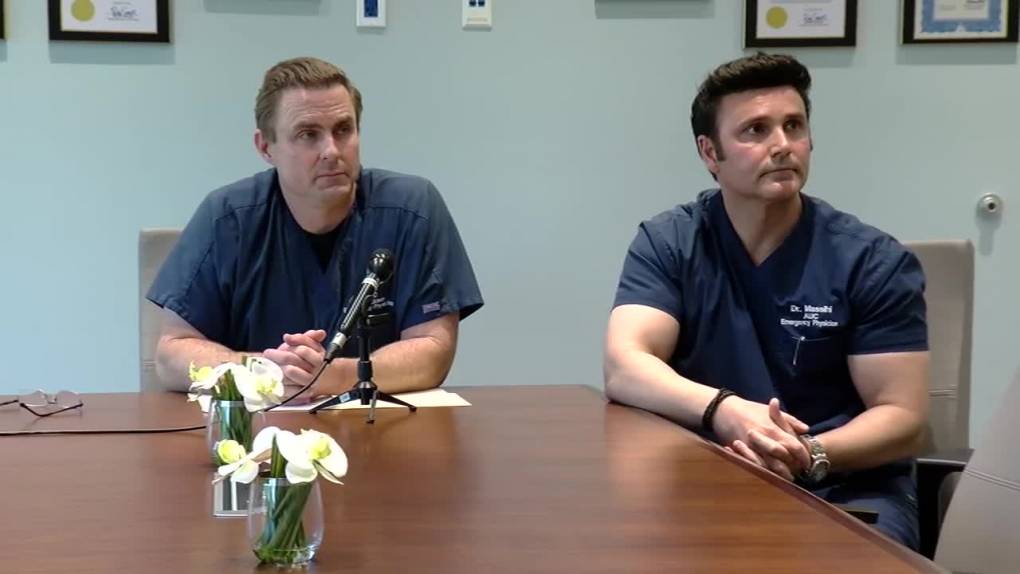
"caption": "Bakersfield Drs. Dan Erickson and Artin Massihi, from Bakersfield-based Accelerated Urgent Care, held a video press conference on April 22, claiming their COVID-19 test results showed that fears of the virus were greatly overblown. Although public health experts were quick to debunk their findings, the video garnered national attention.",
"description": null,
"title": "poster_f8ffaadbb8314a6484fb67dcf0ea3909",
"credit": "Screenshot from YouTube video, via 23 ABC News Bakersfield",
"status": "inherit",
"isLoading": false,
"fetchFailed": false
},
"news_11814620": {
"type": "attachments",
"id": "news_11814620",
"meta": {
"index": "attachments_1716263798",
"site": "news",
"id": "11814620",
"found": true
},
"parent": 11814612,
"imgSizes": {
"apple_news_ca_landscape_5_5": {
"file": "https://ww2.kqed.org/app/uploads/sites/10/2020/04/distancing_042720_final-1044x783.png",
"width": 1044,
"mimeType": "image/png",
"height": 783
},
"apple_news_ca_square_4_0": {
"file": "https://ww2.kqed.org/app/uploads/sites/10/2020/04/distancing_042720_final-470x470.png",
"width": 470,
"mimeType": "image/png",
"height": 470
},
"twentyfourteen-full-width": {
"file": "https://ww2.kqed.org/app/uploads/sites/10/2020/04/distancing_042720_final-1038x576.png",
"width": 1038,
"mimeType": "image/png",
"height": 576
},
"thumbnail": {
"file": "https://ww2.kqed.org/app/uploads/sites/10/2020/04/distancing_042720_final-160x106.png",
"width": 160,
"mimeType": "image/png",
"height": 106
},
"post-thumbnail": {
"file": "https://ww2.kqed.org/app/uploads/sites/10/2020/04/distancing_042720_final-672x372.png",
"width": 672,
"mimeType": "image/png",
"height": 372
},
"kqedFullSize": {
"file": "https://ww2.kqed.org/app/uploads/sites/10/2020/04/distancing_042720_final.png",
"width": 1920,
"height": 1274
},
"apple_news_ca_landscape_4_7": {
"file": "https://ww2.kqed.org/app/uploads/sites/10/2020/04/distancing_042720_final-632x474.png",
"width": 632,
"mimeType": "image/png",
"height": 474
},
"large": {
"file": "https://ww2.kqed.org/app/uploads/sites/10/2020/04/distancing_042720_final-1020x677.png",
"width": 1020,
"mimeType": "image/png",
"height": 677
},
"apple_news_ca_landscape_4_0": {
"file": "https://ww2.kqed.org/app/uploads/sites/10/2020/04/distancing_042720_final-536x402.png",
"width": 536,
"mimeType": "image/png",
"height": 402
},
"apple_news_ca_portrait_12_9": {
"file": "https://ww2.kqed.org/app/uploads/sites/10/2020/04/distancing_042720_final-1122x1274.png",
"width": 1122,
"mimeType": "image/png",
"height": 1274
},
"medium": {
"file": "https://ww2.kqed.org/app/uploads/sites/10/2020/04/distancing_042720_final-800x531.png",
"width": 800,
"mimeType": "image/png",
"height": 531
},
"apple_news_ca_portrait_4_0": {
"file": "https://ww2.kqed.org/app/uploads/sites/10/2020/04/distancing_042720_final-354x472.png",
"width": 354,
"mimeType": "image/png",
"height": 472
},
"apple_news_ca_portrait_9_7": {
"file": "https://ww2.kqed.org/app/uploads/sites/10/2020/04/distancing_042720_final-840x1120.png",
"width": 840,
"mimeType": "image/png",
"height": 1120
},
"apple_news_ca_landscape_12_9": {
"file": "https://ww2.kqed.org/app/uploads/sites/10/2020/04/distancing_042720_final-1832x1274.png",
"width": 1832,
"mimeType": "image/png",
"height": 1274
},
"apple_news_ca_square_9_7": {
"file": "https://ww2.kqed.org/app/uploads/sites/10/2020/04/distancing_042720_final-1104x1104.png",
"width": 1104,
"mimeType": "image/png",
"height": 1104
},
"apple_news_ca_portrait_4_7": {
"file": "https://ww2.kqed.org/app/uploads/sites/10/2020/04/distancing_042720_final-414x552.png",
"width": 414,
"mimeType": "image/png",
"height": 552
},
"apple_news_ca_square_12_9": {
"file": "https://ww2.kqed.org/app/uploads/sites/10/2020/04/distancing_042720_final-1472x1274.png",
"width": 1472,
"mimeType": "image/png",
"height": 1274
},
"apple_news_ca_portrait_5_5": {
"file": "https://ww2.kqed.org/app/uploads/sites/10/2020/04/distancing_042720_final-687x916.png",
"width": 687,
"mimeType": "image/png",
"height": 916
},
"full-width": {
"file": "https://ww2.kqed.org/app/uploads/sites/10/2020/04/distancing_042720_final-1920x1274.png",
"width": 1920,
"mimeType": "image/png",
"height": 1274
},
"apple_news_ca_square_4_7": {
"file": "https://ww2.kqed.org/app/uploads/sites/10/2020/04/distancing_042720_final-550x550.png",
"width": 550,
"mimeType": "image/png",
"height": 550
},
"apple_news_ca_landscape_9_7": {
"file": "https://ww2.kqed.org/app/uploads/sites/10/2020/04/distancing_042720_final-1376x1032.png",
"width": 1376,
"mimeType": "image/png",
"height": 1032
},
"apple_news_ca_square_5_5": {
"file": "https://ww2.kqed.org/app/uploads/sites/10/2020/04/distancing_042720_final-912x912.png",
"width": 912,
"mimeType": "image/png",
"height": 912
}
},
"publishDate": 1588033672,
"modified": 1588033702,
"caption": null,
"description": null,
"title": "distancing_042720_final",
"credit": null,
"status": "inherit",
"isLoading": false,
"fetchFailed": false
},
"news_11814447": {
"type": "attachments",
"id": "news_11814447",
"meta": {
"index": "attachments_1716263798",
"site": "news",
"id": "11814447",
"found": true
},
"parent": 11813278,
"imgSizes": {
"apple_news_ca_landscape_5_5": {
"file": "https://ww2.kqed.org/app/uploads/sites/10/2020/04/RS42911_002_KQED_Oakland_PrentissMayo_04242020-qut-1044x783.jpg",
"width": 1044,
"mimeType": "image/jpeg",
"height": 783
},
"apple_news_ca_square_4_0": {
"file": "https://ww2.kqed.org/app/uploads/sites/10/2020/04/RS42911_002_KQED_Oakland_PrentissMayo_04242020-qut-470x470.jpg",
"width": 470,
"mimeType": "image/jpeg",
"height": 470
},
"twentyfourteen-full-width": {
"file": "https://ww2.kqed.org/app/uploads/sites/10/2020/04/RS42911_002_KQED_Oakland_PrentissMayo_04242020-qut-1038x576.jpg",
"width": 1038,
"mimeType": "image/jpeg",
"height": 576
},
"thumbnail": {
"file": "https://ww2.kqed.org/app/uploads/sites/10/2020/04/RS42911_002_KQED_Oakland_PrentissMayo_04242020-qut-160x107.jpg",
"width": 160,
"mimeType": "image/jpeg",
"height": 107
},
"post-thumbnail": {
"file": "https://ww2.kqed.org/app/uploads/sites/10/2020/04/RS42911_002_KQED_Oakland_PrentissMayo_04242020-qut-672x372.jpg",
"width": 672,
"mimeType": "image/jpeg",
"height": 372
},
"kqedFullSize": {
"file": "https://ww2.kqed.org/app/uploads/sites/10/2020/04/RS42911_002_KQED_Oakland_PrentissMayo_04242020-qut.jpg",
"width": 1920,
"height": 1280
},
"apple_news_ca_landscape_4_7": {
"file": "https://ww2.kqed.org/app/uploads/sites/10/2020/04/RS42911_002_KQED_Oakland_PrentissMayo_04242020-qut-632x474.jpg",
"width": 632,
"mimeType": "image/jpeg",
"height": 474
},
"large": {
"file": "https://ww2.kqed.org/app/uploads/sites/10/2020/04/RS42911_002_KQED_Oakland_PrentissMayo_04242020-qut-1020x680.jpg",
"width": 1020,
"mimeType": "image/jpeg",
"height": 680
},
"apple_news_ca_landscape_4_0": {
"file": "https://ww2.kqed.org/app/uploads/sites/10/2020/04/RS42911_002_KQED_Oakland_PrentissMayo_04242020-qut-536x402.jpg",
"width": 536,
"mimeType": "image/jpeg",
"height": 402
},
"apple_news_ca_portrait_12_9": {
"file": "https://ww2.kqed.org/app/uploads/sites/10/2020/04/RS42911_002_KQED_Oakland_PrentissMayo_04242020-qut-1122x1280.jpg",
"width": 1122,
"mimeType": "image/jpeg",
"height": 1280
},
"medium": {
"file": "https://ww2.kqed.org/app/uploads/sites/10/2020/04/RS42911_002_KQED_Oakland_PrentissMayo_04242020-qut-800x533.jpg",
"width": 800,
"mimeType": "image/jpeg",
"height": 533
},
"apple_news_ca_portrait_4_0": {
"file": "https://ww2.kqed.org/app/uploads/sites/10/2020/04/RS42911_002_KQED_Oakland_PrentissMayo_04242020-qut-354x472.jpg",
"width": 354,
"mimeType": "image/jpeg",
"height": 472
},
"apple_news_ca_portrait_9_7": {
"file": "https://ww2.kqed.org/app/uploads/sites/10/2020/04/RS42911_002_KQED_Oakland_PrentissMayo_04242020-qut-840x1120.jpg",
"width": 840,
"mimeType": "image/jpeg",
"height": 1120
},
"apple_news_ca_landscape_12_9": {
"file": "https://ww2.kqed.org/app/uploads/sites/10/2020/04/RS42911_002_KQED_Oakland_PrentissMayo_04242020-qut-1832x1280.jpg",
"width": 1832,
"mimeType": "image/jpeg",
"height": 1280
},
"apple_news_ca_square_9_7": {
"file": "https://ww2.kqed.org/app/uploads/sites/10/2020/04/RS42911_002_KQED_Oakland_PrentissMayo_04242020-qut-1104x1104.jpg",
"width": 1104,
"mimeType": "image/jpeg",
"height": 1104
},
"apple_news_ca_portrait_4_7": {
"file": "https://ww2.kqed.org/app/uploads/sites/10/2020/04/RS42911_002_KQED_Oakland_PrentissMayo_04242020-qut-414x552.jpg",
"width": 414,
"mimeType": "image/jpeg",
"height": 552
},
"apple_news_ca_square_12_9": {
"file": "https://ww2.kqed.org/app/uploads/sites/10/2020/04/RS42911_002_KQED_Oakland_PrentissMayo_04242020-qut-1472x1280.jpg",
"width": 1472,
"mimeType": "image/jpeg",
"height": 1280
},
"apple_news_ca_portrait_5_5": {
"file": "https://ww2.kqed.org/app/uploads/sites/10/2020/04/RS42911_002_KQED_Oakland_PrentissMayo_04242020-qut-687x916.jpg",
"width": 687,
"mimeType": "image/jpeg",
"height": 916
},
"full-width": {
"file": "https://ww2.kqed.org/app/uploads/sites/10/2020/04/RS42911_002_KQED_Oakland_PrentissMayo_04242020-qut-1920x1280.jpg",
"width": 1920,
"mimeType": "image/jpeg",
"height": 1280
},
"apple_news_ca_square_4_7": {
"file": "https://ww2.kqed.org/app/uploads/sites/10/2020/04/RS42911_002_KQED_Oakland_PrentissMayo_04242020-qut-550x550.jpg",
"width": 550,
"mimeType": "image/jpeg",
"height": 550
},
"apple_news_ca_landscape_9_7": {
"file": "https://ww2.kqed.org/app/uploads/sites/10/2020/04/RS42911_002_KQED_Oakland_PrentissMayo_04242020-qut-1376x1032.jpg",
"width": 1376,
"mimeType": "image/jpeg",
"height": 1032
},
"apple_news_ca_square_5_5": {
"file": "https://ww2.kqed.org/app/uploads/sites/10/2020/04/RS42911_002_KQED_Oakland_PrentissMayo_04242020-qut-912x912.jpg",
"width": 912,
"mimeType": "image/jpeg",
"height": 912
}
},
"publishDate": 1587942144,
"modified": 1588027809,
"caption": "Prentiss Mayo at his home in Oakland on April 24, 2020. Mayo is part of the Underground Scholars group at UC Berkeley. He's legally blind and has had to navigate an additional set of challenges during the pandemic. ",
"description": null,
"title": "Prentiss Mayo at his home in Oakland on April 24, 2020.",
"credit": "Beth LaBerge/KQED",
"status": "inherit",
"isLoading": false,
"fetchFailed": false
},
"news_11814270": {
"type": "attachments",
"id": "news_11814270",
"meta": {
"index": "attachments_1716263798",
"site": "news",
"id": "11814270",
"found": true
},
"parent": 11814266,
"imgSizes": {
"apple_news_ca_landscape_5_5": {
"file": "https://ww2.kqed.org/app/uploads/sites/10/2020/04/RS42256_030_KQED_SanFrancisco_Mission_03202020_9678-qut-1044x783.jpg",
"width": 1044,
"mimeType": "image/jpeg",
"height": 783
},
"apple_news_ca_square_4_0": {
"file": "https://ww2.kqed.org/app/uploads/sites/10/2020/04/RS42256_030_KQED_SanFrancisco_Mission_03202020_9678-qut-470x470.jpg",
"width": 470,
"mimeType": "image/jpeg",
"height": 470
},
"twentyfourteen-full-width": {
"file": "https://ww2.kqed.org/app/uploads/sites/10/2020/04/RS42256_030_KQED_SanFrancisco_Mission_03202020_9678-qut-1038x576.jpg",
"width": 1038,
"mimeType": "image/jpeg",
"height": 576
},
"thumbnail": {
"file": "https://ww2.kqed.org/app/uploads/sites/10/2020/04/RS42256_030_KQED_SanFrancisco_Mission_03202020_9678-qut-160x107.jpg",
"width": 160,
"mimeType": "image/jpeg",
"height": 107
},
"post-thumbnail": {
"file": "https://ww2.kqed.org/app/uploads/sites/10/2020/04/RS42256_030_KQED_SanFrancisco_Mission_03202020_9678-qut-672x372.jpg",
"width": 672,
"mimeType": "image/jpeg",
"height": 372
},
"kqedFullSize": {
"file": "https://ww2.kqed.org/app/uploads/sites/10/2020/04/RS42256_030_KQED_SanFrancisco_Mission_03202020_9678-qut.jpg",
"width": 1920,
"height": 1280
},
"apple_news_ca_landscape_4_7": {
"file": "https://ww2.kqed.org/app/uploads/sites/10/2020/04/RS42256_030_KQED_SanFrancisco_Mission_03202020_9678-qut-632x474.jpg",
"width": 632,
"mimeType": "image/jpeg",
"height": 474
},
"large": {
"file": "https://ww2.kqed.org/app/uploads/sites/10/2020/04/RS42256_030_KQED_SanFrancisco_Mission_03202020_9678-qut-1020x680.jpg",
"width": 1020,
"mimeType": "image/jpeg",
"height": 680
},
"apple_news_ca_landscape_4_0": {
"file": "https://ww2.kqed.org/app/uploads/sites/10/2020/04/RS42256_030_KQED_SanFrancisco_Mission_03202020_9678-qut-536x402.jpg",
"width": 536,
"mimeType": "image/jpeg",
"height": 402
},
"apple_news_ca_portrait_12_9": {
"file": "https://ww2.kqed.org/app/uploads/sites/10/2020/04/RS42256_030_KQED_SanFrancisco_Mission_03202020_9678-qut-1122x1280.jpg",
"width": 1122,
"mimeType": "image/jpeg",
"height": 1280
},
"medium": {
"file": "https://ww2.kqed.org/app/uploads/sites/10/2020/04/RS42256_030_KQED_SanFrancisco_Mission_03202020_9678-qut-800x533.jpg",
"width": 800,
"mimeType": "image/jpeg",
"height": 533
},
"apple_news_ca_portrait_4_0": {
"file": "https://ww2.kqed.org/app/uploads/sites/10/2020/04/RS42256_030_KQED_SanFrancisco_Mission_03202020_9678-qut-354x472.jpg",
"width": 354,
"mimeType": "image/jpeg",
"height": 472
},
"apple_news_ca_portrait_9_7": {
"file": "https://ww2.kqed.org/app/uploads/sites/10/2020/04/RS42256_030_KQED_SanFrancisco_Mission_03202020_9678-qut-840x1120.jpg",
"width": 840,
"mimeType": "image/jpeg",
"height": 1120
},
"apple_news_ca_landscape_12_9": {
"file": "https://ww2.kqed.org/app/uploads/sites/10/2020/04/RS42256_030_KQED_SanFrancisco_Mission_03202020_9678-qut-1832x1280.jpg",
"width": 1832,
"mimeType": "image/jpeg",
"height": 1280
},
"apple_news_ca_square_9_7": {
"file": "https://ww2.kqed.org/app/uploads/sites/10/2020/04/RS42256_030_KQED_SanFrancisco_Mission_03202020_9678-qut-1104x1104.jpg",
"width": 1104,
"mimeType": "image/jpeg",
"height": 1104
},
"apple_news_ca_portrait_4_7": {
"file": "https://ww2.kqed.org/app/uploads/sites/10/2020/04/RS42256_030_KQED_SanFrancisco_Mission_03202020_9678-qut-414x552.jpg",
"width": 414,
"mimeType": "image/jpeg",
"height": 552
},
"apple_news_ca_square_12_9": {
"file": "https://ww2.kqed.org/app/uploads/sites/10/2020/04/RS42256_030_KQED_SanFrancisco_Mission_03202020_9678-qut-1472x1280.jpg",
"width": 1472,
"mimeType": "image/jpeg",
"height": 1280
},
"apple_news_ca_portrait_5_5": {
"file": "https://ww2.kqed.org/app/uploads/sites/10/2020/04/RS42256_030_KQED_SanFrancisco_Mission_03202020_9678-qut-687x916.jpg",
"width": 687,
"mimeType": "image/jpeg",
"height": 916
},
"full-width": {
"file": "https://ww2.kqed.org/app/uploads/sites/10/2020/04/RS42256_030_KQED_SanFrancisco_Mission_03202020_9678-qut-1920x1280.jpg",
"width": 1920,
"mimeType": "image/jpeg",
"height": 1280
},
"apple_news_ca_square_4_7": {
"file": "https://ww2.kqed.org/app/uploads/sites/10/2020/04/RS42256_030_KQED_SanFrancisco_Mission_03202020_9678-qut-550x550.jpg",
"width": 550,
"mimeType": "image/jpeg",
"height": 550
},
"apple_news_ca_landscape_9_7": {
"file": "https://ww2.kqed.org/app/uploads/sites/10/2020/04/RS42256_030_KQED_SanFrancisco_Mission_03202020_9678-qut-1376x1032.jpg",
"width": 1376,
"mimeType": "image/jpeg",
"height": 1032
},
"apple_news_ca_square_5_5": {
"file": "https://ww2.kqed.org/app/uploads/sites/10/2020/04/RS42256_030_KQED_SanFrancisco_Mission_03202020_9678-qut-912x912.jpg",
"width": 912,
"mimeType": "image/jpeg",
"height": 912
}
},
"publishDate": 1587766380,
"modified": 1588006966,
"caption": "The 24th Street BART Station in San Francisco on March 20, 2020.\n\n",
"description": "The 24th Street BART Station in San Francisco on Mar. 20, 2020.\n\n",
"title": "RS42256_030_KQED_SanFrancisco_Mission_03202020_9678-qut",
"credit": "Beth LaBerge/KQED",
"status": "inherit",
"isLoading": false,
"fetchFailed": false
},
"news_11814413": {
"type": "attachments",
"id": "news_11814413",
"meta": {
"index": "attachments_1716263798",
"site": "news",
"id": "11814413",
"found": true
},
"parent": 11814411,
"imgSizes": {
"apple_news_ca_landscape_5_5": {
"file": "https://ww2.kqed.org/app/uploads/sites/10/2020/04/01_Feature_RS42828_005_KQED_SanFrancisco_HandSanitizer_04172020-qut-1044x783.jpg",
"width": 1044,
"mimeType": "image/jpeg",
"height": 783
},
"apple_news_ca_square_4_0": {
"file": "https://ww2.kqed.org/app/uploads/sites/10/2020/04/01_Feature_RS42828_005_KQED_SanFrancisco_HandSanitizer_04172020-qut-470x470.jpg",
"width": 470,
"mimeType": "image/jpeg",
"height": 470
},
"twentyfourteen-full-width": {
"file": "https://ww2.kqed.org/app/uploads/sites/10/2020/04/01_Feature_RS42828_005_KQED_SanFrancisco_HandSanitizer_04172020-qut-1038x576.jpg",
"width": 1038,
"mimeType": "image/jpeg",
"height": 576
},
"thumbnail": {
"file": "https://ww2.kqed.org/app/uploads/sites/10/2020/04/01_Feature_RS42828_005_KQED_SanFrancisco_HandSanitizer_04172020-qut-160x107.jpg",
"width": 160,
"mimeType": "image/jpeg",
"height": 107
},
"post-thumbnail": {
"file": "https://ww2.kqed.org/app/uploads/sites/10/2020/04/01_Feature_RS42828_005_KQED_SanFrancisco_HandSanitizer_04172020-qut-672x372.jpg",
"width": 672,
"mimeType": "image/jpeg",
"height": 372
},
"kqedFullSize": {
"file": "https://ww2.kqed.org/app/uploads/sites/10/2020/04/01_Feature_RS42828_005_KQED_SanFrancisco_HandSanitizer_04172020-qut.jpg",
"width": 1920,
"height": 1280
},
"apple_news_ca_landscape_4_7": {
"file": "https://ww2.kqed.org/app/uploads/sites/10/2020/04/01_Feature_RS42828_005_KQED_SanFrancisco_HandSanitizer_04172020-qut-632x474.jpg",
"width": 632,
"mimeType": "image/jpeg",
"height": 474
},
"large": {
"file": "https://ww2.kqed.org/app/uploads/sites/10/2020/04/01_Feature_RS42828_005_KQED_SanFrancisco_HandSanitizer_04172020-qut-1020x680.jpg",
"width": 1020,
"mimeType": "image/jpeg",
"height": 680
},
"apple_news_ca_landscape_4_0": {
"file": "https://ww2.kqed.org/app/uploads/sites/10/2020/04/01_Feature_RS42828_005_KQED_SanFrancisco_HandSanitizer_04172020-qut-536x402.jpg",
"width": 536,
"mimeType": "image/jpeg",
"height": 402
},
"apple_news_ca_portrait_12_9": {
"file": "https://ww2.kqed.org/app/uploads/sites/10/2020/04/01_Feature_RS42828_005_KQED_SanFrancisco_HandSanitizer_04172020-qut-1122x1280.jpg",
"width": 1122,
"mimeType": "image/jpeg",
"height": 1280
},
"medium": {
"file": "https://ww2.kqed.org/app/uploads/sites/10/2020/04/01_Feature_RS42828_005_KQED_SanFrancisco_HandSanitizer_04172020-qut-800x533.jpg",
"width": 800,
"mimeType": "image/jpeg",
"height": 533
},
"apple_news_ca_portrait_4_0": {
"file": "https://ww2.kqed.org/app/uploads/sites/10/2020/04/01_Feature_RS42828_005_KQED_SanFrancisco_HandSanitizer_04172020-qut-354x472.jpg",
"width": 354,
"mimeType": "image/jpeg",
"height": 472
},
"apple_news_ca_portrait_9_7": {
"file": "https://ww2.kqed.org/app/uploads/sites/10/2020/04/01_Feature_RS42828_005_KQED_SanFrancisco_HandSanitizer_04172020-qut-840x1120.jpg",
"width": 840,
"mimeType": "image/jpeg",
"height": 1120
},
"apple_news_ca_landscape_12_9": {
"file": "https://ww2.kqed.org/app/uploads/sites/10/2020/04/01_Feature_RS42828_005_KQED_SanFrancisco_HandSanitizer_04172020-qut-1832x1280.jpg",
"width": 1832,
"mimeType": "image/jpeg",
"height": 1280
},
"apple_news_ca_square_9_7": {
"file": "https://ww2.kqed.org/app/uploads/sites/10/2020/04/01_Feature_RS42828_005_KQED_SanFrancisco_HandSanitizer_04172020-qut-1104x1104.jpg",
"width": 1104,
"mimeType": "image/jpeg",
"height": 1104
},
"apple_news_ca_portrait_4_7": {
"file": "https://ww2.kqed.org/app/uploads/sites/10/2020/04/01_Feature_RS42828_005_KQED_SanFrancisco_HandSanitizer_04172020-qut-414x552.jpg",
"width": 414,
"mimeType": "image/jpeg",
"height": 552
},
"apple_news_ca_square_12_9": {
"file": "https://ww2.kqed.org/app/uploads/sites/10/2020/04/01_Feature_RS42828_005_KQED_SanFrancisco_HandSanitizer_04172020-qut-1472x1280.jpg",
"width": 1472,
"mimeType": "image/jpeg",
"height": 1280
},
"apple_news_ca_portrait_5_5": {
"file": "https://ww2.kqed.org/app/uploads/sites/10/2020/04/01_Feature_RS42828_005_KQED_SanFrancisco_HandSanitizer_04172020-qut-687x916.jpg",
"width": 687,
"mimeType": "image/jpeg",
"height": 916
},
"full-width": {
"file": "https://ww2.kqed.org/app/uploads/sites/10/2020/04/01_Feature_RS42828_005_KQED_SanFrancisco_HandSanitizer_04172020-qut-1920x1280.jpg",
"width": 1920,
"mimeType": "image/jpeg",
"height": 1280
},
"apple_news_ca_square_4_7": {
"file": "https://ww2.kqed.org/app/uploads/sites/10/2020/04/01_Feature_RS42828_005_KQED_SanFrancisco_HandSanitizer_04172020-qut-550x550.jpg",
"width": 550,
"mimeType": "image/jpeg",
"height": 550
},
"apple_news_ca_landscape_9_7": {
"file": "https://ww2.kqed.org/app/uploads/sites/10/2020/04/01_Feature_RS42828_005_KQED_SanFrancisco_HandSanitizer_04172020-qut-1376x1032.jpg",
"width": 1376,
"mimeType": "image/jpeg",
"height": 1032
},
"apple_news_ca_square_5_5": {
"file": "https://ww2.kqed.org/app/uploads/sites/10/2020/04/01_Feature_RS42828_005_KQED_SanFrancisco_HandSanitizer_04172020-qut-912x912.jpg",
"width": 912,
"mimeType": "image/jpeg",
"height": 912
}
},
"publishDate": 1587929885,
"modified": 1588009171,
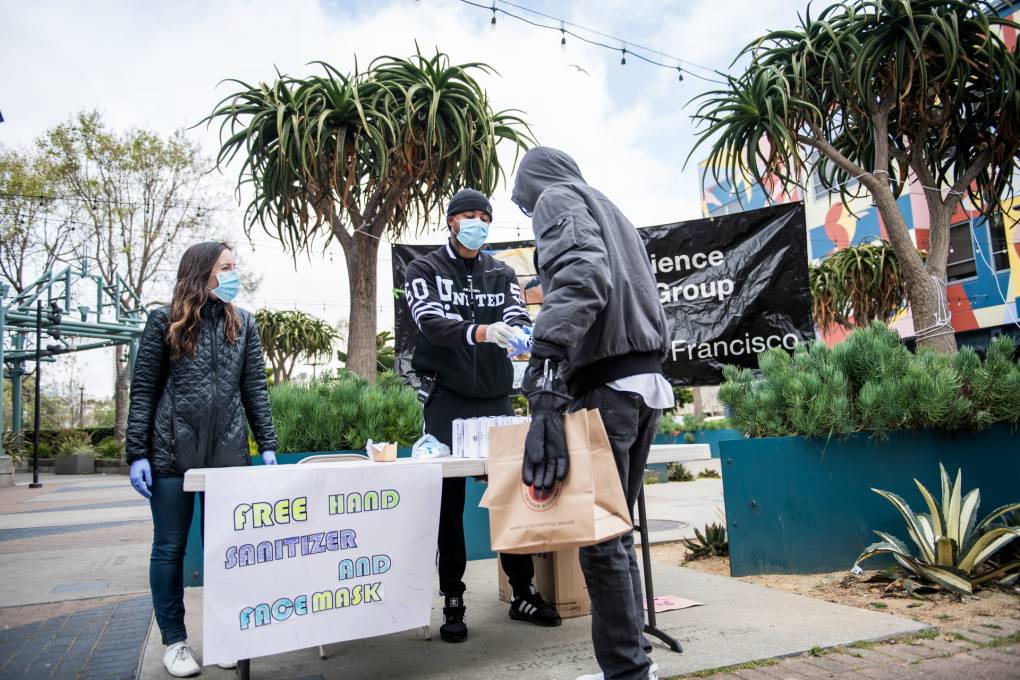
"caption": "Actor and activist Jamal Trulove and UCSF Ph.D. student Elina Kostyanovskaya give out hand sanitizer and face masks on Fillmore Street on April 17, 2020. Elina works with The Science Policy Group at UCSF to manufacture and distribute the sanitizer to incarcerated people, as well as those in transitional housing, public housing, shelters and underserved communities. ",
"description": null,
"title": "01_Feature_RS42828_005_KQED_SanFrancisco_HandSanitizer_04172020-qut",
"credit": "Beth LaBerge/KQED",
"status": "inherit",
"isLoading": false,
"fetchFailed": false
},
"news_11814212": {
"type": "attachments",
"id": "news_11814212",
"meta": {
"index": "attachments_1716263798",
"site": "news",
"id": "11814212",
"found": true
},
"parent": 11813998,
"imgSizes": {
"apple_news_ca_landscape_5_5": {
"file": "https://ww2.kqed.org/app/uploads/sites/10/2020/04/GettyImages-114959332-1044x783.jpg",
"width": 1044,
"mimeType": "image/jpeg",
"height": 783
},
"apple_news_ca_square_4_0": {
"file": "https://ww2.kqed.org/app/uploads/sites/10/2020/04/GettyImages-114959332-470x470.jpg",
"width": 470,
"mimeType": "image/jpeg",
"height": 470
},
"twentyfourteen-full-width": {
"file": "https://ww2.kqed.org/app/uploads/sites/10/2020/04/GettyImages-114959332-1038x576.jpg",
"width": 1038,
"mimeType": "image/jpeg",
"height": 576
},
"thumbnail": {
"file": "https://ww2.kqed.org/app/uploads/sites/10/2020/04/GettyImages-114959332-160x108.jpg",
"width": 160,
"mimeType": "image/jpeg",
"height": 108
},
"post-thumbnail": {
"file": "https://ww2.kqed.org/app/uploads/sites/10/2020/04/GettyImages-114959332-672x372.jpg",
"width": 672,
"mimeType": "image/jpeg",
"height": 372
},
"kqedFullSize": {
"file": "https://ww2.kqed.org/app/uploads/sites/10/2020/04/GettyImages-114959332-e1587761354295.jpg",
"width": 1920,
"height": 1297
},
"apple_news_ca_landscape_4_7": {
"file": "https://ww2.kqed.org/app/uploads/sites/10/2020/04/GettyImages-114959332-632x474.jpg",
"width": 632,
"mimeType": "image/jpeg",
"height": 474
},
"large": {
"file": "https://ww2.kqed.org/app/uploads/sites/10/2020/04/GettyImages-114959332-1020x689.jpg",
"width": 1020,
"mimeType": "image/jpeg",
"height": 689
},
"apple_news_ca_landscape_4_0": {
"file": "https://ww2.kqed.org/app/uploads/sites/10/2020/04/GettyImages-114959332-536x402.jpg",
"width": 536,
"mimeType": "image/jpeg",
"height": 402
},
"apple_news_ca_portrait_12_9": {
"file": "https://ww2.kqed.org/app/uploads/sites/10/2020/04/GettyImages-114959332-1122x1496.jpg",
"width": 1122,
"mimeType": "image/jpeg",
"height": 1496
},
"medium": {
"file": "https://ww2.kqed.org/app/uploads/sites/10/2020/04/GettyImages-114959332-800x541.jpg",
"width": 800,
"mimeType": "image/jpeg",
"height": 541
},
"apple_news_ca_portrait_4_0": {
"file": "https://ww2.kqed.org/app/uploads/sites/10/2020/04/GettyImages-114959332-354x472.jpg",
"width": 354,
"mimeType": "image/jpeg",
"height": 472
},
"apple_news_ca_portrait_9_7": {
"file": "https://ww2.kqed.org/app/uploads/sites/10/2020/04/GettyImages-114959332-840x1120.jpg",
"width": 840,
"mimeType": "image/jpeg",
"height": 1120
},
"apple_news_ca_landscape_12_9": {
"file": "https://ww2.kqed.org/app/uploads/sites/10/2020/04/GettyImages-114959332-1832x1374.jpg",
"width": 1832,
"mimeType": "image/jpeg",
"height": 1374
},
"apple_news_ca_square_9_7": {
"file": "https://ww2.kqed.org/app/uploads/sites/10/2020/04/GettyImages-114959332-1104x1104.jpg",
"width": 1104,
"mimeType": "image/jpeg",
"height": 1104
},
"apple_news_ca_portrait_4_7": {
"file": "https://ww2.kqed.org/app/uploads/sites/10/2020/04/GettyImages-114959332-414x552.jpg",
"width": 414,
"mimeType": "image/jpeg",
"height": 552
},
"apple_news_ca_square_12_9": {
"file": "https://ww2.kqed.org/app/uploads/sites/10/2020/04/GettyImages-114959332-1472x1472.jpg",
"width": 1472,
"mimeType": "image/jpeg",
"height": 1472
},
"apple_news_ca_portrait_5_5": {
"file": "https://ww2.kqed.org/app/uploads/sites/10/2020/04/GettyImages-114959332-687x916.jpg",
"width": 687,
"mimeType": "image/jpeg",
"height": 916
},
"full-width": {
"file": "https://ww2.kqed.org/app/uploads/sites/10/2020/04/GettyImages-114959332-1920x1297.jpg",
"width": 1920,
"mimeType": "image/jpeg",
"height": 1297
},
"apple_news_ca_square_4_7": {
"file": "https://ww2.kqed.org/app/uploads/sites/10/2020/04/GettyImages-114959332-550x550.jpg",
"width": 550,
"mimeType": "image/jpeg",
"height": 550
},
"apple_news_ca_landscape_9_7": {
"file": "https://ww2.kqed.org/app/uploads/sites/10/2020/04/GettyImages-114959332-1376x1032.jpg",
"width": 1376,
"mimeType": "image/jpeg",
"height": 1032
},
"apple_news_ca_square_5_5": {
"file": "https://ww2.kqed.org/app/uploads/sites/10/2020/04/GettyImages-114959332-912x912.jpg",
"width": 912,
"mimeType": "image/jpeg",
"height": 912
}
},
"publishDate": 1587761228,
"modified": 1587761348,
"caption": "Smokers of tobacco products who develop COVID-19 are 14 times more likely to need intensive treatment compared to nonsmokers, and twice as likely to die, according to early studies.",
"description": null,
"title": "WHO Urges Smokers To Quit On World No Tobacco Day",
"credit": "Justin Sullivan/Getty Images",
"status": "inherit",
"isLoading": false,
"fetchFailed": false
},
"news_11814321": {
"type": "attachments",
"id": "news_11814321",
"meta": {
"index": "attachments_1716263798",
"site": "news",
"id": "11814321",
"found": true
},
"parent": 11814220,
"imgSizes": {
"apple_news_ca_landscape_5_5": {
"file": "https://ww2.kqed.org/app/uploads/sites/10/2020/04/MARQUEE_726_1-1044x720.jpg",
"width": 1044,
"mimeType": "image/jpeg",
"height": 720
},
"apple_news_ca_square_4_0": {
"file": "https://ww2.kqed.org/app/uploads/sites/10/2020/04/MARQUEE_726_1-470x470.jpg",
"width": 470,
"mimeType": "image/jpeg",
"height": 470
},
"twentyfourteen-full-width": {
"file": "https://ww2.kqed.org/app/uploads/sites/10/2020/04/MARQUEE_726_1-1038x576.jpg",
"width": 1038,
"mimeType": "image/jpeg",
"height": 576
},
"thumbnail": {
"file": "https://ww2.kqed.org/app/uploads/sites/10/2020/04/MARQUEE_726_1-160x90.jpg",
"width": 160,
"mimeType": "image/jpeg",
"height": 90
},
"post-thumbnail": {
"file": "https://ww2.kqed.org/app/uploads/sites/10/2020/04/MARQUEE_726_1-672x372.jpg",
"width": 672,
"mimeType": "image/jpeg",
"height": 372
},
"kqedFullSize": {
"file": "https://ww2.kqed.org/app/uploads/sites/10/2020/04/MARQUEE_726_1.jpg",
"width": 1280,
"height": 720
},
"apple_news_ca_landscape_4_7": {
"file": "https://ww2.kqed.org/app/uploads/sites/10/2020/04/MARQUEE_726_1-632x474.jpg",
"width": 632,
"mimeType": "image/jpeg",
"height": 474
},
"large": {
"file": "https://ww2.kqed.org/app/uploads/sites/10/2020/04/MARQUEE_726_1-1020x574.jpg",
"width": 1020,
"mimeType": "image/jpeg",
"height": 574
},
"apple_news_ca_landscape_4_0": {
"file": "https://ww2.kqed.org/app/uploads/sites/10/2020/04/MARQUEE_726_1-536x402.jpg",
"width": 536,
"mimeType": "image/jpeg",
"height": 402
},
"apple_news_ca_portrait_12_9": {
"file": "https://ww2.kqed.org/app/uploads/sites/10/2020/04/MARQUEE_726_1-1122x720.jpg",
"width": 1122,
"mimeType": "image/jpeg",
"height": 720
},
"medium": {
"file": "https://ww2.kqed.org/app/uploads/sites/10/2020/04/MARQUEE_726_1-800x450.jpg",
"width": 800,
"mimeType": "image/jpeg",
"height": 450
},
"apple_news_ca_portrait_4_0": {
"file": "https://ww2.kqed.org/app/uploads/sites/10/2020/04/MARQUEE_726_1-354x472.jpg",
"width": 354,
"mimeType": "image/jpeg",
"height": 472
},
"apple_news_ca_portrait_9_7": {
"file": "https://ww2.kqed.org/app/uploads/sites/10/2020/04/MARQUEE_726_1-840x720.jpg",
"width": 840,
"mimeType": "image/jpeg",
"height": 720
},
"apple_news_ca_square_9_7": {
"file": "https://ww2.kqed.org/app/uploads/sites/10/2020/04/MARQUEE_726_1-1104x720.jpg",
"width": 1104,
"mimeType": "image/jpeg",
"height": 720
},
"apple_news_ca_portrait_4_7": {
"file": "https://ww2.kqed.org/app/uploads/sites/10/2020/04/MARQUEE_726_1-414x552.jpg",
"width": 414,
"mimeType": "image/jpeg",
"height": 552
},
"apple_news_ca_portrait_5_5": {
"file": "https://ww2.kqed.org/app/uploads/sites/10/2020/04/MARQUEE_726_1-687x720.jpg",
"width": 687,
"mimeType": "image/jpeg",
"height": 720
},
"apple_news_ca_square_4_7": {
"file": "https://ww2.kqed.org/app/uploads/sites/10/2020/04/MARQUEE_726_1-550x550.jpg",
"width": 550,
"mimeType": "image/jpeg",
"height": 550
},
"apple_news_ca_square_5_5": {
"file": "https://ww2.kqed.org/app/uploads/sites/10/2020/04/MARQUEE_726_1-912x720.jpg",
"width": 912,
"mimeType": "image/jpeg",
"height": 720
}
},
"publishDate": 1587771538,
"modified": 1587771538,
"caption": null,
"description": null,
"title": "MARQUEE_726_1",
"credit": null,
"status": "inherit",
"isLoading": false,
"fetchFailed": false
},
"news_11744216": {
"type": "attachments",
"id": "news_11744216",
"meta": {
"index": "attachments_1716263798",
"site": "news",
"id": "11744216",
"found": true
},
"parent": 11744204,
"imgSizes": {
"twentyfourteen-full-width": {
"file": "https://ww2.kqed.org/app/uploads/sites/10/2019/05/Empty-California-Assembly-Chambers-1038x576.jpg",
"width": 1038,
"mimeType": "image/jpeg",
"height": 576
},
"thumbnail": {
"file": "https://ww2.kqed.org/app/uploads/sites/10/2019/05/Empty-California-Assembly-Chambers-160x107.jpg",
"width": 160,
"mimeType": "image/jpeg",
"height": 107
},
"post-thumbnail": {
"file": "https://ww2.kqed.org/app/uploads/sites/10/2019/05/Empty-California-Assembly-Chambers-672x372.jpg",
"width": 672,
"mimeType": "image/jpeg",
"height": 372
},
"kqedFullSize": {
"file": "https://ww2.kqed.org/app/uploads/sites/10/2019/05/Empty-California-Assembly-Chambers.jpg",
"width": 1280,
"height": 853
},
"large": {
"file": "https://ww2.kqed.org/app/uploads/sites/10/2019/05/Empty-California-Assembly-Chambers-1020x680.jpg",
"width": 1020,
"mimeType": "image/jpeg",
"height": 680
},
"complete_open_graph": {
"file": "https://ww2.kqed.org/app/uploads/sites/10/2019/05/Empty-California-Assembly-Chambers-1200x800.jpg",
"width": 1200,
"mimeType": "image/jpeg",
"height": 800
},
"medium": {
"file": "https://ww2.kqed.org/app/uploads/sites/10/2019/05/Empty-California-Assembly-Chambers-800x533.jpg",
"width": 800,
"mimeType": "image/jpeg",
"height": 533
}
},
"publishDate": 1556736952,
"modified": 1557859744,
"caption": "The empty chamber of the California Assembly.",
"description": null,
"title": "Empty-California-Assembly-Chambers",
"credit": "Wikimedia Commons",
"status": "inherit",
"isLoading": false,
"fetchFailed": false
},
"news_11813023": {
"type": "attachments",
"id": "news_11813023",
"meta": {
"index": "attachments_1716263798",
"site": "news",
"id": "11813023",
"found": true
},
"parent": 11810361,
"imgSizes": {
"apple_news_ca_landscape_5_5": {
"file": "https://ww2.kqed.org/app/uploads/sites/10/2020/04/RS42245_005_KQED_SanFrancisco_Mission_03202020_9530-qut-1044x783.jpg",
"width": 1044,
"mimeType": "image/jpeg",
"height": 783
},
"apple_news_ca_square_4_0": {
"file": "https://ww2.kqed.org/app/uploads/sites/10/2020/04/RS42245_005_KQED_SanFrancisco_Mission_03202020_9530-qut-470x470.jpg",
"width": 470,
"mimeType": "image/jpeg",
"height": 470
},
"twentyfourteen-full-width": {
"file": "https://ww2.kqed.org/app/uploads/sites/10/2020/04/RS42245_005_KQED_SanFrancisco_Mission_03202020_9530-qut-1038x576.jpg",
"width": 1038,
"mimeType": "image/jpeg",
"height": 576
},
"thumbnail": {
"file": "https://ww2.kqed.org/app/uploads/sites/10/2020/04/RS42245_005_KQED_SanFrancisco_Mission_03202020_9530-qut-160x107.jpg",
"width": 160,
"mimeType": "image/jpeg",
"height": 107
},
"post-thumbnail": {
"file": "https://ww2.kqed.org/app/uploads/sites/10/2020/04/RS42245_005_KQED_SanFrancisco_Mission_03202020_9530-qut-672x372.jpg",
"width": 672,
"mimeType": "image/jpeg",
"height": 372
},
"kqedFullSize": {
"file": "https://ww2.kqed.org/app/uploads/sites/10/2020/04/RS42245_005_KQED_SanFrancisco_Mission_03202020_9530-qut.jpg",
"width": 1920,
"height": 1280
},
"apple_news_ca_landscape_4_7": {
"file": "https://ww2.kqed.org/app/uploads/sites/10/2020/04/RS42245_005_KQED_SanFrancisco_Mission_03202020_9530-qut-632x474.jpg",
"width": 632,
"mimeType": "image/jpeg",
"height": 474
},
"large": {
"file": "https://ww2.kqed.org/app/uploads/sites/10/2020/04/RS42245_005_KQED_SanFrancisco_Mission_03202020_9530-qut-1020x680.jpg",
"width": 1020,
"mimeType": "image/jpeg",
"height": 680
},
"apple_news_ca_landscape_4_0": {
"file": "https://ww2.kqed.org/app/uploads/sites/10/2020/04/RS42245_005_KQED_SanFrancisco_Mission_03202020_9530-qut-536x402.jpg",
"width": 536,
"mimeType": "image/jpeg",
"height": 402
},
"apple_news_ca_portrait_12_9": {
"file": "https://ww2.kqed.org/app/uploads/sites/10/2020/04/RS42245_005_KQED_SanFrancisco_Mission_03202020_9530-qut-1122x1280.jpg",
"width": 1122,
"mimeType": "image/jpeg",
"height": 1280
},
"medium": {
"file": "https://ww2.kqed.org/app/uploads/sites/10/2020/04/RS42245_005_KQED_SanFrancisco_Mission_03202020_9530-qut-800x533.jpg",
"width": 800,
"mimeType": "image/jpeg",
"height": 533
},
"apple_news_ca_portrait_4_0": {
"file": "https://ww2.kqed.org/app/uploads/sites/10/2020/04/RS42245_005_KQED_SanFrancisco_Mission_03202020_9530-qut-354x472.jpg",
"width": 354,
"mimeType": "image/jpeg",
"height": 472
},
"apple_news_ca_portrait_9_7": {
"file": "https://ww2.kqed.org/app/uploads/sites/10/2020/04/RS42245_005_KQED_SanFrancisco_Mission_03202020_9530-qut-840x1120.jpg",
"width": 840,
"mimeType": "image/jpeg",
"height": 1120
},
"apple_news_ca_landscape_12_9": {
"file": "https://ww2.kqed.org/app/uploads/sites/10/2020/04/RS42245_005_KQED_SanFrancisco_Mission_03202020_9530-qut-1832x1280.jpg",
"width": 1832,
"mimeType": "image/jpeg",
"height": 1280
},
"apple_news_ca_square_9_7": {
"file": "https://ww2.kqed.org/app/uploads/sites/10/2020/04/RS42245_005_KQED_SanFrancisco_Mission_03202020_9530-qut-1104x1104.jpg",
"width": 1104,
"mimeType": "image/jpeg",
"height": 1104
},
"apple_news_ca_portrait_4_7": {
"file": "https://ww2.kqed.org/app/uploads/sites/10/2020/04/RS42245_005_KQED_SanFrancisco_Mission_03202020_9530-qut-414x552.jpg",
"width": 414,
"mimeType": "image/jpeg",
"height": 552
},
"apple_news_ca_square_12_9": {
"file": "https://ww2.kqed.org/app/uploads/sites/10/2020/04/RS42245_005_KQED_SanFrancisco_Mission_03202020_9530-qut-1472x1280.jpg",
"width": 1472,
"mimeType": "image/jpeg",
"height": 1280
},
"apple_news_ca_portrait_5_5": {
"file": "https://ww2.kqed.org/app/uploads/sites/10/2020/04/RS42245_005_KQED_SanFrancisco_Mission_03202020_9530-qut-687x916.jpg",
"width": 687,
"mimeType": "image/jpeg",
"height": 916
},
"full-width": {
"file": "https://ww2.kqed.org/app/uploads/sites/10/2020/04/RS42245_005_KQED_SanFrancisco_Mission_03202020_9530-qut-1920x1280.jpg",
"width": 1920,
"mimeType": "image/jpeg",
"height": 1280
},
"apple_news_ca_square_4_7": {
"file": "https://ww2.kqed.org/app/uploads/sites/10/2020/04/RS42245_005_KQED_SanFrancisco_Mission_03202020_9530-qut-550x550.jpg",
"width": 550,
"mimeType": "image/jpeg",
"height": 550
},
"apple_news_ca_landscape_9_7": {
"file": "https://ww2.kqed.org/app/uploads/sites/10/2020/04/RS42245_005_KQED_SanFrancisco_Mission_03202020_9530-qut-1376x1032.jpg",
"width": 1376,
"mimeType": "image/jpeg",
"height": 1032
},
"apple_news_ca_square_5_5": {
"file": "https://ww2.kqed.org/app/uploads/sites/10/2020/04/RS42245_005_KQED_SanFrancisco_Mission_03202020_9530-qut-912x912.jpg",
"width": 912,
"mimeType": "image/jpeg",
"height": 912
}
},
"publishDate": 1587184328,
"modified": 1587428192,
"caption": "La Gallinita Meat Market Mexicatesen on 24th Street in the Mission on March 20, 2020.",
"description": "La Gallinita Meat Market Mexicatesen on 24th Street in the Mission on March 20, 2020.",
"title": "RS42245_005_KQED_SanFrancisco_Mission_03202020_9530-qut",
"credit": "Beth LaBerge/KQED",
"status": "inherit",
"isLoading": false,
"fetchFailed": false
}
},
"audioPlayerReducer": {
"postId": "stream_live",
"isPaused": true,
"isPlaying": false,
"pfsActive": false,
"pledgeModalIsOpen": true,
"playerDrawerIsOpen": false,
"liveAudioPlayStartedAt": 0,
"liveAudioPlayContext": ""
},
"authorsReducer": {
"byline_news_11814749": {
"type": "authors",
"id": "byline_news_11814749",
"meta": {
"override": true
},
"slug": "byline_news_11814749",
"name": "\u003ca href=\"https://calmatters.org/author/barbaraostrov/\">Barbara Ostrov\u003c/a>",
"isLoading": false
},
"danbrekke": {
"type": "authors",
"id": "222",
"meta": {
"index": "authors_1716337520",
"id": "222",
"found": true
},
"name": "Dan Brekke",
"firstName": "Dan",
"lastName": "Brekke",
"slug": "danbrekke",
"email": "dbrekke@kqed.org",
"display_author_email": true,
"staff_mastheads": [
"news",
"science"
],
"title": "KQED Editor and Reporter",
"bio": "Dan Brekke is a reporter and editor for KQED News, responsible for coverage of topics ranging from California water issues to the Bay Area's transportation challenges. In a newsroom career that began in Chicago in 1972, Dan has worked for \u003cem>The San Francisco Examiner,\u003c/em> Wired and TechTV and has been published in The New York Times, The New York Times Magazine, Business 2.0, Salon and elsewhere.\r\n\r\nSince joining KQED in 2007, Dan has reported, edited and produced both radio and online features and breaking news pieces. He has shared as both editor and reporter in four Society of Professional Journalists Norcal Excellence in Journalism awards and one Edward R. Murrow regional award. He was chosen for a spring 2017 residency at the Mesa Refuge to advance his research on California salmon.\r\n\r\nEmail Dan at: \u003ca href=\"mailto:dbrekke@kqed.org\">dbrekke@kqed.org\u003c/a>\r\n\r\n\u003cstrong>Twitter:\u003c/strong> \u003ca href=\"https://twitter.com/danbrekke\" rel=\"noopener noreferrer\">twitter.com/danbrekke\u003c/a>\r\n\u003cstrong>Facebook:\u003c/strong> \u003ca href=\"https://www.facebook.com/danbrekke\" rel=\"noopener noreferrer\">www.facebook.com/danbrekke\u003c/a>\r\n\u003cstrong>LinkedIn:\u003c/strong> \u003ca href=\"https://www.linkedin.com/in/danbrekke\" rel=\"noopener noreferrer\">www.linkedin.com/in/danbrekke\u003c/a>",
"avatar": "https://secure.gravatar.com/avatar/8f1f0d2a978fb3b23426c922c7e2af558fa36905b49c4ce76a97dc3c72d27226?s=600&d=mm&r=g",
"twitter": "danbrekke",
"bluesky": null,
"facebook": null,
"instagram": "https://www.instagram.com/dan.brekke/",
"linkedin": "https://www.linkedin.com/in/danbrekke/",
"sites": [
{
"site": "news",
"roles": [
"administrator",
"create_posts"
]
},
{
"site": "stateofhealth",
"roles": [
"editor"
]
},
{
"site": "science",
"roles": [
"editor"
]
},
{
"site": "quest",
"roles": [
"contributor"
]
},
{
"site": "food",
"roles": [
"contributor"
]
},
{
"site": "forum",
"roles": [
"contributor"
]
},
{
"site": "elections",
"roles": [
"editor"
]
},
{
"site": "liveblog",
"roles": [
"editor"
]
}
],
"headData": {
"title": "Dan Brekke | KQED",
"description": "KQED Editor and Reporter",
"ogImgSrc": "https://secure.gravatar.com/avatar/8f1f0d2a978fb3b23426c922c7e2af558fa36905b49c4ce76a97dc3c72d27226?s=600&d=mm&r=g",
"twImgSrc": "https://secure.gravatar.com/avatar/8f1f0d2a978fb3b23426c922c7e2af558fa36905b49c4ce76a97dc3c72d27226?s=600&d=mm&r=g"
},
"isLoading": false,
"link": "/author/danbrekke"
},
"kqed": {
"type": "authors",
"id": "236",
"meta": {
"index": "authors_1716337520",
"id": "236",
"found": true
},
"name": "KQED News Staff",
"firstName": "KQED News Staff",
"lastName": null,
"slug": "kqed",
"email": "faq@kqed.org",
"display_author_email": false,
"staff_mastheads": [],
"title": null,
"bio": null,
"avatar": "https://secure.gravatar.com/avatar/ef0e801a68c4c54afa9180db14084167?s=600&d=blank&r=g",
"twitter": null,
"facebook": null,
"instagram": null,
"linkedin": null,
"sites": [
{
"site": "arts",
"roles": [
"contributor"
]
},
{
"site": "news",
"roles": [
"editor"
]
},
{
"site": "futureofyou",
"roles": [
"author"
]
}
],
"headData": {
"title": "KQED News Staff | KQED",
"description": null,
"ogImgSrc": "https://secure.gravatar.com/avatar/ef0e801a68c4c54afa9180db14084167?s=600&d=blank&r=g",
"twImgSrc": "https://secure.gravatar.com/avatar/ef0e801a68c4c54afa9180db14084167?s=600&d=blank&r=g"
},
"isLoading": false,
"link": "/author/kqed"
},
"adembosky": {
"type": "authors",
"id": "3205",
"meta": {
"index": "authors_1716337520",
"id": "3205",
"found": true
},
"name": "April Dembosky",
"firstName": "April",
"lastName": "Dembosky",
"slug": "adembosky",
"email": "adembosky@kqed.org",
"display_author_email": false,
"staff_mastheads": [
"news",
"science"
],
"title": "KQED Health Correspondent",
"bio": "April Dembosky is the health correspondent for KQED News and a regular contributor to NPR. She specializes in covering altered states of mind, from postpartum depression to methamphetamine-induced psychosis to the insanity defense. Her investigative series on insurance companies sidestepping mental health laws won multiple awards, including first place in beat reporting from the national Association of Health Care Journalists. She is the recipient of numerous other prizes and fellowships, including a national Edward R. Murrow award for investigative reporting, a Society of Professional Journalists award for long-form storytelling, and a Carter Center Fellowship for Mental Health Journalism.\r\n\r\nDembosky reported and produced \u003cem>Soundtrack of Silence\u003c/em>, an audio documentary about music and memory that is currently being made into a feature film by Paramount Pictures.\r\n\r\nBefore joining KQED in 2013, Dembosky covered technology and Silicon Valley for \u003cem>The Financial Times of London,\u003c/em> and contributed business and arts stories to \u003cem>Marketplace \u003c/em>and \u003cem>The New York Times.\u003c/em> She got her undergraduate degree in philosophy from Smith College and her master's in journalism from the University of California, Berkeley. She is a classically trained violinist and proud alum of the first symphony orchestra at Burning Man.",
"avatar": "https://secure.gravatar.com/avatar/ef92999be4ceb9ea60701e7dc276f813?s=600&d=blank&r=g",
"twitter": "adembosky",
"facebook": null,
"instagram": null,
"linkedin": null,
"sites": [
{
"site": "arts",
"roles": [
"author"
]
},
{
"site": "news",
"roles": [
"editor"
]
},
{
"site": "futureofyou",
"roles": [
"author"
]
},
{
"site": "stateofhealth",
"roles": [
"editor"
]
},
{
"site": "science",
"roles": [
"editor"
]
},
{
"site": "forum",
"roles": [
"editor"
]
}
],
"headData": {
"title": "April Dembosky | KQED",
"description": "KQED Health Correspondent",
"ogImgSrc": "https://secure.gravatar.com/avatar/ef92999be4ceb9ea60701e7dc276f813?s=600&d=blank&r=g",
"twImgSrc": "https://secure.gravatar.com/avatar/ef92999be4ceb9ea60701e7dc276f813?s=600&d=blank&r=g"
},
"isLoading": false,
"link": "/author/adembosky"
},
"markfiore": {
"type": "authors",
"id": "3236",
"meta": {
"index": "authors_1716337520",
"id": "3236",
"found": true
},
"name": "Mark Fiore",
"firstName": "Mark",
"lastName": "Fiore",
"slug": "markfiore",
"email": "mark@markfiore.com",
"display_author_email": false,
"staff_mastheads": [
"news"
],
"title": "KQED News Cartoonist",
"bio": "\u003ca href=\"http://www.MarkFiore.com\">MarkFiore.com\u003c/a> | \u003ca href=\"https://twitter.com/markfiore\">Follow on Twitter\u003c/a> | \u003ca href=\"https://www.facebook.com/pages/Mark-Fiore-Animated-Political-Cartoons/94451707396?ref=bookmarks\">Facebook\u003c/a> | \u003ca href=\"mailto:mark@markfiore.com\">email\u003c/a>\r\n\r\nPulitzer Prize-winner, Mark Fiore, who the Wall Street Journal has called “the undisputed guru of the form,” creates animated political cartoons in San Francisco, where his work has been featured regularly on the San Francisco Chronicle’s web site, SFGate.com. His work has appeared on Newsweek.com, Slate.com, CBSNews.com, MotherJones.com, DailyKos.com and NPR’s web site. Fiore’s political animation has appeared on CNN, Frontline, Bill Moyers Journal, Salon.com and cable and broadcast outlets across the globe.\r\n\r\nBeginning his professional life by drawing traditional political cartoons for newspapers, Fiore’s work appeared in publications ranging from the Washington Post to the Los Angeles Times. In the late 1990s, he began to experiment with animating political cartoons and, after a short stint at the San Jose Mercury News as their staff cartoonist, Fiore devoted all his energies to animation.\r\nGrowing up in California, Fiore also spent a good portion of his life in the backwoods of Idaho. It was this combination that shaped him politically. Mark majored in political science at Colorado College, where, in a perfect send-off for a cartoonist, he received his diploma in 1991 as commencement speaker Dick Cheney smiled approvingly.\r\nMark Fiore was awarded the Pulitzer Prize for political cartooning in 2010, a Robert F. Kennedy Journalism Award in 2004 and has twice received an Online Journalism Award for commentary from the Online News Association (2002, 2008). Fiore has received two awards for his work in new media from the National Cartoonists Society (2001, 2002), and in 2006 received The James Madison Freedom of Information Award from The Society of Professional Journalists.",
"avatar": "https://secure.gravatar.com/avatar/fc4e2a612b15b67bad0c6f0e1db4ca9b?s=600&d=blank&r=g",
"twitter": "MarkFiore",
"facebook": null,
"instagram": "https://www.instagram.com/markfiore/?hl=en",
"linkedin": null,
"sites": [
{
"site": "arts",
"roles": [
"contributor"
]
},
{
"site": "news",
"roles": [
"editor"
]
},
{
"site": "futureofyou",
"roles": [
"editor"
]
},
{
"site": "science",
"roles": [
"editor"
]
}
],
"headData": {
"title": "Mark Fiore | KQED",
"description": "KQED News Cartoonist",
"ogImgSrc": "https://secure.gravatar.com/avatar/fc4e2a612b15b67bad0c6f0e1db4ca9b?s=600&d=blank&r=g",
"twImgSrc": "https://secure.gravatar.com/avatar/fc4e2a612b15b67bad0c6f0e1db4ca9b?s=600&d=blank&r=g"
},
"isLoading": false,
"link": "/author/markfiore"
},
"dkatayama": {
"type": "authors",
"id": "7240",
"meta": {
"index": "authors_1716337520",
"id": "7240",
"found": true
},
"name": "Devin Katayama",
"firstName": "Devin",
"lastName": "Katayama",
"slug": "dkatayama",
"email": "dkatayama@kqed.org",
"display_author_email": true,
"staff_mastheads": [
"news"
],
"title": "Editor of Talent and Development",
"bio": "Devin Katayama is former Editor of Talent and Development for KQED. He supported our internship program and on-call staff by looking for equitable opportunities to improve the newsroom.\r\n\r\nHe previously hosted The Bay and American Suburb podcasts from KQED News. Prior to returning to the Bay Area in 2015, Devin was the education reporter for WFPL in Louisville and worked as a producer with radio stations in Chicago and Portland, OR. His work has appeared on NPR’s \u003cem>Morning Edition, All Things Considered, The Takeaway\u003c/em> and \u003cem>Here and Now.\u003c/em>\r\n\r\nDevin earned his MA in Journalism from Columbia College Chicago, where he was a Follett Fellow and the recipient of the 2011 Studs Terkel Community Media Workshop Scholarship for his story on Chicago's homeless youth. He won WBUR's 2014 Daniel Schorr award and a regional RTNDA Edward R. Murrow Award for his documentary \"At Risk\" that looked at issues facing some of Louisville's students. Devin has also received numerous local awards from the Associated Press and the Society of Professional Journalists.",
"avatar": "https://secure.gravatar.com/avatar/d0d2978a31002fb2de107921a8e18405?s=600&d=blank&r=g",
"twitter": "RadioDevin",
"facebook": null,
"instagram": null,
"linkedin": null,
"sites": [
{
"site": "arts",
"roles": []
},
{
"site": "news",
"roles": [
"author"
]
},
{
"site": "stateofhealth",
"roles": [
"author"
]
},
{
"site": "forum",
"roles": [
"editor"
]
},
{
"site": "perspectives",
"roles": [
"editor"
]
}
],
"headData": {
"title": "Devin Katayama | KQED",
"description": "Editor of Talent and Development",
"ogImgSrc": "https://secure.gravatar.com/avatar/d0d2978a31002fb2de107921a8e18405?s=600&d=blank&r=g",
"twImgSrc": "https://secure.gravatar.com/avatar/d0d2978a31002fb2de107921a8e18405?s=600&d=blank&r=g"
},
"isLoading": false,
"link": "/author/dkatayama"
},
"ecruzguevarra": {
"type": "authors",
"id": "8654",
"meta": {
"index": "authors_1716337520",
"id": "8654",
"found": true
},
"name": "Ericka Cruz Guevarra",
"firstName": "Ericka",
"lastName": "Cruz Guevarra",
"slug": "ecruzguevarra",
"email": "ecruzguevarra@kqed.org",
"display_author_email": true,
"staff_mastheads": [
"news"
],
"title": "Producer, The Bay Podcast",
"bio": "Ericka Cruz Guevarra is host of \u003ca href=\"https://www.kqed.org/podcasts/thebay\">\u003cem>The Bay\u003c/em>\u003c/a> podcast at KQED. Before host, she was the show’s producer. Her work in that capacity includes a three-part reported series on policing in Vallejo, which won a 2020 excellence in journalism award from the Society of Professional Journalists. Ericka has worked as a breaking news reporter at Oregon Public Broadcasting, helped produce the Code Switch podcast, and was KQED’s inaugural Raul Ramirez Diversity Fund intern. She’s also an alumna of NPR’s Next Generation Radio program. Send her an email if you have strong feelings about whether Fairfield and Suisun City are the Bay. Ericka is represented by SAG-AFTRA.",
"avatar": "https://secure.gravatar.com/avatar/accefc1de4bafc7e234b69bcb9b6f6536c130fd84709bc3069ef11a78787e1bb?s=600&d=blank&r=g",
"twitter": "NotoriousECG",
"bluesky": null,
"facebook": null,
"instagram": null,
"linkedin": null,
"sites": [
{
"site": "arts",
"roles": [
"subscriber"
]
},
{
"site": "news",
"roles": [
"editor",
"manage_categories"
]
},
{
"site": "futureofyou",
"roles": [
"subscriber"
]
},
{
"site": "stateofhealth",
"roles": [
"subscriber"
]
},
{
"site": "science",
"roles": [
"editor"
]
},
{
"site": "forum",
"roles": [
"subscriber"
]
}
],
"headData": {
"title": "Ericka Cruz Guevarra | KQED",
"description": "Producer, The Bay Podcast",
"ogImgSrc": "https://secure.gravatar.com/avatar/accefc1de4bafc7e234b69bcb9b6f6536c130fd84709bc3069ef11a78787e1bb?s=600&d=blank&r=g",
"twImgSrc": "https://secure.gravatar.com/avatar/accefc1de4bafc7e234b69bcb9b6f6536c130fd84709bc3069ef11a78787e1bb?s=600&d=blank&r=g"
},
"isLoading": false,
"link": "/author/ecruzguevarra"
},
"fjhabvala": {
"type": "authors",
"id": "8659",
"meta": {
"index": "authors_1716337520",
"id": "8659",
"found": true
},
"name": "Farida Jhabvala Romero",
"firstName": "Farida",
"lastName": "Jhabvala Romero",
"slug": "fjhabvala",
"email": "fjhabvala@kqed.org",
"display_author_email": true,
"staff_mastheads": [
"news"
],
"title": "KQED Contributor",
"bio": "Farida Jhabvala Romero is a Labor Correspondent for KQED. She previously covered immigration. Farida was \u003ca href=\"https://www.ccnma.org/2022-most-influential-latina-journalists\">named\u003c/a> one of the 10 Most Influential Latina Journalists in California in 2022 by the California Chicano News Media Association. Her work has won awards from the Society of Professional Journalists (Northern California), as well as a national and regional Edward M. Murrow Award for the collaborative reporting projects “Dangerous Air” and “Graying California.” Before joining KQED, Farida worked as a producer at Radio Bilingüe, a national public radio network. Farida earned her master’s degree in journalism from Stanford University.",
"avatar": "https://secure.gravatar.com/avatar/f9f022d4e2609741874222a1e9d41f48fea74011aa7c615eef91d9a50c944ebe?s=600&d=blank&r=g",
"twitter": "FaridaJhabvala",
"bluesky": null,
"facebook": null,
"instagram": null,
"linkedin": "https://www.linkedin.com/in/faridajhabvala/",
"sites": [
{
"site": "news",
"roles": [
"editor"
]
},
{
"site": "stateofhealth",
"roles": [
"author"
]
},
{
"site": "liveblog",
"roles": [
"author"
]
}
],
"headData": {
"title": "Farida Jhabvala Romero | KQED",
"description": "KQED Contributor",
"ogImgSrc": "https://secure.gravatar.com/avatar/f9f022d4e2609741874222a1e9d41f48fea74011aa7c615eef91d9a50c944ebe?s=600&d=blank&r=g",
"twImgSrc": "https://secure.gravatar.com/avatar/f9f022d4e2609741874222a1e9d41f48fea74011aa7c615eef91d9a50c944ebe?s=600&d=blank&r=g"
},
"isLoading": false,
"link": "/author/fjhabvala"
},
"korr": {
"type": "authors",
"id": "11200",
"meta": {
"index": "authors_1716337520",
"id": "11200",
"found": true
},
"name": "Katie Orr",
"firstName": "Katie",
"lastName": "Orr",
"slug": "korr",
"email": "korr@kqed.org",
"display_author_email": false,
"staff_mastheads": [],
"title": "KQED Contributor",
"bio": "Katie Orr was a Sacramento-based reporter for KQED's Politics and Government Desk, covering the state Capitol and a variety of issues including women in politics, voting and elections and legislation. Prior to joining KQED in 2016, Katie was state government reporter for Capital Public Radio in Sacramento. She's also worked for KPBS in San Diego, where she covered City Hall.\r\n\r\nKatie received her masters degree in political science from San Diego State University and holds a Bachelors degree in broadcast journalism from Arizona State University.\r\n\r\nIn 2015 Katie won a national Clarion Award for a series of stories she did on women in California politics. She's been honored by the Society for Professional Journalists and, in 2013, was named by \u003cem>The Washington Post\u003c/em> as one of the country's top state Capitol reporters. She's also reported for the award-winning documentary series \u003cem>The View from Here \u003c/em>and was part of the team that won national PRNDI and Gabriel Awards in 2015. She lives in Sacramento with her husband. Twitter: @1KatieOrr",
"avatar": "https://secure.gravatar.com/avatar/41a40b25845adc78f50808670860449e?s=600&d=blank&r=g",
"twitter": "1katieorr",
"facebook": null,
"instagram": null,
"linkedin": null,
"sites": [
{
"site": "news",
"roles": [
"subscriber"
]
},
{
"site": "stateofhealth",
"roles": [
"author"
]
},
{
"site": "forum",
"roles": [
"author"
]
}
],
"headData": {
"title": "Katie Orr | KQED",
"description": "KQED Contributor",
"ogImgSrc": "https://secure.gravatar.com/avatar/41a40b25845adc78f50808670860449e?s=600&d=blank&r=g",
"twImgSrc": "https://secure.gravatar.com/avatar/41a40b25845adc78f50808670860449e?s=600&d=blank&r=g"
},
"isLoading": false,
"link": "/author/korr"
},
"vrancano": {
"type": "authors",
"id": "11276",
"meta": {
"index": "authors_1716337520",
"id": "11276",
"found": true
},
"name": "Vanessa Rancaño",
"firstName": "Vanessa",
"lastName": "Rancaño",
"slug": "vrancano",
"email": "vrancano@kqed.org",
"display_author_email": false,
"staff_mastheads": [
"news"
],
"title": "Reporter",
"bio": "Vanessa Rancaño is a features reporter for KQED. She’s also covered homelessness and education for the station and reported from the Central Valley. Her work has aired across public radio, from flagship national news shows to longform narrative podcasts. Before taking up a mic, she worked as a freelance print journalist. She’s been recognized with a number of national and regional awards. Vanessa grew up in California's Central Valley. She's a former NPR Kroc Fellow, and a graduate of the UC Berkeley Graduate School of Journalism.",
"avatar": "https://secure.gravatar.com/avatar/b3a383dfb0e7ee1c17568f2cf067904ab654d6e3de9743fc661f3c788ade1bed?s=600&d=blank&r=g",
"twitter": "vanessarancano",
"bluesky": null,
"facebook": null,
"instagram": null,
"linkedin": null,
"sites": [
{
"site": "arts",
"roles": [
"editor"
]
},
{
"site": "news",
"roles": [
"editor"
]
},
{
"site": "liveblog",
"roles": [
"contributor"
]
}
],
"headData": {
"title": "Vanessa Rancaño | KQED",
"description": "Reporter",
"ogImgSrc": "https://secure.gravatar.com/avatar/b3a383dfb0e7ee1c17568f2cf067904ab654d6e3de9743fc661f3c788ade1bed?s=600&d=blank&r=g",
"twImgSrc": "https://secure.gravatar.com/avatar/b3a383dfb0e7ee1c17568f2cf067904ab654d6e3de9743fc661f3c788ade1bed?s=600&d=blank&r=g"
},
"isLoading": false,
"link": "/author/vrancano"
},
"amontecillo": {
"type": "authors",
"id": "11649",
"meta": {
"index": "authors_1716337520",
"id": "11649",
"found": true
},
"name": "Alan Montecillo",
"firstName": "Alan",
"lastName": "Montecillo",
"slug": "amontecillo",
"email": "amontecillo@kqed.org",
"display_author_email": false,
"staff_mastheads": [
"news"
],
"title": "KQED Contributor",
"bio": "Alan Montecillo is the senior editor of \u003cem>\u003ca href=\"http://kqed.org/thebay\">The Bay\u003c/a>, \u003c/em> KQED's local news podcast. Before moving to the Bay Area, he worked as a senior talk show producer for WILL in Champaign-Urbana, Illinois and at Oregon Public Broadcasting in Portland, Oregon. He has won journalism awards from the Society of Professional Journalists Northern California, the Public Media Journalists Association, The Signal Awards, and has also received a regional Edward R. Murrow award. Alan is a Filipino American from Hong Kong and a graduate of Reed College.",
"avatar": "https://secure.gravatar.com/avatar/268f53a2066899ea9efdd8a5900218b17c822d9862cbc9326cccec53ef41d349?s=600&d=blank&r=g",
"twitter": "alanmontecillo",
"bluesky": null,
"facebook": null,
"instagram": null,
"linkedin": null,
"sites": [
{
"site": "",
"roles": [
"editor"
]
},
{
"site": "news",
"roles": [
"editor",
"manage_categories"
]
}
],
"headData": {
"title": "Alan Montecillo | KQED",
"description": "KQED Contributor",
"ogImgSrc": "https://secure.gravatar.com/avatar/268f53a2066899ea9efdd8a5900218b17c822d9862cbc9326cccec53ef41d349?s=600&d=blank&r=g",
"twImgSrc": "https://secure.gravatar.com/avatar/268f53a2066899ea9efdd8a5900218b17c822d9862cbc9326cccec53ef41d349?s=600&d=blank&r=g"
},
"isLoading": false,
"link": "/author/amontecillo"
},
"blaberge": {
"type": "authors",
"id": "11667",
"meta": {
"index": "authors_1716337520",
"id": "11667",
"found": true
},
"name": "Beth LaBerge",
"firstName": "Beth",
"lastName": "LaBerge",
"slug": "blaberge",
"email": "blaberge@KQED.org",
"display_author_email": true,
"staff_mastheads": [
"news"
],
"title": "Photographer, News",
"bio": "Beth LaBerge is a visual journalist for \u003ca href=\"https://www.kqed.org/news\">KQED News\u003c/a>.",
"avatar": "https://secure.gravatar.com/avatar/ce49ecd7a1306685637b45a1f6f5dedfc4ae9481966eb596fea5160466dd6319?s=600&d=blank&r=g",
"twitter": null,
"bluesky": null,
"facebook": null,
"instagram": "https://www.instagram.com/bethlaberge/",
"linkedin": null,
"sites": [
{
"site": "arts",
"roles": [
"editor",
"manage_categories"
]
},
{
"site": "news",
"roles": [
"editor",
"edit_plugins",
"manage_categories"
]
},
{
"site": "science",
"roles": [
"editor",
"contributor",
"author",
"manage_categories"
]
},
{
"site": "perspectives",
"roles": [
"editor"
]
},
{
"site": "liveblog",
"roles": [
"editor"
]
}
],
"headData": {
"title": "Beth LaBerge | KQED",
"description": "Photographer, News",
"ogImgSrc": "https://secure.gravatar.com/avatar/ce49ecd7a1306685637b45a1f6f5dedfc4ae9481966eb596fea5160466dd6319?s=600&d=blank&r=g",
"twImgSrc": "https://secure.gravatar.com/avatar/ce49ecd7a1306685637b45a1f6f5dedfc4ae9481966eb596fea5160466dd6319?s=600&d=blank&r=g"
},
"isLoading": false,
"link": "/author/blaberge"
},
"slin": {
"type": "authors",
"id": "11680",
"meta": {
"index": "authors_1716337520",
"id": "11680",
"found": true
},
"name": "Shannon Lin",
"firstName": "Shannon",
"lastName": "Lin",
"slug": "slin",
"email": "slin@KQED.org",
"display_author_email": false,
"staff_mastheads": [
"news"
],
"title": "KQED Contributor",
"bio": null,
"avatar": "https://secure.gravatar.com/avatar/933be81059ee104afe4b7976547cf552?s=600&d=blank&r=g",
"twitter": null,
"facebook": null,
"instagram": null,
"linkedin": null,
"sites": [
{
"site": "news",
"roles": [
"subscriber"
]
},
{
"site": "forum",
"roles": [
"editor"
]
}
],
"headData": {
"title": "Shannon Lin | KQED",
"description": "KQED Contributor",
"ogImgSrc": "https://secure.gravatar.com/avatar/933be81059ee104afe4b7976547cf552?s=600&d=blank&r=g",
"twImgSrc": "https://secure.gravatar.com/avatar/933be81059ee104afe4b7976547cf552?s=600&d=blank&r=g"
},
"isLoading": false,
"link": "/author/slin"
}
},
"pagesReducer": {
"news_tag_covid-19": {
"type": "terms",
"id": "news_27504",
"meta": {
"index": "terms_1716263798",
"site": "news",
"id": "27504",
"score": 8.558294
},
"featImg": null,
"name": "covid-19",
"description": null,
"taxonomy": "tag",
"headData": {
"twImgId": null,
"twTitle": null,
"ogTitle": null,
"ogImgId": null,
"twDescription": null,
"description": null,
"title": "covid-19 Archives | KQED News",
"ogDescription": null
},
"ttid": 27521,
"slug": "covid-19",
"isLoading": false,
"title": "covid-19",
"pageMeta": {
"site": "news",
"WpPageTemplate": "page-topic-editorial",
"currentPage": 69
},
"blocks": [
{
"blockName": "kqed/post-list",
"attrs": {
"layout": "cardArticle2",
"query": "posts/news?tag=covid-19",
"seeMore": false,
"paginated": true,
"page": 69
}
},
{
"blockName": "kqed/ad"
}
]
}
},
"pfsSessionReducer": {},
"postsReducer": {
"stream_live": {
"type": "live",
"id": "stream_live",
"audioUrl": "https://streams.kqed.org/kqedradio",
"title": "Live Stream",
"excerpt": "Live Stream information currently unavailable.",
"link": "/radio",
"featImg": "",
"label": {
"name": "KQED Live",
"link": "/"
}
},
"stream_kqedNewscast": {
"type": "posts",
"id": "stream_kqedNewscast",
"audioUrl": "https://www.kqed.org/.stream/anon/radio/RDnews/newscast.mp3?_=1",
"title": "KQED Newscast",
"featImg": "",
"label": {
"name": "88.5 FM",
"link": "/"
}
},
"news_11814885": {
"type": "posts",
"id": "news_11814885",
"meta": {
"index": "posts_1716263798",
"site": "news",
"id": "11814885",
"score": null,
"sort": [
1588172419000
]
},
"parent": 0,
"labelTerm": {},
"blocks": [],
"publishDate": 1588172419,
"format": "standard",
"disqusTitle": "Pandemic's Economic Toll Leaves Plan to Insure California's Undocumented Seniors in Doubt",
"title": "Pandemic's Economic Toll Leaves Plan to Insure California's Undocumented Seniors in Doubt",
"headTitle": "The California Report | KQED News",
"content": "\u003cp>Irma, an undocumented immigrant, has worked as a cook at the same fast food restaurant for more than two decades. But the resident of Rialto, in San Bernardino County, said her employer doesn’t provide health insurance and she hasn’t been able to afford a private plan.\u003c/p>\n\u003cp>Now, at 64, Irma hopes California will start including older immigrants like her in Medi-Cal, the state’s version of the federal Medicaid health coverage program for low-income residents.\u003c/p>\n\u003cp>“Ever since I came to this country in 1995, it was difficult for me to get health insurance,” said Irma, who didn’t want her last name used because of her immigration status. “And now more than ever, I need full-scope Medi-Cal because as I age I am more likely to get sick.”\u003c/p>\n\u003cp>[pullquote align=\"right\" size=\"medium\" citation=\"Irma, an undocumented immigrant\"]'Ever since I came to this country in 1995, it was difficult for me to get health insurance. And now more than ever, I need full-scope Medi-Cal because as I age I am more likely to get sick.'[/pullquote]\u003c/p>\n\u003cp>As California continues to grapple with the coronavirus pandemic, public health experts and immigrant advocates are pushing for Gov. Gavin Newsom to expand Medi-Cal benefits to tens of thousands of undocumented seniors. The elderly are among those most at risk for complications from COVID-19.\u003c/p>\n\u003cp>In January, Newsom \u003ca href=\"http://www.ebudget.ca.gov/2020-21/pdf/BudgetSummary/HealthandHumanServices.pdf\">proposed\u003c/a> spending $80.5 million next year to begin covering 27,000 undocumented adults 65 and older. The expansion would cost $350 million per year once it’s fully implemented. But that plan is now in doubt as the state enters an economic downturn, with tax revenues expected to fall by billions of dollars and potential budget cuts on the horizon.\u003c/p>\n\u003cp>“Job loss and abrupt halting of economic activity make it clear that we have entered a recession,” the Legislative Analyst’s Office communicated in a\u003ca href=\"https://lao.ca.gov/handouts/FO/2020/Preliminary-Assessment-of-the-Economic-Impact-of-COVID-19-041620.pdf\"> letter\u003c/a> to the state Senate Budget Committee earlier this month.\u003c/p>\n\u003cp>California has enrolled undocumented children in Medi-Cal since 2016, and this year became the first state to offer health coverage to undocumented young adults through age 25. More than 60,000 have enrolled so far, about two-thirds of those eligible, according to the California Department of Health Care Services.\u003c/p>\n\u003cp>But an estimated 1.5 million undocumented Californians remain uninsured. They comprise about 40% of the total number of state residents who lack health insurance, according to \u003ca href=\"http://laborcenter.berkeley.edu/ca-coverage-gains-to-erode-without-further-state-action/\">a report\u003c/a> by the UC Berkeley Labor Center.\u003c/p>\n\u003cp>For the state to fully recover from the pandemic, more undocumented residents must gain access to health care, starting with vulnerable seniors, said state Sen. Maria Elena Durazo. D-Los Angeles, who authored a \u003ca href=\"https://leginfo.legislature.ca.gov/faces/billTextClient.xhtml?bill_id=201920200SB29\">2018 bill\u003c/a> that would expand Medi-Cal to undocumented residents 65 and older.\u003c/p>\n\u003cp>“I know there's uncertainty around the economy and the finances, but it should continue to be a priority,” Durazo said. “Undocumented workers continue to work. Year after year after year they have paid taxes, but they haven’t gotten in return the same benefits as other Californians.”\u003c/p>\n\u003cp>Currently, low-income, undocumented immigrants 26 and older are only eligible for Medi-Cal if they face a health care emergency, or to obtain prenatal care if they are pregnant. Undocumented immigrants are excluded from the Affordable Care Act, and cannot purchase coverage through Covered California, the state’s ACA health exchange.\u003c/p>\n\u003cp>If they are not insured by an employer or able to purchase a private plan, they must generally rely on county health programs, which can vary widely throughout the state.\u003c/p>\n\u003cfigure id=\"attachment_11814920\" class=\"wp-caption alignnone\" style=\"max-width: 1920px\">\u003cimg class=\"size-full wp-image-11814920\" src=\"https://ww2.kqed.org/app/uploads/sites/10/2020/04/RS42934_018_KQED_SanPablo_LifeLong_04272020-qut.jpg\" alt=\"\" width=\"1920\" height=\"1280\" srcset=\"https://ww2.kqed.org/app/uploads/sites/10/2020/04/RS42934_018_KQED_SanPablo_LifeLong_04272020-qut.jpg 1920w, https://ww2.kqed.org/app/uploads/sites/10/2020/04/RS42934_018_KQED_SanPablo_LifeLong_04272020-qut-160x107.jpg 160w, https://ww2.kqed.org/app/uploads/sites/10/2020/04/RS42934_018_KQED_SanPablo_LifeLong_04272020-qut-800x533.jpg 800w, https://ww2.kqed.org/app/uploads/sites/10/2020/04/RS42934_018_KQED_SanPablo_LifeLong_04272020-qut-1020x680.jpg 1020w\" sizes=\"(max-width: 1920px) 100vw, 1920px\">\u003cfigcaption class=\"wp-caption-text\">Eleana Ellner, a nurse at LifeLong Brookside San Pablo Health Center, prepares to take temperatures and check in visitors on April 27, 2020. \u003ccite>(Beth LaBerge/KQED)\u003c/cite>\u003c/figcaption>\u003c/figure>\n\u003cp>Undocumented residents who live in Contra Costa County can enroll in a \u003ca href=\"https://clinicconsortium.org/contra-costa-cares/\">county program\u003c/a> that provides primary care free of charge at community clinics and health centers. Services available through the Contra Costa CARES program include immunizations and a 24-hour nurse advice line.\u003c/p>\n\u003cp>“We were really fortunate that the county, the hospitals ... everyone banded together to fund this program specifically for undocumented residents,” said Dr. Kimberly Ceci, associate medical director at the LifeLong Brookside San Pablo Health Center.\u003c/p>\n\u003cp>The program helps people manage chronic diseases and stay out of emergency rooms, she said. But it doesn’t cover the cost of prescriptions (though a similar program in neighboring Alameda County does), or care by specialists, she said.\u003c/p>\n\u003cp>“There’s limitations that we can’t get referrals, we can't go further than primary care,” Ceci said. “And that is unfortunately necessary for many people’s care, especially over 65.”\u003c/p>\n\u003cp>While most counties in California reimburse health providers for some non-emergency care for undocumented patients, 11 counties do not, including San Diego and San Bernardino, \u003ca href=\"https://health-access.org/images/pdfs/2016_County_Report_Profiles_of_Progress_5_20_16.pdf\">according to the nonprofit organization Health Access\u003c/a>.\u003c/p>\n\u003cp>Even without county funding, community health centers in San Bernardino offer uninsured patients a sliding fee scale, and will care for anyone regardless of ability to pay or immigration status, said Deanna Stover, president and CEO of Community Health Association Inland Southern Region.\u003c/p>\n\u003cp>But the fact that San Bernardino County doesn’t cover these services means people are less likely to seek care, she said.\u003c/p>\n\u003cp>[aside label=\"related coverage\" tag=\"immigration\"]“When a county offers the plan, you get increased knowledge, and it definitely increases access to care,” said Stover, a registered nurse. “We want high-risk, vulnerable populations to get care so that it's a healthier community overall.”\u003c/p>\n\u003cp>On April 8, the state \u003ca href=\"https://www.dhcs.ca.gov/Documents/COVID-19/COVID-19-Emergency-Services.pdf\">began covering\u003c/a> the costs of COVID-19 testing and medical treatment for people who need the assistance, regardless of immigration status.\u003c/p>\n\u003cp>While that’s a critical step during the public health crisis, more needs to be done to help vulnerable communities withstand the coronavirus and other health challenges, said Héctor Plascencia, an advocate with the Health4All campaign, who has been pushing the state to cover all undocumented residents.\u003c/p>\n\u003cp>“We still want folks to be covered beyond this testing because often it's not enough,” said Plascencia, who is undocumented and identifies as transgender. “If it's a severe case, it is often someone that has other health ailments aside from COVID as well, that we want to make sure that they are comprehensively covered.”\u003c/p>\n\u003cp>Plascencia expressed hope that Newsom would abide by his earlier plan to insure low-income undocumented seniors, and was encouraged by the governor’s recent announcement that the state will provide unprecedented $500 \u003ca href=\"https://www.kqed.org/news/11812710/more-peace-of-mind-for-undocumented-californians-still-may-not-be-enough\">emergency grants\u003c/a> to Californians hard hit by the pandemic but ineligible for state and federal benefits because of their immigration status.\u003c/p>\n\u003cp>[ad fullwidth]\u003c/p>\n\u003cp>But as stay-at-home orders and the pandemic have paralyzed entire industries across the state and millions of people lose their jobs, California is expecting dramatic cuts to tax revenue this year and beyond. State agencies and departments “should have no expectation of full funding for either new or existing proposals and adjustments,” according to a March \u003ca href=\"http://www.dof.ca.gov/budget/Budget_Letters/documents/BL20-08.pdf\">letter\u003c/a> from the Department of Finance.\u003c/p>\n\u003cp>The state’s budget revenue shortfall could be as much as $35 billion in the coming fiscal year, and $85 billion in later years because of the pandemic, legislative analyst Gabriel Petek told a state Senate budget subcommittee last week.\u003c/p>\n\u003cp>Newsom is still deciding how his budget plan will change, and whether covering health care for more people will be part of it, said H.D. Palmer, a spokesman with the state Department of Finance. The revised budget proposal is due to the Legislature by May 14.\u003c/p>\n\u003cp>“The governor has not yet made final decisions regarding that proposal, as we are still in the process of updating our revenue forecast and our expenditure projections,” Palmer said.\u003c/p>\n\u003cp>[ad floatright]\u003c/p>\n",
"disqusIdentifier": "11814885 https://ww2.kqed.org/news/?p=11814885",
"disqusUrl": "https://ww2.kqed.org/news/2020/04/29/as-pandemic-batters-californias-economy-plan-to-insure-undocumented-seniors-in-doubt/",
"stats": {
"hasVideo": false,
"hasChartOrMap": false,
"hasAudio": false,
"hasPolis": false,
"wordCount": 1325,
"hasGoogleForm": false,
"hasGallery": false,
"hasHearkenModule": false,
"iframeSrcs": [],
"paragraphCount": 31
},
"modified": 1588201411,
"excerpt": "As California continues to grapple with the coronavirus pandemic, public health experts and immigrant advocates are pushing for Gov. Gavin Newsom to expand Medi-Cal benefits to tens of thousands of undocumented seniors. But that goal is increasingly in doubt as the state enters an economic recession. ",
"headData": {
"twImgId": "",
"twTitle": "",
"ogTitle": "",
"ogImgId": "",
"twDescription": "",
"description": "As California continues to grapple with the coronavirus pandemic, public health experts and immigrant advocates are pushing for Gov. Gavin Newsom to expand Medi-Cal benefits to tens of thousands of undocumented seniors. But that goal is increasingly in doubt as the state enters an economic recession. ",
"title": "Pandemic's Economic Toll Leaves Plan to Insure California's Undocumented Seniors in Doubt | KQED",
"ogDescription": "",
"schema": {
"@context": "https://schema.org",
"@type": "NewsArticle",
"headline": "Pandemic's Economic Toll Leaves Plan to Insure California's Undocumented Seniors in Doubt",
"datePublished": "2020-04-29T08:00:19-07:00",
"dateModified": "2020-04-29T16:03:31-07:00",
"image": "https://cdn.kqed.org/wp-content/uploads/2020/02/KQED-OG-Image@1x.png",
"isAccessibleForFree": "True",
"publisher": {
"@type": "NewsMediaOrganization",
"@id": "https://www.kqed.org/#organization",
"name": "KQED",
"logo": "https://cdn.kqed.org/wp-content/uploads/2020/02/KQED-OG-Image@1x.png",
"url": "https://www.kqed.org",
"sameAs": [
"https://www.facebook.com/KQED",
"https://twitter.com/KQED",
"https://www.instagram.com/kqed/",
"https://www.tiktok.com/@kqedofficial",
"https://www.linkedin.com/company/kqed",
"https://www.youtube.com/channel/UCeC0IOo7i1P_61zVUWbJ4nw"
]
}
}
},
"guestAuthors": [],
"slug": "as-pandemic-batters-californias-economy-plan-to-insure-undocumented-seniors-in-doubt",
"status": "publish",
"sourceUrl": "https://www.kqed.org/coronavirus",
"audioUrl": "https://traffic.omny.fm/d/clips/0af137ef-751e-4b19-a055-aaef00d2d578/ffca7e9f-6831-41c5-bcaf-aaef00f5a073/3b3af242-bad8-43b5-b3ba-abab010306c9/audio.mp3",
"source": "Coronavirus",
"path": "/news/11814885/as-pandemic-batters-californias-economy-plan-to-insure-undocumented-seniors-in-doubt",
"audioTrackLength": null,
"parsedContent": [
{
"type": "contentString",
"content": "\u003cdiv class=\"post-body\">\u003cp>\u003cp>Irma, an undocumented immigrant, has worked as a cook at the same fast food restaurant for more than two decades. But the resident of Rialto, in San Bernardino County, said her employer doesn’t provide health insurance and she hasn’t been able to afford a private plan.\u003c/p>\n\u003cp>Now, at 64, Irma hopes California will start including older immigrants like her in Medi-Cal, the state’s version of the federal Medicaid health coverage program for low-income residents.\u003c/p>\n\u003cp>“Ever since I came to this country in 1995, it was difficult for me to get health insurance,” said Irma, who didn’t want her last name used because of her immigration status. “And now more than ever, I need full-scope Medi-Cal because as I age I am more likely to get sick.”\u003c/p>\n\u003cp>\u003c/p>\u003c/div>",
"attributes": {
"named": {},
"numeric": []
}
},
{
"type": "component",
"content": "'Ever since I came to this country in 1995, it was difficult for me to get health insurance. And now more than ever, I need full-scope Medi-Cal because as I age I am more likely to get sick.'",
"name": "pullquote",
"attributes": {
"named": {
"align": "right",
"size": "medium",
"citation": "Irma, an undocumented immigrant",
"label": ""
},
"numeric": []
}
},
{
"type": "contentString",
"content": "\u003cdiv class=\"post-body\">\u003cp>\u003c/p>\n\u003cp>As California continues to grapple with the coronavirus pandemic, public health experts and immigrant advocates are pushing for Gov. Gavin Newsom to expand Medi-Cal benefits to tens of thousands of undocumented seniors. The elderly are among those most at risk for complications from COVID-19.\u003c/p>\n\u003cp>In January, Newsom \u003ca href=\"http://www.ebudget.ca.gov/2020-21/pdf/BudgetSummary/HealthandHumanServices.pdf\">proposed\u003c/a> spending $80.5 million next year to begin covering 27,000 undocumented adults 65 and older. The expansion would cost $350 million per year once it’s fully implemented. But that plan is now in doubt as the state enters an economic downturn, with tax revenues expected to fall by billions of dollars and potential budget cuts on the horizon.\u003c/p>\n\u003cp>“Job loss and abrupt halting of economic activity make it clear that we have entered a recession,” the Legislative Analyst’s Office communicated in a\u003ca href=\"https://lao.ca.gov/handouts/FO/2020/Preliminary-Assessment-of-the-Economic-Impact-of-COVID-19-041620.pdf\"> letter\u003c/a> to the state Senate Budget Committee earlier this month.\u003c/p>\n\u003cp>California has enrolled undocumented children in Medi-Cal since 2016, and this year became the first state to offer health coverage to undocumented young adults through age 25. More than 60,000 have enrolled so far, about two-thirds of those eligible, according to the California Department of Health Care Services.\u003c/p>\n\u003cp>But an estimated 1.5 million undocumented Californians remain uninsured. They comprise about 40% of the total number of state residents who lack health insurance, according to \u003ca href=\"http://laborcenter.berkeley.edu/ca-coverage-gains-to-erode-without-further-state-action/\">a report\u003c/a> by the UC Berkeley Labor Center.\u003c/p>\n\u003cp>For the state to fully recover from the pandemic, more undocumented residents must gain access to health care, starting with vulnerable seniors, said state Sen. Maria Elena Durazo. D-Los Angeles, who authored a \u003ca href=\"https://leginfo.legislature.ca.gov/faces/billTextClient.xhtml?bill_id=201920200SB29\">2018 bill\u003c/a> that would expand Medi-Cal to undocumented residents 65 and older.\u003c/p>\n\u003cp>“I know there's uncertainty around the economy and the finances, but it should continue to be a priority,” Durazo said. “Undocumented workers continue to work. Year after year after year they have paid taxes, but they haven’t gotten in return the same benefits as other Californians.”\u003c/p>\n\u003cp>Currently, low-income, undocumented immigrants 26 and older are only eligible for Medi-Cal if they face a health care emergency, or to obtain prenatal care if they are pregnant. Undocumented immigrants are excluded from the Affordable Care Act, and cannot purchase coverage through Covered California, the state’s ACA health exchange.\u003c/p>\n\u003cp>If they are not insured by an employer or able to purchase a private plan, they must generally rely on county health programs, which can vary widely throughout the state.\u003c/p>\n\u003cfigure id=\"attachment_11814920\" class=\"wp-caption alignnone\" style=\"max-width: 1920px\">\u003cimg class=\"size-full wp-image-11814920\" src=\"https://ww2.kqed.org/app/uploads/sites/10/2020/04/RS42934_018_KQED_SanPablo_LifeLong_04272020-qut.jpg\" alt=\"\" width=\"1920\" height=\"1280\" srcset=\"https://ww2.kqed.org/app/uploads/sites/10/2020/04/RS42934_018_KQED_SanPablo_LifeLong_04272020-qut.jpg 1920w, https://ww2.kqed.org/app/uploads/sites/10/2020/04/RS42934_018_KQED_SanPablo_LifeLong_04272020-qut-160x107.jpg 160w, https://ww2.kqed.org/app/uploads/sites/10/2020/04/RS42934_018_KQED_SanPablo_LifeLong_04272020-qut-800x533.jpg 800w, https://ww2.kqed.org/app/uploads/sites/10/2020/04/RS42934_018_KQED_SanPablo_LifeLong_04272020-qut-1020x680.jpg 1020w\" sizes=\"(max-width: 1920px) 100vw, 1920px\">\u003cfigcaption class=\"wp-caption-text\">Eleana Ellner, a nurse at LifeLong Brookside San Pablo Health Center, prepares to take temperatures and check in visitors on April 27, 2020. \u003ccite>(Beth LaBerge/KQED)\u003c/cite>\u003c/figcaption>\u003c/figure>\n\u003cp>Undocumented residents who live in Contra Costa County can enroll in a \u003ca href=\"https://clinicconsortium.org/contra-costa-cares/\">county program\u003c/a> that provides primary care free of charge at community clinics and health centers. Services available through the Contra Costa CARES program include immunizations and a 24-hour nurse advice line.\u003c/p>\n\u003cp>“We were really fortunate that the county, the hospitals ... everyone banded together to fund this program specifically for undocumented residents,” said Dr. Kimberly Ceci, associate medical director at the LifeLong Brookside San Pablo Health Center.\u003c/p>\n\u003cp>The program helps people manage chronic diseases and stay out of emergency rooms, she said. But it doesn’t cover the cost of prescriptions (though a similar program in neighboring Alameda County does), or care by specialists, she said.\u003c/p>\n\u003cp>“There’s limitations that we can’t get referrals, we can't go further than primary care,” Ceci said. “And that is unfortunately necessary for many people’s care, especially over 65.”\u003c/p>\n\u003cp>While most counties in California reimburse health providers for some non-emergency care for undocumented patients, 11 counties do not, including San Diego and San Bernardino, \u003ca href=\"https://health-access.org/images/pdfs/2016_County_Report_Profiles_of_Progress_5_20_16.pdf\">according to the nonprofit organization Health Access\u003c/a>.\u003c/p>\n\u003cp>Even without county funding, community health centers in San Bernardino offer uninsured patients a sliding fee scale, and will care for anyone regardless of ability to pay or immigration status, said Deanna Stover, president and CEO of Community Health Association Inland Southern Region.\u003c/p>\n\u003cp>But the fact that San Bernardino County doesn’t cover these services means people are less likely to seek care, she said.\u003c/p>\n\u003cp>\u003c/p>\u003c/div>",
"attributes": {
"named": {},
"numeric": []
}
},
{
"type": "component",
"content": "",
"name": "aside",
"attributes": {
"named": {
"label": "related coverage ",
"tag": "immigration"
},
"numeric": []
}
},
{
"type": "contentString",
"content": "\u003cdiv class=\"post-body\">\u003cp>“When a county offers the plan, you get increased knowledge, and it definitely increases access to care,” said Stover, a registered nurse. “We want high-risk, vulnerable populations to get care so that it's a healthier community overall.”\u003c/p>\n\u003cp>On April 8, the state \u003ca href=\"https://www.dhcs.ca.gov/Documents/COVID-19/COVID-19-Emergency-Services.pdf\">began covering\u003c/a> the costs of COVID-19 testing and medical treatment for people who need the assistance, regardless of immigration status.\u003c/p>\n\u003cp>While that’s a critical step during the public health crisis, more needs to be done to help vulnerable communities withstand the coronavirus and other health challenges, said Héctor Plascencia, an advocate with the Health4All campaign, who has been pushing the state to cover all undocumented residents.\u003c/p>\n\u003cp>“We still want folks to be covered beyond this testing because often it's not enough,” said Plascencia, who is undocumented and identifies as transgender. “If it's a severe case, it is often someone that has other health ailments aside from COVID as well, that we want to make sure that they are comprehensively covered.”\u003c/p>\n\u003cp>Plascencia expressed hope that Newsom would abide by his earlier plan to insure low-income undocumented seniors, and was encouraged by the governor’s recent announcement that the state will provide unprecedented $500 \u003ca href=\"https://www.kqed.org/news/11812710/more-peace-of-mind-for-undocumented-californians-still-may-not-be-enough\">emergency grants\u003c/a> to Californians hard hit by the pandemic but ineligible for state and federal benefits because of their immigration status.\u003c/p>\n\u003cp>\u003c/p>\u003c/div>",
"attributes": {
"named": {},
"numeric": []
}
},
{
"type": "component",
"content": "",
"name": "ad",
"attributes": {
"named": {
"label": "fullwidth"
},
"numeric": [
"fullwidth"
]
}
},
{
"type": "contentString",
"content": "\u003cdiv class=\"post-body\">\u003cp>\u003c/p>\n\u003cp>But as stay-at-home orders and the pandemic have paralyzed entire industries across the state and millions of people lose their jobs, California is expecting dramatic cuts to tax revenue this year and beyond. State agencies and departments “should have no expectation of full funding for either new or existing proposals and adjustments,” according to a March \u003ca href=\"http://www.dof.ca.gov/budget/Budget_Letters/documents/BL20-08.pdf\">letter\u003c/a> from the Department of Finance.\u003c/p>\n\u003cp>The state’s budget revenue shortfall could be as much as $35 billion in the coming fiscal year, and $85 billion in later years because of the pandemic, legislative analyst Gabriel Petek told a state Senate budget subcommittee last week.\u003c/p>\n\u003cp>Newsom is still deciding how his budget plan will change, and whether covering health care for more people will be part of it, said H.D. Palmer, a spokesman with the state Department of Finance. The revised budget proposal is due to the Legislature by May 14.\u003c/p>\n\u003cp>“The governor has not yet made final decisions regarding that proposal, as we are still in the process of updating our revenue forecast and our expenditure projections,” Palmer said.\u003c/p>\n\u003cp>\u003c/p>\u003c/div>",
"attributes": {
"named": {},
"numeric": []
}
},
{
"type": "component",
"content": "",
"name": "ad",
"attributes": {
"named": {
"label": "floatright"
},
"numeric": [
"floatright"
]
}
},
{
"type": "contentString",
"content": "\u003cdiv class=\"post-body\">\u003cp>\u003c/p>\n\u003c/div>\u003c/p>",
"attributes": {
"named": {},
"numeric": []
}
}
],
"link": "/news/11814885/as-pandemic-batters-californias-economy-plan-to-insure-undocumented-seniors-in-doubt",
"authors": [
"8659"
],
"programs": [
"news_72"
],
"categories": [
"news_1169",
"news_8"
],
"tags": [
"news_27350",
"news_27504",
"news_2081",
"news_244"
],
"featImg": "news_11814892",
"label": "source_news_11814885"
},
"news_11814635": {
"type": "posts",
"id": "news_11814635",
"meta": {
"index": "posts_1716263798",
"site": "news",
"id": "11814635",
"score": null,
"sort": [
1588128926000
]
},
"guestAuthors": [],
"slug": "isolated-covid-19-deaths-have-people-asking-about-right-to-die-medications",
"title": "Isolated COVID-19 Deaths Have People Asking About Right-to-Die Medications",
"publishDate": 1588128926,
"format": "standard",
"headTitle": "Isolated COVID-19 Deaths Have People Asking About Right-to-Die Medications | KQED",
"labelTerm": {},
"content": "\u003cp>Nurse Thalia DeWolf has been answering a lot of phone calls recently from the patients she calls “the planners” — people who have thought a lot about the kind of death they want, and the kind of death they don’t want.\u003c/p>\n\u003cp>Normally, these are people with a protracted terminal illness who are interested in taking life-ending medications to avoid prolonged suffering. Increasingly, she’s been hearing from her regular cancer patients, and otherwise healthy people, who are afraid of dying from COVID-19.\u003c/p>\n\u003cp>“They really want control over their end of life,” said DeWolf, a nurse with \u003ca href=\"https://bayareaendoflifeoptions.com/\" target=\"_blank\" rel=\"noopener noreferrer\">Bay Area End of Life Options\u003c/a>. “They don’t want to be whisked into a system that’s already overwhelmed and be ventilated and possibly be away from their family members.”\u003c/p>\n\u003cp>Healthy callers are asking for advice about how to write into their advanced directives for medical care that they want to take life-ending medication if they became ill from the coronavirus to ensure a quick, peaceful death.\u003c/p>\n\u003cp>[pullquote size=\"medium\" align=\"right\" citation=\"Mike Ellis, a retired engineer who lives in Petaluma\"]‘Death in America has become inhuman and antiseptic. I didn’t want to be put on a ventilator, to be bedridden, and to end my life that way.’[/pullquote]\u003c/p>\n\u003cp>“I have to tell them, ‘No, you cannot,’” DeWolf said. “They don’t realize there are specific steps that you have to go through.”\u003c/p>\n\u003cp>California \u003ca href=\"https://www.kqed.org/stateofhealth/87522/governor-brown-signs-physician-assisted-suicide-bill-into-law-california-right-to-die\">legalized the practice\u003c/a> referred to as “aid in dying” or “death with dignity” in 2016. It is now one of 10 states that allow terminally ill patients to take lethal medication to hasten their death. California’s law includes several safeguards to address concerns about coercion, including a 15-day waiting period between a patient’s first request for the medication and when they can actually get it. Patients also have to be physically capable of ingesting the medication themselves.\u003c/p>\n\u003cp>These rules make most people who contract COVID-19 ineligible.\u003c/p>\n\u003cp>“What I commonly say to them is that medical aid in dying isn’t likely going to be an option for you,” DeWolf said of her interested callers. “By the time you’re terminal from coronavirus, you’re probably unconscious, and you don’t have capacity to make medical decisions.”\u003c/p>\n\u003cp>[ad fullwidth]\u003c/p>\n\u003cp>Social workers at \u003ca href=\"https://www.deathwithdignity.org/\" target=\"_blank\" rel=\"noopener noreferrer\">Death with Dignity\u003c/a>, a national advocacy organization based in Portland, Oregon, have also been answering a steady increase in calls about the coronavirus. About 80% come from people who want these medications “just in case” the pneumonia they have proves to be the coronavirus, or so they can “be ready,” Executive Director Peg Sandeen said.\u003c/p>\n\u003cp>This kind of grassroots interest could influence future legislation. The group was sponsoring death with dignity bills in New York, Maryland and Massachusetts before state legislatures closed down because of the pandemic. They have plans to add another three states to their efforts next year. But Sandeen believes legislation that is proposed directly in response to the coronavirus will mainly address advance planning.\u003c/p>\n\u003cp>“Because it’s all about this desire to have control at the end of life and to have whatever your wishes are, play out,” Sandeen said.\u003c/p>\n\u003cp>The other 20% of their calls right now, she said, are people who want to know what their advance directive needs to say so that if they become ill from the virus, they want any ventilator that would have gone to them to \u003ca href=\"https://www.kqed.org/news/11808531/what-happens-when-the-ventilators-run-out\">instead go to someone else\u003c/a>.\u003c/p>\n\u003cfigure id=\"attachment_11814865\" class=\"wp-caption alignright\" style=\"max-width: 800px\">\u003cimg loading=\"lazy\" decoding=\"async\" class=\"size-medium wp-image-11814865\" src=\"https://ww2.kqed.org/app/uploads/sites/10/2020/04/IMG_1564-e1588118773273-800x1067.jpeg\" alt=\"\" width=\"800\" height=\"1067\" srcset=\"https://cdn.kqed.org/wp-content/uploads/sites/10/2020/04/IMG_1564-e1588118773273-800x1067.jpeg 800w, https://cdn.kqed.org/wp-content/uploads/sites/10/2020/04/IMG_1564-e1588118773273-160x213.jpeg 160w, https://cdn.kqed.org/wp-content/uploads/sites/10/2020/04/IMG_1564-e1588118773273-1020x1360.jpeg 1020w, https://cdn.kqed.org/wp-content/uploads/sites/10/2020/04/IMG_1564-e1588118773273-1122x1496.jpeg 1122w, https://cdn.kqed.org/wp-content/uploads/sites/10/2020/04/IMG_1564-e1588118773273-840x1120.jpeg 840w, https://cdn.kqed.org/wp-content/uploads/sites/10/2020/04/IMG_1564-e1588118773273-687x916.jpeg 687w, https://cdn.kqed.org/wp-content/uploads/sites/10/2020/04/IMG_1564-e1588118773273-414x552.jpeg 414w, https://cdn.kqed.org/wp-content/uploads/sites/10/2020/04/IMG_1564-e1588118773273-354x472.jpeg 354w, https://cdn.kqed.org/wp-content/uploads/sites/10/2020/04/IMG_1564-e1588118773273.jpeg 1440w\" sizes=\"(max-width: 800px) 100vw, 800px\">\u003cfigcaption class=\"wp-caption-text\">Mike Ellis loved to mountain bike and spend time outdoors with his wife, Diana, before being diagnosed with ALS in 2017.\u003c/figcaption>\u003c/figure>\n\u003cp>“They feel like they’re older or they have a terminal illness, or for whatever reason that they feel like the ventilator should go to health care workers or to younger folks,” Sandeen said.\u003c/p>\n\u003cp>The pandemic has also raised questions for people who already have a terminal illness, like Mike Ellis, a retired engineer who lives in Petaluma. He has Lou Gehrig’s disease, also called amyotrophic lateral sclerosis, or ALS, which attacks nerve cells that control the muscles.\u003c/p>\n\u003cp>He’s already been through all the steps to qualify for medical aid in dying. He believes he’s got a couple of months left to live, but under the law, he can take the medication whenever he wants.\u003c/p>\n\u003cp>“If I got the coronavirus, I’d probably want to initiate it right then,” he said.\u003c/p>\n\u003cp>Ellis, 64, was diagnosed with ALS three years ago and has since lost his ability to bike and to walk. Eventually, he’ll no longer be able to eat, talk or breathe on his own. But Ellis isn’t interested in sticking around for a death like that.\u003c/p>\n\u003cp>“Death in America has become inhuman and antiseptic,” he said. “I didn’t want to be put on a ventilator, to be bedridden and to end my life that way.”\u003c/p>\n\u003cp>Ellis wants to decide when enough is enough. For him, he says that will be when he’s unable to transfer himself from his wheelchair to his bed or the toilet on his own, or when he can’t eat his wife’s “incredible” cooking and needs a feeding tube.\u003c/p>\n\u003cp>“This disease has taken so much from me, robbed me of so many things,” he said. “This is the one last thing that I – I want my hand on that lever.”\u003c/p>\n\u003cp>If Ellis gets COVID-19, he is guaranteed to die from it, according to his doctor, Lonny Shavelson. His respiratory system is already too weak. When Ellis had a mild cold in February, he didn’t have enough strength to cough.\u003c/p>\n\u003cfigure id=\"attachment_11814741\" class=\"wp-caption alignnone\" style=\"max-width: 800px\">\u003cimg loading=\"lazy\" decoding=\"async\" class=\"size-medium wp-image-11814741\" src=\"https://ww2.kqed.org/app/uploads/sites/10/2020/04/RS42949_006_KQED_Berkeley_ThaliaDeWolf_04282020-qut-800x533.jpg\" alt=\"\" width=\"800\" height=\"533\" srcset=\"https://cdn.kqed.org/wp-content/uploads/sites/10/2020/04/RS42949_006_KQED_Berkeley_ThaliaDeWolf_04282020-qut-800x533.jpg 800w, https://cdn.kqed.org/wp-content/uploads/sites/10/2020/04/RS42949_006_KQED_Berkeley_ThaliaDeWolf_04282020-qut-160x107.jpg 160w, https://cdn.kqed.org/wp-content/uploads/sites/10/2020/04/RS42949_006_KQED_Berkeley_ThaliaDeWolf_04282020-qut-1020x680.jpg 1020w, https://cdn.kqed.org/wp-content/uploads/sites/10/2020/04/RS42949_006_KQED_Berkeley_ThaliaDeWolf_04282020-qut.jpg 1920w\" sizes=\"(max-width: 800px) 100vw, 800px\">\u003cfigcaption class=\"wp-caption-text\">Dr. Lonny Shavelson at his home office in Berkeley on April 28, 2020. \u003ccite>(Beth LaBerge/KQED)\u003c/cite>\u003c/figcaption>\u003c/figure>\n\u003cp>“Oh, man, it was bad,” Ellis said. “I thought I was drowning. My body went into a panic attack mode.”\u003c/p>\n\u003cp>If he develops the coronavirus, Ellis says, he wants to take the fatal medication right away. He doesn’t want to suffer like that again, and, he’s afraid that if he waits and loses his ability to ingest the drugs himself, he’ll be stuck with a death he didn’t want.\u003c/p>\n\u003cp>[aside tag=\"resource\" label=\"coronavirus resources\"]\u003c/p>\n\u003cp>“Coronavirus kind of accentuates the reality that surprises happen,” said Shavelson, who runs Bay Area End of Life Options with DeWolf.\u003c/p>\n\u003cp>For their typical patients who have ALS or cancer, figuring out the timing of when patients should take their medications to die is already a complex, delicate balancing act.\u003c/p>\n\u003cp>“Then a fear of an acute illness along the way that might incapacitate you and then you die of respiratory failure, being unconscious and confused – exactly the way you didn’t want to die – that does complicate the thought process,” Shavelson said.\u003c/p>\n\u003cp>Now Shavelson talks to Ellis once a week, discussing symptoms and risks and likelihoods, so if he does become ill from the coronavirus, he will have the information and guidance to act quickly to take the medication.\u003c/p>\n\u003cp>For Ellis, that will be a simple affair.\u003c/p>\n\u003cp>“I don’t think I’m going to have an elaborate plan,” he said. “I think it’s a quiet goodbye.”\u003c/p>\n\u003cp>Until then, he’s living a quiet life: reading and doing a crossword puzzle with his wife in the morning, watching movies together and eating her homemade oatmeal chocolate chip cookies.\u003c/p>\n\u003cp>[ad floatright]\u003c/p>\n",
"blocks": [],
"excerpt": "Some people with terminal illness and others who are healthy are asking how to obtain lethal medications in case they get ill from the coronavirus.",
"status": "publish",
"parent": 0,
"modified": 1721150688,
"stats": {
"hasAudio": false,
"hasVideo": false,
"hasChartOrMap": false,
"iframeSrcs": [],
"hasGoogleForm": false,
"hasGallery": false,
"hasHearkenModule": false,
"hasPolis": false,
"paragraphCount": 34,
"wordCount": 1306
},
"headData": {
"title": "Isolated COVID-19 Deaths Have People Asking About Right-to-Die Medications | KQED",
"description": "Some people with terminal illness and others who are healthy are asking how to obtain lethal medications in case they get ill from the coronavirus.",
"ogTitle": "",
"ogDescription": "",
"ogImgId": "",
"twTitle": "",
"twDescription": "",
"twImgId": "",
"schema": {
"@context": "https://schema.org",
"@type": "NewsArticle",
"headline": "Isolated COVID-19 Deaths Have People Asking About Right-to-Die Medications",
"datePublished": "2020-04-28T19:55:26-07:00",
"dateModified": "2024-07-16T10:24:48-07:00",
"image": "https://cdn.kqed.org/wp-content/uploads/2020/02/KQED-OG-Image@1x.png",
"isAccessibleForFree": "True",
"publisher": {
"@type": "NewsMediaOrganization",
"@id": "https://www.kqed.org/#organization",
"name": "KQED",
"logo": "https://cdn.kqed.org/wp-content/uploads/2020/02/KQED-OG-Image@1x.png",
"url": "https://www.kqed.org",
"sameAs": [
"https://www.facebook.com/KQED",
"https://twitter.com/KQED",
"https://www.instagram.com/kqed/",
"https://www.tiktok.com/@kqedofficial",
"https://www.linkedin.com/company/kqed",
"https://www.youtube.com/channel/UCeC0IOo7i1P_61zVUWbJ4nw"
]
}
}
},
"source": "Coronavirus",
"sourceUrl": "https://www.kqed.org/coronavirus",
"audioUrl": "https://traffic.omny.fm/d/clips/0af137ef-751e-4b19-a055-aaef00d2d578/ffca7e9f-6831-41c5-bcaf-aaef00f5a073/e49208cc-bbe8-48c5-91a1-abab01228c1c/audio.mp3",
"sticky": false,
"path": "/news/11814635/isolated-covid-19-deaths-have-people-asking-about-right-to-die-medications",
"audioTrackLength": null,
"parsedContent": [
{
"type": "contentString",
"content": "\u003cdiv class=\"post-body\">\u003cp>\u003cp>Nurse Thalia DeWolf has been answering a lot of phone calls recently from the patients she calls “the planners” — people who have thought a lot about the kind of death they want, and the kind of death they don’t want.\u003c/p>\n\u003cp>Normally, these are people with a protracted terminal illness who are interested in taking life-ending medications to avoid prolonged suffering. Increasingly, she’s been hearing from her regular cancer patients, and otherwise healthy people, who are afraid of dying from COVID-19.\u003c/p>\n\u003cp>“They really want control over their end of life,” said DeWolf, a nurse with \u003ca href=\"https://bayareaendoflifeoptions.com/\" target=\"_blank\" rel=\"noopener noreferrer\">Bay Area End of Life Options\u003c/a>. “They don’t want to be whisked into a system that’s already overwhelmed and be ventilated and possibly be away from their family members.”\u003c/p>\n\u003cp>Healthy callers are asking for advice about how to write into their advanced directives for medical care that they want to take life-ending medication if they became ill from the coronavirus to ensure a quick, peaceful death.\u003c/p>\n\u003cp>\u003c/p>\u003c/div>",
"attributes": {
"named": {},
"numeric": []
}
},
{
"type": "component",
"content": "‘Death in America has become inhuman and antiseptic. I didn’t want to be put on a ventilator, to be bedridden, and to end my life that way.’",
"name": "pullquote",
"attributes": {
"named": {
"size": "medium",
"align": "right",
"citation": "Mike Ellis, a retired engineer who lives in Petaluma",
"label": ""
},
"numeric": []
}
},
{
"type": "contentString",
"content": "\u003cdiv class=\"post-body\">\u003cp>\u003c/p>\n\u003cp>“I have to tell them, ‘No, you cannot,’” DeWolf said. “They don’t realize there are specific steps that you have to go through.”\u003c/p>\n\u003cp>California \u003ca href=\"https://www.kqed.org/stateofhealth/87522/governor-brown-signs-physician-assisted-suicide-bill-into-law-california-right-to-die\">legalized the practice\u003c/a> referred to as “aid in dying” or “death with dignity” in 2016. It is now one of 10 states that allow terminally ill patients to take lethal medication to hasten their death. California’s law includes several safeguards to address concerns about coercion, including a 15-day waiting period between a patient’s first request for the medication and when they can actually get it. Patients also have to be physically capable of ingesting the medication themselves.\u003c/p>\n\u003cp>These rules make most people who contract COVID-19 ineligible.\u003c/p>\n\u003cp>“What I commonly say to them is that medical aid in dying isn’t likely going to be an option for you,” DeWolf said of her interested callers. “By the time you’re terminal from coronavirus, you’re probably unconscious, and you don’t have capacity to make medical decisions.”\u003c/p>\n\u003cp>\u003c/p>\u003c/div>",
"attributes": {
"named": {},
"numeric": []
}
},
{
"type": "component",
"content": "",
"name": "ad",
"attributes": {
"named": {
"label": "fullwidth"
},
"numeric": [
"fullwidth"
]
}
},
{
"type": "contentString",
"content": "\u003cdiv class=\"post-body\">\u003cp>\u003c/p>\n\u003cp>Social workers at \u003ca href=\"https://www.deathwithdignity.org/\" target=\"_blank\" rel=\"noopener noreferrer\">Death with Dignity\u003c/a>, a national advocacy organization based in Portland, Oregon, have also been answering a steady increase in calls about the coronavirus. About 80% come from people who want these medications “just in case” the pneumonia they have proves to be the coronavirus, or so they can “be ready,” Executive Director Peg Sandeen said.\u003c/p>\n\u003cp>This kind of grassroots interest could influence future legislation. The group was sponsoring death with dignity bills in New York, Maryland and Massachusetts before state legislatures closed down because of the pandemic. They have plans to add another three states to their efforts next year. But Sandeen believes legislation that is proposed directly in response to the coronavirus will mainly address advance planning.\u003c/p>\n\u003cp>“Because it’s all about this desire to have control at the end of life and to have whatever your wishes are, play out,” Sandeen said.\u003c/p>\n\u003cp>The other 20% of their calls right now, she said, are people who want to know what their advance directive needs to say so that if they become ill from the virus, they want any ventilator that would have gone to them to \u003ca href=\"https://www.kqed.org/news/11808531/what-happens-when-the-ventilators-run-out\">instead go to someone else\u003c/a>.\u003c/p>\n\u003cfigure id=\"attachment_11814865\" class=\"wp-caption alignright\" style=\"max-width: 800px\">\u003cimg loading=\"lazy\" decoding=\"async\" class=\"size-medium wp-image-11814865\" src=\"https://ww2.kqed.org/app/uploads/sites/10/2020/04/IMG_1564-e1588118773273-800x1067.jpeg\" alt=\"\" width=\"800\" height=\"1067\" srcset=\"https://cdn.kqed.org/wp-content/uploads/sites/10/2020/04/IMG_1564-e1588118773273-800x1067.jpeg 800w, https://cdn.kqed.org/wp-content/uploads/sites/10/2020/04/IMG_1564-e1588118773273-160x213.jpeg 160w, https://cdn.kqed.org/wp-content/uploads/sites/10/2020/04/IMG_1564-e1588118773273-1020x1360.jpeg 1020w, https://cdn.kqed.org/wp-content/uploads/sites/10/2020/04/IMG_1564-e1588118773273-1122x1496.jpeg 1122w, https://cdn.kqed.org/wp-content/uploads/sites/10/2020/04/IMG_1564-e1588118773273-840x1120.jpeg 840w, https://cdn.kqed.org/wp-content/uploads/sites/10/2020/04/IMG_1564-e1588118773273-687x916.jpeg 687w, https://cdn.kqed.org/wp-content/uploads/sites/10/2020/04/IMG_1564-e1588118773273-414x552.jpeg 414w, https://cdn.kqed.org/wp-content/uploads/sites/10/2020/04/IMG_1564-e1588118773273-354x472.jpeg 354w, https://cdn.kqed.org/wp-content/uploads/sites/10/2020/04/IMG_1564-e1588118773273.jpeg 1440w\" sizes=\"(max-width: 800px) 100vw, 800px\">\u003cfigcaption class=\"wp-caption-text\">Mike Ellis loved to mountain bike and spend time outdoors with his wife, Diana, before being diagnosed with ALS in 2017.\u003c/figcaption>\u003c/figure>\n\u003cp>“They feel like they’re older or they have a terminal illness, or for whatever reason that they feel like the ventilator should go to health care workers or to younger folks,” Sandeen said.\u003c/p>\n\u003cp>The pandemic has also raised questions for people who already have a terminal illness, like Mike Ellis, a retired engineer who lives in Petaluma. He has Lou Gehrig’s disease, also called amyotrophic lateral sclerosis, or ALS, which attacks nerve cells that control the muscles.\u003c/p>\n\u003cp>He’s already been through all the steps to qualify for medical aid in dying. He believes he’s got a couple of months left to live, but under the law, he can take the medication whenever he wants.\u003c/p>\n\u003cp>“If I got the coronavirus, I’d probably want to initiate it right then,” he said.\u003c/p>\n\u003cp>Ellis, 64, was diagnosed with ALS three years ago and has since lost his ability to bike and to walk. Eventually, he’ll no longer be able to eat, talk or breathe on his own. But Ellis isn’t interested in sticking around for a death like that.\u003c/p>\n\u003cp>“Death in America has become inhuman and antiseptic,” he said. “I didn’t want to be put on a ventilator, to be bedridden and to end my life that way.”\u003c/p>\n\u003cp>Ellis wants to decide when enough is enough. For him, he says that will be when he’s unable to transfer himself from his wheelchair to his bed or the toilet on his own, or when he can’t eat his wife’s “incredible” cooking and needs a feeding tube.\u003c/p>\n\u003cp>“This disease has taken so much from me, robbed me of so many things,” he said. “This is the one last thing that I – I want my hand on that lever.”\u003c/p>\n\u003cp>If Ellis gets COVID-19, he is guaranteed to die from it, according to his doctor, Lonny Shavelson. His respiratory system is already too weak. When Ellis had a mild cold in February, he didn’t have enough strength to cough.\u003c/p>\n\u003cfigure id=\"attachment_11814741\" class=\"wp-caption alignnone\" style=\"max-width: 800px\">\u003cimg loading=\"lazy\" decoding=\"async\" class=\"size-medium wp-image-11814741\" src=\"https://ww2.kqed.org/app/uploads/sites/10/2020/04/RS42949_006_KQED_Berkeley_ThaliaDeWolf_04282020-qut-800x533.jpg\" alt=\"\" width=\"800\" height=\"533\" srcset=\"https://cdn.kqed.org/wp-content/uploads/sites/10/2020/04/RS42949_006_KQED_Berkeley_ThaliaDeWolf_04282020-qut-800x533.jpg 800w, https://cdn.kqed.org/wp-content/uploads/sites/10/2020/04/RS42949_006_KQED_Berkeley_ThaliaDeWolf_04282020-qut-160x107.jpg 160w, https://cdn.kqed.org/wp-content/uploads/sites/10/2020/04/RS42949_006_KQED_Berkeley_ThaliaDeWolf_04282020-qut-1020x680.jpg 1020w, https://cdn.kqed.org/wp-content/uploads/sites/10/2020/04/RS42949_006_KQED_Berkeley_ThaliaDeWolf_04282020-qut.jpg 1920w\" sizes=\"(max-width: 800px) 100vw, 800px\">\u003cfigcaption class=\"wp-caption-text\">Dr. Lonny Shavelson at his home office in Berkeley on April 28, 2020. \u003ccite>(Beth LaBerge/KQED)\u003c/cite>\u003c/figcaption>\u003c/figure>\n\u003cp>“Oh, man, it was bad,” Ellis said. “I thought I was drowning. My body went into a panic attack mode.”\u003c/p>\n\u003cp>If he develops the coronavirus, Ellis says, he wants to take the fatal medication right away. He doesn’t want to suffer like that again, and, he’s afraid that if he waits and loses his ability to ingest the drugs himself, he’ll be stuck with a death he didn’t want.\u003c/p>\n\u003cp>\u003c/p>\u003c/div>",
"attributes": {
"named": {},
"numeric": []
}
},
{
"type": "component",
"content": "",
"name": "aside",
"attributes": {
"named": {
"tag": "resource",
"label": "coronavirus resources "
},
"numeric": []
}
},
{
"type": "contentString",
"content": "\u003cdiv class=\"post-body\">\u003cp>\u003c/p>\n\u003cp>“Coronavirus kind of accentuates the reality that surprises happen,” said Shavelson, who runs Bay Area End of Life Options with DeWolf.\u003c/p>\n\u003cp>For their typical patients who have ALS or cancer, figuring out the timing of when patients should take their medications to die is already a complex, delicate balancing act.\u003c/p>\n\u003cp>“Then a fear of an acute illness along the way that might incapacitate you and then you die of respiratory failure, being unconscious and confused – exactly the way you didn’t want to die – that does complicate the thought process,” Shavelson said.\u003c/p>\n\u003cp>Now Shavelson talks to Ellis once a week, discussing symptoms and risks and likelihoods, so if he does become ill from the coronavirus, he will have the information and guidance to act quickly to take the medication.\u003c/p>\n\u003cp>For Ellis, that will be a simple affair.\u003c/p>\n\u003cp>“I don’t think I’m going to have an elaborate plan,” he said. “I think it’s a quiet goodbye.”\u003c/p>\n\u003cp>Until then, he’s living a quiet life: reading and doing a crossword puzzle with his wife in the morning, watching movies together and eating her homemade oatmeal chocolate chip cookies.\u003c/p>\n\u003cp>\u003c/p>\u003c/div>",
"attributes": {
"named": {},
"numeric": []
}
},
{
"type": "component",
"content": "",
"name": "ad",
"attributes": {
"named": {
"label": "floatright"
},
"numeric": [
"floatright"
]
}
},
{
"type": "contentString",
"content": "\u003cdiv class=\"post-body\">\u003cp>\u003c/p>\n\u003c/div>\u003c/p>",
"attributes": {
"named": {},
"numeric": []
}
}
],
"link": "/news/11814635/isolated-covid-19-deaths-have-people-asking-about-right-to-die-medications",
"authors": [
"3205"
],
"programs": [
"news_72"
],
"categories": [
"news_457",
"news_8"
],
"tags": [
"news_18538",
"news_27350",
"news_27504",
"news_27626",
"news_18543"
],
"featImg": "news_11814740",
"label": "source_news_11814635"
},
"news_11814849": {
"type": "posts",
"id": "news_11814849",
"meta": {
"index": "posts_1716263798",
"site": "news",
"id": "11814849",
"score": null,
"sort": [
1588119378000
]
},
"guestAuthors": [],
"slug": "15-minutes-of-infamy",
"title": "15 Minutes of Infamy",
"publishDate": 1588119378,
"format": "standard",
"headTitle": "15 Minutes of Infamy | KQED",
"labelTerm": {
"term": 18515,
"site": "news"
},
"content": "\u003cp>Two Bakersfield doctors’ bogus COVID-19 conclusions were called \u003ca href=\"https://bit.ly/fiorebakersfielddocs\">“reckless” by prominent medical societies\u003c/a> but landed them a guest appearance on Fox News.\u003c/p>\n\u003cp>Drs. Dan Erickson and Artin Massihi, who own a chain of urgent care centers, are peddling the notion that coronavirus is no more dangerous than the flu and it’s time to end social distancing measures.\u003c/p>\n\u003cp>In the not-surprising-at-all category, the doctors support President Trump and refuse to wear masks in public.\u003c/p>\n\u003cp>No one ever said medical school made you smart.\u003c/p>\n\u003cp>[ad fullwidth]\u003c/p>\n\u003cp>\u003c/p>\n",
"blocks": [],
"excerpt": "Two Bakersfield doctors' bogus COVID-19 conclusions were called 'reckless' by prominent medical societies but landed them a guest appearance on Fox News.",
"status": "publish",
"parent": 0,
"modified": 1721102252,
"stats": {
"hasAudio": false,
"hasVideo": false,
"hasChartOrMap": false,
"iframeSrcs": [],
"hasGoogleForm": false,
"hasGallery": false,
"hasHearkenModule": false,
"hasPolis": false,
"paragraphCount": 6,
"wordCount": 93
},
"headData": {
"title": "15 Minutes of Infamy | KQED",
"description": "Two Bakersfield doctors' bogus COVID-19 conclusions were called 'reckless' by prominent medical societies but landed them a guest appearance on Fox News.",
"ogTitle": "",
"ogDescription": "",
"ogImgId": "",
"twTitle": "",
"twDescription": "",
"twImgId": "",
"schema": {
"@context": "https://schema.org",
"@type": "NewsArticle",
"headline": "15 Minutes of Infamy",
"datePublished": "2020-04-28T17:16:18-07:00",
"dateModified": "2024-07-15T20:57:32-07:00",
"image": "https://cdn.kqed.org/wp-content/uploads/2020/02/KQED-OG-Image@1x.png",
"isAccessibleForFree": "True",
"publisher": {
"@type": "NewsMediaOrganization",
"@id": "https://www.kqed.org/#organization",
"name": "KQED",
"logo": "https://cdn.kqed.org/wp-content/uploads/2020/02/KQED-OG-Image@1x.png",
"url": "https://www.kqed.org",
"sameAs": [
"https://www.facebook.com/KQED",
"https://twitter.com/KQED",
"https://www.instagram.com/kqed/",
"https://www.tiktok.com/@kqedofficial",
"https://www.linkedin.com/company/kqed",
"https://www.youtube.com/channel/UCeC0IOo7i1P_61zVUWbJ4nw"
]
}
}
},
"sticky": false,
"path": "/news/11814849/15-minutes-of-infamy",
"audioTrackLength": null,
"parsedContent": [
{
"type": "contentString",
"content": "\u003cdiv class=\"post-body\">\u003cp>\u003cp>Two Bakersfield doctors’ bogus COVID-19 conclusions were called \u003ca href=\"https://bit.ly/fiorebakersfielddocs\">“reckless” by prominent medical societies\u003c/a> but landed them a guest appearance on Fox News.\u003c/p>\n\u003cp>Drs. Dan Erickson and Artin Massihi, who own a chain of urgent care centers, are peddling the notion that coronavirus is no more dangerous than the flu and it’s time to end social distancing measures.\u003c/p>\n\u003cp>In the not-surprising-at-all category, the doctors support President Trump and refuse to wear masks in public.\u003c/p>\n\u003cp>No one ever said medical school made you smart.\u003c/p>\n\u003cp>\u003c/p>\u003c/div>",
"attributes": {
"named": {},
"numeric": []
}
},
{
"type": "component",
"content": "",
"name": "ad",
"attributes": {
"named": {
"label": "fullwidth"
},
"numeric": [
"fullwidth"
]
}
},
{
"type": "contentString",
"content": "\u003cdiv class=\"post-body\">\u003cp>\u003c/p>\n\u003cp>\u003c/p>\n\u003c/div>\u003c/p>",
"attributes": {
"named": {},
"numeric": []
}
}
],
"link": "/news/11814849/15-minutes-of-infamy",
"authors": [
"3236"
],
"series": [
"news_18515"
],
"categories": [
"news_457",
"news_13"
],
"tags": [
"news_5563",
"news_27350",
"news_27504",
"news_1323",
"news_20949",
"news_205"
],
"featImg": "news_11814858",
"label": "news_18515"
},
"news_11814749": {
"type": "posts",
"id": "news_11814749",
"meta": {
"index": "posts_1716263798",
"site": "news",
"id": "11814749",
"score": null,
"sort": [
1588116741000
]
},
"parent": 0,
"labelTerm": {},
"blocks": [],
"publishDate": 1588116741,
"format": "standard",
"disqusTitle": "Though Widely Discredited, Bakersfield Doctors' COVID-19 Test Conclusions Spread Like Wildfire",
"title": "Though Widely Discredited, Bakersfield Doctors' COVID-19 Test Conclusions Spread Like Wildfire",
"headTitle": "KQED News",
"content": "\u003cp>They dressed in scrubs. They sounded scientific. And last week’s message from two Bakersfield doctors was exactly what many stuck-at-home Americans wanted to hear: COVID-19 is no worse than influenza, its death rates are low and we should all go back to work and school.\u003c/p>\n\u003cp>Drs. Dan Erickson and Artin Massihi, co-owners of Accelerated Urgent Care, which offers Bakersfield’s only private walk-in COVID-19 testing site, held a press conference on April 22 to report their conclusions about COVID-19 test results. During the conference, broadcast on YouTube, the doctors said that 12% of Californians tested so far have been infected. Extrapolating that to the general population, they estimated that as many as 5 million Californians have likely contracted the virus. They then used the total number of COVID-19 deaths statewide (roughly 1,200, as of last week) to calculate a death rate of just 0.03% — similar to the average death rate from seasonal flu.\u003c/p>\n\u003cp>\"Millions of cases, small amount of death,\" Erickson stressed repeatedly during the press conference, saying fears about the virus were overblown and questioning the need for widespread quarantine measures.\u003c/p>\n\u003cp>But public health experts were quick to point out the major flaws in the doctors’ methodology – namely that only a tiny percentage of Californians have actually been tested, a group that is more likely to test positive and is not representative of the larger population.\u003c/p>\n\u003cp>[pullquote size=\"medium\" align=\"right\" citation=\"Dr. Carl Bergstrom, University of Washington\"]'This pandemic has been so severely politicized in this country that evidence, no matter how poor, gets amplified enormously if it benefits one side or another.'[/pullquote]\u003c/p>\n\u003cp>But public health experts were quick to debunk the doctors’ findings as misguided and riddled with statistical errors — and an example of the kind of misleading information they are forced to waste precious time disputing.\u003c/p>\n\u003cp>The doctors should never have assumed that the patients they tested — who came for walk-in COVID-19 tests or who sought urgent care for symptoms they experienced in the middle of a pandemic — are representative of the general population, said Dr. Carl Bergstrom, a University of Washington biologist who specializes in infectious disease modeling. He likened their extrapolations to “estimating the average height of Americans from the players on an NBA court.” And most credible studies of COVID-19 death rates are far higher than the ones the doctors presented.\u003c/p>\n\u003cp>“They’ve used methods that are ludicrous to get results that are completely implausible,” Bergstrom said.\u003c/p>\n\u003cp>Still, the early media coverage of the doctors’ announcement went viral (digitally, that is) over the weekend. The press conference video garnered more than 5 million views before YouTube removed it on Monday for \u003ca href=\"https://www.turnto23.com/news/coronavirus/video-interview-with-dr-dan-erickson-and-dr-artin-massihi-taken-down-from-youtube\">violating community guidelines\u003c/a>.\u003c/p>\n\u003cp>[ad fullwidth]\u003c/p>\n\u003cp>Elon Musk, the Tesla founder who \u003ca href=\"https://www.mercurynews.com/2020/04/27/coronavirus-tesla-might-re-start-some-fremont-factory-production-on-wednesday/\">wants to reopen\u003c/a> his Fremont manufacturing plant this week, \u003ca href=\"https://twitter.com/elonmusk/status/1254495050228260865\">praised\u003c/a> the doctors on Twitter, to his more than 33 million followers. And on Monday night, the doctors were featured on Laura Ingraham’s Fox News show, reaching a huge conservative national audience.\u003c/p>\n\u003cp>In a rare statement late Monday, the American College of Emergency Physicians and the American Academy of Emergency Medicine declared they “emphatically condemn the recent opinions released by Dr. Daniel Erickson and Dr. Artin Messihi. These reckless and untested musings do not speak for medical societies and are inconsistent with current science and epidemiology regarding COVID-19. As owners of local urgent care clinics, it appears these two individuals are releasing biased, non-peer reviewed data to advance their personal financial interests without regard for the public’s health.”\u003c/p>\n\u003cp>https://twitter.com/CT_Bergstrom/status/1254481543759683584\u003c/p>\n\u003cp>The two doctors did not respond to a CalMatters request for comment on Monday.\u003c/p>\n\u003cp>“This pandemic has been so severely politicized in this country that evidence, no matter how poor, gets amplified enormously if it benefits one side or another,” said Bergstrom, who also was one of the first experts \u003ca href=\"https://twitter.com/CT_Bergstrom/status/1254481543759683584\">to critique\u003c/a> the doctors’ study on Twitter. “We always hoped this crisis wouldn’t come, but that if it did we’d all be in this together. That’s been a huge surprise for all of us doing infectious disease epidemiology. It’s amazing to have to deal with this misinformation that’s being spread around for political purposes and the ways that interferes with adequate public health response.”\u003c/p>\n\u003cp>State Sen. Richard Pan, D-Sacramento, a pediatrician who chairs the Senate Health Committee, said lawmakers who favor reopening the state had not yet cited the Bakersfield doctors’ conclusions as a justification to do so. But if they did, he said, they’d “be on pretty weak ground.”\u003c/p>\n\u003cp>https://youtu.be/i0khDiSoqBw\u003c/p>\n\u003cp>The doctors “basically hyped a bunch of data and weren’t transparent about their methods. And they really played on the fact that they’re physicians. I think it’s quite disingenuous of them,” Pan said. “Then we have to push back on any media that promotes this information. They’re really doing this as a way to fish for attention.”\u003c/p>\n\u003cp>A Kern County public health spokeswoman \u003ca href=\"https://www.turnto23.com/news/coronavirus/kern-county-public-health-does-not-concur-with-statements-made-by-accelerated-urgent-care-doctors\">told reporters\u003c/a> that officials did not support the doctors’ call to reopen the region. Other epidemiologists echoed that sentiment.\u003c/p>\n\u003cp>[aside label=\"related coverage\" tag=\"coronavirus\"]But already, the Bakersfield doctors — who tout their \u003ca href=\"https://www.facebook.com/amassihi/posts/10157880668681745?__xts__%5B0%5D=68.ARB2L31Cqk6opz_f5zdrgkFtm6E2oVKBlKC8xCBF2cqJNpehcUd4kT5Il2qGWUqwwigvhYt0ivG0K9XmRCMHnxtQrScPAFZThngTJAKZZijOpjyjbxZYn1wq2SeJMGcSermvYLtWgpzaSTeITxldzFTe684cVYQF0DRgbLbcLYg54zAUhtT3xbbTeeMUfXmcU89ixN9roc0lfTVM31kLu9iEC0NipcgUUe8OwABiT3X8Kv838tf7AsH9LBh5FNCeIKEFFunWwLmybOi9Q7ENUeXcVNxxP7BKUSTTbQog3u3vhyfh0QriYL-Q7olTKegNIvvQsP1RWz95QDkJBpCGy0lIqV2Fwg&__tn__=-R\">support of President Trump\u003c/a> and \u003ca href=\"https://www.kget.com/health/coronavirus/owners-of-largest-testing-site-in-kern-say-stay-at-home-orders-are-detrimental-county-should-open-immediately/\">refuse to wear masks\u003c/a> in public — have become heroes on social platforms and conservative media outlets, with some commenters calling them “brave.” Others who support continuing to shelter in place described the doctors as self-promoters whose chain of urgent care centers would benefit from reopening. Non-COVID medical visits have plummeted during the pandemic, they note, \u003ca href=\"https://calmatters.org/health/2020/04/coronavirus-private-practice-doctors/\">endangering the practices of many doctors\u003c/a>.\u003c/p>\n\u003cp>“As struggling business owners, their economic frustration is understandable. But it can’t be mistaken for science. People trust doctors,” Michigan emergency room doctor Rob Davidson wrote on Twitter. “When they tell Fox viewers to ignore recommendations from real experts, many will believe them. ... The impact of rejecting science-proven recommendations in exchange for these erroneous ideas would overwhelm health systems and cost lives. While re-opening the economy might be good for their Urgent Care Centers (sic), it would kill medical personnel on the actual front lines.”\u003c/p>\n\u003cp>Other highly publicized studies of antibody test results by Stanford and USC researchers — also suggesting that the virus’ true spread in the community was much higher than expected and that resulting death rates were comparatively low — were\u003ca href=\"https://arstechnica.com/science/2020/04/experts-demolish-studies-suggesting-covid-19-is-no-worse-than-flu/\"> similarly criticized\u003c/a> for sampling bias and for the poor reliability of the tests used. But again, politicians and media who favor reopening states right away cited them as supporting evidence.\u003c/p>\n\u003cp>\u003cem>\u003ca href=\"http://calmatters.org/\">CalMatters.org\u003c/a>\u003c/em>\u003cem> is a nonprofit, nonpartisan media venture explaining California policies and politics.\u003c/em>\u003c/p>\n\u003cp>\u003cem>KQED's Matthew Green contributed to this story.\u003c/em>\u003c/p>\n\u003cp>[ad floatright]\u003c/p>\n",
"disqusIdentifier": "11814749 https://ww2.kqed.org/news/?p=11814749",
"disqusUrl": "https://ww2.kqed.org/news/2020/04/28/bakersfield-doctors-dubious-covid-19-test-conclusions-spread-like-wildfire/",
"stats": {
"hasVideo": false,
"hasChartOrMap": false,
"hasAudio": false,
"hasPolis": false,
"wordCount": 1186,
"hasGoogleForm": false,
"hasGallery": false,
"hasHearkenModule": false,
"iframeSrcs": [],
"paragraphCount": 23
},
"modified": 1588200487,
"excerpt": "The medical duo lit up social media with conclusions about their clinic's coronavirus tests, suggesting the virus is no more deadly than influenza. But infectious disease modelers quickly assailed their claims as statistically flawed, and YouTube has since removed their video.\r\n",
"headData": {
"twImgId": "",
"twTitle": "",
"ogTitle": "",
"ogImgId": "",
"twDescription": "",
"description": "The medical duo lit up social media with conclusions about their clinic's coronavirus tests, suggesting the virus is no more deadly than influenza. But infectious disease modelers quickly assailed their claims as statistically flawed, and YouTube has since removed their video.\r\n",
"title": "Though Widely Discredited, Bakersfield Doctors' COVID-19 Test Conclusions Spread Like Wildfire | KQED",
"ogDescription": "",
"schema": {
"@context": "https://schema.org",
"@type": "NewsArticle",
"headline": "Though Widely Discredited, Bakersfield Doctors' COVID-19 Test Conclusions Spread Like Wildfire",
"datePublished": "2020-04-28T16:32:21-07:00",
"dateModified": "2020-04-29T15:48:07-07:00",
"image": "https://cdn.kqed.org/wp-content/uploads/2020/02/KQED-OG-Image@1x.png",
"isAccessibleForFree": "True",
"publisher": {
"@type": "NewsMediaOrganization",
"@id": "https://www.kqed.org/#organization",
"name": "KQED",
"logo": "https://cdn.kqed.org/wp-content/uploads/2020/02/KQED-OG-Image@1x.png",
"url": "https://www.kqed.org",
"sameAs": [
"https://www.facebook.com/KQED",
"https://twitter.com/KQED",
"https://www.instagram.com/kqed/",
"https://www.tiktok.com/@kqedofficial",
"https://www.linkedin.com/company/kqed",
"https://www.youtube.com/channel/UCeC0IOo7i1P_61zVUWbJ4nw"
]
}
}
},
"guestAuthors": [],
"slug": "bakersfield-doctors-dubious-covid-19-test-conclusions-spread-like-wildfire",
"status": "publish",
"sourceUrl": "https://calmatters.org/",
"nprByline": "\u003ca href=\"https://calmatters.org/author/barbaraostrov/\">Barbara Ostrov\u003c/a>",
"source": "CALmatters",
"path": "/news/11814749/bakersfield-doctors-dubious-covid-19-test-conclusions-spread-like-wildfire",
"audioTrackLength": null,
"parsedContent": [
{
"type": "contentString",
"content": "\u003cdiv class=\"post-body\">\u003cp>\u003cp>They dressed in scrubs. They sounded scientific. And last week’s message from two Bakersfield doctors was exactly what many stuck-at-home Americans wanted to hear: COVID-19 is no worse than influenza, its death rates are low and we should all go back to work and school.\u003c/p>\n\u003cp>Drs. Dan Erickson and Artin Massihi, co-owners of Accelerated Urgent Care, which offers Bakersfield’s only private walk-in COVID-19 testing site, held a press conference on April 22 to report their conclusions about COVID-19 test results. During the conference, broadcast on YouTube, the doctors said that 12% of Californians tested so far have been infected. Extrapolating that to the general population, they estimated that as many as 5 million Californians have likely contracted the virus. They then used the total number of COVID-19 deaths statewide (roughly 1,200, as of last week) to calculate a death rate of just 0.03% — similar to the average death rate from seasonal flu.\u003c/p>\n\u003cp>\"Millions of cases, small amount of death,\" Erickson stressed repeatedly during the press conference, saying fears about the virus were overblown and questioning the need for widespread quarantine measures.\u003c/p>\n\u003cp>But public health experts were quick to point out the major flaws in the doctors’ methodology – namely that only a tiny percentage of Californians have actually been tested, a group that is more likely to test positive and is not representative of the larger population.\u003c/p>\n\u003cp>\u003c/p>\u003c/div>",
"attributes": {
"named": {},
"numeric": []
}
},
{
"type": "component",
"content": "'This pandemic has been so severely politicized in this country that evidence, no matter how poor, gets amplified enormously if it benefits one side or another.'",
"name": "pullquote",
"attributes": {
"named": {
"size": "medium",
"align": "right",
"citation": "Dr. Carl Bergstrom, University of Washington",
"label": ""
},
"numeric": []
}
},
{
"type": "contentString",
"content": "\u003cdiv class=\"post-body\">\u003cp>\u003c/p>\n\u003cp>But public health experts were quick to debunk the doctors’ findings as misguided and riddled with statistical errors — and an example of the kind of misleading information they are forced to waste precious time disputing.\u003c/p>\n\u003cp>The doctors should never have assumed that the patients they tested — who came for walk-in COVID-19 tests or who sought urgent care for symptoms they experienced in the middle of a pandemic — are representative of the general population, said Dr. Carl Bergstrom, a University of Washington biologist who specializes in infectious disease modeling. He likened their extrapolations to “estimating the average height of Americans from the players on an NBA court.” And most credible studies of COVID-19 death rates are far higher than the ones the doctors presented.\u003c/p>\n\u003cp>“They’ve used methods that are ludicrous to get results that are completely implausible,” Bergstrom said.\u003c/p>\n\u003cp>Still, the early media coverage of the doctors’ announcement went viral (digitally, that is) over the weekend. The press conference video garnered more than 5 million views before YouTube removed it on Monday for \u003ca href=\"https://www.turnto23.com/news/coronavirus/video-interview-with-dr-dan-erickson-and-dr-artin-massihi-taken-down-from-youtube\">violating community guidelines\u003c/a>.\u003c/p>\n\u003cp>\u003c/p>\u003c/div>",
"attributes": {
"named": {},
"numeric": []
}
},
{
"type": "component",
"content": "",
"name": "ad",
"attributes": {
"named": {
"label": "fullwidth"
},
"numeric": [
"fullwidth"
]
}
},
{
"type": "contentString",
"content": "\u003cdiv class=\"post-body\">\u003cp>\u003c/p>\n\u003cp>Elon Musk, the Tesla founder who \u003ca href=\"https://www.mercurynews.com/2020/04/27/coronavirus-tesla-might-re-start-some-fremont-factory-production-on-wednesday/\">wants to reopen\u003c/a> his Fremont manufacturing plant this week, \u003ca href=\"https://twitter.com/elonmusk/status/1254495050228260865\">praised\u003c/a> the doctors on Twitter, to his more than 33 million followers. And on Monday night, the doctors were featured on Laura Ingraham’s Fox News show, reaching a huge conservative national audience.\u003c/p>\n\u003cp>In a rare statement late Monday, the American College of Emergency Physicians and the American Academy of Emergency Medicine declared they “emphatically condemn the recent opinions released by Dr. Daniel Erickson and Dr. Artin Messihi. These reckless and untested musings do not speak for medical societies and are inconsistent with current science and epidemiology regarding COVID-19. As owners of local urgent care clinics, it appears these two individuals are releasing biased, non-peer reviewed data to advance their personal financial interests without regard for the public’s health.”\u003c/p>\u003c/p>\u003c/div>",
"attributes": {
"named": {},
"numeric": []
}
},
{
"type": "component",
"content": "",
"name": "singleTwitterStatus",
"attributes": {
"named": {
"id": "1254481543759683584"
},
"numeric": []
}
},
{
"type": "contentString",
"content": "\u003cdiv class=\"post-body\">\u003cp>\n\u003cp>The two doctors did not respond to a CalMatters request for comment on Monday.\u003c/p>\n\u003cp>“This pandemic has been so severely politicized in this country that evidence, no matter how poor, gets amplified enormously if it benefits one side or another,” said Bergstrom, who also was one of the first experts \u003ca href=\"https://twitter.com/CT_Bergstrom/status/1254481543759683584\">to critique\u003c/a> the doctors’ study on Twitter. “We always hoped this crisis wouldn’t come, but that if it did we’d all be in this together. That’s been a huge surprise for all of us doing infectious disease epidemiology. It’s amazing to have to deal with this misinformation that’s being spread around for political purposes and the ways that interferes with adequate public health response.”\u003c/p>\n\u003cp>State Sen. Richard Pan, D-Sacramento, a pediatrician who chairs the Senate Health Committee, said lawmakers who favor reopening the state had not yet cited the Bakersfield doctors’ conclusions as a justification to do so. But if they did, he said, they’d “be on pretty weak ground.”\u003c/p>\u003c/p>\u003cp>\u003cspan class='utils-parseShortcode-shortcodes-__youtubeShortcode__embedYoutube'>\n \u003cspan class='utils-parseShortcode-shortcodes-__youtubeShortcode__embedYoutubeInside'>\n \u003ciframe\n loading='lazy'\n class='utils-parseShortcode-shortcodes-__youtubeShortcode__youtubePlayer'\n type='text/html'\n src='//www.youtube.com/embed/i0khDiSoqBw'\n title='//www.youtube.com/embed/i0khDiSoqBw'\n allowfullscreen='true'\n style='border:0;'>\u003c/iframe>\n \u003c/span>\n \u003c/span>\u003c/p>\u003cp>\u003cp>The doctors “basically hyped a bunch of data and weren’t transparent about their methods. And they really played on the fact that they’re physicians. I think it’s quite disingenuous of them,” Pan said. “Then we have to push back on any media that promotes this information. They’re really doing this as a way to fish for attention.”\u003c/p>\n\u003cp>A Kern County public health spokeswoman \u003ca href=\"https://www.turnto23.com/news/coronavirus/kern-county-public-health-does-not-concur-with-statements-made-by-accelerated-urgent-care-doctors\">told reporters\u003c/a> that officials did not support the doctors’ call to reopen the region. Other epidemiologists echoed that sentiment.\u003c/p>\n\u003cp>\u003c/p>\u003c/div>",
"attributes": {
"named": {},
"numeric": []
}
},
{
"type": "component",
"content": "",
"name": "aside",
"attributes": {
"named": {
"label": "related coverage ",
"tag": "coronavirus"
},
"numeric": []
}
},
{
"type": "contentString",
"content": "\u003cdiv class=\"post-body\">\u003cp>But already, the Bakersfield doctors — who tout their \u003ca href=\"https://www.facebook.com/amassihi/posts/10157880668681745?__xts__%5B0%5D=68.ARB2L31Cqk6opz_f5zdrgkFtm6E2oVKBlKC8xCBF2cqJNpehcUd4kT5Il2qGWUqwwigvhYt0ivG0K9XmRCMHnxtQrScPAFZThngTJAKZZijOpjyjbxZYn1wq2SeJMGcSermvYLtWgpzaSTeITxldzFTe684cVYQF0DRgbLbcLYg54zAUhtT3xbbTeeMUfXmcU89ixN9roc0lfTVM31kLu9iEC0NipcgUUe8OwABiT3X8Kv838tf7AsH9LBh5FNCeIKEFFunWwLmybOi9Q7ENUeXcVNxxP7BKUSTTbQog3u3vhyfh0QriYL-Q7olTKegNIvvQsP1RWz95QDkJBpCGy0lIqV2Fwg&__tn__=-R\">support of President Trump\u003c/a> and \u003ca href=\"https://www.kget.com/health/coronavirus/owners-of-largest-testing-site-in-kern-say-stay-at-home-orders-are-detrimental-county-should-open-immediately/\">refuse to wear masks\u003c/a> in public — have become heroes on social platforms and conservative media outlets, with some commenters calling them “brave.” Others who support continuing to shelter in place described the doctors as self-promoters whose chain of urgent care centers would benefit from reopening. Non-COVID medical visits have plummeted during the pandemic, they note, \u003ca href=\"https://calmatters.org/health/2020/04/coronavirus-private-practice-doctors/\">endangering the practices of many doctors\u003c/a>.\u003c/p>\n\u003cp>“As struggling business owners, their economic frustration is understandable. But it can’t be mistaken for science. People trust doctors,” Michigan emergency room doctor Rob Davidson wrote on Twitter. “When they tell Fox viewers to ignore recommendations from real experts, many will believe them. ... The impact of rejecting science-proven recommendations in exchange for these erroneous ideas would overwhelm health systems and cost lives. While re-opening the economy might be good for their Urgent Care Centers (sic), it would kill medical personnel on the actual front lines.”\u003c/p>\n\u003cp>Other highly publicized studies of antibody test results by Stanford and USC researchers — also suggesting that the virus’ true spread in the community was much higher than expected and that resulting death rates were comparatively low — were\u003ca href=\"https://arstechnica.com/science/2020/04/experts-demolish-studies-suggesting-covid-19-is-no-worse-than-flu/\"> similarly criticized\u003c/a> for sampling bias and for the poor reliability of the tests used. But again, politicians and media who favor reopening states right away cited them as supporting evidence.\u003c/p>\n\u003cp>\u003cem>\u003ca href=\"http://calmatters.org/\">CalMatters.org\u003c/a>\u003c/em>\u003cem> is a nonprofit, nonpartisan media venture explaining California policies and politics.\u003c/em>\u003c/p>\n\u003cp>\u003cem>KQED's Matthew Green contributed to this story.\u003c/em>\u003c/p>\n\u003cp>\u003c/p>\u003c/div>",
"attributes": {
"named": {},
"numeric": []
}
},
{
"type": "component",
"content": "",
"name": "ad",
"attributes": {
"named": {
"label": "floatright"
},
"numeric": [
"floatright"
]
}
},
{
"type": "contentString",
"content": "\u003cdiv class=\"post-body\">\u003cp>\u003c/p>\n\u003c/div>\u003c/p>",
"attributes": {
"named": {},
"numeric": []
}
}
],
"link": "/news/11814749/bakersfield-doctors-dubious-covid-19-test-conclusions-spread-like-wildfire",
"authors": [
"byline_news_11814749"
],
"categories": [
"news_457",
"news_8"
],
"tags": [
"news_27350",
"news_27504"
],
"featImg": "news_11814817",
"label": "source_news_11814749"
},
"news_11814612": {
"type": "posts",
"id": "news_11814612",
"meta": {
"index": "posts_1716263798",
"site": "news",
"id": "11814612",
"score": null,
"sort": [
1588034342000
]
},
"parent": 0,
"labelTerm": {
"site": "news",
"term": 18515
},
"blocks": [],
"publishDate": 1588034342,
"format": "standard",
"disqusTitle": "Taking the 'I' Out of Social Distancing",
"title": "Taking the 'I' Out of Social Distancing",
"headTitle": "Mark Fiore: Drawn to the Bay | KQED News",
"content": "\u003cp>After crowds descended on some Southern California beaches over the weekend, \u003ca href=\"https://www.kqed.org/coronavirusliveupdates/news/11814519/gov-newsom-says-crowding-at-beaches-could-set-us-back\">Gov. Newsom said\u003c/a>, \"this virus doesn’t take the weekends off.\"\u003c/p>\n\u003cp>I would have used slightly stronger language than Newsom did in his Monday briefing, probably words like, \"idiots\" and \"selfish.\"\u003c/p>\n\u003cp>Believe me, I want to go to the beach as much as anyone but I also realize that \u003ca href=\"https://twitter.com/abc7chriscristi/status/1253831504561504262\">crowd scenes\u003c/a> like we've seen in Florida and Southern California only prolong this pandemic and the social distancing restrictions that come with it.\u003c/p>\n\u003cp>[ad fullwidth]\u003c/p>\n\u003cp>\u003c/p>\n",
"disqusIdentifier": "11814612 https://ww2.kqed.org/news/?p=11814612",
"disqusUrl": "https://ww2.kqed.org/news/2020/04/27/taking-the-i-out-of-social-distancing/",
"stats": {
"hasVideo": false,
"hasChartOrMap": false,
"hasAudio": false,
"hasPolis": false,
"wordCount": 87,
"hasGoogleForm": false,
"hasGallery": false,
"hasHearkenModule": false,
"iframeSrcs": [],
"paragraphCount": 5
},
"modified": 1588034342,
"excerpt": "After crowds descended on some Southern California beaches over the weekend, Gov. Newsom said, 'this virus doesn’t take the weekends off.'",
"headData": {
"twImgId": "",
"twTitle": "",
"ogTitle": "",
"ogImgId": "",
"twDescription": "",
"description": "After crowds descended on some Southern California beaches over the weekend, Gov. Newsom said, 'this virus doesn’t take the weekends off.'",
"title": "Taking the 'I' Out of Social Distancing | KQED",
"ogDescription": "",
"schema": {
"@context": "https://schema.org",
"@type": "NewsArticle",
"headline": "Taking the 'I' Out of Social Distancing",
"datePublished": "2020-04-27T17:39:02-07:00",
"dateModified": "2020-04-27T17:39:02-07:00",
"image": "https://cdn.kqed.org/wp-content/uploads/2020/02/KQED-OG-Image@1x.png",
"isAccessibleForFree": "True",
"publisher": {
"@type": "NewsMediaOrganization",
"@id": "https://www.kqed.org/#organization",
"name": "KQED",
"logo": "https://cdn.kqed.org/wp-content/uploads/2020/02/KQED-OG-Image@1x.png",
"url": "https://www.kqed.org",
"sameAs": [
"https://www.facebook.com/KQED",
"https://twitter.com/KQED",
"https://www.instagram.com/kqed/",
"https://www.tiktok.com/@kqedofficial",
"https://www.linkedin.com/company/kqed",
"https://www.youtube.com/channel/UCeC0IOo7i1P_61zVUWbJ4nw"
]
}
}
},
"guestAuthors": [],
"slug": "taking-the-i-out-of-social-distancing",
"status": "publish",
"path": "/news/11814612/taking-the-i-out-of-social-distancing",
"audioTrackLength": null,
"parsedContent": [
{
"type": "contentString",
"content": "\u003cdiv class=\"post-body\">\u003cp>\u003cp>After crowds descended on some Southern California beaches over the weekend, \u003ca href=\"https://www.kqed.org/coronavirusliveupdates/news/11814519/gov-newsom-says-crowding-at-beaches-could-set-us-back\">Gov. Newsom said\u003c/a>, \"this virus doesn’t take the weekends off.\"\u003c/p>\n\u003cp>I would have used slightly stronger language than Newsom did in his Monday briefing, probably words like, \"idiots\" and \"selfish.\"\u003c/p>\n\u003cp>Believe me, I want to go to the beach as much as anyone but I also realize that \u003ca href=\"https://twitter.com/abc7chriscristi/status/1253831504561504262\">crowd scenes\u003c/a> like we've seen in Florida and Southern California only prolong this pandemic and the social distancing restrictions that come with it.\u003c/p>\n\u003cp>\u003c/p>\u003c/div>",
"attributes": {
"named": {},
"numeric": []
}
},
{
"type": "component",
"content": "",
"name": "ad",
"attributes": {
"named": {
"label": "fullwidth"
},
"numeric": [
"fullwidth"
]
}
},
{
"type": "contentString",
"content": "\u003cdiv class=\"post-body\">\u003cp>\u003c/p>\n\u003cp>\u003c/p>\n\u003c/div>\u003c/p>",
"attributes": {
"named": {},
"numeric": []
}
}
],
"link": "/news/11814612/taking-the-i-out-of-social-distancing",
"authors": [
"3236"
],
"series": [
"news_18515"
],
"categories": [
"news_19906",
"news_457"
],
"tags": [
"news_3242",
"news_27350",
"news_27504",
"news_27637",
"news_18355"
],
"featImg": "news_11814620",
"label": "news_18515"
},
"news_11813278": {
"type": "posts",
"id": "news_11813278",
"meta": {
"index": "posts_1716263798",
"site": "news",
"id": "11813278",
"score": null,
"sort": [
1588029572000
]
},
"guestAuthors": [],
"slug": "for-formerly-incarcerated-students-shelter-in-place-can-feel-like-prison-again",
"title": "For Formerly Incarcerated Students, Sheltering in Place Can Feel Like Prison Again",
"publishDate": 1588029572,
"format": "audio",
"headTitle": "For Formerly Incarcerated Students, Sheltering in Place Can Feel Like Prison Again | KQED",
"labelTerm": {},
"content": "\u003cp>On the first night of Alameda County’s shelter-in-place order, UC Berkeley graduate student Daniela Medina had a dream: She was back in prison.\u003c/p>\n\u003cp>Medina is a part of \u003ca href=\"https://undergroundscholars.berkeley.edu/\" target=\"_blank\" rel=\"noopener noreferrer\">Berkeley Underground Scholars\u003c/a>, a campus community of formerly incarcerated students. Since the pandemic hit, she and other members say shelter-in-place orders are triggering memories of their past confinement, compounding the stress of the moment and making studying nearly impossible.\u003c/p>\n\u003cp>“It’s really hard to shake that and to remind yourself that you’re not in that space, that this is something different, that you’re OK,” she said.\u003c/p>\n\u003cp>Years ago, before Medina got her bachelor’s degree at UC Berkeley, before she started her master’s in social welfare, she spent a decade in prison, including about six months in solitary confinement.\u003c/p>\n\u003cfigure id=\"attachment_11813442\" class=\"wp-caption alignright\" style=\"max-width: 800px\">\u003cimg loading=\"lazy\" decoding=\"async\" class=\"wp-image-11813442 size-medium\" src=\"https://ww2.kqed.org/app/uploads/sites/10/2020/04/Daniela-Medina2-e1587512686941-800x644.jpg\" alt=\"\" width=\"800\" height=\"644\" srcset=\"https://cdn.kqed.org/wp-content/uploads/sites/10/2020/04/Daniela-Medina2-e1587512686941-800x644.jpg 800w, https://cdn.kqed.org/wp-content/uploads/sites/10/2020/04/Daniela-Medina2-e1587512686941-160x129.jpg 160w, https://cdn.kqed.org/wp-content/uploads/sites/10/2020/04/Daniela-Medina2-e1587512686941-1020x821.jpg 1020w, https://cdn.kqed.org/wp-content/uploads/sites/10/2020/04/Daniela-Medina2-e1587512686941-1920x1545.jpg 1920w\" sizes=\"auto, (max-width: 800px) 100vw, 800px\">\u003cfigcaption class=\"wp-caption-text\">Daniela Medina at her 2019 graduation from UC Berkeley with a certificate from state Sen. Nancy Skinner, D-Berkeley, recognizing the work of Underground Scholars. \u003ccite>(Courtesy of Daniela Medina )\u003c/cite>\u003c/figcaption>\u003c/figure>\n\u003cp>“You start remembering being closed in,” she said. “It triggers in your body those same feelings.”\u003c/p>\n\u003cp>It’s not just claustrophobia, it’s a deep sense of powerlessness and uncertainty; it’s her body bracing for deprivation, preparing to once again ration food, pads and tampons, Medina said. “It puts you right back into survival mode.”\u003c/p>\n\u003cp>Formerly incarcerated students have become more visible on the state’s college campuses in recent years, with the expansion of \u003ca href=\"https://develop.sfsu.edu/project-rebound\" target=\"_blank\" rel=\"noopener noreferrer\">Project Rebound\u003c/a> at California State University campuses and growing \u003ca href=\"https://theopportunityinstitute.org/blog/formerly-incarcerated-peer-mentors-in-california-community-colleges\" target=\"_blank\" rel=\"noopener noreferrer\">support networks\u003c/a> at community colleges. There are now about 100 students in Berkeley Underground Scholars, and according the organization’s director, students are building chapters at nearly every other UC campus.\u003c/p>\n\u003cp>For Medina, the group has been an essential source of encouragement. “We thrive off of each other,” she said, explaining that the campus was a safe space that brought them together. “We enjoy being in school, we enjoy learning, we enjoy being in the library — that’s what has made us whole out here,” she said. With the campus essentially closed, she and other members of the group are struggling. \u003c/p>\n\u003cp>[ad fullwidth]\u003c/p>\n\u003cp>As college students manage the financial and emotional toll of the crisis and adjust to a new way of learning, non-traditional students — those raising kids, those with disabilities, veterans, former foster youth and formerly incarcerated students — have been pushing schools to consider their unique needs, to offer more flexibility in grading and to provide mental health support.\u003c/p>\n\u003cfigure id=\"attachment_11813281\" class=\"wp-caption aligncenter\" style=\"max-width: 800px\">\u003cimg loading=\"lazy\" decoding=\"async\" class=\"wp-image-11813281 size-medium\" src=\"https://ww2.kqed.org/app/uploads/sites/10/2020/04/Underground-Scholars2-800x596.jpg\" alt=\"\" width=\"800\" height=\"596\" srcset=\"https://cdn.kqed.org/wp-content/uploads/sites/10/2020/04/Underground-Scholars2-800x596.jpg 800w, https://cdn.kqed.org/wp-content/uploads/sites/10/2020/04/Underground-Scholars2-160x119.jpg 160w, https://cdn.kqed.org/wp-content/uploads/sites/10/2020/04/Underground-Scholars2-1020x760.jpg 1020w, https://cdn.kqed.org/wp-content/uploads/sites/10/2020/04/Underground-Scholars2-1122x837.jpg 1122w, https://cdn.kqed.org/wp-content/uploads/sites/10/2020/04/Underground-Scholars2.jpg 1123w\" sizes=\"auto, (max-width: 800px) 100vw, 800px\">\u003cfigcaption class=\"wp-caption-text\">Daniela Medina stand alongside fellow Underground Scholars. \u003ccite>(Courtesy of Daniela Medina)\u003c/cite>\u003c/figcaption>\u003c/figure>\n\u003cp>“We’re super non-traditional students,” Medina said of the Underground Scholars. Medina herself is a parent, and many others are former foster youth or have disabilities.\u003c/p>\n\u003cp>Fellow Underground Scholar Prentiss Mayo is legally blind, and since learning moved online he’s been working overtime to master the assistive technology that allows him to read online materials in addition to the distance learning platforms and his coursework. At the same time, he’s been helping his high school-age daughter adjust to her new school reality. “The first couple of days, oh yeah, it was hell,” he said.\u003c/p>\n\u003cp>[pullquote size=\"medium\" align=\"right\" citation=\"Ngoc, a UC Berkeley sociology major\"]‘We’re not asking to be equal. We’re saying be equitable.’[/pullquote]\u003c/p>\n\u003cp>In the early days of the shutdown, Mayo also found himself falling back into a routine he’d established in jail. He’d workout, he says, then just lay in bed. Not an ideal place to be when trying to study.\u003c/p>\n\u003cp>“We’re just in fight or flight mode. It cuts off memory, cuts off everything else,” said UC Berkeley sociology major Ngoc, who’s formerly incarcerated, too, and asked to be identified only by his middle name because he’s trying to steer clear of people from his past.\u003c/p>\n\u003cp>For Ngoc, home confinement dredges up trauma from prison, but it also triggers feelings from a violent and lonely childhood in the foster system.\u003c/p>\n\u003cp>“Home has always been a scary place,” he said, explaining that he’s had to learn to be diligent about keeping stress out of his living space. Before, he took pains never to study at home because he said his brain struggles to differentiate between academic pressure and the stressors he experienced as a child.\u003cbr>\n[aside tag=\"resource\" label=\"coronavirus resources\"]\u003c/p>\n\u003cp>Since transferring from a community college, Ngoc has embraced the rigors of academic life at UC Berkeley and thrived: He’s racked up scholarships and awards, including a public service award from the chancellor. He’s a research fellow, a member of multiple committees in his department, and he created a program for underrepresented students on campus.\u003c/p>\n\u003cp>But this is different.\u003c/p>\n\u003cp>Ngoc, Medina and Mayo all say UC Berkeley’s \u003ca href=\"https://news.berkeley.edu/2020/03/20/coronavirus-response-grading-policies-for-the-spring-semester/\" target=\"_blank\" rel=\"noopener noreferrer\">move to pass/no pass grading\u003c/a> is a relief. Still, they want their professors to recognize the toll this is taking.\u003c/p>\n\u003cp>“When you’re this close to mental breakdown you’re very scared of taking on more than you can handle, because I’ve given up on school before; I’ve given up on life before,” Ngoc said.\u003c/p>\n\u003cp>That’s why he’s advocating for professors to give non-traditional students more flexibility in this moment. He wants the option to be graded only on work done before the start of this crisis. “We’re not asking to be equal,” he said. “We’re saying be equitable.”\u003c/p>\n\u003cfigure id=\"attachment_11813280\" class=\"wp-caption aligncenter\" style=\"max-width: 800px\">\u003cimg loading=\"lazy\" decoding=\"async\" class=\"wp-image-11813280 size-medium\" src=\"https://ww2.kqed.org/app/uploads/sites/10/2020/04/Underground-Scholars1-800x600.jpg\" alt=\"\" width=\"800\" height=\"600\" srcset=\"https://cdn.kqed.org/wp-content/uploads/sites/10/2020/04/Underground-Scholars1-800x600.jpg 800w, https://cdn.kqed.org/wp-content/uploads/sites/10/2020/04/Underground-Scholars1-160x120.jpg 160w, https://cdn.kqed.org/wp-content/uploads/sites/10/2020/04/Underground-Scholars1-1020x765.jpg 1020w, https://cdn.kqed.org/wp-content/uploads/sites/10/2020/04/Underground-Scholars1-1044x783.jpg 1044w, https://cdn.kqed.org/wp-content/uploads/sites/10/2020/04/Underground-Scholars1-632x474.jpg 632w, https://cdn.kqed.org/wp-content/uploads/sites/10/2020/04/Underground-Scholars1-536x402.jpg 536w, https://cdn.kqed.org/wp-content/uploads/sites/10/2020/04/Underground-Scholars1.jpg 1333w\" sizes=\"auto, (max-width: 800px) 100vw, 800px\">\u003cfigcaption class=\"wp-caption-text\">Daniela Medina and fellow Berkeley Underground Scholars with Angela Davis (center) at their May 2019 graduation. \u003ccite>(Courtesy of Daniela Medina)\u003c/cite>\u003c/figcaption>\u003c/figure>\n\u003cp>With the support of elected student representatives, Ngoc helped draft a template letter which students can present to their professors and department heads. “Continued learning, under these current circumstances, can/will exacerbate mental health issues,” it reads in part, “… allow them to focus solely on their well-being for the rest of the semester.”\u003c/p>\n\u003cp>In a statement, the university said the transition to a pass/no pass option takes into account the stresses and challenges of the moment in an equitable way, and that students seeking additional consideration should work individually with instructors to find solutions.\u003c/p>\n\u003cp>Ngoc is just hoping those instructors are willing to listen. “We didn’t come this far to fail,” he said. “So whatever our professors tell us at this point, we’re gonna do. But at what cost?”\u003c/p>\n\u003cp>[ad floatright]\u003c/p>\n",
"blocks": [],
"excerpt": "Formerly incarcerated students are finding California's stay-at-home order triggering memories of their past confinement, compounding the stress of the moment and making studying nearly impossible.",
"status": "publish",
"parent": 0,
"modified": 1740612895,
"stats": {
"hasAudio": false,
"hasVideo": false,
"hasChartOrMap": false,
"iframeSrcs": [],
"hasGoogleForm": false,
"hasGallery": false,
"hasHearkenModule": false,
"hasPolis": false,
"paragraphCount": 26,
"wordCount": 1130
},
"headData": {
"title": "For Formerly Incarcerated Students, Sheltering in Place Can Feel Like Prison Again | KQED",
"description": "Formerly incarcerated students are finding California's stay-at-home order triggering memories of their past confinement, compounding the stress of the moment and making studying nearly impossible.",
"ogTitle": "",
"ogDescription": "",
"ogImgId": "",
"twTitle": "",
"twDescription": "",
"twImgId": "",
"schema": {
"@context": "https://schema.org",
"@type": "NewsArticle",
"headline": "For Formerly Incarcerated Students, Sheltering in Place Can Feel Like Prison Again",
"datePublished": "2020-04-27T16:19:32-07:00",
"dateModified": "2025-02-26T15:34:55-08:00",
"image": "https://cdn.kqed.org/wp-content/uploads/2020/02/KQED-OG-Image@1x.png",
"isAccessibleForFree": "True",
"publisher": {
"@type": "NewsMediaOrganization",
"@id": "https://www.kqed.org/#organization",
"name": "KQED",
"logo": "https://cdn.kqed.org/wp-content/uploads/2020/02/KQED-OG-Image@1x.png",
"url": "https://www.kqed.org",
"sameAs": [
"https://www.facebook.com/KQED",
"https://twitter.com/KQED",
"https://www.instagram.com/kqed/",
"https://www.tiktok.com/@kqedofficial",
"https://www.linkedin.com/company/kqed",
"https://www.youtube.com/channel/UCeC0IOo7i1P_61zVUWbJ4nw"
]
}
}
},
"source": "Coronavirus",
"sourceUrl": "https://www.kqed.org/coronavirus",
"audioUrl": "https://traffic.omny.fm/d/clips/0af137ef-751e-4b19-a055-aaef00d2d578/ffca7e9f-6831-41c5-bcaf-aaef00f5a073/29835b13-2dee-4e7c-a9ae-aba3011f30c4/audio.mp3",
"sticky": false,
"path": "/news/11813278/for-formerly-incarcerated-students-shelter-in-place-can-feel-like-prison-again",
"audioTrackLength": null,
"parsedContent": [
{
"type": "contentString",
"content": "\u003cdiv class=\"post-body\">\u003cp>\u003cp>On the first night of Alameda County’s shelter-in-place order, UC Berkeley graduate student Daniela Medina had a dream: She was back in prison.\u003c/p>\n\u003cp>Medina is a part of \u003ca href=\"https://undergroundscholars.berkeley.edu/\" target=\"_blank\" rel=\"noopener noreferrer\">Berkeley Underground Scholars\u003c/a>, a campus community of formerly incarcerated students. Since the pandemic hit, she and other members say shelter-in-place orders are triggering memories of their past confinement, compounding the stress of the moment and making studying nearly impossible.\u003c/p>\n\u003cp>“It’s really hard to shake that and to remind yourself that you’re not in that space, that this is something different, that you’re OK,” she said.\u003c/p>\n\u003cp>Years ago, before Medina got her bachelor’s degree at UC Berkeley, before she started her master’s in social welfare, she spent a decade in prison, including about six months in solitary confinement.\u003c/p>\n\u003cfigure id=\"attachment_11813442\" class=\"wp-caption alignright\" style=\"max-width: 800px\">\u003cimg loading=\"lazy\" decoding=\"async\" class=\"wp-image-11813442 size-medium\" src=\"https://ww2.kqed.org/app/uploads/sites/10/2020/04/Daniela-Medina2-e1587512686941-800x644.jpg\" alt=\"\" width=\"800\" height=\"644\" srcset=\"https://cdn.kqed.org/wp-content/uploads/sites/10/2020/04/Daniela-Medina2-e1587512686941-800x644.jpg 800w, https://cdn.kqed.org/wp-content/uploads/sites/10/2020/04/Daniela-Medina2-e1587512686941-160x129.jpg 160w, https://cdn.kqed.org/wp-content/uploads/sites/10/2020/04/Daniela-Medina2-e1587512686941-1020x821.jpg 1020w, https://cdn.kqed.org/wp-content/uploads/sites/10/2020/04/Daniela-Medina2-e1587512686941-1920x1545.jpg 1920w\" sizes=\"auto, (max-width: 800px) 100vw, 800px\">\u003cfigcaption class=\"wp-caption-text\">Daniela Medina at her 2019 graduation from UC Berkeley with a certificate from state Sen. Nancy Skinner, D-Berkeley, recognizing the work of Underground Scholars. \u003ccite>(Courtesy of Daniela Medina )\u003c/cite>\u003c/figcaption>\u003c/figure>\n\u003cp>“You start remembering being closed in,” she said. “It triggers in your body those same feelings.”\u003c/p>\n\u003cp>It’s not just claustrophobia, it’s a deep sense of powerlessness and uncertainty; it’s her body bracing for deprivation, preparing to once again ration food, pads and tampons, Medina said. “It puts you right back into survival mode.”\u003c/p>\n\u003cp>Formerly incarcerated students have become more visible on the state’s college campuses in recent years, with the expansion of \u003ca href=\"https://develop.sfsu.edu/project-rebound\" target=\"_blank\" rel=\"noopener noreferrer\">Project Rebound\u003c/a> at California State University campuses and growing \u003ca href=\"https://theopportunityinstitute.org/blog/formerly-incarcerated-peer-mentors-in-california-community-colleges\" target=\"_blank\" rel=\"noopener noreferrer\">support networks\u003c/a> at community colleges. There are now about 100 students in Berkeley Underground Scholars, and according the organization’s director, students are building chapters at nearly every other UC campus.\u003c/p>\n\u003cp>For Medina, the group has been an essential source of encouragement. “We thrive off of each other,” she said, explaining that the campus was a safe space that brought them together. “We enjoy being in school, we enjoy learning, we enjoy being in the library — that’s what has made us whole out here,” she said. With the campus essentially closed, she and other members of the group are struggling. \u003c/p>\n\u003cp>\u003c/p>\u003c/div>",
"attributes": {
"named": {},
"numeric": []
}
},
{
"type": "component",
"content": "",
"name": "ad",
"attributes": {
"named": {
"label": "fullwidth"
},
"numeric": [
"fullwidth"
]
}
},
{
"type": "contentString",
"content": "\u003cdiv class=\"post-body\">\u003cp>\u003c/p>\n\u003cp>As college students manage the financial and emotional toll of the crisis and adjust to a new way of learning, non-traditional students — those raising kids, those with disabilities, veterans, former foster youth and formerly incarcerated students — have been pushing schools to consider their unique needs, to offer more flexibility in grading and to provide mental health support.\u003c/p>\n\u003cfigure id=\"attachment_11813281\" class=\"wp-caption aligncenter\" style=\"max-width: 800px\">\u003cimg loading=\"lazy\" decoding=\"async\" class=\"wp-image-11813281 size-medium\" src=\"https://ww2.kqed.org/app/uploads/sites/10/2020/04/Underground-Scholars2-800x596.jpg\" alt=\"\" width=\"800\" height=\"596\" srcset=\"https://cdn.kqed.org/wp-content/uploads/sites/10/2020/04/Underground-Scholars2-800x596.jpg 800w, https://cdn.kqed.org/wp-content/uploads/sites/10/2020/04/Underground-Scholars2-160x119.jpg 160w, https://cdn.kqed.org/wp-content/uploads/sites/10/2020/04/Underground-Scholars2-1020x760.jpg 1020w, https://cdn.kqed.org/wp-content/uploads/sites/10/2020/04/Underground-Scholars2-1122x837.jpg 1122w, https://cdn.kqed.org/wp-content/uploads/sites/10/2020/04/Underground-Scholars2.jpg 1123w\" sizes=\"auto, (max-width: 800px) 100vw, 800px\">\u003cfigcaption class=\"wp-caption-text\">Daniela Medina stand alongside fellow Underground Scholars. \u003ccite>(Courtesy of Daniela Medina)\u003c/cite>\u003c/figcaption>\u003c/figure>\n\u003cp>“We’re super non-traditional students,” Medina said of the Underground Scholars. Medina herself is a parent, and many others are former foster youth or have disabilities.\u003c/p>\n\u003cp>Fellow Underground Scholar Prentiss Mayo is legally blind, and since learning moved online he’s been working overtime to master the assistive technology that allows him to read online materials in addition to the distance learning platforms and his coursework. At the same time, he’s been helping his high school-age daughter adjust to her new school reality. “The first couple of days, oh yeah, it was hell,” he said.\u003c/p>\n\u003cp>\u003c/p>\u003c/div>",
"attributes": {
"named": {},
"numeric": []
}
},
{
"type": "component",
"content": "‘We’re not asking to be equal. We’re saying be equitable.’",
"name": "pullquote",
"attributes": {
"named": {
"size": "medium",
"align": "right",
"citation": "Ngoc, a UC Berkeley sociology major",
"label": ""
},
"numeric": []
}
},
{
"type": "contentString",
"content": "\u003cdiv class=\"post-body\">\u003cp>\u003c/p>\n\u003cp>In the early days of the shutdown, Mayo also found himself falling back into a routine he’d established in jail. He’d workout, he says, then just lay in bed. Not an ideal place to be when trying to study.\u003c/p>\n\u003cp>“We’re just in fight or flight mode. It cuts off memory, cuts off everything else,” said UC Berkeley sociology major Ngoc, who’s formerly incarcerated, too, and asked to be identified only by his middle name because he’s trying to steer clear of people from his past.\u003c/p>\n\u003cp>For Ngoc, home confinement dredges up trauma from prison, but it also triggers feelings from a violent and lonely childhood in the foster system.\u003c/p>\n\u003cp>“Home has always been a scary place,” he said, explaining that he’s had to learn to be diligent about keeping stress out of his living space. Before, he took pains never to study at home because he said his brain struggles to differentiate between academic pressure and the stressors he experienced as a child.\u003cbr>\n\u003c/p>\u003c/div>",
"attributes": {
"named": {},
"numeric": []
}
},
{
"type": "component",
"content": "",
"name": "aside",
"attributes": {
"named": {
"tag": "resource",
"label": "coronavirus resources "
},
"numeric": []
}
},
{
"type": "contentString",
"content": "\u003cdiv class=\"post-body\">\u003cp>\u003c/p>\n\u003cp>Since transferring from a community college, Ngoc has embraced the rigors of academic life at UC Berkeley and thrived: He’s racked up scholarships and awards, including a public service award from the chancellor. He’s a research fellow, a member of multiple committees in his department, and he created a program for underrepresented students on campus.\u003c/p>\n\u003cp>But this is different.\u003c/p>\n\u003cp>Ngoc, Medina and Mayo all say UC Berkeley’s \u003ca href=\"https://news.berkeley.edu/2020/03/20/coronavirus-response-grading-policies-for-the-spring-semester/\" target=\"_blank\" rel=\"noopener noreferrer\">move to pass/no pass grading\u003c/a> is a relief. Still, they want their professors to recognize the toll this is taking.\u003c/p>\n\u003cp>“When you’re this close to mental breakdown you’re very scared of taking on more than you can handle, because I’ve given up on school before; I’ve given up on life before,” Ngoc said.\u003c/p>\n\u003cp>That’s why he’s advocating for professors to give non-traditional students more flexibility in this moment. He wants the option to be graded only on work done before the start of this crisis. “We’re not asking to be equal,” he said. “We’re saying be equitable.”\u003c/p>\n\u003cfigure id=\"attachment_11813280\" class=\"wp-caption aligncenter\" style=\"max-width: 800px\">\u003cimg loading=\"lazy\" decoding=\"async\" class=\"wp-image-11813280 size-medium\" src=\"https://ww2.kqed.org/app/uploads/sites/10/2020/04/Underground-Scholars1-800x600.jpg\" alt=\"\" width=\"800\" height=\"600\" srcset=\"https://cdn.kqed.org/wp-content/uploads/sites/10/2020/04/Underground-Scholars1-800x600.jpg 800w, https://cdn.kqed.org/wp-content/uploads/sites/10/2020/04/Underground-Scholars1-160x120.jpg 160w, https://cdn.kqed.org/wp-content/uploads/sites/10/2020/04/Underground-Scholars1-1020x765.jpg 1020w, https://cdn.kqed.org/wp-content/uploads/sites/10/2020/04/Underground-Scholars1-1044x783.jpg 1044w, https://cdn.kqed.org/wp-content/uploads/sites/10/2020/04/Underground-Scholars1-632x474.jpg 632w, https://cdn.kqed.org/wp-content/uploads/sites/10/2020/04/Underground-Scholars1-536x402.jpg 536w, https://cdn.kqed.org/wp-content/uploads/sites/10/2020/04/Underground-Scholars1.jpg 1333w\" sizes=\"auto, (max-width: 800px) 100vw, 800px\">\u003cfigcaption class=\"wp-caption-text\">Daniela Medina and fellow Berkeley Underground Scholars with Angela Davis (center) at their May 2019 graduation. \u003ccite>(Courtesy of Daniela Medina)\u003c/cite>\u003c/figcaption>\u003c/figure>\n\u003cp>With the support of elected student representatives, Ngoc helped draft a template letter which students can present to their professors and department heads. “Continued learning, under these current circumstances, can/will exacerbate mental health issues,” it reads in part, “… allow them to focus solely on their well-being for the rest of the semester.”\u003c/p>\n\u003cp>In a statement, the university said the transition to a pass/no pass option takes into account the stresses and challenges of the moment in an equitable way, and that students seeking additional consideration should work individually with instructors to find solutions.\u003c/p>\n\u003cp>Ngoc is just hoping those instructors are willing to listen. “We didn’t come this far to fail,” he said. “So whatever our professors tell us at this point, we’re gonna do. But at what cost?”\u003c/p>\n\u003cp>\u003c/p>\u003c/div>",
"attributes": {
"named": {},
"numeric": []
}
},
{
"type": "component",
"content": "",
"name": "ad",
"attributes": {
"named": {
"label": "floatright"
},
"numeric": [
"floatright"
]
}
},
{
"type": "contentString",
"content": "\u003cdiv class=\"post-body\">\u003cp>\u003c/p>\n\u003c/div>\u003c/p>",
"attributes": {
"named": {},
"numeric": []
}
}
],
"link": "/news/11813278/for-formerly-incarcerated-students-shelter-in-place-can-feel-like-prison-again",
"authors": [
"11276"
],
"categories": [
"news_18540",
"news_8"
],
"tags": [
"news_27350",
"news_27504",
"news_20013",
"news_27626",
"news_3457",
"news_206"
],
"featImg": "news_11814447",
"label": "source_news_11813278"
},
"news_11814266": {
"type": "posts",
"id": "news_11814266",
"meta": {
"index": "posts_1716263798",
"site": "news",
"id": "11814266",
"score": null,
"sort": [
1587981658000
]
},
"parent": 0,
"labelTerm": {},
"blocks": [],
"publishDate": 1587981658,
"format": "audio",
"title": "What's the Path Forward for Bay Area Public Transit?",
"headTitle": "What’s the Path Forward for Bay Area Public Transit? | KQED",
"content": "\u003cp>Bay Area transit commuters have all but disappeared. BART ridership, for example, is down 94%. The pandemic has crushed the budgets of the Bay Area’s 27 public transit agencies, and now, many agencies have drastically limited or cut their routes.\u003c/p>\n\u003cp>So what’s next for public transportation in the Bay Area?\u003c/p>\n\u003cp>\u003cstrong>Guest\u003c/strong>: \u003ca href=\"https://twitter.com/danbrekke?ref_src=twsrc%5Egoogle%7Ctwcamp%5Eserp%7Ctwgr%5Eauthor\">Dan Brekke\u003c/a>, KQED editor and reporter\u003c/p>\n\u003cp>[ad fullwidth]\u003c/p>\u003cp>\u003c/p>\n",
"stats": {
"hasVideo": false,
"hasChartOrMap": false,
"hasAudio": false,
"hasPolis": false,
"wordCount": 63,
"hasGoogleForm": false,
"hasGallery": false,
"hasHearkenModule": false,
"iframeSrcs": [],
"paragraphCount": 5
},
"modified": 1700694249,
"excerpt": "Leaders at the Bay Area's public transit agencies are dealing with a massive fiscal crisis that happened seemingly overnight.",
"headData": {
"twImgId": "",
"twTitle": "",
"ogTitle": "",
"ogImgId": "",
"twDescription": "",
"description": "Leaders at the Bay Area's public transit agencies are dealing with a massive fiscal crisis that happened seemingly overnight.",
"title": "What's the Path Forward for Bay Area Public Transit? | KQED",
"ogDescription": "",
"schema": {
"@context": "https://schema.org",
"@type": "NewsArticle",
"headline": "What's the Path Forward for Bay Area Public Transit?",
"datePublished": "2020-04-27T03:00:58-07:00",
"dateModified": "2023-11-22T15:04:09-08:00",
"image": "https://cdn.kqed.org/wp-content/uploads/2020/02/KQED-OG-Image@1x.png",
"isAccessibleForFree": "True",
"publisher": {
"@type": "NewsMediaOrganization",
"@id": "https://www.kqed.org/#organization",
"name": "KQED",
"logo": "https://cdn.kqed.org/wp-content/uploads/2020/02/KQED-OG-Image@1x.png",
"url": "https://www.kqed.org",
"sameAs": [
"https://www.facebook.com/KQED",
"https://twitter.com/KQED",
"https://www.instagram.com/kqed/",
"https://www.tiktok.com/@kqedofficial",
"https://www.linkedin.com/company/kqed",
"https://www.youtube.com/channel/UCeC0IOo7i1P_61zVUWbJ4nw"
]
}
}
},
"guestAuthors": [],
"slug": "whats-the-path-forward-for-bay-area-public-transit",
"status": "publish",
"sourceUrl": "https://www.kqed.org/podcasts/thebay",
"audioUrl": "https://www.kqed.org/.stream/anon/radio/thebay/2020/04/TranspoFuture3mixdown.mp3",
"source": "The Bay",
"path": "/news/11814266/whats-the-path-forward-for-bay-area-public-transit",
"audioDuration": 849000,
"audioTrackLength": null,
"parsedContent": [
{
"type": "contentString",
"content": "\u003cdiv class=\"post-body\">\u003cp>\u003cp>Bay Area transit commuters have all but disappeared. BART ridership, for example, is down 94%. The pandemic has crushed the budgets of the Bay Area’s 27 public transit agencies, and now, many agencies have drastically limited or cut their routes.\u003c/p>\n\u003cp>So what’s next for public transportation in the Bay Area?\u003c/p>\n\u003cp>\u003cstrong>Guest\u003c/strong>: \u003ca href=\"https://twitter.com/danbrekke?ref_src=twsrc%5Egoogle%7Ctwcamp%5Eserp%7Ctwgr%5Eauthor\">Dan Brekke\u003c/a>, KQED editor and reporter\u003c/p>\n\u003cp>\u003c/p>\u003c/div>",
"attributes": {
"named": {},
"numeric": []
}
},
{
"type": "component",
"content": "",
"name": "ad",
"attributes": {
"named": {
"label": "fullwidth"
},
"numeric": [
"fullwidth"
]
}
},
{
"type": "contentString",
"content": "\u003cdiv class=\"post-body\">\u003cp>\u003c/p>\u003cp>\u003c/p>\n\u003c/div>\u003c/p>",
"attributes": {
"named": {},
"numeric": []
}
}
],
"link": "/news/11814266/whats-the-path-forward-for-bay-area-public-transit",
"authors": [
"7240",
"222",
"8654",
"11649"
],
"programs": [
"news_28779"
],
"categories": [
"news_8",
"news_33520"
],
"tags": [
"news_269",
"news_27350",
"news_27504",
"news_22598",
"news_2684"
],
"featImg": "news_11814270",
"label": "source_news_11814266"
},
"news_11814411": {
"type": "posts",
"id": "news_11814411",
"meta": {
"index": "posts_1716263798",
"site": "news",
"id": "11814411",
"score": null,
"sort": [
1587934608000
]
},
"parent": 0,
"labelTerm": {},
"blocks": [],
"publishDate": 1587934608,
"format": "standard",
"disqusTitle": "The Week in Photos: From Hand Sanitizer and COVID-19 Testing to 'Slow Streets'",
"title": "The Week in Photos: From Hand Sanitizer and COVID-19 Testing to 'Slow Streets'",
"headTitle": "KQED News",
"content": "\u003ch3>\u003ca href=\"https://www.kqed.org/news/11813091/hand-sanitizer-for-the-people-the-allyship-of-an-actor-and-phd-student\" target=\"_blank\" rel=\"noopener noreferrer\">Hand Sanitizer for the People: The Allyship of an Actor and PhD Student\u003c/a>\u003cbr>\n\u003cem>(April 19)\u003c/em>\u003c/h3>\n\u003cfigure id=\"attachment_11814414\" class=\"wp-caption alignnone\" style=\"max-width: 800px\">\u003cimg class=\"size-medium wp-image-11814414\" src=\"https://ww2.kqed.org/app/uploads/sites/10/2020/04/02_RS42829_006_KQED_SanFrancisco_HandSanitizer_04172020-qut-800x533.jpg\" alt=\"\" width=\"800\" height=\"533\" srcset=\"https://ww2.kqed.org/app/uploads/sites/10/2020/04/02_RS42829_006_KQED_SanFrancisco_HandSanitizer_04172020-qut-800x533.jpg 800w, https://ww2.kqed.org/app/uploads/sites/10/2020/04/02_RS42829_006_KQED_SanFrancisco_HandSanitizer_04172020-qut-160x107.jpg 160w, https://ww2.kqed.org/app/uploads/sites/10/2020/04/02_RS42829_006_KQED_SanFrancisco_HandSanitizer_04172020-qut-1020x680.jpg 1020w, https://ww2.kqed.org/app/uploads/sites/10/2020/04/02_RS42829_006_KQED_SanFrancisco_HandSanitizer_04172020-qut.jpg 1920w\" sizes=\"(max-width: 800px) 100vw, 800px\">\u003cfigcaption class=\"wp-caption-text\">Jamal Trulove (left) poses with Frank Lucas on Fillmore Street after Lucas received free hand sanitizer and a mask from Trulove on April 17, 2020. The sanitizer is manufactured by The UCSF Science Policy Group. \u003ccite>(Beth LaBerge/KQED)\u003c/cite>\u003c/figcaption>\u003c/figure>\n\u003cfigure id=\"attachment_11814415\" class=\"wp-caption alignnone\" style=\"max-width: 800px\">\u003cimg class=\"size-medium wp-image-11814415\" src=\"https://ww2.kqed.org/app/uploads/sites/10/2020/04/04_RS42837_019_KQED_SanFrancisco_HandSanitizer_04172020-qut-800x533.jpg\" alt=\"\" width=\"800\" height=\"533\" srcset=\"https://ww2.kqed.org/app/uploads/sites/10/2020/04/04_RS42837_019_KQED_SanFrancisco_HandSanitizer_04172020-qut-800x533.jpg 800w, https://ww2.kqed.org/app/uploads/sites/10/2020/04/04_RS42837_019_KQED_SanFrancisco_HandSanitizer_04172020-qut-160x107.jpg 160w, https://ww2.kqed.org/app/uploads/sites/10/2020/04/04_RS42837_019_KQED_SanFrancisco_HandSanitizer_04172020-qut-1020x680.jpg 1020w, https://ww2.kqed.org/app/uploads/sites/10/2020/04/04_RS42837_019_KQED_SanFrancisco_HandSanitizer_04172020-qut.jpg 1920w\" sizes=\"(max-width: 800px) 100vw, 800px\">\u003cfigcaption class=\"wp-caption-text\">Jamal Trulove calls out to people passing by on Fillmore Street to let them know that they are giving away free hand sanitizer and a face mask. The sanitizer is manufactured by the UCSF Science Policy Group and distributed to underserved communities. \u003ccite>(Beth LaBerge/KQED)\u003c/cite>\u003c/figcaption>\u003c/figure>\n\u003cp>“People are worried about food, people are worried about rent ... And a lot of these families, they're living five to six people in a two bedroom, it's tough,” Jamal Trulove said. “If there's not attention being shown in our communities,” in regards to prevention and testing, “we won’t find out the cases, we’ll only find out about the deaths.\"\u003c/p>\n\u003cfigure id=\"attachment_11814416\" class=\"wp-caption alignnone\" style=\"max-width: 800px\">\u003cimg class=\"size-medium wp-image-11814416\" src=\"https://ww2.kqed.org/app/uploads/sites/10/2020/04/03_RS42833_013_KQED_SanFrancisco_HandSanitizer_04172020-qut-800x533.jpg\" alt=\"\" width=\"800\" height=\"533\" srcset=\"https://ww2.kqed.org/app/uploads/sites/10/2020/04/03_RS42833_013_KQED_SanFrancisco_HandSanitizer_04172020-qut-800x533.jpg 800w, https://ww2.kqed.org/app/uploads/sites/10/2020/04/03_RS42833_013_KQED_SanFrancisco_HandSanitizer_04172020-qut-160x107.jpg 160w, https://ww2.kqed.org/app/uploads/sites/10/2020/04/03_RS42833_013_KQED_SanFrancisco_HandSanitizer_04172020-qut-1020x680.jpg 1020w, https://ww2.kqed.org/app/uploads/sites/10/2020/04/03_RS42833_013_KQED_SanFrancisco_HandSanitizer_04172020-qut.jpg 1920w\" sizes=\"(max-width: 800px) 100vw, 800px\">\u003cfigcaption class=\"wp-caption-text\">UCSF Ph.D. student Elina Kostyanovskaya speaks with a women about hand sanitizer during an outreach event on Fillmore Street. \u003ccite>(Beth LaBerge/KQED)\u003c/cite>\u003c/figcaption>\u003c/figure>\n\u003cp>“This is one thing I know how to do. I can make hand sanitizer, I can make it in a lab,” Elina Kostyanovskaya said. After some initial funding from the San Francisco Democratic Socialists of America and the California Wellness Foundation, lab space from a fellow UCSF student and a materials order — they began.\u003c/p>\n\u003ch3>\u003ca href=\"https://www.kqed.org/news/11813353/sf-supervisor-wants-all-citys-homeless-tested-for-covid-19-after-shelter-outbreak\" target=\"_blank\" rel=\"noopener noreferrer\">SF Supervisor Wants All City's Homeless Tested for COVID-19 After Shelter Outbreak\u003c/a>\u003cbr>\n\u003cem>(April 21)\u003c/em>\u003c/h3>\n\u003cfigure id=\"attachment_11814417\" class=\"wp-caption alignnone\" style=\"max-width: 800px\">\u003cimg class=\"size-medium wp-image-11814417\" src=\"https://ww2.kqed.org/app/uploads/sites/10/2020/04/05_RS42869_003_KQED_SanFrancisco_HomelessShelter_04212020-qut-800x533.jpg\" alt=\"\" width=\"800\" height=\"533\" srcset=\"https://ww2.kqed.org/app/uploads/sites/10/2020/04/05_RS42869_003_KQED_SanFrancisco_HomelessShelter_04212020-qut-800x533.jpg 800w, https://ww2.kqed.org/app/uploads/sites/10/2020/04/05_RS42869_003_KQED_SanFrancisco_HomelessShelter_04212020-qut-160x107.jpg 160w, https://ww2.kqed.org/app/uploads/sites/10/2020/04/05_RS42869_003_KQED_SanFrancisco_HomelessShelter_04212020-qut-1020x680.jpg 1020w, https://ww2.kqed.org/app/uploads/sites/10/2020/04/05_RS42869_003_KQED_SanFrancisco_HomelessShelter_04212020-qut.jpg 1920w\" sizes=\"(max-width: 800px) 100vw, 800px\">\u003cfigcaption class=\"wp-caption-text\">Currently unhoused, Sue Ranek sits outside of the Multi-Service Center Homeless Shelter in San Francisco on April 21, 2020. \u003ccite>(Beth LaBerge/KQED)\u003c/cite>\u003c/figcaption>\u003c/figure>\n\u003cp>Supervisor Matt Haney, whose district includes SoMa and the Tenderloin, introduced a resolution on April 20 urging the city’s public health department to provide free, universal testing at city shelters and single room occupancy hotels.\u003c/p>\n\u003cp>“Thousands of workers every day continue to go into work and serve some of the most vulnerable people in San Francisco,” Haney said in a virtual press conference. “And thousands of San Franciscans continue to live in crowded shelters and congregate living sites like SROs. All of them lack something that should be easily available, which is testing.”\u003c/p>\n\u003ch3>\u003ca href=\"https://www.kqed.org/news/11813410/car-free-slow-streets-coming-to-san-francisco-this-week\" target=\"_blank\" rel=\"noopener noreferrer\">Car-Free 'Slow Streets' Coming to San Francisco This Week\u003c/a>\u003cbr>\n\u003cem>(April 22)\u003c/em>\u003c/h3>\n\u003cfigure id=\"attachment_11814418\" class=\"wp-caption alignnone\" style=\"max-width: 800px\">\u003cimg class=\"size-medium wp-image-11814418\" src=\"https://ww2.kqed.org/app/uploads/sites/10/2020/04/06_RS42876_001_KQED_SanFrancisco_ClosedStreets_04212020-qut-800x533.jpg\" alt=\"\" width=\"800\" height=\"533\" srcset=\"https://ww2.kqed.org/app/uploads/sites/10/2020/04/06_RS42876_001_KQED_SanFrancisco_ClosedStreets_04212020-qut-800x533.jpg 800w, https://ww2.kqed.org/app/uploads/sites/10/2020/04/06_RS42876_001_KQED_SanFrancisco_ClosedStreets_04212020-qut-160x107.jpg 160w, https://ww2.kqed.org/app/uploads/sites/10/2020/04/06_RS42876_001_KQED_SanFrancisco_ClosedStreets_04212020-qut-1020x680.jpg 1020w, https://ww2.kqed.org/app/uploads/sites/10/2020/04/06_RS42876_001_KQED_SanFrancisco_ClosedStreets_04212020-qut.jpg 1920w\" sizes=\"(max-width: 800px) 100vw, 800px\">\u003cfigcaption class=\"wp-caption-text\">San Francisco on April 17, 2020. \u003ccite>(Beth LaBerge/KQED)\u003c/cite>\u003c/figcaption>\u003c/figure>\n\u003cp>The \"\u003ca href=\"https://www.sfmta.com/blog/slow-streets-program-help-social-distancing\">Slow Streets\u003c/a>\" program will be rolled out incrementally, with up to three, roughly eight-block corridors per week closed off to through traffic, the San Francisco Municipal Transportation Agency announced on April 21. In all, the agency identified 12 different corridors throughout the city — from Bayview-Hunters Point to the Sunset District — to make largely traffic-free.\u003c/p>\n\u003ch3>\u003ca href=\"https://www.kqed.org/news/11813696/latinos-around-the-bay-area-are-disproportionately-affected-by-covid-19\" target=\"_blank\" rel=\"noopener noreferrer\">Latinos Around the Bay Area Are Disproportionately Affected by COVID-19\u003c/a>\u003cbr>\n\u003cem>(April 23)\u003c/em>\u003c/h3>\n\u003cfigure id=\"attachment_11814419\" class=\"wp-caption alignnone\" style=\"max-width: 800px\">\u003cimg class=\"size-medium wp-image-11814419\" src=\"https://ww2.kqed.org/app/uploads/sites/10/2020/04/07_RS42898_009_KQED_SanFrancisco_Mission_04232020-qut-800x533.jpg\" alt=\"\" width=\"800\" height=\"533\" srcset=\"https://ww2.kqed.org/app/uploads/sites/10/2020/04/07_RS42898_009_KQED_SanFrancisco_Mission_04232020-qut-800x533.jpg 800w, https://ww2.kqed.org/app/uploads/sites/10/2020/04/07_RS42898_009_KQED_SanFrancisco_Mission_04232020-qut-160x107.jpg 160w, https://ww2.kqed.org/app/uploads/sites/10/2020/04/07_RS42898_009_KQED_SanFrancisco_Mission_04232020-qut-1020x680.jpg 1020w, https://ww2.kqed.org/app/uploads/sites/10/2020/04/07_RS42898_009_KQED_SanFrancisco_Mission_04232020-qut.jpg 1920w\" sizes=\"(max-width: 800px) 100vw, 800px\">\u003cfigcaption class=\"wp-caption-text\">Aliza Zenilman (left) and Alfonso Buenas, volunteers with United in Health, speak with Mission residents about getting tested for COVID-19 during a community testing study taking place April 25 - 28 supported by UCSF Labs. Through a partnership between UCSF infectious disease researchers, the Latino Task Force for COVID-19 and the San Francisco Department of Public Health, the testing will take place for as many residents as possible within the testing area. \u003ccite>(Beth LaBerge/KQED)\u003c/cite>\u003c/figcaption>\u003c/figure>\n\u003cp>Local data from public health departments reveal that Latinos are disproportionately affected by the coronavirus in the Bay Area, mirroring initial nationwide findings that the virus is hitting different racial groups unequally.\u003c/p>\n\u003cp>[ad fullwidth]\u003c/p>\n\u003cp>\u003c/p>\n\u003cp>For instance, in San Francisco, Latinos account for 15% of the population, according to \u003ca href=\"https://data.census.gov/cedsci/table?q=San%20Francisco%20County%20%20DP05&g=0500000US06085,06075&tid=ACSDP5Y2018.DP05\">data from the U.S. Census Bureau\u003c/a>, but comprise 25% of confirmed COVID-19 cases, according to \u003ca href=\"https://data.sfgov.org/stories/s/fjki-2fab\">data accessed from the health department\u003c/a> on April 22.\u003c/p>\n\u003cfigure id=\"attachment_11814420\" class=\"wp-caption alignnone\" style=\"max-width: 800px\">\u003cimg class=\"size-medium wp-image-11814420\" src=\"https://ww2.kqed.org/app/uploads/sites/10/2020/04/08_RS42895_004_KQED_SanFrancisco_Mission_04232020-qut-800x533.jpg\" alt=\"\" width=\"800\" height=\"533\" srcset=\"https://ww2.kqed.org/app/uploads/sites/10/2020/04/08_RS42895_004_KQED_SanFrancisco_Mission_04232020-qut-800x533.jpg 800w, https://ww2.kqed.org/app/uploads/sites/10/2020/04/08_RS42895_004_KQED_SanFrancisco_Mission_04232020-qut-160x107.jpg 160w, https://ww2.kqed.org/app/uploads/sites/10/2020/04/08_RS42895_004_KQED_SanFrancisco_Mission_04232020-qut-1020x680.jpg 1020w, https://ww2.kqed.org/app/uploads/sites/10/2020/04/08_RS42895_004_KQED_SanFrancisco_Mission_04232020-qut.jpg 1920w\" sizes=\"(max-width: 800px) 100vw, 800px\">\u003cfigcaption class=\"wp-caption-text\">Pedestrians walk in San Francisco's Mission District on April 23, 2020. \u003ccite>(Beth LaBerge/KQED)\u003c/cite>\u003c/figcaption>\u003c/figure>\n\u003ch3>\u003ca href=\"https://www.kqed.org/news/11806938/how-to-file-for-unemployment-in-california-during-the-coronavirus-pandemic\" target=\"_blank\" rel=\"noopener noreferrer\">How to File for Unemployment in California During the Coronavirus Pandemic\u003c/a>\u003cbr>\n\u003cem>(Translated April 22, \u003ca href=\"https://www.kqed.org/news/11813594/como-solicitar-el-seguro-del-desempleo-en-california-durante-la-pandemia-del-coronavirus\" target=\"_blank\" rel=\"noopener noreferrer\">Leer en español\u003c/a>)\u003c/em>\u003c/h3>\n\u003cfigure id=\"attachment_11814421\" class=\"wp-caption alignnone\" style=\"max-width: 800px\">\u003cimg class=\"size-medium wp-image-11814421\" src=\"https://ww2.kqed.org/app/uploads/sites/10/2020/04/RS42104_006_KQED_EDD_UnemploymentApplication_03162020_8404-qut-1-800x533.jpg\" alt=\"\" width=\"800\" height=\"533\" srcset=\"https://ww2.kqed.org/app/uploads/sites/10/2020/04/RS42104_006_KQED_EDD_UnemploymentApplication_03162020_8404-qut-1-800x533.jpg 800w, https://ww2.kqed.org/app/uploads/sites/10/2020/04/RS42104_006_KQED_EDD_UnemploymentApplication_03162020_8404-qut-1-160x107.jpg 160w, https://ww2.kqed.org/app/uploads/sites/10/2020/04/RS42104_006_KQED_EDD_UnemploymentApplication_03162020_8404-qut-1-1020x680.jpg 1020w, https://ww2.kqed.org/app/uploads/sites/10/2020/04/RS42104_006_KQED_EDD_UnemploymentApplication_03162020_8404-qut-1.jpg 1920w\" sizes=\"(max-width: 800px) 100vw, 800px\">\u003cfigcaption class=\"wp-caption-text\">A woman looks at the Employment Development Department (EDD) website, where California residents can file for unemployment. \u003ccite>(Beth LaBerge/KQED)\u003c/cite>\u003c/figcaption>\u003c/figure>\n\n",
"disqusIdentifier": "11814411 https://ww2.kqed.org/news/?p=11814411",
"disqusUrl": "https://ww2.kqed.org/news/2020/04/26/the-week-in-photos-from-hand-sanitizer-and-covid-19-testing-to-slow-streets/",
"stats": {
"hasVideo": false,
"hasChartOrMap": false,
"hasAudio": false,
"hasPolis": false,
"wordCount": 688,
"hasGoogleForm": false,
"hasGallery": false,
"hasHearkenModule": false,
"iframeSrcs": [],
"paragraphCount": 9
},
"modified": 1588009174,
"excerpt": "COVID-19 testing for homeless, car-free streets in San Francisco and the impact of coronavirus on local Latino populations.",
"headData": {
"twImgId": "",
"twTitle": "",
"ogTitle": "",
"ogImgId": "",
"twDescription": "",
"description": "COVID-19 testing for homeless, car-free streets in San Francisco and the impact of coronavirus on local Latino populations.",
"title": "The Week in Photos: From Hand Sanitizer and COVID-19 Testing to 'Slow Streets' | KQED",
"ogDescription": "",
"schema": {
"@context": "https://schema.org",
"@type": "NewsArticle",
"headline": "The Week in Photos: From Hand Sanitizer and COVID-19 Testing to 'Slow Streets'",
"datePublished": "2020-04-26T13:56:48-07:00",
"dateModified": "2020-04-27T10:39:34-07:00",
"image": "https://cdn.kqed.org/wp-content/uploads/2020/02/KQED-OG-Image@1x.png",
"isAccessibleForFree": "True",
"publisher": {
"@type": "NewsMediaOrganization",
"@id": "https://www.kqed.org/#organization",
"name": "KQED",
"logo": "https://cdn.kqed.org/wp-content/uploads/2020/02/KQED-OG-Image@1x.png",
"url": "https://www.kqed.org",
"sameAs": [
"https://www.facebook.com/KQED",
"https://twitter.com/KQED",
"https://www.instagram.com/kqed/",
"https://www.tiktok.com/@kqedofficial",
"https://www.linkedin.com/company/kqed",
"https://www.youtube.com/channel/UCeC0IOo7i1P_61zVUWbJ4nw"
]
}
}
},
"guestAuthors": [],
"slug": "the-week-in-photos-from-hand-sanitizer-and-covid-19-testing-to-slow-streets",
"status": "publish",
"sourceUrl": "https://www.kqed.org/coronavirus",
"source": "Coronavirus",
"path": "/news/11814411/the-week-in-photos-from-hand-sanitizer-and-covid-19-testing-to-slow-streets",
"audioTrackLength": null,
"parsedContent": [
{
"type": "contentString",
"content": "\u003cdiv class=\"post-body\">\u003cp>\u003ch3>\u003ca href=\"https://www.kqed.org/news/11813091/hand-sanitizer-for-the-people-the-allyship-of-an-actor-and-phd-student\" target=\"_blank\" rel=\"noopener noreferrer\">Hand Sanitizer for the People: The Allyship of an Actor and PhD Student\u003c/a>\u003cbr>\n\u003cem>(April 19)\u003c/em>\u003c/h3>\n\u003cfigure id=\"attachment_11814414\" class=\"wp-caption alignnone\" style=\"max-width: 800px\">\u003cimg class=\"size-medium wp-image-11814414\" src=\"https://ww2.kqed.org/app/uploads/sites/10/2020/04/02_RS42829_006_KQED_SanFrancisco_HandSanitizer_04172020-qut-800x533.jpg\" alt=\"\" width=\"800\" height=\"533\" srcset=\"https://ww2.kqed.org/app/uploads/sites/10/2020/04/02_RS42829_006_KQED_SanFrancisco_HandSanitizer_04172020-qut-800x533.jpg 800w, https://ww2.kqed.org/app/uploads/sites/10/2020/04/02_RS42829_006_KQED_SanFrancisco_HandSanitizer_04172020-qut-160x107.jpg 160w, https://ww2.kqed.org/app/uploads/sites/10/2020/04/02_RS42829_006_KQED_SanFrancisco_HandSanitizer_04172020-qut-1020x680.jpg 1020w, https://ww2.kqed.org/app/uploads/sites/10/2020/04/02_RS42829_006_KQED_SanFrancisco_HandSanitizer_04172020-qut.jpg 1920w\" sizes=\"(max-width: 800px) 100vw, 800px\">\u003cfigcaption class=\"wp-caption-text\">Jamal Trulove (left) poses with Frank Lucas on Fillmore Street after Lucas received free hand sanitizer and a mask from Trulove on April 17, 2020. The sanitizer is manufactured by The UCSF Science Policy Group. \u003ccite>(Beth LaBerge/KQED)\u003c/cite>\u003c/figcaption>\u003c/figure>\n\u003cfigure id=\"attachment_11814415\" class=\"wp-caption alignnone\" style=\"max-width: 800px\">\u003cimg class=\"size-medium wp-image-11814415\" src=\"https://ww2.kqed.org/app/uploads/sites/10/2020/04/04_RS42837_019_KQED_SanFrancisco_HandSanitizer_04172020-qut-800x533.jpg\" alt=\"\" width=\"800\" height=\"533\" srcset=\"https://ww2.kqed.org/app/uploads/sites/10/2020/04/04_RS42837_019_KQED_SanFrancisco_HandSanitizer_04172020-qut-800x533.jpg 800w, https://ww2.kqed.org/app/uploads/sites/10/2020/04/04_RS42837_019_KQED_SanFrancisco_HandSanitizer_04172020-qut-160x107.jpg 160w, https://ww2.kqed.org/app/uploads/sites/10/2020/04/04_RS42837_019_KQED_SanFrancisco_HandSanitizer_04172020-qut-1020x680.jpg 1020w, https://ww2.kqed.org/app/uploads/sites/10/2020/04/04_RS42837_019_KQED_SanFrancisco_HandSanitizer_04172020-qut.jpg 1920w\" sizes=\"(max-width: 800px) 100vw, 800px\">\u003cfigcaption class=\"wp-caption-text\">Jamal Trulove calls out to people passing by on Fillmore Street to let them know that they are giving away free hand sanitizer and a face mask. The sanitizer is manufactured by the UCSF Science Policy Group and distributed to underserved communities. \u003ccite>(Beth LaBerge/KQED)\u003c/cite>\u003c/figcaption>\u003c/figure>\n\u003cp>“People are worried about food, people are worried about rent ... And a lot of these families, they're living five to six people in a two bedroom, it's tough,” Jamal Trulove said. “If there's not attention being shown in our communities,” in regards to prevention and testing, “we won’t find out the cases, we’ll only find out about the deaths.\"\u003c/p>\n\u003cfigure id=\"attachment_11814416\" class=\"wp-caption alignnone\" style=\"max-width: 800px\">\u003cimg class=\"size-medium wp-image-11814416\" src=\"https://ww2.kqed.org/app/uploads/sites/10/2020/04/03_RS42833_013_KQED_SanFrancisco_HandSanitizer_04172020-qut-800x533.jpg\" alt=\"\" width=\"800\" height=\"533\" srcset=\"https://ww2.kqed.org/app/uploads/sites/10/2020/04/03_RS42833_013_KQED_SanFrancisco_HandSanitizer_04172020-qut-800x533.jpg 800w, https://ww2.kqed.org/app/uploads/sites/10/2020/04/03_RS42833_013_KQED_SanFrancisco_HandSanitizer_04172020-qut-160x107.jpg 160w, https://ww2.kqed.org/app/uploads/sites/10/2020/04/03_RS42833_013_KQED_SanFrancisco_HandSanitizer_04172020-qut-1020x680.jpg 1020w, https://ww2.kqed.org/app/uploads/sites/10/2020/04/03_RS42833_013_KQED_SanFrancisco_HandSanitizer_04172020-qut.jpg 1920w\" sizes=\"(max-width: 800px) 100vw, 800px\">\u003cfigcaption class=\"wp-caption-text\">UCSF Ph.D. student Elina Kostyanovskaya speaks with a women about hand sanitizer during an outreach event on Fillmore Street. \u003ccite>(Beth LaBerge/KQED)\u003c/cite>\u003c/figcaption>\u003c/figure>\n\u003cp>“This is one thing I know how to do. I can make hand sanitizer, I can make it in a lab,” Elina Kostyanovskaya said. After some initial funding from the San Francisco Democratic Socialists of America and the California Wellness Foundation, lab space from a fellow UCSF student and a materials order — they began.\u003c/p>\n\u003ch3>\u003ca href=\"https://www.kqed.org/news/11813353/sf-supervisor-wants-all-citys-homeless-tested-for-covid-19-after-shelter-outbreak\" target=\"_blank\" rel=\"noopener noreferrer\">SF Supervisor Wants All City's Homeless Tested for COVID-19 After Shelter Outbreak\u003c/a>\u003cbr>\n\u003cem>(April 21)\u003c/em>\u003c/h3>\n\u003cfigure id=\"attachment_11814417\" class=\"wp-caption alignnone\" style=\"max-width: 800px\">\u003cimg class=\"size-medium wp-image-11814417\" src=\"https://ww2.kqed.org/app/uploads/sites/10/2020/04/05_RS42869_003_KQED_SanFrancisco_HomelessShelter_04212020-qut-800x533.jpg\" alt=\"\" width=\"800\" height=\"533\" srcset=\"https://ww2.kqed.org/app/uploads/sites/10/2020/04/05_RS42869_003_KQED_SanFrancisco_HomelessShelter_04212020-qut-800x533.jpg 800w, https://ww2.kqed.org/app/uploads/sites/10/2020/04/05_RS42869_003_KQED_SanFrancisco_HomelessShelter_04212020-qut-160x107.jpg 160w, https://ww2.kqed.org/app/uploads/sites/10/2020/04/05_RS42869_003_KQED_SanFrancisco_HomelessShelter_04212020-qut-1020x680.jpg 1020w, https://ww2.kqed.org/app/uploads/sites/10/2020/04/05_RS42869_003_KQED_SanFrancisco_HomelessShelter_04212020-qut.jpg 1920w\" sizes=\"(max-width: 800px) 100vw, 800px\">\u003cfigcaption class=\"wp-caption-text\">Currently unhoused, Sue Ranek sits outside of the Multi-Service Center Homeless Shelter in San Francisco on April 21, 2020. \u003ccite>(Beth LaBerge/KQED)\u003c/cite>\u003c/figcaption>\u003c/figure>\n\u003cp>Supervisor Matt Haney, whose district includes SoMa and the Tenderloin, introduced a resolution on April 20 urging the city’s public health department to provide free, universal testing at city shelters and single room occupancy hotels.\u003c/p>\n\u003cp>“Thousands of workers every day continue to go into work and serve some of the most vulnerable people in San Francisco,” Haney said in a virtual press conference. “And thousands of San Franciscans continue to live in crowded shelters and congregate living sites like SROs. All of them lack something that should be easily available, which is testing.”\u003c/p>\n\u003ch3>\u003ca href=\"https://www.kqed.org/news/11813410/car-free-slow-streets-coming-to-san-francisco-this-week\" target=\"_blank\" rel=\"noopener noreferrer\">Car-Free 'Slow Streets' Coming to San Francisco This Week\u003c/a>\u003cbr>\n\u003cem>(April 22)\u003c/em>\u003c/h3>\n\u003cfigure id=\"attachment_11814418\" class=\"wp-caption alignnone\" style=\"max-width: 800px\">\u003cimg class=\"size-medium wp-image-11814418\" src=\"https://ww2.kqed.org/app/uploads/sites/10/2020/04/06_RS42876_001_KQED_SanFrancisco_ClosedStreets_04212020-qut-800x533.jpg\" alt=\"\" width=\"800\" height=\"533\" srcset=\"https://ww2.kqed.org/app/uploads/sites/10/2020/04/06_RS42876_001_KQED_SanFrancisco_ClosedStreets_04212020-qut-800x533.jpg 800w, https://ww2.kqed.org/app/uploads/sites/10/2020/04/06_RS42876_001_KQED_SanFrancisco_ClosedStreets_04212020-qut-160x107.jpg 160w, https://ww2.kqed.org/app/uploads/sites/10/2020/04/06_RS42876_001_KQED_SanFrancisco_ClosedStreets_04212020-qut-1020x680.jpg 1020w, https://ww2.kqed.org/app/uploads/sites/10/2020/04/06_RS42876_001_KQED_SanFrancisco_ClosedStreets_04212020-qut.jpg 1920w\" sizes=\"(max-width: 800px) 100vw, 800px\">\u003cfigcaption class=\"wp-caption-text\">San Francisco on April 17, 2020. \u003ccite>(Beth LaBerge/KQED)\u003c/cite>\u003c/figcaption>\u003c/figure>\n\u003cp>The \"\u003ca href=\"https://www.sfmta.com/blog/slow-streets-program-help-social-distancing\">Slow Streets\u003c/a>\" program will be rolled out incrementally, with up to three, roughly eight-block corridors per week closed off to through traffic, the San Francisco Municipal Transportation Agency announced on April 21. In all, the agency identified 12 different corridors throughout the city — from Bayview-Hunters Point to the Sunset District — to make largely traffic-free.\u003c/p>\n\u003ch3>\u003ca href=\"https://www.kqed.org/news/11813696/latinos-around-the-bay-area-are-disproportionately-affected-by-covid-19\" target=\"_blank\" rel=\"noopener noreferrer\">Latinos Around the Bay Area Are Disproportionately Affected by COVID-19\u003c/a>\u003cbr>\n\u003cem>(April 23)\u003c/em>\u003c/h3>\n\u003cfigure id=\"attachment_11814419\" class=\"wp-caption alignnone\" style=\"max-width: 800px\">\u003cimg class=\"size-medium wp-image-11814419\" src=\"https://ww2.kqed.org/app/uploads/sites/10/2020/04/07_RS42898_009_KQED_SanFrancisco_Mission_04232020-qut-800x533.jpg\" alt=\"\" width=\"800\" height=\"533\" srcset=\"https://ww2.kqed.org/app/uploads/sites/10/2020/04/07_RS42898_009_KQED_SanFrancisco_Mission_04232020-qut-800x533.jpg 800w, https://ww2.kqed.org/app/uploads/sites/10/2020/04/07_RS42898_009_KQED_SanFrancisco_Mission_04232020-qut-160x107.jpg 160w, https://ww2.kqed.org/app/uploads/sites/10/2020/04/07_RS42898_009_KQED_SanFrancisco_Mission_04232020-qut-1020x680.jpg 1020w, https://ww2.kqed.org/app/uploads/sites/10/2020/04/07_RS42898_009_KQED_SanFrancisco_Mission_04232020-qut.jpg 1920w\" sizes=\"(max-width: 800px) 100vw, 800px\">\u003cfigcaption class=\"wp-caption-text\">Aliza Zenilman (left) and Alfonso Buenas, volunteers with United in Health, speak with Mission residents about getting tested for COVID-19 during a community testing study taking place April 25 - 28 supported by UCSF Labs. Through a partnership between UCSF infectious disease researchers, the Latino Task Force for COVID-19 and the San Francisco Department of Public Health, the testing will take place for as many residents as possible within the testing area. \u003ccite>(Beth LaBerge/KQED)\u003c/cite>\u003c/figcaption>\u003c/figure>\n\u003cp>Local data from public health departments reveal that Latinos are disproportionately affected by the coronavirus in the Bay Area, mirroring initial nationwide findings that the virus is hitting different racial groups unequally.\u003c/p>\n\u003cp>\u003c/p>\u003c/div>",
"attributes": {
"named": {},
"numeric": []
}
},
{
"type": "component",
"content": "",
"name": "ad",
"attributes": {
"named": {
"label": "fullwidth"
},
"numeric": [
"fullwidth"
]
}
},
{
"type": "contentString",
"content": "\u003cdiv class=\"post-body\">\u003cp>\u003c/p>\n\u003cp>\u003c/p>\n\u003cp>For instance, in San Francisco, Latinos account for 15% of the population, according to \u003ca href=\"https://data.census.gov/cedsci/table?q=San%20Francisco%20County%20%20DP05&g=0500000US06085,06075&tid=ACSDP5Y2018.DP05\">data from the U.S. Census Bureau\u003c/a>, but comprise 25% of confirmed COVID-19 cases, according to \u003ca href=\"https://data.sfgov.org/stories/s/fjki-2fab\">data accessed from the health department\u003c/a> on April 22.\u003c/p>\n\u003cfigure id=\"attachment_11814420\" class=\"wp-caption alignnone\" style=\"max-width: 800px\">\u003cimg class=\"size-medium wp-image-11814420\" src=\"https://ww2.kqed.org/app/uploads/sites/10/2020/04/08_RS42895_004_KQED_SanFrancisco_Mission_04232020-qut-800x533.jpg\" alt=\"\" width=\"800\" height=\"533\" srcset=\"https://ww2.kqed.org/app/uploads/sites/10/2020/04/08_RS42895_004_KQED_SanFrancisco_Mission_04232020-qut-800x533.jpg 800w, https://ww2.kqed.org/app/uploads/sites/10/2020/04/08_RS42895_004_KQED_SanFrancisco_Mission_04232020-qut-160x107.jpg 160w, https://ww2.kqed.org/app/uploads/sites/10/2020/04/08_RS42895_004_KQED_SanFrancisco_Mission_04232020-qut-1020x680.jpg 1020w, https://ww2.kqed.org/app/uploads/sites/10/2020/04/08_RS42895_004_KQED_SanFrancisco_Mission_04232020-qut.jpg 1920w\" sizes=\"(max-width: 800px) 100vw, 800px\">\u003cfigcaption class=\"wp-caption-text\">Pedestrians walk in San Francisco's Mission District on April 23, 2020. \u003ccite>(Beth LaBerge/KQED)\u003c/cite>\u003c/figcaption>\u003c/figure>\n\u003ch3>\u003ca href=\"https://www.kqed.org/news/11806938/how-to-file-for-unemployment-in-california-during-the-coronavirus-pandemic\" target=\"_blank\" rel=\"noopener noreferrer\">How to File for Unemployment in California During the Coronavirus Pandemic\u003c/a>\u003cbr>\n\u003cem>(Translated April 22, \u003ca href=\"https://www.kqed.org/news/11813594/como-solicitar-el-seguro-del-desempleo-en-california-durante-la-pandemia-del-coronavirus\" target=\"_blank\" rel=\"noopener noreferrer\">Leer en español\u003c/a>)\u003c/em>\u003c/h3>\n\u003cfigure id=\"attachment_11814421\" class=\"wp-caption alignnone\" style=\"max-width: 800px\">\u003cimg class=\"size-medium wp-image-11814421\" src=\"https://ww2.kqed.org/app/uploads/sites/10/2020/04/RS42104_006_KQED_EDD_UnemploymentApplication_03162020_8404-qut-1-800x533.jpg\" alt=\"\" width=\"800\" height=\"533\" srcset=\"https://ww2.kqed.org/app/uploads/sites/10/2020/04/RS42104_006_KQED_EDD_UnemploymentApplication_03162020_8404-qut-1-800x533.jpg 800w, https://ww2.kqed.org/app/uploads/sites/10/2020/04/RS42104_006_KQED_EDD_UnemploymentApplication_03162020_8404-qut-1-160x107.jpg 160w, https://ww2.kqed.org/app/uploads/sites/10/2020/04/RS42104_006_KQED_EDD_UnemploymentApplication_03162020_8404-qut-1-1020x680.jpg 1020w, https://ww2.kqed.org/app/uploads/sites/10/2020/04/RS42104_006_KQED_EDD_UnemploymentApplication_03162020_8404-qut-1.jpg 1920w\" sizes=\"(max-width: 800px) 100vw, 800px\">\u003cfigcaption class=\"wp-caption-text\">A woman looks at the Employment Development Department (EDD) website, where California residents can file for unemployment. \u003ccite>(Beth LaBerge/KQED)\u003c/cite>\u003c/figcaption>\u003c/figure>\n\n\u003c/div>\u003c/p>",
"attributes": {
"named": {},
"numeric": []
}
}
],
"link": "/news/11814411/the-week-in-photos-from-hand-sanitizer-and-covid-19-testing-to-slow-streets",
"authors": [
"11667"
],
"categories": [
"news_8"
],
"tags": [
"news_27350",
"news_27504",
"news_2908",
"news_9",
"news_17996",
"news_130"
],
"featImg": "news_11814413",
"label": "source_news_11814411"
},
"news_11813998": {
"type": "posts",
"id": "news_11813998",
"meta": {
"index": "posts_1716263798",
"site": "news",
"id": "11813998",
"score": null,
"sort": [
1587823253000
]
},
"parent": 0,
"labelTerm": {},
"blocks": [],
"publishDate": 1587823253,
"format": "standard",
"disqusTitle": "Smokers 'Do Much Worse' With Coronavirus — and Many Are Now Trying to Quit",
"title": "Smokers 'Do Much Worse' With Coronavirus — and Many Are Now Trying to Quit",
"headTitle": "KQED News",
"content": "\u003cp>In her 40 years of smoking, Katie Kennedy has tried to quit four times, but always returned to cigarettes. This time, her fifth, she is turning to a new mental image when a craving comes on: rows of COVID-19 patients hooked up to ventilators.\u003c/p>\n\u003cp>Kennedy’s dad also smoked. He was on a ventilator before he died, and Kennedy was struck by how invasive the machine was, and how much discomfort and distress it inflicted on him. She vowed never to die like that.\u003c/p>\n\u003cp>“I just decided it's time to protect my lungs as much as I can,” said Kennedy, 59, who started a cessation class in Sacramento in March. “COVID-19 is quite a motivator.”\u003c/p>\n\u003cp>Early studies suggest that smokers who develop COVID-19 are \u003ca href=\"https://www.ncbi.nlm.nih.gov/pubmed/32118640\">14 times\u003c/a> more likely to need intensive treatment compared to nonsmokers, and twice as likely to die. Doctors in California are seizing this moment to highlight the connection between COVID-19 and smoking as another reason people should quit.\u003c/p>\n\u003cp>The California Smokers’ Helpline (1-800-NO-BUTTS), which provides free advice to help people stop smoking, is redirecting research money to give callers two weeks of nicotine patches at no cost, sent directly to their homes.\u003c/p>\n\u003cp>[pullquote align=\"right\" size=\"medium\" citation=\"Katie Kennedy\"]'I just decided it's time to protect my lungs as much as I can. COVID-19 is quite a motivator'[/pullquote]Calls to the helpline were actually down 27.5% in March, as compared to the same month last year — a drop counselors attribute mainly to people feeling too stressed out to consider quitting. Nonetheless, they say some callers are referencing the coronavirus and the utter upheaval of the stay-at-home order as their inspiration to quit.\u003c/p>\n\u003cp>“I spoke with a gentleman last week who is seriously taking this time to reorganize his life,” said Nallely Espina, a counselor with the helpline. “He’s setting a new routine for himself at home and staying away from his smoker friends, which was one of his main triggers.”\u003c/p>\n\u003cp>Another smoker, in his mid-20s, was prompted to call after he read a news article about how young people who smoke could have more severe health complications if they contract the virus, she said.\u003c/p>\n\u003cp>About half of Espina's callers are using the time at home to revamp their habits, starting yoga, meditation and eating a healthier diet, she said. But the other half are supremely frazzled, being trapped inside with their families.\u003c/p>\n\u003cp>Espina helped one dad come up with some new coping strategies.\u003c/p>\n\u003cp>“Going outside and having that cigarette, it’s his time out from the kids,” she said. “So for him, we decided let's still go outside, but instead of having a cigarette, maybe you spend those minutes doing a few pushups and burpees. And he loved that idea, he went for it.”\u003c/p>\n\u003cp>California public health agencies are incorporating information about the link between smoking and the coronavirus into their social media and public outreach \u003ca href=\"https://www.nobutts.org/covid\">messages\u003c/a>, building on a 30-year legacy of aggressive anti-smoking campaigns and policies.\u003c/p>\n\u003cp>California was the first state to ban smoking on airplanes and in restaurants and bars, and over the years has added numerous other public spaces to that list, making smoking logistically difficult and culturally unpopular. As a result, it has the second-lowest smoking rate in the country — \u003ca href=\"https://www.cdc.gov/statesystem/cigaretteuseadult.html\">11.3% of the population\u003c/a> — after Utah, where Mormon values are attributed with keeping smoking to 8.9%.\u003c/p>\n\u003ch3>Pondering Smoking’s Role in Spread and Severity\u003c/h3>\n\u003cp>While health advocates are nudging smokers to quit, some researchers are also pondering whether California’s low-smoking rate will have any impact on how the state fares through the pandemic.\u003c/p>\n\u003cp>“It’s a really great question,” said Ruth Malone, a professor emerita of nursing at UCSF, who has studied tobacco control for 20 years. “Smokers do much worse if they contract the virus, which is not too surprising given that it attacks lung tissue. There is also some new research suggesting that it might even promote transmission because of the particular pathways that it hooks onto.”\u003c/p>\n\u003cp>Proving a correlation would require sophisticated modeling to isolate smoking as a risk factor from the many other factors that seem to contribute to the \u003ca href=\"https://www.cdc.gov/mmwr/volumes/69/wr/mm6915e4.htm?s_cid=mm6915e4_x\">geographic differences\u003c/a> in the spread and severity of the virus. Some of those factors include population density, when the virus was introduced into a community and the timing of mitigation measures, like shelter-in-place orders, which California was the first state to institute.\u003c/p>\n\u003cp>[aside label=\"related coverage\" tag=\"smoking\"]Researchers have long known that smoking makes it harder to fight off respiratory infections because it increases mucus production and paralyzes cilia, the hair-like fibers in the respiratory tract and lungs that normally flush invaders out.\u003c/p>\n\u003cp>“If any organism gets down there in the lower airways, whether it’s the coronavirus or another virus, you've got the mucus that it can get stuck in, and it can't get whisked away because the cilia are not working,” said John Swartzberg, professor emeritus of infectious diseases at UC Berkeley. “So those organisms have a perfect home.”\u003c/p>\n\u003cp>\u003ca href=\"https://www.ncbi.nlm.nih.gov/pubmed/32244852\">Newer science\u003c/a> indicates smoking may also increase a person’s chance of contracting the coronavirus, because tobacco increases certain enzyme receptors in a cell — angiotensin-converting enzyme-2 — where scientists believe the virus attaches and infects it, said Marcos Garcia-Ojeda, an immunologist at UC-Merced.\u003c/p>\n\u003cp>Imagine a human cell as a house that has doors and windows where the virus can enter, he added. “If you smoke, now you have increased the amount of windows and doors for the virus to come in,” he said. [ad fullwidth]\u003c/p>\n\u003cp>Tobacco-control advocates are calling on the Centers for Disease Control and Prevention to collect more robust data on the connection between smoking and the coronavirus. The development of a reliable and widely available coronavirus antibody test could also help characterize the connection.\u003c/p>\n\u003cp>“Once we start doing very robust antibodies studies, we'll be able to take a population of people infected and see how many of them are smokers versus nonsmokers. Then you could see what the morbidity in each group is,” said Swartzberg. “That study would be very simple to do.”\u003c/p>\n\u003cp>Figuring out if low smoking rates contribute to a reduction of overall infections would be harder, requiring more complex models that can control for other potential factors. For example, the smoking rate in New York City — the epicenter of the coronavirus pandemic in the U.S. — is roughly the same as in California. That could either invalidate the idea that a low-smoking rate would be protective, experts say, or it indicates that smoking is just one of many variables that influence the impact the outbreak has at the population level.\u003c/p>\n\u003cp>[pullquote align=\"right\" size=\"medium\" citation=\"Ruth Malone, UCSF professor emerita of nursing\"]'Smokers do much worse if they contract the virus, which is not too surprising given that it attacks lung tissue.'[/pullquote]\u003c/p>\n\u003cp>“We went to physical distancing policies and closing nonessential businesses a few days earlier than New York. I think those were a critical few days,” said John Balmes, a pulmonologist and professor of medicine at UCSF. “Also, we’re less densely populated than many of the eastern and Midwestern cities.”\u003c/p>\n\u003cp>On the other hand, California has a large homeless population, where close quarters and poor sanitation give the virus greater chance of spreading. And before the shutdown, pockets of the state had high levels of air pollution, another factor researchers would like to better understand.\u003c/p>\n\u003cp>In the meantime, doctors are relying on what they do know to persuade people to try to quit smoking now. “Once you stop smoking or vaping, your lungs, your immune system, they start getting better within minutes,” said Elisa Tong, a physician at UC Davis and project director for the University of California Tobacco Cessation Network.\u003c/p>\n\u003cp>Katie Kennedy has been learning these lessons at her smoking cessation class, which is now offered online. But being cooped up at home has presented some challenges for her.\u003c/p>\n\u003cp>“My husband smokes,” Kennedy said. “And that's probably the biggest trigger.”\u003c/p>\n\u003cp>It was their ritual to smoke together, she said. The times she has relapsed, it was always with him. Now that they’re stuck at home with each other nonstop, there’s constant temptation.\u003c/p>\n\u003cp>“There is the thought that passes through my brain, ‘Oh, he's going out for a cigarette, that sounds good,’” she said. “Well, when I get that urge, I know it's the nicotine talking. So I pop a nicotine lozenge and take a deep breath and try to busy myself with something else.”\u003c/p>\n\u003cp>[ad floatright]\u003c/p>\n",
"disqusIdentifier": "11813998 https://ww2.kqed.org/news/?p=11813998",
"disqusUrl": "https://ww2.kqed.org/news/2020/04/25/smokers-do-much-worse-with-coronavirus-and-many-are-now-trying-to-quit/",
"stats": {
"hasVideo": false,
"hasChartOrMap": false,
"hasAudio": false,
"hasPolis": false,
"wordCount": 1509,
"hasGoogleForm": false,
"hasGallery": false,
"hasHearkenModule": false,
"iframeSrcs": [],
"paragraphCount": 32
},
"modified": 1587778789,
"excerpt": "Early research suggests that smokers who contract the coronavirus are more likely to become severely ill and die, a finding that has spurred some smokers to try quitting.",
"headData": {
"twImgId": "",
"twTitle": "",
"ogTitle": "",
"ogImgId": "",
"twDescription": "",
"description": "Early research suggests that smokers who contract the coronavirus are more likely to become severely ill and die, a finding that has spurred some smokers to try quitting.",
"title": "Smokers 'Do Much Worse' With Coronavirus — and Many Are Now Trying to Quit | KQED",
"ogDescription": "",
"schema": {
"@context": "https://schema.org",
"@type": "NewsArticle",
"headline": "Smokers 'Do Much Worse' With Coronavirus — and Many Are Now Trying to Quit",
"datePublished": "2020-04-25T07:00:53-07:00",
"dateModified": "2020-04-24T18:39:49-07:00",
"image": "https://cdn.kqed.org/wp-content/uploads/2020/02/KQED-OG-Image@1x.png",
"isAccessibleForFree": "True",
"publisher": {
"@type": "NewsMediaOrganization",
"@id": "https://www.kqed.org/#organization",
"name": "KQED",
"logo": "https://cdn.kqed.org/wp-content/uploads/2020/02/KQED-OG-Image@1x.png",
"url": "https://www.kqed.org",
"sameAs": [
"https://www.facebook.com/KQED",
"https://twitter.com/KQED",
"https://www.instagram.com/kqed/",
"https://www.tiktok.com/@kqedofficial",
"https://www.linkedin.com/company/kqed",
"https://www.youtube.com/channel/UCeC0IOo7i1P_61zVUWbJ4nw"
]
}
}
},
"guestAuthors": [],
"slug": "smokers-do-much-worse-with-coronavirus-and-many-are-now-trying-to-quit",
"status": "publish",
"sourceUrl": "https://www.kqed.org/coronavirus",
"audioUrl": "https://traffic.omny.fm/d/clips/0af137ef-751e-4b19-a055-aaef00d2d578/ffca7e9f-6831-41c5-bcaf-aaef00f5a073/2e30141d-0b3e-448a-9b56-aba401217aa1/audio.mp3",
"source": "Coronavirus",
"path": "/news/11813998/smokers-do-much-worse-with-coronavirus-and-many-are-now-trying-to-quit",
"audioTrackLength": null,
"parsedContent": [
{
"type": "contentString",
"content": "\u003cdiv class=\"post-body\">\u003cp>\u003cp>In her 40 years of smoking, Katie Kennedy has tried to quit four times, but always returned to cigarettes. This time, her fifth, she is turning to a new mental image when a craving comes on: rows of COVID-19 patients hooked up to ventilators.\u003c/p>\n\u003cp>Kennedy’s dad also smoked. He was on a ventilator before he died, and Kennedy was struck by how invasive the machine was, and how much discomfort and distress it inflicted on him. She vowed never to die like that.\u003c/p>\n\u003cp>“I just decided it's time to protect my lungs as much as I can,” said Kennedy, 59, who started a cessation class in Sacramento in March. “COVID-19 is quite a motivator.”\u003c/p>\n\u003cp>Early studies suggest that smokers who develop COVID-19 are \u003ca href=\"https://www.ncbi.nlm.nih.gov/pubmed/32118640\">14 times\u003c/a> more likely to need intensive treatment compared to nonsmokers, and twice as likely to die. Doctors in California are seizing this moment to highlight the connection between COVID-19 and smoking as another reason people should quit.\u003c/p>\n\u003cp>The California Smokers’ Helpline (1-800-NO-BUTTS), which provides free advice to help people stop smoking, is redirecting research money to give callers two weeks of nicotine patches at no cost, sent directly to their homes.\u003c/p>\n\u003cp>\u003c/p>\u003c/div>",
"attributes": {
"named": {},
"numeric": []
}
},
{
"type": "component",
"content": "'I just decided it's time to protect my lungs as much as I can. COVID-19 is quite a motivator'",
"name": "pullquote",
"attributes": {
"named": {
"align": "right",
"size": "medium",
"citation": "Katie Kennedy",
"label": ""
},
"numeric": []
}
},
{
"type": "contentString",
"content": "\u003cdiv class=\"post-body\">\u003cp>Calls to the helpline were actually down 27.5% in March, as compared to the same month last year — a drop counselors attribute mainly to people feeling too stressed out to consider quitting. Nonetheless, they say some callers are referencing the coronavirus and the utter upheaval of the stay-at-home order as their inspiration to quit.\u003c/p>\n\u003cp>“I spoke with a gentleman last week who is seriously taking this time to reorganize his life,” said Nallely Espina, a counselor with the helpline. “He’s setting a new routine for himself at home and staying away from his smoker friends, which was one of his main triggers.”\u003c/p>\n\u003cp>Another smoker, in his mid-20s, was prompted to call after he read a news article about how young people who smoke could have more severe health complications if they contract the virus, she said.\u003c/p>\n\u003cp>About half of Espina's callers are using the time at home to revamp their habits, starting yoga, meditation and eating a healthier diet, she said. But the other half are supremely frazzled, being trapped inside with their families.\u003c/p>\n\u003cp>Espina helped one dad come up with some new coping strategies.\u003c/p>\n\u003cp>“Going outside and having that cigarette, it’s his time out from the kids,” she said. “So for him, we decided let's still go outside, but instead of having a cigarette, maybe you spend those minutes doing a few pushups and burpees. And he loved that idea, he went for it.”\u003c/p>\n\u003cp>California public health agencies are incorporating information about the link between smoking and the coronavirus into their social media and public outreach \u003ca href=\"https://www.nobutts.org/covid\">messages\u003c/a>, building on a 30-year legacy of aggressive anti-smoking campaigns and policies.\u003c/p>\n\u003cp>California was the first state to ban smoking on airplanes and in restaurants and bars, and over the years has added numerous other public spaces to that list, making smoking logistically difficult and culturally unpopular. As a result, it has the second-lowest smoking rate in the country — \u003ca href=\"https://www.cdc.gov/statesystem/cigaretteuseadult.html\">11.3% of the population\u003c/a> — after Utah, where Mormon values are attributed with keeping smoking to 8.9%.\u003c/p>\n\u003ch3>Pondering Smoking’s Role in Spread and Severity\u003c/h3>\n\u003cp>While health advocates are nudging smokers to quit, some researchers are also pondering whether California’s low-smoking rate will have any impact on how the state fares through the pandemic.\u003c/p>\n\u003cp>“It’s a really great question,” said Ruth Malone, a professor emerita of nursing at UCSF, who has studied tobacco control for 20 years. “Smokers do much worse if they contract the virus, which is not too surprising given that it attacks lung tissue. There is also some new research suggesting that it might even promote transmission because of the particular pathways that it hooks onto.”\u003c/p>\n\u003cp>Proving a correlation would require sophisticated modeling to isolate smoking as a risk factor from the many other factors that seem to contribute to the \u003ca href=\"https://www.cdc.gov/mmwr/volumes/69/wr/mm6915e4.htm?s_cid=mm6915e4_x\">geographic differences\u003c/a> in the spread and severity of the virus. Some of those factors include population density, when the virus was introduced into a community and the timing of mitigation measures, like shelter-in-place orders, which California was the first state to institute.\u003c/p>\n\u003cp>\u003c/p>\u003c/div>",
"attributes": {
"named": {},
"numeric": []
}
},
{
"type": "component",
"content": "",
"name": "aside",
"attributes": {
"named": {
"label": "related coverage ",
"tag": "smoking"
},
"numeric": []
}
},
{
"type": "contentString",
"content": "\u003cdiv class=\"post-body\">\u003cp>Researchers have long known that smoking makes it harder to fight off respiratory infections because it increases mucus production and paralyzes cilia, the hair-like fibers in the respiratory tract and lungs that normally flush invaders out.\u003c/p>\n\u003cp>“If any organism gets down there in the lower airways, whether it’s the coronavirus or another virus, you've got the mucus that it can get stuck in, and it can't get whisked away because the cilia are not working,” said John Swartzberg, professor emeritus of infectious diseases at UC Berkeley. “So those organisms have a perfect home.”\u003c/p>\n\u003cp>\u003ca href=\"https://www.ncbi.nlm.nih.gov/pubmed/32244852\">Newer science\u003c/a> indicates smoking may also increase a person’s chance of contracting the coronavirus, because tobacco increases certain enzyme receptors in a cell — angiotensin-converting enzyme-2 — where scientists believe the virus attaches and infects it, said Marcos Garcia-Ojeda, an immunologist at UC-Merced.\u003c/p>\n\u003cp>Imagine a human cell as a house that has doors and windows where the virus can enter, he added. “If you smoke, now you have increased the amount of windows and doors for the virus to come in,” he said. \u003c/p>\u003c/div>",
"attributes": {
"named": {},
"numeric": []
}
},
{
"type": "component",
"content": "",
"name": "ad",
"attributes": {
"named": {
"label": "fullwidth"
},
"numeric": [
"fullwidth"
]
}
},
{
"type": "contentString",
"content": "\u003cdiv class=\"post-body\">\u003cp>\u003c/p>\n\u003cp>Tobacco-control advocates are calling on the Centers for Disease Control and Prevention to collect more robust data on the connection between smoking and the coronavirus. The development of a reliable and widely available coronavirus antibody test could also help characterize the connection.\u003c/p>\n\u003cp>“Once we start doing very robust antibodies studies, we'll be able to take a population of people infected and see how many of them are smokers versus nonsmokers. Then you could see what the morbidity in each group is,” said Swartzberg. “That study would be very simple to do.”\u003c/p>\n\u003cp>Figuring out if low smoking rates contribute to a reduction of overall infections would be harder, requiring more complex models that can control for other potential factors. For example, the smoking rate in New York City — the epicenter of the coronavirus pandemic in the U.S. — is roughly the same as in California. That could either invalidate the idea that a low-smoking rate would be protective, experts say, or it indicates that smoking is just one of many variables that influence the impact the outbreak has at the population level.\u003c/p>\n\u003cp>\u003c/p>\u003c/div>",
"attributes": {
"named": {},
"numeric": []
}
},
{
"type": "component",
"content": "'Smokers do much worse if they contract the virus, which is not too surprising given that it attacks lung tissue.'",
"name": "pullquote",
"attributes": {
"named": {
"align": "right",
"size": "medium",
"citation": "Ruth Malone, UCSF professor emerita of nursing",
"label": ""
},
"numeric": []
}
},
{
"type": "contentString",
"content": "\u003cdiv class=\"post-body\">\u003cp>\u003c/p>\n\u003cp>“We went to physical distancing policies and closing nonessential businesses a few days earlier than New York. I think those were a critical few days,” said John Balmes, a pulmonologist and professor of medicine at UCSF. “Also, we’re less densely populated than many of the eastern and Midwestern cities.”\u003c/p>\n\u003cp>On the other hand, California has a large homeless population, where close quarters and poor sanitation give the virus greater chance of spreading. And before the shutdown, pockets of the state had high levels of air pollution, another factor researchers would like to better understand.\u003c/p>\n\u003cp>In the meantime, doctors are relying on what they do know to persuade people to try to quit smoking now. “Once you stop smoking or vaping, your lungs, your immune system, they start getting better within minutes,” said Elisa Tong, a physician at UC Davis and project director for the University of California Tobacco Cessation Network.\u003c/p>\n\u003cp>Katie Kennedy has been learning these lessons at her smoking cessation class, which is now offered online. But being cooped up at home has presented some challenges for her.\u003c/p>\n\u003cp>“My husband smokes,” Kennedy said. “And that's probably the biggest trigger.”\u003c/p>\n\u003cp>It was their ritual to smoke together, she said. The times she has relapsed, it was always with him. Now that they’re stuck at home with each other nonstop, there’s constant temptation.\u003c/p>\n\u003cp>“There is the thought that passes through my brain, ‘Oh, he's going out for a cigarette, that sounds good,’” she said. “Well, when I get that urge, I know it's the nicotine talking. So I pop a nicotine lozenge and take a deep breath and try to busy myself with something else.”\u003c/p>\n\u003cp>\u003c/p>\u003c/div>",
"attributes": {
"named": {},
"numeric": []
}
},
{
"type": "component",
"content": "",
"name": "ad",
"attributes": {
"named": {
"label": "floatright"
},
"numeric": [
"floatright"
]
}
},
{
"type": "contentString",
"content": "\u003cdiv class=\"post-body\">\u003cp>\u003c/p>\n\u003c/div>\u003c/p>",
"attributes": {
"named": {},
"numeric": []
}
}
],
"link": "/news/11813998/smokers-do-much-worse-with-coronavirus-and-many-are-now-trying-to-quit",
"authors": [
"3205"
],
"categories": [
"news_457",
"news_8"
],
"tags": [
"news_18538",
"news_27350",
"news_27504",
"news_27626",
"news_18543",
"news_458"
],
"featImg": "news_11814212",
"label": "source_news_11813998"
},
"news_11814220": {
"type": "posts",
"id": "news_11814220",
"meta": {
"index": "posts_1716263798",
"site": "news",
"id": "11814220",
"score": null,
"sort": [
1587771567000
]
},
"guestAuthors": [],
"slug": "federal-relief-package-antibodies-study-reopening-economy-draw-together",
"title": "Federal Relief Package, Antibodies Study, Reopening Economy, \"Draw Together\"",
"publishDate": 1587771567,
"format": "video",
"headTitle": "Federal Relief Package, Antibodies Study, Reopening Economy, “Draw Together” | KQED",
"labelTerm": {},
"content": "\u003cp>\u003cb>Congress Passes New Funding to Help Businesses and Boost Testing\u003cbr>\n\u003c/b>\u003cspan style=\"font-weight: 400\">President Donald Trump earlier today signed into law a second round of federal aid to help beleaguered business owners as an additional 4.4 million Americans filed for unemployment assistance this week. The $484 billion relief package includes more than $300 billion to replenish the Paycheck Protection Program, which was depleted in less than two weeks by small businesses seeking forgivable loans to retain or rehire workers during the pandemic. The federal aid will also provide $25 billion to ramp up nationwide testing for the coronavirus and $75 billion for beleaguered hospitals on the frontlines of fighting the pandemic. Democrats failed, however, to secure funding to help state governments facing massive shortfalls in tax revenues because of the pandemic.\u003c/span>\u003c/p>\n\u003cp>\u003cb>Guest:\u003c/b>\u003c/p>\n\u003cul>\n\u003cli style=\"font-weight: 400\">\u003cspan style=\"font-weight: 400\">U.S. Rep. Ami Bera, D-Elk Grove\u003c/span>\u003c/li>\n\u003c/ul>\n\u003cp>\u003cb>UCSF Scientists Hunt for Coronavirus Antibodies and Infection in Two Communities\u003cbr>\n\u003c/b>\u003cspan style=\"font-weight: 400\">This week, a team of researchers from UCSF began testing two very different Bay Area communities to look for clues on how the coronavirus is spreading and past exposure to it, which may offer some degree of immunity from it. On Thursday, they wrapped up testing the entire population of Bolinas, the small coastal town in western Marin county. Not only did they look to see who is actively infected, they also took blood samples to screen for antibodies to the coronavirus. Antibody testing helps scientists understand how widely an illness has spread through a community, even if some who’ve been infected don’t show any symptoms. This weekend, they’ll kick off the next phase of the study to sample more than 5,000 residents in San Francisco’s Mission district. \u003c/span>\u003cspan style=\"font-weight: 400\"> \u003c/span>\u003c/p>\n\u003cp>\u003cb>Guest:\u003c/b>\u003c/p>\n\u003cul>\n\u003cli style=\"font-weight: 400\">\u003cspan style=\"font-weight: 400\">Dr. Bryan Greenhouse, associate professor of medicine, UCSF\u003c/span>\u003c/li>\n\u003c/ul>\n\u003cp>\u003cb>San Luis Obispo’s Push to Reopen Its Economy\u003cbr>\n\u003c/b>\u003cspan style=\"font-weight: 400\">This week, a bipartisan group of officials from San Luis Obispo County wrote to Gov. Gavin Newsom to ask for permission to pursue “a phased reopening” of the local economy over the next three weeks. The officials pointed to declining infections and hospitalizations from COVID-19 and a recovery rate of more than 80%, according to county officials. The county is expected to release by the end of the week a road map indicating, for example, which businesses could be allowed to open with social distancing and other safeguards in place. Meanwhile, governors across the nation are experiencing pressure to reopen shuttered businesses and relax stay-at-home directives, with crowds of people amassing at state capitols in recent days in defiance of state orders limiting public gatherings. The governors of Georgia, South Carolina, Oklahoma and Tennessee announced their decisions this week to gradually reopen their economies, including businesses such as gyms, nail salons and barbershops. \u003c/span>\u003c/p>\n\u003cp>[ad fullwidth]\u003c/p>\n\u003cp>\u003cb>Guest:\u003c/b>\u003c/p>\n\u003cul>\n\u003cli style=\"font-weight: 400\">\u003cspan style=\"font-weight: 400\">Assemblymember Jordan Cunningham, R-San Luis Obispo\u003c/span>\u003c/li>\n\u003c/ul>\n\u003cp>\u003cb>“Draw Together” Art Class Helps Kids and Parents during Crisis\u003cbr>\n\u003c/b>\u003cspan style=\"font-weight: 400\">Many parents who are now unexpectedly homeschooling their children are finding it to be a challenge. \u003c/span>\u003c/p>\n\u003cp>\u003cspan style=\"font-weight: 400\">To help those parents and their kids, best-selling San Francisco-based illustrator Wendy MacNaughton launched “Draw Together with Wendy Mac” — a free, daily half-hour lesson streaming on Instragram on how to draw everything from race cars to penguins. Wendy and her wife and collaborator, Caroline Paul, have now launched a GoFundMe page to bring art supplies and lesson plans to thousands of children in underserved communities, starting in the Bay Area.\u003c/span>\u003c/p>\n\u003cp>\u003c/p>\n\u003cp>\u003cb>Guests:\u003c/b>\u003c/p>\n\u003cul>\n\u003cli style=\"font-weight: 400\">\u003cspan style=\"font-weight: 400\">Wendy MacNaughton, “Draw Together with Wendy Mac”\u003c/span>\u003c/li>\n\u003cli style=\"font-weight: 400\">\u003cspan style=\"font-weight: 400\">Caroline Paul, “Draw Together with Wendy Mac”\u003c/span>\u003c/li>\n\u003c/ul>\n\n",
"blocks": [],
"excerpt": "To help families through this pandemic, we connect with a best-selling local artist who’s inspiring kids around the world to pick up their sketch pads and draw with her.",
"status": "publish",
"parent": 0,
"modified": 1721155124,
"stats": {
"hasAudio": false,
"hasVideo": false,
"hasChartOrMap": false,
"iframeSrcs": [],
"hasGoogleForm": false,
"hasGallery": false,
"hasHearkenModule": false,
"hasPolis": false,
"paragraphCount": 11,
"wordCount": 602
},
"headData": {
"title": "Federal Relief Package, Antibodies Study, Reopening Economy, \"Draw Together\" | KQED",
"description": "To help families through this pandemic, we connect with a best-selling local artist who’s inspiring kids around the world to pick up their sketch pads and draw with her.",
"ogTitle": "",
"ogDescription": "",
"ogImgId": "",
"twTitle": "",
"twDescription": "",
"twImgId": "",
"schema": {
"@context": "https://schema.org",
"@type": "NewsArticle",
"headline": "Federal Relief Package, Antibodies Study, Reopening Economy, \"Draw Together\"",
"datePublished": "2020-04-24T16:39:27-07:00",
"dateModified": "2024-07-16T11:38:44-07:00",
"image": "https://cdn.kqed.org/wp-content/uploads/2020/02/KQED-OG-Image@1x.png",
"isAccessibleForFree": "True",
"publisher": {
"@type": "NewsMediaOrganization",
"@id": "https://www.kqed.org/#organization",
"name": "KQED",
"logo": "https://cdn.kqed.org/wp-content/uploads/2020/02/KQED-OG-Image@1x.png",
"url": "https://www.kqed.org",
"sameAs": [
"https://www.facebook.com/KQED",
"https://twitter.com/KQED",
"https://www.instagram.com/kqed/",
"https://www.tiktok.com/@kqedofficial",
"https://www.linkedin.com/company/kqed",
"https://www.youtube.com/channel/UCeC0IOo7i1P_61zVUWbJ4nw"
]
}
}
},
"videoEmbed": "https://youtu.be/WZ2VqnWK4rI",
"source": "Food",
"sourceUrl": "https://www.kqed.org/food",
"sticky": false,
"path": "/news/11814220/federal-relief-package-antibodies-study-reopening-economy-draw-together",
"audioTrackLength": null,
"parsedContent": [
{
"type": "contentString",
"content": "\u003cdiv class=\"post-body\">\u003cp>\u003cp>\u003cb>Congress Passes New Funding to Help Businesses and Boost Testing\u003cbr>\n\u003c/b>\u003cspan style=\"font-weight: 400\">President Donald Trump earlier today signed into law a second round of federal aid to help beleaguered business owners as an additional 4.4 million Americans filed for unemployment assistance this week. The $484 billion relief package includes more than $300 billion to replenish the Paycheck Protection Program, which was depleted in less than two weeks by small businesses seeking forgivable loans to retain or rehire workers during the pandemic. The federal aid will also provide $25 billion to ramp up nationwide testing for the coronavirus and $75 billion for beleaguered hospitals on the frontlines of fighting the pandemic. Democrats failed, however, to secure funding to help state governments facing massive shortfalls in tax revenues because of the pandemic.\u003c/span>\u003c/p>\n\u003cp>\u003cb>Guest:\u003c/b>\u003c/p>\n\u003cul>\n\u003cli style=\"font-weight: 400\">\u003cspan style=\"font-weight: 400\">U.S. Rep. Ami Bera, D-Elk Grove\u003c/span>\u003c/li>\n\u003c/ul>\n\u003cp>\u003cb>UCSF Scientists Hunt for Coronavirus Antibodies and Infection in Two Communities\u003cbr>\n\u003c/b>\u003cspan style=\"font-weight: 400\">This week, a team of researchers from UCSF began testing two very different Bay Area communities to look for clues on how the coronavirus is spreading and past exposure to it, which may offer some degree of immunity from it. On Thursday, they wrapped up testing the entire population of Bolinas, the small coastal town in western Marin county. Not only did they look to see who is actively infected, they also took blood samples to screen for antibodies to the coronavirus. Antibody testing helps scientists understand how widely an illness has spread through a community, even if some who’ve been infected don’t show any symptoms. This weekend, they’ll kick off the next phase of the study to sample more than 5,000 residents in San Francisco’s Mission district. \u003c/span>\u003cspan style=\"font-weight: 400\"> \u003c/span>\u003c/p>\n\u003cp>\u003cb>Guest:\u003c/b>\u003c/p>\n\u003cul>\n\u003cli style=\"font-weight: 400\">\u003cspan style=\"font-weight: 400\">Dr. Bryan Greenhouse, associate professor of medicine, UCSF\u003c/span>\u003c/li>\n\u003c/ul>\n\u003cp>\u003cb>San Luis Obispo’s Push to Reopen Its Economy\u003cbr>\n\u003c/b>\u003cspan style=\"font-weight: 400\">This week, a bipartisan group of officials from San Luis Obispo County wrote to Gov. Gavin Newsom to ask for permission to pursue “a phased reopening” of the local economy over the next three weeks. The officials pointed to declining infections and hospitalizations from COVID-19 and a recovery rate of more than 80%, according to county officials. The county is expected to release by the end of the week a road map indicating, for example, which businesses could be allowed to open with social distancing and other safeguards in place. Meanwhile, governors across the nation are experiencing pressure to reopen shuttered businesses and relax stay-at-home directives, with crowds of people amassing at state capitols in recent days in defiance of state orders limiting public gatherings. The governors of Georgia, South Carolina, Oklahoma and Tennessee announced their decisions this week to gradually reopen their economies, including businesses such as gyms, nail salons and barbershops. \u003c/span>\u003c/p>\n\u003cp>\u003c/p>\u003c/div>",
"attributes": {
"named": {},
"numeric": []
}
},
{
"type": "component",
"content": "",
"name": "ad",
"attributes": {
"named": {
"label": "fullwidth"
},
"numeric": [
"fullwidth"
]
}
},
{
"type": "contentString",
"content": "\u003cdiv class=\"post-body\">\u003cp>\u003c/p>\n\u003cp>\u003cb>Guest:\u003c/b>\u003c/p>\n\u003cul>\n\u003cli style=\"font-weight: 400\">\u003cspan style=\"font-weight: 400\">Assemblymember Jordan Cunningham, R-San Luis Obispo\u003c/span>\u003c/li>\n\u003c/ul>\n\u003cp>\u003cb>“Draw Together” Art Class Helps Kids and Parents during Crisis\u003cbr>\n\u003c/b>\u003cspan style=\"font-weight: 400\">Many parents who are now unexpectedly homeschooling their children are finding it to be a challenge. \u003c/span>\u003c/p>\n\u003cp>\u003cspan style=\"font-weight: 400\">To help those parents and their kids, best-selling San Francisco-based illustrator Wendy MacNaughton launched “Draw Together with Wendy Mac” — a free, daily half-hour lesson streaming on Instragram on how to draw everything from race cars to penguins. Wendy and her wife and collaborator, Caroline Paul, have now launched a GoFundMe page to bring art supplies and lesson plans to thousands of children in underserved communities, starting in the Bay Area.\u003c/span>\u003c/p>\n\u003cp>\u003c/p>\n\u003cp>\u003cb>Guests:\u003c/b>\u003c/p>\n\u003cul>\n\u003cli style=\"font-weight: 400\">\u003cspan style=\"font-weight: 400\">Wendy MacNaughton, “Draw Together with Wendy Mac”\u003c/span>\u003c/li>\n\u003cli style=\"font-weight: 400\">\u003cspan style=\"font-weight: 400\">Caroline Paul, “Draw Together with Wendy Mac”\u003c/span>\u003c/li>\n\u003c/ul>\n\n\u003c/div>\u003c/p>",
"attributes": {
"named": {},
"numeric": []
}
}
],
"link": "/news/11814220/federal-relief-package-antibodies-study-reopening-economy-draw-together",
"authors": [
"236"
],
"programs": [
"news_7052"
],
"categories": [
"news_223",
"news_1758",
"news_24114",
"news_457",
"news_6266",
"news_1169",
"news_8",
"news_13",
"news_356"
],
"tags": [
"news_24961",
"news_27646",
"news_27504",
"news_20297",
"news_19177",
"news_5270",
"news_17968",
"news_38",
"news_21147"
],
"featImg": "news_11814321",
"label": "source_news_11814220"
},
"news_11814184": {
"type": "posts",
"id": "news_11814184",
"meta": {
"index": "posts_1716263798",
"site": "news",
"id": "11814184",
"score": null,
"sort": [
1587765113000
]
},
"parent": 0,
"labelTerm": {},
"blocks": [],
"publishDate": 1587765113,
"format": "standard",
"disqusTitle": "Assembly Members May Get Tested for Coronavirus Before Returning to Sacramento",
"title": "Assembly Members May Get Tested for Coronavirus Before Returning to Sacramento",
"headTitle": "KQED News",
"content": "\u003cp>California Assembly leaders are considering whether to test all of its members and essential staff for the coronavirus before May 4, when the Legislature is scheduled to reconvene in Sacramento.\u003c/p>\n\u003cp>Assembly members are being actively encouraged to request tests from their doctors, and the chamber is also asking Sacramento County’s public health officer to provide tests for essential staff.\u003c/p>\n\u003cp>\"The members of the Democratic caucus have had several discussions about potentially getting tested,\" Assembly Speaker Anthony Rendon, D-Los Angeles, said in a statement. \"Due to the public nature of our work, the Sacramento County Public Health Officer is recommending Members get tested for COVID-19, and we are taking that guidance seriously.\"\u003c/p>\n\u003cp>Assembly Rules Committee Chair Ken Cooley, D-Rancho Cordova,coordinated the effort with Peter Beilenson, the county's Director of Health Services.\u003c/p>\n\u003cp>\"I gave the options of legislators going to be tested by their own doctors in their own districts,\" he said. \"And if they couldn't arrange for that to happen, when they came to Sacramento, they could be tested as UC Davis (Medical Center) or UC Davis staff would come and test them at their offices.\"\u003c/p>\n\u003cp>[ad fullwidth]\u003c/p>\n\u003cp>Beilenson said the same procedure applies for essential Assembly staff. He said the tests are extremely appropriate given that a large number of people will be gathering during Assembly sessions. The county will provide a maximum of 400 tests, which allows for the possibility that the Senate might want to test its members as well.\u003c/p>\n\u003cp>However, in a written statement, Senate leader Toni Atkins, D-San Diego, said there no current plans to provide tests.\u003c/p>\n\u003cp>“We recognize this is a very fluid situation, and we will continue to monitor and assess testing guidelines. The current guidelines make clear where the priorities for scarce tests lie, and the Senate is not recommending testing for Senators and staff unless they fall within those existing categories,\" Atkins said.\u003c/p>\n\u003cp>Assemblyman Cooley acknowledged that it might look bad for Assembly members to be able to get tested while scores of other people still can’t, but he argued that they have a constitutional duty to meet and represent their constituents.\u003c/p>\n\u003cp>[aside postID=\"news_11813179,news_11811142\" label=\"related coverage\"]\"It's a more fundamental public value, which makes me feel it's legitimate to consider,\" he said. \"Is there some additive step that we might take to safeguard all who participate?\"\u003c/p>\n\u003cp>Assembly lawyers believe its members \u003ca href=\"https://www.kqed.org/news/11811142/governing-under-coronavirus-state-legislature-contemplates-remote-meetings\">cannot legally vote\u003c/a> on issues remotely, and must meet in person. In contrast, the state Senate considers remote voting constitutional and has passed a resolution allowing it.\u003c/p>\n\u003cp>But Cooley also acknowledged that testing members and staff now won't ensure they don’t get sick later.\u003c/p>\n\u003cp>He said nothing has been decided yet, and lawyers are still looking into whether testing should go forward. The potential policy also raises several legal questions, including what happens if someone refuses to be tested and whether a positive result would have to be disclosed.\u003c/p>\n\u003cp>\u003c/p>\n\u003cp>\"I don't really have an answer,\" Cooley said. \"I don't really feel I can force the issue. But I honestly feel the lawyers will definitely weigh in on members and employees.\"\u003c/p>\n\n",
"disqusIdentifier": "11814184 https://ww2.kqed.org/news/?p=11814184",
"disqusUrl": "https://ww2.kqed.org/news/2020/04/24/assembly-members-may-have-to-get-tested-for-coronavirus-before-returning-to-sacramento/",
"stats": {
"hasVideo": false,
"hasChartOrMap": false,
"hasAudio": false,
"hasPolis": false,
"wordCount": 533,
"hasGoogleForm": false,
"hasGallery": false,
"hasHearkenModule": false,
"iframeSrcs": [],
"paragraphCount": 16
},
"modified": 1587775306,
"excerpt": "Assembly members, who plan to reconvene in Sacramento on May 4, are being actively encouraged to request tests from their doctors, and the chamber is also asking Sacramento County’s public health officer to provide tests for essential staff.",
"headData": {
"twImgId": "",
"twTitle": "",
"ogTitle": "",
"ogImgId": "",
"twDescription": "",
"description": "Assembly members, who plan to reconvene in Sacramento on May 4, are being actively encouraged to request tests from their doctors, and the chamber is also asking Sacramento County’s public health officer to provide tests for essential staff.",
"title": "Assembly Members May Get Tested for Coronavirus Before Returning to Sacramento | KQED",
"ogDescription": "",
"schema": {
"@context": "https://schema.org",
"@type": "NewsArticle",
"headline": "Assembly Members May Get Tested for Coronavirus Before Returning to Sacramento",
"datePublished": "2020-04-24T14:51:53-07:00",
"dateModified": "2020-04-24T17:41:46-07:00",
"image": "https://cdn.kqed.org/wp-content/uploads/2020/02/KQED-OG-Image@1x.png",
"isAccessibleForFree": "True",
"publisher": {
"@type": "NewsMediaOrganization",
"@id": "https://www.kqed.org/#organization",
"name": "KQED",
"logo": "https://cdn.kqed.org/wp-content/uploads/2020/02/KQED-OG-Image@1x.png",
"url": "https://www.kqed.org",
"sameAs": [
"https://www.facebook.com/KQED",
"https://twitter.com/KQED",
"https://www.instagram.com/kqed/",
"https://www.tiktok.com/@kqedofficial",
"https://www.linkedin.com/company/kqed",
"https://www.youtube.com/channel/UCeC0IOo7i1P_61zVUWbJ4nw"
]
}
}
},
"guestAuthors": [],
"slug": "assembly-members-may-have-to-get-tested-for-coronavirus-before-returning-to-sacramento",
"status": "publish",
"sourceUrl": "https://www.kqed.org/coronavirus",
"source": "coronavirus",
"path": "/news/11814184/assembly-members-may-have-to-get-tested-for-coronavirus-before-returning-to-sacramento",
"audioTrackLength": null,
"parsedContent": [
{
"type": "contentString",
"content": "\u003cdiv class=\"post-body\">\u003cp>\u003cp>California Assembly leaders are considering whether to test all of its members and essential staff for the coronavirus before May 4, when the Legislature is scheduled to reconvene in Sacramento.\u003c/p>\n\u003cp>Assembly members are being actively encouraged to request tests from their doctors, and the chamber is also asking Sacramento County’s public health officer to provide tests for essential staff.\u003c/p>\n\u003cp>\"The members of the Democratic caucus have had several discussions about potentially getting tested,\" Assembly Speaker Anthony Rendon, D-Los Angeles, said in a statement. \"Due to the public nature of our work, the Sacramento County Public Health Officer is recommending Members get tested for COVID-19, and we are taking that guidance seriously.\"\u003c/p>\n\u003cp>Assembly Rules Committee Chair Ken Cooley, D-Rancho Cordova,coordinated the effort with Peter Beilenson, the county's Director of Health Services.\u003c/p>\n\u003cp>\"I gave the options of legislators going to be tested by their own doctors in their own districts,\" he said. \"And if they couldn't arrange for that to happen, when they came to Sacramento, they could be tested as UC Davis (Medical Center) or UC Davis staff would come and test them at their offices.\"\u003c/p>\n\u003cp>\u003c/p>\u003c/div>",
"attributes": {
"named": {},
"numeric": []
}
},
{
"type": "component",
"content": "",
"name": "ad",
"attributes": {
"named": {
"label": "fullwidth"
},
"numeric": [
"fullwidth"
]
}
},
{
"type": "contentString",
"content": "\u003cdiv class=\"post-body\">\u003cp>\u003c/p>\n\u003cp>Beilenson said the same procedure applies for essential Assembly staff. He said the tests are extremely appropriate given that a large number of people will be gathering during Assembly sessions. The county will provide a maximum of 400 tests, which allows for the possibility that the Senate might want to test its members as well.\u003c/p>\n\u003cp>However, in a written statement, Senate leader Toni Atkins, D-San Diego, said there no current plans to provide tests.\u003c/p>\n\u003cp>“We recognize this is a very fluid situation, and we will continue to monitor and assess testing guidelines. The current guidelines make clear where the priorities for scarce tests lie, and the Senate is not recommending testing for Senators and staff unless they fall within those existing categories,\" Atkins said.\u003c/p>\n\u003cp>Assemblyman Cooley acknowledged that it might look bad for Assembly members to be able to get tested while scores of other people still can’t, but he argued that they have a constitutional duty to meet and represent their constituents.\u003c/p>\n\u003cp>\u003c/p>\u003c/div>",
"attributes": {
"named": {},
"numeric": []
}
},
{
"type": "component",
"content": "",
"name": "aside",
"attributes": {
"named": {
"postid": "news_11813179,news_11811142",
"label": "related coverage "
},
"numeric": []
}
},
{
"type": "contentString",
"content": "\u003cdiv class=\"post-body\">\u003cp>\"It's a more fundamental public value, which makes me feel it's legitimate to consider,\" he said. \"Is there some additive step that we might take to safeguard all who participate?\"\u003c/p>\n\u003cp>Assembly lawyers believe its members \u003ca href=\"https://www.kqed.org/news/11811142/governing-under-coronavirus-state-legislature-contemplates-remote-meetings\">cannot legally vote\u003c/a> on issues remotely, and must meet in person. In contrast, the state Senate considers remote voting constitutional and has passed a resolution allowing it.\u003c/p>\n\u003cp>But Cooley also acknowledged that testing members and staff now won't ensure they don’t get sick later.\u003c/p>\n\u003cp>He said nothing has been decided yet, and lawyers are still looking into whether testing should go forward. The potential policy also raises several legal questions, including what happens if someone refuses to be tested and whether a positive result would have to be disclosed.\u003c/p>\n\u003cp>\u003c/p>\n\u003cp>\"I don't really have an answer,\" Cooley said. \"I don't really feel I can force the issue. But I honestly feel the lawyers will definitely weigh in on members and employees.\"\u003c/p>\n\n\u003c/div>\u003c/p>",
"attributes": {
"named": {},
"numeric": []
}
}
],
"link": "/news/11814184/assembly-members-may-have-to-get-tested-for-coronavirus-before-returning-to-sacramento",
"authors": [
"11200"
],
"categories": [
"news_457",
"news_8",
"news_13"
],
"tags": [
"news_19085",
"news_19113",
"news_913",
"news_27350",
"news_27504",
"news_1852",
"news_95",
"news_24721"
],
"featImg": "news_11744216",
"label": "source_news_11814184"
},
"news_11810361": {
"type": "posts",
"id": "news_11810361",
"meta": {
"index": "posts_1716263798",
"site": "news",
"id": "11810361",
"score": null,
"sort": [
1587736812000
]
},
"guestAuthors": [],
"slug": "bay-area-braces-for-budget-deficits-as-coronavirus-dries-up-local-tax-dollars",
"title": "Bay Area Braces for Budget Deficits as Coronavirus Dries Up Local Tax Dollars",
"publishDate": 1587736812,
"format": "standard",
"headTitle": "Bay Area Braces for Budget Deficits as Coronavirus Dries Up Local Tax Dollars | KQED",
"labelTerm": {},
"content": "\u003cp>As the statewide stay-at-home order extends into May, cities and counties across the Bay Area are beginning to see millions of dollars in lost economic activity.\u003c/p>\n\u003cp>“Cities and their leaders are on the front lines of the coronavirus because they are the ones issuing stay-at-home orders and shuttering businesses,” said Brooks Rainwater, director of the advocacy group National League of Cities’ Center for City Solutions.\u003c/p>\n\u003cp>But because local governments took early action to slow the spread of COVID-19, they’re facing steep drops in sales and property transfer taxes. Now they’re planning budget cuts in the coming months — and years — as they forecast for an economic recession.\u003c/p>\n\u003cp>Here’s a snapshot of what city governments around the Bay Area are doing.\u003c/p>\n\u003ch3>Oakland\u003c/h3>\n\u003cp>\u003cspan style=\"font-weight: 400\">The city of Oakland \u003c/span>\u003cspan style=\"font-weight: 400\">has already laid off several hundred part-time employees at recreational centers and libraries and has implemented a citywide hiring freeze, according to \u003c/span>\u003cspan style=\"font-weight: 400\">Assistant City Administrator Ed Reiskin. \u003c/span>\u003c/p>\n\u003cp>[ad fullwidth]\u003c/p>\n\u003cp>\u003cspan style=\"font-weight: 400\">A new memo projects an $80 million budget shortfall over the next 14 months. \u003c/span>\u003c/p>\n\u003cp>\u003cspan style=\"font-weight: 400\">At a virtual city council meeting this week, Reiskin said the city needs to start making “challenging decisions” as revenues from sales and property tax continue to fall. \u003c/span>\u003c/p>\n\u003cp>\u003cspan style=\"font-weight: 400\">“None of us have ever seen such a precipitous drop in revenues in such a short time. … And the sooner we make those decisions, the better. Because delaying the budget adjustments means cutting deeper,” he told city council members. \u003c/span>\u003c/p>\n\u003cp>\u003cspan style=\"font-weight: 400\">During the meeting, Councilmember Dan Kalb urged his colleagues to begin assessing what city services are “truly vital” as they begin to discuss layoffs. \u003c/span>\u003c/p>\n\u003cp>\u003cspan style=\"font-weight: 400\">Councilmember Sheng Thao added, “It’s crucial that we include our city employees and the local unions in the conversation as we move forward.”\u003c/span>\u003c/p>\n\u003cp>\u003cspan style=\"font-weight: 400\">Reiskin and the city’s director of finance, Adam Benson, said they will continue to work with Mayor Libby Schaaf on balancing the proposed budget for the next fiscal year, which is expected to be released in mid-May\u003c/span>\u003ci>\u003cspan style=\"font-weight: 400\">.\u003c/span>\u003c/i>\u003c/p>\n\u003ch3>San Francisco\u003c/h3>\n\u003cp>In San Francisco, new projections predict the city’s deficit will double, growing to between $1.1 and $1.7 billion over the next two fiscal years, according to San Francisco Controller Ben Rosenfield.\u003c/p>\n\u003cp>Those deficit calculations only reflect anticipated lost revenue from hotel and property transfer taxes due to the shelter-in-place order, said Rosenfield. Expenditures related to the public health crisis — such as acquiring hotel rooms for healthcare workers and homeless people — are not included.\u003c/p>\n\u003cp>San Francisco Supervisor Rafael Mandelman of District 8 said the city is prepared to start tapping into its reserves.\u003c/p>\n\u003cp>“We will also need to make changes to this current year’s budget to get us through to the end [of the year],” said Mandelman. “None of that is going to be pleasant, but the really hard part is going to be putting together the budget for next year.”\u003c/p>\n\u003cp>At a budget committee meeting \u003ca href=\"https://www.kqed.org/news/11807140/the-bay-area-prepares-for-remote-governance\" target=\"_blank\" rel=\"noopener noreferrer\">held remotely\u003c/a> in early April, Mayor London Breed’s budget director Kelly Kirkpatrick presented a plan to curb current year spending by placing a hiring freeze on non-essential workers, prioritizing essential capital projects and halting other new programs.\u003c/p>\n\u003cp>Breed plans to introduce a balanced budget for the next fiscal year in early August. [aside tag=\"coronavirus\" label=\"Related Coverage\"]\u003c/p>\n\u003ch3>Santa Clara\u003c/h3>\n\u003cp>In the South Bay, Santa Clara City Manager Deanna Santana said the city has a one-time $80 million reserve to draw from as emergency response costs continue to rise.\u003c/p>\n\u003cp>The city has rallied to the national call to provide more hospital space, setting aside sites like the Santa Clara Convention Center to serve as medical facilities.\u003c/p>\n\u003cp>Santana said her office estimates that the city’s deficit will quadruple to between $8 and $10 million in the coming fiscal year, due to loss of revenue from the use of public transit as well as sales and property taxes. To maintain essential services, Santa Clara has implemented a hiring freeze.\u003c/p>\n\u003ch3>San Mateo\u003c/h3>\n\u003cp>On the Peninsula, San Mateo City Manager Drew Corbett said the city has lost $10 million in sales, hotel and property transfer tax revenue since the county’s shelter-in-place order was issued on March 16.\u003c/p>\n\u003cp>Still, he said approximately $88 million in general fund reserves will likely shield the city from immediate budget cuts and government layoffs.\u003c/p>\n\u003cp>The real issue, said Corbett, is how San Mateo will recover from the economic impact after the pandemic ends.\u003c/p>\n\u003cp>“It’s going to take a few years for our revenues to get back to their baseline amount,” he told council members at a city council meeting at the end of March.\u003c/p>\n\u003cp>San Mateo city council members are also looking into using general fund reserves to support the California Public Employees’ Retirement System (CalPERS) which manages health and retirement benefits for employees in the public sector. It is largely funded by outside investors but given the current economic situation, Corbett said the city might have to start absorbing costs.\u003c/p>\n\u003ch3>Palo Alto\u003c/h3>\n\u003cp>Similarly in Palo Alto, city officials are calculating a $15 to $20 million loss to the city’s general fund in the current fiscal year. City Hall has already trimmed down its staff of about 1,100 employees to 600 essential workers, with roughly 100 of them working reduced hours. Council members are planning to continue paying all city employees to the end of June.\u003c/p>\n\u003cp>The economic impacts of the pandemic have been “very stark and very immediate,” especially as downtown areas have turned into ghost towns, said the city’s Chief Financial Officer Kiely Nose at an early April meeting.\u003c/p>\n\u003cp>The council voted to look into “life support” programs for small businesses, including grants and discounts on utility bills.\u003c/p>\n\u003ch3>More Federal Help Needed\u003c/h3>\n\u003cp>Across California, city officials are calling on the state and federal government to provide more funding as they project a collective $7 billion dollar revenue shortfall in the next two fiscal years.\u003c/p>\n\u003cp>A new report from the advocacy group League of California Cities forecasts that 9 out of 10 cities in the state will need to cut services and lay workers off to make up the shortfall.\u003c/p>\n\u003cp>The league said currently only six out of 482 cities statewide qualify for relief funds from the federal coronavirus aid bill, which benefits local municipalities with over 500,000 residents.\u003c/p>\n\u003cp>San Jose is one of those cities, but Vice Mayor Charles Jones said that with an expected $45 million dollar shortfall, the city council will still have to make difficult budget cuts.\u003c/p>\n\u003cp>He said “a lot of the hard work” the city has done to improve the quality of life, such as trash collection and street maintenance, will have to be “reduced or eliminated” if the city can’t receive additional financial support.\u003c/p>\n\u003cp>[ad floatright]\u003c/p>\n\u003cp>“We need the support of the state and the federal government to close that gap,” he said.\u003c/p>\n\n",
"blocks": [],
"excerpt": "Counties and cities anticipate budget deficits in the millions — and even billions — over the next few years as the impact of COVID-19 shelter-in-place orders ripple through the economy.",
"status": "publish",
"parent": 0,
"modified": 1721155513,
"stats": {
"hasAudio": false,
"hasVideo": false,
"hasChartOrMap": false,
"iframeSrcs": [],
"hasGoogleForm": false,
"hasGallery": false,
"hasHearkenModule": false,
"hasPolis": false,
"paragraphCount": 36,
"wordCount": 1193
},
"headData": {
"title": "Bay Area Braces for Budget Deficits as Coronavirus Dries Up Local Tax Dollars | KQED",
"description": "Counties and cities anticipate budget deficits in the millions — and even billions — over the next few years as the impact of COVID-19 shelter-in-place orders ripple through the economy.",
"ogTitle": "",
"ogDescription": "",
"ogImgId": "",
"twTitle": "",
"twDescription": "",
"twImgId": "",
"schema": {
"@context": "https://schema.org",
"@type": "NewsArticle",
"headline": "Bay Area Braces for Budget Deficits as Coronavirus Dries Up Local Tax Dollars",
"datePublished": "2020-04-24T07:00:12-07:00",
"dateModified": "2024-07-16T11:45:13-07:00",
"image": "https://cdn.kqed.org/wp-content/uploads/2020/02/KQED-OG-Image@1x.png",
"isAccessibleForFree": "True",
"publisher": {
"@type": "NewsMediaOrganization",
"@id": "https://www.kqed.org/#organization",
"name": "KQED",
"logo": "https://cdn.kqed.org/wp-content/uploads/2020/02/KQED-OG-Image@1x.png",
"url": "https://www.kqed.org",
"sameAs": [
"https://www.facebook.com/KQED",
"https://twitter.com/KQED",
"https://www.instagram.com/kqed/",
"https://www.tiktok.com/@kqedofficial",
"https://www.linkedin.com/company/kqed",
"https://www.youtube.com/channel/UCeC0IOo7i1P_61zVUWbJ4nw"
]
}
}
},
"source": "Coronavirus",
"sourceUrl": "https://www.kqed.org/coronavirus",
"sticky": false,
"path": "/news/11810361/bay-area-braces-for-budget-deficits-as-coronavirus-dries-up-local-tax-dollars",
"audioTrackLength": null,
"parsedContent": [
{
"type": "contentString",
"content": "\u003cdiv class=\"post-body\">\u003cp>\u003cp>As the statewide stay-at-home order extends into May, cities and counties across the Bay Area are beginning to see millions of dollars in lost economic activity.\u003c/p>\n\u003cp>“Cities and their leaders are on the front lines of the coronavirus because they are the ones issuing stay-at-home orders and shuttering businesses,” said Brooks Rainwater, director of the advocacy group National League of Cities’ Center for City Solutions.\u003c/p>\n\u003cp>But because local governments took early action to slow the spread of COVID-19, they’re facing steep drops in sales and property transfer taxes. Now they’re planning budget cuts in the coming months — and years — as they forecast for an economic recession.\u003c/p>\n\u003cp>Here’s a snapshot of what city governments around the Bay Area are doing.\u003c/p>\n\u003ch3>Oakland\u003c/h3>\n\u003cp>\u003cspan style=\"font-weight: 400\">The city of Oakland \u003c/span>\u003cspan style=\"font-weight: 400\">has already laid off several hundred part-time employees at recreational centers and libraries and has implemented a citywide hiring freeze, according to \u003c/span>\u003cspan style=\"font-weight: 400\">Assistant City Administrator Ed Reiskin. \u003c/span>\u003c/p>\n\u003cp>\u003c/p>\u003c/div>",
"attributes": {
"named": {},
"numeric": []
}
},
{
"type": "component",
"content": "",
"name": "ad",
"attributes": {
"named": {
"label": "fullwidth"
},
"numeric": [
"fullwidth"
]
}
},
{
"type": "contentString",
"content": "\u003cdiv class=\"post-body\">\u003cp>\u003c/p>\n\u003cp>\u003cspan style=\"font-weight: 400\">A new memo projects an $80 million budget shortfall over the next 14 months. \u003c/span>\u003c/p>\n\u003cp>\u003cspan style=\"font-weight: 400\">At a virtual city council meeting this week, Reiskin said the city needs to start making “challenging decisions” as revenues from sales and property tax continue to fall. \u003c/span>\u003c/p>\n\u003cp>\u003cspan style=\"font-weight: 400\">“None of us have ever seen such a precipitous drop in revenues in such a short time. … And the sooner we make those decisions, the better. Because delaying the budget adjustments means cutting deeper,” he told city council members. \u003c/span>\u003c/p>\n\u003cp>\u003cspan style=\"font-weight: 400\">During the meeting, Councilmember Dan Kalb urged his colleagues to begin assessing what city services are “truly vital” as they begin to discuss layoffs. \u003c/span>\u003c/p>\n\u003cp>\u003cspan style=\"font-weight: 400\">Councilmember Sheng Thao added, “It’s crucial that we include our city employees and the local unions in the conversation as we move forward.”\u003c/span>\u003c/p>\n\u003cp>\u003cspan style=\"font-weight: 400\">Reiskin and the city’s director of finance, Adam Benson, said they will continue to work with Mayor Libby Schaaf on balancing the proposed budget for the next fiscal year, which is expected to be released in mid-May\u003c/span>\u003ci>\u003cspan style=\"font-weight: 400\">.\u003c/span>\u003c/i>\u003c/p>\n\u003ch3>San Francisco\u003c/h3>\n\u003cp>In San Francisco, new projections predict the city’s deficit will double, growing to between $1.1 and $1.7 billion over the next two fiscal years, according to San Francisco Controller Ben Rosenfield.\u003c/p>\n\u003cp>Those deficit calculations only reflect anticipated lost revenue from hotel and property transfer taxes due to the shelter-in-place order, said Rosenfield. Expenditures related to the public health crisis — such as acquiring hotel rooms for healthcare workers and homeless people — are not included.\u003c/p>\n\u003cp>San Francisco Supervisor Rafael Mandelman of District 8 said the city is prepared to start tapping into its reserves.\u003c/p>\n\u003cp>“We will also need to make changes to this current year’s budget to get us through to the end [of the year],” said Mandelman. “None of that is going to be pleasant, but the really hard part is going to be putting together the budget for next year.”\u003c/p>\n\u003cp>At a budget committee meeting \u003ca href=\"https://www.kqed.org/news/11807140/the-bay-area-prepares-for-remote-governance\" target=\"_blank\" rel=\"noopener noreferrer\">held remotely\u003c/a> in early April, Mayor London Breed’s budget director Kelly Kirkpatrick presented a plan to curb current year spending by placing a hiring freeze on non-essential workers, prioritizing essential capital projects and halting other new programs.\u003c/p>\n\u003cp>Breed plans to introduce a balanced budget for the next fiscal year in early August. \u003c/p>\u003c/div>",
"attributes": {
"named": {},
"numeric": []
}
},
{
"type": "component",
"content": "",
"name": "aside",
"attributes": {
"named": {
"tag": "coronavirus",
"label": "Related Coverage "
},
"numeric": []
}
},
{
"type": "contentString",
"content": "\u003cdiv class=\"post-body\">\u003cp>\u003c/p>\n\u003ch3>Santa Clara\u003c/h3>\n\u003cp>In the South Bay, Santa Clara City Manager Deanna Santana said the city has a one-time $80 million reserve to draw from as emergency response costs continue to rise.\u003c/p>\n\u003cp>The city has rallied to the national call to provide more hospital space, setting aside sites like the Santa Clara Convention Center to serve as medical facilities.\u003c/p>\n\u003cp>Santana said her office estimates that the city’s deficit will quadruple to between $8 and $10 million in the coming fiscal year, due to loss of revenue from the use of public transit as well as sales and property taxes. To maintain essential services, Santa Clara has implemented a hiring freeze.\u003c/p>\n\u003ch3>San Mateo\u003c/h3>\n\u003cp>On the Peninsula, San Mateo City Manager Drew Corbett said the city has lost $10 million in sales, hotel and property transfer tax revenue since the county’s shelter-in-place order was issued on March 16.\u003c/p>\n\u003cp>Still, he said approximately $88 million in general fund reserves will likely shield the city from immediate budget cuts and government layoffs.\u003c/p>\n\u003cp>The real issue, said Corbett, is how San Mateo will recover from the economic impact after the pandemic ends.\u003c/p>\n\u003cp>“It’s going to take a few years for our revenues to get back to their baseline amount,” he told council members at a city council meeting at the end of March.\u003c/p>\n\u003cp>San Mateo city council members are also looking into using general fund reserves to support the California Public Employees’ Retirement System (CalPERS) which manages health and retirement benefits for employees in the public sector. It is largely funded by outside investors but given the current economic situation, Corbett said the city might have to start absorbing costs.\u003c/p>\n\u003ch3>Palo Alto\u003c/h3>\n\u003cp>Similarly in Palo Alto, city officials are calculating a $15 to $20 million loss to the city’s general fund in the current fiscal year. City Hall has already trimmed down its staff of about 1,100 employees to 600 essential workers, with roughly 100 of them working reduced hours. Council members are planning to continue paying all city employees to the end of June.\u003c/p>\n\u003cp>The economic impacts of the pandemic have been “very stark and very immediate,” especially as downtown areas have turned into ghost towns, said the city’s Chief Financial Officer Kiely Nose at an early April meeting.\u003c/p>\n\u003cp>The council voted to look into “life support” programs for small businesses, including grants and discounts on utility bills.\u003c/p>\n\u003ch3>More Federal Help Needed\u003c/h3>\n\u003cp>Across California, city officials are calling on the state and federal government to provide more funding as they project a collective $7 billion dollar revenue shortfall in the next two fiscal years.\u003c/p>\n\u003cp>A new report from the advocacy group League of California Cities forecasts that 9 out of 10 cities in the state will need to cut services and lay workers off to make up the shortfall.\u003c/p>\n\u003cp>The league said currently only six out of 482 cities statewide qualify for relief funds from the federal coronavirus aid bill, which benefits local municipalities with over 500,000 residents.\u003c/p>\n\u003cp>San Jose is one of those cities, but Vice Mayor Charles Jones said that with an expected $45 million dollar shortfall, the city council will still have to make difficult budget cuts.\u003c/p>\n\u003cp>He said “a lot of the hard work” the city has done to improve the quality of life, such as trash collection and street maintenance, will have to be “reduced or eliminated” if the city can’t receive additional financial support.\u003c/p>\n\u003cp>\u003c/p>\u003c/div>",
"attributes": {
"named": {},
"numeric": []
}
},
{
"type": "component",
"content": "",
"name": "ad",
"attributes": {
"named": {
"label": "floatright"
},
"numeric": [
"floatright"
]
}
},
{
"type": "contentString",
"content": "\u003cdiv class=\"post-body\">\u003cp>\u003c/p>\n\u003cp>“We need the support of the state and the federal government to close that gap,” he said.\u003c/p>\n\n\u003c/div>\u003c/p>",
"attributes": {
"named": {},
"numeric": []
}
}
],
"link": "/news/11810361/bay-area-braces-for-budget-deficits-as-coronavirus-dries-up-local-tax-dollars",
"authors": [
"11680"
],
"categories": [
"news_1758",
"news_8",
"news_13"
],
"tags": [
"news_1386",
"news_1759",
"news_17611",
"news_27350",
"news_27504",
"news_17968"
],
"featImg": "news_11813023",
"label": "source_news_11810361"
}
},
"podcastsReducer": {
"isFetching": false,
"fetchFailed": false,
"hasFetched": false,
"podcasts": {}
},
"radioProgramsReducer": {
"isFetching": false,
"fetchFailed": false,
"hasFetched": false,
"radioPrograms": {}
},
"radioSearchSegmentsReducer": {},
"programsReducer": {
"all-things-considered": {
"id": "all-things-considered",
"title": "All Things Considered",
"info": "Every weekday, \u003cem>All Things Considered\u003c/em> hosts Robert Siegel, Audie Cornish, Ari Shapiro, and Kelly McEvers present the program's trademark mix of news, interviews, commentaries, reviews, and offbeat features. Michel Martin hosts on the weekends.",
"airtime": "MON-FRI 1pm-2pm, 4:30pm-6:30pm\u003cbr />SAT-SUN 5pm-6pm",
"imageSrc": "https://cdn.kqed.org/wp-content/uploads/2024/04/All-Things-Considered-Podcast-Tile-360x360-1.jpg",
"officialWebsiteLink": "https://www.npr.org/programs/all-things-considered/",
"meta": {
"site": "news",
"source": "npr"
},
"link": "/radio/program/all-things-considered"
},
"american-suburb-podcast": {
"id": "american-suburb-podcast",
"title": "American Suburb: The Podcast",
"tagline": "The flip side of gentrification, told through one town",
"info": "Gentrification is changing cities across America, forcing people from neighborhoods they have long called home. Call them the displaced. Now those priced out of the Bay Area are looking for a better life in an unlikely place. American Suburb follows this migration to one California town along the Delta, 45 miles from San Francisco. But is this once sleepy suburb ready for them?",
"imageSrc": "https://cdn.kqed.org/wp-content/uploads/2024/04/American-Suburb-Podcast-Tile-703x703-1.jpg",
"officialWebsiteLink": "/news/series/american-suburb-podcast",
"meta": {
"site": "news",
"source": "kqed",
"order": 19
},
"link": "/news/series/american-suburb-podcast/",
"subscribe": {
"npr": "https://rpb3r.app.goo.gl/RBrW",
"apple": "https://itunes.apple.com/WebObjects/MZStore.woa/wa/viewPodcast?mt=2&id=1287748328",
"tuneIn": "https://tunein.com/radio/American-Suburb-p1086805/",
"rss": "https://ww2.kqed.org/news/series/american-suburb-podcast/feed/podcast",
"google": "https://podcasts.google.com/feed/aHR0cHM6Ly9mZWVkcy5tZWdhcGhvbmUuZm0vS1FJTkMzMDExODgxNjA5"
}
},
"baycurious": {
"id": "baycurious",
"title": "Bay Curious",
"tagline": "Exploring the Bay Area, one question at a time",
"info": "KQED’s new podcast, Bay Curious, gets to the bottom of the mysteries — both profound and peculiar — that give the Bay Area its unique identity. And we’ll do it with your help! You ask the questions. You decide what Bay Curious investigates. And you join us on the journey to find the answers.",
"imageSrc": "https://cdn.kqed.org/wp-content/uploads/2024/04/Bay-Curious-Podcast-Tile-703x703-1.jpg",
"imageAlt": "KQED Bay Curious",
"officialWebsiteLink": "/news/series/baycurious",
"meta": {
"site": "news",
"source": "kqed",
"order": 3
},
"link": "/podcasts/baycurious",
"subscribe": {
"apple": "https://podcasts.apple.com/us/podcast/bay-curious/id1172473406",
"npr": "https://www.npr.org/podcasts/500557090/bay-curious",
"rss": "https://ww2.kqed.org/news/category/bay-curious-podcast/feed/podcast",
"amazon": "https://music.amazon.com/podcasts/9a90d476-aa04-455d-9a4c-0871ed6216d4/bay-curious",
"stitcher": "https://www.stitcher.com/podcast/kqed/bay-curious",
"spotify": "https://open.spotify.com/show/6O76IdmhixfijmhTZLIJ8k"
}
},
"bbc-world-service": {
"id": "bbc-world-service",
"title": "BBC World Service",
"info": "The day's top stories from BBC News compiled twice daily in the week, once at weekends.",
"airtime": "MON-FRI 9pm-10pm, TUE-FRI 1am-2am",
"imageSrc": "https://cdn.kqed.org/wp-content/uploads/2024/04/BBC-World-Service-Podcast-Tile-360x360-1.jpg",
"officialWebsiteLink": "https://www.bbc.co.uk/sounds/play/live:bbc_world_service",
"meta": {
"site": "news",
"source": "BBC World Service"
},
"link": "/radio/program/bbc-world-service",
"subscribe": {
"apple": "https://itunes.apple.com/us/podcast/global-news-podcast/id135067274?mt=2",
"tuneIn": "https://tunein.com/radio/BBC-World-Service-p455581/",
"rss": "https://podcasts.files.bbci.co.uk/p02nq0gn.rss"
}
},
"californiareport": {
"id": "californiareport",
"title": "The California Report",
"tagline": "California, day by day",
"info": "KQED’s statewide radio news program providing daily coverage of issues, trends and public policy decisions.",
"imageSrc": "https://cdn.kqed.org/wp-content/uploads/2024/04/The-California-Report-Podcast-Tile-703x703-1.jpg",
"imageAlt": "KQED The California Report",
"officialWebsiteLink": "/californiareport",
"meta": {
"site": "news",
"source": "kqed",
"order": 8
},
"link": "/californiareport",
"subscribe": {
"apple": "https://podcasts.apple.com/us/podcast/kqeds-the-california-report/id79681292",
"amazon": "https://music.amazon.com/podcasts/26099305-72af-4542-9dde-ac1807fe36d5/kqed-s-the-california-report",
"npr": "https://www.npr.org/podcasts/432285393/the-california-report",
"stitcher": "https://www.stitcher.com/podcast/kqedfm-kqeds-the-california-report-podcast-8838",
"rss": "https://ww2.kqed.org/news/tag/tcram/feed/podcast"
}
},
"californiareportmagazine": {
"id": "californiareportmagazine",
"title": "The California Report Magazine",
"tagline": "Your state, your stories",
"info": "Every week, The California Report Magazine takes you on a road trip for the ears: to visit the places and meet the people who make California unique. The in-depth storytelling podcast from the California Report.",
"airtime": "FRI 4:30pm-5pm, 6:30pm-7pm, 11pm-11:30pm",
"imageSrc": "https://cdn.kqed.org/wp-content/uploads/2024/04/The-California-Report-Magazine-Podcast-Tile-703x703-1.jpg",
"imageAlt": "KQED The California Report Magazine",
"officialWebsiteLink": "/californiareportmagazine",
"meta": {
"site": "news",
"source": "kqed",
"order": 10
},
"link": "/californiareportmagazine",
"subscribe": {
"apple": "https://podcasts.apple.com/us/podcast/the-california-report-magazine/id1314750545",
"google": "https://podcasts.google.com/feed/aHR0cHM6Ly9mZWVkcy5tZWdhcGhvbmUuZm0vS1FJTkM3NjkwNjk1OTAz",
"npr": "https://www.npr.org/podcasts/564733126/the-california-report-magazine",
"stitcher": "https://www.stitcher.com/podcast/kqed/the-california-report-magazine",
"rss": "https://ww2.kqed.org/news/tag/tcrmag/feed/podcast"
}
},
"city-arts": {
"id": "city-arts",
"title": "City Arts & Lectures",
"info": "A one-hour radio program to hear celebrated writers, artists and thinkers address contemporary ideas and values, often discussing the creative process. Please note: tapes or transcripts are not available",
"imageSrc": "https://ww2.kqed.org/radio/wp-content/uploads/sites/50/2018/05/cityartsandlecture-300x300.jpg",
"officialWebsiteLink": "https://www.cityarts.net/",
"airtime": "SUN 1pm-2pm, TUE 10pm, WED 1am",
"meta": {
"site": "news",
"source": "City Arts & Lectures"
},
"link": "https://www.cityarts.net",
"subscribe": {
"tuneIn": "https://tunein.com/radio/City-Arts-and-Lectures-p692/",
"rss": "https://www.cityarts.net/feed/"
}
},
"closealltabs": {
"id": "closealltabs",
"title": "Close All Tabs",
"tagline": "Your irreverent guide to the trends redefining our world",
"info": "Close All Tabs breaks down how digital culture shapes our world through thoughtful insights and irreverent humor.",
"imageSrc": "https://cdn.kqed.org/wp-content/uploads/2025/02/CAT_2_Tile-scaled.jpg",
"imageAlt": "KQED Close All Tabs",
"officialWebsiteLink": "/podcasts/closealltabs",
"meta": {
"site": "news",
"source": "kqed",
"order": 1
},
"link": "/podcasts/closealltabs",
"subscribe": {
"apple": "https://podcasts.apple.com/us/podcast/close-all-tabs/id214663465",
"rss": "https://feeds.megaphone.fm/KQINC6993880386",
"amazon": "https://music.amazon.com/podcasts/92d9d4ac-67a3-4eed-b10a-fb45d45b1ef2/close-all-tabs",
"spotify": "https://open.spotify.com/show/6LAJFHnGK1pYXYzv6SIol6?si=deb0cae19813417c"
}
},
"code-switch-life-kit": {
"id": "code-switch-life-kit",
"title": "Code Switch / Life Kit",
"info": "\u003cem>Code Switch\u003c/em>, which listeners will hear in the first part of the hour, has fearless and much-needed conversations about race. Hosted by journalists of color, the show tackles the subject of race head-on, exploring how it impacts every part of society — from politics and pop culture to history, sports and more.\u003cbr />\u003cbr />\u003cem>Life Kit\u003c/em>, which will be in the second part of the hour, guides you through spaces and feelings no one prepares you for — from finances to mental health, from workplace microaggressions to imposter syndrome, from relationships to parenting. The show features experts with real world experience and shares their knowledge. Because everyone needs a little help being human.\u003cbr />\u003cbr />\u003ca href=\"https://www.npr.org/podcasts/510312/codeswitch\">\u003cem>Code Switch\u003c/em> offical site and podcast\u003c/a>\u003cbr />\u003ca href=\"https://www.npr.org/lifekit\">\u003cem>Life Kit\u003c/em> offical site and podcast\u003c/a>\u003cbr />",
"airtime": "SUN 9pm-10pm",
"imageSrc": "https://cdn.kqed.org/wp-content/uploads/2024/04/Code-Switch-Life-Kit-Podcast-Tile-360x360-1.jpg",
"meta": {
"site": "radio",
"source": "npr"
},
"link": "/radio/program/code-switch-life-kit",
"subscribe": {
"apple": "https://podcasts.apple.com/podcast/1112190608?mt=2&at=11l79Y&ct=nprdirectory",
"google": "https://podcasts.google.com/feed/aHR0cHM6Ly93d3cubnByLm9yZy9yc3MvcG9kY2FzdC5waHA_aWQ9NTEwMzEy",
"spotify": "https://open.spotify.com/show/3bExJ9JQpkwNhoHvaIIuyV",
"rss": "https://feeds.npr.org/510312/podcast.xml"
}
},
"commonwealth-club": {
"id": "commonwealth-club",
"title": "Commonwealth Club of California Podcast",
"info": "The Commonwealth Club of California is the nation's oldest and largest public affairs forum. As a non-partisan forum, The Club brings to the public airwaves diverse viewpoints on important topics. The Club's weekly radio broadcast - the oldest in the U.S., dating back to 1924 - is carried across the nation on public radio stations and is now podcasting. Our website archive features audio of our recent programs, as well as selected speeches from our long and distinguished history. This podcast feed is usually updated twice a week and is always un-edited.",
"airtime": "THU 10pm, FRI 1am",
"imageSrc": "https://cdn.kqed.org/wp-content/uploads/2024/04/Commonwealth-Club-Podcast-Tile-360x360-1.jpg",
"officialWebsiteLink": "https://www.commonwealthclub.org/podcasts",
"meta": {
"site": "news",
"source": "Commonwealth Club of California"
},
"link": "/radio/program/commonwealth-club",
"subscribe": {
"apple": "https://itunes.apple.com/us/podcast/commonwealth-club-of-california-podcast/id976334034?mt=2",
"google": "https://podcasts.google.com/feed/aHR0cDovL3d3dy5jb21tb253ZWFsdGhjbHViLm9yZy9hdWRpby9wb2RjYXN0L3dlZWtseS54bWw",
"tuneIn": "https://tunein.com/radio/Commonwealth-Club-of-California-p1060/"
}
},
"forum": {
"id": "forum",
"title": "Forum",
"tagline": "The conversation starts here",
"info": "KQED’s live call-in program discussing local, state, national and international issues, as well as in-depth interviews.",
"airtime": "MON-FRI 9am-11am, 10pm-11pm",
"imageSrc": "https://cdn.kqed.org/wp-content/uploads/2024/04/Forum-Podcast-Tile-703x703-1.jpg",
"imageAlt": "KQED Forum with Mina Kim and Alexis Madrigal",
"officialWebsiteLink": "/forum",
"meta": {
"site": "news",
"source": "kqed",
"order": 9
},
"link": "/forum",
"subscribe": {
"apple": "https://podcasts.apple.com/us/podcast/kqeds-forum/id73329719",
"google": "https://podcasts.google.com/feed/aHR0cHM6Ly9mZWVkcy5tZWdhcGhvbmUuZm0vS1FJTkM5NTU3MzgxNjMz",
"npr": "https://www.npr.org/podcasts/432307980/forum",
"stitcher": "https://www.stitcher.com/podcast/kqedfm-kqeds-forum-podcast",
"rss": "https://feeds.megaphone.fm/KQINC9557381633"
}
},
"freakonomics-radio": {
"id": "freakonomics-radio",
"title": "Freakonomics Radio",
"info": "Freakonomics Radio is a one-hour award-winning podcast and public-radio project hosted by Stephen Dubner, with co-author Steve Levitt as a regular guest. It is produced in partnership with WNYC.",
"imageSrc": "https://ww2.kqed.org/news/wp-content/uploads/sites/10/2018/05/freakonomicsRadio.png",
"officialWebsiteLink": "http://freakonomics.com/",
"airtime": "SUN 1am-2am, SAT 3pm-4pm",
"meta": {
"site": "radio",
"source": "WNYC"
},
"link": "/radio/program/freakonomics-radio",
"subscribe": {
"npr": "https://rpb3r.app.goo.gl/4s8b",
"apple": "https://itunes.apple.com/us/podcast/freakonomics-radio/id354668519",
"tuneIn": "https://tunein.com/podcasts/WNYC-Podcasts/Freakonomics-Radio-p272293/",
"rss": "https://feeds.feedburner.com/freakonomicsradio"
}
},
"fresh-air": {
"id": "fresh-air",
"title": "Fresh Air",
"info": "Hosted by Terry Gross, \u003cem>Fresh Air from WHYY\u003c/em> is the Peabody Award-winning weekday magazine of contemporary arts and issues. One of public radio's most popular programs, Fresh Air features intimate conversations with today's biggest luminaries.",
"airtime": "MON-FRI 7pm-8pm",
"imageSrc": "https://cdn.kqed.org/wp-content/uploads/2024/04/Fresh-Air-Podcast-Tile-360x360-1.jpg",
"officialWebsiteLink": "https://www.npr.org/programs/fresh-air/",
"meta": {
"site": "radio",
"source": "npr"
},
"link": "/radio/program/fresh-air",
"subscribe": {
"npr": "https://rpb3r.app.goo.gl/4s8b",
"apple": "https://itunes.apple.com/WebObjects/MZStore.woa/wa/viewPodcast?s=143441&mt=2&id=214089682&at=11l79Y&ct=nprdirectory",
"tuneIn": "https://tunein.com/radio/Fresh-Air-p17/",
"rss": "https://feeds.npr.org/381444908/podcast.xml"
}
},
"here-and-now": {
"id": "here-and-now",
"title": "Here & Now",
"info": "A live production of NPR and WBUR Boston, in collaboration with stations across the country, Here & Now reflects the fluid world of news as it's happening in the middle of the day, with timely, in-depth news, interviews and conversation. Hosted by Robin Young, Jeremy Hobson and Tonya Mosley.",
"airtime": "MON-THU 11am-12pm",
"imageSrc": "https://cdn.kqed.org/wp-content/uploads/2024/04/Here-And-Now-Podcast-Tile-360x360-1.jpg",
"officialWebsiteLink": "http://www.wbur.org/hereandnow",
"meta": {
"site": "news",
"source": "npr"
},
"link": "/radio/program/here-and-now",
"subsdcribe": {
"apple": "https://itunes.apple.com/WebObjects/MZStore.woa/wa/viewPodcast?mt=2&id=426698661",
"tuneIn": "https://tunein.com/radio/Here--Now-p211/",
"rss": "https://feeds.npr.org/510051/podcast.xml"
}
},
"hidden-brain": {
"id": "hidden-brain",
"title": "Hidden Brain",
"info": "Shankar Vedantam uses science and storytelling to reveal the unconscious patterns that drive human behavior, shape our choices and direct our relationships.",
"imageSrc": "https://ww2.kqed.org/radio/wp-content/uploads/sites/50/2018/05/hiddenbrain.jpg",
"officialWebsiteLink": "https://www.npr.org/series/423302056/hidden-brain",
"airtime": "SUN 7pm-8pm",
"meta": {
"site": "news",
"source": "NPR"
},
"link": "/radio/program/hidden-brain",
"subscribe": {
"apple": "https://itunes.apple.com/us/podcast/hidden-brain/id1028908750?mt=2",
"tuneIn": "https://tunein.com/podcasts/Science-Podcasts/Hidden-Brain-p787503/",
"rss": "https://feeds.npr.org/510308/podcast.xml"
}
},
"how-i-built-this": {
"id": "how-i-built-this",
"title": "How I Built This with Guy Raz",
"info": "Guy Raz dives into the stories behind some of the world's best known companies. How I Built This weaves a narrative journey about innovators, entrepreneurs and idealists—and the movements they built.",
"imageSrc": "https://ww2.kqed.org/news/wp-content/uploads/sites/10/2018/05/howIBuiltThis.png",
"officialWebsiteLink": "https://www.npr.org/podcasts/510313/how-i-built-this",
"airtime": "SUN 7:30pm-8pm",
"meta": {
"site": "news",
"source": "npr"
},
"link": "/radio/program/how-i-built-this",
"subscribe": {
"npr": "https://rpb3r.app.goo.gl/3zxy",
"apple": "https://itunes.apple.com/us/podcast/how-i-built-this-with-guy-raz/id1150510297?mt=2",
"tuneIn": "https://tunein.com/podcasts/Arts--Culture-Podcasts/How-I-Built-This-p910896/",
"rss": "https://feeds.npr.org/510313/podcast.xml"
}
},
"hyphenacion": {
"id": "hyphenacion",
"title": "Hyphenación",
"tagline": "Where conversation and cultura meet",
"info": "What kind of no sabo word is Hyphenación? For us, it’s about living within a hyphenation. Like being a third-gen Mexican-American from the Texas border now living that Bay Area Chicano life. Like Xorje! Each week we bring together a couple of hyphenated Latinos to talk all about personal life choices: family, careers, relationships, belonging … everything is on the table. ",
"imageSrc": "https://cdn.kqed.org/wp-content/uploads/2025/03/Hyphenacion_FinalAssets_PodcastTile.png",
"imageAlt": "KQED Hyphenación",
"officialWebsiteLink": "/podcasts/hyphenacion",
"meta": {
"site": "news",
"source": "kqed",
"order": 15
},
"link": "/podcasts/hyphenacion",
"subscribe": {
"apple": "https://podcasts.apple.com/us/podcast/hyphenaci%C3%B3n/id1191591838",
"spotify": "https://open.spotify.com/show/2p3Fifq96nw9BPcmFdIq0o?si=39209f7b25774f38",
"youtube": "https://www.youtube.com/c/kqedarts",
"amazon": "https://music.amazon.com/podcasts/6c3dd23c-93fb-4aab-97ba-1725fa6315f1/hyphenaci%C3%B3n",
"rss": "https://feeds.megaphone.fm/KQINC2275451163"
}
},
"jerrybrown": {
"id": "jerrybrown",
"title": "The Political Mind of Jerry Brown",
"tagline": "Lessons from a lifetime in politics",
"info": "The Political Mind of Jerry Brown brings listeners the wisdom of the former Governor, Mayor, and presidential candidate. Scott Shafer interviewed Brown for more than 40 hours, covering the former governor's life and half-century in the political game – and Brown has some lessons he'd like to share. ",
"imageSrc": "https://cdn.kqed.org/wp-content/uploads/2024/04/The-Political-Mind-of-Jerry-Brown-Podcast-Tile-703x703-1.jpg",
"imageAlt": "KQED The Political Mind of Jerry Brown",
"officialWebsiteLink": "/podcasts/jerrybrown",
"meta": {
"site": "news",
"source": "kqed",
"order": 18
},
"link": "/podcasts/jerrybrown",
"subscribe": {
"npr": "https://www.npr.org/podcasts/790253322/the-political-mind-of-jerry-brown",
"apple": "https://itunes.apple.com/us/podcast/id1492194549",
"rss": "https://ww2.kqed.org/news/series/jerrybrown/feed/podcast/",
"tuneIn": "http://tun.in/pjGcK",
"stitcher": "https://www.stitcher.com/podcast/kqed/the-political-mind-of-jerry-brown",
"spotify": "https://open.spotify.com/show/54C1dmuyFyKMFttY6X2j6r?si=K8SgRCoISNK6ZbjpXrX5-w",
"amazon": "https://music.amazon.com/podcasts/44420f75-3b0e-4301-ab3b-16da6b09e543/the-political-mind-of-jerry-brown"
}
},
"latino-usa": {
"id": "latino-usa",
"title": "Latino USA",
"airtime": "MON 1am-2am, SUN 6pm-7pm",
"info": "Latino USA, the radio journal of news and culture, is the only national, English-language radio program produced from a Latino perspective.",
"imageSrc": "https://ww2.kqed.org/radio/wp-content/uploads/sites/50/2018/04/latinoUsa.jpg",
"officialWebsiteLink": "http://latinousa.org/",
"meta": {
"site": "news",
"source": "npr"
},
"link": "/radio/program/latino-usa",
"subscribe": {
"npr": "https://rpb3r.app.goo.gl/xtTd",
"apple": "https://itunes.apple.com/WebObjects/MZStore.woa/wa/viewPodcast?s=143441&mt=2&id=79681317&at=11l79Y&ct=nprdirectory",
"tuneIn": "https://tunein.com/radio/Latino-USA-p621/",
"rss": "https://feeds.npr.org/510016/podcast.xml"
}
},
"marketplace": {
"id": "marketplace",
"title": "Marketplace",
"info": "Our flagship program, helmed by Kai Ryssdal, examines what the day in money delivered, through stories, conversations, newsworthy numbers and more. Updated Monday through Friday at about 3:30 p.m. PT.",
"airtime": "MON-FRI 4pm-4:30pm, MON-WED 6:30pm-7pm",
"imageSrc": "https://cdn.kqed.org/wp-content/uploads/2024/04/Marketplace-Podcast-Tile-360x360-1.jpg",
"officialWebsiteLink": "https://www.marketplace.org/",
"meta": {
"site": "news",
"source": "American Public Media"
},
"link": "/radio/program/marketplace",
"subscribe": {
"apple": "https://itunes.apple.com/WebObjects/MZStore.woa/wa/viewPodcast?s=143441&mt=2&id=201853034&at=11l79Y&ct=nprdirectory",
"tuneIn": "https://tunein.com/radio/APM-Marketplace-p88/",
"rss": "https://feeds.publicradio.org/public_feeds/marketplace-pm/rss/rss"
}
},
"masters-of-scale": {
"id": "masters-of-scale",
"title": "Masters of Scale",
"info": "Masters of Scale is an original podcast in which LinkedIn co-founder and Greylock Partner Reid Hoffman sets out to describe and prove theories that explain how great entrepreneurs take their companies from zero to a gazillion in ingenious fashion.",
"airtime": "Every other Wednesday June 12 through October 16 at 8pm (repeats Thursdays at 2am)",
"imageSrc": "https://cdn.kqed.org/wp-content/uploads/2024/04/Masters-of-Scale-Podcast-Tile-360x360-1.jpg",
"officialWebsiteLink": "https://mastersofscale.com/",
"meta": {
"site": "radio",
"source": "WaitWhat"
},
"link": "/radio/program/masters-of-scale",
"subscribe": {
"apple": "http://mastersofscale.app.link/",
"rss": "https://rss.art19.com/masters-of-scale"
}
},
"mindshift": {
"id": "mindshift",
"title": "MindShift",
"tagline": "A podcast about the future of learning and how we raise our kids",
"info": "The MindShift podcast explores the innovations in education that are shaping how kids learn. Hosts Ki Sung and Katrina Schwartz introduce listeners to educators, researchers, parents and students who are developing effective ways to improve how kids learn. We cover topics like how fed-up administrators are developing surprising tactics to deal with classroom disruptions; how listening to podcasts are helping kids develop reading skills; the consequences of overparenting; and why interdisciplinary learning can engage students on all ends of the traditional achievement spectrum. This podcast is part of the MindShift education site, a division of KQED News. KQED is an NPR/PBS member station based in San Francisco. You can also visit the MindShift website for episodes and supplemental blog posts or tweet us \u003ca href=\"https://twitter.com/MindShiftKQED\">@MindShiftKQED\u003c/a> or visit us at \u003ca href=\"/mindshift\">MindShift.KQED.org\u003c/a>",
"imageSrc": "https://cdn.kqed.org/wp-content/uploads/2024/04/Mindshift-Podcast-Tile-703x703-1.jpg",
"imageAlt": "KQED MindShift: How We Will Learn",
"officialWebsiteLink": "/mindshift/",
"meta": {
"site": "news",
"source": "kqed",
"order": 12
},
"link": "/podcasts/mindshift",
"subscribe": {
"apple": "https://podcasts.apple.com/us/podcast/mindshift-podcast/id1078765985",
"google": "https://podcasts.google.com/feed/aHR0cHM6Ly9mZWVkcy5tZWdhcGhvbmUuZm0vS1FJTkM1NzY0NjAwNDI5",
"npr": "https://www.npr.org/podcasts/464615685/mind-shift-podcast",
"stitcher": "https://www.stitcher.com/podcast/kqed/stories-teachers-share",
"spotify": "https://open.spotify.com/show/0MxSpNYZKNprFLCl7eEtyx"
}
},
"morning-edition": {
"id": "morning-edition",
"title": "Morning Edition",
"info": "\u003cem>Morning Edition\u003c/em> takes listeners around the country and the world with multi-faceted stories and commentaries every weekday. Hosts Steve Inskeep, David Greene and Rachel Martin bring you the latest breaking news and features to prepare you for the day.",
"airtime": "MON-FRI 3am-9am",
"imageSrc": "https://cdn.kqed.org/wp-content/uploads/2024/04/Morning-Edition-Podcast-Tile-360x360-1.jpg",
"officialWebsiteLink": "https://www.npr.org/programs/morning-edition/",
"meta": {
"site": "news",
"source": "npr"
},
"link": "/radio/program/morning-edition"
},
"onourwatch": {
"id": "onourwatch",
"title": "On Our Watch",
"tagline": "Deeply-reported investigative journalism",
"info": "For decades, the process for how police police themselves has been inconsistent – if not opaque. In some states, like California, these proceedings were completely hidden. After a new police transparency law unsealed scores of internal affairs files, our reporters set out to examine these cases and the shadow world of police discipline. On Our Watch brings listeners into the rooms where officers are questioned and witnesses are interrogated to find out who this system is really protecting. Is it the officers, or the public they've sworn to serve?",
"imageSrc": "https://cdn.kqed.org/wp-content/uploads/2024/04/On-Our-Watch-Podcast-Tile-703x703-1.jpg",
"imageAlt": "On Our Watch from NPR and KQED",
"officialWebsiteLink": "/podcasts/onourwatch",
"meta": {
"site": "news",
"source": "kqed",
"order": 11
},
"link": "/podcasts/onourwatch",
"subscribe": {
"apple": "https://podcasts.apple.com/podcast/id1567098962",
"google": "https://podcasts.google.com/feed/aHR0cHM6Ly9mZWVkcy5ucHIub3JnLzUxMDM2MC9wb2RjYXN0LnhtbD9zYz1nb29nbGVwb2RjYXN0cw",
"npr": "https://rpb3r.app.goo.gl/onourwatch",
"spotify": "https://open.spotify.com/show/0OLWoyizopu6tY1XiuX70x",
"tuneIn": "https://tunein.com/radio/On-Our-Watch-p1436229/",
"stitcher": "https://www.stitcher.com/show/on-our-watch",
"rss": "https://feeds.npr.org/510360/podcast.xml"
}
},
"on-the-media": {
"id": "on-the-media",
"title": "On The Media",
"info": "Our weekly podcast explores how the media 'sausage' is made, casts an incisive eye on fluctuations in the marketplace of ideas, and examines threats to the freedom of information and expression in America and abroad. For one hour a week, the show tries to lift the veil from the process of \"making media,\" especially news media, because it's through that lens that we see the world and the world sees us",
"airtime": "SUN 2pm-3pm, MON 12am-1am",
"imageSrc": "https://ww2.kqed.org/radio/wp-content/uploads/sites/50/2018/04/onTheMedia.png",
"officialWebsiteLink": "https://www.wnycstudios.org/shows/otm",
"meta": {
"site": "news",
"source": "wnyc"
},
"link": "/radio/program/on-the-media",
"subscribe": {
"apple": "https://itunes.apple.com/us/podcast/on-the-media/id73330715?mt=2",
"tuneIn": "https://tunein.com/radio/On-the-Media-p69/",
"rss": "http://feeds.wnyc.org/onthemedia"
}
},
"pbs-newshour": {
"id": "pbs-newshour",
"title": "PBS NewsHour",
"info": "Analysis, background reports and updates from the PBS NewsHour putting today's news in context.",
"airtime": "MON-FRI 3pm-4pm",
"imageSrc": "https://cdn.kqed.org/wp-content/uploads/2024/04/PBS-News-Hour-Podcast-Tile-360x360-1.jpg",
"officialWebsiteLink": "https://www.pbs.org/newshour/",
"meta": {
"site": "news",
"source": "pbs"
},
"link": "/radio/program/pbs-newshour",
"subscribe": {
"apple": "https://itunes.apple.com/us/podcast/pbs-newshour-full-show/id394432287?mt=2",
"tuneIn": "https://tunein.com/radio/PBS-NewsHour---Full-Show-p425698/",
"rss": "https://www.pbs.org/newshour/feeds/rss/podcasts/show"
}
},
"perspectives": {
"id": "perspectives",
"title": "Perspectives",
"tagline": "KQED's series of daily listener commentaries since 1991",
"info": "KQED's series of daily listener commentaries since 1991.",
"imageSrc": "https://cdn.kqed.org/wp-content/uploads/2025/01/Perspectives_Tile_Final.jpg",
"imageAlt": "KQED Perspectives",
"officialWebsiteLink": "/perspectives/",
"meta": {
"site": "radio",
"source": "kqed",
"order": 14
},
"link": "/perspectives",
"subscribe": {
"apple": "https://podcasts.apple.com/us/podcast/id73801135",
"npr": "https://www.npr.org/podcasts/432309616/perspectives",
"rss": "https://ww2.kqed.org/perspectives/category/perspectives/feed/",
"google": "https://podcasts.google.com/feed/aHR0cHM6Ly93dzIua3FlZC5vcmcvcGVyc3BlY3RpdmVzL2NhdGVnb3J5L3BlcnNwZWN0aXZlcy9mZWVkLw"
}
},
"planet-money": {
"id": "planet-money",
"title": "Planet Money",
"info": "The economy explained. Imagine you could call up a friend and say, Meet me at the bar and tell me what's going on with the economy. Now imagine that's actually a fun evening.",
"airtime": "SUN 3pm-4pm",
"imageSrc": "https://ww2.kqed.org/radio/wp-content/uploads/sites/50/2018/04/planetmoney.jpg",
"officialWebsiteLink": "https://www.npr.org/sections/money/",
"meta": {
"site": "news",
"source": "npr"
},
"link": "/radio/program/planet-money",
"subscribe": {
"npr": "https://rpb3r.app.goo.gl/M4f5",
"apple": "https://itunes.apple.com/us/podcast/planet-money/id290783428?mt=2",
"tuneIn": "https://tunein.com/podcasts/Business--Economics-Podcasts/Planet-Money-p164680/",
"rss": "https://feeds.npr.org/510289/podcast.xml"
}
},
"politicalbreakdown": {
"id": "politicalbreakdown",
"title": "Political Breakdown",
"tagline": "Politics from a personal perspective",
"info": "Political Breakdown is a new series that explores the political intersection of California and the nation. Each week hosts Scott Shafer and Marisa Lagos are joined with a new special guest to unpack politics -- with personality — and offer an insider’s glimpse at how politics happens.",
"airtime": "THU 6:30pm-7pm",
"imageSrc": "https://cdn.kqed.org/wp-content/uploads/2024/04/Political-Breakdown-2024-Podcast-Tile-703x703-1.jpg",
"imageAlt": "KQED Political Breakdown",
"officialWebsiteLink": "/podcasts/politicalbreakdown",
"meta": {
"site": "radio",
"source": "kqed",
"order": 5
},
"link": "/podcasts/politicalbreakdown",
"subscribe": {
"apple": "https://podcasts.apple.com/us/podcast/political-breakdown/id1327641087",
"amazon": "https://music.amazon.com/podcasts/e0c2d153-ad36-4c8d-901d-f1da6a724824/political-breakdown",
"npr": "https://www.npr.org/podcasts/572155894/political-breakdown",
"stitcher": "https://www.stitcher.com/podcast/kqed/political-breakdown",
"spotify": "https://open.spotify.com/show/07RVyIjIdk2WDuVehvBMoN",
"rss": "https://ww2.kqed.org/news/tag/political-breakdown/feed/podcast"
}
},
"possible": {
"id": "possible",
"title": "Possible",
"info": "Possible is hosted by entrepreneur Reid Hoffman and writer Aria Finger. Together in Possible, Hoffman and Finger lead enlightening discussions about building a brighter collective future. The show features interviews with visionary guests like Trevor Noah, Sam Altman and Janette Sadik-Khan. Possible paints an optimistic portrait of the world we can create through science, policy, business, art and our shared humanity. It asks: What if everything goes right for once? How can we get there? Each episode also includes a short fiction story generated by advanced AI GPT-4, serving as a thought-provoking springboard to speculate how humanity could leverage technology for good.",
"airtime": "SUN 2pm",
"imageSrc": "https://cdn.kqed.org/wp-content/uploads/2024/04/Possible-Podcast-Tile-360x360-1.jpg",
"officialWebsiteLink": "https://www.possible.fm/",
"meta": {
"site": "news",
"source": "Possible"
},
"link": "/radio/program/possible",
"subscribe": {
"apple": "https://podcasts.apple.com/us/podcast/possible/id1677184070",
"spotify": "https://open.spotify.com/show/730YpdUSNlMyPQwNnyjp4k"
}
},
"pri-the-world": {
"id": "pri-the-world",
"title": "PRI's The World: Latest Edition",
"info": "Each weekday, host Marco Werman and his team of producers bring you the world's most interesting stories in an hour of radio that reminds us just how small our planet really is.",
"airtime": "MON-FRI 2pm-3pm",
"imageSrc": "https://cdn.kqed.org/wp-content/uploads/2024/04/The-World-Podcast-Tile-360x360-1.jpg",
"officialWebsiteLink": "https://www.pri.org/programs/the-world",
"meta": {
"site": "news",
"source": "PRI"
},
"link": "/radio/program/pri-the-world",
"subscribe": {
"apple": "https://itunes.apple.com/us/podcast/pris-the-world-latest-edition/id278196007?mt=2",
"tuneIn": "https://tunein.com/podcasts/News--Politics-Podcasts/PRIs-The-World-p24/",
"rss": "http://feeds.feedburner.com/pri/theworld"
}
},
"radiolab": {
"id": "radiolab",
"title": "Radiolab",
"info": "A two-time Peabody Award-winner, Radiolab is an investigation told through sounds and stories, and centered around one big idea. In the Radiolab world, information sounds like music and science and culture collide. Hosted by Jad Abumrad and Robert Krulwich, the show is designed for listeners who demand skepticism, but appreciate wonder. WNYC Studios is the producer of other leading podcasts including Freakonomics Radio, Death, Sex & Money, On the Media and many more.",
"airtime": "SUN 12am-1am, SAT 2pm-3pm",
"imageSrc": "https://ww2.kqed.org/radio/wp-content/uploads/sites/50/2018/04/radiolab1400.png",
"officialWebsiteLink": "https://www.wnycstudios.org/shows/radiolab/",
"meta": {
"site": "science",
"source": "WNYC"
},
"link": "/radio/program/radiolab",
"subscribe": {
"apple": "https://itunes.apple.com/us/podcast/radiolab/id152249110?mt=2",
"tuneIn": "https://tunein.com/radio/RadioLab-p68032/",
"rss": "https://feeds.wnyc.org/radiolab"
}
},
"reveal": {
"id": "reveal",
"title": "Reveal",
"info": "Created by The Center for Investigative Reporting and PRX, Reveal is public radios first one-hour weekly radio show and podcast dedicated to investigative reporting. Credible, fact based and without a partisan agenda, Reveal combines the power and artistry of driveway moment storytelling with data-rich reporting on critically important issues. The result is stories that inform and inspire, arming our listeners with information to right injustices, hold the powerful accountable and improve lives.Reveal is hosted by Al Letson and showcases the award-winning work of CIR and newsrooms large and small across the nation. In a radio and podcast market crowded with choices, Reveal focuses on important and often surprising stories that illuminate the world for our listeners.",
"airtime": "SAT 4pm-5pm",
"imageSrc": "https://ww2.kqed.org/radio/wp-content/uploads/sites/50/2018/04/reveal300px.png",
"officialWebsiteLink": "https://www.revealnews.org/episodes/",
"meta": {
"site": "news",
"source": "npr"
},
"link": "/radio/program/reveal",
"subscribe": {
"apple": "https://itunes.apple.com/us/podcast/reveal/id886009669",
"tuneIn": "https://tunein.com/radio/Reveal-p679597/",
"rss": "http://feeds.revealradio.org/revealpodcast"
}
},
"rightnowish": {
"id": "rightnowish",
"title": "Rightnowish",
"tagline": "Art is where you find it",
"info": "Rightnowish digs into life in the Bay Area right now… ish. Journalist Pendarvis Harshaw takes us to galleries painted on the sides of liquor stores in West Oakland. We'll dance in warehouses in the Bayview, make smoothies with kids in South Berkeley, and listen to classical music in a 1984 Cutlass Supreme in Richmond. Every week, Pen talks to movers and shakers about how the Bay Area shapes what they create, and how they shape the place we call home.",
"imageSrc": "https://cdn.kqed.org/wp-content/uploads/2024/04/Rightnowish-Podcast-Tile-500x500-1.jpg",
"imageAlt": "KQED Rightnowish with Pendarvis Harshaw",
"officialWebsiteLink": "/podcasts/rightnowish",
"meta": {
"site": "arts",
"source": "kqed",
"order": 16
},
"link": "/podcasts/rightnowish",
"subscribe": {
"npr": "https://www.npr.org/podcasts/721590300/rightnowish",
"rss": "https://ww2.kqed.org/arts/programs/rightnowish/feed/podcast",
"apple": "https://podcasts.apple.com/us/podcast/rightnowish/id1482187648",
"stitcher": "https://www.stitcher.com/podcast/kqed/rightnowish",
"google": "https://podcasts.google.com/feed/aHR0cHM6Ly9mZWVkcy5tZWdhcGhvbmUuZm0vS1FJTkMxMjU5MTY3NDc4",
"spotify": "https://open.spotify.com/show/7kEJuafTzTVan7B78ttz1I"
}
},
"science-friday": {
"id": "science-friday",
"title": "Science Friday",
"info": "Science Friday is a weekly science talk show, broadcast live over public radio stations nationwide. Each week, the show focuses on science topics that are in the news and tries to bring an educated, balanced discussion to bear on the scientific issues at hand. Panels of expert guests join host Ira Flatow, a veteran science journalist, to discuss science and to take questions from listeners during the call-in portion of the program.",
"airtime": "FRI 11am-1pm",
"imageSrc": "https://cdn.kqed.org/wp-content/uploads/2024/04/Science-Friday-Podcast-Tile-360x360-1.jpg",
"officialWebsiteLink": "https://www.wnycstudios.org/shows/science-friday",
"meta": {
"site": "news",
"source": "npr"
},
"link": "/radio/program/science-friday",
"subscribe": {
"apple": "https://itunes.apple.com/WebObjects/MZStore.woa/wa/viewPodcast?s=143441&mt=2&id=73329284&at=11l79Y&ct=nprdirectory",
"tuneIn": "https://tunein.com/radio/Science-Friday-p394/",
"rss": "http://feeds.wnyc.org/science-friday"
}
},
"snap-judgment": {
"id": "snap-judgment",
"title": "Snap Judgment",
"tagline": "Real stories with killer beats",
"info": "The Snap Judgment radio show and podcast mixes real stories with killer beats to produce cinematic, dramatic radio. Snap's musical brand of storytelling dares listeners to see the world through the eyes of another. This is storytelling... with a BEAT!! Snap first aired on public radio stations nationwide in July 2010. Today, Snap Judgment airs on over 450 public radio stations and is brought to the airwaves by KQED & PRX.",
"airtime": "SAT 1pm-2pm, 9pm-10pm",
"imageSrc": "https://cdn.kqed.org/wp-content/uploads/2024/05/Snap-Judgment-Podcast-Tile-703x703-1.jpg",
"imageAlt": "KQED Snap Judgment",
"officialWebsiteLink": "https://snapjudgment.org",
"meta": {
"site": "arts",
"source": "kqed",
"order": 4
},
"link": "https://snapjudgment.org",
"subscribe": {
"apple": "https://podcasts.apple.com/us/podcast/snap-judgment/id283657561",
"npr": "https://www.npr.org/podcasts/449018144/snap-judgment",
"stitcher": "https://www.pandora.com/podcast/snap-judgment/PC:241?source=stitcher-sunset",
"spotify": "https://open.spotify.com/show/3Cct7ZWmxHNAtLgBTqjC5v",
"rss": "https://snap.feed.snapjudgment.org/"
}
},
"soldout": {
"id": "soldout",
"title": "SOLD OUT: Rethinking Housing in America",
"tagline": "A new future for housing",
"info": "Sold Out: Rethinking Housing in America",
"imageSrc": "https://cdn.kqed.org/wp-content/uploads/2024/04/Sold-Out-Podcast-Tile-703x703-1.jpg",
"imageAlt": "KQED Sold Out: Rethinking Housing in America",
"officialWebsiteLink": "/podcasts/soldout",
"meta": {
"site": "news",
"source": "kqed",
"order": 13
},
"link": "/podcasts/soldout",
"subscribe": {
"npr": "https://www.npr.org/podcasts/911586047/s-o-l-d-o-u-t-a-new-future-for-housing",
"apple": "https://podcasts.apple.com/us/podcast/introducing-sold-out-rethinking-housing-in-america/id1531354937",
"rss": "https://feeds.megaphone.fm/soldout",
"spotify": "https://open.spotify.com/show/38dTBSk2ISFoPiyYNoKn1X",
"stitcher": "https://www.stitcher.com/podcast/kqed/sold-out-rethinking-housing-in-america",
"tunein": "https://tunein.com/radio/SOLD-OUT-Rethinking-Housing-in-America-p1365871/"
}
},
"spooked": {
"id": "spooked",
"title": "Spooked",
"tagline": "True-life supernatural stories",
"info": "",
"imageSrc": "https://cdn.kqed.org/wp-content/uploads/2024/10/Spooked-Podcast-Tile-703x703-1.jpg",
"imageAlt": "KQED Spooked",
"officialWebsiteLink": "https://spookedpodcast.org/",
"meta": {
"site": "news",
"source": "kqed",
"order": 7
},
"link": "https://spookedpodcast.org/",
"subscribe": {
"apple": "https://podcasts.apple.com/us/podcast/spooked/id1279361017",
"npr": "https://www.npr.org/podcasts/549547848/snap-judgment-presents-spooked",
"spotify": "https://open.spotify.com/show/76571Rfl3m7PLJQZKQIGCT",
"rss": "https://feeds.simplecast.com/TBotaapn"
}
},
"tech-nation": {
"id": "tech-nation",
"title": "Tech Nation Radio Podcast",
"info": "Tech Nation is a weekly public radio program, hosted by Dr. Moira Gunn. Founded in 1993, it has grown from a simple interview show to a multi-faceted production, featuring conversations with noted technology and science leaders, and a weekly science and technology-related commentary.",
"airtime": "FRI 10pm",
"imageSrc": "https://cdn.kqed.org/wp-content/uploads/2024/04/Tech-Nation-Radio-Podcast-Tile-360x360-1.jpg",
"officialWebsiteLink": "http://technation.podomatic.com/",
"meta": {
"site": "science",
"source": "Tech Nation Media"
},
"link": "/radio/program/tech-nation",
"subscribe": {
"rss": "https://technation.podomatic.com/rss2.xml"
}
},
"ted-radio-hour": {
"id": "ted-radio-hour",
"title": "TED Radio Hour",
"info": "The TED Radio Hour is a journey through fascinating ideas, astonishing inventions, fresh approaches to old problems, and new ways to think and create.",
"airtime": "SUN 3pm-4pm, SAT 10pm-11pm",
"imageSrc": "https://ww2.kqed.org/radio/wp-content/uploads/sites/50/2018/04/tedRadioHour.jpg",
"officialWebsiteLink": "https://www.npr.org/programs/ted-radio-hour/?showDate=2018-06-22",
"meta": {
"site": "news",
"source": "npr"
},
"link": "/radio/program/ted-radio-hour",
"subscribe": {
"npr": "https://rpb3r.app.goo.gl/8vsS",
"apple": "https://itunes.apple.com/WebObjects/MZStore.woa/wa/viewPodcast?s=143441&mt=2&id=523121474&at=11l79Y&ct=nprdirectory",
"tuneIn": "https://tunein.com/radio/TED-Radio-Hour-p418021/",
"rss": "https://feeds.npr.org/510298/podcast.xml"
}
},
"thebay": {
"id": "thebay",
"title": "The Bay",
"tagline": "Local news to keep you rooted",
"info": "Host Devin Katayama walks you through the biggest story of the day with reporters and newsmakers.",
"imageSrc": "https://cdn.kqed.org/wp-content/uploads/2024/04/The-Bay-Podcast-Tile-703x703-1.jpg",
"imageAlt": "KQED The Bay",
"officialWebsiteLink": "/podcasts/thebay",
"meta": {
"site": "radio",
"source": "kqed",
"order": 2
},
"link": "/podcasts/thebay",
"subscribe": {
"apple": "https://podcasts.apple.com/us/podcast/the-bay/id1350043452",
"amazon": "https://music.amazon.com/podcasts/d800ea4c-7a2c-42f2-b861-edaf78a5db0b/the-bay",
"npr": "https://www.npr.org/podcasts/586725995/the-bay",
"stitcher": "https://www.stitcher.com/podcast/kqed/the-bay",
"spotify": "https://open.spotify.com/show/4BIKBKIujizLHlIlBNaAqQ",
"rss": "https://feeds.megaphone.fm/KQINC8259786327"
}
},
"thelatest": {
"id": "thelatest",
"title": "The Latest",
"tagline": "Trusted local news in real time",
"info": "",
"imageSrc": "https://cdn.kqed.org/wp-content/uploads/2025/05/The-Latest-2025-Podcast-Tile-703x703-1.jpg",
"imageAlt": "KQED The Latest",
"officialWebsiteLink": "/thelatest",
"meta": {
"site": "news",
"source": "kqed",
"order": 6
},
"link": "/thelatest",
"subscribe": {
"apple": "https://podcasts.apple.com/us/podcast/the-latest-from-kqed/id1197721799",
"npr": "https://www.npr.org/podcasts/1257949365/the-latest-from-k-q-e-d",
"spotify": "https://open.spotify.com/show/5KIIXMgM9GTi5AepwOYvIZ?si=bd3053fec7244dba",
"rss": "https://feeds.megaphone.fm/KQINC9137121918"
}
},
"theleap": {
"id": "theleap",
"title": "The Leap",
"tagline": "What if you closed your eyes, and jumped?",
"info": "Stories about people making dramatic, risky changes, told by award-winning public radio reporter Judy Campbell.",
"imageSrc": "https://cdn.kqed.org/wp-content/uploads/2024/04/The-Leap-Podcast-Tile-703x703-1.jpg",
"imageAlt": "KQED The Leap",
"officialWebsiteLink": "/podcasts/theleap",
"meta": {
"site": "news",
"source": "kqed",
"order": 17
},
"link": "/podcasts/theleap",
"subscribe": {
"apple": "https://podcasts.apple.com/us/podcast/the-leap/id1046668171",
"npr": "https://www.npr.org/podcasts/447248267/the-leap",
"stitcher": "https://www.stitcher.com/podcast/kqed/the-leap",
"spotify": "https://open.spotify.com/show/3sSlVHHzU0ytLwuGs1SD1U",
"rss": "https://ww2.kqed.org/news/programs/the-leap/feed/podcast"
}
},
"the-moth-radio-hour": {
"id": "the-moth-radio-hour",
"title": "The Moth Radio Hour",
"info": "Since its launch in 1997, The Moth has presented thousands of true stories, told live and without notes, to standing-room-only crowds worldwide. Moth storytellers stand alone, under a spotlight, with only a microphone and a roomful of strangers. The storyteller and the audience embark on a high-wire act of shared experience which is both terrifying and exhilarating. Since 2008, The Moth podcast has featured many of our favorite stories told live on Moth stages around the country. For information on all of our programs and live events, visit themoth.org.",
"airtime": "SAT 8pm-9pm and SUN 11am-12pm",
"imageSrc": "https://ww2.kqed.org/radio/wp-content/uploads/sites/50/2018/04/theMoth.jpg",
"officialWebsiteLink": "https://themoth.org/",
"meta": {
"site": "arts",
"source": "prx"
},
"link": "/radio/program/the-moth-radio-hour",
"subscribe": {
"apple": "https://itunes.apple.com/us/podcast/the-moth-podcast/id275699983?mt=2",
"tuneIn": "https://tunein.com/radio/The-Moth-p273888/",
"rss": "http://feeds.themoth.org/themothpodcast"
}
},
"the-new-yorker-radio-hour": {
"id": "the-new-yorker-radio-hour",
"title": "The New Yorker Radio Hour",
"info": "The New Yorker Radio Hour is a weekly program presented by the magazine's editor, David Remnick, and produced by WNYC Studios and The New Yorker. Each episode features a diverse mix of interviews, profiles, storytelling, and an occasional burst of humor inspired by the magazine, and shaped by its writers, artists, and editors. This isn't a radio version of a magazine, but something all its own, reflecting the rich possibilities of audio storytelling and conversation. Theme music for the show was composed and performed by Merrill Garbus of tUnE-YArDs.",
"airtime": "SAT 10am-11am",
"imageSrc": "https://cdn.kqed.org/wp-content/uploads/2024/04/The-New-Yorker-Podcast-Tile-360x360-1.jpg",
"officialWebsiteLink": "https://www.wnycstudios.org/shows/tnyradiohour",
"meta": {
"site": "arts",
"source": "WNYC"
},
"link": "/radio/program/the-new-yorker-radio-hour",
"subscribe": {
"apple": "https://itunes.apple.com/us/podcast/id1050430296",
"tuneIn": "https://tunein.com/podcasts/WNYC-Podcasts/New-Yorker-Radio-Hour-p803804/",
"rss": "https://feeds.feedburner.com/newyorkerradiohour"
}
},
"the-sam-sanders-show": {
"id": "the-sam-sanders-show",
"title": "The Sam Sanders Show",
"info": "One of public radio's most dynamic voices, Sam Sanders helped launch The NPR Politics Podcast and hosted NPR's hit show It's Been A Minute. Now, the award-winning host returns with something brand new, The Sam Sanders Show. Every week, Sam Sanders and friends dig into the culture that shapes our lives: what's driving the biggest trends, how artists really think, and even the memes you can't stop scrolling past. Sam is beloved for his way of unpacking the world and bringing you up close to fresh currents and engaging conversations. The Sam Sanders Show is smart, funny and always a good time.",
"airtime": "FRI 12-1pm AND SAT 11am-12pm",
"imageSrc": "https://cdn.kqed.org/wp-content/uploads/2025/11/The-Sam-Sanders-Show-Podcast-Tile-400x400-1.jpg",
"officialWebsiteLink": "https://www.kcrw.com/shows/the-sam-sanders-show/latest",
"meta": {
"site": "arts",
"source": "KCRW"
},
"link": "https://www.kcrw.com/shows/the-sam-sanders-show/latest",
"subscribe": {
"rss": "https://feed.cdnstream1.com/zjb/feed/download/ac/28/59/ac28594c-e1d0-4231-8728-61865cdc80e8.xml"
}
},
"the-splendid-table": {
"id": "the-splendid-table",
"title": "The Splendid Table",
"info": "\u003cem>The Splendid Table\u003c/em> hosts our nation's conversations about cooking, sustainability and food culture.",
"imageSrc": "https://cdn.kqed.org/wp-content/uploads/2024/04/The-Splendid-Table-Podcast-Tile-360x360-1.jpg",
"officialWebsiteLink": "https://www.splendidtable.org/",
"airtime": "SUN 10-11 pm",
"meta": {
"site": "radio",
"source": "npr"
},
"link": "/radio/program/the-splendid-table"
},
"this-american-life": {
"id": "this-american-life",
"title": "This American Life",
"info": "This American Life is a weekly public radio show, heard by 2.2 million people on more than 500 stations. Another 2.5 million people download the weekly podcast. It is hosted by Ira Glass, produced in collaboration with Chicago Public Media, delivered to stations by PRX The Public Radio Exchange, and has won all of the major broadcasting awards.",
"airtime": "SAT 12pm-1pm, 7pm-8pm",
"imageSrc": "https://ww2.kqed.org/radio/wp-content/uploads/sites/50/2018/04/thisAmericanLife.png",
"officialWebsiteLink": "https://www.thisamericanlife.org/",
"meta": {
"site": "news",
"source": "wbez"
},
"link": "/radio/program/this-american-life",
"subscribe": {
"apple": "https://itunes.apple.com/WebObjects/MZStore.woa/wa/viewPodcast?s=143441&mt=2&id=201671138&at=11l79Y&ct=nprdirectory",
"rss": "https://www.thisamericanlife.org/podcast/rss.xml"
}
},
"tinydeskradio": {
"id": "tinydeskradio",
"title": "Tiny Desk Radio",
"info": "We're bringing the best of Tiny Desk to the airwaves, only on public radio.",
"airtime": "SUN 8pm and SAT 9pm",
"imageSrc": "https://cdn.kqed.org/wp-content/uploads/2025/04/300x300-For-Member-Station-Logo-Tiny-Desk-Radio-@2x.png",
"officialWebsiteLink": "https://www.npr.org/series/g-s1-52030/tiny-desk-radio",
"meta": {
"site": "news",
"source": "npr"
},
"link": "/radio/program/tinydeskradio",
"subscribe": {
"rss": "https://feeds.npr.org/g-s1-52030/rss.xml"
}
},
"wait-wait-dont-tell-me": {
"id": "wait-wait-dont-tell-me",
"title": "Wait Wait... Don't Tell Me!",
"info": "Peter Sagal and Bill Kurtis host the weekly NPR News quiz show alongside some of the best and brightest news and entertainment personalities.",
"airtime": "SUN 10am-11am, SAT 11am-12pm, SAT 6pm-7pm",
"imageSrc": "https://cdn.kqed.org/wp-content/uploads/2024/04/Wait-Wait-Podcast-Tile-300x300-1.jpg",
"officialWebsiteLink": "https://www.npr.org/programs/wait-wait-dont-tell-me/",
"meta": {
"site": "news",
"source": "npr"
},
"link": "/radio/program/wait-wait-dont-tell-me",
"subscribe": {
"npr": "https://rpb3r.app.goo.gl/Xogv",
"apple": "https://itunes.apple.com/WebObjects/MZStore.woa/wa/viewPodcast?s=143441&mt=2&id=121493804&at=11l79Y&ct=nprdirectory",
"tuneIn": "https://tunein.com/radio/Wait-Wait-Dont-Tell-Me-p46/",
"rss": "https://feeds.npr.org/344098539/podcast.xml"
}
},
"weekend-edition-saturday": {
"id": "weekend-edition-saturday",
"title": "Weekend Edition Saturday",
"info": "Weekend Edition Saturday wraps up the week's news and offers a mix of analysis and features on a wide range of topics, including arts, sports, entertainment, and human interest stories. The two-hour program is hosted by NPR's Peabody Award-winning Scott Simon.",
"airtime": "SAT 5am-10am",
"imageSrc": "https://cdn.kqed.org/wp-content/uploads/2024/04/Weekend-Edition-Podcast-Tile-360x360-1.jpg",
"officialWebsiteLink": "https://www.npr.org/programs/weekend-edition-saturday/",
"meta": {
"site": "news",
"source": "npr"
},
"link": "/radio/program/weekend-edition-saturday"
},
"weekend-edition-sunday": {
"id": "weekend-edition-sunday",
"title": "Weekend Edition Sunday",
"info": "Weekend Edition Sunday features interviews with newsmakers, artists, scientists, politicians, musicians, writers, theologians and historians. The program has covered news events from Nelson Mandela's 1990 release from a South African prison to the capture of Saddam Hussein.",
"airtime": "SUN 5am-10am",
"imageSrc": "https://cdn.kqed.org/wp-content/uploads/2024/04/Weekend-Edition-Podcast-Tile-360x360-1.jpg",
"officialWebsiteLink": "https://www.npr.org/programs/weekend-edition-sunday/",
"meta": {
"site": "news",
"source": "npr"
},
"link": "/radio/program/weekend-edition-sunday"
}
},
"racesReducer": {},
"racesGenElectionReducer": {},
"racesGenElection2026Reducer": {},
"racesGenElection2026PresidentialReducer": {},
"radioSchedulesReducer": {},
"listsReducer": {
"posts/news?tag=covid-19": {
"isFetching": false,
"latestQuery": {
"from": 816,
"size": 12
},
"vitalsOnly": false,
"totalRequested": 12,
"isLoading": false,
"isLoadingMore": true,
"total": {
"value": 1100,
"relation": "eq"
},
"items": [
"news_11814885",
"news_11814635",
"news_11814849",
"news_11814749",
"news_11814612",
"news_11813278",
"news_11814266",
"news_11814411",
"news_11813998",
"news_11814220",
"news_11814184",
"news_11810361"
],
"complete": true
}
},
"recallGuideReducer": {
"intros": {},
"policy": {},
"candidates": {}
},
"savedArticleReducer": {
"articles": [],
"status": {}
},
"newslettersReducer": {
"isFetching": false,
"fetchFailed": false,
"hasFetched": false,
"newsletters": {},
"isSubscribing": false,
"isUnsubscribing": false,
"subscribedNewsletters": {}
},
"termsReducer": {
"about": {
"name": "About",
"type": "terms",
"id": "about",
"slug": "about",
"link": "/about",
"taxonomy": "site"
},
"arts": {
"name": "Arts & Culture",
"grouping": [
"arts",
"pop",
"trulyca"
],
"description": "KQED Arts provides daily in-depth coverage of the Bay Area's music, art, film, performing arts, literature and arts news, as well as cultural commentary and criticism.",
"type": "terms",
"id": "arts",
"slug": "arts",
"link": "/arts",
"taxonomy": "site"
},
"artschool": {
"name": "Art School",
"parent": "arts",
"type": "terms",
"id": "artschool",
"slug": "artschool",
"link": "/artschool",
"taxonomy": "site"
},
"bayareabites": {
"name": "KQED food",
"grouping": [
"food",
"bayareabites",
"checkplease"
],
"parent": "food",
"type": "terms",
"id": "bayareabites",
"slug": "bayareabites",
"link": "/food",
"taxonomy": "site"
},
"bayareahiphop": {
"name": "Bay Area Hiphop",
"type": "terms",
"id": "bayareahiphop",
"slug": "bayareahiphop",
"link": "/bayareahiphop",
"taxonomy": "site"
},
"campaign21": {
"name": "Campaign 21",
"type": "terms",
"id": "campaign21",
"slug": "campaign21",
"link": "/campaign21",
"taxonomy": "site"
},
"careers": {
"name": "Careers",
"type": "terms",
"id": "careers",
"slug": "careers",
"link": "/careers",
"taxonomy": "site"
},
"checkplease": {
"name": "KQED food",
"grouping": [
"food",
"bayareabites",
"checkplease"
],
"parent": "food",
"type": "terms",
"id": "checkplease",
"slug": "checkplease",
"link": "/food",
"taxonomy": "site"
},
"education": {
"name": "Education",
"grouping": [
"education"
],
"type": "terms",
"id": "education",
"slug": "education",
"link": "/education",
"taxonomy": "site"
},
"elections": {
"name": "Elections",
"type": "terms",
"id": "elections",
"slug": "elections",
"link": "/elections",
"taxonomy": "site"
},
"events": {
"name": "Events",
"type": "terms",
"id": "events",
"slug": "events",
"link": "/events",
"taxonomy": "site"
},
"event": {
"name": "Event",
"alias": "events",
"type": "terms",
"id": "event",
"slug": "event",
"link": "/event",
"taxonomy": "site"
},
"filmschoolshorts": {
"name": "Film School Shorts",
"type": "terms",
"id": "filmschoolshorts",
"slug": "filmschoolshorts",
"link": "/filmschoolshorts",
"taxonomy": "site"
},
"food": {
"name": "KQED food",
"grouping": [
"food",
"bayareabites",
"checkplease"
],
"type": "terms",
"id": "food",
"slug": "food",
"link": "/food",
"taxonomy": "site"
},
"forum": {
"name": "Forum",
"relatedContentQuery": "posts/forum?",
"parent": "news",
"type": "terms",
"id": "forum",
"slug": "forum",
"link": "/forum",
"taxonomy": "site"
},
"futureofyou": {
"name": "Future of You",
"grouping": [
"science",
"futureofyou"
],
"parent": "science",
"type": "terms",
"id": "futureofyou",
"slug": "futureofyou",
"link": "/futureofyou",
"taxonomy": "site"
},
"jpepinheart": {
"name": "KQED food",
"relatedContentQuery": "posts/food,bayareabites,checkplease",
"parent": "food",
"type": "terms",
"id": "jpepinheart",
"slug": "jpepinheart",
"link": "/food",
"taxonomy": "site"
},
"liveblog": {
"name": "Live Blog",
"type": "terms",
"id": "liveblog",
"slug": "liveblog",
"link": "/liveblog",
"taxonomy": "site"
},
"livetv": {
"name": "Live TV",
"parent": "tv",
"type": "terms",
"id": "livetv",
"slug": "livetv",
"link": "/livetv",
"taxonomy": "site"
},
"lowdown": {
"name": "The Lowdown",
"relatedContentQuery": "posts/lowdown?",
"parent": "news",
"type": "terms",
"id": "lowdown",
"slug": "lowdown",
"link": "/lowdown",
"taxonomy": "site"
},
"mindshift": {
"name": "Mindshift",
"parent": "news",
"description": "MindShift explores the future of education by highlighting the innovative – and sometimes counterintuitive – ways educators and parents are helping all children succeed.",
"type": "terms",
"id": "mindshift",
"slug": "mindshift",
"link": "/mindshift",
"taxonomy": "site"
},
"news": {
"name": "News",
"grouping": [
"news",
"forum"
],
"type": "terms",
"id": "news",
"slug": "news",
"link": "/news",
"taxonomy": "site"
},
"newsletters": {
"name": "newsletters",
"type": "terms",
"id": "newsletters",
"slug": "newsletters",
"link": "/newsletters",
"taxonomy": "site"
},
"perspectives": {
"name": "Perspectives",
"parent": "radio",
"type": "terms",
"id": "perspectives",
"slug": "perspectives",
"link": "/perspectives",
"taxonomy": "site"
},
"podcasts": {
"name": "Podcasts",
"type": "terms",
"id": "podcasts",
"slug": "podcasts",
"link": "/podcasts",
"taxonomy": "site"
},
"pop": {
"name": "Pop",
"parent": "arts",
"type": "terms",
"id": "pop",
"slug": "pop",
"link": "/pop",
"taxonomy": "site"
},
"pressroom": {
"name": "Pressroom",
"type": "terms",
"id": "pressroom",
"slug": "pressroom",
"link": "/pressroom",
"taxonomy": "site"
},
"quest": {
"name": "Quest",
"parent": "science",
"type": "terms",
"id": "quest",
"slug": "quest",
"link": "/quest",
"taxonomy": "site"
},
"radio": {
"name": "Radio",
"grouping": [
"forum",
"perspectives"
],
"description": "Listen to KQED Public Radio – home of Forum and The California Report – on 88.5 FM in San Francisco, 89.3 FM in Sacramento, 88.3 FM in Santa Rosa and 88.1 FM in Martinez.",
"type": "terms",
"id": "radio",
"slug": "radio",
"link": "/radio",
"taxonomy": "site"
},
"root": {
"name": "KQED",
"image": "https://ww2.kqed.org/app/uploads/2020/02/KQED-OG-Image@1x.png",
"imageWidth": 1200,
"imageHeight": 630,
"headData": {
"title": "KQED | News, Radio, Podcasts, TV | Public Media for Northern California",
"description": "KQED provides public radio, television, and independent reporting on issues that matter to the Bay Area. We’re the NPR and PBS member station for Northern California."
},
"type": "terms",
"id": "root",
"slug": "root",
"link": "/root",
"taxonomy": "site"
},
"science": {
"name": "Science",
"grouping": [
"science",
"futureofyou"
],
"description": "KQED Science brings you award-winning science and environment coverage from the Bay Area and beyond.",
"type": "terms",
"id": "science",
"slug": "science",
"link": "/science",
"taxonomy": "site"
},
"stateofhealth": {
"name": "State of Health",
"parent": "science",
"type": "terms",
"id": "stateofhealth",
"slug": "stateofhealth",
"link": "/stateofhealth",
"taxonomy": "site"
},
"support": {
"name": "Support",
"type": "terms",
"id": "support",
"slug": "support",
"link": "/support",
"taxonomy": "site"
},
"thedolist": {
"name": "The Do List",
"parent": "arts",
"type": "terms",
"id": "thedolist",
"slug": "thedolist",
"link": "/thedolist",
"taxonomy": "site"
},
"trulyca": {
"name": "Truly CA",
"grouping": [
"arts",
"pop",
"trulyca"
],
"parent": "arts",
"type": "terms",
"id": "trulyca",
"slug": "trulyca",
"link": "/trulyca",
"taxonomy": "site"
},
"tv": {
"name": "TV",
"type": "terms",
"id": "tv",
"slug": "tv",
"link": "/tv",
"taxonomy": "site"
},
"voterguide": {
"name": "Voter Guide",
"parent": "elections",
"alias": "elections",
"type": "terms",
"id": "voterguide",
"slug": "voterguide",
"link": "/voterguide",
"taxonomy": "site"
},
"guiaelectoral": {
"name": "Guia Electoral",
"parent": "elections",
"alias": "elections",
"type": "terms",
"id": "guiaelectoral",
"slug": "guiaelectoral",
"link": "/guiaelectoral",
"taxonomy": "site"
},
"news_tag_covid-19": {
"isLoading": true
},
"news_27504": {
"type": "terms",
"id": "news_27504",
"meta": {
"index": "terms_1716263798",
"site": "news",
"id": "27504",
"found": true
},
"relationships": {},
"featImg": null,
"name": "covid-19",
"description": null,
"taxonomy": "tag",
"headData": {
"twImgId": null,
"twTitle": null,
"ogTitle": null,
"ogImgId": null,
"twDescription": null,
"description": null,
"title": "covid-19 Archives | KQED News",
"ogDescription": null
},
"ttid": 27521,
"slug": "covid-19",
"isLoading": false,
"link": "/news/tag/covid-19"
},
"source_news_11814885": {
"type": "terms",
"id": "source_news_11814885",
"meta": {
"override": true
},
"name": "Coronavirus",
"link": "https://www.kqed.org/coronavirus",
"isLoading": false
},
"source_news_11814635": {
"type": "terms",
"id": "source_news_11814635",
"meta": {
"override": true
},
"name": "Coronavirus",
"link": "https://www.kqed.org/coronavirus",
"isLoading": false
},
"source_news_11814749": {
"type": "terms",
"id": "source_news_11814749",
"meta": {
"override": true
},
"name": "CALmatters",
"link": "https://calmatters.org/",
"isLoading": false
},
"source_news_11813278": {
"type": "terms",
"id": "source_news_11813278",
"meta": {
"override": true
},
"name": "Coronavirus",
"link": "https://www.kqed.org/coronavirus",
"isLoading": false
},
"source_news_11814266": {
"type": "terms",
"id": "source_news_11814266",
"meta": {
"override": true
},
"name": "The Bay",
"link": "https://www.kqed.org/podcasts/thebay",
"isLoading": false
},
"source_news_11814411": {
"type": "terms",
"id": "source_news_11814411",
"meta": {
"override": true
},
"name": "Coronavirus",
"link": "https://www.kqed.org/coronavirus",
"isLoading": false
},
"source_news_11813998": {
"type": "terms",
"id": "source_news_11813998",
"meta": {
"override": true
},
"name": "Coronavirus",
"link": "https://www.kqed.org/coronavirus",
"isLoading": false
},
"source_news_11814220": {
"type": "terms",
"id": "source_news_11814220",
"meta": {
"override": true
},
"name": "Food",
"link": "https://www.kqed.org/food",
"isLoading": false
},
"source_news_11814184": {
"type": "terms",
"id": "source_news_11814184",
"meta": {
"override": true
},
"name": "coronavirus",
"link": "https://www.kqed.org/coronavirus",
"isLoading": false
},
"source_news_11810361": {
"type": "terms",
"id": "source_news_11810361",
"meta": {
"override": true
},
"name": "Coronavirus",
"link": "https://www.kqed.org/coronavirus",
"isLoading": false
},
"news_72": {
"type": "terms",
"id": "news_72",
"meta": {
"index": "terms_1716263798",
"site": "news",
"id": "72",
"found": true
},
"relationships": {},
"featImg": "https://ww2.kqed.org/app/uploads/sites/10/2014/10/TCR-2-Logo-Web-Banners-03.png",
"name": "The California Report",
"description": null,
"taxonomy": "program",
"headData": {
"twImgId": null,
"twTitle": null,
"ogTitle": null,
"ogImgId": null,
"twDescription": null,
"description": null,
"title": "The California Report Archives | KQED News",
"ogDescription": null
},
"ttid": 6969,
"slug": "the-california-report",
"isLoading": false,
"link": "/news/program/the-california-report"
},
"news_1169": {
"type": "terms",
"id": "news_1169",
"meta": {
"index": "terms_1716263798",
"site": "news",
"id": "1169",
"found": true
},
"relationships": {},
"featImg": null,
"name": "Immigration",
"description": null,
"taxonomy": "category",
"headData": {
"twImgId": null,
"twTitle": null,
"ogTitle": null,
"ogImgId": null,
"twDescription": null,
"description": null,
"title": "Immigration Archives | KQED News",
"ogDescription": null
},
"ttid": 1180,
"slug": "immigration",
"isLoading": false,
"link": "/news/category/immigration"
},
"news_8": {
"type": "terms",
"id": "news_8",
"meta": {
"index": "terms_1716263798",
"site": "news",
"id": "8",
"found": true
},
"relationships": {},
"featImg": null,
"name": "News",
"description": null,
"taxonomy": "category",
"headData": {
"twImgId": null,
"twTitle": null,
"ogTitle": null,
"ogImgId": null,
"twDescription": null,
"description": null,
"title": "News Archives | KQED News",
"ogDescription": null
},
"ttid": 8,
"slug": "news",
"isLoading": false,
"link": "/news/category/news"
},
"news_27350": {
"type": "terms",
"id": "news_27350",
"meta": {
"index": "terms_1716263798",
"site": "news",
"id": "27350",
"found": true
},
"relationships": {},
"featImg": null,
"name": "coronavirus",
"description": null,
"taxonomy": "tag",
"headData": {
"twImgId": null,
"twTitle": null,
"ogTitle": null,
"ogImgId": null,
"twDescription": null,
"description": null,
"title": "coronavirus Archives | KQED News",
"ogDescription": null
},
"ttid": 27367,
"slug": "coronavirus",
"isLoading": false,
"link": "/news/tag/coronavirus"
},
"news_2081": {
"type": "terms",
"id": "news_2081",
"meta": {
"index": "terms_1716263798",
"site": "news",
"id": "2081",
"found": true
},
"relationships": {},
"featImg": null,
"name": "Seniors",
"description": null,
"taxonomy": "tag",
"headData": {
"twImgId": null,
"twTitle": null,
"ogTitle": null,
"ogImgId": null,
"twDescription": null,
"description": null,
"title": "Seniors Archives | KQED News",
"ogDescription": null
},
"ttid": 2096,
"slug": "seniors",
"isLoading": false,
"link": "/news/tag/seniors"
},
"news_244": {
"type": "terms",
"id": "news_244",
"meta": {
"index": "terms_1716263798",
"site": "news",
"id": "244",
"found": true
},
"relationships": {},
"featImg": null,
"name": "undocumented immigrants",
"description": null,
"taxonomy": "tag",
"headData": {
"twImgId": null,
"twTitle": null,
"ogTitle": null,
"ogImgId": null,
"twDescription": null,
"description": null,
"title": "undocumented immigrants Archives | KQED News",
"ogDescription": null
},
"ttid": 252,
"slug": "undocumented-immigrants",
"isLoading": false,
"link": "/news/tag/undocumented-immigrants"
},
"news_457": {
"type": "terms",
"id": "news_457",
"meta": {
"index": "terms_1716263798",
"site": "news",
"id": "457",
"found": true
},
"relationships": {},
"featImg": null,
"name": "Health",
"description": null,
"taxonomy": "category",
"headData": {
"twImgId": null,
"twTitle": null,
"ogTitle": null,
"ogImgId": null,
"twDescription": null,
"description": null,
"title": "Health Archives | KQED News",
"ogDescription": null
},
"ttid": 16998,
"slug": "health",
"isLoading": false,
"link": "/news/category/health"
},
"news_18538": {
"type": "terms",
"id": "news_18538",
"meta": {
"index": "terms_1716263798",
"site": "news",
"id": "18538",
"found": true
},
"relationships": {},
"featImg": null,
"name": "California",
"description": null,
"taxonomy": "tag",
"headData": {
"twImgId": null,
"twTitle": null,
"ogTitle": null,
"ogImgId": null,
"twDescription": null,
"description": null,
"title": "California Archives | KQED News",
"ogDescription": null
},
"ttid": 31,
"slug": "california",
"isLoading": false,
"link": "/news/tag/california"
},
"news_27626": {
"type": "terms",
"id": "news_27626",
"meta": {
"index": "terms_1716263798",
"site": "news",
"id": "27626",
"found": true
},
"relationships": {},
"featImg": null,
"name": "featured-news",
"description": null,
"taxonomy": "tag",
"headData": {
"twImgId": null,
"twTitle": null,
"ogTitle": null,
"ogImgId": null,
"twDescription": null,
"description": null,
"title": "featured-news Archives | KQED News",
"ogDescription": null
},
"ttid": 27643,
"slug": "featured-news",
"isLoading": false,
"link": "/news/tag/featured-news"
},
"news_18543": {
"type": "terms",
"id": "news_18543",
"meta": {
"index": "terms_1716263798",
"site": "news",
"id": "18543",
"found": true
},
"relationships": {},
"featImg": null,
"name": "Health",
"description": null,
"taxonomy": "tag",
"headData": {
"twImgId": null,
"twTitle": null,
"ogTitle": null,
"ogImgId": null,
"twDescription": null,
"description": null,
"title": "Health Archives | KQED News",
"ogDescription": null
},
"ttid": 466,
"slug": "health",
"isLoading": false,
"link": "/news/tag/health"
},
"news_18515": {
"type": "terms",
"id": "news_18515",
"meta": {
"index": "terms_1716263798",
"site": "news",
"id": "18515",
"found": true
},
"relationships": {},
"featImg": "https://ww2.kqed.org/app/uploads/sites/10/2015/09/DrawnBayHeader.jpg",
"name": "Mark Fiore: Drawn to the Bay",
"description": "\"Mark Fiore: Drawn to the Bay\" is a look at the Bay Area through the eyes of a longtime local cartoonist. Sometimes current, sometimes quirky, always interesting and engaging, you can find Drawn to the Bay here and on KQED’s Facebook, Twitter and Instagram feeds Monday through Friday. Mark Fiore is a Pulitzer Prize-winning political animator and cartoonist who hatched in California before the Intertubes were even invented.\r\n",
"taxonomy": "series",
"headData": {
"twImgId": null,
"twTitle": null,
"ogTitle": null,
"ogImgId": null,
"twDescription": null,
"description": "\"Mark Fiore: Drawn to the Bay\" is a look at the Bay Area through the eyes of a longtime local cartoonist. Sometimes current, sometimes quirky, always interesting and engaging, you can find Drawn to the Bay here and on KQED’s Facebook, Twitter and Instagram feeds Monday through Friday. Mark Fiore is a Pulitzer Prize-winning political animator and cartoonist who hatched in California before the Intertubes were even invented.",
"title": "Mark Fiore: Drawn to the Bay Archives | KQED News",
"ogDescription": null
},
"ttid": 18549,
"slug": "mark-fiore-drawn-to-the-bay",
"isLoading": false,
"link": "/news/series/mark-fiore-drawn-to-the-bay"
},
"news_13": {
"type": "terms",
"id": "news_13",
"meta": {
"index": "terms_1716263798",
"site": "news",
"id": "13",
"found": true
},
"relationships": {},
"name": "Politics",
"slug": "politics",
"taxonomy": "category",
"description": null,
"featImg": null,
"headData": {
"title": "Politics | KQED News",
"description": null,
"ogTitle": null,
"ogDescription": null,
"ogImgId": null,
"twTitle": null,
"twDescription": null,
"twImgId": null
},
"ttid": 13,
"isLoading": false,
"link": "/news/category/politics"
},
"news_5563": {
"type": "terms",
"id": "news_5563",
"meta": {
"index": "terms_1716263798",
"site": "news",
"id": "5563",
"found": true
},
"relationships": {},
"featImg": null,
"name": "Bakersfield",
"description": null,
"taxonomy": "tag",
"headData": {
"twImgId": null,
"twTitle": null,
"ogTitle": null,
"ogImgId": null,
"twDescription": null,
"description": null,
"title": "Bakersfield Archives | KQED News",
"ogDescription": null
},
"ttid": 5587,
"slug": "bakersfield",
"isLoading": false,
"link": "/news/tag/bakersfield"
},
"news_1323": {
"type": "terms",
"id": "news_1323",
"meta": {
"index": "terms_1716263798",
"site": "news",
"id": "1323",
"found": true
},
"relationships": {},
"featImg": null,
"name": "Donald Trump",
"description": null,
"taxonomy": "tag",
"headData": {
"twImgId": null,
"twTitle": null,
"ogTitle": null,
"ogImgId": null,
"twDescription": null,
"description": null,
"title": "Donald Trump Archives | KQED News",
"ogDescription": null
},
"ttid": 1335,
"slug": "donald-trump",
"isLoading": false,
"link": "/news/tag/donald-trump"
},
"news_20949": {
"type": "terms",
"id": "news_20949",
"meta": {
"index": "terms_1716263798",
"site": "news",
"id": "20949",
"found": true
},
"relationships": {},
"featImg": null,
"name": "mark-fiore-drawn-to-the-bay-featured",
"description": null,
"taxonomy": "tag",
"headData": {
"twImgId": null,
"twTitle": null,
"ogTitle": null,
"ogImgId": null,
"twDescription": null,
"description": null,
"title": "mark-fiore-drawn-to-the-bay-featured Archives | KQED News",
"ogDescription": null
},
"ttid": 20966,
"slug": "mark-fiore-drawn-to-the-bay-featured",
"isLoading": false,
"link": "/news/tag/mark-fiore-drawn-to-the-bay-featured"
},
"news_205": {
"type": "terms",
"id": "news_205",
"meta": {
"index": "terms_1716263798",
"site": "news",
"id": "205",
"found": true
},
"relationships": {},
"featImg": null,
"name": "Media",
"description": null,
"taxonomy": "tag",
"headData": {
"twImgId": null,
"twTitle": null,
"ogTitle": null,
"ogImgId": null,
"twDescription": null,
"description": null,
"title": "Media Archives | KQED News",
"ogDescription": null
},
"ttid": 213,
"slug": "media",
"isLoading": false,
"link": "/news/tag/media"
},
"news_19906": {
"type": "terms",
"id": "news_19906",
"meta": {
"index": "terms_1716263798",
"site": "news",
"id": "19906",
"found": true
},
"relationships": {},
"featImg": null,
"name": "Environment",
"description": null,
"taxonomy": "category",
"headData": {
"twImgId": null,
"twTitle": null,
"ogTitle": null,
"ogImgId": null,
"twDescription": null,
"description": null,
"title": "Environment Archives | KQED News",
"ogDescription": null
},
"ttid": 19923,
"slug": "environment",
"isLoading": false,
"link": "/news/category/environment"
},
"news_3242": {
"type": "terms",
"id": "news_3242",
"meta": {
"index": "terms_1716263798",
"site": "news",
"id": "3242",
"found": true
},
"relationships": {},
"featImg": null,
"name": "beaches",
"description": null,
"taxonomy": "tag",
"headData": {
"twImgId": null,
"twTitle": null,
"ogTitle": null,
"ogImgId": null,
"twDescription": null,
"description": null,
"title": "beaches Archives | KQED News",
"ogDescription": null
},
"ttid": 3260,
"slug": "beaches",
"isLoading": false,
"link": "/news/tag/beaches"
},
"news_27637": {
"type": "terms",
"id": "news_27637",
"meta": {
"index": "terms_1716263798",
"site": "news",
"id": "27637",
"found": true
},
"relationships": {},
"featImg": null,
"name": "social distancing",
"description": null,
"taxonomy": "tag",
"headData": {
"twImgId": null,
"twTitle": null,
"ogTitle": null,
"ogImgId": null,
"twDescription": null,
"description": null,
"title": "social distancing Archives | KQED News",
"ogDescription": null
},
"ttid": 27654,
"slug": "social-distancing",
"isLoading": false,
"link": "/news/tag/social-distancing"
},
"news_18355": {
"type": "terms",
"id": "news_18355",
"meta": {
"index": "terms_1716263798",
"site": "news",
"id": "18355",
"found": true
},
"relationships": {},
"featImg": null,
"name": "Southern California",
"description": null,
"taxonomy": "tag",
"headData": {
"twImgId": null,
"twTitle": null,
"ogTitle": null,
"ogImgId": null,
"twDescription": null,
"description": null,
"title": "Southern California Archives | KQED News",
"ogDescription": null
},
"ttid": 18389,
"slug": "southern-california",
"isLoading": false,
"link": "/news/tag/southern-california"
},
"news_18540": {
"type": "terms",
"id": "news_18540",
"meta": {
"index": "terms_1716263798",
"site": "news",
"id": "18540",
"found": true
},
"relationships": {},
"featImg": null,
"name": "Education",
"description": null,
"taxonomy": "category",
"headData": {
"twImgId": null,
"twTitle": null,
"ogTitle": null,
"ogImgId": null,
"twDescription": null,
"description": null,
"title": "Education Archives | KQED News",
"ogDescription": null
},
"ttid": 2595,
"slug": "education",
"isLoading": false,
"link": "/news/category/education"
},
"news_20013": {
"type": "terms",
"id": "news_20013",
"meta": {
"index": "terms_1716263798",
"site": "news",
"id": "20013",
"found": true
},
"relationships": {},
"featImg": null,
"name": "education",
"description": null,
"taxonomy": "tag",
"headData": {
"twImgId": null,
"twTitle": null,
"ogTitle": null,
"ogImgId": null,
"twDescription": null,
"description": null,
"title": "education Archives | KQED News",
"ogDescription": null
},
"ttid": 20030,
"slug": "education",
"isLoading": false,
"link": "/news/tag/education"
},
"news_3457": {
"type": "terms",
"id": "news_3457",
"meta": {
"index": "terms_1716263798",
"site": "news",
"id": "3457",
"found": true
},
"relationships": {},
"name": "Students",
"slug": "students",
"taxonomy": "tag",
"description": null,
"featImg": null,
"headData": {
"title": "Students | KQED News",
"description": null,
"ogTitle": null,
"ogDescription": null,
"ogImgId": null,
"twTitle": null,
"twDescription": null,
"twImgId": null
},
"ttid": 3475,
"isLoading": false,
"link": "/news/tag/students"
},
"news_206": {
"type": "terms",
"id": "news_206",
"meta": {
"index": "terms_1716263798",
"site": "news",
"id": "206",
"found": true
},
"relationships": {},
"featImg": null,
"name": "University of California",
"description": null,
"taxonomy": "tag",
"headData": {
"twImgId": null,
"twTitle": null,
"ogTitle": null,
"ogImgId": null,
"twDescription": null,
"description": null,
"title": "University of California Archives | KQED News",
"ogDescription": null
},
"ttid": 214,
"slug": "university-of-california",
"isLoading": false,
"link": "/news/tag/university-of-california"
},
"news_28779": {
"type": "terms",
"id": "news_28779",
"meta": {
"index": "terms_1716263798",
"site": "news",
"id": "28779",
"found": true
},
"relationships": {},
"featImg": null,
"name": "The Bay",
"description": null,
"taxonomy": "program",
"headData": {
"twImgId": null,
"twTitle": null,
"ogTitle": null,
"ogImgId": null,
"twDescription": null,
"description": "The Bay is a daily news and culture program from KQED that covers the latest headlines, trends, and stories that matter to the Bay Area.",
"title": "The Bay Area Archives | KQED",
"ogDescription": null
},
"ttid": 28796,
"slug": "the-bay",
"isLoading": false,
"link": "/news/program/the-bay"
},
"news_33520": {
"type": "terms",
"id": "news_33520",
"meta": {
"index": "terms_1716263798",
"site": "news",
"id": "33520",
"found": true
},
"relationships": {},
"featImg": null,
"name": "Podcast",
"description": null,
"taxonomy": "category",
"headData": {
"twImgId": null,
"twTitle": null,
"ogTitle": null,
"ogImgId": null,
"twDescription": null,
"description": null,
"title": "Podcast Archives | KQED News",
"ogDescription": null
},
"ttid": 33537,
"slug": "podcast",
"isLoading": false,
"link": "/news/category/podcast"
},
"news_269": {
"type": "terms",
"id": "news_269",
"meta": {
"index": "terms_1716263798",
"site": "news",
"id": "269",
"found": true
},
"relationships": {},
"featImg": null,
"name": "BART",
"description": null,
"taxonomy": "tag",
"headData": {
"twImgId": null,
"twTitle": null,
"ogTitle": null,
"ogImgId": null,
"twDescription": null,
"description": null,
"title": "BART Archives | KQED News",
"ogDescription": null
},
"ttid": 277,
"slug": "bart",
"isLoading": false,
"link": "/news/tag/bart"
},
"news_22598": {
"type": "terms",
"id": "news_22598",
"meta": {
"index": "terms_1716263798",
"site": "news",
"id": "22598",
"found": true
},
"relationships": {},
"featImg": null,
"name": "The Bay",
"description": "\u003cimg class=\"alignnone size-medium wp-image-11638190\" src=\"https://ww2.kqed.org/news/wp-content/uploads/sites/10/2018/02/TheBay_1200x6301.png\" alt=\"\" />\r\n\u003cbr/>\r\n\r\nEvery good story starts local. So that’s where we start. \u003ci>The Bay\u003c/i> is storytelling for daily news. KQED host Devin Katayama talks with reporters to help us make sense of what’s happening in the Bay Area. One story. One conversation. One idea.\r\n\r\n\u003cstrong>Subscribe to The Bay:\u003c/strong>\r\n\r\n\u003ca href=\"https://itunes.apple.com/us/podcast/the-bay/id1350043452?mt=2\">\u003cimg src=\"https://ww2.kqed.org/news/wp-content/uploads/sites/10/2018/01/Listen_on_Apple_Podcasts_sRGB_US-e1515635079510.png\" />\u003c/a>",
"taxonomy": "tag",
"headData": {
"twImgId": null,
"twTitle": null,
"ogTitle": null,
"ogImgId": null,
"twDescription": null,
"description": "Every good story starts local. So that’s where we start. The Bay is storytelling for daily news. KQED host Devin Katayama talks with reporters to help us make sense of what’s happening in the Bay Area. One story. One conversation. One idea. Subscribe to The Bay:",
"title": "The Bay Archives | KQED News",
"ogDescription": null
},
"ttid": 22615,
"slug": "the-bay",
"isLoading": false,
"link": "/news/tag/the-bay"
},
"news_2684": {
"type": "terms",
"id": "news_2684",
"meta": {
"index": "terms_1716263798",
"site": "news",
"id": "2684",
"found": true
},
"relationships": {},
"featImg": null,
"name": "transit",
"description": null,
"taxonomy": "tag",
"headData": {
"twImgId": null,
"twTitle": null,
"ogTitle": null,
"ogImgId": null,
"twDescription": null,
"description": null,
"title": "transit Archives | KQED News",
"ogDescription": null
},
"ttid": 2701,
"slug": "transit",
"isLoading": false,
"link": "/news/tag/transit"
},
"news_2908": {
"type": "terms",
"id": "news_2908",
"meta": {
"index": "terms_1716263798",
"site": "news",
"id": "2908",
"found": true
},
"relationships": {},
"featImg": null,
"name": "images",
"description": null,
"taxonomy": "tag",
"headData": {
"twImgId": null,
"twTitle": null,
"ogTitle": null,
"ogImgId": null,
"twDescription": null,
"description": null,
"title": "images Archives | KQED News",
"ogDescription": null
},
"ttid": 2926,
"slug": "images",
"isLoading": false,
"link": "/news/tag/images"
},
"news_9": {
"type": "terms",
"id": "news_9",
"meta": {
"index": "terms_1716263798",
"site": "news",
"id": "9",
"found": true
},
"relationships": {},
"featImg": null,
"name": "KQED",
"description": null,
"taxonomy": "tag",
"headData": {
"twImgId": null,
"twTitle": null,
"ogTitle": null,
"ogImgId": null,
"twDescription": null,
"description": null,
"title": "KQED Archives | KQED News",
"ogDescription": null
},
"ttid": 150,
"slug": "kqed",
"isLoading": false,
"link": "/news/tag/kqed"
},
"news_17996": {
"type": "terms",
"id": "news_17996",
"meta": {
"index": "terms_1716263798",
"site": "news",
"id": "17996",
"found": true
},
"relationships": {},
"featImg": null,
"name": "News",
"description": null,
"taxonomy": "tag",
"headData": {
"twImgId": null,
"twTitle": null,
"ogTitle": null,
"ogImgId": null,
"twDescription": null,
"description": null,
"title": "News Archives | KQED News",
"ogDescription": null
},
"ttid": 18030,
"slug": "news",
"isLoading": false,
"link": "/news/tag/news"
},
"news_458": {
"type": "terms",
"id": "news_458",
"meta": {
"index": "terms_1716263798",
"site": "news",
"id": "458",
"found": true
},
"relationships": {},
"featImg": null,
"name": "smoking",
"description": null,
"taxonomy": "tag",
"headData": {
"twImgId": null,
"twTitle": null,
"ogTitle": null,
"ogImgId": null,
"twDescription": null,
"description": null,
"title": "smoking Archives | KQED News",
"ogDescription": null
},
"ttid": 467,
"slug": "smoking",
"isLoading": false,
"link": "/news/tag/smoking"
},
"news_7052": {
"type": "terms",
"id": "news_7052",
"meta": {
"index": "terms_1716263798",
"site": "news",
"id": "7052",
"found": true
},
"relationships": {
"ogImgId": {
"data": {
"type": "attachments",
"id": "news_117396"
}
}
},
"featImg": "https://ww2.kqed.org/app/uploads/sites/10/2014/10/KQED-Newsroom-Logo-Web-Banners-051.png",
"name": "KQED Newsroom",
"description": null,
"taxonomy": "program",
"headData": {
"twImgId": null,
"twTitle": null,
"ogTitle": "KQED Newsroom",
"ogImgId": "news_117396",
"twDescription": null,
"description": "KQED Newsroom airs every Friday on KQED-9",
"title": "KQED Newsroom | KQED Arts",
"ogDescription": "KQED Newsroom is our weekly show highlighting the issues that matter most to the people of Northern California."
},
"ttid": 7078,
"slug": "kqed-newsroom",
"isLoading": false,
"link": "/news/program/kqed-newsroom"
},
"news_223": {
"type": "terms",
"id": "news_223",
"meta": {
"index": "terms_1716263798",
"site": "news",
"id": "223",
"found": true
},
"relationships": {},
"featImg": null,
"name": "Arts and Culture",
"description": null,
"taxonomy": "category",
"headData": {
"twImgId": null,
"twTitle": null,
"ogTitle": null,
"ogImgId": null,
"twDescription": null,
"description": null,
"title": "Arts and Culture Archives | KQED News",
"ogDescription": null
},
"ttid": 231,
"slug": "arts-and-culture",
"isLoading": false,
"link": "/news/category/arts-and-culture"
},
"news_1758": {
"type": "terms",
"id": "news_1758",
"meta": {
"index": "terms_1716263798",
"site": "news",
"id": "1758",
"found": true
},
"relationships": {},
"featImg": null,
"name": "Economy",
"description": null,
"taxonomy": "category",
"headData": {
"twImgId": null,
"twTitle": null,
"ogTitle": null,
"ogImgId": null,
"twDescription": null,
"description": "Full coverage of the economy",
"title": "Economy Archives | KQED News",
"ogDescription": null
},
"ttid": 2648,
"slug": "economy",
"isLoading": false,
"link": "/news/category/economy"
},
"news_24114": {
"type": "terms",
"id": "news_24114",
"meta": {
"index": "terms_1716263798",
"site": "news",
"id": "24114",
"found": true
},
"relationships": {},
"featImg": null,
"name": "Food",
"description": null,
"taxonomy": "category",
"headData": {
"twImgId": null,
"twTitle": null,
"ogTitle": null,
"ogImgId": null,
"twDescription": null,
"description": null,
"title": "Food Archives | KQED News",
"ogDescription": null
},
"ttid": 24131,
"slug": "food",
"isLoading": false,
"link": "/news/category/food"
},
"news_6266": {
"type": "terms",
"id": "news_6266",
"meta": {
"index": "terms_1716263798",
"site": "news",
"id": "6266",
"found": true
},
"relationships": {},
"featImg": null,
"name": "Housing",
"description": null,
"taxonomy": "category",
"headData": {
"twImgId": null,
"twTitle": null,
"ogTitle": null,
"ogImgId": null,
"twDescription": null,
"description": null,
"title": "Housing Archives | KQED News",
"ogDescription": null
},
"ttid": 6290,
"slug": "housing",
"isLoading": false,
"link": "/news/category/housing"
},
"news_356": {
"type": "terms",
"id": "news_356",
"meta": {
"index": "terms_1716263798",
"site": "news",
"id": "356",
"found": true
},
"relationships": {},
"featImg": null,
"name": "Science",
"description": null,
"taxonomy": "category",
"headData": {
"twImgId": null,
"twTitle": null,
"ogTitle": null,
"ogImgId": null,
"twDescription": null,
"description": null,
"title": "Science Archives | KQED News",
"ogDescription": null
},
"ttid": 364,
"slug": "science",
"isLoading": false,
"link": "/news/category/science"
},
"news_24961": {
"type": "terms",
"id": "news_24961",
"meta": {
"index": "terms_1716263798",
"site": "news",
"id": "24961",
"found": true
},
"relationships": {},
"featImg": null,
"name": "bolinas",
"description": null,
"taxonomy": "tag",
"headData": {
"twImgId": null,
"twTitle": null,
"ogTitle": null,
"ogImgId": null,
"twDescription": null,
"description": null,
"title": "bolinas Archives | KQED News",
"ogDescription": null
},
"ttid": 24978,
"slug": "bolinas",
"isLoading": false,
"link": "/news/tag/bolinas"
},
"news_27646": {
"type": "terms",
"id": "news_27646",
"meta": {
"index": "terms_1716263798",
"site": "news",
"id": "27646",
"found": true
},
"relationships": {},
"featImg": null,
"name": "coronavirus testing",
"description": null,
"taxonomy": "tag",
"headData": {
"twImgId": null,
"twTitle": null,
"ogTitle": null,
"ogImgId": null,
"twDescription": null,
"description": null,
"title": "coronavirus testing Archives | KQED News",
"ogDescription": null
},
"ttid": 27663,
"slug": "coronavirus-testing",
"isLoading": false,
"link": "/news/tag/coronavirus-testing"
},
"news_20297": {
"type": "terms",
"id": "news_20297",
"meta": {
"index": "terms_1716263798",
"site": "news",
"id": "20297",
"found": true
},
"relationships": {},
"featImg": "https://ww2.kqed.org/app/uploads/sites/10/2014/10/KQED-Newsroom-Logo-Web-Banners-051.png",
"name": "KQED Newsroom Full Episodes",
"description": null,
"taxonomy": "tag",
"headData": {
"twImgId": null,
"twTitle": null,
"ogTitle": null,
"ogImgId": null,
"twDescription": null,
"description": null,
"title": "KQED Newsroom Full Episodes Archives | KQED News",
"ogDescription": null
},
"ttid": 20314,
"slug": "kqed-newsroom-episode",
"isLoading": false,
"link": "/news/tag/kqed-newsroom-episode"
},
"news_19177": {
"type": "terms",
"id": "news_19177",
"meta": {
"index": "terms_1716263798",
"site": "news",
"id": "19177",
"found": true
},
"relationships": {},
"featImg": null,
"name": "kqed-newsroom-featured",
"description": null,
"taxonomy": "tag",
"headData": {
"twImgId": null,
"twTitle": null,
"ogTitle": null,
"ogImgId": null,
"twDescription": null,
"description": null,
"title": "kqed-newsroom-featured Archives | KQED News",
"ogDescription": null
},
"ttid": 19194,
"slug": "kqed-newsroom-featured",
"isLoading": false,
"link": "/news/tag/kqed-newsroom-featured"
},
"news_5270": {
"type": "terms",
"id": "news_5270",
"meta": {
"index": "terms_1716263798",
"site": "news",
"id": "5270",
"found": true
},
"relationships": {},
"featImg": null,
"name": "Mission District",
"description": null,
"taxonomy": "tag",
"headData": {
"twImgId": null,
"twTitle": null,
"ogTitle": null,
"ogImgId": null,
"twDescription": null,
"description": null,
"title": "Mission District Archives | KQED News",
"ogDescription": null
},
"ttid": 5292,
"slug": "mission-district",
"isLoading": false,
"link": "/news/tag/mission-district"
},
"news_17968": {
"type": "terms",
"id": "news_17968",
"meta": {
"index": "terms_1716263798",
"site": "news",
"id": "17968",
"found": true
},
"relationships": {},
"name": "Politics",
"slug": "politics",
"taxonomy": "tag",
"description": null,
"featImg": null,
"headData": {
"title": "Politics | KQED News",
"description": null,
"ogTitle": null,
"ogDescription": null,
"ogImgId": null,
"twTitle": null,
"twDescription": null,
"twImgId": null
},
"ttid": 18002,
"isLoading": false,
"link": "/news/tag/politics"
},
"news_38": {
"type": "terms",
"id": "news_38",
"meta": {
"index": "terms_1716263798",
"site": "news",
"id": "38",
"found": true
},
"relationships": {},
"featImg": null,
"name": "San Francisco",
"description": null,
"taxonomy": "tag",
"headData": {
"twImgId": null,
"twTitle": null,
"ogTitle": null,
"ogImgId": null,
"twDescription": null,
"description": null,
"title": "San Francisco Archives | KQED News",
"ogDescription": null
},
"ttid": 58,
"slug": "san-francisco",
"isLoading": false,
"link": "/news/tag/san-francisco"
},
"news_21147": {
"type": "terms",
"id": "news_21147",
"meta": {
"index": "terms_1716263798",
"site": "news",
"id": "21147",
"found": true
},
"relationships": {},
"featImg": null,
"name": "San Luis Obispo",
"description": null,
"taxonomy": "tag",
"headData": {
"twImgId": null,
"twTitle": null,
"ogTitle": null,
"ogImgId": null,
"twDescription": null,
"description": null,
"title": "San Luis Obispo Archives | KQED News",
"ogDescription": null
},
"ttid": 21164,
"slug": "san-luis-obispo",
"isLoading": false,
"link": "/news/tag/san-luis-obispo"
},
"news_19085": {
"type": "terms",
"id": "news_19085",
"meta": {
"index": "terms_1716263798",
"site": "news",
"id": "19085",
"found": true
},
"relationships": {},
"featImg": null,
"name": "Anthony Rendon",
"description": null,
"taxonomy": "tag",
"headData": {
"twImgId": null,
"twTitle": null,
"ogTitle": null,
"ogImgId": null,
"twDescription": null,
"description": null,
"title": "Anthony Rendon Archives | KQED News",
"ogDescription": null
},
"ttid": 19102,
"slug": "anthony-rendon",
"isLoading": false,
"link": "/news/tag/anthony-rendon"
},
"news_19113": {
"type": "terms",
"id": "news_19113",
"meta": {
"index": "terms_1716263798",
"site": "news",
"id": "19113",
"found": true
},
"relationships": {},
"featImg": null,
"name": "assembly",
"description": null,
"taxonomy": "tag",
"headData": {
"twImgId": null,
"twTitle": null,
"ogTitle": null,
"ogImgId": null,
"twDescription": null,
"description": null,
"title": "assembly Archives | KQED News",
"ogDescription": null
},
"ttid": 19130,
"slug": "assembly",
"isLoading": false,
"link": "/news/tag/assembly"
},
"news_913": {
"type": "terms",
"id": "news_913",
"meta": {
"index": "terms_1716263798",
"site": "news",
"id": "913",
"found": true
},
"relationships": {},
"featImg": null,
"name": "California Assembly",
"description": null,
"taxonomy": "tag",
"headData": {
"twImgId": null,
"twTitle": null,
"ogTitle": null,
"ogImgId": null,
"twDescription": null,
"description": null,
"title": "California Assembly Archives | KQED News",
"ogDescription": null
},
"ttid": 923,
"slug": "california-assembly",
"isLoading": false,
"link": "/news/tag/california-assembly"
},
"news_1852": {
"type": "terms",
"id": "news_1852",
"meta": {
"index": "terms_1716263798",
"site": "news",
"id": "1852",
"found": true
},
"relationships": {},
"featImg": null,
"name": "legislature",
"description": null,
"taxonomy": "tag",
"headData": {
"twImgId": null,
"twTitle": null,
"ogTitle": null,
"ogImgId": null,
"twDescription": null,
"description": null,
"title": "legislature Archives | KQED News",
"ogDescription": null
},
"ttid": 1867,
"slug": "legislature",
"isLoading": false,
"link": "/news/tag/legislature"
},
"news_95": {
"type": "terms",
"id": "news_95",
"meta": {
"index": "terms_1716263798",
"site": "news",
"id": "95",
"found": true
},
"relationships": {},
"featImg": null,
"name": "Sacramento",
"description": null,
"taxonomy": "tag",
"headData": {
"twImgId": null,
"twTitle": null,
"ogTitle": null,
"ogImgId": null,
"twDescription": null,
"description": null,
"title": "Sacramento Archives | KQED News",
"ogDescription": null
},
"ttid": 411,
"slug": "sacramento",
"isLoading": false,
"link": "/news/tag/sacramento"
},
"news_24721": {
"type": "terms",
"id": "news_24721",
"meta": {
"index": "terms_1716263798",
"site": "news",
"id": "24721",
"found": true
},
"relationships": {},
"featImg": null,
"name": "testing",
"description": null,
"taxonomy": "tag",
"headData": {
"twImgId": null,
"twTitle": null,
"ogTitle": null,
"ogImgId": null,
"twDescription": null,
"description": null,
"title": "testing Archives | KQED News",
"ogDescription": null
},
"ttid": 24738,
"slug": "testing",
"isLoading": false,
"link": "/news/tag/testing"
},
"news_1386": {
"type": "terms",
"id": "news_1386",
"meta": {
"index": "terms_1716263798",
"site": "news",
"id": "1386",
"found": true
},
"relationships": {},
"featImg": null,
"name": "Bay Area",
"description": null,
"taxonomy": "tag",
"headData": {
"twImgId": null,
"twTitle": null,
"ogTitle": null,
"ogImgId": null,
"twDescription": null,
"description": null,
"title": "Bay Area Archives | KQED News",
"ogDescription": null
},
"ttid": 1398,
"slug": "bay-area",
"isLoading": false,
"link": "/news/tag/bay-area"
},
"news_1759": {
"type": "terms",
"id": "news_1759",
"meta": {
"index": "terms_1716263798",
"site": "news",
"id": "1759",
"found": true
},
"relationships": {},
"featImg": null,
"name": "budget",
"description": null,
"taxonomy": "tag",
"headData": {
"twImgId": null,
"twTitle": null,
"ogTitle": null,
"ogImgId": null,
"twDescription": null,
"description": null,
"title": "budget Archives | KQED News",
"ogDescription": null
},
"ttid": 1772,
"slug": "budget",
"isLoading": false,
"link": "/news/tag/budget"
},
"news_17611": {
"type": "terms",
"id": "news_17611",
"meta": {
"index": "terms_1716263798",
"site": "news",
"id": "17611",
"found": true
},
"relationships": {},
"featImg": null,
"name": "business",
"description": null,
"taxonomy": "tag",
"headData": {
"twImgId": null,
"twTitle": null,
"ogTitle": null,
"ogImgId": null,
"twDescription": null,
"description": null,
"title": "business Archives | KQED News",
"ogDescription": null
},
"ttid": 17645,
"slug": "business",
"isLoading": false,
"link": "/news/tag/business"
}
},
"userPermissionsReducer": {
"wpLoggedIn": false
},
"eventsReducer": {},
"fssReducer": {},
"tvDailyScheduleReducer": {},
"tvWeeklyScheduleReducer": {},
"tvPrimetimeScheduleReducer": {},
"tvMonthlyScheduleReducer": {},
"userAccountReducer": {
"user": {
"email": null,
"emailStatus": "EMAIL_UNVALIDATED",
"loggedStatus": "LOGGED_OUT",
"loggingChecked": false,
"articles": [],
"firstName": null,
"lastName": null,
"phoneNumber": null,
"fetchingMembership": false,
"membershipError": false,
"memberships": [
{
"id": null,
"startDate": null,
"firstName": null,
"lastName": null,
"familyNumber": null,
"memberNumber": null,
"memberSince": null,
"expirationDate": null,
"pfsEligible": false,
"isSustaining": false,
"membershipLevel": "Prospect",
"membershipStatus": "Non Member",
"lastGiftDate": null,
"renewalDate": null,
"lastDonationAmount": null
}
]
},
"authModal": {
"isOpen": false,
"view": "LANDING_VIEW"
},
"error": null
},
"youthMediaReducer": {},
"checkPleaseReducer": {
"filterData": {
"region": {
"key": "Restaurant Region",
"filters": [
"Any Region"
]
},
"cuisine": {
"key": "Restaurant Cuisine",
"filters": [
"Any Cuisine"
]
}
},
"restaurantDataById": {},
"restaurantIdsSorted": [],
"error": null
},
"userAgentReducer": {
"userAgent": "Mozilla/5.0 AppleWebKit/537.36 (KHTML, like Gecko; compatible; ClaudeBot/1.0; +claudebot@anthropic.com)",
"isBot": true
},
"requestOutcomesReducer": {
"notFound": []
}
}