window.__IS_SSR__=true
window.__INITIAL_STATE__={
"attachmentsReducer": {
"audio_0": {
"type": "attachments",
"id": "audio_0",
"imgSizes": {
"kqedFullSize": {
"file": "https://ww2.kqed.org/news/wp-content/themes/KQED-unified/img/audio_bgs/background0.jpg"
}
}
},
"audio_1": {
"type": "attachments",
"id": "audio_1",
"imgSizes": {
"kqedFullSize": {
"file": "https://ww2.kqed.org/news/wp-content/themes/KQED-unified/img/audio_bgs/background1.jpg"
}
}
},
"audio_2": {
"type": "attachments",
"id": "audio_2",
"imgSizes": {
"kqedFullSize": {
"file": "https://ww2.kqed.org/news/wp-content/themes/KQED-unified/img/audio_bgs/background2.jpg"
}
}
},
"audio_3": {
"type": "attachments",
"id": "audio_3",
"imgSizes": {
"kqedFullSize": {
"file": "https://ww2.kqed.org/news/wp-content/themes/KQED-unified/img/audio_bgs/background3.jpg"
}
}
},
"audio_4": {
"type": "attachments",
"id": "audio_4",
"imgSizes": {
"kqedFullSize": {
"file": "https://ww2.kqed.org/news/wp-content/themes/KQED-unified/img/audio_bgs/background4.jpg"
}
}
},
"placeholder": {
"type": "attachments",
"id": "placeholder",
"imgSizes": {
"thumbnail": {
"file": "https://cdn.kqed.org/wp-content/uploads/2024/12/KQED-Default-Image-816638274-2000x1333-1-160x107.jpg",
"width": 160,
"height": 107,
"mimeType": "image/jpeg"
},
"medium": {
"file": "https://cdn.kqed.org/wp-content/uploads/2024/12/KQED-Default-Image-816638274-2000x1333-1-800x533.jpg",
"width": 800,
"height": 533,
"mimeType": "image/jpeg"
},
"medium_large": {
"file": "https://cdn.kqed.org/wp-content/uploads/2024/12/KQED-Default-Image-816638274-2000x1333-1-768x512.jpg",
"width": 768,
"height": 512,
"mimeType": "image/jpeg"
},
"large": {
"file": "https://cdn.kqed.org/wp-content/uploads/2024/12/KQED-Default-Image-816638274-2000x1333-1-1020x680.jpg",
"width": 1020,
"height": 680,
"mimeType": "image/jpeg"
},
"1536x1536": {
"file": "https://cdn.kqed.org/wp-content/uploads/2024/12/KQED-Default-Image-816638274-2000x1333-1-1536x1024.jpg",
"width": 1536,
"height": 1024,
"mimeType": "image/jpeg"
},
"fd-lrg": {
"file": "https://cdn.kqed.org/wp-content/uploads/2024/12/KQED-Default-Image-816638274-2000x1333-1-1536x1024.jpg",
"width": 1536,
"height": 1024,
"mimeType": "image/jpeg"
},
"fd-med": {
"file": "https://cdn.kqed.org/wp-content/uploads/2024/12/KQED-Default-Image-816638274-2000x1333-1-1020x680.jpg",
"width": 1020,
"height": 680,
"mimeType": "image/jpeg"
},
"fd-sm": {
"file": "https://cdn.kqed.org/wp-content/uploads/2024/12/KQED-Default-Image-816638274-2000x1333-1-800x533.jpg",
"width": 800,
"height": 533,
"mimeType": "image/jpeg"
},
"post-thumbnail": {
"file": "https://cdn.kqed.org/wp-content/uploads/2024/12/KQED-Default-Image-816638274-2000x1333-1-672x372.jpg",
"width": 672,
"height": 372,
"mimeType": "image/jpeg"
},
"twentyfourteen-full-width": {
"file": "https://cdn.kqed.org/wp-content/uploads/2024/12/KQED-Default-Image-816638274-2000x1333-1-1038x576.jpg",
"width": 1038,
"height": 576,
"mimeType": "image/jpeg"
},
"xxsmall": {
"file": "https://cdn.kqed.org/wp-content/uploads/2024/12/KQED-Default-Image-816638274-2000x1333-1-160x107.jpg",
"width": 160,
"height": 107,
"mimeType": "image/jpeg"
},
"xsmall": {
"file": "https://cdn.kqed.org/wp-content/uploads/2024/12/KQED-Default-Image-816638274-2000x1333-1-672x372.jpg",
"width": 672,
"height": 372,
"mimeType": "image/jpeg"
},
"small": {
"file": "https://cdn.kqed.org/wp-content/uploads/2024/12/KQED-Default-Image-816638274-2000x1333-1-672x372.jpg",
"width": 672,
"height": 372,
"mimeType": "image/jpeg"
},
"xlarge": {
"file": "https://cdn.kqed.org/wp-content/uploads/2024/12/KQED-Default-Image-816638274-2000x1333-1-1020x680.jpg",
"width": 1020,
"height": 680,
"mimeType": "image/jpeg"
},
"full-width": {
"file": "https://cdn.kqed.org/wp-content/uploads/2024/12/KQED-Default-Image-816638274-2000x1333-1-1920x1280.jpg",
"width": 1920,
"height": 1280,
"mimeType": "image/jpeg"
},
"guest-author-32": {
"file": "https://cdn.kqed.org/wp-content/uploads/2025/01/KQED-Default-Image-816638274-1333x1333-1-160x160.jpg",
"width": 32,
"height": 32,
"mimeType": "image/jpeg"
},
"guest-author-50": {
"file": "https://cdn.kqed.org/wp-content/uploads/2025/01/KQED-Default-Image-816638274-1333x1333-1-160x160.jpg",
"width": 50,
"height": 50,
"mimeType": "image/jpeg"
},
"guest-author-64": {
"file": "https://cdn.kqed.org/wp-content/uploads/2025/01/KQED-Default-Image-816638274-1333x1333-1-160x160.jpg",
"width": 64,
"height": 64,
"mimeType": "image/jpeg"
},
"guest-author-96": {
"file": "https://cdn.kqed.org/wp-content/uploads/2025/01/KQED-Default-Image-816638274-1333x1333-1-160x160.jpg",
"width": 96,
"height": 96,
"mimeType": "image/jpeg"
},
"guest-author-128": {
"file": "https://cdn.kqed.org/wp-content/uploads/2025/01/KQED-Default-Image-816638274-1333x1333-1-160x160.jpg",
"width": 128,
"height": 128,
"mimeType": "image/jpeg"
},
"detail": {
"file": "https://cdn.kqed.org/wp-content/uploads/2025/01/KQED-Default-Image-816638274-1333x1333-1-160x160.jpg",
"width": 160,
"height": 160,
"mimeType": "image/jpeg"
},
"kqedFullSize": {
"file": "https://cdn.kqed.org/wp-content/uploads/2024/12/KQED-Default-Image-816638274-2000x1333-1.jpg",
"width": 2000,
"height": 1333
}
}
},
"news_11866455": {
"type": "attachments",
"id": "news_11866455",
"meta": {
"index": "attachments_1716263798",
"site": "news",
"id": "11866455",
"found": true
},
"parent": 11866450,
"imgSizes": {
"twentyfourteen-full-width": {
"file": "https://ww2.kqed.org/app/uploads/sites/10/2021/03/RS48093_maryam-moraveji-qut-1038x576.jpg",
"width": 1038,
"mimeType": "image/jpeg",
"height": 576
},
"thumbnail": {
"file": "https://ww2.kqed.org/app/uploads/sites/10/2021/03/RS48093_maryam-moraveji-qut-160x120.jpg",
"width": 160,
"mimeType": "image/jpeg",
"height": 120
},
"post-thumbnail": {
"file": "https://ww2.kqed.org/app/uploads/sites/10/2021/03/RS48093_maryam-moraveji-qut-672x372.jpg",
"width": 672,
"mimeType": "image/jpeg",
"height": 372
},
"kqedFullSize": {
"file": "https://ww2.kqed.org/app/uploads/sites/10/2021/03/RS48093_maryam-moraveji-qut.jpg",
"width": 1920,
"height": 1440
},
"large": {
"file": "https://ww2.kqed.org/app/uploads/sites/10/2021/03/RS48093_maryam-moraveji-qut-1020x765.jpg",
"width": 1020,
"mimeType": "image/jpeg",
"height": 765
},
"1536x1536": {
"file": "https://ww2.kqed.org/app/uploads/sites/10/2021/03/RS48093_maryam-moraveji-qut-1536x1152.jpg",
"width": 1536,
"mimeType": "image/jpeg",
"height": 1152
},
"medium": {
"file": "https://ww2.kqed.org/app/uploads/sites/10/2021/03/RS48093_maryam-moraveji-qut-800x600.jpg",
"width": 800,
"mimeType": "image/jpeg",
"height": 600
}
},
"publishDate": 1616698354,
"modified": 1618950733,
"caption": "Maryam Moraveji spent many months on bed rest during both of her pregnancies.",
"description": "Maryam Moraveji spent many months on bedrest during both of her pregnancies.",
"title": "RS48093_maryam moraveji-qut",
"credit": "Courtesy Maryam Moraveji",
"status": "inherit",
"altTag": null,
"isLoading": false,
"fetchFailed": false
},
"news_11870474": {
"type": "attachments",
"id": "news_11870474",
"meta": {
"index": "attachments_1716263798",
"site": "news",
"id": "11870474",
"found": true
},
"parent": 11859829,
"imgSizes": {
"twentyfourteen-full-width": {
"file": "https://ww2.kqed.org/app/uploads/sites/10/2021/02/ZCxYb-span-style-text-align-center-display-block-span-blank-map-2-copy-1038x576.png",
"width": 1038,
"mimeType": "image/png",
"height": 576
},
"thumbnail": {
"file": "https://ww2.kqed.org/app/uploads/sites/10/2021/02/ZCxYb-span-style-text-align-center-display-block-span-blank-map-2-copy-160x110.png",
"width": 160,
"mimeType": "image/png",
"height": 110
},
"post-thumbnail": {
"file": "https://ww2.kqed.org/app/uploads/sites/10/2021/02/ZCxYb-span-style-text-align-center-display-block-span-blank-map-2-copy-672x372.png",
"width": 672,
"mimeType": "image/png",
"height": 372
},
"kqedFullSize": {
"file": "https://ww2.kqed.org/app/uploads/sites/10/2021/02/ZCxYb-span-style-text-align-center-display-block-span-blank-map-2-copy-e1618963382197.png",
"width": 1920,
"height": 1325
},
"large": {
"file": "https://ww2.kqed.org/app/uploads/sites/10/2021/02/ZCxYb-span-style-text-align-center-display-block-span-blank-map-2-copy-1020x704.png",
"width": 1020,
"mimeType": "image/png",
"height": 704
},
"1536x1536": {
"file": "https://ww2.kqed.org/app/uploads/sites/10/2021/02/ZCxYb-span-style-text-align-center-display-block-span-blank-map-2-copy-1536x1060.png",
"width": 1536,
"mimeType": "image/png",
"height": 1060
},
"full-width": {
"file": "https://ww2.kqed.org/app/uploads/sites/10/2021/02/ZCxYb-span-style-text-align-center-display-block-span-blank-map-2-copy-1920x1325.png",
"width": 1920,
"mimeType": "image/png",
"height": 1325
},
"medium": {
"file": "https://ww2.kqed.org/app/uploads/sites/10/2021/02/ZCxYb-span-style-text-align-center-display-block-span-blank-map-2-copy-800x552.png",
"width": 800,
"mimeType": "image/png",
"height": 552
}
},
"publishDate": 1618963350,
"modified": 1618963658,
"caption": "California's vaccine rollout was initially marred by vague and often-changing eligibility requirements and unexpected supply shortages, but the state now appears to have finally hit its stride.",
"description": null,
"title": "ZCxYb--span-style-text-align-center-display-block-span-blank-map (2) copy",
"credit": "Illustration by Matthew Green, with Getty stock image",
"status": "inherit",
"altTag": null,
"isLoading": false,
"fetchFailed": false
},
"news_11870054": {
"type": "attachments",
"id": "news_11870054",
"meta": {
"index": "attachments_1716263798",
"site": "news",
"id": "11870054",
"found": true
},
"parent": 11870040,
"imgSizes": {
"twentyfourteen-full-width": {
"file": "https://ww2.kqed.org/app/uploads/sites/10/2021/04/hesitancy_041921_final-1038x576.png",
"width": 1038,
"mimeType": "image/png",
"height": 576
},
"thumbnail": {
"file": "https://ww2.kqed.org/app/uploads/sites/10/2021/04/hesitancy_041921_final-160x111.png",
"width": 160,
"mimeType": "image/png",
"height": 111
},
"post-thumbnail": {
"file": "https://ww2.kqed.org/app/uploads/sites/10/2021/04/hesitancy_041921_final-672x372.png",
"width": 672,
"mimeType": "image/png",
"height": 372
},
"kqedFullSize": {
"file": "https://ww2.kqed.org/app/uploads/sites/10/2021/04/hesitancy_041921_final.png",
"width": 1920,
"height": 1332
},
"large": {
"file": "https://ww2.kqed.org/app/uploads/sites/10/2021/04/hesitancy_041921_final-1020x708.png",
"width": 1020,
"mimeType": "image/png",
"height": 708
},
"1536x1536": {
"file": "https://ww2.kqed.org/app/uploads/sites/10/2021/04/hesitancy_041921_final-1536x1066.png",
"width": 1536,
"mimeType": "image/png",
"height": 1066
},
"medium": {
"file": "https://ww2.kqed.org/app/uploads/sites/10/2021/04/hesitancy_041921_final-800x555.png",
"width": 800,
"mimeType": "image/png",
"height": 555
}
},
"publishDate": 1618859041,
"modified": 1618859452,
"caption": null,
"description": null,
"title": "hesitancy_041921_final",
"credit": null,
"status": "inherit",
"altTag": "A Mark Fiore cartoon about students returning to school featuring a child throwing a tantrum while another student says, \"he appears to be exhibiting signs of school hesitancy.\"",
"isLoading": false,
"fetchFailed": false
},
"news_11869875": {
"type": "attachments",
"id": "news_11869875",
"meta": {
"index": "attachments_1716263798",
"site": "news",
"id": "11869875",
"found": true
},
"parent": 11869618,
"imgSizes": {
"twentyfourteen-full-width": {
"file": "https://ww2.kqed.org/app/uploads/sites/10/2021/04/EricAndHankWarner-1038x576.jpg",
"width": 1038,
"mimeType": "image/jpeg",
"height": 576
},
"thumbnail": {
"file": "https://ww2.kqed.org/app/uploads/sites/10/2021/04/EricAndHankWarner-160x118.jpg",
"width": 160,
"mimeType": "image/jpeg",
"height": 118
},
"post-thumbnail": {
"file": "https://ww2.kqed.org/app/uploads/sites/10/2021/04/EricAndHankWarner-672x372.jpg",
"width": 672,
"mimeType": "image/jpeg",
"height": 372
},
"kqedFullSize": {
"file": "https://ww2.kqed.org/app/uploads/sites/10/2021/04/EricAndHankWarner.jpg",
"width": 1146,
"height": 842
},
"large": {
"file": "https://ww2.kqed.org/app/uploads/sites/10/2021/04/EricAndHankWarner-1020x749.jpg",
"width": 1020,
"mimeType": "image/jpeg",
"height": 749
},
"medium": {
"file": "https://ww2.kqed.org/app/uploads/sites/10/2021/04/EricAndHankWarner-800x588.jpg",
"width": 800,
"mimeType": "image/jpeg",
"height": 588
}
},
"publishDate": 1618599758,
"modified": 1618599791,
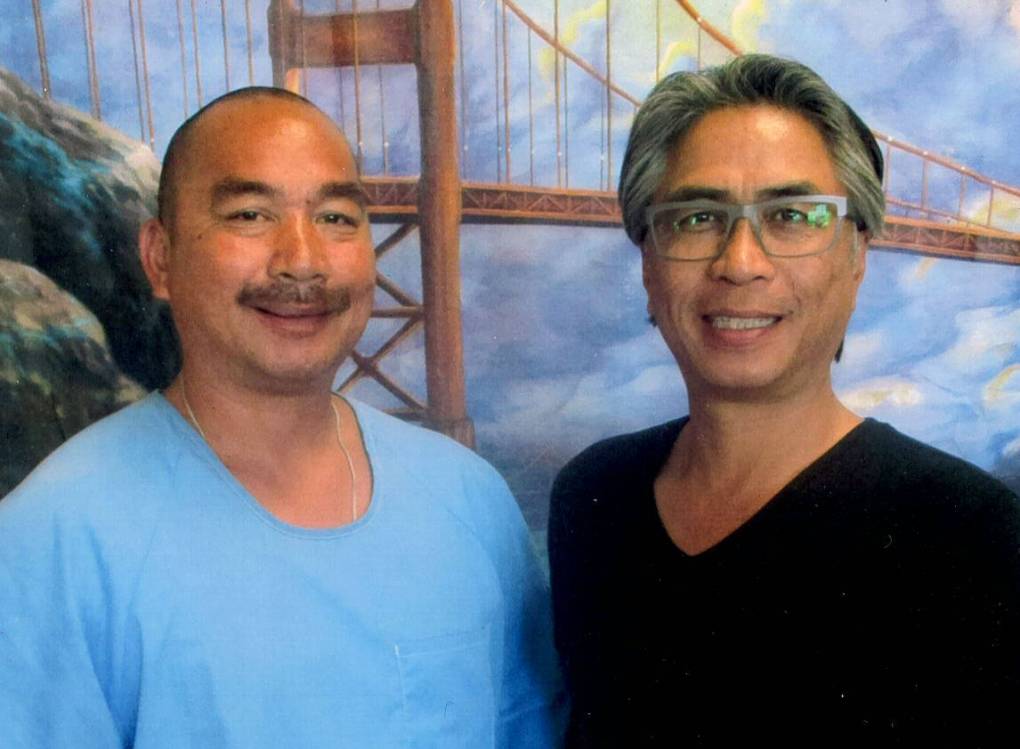
"caption": "Hank Warner, right, visiting his brother Eric at San Quentin State Prison in 2016.",
"description": null,
"title": "EricAndHankWarner",
"credit": "Courtesy Hank Warner",
"status": "inherit",
"altTag": null,
"isLoading": false,
"fetchFailed": false
},
"news_11869904": {
"type": "attachments",
"id": "news_11869904",
"meta": {
"index": "attachments_1716263798",
"site": "news",
"id": "11869904",
"found": true
},
"parent": 11869888,
"imgSizes": {
"twentyfourteen-full-width": {
"file": "https://ww2.kqed.org/app/uploads/sites/10/2021/04/01imvaccinated_fin-1038x576.png",
"width": 1038,
"mimeType": "image/png",
"height": 576
},
"thumbnail": {
"file": "https://ww2.kqed.org/app/uploads/sites/10/2021/04/01imvaccinated_fin-160x160.png",
"width": 160,
"mimeType": "image/png",
"height": 160
},
"post-thumbnail": {
"file": "https://ww2.kqed.org/app/uploads/sites/10/2021/04/01imvaccinated_fin-672x372.png",
"width": 672,
"mimeType": "image/png",
"height": 372
},
"kqedFullSize": {
"file": "https://ww2.kqed.org/app/uploads/sites/10/2021/04/01imvaccinated_fin.png",
"width": 1920,
"height": 1920
},
"large": {
"file": "https://ww2.kqed.org/app/uploads/sites/10/2021/04/01imvaccinated_fin-1020x1020.png",
"width": 1020,
"mimeType": "image/png",
"height": 1020
},
"1536x1536": {
"file": "https://ww2.kqed.org/app/uploads/sites/10/2021/04/01imvaccinated_fin-1536x1536.png",
"width": 1536,
"mimeType": "image/png",
"height": 1536
},
"medium": {
"file": "https://ww2.kqed.org/app/uploads/sites/10/2021/04/01imvaccinated_fin-800x800.png",
"width": 800,
"mimeType": "image/png",
"height": 800
}
},
"publishDate": 1618602174,
"modified": 1618602373,
"caption": null,
"description": null,
"title": "01imvaccinated_fin",
"credit": null,
"status": "inherit",
"altTag": "A Mark Fiore \"I'm Vaccinated\" sticker that looks like an \"I Voted!\" sticker.",
"isLoading": false,
"fetchFailed": false
},
"news_11869585": {
"type": "attachments",
"id": "news_11869585",
"meta": {
"index": "attachments_1716263798",
"site": "news",
"id": "11869585",
"found": true
},
"parent": 11869250,
"imgSizes": {
"twentyfourteen-full-width": {
"file": "https://ww2.kqed.org/app/uploads/sites/10/2021/04/RS48524_005_KQED_HousingisKey_04142021-qut-1038x576.jpg",
"width": 1038,
"mimeType": "image/jpeg",
"height": 576
},
"thumbnail": {
"file": "https://ww2.kqed.org/app/uploads/sites/10/2021/04/RS48524_005_KQED_HousingisKey_04142021-qut-160x107.jpg",
"width": 160,
"mimeType": "image/jpeg",
"height": 107
},
"post-thumbnail": {
"file": "https://ww2.kqed.org/app/uploads/sites/10/2021/04/RS48524_005_KQED_HousingisKey_04142021-qut-672x372.jpg",
"width": 672,
"mimeType": "image/jpeg",
"height": 372
},
"kqedFullSize": {
"file": "https://ww2.kqed.org/app/uploads/sites/10/2021/04/RS48524_005_KQED_HousingisKey_04142021-qut.jpg",
"width": 1920,
"height": 1280
},
"large": {
"file": "https://ww2.kqed.org/app/uploads/sites/10/2021/04/RS48524_005_KQED_HousingisKey_04142021-qut-1020x680.jpg",
"width": 1020,
"mimeType": "image/jpeg",
"height": 680
},
"1536x1536": {
"file": "https://ww2.kqed.org/app/uploads/sites/10/2021/04/RS48524_005_KQED_HousingisKey_04142021-qut-1536x1024.jpg",
"width": 1536,
"mimeType": "image/jpeg",
"height": 1024
},
"medium": {
"file": "https://ww2.kqed.org/app/uploads/sites/10/2021/04/RS48524_005_KQED_HousingisKey_04142021-qut-800x533.jpg",
"width": 800,
"mimeType": "image/jpeg",
"height": 533
}
},
"publishDate": 1618448478,
"modified": 1618519118,
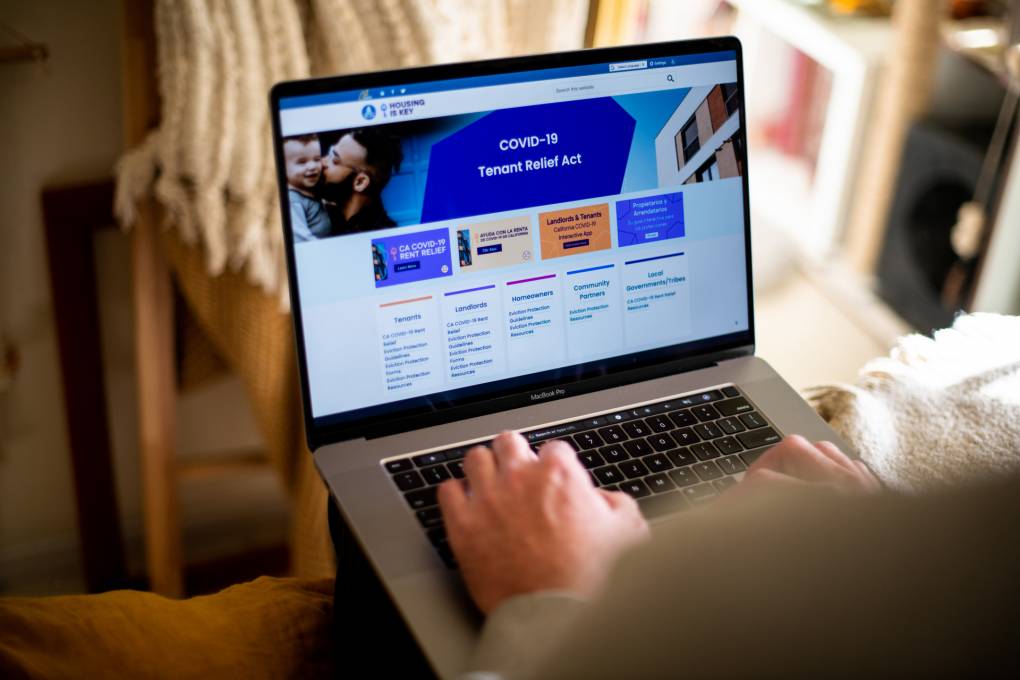
"caption": "More than 20 organizations that help tenants stay housed are saying the state’s Housing Is Key rent relief website isn't natively available in multiple languages, including Spanish and Cantonese. ",
"description": "More than 20 organizations that help tenants stay housed are saying the state’s Housing is Key rent relief website isn't natively available in multiple languages, including Spanish and Cantonese. ",
"title": "RS48524_005_KQED_HousingisKey_04142021-qut",
"credit": "Beth LaBerge/KQED",
"status": "inherit",
"altTag": "A person accessing the 'Housing is Key' website.",
"isLoading": false,
"fetchFailed": false
},
"news_11862043": {
"type": "attachments",
"id": "news_11862043",
"meta": {
"index": "attachments_1716263798",
"site": "news",
"id": "11862043",
"found": true
},
"parent": 11855623,
"imgSizes": {
"apple_news_ca_landscape_5_5": {
"file": "https://ww2.kqed.org/app/uploads/sites/10/2021/02/Vaccination-Prep-1044x783.jpg",
"width": 1044,
"mimeType": "image/jpeg",
"height": 783
},
"apple_news_ca_square_4_0": {
"file": "https://ww2.kqed.org/app/uploads/sites/10/2021/02/Vaccination-Prep-470x470.jpg",
"width": 470,
"mimeType": "image/jpeg",
"height": 470
},
"twentyfourteen-full-width": {
"file": "https://ww2.kqed.org/app/uploads/sites/10/2021/02/Vaccination-Prep-1038x576.jpg",
"width": 1038,
"mimeType": "image/jpeg",
"height": 576
},
"thumbnail": {
"file": "https://ww2.kqed.org/app/uploads/sites/10/2021/02/Vaccination-Prep-160x107.jpg",
"width": 160,
"mimeType": "image/jpeg",
"height": 107
},
"post-thumbnail": {
"file": "https://ww2.kqed.org/app/uploads/sites/10/2021/02/Vaccination-Prep-672x372.jpg",
"width": 672,
"mimeType": "image/jpeg",
"height": 372
},
"kqedFullSize": {
"file": "https://ww2.kqed.org/app/uploads/sites/10/2021/02/Vaccination-Prep.jpg",
"width": 1920,
"height": 1280
},
"apple_news_ca_landscape_4_7": {
"file": "https://ww2.kqed.org/app/uploads/sites/10/2021/02/Vaccination-Prep-632x474.jpg",
"width": 632,
"mimeType": "image/jpeg",
"height": 474
},
"large": {
"file": "https://ww2.kqed.org/app/uploads/sites/10/2021/02/Vaccination-Prep-1020x680.jpg",
"width": 1020,
"mimeType": "image/jpeg",
"height": 680
},
"apple_news_ca_landscape_4_0": {
"file": "https://ww2.kqed.org/app/uploads/sites/10/2021/02/Vaccination-Prep-536x402.jpg",
"width": 536,
"mimeType": "image/jpeg",
"height": 402
},
"apple_news_ca_portrait_12_9": {
"file": "https://ww2.kqed.org/app/uploads/sites/10/2021/02/Vaccination-Prep-1122x1280.jpg",
"width": 1122,
"mimeType": "image/jpeg",
"height": 1280
},
"medium": {
"file": "https://ww2.kqed.org/app/uploads/sites/10/2021/02/Vaccination-Prep-800x533.jpg",
"width": 800,
"mimeType": "image/jpeg",
"height": 533
},
"apple_news_ca_portrait_4_0": {
"file": "https://ww2.kqed.org/app/uploads/sites/10/2021/02/Vaccination-Prep-354x472.jpg",
"width": 354,
"mimeType": "image/jpeg",
"height": 472
},
"apple_news_ca_portrait_9_7": {
"file": "https://ww2.kqed.org/app/uploads/sites/10/2021/02/Vaccination-Prep-840x1120.jpg",
"width": 840,
"mimeType": "image/jpeg",
"height": 1120
},
"apple_news_ca_landscape_12_9": {
"file": "https://ww2.kqed.org/app/uploads/sites/10/2021/02/Vaccination-Prep-1832x1280.jpg",
"width": 1832,
"mimeType": "image/jpeg",
"height": 1280
},
"apple_news_ca_square_9_7": {
"file": "https://ww2.kqed.org/app/uploads/sites/10/2021/02/Vaccination-Prep-1104x1104.jpg",
"width": 1104,
"mimeType": "image/jpeg",
"height": 1104
},
"1536x1536": {
"file": "https://ww2.kqed.org/app/uploads/sites/10/2021/02/Vaccination-Prep-1536x1024.jpg",
"width": 1536,
"mimeType": "image/jpeg",
"height": 1024
},
"apple_news_ca_portrait_4_7": {
"file": "https://ww2.kqed.org/app/uploads/sites/10/2021/02/Vaccination-Prep-414x552.jpg",
"width": 414,
"mimeType": "image/jpeg",
"height": 552
},
"apple_news_ca_square_12_9": {
"file": "https://ww2.kqed.org/app/uploads/sites/10/2021/02/Vaccination-Prep-1472x1280.jpg",
"width": 1472,
"mimeType": "image/jpeg",
"height": 1280
},
"apple_news_ca_portrait_5_5": {
"file": "https://ww2.kqed.org/app/uploads/sites/10/2021/02/Vaccination-Prep-687x916.jpg",
"width": 687,
"mimeType": "image/jpeg",
"height": 916
},
"apple_news_ca_square_4_7": {
"file": "https://ww2.kqed.org/app/uploads/sites/10/2021/02/Vaccination-Prep-550x550.jpg",
"width": 550,
"mimeType": "image/jpeg",
"height": 550
},
"apple_news_ca_landscape_9_7": {
"file": "https://ww2.kqed.org/app/uploads/sites/10/2021/02/Vaccination-Prep-1376x1032.jpg",
"width": 1376,
"mimeType": "image/jpeg",
"height": 1032
},
"apple_news_ca_square_5_5": {
"file": "https://ww2.kqed.org/app/uploads/sites/10/2021/02/Vaccination-Prep-912x912.jpg",
"width": 912,
"mimeType": "image/jpeg",
"height": 912
}
},
"publishDate": 1614216349,
"modified": 1614216472,
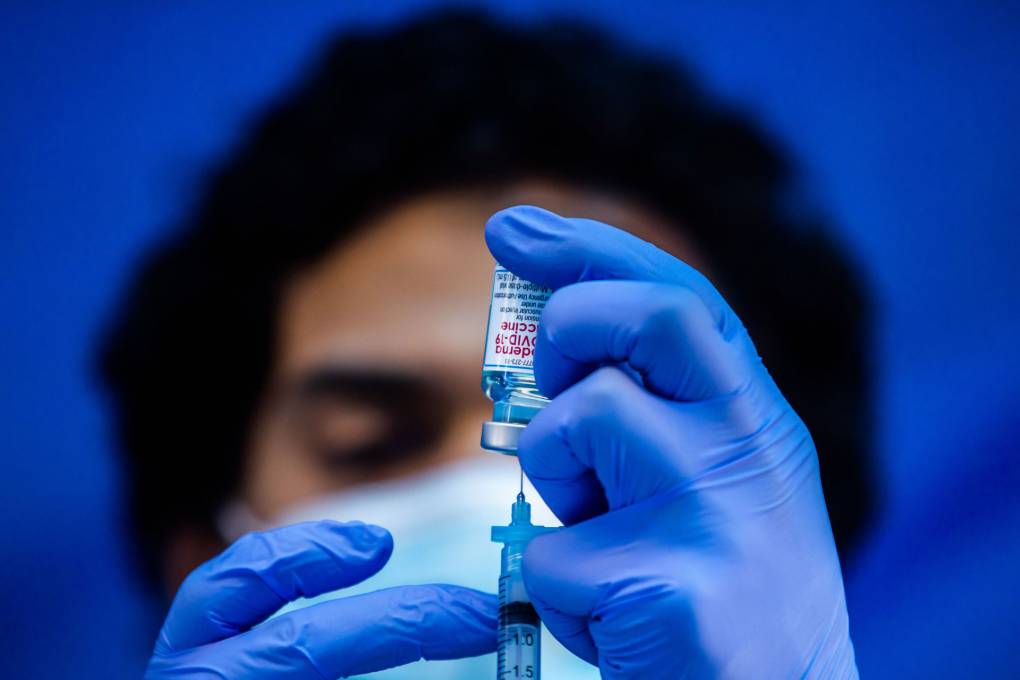
"caption": "A California medical worker loads a syringe with the Moderna COVID-19 vaccine on Feb. 16, 2021.",
"description": "A California medical worker loads a syringe with the Moderna COVID-19 vaccine on Feb. 16, 2021.",
"title": "Vaccination-Prep",
"credit": "APU GOMES/AFP via Getty Images",
"status": "inherit",
"altTag": null,
"isLoading": false,
"fetchFailed": false
},
"news_11869460": {
"type": "attachments",
"id": "news_11869460",
"meta": {
"index": "attachments_1716263798",
"site": "news",
"id": "11869460",
"found": true
},
"parent": 11869457,
"imgSizes": {
"twentyfourteen-full-width": {
"file": "https://ww2.kqed.org/app/uploads/sites/10/2021/04/RS47297_021_SanJose_MaritzaMaldonado_02162021-qut-1038x576.jpg",
"width": 1038,
"mimeType": "image/jpeg",
"height": 576
},
"thumbnail": {
"file": "https://ww2.kqed.org/app/uploads/sites/10/2021/04/RS47297_021_SanJose_MaritzaMaldonado_02162021-qut-160x107.jpg",
"width": 160,
"mimeType": "image/jpeg",
"height": 107
},
"post-thumbnail": {
"file": "https://ww2.kqed.org/app/uploads/sites/10/2021/04/RS47297_021_SanJose_MaritzaMaldonado_02162021-qut-672x372.jpg",
"width": 672,
"mimeType": "image/jpeg",
"height": 372
},
"kqedFullSize": {
"file": "https://ww2.kqed.org/app/uploads/sites/10/2021/04/RS47297_021_SanJose_MaritzaMaldonado_02162021-qut.jpg",
"width": 1920,
"height": 1280
},
"large": {
"file": "https://ww2.kqed.org/app/uploads/sites/10/2021/04/RS47297_021_SanJose_MaritzaMaldonado_02162021-qut-1020x680.jpg",
"width": 1020,
"mimeType": "image/jpeg",
"height": 680
},
"1536x1536": {
"file": "https://ww2.kqed.org/app/uploads/sites/10/2021/04/RS47297_021_SanJose_MaritzaMaldonado_02162021-qut-1536x1024.jpg",
"width": 1536,
"mimeType": "image/jpeg",
"height": 1024
},
"medium": {
"file": "https://ww2.kqed.org/app/uploads/sites/10/2021/04/RS47297_021_SanJose_MaritzaMaldonado_02162021-qut-800x533.jpg",
"width": 800,
"mimeType": "image/jpeg",
"height": 533
}
},
"publishDate": 1618429532,
"modified": 1618431336,
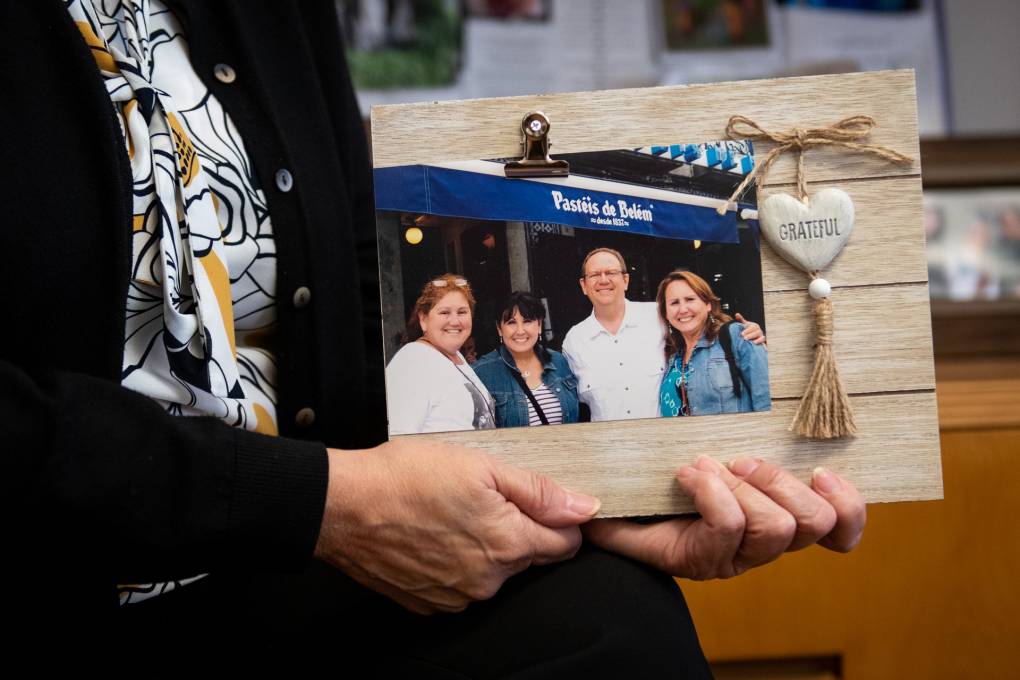
"caption": "Maritza Maldonado holds a photo of her sister Miriam (left), who died from COVID-19 complications last May.",
"description": null,
"title": "RS47297_021_SanJose_MaritzaMaldonado_02162021-qut",
"credit": "Beth LaBerge/KQED",
"status": "inherit",
"altTag": null,
"isLoading": false,
"fetchFailed": false
},
"news_11869436": {
"type": "attachments",
"id": "news_11869436",
"meta": {
"index": "attachments_1716263798",
"site": "news",
"id": "11869436",
"found": true
},
"parent": 11869418,
"imgSizes": {
"twentyfourteen-full-width": {
"file": "https://ww2.kqed.org/app/uploads/sites/10/2021/04/RS48519_GettyImages-1231516409-qut-1038x576.jpg",
"width": 1038,
"mimeType": "image/jpeg",
"height": 576
},
"thumbnail": {
"file": "https://ww2.kqed.org/app/uploads/sites/10/2021/04/RS48519_GettyImages-1231516409-qut-160x107.jpg",
"width": 160,
"mimeType": "image/jpeg",
"height": 107
},
"post-thumbnail": {
"file": "https://ww2.kqed.org/app/uploads/sites/10/2021/04/RS48519_GettyImages-1231516409-qut-672x372.jpg",
"width": 672,
"mimeType": "image/jpeg",
"height": 372
},
"kqedFullSize": {
"file": "https://ww2.kqed.org/app/uploads/sites/10/2021/04/RS48519_GettyImages-1231516409-qut.jpg",
"width": 1920,
"height": 1278
},
"large": {
"file": "https://ww2.kqed.org/app/uploads/sites/10/2021/04/RS48519_GettyImages-1231516409-qut-1020x679.jpg",
"width": 1020,
"mimeType": "image/jpeg",
"height": 679
},
"1536x1536": {
"file": "https://ww2.kqed.org/app/uploads/sites/10/2021/04/RS48519_GettyImages-1231516409-qut-1536x1022.jpg",
"width": 1536,
"mimeType": "image/jpeg",
"height": 1022
},
"medium": {
"file": "https://ww2.kqed.org/app/uploads/sites/10/2021/04/RS48519_GettyImages-1231516409-qut-800x533.jpg",
"width": 800,
"mimeType": "image/jpeg",
"height": 533
}
},
"publishDate": 1618426386,
"modified": 1618435731,
"caption": "The CDC and the FDA say the pause will allow them to investigate these reactions more. They also say it will help health care providers be ready to spot this rare blood clotting event and treat it appropriately. ",
"description": "The CDC and the FDA say the pause will allow them to investigate these reactions more. They also say it will help health care providers be ready to spot this rare blood clotting event and treat it appropriately. ",
"title": "US-HEALTH-VIRUS-VACCINE",
"credit": "Joseph Prezioso/AFP via Getty Images",
"status": "inherit",
"altTag": "Home base primary care Pharmacist Erin Emonds filling syringes with the Johnson & Johnson Janssen vaccine",
"isLoading": false,
"fetchFailed": false
},
"news_11869211": {
"type": "attachments",
"id": "news_11869211",
"meta": {
"index": "attachments_1716263798",
"site": "news",
"id": "11869211",
"found": true
},
"parent": 11869210,
"imgSizes": {
"twentyfourteen-full-width": {
"file": "https://ww2.kqed.org/app/uploads/sites/10/2021/04/ap21065661043422-c7d09feb7a545d0f9a49a14bcd59e3d7043d055d-1038x576.jpg",
"width": 1038,
"mimeType": "image/jpeg",
"height": 576
},
"thumbnail": {
"file": "https://ww2.kqed.org/app/uploads/sites/10/2021/04/ap21065661043422-c7d09feb7a545d0f9a49a14bcd59e3d7043d055d-160x120.jpg",
"width": 160,
"mimeType": "image/jpeg",
"height": 120
},
"post-thumbnail": {
"file": "https://ww2.kqed.org/app/uploads/sites/10/2021/04/ap21065661043422-c7d09feb7a545d0f9a49a14bcd59e3d7043d055d-672x372.jpg",
"width": 672,
"mimeType": "image/jpeg",
"height": 372
},
"kqedFullSize": {
"file": "https://ww2.kqed.org/app/uploads/sites/10/2021/04/ap21065661043422-c7d09feb7a545d0f9a49a14bcd59e3d7043d055d-scaled-e1618323142303.jpg",
"width": 1920,
"height": 1440
},
"2048x2048": {
"file": "https://ww2.kqed.org/app/uploads/sites/10/2021/04/ap21065661043422-c7d09feb7a545d0f9a49a14bcd59e3d7043d055d-2048x1536.jpg",
"width": 2048,
"mimeType": "image/jpeg",
"height": 1536
},
"large": {
"file": "https://ww2.kqed.org/app/uploads/sites/10/2021/04/ap21065661043422-c7d09feb7a545d0f9a49a14bcd59e3d7043d055d-1020x765.jpg",
"width": 1020,
"mimeType": "image/jpeg",
"height": 765
},
"1536x1536": {
"file": "https://ww2.kqed.org/app/uploads/sites/10/2021/04/ap21065661043422-c7d09feb7a545d0f9a49a14bcd59e3d7043d055d-1536x1152.jpg",
"width": 1536,
"mimeType": "image/jpeg",
"height": 1152
},
"full-width": {
"file": "https://ww2.kqed.org/app/uploads/sites/10/2021/04/ap21065661043422-c7d09feb7a545d0f9a49a14bcd59e3d7043d055d-1920x1440.jpg",
"width": 1920,
"mimeType": "image/jpeg",
"height": 1440
},
"medium": {
"file": "https://ww2.kqed.org/app/uploads/sites/10/2021/04/ap21065661043422-c7d09feb7a545d0f9a49a14bcd59e3d7043d055d-800x600.jpg",
"width": 800,
"mimeType": "image/jpeg",
"height": 600
}
},
"publishDate": 1618322883,
"modified": 1618333763,
"caption": "The U.S. Food and Drug Administration and the Centers for Disease Control and Prevention have recommended a pause in the use of the Johnson & Johnson COVID-19 vaccine, shown here in a hospital in Denver.",
"description": "Boxes containing the Johnson & Johnson COVID-19 vaccine sit next to vials in the pharmacy of National Jewish Hospital for distribution early Saturday, March 6, 2021, in east Denver. Volunteers worked with nurses and physicians from National Jewish to administer 2,500 vaccinations of the Johnson & Johnson vaccine that requires a single shot instead of two like the other vaccines. (AP Photo/David Zalubowski)",
"title": "The U.S. Food and Drug Administration and the Centers for Disease Control and Prevention have recommended a pause in the use of the Johnson & Johnson COVID-19 vaccine, shown here in a hospital in Denver.",
"credit": "David Zalubowski/AP",
"status": "inherit",
"altTag": null,
"isLoading": false,
"fetchFailed": false
},
"news_11869074": {
"type": "attachments",
"id": "news_11869074",
"meta": {
"index": "attachments_1716263798",
"site": "news",
"id": "11869074",
"found": true
},
"parent": 11869069,
"imgSizes": {
"twentyfourteen-full-width": {
"file": "https://ww2.kqed.org/app/uploads/sites/10/2021/04/spinthewheel_041221_final-1038x576.png",
"width": 1038,
"mimeType": "image/png",
"height": 576
},
"thumbnail": {
"file": "https://ww2.kqed.org/app/uploads/sites/10/2021/04/spinthewheel_041221_final-160x108.png",
"width": 160,
"mimeType": "image/png",
"height": 108
},
"post-thumbnail": {
"file": "https://ww2.kqed.org/app/uploads/sites/10/2021/04/spinthewheel_041221_final-672x372.png",
"width": 672,
"mimeType": "image/png",
"height": 372
},
"kqedFullSize": {
"file": "https://ww2.kqed.org/app/uploads/sites/10/2021/04/spinthewheel_041221_final.png",
"width": 1920,
"height": 1294
},
"large": {
"file": "https://ww2.kqed.org/app/uploads/sites/10/2021/04/spinthewheel_041221_final-1020x687.png",
"width": 1020,
"mimeType": "image/png",
"height": 687
},
"1536x1536": {
"file": "https://ww2.kqed.org/app/uploads/sites/10/2021/04/spinthewheel_041221_final-1536x1035.png",
"width": 1536,
"mimeType": "image/png",
"height": 1035
},
"medium": {
"file": "https://ww2.kqed.org/app/uploads/sites/10/2021/04/spinthewheel_041221_final-800x539.png",
"width": 800,
"mimeType": "image/png",
"height": 539
}
},
"publishDate": 1618256732,
"modified": 1618256836,
"caption": null,
"description": null,
"title": "spinthewheel_041221_final",
"credit": null,
"status": "inherit",
"altTag": "A Mark Fiore cartoon that reads, \"congratulations, you're vaccine-eligible,\" and urges the masked people in line to spin the carnival-style wheel that has two slots designated for \"vaccine appointment,\" the rest are labeled, \"supply problem,\" \"check back soon\" and \"oops, lab error.\"",
"isLoading": false,
"fetchFailed": false
},
"news_11868268": {
"type": "attachments",
"id": "news_11868268",
"meta": {
"index": "attachments_1716263798",
"site": "news",
"id": "11868268",
"found": true
},
"parent": 11868242,
"imgSizes": {
"twentyfourteen-full-width": {
"file": "https://ww2.kqed.org/app/uploads/sites/10/2021/04/GettyImages-1311148803-1038x576.jpg",
"width": 1038,
"mimeType": "image/jpeg",
"height": 576
},
"thumbnail": {
"file": "https://ww2.kqed.org/app/uploads/sites/10/2021/04/GettyImages-1311148803-160x107.jpg",
"width": 160,
"mimeType": "image/jpeg",
"height": 107
},
"post-thumbnail": {
"file": "https://ww2.kqed.org/app/uploads/sites/10/2021/04/GettyImages-1311148803-672x372.jpg",
"width": 672,
"mimeType": "image/jpeg",
"height": 372
},
"kqedFullSize": {
"file": "https://ww2.kqed.org/app/uploads/sites/10/2021/04/GettyImages-1311148803-scaled.jpg",
"width": 2560,
"height": 1709
},
"2048x2048": {
"file": "https://ww2.kqed.org/app/uploads/sites/10/2021/04/GettyImages-1311148803-2048x1367.jpg",
"width": 2048,
"mimeType": "image/jpeg",
"height": 1367
},
"large": {
"file": "https://ww2.kqed.org/app/uploads/sites/10/2021/04/GettyImages-1311148803-1020x681.jpg",
"width": 1020,
"mimeType": "image/jpeg",
"height": 681
},
"1536x1536": {
"file": "https://ww2.kqed.org/app/uploads/sites/10/2021/04/GettyImages-1311148803-1536x1025.jpg",
"width": 1536,
"mimeType": "image/jpeg",
"height": 1025
},
"full-width": {
"file": "https://ww2.kqed.org/app/uploads/sites/10/2021/04/GettyImages-1311148803-1920x1282.jpg",
"width": 1920,
"mimeType": "image/jpeg",
"height": 1282
},
"medium": {
"file": "https://ww2.kqed.org/app/uploads/sites/10/2021/04/GettyImages-1311148803-800x534.jpg",
"width": 800,
"mimeType": "image/jpeg",
"height": 534
}
},
"publishDate": 1617739714,
"modified": 1673481219,
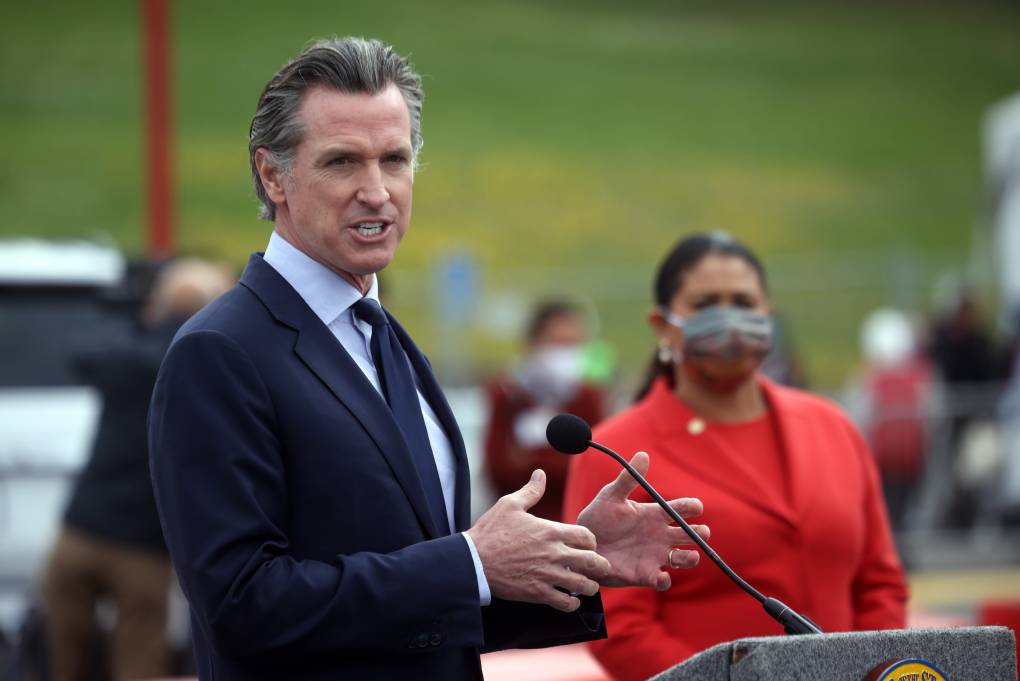
"caption": "Gov. Gavin Newsom speaks during a news conference after touring the vaccination clinic at City College of San Francisco with San Francisco Mayor London Breed (in red) on April 6, 2021, in San Francisco.",
"description": "California Gov. Gavin Newsom (L) speaks during a news conference after touring the vaccination clinic at City College of San Francisco with San Francisco Mayor London Breed (R) on April 06, 2021 in San Francisco, California. California Gov. Gavin Newsom announced that the state of California has administered over 20 million vaccinations and currently has the lowest positivity rate in the United States. The governor also announced that California is on track for a full reopening by June 15th with continued mask wearing and people getting vaccinated.",
"title": "Newsom-Breed-CCSF",
"credit": "Justin Sullivan/Getty Images",
"status": "inherit",
"altTag": "A man wearing a business suit stands in front of a microphone gesturing with his hands. Behind him is an African American woman wearing a mask and a red business suit outdoors.",
"isLoading": false,
"fetchFailed": false
}
},
"audioPlayerReducer": {
"postId": "stream_live",
"isPaused": true,
"isPlaying": false,
"pfsActive": false,
"pledgeModalIsOpen": true,
"playerDrawerIsOpen": false,
"liveAudioPlayStartedAt": 0,
"liveAudioPlayContext": ""
},
"authorsReducer": {
"byline_news_11869618": {
"type": "authors",
"id": "byline_news_11869618",
"meta": {
"override": true
},
"slug": "byline_news_11869618",
"name": "Hank Warner",
"isLoading": false
},
"byline_news_11869210": {
"type": "authors",
"id": "byline_news_11869210",
"meta": {
"override": true
},
"slug": "byline_news_11869210",
"name": "Scott Neuman",
"isLoading": false
},
"matthewgreen": {
"type": "authors",
"id": "1263",
"meta": {
"index": "authors_1716337520",
"id": "1263",
"found": true
},
"name": "Matthew Green",
"firstName": "Matthew",
"lastName": "Green",
"slug": "matthewgreen",
"email": "mgreen@kqed.org",
"display_author_email": false,
"staff_mastheads": [],
"title": "KQED Editor/Reporter",
"bio": "Matthew Green is a digital media producer for KQED News. He previously produced \u003ca href=\"http://www.kqed.org/lowdown\">The Lowdown\u003c/a>, KQED’s multimedia news education blog. Matthew's written for numerous Bay Area publications, including the Oakland Tribune and San Francisco Chronicle. He also taught journalism classes at Fremont High School in East Oakland.\r\n\r\nEmail: mgreen@kqed.org; Twitter: @MGreenKQED",
"avatar": "https://secure.gravatar.com/avatar/3bf498d1267ca02c8494f33d8cfc575e?s=600&d=blank&r=g",
"twitter": "MGreenKQED",
"facebook": null,
"instagram": null,
"linkedin": null,
"sites": [
{
"site": "news",
"roles": []
},
{
"site": "lowdown",
"roles": []
},
{
"site": "science",
"roles": []
},
{
"site": "education",
"roles": []
},
{
"site": "quest",
"roles": []
},
{
"site": "liveblog",
"roles": []
}
],
"headData": {
"title": "Matthew Green | KQED",
"description": "KQED Editor/Reporter",
"ogImgSrc": "https://secure.gravatar.com/avatar/3bf498d1267ca02c8494f33d8cfc575e?s=600&d=blank&r=g",
"twImgSrc": "https://secure.gravatar.com/avatar/3bf498d1267ca02c8494f33d8cfc575e?s=600&d=blank&r=g"
},
"isLoading": false,
"link": "/author/matthewgreen"
},
"adembosky": {
"type": "authors",
"id": "3205",
"meta": {
"index": "authors_1716337520",
"id": "3205",
"found": true
},
"name": "April Dembosky",
"firstName": "April",
"lastName": "Dembosky",
"slug": "adembosky",
"email": "adembosky@kqed.org",
"display_author_email": false,
"staff_mastheads": [
"news",
"science"
],
"title": "KQED Health Correspondent",
"bio": "April Dembosky is the health correspondent for KQED News and a regular contributor to NPR. She specializes in covering altered states of mind, from postpartum depression to methamphetamine-induced psychosis to the insanity defense. Her investigative series on insurance companies sidestepping mental health laws won multiple awards, including first place in beat reporting from the national Association of Health Care Journalists. She is the recipient of numerous other prizes and fellowships, including a national Edward R. Murrow award for investigative reporting, a Society of Professional Journalists award for long-form storytelling, and a Carter Center Fellowship for Mental Health Journalism.\r\n\r\nDembosky reported and produced \u003cem>Soundtrack of Silence\u003c/em>, an audio documentary about music and memory that is currently being made into a feature film by Paramount Pictures.\r\n\r\nBefore joining KQED in 2013, Dembosky covered technology and Silicon Valley for \u003cem>The Financial Times of London,\u003c/em> and contributed business and arts stories to \u003cem>Marketplace \u003c/em>and \u003cem>The New York Times.\u003c/em> She got her undergraduate degree in philosophy from Smith College and her master's in journalism from the University of California, Berkeley. She is a classically trained violinist and proud alum of the first symphony orchestra at Burning Man.",
"avatar": "https://secure.gravatar.com/avatar/ef92999be4ceb9ea60701e7dc276f813?s=600&d=blank&r=g",
"twitter": "adembosky",
"facebook": null,
"instagram": null,
"linkedin": null,
"sites": [
{
"site": "arts",
"roles": [
"author"
]
},
{
"site": "news",
"roles": [
"editor"
]
},
{
"site": "futureofyou",
"roles": [
"author"
]
},
{
"site": "stateofhealth",
"roles": [
"editor"
]
},
{
"site": "science",
"roles": [
"editor"
]
},
{
"site": "forum",
"roles": [
"editor"
]
}
],
"headData": {
"title": "April Dembosky | KQED",
"description": "KQED Health Correspondent",
"ogImgSrc": "https://secure.gravatar.com/avatar/ef92999be4ceb9ea60701e7dc276f813?s=600&d=blank&r=g",
"twImgSrc": "https://secure.gravatar.com/avatar/ef92999be4ceb9ea60701e7dc276f813?s=600&d=blank&r=g"
},
"isLoading": false,
"link": "/author/adembosky"
},
"markfiore": {
"type": "authors",
"id": "3236",
"meta": {
"index": "authors_1716337520",
"id": "3236",
"found": true
},
"name": "Mark Fiore",
"firstName": "Mark",
"lastName": "Fiore",
"slug": "markfiore",
"email": "mark@markfiore.com",
"display_author_email": false,
"staff_mastheads": [
"news"
],
"title": "KQED News Cartoonist",
"bio": "\u003ca href=\"http://www.MarkFiore.com\">MarkFiore.com\u003c/a> | \u003ca href=\"https://twitter.com/markfiore\">Follow on Twitter\u003c/a> | \u003ca href=\"https://www.facebook.com/pages/Mark-Fiore-Animated-Political-Cartoons/94451707396?ref=bookmarks\">Facebook\u003c/a> | \u003ca href=\"mailto:mark@markfiore.com\">email\u003c/a>\r\n\r\nPulitzer Prize-winner, Mark Fiore, who the Wall Street Journal has called “the undisputed guru of the form,” creates animated political cartoons in San Francisco, where his work has been featured regularly on the San Francisco Chronicle’s web site, SFGate.com. His work has appeared on Newsweek.com, Slate.com, CBSNews.com, MotherJones.com, DailyKos.com and NPR’s web site. Fiore’s political animation has appeared on CNN, Frontline, Bill Moyers Journal, Salon.com and cable and broadcast outlets across the globe.\r\n\r\nBeginning his professional life by drawing traditional political cartoons for newspapers, Fiore’s work appeared in publications ranging from the Washington Post to the Los Angeles Times. In the late 1990s, he began to experiment with animating political cartoons and, after a short stint at the San Jose Mercury News as their staff cartoonist, Fiore devoted all his energies to animation.\r\nGrowing up in California, Fiore also spent a good portion of his life in the backwoods of Idaho. It was this combination that shaped him politically. Mark majored in political science at Colorado College, where, in a perfect send-off for a cartoonist, he received his diploma in 1991 as commencement speaker Dick Cheney smiled approvingly.\r\nMark Fiore was awarded the Pulitzer Prize for political cartooning in 2010, a Robert F. Kennedy Journalism Award in 2004 and has twice received an Online Journalism Award for commentary from the Online News Association (2002, 2008). Fiore has received two awards for his work in new media from the National Cartoonists Society (2001, 2002), and in 2006 received The James Madison Freedom of Information Award from The Society of Professional Journalists.",
"avatar": "https://secure.gravatar.com/avatar/fc4e2a612b15b67bad0c6f0e1db4ca9b?s=600&d=blank&r=g",
"twitter": "MarkFiore",
"facebook": null,
"instagram": "https://www.instagram.com/markfiore/?hl=en",
"linkedin": null,
"sites": [
{
"site": "arts",
"roles": [
"contributor"
]
},
{
"site": "news",
"roles": [
"editor"
]
},
{
"site": "futureofyou",
"roles": [
"editor"
]
},
{
"site": "science",
"roles": [
"editor"
]
}
],
"headData": {
"title": "Mark Fiore | KQED",
"description": "KQED News Cartoonist",
"ogImgSrc": "https://secure.gravatar.com/avatar/fc4e2a612b15b67bad0c6f0e1db4ca9b?s=600&d=blank&r=g",
"twImgSrc": "https://secure.gravatar.com/avatar/fc4e2a612b15b67bad0c6f0e1db4ca9b?s=600&d=blank&r=g"
},
"isLoading": false,
"link": "/author/markfiore"
},
"carlysevern": {
"type": "authors",
"id": "3243",
"meta": {
"index": "authors_1716337520",
"id": "3243",
"found": true
},
"name": "Carly Severn",
"firstName": "Carly",
"lastName": "Severn",
"slug": "carlysevern",
"email": "csevern@kqed.org",
"display_author_email": false,
"staff_mastheads": [
"news"
],
"title": "Senior Editor, Audience News ",
"bio": "Carly is KQED's Senior Editor of Audience News on the Digital News team, and has reported for the California Report Magazine, Bay Curious and KQED Arts. She's formerly the host of \u003ca href=\"http://ww2.kqed.org/pop/category/the-cooler/\" rel=\"noopener noreferrer\">The Cooler\u003c/a> podcast.",
"avatar": "https://secure.gravatar.com/avatar/54037bf5c128fe678f0ef26cec97a93f2e7f220a22d7285703328f12c42c1b1d?s=600&d=blank&r=g",
"twitter": "teacupinthebay",
"bluesky": null,
"facebook": null,
"instagram": null,
"linkedin": null,
"sites": [
{
"site": "",
"roles": [
"editor"
]
},
{
"site": "arts",
"roles": [
"editor"
]
},
{
"site": "news",
"roles": [
"administrator"
]
},
{
"site": "pop",
"roles": [
"editor"
]
},
{
"site": "futureofyou",
"roles": [
"editor"
]
},
{
"site": "about",
"roles": [
"administrator"
]
},
{
"site": "mindshift",
"roles": [
"editor"
]
},
{
"site": "bayareabites",
"roles": [
"editor"
]
},
{
"site": "stateofhealth",
"roles": [
"editor"
]
},
{
"site": "science",
"roles": [
"editor"
]
},
{
"site": "food",
"roles": [
"contributor"
]
},
{
"site": "forum",
"roles": [
"editor"
]
},
{
"site": "perspectives",
"roles": [
"administrator"
]
},
{
"site": "liveblog",
"roles": [
"editor"
]
}
],
"headData": {
"title": "Carly Severn | KQED",
"description": "Senior Editor, Audience News ",
"ogImgSrc": "https://secure.gravatar.com/avatar/54037bf5c128fe678f0ef26cec97a93f2e7f220a22d7285703328f12c42c1b1d?s=600&d=blank&r=g",
"twImgSrc": "https://secure.gravatar.com/avatar/54037bf5c128fe678f0ef26cec97a93f2e7f220a22d7285703328f12c42c1b1d?s=600&d=blank&r=g"
},
"isLoading": false,
"link": "/author/carlysevern"
},
"dkatayama": {
"type": "authors",
"id": "7240",
"meta": {
"index": "authors_1716337520",
"id": "7240",
"found": true
},
"name": "Devin Katayama",
"firstName": "Devin",
"lastName": "Katayama",
"slug": "dkatayama",
"email": "dkatayama@kqed.org",
"display_author_email": true,
"staff_mastheads": [
"news"
],
"title": "Editor of Talent and Development",
"bio": "Devin Katayama is former Editor of Talent and Development for KQED. He supported our internship program and on-call staff by looking for equitable opportunities to improve the newsroom.\r\n\r\nHe previously hosted The Bay and American Suburb podcasts from KQED News. Prior to returning to the Bay Area in 2015, Devin was the education reporter for WFPL in Louisville and worked as a producer with radio stations in Chicago and Portland, OR. His work has appeared on NPR’s \u003cem>Morning Edition, All Things Considered, The Takeaway\u003c/em> and \u003cem>Here and Now.\u003c/em>\r\n\r\nDevin earned his MA in Journalism from Columbia College Chicago, where he was a Follett Fellow and the recipient of the 2011 Studs Terkel Community Media Workshop Scholarship for his story on Chicago's homeless youth. He won WBUR's 2014 Daniel Schorr award and a regional RTNDA Edward R. Murrow Award for his documentary \"At Risk\" that looked at issues facing some of Louisville's students. Devin has also received numerous local awards from the Associated Press and the Society of Professional Journalists.",
"avatar": "https://secure.gravatar.com/avatar/d0d2978a31002fb2de107921a8e18405?s=600&d=blank&r=g",
"twitter": "RadioDevin",
"facebook": null,
"instagram": null,
"linkedin": null,
"sites": [
{
"site": "arts",
"roles": []
},
{
"site": "news",
"roles": [
"author"
]
},
{
"site": "stateofhealth",
"roles": [
"author"
]
},
{
"site": "forum",
"roles": [
"editor"
]
},
{
"site": "perspectives",
"roles": [
"editor"
]
}
],
"headData": {
"title": "Devin Katayama | KQED",
"description": "Editor of Talent and Development",
"ogImgSrc": "https://secure.gravatar.com/avatar/d0d2978a31002fb2de107921a8e18405?s=600&d=blank&r=g",
"twImgSrc": "https://secure.gravatar.com/avatar/d0d2978a31002fb2de107921a8e18405?s=600&d=blank&r=g"
},
"isLoading": false,
"link": "/author/dkatayama"
},
"cveltman": {
"type": "authors",
"id": "8608",
"meta": {
"index": "authors_1716337520",
"id": "8608",
"found": true
},
"name": "Chloe Veltman",
"firstName": "Chloe",
"lastName": "Veltman",
"slug": "cveltman",
"email": "cveltman@kqed.org",
"display_author_email": true,
"staff_mastheads": [],
"title": "Arts and Culture Reporter",
"bio": "Chloe Veltman is a former arts and culture reporter for KQED. Prior to joining the organization, she launched and led the arts bureau at Colorado Public Radio, served as the Bay Area's culture columnist for the New York Times, and was the founder, host and executive producer of VoiceBox, a national award-winning weekly podcast/radio show and live events series all about the human voice. Chloe is the recipient of numerous prizes, grants and fellowships including a Webby Award for her work on interactive storytelling, both the John S Knight Journalism Fellowship and Humanities Center Fellowship at Stanford University, the Sundance Arts Writing Fellowship and a Library of Congress Research Fellowship. She is the author of the book \"On Acting\" and has appeared as a guest lecturer at Yale University and the San Francisco Conservatory of Music among other institutions. She holds a BA in english literature from King's College, Cambridge, and a Masters in Dramaturgy from the Central School of Speech and Drama/Harvard Institute for Advanced Theater Training.\r\n\u003ca href=\"https://www.chloeveltman.com\">www.chloeveltman.com\u003c/a>",
"avatar": "https://secure.gravatar.com/avatar/55403394b00a1ddab683952c2eb2cf85?s=600&d=blank&r=g",
"twitter": "chloeveltman",
"facebook": null,
"instagram": null,
"linkedin": null,
"sites": [
{
"site": "arts",
"roles": []
},
{
"site": "news",
"roles": [
"author"
]
},
{
"site": "pop",
"roles": [
"editor"
]
},
{
"site": "science",
"roles": []
}
],
"headData": {
"title": "Chloe Veltman | KQED",
"description": "Arts and Culture Reporter",
"ogImgSrc": "https://secure.gravatar.com/avatar/55403394b00a1ddab683952c2eb2cf85?s=600&d=blank&r=g",
"twImgSrc": "https://secure.gravatar.com/avatar/55403394b00a1ddab683952c2eb2cf85?s=600&d=blank&r=g"
},
"isLoading": false,
"link": "/author/cveltman"
},
"ecruzguevarra": {
"type": "authors",
"id": "8654",
"meta": {
"index": "authors_1716337520",
"id": "8654",
"found": true
},
"name": "Ericka Cruz Guevarra",
"firstName": "Ericka",
"lastName": "Cruz Guevarra",
"slug": "ecruzguevarra",
"email": "ecruzguevarra@kqed.org",
"display_author_email": true,
"staff_mastheads": [
"news"
],
"title": "Producer, The Bay Podcast",
"bio": "Ericka Cruz Guevarra is host of \u003ca href=\"https://www.kqed.org/podcasts/thebay\">\u003cem>The Bay\u003c/em>\u003c/a> podcast at KQED. Before host, she was the show’s producer. Her work in that capacity includes a three-part reported series on policing in Vallejo, which won a 2020 excellence in journalism award from the Society of Professional Journalists. Ericka has worked as a breaking news reporter at Oregon Public Broadcasting, helped produce the Code Switch podcast, and was KQED’s inaugural Raul Ramirez Diversity Fund intern. She’s also an alumna of NPR’s Next Generation Radio program. Send her an email if you have strong feelings about whether Fairfield and Suisun City are the Bay. Ericka is represented by SAG-AFTRA.",
"avatar": "https://secure.gravatar.com/avatar/accefc1de4bafc7e234b69bcb9b6f6536c130fd84709bc3069ef11a78787e1bb?s=600&d=blank&r=g",
"twitter": "NotoriousECG",
"bluesky": null,
"facebook": null,
"instagram": null,
"linkedin": null,
"sites": [
{
"site": "arts",
"roles": [
"subscriber"
]
},
{
"site": "news",
"roles": [
"editor",
"manage_categories"
]
},
{
"site": "futureofyou",
"roles": [
"subscriber"
]
},
{
"site": "stateofhealth",
"roles": [
"subscriber"
]
},
{
"site": "science",
"roles": [
"editor"
]
},
{
"site": "forum",
"roles": [
"subscriber"
]
}
],
"headData": {
"title": "Ericka Cruz Guevarra | KQED",
"description": "Producer, The Bay Podcast",
"ogImgSrc": "https://secure.gravatar.com/avatar/accefc1de4bafc7e234b69bcb9b6f6536c130fd84709bc3069ef11a78787e1bb?s=600&d=blank&r=g",
"twImgSrc": "https://secure.gravatar.com/avatar/accefc1de4bafc7e234b69bcb9b6f6536c130fd84709bc3069ef11a78787e1bb?s=600&d=blank&r=g"
},
"isLoading": false,
"link": "/author/ecruzguevarra"
},
"fjhabvala": {
"type": "authors",
"id": "8659",
"meta": {
"index": "authors_1716337520",
"id": "8659",
"found": true
},
"name": "Farida Jhabvala Romero",
"firstName": "Farida",
"lastName": "Jhabvala Romero",
"slug": "fjhabvala",
"email": "fjhabvala@kqed.org",
"display_author_email": true,
"staff_mastheads": [
"news"
],
"title": "KQED Contributor",
"bio": "Farida Jhabvala Romero is a Labor Correspondent for KQED. She previously covered immigration. Farida was \u003ca href=\"https://www.ccnma.org/2022-most-influential-latina-journalists\">named\u003c/a> one of the 10 Most Influential Latina Journalists in California in 2022 by the California Chicano News Media Association. Her work has won awards from the Society of Professional Journalists (Northern California), as well as a national and regional Edward M. Murrow Award for the collaborative reporting projects “Dangerous Air” and “Graying California.” Before joining KQED, Farida worked as a producer at Radio Bilingüe, a national public radio network. Farida earned her master’s degree in journalism from Stanford University.",
"avatar": "https://secure.gravatar.com/avatar/f9f022d4e2609741874222a1e9d41f48fea74011aa7c615eef91d9a50c944ebe?s=600&d=blank&r=g",
"twitter": "FaridaJhabvala",
"bluesky": null,
"facebook": null,
"instagram": null,
"linkedin": "https://www.linkedin.com/in/faridajhabvala/",
"sites": [
{
"site": "news",
"roles": [
"editor"
]
},
{
"site": "stateofhealth",
"roles": [
"author"
]
},
{
"site": "liveblog",
"roles": [
"author"
]
}
],
"headData": {
"title": "Farida Jhabvala Romero | KQED",
"description": "KQED Contributor",
"ogImgSrc": "https://secure.gravatar.com/avatar/f9f022d4e2609741874222a1e9d41f48fea74011aa7c615eef91d9a50c944ebe?s=600&d=blank&r=g",
"twImgSrc": "https://secure.gravatar.com/avatar/f9f022d4e2609741874222a1e9d41f48fea74011aa7c615eef91d9a50c944ebe?s=600&d=blank&r=g"
},
"isLoading": false,
"link": "/author/fjhabvala"
},
"amontecillo": {
"type": "authors",
"id": "11649",
"meta": {
"index": "authors_1716337520",
"id": "11649",
"found": true
},
"name": "Alan Montecillo",
"firstName": "Alan",
"lastName": "Montecillo",
"slug": "amontecillo",
"email": "amontecillo@kqed.org",
"display_author_email": false,
"staff_mastheads": [
"news"
],
"title": "KQED Contributor",
"bio": "Alan Montecillo is the senior editor of \u003cem>\u003ca href=\"http://kqed.org/thebay\">The Bay\u003c/a>, \u003c/em> KQED's local news podcast. Before moving to the Bay Area, he worked as a senior talk show producer for WILL in Champaign-Urbana, Illinois and at Oregon Public Broadcasting in Portland, Oregon. He has won journalism awards from the Society of Professional Journalists Northern California, the Public Media Journalists Association, The Signal Awards, and has also received a regional Edward R. Murrow award. Alan is a Filipino American from Hong Kong and a graduate of Reed College.",
"avatar": "https://secure.gravatar.com/avatar/268f53a2066899ea9efdd8a5900218b17c822d9862cbc9326cccec53ef41d349?s=600&d=blank&r=g",
"twitter": "alanmontecillo",
"bluesky": null,
"facebook": null,
"instagram": null,
"linkedin": null,
"sites": [
{
"site": "",
"roles": [
"editor"
]
},
{
"site": "news",
"roles": [
"editor",
"manage_categories"
]
}
],
"headData": {
"title": "Alan Montecillo | KQED",
"description": "KQED Contributor",
"ogImgSrc": "https://secure.gravatar.com/avatar/268f53a2066899ea9efdd8a5900218b17c822d9862cbc9326cccec53ef41d349?s=600&d=blank&r=g",
"twImgSrc": "https://secure.gravatar.com/avatar/268f53a2066899ea9efdd8a5900218b17c822d9862cbc9326cccec53ef41d349?s=600&d=blank&r=g"
},
"isLoading": false,
"link": "/author/amontecillo"
},
"jrodriguez": {
"type": "authors",
"id": "11690",
"meta": {
"index": "authors_1716337520",
"id": "11690",
"found": true
},
"name": "Joe Fitzgerald Rodriguez",
"firstName": "Joe",
"lastName": "Fitzgerald Rodriguez",
"slug": "jrodriguez",
"email": "jrodriguez@kqed.org",
"display_author_email": true,
"staff_mastheads": [
"news"
],
"title": "Reporter and Producer",
"bio": "Joe Fitzgerald Rodriguez is a reporter and digital producer for KQED covering politics. Joe most recently wrote for the \u003cem>San Francisco Examiner\u003c/em> as a political columnist covering The City. He was raised in San Francisco and has spent his reporting career in his beloved, foggy, city by the bay. Joe was 12-years-old when he conducted his first interview in journalism, grilling former San Francisco Mayor Willie Brown for the Marina Middle School newspaper, \u003cem>The Penguin Press, \u003c/em>and he continues to report on the San Francisco Bay Area to this day.",
"avatar": "https://secure.gravatar.com/avatar/2247beb0564c1e9c62228d5649d2edac?s=600&d=blank&r=g",
"twitter": "FitztheReporter",
"facebook": null,
"instagram": "https://www.instagram.com/fitzthereporter/",
"linkedin": null,
"sites": [
{
"site": "",
"roles": [
"editor"
]
},
{
"site": "arts",
"roles": [
"editor"
]
},
{
"site": "news",
"roles": [
"editor"
]
},
{
"site": "science",
"roles": [
"editor"
]
},
{
"site": "elections",
"roles": [
"editor"
]
},
{
"site": "liveblog",
"roles": [
"editor"
]
}
],
"headData": {
"title": "Joe Fitzgerald Rodriguez | KQED",
"description": "Reporter and Producer",
"ogImgSrc": "https://secure.gravatar.com/avatar/2247beb0564c1e9c62228d5649d2edac?s=600&d=blank&r=g",
"twImgSrc": "https://secure.gravatar.com/avatar/2247beb0564c1e9c62228d5649d2edac?s=600&d=blank&r=g"
},
"isLoading": false,
"link": "/author/jrodriguez"
}
},
"pagesReducer": {
"news_tag_covid-19": {
"type": "terms",
"id": "news_27504",
"meta": {
"index": "terms_1716263798",
"site": "news",
"id": "27504",
"score": 8.558435
},
"featImg": null,
"name": "covid-19",
"description": null,
"taxonomy": "tag",
"headData": {
"twImgId": null,
"twTitle": null,
"ogTitle": null,
"ogImgId": null,
"twDescription": null,
"description": null,
"title": "covid-19 Archives | KQED News",
"ogDescription": null
},
"ttid": 27521,
"slug": "covid-19",
"isLoading": false,
"title": "covid-19",
"pageMeta": {
"site": "news",
"WpPageTemplate": "page-topic-editorial",
"currentPage": 24
},
"blocks": [
{
"blockName": "kqed/post-list",
"attrs": {
"layout": "cardArticle2",
"query": "posts/news?tag=covid-19",
"seeMore": false,
"paginated": true,
"page": 24
}
},
{
"blockName": "kqed/ad"
}
]
}
},
"pfsSessionReducer": {},
"postsReducer": {
"stream_live": {
"type": "live",
"id": "stream_live",
"audioUrl": "https://streams.kqed.org/kqedradio",
"title": "Live Stream",
"excerpt": "Live Stream information currently unavailable.",
"link": "/radio",
"featImg": "",
"label": {
"name": "KQED Live",
"link": "/"
}
},
"stream_kqedNewscast": {
"type": "posts",
"id": "stream_kqedNewscast",
"audioUrl": "https://www.kqed.org/.stream/anon/radio/RDnews/newscast.mp3?_=1",
"title": "KQED Newscast",
"featImg": "",
"label": {
"name": "88.5 FM",
"link": "/"
}
},
"news_11866450": {
"type": "posts",
"id": "news_11866450",
"meta": {
"index": "posts_1716263798",
"site": "news",
"id": "11866450",
"score": null,
"sort": [
1619029224000
]
},
"guestAuthors": [],
"slug": "lessons-in-isolation-and-gratitude-from-a-mom-who-spent-months-on-bedrest-twice",
"title": "Lessons in Isolation and Gratitude From a Mom Who Spent Months on Bed Rest – Twice",
"publishDate": 1619029224,
"format": "audio",
"headTitle": "Lessons in Isolation and Gratitude From a Mom Who Spent Months on Bed Rest – Twice | KQED",
"labelTerm": {
"site": "news"
},
"content": "\u003cp>Maryam Moraveji was pregnant with her second child when her doctors told her she was at very high risk of losing her baby.\u003c/p>\n\u003cp>“You are at a point where this child will probably come around 26 weeks, which is very dangerous for a baby,” she recalled her doctor telling her that summer day in 2017.\u003c/p>\n\u003cp>Moraveji, who until recently lived in the East Bay, was no stranger to difficult pregnancies. She’d already spent her first pregnancy four years earlier on strict bed rest for seven whole months.[pullquote align=\"right\" size=\"medium\" citation=\"Maryam Moraveji\"]‘When you’re in a situation where everything is significantly slower for you, you start noticing things in a way that you typically may not, because of the business of day to day.’[/pullquote]Sitting in the doctor’s office that day with her own mom beside her, she started to doubt whether she could go through it again.\u003c/p>\n\u003cp>“And I remember in that moment I looked in my mother’s eyes and I just got this surge of confidence and trust,” Moraveji said. “It really changed how I looked at what the situation was. And in that moment, I accepted whatever the universe was gonna give me. And I decided to go forward with the pregnancy.”\u003c/p>\n\u003cp>It’s hard not to think about how dramatically life has changed over the past year because of the COVID-19 pandemic. To help make sense of the widespread feelings of isolation and confinement many of us have felt, KQED sought stories and wisdom from Moraveji and a few other people who are well versed in coping with feelings of extreme isolation or confinement.\u003c/p>\n\u003cp>Moraveji spent six-and-a-half months confined to her bed during her second pregnancy. For both of the times she learned she had to go on bed rest, she didn’t really think about how she was going to deal with it.\u003c/p>\n\u003cp>“I went into survival mode,” she said. “Similar to COVID-19, a medical crisis, where people’s lives are at stake, it was a very similar feeling for me, where I felt like a life is at stake here.”\u003c/p>\n\u003cp>And then after a while, she said new feelings started to emerge.\u003c/p>\n\u003cp>[ad fullwidth]\u003cbr>\n“I started feeling like if I had to lay down and be confined to a bed for six months, seven months, even the entire nine months, to bring a healthy, happy child to this Earth, it just brought a lot of gratitude for me,” Moraveji said. “There are a lot of women that don’t even get the chance to get pregnant, or even be given the heads up that, ‘Hey, you know what, your baby’s life is at risk.’ That really changed the way I went about the pregnancy and just being confined.”\u003c/p>\n\u003cp>During both of her pregnancies, Moraveji had to stay in her bed 24 hours a day, only getting up to go to the bathroom. She said she felt grateful to have friends and family around. And as time went on, she settled into a sense of peace and started paying attention to her immediate surroundings.\u003c/p>\n\u003cp>[aside label=\"related coverage\" tag=\"grief\"]“When you’re in a situation where everything is significantly slower for you, you start noticing things in a way that you typically may not, because of the business of day to day,” she said. “I made it a point to pay closer attention to those things.”\u003c/p>\n\u003cp>Moraveji said we have to get out of our heads if we want to get through challenging situations.\u003c/p>\n\u003cp>“If there is something that I feel like I can’t do, it’s my mind really telling me that I can’t do it,” she said. “I think we’re adaptable beings.”\u003c/p>\n\u003cp>Moraveji’s second child was born prematurely at 31 weeks. She said her doctors doubted she would bring a healthy child into the world.\u003c/p>\n\u003cp>“They told me he wasn’t gonna breathe on his own; they told me that he’s not going to cry when he comes out; he’s not going to do this, he’s not going to do that,” she said, laughing. “But he came out screaming his lungs out.”\u003c/p>\n\u003cp>Moraveji’s story is part of \u003ca href=\"https://www.kqed.org/news/11858255/isolation-inspiration-interactive-stories-for-surviving-solitude\" target=\"_blank\" rel=\"noopener noreferrer\">Inspiration/Isolation\u003c/a>, a new interactive audio feature created by reporters and producers at KQED.\u003c/p>\n\u003cp>\u003cimg loading=\"lazy\" decoding=\"async\" class=\"alignleft size-thumbnail wp-image-11858280\" src=\"https://ww2.kqed.org/app/uploads/sites/10/2021/02/amazon-alexa-160x76.png\" alt=\"\" width=\"160\" height=\"76\" srcset=\"https://cdn.kqed.org/wp-content/uploads/sites/10/2021/02/amazon-alexa-160x76.png 160w, https://cdn.kqed.org/wp-content/uploads/sites/10/2021/02/amazon-alexa.png 720w\" sizes=\"(max-width: 160px) 100vw, 160px\">\u003c/p>\n\u003cp>\u003cem>To experience Isolation/Inspiration on Alexa, say \u003cstrong>“Alexa, open Isolation Inspiration.”\u003c/strong> \u003ca href=\"https://www.amazon.com/dp/B08Y87PM4V\">You can also find it here on Amazon.\u003c/a>\u003c/em>\u003c/p>\n\u003cp>\u003cimg loading=\"lazy\" decoding=\"async\" class=\"alignleft size-full wp-image-11863026\" src=\"https://ww2.kqed.org/app/uploads/sites/10/2021/03/XPM_BADGING_GoogleAssistant_VER-1-160x157-1.png\" alt=\"\" width=\"160\" height=\"157\">\u003c/p>\n\u003cp>\u003cem>To experience Isolation/Inspiration on Google Assistant, say \u003cstrong>“Hey Google, talk to Isolation Inspiration.”\u003c/strong> \u003ca href=\"https://assistant.google.com/services/a/uid/0000006ade7df0eb?hl=en\">You can also find it here in the Actions Directory. \u003c/a>\u003c/em>\u003c/p>\n\u003cp>\u003c/p>\n",
"blocks": [],
"excerpt": "As many of us continue to live isolated lives due to the COVID-19 pandemic, Maryam Moraveji shares what she learned from being stuck in bed for the majority of both of her pregnancies. ",
"status": "publish",
"parent": 0,
"modified": 1721156584,
"stats": {
"hasAudio": false,
"hasVideo": false,
"hasChartOrMap": false,
"iframeSrcs": [],
"hasGoogleForm": false,
"hasGallery": false,
"hasHearkenModule": false,
"hasPolis": false,
"paragraphCount": 21,
"wordCount": 819
},
"headData": {
"title": "Lessons in Isolation and Gratitude From a Mom Who Spent Months on Bed Rest – Twice | KQED",
"description": "As many of us continue to live isolated lives due to the COVID-19 pandemic, Maryam Moraveji shares what she learned from being stuck in bed for the majority of both of her pregnancies. ",
"ogTitle": "",
"ogDescription": "",
"ogImgId": "",
"twTitle": "",
"twDescription": "",
"twImgId": "",
"schema": {
"@context": "https://schema.org",
"@type": "NewsArticle",
"headline": "Lessons in Isolation and Gratitude From a Mom Who Spent Months on Bed Rest – Twice",
"datePublished": "2021-04-21T11:20:24-07:00",
"dateModified": "2024-07-16T12:03:04-07:00",
"image": "https://cdn.kqed.org/wp-content/uploads/2020/02/KQED-OG-Image@1x.png",
"isAccessibleForFree": "True",
"publisher": {
"@type": "NewsMediaOrganization",
"@id": "https://www.kqed.org/#organization",
"name": "KQED",
"logo": "https://cdn.kqed.org/wp-content/uploads/2020/02/KQED-OG-Image@1x.png",
"url": "https://www.kqed.org",
"sameAs": [
"https://www.facebook.com/KQED",
"https://twitter.com/KQED",
"https://www.instagram.com/kqed/",
"https://www.tiktok.com/@kqedofficial",
"https://www.linkedin.com/company/kqed",
"https://www.youtube.com/channel/UCeC0IOo7i1P_61zVUWbJ4nw"
]
}
}
},
"audioUrl": "https://traffic.omny.fm/d/clips/0af137ef-751e-4b19-a055-aaef00d2d578/ffca7e9f-6831-41c5-bcaf-aaef00f5a073/da9d5f36-110e-45cd-853b-ad1001206291/audio.mp3",
"sticky": false,
"path": "/news/11866450/lessons-in-isolation-and-gratitude-from-a-mom-who-spent-months-on-bedrest-twice",
"audioDuration": 274000,
"audioTrackLength": null,
"parsedContent": [
{
"type": "contentString",
"content": "\u003cdiv class=\"post-body\">\u003cp>\u003cp>Maryam Moraveji was pregnant with her second child when her doctors told her she was at very high risk of losing her baby.\u003c/p>\n\u003cp>“You are at a point where this child will probably come around 26 weeks, which is very dangerous for a baby,” she recalled her doctor telling her that summer day in 2017.\u003c/p>\n\u003cp>Moraveji, who until recently lived in the East Bay, was no stranger to difficult pregnancies. She’d already spent her first pregnancy four years earlier on strict bed rest for seven whole months.\u003c/p>\u003c/div>",
"attributes": {
"named": {},
"numeric": []
}
},
{
"type": "component",
"content": "‘When you’re in a situation where everything is significantly slower for you, you start noticing things in a way that you typically may not, because of the business of day to day.’",
"name": "pullquote",
"attributes": {
"named": {
"align": "right",
"size": "medium",
"citation": "Maryam Moraveji",
"label": ""
},
"numeric": []
}
},
{
"type": "contentString",
"content": "\u003cdiv class=\"post-body\">\u003cp>Sitting in the doctor’s office that day with her own mom beside her, she started to doubt whether she could go through it again.\u003c/p>\n\u003cp>“And I remember in that moment I looked in my mother’s eyes and I just got this surge of confidence and trust,” Moraveji said. “It really changed how I looked at what the situation was. And in that moment, I accepted whatever the universe was gonna give me. And I decided to go forward with the pregnancy.”\u003c/p>\n\u003cp>It’s hard not to think about how dramatically life has changed over the past year because of the COVID-19 pandemic. To help make sense of the widespread feelings of isolation and confinement many of us have felt, KQED sought stories and wisdom from Moraveji and a few other people who are well versed in coping with feelings of extreme isolation or confinement.\u003c/p>\n\u003cp>Moraveji spent six-and-a-half months confined to her bed during her second pregnancy. For both of the times she learned she had to go on bed rest, she didn’t really think about how she was going to deal with it.\u003c/p>\n\u003cp>“I went into survival mode,” she said. “Similar to COVID-19, a medical crisis, where people’s lives are at stake, it was a very similar feeling for me, where I felt like a life is at stake here.”\u003c/p>\n\u003cp>And then after a while, she said new feelings started to emerge.\u003c/p>\n\u003cp>\u003c/p>\u003c/div>",
"attributes": {
"named": {},
"numeric": []
}
},
{
"type": "component",
"content": "",
"name": "ad",
"attributes": {
"named": {
"label": "fullwidth"
},
"numeric": [
"fullwidth"
]
}
},
{
"type": "contentString",
"content": "\u003cdiv class=\"post-body\">\u003cp>\u003cbr>\n“I started feeling like if I had to lay down and be confined to a bed for six months, seven months, even the entire nine months, to bring a healthy, happy child to this Earth, it just brought a lot of gratitude for me,” Moraveji said. “There are a lot of women that don’t even get the chance to get pregnant, or even be given the heads up that, ‘Hey, you know what, your baby’s life is at risk.’ That really changed the way I went about the pregnancy and just being confined.”\u003c/p>\n\u003cp>During both of her pregnancies, Moraveji had to stay in her bed 24 hours a day, only getting up to go to the bathroom. She said she felt grateful to have friends and family around. And as time went on, she settled into a sense of peace and started paying attention to her immediate surroundings.\u003c/p>\n\u003cp>\u003c/p>\u003c/div>",
"attributes": {
"named": {},
"numeric": []
}
},
{
"type": "component",
"content": "",
"name": "aside",
"attributes": {
"named": {
"label": "related coverage ",
"tag": "grief"
},
"numeric": []
}
},
{
"type": "contentString",
"content": "\u003cdiv class=\"post-body\">\u003cp>“When you’re in a situation where everything is significantly slower for you, you start noticing things in a way that you typically may not, because of the business of day to day,” she said. “I made it a point to pay closer attention to those things.”\u003c/p>\n\u003cp>Moraveji said we have to get out of our heads if we want to get through challenging situations.\u003c/p>\n\u003cp>“If there is something that I feel like I can’t do, it’s my mind really telling me that I can’t do it,” she said. “I think we’re adaptable beings.”\u003c/p>\n\u003cp>Moraveji’s second child was born prematurely at 31 weeks. She said her doctors doubted she would bring a healthy child into the world.\u003c/p>\n\u003cp>“They told me he wasn’t gonna breathe on his own; they told me that he’s not going to cry when he comes out; he’s not going to do this, he’s not going to do that,” she said, laughing. “But he came out screaming his lungs out.”\u003c/p>\n\u003cp>Moraveji’s story is part of \u003ca href=\"https://www.kqed.org/news/11858255/isolation-inspiration-interactive-stories-for-surviving-solitude\" target=\"_blank\" rel=\"noopener noreferrer\">Inspiration/Isolation\u003c/a>, a new interactive audio feature created by reporters and producers at KQED.\u003c/p>\n\u003cp>\u003cimg loading=\"lazy\" decoding=\"async\" class=\"alignleft size-thumbnail wp-image-11858280\" src=\"https://ww2.kqed.org/app/uploads/sites/10/2021/02/amazon-alexa-160x76.png\" alt=\"\" width=\"160\" height=\"76\" srcset=\"https://cdn.kqed.org/wp-content/uploads/sites/10/2021/02/amazon-alexa-160x76.png 160w, https://cdn.kqed.org/wp-content/uploads/sites/10/2021/02/amazon-alexa.png 720w\" sizes=\"(max-width: 160px) 100vw, 160px\">\u003c/p>\n\u003cp>\u003cem>To experience Isolation/Inspiration on Alexa, say \u003cstrong>“Alexa, open Isolation Inspiration.”\u003c/strong> \u003ca href=\"https://www.amazon.com/dp/B08Y87PM4V\">You can also find it here on Amazon.\u003c/a>\u003c/em>\u003c/p>\n\u003cp>\u003cimg loading=\"lazy\" decoding=\"async\" class=\"alignleft size-full wp-image-11863026\" src=\"https://ww2.kqed.org/app/uploads/sites/10/2021/03/XPM_BADGING_GoogleAssistant_VER-1-160x157-1.png\" alt=\"\" width=\"160\" height=\"157\">\u003c/p>\n\u003cp>\u003cem>To experience Isolation/Inspiration on Google Assistant, say \u003cstrong>“Hey Google, talk to Isolation Inspiration.”\u003c/strong> \u003ca href=\"https://assistant.google.com/services/a/uid/0000006ade7df0eb?hl=en\">You can also find it here in the Actions Directory. \u003c/a>\u003c/em>\u003c/p>\n\u003cp>\u003c/p>\n\u003c/div>\u003c/p>",
"attributes": {
"named": {},
"numeric": []
}
}
],
"link": "/news/11866450/lessons-in-isolation-and-gratitude-from-a-mom-who-spent-months-on-bedrest-twice",
"authors": [
"8608"
],
"categories": [
"news_457",
"news_8"
],
"tags": [
"news_27350",
"news_27504",
"news_19743"
],
"featImg": "news_11866455",
"label": "news"
},
"news_11859829": {
"type": "posts",
"id": "news_11859829",
"meta": {
"index": "posts_1716263798",
"site": "news",
"id": "11859829",
"score": null,
"sort": [
1619028086000
]
},
"guestAuthors": [],
"slug": "see-how-many-people-got-the-covid-19-vaccine-in-your-county-so-far",
"title": "California COVID-19 Vaccine Tracker: How Many People Have Gotten a Shot?",
"publishDate": 1619028086,
"format": "aside",
"headTitle": "California COVID-19 Vaccine Tracker: How Many People Have Gotten a Shot? | KQED",
"labelTerm": {
"site": "news"
},
"content": "\u003cp>The statewide dashboard and by-county map are based on data, updated daily, from the \u003ca href=\"https://www.cdph.ca.gov/\">California Department of Public Health\u003c/a>.\u003c/p>\n\u003cp>\u003c!-- iframe plugin v.4.3 wordpress.org/plugins/iframe/ -->\u003cbr>\n\u003ciframe loading=\"lazy\" title=\"COVID-19 Vaccine Doses in California\" aria-label=\"table\" id=\"datawrapper-chart-rscFU\" src=\"https://datawrapper.dwcdn.net/rscFU/26/\" scrolling=\"no\" frameborder=\"0\" style=\"border: none;\" width=\"1000\" height=\"375\" class=\"iframe-class\">\u003c/iframe>\u003c/p>\n\u003cp>\u003c!-- iframe plugin v.4.3 wordpress.org/plugins/iframe/ -->\u003cbr>\n\u003ciframe loading=\"lazy\" title=\"COVID-19 Vaccination Rate by County\" aria-label=\"Map\" id=\"datawrapper-chart-tbrNG\" src=\"https://datawrapper.dwcdn.net/tbrNG/15/\" scrolling=\"no\" frameborder=\"0\" style=\"border: none;\" width=\"1200\" height=\"718\" class=\"iframe-class\">\u003c/iframe>\u003c/p>\n\u003cp>\u003cem>A version of this post was originally published on Feb. 17, 2021.\u003c/em>\u003cbr>\n[ad fullwidth]\u003c/p>\n\u003cp>\u003c/p>\n",
"blocks": [],
"excerpt": "Explore a map of vaccine delivery and administration rates across California.",
"status": "publish",
"parent": 0,
"modified": 1740614845,
"stats": {
"hasAudio": false,
"hasVideo": false,
"hasChartOrMap": true,
"iframeSrcs": [
"https://datawrapper.dwcdn.net/rscFU/26/",
"https://datawrapper.dwcdn.net/tbrNG/15/"
],
"hasGoogleForm": false,
"hasGallery": false,
"hasHearkenModule": false,
"hasPolis": false,
"paragraphCount": 5,
"wordCount": 34
},
"headData": {
"title": "California COVID-19 Vaccine Tracker: How Many People Have Gotten a Shot? | KQED",
"description": "Explore a map of vaccine delivery and administration rates across California.",
"ogTitle": "",
"ogDescription": "",
"ogImgId": "",
"twTitle": "",
"twDescription": "",
"twImgId": "",
"schema": {
"@context": "https://schema.org",
"@type": "NewsArticle",
"headline": "California COVID-19 Vaccine Tracker: How Many People Have Gotten a Shot?",
"datePublished": "2021-04-21T11:01:26-07:00",
"dateModified": "2025-02-26T16:07:25-08:00",
"image": "https://cdn.kqed.org/wp-content/uploads/2020/02/KQED-OG-Image@1x.png",
"isAccessibleForFree": "True",
"publisher": {
"@type": "NewsMediaOrganization",
"@id": "https://www.kqed.org/#organization",
"name": "KQED",
"logo": "https://cdn.kqed.org/wp-content/uploads/2020/02/KQED-OG-Image@1x.png",
"url": "https://www.kqed.org",
"sameAs": [
"https://www.facebook.com/KQED",
"https://twitter.com/KQED",
"https://www.instagram.com/kqed/",
"https://www.tiktok.com/@kqedofficial",
"https://www.linkedin.com/company/kqed",
"https://www.youtube.com/channel/UCeC0IOo7i1P_61zVUWbJ4nw"
]
}
}
},
"sticky": false,
"excludeFromSiteSearch": "Include",
"path": "/news/11859829/see-how-many-people-got-the-covid-19-vaccine-in-your-county-so-far",
"audioTrackLength": null,
"parsedContent": [
{
"type": "contentString",
"content": "\u003cdiv class=\"post-body\">\u003cp>\u003cp>The statewide dashboard and by-county map are based on data, updated daily, from the \u003ca href=\"https://www.cdph.ca.gov/\">California Department of Public Health\u003c/a>.\u003c/p>\n\u003cp>\u003c!-- iframe plugin v.4.3 wordpress.org/plugins/iframe/ -->\u003cbr>\n\u003ciframe loading=\"lazy\" title=\"COVID-19 Vaccine Doses in California\" aria-label=\"table\" id=\"datawrapper-chart-rscFU\" src=\"https://datawrapper.dwcdn.net/rscFU/26/\" scrolling=\"no\" frameborder=\"0\" style=\"border: none;\" width=\"1000\" height=\"375\" class=\"iframe-class\">\u003c/iframe>\u003c/p>\n\u003cp>\u003c!-- iframe plugin v.4.3 wordpress.org/plugins/iframe/ -->\u003cbr>\n\u003ciframe loading=\"lazy\" title=\"COVID-19 Vaccination Rate by County\" aria-label=\"Map\" id=\"datawrapper-chart-tbrNG\" src=\"https://datawrapper.dwcdn.net/tbrNG/15/\" scrolling=\"no\" frameborder=\"0\" style=\"border: none;\" width=\"1200\" height=\"718\" class=\"iframe-class\">\u003c/iframe>\u003c/p>\n\u003cp>\u003cem>A version of this post was originally published on Feb. 17, 2021.\u003c/em>\u003cbr>\n\u003c/p>\u003c/div>",
"attributes": {
"named": {},
"numeric": []
}
},
{
"type": "component",
"content": "",
"name": "ad",
"attributes": {
"named": {
"label": "fullwidth"
},
"numeric": [
"fullwidth"
]
}
},
{
"type": "contentString",
"content": "\u003cdiv class=\"post-body\">\u003cp>\u003c/p>\n\u003cp>\u003c/p>\n\u003c/div>\u003c/p>",
"attributes": {
"named": {},
"numeric": []
}
}
],
"link": "/news/11859829/see-how-many-people-got-the-covid-19-vaccine-in-your-county-so-far",
"authors": [
"1263"
],
"categories": [
"news_457",
"news_8",
"news_356"
],
"tags": [
"news_1153",
"news_27350",
"news_29029",
"news_28801",
"news_27504"
],
"featImg": "news_11870474",
"label": "news"
},
"news_11870040": {
"type": "posts",
"id": "news_11870040",
"meta": {
"index": "posts_1716263798",
"site": "news",
"id": "11870040",
"score": null,
"sort": [
1618861809000
]
},
"parent": 0,
"labelTerm": {
"site": "news",
"term": 18515
},
"blocks": [],
"publishDate": 1618861809,
"format": "standard",
"disqusTitle": "It's Still a Very, Very Difficult School Year",
"title": "It's Still a Very, Very Difficult School Year",
"headTitle": "Mark Fiore: Drawn to the Bay | KQED News",
"content": "\u003cp>After a year of nearly constant change and struggles to reopen classrooms, parents aren't the only ones who may be experiencing \"\u003ca href=\"http://bit.ly/conflictedin-person\">school hesitancy\u003c/a>.\"\u003c/p>\n\u003cp>There is no one-size-fits-all solution for returning to school as children face \u003ca href=\"https://www.kqed.org/news/11869653/teachers-now-grapple-with-hybrid-learning-and-just-blank-stares\">huge challenges to complete the school year\u003c/a>, whether online or in person.\u003c/p>\n\u003cp>It continues to be an excruciatingly difficult school year for teachers, parents and students (including my son who threw an anti-school tantrum on Monday that inspired this cartoon).\u003c/p>\n\u003cp>As far as I'm concerned, summer vacation can't come soon enough.\u003c/p>\n\u003cp>[ad fullwidth]\u003c/p>\n\u003cp>\u003c/p>\n",
"disqusIdentifier": "11870040 https://ww2.kqed.org/news/?p=11870040",
"disqusUrl": "https://ww2.kqed.org/news/2021/04/19/its-still-a-very-very-difficult-school-year/",
"stats": {
"hasVideo": false,
"hasChartOrMap": false,
"hasAudio": false,
"hasPolis": false,
"wordCount": 95,
"hasGoogleForm": false,
"hasGallery": false,
"hasHearkenModule": false,
"iframeSrcs": [],
"paragraphCount": 6
},
"modified": 1618863287,
"excerpt": "After a year of nearly constant change and struggles to reopen classrooms, parents aren't the only ones who may be experiencing 'school hesitancy.'",
"headData": {
"twImgId": "",
"twTitle": "",
"ogTitle": "",
"ogImgId": "",
"twDescription": "",
"description": "After a year of nearly constant change and struggles to reopen classrooms, parents aren't the only ones who may be experiencing 'school hesitancy.'",
"title": "It's Still a Very, Very Difficult School Year | KQED",
"ogDescription": "",
"schema": {
"@context": "https://schema.org",
"@type": "NewsArticle",
"headline": "It's Still a Very, Very Difficult School Year",
"datePublished": "2021-04-19T12:50:09-07:00",
"dateModified": "2021-04-19T13:14:47-07:00",
"image": "https://cdn.kqed.org/wp-content/uploads/2020/02/KQED-OG-Image@1x.png",
"isAccessibleForFree": "True",
"publisher": {
"@type": "NewsMediaOrganization",
"@id": "https://www.kqed.org/#organization",
"name": "KQED",
"logo": "https://cdn.kqed.org/wp-content/uploads/2020/02/KQED-OG-Image@1x.png",
"url": "https://www.kqed.org",
"sameAs": [
"https://www.facebook.com/KQED",
"https://twitter.com/KQED",
"https://www.instagram.com/kqed/",
"https://www.tiktok.com/@kqedofficial",
"https://www.linkedin.com/company/kqed",
"https://www.youtube.com/channel/UCeC0IOo7i1P_61zVUWbJ4nw"
]
}
}
},
"guestAuthors": [],
"slug": "its-still-a-very-very-difficult-school-year",
"status": "publish",
"path": "/news/11870040/its-still-a-very-very-difficult-school-year",
"audioTrackLength": null,
"parsedContent": [
{
"type": "contentString",
"content": "\u003cdiv class=\"post-body\">\u003cp>\u003cp>After a year of nearly constant change and struggles to reopen classrooms, parents aren't the only ones who may be experiencing \"\u003ca href=\"http://bit.ly/conflictedin-person\">school hesitancy\u003c/a>.\"\u003c/p>\n\u003cp>There is no one-size-fits-all solution for returning to school as children face \u003ca href=\"https://www.kqed.org/news/11869653/teachers-now-grapple-with-hybrid-learning-and-just-blank-stares\">huge challenges to complete the school year\u003c/a>, whether online or in person.\u003c/p>\n\u003cp>It continues to be an excruciatingly difficult school year for teachers, parents and students (including my son who threw an anti-school tantrum on Monday that inspired this cartoon).\u003c/p>\n\u003cp>As far as I'm concerned, summer vacation can't come soon enough.\u003c/p>\n\u003cp>\u003c/p>\u003c/div>",
"attributes": {
"named": {},
"numeric": []
}
},
{
"type": "component",
"content": "",
"name": "ad",
"attributes": {
"named": {
"label": "fullwidth"
},
"numeric": [
"fullwidth"
]
}
},
{
"type": "contentString",
"content": "\u003cdiv class=\"post-body\">\u003cp>\u003c/p>\n\u003cp>\u003c/p>\n\u003c/div>\u003c/p>",
"attributes": {
"named": {},
"numeric": []
}
}
],
"link": "/news/11870040/its-still-a-very-very-difficult-school-year",
"authors": [
"3236"
],
"series": [
"news_18515"
],
"categories": [
"news_18540"
],
"tags": [
"news_27350",
"news_27504",
"news_20949",
"news_27660",
"news_28267",
"news_29229",
"news_29223"
],
"featImg": "news_11870054",
"label": "news_18515"
},
"news_11869618": {
"type": "posts",
"id": "news_11869618",
"meta": {
"index": "posts_1716263798",
"site": "news",
"id": "11869618",
"score": null,
"sort": [
1618611324000
]
},
"guestAuthors": [],
"slug": "he-left-his-legacy-losing-a-brother-to-covid-in-san-quentin",
"title": "'He Left His Legacy': Losing a Brother to COVID in San Quentin",
"publishDate": 1618611324,
"format": "audio",
"headTitle": "‘He Left His Legacy’: Losing a Brother to COVID in San Quentin | KQED",
"labelTerm": {
"term": 26731,
"site": "news"
},
"content": "\u003cp>\u003cem>More than 60,000 Californians have died from COVID-19. This week, \u003ca href=\"https://podcasts.apple.com/us/podcast/the-california-report-magazine/id1314750545?mt=2\">The California Report Magazine\u003c/a> is launching a series to remember some of them. Our first tribute is to Eric Warner, who died of COVID-19 in San Quentin State Prison at age 57. He was born and raised in San Francisco, the son of Filipino immigrants. He was a barber, a boxer and a beloved brother. Eric’s older brother Hank brings us this tribute.\u003c/em>\u003c/p>\n\u003cp>[dropcap]H[/dropcap]aving an only brother incarcerated for life leaves a hole in your heart. You long for sibling companionship. And guard your secret for fear of shame.\u003c/p>\n\u003cp>Growing up, we collected pollywogs after big rains. We adventured new horizons on bikes, imitated major leaguers in the schoolyard. Life was simple. We happily sang along to Don McLean’s “American Pie,” oblivious to the foreshadowing of things to come.\u003c/p>\n\u003cp>By our teenage years, Eric and I drifted in opposite directions. As adults, I only saw him at times of crisis, like when he lost his leg in a tragic car accident, or when I visited him at county jails and hard-to-reach penitentiaries.\u003c/p>\n\u003cfigure id=\"attachment_11869891\" class=\"wp-caption aligncenter\" style=\"max-width: 800px\">\u003cimg loading=\"lazy\" decoding=\"async\" class=\"size-full wp-image-11869891\" src=\"https://ww2.kqed.org/app/uploads/sites/10/2021/04/YoungBrothersAtHome.jpg\" alt=\"\" width=\"800\" height=\"594\" srcset=\"https://cdn.kqed.org/wp-content/uploads/sites/10/2021/04/YoungBrothersAtHome.jpg 800w, https://cdn.kqed.org/wp-content/uploads/sites/10/2021/04/YoungBrothersAtHome-160x119.jpg 160w\" sizes=\"auto, (max-width: 800px) 100vw, 800px\">\u003cfigcaption class=\"wp-caption-text\">Eric and Hank Warner were born just two years apart. Their mom loved to dress them as twins. \u003ccite>(Courtesy Hank Warner)\u003c/cite>\u003c/figcaption>\u003c/figure>\n\u003cp>As he began serving his life sentence, we reconnected through hand-written letters.\u003c/p>\n\u003cp>I committed to helping Eric survive. He needed a life of meaning and purpose. For more than 20 years, we talked about spiritual guidance and emotional fulfillment. Like workout partners, we had a regimen for building his mental and emotional strength.\u003c/p>\n\u003cp>Complete transformation came after he graduated from rehabilitation programs. San Quentin’s intense workshops gave Eric the tools to conquer his demons. He learned how to live a life of redemption.\u003c/p>\n\u003cfigure id=\"attachment_11869808\" class=\"wp-caption alignright\" style=\"max-width: 393px\">\u003cimg loading=\"lazy\" decoding=\"async\" class=\"size-full wp-image-11869808\" src=\"https://ww2.kqed.org/app/uploads/sites/10/2021/04/20-Ages-31-33-Eric-Hank-Brooklyn-Bridge-NYC.jpeg\" alt=\"\" width=\"393\" height=\"555\" srcset=\"https://cdn.kqed.org/wp-content/uploads/sites/10/2021/04/20-Ages-31-33-Eric-Hank-Brooklyn-Bridge-NYC.jpeg 393w, https://cdn.kqed.org/wp-content/uploads/sites/10/2021/04/20-Ages-31-33-Eric-Hank-Brooklyn-Bridge-NYC-160x226.jpeg 160w\" sizes=\"auto, (max-width: 393px) 100vw, 393px\">\u003cfigcaption class=\"wp-caption-text\">Eric and Hank at the Brooklyn Bridge in New York City. \u003ccite>(Courtesy of Hank Warner.)\u003c/cite>\u003c/figcaption>\u003c/figure>\n\u003cp>“E” – as he was known in the pen – studied law in the prison library. He handled his own appeal and successfully reduced his life sentence. But California’s three strikes law, the root problem to over-sentencing and deadly overpopulation in prisons, prevented him from ever seeing freedom.\u003c/p>\n\u003cp>His resolve would not be broken. E used his valuable new skills to help hundreds of incarcerated men fight for their legal rights. He became known as the “Prison Lawyer.”\u003c/p>\n\u003cp>“Now, think about advocacy from prison,” said \u003ca href=\"https://www.kqed.org/news/11829407/were-talking-about-human-beings-released-from-san-quentin-adnan-khan-advocates-for-people-still-inside\">Adnan Khan\u003c/a> in a \u003ca href=\"https://www.facebook.com/akhan1437/videos/305013667279266/?d=n\">tribute video to Eric on Facebook.\u003c/a> Khan was formerly incarcerated himself and now runs a national organization called \u003ca href=\"https://restorecal.org/\">Re:Store Justice.\u003c/a>\u003c/p>\n\u003cp>“From a level-four prison. Doesn’t have a law degree. A dude serving a life sentence, but passionate about helping people,” Khan said. “He helped others. Never charged no one, and said, ‘Just don’t forget me when you get out.’ That’s who Eric was, and is.”\u003c/p>\n\u003cp>In addition to me, Eric had Amanda, his fiancee.\u003c/p>\n\u003cp>They met when a close friend introduced his sister-in-law to Eric over the phone. Love letters and phone calls quickly ensued. They inspired one another to live with dignity. Amanda had late-stage cancer.\u003c/p>\n\u003cfigure id=\"attachment_11869812\" class=\"wp-caption alignnone\" style=\"max-width: 800px\">\u003cimg loading=\"lazy\" decoding=\"async\" class=\"size-medium wp-image-11869812\" src=\"https://ww2.kqed.org/app/uploads/sites/10/2021/04/33-Amandas-Visit-2019-800x558.jpeg\" alt=\"\" width=\"800\" height=\"558\" srcset=\"https://cdn.kqed.org/wp-content/uploads/sites/10/2021/04/33-Amandas-Visit-2019-800x558.jpeg 800w, https://cdn.kqed.org/wp-content/uploads/sites/10/2021/04/33-Amandas-Visit-2019-1020x711.jpeg 1020w, https://cdn.kqed.org/wp-content/uploads/sites/10/2021/04/33-Amandas-Visit-2019-160x112.jpeg 160w, https://cdn.kqed.org/wp-content/uploads/sites/10/2021/04/33-Amandas-Visit-2019-1536x1071.jpeg 1536w, https://cdn.kqed.org/wp-content/uploads/sites/10/2021/04/33-Amandas-Visit-2019.jpeg 1650w\" sizes=\"auto, (max-width: 800px) 100vw, 800px\">\u003cfigcaption class=\"wp-caption-text\">Hank Warner and Eric’s fiancee, Amanda, visiting him in San Quentin in 2019. She died soon after this visit. \u003ccite>(Courtesy of Hank Warner.)\u003c/cite>\u003c/figcaption>\u003c/figure>\n\u003cp>It was the only time they met in person. It was magical. I had never seen my brother this happy. That was back in 2019.\u003c/p>\n\u003cp>Eric talked about their love story, and read a letter to Amanda, in this documentary called “Resilience” — made by Khan and other incarcerated men learning to be filmmakers inside San Quentin:\u003c/p>\n\u003cp>https://www.youtube.com/watch?v=ttDcatgnKKQ\u003c/p>\n\u003cp>Last summer, when I saw on the news that there was a \u003ca href=\"https://www.kqed.org/news/11826469/shocking-heartbreaking-san-quentin-coronavirus-outbreak-alarms-health-officials\">COVID outbreak in San Quentin\u003c/a>, my heart sank. I didn’t hear from Eric for weeks. We normally talked on the phone every Sunday. But there were no phone calls, no letters, no news.\u003c/p>\n\u003cp>On July 18, 2020, I received a call from a nurse. Eric was hospitalized. He made it out of prison, only to end up in a hospital close to where we grew up. He had been in the ICU for over a week.\u003c/p>\n\u003cp>Facetime was the only way we could visit. Eric’s face, dominated by an air mask, filled my iPad screen. The whooshing sound of the breathing machine drowned out his voice. He gasped for life with every breath. Our visits lasted only a few minutes. I was his cheerleader and soother.\u003c/p>\n\u003cp>It was just the two of us for seven days, and then he passed.\u003c/p>\n\u003cfigure id=\"attachment_11869806\" class=\"wp-caption aligncenter\" style=\"max-width: 800px\">\u003cimg loading=\"lazy\" decoding=\"async\" class=\"size-medium wp-image-11869806\" src=\"https://ww2.kqed.org/app/uploads/sites/10/2021/04/12-BMX-was-Erics-favorite-sport-800x921.jpg\" alt=\"\" width=\"800\" height=\"921\" srcset=\"https://cdn.kqed.org/wp-content/uploads/sites/10/2021/04/12-BMX-was-Erics-favorite-sport-800x921.jpg 800w, https://cdn.kqed.org/wp-content/uploads/sites/10/2021/04/12-BMX-was-Erics-favorite-sport-1020x1174.jpg 1020w, https://cdn.kqed.org/wp-content/uploads/sites/10/2021/04/12-BMX-was-Erics-favorite-sport-160x184.jpg 160w, https://cdn.kqed.org/wp-content/uploads/sites/10/2021/04/12-BMX-was-Erics-favorite-sport.jpg 1126w\" sizes=\"auto, (max-width: 800px) 100vw, 800px\">\u003cfigcaption class=\"wp-caption-text\">BMX was Eric’s favorite sport. \u003ccite>(Courtesy of Hank Warner.)\u003c/cite>\u003c/figcaption>\u003c/figure>\n\u003cp>Soon after Eric died, I received an overwhelming number of texts and phone messages. Formerly incarcerated men and prison staffers reached out to express their condolences.\u003c/p>\n\u003cp>All had to let me know how much Eric meant to them.\u003c/p>\n\u003cp>https://twitter.com/akhan1437/status/1341868668733456385?s=20\u003c/p>\n\u003cp>I couldn’t understand what motivated these people to reach out to me. I didn’t think anyone cared.\u003c/p>\n\u003cp>A few weeks later, these same men organized a memorial to honor my brother. More than a dozen friends from San Quentin showed up. Many more couldn’t be there.\u003c/p>\n\u003cp>“Eric will always be remembered by friends and family as a kind and warm hearted person. And he was loved by so many,” said Chanton Bun, his friend and former cellmate.\u003c/p>\n\u003cp>[aside postID=arts_13889012 hero='https://ww2.kqed.org/app/uploads/sites/2/2020/11/eric-warner-1920-x-1080-1020x574.jpg']One by one, each person told me what Eric meant to them; how he helped them survive in prison and prepared them to get out.\u003c/p>\n\u003cp>Then it hit me – my brother helped so many men reach freedom – in every sense. It was like they owed their lives to him. This blew my mind!\u003c/p>\n\u003cp>Now that some time has passed, I am relieved to say that the hole in my heart is mending. I no longer feel ashamed. I admire my brother for shedding past demons and creating a meaningful life by serving others. Eric’s life may have been taken by COVID, but his spirit will live on. He left his legacy.\u003c/p>\n\u003cp>I am proud of my brother Eric William Warner.\u003c/p>\n\u003cp>\u003cem>Hank Warner lives in the Los Angeles area. He shared this tribute to his brother, Eric. \u003c/em>\u003c/p>\n\u003cp>\u003cem>If you’d like to honor a loved one from a vulnerable community who died from COVID, we’d like to give you space to remember them in your own voice. \u003ca href=\"https://www.kqed.org/news/11865034/memorializing-those-lost-to-covid\">Tell us their story\u003c/a>.\u003c/em>\u003c/p>\n\u003cp>[ad fullwidth]\u003c/p>\n\u003cp>[ad floatright]\u003c/p>\n",
"blocks": [],
"excerpt": "Eric Warner died of COVID in San Quentin State Prison at age 57. He was born and raised in San Francisco, the son of Filipino immigrants. His older brother Hank brings us this tribute.",
"status": "publish",
"parent": 0,
"modified": 1738778238,
"stats": {
"hasAudio": false,
"hasVideo": true,
"hasChartOrMap": false,
"iframeSrcs": [],
"hasGoogleForm": false,
"hasGallery": false,
"hasHearkenModule": false,
"hasPolis": false,
"paragraphCount": 32,
"wordCount": 1133
},
"headData": {
"title": "'He Left His Legacy': Losing a Brother to COVID in San Quentin | KQED",
"description": "Eric Warner died of COVID in San Quentin State Prison at age 57. He was born and raised in San Francisco, the son of Filipino immigrants. His older brother Hank brings us this tribute.",
"ogTitle": "",
"ogDescription": "",
"ogImgId": "",
"twTitle": "",
"twDescription": "",
"twImgId": "",
"schema": {
"@context": "https://schema.org",
"@type": "NewsArticle",
"headline": "'He Left His Legacy': Losing a Brother to COVID in San Quentin",
"datePublished": "2021-04-16T15:15:24-07:00",
"dateModified": "2025-02-05T09:57:18-08:00",
"image": "https://cdn.kqed.org/wp-content/uploads/2020/02/KQED-OG-Image@1x.png",
"isAccessibleForFree": "True",
"publisher": {
"@type": "NewsMediaOrganization",
"@id": "https://www.kqed.org/#organization",
"name": "KQED",
"logo": "https://cdn.kqed.org/wp-content/uploads/2020/02/KQED-OG-Image@1x.png",
"url": "https://www.kqed.org",
"sameAs": [
"https://www.facebook.com/KQED",
"https://twitter.com/KQED",
"https://www.instagram.com/kqed/",
"https://www.tiktok.com/@kqedofficial",
"https://www.linkedin.com/company/kqed",
"https://www.youtube.com/channel/UCeC0IOo7i1P_61zVUWbJ4nw"
]
}
}
},
"audioUrl": "https://traffic.omny.fm/d/clips/0af137ef-751e-4b19-a055-aaef00d2d578/ffca7e9f-6831-41c5-bcaf-aaef00f5a073/128ff8d5-5f5d-4edd-bfb7-ad0c0140ff1b/audio.mp3",
"sticky": false,
"nprByline": "Hank Warner",
"excludeFromSiteSearch": "Include",
"showOnAuthorArchivePages": "No",
"path": "/news/11869618/he-left-his-legacy-losing-a-brother-to-covid-in-san-quentin",
"audioTrackLength": null,
"parsedContent": [
{
"type": "contentString",
"content": "\u003cdiv class=\"post-body\">\u003cp>\u003cp>\u003cem>More than 60,000 Californians have died from COVID-19. This week, \u003ca href=\"https://podcasts.apple.com/us/podcast/the-california-report-magazine/id1314750545?mt=2\">The California Report Magazine\u003c/a> is launching a series to remember some of them. Our first tribute is to Eric Warner, who died of COVID-19 in San Quentin State Prison at age 57. He was born and raised in San Francisco, the son of Filipino immigrants. He was a barber, a boxer and a beloved brother. Eric’s older brother Hank brings us this tribute.\u003c/em>\u003c/p>\n\u003cp>\u003c/p>\u003cp>\u003cspan class=\"utils-parseShortcode-shortcodes-__dropcapShortcode__dropcap\">H\u003c/span>\u003c/p>\u003cp>aving an only brother incarcerated for life leaves a hole in your heart. You long for sibling companionship. And guard your secret for fear of shame.\u003c/p>\n\u003cp>Growing up, we collected pollywogs after big rains. We adventured new horizons on bikes, imitated major leaguers in the schoolyard. Life was simple. We happily sang along to Don McLean’s “American Pie,” oblivious to the foreshadowing of things to come.\u003c/p>\n\u003cp>By our teenage years, Eric and I drifted in opposite directions. As adults, I only saw him at times of crisis, like when he lost his leg in a tragic car accident, or when I visited him at county jails and hard-to-reach penitentiaries.\u003c/p>\n\u003cfigure id=\"attachment_11869891\" class=\"wp-caption aligncenter\" style=\"max-width: 800px\">\u003cimg loading=\"lazy\" decoding=\"async\" class=\"size-full wp-image-11869891\" src=\"https://ww2.kqed.org/app/uploads/sites/10/2021/04/YoungBrothersAtHome.jpg\" alt=\"\" width=\"800\" height=\"594\" srcset=\"https://cdn.kqed.org/wp-content/uploads/sites/10/2021/04/YoungBrothersAtHome.jpg 800w, https://cdn.kqed.org/wp-content/uploads/sites/10/2021/04/YoungBrothersAtHome-160x119.jpg 160w\" sizes=\"auto, (max-width: 800px) 100vw, 800px\">\u003cfigcaption class=\"wp-caption-text\">Eric and Hank Warner were born just two years apart. Their mom loved to dress them as twins. \u003ccite>(Courtesy Hank Warner)\u003c/cite>\u003c/figcaption>\u003c/figure>\n\u003cp>As he began serving his life sentence, we reconnected through hand-written letters.\u003c/p>\n\u003cp>I committed to helping Eric survive. He needed a life of meaning and purpose. For more than 20 years, we talked about spiritual guidance and emotional fulfillment. Like workout partners, we had a regimen for building his mental and emotional strength.\u003c/p>\n\u003cp>Complete transformation came after he graduated from rehabilitation programs. San Quentin’s intense workshops gave Eric the tools to conquer his demons. He learned how to live a life of redemption.\u003c/p>\n\u003cfigure id=\"attachment_11869808\" class=\"wp-caption alignright\" style=\"max-width: 393px\">\u003cimg loading=\"lazy\" decoding=\"async\" class=\"size-full wp-image-11869808\" src=\"https://ww2.kqed.org/app/uploads/sites/10/2021/04/20-Ages-31-33-Eric-Hank-Brooklyn-Bridge-NYC.jpeg\" alt=\"\" width=\"393\" height=\"555\" srcset=\"https://cdn.kqed.org/wp-content/uploads/sites/10/2021/04/20-Ages-31-33-Eric-Hank-Brooklyn-Bridge-NYC.jpeg 393w, https://cdn.kqed.org/wp-content/uploads/sites/10/2021/04/20-Ages-31-33-Eric-Hank-Brooklyn-Bridge-NYC-160x226.jpeg 160w\" sizes=\"auto, (max-width: 393px) 100vw, 393px\">\u003cfigcaption class=\"wp-caption-text\">Eric and Hank at the Brooklyn Bridge in New York City. \u003ccite>(Courtesy of Hank Warner.)\u003c/cite>\u003c/figcaption>\u003c/figure>\n\u003cp>“E” – as he was known in the pen – studied law in the prison library. He handled his own appeal and successfully reduced his life sentence. But California’s three strikes law, the root problem to over-sentencing and deadly overpopulation in prisons, prevented him from ever seeing freedom.\u003c/p>\n\u003cp>His resolve would not be broken. E used his valuable new skills to help hundreds of incarcerated men fight for their legal rights. He became known as the “Prison Lawyer.”\u003c/p>\n\u003cp>“Now, think about advocacy from prison,” said \u003ca href=\"https://www.kqed.org/news/11829407/were-talking-about-human-beings-released-from-san-quentin-adnan-khan-advocates-for-people-still-inside\">Adnan Khan\u003c/a> in a \u003ca href=\"https://www.facebook.com/akhan1437/videos/305013667279266/?d=n\">tribute video to Eric on Facebook.\u003c/a> Khan was formerly incarcerated himself and now runs a national organization called \u003ca href=\"https://restorecal.org/\">Re:Store Justice.\u003c/a>\u003c/p>\n\u003cp>“From a level-four prison. Doesn’t have a law degree. A dude serving a life sentence, but passionate about helping people,” Khan said. “He helped others. Never charged no one, and said, ‘Just don’t forget me when you get out.’ That’s who Eric was, and is.”\u003c/p>\n\u003cp>In addition to me, Eric had Amanda, his fiancee.\u003c/p>\n\u003cp>They met when a close friend introduced his sister-in-law to Eric over the phone. Love letters and phone calls quickly ensued. They inspired one another to live with dignity. Amanda had late-stage cancer.\u003c/p>\n\u003cfigure id=\"attachment_11869812\" class=\"wp-caption alignnone\" style=\"max-width: 800px\">\u003cimg loading=\"lazy\" decoding=\"async\" class=\"size-medium wp-image-11869812\" src=\"https://ww2.kqed.org/app/uploads/sites/10/2021/04/33-Amandas-Visit-2019-800x558.jpeg\" alt=\"\" width=\"800\" height=\"558\" srcset=\"https://cdn.kqed.org/wp-content/uploads/sites/10/2021/04/33-Amandas-Visit-2019-800x558.jpeg 800w, https://cdn.kqed.org/wp-content/uploads/sites/10/2021/04/33-Amandas-Visit-2019-1020x711.jpeg 1020w, https://cdn.kqed.org/wp-content/uploads/sites/10/2021/04/33-Amandas-Visit-2019-160x112.jpeg 160w, https://cdn.kqed.org/wp-content/uploads/sites/10/2021/04/33-Amandas-Visit-2019-1536x1071.jpeg 1536w, https://cdn.kqed.org/wp-content/uploads/sites/10/2021/04/33-Amandas-Visit-2019.jpeg 1650w\" sizes=\"auto, (max-width: 800px) 100vw, 800px\">\u003cfigcaption class=\"wp-caption-text\">Hank Warner and Eric’s fiancee, Amanda, visiting him in San Quentin in 2019. She died soon after this visit. \u003ccite>(Courtesy of Hank Warner.)\u003c/cite>\u003c/figcaption>\u003c/figure>\n\u003cp>It was the only time they met in person. It was magical. I had never seen my brother this happy. That was back in 2019.\u003c/p>\n\u003cp>Eric talked about their love story, and read a letter to Amanda, in this documentary called “Resilience” — made by Khan and other incarcerated men learning to be filmmakers inside San Quentin:\u003c/p>\u003c/p>\u003cp>\u003cspan class='utils-parseShortcode-shortcodes-__youtubeShortcode__embedYoutube'>\n \u003cspan class='utils-parseShortcode-shortcodes-__youtubeShortcode__embedYoutubeInside'>\n \u003ciframe\n loading='lazy'\n class='utils-parseShortcode-shortcodes-__youtubeShortcode__youtubePlayer'\n type='text/html'\n src='//www.youtube.com/embed/ttDcatgnKKQ'\n title='//www.youtube.com/embed/ttDcatgnKKQ'\n allowfullscreen='true'\n style='border:0;'>\u003c/iframe>\n \u003c/span>\n \u003c/span>\u003c/p>\u003cp>\u003cp>Last summer, when I saw on the news that there was a \u003ca href=\"https://www.kqed.org/news/11826469/shocking-heartbreaking-san-quentin-coronavirus-outbreak-alarms-health-officials\">COVID outbreak in San Quentin\u003c/a>, my heart sank. I didn’t hear from Eric for weeks. We normally talked on the phone every Sunday. But there were no phone calls, no letters, no news.\u003c/p>\n\u003cp>On July 18, 2020, I received a call from a nurse. Eric was hospitalized. He made it out of prison, only to end up in a hospital close to where we grew up. He had been in the ICU for over a week.\u003c/p>\n\u003cp>Facetime was the only way we could visit. Eric’s face, dominated by an air mask, filled my iPad screen. The whooshing sound of the breathing machine drowned out his voice. He gasped for life with every breath. Our visits lasted only a few minutes. I was his cheerleader and soother.\u003c/p>\n\u003cp>It was just the two of us for seven days, and then he passed.\u003c/p>\n\u003cfigure id=\"attachment_11869806\" class=\"wp-caption aligncenter\" style=\"max-width: 800px\">\u003cimg loading=\"lazy\" decoding=\"async\" class=\"size-medium wp-image-11869806\" src=\"https://ww2.kqed.org/app/uploads/sites/10/2021/04/12-BMX-was-Erics-favorite-sport-800x921.jpg\" alt=\"\" width=\"800\" height=\"921\" srcset=\"https://cdn.kqed.org/wp-content/uploads/sites/10/2021/04/12-BMX-was-Erics-favorite-sport-800x921.jpg 800w, https://cdn.kqed.org/wp-content/uploads/sites/10/2021/04/12-BMX-was-Erics-favorite-sport-1020x1174.jpg 1020w, https://cdn.kqed.org/wp-content/uploads/sites/10/2021/04/12-BMX-was-Erics-favorite-sport-160x184.jpg 160w, https://cdn.kqed.org/wp-content/uploads/sites/10/2021/04/12-BMX-was-Erics-favorite-sport.jpg 1126w\" sizes=\"auto, (max-width: 800px) 100vw, 800px\">\u003cfigcaption class=\"wp-caption-text\">BMX was Eric’s favorite sport. \u003ccite>(Courtesy of Hank Warner.)\u003c/cite>\u003c/figcaption>\u003c/figure>\n\u003cp>Soon after Eric died, I received an overwhelming number of texts and phone messages. Formerly incarcerated men and prison staffers reached out to express their condolences.\u003c/p>\n\u003cp>All had to let me know how much Eric meant to them.\u003c/p>\u003c/p>\u003c/div>",
"attributes": {
"named": {},
"numeric": []
}
},
{
"type": "component",
"content": "",
"name": "singleTwitterStatus",
"attributes": {
"named": {
"id": "1341868668733456385"
},
"numeric": []
}
},
{
"type": "contentString",
"content": "\u003cdiv class=\"post-body\">\u003cp>\n\u003cp>I couldn’t understand what motivated these people to reach out to me. I didn’t think anyone cared.\u003c/p>\n\u003cp>A few weeks later, these same men organized a memorial to honor my brother. More than a dozen friends from San Quentin showed up. Many more couldn’t be there.\u003c/p>\n\u003cp>“Eric will always be remembered by friends and family as a kind and warm hearted person. And he was loved by so many,” said Chanton Bun, his friend and former cellmate.\u003c/p>\n\u003cp>\u003c/p>\u003c/div>",
"attributes": {
"named": {},
"numeric": []
}
},
{
"type": "component",
"content": "",
"name": "aside",
"attributes": {
"named": {
"postid": "arts_13889012",
"hero": "https://ww2.kqed.org/app/uploads/sites/2/2020/11/eric-warner-1920-x-1080-1020x574.jpg",
"label": ""
},
"numeric": []
}
},
{
"type": "contentString",
"content": "\u003cdiv class=\"post-body\">\u003cp>One by one, each person told me what Eric meant to them; how he helped them survive in prison and prepared them to get out.\u003c/p>\n\u003cp>Then it hit me – my brother helped so many men reach freedom – in every sense. It was like they owed their lives to him. This blew my mind!\u003c/p>\n\u003cp>Now that some time has passed, I am relieved to say that the hole in my heart is mending. I no longer feel ashamed. I admire my brother for shedding past demons and creating a meaningful life by serving others. Eric’s life may have been taken by COVID, but his spirit will live on. He left his legacy.\u003c/p>\n\u003cp>I am proud of my brother Eric William Warner.\u003c/p>\n\u003cp>\u003cem>Hank Warner lives in the Los Angeles area. He shared this tribute to his brother, Eric. \u003c/em>\u003c/p>\n\u003cp>\u003cem>If you’d like to honor a loved one from a vulnerable community who died from COVID, we’d like to give you space to remember them in your own voice. \u003ca href=\"https://www.kqed.org/news/11865034/memorializing-those-lost-to-covid\">Tell us their story\u003c/a>.\u003c/em>\u003c/p>\n\u003cp>\u003c/p>\u003c/div>",
"attributes": {
"named": {},
"numeric": []
}
},
{
"type": "component",
"content": "",
"name": "ad",
"attributes": {
"named": {
"label": "fullwidth"
},
"numeric": [
"fullwidth"
]
}
},
{
"type": "contentString",
"content": "\u003cdiv class=\"post-body\">\u003cp>\u003c/p>\n\u003cp>\u003c/p>\u003c/div>",
"attributes": {
"named": {},
"numeric": []
}
},
{
"type": "component",
"content": "",
"name": "ad",
"attributes": {
"named": {
"label": "floatright"
},
"numeric": [
"floatright"
]
}
},
{
"type": "contentString",
"content": "\u003cdiv class=\"post-body\">\u003cp>\u003c/p>\n\u003c/div>\u003c/p>",
"attributes": {
"named": {},
"numeric": []
}
}
],
"link": "/news/11869618/he-left-his-legacy-losing-a-brother-to-covid-in-san-quentin",
"authors": [
"byline_news_11869618"
],
"programs": [
"news_26731"
],
"categories": [
"news_457",
"news_6188",
"news_8"
],
"tags": [
"news_29216",
"news_18538",
"news_27504",
"news_28005",
"news_5056",
"news_6327",
"news_4",
"news_22012",
"news_1773",
"news_1471",
"news_38",
"news_23",
"news_1331"
],
"featImg": "news_11869875",
"label": "news_26731"
},
"news_11869888": {
"type": "posts",
"id": "news_11869888",
"meta": {
"index": "posts_1716263798",
"site": "news",
"id": "11869888",
"score": null,
"sort": [
1618609682000
]
},
"guestAuthors": [],
"slug": "im-vaccinated-stickers-collect-the-whole-set",
"title": "'I'm Vaccinated' Stickers: Collect the Whole Set!",
"publishDate": 1618609682,
"format": "standard",
"headTitle": "‘I’m Vaccinated’ Stickers: Collect the Whole Set! | KQED",
"labelTerm": {
"term": 18515,
"site": "news"
},
"content": "\u003cp>Even though federal health regulators recommended a “\u003ca href=\"https://www.kqed.org/news/11869418/how-does-the-johnson-and-johnson-vaccine-pause-affect-you-in-the-bay-area\">pause\u003c/a>” for the Johnson & Johnson vaccine on Tuesday, the Centers for Disease Control and Prevention reported on Friday that over 127 million people across the country have received at least one dose of a COVID-19 vaccine.\u003c/p>\n\u003cp>That is a very, very good thing.\u003c/p>\n\u003cp>I got my first shot a few days ago and already feel the weight of the pandemic beginning to lift.\u003c/p>\n\u003cp>As we head into “open season” for vaccine eligibility in California and as more people are inoculated nationwide, I created a set of stickers to celebrate the miracle (er, science) of vaccines.\u003c/p>\n\u003cp>Print them out, stick ’em on your arm, share them with your friends … and most importantly, \u003ca href=\"https://www.kqed.org/news/11855623/where-can-i-get-a-covid-19-vaccine-in-the-bay-area-your-questions-answered\">get vaccinated\u003c/a> if you haven’t already.\u003c/p>\n\u003cp>\u003cimg loading=\"lazy\" decoding=\"async\" class=\"alignnone size-medium wp-image-11869910\" src=\"https://ww2.kqed.org/app/uploads/sites/10/2021/04/07openseason_fin-800x800.png\" alt='A Mark Fiore cartoon sticker that shows a woman with a band-aid on her arm amid flowers. The text reads, \"my favorite season is open season.\"' width=\"800\" height=\"800\" srcset=\"https://cdn.kqed.org/wp-content/uploads/sites/10/2021/04/07openseason_fin-800x800.png 800w, https://cdn.kqed.org/wp-content/uploads/sites/10/2021/04/07openseason_fin-1020x1020.png 1020w, https://cdn.kqed.org/wp-content/uploads/sites/10/2021/04/07openseason_fin-160x160.png 160w, https://cdn.kqed.org/wp-content/uploads/sites/10/2021/04/07openseason_fin-1536x1536.png 1536w, https://cdn.kqed.org/wp-content/uploads/sites/10/2021/04/07openseason_fin.png 1920w\" sizes=\"auto, (max-width: 800px) 100vw, 800px\">\u003c/p>\n\u003cp>\u003cimg loading=\"lazy\" decoding=\"async\" class=\"alignnone size-medium wp-image-11869909\" src=\"https://ww2.kqed.org/app/uploads/sites/10/2021/04/06golden_fin-800x800.png\" alt='A Mark Fiore cartoon sticker that shows a happy couple walking towards the Golden Gate bridge as a bright sunset lights the scene. The text says \"Vaccines Are Golden Great!\"' width=\"800\" height=\"800\" srcset=\"https://cdn.kqed.org/wp-content/uploads/sites/10/2021/04/06golden_fin-800x800.png 800w, https://cdn.kqed.org/wp-content/uploads/sites/10/2021/04/06golden_fin-1020x1020.png 1020w, https://cdn.kqed.org/wp-content/uploads/sites/10/2021/04/06golden_fin-160x160.png 160w, https://cdn.kqed.org/wp-content/uploads/sites/10/2021/04/06golden_fin-1536x1536.png 1536w, https://cdn.kqed.org/wp-content/uploads/sites/10/2021/04/06golden_fin.png 1920w\" sizes=\"auto, (max-width: 800px) 100vw, 800px\">\u003c/p>\n\u003cp>\u003cimg loading=\"lazy\" decoding=\"async\" class=\"alignnone size-medium wp-image-11869911\" src=\"https://ww2.kqed.org/app/uploads/sites/10/2021/04/08escape_fin-800x800.png\" alt='A Mark Fiore cartoon sticker that shows a character flying out of his house. The text reads \"vaccinated and ready to escape from my personal Alcatraz.\" The house looks like an island on the Bay.' width=\"800\" height=\"800\" srcset=\"https://cdn.kqed.org/wp-content/uploads/sites/10/2021/04/08escape_fin-800x800.png 800w, https://cdn.kqed.org/wp-content/uploads/sites/10/2021/04/08escape_fin-1020x1020.png 1020w, https://cdn.kqed.org/wp-content/uploads/sites/10/2021/04/08escape_fin-160x160.png 160w, https://cdn.kqed.org/wp-content/uploads/sites/10/2021/04/08escape_fin-1536x1536.png 1536w, https://cdn.kqed.org/wp-content/uploads/sites/10/2021/04/08escape_fin.png 1920w\" sizes=\"auto, (max-width: 800px) 100vw, 800px\">\u003c/p>\n\u003cp>\u003cimg loading=\"lazy\" decoding=\"async\" class=\"alignnone size-medium wp-image-11869906\" src=\"https://ww2.kqed.org/app/uploads/sites/10/2021/04/03sideeffects_fin-800x800.png\" alt='A Mark Fiore cartoon sticker that lists the \"most common vaccine side effects\" as health, excitement, happiness and renewed social interaction.' width=\"800\" height=\"800\" srcset=\"https://cdn.kqed.org/wp-content/uploads/sites/10/2021/04/03sideeffects_fin-800x800.png 800w, https://cdn.kqed.org/wp-content/uploads/sites/10/2021/04/03sideeffects_fin-1020x1020.png 1020w, https://cdn.kqed.org/wp-content/uploads/sites/10/2021/04/03sideeffects_fin-160x160.png 160w, https://cdn.kqed.org/wp-content/uploads/sites/10/2021/04/03sideeffects_fin-1536x1536.png 1536w, https://cdn.kqed.org/wp-content/uploads/sites/10/2021/04/03sideeffects_fin.png 1920w\" sizes=\"auto, (max-width: 800px) 100vw, 800px\">\u003c/p>\n\u003cp>\u003cimg loading=\"lazy\" decoding=\"async\" class=\"alignnone size-medium wp-image-11869907\" src=\"https://ww2.kqed.org/app/uploads/sites/10/2021/04/04bearable_fin-800x800.png\" alt='A Mark Fiore cartoon sticker that looks like the California bear flag, the bear being hugged by two people. The flag says, \"vaccines make life bearable.\"' width=\"800\" height=\"800\" srcset=\"https://cdn.kqed.org/wp-content/uploads/sites/10/2021/04/04bearable_fin-800x800.png 800w, https://cdn.kqed.org/wp-content/uploads/sites/10/2021/04/04bearable_fin-1020x1020.png 1020w, https://cdn.kqed.org/wp-content/uploads/sites/10/2021/04/04bearable_fin-160x160.png 160w, https://cdn.kqed.org/wp-content/uploads/sites/10/2021/04/04bearable_fin-1536x1536.png 1536w, https://cdn.kqed.org/wp-content/uploads/sites/10/2021/04/04bearable_fin.png 1920w\" sizes=\"auto, (max-width: 800px) 100vw, 800px\">\u003c/p>\n\u003cp>\u003cimg loading=\"lazy\" decoding=\"async\" class=\"alignnone size-medium wp-image-11869908\" src=\"https://ww2.kqed.org/app/uploads/sites/10/2021/04/05information_fin-800x800.png\" alt='A Mark Fiore cartoon sticker that is a new take on the old MUNI sign, the cartoon says, \"Information gladly given but safety requires avoiding you until you get your shot.\"' width=\"800\" height=\"800\" srcset=\"https://cdn.kqed.org/wp-content/uploads/sites/10/2021/04/05information_fin-800x800.png 800w, https://cdn.kqed.org/wp-content/uploads/sites/10/2021/04/05information_fin-1020x1020.png 1020w, https://cdn.kqed.org/wp-content/uploads/sites/10/2021/04/05information_fin-160x160.png 160w, https://cdn.kqed.org/wp-content/uploads/sites/10/2021/04/05information_fin-1536x1536.png 1536w, https://cdn.kqed.org/wp-content/uploads/sites/10/2021/04/05information_fin.png 1920w\" sizes=\"auto, (max-width: 800px) 100vw, 800px\">\u003c/p>\n\u003cp>\u003cimg loading=\"lazy\" decoding=\"async\" class=\"alignnone size-medium wp-image-11869912\" src=\"https://ww2.kqed.org/app/uploads/sites/10/2021/04/09love_fin-800x800.png\" alt='A Mark Fiore cartoon in the style of a retro rock poster. The text reads, \"spring of love, science, vaccines, facts, friends, family, music, life.\"' width=\"800\" height=\"800\" srcset=\"https://cdn.kqed.org/wp-content/uploads/sites/10/2021/04/09love_fin-800x800.png 800w, https://cdn.kqed.org/wp-content/uploads/sites/10/2021/04/09love_fin-1020x1020.png 1020w, https://cdn.kqed.org/wp-content/uploads/sites/10/2021/04/09love_fin-160x160.png 160w, https://cdn.kqed.org/wp-content/uploads/sites/10/2021/04/09love_fin-1536x1536.png 1536w, https://cdn.kqed.org/wp-content/uploads/sites/10/2021/04/09love_fin.png 1920w\" sizes=\"auto, (max-width: 800px) 100vw, 800px\">\u003c/p>\n\u003cp>\u003cimg loading=\"lazy\" decoding=\"async\" class=\"alignnone size-medium wp-image-11869905\" src=\"https://ww2.kqed.org/app/uploads/sites/10/2021/04/02grandparents_fin02-800x800.png\" alt='A Mark Fiore cartoon that looks like a safety sign that says \"Vaccinated and Grandparent Safe.\"' width=\"800\" height=\"800\" srcset=\"https://cdn.kqed.org/wp-content/uploads/sites/10/2021/04/02grandparents_fin02-800x800.png 800w, https://cdn.kqed.org/wp-content/uploads/sites/10/2021/04/02grandparents_fin02-1020x1020.png 1020w, https://cdn.kqed.org/wp-content/uploads/sites/10/2021/04/02grandparents_fin02-160x160.png 160w, https://cdn.kqed.org/wp-content/uploads/sites/10/2021/04/02grandparents_fin02-1536x1536.png 1536w, https://cdn.kqed.org/wp-content/uploads/sites/10/2021/04/02grandparents_fin02.png 1920w\" sizes=\"auto, (max-width: 800px) 100vw, 800px\">\u003c/p>\n\u003cp>[ad fullwidth]\u003c/p>\n\u003cp>\u003c/p>\n",
"blocks": [],
"excerpt": "As we enter open season for vaccine eligibility in California, KQED cartoonist Mark Fiore created a set of stickers to celebrate.",
"status": "publish",
"parent": 0,
"modified": 1740615544,
"stats": {
"hasAudio": false,
"hasVideo": false,
"hasChartOrMap": false,
"iframeSrcs": [],
"hasGoogleForm": false,
"hasGallery": false,
"hasHearkenModule": false,
"hasPolis": false,
"paragraphCount": 15,
"wordCount": 136
},
"headData": {
"title": "'I'm Vaccinated' Stickers: Collect the Whole Set! | KQED",
"description": "As we enter open season for vaccine eligibility in California, KQED cartoonist Mark Fiore created a set of stickers to celebrate.",
"ogTitle": "",
"ogDescription": "",
"ogImgId": "",
"twTitle": "",
"twDescription": "",
"twImgId": "",
"schema": {
"@context": "https://schema.org",
"@type": "NewsArticle",
"headline": "'I'm Vaccinated' Stickers: Collect the Whole Set!",
"datePublished": "2021-04-16T14:48:02-07:00",
"dateModified": "2025-02-26T16:19:04-08:00",
"image": "https://cdn.kqed.org/wp-content/uploads/2020/02/KQED-OG-Image@1x.png",
"isAccessibleForFree": "True",
"publisher": {
"@type": "NewsMediaOrganization",
"@id": "https://www.kqed.org/#organization",
"name": "KQED",
"logo": "https://cdn.kqed.org/wp-content/uploads/2020/02/KQED-OG-Image@1x.png",
"url": "https://www.kqed.org",
"sameAs": [
"https://www.facebook.com/KQED",
"https://twitter.com/KQED",
"https://www.instagram.com/kqed/",
"https://www.tiktok.com/@kqedofficial",
"https://www.linkedin.com/company/kqed",
"https://www.youtube.com/channel/UCeC0IOo7i1P_61zVUWbJ4nw"
]
}
}
},
"sticky": false,
"path": "/news/11869888/im-vaccinated-stickers-collect-the-whole-set",
"audioTrackLength": null,
"parsedContent": [
{
"type": "contentString",
"content": "\u003cdiv class=\"post-body\">\u003cp>\u003cp>Even though federal health regulators recommended a “\u003ca href=\"https://www.kqed.org/news/11869418/how-does-the-johnson-and-johnson-vaccine-pause-affect-you-in-the-bay-area\">pause\u003c/a>” for the Johnson & Johnson vaccine on Tuesday, the Centers for Disease Control and Prevention reported on Friday that over 127 million people across the country have received at least one dose of a COVID-19 vaccine.\u003c/p>\n\u003cp>That is a very, very good thing.\u003c/p>\n\u003cp>I got my first shot a few days ago and already feel the weight of the pandemic beginning to lift.\u003c/p>\n\u003cp>As we head into “open season” for vaccine eligibility in California and as more people are inoculated nationwide, I created a set of stickers to celebrate the miracle (er, science) of vaccines.\u003c/p>\n\u003cp>Print them out, stick ’em on your arm, share them with your friends … and most importantly, \u003ca href=\"https://www.kqed.org/news/11855623/where-can-i-get-a-covid-19-vaccine-in-the-bay-area-your-questions-answered\">get vaccinated\u003c/a> if you haven’t already.\u003c/p>\n\u003cp>\u003cimg loading=\"lazy\" decoding=\"async\" class=\"alignnone size-medium wp-image-11869910\" src=\"https://ww2.kqed.org/app/uploads/sites/10/2021/04/07openseason_fin-800x800.png\" alt='A Mark Fiore cartoon sticker that shows a woman with a band-aid on her arm amid flowers. The text reads, \"my favorite season is open season.\"' width=\"800\" height=\"800\" srcset=\"https://cdn.kqed.org/wp-content/uploads/sites/10/2021/04/07openseason_fin-800x800.png 800w, https://cdn.kqed.org/wp-content/uploads/sites/10/2021/04/07openseason_fin-1020x1020.png 1020w, https://cdn.kqed.org/wp-content/uploads/sites/10/2021/04/07openseason_fin-160x160.png 160w, https://cdn.kqed.org/wp-content/uploads/sites/10/2021/04/07openseason_fin-1536x1536.png 1536w, https://cdn.kqed.org/wp-content/uploads/sites/10/2021/04/07openseason_fin.png 1920w\" sizes=\"auto, (max-width: 800px) 100vw, 800px\">\u003c/p>\n\u003cp>\u003cimg loading=\"lazy\" decoding=\"async\" class=\"alignnone size-medium wp-image-11869909\" src=\"https://ww2.kqed.org/app/uploads/sites/10/2021/04/06golden_fin-800x800.png\" alt='A Mark Fiore cartoon sticker that shows a happy couple walking towards the Golden Gate bridge as a bright sunset lights the scene. The text says \"Vaccines Are Golden Great!\"' width=\"800\" height=\"800\" srcset=\"https://cdn.kqed.org/wp-content/uploads/sites/10/2021/04/06golden_fin-800x800.png 800w, https://cdn.kqed.org/wp-content/uploads/sites/10/2021/04/06golden_fin-1020x1020.png 1020w, https://cdn.kqed.org/wp-content/uploads/sites/10/2021/04/06golden_fin-160x160.png 160w, https://cdn.kqed.org/wp-content/uploads/sites/10/2021/04/06golden_fin-1536x1536.png 1536w, https://cdn.kqed.org/wp-content/uploads/sites/10/2021/04/06golden_fin.png 1920w\" sizes=\"auto, (max-width: 800px) 100vw, 800px\">\u003c/p>\n\u003cp>\u003cimg loading=\"lazy\" decoding=\"async\" class=\"alignnone size-medium wp-image-11869911\" src=\"https://ww2.kqed.org/app/uploads/sites/10/2021/04/08escape_fin-800x800.png\" alt='A Mark Fiore cartoon sticker that shows a character flying out of his house. The text reads \"vaccinated and ready to escape from my personal Alcatraz.\" The house looks like an island on the Bay.' width=\"800\" height=\"800\" srcset=\"https://cdn.kqed.org/wp-content/uploads/sites/10/2021/04/08escape_fin-800x800.png 800w, https://cdn.kqed.org/wp-content/uploads/sites/10/2021/04/08escape_fin-1020x1020.png 1020w, https://cdn.kqed.org/wp-content/uploads/sites/10/2021/04/08escape_fin-160x160.png 160w, https://cdn.kqed.org/wp-content/uploads/sites/10/2021/04/08escape_fin-1536x1536.png 1536w, https://cdn.kqed.org/wp-content/uploads/sites/10/2021/04/08escape_fin.png 1920w\" sizes=\"auto, (max-width: 800px) 100vw, 800px\">\u003c/p>\n\u003cp>\u003cimg loading=\"lazy\" decoding=\"async\" class=\"alignnone size-medium wp-image-11869906\" src=\"https://ww2.kqed.org/app/uploads/sites/10/2021/04/03sideeffects_fin-800x800.png\" alt='A Mark Fiore cartoon sticker that lists the \"most common vaccine side effects\" as health, excitement, happiness and renewed social interaction.' width=\"800\" height=\"800\" srcset=\"https://cdn.kqed.org/wp-content/uploads/sites/10/2021/04/03sideeffects_fin-800x800.png 800w, https://cdn.kqed.org/wp-content/uploads/sites/10/2021/04/03sideeffects_fin-1020x1020.png 1020w, https://cdn.kqed.org/wp-content/uploads/sites/10/2021/04/03sideeffects_fin-160x160.png 160w, https://cdn.kqed.org/wp-content/uploads/sites/10/2021/04/03sideeffects_fin-1536x1536.png 1536w, https://cdn.kqed.org/wp-content/uploads/sites/10/2021/04/03sideeffects_fin.png 1920w\" sizes=\"auto, (max-width: 800px) 100vw, 800px\">\u003c/p>\n\u003cp>\u003cimg loading=\"lazy\" decoding=\"async\" class=\"alignnone size-medium wp-image-11869907\" src=\"https://ww2.kqed.org/app/uploads/sites/10/2021/04/04bearable_fin-800x800.png\" alt='A Mark Fiore cartoon sticker that looks like the California bear flag, the bear being hugged by two people. The flag says, \"vaccines make life bearable.\"' width=\"800\" height=\"800\" srcset=\"https://cdn.kqed.org/wp-content/uploads/sites/10/2021/04/04bearable_fin-800x800.png 800w, https://cdn.kqed.org/wp-content/uploads/sites/10/2021/04/04bearable_fin-1020x1020.png 1020w, https://cdn.kqed.org/wp-content/uploads/sites/10/2021/04/04bearable_fin-160x160.png 160w, https://cdn.kqed.org/wp-content/uploads/sites/10/2021/04/04bearable_fin-1536x1536.png 1536w, https://cdn.kqed.org/wp-content/uploads/sites/10/2021/04/04bearable_fin.png 1920w\" sizes=\"auto, (max-width: 800px) 100vw, 800px\">\u003c/p>\n\u003cp>\u003cimg loading=\"lazy\" decoding=\"async\" class=\"alignnone size-medium wp-image-11869908\" src=\"https://ww2.kqed.org/app/uploads/sites/10/2021/04/05information_fin-800x800.png\" alt='A Mark Fiore cartoon sticker that is a new take on the old MUNI sign, the cartoon says, \"Information gladly given but safety requires avoiding you until you get your shot.\"' width=\"800\" height=\"800\" srcset=\"https://cdn.kqed.org/wp-content/uploads/sites/10/2021/04/05information_fin-800x800.png 800w, https://cdn.kqed.org/wp-content/uploads/sites/10/2021/04/05information_fin-1020x1020.png 1020w, https://cdn.kqed.org/wp-content/uploads/sites/10/2021/04/05information_fin-160x160.png 160w, https://cdn.kqed.org/wp-content/uploads/sites/10/2021/04/05information_fin-1536x1536.png 1536w, https://cdn.kqed.org/wp-content/uploads/sites/10/2021/04/05information_fin.png 1920w\" sizes=\"auto, (max-width: 800px) 100vw, 800px\">\u003c/p>\n\u003cp>\u003cimg loading=\"lazy\" decoding=\"async\" class=\"alignnone size-medium wp-image-11869912\" src=\"https://ww2.kqed.org/app/uploads/sites/10/2021/04/09love_fin-800x800.png\" alt='A Mark Fiore cartoon in the style of a retro rock poster. The text reads, \"spring of love, science, vaccines, facts, friends, family, music, life.\"' width=\"800\" height=\"800\" srcset=\"https://cdn.kqed.org/wp-content/uploads/sites/10/2021/04/09love_fin-800x800.png 800w, https://cdn.kqed.org/wp-content/uploads/sites/10/2021/04/09love_fin-1020x1020.png 1020w, https://cdn.kqed.org/wp-content/uploads/sites/10/2021/04/09love_fin-160x160.png 160w, https://cdn.kqed.org/wp-content/uploads/sites/10/2021/04/09love_fin-1536x1536.png 1536w, https://cdn.kqed.org/wp-content/uploads/sites/10/2021/04/09love_fin.png 1920w\" sizes=\"auto, (max-width: 800px) 100vw, 800px\">\u003c/p>\n\u003cp>\u003cimg loading=\"lazy\" decoding=\"async\" class=\"alignnone size-medium wp-image-11869905\" src=\"https://ww2.kqed.org/app/uploads/sites/10/2021/04/02grandparents_fin02-800x800.png\" alt='A Mark Fiore cartoon that looks like a safety sign that says \"Vaccinated and Grandparent Safe.\"' width=\"800\" height=\"800\" srcset=\"https://cdn.kqed.org/wp-content/uploads/sites/10/2021/04/02grandparents_fin02-800x800.png 800w, https://cdn.kqed.org/wp-content/uploads/sites/10/2021/04/02grandparents_fin02-1020x1020.png 1020w, https://cdn.kqed.org/wp-content/uploads/sites/10/2021/04/02grandparents_fin02-160x160.png 160w, https://cdn.kqed.org/wp-content/uploads/sites/10/2021/04/02grandparents_fin02-1536x1536.png 1536w, https://cdn.kqed.org/wp-content/uploads/sites/10/2021/04/02grandparents_fin02.png 1920w\" sizes=\"auto, (max-width: 800px) 100vw, 800px\">\u003c/p>\n\u003cp>\u003c/p>\u003c/div>",
"attributes": {
"named": {},
"numeric": []
}
},
{
"type": "component",
"content": "",
"name": "ad",
"attributes": {
"named": {
"label": "fullwidth"
},
"numeric": [
"fullwidth"
]
}
},
{
"type": "contentString",
"content": "\u003cdiv class=\"post-body\">\u003cp>\u003c/p>\n\u003cp>\u003c/p>\n\u003c/div>\u003c/p>",
"attributes": {
"named": {},
"numeric": []
}
}
],
"link": "/news/11869888/im-vaccinated-stickers-collect-the-whole-set",
"authors": [
"3236"
],
"series": [
"news_18515"
],
"categories": [
"news_457"
],
"tags": [
"news_27350",
"news_28801",
"news_27504",
"news_20949",
"news_27660"
],
"featImg": "news_11869904",
"label": "news_18515"
},
"news_11869250": {
"type": "posts",
"id": "news_11869250",
"meta": {
"index": "posts_1716263798",
"site": "news",
"id": "11869250",
"score": null,
"sort": [
1618513479000
]
},
"guestAuthors": [],
"slug": "a-discriminatory-barrier-californias-rent-relief-website-lacks-translations-advocates-say",
"title": "A 'Discriminatory Barrier': California's Rent Relief Website Lacks Translations, Advocates Say",
"publishDate": 1618513479,
"format": "standard",
"headTitle": "A ‘Discriminatory Barrier’: California’s Rent Relief Website Lacks Translations, Advocates Say | KQED",
"labelTerm": {
"site": "news"
},
"content": "\u003cp>Tens of thousands of tenants in San Francisco are eligible to apply for $2.6 billion in rent relief available in California, but many find it difficult — or even impossible — for one simple reason.\u003c/p>\n\u003cp>They can’t read the application website.\u003c/p>\n\u003cp>More than 20 organizations that help tenants stay housed are saying the state’s Housing Is Key rent relief \u003ca href=\"https://housing.ca.gov/\">website\u003c/a> isn’t natively available in multiple languages, including Spanish and Cantonese. The advocates say it’s a failure by state officials, and are calling for an overhaul to make the website more accessible for renters and landlords who are monolingual in a language other than English.\u003c/p>\n\u003cp>[pullquote size='medium' align='right' citation='Shaw San Liu, executive director of the Chinese Progressive Association']‘This rent relief access is an early warning sign of how important it is for all levels of government to make sure these relief programs really are taking into consideration racial inequities … It’s a bit shocking to have to have this conversation in 2021.’[/pullquote]\u003c/p>\n\u003cp>Shaw San Liu, executive director of the Chinese Progressive Association, said the people who could be shut out of the rent relief application process by these barriers are those who need it most — people in Latino and Asian communities who often work in restaurants, hotels and other industries that bore the brunt of the pandemic-induced economic crisis.\u003c/p>\n\u003cp>“This rent relief access is an early warning sign of how important it is for all levels of government to make sure these relief programs really are taking into consideration racial inequities and language access and cultural barriers,” she said. “It’s a little bit shocking to have to have this conversation in 2021.” \u003c/p>\n\u003cp>Organizations pushing to reform the website include the San Francisco Anti-Displacement Coalition, Causa Justa Just Cause, the Chinese Progressive Association, Chinatown Community Development Center, Tenants Together and the Bill Sorro Housing Program.\u003c/p>\n\u003cp>They jointly wrote to the California Department of Housing and Community Development on April 13, saying the barriers to the state’s application process “directly and indirectly discriminates against applicants who are not English proficient and the significant number of BIPOC households who lack reliable or consistent internet.”\u003c/p>\n\u003cp>Karen Naungayan, a spokesperson for the California Department of Housing and Community Development, which runs the Housing Is Key website, said they recognized many of the group’s concerns, which they said they had also identified internally.\u003c/p>\n\u003cp>“Work was already underway to address these concerns,” Naungayan said.\u003c/p>\n\u003cp>Those changes include providing paper applications in languages other than English for the first time and new language on the website encouraging people struggling with Google Translate to call in to the state for support. They’re also planning changes to the call-in center to include a welcome message in multiple languages.\u003c/p>\n\u003cp>California tenants owe between $400 million and $2 billion, according to different estimates. \u003c/p>\n\u003cp>[ad fullwidth]\u003c/p>\n\u003cp>The rent relief comes via federal funding, with a framework passed by state lawmakers in March, and is aimed at keeping people housed during the pandemic.\u003c/p>\n\u003cp>As of March 15, landlords with low-income tenants who have fallen behind on rent because of the pandemic were \u003ca href=\"https://www.kqed.org/news/11864513/rent-relief-in-california-how-to-apply-and-what-you-could-get\">able to apply for relief\u003c/a>. They are eligible to receive up to 80% of all back rent between April 1, 2020 and March 31, 2021. Landlords must also agree to forgive the remaining 20% of the rent, and they cannot try to collect the unpaid rent in small claims court or use it to justify an eviction.\u003c/p>\n\u003cp>For the process to work, both landlords and tenants need to navigate the Housing Is Key website.\u003c/p>\n\u003cp>While the website does offer limited access in multiple languages, advocates say it’s insufficiently integrated into the website.\u003c/p>\n\u003cp>Instead of offering sections written in native languages, the website relies on a Google Translate pulldown menu, which reads “select language” in English. You have to read English to find the translation button.\u003c/p>\n\u003cp>The application process, then, is rife with “English language walls” where Google Translate fails, and people applying for rent relief must know some English to proceed with their applications — like buttons that aren’t translated by Google because they are static JPEG images, or maps with pop-up text that aren’t translated by Google because of how they’re designed. \u003c/p>\n\u003cp>[aside label='More Housing Coverage' tag='housing']Molly Goldberg, a coordinator with the San Francisco Anti-Displacement Coalition, said, “We’re happy to hear how our feedback may be motivating some change, and we’ll continue to raise these issues until they’re actually implemented.”\u003c/p>\n\u003cp>But advocates said a number of concerns they raised are not part of the state’s changes, which the coalition learned of only after the state made comments to KQED — and which the state did not bring to the organizations.\u003c/p>\n\u003cp>The biggest concern, Goldberg said, is the continued use of Google Translate. Using higher-quality human-translated web pages is “not a huge lift with a completely static site. But they haven’t said they’re planning to do that, so there’ll still be a two-tiered system for people who want to access the system in a language other than English.”\u003c/p>\n\u003cp>Rita Lui is a housing counselor at San Francisco’s Chinatown Community Development Center. Lui’s job is to help tenants with all of the issues they face every day, from navigating rent payment to dealing with landlords who won’t fix a sink.\u003c/p>\n\u003cp>But now Lui, and three other housing counselors at CCDC, each spend five hours weekly helping tenants navigate the Housing Is Key website.\u003c/p>\n\u003cp>“It takes a lot of time,” Lui told KQED. That’s time she could be spending helping tenants with myriad other issues. She described the website as just plain confusing.\u003c/p>\n\u003cp>“Even for a housing counselor who reads English, it took us a while to understand the interface and the application,” Lui said. “The application is very long.”\u003c/p>\n\u003cp>The website is also difficult to navigate for older tenants who speak any language, the organizations’ leaders allege, since there are numerous minor but impactful technological barriers for seniors who tend to be less technologically savvy. \u003c/p>\n\u003cp>[pullquote size='medium' align='right' citation='Rita Lui, Chinatown Community Development Center housing counselor']‘Even for a housing counselor who reads English, it took us a while to understand the interface and the application.’[/pullquote]And Lui can’t print out applications for seniors who are less web-savvy to fill out themselves. \u003c/p>\n\u003cp>“One of my clients, even though she can read and speak English, opening an application requires you to register an email online. Even though she has an email, she feels pretty confused and helpless,” Lui said.\u003c/p>\n\u003cp>While the state is now encouraging those struggling with the website to call in to a helpline, Lui said that process can be confusing, even frustrating.\u003c/p>\n\u003cp>“The menu is all in English,” Lui said. The menu does say ‘for English press one, or for Cantonese press two, for Spanish press three,’ but it says those all in English. If you don’t understand English at all, you can’t understand the word, you don’t understand when to press.”\u003c/p>\n\u003cp>The state is in the process of updating the call-in line to include a welcome message in multiple languages, according to Naungayan, from the California Department of Housing and Community Development.\u003c/p>\n\u003cp>Lui said she also faced difficulties once she connected with a live, real human person to ask for help filling out the application. She decided to test the system, and pretend she didn’t speak English. She asked for help in Cantonese, asking the operator for someone who speaks “\u003cem>zung-man\u003c/em>” — essentially asking for someone who speaks Chinese, in either Cantonese or Mandarin.\u003c/p>\n\u003cp>“The operator hung up on me,” Lui said.\u003c/p>\n\u003cp>When she called back and asked for “Chinese” in English, they found her an interpreter.\u003c/p>\n\u003cp>Should these accessibility issues be excused by the state’s having to put together a rent relief website in a tight time frame, amid a once-in-a-generation pandemic?\u003c/p>\n\u003cp>Advocates say no. \u003c/p>\n\u003cp>They point to \u003ca href=\"https://www.ac-housingsecure.org/?locale=en\">Alameda County’s website for its own rent relief program\u003c/a>. The site is multilingual, and, advocates say, it’s easy to read, and easy to print, and they urge the state to do more to emulate it.\u003c/p>\n\u003cp>[ad floatright]\u003c/p>\n",
"blocks": [],
"excerpt": "More than 20 organizations that help tenants stay housed say the state's Housing Is Key rent relief website isn't natively available in multiple languages, including Spanish and Cantonese.",
"status": "publish",
"parent": 0,
"modified": 1721128344,
"stats": {
"hasAudio": false,
"hasVideo": false,
"hasChartOrMap": false,
"iframeSrcs": [],
"hasGoogleForm": false,
"hasGallery": false,
"hasHearkenModule": false,
"hasPolis": false,
"paragraphCount": 39,
"wordCount": 1459
},
"headData": {
"title": "A 'Discriminatory Barrier': California's Rent Relief Website Lacks Translations, Advocates Say | KQED",
"description": "More than 20 organizations that help tenants stay housed say the state's Housing Is Key rent relief website isn't natively available in multiple languages, including Spanish and Cantonese.",
"ogTitle": "",
"ogDescription": "",
"ogImgId": "",
"twTitle": "",
"twDescription": "",
"twImgId": "",
"schema": {
"@context": "https://schema.org",
"@type": "NewsArticle",
"headline": "A 'Discriminatory Barrier': California's Rent Relief Website Lacks Translations, Advocates Say",
"datePublished": "2021-04-15T12:04:39-07:00",
"dateModified": "2024-07-16T04:12:24-07:00",
"image": "https://cdn.kqed.org/wp-content/uploads/2020/02/KQED-OG-Image@1x.png",
"isAccessibleForFree": "True",
"publisher": {
"@type": "NewsMediaOrganization",
"@id": "https://www.kqed.org/#organization",
"name": "KQED",
"logo": "https://cdn.kqed.org/wp-content/uploads/2020/02/KQED-OG-Image@1x.png",
"url": "https://www.kqed.org",
"sameAs": [
"https://www.facebook.com/KQED",
"https://twitter.com/KQED",
"https://www.instagram.com/kqed/",
"https://www.tiktok.com/@kqedofficial",
"https://www.linkedin.com/company/kqed",
"https://www.youtube.com/channel/UCeC0IOo7i1P_61zVUWbJ4nw"
]
}
}
},
"sticky": false,
"templateType": "standard",
"featuredImageType": "standard",
"path": "/news/11869250/a-discriminatory-barrier-californias-rent-relief-website-lacks-translations-advocates-say",
"audioTrackLength": null,
"parsedContent": [
{
"type": "contentString",
"content": "\u003cdiv class=\"post-body\">\u003cp>\u003cp>Tens of thousands of tenants in San Francisco are eligible to apply for $2.6 billion in rent relief available in California, but many find it difficult — or even impossible — for one simple reason.\u003c/p>\n\u003cp>They can’t read the application website.\u003c/p>\n\u003cp>More than 20 organizations that help tenants stay housed are saying the state’s Housing Is Key rent relief \u003ca href=\"https://housing.ca.gov/\">website\u003c/a> isn’t natively available in multiple languages, including Spanish and Cantonese. The advocates say it’s a failure by state officials, and are calling for an overhaul to make the website more accessible for renters and landlords who are monolingual in a language other than English.\u003c/p>\n\u003cp>\u003c/p>\u003c/div>",
"attributes": {
"named": {},
"numeric": []
}
},
{
"type": "component",
"content": "‘This rent relief access is an early warning sign of how important it is for all levels of government to make sure these relief programs really are taking into consideration racial inequities … It’s a bit shocking to have to have this conversation in 2021.’",
"name": "pullquote",
"attributes": {
"named": {
"size": "medium",
"align": "right",
"citation": "Shaw San Liu, executive director of the Chinese Progressive Association",
"label": ""
},
"numeric": []
}
},
{
"type": "contentString",
"content": "\u003cdiv class=\"post-body\">\u003cp>\u003c/p>\n\u003cp>Shaw San Liu, executive director of the Chinese Progressive Association, said the people who could be shut out of the rent relief application process by these barriers are those who need it most — people in Latino and Asian communities who often work in restaurants, hotels and other industries that bore the brunt of the pandemic-induced economic crisis.\u003c/p>\n\u003cp>“This rent relief access is an early warning sign of how important it is for all levels of government to make sure these relief programs really are taking into consideration racial inequities and language access and cultural barriers,” she said. “It’s a little bit shocking to have to have this conversation in 2021.” \u003c/p>\n\u003cp>Organizations pushing to reform the website include the San Francisco Anti-Displacement Coalition, Causa Justa Just Cause, the Chinese Progressive Association, Chinatown Community Development Center, Tenants Together and the Bill Sorro Housing Program.\u003c/p>\n\u003cp>They jointly wrote to the California Department of Housing and Community Development on April 13, saying the barriers to the state’s application process “directly and indirectly discriminates against applicants who are not English proficient and the significant number of BIPOC households who lack reliable or consistent internet.”\u003c/p>\n\u003cp>Karen Naungayan, a spokesperson for the California Department of Housing and Community Development, which runs the Housing Is Key website, said they recognized many of the group’s concerns, which they said they had also identified internally.\u003c/p>\n\u003cp>“Work was already underway to address these concerns,” Naungayan said.\u003c/p>\n\u003cp>Those changes include providing paper applications in languages other than English for the first time and new language on the website encouraging people struggling with Google Translate to call in to the state for support. They’re also planning changes to the call-in center to include a welcome message in multiple languages.\u003c/p>\n\u003cp>California tenants owe between $400 million and $2 billion, according to different estimates. \u003c/p>\n\u003cp>\u003c/p>\u003c/div>",
"attributes": {
"named": {},
"numeric": []
}
},
{
"type": "component",
"content": "",
"name": "ad",
"attributes": {
"named": {
"label": "fullwidth"
},
"numeric": [
"fullwidth"
]
}
},
{
"type": "contentString",
"content": "\u003cdiv class=\"post-body\">\u003cp>\u003c/p>\n\u003cp>The rent relief comes via federal funding, with a framework passed by state lawmakers in March, and is aimed at keeping people housed during the pandemic.\u003c/p>\n\u003cp>As of March 15, landlords with low-income tenants who have fallen behind on rent because of the pandemic were \u003ca href=\"https://www.kqed.org/news/11864513/rent-relief-in-california-how-to-apply-and-what-you-could-get\">able to apply for relief\u003c/a>. They are eligible to receive up to 80% of all back rent between April 1, 2020 and March 31, 2021. Landlords must also agree to forgive the remaining 20% of the rent, and they cannot try to collect the unpaid rent in small claims court or use it to justify an eviction.\u003c/p>\n\u003cp>For the process to work, both landlords and tenants need to navigate the Housing Is Key website.\u003c/p>\n\u003cp>While the website does offer limited access in multiple languages, advocates say it’s insufficiently integrated into the website.\u003c/p>\n\u003cp>Instead of offering sections written in native languages, the website relies on a Google Translate pulldown menu, which reads “select language” in English. You have to read English to find the translation button.\u003c/p>\n\u003cp>The application process, then, is rife with “English language walls” where Google Translate fails, and people applying for rent relief must know some English to proceed with their applications — like buttons that aren’t translated by Google because they are static JPEG images, or maps with pop-up text that aren’t translated by Google because of how they’re designed. \u003c/p>\n\u003cp>\u003c/p>\u003c/div>",
"attributes": {
"named": {},
"numeric": []
}
},
{
"type": "component",
"content": "",
"name": "aside",
"attributes": {
"named": {
"label": "More Housing Coverage ",
"tag": "housing"
},
"numeric": []
}
},
{
"type": "contentString",
"content": "\u003cdiv class=\"post-body\">\u003cp>Molly Goldberg, a coordinator with the San Francisco Anti-Displacement Coalition, said, “We’re happy to hear how our feedback may be motivating some change, and we’ll continue to raise these issues until they’re actually implemented.”\u003c/p>\n\u003cp>But advocates said a number of concerns they raised are not part of the state’s changes, which the coalition learned of only after the state made comments to KQED — and which the state did not bring to the organizations.\u003c/p>\n\u003cp>The biggest concern, Goldberg said, is the continued use of Google Translate. Using higher-quality human-translated web pages is “not a huge lift with a completely static site. But they haven’t said they’re planning to do that, so there’ll still be a two-tiered system for people who want to access the system in a language other than English.”\u003c/p>\n\u003cp>Rita Lui is a housing counselor at San Francisco’s Chinatown Community Development Center. Lui’s job is to help tenants with all of the issues they face every day, from navigating rent payment to dealing with landlords who won’t fix a sink.\u003c/p>\n\u003cp>But now Lui, and three other housing counselors at CCDC, each spend five hours weekly helping tenants navigate the Housing Is Key website.\u003c/p>\n\u003cp>“It takes a lot of time,” Lui told KQED. That’s time she could be spending helping tenants with myriad other issues. She described the website as just plain confusing.\u003c/p>\n\u003cp>“Even for a housing counselor who reads English, it took us a while to understand the interface and the application,” Lui said. “The application is very long.”\u003c/p>\n\u003cp>The website is also difficult to navigate for older tenants who speak any language, the organizations’ leaders allege, since there are numerous minor but impactful technological barriers for seniors who tend to be less technologically savvy. \u003c/p>\n\u003cp>\u003c/p>\u003c/div>",
"attributes": {
"named": {},
"numeric": []
}
},
{
"type": "component",
"content": "‘Even for a housing counselor who reads English, it took us a while to understand the interface and the application.’",
"name": "pullquote",
"attributes": {
"named": {
"size": "medium",
"align": "right",
"citation": "Rita Lui, Chinatown Community Development Center housing counselor",
"label": ""
},
"numeric": []
}
},
{
"type": "contentString",
"content": "\u003cdiv class=\"post-body\">\u003cp>And Lui can’t print out applications for seniors who are less web-savvy to fill out themselves. \u003c/p>\n\u003cp>“One of my clients, even though she can read and speak English, opening an application requires you to register an email online. Even though she has an email, she feels pretty confused and helpless,” Lui said.\u003c/p>\n\u003cp>While the state is now encouraging those struggling with the website to call in to a helpline, Lui said that process can be confusing, even frustrating.\u003c/p>\n\u003cp>“The menu is all in English,” Lui said. The menu does say ‘for English press one, or for Cantonese press two, for Spanish press three,’ but it says those all in English. If you don’t understand English at all, you can’t understand the word, you don’t understand when to press.”\u003c/p>\n\u003cp>The state is in the process of updating the call-in line to include a welcome message in multiple languages, according to Naungayan, from the California Department of Housing and Community Development.\u003c/p>\n\u003cp>Lui said she also faced difficulties once she connected with a live, real human person to ask for help filling out the application. She decided to test the system, and pretend she didn’t speak English. She asked for help in Cantonese, asking the operator for someone who speaks “\u003cem>zung-man\u003c/em>” — essentially asking for someone who speaks Chinese, in either Cantonese or Mandarin.\u003c/p>\n\u003cp>“The operator hung up on me,” Lui said.\u003c/p>\n\u003cp>When she called back and asked for “Chinese” in English, they found her an interpreter.\u003c/p>\n\u003cp>Should these accessibility issues be excused by the state’s having to put together a rent relief website in a tight time frame, amid a once-in-a-generation pandemic?\u003c/p>\n\u003cp>Advocates say no. \u003c/p>\n\u003cp>They point to \u003ca href=\"https://www.ac-housingsecure.org/?locale=en\">Alameda County’s website for its own rent relief program\u003c/a>. The site is multilingual, and, advocates say, it’s easy to read, and easy to print, and they urge the state to do more to emulate it.\u003c/p>\n\u003cp>\u003c/p>\u003c/div>",
"attributes": {
"named": {},
"numeric": []
}
},
{
"type": "component",
"content": "",
"name": "ad",
"attributes": {
"named": {
"label": "floatright"
},
"numeric": [
"floatright"
]
}
},
{
"type": "contentString",
"content": "\u003cdiv class=\"post-body\">\u003cp>\u003c/p>\n\u003c/div>\u003c/p>",
"attributes": {
"named": {},
"numeric": []
}
}
],
"link": "/news/11869250/a-discriminatory-barrier-californias-rent-relief-website-lacks-translations-advocates-say",
"authors": [
"11690"
],
"categories": [
"news_6266",
"news_8"
],
"tags": [
"news_18538",
"news_27350",
"news_27504",
"news_1775",
"news_21428"
],
"featImg": "news_11869585",
"label": "news"
},
"news_11855623": {
"type": "posts",
"id": "news_11855623",
"meta": {
"index": "posts_1716263798",
"site": "news",
"id": "11855623",
"score": null,
"sort": [
1618498897000
]
},
"guestAuthors": [],
"slug": "where-can-i-get-a-covid-19-vaccine-in-the-bay-area-your-questions-answered",
"title": "Where Can I Get a COVID-19 Vaccine in the Bay Area? Your Questions Answered",
"publishDate": 1618498897,
"format": "standard",
"headTitle": "Where Can I Get a COVID-19 Vaccine in the Bay Area? Your Questions Answered | KQED",
"labelTerm": {
"site": "news"
},
"content": "\u003cp>\u003ca href=\"https://www.kqed.org/news/11856006/cuando-y-donde-puede-vacunarse-contra-covid-19-en-el-area-de-la-bahia-aqui-tiene-las-respuestas\">\u003cem>\u003cb>Leer en español\u003c/b>\u003c/em>\u003c/a>\u003c/p>\n\u003cp>\u003cstrong>LOOKING FOR SOMETHING? SKIP STRAIGHT TO:\u003c/strong>\u003c/p>\n\u003cul>\n\u003cli>\u003cstrong>\u003ca href=\"https://www.kqed.org/news/11894546/pfizer-covid-vaccine-kids-5-11-near-me\">How can I make an COVID vaccine appointment for a child age 5-11?\u003c/a>\u003c/strong>\u003c/li>\n\u003cli>\u003cstrong>\u003ca href=\"#where\">How can I make a 12+ COVID vaccine appointment near me?\u003c/a>\u003c/strong>\u003c/li>\n\u003cli>\u003cstrong>\u003ca href=\"https://www.kqed.org/news/11890031/where-can-i-get-a-pfizer-covid-booster-shot-near-me-heres-whos-eligible\">Where can I get a Pfizer booster shot?\u003c/a>\u003c/strong>\u003c/li>\n\u003cli>\u003cstrong>\u003ca href=\"#where\">If I’m immunocompromised, how can I get my third dose?\u003c/a>\u003c/strong>\u003c/li>\n\u003cli>\u003cstrong>\u003ca href=\"#jj\">What do I need to know about the Johnson & Johnson vaccine pause?\u003c/a>\u003c/strong>\u003c/li>\n\u003cli>\u003cstrong>\u003ca href=\"#which\">Which vaccine should I get? \u003c/a>\u003c/strong>\u003c/li>\n\u003cli>\u003cstrong>\u003ca href=\"#county\">Find your county’s vaccine sign-up links.\u003c/a>\u003c/strong>\u003c/li>\n\u003c/ul>\n\u003cp>Where can you get a COVID-19 vaccine now that everyone in California age 16 and older is eligible? Which county are you allowed to make an appointment in? Who’s eligible for a third dose?\u003c/p>\n\u003cp>Keep reading for everything you need to know about finding a COVID-19 vaccine near you in the Bay Area. \u003ca href=\"#ask\">Spotted something you believe needs updating? Let us know\u003c/a>.\u003c/p>\n\u003cul>\n\u003cli>\u003cstrong>Looking for kids’ vaccine appointments? \u003ca href=\"https://www.kqed.org/news/11894546/pfizer-covid-vaccine-kids-5-11-near-me\">Read our guide to finding a COVID vaccine appointment for a child age 5-11.\u003c/a>\u003c/strong>\u003c/li>\n\u003c/ul>\n\u003cp>Eligible people can now get a booster shot of the Pfizer COVID-19 vaccine. \u003ca href=\"https://www.kqed.org/news/11890031/where-can-i-get-a-pfizer-covid-booster-shot-near-me-heres-whos-eligible\">See our separate guide to who can get a Pfizer booster and how to find a booster near you\u003c/a>, or keep reading for how to get your first shots of a COVID vaccine.\u003c/p>\n\u003cp>Immunocompromised people who already got two doses of the Pfizer or Moderna vaccine can now get a third shot to boost their protection from COVID-19. Right now, only a very small group of people with compromised immune systems qualifies for the third dose, and people with other conditions like diabetes or heart disease are not currently included. \u003ca href=\"https://www.cdc.gov/coronavirus/2019-ncov/vaccines/recommendations/immuno.html\">Read the CDC’s list clarifying exactly who is eligible\u003c/a> and get information about \u003ca href=\"#where\">how immunocompromised people can make an appointment. \u003c/a>\u003c/p>\n\u003cp>Remember, in April \u003ca href=\"https://www.kqed.org/news/11870973/cdc-vaccine-committee-votes-to-recommend-jj-vaccine-use-again\">U.S. health officials lifted an 11-day pause on Johnson & Johnson vaccinations\u003c/a> following a recommendation by an expert panel. Advisers to the Centers for Disease Control and Prevention said the benefits of the single-dose COVID-19 shot outweigh a rare risk of blood clots. This means use of the Johnson & Johnson COVID-19 vaccine is allowed again. \u003ca href=\"https://www.kqed.org/science/1972824/covid-19-vaccine-your-questions-answered\">Read more about the Johnson & Johnson vaccine pause in context\u003c/a>, \u003ca href=\"https://www.kqed.org/science/1973731/johnson-johnson-vaccine-and-blood-clots-what-you-need-to-know\">find more FAQs on the CDC and FDA’s original decision\u003c/a>, and read more below about \u003ca href=\"#jj\">the Johnson & Johnson vaccine in the Bay Area\u003c/a>.\u003c/p>\n\u003cul>\n\u003cli>\u003cstrong>\u003ca href=\"#ask\">Ask your question: What do you want to know about getting the COVID-19 vaccine in the Bay Area?\u003c/a>\u003c/strong>\u003c/li>\n\u003c/ul>\n\u003ch3>\u003ca id=\"eligible\">\u003c/a>Am I Eligible for the COVID-19 Vaccine Now?\u003c/h3>\n\u003cfigure id=\"attachment_11856452\" class=\"wp-caption alignnone\" style=\"max-width: 1024px\">\u003cimg loading=\"lazy\" decoding=\"async\" class=\"size-full wp-image-11856452\" src=\"https://ww2.kqed.org/app/uploads/sites/10/2021/01/GettyImages-1230679655.jpg\" alt=\"\" width=\"1024\" height=\"563\" srcset=\"https://cdn.kqed.org/wp-content/uploads/sites/10/2021/01/GettyImages-1230679655.jpg 1024w, https://cdn.kqed.org/wp-content/uploads/sites/10/2021/01/GettyImages-1230679655-800x440.jpg 800w, https://cdn.kqed.org/wp-content/uploads/sites/10/2021/01/GettyImages-1230679655-1020x561.jpg 1020w, https://cdn.kqed.org/wp-content/uploads/sites/10/2021/01/GettyImages-1230679655-160x88.jpg 160w\" sizes=\"auto, (max-width: 1024px) 100vw, 1024px\">\u003cfigcaption class=\"wp-caption-text\">A man receives the COVID-19 vaccine in the parking lot of The Forum in Inglewood, California. \u003ccite>(Frederic J. Brown/AFP via Getty Images)\u003c/cite>\u003c/figcaption>\u003c/figure>\n\u003cp>Everyone in California ages 16 and older is now eligible for a COVID-19 vaccine, no matter where they live or work.\u003c/p>\n\u003cp>\u003ca href=\"https://www.cdc.gov/coronavirus/2019-ncov/vaccines/recommendations/immuno.html\">Immunocompromised people with certain conditions\u003c/a> who already got two doses of the Pfizer or Moderna vaccine can now also get a third shot to boost their protection from COVID-19. \u003ca href=\"#where\">Read more about getting a third dose if you qualify. \u003c/a>\u003c/p>\n\u003cp>Your COVID-19 vaccine will be free. You do not need health insurance to be vaccinated. You also will not be asked for proof of citizenship or about your immigration status.\u003c/p>\n\u003cp>Remember that if you’re making an appointment for someone who’s under 18, make sure the vaccine offered is the Pfizer vaccine. This vaccine was previously available for young people ages 16+, and has now been expanded to ages 12-15, who will be able to get their shot in California starting May 13. Read more about \u003ca href=\"https://www.kqed.org/news/11873290/covid-vaccines-for-ages-12-15-in-california-find-an-appointment-near-you\">making a Pfizer COVID-19 vaccine appointment for those aged 12-15,\u003c/a> and get more information about \u003ca href=\"#which\">which vaccines are being offered right now.\u003c/a>\u003c/p>\n\u003cul>\n\u003cli>\u003cstrong>\u003ca href=\"https://www.kqed.org/news/11890031/where-can-i-get-a-pfizer-covid-booster-shot-near-me-heres-whos-eligible\">Looking for information on Pfizer booster shots instead? Get our guide.\u003c/a>\u003c/strong>\u003c/li>\n\u003c/ul>\n\u003cp>Additionally, when using \u003ca href=\"https://myturn.ca.gov/\">My Turn\u003c/a> to find a vaccine appointment, people 12 to 17 will need a parent or legal guardian to make the booking, since My Turn asks you to “certify that I am at least 18 years of age, or the parent or legal guardian of the minor patient.” [aside postID=\"news_11867754\"]\u003c/p>\n\u003cp>\u003cstrong>SKIP STRAIGHT TO:\u003c/strong>\u003c/p>\n\u003cul>\n\u003cli>\u003cstrong>\u003ca href=\"#where\">How can I make a COVID-19 vaccine appointment near me?\u003c/a>\u003c/strong>\u003c/li>\n\u003cli>\u003ca href=\"#residency\">\u003cstrong>Do I have to get vaccinated in my own county?\u003c/strong>\u003c/a>\u003c/li>\n\u003cli>\u003cstrong>\u003ca href=\"#county\">Find your county’s sign-up links.\u003c/a>\u003c/strong>\u003c/li>\n\u003c/ul>\n\u003ch3>\u003ca id=\"where\">\u003c/a>I’m Immunocompromised. How Can I Get My Third Dose?\u003c/h3>\n\u003cfigure id=\"attachment_11847685\" class=\"wp-caption aligncenter\" style=\"max-width: 1920px\">\u003cimg loading=\"lazy\" decoding=\"async\" class=\"size-full wp-image-11847685\" src=\"https://ww2.kqed.org/app/uploads/sites/10/2020/11/GettyImages-1228963631_1920x-1.jpg\" alt=\"\" width=\"1920\" height=\"1108\" srcset=\"https://cdn.kqed.org/wp-content/uploads/sites/10/2020/11/GettyImages-1228963631_1920x-1.jpg 1920w, https://cdn.kqed.org/wp-content/uploads/sites/10/2020/11/GettyImages-1228963631_1920x-1-800x462.jpg 800w, https://cdn.kqed.org/wp-content/uploads/sites/10/2020/11/GettyImages-1228963631_1920x-1-1020x589.jpg 1020w, https://cdn.kqed.org/wp-content/uploads/sites/10/2020/11/GettyImages-1228963631_1920x-1-160x92.jpg 160w, https://cdn.kqed.org/wp-content/uploads/sites/10/2020/11/GettyImages-1228963631_1920x-1-1536x886.jpg 1536w\" sizes=\"auto, (max-width: 1920px) 100vw, 1920px\">\u003cfigcaption class=\"wp-caption-text\">A volunteer checks for COVID-19 test appointments from motorists arriving at Dodger Stadium in Los Angeles on Oct. 8, 2020. \u003ccite>(FREDERIC J. BROWN/AFP via Getty Images)\u003c/cite>\u003c/figcaption>\u003c/figure>\n\u003cp>Immunocompromised people who already got two doses of the Pfizer or Moderna vaccine can now get a third shot to boost their protection from COVID-19. Right now, only a very small group of people with compromised immune systems qualify for the third dose, and people with other conditions like diabetes or heart disease are not currently included. \u003ca href=\"https://www.cdc.gov/coronavirus/2019-ncov/vaccines/recommendations/immuno.html\">Read the CDC’s list clarifying exactly who is eligible\u003c/a>.\u003c/p>\n\u003cp>If this is you, where can you get your extra shot? You can now \u003ca href=\"https://myturn.ca.gov/\">make an appointment for a third shot through the state’s My Turn site\u003c/a>, by hitting the “additional appointments” button.\u003c/p>\n\u003cp>\u003ca href=\"https://www.cvs.com/immunizations/covid-19-vaccine\">CVS\u003c/a> and \u003ca href=\"https://www.walgreens.com/topic/promotion/covid-vaccine.jsp#guidlines\">Walgreens\u003c/a> have begun offering a third dose to eligible immunocompromised people. \u003ca href=\"https://www.cvs.com/immunizations/covid-19-vaccine\">Make an appointment through CVS\u003c/a>, or \u003ca href=\"https://www.walgreens.com/topic/promotion/covid-vaccine.jsp#guidlines\">make an appointment through Walgreens\u003c/a>.\u003c/p>\n\u003cp>Bay Area counties are rolling out these third shots for those who qualify. \u003ca href=\"#county\">Check your county’s vaccine webpage.\u003c/a>\u003c/p>\n\u003cp>Please note: Currently only the Pfizer and the Moderna vaccines are authorized for an additional dose. This means that if you originally got the J&J shot, you still aren’t eligible even if you qualify as immunocompromised.\u003c/p>\n\u003cp>As NPR has reported, \u003ca href=\"https://www.npr.org/sections/health-shots/2021/08/14/1027597108/6-things-to-know-if-youre-immunocompromised-and-considering-a-3rd-shot\">the FDA says that there wasn’t enough data available to extend the authorization for an additional dose for the J&J shots\u003c/a>. The FDA and the CDC said that they are “actively engaged” to determine the best course of action for recipients of the Johnson & Johnson vaccine and expect to know more “very shortly.”\u003c/p>\n\u003ch3>\u003ca id=\"where\">\u003c/a>Where Can I Get the COVID-19 Vaccine?\u003c/h3>\n\u003cfigure id=\"attachment_11857326\" class=\"wp-caption alignnone\" style=\"max-width: 1920px\">\u003cimg loading=\"lazy\" decoding=\"async\" class=\"size-full wp-image-11857326\" src=\"https://ww2.kqed.org/app/uploads/sites/10/2021/01/RS46602_GettyImages-1230147824-qut.jpg\" alt=\"\" width=\"1920\" height=\"1280\" srcset=\"https://cdn.kqed.org/wp-content/uploads/sites/10/2021/01/RS46602_GettyImages-1230147824-qut.jpg 1920w, https://cdn.kqed.org/wp-content/uploads/sites/10/2021/01/RS46602_GettyImages-1230147824-qut-800x533.jpg 800w, https://cdn.kqed.org/wp-content/uploads/sites/10/2021/01/RS46602_GettyImages-1230147824-qut-1020x680.jpg 1020w, https://cdn.kqed.org/wp-content/uploads/sites/10/2021/01/RS46602_GettyImages-1230147824-qut-160x107.jpg 160w, https://cdn.kqed.org/wp-content/uploads/sites/10/2021/01/RS46602_GettyImages-1230147824-qut-1536x1024.jpg 1536w\" sizes=\"auto, (max-width: 1920px) 100vw, 1920px\">\u003cfigcaption class=\"wp-caption-text\">Rachel Marrs (R) gives the Pfizer-BioNTech COVID-19 vaccine shot to Kassandra Martinez, an EVS attendant and lead, at Rady Children’s Hospital in San Diego. \u003ccite>(Ariana Drehsler / AFP via Getty Images)\u003c/cite>\u003c/figcaption>\u003c/figure>\n\u003cp>[aside postID=\"news_11856204\" hero=\"https://ww2.kqed.org/app/uploads/sites/10/2021/01/Vaccination-Main-1020x675.jpg\"]Don’t assume you’ll be proactively contacted about getting your COVID-19 vaccine. Now that everyone is eligible for a vaccine, you should do the following.\u003c/p>\n\u003cp>(Immunocompromised people who qualify for a third dose may not be able to use all of the avenues below yet to schedule that extra dose. \u003ca href=\"#where\">Read more about specifically getting a third dose if you qualify.\u003c/a>)\u003c/p>\n\u003cul>\n\u003cli>\u003cstrong>\u003ca href=\"https://www.kqed.org/news/11890031/where-can-i-get-a-pfizer-covid-booster-shot-near-me-heres-whos-eligible\">Looking for information on Pfizer booster shots instead? Get our guide.\u003c/a>\u003c/strong>\u003c/li>\n\u003c/ul>\n\u003cp>\u003cstrong>1. Find a COVID-19 Vaccine Through My Turn\u003c/strong>\u003c/p>\n\u003cp>\u003ca href=\"https://myturn.ca.gov/\">My Turn\u003c/a> is the state’s tool that allows Californians to schedule vaccination appointments, as supplies allow.\u003c/p>\n\u003cp>My Turn will ask you for your information, and then for a ZIP code or location you’d like to search for vaccine appointments around. You can give your home location, or you can also input other locations to see what sites are available farther from your home.\u003c/p>\n\u003cp>When you find and schedule appointments for a vaccination site through My Turn, the California Department of Public Health says that you won’t necessarily need to be a resident or a worker in that particular county where the vaccination site is based. So don’t worry if My Turn is suggesting appointments a different county other than the one you live or work in.\u003c/p>\n\u003cp>Please note that many of the mass vaccination sites you may have been familiar with offering vaccines earlier in the year — like San Francisco’s Moscone Center and the Oakland Coliseum — are now closed.\u003c/p>\n\u003cp>If you’re trying to find an appointment at a certain location and can’t see it in the search results, try searching on My Turn for that site’s \u003cem>exact\u003c/em> ZIP code, rather than your own. Remember that if you’re not seeing a specific site in the search results, it might just be because of low supply or lack of available appointments. You’ll also be shown a lot of pharmacy results: Keep scrolling through them to make sure you’re not missing clinic results hidden among them.\u003c/p>\n\u003cp>[aside postID=\"news_11859829\" hero=\"https://ww2.kqed.org/app/uploads/sites/10/2021/02/qSg2h-span-style-text-align-center-display-block-vaccine-doses-administered-by-county-span-1.png\"]\u003c/p>\n\u003cp>\u003ca href=\"https://myturn.ca.gov/\">My Turn is available in the following languages\u003c/a>, which you can select in the first drop-down menu: English, Spanish, Tagalog, Vietnamese, traditional Chinese, simplified Chinese, Korean, Arabic, Armenian, Japanese, Khmer, Punjabi, Russian and Farsi.\u003c/p>\n\u003cp>My Turn will ask you to provide a cellphone number and an email address. The state says this is so you can use two-factor authentication to doubly confirm your identity and make your appointment, and to prevent bots automatically scooping up available appointments online.\u003c/p>\n\u003cp>If you don’t have an email address or a cellphone number, or have questions, you can call the California COVID-19 Hotline at 833-422-4255 (Monday-Friday, 8 a.m.-8 p.m., Saturday and Sunday 8 a.m.-5 p.m PT) and sign up over the phone. Both English-speaking and Spanish-speaking operators are available. Callers needing information in other languages will be connected to translation service that offers 254 other languages.\u003c/p>\n\u003cp>If you’ve been given a special code through a local community organization for scheduling a COVID-19 vaccination, be sure to input it in the “Access Code” (formerly called an “Accessibility Code”) section on My Turn. \u003ca href=\"#codes\">Find more information about vaccine access codes.\u003c/a>\u003c/p>\n\u003cp>Sign up for notifications and check if you’re currently able to make an appointment \u003ca href=\"https://myturn.ca.gov/\">through My Turn.\u003c/a>\u003c/p>\n\u003cp>\u003cstrong>2. Find a COVID-19 Vaccine Through Your County\u003c/strong>\u003c/p>\n\u003cp>\u003ca href=\"#county\">Visit your county’s public health website \u003c/a>to learn how your county is vaccinating its residents. It’s also likely that you can get vaccinated by the county you work in, if it’s different to your county of residence. The availability of vaccination appointments will be based on the doses that the state has supplied your county with.\u003c/p>\n\u003cp>To make sure your county reaches out to you about appointment availability, sign up for your their notifications if they’re offering them. \u003ca href=\"#county\">Find your Bay Area county in our list.\u003c/a>\u003c/p>\n\u003cp>\u003cstrong>3. Find a COVID-19 Vaccine Through Your Health Care Provider\u003c/strong>\u003c/p>\n\u003cp>If you have health insurance, check with your provider to see if they can offer you your COVID-19 vaccine. If you don’t have health insurance but get medical care through a city/county-run provider, you can check with that location.\u003c/p>\n\u003cp>As well as trying to talk with your health care provider directly, check the website for your provider to see if they’re offering the ability to make appointments, and sign up for their vaccine notifications if they’re offering them.\u003c/p>\n\u003cp>\u003cstrong>4. Find a COVID-19 Vaccine Through a Local Pharmacy\u003c/strong>\u003c/p>\n\u003cp>Several pharmacy chains are offering online appointments for the COVID-19 vaccine, and some also offer walk-in vaccines with no appointment:\u003c/p>\n\u003cul>\n\u003cli>\u003ca href=\"https://www.cvs.com/immunizations/covid-19-vaccine?icid=cvs-home-hero1-banner-1-link2-coronavirus-vaccine\">CVS COVID-19 Vaccine Appointments \u003c/a>\u003c/li>\n\u003cli>\u003ca href=\"https://www.riteaid.com/pharmacy/covid-qualifier?utm_source=state&utm_medium=web&utm_campaign=Covid19&utm_content=Covid19scheduler_CA_2_12_21\">Rite Aid COVID-19 Vaccine Appointments\u003c/a>\u003c/li>\n\u003cli>\u003ca href=\"https://www.mhealthappointments.com/covidappt\">Safeway (Albertsons) COVID-19 Vaccine Appointments\u003c/a>\u003c/li>\n\u003cli>\u003ca href=\"https://www.walgreens.com/findcare/vaccination/covid-19?ban=covid_vaccine_landing_schedule\">Walgreens COVID-19 Vaccine Appointments\u003c/a> (or call 1-800-WALGREENS, 1-800-925-4733)\u003c/li>\n\u003cli>\u003ca href=\"https://book-costcopharmacy.appointment-plus.com/d0bm29vq/?e_id=5515#/\">Costco’s COVID-19 Vaccine Appointments\u003c/a>\u003c/li>\n\u003c/ul>\n\u003cp>The volunteer-run site \u003ca href=\"https://www.vaccinateca.com/\">VaccinateCA\u003c/a> shows pharmacies near you that are offering vaccinations. You can also see these pharmacies using \u003ca href=\"https://vaccinefinder.org/\">VaccineFinder\u003c/a>, a tool run by Boston Children’s Hospital in partnership with the CDC.\u003c/p>\n\u003cp>The \u003ca href=\"https://www.northerncalifornia.va.gov/services/covid-19-vaccines.asp\">VA Northern California Health Care System\u003c/a> says it’s offering COVID-19 vaccines to all enrolled veterans of all ages, and also their registered caregivers. \u003ca href=\"https://www.northerncalifornia.va.gov/services/covid-19-vaccines.asp\">Find out more about getting vaccinated as a veteran through VA\u003c/a>.\u003c/p>\n\u003cp>\u003cstrong>SKIP STRAIGHT TO:\u003c/strong>\u003c/p>\n\u003cul>\n\u003cli>\u003cb>\u003ca href=\"#residency\">Do I have to get vaccinated in my own county?\u003c/a>\u003c/b>\u003c/li>\n\u003cli>\u003ca href=\"#county\">Find your county’s sign-up links and eligibility rules\u003c/a>\u003c/li>\n\u003c/ul>\n\u003ch3>\u003ca id=\"jj\">\u003c/a>What Do I Need to Know About the Johnson and Johnson Vaccine Pause?\u003c/h3>\n\u003cfigure id=\"attachment_11869436\" class=\"wp-caption alignnone\" style=\"max-width: 1920px\">\u003cimg loading=\"lazy\" decoding=\"async\" class=\"size-full wp-image-11869436\" src=\"https://ww2.kqed.org/app/uploads/sites/10/2021/04/RS48519_GettyImages-1231516409-qut.jpg\" alt=\"Home base primary care Pharmacist Erin Emonds filling syringes with the Johnson & Johnson Janssen vaccine\" width=\"1920\" height=\"1278\" srcset=\"https://cdn.kqed.org/wp-content/uploads/sites/10/2021/04/RS48519_GettyImages-1231516409-qut.jpg 1920w, https://cdn.kqed.org/wp-content/uploads/sites/10/2021/04/RS48519_GettyImages-1231516409-qut-800x533.jpg 800w, https://cdn.kqed.org/wp-content/uploads/sites/10/2021/04/RS48519_GettyImages-1231516409-qut-1020x679.jpg 1020w, https://cdn.kqed.org/wp-content/uploads/sites/10/2021/04/RS48519_GettyImages-1231516409-qut-160x107.jpg 160w, https://cdn.kqed.org/wp-content/uploads/sites/10/2021/04/RS48519_GettyImages-1231516409-qut-1536x1022.jpg 1536w\" sizes=\"auto, (max-width: 1920px) 100vw, 1920px\">\u003cfigcaption class=\"wp-caption-text\">The CDC and the FDA say the pause will allow them to investigate these reactions more. They also say it will help health care providers be ready to spot this rare blood clotting event and treat it appropriately. \u003ccite>(Joseph Prezioso/AFP via Getty Images)\u003c/cite>\u003c/figcaption>\u003c/figure>\n\u003cp>On April 23, \u003ca href=\"https://apnews.com/article/health-science-business-europe-coronavirus-vaccine-839bf6a7c857b25df04078402b4d7b8a?utm_campaign=SocialFlow&utm_medium=AP&utm_source=Twitter\">U.S. health officials lifted an 11-day pause on Johnson & Johnson vaccinations\u003c/a> following a recommendation by an expert panel. Advisers to the Centers for Disease Control and Prevention said the benefits of the single-dose COVID-19 shot outweigh a rare risk of blood clots. This means use of the Johnson & Johnson COVID-19 vaccine is allowed again in the Bay Area.\u003c/p>\n\u003cp>Out of an “abundance of caution” the Food and Drug Administration originally recommended a pause on the use of the Johnson & Johnson/Janssen vaccine in the U.S. on April 13 after a very rare type of blood clot showed up in six women within about two weeks of receiving the vaccination. This news came just as \u003ca href=\"https://www.kqed.org/news/11855623/where-can-i-get-a-covid-19-vaccine-in-the-bay-area-your-questions-answered\">California was about to open up COVID-19 vaccine eligibility to all people ages 16 and older\u003c/a>. If you have questions, here’s what you need to know about exactly why this happened:\u003c/p>\n\u003cp>\u003cstrong>Q: How Small Are the Risks With the Johnson & Johnson Vaccine?\u003c/strong>\u003c/p>\n\u003cp>A: More than 6.8 million people in the U.S. have received the Johnson & Johnson/Janssen vaccine, so these are very, very small risks statistically. The Centers for Disease Control and Prevention said that all six cases occurred among women between the ages of 18 and 48, and symptoms occurred six to 13 days after vaccination. Among the six women, one case was fatal and one patient is in critical condition.\u003c/p>\n\u003cp>The Johnson & Johnson vaccine was not “recalled,” “banned” or “canceled.”\u003c/p>\n\u003cp>“\u003ca href=\"https://www.kqed.org/science/1972824/covid-19-vaccine-your-questions-answered\">The relative risk is really, really low for these severe blood clots\u003c/a>,” said Dr. Catherine Blish, infectious disease specialist at Stanford Medicine. “So we’ve had the six cases out of almost seven million vaccines delivered, which is about one in a million. And while this has been hugely controversial, the birth control pills are associated with about one in 1,000 to [one in 100] rate of blood clots.”\u003c/p>\n\u003cp>\u003cstrong>Q: If the Johnson & Johnson Risks Are So Small, Why Did the CDC and FDA Recommend the Pause?\u003c/strong>\u003c/p>\n\u003cp>A: The CDC and the FDA said \u003ca href=\"https://www.kqed.org/science/1973731/johnson-johnson-vaccine-and-blood-clots-what-you-need-to-know\">the pause would allow them to investigate these reactions more\u003c/a>. They also said it would help health care providers be ready to spot this rare blood clotting event and treat it appropriately.\u003c/p>\n\u003cp>To repeat: More than 6.8 million people in the U.S. have received the Johnson & Johnson vaccine. The blood clots that prompted the pause showed up in six women. But because of the rare nature of these types of clots, health officials emphasize that they should not be treated the way other clots often are.\u003c/p>\n\u003cp>Most importantly, Dr. Peter Marks, the director of the Center for Biologics Evaluation and Research at the FDA, said doctors should avoid using heparin, a standard blood-thinning treatment, because in these clots it “can cause tremendous harm, or the outcome can be fatal.”\u003c/p>\n\u003cp>The need for specialized treatment is one reason the CDC and the FDA saw an urgent need to get the word out about this rare combination of side effects.\u003c/p>\n\u003cp>Medical experts say this kind of pause happens a lot and is “totally normal” and reasonable in order to investigate these extremely rare cases. Regulators don’t know whether the six cases are related to the vaccine, and they need to do a deep dive into the individual patients to determine what’s going on.\u003c/p>\n\u003cp>\u003cstrong>Q: I Got the Johnson & Johnson Vaccine. Do I Need to Look Out for Problems?\u003c/strong>\u003c/p>\n\u003cp>A: If you got your Johnson & Johnson vaccine shot less than three weeks ago, you should look out for severe headache, abdominal pain, leg pain or shortness of breath. If you experience any of these symptoms, seek treatment with your health provider, an urgent care clinic or a hospital emergency room.\u003c/p>\n\u003cp>Remember, the number of people affected is very, very small.\u003c/p>\n\u003cp>If you got your shot more than three weeks ago, and you have experienced none of these symptoms, you likely do not need to worry about your J&J vaccine.\u003c/p>\n\u003cp>\u003cstrong>Q: How Does the Johnson & Johnson Vaccine Affect the Bay Area?\u003c/strong>\u003c/p>\n\u003cp>A: A joint statement by the Bay Area’s county health officers on April 24 recommends that the region’s health providers should resume administering the Johnson & Johnson vaccine “to prevent community spread and severe illness and death from COVID-19.” This means you’ll see the J&J vaccine being offered at appointments around the Bay Area once more.\u003c/p>\n\u003ch3>Getting Your Vaccine Through a Health System Like Kaiser Permanente\u003c/h3>\n\u003cfigure id=\"attachment_11859992\" class=\"wp-caption alignnone\" style=\"max-width: 1920px\">\u003cimg loading=\"lazy\" decoding=\"async\" class=\"size-full wp-image-11859992\" src=\"https://ww2.kqed.org/app/uploads/sites/10/2021/02/RS47197_GettyImages-1231086748-qut.jpg\" alt=\"\" width=\"1920\" height=\"1113\" srcset=\"https://cdn.kqed.org/wp-content/uploads/sites/10/2021/02/RS47197_GettyImages-1231086748-qut.jpg 1920w, https://cdn.kqed.org/wp-content/uploads/sites/10/2021/02/RS47197_GettyImages-1231086748-qut-800x464.jpg 800w, https://cdn.kqed.org/wp-content/uploads/sites/10/2021/02/RS47197_GettyImages-1231086748-qut-1020x591.jpg 1020w, https://cdn.kqed.org/wp-content/uploads/sites/10/2021/02/RS47197_GettyImages-1231086748-qut-160x93.jpg 160w, https://cdn.kqed.org/wp-content/uploads/sites/10/2021/02/RS47197_GettyImages-1231086748-qut-1536x890.jpg 1536w\" sizes=\"auto, (max-width: 1920px) 100vw, 1920px\">\u003cfigcaption class=\"wp-caption-text\">Registered nurse Emily Enos loads the Moderna COVID-19 vaccine into a syringe ahead of distribution to seniors above the age of 65 who are experiencing homelessness at the Los Angeles Mission, in the Skid Row area of Downtown Los Angeles on Feb. 10, 2021, as the fight against the coronavirus pandemic continues. \u003ccite>(Photo by Frederic J. Brown/AFP via Getty Images)\u003c/cite>\u003c/figcaption>\u003c/figure>\n\u003cp>Kaiser Permanente and Sutter Health are administering vaccines in the Bay Area with supplies issued directly from the state rather than the county. You might hear these organizations referred to as multicounty entities (or MCEs), i.e. health systems that serve multiple counties.\u003c/p>\n\u003cp>Kaiser Permanente says it will administer the COVID-19 vaccine to eligible people “regardless of their health plan membership.” To schedule an appointment through Kaiser Permanente as a non-member, you’ll need to obtain a medical record number (also referred to as an MRN) first via phone to be able to then go online, use the number and make your appointment.\u003c/p>\n\u003cp>On its site, \u003ca class=\"c-link\" href=\"https://mydoctor.kaiserpermanente.org/covid-19/covid-19-vaccine\" target=\"_blank\" rel=\"noopener noreferrer\" data-stringify-link=\"https://mydoctor.kaiserpermanente.org/covid-19/covid-19-vaccine\" data-sk=\"tooltip_parent\">Kaiser Permanente \u003c/a>has a \u003ca href=\"https://mydoctor.kaiserpermanente.org/covid-19/not-a-kaiser-permanente-member\">step-by-step process\u003c/a> for non-members wishing to get their COVID-19 vaccine through Kaiser. It says non-members can also call them at (866) 454-8855.\u003c/p>\n\u003cp>Sutter Health says if you’re not currently a Sutter patient and wish to become one to make an appointment for a COVID-19 vaccine once you become eligible, you can \u003ca href=\"https://mho.sutterhealth.org/registration/mho-enroll.html\">visit the Sutter Health sign-up page\u003c/a> and enroll.\u003c/p>\n\u003ch3>\u003ca id=\"health\">\u003c/a>I Have a Health Condition or a Disability. What About My COVID-19 Vaccine?\u003c/h3>\n\u003cfigure id=\"attachment_11862458\" class=\"wp-caption alignnone\" style=\"max-width: 1920px\">\u003cimg loading=\"lazy\" decoding=\"async\" class=\"size-full wp-image-11862458\" src=\"https://ww2.kqed.org/app/uploads/sites/10/2021/02/GettyImages-1231237331-1.jpg\" alt=\"\" width=\"1920\" height=\"1280\" srcset=\"https://cdn.kqed.org/wp-content/uploads/sites/10/2021/02/GettyImages-1231237331-1.jpg 1920w, https://cdn.kqed.org/wp-content/uploads/sites/10/2021/02/GettyImages-1231237331-1-800x533.jpg 800w, https://cdn.kqed.org/wp-content/uploads/sites/10/2021/02/GettyImages-1231237331-1-1020x680.jpg 1020w, https://cdn.kqed.org/wp-content/uploads/sites/10/2021/02/GettyImages-1231237331-1-160x107.jpg 160w, https://cdn.kqed.org/wp-content/uploads/sites/10/2021/02/GettyImages-1231237331-1-1536x1024.jpg 1536w\" sizes=\"auto, (max-width: 1920px) 100vw, 1920px\">\u003cfigcaption class=\"wp-caption-text\">A health care worker holds a dose of the Johnson & Johnson vaccine against the coronavirus. \u003ccite>(Phill Magakoe/AFP via Getty Images)\u003c/cite>\u003c/figcaption>\u003c/figure>\n\u003cp>In March, the state opened COVID-19 vaccinations up to people ages 16 to 64 who have \u003ca href=\"https://www.cdph.ca.gov/Programs/CID/DCDC/Pages/COVID-19/vaccine-high-risk-factsheet.aspx\">certain disabilities or health conditions that put them at “the very highest risk” from the coronavirus\u003c/a>, ahead of the general population.\u003c/p>\n\u003cp>Now that everyone ages 16 and over is eligible for a COVID-19 vaccine in California, this eligibility is no longer a factor — but there may still be specific vaccination opportunities within your community that focus on accessibility for disabled Californians seeking the vaccine.[aside postID=\"science_1972824\"]\u003c/p>\n\u003cp>Immunocompromised people who already got two doses of the Pfizer or Moderna vaccine can now get a third shot to boost their protection from COVID-19. Right now, only a very small group of people with compromised immune systems qualifies for the third dose, and people with other conditions like diabetes or heart disease are not currently included. \u003ca href=\"https://www.cdc.gov/coronavirus/2019-ncov/vaccines/recommendations/immuno.html\">Read the CDC’s list clarifying exactly who is eligible\u003c/a> and get information about \u003ca href=\"#where\">how immunocompromised people can make an appointment\u003c/a>.\u003c/p>\n\u003cp>Read \u003ca href=\"https://lighthouse-sf.org/mc-events/lighthouse-hq-covid-19-vaccination-site-4/?mc_id=10396\">more information about the vaccination clinic previously run by \u003c/a>\u003ca href=\"https://lighthouse-sf.org/mc-events/lighthouse-hq-covid-19-vaccination-site-4/?mc_id=10396\">LightHouse for the Blind and Visually Impaired\u003c/a>\u003ca href=\"https://lighthouse-sf.org/mc-events/lighthouse-hq-covid-19-vaccination-site-4/?mc_id=10396\">, \u003c/a>and about the \u003ca href=\"https://www.kqed.org/news/11868661/faced-with-inaccessible-systems-sfs-lighthouse-launches-vaccine-pop-up-for-disability-community\">inaccessibility of vaccination systems faced by many disabled Californians\u003c/a>.\u003c/p>\n\u003ch3>\u003ca id=\"residency\">\u003c/a>Do I Have to Get the COVID-19 Vaccine in My County?\u003c/h3>\n\u003cfigure id=\"attachment_11856436\" class=\"wp-caption alignnone\" style=\"max-width: 1920px\">\u003cimg loading=\"lazy\" decoding=\"async\" class=\"size-full wp-image-11856436\" src=\"https://ww2.kqed.org/app/uploads/sites/10/2021/01/Vaccination-Main.jpg\" alt=\"Nurse in PPE administers vaccine\" width=\"1920\" height=\"1270\" srcset=\"https://cdn.kqed.org/wp-content/uploads/sites/10/2021/01/Vaccination-Main.jpg 1920w, https://cdn.kqed.org/wp-content/uploads/sites/10/2021/01/Vaccination-Main-800x529.jpg 800w, https://cdn.kqed.org/wp-content/uploads/sites/10/2021/01/Vaccination-Main-1020x675.jpg 1020w, https://cdn.kqed.org/wp-content/uploads/sites/10/2021/01/Vaccination-Main-160x106.jpg 160w, https://cdn.kqed.org/wp-content/uploads/sites/10/2021/01/Vaccination-Main-1536x1016.jpg 1536w\" sizes=\"auto, (max-width: 1920px) 100vw, 1920px\">\u003cfigcaption class=\"wp-caption-text\">Nurse Bethlehem Gurmu (L) receives a dose of the Moderna COVID-19 vaccine from public health nurse Kathy Luu as staff members are vaccinated at the Ararat Nursing Facility in the Mission Hills neighborhood of Los Angeles on Jan. 7, 2021. Residents and staff at long-term care facilities are on the CDC’s highest priority list for vaccinations. \u003ccite>(Mario Tama/Getty Images)\u003c/cite>\u003c/figcaption>\u003c/figure>\n\u003cp>Proving that you live or work in a particular place is most likely to be relevant if you’re getting your vaccine through the county system.\u003c/p>\n\u003cp>Bay Area counties get their vaccine supplies from the state, and a county’s public health department will distribute them from there. As a general rule, because of limited vaccine supply, counties are limiting those vaccine appointments to people who either live or work in that county. So if you get your vaccine appointment through the county in which you live or work, be sure to take note of whether there’s residency or employment verification required, and bring it to your appointment if so.\u003c/p>\n\u003cp>What if you live and work in two different counties? Bay Area counties are vaccinating people who live \u003cem>or\u003c/em> work in that county, which means you could live in, say, Contra Costa County but commute to work in Alameda County, and still get vaccinated by Alameda County.\u003c/p>\n\u003cp>[aside postID=\"news_11861381\" hero=\"https://ww2.kqed.org/app/uploads/sites/10/2021/03/vaccine2-1020x720.png\"]When you find and schedule appointments for a vaccination site through the state’s \u003ca href=\"https://myturn.ca.gov/\">My Turn\u003c/a> tool, however, you \u003cem>don’t\u003c/em> need to be a resident or a worker in that particular county where the vaccination site is based.\u003c/p>\n\u003cp>You’ll see an “IMPORTANT NOTE” on My Turn once you get to the appointment scheduling stage, which warns you that because some clinics offered to you might be outside your county of residence, you should check that county’s “official government website to make sure you are eligible to be vaccinated in that County, otherwise your appointment could be cancelled.” Although it’s still a good idea to check a county’s rules, a California Department of Public Health spokesperson says this note is more to reflect “the minority of clinics” that restrict vaccination to county residents. So you shouldn’t worry too much about it.\u003c/p>\n\u003cp>Health systems like Kaiser Permanente get their vaccine supplies direct from the state, and because they’re not a part of the county system, they can also schedule patients for an appointment in a county even if they don’t live or work in that county.\u003c/p>\n\u003ch3>\u003ca id=\"county\">\u003c/a>How Is My County Vaccinating Its Residents and Workers?\u003c/h3>\n\u003cfigure id=\"attachment_11860590\" class=\"wp-caption alignnone\" style=\"max-width: 1920px\">\u003cimg loading=\"lazy\" decoding=\"async\" class=\"size-full wp-image-11860590\" src=\"https://ww2.kqed.org/app/uploads/sites/10/2021/02/RS15320_iStock_000019582990_Medium-qut.jpg\" alt=\"\" width=\"1920\" height=\"1431\" srcset=\"https://cdn.kqed.org/wp-content/uploads/sites/10/2021/02/RS15320_iStock_000019582990_Medium-qut.jpg 1920w, https://cdn.kqed.org/wp-content/uploads/sites/10/2021/02/RS15320_iStock_000019582990_Medium-qut-800x596.jpg 800w, https://cdn.kqed.org/wp-content/uploads/sites/10/2021/02/RS15320_iStock_000019582990_Medium-qut-1020x760.jpg 1020w, https://cdn.kqed.org/wp-content/uploads/sites/10/2021/02/RS15320_iStock_000019582990_Medium-qut-160x119.jpg 160w, https://cdn.kqed.org/wp-content/uploads/sites/10/2021/02/RS15320_iStock_000019582990_Medium-qut-1536x1145.jpg 1536w\" sizes=\"auto, (max-width: 1920px) 100vw, 1920px\">\u003cfigcaption class=\"wp-caption-text\">How is your county vaccinating people right now? (Pictured: Lake Merritt in Oakland) \u003ccite>(miteemaus5/iStock)\u003c/cite>\u003c/figcaption>\u003c/figure>\n\u003cp>Remember, all California counties are now vaccinating all residents and workers ages 16 and older. Not all counties may be offering third doses to eligible immunocompromised people yet through county sites.\u003c/p>\n\u003cp>\u003cstrong>Alameda County COVID-19 Vaccines\u003c/strong>\u003c/p>\n\u003cul>\n\u003cli>Visit \u003ca href=\"https://covid-19.acgov.org/vaccines\">Alameda County’s vaccination webpage\u003c/a> and \u003ca href=\"https://primarybio.queue-it.net/?c=primarybio&e=alcovaxsignup&ver=v3-ruby-3.6.1&cver=36&man=Alameda%20Queue%20Action&t=https%3A%2F%2Fwww.primarybio.com%2Fr%2Falco-vax-signup\">vaccine sign-up form\u003c/a>. (If in Berkeley, see below as well.)\u003c/li>\n\u003cli>Call the Alameda County Community Vaccination POD hotline: 510-208-4VAX (4829)\u003c/li>\n\u003c/ul>\n\u003cp>\u003cstrong>City of Berkeley COVID-19 Vaccines\u003c/strong>\u003c/p>\n\u003cul>\n\u003cli>Visit \u003ca href=\"https://www.cityofberkeley.info/covid19-vaccine/\">the city of Berkeley’s vaccination webpage\u003c/a> and \u003ca href=\"https://public.govdelivery.com/accounts/CABERKE/signup/22371\">vaccine interest list\u003c/a>. (The city of Berkeley has its own public health department, but also \u003ca href=\"https://www.cityofberkeley.info/covid19-vaccine/#signup\">recommends residents\u003c/a> sign up for Alameda County’s notifications.)\u003c/li>\n\u003c/ul>\n\u003cp>\u003cstrong>Contra Costa County COVID-19 Vaccines\u003c/strong>\u003c/p>\n\u003cul>\n\u003cli>\u003ca href=\"https://www.kqed.org/coronavirusliveupdates/news/11872056/contra-costa-is-offering-vaccines-no-matter-where-you-live\">Contra Costa County is now vaccinating anyone\u003c/a> regardless of where they live, even if that’s outside the county. \u003ca href=\"https://covidvaccine.cchealth.org/COVIDVaccine/\">Make an appointment through Contra Costa Health Services\u003c/a>.\u003c/li>\n\u003cli>Call Contra Costa Health Services: 1-833-829-2626\u003c/li>\n\u003c/ul>\n\u003cp>\u003cstrong>Marin County COVID-19 Vaccines\u003c/strong>\u003c/p>\n\u003cul>\n\u003cli>Visit \u003ca href=\"https://coronavirus.marinhhs.org/vaccine\">Marin County’s vaccination webpage \u003c/a>and \u003ca href=\"https://coronavirus.marinhhs.org/vaccine/status\">vaccination options page\u003c/a> (includes links to making appointments) and \u003ca href=\"https://marincountyhc.jotform.com/210187732830049\">vaccine interest form.\u003c/a>\u003c/li>\n\u003cli>Marin residents without internet access can call 833-641-1988 (Marin says that people eligible to get help from this call center are ages 65 or older, living with disabilities and ages 18 or older, in need of home care or personal assistance, need language interpretation (including ASL), have limited or no internet access or need help arranging transportation.\u003c/li>\n\u003c/ul>\n\u003cp>\u003cstrong>Napa County COVID-19 Vaccines\u003c/strong>\u003c/p>\n\u003cul>\n\u003cli>Visit \u003ca href=\"https://www.countyofnapa.org/3096/COVID-19-Vaccines\">Napa County’s vaccination webpage\u003c/a> and \u003ca href=\"https://survey123.arcgis.com/share/501be721c77f4d44b00d9c3811637811\">vaccine interest sign-up form\u003c/a>\u003c/li>\n\u003cli>Call the Napa County Public Information Call Center at 707-253-4540\u003c/li>\n\u003c/ul>\n\u003cp>\u003cstrong>City and County of San Francisco COVID-19 Vaccines\u003c/strong>\u003c/p>\n\u003cul>\n\u003cli>Visit \u003ca href=\"https://sf.gov/covid-19-vaccine-san-francisco\"> San Francisco’s vaccination webpage\u003c/a>\u003c/li>\n\u003cli>Call the San Francisco call center designed to help people who are 65 and older and those with disabilities who are unable to easily access the internet or schedule an appointment through their provider: 628-652-2700.\u003c/li>\n\u003c/ul>\n\u003cp>\u003cstrong>San Mateo County COVID-19 Vaccines\u003c/strong>\u003c/p>\n\u003cul>\n\u003cli>Visit \u003ca href=\"https://www.smchealth.org/covid-19-vaccination\">San Mateo County’s vaccination webpage\u003c/a> and \u003ca href=\"https://forms.office.com/Pages/ResponsePage.aspx?id=Nfb6DU2gzEin422hrwiD-S6Nu8Fm05tAlD6PWRPnVIxUOUo0N0NUM1VDRUtVMDlBMlZBNFFBOFVNVyQlQCN0PWcu&wdLOR=c539C3515-F3DE-944B-88F3-A8F48EC76AB3\">vaccine notification sign up\u003c/a>\u003c/li>\n\u003c/ul>\n\u003cp>\u003cstrong>Santa Clara County COVID-19 Vaccines\u003c/strong>\u003c/p>\n\u003cul>\n\u003cli>Visit \u003ca href=\"https://www.sccgov.org/sites/covid19/Pages/COVID19-vaccine-information-for-public.aspx\">Santa Clara County’s vaccination webpage\u003c/a>, which has links to \u003ca href=\"https://www.sccgov.org/sites/covid19/Pages/COVID19-vaccine-information-for-public.aspx#myturn\">vaccine sign-up pages \u003c/a>and phone numbers for various local medical providers\u003c/li>\n\u003cli>\u003ca href=\"https://covid19.sccgov.org/covid-19-vaccine-information?mc_cid=0b56edc069&mc_eid=f792944b9a\">Santa Clara has also offered drop-in vaccinations\u003c/a> at multiple locations around the county.\u003c/li>\n\u003c/ul>\n\u003cp>\u003cstrong>Solano County COVID-19 Vaccines\u003c/strong>\u003c/p>\n\u003cul>\n\u003cli>Visit \u003ca href=\"https://solanocounty.com/depts/ph/coronavirus_links/covid_19_vaccines.asp\">Solano County’s vaccination webpage \u003c/a>and \u003ca href=\"https://forms.office.com/Pages/ResponsePage.aspx?id=rCB_XvHlg0-MO85EuEhkITmQkAJBpD5Ap6ySli1u7o1UMlBMV0VWMzdDOEJNVkc2U1VSTVpIWk1JMC4u\">vaccine interest form\u003c/a>\u003c/li>\n\u003cli>Solano County provides \u003ca href=\"https://solanocounty.com/depts/ph/coronavirus_links/covid_19_vaccines.asp\">a provider-by-provider list of phone numbers\u003c/a> to call about COVID-19 vaccines\u003c/li>\n\u003c/ul>\n\u003cp>\u003cstrong>Sonoma County COVID-19 Vaccines\u003c/strong>\u003c/p>\n\u003cul>\n\u003cli>Visit \u003ca href=\"https://socoemergency.org/emergency/novel-coronavirus/vaccine-information/\">Sonoma County’s vaccination webpage\u003c/a>, \u003ca href=\"https://socoemergency.org/emergency/novel-coronavirus/vaccine-information/vaccine-distribution/\">Sonoma eligibility guidelines\u003c/a> and\u003ca href=\"https://socoemergency.org/emergency/novel-coronavirus/vaccine-information/how-should-i-expect-to-get-my-vaccine/\"> Sonoma provider locations\u003c/a>.\u003c/li>\n\u003cli>Sonoma County provides \u003ca href=\"https://socoemergency.org/emergency/novel-coronavirus/vaccine-information/clinics/\">a provider-by-provider list of phone numbers\u003c/a> to call about COVID-19 vaccines\u003c/li>\n\u003c/ul>\n\u003cul>\n\u003cli>\u003cstrong>\u003ca href=\"#ask\">Haven’t found the answer to your question? Ask KQED directly.\u003c/a>\u003c/strong>\u003c/li>\n\u003c/ul>\n\u003cp>[ad fullwidth]\u003c/p>\n\u003ch3>\u003ca id=\"which\">\u003c/a>Which Vaccine Should I Get?\u003c/h3>\n\u003cfigure id=\"attachment_11869279\" class=\"wp-caption alignnone\" style=\"max-width: 2560px\">\u003cimg loading=\"lazy\" decoding=\"async\" class=\"size-full wp-image-11869279\" src=\"https://ww2.kqed.org/app/uploads/sites/10/2021/04/GettyImages-1306576537-scaled.jpg\" alt=\"\" width=\"2560\" height=\"1802\" srcset=\"https://cdn.kqed.org/wp-content/uploads/sites/10/2021/04/GettyImages-1306576537-scaled.jpg 2560w, https://cdn.kqed.org/wp-content/uploads/sites/10/2021/04/GettyImages-1306576537-800x563.jpg 800w, https://cdn.kqed.org/wp-content/uploads/sites/10/2021/04/GettyImages-1306576537-1020x718.jpg 1020w, https://cdn.kqed.org/wp-content/uploads/sites/10/2021/04/GettyImages-1306576537-160x113.jpg 160w, https://cdn.kqed.org/wp-content/uploads/sites/10/2021/04/GettyImages-1306576537-1536x1081.jpg 1536w, https://cdn.kqed.org/wp-content/uploads/sites/10/2021/04/GettyImages-1306576537-2048x1441.jpg 2048w, https://cdn.kqed.org/wp-content/uploads/sites/10/2021/04/GettyImages-1306576537-1920x1351.jpg 1920w\" sizes=\"auto, (max-width: 2560px) 100vw, 2560px\">\u003cfigcaption class=\"wp-caption-text\">A dose of the new one-shot Johnson & Johnson COVID-19 vaccine is prepared at a vaccination event March 11, 2021 in Los Angeles, California. \u003ccite>(Mario Tama/Getty Images)\u003c/cite>\u003c/figcaption>\u003c/figure>\n\u003cp>The COVID-19 vaccines being offered at vaccination sites in California at present are made by Pfizer-BioNTech, Moderna and Johnson & Johnson/Janssen.\u003c/p>\n\u003cp>On April 23, \u003ca href=\"https://apnews.com/article/health-science-business-europe-coronavirus-vaccine-839bf6a7c857b25df04078402b4d7b8a?utm_campaign=SocialFlow&utm_medium=AP&utm_source=Twitter\">U.S. health officials lifted an 11-day pause on Johnson & Johnson vaccinations\u003c/a> following a recommendation by an expert panel. Advisers to the Centers for Disease Control and Prevention said the benefits of the single-dose COVID-19 shot outweigh a rare risk of blood clots. This means use of the Johnson & Johnson COVID-19 vaccine is allowed again in the Bay Area.\u003c/p>\n\u003cp>No similar issues have been reported for the Pfizer and Moderna vaccines. A similar issue has occurred in Europe with the AstraZeneca vaccine, which is not authorized in the U.S. Johnson & Johnson and AstraZeneca use a different type of vaccine system than Pfizer and Moderna. \u003ca class=\"c-link\" href=\"https://www.kqed.org/science/1972824/covid-19-vaccine-your-questions-answered#question1\" target=\"_blank\" rel=\"noopener noreferrer\" data-stringify-link=\"https://www.kqed.org/science/1972824/covid-19-vaccine-your-questions-answered#question1\" data-sk=\"tooltip_parent\">Read more about the effectiveness of the vaccines. \u003c/a>\u003c/p>\n\u003cp>Remember that if you’re making an appointment for someone who’s under 18, make sure the vaccine offered is the Pfizer vaccine. This vaccine was previously available for young people ages 16+, and has now been expanded to ages 12-15, who will be able to get their shot in California starting May 13. Read more about \u003ca href=\"https://www.kqed.org/news/11873290/covid-vaccines-for-ages-12-15-in-california-find-an-appointment-near-you\">making a Pfizer COVID-19 vaccine appointment for those aged 12-15,\u003c/a>\u003c/p>\n\u003cp>As eligibility expands, more and more appointments will hopefully be clearly labeled at the booking stage with their vaccine type so that you can be sure.\u003c/p>\n\u003cp>\u003ca class=\"c-link\" href=\"https://www.cdc.gov/coronavirus/2019-ncov/vaccines/faq.html\" target=\"_blank\" rel=\"noopener noreferrer\" data-stringify-link=\"https://www.cdc.gov/coronavirus/2019-ncov/vaccines/faq.html\" data-sk=\"tooltip_parent\">The CDC says that you should “get any COVID-19 vaccine that is available when you are eligible,”\u003c/a> and that you shouldn’t wait for one specific type over another. All currently authorized and recommended COVID-19 vaccines are safe and effective, says the CDC, and they don’t recommend one vaccine over another. So basically: Take the shot you’re offered at the appointment you’re able to get. Even if you try to “pick” one, you’ll probably find that difficult to do, given low supply and that appointments often aren’t offered by vaccine type.\u003cspan style=\"font-weight: 400;\">[aside postID=\"news_11864473\"]\u003c/span>\u003c/p>\n\u003cp>If you aren’t medically able to get a certain brand of COVID-19 vaccine because of specific allergies you have to its ingredients, \u003ca class=\"c-link\" href=\"https://www.cdc.gov/coronavirus/2019-ncov/vaccines/recommendations/specific-groups/allergies.html\" target=\"_blank\" rel=\"noopener noreferrer\" data-stringify-link=\"https://www.cdc.gov/coronavirus/2019-ncov/vaccines/recommendations/specific-groups/allergies.html\" data-sk=\"tooltip_parent\">the CDC recommends that you talk to your doctor about getting a different type of COVID-19 vaccine.\u003c/a>\u003c/p>\n\u003cp>\u003ca class=\"c-link\" href=\"https://www.kqed.org/science/1972824/covid-19-vaccine-your-questions-answered#question3\" target=\"_blank\" rel=\"noopener noreferrer\" data-stringify-link=\"https://www.kqed.org/science/1972824/covid-19-vaccine-your-questions-answered#question3\" data-sk=\"tooltip_parent\">Side effects\u003c/a> — like pain or swelling at the injection site, or headaches, fatigue and chills — after getting a COVID-19 vaccination are normal. They’re your immune system telling you the vaccine is working and that your body is creating antibodies. \u003ca class=\"c-link\" href=\"https://www.cdc.gov/coronavirus/2019-ncov/vaccines/expect/after.html\" target=\"_blank\" rel=\"noopener noreferrer\" data-stringify-link=\"https://www.cdc.gov/coronavirus/2019-ncov/vaccines/expect/after.html\" data-sk=\"tooltip_parent\">Read more from the CDC about potential side effects of COVID-19 vaccines.\u003c/a>\u003c/p>\n\u003ch3>\u003cb data-stringify-type=\"bold\">How Do Second Doses of the Vaccine Work?\u003c/b>\u003c/h3>\n\u003cfigure id=\"attachment_11868708\" class=\"wp-caption alignnone\" style=\"max-width: 1920px\">\u003cimg loading=\"lazy\" decoding=\"async\" class=\"size-full wp-image-11868708\" src=\"https://ww2.kqed.org/app/uploads/sites/10/2021/04/RS48429_GettyImages-1307808036-qut.jpg\" alt=\"woman getting COVID vaccine dose shot in the arm\" width=\"1920\" height=\"1346\" srcset=\"https://cdn.kqed.org/wp-content/uploads/sites/10/2021/04/RS48429_GettyImages-1307808036-qut.jpg 1920w, https://cdn.kqed.org/wp-content/uploads/sites/10/2021/04/RS48429_GettyImages-1307808036-qut-800x561.jpg 800w, https://cdn.kqed.org/wp-content/uploads/sites/10/2021/04/RS48429_GettyImages-1307808036-qut-1020x715.jpg 1020w, https://cdn.kqed.org/wp-content/uploads/sites/10/2021/04/RS48429_GettyImages-1307808036-qut-160x112.jpg 160w, https://cdn.kqed.org/wp-content/uploads/sites/10/2021/04/RS48429_GettyImages-1307808036-qut-1536x1077.jpg 1536w\" sizes=\"auto, (max-width: 1920px) 100vw, 1920px\">\u003cfigcaption class=\"wp-caption-text\">A woman receives a COVID-19 vaccination. LightHouse for the Blind and Visually Impaired is now providing weekly pop-up vaccination clinics at their San Francisco headquarters. \u003ccite>(Mario Tama/Getty Images)\u003c/cite>\u003c/figcaption>\u003c/figure>\n\u003cp>If you get the Pfizer-BioNTech vaccine, you’ll need a second dose three weeks (21 days) later. If you get the Moderna vaccine, you’ll need a second dose one month (28 days) later. You don’t need a second dose of the Johnson & Johnson/Janssen COVID-19 vaccine.\u003c/p>\n\u003cp>Get your second shot of the Pfizer-BioNTech or Moderna vaccines as close to that recommended interval as you can. However, if your second dose is rescheduled or delayed due to supply, don’t panic. \u003ca class=\"c-link\" href=\"https://www.cdc.gov/coronavirus/2019-ncov/vaccines/faq.html\" target=\"_blank\" rel=\"noopener noreferrer\" data-stringify-link=\"https://www.cdc.gov/coronavirus/2019-ncov/vaccines/faq.html\" data-sk=\"tooltip_parent\">The CDC says your second dose may be given up to six weeks (42 days) after the first dose\u003c/a>, if necessary — but that you shouldn’t get the second dose \u003ci data-stringify-type=\"italic\">earlier \u003c/i>than the recommended interval.\u003c/p>\n\u003cp>What about \u003ci data-stringify-type=\"italic\">getting\u003c/i> your second shot? If you weren’t invited to schedule your second shot when you scheduled your first one, make sure you find out at your first appointment how you should schedule that second dose. Some sites will give you the sign-up information on the spot, and others will follow up with you afterward (for example, by email) to arrange your second dose. Try not to leave your first appointment without getting that information. If you’re unsure how to schedule your second dose after you leave, contact the site or organization who gave you your first dose.\u003c/p>\n\u003cp>Remember: \u003ca class=\"c-link\" href=\"https://www.kqed.org/science/1972824/covid-19-vaccine-your-questions-answered#question11\" target=\"_blank\" rel=\"noopener noreferrer\" data-stringify-link=\"https://www.kqed.org/science/1972824/covid-19-vaccine-your-questions-answered#question11\" data-sk=\"tooltip_parent\">You are \u003ci data-stringify-type=\"italic\">not\u003c/i> immediately protected from the coronavirus after your first vaccination shot\u003c/a>. It takes your body time to build up the necessary antibodies that offer protection against getting sick from COVID-19. \u003ca class=\"c-link\" href=\"https://www.cdc.gov/coronavirus/2019-ncov/vaccines/fully-vaccinated.html\" target=\"_blank\" rel=\"noopener noreferrer\" data-stringify-link=\"https://www.cdc.gov/coronavirus/2019-ncov/vaccines/fully-vaccinated.html\" data-sk=\"tooltip_parent\">The CDC says that you’ll be considered “fully protected”\u003c/a> two weeks after your second dose of the Pfizer-BioNTech or Moderna COVID-19 vaccine, or two weeks after the single-dose Johnson & Johnson/Janssen COVID-19 vaccine.\u003c/p>\n\u003cp>\u003ca class=\"c-link\" href=\"https://www.kqed.org/science/1972824/covid-19-vaccine-your-questions-answered#question11\" target=\"_blank\" rel=\"noopener noreferrer\" data-stringify-link=\"https://www.kqed.org/science/1972824/covid-19-vaccine-your-questions-answered#question11\" data-sk=\"tooltip_parent\">Read more about your immunity after getting the vaccine, \u003c/a>and find out more about \u003ca href=\"https://www.kqed.org/news/11864473\">what you can (and can’t) do after you’re fully vaccinated\u003c/a>.\u003c/p>\n\u003ch3>\u003ca id=\"volunteer\">\u003c/a>Can I Volunteer to Get the COVID-19 Vaccine?\u003c/h3>\n\u003cfigure id=\"attachment_11863744\" class=\"wp-caption alignnone\" style=\"max-width: 1920px\">\u003cimg loading=\"lazy\" decoding=\"async\" class=\"size-full wp-image-11863744\" src=\"https://ww2.kqed.org/app/uploads/sites/10/2021/03/022821_UFWvaccine_AI_03-e1615233334285.jpg\" alt=\"farmworker gets vaccine shot\" width=\"1920\" height=\"1440\">\u003cfigcaption class=\"wp-caption-text\">Mauricio Chavez of Hollister gets a COVID-19 vaccine at Monterey Mushrooms in Morgan Hill on Feb. 28, 2021. \u003ccite>(Ana Ibarra/CalMatters)\u003c/cite>\u003c/figcaption>\u003c/figure>\n\u003cp>\u003ca href=\"https://myturn.ca.gov/\">My Turn\u003c/a> has a volunteer sign-up portal called \u003ca href=\"https://myturnvolunteer.ca.gov/s/landing\">My Turn Volunteer, \u003c/a>where you can \u003ca href=\"https://myturnvolunteer.ca.gov/s/landing\">sign up\u003c/a> for medical and non-medical “general support” shifts at California vaccination sites throughout the state.\u003c/p>\n\u003cp>\u003ca href=\"https://www.sfgate.com/news/editorspicks/article/volunteer-California-vaccine-MyTurnVolunteer-16009060.php\">As reported by SFGate\u003c/a>, working four hours or more as a volunteer through My Turn Volunteer will make you eligible to receive a COVID-19 vaccine with approval from the clinic administrator. Visit the \u003ca href=\"https://myturnvolunteer.ca.gov/s/landing\">My Turn Volunteer site \u003c/a>for more information, and visit \u003ca href=\"https://www.kqed.org/news/11859540/covid-19-vaccines-how-to-volunteer-to-help-distribution\">our vaccine volunteering guide\u003c/a> for more potential volunteer opportunities, both in-person and remote.\u003c/p>\n\u003cfigure id=\"attachment_11859558\" class=\"wp-caption alignnone\" style=\"max-width: 1920px\">\u003cimg loading=\"lazy\" decoding=\"async\" class=\"size-full wp-image-11859558\" src=\"https://ww2.kqed.org/app/uploads/sites/10/2021/02/Image-from-iOS-25-1.jpg\" alt=\"\" width=\"1920\" height=\"1280\" srcset=\"https://cdn.kqed.org/wp-content/uploads/sites/10/2021/02/Image-from-iOS-25-1.jpg 1920w, https://cdn.kqed.org/wp-content/uploads/sites/10/2021/02/Image-from-iOS-25-1-800x533.jpg 800w, https://cdn.kqed.org/wp-content/uploads/sites/10/2021/02/Image-from-iOS-25-1-1020x680.jpg 1020w, https://cdn.kqed.org/wp-content/uploads/sites/10/2021/02/Image-from-iOS-25-1-160x107.jpg 160w, https://cdn.kqed.org/wp-content/uploads/sites/10/2021/02/Image-from-iOS-25-1-1536x1024.jpg 1536w\" sizes=\"auto, (max-width: 1920px) 100vw, 1920px\">\u003cfigcaption class=\"wp-caption-text\">San Jose resident Cornelia Arzaga, 76, prepares to receive her first dose of the COVID-19 vaccine at Levi’s Stadium on Feb. 9, 2021. \u003ccite>(Beth LaBerge/KQED)\u003c/cite>\u003c/figcaption>\u003c/figure>\n\u003ch3>\u003ca id=\"codes\">\u003c/a>What Are Vaccine Access Codes?\u003c/h3>\n\u003cfigure id=\"attachment_11853870\" class=\"wp-caption alignnone\" style=\"max-width: 1920px\">\u003cimg loading=\"lazy\" decoding=\"async\" class=\"size-full wp-image-11853870\" src=\"https://ww2.kqed.org/app/uploads/sites/10/2021/01/ap_20365852620782-8aa52cd82f660661d05766e5d9a4cf76084e738a-scaled-e1609950454499.jpg\" alt=\"\" width=\"1920\" height=\"1440\">\u003cfigcaption class=\"wp-caption-text\">By the end of the day, more people received an injection on Monday than have been vaccinated since the start of the vaccine program on Dec. 18, Judson Howe, president of Adventist Health said. \u003ccite>(Elise Amendola/AP)\u003c/cite>\u003c/figcaption>\u003c/figure>\n\u003cp>If you’ve been given a special code through a local community organization for scheduling a COVID-19 vaccination, be sure to input it in the “Access Code” (formerly “Accessibility Code”) section on \u003ca href=\"https://myturn.ca.gov/\">My Turn\u003c/a>. The California Department of Public Health says your code can make “appointments at targeted clinics available.”\u003c/p>\n\u003cp>These access codes are part of the state’s drive to make sure underserved groups in California get vaccinated. For example, per a CDPH spokesperson, a particular code “could be used by a community-based organization to make appointments for the 65+ population in impacted communities.”\u003c/p>\n\u003cp>This means the codes are intended to make appointments available \u003cem>only\u003c/em> for those people they’re designed to reach. There were, however, \u003ca href=\"https://www.sfgate.com/bayarea/article/vaccine-access-codes-California-Marin-Los-Angeles-15973557.php\">reports of Bay Area codes intended for eligible people in Black and Latino communities\u003c/a> being circulated among and misused by people living outside those areas. As a result, the California Department of Public Health has now changed the way these codes work, and now \u003cem>only\u003c/em> the individual who was provided with the code will be able to complete the appointment scheduling process online, to prevent misuse.\u003c/p>\n\u003cp>If you have a code but it wasn’t directly provided to you by a community group or a health care provider — or you don’t know which groups it’s intended to serve — by using it, you are taking appointment availability away from the person it was meant for. (And if that person has already made an appointment using that code, the state now says you won’t even be able to schedule an appointment with it anyway.)\u003c/p>\n\u003ch3>\u003ca id=\"ask\">\u003c/a>Ask Your Question: What Else Do You Want to Know?\u003c/h3>\n\u003cp>[hearken id=\"7478\" src=\"https://modules.wearehearken.com/kqed/embed/7478.js\"]\u003c/p>\n\u003cp>[ad floatright]\u003c/p>\n",
"blocks": [],
"excerpt": "Everyone in California 16 and older is now eligible for a COVID vaccine. Find out where you can get a vaccine near you, and what to do if you can't find an appointment.",
"status": "publish",
"parent": 0,
"modified": 1740614851,
"stats": {
"hasAudio": false,
"hasVideo": false,
"hasChartOrMap": false,
"iframeSrcs": [],
"hasGoogleForm": false,
"hasGallery": false,
"hasHearkenModule": true,
"hasPolis": false,
"paragraphCount": 109,
"wordCount": 5720
},
"headData": {
"title": "Where Can I Get a COVID-19 Vaccine in the Bay Area? Your Questions Answered | KQED",
"description": "Everyone in California 16 and older is now eligible for a COVID vaccine. Find out where you can get a vaccine near you, and what to do if you can't find an appointment.",
"ogTitle": "",
"ogDescription": "",
"ogImgId": "",
"twTitle": "",
"twDescription": "",
"twImgId": "",
"schema": {
"@context": "https://schema.org",
"@type": "NewsArticle",
"headline": "Where Can I Get a COVID-19 Vaccine in the Bay Area? Your Questions Answered",
"datePublished": "2021-04-15T08:01:37-07:00",
"dateModified": "2025-02-26T16:07:31-08:00",
"image": "https://cdn.kqed.org/wp-content/uploads/2020/02/KQED-OG-Image@1x.png",
"isAccessibleForFree": "True",
"publisher": {
"@type": "NewsMediaOrganization",
"@id": "https://www.kqed.org/#organization",
"name": "KQED",
"logo": "https://cdn.kqed.org/wp-content/uploads/2020/02/KQED-OG-Image@1x.png",
"url": "https://www.kqed.org",
"sameAs": [
"https://www.facebook.com/KQED",
"https://twitter.com/KQED",
"https://www.instagram.com/kqed/",
"https://www.tiktok.com/@kqedofficial",
"https://www.linkedin.com/company/kqed",
"https://www.youtube.com/channel/UCeC0IOo7i1P_61zVUWbJ4nw"
]
}
}
},
"sticky": false,
"excludeFromSiteSearch": "Include",
"path": "/news/11855623/where-can-i-get-a-covid-19-vaccine-in-the-bay-area-your-questions-answered",
"audioTrackLength": null,
"parsedContent": [
{
"type": "contentString",
"content": "\u003cdiv class=\"post-body\">\u003cp>\u003cp>\u003ca href=\"https://www.kqed.org/news/11856006/cuando-y-donde-puede-vacunarse-contra-covid-19-en-el-area-de-la-bahia-aqui-tiene-las-respuestas\">\u003cem>\u003cb>Leer en español\u003c/b>\u003c/em>\u003c/a>\u003c/p>\n\u003cp>\u003cstrong>LOOKING FOR SOMETHING? SKIP STRAIGHT TO:\u003c/strong>\u003c/p>\n\u003cul>\n\u003cli>\u003cstrong>\u003ca href=\"https://www.kqed.org/news/11894546/pfizer-covid-vaccine-kids-5-11-near-me\">How can I make an COVID vaccine appointment for a child age 5-11?\u003c/a>\u003c/strong>\u003c/li>\n\u003cli>\u003cstrong>\u003ca href=\"#where\">How can I make a 12+ COVID vaccine appointment near me?\u003c/a>\u003c/strong>\u003c/li>\n\u003cli>\u003cstrong>\u003ca href=\"https://www.kqed.org/news/11890031/where-can-i-get-a-pfizer-covid-booster-shot-near-me-heres-whos-eligible\">Where can I get a Pfizer booster shot?\u003c/a>\u003c/strong>\u003c/li>\n\u003cli>\u003cstrong>\u003ca href=\"#where\">If I’m immunocompromised, how can I get my third dose?\u003c/a>\u003c/strong>\u003c/li>\n\u003cli>\u003cstrong>\u003ca href=\"#jj\">What do I need to know about the Johnson & Johnson vaccine pause?\u003c/a>\u003c/strong>\u003c/li>\n\u003cli>\u003cstrong>\u003ca href=\"#which\">Which vaccine should I get? \u003c/a>\u003c/strong>\u003c/li>\n\u003cli>\u003cstrong>\u003ca href=\"#county\">Find your county’s vaccine sign-up links.\u003c/a>\u003c/strong>\u003c/li>\n\u003c/ul>\n\u003cp>Where can you get a COVID-19 vaccine now that everyone in California age 16 and older is eligible? Which county are you allowed to make an appointment in? Who’s eligible for a third dose?\u003c/p>\n\u003cp>Keep reading for everything you need to know about finding a COVID-19 vaccine near you in the Bay Area. \u003ca href=\"#ask\">Spotted something you believe needs updating? Let us know\u003c/a>.\u003c/p>\n\u003cul>\n\u003cli>\u003cstrong>Looking for kids’ vaccine appointments? \u003ca href=\"https://www.kqed.org/news/11894546/pfizer-covid-vaccine-kids-5-11-near-me\">Read our guide to finding a COVID vaccine appointment for a child age 5-11.\u003c/a>\u003c/strong>\u003c/li>\n\u003c/ul>\n\u003cp>Eligible people can now get a booster shot of the Pfizer COVID-19 vaccine. \u003ca href=\"https://www.kqed.org/news/11890031/where-can-i-get-a-pfizer-covid-booster-shot-near-me-heres-whos-eligible\">See our separate guide to who can get a Pfizer booster and how to find a booster near you\u003c/a>, or keep reading for how to get your first shots of a COVID vaccine.\u003c/p>\n\u003cp>Immunocompromised people who already got two doses of the Pfizer or Moderna vaccine can now get a third shot to boost their protection from COVID-19. Right now, only a very small group of people with compromised immune systems qualifies for the third dose, and people with other conditions like diabetes or heart disease are not currently included. \u003ca href=\"https://www.cdc.gov/coronavirus/2019-ncov/vaccines/recommendations/immuno.html\">Read the CDC’s list clarifying exactly who is eligible\u003c/a> and get information about \u003ca href=\"#where\">how immunocompromised people can make an appointment. \u003c/a>\u003c/p>\n\u003cp>Remember, in April \u003ca href=\"https://www.kqed.org/news/11870973/cdc-vaccine-committee-votes-to-recommend-jj-vaccine-use-again\">U.S. health officials lifted an 11-day pause on Johnson & Johnson vaccinations\u003c/a> following a recommendation by an expert panel. Advisers to the Centers for Disease Control and Prevention said the benefits of the single-dose COVID-19 shot outweigh a rare risk of blood clots. This means use of the Johnson & Johnson COVID-19 vaccine is allowed again. \u003ca href=\"https://www.kqed.org/science/1972824/covid-19-vaccine-your-questions-answered\">Read more about the Johnson & Johnson vaccine pause in context\u003c/a>, \u003ca href=\"https://www.kqed.org/science/1973731/johnson-johnson-vaccine-and-blood-clots-what-you-need-to-know\">find more FAQs on the CDC and FDA’s original decision\u003c/a>, and read more below about \u003ca href=\"#jj\">the Johnson & Johnson vaccine in the Bay Area\u003c/a>.\u003c/p>\n\u003cul>\n\u003cli>\u003cstrong>\u003ca href=\"#ask\">Ask your question: What do you want to know about getting the COVID-19 vaccine in the Bay Area?\u003c/a>\u003c/strong>\u003c/li>\n\u003c/ul>\n\u003ch3>\u003ca id=\"eligible\">\u003c/a>Am I Eligible for the COVID-19 Vaccine Now?\u003c/h3>\n\u003cfigure id=\"attachment_11856452\" class=\"wp-caption alignnone\" style=\"max-width: 1024px\">\u003cimg loading=\"lazy\" decoding=\"async\" class=\"size-full wp-image-11856452\" src=\"https://ww2.kqed.org/app/uploads/sites/10/2021/01/GettyImages-1230679655.jpg\" alt=\"\" width=\"1024\" height=\"563\" srcset=\"https://cdn.kqed.org/wp-content/uploads/sites/10/2021/01/GettyImages-1230679655.jpg 1024w, https://cdn.kqed.org/wp-content/uploads/sites/10/2021/01/GettyImages-1230679655-800x440.jpg 800w, https://cdn.kqed.org/wp-content/uploads/sites/10/2021/01/GettyImages-1230679655-1020x561.jpg 1020w, https://cdn.kqed.org/wp-content/uploads/sites/10/2021/01/GettyImages-1230679655-160x88.jpg 160w\" sizes=\"auto, (max-width: 1024px) 100vw, 1024px\">\u003cfigcaption class=\"wp-caption-text\">A man receives the COVID-19 vaccine in the parking lot of The Forum in Inglewood, California. \u003ccite>(Frederic J. Brown/AFP via Getty Images)\u003c/cite>\u003c/figcaption>\u003c/figure>\n\u003cp>Everyone in California ages 16 and older is now eligible for a COVID-19 vaccine, no matter where they live or work.\u003c/p>\n\u003cp>\u003ca href=\"https://www.cdc.gov/coronavirus/2019-ncov/vaccines/recommendations/immuno.html\">Immunocompromised people with certain conditions\u003c/a> who already got two doses of the Pfizer or Moderna vaccine can now also get a third shot to boost their protection from COVID-19. \u003ca href=\"#where\">Read more about getting a third dose if you qualify. \u003c/a>\u003c/p>\n\u003cp>Your COVID-19 vaccine will be free. You do not need health insurance to be vaccinated. You also will not be asked for proof of citizenship or about your immigration status.\u003c/p>\n\u003cp>Remember that if you’re making an appointment for someone who’s under 18, make sure the vaccine offered is the Pfizer vaccine. This vaccine was previously available for young people ages 16+, and has now been expanded to ages 12-15, who will be able to get their shot in California starting May 13. Read more about \u003ca href=\"https://www.kqed.org/news/11873290/covid-vaccines-for-ages-12-15-in-california-find-an-appointment-near-you\">making a Pfizer COVID-19 vaccine appointment for those aged 12-15,\u003c/a> and get more information about \u003ca href=\"#which\">which vaccines are being offered right now.\u003c/a>\u003c/p>\n\u003cul>\n\u003cli>\u003cstrong>\u003ca href=\"https://www.kqed.org/news/11890031/where-can-i-get-a-pfizer-covid-booster-shot-near-me-heres-whos-eligible\">Looking for information on Pfizer booster shots instead? Get our guide.\u003c/a>\u003c/strong>\u003c/li>\n\u003c/ul>\n\u003cp>Additionally, when using \u003ca href=\"https://myturn.ca.gov/\">My Turn\u003c/a> to find a vaccine appointment, people 12 to 17 will need a parent or legal guardian to make the booking, since My Turn asks you to “certify that I am at least 18 years of age, or the parent or legal guardian of the minor patient.” \u003c/p>\u003c/div>",
"attributes": {
"named": {},
"numeric": []
}
},
{
"type": "component",
"content": "",
"name": "aside",
"attributes": {
"named": {
"postid": "news_11867754",
"label": ""
},
"numeric": []
}
},
{
"type": "contentString",
"content": "\u003cdiv class=\"post-body\">\u003cp>\u003c/p>\n\u003cp>\u003cstrong>SKIP STRAIGHT TO:\u003c/strong>\u003c/p>\n\u003cul>\n\u003cli>\u003cstrong>\u003ca href=\"#where\">How can I make a COVID-19 vaccine appointment near me?\u003c/a>\u003c/strong>\u003c/li>\n\u003cli>\u003ca href=\"#residency\">\u003cstrong>Do I have to get vaccinated in my own county?\u003c/strong>\u003c/a>\u003c/li>\n\u003cli>\u003cstrong>\u003ca href=\"#county\">Find your county’s sign-up links.\u003c/a>\u003c/strong>\u003c/li>\n\u003c/ul>\n\u003ch3>\u003ca id=\"where\">\u003c/a>I’m Immunocompromised. How Can I Get My Third Dose?\u003c/h3>\n\u003cfigure id=\"attachment_11847685\" class=\"wp-caption aligncenter\" style=\"max-width: 1920px\">\u003cimg loading=\"lazy\" decoding=\"async\" class=\"size-full wp-image-11847685\" src=\"https://ww2.kqed.org/app/uploads/sites/10/2020/11/GettyImages-1228963631_1920x-1.jpg\" alt=\"\" width=\"1920\" height=\"1108\" srcset=\"https://cdn.kqed.org/wp-content/uploads/sites/10/2020/11/GettyImages-1228963631_1920x-1.jpg 1920w, https://cdn.kqed.org/wp-content/uploads/sites/10/2020/11/GettyImages-1228963631_1920x-1-800x462.jpg 800w, https://cdn.kqed.org/wp-content/uploads/sites/10/2020/11/GettyImages-1228963631_1920x-1-1020x589.jpg 1020w, https://cdn.kqed.org/wp-content/uploads/sites/10/2020/11/GettyImages-1228963631_1920x-1-160x92.jpg 160w, https://cdn.kqed.org/wp-content/uploads/sites/10/2020/11/GettyImages-1228963631_1920x-1-1536x886.jpg 1536w\" sizes=\"auto, (max-width: 1920px) 100vw, 1920px\">\u003cfigcaption class=\"wp-caption-text\">A volunteer checks for COVID-19 test appointments from motorists arriving at Dodger Stadium in Los Angeles on Oct. 8, 2020. \u003ccite>(FREDERIC J. BROWN/AFP via Getty Images)\u003c/cite>\u003c/figcaption>\u003c/figure>\n\u003cp>Immunocompromised people who already got two doses of the Pfizer or Moderna vaccine can now get a third shot to boost their protection from COVID-19. Right now, only a very small group of people with compromised immune systems qualify for the third dose, and people with other conditions like diabetes or heart disease are not currently included. \u003ca href=\"https://www.cdc.gov/coronavirus/2019-ncov/vaccines/recommendations/immuno.html\">Read the CDC’s list clarifying exactly who is eligible\u003c/a>.\u003c/p>\n\u003cp>If this is you, where can you get your extra shot? You can now \u003ca href=\"https://myturn.ca.gov/\">make an appointment for a third shot through the state’s My Turn site\u003c/a>, by hitting the “additional appointments” button.\u003c/p>\n\u003cp>\u003ca href=\"https://www.cvs.com/immunizations/covid-19-vaccine\">CVS\u003c/a> and \u003ca href=\"https://www.walgreens.com/topic/promotion/covid-vaccine.jsp#guidlines\">Walgreens\u003c/a> have begun offering a third dose to eligible immunocompromised people. \u003ca href=\"https://www.cvs.com/immunizations/covid-19-vaccine\">Make an appointment through CVS\u003c/a>, or \u003ca href=\"https://www.walgreens.com/topic/promotion/covid-vaccine.jsp#guidlines\">make an appointment through Walgreens\u003c/a>.\u003c/p>\n\u003cp>Bay Area counties are rolling out these third shots for those who qualify. \u003ca href=\"#county\">Check your county’s vaccine webpage.\u003c/a>\u003c/p>\n\u003cp>Please note: Currently only the Pfizer and the Moderna vaccines are authorized for an additional dose. This means that if you originally got the J&J shot, you still aren’t eligible even if you qualify as immunocompromised.\u003c/p>\n\u003cp>As NPR has reported, \u003ca href=\"https://www.npr.org/sections/health-shots/2021/08/14/1027597108/6-things-to-know-if-youre-immunocompromised-and-considering-a-3rd-shot\">the FDA says that there wasn’t enough data available to extend the authorization for an additional dose for the J&J shots\u003c/a>. The FDA and the CDC said that they are “actively engaged” to determine the best course of action for recipients of the Johnson & Johnson vaccine and expect to know more “very shortly.”\u003c/p>\n\u003ch3>\u003ca id=\"where\">\u003c/a>Where Can I Get the COVID-19 Vaccine?\u003c/h3>\n\u003cfigure id=\"attachment_11857326\" class=\"wp-caption alignnone\" style=\"max-width: 1920px\">\u003cimg loading=\"lazy\" decoding=\"async\" class=\"size-full wp-image-11857326\" src=\"https://ww2.kqed.org/app/uploads/sites/10/2021/01/RS46602_GettyImages-1230147824-qut.jpg\" alt=\"\" width=\"1920\" height=\"1280\" srcset=\"https://cdn.kqed.org/wp-content/uploads/sites/10/2021/01/RS46602_GettyImages-1230147824-qut.jpg 1920w, https://cdn.kqed.org/wp-content/uploads/sites/10/2021/01/RS46602_GettyImages-1230147824-qut-800x533.jpg 800w, https://cdn.kqed.org/wp-content/uploads/sites/10/2021/01/RS46602_GettyImages-1230147824-qut-1020x680.jpg 1020w, https://cdn.kqed.org/wp-content/uploads/sites/10/2021/01/RS46602_GettyImages-1230147824-qut-160x107.jpg 160w, https://cdn.kqed.org/wp-content/uploads/sites/10/2021/01/RS46602_GettyImages-1230147824-qut-1536x1024.jpg 1536w\" sizes=\"auto, (max-width: 1920px) 100vw, 1920px\">\u003cfigcaption class=\"wp-caption-text\">Rachel Marrs (R) gives the Pfizer-BioNTech COVID-19 vaccine shot to Kassandra Martinez, an EVS attendant and lead, at Rady Children’s Hospital in San Diego. \u003ccite>(Ariana Drehsler / AFP via Getty Images)\u003c/cite>\u003c/figcaption>\u003c/figure>\n\u003cp>\u003c/p>\u003c/div>",
"attributes": {
"named": {},
"numeric": []
}
},
{
"type": "component",
"content": "",
"name": "aside",
"attributes": {
"named": {
"postid": "news_11856204",
"hero": "https://ww2.kqed.org/app/uploads/sites/10/2021/01/Vaccination-Main-1020x675.jpg",
"label": ""
},
"numeric": []
}
},
{
"type": "contentString",
"content": "\u003cdiv class=\"post-body\">\u003cp>Don’t assume you’ll be proactively contacted about getting your COVID-19 vaccine. Now that everyone is eligible for a vaccine, you should do the following.\u003c/p>\n\u003cp>(Immunocompromised people who qualify for a third dose may not be able to use all of the avenues below yet to schedule that extra dose. \u003ca href=\"#where\">Read more about specifically getting a third dose if you qualify.\u003c/a>)\u003c/p>\n\u003cul>\n\u003cli>\u003cstrong>\u003ca href=\"https://www.kqed.org/news/11890031/where-can-i-get-a-pfizer-covid-booster-shot-near-me-heres-whos-eligible\">Looking for information on Pfizer booster shots instead? Get our guide.\u003c/a>\u003c/strong>\u003c/li>\n\u003c/ul>\n\u003cp>\u003cstrong>1. Find a COVID-19 Vaccine Through My Turn\u003c/strong>\u003c/p>\n\u003cp>\u003ca href=\"https://myturn.ca.gov/\">My Turn\u003c/a> is the state’s tool that allows Californians to schedule vaccination appointments, as supplies allow.\u003c/p>\n\u003cp>My Turn will ask you for your information, and then for a ZIP code or location you’d like to search for vaccine appointments around. You can give your home location, or you can also input other locations to see what sites are available farther from your home.\u003c/p>\n\u003cp>When you find and schedule appointments for a vaccination site through My Turn, the California Department of Public Health says that you won’t necessarily need to be a resident or a worker in that particular county where the vaccination site is based. So don’t worry if My Turn is suggesting appointments a different county other than the one you live or work in.\u003c/p>\n\u003cp>Please note that many of the mass vaccination sites you may have been familiar with offering vaccines earlier in the year — like San Francisco’s Moscone Center and the Oakland Coliseum — are now closed.\u003c/p>\n\u003cp>If you’re trying to find an appointment at a certain location and can’t see it in the search results, try searching on My Turn for that site’s \u003cem>exact\u003c/em> ZIP code, rather than your own. Remember that if you’re not seeing a specific site in the search results, it might just be because of low supply or lack of available appointments. You’ll also be shown a lot of pharmacy results: Keep scrolling through them to make sure you’re not missing clinic results hidden among them.\u003c/p>\n\u003cp>\u003c/p>\u003c/div>",
"attributes": {
"named": {},
"numeric": []
}
},
{
"type": "component",
"content": "",
"name": "aside",
"attributes": {
"named": {
"postid": "news_11859829",
"hero": "https://ww2.kqed.org/app/uploads/sites/10/2021/02/qSg2h-span-style-text-align-center-display-block-vaccine-doses-administered-by-county-span-1.png",
"label": ""
},
"numeric": []
}
},
{
"type": "contentString",
"content": "\u003cdiv class=\"post-body\">\u003cp>\u003c/p>\n\u003cp>\u003ca href=\"https://myturn.ca.gov/\">My Turn is available in the following languages\u003c/a>, which you can select in the first drop-down menu: English, Spanish, Tagalog, Vietnamese, traditional Chinese, simplified Chinese, Korean, Arabic, Armenian, Japanese, Khmer, Punjabi, Russian and Farsi.\u003c/p>\n\u003cp>My Turn will ask you to provide a cellphone number and an email address. The state says this is so you can use two-factor authentication to doubly confirm your identity and make your appointment, and to prevent bots automatically scooping up available appointments online.\u003c/p>\n\u003cp>If you don’t have an email address or a cellphone number, or have questions, you can call the California COVID-19 Hotline at 833-422-4255 (Monday-Friday, 8 a.m.-8 p.m., Saturday and Sunday 8 a.m.-5 p.m PT) and sign up over the phone. Both English-speaking and Spanish-speaking operators are available. Callers needing information in other languages will be connected to translation service that offers 254 other languages.\u003c/p>\n\u003cp>If you’ve been given a special code through a local community organization for scheduling a COVID-19 vaccination, be sure to input it in the “Access Code” (formerly called an “Accessibility Code”) section on My Turn. \u003ca href=\"#codes\">Find more information about vaccine access codes.\u003c/a>\u003c/p>\n\u003cp>Sign up for notifications and check if you’re currently able to make an appointment \u003ca href=\"https://myturn.ca.gov/\">through My Turn.\u003c/a>\u003c/p>\n\u003cp>\u003cstrong>2. Find a COVID-19 Vaccine Through Your County\u003c/strong>\u003c/p>\n\u003cp>\u003ca href=\"#county\">Visit your county’s public health website \u003c/a>to learn how your county is vaccinating its residents. It’s also likely that you can get vaccinated by the county you work in, if it’s different to your county of residence. The availability of vaccination appointments will be based on the doses that the state has supplied your county with.\u003c/p>\n\u003cp>To make sure your county reaches out to you about appointment availability, sign up for your their notifications if they’re offering them. \u003ca href=\"#county\">Find your Bay Area county in our list.\u003c/a>\u003c/p>\n\u003cp>\u003cstrong>3. Find a COVID-19 Vaccine Through Your Health Care Provider\u003c/strong>\u003c/p>\n\u003cp>If you have health insurance, check with your provider to see if they can offer you your COVID-19 vaccine. If you don’t have health insurance but get medical care through a city/county-run provider, you can check with that location.\u003c/p>\n\u003cp>As well as trying to talk with your health care provider directly, check the website for your provider to see if they’re offering the ability to make appointments, and sign up for their vaccine notifications if they’re offering them.\u003c/p>\n\u003cp>\u003cstrong>4. Find a COVID-19 Vaccine Through a Local Pharmacy\u003c/strong>\u003c/p>\n\u003cp>Several pharmacy chains are offering online appointments for the COVID-19 vaccine, and some also offer walk-in vaccines with no appointment:\u003c/p>\n\u003cul>\n\u003cli>\u003ca href=\"https://www.cvs.com/immunizations/covid-19-vaccine?icid=cvs-home-hero1-banner-1-link2-coronavirus-vaccine\">CVS COVID-19 Vaccine Appointments \u003c/a>\u003c/li>\n\u003cli>\u003ca href=\"https://www.riteaid.com/pharmacy/covid-qualifier?utm_source=state&utm_medium=web&utm_campaign=Covid19&utm_content=Covid19scheduler_CA_2_12_21\">Rite Aid COVID-19 Vaccine Appointments\u003c/a>\u003c/li>\n\u003cli>\u003ca href=\"https://www.mhealthappointments.com/covidappt\">Safeway (Albertsons) COVID-19 Vaccine Appointments\u003c/a>\u003c/li>\n\u003cli>\u003ca href=\"https://www.walgreens.com/findcare/vaccination/covid-19?ban=covid_vaccine_landing_schedule\">Walgreens COVID-19 Vaccine Appointments\u003c/a> (or call 1-800-WALGREENS, 1-800-925-4733)\u003c/li>\n\u003cli>\u003ca href=\"https://book-costcopharmacy.appointment-plus.com/d0bm29vq/?e_id=5515#/\">Costco’s COVID-19 Vaccine Appointments\u003c/a>\u003c/li>\n\u003c/ul>\n\u003cp>The volunteer-run site \u003ca href=\"https://www.vaccinateca.com/\">VaccinateCA\u003c/a> shows pharmacies near you that are offering vaccinations. You can also see these pharmacies using \u003ca href=\"https://vaccinefinder.org/\">VaccineFinder\u003c/a>, a tool run by Boston Children’s Hospital in partnership with the CDC.\u003c/p>\n\u003cp>The \u003ca href=\"https://www.northerncalifornia.va.gov/services/covid-19-vaccines.asp\">VA Northern California Health Care System\u003c/a> says it’s offering COVID-19 vaccines to all enrolled veterans of all ages, and also their registered caregivers. \u003ca href=\"https://www.northerncalifornia.va.gov/services/covid-19-vaccines.asp\">Find out more about getting vaccinated as a veteran through VA\u003c/a>.\u003c/p>\n\u003cp>\u003cstrong>SKIP STRAIGHT TO:\u003c/strong>\u003c/p>\n\u003cul>\n\u003cli>\u003cb>\u003ca href=\"#residency\">Do I have to get vaccinated in my own county?\u003c/a>\u003c/b>\u003c/li>\n\u003cli>\u003ca href=\"#county\">Find your county’s sign-up links and eligibility rules\u003c/a>\u003c/li>\n\u003c/ul>\n\u003ch3>\u003ca id=\"jj\">\u003c/a>What Do I Need to Know About the Johnson and Johnson Vaccine Pause?\u003c/h3>\n\u003cfigure id=\"attachment_11869436\" class=\"wp-caption alignnone\" style=\"max-width: 1920px\">\u003cimg loading=\"lazy\" decoding=\"async\" class=\"size-full wp-image-11869436\" src=\"https://ww2.kqed.org/app/uploads/sites/10/2021/04/RS48519_GettyImages-1231516409-qut.jpg\" alt=\"Home base primary care Pharmacist Erin Emonds filling syringes with the Johnson & Johnson Janssen vaccine\" width=\"1920\" height=\"1278\" srcset=\"https://cdn.kqed.org/wp-content/uploads/sites/10/2021/04/RS48519_GettyImages-1231516409-qut.jpg 1920w, https://cdn.kqed.org/wp-content/uploads/sites/10/2021/04/RS48519_GettyImages-1231516409-qut-800x533.jpg 800w, https://cdn.kqed.org/wp-content/uploads/sites/10/2021/04/RS48519_GettyImages-1231516409-qut-1020x679.jpg 1020w, https://cdn.kqed.org/wp-content/uploads/sites/10/2021/04/RS48519_GettyImages-1231516409-qut-160x107.jpg 160w, https://cdn.kqed.org/wp-content/uploads/sites/10/2021/04/RS48519_GettyImages-1231516409-qut-1536x1022.jpg 1536w\" sizes=\"auto, (max-width: 1920px) 100vw, 1920px\">\u003cfigcaption class=\"wp-caption-text\">The CDC and the FDA say the pause will allow them to investigate these reactions more. They also say it will help health care providers be ready to spot this rare blood clotting event and treat it appropriately. \u003ccite>(Joseph Prezioso/AFP via Getty Images)\u003c/cite>\u003c/figcaption>\u003c/figure>\n\u003cp>On April 23, \u003ca href=\"https://apnews.com/article/health-science-business-europe-coronavirus-vaccine-839bf6a7c857b25df04078402b4d7b8a?utm_campaign=SocialFlow&utm_medium=AP&utm_source=Twitter\">U.S. health officials lifted an 11-day pause on Johnson & Johnson vaccinations\u003c/a> following a recommendation by an expert panel. Advisers to the Centers for Disease Control and Prevention said the benefits of the single-dose COVID-19 shot outweigh a rare risk of blood clots. This means use of the Johnson & Johnson COVID-19 vaccine is allowed again in the Bay Area.\u003c/p>\n\u003cp>Out of an “abundance of caution” the Food and Drug Administration originally recommended a pause on the use of the Johnson & Johnson/Janssen vaccine in the U.S. on April 13 after a very rare type of blood clot showed up in six women within about two weeks of receiving the vaccination. This news came just as \u003ca href=\"https://www.kqed.org/news/11855623/where-can-i-get-a-covid-19-vaccine-in-the-bay-area-your-questions-answered\">California was about to open up COVID-19 vaccine eligibility to all people ages 16 and older\u003c/a>. If you have questions, here’s what you need to know about exactly why this happened:\u003c/p>\n\u003cp>\u003cstrong>Q: How Small Are the Risks With the Johnson & Johnson Vaccine?\u003c/strong>\u003c/p>\n\u003cp>A: More than 6.8 million people in the U.S. have received the Johnson & Johnson/Janssen vaccine, so these are very, very small risks statistically. The Centers for Disease Control and Prevention said that all six cases occurred among women between the ages of 18 and 48, and symptoms occurred six to 13 days after vaccination. Among the six women, one case was fatal and one patient is in critical condition.\u003c/p>\n\u003cp>The Johnson & Johnson vaccine was not “recalled,” “banned” or “canceled.”\u003c/p>\n\u003cp>“\u003ca href=\"https://www.kqed.org/science/1972824/covid-19-vaccine-your-questions-answered\">The relative risk is really, really low for these severe blood clots\u003c/a>,” said Dr. Catherine Blish, infectious disease specialist at Stanford Medicine. “So we’ve had the six cases out of almost seven million vaccines delivered, which is about one in a million. And while this has been hugely controversial, the birth control pills are associated with about one in 1,000 to [one in 100] rate of blood clots.”\u003c/p>\n\u003cp>\u003cstrong>Q: If the Johnson & Johnson Risks Are So Small, Why Did the CDC and FDA Recommend the Pause?\u003c/strong>\u003c/p>\n\u003cp>A: The CDC and the FDA said \u003ca href=\"https://www.kqed.org/science/1973731/johnson-johnson-vaccine-and-blood-clots-what-you-need-to-know\">the pause would allow them to investigate these reactions more\u003c/a>. They also said it would help health care providers be ready to spot this rare blood clotting event and treat it appropriately.\u003c/p>\n\u003cp>To repeat: More than 6.8 million people in the U.S. have received the Johnson & Johnson vaccine. The blood clots that prompted the pause showed up in six women. But because of the rare nature of these types of clots, health officials emphasize that they should not be treated the way other clots often are.\u003c/p>\n\u003cp>Most importantly, Dr. Peter Marks, the director of the Center for Biologics Evaluation and Research at the FDA, said doctors should avoid using heparin, a standard blood-thinning treatment, because in these clots it “can cause tremendous harm, or the outcome can be fatal.”\u003c/p>\n\u003cp>The need for specialized treatment is one reason the CDC and the FDA saw an urgent need to get the word out about this rare combination of side effects.\u003c/p>\n\u003cp>Medical experts say this kind of pause happens a lot and is “totally normal” and reasonable in order to investigate these extremely rare cases. Regulators don’t know whether the six cases are related to the vaccine, and they need to do a deep dive into the individual patients to determine what’s going on.\u003c/p>\n\u003cp>\u003cstrong>Q: I Got the Johnson & Johnson Vaccine. Do I Need to Look Out for Problems?\u003c/strong>\u003c/p>\n\u003cp>A: If you got your Johnson & Johnson vaccine shot less than three weeks ago, you should look out for severe headache, abdominal pain, leg pain or shortness of breath. If you experience any of these symptoms, seek treatment with your health provider, an urgent care clinic or a hospital emergency room.\u003c/p>\n\u003cp>Remember, the number of people affected is very, very small.\u003c/p>\n\u003cp>If you got your shot more than three weeks ago, and you have experienced none of these symptoms, you likely do not need to worry about your J&J vaccine.\u003c/p>\n\u003cp>\u003cstrong>Q: How Does the Johnson & Johnson Vaccine Affect the Bay Area?\u003c/strong>\u003c/p>\n\u003cp>A: A joint statement by the Bay Area’s county health officers on April 24 recommends that the region’s health providers should resume administering the Johnson & Johnson vaccine “to prevent community spread and severe illness and death from COVID-19.” This means you’ll see the J&J vaccine being offered at appointments around the Bay Area once more.\u003c/p>\n\u003ch3>Getting Your Vaccine Through a Health System Like Kaiser Permanente\u003c/h3>\n\u003cfigure id=\"attachment_11859992\" class=\"wp-caption alignnone\" style=\"max-width: 1920px\">\u003cimg loading=\"lazy\" decoding=\"async\" class=\"size-full wp-image-11859992\" src=\"https://ww2.kqed.org/app/uploads/sites/10/2021/02/RS47197_GettyImages-1231086748-qut.jpg\" alt=\"\" width=\"1920\" height=\"1113\" srcset=\"https://cdn.kqed.org/wp-content/uploads/sites/10/2021/02/RS47197_GettyImages-1231086748-qut.jpg 1920w, https://cdn.kqed.org/wp-content/uploads/sites/10/2021/02/RS47197_GettyImages-1231086748-qut-800x464.jpg 800w, https://cdn.kqed.org/wp-content/uploads/sites/10/2021/02/RS47197_GettyImages-1231086748-qut-1020x591.jpg 1020w, https://cdn.kqed.org/wp-content/uploads/sites/10/2021/02/RS47197_GettyImages-1231086748-qut-160x93.jpg 160w, https://cdn.kqed.org/wp-content/uploads/sites/10/2021/02/RS47197_GettyImages-1231086748-qut-1536x890.jpg 1536w\" sizes=\"auto, (max-width: 1920px) 100vw, 1920px\">\u003cfigcaption class=\"wp-caption-text\">Registered nurse Emily Enos loads the Moderna COVID-19 vaccine into a syringe ahead of distribution to seniors above the age of 65 who are experiencing homelessness at the Los Angeles Mission, in the Skid Row area of Downtown Los Angeles on Feb. 10, 2021, as the fight against the coronavirus pandemic continues. \u003ccite>(Photo by Frederic J. Brown/AFP via Getty Images)\u003c/cite>\u003c/figcaption>\u003c/figure>\n\u003cp>Kaiser Permanente and Sutter Health are administering vaccines in the Bay Area with supplies issued directly from the state rather than the county. You might hear these organizations referred to as multicounty entities (or MCEs), i.e. health systems that serve multiple counties.\u003c/p>\n\u003cp>Kaiser Permanente says it will administer the COVID-19 vaccine to eligible people “regardless of their health plan membership.” To schedule an appointment through Kaiser Permanente as a non-member, you’ll need to obtain a medical record number (also referred to as an MRN) first via phone to be able to then go online, use the number and make your appointment.\u003c/p>\n\u003cp>On its site, \u003ca class=\"c-link\" href=\"https://mydoctor.kaiserpermanente.org/covid-19/covid-19-vaccine\" target=\"_blank\" rel=\"noopener noreferrer\" data-stringify-link=\"https://mydoctor.kaiserpermanente.org/covid-19/covid-19-vaccine\" data-sk=\"tooltip_parent\">Kaiser Permanente \u003c/a>has a \u003ca href=\"https://mydoctor.kaiserpermanente.org/covid-19/not-a-kaiser-permanente-member\">step-by-step process\u003c/a> for non-members wishing to get their COVID-19 vaccine through Kaiser. It says non-members can also call them at (866) 454-8855.\u003c/p>\n\u003cp>Sutter Health says if you’re not currently a Sutter patient and wish to become one to make an appointment for a COVID-19 vaccine once you become eligible, you can \u003ca href=\"https://mho.sutterhealth.org/registration/mho-enroll.html\">visit the Sutter Health sign-up page\u003c/a> and enroll.\u003c/p>\n\u003ch3>\u003ca id=\"health\">\u003c/a>I Have a Health Condition or a Disability. What About My COVID-19 Vaccine?\u003c/h3>\n\u003cfigure id=\"attachment_11862458\" class=\"wp-caption alignnone\" style=\"max-width: 1920px\">\u003cimg loading=\"lazy\" decoding=\"async\" class=\"size-full wp-image-11862458\" src=\"https://ww2.kqed.org/app/uploads/sites/10/2021/02/GettyImages-1231237331-1.jpg\" alt=\"\" width=\"1920\" height=\"1280\" srcset=\"https://cdn.kqed.org/wp-content/uploads/sites/10/2021/02/GettyImages-1231237331-1.jpg 1920w, https://cdn.kqed.org/wp-content/uploads/sites/10/2021/02/GettyImages-1231237331-1-800x533.jpg 800w, https://cdn.kqed.org/wp-content/uploads/sites/10/2021/02/GettyImages-1231237331-1-1020x680.jpg 1020w, https://cdn.kqed.org/wp-content/uploads/sites/10/2021/02/GettyImages-1231237331-1-160x107.jpg 160w, https://cdn.kqed.org/wp-content/uploads/sites/10/2021/02/GettyImages-1231237331-1-1536x1024.jpg 1536w\" sizes=\"auto, (max-width: 1920px) 100vw, 1920px\">\u003cfigcaption class=\"wp-caption-text\">A health care worker holds a dose of the Johnson & Johnson vaccine against the coronavirus. \u003ccite>(Phill Magakoe/AFP via Getty Images)\u003c/cite>\u003c/figcaption>\u003c/figure>\n\u003cp>In March, the state opened COVID-19 vaccinations up to people ages 16 to 64 who have \u003ca href=\"https://www.cdph.ca.gov/Programs/CID/DCDC/Pages/COVID-19/vaccine-high-risk-factsheet.aspx\">certain disabilities or health conditions that put them at “the very highest risk” from the coronavirus\u003c/a>, ahead of the general population.\u003c/p>\n\u003cp>Now that everyone ages 16 and over is eligible for a COVID-19 vaccine in California, this eligibility is no longer a factor — but there may still be specific vaccination opportunities within your community that focus on accessibility for disabled Californians seeking the vaccine.\u003c/p>\u003c/div>",
"attributes": {
"named": {},
"numeric": []
}
},
{
"type": "component",
"content": "",
"name": "aside",
"attributes": {
"named": {
"postid": "science_1972824",
"label": ""
},
"numeric": []
}
},
{
"type": "contentString",
"content": "\u003cdiv class=\"post-body\">\u003cp>\u003c/p>\n\u003cp>Immunocompromised people who already got two doses of the Pfizer or Moderna vaccine can now get a third shot to boost their protection from COVID-19. Right now, only a very small group of people with compromised immune systems qualifies for the third dose, and people with other conditions like diabetes or heart disease are not currently included. \u003ca href=\"https://www.cdc.gov/coronavirus/2019-ncov/vaccines/recommendations/immuno.html\">Read the CDC’s list clarifying exactly who is eligible\u003c/a> and get information about \u003ca href=\"#where\">how immunocompromised people can make an appointment\u003c/a>.\u003c/p>\n\u003cp>Read \u003ca href=\"https://lighthouse-sf.org/mc-events/lighthouse-hq-covid-19-vaccination-site-4/?mc_id=10396\">more information about the vaccination clinic previously run by \u003c/a>\u003ca href=\"https://lighthouse-sf.org/mc-events/lighthouse-hq-covid-19-vaccination-site-4/?mc_id=10396\">LightHouse for the Blind and Visually Impaired\u003c/a>\u003ca href=\"https://lighthouse-sf.org/mc-events/lighthouse-hq-covid-19-vaccination-site-4/?mc_id=10396\">, \u003c/a>and about the \u003ca href=\"https://www.kqed.org/news/11868661/faced-with-inaccessible-systems-sfs-lighthouse-launches-vaccine-pop-up-for-disability-community\">inaccessibility of vaccination systems faced by many disabled Californians\u003c/a>.\u003c/p>\n\u003ch3>\u003ca id=\"residency\">\u003c/a>Do I Have to Get the COVID-19 Vaccine in My County?\u003c/h3>\n\u003cfigure id=\"attachment_11856436\" class=\"wp-caption alignnone\" style=\"max-width: 1920px\">\u003cimg loading=\"lazy\" decoding=\"async\" class=\"size-full wp-image-11856436\" src=\"https://ww2.kqed.org/app/uploads/sites/10/2021/01/Vaccination-Main.jpg\" alt=\"Nurse in PPE administers vaccine\" width=\"1920\" height=\"1270\" srcset=\"https://cdn.kqed.org/wp-content/uploads/sites/10/2021/01/Vaccination-Main.jpg 1920w, https://cdn.kqed.org/wp-content/uploads/sites/10/2021/01/Vaccination-Main-800x529.jpg 800w, https://cdn.kqed.org/wp-content/uploads/sites/10/2021/01/Vaccination-Main-1020x675.jpg 1020w, https://cdn.kqed.org/wp-content/uploads/sites/10/2021/01/Vaccination-Main-160x106.jpg 160w, https://cdn.kqed.org/wp-content/uploads/sites/10/2021/01/Vaccination-Main-1536x1016.jpg 1536w\" sizes=\"auto, (max-width: 1920px) 100vw, 1920px\">\u003cfigcaption class=\"wp-caption-text\">Nurse Bethlehem Gurmu (L) receives a dose of the Moderna COVID-19 vaccine from public health nurse Kathy Luu as staff members are vaccinated at the Ararat Nursing Facility in the Mission Hills neighborhood of Los Angeles on Jan. 7, 2021. Residents and staff at long-term care facilities are on the CDC’s highest priority list for vaccinations. \u003ccite>(Mario Tama/Getty Images)\u003c/cite>\u003c/figcaption>\u003c/figure>\n\u003cp>Proving that you live or work in a particular place is most likely to be relevant if you’re getting your vaccine through the county system.\u003c/p>\n\u003cp>Bay Area counties get their vaccine supplies from the state, and a county’s public health department will distribute them from there. As a general rule, because of limited vaccine supply, counties are limiting those vaccine appointments to people who either live or work in that county. So if you get your vaccine appointment through the county in which you live or work, be sure to take note of whether there’s residency or employment verification required, and bring it to your appointment if so.\u003c/p>\n\u003cp>What if you live and work in two different counties? Bay Area counties are vaccinating people who live \u003cem>or\u003c/em> work in that county, which means you could live in, say, Contra Costa County but commute to work in Alameda County, and still get vaccinated by Alameda County.\u003c/p>\n\u003cp>\u003c/p>\u003c/div>",
"attributes": {
"named": {},
"numeric": []
}
},
{
"type": "component",
"content": "",
"name": "aside",
"attributes": {
"named": {
"postid": "news_11861381",
"hero": "https://ww2.kqed.org/app/uploads/sites/10/2021/03/vaccine2-1020x720.png",
"label": ""
},
"numeric": []
}
},
{
"type": "contentString",
"content": "\u003cdiv class=\"post-body\">\u003cp>When you find and schedule appointments for a vaccination site through the state’s \u003ca href=\"https://myturn.ca.gov/\">My Turn\u003c/a> tool, however, you \u003cem>don’t\u003c/em> need to be a resident or a worker in that particular county where the vaccination site is based.\u003c/p>\n\u003cp>You’ll see an “IMPORTANT NOTE” on My Turn once you get to the appointment scheduling stage, which warns you that because some clinics offered to you might be outside your county of residence, you should check that county’s “official government website to make sure you are eligible to be vaccinated in that County, otherwise your appointment could be cancelled.” Although it’s still a good idea to check a county’s rules, a California Department of Public Health spokesperson says this note is more to reflect “the minority of clinics” that restrict vaccination to county residents. So you shouldn’t worry too much about it.\u003c/p>\n\u003cp>Health systems like Kaiser Permanente get their vaccine supplies direct from the state, and because they’re not a part of the county system, they can also schedule patients for an appointment in a county even if they don’t live or work in that county.\u003c/p>\n\u003ch3>\u003ca id=\"county\">\u003c/a>How Is My County Vaccinating Its Residents and Workers?\u003c/h3>\n\u003cfigure id=\"attachment_11860590\" class=\"wp-caption alignnone\" style=\"max-width: 1920px\">\u003cimg loading=\"lazy\" decoding=\"async\" class=\"size-full wp-image-11860590\" src=\"https://ww2.kqed.org/app/uploads/sites/10/2021/02/RS15320_iStock_000019582990_Medium-qut.jpg\" alt=\"\" width=\"1920\" height=\"1431\" srcset=\"https://cdn.kqed.org/wp-content/uploads/sites/10/2021/02/RS15320_iStock_000019582990_Medium-qut.jpg 1920w, https://cdn.kqed.org/wp-content/uploads/sites/10/2021/02/RS15320_iStock_000019582990_Medium-qut-800x596.jpg 800w, https://cdn.kqed.org/wp-content/uploads/sites/10/2021/02/RS15320_iStock_000019582990_Medium-qut-1020x760.jpg 1020w, https://cdn.kqed.org/wp-content/uploads/sites/10/2021/02/RS15320_iStock_000019582990_Medium-qut-160x119.jpg 160w, https://cdn.kqed.org/wp-content/uploads/sites/10/2021/02/RS15320_iStock_000019582990_Medium-qut-1536x1145.jpg 1536w\" sizes=\"auto, (max-width: 1920px) 100vw, 1920px\">\u003cfigcaption class=\"wp-caption-text\">How is your county vaccinating people right now? (Pictured: Lake Merritt in Oakland) \u003ccite>(miteemaus5/iStock)\u003c/cite>\u003c/figcaption>\u003c/figure>\n\u003cp>Remember, all California counties are now vaccinating all residents and workers ages 16 and older. Not all counties may be offering third doses to eligible immunocompromised people yet through county sites.\u003c/p>\n\u003cp>\u003cstrong>Alameda County COVID-19 Vaccines\u003c/strong>\u003c/p>\n\u003cul>\n\u003cli>Visit \u003ca href=\"https://covid-19.acgov.org/vaccines\">Alameda County’s vaccination webpage\u003c/a> and \u003ca href=\"https://primarybio.queue-it.net/?c=primarybio&e=alcovaxsignup&ver=v3-ruby-3.6.1&cver=36&man=Alameda%20Queue%20Action&t=https%3A%2F%2Fwww.primarybio.com%2Fr%2Falco-vax-signup\">vaccine sign-up form\u003c/a>. (If in Berkeley, see below as well.)\u003c/li>\n\u003cli>Call the Alameda County Community Vaccination POD hotline: 510-208-4VAX (4829)\u003c/li>\n\u003c/ul>\n\u003cp>\u003cstrong>City of Berkeley COVID-19 Vaccines\u003c/strong>\u003c/p>\n\u003cul>\n\u003cli>Visit \u003ca href=\"https://www.cityofberkeley.info/covid19-vaccine/\">the city of Berkeley’s vaccination webpage\u003c/a> and \u003ca href=\"https://public.govdelivery.com/accounts/CABERKE/signup/22371\">vaccine interest list\u003c/a>. (The city of Berkeley has its own public health department, but also \u003ca href=\"https://www.cityofberkeley.info/covid19-vaccine/#signup\">recommends residents\u003c/a> sign up for Alameda County’s notifications.)\u003c/li>\n\u003c/ul>\n\u003cp>\u003cstrong>Contra Costa County COVID-19 Vaccines\u003c/strong>\u003c/p>\n\u003cul>\n\u003cli>\u003ca href=\"https://www.kqed.org/coronavirusliveupdates/news/11872056/contra-costa-is-offering-vaccines-no-matter-where-you-live\">Contra Costa County is now vaccinating anyone\u003c/a> regardless of where they live, even if that’s outside the county. \u003ca href=\"https://covidvaccine.cchealth.org/COVIDVaccine/\">Make an appointment through Contra Costa Health Services\u003c/a>.\u003c/li>\n\u003cli>Call Contra Costa Health Services: 1-833-829-2626\u003c/li>\n\u003c/ul>\n\u003cp>\u003cstrong>Marin County COVID-19 Vaccines\u003c/strong>\u003c/p>\n\u003cul>\n\u003cli>Visit \u003ca href=\"https://coronavirus.marinhhs.org/vaccine\">Marin County’s vaccination webpage \u003c/a>and \u003ca href=\"https://coronavirus.marinhhs.org/vaccine/status\">vaccination options page\u003c/a> (includes links to making appointments) and \u003ca href=\"https://marincountyhc.jotform.com/210187732830049\">vaccine interest form.\u003c/a>\u003c/li>\n\u003cli>Marin residents without internet access can call 833-641-1988 (Marin says that people eligible to get help from this call center are ages 65 or older, living with disabilities and ages 18 or older, in need of home care or personal assistance, need language interpretation (including ASL), have limited or no internet access or need help arranging transportation.\u003c/li>\n\u003c/ul>\n\u003cp>\u003cstrong>Napa County COVID-19 Vaccines\u003c/strong>\u003c/p>\n\u003cul>\n\u003cli>Visit \u003ca href=\"https://www.countyofnapa.org/3096/COVID-19-Vaccines\">Napa County’s vaccination webpage\u003c/a> and \u003ca href=\"https://survey123.arcgis.com/share/501be721c77f4d44b00d9c3811637811\">vaccine interest sign-up form\u003c/a>\u003c/li>\n\u003cli>Call the Napa County Public Information Call Center at 707-253-4540\u003c/li>\n\u003c/ul>\n\u003cp>\u003cstrong>City and County of San Francisco COVID-19 Vaccines\u003c/strong>\u003c/p>\n\u003cul>\n\u003cli>Visit \u003ca href=\"https://sf.gov/covid-19-vaccine-san-francisco\"> San Francisco’s vaccination webpage\u003c/a>\u003c/li>\n\u003cli>Call the San Francisco call center designed to help people who are 65 and older and those with disabilities who are unable to easily access the internet or schedule an appointment through their provider: 628-652-2700.\u003c/li>\n\u003c/ul>\n\u003cp>\u003cstrong>San Mateo County COVID-19 Vaccines\u003c/strong>\u003c/p>\n\u003cul>\n\u003cli>Visit \u003ca href=\"https://www.smchealth.org/covid-19-vaccination\">San Mateo County’s vaccination webpage\u003c/a> and \u003ca href=\"https://forms.office.com/Pages/ResponsePage.aspx?id=Nfb6DU2gzEin422hrwiD-S6Nu8Fm05tAlD6PWRPnVIxUOUo0N0NUM1VDRUtVMDlBMlZBNFFBOFVNVyQlQCN0PWcu&wdLOR=c539C3515-F3DE-944B-88F3-A8F48EC76AB3\">vaccine notification sign up\u003c/a>\u003c/li>\n\u003c/ul>\n\u003cp>\u003cstrong>Santa Clara County COVID-19 Vaccines\u003c/strong>\u003c/p>\n\u003cul>\n\u003cli>Visit \u003ca href=\"https://www.sccgov.org/sites/covid19/Pages/COVID19-vaccine-information-for-public.aspx\">Santa Clara County’s vaccination webpage\u003c/a>, which has links to \u003ca href=\"https://www.sccgov.org/sites/covid19/Pages/COVID19-vaccine-information-for-public.aspx#myturn\">vaccine sign-up pages \u003c/a>and phone numbers for various local medical providers\u003c/li>\n\u003cli>\u003ca href=\"https://covid19.sccgov.org/covid-19-vaccine-information?mc_cid=0b56edc069&mc_eid=f792944b9a\">Santa Clara has also offered drop-in vaccinations\u003c/a> at multiple locations around the county.\u003c/li>\n\u003c/ul>\n\u003cp>\u003cstrong>Solano County COVID-19 Vaccines\u003c/strong>\u003c/p>\n\u003cul>\n\u003cli>Visit \u003ca href=\"https://solanocounty.com/depts/ph/coronavirus_links/covid_19_vaccines.asp\">Solano County’s vaccination webpage \u003c/a>and \u003ca href=\"https://forms.office.com/Pages/ResponsePage.aspx?id=rCB_XvHlg0-MO85EuEhkITmQkAJBpD5Ap6ySli1u7o1UMlBMV0VWMzdDOEJNVkc2U1VSTVpIWk1JMC4u\">vaccine interest form\u003c/a>\u003c/li>\n\u003cli>Solano County provides \u003ca href=\"https://solanocounty.com/depts/ph/coronavirus_links/covid_19_vaccines.asp\">a provider-by-provider list of phone numbers\u003c/a> to call about COVID-19 vaccines\u003c/li>\n\u003c/ul>\n\u003cp>\u003cstrong>Sonoma County COVID-19 Vaccines\u003c/strong>\u003c/p>\n\u003cul>\n\u003cli>Visit \u003ca href=\"https://socoemergency.org/emergency/novel-coronavirus/vaccine-information/\">Sonoma County’s vaccination webpage\u003c/a>, \u003ca href=\"https://socoemergency.org/emergency/novel-coronavirus/vaccine-information/vaccine-distribution/\">Sonoma eligibility guidelines\u003c/a> and\u003ca href=\"https://socoemergency.org/emergency/novel-coronavirus/vaccine-information/how-should-i-expect-to-get-my-vaccine/\"> Sonoma provider locations\u003c/a>.\u003c/li>\n\u003cli>Sonoma County provides \u003ca href=\"https://socoemergency.org/emergency/novel-coronavirus/vaccine-information/clinics/\">a provider-by-provider list of phone numbers\u003c/a> to call about COVID-19 vaccines\u003c/li>\n\u003c/ul>\n\u003cul>\n\u003cli>\u003cstrong>\u003ca href=\"#ask\">Haven’t found the answer to your question? Ask KQED directly.\u003c/a>\u003c/strong>\u003c/li>\n\u003c/ul>\n\u003cp>\u003c/p>\u003c/div>",
"attributes": {
"named": {},
"numeric": []
}
},
{
"type": "component",
"content": "",
"name": "ad",
"attributes": {
"named": {
"label": "fullwidth"
},
"numeric": [
"fullwidth"
]
}
},
{
"type": "contentString",
"content": "\u003cdiv class=\"post-body\">\u003cp>\u003c/p>\n\u003ch3>\u003ca id=\"which\">\u003c/a>Which Vaccine Should I Get?\u003c/h3>\n\u003cfigure id=\"attachment_11869279\" class=\"wp-caption alignnone\" style=\"max-width: 2560px\">\u003cimg loading=\"lazy\" decoding=\"async\" class=\"size-full wp-image-11869279\" src=\"https://ww2.kqed.org/app/uploads/sites/10/2021/04/GettyImages-1306576537-scaled.jpg\" alt=\"\" width=\"2560\" height=\"1802\" srcset=\"https://cdn.kqed.org/wp-content/uploads/sites/10/2021/04/GettyImages-1306576537-scaled.jpg 2560w, https://cdn.kqed.org/wp-content/uploads/sites/10/2021/04/GettyImages-1306576537-800x563.jpg 800w, https://cdn.kqed.org/wp-content/uploads/sites/10/2021/04/GettyImages-1306576537-1020x718.jpg 1020w, https://cdn.kqed.org/wp-content/uploads/sites/10/2021/04/GettyImages-1306576537-160x113.jpg 160w, https://cdn.kqed.org/wp-content/uploads/sites/10/2021/04/GettyImages-1306576537-1536x1081.jpg 1536w, https://cdn.kqed.org/wp-content/uploads/sites/10/2021/04/GettyImages-1306576537-2048x1441.jpg 2048w, https://cdn.kqed.org/wp-content/uploads/sites/10/2021/04/GettyImages-1306576537-1920x1351.jpg 1920w\" sizes=\"auto, (max-width: 2560px) 100vw, 2560px\">\u003cfigcaption class=\"wp-caption-text\">A dose of the new one-shot Johnson & Johnson COVID-19 vaccine is prepared at a vaccination event March 11, 2021 in Los Angeles, California. \u003ccite>(Mario Tama/Getty Images)\u003c/cite>\u003c/figcaption>\u003c/figure>\n\u003cp>The COVID-19 vaccines being offered at vaccination sites in California at present are made by Pfizer-BioNTech, Moderna and Johnson & Johnson/Janssen.\u003c/p>\n\u003cp>On April 23, \u003ca href=\"https://apnews.com/article/health-science-business-europe-coronavirus-vaccine-839bf6a7c857b25df04078402b4d7b8a?utm_campaign=SocialFlow&utm_medium=AP&utm_source=Twitter\">U.S. health officials lifted an 11-day pause on Johnson & Johnson vaccinations\u003c/a> following a recommendation by an expert panel. Advisers to the Centers for Disease Control and Prevention said the benefits of the single-dose COVID-19 shot outweigh a rare risk of blood clots. This means use of the Johnson & Johnson COVID-19 vaccine is allowed again in the Bay Area.\u003c/p>\n\u003cp>No similar issues have been reported for the Pfizer and Moderna vaccines. A similar issue has occurred in Europe with the AstraZeneca vaccine, which is not authorized in the U.S. Johnson & Johnson and AstraZeneca use a different type of vaccine system than Pfizer and Moderna. \u003ca class=\"c-link\" href=\"https://www.kqed.org/science/1972824/covid-19-vaccine-your-questions-answered#question1\" target=\"_blank\" rel=\"noopener noreferrer\" data-stringify-link=\"https://www.kqed.org/science/1972824/covid-19-vaccine-your-questions-answered#question1\" data-sk=\"tooltip_parent\">Read more about the effectiveness of the vaccines. \u003c/a>\u003c/p>\n\u003cp>Remember that if you’re making an appointment for someone who’s under 18, make sure the vaccine offered is the Pfizer vaccine. This vaccine was previously available for young people ages 16+, and has now been expanded to ages 12-15, who will be able to get their shot in California starting May 13. Read more about \u003ca href=\"https://www.kqed.org/news/11873290/covid-vaccines-for-ages-12-15-in-california-find-an-appointment-near-you\">making a Pfizer COVID-19 vaccine appointment for those aged 12-15,\u003c/a>\u003c/p>\n\u003cp>As eligibility expands, more and more appointments will hopefully be clearly labeled at the booking stage with their vaccine type so that you can be sure.\u003c/p>\n\u003cp>\u003ca class=\"c-link\" href=\"https://www.cdc.gov/coronavirus/2019-ncov/vaccines/faq.html\" target=\"_blank\" rel=\"noopener noreferrer\" data-stringify-link=\"https://www.cdc.gov/coronavirus/2019-ncov/vaccines/faq.html\" data-sk=\"tooltip_parent\">The CDC says that you should “get any COVID-19 vaccine that is available when you are eligible,”\u003c/a> and that you shouldn’t wait for one specific type over another. All currently authorized and recommended COVID-19 vaccines are safe and effective, says the CDC, and they don’t recommend one vaccine over another. So basically: Take the shot you’re offered at the appointment you’re able to get. Even if you try to “pick” one, you’ll probably find that difficult to do, given low supply and that appointments often aren’t offered by vaccine type.\u003cspan style=\"font-weight: 400;\">\u003c/p>\u003c/div>",
"attributes": {
"named": {},
"numeric": []
}
},
{
"type": "component",
"content": "",
"name": "aside",
"attributes": {
"named": {
"postid": "news_11864473",
"label": ""
},
"numeric": []
}
},
{
"type": "contentString",
"content": "\u003cdiv class=\"post-body\">\u003cp>\u003c/span>\u003c/p>\n\u003cp>If you aren’t medically able to get a certain brand of COVID-19 vaccine because of specific allergies you have to its ingredients, \u003ca class=\"c-link\" href=\"https://www.cdc.gov/coronavirus/2019-ncov/vaccines/recommendations/specific-groups/allergies.html\" target=\"_blank\" rel=\"noopener noreferrer\" data-stringify-link=\"https://www.cdc.gov/coronavirus/2019-ncov/vaccines/recommendations/specific-groups/allergies.html\" data-sk=\"tooltip_parent\">the CDC recommends that you talk to your doctor about getting a different type of COVID-19 vaccine.\u003c/a>\u003c/p>\n\u003cp>\u003ca class=\"c-link\" href=\"https://www.kqed.org/science/1972824/covid-19-vaccine-your-questions-answered#question3\" target=\"_blank\" rel=\"noopener noreferrer\" data-stringify-link=\"https://www.kqed.org/science/1972824/covid-19-vaccine-your-questions-answered#question3\" data-sk=\"tooltip_parent\">Side effects\u003c/a> — like pain or swelling at the injection site, or headaches, fatigue and chills — after getting a COVID-19 vaccination are normal. They’re your immune system telling you the vaccine is working and that your body is creating antibodies. \u003ca class=\"c-link\" href=\"https://www.cdc.gov/coronavirus/2019-ncov/vaccines/expect/after.html\" target=\"_blank\" rel=\"noopener noreferrer\" data-stringify-link=\"https://www.cdc.gov/coronavirus/2019-ncov/vaccines/expect/after.html\" data-sk=\"tooltip_parent\">Read more from the CDC about potential side effects of COVID-19 vaccines.\u003c/a>\u003c/p>\n\u003ch3>\u003cb data-stringify-type=\"bold\">How Do Second Doses of the Vaccine Work?\u003c/b>\u003c/h3>\n\u003cfigure id=\"attachment_11868708\" class=\"wp-caption alignnone\" style=\"max-width: 1920px\">\u003cimg loading=\"lazy\" decoding=\"async\" class=\"size-full wp-image-11868708\" src=\"https://ww2.kqed.org/app/uploads/sites/10/2021/04/RS48429_GettyImages-1307808036-qut.jpg\" alt=\"woman getting COVID vaccine dose shot in the arm\" width=\"1920\" height=\"1346\" srcset=\"https://cdn.kqed.org/wp-content/uploads/sites/10/2021/04/RS48429_GettyImages-1307808036-qut.jpg 1920w, https://cdn.kqed.org/wp-content/uploads/sites/10/2021/04/RS48429_GettyImages-1307808036-qut-800x561.jpg 800w, https://cdn.kqed.org/wp-content/uploads/sites/10/2021/04/RS48429_GettyImages-1307808036-qut-1020x715.jpg 1020w, https://cdn.kqed.org/wp-content/uploads/sites/10/2021/04/RS48429_GettyImages-1307808036-qut-160x112.jpg 160w, https://cdn.kqed.org/wp-content/uploads/sites/10/2021/04/RS48429_GettyImages-1307808036-qut-1536x1077.jpg 1536w\" sizes=\"auto, (max-width: 1920px) 100vw, 1920px\">\u003cfigcaption class=\"wp-caption-text\">A woman receives a COVID-19 vaccination. LightHouse for the Blind and Visually Impaired is now providing weekly pop-up vaccination clinics at their San Francisco headquarters. \u003ccite>(Mario Tama/Getty Images)\u003c/cite>\u003c/figcaption>\u003c/figure>\n\u003cp>If you get the Pfizer-BioNTech vaccine, you’ll need a second dose three weeks (21 days) later. If you get the Moderna vaccine, you’ll need a second dose one month (28 days) later. You don’t need a second dose of the Johnson & Johnson/Janssen COVID-19 vaccine.\u003c/p>\n\u003cp>Get your second shot of the Pfizer-BioNTech or Moderna vaccines as close to that recommended interval as you can. However, if your second dose is rescheduled or delayed due to supply, don’t panic. \u003ca class=\"c-link\" href=\"https://www.cdc.gov/coronavirus/2019-ncov/vaccines/faq.html\" target=\"_blank\" rel=\"noopener noreferrer\" data-stringify-link=\"https://www.cdc.gov/coronavirus/2019-ncov/vaccines/faq.html\" data-sk=\"tooltip_parent\">The CDC says your second dose may be given up to six weeks (42 days) after the first dose\u003c/a>, if necessary — but that you shouldn’t get the second dose \u003ci data-stringify-type=\"italic\">earlier \u003c/i>than the recommended interval.\u003c/p>\n\u003cp>What about \u003ci data-stringify-type=\"italic\">getting\u003c/i> your second shot? If you weren’t invited to schedule your second shot when you scheduled your first one, make sure you find out at your first appointment how you should schedule that second dose. Some sites will give you the sign-up information on the spot, and others will follow up with you afterward (for example, by email) to arrange your second dose. Try not to leave your first appointment without getting that information. If you’re unsure how to schedule your second dose after you leave, contact the site or organization who gave you your first dose.\u003c/p>\n\u003cp>Remember: \u003ca class=\"c-link\" href=\"https://www.kqed.org/science/1972824/covid-19-vaccine-your-questions-answered#question11\" target=\"_blank\" rel=\"noopener noreferrer\" data-stringify-link=\"https://www.kqed.org/science/1972824/covid-19-vaccine-your-questions-answered#question11\" data-sk=\"tooltip_parent\">You are \u003ci data-stringify-type=\"italic\">not\u003c/i> immediately protected from the coronavirus after your first vaccination shot\u003c/a>. It takes your body time to build up the necessary antibodies that offer protection against getting sick from COVID-19. \u003ca class=\"c-link\" href=\"https://www.cdc.gov/coronavirus/2019-ncov/vaccines/fully-vaccinated.html\" target=\"_blank\" rel=\"noopener noreferrer\" data-stringify-link=\"https://www.cdc.gov/coronavirus/2019-ncov/vaccines/fully-vaccinated.html\" data-sk=\"tooltip_parent\">The CDC says that you’ll be considered “fully protected”\u003c/a> two weeks after your second dose of the Pfizer-BioNTech or Moderna COVID-19 vaccine, or two weeks after the single-dose Johnson & Johnson/Janssen COVID-19 vaccine.\u003c/p>\n\u003cp>\u003ca class=\"c-link\" href=\"https://www.kqed.org/science/1972824/covid-19-vaccine-your-questions-answered#question11\" target=\"_blank\" rel=\"noopener noreferrer\" data-stringify-link=\"https://www.kqed.org/science/1972824/covid-19-vaccine-your-questions-answered#question11\" data-sk=\"tooltip_parent\">Read more about your immunity after getting the vaccine, \u003c/a>and find out more about \u003ca href=\"https://www.kqed.org/news/11864473\">what you can (and can’t) do after you’re fully vaccinated\u003c/a>.\u003c/p>\n\u003ch3>\u003ca id=\"volunteer\">\u003c/a>Can I Volunteer to Get the COVID-19 Vaccine?\u003c/h3>\n\u003cfigure id=\"attachment_11863744\" class=\"wp-caption alignnone\" style=\"max-width: 1920px\">\u003cimg loading=\"lazy\" decoding=\"async\" class=\"size-full wp-image-11863744\" src=\"https://ww2.kqed.org/app/uploads/sites/10/2021/03/022821_UFWvaccine_AI_03-e1615233334285.jpg\" alt=\"farmworker gets vaccine shot\" width=\"1920\" height=\"1440\">\u003cfigcaption class=\"wp-caption-text\">Mauricio Chavez of Hollister gets a COVID-19 vaccine at Monterey Mushrooms in Morgan Hill on Feb. 28, 2021. \u003ccite>(Ana Ibarra/CalMatters)\u003c/cite>\u003c/figcaption>\u003c/figure>\n\u003cp>\u003ca href=\"https://myturn.ca.gov/\">My Turn\u003c/a> has a volunteer sign-up portal called \u003ca href=\"https://myturnvolunteer.ca.gov/s/landing\">My Turn Volunteer, \u003c/a>where you can \u003ca href=\"https://myturnvolunteer.ca.gov/s/landing\">sign up\u003c/a> for medical and non-medical “general support” shifts at California vaccination sites throughout the state.\u003c/p>\n\u003cp>\u003ca href=\"https://www.sfgate.com/news/editorspicks/article/volunteer-California-vaccine-MyTurnVolunteer-16009060.php\">As reported by SFGate\u003c/a>, working four hours or more as a volunteer through My Turn Volunteer will make you eligible to receive a COVID-19 vaccine with approval from the clinic administrator. Visit the \u003ca href=\"https://myturnvolunteer.ca.gov/s/landing\">My Turn Volunteer site \u003c/a>for more information, and visit \u003ca href=\"https://www.kqed.org/news/11859540/covid-19-vaccines-how-to-volunteer-to-help-distribution\">our vaccine volunteering guide\u003c/a> for more potential volunteer opportunities, both in-person and remote.\u003c/p>\n\u003cfigure id=\"attachment_11859558\" class=\"wp-caption alignnone\" style=\"max-width: 1920px\">\u003cimg loading=\"lazy\" decoding=\"async\" class=\"size-full wp-image-11859558\" src=\"https://ww2.kqed.org/app/uploads/sites/10/2021/02/Image-from-iOS-25-1.jpg\" alt=\"\" width=\"1920\" height=\"1280\" srcset=\"https://cdn.kqed.org/wp-content/uploads/sites/10/2021/02/Image-from-iOS-25-1.jpg 1920w, https://cdn.kqed.org/wp-content/uploads/sites/10/2021/02/Image-from-iOS-25-1-800x533.jpg 800w, https://cdn.kqed.org/wp-content/uploads/sites/10/2021/02/Image-from-iOS-25-1-1020x680.jpg 1020w, https://cdn.kqed.org/wp-content/uploads/sites/10/2021/02/Image-from-iOS-25-1-160x107.jpg 160w, https://cdn.kqed.org/wp-content/uploads/sites/10/2021/02/Image-from-iOS-25-1-1536x1024.jpg 1536w\" sizes=\"auto, (max-width: 1920px) 100vw, 1920px\">\u003cfigcaption class=\"wp-caption-text\">San Jose resident Cornelia Arzaga, 76, prepares to receive her first dose of the COVID-19 vaccine at Levi’s Stadium on Feb. 9, 2021. \u003ccite>(Beth LaBerge/KQED)\u003c/cite>\u003c/figcaption>\u003c/figure>\n\u003ch3>\u003ca id=\"codes\">\u003c/a>What Are Vaccine Access Codes?\u003c/h3>\n\u003cfigure id=\"attachment_11853870\" class=\"wp-caption alignnone\" style=\"max-width: 1920px\">\u003cimg loading=\"lazy\" decoding=\"async\" class=\"size-full wp-image-11853870\" src=\"https://ww2.kqed.org/app/uploads/sites/10/2021/01/ap_20365852620782-8aa52cd82f660661d05766e5d9a4cf76084e738a-scaled-e1609950454499.jpg\" alt=\"\" width=\"1920\" height=\"1440\">\u003cfigcaption class=\"wp-caption-text\">By the end of the day, more people received an injection on Monday than have been vaccinated since the start of the vaccine program on Dec. 18, Judson Howe, president of Adventist Health said. \u003ccite>(Elise Amendola/AP)\u003c/cite>\u003c/figcaption>\u003c/figure>\n\u003cp>If you’ve been given a special code through a local community organization for scheduling a COVID-19 vaccination, be sure to input it in the “Access Code” (formerly “Accessibility Code”) section on \u003ca href=\"https://myturn.ca.gov/\">My Turn\u003c/a>. The California Department of Public Health says your code can make “appointments at targeted clinics available.”\u003c/p>\n\u003cp>These access codes are part of the state’s drive to make sure underserved groups in California get vaccinated. For example, per a CDPH spokesperson, a particular code “could be used by a community-based organization to make appointments for the 65+ population in impacted communities.”\u003c/p>\n\u003cp>This means the codes are intended to make appointments available \u003cem>only\u003c/em> for those people they’re designed to reach. There were, however, \u003ca href=\"https://www.sfgate.com/bayarea/article/vaccine-access-codes-California-Marin-Los-Angeles-15973557.php\">reports of Bay Area codes intended for eligible people in Black and Latino communities\u003c/a> being circulated among and misused by people living outside those areas. As a result, the California Department of Public Health has now changed the way these codes work, and now \u003cem>only\u003c/em> the individual who was provided with the code will be able to complete the appointment scheduling process online, to prevent misuse.\u003c/p>\n\u003cp>If you have a code but it wasn’t directly provided to you by a community group or a health care provider — or you don’t know which groups it’s intended to serve — by using it, you are taking appointment availability away from the person it was meant for. (And if that person has already made an appointment using that code, the state now says you won’t even be able to schedule an appointment with it anyway.)\u003c/p>\n\u003ch3>\u003ca id=\"ask\">\u003c/a>Ask Your Question: What Else Do You Want to Know?\u003c/h3>\n\u003cp>\u003c/p>\u003c/div>",
"attributes": {
"named": {},
"numeric": []
}
},
{
"type": "component",
"content": "",
"name": "hearken",
"attributes": {
"named": {
"id": "7478",
"src": "https://modules.wearehearken.com/kqed/embed/7478.js",
"label": ""
},
"numeric": []
}
},
{
"type": "contentString",
"content": "\u003cdiv class=\"post-body\">\u003cp>\u003c/p>\n\u003cp>\u003c/p>\u003c/div>",
"attributes": {
"named": {},
"numeric": []
}
},
{
"type": "component",
"content": "",
"name": "ad",
"attributes": {
"named": {
"label": "floatright"
},
"numeric": [
"floatright"
]
}
},
{
"type": "contentString",
"content": "\u003cdiv class=\"post-body\">\u003cp>\u003c/p>\n\u003c/div>\u003c/p>",
"attributes": {
"named": {},
"numeric": []
}
}
],
"link": "/news/11855623/where-can-i-get-a-covid-19-vaccine-in-the-bay-area-your-questions-answered",
"authors": [
"3243",
"11690"
],
"categories": [
"news_457",
"news_8"
],
"tags": [
"news_27350",
"news_29029",
"news_28801",
"news_27504",
"news_27626",
"news_18543",
"news_27660",
"news_981"
],
"featImg": "news_11862043",
"label": "news"
},
"news_11869457": {
"type": "posts",
"id": "news_11869457",
"meta": {
"index": "posts_1716263798",
"site": "news",
"id": "11869457",
"score": null,
"sort": [
1618441596000
]
},
"guestAuthors": [],
"slug": "femas-covid-19-funeral-assistance-phone-message-could-scare-off-applicants-who-need-help-most-advocates-say",
"title": "FEMA's COVID-19 Funeral Assistance Phone Message Could Scare Off Applicants Who Need Help Most, Advocates Say",
"publishDate": 1618441596,
"format": "standard",
"headTitle": "FEMA’s COVID-19 Funeral Assistance Phone Message Could Scare Off Applicants Who Need Help Most, Advocates Say | KQED",
"labelTerm": {
"site": "news"
},
"content": "\u003cp>A new federal program offering help with funeral expenses to families who have lost loved ones to COVID-19 may not reach some of those who need it most, advocates say. They believe many eligible people, particularly in California’s hard-hit Latino communities, might be reluctant to apply out of fear their information will be shared with immigration authorities.\u003c/p>\n\u003cp>[pullquote align=\"right\" size=\"medium\" citation=\"Maritza Maldonado, executive director of Amigos de Guadalupe Center for Justice and Empowerment\"]‘The problem is that our folks who need it the most won’t access that [aid], period. People are fearful of the government.’[/pullquote]\u003c/p>\n\u003cp>Starting this week, U.S. citizens and some lawful immigrants can apply to the Federal Emergency Management Agency for reimbursements of \u003ca href=\"https://www.fema.gov/disasters/coronavirus/economic/funeral-assistance\">up to $9,000\u003c/a> for each COVID-related funeral.\u003c/p>\n\u003cp>But when applicants call an agency phone line to request the aid, they first hear a prerecorded message on eligibility requirements warning that the information they provide may be shared with the U.S. Department of Homeland Security, along with other government agencies.\u003c/p>\n\u003cp>“FEMA may share your information with these partners to make sure you receive all disaster assistance available to you, prevent duplicating benefits or to prevent future disaster losses,” states the COVID-19 Funeral Assistance helpline.\u003c/p>\n\u003cp>[ad fullwidth]\u003c/p>\n\u003cp>Potential applicants from immigrant families who get that message before they are able to speak with an agency representative will likely hang up, even if they are eligible for the funds, predicts Maritza Maldonado, who heads a nonprofit serving a largely Latino neighborhood in East San Jose. Her group, \u003ca href=\"https://www.amigoscenter.com/\">Amigos de Guadalupe Center for Justice and Empowerment\u003c/a>, has helped local families, including immigrants, pay for coronavirus funerals.\u003c/p>\n\u003cp>“I just think it was intimidating, it was also scary,” said Maldonado, after listening to the helpline. “The problem is that our folks who need it the most won’t access that [aid], period. People are fearful of the government.”\u003c/p>\n\u003cp>In California, Latinos are \u003ca href=\"https://www.kqed.org/news/11866749/californias-working-age-latinos-are-disproportionately-dying-of-covid-19\">disproportionately dying\u003c/a> from the coronavirus. Latinos account for nearly half of all COVID-19 deaths in the state, even though they represent only 39% of the population, according to California Department of Public Health \u003ca href=\"https://www.cdph.ca.gov/Programs/CID/DCDC/Pages/COVID-19/Race-Ethnicity.aspx\">figures\u003c/a>.\u003c/p>\n\u003cp>Funeral expenses can add up to more than $10,000, often prompting relatives struggling to pay those costs to seek donations through community groups or on crowd-funding social media sites.\u003c/p>\n\u003cp>The automated FEMA message also advises applicants that they must authorize the agency to obtain their personal information from financial and other institutions. For Maldonado, who \u003ca href=\"https://www.kqed.org/news/11862305/in-the-heart-of-the-pandemic-covid-19-deaths-loom-large-in-east-san-jose\">lost a sister\u003c/a> to the coronavirus last May, that raises another red flag about privacy concerns.\u003c/p>\n\u003cp>“I was born in this country … and I would never do anything like this, or tell my nieces who buried their mother to even attempt to do this,” said Maldonado, 60. “I think it violates your own freedoms.”\u003c/p>\n\u003cp>[aside label=\"related coverage\" tag=\"immigration\"]Undocumented immigrants and those who hold temporary visas, such as for work or study in the U.S., are \u003ca href=\"https://www.fema.gov/disasters/coronavirus/economic/funeral-assistance/faq\">not eligible\u003c/a> for FEMA’s funeral assistance.\u003c/p>\n\u003cp>The agency did not directly respond to a request for comment on concerns that its prerecorded message could discourage eligible applicants from requesting the funds. But Rebecca Kelly, a FEMA spokesperson, said the most important goal of the program is to help those who lost someone due to COVID-19, which she called a “very personal and emotional issue.”\u003c/p>\n\u003cp>“Using a call center guarantees that applicants already experiencing loss and grief can speak to people who are specifically trained to walk them through the application process and ensure they know the next steps to take,” Kelly said in an email.\u003c/p>\n\u003cp>FEMA’s COVID-19 Funeral Assistance program has had a rocky start for other reasons as well. When the application period began Monday morning, thousands of people flooded the helpline, causing technical issues and delaying some callers from reaching a representative, the agency said. The only way \u003ca href=\"https://www.kqed.org/coronavirusliveupdates/news/11869179/fema-opens-application-for-covid-19-funeral-cost-assistance\">to apply\u003c/a> for the aid is by phone; online requests are not accepted.\u003c/p>\n\u003cp>\u003c/p>\n\u003cp>A spokesperson for Rep. Barbara Lee, D-Oakland, who pushed for the FEMA funeral assistance benefit, did not immediately comment on concerns over the agency’s prerecorded message, but said Lee’s office is looking into how the agency is addressing technical challenges.\u003c/p>\n\n",
"blocks": [],
"excerpt": "Advocates worry that eligible potential applicants in California's hard-hit Latino communities could be scared off by a prerecorded message on FEMA's COVID-19 Funeral Assistance helpline, stating that their personal information may be shared with federal authorities.",
"status": "publish",
"parent": 0,
"modified": 1721156608,
"stats": {
"hasAudio": false,
"hasVideo": false,
"hasChartOrMap": false,
"iframeSrcs": [],
"hasGoogleForm": false,
"hasGallery": false,
"hasHearkenModule": false,
"hasPolis": false,
"paragraphCount": 18,
"wordCount": 730
},
"headData": {
"title": "FEMA's COVID-19 Funeral Assistance Phone Message Could Scare Off Applicants Who Need Help Most, Advocates Say | KQED",
"description": "Advocates worry that eligible potential applicants in California's hard-hit Latino communities could be scared off by a prerecorded message on FEMA's COVID-19 Funeral Assistance helpline, stating that their personal information may be shared with federal authorities.",
"ogTitle": "",
"ogDescription": "",
"ogImgId": "",
"twTitle": "",
"twDescription": "",
"twImgId": "",
"schema": {
"@context": "https://schema.org",
"@type": "NewsArticle",
"headline": "FEMA's COVID-19 Funeral Assistance Phone Message Could Scare Off Applicants Who Need Help Most, Advocates Say",
"datePublished": "2021-04-14T16:06:36-07:00",
"dateModified": "2024-07-16T12:03:28-07:00",
"image": "https://cdn.kqed.org/wp-content/uploads/2020/02/KQED-OG-Image@1x.png",
"isAccessibleForFree": "True",
"publisher": {
"@type": "NewsMediaOrganization",
"@id": "https://www.kqed.org/#organization",
"name": "KQED",
"logo": "https://cdn.kqed.org/wp-content/uploads/2020/02/KQED-OG-Image@1x.png",
"url": "https://www.kqed.org",
"sameAs": [
"https://www.facebook.com/KQED",
"https://twitter.com/KQED",
"https://www.instagram.com/kqed/",
"https://www.tiktok.com/@kqedofficial",
"https://www.linkedin.com/company/kqed",
"https://www.youtube.com/channel/UCeC0IOo7i1P_61zVUWbJ4nw"
]
}
}
},
"audioUrl": "https://www.kqed.org/.stream/anon/radio/RDnews/2021/04/RomeroCOVID19FuneralAssistance20210414.mp3",
"sticky": false,
"path": "/news/11869457/femas-covid-19-funeral-assistance-phone-message-could-scare-off-applicants-who-need-help-most-advocates-say",
"audioTrackLength": null,
"parsedContent": [
{
"type": "contentString",
"content": "\u003cdiv class=\"post-body\">\u003cp>\u003cp>A new federal program offering help with funeral expenses to families who have lost loved ones to COVID-19 may not reach some of those who need it most, advocates say. They believe many eligible people, particularly in California’s hard-hit Latino communities, might be reluctant to apply out of fear their information will be shared with immigration authorities.\u003c/p>\n\u003cp>\u003c/p>\u003c/div>",
"attributes": {
"named": {},
"numeric": []
}
},
{
"type": "component",
"content": "‘The problem is that our folks who need it the most won’t access that [aid], period. People are fearful of the government.’",
"name": "pullquote",
"attributes": {
"named": {
"align": "right",
"size": "medium",
"citation": "Maritza Maldonado, executive director of Amigos de Guadalupe Center for Justice and Empowerment",
"label": ""
},
"numeric": []
}
},
{
"type": "contentString",
"content": "\u003cdiv class=\"post-body\">\u003cp>\u003c/p>\n\u003cp>Starting this week, U.S. citizens and some lawful immigrants can apply to the Federal Emergency Management Agency for reimbursements of \u003ca href=\"https://www.fema.gov/disasters/coronavirus/economic/funeral-assistance\">up to $9,000\u003c/a> for each COVID-related funeral.\u003c/p>\n\u003cp>But when applicants call an agency phone line to request the aid, they first hear a prerecorded message on eligibility requirements warning that the information they provide may be shared with the U.S. Department of Homeland Security, along with other government agencies.\u003c/p>\n\u003cp>“FEMA may share your information with these partners to make sure you receive all disaster assistance available to you, prevent duplicating benefits or to prevent future disaster losses,” states the COVID-19 Funeral Assistance helpline.\u003c/p>\n\u003cp>\u003c/p>\u003c/div>",
"attributes": {
"named": {},
"numeric": []
}
},
{
"type": "component",
"content": "",
"name": "ad",
"attributes": {
"named": {
"label": "fullwidth"
},
"numeric": [
"fullwidth"
]
}
},
{
"type": "contentString",
"content": "\u003cdiv class=\"post-body\">\u003cp>\u003c/p>\n\u003cp>Potential applicants from immigrant families who get that message before they are able to speak with an agency representative will likely hang up, even if they are eligible for the funds, predicts Maritza Maldonado, who heads a nonprofit serving a largely Latino neighborhood in East San Jose. Her group, \u003ca href=\"https://www.amigoscenter.com/\">Amigos de Guadalupe Center for Justice and Empowerment\u003c/a>, has helped local families, including immigrants, pay for coronavirus funerals.\u003c/p>\n\u003cp>“I just think it was intimidating, it was also scary,” said Maldonado, after listening to the helpline. “The problem is that our folks who need it the most won’t access that [aid], period. People are fearful of the government.”\u003c/p>\n\u003cp>In California, Latinos are \u003ca href=\"https://www.kqed.org/news/11866749/californias-working-age-latinos-are-disproportionately-dying-of-covid-19\">disproportionately dying\u003c/a> from the coronavirus. Latinos account for nearly half of all COVID-19 deaths in the state, even though they represent only 39% of the population, according to California Department of Public Health \u003ca href=\"https://www.cdph.ca.gov/Programs/CID/DCDC/Pages/COVID-19/Race-Ethnicity.aspx\">figures\u003c/a>.\u003c/p>\n\u003cp>Funeral expenses can add up to more than $10,000, often prompting relatives struggling to pay those costs to seek donations through community groups or on crowd-funding social media sites.\u003c/p>\n\u003cp>The automated FEMA message also advises applicants that they must authorize the agency to obtain their personal information from financial and other institutions. For Maldonado, who \u003ca href=\"https://www.kqed.org/news/11862305/in-the-heart-of-the-pandemic-covid-19-deaths-loom-large-in-east-san-jose\">lost a sister\u003c/a> to the coronavirus last May, that raises another red flag about privacy concerns.\u003c/p>\n\u003cp>“I was born in this country … and I would never do anything like this, or tell my nieces who buried their mother to even attempt to do this,” said Maldonado, 60. “I think it violates your own freedoms.”\u003c/p>\n\u003cp>\u003c/p>\u003c/div>",
"attributes": {
"named": {},
"numeric": []
}
},
{
"type": "component",
"content": "",
"name": "aside",
"attributes": {
"named": {
"label": "related coverage ",
"tag": "immigration"
},
"numeric": []
}
},
{
"type": "contentString",
"content": "\u003cdiv class=\"post-body\">\u003cp>Undocumented immigrants and those who hold temporary visas, such as for work or study in the U.S., are \u003ca href=\"https://www.fema.gov/disasters/coronavirus/economic/funeral-assistance/faq\">not eligible\u003c/a> for FEMA’s funeral assistance.\u003c/p>\n\u003cp>The agency did not directly respond to a request for comment on concerns that its prerecorded message could discourage eligible applicants from requesting the funds. But Rebecca Kelly, a FEMA spokesperson, said the most important goal of the program is to help those who lost someone due to COVID-19, which she called a “very personal and emotional issue.”\u003c/p>\n\u003cp>“Using a call center guarantees that applicants already experiencing loss and grief can speak to people who are specifically trained to walk them through the application process and ensure they know the next steps to take,” Kelly said in an email.\u003c/p>\n\u003cp>FEMA’s COVID-19 Funeral Assistance program has had a rocky start for other reasons as well. When the application period began Monday morning, thousands of people flooded the helpline, causing technical issues and delaying some callers from reaching a representative, the agency said. The only way \u003ca href=\"https://www.kqed.org/coronavirusliveupdates/news/11869179/fema-opens-application-for-covid-19-funeral-cost-assistance\">to apply\u003c/a> for the aid is by phone; online requests are not accepted.\u003c/p>\n\u003cp>\u003c/p>\n\u003cp>A spokesperson for Rep. Barbara Lee, D-Oakland, who pushed for the FEMA funeral assistance benefit, did not immediately comment on concerns over the agency’s prerecorded message, but said Lee’s office is looking into how the agency is addressing technical challenges.\u003c/p>\n\n\u003c/div>\u003c/p>",
"attributes": {
"named": {},
"numeric": []
}
}
],
"link": "/news/11869457/femas-covid-19-funeral-assistance-phone-message-could-scare-off-applicants-who-need-help-most-advocates-say",
"authors": [
"8659"
],
"categories": [
"news_1169",
"news_8"
],
"tags": [
"news_27504",
"news_21917",
"news_20202"
],
"featImg": "news_11869460",
"label": "news"
},
"news_11869418": {
"type": "posts",
"id": "news_11869418",
"meta": {
"index": "posts_1716263798",
"site": "news",
"id": "11869418",
"score": null,
"sort": [
1618427642000
]
},
"guestAuthors": [],
"slug": "how-does-the-johnson-and-johnson-vaccine-pause-affect-you-in-the-bay-area",
"title": "How Could the Johnson and Johnson Vaccine Pause Affect You in the Bay Area?",
"publishDate": 1618427642,
"format": "standard",
"headTitle": "How Could the Johnson and Johnson Vaccine Pause Affect You in the Bay Area? | KQED",
"labelTerm": {
"site": "news"
},
"content": "\u003cp>SKIP TO:\u003c/p>\n\u003cul>\n\u003cli style=\"list-style-type: none;\">\n\u003cul>\n\u003cli>\u003cstrong>\u003ca href=\"#vaccinated\">I already got the Johnson & Johnson vaccine. Do I need to watch out for anything?\u003c/a>\u003c/strong>\u003c/li>\n\u003cli>\u003cstrong>\u003ca href=\"#appt\">I have an appointment for the Johnson & Johnson vaccine. What do I do?\u003c/a>\u003c/strong>\u003c/li>\n\u003c/ul>\n\u003c/li>\n\u003c/ul>\n\u003cp>Out of an “abundance of caution” the Food and Drug Administration has recommended a pause on the use of the Johnson & Johnson/Janssen vaccine in the U.S. after a very rare type of blood clot showed up in six women within about two weeks of receiving the vaccination.\u003c/p>\n\u003cp>This news comes just as \u003ca href=\"https://www.kqed.org/news/11855623/where-can-i-get-a-covid-19-vaccine-in-the-bay-area-your-questions-answered\">California is about to open up COVID-19 vaccine eligibility to all people 16 and older\u003c/a>. So if you’re in the Bay Area, and wondering how this affects you — whether you have an existing appointment, are trying to find a COVID-19 vaccine near you or already got the Johnson & Johnson vaccine — we have answers.\u003c/p>\n\u003ch3>How Small Are the Risks With the Johnson & Johnson Vaccine?\u003c/h3>\n\u003cp>[aside postID='news_11869265,news_11869210,science_1973731' label='More on the Johnson & Johnson Vaccine']More than 6.8 million people in the U.S. have received the Johnson & Johnson/Janssen vaccine, so these are very, very small risks statistically. The Centers for Disease Control and Prevention said that all six cases occurred among women between the ages of 18 and 48, and symptoms occurred six to 13 days after vaccination. Among the six women, one case was fatal and one patient is in critical condition.\u003c/p>\n\u003cp>The Johnson & Johnson vaccine is not being “recalled,” “banned” or “canceled.” The agency said it expects this pause to last for “a matter of days.”\u003c/p>\n\u003cp>“\u003ca href=\"https://www.kqed.org/science/1972824/covid-19-vaccine-your-questions-answered\">The relative risk is really, really low for these severe blood clots\u003c/a>,” said Dr. Catherine Blish, infectious disease specialist at Stanford Medicine. “So we’ve had the six cases out of almost 7 million vaccines delivered, which is about one in a million. And while this has been hugely controversial, the birth control pills are associated with about one in 1,000 to [one in 100] rate of blood clots.”\u003c/p>\n\u003ch3>If the Johnson & Johnson Risks Are So Small, Why Are the CDC and FDA Recommending the Pause?\u003c/h3>\n\u003cp>The CDC and the FDA say \u003ca href=\"https://www.kqed.org/science/1973731/johnson-johnson-vaccine-and-blood-clots-what-you-need-to-know\">the pause will allow them to investigate these reactions more\u003c/a>. They also say it will help health care providers be ready to spot this rare blood clotting event and treat it appropriately.\u003c/p>\n\u003cp>To repeat: More than 6.8 million people in the U.S. have received the Johnson & Johnson vaccine. The blood clots showed up in six women. But because of the rare nature of these types of clots, health officials emphasize that they should not be treated the way other clots often are.\u003c/p>\n\u003cp>Most importantly, Dr. Peter Marks, the director of the Center for Biologics Evaluation and Research at the FDA said doctors should avoid using heparin, a standard blood-thinning treatment, because in these clots it “can cause tremendous harm, or the outcome can be fatal.”\u003c/p>\n\u003cp>The need for specialized treatment is one reason the CDC and the FDA saw an urgent need to get the word out about this rare combination of side effects.\u003c/p>\n\u003cp>Medical experts say this kind of pause happens a lot and is “totally normal” and reasonable in order to investigate these extremely rare cases. Regulators don’t know whether the six cases are related to the vaccine, and they need to do a deep dive into the individual patients to determine what’s going on.\u003c/p>\n\u003ch3>What About the Other COVID-19 Vaccines?\u003c/h3>\n\u003cp>The Johnson & Johnson vaccine is one of the three vaccines that’s been available in the U.S., along with Pfizer and Moderna. No similar issues have been reported for the Pfizer and Moderna vaccines.\u003c/p>\n\u003cp>A similar issue has occurred in Europe with the AstraZeneca vaccine, which is not authorized in the U.S. J&J and AstraZeneca use a different type of vaccine system than Pfizer and Moderna. [ad fullwidth]\u003c/p>\n\u003ch3>\u003ca id=\"vaccinated\">\u003c/a>I Got the Johnson & Johnson Vaccine. Do I Need to Look Out for Problems?\u003c/h3>\n\u003cp>If you got your Johnson & Johnson vaccine shot less than three weeks ago, you should look out for severe headache, abdominal pain, leg pain or shortness of breath. If you experience any of these symptoms, seek treatment with your health provider, an urgent care clinic or a hospital emergency room.\u003c/p>\n\u003cp>Remember, the number of people affected is very, very small.\u003c/p>\n\u003cp>If you got your shot more than three weeks ago, and you have experienced none of these symptoms, you likely do not need to worry about your J&J vaccine.\u003c/p>\n\u003ch3>How Does the Johnson & Johnson Vaccine Affect the Bay Area?\u003c/h3>\n\u003cp>All nine Bay Area counties confirmed by April 14 that they are momentarily halting the use of the Johnson & Johnson coronavirus vaccine.\u003c/p>\n\u003cp>The Johnson & Johnson vaccine made up a relatively small proportion of the doses being given out in the Bay Area, and supply was already expected to fall this week because of issues at the vaccine manufacturing plant. In a statement, Gov. Gavin Newsom said that “less than 4%” of California’s vaccine allocation this week is the Johnson & Johnson vaccine. [aside postID='news_11855623' label='Getting a Vaccine in the Bay Area']\u003c/p>\n\u003cp>Officials at the Oakland Coliseum mass vaccination site have confirmed that location switched over to the Pfizer vaccine on Sunday, and so is unaffected by this pause.\u003c/p>\n\u003cp>Kaiser Permanente has informed its members that they “expect this pause to decrease vaccine supply and the number of vaccine appointments we can offer,” and that the health system will “continue to monitor guidance from federal and state health officials.”\u003c/p>\n\u003ch3>\u003ca id=\"appt\">\u003c/a>If I Have an Existing Appointment for the Johnson & Johnson Vaccine, What Should I Do?\u003c/h3>\n\u003cp>Several of the Bay Area county officials contacted by KQED confirmed that they are planning to swap out planned doses of the Johnson & Johnson vaccine with doses of Pfizer or Moderna. In some cases, officials said they would reschedule existing appointments.\u003c/p>\n\u003cp>In a statement released April 13, Alameda County mentioned the possibility that existing appointments might be canceled, but the county is now reaching out by email to many of those affected and offering them simple ways to make a new appointment for a different vaccine.\u003c/p>\n\u003cp>If you have an existing appointment for the Johnson & Johnson vaccine and you haven’t heard from your provider, don’t assume you won’t be able to get a COVID-19 vaccine at your appointment. Keep watching your email inbox for any notifications from your scheduled vaccine provider, or contact your county if you’re concerned about cancellation.\u003c/p>\n\u003cp>\u003cem>KQED’s Katrin Snow, Peter Arcuni and Lesley McClurg contributed to this story\u003c/em>\u003c/p>\n\u003cp>[ad floatright]\u003c/p>\n",
"blocks": [],
"excerpt": "How the Johnson & Johnson vaccine news impacts Bay Area appointments, and why the J&J vaccine hasn't been 'recalled,' 'banned' or 'canceled.'",
"status": "publish",
"parent": 0,
"modified": 1740614854,
"stats": {
"hasAudio": false,
"hasVideo": false,
"hasChartOrMap": false,
"iframeSrcs": [],
"hasGoogleForm": false,
"hasGallery": false,
"hasHearkenModule": false,
"hasPolis": false,
"paragraphCount": 25,
"wordCount": 1149
},
"headData": {
"title": "How Could the Johnson and Johnson Vaccine Pause Affect You in the Bay Area? | KQED",
"description": "How the Johnson & Johnson vaccine news impacts Bay Area appointments, and why the J&J vaccine hasn't been 'recalled,' 'banned' or 'canceled.'",
"ogTitle": "",
"ogDescription": "",
"ogImgId": "",
"twTitle": "",
"twDescription": "",
"twImgId": "",
"schema": {
"@context": "https://schema.org",
"@type": "NewsArticle",
"headline": "How Could the Johnson and Johnson Vaccine Pause Affect You in the Bay Area?",
"datePublished": "2021-04-14T12:14:02-07:00",
"dateModified": "2025-02-26T16:07:34-08:00",
"image": "https://cdn.kqed.org/wp-content/uploads/2020/02/KQED-OG-Image@1x.png",
"isAccessibleForFree": "True",
"publisher": {
"@type": "NewsMediaOrganization",
"@id": "https://www.kqed.org/#organization",
"name": "KQED",
"logo": "https://cdn.kqed.org/wp-content/uploads/2020/02/KQED-OG-Image@1x.png",
"url": "https://www.kqed.org",
"sameAs": [
"https://www.facebook.com/KQED",
"https://twitter.com/KQED",
"https://www.instagram.com/kqed/",
"https://www.tiktok.com/@kqedofficial",
"https://www.linkedin.com/company/kqed",
"https://www.youtube.com/channel/UCeC0IOo7i1P_61zVUWbJ4nw"
]
}
}
},
"sticky": false,
"path": "/news/11869418/how-does-the-johnson-and-johnson-vaccine-pause-affect-you-in-the-bay-area",
"audioTrackLength": null,
"parsedContent": [
{
"type": "contentString",
"content": "\u003cdiv class=\"post-body\">\u003cp>\u003cp>SKIP TO:\u003c/p>\n\u003cul>\n\u003cli style=\"list-style-type: none;\">\n\u003cul>\n\u003cli>\u003cstrong>\u003ca href=\"#vaccinated\">I already got the Johnson & Johnson vaccine. Do I need to watch out for anything?\u003c/a>\u003c/strong>\u003c/li>\n\u003cli>\u003cstrong>\u003ca href=\"#appt\">I have an appointment for the Johnson & Johnson vaccine. What do I do?\u003c/a>\u003c/strong>\u003c/li>\n\u003c/ul>\n\u003c/li>\n\u003c/ul>\n\u003cp>Out of an “abundance of caution” the Food and Drug Administration has recommended a pause on the use of the Johnson & Johnson/Janssen vaccine in the U.S. after a very rare type of blood clot showed up in six women within about two weeks of receiving the vaccination.\u003c/p>\n\u003cp>This news comes just as \u003ca href=\"https://www.kqed.org/news/11855623/where-can-i-get-a-covid-19-vaccine-in-the-bay-area-your-questions-answered\">California is about to open up COVID-19 vaccine eligibility to all people 16 and older\u003c/a>. So if you’re in the Bay Area, and wondering how this affects you — whether you have an existing appointment, are trying to find a COVID-19 vaccine near you or already got the Johnson & Johnson vaccine — we have answers.\u003c/p>\n\u003ch3>How Small Are the Risks With the Johnson & Johnson Vaccine?\u003c/h3>\n\u003cp>\u003c/p>\u003c/div>",
"attributes": {
"named": {},
"numeric": []
}
},
{
"type": "component",
"content": "",
"name": "aside",
"attributes": {
"named": {
"postid": "news_11869265,news_11869210,science_1973731",
"label": "More on the Johnson & Johnson Vaccine "
},
"numeric": []
}
},
{
"type": "contentString",
"content": "\u003cdiv class=\"post-body\">\u003cp>More than 6.8 million people in the U.S. have received the Johnson & Johnson/Janssen vaccine, so these are very, very small risks statistically. The Centers for Disease Control and Prevention said that all six cases occurred among women between the ages of 18 and 48, and symptoms occurred six to 13 days after vaccination. Among the six women, one case was fatal and one patient is in critical condition.\u003c/p>\n\u003cp>The Johnson & Johnson vaccine is not being “recalled,” “banned” or “canceled.” The agency said it expects this pause to last for “a matter of days.”\u003c/p>\n\u003cp>“\u003ca href=\"https://www.kqed.org/science/1972824/covid-19-vaccine-your-questions-answered\">The relative risk is really, really low for these severe blood clots\u003c/a>,” said Dr. Catherine Blish, infectious disease specialist at Stanford Medicine. “So we’ve had the six cases out of almost 7 million vaccines delivered, which is about one in a million. And while this has been hugely controversial, the birth control pills are associated with about one in 1,000 to [one in 100] rate of blood clots.”\u003c/p>\n\u003ch3>If the Johnson & Johnson Risks Are So Small, Why Are the CDC and FDA Recommending the Pause?\u003c/h3>\n\u003cp>The CDC and the FDA say \u003ca href=\"https://www.kqed.org/science/1973731/johnson-johnson-vaccine-and-blood-clots-what-you-need-to-know\">the pause will allow them to investigate these reactions more\u003c/a>. They also say it will help health care providers be ready to spot this rare blood clotting event and treat it appropriately.\u003c/p>\n\u003cp>To repeat: More than 6.8 million people in the U.S. have received the Johnson & Johnson vaccine. The blood clots showed up in six women. But because of the rare nature of these types of clots, health officials emphasize that they should not be treated the way other clots often are.\u003c/p>\n\u003cp>Most importantly, Dr. Peter Marks, the director of the Center for Biologics Evaluation and Research at the FDA said doctors should avoid using heparin, a standard blood-thinning treatment, because in these clots it “can cause tremendous harm, or the outcome can be fatal.”\u003c/p>\n\u003cp>The need for specialized treatment is one reason the CDC and the FDA saw an urgent need to get the word out about this rare combination of side effects.\u003c/p>\n\u003cp>Medical experts say this kind of pause happens a lot and is “totally normal” and reasonable in order to investigate these extremely rare cases. Regulators don’t know whether the six cases are related to the vaccine, and they need to do a deep dive into the individual patients to determine what’s going on.\u003c/p>\n\u003ch3>What About the Other COVID-19 Vaccines?\u003c/h3>\n\u003cp>The Johnson & Johnson vaccine is one of the three vaccines that’s been available in the U.S., along with Pfizer and Moderna. No similar issues have been reported for the Pfizer and Moderna vaccines.\u003c/p>\n\u003cp>A similar issue has occurred in Europe with the AstraZeneca vaccine, which is not authorized in the U.S. J&J and AstraZeneca use a different type of vaccine system than Pfizer and Moderna. \u003c/p>\u003c/div>",
"attributes": {
"named": {},
"numeric": []
}
},
{
"type": "component",
"content": "",
"name": "ad",
"attributes": {
"named": {
"label": "fullwidth"
},
"numeric": [
"fullwidth"
]
}
},
{
"type": "contentString",
"content": "\u003cdiv class=\"post-body\">\u003cp>\u003c/p>\n\u003ch3>\u003ca id=\"vaccinated\">\u003c/a>I Got the Johnson & Johnson Vaccine. Do I Need to Look Out for Problems?\u003c/h3>\n\u003cp>If you got your Johnson & Johnson vaccine shot less than three weeks ago, you should look out for severe headache, abdominal pain, leg pain or shortness of breath. If you experience any of these symptoms, seek treatment with your health provider, an urgent care clinic or a hospital emergency room.\u003c/p>\n\u003cp>Remember, the number of people affected is very, very small.\u003c/p>\n\u003cp>If you got your shot more than three weeks ago, and you have experienced none of these symptoms, you likely do not need to worry about your J&J vaccine.\u003c/p>\n\u003ch3>How Does the Johnson & Johnson Vaccine Affect the Bay Area?\u003c/h3>\n\u003cp>All nine Bay Area counties confirmed by April 14 that they are momentarily halting the use of the Johnson & Johnson coronavirus vaccine.\u003c/p>\n\u003cp>The Johnson & Johnson vaccine made up a relatively small proportion of the doses being given out in the Bay Area, and supply was already expected to fall this week because of issues at the vaccine manufacturing plant. In a statement, Gov. Gavin Newsom said that “less than 4%” of California’s vaccine allocation this week is the Johnson & Johnson vaccine. \u003c/p>\u003c/div>",
"attributes": {
"named": {},
"numeric": []
}
},
{
"type": "component",
"content": "",
"name": "aside",
"attributes": {
"named": {
"postid": "news_11855623",
"label": "Getting a Vaccine in the Bay Area "
},
"numeric": []
}
},
{
"type": "contentString",
"content": "\u003cdiv class=\"post-body\">\u003cp>\u003c/p>\n\u003cp>Officials at the Oakland Coliseum mass vaccination site have confirmed that location switched over to the Pfizer vaccine on Sunday, and so is unaffected by this pause.\u003c/p>\n\u003cp>Kaiser Permanente has informed its members that they “expect this pause to decrease vaccine supply and the number of vaccine appointments we can offer,” and that the health system will “continue to monitor guidance from federal and state health officials.”\u003c/p>\n\u003ch3>\u003ca id=\"appt\">\u003c/a>If I Have an Existing Appointment for the Johnson & Johnson Vaccine, What Should I Do?\u003c/h3>\n\u003cp>Several of the Bay Area county officials contacted by KQED confirmed that they are planning to swap out planned doses of the Johnson & Johnson vaccine with doses of Pfizer or Moderna. In some cases, officials said they would reschedule existing appointments.\u003c/p>\n\u003cp>In a statement released April 13, Alameda County mentioned the possibility that existing appointments might be canceled, but the county is now reaching out by email to many of those affected and offering them simple ways to make a new appointment for a different vaccine.\u003c/p>\n\u003cp>If you have an existing appointment for the Johnson & Johnson vaccine and you haven’t heard from your provider, don’t assume you won’t be able to get a COVID-19 vaccine at your appointment. Keep watching your email inbox for any notifications from your scheduled vaccine provider, or contact your county if you’re concerned about cancellation.\u003c/p>\n\u003cp>\u003cem>KQED’s Katrin Snow, Peter Arcuni and Lesley McClurg contributed to this story\u003c/em>\u003c/p>\n\u003cp>\u003c/p>\u003c/div>",
"attributes": {
"named": {},
"numeric": []
}
},
{
"type": "component",
"content": "",
"name": "ad",
"attributes": {
"named": {
"label": "floatright"
},
"numeric": [
"floatright"
]
}
},
{
"type": "contentString",
"content": "\u003cdiv class=\"post-body\">\u003cp>\u003c/p>\n\u003c/div>\u003c/p>",
"attributes": {
"named": {},
"numeric": []
}
}
],
"link": "/news/11869418/how-does-the-johnson-and-johnson-vaccine-pause-affect-you-in-the-bay-area",
"authors": [
"3243"
],
"categories": [
"news_457",
"news_8"
],
"tags": [
"news_27350",
"news_28801",
"news_27504",
"news_27626",
"news_29348"
],
"featImg": "news_11869436",
"label": "news"
},
"news_11869210": {
"type": "posts",
"id": "news_11869210",
"meta": {
"index": "posts_1716263798",
"site": "news",
"id": "11869210",
"score": null,
"sort": [
1618325502000
]
},
"parent": 0,
"labelTerm": {},
"blocks": [],
"publishDate": 1618325502,
"format": "standard",
"disqusTitle": "US Recommends Pausing Use of Johnson & Johnson Vaccine Over Blood Clot Concerns",
"title": "US Recommends Pausing Use of Johnson & Johnson Vaccine Over Blood Clot Concerns",
"headTitle": "KQED News",
"content": "\u003cp>The U.S. Centers for Disease Control and Prevention and the Food and Drug Administration said Tuesday they are recommending a \"pause\" in the use of the single-dose Johnson & Johnson COVID-19 vaccine out of an \"abundance of caution\" while a review of reports of rare, potentially dangerous blood clots is conducted.\u003c/p>\n\u003cp>In a joint statement on Tuesday, the two agencies said they are \"reviewing data involving six reported U.S. cases of a rare and severe type of blood clot in individuals after receiving the J&J vaccine.\"\u003c/p>\n\u003cp>https://twitter.com/US_FDA/status/1381925612743499778?s=20\u003c/p>\n\u003cp>\"In these cases, a type of blood clot called cerebral venous sinus thrombosis (CVST) was seen in combination with low levels of blood platelets (thrombocytopenia),\" said Dr. Anne Schuchat, principal deputy director of the CDC and Dr. Peter Marks, director of the Food and Drug Administration's Center for Biologics Evaluation and Research. \"All six cases occurred among women between the ages of 18 and 48, and symptoms occurred 6 to 13 days after vaccination.\"\u003c/p>\n\u003cp>\"Right now, these adverse events appear to be extremely rare,\" the statement added.\u003c/p>\n\u003cp>[ad fullwidth]\u003c/p>\n\u003cp>Speaking at a virtual news briefing after the announcement, Marks said that symptoms averaged about a week to nine days after vaccination, but not longer than three weeks.\u003c/p>\n\u003cp>He said that it is important to make physicians aware that CVST together with low blood platelets in a patient — as the cases to date have shown — should not receive the standard treatment for blood clots, which in these cases \"can actually cause tremendous harm.\" A blood thinner called heparin is commonly used to treat clots like these under normal circumstances. \u003c/p>\n\u003cp>Schuchat described CVST as a \"stroke-like\" illness. She said the symptoms are different from the mild flu-like ones that many people experience after getting a coronavirus vaccine dose. \u003c/p>\n\u003cp>\"I know that the information we are providing today will be very concerning to Americans who already received the Johnson & Johnson or Jannsen vaccine,\" she acknowledged.\u003c/p>\n\u003cp>She said that the CDC's Advisory Committee on Immunization Practices (ACIP) would meet on Wednesday. Acting FDA Commissioner Janet Woodcock, who moderated the virtual briefing, said the review would likely take \"a matter of days.\" \u003c/p>\n\u003cp>Schuchat and Marks recommended that individuals who had already received the Johnson & Johnson vaccine who experience severe headache, abdominal pain, leg pain or shortness of breath within three weeks of getting the shot contact their health care provider.\u003c/p>\n\u003cp>[aside postID=news_11855623 hero='https://ww2.kqed.org/app/uploads/sites/10/2021/02/Vaccination-Prep-1020x680.jpg']Following the recommended pause in vaccination with the Johnson & Johnson vaccine, Jeffrey Zients, the White House coronavirus coordinator, said, \"we are working now with our state and federal partners to get anyone scheduled for a J&J vaccine quickly rescheduled for a Pfizer or Moderna vaccine.\"\u003c/p>\n\u003cp>Marks said the joint CDC/FDA recommendation was \"not a mandate.\" He said that on a case-by-case basis, a doctor and patient could make a determination whether the J&J vaccine was appropriate. \"We are not going to stop a provider from administering the vaccine,\" he added.\u003c/p>\n\u003cp>The New York state health commissioner, Dr. Howard Zucker, said the state would suspend its use of the vaccine pending results of the federal investigation.\u003c/p>\n\u003cp>In a \u003ca href=\"https://www.jnj.com/johnson-johnson-statement-on-covid-19-vaccine\">statement\u003c/a> sent to NPR, Johnson & Johnson said it was \"aware of an extremely rare disorder involving people with blood clots in combination with low platelets in a small number of individuals who have received our COVID-19 vaccine.\"\u003c/p>\n\u003cp>\"We have been working closely with medical experts and health authorities, and we strongly support the open communication of this information to healthcare professionals and the public,\" the company said.\u003c/p>\n\u003cp>Johnson & Johnson said it was also reviewing the cases with European health authorities and that in the meantime, it will \"proactively delay the rollout of our vaccine in Europe.\"\u003c/p>\n\u003cp>More than 6.8 million doses of the Johnson & Johnson vaccine have already been administered in the U.S., alongside tens of millions of doses of vaccines produced by Pfizer-BioNTech and Moderna. The Johnson & Johnson vaccine \u003ca href=\"https://www.npr.org/sections/coronavirus-live-updates/2021/02/26/971866357/fda-panel-votes-for-emergency-use-of-johnson-johnsons-covid-19-vaccine\">received FDA\u003c/a> emergency authorization for distribution in February.\u003c/p>\n\u003cp>Similar concerns over rare blood clots have been raised over the Oxford-AstraZeneca vaccine, which has been widely administered in the U.K., European Union and many other countries. Last week, the European Union's drug regulator said the benefits of the vaccine outweigh its risks.\u003c/p>\n\u003cp>Marks called the situation with the J&J vaccine that is currently under review was \"very similar\" to the one experienced with AstraZeneca's vaccine.\u003c/p>\n\u003cp>He said that among the people who've received 180 million doses of vaccine by Pfizer and Moderna, no cases of CVST with low blood platelets have been seen.\u003c/p>\n\u003cp>The recommended pause in U.S. inoculations using the Johnson & Johnson vaccine could further complicate the immunization drive against COVID-19, which has killed more than 562,000 people in the U.S., amid an uptick in new coronavirus infections and \"vaccine hesitancy\" among certain groups.\u003c/p>\n\u003cp>Zients, the White House coronavirus coordinator, said the vaccine distribution pause \"will not have a significant impact\" on the Biden administration's vaccine plan because the Johnson & Johnson doses make up \"less than 5 percent of the recorded shots in arms in the United States to date.\"\u003c/p>\n\u003cp>\"Over the last few weeks, we have made available more than 25 million doses of Pfizer and Moderna each week, and in fact this week we will make available 28 million doses of these vaccines,\" Zients said in a \u003ca href=\"https://files.slack.com/files-pri/T031C6G0U-F01UUUWG3CY/statement_from_jeff_zients__white_house_covid-19_response_coordinator_on_johnson___johnson_vaccine\">statement.\u003c/a> \"This is more than enough supply to continue the current pace of vaccinations of 3 million shots per day, and meet the President's goal of 200 million shots by his 100th day in office — and continue on to reach every adult who wants to be vaccinated.\"\u003c/p>\n\u003cp>\u003c/p>\n\u003cp>Amid manufacturing issues at a facility in Baltimore, Johnson & Johnson has had difficulty ramping up production. It \u003ca href=\"https://www.npr.org/2021/04/09/985933526/why-there-will-be-fewer-johnson-johnson-covid-19-vaccines-next-week\">has promised\u003c/a> to deliver 100 million doses of its vaccine to the U.S. government by the end of May. \u003c/p>\n\u003cdiv class=\"fullattribution\">Copyright 2021 NPR. To see more, visit \u003ca href=\"https://www.npr.org\">NPR.org\u003c/a>.\u003cimg src=\"https://www.google-analytics.com/__utm.gif?utmac=UA-5828686-4&utmdt=U.S.+Recommends+Pausing+Use+Of+Johnson+%26+Johnson+Vaccine+Over+Blood+Clot+Concerns&utme=8(APIKey)9(MDAxOTAwOTE4MDEyMTkxMDAzNjczZDljZA004)\">\u003c/div>\n\n",
"disqusIdentifier": "11869210 https://ww2.kqed.org/news/?p=11869210",
"disqusUrl": "https://ww2.kqed.org/news/2021/04/13/u-s-recommends-pausing-use-of-johnson-johnson-vaccine-over-blood-clot-concerns/",
"stats": {
"hasVideo": false,
"hasChartOrMap": false,
"hasAudio": false,
"hasPolis": false,
"wordCount": 1033,
"hasGoogleForm": false,
"hasGallery": false,
"hasHearkenModule": false,
"iframeSrcs": [],
"paragraphCount": 26
},
"modified": 1618335297,
"excerpt": "In a statement on Tuesday, federal officials said they are \"reviewing data involving six reported U.S. cases of a rare and severe type of blood clot in individuals after receiving the J&J vaccine.\"",
"headData": {
"twImgId": "",
"twTitle": "",
"ogTitle": "",
"ogImgId": "",
"twDescription": "",
"description": "In a statement on Tuesday, federal officials said they are "reviewing data involving six reported U.S. cases of a rare and severe type of blood clot in individuals after receiving the J&J vaccine."",
"title": "US Recommends Pausing Use of Johnson & Johnson Vaccine Over Blood Clot Concerns | KQED",
"ogDescription": "",
"schema": {
"@context": "https://schema.org",
"@type": "NewsArticle",
"headline": "US Recommends Pausing Use of Johnson & Johnson Vaccine Over Blood Clot Concerns",
"datePublished": "2021-04-13T07:51:42-07:00",
"dateModified": "2021-04-13T10:34:57-07:00",
"image": "https://cdn.kqed.org/wp-content/uploads/2020/02/KQED-OG-Image@1x.png",
"isAccessibleForFree": "True",
"publisher": {
"@type": "NewsMediaOrganization",
"@id": "https://www.kqed.org/#organization",
"name": "KQED",
"logo": "https://cdn.kqed.org/wp-content/uploads/2020/02/KQED-OG-Image@1x.png",
"url": "https://www.kqed.org",
"sameAs": [
"https://www.facebook.com/KQED",
"https://twitter.com/KQED",
"https://www.instagram.com/kqed/",
"https://www.tiktok.com/@kqedofficial",
"https://www.linkedin.com/company/kqed",
"https://www.youtube.com/channel/UCeC0IOo7i1P_61zVUWbJ4nw"
]
}
}
},
"guestAuthors": [],
"slug": "u-s-recommends-pausing-use-of-johnson-johnson-vaccine-over-blood-clot-concerns",
"status": "publish",
"sourceUrl": "https://www.npr.org/",
"nprApiLink": "http://api.npr.org/query?id=986709618&apiKey=MDAxOTAwOTE4MDEyMTkxMDAzNjczZDljZA004",
"nprByline": "Scott Neuman",
"nprStoryDate": "Tue, 13 Apr 2021 07:51:42 -0400",
"nprLastModifiedDate": "Tue, 13 Apr 2021 11:31:56 -0400",
"nprHtmlLink": "https://www.npr.org/sections/coronavirus-live-updates/2021/04/13/986709618/u-s-recommends-pausing-use-of-johnson-johnson-vaccine-over-blood-clot-concerns?ft=nprml&f=986709618",
"nprImageAgency": "AP",
"nprImageCredit": "David Zalubowski",
"source": "NPR",
"nprStoryId": "986709618",
"nprRetrievedStory": "1",
"nprPubDate": "Tue, 13 Apr 2021 11:31:00 -0400",
"path": "/news/11869210/u-s-recommends-pausing-use-of-johnson-johnson-vaccine-over-blood-clot-concerns",
"audioTrackLength": null,
"parsedContent": [
{
"type": "contentString",
"content": "\u003cdiv class=\"post-body\">\u003cp>\u003cp>The U.S. Centers for Disease Control and Prevention and the Food and Drug Administration said Tuesday they are recommending a \"pause\" in the use of the single-dose Johnson & Johnson COVID-19 vaccine out of an \"abundance of caution\" while a review of reports of rare, potentially dangerous blood clots is conducted.\u003c/p>\n\u003cp>In a joint statement on Tuesday, the two agencies said they are \"reviewing data involving six reported U.S. cases of a rare and severe type of blood clot in individuals after receiving the J&J vaccine.\"\u003c/p>\u003c/p>\u003c/div>",
"attributes": {
"named": {},
"numeric": []
}
},
{
"type": "component",
"content": "",
"name": "singleTwitterStatus",
"attributes": {
"named": {
"id": "1381925612743499778"
},
"numeric": []
}
},
{
"type": "contentString",
"content": "\u003cdiv class=\"post-body\">\u003cp>\n\u003cp>\"In these cases, a type of blood clot called cerebral venous sinus thrombosis (CVST) was seen in combination with low levels of blood platelets (thrombocytopenia),\" said Dr. Anne Schuchat, principal deputy director of the CDC and Dr. Peter Marks, director of the Food and Drug Administration's Center for Biologics Evaluation and Research. \"All six cases occurred among women between the ages of 18 and 48, and symptoms occurred 6 to 13 days after vaccination.\"\u003c/p>\n\u003cp>\"Right now, these adverse events appear to be extremely rare,\" the statement added.\u003c/p>\n\u003cp>\u003c/p>\u003c/div>",
"attributes": {
"named": {},
"numeric": []
}
},
{
"type": "component",
"content": "",
"name": "ad",
"attributes": {
"named": {
"label": "fullwidth"
},
"numeric": [
"fullwidth"
]
}
},
{
"type": "contentString",
"content": "\u003cdiv class=\"post-body\">\u003cp>\u003c/p>\n\u003cp>Speaking at a virtual news briefing after the announcement, Marks said that symptoms averaged about a week to nine days after vaccination, but not longer than three weeks.\u003c/p>\n\u003cp>He said that it is important to make physicians aware that CVST together with low blood platelets in a patient — as the cases to date have shown — should not receive the standard treatment for blood clots, which in these cases \"can actually cause tremendous harm.\" A blood thinner called heparin is commonly used to treat clots like these under normal circumstances. \u003c/p>\n\u003cp>Schuchat described CVST as a \"stroke-like\" illness. She said the symptoms are different from the mild flu-like ones that many people experience after getting a coronavirus vaccine dose. \u003c/p>\n\u003cp>\"I know that the information we are providing today will be very concerning to Americans who already received the Johnson & Johnson or Jannsen vaccine,\" she acknowledged.\u003c/p>\n\u003cp>She said that the CDC's Advisory Committee on Immunization Practices (ACIP) would meet on Wednesday. Acting FDA Commissioner Janet Woodcock, who moderated the virtual briefing, said the review would likely take \"a matter of days.\" \u003c/p>\n\u003cp>Schuchat and Marks recommended that individuals who had already received the Johnson & Johnson vaccine who experience severe headache, abdominal pain, leg pain or shortness of breath within three weeks of getting the shot contact their health care provider.\u003c/p>\n\u003cp>\u003c/p>\u003c/div>",
"attributes": {
"named": {},
"numeric": []
}
},
{
"type": "component",
"content": "",
"name": "aside",
"attributes": {
"named": {
"postid": "news_11855623",
"hero": "https://ww2.kqed.org/app/uploads/sites/10/2021/02/Vaccination-Prep-1020x680.jpg",
"label": ""
},
"numeric": []
}
},
{
"type": "contentString",
"content": "\u003cdiv class=\"post-body\">\u003cp>Following the recommended pause in vaccination with the Johnson & Johnson vaccine, Jeffrey Zients, the White House coronavirus coordinator, said, \"we are working now with our state and federal partners to get anyone scheduled for a J&J vaccine quickly rescheduled for a Pfizer or Moderna vaccine.\"\u003c/p>\n\u003cp>Marks said the joint CDC/FDA recommendation was \"not a mandate.\" He said that on a case-by-case basis, a doctor and patient could make a determination whether the J&J vaccine was appropriate. \"We are not going to stop a provider from administering the vaccine,\" he added.\u003c/p>\n\u003cp>The New York state health commissioner, Dr. Howard Zucker, said the state would suspend its use of the vaccine pending results of the federal investigation.\u003c/p>\n\u003cp>In a \u003ca href=\"https://www.jnj.com/johnson-johnson-statement-on-covid-19-vaccine\">statement\u003c/a> sent to NPR, Johnson & Johnson said it was \"aware of an extremely rare disorder involving people with blood clots in combination with low platelets in a small number of individuals who have received our COVID-19 vaccine.\"\u003c/p>\n\u003cp>\"We have been working closely with medical experts and health authorities, and we strongly support the open communication of this information to healthcare professionals and the public,\" the company said.\u003c/p>\n\u003cp>Johnson & Johnson said it was also reviewing the cases with European health authorities and that in the meantime, it will \"proactively delay the rollout of our vaccine in Europe.\"\u003c/p>\n\u003cp>More than 6.8 million doses of the Johnson & Johnson vaccine have already been administered in the U.S., alongside tens of millions of doses of vaccines produced by Pfizer-BioNTech and Moderna. The Johnson & Johnson vaccine \u003ca href=\"https://www.npr.org/sections/coronavirus-live-updates/2021/02/26/971866357/fda-panel-votes-for-emergency-use-of-johnson-johnsons-covid-19-vaccine\">received FDA\u003c/a> emergency authorization for distribution in February.\u003c/p>\n\u003cp>Similar concerns over rare blood clots have been raised over the Oxford-AstraZeneca vaccine, which has been widely administered in the U.K., European Union and many other countries. Last week, the European Union's drug regulator said the benefits of the vaccine outweigh its risks.\u003c/p>\n\u003cp>Marks called the situation with the J&J vaccine that is currently under review was \"very similar\" to the one experienced with AstraZeneca's vaccine.\u003c/p>\n\u003cp>He said that among the people who've received 180 million doses of vaccine by Pfizer and Moderna, no cases of CVST with low blood platelets have been seen.\u003c/p>\n\u003cp>The recommended pause in U.S. inoculations using the Johnson & Johnson vaccine could further complicate the immunization drive against COVID-19, which has killed more than 562,000 people in the U.S., amid an uptick in new coronavirus infections and \"vaccine hesitancy\" among certain groups.\u003c/p>\n\u003cp>Zients, the White House coronavirus coordinator, said the vaccine distribution pause \"will not have a significant impact\" on the Biden administration's vaccine plan because the Johnson & Johnson doses make up \"less than 5 percent of the recorded shots in arms in the United States to date.\"\u003c/p>\n\u003cp>\"Over the last few weeks, we have made available more than 25 million doses of Pfizer and Moderna each week, and in fact this week we will make available 28 million doses of these vaccines,\" Zients said in a \u003ca href=\"https://files.slack.com/files-pri/T031C6G0U-F01UUUWG3CY/statement_from_jeff_zients__white_house_covid-19_response_coordinator_on_johnson___johnson_vaccine\">statement.\u003c/a> \"This is more than enough supply to continue the current pace of vaccinations of 3 million shots per day, and meet the President's goal of 200 million shots by his 100th day in office — and continue on to reach every adult who wants to be vaccinated.\"\u003c/p>\n\u003cp>\u003c/p>\n\u003cp>Amid manufacturing issues at a facility in Baltimore, Johnson & Johnson has had difficulty ramping up production. It \u003ca href=\"https://www.npr.org/2021/04/09/985933526/why-there-will-be-fewer-johnson-johnson-covid-19-vaccines-next-week\">has promised\u003c/a> to deliver 100 million doses of its vaccine to the U.S. government by the end of May. \u003c/p>\n\u003cdiv class=\"fullattribution\">Copyright 2021 NPR. To see more, visit \u003ca href=\"https://www.npr.org\">NPR.org\u003c/a>.\u003cimg src=\"https://www.google-analytics.com/__utm.gif?utmac=UA-5828686-4&utmdt=U.S.+Recommends+Pausing+Use+Of+Johnson+%26+Johnson+Vaccine+Over+Blood+Clot+Concerns&utme=8(APIKey)9(MDAxOTAwOTE4MDEyMTkxMDAzNjczZDljZA004)\">\u003c/div>\n\n\u003c/div>\u003c/p>",
"attributes": {
"named": {},
"numeric": []
}
}
],
"link": "/news/11869210/u-s-recommends-pausing-use-of-johnson-johnson-vaccine-over-blood-clot-concerns",
"authors": [
"byline_news_11869210"
],
"categories": [
"news_8",
"news_356"
],
"tags": [
"news_27350",
"news_27504",
"news_27626",
"news_18543",
"news_29348"
],
"featImg": "news_11869211",
"label": "source_news_11869210"
},
"news_11869069": {
"type": "posts",
"id": "news_11869069",
"meta": {
"index": "posts_1716263798",
"site": "news",
"id": "11869069",
"score": null,
"sort": [
1618261214000
]
},
"guestAuthors": [],
"slug": "step-right-up",
"title": "Step Right Up ...",
"publishDate": 1618261214,
"format": "standard",
"headTitle": "Step Right Up … | KQED",
"labelTerm": {
"term": 18515,
"site": "news"
},
"content": "\u003cp>Eligibility is expanding but California’s vaccine supply is \u003ca href=\"https://www.kqed.org/coronavirusliveupdates/news/11868835/health-officials-brace-for-increasing-demand-and-shrinking-supply-amid-vaccine-shortfall\">expected to drop\u003c/a> in the coming weeks.\u003c/p>\n\u003cp>KQED has \u003ca href=\"https://bit.ly/covid19vaccineanswers\">answers to your questions\u003c/a> about getting a COVID-19 vaccine.\u003c/p>\n\u003cp>It’s all well and good to expand vaccine eligibility, but it still comes down to supply.\u003c/p>\n\u003cp>We’re so close, let’s hope more of those little miracle vials make it to California, stat.\u003c/p>\n\u003cp>[ad fullwidth]\u003c/p>\n\u003cp>\u003c/p>\n",
"blocks": [],
"excerpt": "Eligibility is expanding but California's vaccine supply is expected to drop in the coming weeks. KQED has answers to your questions about getting a COVID-19 vaccine. ",
"status": "publish",
"parent": 0,
"modified": 1740614439,
"stats": {
"hasAudio": false,
"hasVideo": false,
"hasChartOrMap": false,
"iframeSrcs": [],
"hasGoogleForm": false,
"hasGallery": false,
"hasHearkenModule": false,
"hasPolis": false,
"paragraphCount": 6,
"wordCount": 69
},
"headData": {
"title": "Step Right Up ... | KQED",
"description": "Eligibility is expanding but California's vaccine supply is expected to drop in the coming weeks. KQED has answers to your questions about getting a COVID-19 vaccine. ",
"ogTitle": "",
"ogDescription": "",
"ogImgId": "",
"twTitle": "",
"twDescription": "",
"twImgId": "",
"schema": {
"@context": "https://schema.org",
"@type": "NewsArticle",
"headline": "Step Right Up ...",
"datePublished": "2021-04-12T14:00:14-07:00",
"dateModified": "2025-02-26T16:00:39-08:00",
"image": "https://cdn.kqed.org/wp-content/uploads/2020/02/KQED-OG-Image@1x.png",
"isAccessibleForFree": "True",
"publisher": {
"@type": "NewsMediaOrganization",
"@id": "https://www.kqed.org/#organization",
"name": "KQED",
"logo": "https://cdn.kqed.org/wp-content/uploads/2020/02/KQED-OG-Image@1x.png",
"url": "https://www.kqed.org",
"sameAs": [
"https://www.facebook.com/KQED",
"https://twitter.com/KQED",
"https://www.instagram.com/kqed/",
"https://www.tiktok.com/@kqedofficial",
"https://www.linkedin.com/company/kqed",
"https://www.youtube.com/channel/UCeC0IOo7i1P_61zVUWbJ4nw"
]
}
}
},
"sticky": false,
"path": "/news/11869069/step-right-up",
"audioTrackLength": null,
"parsedContent": [
{
"type": "contentString",
"content": "\u003cdiv class=\"post-body\">\u003cp>\u003cp>Eligibility is expanding but California’s vaccine supply is \u003ca href=\"https://www.kqed.org/coronavirusliveupdates/news/11868835/health-officials-brace-for-increasing-demand-and-shrinking-supply-amid-vaccine-shortfall\">expected to drop\u003c/a> in the coming weeks.\u003c/p>\n\u003cp>KQED has \u003ca href=\"https://bit.ly/covid19vaccineanswers\">answers to your questions\u003c/a> about getting a COVID-19 vaccine.\u003c/p>\n\u003cp>It’s all well and good to expand vaccine eligibility, but it still comes down to supply.\u003c/p>\n\u003cp>We’re so close, let’s hope more of those little miracle vials make it to California, stat.\u003c/p>\n\u003cp>\u003c/p>\u003c/div>",
"attributes": {
"named": {},
"numeric": []
}
},
{
"type": "component",
"content": "",
"name": "ad",
"attributes": {
"named": {
"label": "fullwidth"
},
"numeric": [
"fullwidth"
]
}
},
{
"type": "contentString",
"content": "\u003cdiv class=\"post-body\">\u003cp>\u003c/p>\n\u003cp>\u003c/p>\n\u003c/div>\u003c/p>",
"attributes": {
"named": {},
"numeric": []
}
}
],
"link": "/news/11869069/step-right-up",
"authors": [
"3236"
],
"series": [
"news_18515"
],
"categories": [
"news_457"
],
"tags": [
"news_27350",
"news_28801",
"news_27504",
"news_27660",
"news_981"
],
"featImg": "news_11869074",
"label": "news_18515"
},
"news_11868615": {
"type": "posts",
"id": "news_11868615",
"meta": {
"index": "posts_1716263798",
"site": "news",
"id": "11868615",
"score": null,
"sort": [
1617962447000
]
},
"guestAuthors": [],
"slug": "what-californias-june-15-reopening-goal-means",
"title": "What California’s June 15 ‘Reopening’ Goal Means",
"publishDate": 1617962447,
"format": "audio",
"headTitle": "What California’s June 15 ‘Reopening’ Goal Means | KQED",
"labelTerm": {},
"content": "\u003cp>On Tuesday, Gov. Gavin Newsom announced that California’s economy will ‘reopen’ by June 15, as long as there’s enough vaccine supply for everyone 16 and older and COVID-19 hospitalizations across the state remain low.\u003c/p>\n\u003cp>This doesn’t mean all precautions — like the state’s mask mandate — will get scrapped. But it is a big step towards businesses and public spaces operating like they were before the pandemic.\u003c/p>\n\u003cp>So what’s it going to take to stay on track for “reopening” by June 15?\u003c/p>\n\u003cp>\u003cb>Guest: \u003c/b>\u003ca href=\"https://twitter.com/adembosky/\">April Dembosky\u003c/a>, KQED health correspondent\u003c/p>\n\u003cp>Episode transcript \u003ca href=\"https://bit.ly/3t8oNnW\">here\u003c/a>.\u003c/p>\n\u003cp>[ad fullwidth]\u003c/p>\n\u003cp>\u003c!-- iframe plugin v.4.3 wordpress.org/plugins/iframe/ -->\u003cbr>\n\u003ciframe loading=\"lazy\" frameborder=\"0\" height=\"200\" scrolling=\"no\" src=\"https://playlist.megaphone.fm?e=KQINC7407093377&light=true\" width=\"100%\" class=\"iframe-class\">\u003c/iframe>\u003c/p>\n\u003cp>\u003c/p>\n\u003cp>\u003ci>Subscribe to \u003c/i>\u003ca href=\"https://www.kqed.org/news/tag/the-bay\">\u003ci>The Bay\u003c/i>\u003c/a>\u003ci> to hear more local Bay Area stories like this one. New episodes are released Monday, Wednesday and Friday at 3 a.m. Find The Bay on \u003c/i>\u003ca href=\"https://podcasts.apple.com/us/podcast/the-bay/id1350043452?mt=2\">\u003ci>Apple Podcasts\u003c/i>\u003c/a>\u003ci>, \u003c/i>\u003ca href=\"https://open.spotify.com/show/4BIKBKIujizLHlIlBNaAqQ\">\u003ci>Spotify\u003c/i>\u003c/a>\u003ci>, \u003c/i>\u003ca href=\"https://www.stitcher.com/podcast/kqed/the-bay\">\u003ci>Stitcher\u003c/i>\u003c/a>\u003ci>, NPR One or via \u003c/i>\u003ca href=\"https://www.amazon.com/KQED-The-Bay-Flash-Briefing/dp/B07H6YYV23\">\u003ci>Alexa\u003c/i>\u003c/a>.\u003c/p>\n\n",
"blocks": [],
"excerpt": null,
"status": "publish",
"parent": 0,
"modified": 1723498420,
"stats": {
"hasAudio": true,
"hasVideo": false,
"hasChartOrMap": false,
"iframeSrcs": [],
"hasGoogleForm": false,
"hasGallery": false,
"hasHearkenModule": false,
"hasPolis": false,
"paragraphCount": 9,
"wordCount": 147
},
"headData": {
"title": "What California’s June 15 ‘Reopening’ Goal Means | KQED",
"description": "On Tuesday, Gov. Gavin Newsom announced that California’s economy will ‘reopen’ by June 15, as long as there’s enough vaccine supply for everyone 16 and older and COVID-19 hospitalizations across the state remain low. This doesn’t mean all precautions — like the state’s mask mandate — will get scrapped. But it is a big step towards businesses and public spaces operating like they were before the pandemic. So what’s it going to take to stay on track for “reopening” by June 15? Guest: April Dembosky, KQED health correspondent Episode transcript here. Subscribe to The Bay to hear more local Bay",
"ogTitle": "",
"ogDescription": "",
"ogImgId": "",
"twTitle": "",
"twDescription": "",
"twImgId": "",
"schema": {
"@context": "https://schema.org",
"@type": "NewsArticle",
"headline": "What California’s June 15 ‘Reopening’ Goal Means",
"datePublished": "2021-04-09T03:00:47-07:00",
"dateModified": "2024-08-12T14:33:40-07:00",
"image": "https://cdn.kqed.org/wp-content/uploads/2020/02/KQED-OG-Image@1x.png",
"isAccessibleForFree": "True",
"publisher": {
"@type": "NewsMediaOrganization",
"@id": "https://www.kqed.org/#organization",
"name": "KQED",
"logo": "https://cdn.kqed.org/wp-content/uploads/2020/02/KQED-OG-Image@1x.png",
"url": "https://www.kqed.org",
"sameAs": [
"https://www.facebook.com/KQED",
"https://twitter.com/KQED",
"https://www.instagram.com/kqed/",
"https://www.tiktok.com/@kqedofficial",
"https://www.linkedin.com/company/kqed",
"https://www.youtube.com/channel/UCeC0IOo7i1P_61zVUWbJ4nw"
]
}
}
},
"source": "The Bay",
"sourceUrl": "https://www.kqed.org/podcasts/thebay",
"audioUrl": "https://www.podtrac.com/pts/redirect.mp3/traffic.megaphone.fm/KQINC7407093377.mp3",
"sticky": false,
"path": "/news/11868615/what-californias-june-15-reopening-goal-means",
"audioTrackLength": null,
"parsedContent": [
{
"type": "contentString",
"content": "\u003cdiv class=\"post-body\">\u003cp>\u003cp>On Tuesday, Gov. Gavin Newsom announced that California’s economy will ‘reopen’ by June 15, as long as there’s enough vaccine supply for everyone 16 and older and COVID-19 hospitalizations across the state remain low.\u003c/p>\n\u003cp>This doesn’t mean all precautions — like the state’s mask mandate — will get scrapped. But it is a big step towards businesses and public spaces operating like they were before the pandemic.\u003c/p>\n\u003cp>So what’s it going to take to stay on track for “reopening” by June 15?\u003c/p>\n\u003cp>\u003cb>Guest: \u003c/b>\u003ca href=\"https://twitter.com/adembosky/\">April Dembosky\u003c/a>, KQED health correspondent\u003c/p>\n\u003cp>Episode transcript \u003ca href=\"https://bit.ly/3t8oNnW\">here\u003c/a>.\u003c/p>\n\u003cp>\u003c/p>\u003c/div>",
"attributes": {
"named": {},
"numeric": []
}
},
{
"type": "component",
"content": "",
"name": "ad",
"attributes": {
"named": {
"label": "fullwidth"
},
"numeric": [
"fullwidth"
]
}
},
{
"type": "contentString",
"content": "\u003cdiv class=\"post-body\">\u003cp>\u003c/p>\n\u003cp>\u003c!-- iframe plugin v.4.3 wordpress.org/plugins/iframe/ -->\u003cbr>\n\u003ciframe loading=\"lazy\" frameborder=\"0\" height=\"200\" scrolling=\"no\" src=\"https://playlist.megaphone.fm?e=KQINC7407093377&light=true\" width=\"100%\" class=\"iframe-class\">\u003c/iframe>\u003c/p>\n\u003cp>\u003c/p>\n\u003cp>\u003ci>Subscribe to \u003c/i>\u003ca href=\"https://www.kqed.org/news/tag/the-bay\">\u003ci>The Bay\u003c/i>\u003c/a>\u003ci> to hear more local Bay Area stories like this one. New episodes are released Monday, Wednesday and Friday at 3 a.m. Find The Bay on \u003c/i>\u003ca href=\"https://podcasts.apple.com/us/podcast/the-bay/id1350043452?mt=2\">\u003ci>Apple Podcasts\u003c/i>\u003c/a>\u003ci>, \u003c/i>\u003ca href=\"https://open.spotify.com/show/4BIKBKIujizLHlIlBNaAqQ\">\u003ci>Spotify\u003c/i>\u003c/a>\u003ci>, \u003c/i>\u003ca href=\"https://www.stitcher.com/podcast/kqed/the-bay\">\u003ci>Stitcher\u003c/i>\u003c/a>\u003ci>, NPR One or via \u003c/i>\u003ca href=\"https://www.amazon.com/KQED-The-Bay-Flash-Briefing/dp/B07H6YYV23\">\u003ci>Alexa\u003c/i>\u003c/a>.\u003c/p>\n\n\u003c/div>\u003c/p>",
"attributes": {
"named": {},
"numeric": []
}
}
],
"link": "/news/11868615/what-californias-june-15-reopening-goal-means",
"authors": [
"7240",
"3205",
"8654",
"11649"
],
"programs": [
"news_28779"
],
"categories": [
"news_457",
"news_33520"
],
"tags": [
"news_27504",
"news_16",
"news_27881",
"news_22598"
],
"featImg": "news_11868268",
"label": "source_news_11868615"
}
},
"podcastsReducer": {
"isFetching": false,
"fetchFailed": false,
"hasFetched": false,
"podcasts": {}
},
"radioProgramsReducer": {
"isFetching": false,
"fetchFailed": false,
"hasFetched": false,
"radioPrograms": {}
},
"radioSearchSegmentsReducer": {},
"programsReducer": {
"all-things-considered": {
"id": "all-things-considered",
"title": "All Things Considered",
"info": "Every weekday, \u003cem>All Things Considered\u003c/em> hosts Robert Siegel, Audie Cornish, Ari Shapiro, and Kelly McEvers present the program's trademark mix of news, interviews, commentaries, reviews, and offbeat features. Michel Martin hosts on the weekends.",
"airtime": "MON-FRI 1pm-2pm, 4:30pm-6:30pm\u003cbr />SAT-SUN 5pm-6pm",
"imageSrc": "https://cdn.kqed.org/wp-content/uploads/2024/04/All-Things-Considered-Podcast-Tile-360x360-1.jpg",
"officialWebsiteLink": "https://www.npr.org/programs/all-things-considered/",
"meta": {
"site": "news",
"source": "npr"
},
"link": "/radio/program/all-things-considered"
},
"american-suburb-podcast": {
"id": "american-suburb-podcast",
"title": "American Suburb: The Podcast",
"tagline": "The flip side of gentrification, told through one town",
"info": "Gentrification is changing cities across America, forcing people from neighborhoods they have long called home. Call them the displaced. Now those priced out of the Bay Area are looking for a better life in an unlikely place. American Suburb follows this migration to one California town along the Delta, 45 miles from San Francisco. But is this once sleepy suburb ready for them?",
"imageSrc": "https://cdn.kqed.org/wp-content/uploads/2024/04/American-Suburb-Podcast-Tile-703x703-1.jpg",
"officialWebsiteLink": "/news/series/american-suburb-podcast",
"meta": {
"site": "news",
"source": "kqed",
"order": 19
},
"link": "/news/series/american-suburb-podcast/",
"subscribe": {
"npr": "https://rpb3r.app.goo.gl/RBrW",
"apple": "https://itunes.apple.com/WebObjects/MZStore.woa/wa/viewPodcast?mt=2&id=1287748328",
"tuneIn": "https://tunein.com/radio/American-Suburb-p1086805/",
"rss": "https://ww2.kqed.org/news/series/american-suburb-podcast/feed/podcast",
"google": "https://podcasts.google.com/feed/aHR0cHM6Ly9mZWVkcy5tZWdhcGhvbmUuZm0vS1FJTkMzMDExODgxNjA5"
}
},
"baycurious": {
"id": "baycurious",
"title": "Bay Curious",
"tagline": "Exploring the Bay Area, one question at a time",
"info": "KQED’s new podcast, Bay Curious, gets to the bottom of the mysteries — both profound and peculiar — that give the Bay Area its unique identity. And we’ll do it with your help! You ask the questions. You decide what Bay Curious investigates. And you join us on the journey to find the answers.",
"imageSrc": "https://cdn.kqed.org/wp-content/uploads/2024/04/Bay-Curious-Podcast-Tile-703x703-1.jpg",
"imageAlt": "KQED Bay Curious",
"officialWebsiteLink": "/news/series/baycurious",
"meta": {
"site": "news",
"source": "kqed",
"order": 3
},
"link": "/podcasts/baycurious",
"subscribe": {
"apple": "https://podcasts.apple.com/us/podcast/bay-curious/id1172473406",
"npr": "https://www.npr.org/podcasts/500557090/bay-curious",
"rss": "https://ww2.kqed.org/news/category/bay-curious-podcast/feed/podcast",
"amazon": "https://music.amazon.com/podcasts/9a90d476-aa04-455d-9a4c-0871ed6216d4/bay-curious",
"stitcher": "https://www.stitcher.com/podcast/kqed/bay-curious",
"spotify": "https://open.spotify.com/show/6O76IdmhixfijmhTZLIJ8k"
}
},
"bbc-world-service": {
"id": "bbc-world-service",
"title": "BBC World Service",
"info": "The day's top stories from BBC News compiled twice daily in the week, once at weekends.",
"airtime": "MON-FRI 9pm-10pm, TUE-FRI 1am-2am",
"imageSrc": "https://cdn.kqed.org/wp-content/uploads/2024/04/BBC-World-Service-Podcast-Tile-360x360-1.jpg",
"officialWebsiteLink": "https://www.bbc.co.uk/sounds/play/live:bbc_world_service",
"meta": {
"site": "news",
"source": "BBC World Service"
},
"link": "/radio/program/bbc-world-service",
"subscribe": {
"apple": "https://itunes.apple.com/us/podcast/global-news-podcast/id135067274?mt=2",
"tuneIn": "https://tunein.com/radio/BBC-World-Service-p455581/",
"rss": "https://podcasts.files.bbci.co.uk/p02nq0gn.rss"
}
},
"californiareport": {
"id": "californiareport",
"title": "The California Report",
"tagline": "California, day by day",
"info": "KQED’s statewide radio news program providing daily coverage of issues, trends and public policy decisions.",
"imageSrc": "https://cdn.kqed.org/wp-content/uploads/2024/04/The-California-Report-Podcast-Tile-703x703-1.jpg",
"imageAlt": "KQED The California Report",
"officialWebsiteLink": "/californiareport",
"meta": {
"site": "news",
"source": "kqed",
"order": 8
},
"link": "/californiareport",
"subscribe": {
"apple": "https://podcasts.apple.com/us/podcast/kqeds-the-california-report/id79681292",
"amazon": "https://music.amazon.com/podcasts/26099305-72af-4542-9dde-ac1807fe36d5/kqed-s-the-california-report",
"npr": "https://www.npr.org/podcasts/432285393/the-california-report",
"stitcher": "https://www.stitcher.com/podcast/kqedfm-kqeds-the-california-report-podcast-8838",
"rss": "https://ww2.kqed.org/news/tag/tcram/feed/podcast"
}
},
"californiareportmagazine": {
"id": "californiareportmagazine",
"title": "The California Report Magazine",
"tagline": "Your state, your stories",
"info": "Every week, The California Report Magazine takes you on a road trip for the ears: to visit the places and meet the people who make California unique. The in-depth storytelling podcast from the California Report.",
"airtime": "FRI 4:30pm-5pm, 6:30pm-7pm, 11pm-11:30pm",
"imageSrc": "https://cdn.kqed.org/wp-content/uploads/2024/04/The-California-Report-Magazine-Podcast-Tile-703x703-1.jpg",
"imageAlt": "KQED The California Report Magazine",
"officialWebsiteLink": "/californiareportmagazine",
"meta": {
"site": "news",
"source": "kqed",
"order": 10
},
"link": "/californiareportmagazine",
"subscribe": {
"apple": "https://podcasts.apple.com/us/podcast/the-california-report-magazine/id1314750545",
"google": "https://podcasts.google.com/feed/aHR0cHM6Ly9mZWVkcy5tZWdhcGhvbmUuZm0vS1FJTkM3NjkwNjk1OTAz",
"npr": "https://www.npr.org/podcasts/564733126/the-california-report-magazine",
"stitcher": "https://www.stitcher.com/podcast/kqed/the-california-report-magazine",
"rss": "https://ww2.kqed.org/news/tag/tcrmag/feed/podcast"
}
},
"city-arts": {
"id": "city-arts",
"title": "City Arts & Lectures",
"info": "A one-hour radio program to hear celebrated writers, artists and thinkers address contemporary ideas and values, often discussing the creative process. Please note: tapes or transcripts are not available",
"imageSrc": "https://ww2.kqed.org/radio/wp-content/uploads/sites/50/2018/05/cityartsandlecture-300x300.jpg",
"officialWebsiteLink": "https://www.cityarts.net/",
"airtime": "SUN 1pm-2pm, TUE 10pm, WED 1am",
"meta": {
"site": "news",
"source": "City Arts & Lectures"
},
"link": "https://www.cityarts.net",
"subscribe": {
"tuneIn": "https://tunein.com/radio/City-Arts-and-Lectures-p692/",
"rss": "https://www.cityarts.net/feed/"
}
},
"closealltabs": {
"id": "closealltabs",
"title": "Close All Tabs",
"tagline": "Your irreverent guide to the trends redefining our world",
"info": "Close All Tabs breaks down how digital culture shapes our world through thoughtful insights and irreverent humor.",
"imageSrc": "https://cdn.kqed.org/wp-content/uploads/2025/02/CAT_2_Tile-scaled.jpg",
"imageAlt": "KQED Close All Tabs",
"officialWebsiteLink": "/podcasts/closealltabs",
"meta": {
"site": "news",
"source": "kqed",
"order": 1
},
"link": "/podcasts/closealltabs",
"subscribe": {
"apple": "https://podcasts.apple.com/us/podcast/close-all-tabs/id214663465",
"rss": "https://feeds.megaphone.fm/KQINC6993880386",
"amazon": "https://music.amazon.com/podcasts/92d9d4ac-67a3-4eed-b10a-fb45d45b1ef2/close-all-tabs",
"spotify": "https://open.spotify.com/show/6LAJFHnGK1pYXYzv6SIol6?si=deb0cae19813417c"
}
},
"code-switch-life-kit": {
"id": "code-switch-life-kit",
"title": "Code Switch / Life Kit",
"info": "\u003cem>Code Switch\u003c/em>, which listeners will hear in the first part of the hour, has fearless and much-needed conversations about race. Hosted by journalists of color, the show tackles the subject of race head-on, exploring how it impacts every part of society — from politics and pop culture to history, sports and more.\u003cbr />\u003cbr />\u003cem>Life Kit\u003c/em>, which will be in the second part of the hour, guides you through spaces and feelings no one prepares you for — from finances to mental health, from workplace microaggressions to imposter syndrome, from relationships to parenting. The show features experts with real world experience and shares their knowledge. Because everyone needs a little help being human.\u003cbr />\u003cbr />\u003ca href=\"https://www.npr.org/podcasts/510312/codeswitch\">\u003cem>Code Switch\u003c/em> offical site and podcast\u003c/a>\u003cbr />\u003ca href=\"https://www.npr.org/lifekit\">\u003cem>Life Kit\u003c/em> offical site and podcast\u003c/a>\u003cbr />",
"airtime": "SUN 9pm-10pm",
"imageSrc": "https://cdn.kqed.org/wp-content/uploads/2024/04/Code-Switch-Life-Kit-Podcast-Tile-360x360-1.jpg",
"meta": {
"site": "radio",
"source": "npr"
},
"link": "/radio/program/code-switch-life-kit",
"subscribe": {
"apple": "https://podcasts.apple.com/podcast/1112190608?mt=2&at=11l79Y&ct=nprdirectory",
"google": "https://podcasts.google.com/feed/aHR0cHM6Ly93d3cubnByLm9yZy9yc3MvcG9kY2FzdC5waHA_aWQ9NTEwMzEy",
"spotify": "https://open.spotify.com/show/3bExJ9JQpkwNhoHvaIIuyV",
"rss": "https://feeds.npr.org/510312/podcast.xml"
}
},
"commonwealth-club": {
"id": "commonwealth-club",
"title": "Commonwealth Club of California Podcast",
"info": "The Commonwealth Club of California is the nation's oldest and largest public affairs forum. As a non-partisan forum, The Club brings to the public airwaves diverse viewpoints on important topics. The Club's weekly radio broadcast - the oldest in the U.S., dating back to 1924 - is carried across the nation on public radio stations and is now podcasting. Our website archive features audio of our recent programs, as well as selected speeches from our long and distinguished history. This podcast feed is usually updated twice a week and is always un-edited.",
"airtime": "THU 10pm, FRI 1am",
"imageSrc": "https://cdn.kqed.org/wp-content/uploads/2024/04/Commonwealth-Club-Podcast-Tile-360x360-1.jpg",
"officialWebsiteLink": "https://www.commonwealthclub.org/podcasts",
"meta": {
"site": "news",
"source": "Commonwealth Club of California"
},
"link": "/radio/program/commonwealth-club",
"subscribe": {
"apple": "https://itunes.apple.com/us/podcast/commonwealth-club-of-california-podcast/id976334034?mt=2",
"google": "https://podcasts.google.com/feed/aHR0cDovL3d3dy5jb21tb253ZWFsdGhjbHViLm9yZy9hdWRpby9wb2RjYXN0L3dlZWtseS54bWw",
"tuneIn": "https://tunein.com/radio/Commonwealth-Club-of-California-p1060/"
}
},
"forum": {
"id": "forum",
"title": "Forum",
"tagline": "The conversation starts here",
"info": "KQED’s live call-in program discussing local, state, national and international issues, as well as in-depth interviews.",
"airtime": "MON-FRI 9am-11am, 10pm-11pm",
"imageSrc": "https://cdn.kqed.org/wp-content/uploads/2024/04/Forum-Podcast-Tile-703x703-1.jpg",
"imageAlt": "KQED Forum with Mina Kim and Alexis Madrigal",
"officialWebsiteLink": "/forum",
"meta": {
"site": "news",
"source": "kqed",
"order": 9
},
"link": "/forum",
"subscribe": {
"apple": "https://podcasts.apple.com/us/podcast/kqeds-forum/id73329719",
"google": "https://podcasts.google.com/feed/aHR0cHM6Ly9mZWVkcy5tZWdhcGhvbmUuZm0vS1FJTkM5NTU3MzgxNjMz",
"npr": "https://www.npr.org/podcasts/432307980/forum",
"stitcher": "https://www.stitcher.com/podcast/kqedfm-kqeds-forum-podcast",
"rss": "https://feeds.megaphone.fm/KQINC9557381633"
}
},
"freakonomics-radio": {
"id": "freakonomics-radio",
"title": "Freakonomics Radio",
"info": "Freakonomics Radio is a one-hour award-winning podcast and public-radio project hosted by Stephen Dubner, with co-author Steve Levitt as a regular guest. It is produced in partnership with WNYC.",
"imageSrc": "https://ww2.kqed.org/news/wp-content/uploads/sites/10/2018/05/freakonomicsRadio.png",
"officialWebsiteLink": "http://freakonomics.com/",
"airtime": "SUN 1am-2am, SAT 3pm-4pm",
"meta": {
"site": "radio",
"source": "WNYC"
},
"link": "/radio/program/freakonomics-radio",
"subscribe": {
"npr": "https://rpb3r.app.goo.gl/4s8b",
"apple": "https://itunes.apple.com/us/podcast/freakonomics-radio/id354668519",
"tuneIn": "https://tunein.com/podcasts/WNYC-Podcasts/Freakonomics-Radio-p272293/",
"rss": "https://feeds.feedburner.com/freakonomicsradio"
}
},
"fresh-air": {
"id": "fresh-air",
"title": "Fresh Air",
"info": "Hosted by Terry Gross, \u003cem>Fresh Air from WHYY\u003c/em> is the Peabody Award-winning weekday magazine of contemporary arts and issues. One of public radio's most popular programs, Fresh Air features intimate conversations with today's biggest luminaries.",
"airtime": "MON-FRI 7pm-8pm",
"imageSrc": "https://cdn.kqed.org/wp-content/uploads/2024/04/Fresh-Air-Podcast-Tile-360x360-1.jpg",
"officialWebsiteLink": "https://www.npr.org/programs/fresh-air/",
"meta": {
"site": "radio",
"source": "npr"
},
"link": "/radio/program/fresh-air",
"subscribe": {
"npr": "https://rpb3r.app.goo.gl/4s8b",
"apple": "https://itunes.apple.com/WebObjects/MZStore.woa/wa/viewPodcast?s=143441&mt=2&id=214089682&at=11l79Y&ct=nprdirectory",
"tuneIn": "https://tunein.com/radio/Fresh-Air-p17/",
"rss": "https://feeds.npr.org/381444908/podcast.xml"
}
},
"here-and-now": {
"id": "here-and-now",
"title": "Here & Now",
"info": "A live production of NPR and WBUR Boston, in collaboration with stations across the country, Here & Now reflects the fluid world of news as it's happening in the middle of the day, with timely, in-depth news, interviews and conversation. Hosted by Robin Young, Jeremy Hobson and Tonya Mosley.",
"airtime": "MON-THU 11am-12pm",
"imageSrc": "https://cdn.kqed.org/wp-content/uploads/2024/04/Here-And-Now-Podcast-Tile-360x360-1.jpg",
"officialWebsiteLink": "http://www.wbur.org/hereandnow",
"meta": {
"site": "news",
"source": "npr"
},
"link": "/radio/program/here-and-now",
"subsdcribe": {
"apple": "https://itunes.apple.com/WebObjects/MZStore.woa/wa/viewPodcast?mt=2&id=426698661",
"tuneIn": "https://tunein.com/radio/Here--Now-p211/",
"rss": "https://feeds.npr.org/510051/podcast.xml"
}
},
"hidden-brain": {
"id": "hidden-brain",
"title": "Hidden Brain",
"info": "Shankar Vedantam uses science and storytelling to reveal the unconscious patterns that drive human behavior, shape our choices and direct our relationships.",
"imageSrc": "https://ww2.kqed.org/radio/wp-content/uploads/sites/50/2018/05/hiddenbrain.jpg",
"officialWebsiteLink": "https://www.npr.org/series/423302056/hidden-brain",
"airtime": "SUN 7pm-8pm",
"meta": {
"site": "news",
"source": "NPR"
},
"link": "/radio/program/hidden-brain",
"subscribe": {
"apple": "https://itunes.apple.com/us/podcast/hidden-brain/id1028908750?mt=2",
"tuneIn": "https://tunein.com/podcasts/Science-Podcasts/Hidden-Brain-p787503/",
"rss": "https://feeds.npr.org/510308/podcast.xml"
}
},
"how-i-built-this": {
"id": "how-i-built-this",
"title": "How I Built This with Guy Raz",
"info": "Guy Raz dives into the stories behind some of the world's best known companies. How I Built This weaves a narrative journey about innovators, entrepreneurs and idealists—and the movements they built.",
"imageSrc": "https://ww2.kqed.org/news/wp-content/uploads/sites/10/2018/05/howIBuiltThis.png",
"officialWebsiteLink": "https://www.npr.org/podcasts/510313/how-i-built-this",
"airtime": "SUN 7:30pm-8pm",
"meta": {
"site": "news",
"source": "npr"
},
"link": "/radio/program/how-i-built-this",
"subscribe": {
"npr": "https://rpb3r.app.goo.gl/3zxy",
"apple": "https://itunes.apple.com/us/podcast/how-i-built-this-with-guy-raz/id1150510297?mt=2",
"tuneIn": "https://tunein.com/podcasts/Arts--Culture-Podcasts/How-I-Built-This-p910896/",
"rss": "https://feeds.npr.org/510313/podcast.xml"
}
},
"hyphenacion": {
"id": "hyphenacion",
"title": "Hyphenación",
"tagline": "Where conversation and cultura meet",
"info": "What kind of no sabo word is Hyphenación? For us, it’s about living within a hyphenation. Like being a third-gen Mexican-American from the Texas border now living that Bay Area Chicano life. Like Xorje! Each week we bring together a couple of hyphenated Latinos to talk all about personal life choices: family, careers, relationships, belonging … everything is on the table. ",
"imageSrc": "https://cdn.kqed.org/wp-content/uploads/2025/03/Hyphenacion_FinalAssets_PodcastTile.png",
"imageAlt": "KQED Hyphenación",
"officialWebsiteLink": "/podcasts/hyphenacion",
"meta": {
"site": "news",
"source": "kqed",
"order": 15
},
"link": "/podcasts/hyphenacion",
"subscribe": {
"apple": "https://podcasts.apple.com/us/podcast/hyphenaci%C3%B3n/id1191591838",
"spotify": "https://open.spotify.com/show/2p3Fifq96nw9BPcmFdIq0o?si=39209f7b25774f38",
"youtube": "https://www.youtube.com/c/kqedarts",
"amazon": "https://music.amazon.com/podcasts/6c3dd23c-93fb-4aab-97ba-1725fa6315f1/hyphenaci%C3%B3n",
"rss": "https://feeds.megaphone.fm/KQINC2275451163"
}
},
"jerrybrown": {
"id": "jerrybrown",
"title": "The Political Mind of Jerry Brown",
"tagline": "Lessons from a lifetime in politics",
"info": "The Political Mind of Jerry Brown brings listeners the wisdom of the former Governor, Mayor, and presidential candidate. Scott Shafer interviewed Brown for more than 40 hours, covering the former governor's life and half-century in the political game – and Brown has some lessons he'd like to share. ",
"imageSrc": "https://cdn.kqed.org/wp-content/uploads/2024/04/The-Political-Mind-of-Jerry-Brown-Podcast-Tile-703x703-1.jpg",
"imageAlt": "KQED The Political Mind of Jerry Brown",
"officialWebsiteLink": "/podcasts/jerrybrown",
"meta": {
"site": "news",
"source": "kqed",
"order": 18
},
"link": "/podcasts/jerrybrown",
"subscribe": {
"npr": "https://www.npr.org/podcasts/790253322/the-political-mind-of-jerry-brown",
"apple": "https://itunes.apple.com/us/podcast/id1492194549",
"rss": "https://ww2.kqed.org/news/series/jerrybrown/feed/podcast/",
"tuneIn": "http://tun.in/pjGcK",
"stitcher": "https://www.stitcher.com/podcast/kqed/the-political-mind-of-jerry-brown",
"spotify": "https://open.spotify.com/show/54C1dmuyFyKMFttY6X2j6r?si=K8SgRCoISNK6ZbjpXrX5-w",
"amazon": "https://music.amazon.com/podcasts/44420f75-3b0e-4301-ab3b-16da6b09e543/the-political-mind-of-jerry-brown"
}
},
"latino-usa": {
"id": "latino-usa",
"title": "Latino USA",
"airtime": "MON 1am-2am, SUN 6pm-7pm",
"info": "Latino USA, the radio journal of news and culture, is the only national, English-language radio program produced from a Latino perspective.",
"imageSrc": "https://ww2.kqed.org/radio/wp-content/uploads/sites/50/2018/04/latinoUsa.jpg",
"officialWebsiteLink": "http://latinousa.org/",
"meta": {
"site": "news",
"source": "npr"
},
"link": "/radio/program/latino-usa",
"subscribe": {
"npr": "https://rpb3r.app.goo.gl/xtTd",
"apple": "https://itunes.apple.com/WebObjects/MZStore.woa/wa/viewPodcast?s=143441&mt=2&id=79681317&at=11l79Y&ct=nprdirectory",
"tuneIn": "https://tunein.com/radio/Latino-USA-p621/",
"rss": "https://feeds.npr.org/510016/podcast.xml"
}
},
"marketplace": {
"id": "marketplace",
"title": "Marketplace",
"info": "Our flagship program, helmed by Kai Ryssdal, examines what the day in money delivered, through stories, conversations, newsworthy numbers and more. Updated Monday through Friday at about 3:30 p.m. PT.",
"airtime": "MON-FRI 4pm-4:30pm, MON-WED 6:30pm-7pm",
"imageSrc": "https://cdn.kqed.org/wp-content/uploads/2024/04/Marketplace-Podcast-Tile-360x360-1.jpg",
"officialWebsiteLink": "https://www.marketplace.org/",
"meta": {
"site": "news",
"source": "American Public Media"
},
"link": "/radio/program/marketplace",
"subscribe": {
"apple": "https://itunes.apple.com/WebObjects/MZStore.woa/wa/viewPodcast?s=143441&mt=2&id=201853034&at=11l79Y&ct=nprdirectory",
"tuneIn": "https://tunein.com/radio/APM-Marketplace-p88/",
"rss": "https://feeds.publicradio.org/public_feeds/marketplace-pm/rss/rss"
}
},
"masters-of-scale": {
"id": "masters-of-scale",
"title": "Masters of Scale",
"info": "Masters of Scale is an original podcast in which LinkedIn co-founder and Greylock Partner Reid Hoffman sets out to describe and prove theories that explain how great entrepreneurs take their companies from zero to a gazillion in ingenious fashion.",
"airtime": "Every other Wednesday June 12 through October 16 at 8pm (repeats Thursdays at 2am)",
"imageSrc": "https://cdn.kqed.org/wp-content/uploads/2024/04/Masters-of-Scale-Podcast-Tile-360x360-1.jpg",
"officialWebsiteLink": "https://mastersofscale.com/",
"meta": {
"site": "radio",
"source": "WaitWhat"
},
"link": "/radio/program/masters-of-scale",
"subscribe": {
"apple": "http://mastersofscale.app.link/",
"rss": "https://rss.art19.com/masters-of-scale"
}
},
"mindshift": {
"id": "mindshift",
"title": "MindShift",
"tagline": "A podcast about the future of learning and how we raise our kids",
"info": "The MindShift podcast explores the innovations in education that are shaping how kids learn. Hosts Ki Sung and Katrina Schwartz introduce listeners to educators, researchers, parents and students who are developing effective ways to improve how kids learn. We cover topics like how fed-up administrators are developing surprising tactics to deal with classroom disruptions; how listening to podcasts are helping kids develop reading skills; the consequences of overparenting; and why interdisciplinary learning can engage students on all ends of the traditional achievement spectrum. This podcast is part of the MindShift education site, a division of KQED News. KQED is an NPR/PBS member station based in San Francisco. You can also visit the MindShift website for episodes and supplemental blog posts or tweet us \u003ca href=\"https://twitter.com/MindShiftKQED\">@MindShiftKQED\u003c/a> or visit us at \u003ca href=\"/mindshift\">MindShift.KQED.org\u003c/a>",
"imageSrc": "https://cdn.kqed.org/wp-content/uploads/2024/04/Mindshift-Podcast-Tile-703x703-1.jpg",
"imageAlt": "KQED MindShift: How We Will Learn",
"officialWebsiteLink": "/mindshift/",
"meta": {
"site": "news",
"source": "kqed",
"order": 12
},
"link": "/podcasts/mindshift",
"subscribe": {
"apple": "https://podcasts.apple.com/us/podcast/mindshift-podcast/id1078765985",
"google": "https://podcasts.google.com/feed/aHR0cHM6Ly9mZWVkcy5tZWdhcGhvbmUuZm0vS1FJTkM1NzY0NjAwNDI5",
"npr": "https://www.npr.org/podcasts/464615685/mind-shift-podcast",
"stitcher": "https://www.stitcher.com/podcast/kqed/stories-teachers-share",
"spotify": "https://open.spotify.com/show/0MxSpNYZKNprFLCl7eEtyx"
}
},
"morning-edition": {
"id": "morning-edition",
"title": "Morning Edition",
"info": "\u003cem>Morning Edition\u003c/em> takes listeners around the country and the world with multi-faceted stories and commentaries every weekday. Hosts Steve Inskeep, David Greene and Rachel Martin bring you the latest breaking news and features to prepare you for the day.",
"airtime": "MON-FRI 3am-9am",
"imageSrc": "https://cdn.kqed.org/wp-content/uploads/2024/04/Morning-Edition-Podcast-Tile-360x360-1.jpg",
"officialWebsiteLink": "https://www.npr.org/programs/morning-edition/",
"meta": {
"site": "news",
"source": "npr"
},
"link": "/radio/program/morning-edition"
},
"onourwatch": {
"id": "onourwatch",
"title": "On Our Watch",
"tagline": "Deeply-reported investigative journalism",
"info": "For decades, the process for how police police themselves has been inconsistent – if not opaque. In some states, like California, these proceedings were completely hidden. After a new police transparency law unsealed scores of internal affairs files, our reporters set out to examine these cases and the shadow world of police discipline. On Our Watch brings listeners into the rooms where officers are questioned and witnesses are interrogated to find out who this system is really protecting. Is it the officers, or the public they've sworn to serve?",
"imageSrc": "https://cdn.kqed.org/wp-content/uploads/2024/04/On-Our-Watch-Podcast-Tile-703x703-1.jpg",
"imageAlt": "On Our Watch from NPR and KQED",
"officialWebsiteLink": "/podcasts/onourwatch",
"meta": {
"site": "news",
"source": "kqed",
"order": 11
},
"link": "/podcasts/onourwatch",
"subscribe": {
"apple": "https://podcasts.apple.com/podcast/id1567098962",
"google": "https://podcasts.google.com/feed/aHR0cHM6Ly9mZWVkcy5ucHIub3JnLzUxMDM2MC9wb2RjYXN0LnhtbD9zYz1nb29nbGVwb2RjYXN0cw",
"npr": "https://rpb3r.app.goo.gl/onourwatch",
"spotify": "https://open.spotify.com/show/0OLWoyizopu6tY1XiuX70x",
"tuneIn": "https://tunein.com/radio/On-Our-Watch-p1436229/",
"stitcher": "https://www.stitcher.com/show/on-our-watch",
"rss": "https://feeds.npr.org/510360/podcast.xml"
}
},
"on-the-media": {
"id": "on-the-media",
"title": "On The Media",
"info": "Our weekly podcast explores how the media 'sausage' is made, casts an incisive eye on fluctuations in the marketplace of ideas, and examines threats to the freedom of information and expression in America and abroad. For one hour a week, the show tries to lift the veil from the process of \"making media,\" especially news media, because it's through that lens that we see the world and the world sees us",
"airtime": "SUN 2pm-3pm, MON 12am-1am",
"imageSrc": "https://ww2.kqed.org/radio/wp-content/uploads/sites/50/2018/04/onTheMedia.png",
"officialWebsiteLink": "https://www.wnycstudios.org/shows/otm",
"meta": {
"site": "news",
"source": "wnyc"
},
"link": "/radio/program/on-the-media",
"subscribe": {
"apple": "https://itunes.apple.com/us/podcast/on-the-media/id73330715?mt=2",
"tuneIn": "https://tunein.com/radio/On-the-Media-p69/",
"rss": "http://feeds.wnyc.org/onthemedia"
}
},
"pbs-newshour": {
"id": "pbs-newshour",
"title": "PBS NewsHour",
"info": "Analysis, background reports and updates from the PBS NewsHour putting today's news in context.",
"airtime": "MON-FRI 3pm-4pm",
"imageSrc": "https://cdn.kqed.org/wp-content/uploads/2024/04/PBS-News-Hour-Podcast-Tile-360x360-1.jpg",
"officialWebsiteLink": "https://www.pbs.org/newshour/",
"meta": {
"site": "news",
"source": "pbs"
},
"link": "/radio/program/pbs-newshour",
"subscribe": {
"apple": "https://itunes.apple.com/us/podcast/pbs-newshour-full-show/id394432287?mt=2",
"tuneIn": "https://tunein.com/radio/PBS-NewsHour---Full-Show-p425698/",
"rss": "https://www.pbs.org/newshour/feeds/rss/podcasts/show"
}
},
"perspectives": {
"id": "perspectives",
"title": "Perspectives",
"tagline": "KQED's series of daily listener commentaries since 1991",
"info": "KQED's series of daily listener commentaries since 1991.",
"imageSrc": "https://cdn.kqed.org/wp-content/uploads/2025/01/Perspectives_Tile_Final.jpg",
"imageAlt": "KQED Perspectives",
"officialWebsiteLink": "/perspectives/",
"meta": {
"site": "radio",
"source": "kqed",
"order": 14
},
"link": "/perspectives",
"subscribe": {
"apple": "https://podcasts.apple.com/us/podcast/id73801135",
"npr": "https://www.npr.org/podcasts/432309616/perspectives",
"rss": "https://ww2.kqed.org/perspectives/category/perspectives/feed/",
"google": "https://podcasts.google.com/feed/aHR0cHM6Ly93dzIua3FlZC5vcmcvcGVyc3BlY3RpdmVzL2NhdGVnb3J5L3BlcnNwZWN0aXZlcy9mZWVkLw"
}
},
"planet-money": {
"id": "planet-money",
"title": "Planet Money",
"info": "The economy explained. Imagine you could call up a friend and say, Meet me at the bar and tell me what's going on with the economy. Now imagine that's actually a fun evening.",
"airtime": "SUN 3pm-4pm",
"imageSrc": "https://ww2.kqed.org/radio/wp-content/uploads/sites/50/2018/04/planetmoney.jpg",
"officialWebsiteLink": "https://www.npr.org/sections/money/",
"meta": {
"site": "news",
"source": "npr"
},
"link": "/radio/program/planet-money",
"subscribe": {
"npr": "https://rpb3r.app.goo.gl/M4f5",
"apple": "https://itunes.apple.com/us/podcast/planet-money/id290783428?mt=2",
"tuneIn": "https://tunein.com/podcasts/Business--Economics-Podcasts/Planet-Money-p164680/",
"rss": "https://feeds.npr.org/510289/podcast.xml"
}
},
"politicalbreakdown": {
"id": "politicalbreakdown",
"title": "Political Breakdown",
"tagline": "Politics from a personal perspective",
"info": "Political Breakdown is a new series that explores the political intersection of California and the nation. Each week hosts Scott Shafer and Marisa Lagos are joined with a new special guest to unpack politics -- with personality — and offer an insider’s glimpse at how politics happens.",
"airtime": "THU 6:30pm-7pm",
"imageSrc": "https://cdn.kqed.org/wp-content/uploads/2024/04/Political-Breakdown-2024-Podcast-Tile-703x703-1.jpg",
"imageAlt": "KQED Political Breakdown",
"officialWebsiteLink": "/podcasts/politicalbreakdown",
"meta": {
"site": "radio",
"source": "kqed",
"order": 5
},
"link": "/podcasts/politicalbreakdown",
"subscribe": {
"apple": "https://podcasts.apple.com/us/podcast/political-breakdown/id1327641087",
"amazon": "https://music.amazon.com/podcasts/e0c2d153-ad36-4c8d-901d-f1da6a724824/political-breakdown",
"npr": "https://www.npr.org/podcasts/572155894/political-breakdown",
"stitcher": "https://www.stitcher.com/podcast/kqed/political-breakdown",
"spotify": "https://open.spotify.com/show/07RVyIjIdk2WDuVehvBMoN",
"rss": "https://ww2.kqed.org/news/tag/political-breakdown/feed/podcast"
}
},
"possible": {
"id": "possible",
"title": "Possible",
"info": "Possible is hosted by entrepreneur Reid Hoffman and writer Aria Finger. Together in Possible, Hoffman and Finger lead enlightening discussions about building a brighter collective future. The show features interviews with visionary guests like Trevor Noah, Sam Altman and Janette Sadik-Khan. Possible paints an optimistic portrait of the world we can create through science, policy, business, art and our shared humanity. It asks: What if everything goes right for once? How can we get there? Each episode also includes a short fiction story generated by advanced AI GPT-4, serving as a thought-provoking springboard to speculate how humanity could leverage technology for good.",
"airtime": "SUN 2pm",
"imageSrc": "https://cdn.kqed.org/wp-content/uploads/2024/04/Possible-Podcast-Tile-360x360-1.jpg",
"officialWebsiteLink": "https://www.possible.fm/",
"meta": {
"site": "news",
"source": "Possible"
},
"link": "/radio/program/possible",
"subscribe": {
"apple": "https://podcasts.apple.com/us/podcast/possible/id1677184070",
"spotify": "https://open.spotify.com/show/730YpdUSNlMyPQwNnyjp4k"
}
},
"pri-the-world": {
"id": "pri-the-world",
"title": "PRI's The World: Latest Edition",
"info": "Each weekday, host Marco Werman and his team of producers bring you the world's most interesting stories in an hour of radio that reminds us just how small our planet really is.",
"airtime": "MON-FRI 2pm-3pm",
"imageSrc": "https://cdn.kqed.org/wp-content/uploads/2024/04/The-World-Podcast-Tile-360x360-1.jpg",
"officialWebsiteLink": "https://www.pri.org/programs/the-world",
"meta": {
"site": "news",
"source": "PRI"
},
"link": "/radio/program/pri-the-world",
"subscribe": {
"apple": "https://itunes.apple.com/us/podcast/pris-the-world-latest-edition/id278196007?mt=2",
"tuneIn": "https://tunein.com/podcasts/News--Politics-Podcasts/PRIs-The-World-p24/",
"rss": "http://feeds.feedburner.com/pri/theworld"
}
},
"radiolab": {
"id": "radiolab",
"title": "Radiolab",
"info": "A two-time Peabody Award-winner, Radiolab is an investigation told through sounds and stories, and centered around one big idea. In the Radiolab world, information sounds like music and science and culture collide. Hosted by Jad Abumrad and Robert Krulwich, the show is designed for listeners who demand skepticism, but appreciate wonder. WNYC Studios is the producer of other leading podcasts including Freakonomics Radio, Death, Sex & Money, On the Media and many more.",
"airtime": "SUN 12am-1am, SAT 2pm-3pm",
"imageSrc": "https://ww2.kqed.org/radio/wp-content/uploads/sites/50/2018/04/radiolab1400.png",
"officialWebsiteLink": "https://www.wnycstudios.org/shows/radiolab/",
"meta": {
"site": "science",
"source": "WNYC"
},
"link": "/radio/program/radiolab",
"subscribe": {
"apple": "https://itunes.apple.com/us/podcast/radiolab/id152249110?mt=2",
"tuneIn": "https://tunein.com/radio/RadioLab-p68032/",
"rss": "https://feeds.wnyc.org/radiolab"
}
},
"reveal": {
"id": "reveal",
"title": "Reveal",
"info": "Created by The Center for Investigative Reporting and PRX, Reveal is public radios first one-hour weekly radio show and podcast dedicated to investigative reporting. Credible, fact based and without a partisan agenda, Reveal combines the power and artistry of driveway moment storytelling with data-rich reporting on critically important issues. The result is stories that inform and inspire, arming our listeners with information to right injustices, hold the powerful accountable and improve lives.Reveal is hosted by Al Letson and showcases the award-winning work of CIR and newsrooms large and small across the nation. In a radio and podcast market crowded with choices, Reveal focuses on important and often surprising stories that illuminate the world for our listeners.",
"airtime": "SAT 4pm-5pm",
"imageSrc": "https://ww2.kqed.org/radio/wp-content/uploads/sites/50/2018/04/reveal300px.png",
"officialWebsiteLink": "https://www.revealnews.org/episodes/",
"meta": {
"site": "news",
"source": "npr"
},
"link": "/radio/program/reveal",
"subscribe": {
"apple": "https://itunes.apple.com/us/podcast/reveal/id886009669",
"tuneIn": "https://tunein.com/radio/Reveal-p679597/",
"rss": "http://feeds.revealradio.org/revealpodcast"
}
},
"rightnowish": {
"id": "rightnowish",
"title": "Rightnowish",
"tagline": "Art is where you find it",
"info": "Rightnowish digs into life in the Bay Area right now… ish. Journalist Pendarvis Harshaw takes us to galleries painted on the sides of liquor stores in West Oakland. We'll dance in warehouses in the Bayview, make smoothies with kids in South Berkeley, and listen to classical music in a 1984 Cutlass Supreme in Richmond. Every week, Pen talks to movers and shakers about how the Bay Area shapes what they create, and how they shape the place we call home.",
"imageSrc": "https://cdn.kqed.org/wp-content/uploads/2024/04/Rightnowish-Podcast-Tile-500x500-1.jpg",
"imageAlt": "KQED Rightnowish with Pendarvis Harshaw",
"officialWebsiteLink": "/podcasts/rightnowish",
"meta": {
"site": "arts",
"source": "kqed",
"order": 16
},
"link": "/podcasts/rightnowish",
"subscribe": {
"npr": "https://www.npr.org/podcasts/721590300/rightnowish",
"rss": "https://ww2.kqed.org/arts/programs/rightnowish/feed/podcast",
"apple": "https://podcasts.apple.com/us/podcast/rightnowish/id1482187648",
"stitcher": "https://www.stitcher.com/podcast/kqed/rightnowish",
"google": "https://podcasts.google.com/feed/aHR0cHM6Ly9mZWVkcy5tZWdhcGhvbmUuZm0vS1FJTkMxMjU5MTY3NDc4",
"spotify": "https://open.spotify.com/show/7kEJuafTzTVan7B78ttz1I"
}
},
"science-friday": {
"id": "science-friday",
"title": "Science Friday",
"info": "Science Friday is a weekly science talk show, broadcast live over public radio stations nationwide. Each week, the show focuses on science topics that are in the news and tries to bring an educated, balanced discussion to bear on the scientific issues at hand. Panels of expert guests join host Ira Flatow, a veteran science journalist, to discuss science and to take questions from listeners during the call-in portion of the program.",
"airtime": "FRI 11am-1pm",
"imageSrc": "https://cdn.kqed.org/wp-content/uploads/2024/04/Science-Friday-Podcast-Tile-360x360-1.jpg",
"officialWebsiteLink": "https://www.wnycstudios.org/shows/science-friday",
"meta": {
"site": "news",
"source": "npr"
},
"link": "/radio/program/science-friday",
"subscribe": {
"apple": "https://itunes.apple.com/WebObjects/MZStore.woa/wa/viewPodcast?s=143441&mt=2&id=73329284&at=11l79Y&ct=nprdirectory",
"tuneIn": "https://tunein.com/radio/Science-Friday-p394/",
"rss": "http://feeds.wnyc.org/science-friday"
}
},
"snap-judgment": {
"id": "snap-judgment",
"title": "Snap Judgment",
"tagline": "Real stories with killer beats",
"info": "The Snap Judgment radio show and podcast mixes real stories with killer beats to produce cinematic, dramatic radio. Snap's musical brand of storytelling dares listeners to see the world through the eyes of another. This is storytelling... with a BEAT!! Snap first aired on public radio stations nationwide in July 2010. Today, Snap Judgment airs on over 450 public radio stations and is brought to the airwaves by KQED & PRX.",
"airtime": "SAT 1pm-2pm, 9pm-10pm",
"imageSrc": "https://cdn.kqed.org/wp-content/uploads/2024/05/Snap-Judgment-Podcast-Tile-703x703-1.jpg",
"imageAlt": "KQED Snap Judgment",
"officialWebsiteLink": "https://snapjudgment.org",
"meta": {
"site": "arts",
"source": "kqed",
"order": 4
},
"link": "https://snapjudgment.org",
"subscribe": {
"apple": "https://podcasts.apple.com/us/podcast/snap-judgment/id283657561",
"npr": "https://www.npr.org/podcasts/449018144/snap-judgment",
"stitcher": "https://www.pandora.com/podcast/snap-judgment/PC:241?source=stitcher-sunset",
"spotify": "https://open.spotify.com/show/3Cct7ZWmxHNAtLgBTqjC5v",
"rss": "https://snap.feed.snapjudgment.org/"
}
},
"soldout": {
"id": "soldout",
"title": "SOLD OUT: Rethinking Housing in America",
"tagline": "A new future for housing",
"info": "Sold Out: Rethinking Housing in America",
"imageSrc": "https://cdn.kqed.org/wp-content/uploads/2024/04/Sold-Out-Podcast-Tile-703x703-1.jpg",
"imageAlt": "KQED Sold Out: Rethinking Housing in America",
"officialWebsiteLink": "/podcasts/soldout",
"meta": {
"site": "news",
"source": "kqed",
"order": 13
},
"link": "/podcasts/soldout",
"subscribe": {
"npr": "https://www.npr.org/podcasts/911586047/s-o-l-d-o-u-t-a-new-future-for-housing",
"apple": "https://podcasts.apple.com/us/podcast/introducing-sold-out-rethinking-housing-in-america/id1531354937",
"rss": "https://feeds.megaphone.fm/soldout",
"spotify": "https://open.spotify.com/show/38dTBSk2ISFoPiyYNoKn1X",
"stitcher": "https://www.stitcher.com/podcast/kqed/sold-out-rethinking-housing-in-america",
"tunein": "https://tunein.com/radio/SOLD-OUT-Rethinking-Housing-in-America-p1365871/"
}
},
"spooked": {
"id": "spooked",
"title": "Spooked",
"tagline": "True-life supernatural stories",
"info": "",
"imageSrc": "https://cdn.kqed.org/wp-content/uploads/2024/10/Spooked-Podcast-Tile-703x703-1.jpg",
"imageAlt": "KQED Spooked",
"officialWebsiteLink": "https://spookedpodcast.org/",
"meta": {
"site": "news",
"source": "kqed",
"order": 7
},
"link": "https://spookedpodcast.org/",
"subscribe": {
"apple": "https://podcasts.apple.com/us/podcast/spooked/id1279361017",
"npr": "https://www.npr.org/podcasts/549547848/snap-judgment-presents-spooked",
"spotify": "https://open.spotify.com/show/76571Rfl3m7PLJQZKQIGCT",
"rss": "https://feeds.simplecast.com/TBotaapn"
}
},
"tech-nation": {
"id": "tech-nation",
"title": "Tech Nation Radio Podcast",
"info": "Tech Nation is a weekly public radio program, hosted by Dr. Moira Gunn. Founded in 1993, it has grown from a simple interview show to a multi-faceted production, featuring conversations with noted technology and science leaders, and a weekly science and technology-related commentary.",
"airtime": "FRI 10pm",
"imageSrc": "https://cdn.kqed.org/wp-content/uploads/2024/04/Tech-Nation-Radio-Podcast-Tile-360x360-1.jpg",
"officialWebsiteLink": "http://technation.podomatic.com/",
"meta": {
"site": "science",
"source": "Tech Nation Media"
},
"link": "/radio/program/tech-nation",
"subscribe": {
"rss": "https://technation.podomatic.com/rss2.xml"
}
},
"ted-radio-hour": {
"id": "ted-radio-hour",
"title": "TED Radio Hour",
"info": "The TED Radio Hour is a journey through fascinating ideas, astonishing inventions, fresh approaches to old problems, and new ways to think and create.",
"airtime": "SUN 3pm-4pm, SAT 10pm-11pm",
"imageSrc": "https://ww2.kqed.org/radio/wp-content/uploads/sites/50/2018/04/tedRadioHour.jpg",
"officialWebsiteLink": "https://www.npr.org/programs/ted-radio-hour/?showDate=2018-06-22",
"meta": {
"site": "news",
"source": "npr"
},
"link": "/radio/program/ted-radio-hour",
"subscribe": {
"npr": "https://rpb3r.app.goo.gl/8vsS",
"apple": "https://itunes.apple.com/WebObjects/MZStore.woa/wa/viewPodcast?s=143441&mt=2&id=523121474&at=11l79Y&ct=nprdirectory",
"tuneIn": "https://tunein.com/radio/TED-Radio-Hour-p418021/",
"rss": "https://feeds.npr.org/510298/podcast.xml"
}
},
"thebay": {
"id": "thebay",
"title": "The Bay",
"tagline": "Local news to keep you rooted",
"info": "Host Devin Katayama walks you through the biggest story of the day with reporters and newsmakers.",
"imageSrc": "https://cdn.kqed.org/wp-content/uploads/2024/04/The-Bay-Podcast-Tile-703x703-1.jpg",
"imageAlt": "KQED The Bay",
"officialWebsiteLink": "/podcasts/thebay",
"meta": {
"site": "radio",
"source": "kqed",
"order": 2
},
"link": "/podcasts/thebay",
"subscribe": {
"apple": "https://podcasts.apple.com/us/podcast/the-bay/id1350043452",
"amazon": "https://music.amazon.com/podcasts/d800ea4c-7a2c-42f2-b861-edaf78a5db0b/the-bay",
"npr": "https://www.npr.org/podcasts/586725995/the-bay",
"stitcher": "https://www.stitcher.com/podcast/kqed/the-bay",
"spotify": "https://open.spotify.com/show/4BIKBKIujizLHlIlBNaAqQ",
"rss": "https://feeds.megaphone.fm/KQINC8259786327"
}
},
"thelatest": {
"id": "thelatest",
"title": "The Latest",
"tagline": "Trusted local news in real time",
"info": "",
"imageSrc": "https://cdn.kqed.org/wp-content/uploads/2025/05/The-Latest-2025-Podcast-Tile-703x703-1.jpg",
"imageAlt": "KQED The Latest",
"officialWebsiteLink": "/thelatest",
"meta": {
"site": "news",
"source": "kqed",
"order": 6
},
"link": "/thelatest",
"subscribe": {
"apple": "https://podcasts.apple.com/us/podcast/the-latest-from-kqed/id1197721799",
"npr": "https://www.npr.org/podcasts/1257949365/the-latest-from-k-q-e-d",
"spotify": "https://open.spotify.com/show/5KIIXMgM9GTi5AepwOYvIZ?si=bd3053fec7244dba",
"rss": "https://feeds.megaphone.fm/KQINC9137121918"
}
},
"theleap": {
"id": "theleap",
"title": "The Leap",
"tagline": "What if you closed your eyes, and jumped?",
"info": "Stories about people making dramatic, risky changes, told by award-winning public radio reporter Judy Campbell.",
"imageSrc": "https://cdn.kqed.org/wp-content/uploads/2024/04/The-Leap-Podcast-Tile-703x703-1.jpg",
"imageAlt": "KQED The Leap",
"officialWebsiteLink": "/podcasts/theleap",
"meta": {
"site": "news",
"source": "kqed",
"order": 17
},
"link": "/podcasts/theleap",
"subscribe": {
"apple": "https://podcasts.apple.com/us/podcast/the-leap/id1046668171",
"npr": "https://www.npr.org/podcasts/447248267/the-leap",
"stitcher": "https://www.stitcher.com/podcast/kqed/the-leap",
"spotify": "https://open.spotify.com/show/3sSlVHHzU0ytLwuGs1SD1U",
"rss": "https://ww2.kqed.org/news/programs/the-leap/feed/podcast"
}
},
"the-moth-radio-hour": {
"id": "the-moth-radio-hour",
"title": "The Moth Radio Hour",
"info": "Since its launch in 1997, The Moth has presented thousands of true stories, told live and without notes, to standing-room-only crowds worldwide. Moth storytellers stand alone, under a spotlight, with only a microphone and a roomful of strangers. The storyteller and the audience embark on a high-wire act of shared experience which is both terrifying and exhilarating. Since 2008, The Moth podcast has featured many of our favorite stories told live on Moth stages around the country. For information on all of our programs and live events, visit themoth.org.",
"airtime": "SAT 8pm-9pm and SUN 11am-12pm",
"imageSrc": "https://ww2.kqed.org/radio/wp-content/uploads/sites/50/2018/04/theMoth.jpg",
"officialWebsiteLink": "https://themoth.org/",
"meta": {
"site": "arts",
"source": "prx"
},
"link": "/radio/program/the-moth-radio-hour",
"subscribe": {
"apple": "https://itunes.apple.com/us/podcast/the-moth-podcast/id275699983?mt=2",
"tuneIn": "https://tunein.com/radio/The-Moth-p273888/",
"rss": "http://feeds.themoth.org/themothpodcast"
}
},
"the-new-yorker-radio-hour": {
"id": "the-new-yorker-radio-hour",
"title": "The New Yorker Radio Hour",
"info": "The New Yorker Radio Hour is a weekly program presented by the magazine's editor, David Remnick, and produced by WNYC Studios and The New Yorker. Each episode features a diverse mix of interviews, profiles, storytelling, and an occasional burst of humor inspired by the magazine, and shaped by its writers, artists, and editors. This isn't a radio version of a magazine, but something all its own, reflecting the rich possibilities of audio storytelling and conversation. Theme music for the show was composed and performed by Merrill Garbus of tUnE-YArDs.",
"airtime": "SAT 10am-11am",
"imageSrc": "https://cdn.kqed.org/wp-content/uploads/2024/04/The-New-Yorker-Podcast-Tile-360x360-1.jpg",
"officialWebsiteLink": "https://www.wnycstudios.org/shows/tnyradiohour",
"meta": {
"site": "arts",
"source": "WNYC"
},
"link": "/radio/program/the-new-yorker-radio-hour",
"subscribe": {
"apple": "https://itunes.apple.com/us/podcast/id1050430296",
"tuneIn": "https://tunein.com/podcasts/WNYC-Podcasts/New-Yorker-Radio-Hour-p803804/",
"rss": "https://feeds.feedburner.com/newyorkerradiohour"
}
},
"the-sam-sanders-show": {
"id": "the-sam-sanders-show",
"title": "The Sam Sanders Show",
"info": "One of public radio's most dynamic voices, Sam Sanders helped launch The NPR Politics Podcast and hosted NPR's hit show It's Been A Minute. Now, the award-winning host returns with something brand new, The Sam Sanders Show. Every week, Sam Sanders and friends dig into the culture that shapes our lives: what's driving the biggest trends, how artists really think, and even the memes you can't stop scrolling past. Sam is beloved for his way of unpacking the world and bringing you up close to fresh currents and engaging conversations. The Sam Sanders Show is smart, funny and always a good time.",
"airtime": "FRI 12-1pm AND SAT 11am-12pm",
"imageSrc": "https://cdn.kqed.org/wp-content/uploads/2025/11/The-Sam-Sanders-Show-Podcast-Tile-400x400-1.jpg",
"officialWebsiteLink": "https://www.kcrw.com/shows/the-sam-sanders-show/latest",
"meta": {
"site": "arts",
"source": "KCRW"
},
"link": "https://www.kcrw.com/shows/the-sam-sanders-show/latest",
"subscribe": {
"rss": "https://feed.cdnstream1.com/zjb/feed/download/ac/28/59/ac28594c-e1d0-4231-8728-61865cdc80e8.xml"
}
},
"the-splendid-table": {
"id": "the-splendid-table",
"title": "The Splendid Table",
"info": "\u003cem>The Splendid Table\u003c/em> hosts our nation's conversations about cooking, sustainability and food culture.",
"imageSrc": "https://cdn.kqed.org/wp-content/uploads/2024/04/The-Splendid-Table-Podcast-Tile-360x360-1.jpg",
"officialWebsiteLink": "https://www.splendidtable.org/",
"airtime": "SUN 10-11 pm",
"meta": {
"site": "radio",
"source": "npr"
},
"link": "/radio/program/the-splendid-table"
},
"this-american-life": {
"id": "this-american-life",
"title": "This American Life",
"info": "This American Life is a weekly public radio show, heard by 2.2 million people on more than 500 stations. Another 2.5 million people download the weekly podcast. It is hosted by Ira Glass, produced in collaboration with Chicago Public Media, delivered to stations by PRX The Public Radio Exchange, and has won all of the major broadcasting awards.",
"airtime": "SAT 12pm-1pm, 7pm-8pm",
"imageSrc": "https://ww2.kqed.org/radio/wp-content/uploads/sites/50/2018/04/thisAmericanLife.png",
"officialWebsiteLink": "https://www.thisamericanlife.org/",
"meta": {
"site": "news",
"source": "wbez"
},
"link": "/radio/program/this-american-life",
"subscribe": {
"apple": "https://itunes.apple.com/WebObjects/MZStore.woa/wa/viewPodcast?s=143441&mt=2&id=201671138&at=11l79Y&ct=nprdirectory",
"rss": "https://www.thisamericanlife.org/podcast/rss.xml"
}
},
"tinydeskradio": {
"id": "tinydeskradio",
"title": "Tiny Desk Radio",
"info": "We're bringing the best of Tiny Desk to the airwaves, only on public radio.",
"airtime": "SUN 8pm and SAT 9pm",
"imageSrc": "https://cdn.kqed.org/wp-content/uploads/2025/04/300x300-For-Member-Station-Logo-Tiny-Desk-Radio-@2x.png",
"officialWebsiteLink": "https://www.npr.org/series/g-s1-52030/tiny-desk-radio",
"meta": {
"site": "news",
"source": "npr"
},
"link": "/radio/program/tinydeskradio",
"subscribe": {
"rss": "https://feeds.npr.org/g-s1-52030/rss.xml"
}
},
"wait-wait-dont-tell-me": {
"id": "wait-wait-dont-tell-me",
"title": "Wait Wait... Don't Tell Me!",
"info": "Peter Sagal and Bill Kurtis host the weekly NPR News quiz show alongside some of the best and brightest news and entertainment personalities.",
"airtime": "SUN 10am-11am, SAT 11am-12pm, SAT 6pm-7pm",
"imageSrc": "https://cdn.kqed.org/wp-content/uploads/2024/04/Wait-Wait-Podcast-Tile-300x300-1.jpg",
"officialWebsiteLink": "https://www.npr.org/programs/wait-wait-dont-tell-me/",
"meta": {
"site": "news",
"source": "npr"
},
"link": "/radio/program/wait-wait-dont-tell-me",
"subscribe": {
"npr": "https://rpb3r.app.goo.gl/Xogv",
"apple": "https://itunes.apple.com/WebObjects/MZStore.woa/wa/viewPodcast?s=143441&mt=2&id=121493804&at=11l79Y&ct=nprdirectory",
"tuneIn": "https://tunein.com/radio/Wait-Wait-Dont-Tell-Me-p46/",
"rss": "https://feeds.npr.org/344098539/podcast.xml"
}
},
"weekend-edition-saturday": {
"id": "weekend-edition-saturday",
"title": "Weekend Edition Saturday",
"info": "Weekend Edition Saturday wraps up the week's news and offers a mix of analysis and features on a wide range of topics, including arts, sports, entertainment, and human interest stories. The two-hour program is hosted by NPR's Peabody Award-winning Scott Simon.",
"airtime": "SAT 5am-10am",
"imageSrc": "https://cdn.kqed.org/wp-content/uploads/2024/04/Weekend-Edition-Podcast-Tile-360x360-1.jpg",
"officialWebsiteLink": "https://www.npr.org/programs/weekend-edition-saturday/",
"meta": {
"site": "news",
"source": "npr"
},
"link": "/radio/program/weekend-edition-saturday"
},
"weekend-edition-sunday": {
"id": "weekend-edition-sunday",
"title": "Weekend Edition Sunday",
"info": "Weekend Edition Sunday features interviews with newsmakers, artists, scientists, politicians, musicians, writers, theologians and historians. The program has covered news events from Nelson Mandela's 1990 release from a South African prison to the capture of Saddam Hussein.",
"airtime": "SUN 5am-10am",
"imageSrc": "https://cdn.kqed.org/wp-content/uploads/2024/04/Weekend-Edition-Podcast-Tile-360x360-1.jpg",
"officialWebsiteLink": "https://www.npr.org/programs/weekend-edition-sunday/",
"meta": {
"site": "news",
"source": "npr"
},
"link": "/radio/program/weekend-edition-sunday"
}
},
"racesReducer": {},
"racesGenElectionReducer": {},
"racesGenElection2026Reducer": {},
"racesGenElection2026PresidentialReducer": {},
"radioSchedulesReducer": {},
"listsReducer": {
"posts/news?tag=covid-19": {
"isFetching": false,
"latestQuery": {
"from": 276,
"size": 12
},
"vitalsOnly": false,
"totalRequested": 12,
"isLoading": false,
"isLoadingMore": true,
"total": {
"value": 1100,
"relation": "eq"
},
"items": [
"news_11866450",
"news_11859829",
"news_11870040",
"news_11869618",
"news_11869888",
"news_11869250",
"news_11855623",
"news_11869457",
"news_11869418",
"news_11869210",
"news_11869069",
"news_11868615"
],
"complete": true
}
},
"recallGuideReducer": {
"intros": {},
"policy": {},
"candidates": {}
},
"savedArticleReducer": {
"articles": [],
"status": {}
},
"newslettersReducer": {
"isFetching": false,
"fetchFailed": false,
"hasFetched": false,
"newsletters": {},
"isSubscribing": false,
"isUnsubscribing": false,
"subscribedNewsletters": {}
},
"termsReducer": {
"about": {
"name": "About",
"type": "terms",
"id": "about",
"slug": "about",
"link": "/about",
"taxonomy": "site"
},
"arts": {
"name": "Arts & Culture",
"grouping": [
"arts",
"pop",
"trulyca"
],
"description": "KQED Arts provides daily in-depth coverage of the Bay Area's music, art, film, performing arts, literature and arts news, as well as cultural commentary and criticism.",
"type": "terms",
"id": "arts",
"slug": "arts",
"link": "/arts",
"taxonomy": "site"
},
"artschool": {
"name": "Art School",
"parent": "arts",
"type": "terms",
"id": "artschool",
"slug": "artschool",
"link": "/artschool",
"taxonomy": "site"
},
"bayareabites": {
"name": "KQED food",
"grouping": [
"food",
"bayareabites",
"checkplease"
],
"parent": "food",
"type": "terms",
"id": "bayareabites",
"slug": "bayareabites",
"link": "/food",
"taxonomy": "site"
},
"bayareahiphop": {
"name": "Bay Area Hiphop",
"type": "terms",
"id": "bayareahiphop",
"slug": "bayareahiphop",
"link": "/bayareahiphop",
"taxonomy": "site"
},
"campaign21": {
"name": "Campaign 21",
"type": "terms",
"id": "campaign21",
"slug": "campaign21",
"link": "/campaign21",
"taxonomy": "site"
},
"careers": {
"name": "Careers",
"type": "terms",
"id": "careers",
"slug": "careers",
"link": "/careers",
"taxonomy": "site"
},
"checkplease": {
"name": "KQED food",
"grouping": [
"food",
"bayareabites",
"checkplease"
],
"parent": "food",
"type": "terms",
"id": "checkplease",
"slug": "checkplease",
"link": "/food",
"taxonomy": "site"
},
"education": {
"name": "Education",
"grouping": [
"education"
],
"type": "terms",
"id": "education",
"slug": "education",
"link": "/education",
"taxonomy": "site"
},
"elections": {
"name": "Elections",
"type": "terms",
"id": "elections",
"slug": "elections",
"link": "/elections",
"taxonomy": "site"
},
"events": {
"name": "Events",
"type": "terms",
"id": "events",
"slug": "events",
"link": "/events",
"taxonomy": "site"
},
"event": {
"name": "Event",
"alias": "events",
"type": "terms",
"id": "event",
"slug": "event",
"link": "/event",
"taxonomy": "site"
},
"filmschoolshorts": {
"name": "Film School Shorts",
"type": "terms",
"id": "filmschoolshorts",
"slug": "filmschoolshorts",
"link": "/filmschoolshorts",
"taxonomy": "site"
},
"food": {
"name": "KQED food",
"grouping": [
"food",
"bayareabites",
"checkplease"
],
"type": "terms",
"id": "food",
"slug": "food",
"link": "/food",
"taxonomy": "site"
},
"forum": {
"name": "Forum",
"relatedContentQuery": "posts/forum?",
"parent": "news",
"type": "terms",
"id": "forum",
"slug": "forum",
"link": "/forum",
"taxonomy": "site"
},
"futureofyou": {
"name": "Future of You",
"grouping": [
"science",
"futureofyou"
],
"parent": "science",
"type": "terms",
"id": "futureofyou",
"slug": "futureofyou",
"link": "/futureofyou",
"taxonomy": "site"
},
"jpepinheart": {
"name": "KQED food",
"relatedContentQuery": "posts/food,bayareabites,checkplease",
"parent": "food",
"type": "terms",
"id": "jpepinheart",
"slug": "jpepinheart",
"link": "/food",
"taxonomy": "site"
},
"liveblog": {
"name": "Live Blog",
"type": "terms",
"id": "liveblog",
"slug": "liveblog",
"link": "/liveblog",
"taxonomy": "site"
},
"livetv": {
"name": "Live TV",
"parent": "tv",
"type": "terms",
"id": "livetv",
"slug": "livetv",
"link": "/livetv",
"taxonomy": "site"
},
"lowdown": {
"name": "The Lowdown",
"relatedContentQuery": "posts/lowdown?",
"parent": "news",
"type": "terms",
"id": "lowdown",
"slug": "lowdown",
"link": "/lowdown",
"taxonomy": "site"
},
"mindshift": {
"name": "Mindshift",
"parent": "news",
"description": "MindShift explores the future of education by highlighting the innovative – and sometimes counterintuitive – ways educators and parents are helping all children succeed.",
"type": "terms",
"id": "mindshift",
"slug": "mindshift",
"link": "/mindshift",
"taxonomy": "site"
},
"news": {
"name": "News",
"grouping": [
"news",
"forum"
],
"type": "terms",
"id": "news",
"slug": "news",
"link": "/news",
"taxonomy": "site"
},
"newsletters": {
"name": "newsletters",
"type": "terms",
"id": "newsletters",
"slug": "newsletters",
"link": "/newsletters",
"taxonomy": "site"
},
"perspectives": {
"name": "Perspectives",
"parent": "radio",
"type": "terms",
"id": "perspectives",
"slug": "perspectives",
"link": "/perspectives",
"taxonomy": "site"
},
"podcasts": {
"name": "Podcasts",
"type": "terms",
"id": "podcasts",
"slug": "podcasts",
"link": "/podcasts",
"taxonomy": "site"
},
"pop": {
"name": "Pop",
"parent": "arts",
"type": "terms",
"id": "pop",
"slug": "pop",
"link": "/pop",
"taxonomy": "site"
},
"pressroom": {
"name": "Pressroom",
"type": "terms",
"id": "pressroom",
"slug": "pressroom",
"link": "/pressroom",
"taxonomy": "site"
},
"quest": {
"name": "Quest",
"parent": "science",
"type": "terms",
"id": "quest",
"slug": "quest",
"link": "/quest",
"taxonomy": "site"
},
"radio": {
"name": "Radio",
"grouping": [
"forum",
"perspectives"
],
"description": "Listen to KQED Public Radio – home of Forum and The California Report – on 88.5 FM in San Francisco, 89.3 FM in Sacramento, 88.3 FM in Santa Rosa and 88.1 FM in Martinez.",
"type": "terms",
"id": "radio",
"slug": "radio",
"link": "/radio",
"taxonomy": "site"
},
"root": {
"name": "KQED",
"image": "https://ww2.kqed.org/app/uploads/2020/02/KQED-OG-Image@1x.png",
"imageWidth": 1200,
"imageHeight": 630,
"headData": {
"title": "KQED | News, Radio, Podcasts, TV | Public Media for Northern California",
"description": "KQED provides public radio, television, and independent reporting on issues that matter to the Bay Area. We’re the NPR and PBS member station for Northern California."
},
"type": "terms",
"id": "root",
"slug": "root",
"link": "/root",
"taxonomy": "site"
},
"science": {
"name": "Science",
"grouping": [
"science",
"futureofyou"
],
"description": "KQED Science brings you award-winning science and environment coverage from the Bay Area and beyond.",
"type": "terms",
"id": "science",
"slug": "science",
"link": "/science",
"taxonomy": "site"
},
"stateofhealth": {
"name": "State of Health",
"parent": "science",
"type": "terms",
"id": "stateofhealth",
"slug": "stateofhealth",
"link": "/stateofhealth",
"taxonomy": "site"
},
"support": {
"name": "Support",
"type": "terms",
"id": "support",
"slug": "support",
"link": "/support",
"taxonomy": "site"
},
"thedolist": {
"name": "The Do List",
"parent": "arts",
"type": "terms",
"id": "thedolist",
"slug": "thedolist",
"link": "/thedolist",
"taxonomy": "site"
},
"trulyca": {
"name": "Truly CA",
"grouping": [
"arts",
"pop",
"trulyca"
],
"parent": "arts",
"type": "terms",
"id": "trulyca",
"slug": "trulyca",
"link": "/trulyca",
"taxonomy": "site"
},
"tv": {
"name": "TV",
"type": "terms",
"id": "tv",
"slug": "tv",
"link": "/tv",
"taxonomy": "site"
},
"voterguide": {
"name": "Voter Guide",
"parent": "elections",
"alias": "elections",
"type": "terms",
"id": "voterguide",
"slug": "voterguide",
"link": "/voterguide",
"taxonomy": "site"
},
"guiaelectoral": {
"name": "Guia Electoral",
"parent": "elections",
"alias": "elections",
"type": "terms",
"id": "guiaelectoral",
"slug": "guiaelectoral",
"link": "/guiaelectoral",
"taxonomy": "site"
},
"news_tag_covid-19": {
"isLoading": true
},
"news_27504": {
"type": "terms",
"id": "news_27504",
"meta": {
"index": "terms_1716263798",
"site": "news",
"id": "27504",
"found": true
},
"relationships": {},
"featImg": null,
"name": "covid-19",
"description": null,
"taxonomy": "tag",
"headData": {
"twImgId": null,
"twTitle": null,
"ogTitle": null,
"ogImgId": null,
"twDescription": null,
"description": null,
"title": "covid-19 Archives | KQED News",
"ogDescription": null
},
"ttid": 27521,
"slug": "covid-19",
"isLoading": false,
"link": "/news/tag/covid-19"
},
"source_news_11869210": {
"type": "terms",
"id": "source_news_11869210",
"meta": {
"override": true
},
"name": "NPR",
"link": "https://www.npr.org/",
"isLoading": false
},
"source_news_11868615": {
"type": "terms",
"id": "source_news_11868615",
"meta": {
"override": true
},
"name": "The Bay",
"link": "https://www.kqed.org/podcasts/thebay",
"isLoading": false
},
"news_457": {
"type": "terms",
"id": "news_457",
"meta": {
"index": "terms_1716263798",
"site": "news",
"id": "457",
"found": true
},
"relationships": {},
"featImg": null,
"name": "Health",
"description": null,
"taxonomy": "category",
"headData": {
"twImgId": null,
"twTitle": null,
"ogTitle": null,
"ogImgId": null,
"twDescription": null,
"description": null,
"title": "Health Archives | KQED News",
"ogDescription": null
},
"ttid": 16998,
"slug": "health",
"isLoading": false,
"link": "/news/category/health"
},
"news_8": {
"type": "terms",
"id": "news_8",
"meta": {
"index": "terms_1716263798",
"site": "news",
"id": "8",
"found": true
},
"relationships": {},
"featImg": null,
"name": "News",
"description": null,
"taxonomy": "category",
"headData": {
"twImgId": null,
"twTitle": null,
"ogTitle": null,
"ogImgId": null,
"twDescription": null,
"description": null,
"title": "News Archives | KQED News",
"ogDescription": null
},
"ttid": 8,
"slug": "news",
"isLoading": false,
"link": "/news/category/news"
},
"news_27350": {
"type": "terms",
"id": "news_27350",
"meta": {
"index": "terms_1716263798",
"site": "news",
"id": "27350",
"found": true
},
"relationships": {},
"featImg": null,
"name": "coronavirus",
"description": null,
"taxonomy": "tag",
"headData": {
"twImgId": null,
"twTitle": null,
"ogTitle": null,
"ogImgId": null,
"twDescription": null,
"description": null,
"title": "coronavirus Archives | KQED News",
"ogDescription": null
},
"ttid": 27367,
"slug": "coronavirus",
"isLoading": false,
"link": "/news/tag/coronavirus"
},
"news_19743": {
"type": "terms",
"id": "news_19743",
"meta": {
"index": "terms_1716263798",
"site": "news",
"id": "19743",
"found": true
},
"relationships": {},
"featImg": null,
"name": "motherhood",
"description": null,
"taxonomy": "tag",
"headData": {
"twImgId": null,
"twTitle": null,
"ogTitle": null,
"ogImgId": null,
"twDescription": null,
"description": null,
"title": "motherhood Archives | KQED News",
"ogDescription": null
},
"ttid": 19760,
"slug": "motherhood",
"isLoading": false,
"link": "/news/tag/motherhood"
},
"news_356": {
"type": "terms",
"id": "news_356",
"meta": {
"index": "terms_1716263798",
"site": "news",
"id": "356",
"found": true
},
"relationships": {},
"featImg": null,
"name": "Science",
"description": null,
"taxonomy": "category",
"headData": {
"twImgId": null,
"twTitle": null,
"ogTitle": null,
"ogImgId": null,
"twDescription": null,
"description": null,
"title": "Science Archives | KQED News",
"ogDescription": null
},
"ttid": 364,
"slug": "science",
"isLoading": false,
"link": "/news/category/science"
},
"news_1153": {
"type": "terms",
"id": "news_1153",
"meta": {
"index": "terms_1716263798",
"site": "news",
"id": "1153",
"found": true
},
"relationships": {},
"featImg": null,
"name": "California Department of Public Health",
"description": null,
"taxonomy": "tag",
"headData": {
"twImgId": null,
"twTitle": null,
"ogTitle": null,
"ogImgId": null,
"twDescription": null,
"description": null,
"title": "California Department of Public Health Archives | KQED News",
"ogDescription": null
},
"ttid": 1164,
"slug": "california-department-of-public-health",
"isLoading": false,
"link": "/news/tag/california-department-of-public-health"
},
"news_29029": {
"type": "terms",
"id": "news_29029",
"meta": {
"index": "terms_1716263798",
"site": "news",
"id": "29029",
"found": true
},
"relationships": {},
"featImg": null,
"name": "Coronavirus Resources and Explainers",
"description": null,
"taxonomy": "tag",
"headData": {
"twImgId": null,
"twTitle": null,
"ogTitle": null,
"ogImgId": null,
"twDescription": null,
"description": null,
"title": "Coronavirus Resources and Explainers Archives | KQED News",
"ogDescription": null
},
"ttid": 29046,
"slug": "coronavirus-resources-and-explainers",
"isLoading": false,
"link": "/news/tag/coronavirus-resources-and-explainers"
},
"news_28801": {
"type": "terms",
"id": "news_28801",
"meta": {
"index": "terms_1716263798",
"site": "news",
"id": "28801",
"found": true
},
"relationships": {},
"name": "COVID vaccines",
"slug": "covid-vaccines",
"taxonomy": "tag",
"description": null,
"featImg": null,
"headData": {
"title": "COVID vaccines | KQED News",
"description": null,
"ogTitle": null,
"ogDescription": null,
"ogImgId": null,
"twTitle": null,
"twDescription": null,
"twImgId": null
},
"ttid": 28818,
"isLoading": false,
"link": "/news/tag/covid-vaccines"
},
"news_18515": {
"type": "terms",
"id": "news_18515",
"meta": {
"index": "terms_1716263798",
"site": "news",
"id": "18515",
"found": true
},
"relationships": {},
"featImg": "https://ww2.kqed.org/app/uploads/sites/10/2015/09/DrawnBayHeader.jpg",
"name": "Mark Fiore: Drawn to the Bay",
"description": "\"Mark Fiore: Drawn to the Bay\" is a look at the Bay Area through the eyes of a longtime local cartoonist. Sometimes current, sometimes quirky, always interesting and engaging, you can find Drawn to the Bay here and on KQED’s Facebook, Twitter and Instagram feeds Monday through Friday. Mark Fiore is a Pulitzer Prize-winning political animator and cartoonist who hatched in California before the Intertubes were even invented.\r\n",
"taxonomy": "series",
"headData": {
"twImgId": null,
"twTitle": null,
"ogTitle": null,
"ogImgId": null,
"twDescription": null,
"description": "\"Mark Fiore: Drawn to the Bay\" is a look at the Bay Area through the eyes of a longtime local cartoonist. Sometimes current, sometimes quirky, always interesting and engaging, you can find Drawn to the Bay here and on KQED’s Facebook, Twitter and Instagram feeds Monday through Friday. Mark Fiore is a Pulitzer Prize-winning political animator and cartoonist who hatched in California before the Intertubes were even invented.",
"title": "Mark Fiore: Drawn to the Bay Archives | KQED News",
"ogDescription": null
},
"ttid": 18549,
"slug": "mark-fiore-drawn-to-the-bay",
"isLoading": false,
"link": "/news/series/mark-fiore-drawn-to-the-bay"
},
"news_18540": {
"type": "terms",
"id": "news_18540",
"meta": {
"index": "terms_1716263798",
"site": "news",
"id": "18540",
"found": true
},
"relationships": {},
"featImg": null,
"name": "Education",
"description": null,
"taxonomy": "category",
"headData": {
"twImgId": null,
"twTitle": null,
"ogTitle": null,
"ogImgId": null,
"twDescription": null,
"description": null,
"title": "Education Archives | KQED News",
"ogDescription": null
},
"ttid": 2595,
"slug": "education",
"isLoading": false,
"link": "/news/category/education"
},
"news_20949": {
"type": "terms",
"id": "news_20949",
"meta": {
"index": "terms_1716263798",
"site": "news",
"id": "20949",
"found": true
},
"relationships": {},
"featImg": null,
"name": "mark-fiore-drawn-to-the-bay-featured",
"description": null,
"taxonomy": "tag",
"headData": {
"twImgId": null,
"twTitle": null,
"ogTitle": null,
"ogImgId": null,
"twDescription": null,
"description": null,
"title": "mark-fiore-drawn-to-the-bay-featured Archives | KQED News",
"ogDescription": null
},
"ttid": 20966,
"slug": "mark-fiore-drawn-to-the-bay-featured",
"isLoading": false,
"link": "/news/tag/mark-fiore-drawn-to-the-bay-featured"
},
"news_27660": {
"type": "terms",
"id": "news_27660",
"meta": {
"index": "terms_1716263798",
"site": "news",
"id": "27660",
"found": true
},
"relationships": {},
"featImg": null,
"name": "pandemic",
"description": null,
"taxonomy": "tag",
"headData": {
"twImgId": null,
"twTitle": null,
"ogTitle": null,
"ogImgId": null,
"twDescription": null,
"description": null,
"title": "pandemic Archives | KQED News",
"ogDescription": null
},
"ttid": 27677,
"slug": "pandemic",
"isLoading": false,
"link": "/news/tag/pandemic"
},
"news_28267": {
"type": "terms",
"id": "news_28267",
"meta": {
"index": "terms_1716263798",
"site": "news",
"id": "28267",
"found": true
},
"relationships": {},
"featImg": null,
"name": "school reopening",
"description": null,
"taxonomy": "tag",
"headData": {
"twImgId": null,
"twTitle": null,
"ogTitle": null,
"ogImgId": null,
"twDescription": null,
"description": null,
"title": "school reopening Archives | KQED News",
"ogDescription": null
},
"ttid": 28284,
"slug": "school-reopening",
"isLoading": false,
"link": "/news/tag/school-reopening"
},
"news_29229": {
"type": "terms",
"id": "news_29229",
"meta": {
"index": "terms_1716263798",
"site": "news",
"id": "29229",
"found": true
},
"relationships": {},
"featImg": null,
"name": "school reopenings",
"description": null,
"taxonomy": "tag",
"headData": {
"twImgId": null,
"twTitle": null,
"ogTitle": null,
"ogImgId": null,
"twDescription": null,
"description": null,
"title": "school reopenings Archives | KQED News",
"ogDescription": null
},
"ttid": 29246,
"slug": "school-reopenings",
"isLoading": false,
"link": "/news/tag/school-reopenings"
},
"news_29223": {
"type": "terms",
"id": "news_29223",
"meta": {
"index": "terms_1716263798",
"site": "news",
"id": "29223",
"found": true
},
"relationships": {},
"featImg": null,
"name": "schools reopening",
"description": null,
"taxonomy": "tag",
"headData": {
"twImgId": null,
"twTitle": null,
"ogTitle": null,
"ogImgId": null,
"twDescription": null,
"description": null,
"title": "schools reopening Archives | KQED News",
"ogDescription": null
},
"ttid": 29240,
"slug": "schools-reopening",
"isLoading": false,
"link": "/news/tag/schools-reopening"
},
"news_26731": {
"type": "terms",
"id": "news_26731",
"meta": {
"index": "terms_1716263798",
"site": "news",
"id": "26731",
"found": true
},
"relationships": {},
"featImg": null,
"name": "The California Report Magazine",
"description": null,
"taxonomy": "program",
"headData": {
"twImgId": null,
"twTitle": null,
"ogTitle": null,
"ogImgId": null,
"twDescription": null,
"description": null,
"title": "The California Report Magazine Archives | KQED News",
"ogDescription": null
},
"ttid": 26748,
"slug": "the-california-report-magazine",
"isLoading": false,
"link": "/news/program/the-california-report-magazine"
},
"news_6188": {
"type": "terms",
"id": "news_6188",
"meta": {
"index": "terms_1716263798",
"site": "news",
"id": "6188",
"found": true
},
"relationships": {},
"featImg": null,
"name": "Law and Justice",
"description": null,
"taxonomy": "category",
"headData": {
"twImgId": null,
"twTitle": null,
"ogTitle": null,
"ogImgId": null,
"twDescription": null,
"description": null,
"title": "Law and Justice Archives | KQED News",
"ogDescription": null
},
"ttid": 6212,
"slug": "law-and-justice",
"isLoading": false,
"link": "/news/category/law-and-justice"
},
"news_29216": {
"type": "terms",
"id": "news_29216",
"meta": {
"index": "terms_1716263798",
"site": "news",
"id": "29216",
"found": true
},
"relationships": {},
"name": "A Year of COVID",
"slug": "a-year-of-covid",
"taxonomy": "tag",
"description": null,
"featImg": null,
"headData": {
"title": "A Year of COVID | KQED News",
"description": null,
"ogTitle": null,
"ogDescription": null,
"ogImgId": null,
"twTitle": null,
"twDescription": null,
"twImgId": null,
"metaRobotsNoIndex": "noindex"
},
"ttid": 29233,
"isLoading": false,
"link": "/news/tag/a-year-of-covid"
},
"news_18538": {
"type": "terms",
"id": "news_18538",
"meta": {
"index": "terms_1716263798",
"site": "news",
"id": "18538",
"found": true
},
"relationships": {},
"featImg": null,
"name": "California",
"description": null,
"taxonomy": "tag",
"headData": {
"twImgId": null,
"twTitle": null,
"ogTitle": null,
"ogImgId": null,
"twDescription": null,
"description": null,
"title": "California Archives | KQED News",
"ogDescription": null
},
"ttid": 31,
"slug": "california",
"isLoading": false,
"link": "/news/tag/california"
},
"news_28005": {
"type": "terms",
"id": "news_28005",
"meta": {
"index": "terms_1716263798",
"site": "news",
"id": "28005",
"found": true
},
"relationships": {},
"featImg": null,
"name": "covid-19 deaths",
"description": null,
"taxonomy": "tag",
"headData": {
"twImgId": null,
"twTitle": null,
"ogTitle": null,
"ogImgId": null,
"twDescription": null,
"description": null,
"title": "covid-19 deaths Archives | KQED News",
"ogDescription": null
},
"ttid": 28022,
"slug": "covid-19-deaths",
"isLoading": false,
"link": "/news/tag/covid-19-deaths"
},
"news_5056": {
"type": "terms",
"id": "news_5056",
"meta": {
"index": "terms_1716263798",
"site": "news",
"id": "5056",
"found": true
},
"relationships": {},
"featImg": null,
"name": "Filipino Americans",
"description": null,
"taxonomy": "tag",
"headData": {
"twImgId": null,
"twTitle": null,
"ogTitle": null,
"ogImgId": null,
"twDescription": null,
"description": null,
"title": "Filipino Americans Archives | KQED News",
"ogDescription": null
},
"ttid": 5077,
"slug": "filipino-americans",
"isLoading": false,
"link": "/news/tag/filipino-americans"
},
"news_6327": {
"type": "terms",
"id": "news_6327",
"meta": {
"index": "terms_1716263798",
"site": "news",
"id": "6327",
"found": true
},
"relationships": {},
"featImg": null,
"name": "Lifers",
"description": null,
"taxonomy": "tag",
"headData": {
"twImgId": null,
"twTitle": null,
"ogTitle": null,
"ogImgId": null,
"twDescription": null,
"description": null,
"title": "Lifers Archives | KQED News",
"ogDescription": null
},
"ttid": 6351,
"slug": "lifers",
"isLoading": false,
"link": "/news/tag/lifers"
},
"news_4": {
"type": "terms",
"id": "news_4",
"meta": {
"index": "terms_1716263798",
"site": "news",
"id": "4",
"found": true
},
"relationships": {},
"featImg": null,
"name": "los angeles",
"description": null,
"taxonomy": "tag",
"headData": {
"twImgId": null,
"twTitle": null,
"ogTitle": null,
"ogImgId": null,
"twDescription": null,
"description": null,
"title": "los angeles Archives | KQED News",
"ogDescription": null
},
"ttid": 4,
"slug": "los-angeles",
"isLoading": false,
"link": "/news/tag/los-angeles"
},
"news_22012": {
"type": "terms",
"id": "news_22012",
"meta": {
"index": "terms_1716263798",
"site": "news",
"id": "22012",
"found": true
},
"relationships": {},
"featImg": null,
"name": "obituaries",
"description": null,
"taxonomy": "tag",
"headData": {
"twImgId": null,
"twTitle": null,
"ogTitle": null,
"ogImgId": null,
"twDescription": null,
"description": null,
"title": "obituaries Archives | KQED News",
"ogDescription": null
},
"ttid": 22029,
"slug": "obituaries",
"isLoading": false,
"link": "/news/tag/obituaries"
},
"news_1773": {
"type": "terms",
"id": "news_1773",
"meta": {
"index": "terms_1716263798",
"site": "news",
"id": "1773",
"found": true
},
"relationships": {},
"featImg": null,
"name": "obituary",
"description": null,
"taxonomy": "tag",
"headData": {
"twImgId": null,
"twTitle": null,
"ogTitle": null,
"ogImgId": null,
"twDescription": null,
"description": null,
"title": "obituary Archives | KQED News",
"ogDescription": null
},
"ttid": 1788,
"slug": "obituary",
"isLoading": false,
"link": "/news/tag/obituary"
},
"news_1471": {
"type": "terms",
"id": "news_1471",
"meta": {
"index": "terms_1716263798",
"site": "news",
"id": "1471",
"found": true
},
"relationships": {},
"featImg": null,
"name": "prisons",
"description": null,
"taxonomy": "tag",
"headData": {
"twImgId": null,
"twTitle": null,
"ogTitle": null,
"ogImgId": null,
"twDescription": null,
"description": null,
"title": "prisons Archives | KQED News",
"ogDescription": null
},
"ttid": 1483,
"slug": "prisons",
"isLoading": false,
"link": "/news/tag/prisons"
},
"news_38": {
"type": "terms",
"id": "news_38",
"meta": {
"index": "terms_1716263798",
"site": "news",
"id": "38",
"found": true
},
"relationships": {},
"featImg": null,
"name": "San Francisco",
"description": null,
"taxonomy": "tag",
"headData": {
"twImgId": null,
"twTitle": null,
"ogTitle": null,
"ogImgId": null,
"twDescription": null,
"description": null,
"title": "San Francisco Archives | KQED News",
"ogDescription": null
},
"ttid": 58,
"slug": "san-francisco",
"isLoading": false,
"link": "/news/tag/san-francisco"
},
"news_23": {
"type": "terms",
"id": "news_23",
"meta": {
"index": "terms_1716263798",
"site": "news",
"id": "23",
"found": true
},
"relationships": {},
"featImg": null,
"name": "San Quentin State Prison",
"description": null,
"taxonomy": "tag",
"headData": {
"twImgId": null,
"twTitle": null,
"ogTitle": null,
"ogImgId": null,
"twDescription": null,
"description": null,
"title": "San Quentin State Prison Archives | KQED News",
"ogDescription": null
},
"ttid": 23,
"slug": "san-quentin-state-prison",
"isLoading": false,
"link": "/news/tag/san-quentin-state-prison"
},
"news_1331": {
"type": "terms",
"id": "news_1331",
"meta": {
"index": "terms_1716263798",
"site": "news",
"id": "1331",
"found": true
},
"relationships": {},
"featImg": null,
"name": "Three Strikes Law",
"description": null,
"taxonomy": "tag",
"headData": {
"twImgId": null,
"twTitle": null,
"ogTitle": null,
"ogImgId": null,
"twDescription": null,
"description": null,
"title": "Three Strikes Law Archives | KQED News",
"ogDescription": null
},
"ttid": 1343,
"slug": "three-strikes-law",
"isLoading": false,
"link": "/news/tag/three-strikes-law"
},
"news_6266": {
"type": "terms",
"id": "news_6266",
"meta": {
"index": "terms_1716263798",
"site": "news",
"id": "6266",
"found": true
},
"relationships": {},
"featImg": null,
"name": "Housing",
"description": null,
"taxonomy": "category",
"headData": {
"twImgId": null,
"twTitle": null,
"ogTitle": null,
"ogImgId": null,
"twDescription": null,
"description": null,
"title": "Housing Archives | KQED News",
"ogDescription": null
},
"ttid": 6290,
"slug": "housing",
"isLoading": false,
"link": "/news/category/housing"
},
"news_1775": {
"type": "terms",
"id": "news_1775",
"meta": {
"index": "terms_1716263798",
"site": "news",
"id": "1775",
"found": true
},
"relationships": {},
"featImg": null,
"name": "housing",
"description": null,
"taxonomy": "tag",
"headData": {
"twImgId": null,
"twTitle": null,
"ogTitle": null,
"ogImgId": null,
"twDescription": null,
"description": null,
"title": "housing Archives | KQED News",
"ogDescription": null
},
"ttid": 1790,
"slug": "housing",
"isLoading": false,
"link": "/news/tag/housing"
},
"news_21428": {
"type": "terms",
"id": "news_21428",
"meta": {
"index": "terms_1716263798",
"site": "news",
"id": "21428",
"found": true
},
"relationships": {},
"featImg": null,
"name": "public access",
"description": null,
"taxonomy": "tag",
"headData": {
"twImgId": null,
"twTitle": null,
"ogTitle": null,
"ogImgId": null,
"twDescription": null,
"description": null,
"title": "public access Archives | KQED News",
"ogDescription": null
},
"ttid": 21445,
"slug": "public-access",
"isLoading": false,
"link": "/news/tag/public-access"
},
"news_27626": {
"type": "terms",
"id": "news_27626",
"meta": {
"index": "terms_1716263798",
"site": "news",
"id": "27626",
"found": true
},
"relationships": {},
"featImg": null,
"name": "featured-news",
"description": null,
"taxonomy": "tag",
"headData": {
"twImgId": null,
"twTitle": null,
"ogTitle": null,
"ogImgId": null,
"twDescription": null,
"description": null,
"title": "featured-news Archives | KQED News",
"ogDescription": null
},
"ttid": 27643,
"slug": "featured-news",
"isLoading": false,
"link": "/news/tag/featured-news"
},
"news_18543": {
"type": "terms",
"id": "news_18543",
"meta": {
"index": "terms_1716263798",
"site": "news",
"id": "18543",
"found": true
},
"relationships": {},
"featImg": null,
"name": "Health",
"description": null,
"taxonomy": "tag",
"headData": {
"twImgId": null,
"twTitle": null,
"ogTitle": null,
"ogImgId": null,
"twDescription": null,
"description": null,
"title": "Health Archives | KQED News",
"ogDescription": null
},
"ttid": 466,
"slug": "health",
"isLoading": false,
"link": "/news/tag/health"
},
"news_981": {
"type": "terms",
"id": "news_981",
"meta": {
"index": "terms_1716263798",
"site": "news",
"id": "981",
"found": true
},
"relationships": {},
"name": "Vaccines",
"slug": "vaccines",
"taxonomy": "tag",
"description": null,
"featImg": null,
"headData": {
"title": "Vaccines | KQED News",
"description": null,
"ogTitle": null,
"ogDescription": null,
"ogImgId": null,
"twTitle": null,
"twDescription": null,
"twImgId": null
},
"ttid": 991,
"isLoading": false,
"link": "/news/tag/vaccines"
},
"news_1169": {
"type": "terms",
"id": "news_1169",
"meta": {
"index": "terms_1716263798",
"site": "news",
"id": "1169",
"found": true
},
"relationships": {},
"featImg": null,
"name": "Immigration",
"description": null,
"taxonomy": "category",
"headData": {
"twImgId": null,
"twTitle": null,
"ogTitle": null,
"ogImgId": null,
"twDescription": null,
"description": null,
"title": "Immigration Archives | KQED News",
"ogDescription": null
},
"ttid": 1180,
"slug": "immigration",
"isLoading": false,
"link": "/news/category/immigration"
},
"news_21917": {
"type": "terms",
"id": "news_21917",
"meta": {
"index": "terms_1716263798",
"site": "news",
"id": "21917",
"found": true
},
"relationships": {},
"featImg": null,
"name": "FEMA",
"description": null,
"taxonomy": "tag",
"headData": {
"twImgId": null,
"twTitle": null,
"ogTitle": null,
"ogImgId": null,
"twDescription": null,
"description": null,
"title": "FEMA Archives | KQED News",
"ogDescription": null
},
"ttid": 21934,
"slug": "fema",
"isLoading": false,
"link": "/news/tag/fema"
},
"news_20202": {
"type": "terms",
"id": "news_20202",
"meta": {
"index": "terms_1716263798",
"site": "news",
"id": "20202",
"found": true
},
"relationships": {},
"featImg": null,
"name": "immigration",
"description": null,
"taxonomy": "tag",
"headData": {
"twImgId": null,
"twTitle": null,
"ogTitle": null,
"ogImgId": null,
"twDescription": null,
"description": null,
"title": "immigration Archives | KQED News",
"ogDescription": null
},
"ttid": 20219,
"slug": "immigration",
"isLoading": false,
"link": "/news/tag/immigration"
},
"news_29348": {
"type": "terms",
"id": "news_29348",
"meta": {
"index": "terms_1716263798",
"site": "news",
"id": "29348",
"found": true
},
"relationships": {},
"featImg": null,
"name": "johnson & johnson",
"description": null,
"taxonomy": "tag",
"headData": {
"twImgId": null,
"twTitle": null,
"ogTitle": null,
"ogImgId": null,
"twDescription": null,
"description": null,
"title": "johnson & johnson Archives | KQED News",
"ogDescription": null
},
"ttid": 29365,
"slug": "johnson-johnson",
"isLoading": false,
"link": "/news/tag/johnson-johnson"
},
"news_28779": {
"type": "terms",
"id": "news_28779",
"meta": {
"index": "terms_1716263798",
"site": "news",
"id": "28779",
"found": true
},
"relationships": {},
"featImg": null,
"name": "The Bay",
"description": null,
"taxonomy": "program",
"headData": {
"twImgId": null,
"twTitle": null,
"ogTitle": null,
"ogImgId": null,
"twDescription": null,
"description": "The Bay is a daily news and culture program from KQED that covers the latest headlines, trends, and stories that matter to the Bay Area.",
"title": "The Bay Area Archives | KQED",
"ogDescription": null
},
"ttid": 28796,
"slug": "the-bay",
"isLoading": false,
"link": "/news/program/the-bay"
},
"news_33520": {
"type": "terms",
"id": "news_33520",
"meta": {
"index": "terms_1716263798",
"site": "news",
"id": "33520",
"found": true
},
"relationships": {},
"featImg": null,
"name": "Podcast",
"description": null,
"taxonomy": "category",
"headData": {
"twImgId": null,
"twTitle": null,
"ogTitle": null,
"ogImgId": null,
"twDescription": null,
"description": null,
"title": "Podcast Archives | KQED News",
"ogDescription": null
},
"ttid": 33537,
"slug": "podcast",
"isLoading": false,
"link": "/news/category/podcast"
},
"news_16": {
"type": "terms",
"id": "news_16",
"meta": {
"index": "terms_1716263798",
"site": "news",
"id": "16",
"found": true
},
"relationships": {},
"featImg": null,
"name": "Gavin Newsom",
"description": null,
"taxonomy": "tag",
"headData": {
"twImgId": null,
"twTitle": null,
"ogTitle": null,
"ogImgId": null,
"twDescription": null,
"description": null,
"title": "Gavin Newsom Archives | KQED News",
"ogDescription": null
},
"ttid": 16,
"slug": "gavin-newsom",
"isLoading": false,
"link": "/news/tag/gavin-newsom"
},
"news_27881": {
"type": "terms",
"id": "news_27881",
"meta": {
"index": "terms_1716263798",
"site": "news",
"id": "27881",
"found": true
},
"relationships": {},
"featImg": null,
"name": "reopening",
"description": null,
"taxonomy": "tag",
"headData": {
"twImgId": null,
"twTitle": null,
"ogTitle": null,
"ogImgId": null,
"twDescription": null,
"description": null,
"title": "reopening Archives | KQED News",
"ogDescription": null
},
"ttid": 27898,
"slug": "reopening",
"isLoading": false,
"link": "/news/tag/reopening"
},
"news_22598": {
"type": "terms",
"id": "news_22598",
"meta": {
"index": "terms_1716263798",
"site": "news",
"id": "22598",
"found": true
},
"relationships": {},
"featImg": null,
"name": "The Bay",
"description": "\u003cimg class=\"alignnone size-medium wp-image-11638190\" src=\"https://ww2.kqed.org/news/wp-content/uploads/sites/10/2018/02/TheBay_1200x6301.png\" alt=\"\" />\r\n\u003cbr/>\r\n\r\nEvery good story starts local. So that’s where we start. \u003ci>The Bay\u003c/i> is storytelling for daily news. KQED host Devin Katayama talks with reporters to help us make sense of what’s happening in the Bay Area. One story. One conversation. One idea.\r\n\r\n\u003cstrong>Subscribe to The Bay:\u003c/strong>\r\n\r\n\u003ca href=\"https://itunes.apple.com/us/podcast/the-bay/id1350043452?mt=2\">\u003cimg src=\"https://ww2.kqed.org/news/wp-content/uploads/sites/10/2018/01/Listen_on_Apple_Podcasts_sRGB_US-e1515635079510.png\" />\u003c/a>",
"taxonomy": "tag",
"headData": {
"twImgId": null,
"twTitle": null,
"ogTitle": null,
"ogImgId": null,
"twDescription": null,
"description": "Every good story starts local. So that’s where we start. The Bay is storytelling for daily news. KQED host Devin Katayama talks with reporters to help us make sense of what’s happening in the Bay Area. One story. One conversation. One idea. Subscribe to The Bay:",
"title": "The Bay Archives | KQED News",
"ogDescription": null
},
"ttid": 22615,
"slug": "the-bay",
"isLoading": false,
"link": "/news/tag/the-bay"
}
},
"userPermissionsReducer": {
"wpLoggedIn": false
},
"eventsReducer": {},
"fssReducer": {},
"tvDailyScheduleReducer": {},
"tvWeeklyScheduleReducer": {},
"tvPrimetimeScheduleReducer": {},
"tvMonthlyScheduleReducer": {},
"userAccountReducer": {
"user": {
"email": null,
"emailStatus": "EMAIL_UNVALIDATED",
"loggedStatus": "LOGGED_OUT",
"loggingChecked": false,
"articles": [],
"firstName": null,
"lastName": null,
"phoneNumber": null,
"fetchingMembership": false,
"membershipError": false,
"memberships": [
{
"id": null,
"startDate": null,
"firstName": null,
"lastName": null,
"familyNumber": null,
"memberNumber": null,
"memberSince": null,
"expirationDate": null,
"pfsEligible": false,
"isSustaining": false,
"membershipLevel": "Prospect",
"membershipStatus": "Non Member",
"lastGiftDate": null,
"renewalDate": null,
"lastDonationAmount": null
}
]
},
"authModal": {
"isOpen": false,
"view": "LANDING_VIEW"
},
"error": null
},
"youthMediaReducer": {},
"checkPleaseReducer": {
"filterData": {
"region": {
"key": "Restaurant Region",
"filters": [
"Any Region"
]
},
"cuisine": {
"key": "Restaurant Cuisine",
"filters": [
"Any Cuisine"
]
}
},
"restaurantDataById": {},
"restaurantIdsSorted": [],
"error": null
},
"userAgentReducer": {
"userAgent": "Mozilla/5.0 AppleWebKit/537.36 (KHTML, like Gecko; compatible; ClaudeBot/1.0; +claudebot@anthropic.com)",
"isBot": true
},
"requestOutcomesReducer": {
"notFound": []
}
}