window.__IS_SSR__=true
window.__INITIAL_STATE__={
"attachmentsReducer": {
"audio_0": {
"type": "attachments",
"id": "audio_0",
"imgSizes": {
"kqedFullSize": {
"file": "https://ww2.kqed.org/news/wp-content/themes/KQED-unified/img/audio_bgs/background0.jpg"
}
}
},
"audio_1": {
"type": "attachments",
"id": "audio_1",
"imgSizes": {
"kqedFullSize": {
"file": "https://ww2.kqed.org/news/wp-content/themes/KQED-unified/img/audio_bgs/background1.jpg"
}
}
},
"audio_2": {
"type": "attachments",
"id": "audio_2",
"imgSizes": {
"kqedFullSize": {
"file": "https://ww2.kqed.org/news/wp-content/themes/KQED-unified/img/audio_bgs/background2.jpg"
}
}
},
"audio_3": {
"type": "attachments",
"id": "audio_3",
"imgSizes": {
"kqedFullSize": {
"file": "https://ww2.kqed.org/news/wp-content/themes/KQED-unified/img/audio_bgs/background3.jpg"
}
}
},
"audio_4": {
"type": "attachments",
"id": "audio_4",
"imgSizes": {
"kqedFullSize": {
"file": "https://ww2.kqed.org/news/wp-content/themes/KQED-unified/img/audio_bgs/background4.jpg"
}
}
},
"placeholder": {
"type": "attachments",
"id": "placeholder",
"imgSizes": {
"thumbnail": {
"file": "https://cdn.kqed.org/wp-content/uploads/2024/12/KQED-Default-Image-816638274-2000x1333-1-160x107.jpg",
"width": 160,
"height": 107,
"mimeType": "image/jpeg"
},
"medium": {
"file": "https://cdn.kqed.org/wp-content/uploads/2024/12/KQED-Default-Image-816638274-2000x1333-1-800x533.jpg",
"width": 800,
"height": 533,
"mimeType": "image/jpeg"
},
"medium_large": {
"file": "https://cdn.kqed.org/wp-content/uploads/2024/12/KQED-Default-Image-816638274-2000x1333-1-768x512.jpg",
"width": 768,
"height": 512,
"mimeType": "image/jpeg"
},
"large": {
"file": "https://cdn.kqed.org/wp-content/uploads/2024/12/KQED-Default-Image-816638274-2000x1333-1-1020x680.jpg",
"width": 1020,
"height": 680,
"mimeType": "image/jpeg"
},
"1536x1536": {
"file": "https://cdn.kqed.org/wp-content/uploads/2024/12/KQED-Default-Image-816638274-2000x1333-1-1536x1024.jpg",
"width": 1536,
"height": 1024,
"mimeType": "image/jpeg"
},
"fd-lrg": {
"file": "https://cdn.kqed.org/wp-content/uploads/2024/12/KQED-Default-Image-816638274-2000x1333-1-1536x1024.jpg",
"width": 1536,
"height": 1024,
"mimeType": "image/jpeg"
},
"fd-med": {
"file": "https://cdn.kqed.org/wp-content/uploads/2024/12/KQED-Default-Image-816638274-2000x1333-1-1020x680.jpg",
"width": 1020,
"height": 680,
"mimeType": "image/jpeg"
},
"fd-sm": {
"file": "https://cdn.kqed.org/wp-content/uploads/2024/12/KQED-Default-Image-816638274-2000x1333-1-800x533.jpg",
"width": 800,
"height": 533,
"mimeType": "image/jpeg"
},
"post-thumbnail": {
"file": "https://cdn.kqed.org/wp-content/uploads/2024/12/KQED-Default-Image-816638274-2000x1333-1-672x372.jpg",
"width": 672,
"height": 372,
"mimeType": "image/jpeg"
},
"twentyfourteen-full-width": {
"file": "https://cdn.kqed.org/wp-content/uploads/2024/12/KQED-Default-Image-816638274-2000x1333-1-1038x576.jpg",
"width": 1038,
"height": 576,
"mimeType": "image/jpeg"
},
"xxsmall": {
"file": "https://cdn.kqed.org/wp-content/uploads/2024/12/KQED-Default-Image-816638274-2000x1333-1-160x107.jpg",
"width": 160,
"height": 107,
"mimeType": "image/jpeg"
},
"xsmall": {
"file": "https://cdn.kqed.org/wp-content/uploads/2024/12/KQED-Default-Image-816638274-2000x1333-1-672x372.jpg",
"width": 672,
"height": 372,
"mimeType": "image/jpeg"
},
"small": {
"file": "https://cdn.kqed.org/wp-content/uploads/2024/12/KQED-Default-Image-816638274-2000x1333-1-672x372.jpg",
"width": 672,
"height": 372,
"mimeType": "image/jpeg"
},
"xlarge": {
"file": "https://cdn.kqed.org/wp-content/uploads/2024/12/KQED-Default-Image-816638274-2000x1333-1-1020x680.jpg",
"width": 1020,
"height": 680,
"mimeType": "image/jpeg"
},
"full-width": {
"file": "https://cdn.kqed.org/wp-content/uploads/2024/12/KQED-Default-Image-816638274-2000x1333-1-1920x1280.jpg",
"width": 1920,
"height": 1280,
"mimeType": "image/jpeg"
},
"guest-author-32": {
"file": "https://cdn.kqed.org/wp-content/uploads/2025/01/KQED-Default-Image-816638274-1333x1333-1-160x160.jpg",
"width": 32,
"height": 32,
"mimeType": "image/jpeg"
},
"guest-author-50": {
"file": "https://cdn.kqed.org/wp-content/uploads/2025/01/KQED-Default-Image-816638274-1333x1333-1-160x160.jpg",
"width": 50,
"height": 50,
"mimeType": "image/jpeg"
},
"guest-author-64": {
"file": "https://cdn.kqed.org/wp-content/uploads/2025/01/KQED-Default-Image-816638274-1333x1333-1-160x160.jpg",
"width": 64,
"height": 64,
"mimeType": "image/jpeg"
},
"guest-author-96": {
"file": "https://cdn.kqed.org/wp-content/uploads/2025/01/KQED-Default-Image-816638274-1333x1333-1-160x160.jpg",
"width": 96,
"height": 96,
"mimeType": "image/jpeg"
},
"guest-author-128": {
"file": "https://cdn.kqed.org/wp-content/uploads/2025/01/KQED-Default-Image-816638274-1333x1333-1-160x160.jpg",
"width": 128,
"height": 128,
"mimeType": "image/jpeg"
},
"detail": {
"file": "https://cdn.kqed.org/wp-content/uploads/2025/01/KQED-Default-Image-816638274-1333x1333-1-160x160.jpg",
"width": 160,
"height": 160,
"mimeType": "image/jpeg"
},
"kqedFullSize": {
"file": "https://cdn.kqed.org/wp-content/uploads/2024/12/KQED-Default-Image-816638274-2000x1333-1.jpg",
"width": 2000,
"height": 1333
}
}
},
"news_11871760": {
"type": "attachments",
"id": "news_11871760",
"meta": {
"index": "attachments_1716263798",
"site": "news",
"id": "11871760",
"found": true
},
"parent": 11871688,
"imgSizes": {
"twentyfourteen-full-width": {
"file": "https://ww2.kqed.org/app/uploads/sites/10/2021/04/pexels-samson-katt-5255589-1-1038x576.jpg",
"width": 1038,
"mimeType": "image/jpeg",
"height": 576
},
"thumbnail": {
"file": "https://ww2.kqed.org/app/uploads/sites/10/2021/04/pexels-samson-katt-5255589-1-160x107.jpg",
"width": 160,
"mimeType": "image/jpeg",
"height": 107
},
"post-thumbnail": {
"file": "https://ww2.kqed.org/app/uploads/sites/10/2021/04/pexels-samson-katt-5255589-1-672x372.jpg",
"width": 672,
"mimeType": "image/jpeg",
"height": 372
},
"kqedFullSize": {
"file": "https://ww2.kqed.org/app/uploads/sites/10/2021/04/pexels-samson-katt-5255589-1.jpg",
"width": 1920,
"height": 1280
},
"large": {
"file": "https://ww2.kqed.org/app/uploads/sites/10/2021/04/pexels-samson-katt-5255589-1-1020x680.jpg",
"width": 1020,
"mimeType": "image/jpeg",
"height": 680
},
"1536x1536": {
"file": "https://ww2.kqed.org/app/uploads/sites/10/2021/04/pexels-samson-katt-5255589-1-1536x1024.jpg",
"width": 1536,
"mimeType": "image/jpeg",
"height": 1024
},
"medium": {
"file": "https://ww2.kqed.org/app/uploads/sites/10/2021/04/pexels-samson-katt-5255589-1-800x533.jpg",
"width": 800,
"mimeType": "image/jpeg",
"height": 533
}
},
"publishDate": 1619738378,
"modified": 1619740737,
"caption": "The CDC has updated its guidance on mask-wearing outside.",
"description": null,
"title": "pexels-samson-katt-5255589 (1)",
"credit": "Samson Katt/Pexels",
"status": "inherit",
"altTag": "cdc-masks-outdoors-guidance",
"isLoading": false,
"fetchFailed": false
},
"news_11871680": {
"type": "attachments",
"id": "news_11871680",
"meta": {
"index": "attachments_1716263798",
"site": "news",
"id": "11871680",
"found": true
},
"parent": 11871670,
"imgSizes": {
"twentyfourteen-full-width": {
"file": "https://ww2.kqed.org/app/uploads/sites/10/2021/04/RS47209_016_SantaClara_LevisStadiumVaccineSite_02092021-qut-1038x576.jpeg",
"width": 1038,
"mimeType": "image/jpeg",
"height": 576
},
"thumbnail": {
"file": "https://ww2.kqed.org/app/uploads/sites/10/2021/04/RS47209_016_SantaClara_LevisStadiumVaccineSite_02092021-qut-160x107.jpeg",
"width": 160,
"mimeType": "image/jpeg",
"height": 107
},
"post-thumbnail": {
"file": "https://ww2.kqed.org/app/uploads/sites/10/2021/04/RS47209_016_SantaClara_LevisStadiumVaccineSite_02092021-qut-672x372.jpeg",
"width": 672,
"mimeType": "image/jpeg",
"height": 372
},
"kqedFullSize": {
"file": "https://ww2.kqed.org/app/uploads/sites/10/2021/04/RS47209_016_SantaClara_LevisStadiumVaccineSite_02092021-qut.jpeg",
"width": 1920,
"height": 1280
},
"large": {
"file": "https://ww2.kqed.org/app/uploads/sites/10/2021/04/RS47209_016_SantaClara_LevisStadiumVaccineSite_02092021-qut-1020x680.jpeg",
"width": 1020,
"mimeType": "image/jpeg",
"height": 680
},
"1536x1536": {
"file": "https://ww2.kqed.org/app/uploads/sites/10/2021/04/RS47209_016_SantaClara_LevisStadiumVaccineSite_02092021-qut-1536x1024.jpeg",
"width": 1536,
"mimeType": "image/jpeg",
"height": 1024
},
"medium": {
"file": "https://ww2.kqed.org/app/uploads/sites/10/2021/04/RS47209_016_SantaClara_LevisStadiumVaccineSite_02092021-qut-800x533.jpeg",
"width": 800,
"mimeType": "image/jpeg",
"height": 533
}
},
"publishDate": 1619723039,
"modified": 1619726737,
"caption": "Registered nurse Lynette Ancheta speaks with San Jose resident Cornelia Arzaga, 76, after she received her first dose of the COVID-19 vaccine at Levi’s Stadium on Feb. 9, 2021.",
"description": null,
"title": "RS47209_016_SantaClara_LevisStadiumVaccineSite_02092021-qut",
"credit": "Beth LaBerge/KQED",
"status": "inherit",
"altTag": null,
"isLoading": false,
"fetchFailed": false
},
"news_11871471": {
"type": "attachments",
"id": "news_11871471",
"meta": {
"index": "attachments_1716263798",
"site": "news",
"id": "11871471",
"found": true
},
"parent": 11871468,
"imgSizes": {
"twentyfourteen-full-width": {
"file": "https://ww2.kqed.org/app/uploads/sites/10/2021/04/greatoutdoors_042821_final-1038x576.png",
"width": 1038,
"mimeType": "image/png",
"height": 576
},
"thumbnail": {
"file": "https://ww2.kqed.org/app/uploads/sites/10/2021/04/greatoutdoors_042821_final-160x110.png",
"width": 160,
"mimeType": "image/png",
"height": 110
},
"post-thumbnail": {
"file": "https://ww2.kqed.org/app/uploads/sites/10/2021/04/greatoutdoors_042821_final-672x372.png",
"width": 672,
"mimeType": "image/png",
"height": 372
},
"kqedFullSize": {
"file": "https://ww2.kqed.org/app/uploads/sites/10/2021/04/greatoutdoors_042821_final.png",
"width": 1920,
"height": 1314
},
"large": {
"file": "https://ww2.kqed.org/app/uploads/sites/10/2021/04/greatoutdoors_042821_final-1020x698.png",
"width": 1020,
"mimeType": "image/png",
"height": 698
},
"1536x1536": {
"file": "https://ww2.kqed.org/app/uploads/sites/10/2021/04/greatoutdoors_042821_final-1536x1051.png",
"width": 1536,
"mimeType": "image/png",
"height": 1051
},
"medium": {
"file": "https://ww2.kqed.org/app/uploads/sites/10/2021/04/greatoutdoors_042821_final-800x548.png",
"width": 800,
"mimeType": "image/png",
"height": 548
}
},
"publishDate": 1619629926,
"modified": 1619629998,
"caption": null,
"description": null,
"title": "greatoutdoors_042821_final",
"credit": null,
"status": "inherit",
"altTag": "A Mark Fiore cartoon showing a person frolicking in hills overlooking the ocean, unmasked. The caption reads, \"The Great (fully vaccinated) Outdoors,\" and highlights the eased CDC mask guidelines.",
"isLoading": false,
"fetchFailed": false
},
"news_11871346": {
"type": "attachments",
"id": "news_11871346",
"meta": {
"index": "attachments_1716263798",
"site": "news",
"id": "11871346",
"found": true
},
"parent": 11871338,
"imgSizes": {
"twentyfourteen-full-width": {
"file": "https://ww2.kqed.org/app/uploads/sites/10/2021/04/RS44173_GettyImages-1255121114-qut-1038x576.jpg",
"width": 1038,
"mimeType": "image/jpeg",
"height": 576
},
"thumbnail": {
"file": "https://ww2.kqed.org/app/uploads/sites/10/2021/04/RS44173_GettyImages-1255121114-qut-160x106.jpg",
"width": 160,
"mimeType": "image/jpeg",
"height": 106
},
"post-thumbnail": {
"file": "https://ww2.kqed.org/app/uploads/sites/10/2021/04/RS44173_GettyImages-1255121114-qut-672x372.jpg",
"width": 672,
"mimeType": "image/jpeg",
"height": 372
},
"kqedFullSize": {
"file": "https://ww2.kqed.org/app/uploads/sites/10/2021/04/RS44173_GettyImages-1255121114-qut.jpg",
"width": 1920,
"height": 1273
},
"large": {
"file": "https://ww2.kqed.org/app/uploads/sites/10/2021/04/RS44173_GettyImages-1255121114-qut-1020x676.jpg",
"width": 1020,
"mimeType": "image/jpeg",
"height": 676
},
"1536x1536": {
"file": "https://ww2.kqed.org/app/uploads/sites/10/2021/04/RS44173_GettyImages-1255121114-qut-1536x1018.jpg",
"width": 1536,
"mimeType": "image/jpeg",
"height": 1018
},
"medium": {
"file": "https://ww2.kqed.org/app/uploads/sites/10/2021/04/RS44173_GettyImages-1255121114-qut-800x530.jpg",
"width": 800,
"mimeType": "image/jpeg",
"height": 530
}
},
"publishDate": 1619550253,
"modified": 1619571015,
"caption": "A view of a new emergency care facility that was erected to treat inmates infected with COVID-19 at San Quentin State Prison on July 08, 2020 in San Quentin, California.",
"description": null,
"title": "One-Third Of Prisoners At San Quentin Prison Have Coronavirus",
"credit": "Justin Sullivan/Getty Images",
"status": "inherit",
"altTag": null,
"isLoading": false,
"fetchFailed": false
},
"news_11871373": {
"type": "attachments",
"id": "news_11871373",
"meta": {
"index": "attachments_1716263798",
"site": "news",
"id": "11871373",
"found": true
},
"parent": 11871329,
"imgSizes": {
"twentyfourteen-full-width": {
"file": "https://ww2.kqed.org/app/uploads/sites/10/2021/04/RS48818_GettyImages-1232554389-qut-1038x576.jpg",
"width": 1038,
"mimeType": "image/jpeg",
"height": 576
},
"thumbnail": {
"file": "https://ww2.kqed.org/app/uploads/sites/10/2021/04/RS48818_GettyImages-1232554389-qut-160x107.jpg",
"width": 160,
"mimeType": "image/jpeg",
"height": 107
},
"post-thumbnail": {
"file": "https://ww2.kqed.org/app/uploads/sites/10/2021/04/RS48818_GettyImages-1232554389-qut-672x372.jpg",
"width": 672,
"mimeType": "image/jpeg",
"height": 372
},
"kqedFullSize": {
"file": "https://ww2.kqed.org/app/uploads/sites/10/2021/04/RS48818_GettyImages-1232554389-qut.jpg",
"width": 1920,
"height": 1280
},
"large": {
"file": "https://ww2.kqed.org/app/uploads/sites/10/2021/04/RS48818_GettyImages-1232554389-qut-1020x680.jpg",
"width": 1020,
"mimeType": "image/jpeg",
"height": 680
},
"1536x1536": {
"file": "https://ww2.kqed.org/app/uploads/sites/10/2021/04/RS48818_GettyImages-1232554389-qut-1536x1024.jpg",
"width": 1536,
"mimeType": "image/jpeg",
"height": 1024
},
"medium": {
"file": "https://ww2.kqed.org/app/uploads/sites/10/2021/04/RS48818_GettyImages-1232554389-qut-800x533.jpg",
"width": 800,
"mimeType": "image/jpeg",
"height": 533
}
},
"publishDate": 1619557619,
"modified": 1619557682,
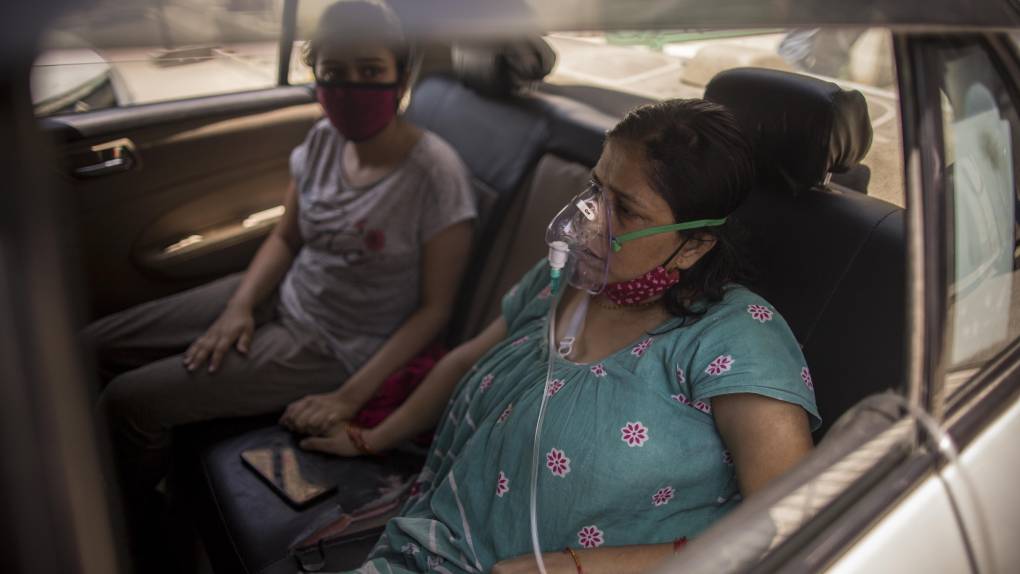
"caption": "A patient uses an oxygen mask inside a banquet hall temporarily converted into a COVID ward in New Delhi on April 27, 2021.",
"description": null,
"title": "INDIA-HEALTH-VIRUS",
"credit": "MONEY SHARMA/AFP via Getty Images",
"status": "inherit",
"altTag": null,
"isLoading": false,
"fetchFailed": false
},
"news_11871319": {
"type": "attachments",
"id": "news_11871319",
"meta": {
"index": "attachments_1716263798",
"site": "news",
"id": "11871319",
"found": true
},
"parent": 11871317,
"imgSizes": {
"twentyfourteen-full-width": {
"file": "https://ww2.kqed.org/app/uploads/sites/10/2021/04/GettyImages-1231152415-1024x576.jpg",
"width": 1024,
"mimeType": "image/jpeg",
"height": 576
},
"thumbnail": {
"file": "https://ww2.kqed.org/app/uploads/sites/10/2021/04/GettyImages-1231152415-160x107.jpg",
"width": 160,
"mimeType": "image/jpeg",
"height": 107
},
"post-thumbnail": {
"file": "https://ww2.kqed.org/app/uploads/sites/10/2021/04/GettyImages-1231152415-672x372.jpg",
"width": 672,
"mimeType": "image/jpeg",
"height": 372
},
"kqedFullSize": {
"file": "https://ww2.kqed.org/app/uploads/sites/10/2021/04/GettyImages-1231152415.jpg",
"width": 1024,
"height": 683
},
"large": {
"file": "https://ww2.kqed.org/app/uploads/sites/10/2021/04/GettyImages-1231152415-1020x680.jpg",
"width": 1020,
"mimeType": "image/jpeg",
"height": 680
},
"medium": {
"file": "https://ww2.kqed.org/app/uploads/sites/10/2021/04/GettyImages-1231152415-800x534.jpg",
"width": 800,
"mimeType": "image/jpeg",
"height": 534
}
},
"publishDate": 1619544460,
"modified": 1619544536,
"caption": "People wearing face masks walk on the Pacific Beach boardwalk in San Diego on Feb. 13, 2021. ",
"description": null,
"title": "US-HEALTH-VIRUS-LEISURE",
"credit": "Ariana Drehsler/AFP via Getty Images",
"status": "inherit",
"altTag": null,
"isLoading": false,
"fetchFailed": false
},
"news_11871124": {
"type": "attachments",
"id": "news_11871124",
"meta": {
"index": "attachments_1716263798",
"site": "news",
"id": "11871124",
"found": true
},
"parent": 11871122,
"imgSizes": {
"twentyfourteen-full-width": {
"file": "https://ww2.kqed.org/app/uploads/sites/10/2021/04/GettyImages-1314176777-1038x576.jpg",
"width": 1038,
"mimeType": "image/jpeg",
"height": 576
},
"thumbnail": {
"file": "https://ww2.kqed.org/app/uploads/sites/10/2021/04/GettyImages-1314176777-160x90.jpg",
"width": 160,
"mimeType": "image/jpeg",
"height": 90
},
"post-thumbnail": {
"file": "https://ww2.kqed.org/app/uploads/sites/10/2021/04/GettyImages-1314176777-672x372.jpg",
"width": 672,
"mimeType": "image/jpeg",
"height": 372
},
"kqedFullSize": {
"file": "https://ww2.kqed.org/app/uploads/sites/10/2021/04/GettyImages-1314176777-scaled.jpg",
"width": 2560,
"height": 1440
},
"2048x2048": {
"file": "https://ww2.kqed.org/app/uploads/sites/10/2021/04/GettyImages-1314176777-2048x1152.jpg",
"width": 2048,
"mimeType": "image/jpeg",
"height": 1152
},
"large": {
"file": "https://ww2.kqed.org/app/uploads/sites/10/2021/04/GettyImages-1314176777-1020x574.jpg",
"width": 1020,
"mimeType": "image/jpeg",
"height": 574
},
"1536x1536": {
"file": "https://ww2.kqed.org/app/uploads/sites/10/2021/04/GettyImages-1314176777-1536x864.jpg",
"width": 1536,
"mimeType": "image/jpeg",
"height": 864
},
"full-width": {
"file": "https://ww2.kqed.org/app/uploads/sites/10/2021/04/GettyImages-1314176777-1920x1080.jpg",
"width": 1920,
"mimeType": "image/jpeg",
"height": 1080
},
"medium": {
"file": "https://ww2.kqed.org/app/uploads/sites/10/2021/04/GettyImages-1314176777-800x450.jpg",
"width": 800,
"mimeType": "image/jpeg",
"height": 450
}
},
"publishDate": 1619406299,
"modified": 1619465946,
"caption": "Patients infected with COVID-19 can be seen wearing oxygen masks on April 24, 2021 in New Delhi, India. With recorded cases crossing 300,000 a day, India has more than 2 million active cases of COVID-19, the second-highest number in the world after the U.S.",
"description": null,
"title": "India Struggles To Contain Huge Wave Of Covid-19 Infections",
"credit": "Anindito Mukherjee/Getty Images",
"status": "inherit",
"altTag": "Patients infected with COVID-19 can be seen wearing Oxygen masks place amid the rising concerns over lack of Oxygen on April 24, 2021 in New Delhi, India. With recorded cases crossing 300,000 a day, India has more than 2 million active cases of COVID-19, the second-highest number in the world after the U.S. A new wave of the pandemic has totally overwhelmed the country's healthcare services and has caused crematoriums to operate day and night as the number of victims continues to spiral out of control.",
"isLoading": false,
"fetchFailed": false
},
"news_11870884": {
"type": "attachments",
"id": "news_11870884",
"meta": {
"index": "attachments_1716263798",
"site": "news",
"id": "11870884",
"found": true
},
"parent": 11870867,
"imgSizes": {
"twentyfourteen-full-width": {
"file": "https://ww2.kqed.org/app/uploads/sites/10/2021/04/IMG_3859-801x576.jpeg",
"width": 801,
"mimeType": "image/jpeg",
"height": 576
},
"thumbnail": {
"file": "https://ww2.kqed.org/app/uploads/sites/10/2021/04/IMG_3859-160x118.jpeg",
"width": 160,
"mimeType": "image/jpeg",
"height": 118
},
"post-thumbnail": {
"file": "https://ww2.kqed.org/app/uploads/sites/10/2021/04/IMG_3859-672x372.jpeg",
"width": 672,
"mimeType": "image/jpeg",
"height": 372
},
"kqedFullSize": {
"file": "https://ww2.kqed.org/app/uploads/sites/10/2021/04/IMG_3859.jpeg",
"width": 801,
"height": 590
}
},
"publishDate": 1619194835,
"modified": 1619214748,
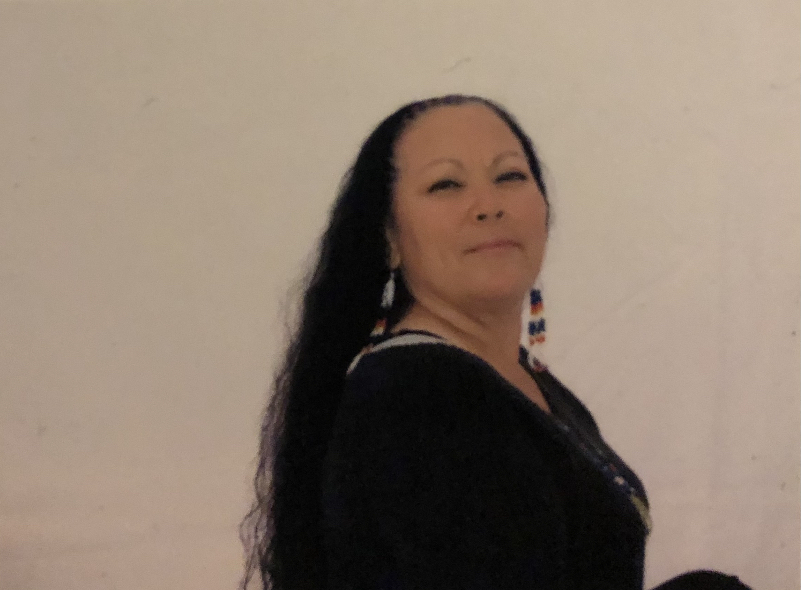
"caption": "Sylvia Morton was known for her long black hair, joyful voice and endless love of Selena. She was worked in the emergency department at Riverside Emergency Department before contracting COVID-19.",
"description": null,
"title": "IMG_3859",
"credit": "Courtesy of Yolanda Ballesteros",
"status": "inherit",
"altTag": null,
"isLoading": false,
"fetchFailed": false
},
"news_11870937": {
"type": "attachments",
"id": "news_11870937",
"meta": {
"index": "attachments_1716263798",
"site": "news",
"id": "11870937",
"found": true
},
"parent": 11870896,
"imgSizes": {
"twentyfourteen-full-width": {
"file": "https://ww2.kqed.org/app/uploads/sites/10/2021/04/RS48721_GettyImages-1311859371-qut-1038x576.jpg",
"width": 1038,
"mimeType": "image/jpeg",
"height": 576
},
"thumbnail": {
"file": "https://ww2.kqed.org/app/uploads/sites/10/2021/04/RS48721_GettyImages-1311859371-qut-160x109.jpg",
"width": 160,
"mimeType": "image/jpeg",
"height": 109
},
"post-thumbnail": {
"file": "https://ww2.kqed.org/app/uploads/sites/10/2021/04/RS48721_GettyImages-1311859371-qut-672x372.jpg",
"width": 672,
"mimeType": "image/jpeg",
"height": 372
},
"kqedFullSize": {
"file": "https://ww2.kqed.org/app/uploads/sites/10/2021/04/RS48721_GettyImages-1311859371-qut.jpg",
"width": 1920,
"height": 1304
},
"large": {
"file": "https://ww2.kqed.org/app/uploads/sites/10/2021/04/RS48721_GettyImages-1311859371-qut-1020x693.jpg",
"width": 1020,
"mimeType": "image/jpeg",
"height": 693
},
"1536x1536": {
"file": "https://ww2.kqed.org/app/uploads/sites/10/2021/04/RS48721_GettyImages-1311859371-qut-1536x1043.jpg",
"width": 1536,
"mimeType": "image/jpeg",
"height": 1043
},
"medium": {
"file": "https://ww2.kqed.org/app/uploads/sites/10/2021/04/RS48721_GettyImages-1311859371-qut-800x543.jpg",
"width": 800,
"mimeType": "image/jpeg",
"height": 543
}
},
"publishDate": 1619210300,
"modified": 1619214515,
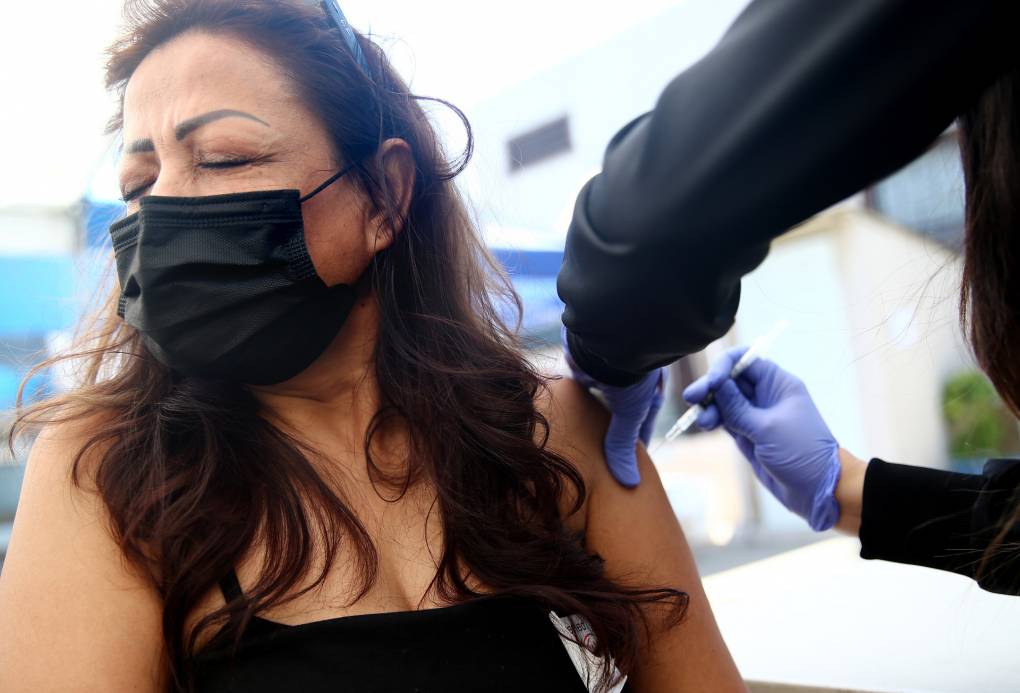
"caption": "A woman receives a dose of the Pfizer COVID-19 vaccine from a health care worker at a clinic targeting Central American Indigenous residents at CIELO, an Indigenous rights organization, on April 10, 2021 in Los Angeles.",
"description": "A woman receives a dose of the Pfizer COVID-19 vaccine from a health care worker at a clinic targeting Central American Indigenous residents at CIELO, an Indigenous rights organization, on April 10, 2021 in Los Angeles.",
"title": null,
"credit": "Mario Tama/Getty Images",
"status": "inherit",
"altTag": null,
"isLoading": false,
"fetchFailed": false
},
"news_11870974": {
"type": "attachments",
"id": "news_11870974",
"meta": {
"index": "attachments_1716263798",
"site": "news",
"id": "11870974",
"found": true
},
"parent": 11870973,
"imgSizes": {
"twentyfourteen-full-width": {
"file": "https://ww2.kqed.org/app/uploads/sites/10/2021/04/gettyimages-1232291997-e430e6dd75a3ab6676c30979c09e6f3dfddfcdaf-1038x576.jpg",
"width": 1038,
"mimeType": "image/jpeg",
"height": 576
},
"thumbnail": {
"file": "https://ww2.kqed.org/app/uploads/sites/10/2021/04/gettyimages-1232291997-e430e6dd75a3ab6676c30979c09e6f3dfddfcdaf-160x120.jpg",
"width": 160,
"mimeType": "image/jpeg",
"height": 120
},
"post-thumbnail": {
"file": "https://ww2.kqed.org/app/uploads/sites/10/2021/04/gettyimages-1232291997-e430e6dd75a3ab6676c30979c09e6f3dfddfcdaf-672x372.jpg",
"width": 672,
"mimeType": "image/jpeg",
"height": 372
},
"kqedFullSize": {
"file": "https://ww2.kqed.org/app/uploads/sites/10/2021/04/gettyimages-1232291997-e430e6dd75a3ab6676c30979c09e6f3dfddfcdaf-scaled-e1619215792563.jpg",
"width": 1920,
"height": 1440
},
"2048x2048": {
"file": "https://ww2.kqed.org/app/uploads/sites/10/2021/04/gettyimages-1232291997-e430e6dd75a3ab6676c30979c09e6f3dfddfcdaf-2048x1536.jpg",
"width": 2048,
"mimeType": "image/jpeg",
"height": 1536
},
"large": {
"file": "https://ww2.kqed.org/app/uploads/sites/10/2021/04/gettyimages-1232291997-e430e6dd75a3ab6676c30979c09e6f3dfddfcdaf-1020x765.jpg",
"width": 1020,
"mimeType": "image/jpeg",
"height": 765
},
"1536x1536": {
"file": "https://ww2.kqed.org/app/uploads/sites/10/2021/04/gettyimages-1232291997-e430e6dd75a3ab6676c30979c09e6f3dfddfcdaf-1536x1152.jpg",
"width": 1536,
"mimeType": "image/jpeg",
"height": 1152
},
"full-width": {
"file": "https://ww2.kqed.org/app/uploads/sites/10/2021/04/gettyimages-1232291997-e430e6dd75a3ab6676c30979c09e6f3dfddfcdaf-1920x1440.jpg",
"width": 1920,
"mimeType": "image/jpeg",
"height": 1440
},
"medium": {
"file": "https://ww2.kqed.org/app/uploads/sites/10/2021/04/gettyimages-1232291997-e430e6dd75a3ab6676c30979c09e6f3dfddfcdaf-800x600.jpg",
"width": 800,
"mimeType": "image/jpeg",
"height": 600
}
},
"publishDate": 1619214669,
"modified": 1619217902,
"caption": "Bottles of the single-dose Johnson & Johnson COVID-19 vaccine await transfer into syringes for administering last month in Los Angeles before the vaccine's pause. ",
"description": "Bottles of the single-dose Johnson & Johnson Janssen Covid-19 vaccine await transfer into syringes for administering at a vaccine rollout targetting immingrants and the undocumented in Los Angeles, California on March 25, 2021. - The US is calling for a pause on April 13, 2021 on administering the Johnson & Johnson Covid-19 vaccine due to blood clotting concerns. (Photo by Frederic J. BROWN / AFP) (Photo by FREDERIC J. BROWN/AFP via Getty Images)",
"title": "Bottles of the single-dose Johnson & Johnson COVID-19 vaccine await transfer into syringes for administering last month in Los Angeles before the vaccine's pause.",
"credit": "Frederic J. Brown/AFP via Getty Images",
"status": "inherit",
"altTag": null,
"isLoading": false,
"fetchFailed": false
},
"news_11870815": {
"type": "attachments",
"id": "news_11870815",
"meta": {
"index": "attachments_1716263798",
"site": "news",
"id": "11870815",
"found": true
},
"parent": 11870797,
"imgSizes": {
"twentyfourteen-full-width": {
"file": "https://ww2.kqed.org/app/uploads/sites/10/2021/04/ZII_1015-1038x576.jpeg",
"width": 1038,
"mimeType": "image/jpeg",
"height": 576
},
"thumbnail": {
"file": "https://ww2.kqed.org/app/uploads/sites/10/2021/04/ZII_1015-160x107.jpeg",
"width": 160,
"mimeType": "image/jpeg",
"height": 107
},
"post-thumbnail": {
"file": "https://ww2.kqed.org/app/uploads/sites/10/2021/04/ZII_1015-672x372.jpeg",
"width": 672,
"mimeType": "image/jpeg",
"height": 372
},
"kqedFullSize": {
"file": "https://ww2.kqed.org/app/uploads/sites/10/2021/04/ZII_1015.jpeg",
"width": 1620,
"height": 1080
},
"large": {
"file": "https://ww2.kqed.org/app/uploads/sites/10/2021/04/ZII_1015-1020x680.jpeg",
"width": 1020,
"mimeType": "image/jpeg",
"height": 680
},
"1536x1536": {
"file": "https://ww2.kqed.org/app/uploads/sites/10/2021/04/ZII_1015-1536x1024.jpeg",
"width": 1536,
"mimeType": "image/jpeg",
"height": 1024
},
"medium": {
"file": "https://ww2.kqed.org/app/uploads/sites/10/2021/04/ZII_1015-800x533.jpeg",
"width": 800,
"mimeType": "image/jpeg",
"height": 533
}
},
"publishDate": 1619130730,
"modified": 1619138126,
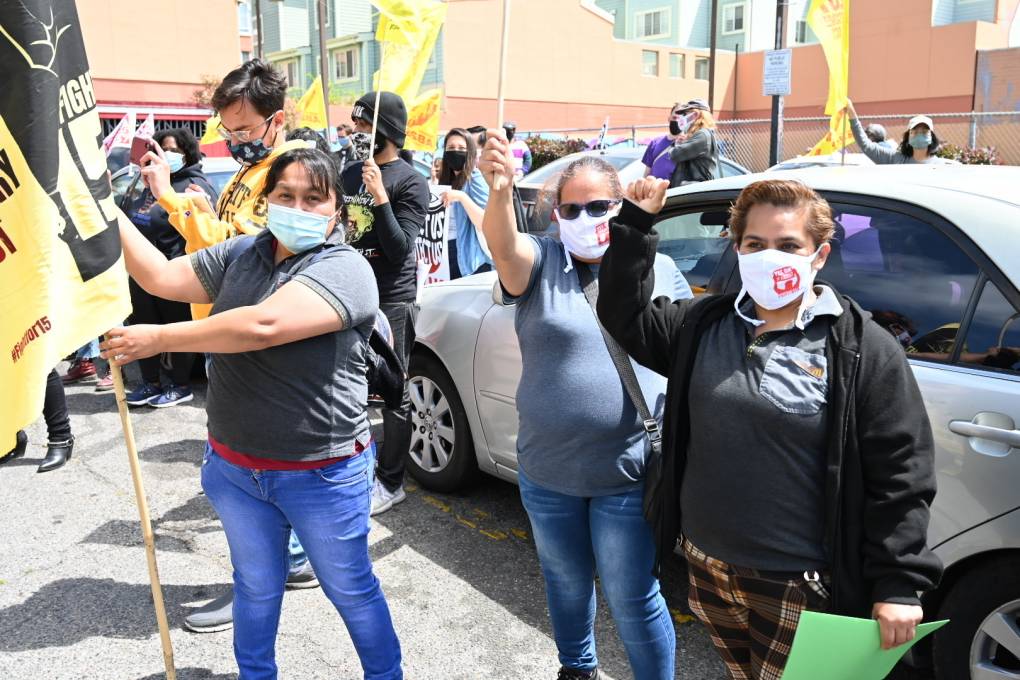
"caption": "Lorena Velazquez (r) joins a rally in Oakland on April 20, 2021 to push for the passage of a state bill that aims to improve conditions for fast food workers.",
"description": null,
"title": "ZII_1015",
"credit": "Courtesy of Fight for $15 campaign",
"status": "inherit",
"altTag": null,
"isLoading": false,
"fetchFailed": false
},
"news_11870656": {
"type": "attachments",
"id": "news_11870656",
"meta": {
"index": "attachments_1716263798",
"site": "news",
"id": "11870656",
"found": true
},
"parent": 11870566,
"imgSizes": {
"twentyfourteen-full-width": {
"file": "https://ww2.kqed.org/app/uploads/sites/10/2021/04/unemployment-tax-filing-1038x576.jpg",
"width": 1038,
"mimeType": "image/jpeg",
"height": 576
},
"thumbnail": {
"file": "https://ww2.kqed.org/app/uploads/sites/10/2021/04/unemployment-tax-filing-160x108.jpg",
"width": 160,
"mimeType": "image/jpeg",
"height": 108
},
"post-thumbnail": {
"file": "https://ww2.kqed.org/app/uploads/sites/10/2021/04/unemployment-tax-filing-672x372.jpg",
"width": 672,
"mimeType": "image/jpeg",
"height": 372
},
"kqedFullSize": {
"file": "https://ww2.kqed.org/app/uploads/sites/10/2021/04/unemployment-tax-filing.jpg",
"width": 1900,
"height": 1280
},
"large": {
"file": "https://ww2.kqed.org/app/uploads/sites/10/2021/04/unemployment-tax-filing-1020x687.jpg",
"width": 1020,
"mimeType": "image/jpeg",
"height": 687
},
"1536x1536": {
"file": "https://ww2.kqed.org/app/uploads/sites/10/2021/04/unemployment-tax-filing-1536x1035.jpg",
"width": 1536,
"mimeType": "image/jpeg",
"height": 1035
},
"medium": {
"file": "https://ww2.kqed.org/app/uploads/sites/10/2021/04/unemployment-tax-filing-800x539.jpg",
"width": 800,
"mimeType": "image/jpeg",
"height": 539
}
},
"publishDate": 1619057078,
"modified": 1620798914,
"caption": "La fecha límite del IRS de 2021 para presentar sus impuestos ha sido extendido hasta el 17 de mayo. Si el año pasado declaró ingresos de desempleo, le decimos qué debe saber y dónde puede encontrar ayuda gratuita o de bajo costo.",
"description": null,
"title": "unemployment-tax-filing",
"credit": "Liza Summer/Pexels",
"status": "inherit",
"altTag": "Young woman in a blue sweater looks intently at a laptop computer screen",
"isLoading": false,
"fetchFailed": false
}
},
"audioPlayerReducer": {
"postId": "stream_live",
"isPaused": true,
"isPlaying": false,
"pfsActive": false,
"pledgeModalIsOpen": true,
"playerDrawerIsOpen": false,
"liveAudioPlayStartedAt": 0,
"liveAudioPlayContext": ""
},
"authorsReducer": {
"byline_news_11871670": {
"type": "authors",
"id": "byline_news_11871670",
"meta": {
"override": true
},
"slug": "byline_news_11871670",
"name": "Janie Har \u003cbr> Associated Press",
"isLoading": false
},
"byline_news_11871317": {
"type": "authors",
"id": "byline_news_11871317",
"meta": {
"override": true
},
"slug": "byline_news_11871317",
"name": "Mike Stobbe\u003cbr>Associated Press",
"isLoading": false
},
"byline_news_11870973": {
"type": "authors",
"id": "byline_news_11870973",
"meta": {
"override": true
},
"slug": "byline_news_11870973",
"name": "Laurel Wamsley",
"isLoading": false
},
"markfiore": {
"type": "authors",
"id": "3236",
"meta": {
"index": "authors_1716337520",
"id": "3236",
"found": true
},
"name": "Mark Fiore",
"firstName": "Mark",
"lastName": "Fiore",
"slug": "markfiore",
"email": "mark@markfiore.com",
"display_author_email": false,
"staff_mastheads": [
"news"
],
"title": "KQED News Cartoonist",
"bio": "\u003ca href=\"http://www.MarkFiore.com\">MarkFiore.com\u003c/a> | \u003ca href=\"https://twitter.com/markfiore\">Follow on Twitter\u003c/a> | \u003ca href=\"https://www.facebook.com/pages/Mark-Fiore-Animated-Political-Cartoons/94451707396?ref=bookmarks\">Facebook\u003c/a> | \u003ca href=\"mailto:mark@markfiore.com\">email\u003c/a>\r\n\r\nPulitzer Prize-winner, Mark Fiore, who the Wall Street Journal has called “the undisputed guru of the form,” creates animated political cartoons in San Francisco, where his work has been featured regularly on the San Francisco Chronicle’s web site, SFGate.com. His work has appeared on Newsweek.com, Slate.com, CBSNews.com, MotherJones.com, DailyKos.com and NPR’s web site. Fiore’s political animation has appeared on CNN, Frontline, Bill Moyers Journal, Salon.com and cable and broadcast outlets across the globe.\r\n\r\nBeginning his professional life by drawing traditional political cartoons for newspapers, Fiore’s work appeared in publications ranging from the Washington Post to the Los Angeles Times. In the late 1990s, he began to experiment with animating political cartoons and, after a short stint at the San Jose Mercury News as their staff cartoonist, Fiore devoted all his energies to animation.\r\nGrowing up in California, Fiore also spent a good portion of his life in the backwoods of Idaho. It was this combination that shaped him politically. Mark majored in political science at Colorado College, where, in a perfect send-off for a cartoonist, he received his diploma in 1991 as commencement speaker Dick Cheney smiled approvingly.\r\nMark Fiore was awarded the Pulitzer Prize for political cartooning in 2010, a Robert F. Kennedy Journalism Award in 2004 and has twice received an Online Journalism Award for commentary from the Online News Association (2002, 2008). Fiore has received two awards for his work in new media from the National Cartoonists Society (2001, 2002), and in 2006 received The James Madison Freedom of Information Award from The Society of Professional Journalists.",
"avatar": "https://secure.gravatar.com/avatar/fc4e2a612b15b67bad0c6f0e1db4ca9b?s=600&d=blank&r=g",
"twitter": "MarkFiore",
"facebook": null,
"instagram": "https://www.instagram.com/markfiore/?hl=en",
"linkedin": null,
"sites": [
{
"site": "arts",
"roles": [
"contributor"
]
},
{
"site": "news",
"roles": [
"editor"
]
},
{
"site": "futureofyou",
"roles": [
"editor"
]
},
{
"site": "science",
"roles": [
"editor"
]
}
],
"headData": {
"title": "Mark Fiore | KQED",
"description": "KQED News Cartoonist",
"ogImgSrc": "https://secure.gravatar.com/avatar/fc4e2a612b15b67bad0c6f0e1db4ca9b?s=600&d=blank&r=g",
"twImgSrc": "https://secure.gravatar.com/avatar/fc4e2a612b15b67bad0c6f0e1db4ca9b?s=600&d=blank&r=g"
},
"isLoading": false,
"link": "/author/markfiore"
},
"carlysevern": {
"type": "authors",
"id": "3243",
"meta": {
"index": "authors_1716337520",
"id": "3243",
"found": true
},
"name": "Carly Severn",
"firstName": "Carly",
"lastName": "Severn",
"slug": "carlysevern",
"email": "csevern@kqed.org",
"display_author_email": false,
"staff_mastheads": [
"news"
],
"title": "Senior Editor, Audience News ",
"bio": "Carly is KQED's Senior Editor of Audience News on the Digital News team, and has reported for the California Report Magazine, Bay Curious and KQED Arts. She's formerly the host of \u003ca href=\"http://ww2.kqed.org/pop/category/the-cooler/\" rel=\"noopener noreferrer\">The Cooler\u003c/a> podcast.",
"avatar": "https://secure.gravatar.com/avatar/54037bf5c128fe678f0ef26cec97a93f2e7f220a22d7285703328f12c42c1b1d?s=600&d=blank&r=g",
"twitter": "teacupinthebay",
"bluesky": null,
"facebook": null,
"instagram": null,
"linkedin": null,
"sites": [
{
"site": "",
"roles": [
"editor"
]
},
{
"site": "arts",
"roles": [
"editor"
]
},
{
"site": "news",
"roles": [
"administrator"
]
},
{
"site": "pop",
"roles": [
"editor"
]
},
{
"site": "futureofyou",
"roles": [
"editor"
]
},
{
"site": "about",
"roles": [
"administrator"
]
},
{
"site": "mindshift",
"roles": [
"editor"
]
},
{
"site": "bayareabites",
"roles": [
"editor"
]
},
{
"site": "stateofhealth",
"roles": [
"editor"
]
},
{
"site": "science",
"roles": [
"editor"
]
},
{
"site": "food",
"roles": [
"contributor"
]
},
{
"site": "forum",
"roles": [
"editor"
]
},
{
"site": "perspectives",
"roles": [
"administrator"
]
},
{
"site": "liveblog",
"roles": [
"editor"
]
}
],
"headData": {
"title": "Carly Severn | KQED",
"description": "Senior Editor, Audience News ",
"ogImgSrc": "https://secure.gravatar.com/avatar/54037bf5c128fe678f0ef26cec97a93f2e7f220a22d7285703328f12c42c1b1d?s=600&d=blank&r=g",
"twImgSrc": "https://secure.gravatar.com/avatar/54037bf5c128fe678f0ef26cec97a93f2e7f220a22d7285703328f12c42c1b1d?s=600&d=blank&r=g"
},
"isLoading": false,
"link": "/author/carlysevern"
},
"dkatayama": {
"type": "authors",
"id": "7240",
"meta": {
"index": "authors_1716337520",
"id": "7240",
"found": true
},
"name": "Devin Katayama",
"firstName": "Devin",
"lastName": "Katayama",
"slug": "dkatayama",
"email": "dkatayama@kqed.org",
"display_author_email": true,
"staff_mastheads": [
"news"
],
"title": "Editor of Talent and Development",
"bio": "Devin Katayama is former Editor of Talent and Development for KQED. He supported our internship program and on-call staff by looking for equitable opportunities to improve the newsroom.\r\n\r\nHe previously hosted The Bay and American Suburb podcasts from KQED News. Prior to returning to the Bay Area in 2015, Devin was the education reporter for WFPL in Louisville and worked as a producer with radio stations in Chicago and Portland, OR. His work has appeared on NPR’s \u003cem>Morning Edition, All Things Considered, The Takeaway\u003c/em> and \u003cem>Here and Now.\u003c/em>\r\n\r\nDevin earned his MA in Journalism from Columbia College Chicago, where he was a Follett Fellow and the recipient of the 2011 Studs Terkel Community Media Workshop Scholarship for his story on Chicago's homeless youth. He won WBUR's 2014 Daniel Schorr award and a regional RTNDA Edward R. Murrow Award for his documentary \"At Risk\" that looked at issues facing some of Louisville's students. Devin has also received numerous local awards from the Associated Press and the Society of Professional Journalists.",
"avatar": "https://secure.gravatar.com/avatar/d0d2978a31002fb2de107921a8e18405?s=600&d=blank&r=g",
"twitter": "RadioDevin",
"facebook": null,
"instagram": null,
"linkedin": null,
"sites": [
{
"site": "arts",
"roles": []
},
{
"site": "news",
"roles": [
"author"
]
},
{
"site": "stateofhealth",
"roles": [
"author"
]
},
{
"site": "forum",
"roles": [
"editor"
]
},
{
"site": "perspectives",
"roles": [
"editor"
]
}
],
"headData": {
"title": "Devin Katayama | KQED",
"description": "Editor of Talent and Development",
"ogImgSrc": "https://secure.gravatar.com/avatar/d0d2978a31002fb2de107921a8e18405?s=600&d=blank&r=g",
"twImgSrc": "https://secure.gravatar.com/avatar/d0d2978a31002fb2de107921a8e18405?s=600&d=blank&r=g"
},
"isLoading": false,
"link": "/author/dkatayama"
},
"ecruzguevarra": {
"type": "authors",
"id": "8654",
"meta": {
"index": "authors_1716337520",
"id": "8654",
"found": true
},
"name": "Ericka Cruz Guevarra",
"firstName": "Ericka",
"lastName": "Cruz Guevarra",
"slug": "ecruzguevarra",
"email": "ecruzguevarra@kqed.org",
"display_author_email": true,
"staff_mastheads": [
"news"
],
"title": "Producer, The Bay Podcast",
"bio": "Ericka Cruz Guevarra is host of \u003ca href=\"https://www.kqed.org/podcasts/thebay\">\u003cem>The Bay\u003c/em>\u003c/a> podcast at KQED. Before host, she was the show’s producer. Her work in that capacity includes a three-part reported series on policing in Vallejo, which won a 2020 excellence in journalism award from the Society of Professional Journalists. Ericka has worked as a breaking news reporter at Oregon Public Broadcasting, helped produce the Code Switch podcast, and was KQED’s inaugural Raul Ramirez Diversity Fund intern. She’s also an alumna of NPR’s Next Generation Radio program. Send her an email if you have strong feelings about whether Fairfield and Suisun City are the Bay. Ericka is represented by SAG-AFTRA.",
"avatar": "https://secure.gravatar.com/avatar/accefc1de4bafc7e234b69bcb9b6f6536c130fd84709bc3069ef11a78787e1bb?s=600&d=blank&r=g",
"twitter": "NotoriousECG",
"bluesky": null,
"facebook": null,
"instagram": null,
"linkedin": null,
"sites": [
{
"site": "arts",
"roles": [
"subscriber"
]
},
{
"site": "news",
"roles": [
"editor",
"manage_categories"
]
},
{
"site": "futureofyou",
"roles": [
"subscriber"
]
},
{
"site": "stateofhealth",
"roles": [
"subscriber"
]
},
{
"site": "science",
"roles": [
"editor"
]
},
{
"site": "forum",
"roles": [
"subscriber"
]
}
],
"headData": {
"title": "Ericka Cruz Guevarra | KQED",
"description": "Producer, The Bay Podcast",
"ogImgSrc": "https://secure.gravatar.com/avatar/accefc1de4bafc7e234b69bcb9b6f6536c130fd84709bc3069ef11a78787e1bb?s=600&d=blank&r=g",
"twImgSrc": "https://secure.gravatar.com/avatar/accefc1de4bafc7e234b69bcb9b6f6536c130fd84709bc3069ef11a78787e1bb?s=600&d=blank&r=g"
},
"isLoading": false,
"link": "/author/ecruzguevarra"
},
"fjhabvala": {
"type": "authors",
"id": "8659",
"meta": {
"index": "authors_1716337520",
"id": "8659",
"found": true
},
"name": "Farida Jhabvala Romero",
"firstName": "Farida",
"lastName": "Jhabvala Romero",
"slug": "fjhabvala",
"email": "fjhabvala@kqed.org",
"display_author_email": true,
"staff_mastheads": [
"news"
],
"title": "KQED Contributor",
"bio": "Farida Jhabvala Romero is a Labor Correspondent for KQED. She previously covered immigration. Farida was \u003ca href=\"https://www.ccnma.org/2022-most-influential-latina-journalists\">named\u003c/a> one of the 10 Most Influential Latina Journalists in California in 2022 by the California Chicano News Media Association. Her work has won awards from the Society of Professional Journalists (Northern California), as well as a national and regional Edward M. Murrow Award for the collaborative reporting projects “Dangerous Air” and “Graying California.” Before joining KQED, Farida worked as a producer at Radio Bilingüe, a national public radio network. Farida earned her master’s degree in journalism from Stanford University.",
"avatar": "https://secure.gravatar.com/avatar/f9f022d4e2609741874222a1e9d41f48fea74011aa7c615eef91d9a50c944ebe?s=600&d=blank&r=g",
"twitter": "FaridaJhabvala",
"bluesky": null,
"facebook": null,
"instagram": null,
"linkedin": "https://www.linkedin.com/in/faridajhabvala/",
"sites": [
{
"site": "news",
"roles": [
"editor"
]
},
{
"site": "stateofhealth",
"roles": [
"author"
]
},
{
"site": "liveblog",
"roles": [
"author"
]
}
],
"headData": {
"title": "Farida Jhabvala Romero | KQED",
"description": "KQED Contributor",
"ogImgSrc": "https://secure.gravatar.com/avatar/f9f022d4e2609741874222a1e9d41f48fea74011aa7c615eef91d9a50c944ebe?s=600&d=blank&r=g",
"twImgSrc": "https://secure.gravatar.com/avatar/f9f022d4e2609741874222a1e9d41f48fea74011aa7c615eef91d9a50c944ebe?s=600&d=blank&r=g"
},
"isLoading": false,
"link": "/author/fjhabvala"
},
"katewolffe": {
"type": "authors",
"id": "11523",
"meta": {
"index": "authors_1716337520",
"id": "11523",
"found": true
},
"name": "Kate Wolffe",
"firstName": "Kate",
"lastName": "Wolffe",
"slug": "katewolffe",
"email": "kwolffe@kqed.org",
"display_author_email": true,
"staff_mastheads": [
"news"
],
"title": "KQED Reporter + Weekend Host",
"bio": "Kate Wolffe reports on local Bay Area happenings for KQED, and hosts the news on weekend afternoons. She joined KQED in 2018 as an intern on the Forum team, before moving to cover topics ranging from politics to criminal justice to homelessness. A Bay Area native and UC Berkeley graduate, Kate loves to discover new corners of the region.",
"avatar": "https://secure.gravatar.com/avatar/22455f14db824a03ee252f73052fe939?s=600&d=blank&r=g",
"twitter": "katewolffe",
"facebook": null,
"instagram": null,
"linkedin": null,
"sites": [
{
"site": "arts",
"roles": [
"editor"
]
},
{
"site": "news",
"roles": [
"author",
"edit_others_posts"
]
},
{
"site": "forum",
"roles": [
"editor"
]
}
],
"headData": {
"title": "Kate Wolffe | KQED",
"description": "KQED Reporter + Weekend Host",
"ogImgSrc": "https://secure.gravatar.com/avatar/22455f14db824a03ee252f73052fe939?s=600&d=blank&r=g",
"twImgSrc": "https://secure.gravatar.com/avatar/22455f14db824a03ee252f73052fe939?s=600&d=blank&r=g"
},
"isLoading": false,
"link": "/author/katewolffe"
},
"aehsanipour": {
"type": "authors",
"id": "11580",
"meta": {
"index": "authors_1716337520",
"id": "11580",
"found": true
},
"name": "Asal Ehsanipour",
"firstName": "Asal",
"lastName": "Ehsanipour",
"slug": "aehsanipour",
"email": "aehsanipour@kqed.org",
"display_author_email": false,
"staff_mastheads": [],
"title": "Reporter and Producer",
"bio": "Asal Ehsanipour is a producer and reporter for Rightnowish, Bay Curious and The California Report Magazine. She is also a producer for \u003ca href=\"https://www.thedoubleshift.com/\">The Double Shift\u003c/a>, a podcast about a new generation of working mothers. In 2018, Asal was named an Emerging Journalist Fellow by the Journalism and Women’s Symposium. Her work has appeared on KQED, KALW, PRI’s The World, and in several food and travel publications.",
"avatar": "https://secure.gravatar.com/avatar/c0e210438f5dca1b76921ff9f0eada52?s=600&d=blank&r=g",
"twitter": null,
"facebook": null,
"instagram": null,
"linkedin": null,
"sites": [
{
"site": "arts",
"roles": []
},
{
"site": "news",
"roles": [
"author",
"edit_others_posts"
]
}
],
"headData": {
"title": "Asal Ehsanipour | KQED",
"description": "Reporter and Producer",
"ogImgSrc": "https://secure.gravatar.com/avatar/c0e210438f5dca1b76921ff9f0eada52?s=600&d=blank&r=g",
"twImgSrc": "https://secure.gravatar.com/avatar/c0e210438f5dca1b76921ff9f0eada52?s=600&d=blank&r=g"
},
"isLoading": false,
"link": "/author/aehsanipour"
},
"mfharvin": {
"type": "authors",
"id": "11583",
"meta": {
"index": "authors_1716337520",
"id": "11583",
"found": true
},
"name": "Mary Franklin Harvin",
"firstName": "Mary Franklin",
"lastName": "Harvin",
"slug": "mfharvin",
"email": "mfharvin@KQED.org",
"display_author_email": false,
"staff_mastheads": [
"news"
],
"title": "KQED Contributor",
"bio": null,
"avatar": "https://secure.gravatar.com/avatar/0e53510a7d48cfbdebfc9b11357d845f?s=600&d=blank&r=g",
"twitter": "EmEffHarvin",
"facebook": null,
"instagram": null,
"linkedin": null,
"sites": [
{
"site": "news",
"roles": [
"author",
"edit_others_posts"
]
},
{
"site": "science",
"roles": [
"editor"
]
}
],
"headData": {
"title": "Mary Franklin Harvin | KQED",
"description": "KQED Contributor",
"ogImgSrc": "https://secure.gravatar.com/avatar/0e53510a7d48cfbdebfc9b11357d845f?s=600&d=blank&r=g",
"twImgSrc": "https://secure.gravatar.com/avatar/0e53510a7d48cfbdebfc9b11357d845f?s=600&d=blank&r=g"
},
"isLoading": false,
"link": "/author/mfharvin"
},
"lsarah": {
"type": "authors",
"id": "11626",
"meta": {
"index": "authors_1716337520",
"id": "11626",
"found": true
},
"name": "Lakshmi Sarah",
"firstName": "Lakshmi",
"lastName": "Sarah",
"slug": "lsarah",
"email": "lsarah@kqed.org",
"display_author_email": false,
"staff_mastheads": [],
"title": "Digital Producer",
"bio": "Lakshmi Sarah is an educator, author and journalist with a focus on innovative storytelling. She has worked with newspapers, radio and magazines from Ahmedabad, India to Los Angeles, California. She has written and produced for Die Zeit, Global Voices, AJ+, KQED, Fusion Media Group and the New York Times.",
"avatar": "https://secure.gravatar.com/avatar/652dcaecd8b28826fc17a8b2d6bb4e93?s=600&d=blank&r=g",
"twitter": "lakitalki",
"facebook": null,
"instagram": "https://www.instagram.com/laki.talki/",
"linkedin": "https://www.linkedin.com/in/lakisarah/",
"sites": [
{
"site": "arts",
"roles": []
},
{
"site": "news",
"roles": []
},
{
"site": "bayareabites",
"roles": []
},
{
"site": "science",
"roles": []
}
],
"headData": {
"title": "Lakshmi Sarah | KQED",
"description": "Digital Producer",
"ogImgSrc": "https://secure.gravatar.com/avatar/652dcaecd8b28826fc17a8b2d6bb4e93?s=600&d=blank&r=g",
"twImgSrc": "https://secure.gravatar.com/avatar/652dcaecd8b28826fc17a8b2d6bb4e93?s=600&d=blank&r=g"
},
"isLoading": false,
"link": "/author/lsarah"
},
"amontecillo": {
"type": "authors",
"id": "11649",
"meta": {
"index": "authors_1716337520",
"id": "11649",
"found": true
},
"name": "Alan Montecillo",
"firstName": "Alan",
"lastName": "Montecillo",
"slug": "amontecillo",
"email": "amontecillo@kqed.org",
"display_author_email": false,
"staff_mastheads": [
"news"
],
"title": "KQED Contributor",
"bio": "Alan Montecillo is the senior editor of \u003cem>\u003ca href=\"http://kqed.org/thebay\">The Bay\u003c/a>, \u003c/em> KQED's local news podcast. Before moving to the Bay Area, he worked as a senior talk show producer for WILL in Champaign-Urbana, Illinois and at Oregon Public Broadcasting in Portland, Oregon. He has won journalism awards from the Society of Professional Journalists Northern California, the Public Media Journalists Association, The Signal Awards, and has also received a regional Edward R. Murrow award. Alan is a Filipino American from Hong Kong and a graduate of Reed College.",
"avatar": "https://secure.gravatar.com/avatar/268f53a2066899ea9efdd8a5900218b17c822d9862cbc9326cccec53ef41d349?s=600&d=blank&r=g",
"twitter": "alanmontecillo",
"bluesky": null,
"facebook": null,
"instagram": null,
"linkedin": null,
"sites": [
{
"site": "",
"roles": [
"editor"
]
},
{
"site": "news",
"roles": [
"editor",
"manage_categories"
]
}
],
"headData": {
"title": "Alan Montecillo | KQED",
"description": "KQED Contributor",
"ogImgSrc": "https://secure.gravatar.com/avatar/268f53a2066899ea9efdd8a5900218b17c822d9862cbc9326cccec53ef41d349?s=600&d=blank&r=g",
"twImgSrc": "https://secure.gravatar.com/avatar/268f53a2066899ea9efdd8a5900218b17c822d9862cbc9326cccec53ef41d349?s=600&d=blank&r=g"
},
"isLoading": false,
"link": "/author/amontecillo"
},
"akazmi": {
"type": "authors",
"id": "11728",
"meta": {
"index": "authors_1716337520",
"id": "11728",
"found": true
},
"name": "Arooba Kazmi",
"firstName": "Arooba",
"lastName": "Kazmi",
"slug": "akazmi",
"email": "akazmi@kqed.org",
"display_author_email": false,
"staff_mastheads": [],
"title": "KQED Contributor",
"bio": "Arooba Kazmi is a graduate student at Columbia Journalism School focusing on narrative writing and longform journalism. She completed her undergrad at San Jose State University, where she focused on broadcast storytelling and covered the refugee crisis over a three week study abroad trip to Greece and Italy. Upon graduation, Arooba worked at KCBS Radio as a production assistant and discovered her fondness for broadcast writing. She is interested in covering social issues including politics, race, gender inequality. When Arooba is not working, she is binging shows on Netflix, eating out with her friends, occasionally traveling or reading romance novels.",
"avatar": "https://secure.gravatar.com/avatar/7e9cde039988ebab26c72082dd34008d?s=600&d=blank&r=g",
"twitter": "https://twitter.com/AroobaKazmi",
"facebook": null,
"instagram": null,
"linkedin": null,
"sites": [
{
"site": "news",
"roles": [
"subscriber"
]
}
],
"headData": {
"title": "Arooba Kazmi | KQED",
"description": "KQED Contributor",
"ogImgSrc": "https://secure.gravatar.com/avatar/7e9cde039988ebab26c72082dd34008d?s=600&d=blank&r=g",
"twImgSrc": "https://secure.gravatar.com/avatar/7e9cde039988ebab26c72082dd34008d?s=600&d=blank&r=g"
},
"isLoading": false,
"link": "/author/akazmi"
},
"smartos": {
"type": "authors",
"id": "11741",
"meta": {
"index": "authors_1716337520",
"id": "11741",
"found": true
},
"name": "Shaylyn Martos",
"firstName": "Shaylyn",
"lastName": "Martos",
"slug": "smartos",
"email": "smartos@kqed.org",
"display_author_email": false,
"staff_mastheads": [],
"title": "KQED Contributor",
"bio": null,
"avatar": "https://secure.gravatar.com/avatar/ca566efb61a864c9a7fff48e77d45f31?s=600&d=blank&r=g",
"twitter": "@shaylynmartos",
"facebook": null,
"instagram": null,
"linkedin": null,
"sites": [
{
"site": "news",
"roles": [
"author"
]
}
],
"headData": {
"title": "Shaylyn Martos | KQED",
"description": "KQED Contributor",
"ogImgSrc": "https://secure.gravatar.com/avatar/ca566efb61a864c9a7fff48e77d45f31?s=600&d=blank&r=g",
"twImgSrc": "https://secure.gravatar.com/avatar/ca566efb61a864c9a7fff48e77d45f31?s=600&d=blank&r=g"
},
"isLoading": false,
"link": "/author/smartos"
}
},
"pagesReducer": {
"news_tag_covid-19": {
"type": "terms",
"id": "news_27504",
"meta": {
"index": "terms_1716263798",
"site": "news",
"id": "27504",
"score": 8.558435
},
"featImg": null,
"name": "covid-19",
"description": null,
"taxonomy": "tag",
"headData": {
"twImgId": null,
"twTitle": null,
"ogTitle": null,
"ogImgId": null,
"twDescription": null,
"description": null,
"title": "covid-19 Archives | KQED News",
"ogDescription": null
},
"ttid": 27521,
"slug": "covid-19",
"isLoading": false,
"title": "covid-19",
"pageMeta": {
"site": "news",
"WpPageTemplate": "page-topic-editorial",
"currentPage": 23
},
"blocks": [
{
"blockName": "kqed/post-list",
"attrs": {
"layout": "cardArticle2",
"query": "posts/news?tag=covid-19",
"seeMore": false,
"paginated": true,
"page": 23
}
},
{
"blockName": "kqed/ad"
}
]
}
},
"pfsSessionReducer": {},
"postsReducer": {
"stream_live": {
"type": "live",
"id": "stream_live",
"audioUrl": "https://streams.kqed.org/kqedradio",
"title": "Live Stream",
"excerpt": "Live Stream information currently unavailable.",
"link": "/radio",
"featImg": "",
"label": {
"name": "KQED Live",
"link": "/"
}
},
"stream_kqedNewscast": {
"type": "posts",
"id": "stream_kqedNewscast",
"audioUrl": "https://www.kqed.org/.stream/anon/radio/RDnews/newscast.mp3?_=1",
"title": "KQED Newscast",
"featImg": "",
"label": {
"name": "88.5 FM",
"link": "/"
}
},
"news_11871688": {
"type": "posts",
"id": "news_11871688",
"meta": {
"index": "posts_1716263798",
"site": "news",
"id": "11871688",
"score": null,
"sort": [
1619738617000
]
},
"guestAuthors": [],
"slug": "cdc-masks-outdoors-guidance",
"title": "'Do What's Right By the Science:' Why the CDC Updated Outdoor Mask Guidance (And When You Can Ditch Yours)",
"publishDate": 1619738617,
"format": "standard",
"headTitle": "‘Do What’s Right By the Science:’ Why the CDC Updated Outdoor Mask Guidance (And When You Can Ditch Yours) | KQED",
"labelTerm": {
"site": "news"
},
"content": "\u003cp>This week, \u003ca href=\"https://twitter.com/GavinNewsom/status/1387113391513247744\">Gov. Gavin Newsom announced\u003c/a> California would be moving to align with \u003ca href=\"https://www.cdc.gov/coronavirus/2019-ncov/daily-life-coping/participate-in-activities.html\">new guidelines\u003c/a> issued by the Centers for Disease Control and Prevention, relaxing the mask mandate for people who are fully vaccinated against COVID-19.\u003c/p>\n\u003cp>The \u003ca href=\"https://www.kqed.org/news/11871317/stop-and-smell-the-roses-cdc-says-many-americans-can-now-go-outside-safely-without-a-mask\">new guidance from the CDC\u003c/a> says that fully vaccinated people don’t need to wear a mask outside if they’re walking, running or biking, attending small outdoor gatherings or eating outside at a restaurant. Fully vaccinated people now only need to wear a mask in large crowds of strangers, says the CDC.\u003c/p>\n\u003cp>As for people who aren’t yet fully vaccinated, the CDC says they can also be maskless outside with members of their household, or go maskless at a small, outdoor gathering as long as others in attendance \u003cem>are\u003c/em> fully vaccinated.\u003c/p>\n\u003cp>All nine Bay Area counties have said they plan to adopt the new guidelines once California formally aligns with the CDC’s new recommendations. On KQED Forum, Priya David Clemens spoke with \u003ca href=\"https://cfar.ucsf.edu/people/monica-gandhi\" target=\"_blank\" rel=\"noopener noreferrer\">Dr. Monica Gandhi\u003c/a>, infectious disease expert and professor of medicine at UCSF.\u003cspan style=\"font-weight: 400\">[aside postID=\"news_11864473\"]\u003c/span>\u003c/p>\n\u003cp>\u003cstrong>KQED’s Priya David Clemens: You have been advocating for reducing mask use for some time now. Could you tell us about your thoughts?\u003c/strong>\u003c/p>\n\u003cp>\u003cstrong>Dr. Monica Gandhi:\u003c/strong> I do want to stress that I co-wrote one of the first papers in early April 2020 about universal mask use for the American public. I’m definitely very interested in mask use as a mitigation procedure along with ventilation and distancing. However, when you think about ventilation and you think about this virus, there’s actually incredibly clear studies about how hard it is to get coronavirus outside.\u003c/p>\n\u003cp>https://www.instagram.com/p/COQwPYQhaj5/\u003c/p>\n\u003cp>The most impressive study was published in September from China, where they do very strict contact tracing. And out of 7,324 infections, only one was linked to outdoor transmission. [pullquote size=\"right\" align=\"right\" citation=\"Dr. Monica Gandhi, infectious disease expert and professor of medicine at UCSF\"]‘Don’t be frightened to do what’s right by the science and take off your mask outside. The more of us that do it, it’ll become the new social norm. And we can smile at each other.’[/pullquote]\u003c/p>\n\u003cp>There was \u003ca href=\"https://www.irishtimes.com/news/ireland/irish-news/outdoor-transmission-accounts-for-0-1-of-state-s-covid-19-cases-1.4529036\">an Irish Times article\u003c/a> about a month ago that showed that out of 232,000, one out of a thousand was likely linked to outdoor transmission. And then a very extensive \u003ca href=\"https://www.canterbury.ac.uk/science-engineering-and-social-sciences/spear/docs/EXECUTIVE-SUMMARY-Outdoor-Transmission-of-COVID-19.pdf\">review from the University of Canterbury\u003c/a> was done earlier in the fall and looked at a massive number of studies around the planet and thought that outside transmission was so rare that they couldn’t actually quantify it.\u003c/p>\n\u003cp>And then when the\u003ca href=\"https://www.who.int/emergencies/diseases/novel-coronavirus-2019/advice-for-public/when-and-how-to-use-masks\" target=\"_blank\" rel=\"noopener noreferrer\"> World Health Organization\u003c/a> revised their mask guidance in December — even before vaccines — they said masks are not required outside unless you’re in non-distanced situations. That’s some of the evidence even prior to vaccinations.\u003c/p>\n\u003cfigure id=\"attachment_11871334\" class=\"wp-caption alignnone\" style=\"max-width: 1418px\">\u003cimg loading=\"lazy\" decoding=\"async\" class=\"size-full wp-image-11871334\" src=\"https://ww2.kqed.org/app/uploads/sites/10/2021/03/INDOORS-4-27.png\" alt=\"\" width=\"1418\" height=\"623\" srcset=\"https://cdn.kqed.org/wp-content/uploads/sites/10/2021/03/INDOORS-4-27.png 1418w, https://cdn.kqed.org/wp-content/uploads/sites/10/2021/03/INDOORS-4-27-800x351.png 800w, https://cdn.kqed.org/wp-content/uploads/sites/10/2021/03/INDOORS-4-27-1020x448.png 1020w, https://cdn.kqed.org/wp-content/uploads/sites/10/2021/03/INDOORS-4-27-160x70.png 160w\" sizes=\"(max-width: 1418px) 100vw, 1418px\">\u003cfigcaption class=\"wp-caption-text\">The CDC’s latest guidance for outdoor mask-wearing, for fully vaccinated and vaccinated people. \u003ccite>(CDC)\u003c/cite>\u003c/figcaption>\u003c/figure>\n\u003cp>\u003cstrong>So Dr. Gandhi, what do you do when you’re outside? Do you wear a mask?\u003c/strong>\u003c/p>\n\u003cp>I did until yesterday, because I’m really very polite — and also because of the San Francisco guidelines, which were actually put into place on April 17, 2020, two months before the state put in place their outdoor and indoor mask mandates.\u003c/p>\n\u003cp>However, I actually realized yesterday after \u003ca href=\"https://www.kqed.org/news/11871317/stop-and-smell-the-roses-cdc-says-many-americans-can-now-go-outside-safely-without-a-mask\">the CDC released their guidelines\u003c/a> that as someone who really is trying to follow the data, and has really deeply looked at these outside studies, it’s best for me to model not wearing my mask outside. Yesterday I went without my mask outside, and no one got mad at me.\u003cspan style=\"font-weight: 400\">[aside postID=\"news_11855623\"]\u003c/span>\u003c/p>\n\u003cp>Don’t be frightened to do what’s right by the science and take off your mask outside. The more of us that do it, it’ll become the new social norm. And we can smile at each other.\u003c/p>\n\u003cp>\u003cstrong>What was it like? Did you get some strange looks? Some people may feel you are not being respectful.\u003c/strong>\u003c/p>\n\u003cp>San Francisco has been a city that has very been very compliant with mask wearing. We have used this symbol of mask wearing as respect, and that we follow the science.\u003c/p>\n\u003cp>The issue is that it is following the science to understand how quickly viral particles disperse in the outside air for modeling, and all the epidemiology evidence. [aside tag=\"coronavirus\" label=\"More Related Stories\"] It’s tremendously respectful to science to not wear your mask outside even if you’re not vaccinated. And I’m fully vaccinated. Someone gave me a very wide berth when I was walking up to my clinic since I didn’t have my mask on outside, but still, I thought it was important to do that.\u003c/p>\n\u003cp>\u003cstrong>What about some parts of the city and in various communities outside of San Francisco, where the COVID infection rates have been higher than San Francisco? Are there places you \u003cem>should\u003c/em> still wear a mask outdoors? \u003c/strong>\u003c/p>\n\u003cp>The fascinating thing about the science around mask wearing outside is that it’s actually delinked from the question of your vaccination status and delinked from the question of case prevalence. As the World Health Organization put in their guidelines in December 2020 — it’s about the outside being so much safer.\u003c/p>\n\u003cp>[ad fullwidth]\u003c/p>\n\u003cp>I think we’ve actually focused a little bit too much on closing outside playgrounds. For example, in December, we’ve done things that sometimes can hurt public health when we don’t remember how important and safe the outside is. But the recommendation in my mind should be: Don’t wear a mask outside, unless you’re in packed conditions. And that’s where I chose to wear it.\u003c/p>\n\u003cp>And I would still wear it inside. Not necessarily that you can transmit it after vaccination, but because we’re not \u003cem>all\u003c/em> vaccinated — and I think that’s a sign of respect here.\u003c/p>\n\u003cp>\u003cem>This interview has been edited for length and clarity.\u003c/em>\u003c/p>\n\u003cp>\u003c/p>\n",
"blocks": [],
"excerpt": "Unless you're in a crowd, 'don't be frightened to do what's right by the science and take off your mask outside\" if you're fully vaccinated, urges UCSF's Dr. Monica Gandhi.",
"status": "publish",
"parent": 0,
"modified": 1721128576,
"stats": {
"hasAudio": false,
"hasVideo": false,
"hasChartOrMap": false,
"iframeSrcs": [],
"hasGoogleForm": false,
"hasGallery": false,
"hasHearkenModule": false,
"hasPolis": false,
"paragraphCount": 23,
"wordCount": 1038
},
"headData": {
"title": "'Do What's Right By the Science:' Why the CDC Updated Outdoor Mask Guidance (And When You Can Ditch Yours) | KQED",
"description": "Unless you're in a crowd, 'don't be frightened to do what's right by the science and take off your mask outside" if you're fully vaccinated, urges UCSF's Dr. Monica Gandhi.",
"ogTitle": "",
"ogDescription": "",
"ogImgId": "",
"twTitle": "",
"twDescription": "",
"twImgId": "",
"schema": {
"@context": "https://schema.org",
"@type": "NewsArticle",
"headline": "'Do What's Right By the Science:' Why the CDC Updated Outdoor Mask Guidance (And When You Can Ditch Yours)",
"datePublished": "2021-04-29T16:23:37-07:00",
"dateModified": "2024-07-16T04:16:16-07:00",
"image": "https://cdn.kqed.org/wp-content/uploads/2020/02/KQED-OG-Image@1x.png",
"isAccessibleForFree": "True",
"publisher": {
"@type": "NewsMediaOrganization",
"@id": "https://www.kqed.org/#organization",
"name": "KQED",
"logo": "https://cdn.kqed.org/wp-content/uploads/2020/02/KQED-OG-Image@1x.png",
"url": "https://www.kqed.org",
"sameAs": [
"https://www.facebook.com/KQED",
"https://twitter.com/KQED",
"https://www.instagram.com/kqed/",
"https://www.tiktok.com/@kqedofficial",
"https://www.linkedin.com/company/kqed",
"https://www.youtube.com/channel/UCeC0IOo7i1P_61zVUWbJ4nw"
]
}
}
},
"audioUrl": "https://www.kqed.org/.stream/anon/radio/forum/2021/04/ForumMaskSegment20210429.mp3",
"sticky": false,
"path": "/news/11871688/cdc-masks-outdoors-guidance",
"audioTrackLength": null,
"parsedContent": [
{
"type": "contentString",
"content": "\u003cdiv class=\"post-body\">\u003cp>\u003cp>This week, \u003ca href=\"https://twitter.com/GavinNewsom/status/1387113391513247744\">Gov. Gavin Newsom announced\u003c/a> California would be moving to align with \u003ca href=\"https://www.cdc.gov/coronavirus/2019-ncov/daily-life-coping/participate-in-activities.html\">new guidelines\u003c/a> issued by the Centers for Disease Control and Prevention, relaxing the mask mandate for people who are fully vaccinated against COVID-19.\u003c/p>\n\u003cp>The \u003ca href=\"https://www.kqed.org/news/11871317/stop-and-smell-the-roses-cdc-says-many-americans-can-now-go-outside-safely-without-a-mask\">new guidance from the CDC\u003c/a> says that fully vaccinated people don’t need to wear a mask outside if they’re walking, running or biking, attending small outdoor gatherings or eating outside at a restaurant. Fully vaccinated people now only need to wear a mask in large crowds of strangers, says the CDC.\u003c/p>\n\u003cp>As for people who aren’t yet fully vaccinated, the CDC says they can also be maskless outside with members of their household, or go maskless at a small, outdoor gathering as long as others in attendance \u003cem>are\u003c/em> fully vaccinated.\u003c/p>\n\u003cp>All nine Bay Area counties have said they plan to adopt the new guidelines once California formally aligns with the CDC’s new recommendations. On KQED Forum, Priya David Clemens spoke with \u003ca href=\"https://cfar.ucsf.edu/people/monica-gandhi\" target=\"_blank\" rel=\"noopener noreferrer\">Dr. Monica Gandhi\u003c/a>, infectious disease expert and professor of medicine at UCSF.\u003cspan style=\"font-weight: 400\">\u003c/p>\u003c/div>",
"attributes": {
"named": {},
"numeric": []
}
},
{
"type": "component",
"content": "",
"name": "aside",
"attributes": {
"named": {
"postid": "news_11864473",
"label": ""
},
"numeric": []
}
},
{
"type": "contentString",
"content": "\u003cdiv class=\"post-body\">\u003cp>\u003c/span>\u003c/p>\n\u003cp>\u003cstrong>KQED’s Priya David Clemens: You have been advocating for reducing mask use for some time now. Could you tell us about your thoughts?\u003c/strong>\u003c/p>\n\u003cp>\u003cstrong>Dr. Monica Gandhi:\u003c/strong> I do want to stress that I co-wrote one of the first papers in early April 2020 about universal mask use for the American public. I’m definitely very interested in mask use as a mitigation procedure along with ventilation and distancing. However, when you think about ventilation and you think about this virus, there’s actually incredibly clear studies about how hard it is to get coronavirus outside.\u003c/p>\u003c/p>\u003c/div>",
"attributes": {
"named": {},
"numeric": []
}
},
{
"type": "component",
"content": "",
"name": "instagramLink",
"attributes": {
"named": {
"instagramUrl": "https://www.instagram.com/p/COQwPYQhaj5/"
},
"numeric": []
}
},
{
"type": "contentString",
"content": "\u003cdiv class=\"post-body\">\u003cp>\u003cp>The most impressive study was published in September from China, where they do very strict contact tracing. And out of 7,324 infections, only one was linked to outdoor transmission. \u003c/p>\u003c/div>",
"attributes": {
"named": {},
"numeric": []
}
},
{
"type": "component",
"content": "‘Don’t be frightened to do what’s right by the science and take off your mask outside. The more of us that do it, it’ll become the new social norm. And we can smile at each other.’",
"name": "pullquote",
"attributes": {
"named": {
"size": "right",
"align": "right",
"citation": "Dr. Monica Gandhi, infectious disease expert and professor of medicine at UCSF",
"label": ""
},
"numeric": []
}
},
{
"type": "contentString",
"content": "\u003cdiv class=\"post-body\">\u003cp>\u003c/p>\n\u003cp>There was \u003ca href=\"https://www.irishtimes.com/news/ireland/irish-news/outdoor-transmission-accounts-for-0-1-of-state-s-covid-19-cases-1.4529036\">an Irish Times article\u003c/a> about a month ago that showed that out of 232,000, one out of a thousand was likely linked to outdoor transmission. And then a very extensive \u003ca href=\"https://www.canterbury.ac.uk/science-engineering-and-social-sciences/spear/docs/EXECUTIVE-SUMMARY-Outdoor-Transmission-of-COVID-19.pdf\">review from the University of Canterbury\u003c/a> was done earlier in the fall and looked at a massive number of studies around the planet and thought that outside transmission was so rare that they couldn’t actually quantify it.\u003c/p>\n\u003cp>And then when the\u003ca href=\"https://www.who.int/emergencies/diseases/novel-coronavirus-2019/advice-for-public/when-and-how-to-use-masks\" target=\"_blank\" rel=\"noopener noreferrer\"> World Health Organization\u003c/a> revised their mask guidance in December — even before vaccines — they said masks are not required outside unless you’re in non-distanced situations. That’s some of the evidence even prior to vaccinations.\u003c/p>\n\u003cfigure id=\"attachment_11871334\" class=\"wp-caption alignnone\" style=\"max-width: 1418px\">\u003cimg loading=\"lazy\" decoding=\"async\" class=\"size-full wp-image-11871334\" src=\"https://ww2.kqed.org/app/uploads/sites/10/2021/03/INDOORS-4-27.png\" alt=\"\" width=\"1418\" height=\"623\" srcset=\"https://cdn.kqed.org/wp-content/uploads/sites/10/2021/03/INDOORS-4-27.png 1418w, https://cdn.kqed.org/wp-content/uploads/sites/10/2021/03/INDOORS-4-27-800x351.png 800w, https://cdn.kqed.org/wp-content/uploads/sites/10/2021/03/INDOORS-4-27-1020x448.png 1020w, https://cdn.kqed.org/wp-content/uploads/sites/10/2021/03/INDOORS-4-27-160x70.png 160w\" sizes=\"(max-width: 1418px) 100vw, 1418px\">\u003cfigcaption class=\"wp-caption-text\">The CDC’s latest guidance for outdoor mask-wearing, for fully vaccinated and vaccinated people. \u003ccite>(CDC)\u003c/cite>\u003c/figcaption>\u003c/figure>\n\u003cp>\u003cstrong>So Dr. Gandhi, what do you do when you’re outside? Do you wear a mask?\u003c/strong>\u003c/p>\n\u003cp>I did until yesterday, because I’m really very polite — and also because of the San Francisco guidelines, which were actually put into place on April 17, 2020, two months before the state put in place their outdoor and indoor mask mandates.\u003c/p>\n\u003cp>However, I actually realized yesterday after \u003ca href=\"https://www.kqed.org/news/11871317/stop-and-smell-the-roses-cdc-says-many-americans-can-now-go-outside-safely-without-a-mask\">the CDC released their guidelines\u003c/a> that as someone who really is trying to follow the data, and has really deeply looked at these outside studies, it’s best for me to model not wearing my mask outside. Yesterday I went without my mask outside, and no one got mad at me.\u003cspan style=\"font-weight: 400\">\u003c/p>\u003c/div>",
"attributes": {
"named": {},
"numeric": []
}
},
{
"type": "component",
"content": "",
"name": "aside",
"attributes": {
"named": {
"postid": "news_11855623",
"label": ""
},
"numeric": []
}
},
{
"type": "contentString",
"content": "\u003cdiv class=\"post-body\">\u003cp>\u003c/span>\u003c/p>\n\u003cp>Don’t be frightened to do what’s right by the science and take off your mask outside. The more of us that do it, it’ll become the new social norm. And we can smile at each other.\u003c/p>\n\u003cp>\u003cstrong>What was it like? Did you get some strange looks? Some people may feel you are not being respectful.\u003c/strong>\u003c/p>\n\u003cp>San Francisco has been a city that has very been very compliant with mask wearing. We have used this symbol of mask wearing as respect, and that we follow the science.\u003c/p>\n\u003cp>The issue is that it is following the science to understand how quickly viral particles disperse in the outside air for modeling, and all the epidemiology evidence. \u003c/p>\u003c/div>",
"attributes": {
"named": {},
"numeric": []
}
},
{
"type": "component",
"content": "",
"name": "aside",
"attributes": {
"named": {
"tag": "coronavirus",
"label": "More Related Stories "
},
"numeric": []
}
},
{
"type": "contentString",
"content": "\u003cdiv class=\"post-body\">\u003cp> It’s tremendously respectful to science to not wear your mask outside even if you’re not vaccinated. And I’m fully vaccinated. Someone gave me a very wide berth when I was walking up to my clinic since I didn’t have my mask on outside, but still, I thought it was important to do that.\u003c/p>\n\u003cp>\u003cstrong>What about some parts of the city and in various communities outside of San Francisco, where the COVID infection rates have been higher than San Francisco? Are there places you \u003cem>should\u003c/em> still wear a mask outdoors? \u003c/strong>\u003c/p>\n\u003cp>The fascinating thing about the science around mask wearing outside is that it’s actually delinked from the question of your vaccination status and delinked from the question of case prevalence. As the World Health Organization put in their guidelines in December 2020 — it’s about the outside being so much safer.\u003c/p>\n\u003cp>\u003c/p>\u003c/div>",
"attributes": {
"named": {},
"numeric": []
}
},
{
"type": "component",
"content": "",
"name": "ad",
"attributes": {
"named": {
"label": "fullwidth"
},
"numeric": [
"fullwidth"
]
}
},
{
"type": "contentString",
"content": "\u003cdiv class=\"post-body\">\u003cp>\u003c/p>\n\u003cp>I think we’ve actually focused a little bit too much on closing outside playgrounds. For example, in December, we’ve done things that sometimes can hurt public health when we don’t remember how important and safe the outside is. But the recommendation in my mind should be: Don’t wear a mask outside, unless you’re in packed conditions. And that’s where I chose to wear it.\u003c/p>\n\u003cp>And I would still wear it inside. Not necessarily that you can transmit it after vaccination, but because we’re not \u003cem>all\u003c/em> vaccinated — and I think that’s a sign of respect here.\u003c/p>\n\u003cp>\u003cem>This interview has been edited for length and clarity.\u003c/em>\u003c/p>\n\u003cp>\u003c/p>\n\u003c/div>\u003c/p>",
"attributes": {
"named": {},
"numeric": []
}
}
],
"link": "/news/11871688/cdc-masks-outdoors-guidance",
"authors": [
"11626"
],
"categories": [
"news_457",
"news_8"
],
"tags": [
"news_22221",
"news_27350",
"news_29029",
"news_27989",
"news_27504",
"news_27626",
"news_18543"
],
"featImg": "news_11871760",
"label": "news"
},
"news_11871670": {
"type": "posts",
"id": "news_11871670",
"meta": {
"index": "posts_1716263798",
"site": "news",
"id": "11871670",
"score": null,
"sort": [
1619724854000
]
},
"guestAuthors": [],
"slug": "some-californians-still-cant-get-covid-vaccine-despite-surge-in-supply-why",
"title": "Some Californians Still Can’t Get COVID Vaccine, Despite Surge in Supply. Why?",
"publishDate": 1619724854,
"format": "standard",
"headTitle": "Some Californians Still Can’t Get COVID Vaccine, Despite Surge in Supply. Why? | KQED",
"labelTerm": {
"site": "news"
},
"content": "\u003cp>Hearing of excess vaccine and unfilled appointments frustrates Dr. Aaron Roland, a family physician who has been lobbying for doses to inoculate his patients, many of whom are low income, immigrants or elderly.\u003c/p>\n\u003cp>The San Francisco Bay Area doctor has more than 200 patients who have inquired when he will offer inoculations against the coronavirus. One patient, who is 67, said he walked into a Safeway supermarket because signs said doses were available.\u003c/p>\n\u003cp>[pullquote size=\"medium\" align=\"right\" citation=\"Dr. Kirsten Bibbins-Domingo, epidemiology and biostatistics chair, UCSF\"]‘We want to reach all people, and what happens at this point in the process is each person we try to reach becomes a little harder to reach. It’s not as easy as putting up a mass vaccination site and saying if you build it, they will come.’[/pullquote]\u003c/p>\n\u003cp>“But they said, ‘Oh no, they’re not really available. You just have to go online, just sign up online.’ It’s not something he does very easily,” said Dr. Roland, whose practice is in Burlingame, south of San Francisco.\u003c/p>\n\u003cp>California, swimming in vaccine, is in far better shape than just weeks ago when scoring an appointment was cause for celebration.\u003c/p>\n\u003cp>[ad fullwidth]\u003c/p>\n\u003cp>Today, Los Angeles, San Diego and other populous counties are advertising that anyone can walk in for a shot, and the state is texting reminders that plenty of appointments are available. Rural Humboldt County even declined 1,000 extra doses last week due to lackluster demand.\u003c/p>\n\u003cp>More than 18 million of an estimated 32 million people eligible for vaccine in California are fully or partially vaccinated, including nearly half of people in economically vulnerable ZIP codes hardest hit by the pandemic and 73% of residents 65 and older. The country’s most populous state, like much of the U.S., appears to have hit a vaccine plateau.\u003c/p>\n\u003cp>The dwindling demand for vaccines illustrates the challenge that the U.S. faces in trying to conquer the pandemic, even as other countries are in the midst of full-blown medical emergencies and short on vaccine.\u003c/p>\n\u003cp>But that doesn’t mean everyone in California who wants a vaccine can get one — as some of Dr. Roland’s patients can attest.\u003c/p>\n\u003cp>Marlies Mokhtarzadeh was turned away from a downtown Millbrae pharmacy offering the one-shot Johnson & Johnson vaccine by a clerk who told her to make an appointment online.\u003c/p>\n\u003cp>But Mokhtarzadeh, 80, isn’t able to do that and her granddaughters have also failed to book her an appointment. She’s worn down by repeated attempts to get a slot through a toll-free number, so she’ll wait for Dr. Roland, her physician of three decades, to get the vaccine instead. \u003cspan style=\"font-weight: 400\">[aside tag=\"coronavirus\" label=\"More Related Stories\"]\u003c/span>\u003c/p>\n\u003cp>“I’m not a young girl,” she said. “I’m trying to find somebody that will give me the shot and they have it at the Walgreens in Millbrae and I don’t know why they won’t give me the shot.”\u003c/p>\n\u003cp>Going forward, it’s going to take more effort to reach the unvaccinated, say health experts. The group includes people unable to leave their homes or who can’t miss work; for some, a vaccination may not be a priority, or they may have questions that can’t be answered when making a vaccination appointment online.\u003c/p>\n\u003cp>“We want to reach all people, and what happens at this point in the process is each person we try to reach becomes a little harder to reach,” said Dr. Kirsten Bibbins-Domingo, epidemiology and biostatistics chair at UCSF. “It’s not as easy as putting up a mass vaccination site and saying if you build it, they will come.”\u003c/p>\n\u003cp>Counties, cities and providers nationwide are turning to paramedics to deliver in-home shots or arrange transportation to vaccination sites, even offering incentives to try to reach as many people as possible. Like California, many states also have more doses than arms to put them in.\u003c/p>\n\u003cp>Families Together of Orange County, a community health center where more than half the patients are Latino, is hitting shopping centers, supermarkets, restaurants and schools, said CEO Alexander Rossel.\u003c/p>\n\u003cp>Marin is among the counties phasing out mass vaccination sites in favor of smaller mobile clinics. Santa Cruz County has restarted a medical “strike team” to reach people who need in-home inoculations.\u003c/p>\n\u003cp>But finding who needs help and where they live isn’t easy. “There’s no great list of them,” said Jason Hoppin, a Santa Cruz County spokesman.\u003c/p>\n\u003cp>State officials are expected to soon release more guidance on at-home inoculations to get more people vaccinated as it works to add providers to its list. Insurer Blue Shield took over state administration of the vaccine on March 31.\u003c/p>\n\u003cp>Dr. Roland’s practice was authorized to inoculate patients against COVID-19 in late February, but has been unable to get vaccine from San Mateo County or Blue Shield. County spokesman Preston Merchant said with constrained supplies, providers need to get it from Blue Shield.\u003c/p>\n\u003cp>People who are caring for their 96-year-old mother, who got inoculated elsewhere, and the grandmother of a severely disabled adult are among those seeking vaccination from Roland. They’re not computer literate and he can hardly tell them to continue checking the numerous pharmacy, hospital, county and state websites offering appointments.\u003c/p>\n\u003cp>“It’s good to have many different channels,” he said. “But one of the places where it would be good to get a vaccine is from their doctor.”\u003c/p>\n\u003cp>As the state moves from a lack of vaccine supply to waning demand, family doctors are important in helping people overcome reluctance. Doctors who have relationships with their patients are more trusted than an anonymous person providing a shot, said Anthony York, a spokesman for the California Medical Association.\u003c/p>\n\u003cp>Dr. Kim Rhoads, a UCSF cancer researcher and director of Umoja Health, a pop-up testing and vaccination group targeting African Americans in the San Francisco Bay Area, said it’s critical government keep funding the smaller community organizations that know where to go, such as corner stores, neighborhood hangouts and other places people gather.\u003c/p>\n\u003cp>“If it doesn’t go there,” Rhoads said, “we’re going to miss the opportunity to put a cap on this pandemic.”\u003c/p>\n\u003cp>[ad floatright]\u003c/p>\n\u003cp>\u003cem>Associated Press writer Brian Melley in Los Angeles contributed to this report.\u003c/em>\u003c/p>\n\n",
"blocks": [],
"excerpt": "Going forward, it’s going to take more effort to reach the unvaccinated, say health experts — including people unable to leave their homes or those who can’t miss work.",
"status": "publish",
"parent": 0,
"modified": 1740613597,
"stats": {
"hasAudio": false,
"hasVideo": false,
"hasChartOrMap": false,
"iframeSrcs": [],
"hasGoogleForm": false,
"hasGallery": false,
"hasHearkenModule": false,
"hasPolis": false,
"paragraphCount": 28,
"wordCount": 1108
},
"headData": {
"title": "Some Californians Still Can’t Get COVID Vaccine, Despite Surge in Supply. Why? | KQED",
"description": "Going forward, it’s going to take more effort to reach the unvaccinated, say health experts — including people unable to leave their homes or those who can’t miss work.",
"ogTitle": "",
"ogDescription": "",
"ogImgId": "",
"twTitle": "",
"twDescription": "",
"twImgId": "",
"schema": {
"@context": "https://schema.org",
"@type": "NewsArticle",
"headline": "Some Californians Still Can’t Get COVID Vaccine, Despite Surge in Supply. Why?",
"datePublished": "2021-04-29T12:34:14-07:00",
"dateModified": "2025-02-26T15:46:37-08:00",
"image": "https://cdn.kqed.org/wp-content/uploads/2020/02/KQED-OG-Image@1x.png",
"isAccessibleForFree": "True",
"publisher": {
"@type": "NewsMediaOrganization",
"@id": "https://www.kqed.org/#organization",
"name": "KQED",
"logo": "https://cdn.kqed.org/wp-content/uploads/2020/02/KQED-OG-Image@1x.png",
"url": "https://www.kqed.org",
"sameAs": [
"https://www.facebook.com/KQED",
"https://twitter.com/KQED",
"https://www.instagram.com/kqed/",
"https://www.tiktok.com/@kqedofficial",
"https://www.linkedin.com/company/kqed",
"https://www.youtube.com/channel/UCeC0IOo7i1P_61zVUWbJ4nw"
]
}
}
},
"sticky": false,
"nprByline": "Janie Har \u003cbr> Associated Press",
"path": "/news/11871670/some-californians-still-cant-get-covid-vaccine-despite-surge-in-supply-why",
"audioTrackLength": null,
"parsedContent": [
{
"type": "contentString",
"content": "\u003cdiv class=\"post-body\">\u003cp>\u003cp>Hearing of excess vaccine and unfilled appointments frustrates Dr. Aaron Roland, a family physician who has been lobbying for doses to inoculate his patients, many of whom are low income, immigrants or elderly.\u003c/p>\n\u003cp>The San Francisco Bay Area doctor has more than 200 patients who have inquired when he will offer inoculations against the coronavirus. One patient, who is 67, said he walked into a Safeway supermarket because signs said doses were available.\u003c/p>\n\u003cp>\u003c/p>\u003c/div>",
"attributes": {
"named": {},
"numeric": []
}
},
{
"type": "component",
"content": "‘We want to reach all people, and what happens at this point in the process is each person we try to reach becomes a little harder to reach. It’s not as easy as putting up a mass vaccination site and saying if you build it, they will come.’",
"name": "pullquote",
"attributes": {
"named": {
"size": "medium",
"align": "right",
"citation": "Dr. Kirsten Bibbins-Domingo, epidemiology and biostatistics chair, UCSF",
"label": ""
},
"numeric": []
}
},
{
"type": "contentString",
"content": "\u003cdiv class=\"post-body\">\u003cp>\u003c/p>\n\u003cp>“But they said, ‘Oh no, they’re not really available. You just have to go online, just sign up online.’ It’s not something he does very easily,” said Dr. Roland, whose practice is in Burlingame, south of San Francisco.\u003c/p>\n\u003cp>California, swimming in vaccine, is in far better shape than just weeks ago when scoring an appointment was cause for celebration.\u003c/p>\n\u003cp>\u003c/p>\u003c/div>",
"attributes": {
"named": {},
"numeric": []
}
},
{
"type": "component",
"content": "",
"name": "ad",
"attributes": {
"named": {
"label": "fullwidth"
},
"numeric": [
"fullwidth"
]
}
},
{
"type": "contentString",
"content": "\u003cdiv class=\"post-body\">\u003cp>\u003c/p>\n\u003cp>Today, Los Angeles, San Diego and other populous counties are advertising that anyone can walk in for a shot, and the state is texting reminders that plenty of appointments are available. Rural Humboldt County even declined 1,000 extra doses last week due to lackluster demand.\u003c/p>\n\u003cp>More than 18 million of an estimated 32 million people eligible for vaccine in California are fully or partially vaccinated, including nearly half of people in economically vulnerable ZIP codes hardest hit by the pandemic and 73% of residents 65 and older. The country’s most populous state, like much of the U.S., appears to have hit a vaccine plateau.\u003c/p>\n\u003cp>The dwindling demand for vaccines illustrates the challenge that the U.S. faces in trying to conquer the pandemic, even as other countries are in the midst of full-blown medical emergencies and short on vaccine.\u003c/p>\n\u003cp>But that doesn’t mean everyone in California who wants a vaccine can get one — as some of Dr. Roland’s patients can attest.\u003c/p>\n\u003cp>Marlies Mokhtarzadeh was turned away from a downtown Millbrae pharmacy offering the one-shot Johnson & Johnson vaccine by a clerk who told her to make an appointment online.\u003c/p>\n\u003cp>But Mokhtarzadeh, 80, isn’t able to do that and her granddaughters have also failed to book her an appointment. She’s worn down by repeated attempts to get a slot through a toll-free number, so she’ll wait for Dr. Roland, her physician of three decades, to get the vaccine instead. \u003cspan style=\"font-weight: 400\">\u003c/p>\u003c/div>",
"attributes": {
"named": {},
"numeric": []
}
},
{
"type": "component",
"content": "",
"name": "aside",
"attributes": {
"named": {
"tag": "coronavirus",
"label": "More Related Stories "
},
"numeric": []
}
},
{
"type": "contentString",
"content": "\u003cdiv class=\"post-body\">\u003cp>\u003c/span>\u003c/p>\n\u003cp>“I’m not a young girl,” she said. “I’m trying to find somebody that will give me the shot and they have it at the Walgreens in Millbrae and I don’t know why they won’t give me the shot.”\u003c/p>\n\u003cp>Going forward, it’s going to take more effort to reach the unvaccinated, say health experts. The group includes people unable to leave their homes or who can’t miss work; for some, a vaccination may not be a priority, or they may have questions that can’t be answered when making a vaccination appointment online.\u003c/p>\n\u003cp>“We want to reach all people, and what happens at this point in the process is each person we try to reach becomes a little harder to reach,” said Dr. Kirsten Bibbins-Domingo, epidemiology and biostatistics chair at UCSF. “It’s not as easy as putting up a mass vaccination site and saying if you build it, they will come.”\u003c/p>\n\u003cp>Counties, cities and providers nationwide are turning to paramedics to deliver in-home shots or arrange transportation to vaccination sites, even offering incentives to try to reach as many people as possible. Like California, many states also have more doses than arms to put them in.\u003c/p>\n\u003cp>Families Together of Orange County, a community health center where more than half the patients are Latino, is hitting shopping centers, supermarkets, restaurants and schools, said CEO Alexander Rossel.\u003c/p>\n\u003cp>Marin is among the counties phasing out mass vaccination sites in favor of smaller mobile clinics. Santa Cruz County has restarted a medical “strike team” to reach people who need in-home inoculations.\u003c/p>\n\u003cp>But finding who needs help and where they live isn’t easy. “There’s no great list of them,” said Jason Hoppin, a Santa Cruz County spokesman.\u003c/p>\n\u003cp>State officials are expected to soon release more guidance on at-home inoculations to get more people vaccinated as it works to add providers to its list. Insurer Blue Shield took over state administration of the vaccine on March 31.\u003c/p>\n\u003cp>Dr. Roland’s practice was authorized to inoculate patients against COVID-19 in late February, but has been unable to get vaccine from San Mateo County or Blue Shield. County spokesman Preston Merchant said with constrained supplies, providers need to get it from Blue Shield.\u003c/p>\n\u003cp>People who are caring for their 96-year-old mother, who got inoculated elsewhere, and the grandmother of a severely disabled adult are among those seeking vaccination from Roland. They’re not computer literate and he can hardly tell them to continue checking the numerous pharmacy, hospital, county and state websites offering appointments.\u003c/p>\n\u003cp>“It’s good to have many different channels,” he said. “But one of the places where it would be good to get a vaccine is from their doctor.”\u003c/p>\n\u003cp>As the state moves from a lack of vaccine supply to waning demand, family doctors are important in helping people overcome reluctance. Doctors who have relationships with their patients are more trusted than an anonymous person providing a shot, said Anthony York, a spokesman for the California Medical Association.\u003c/p>\n\u003cp>Dr. Kim Rhoads, a UCSF cancer researcher and director of Umoja Health, a pop-up testing and vaccination group targeting African Americans in the San Francisco Bay Area, said it’s critical government keep funding the smaller community organizations that know where to go, such as corner stores, neighborhood hangouts and other places people gather.\u003c/p>\n\u003cp>“If it doesn’t go there,” Rhoads said, “we’re going to miss the opportunity to put a cap on this pandemic.”\u003c/p>\n\u003cp>\u003c/p>\u003c/div>",
"attributes": {
"named": {},
"numeric": []
}
},
{
"type": "component",
"content": "",
"name": "ad",
"attributes": {
"named": {
"label": "floatright"
},
"numeric": [
"floatright"
]
}
},
{
"type": "contentString",
"content": "\u003cdiv class=\"post-body\">\u003cp>\u003c/p>\n\u003cp>\u003cem>Associated Press writer Brian Melley in Los Angeles contributed to this report.\u003c/em>\u003c/p>\n\n\u003c/div>\u003c/p>",
"attributes": {
"named": {},
"numeric": []
}
}
],
"link": "/news/11871670/some-californians-still-cant-get-covid-vaccine-despite-surge-in-supply-why",
"authors": [
"byline_news_11871670"
],
"categories": [
"news_457",
"news_8"
],
"tags": [
"news_27350",
"news_27504",
"news_981"
],
"featImg": "news_11871680",
"label": "news"
},
"news_11871468": {
"type": "posts",
"id": "news_11871468",
"meta": {
"index": "posts_1716263798",
"site": "news",
"id": "11871468",
"score": null,
"sort": [
1619651465000
]
},
"guestAuthors": [],
"slug": "the-freedom-of-being-vaccinated",
"title": "The Freedom of Being Vaccinated",
"publishDate": 1619651465,
"format": "standard",
"headTitle": "The Freedom of Being Vaccinated | KQED",
"labelTerm": {
"term": 18515,
"site": "news"
},
"content": "\u003cp>The Centers for Disease Control and Prevention eased its guidelines on wearing face masks outdoors and Gov. Gavin Newsom tweeted, “If you’re fully vaccinated, outdoors, and not in a large crowd — you do not need to wear a mask.”\u003c/p>\n\u003cp>https://twitter.com/GavinNewsom/status/1387113391513247744\u003c/p>\n\u003cp>There are, however, \u003ca href=\"http://bit.ly/fioreeasefacemasks\">quite a few caveats\u003c/a>.\u003c/p>\n\u003cp>One of the best things about relaxing guidelines for vaccinated people is that it’s a great way to encourage more people to get vaccinated.\u003c/p>\n\u003cp>After a year of sticks, it’s nice to see some carrots out there.\u003c/p>\n\u003cp>[ad fullwidth]\u003c/p>\u003cp>\u003c/p>\n",
"blocks": [],
"excerpt": "The CDC eased its guidelines on wearing face masks outdoors and Gov. Newsom tweeted, \"If you're fully vaccinated, outdoors, and not in a large crowd — you do not need to wear a mask.\" ",
"status": "publish",
"parent": 0,
"modified": 1740615534,
"stats": {
"hasAudio": false,
"hasVideo": false,
"hasChartOrMap": false,
"iframeSrcs": [],
"hasGoogleForm": false,
"hasGallery": false,
"hasHearkenModule": false,
"hasPolis": false,
"paragraphCount": 6,
"wordCount": 100
},
"headData": {
"title": "The Freedom of Being Vaccinated | KQED",
"description": "The CDC eased its guidelines on wearing face masks outdoors and Gov. Newsom tweeted, "If you're fully vaccinated, outdoors, and not in a large crowd — you do not need to wear a mask." ",
"ogTitle": "",
"ogDescription": "",
"ogImgId": "",
"twTitle": "",
"twDescription": "",
"twImgId": "",
"schema": {
"@context": "https://schema.org",
"@type": "NewsArticle",
"headline": "The Freedom of Being Vaccinated",
"datePublished": "2021-04-28T16:11:05-07:00",
"dateModified": "2025-02-26T16:18:54-08:00",
"image": "https://cdn.kqed.org/wp-content/uploads/2020/02/KQED-OG-Image@1x.png",
"isAccessibleForFree": "True",
"publisher": {
"@type": "NewsMediaOrganization",
"@id": "https://www.kqed.org/#organization",
"name": "KQED",
"logo": "https://cdn.kqed.org/wp-content/uploads/2020/02/KQED-OG-Image@1x.png",
"url": "https://www.kqed.org",
"sameAs": [
"https://www.facebook.com/KQED",
"https://twitter.com/KQED",
"https://www.instagram.com/kqed/",
"https://www.tiktok.com/@kqedofficial",
"https://www.linkedin.com/company/kqed",
"https://www.youtube.com/channel/UCeC0IOo7i1P_61zVUWbJ4nw"
]
}
}
},
"sticky": false,
"path": "/news/11871468/the-freedom-of-being-vaccinated",
"audioTrackLength": null,
"parsedContent": [
{
"type": "contentString",
"content": "\u003cdiv class=\"post-body\">\u003cp>\u003cp>The Centers for Disease Control and Prevention eased its guidelines on wearing face masks outdoors and Gov. Gavin Newsom tweeted, “If you’re fully vaccinated, outdoors, and not in a large crowd — you do not need to wear a mask.”\u003c/p>\u003c/p>\u003c/div>",
"attributes": {
"named": {},
"numeric": []
}
},
{
"type": "component",
"content": "",
"name": "singleTwitterStatus",
"attributes": {
"named": {
"id": "1387113391513247744"
},
"numeric": []
}
},
{
"type": "contentString",
"content": "\u003cdiv class=\"post-body\">\u003cp>\n\u003cp>There are, however, \u003ca href=\"http://bit.ly/fioreeasefacemasks\">quite a few caveats\u003c/a>.\u003c/p>\n\u003cp>One of the best things about relaxing guidelines for vaccinated people is that it’s a great way to encourage more people to get vaccinated.\u003c/p>\n\u003cp>After a year of sticks, it’s nice to see some carrots out there.\u003c/p>\n\u003cp>\u003c/p>\u003c/div>",
"attributes": {
"named": {},
"numeric": []
}
},
{
"type": "component",
"content": "",
"name": "ad",
"attributes": {
"named": {
"label": "fullwidth"
},
"numeric": [
"fullwidth"
]
}
},
{
"type": "contentString",
"content": "\u003cdiv class=\"post-body\">\u003cp>\u003c/p>\u003cp>\u003c/p>\n\u003c/div>\u003c/p>",
"attributes": {
"named": {},
"numeric": []
}
}
],
"link": "/news/11871468/the-freedom-of-being-vaccinated",
"authors": [
"3236"
],
"series": [
"news_18515"
],
"categories": [
"news_457",
"news_8",
"news_13"
],
"tags": [
"news_27350",
"news_28801",
"news_27504",
"news_27718",
"news_27804",
"news_20949",
"news_27651",
"news_27660",
"news_981"
],
"featImg": "news_11871471",
"label": "news_18515"
},
"news_11871338": {
"type": "posts",
"id": "news_11871338",
"meta": {
"index": "posts_1716263798",
"site": "news",
"id": "11871338",
"score": null,
"sort": [
1619604016000
]
},
"parent": 0,
"labelTerm": {},
"blocks": [],
"publishDate": 1619604016,
"format": "audio",
"title": "The Lasting Impact of COVID-19 in San Quentin State Prison",
"headTitle": "The Lasting Impact of COVID-19 in San Quentin State Prison | KQED",
"content": "\u003cp>\u003cspan style=\"font-weight: 400\">Last summer, confirmed COVID-19 cases ballooned inside San Quentin State Prison. Now, with many incarcerated people and staff now vaccinated, infections are very low and the worst of the outbreak seems to be over. \u003c/span>\u003c/p>\n\u003cp>\u003cspan style=\"font-weight: 400\">But the programs that many relied on before the pandemic still haven’t returned — and incarcerated people are still coping with the scars of a traumatizing year.\u003cbr>\n\u003c/span>\u003c/p>\n\u003cp>\u003cspan style=\"font-weight: 400\">\u003cstrong>Guest\u003c/strong>: \u003c/span>\u003ca href=\"https://twitter.com/katewolffe/\">\u003cspan style=\"font-weight: 400\">Kate Wolffe\u003c/span>\u003c/a>\u003cspan style=\"font-weight: 400\">, KQED reporter\u003c/span>\u003c/p>\n\u003cp>Episode transcript \u003ca href=\"https://bit.ly/3u4M5f6\">here\u003c/a>.\u003c/p>\n\u003cp>\u003ci>\u003cspan style=\"font-weight: 400\">Subscribe to our newsletter \u003c/span>\u003c/i>\u003ca href=\"https://docs.google.com/forms/d/e/1FAIpQLSfeiQTfCnzwvOkxyTf8kUNPHsaoishgMkbMpQ25W5UpHOn9bw/viewform\">\u003ci>\u003cspan style=\"font-weight: 400\">here\u003c/span>\u003c/i>\u003c/a>\u003ci>\u003cspan style=\"font-weight: 400\">.\u003c/span>\u003c/i>\u003c/p>\n\u003cp>[ad fullwidth]\u003c/p>\n\u003cp>\u003c/p>\n\u003cp>\u003ci>\u003cspan style=\"font-weight: 400\">Subscribe to \u003c/span>\u003c/i>\u003ca href=\"https://www.kqed.org/news/tag/the-bay\">\u003ci>\u003cspan style=\"font-weight: 400\">The Bay\u003c/span>\u003c/i>\u003c/a>\u003ci>\u003cspan style=\"font-weight: 400\"> to hear more local Bay Area stories like this one. New episodes are released Monday, Wednesday and Friday at 3 a.m. Find The Bay on \u003c/span>\u003c/i>\u003ca href=\"https://podcasts.apple.com/us/podcast/the-bay/id1350043452?mt=2\">\u003ci>\u003cspan style=\"font-weight: 400\">Apple Podcasts\u003c/span>\u003c/i>\u003c/a>\u003ci>\u003cspan style=\"font-weight: 400\">, \u003c/span>\u003c/i>\u003ca href=\"https://open.spotify.com/show/4BIKBKIujizLHlIlBNaAqQ\">\u003ci>\u003cspan style=\"font-weight: 400\">Spotify\u003c/span>\u003c/i>\u003c/a>\u003ci>\u003cspan style=\"font-weight: 400\">, \u003c/span>\u003c/i>\u003ca href=\"https://www.stitcher.com/podcast/kqed/the-bay\">\u003ci>\u003cspan style=\"font-weight: 400\">Stitcher\u003c/span>\u003c/i>\u003c/a>\u003ci>\u003cspan style=\"font-weight: 400\">, NPR One or via \u003c/span>\u003c/i>\u003ca href=\"https://www.amazon.com/KQED-The-Bay-Flash-Briefing/dp/B07H6YYV23\">\u003ci>\u003cspan style=\"font-weight: 400\">Alexa\u003c/span>\u003c/i>\u003c/a>\u003cspan style=\"font-weight: 400\">. \u003c/span>\u003c/p>\n\n",
"stats": {
"hasVideo": false,
"hasChartOrMap": false,
"hasAudio": false,
"hasPolis": false,
"wordCount": 119,
"hasGoogleForm": false,
"hasGallery": false,
"hasHearkenModule": false,
"iframeSrcs": [],
"paragraphCount": 8
},
"modified": 1700692974,
"excerpt": null,
"headData": {
"twImgId": "",
"twTitle": "",
"ogTitle": "",
"ogImgId": "",
"twDescription": "",
"description": "Last summer, confirmed COVID-19 cases ballooned inside San Quentin State Prison. Now, with many incarcerated people and staff now vaccinated, infections are very low and the worst of the outbreak seems to be over. But the programs that many relied on before the pandemic still haven't returned — and incarcerated people are still coping with",
"title": "The Lasting Impact of COVID-19 in San Quentin State Prison | KQED",
"ogDescription": "",
"schema": {
"@context": "https://schema.org",
"@type": "NewsArticle",
"headline": "The Lasting Impact of COVID-19 in San Quentin State Prison",
"datePublished": "2021-04-28T03:00:16-07:00",
"dateModified": "2023-11-22T14:42:54-08:00",
"image": "https://cdn.kqed.org/wp-content/uploads/2020/02/KQED-OG-Image@1x.png",
"isAccessibleForFree": "True",
"publisher": {
"@type": "NewsMediaOrganization",
"@id": "https://www.kqed.org/#organization",
"name": "KQED",
"logo": "https://cdn.kqed.org/wp-content/uploads/2020/02/KQED-OG-Image@1x.png",
"url": "https://www.kqed.org",
"sameAs": [
"https://www.facebook.com/KQED",
"https://twitter.com/KQED",
"https://www.instagram.com/kqed/",
"https://www.tiktok.com/@kqedofficial",
"https://www.linkedin.com/company/kqed",
"https://www.youtube.com/channel/UCeC0IOo7i1P_61zVUWbJ4nw"
]
}
}
},
"guestAuthors": [],
"slug": "the-lasting-impact-of-covid-19-in-san-quentin-state-prison",
"status": "publish",
"sourceUrl": "https://www.kqed.org/podcasts/thebay",
"audioUrl": "https://www.podtrac.com/pts/redirect.mp3/traffic.megaphone.fm/KQINC8404177458.mp3",
"source": "The Bay",
"path": "/news/11871338/the-lasting-impact-of-covid-19-in-san-quentin-state-prison",
"audioTrackLength": null,
"parsedContent": [
{
"type": "contentString",
"content": "\u003cdiv class=\"post-body\">\u003cp>\u003cp>\u003cspan style=\"font-weight: 400\">Last summer, confirmed COVID-19 cases ballooned inside San Quentin State Prison. Now, with many incarcerated people and staff now vaccinated, infections are very low and the worst of the outbreak seems to be over. \u003c/span>\u003c/p>\n\u003cp>\u003cspan style=\"font-weight: 400\">But the programs that many relied on before the pandemic still haven’t returned — and incarcerated people are still coping with the scars of a traumatizing year.\u003cbr>\n\u003c/span>\u003c/p>\n\u003cp>\u003cspan style=\"font-weight: 400\">\u003cstrong>Guest\u003c/strong>: \u003c/span>\u003ca href=\"https://twitter.com/katewolffe/\">\u003cspan style=\"font-weight: 400\">Kate Wolffe\u003c/span>\u003c/a>\u003cspan style=\"font-weight: 400\">, KQED reporter\u003c/span>\u003c/p>\n\u003cp>Episode transcript \u003ca href=\"https://bit.ly/3u4M5f6\">here\u003c/a>.\u003c/p>\n\u003cp>\u003ci>\u003cspan style=\"font-weight: 400\">Subscribe to our newsletter \u003c/span>\u003c/i>\u003ca href=\"https://docs.google.com/forms/d/e/1FAIpQLSfeiQTfCnzwvOkxyTf8kUNPHsaoishgMkbMpQ25W5UpHOn9bw/viewform\">\u003ci>\u003cspan style=\"font-weight: 400\">here\u003c/span>\u003c/i>\u003c/a>\u003ci>\u003cspan style=\"font-weight: 400\">.\u003c/span>\u003c/i>\u003c/p>\n\u003cp>\u003c/p>\u003c/div>",
"attributes": {
"named": {},
"numeric": []
}
},
{
"type": "component",
"content": "",
"name": "ad",
"attributes": {
"named": {
"label": "fullwidth"
},
"numeric": [
"fullwidth"
]
}
},
{
"type": "contentString",
"content": "\u003cdiv class=\"post-body\">\u003cp>\u003c/p>\n\u003cp>\u003c/p>\n\u003cp>\u003ci>\u003cspan style=\"font-weight: 400\">Subscribe to \u003c/span>\u003c/i>\u003ca href=\"https://www.kqed.org/news/tag/the-bay\">\u003ci>\u003cspan style=\"font-weight: 400\">The Bay\u003c/span>\u003c/i>\u003c/a>\u003ci>\u003cspan style=\"font-weight: 400\"> to hear more local Bay Area stories like this one. New episodes are released Monday, Wednesday and Friday at 3 a.m. Find The Bay on \u003c/span>\u003c/i>\u003ca href=\"https://podcasts.apple.com/us/podcast/the-bay/id1350043452?mt=2\">\u003ci>\u003cspan style=\"font-weight: 400\">Apple Podcasts\u003c/span>\u003c/i>\u003c/a>\u003ci>\u003cspan style=\"font-weight: 400\">, \u003c/span>\u003c/i>\u003ca href=\"https://open.spotify.com/show/4BIKBKIujizLHlIlBNaAqQ\">\u003ci>\u003cspan style=\"font-weight: 400\">Spotify\u003c/span>\u003c/i>\u003c/a>\u003ci>\u003cspan style=\"font-weight: 400\">, \u003c/span>\u003c/i>\u003ca href=\"https://www.stitcher.com/podcast/kqed/the-bay\">\u003ci>\u003cspan style=\"font-weight: 400\">Stitcher\u003c/span>\u003c/i>\u003c/a>\u003ci>\u003cspan style=\"font-weight: 400\">, NPR One or via \u003c/span>\u003c/i>\u003ca href=\"https://www.amazon.com/KQED-The-Bay-Flash-Briefing/dp/B07H6YYV23\">\u003ci>\u003cspan style=\"font-weight: 400\">Alexa\u003c/span>\u003c/i>\u003c/a>\u003cspan style=\"font-weight: 400\">. \u003c/span>\u003c/p>\n\n\u003c/div>\u003c/p>",
"attributes": {
"named": {},
"numeric": []
}
}
],
"link": "/news/11871338/the-lasting-impact-of-covid-19-in-san-quentin-state-prison",
"authors": [
"7240",
"11523",
"8654",
"11741",
"11649"
],
"programs": [
"news_28779"
],
"categories": [
"news_8",
"news_33520"
],
"tags": [
"news_27504",
"news_23",
"news_22598"
],
"featImg": "news_11871346",
"label": "source_news_11871338"
},
"news_11871329": {
"type": "posts",
"id": "news_11871329",
"meta": {
"index": "posts_1716263798",
"site": "news",
"id": "11871329",
"score": null,
"sort": [
1619559508000
]
},
"guestAuthors": [],
"slug": "california-sends-india-desperately-needed-oxygen-equipment",
"title": "California Sends India Desperately Needed Oxygen Equipment",
"publishDate": 1619559508,
"format": "standard",
"headTitle": "California Sends India Desperately Needed Oxygen Equipment | KQED",
"labelTerm": {
"site": "news"
},
"content": "\u003cp>California is responding to India’s recent devastating surge in COVID-19 cases by sending sorely needed oxygen equipment to the country.\u003c/p>\n\u003cp>With the help of the U.S. Agency for International Development, the state is sending hundreds of units of equipment, including oxygen concentrators, cylinders, regulators, pulse oximeters and personal protective equipment to India. The state is also sending a deployable oxygen concentrator system, which is capable of producing 120 liters of oxygen per minute.\u003c/p>\n\u003cp>“When communities across the world need help, California steps up. As we surpass 28 million vaccinations and continue to see the lowest positivity rates in the country, we must meet this moment with compassion by aiding those that are hardest hit by this pandemic,” said Gov. Gavin Newsom in a statement. “Everyone deserves quality medical treatment against this terrible disease, and California will answer the call and provide aid to the people of India who so desperately need it.”\u003c/p>\n\u003cp>On Monday, India reported more than 350,000 new COVID cases – the \u003ca href=\"https://www.kqed.org/news/11871122/each-hour-matters-bay-area-couple-fundraises-for-indias-oxygen-crisis\">fifth day in a row the country broke global records for infection rates\u003c/a>.\u003c/p>\n\u003cp>“The purpose of this is really a humanitarian mission,” said Brian Ferguson, spokesman for the California Governor’s Office of Emergency Services. “To save lives, to protect people who are really in dire situations.” \u003c/p>\n\u003cp>[ad fullwidth]\u003c/p>\n\u003cp>Depending on India’s needs, he said, Cal OES is open to sending out more equipment. \u003c/p>\n\u003cp>“We continue to have conversations with the embassy on what their needs are,” Ferguson said. “This is what has been asked for at this time. Certainly we’re willing to have conversations on what additional needs may be down the line.”\u003c/p>\n\u003cp>Ferguson said supplies will be reaching India within the next 24 hours.\u003c/p>\n\u003cp>\u003c/p>\n\u003cp>\u003cem>– \u003ca href=\"https://twitter.com/aroobakazmi?lang=en\">Arooba Kazmi\u003c/a>\u003c/em>\u003c/p>\n\n",
"blocks": [],
"excerpt": "The state is sending hundreds of units of oxygen concentrators, cylinders, regulators, pulse oximeters and a system capable of producing 120 liters of oxygen per minute.",
"status": "publish",
"parent": 0,
"modified": 1721129217,
"stats": {
"hasAudio": false,
"hasVideo": false,
"hasChartOrMap": false,
"iframeSrcs": [],
"hasGoogleForm": false,
"hasGallery": false,
"hasHearkenModule": false,
"hasPolis": false,
"paragraphCount": 11,
"wordCount": 305
},
"headData": {
"title": "California Sends India Desperately Needed Oxygen Equipment | KQED",
"description": "The state is sending hundreds of units of oxygen concentrators, cylinders, regulators, pulse oximeters and a system capable of producing 120 liters of oxygen per minute.",
"ogTitle": "",
"ogDescription": "",
"ogImgId": "",
"twTitle": "",
"twDescription": "",
"twImgId": "",
"schema": {
"@context": "https://schema.org",
"@type": "NewsArticle",
"headline": "California Sends India Desperately Needed Oxygen Equipment",
"datePublished": "2021-04-27T14:38:28-07:00",
"dateModified": "2024-07-16T04:26:57-07:00",
"image": "https://cdn.kqed.org/wp-content/uploads/2020/02/KQED-OG-Image@1x.png",
"isAccessibleForFree": "True",
"publisher": {
"@type": "NewsMediaOrganization",
"@id": "https://www.kqed.org/#organization",
"name": "KQED",
"logo": "https://cdn.kqed.org/wp-content/uploads/2020/02/KQED-OG-Image@1x.png",
"url": "https://www.kqed.org",
"sameAs": [
"https://www.facebook.com/KQED",
"https://twitter.com/KQED",
"https://www.instagram.com/kqed/",
"https://www.tiktok.com/@kqedofficial",
"https://www.linkedin.com/company/kqed",
"https://www.youtube.com/channel/UCeC0IOo7i1P_61zVUWbJ4nw"
]
}
}
},
"sticky": false,
"justInHeadline": "California sends India crucial oxygen equipment",
"path": "/news/11871329/california-sends-india-desperately-needed-oxygen-equipment",
"redirect": {
"type": "internal",
"url": "/coronavirusliveupdates/news/11871329/california-sends-india-desperately-needed-oxygen-equipment"
},
"audioTrackLength": null,
"parsedContent": [
{
"type": "contentString",
"content": "\u003cdiv class=\"post-body\">\u003cp>\u003cp>California is responding to India’s recent devastating surge in COVID-19 cases by sending sorely needed oxygen equipment to the country.\u003c/p>\n\u003cp>With the help of the U.S. Agency for International Development, the state is sending hundreds of units of equipment, including oxygen concentrators, cylinders, regulators, pulse oximeters and personal protective equipment to India. The state is also sending a deployable oxygen concentrator system, which is capable of producing 120 liters of oxygen per minute.\u003c/p>\n\u003cp>“When communities across the world need help, California steps up. As we surpass 28 million vaccinations and continue to see the lowest positivity rates in the country, we must meet this moment with compassion by aiding those that are hardest hit by this pandemic,” said Gov. Gavin Newsom in a statement. “Everyone deserves quality medical treatment against this terrible disease, and California will answer the call and provide aid to the people of India who so desperately need it.”\u003c/p>\n\u003cp>On Monday, India reported more than 350,000 new COVID cases – the \u003ca href=\"https://www.kqed.org/news/11871122/each-hour-matters-bay-area-couple-fundraises-for-indias-oxygen-crisis\">fifth day in a row the country broke global records for infection rates\u003c/a>.\u003c/p>\n\u003cp>“The purpose of this is really a humanitarian mission,” said Brian Ferguson, spokesman for the California Governor’s Office of Emergency Services. “To save lives, to protect people who are really in dire situations.” \u003c/p>\n\u003cp>\u003c/p>\u003c/div>",
"attributes": {
"named": {},
"numeric": []
}
},
{
"type": "component",
"content": "",
"name": "ad",
"attributes": {
"named": {
"label": "fullwidth"
},
"numeric": [
"fullwidth"
]
}
},
{
"type": "contentString",
"content": "\u003cdiv class=\"post-body\">\u003cp>\u003c/p>\n\u003cp>Depending on India’s needs, he said, Cal OES is open to sending out more equipment. \u003c/p>\n\u003cp>“We continue to have conversations with the embassy on what their needs are,” Ferguson said. “This is what has been asked for at this time. Certainly we’re willing to have conversations on what additional needs may be down the line.”\u003c/p>\n\u003cp>Ferguson said supplies will be reaching India within the next 24 hours.\u003c/p>\n\u003cp>\u003c/p>\n\u003cp>\u003cem>– \u003ca href=\"https://twitter.com/aroobakazmi?lang=en\">Arooba Kazmi\u003c/a>\u003c/em>\u003c/p>\n\n\u003c/div>\u003c/p>",
"attributes": {
"named": {},
"numeric": []
}
}
],
"link": "/coronavirusliveupdates/news/11871329/california-sends-india-desperately-needed-oxygen-equipment",
"authors": [
"11728"
],
"categories": [
"news_27809"
],
"tags": [
"news_18538",
"news_27504",
"news_27741"
],
"featImg": "news_11871373",
"label": "news"
},
"news_11871317": {
"type": "posts",
"id": "news_11871317",
"meta": {
"index": "posts_1716263798",
"site": "news",
"id": "11871317",
"score": null,
"sort": [
1619544961000
]
},
"parent": 0,
"labelTerm": {
"site": "news"
},
"blocks": [],
"publishDate": 1619544961,
"format": "standard",
"disqusTitle": "CDC Says Many Americans Can Now Go Outside Safely Without a Mask",
"title": "CDC Says Many Americans Can Now Go Outside Safely Without a Mask",
"headTitle": "KQED News",
"content": "\u003cp>The Centers for Disease Control and Prevention eased its guidelines Tuesday on the wearing of masks outdoors, saying fully vaccinated Americans don't need to cover their faces anymore unless they are in a big crowd of strangers.\u003c/p>\n\u003cp>And those who are unvaccinated can go outside without masks in some cases, too.\u003c/p>\n\u003cp>[pullquote align=\"right\" size=\"medium\" citation=\"Dr. Mike Saag, infectious disease expert at the University of Alabama at Birmingham\"]'It’s the return of freedom. It’s the return of us being able to do normal activities again. We’re not there yet, but we’re on the exit ramp. And that’s a beautiful thing.'[/pullquote]\u003c/p>\n\u003cp>The new guidance represents another carefully calibrated step on the road back to normal from the coronavirus outbreak that has killed over 570,000 people in the U.S.\u003c/p>\n\u003cp>For most of the past year, the CDC had been advising Americans to wear masks outdoors if they are within 6 feet of each other.\u003c/p>\n\u003cp>The change comes as more than half of U.S. adults have gotten at least one dose of coronavirus vaccine, and more than a third have been fully vaccinated.\u003c/p>\n\u003cp>“It’s the return of freedom,” said Dr. Mike Saag, an infectious disease expert at the University of Alabama at Birmingham, who welcomed the change. “It’s the return of us being able to do normal activities again. We’re not there yet, but we’re on the exit ramp. And that’s a beautiful thing.”\u003c/p>\n\u003cp>More people need to be vaccinated, and concerns persist about variants and other possible shifts in the epidemic. But Saag said the new guidance is a sensible reward following the development and distribution of effective vaccines and about 140 million Americans stepping forward to get their shots.\u003c/p>\n\u003cp>Following the CDC's announcement, Gov. Gavin Newsom in a statement on Tuesday said his administration had reviewed the new guidelines and is “moving to align California's guidance with these common-sense updates.”\u003c/p>\n\u003cp>“California has made incredible progress in controlling the spread of COVID-19, resulting in the lowest positivity rate in the country,” he said. “And we have administered more than 28 million vaccine doses, including almost 6 million to those who live in our hardest-hit communities.”\u003c/p>\n\u003cp>But Newsom also urged residents to not let their guards down.\u003c/p>\n\u003cp>“While more than half of Californians 16 and older are partially or fully vaccinated, many others are still not vaccinated, and the threat of variants remains,” he added. “We need to remain vigilant and continue public health prevention measures – like wearing masks when appropriate and getting vaccinated – but the light at the end of this tunnel has never been brighter.”\u003c/p>\n\u003cp>The CDC, which has been cautious in its guidance during the crisis, essentially endorsed what many Americans have already been doing over the past several weeks.\u003c/p>\n\u003cp>The CDC says that fully vaccinated or not, people do not have to wear masks outdoors when they walk, bike or run alone or with members of their household. They can also go maskless in small outdoor gatherings with fully vaccinated people.\u003c/p>\n\u003cp>But from there, the CDC has differing guidance for people who are fully vaccinated and those who are not.\u003c/p>\n\u003cp>[aside label=\"related coverage\" tag=\"coronavirus\"]Unvaccinated people — defined by the CDC as those who have yet to receive both doses of the Pfizer or Moderna vaccine or the one-shot Johnson & Johnson formula — should wear masks at outdoor gatherings that include other unvaccinated people. They also should keep using masks at outdoor restaurants.\u003c/p>\n\u003cp>Fully vaccinated people do not need to cover up in those situations, the CDC says.\u003c/p>\n\u003cp>However, everyone should keep wearing masks at crowded outdoor events such as concerts or sporting events, the CDC says.\u003c/p>\n\u003cp>And the agency continues to recommend masks at indoor public places, such as hair salons, restaurants, shopping centers, museums and movie theaters.\u003c/p>\n\u003cp>Dr. Babak Javid, a physician-scientist at UCSF, said the new CDC guidance is sensible.\u003c/p>\n\u003cp>“In the vast majority of outdoor scenarios, transmission risk is low,” Javid said.\u003c/p>\n\u003cp>Javid has favored outdoor mask-wearing requirements because he believes they increase indoor mask wearing, but he said Americans can understand the relative risks and make good decisions.\u003c/p>\n\u003cp>[ad fullwidth]\u003c/p>\n\u003cp>“The key thing is to make sure people wear masks indoors” while in public spaces, he said.\u003c/p>\n\u003cp>He added: “I'm looking forward to mask-free existence.”\u003c/p>\n\u003cp>“The timing is right because we now have a fair amount of data about the scenarios where transmission occurs,” said Mercedes Carnethon, a professor and vice chair of preventive medicine at Northwestern University’s Feinberg School of Medicine in Chicago.\u003c/p>\n\u003cp>What’s more, she said, “the additional freedoms may serve as a motivator” for people to get vaccinated.\u003c/p>\n\u003cp>\u003c/p>\n",
"disqusIdentifier": "11871317 https://ww2.kqed.org/news/?p=11871317",
"disqusUrl": "https://ww2.kqed.org/news/2021/04/27/stop-and-smell-the-roses-cdc-says-many-americans-can-now-go-outside-safely-without-a-mask/",
"stats": {
"hasVideo": false,
"hasChartOrMap": false,
"hasAudio": false,
"hasPolis": false,
"wordCount": 828,
"hasGoogleForm": false,
"hasGallery": false,
"hasHearkenModule": false,
"iframeSrcs": [],
"paragraphCount": 28
},
"modified": 1619735849,
"excerpt": "The agency eased its guidelines Tuesday on the wearing of masks outdoors, saying fully vaccinated Americans — and in some cases, even those who are not vaccinated — don't need to cover their faces anymore while outside unless they are in a big crowd of strangers.",
"headData": {
"twImgId": "",
"twTitle": "",
"ogTitle": "",
"ogImgId": "",
"twDescription": "",
"description": "The agency eased its guidelines Tuesday on the wearing of masks outdoors, saying fully vaccinated Americans — and in some cases, even those who are not vaccinated — don't need to cover their faces anymore while outside unless they are in a big crowd of strangers.",
"title": "CDC Says Many Americans Can Now Go Outside Safely Without a Mask | KQED",
"ogDescription": "",
"schema": {
"@context": "https://schema.org",
"@type": "NewsArticle",
"headline": "CDC Says Many Americans Can Now Go Outside Safely Without a Mask",
"datePublished": "2021-04-27T10:36:01-07:00",
"dateModified": "2021-04-29T15:37:29-07:00",
"image": "https://cdn.kqed.org/wp-content/uploads/2020/02/KQED-OG-Image@1x.png",
"isAccessibleForFree": "True",
"publisher": {
"@type": "NewsMediaOrganization",
"@id": "https://www.kqed.org/#organization",
"name": "KQED",
"logo": "https://cdn.kqed.org/wp-content/uploads/2020/02/KQED-OG-Image@1x.png",
"url": "https://www.kqed.org",
"sameAs": [
"https://www.facebook.com/KQED",
"https://twitter.com/KQED",
"https://www.instagram.com/kqed/",
"https://www.tiktok.com/@kqedofficial",
"https://www.linkedin.com/company/kqed",
"https://www.youtube.com/channel/UCeC0IOo7i1P_61zVUWbJ4nw"
]
}
}
},
"guestAuthors": [],
"slug": "stop-and-smell-the-roses-cdc-says-many-americans-can-now-go-outside-safely-without-a-mask",
"status": "publish",
"nprByline": "Mike Stobbe\u003cbr>Associated Press",
"path": "/news/11871317/stop-and-smell-the-roses-cdc-says-many-americans-can-now-go-outside-safely-without-a-mask",
"audioTrackLength": null,
"parsedContent": [
{
"type": "contentString",
"content": "\u003cdiv class=\"post-body\">\u003cp>\u003cp>The Centers for Disease Control and Prevention eased its guidelines Tuesday on the wearing of masks outdoors, saying fully vaccinated Americans don't need to cover their faces anymore unless they are in a big crowd of strangers.\u003c/p>\n\u003cp>And those who are unvaccinated can go outside without masks in some cases, too.\u003c/p>\n\u003cp>\u003c/p>\u003c/div>",
"attributes": {
"named": {},
"numeric": []
}
},
{
"type": "component",
"content": "'It’s the return of freedom. It’s the return of us being able to do normal activities again. We’re not there yet, but we’re on the exit ramp. And that’s a beautiful thing.'",
"name": "pullquote",
"attributes": {
"named": {
"align": "right",
"size": "medium",
"citation": "Dr. Mike Saag, infectious disease expert at the University of Alabama at Birmingham",
"label": ""
},
"numeric": []
}
},
{
"type": "contentString",
"content": "\u003cdiv class=\"post-body\">\u003cp>\u003c/p>\n\u003cp>The new guidance represents another carefully calibrated step on the road back to normal from the coronavirus outbreak that has killed over 570,000 people in the U.S.\u003c/p>\n\u003cp>For most of the past year, the CDC had been advising Americans to wear masks outdoors if they are within 6 feet of each other.\u003c/p>\n\u003cp>The change comes as more than half of U.S. adults have gotten at least one dose of coronavirus vaccine, and more than a third have been fully vaccinated.\u003c/p>\n\u003cp>“It’s the return of freedom,” said Dr. Mike Saag, an infectious disease expert at the University of Alabama at Birmingham, who welcomed the change. “It’s the return of us being able to do normal activities again. We’re not there yet, but we’re on the exit ramp. And that’s a beautiful thing.”\u003c/p>\n\u003cp>More people need to be vaccinated, and concerns persist about variants and other possible shifts in the epidemic. But Saag said the new guidance is a sensible reward following the development and distribution of effective vaccines and about 140 million Americans stepping forward to get their shots.\u003c/p>\n\u003cp>Following the CDC's announcement, Gov. Gavin Newsom in a statement on Tuesday said his administration had reviewed the new guidelines and is “moving to align California's guidance with these common-sense updates.”\u003c/p>\n\u003cp>“California has made incredible progress in controlling the spread of COVID-19, resulting in the lowest positivity rate in the country,” he said. “And we have administered more than 28 million vaccine doses, including almost 6 million to those who live in our hardest-hit communities.”\u003c/p>\n\u003cp>But Newsom also urged residents to not let their guards down.\u003c/p>\n\u003cp>“While more than half of Californians 16 and older are partially or fully vaccinated, many others are still not vaccinated, and the threat of variants remains,” he added. “We need to remain vigilant and continue public health prevention measures – like wearing masks when appropriate and getting vaccinated – but the light at the end of this tunnel has never been brighter.”\u003c/p>\n\u003cp>The CDC, which has been cautious in its guidance during the crisis, essentially endorsed what many Americans have already been doing over the past several weeks.\u003c/p>\n\u003cp>The CDC says that fully vaccinated or not, people do not have to wear masks outdoors when they walk, bike or run alone or with members of their household. They can also go maskless in small outdoor gatherings with fully vaccinated people.\u003c/p>\n\u003cp>But from there, the CDC has differing guidance for people who are fully vaccinated and those who are not.\u003c/p>\n\u003cp>\u003c/p>\u003c/div>",
"attributes": {
"named": {},
"numeric": []
}
},
{
"type": "component",
"content": "",
"name": "aside",
"attributes": {
"named": {
"label": "related coverage ",
"tag": "coronavirus"
},
"numeric": []
}
},
{
"type": "contentString",
"content": "\u003cdiv class=\"post-body\">\u003cp>Unvaccinated people — defined by the CDC as those who have yet to receive both doses of the Pfizer or Moderna vaccine or the one-shot Johnson & Johnson formula — should wear masks at outdoor gatherings that include other unvaccinated people. They also should keep using masks at outdoor restaurants.\u003c/p>\n\u003cp>Fully vaccinated people do not need to cover up in those situations, the CDC says.\u003c/p>\n\u003cp>However, everyone should keep wearing masks at crowded outdoor events such as concerts or sporting events, the CDC says.\u003c/p>\n\u003cp>And the agency continues to recommend masks at indoor public places, such as hair salons, restaurants, shopping centers, museums and movie theaters.\u003c/p>\n\u003cp>Dr. Babak Javid, a physician-scientist at UCSF, said the new CDC guidance is sensible.\u003c/p>\n\u003cp>“In the vast majority of outdoor scenarios, transmission risk is low,” Javid said.\u003c/p>\n\u003cp>Javid has favored outdoor mask-wearing requirements because he believes they increase indoor mask wearing, but he said Americans can understand the relative risks and make good decisions.\u003c/p>\n\u003cp>\u003c/p>\u003c/div>",
"attributes": {
"named": {},
"numeric": []
}
},
{
"type": "component",
"content": "",
"name": "ad",
"attributes": {
"named": {
"label": "fullwidth"
},
"numeric": [
"fullwidth"
]
}
},
{
"type": "contentString",
"content": "\u003cdiv class=\"post-body\">\u003cp>\u003c/p>\n\u003cp>“The key thing is to make sure people wear masks indoors” while in public spaces, he said.\u003c/p>\n\u003cp>He added: “I'm looking forward to mask-free existence.”\u003c/p>\n\u003cp>“The timing is right because we now have a fair amount of data about the scenarios where transmission occurs,” said Mercedes Carnethon, a professor and vice chair of preventive medicine at Northwestern University’s Feinberg School of Medicine in Chicago.\u003c/p>\n\u003cp>What’s more, she said, “the additional freedoms may serve as a motivator” for people to get vaccinated.\u003c/p>\n\u003cp>\u003c/p>\n\u003c/div>\u003c/p>",
"attributes": {
"named": {},
"numeric": []
}
}
],
"link": "/news/11871317/stop-and-smell-the-roses-cdc-says-many-americans-can-now-go-outside-safely-without-a-mask",
"authors": [
"byline_news_11871317"
],
"categories": [
"news_8"
],
"tags": [
"news_22221",
"news_27350",
"news_29029",
"news_27504",
"news_27804",
"news_27651"
],
"featImg": "news_11871319",
"label": "news"
},
"news_11871122": {
"type": "posts",
"id": "news_11871122",
"meta": {
"index": "posts_1716263798",
"site": "news",
"id": "11871122",
"score": null,
"sort": [
1619463414000
]
},
"guestAuthors": [],
"slug": "each-hour-matters-bay-area-couple-fundraises-for-indias-oxygen-crisis",
"title": "'Each Hour Matters': Bay Area Couple Fundraises for India's Oxygen Crisis",
"publishDate": 1619463414,
"format": "standard",
"headTitle": "‘Each Hour Matters’: Bay Area Couple Fundraises for India’s Oxygen Crisis | KQED",
"labelTerm": {
"site": "news"
},
"content": "\u003cp>For the fifth straight day, \u003ca href=\"https://apnews.com/article/health-india-coronavirus-1bda2318594d65be400074da41fa13c6\">India set a global daily record of new coronavirus infections\u003c/a> on Monday.\u003c/p>\n\u003cp>Social media has been filled with desperate pleas from those in India seeking hospital beds and oxygen concentrators. \u003ca href=\"https://www.bloombergquint.com/coronavirus-outbreak/hope-and-heartbreak-on-indian-covid-twitter\">One journalist, Vinay Srivastava, even live-tweeted his declining oxygen levels until he died\u003c/a>. And on Sunday, the National Security Council announced that \u003ca href=\"https://www.npr.org/2021/04/25/990676453/u-s-pledges-medical-aid-to-india-where-covid-19-is-overwhelming-hospitals\">the United States will now make more medical aid available to India\u003c/a> in an effort to fight the spike in COVID-19 cases.\u003c/p>\n\u003cp>For Indians and Indian Americans in the Bay Area, what many are experiencing in daily life — the excitement of getting the vaccine and reopening businesses — contrasts starkly with the reality of family and friends sick and dying in New Delhi and other parts of the country.\u003c/p>\n\u003cp>“Every Indian you speak to will tell you we know somebody who has passed away in the last few days because they weren’t able to find a hospital to take them — or they weren’t able to get access to oxygen,” said Palo Alto resident Kanika Mediratta, who has family and friends in New Delhi. [pullquote size=\"medium\" align=\"right\" citation=\"Kanika Mediratta, started CovidReliefIndia.com\"]‘Every Indian you speak to will tell you we know somebody who has passed away in the last few days because they weren’t able to find a hospital to take them — or they weren’t able to get access to oxygen.’[/pullquote]\u003c/p>\n\u003cp>“Just 10 minutes ago I got a call from one of my very close friends asking if we knew of any supply for a patient [in India] who has oxygen only for the next three hours,” Mediratta said. “Without that, they will die.”\u003c/p>\n\u003cp>Mediratta’s brother-in-law — her husband Rohit’s brother — is a neurosurgeon at Apollo Hospital in New Delhi, and told the Palo Alto couple of his firsthand experiences with the region’s severe oxygen shortage that was being mirrored across India. So the Medirattas decided to take action.\u003c/p>\n\u003cp>They started a \u003ca href=\"https://www.gofundme.com/f/oxygen-concentrators-for-delhi?utm_campaign=p_cp+share-sheet&utm_medium=copy_link_all&utm_source=customer\" target=\"_blank\" rel=\"noopener noreferrer\">GoFundMe\u003c/a> to raise money for the \u003ca href=\"https://savelifefoundation.org/covid19\" target=\"_blank\" rel=\"noopener noreferrer\">Save Life Foundation,\u003c/a> a nonprofit working with the New Delhi government. In about 48 hours they raised enough money to procure 200 units of oxygen. They’ve also created the website \u003ca href=\"http://covidreliefindia.com/\" target=\"_blank\" rel=\"noopener noreferrer\">CovidReliefIndia.com\u003c/a> which explains the severity of India’s need for oxygen and \u003ca href=\"http://covidreliefindia.com/faqs/\">how people can help\u003c/a>.\u003c/p>\n\u003cp>It’s expected that this first shipment of oxygen units will start reaching the people in need in public hospitals “in the next week or so,” said Rohit Mediratta.\u003c/p>\n\u003cp>Their campaign has been amplified by people including Bay Area Congressman Ro Khanna, whose California District 17 encompasses Silicon Valley. Thus far, through their networks, the couple say they’ve seen people donating money from around the world — Australia, UK, the Middle East. “People who know people, who know people, have been contacting us,” Kanika Mediratta said.\u003c/p>\n\u003cp>https://twitter.com/RoKhanna/status/1385794794186813443?s=20\u003c/p>\n\u003cp>In addition to the \u003ca href=\"https://savelifefoundation.org/covid19\" target=\"_blank\" rel=\"noopener noreferrer\">Save Life Foundation,\u003c/a> the Medirattas are also directing donations to the humanitarian nonprofit organization \u003ca href=\"https://www.sewausa.org/Kanikas-Campaign-for-COVID-19-Relief-India\" target=\"_blank\" rel=\"noopener noreferrer\">Sewa International\u003c/a>. For those unsure which place to donate to, Kanika Mediratta gave some guidance: “If you’re looking to donate specifically for the Delhi region, then Save Life Foundation is working with the Delhi government, and is probably the biggest impact that we will have,” she said.\u003c/p>\n\u003cp>But for Bay Area residents wanting their donations to go beyond government agencies, or into other cities and regions in India, Sewa International is a good choice, say the Medirattas. Both organizations are registered nonprofits in the U.S.\u003c/p>\n\u003cp>“Thousands of people are dying every single day” in India, said Gitesh Desai, a Texas-based spokesperson for Sewa International on the COVID-19 crisis. According to Johns Hopkins University data, \u003ca href=\"https://coronavirus.jhu.edu/region/india\">on April 25 alone there were 2,812 deaths\u003c/a>.\u003c/p>\n\u003cp>Desai said Sewa International is buying oxygen concentrators and has already bought 400 that will be given to hospitals in India. With additional funds raised, Desai said they will be providing food and medicine to families as well as other basic needs to orphanages and senior citizen homes.\u003c/p>\n\u003cp>“We all want our money to get used in the best way possible and as quickly as possible, because each hour matters right now,” Kanika Mediratta said.\u003c/p>\n\u003cp>She added that it’s not just hours that count right now — it’s minutes. “We don’t have till Monday morning, or Tuesday morning, for action to be taken. If you have the capacity to contribute, to participate, to volunteer, we need the help and we need it now.”\u003c/p>\n\u003cp>“We don’t have a moment to lose right now,” she said.\u003c/p>\n\u003cp>“Whatever we can do to help, if we can do anything at all, it’s still not enough,” her husband Rohit added.\u003c/p>\n\u003cp>[ad fullwidth]\u003c/p>\n\u003ch3>The Severity of COVID-19 in India\u003c/h3>\n\u003cp>As of April 25, the country had over 16.9 million recorded cases, second behind only the United States. \u003ca href=\"https://apnews.com/article/health-india-religion-coronavirus-c644fc9eb09beb04e16d0215a6693886\">The Health Ministry reported another 2,767 deaths in the past 24 hours\u003c/a>, pushing India’s fatalities to 192,311.\u003c/p>\n\u003cp>Yet experts say this toll could be a huge undercount, as suspected cases are not included, and many COVID-19 deaths are being attributed to underlying conditions. [aside tag=\"india, coronavirus\" label=\"More Related Stories\"]\u003c/p>\n\u003cp>The unfolding crisis is most visceral in India’s overwhelmed graveyards and crematoriums, and in heartbreaking images of gasping patients dying on their way to hospitals due to lack of oxygen.\u003c/p>\n\u003cp>Burial grounds in the capital New Delhi are running out of space. The situation is equally grim at unbearably full hospitals, where desperate people are dying in line — sometimes on the roads outside — waiting to see doctors.\u003c/p>\n\u003cp>Health officials are scrambling to expand critical care units and stock up on dwindling supplies of oxygen. Hospitals and patients alike are struggling to procure scarce medical equipment that’s being sold on the black market at an exponential markup.\u003c/p>\n\u003cp>The drama is in direct contrast with \u003ca href=\"https://apnews.com/article/health-india-religion-coronavirus-c644fc9eb09beb04e16d0215a6693886\">government claims that “nobody in the country was left without oxygen,”\u003c/a> in a statement made Saturday by India’s Solicitor General Tushar Mehta before the Delhi High Court.\u003c/p>\n\u003cp>The breakdown is a stark failure for a country whose prime minister only in January had declared victory over COVID-19, and which boasted of being the “world’s pharmacy” as a global producer of vaccines and a model for other developing nations.\u003c/p>\n\u003cp>\u003cem>This article includes additional reporting from the Associated Press.\u003c/em>\u003c/p>\n\u003cp>[ad floatright]\u003c/p>\n",
"blocks": [],
"excerpt": " 'We don't have a moment to lose right now,' say Palo Alto residents Kanika and Rohit Mediratta of India's devastating COVID crisis.",
"status": "publish",
"parent": 0,
"modified": 1721156479,
"stats": {
"hasAudio": false,
"hasVideo": false,
"hasChartOrMap": false,
"iframeSrcs": [],
"hasGoogleForm": false,
"hasGallery": false,
"hasHearkenModule": false,
"hasPolis": false,
"paragraphCount": 27,
"wordCount": 1125
},
"headData": {
"title": "'Each Hour Matters': Bay Area Couple Fundraises for India's Oxygen Crisis | KQED",
"description": " 'We don't have a moment to lose right now,' say Palo Alto residents Kanika and Rohit Mediratta of India's devastating COVID crisis.",
"ogTitle": "",
"ogDescription": "",
"ogImgId": "",
"twTitle": "",
"twDescription": "",
"twImgId": "",
"schema": {
"@context": "https://schema.org",
"@type": "NewsArticle",
"headline": "'Each Hour Matters': Bay Area Couple Fundraises for India's Oxygen Crisis",
"datePublished": "2021-04-26T11:56:54-07:00",
"dateModified": "2024-07-16T12:01:19-07:00",
"image": "https://cdn.kqed.org/wp-content/uploads/2020/02/KQED-OG-Image@1x.png",
"isAccessibleForFree": "True",
"publisher": {
"@type": "NewsMediaOrganization",
"@id": "https://www.kqed.org/#organization",
"name": "KQED",
"logo": "https://cdn.kqed.org/wp-content/uploads/2020/02/KQED-OG-Image@1x.png",
"url": "https://www.kqed.org",
"sameAs": [
"https://www.facebook.com/KQED",
"https://twitter.com/KQED",
"https://www.instagram.com/kqed/",
"https://www.tiktok.com/@kqedofficial",
"https://www.linkedin.com/company/kqed",
"https://www.youtube.com/channel/UCeC0IOo7i1P_61zVUWbJ4nw"
]
}
}
},
"sticky": false,
"path": "/news/11871122/each-hour-matters-bay-area-couple-fundraises-for-indias-oxygen-crisis",
"audioTrackLength": null,
"parsedContent": [
{
"type": "contentString",
"content": "\u003cdiv class=\"post-body\">\u003cp>\u003cp>For the fifth straight day, \u003ca href=\"https://apnews.com/article/health-india-coronavirus-1bda2318594d65be400074da41fa13c6\">India set a global daily record of new coronavirus infections\u003c/a> on Monday.\u003c/p>\n\u003cp>Social media has been filled with desperate pleas from those in India seeking hospital beds and oxygen concentrators. \u003ca href=\"https://www.bloombergquint.com/coronavirus-outbreak/hope-and-heartbreak-on-indian-covid-twitter\">One journalist, Vinay Srivastava, even live-tweeted his declining oxygen levels until he died\u003c/a>. And on Sunday, the National Security Council announced that \u003ca href=\"https://www.npr.org/2021/04/25/990676453/u-s-pledges-medical-aid-to-india-where-covid-19-is-overwhelming-hospitals\">the United States will now make more medical aid available to India\u003c/a> in an effort to fight the spike in COVID-19 cases.\u003c/p>\n\u003cp>For Indians and Indian Americans in the Bay Area, what many are experiencing in daily life — the excitement of getting the vaccine and reopening businesses — contrasts starkly with the reality of family and friends sick and dying in New Delhi and other parts of the country.\u003c/p>\n\u003cp>“Every Indian you speak to will tell you we know somebody who has passed away in the last few days because they weren’t able to find a hospital to take them — or they weren’t able to get access to oxygen,” said Palo Alto resident Kanika Mediratta, who has family and friends in New Delhi. \u003c/p>\u003c/div>",
"attributes": {
"named": {},
"numeric": []
}
},
{
"type": "component",
"content": "‘Every Indian you speak to will tell you we know somebody who has passed away in the last few days because they weren’t able to find a hospital to take them — or they weren’t able to get access to oxygen.’",
"name": "pullquote",
"attributes": {
"named": {
"size": "medium",
"align": "right",
"citation": "Kanika Mediratta, started CovidReliefIndia.com",
"label": ""
},
"numeric": []
}
},
{
"type": "contentString",
"content": "\u003cdiv class=\"post-body\">\u003cp>\u003c/p>\n\u003cp>“Just 10 minutes ago I got a call from one of my very close friends asking if we knew of any supply for a patient [in India] who has oxygen only for the next three hours,” Mediratta said. “Without that, they will die.”\u003c/p>\n\u003cp>Mediratta’s brother-in-law — her husband Rohit’s brother — is a neurosurgeon at Apollo Hospital in New Delhi, and told the Palo Alto couple of his firsthand experiences with the region’s severe oxygen shortage that was being mirrored across India. So the Medirattas decided to take action.\u003c/p>\n\u003cp>They started a \u003ca href=\"https://www.gofundme.com/f/oxygen-concentrators-for-delhi?utm_campaign=p_cp+share-sheet&utm_medium=copy_link_all&utm_source=customer\" target=\"_blank\" rel=\"noopener noreferrer\">GoFundMe\u003c/a> to raise money for the \u003ca href=\"https://savelifefoundation.org/covid19\" target=\"_blank\" rel=\"noopener noreferrer\">Save Life Foundation,\u003c/a> a nonprofit working with the New Delhi government. In about 48 hours they raised enough money to procure 200 units of oxygen. They’ve also created the website \u003ca href=\"http://covidreliefindia.com/\" target=\"_blank\" rel=\"noopener noreferrer\">CovidReliefIndia.com\u003c/a> which explains the severity of India’s need for oxygen and \u003ca href=\"http://covidreliefindia.com/faqs/\">how people can help\u003c/a>.\u003c/p>\n\u003cp>It’s expected that this first shipment of oxygen units will start reaching the people in need in public hospitals “in the next week or so,” said Rohit Mediratta.\u003c/p>\n\u003cp>Their campaign has been amplified by people including Bay Area Congressman Ro Khanna, whose California District 17 encompasses Silicon Valley. Thus far, through their networks, the couple say they’ve seen people donating money from around the world — Australia, UK, the Middle East. “People who know people, who know people, have been contacting us,” Kanika Mediratta said.\u003c/p>\u003c/p>\u003c/div>",
"attributes": {
"named": {},
"numeric": []
}
},
{
"type": "component",
"content": "",
"name": "singleTwitterStatus",
"attributes": {
"named": {
"id": "1385794794186813443"
},
"numeric": []
}
},
{
"type": "contentString",
"content": "\u003cdiv class=\"post-body\">\u003cp>\n\u003cp>In addition to the \u003ca href=\"https://savelifefoundation.org/covid19\" target=\"_blank\" rel=\"noopener noreferrer\">Save Life Foundation,\u003c/a> the Medirattas are also directing donations to the humanitarian nonprofit organization \u003ca href=\"https://www.sewausa.org/Kanikas-Campaign-for-COVID-19-Relief-India\" target=\"_blank\" rel=\"noopener noreferrer\">Sewa International\u003c/a>. For those unsure which place to donate to, Kanika Mediratta gave some guidance: “If you’re looking to donate specifically for the Delhi region, then Save Life Foundation is working with the Delhi government, and is probably the biggest impact that we will have,” she said.\u003c/p>\n\u003cp>But for Bay Area residents wanting their donations to go beyond government agencies, or into other cities and regions in India, Sewa International is a good choice, say the Medirattas. Both organizations are registered nonprofits in the U.S.\u003c/p>\n\u003cp>“Thousands of people are dying every single day” in India, said Gitesh Desai, a Texas-based spokesperson for Sewa International on the COVID-19 crisis. According to Johns Hopkins University data, \u003ca href=\"https://coronavirus.jhu.edu/region/india\">on April 25 alone there were 2,812 deaths\u003c/a>.\u003c/p>\n\u003cp>Desai said Sewa International is buying oxygen concentrators and has already bought 400 that will be given to hospitals in India. With additional funds raised, Desai said they will be providing food and medicine to families as well as other basic needs to orphanages and senior citizen homes.\u003c/p>\n\u003cp>“We all want our money to get used in the best way possible and as quickly as possible, because each hour matters right now,” Kanika Mediratta said.\u003c/p>\n\u003cp>She added that it’s not just hours that count right now — it’s minutes. “We don’t have till Monday morning, or Tuesday morning, for action to be taken. If you have the capacity to contribute, to participate, to volunteer, we need the help and we need it now.”\u003c/p>\n\u003cp>“We don’t have a moment to lose right now,” she said.\u003c/p>\n\u003cp>“Whatever we can do to help, if we can do anything at all, it’s still not enough,” her husband Rohit added.\u003c/p>\n\u003cp>\u003c/p>\u003c/div>",
"attributes": {
"named": {},
"numeric": []
}
},
{
"type": "component",
"content": "",
"name": "ad",
"attributes": {
"named": {
"label": "fullwidth"
},
"numeric": [
"fullwidth"
]
}
},
{
"type": "contentString",
"content": "\u003cdiv class=\"post-body\">\u003cp>\u003c/p>\n\u003ch3>The Severity of COVID-19 in India\u003c/h3>\n\u003cp>As of April 25, the country had over 16.9 million recorded cases, second behind only the United States. \u003ca href=\"https://apnews.com/article/health-india-religion-coronavirus-c644fc9eb09beb04e16d0215a6693886\">The Health Ministry reported another 2,767 deaths in the past 24 hours\u003c/a>, pushing India’s fatalities to 192,311.\u003c/p>\n\u003cp>Yet experts say this toll could be a huge undercount, as suspected cases are not included, and many COVID-19 deaths are being attributed to underlying conditions. \u003c/p>\u003c/div>",
"attributes": {
"named": {},
"numeric": []
}
},
{
"type": "component",
"content": "",
"name": "aside",
"attributes": {
"named": {
"tag": "india, coronavirus",
"label": "More Related Stories "
},
"numeric": []
}
},
{
"type": "contentString",
"content": "\u003cdiv class=\"post-body\">\u003cp>\u003c/p>\n\u003cp>The unfolding crisis is most visceral in India’s overwhelmed graveyards and crematoriums, and in heartbreaking images of gasping patients dying on their way to hospitals due to lack of oxygen.\u003c/p>\n\u003cp>Burial grounds in the capital New Delhi are running out of space. The situation is equally grim at unbearably full hospitals, where desperate people are dying in line — sometimes on the roads outside — waiting to see doctors.\u003c/p>\n\u003cp>Health officials are scrambling to expand critical care units and stock up on dwindling supplies of oxygen. Hospitals and patients alike are struggling to procure scarce medical equipment that’s being sold on the black market at an exponential markup.\u003c/p>\n\u003cp>The drama is in direct contrast with \u003ca href=\"https://apnews.com/article/health-india-religion-coronavirus-c644fc9eb09beb04e16d0215a6693886\">government claims that “nobody in the country was left without oxygen,”\u003c/a> in a statement made Saturday by India’s Solicitor General Tushar Mehta before the Delhi High Court.\u003c/p>\n\u003cp>The breakdown is a stark failure for a country whose prime minister only in January had declared victory over COVID-19, and which boasted of being the “world’s pharmacy” as a global producer of vaccines and a model for other developing nations.\u003c/p>\n\u003cp>\u003cem>This article includes additional reporting from the Associated Press.\u003c/em>\u003c/p>\n\u003cp>\u003c/p>\u003c/div>",
"attributes": {
"named": {},
"numeric": []
}
},
{
"type": "component",
"content": "",
"name": "ad",
"attributes": {
"named": {
"label": "floatright"
},
"numeric": [
"floatright"
]
}
},
{
"type": "contentString",
"content": "\u003cdiv class=\"post-body\">\u003cp>\u003c/p>\n\u003c/div>\u003c/p>",
"attributes": {
"named": {},
"numeric": []
}
}
],
"link": "/news/11871122/each-hour-matters-bay-area-couple-fundraises-for-indias-oxygen-crisis",
"authors": [
"11626"
],
"categories": [
"news_28250",
"news_8"
],
"tags": [
"news_1386",
"news_27350",
"news_27989",
"news_27504",
"news_18436"
],
"featImg": "news_11871124",
"label": "news"
},
"news_11870867": {
"type": "posts",
"id": "news_11870867",
"meta": {
"index": "posts_1716263798",
"site": "news",
"id": "11870867",
"score": null,
"sort": [
1619222170000
]
},
"guestAuthors": [],
"slug": "mom-er-worker-and-mentor-to-native-youth-a-family-remembers-sylvia-morton",
"title": "Mom, ER Worker and Mentor to Native Youth: A Family Remembers Sylvia Morton",
"publishDate": 1619222170,
"format": "standard",
"headTitle": "Mom, ER Worker and Mentor to Native Youth: A Family Remembers Sylvia Morton | KQED",
"labelTerm": {
"term": 26731,
"site": "news"
},
"content": "\u003cp>\u003cem>More than 60,000 Californians have died from COVID-19, and \u003ca href=\"https://podcasts.apple.com/us/podcast/the-california-report-magazine/id1314750545?mt=2\">The California Report Magazine\u003c/a> has launched a series to remember some of them. This week, we have a tribute to Sylvia Morton. She worked in the emergency department at Riverside Community Hospital before contracting COVID-19. She died on Jan. 8, 2021 at the age of 61, shortly after losing her son Carlos Jr. to the virus.\u003c/em>\u003c/p>\n\u003cp>If \u003ca href=\"https://www.gofundme.com/f/sylvia-morton-burial-expenses-support-needed?utm_campaign=p_cp_url&utm_medium=os&utm_source=customer\">Sylvia Morton\u003c/a> was working a shift at the hospital, you would know it. Her penetrating voice was loud and joyful.\u003c/p>\n\u003cfigure id=\"attachment_11870886\" class=\"wp-caption alignleft\" style=\"max-width: 315px\">\u003cimg loading=\"lazy\" decoding=\"async\" class=\" wp-image-11870886\" src=\"https://ww2.kqed.org/app/uploads/sites/10/2021/04/IMG_3091-800x1201.jpeg\" alt=\"\" width=\"315\" height=\"473\" srcset=\"https://cdn.kqed.org/wp-content/uploads/sites/10/2021/04/IMG_3091-800x1201.jpeg 800w, https://cdn.kqed.org/wp-content/uploads/sites/10/2021/04/IMG_3091-1020x1531.jpeg 1020w, https://cdn.kqed.org/wp-content/uploads/sites/10/2021/04/IMG_3091-160x240.jpeg 160w, https://cdn.kqed.org/wp-content/uploads/sites/10/2021/04/IMG_3091-1023x1536.jpeg 1023w, https://cdn.kqed.org/wp-content/uploads/sites/10/2021/04/IMG_3091.jpeg 1170w\" sizes=\"(max-width: 315px) 100vw, 315px\">\u003cfigcaption class=\"wp-caption-text\">Sylvia, Marlene “Turtle” and Yolie at Marlene’s baby shower in 2001. \u003ccite>(Courtesy of Yolanda Ballesteros)\u003c/cite>\u003c/figcaption>\u003c/figure>\n\u003cp>“When she was at work she had to wear a button that said, ‘I am loud,’ so that elders knew that she wasn’t trying to talk at them,’ ” said Morton’s daughter, Yolanda Ballesteros, or “Yolie.”\u003c/p>\n\u003cp>Morton was famous around Riverside Community Hospital for her big hair, hand-beaded earrings and her love of Hello Kitty. She wore a Hello Kitty sweater over her scrubs, along with her bedazzled face mask and shield. Her colleagues could often hear Tejano music star Selena blasting from Morton’s office — especially favorites like “Como La Flor” and “Bidi Bidi Bom Bom.”\u003c/p>\n\u003cp>“She would start dancing and singing and flipping her hair back and forth like she was on stage,” Ballesteros said.\u003c/p>\n\u003cp>Morton’s youngest daughter, Marlene Morton, said her mother loved the artist so much that she changed the name on her hospital badge to Selena. “And she told them, ‘OK, my name is Selena. Everybody has to call me Selena,’ ” Marlene said.\u003c/p>\n\u003cp>“She was always happy,” Ballesteros added. “Even at sad times she would always find the silver lining. She was very uplifting.”\u003c/p>\n\u003cp>[ad fullwidth]\u003c/p>\n\u003ch3>Overcoming a Difficult Childhood\u003c/h3>\n\u003cp>Sylvia Morton was born in San Bernardino on May 31,1959. She was a proud member of the Cahuilla Tribe and grew up just south of the San Manuel Indian Reservation.\u003c/p>\n\u003cp>Her mother died when she was just 3 years old. Her father was an alcoholic, so Morton spent her childhood shuttling between relatives’ homes.\u003c/p>\n\u003cp>“Every single day they had beans,” said Ballesteros. “There was always a pot of beans made. And everyone had a ration. And if you were not home in time, then if it was gone, it was gone.”\u003c/p>\n\u003cp>Morton told her daughters about wearing hand-me-downs and borrowing her friends’ dolls. In the absence of the nurturing family she craved, she escaped by watching sitcoms like “Gilligan’s Island” and “The Partridge Family.”\u003c/p>\n\u003cp>“She would sing and be a part of the ‘Partridge Family,’ ” said Ballesteros. “It was someplace happy for her, to be somewhere other than stuck in her reality.”\u003c/p>\n\u003cfigure id=\"attachment_11870870\" class=\"wp-caption alignnone\" style=\"max-width: 800px\">\u003cimg loading=\"lazy\" decoding=\"async\" class=\"wp-image-11870870 size-medium\" src=\"https://ww2.kqed.org/app/uploads/sites/10/2021/04/IMG_0430-e1619194664473-800x712.jpeg\" alt=\"\" width=\"800\" height=\"712\" srcset=\"https://cdn.kqed.org/wp-content/uploads/sites/10/2021/04/IMG_0430-e1619194664473-800x712.jpeg 800w, https://cdn.kqed.org/wp-content/uploads/sites/10/2021/04/IMG_0430-e1619194664473-1020x908.jpeg 1020w, https://cdn.kqed.org/wp-content/uploads/sites/10/2021/04/IMG_0430-e1619194664473-160x142.jpeg 160w, https://cdn.kqed.org/wp-content/uploads/sites/10/2021/04/IMG_0430-e1619194664473-1536x1367.jpeg 1536w, https://cdn.kqed.org/wp-content/uploads/sites/10/2021/04/IMG_0430-e1619194664473.jpeg 1619w\" sizes=\"(max-width: 800px) 100vw, 800px\">\u003cfigcaption class=\"wp-caption-text\">Carlos and Sylvia Morton on April 17, 1975. The newlyweds had just returned from Mexico and were celebrating with family. \u003ccite>(Courtesy of Yolanda Ballesteros)\u003c/cite>\u003c/figcaption>\u003c/figure>\n\u003cp>In junior high school, Morton took refuge at friends’ homes, where she met a tall, green-eyed goofball named Carlos.\u003c/p>\n\u003cp>“From the moment she met him, she said they would laugh and talk,” said Ballesteros. “She said he was so handsome and funny. She was drawn to him like a magnet.”\u003c/p>\n\u003cp>He was drawn to her deep dimples and long black hair. Carlos, who lived with his grandmother, invited Morton for breakfast almost every day so she’d have something to eat before school.\u003c/p>\n\u003cp>“My mother always said that my dad rescued her,” said Ballesteros. “When she was 12 she decided that he was the love of her life and she was going to marry him. And at 15, she did.”\u003c/p>\n\u003ch3>\u003cstrong>Becoming ‘Mom’ at 15\u003c/strong>\u003c/h3>\n\u003cp>With her dad’s blessing, the pair married in Mexico and began growing their family immediately. Morton became a young mom at the age of 15. They had five children.\u003c/p>\n\u003cp>“We kind of grew up together,” said Ballesteros, whose mother had her at 17. She remembered sitting on Morton’s longboard and holding onto her leg while skating downtown for snow cones.\u003c/p>\n\u003cp>“I remember when I was about 4 years old, my mom taught me how to do backflips in our front yard,” said Ballesteros. “And she didn’t instruct me. She actually showed me.”\u003c/p>\n\u003cp>Even as a young mom, Morton was committed to providing her children with more than she had had. Her daughters remember Morton “lining us up like little soldiers” to comb their hair and ensure their clothes were clean.\u003c/p>\n\u003cp>On weekends, the family would pack into their dad’s ’51 Chevy Deluxe lowrider, which he built with Carlos Jr. They would cruise around while blasting oldies like Brenton Wood, Morton’s favorite.\u003c/p>\n\u003ch3>Leaning Into Ambition\u003c/h3>\n\u003cp>At 26, Morton decided to have another baby, “this time as an adult,” said Ballesteros. A few months after giving birth to her baby girl, Marlene, Morton decided to become a certified medical assistant.\u003c/p>\n\u003cp>“She wanted us to be educated, to have good careers, to be self-sufficient, to take care of ourselves,” said Ballesteros. “And she showed us by example how to do that.”\u003c/p>\n\u003cp>Morton’s transition back to school wasn’t always easy on the family. Especially for 8-year-old Yolie, who had been the youngest child up until recently. Now, she had to help her dad care for baby Marlene.\u003c/p>\n\u003cp>“During the graduation ceremony she called me up onstage and she gave me the rose that was given with her certificate,” said Ballesteros, crying. “She told me I earned it as much as she did.”\u003c/p>\n\u003cp>In the years after, Morton rose through the ranks from certified medical assistant to radiology technician. In 1996, she moved the family to Riverside after landing a job at Parkview Community Hospital. She became the director of emergency room admissions within a few years.\u003c/p>\n\u003cp>Throughout her career, Morton encouraged young people in the Native American community to dream big, too. A master beader, she learned from the elders around her, and taught weekly art and music classes at the \u003ca href=\"http://www.sobobatanf.org/\">Soboba Tribal TANF\u003c/a>. Ballesteros recalled her mother packing the auditorium when talking to students from the local Sherman Indian High School.\u003c/p>\n\u003cp>“She would let them know that getting your diploma is great and it’s a necessity to move further in life, but there’s more,” said Ballesteros. “Push yourself to do more.”\u003c/p>\n\u003cfigure id=\"attachment_11870871\" class=\"wp-caption aligncenter\" style=\"max-width: 738px\">\u003cimg loading=\"lazy\" decoding=\"async\" class=\"wp-image-11870871 size-full\" src=\"https://ww2.kqed.org/app/uploads/sites/10/2021/04/IMG_4295.jpeg\" alt=\"\" width=\"738\" height=\"553\" srcset=\"https://cdn.kqed.org/wp-content/uploads/sites/10/2021/04/IMG_4295.jpeg 738w, https://cdn.kqed.org/wp-content/uploads/sites/10/2021/04/IMG_4295-160x120.jpeg 160w\" sizes=\"(max-width: 738px) 100vw, 738px\">\u003cfigcaption class=\"wp-caption-text\">Carlos Sr. and Sylvia attending their son Carlos Jr.’s graduation from Pacific High in San Bernardino in June 1994. \u003ccite>(Courtesy of Yolanda Ballesteros)\u003c/cite>\u003c/figcaption>\u003c/figure>\n\u003cp>Morton mentored Native students and hired them whenever she could. Her ambition rubbed off on her own children, too.\u003c/p>\n\u003cp>“I just knew that she was always happy going to work. She would not ever call off. She always went. If there’s a will, there’s a way,” said Marlene Morton. “Like, in the middle of the night she’d be on call. We would be on a family dinner and my mom would tell my dad, ‘OK, I’m on call. I need to go.’ I wanted to be like my mom.”\u003c/p>\n\u003cp>Almost all of Morton’s family got into the medical field. The baby of the family, Marlene, eventually inherited her mom’s job heading up the ER billing and coding for Parkview Community Hospital.\u003c/p>\n\u003cp>“Now I’m doing a job that my mom created,” said the younger Morton. “I didn’t notice until a few years ago that I actually followed my mom’s footsteps. We do exactly the same thing for work. It feels amazing.”\u003c/p>\n\u003ch3>\u003cstrong>Working on the Front Lines During the COVID-19 Pandemic \u003c/strong>\u003c/h3>\n\u003cp>Morton started planning for the COVID-19 pandemic before the outbreaks in California. She and Yolie got to work early sewing masks.\u003c/p>\n\u003cp>“She’d wear her N95 mask and then she’d wear a bedazzled mask on top of that,” said Ballesteros. “I bought her a shield. She bedazzled the shield.”\u003c/p>\n\u003cp>Morton also moved her Native American art classes to YouTube in a series she called “\u003ca href=\"https://www.youtube.com/channel/UCcCOB0hJQUTFRmGOJ7zbT6w\">Sylvia Morton’s Native Notions\u003c/a>.” Morton enlisted each of her grandchildren to help make the videos. She squeezed in filming sessions between long, grueling nights in the emergency department at Riverside Community Hospital.\u003c/p>\n\u003cp>Her daughters begged her to take time off from work.\u003c/p>\n\u003cp>“At that time that she got COVID, it was like wildfire,” said Ballesteros. “I kept telling her, ‘You have PTO. Use your time off.’ ”\u003c/p>\n\u003cp>Morton insisted on working, explaining that she had a responsibility to help during the COVID-19 crisis.\u003c/p>\n\u003cp>“I felt a little selfish because I was like, ‘Your responsibility is us, your family,’ ” said Ballesteros. “But she continued to go to work.”\u003c/p>\n\u003cp>The entire family gathered together for the last time on Thanksgiving. Soon after, Morton tested positive for COVID-19. Her son, Carlos Jr., who had also recently started working at the hospital, tested positive, too. Ballesteros said her mother and brother were extremely close.\u003c/p>\n\u003cp>“She was 15 when she had him,” Ballesteros said. “He was a natural-born leader. He really picked that up from my mom.”\u003c/p>\n\u003cp>Morton and Carlos Jr. were treated alongside one another in Room #15 at Parkview Community Hospital. Marlene Morton, who was on staff there, rang in the New Year with them. Carlos Jr. died on Jan. 1, just a few hours later.\u003c/p>\n\u003cp>“I feel that it was God giving my mom the last few hours with her son,” said Marlene Morton. “I think my brother felt comfort the moment he saw my mom and knew that she was in the bed next to him. There didn’t have to be words. They could just look at each other.”\u003c/p>\n\u003cp>Morton was moved out of the room just hours before her son passed away.\u003c/p>\n\u003cp>“She said she knew within her body and her heart [that he had died],” said Marlene Morton. “She said she knew from her motherly instincts.”\u003c/p>\n\u003cp>Morton’s health declined rapidly after her son passed away. She died a week later on Jan. 8, 2021, at age 61.\u003c/p>\n\u003cfigure id=\"attachment_11870869\" class=\"wp-caption alignnone\" style=\"max-width: 800px\">\u003cimg loading=\"lazy\" decoding=\"async\" class=\"wp-image-11870869 size-medium\" src=\"https://ww2.kqed.org/app/uploads/sites/10/2021/04/IMG_1641-800x533.jpeg\" alt=\"\" width=\"800\" height=\"533\" srcset=\"https://cdn.kqed.org/wp-content/uploads/sites/10/2021/04/IMG_1641-800x533.jpeg 800w, https://cdn.kqed.org/wp-content/uploads/sites/10/2021/04/IMG_1641-1020x680.jpeg 1020w, https://cdn.kqed.org/wp-content/uploads/sites/10/2021/04/IMG_1641-160x107.jpeg 160w, https://cdn.kqed.org/wp-content/uploads/sites/10/2021/04/IMG_1641-1536x1024.jpeg 1536w, https://cdn.kqed.org/wp-content/uploads/sites/10/2021/04/IMG_1641.jpeg 1920w\" sizes=\"(max-width: 800px) 100vw, 800px\">\u003cfigcaption class=\"wp-caption-text\">The Morton family attends Marlene Morton’s son Fernando’s graduation in May 2019. ‘We are a very loving, supporting and passionate family,’ said Yolanda Ballesteros. ‘We love each other endlessly.’ \u003ccite>(Courtesy of Yolanda Ballesteros)\u003c/cite>\u003c/figcaption>\u003c/figure>\n\u003cp>Since then, Marlene Morton and Ballesteros say their parents’ house feels too quiet. They miss family traditions, like packing the entire family into several cars and caravaning an hour away just to get tacos. But looking back at their mother’s life, there’s one thing her daughters know she’d be proud of: her family.\u003c/p>\n\u003cp>Sylvia Morton is survived by her husband, four children, 11 grandchildren and seven great-grandchildren.\u003c/p>\n\u003cp>“She was an amazing mother for not being able to have her mother growing up,” said Marlene Morton. “You would not believe that this woman could create such a beautiful family.”\u003c/p>\n\u003cp>[ad floatright]\u003c/p>\n",
"blocks": [],
"excerpt": "The daughters of Sylvia Morton, an emergency room worker in Riverside, California, who died from COVID, look back on their mother's life. They say the one thing she would be proud of is her 'beautiful family.' ",
"status": "publish",
"parent": 0,
"modified": 1721132279,
"stats": {
"hasAudio": false,
"hasVideo": false,
"hasChartOrMap": false,
"iframeSrcs": [],
"hasGoogleForm": false,
"hasGallery": false,
"hasHearkenModule": false,
"hasPolis": false,
"paragraphCount": 51,
"wordCount": 1939
},
"headData": {
"title": "Mom, ER Worker and Mentor to Native Youth: A Family Remembers Sylvia Morton | KQED",
"description": "The daughters of Sylvia Morton, an emergency room worker in Riverside, California, who died from COVID, look back on their mother's life. They say the one thing she would be proud of is her 'beautiful family.' ",
"ogTitle": "",
"ogDescription": "",
"ogImgId": "",
"twTitle": "",
"twDescription": "",
"twImgId": "",
"schema": {
"@context": "https://schema.org",
"@type": "NewsArticle",
"headline": "Mom, ER Worker and Mentor to Native Youth: A Family Remembers Sylvia Morton",
"datePublished": "2021-04-23T16:56:10-07:00",
"dateModified": "2024-07-16T05:17:59-07:00",
"image": "https://cdn.kqed.org/wp-content/uploads/2020/02/KQED-OG-Image@1x.png",
"isAccessibleForFree": "True",
"publisher": {
"@type": "NewsMediaOrganization",
"@id": "https://www.kqed.org/#organization",
"name": "KQED",
"logo": "https://cdn.kqed.org/wp-content/uploads/2020/02/KQED-OG-Image@1x.png",
"url": "https://www.kqed.org",
"sameAs": [
"https://www.facebook.com/KQED",
"https://twitter.com/KQED",
"https://www.instagram.com/kqed/",
"https://www.tiktok.com/@kqedofficial",
"https://www.linkedin.com/company/kqed",
"https://www.youtube.com/channel/UCeC0IOo7i1P_61zVUWbJ4nw"
]
}
}
},
"audioUrl": "https://traffic.omny.fm/d/clips/0af137ef-751e-4b19-a055-aaef00d2d578/ffca7e9f-6831-4[…]f-aaef00f5a073/dfd3836c-a4f3-41a7-a39c-ad130188ce41/audio.mp3",
"sticky": false,
"excludeFromSiteSearch": "Include",
"path": "/news/11870867/mom-er-worker-and-mentor-to-native-youth-a-family-remembers-sylvia-morton",
"audioTrackLength": null,
"parsedContent": [
{
"type": "contentString",
"content": "\u003cdiv class=\"post-body\">\u003cp>\u003cp>\u003cem>More than 60,000 Californians have died from COVID-19, and \u003ca href=\"https://podcasts.apple.com/us/podcast/the-california-report-magazine/id1314750545?mt=2\">The California Report Magazine\u003c/a> has launched a series to remember some of them. This week, we have a tribute to Sylvia Morton. She worked in the emergency department at Riverside Community Hospital before contracting COVID-19. She died on Jan. 8, 2021 at the age of 61, shortly after losing her son Carlos Jr. to the virus.\u003c/em>\u003c/p>\n\u003cp>If \u003ca href=\"https://www.gofundme.com/f/sylvia-morton-burial-expenses-support-needed?utm_campaign=p_cp_url&utm_medium=os&utm_source=customer\">Sylvia Morton\u003c/a> was working a shift at the hospital, you would know it. Her penetrating voice was loud and joyful.\u003c/p>\n\u003cfigure id=\"attachment_11870886\" class=\"wp-caption alignleft\" style=\"max-width: 315px\">\u003cimg loading=\"lazy\" decoding=\"async\" class=\" wp-image-11870886\" src=\"https://ww2.kqed.org/app/uploads/sites/10/2021/04/IMG_3091-800x1201.jpeg\" alt=\"\" width=\"315\" height=\"473\" srcset=\"https://cdn.kqed.org/wp-content/uploads/sites/10/2021/04/IMG_3091-800x1201.jpeg 800w, https://cdn.kqed.org/wp-content/uploads/sites/10/2021/04/IMG_3091-1020x1531.jpeg 1020w, https://cdn.kqed.org/wp-content/uploads/sites/10/2021/04/IMG_3091-160x240.jpeg 160w, https://cdn.kqed.org/wp-content/uploads/sites/10/2021/04/IMG_3091-1023x1536.jpeg 1023w, https://cdn.kqed.org/wp-content/uploads/sites/10/2021/04/IMG_3091.jpeg 1170w\" sizes=\"(max-width: 315px) 100vw, 315px\">\u003cfigcaption class=\"wp-caption-text\">Sylvia, Marlene “Turtle” and Yolie at Marlene’s baby shower in 2001. \u003ccite>(Courtesy of Yolanda Ballesteros)\u003c/cite>\u003c/figcaption>\u003c/figure>\n\u003cp>“When she was at work she had to wear a button that said, ‘I am loud,’ so that elders knew that she wasn’t trying to talk at them,’ ” said Morton’s daughter, Yolanda Ballesteros, or “Yolie.”\u003c/p>\n\u003cp>Morton was famous around Riverside Community Hospital for her big hair, hand-beaded earrings and her love of Hello Kitty. She wore a Hello Kitty sweater over her scrubs, along with her bedazzled face mask and shield. Her colleagues could often hear Tejano music star Selena blasting from Morton’s office — especially favorites like “Como La Flor” and “Bidi Bidi Bom Bom.”\u003c/p>\n\u003cp>“She would start dancing and singing and flipping her hair back and forth like she was on stage,” Ballesteros said.\u003c/p>\n\u003cp>Morton’s youngest daughter, Marlene Morton, said her mother loved the artist so much that she changed the name on her hospital badge to Selena. “And she told them, ‘OK, my name is Selena. Everybody has to call me Selena,’ ” Marlene said.\u003c/p>\n\u003cp>“She was always happy,” Ballesteros added. “Even at sad times she would always find the silver lining. She was very uplifting.”\u003c/p>\n\u003cp>\u003c/p>\u003c/div>",
"attributes": {
"named": {},
"numeric": []
}
},
{
"type": "component",
"content": "",
"name": "ad",
"attributes": {
"named": {
"label": "fullwidth"
},
"numeric": [
"fullwidth"
]
}
},
{
"type": "contentString",
"content": "\u003cdiv class=\"post-body\">\u003cp>\u003c/p>\n\u003ch3>Overcoming a Difficult Childhood\u003c/h3>\n\u003cp>Sylvia Morton was born in San Bernardino on May 31,1959. She was a proud member of the Cahuilla Tribe and grew up just south of the San Manuel Indian Reservation.\u003c/p>\n\u003cp>Her mother died when she was just 3 years old. Her father was an alcoholic, so Morton spent her childhood shuttling between relatives’ homes.\u003c/p>\n\u003cp>“Every single day they had beans,” said Ballesteros. “There was always a pot of beans made. And everyone had a ration. And if you were not home in time, then if it was gone, it was gone.”\u003c/p>\n\u003cp>Morton told her daughters about wearing hand-me-downs and borrowing her friends’ dolls. In the absence of the nurturing family she craved, she escaped by watching sitcoms like “Gilligan’s Island” and “The Partridge Family.”\u003c/p>\n\u003cp>“She would sing and be a part of the ‘Partridge Family,’ ” said Ballesteros. “It was someplace happy for her, to be somewhere other than stuck in her reality.”\u003c/p>\n\u003cfigure id=\"attachment_11870870\" class=\"wp-caption alignnone\" style=\"max-width: 800px\">\u003cimg loading=\"lazy\" decoding=\"async\" class=\"wp-image-11870870 size-medium\" src=\"https://ww2.kqed.org/app/uploads/sites/10/2021/04/IMG_0430-e1619194664473-800x712.jpeg\" alt=\"\" width=\"800\" height=\"712\" srcset=\"https://cdn.kqed.org/wp-content/uploads/sites/10/2021/04/IMG_0430-e1619194664473-800x712.jpeg 800w, https://cdn.kqed.org/wp-content/uploads/sites/10/2021/04/IMG_0430-e1619194664473-1020x908.jpeg 1020w, https://cdn.kqed.org/wp-content/uploads/sites/10/2021/04/IMG_0430-e1619194664473-160x142.jpeg 160w, https://cdn.kqed.org/wp-content/uploads/sites/10/2021/04/IMG_0430-e1619194664473-1536x1367.jpeg 1536w, https://cdn.kqed.org/wp-content/uploads/sites/10/2021/04/IMG_0430-e1619194664473.jpeg 1619w\" sizes=\"(max-width: 800px) 100vw, 800px\">\u003cfigcaption class=\"wp-caption-text\">Carlos and Sylvia Morton on April 17, 1975. The newlyweds had just returned from Mexico and were celebrating with family. \u003ccite>(Courtesy of Yolanda Ballesteros)\u003c/cite>\u003c/figcaption>\u003c/figure>\n\u003cp>In junior high school, Morton took refuge at friends’ homes, where she met a tall, green-eyed goofball named Carlos.\u003c/p>\n\u003cp>“From the moment she met him, she said they would laugh and talk,” said Ballesteros. “She said he was so handsome and funny. She was drawn to him like a magnet.”\u003c/p>\n\u003cp>He was drawn to her deep dimples and long black hair. Carlos, who lived with his grandmother, invited Morton for breakfast almost every day so she’d have something to eat before school.\u003c/p>\n\u003cp>“My mother always said that my dad rescued her,” said Ballesteros. “When she was 12 she decided that he was the love of her life and she was going to marry him. And at 15, she did.”\u003c/p>\n\u003ch3>\u003cstrong>Becoming ‘Mom’ at 15\u003c/strong>\u003c/h3>\n\u003cp>With her dad’s blessing, the pair married in Mexico and began growing their family immediately. Morton became a young mom at the age of 15. They had five children.\u003c/p>\n\u003cp>“We kind of grew up together,” said Ballesteros, whose mother had her at 17. She remembered sitting on Morton’s longboard and holding onto her leg while skating downtown for snow cones.\u003c/p>\n\u003cp>“I remember when I was about 4 years old, my mom taught me how to do backflips in our front yard,” said Ballesteros. “And she didn’t instruct me. She actually showed me.”\u003c/p>\n\u003cp>Even as a young mom, Morton was committed to providing her children with more than she had had. Her daughters remember Morton “lining us up like little soldiers” to comb their hair and ensure their clothes were clean.\u003c/p>\n\u003cp>On weekends, the family would pack into their dad’s ’51 Chevy Deluxe lowrider, which he built with Carlos Jr. They would cruise around while blasting oldies like Brenton Wood, Morton’s favorite.\u003c/p>\n\u003ch3>Leaning Into Ambition\u003c/h3>\n\u003cp>At 26, Morton decided to have another baby, “this time as an adult,” said Ballesteros. A few months after giving birth to her baby girl, Marlene, Morton decided to become a certified medical assistant.\u003c/p>\n\u003cp>“She wanted us to be educated, to have good careers, to be self-sufficient, to take care of ourselves,” said Ballesteros. “And she showed us by example how to do that.”\u003c/p>\n\u003cp>Morton’s transition back to school wasn’t always easy on the family. Especially for 8-year-old Yolie, who had been the youngest child up until recently. Now, she had to help her dad care for baby Marlene.\u003c/p>\n\u003cp>“During the graduation ceremony she called me up onstage and she gave me the rose that was given with her certificate,” said Ballesteros, crying. “She told me I earned it as much as she did.”\u003c/p>\n\u003cp>In the years after, Morton rose through the ranks from certified medical assistant to radiology technician. In 1996, she moved the family to Riverside after landing a job at Parkview Community Hospital. She became the director of emergency room admissions within a few years.\u003c/p>\n\u003cp>Throughout her career, Morton encouraged young people in the Native American community to dream big, too. A master beader, she learned from the elders around her, and taught weekly art and music classes at the \u003ca href=\"http://www.sobobatanf.org/\">Soboba Tribal TANF\u003c/a>. Ballesteros recalled her mother packing the auditorium when talking to students from the local Sherman Indian High School.\u003c/p>\n\u003cp>“She would let them know that getting your diploma is great and it’s a necessity to move further in life, but there’s more,” said Ballesteros. “Push yourself to do more.”\u003c/p>\n\u003cfigure id=\"attachment_11870871\" class=\"wp-caption aligncenter\" style=\"max-width: 738px\">\u003cimg loading=\"lazy\" decoding=\"async\" class=\"wp-image-11870871 size-full\" src=\"https://ww2.kqed.org/app/uploads/sites/10/2021/04/IMG_4295.jpeg\" alt=\"\" width=\"738\" height=\"553\" srcset=\"https://cdn.kqed.org/wp-content/uploads/sites/10/2021/04/IMG_4295.jpeg 738w, https://cdn.kqed.org/wp-content/uploads/sites/10/2021/04/IMG_4295-160x120.jpeg 160w\" sizes=\"(max-width: 738px) 100vw, 738px\">\u003cfigcaption class=\"wp-caption-text\">Carlos Sr. and Sylvia attending their son Carlos Jr.’s graduation from Pacific High in San Bernardino in June 1994. \u003ccite>(Courtesy of Yolanda Ballesteros)\u003c/cite>\u003c/figcaption>\u003c/figure>\n\u003cp>Morton mentored Native students and hired them whenever she could. Her ambition rubbed off on her own children, too.\u003c/p>\n\u003cp>“I just knew that she was always happy going to work. She would not ever call off. She always went. If there’s a will, there’s a way,” said Marlene Morton. “Like, in the middle of the night she’d be on call. We would be on a family dinner and my mom would tell my dad, ‘OK, I’m on call. I need to go.’ I wanted to be like my mom.”\u003c/p>\n\u003cp>Almost all of Morton’s family got into the medical field. The baby of the family, Marlene, eventually inherited her mom’s job heading up the ER billing and coding for Parkview Community Hospital.\u003c/p>\n\u003cp>“Now I’m doing a job that my mom created,” said the younger Morton. “I didn’t notice until a few years ago that I actually followed my mom’s footsteps. We do exactly the same thing for work. It feels amazing.”\u003c/p>\n\u003ch3>\u003cstrong>Working on the Front Lines During the COVID-19 Pandemic \u003c/strong>\u003c/h3>\n\u003cp>Morton started planning for the COVID-19 pandemic before the outbreaks in California. She and Yolie got to work early sewing masks.\u003c/p>\n\u003cp>“She’d wear her N95 mask and then she’d wear a bedazzled mask on top of that,” said Ballesteros. “I bought her a shield. She bedazzled the shield.”\u003c/p>\n\u003cp>Morton also moved her Native American art classes to YouTube in a series she called “\u003ca href=\"https://www.youtube.com/channel/UCcCOB0hJQUTFRmGOJ7zbT6w\">Sylvia Morton’s Native Notions\u003c/a>.” Morton enlisted each of her grandchildren to help make the videos. She squeezed in filming sessions between long, grueling nights in the emergency department at Riverside Community Hospital.\u003c/p>\n\u003cp>Her daughters begged her to take time off from work.\u003c/p>\n\u003cp>“At that time that she got COVID, it was like wildfire,” said Ballesteros. “I kept telling her, ‘You have PTO. Use your time off.’ ”\u003c/p>\n\u003cp>Morton insisted on working, explaining that she had a responsibility to help during the COVID-19 crisis.\u003c/p>\n\u003cp>“I felt a little selfish because I was like, ‘Your responsibility is us, your family,’ ” said Ballesteros. “But she continued to go to work.”\u003c/p>\n\u003cp>The entire family gathered together for the last time on Thanksgiving. Soon after, Morton tested positive for COVID-19. Her son, Carlos Jr., who had also recently started working at the hospital, tested positive, too. Ballesteros said her mother and brother were extremely close.\u003c/p>\n\u003cp>“She was 15 when she had him,” Ballesteros said. “He was a natural-born leader. He really picked that up from my mom.”\u003c/p>\n\u003cp>Morton and Carlos Jr. were treated alongside one another in Room #15 at Parkview Community Hospital. Marlene Morton, who was on staff there, rang in the New Year with them. Carlos Jr. died on Jan. 1, just a few hours later.\u003c/p>\n\u003cp>“I feel that it was God giving my mom the last few hours with her son,” said Marlene Morton. “I think my brother felt comfort the moment he saw my mom and knew that she was in the bed next to him. There didn’t have to be words. They could just look at each other.”\u003c/p>\n\u003cp>Morton was moved out of the room just hours before her son passed away.\u003c/p>\n\u003cp>“She said she knew within her body and her heart [that he had died],” said Marlene Morton. “She said she knew from her motherly instincts.”\u003c/p>\n\u003cp>Morton’s health declined rapidly after her son passed away. She died a week later on Jan. 8, 2021, at age 61.\u003c/p>\n\u003cfigure id=\"attachment_11870869\" class=\"wp-caption alignnone\" style=\"max-width: 800px\">\u003cimg loading=\"lazy\" decoding=\"async\" class=\"wp-image-11870869 size-medium\" src=\"https://ww2.kqed.org/app/uploads/sites/10/2021/04/IMG_1641-800x533.jpeg\" alt=\"\" width=\"800\" height=\"533\" srcset=\"https://cdn.kqed.org/wp-content/uploads/sites/10/2021/04/IMG_1641-800x533.jpeg 800w, https://cdn.kqed.org/wp-content/uploads/sites/10/2021/04/IMG_1641-1020x680.jpeg 1020w, https://cdn.kqed.org/wp-content/uploads/sites/10/2021/04/IMG_1641-160x107.jpeg 160w, https://cdn.kqed.org/wp-content/uploads/sites/10/2021/04/IMG_1641-1536x1024.jpeg 1536w, https://cdn.kqed.org/wp-content/uploads/sites/10/2021/04/IMG_1641.jpeg 1920w\" sizes=\"(max-width: 800px) 100vw, 800px\">\u003cfigcaption class=\"wp-caption-text\">The Morton family attends Marlene Morton’s son Fernando’s graduation in May 2019. ‘We are a very loving, supporting and passionate family,’ said Yolanda Ballesteros. ‘We love each other endlessly.’ \u003ccite>(Courtesy of Yolanda Ballesteros)\u003c/cite>\u003c/figcaption>\u003c/figure>\n\u003cp>Since then, Marlene Morton and Ballesteros say their parents’ house feels too quiet. They miss family traditions, like packing the entire family into several cars and caravaning an hour away just to get tacos. But looking back at their mother’s life, there’s one thing her daughters know she’d be proud of: her family.\u003c/p>\n\u003cp>Sylvia Morton is survived by her husband, four children, 11 grandchildren and seven great-grandchildren.\u003c/p>\n\u003cp>“She was an amazing mother for not being able to have her mother growing up,” said Marlene Morton. “You would not believe that this woman could create such a beautiful family.”\u003c/p>\n\u003cp>\u003c/p>\u003c/div>",
"attributes": {
"named": {},
"numeric": []
}
},
{
"type": "component",
"content": "",
"name": "ad",
"attributes": {
"named": {
"label": "floatright"
},
"numeric": [
"floatright"
]
}
},
{
"type": "contentString",
"content": "\u003cdiv class=\"post-body\">\u003cp>\u003c/p>\n\u003c/div>\u003c/p>",
"attributes": {
"named": {},
"numeric": []
}
}
],
"link": "/news/11870867/mom-er-worker-and-mentor-to-native-youth-a-family-remembers-sylvia-morton",
"authors": [
"11580"
],
"programs": [
"news_26731"
],
"categories": [
"news_8"
],
"tags": [
"news_29216",
"news_27504",
"news_28005",
"news_24939",
"news_21512",
"news_22012",
"news_1773",
"news_22732",
"news_2717"
],
"featImg": "news_11870884",
"label": "news_26731"
},
"news_11870896": {
"type": "posts",
"id": "news_11870896",
"meta": {
"index": "posts_1716263798",
"site": "news",
"id": "11870896",
"score": null,
"sort": [
1619216588000
]
},
"guestAuthors": [],
"slug": "extra-paid-sick-leave-and-other-ways-to-find-time-for-your-covid-vaccine",
"title": "Extra Paid Sick Leave and Other Ways to Find Time for Your COVID Vaccine",
"publishDate": 1619216588,
"format": "standard",
"headTitle": "Extra Paid Sick Leave and Other Ways to Find Time for Your COVID Vaccine | KQED",
"labelTerm": {
"site": "news"
},
"content": "\u003cp>Everyone in California is now eligible for a COVID-19 vaccine — although with vaccine supply still not matching demand, \u003ca href=\"https://www.kqed.org/news/11855623/where-can-i-get-a-covid-19-vaccine-in-the-bay-area-your-questions-answered\">finding a COVID-19 vaccine appointment near you\u003c/a> can still require persistence.\u003c/p>\n\u003cp>But what if your challenge is finding the \u003cem>time\u003c/em> to attend a vaccine appointment, because of your work or your family commitments? These tips could make accessing your vaccine more convenient:\u003c/p>\n\u003ch3>1. Find Out if Your Employer Offers Extra Paid Time Off\u003c/h3>\n\u003cp>In March, Gov. Gavin Newsom introduced a new law that requires many California employers to offer their employees \u003ca href=\"https://www.dir.ca.gov/dlse/COVID19Resources/FAQ-for-SPSL-2021.html\">COVID-19 Supplemental Paid Sick Leave (SPSL)\u003c/a>. This paid time off gives you 80 extra hours of leave — on top of any existing PTO or sick time balances you have — to be used if you find yourself unable to work because you have COVID-19, or are caring for a family member who does. But it also covers going to your own vaccine appointment, and also any sick time afterward “due to vaccine-related symptoms.”\u003c/p>\n\u003cp>COVID-19 SPSL applies to all employers in California, public or private, with more than 25 employees, including those with collective bargaining agreements. So if you work for a small business, you might unfortunately find you’re not able to access COVID-19 SPSL — but if that’s you, it could still be worth talking to your employer to see what’s possible.\u003c/p>\n\u003cp>This leave is also retroactive to Jan. 1, 2021. So if you didn’t know about it (or your employer didn’t tell you about it), and you have already taken PTO to get your vaccine or sick time after your shot, you can now request to your employer that you claim that time back and have it covered by COVID-19 SPSL. \u003ca href=\"https://www.dir.ca.gov/dlse/COVID19Resources/FAQ-for-SPSL-2021.html\">Find out more about this coverage.\u003c/a>\u003c/p>\n\u003ch3>2. Caregivers: Consider a Drive-Thru Vaccine Appointment\u003c/h3>\n\u003cp>Are you a parent or someone who cares for children or family members who’s unable to secure someone to cover you as you go get your COVID-19 vaccine, and worried about the idea of standing in line with kids for a stretch of time?\u003c/p>\n\u003cp>[ad fullwidth]\u003c/p>\n\u003cp>If you have access to a car, you might find a drive-thru vaccine appointment more convenient for bringing family members along. You can find drive-thru appointments through the state’s \u003ca href=\"https://myturn.ca.gov/\">My Turn\u003c/a> vaccination site — look for locations like the Oakland Coliseum and the site at Albany’s Golden Gate Fields racetrack (it’ll show as ‘Buchanan St. Parking Lot next to Albany Bulb’ on My Turn).\u003c/p>\n\u003cp>If you’re bringing children along to your vaccination appointment, remember that drive-thru lines can get long, even if you have a scheduled appointment time, so be prepared to keep your car-mates occupied.\u003c/p>\n\u003cp>Children might also naturally have questions about the vaccination process (why are you getting it? Do the needles hurt? Why can’t kids get vaccinated yet?) and you might like to think ahead about how you’ll answer any curiosity around vaccines. Caregivers of younger children might also like to watch this video, “\u003ca href=\"https://pbskids.org/video/daniel-tigers-neighborhood/2365025113\">It’s Time for Daniel’s Shot\u003c/a>,” from PBS Kids’ Daniel Tiger’s Neighborhood, in advance.\u003c/p>\n\u003cp>[aside postID=news_11855623 hero='https://ww2.kqed.org/app/uploads/sites/10/2021/02/Vaccination-Prep-1020x680.jpg']\u003c/p>\n\u003ch3>3. Find a Drop-In Vaccination Site Near You\u003c/h3>\n\u003cp>If an unpredictable work or caregiving schedule is making it tricky for you to commit to a set COVID-19 vaccine appointment in advance, a drop-in, no-appointment-needed vaccination site near you may be your most convenient option.\u003c/p>\n\u003cp>Some of these drop-in sites are for people who live in certain ZIP codes, but other sites are open to anyone on a walk-in basis. \u003ca href=\"https://www.kqed.org/news/11855623/where-can-i-get-a-covid-19-vaccine-in-the-bay-area-your-questions-answered#county\">Look up your county in our list\u003c/a>, and use the links to see their vaccination sites.\u003c/p>\n\u003cp>Bear in mind that you might encounter unpredictable wait times at a drop-in vaccination site, if demand is high that day. If your schedule is impossible to predict in advance, you could still look up the locations and hours of the drop-in sites near you, so that you’re ready to stop by if you find yourself with unexpected free time.\u003c/p>\n\u003cp>\u003c/p>\n\u003cp>Still having trouble finding a COVID-19 vaccine? \u003ca href=\"https://www.kqed.org/news/11855623/where-can-i-get-a-covid-19-vaccine-in-the-bay-area-your-questions-answered#ask\">Send us a message\u003c/a>.\u003c/p>\n\n",
"blocks": [],
"excerpt": "Tip #1: Find out if your employer offers special paid time off to get your COVID-19 shot — or for if you're feeling sick afterward.",
"status": "publish",
"parent": 0,
"modified": 1740614420,
"stats": {
"hasAudio": false,
"hasVideo": false,
"hasChartOrMap": false,
"iframeSrcs": [],
"hasGoogleForm": false,
"hasGallery": false,
"hasHearkenModule": false,
"hasPolis": false,
"paragraphCount": 16,
"wordCount": 739
},
"headData": {
"title": "Extra Paid Sick Leave and Other Ways to Find Time for Your COVID Vaccine | KQED",
"description": "Tip #1: Find out if your employer offers special paid time off to get your COVID-19 shot — or for if you're feeling sick afterward.",
"ogTitle": "",
"ogDescription": "",
"ogImgId": "",
"twTitle": "",
"twDescription": "",
"twImgId": "",
"schema": {
"@context": "https://schema.org",
"@type": "NewsArticle",
"headline": "Extra Paid Sick Leave and Other Ways to Find Time for Your COVID Vaccine",
"datePublished": "2021-04-23T15:23:08-07:00",
"dateModified": "2025-02-26T16:00:20-08:00",
"image": "https://cdn.kqed.org/wp-content/uploads/2020/02/KQED-OG-Image@1x.png",
"isAccessibleForFree": "True",
"publisher": {
"@type": "NewsMediaOrganization",
"@id": "https://www.kqed.org/#organization",
"name": "KQED",
"logo": "https://cdn.kqed.org/wp-content/uploads/2020/02/KQED-OG-Image@1x.png",
"url": "https://www.kqed.org",
"sameAs": [
"https://www.facebook.com/KQED",
"https://twitter.com/KQED",
"https://www.instagram.com/kqed/",
"https://www.tiktok.com/@kqedofficial",
"https://www.linkedin.com/company/kqed",
"https://www.youtube.com/channel/UCeC0IOo7i1P_61zVUWbJ4nw"
]
}
}
},
"sticky": false,
"path": "/news/11870896/extra-paid-sick-leave-and-other-ways-to-find-time-for-your-covid-vaccine",
"audioTrackLength": null,
"parsedContent": [
{
"type": "contentString",
"content": "\u003cdiv class=\"post-body\">\u003cp>\u003cp>Everyone in California is now eligible for a COVID-19 vaccine — although with vaccine supply still not matching demand, \u003ca href=\"https://www.kqed.org/news/11855623/where-can-i-get-a-covid-19-vaccine-in-the-bay-area-your-questions-answered\">finding a COVID-19 vaccine appointment near you\u003c/a> can still require persistence.\u003c/p>\n\u003cp>But what if your challenge is finding the \u003cem>time\u003c/em> to attend a vaccine appointment, because of your work or your family commitments? These tips could make accessing your vaccine more convenient:\u003c/p>\n\u003ch3>1. Find Out if Your Employer Offers Extra Paid Time Off\u003c/h3>\n\u003cp>In March, Gov. Gavin Newsom introduced a new law that requires many California employers to offer their employees \u003ca href=\"https://www.dir.ca.gov/dlse/COVID19Resources/FAQ-for-SPSL-2021.html\">COVID-19 Supplemental Paid Sick Leave (SPSL)\u003c/a>. This paid time off gives you 80 extra hours of leave — on top of any existing PTO or sick time balances you have — to be used if you find yourself unable to work because you have COVID-19, or are caring for a family member who does. But it also covers going to your own vaccine appointment, and also any sick time afterward “due to vaccine-related symptoms.”\u003c/p>\n\u003cp>COVID-19 SPSL applies to all employers in California, public or private, with more than 25 employees, including those with collective bargaining agreements. So if you work for a small business, you might unfortunately find you’re not able to access COVID-19 SPSL — but if that’s you, it could still be worth talking to your employer to see what’s possible.\u003c/p>\n\u003cp>This leave is also retroactive to Jan. 1, 2021. So if you didn’t know about it (or your employer didn’t tell you about it), and you have already taken PTO to get your vaccine or sick time after your shot, you can now request to your employer that you claim that time back and have it covered by COVID-19 SPSL. \u003ca href=\"https://www.dir.ca.gov/dlse/COVID19Resources/FAQ-for-SPSL-2021.html\">Find out more about this coverage.\u003c/a>\u003c/p>\n\u003ch3>2. Caregivers: Consider a Drive-Thru Vaccine Appointment\u003c/h3>\n\u003cp>Are you a parent or someone who cares for children or family members who’s unable to secure someone to cover you as you go get your COVID-19 vaccine, and worried about the idea of standing in line with kids for a stretch of time?\u003c/p>\n\u003cp>\u003c/p>\u003c/div>",
"attributes": {
"named": {},
"numeric": []
}
},
{
"type": "component",
"content": "",
"name": "ad",
"attributes": {
"named": {
"label": "fullwidth"
},
"numeric": [
"fullwidth"
]
}
},
{
"type": "contentString",
"content": "\u003cdiv class=\"post-body\">\u003cp>\u003c/p>\n\u003cp>If you have access to a car, you might find a drive-thru vaccine appointment more convenient for bringing family members along. You can find drive-thru appointments through the state’s \u003ca href=\"https://myturn.ca.gov/\">My Turn\u003c/a> vaccination site — look for locations like the Oakland Coliseum and the site at Albany’s Golden Gate Fields racetrack (it’ll show as ‘Buchanan St. Parking Lot next to Albany Bulb’ on My Turn).\u003c/p>\n\u003cp>If you’re bringing children along to your vaccination appointment, remember that drive-thru lines can get long, even if you have a scheduled appointment time, so be prepared to keep your car-mates occupied.\u003c/p>\n\u003cp>Children might also naturally have questions about the vaccination process (why are you getting it? Do the needles hurt? Why can’t kids get vaccinated yet?) and you might like to think ahead about how you’ll answer any curiosity around vaccines. Caregivers of younger children might also like to watch this video, “\u003ca href=\"https://pbskids.org/video/daniel-tigers-neighborhood/2365025113\">It’s Time for Daniel’s Shot\u003c/a>,” from PBS Kids’ Daniel Tiger’s Neighborhood, in advance.\u003c/p>\n\u003cp>\u003c/p>\u003c/div>",
"attributes": {
"named": {},
"numeric": []
}
},
{
"type": "component",
"content": "",
"name": "aside",
"attributes": {
"named": {
"postid": "news_11855623",
"hero": "https://ww2.kqed.org/app/uploads/sites/10/2021/02/Vaccination-Prep-1020x680.jpg",
"label": ""
},
"numeric": []
}
},
{
"type": "contentString",
"content": "\u003cdiv class=\"post-body\">\u003cp>\u003c/p>\n\u003ch3>3. Find a Drop-In Vaccination Site Near You\u003c/h3>\n\u003cp>If an unpredictable work or caregiving schedule is making it tricky for you to commit to a set COVID-19 vaccine appointment in advance, a drop-in, no-appointment-needed vaccination site near you may be your most convenient option.\u003c/p>\n\u003cp>Some of these drop-in sites are for people who live in certain ZIP codes, but other sites are open to anyone on a walk-in basis. \u003ca href=\"https://www.kqed.org/news/11855623/where-can-i-get-a-covid-19-vaccine-in-the-bay-area-your-questions-answered#county\">Look up your county in our list\u003c/a>, and use the links to see their vaccination sites.\u003c/p>\n\u003cp>Bear in mind that you might encounter unpredictable wait times at a drop-in vaccination site, if demand is high that day. If your schedule is impossible to predict in advance, you could still look up the locations and hours of the drop-in sites near you, so that you’re ready to stop by if you find yourself with unexpected free time.\u003c/p>\n\u003cp>\u003c/p>\n\u003cp>Still having trouble finding a COVID-19 vaccine? \u003ca href=\"https://www.kqed.org/news/11855623/where-can-i-get-a-covid-19-vaccine-in-the-bay-area-your-questions-answered#ask\">Send us a message\u003c/a>.\u003c/p>\n\n\u003c/div>\u003c/p>",
"attributes": {
"named": {},
"numeric": []
}
}
],
"link": "/news/11870896/extra-paid-sick-leave-and-other-ways-to-find-time-for-your-covid-vaccine",
"authors": [
"3243"
],
"categories": [
"news_457",
"news_8"
],
"tags": [
"news_27350",
"news_29029",
"news_29028",
"news_28801",
"news_27504",
"news_3228",
"news_981"
],
"featImg": "news_11870937",
"label": "news"
},
"news_11870973": {
"type": "posts",
"id": "news_11870973",
"meta": {
"index": "posts_1716263798",
"site": "news",
"id": "11870973",
"score": null,
"sort": [
1619201435000
]
},
"guestAuthors": [],
"slug": "cdc-vaccine-committee-votes-to-recommend-jj-vaccine-use-again",
"title": "US Lifts Pause in Use of J&J Vaccine After Vote by Expert Panel",
"publishDate": 1619201435,
"format": "standard",
"headTitle": "US Lifts Pause in Use of J&J Vaccine After Vote by Expert Panel | KQED",
"labelTerm": {},
"content": "\u003cp>\u003cstrong>Updated April 23, 2021 at 7:16 PM ET\u003c/strong>\u003c/p>\n\u003cp>Use of the Johnson & Johnson COVID-19 vaccine is allowed again now that a panel of experts has voted to put it back in distribution despite rare blood clotting problems.\u003c/p>\n\u003cp>The Food and Drug Administration and the Centers for Disease Control and Prevention made the announcement Friday after the panel voted that the vaccine is safe and effective at preventing COVID-19, and its benefits outweigh the known risks.\u003c/p>\n\u003cp>For 10 days the Johnson & Johnson COVID-19 vaccine had been in limbo as U.S. health authorities declared a recommended “pause” on administering the shot. \u003c/p>\n\u003cp>The CDC and the FDA decided to restart administering the single-dose vaccine and to recommend that anyone with concerns should consult their health care provider. The agencies said the chance of the blood clotting disorder is “very low” and has affected mainly women under age 50.\u003c/p>\n\u003cp>[ad fullwidth]\u003c/p>\n\u003cp>The CDC vaccine advisory committee did not recommend an additional warning. Several members expressed concerns that a warning could increase vaccine hesitancy, while others worried about the ramifications of not including a warning. That information will likely be added to the instructions and fact sheets for the Johnson & Johnson vaccine.\u003c/p>\n\u003cp>\u003ca href=\"https://www.npr.org/sections/coronavirus-live-updates/2021/04/13/986709618/u-s-recommends-pausing-use-of-johnson-johnson-vaccine-over-blood-clot-concerns\">The hold\u003c/a> on Johnson & Johnson’s vaccine was prompted by six reported cases of a severe blood clotting disorder called cerebral venous sinus thrombosis, or CVST, among the 7.2 million shots of the one-dose vaccine administered in the United States. A 45-year-old woman died after receiving the vaccine.\u003c/p>\n\u003cp>At Friday’s meeting, the CDC said it had found \u003ca href=\"https://www.cdc.gov/vaccines/acip/meetings/downloads/slides-2021-04-23/03-COVID-Shimabukuro-508.pdf\">a few more cases\u003c/a> of thrombosis with thrombocytopenia syndrome, of which CVST cases are a subset. It has now identified 13 reported cases among women 18 to 49, and two cases among women 50 and older. No cases were found among men.\u003c/p>\n\u003cp>That means the rate of reported cases is 7 per million shots administered among women 18 to 49. The rate is 0.9 per million among women 50 and older.\u003c/p>\n\u003cp>Of the 15 cases of thrombosis with thrombocytopenia syndrome, 12 are of CVST, the rare clotting disorder that originally prompted the CDC’s recommended hold.\u003c/p>\n\u003cp>Three of the 15 women have died, while seven remain hospitalized. \u003c/p>\n\u003cp>An expert advisory committee to the CDC \u003ca href=\"https://www.npr.org/2021/04/14/987383916/u-s-health-officials-continue-pause-of-johnson-johnson-vaccine\">decided \u003c/a>April 14 that it needed more time to assess the data before recommending whether to restart the shots.\u003c/p>\n\u003cp>The European Union’s drug regulator \u003ca href=\"https://www.npr.org/sections/coronavirus-live-updates/2021/04/20/989149900/eu-regulator-possible-link-between-johnson-johnson-vaccine-and-rare-blood-clots\">released its assessment\u003c/a> this week that the shot’s benefits “in preventing COVID-19 outweigh the risks of side effects.” The agency determined that the vaccine can still be used without restrictions and that a warning should be added to its product information.\u003c/p>\n\u003cp>Some had criticized the U.S. pause.\u003c/p>\n\u003cp>Dr. Ashish Jha, dean of Brown University’s School of Public Health, argued that given that most cases of the blood-clotting issue appear in women, the committee last week should have recommended continuing the pause only for women 18 to 49 and resumed it for everyone else.\u003c/p>\n\u003cp>“Keeping vaccine paused for everyone makes little sense,” Jha \u003ca href=\"https://twitter.com/ashishkjha/status/1382536894156836865\">tweeted\u003c/a>, adding that the risk-benefit analysis for keeping the vaccine paused for everyone was “WAY off.”\u003c/p>\n\u003cp>“We’re still allowed to cross a busy street, or eat raw/uncooked fish, or stick our face in a fan. But we can’t get a shot that protects ourselves and others from serious illness and allows a return to normal life — because it *might* have a 1-in-7-million fatal clotting issue,” \u003cem>The Atlantic\u003c/em>‘s Graeme Wood \u003ca href=\"https://twitter.com/gcaw/status/1381943577853403137\">noted\u003c/a> last week.\u003c/p>\n\u003cp>The CDC’s principal deputy director, Dr. Anne Schuchat, \u003ca href=\"https://www.npr.org/sections/health-shots/2021/04/13/986767069/johnson-johnson-vaccine-and-blood-clots-what-you-need-to-know\">said\u003c/a> when the pause was announced, it was intended “to prepare the health care system to recognize and treat patients appropriately.”\u003c/p>\n\u003cp>\u003c/p>\n\u003cp>The White House said the pause would not have a significant impact on its vaccination plan because most of the vaccines used in the U.S. come from Pfizer and Moderna, but the stoppage did lead to \u003ca href=\"https://www.nytimes.com/2021/04/13/us/politics/johnson-johnson-vaccine-pause-states.html\">canceled appointments\u003c/a>. \u003c/p>\n\u003cdiv class=\"fullattribution\">Copyright 2021 NPR. To see more, visit https://www.npr.org.\u003cimg decoding=\"async\" src=\"https://www.google-analytics.com/__utm.gif?utmac=UA-5828686-4&utmdt=U.S.+Lifts+Pause+In+Use+Of+J%26J+Vaccine+After+Vote+By+Expert+Panel&utme=8(APIKey)9(MDAxOTAwOTE4MDEyMTkxMDAzNjczZDljZA004)\">\u003c/div>\n\n",
"blocks": [],
"excerpt": "Federal regulators say they have confidence the vaccine is safe and effective at preventing COVID-19 and the benefits outweigh the risks.",
"status": "publish",
"parent": 0,
"modified": 1740699689,
"stats": {
"hasAudio": false,
"hasVideo": false,
"hasChartOrMap": false,
"iframeSrcs": [],
"hasGoogleForm": false,
"hasGallery": false,
"hasHearkenModule": false,
"hasPolis": false,
"paragraphCount": 21,
"wordCount": 700
},
"headData": {
"title": "US Lifts Pause in Use of J&J Vaccine After Vote by Expert Panel | KQED",
"description": "Federal regulators say they have confidence the vaccine is safe and effective at preventing COVID-19 and the benefits outweigh the risks.",
"ogTitle": "",
"ogDescription": "",
"ogImgId": "",
"twTitle": "",
"twDescription": "",
"twImgId": "",
"schema": {
"@context": "https://schema.org",
"@type": "NewsArticle",
"headline": "US Lifts Pause in Use of J&J Vaccine After Vote by Expert Panel",
"datePublished": "2021-04-23T11:10:35-07:00",
"dateModified": "2025-02-27T15:41:29-08:00",
"image": "https://cdn.kqed.org/wp-content/uploads/2020/02/KQED-OG-Image@1x.png",
"isAccessibleForFree": "True",
"publisher": {
"@type": "NewsMediaOrganization",
"@id": "https://www.kqed.org/#organization",
"name": "KQED",
"logo": "https://cdn.kqed.org/wp-content/uploads/2020/02/KQED-OG-Image@1x.png",
"url": "https://www.kqed.org",
"sameAs": [
"https://www.facebook.com/KQED",
"https://twitter.com/KQED",
"https://www.instagram.com/kqed/",
"https://www.tiktok.com/@kqedofficial",
"https://www.linkedin.com/company/kqed",
"https://www.youtube.com/channel/UCeC0IOo7i1P_61zVUWbJ4nw"
]
}
}
},
"source": "NPR",
"sourceUrl": "https://www.npr.org/",
"sticky": false,
"nprImageCredit": "Frederic J. Brown",
"nprByline": "Laurel Wamsley",
"nprImageAgency": "AFP via Getty Images",
"nprStoryId": "990001856",
"nprApiLink": "http://api.npr.org/query?id=990001856&apiKey=MDAxOTAwOTE4MDEyMTkxMDAzNjczZDljZA004",
"nprHtmlLink": "https://www.npr.org/sections/coronavirus-live-updates/2021/04/23/990001856/whats-next-for-the-j-j-vaccine-u-s-health-authorities-discuss-resuming-shots?ft=nprml&f=990001856",
"nprRetrievedStory": "1",
"nprPubDate": "Fri, 23 Apr 2021 19:37:00 -0400",
"nprStoryDate": "Fri, 23 Apr 2021 11:10:35 -0400",
"nprLastModifiedDate": "Fri, 23 Apr 2021 19:37:12 -0400",
"path": "/news/11870973/cdc-vaccine-committee-votes-to-recommend-jj-vaccine-use-again",
"audioTrackLength": null,
"parsedContent": [
{
"type": "contentString",
"content": "\u003cdiv class=\"post-body\">\u003cp>\u003cp>\u003cstrong>Updated April 23, 2021 at 7:16 PM ET\u003c/strong>\u003c/p>\n\u003cp>Use of the Johnson & Johnson COVID-19 vaccine is allowed again now that a panel of experts has voted to put it back in distribution despite rare blood clotting problems.\u003c/p>\n\u003cp>The Food and Drug Administration and the Centers for Disease Control and Prevention made the announcement Friday after the panel voted that the vaccine is safe and effective at preventing COVID-19, and its benefits outweigh the known risks.\u003c/p>\n\u003cp>For 10 days the Johnson & Johnson COVID-19 vaccine had been in limbo as U.S. health authorities declared a recommended “pause” on administering the shot. \u003c/p>\n\u003cp>The CDC and the FDA decided to restart administering the single-dose vaccine and to recommend that anyone with concerns should consult their health care provider. The agencies said the chance of the blood clotting disorder is “very low” and has affected mainly women under age 50.\u003c/p>\n\u003cp>\u003c/p>\u003c/div>",
"attributes": {
"named": {},
"numeric": []
}
},
{
"type": "component",
"content": "",
"name": "ad",
"attributes": {
"named": {
"label": "fullwidth"
},
"numeric": [
"fullwidth"
]
}
},
{
"type": "contentString",
"content": "\u003cdiv class=\"post-body\">\u003cp>\u003c/p>\n\u003cp>The CDC vaccine advisory committee did not recommend an additional warning. Several members expressed concerns that a warning could increase vaccine hesitancy, while others worried about the ramifications of not including a warning. That information will likely be added to the instructions and fact sheets for the Johnson & Johnson vaccine.\u003c/p>\n\u003cp>\u003ca href=\"https://www.npr.org/sections/coronavirus-live-updates/2021/04/13/986709618/u-s-recommends-pausing-use-of-johnson-johnson-vaccine-over-blood-clot-concerns\">The hold\u003c/a> on Johnson & Johnson’s vaccine was prompted by six reported cases of a severe blood clotting disorder called cerebral venous sinus thrombosis, or CVST, among the 7.2 million shots of the one-dose vaccine administered in the United States. A 45-year-old woman died after receiving the vaccine.\u003c/p>\n\u003cp>At Friday’s meeting, the CDC said it had found \u003ca href=\"https://www.cdc.gov/vaccines/acip/meetings/downloads/slides-2021-04-23/03-COVID-Shimabukuro-508.pdf\">a few more cases\u003c/a> of thrombosis with thrombocytopenia syndrome, of which CVST cases are a subset. It has now identified 13 reported cases among women 18 to 49, and two cases among women 50 and older. No cases were found among men.\u003c/p>\n\u003cp>That means the rate of reported cases is 7 per million shots administered among women 18 to 49. The rate is 0.9 per million among women 50 and older.\u003c/p>\n\u003cp>Of the 15 cases of thrombosis with thrombocytopenia syndrome, 12 are of CVST, the rare clotting disorder that originally prompted the CDC’s recommended hold.\u003c/p>\n\u003cp>Three of the 15 women have died, while seven remain hospitalized. \u003c/p>\n\u003cp>An expert advisory committee to the CDC \u003ca href=\"https://www.npr.org/2021/04/14/987383916/u-s-health-officials-continue-pause-of-johnson-johnson-vaccine\">decided \u003c/a>April 14 that it needed more time to assess the data before recommending whether to restart the shots.\u003c/p>\n\u003cp>The European Union’s drug regulator \u003ca href=\"https://www.npr.org/sections/coronavirus-live-updates/2021/04/20/989149900/eu-regulator-possible-link-between-johnson-johnson-vaccine-and-rare-blood-clots\">released its assessment\u003c/a> this week that the shot’s benefits “in preventing COVID-19 outweigh the risks of side effects.” The agency determined that the vaccine can still be used without restrictions and that a warning should be added to its product information.\u003c/p>\n\u003cp>Some had criticized the U.S. pause.\u003c/p>\n\u003cp>Dr. Ashish Jha, dean of Brown University’s School of Public Health, argued that given that most cases of the blood-clotting issue appear in women, the committee last week should have recommended continuing the pause only for women 18 to 49 and resumed it for everyone else.\u003c/p>\n\u003cp>“Keeping vaccine paused for everyone makes little sense,” Jha \u003ca href=\"https://twitter.com/ashishkjha/status/1382536894156836865\">tweeted\u003c/a>, adding that the risk-benefit analysis for keeping the vaccine paused for everyone was “WAY off.”\u003c/p>\n\u003cp>“We’re still allowed to cross a busy street, or eat raw/uncooked fish, or stick our face in a fan. But we can’t get a shot that protects ourselves and others from serious illness and allows a return to normal life — because it *might* have a 1-in-7-million fatal clotting issue,” \u003cem>The Atlantic\u003c/em>‘s Graeme Wood \u003ca href=\"https://twitter.com/gcaw/status/1381943577853403137\">noted\u003c/a> last week.\u003c/p>\n\u003cp>The CDC’s principal deputy director, Dr. Anne Schuchat, \u003ca href=\"https://www.npr.org/sections/health-shots/2021/04/13/986767069/johnson-johnson-vaccine-and-blood-clots-what-you-need-to-know\">said\u003c/a> when the pause was announced, it was intended “to prepare the health care system to recognize and treat patients appropriately.”\u003c/p>\n\u003cp>\u003c/p>\n\u003cp>The White House said the pause would not have a significant impact on its vaccination plan because most of the vaccines used in the U.S. come from Pfizer and Moderna, but the stoppage did lead to \u003ca href=\"https://www.nytimes.com/2021/04/13/us/politics/johnson-johnson-vaccine-pause-states.html\">canceled appointments\u003c/a>. \u003c/p>\n\u003cdiv class=\"fullattribution\">Copyright 2021 NPR. To see more, visit https://www.npr.org.\u003cimg decoding=\"async\" src=\"https://www.google-analytics.com/__utm.gif?utmac=UA-5828686-4&utmdt=U.S.+Lifts+Pause+In+Use+Of+J%26J+Vaccine+After+Vote+By+Expert+Panel&utme=8(APIKey)9(MDAxOTAwOTE4MDEyMTkxMDAzNjczZDljZA004)\">\u003c/div>\n\n\u003c/div>\u003c/p>",
"attributes": {
"named": {},
"numeric": []
}
}
],
"link": "/news/11870973/cdc-vaccine-committee-votes-to-recommend-jj-vaccine-use-again",
"authors": [
"byline_news_11870973"
],
"categories": [
"news_8"
],
"tags": [
"news_27350",
"news_27989",
"news_28801",
"news_27504",
"news_18543",
"news_29348",
"news_981"
],
"featImg": "news_11870974",
"label": "source_news_11870973"
},
"news_11870797": {
"type": "posts",
"id": "news_11870797",
"meta": {
"index": "posts_1716263798",
"site": "news",
"id": "11870797",
"score": null,
"sort": [
1619133865000
]
},
"guestAuthors": [],
"slug": "low-wage-workers-lack-covid-protections-fear-retaliation-california-survey-shows",
"title": "Low-Wage Workers Lack COVID Protections, Fear Retaliation, California Survey Shows",
"publishDate": 1619133865,
"format": "standard",
"headTitle": "Low-Wage Workers Lack COVID Protections, Fear Retaliation, California Survey Shows | KQED",
"labelTerm": {},
"content": "\u003cp>Front-line workers in the Bay Area and other parts of California say their bosses often fail to inform them of their rights during the pandemic, and sometimes even retaliate when they ask for COVID-19 protections, according to a new survey of hundreds of workers in the restaurant, home health care, janitorial and other industries.\u003c/p>\n\u003cp>The \u003ca href=\"https://www.advancingjustice-alc.org/wp-content/uploads/2021/04/ALC-Workers-Rights-COVID-Report-202103-R7_digital.pdf\" target=\"_blank\" rel=\"noopener noreferrer\">report\u003c/a>, which was published Wednesday, polled more than 630 mostly low-wage workers as coronavirus cases spiked last fall. It found a troubling lack of workplace protections for reducing the spread of COVID-19, with many employees worried they were putting their lives at risk to earn a paycheck.\u003c/p>\n\u003cp>About two-thirds of the survey’s respondents were concentrated in the Bay Area, and included many immigrants and people of color. Many feared contracting the virus at work and infecting others at home, as well as not being able to support their families if they got sick.\u003c/p>\n\u003cp>In California, employers \u003ca href=\"https://www.dir.ca.gov/dosh/coronavirus/ETS.html#:~:text=California%20recently%20approved%20Cal%2FOSHA,OSHA's%20Aerosol%20Transmissible%20Diseases%20standard.\" target=\"_blank\" rel=\"noopener noreferrer\">must\u003c/a> provide health and safety information and training, and let workers know of coronavirus-related benefits available to them, such as paid sick leave.\u003c/p>\n\u003cp>But more than half of the surveyed workers said their employer did not inform them what to do if they had COVID-19 symptoms or exposure. And three in five surveyed said they weren’t informed about their right to use paid sick leave for COVID-19, according to the report titled “Few Options, Many Risks.” [pullquote size=\"medium\" align=\"right\" citation=\"Winnie Kao, attorney with the Asian Law Caucus\"]‘Workers really feel that they’re risking their livelihood to push back in any way, and that if you speak up either about your symptoms or about lack of protections, you’re potentially losing your job.’[/pullquote]\u003c/p>\n\u003cp>The results are troubling for efforts to contain the virus, since one in three respondents felt uncomfortable reporting coronavirus symptoms to their bosses, said Winnie Kao, an attorney with San Francisco’s Asian Law Caucus and one of the authors of the report.\u003c/p>\n\u003cp>“There might be protections out there on paper, but many folks don’t know about them,” said Kao, who leads her organization’s workers rights project. “Workers really feel that they’re risking their livelihood to push back in any way, and that if you speak up either about your symptoms or about lack of protections, you’re potentially losing your job.”\u003c/p>\n\u003cp>[ad fullwidth]\u003c/p>\n\u003cp>Kao said many workers are not speaking up about COVID-19 concerns out of fear of retaliation or doubt that their employer will address the problem. But even worse, dozens of workers who did ask for COVID-19 protections, such as masks or paid leave, reported retaliation from their employers, she said.\u003c/p>\n\u003cfigure id=\"attachment_11870819\" class=\"wp-caption alignleft\" style=\"max-width: 800px\">\u003cimg loading=\"lazy\" decoding=\"async\" class=\"size-medium wp-image-11870819\" src=\"https://ww2.kqed.org/app/uploads/sites/10/2021/04/View20recent20photos-800x919.jpeg\" alt=\"\" width=\"800\" height=\"919\" srcset=\"https://cdn.kqed.org/wp-content/uploads/sites/10/2021/04/View20recent20photos-800x919.jpeg 800w, https://cdn.kqed.org/wp-content/uploads/sites/10/2021/04/View20recent20photos-160x184.jpeg 160w, https://cdn.kqed.org/wp-content/uploads/sites/10/2021/04/View20recent20photos.jpeg 828w\" sizes=\"auto, (max-width: 800px) 100vw, 800px\">\u003cfigcaption class=\"wp-caption-text\">Lorena Velazquez, a mother of two sons, says her employer retaliated by cutting her hours after she took time off to get her COVID-19 vaccine and recover from side effects. \u003ccite>(Fight for $15 campaign)\u003c/cite>\u003c/figcaption>\u003c/figure>\n\u003cp>The survey was disseminated through nonprofit groups serving immigrants and low-wage workers, and about 40% of respondents identified as Asian, with another 40% Latinos. The vast majority of participants responded to the survey in Chinese or Spanish, suggesting they were immigrants, said Kao.\u003c/p>\n\u003cp>Lower-income communities of color have been disproportionately impacted by the virus. For example, since the beginning of the pandemic, 10,400 working-age Latinos in California have died from COVID-19, four times the number of white people in the same age group, according to California Department of Public Health figures. People who work outside the home face a higher risk of exposure to the virus, say public health experts.\u003c/p>\n\u003cp>But basic prevention measures were not available to many of the workers surveyed, with 33% of all respondents — including more than half of restaurant workers — saying they could not physically distance most of the time at work.\u003c/p>\n\u003cp>Employers in California are responsible for providing masks or reimbursing employees who buy their own, but 12% of respondents said they did not receive face coverings or protective equipment from their bosses.\u003c/p>\n\u003cp>Another troubling finding of the report: nearly one in five workers reported being paid less than the state’s minimum wage. The report authors say that’s often a signal of other violations in the workplace.\u003c/p>\n\u003cp>A spokeswoman for the California Department of Industrial Relations said the agency’s enforcement divisions have been working hard to educate employers about their responsibilities and to investigate workplace complaints.\u003c/p>\n\u003cp>Since the beginning of the pandemic, the California Division of Occupational Safety and Health (Cal/OSHA) has issued more than $4.6 million in citations for COVID-related health and safety violations, said Erika Monterroza, with the Department of Industrial Relations. She added that the Labor Commissioner’s Office is investigating more than 1,200 wage and retaliation complaints connected to the coronavirus.\u003c/p>\n\u003cp>Unsafe working conditions, wage theft and employer retaliation are long-standing problems for the lowest paid workers in the state. But the pandemic has brought a new urgency to addressing these abuses, and fixing them will require more funding, staffing and attention at the government agencies that enforce labor laws, said Alejandra Domenzain, a co-author of the report.\u003c/p>\n\u003cp>[pullquote size=\"large\" align=\"center\" citation=\"Alejandra Domenzain, program coordinator, Labor Occupational Health Program, UC Berkeley\"]‘As long as there is no vigorous enforcement of labor laws, employers will continue to violate workers’ rights.[/pullquote]\u003cbr>\n“As long as there is no vigorous enforcement of labor laws, employers will continue to violate workers’ rights,” said Domenzain, a program coordinator at the Labor Occupational Health Program at UC Berkeley. “If an employer knows that there will be absolutely no accountability, then there’s very little incentive for a lot of these low-wage employers to comply with the law.”\u003c/p>\n\u003cp>In California, workers \u003ca href=\"https://www.dir.ca.gov/covid/paid-sick-leave.html\" target=\"_blank\" rel=\"noopener noreferrer\">are entitled\u003c/a> to up to 80 hours of paid sick leave (depending on the size of their employer) if they have coronavirus symptoms, must care for a relative with COVID-19 or have vaccine-related side effects.\u003c/p>\n\u003cp>But when Lorena Velazquez took time off to get her vaccine on April 6 and then recover from an ensuing fever and arm pain, she said her employer at a McDonald’s in Oakland retaliated by cutting her hours in half.\u003c/p>\n\u003cp>“I used to work four days per week regularly, but then they only gave me two days,” said Velazquez, 45, in Spanish. “Now I’m worried about paying my bills and rent.” [aside tag=\"workers-rights, low-wage\" label=\"More Related Stories\"]\u003c/p>\n\u003cp>With the help of worker advocates, Velazquez filed a complaint about the alleged retaliation with the Labor Commissioner’s Office this week. Other workers at the same McDonald’s also filed complaints with Cal/OSHA, alleging their employer failed to notify them of potential exposure to co-workers confirmed with COVID-19, \u003ca href=\"https://www.dir.ca.gov/dosh/coronavirus/AB6852020FAQs.html\" target=\"_blank\" rel=\"noopener noreferrer\">as required\u003c/a>.\u003c/p>\n\u003cp>The restaurant’s manager was not available to respond to requests for comment.\u003c/p>\n\u003cp>On Tuesday, Velazquez, who has two young sons to support, rallied with other fast food workers outside the McDonald’s on E. 12th St. in Oakland in support of a state bill that aims to improve conditions for fast food workers.\u003c/p>\n\u003cp>\u003ca href=\"https://leginfo.legislature.ca.gov/faces/billTextClient.xhtml?bill_id=202120220AB257\" target=\"_blank\" rel=\"noopener noreferrer\">Assembly Bill 257\u003c/a>, by Democratic Assemblywoman Lorena Gonzalez of San Diego, would also make fast food franchisors liable for violations of employment, safety and other laws by their franchisees.\u003c/p>\n\u003ch3>Resources:\u003c/h3>\n\u003cul>\n\u003cli>Additional information on reporting a labor violation can be found \u003ca href=\"https://www.dir.ca.gov/DLSE/Know_Your_Rights.html\" target=\"_blank\" rel=\"noopener noreferrer\">here\u003c/a> (available in English, Spanish, Chinese, Korean, Russian, Tagalog and Vietnamese).\u003c/li>\n\u003cli>Report a labor law violation \u003ca href=\"https://www.dir.ca.gov/dlse/HowToReportViolationtoBOFE.htm\" target=\"_blank\" rel=\"noopener noreferrer\">here\u003c/a>.\u003c/li>\n\u003cli>How to file a retaliation/discrimination complaint can be found \u003ca href=\"https://www.dir.ca.gov/dlse/HowToFileRetaliationComplaint.htm\" target=\"_blank\" rel=\"noopener noreferrer\">here\u003c/a>.\u003c/li>\n\u003c/ul>\n\u003cp>[ad floatright]\u003c/p>\n",
"blocks": [],
"excerpt": "The report polled more than 630 mostly low-wage workers as coronavirus cases spiked last fall — finding a troubling lack of workplace protections for reducing the spread of COVID-19.",
"status": "publish",
"parent": 0,
"modified": 1740182316,
"stats": {
"hasAudio": false,
"hasVideo": false,
"hasChartOrMap": false,
"iframeSrcs": [],
"hasGoogleForm": false,
"hasGallery": false,
"hasHearkenModule": false,
"hasPolis": false,
"paragraphCount": 26,
"wordCount": 1293
},
"headData": {
"title": "Low-Wage Workers Lack COVID Protections, Fear Retaliation, California Survey Shows | KQED",
"description": "The report polled more than 630 mostly low-wage workers as coronavirus cases spiked last fall — finding a troubling lack of workplace protections for reducing the spread of COVID-19.",
"ogTitle": "",
"ogDescription": "",
"ogImgId": "",
"twTitle": "",
"twDescription": "",
"twImgId": "",
"schema": {
"@context": "https://schema.org",
"@type": "NewsArticle",
"headline": "Low-Wage Workers Lack COVID Protections, Fear Retaliation, California Survey Shows",
"datePublished": "2021-04-22T16:24:25-07:00",
"dateModified": "2025-02-21T15:58:36-08:00",
"image": "https://cdn.kqed.org/wp-content/uploads/2020/02/KQED-OG-Image@1x.png",
"isAccessibleForFree": "True",
"publisher": {
"@type": "NewsMediaOrganization",
"@id": "https://www.kqed.org/#organization",
"name": "KQED",
"logo": "https://cdn.kqed.org/wp-content/uploads/2020/02/KQED-OG-Image@1x.png",
"url": "https://www.kqed.org",
"sameAs": [
"https://www.facebook.com/KQED",
"https://twitter.com/KQED",
"https://www.instagram.com/kqed/",
"https://www.tiktok.com/@kqedofficial",
"https://www.linkedin.com/company/kqed",
"https://www.youtube.com/channel/UCeC0IOo7i1P_61zVUWbJ4nw"
]
}
}
},
"source": "Food",
"sourceUrl": "/food/",
"audioUrl": "https://traffic.omny.fm/d/clips/0af137ef-751e-4b19-a055-aaef00d2d578/ffca7e9f-6831-4[…]f-aaef00f5a073/43a73111-3cac-4772-80da-ad1201100f28/audio.mp3",
"sticky": false,
"path": "/news/11870797/low-wage-workers-lack-covid-protections-fear-retaliation-california-survey-shows",
"audioTrackLength": null,
"parsedContent": [
{
"type": "contentString",
"content": "\u003cdiv class=\"post-body\">\u003cp>\u003cp>Front-line workers in the Bay Area and other parts of California say their bosses often fail to inform them of their rights during the pandemic, and sometimes even retaliate when they ask for COVID-19 protections, according to a new survey of hundreds of workers in the restaurant, home health care, janitorial and other industries.\u003c/p>\n\u003cp>The \u003ca href=\"https://www.advancingjustice-alc.org/wp-content/uploads/2021/04/ALC-Workers-Rights-COVID-Report-202103-R7_digital.pdf\" target=\"_blank\" rel=\"noopener noreferrer\">report\u003c/a>, which was published Wednesday, polled more than 630 mostly low-wage workers as coronavirus cases spiked last fall. It found a troubling lack of workplace protections for reducing the spread of COVID-19, with many employees worried they were putting their lives at risk to earn a paycheck.\u003c/p>\n\u003cp>About two-thirds of the survey’s respondents were concentrated in the Bay Area, and included many immigrants and people of color. Many feared contracting the virus at work and infecting others at home, as well as not being able to support their families if they got sick.\u003c/p>\n\u003cp>In California, employers \u003ca href=\"https://www.dir.ca.gov/dosh/coronavirus/ETS.html#:~:text=California%20recently%20approved%20Cal%2FOSHA,OSHA's%20Aerosol%20Transmissible%20Diseases%20standard.\" target=\"_blank\" rel=\"noopener noreferrer\">must\u003c/a> provide health and safety information and training, and let workers know of coronavirus-related benefits available to them, such as paid sick leave.\u003c/p>\n\u003cp>But more than half of the surveyed workers said their employer did not inform them what to do if they had COVID-19 symptoms or exposure. And three in five surveyed said they weren’t informed about their right to use paid sick leave for COVID-19, according to the report titled “Few Options, Many Risks.” \u003c/p>\u003c/div>",
"attributes": {
"named": {},
"numeric": []
}
},
{
"type": "component",
"content": "‘Workers really feel that they’re risking their livelihood to push back in any way, and that if you speak up either about your symptoms or about lack of protections, you’re potentially losing your job.’",
"name": "pullquote",
"attributes": {
"named": {
"size": "medium",
"align": "right",
"citation": "Winnie Kao, attorney with the Asian Law Caucus",
"label": ""
},
"numeric": []
}
},
{
"type": "contentString",
"content": "\u003cdiv class=\"post-body\">\u003cp>\u003c/p>\n\u003cp>The results are troubling for efforts to contain the virus, since one in three respondents felt uncomfortable reporting coronavirus symptoms to their bosses, said Winnie Kao, an attorney with San Francisco’s Asian Law Caucus and one of the authors of the report.\u003c/p>\n\u003cp>“There might be protections out there on paper, but many folks don’t know about them,” said Kao, who leads her organization’s workers rights project. “Workers really feel that they’re risking their livelihood to push back in any way, and that if you speak up either about your symptoms or about lack of protections, you’re potentially losing your job.”\u003c/p>\n\u003cp>\u003c/p>\u003c/div>",
"attributes": {
"named": {},
"numeric": []
}
},
{
"type": "component",
"content": "",
"name": "ad",
"attributes": {
"named": {
"label": "fullwidth"
},
"numeric": [
"fullwidth"
]
}
},
{
"type": "contentString",
"content": "\u003cdiv class=\"post-body\">\u003cp>\u003c/p>\n\u003cp>Kao said many workers are not speaking up about COVID-19 concerns out of fear of retaliation or doubt that their employer will address the problem. But even worse, dozens of workers who did ask for COVID-19 protections, such as masks or paid leave, reported retaliation from their employers, she said.\u003c/p>\n\u003cfigure id=\"attachment_11870819\" class=\"wp-caption alignleft\" style=\"max-width: 800px\">\u003cimg loading=\"lazy\" decoding=\"async\" class=\"size-medium wp-image-11870819\" src=\"https://ww2.kqed.org/app/uploads/sites/10/2021/04/View20recent20photos-800x919.jpeg\" alt=\"\" width=\"800\" height=\"919\" srcset=\"https://cdn.kqed.org/wp-content/uploads/sites/10/2021/04/View20recent20photos-800x919.jpeg 800w, https://cdn.kqed.org/wp-content/uploads/sites/10/2021/04/View20recent20photos-160x184.jpeg 160w, https://cdn.kqed.org/wp-content/uploads/sites/10/2021/04/View20recent20photos.jpeg 828w\" sizes=\"auto, (max-width: 800px) 100vw, 800px\">\u003cfigcaption class=\"wp-caption-text\">Lorena Velazquez, a mother of two sons, says her employer retaliated by cutting her hours after she took time off to get her COVID-19 vaccine and recover from side effects. \u003ccite>(Fight for $15 campaign)\u003c/cite>\u003c/figcaption>\u003c/figure>\n\u003cp>The survey was disseminated through nonprofit groups serving immigrants and low-wage workers, and about 40% of respondents identified as Asian, with another 40% Latinos. The vast majority of participants responded to the survey in Chinese or Spanish, suggesting they were immigrants, said Kao.\u003c/p>\n\u003cp>Lower-income communities of color have been disproportionately impacted by the virus. For example, since the beginning of the pandemic, 10,400 working-age Latinos in California have died from COVID-19, four times the number of white people in the same age group, according to California Department of Public Health figures. People who work outside the home face a higher risk of exposure to the virus, say public health experts.\u003c/p>\n\u003cp>But basic prevention measures were not available to many of the workers surveyed, with 33% of all respondents — including more than half of restaurant workers — saying they could not physically distance most of the time at work.\u003c/p>\n\u003cp>Employers in California are responsible for providing masks or reimbursing employees who buy their own, but 12% of respondents said they did not receive face coverings or protective equipment from their bosses.\u003c/p>\n\u003cp>Another troubling finding of the report: nearly one in five workers reported being paid less than the state’s minimum wage. The report authors say that’s often a signal of other violations in the workplace.\u003c/p>\n\u003cp>A spokeswoman for the California Department of Industrial Relations said the agency’s enforcement divisions have been working hard to educate employers about their responsibilities and to investigate workplace complaints.\u003c/p>\n\u003cp>Since the beginning of the pandemic, the California Division of Occupational Safety and Health (Cal/OSHA) has issued more than $4.6 million in citations for COVID-related health and safety violations, said Erika Monterroza, with the Department of Industrial Relations. She added that the Labor Commissioner’s Office is investigating more than 1,200 wage and retaliation complaints connected to the coronavirus.\u003c/p>\n\u003cp>Unsafe working conditions, wage theft and employer retaliation are long-standing problems for the lowest paid workers in the state. But the pandemic has brought a new urgency to addressing these abuses, and fixing them will require more funding, staffing and attention at the government agencies that enforce labor laws, said Alejandra Domenzain, a co-author of the report.\u003c/p>\n\u003cp>\u003c/p>\u003c/div>",
"attributes": {
"named": {},
"numeric": []
}
},
{
"type": "component",
"content": "‘As long as there is no vigorous enforcement of labor laws, employers will continue to violate workers’ rights.",
"name": "pullquote",
"attributes": {
"named": {
"size": "large",
"align": "center",
"citation": "Alejandra Domenzain, program coordinator, Labor Occupational Health Program, UC Berkeley",
"label": ""
},
"numeric": []
}
},
{
"type": "contentString",
"content": "\u003cdiv class=\"post-body\">\u003cp>\u003cbr>\n“As long as there is no vigorous enforcement of labor laws, employers will continue to violate workers’ rights,” said Domenzain, a program coordinator at the Labor Occupational Health Program at UC Berkeley. “If an employer knows that there will be absolutely no accountability, then there’s very little incentive for a lot of these low-wage employers to comply with the law.”\u003c/p>\n\u003cp>In California, workers \u003ca href=\"https://www.dir.ca.gov/covid/paid-sick-leave.html\" target=\"_blank\" rel=\"noopener noreferrer\">are entitled\u003c/a> to up to 80 hours of paid sick leave (depending on the size of their employer) if they have coronavirus symptoms, must care for a relative with COVID-19 or have vaccine-related side effects.\u003c/p>\n\u003cp>But when Lorena Velazquez took time off to get her vaccine on April 6 and then recover from an ensuing fever and arm pain, she said her employer at a McDonald’s in Oakland retaliated by cutting her hours in half.\u003c/p>\n\u003cp>“I used to work four days per week regularly, but then they only gave me two days,” said Velazquez, 45, in Spanish. “Now I’m worried about paying my bills and rent.” \u003c/p>\u003c/div>",
"attributes": {
"named": {},
"numeric": []
}
},
{
"type": "component",
"content": "",
"name": "aside",
"attributes": {
"named": {
"tag": "workers-rights, low-wage",
"label": "More Related Stories "
},
"numeric": []
}
},
{
"type": "contentString",
"content": "\u003cdiv class=\"post-body\">\u003cp>\u003c/p>\n\u003cp>With the help of worker advocates, Velazquez filed a complaint about the alleged retaliation with the Labor Commissioner’s Office this week. Other workers at the same McDonald’s also filed complaints with Cal/OSHA, alleging their employer failed to notify them of potential exposure to co-workers confirmed with COVID-19, \u003ca href=\"https://www.dir.ca.gov/dosh/coronavirus/AB6852020FAQs.html\" target=\"_blank\" rel=\"noopener noreferrer\">as required\u003c/a>.\u003c/p>\n\u003cp>The restaurant’s manager was not available to respond to requests for comment.\u003c/p>\n\u003cp>On Tuesday, Velazquez, who has two young sons to support, rallied with other fast food workers outside the McDonald’s on E. 12th St. in Oakland in support of a state bill that aims to improve conditions for fast food workers.\u003c/p>\n\u003cp>\u003ca href=\"https://leginfo.legislature.ca.gov/faces/billTextClient.xhtml?bill_id=202120220AB257\" target=\"_blank\" rel=\"noopener noreferrer\">Assembly Bill 257\u003c/a>, by Democratic Assemblywoman Lorena Gonzalez of San Diego, would also make fast food franchisors liable for violations of employment, safety and other laws by their franchisees.\u003c/p>\n\u003ch3>Resources:\u003c/h3>\n\u003cul>\n\u003cli>Additional information on reporting a labor violation can be found \u003ca href=\"https://www.dir.ca.gov/DLSE/Know_Your_Rights.html\" target=\"_blank\" rel=\"noopener noreferrer\">here\u003c/a> (available in English, Spanish, Chinese, Korean, Russian, Tagalog and Vietnamese).\u003c/li>\n\u003cli>Report a labor law violation \u003ca href=\"https://www.dir.ca.gov/dlse/HowToReportViolationtoBOFE.htm\" target=\"_blank\" rel=\"noopener noreferrer\">here\u003c/a>.\u003c/li>\n\u003cli>How to file a retaliation/discrimination complaint can be found \u003ca href=\"https://www.dir.ca.gov/dlse/HowToFileRetaliationComplaint.htm\" target=\"_blank\" rel=\"noopener noreferrer\">here\u003c/a>.\u003c/li>\n\u003c/ul>\n\u003cp>\u003c/p>\u003c/div>",
"attributes": {
"named": {},
"numeric": []
}
},
{
"type": "component",
"content": "",
"name": "ad",
"attributes": {
"named": {
"label": "floatright"
},
"numeric": [
"floatright"
]
}
},
{
"type": "contentString",
"content": "\u003cdiv class=\"post-body\">\u003cp>\u003c/p>\n\u003c/div>\u003c/p>",
"attributes": {
"named": {},
"numeric": []
}
}
],
"link": "/news/11870797/low-wage-workers-lack-covid-protections-fear-retaliation-california-survey-shows",
"authors": [
"8659"
],
"categories": [
"news_1758",
"news_24114",
"news_34551",
"news_28250",
"news_8"
],
"tags": [
"news_27504",
"news_29044",
"news_19904",
"news_4569"
],
"featImg": "news_11870815",
"label": "source_news_11870797"
},
"news_11870566": {
"type": "posts",
"id": "news_11870566",
"meta": {
"index": "posts_1716263798",
"site": "news",
"id": "11870566",
"score": null,
"sort": [
1619057718000
]
},
"parent": 0,
"labelTerm": {
"site": "news"
},
"blocks": [],
"publishDate": 1619057718,
"format": "standard",
"disqusTitle": "Filing Your Taxes If You Claimed Unemployment Benefits: What to Know, Where to Find Help",
"title": "Filing Your Taxes If You Claimed Unemployment Benefits: What to Know, Where to Find Help",
"headTitle": "KQED News",
"content": "\u003cp>\u003cem>This story contains a \u003ca href=\"#correction\">correction\u003c/a>.\u003c/em>\u003c/p>\n\u003cp>\u003ca href=\"https://www.kqed.org/news/11873099/como-declarar-sus-impuestos-si-recibio-beneficios-por-desempleo-que-saber-y-donde-encontrar-ayuda\">Leer en español\u003c/a>\u003c/p>\n\u003cp>\u003cem>\u003cstrong>Skip straight to: \u003c/strong>\u003c/em>\u003c/p>\n\u003cul>\n\u003cli>\u003cstrong>\u003ca href=\"#help\">Where to find free or low-cost tax help resources online\u003c/a>\u003c/strong>\u003c/li>\n\u003c/ul>\n\u003cp>The 2021 IRS deadline for filing your taxes has been pushed to May 17 to give people more time to get organized in the wake of the COVID-19 pandemic.\u003c/p>\n\u003cp>Even with this extra time, your situation is likely to be even more complicated if you’ve been unemployed during the course of the pandemic — since you have to pay taxes on federal unemployment if you earned above a certain amount in benefits.\u003c/p>\n\u003cp>With the new IRS tax filing deadline now less than a month away, here's what you need to know about filing your taxes if you've claimed unemployment benefits this year — and where you can find free or low-cost tax help, even after many such support services closed up shop on the original IRS deadline of April 15.\u003c/p>\n\u003ch3>I Received Unemployment Benefits in 2020. How Are They Taxed?\u003c/h3>\n\u003cp>Unlike many other states, \u003ca href=\"https://www.ftb.ca.gov/file/personal/income-types/unemployment.html\">Californians do not have to pay state income tax on unemployment benefits\u003c/a>.\u003c/p>\n\u003cp>\u003ca href=\"https://www.irs.gov/taxtopics/tc418\">Unemployment benefits \u003cem>are\u003c/em> subject to federal taxes\u003c/a>, but the American Rescue Plan created \u003ca href=\"https://www.irs.gov/forms-pubs/new-exclusion-of-up-to-10200-of-unemployment-compensation\">new thresholds for what’s taxable\u003c/a> in this case.\u003c/p>\n\u003cp>If your modified adjusted gross income (AGI) is less than $150,000, for singles or married people filing separately, you don’t have to pay taxes on the first $10,200 of 2020 unemployment benefits you earned. For married people filing jointly, if each spouse received unemployment, this exemption applies to the first $10,200 worth of benefits for both individuals. If your modified AGI is $150,000 or more, this exemption does not apply to you. And the threshold stays the same for all statuses — it will not double to $300, 000 if you are married and filing a joint return, for example.\u003c/p>\n\u003cp>If you file a Form 1040-NR (or \u003ca href=\"https://www.irs.gov/forms-pubs/about-form-1040-nr\">U.S. Non Resident Alien Income Tax Return\u003c/a>), the IRS says your spouse isn’t eligible for the tax break on the first $10,200 worth of benefits.\u003c/p>\n\u003cp>According to the Employment Development Department (EDD), \u003ca href=\"https://www.edd.ca.gov/unemployment/Get_Tax_Information_(Form_1099G).htm\">Pandemic Additional Compensation\u003c/a> — that extra $600 federal benefit bump people got from March until late July, and the extra $300 federal benefit bump people started getting in late December — is taxable and must be included in your gross income. However, don’t confuse this money with one-off stimulus checks from the U.S. government (most recently $1,400), which are not taxable. \u003ca href=\"https://www.kqed.org/news/11867087\">Read more about pandemic federal benefits if you're claiming unemployment in California.\u003c/a>\u003c/p>\n\u003ch3>What Kind of Unemployment Documentation Do I Need For Filing My Taxes?\u003c/h3>\n\u003cp>If you received unemployment benefits in 2020, EDD should have already sent you \u003ca href=\"https://www.edd.ca.gov/unemployment/pdf/1099G-info-sheet.pdf\">your 1099G form\u003c/a>, which is a record of the total taxable income EDD has issued to you in a calendar year.\u003c/p>\n\u003cp>If you haven’t gotten this form for some reason, you can print one or request a paper copy through your \u003ca href=\"https://edd.ca.gov/Unemployment/UI_Online.htm\">UI Online\u003c/a> account on EDD’s website.\u003cspan style=\"font-weight: 400\">[aside postID=\"news_11862122\"]\u003c/span>\u003c/p>\n\u003cp>EDD recommends that if your 1099G form shows a $0 amount, you should call 1-866-401-2849 (Monday through Friday, from 8 a.m. to 12 p.m.) \u003ca href=\"https://askedd.edd.ca.gov/AskEDD/s/topicdetail?cat=Form_1099G&catN=Form_1099G&scat=Form%201099G&scatN=Form_1099G&ttitle=I%20don%E2%80%99t%20agree%20with%20the%20amount%20on%20my%20Form%201099G.&topicid=ka0t0000000Li5ZAAS&parentSubCat=false\">You can also report form problems online\u003c/a>.\u003c/p>\n\u003ch3>What If I Didn’t Collect Unemployment Benefits in 2020, but I Still Received a Form 1099G?\u003c/h3>\n\u003cp>Considering \u003ca href=\"https://www.edd.ca.gov/unemployment/pdf/fraud-info-sheet.pdf\">EDD has already confirmed it’s paid out more than $10 billion in fraudulent claims\u003c/a>, there will certainly be tax forms going out to people whose identities have been used to file fake claims.\u003c/p>\n\u003cp>If you get a form documenting funds you never received, EDD says to call 1-866-401-2849, but “I would encourage people to use the online tool versus trying to call,” said Amy Spivey, director of the \u003ca href=\"https://tax.uchastings.edu/litc/\">UC Hastings Low-Income Taxpayer Clinic\u003c/a>.\u003c/p>\n\u003cp>You can \u003ca href=\"https://askedd.edd.ca.gov/AskEDD/s/topic?parentSubCat=false&scatN=Form_1099G&scatL=Form+1099G&category=Form_1099G&cat=Form_1099G\">report fraud on your 1099G form\u003c/a> on \u003ca href=\"https://askedd.edd.ca.gov/AskEDD/s/\">EDD's site\u003c/a>. Just follow the topic boxes.\u003c/p>\n\u003cfigure id=\"attachment_11870636\" class=\"wp-caption alignnone\" style=\"max-width: 1900px\">\u003cimg class=\"size-full wp-image-11870636\" src=\"https://ww2.kqed.org/app/uploads/sites/10/2021/04/edd-screenshot.jpg\" alt=\"A screenshot of the EDD websi\" width=\"1900\" height=\"1280\" srcset=\"https://ww2.kqed.org/app/uploads/sites/10/2021/04/edd-screenshot.jpg 1900w, https://ww2.kqed.org/app/uploads/sites/10/2021/04/edd-screenshot-800x539.jpg 800w, https://ww2.kqed.org/app/uploads/sites/10/2021/04/edd-screenshot-1020x687.jpg 1020w, https://ww2.kqed.org/app/uploads/sites/10/2021/04/edd-screenshot-160x108.jpg 160w, https://ww2.kqed.org/app/uploads/sites/10/2021/04/edd-screenshot-1536x1035.jpg 1536w\" sizes=\"(max-width: 1900px) 100vw, 1900px\">\u003cfigcaption class=\"wp-caption-text\">A screenshot of EDD's website, showing various options for questioning issues with your 1099G form. \u003ccite>(EDD)\u003c/cite>\u003c/figcaption>\u003c/figure>\n\u003cp>If you feel there is an error on your 1099G form and can’t get an amended one from EDD before filing time, make sure you \u003cem>don’t\u003c/em> report that income when you file your taxes.\u003c/p>\n\u003cp>According to Spivey, if there’s a mismatch between the earnings on your return and a 1099G the IRS has for you in its system, you’ll likely get a notice flagging underreported income. \"And then at that point, you could respond directly to the IRS as well,\" advised Spivey. The downside of that, she said, is that if you're eligible for a refund, it could delay it.\u003c/p>\n\u003ch3>How Do Withholdings Work With Unemployment Income?\u003c/h3>\n\u003cp>\"You aren’t required to take any tax withholdings from your unemployment,\" said Spivey — but you could have opted in to a flat 10% withholding previously.\u003c/p>\n\u003cp>Spivey said most people she’s seen through her work \u003cem>haven’t\u003c/em> had withholdings on their unemployment benefits. \"I had expected that this was going to be a big problem for the 2020 tax filing season,\" said Spivey, \"but ultimately, I don’t think it’s been much of an issue.\"\u003c/p>\n\u003cp>She attributed that to the exemption thresholds put in through the American Rescue Plan.\u003c/p>\n\u003cp>[ad fullwidth]\u003c/p>\n\u003ch3>Should I Just Submit for an Extension on Filing My Taxes?\u003c/h3>\n\u003cp>Spivey said she anticipates \"a significant number of people that will not do [their taxes] this year, and then get charged penalties and interest.\" Sometimes people then experience a \"snowball effect,\" she said. \"They don't do one year and then it causes anxiety, and then they just don't do them for a couple of years.\"\u003c/p>\n\u003cp>Spivey strongly encouraged people to file their taxes to avoid getting sucked into this cycle. If you need more time, \u003ca href=\"https://www.irs.gov/forms-pubs/extension-of-time-to-file-your-tax-return\">submitting for an extension via a Form 4868\u003c/a> will buy you until Oct. 15 to file your tax return.\u003c/p>\n\u003cp>If you're anticipating needing help to file, remember that filing after the official deadline will mean that many of the free and low-cost options for tax prep that \u003cem>would\u003c/em> have been available before that date are no longer available. And speaking of tax help ...\u003c/p>\n\u003ch3>\u003ca id=\"help\">\u003c/a>Where Can I Find Free or Low-Cost Help Filing My Taxes, and When Will It Be Available?\u003c/h3>\n\u003cp>Spivey said one of the main questions she’s getting lately is: \"Who can still help me?\"\u003c/p>\n\u003cp>That’s because a chunk of the free and low-cost support services close up shop on April 15, despite the deadline extension to May 17.\u003c/p>\n\u003cp>There is year-round tax help through groups like \u003ca href=\"https://tax-aid.org/\">Tax-Aid\u003c/a>. And though Spivey said there are no guarantees, with \u003ca href=\"https://www.kqed.org/news/11868240/newsom-announces-plan-to-open-up-business-as-usual-in-california-by-june-15\">California planning to reopen its economy in mid-June\u003c/a> after over a year of COVID-19 restrictions, you may also stand a better chance of finding in-person tax help in the coming months.\u003c/p>\n\u003cp>Spivey will also be holding \u003ca href=\"https://www.facebook.com/events/3058461587773782/\">a Facebook Live tax session\u003c/a> on behalf of the clinic on April 22 at 10 a.m.\u003c/p>\n\u003cp>\u003cstrong>\u003ca href=\"https://www.kqed.org/news/11862122/how-to-get-your-california-stimulus-check-and-other-tax-credits-youre-entitled-to#orgs\">See our list of organizations offering free tax assistance in the Bay Area\u003c/a>.\u003c/strong>\u003c/p>\n\u003cp>\u003cstrong>Free Online Help for Tax Filing \u003c/strong>\u003c/p>\n\u003cul>\n\u003cli>\u003ca href=\"https://www.irs.gov/filing/free-file-do-your-federal-taxes-for-free\">Free File: Do Your Federal Taxes for Free\u003c/a>\u003c/li>\n\u003cli>\u003ca href=\"https://www.getyourrefund.org/en\">Get Your Refund\u003c/a>\u003c/li>\n\u003cli>\u003ca href=\"https://irs.treasury.gov/freetaxprep/\">IRS Free Tax Prep\u003c/a> (please note that some of these clinics expired April 15, but it’s still worth checking)\u003c/li>\n\u003cli>\u003ca href=\"https://www.211ca.org/search?taxonomyCode=DT-8800\">211 Tax Preparation Assistance\u003c/a>\u003c/li>\n\u003cli>Call 211 direct if you don’t have consistent internet access\u003c/li>\n\u003c/ul>\n\u003cp>\u003ca id=\"correction\">\u003c/a>\u003cem>Sept. 13: This story has been corrected to amend the earnings threshold listed for tax exemptions related to unemployment income. The exemption applies to single people or married people filing separately whose modified adjusted gross income is less than $150,000. The story originally stated that the threshold was $75,000 for singles or married filing separately.\u003c/em>\u003c/p>\n\u003cp>[ad floatright]\u003c/p>\n",
"disqusIdentifier": "11870566 https://ww2.kqed.org/news/?p=11870566",
"disqusUrl": "https://ww2.kqed.org/news/2021/04/21/filing-your-taxes-if-you-claimed-unemployment-benefits-what-to-know-where-to-find-help/",
"stats": {
"hasVideo": false,
"hasChartOrMap": false,
"hasAudio": false,
"hasPolis": false,
"wordCount": 1321,
"hasGoogleForm": false,
"hasGallery": false,
"hasHearkenModule": false,
"iframeSrcs": [],
"paragraphCount": 34
},
"modified": 1631746658,
"excerpt": "The 2021 IRS deadline for filing your taxes has been pushed to May 17. If you claimed unemployment last year, here's what to know, and where to find free or low-cost help.",
"headData": {
"twImgId": "",
"twTitle": "",
"ogTitle": "",
"ogImgId": "",
"twDescription": "",
"description": "The 2021 IRS deadline for filing your taxes has been pushed to May 17. If you claimed unemployment last year, here's what to know, and where to find free or low-cost help.",
"title": "Filing Your Taxes If You Claimed Unemployment Benefits: What to Know, Where to Find Help | KQED",
"ogDescription": "",
"schema": {
"@context": "https://schema.org",
"@type": "NewsArticle",
"headline": "Filing Your Taxes If You Claimed Unemployment Benefits: What to Know, Where to Find Help",
"datePublished": "2021-04-21T19:15:18-07:00",
"dateModified": "2021-09-15T15:57:38-07:00",
"image": "https://cdn.kqed.org/wp-content/uploads/2020/02/KQED-OG-Image@1x.png",
"isAccessibleForFree": "True",
"publisher": {
"@type": "NewsMediaOrganization",
"@id": "https://www.kqed.org/#organization",
"name": "KQED",
"logo": "https://cdn.kqed.org/wp-content/uploads/2020/02/KQED-OG-Image@1x.png",
"url": "https://www.kqed.org",
"sameAs": [
"https://www.facebook.com/KQED",
"https://twitter.com/KQED",
"https://www.instagram.com/kqed/",
"https://www.tiktok.com/@kqedofficial",
"https://www.linkedin.com/company/kqed",
"https://www.youtube.com/channel/UCeC0IOo7i1P_61zVUWbJ4nw"
]
}
}
},
"guestAuthors": [],
"slug": "filing-your-taxes-if-you-claimed-unemployment-benefits-what-to-know-where-to-find-help",
"status": "publish",
"path": "/news/11870566/filing-your-taxes-if-you-claimed-unemployment-benefits-what-to-know-where-to-find-help",
"audioTrackLength": null,
"parsedContent": [
{
"type": "contentString",
"content": "\u003cdiv class=\"post-body\">\u003cp>\u003cp>\u003cem>This story contains a \u003ca href=\"#correction\">correction\u003c/a>.\u003c/em>\u003c/p>\n\u003cp>\u003ca href=\"https://www.kqed.org/news/11873099/como-declarar-sus-impuestos-si-recibio-beneficios-por-desempleo-que-saber-y-donde-encontrar-ayuda\">Leer en español\u003c/a>\u003c/p>\n\u003cp>\u003cem>\u003cstrong>Skip straight to: \u003c/strong>\u003c/em>\u003c/p>\n\u003cul>\n\u003cli>\u003cstrong>\u003ca href=\"#help\">Where to find free or low-cost tax help resources online\u003c/a>\u003c/strong>\u003c/li>\n\u003c/ul>\n\u003cp>The 2021 IRS deadline for filing your taxes has been pushed to May 17 to give people more time to get organized in the wake of the COVID-19 pandemic.\u003c/p>\n\u003cp>Even with this extra time, your situation is likely to be even more complicated if you’ve been unemployed during the course of the pandemic — since you have to pay taxes on federal unemployment if you earned above a certain amount in benefits.\u003c/p>\n\u003cp>With the new IRS tax filing deadline now less than a month away, here's what you need to know about filing your taxes if you've claimed unemployment benefits this year — and where you can find free or low-cost tax help, even after many such support services closed up shop on the original IRS deadline of April 15.\u003c/p>\n\u003ch3>I Received Unemployment Benefits in 2020. How Are They Taxed?\u003c/h3>\n\u003cp>Unlike many other states, \u003ca href=\"https://www.ftb.ca.gov/file/personal/income-types/unemployment.html\">Californians do not have to pay state income tax on unemployment benefits\u003c/a>.\u003c/p>\n\u003cp>\u003ca href=\"https://www.irs.gov/taxtopics/tc418\">Unemployment benefits \u003cem>are\u003c/em> subject to federal taxes\u003c/a>, but the American Rescue Plan created \u003ca href=\"https://www.irs.gov/forms-pubs/new-exclusion-of-up-to-10200-of-unemployment-compensation\">new thresholds for what’s taxable\u003c/a> in this case.\u003c/p>\n\u003cp>If your modified adjusted gross income (AGI) is less than $150,000, for singles or married people filing separately, you don’t have to pay taxes on the first $10,200 of 2020 unemployment benefits you earned. For married people filing jointly, if each spouse received unemployment, this exemption applies to the first $10,200 worth of benefits for both individuals. If your modified AGI is $150,000 or more, this exemption does not apply to you. And the threshold stays the same for all statuses — it will not double to $300, 000 if you are married and filing a joint return, for example.\u003c/p>\n\u003cp>If you file a Form 1040-NR (or \u003ca href=\"https://www.irs.gov/forms-pubs/about-form-1040-nr\">U.S. Non Resident Alien Income Tax Return\u003c/a>), the IRS says your spouse isn’t eligible for the tax break on the first $10,200 worth of benefits.\u003c/p>\n\u003cp>According to the Employment Development Department (EDD), \u003ca href=\"https://www.edd.ca.gov/unemployment/Get_Tax_Information_(Form_1099G).htm\">Pandemic Additional Compensation\u003c/a> — that extra $600 federal benefit bump people got from March until late July, and the extra $300 federal benefit bump people started getting in late December — is taxable and must be included in your gross income. However, don’t confuse this money with one-off stimulus checks from the U.S. government (most recently $1,400), which are not taxable. \u003ca href=\"https://www.kqed.org/news/11867087\">Read more about pandemic federal benefits if you're claiming unemployment in California.\u003c/a>\u003c/p>\n\u003ch3>What Kind of Unemployment Documentation Do I Need For Filing My Taxes?\u003c/h3>\n\u003cp>If you received unemployment benefits in 2020, EDD should have already sent you \u003ca href=\"https://www.edd.ca.gov/unemployment/pdf/1099G-info-sheet.pdf\">your 1099G form\u003c/a>, which is a record of the total taxable income EDD has issued to you in a calendar year.\u003c/p>\n\u003cp>If you haven’t gotten this form for some reason, you can print one or request a paper copy through your \u003ca href=\"https://edd.ca.gov/Unemployment/UI_Online.htm\">UI Online\u003c/a> account on EDD’s website.\u003cspan style=\"font-weight: 400\">\u003c/p>\u003c/div>",
"attributes": {
"named": {},
"numeric": []
}
},
{
"type": "component",
"content": "",
"name": "aside",
"attributes": {
"named": {
"postid": "news_11862122",
"label": ""
},
"numeric": []
}
},
{
"type": "contentString",
"content": "\u003cdiv class=\"post-body\">\u003cp>\u003c/span>\u003c/p>\n\u003cp>EDD recommends that if your 1099G form shows a $0 amount, you should call 1-866-401-2849 (Monday through Friday, from 8 a.m. to 12 p.m.) \u003ca href=\"https://askedd.edd.ca.gov/AskEDD/s/topicdetail?cat=Form_1099G&catN=Form_1099G&scat=Form%201099G&scatN=Form_1099G&ttitle=I%20don%E2%80%99t%20agree%20with%20the%20amount%20on%20my%20Form%201099G.&topicid=ka0t0000000Li5ZAAS&parentSubCat=false\">You can also report form problems online\u003c/a>.\u003c/p>\n\u003ch3>What If I Didn’t Collect Unemployment Benefits in 2020, but I Still Received a Form 1099G?\u003c/h3>\n\u003cp>Considering \u003ca href=\"https://www.edd.ca.gov/unemployment/pdf/fraud-info-sheet.pdf\">EDD has already confirmed it’s paid out more than $10 billion in fraudulent claims\u003c/a>, there will certainly be tax forms going out to people whose identities have been used to file fake claims.\u003c/p>\n\u003cp>If you get a form documenting funds you never received, EDD says to call 1-866-401-2849, but “I would encourage people to use the online tool versus trying to call,” said Amy Spivey, director of the \u003ca href=\"https://tax.uchastings.edu/litc/\">UC Hastings Low-Income Taxpayer Clinic\u003c/a>.\u003c/p>\n\u003cp>You can \u003ca href=\"https://askedd.edd.ca.gov/AskEDD/s/topic?parentSubCat=false&scatN=Form_1099G&scatL=Form+1099G&category=Form_1099G&cat=Form_1099G\">report fraud on your 1099G form\u003c/a> on \u003ca href=\"https://askedd.edd.ca.gov/AskEDD/s/\">EDD's site\u003c/a>. Just follow the topic boxes.\u003c/p>\n\u003cfigure id=\"attachment_11870636\" class=\"wp-caption alignnone\" style=\"max-width: 1900px\">\u003cimg class=\"size-full wp-image-11870636\" src=\"https://ww2.kqed.org/app/uploads/sites/10/2021/04/edd-screenshot.jpg\" alt=\"A screenshot of the EDD websi\" width=\"1900\" height=\"1280\" srcset=\"https://ww2.kqed.org/app/uploads/sites/10/2021/04/edd-screenshot.jpg 1900w, https://ww2.kqed.org/app/uploads/sites/10/2021/04/edd-screenshot-800x539.jpg 800w, https://ww2.kqed.org/app/uploads/sites/10/2021/04/edd-screenshot-1020x687.jpg 1020w, https://ww2.kqed.org/app/uploads/sites/10/2021/04/edd-screenshot-160x108.jpg 160w, https://ww2.kqed.org/app/uploads/sites/10/2021/04/edd-screenshot-1536x1035.jpg 1536w\" sizes=\"(max-width: 1900px) 100vw, 1900px\">\u003cfigcaption class=\"wp-caption-text\">A screenshot of EDD's website, showing various options for questioning issues with your 1099G form. \u003ccite>(EDD)\u003c/cite>\u003c/figcaption>\u003c/figure>\n\u003cp>If you feel there is an error on your 1099G form and can’t get an amended one from EDD before filing time, make sure you \u003cem>don’t\u003c/em> report that income when you file your taxes.\u003c/p>\n\u003cp>According to Spivey, if there’s a mismatch between the earnings on your return and a 1099G the IRS has for you in its system, you’ll likely get a notice flagging underreported income. \"And then at that point, you could respond directly to the IRS as well,\" advised Spivey. The downside of that, she said, is that if you're eligible for a refund, it could delay it.\u003c/p>\n\u003ch3>How Do Withholdings Work With Unemployment Income?\u003c/h3>\n\u003cp>\"You aren’t required to take any tax withholdings from your unemployment,\" said Spivey — but you could have opted in to a flat 10% withholding previously.\u003c/p>\n\u003cp>Spivey said most people she’s seen through her work \u003cem>haven’t\u003c/em> had withholdings on their unemployment benefits. \"I had expected that this was going to be a big problem for the 2020 tax filing season,\" said Spivey, \"but ultimately, I don’t think it’s been much of an issue.\"\u003c/p>\n\u003cp>She attributed that to the exemption thresholds put in through the American Rescue Plan.\u003c/p>\n\u003cp>\u003c/p>\u003c/div>",
"attributes": {
"named": {},
"numeric": []
}
},
{
"type": "component",
"content": "",
"name": "ad",
"attributes": {
"named": {
"label": "fullwidth"
},
"numeric": [
"fullwidth"
]
}
},
{
"type": "contentString",
"content": "\u003cdiv class=\"post-body\">\u003cp>\u003c/p>\n\u003ch3>Should I Just Submit for an Extension on Filing My Taxes?\u003c/h3>\n\u003cp>Spivey said she anticipates \"a significant number of people that will not do [their taxes] this year, and then get charged penalties and interest.\" Sometimes people then experience a \"snowball effect,\" she said. \"They don't do one year and then it causes anxiety, and then they just don't do them for a couple of years.\"\u003c/p>\n\u003cp>Spivey strongly encouraged people to file their taxes to avoid getting sucked into this cycle. If you need more time, \u003ca href=\"https://www.irs.gov/forms-pubs/extension-of-time-to-file-your-tax-return\">submitting for an extension via a Form 4868\u003c/a> will buy you until Oct. 15 to file your tax return.\u003c/p>\n\u003cp>If you're anticipating needing help to file, remember that filing after the official deadline will mean that many of the free and low-cost options for tax prep that \u003cem>would\u003c/em> have been available before that date are no longer available. And speaking of tax help ...\u003c/p>\n\u003ch3>\u003ca id=\"help\">\u003c/a>Where Can I Find Free or Low-Cost Help Filing My Taxes, and When Will It Be Available?\u003c/h3>\n\u003cp>Spivey said one of the main questions she’s getting lately is: \"Who can still help me?\"\u003c/p>\n\u003cp>That’s because a chunk of the free and low-cost support services close up shop on April 15, despite the deadline extension to May 17.\u003c/p>\n\u003cp>There is year-round tax help through groups like \u003ca href=\"https://tax-aid.org/\">Tax-Aid\u003c/a>. And though Spivey said there are no guarantees, with \u003ca href=\"https://www.kqed.org/news/11868240/newsom-announces-plan-to-open-up-business-as-usual-in-california-by-june-15\">California planning to reopen its economy in mid-June\u003c/a> after over a year of COVID-19 restrictions, you may also stand a better chance of finding in-person tax help in the coming months.\u003c/p>\n\u003cp>Spivey will also be holding \u003ca href=\"https://www.facebook.com/events/3058461587773782/\">a Facebook Live tax session\u003c/a> on behalf of the clinic on April 22 at 10 a.m.\u003c/p>\n\u003cp>\u003cstrong>\u003ca href=\"https://www.kqed.org/news/11862122/how-to-get-your-california-stimulus-check-and-other-tax-credits-youre-entitled-to#orgs\">See our list of organizations offering free tax assistance in the Bay Area\u003c/a>.\u003c/strong>\u003c/p>\n\u003cp>\u003cstrong>Free Online Help for Tax Filing \u003c/strong>\u003c/p>\n\u003cul>\n\u003cli>\u003ca href=\"https://www.irs.gov/filing/free-file-do-your-federal-taxes-for-free\">Free File: Do Your Federal Taxes for Free\u003c/a>\u003c/li>\n\u003cli>\u003ca href=\"https://www.getyourrefund.org/en\">Get Your Refund\u003c/a>\u003c/li>\n\u003cli>\u003ca href=\"https://irs.treasury.gov/freetaxprep/\">IRS Free Tax Prep\u003c/a> (please note that some of these clinics expired April 15, but it’s still worth checking)\u003c/li>\n\u003cli>\u003ca href=\"https://www.211ca.org/search?taxonomyCode=DT-8800\">211 Tax Preparation Assistance\u003c/a>\u003c/li>\n\u003cli>Call 211 direct if you don’t have consistent internet access\u003c/li>\n\u003c/ul>\n\u003cp>\u003ca id=\"correction\">\u003c/a>\u003cem>Sept. 13: This story has been corrected to amend the earnings threshold listed for tax exemptions related to unemployment income. The exemption applies to single people or married people filing separately whose modified adjusted gross income is less than $150,000. The story originally stated that the threshold was $75,000 for singles or married filing separately.\u003c/em>\u003c/p>\n\u003cp>\u003c/p>\u003c/div>",
"attributes": {
"named": {},
"numeric": []
}
},
{
"type": "component",
"content": "",
"name": "ad",
"attributes": {
"named": {
"label": "floatright"
},
"numeric": [
"floatright"
]
}
},
{
"type": "contentString",
"content": "\u003cdiv class=\"post-body\">\u003cp>\u003c/p>\n\u003c/div>\u003c/p>",
"attributes": {
"named": {},
"numeric": []
}
}
],
"link": "/news/11870566/filing-your-taxes-if-you-claimed-unemployment-benefits-what-to-know-where-to-find-help",
"authors": [
"11583"
],
"categories": [
"news_1758",
"news_8"
],
"tags": [
"news_27350",
"news_29029",
"news_27504",
"news_28339",
"news_27626",
"news_25464",
"news_423",
"news_631"
],
"featImg": "news_11870656",
"label": "news"
}
},
"podcastsReducer": {
"isFetching": false,
"fetchFailed": false,
"hasFetched": false,
"podcasts": {}
},
"radioProgramsReducer": {
"isFetching": false,
"fetchFailed": false,
"hasFetched": false,
"radioPrograms": {}
},
"radioSearchSegmentsReducer": {},
"programsReducer": {
"all-things-considered": {
"id": "all-things-considered",
"title": "All Things Considered",
"info": "Every weekday, \u003cem>All Things Considered\u003c/em> hosts Robert Siegel, Audie Cornish, Ari Shapiro, and Kelly McEvers present the program's trademark mix of news, interviews, commentaries, reviews, and offbeat features. Michel Martin hosts on the weekends.",
"airtime": "MON-FRI 1pm-2pm, 4:30pm-6:30pm\u003cbr />SAT-SUN 5pm-6pm",
"imageSrc": "https://cdn.kqed.org/wp-content/uploads/2024/04/All-Things-Considered-Podcast-Tile-360x360-1.jpg",
"officialWebsiteLink": "https://www.npr.org/programs/all-things-considered/",
"meta": {
"site": "news",
"source": "npr"
},
"link": "/radio/program/all-things-considered"
},
"american-suburb-podcast": {
"id": "american-suburb-podcast",
"title": "American Suburb: The Podcast",
"tagline": "The flip side of gentrification, told through one town",
"info": "Gentrification is changing cities across America, forcing people from neighborhoods they have long called home. Call them the displaced. Now those priced out of the Bay Area are looking for a better life in an unlikely place. American Suburb follows this migration to one California town along the Delta, 45 miles from San Francisco. But is this once sleepy suburb ready for them?",
"imageSrc": "https://cdn.kqed.org/wp-content/uploads/2024/04/American-Suburb-Podcast-Tile-703x703-1.jpg",
"officialWebsiteLink": "/news/series/american-suburb-podcast",
"meta": {
"site": "news",
"source": "kqed",
"order": 19
},
"link": "/news/series/american-suburb-podcast/",
"subscribe": {
"npr": "https://rpb3r.app.goo.gl/RBrW",
"apple": "https://itunes.apple.com/WebObjects/MZStore.woa/wa/viewPodcast?mt=2&id=1287748328",
"tuneIn": "https://tunein.com/radio/American-Suburb-p1086805/",
"rss": "https://ww2.kqed.org/news/series/american-suburb-podcast/feed/podcast",
"google": "https://podcasts.google.com/feed/aHR0cHM6Ly9mZWVkcy5tZWdhcGhvbmUuZm0vS1FJTkMzMDExODgxNjA5"
}
},
"baycurious": {
"id": "baycurious",
"title": "Bay Curious",
"tagline": "Exploring the Bay Area, one question at a time",
"info": "KQED’s new podcast, Bay Curious, gets to the bottom of the mysteries — both profound and peculiar — that give the Bay Area its unique identity. And we’ll do it with your help! You ask the questions. You decide what Bay Curious investigates. And you join us on the journey to find the answers.",
"imageSrc": "https://cdn.kqed.org/wp-content/uploads/2024/04/Bay-Curious-Podcast-Tile-703x703-1.jpg",
"imageAlt": "KQED Bay Curious",
"officialWebsiteLink": "/news/series/baycurious",
"meta": {
"site": "news",
"source": "kqed",
"order": 3
},
"link": "/podcasts/baycurious",
"subscribe": {
"apple": "https://podcasts.apple.com/us/podcast/bay-curious/id1172473406",
"npr": "https://www.npr.org/podcasts/500557090/bay-curious",
"rss": "https://ww2.kqed.org/news/category/bay-curious-podcast/feed/podcast",
"amazon": "https://music.amazon.com/podcasts/9a90d476-aa04-455d-9a4c-0871ed6216d4/bay-curious",
"stitcher": "https://www.stitcher.com/podcast/kqed/bay-curious",
"spotify": "https://open.spotify.com/show/6O76IdmhixfijmhTZLIJ8k"
}
},
"bbc-world-service": {
"id": "bbc-world-service",
"title": "BBC World Service",
"info": "The day's top stories from BBC News compiled twice daily in the week, once at weekends.",
"airtime": "MON-FRI 9pm-10pm, TUE-FRI 1am-2am",
"imageSrc": "https://cdn.kqed.org/wp-content/uploads/2024/04/BBC-World-Service-Podcast-Tile-360x360-1.jpg",
"officialWebsiteLink": "https://www.bbc.co.uk/sounds/play/live:bbc_world_service",
"meta": {
"site": "news",
"source": "BBC World Service"
},
"link": "/radio/program/bbc-world-service",
"subscribe": {
"apple": "https://itunes.apple.com/us/podcast/global-news-podcast/id135067274?mt=2",
"tuneIn": "https://tunein.com/radio/BBC-World-Service-p455581/",
"rss": "https://podcasts.files.bbci.co.uk/p02nq0gn.rss"
}
},
"californiareport": {
"id": "californiareport",
"title": "The California Report",
"tagline": "California, day by day",
"info": "KQED’s statewide radio news program providing daily coverage of issues, trends and public policy decisions.",
"imageSrc": "https://cdn.kqed.org/wp-content/uploads/2024/04/The-California-Report-Podcast-Tile-703x703-1.jpg",
"imageAlt": "KQED The California Report",
"officialWebsiteLink": "/californiareport",
"meta": {
"site": "news",
"source": "kqed",
"order": 8
},
"link": "/californiareport",
"subscribe": {
"apple": "https://podcasts.apple.com/us/podcast/kqeds-the-california-report/id79681292",
"amazon": "https://music.amazon.com/podcasts/26099305-72af-4542-9dde-ac1807fe36d5/kqed-s-the-california-report",
"npr": "https://www.npr.org/podcasts/432285393/the-california-report",
"stitcher": "https://www.stitcher.com/podcast/kqedfm-kqeds-the-california-report-podcast-8838",
"rss": "https://ww2.kqed.org/news/tag/tcram/feed/podcast"
}
},
"californiareportmagazine": {
"id": "californiareportmagazine",
"title": "The California Report Magazine",
"tagline": "Your state, your stories",
"info": "Every week, The California Report Magazine takes you on a road trip for the ears: to visit the places and meet the people who make California unique. The in-depth storytelling podcast from the California Report.",
"airtime": "FRI 4:30pm-5pm, 6:30pm-7pm, 11pm-11:30pm",
"imageSrc": "https://cdn.kqed.org/wp-content/uploads/2024/04/The-California-Report-Magazine-Podcast-Tile-703x703-1.jpg",
"imageAlt": "KQED The California Report Magazine",
"officialWebsiteLink": "/californiareportmagazine",
"meta": {
"site": "news",
"source": "kqed",
"order": 10
},
"link": "/californiareportmagazine",
"subscribe": {
"apple": "https://podcasts.apple.com/us/podcast/the-california-report-magazine/id1314750545",
"google": "https://podcasts.google.com/feed/aHR0cHM6Ly9mZWVkcy5tZWdhcGhvbmUuZm0vS1FJTkM3NjkwNjk1OTAz",
"npr": "https://www.npr.org/podcasts/564733126/the-california-report-magazine",
"stitcher": "https://www.stitcher.com/podcast/kqed/the-california-report-magazine",
"rss": "https://ww2.kqed.org/news/tag/tcrmag/feed/podcast"
}
},
"city-arts": {
"id": "city-arts",
"title": "City Arts & Lectures",
"info": "A one-hour radio program to hear celebrated writers, artists and thinkers address contemporary ideas and values, often discussing the creative process. Please note: tapes or transcripts are not available",
"imageSrc": "https://ww2.kqed.org/radio/wp-content/uploads/sites/50/2018/05/cityartsandlecture-300x300.jpg",
"officialWebsiteLink": "https://www.cityarts.net/",
"airtime": "SUN 1pm-2pm, TUE 10pm, WED 1am",
"meta": {
"site": "news",
"source": "City Arts & Lectures"
},
"link": "https://www.cityarts.net",
"subscribe": {
"tuneIn": "https://tunein.com/radio/City-Arts-and-Lectures-p692/",
"rss": "https://www.cityarts.net/feed/"
}
},
"closealltabs": {
"id": "closealltabs",
"title": "Close All Tabs",
"tagline": "Your irreverent guide to the trends redefining our world",
"info": "Close All Tabs breaks down how digital culture shapes our world through thoughtful insights and irreverent humor.",
"imageSrc": "https://cdn.kqed.org/wp-content/uploads/2025/02/CAT_2_Tile-scaled.jpg",
"imageAlt": "KQED Close All Tabs",
"officialWebsiteLink": "/podcasts/closealltabs",
"meta": {
"site": "news",
"source": "kqed",
"order": 1
},
"link": "/podcasts/closealltabs",
"subscribe": {
"apple": "https://podcasts.apple.com/us/podcast/close-all-tabs/id214663465",
"rss": "https://feeds.megaphone.fm/KQINC6993880386",
"amazon": "https://music.amazon.com/podcasts/92d9d4ac-67a3-4eed-b10a-fb45d45b1ef2/close-all-tabs",
"spotify": "https://open.spotify.com/show/6LAJFHnGK1pYXYzv6SIol6?si=deb0cae19813417c"
}
},
"code-switch-life-kit": {
"id": "code-switch-life-kit",
"title": "Code Switch / Life Kit",
"info": "\u003cem>Code Switch\u003c/em>, which listeners will hear in the first part of the hour, has fearless and much-needed conversations about race. Hosted by journalists of color, the show tackles the subject of race head-on, exploring how it impacts every part of society — from politics and pop culture to history, sports and more.\u003cbr />\u003cbr />\u003cem>Life Kit\u003c/em>, which will be in the second part of the hour, guides you through spaces and feelings no one prepares you for — from finances to mental health, from workplace microaggressions to imposter syndrome, from relationships to parenting. The show features experts with real world experience and shares their knowledge. Because everyone needs a little help being human.\u003cbr />\u003cbr />\u003ca href=\"https://www.npr.org/podcasts/510312/codeswitch\">\u003cem>Code Switch\u003c/em> offical site and podcast\u003c/a>\u003cbr />\u003ca href=\"https://www.npr.org/lifekit\">\u003cem>Life Kit\u003c/em> offical site and podcast\u003c/a>\u003cbr />",
"airtime": "SUN 9pm-10pm",
"imageSrc": "https://cdn.kqed.org/wp-content/uploads/2024/04/Code-Switch-Life-Kit-Podcast-Tile-360x360-1.jpg",
"meta": {
"site": "radio",
"source": "npr"
},
"link": "/radio/program/code-switch-life-kit",
"subscribe": {
"apple": "https://podcasts.apple.com/podcast/1112190608?mt=2&at=11l79Y&ct=nprdirectory",
"google": "https://podcasts.google.com/feed/aHR0cHM6Ly93d3cubnByLm9yZy9yc3MvcG9kY2FzdC5waHA_aWQ9NTEwMzEy",
"spotify": "https://open.spotify.com/show/3bExJ9JQpkwNhoHvaIIuyV",
"rss": "https://feeds.npr.org/510312/podcast.xml"
}
},
"commonwealth-club": {
"id": "commonwealth-club",
"title": "Commonwealth Club of California Podcast",
"info": "The Commonwealth Club of California is the nation's oldest and largest public affairs forum. As a non-partisan forum, The Club brings to the public airwaves diverse viewpoints on important topics. The Club's weekly radio broadcast - the oldest in the U.S., dating back to 1924 - is carried across the nation on public radio stations and is now podcasting. Our website archive features audio of our recent programs, as well as selected speeches from our long and distinguished history. This podcast feed is usually updated twice a week and is always un-edited.",
"airtime": "THU 10pm, FRI 1am",
"imageSrc": "https://cdn.kqed.org/wp-content/uploads/2024/04/Commonwealth-Club-Podcast-Tile-360x360-1.jpg",
"officialWebsiteLink": "https://www.commonwealthclub.org/podcasts",
"meta": {
"site": "news",
"source": "Commonwealth Club of California"
},
"link": "/radio/program/commonwealth-club",
"subscribe": {
"apple": "https://itunes.apple.com/us/podcast/commonwealth-club-of-california-podcast/id976334034?mt=2",
"google": "https://podcasts.google.com/feed/aHR0cDovL3d3dy5jb21tb253ZWFsdGhjbHViLm9yZy9hdWRpby9wb2RjYXN0L3dlZWtseS54bWw",
"tuneIn": "https://tunein.com/radio/Commonwealth-Club-of-California-p1060/"
}
},
"forum": {
"id": "forum",
"title": "Forum",
"tagline": "The conversation starts here",
"info": "KQED’s live call-in program discussing local, state, national and international issues, as well as in-depth interviews.",
"airtime": "MON-FRI 9am-11am, 10pm-11pm",
"imageSrc": "https://cdn.kqed.org/wp-content/uploads/2024/04/Forum-Podcast-Tile-703x703-1.jpg",
"imageAlt": "KQED Forum with Mina Kim and Alexis Madrigal",
"officialWebsiteLink": "/forum",
"meta": {
"site": "news",
"source": "kqed",
"order": 9
},
"link": "/forum",
"subscribe": {
"apple": "https://podcasts.apple.com/us/podcast/kqeds-forum/id73329719",
"google": "https://podcasts.google.com/feed/aHR0cHM6Ly9mZWVkcy5tZWdhcGhvbmUuZm0vS1FJTkM5NTU3MzgxNjMz",
"npr": "https://www.npr.org/podcasts/432307980/forum",
"stitcher": "https://www.stitcher.com/podcast/kqedfm-kqeds-forum-podcast",
"rss": "https://feeds.megaphone.fm/KQINC9557381633"
}
},
"freakonomics-radio": {
"id": "freakonomics-radio",
"title": "Freakonomics Radio",
"info": "Freakonomics Radio is a one-hour award-winning podcast and public-radio project hosted by Stephen Dubner, with co-author Steve Levitt as a regular guest. It is produced in partnership with WNYC.",
"imageSrc": "https://ww2.kqed.org/news/wp-content/uploads/sites/10/2018/05/freakonomicsRadio.png",
"officialWebsiteLink": "http://freakonomics.com/",
"airtime": "SUN 1am-2am, SAT 3pm-4pm",
"meta": {
"site": "radio",
"source": "WNYC"
},
"link": "/radio/program/freakonomics-radio",
"subscribe": {
"npr": "https://rpb3r.app.goo.gl/4s8b",
"apple": "https://itunes.apple.com/us/podcast/freakonomics-radio/id354668519",
"tuneIn": "https://tunein.com/podcasts/WNYC-Podcasts/Freakonomics-Radio-p272293/",
"rss": "https://feeds.feedburner.com/freakonomicsradio"
}
},
"fresh-air": {
"id": "fresh-air",
"title": "Fresh Air",
"info": "Hosted by Terry Gross, \u003cem>Fresh Air from WHYY\u003c/em> is the Peabody Award-winning weekday magazine of contemporary arts and issues. One of public radio's most popular programs, Fresh Air features intimate conversations with today's biggest luminaries.",
"airtime": "MON-FRI 7pm-8pm",
"imageSrc": "https://cdn.kqed.org/wp-content/uploads/2024/04/Fresh-Air-Podcast-Tile-360x360-1.jpg",
"officialWebsiteLink": "https://www.npr.org/programs/fresh-air/",
"meta": {
"site": "radio",
"source": "npr"
},
"link": "/radio/program/fresh-air",
"subscribe": {
"npr": "https://rpb3r.app.goo.gl/4s8b",
"apple": "https://itunes.apple.com/WebObjects/MZStore.woa/wa/viewPodcast?s=143441&mt=2&id=214089682&at=11l79Y&ct=nprdirectory",
"tuneIn": "https://tunein.com/radio/Fresh-Air-p17/",
"rss": "https://feeds.npr.org/381444908/podcast.xml"
}
},
"here-and-now": {
"id": "here-and-now",
"title": "Here & Now",
"info": "A live production of NPR and WBUR Boston, in collaboration with stations across the country, Here & Now reflects the fluid world of news as it's happening in the middle of the day, with timely, in-depth news, interviews and conversation. Hosted by Robin Young, Jeremy Hobson and Tonya Mosley.",
"airtime": "MON-THU 11am-12pm",
"imageSrc": "https://cdn.kqed.org/wp-content/uploads/2024/04/Here-And-Now-Podcast-Tile-360x360-1.jpg",
"officialWebsiteLink": "http://www.wbur.org/hereandnow",
"meta": {
"site": "news",
"source": "npr"
},
"link": "/radio/program/here-and-now",
"subsdcribe": {
"apple": "https://itunes.apple.com/WebObjects/MZStore.woa/wa/viewPodcast?mt=2&id=426698661",
"tuneIn": "https://tunein.com/radio/Here--Now-p211/",
"rss": "https://feeds.npr.org/510051/podcast.xml"
}
},
"hidden-brain": {
"id": "hidden-brain",
"title": "Hidden Brain",
"info": "Shankar Vedantam uses science and storytelling to reveal the unconscious patterns that drive human behavior, shape our choices and direct our relationships.",
"imageSrc": "https://ww2.kqed.org/radio/wp-content/uploads/sites/50/2018/05/hiddenbrain.jpg",
"officialWebsiteLink": "https://www.npr.org/series/423302056/hidden-brain",
"airtime": "SUN 7pm-8pm",
"meta": {
"site": "news",
"source": "NPR"
},
"link": "/radio/program/hidden-brain",
"subscribe": {
"apple": "https://itunes.apple.com/us/podcast/hidden-brain/id1028908750?mt=2",
"tuneIn": "https://tunein.com/podcasts/Science-Podcasts/Hidden-Brain-p787503/",
"rss": "https://feeds.npr.org/510308/podcast.xml"
}
},
"how-i-built-this": {
"id": "how-i-built-this",
"title": "How I Built This with Guy Raz",
"info": "Guy Raz dives into the stories behind some of the world's best known companies. How I Built This weaves a narrative journey about innovators, entrepreneurs and idealists—and the movements they built.",
"imageSrc": "https://ww2.kqed.org/news/wp-content/uploads/sites/10/2018/05/howIBuiltThis.png",
"officialWebsiteLink": "https://www.npr.org/podcasts/510313/how-i-built-this",
"airtime": "SUN 7:30pm-8pm",
"meta": {
"site": "news",
"source": "npr"
},
"link": "/radio/program/how-i-built-this",
"subscribe": {
"npr": "https://rpb3r.app.goo.gl/3zxy",
"apple": "https://itunes.apple.com/us/podcast/how-i-built-this-with-guy-raz/id1150510297?mt=2",
"tuneIn": "https://tunein.com/podcasts/Arts--Culture-Podcasts/How-I-Built-This-p910896/",
"rss": "https://feeds.npr.org/510313/podcast.xml"
}
},
"hyphenacion": {
"id": "hyphenacion",
"title": "Hyphenación",
"tagline": "Where conversation and cultura meet",
"info": "What kind of no sabo word is Hyphenación? For us, it’s about living within a hyphenation. Like being a third-gen Mexican-American from the Texas border now living that Bay Area Chicano life. Like Xorje! Each week we bring together a couple of hyphenated Latinos to talk all about personal life choices: family, careers, relationships, belonging … everything is on the table. ",
"imageSrc": "https://cdn.kqed.org/wp-content/uploads/2025/03/Hyphenacion_FinalAssets_PodcastTile.png",
"imageAlt": "KQED Hyphenación",
"officialWebsiteLink": "/podcasts/hyphenacion",
"meta": {
"site": "news",
"source": "kqed",
"order": 15
},
"link": "/podcasts/hyphenacion",
"subscribe": {
"apple": "https://podcasts.apple.com/us/podcast/hyphenaci%C3%B3n/id1191591838",
"spotify": "https://open.spotify.com/show/2p3Fifq96nw9BPcmFdIq0o?si=39209f7b25774f38",
"youtube": "https://www.youtube.com/c/kqedarts",
"amazon": "https://music.amazon.com/podcasts/6c3dd23c-93fb-4aab-97ba-1725fa6315f1/hyphenaci%C3%B3n",
"rss": "https://feeds.megaphone.fm/KQINC2275451163"
}
},
"jerrybrown": {
"id": "jerrybrown",
"title": "The Political Mind of Jerry Brown",
"tagline": "Lessons from a lifetime in politics",
"info": "The Political Mind of Jerry Brown brings listeners the wisdom of the former Governor, Mayor, and presidential candidate. Scott Shafer interviewed Brown for more than 40 hours, covering the former governor's life and half-century in the political game – and Brown has some lessons he'd like to share. ",
"imageSrc": "https://cdn.kqed.org/wp-content/uploads/2024/04/The-Political-Mind-of-Jerry-Brown-Podcast-Tile-703x703-1.jpg",
"imageAlt": "KQED The Political Mind of Jerry Brown",
"officialWebsiteLink": "/podcasts/jerrybrown",
"meta": {
"site": "news",
"source": "kqed",
"order": 18
},
"link": "/podcasts/jerrybrown",
"subscribe": {
"npr": "https://www.npr.org/podcasts/790253322/the-political-mind-of-jerry-brown",
"apple": "https://itunes.apple.com/us/podcast/id1492194549",
"rss": "https://ww2.kqed.org/news/series/jerrybrown/feed/podcast/",
"tuneIn": "http://tun.in/pjGcK",
"stitcher": "https://www.stitcher.com/podcast/kqed/the-political-mind-of-jerry-brown",
"spotify": "https://open.spotify.com/show/54C1dmuyFyKMFttY6X2j6r?si=K8SgRCoISNK6ZbjpXrX5-w",
"amazon": "https://music.amazon.com/podcasts/44420f75-3b0e-4301-ab3b-16da6b09e543/the-political-mind-of-jerry-brown"
}
},
"latino-usa": {
"id": "latino-usa",
"title": "Latino USA",
"airtime": "MON 1am-2am, SUN 6pm-7pm",
"info": "Latino USA, the radio journal of news and culture, is the only national, English-language radio program produced from a Latino perspective.",
"imageSrc": "https://ww2.kqed.org/radio/wp-content/uploads/sites/50/2018/04/latinoUsa.jpg",
"officialWebsiteLink": "http://latinousa.org/",
"meta": {
"site": "news",
"source": "npr"
},
"link": "/radio/program/latino-usa",
"subscribe": {
"npr": "https://rpb3r.app.goo.gl/xtTd",
"apple": "https://itunes.apple.com/WebObjects/MZStore.woa/wa/viewPodcast?s=143441&mt=2&id=79681317&at=11l79Y&ct=nprdirectory",
"tuneIn": "https://tunein.com/radio/Latino-USA-p621/",
"rss": "https://feeds.npr.org/510016/podcast.xml"
}
},
"marketplace": {
"id": "marketplace",
"title": "Marketplace",
"info": "Our flagship program, helmed by Kai Ryssdal, examines what the day in money delivered, through stories, conversations, newsworthy numbers and more. Updated Monday through Friday at about 3:30 p.m. PT.",
"airtime": "MON-FRI 4pm-4:30pm, MON-WED 6:30pm-7pm",
"imageSrc": "https://cdn.kqed.org/wp-content/uploads/2024/04/Marketplace-Podcast-Tile-360x360-1.jpg",
"officialWebsiteLink": "https://www.marketplace.org/",
"meta": {
"site": "news",
"source": "American Public Media"
},
"link": "/radio/program/marketplace",
"subscribe": {
"apple": "https://itunes.apple.com/WebObjects/MZStore.woa/wa/viewPodcast?s=143441&mt=2&id=201853034&at=11l79Y&ct=nprdirectory",
"tuneIn": "https://tunein.com/radio/APM-Marketplace-p88/",
"rss": "https://feeds.publicradio.org/public_feeds/marketplace-pm/rss/rss"
}
},
"masters-of-scale": {
"id": "masters-of-scale",
"title": "Masters of Scale",
"info": "Masters of Scale is an original podcast in which LinkedIn co-founder and Greylock Partner Reid Hoffman sets out to describe and prove theories that explain how great entrepreneurs take their companies from zero to a gazillion in ingenious fashion.",
"airtime": "Every other Wednesday June 12 through October 16 at 8pm (repeats Thursdays at 2am)",
"imageSrc": "https://cdn.kqed.org/wp-content/uploads/2024/04/Masters-of-Scale-Podcast-Tile-360x360-1.jpg",
"officialWebsiteLink": "https://mastersofscale.com/",
"meta": {
"site": "radio",
"source": "WaitWhat"
},
"link": "/radio/program/masters-of-scale",
"subscribe": {
"apple": "http://mastersofscale.app.link/",
"rss": "https://rss.art19.com/masters-of-scale"
}
},
"mindshift": {
"id": "mindshift",
"title": "MindShift",
"tagline": "A podcast about the future of learning and how we raise our kids",
"info": "The MindShift podcast explores the innovations in education that are shaping how kids learn. Hosts Ki Sung and Katrina Schwartz introduce listeners to educators, researchers, parents and students who are developing effective ways to improve how kids learn. We cover topics like how fed-up administrators are developing surprising tactics to deal with classroom disruptions; how listening to podcasts are helping kids develop reading skills; the consequences of overparenting; and why interdisciplinary learning can engage students on all ends of the traditional achievement spectrum. This podcast is part of the MindShift education site, a division of KQED News. KQED is an NPR/PBS member station based in San Francisco. You can also visit the MindShift website for episodes and supplemental blog posts or tweet us \u003ca href=\"https://twitter.com/MindShiftKQED\">@MindShiftKQED\u003c/a> or visit us at \u003ca href=\"/mindshift\">MindShift.KQED.org\u003c/a>",
"imageSrc": "https://cdn.kqed.org/wp-content/uploads/2024/04/Mindshift-Podcast-Tile-703x703-1.jpg",
"imageAlt": "KQED MindShift: How We Will Learn",
"officialWebsiteLink": "/mindshift/",
"meta": {
"site": "news",
"source": "kqed",
"order": 12
},
"link": "/podcasts/mindshift",
"subscribe": {
"apple": "https://podcasts.apple.com/us/podcast/mindshift-podcast/id1078765985",
"google": "https://podcasts.google.com/feed/aHR0cHM6Ly9mZWVkcy5tZWdhcGhvbmUuZm0vS1FJTkM1NzY0NjAwNDI5",
"npr": "https://www.npr.org/podcasts/464615685/mind-shift-podcast",
"stitcher": "https://www.stitcher.com/podcast/kqed/stories-teachers-share",
"spotify": "https://open.spotify.com/show/0MxSpNYZKNprFLCl7eEtyx"
}
},
"morning-edition": {
"id": "morning-edition",
"title": "Morning Edition",
"info": "\u003cem>Morning Edition\u003c/em> takes listeners around the country and the world with multi-faceted stories and commentaries every weekday. Hosts Steve Inskeep, David Greene and Rachel Martin bring you the latest breaking news and features to prepare you for the day.",
"airtime": "MON-FRI 3am-9am",
"imageSrc": "https://cdn.kqed.org/wp-content/uploads/2024/04/Morning-Edition-Podcast-Tile-360x360-1.jpg",
"officialWebsiteLink": "https://www.npr.org/programs/morning-edition/",
"meta": {
"site": "news",
"source": "npr"
},
"link": "/radio/program/morning-edition"
},
"onourwatch": {
"id": "onourwatch",
"title": "On Our Watch",
"tagline": "Deeply-reported investigative journalism",
"info": "For decades, the process for how police police themselves has been inconsistent – if not opaque. In some states, like California, these proceedings were completely hidden. After a new police transparency law unsealed scores of internal affairs files, our reporters set out to examine these cases and the shadow world of police discipline. On Our Watch brings listeners into the rooms where officers are questioned and witnesses are interrogated to find out who this system is really protecting. Is it the officers, or the public they've sworn to serve?",
"imageSrc": "https://cdn.kqed.org/wp-content/uploads/2024/04/On-Our-Watch-Podcast-Tile-703x703-1.jpg",
"imageAlt": "On Our Watch from NPR and KQED",
"officialWebsiteLink": "/podcasts/onourwatch",
"meta": {
"site": "news",
"source": "kqed",
"order": 11
},
"link": "/podcasts/onourwatch",
"subscribe": {
"apple": "https://podcasts.apple.com/podcast/id1567098962",
"google": "https://podcasts.google.com/feed/aHR0cHM6Ly9mZWVkcy5ucHIub3JnLzUxMDM2MC9wb2RjYXN0LnhtbD9zYz1nb29nbGVwb2RjYXN0cw",
"npr": "https://rpb3r.app.goo.gl/onourwatch",
"spotify": "https://open.spotify.com/show/0OLWoyizopu6tY1XiuX70x",
"tuneIn": "https://tunein.com/radio/On-Our-Watch-p1436229/",
"stitcher": "https://www.stitcher.com/show/on-our-watch",
"rss": "https://feeds.npr.org/510360/podcast.xml"
}
},
"on-the-media": {
"id": "on-the-media",
"title": "On The Media",
"info": "Our weekly podcast explores how the media 'sausage' is made, casts an incisive eye on fluctuations in the marketplace of ideas, and examines threats to the freedom of information and expression in America and abroad. For one hour a week, the show tries to lift the veil from the process of \"making media,\" especially news media, because it's through that lens that we see the world and the world sees us",
"airtime": "SUN 2pm-3pm, MON 12am-1am",
"imageSrc": "https://ww2.kqed.org/radio/wp-content/uploads/sites/50/2018/04/onTheMedia.png",
"officialWebsiteLink": "https://www.wnycstudios.org/shows/otm",
"meta": {
"site": "news",
"source": "wnyc"
},
"link": "/radio/program/on-the-media",
"subscribe": {
"apple": "https://itunes.apple.com/us/podcast/on-the-media/id73330715?mt=2",
"tuneIn": "https://tunein.com/radio/On-the-Media-p69/",
"rss": "http://feeds.wnyc.org/onthemedia"
}
},
"pbs-newshour": {
"id": "pbs-newshour",
"title": "PBS NewsHour",
"info": "Analysis, background reports and updates from the PBS NewsHour putting today's news in context.",
"airtime": "MON-FRI 3pm-4pm",
"imageSrc": "https://cdn.kqed.org/wp-content/uploads/2024/04/PBS-News-Hour-Podcast-Tile-360x360-1.jpg",
"officialWebsiteLink": "https://www.pbs.org/newshour/",
"meta": {
"site": "news",
"source": "pbs"
},
"link": "/radio/program/pbs-newshour",
"subscribe": {
"apple": "https://itunes.apple.com/us/podcast/pbs-newshour-full-show/id394432287?mt=2",
"tuneIn": "https://tunein.com/radio/PBS-NewsHour---Full-Show-p425698/",
"rss": "https://www.pbs.org/newshour/feeds/rss/podcasts/show"
}
},
"perspectives": {
"id": "perspectives",
"title": "Perspectives",
"tagline": "KQED's series of daily listener commentaries since 1991",
"info": "KQED's series of daily listener commentaries since 1991.",
"imageSrc": "https://cdn.kqed.org/wp-content/uploads/2025/01/Perspectives_Tile_Final.jpg",
"imageAlt": "KQED Perspectives",
"officialWebsiteLink": "/perspectives/",
"meta": {
"site": "radio",
"source": "kqed",
"order": 14
},
"link": "/perspectives",
"subscribe": {
"apple": "https://podcasts.apple.com/us/podcast/id73801135",
"npr": "https://www.npr.org/podcasts/432309616/perspectives",
"rss": "https://ww2.kqed.org/perspectives/category/perspectives/feed/",
"google": "https://podcasts.google.com/feed/aHR0cHM6Ly93dzIua3FlZC5vcmcvcGVyc3BlY3RpdmVzL2NhdGVnb3J5L3BlcnNwZWN0aXZlcy9mZWVkLw"
}
},
"planet-money": {
"id": "planet-money",
"title": "Planet Money",
"info": "The economy explained. Imagine you could call up a friend and say, Meet me at the bar and tell me what's going on with the economy. Now imagine that's actually a fun evening.",
"airtime": "SUN 3pm-4pm",
"imageSrc": "https://ww2.kqed.org/radio/wp-content/uploads/sites/50/2018/04/planetmoney.jpg",
"officialWebsiteLink": "https://www.npr.org/sections/money/",
"meta": {
"site": "news",
"source": "npr"
},
"link": "/radio/program/planet-money",
"subscribe": {
"npr": "https://rpb3r.app.goo.gl/M4f5",
"apple": "https://itunes.apple.com/us/podcast/planet-money/id290783428?mt=2",
"tuneIn": "https://tunein.com/podcasts/Business--Economics-Podcasts/Planet-Money-p164680/",
"rss": "https://feeds.npr.org/510289/podcast.xml"
}
},
"politicalbreakdown": {
"id": "politicalbreakdown",
"title": "Political Breakdown",
"tagline": "Politics from a personal perspective",
"info": "Political Breakdown is a new series that explores the political intersection of California and the nation. Each week hosts Scott Shafer and Marisa Lagos are joined with a new special guest to unpack politics -- with personality — and offer an insider’s glimpse at how politics happens.",
"airtime": "THU 6:30pm-7pm",
"imageSrc": "https://cdn.kqed.org/wp-content/uploads/2024/04/Political-Breakdown-2024-Podcast-Tile-703x703-1.jpg",
"imageAlt": "KQED Political Breakdown",
"officialWebsiteLink": "/podcasts/politicalbreakdown",
"meta": {
"site": "radio",
"source": "kqed",
"order": 5
},
"link": "/podcasts/politicalbreakdown",
"subscribe": {
"apple": "https://podcasts.apple.com/us/podcast/political-breakdown/id1327641087",
"amazon": "https://music.amazon.com/podcasts/e0c2d153-ad36-4c8d-901d-f1da6a724824/political-breakdown",
"npr": "https://www.npr.org/podcasts/572155894/political-breakdown",
"stitcher": "https://www.stitcher.com/podcast/kqed/political-breakdown",
"spotify": "https://open.spotify.com/show/07RVyIjIdk2WDuVehvBMoN",
"rss": "https://ww2.kqed.org/news/tag/political-breakdown/feed/podcast"
}
},
"possible": {
"id": "possible",
"title": "Possible",
"info": "Possible is hosted by entrepreneur Reid Hoffman and writer Aria Finger. Together in Possible, Hoffman and Finger lead enlightening discussions about building a brighter collective future. The show features interviews with visionary guests like Trevor Noah, Sam Altman and Janette Sadik-Khan. Possible paints an optimistic portrait of the world we can create through science, policy, business, art and our shared humanity. It asks: What if everything goes right for once? How can we get there? Each episode also includes a short fiction story generated by advanced AI GPT-4, serving as a thought-provoking springboard to speculate how humanity could leverage technology for good.",
"airtime": "SUN 2pm",
"imageSrc": "https://cdn.kqed.org/wp-content/uploads/2024/04/Possible-Podcast-Tile-360x360-1.jpg",
"officialWebsiteLink": "https://www.possible.fm/",
"meta": {
"site": "news",
"source": "Possible"
},
"link": "/radio/program/possible",
"subscribe": {
"apple": "https://podcasts.apple.com/us/podcast/possible/id1677184070",
"spotify": "https://open.spotify.com/show/730YpdUSNlMyPQwNnyjp4k"
}
},
"pri-the-world": {
"id": "pri-the-world",
"title": "PRI's The World: Latest Edition",
"info": "Each weekday, host Marco Werman and his team of producers bring you the world's most interesting stories in an hour of radio that reminds us just how small our planet really is.",
"airtime": "MON-FRI 2pm-3pm",
"imageSrc": "https://cdn.kqed.org/wp-content/uploads/2024/04/The-World-Podcast-Tile-360x360-1.jpg",
"officialWebsiteLink": "https://www.pri.org/programs/the-world",
"meta": {
"site": "news",
"source": "PRI"
},
"link": "/radio/program/pri-the-world",
"subscribe": {
"apple": "https://itunes.apple.com/us/podcast/pris-the-world-latest-edition/id278196007?mt=2",
"tuneIn": "https://tunein.com/podcasts/News--Politics-Podcasts/PRIs-The-World-p24/",
"rss": "http://feeds.feedburner.com/pri/theworld"
}
},
"radiolab": {
"id": "radiolab",
"title": "Radiolab",
"info": "A two-time Peabody Award-winner, Radiolab is an investigation told through sounds and stories, and centered around one big idea. In the Radiolab world, information sounds like music and science and culture collide. Hosted by Jad Abumrad and Robert Krulwich, the show is designed for listeners who demand skepticism, but appreciate wonder. WNYC Studios is the producer of other leading podcasts including Freakonomics Radio, Death, Sex & Money, On the Media and many more.",
"airtime": "SUN 12am-1am, SAT 2pm-3pm",
"imageSrc": "https://ww2.kqed.org/radio/wp-content/uploads/sites/50/2018/04/radiolab1400.png",
"officialWebsiteLink": "https://www.wnycstudios.org/shows/radiolab/",
"meta": {
"site": "science",
"source": "WNYC"
},
"link": "/radio/program/radiolab",
"subscribe": {
"apple": "https://itunes.apple.com/us/podcast/radiolab/id152249110?mt=2",
"tuneIn": "https://tunein.com/radio/RadioLab-p68032/",
"rss": "https://feeds.wnyc.org/radiolab"
}
},
"reveal": {
"id": "reveal",
"title": "Reveal",
"info": "Created by The Center for Investigative Reporting and PRX, Reveal is public radios first one-hour weekly radio show and podcast dedicated to investigative reporting. Credible, fact based and without a partisan agenda, Reveal combines the power and artistry of driveway moment storytelling with data-rich reporting on critically important issues. The result is stories that inform and inspire, arming our listeners with information to right injustices, hold the powerful accountable and improve lives.Reveal is hosted by Al Letson and showcases the award-winning work of CIR and newsrooms large and small across the nation. In a radio and podcast market crowded with choices, Reveal focuses on important and often surprising stories that illuminate the world for our listeners.",
"airtime": "SAT 4pm-5pm",
"imageSrc": "https://ww2.kqed.org/radio/wp-content/uploads/sites/50/2018/04/reveal300px.png",
"officialWebsiteLink": "https://www.revealnews.org/episodes/",
"meta": {
"site": "news",
"source": "npr"
},
"link": "/radio/program/reveal",
"subscribe": {
"apple": "https://itunes.apple.com/us/podcast/reveal/id886009669",
"tuneIn": "https://tunein.com/radio/Reveal-p679597/",
"rss": "http://feeds.revealradio.org/revealpodcast"
}
},
"rightnowish": {
"id": "rightnowish",
"title": "Rightnowish",
"tagline": "Art is where you find it",
"info": "Rightnowish digs into life in the Bay Area right now… ish. Journalist Pendarvis Harshaw takes us to galleries painted on the sides of liquor stores in West Oakland. We'll dance in warehouses in the Bayview, make smoothies with kids in South Berkeley, and listen to classical music in a 1984 Cutlass Supreme in Richmond. Every week, Pen talks to movers and shakers about how the Bay Area shapes what they create, and how they shape the place we call home.",
"imageSrc": "https://cdn.kqed.org/wp-content/uploads/2024/04/Rightnowish-Podcast-Tile-500x500-1.jpg",
"imageAlt": "KQED Rightnowish with Pendarvis Harshaw",
"officialWebsiteLink": "/podcasts/rightnowish",
"meta": {
"site": "arts",
"source": "kqed",
"order": 16
},
"link": "/podcasts/rightnowish",
"subscribe": {
"npr": "https://www.npr.org/podcasts/721590300/rightnowish",
"rss": "https://ww2.kqed.org/arts/programs/rightnowish/feed/podcast",
"apple": "https://podcasts.apple.com/us/podcast/rightnowish/id1482187648",
"stitcher": "https://www.stitcher.com/podcast/kqed/rightnowish",
"google": "https://podcasts.google.com/feed/aHR0cHM6Ly9mZWVkcy5tZWdhcGhvbmUuZm0vS1FJTkMxMjU5MTY3NDc4",
"spotify": "https://open.spotify.com/show/7kEJuafTzTVan7B78ttz1I"
}
},
"science-friday": {
"id": "science-friday",
"title": "Science Friday",
"info": "Science Friday is a weekly science talk show, broadcast live over public radio stations nationwide. Each week, the show focuses on science topics that are in the news and tries to bring an educated, balanced discussion to bear on the scientific issues at hand. Panels of expert guests join host Ira Flatow, a veteran science journalist, to discuss science and to take questions from listeners during the call-in portion of the program.",
"airtime": "FRI 11am-1pm",
"imageSrc": "https://cdn.kqed.org/wp-content/uploads/2024/04/Science-Friday-Podcast-Tile-360x360-1.jpg",
"officialWebsiteLink": "https://www.wnycstudios.org/shows/science-friday",
"meta": {
"site": "news",
"source": "npr"
},
"link": "/radio/program/science-friday",
"subscribe": {
"apple": "https://itunes.apple.com/WebObjects/MZStore.woa/wa/viewPodcast?s=143441&mt=2&id=73329284&at=11l79Y&ct=nprdirectory",
"tuneIn": "https://tunein.com/radio/Science-Friday-p394/",
"rss": "http://feeds.wnyc.org/science-friday"
}
},
"snap-judgment": {
"id": "snap-judgment",
"title": "Snap Judgment",
"tagline": "Real stories with killer beats",
"info": "The Snap Judgment radio show and podcast mixes real stories with killer beats to produce cinematic, dramatic radio. Snap's musical brand of storytelling dares listeners to see the world through the eyes of another. This is storytelling... with a BEAT!! Snap first aired on public radio stations nationwide in July 2010. Today, Snap Judgment airs on over 450 public radio stations and is brought to the airwaves by KQED & PRX.",
"airtime": "SAT 1pm-2pm, 9pm-10pm",
"imageSrc": "https://cdn.kqed.org/wp-content/uploads/2024/05/Snap-Judgment-Podcast-Tile-703x703-1.jpg",
"imageAlt": "KQED Snap Judgment",
"officialWebsiteLink": "https://snapjudgment.org",
"meta": {
"site": "arts",
"source": "kqed",
"order": 4
},
"link": "https://snapjudgment.org",
"subscribe": {
"apple": "https://podcasts.apple.com/us/podcast/snap-judgment/id283657561",
"npr": "https://www.npr.org/podcasts/449018144/snap-judgment",
"stitcher": "https://www.pandora.com/podcast/snap-judgment/PC:241?source=stitcher-sunset",
"spotify": "https://open.spotify.com/show/3Cct7ZWmxHNAtLgBTqjC5v",
"rss": "https://snap.feed.snapjudgment.org/"
}
},
"soldout": {
"id": "soldout",
"title": "SOLD OUT: Rethinking Housing in America",
"tagline": "A new future for housing",
"info": "Sold Out: Rethinking Housing in America",
"imageSrc": "https://cdn.kqed.org/wp-content/uploads/2024/04/Sold-Out-Podcast-Tile-703x703-1.jpg",
"imageAlt": "KQED Sold Out: Rethinking Housing in America",
"officialWebsiteLink": "/podcasts/soldout",
"meta": {
"site": "news",
"source": "kqed",
"order": 13
},
"link": "/podcasts/soldout",
"subscribe": {
"npr": "https://www.npr.org/podcasts/911586047/s-o-l-d-o-u-t-a-new-future-for-housing",
"apple": "https://podcasts.apple.com/us/podcast/introducing-sold-out-rethinking-housing-in-america/id1531354937",
"rss": "https://feeds.megaphone.fm/soldout",
"spotify": "https://open.spotify.com/show/38dTBSk2ISFoPiyYNoKn1X",
"stitcher": "https://www.stitcher.com/podcast/kqed/sold-out-rethinking-housing-in-america",
"tunein": "https://tunein.com/radio/SOLD-OUT-Rethinking-Housing-in-America-p1365871/"
}
},
"spooked": {
"id": "spooked",
"title": "Spooked",
"tagline": "True-life supernatural stories",
"info": "",
"imageSrc": "https://cdn.kqed.org/wp-content/uploads/2024/10/Spooked-Podcast-Tile-703x703-1.jpg",
"imageAlt": "KQED Spooked",
"officialWebsiteLink": "https://spookedpodcast.org/",
"meta": {
"site": "news",
"source": "kqed",
"order": 7
},
"link": "https://spookedpodcast.org/",
"subscribe": {
"apple": "https://podcasts.apple.com/us/podcast/spooked/id1279361017",
"npr": "https://www.npr.org/podcasts/549547848/snap-judgment-presents-spooked",
"spotify": "https://open.spotify.com/show/76571Rfl3m7PLJQZKQIGCT",
"rss": "https://feeds.simplecast.com/TBotaapn"
}
},
"tech-nation": {
"id": "tech-nation",
"title": "Tech Nation Radio Podcast",
"info": "Tech Nation is a weekly public radio program, hosted by Dr. Moira Gunn. Founded in 1993, it has grown from a simple interview show to a multi-faceted production, featuring conversations with noted technology and science leaders, and a weekly science and technology-related commentary.",
"airtime": "FRI 10pm",
"imageSrc": "https://cdn.kqed.org/wp-content/uploads/2024/04/Tech-Nation-Radio-Podcast-Tile-360x360-1.jpg",
"officialWebsiteLink": "http://technation.podomatic.com/",
"meta": {
"site": "science",
"source": "Tech Nation Media"
},
"link": "/radio/program/tech-nation",
"subscribe": {
"rss": "https://technation.podomatic.com/rss2.xml"
}
},
"ted-radio-hour": {
"id": "ted-radio-hour",
"title": "TED Radio Hour",
"info": "The TED Radio Hour is a journey through fascinating ideas, astonishing inventions, fresh approaches to old problems, and new ways to think and create.",
"airtime": "SUN 3pm-4pm, SAT 10pm-11pm",
"imageSrc": "https://ww2.kqed.org/radio/wp-content/uploads/sites/50/2018/04/tedRadioHour.jpg",
"officialWebsiteLink": "https://www.npr.org/programs/ted-radio-hour/?showDate=2018-06-22",
"meta": {
"site": "news",
"source": "npr"
},
"link": "/radio/program/ted-radio-hour",
"subscribe": {
"npr": "https://rpb3r.app.goo.gl/8vsS",
"apple": "https://itunes.apple.com/WebObjects/MZStore.woa/wa/viewPodcast?s=143441&mt=2&id=523121474&at=11l79Y&ct=nprdirectory",
"tuneIn": "https://tunein.com/radio/TED-Radio-Hour-p418021/",
"rss": "https://feeds.npr.org/510298/podcast.xml"
}
},
"thebay": {
"id": "thebay",
"title": "The Bay",
"tagline": "Local news to keep you rooted",
"info": "Host Devin Katayama walks you through the biggest story of the day with reporters and newsmakers.",
"imageSrc": "https://cdn.kqed.org/wp-content/uploads/2024/04/The-Bay-Podcast-Tile-703x703-1.jpg",
"imageAlt": "KQED The Bay",
"officialWebsiteLink": "/podcasts/thebay",
"meta": {
"site": "radio",
"source": "kqed",
"order": 2
},
"link": "/podcasts/thebay",
"subscribe": {
"apple": "https://podcasts.apple.com/us/podcast/the-bay/id1350043452",
"amazon": "https://music.amazon.com/podcasts/d800ea4c-7a2c-42f2-b861-edaf78a5db0b/the-bay",
"npr": "https://www.npr.org/podcasts/586725995/the-bay",
"stitcher": "https://www.stitcher.com/podcast/kqed/the-bay",
"spotify": "https://open.spotify.com/show/4BIKBKIujizLHlIlBNaAqQ",
"rss": "https://feeds.megaphone.fm/KQINC8259786327"
}
},
"thelatest": {
"id": "thelatest",
"title": "The Latest",
"tagline": "Trusted local news in real time",
"info": "",
"imageSrc": "https://cdn.kqed.org/wp-content/uploads/2025/05/The-Latest-2025-Podcast-Tile-703x703-1.jpg",
"imageAlt": "KQED The Latest",
"officialWebsiteLink": "/thelatest",
"meta": {
"site": "news",
"source": "kqed",
"order": 6
},
"link": "/thelatest",
"subscribe": {
"apple": "https://podcasts.apple.com/us/podcast/the-latest-from-kqed/id1197721799",
"npr": "https://www.npr.org/podcasts/1257949365/the-latest-from-k-q-e-d",
"spotify": "https://open.spotify.com/show/5KIIXMgM9GTi5AepwOYvIZ?si=bd3053fec7244dba",
"rss": "https://feeds.megaphone.fm/KQINC9137121918"
}
},
"theleap": {
"id": "theleap",
"title": "The Leap",
"tagline": "What if you closed your eyes, and jumped?",
"info": "Stories about people making dramatic, risky changes, told by award-winning public radio reporter Judy Campbell.",
"imageSrc": "https://cdn.kqed.org/wp-content/uploads/2024/04/The-Leap-Podcast-Tile-703x703-1.jpg",
"imageAlt": "KQED The Leap",
"officialWebsiteLink": "/podcasts/theleap",
"meta": {
"site": "news",
"source": "kqed",
"order": 17
},
"link": "/podcasts/theleap",
"subscribe": {
"apple": "https://podcasts.apple.com/us/podcast/the-leap/id1046668171",
"npr": "https://www.npr.org/podcasts/447248267/the-leap",
"stitcher": "https://www.stitcher.com/podcast/kqed/the-leap",
"spotify": "https://open.spotify.com/show/3sSlVHHzU0ytLwuGs1SD1U",
"rss": "https://ww2.kqed.org/news/programs/the-leap/feed/podcast"
}
},
"the-moth-radio-hour": {
"id": "the-moth-radio-hour",
"title": "The Moth Radio Hour",
"info": "Since its launch in 1997, The Moth has presented thousands of true stories, told live and without notes, to standing-room-only crowds worldwide. Moth storytellers stand alone, under a spotlight, with only a microphone and a roomful of strangers. The storyteller and the audience embark on a high-wire act of shared experience which is both terrifying and exhilarating. Since 2008, The Moth podcast has featured many of our favorite stories told live on Moth stages around the country. For information on all of our programs and live events, visit themoth.org.",
"airtime": "SAT 8pm-9pm and SUN 11am-12pm",
"imageSrc": "https://ww2.kqed.org/radio/wp-content/uploads/sites/50/2018/04/theMoth.jpg",
"officialWebsiteLink": "https://themoth.org/",
"meta": {
"site": "arts",
"source": "prx"
},
"link": "/radio/program/the-moth-radio-hour",
"subscribe": {
"apple": "https://itunes.apple.com/us/podcast/the-moth-podcast/id275699983?mt=2",
"tuneIn": "https://tunein.com/radio/The-Moth-p273888/",
"rss": "http://feeds.themoth.org/themothpodcast"
}
},
"the-new-yorker-radio-hour": {
"id": "the-new-yorker-radio-hour",
"title": "The New Yorker Radio Hour",
"info": "The New Yorker Radio Hour is a weekly program presented by the magazine's editor, David Remnick, and produced by WNYC Studios and The New Yorker. Each episode features a diverse mix of interviews, profiles, storytelling, and an occasional burst of humor inspired by the magazine, and shaped by its writers, artists, and editors. This isn't a radio version of a magazine, but something all its own, reflecting the rich possibilities of audio storytelling and conversation. Theme music for the show was composed and performed by Merrill Garbus of tUnE-YArDs.",
"airtime": "SAT 10am-11am",
"imageSrc": "https://cdn.kqed.org/wp-content/uploads/2024/04/The-New-Yorker-Podcast-Tile-360x360-1.jpg",
"officialWebsiteLink": "https://www.wnycstudios.org/shows/tnyradiohour",
"meta": {
"site": "arts",
"source": "WNYC"
},
"link": "/radio/program/the-new-yorker-radio-hour",
"subscribe": {
"apple": "https://itunes.apple.com/us/podcast/id1050430296",
"tuneIn": "https://tunein.com/podcasts/WNYC-Podcasts/New-Yorker-Radio-Hour-p803804/",
"rss": "https://feeds.feedburner.com/newyorkerradiohour"
}
},
"the-sam-sanders-show": {
"id": "the-sam-sanders-show",
"title": "The Sam Sanders Show",
"info": "One of public radio's most dynamic voices, Sam Sanders helped launch The NPR Politics Podcast and hosted NPR's hit show It's Been A Minute. Now, the award-winning host returns with something brand new, The Sam Sanders Show. Every week, Sam Sanders and friends dig into the culture that shapes our lives: what's driving the biggest trends, how artists really think, and even the memes you can't stop scrolling past. Sam is beloved for his way of unpacking the world and bringing you up close to fresh currents and engaging conversations. The Sam Sanders Show is smart, funny and always a good time.",
"airtime": "FRI 12-1pm AND SAT 11am-12pm",
"imageSrc": "https://cdn.kqed.org/wp-content/uploads/2025/11/The-Sam-Sanders-Show-Podcast-Tile-400x400-1.jpg",
"officialWebsiteLink": "https://www.kcrw.com/shows/the-sam-sanders-show/latest",
"meta": {
"site": "arts",
"source": "KCRW"
},
"link": "https://www.kcrw.com/shows/the-sam-sanders-show/latest",
"subscribe": {
"rss": "https://feed.cdnstream1.com/zjb/feed/download/ac/28/59/ac28594c-e1d0-4231-8728-61865cdc80e8.xml"
}
},
"the-splendid-table": {
"id": "the-splendid-table",
"title": "The Splendid Table",
"info": "\u003cem>The Splendid Table\u003c/em> hosts our nation's conversations about cooking, sustainability and food culture.",
"imageSrc": "https://cdn.kqed.org/wp-content/uploads/2024/04/The-Splendid-Table-Podcast-Tile-360x360-1.jpg",
"officialWebsiteLink": "https://www.splendidtable.org/",
"airtime": "SUN 10-11 pm",
"meta": {
"site": "radio",
"source": "npr"
},
"link": "/radio/program/the-splendid-table"
},
"this-american-life": {
"id": "this-american-life",
"title": "This American Life",
"info": "This American Life is a weekly public radio show, heard by 2.2 million people on more than 500 stations. Another 2.5 million people download the weekly podcast. It is hosted by Ira Glass, produced in collaboration with Chicago Public Media, delivered to stations by PRX The Public Radio Exchange, and has won all of the major broadcasting awards.",
"airtime": "SAT 12pm-1pm, 7pm-8pm",
"imageSrc": "https://ww2.kqed.org/radio/wp-content/uploads/sites/50/2018/04/thisAmericanLife.png",
"officialWebsiteLink": "https://www.thisamericanlife.org/",
"meta": {
"site": "news",
"source": "wbez"
},
"link": "/radio/program/this-american-life",
"subscribe": {
"apple": "https://itunes.apple.com/WebObjects/MZStore.woa/wa/viewPodcast?s=143441&mt=2&id=201671138&at=11l79Y&ct=nprdirectory",
"rss": "https://www.thisamericanlife.org/podcast/rss.xml"
}
},
"tinydeskradio": {
"id": "tinydeskradio",
"title": "Tiny Desk Radio",
"info": "We're bringing the best of Tiny Desk to the airwaves, only on public radio.",
"airtime": "SUN 8pm and SAT 9pm",
"imageSrc": "https://cdn.kqed.org/wp-content/uploads/2025/04/300x300-For-Member-Station-Logo-Tiny-Desk-Radio-@2x.png",
"officialWebsiteLink": "https://www.npr.org/series/g-s1-52030/tiny-desk-radio",
"meta": {
"site": "news",
"source": "npr"
},
"link": "/radio/program/tinydeskradio",
"subscribe": {
"rss": "https://feeds.npr.org/g-s1-52030/rss.xml"
}
},
"wait-wait-dont-tell-me": {
"id": "wait-wait-dont-tell-me",
"title": "Wait Wait... Don't Tell Me!",
"info": "Peter Sagal and Bill Kurtis host the weekly NPR News quiz show alongside some of the best and brightest news and entertainment personalities.",
"airtime": "SUN 10am-11am, SAT 11am-12pm, SAT 6pm-7pm",
"imageSrc": "https://cdn.kqed.org/wp-content/uploads/2024/04/Wait-Wait-Podcast-Tile-300x300-1.jpg",
"officialWebsiteLink": "https://www.npr.org/programs/wait-wait-dont-tell-me/",
"meta": {
"site": "news",
"source": "npr"
},
"link": "/radio/program/wait-wait-dont-tell-me",
"subscribe": {
"npr": "https://rpb3r.app.goo.gl/Xogv",
"apple": "https://itunes.apple.com/WebObjects/MZStore.woa/wa/viewPodcast?s=143441&mt=2&id=121493804&at=11l79Y&ct=nprdirectory",
"tuneIn": "https://tunein.com/radio/Wait-Wait-Dont-Tell-Me-p46/",
"rss": "https://feeds.npr.org/344098539/podcast.xml"
}
},
"weekend-edition-saturday": {
"id": "weekend-edition-saturday",
"title": "Weekend Edition Saturday",
"info": "Weekend Edition Saturday wraps up the week's news and offers a mix of analysis and features on a wide range of topics, including arts, sports, entertainment, and human interest stories. The two-hour program is hosted by NPR's Peabody Award-winning Scott Simon.",
"airtime": "SAT 5am-10am",
"imageSrc": "https://cdn.kqed.org/wp-content/uploads/2024/04/Weekend-Edition-Podcast-Tile-360x360-1.jpg",
"officialWebsiteLink": "https://www.npr.org/programs/weekend-edition-saturday/",
"meta": {
"site": "news",
"source": "npr"
},
"link": "/radio/program/weekend-edition-saturday"
},
"weekend-edition-sunday": {
"id": "weekend-edition-sunday",
"title": "Weekend Edition Sunday",
"info": "Weekend Edition Sunday features interviews with newsmakers, artists, scientists, politicians, musicians, writers, theologians and historians. The program has covered news events from Nelson Mandela's 1990 release from a South African prison to the capture of Saddam Hussein.",
"airtime": "SUN 5am-10am",
"imageSrc": "https://cdn.kqed.org/wp-content/uploads/2024/04/Weekend-Edition-Podcast-Tile-360x360-1.jpg",
"officialWebsiteLink": "https://www.npr.org/programs/weekend-edition-sunday/",
"meta": {
"site": "news",
"source": "npr"
},
"link": "/radio/program/weekend-edition-sunday"
}
},
"racesReducer": {},
"racesGenElectionReducer": {},
"racesGenElection2026Reducer": {},
"racesGenElection2026PresidentialReducer": {},
"radioSchedulesReducer": {},
"listsReducer": {
"posts/news?tag=covid-19": {
"isFetching": false,
"latestQuery": {
"from": 264,
"size": 12
},
"vitalsOnly": false,
"totalRequested": 12,
"isLoading": false,
"isLoadingMore": true,
"total": {
"value": 1100,
"relation": "eq"
},
"items": [
"news_11871688",
"news_11871670",
"news_11871468",
"news_11871338",
"news_11871329",
"news_11871317",
"news_11871122",
"news_11870867",
"news_11870896",
"news_11870973",
"news_11870797",
"news_11870566"
],
"complete": true
}
},
"recallGuideReducer": {
"intros": {},
"policy": {},
"candidates": {}
},
"savedArticleReducer": {
"articles": [],
"status": {}
},
"newslettersReducer": {
"isFetching": false,
"fetchFailed": false,
"hasFetched": false,
"newsletters": {},
"isSubscribing": false,
"isUnsubscribing": false,
"subscribedNewsletters": {}
},
"termsReducer": {
"about": {
"name": "About",
"type": "terms",
"id": "about",
"slug": "about",
"link": "/about",
"taxonomy": "site"
},
"arts": {
"name": "Arts & Culture",
"grouping": [
"arts",
"pop",
"trulyca"
],
"description": "KQED Arts provides daily in-depth coverage of the Bay Area's music, art, film, performing arts, literature and arts news, as well as cultural commentary and criticism.",
"type": "terms",
"id": "arts",
"slug": "arts",
"link": "/arts",
"taxonomy": "site"
},
"artschool": {
"name": "Art School",
"parent": "arts",
"type": "terms",
"id": "artschool",
"slug": "artschool",
"link": "/artschool",
"taxonomy": "site"
},
"bayareabites": {
"name": "KQED food",
"grouping": [
"food",
"bayareabites",
"checkplease"
],
"parent": "food",
"type": "terms",
"id": "bayareabites",
"slug": "bayareabites",
"link": "/food",
"taxonomy": "site"
},
"bayareahiphop": {
"name": "Bay Area Hiphop",
"type": "terms",
"id": "bayareahiphop",
"slug": "bayareahiphop",
"link": "/bayareahiphop",
"taxonomy": "site"
},
"campaign21": {
"name": "Campaign 21",
"type": "terms",
"id": "campaign21",
"slug": "campaign21",
"link": "/campaign21",
"taxonomy": "site"
},
"careers": {
"name": "Careers",
"type": "terms",
"id": "careers",
"slug": "careers",
"link": "/careers",
"taxonomy": "site"
},
"checkplease": {
"name": "KQED food",
"grouping": [
"food",
"bayareabites",
"checkplease"
],
"parent": "food",
"type": "terms",
"id": "checkplease",
"slug": "checkplease",
"link": "/food",
"taxonomy": "site"
},
"education": {
"name": "Education",
"grouping": [
"education"
],
"type": "terms",
"id": "education",
"slug": "education",
"link": "/education",
"taxonomy": "site"
},
"elections": {
"name": "Elections",
"type": "terms",
"id": "elections",
"slug": "elections",
"link": "/elections",
"taxonomy": "site"
},
"events": {
"name": "Events",
"type": "terms",
"id": "events",
"slug": "events",
"link": "/events",
"taxonomy": "site"
},
"event": {
"name": "Event",
"alias": "events",
"type": "terms",
"id": "event",
"slug": "event",
"link": "/event",
"taxonomy": "site"
},
"filmschoolshorts": {
"name": "Film School Shorts",
"type": "terms",
"id": "filmschoolshorts",
"slug": "filmschoolshorts",
"link": "/filmschoolshorts",
"taxonomy": "site"
},
"food": {
"name": "KQED food",
"grouping": [
"food",
"bayareabites",
"checkplease"
],
"type": "terms",
"id": "food",
"slug": "food",
"link": "/food",
"taxonomy": "site"
},
"forum": {
"name": "Forum",
"relatedContentQuery": "posts/forum?",
"parent": "news",
"type": "terms",
"id": "forum",
"slug": "forum",
"link": "/forum",
"taxonomy": "site"
},
"futureofyou": {
"name": "Future of You",
"grouping": [
"science",
"futureofyou"
],
"parent": "science",
"type": "terms",
"id": "futureofyou",
"slug": "futureofyou",
"link": "/futureofyou",
"taxonomy": "site"
},
"jpepinheart": {
"name": "KQED food",
"relatedContentQuery": "posts/food,bayareabites,checkplease",
"parent": "food",
"type": "terms",
"id": "jpepinheart",
"slug": "jpepinheart",
"link": "/food",
"taxonomy": "site"
},
"liveblog": {
"name": "Live Blog",
"type": "terms",
"id": "liveblog",
"slug": "liveblog",
"link": "/liveblog",
"taxonomy": "site"
},
"livetv": {
"name": "Live TV",
"parent": "tv",
"type": "terms",
"id": "livetv",
"slug": "livetv",
"link": "/livetv",
"taxonomy": "site"
},
"lowdown": {
"name": "The Lowdown",
"relatedContentQuery": "posts/lowdown?",
"parent": "news",
"type": "terms",
"id": "lowdown",
"slug": "lowdown",
"link": "/lowdown",
"taxonomy": "site"
},
"mindshift": {
"name": "Mindshift",
"parent": "news",
"description": "MindShift explores the future of education by highlighting the innovative – and sometimes counterintuitive – ways educators and parents are helping all children succeed.",
"type": "terms",
"id": "mindshift",
"slug": "mindshift",
"link": "/mindshift",
"taxonomy": "site"
},
"news": {
"name": "News",
"grouping": [
"news",
"forum"
],
"type": "terms",
"id": "news",
"slug": "news",
"link": "/news",
"taxonomy": "site"
},
"newsletters": {
"name": "newsletters",
"type": "terms",
"id": "newsletters",
"slug": "newsletters",
"link": "/newsletters",
"taxonomy": "site"
},
"perspectives": {
"name": "Perspectives",
"parent": "radio",
"type": "terms",
"id": "perspectives",
"slug": "perspectives",
"link": "/perspectives",
"taxonomy": "site"
},
"podcasts": {
"name": "Podcasts",
"type": "terms",
"id": "podcasts",
"slug": "podcasts",
"link": "/podcasts",
"taxonomy": "site"
},
"pop": {
"name": "Pop",
"parent": "arts",
"type": "terms",
"id": "pop",
"slug": "pop",
"link": "/pop",
"taxonomy": "site"
},
"pressroom": {
"name": "Pressroom",
"type": "terms",
"id": "pressroom",
"slug": "pressroom",
"link": "/pressroom",
"taxonomy": "site"
},
"quest": {
"name": "Quest",
"parent": "science",
"type": "terms",
"id": "quest",
"slug": "quest",
"link": "/quest",
"taxonomy": "site"
},
"radio": {
"name": "Radio",
"grouping": [
"forum",
"perspectives"
],
"description": "Listen to KQED Public Radio – home of Forum and The California Report – on 88.5 FM in San Francisco, 89.3 FM in Sacramento, 88.3 FM in Santa Rosa and 88.1 FM in Martinez.",
"type": "terms",
"id": "radio",
"slug": "radio",
"link": "/radio",
"taxonomy": "site"
},
"root": {
"name": "KQED",
"image": "https://ww2.kqed.org/app/uploads/2020/02/KQED-OG-Image@1x.png",
"imageWidth": 1200,
"imageHeight": 630,
"headData": {
"title": "KQED | News, Radio, Podcasts, TV | Public Media for Northern California",
"description": "KQED provides public radio, television, and independent reporting on issues that matter to the Bay Area. We’re the NPR and PBS member station for Northern California."
},
"type": "terms",
"id": "root",
"slug": "root",
"link": "/root",
"taxonomy": "site"
},
"science": {
"name": "Science",
"grouping": [
"science",
"futureofyou"
],
"description": "KQED Science brings you award-winning science and environment coverage from the Bay Area and beyond.",
"type": "terms",
"id": "science",
"slug": "science",
"link": "/science",
"taxonomy": "site"
},
"stateofhealth": {
"name": "State of Health",
"parent": "science",
"type": "terms",
"id": "stateofhealth",
"slug": "stateofhealth",
"link": "/stateofhealth",
"taxonomy": "site"
},
"support": {
"name": "Support",
"type": "terms",
"id": "support",
"slug": "support",
"link": "/support",
"taxonomy": "site"
},
"thedolist": {
"name": "The Do List",
"parent": "arts",
"type": "terms",
"id": "thedolist",
"slug": "thedolist",
"link": "/thedolist",
"taxonomy": "site"
},
"trulyca": {
"name": "Truly CA",
"grouping": [
"arts",
"pop",
"trulyca"
],
"parent": "arts",
"type": "terms",
"id": "trulyca",
"slug": "trulyca",
"link": "/trulyca",
"taxonomy": "site"
},
"tv": {
"name": "TV",
"type": "terms",
"id": "tv",
"slug": "tv",
"link": "/tv",
"taxonomy": "site"
},
"voterguide": {
"name": "Voter Guide",
"parent": "elections",
"alias": "elections",
"type": "terms",
"id": "voterguide",
"slug": "voterguide",
"link": "/voterguide",
"taxonomy": "site"
},
"guiaelectoral": {
"name": "Guia Electoral",
"parent": "elections",
"alias": "elections",
"type": "terms",
"id": "guiaelectoral",
"slug": "guiaelectoral",
"link": "/guiaelectoral",
"taxonomy": "site"
},
"news_tag_covid-19": {
"isLoading": true
},
"news_27504": {
"type": "terms",
"id": "news_27504",
"meta": {
"index": "terms_1716263798",
"site": "news",
"id": "27504",
"found": true
},
"relationships": {},
"featImg": null,
"name": "covid-19",
"description": null,
"taxonomy": "tag",
"headData": {
"twImgId": null,
"twTitle": null,
"ogTitle": null,
"ogImgId": null,
"twDescription": null,
"description": null,
"title": "covid-19 Archives | KQED News",
"ogDescription": null
},
"ttid": 27521,
"slug": "covid-19",
"isLoading": false,
"link": "/news/tag/covid-19"
},
"source_news_11871338": {
"type": "terms",
"id": "source_news_11871338",
"meta": {
"override": true
},
"name": "The Bay",
"link": "https://www.kqed.org/podcasts/thebay",
"isLoading": false
},
"source_news_11870973": {
"type": "terms",
"id": "source_news_11870973",
"meta": {
"override": true
},
"name": "NPR",
"link": "https://www.npr.org/",
"isLoading": false
},
"source_news_11870797": {
"type": "terms",
"id": "source_news_11870797",
"meta": {
"override": true
},
"name": "Food",
"link": "/food/",
"isLoading": false
},
"news_457": {
"type": "terms",
"id": "news_457",
"meta": {
"index": "terms_1716263798",
"site": "news",
"id": "457",
"found": true
},
"relationships": {},
"featImg": null,
"name": "Health",
"description": null,
"taxonomy": "category",
"headData": {
"twImgId": null,
"twTitle": null,
"ogTitle": null,
"ogImgId": null,
"twDescription": null,
"description": null,
"title": "Health Archives | KQED News",
"ogDescription": null
},
"ttid": 16998,
"slug": "health",
"isLoading": false,
"link": "/news/category/health"
},
"news_8": {
"type": "terms",
"id": "news_8",
"meta": {
"index": "terms_1716263798",
"site": "news",
"id": "8",
"found": true
},
"relationships": {},
"featImg": null,
"name": "News",
"description": null,
"taxonomy": "category",
"headData": {
"twImgId": null,
"twTitle": null,
"ogTitle": null,
"ogImgId": null,
"twDescription": null,
"description": null,
"title": "News Archives | KQED News",
"ogDescription": null
},
"ttid": 8,
"slug": "news",
"isLoading": false,
"link": "/news/category/news"
},
"news_22221": {
"type": "terms",
"id": "news_22221",
"meta": {
"index": "terms_1716263798",
"site": "news",
"id": "22221",
"found": true
},
"relationships": {},
"featImg": null,
"name": "cdc",
"description": null,
"taxonomy": "tag",
"headData": {
"twImgId": null,
"twTitle": null,
"ogTitle": null,
"ogImgId": null,
"twDescription": null,
"description": null,
"title": "cdc Archives | KQED News",
"ogDescription": null
},
"ttid": 22238,
"slug": "cdc",
"isLoading": false,
"link": "/news/tag/cdc"
},
"news_27350": {
"type": "terms",
"id": "news_27350",
"meta": {
"index": "terms_1716263798",
"site": "news",
"id": "27350",
"found": true
},
"relationships": {},
"featImg": null,
"name": "coronavirus",
"description": null,
"taxonomy": "tag",
"headData": {
"twImgId": null,
"twTitle": null,
"ogTitle": null,
"ogImgId": null,
"twDescription": null,
"description": null,
"title": "coronavirus Archives | KQED News",
"ogDescription": null
},
"ttid": 27367,
"slug": "coronavirus",
"isLoading": false,
"link": "/news/tag/coronavirus"
},
"news_29029": {
"type": "terms",
"id": "news_29029",
"meta": {
"index": "terms_1716263798",
"site": "news",
"id": "29029",
"found": true
},
"relationships": {},
"featImg": null,
"name": "Coronavirus Resources and Explainers",
"description": null,
"taxonomy": "tag",
"headData": {
"twImgId": null,
"twTitle": null,
"ogTitle": null,
"ogImgId": null,
"twDescription": null,
"description": null,
"title": "Coronavirus Resources and Explainers Archives | KQED News",
"ogDescription": null
},
"ttid": 29046,
"slug": "coronavirus-resources-and-explainers",
"isLoading": false,
"link": "/news/tag/coronavirus-resources-and-explainers"
},
"news_27989": {
"type": "terms",
"id": "news_27989",
"meta": {
"index": "terms_1716263798",
"site": "news",
"id": "27989",
"found": true
},
"relationships": {},
"featImg": null,
"name": "covid",
"description": null,
"taxonomy": "tag",
"headData": {
"twImgId": null,
"twTitle": null,
"ogTitle": null,
"ogImgId": null,
"twDescription": null,
"description": null,
"title": "covid Archives | KQED News",
"ogDescription": null
},
"ttid": 28006,
"slug": "covid",
"isLoading": false,
"link": "/news/tag/covid"
},
"news_27626": {
"type": "terms",
"id": "news_27626",
"meta": {
"index": "terms_1716263798",
"site": "news",
"id": "27626",
"found": true
},
"relationships": {},
"featImg": null,
"name": "featured-news",
"description": null,
"taxonomy": "tag",
"headData": {
"twImgId": null,
"twTitle": null,
"ogTitle": null,
"ogImgId": null,
"twDescription": null,
"description": null,
"title": "featured-news Archives | KQED News",
"ogDescription": null
},
"ttid": 27643,
"slug": "featured-news",
"isLoading": false,
"link": "/news/tag/featured-news"
},
"news_18543": {
"type": "terms",
"id": "news_18543",
"meta": {
"index": "terms_1716263798",
"site": "news",
"id": "18543",
"found": true
},
"relationships": {},
"featImg": null,
"name": "Health",
"description": null,
"taxonomy": "tag",
"headData": {
"twImgId": null,
"twTitle": null,
"ogTitle": null,
"ogImgId": null,
"twDescription": null,
"description": null,
"title": "Health Archives | KQED News",
"ogDescription": null
},
"ttid": 466,
"slug": "health",
"isLoading": false,
"link": "/news/tag/health"
},
"news_981": {
"type": "terms",
"id": "news_981",
"meta": {
"index": "terms_1716263798",
"site": "news",
"id": "981",
"found": true
},
"relationships": {},
"name": "Vaccines",
"slug": "vaccines",
"taxonomy": "tag",
"description": null,
"featImg": null,
"headData": {
"title": "Vaccines | KQED News",
"description": null,
"ogTitle": null,
"ogDescription": null,
"ogImgId": null,
"twTitle": null,
"twDescription": null,
"twImgId": null
},
"ttid": 991,
"isLoading": false,
"link": "/news/tag/vaccines"
},
"news_18515": {
"type": "terms",
"id": "news_18515",
"meta": {
"index": "terms_1716263798",
"site": "news",
"id": "18515",
"found": true
},
"relationships": {},
"featImg": "https://ww2.kqed.org/app/uploads/sites/10/2015/09/DrawnBayHeader.jpg",
"name": "Mark Fiore: Drawn to the Bay",
"description": "\"Mark Fiore: Drawn to the Bay\" is a look at the Bay Area through the eyes of a longtime local cartoonist. Sometimes current, sometimes quirky, always interesting and engaging, you can find Drawn to the Bay here and on KQED’s Facebook, Twitter and Instagram feeds Monday through Friday. Mark Fiore is a Pulitzer Prize-winning political animator and cartoonist who hatched in California before the Intertubes were even invented.\r\n",
"taxonomy": "series",
"headData": {
"twImgId": null,
"twTitle": null,
"ogTitle": null,
"ogImgId": null,
"twDescription": null,
"description": "\"Mark Fiore: Drawn to the Bay\" is a look at the Bay Area through the eyes of a longtime local cartoonist. Sometimes current, sometimes quirky, always interesting and engaging, you can find Drawn to the Bay here and on KQED’s Facebook, Twitter and Instagram feeds Monday through Friday. Mark Fiore is a Pulitzer Prize-winning political animator and cartoonist who hatched in California before the Intertubes were even invented.",
"title": "Mark Fiore: Drawn to the Bay Archives | KQED News",
"ogDescription": null
},
"ttid": 18549,
"slug": "mark-fiore-drawn-to-the-bay",
"isLoading": false,
"link": "/news/series/mark-fiore-drawn-to-the-bay"
},
"news_13": {
"type": "terms",
"id": "news_13",
"meta": {
"index": "terms_1716263798",
"site": "news",
"id": "13",
"found": true
},
"relationships": {},
"name": "Politics",
"slug": "politics",
"taxonomy": "category",
"description": null,
"featImg": null,
"headData": {
"title": "Politics | KQED News",
"description": null,
"ogTitle": null,
"ogDescription": null,
"ogImgId": null,
"twTitle": null,
"twDescription": null,
"twImgId": null
},
"ttid": 13,
"isLoading": false,
"link": "/news/category/politics"
},
"news_28801": {
"type": "terms",
"id": "news_28801",
"meta": {
"index": "terms_1716263798",
"site": "news",
"id": "28801",
"found": true
},
"relationships": {},
"name": "COVID vaccines",
"slug": "covid-vaccines",
"taxonomy": "tag",
"description": null,
"featImg": null,
"headData": {
"title": "COVID vaccines | KQED News",
"description": null,
"ogTitle": null,
"ogDescription": null,
"ogImgId": null,
"twTitle": null,
"twDescription": null,
"twImgId": null
},
"ttid": 28818,
"isLoading": false,
"link": "/news/tag/covid-vaccines"
},
"news_27718": {
"type": "terms",
"id": "news_27718",
"meta": {
"index": "terms_1716263798",
"site": "news",
"id": "27718",
"found": true
},
"relationships": {},
"featImg": null,
"name": "face covering",
"description": null,
"taxonomy": "tag",
"headData": {
"twImgId": null,
"twTitle": null,
"ogTitle": null,
"ogImgId": null,
"twDescription": null,
"description": null,
"title": "face covering Archives | KQED News",
"ogDescription": null
},
"ttid": 27735,
"slug": "face-covering",
"isLoading": false,
"link": "/news/tag/face-covering"
},
"news_27804": {
"type": "terms",
"id": "news_27804",
"meta": {
"index": "terms_1716263798",
"site": "news",
"id": "27804",
"found": true
},
"relationships": {},
"featImg": null,
"name": "face masks",
"description": null,
"taxonomy": "tag",
"headData": {
"twImgId": null,
"twTitle": null,
"ogTitle": null,
"ogImgId": null,
"twDescription": null,
"description": null,
"title": "face masks Archives | KQED News",
"ogDescription": null
},
"ttid": 27821,
"slug": "face-masks",
"isLoading": false,
"link": "/news/tag/face-masks"
},
"news_20949": {
"type": "terms",
"id": "news_20949",
"meta": {
"index": "terms_1716263798",
"site": "news",
"id": "20949",
"found": true
},
"relationships": {},
"featImg": null,
"name": "mark-fiore-drawn-to-the-bay-featured",
"description": null,
"taxonomy": "tag",
"headData": {
"twImgId": null,
"twTitle": null,
"ogTitle": null,
"ogImgId": null,
"twDescription": null,
"description": null,
"title": "mark-fiore-drawn-to-the-bay-featured Archives | KQED News",
"ogDescription": null
},
"ttid": 20966,
"slug": "mark-fiore-drawn-to-the-bay-featured",
"isLoading": false,
"link": "/news/tag/mark-fiore-drawn-to-the-bay-featured"
},
"news_27651": {
"type": "terms",
"id": "news_27651",
"meta": {
"index": "terms_1716263798",
"site": "news",
"id": "27651",
"found": true
},
"relationships": {},
"featImg": null,
"name": "masks",
"description": null,
"taxonomy": "tag",
"headData": {
"twImgId": null,
"twTitle": null,
"ogTitle": null,
"ogImgId": null,
"twDescription": null,
"description": null,
"title": "masks Archives | KQED News",
"ogDescription": null
},
"ttid": 27668,
"slug": "masks",
"isLoading": false,
"link": "/news/tag/masks"
},
"news_27660": {
"type": "terms",
"id": "news_27660",
"meta": {
"index": "terms_1716263798",
"site": "news",
"id": "27660",
"found": true
},
"relationships": {},
"featImg": null,
"name": "pandemic",
"description": null,
"taxonomy": "tag",
"headData": {
"twImgId": null,
"twTitle": null,
"ogTitle": null,
"ogImgId": null,
"twDescription": null,
"description": null,
"title": "pandemic Archives | KQED News",
"ogDescription": null
},
"ttid": 27677,
"slug": "pandemic",
"isLoading": false,
"link": "/news/tag/pandemic"
},
"news_28779": {
"type": "terms",
"id": "news_28779",
"meta": {
"index": "terms_1716263798",
"site": "news",
"id": "28779",
"found": true
},
"relationships": {},
"featImg": null,
"name": "The Bay",
"description": null,
"taxonomy": "program",
"headData": {
"twImgId": null,
"twTitle": null,
"ogTitle": null,
"ogImgId": null,
"twDescription": null,
"description": "The Bay is a daily news and culture program from KQED that covers the latest headlines, trends, and stories that matter to the Bay Area.",
"title": "The Bay Area Archives | KQED",
"ogDescription": null
},
"ttid": 28796,
"slug": "the-bay",
"isLoading": false,
"link": "/news/program/the-bay"
},
"news_33520": {
"type": "terms",
"id": "news_33520",
"meta": {
"index": "terms_1716263798",
"site": "news",
"id": "33520",
"found": true
},
"relationships": {},
"featImg": null,
"name": "Podcast",
"description": null,
"taxonomy": "category",
"headData": {
"twImgId": null,
"twTitle": null,
"ogTitle": null,
"ogImgId": null,
"twDescription": null,
"description": null,
"title": "Podcast Archives | KQED News",
"ogDescription": null
},
"ttid": 33537,
"slug": "podcast",
"isLoading": false,
"link": "/news/category/podcast"
},
"news_23": {
"type": "terms",
"id": "news_23",
"meta": {
"index": "terms_1716263798",
"site": "news",
"id": "23",
"found": true
},
"relationships": {},
"featImg": null,
"name": "San Quentin State Prison",
"description": null,
"taxonomy": "tag",
"headData": {
"twImgId": null,
"twTitle": null,
"ogTitle": null,
"ogImgId": null,
"twDescription": null,
"description": null,
"title": "San Quentin State Prison Archives | KQED News",
"ogDescription": null
},
"ttid": 23,
"slug": "san-quentin-state-prison",
"isLoading": false,
"link": "/news/tag/san-quentin-state-prison"
},
"news_22598": {
"type": "terms",
"id": "news_22598",
"meta": {
"index": "terms_1716263798",
"site": "news",
"id": "22598",
"found": true
},
"relationships": {},
"featImg": null,
"name": "The Bay",
"description": "\u003cimg class=\"alignnone size-medium wp-image-11638190\" src=\"https://ww2.kqed.org/news/wp-content/uploads/sites/10/2018/02/TheBay_1200x6301.png\" alt=\"\" />\r\n\u003cbr/>\r\n\r\nEvery good story starts local. So that’s where we start. \u003ci>The Bay\u003c/i> is storytelling for daily news. KQED host Devin Katayama talks with reporters to help us make sense of what’s happening in the Bay Area. One story. One conversation. One idea.\r\n\r\n\u003cstrong>Subscribe to The Bay:\u003c/strong>\r\n\r\n\u003ca href=\"https://itunes.apple.com/us/podcast/the-bay/id1350043452?mt=2\">\u003cimg src=\"https://ww2.kqed.org/news/wp-content/uploads/sites/10/2018/01/Listen_on_Apple_Podcasts_sRGB_US-e1515635079510.png\" />\u003c/a>",
"taxonomy": "tag",
"headData": {
"twImgId": null,
"twTitle": null,
"ogTitle": null,
"ogImgId": null,
"twDescription": null,
"description": "Every good story starts local. So that’s where we start. The Bay is storytelling for daily news. KQED host Devin Katayama talks with reporters to help us make sense of what’s happening in the Bay Area. One story. One conversation. One idea. Subscribe to The Bay:",
"title": "The Bay Archives | KQED News",
"ogDescription": null
},
"ttid": 22615,
"slug": "the-bay",
"isLoading": false,
"link": "/news/tag/the-bay"
},
"news_27809": {
"type": "terms",
"id": "news_27809",
"meta": {
"index": "terms_1716263798",
"site": "news",
"id": "27809",
"found": true
},
"relationships": {},
"featImg": null,
"name": "Live Updates",
"description": null,
"taxonomy": "category",
"headData": {
"twImgId": null,
"twTitle": null,
"ogTitle": null,
"ogImgId": null,
"twDescription": null,
"description": null,
"title": "Live Updates Archives | KQED News",
"ogDescription": null
},
"ttid": 27826,
"slug": "live-updates",
"isLoading": false,
"link": "/news/category/live-updates"
},
"news_18538": {
"type": "terms",
"id": "news_18538",
"meta": {
"index": "terms_1716263798",
"site": "news",
"id": "18538",
"found": true
},
"relationships": {},
"featImg": null,
"name": "California",
"description": null,
"taxonomy": "tag",
"headData": {
"twImgId": null,
"twTitle": null,
"ogTitle": null,
"ogImgId": null,
"twDescription": null,
"description": null,
"title": "California Archives | KQED News",
"ogDescription": null
},
"ttid": 31,
"slug": "california",
"isLoading": false,
"link": "/news/tag/california"
},
"news_27741": {
"type": "terms",
"id": "news_27741",
"meta": {
"index": "terms_1716263798",
"site": "news",
"id": "27741",
"found": true
},
"relationships": {},
"featImg": null,
"name": "liveupdates",
"description": null,
"taxonomy": "tag",
"headData": {
"twImgId": null,
"twTitle": null,
"ogTitle": null,
"ogImgId": null,
"twDescription": null,
"description": null,
"title": "liveupdates Archives | KQED News",
"ogDescription": null
},
"ttid": 27758,
"slug": "liveupdates",
"isLoading": false,
"link": "/news/tag/liveupdates"
},
"news_28250": {
"type": "terms",
"id": "news_28250",
"meta": {
"index": "terms_1716263798",
"site": "news",
"id": "28250",
"found": true
},
"relationships": {},
"featImg": null,
"name": "Local",
"description": null,
"taxonomy": "category",
"headData": {
"twImgId": null,
"twTitle": null,
"ogTitle": null,
"ogImgId": null,
"twDescription": null,
"description": null,
"title": "Local Archives | KQED News",
"ogDescription": null
},
"ttid": 28267,
"slug": "local",
"isLoading": false,
"link": "/news/category/local"
},
"news_1386": {
"type": "terms",
"id": "news_1386",
"meta": {
"index": "terms_1716263798",
"site": "news",
"id": "1386",
"found": true
},
"relationships": {},
"featImg": null,
"name": "Bay Area",
"description": null,
"taxonomy": "tag",
"headData": {
"twImgId": null,
"twTitle": null,
"ogTitle": null,
"ogImgId": null,
"twDescription": null,
"description": null,
"title": "Bay Area Archives | KQED News",
"ogDescription": null
},
"ttid": 1398,
"slug": "bay-area",
"isLoading": false,
"link": "/news/tag/bay-area"
},
"news_18436": {
"type": "terms",
"id": "news_18436",
"meta": {
"index": "terms_1716263798",
"site": "news",
"id": "18436",
"found": true
},
"relationships": {},
"featImg": null,
"name": "India",
"description": null,
"taxonomy": "tag",
"headData": {
"twImgId": null,
"twTitle": null,
"ogTitle": null,
"ogImgId": null,
"twDescription": null,
"description": null,
"title": "India Archives | KQED News",
"ogDescription": null
},
"ttid": 18470,
"slug": "india",
"isLoading": false,
"link": "/news/tag/india"
},
"news_26731": {
"type": "terms",
"id": "news_26731",
"meta": {
"index": "terms_1716263798",
"site": "news",
"id": "26731",
"found": true
},
"relationships": {},
"featImg": null,
"name": "The California Report Magazine",
"description": null,
"taxonomy": "program",
"headData": {
"twImgId": null,
"twTitle": null,
"ogTitle": null,
"ogImgId": null,
"twDescription": null,
"description": null,
"title": "The California Report Magazine Archives | KQED News",
"ogDescription": null
},
"ttid": 26748,
"slug": "the-california-report-magazine",
"isLoading": false,
"link": "/news/program/the-california-report-magazine"
},
"news_29216": {
"type": "terms",
"id": "news_29216",
"meta": {
"index": "terms_1716263798",
"site": "news",
"id": "29216",
"found": true
},
"relationships": {},
"name": "A Year of COVID",
"slug": "a-year-of-covid",
"taxonomy": "tag",
"description": null,
"featImg": null,
"headData": {
"title": "A Year of COVID | KQED News",
"description": null,
"ogTitle": null,
"ogDescription": null,
"ogImgId": null,
"twTitle": null,
"twDescription": null,
"twImgId": null,
"metaRobotsNoIndex": "noindex"
},
"ttid": 29233,
"isLoading": false,
"link": "/news/tag/a-year-of-covid"
},
"news_28005": {
"type": "terms",
"id": "news_28005",
"meta": {
"index": "terms_1716263798",
"site": "news",
"id": "28005",
"found": true
},
"relationships": {},
"featImg": null,
"name": "covid-19 deaths",
"description": null,
"taxonomy": "tag",
"headData": {
"twImgId": null,
"twTitle": null,
"ogTitle": null,
"ogImgId": null,
"twDescription": null,
"description": null,
"title": "covid-19 deaths Archives | KQED News",
"ogDescription": null
},
"ttid": 28022,
"slug": "covid-19-deaths",
"isLoading": false,
"link": "/news/tag/covid-19-deaths"
},
"news_24939": {
"type": "terms",
"id": "news_24939",
"meta": {
"index": "terms_1716263798",
"site": "news",
"id": "24939",
"found": true
},
"relationships": {},
"featImg": null,
"name": "health care workers",
"description": null,
"taxonomy": "tag",
"headData": {
"twImgId": null,
"twTitle": null,
"ogTitle": null,
"ogImgId": null,
"twDescription": null,
"description": null,
"title": "health care workers Archives | KQED News",
"ogDescription": null
},
"ttid": 24956,
"slug": "health-care-workers",
"isLoading": false,
"link": "/news/tag/health-care-workers"
},
"news_21512": {
"type": "terms",
"id": "news_21512",
"meta": {
"index": "terms_1716263798",
"site": "news",
"id": "21512",
"found": true
},
"relationships": {},
"featImg": null,
"name": "Native American",
"description": null,
"taxonomy": "tag",
"headData": {
"twImgId": null,
"twTitle": null,
"ogTitle": null,
"ogImgId": null,
"twDescription": null,
"description": null,
"title": "Native American Archives | KQED News",
"ogDescription": null
},
"ttid": 21529,
"slug": "native-american",
"isLoading": false,
"link": "/news/tag/native-american"
},
"news_22012": {
"type": "terms",
"id": "news_22012",
"meta": {
"index": "terms_1716263798",
"site": "news",
"id": "22012",
"found": true
},
"relationships": {},
"featImg": null,
"name": "obituaries",
"description": null,
"taxonomy": "tag",
"headData": {
"twImgId": null,
"twTitle": null,
"ogTitle": null,
"ogImgId": null,
"twDescription": null,
"description": null,
"title": "obituaries Archives | KQED News",
"ogDescription": null
},
"ttid": 22029,
"slug": "obituaries",
"isLoading": false,
"link": "/news/tag/obituaries"
},
"news_1773": {
"type": "terms",
"id": "news_1773",
"meta": {
"index": "terms_1716263798",
"site": "news",
"id": "1773",
"found": true
},
"relationships": {},
"featImg": null,
"name": "obituary",
"description": null,
"taxonomy": "tag",
"headData": {
"twImgId": null,
"twTitle": null,
"ogTitle": null,
"ogImgId": null,
"twDescription": null,
"description": null,
"title": "obituary Archives | KQED News",
"ogDescription": null
},
"ttid": 1788,
"slug": "obituary",
"isLoading": false,
"link": "/news/tag/obituary"
},
"news_22732": {
"type": "terms",
"id": "news_22732",
"meta": {
"index": "terms_1716263798",
"site": "news",
"id": "22732",
"found": true
},
"relationships": {},
"featImg": null,
"name": "Riverside",
"description": null,
"taxonomy": "tag",
"headData": {
"twImgId": null,
"twTitle": null,
"ogTitle": null,
"ogImgId": null,
"twDescription": null,
"description": null,
"title": "Riverside Archives | KQED News",
"ogDescription": null
},
"ttid": 22749,
"slug": "riverside",
"isLoading": false,
"link": "/news/tag/riverside"
},
"news_2717": {
"type": "terms",
"id": "news_2717",
"meta": {
"index": "terms_1716263798",
"site": "news",
"id": "2717",
"found": true
},
"relationships": {},
"featImg": null,
"name": "San Bernardino",
"description": null,
"taxonomy": "tag",
"headData": {
"twImgId": null,
"twTitle": null,
"ogTitle": null,
"ogImgId": null,
"twDescription": null,
"description": null,
"title": "San Bernardino Archives | KQED News",
"ogDescription": null
},
"ttid": 2735,
"slug": "san-bernardino",
"isLoading": false,
"link": "/news/tag/san-bernardino"
},
"news_29028": {
"type": "terms",
"id": "news_29028",
"meta": {
"index": "terms_1716263798",
"site": "news",
"id": "29028",
"found": true
},
"relationships": {},
"featImg": null,
"name": "Coronavirus-Explainers-and-Resources",
"description": null,
"taxonomy": "tag",
"headData": {
"twImgId": null,
"twTitle": null,
"ogTitle": null,
"ogImgId": null,
"twDescription": null,
"description": null,
"title": "Coronavirus-Explainers-and-Resources Archives | KQED News",
"ogDescription": null
},
"ttid": 29045,
"slug": "coronavirus-explainers-and-resources",
"isLoading": false,
"link": "/news/tag/coronavirus-explainers-and-resources"
},
"news_3228": {
"type": "terms",
"id": "news_3228",
"meta": {
"index": "terms_1716263798",
"site": "news",
"id": "3228",
"found": true
},
"relationships": {},
"featImg": null,
"name": "vaccination",
"description": null,
"taxonomy": "tag",
"headData": {
"twImgId": null,
"twTitle": null,
"ogTitle": null,
"ogImgId": null,
"twDescription": null,
"description": null,
"title": "vaccination Archives | KQED News",
"ogDescription": null
},
"ttid": 3246,
"slug": "vaccination",
"isLoading": false,
"link": "/news/tag/vaccination"
},
"news_29348": {
"type": "terms",
"id": "news_29348",
"meta": {
"index": "terms_1716263798",
"site": "news",
"id": "29348",
"found": true
},
"relationships": {},
"featImg": null,
"name": "johnson & johnson",
"description": null,
"taxonomy": "tag",
"headData": {
"twImgId": null,
"twTitle": null,
"ogTitle": null,
"ogImgId": null,
"twDescription": null,
"description": null,
"title": "johnson & johnson Archives | KQED News",
"ogDescription": null
},
"ttid": 29365,
"slug": "johnson-johnson",
"isLoading": false,
"link": "/news/tag/johnson-johnson"
},
"news_1758": {
"type": "terms",
"id": "news_1758",
"meta": {
"index": "terms_1716263798",
"site": "news",
"id": "1758",
"found": true
},
"relationships": {},
"featImg": null,
"name": "Economy",
"description": null,
"taxonomy": "category",
"headData": {
"twImgId": null,
"twTitle": null,
"ogTitle": null,
"ogImgId": null,
"twDescription": null,
"description": "Full coverage of the economy",
"title": "Economy Archives | KQED News",
"ogDescription": null
},
"ttid": 2648,
"slug": "economy",
"isLoading": false,
"link": "/news/category/economy"
},
"news_24114": {
"type": "terms",
"id": "news_24114",
"meta": {
"index": "terms_1716263798",
"site": "news",
"id": "24114",
"found": true
},
"relationships": {},
"featImg": null,
"name": "Food",
"description": null,
"taxonomy": "category",
"headData": {
"twImgId": null,
"twTitle": null,
"ogTitle": null,
"ogImgId": null,
"twDescription": null,
"description": null,
"title": "Food Archives | KQED News",
"ogDescription": null
},
"ttid": 24131,
"slug": "food",
"isLoading": false,
"link": "/news/category/food"
},
"news_34551": {
"type": "terms",
"id": "news_34551",
"meta": {
"index": "terms_1716263798",
"site": "news",
"id": "34551",
"found": true
},
"relationships": {},
"name": "Labor",
"slug": "labor",
"taxonomy": "category",
"description": "We examine worker safety, workplace regulation, employment trends and union organizing.",
"featImg": null,
"headData": {
"title": "Labor | KQED News",
"description": "We examine worker safety, workplace regulation, employment trends and union organizing.",
"ogTitle": null,
"ogDescription": null,
"ogImgId": null,
"twTitle": null,
"twDescription": null,
"twImgId": null
},
"ttid": 34568,
"isLoading": false,
"link": "/news/category/labor"
},
"news_29044": {
"type": "terms",
"id": "news_29044",
"meta": {
"index": "terms_1716263798",
"site": "news",
"id": "29044",
"found": true
},
"relationships": {},
"featImg": null,
"name": "fast food workers",
"description": null,
"taxonomy": "tag",
"headData": {
"twImgId": null,
"twTitle": null,
"ogTitle": null,
"ogImgId": null,
"twDescription": null,
"description": null,
"title": "fast food workers Archives | KQED News",
"ogDescription": null
},
"ttid": 29061,
"slug": "fast-food-workers",
"isLoading": false,
"link": "/news/tag/fast-food-workers"
},
"news_19904": {
"type": "terms",
"id": "news_19904",
"meta": {
"index": "terms_1716263798",
"site": "news",
"id": "19904",
"found": true
},
"relationships": {},
"name": "Labor",
"slug": "labor",
"taxonomy": "tag",
"description": null,
"featImg": null,
"headData": {
"title": "Labor | KQED News",
"description": null,
"ogTitle": null,
"ogDescription": null,
"ogImgId": null,
"twTitle": null,
"twDescription": null,
"twImgId": null
},
"ttid": 19921,
"isLoading": false,
"link": "/news/tag/labor"
},
"news_4569": {
"type": "terms",
"id": "news_4569",
"meta": {
"index": "terms_1716263798",
"site": "news",
"id": "4569",
"found": true
},
"relationships": {},
"featImg": null,
"name": "Workers",
"description": null,
"taxonomy": "tag",
"headData": {
"twImgId": null,
"twTitle": null,
"ogTitle": null,
"ogImgId": null,
"twDescription": null,
"description": null,
"title": "Workers Archives | KQED News",
"ogDescription": null
},
"ttid": 4588,
"slug": "workers",
"isLoading": false,
"link": "/news/tag/workers"
},
"news_28339": {
"type": "terms",
"id": "news_28339",
"meta": {
"index": "terms_1716263798",
"site": "news",
"id": "28339",
"found": true
},
"relationships": {},
"featImg": null,
"name": "EDD",
"description": null,
"taxonomy": "tag",
"headData": {
"twImgId": null,
"twTitle": null,
"ogTitle": null,
"ogImgId": null,
"twDescription": null,
"description": null,
"title": "EDD Archives | KQED News",
"ogDescription": null
},
"ttid": 28356,
"slug": "edd",
"isLoading": false,
"link": "/news/tag/edd"
},
"news_25464": {
"type": "terms",
"id": "news_25464",
"meta": {
"index": "terms_1716263798",
"site": "news",
"id": "25464",
"found": true
},
"relationships": {},
"featImg": null,
"name": "IRS",
"description": null,
"taxonomy": "tag",
"headData": {
"twImgId": null,
"twTitle": null,
"ogTitle": null,
"ogImgId": null,
"twDescription": null,
"description": null,
"title": "IRS Archives | KQED News",
"ogDescription": null
},
"ttid": 25481,
"slug": "irs",
"isLoading": false,
"link": "/news/tag/irs"
},
"news_423": {
"type": "terms",
"id": "news_423",
"meta": {
"index": "terms_1716263798",
"site": "news",
"id": "423",
"found": true
},
"relationships": {},
"featImg": null,
"name": "taxes",
"description": null,
"taxonomy": "tag",
"headData": {
"twImgId": null,
"twTitle": null,
"ogTitle": null,
"ogImgId": null,
"twDescription": null,
"description": null,
"title": "taxes Archives | KQED News",
"ogDescription": null
},
"ttid": 432,
"slug": "taxes",
"isLoading": false,
"link": "/news/tag/taxes"
},
"news_631": {
"type": "terms",
"id": "news_631",
"meta": {
"index": "terms_1716263798",
"site": "news",
"id": "631",
"found": true
},
"relationships": {},
"featImg": null,
"name": "unemployment",
"description": null,
"taxonomy": "tag",
"headData": {
"twImgId": null,
"twTitle": null,
"ogTitle": null,
"ogImgId": null,
"twDescription": null,
"description": null,
"title": "unemployment Archives | KQED News",
"ogDescription": null
},
"ttid": 640,
"slug": "unemployment",
"isLoading": false,
"link": "/news/tag/unemployment"
}
},
"userPermissionsReducer": {
"wpLoggedIn": false
},
"eventsReducer": {},
"fssReducer": {},
"tvDailyScheduleReducer": {},
"tvWeeklyScheduleReducer": {},
"tvPrimetimeScheduleReducer": {},
"tvMonthlyScheduleReducer": {},
"userAccountReducer": {
"user": {
"email": null,
"emailStatus": "EMAIL_UNVALIDATED",
"loggedStatus": "LOGGED_OUT",
"loggingChecked": false,
"articles": [],
"firstName": null,
"lastName": null,
"phoneNumber": null,
"fetchingMembership": false,
"membershipError": false,
"memberships": [
{
"id": null,
"startDate": null,
"firstName": null,
"lastName": null,
"familyNumber": null,
"memberNumber": null,
"memberSince": null,
"expirationDate": null,
"pfsEligible": false,
"isSustaining": false,
"membershipLevel": "Prospect",
"membershipStatus": "Non Member",
"lastGiftDate": null,
"renewalDate": null,
"lastDonationAmount": null
}
]
},
"authModal": {
"isOpen": false,
"view": "LANDING_VIEW"
},
"error": null
},
"youthMediaReducer": {},
"checkPleaseReducer": {
"filterData": {
"region": {
"key": "Restaurant Region",
"filters": [
"Any Region"
]
},
"cuisine": {
"key": "Restaurant Cuisine",
"filters": [
"Any Cuisine"
]
}
},
"restaurantDataById": {},
"restaurantIdsSorted": [],
"error": null
},
"userAgentReducer": {
"userAgent": "Mozilla/5.0 AppleWebKit/537.36 (KHTML, like Gecko; compatible; ClaudeBot/1.0; +claudebot@anthropic.com)",
"isBot": true
},
"requestOutcomesReducer": {
"notFound": []
}
}