window.__IS_SSR__=true
window.__INITIAL_STATE__={
"attachmentsReducer": {
"audio_0": {
"type": "attachments",
"id": "audio_0",
"imgSizes": {
"kqedFullSize": {
"file": "https://ww2.kqed.org/news/wp-content/themes/KQED-unified/img/audio_bgs/background0.jpg"
}
}
},
"audio_1": {
"type": "attachments",
"id": "audio_1",
"imgSizes": {
"kqedFullSize": {
"file": "https://ww2.kqed.org/news/wp-content/themes/KQED-unified/img/audio_bgs/background1.jpg"
}
}
},
"audio_2": {
"type": "attachments",
"id": "audio_2",
"imgSizes": {
"kqedFullSize": {
"file": "https://ww2.kqed.org/news/wp-content/themes/KQED-unified/img/audio_bgs/background2.jpg"
}
}
},
"audio_3": {
"type": "attachments",
"id": "audio_3",
"imgSizes": {
"kqedFullSize": {
"file": "https://ww2.kqed.org/news/wp-content/themes/KQED-unified/img/audio_bgs/background3.jpg"
}
}
},
"audio_4": {
"type": "attachments",
"id": "audio_4",
"imgSizes": {
"kqedFullSize": {
"file": "https://ww2.kqed.org/news/wp-content/themes/KQED-unified/img/audio_bgs/background4.jpg"
}
}
},
"placeholder": {
"type": "attachments",
"id": "placeholder",
"imgSizes": {
"thumbnail": {
"file": "https://cdn.kqed.org/wp-content/uploads/2024/12/KQED-Default-Image-816638274-2000x1333-1-160x107.jpg",
"width": 160,
"height": 107,
"mimeType": "image/jpeg"
},
"medium": {
"file": "https://cdn.kqed.org/wp-content/uploads/2024/12/KQED-Default-Image-816638274-2000x1333-1-800x533.jpg",
"width": 800,
"height": 533,
"mimeType": "image/jpeg"
},
"medium_large": {
"file": "https://cdn.kqed.org/wp-content/uploads/2024/12/KQED-Default-Image-816638274-2000x1333-1-768x512.jpg",
"width": 768,
"height": 512,
"mimeType": "image/jpeg"
},
"large": {
"file": "https://cdn.kqed.org/wp-content/uploads/2024/12/KQED-Default-Image-816638274-2000x1333-1-1020x680.jpg",
"width": 1020,
"height": 680,
"mimeType": "image/jpeg"
},
"1536x1536": {
"file": "https://cdn.kqed.org/wp-content/uploads/2024/12/KQED-Default-Image-816638274-2000x1333-1-1536x1024.jpg",
"width": 1536,
"height": 1024,
"mimeType": "image/jpeg"
},
"fd-lrg": {
"file": "https://cdn.kqed.org/wp-content/uploads/2024/12/KQED-Default-Image-816638274-2000x1333-1-1536x1024.jpg",
"width": 1536,
"height": 1024,
"mimeType": "image/jpeg"
},
"fd-med": {
"file": "https://cdn.kqed.org/wp-content/uploads/2024/12/KQED-Default-Image-816638274-2000x1333-1-1020x680.jpg",
"width": 1020,
"height": 680,
"mimeType": "image/jpeg"
},
"fd-sm": {
"file": "https://cdn.kqed.org/wp-content/uploads/2024/12/KQED-Default-Image-816638274-2000x1333-1-800x533.jpg",
"width": 800,
"height": 533,
"mimeType": "image/jpeg"
},
"post-thumbnail": {
"file": "https://cdn.kqed.org/wp-content/uploads/2024/12/KQED-Default-Image-816638274-2000x1333-1-672x372.jpg",
"width": 672,
"height": 372,
"mimeType": "image/jpeg"
},
"twentyfourteen-full-width": {
"file": "https://cdn.kqed.org/wp-content/uploads/2024/12/KQED-Default-Image-816638274-2000x1333-1-1038x576.jpg",
"width": 1038,
"height": 576,
"mimeType": "image/jpeg"
},
"xxsmall": {
"file": "https://cdn.kqed.org/wp-content/uploads/2024/12/KQED-Default-Image-816638274-2000x1333-1-160x107.jpg",
"width": 160,
"height": 107,
"mimeType": "image/jpeg"
},
"xsmall": {
"file": "https://cdn.kqed.org/wp-content/uploads/2024/12/KQED-Default-Image-816638274-2000x1333-1-672x372.jpg",
"width": 672,
"height": 372,
"mimeType": "image/jpeg"
},
"small": {
"file": "https://cdn.kqed.org/wp-content/uploads/2024/12/KQED-Default-Image-816638274-2000x1333-1-672x372.jpg",
"width": 672,
"height": 372,
"mimeType": "image/jpeg"
},
"xlarge": {
"file": "https://cdn.kqed.org/wp-content/uploads/2024/12/KQED-Default-Image-816638274-2000x1333-1-1020x680.jpg",
"width": 1020,
"height": 680,
"mimeType": "image/jpeg"
},
"full-width": {
"file": "https://cdn.kqed.org/wp-content/uploads/2024/12/KQED-Default-Image-816638274-2000x1333-1-1920x1280.jpg",
"width": 1920,
"height": 1280,
"mimeType": "image/jpeg"
},
"guest-author-32": {
"file": "https://cdn.kqed.org/wp-content/uploads/2025/01/KQED-Default-Image-816638274-1333x1333-1-160x160.jpg",
"width": 32,
"height": 32,
"mimeType": "image/jpeg"
},
"guest-author-50": {
"file": "https://cdn.kqed.org/wp-content/uploads/2025/01/KQED-Default-Image-816638274-1333x1333-1-160x160.jpg",
"width": 50,
"height": 50,
"mimeType": "image/jpeg"
},
"guest-author-64": {
"file": "https://cdn.kqed.org/wp-content/uploads/2025/01/KQED-Default-Image-816638274-1333x1333-1-160x160.jpg",
"width": 64,
"height": 64,
"mimeType": "image/jpeg"
},
"guest-author-96": {
"file": "https://cdn.kqed.org/wp-content/uploads/2025/01/KQED-Default-Image-816638274-1333x1333-1-160x160.jpg",
"width": 96,
"height": 96,
"mimeType": "image/jpeg"
},
"guest-author-128": {
"file": "https://cdn.kqed.org/wp-content/uploads/2025/01/KQED-Default-Image-816638274-1333x1333-1-160x160.jpg",
"width": 128,
"height": 128,
"mimeType": "image/jpeg"
},
"detail": {
"file": "https://cdn.kqed.org/wp-content/uploads/2025/01/KQED-Default-Image-816638274-1333x1333-1-160x160.jpg",
"width": 160,
"height": 160,
"mimeType": "image/jpeg"
},
"kqedFullSize": {
"file": "https://cdn.kqed.org/wp-content/uploads/2024/12/KQED-Default-Image-816638274-2000x1333-1.jpg",
"width": 2000,
"height": 1333
}
}
},
"news_11873411": {
"type": "attachments",
"id": "news_11873411",
"meta": {
"index": "attachments_1716263798",
"site": "news",
"id": "11873411",
"found": true
},
"parent": 11872941,
"imgSizes": {
"twentyfourteen-full-width": {
"file": "https://ww2.kqed.org/app/uploads/sites/10/2021/05/1920_VAR-Facebook-photo-1038x576.jpg",
"width": 1038,
"mimeType": "image/jpeg",
"height": 576
},
"thumbnail": {
"file": "https://ww2.kqed.org/app/uploads/sites/10/2021/05/1920_VAR-Facebook-photo-160x90.jpg",
"width": 160,
"mimeType": "image/jpeg",
"height": 90
},
"post-thumbnail": {
"file": "https://ww2.kqed.org/app/uploads/sites/10/2021/05/1920_VAR-Facebook-photo-672x372.jpg",
"width": 672,
"mimeType": "image/jpeg",
"height": 372
},
"kqedFullSize": {
"file": "https://ww2.kqed.org/app/uploads/sites/10/2021/05/1920_VAR-Facebook-photo.jpg",
"width": 1416,
"height": 796
},
"large": {
"file": "https://ww2.kqed.org/app/uploads/sites/10/2021/05/1920_VAR-Facebook-photo-1020x573.jpg",
"width": 1020,
"mimeType": "image/jpeg",
"height": 573
},
"medium": {
"file": "https://ww2.kqed.org/app/uploads/sites/10/2021/05/1920_VAR-Facebook-photo-800x450.jpg",
"width": 800,
"mimeType": "image/jpeg",
"height": 450
}
},
"publishDate": 1620855071,
"modified": 1620860772,
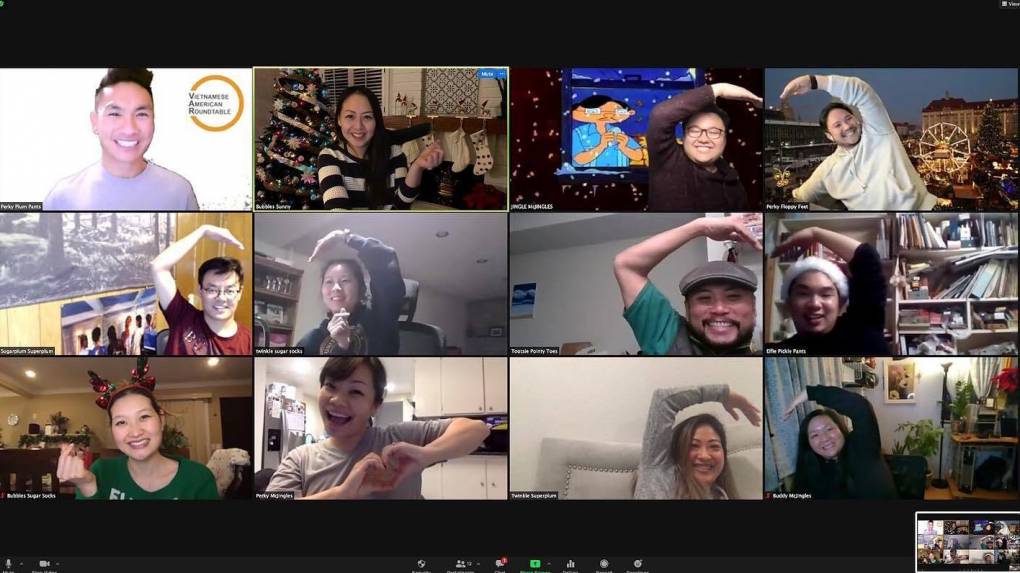
"caption": "The Vietnamese American Roundtable is an organization based in the South Bay, focused on serving the Vietnamese American community in the Bay Area. Since the pandemic started, VAR has been hosting webinars to educate their more than 3,000 followers on how to stay safe from COVID-19.",
"description": null,
"title": "1920_VAR Facebook photo",
"credit": "Photo courtesy of VAR",
"status": "inherit",
"altTag": null,
"isLoading": false,
"fetchFailed": false
},
"news_11873321": {
"type": "attachments",
"id": "news_11873321",
"meta": {
"index": "attachments_1716263798",
"site": "news",
"id": "11873321",
"found": true
},
"parent": 11873313,
"imgSizes": {
"twentyfourteen-full-width": {
"file": "https://ww2.kqed.org/app/uploads/sites/10/2021/05/RS21213_GettyImages-589931494-qut-1038x576.jpeg",
"width": 1038,
"mimeType": "image/jpeg",
"height": 576
},
"thumbnail": {
"file": "https://ww2.kqed.org/app/uploads/sites/10/2021/05/RS21213_GettyImages-589931494-qut-160x109.jpeg",
"width": 160,
"mimeType": "image/jpeg",
"height": 109
},
"post-thumbnail": {
"file": "https://ww2.kqed.org/app/uploads/sites/10/2021/05/RS21213_GettyImages-589931494-qut-672x372.jpeg",
"width": 672,
"mimeType": "image/jpeg",
"height": 372
},
"kqedFullSize": {
"file": "https://ww2.kqed.org/app/uploads/sites/10/2021/05/RS21213_GettyImages-589931494-qut.jpeg",
"width": 1920,
"height": 1305
},
"large": {
"file": "https://ww2.kqed.org/app/uploads/sites/10/2021/05/RS21213_GettyImages-589931494-qut-1020x693.jpeg",
"width": 1020,
"mimeType": "image/jpeg",
"height": 693
},
"1536x1536": {
"file": "https://ww2.kqed.org/app/uploads/sites/10/2021/05/RS21213_GettyImages-589931494-qut-1536x1044.jpeg",
"width": 1536,
"mimeType": "image/jpeg",
"height": 1044
},
"medium": {
"file": "https://ww2.kqed.org/app/uploads/sites/10/2021/05/RS21213_GettyImages-589931494-qut-800x544.jpeg",
"width": 800,
"mimeType": "image/jpeg",
"height": 544
}
},
"publishDate": 1620844690,
"modified": 1632853516,
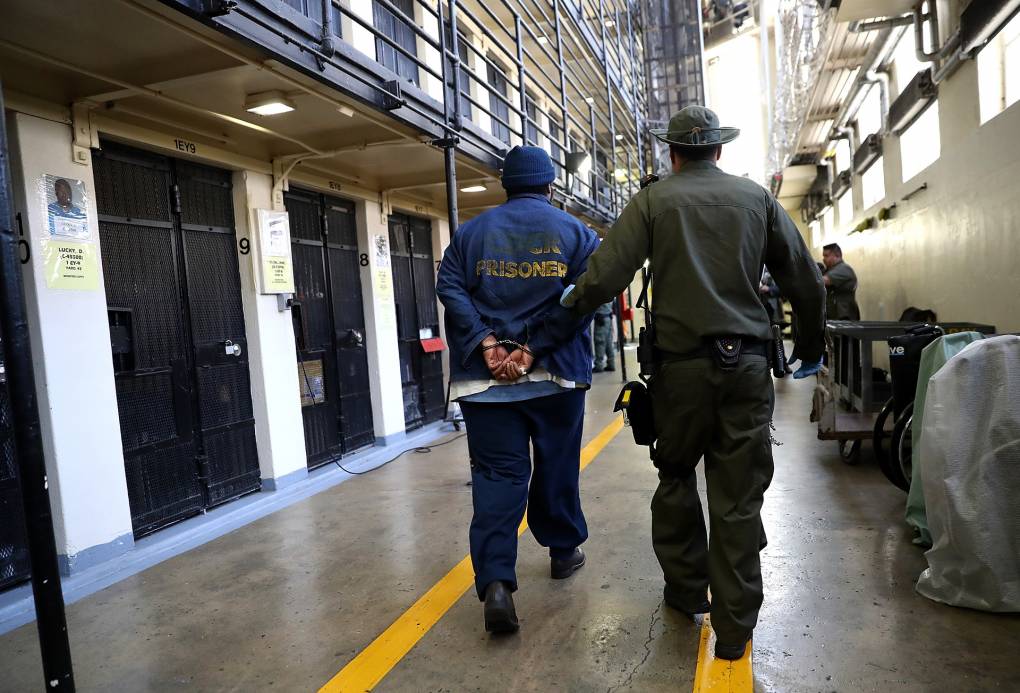
"caption": "An armed California Department of Corrections and Rehabilitation officer escorts an incarcerated person at San Quentin State Prison's death row on Aug. 15, 2016.",
"description": null,
"title": "RS21213_GettyImages-589931494-qut",
"credit": "Justin Sullivan/Getty Images",
"status": "inherit",
"altTag": "A man in a green uniform and hat leads another in a blue jacket with yellow lettering by his hands shackled behind his back.",
"isLoading": false,
"fetchFailed": false
},
"news_11873128": {
"type": "attachments",
"id": "news_11873128",
"meta": {
"index": "attachments_1716263798",
"site": "news",
"id": "11873128",
"found": true
},
"parent": 11873122,
"imgSizes": {
"twentyfourteen-full-width": {
"file": "https://ww2.kqed.org/app/uploads/sites/10/2021/05/termsconditions_051121_final-1038x576.png",
"width": 1038,
"mimeType": "image/png",
"height": 576
},
"thumbnail": {
"file": "https://ww2.kqed.org/app/uploads/sites/10/2021/05/termsconditions_051121_final-160x106.png",
"width": 160,
"mimeType": "image/png",
"height": 106
},
"post-thumbnail": {
"file": "https://ww2.kqed.org/app/uploads/sites/10/2021/05/termsconditions_051121_final-672x372.png",
"width": 672,
"mimeType": "image/png",
"height": 372
},
"kqedFullSize": {
"file": "https://ww2.kqed.org/app/uploads/sites/10/2021/05/termsconditions_051121_final.png",
"width": 1920,
"height": 1270
},
"large": {
"file": "https://ww2.kqed.org/app/uploads/sites/10/2021/05/termsconditions_051121_final-1020x675.png",
"width": 1020,
"mimeType": "image/png",
"height": 675
},
"1536x1536": {
"file": "https://ww2.kqed.org/app/uploads/sites/10/2021/05/termsconditions_051121_final-1536x1016.png",
"width": 1536,
"mimeType": "image/png",
"height": 1016
},
"medium": {
"file": "https://ww2.kqed.org/app/uploads/sites/10/2021/05/termsconditions_051121_final-800x529.png",
"width": 800,
"mimeType": "image/png",
"height": 529
}
},
"publishDate": 1620757858,
"modified": 1620757945,
"caption": null,
"description": null,
"title": "termsconditions_051121_final",
"credit": null,
"status": "inherit",
"altTag": "A Mark Fiore cartoon that reads, \"welcome back, seniors,\" from the SF Unified School District and the teachers union. Small type reads that \"terms and conditions may apply,\" including that there may only be 3-6 days of \"supervision\" in a location that is not your school.",
"isLoading": false,
"fetchFailed": false
},
"news_11872738": {
"type": "attachments",
"id": "news_11872738",
"meta": {
"index": "attachments_1716263798",
"site": "news",
"id": "11872738",
"found": true
},
"parent": 11872330,
"imgSizes": {
"twentyfourteen-full-width": {
"file": "https://ww2.kqed.org/app/uploads/sites/10/2021/05/SaveCCSFRally1-1038x576.jpg",
"width": 1038,
"mimeType": "image/jpeg",
"height": 576
},
"thumbnail": {
"file": "https://ww2.kqed.org/app/uploads/sites/10/2021/05/SaveCCSFRally1-160x107.jpg",
"width": 160,
"mimeType": "image/jpeg",
"height": 107
},
"post-thumbnail": {
"file": "https://ww2.kqed.org/app/uploads/sites/10/2021/05/SaveCCSFRally1-672x372.jpg",
"width": 672,
"mimeType": "image/jpeg",
"height": 372
},
"kqedFullSize": {
"file": "https://ww2.kqed.org/app/uploads/sites/10/2021/05/SaveCCSFRally1.jpg",
"width": 1920,
"height": 1278
},
"large": {
"file": "https://ww2.kqed.org/app/uploads/sites/10/2021/05/SaveCCSFRally1-1020x679.jpg",
"width": 1020,
"mimeType": "image/jpeg",
"height": 679
},
"1536x1536": {
"file": "https://ww2.kqed.org/app/uploads/sites/10/2021/05/SaveCCSFRally1-1536x1022.jpg",
"width": 1536,
"mimeType": "image/jpeg",
"height": 1022
},
"medium": {
"file": "https://ww2.kqed.org/app/uploads/sites/10/2021/05/SaveCCSFRally1-800x533.jpg",
"width": 800,
"mimeType": "image/jpeg",
"height": 533
}
},
"publishDate": 1620412624,
"modified": 1620413151,
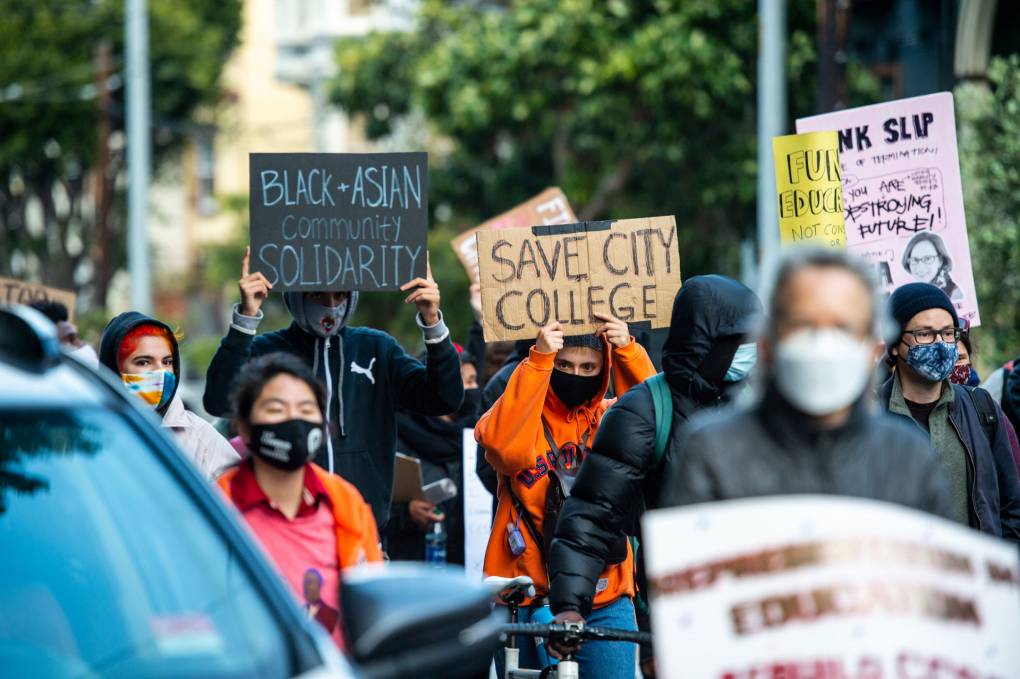
"caption": "Demonstrators march through the Castro neighborhood during a rally in San Francisco on May 6, 2021, to protest layoffs and cuts at City College of San Francisco.",
"description": "Demonstrators march through the Castro neighborhood during a rally in San Francisco on May 6, 2021, to protest layoffs and cuts at City College of San Francisco.",
"title": "SaveCCSFRally1",
"credit": "Beth LaBerge/KQED",
"status": "inherit",
"altTag": null,
"isLoading": false,
"fetchFailed": false
},
"news_11872527": {
"type": "attachments",
"id": "news_11872527",
"meta": {
"index": "attachments_1716263798",
"site": "news",
"id": "11872527",
"found": true
},
"parent": 11872511,
"imgSizes": {
"twentyfourteen-full-width": {
"file": "https://ww2.kqed.org/app/uploads/sites/10/2021/05/DSF9317-1038x576.jpg",
"width": 1038,
"mimeType": "image/jpeg",
"height": 576
},
"thumbnail": {
"file": "https://ww2.kqed.org/app/uploads/sites/10/2021/05/DSF9317-160x120.jpg",
"width": 160,
"mimeType": "image/jpeg",
"height": 120
},
"post-thumbnail": {
"file": "https://ww2.kqed.org/app/uploads/sites/10/2021/05/DSF9317-672x372.jpg",
"width": 672,
"mimeType": "image/jpeg",
"height": 372
},
"kqedFullSize": {
"file": "https://ww2.kqed.org/app/uploads/sites/10/2021/05/DSF9317-scaled-e1620324701699.jpg",
"width": 1920,
"height": 1440
},
"2048x2048": {
"file": "https://ww2.kqed.org/app/uploads/sites/10/2021/05/DSF9317-2048x1536.jpg",
"width": 2048,
"mimeType": "image/jpeg",
"height": 1536
},
"large": {
"file": "https://ww2.kqed.org/app/uploads/sites/10/2021/05/DSF9317-1020x765.jpg",
"width": 1020,
"mimeType": "image/jpeg",
"height": 765
},
"1536x1536": {
"file": "https://ww2.kqed.org/app/uploads/sites/10/2021/05/DSF9317-1536x1152.jpg",
"width": 1536,
"mimeType": "image/jpeg",
"height": 1152
},
"full-width": {
"file": "https://ww2.kqed.org/app/uploads/sites/10/2021/05/DSF9317-1920x1440.jpg",
"width": 1920,
"mimeType": "image/jpeg",
"height": 1440
},
"medium": {
"file": "https://ww2.kqed.org/app/uploads/sites/10/2021/05/DSF9317-800x600.jpg",
"width": 800,
"mimeType": "image/jpeg",
"height": 600
}
},
"publishDate": 1620324670,
"modified": 1620338416,
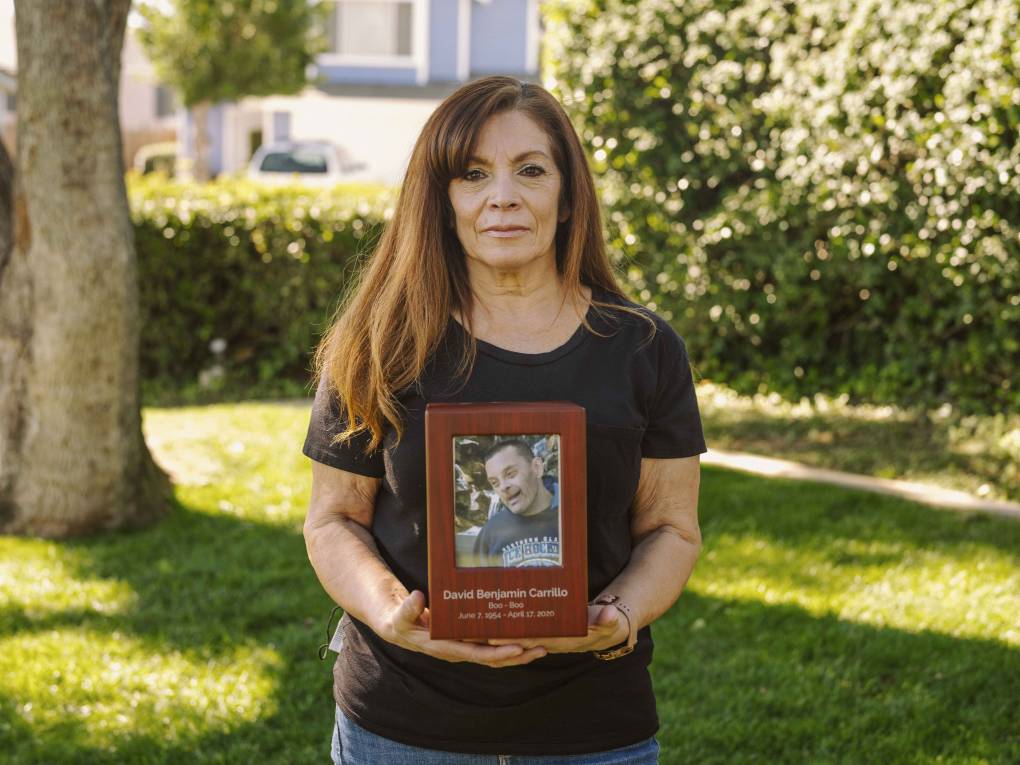
"caption": "After the shutdown last March, Cynthia Carrillo couldn't visit her brother David inside Villa Mesa Care Center, a nursing home in Upland, CA. He died in April 2020 from COVID-19.",
"description": null,
"title": "_DSF9317",
"credit": "Chava Sanchez/LAist",
"status": "inherit",
"altTag": null,
"isLoading": false,
"fetchFailed": false
},
"news_11872569": {
"type": "attachments",
"id": "news_11872569",
"meta": {
"index": "attachments_1716263798",
"site": "news",
"id": "11872569",
"found": true
},
"parent": 11872568,
"imgSizes": {
"twentyfourteen-full-width": {
"file": "https://ww2.kqed.org/app/uploads/sites/10/2021/05/ap_21026043518934-f8eeb92d954b92afc177aea6d3de3f55b5528ad2-1038x576.jpg",
"width": 1038,
"mimeType": "image/jpeg",
"height": 576
},
"thumbnail": {
"file": "https://ww2.kqed.org/app/uploads/sites/10/2021/05/ap_21026043518934-f8eeb92d954b92afc177aea6d3de3f55b5528ad2-160x120.jpg",
"width": 160,
"mimeType": "image/jpeg",
"height": 120
},
"post-thumbnail": {
"file": "https://ww2.kqed.org/app/uploads/sites/10/2021/05/ap_21026043518934-f8eeb92d954b92afc177aea6d3de3f55b5528ad2-672x372.jpg",
"width": 672,
"mimeType": "image/jpeg",
"height": 372
},
"kqedFullSize": {
"file": "https://ww2.kqed.org/app/uploads/sites/10/2021/05/ap_21026043518934-f8eeb92d954b92afc177aea6d3de3f55b5528ad2-scaled-e1620336171424.jpg",
"width": 1920,
"height": 1437
},
"2048x2048": {
"file": "https://ww2.kqed.org/app/uploads/sites/10/2021/05/ap_21026043518934-f8eeb92d954b92afc177aea6d3de3f55b5528ad2-2048x1533.jpg",
"width": 2048,
"mimeType": "image/jpeg",
"height": 1533
},
"large": {
"file": "https://ww2.kqed.org/app/uploads/sites/10/2021/05/ap_21026043518934-f8eeb92d954b92afc177aea6d3de3f55b5528ad2-1020x763.jpg",
"width": 1020,
"mimeType": "image/jpeg",
"height": 763
},
"1536x1536": {
"file": "https://ww2.kqed.org/app/uploads/sites/10/2021/05/ap_21026043518934-f8eeb92d954b92afc177aea6d3de3f55b5528ad2-1536x1150.jpg",
"width": 1536,
"mimeType": "image/jpeg",
"height": 1150
},
"full-width": {
"file": "https://ww2.kqed.org/app/uploads/sites/10/2021/05/ap_21026043518934-f8eeb92d954b92afc177aea6d3de3f55b5528ad2-1920x1437.jpg",
"width": 1920,
"mimeType": "image/jpeg",
"height": 1437
},
"medium": {
"file": "https://ww2.kqed.org/app/uploads/sites/10/2021/05/ap_21026043518934-f8eeb92d954b92afc177aea6d3de3f55b5528ad2-800x599.jpg",
"width": 800,
"mimeType": "image/jpeg",
"height": 599
}
},
"publishDate": 1620331134,
"modified": 1620336374,
"caption": "Demonstrators calling for lawmakers and Gov. Gavin Newsom to pass rent forgiveness and stronger eviction protections legislation, gather in front of the Capitol in Sacramento on Jan. 25, 2021.",
"description": "Demonstrators calling for lawmakers and Gov. Gavin Newsom to pass rent forgiveness and stronger eviction protections legislation, gather in front of the Capitol in Sacramento on Jan. 25, 2021.",
"title": "Protesters call for stronger eviction protections in January in Sacramento, Calif. A federal appeals court will now decide whether to scrap a federal eviction moratorium from the CDC. Housing groups say renters need more time to qualify for and get rental assistance money.",
"credit": "Rich Pedroncelli/AP",
"status": "inherit",
"altTag": "Demonstrators hold signs that read \"Evictions = Death\" in front of the Capitol in Sacramento.",
"isLoading": false,
"fetchFailed": false
},
"news_11872279": {
"type": "attachments",
"id": "news_11872279",
"meta": {
"index": "attachments_1716263798",
"site": "news",
"id": "11872279",
"found": true
},
"parent": 11872278,
"imgSizes": {
"twentyfourteen-full-width": {
"file": "https://ww2.kqed.org/app/uploads/sites/10/2021/05/covidisolation-1038x576.jpg",
"width": 1038,
"mimeType": "image/jpeg",
"height": 576
},
"thumbnail": {
"file": "https://ww2.kqed.org/app/uploads/sites/10/2021/05/covidisolation-160x97.jpg",
"width": 160,
"mimeType": "image/jpeg",
"height": 97
},
"post-thumbnail": {
"file": "https://ww2.kqed.org/app/uploads/sites/10/2021/05/covidisolation-672x372.jpg",
"width": 672,
"mimeType": "image/jpeg",
"height": 372
},
"kqedFullSize": {
"file": "https://ww2.kqed.org/app/uploads/sites/10/2021/05/covidisolation.jpg",
"width": 1267,
"height": 765
},
"large": {
"file": "https://ww2.kqed.org/app/uploads/sites/10/2021/05/covidisolation-1020x616.jpg",
"width": 1020,
"mimeType": "image/jpeg",
"height": 616
},
"medium": {
"file": "https://ww2.kqed.org/app/uploads/sites/10/2021/05/covidisolation-800x483.jpg",
"width": 800,
"mimeType": "image/jpeg",
"height": 483
}
},
"publishDate": 1620234935,
"modified": 1620264579,
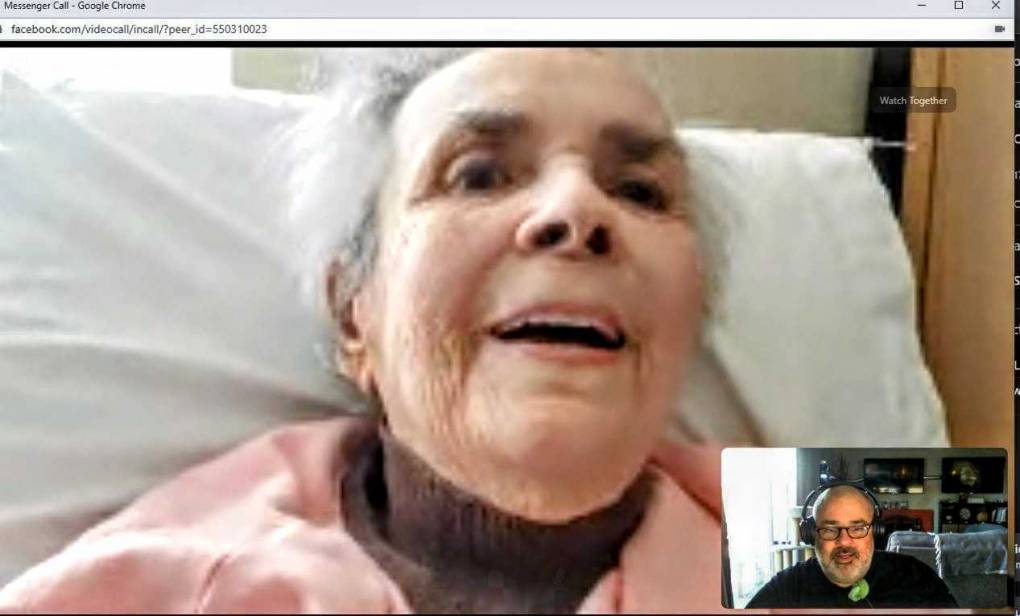
"caption": "In one of their last calls before Dorothy Newtown died of cancer alone in a nursing home, her son Kenneth talked with her over Zoom.",
"description": null,
"title": "covidisolation",
"credit": "Courtesy Kenneth Newton",
"status": "inherit",
"altTag": null,
"isLoading": false,
"fetchFailed": false
},
"news_11872171": {
"type": "attachments",
"id": "news_11872171",
"meta": {
"index": "attachments_1716263798",
"site": "news",
"id": "11872171",
"found": true
},
"parent": 11872170,
"imgSizes": {
"twentyfourteen-full-width": {
"file": "https://ww2.kqed.org/app/uploads/sites/10/2021/05/1920_GettyImages-1232681890-1-1038x576.jpg",
"width": 1038,
"mimeType": "image/jpeg",
"height": 576
},
"thumbnail": {
"file": "https://ww2.kqed.org/app/uploads/sites/10/2021/05/1920_GettyImages-1232681890-1-160x90.jpg",
"width": 160,
"mimeType": "image/jpeg",
"height": 90
},
"post-thumbnail": {
"file": "https://ww2.kqed.org/app/uploads/sites/10/2021/05/1920_GettyImages-1232681890-1-672x372.jpg",
"width": 672,
"mimeType": "image/jpeg",
"height": 372
},
"kqedFullSize": {
"file": "https://ww2.kqed.org/app/uploads/sites/10/2021/05/1920_GettyImages-1232681890-1-scaled.jpg",
"width": 2560,
"height": 1440
},
"2048x2048": {
"file": "https://ww2.kqed.org/app/uploads/sites/10/2021/05/1920_GettyImages-1232681890-1-2048x1152.jpg",
"width": 2048,
"mimeType": "image/jpeg",
"height": 1152
},
"large": {
"file": "https://ww2.kqed.org/app/uploads/sites/10/2021/05/1920_GettyImages-1232681890-1-1020x574.jpg",
"width": 1020,
"mimeType": "image/jpeg",
"height": 574
},
"1536x1536": {
"file": "https://ww2.kqed.org/app/uploads/sites/10/2021/05/1920_GettyImages-1232681890-1-1536x864.jpg",
"width": 1536,
"mimeType": "image/jpeg",
"height": 864
},
"full-width": {
"file": "https://ww2.kqed.org/app/uploads/sites/10/2021/05/1920_GettyImages-1232681890-1-1920x1080.jpg",
"width": 1920,
"mimeType": "image/jpeg",
"height": 1080
},
"medium": {
"file": "https://ww2.kqed.org/app/uploads/sites/10/2021/05/1920_GettyImages-1232681890-1-800x450.jpg",
"width": 800,
"mimeType": "image/jpeg",
"height": 450
}
},
"publishDate": 1620154969,
"modified": 1620155030,
"caption": "People wait to refill their oxygen cylinders for the COVID-19 coronavirus patients under home quarantine at a private refilling centre in New Delhi on May 4, 2021.",
"description": null,
"title": "INDIA-HEALTH-VIRUS-OXYGEN",
"credit": "Money Sharma/Getty Images",
"status": "inherit",
"altTag": null,
"isLoading": false,
"fetchFailed": false
},
"news_11872190": {
"type": "attachments",
"id": "news_11872190",
"meta": {
"index": "attachments_1716263798",
"site": "news",
"id": "11872190",
"found": true
},
"parent": 11872169,
"imgSizes": {
"twentyfourteen-full-width": {
"file": "https://ww2.kqed.org/app/uploads/sites/10/2021/05/RS47553_004_SanFrancisco_Pier39Reopening_03042021-qut-1038x576.jpg",
"width": 1038,
"mimeType": "image/jpeg",
"height": 576
},
"thumbnail": {
"file": "https://ww2.kqed.org/app/uploads/sites/10/2021/05/RS47553_004_SanFrancisco_Pier39Reopening_03042021-qut-160x107.jpg",
"width": 160,
"mimeType": "image/jpeg",
"height": 107
},
"post-thumbnail": {
"file": "https://ww2.kqed.org/app/uploads/sites/10/2021/05/RS47553_004_SanFrancisco_Pier39Reopening_03042021-qut-672x372.jpg",
"width": 672,
"mimeType": "image/jpeg",
"height": 372
},
"kqedFullSize": {
"file": "https://ww2.kqed.org/app/uploads/sites/10/2021/05/RS47553_004_SanFrancisco_Pier39Reopening_03042021-qut.jpg",
"width": 1920,
"height": 1280
},
"large": {
"file": "https://ww2.kqed.org/app/uploads/sites/10/2021/05/RS47553_004_SanFrancisco_Pier39Reopening_03042021-qut-1020x680.jpg",
"width": 1020,
"mimeType": "image/jpeg",
"height": 680
},
"1536x1536": {
"file": "https://ww2.kqed.org/app/uploads/sites/10/2021/05/RS47553_004_SanFrancisco_Pier39Reopening_03042021-qut-1536x1024.jpg",
"width": 1536,
"mimeType": "image/jpeg",
"height": 1024
},
"medium": {
"file": "https://ww2.kqed.org/app/uploads/sites/10/2021/05/RS47553_004_SanFrancisco_Pier39Reopening_03042021-qut-800x533.jpg",
"width": 800,
"mimeType": "image/jpeg",
"height": 533
}
},
"publishDate": 1620161719,
"modified": 1620167958,
"caption": "Jorge Arreola sanitizes a table at Pier Market after the restaurant reopened for indoor dining on March 4, 2021.",
"description": null,
"title": "RS47553_004_SanFrancisco_Pier39Reopening_03042021-qut",
"credit": "Beth LaBerge/KQED",
"status": "inherit",
"altTag": null,
"isLoading": false,
"fetchFailed": false
},
"news_11872076": {
"type": "attachments",
"id": "news_11872076",
"meta": {
"index": "attachments_1716263798",
"site": "news",
"id": "11872076",
"found": true
},
"parent": 11872046,
"imgSizes": {
"twentyfourteen-full-width": {
"file": "https://ww2.kqed.org/app/uploads/sites/10/2021/05/RS48881_GettyImages-1231697879-qut-1038x576.jpg",
"width": 1038,
"mimeType": "image/jpeg",
"height": 576
},
"thumbnail": {
"file": "https://ww2.kqed.org/app/uploads/sites/10/2021/05/RS48881_GettyImages-1231697879-qut-160x107.jpg",
"width": 160,
"mimeType": "image/jpeg",
"height": 107
},
"post-thumbnail": {
"file": "https://ww2.kqed.org/app/uploads/sites/10/2021/05/RS48881_GettyImages-1231697879-qut-672x372.jpg",
"width": 672,
"mimeType": "image/jpeg",
"height": 372
},
"kqedFullSize": {
"file": "https://ww2.kqed.org/app/uploads/sites/10/2021/05/RS48881_GettyImages-1231697879-qut.jpg",
"width": 1920,
"height": 1280
},
"large": {
"file": "https://ww2.kqed.org/app/uploads/sites/10/2021/05/RS48881_GettyImages-1231697879-qut-1020x680.jpg",
"width": 1020,
"mimeType": "image/jpeg",
"height": 680
},
"1536x1536": {
"file": "https://ww2.kqed.org/app/uploads/sites/10/2021/05/RS48881_GettyImages-1231697879-qut-1536x1024.jpg",
"width": 1536,
"mimeType": "image/jpeg",
"height": 1024
},
"medium": {
"file": "https://ww2.kqed.org/app/uploads/sites/10/2021/05/RS48881_GettyImages-1231697879-qut-800x533.jpg",
"width": 800,
"mimeType": "image/jpeg",
"height": 533
}
},
"publishDate": 1620080696,
"modified": 1620086748,
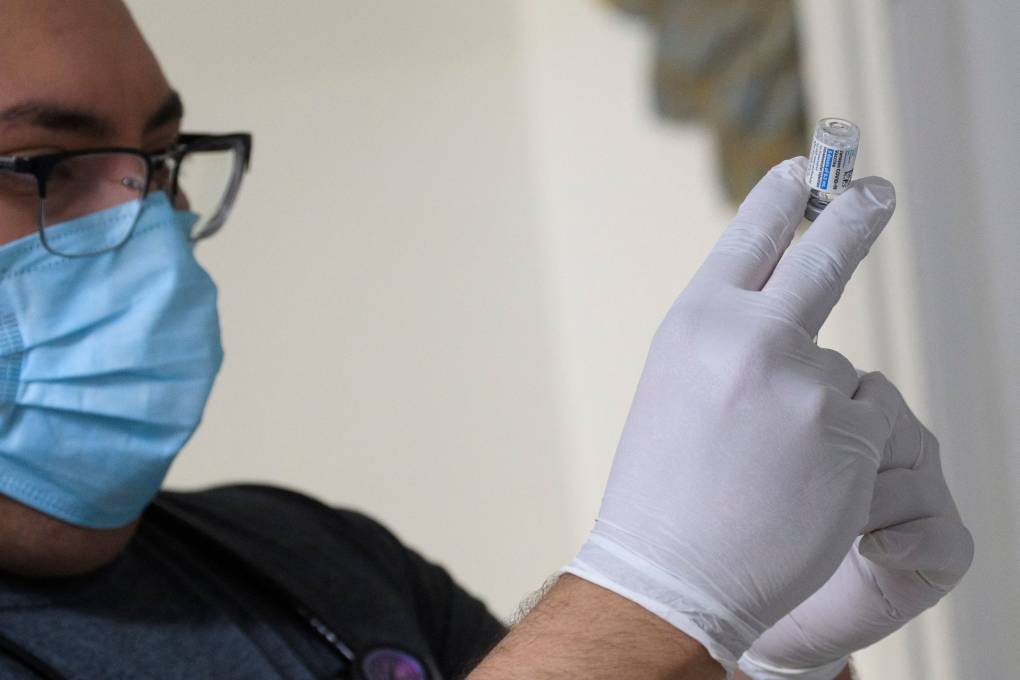
"caption": "A syringe is filled with a dose of the Johnson & Johnson/Janssen COVID-19 vaccine at a vaccination site organized by the United Farm Workers, Kern Medical and the Kern County Latino COVID-19 Task Force on March 13, 2021 in Delano. The San Joaquin Valley is home to some of the least vaccinated counties in California.",
"description": "A syringe is filled with a dose of the Johnson & Johnson Janssen COVID-19 vaccine at a vaccination site organized by the United Farm Workers, Kern Medical and the Kern County Latino COVID-19 Task Force on March 13, 2021 in Delano. The San Joaquin Valley is home to some of the least vaccinated counties in California.",
"title": "US-HEALTH-VIRUS-VACCINE",
"credit": "Patrick T. Fallon/AFP via Getty Images",
"status": "inherit",
"altTag": "worker fills a syringe",
"isLoading": false,
"fetchFailed": false
},
"news_11871988": {
"type": "attachments",
"id": "news_11871988",
"meta": {
"index": "attachments_1716263798",
"site": "news",
"id": "11871988",
"found": true
},
"parent": 11871986,
"imgSizes": {
"twentyfourteen-full-width": {
"file": "https://ww2.kqed.org/app/uploads/sites/10/2021/05/1920_GettyImages-1232647259-1038x576.jpg",
"width": 1038,
"mimeType": "image/jpeg",
"height": 576
},
"thumbnail": {
"file": "https://ww2.kqed.org/app/uploads/sites/10/2021/05/1920_GettyImages-1232647259-160x90.jpg",
"width": 160,
"mimeType": "image/jpeg",
"height": 90
},
"post-thumbnail": {
"file": "https://ww2.kqed.org/app/uploads/sites/10/2021/05/1920_GettyImages-1232647259-672x372.jpg",
"width": 672,
"mimeType": "image/jpeg",
"height": 372
},
"kqedFullSize": {
"file": "https://ww2.kqed.org/app/uploads/sites/10/2021/05/1920_GettyImages-1232647259-scaled.jpg",
"width": 2560,
"height": 1440
},
"2048x2048": {
"file": "https://ww2.kqed.org/app/uploads/sites/10/2021/05/1920_GettyImages-1232647259-2048x1152.jpg",
"width": 2048,
"mimeType": "image/jpeg",
"height": 1152
},
"large": {
"file": "https://ww2.kqed.org/app/uploads/sites/10/2021/05/1920_GettyImages-1232647259-1020x574.jpg",
"width": 1020,
"mimeType": "image/jpeg",
"height": 574
},
"1536x1536": {
"file": "https://ww2.kqed.org/app/uploads/sites/10/2021/05/1920_GettyImages-1232647259-1536x864.jpg",
"width": 1536,
"mimeType": "image/jpeg",
"height": 864
},
"full-width": {
"file": "https://ww2.kqed.org/app/uploads/sites/10/2021/05/1920_GettyImages-1232647259-1920x1080.jpg",
"width": 1920,
"mimeType": "image/jpeg",
"height": 1080
},
"medium": {
"file": "https://ww2.kqed.org/app/uploads/sites/10/2021/05/1920_GettyImages-1232647259-800x450.jpg",
"width": 800,
"mimeType": "image/jpeg",
"height": 450
}
},
"publishDate": 1620008144,
"modified": 1620075272,
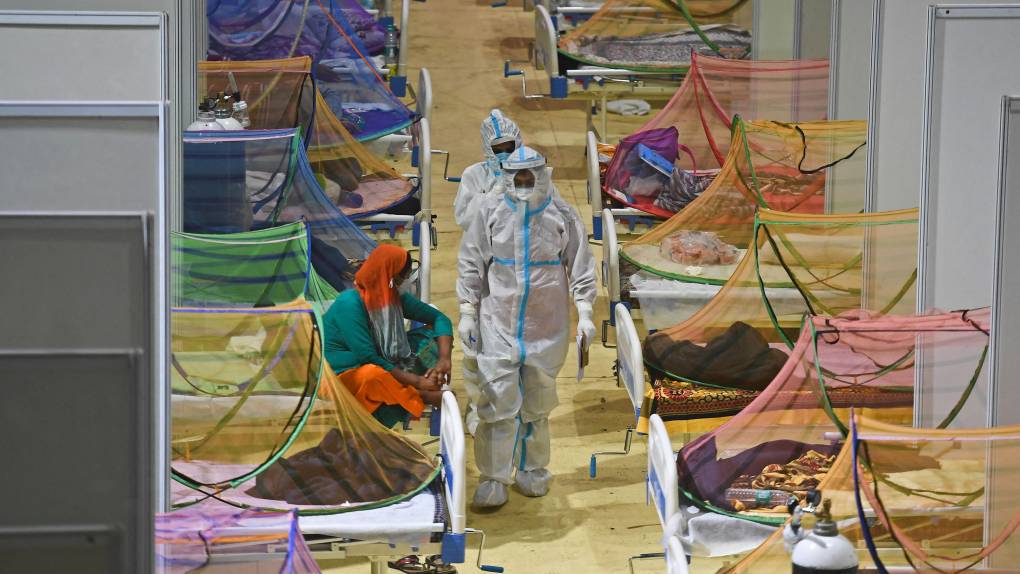
"caption": "Health workers wearing personal protective equipment suits assist COVID-19 patients inside a Commonwealth Games village temporarily converted into a COVID care facility, in New Delhi on May 2, 2021. ",
"description": null,
"title": "INDIA-HEALTH-VIRUS",
"credit": "Tauseef Mustafa/AFP via Getty Images",
"status": "inherit",
"altTag": null,
"isLoading": false,
"fetchFailed": false
},
"news_11871778": {
"type": "attachments",
"id": "news_11871778",
"meta": {
"index": "attachments_1716263798",
"site": "news",
"id": "11871778",
"found": true
},
"parent": 11871623,
"imgSizes": {
"twentyfourteen-full-width": {
"file": "https://ww2.kqed.org/app/uploads/sites/10/2021/04/Lisa-tracing-with-Jonesy-CROPPED-2-1038x576.jpg",
"width": 1038,
"mimeType": "image/jpeg",
"height": 576
},
"thumbnail": {
"file": "https://ww2.kqed.org/app/uploads/sites/10/2021/04/Lisa-tracing-with-Jonesy-CROPPED-2-160x125.jpg",
"width": 160,
"mimeType": "image/jpeg",
"height": 125
},
"post-thumbnail": {
"file": "https://ww2.kqed.org/app/uploads/sites/10/2021/04/Lisa-tracing-with-Jonesy-CROPPED-2-672x372.jpg",
"width": 672,
"mimeType": "image/jpeg",
"height": 372
},
"kqedFullSize": {
"file": "https://ww2.kqed.org/app/uploads/sites/10/2021/04/Lisa-tracing-with-Jonesy-CROPPED-2.jpg",
"width": 1440,
"height": 1126
},
"large": {
"file": "https://ww2.kqed.org/app/uploads/sites/10/2021/04/Lisa-tracing-with-Jonesy-CROPPED-2-1020x798.jpg",
"width": 1020,
"mimeType": "image/jpeg",
"height": 798
},
"medium": {
"file": "https://ww2.kqed.org/app/uploads/sites/10/2021/04/Lisa-tracing-with-Jonesy-CROPPED-2-800x626.jpg",
"width": 800,
"mimeType": "image/jpeg",
"height": 626
}
},
"publishDate": 1619741538,
"modified": 1619741593,
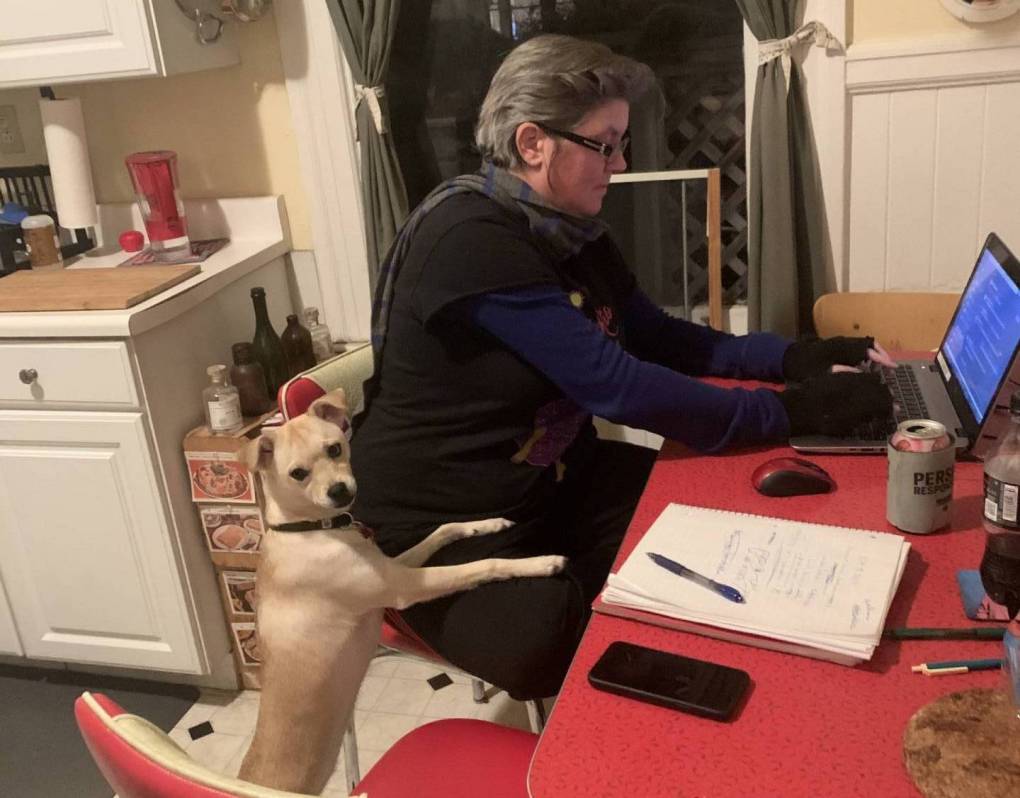
"caption": "Lisa Fagundes contact tracing at her kitchen table with her new puppy, Jonesy, in fall 2020.",
"description": null,
"title": "Lisa tracing with Jonesy CROPPED 2",
"credit": "Jasmin Serim",
"status": "inherit",
"altTag": null,
"isLoading": false,
"fetchFailed": false
}
},
"audioPlayerReducer": {
"postId": "stream_live",
"isPaused": true,
"isPlaying": false,
"pfsActive": false,
"pledgeModalIsOpen": true,
"playerDrawerIsOpen": false,
"liveAudioPlayStartedAt": 0,
"liveAudioPlayContext": ""
},
"authorsReducer": {
"byline_news_11873313": {
"type": "authors",
"id": "byline_news_11873313",
"meta": {
"override": true
},
"slug": "byline_news_11873313",
"name": "Byrhonda Lyons",
"isLoading": false
},
"dmarks": {
"type": "authors",
"id": "182",
"meta": {
"index": "authors_1716337520",
"id": "182",
"found": true
},
"name": "David Marks",
"firstName": "David",
"lastName": "Marks",
"slug": "dmarks",
"email": "dmarks@kqed.org",
"display_author_email": false,
"staff_mastheads": [],
"title": "KQED Editor",
"bio": "David Marks is a senior digital editor for KQED News. \u003c/a>Reach him at dmarks@kqed.org.",
"avatar": "https://secure.gravatar.com/avatar/b88bd6227ce6cb96ae33fefaf42b2a29?s=600&d=mm&r=g",
"twitter": "divadskram",
"facebook": null,
"instagram": null,
"linkedin": null,
"sites": [
{
"site": "news",
"roles": []
},
{
"site": "science",
"roles": []
},
{
"site": "perspectives",
"roles": []
},
{
"site": "liveblog",
"roles": []
}
],
"headData": {
"title": "David Marks | KQED",
"description": "KQED Editor",
"ogImgSrc": "https://secure.gravatar.com/avatar/b88bd6227ce6cb96ae33fefaf42b2a29?s=600&d=mm&r=g",
"twImgSrc": "https://secure.gravatar.com/avatar/b88bd6227ce6cb96ae33fefaf42b2a29?s=600&d=mm&r=g"
},
"isLoading": false,
"link": "/author/dmarks"
},
"kqed": {
"type": "authors",
"id": "236",
"meta": {
"index": "authors_1716337520",
"id": "236",
"found": true
},
"name": "KQED News Staff",
"firstName": "KQED News Staff",
"lastName": null,
"slug": "kqed",
"email": "faq@kqed.org",
"display_author_email": false,
"staff_mastheads": [],
"title": null,
"bio": null,
"avatar": "https://secure.gravatar.com/avatar/ef0e801a68c4c54afa9180db14084167?s=600&d=blank&r=g",
"twitter": null,
"facebook": null,
"instagram": null,
"linkedin": null,
"sites": [
{
"site": "arts",
"roles": [
"contributor"
]
},
{
"site": "news",
"roles": [
"editor"
]
},
{
"site": "futureofyou",
"roles": [
"author"
]
}
],
"headData": {
"title": "KQED News Staff | KQED",
"description": null,
"ogImgSrc": "https://secure.gravatar.com/avatar/ef0e801a68c4c54afa9180db14084167?s=600&d=blank&r=g",
"twImgSrc": "https://secure.gravatar.com/avatar/ef0e801a68c4c54afa9180db14084167?s=600&d=blank&r=g"
},
"isLoading": false,
"link": "/author/kqed"
},
"kqednewsstaffandwires": {
"type": "authors",
"id": "237",
"meta": {
"index": "authors_1716337520",
"id": "237",
"found": true
},
"name": "KQED News Staff and Wires",
"firstName": "KQED News Staff and Wires",
"lastName": null,
"slug": "kqednewsstaffandwires",
"email": "onlinenewsstaff@kqed.org",
"display_author_email": false,
"staff_mastheads": [],
"title": null,
"bio": null,
"avatar": "https://secure.gravatar.com/avatar/72295af8ebbfbd19a4948f5271285664?s=600&d=blank&r=g",
"twitter": null,
"facebook": null,
"instagram": null,
"linkedin": null,
"sites": [
{
"site": "arts",
"roles": [
"contributor"
]
},
{
"site": "news",
"roles": [
"contributor"
]
},
{
"site": "lowdown",
"roles": [
"author"
]
},
{
"site": "stateofhealth",
"roles": [
"contributor"
]
},
{
"site": "food",
"roles": [
"author"
]
}
],
"headData": {
"title": "KQED News Staff and Wires | KQED",
"description": null,
"ogImgSrc": "https://secure.gravatar.com/avatar/72295af8ebbfbd19a4948f5271285664?s=600&d=blank&r=g",
"twImgSrc": "https://secure.gravatar.com/avatar/72295af8ebbfbd19a4948f5271285664?s=600&d=blank&r=g"
},
"isLoading": false,
"link": "/author/kqednewsstaffandwires"
},
"matthewgreen": {
"type": "authors",
"id": "1263",
"meta": {
"index": "authors_1716337520",
"id": "1263",
"found": true
},
"name": "Matthew Green",
"firstName": "Matthew",
"lastName": "Green",
"slug": "matthewgreen",
"email": "mgreen@kqed.org",
"display_author_email": false,
"staff_mastheads": [],
"title": "KQED Editor/Reporter",
"bio": "Matthew Green is a digital media producer for KQED News. He previously produced \u003ca href=\"http://www.kqed.org/lowdown\">The Lowdown\u003c/a>, KQED’s multimedia news education blog. Matthew's written for numerous Bay Area publications, including the Oakland Tribune and San Francisco Chronicle. He also taught journalism classes at Fremont High School in East Oakland.\r\n\r\nEmail: mgreen@kqed.org; Twitter: @MGreenKQED",
"avatar": "https://secure.gravatar.com/avatar/3bf498d1267ca02c8494f33d8cfc575e?s=600&d=blank&r=g",
"twitter": "MGreenKQED",
"facebook": null,
"instagram": null,
"linkedin": null,
"sites": [
{
"site": "news",
"roles": []
},
{
"site": "lowdown",
"roles": []
},
{
"site": "science",
"roles": []
},
{
"site": "education",
"roles": []
},
{
"site": "quest",
"roles": []
},
{
"site": "liveblog",
"roles": []
}
],
"headData": {
"title": "Matthew Green | KQED",
"description": "KQED Editor/Reporter",
"ogImgSrc": "https://secure.gravatar.com/avatar/3bf498d1267ca02c8494f33d8cfc575e?s=600&d=blank&r=g",
"twImgSrc": "https://secure.gravatar.com/avatar/3bf498d1267ca02c8494f33d8cfc575e?s=600&d=blank&r=g"
},
"isLoading": false,
"link": "/author/matthewgreen"
},
"markfiore": {
"type": "authors",
"id": "3236",
"meta": {
"index": "authors_1716337520",
"id": "3236",
"found": true
},
"name": "Mark Fiore",
"firstName": "Mark",
"lastName": "Fiore",
"slug": "markfiore",
"email": "mark@markfiore.com",
"display_author_email": false,
"staff_mastheads": [
"news"
],
"title": "KQED News Cartoonist",
"bio": "\u003ca href=\"http://www.MarkFiore.com\">MarkFiore.com\u003c/a> | \u003ca href=\"https://twitter.com/markfiore\">Follow on Twitter\u003c/a> | \u003ca href=\"https://www.facebook.com/pages/Mark-Fiore-Animated-Political-Cartoons/94451707396?ref=bookmarks\">Facebook\u003c/a> | \u003ca href=\"mailto:mark@markfiore.com\">email\u003c/a>\r\n\r\nPulitzer Prize-winner, Mark Fiore, who the Wall Street Journal has called “the undisputed guru of the form,” creates animated political cartoons in San Francisco, where his work has been featured regularly on the San Francisco Chronicle’s web site, SFGate.com. His work has appeared on Newsweek.com, Slate.com, CBSNews.com, MotherJones.com, DailyKos.com and NPR’s web site. Fiore’s political animation has appeared on CNN, Frontline, Bill Moyers Journal, Salon.com and cable and broadcast outlets across the globe.\r\n\r\nBeginning his professional life by drawing traditional political cartoons for newspapers, Fiore’s work appeared in publications ranging from the Washington Post to the Los Angeles Times. In the late 1990s, he began to experiment with animating political cartoons and, after a short stint at the San Jose Mercury News as their staff cartoonist, Fiore devoted all his energies to animation.\r\nGrowing up in California, Fiore also spent a good portion of his life in the backwoods of Idaho. It was this combination that shaped him politically. Mark majored in political science at Colorado College, where, in a perfect send-off for a cartoonist, he received his diploma in 1991 as commencement speaker Dick Cheney smiled approvingly.\r\nMark Fiore was awarded the Pulitzer Prize for political cartooning in 2010, a Robert F. Kennedy Journalism Award in 2004 and has twice received an Online Journalism Award for commentary from the Online News Association (2002, 2008). Fiore has received two awards for his work in new media from the National Cartoonists Society (2001, 2002), and in 2006 received The James Madison Freedom of Information Award from The Society of Professional Journalists.",
"avatar": "https://secure.gravatar.com/avatar/fc4e2a612b15b67bad0c6f0e1db4ca9b?s=600&d=blank&r=g",
"twitter": "MarkFiore",
"facebook": null,
"instagram": "https://www.instagram.com/markfiore/?hl=en",
"linkedin": null,
"sites": [
{
"site": "arts",
"roles": [
"contributor"
]
},
{
"site": "news",
"roles": [
"editor"
]
},
{
"site": "futureofyou",
"roles": [
"editor"
]
},
{
"site": "science",
"roles": [
"editor"
]
}
],
"headData": {
"title": "Mark Fiore | KQED",
"description": "KQED News Cartoonist",
"ogImgSrc": "https://secure.gravatar.com/avatar/fc4e2a612b15b67bad0c6f0e1db4ca9b?s=600&d=blank&r=g",
"twImgSrc": "https://secure.gravatar.com/avatar/fc4e2a612b15b67bad0c6f0e1db4ca9b?s=600&d=blank&r=g"
},
"isLoading": false,
"link": "/author/markfiore"
},
"dkatayama": {
"type": "authors",
"id": "7240",
"meta": {
"index": "authors_1716337520",
"id": "7240",
"found": true
},
"name": "Devin Katayama",
"firstName": "Devin",
"lastName": "Katayama",
"slug": "dkatayama",
"email": "dkatayama@kqed.org",
"display_author_email": true,
"staff_mastheads": [
"news"
],
"title": "Editor of Talent and Development",
"bio": "Devin Katayama is former Editor of Talent and Development for KQED. He supported our internship program and on-call staff by looking for equitable opportunities to improve the newsroom.\r\n\r\nHe previously hosted The Bay and American Suburb podcasts from KQED News. Prior to returning to the Bay Area in 2015, Devin was the education reporter for WFPL in Louisville and worked as a producer with radio stations in Chicago and Portland, OR. His work has appeared on NPR’s \u003cem>Morning Edition, All Things Considered, The Takeaway\u003c/em> and \u003cem>Here and Now.\u003c/em>\r\n\r\nDevin earned his MA in Journalism from Columbia College Chicago, where he was a Follett Fellow and the recipient of the 2011 Studs Terkel Community Media Workshop Scholarship for his story on Chicago's homeless youth. He won WBUR's 2014 Daniel Schorr award and a regional RTNDA Edward R. Murrow Award for his documentary \"At Risk\" that looked at issues facing some of Louisville's students. Devin has also received numerous local awards from the Associated Press and the Society of Professional Journalists.",
"avatar": "https://secure.gravatar.com/avatar/d0d2978a31002fb2de107921a8e18405?s=600&d=blank&r=g",
"twitter": "RadioDevin",
"facebook": null,
"instagram": null,
"linkedin": null,
"sites": [
{
"site": "arts",
"roles": []
},
{
"site": "news",
"roles": [
"author"
]
},
{
"site": "stateofhealth",
"roles": [
"author"
]
},
{
"site": "forum",
"roles": [
"editor"
]
},
{
"site": "perspectives",
"roles": [
"editor"
]
}
],
"headData": {
"title": "Devin Katayama | KQED",
"description": "Editor of Talent and Development",
"ogImgSrc": "https://secure.gravatar.com/avatar/d0d2978a31002fb2de107921a8e18405?s=600&d=blank&r=g",
"twImgSrc": "https://secure.gravatar.com/avatar/d0d2978a31002fb2de107921a8e18405?s=600&d=blank&r=g"
},
"isLoading": false,
"link": "/author/dkatayama"
},
"ecruzguevarra": {
"type": "authors",
"id": "8654",
"meta": {
"index": "authors_1716337520",
"id": "8654",
"found": true
},
"name": "Ericka Cruz Guevarra",
"firstName": "Ericka",
"lastName": "Cruz Guevarra",
"slug": "ecruzguevarra",
"email": "ecruzguevarra@kqed.org",
"display_author_email": true,
"staff_mastheads": [
"news"
],
"title": "Producer, The Bay Podcast",
"bio": "Ericka Cruz Guevarra is host of \u003ca href=\"https://www.kqed.org/podcasts/thebay\">\u003cem>The Bay\u003c/em>\u003c/a> podcast at KQED. Before host, she was the show’s producer. Her work in that capacity includes a three-part reported series on policing in Vallejo, which won a 2020 excellence in journalism award from the Society of Professional Journalists. Ericka has worked as a breaking news reporter at Oregon Public Broadcasting, helped produce the Code Switch podcast, and was KQED’s inaugural Raul Ramirez Diversity Fund intern. She’s also an alumna of NPR’s Next Generation Radio program. Send her an email if you have strong feelings about whether Fairfield and Suisun City are the Bay. Ericka is represented by SAG-AFTRA.",
"avatar": "https://secure.gravatar.com/avatar/accefc1de4bafc7e234b69bcb9b6f6536c130fd84709bc3069ef11a78787e1bb?s=600&d=blank&r=g",
"twitter": "NotoriousECG",
"bluesky": null,
"facebook": null,
"instagram": null,
"linkedin": null,
"sites": [
{
"site": "arts",
"roles": [
"subscriber"
]
},
{
"site": "news",
"roles": [
"editor",
"manage_categories"
]
},
{
"site": "futureofyou",
"roles": [
"subscriber"
]
},
{
"site": "stateofhealth",
"roles": [
"subscriber"
]
},
{
"site": "science",
"roles": [
"editor"
]
},
{
"site": "forum",
"roles": [
"subscriber"
]
}
],
"headData": {
"title": "Ericka Cruz Guevarra | KQED",
"description": "Producer, The Bay Podcast",
"ogImgSrc": "https://secure.gravatar.com/avatar/accefc1de4bafc7e234b69bcb9b6f6536c130fd84709bc3069ef11a78787e1bb?s=600&d=blank&r=g",
"twImgSrc": "https://secure.gravatar.com/avatar/accefc1de4bafc7e234b69bcb9b6f6536c130fd84709bc3069ef11a78787e1bb?s=600&d=blank&r=g"
},
"isLoading": false,
"link": "/author/ecruzguevarra"
},
"lesleymcclurg": {
"type": "authors",
"id": "11229",
"meta": {
"index": "authors_1716337520",
"id": "11229",
"found": true
},
"name": "Lesley McClurg",
"firstName": "Lesley",
"lastName": "McClurg",
"slug": "lesleymcclurg",
"email": "lmcclurg@KQED.org",
"display_author_email": false,
"staff_mastheads": [
"news",
"science"
],
"title": "KQED Health Correspondent",
"bio": "Lesley McClurg is a health correspondent and fill-in host whose work is regularly rebroadcast on NPR and PBS programs. She’s earned multiple regional Emmy awards, a national and a regional Edward R. Murrow award, and was named Best Beat Reporter by the Association of Health Care Journalists. The Society of Professional Journalists has recognized her work several times, and the Society of Environmental Journalists spotlighted her coverage of California’s historic drought.\r\n\r\nBefore joining KQED in 2016, Lesley covered food and sustainability for Capital Public Radio, environmental issues for Colorado Public Radio, and reported for KUOW and KCTS 9 in Seattle. Away from the newsroom, she loves skiing with her daughter, mountain biking with her partner, and playing with Ollie, the family’s goldendoodle. On deadline, she runs almost entirely on chocolate chips.\r\n\r\n ",
"avatar": "https://secure.gravatar.com/avatar/bab49e972ea10c774fe0f5e29dba1722b158f7c0d58a360923d1389d380b2978?s=600&d=blank&r=g",
"twitter": "lesleywmcclurg",
"bluesky": null,
"facebook": null,
"instagram": null,
"linkedin": null,
"sites": [
{
"site": "arts",
"roles": [
"author"
]
},
{
"site": "news",
"roles": [
"editor"
]
},
{
"site": "futureofyou",
"roles": [
"editor"
]
},
{
"site": "stateofhealth",
"roles": [
"author"
]
},
{
"site": "science",
"roles": [
"editor"
]
},
{
"site": "quest",
"roles": [
"subscriber"
]
},
{
"site": "forum",
"roles": [
"administrator"
]
},
{
"site": "liveblog",
"roles": [
"author"
]
}
],
"headData": {
"title": "Lesley McClurg | KQED",
"description": "KQED Health Correspondent",
"ogImgSrc": "https://secure.gravatar.com/avatar/bab49e972ea10c774fe0f5e29dba1722b158f7c0d58a360923d1389d380b2978?s=600&d=blank&r=g",
"twImgSrc": "https://secure.gravatar.com/avatar/bab49e972ea10c774fe0f5e29dba1722b158f7c0d58a360923d1389d380b2978?s=600&d=blank&r=g"
},
"isLoading": false,
"link": "/author/lesleymcclurg"
},
"ahall": {
"type": "authors",
"id": "11490",
"meta": {
"index": "authors_1716337520",
"id": "11490",
"found": true
},
"name": "Alex Hall",
"firstName": "Alex",
"lastName": "Hall",
"slug": "ahall",
"email": "ahall@kqed.org",
"display_author_email": false,
"staff_mastheads": [
"news"
],
"title": "KQED Enterprise & Accountability Reporter",
"bio": "Alex Hall is KQED's Enterprise and Accountability Reporter. She previously covered the Central Valley for five years from KQED's bureau in Fresno. Before joining KQED, Alex was an investigative reporting fellow at Wisconsin Public Radio and the Wisconsin Center for Investigative Journalism. She has also worked as a bilingual producer for NPR's investigative unit and freelance video producer for Reuters TV on the Latin America desk. She got her start in journalism in South America, where she worked as a radio producer and Spanish-English translator for CNN Chile. Her documentary and investigation into the series of deadly COVID-19 outbreaks at Foster Farms won a national Edward R. Murrow award and was named an Investigative Reporters & Editors award finalist. Alex's reporting for Reveal on the Wisconsin dairy industry's reliance on undocumented immigrant labor was made into a film, Los Lecheros, which won a regional Edward R. Murrow award for best news documentary.",
"avatar": "https://secure.gravatar.com/avatar/04c28ad4a7caa7ac2ef39c655c4030c993a3f331481d1da4799bb76ea85b9afa?s=600&d=blank&r=g",
"twitter": "@chalexhall",
"bluesky": null,
"facebook": null,
"instagram": null,
"linkedin": null,
"sites": [
{
"site": "news",
"roles": [
"editor"
]
},
{
"site": "liveblog",
"roles": [
"author"
]
}
],
"headData": {
"title": "Alex Hall | KQED",
"description": "KQED Enterprise & Accountability Reporter",
"ogImgSrc": "https://secure.gravatar.com/avatar/04c28ad4a7caa7ac2ef39c655c4030c993a3f331481d1da4799bb76ea85b9afa?s=600&d=blank&r=g",
"twImgSrc": "https://secure.gravatar.com/avatar/04c28ad4a7caa7ac2ef39c655c4030c993a3f331481d1da4799bb76ea85b9afa?s=600&d=blank&r=g"
},
"isLoading": false,
"link": "/author/ahall"
},
"lsarah": {
"type": "authors",
"id": "11626",
"meta": {
"index": "authors_1716337520",
"id": "11626",
"found": true
},
"name": "Lakshmi Sarah",
"firstName": "Lakshmi",
"lastName": "Sarah",
"slug": "lsarah",
"email": "lsarah@kqed.org",
"display_author_email": false,
"staff_mastheads": [],
"title": "Digital Producer",
"bio": "Lakshmi Sarah is an educator, author and journalist with a focus on innovative storytelling. She has worked with newspapers, radio and magazines from Ahmedabad, India to Los Angeles, California. She has written and produced for Die Zeit, Global Voices, AJ+, KQED, Fusion Media Group and the New York Times.",
"avatar": "https://secure.gravatar.com/avatar/652dcaecd8b28826fc17a8b2d6bb4e93?s=600&d=blank&r=g",
"twitter": "lakitalki",
"facebook": null,
"instagram": "https://www.instagram.com/laki.talki/",
"linkedin": "https://www.linkedin.com/in/lakisarah/",
"sites": [
{
"site": "arts",
"roles": []
},
{
"site": "news",
"roles": []
},
{
"site": "bayareabites",
"roles": []
},
{
"site": "science",
"roles": []
}
],
"headData": {
"title": "Lakshmi Sarah | KQED",
"description": "Digital Producer",
"ogImgSrc": "https://secure.gravatar.com/avatar/652dcaecd8b28826fc17a8b2d6bb4e93?s=600&d=blank&r=g",
"twImgSrc": "https://secure.gravatar.com/avatar/652dcaecd8b28826fc17a8b2d6bb4e93?s=600&d=blank&r=g"
},
"isLoading": false,
"link": "/author/lsarah"
},
"amontecillo": {
"type": "authors",
"id": "11649",
"meta": {
"index": "authors_1716337520",
"id": "11649",
"found": true
},
"name": "Alan Montecillo",
"firstName": "Alan",
"lastName": "Montecillo",
"slug": "amontecillo",
"email": "amontecillo@kqed.org",
"display_author_email": false,
"staff_mastheads": [
"news"
],
"title": "KQED Contributor",
"bio": "Alan Montecillo is the senior editor of \u003cem>\u003ca href=\"http://kqed.org/thebay\">The Bay\u003c/a>, \u003c/em> KQED's local news podcast. Before moving to the Bay Area, he worked as a senior talk show producer for WILL in Champaign-Urbana, Illinois and at Oregon Public Broadcasting in Portland, Oregon. He has won journalism awards from the Society of Professional Journalists Northern California, the Public Media Journalists Association, The Signal Awards, and has also received a regional Edward R. Murrow award. Alan is a Filipino American from Hong Kong and a graduate of Reed College.",
"avatar": "https://secure.gravatar.com/avatar/268f53a2066899ea9efdd8a5900218b17c822d9862cbc9326cccec53ef41d349?s=600&d=blank&r=g",
"twitter": "alanmontecillo",
"bluesky": null,
"facebook": null,
"instagram": null,
"linkedin": null,
"sites": [
{
"site": "",
"roles": [
"editor"
]
},
{
"site": "news",
"roles": [
"editor",
"manage_categories"
]
}
],
"headData": {
"title": "Alan Montecillo | KQED",
"description": "KQED Contributor",
"ogImgSrc": "https://secure.gravatar.com/avatar/268f53a2066899ea9efdd8a5900218b17c822d9862cbc9326cccec53ef41d349?s=600&d=blank&r=g",
"twImgSrc": "https://secure.gravatar.com/avatar/268f53a2066899ea9efdd8a5900218b17c822d9862cbc9326cccec53ef41d349?s=600&d=blank&r=g"
},
"isLoading": false,
"link": "/author/amontecillo"
},
"abandlamudi": {
"type": "authors",
"id": "11672",
"meta": {
"index": "authors_1716337520",
"id": "11672",
"found": true
},
"name": "Adhiti Bandlamudi",
"firstName": "Adhiti",
"lastName": "Bandlamudi",
"slug": "abandlamudi",
"email": "abandlamudi@kqed.org",
"display_author_email": false,
"staff_mastheads": [
"news"
],
"title": "KQED Housing Reporter",
"bio": "Adhiti Bandlamudi reports for KQED's Housing desk. She focuses on how housing gets built across the Bay Area. Before joining KQED in 2020, she reported for WUNC in Durham, North Carolina, WABE in Atlanta, Georgia and Capital Public Radio in Sacramento. In 2017, she was awarded a Kroc Fellowship at NPR where she reported on everything from sprinkles to the Golden State Killer's arrest. When she's not reporting, she's baking new recipes in her kitchen or watching movies with friends and family. She's originally from Georgia and has strong opinions about Great British Bake Off.",
"avatar": "https://secure.gravatar.com/avatar/868129c8b257bb99a3500e2c86a65400?s=600&d=mm&r=g",
"twitter": "oddity_adhiti",
"facebook": null,
"instagram": null,
"linkedin": null,
"sites": [
{
"site": "arts",
"roles": [
"author"
]
},
{
"site": "news",
"roles": [
"editor"
]
},
{
"site": "liveblog",
"roles": [
"author"
]
}
],
"headData": {
"title": "Adhiti Bandlamudi | KQED",
"description": "KQED Housing Reporter",
"ogImgSrc": "https://secure.gravatar.com/avatar/868129c8b257bb99a3500e2c86a65400?s=600&d=mm&r=g",
"twImgSrc": "https://secure.gravatar.com/avatar/868129c8b257bb99a3500e2c86a65400?s=600&d=mm&r=g"
},
"isLoading": false,
"link": "/author/abandlamudi"
},
"jrodriguez": {
"type": "authors",
"id": "11690",
"meta": {
"index": "authors_1716337520",
"id": "11690",
"found": true
},
"name": "Joe Fitzgerald Rodriguez",
"firstName": "Joe",
"lastName": "Fitzgerald Rodriguez",
"slug": "jrodriguez",
"email": "jrodriguez@kqed.org",
"display_author_email": true,
"staff_mastheads": [
"news"
],
"title": "Reporter and Producer",
"bio": "Joe Fitzgerald Rodriguez is a reporter and digital producer for KQED covering politics. Joe most recently wrote for the \u003cem>San Francisco Examiner\u003c/em> as a political columnist covering The City. He was raised in San Francisco and has spent his reporting career in his beloved, foggy, city by the bay. Joe was 12-years-old when he conducted his first interview in journalism, grilling former San Francisco Mayor Willie Brown for the Marina Middle School newspaper, \u003cem>The Penguin Press, \u003c/em>and he continues to report on the San Francisco Bay Area to this day.",
"avatar": "https://secure.gravatar.com/avatar/2247beb0564c1e9c62228d5649d2edac?s=600&d=blank&r=g",
"twitter": "FitztheReporter",
"facebook": null,
"instagram": "https://www.instagram.com/fitzthereporter/",
"linkedin": null,
"sites": [
{
"site": "",
"roles": [
"editor"
]
},
{
"site": "arts",
"roles": [
"editor"
]
},
{
"site": "news",
"roles": [
"editor"
]
},
{
"site": "science",
"roles": [
"editor"
]
},
{
"site": "elections",
"roles": [
"editor"
]
},
{
"site": "liveblog",
"roles": [
"editor"
]
}
],
"headData": {
"title": "Joe Fitzgerald Rodriguez | KQED",
"description": "Reporter and Producer",
"ogImgSrc": "https://secure.gravatar.com/avatar/2247beb0564c1e9c62228d5649d2edac?s=600&d=blank&r=g",
"twImgSrc": "https://secure.gravatar.com/avatar/2247beb0564c1e9c62228d5649d2edac?s=600&d=blank&r=g"
},
"isLoading": false,
"link": "/author/jrodriguez"
}
},
"pagesReducer": {
"news_tag_covid-19": {
"type": "terms",
"id": "news_27504",
"meta": {
"index": "terms_1716263798",
"site": "news",
"id": "27504",
"score": 8.558294
},
"featImg": null,
"name": "covid-19",
"description": null,
"taxonomy": "tag",
"headData": {
"twImgId": null,
"twTitle": null,
"ogTitle": null,
"ogImgId": null,
"twDescription": null,
"description": null,
"title": "covid-19 Archives | KQED News",
"ogDescription": null
},
"ttid": 27521,
"slug": "covid-19",
"isLoading": false,
"title": "covid-19",
"pageMeta": {
"site": "news",
"WpPageTemplate": "page-topic-editorial",
"currentPage": 22
},
"blocks": [
{
"blockName": "kqed/post-list",
"attrs": {
"layout": "cardArticle2",
"query": "posts/news?tag=covid-19",
"seeMore": false,
"paginated": true,
"page": 22
}
},
{
"blockName": "kqed/ad"
}
]
}
},
"pfsSessionReducer": {},
"postsReducer": {
"stream_live": {
"type": "live",
"id": "stream_live",
"audioUrl": "https://streams.kqed.org/kqedradio",
"title": "Live Stream",
"excerpt": "Live Stream information currently unavailable.",
"link": "/radio",
"featImg": "",
"label": {
"name": "KQED Live",
"link": "/"
}
},
"stream_kqedNewscast": {
"type": "posts",
"id": "stream_kqedNewscast",
"audioUrl": "https://www.kqed.org/.stream/anon/radio/RDnews/newscast.mp3?_=1",
"title": "KQED Newscast",
"featImg": "",
"label": {
"name": "88.5 FM",
"link": "/"
}
},
"news_11872941": {
"type": "posts",
"id": "news_11872941",
"meta": {
"index": "posts_1716263798",
"site": "news",
"id": "11872941",
"score": null,
"sort": [
1620858446000
]
},
"guestAuthors": [],
"slug": "cultural-brokers-for-our-families-young-vietnamese-americans-fight-online-misinformation-for-the-community",
"title": "‘Cultural Brokers for Our Families’: Young Vietnamese Americans Fight Online Misinformation for the Community",
"publishDate": 1620858446,
"format": "audio",
"headTitle": "‘Cultural Brokers for Our Families’: Young Vietnamese Americans Fight Online Misinformation for the Community | KQED",
"labelTerm": {
"term": 72,
"site": "news"
},
"content": "\u003cp>Two years ago, Dr. Tung Nguyen launched \u003ca href=\"https://www.pivotnetwork.org/\" target=\"_blank\" rel=\"noopener noreferrer\">PIVOT\u003c/a>, a progressive nonprofit that provides information to Vietnamese readers about everything from politics to American culture. Then came the pandemic, and he noticed family members and people in his community spouting misinformation. [pullquote size=\"medium\" align=\"right\" citation=\"Christina Johnson, Vietnamese American Roundtable secretary\"]‘We’ve grown up being cultural brokers, informational brokers for our families. Now we’re really utilizing that skill and expanding it to do it for our communities.’[/pullquote]\u003c/p>\n\u003cp>“Particularly on YouTube, there are some very high trafficked [sites], and I’m not sure where they are coming from,” said Nguyen, an internal medicine specialist at UCSF. “They seem to have a lot of people listening to what they say, and a lot of what they say is not accurate.”\u003c/p>\n\u003cp>So in December, right before the vaccine became available for distribution, Nguyen launched an offshoot of PIVOT, \u003ca href=\"https://www.vietcovid.org/\" target=\"_blank\" rel=\"noopener noreferrer\">VietCOVID.org\u003c/a>, to share accurate information in Vietnamese about the virus, how it spreads and what people can do to protect themselves.\u003c/p>\n\u003cp>Many younger Vietnamese Americans with a limited grasp of medical vocabulary in Vietnamese, he explains, face a credibility gap speaking to their elders. “The younger people may know the science, but they can’t explain it in a way that actually makes them credible in Vietnamese. Of course, if they do it in English, the older people won’t know or care.”\u003c/p>\n\u003cp>Nguyen says his goal to help younger Vietnamese Americans speak with authority to their elders about the virus and the vaccine. “We create materials in both English and Vietnamese so that the English speaking people can read it and understand what it says and can point the Vietnamese part to their family members,” Nguyen said.\u003c/p>\n\u003cfigure id=\"attachment_11873175\" class=\"wp-caption aligncenter\" style=\"max-width: 800px\">\u003cimg loading=\"lazy\" decoding=\"async\" class=\"size-medium wp-image-11873175\" src=\"https://ww2.kqed.org/app/uploads/sites/10/2021/05/VietCovid-Facebook-Post-800x800.jpeg\" alt=\"VietCOVID.org presents information in both English and Vietnamese so that younger and older Vietnamese readers can understand the virus and the vaccine.\" width=\"800\" height=\"800\" srcset=\"https://cdn.kqed.org/wp-content/uploads/sites/10/2021/05/VietCovid-Facebook-Post-800x800.jpeg 800w, https://cdn.kqed.org/wp-content/uploads/sites/10/2021/05/VietCovid-Facebook-Post-1020x1020.jpeg 1020w, https://cdn.kqed.org/wp-content/uploads/sites/10/2021/05/VietCovid-Facebook-Post-160x160.jpeg 160w, https://cdn.kqed.org/wp-content/uploads/sites/10/2021/05/VietCovid-Facebook-Post.jpeg 1080w\" sizes=\"(max-width: 800px) 100vw, 800px\">\u003cfigcaption class=\"wp-caption-text\">VietCOVID.org presents information in both English and Vietnamese so that younger and older Vietnamese readers can understand the virus and the vaccine.\u003c/figcaption>\u003c/figure>\n\u003cp>San Jose is home to one of the largest Vietnamese American communities in the country, and it’s one of the \u003ca href=\"https://www.latimes.com/california/story/2020-12-31/filipino-vietnamese-americans-coronavirus-silicon-valley\" target=\"_blank\" rel=\"noopener noreferrer\">hardest hit by the COVID-19\u003c/a> pandemic.\u003c/p>\n\u003ch3>Misinformation and YouTube\u003c/h3>\n\u003cp>A YouTube spokeswoman told KQED the social media giant employs more than 20,000 content screeners globally, but declined to specify how many of those focus specifically on Vietnamese content, either in Vietnam or in the United States.\u003c/p>\n\u003cp>[ad fullwidth]\u003c/p>\n\u003cp>It’s not difficult to find YouTube channels spouting misinformation about the pandemic in Vietnamese – misinformation that’s often couched as personal opinion – to tens of thousands of subscribers. And YouTube’s \u003ca href=\"https://support.google.com/youtube/answer/9891785?hl=en&ref_topic=9282436\">community guidelines\u003c/a> don’t always stop certain channels from spreading harmful content.\u003c/p>\n\u003cp>KQED brought one such video in Vietnamese to YouTube’s attention. It was from a channel with more than 96,000 subscribers which has been suspended twice for violating YouTube’s content guidelines. YouTube didn’t remove the video from its website because a spokeswoman said it didn’t violate its guidelines.\u003c/p>\n\u003cp>But Nick Nguyen, a board member with PIVOT and a writer for Viet Fact Check, worries the video still spreads harmful misinformation. He argues YouTube’s promise to combat misinformation takes a back seat to its monetization of popular channels, especially when the channels operate in languages other than English. \u003c/p>\n\u003cp>“If they are responsive to our small community, then they will have to spend time and money on other groups who fairly ask, ‘Why aren’t you taking down this content in Farsi or Spanish?’ ” Nick Nguyen said.\u003c/p>\n\u003ch3>Cultural Brokers in a Pandemic\u003c/h3>\n\u003cp>In the absence of effective misinformation control, a number of young Vietnamese Americans have been taking matters into their own hands.\u003c/p>\n\u003cp>Peter Lai in Connecticut started an Instagram account called \u003ca href=\"https://www.instagram.com/viet.fake.news.buster/\" target=\"_blank\" rel=\"noopener noreferrer\">Viet Fake News Buster\u003c/a>, where he \u003ca href=\"https://www.instagram.com/p/CMdvek4hxtX/?utm_source=ig_web_copy_link\" target=\"_blank\" rel=\"noopener noreferrer\">pinpoints parts of YouTube videos\u003c/a> that spread misinformation and encourages his followers to flag the videos for YouTube to take down. In Southern California, young Vietnamese American volunteers translate news articles from English into Vietnamese for \u003ca href=\"https://www.the-interpreter.org\" target=\"_blank\" rel=\"noopener noreferrer\">The Interpreter\u003c/a>.\u003c/p>\n\u003cfigure id=\"attachment_11873355\" class=\"wp-caption aligncenter\" style=\"max-width: 500px\">\u003cimg loading=\"lazy\" decoding=\"async\" src=\"https://ww2.kqed.org/app/uploads/sites/10/2021/05/christina-johnson-1.jpeg\" alt=\"Christina Johnson, secretary for the Vietnamese American Roundtable, felt resources on the pandemic provided by local health officials weren't understandable to her community. So she created resources herself.\" width=\"500\" height=\"500\" class=\"size-full wp-image-11873355\" srcset=\"https://cdn.kqed.org/wp-content/uploads/sites/10/2021/05/christina-johnson-1.jpeg 500w, https://cdn.kqed.org/wp-content/uploads/sites/10/2021/05/christina-johnson-1-160x160.jpeg 160w\" sizes=\"(max-width: 500px) 100vw, 500px\">\u003cfigcaption class=\"wp-caption-text\">Christina Johnson, secretary for the Vietnamese American Roundtable, thought resources on the pandemic provided by local health officials weren’t understandable to her community. So she and the VAR team created them. \u003ccite>(Courtesy VAR)\u003c/cite>\u003c/figcaption>\u003c/figure>\n\u003cp>In the South Bay, there’s the \u003ca href=\"https://varoundtable.org/\" target=\"_blank\" rel=\"noopener noreferrer\">Vietnamese American Roundtable\u003c/a>, which had organized webinars for local Vietnamese American business owners on shelter-in-place guidelines on \u003ca href=\"https://www.facebook.com/VARoundtable/?ref=page_internal\" target=\"_blank\" rel=\"noopener noreferrer\"> Facebook\u003c/a>, and sent those who sign up for them vaccination alerts in Vietnamese.\u003c/p>\n\u003cp>“This information needs to be out in Vietnamese and there’s no one go-to, or yellow page, or a one-page resource for all our community that is translated into Vietnamese,” said Vietnamese American Roundtable Secretary Christina Johnson.\u003c/p>\n\u003cp>She added that the information needs to be more than accurate, but culturally nuanced, too. For instance, she points to Santa Clara County information about \u003ca href=\"https://covid19.sccgov.org/home-vietnamese\" target=\"_blank\" rel=\"noopener noreferrer\">COVID-19 and sheltering in place in Vietnamese\u003c/a> as technically accurate, but culturally “clumsy.” [aside tag=\"covid, vietnamese\" label=\"More COVID Stories\"]\u003c/p>\n\u003cp>Consider the word “census.” In Vietnamese, too, it means a count of people. \u003c/p>\n\u003cp>“But the word could also be used as investigation,” Johnson said. “When Vietnamese people, like older folks, hear the word ‘investigation,’ it harks back to the communist era. ‘Why are you investigating me? Why do you need to know this information? How is it going to be used?’ ”\u003c/p>\n\u003cp>“We’ve grown up being cultural brokers, informational brokers for our families,” Johnson said. “Now we’re really utilizing that skill and expanding it to do it for our communities.”\u003c/p>\n\u003cp>Regardless of misinformation, she says familiar peer pressure is a strong driver for vaccine skeptics to overcome their doubts and get the jab. \u003c/p>\n\u003cp>“After my husband got it, my grandparents got it, her sister and her brother got it. It was, like, “OK, people around me are getting it so now I’m going to get it,’ ” Johnson said.\u003c/p>\n\u003cp>\u003c/p>\n\u003cp>\u003cem>This story has been updated.\u003c/em>\u003c/p>\n\n",
"blocks": [],
"excerpt": "The internet is riddled with misinformation about COVID-19, in Vietnamese as well as English. Young Vietnamese Americans aren’t waiting for Big Tech to take an interest — they’re taking matters into their own hands. ",
"status": "publish",
"parent": 0,
"modified": 1729027900,
"stats": {
"hasAudio": false,
"hasVideo": false,
"hasChartOrMap": false,
"iframeSrcs": [],
"hasGoogleForm": false,
"hasGallery": false,
"hasHearkenModule": false,
"hasPolis": false,
"paragraphCount": 24,
"wordCount": 1023
},
"headData": {
"title": "‘Cultural Brokers for Our Families’: Young Vietnamese Americans Fight Online Misinformation for the Community | KQED",
"description": "The internet is riddled with misinformation about COVID-19, in Vietnamese as well as English. Young Vietnamese Americans aren’t waiting for Big Tech to take an interest — they’re taking matters into their own hands. ",
"ogTitle": "",
"ogDescription": "",
"ogImgId": "",
"twTitle": "",
"twDescription": "",
"twImgId": "",
"schema": {
"@context": "https://schema.org",
"@type": "NewsArticle",
"headline": "‘Cultural Brokers for Our Families’: Young Vietnamese Americans Fight Online Misinformation for the Community",
"datePublished": "2021-05-12T15:27:26-07:00",
"dateModified": "2024-10-15T14:31:40-07:00",
"image": "https://cdn.kqed.org/wp-content/uploads/2020/02/KQED-OG-Image@1x.png",
"isAccessibleForFree": "True",
"publisher": {
"@type": "NewsMediaOrganization",
"@id": "https://www.kqed.org/#organization",
"name": "KQED",
"logo": "https://cdn.kqed.org/wp-content/uploads/2020/02/KQED-OG-Image@1x.png",
"url": "https://www.kqed.org",
"sameAs": [
"https://www.facebook.com/KQED",
"https://twitter.com/KQED",
"https://www.instagram.com/kqed/",
"https://www.tiktok.com/@kqedofficial",
"https://www.linkedin.com/company/kqed",
"https://www.youtube.com/channel/UCeC0IOo7i1P_61zVUWbJ4nw"
]
}
}
},
"audioUrl": "https://traffic.omny.fm/d/clips/0af137ef-751e-4b19-a055-aaef00d2d578/ffca7e9f-6831-41c5-bcaf-aaef00f5a073/947fda3c-e47d-4a61-9ae9-ad2401099ca2/audio.mp3",
"sticky": false,
"path": "/news/11872941/cultural-brokers-for-our-families-young-vietnamese-americans-fight-online-misinformation-for-the-community",
"audioTrackLength": null,
"parsedContent": [
{
"type": "contentString",
"content": "\u003cdiv class=\"post-body\">\u003cp>\u003cp>Two years ago, Dr. Tung Nguyen launched \u003ca href=\"https://www.pivotnetwork.org/\" target=\"_blank\" rel=\"noopener noreferrer\">PIVOT\u003c/a>, a progressive nonprofit that provides information to Vietnamese readers about everything from politics to American culture. Then came the pandemic, and he noticed family members and people in his community spouting misinformation. \u003c/p>\u003c/div>",
"attributes": {
"named": {},
"numeric": []
}
},
{
"type": "component",
"content": "‘We’ve grown up being cultural brokers, informational brokers for our families. Now we’re really utilizing that skill and expanding it to do it for our communities.’",
"name": "pullquote",
"attributes": {
"named": {
"size": "medium",
"align": "right",
"citation": "Christina Johnson, Vietnamese American Roundtable secretary",
"label": ""
},
"numeric": []
}
},
{
"type": "contentString",
"content": "\u003cdiv class=\"post-body\">\u003cp>\u003c/p>\n\u003cp>“Particularly on YouTube, there are some very high trafficked [sites], and I’m not sure where they are coming from,” said Nguyen, an internal medicine specialist at UCSF. “They seem to have a lot of people listening to what they say, and a lot of what they say is not accurate.”\u003c/p>\n\u003cp>So in December, right before the vaccine became available for distribution, Nguyen launched an offshoot of PIVOT, \u003ca href=\"https://www.vietcovid.org/\" target=\"_blank\" rel=\"noopener noreferrer\">VietCOVID.org\u003c/a>, to share accurate information in Vietnamese about the virus, how it spreads and what people can do to protect themselves.\u003c/p>\n\u003cp>Many younger Vietnamese Americans with a limited grasp of medical vocabulary in Vietnamese, he explains, face a credibility gap speaking to their elders. “The younger people may know the science, but they can’t explain it in a way that actually makes them credible in Vietnamese. Of course, if they do it in English, the older people won’t know or care.”\u003c/p>\n\u003cp>Nguyen says his goal to help younger Vietnamese Americans speak with authority to their elders about the virus and the vaccine. “We create materials in both English and Vietnamese so that the English speaking people can read it and understand what it says and can point the Vietnamese part to their family members,” Nguyen said.\u003c/p>\n\u003cfigure id=\"attachment_11873175\" class=\"wp-caption aligncenter\" style=\"max-width: 800px\">\u003cimg loading=\"lazy\" decoding=\"async\" class=\"size-medium wp-image-11873175\" src=\"https://ww2.kqed.org/app/uploads/sites/10/2021/05/VietCovid-Facebook-Post-800x800.jpeg\" alt=\"VietCOVID.org presents information in both English and Vietnamese so that younger and older Vietnamese readers can understand the virus and the vaccine.\" width=\"800\" height=\"800\" srcset=\"https://cdn.kqed.org/wp-content/uploads/sites/10/2021/05/VietCovid-Facebook-Post-800x800.jpeg 800w, https://cdn.kqed.org/wp-content/uploads/sites/10/2021/05/VietCovid-Facebook-Post-1020x1020.jpeg 1020w, https://cdn.kqed.org/wp-content/uploads/sites/10/2021/05/VietCovid-Facebook-Post-160x160.jpeg 160w, https://cdn.kqed.org/wp-content/uploads/sites/10/2021/05/VietCovid-Facebook-Post.jpeg 1080w\" sizes=\"(max-width: 800px) 100vw, 800px\">\u003cfigcaption class=\"wp-caption-text\">VietCOVID.org presents information in both English and Vietnamese so that younger and older Vietnamese readers can understand the virus and the vaccine.\u003c/figcaption>\u003c/figure>\n\u003cp>San Jose is home to one of the largest Vietnamese American communities in the country, and it’s one of the \u003ca href=\"https://www.latimes.com/california/story/2020-12-31/filipino-vietnamese-americans-coronavirus-silicon-valley\" target=\"_blank\" rel=\"noopener noreferrer\">hardest hit by the COVID-19\u003c/a> pandemic.\u003c/p>\n\u003ch3>Misinformation and YouTube\u003c/h3>\n\u003cp>A YouTube spokeswoman told KQED the social media giant employs more than 20,000 content screeners globally, but declined to specify how many of those focus specifically on Vietnamese content, either in Vietnam or in the United States.\u003c/p>\n\u003cp>\u003c/p>\u003c/div>",
"attributes": {
"named": {},
"numeric": []
}
},
{
"type": "component",
"content": "",
"name": "ad",
"attributes": {
"named": {
"label": "fullwidth"
},
"numeric": [
"fullwidth"
]
}
},
{
"type": "contentString",
"content": "\u003cdiv class=\"post-body\">\u003cp>\u003c/p>\n\u003cp>It’s not difficult to find YouTube channels spouting misinformation about the pandemic in Vietnamese – misinformation that’s often couched as personal opinion – to tens of thousands of subscribers. And YouTube’s \u003ca href=\"https://support.google.com/youtube/answer/9891785?hl=en&ref_topic=9282436\">community guidelines\u003c/a> don’t always stop certain channels from spreading harmful content.\u003c/p>\n\u003cp>KQED brought one such video in Vietnamese to YouTube’s attention. It was from a channel with more than 96,000 subscribers which has been suspended twice for violating YouTube’s content guidelines. YouTube didn’t remove the video from its website because a spokeswoman said it didn’t violate its guidelines.\u003c/p>\n\u003cp>But Nick Nguyen, a board member with PIVOT and a writer for Viet Fact Check, worries the video still spreads harmful misinformation. He argues YouTube’s promise to combat misinformation takes a back seat to its monetization of popular channels, especially when the channels operate in languages other than English. \u003c/p>\n\u003cp>“If they are responsive to our small community, then they will have to spend time and money on other groups who fairly ask, ‘Why aren’t you taking down this content in Farsi or Spanish?’ ” Nick Nguyen said.\u003c/p>\n\u003ch3>Cultural Brokers in a Pandemic\u003c/h3>\n\u003cp>In the absence of effective misinformation control, a number of young Vietnamese Americans have been taking matters into their own hands.\u003c/p>\n\u003cp>Peter Lai in Connecticut started an Instagram account called \u003ca href=\"https://www.instagram.com/viet.fake.news.buster/\" target=\"_blank\" rel=\"noopener noreferrer\">Viet Fake News Buster\u003c/a>, where he \u003ca href=\"https://www.instagram.com/p/CMdvek4hxtX/?utm_source=ig_web_copy_link\" target=\"_blank\" rel=\"noopener noreferrer\">pinpoints parts of YouTube videos\u003c/a> that spread misinformation and encourages his followers to flag the videos for YouTube to take down. In Southern California, young Vietnamese American volunteers translate news articles from English into Vietnamese for \u003ca href=\"https://www.the-interpreter.org\" target=\"_blank\" rel=\"noopener noreferrer\">The Interpreter\u003c/a>.\u003c/p>\n\u003cfigure id=\"attachment_11873355\" class=\"wp-caption aligncenter\" style=\"max-width: 500px\">\u003cimg loading=\"lazy\" decoding=\"async\" src=\"https://ww2.kqed.org/app/uploads/sites/10/2021/05/christina-johnson-1.jpeg\" alt=\"Christina Johnson, secretary for the Vietnamese American Roundtable, felt resources on the pandemic provided by local health officials weren't understandable to her community. So she created resources herself.\" width=\"500\" height=\"500\" class=\"size-full wp-image-11873355\" srcset=\"https://cdn.kqed.org/wp-content/uploads/sites/10/2021/05/christina-johnson-1.jpeg 500w, https://cdn.kqed.org/wp-content/uploads/sites/10/2021/05/christina-johnson-1-160x160.jpeg 160w\" sizes=\"(max-width: 500px) 100vw, 500px\">\u003cfigcaption class=\"wp-caption-text\">Christina Johnson, secretary for the Vietnamese American Roundtable, thought resources on the pandemic provided by local health officials weren’t understandable to her community. So she and the VAR team created them. \u003ccite>(Courtesy VAR)\u003c/cite>\u003c/figcaption>\u003c/figure>\n\u003cp>In the South Bay, there’s the \u003ca href=\"https://varoundtable.org/\" target=\"_blank\" rel=\"noopener noreferrer\">Vietnamese American Roundtable\u003c/a>, which had organized webinars for local Vietnamese American business owners on shelter-in-place guidelines on \u003ca href=\"https://www.facebook.com/VARoundtable/?ref=page_internal\" target=\"_blank\" rel=\"noopener noreferrer\"> Facebook\u003c/a>, and sent those who sign up for them vaccination alerts in Vietnamese.\u003c/p>\n\u003cp>“This information needs to be out in Vietnamese and there’s no one go-to, or yellow page, or a one-page resource for all our community that is translated into Vietnamese,” said Vietnamese American Roundtable Secretary Christina Johnson.\u003c/p>\n\u003cp>She added that the information needs to be more than accurate, but culturally nuanced, too. For instance, she points to Santa Clara County information about \u003ca href=\"https://covid19.sccgov.org/home-vietnamese\" target=\"_blank\" rel=\"noopener noreferrer\">COVID-19 and sheltering in place in Vietnamese\u003c/a> as technically accurate, but culturally “clumsy.” \u003c/p>\u003c/div>",
"attributes": {
"named": {},
"numeric": []
}
},
{
"type": "component",
"content": "",
"name": "aside",
"attributes": {
"named": {
"tag": "covid, vietnamese",
"label": "More COVID Stories "
},
"numeric": []
}
},
{
"type": "contentString",
"content": "\u003cdiv class=\"post-body\">\u003cp>\u003c/p>\n\u003cp>Consider the word “census.” In Vietnamese, too, it means a count of people. \u003c/p>\n\u003cp>“But the word could also be used as investigation,” Johnson said. “When Vietnamese people, like older folks, hear the word ‘investigation,’ it harks back to the communist era. ‘Why are you investigating me? Why do you need to know this information? How is it going to be used?’ ”\u003c/p>\n\u003cp>“We’ve grown up being cultural brokers, informational brokers for our families,” Johnson said. “Now we’re really utilizing that skill and expanding it to do it for our communities.”\u003c/p>\n\u003cp>Regardless of misinformation, she says familiar peer pressure is a strong driver for vaccine skeptics to overcome their doubts and get the jab. \u003c/p>\n\u003cp>“After my husband got it, my grandparents got it, her sister and her brother got it. It was, like, “OK, people around me are getting it so now I’m going to get it,’ ” Johnson said.\u003c/p>\n\u003cp>\u003c/p>\n\u003cp>\u003cem>This story has been updated.\u003c/em>\u003c/p>\n\n\u003c/div>\u003c/p>",
"attributes": {
"named": {},
"numeric": []
}
}
],
"link": "/news/11872941/cultural-brokers-for-our-families-young-vietnamese-americans-fight-online-misinformation-for-the-community",
"authors": [
"11672"
],
"programs": [
"news_72"
],
"categories": [
"news_28250",
"news_8",
"news_33520",
"news_356",
"news_248"
],
"tags": [
"news_27510",
"news_27989",
"news_27504",
"news_26264",
"news_18371",
"news_18541",
"news_1631",
"news_20043",
"news_22585"
],
"featImg": "news_11873411",
"label": "news_72"
},
"news_11873313": {
"type": "posts",
"id": "news_11873313",
"meta": {
"index": "posts_1716263798",
"site": "news",
"id": "11873313",
"score": null,
"sort": [
1620847624000
]
},
"parent": 0,
"labelTerm": {},
"blocks": [],
"publishDate": 1620847624,
"format": "standard",
"disqusTitle": "Most Prison Staff Refuse COVID Vaccine — Should California Let Them?",
"title": "Most Prison Staff Refuse COVID Vaccine — Should California Let Them?",
"headTitle": "KQED News",
"content": "\u003cp>His answer was crystal clear: “No. Never will.” That’s how a prison guard at California Rehabilitation Center in Norco feels about taking the COVID-19 vaccine, and he’s not alone.\u003c/p>\n\u003cp>There’s the Sacramento-area correctional officer with more than 15 years on the job who “doesn’t believe in” vaccinations. A sergeant from Northern California with eight years of experience who “appreciates” prisons offering employees the vaccine, but still doesn’t feel comfortable taking it, and then there's a prison psychologist from Southern California who feels protected because of having had a prior case of COVID.\u003c/p>\n\u003cp>All spoke to CalMatters only on condition of anonymity, and they are among the \u003ca href=\"https://www.cdcr.ca.gov/covid19/population-status-tracking/\" target=\"_blank\" rel=\"noopener noreferrer\">57% of California prison employees skipping free COVID vaccinations\u003c/a> offered on the job as of May 10, according to data from the California Department of Corrections and Rehabilitation. Experts don’t think it’s common that those workers chose to be vaccinated anyplace less convenient.\u003c/p>\n\u003cp>As California \u003ca href=\"https://abc7.com/herd-immunity-sf-san-francisco-covid-19-cases-california/10586281/\" target=\"_blank\" rel=\"noopener noreferrer\">pursues herd immunity\u003c/a> — or something close to it — some 37,000 state prison workers remain unvaccinated. In 30 of 35 institutions, less than half of employees are fully vaccinated. Currently, less than 3% of staff are waiting on their second jab, according to the statewide data.\u003c/p>\n\u003cp>\u003c!-- iframe plugin v.4.3 wordpress.org/plugins/iframe/ -->\u003cbr>\n\u003ciframe src=\"https://flo.uri.sh/visualisation/6109069/embed\" title=\"Interactive or visual content\" frameborder=\"0\" scrolling=\"no\" width=\"100%\" height=\"500\" class=\"iframe-class\">\u003c/iframe>\u003c/p>\n\u003cp>[ad fullwidth]\u003c/p>\n\u003cp>Active COVID cases inside California prisons have slowly declined since peaking in late December 2020, around the time the system rolled out its voluntary vaccination program for inmates and staff. In the past two weeks, state data shows just 14 COVID cases reported among California prisoners — but 108 cases among prison staff.\u003c/p>\n\u003cp>While the state’s prodding may slowly boost the staff vaccination rate, critics say urging isn’t enough.\u003c/p>\n\u003cp>In a recent statement filed in U.S. District Court in Oakland as part of \u003ca href=\"https://www.clearinghouse.net/detail.php?id=589#:~:text=Summary%3A%20On%20August%2020%2C%202001,services%20were%20inadequate%2C%20and%20violated\" target=\"_blank\" rel=\"noopener noreferrer\">a class-action suit that forced California’s prison health care under court control\u003c/a>, attorneys for prisoners \u003ca href=\"https://rbgg.com/wp-content/uploads/Dkt-3579-3579-3-PLATA-Joint-CMC-Statement_04.27.21_0489.OVR_.pdf\" target=\"_blank\" rel=\"noopener noreferrer\">asked that staff vaccinations become mandatory\u003c/a>. “We believe that the time has come for the Receiver and (the corrections department) to protect the interests of the incarcerated population, their employees and the community by requiring that all staff be vaccinated,” wrote plaintiffs’ attorneys from the Prison Law Office.\u003c/p>\n\u003cp>[pullquote size=\"medium\" align=\"right\" citation=\"Corrections officer at California Rehabilitation Center, Norco\"]'A lot of us have already had COVID and recovered, so we don’t see the point in getting the vaccine.'[/pullquote]\u003c/p>\n\u003cp>State attorneys representing the prison’s health care system didn’t directly address the request, instead reiterating educational and marketing efforts to encourage more staff to get vaccinated.\u003c/p>\n\u003cp>In a statement emailed to CalMatters, a spokesperson from California Correctional Health Care Services, which provides health care inside California prisons, said prisons are beefing up their outreach and “providing open vaccine clinics over the next couple weeks to assist our staff in furthering their vaccine efforts.”\u003c/p>\n\u003cp>Advocates say vaccine reluctance among guards and other prison staff jeopardizes the health of fellow workers and people held in prison who have no control over their proximity to others. And they point out a precedent: The University of \u003ca href=\"https://apnews.com/article/us-news-health-education-california-coronavirus-vaccine-28a4729ef178edad794d4362c5f2482a#:~:text=SAN%20FRANCISCO%20(AP)%20%E2%80%94%20Two,State%20University%20campuses%20this%20fall.\" target=\"_blank\" rel=\"noopener noreferrer\">California is requiring all students, faculty and staff on its campuses be vaccinated before returning this fall.\u003c/a>\u003c/p>\n\u003cp>“People in prison and the staff, frankly, are at greater risk than college students and people who work for the university and colleges,” said \u003ca href=\"https://prisonlaw.com/about-us/staff/\" target=\"_blank\" rel=\"noopener noreferrer\">Don Specter, executive director of the Prison Law Office.\u003c/a> “So if they can do it, I don’t see a reason why the prisons can’t do it.”\u003c/p>\n\u003cp>It’s a step the state isn’t prepared to take absent new guidance from the federal Centers for Disease Control and Prevention or court intervention, according to the emailed statement from the prison health services spokesperson.\u003c/p>\n\u003cp>“There’s hesitancy on the part of everybody, including the judge, to instill mandate,” said Hadar Aviram, professor at UC Hastings College of the Law. “There isn’t actually a legal problem to say to people, ‘If you don’t get vaccinated, you have no business working (in state prisons).' ”\u003c/p>\n\u003cp>But for many prison employees, making vaccination a job requirement would be a step too far.\u003c/p>\n\u003cp>“A lot of us have already had COVID and recovered, so we don’t see the point in getting the vaccine,” said a correctional officer who tested positive in December 2020 at Norco, where 38% of employees have had COVID. “I have the natural antibodies. I get sick every year from something at work, so I figured it’d be a matter of time. I was amazed I lasted all the way to December.”\u003c/p>\n\u003cp>Many prison workers, \u003ca href=\"https://calmatters.org/politics/2021/04/california-covid-vaccine-resistance/\" target=\"_blank\" rel=\"noopener noreferrer\">like many Americans\u003c/a>, aren’t sold on being vaccinated against COVID. Some cite fears about the possible side effects of the vaccine, others contend that they are protected by antibodies developed from prior COVID illness, and still others say they simply don’t believe in vaccines.\u003c/p>\n\u003cp>“About half of my unit is vaccinated,” said a correctional officer in Northern California. “The others ... are waiting to see what’s going on and what the long-term effects (of the vaccine) are going to be.\"\u003c/p>\n\u003cp>[pullquote size=\"medium\" align=\"right\" citation=\"Hadar Aviram, professor at UC Hastings College of Law\"]'We ended up reaching herd immunity in some prisons the tragic way — because people just got sick and died.'[/pullquote]\u003c/p>\n\u003cp>Since last summer, the coronavirus has \u003ca href=\"https://calmatters.org/justice/2020/11/california-prisons-covid/\" target=\"_blank\" rel=\"noopener noreferrer\">swept through the state prisons\u003c/a>, leaving at least 222 people dead and infecting more than 50,000 prisoners. Guards were also infected. Throughout the system, more than \u003ca href=\"https://www.cdcr.ca.gov/covid19/cdcr-cchcs-covid-19-status/\" target=\"_blank\" rel=\"noopener noreferrer\">16,000 prison staff have tested positive\u003c/a> for the virus, and 26 employees have died, according to the data. \u003c/p>\n\u003cp>“This is not a whim,” said Aviram, the UC Hastings law professor. “The fact that there’s very few cases in prison now isn’t because we won the battle over the virus. It’s because the virus won. We ended up reaching herd immunity in some prisons the tragic way — because people just got sick and died.” [aside tag=\"san-quentin\" label=\"More Related Coverage\"]\u003c/p>\n\u003cp>With the virus spreading among employees, prison officials have asked union officials to help them get more people vaccinated.\u003c/p>\n\u003cp>Using incentives, education and behavioral science methods, the union launched “an aggressive campaign in partnership with state government, strongly urging all our members to get vaccinated,” said Glen Stailey, California Correctional Peace Officers Association union president. That includes videos showing union board members being vaccinated, and consulting with UC Berkeley’s Goldman School of Public Policy on how to convince more workers to get the vaccine.\u003c/p>\n\u003cp>It’s a push that hasn’t gone unnoticed by staff, who say the fact that fully vaccinated employees can skip weekly COVID tests are influencing some employees to say, “maybe I will ... get the vaccine, whether or not they want it,” said a veteran correctional officer from the Sacramento area who doesn’t believe in vaccinations — and says the union’s marketing has failed to change her mind. “It’s just one of those things where, you know, it makes it a little bit easier for them at work or wherever they are.”\u003c/p>\n\u003cp>Of the more than 26,000 department employees who have opted for full vaccination, many still say they are uncomfortable encouraging their colleagues to do the same.\u003c/p>\n\u003cp>[ad floatright]\u003c/p>\n\u003cp>“I’ve been vaccinated,” said a rehabilitation specialist who works in Southern California. “I don’t have a problem doing that. But I also don’t have a problem with other people not getting it.”\u003c/p>\n\n",
"disqusIdentifier": "11873313 https://ww2.kqed.org/news/?p=11873313",
"disqusUrl": "https://ww2.kqed.org/news/2021/05/12/most-prison-staff-refuse-covid-vaccine-should-california-let-them/",
"stats": {
"hasVideo": false,
"hasChartOrMap": true,
"hasAudio": false,
"hasPolis": false,
"wordCount": 1320,
"hasGoogleForm": false,
"hasGallery": false,
"hasHearkenModule": false,
"iframeSrcs": [
"https://flo.uri.sh/visualisation/6109069/embed"
],
"paragraphCount": 29
},
"modified": 1620853602,
"excerpt": "In 30 of 35 California prisons, less than half of workers are COVID vaccinated. Some advocates are urging the state to mandate staff shots.",
"headData": {
"twImgId": "",
"twTitle": "",
"ogTitle": "",
"ogImgId": "",
"twDescription": "",
"description": "In 30 of 35 California prisons, less than half of workers are COVID vaccinated. Some advocates are urging the state to mandate staff shots.",
"title": "Most Prison Staff Refuse COVID Vaccine — Should California Let Them? | KQED",
"ogDescription": "",
"schema": {
"@context": "https://schema.org",
"@type": "NewsArticle",
"headline": "Most Prison Staff Refuse COVID Vaccine — Should California Let Them?",
"datePublished": "2021-05-12T12:27:04-07:00",
"dateModified": "2021-05-12T14:06:42-07:00",
"image": "https://cdn.kqed.org/wp-content/uploads/2020/02/KQED-OG-Image@1x.png",
"isAccessibleForFree": "True",
"publisher": {
"@type": "NewsMediaOrganization",
"@id": "https://www.kqed.org/#organization",
"name": "KQED",
"logo": "https://cdn.kqed.org/wp-content/uploads/2020/02/KQED-OG-Image@1x.png",
"url": "https://www.kqed.org",
"sameAs": [
"https://www.facebook.com/KQED",
"https://twitter.com/KQED",
"https://www.instagram.com/kqed/",
"https://www.tiktok.com/@kqedofficial",
"https://www.linkedin.com/company/kqed",
"https://www.youtube.com/channel/UCeC0IOo7i1P_61zVUWbJ4nw"
]
}
}
},
"guestAuthors": [],
"slug": "most-prison-staff-refuse-covid-vaccine-should-california-let-them",
"status": "publish",
"sourceUrl": "https://calmatters.org/",
"nprByline": "Byrhonda Lyons",
"source": "CalMatters",
"path": "/news/11873313/most-prison-staff-refuse-covid-vaccine-should-california-let-them",
"audioTrackLength": null,
"parsedContent": [
{
"type": "contentString",
"content": "\u003cdiv class=\"post-body\">\u003cp>\u003cp>His answer was crystal clear: “No. Never will.” That’s how a prison guard at California Rehabilitation Center in Norco feels about taking the COVID-19 vaccine, and he’s not alone.\u003c/p>\n\u003cp>There’s the Sacramento-area correctional officer with more than 15 years on the job who “doesn’t believe in” vaccinations. A sergeant from Northern California with eight years of experience who “appreciates” prisons offering employees the vaccine, but still doesn’t feel comfortable taking it, and then there's a prison psychologist from Southern California who feels protected because of having had a prior case of COVID.\u003c/p>\n\u003cp>All spoke to CalMatters only on condition of anonymity, and they are among the \u003ca href=\"https://www.cdcr.ca.gov/covid19/population-status-tracking/\" target=\"_blank\" rel=\"noopener noreferrer\">57% of California prison employees skipping free COVID vaccinations\u003c/a> offered on the job as of May 10, according to data from the California Department of Corrections and Rehabilitation. Experts don’t think it’s common that those workers chose to be vaccinated anyplace less convenient.\u003c/p>\n\u003cp>As California \u003ca href=\"https://abc7.com/herd-immunity-sf-san-francisco-covid-19-cases-california/10586281/\" target=\"_blank\" rel=\"noopener noreferrer\">pursues herd immunity\u003c/a> — or something close to it — some 37,000 state prison workers remain unvaccinated. In 30 of 35 institutions, less than half of employees are fully vaccinated. Currently, less than 3% of staff are waiting on their second jab, according to the statewide data.\u003c/p>\n\u003cp>\u003c!-- iframe plugin v.4.3 wordpress.org/plugins/iframe/ -->\u003cbr>\n\u003ciframe src=\"https://flo.uri.sh/visualisation/6109069/embed\" title=\"Interactive or visual content\" frameborder=\"0\" scrolling=\"no\" width=\"100%\" height=\"500\" class=\"iframe-class\">\u003c/iframe>\u003c/p>\n\u003cp>\u003c/p>\u003c/div>",
"attributes": {
"named": {},
"numeric": []
}
},
{
"type": "component",
"content": "",
"name": "ad",
"attributes": {
"named": {
"label": "fullwidth"
},
"numeric": [
"fullwidth"
]
}
},
{
"type": "contentString",
"content": "\u003cdiv class=\"post-body\">\u003cp>\u003c/p>\n\u003cp>Active COVID cases inside California prisons have slowly declined since peaking in late December 2020, around the time the system rolled out its voluntary vaccination program for inmates and staff. In the past two weeks, state data shows just 14 COVID cases reported among California prisoners — but 108 cases among prison staff.\u003c/p>\n\u003cp>While the state’s prodding may slowly boost the staff vaccination rate, critics say urging isn’t enough.\u003c/p>\n\u003cp>In a recent statement filed in U.S. District Court in Oakland as part of \u003ca href=\"https://www.clearinghouse.net/detail.php?id=589#:~:text=Summary%3A%20On%20August%2020%2C%202001,services%20were%20inadequate%2C%20and%20violated\" target=\"_blank\" rel=\"noopener noreferrer\">a class-action suit that forced California’s prison health care under court control\u003c/a>, attorneys for prisoners \u003ca href=\"https://rbgg.com/wp-content/uploads/Dkt-3579-3579-3-PLATA-Joint-CMC-Statement_04.27.21_0489.OVR_.pdf\" target=\"_blank\" rel=\"noopener noreferrer\">asked that staff vaccinations become mandatory\u003c/a>. “We believe that the time has come for the Receiver and (the corrections department) to protect the interests of the incarcerated population, their employees and the community by requiring that all staff be vaccinated,” wrote plaintiffs’ attorneys from the Prison Law Office.\u003c/p>\n\u003cp>\u003c/p>\u003c/div>",
"attributes": {
"named": {},
"numeric": []
}
},
{
"type": "component",
"content": "'A lot of us have already had COVID and recovered, so we don’t see the point in getting the vaccine.'",
"name": "pullquote",
"attributes": {
"named": {
"size": "medium",
"align": "right",
"citation": "Corrections officer at California Rehabilitation Center, Norco",
"label": ""
},
"numeric": []
}
},
{
"type": "contentString",
"content": "\u003cdiv class=\"post-body\">\u003cp>\u003c/p>\n\u003cp>State attorneys representing the prison’s health care system didn’t directly address the request, instead reiterating educational and marketing efforts to encourage more staff to get vaccinated.\u003c/p>\n\u003cp>In a statement emailed to CalMatters, a spokesperson from California Correctional Health Care Services, which provides health care inside California prisons, said prisons are beefing up their outreach and “providing open vaccine clinics over the next couple weeks to assist our staff in furthering their vaccine efforts.”\u003c/p>\n\u003cp>Advocates say vaccine reluctance among guards and other prison staff jeopardizes the health of fellow workers and people held in prison who have no control over their proximity to others. And they point out a precedent: The University of \u003ca href=\"https://apnews.com/article/us-news-health-education-california-coronavirus-vaccine-28a4729ef178edad794d4362c5f2482a#:~:text=SAN%20FRANCISCO%20(AP)%20%E2%80%94%20Two,State%20University%20campuses%20this%20fall.\" target=\"_blank\" rel=\"noopener noreferrer\">California is requiring all students, faculty and staff on its campuses be vaccinated before returning this fall.\u003c/a>\u003c/p>\n\u003cp>“People in prison and the staff, frankly, are at greater risk than college students and people who work for the university and colleges,” said \u003ca href=\"https://prisonlaw.com/about-us/staff/\" target=\"_blank\" rel=\"noopener noreferrer\">Don Specter, executive director of the Prison Law Office.\u003c/a> “So if they can do it, I don’t see a reason why the prisons can’t do it.”\u003c/p>\n\u003cp>It’s a step the state isn’t prepared to take absent new guidance from the federal Centers for Disease Control and Prevention or court intervention, according to the emailed statement from the prison health services spokesperson.\u003c/p>\n\u003cp>“There’s hesitancy on the part of everybody, including the judge, to instill mandate,” said Hadar Aviram, professor at UC Hastings College of the Law. “There isn’t actually a legal problem to say to people, ‘If you don’t get vaccinated, you have no business working (in state prisons).' ”\u003c/p>\n\u003cp>But for many prison employees, making vaccination a job requirement would be a step too far.\u003c/p>\n\u003cp>“A lot of us have already had COVID and recovered, so we don’t see the point in getting the vaccine,” said a correctional officer who tested positive in December 2020 at Norco, where 38% of employees have had COVID. “I have the natural antibodies. I get sick every year from something at work, so I figured it’d be a matter of time. I was amazed I lasted all the way to December.”\u003c/p>\n\u003cp>Many prison workers, \u003ca href=\"https://calmatters.org/politics/2021/04/california-covid-vaccine-resistance/\" target=\"_blank\" rel=\"noopener noreferrer\">like many Americans\u003c/a>, aren’t sold on being vaccinated against COVID. Some cite fears about the possible side effects of the vaccine, others contend that they are protected by antibodies developed from prior COVID illness, and still others say they simply don’t believe in vaccines.\u003c/p>\n\u003cp>“About half of my unit is vaccinated,” said a correctional officer in Northern California. “The others ... are waiting to see what’s going on and what the long-term effects (of the vaccine) are going to be.\"\u003c/p>\n\u003cp>\u003c/p>\u003c/div>",
"attributes": {
"named": {},
"numeric": []
}
},
{
"type": "component",
"content": "'We ended up reaching herd immunity in some prisons the tragic way — because people just got sick and died.'",
"name": "pullquote",
"attributes": {
"named": {
"size": "medium",
"align": "right",
"citation": "Hadar Aviram, professor at UC Hastings College of Law",
"label": ""
},
"numeric": []
}
},
{
"type": "contentString",
"content": "\u003cdiv class=\"post-body\">\u003cp>\u003c/p>\n\u003cp>Since last summer, the coronavirus has \u003ca href=\"https://calmatters.org/justice/2020/11/california-prisons-covid/\" target=\"_blank\" rel=\"noopener noreferrer\">swept through the state prisons\u003c/a>, leaving at least 222 people dead and infecting more than 50,000 prisoners. Guards were also infected. Throughout the system, more than \u003ca href=\"https://www.cdcr.ca.gov/covid19/cdcr-cchcs-covid-19-status/\" target=\"_blank\" rel=\"noopener noreferrer\">16,000 prison staff have tested positive\u003c/a> for the virus, and 26 employees have died, according to the data. \u003c/p>\n\u003cp>“This is not a whim,” said Aviram, the UC Hastings law professor. “The fact that there’s very few cases in prison now isn’t because we won the battle over the virus. It’s because the virus won. We ended up reaching herd immunity in some prisons the tragic way — because people just got sick and died.” \u003c/p>\u003c/div>",
"attributes": {
"named": {},
"numeric": []
}
},
{
"type": "component",
"content": "",
"name": "aside",
"attributes": {
"named": {
"tag": "san-quentin",
"label": "More Related Coverage "
},
"numeric": []
}
},
{
"type": "contentString",
"content": "\u003cdiv class=\"post-body\">\u003cp>\u003c/p>\n\u003cp>With the virus spreading among employees, prison officials have asked union officials to help them get more people vaccinated.\u003c/p>\n\u003cp>Using incentives, education and behavioral science methods, the union launched “an aggressive campaign in partnership with state government, strongly urging all our members to get vaccinated,” said Glen Stailey, California Correctional Peace Officers Association union president. That includes videos showing union board members being vaccinated, and consulting with UC Berkeley’s Goldman School of Public Policy on how to convince more workers to get the vaccine.\u003c/p>\n\u003cp>It’s a push that hasn’t gone unnoticed by staff, who say the fact that fully vaccinated employees can skip weekly COVID tests are influencing some employees to say, “maybe I will ... get the vaccine, whether or not they want it,” said a veteran correctional officer from the Sacramento area who doesn’t believe in vaccinations — and says the union’s marketing has failed to change her mind. “It’s just one of those things where, you know, it makes it a little bit easier for them at work or wherever they are.”\u003c/p>\n\u003cp>Of the more than 26,000 department employees who have opted for full vaccination, many still say they are uncomfortable encouraging their colleagues to do the same.\u003c/p>\n\u003cp>\u003c/p>\u003c/div>",
"attributes": {
"named": {},
"numeric": []
}
},
{
"type": "component",
"content": "",
"name": "ad",
"attributes": {
"named": {
"label": "floatright"
},
"numeric": [
"floatright"
]
}
},
{
"type": "contentString",
"content": "\u003cdiv class=\"post-body\">\u003cp>\u003c/p>\n\u003cp>“I’ve been vaccinated,” said a rehabilitation specialist who works in Southern California. “I don’t have a problem doing that. But I also don’t have a problem with other people not getting it.”\u003c/p>\n\n\u003c/div>\u003c/p>",
"attributes": {
"named": {},
"numeric": []
}
}
],
"link": "/news/11873313/most-prison-staff-refuse-covid-vaccine-should-california-let-them",
"authors": [
"byline_news_11873313"
],
"categories": [
"news_457",
"news_6188",
"news_8"
],
"tags": [
"news_27350",
"news_27989",
"news_27504",
"news_486",
"news_23"
],
"featImg": "news_11873321",
"label": "source_news_11873313"
},
"news_11873122": {
"type": "posts",
"id": "news_11873122",
"meta": {
"index": "posts_1716263798",
"site": "news",
"id": "11873122",
"score": null,
"sort": [
1620758578000
]
},
"parent": 0,
"labelTerm": {
"site": "news",
"term": 18515
},
"blocks": [],
"publishDate": 1620758578,
"format": "standard",
"disqusTitle": "Too Little, Too Late",
"title": "Too Little, Too Late",
"headTitle": "Mark Fiore: Drawn to the Bay | KQED News",
"content": "\u003cp>San Francisco Unified School District and the teachers union reached an agreement to \u003ca href=\"http://bit.ly/fioreSFhighschoolseniors\">bring high school seniors back into classrooms\u003c/a> starting May 14.\u003c/p>\n\u003cp>Before you get your hopes up, keep in mind that the last day of school is June 2.\u003c/p>\n\u003cp>But wait, there's more.\u003c/p>\n\u003cp>\u003ca href=\"https://missionlocal.org/2021/05/sfusd-seniors-will-return-to-school-but-perhaps-for-only-three-days/\">According to SFUSD\u003c/a>, the total time high school seniors could be back in a classroom environment may be as little as three days.\u003c/p>\n\u003cp>Can we just be honest with ourselves and end this godawful school year already?\u003c/p>\n\u003cp>[ad fullwidth]\u003c/p>\n\u003cp>\u003c/p>\n",
"disqusIdentifier": "11873122 https://ww2.kqed.org/news/?p=11873122",
"disqusUrl": "https://ww2.kqed.org/news/2021/05/11/too-little-too-late/",
"stats": {
"hasVideo": false,
"hasChartOrMap": false,
"hasAudio": false,
"hasPolis": false,
"wordCount": 85,
"hasGoogleForm": false,
"hasGallery": false,
"hasHearkenModule": false,
"iframeSrcs": [],
"paragraphCount": 7
},
"modified": 1620767863,
"excerpt": "San Francisco Unified School District and the teachers union reached an agreement to bring high school seniors back into classrooms starting May 14.",
"headData": {
"twImgId": "",
"twTitle": "",
"ogTitle": "",
"ogImgId": "",
"twDescription": "",
"description": "San Francisco Unified School District and the teachers union reached an agreement to bring high school seniors back into classrooms starting May 14.",
"title": "Too Little, Too Late | KQED",
"ogDescription": "",
"schema": {
"@context": "https://schema.org",
"@type": "NewsArticle",
"headline": "Too Little, Too Late",
"datePublished": "2021-05-11T11:42:58-07:00",
"dateModified": "2021-05-11T14:17:43-07:00",
"image": "https://cdn.kqed.org/wp-content/uploads/2020/02/KQED-OG-Image@1x.png",
"isAccessibleForFree": "True",
"publisher": {
"@type": "NewsMediaOrganization",
"@id": "https://www.kqed.org/#organization",
"name": "KQED",
"logo": "https://cdn.kqed.org/wp-content/uploads/2020/02/KQED-OG-Image@1x.png",
"url": "https://www.kqed.org",
"sameAs": [
"https://www.facebook.com/KQED",
"https://twitter.com/KQED",
"https://www.instagram.com/kqed/",
"https://www.tiktok.com/@kqedofficial",
"https://www.linkedin.com/company/kqed",
"https://www.youtube.com/channel/UCeC0IOo7i1P_61zVUWbJ4nw"
]
}
}
},
"guestAuthors": [],
"slug": "too-little-too-late",
"status": "publish",
"path": "/news/11873122/too-little-too-late",
"audioTrackLength": null,
"parsedContent": [
{
"type": "contentString",
"content": "\u003cdiv class=\"post-body\">\u003cp>\u003cp>San Francisco Unified School District and the teachers union reached an agreement to \u003ca href=\"http://bit.ly/fioreSFhighschoolseniors\">bring high school seniors back into classrooms\u003c/a> starting May 14.\u003c/p>\n\u003cp>Before you get your hopes up, keep in mind that the last day of school is June 2.\u003c/p>\n\u003cp>But wait, there's more.\u003c/p>\n\u003cp>\u003ca href=\"https://missionlocal.org/2021/05/sfusd-seniors-will-return-to-school-but-perhaps-for-only-three-days/\">According to SFUSD\u003c/a>, the total time high school seniors could be back in a classroom environment may be as little as three days.\u003c/p>\n\u003cp>Can we just be honest with ourselves and end this godawful school year already?\u003c/p>\n\u003cp>\u003c/p>\u003c/div>",
"attributes": {
"named": {},
"numeric": []
}
},
{
"type": "component",
"content": "",
"name": "ad",
"attributes": {
"named": {
"label": "fullwidth"
},
"numeric": [
"fullwidth"
]
}
},
{
"type": "contentString",
"content": "\u003cdiv class=\"post-body\">\u003cp>\u003c/p>\n\u003cp>\u003c/p>\n\u003c/div>\u003c/p>",
"attributes": {
"named": {},
"numeric": []
}
}
],
"link": "/news/11873122/too-little-too-late",
"authors": [
"3236"
],
"series": [
"news_18515"
],
"categories": [
"news_18540",
"news_457",
"news_13"
],
"tags": [
"news_27350",
"news_27504",
"news_27666",
"news_20949",
"news_27660",
"news_3946",
"news_1290"
],
"featImg": "news_11873128",
"label": "news_18515"
},
"news_11872330": {
"type": "posts",
"id": "news_11872330",
"meta": {
"index": "posts_1716263798",
"site": "news",
"id": "11872330",
"score": null,
"sort": [
1620427752000
]
},
"parent": 0,
"labelTerm": {
"site": "news"
},
"blocks": [],
"publishDate": 1620427752,
"format": "image",
"disqusTitle": "'My Heart Dropped': CCSF Students Rally to Protest Cuts That Threaten to Transform College",
"title": "'My Heart Dropped': CCSF Students Rally to Protest Cuts That Threaten to Transform College",
"headTitle": "KQED News",
"content": "\u003cp>Classes and jobs are on the chopping block at City College of San Francisco, as nearly 200 faculty and staff members may be laid off pending an upcoming vote of the college's Board of Trustees slated for Monday.\u003c/p>\n\u003cp>The school, which faces a $33 million budget shortfall for the upcoming 2021-2022 academic year, \u003ca href=\"https://www.sfexaminer.com/news/ccsf-community-outraged-over-proposed-cuts-layoffs/\">sent preliminary layoff notices to 163 faculty members and 34 administrators\u003c/a> in early March. Monday's vote by the trustees could begin the process of sending finalized layoff notices.\u003c/p>\n\u003cp>College administrators \u003ca href=\"https://www.sfexaminer.com/news/ccsf-seeks-city-funding-as-cuts-state-takeover-loom/\">have said the cuts are necessary to stave off a state takeover\u003c/a> should City College not meet its fiscal responsibilities. In a time of financial uncertainty, they've argued publicly, the college must focus its mission on who it can best serve. According to the American Federation of Teachers 2121, the union that represents CCSF faculty, the cuts could also affect hundreds of additional part-time workers, which would bring total layoffs to between 500 and 600 people.\u003c/p>\n\u003cp>Classes in nearly every subject the school teaches may be affected, from auto repair to astronomy, LGBT studies, photography, aircraft maintenance, health education and more.\u003c/p>\n\u003cp>[pullquote size=\"medium\" align=\"right\" citation=\"Julia Quon, health worker and CCSF student\"]'When I heard that the Cantonese program was going to be defunded permanently, my heart dropped. Cantonese classes are necessary in fighting anti-Asian hate because this language is spoken by so many residents in San Francisco.'[/pullquote]\u003c/p>\n\u003cp>The union framed the cuts as a winnowing of the school's mission to a focus only on university transfer students instead of serving a broader community of older and returning students, or people training for new careers.\u003c/p>\n\u003cp>\"City College is the economic and jobs engine that students of color, low-income, and immigrants need to recover from the COVID-19 pandemic,\" the union wrote in an April 29 \u003ca href=\"https://www.aft2121.org/2021/04/what-will-your-ccsf-legacy-be-an-open-letter-to-the-ccsf-trustees/\">open letter\u003c/a> to CCSF trustees. \"Yet the District plans to rob over 30,000 students every semester of the educational opportunities they need.\"\u003c/p>\n\u003cp>An emergency bargaining session between the union and CCSF is scheduled for Saturday.\u003c/p>\n\u003cp>At a \"Fight Back for CCSF\" rally Thursday evening in San Francisco, which was organized as an AAPI and Black solidarity action by the student-led \u003ca href=\"https://www.instagram.com/ccsfcollective/\">CCSF Collective\u003c/a>, speakers demanded CCSF trustees cancel planned layoffs. They also turned the spotlight on the harm that class cuts may have on the city's immigrant communities in a time of rising anti-Asian hate, from Cantonese courses that train workers who help the city's Chinese community to some English as a Second Language classes considered crucial for new immigrants.\u003c/p>\n\u003cfigure id=\"attachment_11872789\" class=\"wp-caption aligncenter\" style=\"max-width: 1920px\">\u003cimg class=\"size-full wp-image-11872789\" src=\"https://ww2.kqed.org/app/uploads/sites/10/2021/05/RS48914_015_SanFrancisco_CCSFRally_05062021-qut.jpg\" alt=\"\" width=\"1920\" height=\"1278\" srcset=\"https://ww2.kqed.org/app/uploads/sites/10/2021/05/RS48914_015_SanFrancisco_CCSFRally_05062021-qut.jpg 1920w, https://ww2.kqed.org/app/uploads/sites/10/2021/05/RS48914_015_SanFrancisco_CCSFRally_05062021-qut-800x533.jpg 800w, https://ww2.kqed.org/app/uploads/sites/10/2021/05/RS48914_015_SanFrancisco_CCSFRally_05062021-qut-1020x679.jpg 1020w, https://ww2.kqed.org/app/uploads/sites/10/2021/05/RS48914_015_SanFrancisco_CCSFRally_05062021-qut-160x107.jpg 160w, https://ww2.kqed.org/app/uploads/sites/10/2021/05/RS48914_015_SanFrancisco_CCSFRally_05062021-qut-1536x1022.jpg 1536w\" sizes=\"(max-width: 1920px) 100vw, 1920px\">\u003cfigcaption class=\"wp-caption-text\">Julia Quon, who organized a Save Cantonese at CCSF group with her fellow classmates, speaks at a Fight for City College rally outside of Mission High School in San Francisco on May 6, 2021. \u003ccite>(Beth LaBerge/KQED)\u003c/cite>\u003c/figcaption>\u003c/figure>\n\u003cp>\"When I heard that the Cantonese program was going to be defunded permanently, my heart dropped,\" said Julia Quon, a doula and birth worker who was raised in the Sunset District, at Thursday's rally. \"These Cantonese classes were not only a way for me to connect with my heritage, but also to connect with the families that I work with.\"\u003c/p>\n\u003cp>Quon, who started a \"Save Cantonese at CCSF\" group with a group of her classmates, told KQED earlier this week that it shocked her to learn City College may no longer offer Cantonese — especially in light of ongoing attacks against Asians.\u003c/p>\n\u003cp>\"Cantonese classes are necessary in fighting anti-Asian hate because this language is spoken by so many residents in San Francisco,\" she said. \"If people are able to communicate with these victims and survivors in their own language, it helps give people a voice. Imagine being attacked, and going to the authorities, and every single person there has no idea what you're saying.\"\u003c/p>\n\u003cfigure id=\"attachment_11872791\" class=\"wp-caption aligncenter\" style=\"max-width: 1920px\">\u003cimg class=\"size-full wp-image-11872791\" src=\"https://ww2.kqed.org/app/uploads/sites/10/2021/05/RS48910_010_SanFrancisco_CCSFRally_05062021-qut.jpg\" alt=\"\" width=\"1920\" height=\"1278\" srcset=\"https://ww2.kqed.org/app/uploads/sites/10/2021/05/RS48910_010_SanFrancisco_CCSFRally_05062021-qut.jpg 1920w, https://ww2.kqed.org/app/uploads/sites/10/2021/05/RS48910_010_SanFrancisco_CCSFRally_05062021-qut-800x533.jpg 800w, https://ww2.kqed.org/app/uploads/sites/10/2021/05/RS48910_010_SanFrancisco_CCSFRally_05062021-qut-1020x679.jpg 1020w, https://ww2.kqed.org/app/uploads/sites/10/2021/05/RS48910_010_SanFrancisco_CCSFRally_05062021-qut-160x107.jpg 160w, https://ww2.kqed.org/app/uploads/sites/10/2021/05/RS48910_010_SanFrancisco_CCSFRally_05062021-qut-1536x1022.jpg 1536w\" sizes=\"(max-width: 1920px) 100vw, 1920px\">\u003cfigcaption class=\"wp-caption-text\">Uncle Damien Posey, founder of Us 4 Us Bay Area, speaks during a Fight for City College rally outside of Mission High School in San Francisco on May 6, 2021. \u003ccite>(Beth LaBerge/KQED)\u003c/cite>\u003c/figcaption>\u003c/figure>\n\u003cp>Uncle Damien Posey, community organizer and founder of \u003ca href=\"https://www.us4usbayarea.org/\">Us 4 Us Bay Area\u003c/a>, discussed his own personal history as someone who was formerly incarcerated, and described CCSF as being there for him when he needed it most.\u003c/p>\n\u003cp>\"When I came home from doing 10 years, you know who was there for me? City College,\" Posey said at Thursday's rally. \"City College was there for me ... Access to education is absolutely the last thing that should be cut.\"\u003c/p>\n\u003cp>The class cuts at CCSF are designed to bring the college in line with a state funding scheme called the \"\u003ca href=\"https://www.cccco.edu/About-Us/Chancellors-Office/Divisions/College-Finance-and-Facilities-Planning/Student-Centered-Funding-Formula\">Student-Centered Funding Formula\u003c/a>\" first implemented in 2019 that prioritizes funding not only by enrollment, as was the case previously, but also calculations including \"student success\" as measured by certificates, associate degrees or students transferring to four-year colleges and universities.\u003c/p>\n\u003cp>CCSF was given a reprieve from mandates to meet that formula until 2023 — but the college is now tasked with streamlining classes to ready itself for that date.\u003c/p>\n\u003cp>\"The state sees the school as a school that should not have more than 180 full-time faculty, but the school has 555 full-time faculty,\" Dr. Rajen Vurdien, interim chancellor of CCSF, said in a Zoom town hall meeting in March, which AFT 2121 tweeted in a video. \"I have had multiple conversations with the state chancellor, with the department of the treasury, they've all said exactly the same thing: City College will learn to live within its means.\"\u003c/p>\n\u003cp>Left out in that restructuring, opponents argue, are those who explore City College's vast offering of courses, trying to figure out their future careers by sampling a bit of this, and a bit of that, college faculty argue. Noncredit courses that focus on workforce training, which the state's community college system does not broadly offer to the same degree as City College, also face cuts.\u003c/p>\n\u003cfigure id=\"attachment_11872807\" class=\"wp-caption aligncenter\" style=\"max-width: 1920px\">\u003cimg class=\"size-full wp-image-11872807\" src=\"https://ww2.kqed.org/app/uploads/sites/10/2021/05/RS48913_013_SanFrancisco_CCSFRally_05062021-qut.jpg\" alt=\"students hold rally signs\" width=\"1920\" height=\"1278\" srcset=\"https://ww2.kqed.org/app/uploads/sites/10/2021/05/RS48913_013_SanFrancisco_CCSFRally_05062021-qut.jpg 1920w, https://ww2.kqed.org/app/uploads/sites/10/2021/05/RS48913_013_SanFrancisco_CCSFRally_05062021-qut-800x533.jpg 800w, https://ww2.kqed.org/app/uploads/sites/10/2021/05/RS48913_013_SanFrancisco_CCSFRally_05062021-qut-1020x679.jpg 1020w, https://ww2.kqed.org/app/uploads/sites/10/2021/05/RS48913_013_SanFrancisco_CCSFRally_05062021-qut-160x107.jpg 160w, https://ww2.kqed.org/app/uploads/sites/10/2021/05/RS48913_013_SanFrancisco_CCSFRally_05062021-qut-1536x1022.jpg 1536w\" sizes=\"(max-width: 1920px) 100vw, 1920px\">\u003cfigcaption class=\"wp-caption-text\">A demonstrator holds a sign that says, 'Fight for City College' during a rally outside Mission High School in San Francisco on May 6, 2021. \u003ccite>(Beth LaBerge/KQED)\u003c/cite>\u003c/figcaption>\u003c/figure>\n\u003cp>These changes are similar to ones that \u003ca href=\"https://www.nytimes.com/2014/07/15/upshot/city-college-of-san-francisco-survives.html\">accreditors wanted CCSF to make when they threatened the school with closure in 2012\u003c/a>, a threat that very nearly toppled the institution. The City Attorney's Office successfully won against those accreditors in court in 2014, ensuring the college's survival.\u003c/p>\n\u003cp>Since then, however, circumstances may have led the college to commit those same cuts itself.\u003c/p>\n\u003cp>The college has also faced declining enrollment, said Rosie Zepeda, a City College spokesperson. Its population peaked around 2009 at 100,000 students, but a subsequent threat to the college's accreditation, demographic changes in San Francisco itself and, finally, the pandemic, led to a decline in enrollment by tens of thousands, Zepeda said.\u003c/p>\n\u003cp>[ad fullwidth]\u003c/p>\n\u003cp>One of the shrinking groups is the number of San Franciscans who said, in the U.S. Census Bureau's most recent American Community Survey, that they speak English \"less than very well,\" \u003ca href=\"https://www.ccsf.edu/sites/default/files/2020/document/Multi-Year-Budget-and-Enrollment-Plan-Draft-2020-10-25-ADA.pdf\">according to a report by the college in November last year\u003c/a>.\u003c/p>\n\u003cp>\"We've been operating with an overblown schedule which eventually led to over-expenditures in faculty salaries,\" Zepeda said. \"And so given the number of students that we have now, which has been going down so drastically, so greatly impacted by the pandemic ... We have to operate within that headcount.\"\u003c/p>\n\u003cp>The college has tried the \"build it and they will come\" approach, Zepeda said, after San Francisco began offering Free City College. They offered robust classes, but students just weren't taking them.\u003c/p>\n\u003cp>\"That didn't come to fruition at all,\" she said. And now the college may shrink.\u003c/p>\n\u003cp>But the proposed layoffs could reduce the number of ethnic studies and ESL classes being offered.\u003c/p>\n\u003cfigure id=\"attachment_11872809\" class=\"wp-caption aligncenter\" style=\"max-width: 1920px\">\u003cimg class=\"size-full wp-image-11872809\" src=\"https://ww2.kqed.org/app/uploads/sites/10/2021/05/RS48906_006_SanFrancisco_CCSFRally_05062021-qut.jpg\" alt=\"\" width=\"1920\" height=\"1280\" srcset=\"https://ww2.kqed.org/app/uploads/sites/10/2021/05/RS48906_006_SanFrancisco_CCSFRally_05062021-qut.jpg 1920w, https://ww2.kqed.org/app/uploads/sites/10/2021/05/RS48906_006_SanFrancisco_CCSFRally_05062021-qut-800x533.jpg 800w, https://ww2.kqed.org/app/uploads/sites/10/2021/05/RS48906_006_SanFrancisco_CCSFRally_05062021-qut-1020x680.jpg 1020w, https://ww2.kqed.org/app/uploads/sites/10/2021/05/RS48906_006_SanFrancisco_CCSFRally_05062021-qut-160x107.jpg 160w, https://ww2.kqed.org/app/uploads/sites/10/2021/05/RS48906_006_SanFrancisco_CCSFRally_05062021-qut-1536x1024.jpg 1536w\" sizes=\"(max-width: 1920px) 100vw, 1920px\">\u003cfigcaption class=\"wp-caption-text\">A demonstrator holds a 'Fight for City College' sign during a rally outside Mission High School in San Francisco on May 6, 2021. \u003ccite>(Beth LaBerge/KQED)\u003c/cite>\u003c/figcaption>\u003c/figure>\n\u003cp>Faculty like Dr. Lily Ann Villaraza, who is among those who received layoff notices in March, are worried about the long-term impact on certain departments. She chairs the Philippine Studies Department, whose classes, she says, offer more than academic support.\u003c/p>\n\u003cp>“It’s the conversations that we have students who are struggling with their identities, who are trying to find their space,” she said during a May 3 news conference organized by AFT 2121. “I get the privilege of hearing students tell me, you know what, I feel better about who I am and where I’m going.”\u003c/p>\n\u003cp>That sentiment was borne out at Thursday's rally.\u003c/p>\n\u003cp>\"As a Filipino American student at CCSF, the Philippine Studies department has given me an opportunity to rediscover and reconnect with my Filipino roots... And has given me more reason and purpose to serve my community,\" said Joemar Olit, CCSF student and member of Anakbayan SF, a student organization for democracy in the Philippines.\u003c/p>\n\u003cp>\"As a Filipino who was born in America, I did not know much about my Filipino background. Taking the classes offered by the Philippine Studies department has given me a better understanding of who I am. As a Filipino. As a Filipino American.\"\u003c/p>\n\u003cp>Among other concerns is the future of ESL classes, which typically serve as a lifeline for many folks who are starting a new life in the U.S.\u003c/p>\n\u003cp>“The ESL program is critical for immigrants who need our support acquiring language skills,” said Fanny Law, an ESL instructor who also received a layoff notice in March, during the May 3 news conference.\u003c/p>\n\u003cp>Maria Rivera benefited from that program. An immigrant from El Salvador, she said taking English courses at City College’s Mission campus launched her path in higher education.\u003c/p>\n\u003cp>“All the departments that helped me a lot — ESL, Transitional Studies and Latino Services — they were key to my success,” she said during the May 3 news conference. “ESL classes are important because immigrants, we need to speak the language of the city to be able to give back.”\u003c/p>\n\u003cp>Rivera said City College staff guided her as she worked to earn her high school degree and complete the requirements to transfer to a four-year institution. She’s now studying math at UC Berkeley to become a math teacher.\u003c/p>\n\u003cp>“The city needs to fund these classes,” Rivera said, urging city officials and City College trustees against making the proposed cuts. “If you educate parents and the community, the future generations are gonna be educated, and that’s where the future of the city is.”\u003c/p>\n\u003cp>[ad floatright]\u003c/p>\n",
"disqusIdentifier": "11872330 https://ww2.kqed.org/news/?p=11872330",
"disqusUrl": "https://ww2.kqed.org/news/2021/05/07/my-heart-dropped-ccsf-students-rally-to-protest-cuts-that-threaten-to-transform-college/",
"stats": {
"hasVideo": false,
"hasChartOrMap": false,
"hasAudio": false,
"hasPolis": false,
"wordCount": 1778,
"hasGoogleForm": false,
"hasGallery": false,
"hasHearkenModule": false,
"iframeSrcs": [],
"paragraphCount": 39
},
"modified": 1620497209,
"excerpt": "Speakers at Thursday's SF rally demanded City College trustees cancel planned layoffs and warned cuts could harm the city's immigrant communities in a time of rising anti-Asian hate.",
"headData": {
"twImgId": "",
"twTitle": "",
"ogTitle": "",
"ogImgId": "",
"twDescription": "",
"description": "Speakers at Thursday's SF rally demanded City College trustees cancel planned layoffs and warned cuts could harm the city's immigrant communities in a time of rising anti-Asian hate.",
"title": "'My Heart Dropped': CCSF Students Rally to Protest Cuts That Threaten to Transform College | KQED",
"ogDescription": "",
"schema": {
"@context": "https://schema.org",
"@type": "NewsArticle",
"headline": "'My Heart Dropped': CCSF Students Rally to Protest Cuts That Threaten to Transform College",
"datePublished": "2021-05-07T15:49:12-07:00",
"dateModified": "2021-05-08T11:06:49-07:00",
"image": "https://cdn.kqed.org/wp-content/uploads/2020/02/KQED-OG-Image@1x.png",
"isAccessibleForFree": "True",
"publisher": {
"@type": "NewsMediaOrganization",
"@id": "https://www.kqed.org/#organization",
"name": "KQED",
"logo": "https://cdn.kqed.org/wp-content/uploads/2020/02/KQED-OG-Image@1x.png",
"url": "https://www.kqed.org",
"sameAs": [
"https://www.facebook.com/KQED",
"https://twitter.com/KQED",
"https://www.instagram.com/kqed/",
"https://www.tiktok.com/@kqedofficial",
"https://www.linkedin.com/company/kqed",
"https://www.youtube.com/channel/UCeC0IOo7i1P_61zVUWbJ4nw"
]
}
}
},
"guestAuthors": [],
"slug": "my-heart-dropped-ccsf-students-rally-to-protest-cuts-that-threaten-to-transform-college",
"status": "publish",
"path": "/news/11872330/my-heart-dropped-ccsf-students-rally-to-protest-cuts-that-threaten-to-transform-college",
"audioTrackLength": null,
"parsedContent": [
{
"type": "contentString",
"content": "\u003cdiv class=\"post-body\">\u003cp>\u003cp>Classes and jobs are on the chopping block at City College of San Francisco, as nearly 200 faculty and staff members may be laid off pending an upcoming vote of the college's Board of Trustees slated for Monday.\u003c/p>\n\u003cp>The school, which faces a $33 million budget shortfall for the upcoming 2021-2022 academic year, \u003ca href=\"https://www.sfexaminer.com/news/ccsf-community-outraged-over-proposed-cuts-layoffs/\">sent preliminary layoff notices to 163 faculty members and 34 administrators\u003c/a> in early March. Monday's vote by the trustees could begin the process of sending finalized layoff notices.\u003c/p>\n\u003cp>College administrators \u003ca href=\"https://www.sfexaminer.com/news/ccsf-seeks-city-funding-as-cuts-state-takeover-loom/\">have said the cuts are necessary to stave off a state takeover\u003c/a> should City College not meet its fiscal responsibilities. In a time of financial uncertainty, they've argued publicly, the college must focus its mission on who it can best serve. According to the American Federation of Teachers 2121, the union that represents CCSF faculty, the cuts could also affect hundreds of additional part-time workers, which would bring total layoffs to between 500 and 600 people.\u003c/p>\n\u003cp>Classes in nearly every subject the school teaches may be affected, from auto repair to astronomy, LGBT studies, photography, aircraft maintenance, health education and more.\u003c/p>\n\u003cp>\u003c/p>\u003c/div>",
"attributes": {
"named": {},
"numeric": []
}
},
{
"type": "component",
"content": "'When I heard that the Cantonese program was going to be defunded permanently, my heart dropped. Cantonese classes are necessary in fighting anti-Asian hate because this language is spoken by so many residents in San Francisco.'",
"name": "pullquote",
"attributes": {
"named": {
"size": "medium",
"align": "right",
"citation": "Julia Quon, health worker and CCSF student",
"label": ""
},
"numeric": []
}
},
{
"type": "contentString",
"content": "\u003cdiv class=\"post-body\">\u003cp>\u003c/p>\n\u003cp>The union framed the cuts as a winnowing of the school's mission to a focus only on university transfer students instead of serving a broader community of older and returning students, or people training for new careers.\u003c/p>\n\u003cp>\"City College is the economic and jobs engine that students of color, low-income, and immigrants need to recover from the COVID-19 pandemic,\" the union wrote in an April 29 \u003ca href=\"https://www.aft2121.org/2021/04/what-will-your-ccsf-legacy-be-an-open-letter-to-the-ccsf-trustees/\">open letter\u003c/a> to CCSF trustees. \"Yet the District plans to rob over 30,000 students every semester of the educational opportunities they need.\"\u003c/p>\n\u003cp>An emergency bargaining session between the union and CCSF is scheduled for Saturday.\u003c/p>\n\u003cp>At a \"Fight Back for CCSF\" rally Thursday evening in San Francisco, which was organized as an AAPI and Black solidarity action by the student-led \u003ca href=\"https://www.instagram.com/ccsfcollective/\">CCSF Collective\u003c/a>, speakers demanded CCSF trustees cancel planned layoffs. They also turned the spotlight on the harm that class cuts may have on the city's immigrant communities in a time of rising anti-Asian hate, from Cantonese courses that train workers who help the city's Chinese community to some English as a Second Language classes considered crucial for new immigrants.\u003c/p>\n\u003cfigure id=\"attachment_11872789\" class=\"wp-caption aligncenter\" style=\"max-width: 1920px\">\u003cimg class=\"size-full wp-image-11872789\" src=\"https://ww2.kqed.org/app/uploads/sites/10/2021/05/RS48914_015_SanFrancisco_CCSFRally_05062021-qut.jpg\" alt=\"\" width=\"1920\" height=\"1278\" srcset=\"https://ww2.kqed.org/app/uploads/sites/10/2021/05/RS48914_015_SanFrancisco_CCSFRally_05062021-qut.jpg 1920w, https://ww2.kqed.org/app/uploads/sites/10/2021/05/RS48914_015_SanFrancisco_CCSFRally_05062021-qut-800x533.jpg 800w, https://ww2.kqed.org/app/uploads/sites/10/2021/05/RS48914_015_SanFrancisco_CCSFRally_05062021-qut-1020x679.jpg 1020w, https://ww2.kqed.org/app/uploads/sites/10/2021/05/RS48914_015_SanFrancisco_CCSFRally_05062021-qut-160x107.jpg 160w, https://ww2.kqed.org/app/uploads/sites/10/2021/05/RS48914_015_SanFrancisco_CCSFRally_05062021-qut-1536x1022.jpg 1536w\" sizes=\"(max-width: 1920px) 100vw, 1920px\">\u003cfigcaption class=\"wp-caption-text\">Julia Quon, who organized a Save Cantonese at CCSF group with her fellow classmates, speaks at a Fight for City College rally outside of Mission High School in San Francisco on May 6, 2021. \u003ccite>(Beth LaBerge/KQED)\u003c/cite>\u003c/figcaption>\u003c/figure>\n\u003cp>\"When I heard that the Cantonese program was going to be defunded permanently, my heart dropped,\" said Julia Quon, a doula and birth worker who was raised in the Sunset District, at Thursday's rally. \"These Cantonese classes were not only a way for me to connect with my heritage, but also to connect with the families that I work with.\"\u003c/p>\n\u003cp>Quon, who started a \"Save Cantonese at CCSF\" group with a group of her classmates, told KQED earlier this week that it shocked her to learn City College may no longer offer Cantonese — especially in light of ongoing attacks against Asians.\u003c/p>\n\u003cp>\"Cantonese classes are necessary in fighting anti-Asian hate because this language is spoken by so many residents in San Francisco,\" she said. \"If people are able to communicate with these victims and survivors in their own language, it helps give people a voice. Imagine being attacked, and going to the authorities, and every single person there has no idea what you're saying.\"\u003c/p>\n\u003cfigure id=\"attachment_11872791\" class=\"wp-caption aligncenter\" style=\"max-width: 1920px\">\u003cimg class=\"size-full wp-image-11872791\" src=\"https://ww2.kqed.org/app/uploads/sites/10/2021/05/RS48910_010_SanFrancisco_CCSFRally_05062021-qut.jpg\" alt=\"\" width=\"1920\" height=\"1278\" srcset=\"https://ww2.kqed.org/app/uploads/sites/10/2021/05/RS48910_010_SanFrancisco_CCSFRally_05062021-qut.jpg 1920w, https://ww2.kqed.org/app/uploads/sites/10/2021/05/RS48910_010_SanFrancisco_CCSFRally_05062021-qut-800x533.jpg 800w, https://ww2.kqed.org/app/uploads/sites/10/2021/05/RS48910_010_SanFrancisco_CCSFRally_05062021-qut-1020x679.jpg 1020w, https://ww2.kqed.org/app/uploads/sites/10/2021/05/RS48910_010_SanFrancisco_CCSFRally_05062021-qut-160x107.jpg 160w, https://ww2.kqed.org/app/uploads/sites/10/2021/05/RS48910_010_SanFrancisco_CCSFRally_05062021-qut-1536x1022.jpg 1536w\" sizes=\"(max-width: 1920px) 100vw, 1920px\">\u003cfigcaption class=\"wp-caption-text\">Uncle Damien Posey, founder of Us 4 Us Bay Area, speaks during a Fight for City College rally outside of Mission High School in San Francisco on May 6, 2021. \u003ccite>(Beth LaBerge/KQED)\u003c/cite>\u003c/figcaption>\u003c/figure>\n\u003cp>Uncle Damien Posey, community organizer and founder of \u003ca href=\"https://www.us4usbayarea.org/\">Us 4 Us Bay Area\u003c/a>, discussed his own personal history as someone who was formerly incarcerated, and described CCSF as being there for him when he needed it most.\u003c/p>\n\u003cp>\"When I came home from doing 10 years, you know who was there for me? City College,\" Posey said at Thursday's rally. \"City College was there for me ... Access to education is absolutely the last thing that should be cut.\"\u003c/p>\n\u003cp>The class cuts at CCSF are designed to bring the college in line with a state funding scheme called the \"\u003ca href=\"https://www.cccco.edu/About-Us/Chancellors-Office/Divisions/College-Finance-and-Facilities-Planning/Student-Centered-Funding-Formula\">Student-Centered Funding Formula\u003c/a>\" first implemented in 2019 that prioritizes funding not only by enrollment, as was the case previously, but also calculations including \"student success\" as measured by certificates, associate degrees or students transferring to four-year colleges and universities.\u003c/p>\n\u003cp>CCSF was given a reprieve from mandates to meet that formula until 2023 — but the college is now tasked with streamlining classes to ready itself for that date.\u003c/p>\n\u003cp>\"The state sees the school as a school that should not have more than 180 full-time faculty, but the school has 555 full-time faculty,\" Dr. Rajen Vurdien, interim chancellor of CCSF, said in a Zoom town hall meeting in March, which AFT 2121 tweeted in a video. \"I have had multiple conversations with the state chancellor, with the department of the treasury, they've all said exactly the same thing: City College will learn to live within its means.\"\u003c/p>\n\u003cp>Left out in that restructuring, opponents argue, are those who explore City College's vast offering of courses, trying to figure out their future careers by sampling a bit of this, and a bit of that, college faculty argue. Noncredit courses that focus on workforce training, which the state's community college system does not broadly offer to the same degree as City College, also face cuts.\u003c/p>\n\u003cfigure id=\"attachment_11872807\" class=\"wp-caption aligncenter\" style=\"max-width: 1920px\">\u003cimg class=\"size-full wp-image-11872807\" src=\"https://ww2.kqed.org/app/uploads/sites/10/2021/05/RS48913_013_SanFrancisco_CCSFRally_05062021-qut.jpg\" alt=\"students hold rally signs\" width=\"1920\" height=\"1278\" srcset=\"https://ww2.kqed.org/app/uploads/sites/10/2021/05/RS48913_013_SanFrancisco_CCSFRally_05062021-qut.jpg 1920w, https://ww2.kqed.org/app/uploads/sites/10/2021/05/RS48913_013_SanFrancisco_CCSFRally_05062021-qut-800x533.jpg 800w, https://ww2.kqed.org/app/uploads/sites/10/2021/05/RS48913_013_SanFrancisco_CCSFRally_05062021-qut-1020x679.jpg 1020w, https://ww2.kqed.org/app/uploads/sites/10/2021/05/RS48913_013_SanFrancisco_CCSFRally_05062021-qut-160x107.jpg 160w, https://ww2.kqed.org/app/uploads/sites/10/2021/05/RS48913_013_SanFrancisco_CCSFRally_05062021-qut-1536x1022.jpg 1536w\" sizes=\"(max-width: 1920px) 100vw, 1920px\">\u003cfigcaption class=\"wp-caption-text\">A demonstrator holds a sign that says, 'Fight for City College' during a rally outside Mission High School in San Francisco on May 6, 2021. \u003ccite>(Beth LaBerge/KQED)\u003c/cite>\u003c/figcaption>\u003c/figure>\n\u003cp>These changes are similar to ones that \u003ca href=\"https://www.nytimes.com/2014/07/15/upshot/city-college-of-san-francisco-survives.html\">accreditors wanted CCSF to make when they threatened the school with closure in 2012\u003c/a>, a threat that very nearly toppled the institution. The City Attorney's Office successfully won against those accreditors in court in 2014, ensuring the college's survival.\u003c/p>\n\u003cp>Since then, however, circumstances may have led the college to commit those same cuts itself.\u003c/p>\n\u003cp>The college has also faced declining enrollment, said Rosie Zepeda, a City College spokesperson. Its population peaked around 2009 at 100,000 students, but a subsequent threat to the college's accreditation, demographic changes in San Francisco itself and, finally, the pandemic, led to a decline in enrollment by tens of thousands, Zepeda said.\u003c/p>\n\u003cp>\u003c/p>\u003c/div>",
"attributes": {
"named": {},
"numeric": []
}
},
{
"type": "component",
"content": "",
"name": "ad",
"attributes": {
"named": {
"label": "fullwidth"
},
"numeric": [
"fullwidth"
]
}
},
{
"type": "contentString",
"content": "\u003cdiv class=\"post-body\">\u003cp>\u003c/p>\n\u003cp>One of the shrinking groups is the number of San Franciscans who said, in the U.S. Census Bureau's most recent American Community Survey, that they speak English \"less than very well,\" \u003ca href=\"https://www.ccsf.edu/sites/default/files/2020/document/Multi-Year-Budget-and-Enrollment-Plan-Draft-2020-10-25-ADA.pdf\">according to a report by the college in November last year\u003c/a>.\u003c/p>\n\u003cp>\"We've been operating with an overblown schedule which eventually led to over-expenditures in faculty salaries,\" Zepeda said. \"And so given the number of students that we have now, which has been going down so drastically, so greatly impacted by the pandemic ... We have to operate within that headcount.\"\u003c/p>\n\u003cp>The college has tried the \"build it and they will come\" approach, Zepeda said, after San Francisco began offering Free City College. They offered robust classes, but students just weren't taking them.\u003c/p>\n\u003cp>\"That didn't come to fruition at all,\" she said. And now the college may shrink.\u003c/p>\n\u003cp>But the proposed layoffs could reduce the number of ethnic studies and ESL classes being offered.\u003c/p>\n\u003cfigure id=\"attachment_11872809\" class=\"wp-caption aligncenter\" style=\"max-width: 1920px\">\u003cimg class=\"size-full wp-image-11872809\" src=\"https://ww2.kqed.org/app/uploads/sites/10/2021/05/RS48906_006_SanFrancisco_CCSFRally_05062021-qut.jpg\" alt=\"\" width=\"1920\" height=\"1280\" srcset=\"https://ww2.kqed.org/app/uploads/sites/10/2021/05/RS48906_006_SanFrancisco_CCSFRally_05062021-qut.jpg 1920w, https://ww2.kqed.org/app/uploads/sites/10/2021/05/RS48906_006_SanFrancisco_CCSFRally_05062021-qut-800x533.jpg 800w, https://ww2.kqed.org/app/uploads/sites/10/2021/05/RS48906_006_SanFrancisco_CCSFRally_05062021-qut-1020x680.jpg 1020w, https://ww2.kqed.org/app/uploads/sites/10/2021/05/RS48906_006_SanFrancisco_CCSFRally_05062021-qut-160x107.jpg 160w, https://ww2.kqed.org/app/uploads/sites/10/2021/05/RS48906_006_SanFrancisco_CCSFRally_05062021-qut-1536x1024.jpg 1536w\" sizes=\"(max-width: 1920px) 100vw, 1920px\">\u003cfigcaption class=\"wp-caption-text\">A demonstrator holds a 'Fight for City College' sign during a rally outside Mission High School in San Francisco on May 6, 2021. \u003ccite>(Beth LaBerge/KQED)\u003c/cite>\u003c/figcaption>\u003c/figure>\n\u003cp>Faculty like Dr. Lily Ann Villaraza, who is among those who received layoff notices in March, are worried about the long-term impact on certain departments. She chairs the Philippine Studies Department, whose classes, she says, offer more than academic support.\u003c/p>\n\u003cp>“It’s the conversations that we have students who are struggling with their identities, who are trying to find their space,” she said during a May 3 news conference organized by AFT 2121. “I get the privilege of hearing students tell me, you know what, I feel better about who I am and where I’m going.”\u003c/p>\n\u003cp>That sentiment was borne out at Thursday's rally.\u003c/p>\n\u003cp>\"As a Filipino American student at CCSF, the Philippine Studies department has given me an opportunity to rediscover and reconnect with my Filipino roots... And has given me more reason and purpose to serve my community,\" said Joemar Olit, CCSF student and member of Anakbayan SF, a student organization for democracy in the Philippines.\u003c/p>\n\u003cp>\"As a Filipino who was born in America, I did not know much about my Filipino background. Taking the classes offered by the Philippine Studies department has given me a better understanding of who I am. As a Filipino. As a Filipino American.\"\u003c/p>\n\u003cp>Among other concerns is the future of ESL classes, which typically serve as a lifeline for many folks who are starting a new life in the U.S.\u003c/p>\n\u003cp>“The ESL program is critical for immigrants who need our support acquiring language skills,” said Fanny Law, an ESL instructor who also received a layoff notice in March, during the May 3 news conference.\u003c/p>\n\u003cp>Maria Rivera benefited from that program. An immigrant from El Salvador, she said taking English courses at City College’s Mission campus launched her path in higher education.\u003c/p>\n\u003cp>“All the departments that helped me a lot — ESL, Transitional Studies and Latino Services — they were key to my success,” she said during the May 3 news conference. “ESL classes are important because immigrants, we need to speak the language of the city to be able to give back.”\u003c/p>\n\u003cp>Rivera said City College staff guided her as she worked to earn her high school degree and complete the requirements to transfer to a four-year institution. She’s now studying math at UC Berkeley to become a math teacher.\u003c/p>\n\u003cp>“The city needs to fund these classes,” Rivera said, urging city officials and City College trustees against making the proposed cuts. “If you educate parents and the community, the future generations are gonna be educated, and that’s where the future of the city is.”\u003c/p>\n\u003cp>\u003c/p>\u003c/div>",
"attributes": {
"named": {},
"numeric": []
}
},
{
"type": "component",
"content": "",
"name": "ad",
"attributes": {
"named": {
"label": "floatright"
},
"numeric": [
"floatright"
]
}
},
{
"type": "contentString",
"content": "\u003cdiv class=\"post-body\">\u003cp>\u003c/p>\n\u003c/div>\u003c/p>",
"attributes": {
"named": {},
"numeric": []
}
}
],
"link": "/news/11872330/my-heart-dropped-ccsf-students-rally-to-protest-cuts-that-threaten-to-transform-college",
"authors": [
"11690",
"182"
],
"categories": [
"news_18540",
"news_8"
],
"tags": [
"news_29437",
"news_2863",
"news_27504",
"news_20013",
"news_27626",
"news_19904",
"news_29434",
"news_38"
],
"featImg": "news_11872738",
"label": "news"
},
"news_11872511": {
"type": "posts",
"id": "news_11872511",
"meta": {
"index": "posts_1716263798",
"site": "news",
"id": "11872511",
"score": null,
"sort": [
1620423012000
]
},
"guestAuthors": [],
"slug": "immediate-jeopardy-death-and-neglect-in-california-nursing-homes",
"title": "Immediate Jeopardy: Death and Neglect in California Nursing Homes",
"publishDate": 1620423012,
"format": "audio",
"headTitle": "Immediate Jeopardy: Death and Neglect in California Nursing Homes | KQED",
"labelTerm": {
"term": 26731,
"site": "news"
},
"content": "\u003cp style=\"padding-left: 40px\">\u003cem>\u003ca href=\"http://itunes.apple.com/us/podcast/the-california-report-magazine/id1314750545?mt=2\" target=\"_blank\" rel=\"noopener noreferrer\">Listen to this and more in-depth storytelling by subscribing to The California Report Magazine podcast.\u003c/a>\u003c/em>\u003c/p>\n\u003cp>Families put their loved ones in nursing homes because they think they’ll receive better care. They assume someone will keep an eye out. But that’s not always true.\u003c/p>\n\u003cp>Conditions were bad in some California nursing homes even before COVID. When the pandemic hit, things got much worse. More than 9,000 nursing home residents in the state have died from COVID-19. Some facilities didn’t even take basic precautions.\u003c/p>\n\u003cp>The missteps, even the deaths come as no surprise to advocates for nursing home reform. But as KPCC investigative reporters Elly Yu and Aaron Mendelson discovered, the state also knows these nursing homes are failing patients, and lets them stay in business. You can listen to the half-hour audio documentary by hitting the play button above, and read their full reporting \u003ca href=\"https://laist.com/death-and-neglect-troubled-california-nursing-home-chain\">here. \u003c/a>\u003c/p>\n\u003cp>[ad fullwidth]\u003c/p>\u003cp>\u003c/p>\n",
"blocks": [],
"excerpt": "A CA nursing home chain has been cited dozens of times for serious breaches in patient safety. ",
"status": "publish",
"parent": 0,
"modified": 1738185418,
"stats": {
"hasAudio": false,
"hasVideo": false,
"hasChartOrMap": false,
"iframeSrcs": [],
"hasGoogleForm": false,
"hasGallery": false,
"hasHearkenModule": false,
"hasPolis": false,
"paragraphCount": 5,
"wordCount": 157
},
"headData": {
"title": "Immediate Jeopardy: Death and Neglect in California Nursing Homes | KQED",
"description": "A CA nursing home chain has been cited dozens of times for serious breaches in patient safety. ",
"ogTitle": "",
"ogDescription": "",
"ogImgId": "",
"twTitle": "",
"twDescription": "",
"twImgId": "",
"schema": {
"@context": "https://schema.org",
"@type": "NewsArticle",
"headline": "Immediate Jeopardy: Death and Neglect in California Nursing Homes",
"datePublished": "2021-05-07T14:30:12-07:00",
"dateModified": "2025-01-29T13:16:58-08:00",
"image": "https://cdn.kqed.org/wp-content/uploads/2020/02/KQED-OG-Image@1x.png",
"isAccessibleForFree": "True",
"publisher": {
"@type": "NewsMediaOrganization",
"@id": "https://www.kqed.org/#organization",
"name": "KQED",
"logo": "https://cdn.kqed.org/wp-content/uploads/2020/02/KQED-OG-Image@1x.png",
"url": "https://www.kqed.org",
"sameAs": [
"https://www.facebook.com/KQED",
"https://twitter.com/KQED",
"https://www.instagram.com/kqed/",
"https://www.tiktok.com/@kqedofficial",
"https://www.linkedin.com/company/kqed",
"https://www.youtube.com/channel/UCeC0IOo7i1P_61zVUWbJ4nw"
]
}
}
},
"sourceUrl": "https://www.kqed.org/californiareportmagazine",
"audioUrl": "https://www.podtrac.com/pts/redirect.mp3/traffic.megaphone.fm/KQINC1879630521.mp3",
"sticky": false,
"path": "/news/11872511/immediate-jeopardy-death-and-neglect-in-california-nursing-homes",
"audioTrackLength": null,
"parsedContent": [
{
"type": "contentString",
"content": "\u003cdiv class=\"post-body\">\u003cp>\u003cp style=\"padding-left: 40px\">\u003cem>\u003ca href=\"http://itunes.apple.com/us/podcast/the-california-report-magazine/id1314750545?mt=2\" target=\"_blank\" rel=\"noopener noreferrer\">Listen to this and more in-depth storytelling by subscribing to The California Report Magazine podcast.\u003c/a>\u003c/em>\u003c/p>\n\u003cp>Families put their loved ones in nursing homes because they think they’ll receive better care. They assume someone will keep an eye out. But that’s not always true.\u003c/p>\n\u003cp>Conditions were bad in some California nursing homes even before COVID. When the pandemic hit, things got much worse. More than 9,000 nursing home residents in the state have died from COVID-19. Some facilities didn’t even take basic precautions.\u003c/p>\n\u003cp>The missteps, even the deaths come as no surprise to advocates for nursing home reform. But as KPCC investigative reporters Elly Yu and Aaron Mendelson discovered, the state also knows these nursing homes are failing patients, and lets them stay in business. You can listen to the half-hour audio documentary by hitting the play button above, and read their full reporting \u003ca href=\"https://laist.com/death-and-neglect-troubled-california-nursing-home-chain\">here. \u003c/a>\u003c/p>\n\u003cp>\u003c/p>\u003c/div>",
"attributes": {
"named": {},
"numeric": []
}
},
{
"type": "component",
"content": "",
"name": "ad",
"attributes": {
"named": {
"label": "fullwidth"
},
"numeric": [
"fullwidth"
]
}
},
{
"type": "contentString",
"content": "\u003cdiv class=\"post-body\">\u003cp>\u003c/p>\u003cp>\u003c/p>\n\u003c/div>\u003c/p>",
"attributes": {
"named": {},
"numeric": []
}
}
],
"link": "/news/11872511/immediate-jeopardy-death-and-neglect-in-california-nursing-homes",
"authors": [
"236"
],
"programs": [
"news_72",
"news_26731"
],
"categories": [
"news_8",
"news_33520"
],
"tags": [
"news_27504",
"news_22072",
"news_18543"
],
"featImg": "news_11872527",
"label": "news_26731"
},
"news_11872568": {
"type": "posts",
"id": "news_11872568",
"meta": {
"index": "posts_1716263798",
"site": "news",
"id": "11872568",
"score": null,
"sort": [
1620336446000
]
},
"parent": 0,
"labelTerm": {
"site": "news",
"term": 72
},
"blocks": [],
"publishDate": 1620336446,
"format": "standard",
"disqusTitle": "California Eviction Moratorium Stays, Even as Judge Strikes Down Federal Ruling",
"title": "California Eviction Moratorium Stays, Even as Judge Strikes Down Federal Ruling",
"headTitle": "The California Report | KQED News",
"content": "\u003cp>A federal judge has issued a sweeping ruling that would revoke a pandemic eviction moratorium put in place by the Centers for Disease Control and Prevention, \u003ca href=\"https://www.justice.gov/opa/pr/justice-department-issues-statement-announcing-decision-appeal-alabama-association-realtors-v\">a decision the Justice Department is appealing\u003c/a> on behalf of the CDC.\u003c/p>\n\u003cp>The ruling could have huge ramifications on millions of tenants struggling to pay rent during the pandemic, but it doesn’t directly impact \u003ca href=\"https://www.kqed.org/news/11857659/newsom-signs-bills-to-extend-statewide-eviction-protections-use-2-6-billion-to-cover-unpaid-rent\">states like California that have passed their own moratoriums\u003c/a>.\u003c/p>\n\u003cp>\"This ruling is focused on the agency's authority at the federal level and doesn't say anything about what a state has its powers to do over eviction,\" said Shamus Roller, executive director of the San Francisco-based \u003ca href=\"https://www.nhlp.org/\">National Housing Law Project\u003c/a>.[aside postID=\"news_11864513\"]\u003c/p>\n\u003cp>In California, \u003ca href=\"https://www.kqed.org/news/11857659/newsom-signs-bills-to-extend-statewide-eviction-protections-use-2-6-billion-to-cover-unpaid-rent\">a statewide moratorium in place until the end of June\u003c/a> prevents anyone with a pandemic-related hardship from being evicted for nonpayment of rent.\u003c/p>\n\u003cp>Some local cities and counties — like Oakland and San Francisco — go even further, where nearly all evictions are on hold unless there’s a health and safety risk, or if the landlord pulls the rental off the market.\u003c/p>\n\u003cp>\"It has no impact on either state or local eviction moratoriums in California. Those remain and are no less legally sound because of this ruling,\" Roller said.\u003c/p>\n\u003cp>The case was brought by the Alabama Association of Realtors, which argued that the CDC doesn't have the power to tell landlords they can't evict people during a pandemic. The judge agreed.\u003c/p>\n\u003cp>\"It is the role of the political branches, and not the courts, to assess the merits of policy measures designed to combat the spread of disease, even during a global pandemic,\" Judge Dabney Friedrich of the U.S. District Court for the District of Columbia wrote in her ruling.\u003cspan style=\"font-weight: 400;\">[aside postID=\"news_11867087\"]\u003c/span>\u003c/p>\n\u003cp>\"The question for the Court is a narrow one: Does the Public Health Service Act grant the CDC the legal authority to impose a nationwide eviction moratorium? It does not.\"\u003c/p>\n\u003cp>That act empowers the CDC to make and enforce regulations that it judges are necessary to prevent \"the introduction, transmission, or spread of communicable diseases.\" But the judge said in this case the CDC overreached.\u003c/p>\n\u003cp>There have been several rulings on the matter with conflicting decisions. This latest one goes further than any of them by moving to strike down the eviction moratorium nationwide.\u003c/p>\n\u003cp>[ad fullwidth]\u003c/p>\n\u003cp>But the U.S. Court of Appeals for the District of Columbia Circuit could now issue a stay, which would keep the CDC's eviction protections in place, for now.\u003c/p>\n\u003cp>\"My hope is that the D.C. Circuit Court will quickly issue a stay, and this ruling will not have effect,\" said Roller.\u003c/p>\n\u003cp>\"The underlying ruling in this case is pretty weak, in my opinion,\" Roller said. \"Congress in December extended the CDC order. So clearly Congress thinks that the CDC has this authority.\"\u003cspan style=\"font-weight: 400;\">[aside postID=\"news_11862122\"]\u003c/span>\u003c/p>\n\u003cp>But Roller said it's unclear whether the appeals court will issue a stay and which way the appellate decision may go. He said the Trump administration appointed many conservative federal judges who he suspects could rule against the government exerting this kind of power — telling landlords not to evict tenants during a public health emergency.\u003c/p>\n\u003cp>\"It'll be a three-judge panel that will review this,\" Roller said. \"It will depend greatly on which three judges get selected.\"\u003c/p>\n\u003cp>Meanwhile, the plaintiff in this latest case, the Alabama Association of Realtors, said it's pleased by the ruling.\u003c/p>\n\u003cp>The group's CEO, Jeremy Walker, said, \"The ruling will bring much needed relief to struggling mom-and-pop housing providers across the country.\" He said the economy is growing again and getting back on its feet.\u003c/p>\n\u003cp>\"Our focus is now on the implementation of emergency rental assistance to support tenants who continue to suffer from the effects of the pandemic as soon as possible,\" Walker said.\u003c/p>\n\u003cp>The U.S. Census Bureau says nearly 7 million Americans are still behind on rent. And while Congress has authorized about $50 billion in rental assistance money, the vast majority of it hasn't reached the people who need it yet.\u003c/p>\n\u003cp>So housing groups say that without the CDC order in place, many families will get evicted who might otherwise have avoided it. They worry these families could wind up homeless, just because they lost work during the worst pandemic in a century.\u003c/p>\n\u003cp>\u003cem>This story includes reporting from NPR's Chris Arnold and KQED's Molly Solomon.\u003c/em>\u003c/p>\n\u003cdiv class=\"fullattribution\">Copyright 2021 NPR. To see more, visit https://www.npr.org.\u003cimg src=\"https://www.google-analytics.com/__utm.gif?utmac=UA-5828686-4&utmdt=Judge+Strikes+Down+Federal+Eviction+Moratorium%2C+Setting+Up+High-Stakes+Appeal&utme=8(APIKey)9(MDAxOTAwOTE4MDEyMTkxMDAzNjczZDljZA004)\">\u003c/div>\n\u003cp>\u003c/p>\n",
"disqusIdentifier": "11872568 https://ww2.kqed.org/news/?p=11872568",
"disqusUrl": "https://ww2.kqed.org/news/2021/05/06/california-eviction-moratorium-stays-even-as-judge-strikes-down-federal-ruling/",
"stats": {
"hasVideo": false,
"hasChartOrMap": false,
"hasAudio": false,
"hasPolis": false,
"wordCount": 754,
"hasGoogleForm": false,
"hasGallery": false,
"hasHearkenModule": false,
"iframeSrcs": [],
"paragraphCount": 24
},
"modified": 1620336446,
"excerpt": "A federal judge has ruled the Centers for Disease Control and Prevention overstepped its authority by issuing a nationwide moratorium on evictions. The fate of millions of renters rests on appeal.",
"headData": {
"twImgId": "",
"twTitle": "",
"ogTitle": "",
"ogImgId": "",
"twDescription": "",
"description": "A federal judge has ruled the Centers for Disease Control and Prevention overstepped its authority by issuing a nationwide moratorium on evictions. The fate of millions of renters rests on appeal.",
"title": "California Eviction Moratorium Stays, Even as Judge Strikes Down Federal Ruling | KQED",
"ogDescription": "",
"schema": {
"@context": "https://schema.org",
"@type": "NewsArticle",
"headline": "California Eviction Moratorium Stays, Even as Judge Strikes Down Federal Ruling",
"datePublished": "2021-05-06T14:27:26-07:00",
"dateModified": "2021-05-06T14:27:26-07:00",
"image": "https://cdn.kqed.org/wp-content/uploads/2020/02/KQED-OG-Image@1x.png",
"isAccessibleForFree": "True",
"publisher": {
"@type": "NewsMediaOrganization",
"@id": "https://www.kqed.org/#organization",
"name": "KQED",
"logo": "https://cdn.kqed.org/wp-content/uploads/2020/02/KQED-OG-Image@1x.png",
"url": "https://www.kqed.org",
"sameAs": [
"https://www.facebook.com/KQED",
"https://twitter.com/KQED",
"https://www.instagram.com/kqed/",
"https://www.tiktok.com/@kqedofficial",
"https://www.linkedin.com/company/kqed",
"https://www.youtube.com/channel/UCeC0IOo7i1P_61zVUWbJ4nw"
]
}
}
},
"guestAuthors": [],
"slug": "california-eviction-moratorium-stays-even-as-judge-strikes-down-federal-ruling",
"status": "publish",
"nprApiLink": "http://api.npr.org/query?id=993973765&apiKey=MDAxOTAwOTE4MDEyMTkxMDAzNjczZDljZA004",
"audioUrl": "https://traffic.omny.fm/d/clips/0af137ef-751e-4b19-a055-aaef00d2d578/ffca7e9f-6831-4[…]f-aaef00f5a073/19fa3a99-c421-45a0-8ca9-ad20010bf86c/audio.mp3",
"nprStoryDate": "Wed, 05 May 2021 17:29:00 -0400",
"nprLastModifiedDate": "Thu, 06 May 2021 06:20:15 -0400",
"nprHtmlLink": "https://www.npr.org/2021/05/05/993973765/judge-strikes-down-federal-eviction-moratorium-setting-up-high-stakes-appeal?ft=nprml&f=993973765",
"nprAudio": "https://ondemand.npr.org/anon.npr-mp3/npr/me/2021/05/20210506_me_judge_strikes_down_federal_eviction_moratorium_setting_up_high-stakes_appeal.mp3?orgId=1&topicId=1017&d=237&p=3&story=993973765&ft=nprml&f=993973765",
"nprImageAgency": "AP",
"nprImageCredit": "Rich Pedroncelli",
"nprAudioM3u": "http://api.npr.org/m3u/1994145547-c35a4f.m3u?orgId=1&topicId=1017&d=237&p=3&story=993973765&ft=nprml&f=993973765",
"nprStoryId": "993973765",
"nprRetrievedStory": "1",
"nprPubDate": "Thu, 06 May 2021 08:12:00 -0400",
"path": "/news/11872568/california-eviction-moratorium-stays-even-as-judge-strikes-down-federal-ruling",
"audioTrackLength": null,
"parsedContent": [
{
"type": "contentString",
"content": "\u003cdiv class=\"post-body\">\u003cp>\u003cp>A federal judge has issued a sweeping ruling that would revoke a pandemic eviction moratorium put in place by the Centers for Disease Control and Prevention, \u003ca href=\"https://www.justice.gov/opa/pr/justice-department-issues-statement-announcing-decision-appeal-alabama-association-realtors-v\">a decision the Justice Department is appealing\u003c/a> on behalf of the CDC.\u003c/p>\n\u003cp>The ruling could have huge ramifications on millions of tenants struggling to pay rent during the pandemic, but it doesn’t directly impact \u003ca href=\"https://www.kqed.org/news/11857659/newsom-signs-bills-to-extend-statewide-eviction-protections-use-2-6-billion-to-cover-unpaid-rent\">states like California that have passed their own moratoriums\u003c/a>.\u003c/p>\n\u003cp>\"This ruling is focused on the agency's authority at the federal level and doesn't say anything about what a state has its powers to do over eviction,\" said Shamus Roller, executive director of the San Francisco-based \u003ca href=\"https://www.nhlp.org/\">National Housing Law Project\u003c/a>.\u003c/p>\u003c/div>",
"attributes": {
"named": {},
"numeric": []
}
},
{
"type": "component",
"content": "",
"name": "aside",
"attributes": {
"named": {
"postid": "news_11864513",
"label": ""
},
"numeric": []
}
},
{
"type": "contentString",
"content": "\u003cdiv class=\"post-body\">\u003cp>\u003c/p>\n\u003cp>In California, \u003ca href=\"https://www.kqed.org/news/11857659/newsom-signs-bills-to-extend-statewide-eviction-protections-use-2-6-billion-to-cover-unpaid-rent\">a statewide moratorium in place until the end of June\u003c/a> prevents anyone with a pandemic-related hardship from being evicted for nonpayment of rent.\u003c/p>\n\u003cp>Some local cities and counties — like Oakland and San Francisco — go even further, where nearly all evictions are on hold unless there’s a health and safety risk, or if the landlord pulls the rental off the market.\u003c/p>\n\u003cp>\"It has no impact on either state or local eviction moratoriums in California. Those remain and are no less legally sound because of this ruling,\" Roller said.\u003c/p>\n\u003cp>The case was brought by the Alabama Association of Realtors, which argued that the CDC doesn't have the power to tell landlords they can't evict people during a pandemic. The judge agreed.\u003c/p>\n\u003cp>\"It is the role of the political branches, and not the courts, to assess the merits of policy measures designed to combat the spread of disease, even during a global pandemic,\" Judge Dabney Friedrich of the U.S. District Court for the District of Columbia wrote in her ruling.\u003cspan style=\"font-weight: 400;\">\u003c/p>\u003c/div>",
"attributes": {
"named": {},
"numeric": []
}
},
{
"type": "component",
"content": "",
"name": "aside",
"attributes": {
"named": {
"postid": "news_11867087",
"label": ""
},
"numeric": []
}
},
{
"type": "contentString",
"content": "\u003cdiv class=\"post-body\">\u003cp>\u003c/span>\u003c/p>\n\u003cp>\"The question for the Court is a narrow one: Does the Public Health Service Act grant the CDC the legal authority to impose a nationwide eviction moratorium? It does not.\"\u003c/p>\n\u003cp>That act empowers the CDC to make and enforce regulations that it judges are necessary to prevent \"the introduction, transmission, or spread of communicable diseases.\" But the judge said in this case the CDC overreached.\u003c/p>\n\u003cp>There have been several rulings on the matter with conflicting decisions. This latest one goes further than any of them by moving to strike down the eviction moratorium nationwide.\u003c/p>\n\u003cp>\u003c/p>\u003c/div>",
"attributes": {
"named": {},
"numeric": []
}
},
{
"type": "component",
"content": "",
"name": "ad",
"attributes": {
"named": {
"label": "fullwidth"
},
"numeric": [
"fullwidth"
]
}
},
{
"type": "contentString",
"content": "\u003cdiv class=\"post-body\">\u003cp>\u003c/p>\n\u003cp>But the U.S. Court of Appeals for the District of Columbia Circuit could now issue a stay, which would keep the CDC's eviction protections in place, for now.\u003c/p>\n\u003cp>\"My hope is that the D.C. Circuit Court will quickly issue a stay, and this ruling will not have effect,\" said Roller.\u003c/p>\n\u003cp>\"The underlying ruling in this case is pretty weak, in my opinion,\" Roller said. \"Congress in December extended the CDC order. So clearly Congress thinks that the CDC has this authority.\"\u003cspan style=\"font-weight: 400;\">\u003c/p>\u003c/div>",
"attributes": {
"named": {},
"numeric": []
}
},
{
"type": "component",
"content": "",
"name": "aside",
"attributes": {
"named": {
"postid": "news_11862122",
"label": ""
},
"numeric": []
}
},
{
"type": "contentString",
"content": "\u003cdiv class=\"post-body\">\u003cp>\u003c/span>\u003c/p>\n\u003cp>But Roller said it's unclear whether the appeals court will issue a stay and which way the appellate decision may go. He said the Trump administration appointed many conservative federal judges who he suspects could rule against the government exerting this kind of power — telling landlords not to evict tenants during a public health emergency.\u003c/p>\n\u003cp>\"It'll be a three-judge panel that will review this,\" Roller said. \"It will depend greatly on which three judges get selected.\"\u003c/p>\n\u003cp>Meanwhile, the plaintiff in this latest case, the Alabama Association of Realtors, said it's pleased by the ruling.\u003c/p>\n\u003cp>The group's CEO, Jeremy Walker, said, \"The ruling will bring much needed relief to struggling mom-and-pop housing providers across the country.\" He said the economy is growing again and getting back on its feet.\u003c/p>\n\u003cp>\"Our focus is now on the implementation of emergency rental assistance to support tenants who continue to suffer from the effects of the pandemic as soon as possible,\" Walker said.\u003c/p>\n\u003cp>The U.S. Census Bureau says nearly 7 million Americans are still behind on rent. And while Congress has authorized about $50 billion in rental assistance money, the vast majority of it hasn't reached the people who need it yet.\u003c/p>\n\u003cp>So housing groups say that without the CDC order in place, many families will get evicted who might otherwise have avoided it. They worry these families could wind up homeless, just because they lost work during the worst pandemic in a century.\u003c/p>\n\u003cp>\u003cem>This story includes reporting from NPR's Chris Arnold and KQED's Molly Solomon.\u003c/em>\u003c/p>\n\u003cdiv class=\"fullattribution\">Copyright 2021 NPR. To see more, visit https://www.npr.org.\u003cimg src=\"https://www.google-analytics.com/__utm.gif?utmac=UA-5828686-4&utmdt=Judge+Strikes+Down+Federal+Eviction+Moratorium%2C+Setting+Up+High-Stakes+Appeal&utme=8(APIKey)9(MDAxOTAwOTE4MDEyMTkxMDAzNjczZDljZA004)\">\u003c/div>\n\u003cp>\u003c/p>\n\u003c/div>\u003c/p>",
"attributes": {
"named": {},
"numeric": []
}
}
],
"link": "/news/11872568/california-eviction-moratorium-stays-even-as-judge-strikes-down-federal-ruling",
"authors": [
"237"
],
"programs": [
"news_72"
],
"categories": [
"news_6266",
"news_8",
"news_13"
],
"tags": [
"news_3921",
"news_27350",
"news_27504",
"news_21883",
"news_27701",
"news_1775",
"news_20967"
],
"featImg": "news_11872569",
"label": "news_72"
},
"news_11872278": {
"type": "posts",
"id": "news_11872278",
"meta": {
"index": "posts_1716263798",
"site": "news",
"id": "11872278",
"score": null,
"sort": [
1620264038000
]
},
"guestAuthors": [],
"slug": "another-cost-of-the-pandemic-dying-alone",
"title": "Another Cost of the Pandemic: Dying Alone",
"publishDate": 1620264038,
"format": "audio",
"headTitle": "Another Cost of the Pandemic: Dying Alone | KQED",
"labelTerm": {
"site": "news"
},
"content": "\u003cp>For more than a year during the pandemic, families could not sit by the bedside of a sick loved one during their final days.\u003c/p>\n\u003cp>Only through a phone call from a doctor or nurse did sons, daughters, husbands and wives find out a family member had died.\u003c/p>\n\u003cp>Because coronavirus protocols prevented hospital and nursing home patients from receiving visitors, even if they didn’t have COVID, Kenneth Newton never got to say goodbye to his 92-year-old mother.\u003c/p>\n\u003cp>Newton, from Petaluma, had never imagined his mom would die basically alone. Last winter she developed a tumor while living in a Tennessee nursing home, and she quickly declined. Newton longed to visit, but it was against the rules.\u003c/p>\n\u003cp>His mom saw people who delivered food and gave her medicine, and Newton and his four siblings called regularly. But otherwise, she was on her own, entirely without family by her side. Last January, he finally received the dreaded call.\u003c/p>\n\u003cp>[ad fullwidth]\u003c/p>\n\u003cp>“My mom didn’t die of COVID, but COVID did not make my mom’s last year good,” Newton said. “She was by herself. And I don’t think this is how it’s supposed to be.”\u003c/p>\n\u003cp>The family didn’t plan a memorial because they didn’t feel safe traveling. So instead of grieving in person with his brothers, sisters, aunts and uncles, Newton has talked to them over the phone, mostly discussing his mom’s estate — the last thing he wants to be doing.\u003c/p>\n\u003cp>“I’m dealing with the mechanics and logistics,” Newton said. “The things that kind of make you feel worse in some ways. The things that you feel guilty about.”\u003c/p>\n\u003cp>What he really wants is closure.\u003c/p>\n\u003cp>“I didn’t get to say goodbye.”\u003c/p>\n\u003cp>He chokes back tears.\u003c/p>\n\u003cp>“We’re supposed to cry with everyone around us.”\u003c/p>\n\u003cp>\u003cb>Rules Too Strict?\u003c/b>\u003c/p>\n\u003cp>During the pandemic, most hospitals, nursing homes and assisted living facilities have been following visitor \u003ca href=\"https://www.cahf.org/Resources/Coronavirus\" target=\"_blank\" rel=\"noopener noreferrer\">guidelines\u003c/a> issued by the California Department of Public Health. Protocols vary depending on the transmission rates in each county. As coronavirus transmission wanes, restrictions are beginning to lift.\u003c/p>\n\u003cfigure id=\"attachment_11872354\" class=\"wp-caption alignright\" style=\"max-width: 2560px\">\u003cimg loading=\"lazy\" decoding=\"async\" class=\"wp-image-11872354 size-full\" src=\"https://ww2.kqed.org/app/uploads/sites/10/2029/05/IMG_7412-scaled.jpg\" alt=\"\" width=\"2560\" height=\"1920\" srcset=\"https://cdn.kqed.org/wp-content/uploads/sites/10/2029/05/IMG_7412-scaled.jpg 2560w, https://cdn.kqed.org/wp-content/uploads/sites/10/2029/05/IMG_7412-800x600.jpg 800w, https://cdn.kqed.org/wp-content/uploads/sites/10/2029/05/IMG_7412-1020x765.jpg 1020w, https://cdn.kqed.org/wp-content/uploads/sites/10/2029/05/IMG_7412-160x120.jpg 160w, https://cdn.kqed.org/wp-content/uploads/sites/10/2029/05/IMG_7412-1536x1152.jpg 1536w, https://cdn.kqed.org/wp-content/uploads/sites/10/2029/05/IMG_7412-2048x1536.jpg 2048w, https://cdn.kqed.org/wp-content/uploads/sites/10/2029/05/IMG_7412-1920x1440.jpg 1920w\" sizes=\"(max-width: 2560px) 100vw, 2560px\">\u003cfigcaption class=\"wp-caption-text\">An isolated patient in the COVID ICU at Mercy Hospital of Folsom, near Sacramento. \u003ccite>(Lesley McClurg/ KQED)\u003c/cite>\u003c/figcaption>\u003c/figure>\n\u003cp>Mercy Hospital of Folsom is now starting to allow visitors. But for about eight months, with visitors strictly forbidden, patients had to receive devastating diagnoses alone in hospital rooms, and families were forced to make harrowing decisions, like whether to send someone to hospice, over the phone.\u003c/p>\n\u003cp>Erin Wemmer, a palliative care coordinator at the hospital, now wonders if the rules keeping families apart were too strict.\u003c/p>\n\u003cp>“(D)id we do the right thing? I know we had the best intentions in mind, but I think it’s created a lot of secondary problems,” she said.\u003c/p>\n\u003cp>The loosening of policies around visitors is much welcome. “Thank god it’s not what it was,” she said. “But it’s still horrible.”\u003c/p>\n\u003cp>\u003cb>Potential Trauma\u003c/b>\u003c/p>\n\u003cp>Palliative care is designed to help families let go when the time comes. But that’s challenging to do virtually. Most of the families Wemmer has worked with during the pandemic begged doctors to keep patients alive at all costs.\u003c/p>\n\u003cp>“I am sure we are going to be dealing with a lot of PTSD on so many different levels between our staff, the patients who do survive, and then the families,” she said. “How traumatic it can be for them to have that loved one in the hospital and the ups and downs of that, whether they survive or they don’t survive.”\u003c/p>\n\u003cp>She’s especially concerned about the patients who spent weeks and months alone. They may never heal from the emotional trauma of so much isolation during a vulnerable time.\u003c/p>\n\u003cp>“We have now this extra layer of separation, we’re all wearing scrubs,” said Dr. Ana Leech, director of the palliative support team at Memorial Hermann/Texas Medical Center, speaking on an American Medical Association \u003ca href=\"https://www.ama-assn.org/delivering-care/public-health/experts-discuss-how-pandemic-has-changed-palliative-care\">panel\u003c/a> in January. “We are all wearing masks. So being able to have that empathy and communication with people has just been really challenging. We can’t touch them, we can’t hug them. We can’t even have a smile or anything with the family.”\u003c/p>\n\u003cp>\u003cb>The Toll on Clinicians\u003c/b>\u003c/p>\n\u003cp>High rates of depression and suicide in the medical profession have long been a \u003ca href=\"https://www.npr.org/sections/health-shots/2018/07/31/634217947/to-prevent-doctor-suicides-medical-industry-rethinks-how-doctors-work\">problem\u003c/a>, which the pandemic has only exacerbated. Numerous \u003ca href=\"https://pubmed.ncbi.nlm.nih.gov/?term=health+care+covid+mental+health\">studies\u003c/a> from around the world show clinicians are now suffering from increased PTSD, depression, anxiety and insomnia.\u003c/p>\n\u003cp>In a \u003ca href=\"https://www.medscape.com/slideshow/2020-physician-covid-experience-6013151?faf=1#1\">survey\u003c/a> released last fall by the website Medscape, nearly two-thirds of U.S. doctors said they battled intense burnout during the pandemic. A quarter of respondents said they were considering retiring earlier than previously planned, and another quarter had considered leaving patient care or medicine altogether.\u003c/p>\n\u003cp>The emotional toll has been very heavy, Wemmer says.\u003c/p>\n\u003cp>“I tell my husband I have nothing left,” she said.\u003c/p>\n\u003cp>COVID cases have just started picking up again at her hospital. This time patients are younger, including people under 30 who are connected to a ventilator.\u003c/p>\n\u003cp>Even though visitor restrictions have relaxed, families are still not allowed to visit loved ones with COVID, even if they’re vaccinated.\u003c/p>\n\u003cp>\u003c/p>\n\u003cp>Meaning those patients who die still mostly do it alone.\u003c/p>\n\n",
"blocks": [],
"excerpt": "During the pandemic, families could not visit loved ones in hospitals and nursing homes, forcing people to receive devastating diagnoses alone, families to make harrowing medical decisions over the phone, and patients to die alone.",
"status": "publish",
"parent": 0,
"modified": 1721128976,
"stats": {
"hasAudio": false,
"hasVideo": false,
"hasChartOrMap": false,
"iframeSrcs": [],
"hasGoogleForm": false,
"hasGallery": false,
"hasHearkenModule": false,
"hasPolis": false,
"paragraphCount": 33,
"wordCount": 920
},
"headData": {
"title": "Another Cost of the Pandemic: Dying Alone | KQED",
"description": "During the pandemic, families could not visit loved ones in hospitals and nursing homes, forcing people to receive devastating diagnoses alone, families to make harrowing medical decisions over the phone, and patients to die alone.",
"ogTitle": "",
"ogDescription": "",
"ogImgId": "",
"twTitle": "",
"twDescription": "",
"twImgId": "",
"schema": {
"@context": "https://schema.org",
"@type": "NewsArticle",
"headline": "Another Cost of the Pandemic: Dying Alone",
"datePublished": "2021-05-05T18:20:38-07:00",
"dateModified": "2024-07-16T04:22:56-07:00",
"image": "https://cdn.kqed.org/wp-content/uploads/2020/02/KQED-OG-Image@1x.png",
"isAccessibleForFree": "True",
"publisher": {
"@type": "NewsMediaOrganization",
"@id": "https://www.kqed.org/#organization",
"name": "KQED",
"logo": "https://cdn.kqed.org/wp-content/uploads/2020/02/KQED-OG-Image@1x.png",
"url": "https://www.kqed.org",
"sameAs": [
"https://www.facebook.com/KQED",
"https://twitter.com/KQED",
"https://www.instagram.com/kqed/",
"https://www.tiktok.com/@kqedofficial",
"https://www.linkedin.com/company/kqed",
"https://www.youtube.com/channel/UCeC0IOo7i1P_61zVUWbJ4nw"
]
}
}
},
"audioUrl": "https://www.kqed.org/.stream/anon/radio/RDnews/2021/05/McClurgCOVIDVisitorPolicy.mp3",
"sticky": false,
"path": "/news/11872278/another-cost-of-the-pandemic-dying-alone",
"audioTrackLength": null,
"parsedContent": [
{
"type": "contentString",
"content": "\u003cdiv class=\"post-body\">\u003cp>\u003cp>For more than a year during the pandemic, families could not sit by the bedside of a sick loved one during their final days.\u003c/p>\n\u003cp>Only through a phone call from a doctor or nurse did sons, daughters, husbands and wives find out a family member had died.\u003c/p>\n\u003cp>Because coronavirus protocols prevented hospital and nursing home patients from receiving visitors, even if they didn’t have COVID, Kenneth Newton never got to say goodbye to his 92-year-old mother.\u003c/p>\n\u003cp>Newton, from Petaluma, had never imagined his mom would die basically alone. Last winter she developed a tumor while living in a Tennessee nursing home, and she quickly declined. Newton longed to visit, but it was against the rules.\u003c/p>\n\u003cp>His mom saw people who delivered food and gave her medicine, and Newton and his four siblings called regularly. But otherwise, she was on her own, entirely without family by her side. Last January, he finally received the dreaded call.\u003c/p>\n\u003cp>\u003c/p>\u003c/div>",
"attributes": {
"named": {},
"numeric": []
}
},
{
"type": "component",
"content": "",
"name": "ad",
"attributes": {
"named": {
"label": "fullwidth"
},
"numeric": [
"fullwidth"
]
}
},
{
"type": "contentString",
"content": "\u003cdiv class=\"post-body\">\u003cp>\u003c/p>\n\u003cp>“My mom didn’t die of COVID, but COVID did not make my mom’s last year good,” Newton said. “She was by herself. And I don’t think this is how it’s supposed to be.”\u003c/p>\n\u003cp>The family didn’t plan a memorial because they didn’t feel safe traveling. So instead of grieving in person with his brothers, sisters, aunts and uncles, Newton has talked to them over the phone, mostly discussing his mom’s estate — the last thing he wants to be doing.\u003c/p>\n\u003cp>“I’m dealing with the mechanics and logistics,” Newton said. “The things that kind of make you feel worse in some ways. The things that you feel guilty about.”\u003c/p>\n\u003cp>What he really wants is closure.\u003c/p>\n\u003cp>“I didn’t get to say goodbye.”\u003c/p>\n\u003cp>He chokes back tears.\u003c/p>\n\u003cp>“We’re supposed to cry with everyone around us.”\u003c/p>\n\u003cp>\u003cb>Rules Too Strict?\u003c/b>\u003c/p>\n\u003cp>During the pandemic, most hospitals, nursing homes and assisted living facilities have been following visitor \u003ca href=\"https://www.cahf.org/Resources/Coronavirus\" target=\"_blank\" rel=\"noopener noreferrer\">guidelines\u003c/a> issued by the California Department of Public Health. Protocols vary depending on the transmission rates in each county. As coronavirus transmission wanes, restrictions are beginning to lift.\u003c/p>\n\u003cfigure id=\"attachment_11872354\" class=\"wp-caption alignright\" style=\"max-width: 2560px\">\u003cimg loading=\"lazy\" decoding=\"async\" class=\"wp-image-11872354 size-full\" src=\"https://ww2.kqed.org/app/uploads/sites/10/2029/05/IMG_7412-scaled.jpg\" alt=\"\" width=\"2560\" height=\"1920\" srcset=\"https://cdn.kqed.org/wp-content/uploads/sites/10/2029/05/IMG_7412-scaled.jpg 2560w, https://cdn.kqed.org/wp-content/uploads/sites/10/2029/05/IMG_7412-800x600.jpg 800w, https://cdn.kqed.org/wp-content/uploads/sites/10/2029/05/IMG_7412-1020x765.jpg 1020w, https://cdn.kqed.org/wp-content/uploads/sites/10/2029/05/IMG_7412-160x120.jpg 160w, https://cdn.kqed.org/wp-content/uploads/sites/10/2029/05/IMG_7412-1536x1152.jpg 1536w, https://cdn.kqed.org/wp-content/uploads/sites/10/2029/05/IMG_7412-2048x1536.jpg 2048w, https://cdn.kqed.org/wp-content/uploads/sites/10/2029/05/IMG_7412-1920x1440.jpg 1920w\" sizes=\"(max-width: 2560px) 100vw, 2560px\">\u003cfigcaption class=\"wp-caption-text\">An isolated patient in the COVID ICU at Mercy Hospital of Folsom, near Sacramento. \u003ccite>(Lesley McClurg/ KQED)\u003c/cite>\u003c/figcaption>\u003c/figure>\n\u003cp>Mercy Hospital of Folsom is now starting to allow visitors. But for about eight months, with visitors strictly forbidden, patients had to receive devastating diagnoses alone in hospital rooms, and families were forced to make harrowing decisions, like whether to send someone to hospice, over the phone.\u003c/p>\n\u003cp>Erin Wemmer, a palliative care coordinator at the hospital, now wonders if the rules keeping families apart were too strict.\u003c/p>\n\u003cp>“(D)id we do the right thing? I know we had the best intentions in mind, but I think it’s created a lot of secondary problems,” she said.\u003c/p>\n\u003cp>The loosening of policies around visitors is much welcome. “Thank god it’s not what it was,” she said. “But it’s still horrible.”\u003c/p>\n\u003cp>\u003cb>Potential Trauma\u003c/b>\u003c/p>\n\u003cp>Palliative care is designed to help families let go when the time comes. But that’s challenging to do virtually. Most of the families Wemmer has worked with during the pandemic begged doctors to keep patients alive at all costs.\u003c/p>\n\u003cp>“I am sure we are going to be dealing with a lot of PTSD on so many different levels between our staff, the patients who do survive, and then the families,” she said. “How traumatic it can be for them to have that loved one in the hospital and the ups and downs of that, whether they survive or they don’t survive.”\u003c/p>\n\u003cp>She’s especially concerned about the patients who spent weeks and months alone. They may never heal from the emotional trauma of so much isolation during a vulnerable time.\u003c/p>\n\u003cp>“We have now this extra layer of separation, we’re all wearing scrubs,” said Dr. Ana Leech, director of the palliative support team at Memorial Hermann/Texas Medical Center, speaking on an American Medical Association \u003ca href=\"https://www.ama-assn.org/delivering-care/public-health/experts-discuss-how-pandemic-has-changed-palliative-care\">panel\u003c/a> in January. “We are all wearing masks. So being able to have that empathy and communication with people has just been really challenging. We can’t touch them, we can’t hug them. We can’t even have a smile or anything with the family.”\u003c/p>\n\u003cp>\u003cb>The Toll on Clinicians\u003c/b>\u003c/p>\n\u003cp>High rates of depression and suicide in the medical profession have long been a \u003ca href=\"https://www.npr.org/sections/health-shots/2018/07/31/634217947/to-prevent-doctor-suicides-medical-industry-rethinks-how-doctors-work\">problem\u003c/a>, which the pandemic has only exacerbated. Numerous \u003ca href=\"https://pubmed.ncbi.nlm.nih.gov/?term=health+care+covid+mental+health\">studies\u003c/a> from around the world show clinicians are now suffering from increased PTSD, depression, anxiety and insomnia.\u003c/p>\n\u003cp>In a \u003ca href=\"https://www.medscape.com/slideshow/2020-physician-covid-experience-6013151?faf=1#1\">survey\u003c/a> released last fall by the website Medscape, nearly two-thirds of U.S. doctors said they battled intense burnout during the pandemic. A quarter of respondents said they were considering retiring earlier than previously planned, and another quarter had considered leaving patient care or medicine altogether.\u003c/p>\n\u003cp>The emotional toll has been very heavy, Wemmer says.\u003c/p>\n\u003cp>“I tell my husband I have nothing left,” she said.\u003c/p>\n\u003cp>COVID cases have just started picking up again at her hospital. This time patients are younger, including people under 30 who are connected to a ventilator.\u003c/p>\n\u003cp>Even though visitor restrictions have relaxed, families are still not allowed to visit loved ones with COVID, even if they’re vaccinated.\u003c/p>\n\u003cp>\u003c/p>\n\u003cp>Meaning those patients who die still mostly do it alone.\u003c/p>\n\n\u003c/div>\u003c/p>",
"attributes": {
"named": {},
"numeric": []
}
}
],
"link": "/news/11872278/another-cost-of-the-pandemic-dying-alone",
"authors": [
"11229"
],
"categories": [
"news_457",
"news_8",
"news_356"
],
"tags": [
"news_29216",
"news_27504",
"news_18543"
],
"featImg": "news_11872279",
"label": "news"
},
"news_11872170": {
"type": "posts",
"id": "news_11872170",
"meta": {
"index": "posts_1716263798",
"site": "news",
"id": "11872170",
"score": null,
"sort": [
1620208836000
]
},
"guestAuthors": [],
"slug": "as-pandemic-slows-in-the-bay-indian-diaspora-turns-attention-to-india",
"title": "As Pandemic Slows in the Bay, Diaspora Turns Attention to India",
"publishDate": 1620208836,
"format": "audio",
"headTitle": "As Pandemic Slows in the Bay, Diaspora Turns Attention to India | KQED",
"labelTerm": {},
"content": "\u003cp>\u003cspan style=\"font-weight: 400\">Indians and Indian Americans in the Bay Area are facing a dual reality when it comes to COVID-19: while businesses start to reopen here, COVID-19 cases and deaths are exploding in India — and many are worried for the safety of friends and family thousands of miles away.\u003c/span>\u003c/p>\n\u003cp>The Indian diaspora is also turning that worry into action, \u003cspan style=\"font-weight: 400\">raising money for oxygen tanks and setting up virtual doctor’s visits.\u003cbr>\n\u003c/span>\u003c/p>\n\u003cp>\u003cspan style=\"font-weight: 400\">\u003cstrong>Guest\u003c/strong>: \u003ca href=\"https://www.kqed.org/author/lsarah\">Lakshmi Sarah\u003c/a>, KQED reporter\u003c/span>\u003c/p>\n\u003cp>Episode transcript \u003ca href=\"https://bit.ly/2QWM7Ht\">here\u003c/a>.\u003c/p>\n\u003cp>Read more of Lakshmi’s reporting on Bay Area efforts to help stop COVID-19 in India:\u003c/p>\n\u003cul>\n\u003cli>\u003ca href=\"https://www.kqed.org/news/11871986/a-moral-obligation-south-asian-diaspora-assist-covid-in-india-with-money-and-time\">‘A Moral Obligation’: South Asian Diaspora Assists COVID Efforts in India With Money and Time\u003c/a>\u003c/li>\n\u003cli>\u003ca href=\"https://www.kqed.org/news/11871122/each-hour-matters-bay-area-couple-fundraises-for-indias-oxygen-crisis\">‘Each Hour Matters’: Bay Area Couple Fundraises for India’s Oxygen Crisis\u003c/a>\u003c/li>\n\u003c/ul>\n\u003cp>\u003ci>\u003cspan style=\"font-weight: 400\">Make your pledge of support to The Bay \u003ca href=\"https://donate.kqed.org/thebay\">here!\u003c/a>\u003c/span>\u003c/i>\u003c/p>\n\u003cp>[ad fullwidth]\u003c/p>\n\u003cp>\u003ci>\u003cspan style=\"font-weight: 400\">Subscribe to our newsletter \u003c/span>\u003c/i>\u003ca href=\"https://docs.google.com/forms/d/e/1FAIpQLSfeiQTfCnzwvOkxyTf8kUNPHsaoishgMkbMpQ25W5UpHOn9bw/viewform\">\u003ci>\u003cspan style=\"font-weight: 400\">here\u003c/span>\u003c/i>\u003c/a>\u003ci>\u003cspan style=\"font-weight: 400\">.\u003c/span>\u003c/i>\u003c/p>\n\u003cp>\u003c/p>\n\u003cp>\u003ci>\u003cspan style=\"font-weight: 400\">Follow \u003c/span>\u003c/i>\u003ca href=\"https://www.kqed.org/news/tag/the-bay\">\u003ci>\u003cspan style=\"font-weight: 400\">The Bay\u003c/span>\u003c/i>\u003c/a>\u003ci>\u003cspan style=\"font-weight: 400\"> to hear more local Bay Area stories like this one. New episodes are released Monday, Wednesday and Friday at 3 a.m. Find The Bay on \u003c/span>\u003c/i>\u003ca href=\"https://podcasts.apple.com/us/podcast/the-bay/id1350043452?mt=2\">\u003ci>\u003cspan style=\"font-weight: 400\">Apple Podcasts\u003c/span>\u003c/i>\u003c/a>\u003ci>\u003cspan style=\"font-weight: 400\">, \u003c/span>\u003c/i>\u003ca href=\"https://open.spotify.com/show/4BIKBKIujizLHlIlBNaAqQ\">\u003ci>\u003cspan style=\"font-weight: 400\">Spotify\u003c/span>\u003c/i>\u003c/a>\u003ci>\u003cspan style=\"font-weight: 400\">, \u003c/span>\u003c/i>\u003ca href=\"https://www.stitcher.com/podcast/kqed/the-bay\">\u003ci>\u003cspan style=\"font-weight: 400\">Stitcher\u003c/span>\u003c/i>\u003c/a>\u003ci>\u003cspan style=\"font-weight: 400\">, NPR One or via \u003c/span>\u003c/i>\u003ca href=\"https://www.amazon.com/KQED-The-Bay-Flash-Briefing/dp/B07H6YYV23\">\u003ci>\u003cspan style=\"font-weight: 400\">Alexa\u003c/span>\u003c/i>\u003c/a>\u003cspan style=\"font-weight: 400\">. \u003c/span>\u003c/p>\n\n",
"blocks": [],
"excerpt": null,
"status": "publish",
"parent": 0,
"modified": 1721129211,
"stats": {
"hasAudio": false,
"hasVideo": false,
"hasChartOrMap": false,
"iframeSrcs": [],
"hasGoogleForm": false,
"hasGallery": false,
"hasHearkenModule": false,
"hasPolis": false,
"paragraphCount": 10,
"wordCount": 185
},
"headData": {
"title": "As Pandemic Slows in the Bay, Diaspora Turns Attention to India | KQED",
"description": "Indians and Indian Americans in the Bay Area are facing a dual reality when it comes to COVID-19: while businesses start to reopen here, COVID-19 cases and deaths are exploding in India — and many are worried for the safety of friends and family thousands of miles away. The Indian diaspora is also turning that",
"ogTitle": "",
"ogDescription": "",
"ogImgId": "",
"twTitle": "",
"twDescription": "",
"twImgId": "",
"schema": {
"@context": "https://schema.org",
"@type": "NewsArticle",
"headline": "As Pandemic Slows in the Bay, Diaspora Turns Attention to India",
"datePublished": "2021-05-05T03:00:36-07:00",
"dateModified": "2024-07-16T04:26:51-07:00",
"image": "https://cdn.kqed.org/wp-content/uploads/2020/02/KQED-OG-Image@1x.png",
"isAccessibleForFree": "True",
"publisher": {
"@type": "NewsMediaOrganization",
"@id": "https://www.kqed.org/#organization",
"name": "KQED",
"logo": "https://cdn.kqed.org/wp-content/uploads/2020/02/KQED-OG-Image@1x.png",
"url": "https://www.kqed.org",
"sameAs": [
"https://www.facebook.com/KQED",
"https://twitter.com/KQED",
"https://www.instagram.com/kqed/",
"https://www.tiktok.com/@kqedofficial",
"https://www.linkedin.com/company/kqed",
"https://www.youtube.com/channel/UCeC0IOo7i1P_61zVUWbJ4nw"
]
}
}
},
"source": "The Bay",
"sourceUrl": "https://www.kqed.org/podcasts/thebay",
"audioUrl": "https://www.podtrac.com/pts/redirect.mp3/traffic.megaphone.fm/KQINC3324973504.mp3",
"sticky": false,
"path": "/news/11872170/as-pandemic-slows-in-the-bay-indian-diaspora-turns-attention-to-india",
"audioTrackLength": null,
"parsedContent": [
{
"type": "contentString",
"content": "\u003cdiv class=\"post-body\">\u003cp>\u003cp>\u003cspan style=\"font-weight: 400\">Indians and Indian Americans in the Bay Area are facing a dual reality when it comes to COVID-19: while businesses start to reopen here, COVID-19 cases and deaths are exploding in India — and many are worried for the safety of friends and family thousands of miles away.\u003c/span>\u003c/p>\n\u003cp>The Indian diaspora is also turning that worry into action, \u003cspan style=\"font-weight: 400\">raising money for oxygen tanks and setting up virtual doctor’s visits.\u003cbr>\n\u003c/span>\u003c/p>\n\u003cp>\u003cspan style=\"font-weight: 400\">\u003cstrong>Guest\u003c/strong>: \u003ca href=\"https://www.kqed.org/author/lsarah\">Lakshmi Sarah\u003c/a>, KQED reporter\u003c/span>\u003c/p>\n\u003cp>Episode transcript \u003ca href=\"https://bit.ly/2QWM7Ht\">here\u003c/a>.\u003c/p>\n\u003cp>Read more of Lakshmi’s reporting on Bay Area efforts to help stop COVID-19 in India:\u003c/p>\n\u003cul>\n\u003cli>\u003ca href=\"https://www.kqed.org/news/11871986/a-moral-obligation-south-asian-diaspora-assist-covid-in-india-with-money-and-time\">‘A Moral Obligation’: South Asian Diaspora Assists COVID Efforts in India With Money and Time\u003c/a>\u003c/li>\n\u003cli>\u003ca href=\"https://www.kqed.org/news/11871122/each-hour-matters-bay-area-couple-fundraises-for-indias-oxygen-crisis\">‘Each Hour Matters’: Bay Area Couple Fundraises for India’s Oxygen Crisis\u003c/a>\u003c/li>\n\u003c/ul>\n\u003cp>\u003ci>\u003cspan style=\"font-weight: 400\">Make your pledge of support to The Bay \u003ca href=\"https://donate.kqed.org/thebay\">here!\u003c/a>\u003c/span>\u003c/i>\u003c/p>\n\u003cp>\u003c/p>\u003c/div>",
"attributes": {
"named": {},
"numeric": []
}
},
{
"type": "component",
"content": "",
"name": "ad",
"attributes": {
"named": {
"label": "fullwidth"
},
"numeric": [
"fullwidth"
]
}
},
{
"type": "contentString",
"content": "\u003cdiv class=\"post-body\">\u003cp>\u003c/p>\n\u003cp>\u003ci>\u003cspan style=\"font-weight: 400\">Subscribe to our newsletter \u003c/span>\u003c/i>\u003ca href=\"https://docs.google.com/forms/d/e/1FAIpQLSfeiQTfCnzwvOkxyTf8kUNPHsaoishgMkbMpQ25W5UpHOn9bw/viewform\">\u003ci>\u003cspan style=\"font-weight: 400\">here\u003c/span>\u003c/i>\u003c/a>\u003ci>\u003cspan style=\"font-weight: 400\">.\u003c/span>\u003c/i>\u003c/p>\n\u003cp>\u003c/p>\n\u003cp>\u003ci>\u003cspan style=\"font-weight: 400\">Follow \u003c/span>\u003c/i>\u003ca href=\"https://www.kqed.org/news/tag/the-bay\">\u003ci>\u003cspan style=\"font-weight: 400\">The Bay\u003c/span>\u003c/i>\u003c/a>\u003ci>\u003cspan style=\"font-weight: 400\"> to hear more local Bay Area stories like this one. New episodes are released Monday, Wednesday and Friday at 3 a.m. Find The Bay on \u003c/span>\u003c/i>\u003ca href=\"https://podcasts.apple.com/us/podcast/the-bay/id1350043452?mt=2\">\u003ci>\u003cspan style=\"font-weight: 400\">Apple Podcasts\u003c/span>\u003c/i>\u003c/a>\u003ci>\u003cspan style=\"font-weight: 400\">, \u003c/span>\u003c/i>\u003ca href=\"https://open.spotify.com/show/4BIKBKIujizLHlIlBNaAqQ\">\u003ci>\u003cspan style=\"font-weight: 400\">Spotify\u003c/span>\u003c/i>\u003c/a>\u003ci>\u003cspan style=\"font-weight: 400\">, \u003c/span>\u003c/i>\u003ca href=\"https://www.stitcher.com/podcast/kqed/the-bay\">\u003ci>\u003cspan style=\"font-weight: 400\">Stitcher\u003c/span>\u003c/i>\u003c/a>\u003ci>\u003cspan style=\"font-weight: 400\">, NPR One or via \u003c/span>\u003c/i>\u003ca href=\"https://www.amazon.com/KQED-The-Bay-Flash-Briefing/dp/B07H6YYV23\">\u003ci>\u003cspan style=\"font-weight: 400\">Alexa\u003c/span>\u003c/i>\u003c/a>\u003cspan style=\"font-weight: 400\">. \u003c/span>\u003c/p>\n\n\u003c/div>\u003c/p>",
"attributes": {
"named": {},
"numeric": []
}
}
],
"link": "/news/11872170/as-pandemic-slows-in-the-bay-indian-diaspora-turns-attention-to-india",
"authors": [
"7240",
"11626",
"8654",
"11649"
],
"programs": [
"news_28779"
],
"categories": [
"news_8",
"news_33520"
],
"tags": [
"news_27504",
"news_22598"
],
"featImg": "news_11872171",
"label": "source_news_11872170"
},
"news_11872169": {
"type": "posts",
"id": "news_11872169",
"meta": {
"index": "posts_1716263798",
"site": "news",
"id": "11872169",
"score": null,
"sort": [
1620163510000
]
},
"guestAuthors": [],
"slug": "san-francisco-to-enter-states-least-restrictive-covid-tier-allowing-all-businesses-to-reopen",
"title": "San Francisco to Enter State's Least-Restrictive COVID Tier, Allowing All Businesses to Reopen",
"publishDate": 1620163510,
"format": "standard",
"headTitle": "San Francisco to Enter State’s Least-Restrictive COVID Tier, Allowing All Businesses to Reopen | KQED",
"labelTerm": {
"site": "news"
},
"content": "\u003cp>Remember that long-lost pleasure of enjoying a drink \u003cem>inside\u003c/em> a bar? In San Francisco, starting Thursday, you can do that again (if you’re old enough). Then, if you’re feeling up to it, enjoy a sweat in a sauna and maybe even a few bounces in the trampoline park.\u003c/p>\n\u003cp>That’s because the city will move into the state’s \u003ca href=\"https://covid19.ca.gov/safer-economy/\">least-restrictive yellow tier\u003c/a> governing COVID reopenings, effective 8 a.m. Thursday. City leaders \u003ca href=\"https://sfmayor.org/article/san-francisco-reopens-and-expands-businesses-and-activities-it-moves-states-yellow-tier\">announced the move\u003c/a> on Tuesday, which will allow the few remaining business sectors that have remained shuttered to reopen, and allow significantly expanded capacity in others.\u003c/p>\n\u003cp>San Francisco and Los Angeles County — which on Tuesday \u003ca href=\"https://laist.com/news/la-county-enters-yellow-tier-the-biggest-reopening-yet\">also announced plans to advance to the least-restrictive tier\u003c/a> — will become the first major urban areas in California to do so, having both met the state’s requirements of low COVID-19 case rates, hospitalizations and other health metrics.\u003c/p>\n\u003cp>“This is an incredible milestone for us to hit as we move forward on our path to recovery, and it is possible because of how well we are doing in our efforts to vaccinate everyone we can in this City and how well the people of San Francisco have done listening to public health officials,” Mayor London Breed said in a statement Tuesday. “The Yellow Tier means that no longer are there any businesses that are required to keep their doors shut in this City, and it means we are continuing to allow more activities to be done safely with more people.”\u003c/p>\n\u003cp>With this change, San Francisco will expand most indoor activities to 50% capacity.\u003c/p>\n\u003cp>[ad fullwidth]\u003c/p>\n\u003cp>Indoor bars that don’t serve food can now reopen at 25% capacity, up to 100 people. Previously, the sale of alcoholic beverages without food was only allowed outdoors.\u003c/p>\n\u003cp>Indoor family entertainment centers, including roller and ice skating rinks, arcades, playgrounds and mini golf can expand to 50% capacity, while saunas, steam rooms and hot tubs can reopen at 25% capacity.\u003c/p>\n\u003cp>Libraries, which \u003ca href=\"https://www.kqed.org/coronavirusliveupdates/arts/13896648/san-francisco-public-library-main-branch-reopens-to-cheers\">just reopened\u003c/a> their doors, can expand to 50% capacity.\u003c/p>\n\u003cp>Outdoor organized community sporting events may resume with capacity limits of 1,500 to 3,000 people depending on the vaccination/testing status of participants, the city said.\u003c/p>\n\u003cp>In alignment with recently announced Centers for Disease Control and Prevention guidelines, the city will also loosen requirements around mask-wearing in outdoor settings with fewer than 300 people, including outdoor dining.\u003c/p>\n\u003cp>Officials also said that fully vaccinated people will not count against capacity limits in spaces like offices, live performance events and receptions, and a greater number of people can participate in events like receptions if everyone is vaccinated.\u003c/p>\n\u003cp>[aside label=\"related coverage\" tag=\"reopening\"]The city will post the revised health order to its \u003ca href=\"https://www.sfdph.org/dph/alerts/coronavirus-healthorders.asp\" target=\"_blank\" rel=\"noopener noreferrer\">website\u003c/a> by the end of the day Wednesday, including \u003ca href=\"https://www.sfdph.org/dph/alerts/coronavirus-health-directives.asp\" target=\"_blank\" rel=\"noopener noreferrer\">final health and safety reopening guidelines\u003c/a>, officials said.\u003c/p>\n\u003cp>COVID-19 cases and hospitalizations have remained consistently low in San Francisco since early March, and dropped further in late April as vaccine eligibility expanded.\u003c/p>\n\u003cp>The city is now averaging 26 new cases per day, the lowest rate since June 2020, before the first “summer surge,” health officials reported. And for the first time in over a year, the total number of people hospitalized with COVID-19 in San Francisco \u003ca href=\"https://data.sfgov.org/stories/s/wmxr-upyn\">has dipped below 20\u003c/a>.\u003c/p>\n\u003cp>That progress, officials said, is the direct result of vaccination efforts in San Francisco, where 72% of residents ages 16 and older have now received at least one dose of the COVID-19 vaccine, almost twice the vaccination rate six weeks ago. Meanwhile, 86% of city’s residents over 65 have received at least one dose of the COVID-19 vaccine and 73% are fully vaccinated, officials said.\u003c/p>\n\u003cp>“It has been really incredible. San Francisco is doing a wonderful job around the vaccinations,” Breed said at a press event Tuesday. “The more people get vaccinated, the more opportunities we have to start to get back to life as we know it.”\u003c/p>\n\u003cp>Still, she implored residents who have not yet received the vaccine to make an appointment immediately, acknowledging the challenge of reaching those who remain hesitant.\u003c/p>\n\u003cp>“But I will tell you, this last bit of wrangling of those who were hesitant about getting the vaccine is going to continue to be our most challenging time,” Breed said. “And so we are working with community organizations to get more creative about getting people comfortable with getting the vaccine.”\u003c/p>\n\u003cp>She added, “The last thing I want to do is get in front of a podium and tell everyone we have to close the city down. So I’m going to do everything I can to proceed with caution to make sure that that does not happen.”\u003c/p>\n\u003cp>Underscoring that point, Dr. Grant Colfax, director of the San Francisco Department of Public Health, cautioned that the city’s “optimism is tempered” by recent rollbacks in Oregon and Washington amid a decline in vaccination rates and emergence of new variants in those states.\u003c/p>\n\u003cp>“We must stay vigilant and get vaccination rates even higher to prevent COVID from spreading in San Francisco,” Colfax said in a statement.\u003c/p>\n\u003cp>A total of seven of the state’s 58 counties are now in the state’s least restrictive yellow tier. A full list of businesses and activities in San Francisco that can reopen or expand capacity is available \u003ca href=\"https://sfmayor.org/article/san-francisco-reopens-and-expands-businesses-and-activities-it-moves-states-yellow-tier\">here\u003c/a>.\u003c/p>\n\u003cp>The news comes as Marin County, which was widely expected to join San Francisco in moving to the yellow tier this week, announced it would not be able to advance yet, having fallen just shy of the state’s requirements.\u003c/p>\n\u003cp>\u003c/p>\n\u003cp>\u003cem>KQED’s Scott Shafer contributed reporting to this story.\u003c/em>\u003c/p>\n\n",
"blocks": [],
"excerpt": "Beginning Thursday, San Francisco can reopen the few remaining business sectors that have remained shuttered, and significantly expand capacity in others.",
"status": "publish",
"parent": 0,
"modified": 1721129288,
"stats": {
"hasAudio": false,
"hasVideo": false,
"hasChartOrMap": false,
"iframeSrcs": [],
"hasGoogleForm": false,
"hasGallery": false,
"hasHearkenModule": false,
"hasPolis": false,
"paragraphCount": 26,
"wordCount": 971
},
"headData": {
"title": "San Francisco to Enter State's Least-Restrictive COVID Tier, Allowing All Businesses to Reopen | KQED",
"description": "Beginning Thursday, San Francisco can reopen the few remaining business sectors that have remained shuttered, and significantly expand capacity in others.",
"ogTitle": "",
"ogDescription": "",
"ogImgId": "",
"twTitle": "",
"twDescription": "",
"twImgId": "",
"schema": {
"@context": "https://schema.org",
"@type": "NewsArticle",
"headline": "San Francisco to Enter State's Least-Restrictive COVID Tier, Allowing All Businesses to Reopen",
"datePublished": "2021-05-04T14:25:10-07:00",
"dateModified": "2024-07-16T04:28:08-07:00",
"image": "https://cdn.kqed.org/wp-content/uploads/2020/02/KQED-OG-Image@1x.png",
"isAccessibleForFree": "True",
"publisher": {
"@type": "NewsMediaOrganization",
"@id": "https://www.kqed.org/#organization",
"name": "KQED",
"logo": "https://cdn.kqed.org/wp-content/uploads/2020/02/KQED-OG-Image@1x.png",
"url": "https://www.kqed.org",
"sameAs": [
"https://www.facebook.com/KQED",
"https://twitter.com/KQED",
"https://www.instagram.com/kqed/",
"https://www.tiktok.com/@kqedofficial",
"https://www.linkedin.com/company/kqed",
"https://www.youtube.com/channel/UCeC0IOo7i1P_61zVUWbJ4nw"
]
}
}
},
"sticky": false,
"path": "/news/11872169/san-francisco-to-enter-states-least-restrictive-covid-tier-allowing-all-businesses-to-reopen",
"audioTrackLength": null,
"parsedContent": [
{
"type": "contentString",
"content": "\u003cdiv class=\"post-body\">\u003cp>\u003cp>Remember that long-lost pleasure of enjoying a drink \u003cem>inside\u003c/em> a bar? In San Francisco, starting Thursday, you can do that again (if you’re old enough). Then, if you’re feeling up to it, enjoy a sweat in a sauna and maybe even a few bounces in the trampoline park.\u003c/p>\n\u003cp>That’s because the city will move into the state’s \u003ca href=\"https://covid19.ca.gov/safer-economy/\">least-restrictive yellow tier\u003c/a> governing COVID reopenings, effective 8 a.m. Thursday. City leaders \u003ca href=\"https://sfmayor.org/article/san-francisco-reopens-and-expands-businesses-and-activities-it-moves-states-yellow-tier\">announced the move\u003c/a> on Tuesday, which will allow the few remaining business sectors that have remained shuttered to reopen, and allow significantly expanded capacity in others.\u003c/p>\n\u003cp>San Francisco and Los Angeles County — which on Tuesday \u003ca href=\"https://laist.com/news/la-county-enters-yellow-tier-the-biggest-reopening-yet\">also announced plans to advance to the least-restrictive tier\u003c/a> — will become the first major urban areas in California to do so, having both met the state’s requirements of low COVID-19 case rates, hospitalizations and other health metrics.\u003c/p>\n\u003cp>“This is an incredible milestone for us to hit as we move forward on our path to recovery, and it is possible because of how well we are doing in our efforts to vaccinate everyone we can in this City and how well the people of San Francisco have done listening to public health officials,” Mayor London Breed said in a statement Tuesday. “The Yellow Tier means that no longer are there any businesses that are required to keep their doors shut in this City, and it means we are continuing to allow more activities to be done safely with more people.”\u003c/p>\n\u003cp>With this change, San Francisco will expand most indoor activities to 50% capacity.\u003c/p>\n\u003cp>\u003c/p>\u003c/div>",
"attributes": {
"named": {},
"numeric": []
}
},
{
"type": "component",
"content": "",
"name": "ad",
"attributes": {
"named": {
"label": "fullwidth"
},
"numeric": [
"fullwidth"
]
}
},
{
"type": "contentString",
"content": "\u003cdiv class=\"post-body\">\u003cp>\u003c/p>\n\u003cp>Indoor bars that don’t serve food can now reopen at 25% capacity, up to 100 people. Previously, the sale of alcoholic beverages without food was only allowed outdoors.\u003c/p>\n\u003cp>Indoor family entertainment centers, including roller and ice skating rinks, arcades, playgrounds and mini golf can expand to 50% capacity, while saunas, steam rooms and hot tubs can reopen at 25% capacity.\u003c/p>\n\u003cp>Libraries, which \u003ca href=\"https://www.kqed.org/coronavirusliveupdates/arts/13896648/san-francisco-public-library-main-branch-reopens-to-cheers\">just reopened\u003c/a> their doors, can expand to 50% capacity.\u003c/p>\n\u003cp>Outdoor organized community sporting events may resume with capacity limits of 1,500 to 3,000 people depending on the vaccination/testing status of participants, the city said.\u003c/p>\n\u003cp>In alignment with recently announced Centers for Disease Control and Prevention guidelines, the city will also loosen requirements around mask-wearing in outdoor settings with fewer than 300 people, including outdoor dining.\u003c/p>\n\u003cp>Officials also said that fully vaccinated people will not count against capacity limits in spaces like offices, live performance events and receptions, and a greater number of people can participate in events like receptions if everyone is vaccinated.\u003c/p>\n\u003cp>\u003c/p>\u003c/div>",
"attributes": {
"named": {},
"numeric": []
}
},
{
"type": "component",
"content": "",
"name": "aside",
"attributes": {
"named": {
"label": "related coverage ",
"tag": "reopening"
},
"numeric": []
}
},
{
"type": "contentString",
"content": "\u003cdiv class=\"post-body\">\u003cp>The city will post the revised health order to its \u003ca href=\"https://www.sfdph.org/dph/alerts/coronavirus-healthorders.asp\" target=\"_blank\" rel=\"noopener noreferrer\">website\u003c/a> by the end of the day Wednesday, including \u003ca href=\"https://www.sfdph.org/dph/alerts/coronavirus-health-directives.asp\" target=\"_blank\" rel=\"noopener noreferrer\">final health and safety reopening guidelines\u003c/a>, officials said.\u003c/p>\n\u003cp>COVID-19 cases and hospitalizations have remained consistently low in San Francisco since early March, and dropped further in late April as vaccine eligibility expanded.\u003c/p>\n\u003cp>The city is now averaging 26 new cases per day, the lowest rate since June 2020, before the first “summer surge,” health officials reported. And for the first time in over a year, the total number of people hospitalized with COVID-19 in San Francisco \u003ca href=\"https://data.sfgov.org/stories/s/wmxr-upyn\">has dipped below 20\u003c/a>.\u003c/p>\n\u003cp>That progress, officials said, is the direct result of vaccination efforts in San Francisco, where 72% of residents ages 16 and older have now received at least one dose of the COVID-19 vaccine, almost twice the vaccination rate six weeks ago. Meanwhile, 86% of city’s residents over 65 have received at least one dose of the COVID-19 vaccine and 73% are fully vaccinated, officials said.\u003c/p>\n\u003cp>“It has been really incredible. San Francisco is doing a wonderful job around the vaccinations,” Breed said at a press event Tuesday. “The more people get vaccinated, the more opportunities we have to start to get back to life as we know it.”\u003c/p>\n\u003cp>Still, she implored residents who have not yet received the vaccine to make an appointment immediately, acknowledging the challenge of reaching those who remain hesitant.\u003c/p>\n\u003cp>“But I will tell you, this last bit of wrangling of those who were hesitant about getting the vaccine is going to continue to be our most challenging time,” Breed said. “And so we are working with community organizations to get more creative about getting people comfortable with getting the vaccine.”\u003c/p>\n\u003cp>She added, “The last thing I want to do is get in front of a podium and tell everyone we have to close the city down. So I’m going to do everything I can to proceed with caution to make sure that that does not happen.”\u003c/p>\n\u003cp>Underscoring that point, Dr. Grant Colfax, director of the San Francisco Department of Public Health, cautioned that the city’s “optimism is tempered” by recent rollbacks in Oregon and Washington amid a decline in vaccination rates and emergence of new variants in those states.\u003c/p>\n\u003cp>“We must stay vigilant and get vaccination rates even higher to prevent COVID from spreading in San Francisco,” Colfax said in a statement.\u003c/p>\n\u003cp>A total of seven of the state’s 58 counties are now in the state’s least restrictive yellow tier. A full list of businesses and activities in San Francisco that can reopen or expand capacity is available \u003ca href=\"https://sfmayor.org/article/san-francisco-reopens-and-expands-businesses-and-activities-it-moves-states-yellow-tier\">here\u003c/a>.\u003c/p>\n\u003cp>The news comes as Marin County, which was widely expected to join San Francisco in moving to the yellow tier this week, announced it would not be able to advance yet, having fallen just shy of the state’s requirements.\u003c/p>\n\u003cp>\u003c/p>\n\u003cp>\u003cem>KQED’s Scott Shafer contributed reporting to this story.\u003c/em>\u003c/p>\n\n\u003c/div>\u003c/p>",
"attributes": {
"named": {},
"numeric": []
}
}
],
"link": "/news/11872169/san-francisco-to-enter-states-least-restrictive-covid-tier-allowing-all-businesses-to-reopen",
"authors": [
"1263"
],
"categories": [
"news_1758",
"news_457",
"news_8"
],
"tags": [
"news_27350",
"news_27504",
"news_27626",
"news_27881",
"news_38"
],
"featImg": "news_11872190",
"label": "news"
},
"news_11872046": {
"type": "posts",
"id": "news_11872046",
"meta": {
"index": "posts_1716263798",
"site": "news",
"id": "11872046",
"score": null,
"sort": [
1620085210000
]
},
"guestAuthors": [],
"slug": "fresno-county-is-diverting-covid-vaccine-due-to-low-demand-why-dont-people-want-it",
"title": "Fresno County Is Diverting COVID Vaccine Due to Low Demand. Why Don’t People Want It?",
"publishDate": 1620085210,
"format": "audio",
"headTitle": "Fresno County Is Diverting COVID Vaccine Due to Low Demand. Why Don’t People Want It? | KQED",
"labelTerm": {
"term": 72,
"site": "news"
},
"content": "\u003cp>Celia Maldonado has made three appointments to get a COVID-19 vaccine since late March, and she’s canceled each one of them.\u003c/p>\n\u003cp>“I canceled an appointment just this week,” the 31-year-old second-grade dual Spanish/English language immersion teacher said. “I’ve been feeling super, super anxious about this whole vaccine thing because I feel like there’s no clear answer to my concerns. It’s sort of driving me crazy.”\u003c/p>\n\u003cp>Maldonado fears what unforeseen long-term side effects there could be to getting vaccinated, especially for pregnant women. Although guidance from the Centers for Disease Control and Prevention \u003ca href=\"https://www.cdc.gov/coronavirus/2019-ncov/vaccines/recommendations/pregnancy.html\">indicates there is no evidence that getting vaccinated causes problems with pregnancy\u003c/a> – and notes that pregnant people are actually at increased risk for severe illness if they get COVID – Maldonado’s feelings of uncertainty are stopping her from keeping an appointment.\u003c/p>\n\u003cp>“I just fear that unknown. I know [what] can happen to me if I get COVID. I don’t know exactly what can happen to me from getting this vaccine,” Maldonado said. “I’m not saying I don’t want to get it ever, I’m just saying I would prefer to wait until there’s more data.”\u003c/p>\n\u003cp>[pullquote size=\"medium\" align=\"right\" citation=\"Rais Vohra, Fresno County interim health officer\"]‘Just in the last couple of weeks, it’s really flipped … Now we have a lot more open appointments and we’re actually reserving less [vaccine] than our full allocations.’[/pullquote]Maldonado’s concerns predate the CDC and the U.S. Food and Drug Administration’s temporary recommendation to pause administration of the Johnson & Johnson vaccine, she said. And as a Latina, female, registered Democrat, she doesn’t fall into the categories typically associated with vaccine hesitancy, she said.\u003c/p>\n\u003cp>“I was listening to NPR the other day, and there was a report of, the people who are not vaccinated are right-wing, evangelicals, and this and this and that, and of course they put Latino people in there. And I’m like, well, that is the group of people I’m in,” said Maldonado. “But I’m not by any means, a Trumpist. I am a liberal. I feel like I should be on the side of getting a vaccine, but I’m just not.”\u003c/p>\n\u003cp>Maldonado, who lives in Fresno, is one of thousands who have not been vaccinated in that county, either because of hesitancy, barriers to access or some other reason. And now in response to the low demand, Fresno County’s Department of Public Health is diverting a portion of their allocated vaccines elsewhere, after local health officials were concerned the coveted doses they had once fought tooth and nail for would suddenly go to waste.\u003c/p>\n\u003cp>[aside postID=science_1972824 hero='https://ww2.kqed.org/app/uploads/sites/35/2022/02/vaccinations-california-1020x680.jpg']“We’ve kind of flipped from having all of our emails reflect, ‘Hey, when am I going to get my vaccine?’ to now having these other conversations about how do we reach out to people who aren’t necessarily in a rush,” said Dr. Rais Vohra, Fresno County’s interim health officer, in a recent county health briefing.\u003c/p>\n\u003cp>“For the first few months, we really were just focusing on trying to cater to that population that really wanted the vaccine and were in a rush to get it,” Vohra said. “And just in the last couple of weeks, it’s really flipped. And now we have a lot more open appointments and we’re actually reserving less than our full allocations just because that’s really what the local demand is at.”\u003c/p>\n\u003cfigure id=\"attachment_11872062\" class=\"wp-caption aligncenter\" style=\"max-width: 1920px\">\u003cimg loading=\"lazy\" decoding=\"async\" class=\"size-full wp-image-11872062\" src=\"https://ww2.kqed.org/app/uploads/sites/10/2021/05/Maldonado.jpg\" alt=\"\" width=\"1920\" height=\"2091\" srcset=\"https://cdn.kqed.org/wp-content/uploads/sites/10/2021/05/Maldonado.jpg 1920w, https://cdn.kqed.org/wp-content/uploads/sites/10/2021/05/Maldonado-800x871.jpg 800w, https://cdn.kqed.org/wp-content/uploads/sites/10/2021/05/Maldonado-1020x1111.jpg 1020w, https://cdn.kqed.org/wp-content/uploads/sites/10/2021/05/Maldonado-160x174.jpg 160w, https://cdn.kqed.org/wp-content/uploads/sites/10/2021/05/Maldonado-1410x1536.jpg 1410w, https://cdn.kqed.org/wp-content/uploads/sites/10/2021/05/Maldonado-1881x2048.jpg 1881w\" sizes=\"auto, (max-width: 1920px) 100vw, 1920px\">\u003cfigcaption class=\"wp-caption-text\">Celia Maldonado with her fiance, Finn Telles, and their dog Romina. Maldonado is concerned about long-term side effects from COVID-19 vaccines, especially when it comes to pregnant women. According to the CDC, there is no evidence getting vaccinated causes problems with pregnancy. \u003ccite>(Courtesy Celia Maldonado)\u003c/cite>\u003c/figcaption>\u003c/figure>\n\u003cp>In an effort to get more people vaccinated, local health officials are switching their strategy to focusing COVID-19 vaccine education and outreach in neighborhoods where people haven’t gotten a shot. Officials are also using social media to target young people, moving billboards urging people to get vaccinated to ZIP codes where less people have received the vaccine and preparing a survey to better understand people’s concerns.\u003c/p>\n\u003cp>“There’s still a lot of the same comments we’re hearing, and that is: ‘I can wait for it. It was developed way too fast. I’m not going to take it. It’s not safe,’ ” said Joe Prado, community health division manager for the Fresno County Department of Public Health.\u003c/p>\n\u003ch3>San Joaquin Valley, Rural Counties Among Least Vaccinated\u003c/h3>\n\u003cp>California’s San Joaquin Valley is home to some of the least vaccinated counties in the state. Rural counties also have a higher percentage of their populations not yet vaccinated, according to data from the California Department of Public Health, although those figures also include kids ages 15 and younger, who are not yet eligible to be vaccinated.\u003c/p>\n\u003cp>It’s unclear whether the higher rates of unvaccinated people are due to hesitancy, barriers to access, both, or some other reason.\u003c/p>\n\u003cp>Data shows a greater proportion of white, and in some cases Latino residents in some San Joaquin Valley counties, \u003ca href=\"https://covid19.ca.gov/vaccination-progress-data/\">have not been vaccinated\u003c/a> compared with the state as a whole. The same goes for people ages 18-49 in some parts of the region.\u003c/p>\n\u003cp>But simply looking at demographic data might be an oversimplification of the problem, according to some public health experts.\u003c/p>\n\u003cp>Dr. Rishi Goyal, director of medical humanities at Columbia University and an assistant professor of emergency medicine and comparative literature, is \u003ca href=\"https://worldprojects.columbia.edu/increasing-covid-19-vaccine-confidence\">leading a team\u003c/a> that’s looking at the language used around vaccine hesitancy on social media and online forums to figure out what drives it.\u003c/p>\n\u003cp>“There’s Somali immigrants in Minnesota that are vaccine hesitant, right?” Goyal said. “There are rural GOP populations that are hesitant. There are left-leaning, natural healing aficionados that are vaccine hesitant. And I think the one size fits all, or the blaming one group for the phenomenon will end up kind of putting us in the problem that we’re in, because we don’t know how to tackle the problem because we don’t even understand it.”\u003c/p>\n\u003cp>[ad fullwidth]\u003c/p>\n\u003cp>Dr. Kirsten Bibbins-Domingo, professor and chair of epidemiology and biostatistics at UCSF, strongly prefers not to use the term “vaccine hesitancy.”\u003c/p>\n\u003cp>“Because, in the end, I think most of the people who we put that label on are people who want to get their questions answered, right?” said Bibbins-Domingo. “And I think it is a little bit of a cop-out for us to label people as hesitant when all of the issues we are talking about are ones that we in public health should be thinking harder about overcoming.”\u003c/p>\n\u003ch3>‘People Are Just Scared’\u003c/h3>\n\u003cp>Heather Olson, a 37-year-old clinical dietician in Fresno, said she isn’t planning to get the vaccine either, at least for now. She works in the ICU unit at a local hospital handling alternative nutrition for patients who are placed on ventilators, including those hospitalized with COVID-19.\u003c/p>\n\u003cp>While health care workers were encouraged to get a COVID-19 vaccine early on, Olson said she wanted to wait and rely on her own immune system because she has already been exposed to COVID multiple times and hasn’t contracted it.\u003c/p>\n\u003cp>“I feel like my immune system has been doing a pretty good job on its own,” she said. “I figure there’s a lot of other people who need [the vaccine] a lot more at this time.”\u003c/p>\n\u003cp>“Most of the patients in the ICU with COVID have other comorbidities, too. That’s something I keep in mind,” Olson added. “Thankfully, I don’t have any of those comorbidities. But it is definitely something that I watch and see and think, you know, maybe I could be one of those people who just randomly gets a really bad case of it and it doesn’t matter how healthy I am,” she said. “I don’t want to have that attitude, where, like, ‘Oh it won’t happen to me.’ But at the same time, I kind of have that attitude.”\u003c/p>\n\u003cp>[aside postID=news_11859829 hero='https://ww2.kqed.org/app/uploads/sites/10/2021/02/ZCxYb-span-style-text-align-center-display-block-span-blank-map-2-copy-1038x576.png']“I question my own decision all the time. But I don’t think my decision is right for everyone, by any means,” Olson said.\u003c/p>\n\u003cp>“People are just scared,” said Dr. Lisa Rosenbaum, a cardiologist at Brigham and Women’s Hospital and an assistant professor at Harvard Medical School.\u003c/p>\n\u003cp>“They are scared of what’s not known, and that fear of the unknown for some is greater than the fear of the virus,” Rosenbaum said, adding that what health care providers and the public health community miss when they focus only on messaging is people’s need for what she calls “active listening.”\u003c/p>\n\u003cp>“It’s just so intuitive to us, when you’re trying to convince people to do something, to craft a message,” Rosenbaum said. “I think that the real work has to be done on the ground, talking to people, making them feel heard, making them feel understood and I don’t think any messaging campaign can overcome that.”\u003c/p>\n\u003cp>[ad floatright]\u003c/p>\n",
"blocks": [],
"excerpt": "The San Joaquin Valley has some of the least vaccinated counties in California. Local health officials are switching up their strategies.",
"status": "publish",
"parent": 0,
"modified": 1740699429,
"stats": {
"hasAudio": false,
"hasVideo": false,
"hasChartOrMap": false,
"iframeSrcs": [],
"hasGoogleForm": false,
"hasGallery": false,
"hasHearkenModule": false,
"hasPolis": false,
"paragraphCount": 29,
"wordCount": 1688
},
"headData": {
"title": "Fresno County Is Diverting COVID Vaccine Due to Low Demand. Why Don’t People Want It? | KQED",
"description": "The San Joaquin Valley has some of the least vaccinated counties in California. Local health officials are switching up their strategies.",
"ogTitle": "",
"ogDescription": "",
"ogImgId": "",
"twTitle": "",
"twDescription": "",
"twImgId": "",
"schema": {
"@context": "https://schema.org",
"@type": "NewsArticle",
"headline": "Fresno County Is Diverting COVID Vaccine Due to Low Demand. Why Don’t People Want It?",
"datePublished": "2021-05-03T16:40:10-07:00",
"dateModified": "2025-02-27T15:37:09-08:00",
"image": "https://cdn.kqed.org/wp-content/uploads/2020/02/KQED-OG-Image@1x.png",
"isAccessibleForFree": "True",
"publisher": {
"@type": "NewsMediaOrganization",
"@id": "https://www.kqed.org/#organization",
"name": "KQED",
"logo": "https://cdn.kqed.org/wp-content/uploads/2020/02/KQED-OG-Image@1x.png",
"url": "https://www.kqed.org",
"sameAs": [
"https://www.facebook.com/KQED",
"https://twitter.com/KQED",
"https://www.instagram.com/kqed/",
"https://www.tiktok.com/@kqedofficial",
"https://www.linkedin.com/company/kqed",
"https://www.youtube.com/channel/UCeC0IOo7i1P_61zVUWbJ4nw"
]
}
}
},
"audioUrl": "https://traffic.omny.fm/d/clips/0af137ef-751e-4b19-a055-aaef00d2d578/ffca7e9f-6831-41c5-bcaf-aaef00f5a073/8e67f443-f978-4088-9d21-ad1d01085aa9/audio.mp3",
"sticky": false,
"excludeFromSiteSearch": "Include",
"path": "/news/11872046/fresno-county-is-diverting-covid-vaccine-due-to-low-demand-why-dont-people-want-it",
"audioTrackLength": null,
"parsedContent": [
{
"type": "contentString",
"content": "\u003cdiv class=\"post-body\">\u003cp>\u003cp>Celia Maldonado has made three appointments to get a COVID-19 vaccine since late March, and she’s canceled each one of them.\u003c/p>\n\u003cp>“I canceled an appointment just this week,” the 31-year-old second-grade dual Spanish/English language immersion teacher said. “I’ve been feeling super, super anxious about this whole vaccine thing because I feel like there’s no clear answer to my concerns. It’s sort of driving me crazy.”\u003c/p>\n\u003cp>Maldonado fears what unforeseen long-term side effects there could be to getting vaccinated, especially for pregnant women. Although guidance from the Centers for Disease Control and Prevention \u003ca href=\"https://www.cdc.gov/coronavirus/2019-ncov/vaccines/recommendations/pregnancy.html\">indicates there is no evidence that getting vaccinated causes problems with pregnancy\u003c/a> – and notes that pregnant people are actually at increased risk for severe illness if they get COVID – Maldonado’s feelings of uncertainty are stopping her from keeping an appointment.\u003c/p>\n\u003cp>“I just fear that unknown. I know [what] can happen to me if I get COVID. I don’t know exactly what can happen to me from getting this vaccine,” Maldonado said. “I’m not saying I don’t want to get it ever, I’m just saying I would prefer to wait until there’s more data.”\u003c/p>\n\u003cp>\u003c/p>\u003c/div>",
"attributes": {
"named": {},
"numeric": []
}
},
{
"type": "component",
"content": "‘Just in the last couple of weeks, it’s really flipped … Now we have a lot more open appointments and we’re actually reserving less [vaccine] than our full allocations.’",
"name": "pullquote",
"attributes": {
"named": {
"size": "medium",
"align": "right",
"citation": "Rais Vohra, Fresno County interim health officer",
"label": ""
},
"numeric": []
}
},
{
"type": "contentString",
"content": "\u003cdiv class=\"post-body\">\u003cp>Maldonado’s concerns predate the CDC and the U.S. Food and Drug Administration’s temporary recommendation to pause administration of the Johnson & Johnson vaccine, she said. And as a Latina, female, registered Democrat, she doesn’t fall into the categories typically associated with vaccine hesitancy, she said.\u003c/p>\n\u003cp>“I was listening to NPR the other day, and there was a report of, the people who are not vaccinated are right-wing, evangelicals, and this and this and that, and of course they put Latino people in there. And I’m like, well, that is the group of people I’m in,” said Maldonado. “But I’m not by any means, a Trumpist. I am a liberal. I feel like I should be on the side of getting a vaccine, but I’m just not.”\u003c/p>\n\u003cp>Maldonado, who lives in Fresno, is one of thousands who have not been vaccinated in that county, either because of hesitancy, barriers to access or some other reason. And now in response to the low demand, Fresno County’s Department of Public Health is diverting a portion of their allocated vaccines elsewhere, after local health officials were concerned the coveted doses they had once fought tooth and nail for would suddenly go to waste.\u003c/p>\n\u003cp>\u003c/p>\u003c/div>",
"attributes": {
"named": {},
"numeric": []
}
},
{
"type": "component",
"content": "",
"name": "aside",
"attributes": {
"named": {
"postid": "science_1972824",
"hero": "https://ww2.kqed.org/app/uploads/sites/35/2022/02/vaccinations-california-1020x680.jpg",
"label": ""
},
"numeric": []
}
},
{
"type": "contentString",
"content": "\u003cdiv class=\"post-body\">\u003cp>“We’ve kind of flipped from having all of our emails reflect, ‘Hey, when am I going to get my vaccine?’ to now having these other conversations about how do we reach out to people who aren’t necessarily in a rush,” said Dr. Rais Vohra, Fresno County’s interim health officer, in a recent county health briefing.\u003c/p>\n\u003cp>“For the first few months, we really were just focusing on trying to cater to that population that really wanted the vaccine and were in a rush to get it,” Vohra said. “And just in the last couple of weeks, it’s really flipped. And now we have a lot more open appointments and we’re actually reserving less than our full allocations just because that’s really what the local demand is at.”\u003c/p>\n\u003cfigure id=\"attachment_11872062\" class=\"wp-caption aligncenter\" style=\"max-width: 1920px\">\u003cimg loading=\"lazy\" decoding=\"async\" class=\"size-full wp-image-11872062\" src=\"https://ww2.kqed.org/app/uploads/sites/10/2021/05/Maldonado.jpg\" alt=\"\" width=\"1920\" height=\"2091\" srcset=\"https://cdn.kqed.org/wp-content/uploads/sites/10/2021/05/Maldonado.jpg 1920w, https://cdn.kqed.org/wp-content/uploads/sites/10/2021/05/Maldonado-800x871.jpg 800w, https://cdn.kqed.org/wp-content/uploads/sites/10/2021/05/Maldonado-1020x1111.jpg 1020w, https://cdn.kqed.org/wp-content/uploads/sites/10/2021/05/Maldonado-160x174.jpg 160w, https://cdn.kqed.org/wp-content/uploads/sites/10/2021/05/Maldonado-1410x1536.jpg 1410w, https://cdn.kqed.org/wp-content/uploads/sites/10/2021/05/Maldonado-1881x2048.jpg 1881w\" sizes=\"auto, (max-width: 1920px) 100vw, 1920px\">\u003cfigcaption class=\"wp-caption-text\">Celia Maldonado with her fiance, Finn Telles, and their dog Romina. Maldonado is concerned about long-term side effects from COVID-19 vaccines, especially when it comes to pregnant women. According to the CDC, there is no evidence getting vaccinated causes problems with pregnancy. \u003ccite>(Courtesy Celia Maldonado)\u003c/cite>\u003c/figcaption>\u003c/figure>\n\u003cp>In an effort to get more people vaccinated, local health officials are switching their strategy to focusing COVID-19 vaccine education and outreach in neighborhoods where people haven’t gotten a shot. Officials are also using social media to target young people, moving billboards urging people to get vaccinated to ZIP codes where less people have received the vaccine and preparing a survey to better understand people’s concerns.\u003c/p>\n\u003cp>“There’s still a lot of the same comments we’re hearing, and that is: ‘I can wait for it. It was developed way too fast. I’m not going to take it. It’s not safe,’ ” said Joe Prado, community health division manager for the Fresno County Department of Public Health.\u003c/p>\n\u003ch3>San Joaquin Valley, Rural Counties Among Least Vaccinated\u003c/h3>\n\u003cp>California’s San Joaquin Valley is home to some of the least vaccinated counties in the state. Rural counties also have a higher percentage of their populations not yet vaccinated, according to data from the California Department of Public Health, although those figures also include kids ages 15 and younger, who are not yet eligible to be vaccinated.\u003c/p>\n\u003cp>It’s unclear whether the higher rates of unvaccinated people are due to hesitancy, barriers to access, both, or some other reason.\u003c/p>\n\u003cp>Data shows a greater proportion of white, and in some cases Latino residents in some San Joaquin Valley counties, \u003ca href=\"https://covid19.ca.gov/vaccination-progress-data/\">have not been vaccinated\u003c/a> compared with the state as a whole. The same goes for people ages 18-49 in some parts of the region.\u003c/p>\n\u003cp>But simply looking at demographic data might be an oversimplification of the problem, according to some public health experts.\u003c/p>\n\u003cp>Dr. Rishi Goyal, director of medical humanities at Columbia University and an assistant professor of emergency medicine and comparative literature, is \u003ca href=\"https://worldprojects.columbia.edu/increasing-covid-19-vaccine-confidence\">leading a team\u003c/a> that’s looking at the language used around vaccine hesitancy on social media and online forums to figure out what drives it.\u003c/p>\n\u003cp>“There’s Somali immigrants in Minnesota that are vaccine hesitant, right?” Goyal said. “There are rural GOP populations that are hesitant. There are left-leaning, natural healing aficionados that are vaccine hesitant. And I think the one size fits all, or the blaming one group for the phenomenon will end up kind of putting us in the problem that we’re in, because we don’t know how to tackle the problem because we don’t even understand it.”\u003c/p>\n\u003cp>\u003c/p>\u003c/div>",
"attributes": {
"named": {},
"numeric": []
}
},
{
"type": "component",
"content": "",
"name": "ad",
"attributes": {
"named": {
"label": "fullwidth"
},
"numeric": [
"fullwidth"
]
}
},
{
"type": "contentString",
"content": "\u003cdiv class=\"post-body\">\u003cp>\u003c/p>\n\u003cp>Dr. Kirsten Bibbins-Domingo, professor and chair of epidemiology and biostatistics at UCSF, strongly prefers not to use the term “vaccine hesitancy.”\u003c/p>\n\u003cp>“Because, in the end, I think most of the people who we put that label on are people who want to get their questions answered, right?” said Bibbins-Domingo. “And I think it is a little bit of a cop-out for us to label people as hesitant when all of the issues we are talking about are ones that we in public health should be thinking harder about overcoming.”\u003c/p>\n\u003ch3>‘People Are Just Scared’\u003c/h3>\n\u003cp>Heather Olson, a 37-year-old clinical dietician in Fresno, said she isn’t planning to get the vaccine either, at least for now. She works in the ICU unit at a local hospital handling alternative nutrition for patients who are placed on ventilators, including those hospitalized with COVID-19.\u003c/p>\n\u003cp>While health care workers were encouraged to get a COVID-19 vaccine early on, Olson said she wanted to wait and rely on her own immune system because she has already been exposed to COVID multiple times and hasn’t contracted it.\u003c/p>\n\u003cp>“I feel like my immune system has been doing a pretty good job on its own,” she said. “I figure there’s a lot of other people who need [the vaccine] a lot more at this time.”\u003c/p>\n\u003cp>“Most of the patients in the ICU with COVID have other comorbidities, too. That’s something I keep in mind,” Olson added. “Thankfully, I don’t have any of those comorbidities. But it is definitely something that I watch and see and think, you know, maybe I could be one of those people who just randomly gets a really bad case of it and it doesn’t matter how healthy I am,” she said. “I don’t want to have that attitude, where, like, ‘Oh it won’t happen to me.’ But at the same time, I kind of have that attitude.”\u003c/p>\n\u003cp>\u003c/p>\u003c/div>",
"attributes": {
"named": {},
"numeric": []
}
},
{
"type": "component",
"content": "",
"name": "aside",
"attributes": {
"named": {
"postid": "news_11859829",
"hero": "https://ww2.kqed.org/app/uploads/sites/10/2021/02/ZCxYb-span-style-text-align-center-display-block-span-blank-map-2-copy-1038x576.png",
"label": ""
},
"numeric": []
}
},
{
"type": "contentString",
"content": "\u003cdiv class=\"post-body\">\u003cp>“I question my own decision all the time. But I don’t think my decision is right for everyone, by any means,” Olson said.\u003c/p>\n\u003cp>“People are just scared,” said Dr. Lisa Rosenbaum, a cardiologist at Brigham and Women’s Hospital and an assistant professor at Harvard Medical School.\u003c/p>\n\u003cp>“They are scared of what’s not known, and that fear of the unknown for some is greater than the fear of the virus,” Rosenbaum said, adding that what health care providers and the public health community miss when they focus only on messaging is people’s need for what she calls “active listening.”\u003c/p>\n\u003cp>“It’s just so intuitive to us, when you’re trying to convince people to do something, to craft a message,” Rosenbaum said. “I think that the real work has to be done on the ground, talking to people, making them feel heard, making them feel understood and I don’t think any messaging campaign can overcome that.”\u003c/p>\n\u003cp>\u003c/p>\u003c/div>",
"attributes": {
"named": {},
"numeric": []
}
},
{
"type": "component",
"content": "",
"name": "ad",
"attributes": {
"named": {
"label": "floatright"
},
"numeric": [
"floatright"
]
}
},
{
"type": "contentString",
"content": "\u003cdiv class=\"post-body\">\u003cp>\u003c/p>\n\u003c/div>\u003c/p>",
"attributes": {
"named": {},
"numeric": []
}
}
],
"link": "/news/11872046/fresno-county-is-diverting-covid-vaccine-due-to-low-demand-why-dont-people-want-it",
"authors": [
"11490"
],
"programs": [
"news_72"
],
"categories": [
"news_457",
"news_8",
"news_33520"
],
"tags": [
"news_18538",
"news_27350",
"news_28801",
"news_27504",
"news_37",
"news_21216",
"news_312",
"news_17615",
"news_981"
],
"featImg": "news_11872076",
"label": "news_72"
},
"news_11871986": {
"type": "posts",
"id": "news_11871986",
"meta": {
"index": "posts_1716263798",
"site": "news",
"id": "11871986",
"score": null,
"sort": [
1620071791000
]
},
"guestAuthors": [],
"slug": "a-moral-obligation-south-asian-diaspora-assist-covid-in-india-with-money-and-time",
"title": "‘A Moral Obligation’: South Asian Diaspora Assists COVID Efforts in India With Money and Time",
"publishDate": 1620071791,
"format": "standard",
"headTitle": "‘A Moral Obligation’: South Asian Diaspora Assists COVID Efforts in India With Money and Time | KQED",
"labelTerm": {
"site": "news"
},
"content": "\u003cp>As the South Asian diaspora continues to witness the \u003ca href=\"https://apnews.com/article/india-science-coronavirus-business-health-c2a72c4d2ab29aa163e785ca98181023\" target=\"_blank\" rel=\"noopener noreferrer\">horrific scenes\u003c/a> of mass funeral pyres and overrun hospitals in India, many in the Bay Area and across the country are finding ways to contribute to ongoing relief efforts rooted in community-based organizations in India.\u003c/p>\n\u003cp>They’re pioneering creative ways of providing help and assistance, like cross-continental video chats for doctor’s visits. As the country’s official death toll nears 220,000, \u003ca href=\"https://www.npr.org/sections/goatsandsoda/2021/04/30/992451165/india-is-counting-thousands-of-daily-covid-deaths-how-many-is-it-missing\">with many saying that is an undercount\u003c/a>, the need to help is only mounting.\u003c/p>\n\u003cp>“It is totally surreal,” said Harish Ramadas, president of the San Francisco Bay Area chapter of \u003ca href=\"https://aidindia.org/\" target=\"_blank\" rel=\"noopener noreferrer\">Association for India’s Development\u003c/a>, on the contrast between the ease of getting a vaccine in the Bay Area and the pain and suffering in many parts of India.\u003c/p>\n\u003cp>Ramadas said he and many fellow AID volunteers cope with the disconnect between their lives in the rapidly reopening Bay Area and horrors in India by volunteering and fundraising as much as possible, and using their privileged position to advocate on behalf of others.[pullquote size=\"medium\" align=\"right\" citation=\"Zain Alam, co-creator of Doctors in Diaspora\"]‘We have the access to technology, we have WhatsApp, we have phones, we have the internet, we can be creative and make a difference.’[/pullquote]\u003c/p>\n\u003cp>AID is a mainly volunteer-run organization that has supported traditional development efforts in India for nearly 30 years. Ramadas said their focus is on grassroots partnerships, working in areas of social and environmental justice, health care, education and labor rights. \u003c/p>\n\u003cp>“We learn from them and the solutions that we help implement are all community-driven as opposed to a sort of top-down, paternalistic colonial approach,” Ramadas said. AID works directly with communities.\u003c/p>\n\u003cp>Shrinaath Chidambaram, who lives in Los Altos, is on the board of directors for AID. For him, it’s about more than the current news media cycle. \u003c/p>\n\u003cp>“I think first thing is for people to just go beyond the headlines and recognize that this is a multidimensional problem,” he said. “Hospital scenes and the crematorium scenes are heartbreaking, but there is a much bigger crisis yet to come,” Chidambaram said.\u003c/p>\n\u003cp>[ad fullwidth]\u003c/p>\n\u003cp>AID is taking a multipronged approach — looking at four main aspects: oxygen shortages, supporting medical help desks, helping people stay home and promoting vaccine awareness. For \u003ca href=\"https://www.npr.org/sections/goatsandsoda/2020/03/31/822642382/coronavirus-lockdown-sends-migrant-workers-on-a-long-and-risky-trip-home\" target=\"_blank\" rel=\"noopener noreferrer\">daily wage earners, and migrant laborers\u003c/a>, earning enough money and buying supplies in advance can be a challenge and nearly impossible in some cases. \u003c/p>\n\u003cp>“If not controlled in some form, it’s going to really lead to a disaster of epic proportions,” Chidambaram said of COVID-19 in India. The impact is already being \u003ca href=\"https://apnews.com/article/india-europe-business-global-trade-coronavirus-e95f0515b68ed20ea1f0a53bdea3ffae\" target=\"_blank\" rel=\"noopener noreferrer\">felt in neighboring Bangladesh\u003c/a>, as the federal government bans vaccine exports.\u003c/p>\n\u003cp>While AID has existed for many years and is a reliable grassroots organization serving many parts of India, others in the Bay Area are focusing donations and assistance to specific marginalized communities, like the transgender community, or \u003ca href=\"https://www.npr.org/sections/parallels/2014/04/18/304548675/a-journey-of-pain-and-beauty-on-becoming-transgender-in-india\" target=\"_blank\" rel=\"noopener noreferrer\">\u003cem>hijra\u003c/em>\u003c/a>.\u003c/p>\n\u003cp>“While we recognize that everybody is in panic and running around, our community is being left behind,” Anjali Rimi told KQED. \u003c/p>\n\u003cp>“They are starving,” Rimi said of the trans community in India. “Other communities still have access to the internet to be able to order delivery or be able to go out.” \u003c/p>\n\u003cp>Rimi is encouraging people to give to a specific GoFundMe, \u003ca href=\"https://www.gofundme.com/f/save-indian-trans-lives-covid-relief\" target=\"_blank\" rel=\"noopener noreferrer\">Save Indian Trans Lives: COVID Relief\u003c/a>, organized by \u003ca href=\"https://parivarbayarea.org/\" target=\"_blank\" rel=\"noopener noreferrer\">Parivar Bay Area\u003c/a>. \u003c/p>\n\u003cp>“We have now over 6,000 trans folks that have reached out for help,” Rimi said.\u003c/p>\n\u003cp>In addition to Bay Area efforts, newer initiatives have popped up across the country in the last week to meet the immediate needs of those in search of doctors and medical attention.\u003c/p>\n\u003cp>Zain Alam, along with members of the South Asian diaspora mostly based in New York, started \u003ca href=\"http://doctorsindiaspora.com/\" target=\"_blank\" rel=\"noopener noreferrer\">Doctors in Diaspora\u003c/a> just last week to connect volunteer doctors virtually to people in India facing a medical professional shortages.\u003c/p>\n\u003cp>“We were really, just really, really struck by what we were hearing from our families and India about the total lack of a response on the part of the state there,” Alam said. They are urging doctors from the Indian diaspora to sign up, as well as doctors in less impacted locations in India. Based on availability, doctors are then matched with those needing assistance in India for remote consultations. Others interested in supporting the project are also welcome, and Alam said they’ve just had the first round of calls this weekend. But they will soon be using an app designed for the pandemic, which will allow doctors and patients to speak without the need to reveal personal contact information.\u003c/p>\n\u003cp>Alam said the initial calls between doctors and patients underlined how critical this work is. Though they estimated each call would be closer to 10 minutes, Alam said most were closer to 20 minutes. “There’s just not enough medical professionals in India right now to speak to people — they don’t have time to talk to anyone,” he said.\u003c/p>\n\u003cp>Alam and others involved in the project hope to take advantage of the wealth, knowledge and resources of the diaspora. “We have a very specific ability to speak to the needs in India right now,” he said.\u003c/p>\n\u003cp>[ad fullwidth]\u003c/p>\n\u003cp>While he acknowledged that often the American way to give aid is “throwing money at a problem,” he said, “this is a way that we can give that is a little bit more pointed than just giving money.” [aside tag=\"india, covid\" label=\"More Related Stories\"]\u003c/p>\n\u003cp>In this case, the ease in which many in India and abroad are able to access technology makes the project possible. “We have the access to technology, we have WhatsApp, we have phones, we have the Internet, we can be creative and make a difference,” Alam said.\u003c/p>\n\u003cp>Back in the Bay Area, members of AID are also suggesting those in the U.S. lobby members of Congress to get the federal government \u003ca href=\"https://www.npr.org/sections/goatsandsoda/2021/01/05/953653373/some-experts-say-temporary-halt-on-drug-patents-is-needed-to-stop-pandemic-world\">to release vaccine patents\u003c/a>.\u003c/p>\n\u003cp>“This is a situation where we really have a moral obligation to just put in everything we’ve got to help the people of India and other parts of the world that are in similarly difficult situations,” Ramadas said.\u003c/p>\n\u003cp>[ad floatright]\u003c/p>\n",
"blocks": [],
"excerpt": "'This is a situation where we really have a moral obligation to just put in everything we've got to help the people of India — and other parts of the world that are in similarly difficult situations,' said Harish Ramadas, president of the San Francisco chapter of Association for India’s Development.",
"status": "publish",
"parent": 0,
"modified": 1721157207,
"stats": {
"hasAudio": false,
"hasVideo": false,
"hasChartOrMap": false,
"iframeSrcs": [],
"hasGoogleForm": false,
"hasGallery": false,
"hasHearkenModule": false,
"hasPolis": false,
"paragraphCount": 27,
"wordCount": 1085
},
"headData": {
"title": "‘A Moral Obligation’: South Asian Diaspora Assists COVID Efforts in India With Money and Time | KQED",
"description": "'This is a situation where we really have a moral obligation to just put in everything we've got to help the people of India — and other parts of the world that are in similarly difficult situations,' said Harish Ramadas, president of the San Francisco chapter of Association for India’s Development.",
"ogTitle": "",
"ogDescription": "",
"ogImgId": "",
"twTitle": "",
"twDescription": "",
"twImgId": "",
"schema": {
"@context": "https://schema.org",
"@type": "NewsArticle",
"headline": "‘A Moral Obligation’: South Asian Diaspora Assists COVID Efforts in India With Money and Time",
"datePublished": "2021-05-03T12:56:31-07:00",
"dateModified": "2024-07-16T12:13:27-07:00",
"image": "https://cdn.kqed.org/wp-content/uploads/2020/02/KQED-OG-Image@1x.png",
"isAccessibleForFree": "True",
"publisher": {
"@type": "NewsMediaOrganization",
"@id": "https://www.kqed.org/#organization",
"name": "KQED",
"logo": "https://cdn.kqed.org/wp-content/uploads/2020/02/KQED-OG-Image@1x.png",
"url": "https://www.kqed.org",
"sameAs": [
"https://www.facebook.com/KQED",
"https://twitter.com/KQED",
"https://www.instagram.com/kqed/",
"https://www.tiktok.com/@kqedofficial",
"https://www.linkedin.com/company/kqed",
"https://www.youtube.com/channel/UCeC0IOo7i1P_61zVUWbJ4nw"
]
}
}
},
"sticky": false,
"path": "/news/11871986/a-moral-obligation-south-asian-diaspora-assist-covid-in-india-with-money-and-time",
"audioTrackLength": null,
"parsedContent": [
{
"type": "contentString",
"content": "\u003cdiv class=\"post-body\">\u003cp>\u003cp>As the South Asian diaspora continues to witness the \u003ca href=\"https://apnews.com/article/india-science-coronavirus-business-health-c2a72c4d2ab29aa163e785ca98181023\" target=\"_blank\" rel=\"noopener noreferrer\">horrific scenes\u003c/a> of mass funeral pyres and overrun hospitals in India, many in the Bay Area and across the country are finding ways to contribute to ongoing relief efforts rooted in community-based organizations in India.\u003c/p>\n\u003cp>They’re pioneering creative ways of providing help and assistance, like cross-continental video chats for doctor’s visits. As the country’s official death toll nears 220,000, \u003ca href=\"https://www.npr.org/sections/goatsandsoda/2021/04/30/992451165/india-is-counting-thousands-of-daily-covid-deaths-how-many-is-it-missing\">with many saying that is an undercount\u003c/a>, the need to help is only mounting.\u003c/p>\n\u003cp>“It is totally surreal,” said Harish Ramadas, president of the San Francisco Bay Area chapter of \u003ca href=\"https://aidindia.org/\" target=\"_blank\" rel=\"noopener noreferrer\">Association for India’s Development\u003c/a>, on the contrast between the ease of getting a vaccine in the Bay Area and the pain and suffering in many parts of India.\u003c/p>\n\u003cp>Ramadas said he and many fellow AID volunteers cope with the disconnect between their lives in the rapidly reopening Bay Area and horrors in India by volunteering and fundraising as much as possible, and using their privileged position to advocate on behalf of others.\u003c/p>\u003c/div>",
"attributes": {
"named": {},
"numeric": []
}
},
{
"type": "component",
"content": "‘We have the access to technology, we have WhatsApp, we have phones, we have the internet, we can be creative and make a difference.’",
"name": "pullquote",
"attributes": {
"named": {
"size": "medium",
"align": "right",
"citation": "Zain Alam, co-creator of Doctors in Diaspora",
"label": ""
},
"numeric": []
}
},
{
"type": "contentString",
"content": "\u003cdiv class=\"post-body\">\u003cp>\u003c/p>\n\u003cp>AID is a mainly volunteer-run organization that has supported traditional development efforts in India for nearly 30 years. Ramadas said their focus is on grassroots partnerships, working in areas of social and environmental justice, health care, education and labor rights. \u003c/p>\n\u003cp>“We learn from them and the solutions that we help implement are all community-driven as opposed to a sort of top-down, paternalistic colonial approach,” Ramadas said. AID works directly with communities.\u003c/p>\n\u003cp>Shrinaath Chidambaram, who lives in Los Altos, is on the board of directors for AID. For him, it’s about more than the current news media cycle. \u003c/p>\n\u003cp>“I think first thing is for people to just go beyond the headlines and recognize that this is a multidimensional problem,” he said. “Hospital scenes and the crematorium scenes are heartbreaking, but there is a much bigger crisis yet to come,” Chidambaram said.\u003c/p>\n\u003cp>\u003c/p>\u003c/div>",
"attributes": {
"named": {},
"numeric": []
}
},
{
"type": "component",
"content": "",
"name": "ad",
"attributes": {
"named": {
"label": "fullwidth"
},
"numeric": [
"fullwidth"
]
}
},
{
"type": "contentString",
"content": "\u003cdiv class=\"post-body\">\u003cp>\u003c/p>\n\u003cp>AID is taking a multipronged approach — looking at four main aspects: oxygen shortages, supporting medical help desks, helping people stay home and promoting vaccine awareness. For \u003ca href=\"https://www.npr.org/sections/goatsandsoda/2020/03/31/822642382/coronavirus-lockdown-sends-migrant-workers-on-a-long-and-risky-trip-home\" target=\"_blank\" rel=\"noopener noreferrer\">daily wage earners, and migrant laborers\u003c/a>, earning enough money and buying supplies in advance can be a challenge and nearly impossible in some cases. \u003c/p>\n\u003cp>“If not controlled in some form, it’s going to really lead to a disaster of epic proportions,” Chidambaram said of COVID-19 in India. The impact is already being \u003ca href=\"https://apnews.com/article/india-europe-business-global-trade-coronavirus-e95f0515b68ed20ea1f0a53bdea3ffae\" target=\"_blank\" rel=\"noopener noreferrer\">felt in neighboring Bangladesh\u003c/a>, as the federal government bans vaccine exports.\u003c/p>\n\u003cp>While AID has existed for many years and is a reliable grassroots organization serving many parts of India, others in the Bay Area are focusing donations and assistance to specific marginalized communities, like the transgender community, or \u003ca href=\"https://www.npr.org/sections/parallels/2014/04/18/304548675/a-journey-of-pain-and-beauty-on-becoming-transgender-in-india\" target=\"_blank\" rel=\"noopener noreferrer\">\u003cem>hijra\u003c/em>\u003c/a>.\u003c/p>\n\u003cp>“While we recognize that everybody is in panic and running around, our community is being left behind,” Anjali Rimi told KQED. \u003c/p>\n\u003cp>“They are starving,” Rimi said of the trans community in India. “Other communities still have access to the internet to be able to order delivery or be able to go out.” \u003c/p>\n\u003cp>Rimi is encouraging people to give to a specific GoFundMe, \u003ca href=\"https://www.gofundme.com/f/save-indian-trans-lives-covid-relief\" target=\"_blank\" rel=\"noopener noreferrer\">Save Indian Trans Lives: COVID Relief\u003c/a>, organized by \u003ca href=\"https://parivarbayarea.org/\" target=\"_blank\" rel=\"noopener noreferrer\">Parivar Bay Area\u003c/a>. \u003c/p>\n\u003cp>“We have now over 6,000 trans folks that have reached out for help,” Rimi said.\u003c/p>\n\u003cp>In addition to Bay Area efforts, newer initiatives have popped up across the country in the last week to meet the immediate needs of those in search of doctors and medical attention.\u003c/p>\n\u003cp>Zain Alam, along with members of the South Asian diaspora mostly based in New York, started \u003ca href=\"http://doctorsindiaspora.com/\" target=\"_blank\" rel=\"noopener noreferrer\">Doctors in Diaspora\u003c/a> just last week to connect volunteer doctors virtually to people in India facing a medical professional shortages.\u003c/p>\n\u003cp>“We were really, just really, really struck by what we were hearing from our families and India about the total lack of a response on the part of the state there,” Alam said. They are urging doctors from the Indian diaspora to sign up, as well as doctors in less impacted locations in India. Based on availability, doctors are then matched with those needing assistance in India for remote consultations. Others interested in supporting the project are also welcome, and Alam said they’ve just had the first round of calls this weekend. But they will soon be using an app designed for the pandemic, which will allow doctors and patients to speak without the need to reveal personal contact information.\u003c/p>\n\u003cp>Alam said the initial calls between doctors and patients underlined how critical this work is. Though they estimated each call would be closer to 10 minutes, Alam said most were closer to 20 minutes. “There’s just not enough medical professionals in India right now to speak to people — they don’t have time to talk to anyone,” he said.\u003c/p>\n\u003cp>Alam and others involved in the project hope to take advantage of the wealth, knowledge and resources of the diaspora. “We have a very specific ability to speak to the needs in India right now,” he said.\u003c/p>\n\u003cp>\u003c/p>\u003c/div>",
"attributes": {
"named": {},
"numeric": []
}
},
{
"type": "component",
"content": "",
"name": "ad",
"attributes": {
"named": {
"label": "fullwidth"
},
"numeric": [
"fullwidth"
]
}
},
{
"type": "contentString",
"content": "\u003cdiv class=\"post-body\">\u003cp>\u003c/p>\n\u003cp>While he acknowledged that often the American way to give aid is “throwing money at a problem,” he said, “this is a way that we can give that is a little bit more pointed than just giving money.” \u003c/p>\u003c/div>",
"attributes": {
"named": {},
"numeric": []
}
},
{
"type": "component",
"content": "",
"name": "aside",
"attributes": {
"named": {
"tag": "india, covid",
"label": "More Related Stories "
},
"numeric": []
}
},
{
"type": "contentString",
"content": "\u003cdiv class=\"post-body\">\u003cp>\u003c/p>\n\u003cp>In this case, the ease in which many in India and abroad are able to access technology makes the project possible. “We have the access to technology, we have WhatsApp, we have phones, we have the Internet, we can be creative and make a difference,” Alam said.\u003c/p>\n\u003cp>Back in the Bay Area, members of AID are also suggesting those in the U.S. lobby members of Congress to get the federal government \u003ca href=\"https://www.npr.org/sections/goatsandsoda/2021/01/05/953653373/some-experts-say-temporary-halt-on-drug-patents-is-needed-to-stop-pandemic-world\">to release vaccine patents\u003c/a>.\u003c/p>\n\u003cp>“This is a situation where we really have a moral obligation to just put in everything we’ve got to help the people of India and other parts of the world that are in similarly difficult situations,” Ramadas said.\u003c/p>\n\u003cp>\u003c/p>\u003c/div>",
"attributes": {
"named": {},
"numeric": []
}
},
{
"type": "component",
"content": "",
"name": "ad",
"attributes": {
"named": {
"label": "floatright"
},
"numeric": [
"floatright"
]
}
},
{
"type": "contentString",
"content": "\u003cdiv class=\"post-body\">\u003cp>\u003c/p>\n\u003c/div>\u003c/p>",
"attributes": {
"named": {},
"numeric": []
}
}
],
"link": "/news/11871986/a-moral-obligation-south-asian-diaspora-assist-covid-in-india-with-money-and-time",
"authors": [
"11626"
],
"categories": [
"news_457",
"news_28250",
"news_8"
],
"tags": [
"news_27350",
"news_27504",
"news_17606",
"news_18436",
"news_28528"
],
"featImg": "news_11871988",
"label": "news"
},
"news_11871845": {
"type": "posts",
"id": "news_11871845",
"meta": {
"index": "posts_1716263798",
"site": "news",
"id": "11871845",
"score": null,
"sort": [
1619822469000
]
},
"parent": 0,
"labelTerm": {
"site": "news",
"term": 26731
},
"blocks": [],
"publishDate": 1619822469,
"format": "audio",
"disqusTitle": "Diary of a Contact Tracer + Youth Takeover",
"title": "Diary of a Contact Tracer + Youth Takeover",
"headTitle": "The California Report Magazine | KQED News",
"content": "\u003cp>\u003cem>\u003ca href=\"http://itunes.apple.com/us/podcast/the-california-report-magazine/id1314750545?mt=2\" target=\"_blank\" rel=\"noopener noreferrer\">Listen to this and more in-depth storytelling by subscribing to The California Report Magazine podcast.\u003c/a>\u003c/em>\u003c/p>\n\u003ch2>\u003ca href=\"https://www.kqed.org/news/11871623/we-were-frantic-covid-through-the-diary-of-a-contact-tracer\">Diary of a Coronavirus Contact Tracer\u003c/a>\u003c/h2>\n\u003cp>Even though many of us might feel like we’ve got more of a handle on the coronavirus pandemic now, we will all be marked by it forever—especially those who’ve really been in the trenches. Lisa Fagundes is normally a librarian at the San Francisco Public Library. But starting last spring, she and thousands of other city and state workers were redeployed to become contact tracers, calling people who may have been exposed. Our health correspondent April Dembosky asked Lisa to keep an audio diary for us over the last year. Listening through these entries, you can hear – in real time – how the pandemic changes her. How it picks her up, twists her in all directions, and then drops her on the other side. Just like it’s done to all of us.\u003c/p>\n\u003ch2>Bringing San Francisco's Skateboarding Scene Back to Life\u003c/h2>\n\u003cp>It’s Youth Takeover week here at KQED, where we produce The California Report. KQED’s Education team works with teachers to help high school students report stories about their own lives. Nate Dolan, an 11th grader at El Cerrito High School, talks about his favorite skateboarding spot coming back to life.\u003c/p>\n\u003ch2>What It's Like to Learn With Autism During COVID\u003c/h2>\n\u003cp>As part of our Youth Takeover week, we hear from student journalist Zachary Yieh. He’s 16, and goes to Washington High School in San Francisco. He says it’s tough for kids with learning disabilities to get the help they need at school, and that the pandemic has made things even harder for them.\u003c/p>\n\u003cp>[ad fullwidth]\u003c/p>\u003cp>\u003c/p>\n",
"disqusIdentifier": "11871845 https://ww2.kqed.org/news/?p=11871845",
"disqusUrl": "https://ww2.kqed.org/news/2021/04/30/diary-of-a-contact-tracer-youth-takeover/",
"stats": {
"hasVideo": false,
"hasChartOrMap": false,
"hasAudio": false,
"hasPolis": false,
"wordCount": 295,
"hasGoogleForm": false,
"hasGallery": false,
"hasHearkenModule": false,
"iframeSrcs": [],
"paragraphCount": 6
},
"modified": 1619822469,
"excerpt": null,
"headData": {
"twImgId": "",
"twTitle": "",
"ogTitle": "",
"ogImgId": "",
"twDescription": "",
"description": "Listen to this and more in-depth storytelling by subscribing to The California Report Magazine podcast. Diary of a Coronavirus Contact Tracer Even though many of us might feel like we’ve got more of a handle on the coronavirus pandemic now, we will all be marked by it forever—especially those who’ve really been in the trenches.",
"title": "Diary of a Contact Tracer + Youth Takeover | KQED",
"ogDescription": "",
"schema": {
"@context": "https://schema.org",
"@type": "NewsArticle",
"headline": "Diary of a Contact Tracer + Youth Takeover",
"datePublished": "2021-04-30T15:41:09-07:00",
"dateModified": "2021-04-30T15:41:09-07:00",
"image": "https://cdn.kqed.org/wp-content/uploads/2020/02/KQED-OG-Image@1x.png",
"isAccessibleForFree": "True",
"publisher": {
"@type": "NewsMediaOrganization",
"@id": "https://www.kqed.org/#organization",
"name": "KQED",
"logo": "https://cdn.kqed.org/wp-content/uploads/2020/02/KQED-OG-Image@1x.png",
"url": "https://www.kqed.org",
"sameAs": [
"https://www.facebook.com/KQED",
"https://twitter.com/KQED",
"https://www.instagram.com/kqed/",
"https://www.tiktok.com/@kqedofficial",
"https://www.linkedin.com/company/kqed",
"https://www.youtube.com/channel/UCeC0IOo7i1P_61zVUWbJ4nw"
]
}
}
},
"guestAuthors": [],
"slug": "diary-of-a-contact-tracer-youth-takeover",
"status": "publish",
"sourceUrl": "www.kqed.org/californiareportmagazine",
"audioUrl": "https://www.podtrac.com/pts/redirect.mp3/traffic.megaphone.fm/KQINC2747475274.mp3",
"path": "/news/11871845/diary-of-a-contact-tracer-youth-takeover",
"audioTrackLength": null,
"parsedContent": [
{
"type": "contentString",
"content": "\u003cdiv class=\"post-body\">\u003cp>\u003cp>\u003cem>\u003ca href=\"http://itunes.apple.com/us/podcast/the-california-report-magazine/id1314750545?mt=2\" target=\"_blank\" rel=\"noopener noreferrer\">Listen to this and more in-depth storytelling by subscribing to The California Report Magazine podcast.\u003c/a>\u003c/em>\u003c/p>\n\u003ch2>\u003ca href=\"https://www.kqed.org/news/11871623/we-were-frantic-covid-through-the-diary-of-a-contact-tracer\">Diary of a Coronavirus Contact Tracer\u003c/a>\u003c/h2>\n\u003cp>Even though many of us might feel like we’ve got more of a handle on the coronavirus pandemic now, we will all be marked by it forever—especially those who’ve really been in the trenches. Lisa Fagundes is normally a librarian at the San Francisco Public Library. But starting last spring, she and thousands of other city and state workers were redeployed to become contact tracers, calling people who may have been exposed. Our health correspondent April Dembosky asked Lisa to keep an audio diary for us over the last year. Listening through these entries, you can hear – in real time – how the pandemic changes her. How it picks her up, twists her in all directions, and then drops her on the other side. Just like it’s done to all of us.\u003c/p>\n\u003ch2>Bringing San Francisco's Skateboarding Scene Back to Life\u003c/h2>\n\u003cp>It’s Youth Takeover week here at KQED, where we produce The California Report. KQED’s Education team works with teachers to help high school students report stories about their own lives. Nate Dolan, an 11th grader at El Cerrito High School, talks about his favorite skateboarding spot coming back to life.\u003c/p>\n\u003ch2>What It's Like to Learn With Autism During COVID\u003c/h2>\n\u003cp>As part of our Youth Takeover week, we hear from student journalist Zachary Yieh. He’s 16, and goes to Washington High School in San Francisco. He says it’s tough for kids with learning disabilities to get the help they need at school, and that the pandemic has made things even harder for them.\u003c/p>\n\u003cp>\u003c/p>\u003c/div>",
"attributes": {
"named": {},
"numeric": []
}
},
{
"type": "component",
"content": "",
"name": "ad",
"attributes": {
"named": {
"label": "fullwidth"
},
"numeric": [
"fullwidth"
]
}
},
{
"type": "contentString",
"content": "\u003cdiv class=\"post-body\">\u003cp>\u003c/p>\u003cp>\u003c/p>\n\u003c/div>\u003c/p>",
"attributes": {
"named": {},
"numeric": []
}
}
],
"link": "/news/11871845/diary-of-a-contact-tracer-youth-takeover",
"authors": [
"236"
],
"programs": [
"news_72",
"news_26731"
],
"categories": [
"news_21291"
],
"tags": [
"news_29216",
"news_27828",
"news_27504",
"news_19960",
"news_23013"
],
"featImg": "news_11871778",
"label": "news_26731"
}
},
"podcastsReducer": {
"isFetching": false,
"fetchFailed": false,
"hasFetched": false,
"podcasts": {}
},
"radioProgramsReducer": {
"isFetching": false,
"fetchFailed": false,
"hasFetched": false,
"radioPrograms": {}
},
"radioSearchSegmentsReducer": {},
"programsReducer": {
"all-things-considered": {
"id": "all-things-considered",
"title": "All Things Considered",
"info": "Every weekday, \u003cem>All Things Considered\u003c/em> hosts Robert Siegel, Audie Cornish, Ari Shapiro, and Kelly McEvers present the program's trademark mix of news, interviews, commentaries, reviews, and offbeat features. Michel Martin hosts on the weekends.",
"airtime": "MON-FRI 1pm-2pm, 4:30pm-6:30pm\u003cbr />SAT-SUN 5pm-6pm",
"imageSrc": "https://cdn.kqed.org/wp-content/uploads/2024/04/All-Things-Considered-Podcast-Tile-360x360-1.jpg",
"officialWebsiteLink": "https://www.npr.org/programs/all-things-considered/",
"meta": {
"site": "news",
"source": "npr"
},
"link": "/radio/program/all-things-considered"
},
"american-suburb-podcast": {
"id": "american-suburb-podcast",
"title": "American Suburb: The Podcast",
"tagline": "The flip side of gentrification, told through one town",
"info": "Gentrification is changing cities across America, forcing people from neighborhoods they have long called home. Call them the displaced. Now those priced out of the Bay Area are looking for a better life in an unlikely place. American Suburb follows this migration to one California town along the Delta, 45 miles from San Francisco. But is this once sleepy suburb ready for them?",
"imageSrc": "https://cdn.kqed.org/wp-content/uploads/2024/04/American-Suburb-Podcast-Tile-703x703-1.jpg",
"officialWebsiteLink": "/news/series/american-suburb-podcast",
"meta": {
"site": "news",
"source": "kqed",
"order": 19
},
"link": "/news/series/american-suburb-podcast/",
"subscribe": {
"npr": "https://rpb3r.app.goo.gl/RBrW",
"apple": "https://itunes.apple.com/WebObjects/MZStore.woa/wa/viewPodcast?mt=2&id=1287748328",
"tuneIn": "https://tunein.com/radio/American-Suburb-p1086805/",
"rss": "https://ww2.kqed.org/news/series/american-suburb-podcast/feed/podcast",
"google": "https://podcasts.google.com/feed/aHR0cHM6Ly9mZWVkcy5tZWdhcGhvbmUuZm0vS1FJTkMzMDExODgxNjA5"
}
},
"baycurious": {
"id": "baycurious",
"title": "Bay Curious",
"tagline": "Exploring the Bay Area, one question at a time",
"info": "KQED’s new podcast, Bay Curious, gets to the bottom of the mysteries — both profound and peculiar — that give the Bay Area its unique identity. And we’ll do it with your help! You ask the questions. You decide what Bay Curious investigates. And you join us on the journey to find the answers.",
"imageSrc": "https://cdn.kqed.org/wp-content/uploads/2024/04/Bay-Curious-Podcast-Tile-703x703-1.jpg",
"imageAlt": "KQED Bay Curious",
"officialWebsiteLink": "/news/series/baycurious",
"meta": {
"site": "news",
"source": "kqed",
"order": 3
},
"link": "/podcasts/baycurious",
"subscribe": {
"apple": "https://podcasts.apple.com/us/podcast/bay-curious/id1172473406",
"npr": "https://www.npr.org/podcasts/500557090/bay-curious",
"rss": "https://ww2.kqed.org/news/category/bay-curious-podcast/feed/podcast",
"amazon": "https://music.amazon.com/podcasts/9a90d476-aa04-455d-9a4c-0871ed6216d4/bay-curious",
"stitcher": "https://www.stitcher.com/podcast/kqed/bay-curious",
"spotify": "https://open.spotify.com/show/6O76IdmhixfijmhTZLIJ8k"
}
},
"bbc-world-service": {
"id": "bbc-world-service",
"title": "BBC World Service",
"info": "The day's top stories from BBC News compiled twice daily in the week, once at weekends.",
"airtime": "MON-FRI 9pm-10pm, TUE-FRI 1am-2am",
"imageSrc": "https://cdn.kqed.org/wp-content/uploads/2024/04/BBC-World-Service-Podcast-Tile-360x360-1.jpg",
"officialWebsiteLink": "https://www.bbc.co.uk/sounds/play/live:bbc_world_service",
"meta": {
"site": "news",
"source": "BBC World Service"
},
"link": "/radio/program/bbc-world-service",
"subscribe": {
"apple": "https://itunes.apple.com/us/podcast/global-news-podcast/id135067274?mt=2",
"tuneIn": "https://tunein.com/radio/BBC-World-Service-p455581/",
"rss": "https://podcasts.files.bbci.co.uk/p02nq0gn.rss"
}
},
"californiareport": {
"id": "californiareport",
"title": "The California Report",
"tagline": "California, day by day",
"info": "KQED’s statewide radio news program providing daily coverage of issues, trends and public policy decisions.",
"imageSrc": "https://cdn.kqed.org/wp-content/uploads/2024/04/The-California-Report-Podcast-Tile-703x703-1.jpg",
"imageAlt": "KQED The California Report",
"officialWebsiteLink": "/californiareport",
"meta": {
"site": "news",
"source": "kqed",
"order": 8
},
"link": "/californiareport",
"subscribe": {
"apple": "https://podcasts.apple.com/us/podcast/kqeds-the-california-report/id79681292",
"amazon": "https://music.amazon.com/podcasts/26099305-72af-4542-9dde-ac1807fe36d5/kqed-s-the-california-report",
"npr": "https://www.npr.org/podcasts/432285393/the-california-report",
"stitcher": "https://www.stitcher.com/podcast/kqedfm-kqeds-the-california-report-podcast-8838",
"rss": "https://ww2.kqed.org/news/tag/tcram/feed/podcast"
}
},
"californiareportmagazine": {
"id": "californiareportmagazine",
"title": "The California Report Magazine",
"tagline": "Your state, your stories",
"info": "Every week, The California Report Magazine takes you on a road trip for the ears: to visit the places and meet the people who make California unique. The in-depth storytelling podcast from the California Report.",
"airtime": "FRI 4:30pm-5pm, 6:30pm-7pm, 11pm-11:30pm",
"imageSrc": "https://cdn.kqed.org/wp-content/uploads/2024/04/The-California-Report-Magazine-Podcast-Tile-703x703-1.jpg",
"imageAlt": "KQED The California Report Magazine",
"officialWebsiteLink": "/californiareportmagazine",
"meta": {
"site": "news",
"source": "kqed",
"order": 10
},
"link": "/californiareportmagazine",
"subscribe": {
"apple": "https://podcasts.apple.com/us/podcast/the-california-report-magazine/id1314750545",
"google": "https://podcasts.google.com/feed/aHR0cHM6Ly9mZWVkcy5tZWdhcGhvbmUuZm0vS1FJTkM3NjkwNjk1OTAz",
"npr": "https://www.npr.org/podcasts/564733126/the-california-report-magazine",
"stitcher": "https://www.stitcher.com/podcast/kqed/the-california-report-magazine",
"rss": "https://ww2.kqed.org/news/tag/tcrmag/feed/podcast"
}
},
"city-arts": {
"id": "city-arts",
"title": "City Arts & Lectures",
"info": "A one-hour radio program to hear celebrated writers, artists and thinkers address contemporary ideas and values, often discussing the creative process. Please note: tapes or transcripts are not available",
"imageSrc": "https://ww2.kqed.org/radio/wp-content/uploads/sites/50/2018/05/cityartsandlecture-300x300.jpg",
"officialWebsiteLink": "https://www.cityarts.net/",
"airtime": "SUN 1pm-2pm, TUE 10pm, WED 1am",
"meta": {
"site": "news",
"source": "City Arts & Lectures"
},
"link": "https://www.cityarts.net",
"subscribe": {
"tuneIn": "https://tunein.com/radio/City-Arts-and-Lectures-p692/",
"rss": "https://www.cityarts.net/feed/"
}
},
"closealltabs": {
"id": "closealltabs",
"title": "Close All Tabs",
"tagline": "Your irreverent guide to the trends redefining our world",
"info": "Close All Tabs breaks down how digital culture shapes our world through thoughtful insights and irreverent humor.",
"imageSrc": "https://cdn.kqed.org/wp-content/uploads/2025/02/CAT_2_Tile-scaled.jpg",
"imageAlt": "KQED Close All Tabs",
"officialWebsiteLink": "/podcasts/closealltabs",
"meta": {
"site": "news",
"source": "kqed",
"order": 1
},
"link": "/podcasts/closealltabs",
"subscribe": {
"apple": "https://podcasts.apple.com/us/podcast/close-all-tabs/id214663465",
"rss": "https://feeds.megaphone.fm/KQINC6993880386",
"amazon": "https://music.amazon.com/podcasts/92d9d4ac-67a3-4eed-b10a-fb45d45b1ef2/close-all-tabs",
"spotify": "https://open.spotify.com/show/6LAJFHnGK1pYXYzv6SIol6?si=deb0cae19813417c"
}
},
"code-switch-life-kit": {
"id": "code-switch-life-kit",
"title": "Code Switch / Life Kit",
"info": "\u003cem>Code Switch\u003c/em>, which listeners will hear in the first part of the hour, has fearless and much-needed conversations about race. Hosted by journalists of color, the show tackles the subject of race head-on, exploring how it impacts every part of society — from politics and pop culture to history, sports and more.\u003cbr />\u003cbr />\u003cem>Life Kit\u003c/em>, which will be in the second part of the hour, guides you through spaces and feelings no one prepares you for — from finances to mental health, from workplace microaggressions to imposter syndrome, from relationships to parenting. The show features experts with real world experience and shares their knowledge. Because everyone needs a little help being human.\u003cbr />\u003cbr />\u003ca href=\"https://www.npr.org/podcasts/510312/codeswitch\">\u003cem>Code Switch\u003c/em> offical site and podcast\u003c/a>\u003cbr />\u003ca href=\"https://www.npr.org/lifekit\">\u003cem>Life Kit\u003c/em> offical site and podcast\u003c/a>\u003cbr />",
"airtime": "SUN 9pm-10pm",
"imageSrc": "https://cdn.kqed.org/wp-content/uploads/2024/04/Code-Switch-Life-Kit-Podcast-Tile-360x360-1.jpg",
"meta": {
"site": "radio",
"source": "npr"
},
"link": "/radio/program/code-switch-life-kit",
"subscribe": {
"apple": "https://podcasts.apple.com/podcast/1112190608?mt=2&at=11l79Y&ct=nprdirectory",
"google": "https://podcasts.google.com/feed/aHR0cHM6Ly93d3cubnByLm9yZy9yc3MvcG9kY2FzdC5waHA_aWQ9NTEwMzEy",
"spotify": "https://open.spotify.com/show/3bExJ9JQpkwNhoHvaIIuyV",
"rss": "https://feeds.npr.org/510312/podcast.xml"
}
},
"commonwealth-club": {
"id": "commonwealth-club",
"title": "Commonwealth Club of California Podcast",
"info": "The Commonwealth Club of California is the nation's oldest and largest public affairs forum. As a non-partisan forum, The Club brings to the public airwaves diverse viewpoints on important topics. The Club's weekly radio broadcast - the oldest in the U.S., dating back to 1924 - is carried across the nation on public radio stations and is now podcasting. Our website archive features audio of our recent programs, as well as selected speeches from our long and distinguished history. This podcast feed is usually updated twice a week and is always un-edited.",
"airtime": "THU 10pm, FRI 1am",
"imageSrc": "https://cdn.kqed.org/wp-content/uploads/2024/04/Commonwealth-Club-Podcast-Tile-360x360-1.jpg",
"officialWebsiteLink": "https://www.commonwealthclub.org/podcasts",
"meta": {
"site": "news",
"source": "Commonwealth Club of California"
},
"link": "/radio/program/commonwealth-club",
"subscribe": {
"apple": "https://itunes.apple.com/us/podcast/commonwealth-club-of-california-podcast/id976334034?mt=2",
"google": "https://podcasts.google.com/feed/aHR0cDovL3d3dy5jb21tb253ZWFsdGhjbHViLm9yZy9hdWRpby9wb2RjYXN0L3dlZWtseS54bWw",
"tuneIn": "https://tunein.com/radio/Commonwealth-Club-of-California-p1060/"
}
},
"forum": {
"id": "forum",
"title": "Forum",
"tagline": "The conversation starts here",
"info": "KQED’s live call-in program discussing local, state, national and international issues, as well as in-depth interviews.",
"airtime": "MON-FRI 9am-11am, 10pm-11pm",
"imageSrc": "https://cdn.kqed.org/wp-content/uploads/2024/04/Forum-Podcast-Tile-703x703-1.jpg",
"imageAlt": "KQED Forum with Mina Kim and Alexis Madrigal",
"officialWebsiteLink": "/forum",
"meta": {
"site": "news",
"source": "kqed",
"order": 9
},
"link": "/forum",
"subscribe": {
"apple": "https://podcasts.apple.com/us/podcast/kqeds-forum/id73329719",
"google": "https://podcasts.google.com/feed/aHR0cHM6Ly9mZWVkcy5tZWdhcGhvbmUuZm0vS1FJTkM5NTU3MzgxNjMz",
"npr": "https://www.npr.org/podcasts/432307980/forum",
"stitcher": "https://www.stitcher.com/podcast/kqedfm-kqeds-forum-podcast",
"rss": "https://feeds.megaphone.fm/KQINC9557381633"
}
},
"freakonomics-radio": {
"id": "freakonomics-radio",
"title": "Freakonomics Radio",
"info": "Freakonomics Radio is a one-hour award-winning podcast and public-radio project hosted by Stephen Dubner, with co-author Steve Levitt as a regular guest. It is produced in partnership with WNYC.",
"imageSrc": "https://ww2.kqed.org/news/wp-content/uploads/sites/10/2018/05/freakonomicsRadio.png",
"officialWebsiteLink": "http://freakonomics.com/",
"airtime": "SUN 1am-2am, SAT 3pm-4pm",
"meta": {
"site": "radio",
"source": "WNYC"
},
"link": "/radio/program/freakonomics-radio",
"subscribe": {
"npr": "https://rpb3r.app.goo.gl/4s8b",
"apple": "https://itunes.apple.com/us/podcast/freakonomics-radio/id354668519",
"tuneIn": "https://tunein.com/podcasts/WNYC-Podcasts/Freakonomics-Radio-p272293/",
"rss": "https://feeds.feedburner.com/freakonomicsradio"
}
},
"fresh-air": {
"id": "fresh-air",
"title": "Fresh Air",
"info": "Hosted by Terry Gross, \u003cem>Fresh Air from WHYY\u003c/em> is the Peabody Award-winning weekday magazine of contemporary arts and issues. One of public radio's most popular programs, Fresh Air features intimate conversations with today's biggest luminaries.",
"airtime": "MON-FRI 7pm-8pm",
"imageSrc": "https://cdn.kqed.org/wp-content/uploads/2024/04/Fresh-Air-Podcast-Tile-360x360-1.jpg",
"officialWebsiteLink": "https://www.npr.org/programs/fresh-air/",
"meta": {
"site": "radio",
"source": "npr"
},
"link": "/radio/program/fresh-air",
"subscribe": {
"npr": "https://rpb3r.app.goo.gl/4s8b",
"apple": "https://itunes.apple.com/WebObjects/MZStore.woa/wa/viewPodcast?s=143441&mt=2&id=214089682&at=11l79Y&ct=nprdirectory",
"tuneIn": "https://tunein.com/radio/Fresh-Air-p17/",
"rss": "https://feeds.npr.org/381444908/podcast.xml"
}
},
"here-and-now": {
"id": "here-and-now",
"title": "Here & Now",
"info": "A live production of NPR and WBUR Boston, in collaboration with stations across the country, Here & Now reflects the fluid world of news as it's happening in the middle of the day, with timely, in-depth news, interviews and conversation. Hosted by Robin Young, Jeremy Hobson and Tonya Mosley.",
"airtime": "MON-THU 11am-12pm",
"imageSrc": "https://cdn.kqed.org/wp-content/uploads/2024/04/Here-And-Now-Podcast-Tile-360x360-1.jpg",
"officialWebsiteLink": "http://www.wbur.org/hereandnow",
"meta": {
"site": "news",
"source": "npr"
},
"link": "/radio/program/here-and-now",
"subsdcribe": {
"apple": "https://itunes.apple.com/WebObjects/MZStore.woa/wa/viewPodcast?mt=2&id=426698661",
"tuneIn": "https://tunein.com/radio/Here--Now-p211/",
"rss": "https://feeds.npr.org/510051/podcast.xml"
}
},
"hidden-brain": {
"id": "hidden-brain",
"title": "Hidden Brain",
"info": "Shankar Vedantam uses science and storytelling to reveal the unconscious patterns that drive human behavior, shape our choices and direct our relationships.",
"imageSrc": "https://ww2.kqed.org/radio/wp-content/uploads/sites/50/2018/05/hiddenbrain.jpg",
"officialWebsiteLink": "https://www.npr.org/series/423302056/hidden-brain",
"airtime": "SUN 7pm-8pm",
"meta": {
"site": "news",
"source": "NPR"
},
"link": "/radio/program/hidden-brain",
"subscribe": {
"apple": "https://itunes.apple.com/us/podcast/hidden-brain/id1028908750?mt=2",
"tuneIn": "https://tunein.com/podcasts/Science-Podcasts/Hidden-Brain-p787503/",
"rss": "https://feeds.npr.org/510308/podcast.xml"
}
},
"how-i-built-this": {
"id": "how-i-built-this",
"title": "How I Built This with Guy Raz",
"info": "Guy Raz dives into the stories behind some of the world's best known companies. How I Built This weaves a narrative journey about innovators, entrepreneurs and idealists—and the movements they built.",
"imageSrc": "https://ww2.kqed.org/news/wp-content/uploads/sites/10/2018/05/howIBuiltThis.png",
"officialWebsiteLink": "https://www.npr.org/podcasts/510313/how-i-built-this",
"airtime": "SUN 7:30pm-8pm",
"meta": {
"site": "news",
"source": "npr"
},
"link": "/radio/program/how-i-built-this",
"subscribe": {
"npr": "https://rpb3r.app.goo.gl/3zxy",
"apple": "https://itunes.apple.com/us/podcast/how-i-built-this-with-guy-raz/id1150510297?mt=2",
"tuneIn": "https://tunein.com/podcasts/Arts--Culture-Podcasts/How-I-Built-This-p910896/",
"rss": "https://feeds.npr.org/510313/podcast.xml"
}
},
"hyphenacion": {
"id": "hyphenacion",
"title": "Hyphenación",
"tagline": "Where conversation and cultura meet",
"info": "What kind of no sabo word is Hyphenación? For us, it’s about living within a hyphenation. Like being a third-gen Mexican-American from the Texas border now living that Bay Area Chicano life. Like Xorje! Each week we bring together a couple of hyphenated Latinos to talk all about personal life choices: family, careers, relationships, belonging … everything is on the table. ",
"imageSrc": "https://cdn.kqed.org/wp-content/uploads/2025/03/Hyphenacion_FinalAssets_PodcastTile.png",
"imageAlt": "KQED Hyphenación",
"officialWebsiteLink": "/podcasts/hyphenacion",
"meta": {
"site": "news",
"source": "kqed",
"order": 15
},
"link": "/podcasts/hyphenacion",
"subscribe": {
"apple": "https://podcasts.apple.com/us/podcast/hyphenaci%C3%B3n/id1191591838",
"spotify": "https://open.spotify.com/show/2p3Fifq96nw9BPcmFdIq0o?si=39209f7b25774f38",
"youtube": "https://www.youtube.com/c/kqedarts",
"amazon": "https://music.amazon.com/podcasts/6c3dd23c-93fb-4aab-97ba-1725fa6315f1/hyphenaci%C3%B3n",
"rss": "https://feeds.megaphone.fm/KQINC2275451163"
}
},
"jerrybrown": {
"id": "jerrybrown",
"title": "The Political Mind of Jerry Brown",
"tagline": "Lessons from a lifetime in politics",
"info": "The Political Mind of Jerry Brown brings listeners the wisdom of the former Governor, Mayor, and presidential candidate. Scott Shafer interviewed Brown for more than 40 hours, covering the former governor's life and half-century in the political game – and Brown has some lessons he'd like to share. ",
"imageSrc": "https://cdn.kqed.org/wp-content/uploads/2024/04/The-Political-Mind-of-Jerry-Brown-Podcast-Tile-703x703-1.jpg",
"imageAlt": "KQED The Political Mind of Jerry Brown",
"officialWebsiteLink": "/podcasts/jerrybrown",
"meta": {
"site": "news",
"source": "kqed",
"order": 18
},
"link": "/podcasts/jerrybrown",
"subscribe": {
"npr": "https://www.npr.org/podcasts/790253322/the-political-mind-of-jerry-brown",
"apple": "https://itunes.apple.com/us/podcast/id1492194549",
"rss": "https://ww2.kqed.org/news/series/jerrybrown/feed/podcast/",
"tuneIn": "http://tun.in/pjGcK",
"stitcher": "https://www.stitcher.com/podcast/kqed/the-political-mind-of-jerry-brown",
"spotify": "https://open.spotify.com/show/54C1dmuyFyKMFttY6X2j6r?si=K8SgRCoISNK6ZbjpXrX5-w",
"amazon": "https://music.amazon.com/podcasts/44420f75-3b0e-4301-ab3b-16da6b09e543/the-political-mind-of-jerry-brown"
}
},
"latino-usa": {
"id": "latino-usa",
"title": "Latino USA",
"airtime": "MON 1am-2am, SUN 6pm-7pm",
"info": "Latino USA, the radio journal of news and culture, is the only national, English-language radio program produced from a Latino perspective.",
"imageSrc": "https://ww2.kqed.org/radio/wp-content/uploads/sites/50/2018/04/latinoUsa.jpg",
"officialWebsiteLink": "http://latinousa.org/",
"meta": {
"site": "news",
"source": "npr"
},
"link": "/radio/program/latino-usa",
"subscribe": {
"npr": "https://rpb3r.app.goo.gl/xtTd",
"apple": "https://itunes.apple.com/WebObjects/MZStore.woa/wa/viewPodcast?s=143441&mt=2&id=79681317&at=11l79Y&ct=nprdirectory",
"tuneIn": "https://tunein.com/radio/Latino-USA-p621/",
"rss": "https://feeds.npr.org/510016/podcast.xml"
}
},
"marketplace": {
"id": "marketplace",
"title": "Marketplace",
"info": "Our flagship program, helmed by Kai Ryssdal, examines what the day in money delivered, through stories, conversations, newsworthy numbers and more. Updated Monday through Friday at about 3:30 p.m. PT.",
"airtime": "MON-FRI 4pm-4:30pm, MON-WED 6:30pm-7pm",
"imageSrc": "https://cdn.kqed.org/wp-content/uploads/2024/04/Marketplace-Podcast-Tile-360x360-1.jpg",
"officialWebsiteLink": "https://www.marketplace.org/",
"meta": {
"site": "news",
"source": "American Public Media"
},
"link": "/radio/program/marketplace",
"subscribe": {
"apple": "https://itunes.apple.com/WebObjects/MZStore.woa/wa/viewPodcast?s=143441&mt=2&id=201853034&at=11l79Y&ct=nprdirectory",
"tuneIn": "https://tunein.com/radio/APM-Marketplace-p88/",
"rss": "https://feeds.publicradio.org/public_feeds/marketplace-pm/rss/rss"
}
},
"masters-of-scale": {
"id": "masters-of-scale",
"title": "Masters of Scale",
"info": "Masters of Scale is an original podcast in which LinkedIn co-founder and Greylock Partner Reid Hoffman sets out to describe and prove theories that explain how great entrepreneurs take their companies from zero to a gazillion in ingenious fashion.",
"airtime": "Every other Wednesday June 12 through October 16 at 8pm (repeats Thursdays at 2am)",
"imageSrc": "https://cdn.kqed.org/wp-content/uploads/2024/04/Masters-of-Scale-Podcast-Tile-360x360-1.jpg",
"officialWebsiteLink": "https://mastersofscale.com/",
"meta": {
"site": "radio",
"source": "WaitWhat"
},
"link": "/radio/program/masters-of-scale",
"subscribe": {
"apple": "http://mastersofscale.app.link/",
"rss": "https://rss.art19.com/masters-of-scale"
}
},
"mindshift": {
"id": "mindshift",
"title": "MindShift",
"tagline": "A podcast about the future of learning and how we raise our kids",
"info": "The MindShift podcast explores the innovations in education that are shaping how kids learn. Hosts Ki Sung and Katrina Schwartz introduce listeners to educators, researchers, parents and students who are developing effective ways to improve how kids learn. We cover topics like how fed-up administrators are developing surprising tactics to deal with classroom disruptions; how listening to podcasts are helping kids develop reading skills; the consequences of overparenting; and why interdisciplinary learning can engage students on all ends of the traditional achievement spectrum. This podcast is part of the MindShift education site, a division of KQED News. KQED is an NPR/PBS member station based in San Francisco. You can also visit the MindShift website for episodes and supplemental blog posts or tweet us \u003ca href=\"https://twitter.com/MindShiftKQED\">@MindShiftKQED\u003c/a> or visit us at \u003ca href=\"/mindshift\">MindShift.KQED.org\u003c/a>",
"imageSrc": "https://cdn.kqed.org/wp-content/uploads/2024/04/Mindshift-Podcast-Tile-703x703-1.jpg",
"imageAlt": "KQED MindShift: How We Will Learn",
"officialWebsiteLink": "/mindshift/",
"meta": {
"site": "news",
"source": "kqed",
"order": 12
},
"link": "/podcasts/mindshift",
"subscribe": {
"apple": "https://podcasts.apple.com/us/podcast/mindshift-podcast/id1078765985",
"google": "https://podcasts.google.com/feed/aHR0cHM6Ly9mZWVkcy5tZWdhcGhvbmUuZm0vS1FJTkM1NzY0NjAwNDI5",
"npr": "https://www.npr.org/podcasts/464615685/mind-shift-podcast",
"stitcher": "https://www.stitcher.com/podcast/kqed/stories-teachers-share",
"spotify": "https://open.spotify.com/show/0MxSpNYZKNprFLCl7eEtyx"
}
},
"morning-edition": {
"id": "morning-edition",
"title": "Morning Edition",
"info": "\u003cem>Morning Edition\u003c/em> takes listeners around the country and the world with multi-faceted stories and commentaries every weekday. Hosts Steve Inskeep, David Greene and Rachel Martin bring you the latest breaking news and features to prepare you for the day.",
"airtime": "MON-FRI 3am-9am",
"imageSrc": "https://cdn.kqed.org/wp-content/uploads/2024/04/Morning-Edition-Podcast-Tile-360x360-1.jpg",
"officialWebsiteLink": "https://www.npr.org/programs/morning-edition/",
"meta": {
"site": "news",
"source": "npr"
},
"link": "/radio/program/morning-edition"
},
"onourwatch": {
"id": "onourwatch",
"title": "On Our Watch",
"tagline": "Deeply-reported investigative journalism",
"info": "For decades, the process for how police police themselves has been inconsistent – if not opaque. In some states, like California, these proceedings were completely hidden. After a new police transparency law unsealed scores of internal affairs files, our reporters set out to examine these cases and the shadow world of police discipline. On Our Watch brings listeners into the rooms where officers are questioned and witnesses are interrogated to find out who this system is really protecting. Is it the officers, or the public they've sworn to serve?",
"imageSrc": "https://cdn.kqed.org/wp-content/uploads/2024/04/On-Our-Watch-Podcast-Tile-703x703-1.jpg",
"imageAlt": "On Our Watch from NPR and KQED",
"officialWebsiteLink": "/podcasts/onourwatch",
"meta": {
"site": "news",
"source": "kqed",
"order": 11
},
"link": "/podcasts/onourwatch",
"subscribe": {
"apple": "https://podcasts.apple.com/podcast/id1567098962",
"google": "https://podcasts.google.com/feed/aHR0cHM6Ly9mZWVkcy5ucHIub3JnLzUxMDM2MC9wb2RjYXN0LnhtbD9zYz1nb29nbGVwb2RjYXN0cw",
"npr": "https://rpb3r.app.goo.gl/onourwatch",
"spotify": "https://open.spotify.com/show/0OLWoyizopu6tY1XiuX70x",
"tuneIn": "https://tunein.com/radio/On-Our-Watch-p1436229/",
"stitcher": "https://www.stitcher.com/show/on-our-watch",
"rss": "https://feeds.npr.org/510360/podcast.xml"
}
},
"on-the-media": {
"id": "on-the-media",
"title": "On The Media",
"info": "Our weekly podcast explores how the media 'sausage' is made, casts an incisive eye on fluctuations in the marketplace of ideas, and examines threats to the freedom of information and expression in America and abroad. For one hour a week, the show tries to lift the veil from the process of \"making media,\" especially news media, because it's through that lens that we see the world and the world sees us",
"airtime": "SUN 2pm-3pm, MON 12am-1am",
"imageSrc": "https://ww2.kqed.org/radio/wp-content/uploads/sites/50/2018/04/onTheMedia.png",
"officialWebsiteLink": "https://www.wnycstudios.org/shows/otm",
"meta": {
"site": "news",
"source": "wnyc"
},
"link": "/radio/program/on-the-media",
"subscribe": {
"apple": "https://itunes.apple.com/us/podcast/on-the-media/id73330715?mt=2",
"tuneIn": "https://tunein.com/radio/On-the-Media-p69/",
"rss": "http://feeds.wnyc.org/onthemedia"
}
},
"pbs-newshour": {
"id": "pbs-newshour",
"title": "PBS NewsHour",
"info": "Analysis, background reports and updates from the PBS NewsHour putting today's news in context.",
"airtime": "MON-FRI 3pm-4pm",
"imageSrc": "https://cdn.kqed.org/wp-content/uploads/2024/04/PBS-News-Hour-Podcast-Tile-360x360-1.jpg",
"officialWebsiteLink": "https://www.pbs.org/newshour/",
"meta": {
"site": "news",
"source": "pbs"
},
"link": "/radio/program/pbs-newshour",
"subscribe": {
"apple": "https://itunes.apple.com/us/podcast/pbs-newshour-full-show/id394432287?mt=2",
"tuneIn": "https://tunein.com/radio/PBS-NewsHour---Full-Show-p425698/",
"rss": "https://www.pbs.org/newshour/feeds/rss/podcasts/show"
}
},
"perspectives": {
"id": "perspectives",
"title": "Perspectives",
"tagline": "KQED's series of daily listener commentaries since 1991",
"info": "KQED's series of daily listener commentaries since 1991.",
"imageSrc": "https://cdn.kqed.org/wp-content/uploads/2025/01/Perspectives_Tile_Final.jpg",
"imageAlt": "KQED Perspectives",
"officialWebsiteLink": "/perspectives/",
"meta": {
"site": "radio",
"source": "kqed",
"order": 14
},
"link": "/perspectives",
"subscribe": {
"apple": "https://podcasts.apple.com/us/podcast/id73801135",
"npr": "https://www.npr.org/podcasts/432309616/perspectives",
"rss": "https://ww2.kqed.org/perspectives/category/perspectives/feed/",
"google": "https://podcasts.google.com/feed/aHR0cHM6Ly93dzIua3FlZC5vcmcvcGVyc3BlY3RpdmVzL2NhdGVnb3J5L3BlcnNwZWN0aXZlcy9mZWVkLw"
}
},
"planet-money": {
"id": "planet-money",
"title": "Planet Money",
"info": "The economy explained. Imagine you could call up a friend and say, Meet me at the bar and tell me what's going on with the economy. Now imagine that's actually a fun evening.",
"airtime": "SUN 3pm-4pm",
"imageSrc": "https://ww2.kqed.org/radio/wp-content/uploads/sites/50/2018/04/planetmoney.jpg",
"officialWebsiteLink": "https://www.npr.org/sections/money/",
"meta": {
"site": "news",
"source": "npr"
},
"link": "/radio/program/planet-money",
"subscribe": {
"npr": "https://rpb3r.app.goo.gl/M4f5",
"apple": "https://itunes.apple.com/us/podcast/planet-money/id290783428?mt=2",
"tuneIn": "https://tunein.com/podcasts/Business--Economics-Podcasts/Planet-Money-p164680/",
"rss": "https://feeds.npr.org/510289/podcast.xml"
}
},
"politicalbreakdown": {
"id": "politicalbreakdown",
"title": "Political Breakdown",
"tagline": "Politics from a personal perspective",
"info": "Political Breakdown is a new series that explores the political intersection of California and the nation. Each week hosts Scott Shafer and Marisa Lagos are joined with a new special guest to unpack politics -- with personality — and offer an insider’s glimpse at how politics happens.",
"airtime": "THU 6:30pm-7pm",
"imageSrc": "https://cdn.kqed.org/wp-content/uploads/2024/04/Political-Breakdown-2024-Podcast-Tile-703x703-1.jpg",
"imageAlt": "KQED Political Breakdown",
"officialWebsiteLink": "/podcasts/politicalbreakdown",
"meta": {
"site": "radio",
"source": "kqed",
"order": 5
},
"link": "/podcasts/politicalbreakdown",
"subscribe": {
"apple": "https://podcasts.apple.com/us/podcast/political-breakdown/id1327641087",
"amazon": "https://music.amazon.com/podcasts/e0c2d153-ad36-4c8d-901d-f1da6a724824/political-breakdown",
"npr": "https://www.npr.org/podcasts/572155894/political-breakdown",
"stitcher": "https://www.stitcher.com/podcast/kqed/political-breakdown",
"spotify": "https://open.spotify.com/show/07RVyIjIdk2WDuVehvBMoN",
"rss": "https://ww2.kqed.org/news/tag/political-breakdown/feed/podcast"
}
},
"possible": {
"id": "possible",
"title": "Possible",
"info": "Possible is hosted by entrepreneur Reid Hoffman and writer Aria Finger. Together in Possible, Hoffman and Finger lead enlightening discussions about building a brighter collective future. The show features interviews with visionary guests like Trevor Noah, Sam Altman and Janette Sadik-Khan. Possible paints an optimistic portrait of the world we can create through science, policy, business, art and our shared humanity. It asks: What if everything goes right for once? How can we get there? Each episode also includes a short fiction story generated by advanced AI GPT-4, serving as a thought-provoking springboard to speculate how humanity could leverage technology for good.",
"airtime": "SUN 2pm",
"imageSrc": "https://cdn.kqed.org/wp-content/uploads/2024/04/Possible-Podcast-Tile-360x360-1.jpg",
"officialWebsiteLink": "https://www.possible.fm/",
"meta": {
"site": "news",
"source": "Possible"
},
"link": "/radio/program/possible",
"subscribe": {
"apple": "https://podcasts.apple.com/us/podcast/possible/id1677184070",
"spotify": "https://open.spotify.com/show/730YpdUSNlMyPQwNnyjp4k"
}
},
"pri-the-world": {
"id": "pri-the-world",
"title": "PRI's The World: Latest Edition",
"info": "Each weekday, host Marco Werman and his team of producers bring you the world's most interesting stories in an hour of radio that reminds us just how small our planet really is.",
"airtime": "MON-FRI 2pm-3pm",
"imageSrc": "https://cdn.kqed.org/wp-content/uploads/2024/04/The-World-Podcast-Tile-360x360-1.jpg",
"officialWebsiteLink": "https://www.pri.org/programs/the-world",
"meta": {
"site": "news",
"source": "PRI"
},
"link": "/radio/program/pri-the-world",
"subscribe": {
"apple": "https://itunes.apple.com/us/podcast/pris-the-world-latest-edition/id278196007?mt=2",
"tuneIn": "https://tunein.com/podcasts/News--Politics-Podcasts/PRIs-The-World-p24/",
"rss": "http://feeds.feedburner.com/pri/theworld"
}
},
"radiolab": {
"id": "radiolab",
"title": "Radiolab",
"info": "A two-time Peabody Award-winner, Radiolab is an investigation told through sounds and stories, and centered around one big idea. In the Radiolab world, information sounds like music and science and culture collide. Hosted by Jad Abumrad and Robert Krulwich, the show is designed for listeners who demand skepticism, but appreciate wonder. WNYC Studios is the producer of other leading podcasts including Freakonomics Radio, Death, Sex & Money, On the Media and many more.",
"airtime": "SUN 12am-1am, SAT 2pm-3pm",
"imageSrc": "https://ww2.kqed.org/radio/wp-content/uploads/sites/50/2018/04/radiolab1400.png",
"officialWebsiteLink": "https://www.wnycstudios.org/shows/radiolab/",
"meta": {
"site": "science",
"source": "WNYC"
},
"link": "/radio/program/radiolab",
"subscribe": {
"apple": "https://itunes.apple.com/us/podcast/radiolab/id152249110?mt=2",
"tuneIn": "https://tunein.com/radio/RadioLab-p68032/",
"rss": "https://feeds.wnyc.org/radiolab"
}
},
"reveal": {
"id": "reveal",
"title": "Reveal",
"info": "Created by The Center for Investigative Reporting and PRX, Reveal is public radios first one-hour weekly radio show and podcast dedicated to investigative reporting. Credible, fact based and without a partisan agenda, Reveal combines the power and artistry of driveway moment storytelling with data-rich reporting on critically important issues. The result is stories that inform and inspire, arming our listeners with information to right injustices, hold the powerful accountable and improve lives.Reveal is hosted by Al Letson and showcases the award-winning work of CIR and newsrooms large and small across the nation. In a radio and podcast market crowded with choices, Reveal focuses on important and often surprising stories that illuminate the world for our listeners.",
"airtime": "SAT 4pm-5pm",
"imageSrc": "https://ww2.kqed.org/radio/wp-content/uploads/sites/50/2018/04/reveal300px.png",
"officialWebsiteLink": "https://www.revealnews.org/episodes/",
"meta": {
"site": "news",
"source": "npr"
},
"link": "/radio/program/reveal",
"subscribe": {
"apple": "https://itunes.apple.com/us/podcast/reveal/id886009669",
"tuneIn": "https://tunein.com/radio/Reveal-p679597/",
"rss": "http://feeds.revealradio.org/revealpodcast"
}
},
"rightnowish": {
"id": "rightnowish",
"title": "Rightnowish",
"tagline": "Art is where you find it",
"info": "Rightnowish digs into life in the Bay Area right now… ish. Journalist Pendarvis Harshaw takes us to galleries painted on the sides of liquor stores in West Oakland. We'll dance in warehouses in the Bayview, make smoothies with kids in South Berkeley, and listen to classical music in a 1984 Cutlass Supreme in Richmond. Every week, Pen talks to movers and shakers about how the Bay Area shapes what they create, and how they shape the place we call home.",
"imageSrc": "https://cdn.kqed.org/wp-content/uploads/2024/04/Rightnowish-Podcast-Tile-500x500-1.jpg",
"imageAlt": "KQED Rightnowish with Pendarvis Harshaw",
"officialWebsiteLink": "/podcasts/rightnowish",
"meta": {
"site": "arts",
"source": "kqed",
"order": 16
},
"link": "/podcasts/rightnowish",
"subscribe": {
"npr": "https://www.npr.org/podcasts/721590300/rightnowish",
"rss": "https://ww2.kqed.org/arts/programs/rightnowish/feed/podcast",
"apple": "https://podcasts.apple.com/us/podcast/rightnowish/id1482187648",
"stitcher": "https://www.stitcher.com/podcast/kqed/rightnowish",
"google": "https://podcasts.google.com/feed/aHR0cHM6Ly9mZWVkcy5tZWdhcGhvbmUuZm0vS1FJTkMxMjU5MTY3NDc4",
"spotify": "https://open.spotify.com/show/7kEJuafTzTVan7B78ttz1I"
}
},
"science-friday": {
"id": "science-friday",
"title": "Science Friday",
"info": "Science Friday is a weekly science talk show, broadcast live over public radio stations nationwide. Each week, the show focuses on science topics that are in the news and tries to bring an educated, balanced discussion to bear on the scientific issues at hand. Panels of expert guests join host Ira Flatow, a veteran science journalist, to discuss science and to take questions from listeners during the call-in portion of the program.",
"airtime": "FRI 11am-1pm",
"imageSrc": "https://cdn.kqed.org/wp-content/uploads/2024/04/Science-Friday-Podcast-Tile-360x360-1.jpg",
"officialWebsiteLink": "https://www.wnycstudios.org/shows/science-friday",
"meta": {
"site": "news",
"source": "npr"
},
"link": "/radio/program/science-friday",
"subscribe": {
"apple": "https://itunes.apple.com/WebObjects/MZStore.woa/wa/viewPodcast?s=143441&mt=2&id=73329284&at=11l79Y&ct=nprdirectory",
"tuneIn": "https://tunein.com/radio/Science-Friday-p394/",
"rss": "http://feeds.wnyc.org/science-friday"
}
},
"snap-judgment": {
"id": "snap-judgment",
"title": "Snap Judgment",
"tagline": "Real stories with killer beats",
"info": "The Snap Judgment radio show and podcast mixes real stories with killer beats to produce cinematic, dramatic radio. Snap's musical brand of storytelling dares listeners to see the world through the eyes of another. This is storytelling... with a BEAT!! Snap first aired on public radio stations nationwide in July 2010. Today, Snap Judgment airs on over 450 public radio stations and is brought to the airwaves by KQED & PRX.",
"airtime": "SAT 1pm-2pm, 9pm-10pm",
"imageSrc": "https://cdn.kqed.org/wp-content/uploads/2024/05/Snap-Judgment-Podcast-Tile-703x703-1.jpg",
"imageAlt": "KQED Snap Judgment",
"officialWebsiteLink": "https://snapjudgment.org",
"meta": {
"site": "arts",
"source": "kqed",
"order": 4
},
"link": "https://snapjudgment.org",
"subscribe": {
"apple": "https://podcasts.apple.com/us/podcast/snap-judgment/id283657561",
"npr": "https://www.npr.org/podcasts/449018144/snap-judgment",
"stitcher": "https://www.pandora.com/podcast/snap-judgment/PC:241?source=stitcher-sunset",
"spotify": "https://open.spotify.com/show/3Cct7ZWmxHNAtLgBTqjC5v",
"rss": "https://snap.feed.snapjudgment.org/"
}
},
"soldout": {
"id": "soldout",
"title": "SOLD OUT: Rethinking Housing in America",
"tagline": "A new future for housing",
"info": "Sold Out: Rethinking Housing in America",
"imageSrc": "https://cdn.kqed.org/wp-content/uploads/2024/04/Sold-Out-Podcast-Tile-703x703-1.jpg",
"imageAlt": "KQED Sold Out: Rethinking Housing in America",
"officialWebsiteLink": "/podcasts/soldout",
"meta": {
"site": "news",
"source": "kqed",
"order": 13
},
"link": "/podcasts/soldout",
"subscribe": {
"npr": "https://www.npr.org/podcasts/911586047/s-o-l-d-o-u-t-a-new-future-for-housing",
"apple": "https://podcasts.apple.com/us/podcast/introducing-sold-out-rethinking-housing-in-america/id1531354937",
"rss": "https://feeds.megaphone.fm/soldout",
"spotify": "https://open.spotify.com/show/38dTBSk2ISFoPiyYNoKn1X",
"stitcher": "https://www.stitcher.com/podcast/kqed/sold-out-rethinking-housing-in-america",
"tunein": "https://tunein.com/radio/SOLD-OUT-Rethinking-Housing-in-America-p1365871/"
}
},
"spooked": {
"id": "spooked",
"title": "Spooked",
"tagline": "True-life supernatural stories",
"info": "",
"imageSrc": "https://cdn.kqed.org/wp-content/uploads/2024/10/Spooked-Podcast-Tile-703x703-1.jpg",
"imageAlt": "KQED Spooked",
"officialWebsiteLink": "https://spookedpodcast.org/",
"meta": {
"site": "news",
"source": "kqed",
"order": 7
},
"link": "https://spookedpodcast.org/",
"subscribe": {
"apple": "https://podcasts.apple.com/us/podcast/spooked/id1279361017",
"npr": "https://www.npr.org/podcasts/549547848/snap-judgment-presents-spooked",
"spotify": "https://open.spotify.com/show/76571Rfl3m7PLJQZKQIGCT",
"rss": "https://feeds.simplecast.com/TBotaapn"
}
},
"tech-nation": {
"id": "tech-nation",
"title": "Tech Nation Radio Podcast",
"info": "Tech Nation is a weekly public radio program, hosted by Dr. Moira Gunn. Founded in 1993, it has grown from a simple interview show to a multi-faceted production, featuring conversations with noted technology and science leaders, and a weekly science and technology-related commentary.",
"airtime": "FRI 10pm",
"imageSrc": "https://cdn.kqed.org/wp-content/uploads/2024/04/Tech-Nation-Radio-Podcast-Tile-360x360-1.jpg",
"officialWebsiteLink": "http://technation.podomatic.com/",
"meta": {
"site": "science",
"source": "Tech Nation Media"
},
"link": "/radio/program/tech-nation",
"subscribe": {
"rss": "https://technation.podomatic.com/rss2.xml"
}
},
"ted-radio-hour": {
"id": "ted-radio-hour",
"title": "TED Radio Hour",
"info": "The TED Radio Hour is a journey through fascinating ideas, astonishing inventions, fresh approaches to old problems, and new ways to think and create.",
"airtime": "SUN 3pm-4pm, SAT 10pm-11pm",
"imageSrc": "https://ww2.kqed.org/radio/wp-content/uploads/sites/50/2018/04/tedRadioHour.jpg",
"officialWebsiteLink": "https://www.npr.org/programs/ted-radio-hour/?showDate=2018-06-22",
"meta": {
"site": "news",
"source": "npr"
},
"link": "/radio/program/ted-radio-hour",
"subscribe": {
"npr": "https://rpb3r.app.goo.gl/8vsS",
"apple": "https://itunes.apple.com/WebObjects/MZStore.woa/wa/viewPodcast?s=143441&mt=2&id=523121474&at=11l79Y&ct=nprdirectory",
"tuneIn": "https://tunein.com/radio/TED-Radio-Hour-p418021/",
"rss": "https://feeds.npr.org/510298/podcast.xml"
}
},
"thebay": {
"id": "thebay",
"title": "The Bay",
"tagline": "Local news to keep you rooted",
"info": "Host Devin Katayama walks you through the biggest story of the day with reporters and newsmakers.",
"imageSrc": "https://cdn.kqed.org/wp-content/uploads/2024/04/The-Bay-Podcast-Tile-703x703-1.jpg",
"imageAlt": "KQED The Bay",
"officialWebsiteLink": "/podcasts/thebay",
"meta": {
"site": "radio",
"source": "kqed",
"order": 2
},
"link": "/podcasts/thebay",
"subscribe": {
"apple": "https://podcasts.apple.com/us/podcast/the-bay/id1350043452",
"amazon": "https://music.amazon.com/podcasts/d800ea4c-7a2c-42f2-b861-edaf78a5db0b/the-bay",
"npr": "https://www.npr.org/podcasts/586725995/the-bay",
"stitcher": "https://www.stitcher.com/podcast/kqed/the-bay",
"spotify": "https://open.spotify.com/show/4BIKBKIujizLHlIlBNaAqQ",
"rss": "https://feeds.megaphone.fm/KQINC8259786327"
}
},
"thelatest": {
"id": "thelatest",
"title": "The Latest",
"tagline": "Trusted local news in real time",
"info": "",
"imageSrc": "https://cdn.kqed.org/wp-content/uploads/2025/05/The-Latest-2025-Podcast-Tile-703x703-1.jpg",
"imageAlt": "KQED The Latest",
"officialWebsiteLink": "/thelatest",
"meta": {
"site": "news",
"source": "kqed",
"order": 6
},
"link": "/thelatest",
"subscribe": {
"apple": "https://podcasts.apple.com/us/podcast/the-latest-from-kqed/id1197721799",
"npr": "https://www.npr.org/podcasts/1257949365/the-latest-from-k-q-e-d",
"spotify": "https://open.spotify.com/show/5KIIXMgM9GTi5AepwOYvIZ?si=bd3053fec7244dba",
"rss": "https://feeds.megaphone.fm/KQINC9137121918"
}
},
"theleap": {
"id": "theleap",
"title": "The Leap",
"tagline": "What if you closed your eyes, and jumped?",
"info": "Stories about people making dramatic, risky changes, told by award-winning public radio reporter Judy Campbell.",
"imageSrc": "https://cdn.kqed.org/wp-content/uploads/2024/04/The-Leap-Podcast-Tile-703x703-1.jpg",
"imageAlt": "KQED The Leap",
"officialWebsiteLink": "/podcasts/theleap",
"meta": {
"site": "news",
"source": "kqed",
"order": 17
},
"link": "/podcasts/theleap",
"subscribe": {
"apple": "https://podcasts.apple.com/us/podcast/the-leap/id1046668171",
"npr": "https://www.npr.org/podcasts/447248267/the-leap",
"stitcher": "https://www.stitcher.com/podcast/kqed/the-leap",
"spotify": "https://open.spotify.com/show/3sSlVHHzU0ytLwuGs1SD1U",
"rss": "https://ww2.kqed.org/news/programs/the-leap/feed/podcast"
}
},
"the-moth-radio-hour": {
"id": "the-moth-radio-hour",
"title": "The Moth Radio Hour",
"info": "Since its launch in 1997, The Moth has presented thousands of true stories, told live and without notes, to standing-room-only crowds worldwide. Moth storytellers stand alone, under a spotlight, with only a microphone and a roomful of strangers. The storyteller and the audience embark on a high-wire act of shared experience which is both terrifying and exhilarating. Since 2008, The Moth podcast has featured many of our favorite stories told live on Moth stages around the country. For information on all of our programs and live events, visit themoth.org.",
"airtime": "SAT 8pm-9pm and SUN 11am-12pm",
"imageSrc": "https://ww2.kqed.org/radio/wp-content/uploads/sites/50/2018/04/theMoth.jpg",
"officialWebsiteLink": "https://themoth.org/",
"meta": {
"site": "arts",
"source": "prx"
},
"link": "/radio/program/the-moth-radio-hour",
"subscribe": {
"apple": "https://itunes.apple.com/us/podcast/the-moth-podcast/id275699983?mt=2",
"tuneIn": "https://tunein.com/radio/The-Moth-p273888/",
"rss": "http://feeds.themoth.org/themothpodcast"
}
},
"the-new-yorker-radio-hour": {
"id": "the-new-yorker-radio-hour",
"title": "The New Yorker Radio Hour",
"info": "The New Yorker Radio Hour is a weekly program presented by the magazine's editor, David Remnick, and produced by WNYC Studios and The New Yorker. Each episode features a diverse mix of interviews, profiles, storytelling, and an occasional burst of humor inspired by the magazine, and shaped by its writers, artists, and editors. This isn't a radio version of a magazine, but something all its own, reflecting the rich possibilities of audio storytelling and conversation. Theme music for the show was composed and performed by Merrill Garbus of tUnE-YArDs.",
"airtime": "SAT 10am-11am",
"imageSrc": "https://cdn.kqed.org/wp-content/uploads/2024/04/The-New-Yorker-Podcast-Tile-360x360-1.jpg",
"officialWebsiteLink": "https://www.wnycstudios.org/shows/tnyradiohour",
"meta": {
"site": "arts",
"source": "WNYC"
},
"link": "/radio/program/the-new-yorker-radio-hour",
"subscribe": {
"apple": "https://itunes.apple.com/us/podcast/id1050430296",
"tuneIn": "https://tunein.com/podcasts/WNYC-Podcasts/New-Yorker-Radio-Hour-p803804/",
"rss": "https://feeds.feedburner.com/newyorkerradiohour"
}
},
"the-sam-sanders-show": {
"id": "the-sam-sanders-show",
"title": "The Sam Sanders Show",
"info": "One of public radio's most dynamic voices, Sam Sanders helped launch The NPR Politics Podcast and hosted NPR's hit show It's Been A Minute. Now, the award-winning host returns with something brand new, The Sam Sanders Show. Every week, Sam Sanders and friends dig into the culture that shapes our lives: what's driving the biggest trends, how artists really think, and even the memes you can't stop scrolling past. Sam is beloved for his way of unpacking the world and bringing you up close to fresh currents and engaging conversations. The Sam Sanders Show is smart, funny and always a good time.",
"airtime": "FRI 12-1pm AND SAT 11am-12pm",
"imageSrc": "https://cdn.kqed.org/wp-content/uploads/2025/11/The-Sam-Sanders-Show-Podcast-Tile-400x400-1.jpg",
"officialWebsiteLink": "https://www.kcrw.com/shows/the-sam-sanders-show/latest",
"meta": {
"site": "arts",
"source": "KCRW"
},
"link": "https://www.kcrw.com/shows/the-sam-sanders-show/latest",
"subscribe": {
"rss": "https://feed.cdnstream1.com/zjb/feed/download/ac/28/59/ac28594c-e1d0-4231-8728-61865cdc80e8.xml"
}
},
"the-splendid-table": {
"id": "the-splendid-table",
"title": "The Splendid Table",
"info": "\u003cem>The Splendid Table\u003c/em> hosts our nation's conversations about cooking, sustainability and food culture.",
"imageSrc": "https://cdn.kqed.org/wp-content/uploads/2024/04/The-Splendid-Table-Podcast-Tile-360x360-1.jpg",
"officialWebsiteLink": "https://www.splendidtable.org/",
"airtime": "SUN 10-11 pm",
"meta": {
"site": "radio",
"source": "npr"
},
"link": "/radio/program/the-splendid-table"
},
"this-american-life": {
"id": "this-american-life",
"title": "This American Life",
"info": "This American Life is a weekly public radio show, heard by 2.2 million people on more than 500 stations. Another 2.5 million people download the weekly podcast. It is hosted by Ira Glass, produced in collaboration with Chicago Public Media, delivered to stations by PRX The Public Radio Exchange, and has won all of the major broadcasting awards.",
"airtime": "SAT 12pm-1pm, 7pm-8pm",
"imageSrc": "https://ww2.kqed.org/radio/wp-content/uploads/sites/50/2018/04/thisAmericanLife.png",
"officialWebsiteLink": "https://www.thisamericanlife.org/",
"meta": {
"site": "news",
"source": "wbez"
},
"link": "/radio/program/this-american-life",
"subscribe": {
"apple": "https://itunes.apple.com/WebObjects/MZStore.woa/wa/viewPodcast?s=143441&mt=2&id=201671138&at=11l79Y&ct=nprdirectory",
"rss": "https://www.thisamericanlife.org/podcast/rss.xml"
}
},
"tinydeskradio": {
"id": "tinydeskradio",
"title": "Tiny Desk Radio",
"info": "We're bringing the best of Tiny Desk to the airwaves, only on public radio.",
"airtime": "SUN 8pm and SAT 9pm",
"imageSrc": "https://cdn.kqed.org/wp-content/uploads/2025/04/300x300-For-Member-Station-Logo-Tiny-Desk-Radio-@2x.png",
"officialWebsiteLink": "https://www.npr.org/series/g-s1-52030/tiny-desk-radio",
"meta": {
"site": "news",
"source": "npr"
},
"link": "/radio/program/tinydeskradio",
"subscribe": {
"rss": "https://feeds.npr.org/g-s1-52030/rss.xml"
}
},
"wait-wait-dont-tell-me": {
"id": "wait-wait-dont-tell-me",
"title": "Wait Wait... Don't Tell Me!",
"info": "Peter Sagal and Bill Kurtis host the weekly NPR News quiz show alongside some of the best and brightest news and entertainment personalities.",
"airtime": "SUN 10am-11am, SAT 11am-12pm, SAT 6pm-7pm",
"imageSrc": "https://cdn.kqed.org/wp-content/uploads/2024/04/Wait-Wait-Podcast-Tile-300x300-1.jpg",
"officialWebsiteLink": "https://www.npr.org/programs/wait-wait-dont-tell-me/",
"meta": {
"site": "news",
"source": "npr"
},
"link": "/radio/program/wait-wait-dont-tell-me",
"subscribe": {
"npr": "https://rpb3r.app.goo.gl/Xogv",
"apple": "https://itunes.apple.com/WebObjects/MZStore.woa/wa/viewPodcast?s=143441&mt=2&id=121493804&at=11l79Y&ct=nprdirectory",
"tuneIn": "https://tunein.com/radio/Wait-Wait-Dont-Tell-Me-p46/",
"rss": "https://feeds.npr.org/344098539/podcast.xml"
}
},
"weekend-edition-saturday": {
"id": "weekend-edition-saturday",
"title": "Weekend Edition Saturday",
"info": "Weekend Edition Saturday wraps up the week's news and offers a mix of analysis and features on a wide range of topics, including arts, sports, entertainment, and human interest stories. The two-hour program is hosted by NPR's Peabody Award-winning Scott Simon.",
"airtime": "SAT 5am-10am",
"imageSrc": "https://cdn.kqed.org/wp-content/uploads/2024/04/Weekend-Edition-Podcast-Tile-360x360-1.jpg",
"officialWebsiteLink": "https://www.npr.org/programs/weekend-edition-saturday/",
"meta": {
"site": "news",
"source": "npr"
},
"link": "/radio/program/weekend-edition-saturday"
},
"weekend-edition-sunday": {
"id": "weekend-edition-sunday",
"title": "Weekend Edition Sunday",
"info": "Weekend Edition Sunday features interviews with newsmakers, artists, scientists, politicians, musicians, writers, theologians and historians. The program has covered news events from Nelson Mandela's 1990 release from a South African prison to the capture of Saddam Hussein.",
"airtime": "SUN 5am-10am",
"imageSrc": "https://cdn.kqed.org/wp-content/uploads/2024/04/Weekend-Edition-Podcast-Tile-360x360-1.jpg",
"officialWebsiteLink": "https://www.npr.org/programs/weekend-edition-sunday/",
"meta": {
"site": "news",
"source": "npr"
},
"link": "/radio/program/weekend-edition-sunday"
}
},
"racesReducer": {},
"racesGenElectionReducer": {},
"racesGenElection2026Reducer": {},
"racesGenElection2026PresidentialReducer": {},
"radioSchedulesReducer": {},
"listsReducer": {
"posts/news?tag=covid-19": {
"isFetching": false,
"latestQuery": {
"from": 252,
"size": 12
},
"vitalsOnly": false,
"totalRequested": 12,
"isLoading": false,
"isLoadingMore": true,
"total": {
"value": 1100,
"relation": "eq"
},
"items": [
"news_11872941",
"news_11873313",
"news_11873122",
"news_11872330",
"news_11872511",
"news_11872568",
"news_11872278",
"news_11872170",
"news_11872169",
"news_11872046",
"news_11871986",
"news_11871845"
],
"complete": true
}
},
"recallGuideReducer": {
"intros": {},
"policy": {},
"candidates": {}
},
"savedArticleReducer": {
"articles": [],
"status": {}
},
"newslettersReducer": {
"isFetching": false,
"fetchFailed": false,
"hasFetched": false,
"newsletters": {},
"isSubscribing": false,
"isUnsubscribing": false,
"subscribedNewsletters": {}
},
"termsReducer": {
"about": {
"name": "About",
"type": "terms",
"id": "about",
"slug": "about",
"link": "/about",
"taxonomy": "site"
},
"arts": {
"name": "Arts & Culture",
"grouping": [
"arts",
"pop",
"trulyca"
],
"description": "KQED Arts provides daily in-depth coverage of the Bay Area's music, art, film, performing arts, literature and arts news, as well as cultural commentary and criticism.",
"type": "terms",
"id": "arts",
"slug": "arts",
"link": "/arts",
"taxonomy": "site"
},
"artschool": {
"name": "Art School",
"parent": "arts",
"type": "terms",
"id": "artschool",
"slug": "artschool",
"link": "/artschool",
"taxonomy": "site"
},
"bayareabites": {
"name": "KQED food",
"grouping": [
"food",
"bayareabites",
"checkplease"
],
"parent": "food",
"type": "terms",
"id": "bayareabites",
"slug": "bayareabites",
"link": "/food",
"taxonomy": "site"
},
"bayareahiphop": {
"name": "Bay Area Hiphop",
"type": "terms",
"id": "bayareahiphop",
"slug": "bayareahiphop",
"link": "/bayareahiphop",
"taxonomy": "site"
},
"campaign21": {
"name": "Campaign 21",
"type": "terms",
"id": "campaign21",
"slug": "campaign21",
"link": "/campaign21",
"taxonomy": "site"
},
"careers": {
"name": "Careers",
"type": "terms",
"id": "careers",
"slug": "careers",
"link": "/careers",
"taxonomy": "site"
},
"checkplease": {
"name": "KQED food",
"grouping": [
"food",
"bayareabites",
"checkplease"
],
"parent": "food",
"type": "terms",
"id": "checkplease",
"slug": "checkplease",
"link": "/food",
"taxonomy": "site"
},
"education": {
"name": "Education",
"grouping": [
"education"
],
"type": "terms",
"id": "education",
"slug": "education",
"link": "/education",
"taxonomy": "site"
},
"elections": {
"name": "Elections",
"type": "terms",
"id": "elections",
"slug": "elections",
"link": "/elections",
"taxonomy": "site"
},
"events": {
"name": "Events",
"type": "terms",
"id": "events",
"slug": "events",
"link": "/events",
"taxonomy": "site"
},
"event": {
"name": "Event",
"alias": "events",
"type": "terms",
"id": "event",
"slug": "event",
"link": "/event",
"taxonomy": "site"
},
"filmschoolshorts": {
"name": "Film School Shorts",
"type": "terms",
"id": "filmschoolshorts",
"slug": "filmschoolshorts",
"link": "/filmschoolshorts",
"taxonomy": "site"
},
"food": {
"name": "KQED food",
"grouping": [
"food",
"bayareabites",
"checkplease"
],
"type": "terms",
"id": "food",
"slug": "food",
"link": "/food",
"taxonomy": "site"
},
"forum": {
"name": "Forum",
"relatedContentQuery": "posts/forum?",
"parent": "news",
"type": "terms",
"id": "forum",
"slug": "forum",
"link": "/forum",
"taxonomy": "site"
},
"futureofyou": {
"name": "Future of You",
"grouping": [
"science",
"futureofyou"
],
"parent": "science",
"type": "terms",
"id": "futureofyou",
"slug": "futureofyou",
"link": "/futureofyou",
"taxonomy": "site"
},
"jpepinheart": {
"name": "KQED food",
"relatedContentQuery": "posts/food,bayareabites,checkplease",
"parent": "food",
"type": "terms",
"id": "jpepinheart",
"slug": "jpepinheart",
"link": "/food",
"taxonomy": "site"
},
"liveblog": {
"name": "Live Blog",
"type": "terms",
"id": "liveblog",
"slug": "liveblog",
"link": "/liveblog",
"taxonomy": "site"
},
"livetv": {
"name": "Live TV",
"parent": "tv",
"type": "terms",
"id": "livetv",
"slug": "livetv",
"link": "/livetv",
"taxonomy": "site"
},
"lowdown": {
"name": "The Lowdown",
"relatedContentQuery": "posts/lowdown?",
"parent": "news",
"type": "terms",
"id": "lowdown",
"slug": "lowdown",
"link": "/lowdown",
"taxonomy": "site"
},
"mindshift": {
"name": "Mindshift",
"parent": "news",
"description": "MindShift explores the future of education by highlighting the innovative – and sometimes counterintuitive – ways educators and parents are helping all children succeed.",
"type": "terms",
"id": "mindshift",
"slug": "mindshift",
"link": "/mindshift",
"taxonomy": "site"
},
"news": {
"name": "News",
"grouping": [
"news",
"forum"
],
"type": "terms",
"id": "news",
"slug": "news",
"link": "/news",
"taxonomy": "site"
},
"newsletters": {
"name": "newsletters",
"type": "terms",
"id": "newsletters",
"slug": "newsletters",
"link": "/newsletters",
"taxonomy": "site"
},
"perspectives": {
"name": "Perspectives",
"parent": "radio",
"type": "terms",
"id": "perspectives",
"slug": "perspectives",
"link": "/perspectives",
"taxonomy": "site"
},
"podcasts": {
"name": "Podcasts",
"type": "terms",
"id": "podcasts",
"slug": "podcasts",
"link": "/podcasts",
"taxonomy": "site"
},
"pop": {
"name": "Pop",
"parent": "arts",
"type": "terms",
"id": "pop",
"slug": "pop",
"link": "/pop",
"taxonomy": "site"
},
"pressroom": {
"name": "Pressroom",
"type": "terms",
"id": "pressroom",
"slug": "pressroom",
"link": "/pressroom",
"taxonomy": "site"
},
"quest": {
"name": "Quest",
"parent": "science",
"type": "terms",
"id": "quest",
"slug": "quest",
"link": "/quest",
"taxonomy": "site"
},
"radio": {
"name": "Radio",
"grouping": [
"forum",
"perspectives"
],
"description": "Listen to KQED Public Radio – home of Forum and The California Report – on 88.5 FM in San Francisco, 89.3 FM in Sacramento, 88.3 FM in Santa Rosa and 88.1 FM in Martinez.",
"type": "terms",
"id": "radio",
"slug": "radio",
"link": "/radio",
"taxonomy": "site"
},
"root": {
"name": "KQED",
"image": "https://ww2.kqed.org/app/uploads/2020/02/KQED-OG-Image@1x.png",
"imageWidth": 1200,
"imageHeight": 630,
"headData": {
"title": "KQED | News, Radio, Podcasts, TV | Public Media for Northern California",
"description": "KQED provides public radio, television, and independent reporting on issues that matter to the Bay Area. We’re the NPR and PBS member station for Northern California."
},
"type": "terms",
"id": "root",
"slug": "root",
"link": "/root",
"taxonomy": "site"
},
"science": {
"name": "Science",
"grouping": [
"science",
"futureofyou"
],
"description": "KQED Science brings you award-winning science and environment coverage from the Bay Area and beyond.",
"type": "terms",
"id": "science",
"slug": "science",
"link": "/science",
"taxonomy": "site"
},
"stateofhealth": {
"name": "State of Health",
"parent": "science",
"type": "terms",
"id": "stateofhealth",
"slug": "stateofhealth",
"link": "/stateofhealth",
"taxonomy": "site"
},
"support": {
"name": "Support",
"type": "terms",
"id": "support",
"slug": "support",
"link": "/support",
"taxonomy": "site"
},
"thedolist": {
"name": "The Do List",
"parent": "arts",
"type": "terms",
"id": "thedolist",
"slug": "thedolist",
"link": "/thedolist",
"taxonomy": "site"
},
"trulyca": {
"name": "Truly CA",
"grouping": [
"arts",
"pop",
"trulyca"
],
"parent": "arts",
"type": "terms",
"id": "trulyca",
"slug": "trulyca",
"link": "/trulyca",
"taxonomy": "site"
},
"tv": {
"name": "TV",
"type": "terms",
"id": "tv",
"slug": "tv",
"link": "/tv",
"taxonomy": "site"
},
"voterguide": {
"name": "Voter Guide",
"parent": "elections",
"alias": "elections",
"type": "terms",
"id": "voterguide",
"slug": "voterguide",
"link": "/voterguide",
"taxonomy": "site"
},
"guiaelectoral": {
"name": "Guia Electoral",
"parent": "elections",
"alias": "elections",
"type": "terms",
"id": "guiaelectoral",
"slug": "guiaelectoral",
"link": "/guiaelectoral",
"taxonomy": "site"
},
"news_tag_covid-19": {
"isLoading": true
},
"news_27504": {
"type": "terms",
"id": "news_27504",
"meta": {
"index": "terms_1716263798",
"site": "news",
"id": "27504",
"found": true
},
"relationships": {},
"featImg": null,
"name": "covid-19",
"description": null,
"taxonomy": "tag",
"headData": {
"twImgId": null,
"twTitle": null,
"ogTitle": null,
"ogImgId": null,
"twDescription": null,
"description": null,
"title": "covid-19 Archives | KQED News",
"ogDescription": null
},
"ttid": 27521,
"slug": "covid-19",
"isLoading": false,
"link": "/news/tag/covid-19"
},
"source_news_11873313": {
"type": "terms",
"id": "source_news_11873313",
"meta": {
"override": true
},
"name": "CalMatters",
"link": "https://calmatters.org/",
"isLoading": false
},
"source_news_11872170": {
"type": "terms",
"id": "source_news_11872170",
"meta": {
"override": true
},
"name": "The Bay",
"link": "https://www.kqed.org/podcasts/thebay",
"isLoading": false
},
"news_72": {
"type": "terms",
"id": "news_72",
"meta": {
"index": "terms_1716263798",
"site": "news",
"id": "72",
"found": true
},
"relationships": {},
"featImg": "https://ww2.kqed.org/app/uploads/sites/10/2014/10/TCR-2-Logo-Web-Banners-03.png",
"name": "The California Report",
"description": null,
"taxonomy": "program",
"headData": {
"twImgId": null,
"twTitle": null,
"ogTitle": null,
"ogImgId": null,
"twDescription": null,
"description": null,
"title": "The California Report Archives | KQED News",
"ogDescription": null
},
"ttid": 6969,
"slug": "the-california-report",
"isLoading": false,
"link": "/news/program/the-california-report"
},
"news_28250": {
"type": "terms",
"id": "news_28250",
"meta": {
"index": "terms_1716263798",
"site": "news",
"id": "28250",
"found": true
},
"relationships": {},
"featImg": null,
"name": "Local",
"description": null,
"taxonomy": "category",
"headData": {
"twImgId": null,
"twTitle": null,
"ogTitle": null,
"ogImgId": null,
"twDescription": null,
"description": null,
"title": "Local Archives | KQED News",
"ogDescription": null
},
"ttid": 28267,
"slug": "local",
"isLoading": false,
"link": "/news/category/local"
},
"news_8": {
"type": "terms",
"id": "news_8",
"meta": {
"index": "terms_1716263798",
"site": "news",
"id": "8",
"found": true
},
"relationships": {},
"featImg": null,
"name": "News",
"description": null,
"taxonomy": "category",
"headData": {
"twImgId": null,
"twTitle": null,
"ogTitle": null,
"ogImgId": null,
"twDescription": null,
"description": null,
"title": "News Archives | KQED News",
"ogDescription": null
},
"ttid": 8,
"slug": "news",
"isLoading": false,
"link": "/news/category/news"
},
"news_33520": {
"type": "terms",
"id": "news_33520",
"meta": {
"index": "terms_1716263798",
"site": "news",
"id": "33520",
"found": true
},
"relationships": {},
"featImg": null,
"name": "Podcast",
"description": null,
"taxonomy": "category",
"headData": {
"twImgId": null,
"twTitle": null,
"ogTitle": null,
"ogImgId": null,
"twDescription": null,
"description": null,
"title": "Podcast Archives | KQED News",
"ogDescription": null
},
"ttid": 33537,
"slug": "podcast",
"isLoading": false,
"link": "/news/category/podcast"
},
"news_356": {
"type": "terms",
"id": "news_356",
"meta": {
"index": "terms_1716263798",
"site": "news",
"id": "356",
"found": true
},
"relationships": {},
"featImg": null,
"name": "Science",
"description": null,
"taxonomy": "category",
"headData": {
"twImgId": null,
"twTitle": null,
"ogTitle": null,
"ogImgId": null,
"twDescription": null,
"description": null,
"title": "Science Archives | KQED News",
"ogDescription": null
},
"ttid": 364,
"slug": "science",
"isLoading": false,
"link": "/news/category/science"
},
"news_248": {
"type": "terms",
"id": "news_248",
"meta": {
"index": "terms_1716263798",
"site": "news",
"id": "248",
"found": true
},
"relationships": {},
"featImg": null,
"name": "Technology",
"description": null,
"taxonomy": "category",
"headData": {
"twImgId": null,
"twTitle": null,
"ogTitle": null,
"ogImgId": null,
"twDescription": null,
"description": null,
"title": "Technology Archives | KQED News",
"ogDescription": null
},
"ttid": 256,
"slug": "technology",
"isLoading": false,
"link": "/news/category/technology"
},
"news_27510": {
"type": "terms",
"id": "news_27510",
"meta": {
"index": "terms_1716263798",
"site": "news",
"id": "27510",
"found": true
},
"relationships": {},
"featImg": null,
"name": "Adhiti Bandlamudi",
"description": null,
"taxonomy": "tag",
"headData": {
"twImgId": null,
"twTitle": null,
"ogTitle": null,
"ogImgId": null,
"twDescription": null,
"description": null,
"title": "Adhiti Bandlamudi Archives | KQED News",
"ogDescription": null
},
"ttid": 27527,
"slug": "adhiti-bandlamudi",
"isLoading": false,
"link": "/news/tag/adhiti-bandlamudi"
},
"news_27989": {
"type": "terms",
"id": "news_27989",
"meta": {
"index": "terms_1716263798",
"site": "news",
"id": "27989",
"found": true
},
"relationships": {},
"featImg": null,
"name": "covid",
"description": null,
"taxonomy": "tag",
"headData": {
"twImgId": null,
"twTitle": null,
"ogTitle": null,
"ogImgId": null,
"twDescription": null,
"description": null,
"title": "covid Archives | KQED News",
"ogDescription": null
},
"ttid": 28006,
"slug": "covid",
"isLoading": false,
"link": "/news/tag/covid"
},
"news_26264": {
"type": "terms",
"id": "news_26264",
"meta": {
"index": "terms_1716263798",
"site": "news",
"id": "26264",
"found": true
},
"relationships": {},
"featImg": null,
"name": "misinformation",
"description": null,
"taxonomy": "tag",
"headData": {
"twImgId": null,
"twTitle": null,
"ogTitle": null,
"ogImgId": null,
"twDescription": null,
"description": null,
"title": "misinformation Archives | KQED News",
"ogDescription": null
},
"ttid": 26281,
"slug": "misinformation",
"isLoading": false,
"link": "/news/tag/misinformation"
},
"news_18371": {
"type": "terms",
"id": "news_18371",
"meta": {
"index": "terms_1716263798",
"site": "news",
"id": "18371",
"found": true
},
"relationships": {},
"featImg": null,
"name": "orange county",
"description": null,
"taxonomy": "tag",
"headData": {
"twImgId": null,
"twTitle": null,
"ogTitle": null,
"ogImgId": null,
"twDescription": null,
"description": null,
"title": "orange county Archives | KQED News",
"ogDescription": null
},
"ttid": 18405,
"slug": "orange-county",
"isLoading": false,
"link": "/news/tag/orange-county"
},
"news_18541": {
"type": "terms",
"id": "news_18541",
"meta": {
"index": "terms_1716263798",
"site": "news",
"id": "18541",
"found": true
},
"relationships": {},
"featImg": null,
"name": "San Jose",
"description": null,
"taxonomy": "tag",
"headData": {
"twImgId": null,
"twTitle": null,
"ogTitle": null,
"ogImgId": null,
"twDescription": null,
"description": null,
"title": "San Jose Archives | KQED News",
"ogDescription": null
},
"ttid": 91,
"slug": "san-jose",
"isLoading": false,
"link": "/news/tag/san-jose"
},
"news_1631": {
"type": "terms",
"id": "news_1631",
"meta": {
"index": "terms_1716263798",
"site": "news",
"id": "1631",
"found": true
},
"relationships": {},
"name": "Technology",
"slug": "technology",
"taxonomy": "tag",
"description": null,
"featImg": null,
"headData": {
"title": "Technology | KQED News",
"description": null,
"ogTitle": null,
"ogDescription": null,
"ogImgId": null,
"twTitle": null,
"twDescription": null,
"twImgId": null
},
"ttid": 1643,
"isLoading": false,
"link": "/news/tag/technology"
},
"news_20043": {
"type": "terms",
"id": "news_20043",
"meta": {
"index": "terms_1716263798",
"site": "news",
"id": "20043",
"found": true
},
"relationships": {},
"featImg": null,
"name": "Vietnamese-Americans",
"description": null,
"taxonomy": "tag",
"headData": {
"twImgId": null,
"twTitle": null,
"ogTitle": null,
"ogImgId": null,
"twDescription": null,
"description": null,
"title": "Vietnamese-Americans Archives | KQED News",
"ogDescription": null
},
"ttid": 20060,
"slug": "vietnamese-americans",
"isLoading": false,
"link": "/news/tag/vietnamese-americans"
},
"news_22585": {
"type": "terms",
"id": "news_22585",
"meta": {
"index": "terms_1716263798",
"site": "news",
"id": "22585",
"found": true
},
"relationships": {},
"featImg": null,
"name": "YouTube",
"description": null,
"taxonomy": "tag",
"headData": {
"twImgId": null,
"twTitle": null,
"ogTitle": null,
"ogImgId": null,
"twDescription": null,
"description": null,
"title": "YouTube Archives | KQED News",
"ogDescription": null
},
"ttid": 22602,
"slug": "youtube",
"isLoading": false,
"link": "/news/tag/youtube"
},
"news_457": {
"type": "terms",
"id": "news_457",
"meta": {
"index": "terms_1716263798",
"site": "news",
"id": "457",
"found": true
},
"relationships": {},
"featImg": null,
"name": "Health",
"description": null,
"taxonomy": "category",
"headData": {
"twImgId": null,
"twTitle": null,
"ogTitle": null,
"ogImgId": null,
"twDescription": null,
"description": null,
"title": "Health Archives | KQED News",
"ogDescription": null
},
"ttid": 16998,
"slug": "health",
"isLoading": false,
"link": "/news/category/health"
},
"news_6188": {
"type": "terms",
"id": "news_6188",
"meta": {
"index": "terms_1716263798",
"site": "news",
"id": "6188",
"found": true
},
"relationships": {},
"featImg": null,
"name": "Law and Justice",
"description": null,
"taxonomy": "category",
"headData": {
"twImgId": null,
"twTitle": null,
"ogTitle": null,
"ogImgId": null,
"twDescription": null,
"description": null,
"title": "Law and Justice Archives | KQED News",
"ogDescription": null
},
"ttid": 6212,
"slug": "law-and-justice",
"isLoading": false,
"link": "/news/category/law-and-justice"
},
"news_27350": {
"type": "terms",
"id": "news_27350",
"meta": {
"index": "terms_1716263798",
"site": "news",
"id": "27350",
"found": true
},
"relationships": {},
"featImg": null,
"name": "coronavirus",
"description": null,
"taxonomy": "tag",
"headData": {
"twImgId": null,
"twTitle": null,
"ogTitle": null,
"ogImgId": null,
"twDescription": null,
"description": null,
"title": "coronavirus Archives | KQED News",
"ogDescription": null
},
"ttid": 27367,
"slug": "coronavirus",
"isLoading": false,
"link": "/news/tag/coronavirus"
},
"news_486": {
"type": "terms",
"id": "news_486",
"meta": {
"index": "terms_1716263798",
"site": "news",
"id": "486",
"found": true
},
"relationships": {},
"featImg": null,
"name": "San Quentin",
"description": null,
"taxonomy": "tag",
"headData": {
"twImgId": null,
"twTitle": null,
"ogTitle": null,
"ogImgId": null,
"twDescription": null,
"description": null,
"title": "San Quentin Archives | KQED News",
"ogDescription": null
},
"ttid": 495,
"slug": "san-quentin",
"isLoading": false,
"link": "/news/tag/san-quentin"
},
"news_23": {
"type": "terms",
"id": "news_23",
"meta": {
"index": "terms_1716263798",
"site": "news",
"id": "23",
"found": true
},
"relationships": {},
"featImg": null,
"name": "San Quentin State Prison",
"description": null,
"taxonomy": "tag",
"headData": {
"twImgId": null,
"twTitle": null,
"ogTitle": null,
"ogImgId": null,
"twDescription": null,
"description": null,
"title": "San Quentin State Prison Archives | KQED News",
"ogDescription": null
},
"ttid": 23,
"slug": "san-quentin-state-prison",
"isLoading": false,
"link": "/news/tag/san-quentin-state-prison"
},
"news_18515": {
"type": "terms",
"id": "news_18515",
"meta": {
"index": "terms_1716263798",
"site": "news",
"id": "18515",
"found": true
},
"relationships": {},
"featImg": "https://ww2.kqed.org/app/uploads/sites/10/2015/09/DrawnBayHeader.jpg",
"name": "Mark Fiore: Drawn to the Bay",
"description": "\"Mark Fiore: Drawn to the Bay\" is a look at the Bay Area through the eyes of a longtime local cartoonist. Sometimes current, sometimes quirky, always interesting and engaging, you can find Drawn to the Bay here and on KQED’s Facebook, Twitter and Instagram feeds Monday through Friday. Mark Fiore is a Pulitzer Prize-winning political animator and cartoonist who hatched in California before the Intertubes were even invented.\r\n",
"taxonomy": "series",
"headData": {
"twImgId": null,
"twTitle": null,
"ogTitle": null,
"ogImgId": null,
"twDescription": null,
"description": "\"Mark Fiore: Drawn to the Bay\" is a look at the Bay Area through the eyes of a longtime local cartoonist. Sometimes current, sometimes quirky, always interesting and engaging, you can find Drawn to the Bay here and on KQED’s Facebook, Twitter and Instagram feeds Monday through Friday. Mark Fiore is a Pulitzer Prize-winning political animator and cartoonist who hatched in California before the Intertubes were even invented.",
"title": "Mark Fiore: Drawn to the Bay Archives | KQED News",
"ogDescription": null
},
"ttid": 18549,
"slug": "mark-fiore-drawn-to-the-bay",
"isLoading": false,
"link": "/news/series/mark-fiore-drawn-to-the-bay"
},
"news_18540": {
"type": "terms",
"id": "news_18540",
"meta": {
"index": "terms_1716263798",
"site": "news",
"id": "18540",
"found": true
},
"relationships": {},
"featImg": null,
"name": "Education",
"description": null,
"taxonomy": "category",
"headData": {
"twImgId": null,
"twTitle": null,
"ogTitle": null,
"ogImgId": null,
"twDescription": null,
"description": null,
"title": "Education Archives | KQED News",
"ogDescription": null
},
"ttid": 2595,
"slug": "education",
"isLoading": false,
"link": "/news/category/education"
},
"news_13": {
"type": "terms",
"id": "news_13",
"meta": {
"index": "terms_1716263798",
"site": "news",
"id": "13",
"found": true
},
"relationships": {},
"name": "Politics",
"slug": "politics",
"taxonomy": "category",
"description": null,
"featImg": null,
"headData": {
"title": "Politics | KQED News",
"description": null,
"ogTitle": null,
"ogDescription": null,
"ogImgId": null,
"twTitle": null,
"twDescription": null,
"twImgId": null
},
"ttid": 13,
"isLoading": false,
"link": "/news/category/politics"
},
"news_27666": {
"type": "terms",
"id": "news_27666",
"meta": {
"index": "terms_1716263798",
"site": "news",
"id": "27666",
"found": true
},
"relationships": {},
"featImg": null,
"name": "distance learning",
"description": null,
"taxonomy": "tag",
"headData": {
"twImgId": null,
"twTitle": null,
"ogTitle": null,
"ogImgId": null,
"twDescription": null,
"description": null,
"title": "distance learning Archives | KQED News",
"ogDescription": null
},
"ttid": 27683,
"slug": "distance-learning",
"isLoading": false,
"link": "/news/tag/distance-learning"
},
"news_20949": {
"type": "terms",
"id": "news_20949",
"meta": {
"index": "terms_1716263798",
"site": "news",
"id": "20949",
"found": true
},
"relationships": {},
"featImg": null,
"name": "mark-fiore-drawn-to-the-bay-featured",
"description": null,
"taxonomy": "tag",
"headData": {
"twImgId": null,
"twTitle": null,
"ogTitle": null,
"ogImgId": null,
"twDescription": null,
"description": null,
"title": "mark-fiore-drawn-to-the-bay-featured Archives | KQED News",
"ogDescription": null
},
"ttid": 20966,
"slug": "mark-fiore-drawn-to-the-bay-featured",
"isLoading": false,
"link": "/news/tag/mark-fiore-drawn-to-the-bay-featured"
},
"news_27660": {
"type": "terms",
"id": "news_27660",
"meta": {
"index": "terms_1716263798",
"site": "news",
"id": "27660",
"found": true
},
"relationships": {},
"featImg": null,
"name": "pandemic",
"description": null,
"taxonomy": "tag",
"headData": {
"twImgId": null,
"twTitle": null,
"ogTitle": null,
"ogImgId": null,
"twDescription": null,
"description": null,
"title": "pandemic Archives | KQED News",
"ogDescription": null
},
"ttid": 27677,
"slug": "pandemic",
"isLoading": false,
"link": "/news/tag/pandemic"
},
"news_3946": {
"type": "terms",
"id": "news_3946",
"meta": {
"index": "terms_1716263798",
"site": "news",
"id": "3946",
"found": true
},
"relationships": {},
"featImg": null,
"name": "San Francisco Unified School District",
"description": null,
"taxonomy": "tag",
"headData": {
"twImgId": null,
"twTitle": null,
"ogTitle": null,
"ogImgId": null,
"twDescription": null,
"description": null,
"title": "San Francisco Unified School District Archives | KQED News",
"ogDescription": null
},
"ttid": 3965,
"slug": "san-francisco-unified-school-district",
"isLoading": false,
"link": "/news/tag/san-francisco-unified-school-district"
},
"news_1290": {
"type": "terms",
"id": "news_1290",
"meta": {
"index": "terms_1716263798",
"site": "news",
"id": "1290",
"found": true
},
"relationships": {},
"featImg": null,
"name": "SFUSD",
"description": null,
"taxonomy": "tag",
"headData": {
"twImgId": null,
"twTitle": null,
"ogTitle": null,
"ogImgId": null,
"twDescription": null,
"description": null,
"title": "SFUSD Archives | KQED News",
"ogDescription": null
},
"ttid": 1302,
"slug": "sfusd",
"isLoading": false,
"link": "/news/tag/sfusd"
},
"news_29437": {
"type": "terms",
"id": "news_29437",
"meta": {
"index": "terms_1716263798",
"site": "news",
"id": "29437",
"found": true
},
"relationships": {},
"name": "ccsf",
"slug": "ccsf",
"taxonomy": "tag",
"description": null,
"featImg": null,
"headData": {
"title": "ccsf | KQED News",
"description": null,
"ogTitle": null,
"ogDescription": null,
"ogImgId": null,
"twTitle": null,
"twDescription": null,
"twImgId": null,
"metaRobotsNoIndex": "noindex"
},
"ttid": 29454,
"isLoading": false,
"link": "/news/tag/ccsf"
},
"news_2863": {
"type": "terms",
"id": "news_2863",
"meta": {
"index": "terms_1716263798",
"site": "news",
"id": "2863",
"found": true
},
"relationships": {},
"featImg": null,
"name": "City College of San Francisco",
"description": null,
"taxonomy": "tag",
"headData": {
"twImgId": null,
"twTitle": null,
"ogTitle": null,
"ogImgId": null,
"twDescription": null,
"description": null,
"title": "City College of San Francisco Archives | KQED News",
"ogDescription": null
},
"ttid": 2881,
"slug": "city-college-of-san-francisco",
"isLoading": false,
"link": "/news/tag/city-college-of-san-francisco"
},
"news_20013": {
"type": "terms",
"id": "news_20013",
"meta": {
"index": "terms_1716263798",
"site": "news",
"id": "20013",
"found": true
},
"relationships": {},
"featImg": null,
"name": "education",
"description": null,
"taxonomy": "tag",
"headData": {
"twImgId": null,
"twTitle": null,
"ogTitle": null,
"ogImgId": null,
"twDescription": null,
"description": null,
"title": "education Archives | KQED News",
"ogDescription": null
},
"ttid": 20030,
"slug": "education",
"isLoading": false,
"link": "/news/tag/education"
},
"news_27626": {
"type": "terms",
"id": "news_27626",
"meta": {
"index": "terms_1716263798",
"site": "news",
"id": "27626",
"found": true
},
"relationships": {},
"featImg": null,
"name": "featured-news",
"description": null,
"taxonomy": "tag",
"headData": {
"twImgId": null,
"twTitle": null,
"ogTitle": null,
"ogImgId": null,
"twDescription": null,
"description": null,
"title": "featured-news Archives | KQED News",
"ogDescription": null
},
"ttid": 27643,
"slug": "featured-news",
"isLoading": false,
"link": "/news/tag/featured-news"
},
"news_19904": {
"type": "terms",
"id": "news_19904",
"meta": {
"index": "terms_1716263798",
"site": "news",
"id": "19904",
"found": true
},
"relationships": {},
"name": "Labor",
"slug": "labor",
"taxonomy": "tag",
"description": null,
"featImg": null,
"headData": {
"title": "Labor | KQED News",
"description": null,
"ogTitle": null,
"ogDescription": null,
"ogImgId": null,
"twTitle": null,
"twDescription": null,
"twImgId": null
},
"ttid": 19921,
"isLoading": false,
"link": "/news/tag/labor"
},
"news_38": {
"type": "terms",
"id": "news_38",
"meta": {
"index": "terms_1716263798",
"site": "news",
"id": "38",
"found": true
},
"relationships": {},
"featImg": null,
"name": "San Francisco",
"description": null,
"taxonomy": "tag",
"headData": {
"twImgId": null,
"twTitle": null,
"ogTitle": null,
"ogImgId": null,
"twDescription": null,
"description": null,
"title": "San Francisco Archives | KQED News",
"ogDescription": null
},
"ttid": 58,
"slug": "san-francisco",
"isLoading": false,
"link": "/news/tag/san-francisco"
},
"news_26731": {
"type": "terms",
"id": "news_26731",
"meta": {
"index": "terms_1716263798",
"site": "news",
"id": "26731",
"found": true
},
"relationships": {},
"featImg": null,
"name": "The California Report Magazine",
"description": null,
"taxonomy": "program",
"headData": {
"twImgId": null,
"twTitle": null,
"ogTitle": null,
"ogImgId": null,
"twDescription": null,
"description": null,
"title": "The California Report Magazine Archives | KQED News",
"ogDescription": null
},
"ttid": 26748,
"slug": "the-california-report-magazine",
"isLoading": false,
"link": "/news/program/the-california-report-magazine"
},
"news_22072": {
"type": "terms",
"id": "news_22072",
"meta": {
"index": "terms_1716263798",
"site": "news",
"id": "22072",
"found": true
},
"relationships": {},
"featImg": null,
"name": "elderly",
"description": null,
"taxonomy": "tag",
"headData": {
"twImgId": null,
"twTitle": null,
"ogTitle": null,
"ogImgId": null,
"twDescription": null,
"description": null,
"title": "elderly Archives | KQED News",
"ogDescription": null
},
"ttid": 22089,
"slug": "elderly",
"isLoading": false,
"link": "/news/tag/elderly"
},
"news_18543": {
"type": "terms",
"id": "news_18543",
"meta": {
"index": "terms_1716263798",
"site": "news",
"id": "18543",
"found": true
},
"relationships": {},
"featImg": null,
"name": "Health",
"description": null,
"taxonomy": "tag",
"headData": {
"twImgId": null,
"twTitle": null,
"ogTitle": null,
"ogImgId": null,
"twDescription": null,
"description": null,
"title": "Health Archives | KQED News",
"ogDescription": null
},
"ttid": 466,
"slug": "health",
"isLoading": false,
"link": "/news/tag/health"
},
"news_6266": {
"type": "terms",
"id": "news_6266",
"meta": {
"index": "terms_1716263798",
"site": "news",
"id": "6266",
"found": true
},
"relationships": {},
"featImg": null,
"name": "Housing",
"description": null,
"taxonomy": "category",
"headData": {
"twImgId": null,
"twTitle": null,
"ogTitle": null,
"ogImgId": null,
"twDescription": null,
"description": null,
"title": "Housing Archives | KQED News",
"ogDescription": null
},
"ttid": 6290,
"slug": "housing",
"isLoading": false,
"link": "/news/category/housing"
},
"news_3921": {
"type": "terms",
"id": "news_3921",
"meta": {
"index": "terms_1716263798",
"site": "news",
"id": "3921",
"found": true
},
"relationships": {},
"featImg": null,
"name": "affordable housing",
"description": null,
"taxonomy": "tag",
"headData": {
"twImgId": null,
"twTitle": null,
"ogTitle": null,
"ogImgId": null,
"twDescription": null,
"description": null,
"title": "affordable housing Archives | KQED News",
"ogDescription": null
},
"ttid": 3940,
"slug": "affordable-housing",
"isLoading": false,
"link": "/news/tag/affordable-housing"
},
"news_21883": {
"type": "terms",
"id": "news_21883",
"meta": {
"index": "terms_1716263798",
"site": "news",
"id": "21883",
"found": true
},
"relationships": {},
"featImg": null,
"name": "eviction",
"description": null,
"taxonomy": "tag",
"headData": {
"twImgId": null,
"twTitle": null,
"ogTitle": null,
"ogImgId": null,
"twDescription": null,
"description": null,
"title": "eviction Archives | KQED News",
"ogDescription": null
},
"ttid": 21900,
"slug": "eviction",
"isLoading": false,
"link": "/news/tag/eviction"
},
"news_27701": {
"type": "terms",
"id": "news_27701",
"meta": {
"index": "terms_1716263798",
"site": "news",
"id": "27701",
"found": true
},
"relationships": {},
"featImg": null,
"name": "eviction moratorium",
"description": null,
"taxonomy": "tag",
"headData": {
"twImgId": null,
"twTitle": null,
"ogTitle": null,
"ogImgId": null,
"twDescription": null,
"description": null,
"title": "eviction moratorium Archives | KQED News",
"ogDescription": null
},
"ttid": 27718,
"slug": "eviction-moratorium",
"isLoading": false,
"link": "/news/tag/eviction-moratorium"
},
"news_1775": {
"type": "terms",
"id": "news_1775",
"meta": {
"index": "terms_1716263798",
"site": "news",
"id": "1775",
"found": true
},
"relationships": {},
"featImg": null,
"name": "housing",
"description": null,
"taxonomy": "tag",
"headData": {
"twImgId": null,
"twTitle": null,
"ogTitle": null,
"ogImgId": null,
"twDescription": null,
"description": null,
"title": "housing Archives | KQED News",
"ogDescription": null
},
"ttid": 1790,
"slug": "housing",
"isLoading": false,
"link": "/news/tag/housing"
},
"news_20967": {
"type": "terms",
"id": "news_20967",
"meta": {
"index": "terms_1716263798",
"site": "news",
"id": "20967",
"found": true
},
"relationships": {},
"featImg": null,
"name": "Rent",
"description": null,
"taxonomy": "tag",
"headData": {
"twImgId": null,
"twTitle": null,
"ogTitle": null,
"ogImgId": null,
"twDescription": null,
"description": null,
"title": "Rent Archives | KQED News",
"ogDescription": null
},
"ttid": 20984,
"slug": "rent",
"isLoading": false,
"link": "/news/tag/rent"
},
"news_29216": {
"type": "terms",
"id": "news_29216",
"meta": {
"index": "terms_1716263798",
"site": "news",
"id": "29216",
"found": true
},
"relationships": {},
"name": "A Year of COVID",
"slug": "a-year-of-covid",
"taxonomy": "tag",
"description": null,
"featImg": null,
"headData": {
"title": "A Year of COVID | KQED News",
"description": null,
"ogTitle": null,
"ogDescription": null,
"ogImgId": null,
"twTitle": null,
"twDescription": null,
"twImgId": null,
"metaRobotsNoIndex": "noindex"
},
"ttid": 29233,
"isLoading": false,
"link": "/news/tag/a-year-of-covid"
},
"news_28779": {
"type": "terms",
"id": "news_28779",
"meta": {
"index": "terms_1716263798",
"site": "news",
"id": "28779",
"found": true
},
"relationships": {},
"featImg": null,
"name": "The Bay",
"description": null,
"taxonomy": "program",
"headData": {
"twImgId": null,
"twTitle": null,
"ogTitle": null,
"ogImgId": null,
"twDescription": null,
"description": "The Bay is a daily news and culture program from KQED that covers the latest headlines, trends, and stories that matter to the Bay Area.",
"title": "The Bay Area Archives | KQED",
"ogDescription": null
},
"ttid": 28796,
"slug": "the-bay",
"isLoading": false,
"link": "/news/program/the-bay"
},
"news_22598": {
"type": "terms",
"id": "news_22598",
"meta": {
"index": "terms_1716263798",
"site": "news",
"id": "22598",
"found": true
},
"relationships": {},
"featImg": null,
"name": "The Bay",
"description": "\u003cimg class=\"alignnone size-medium wp-image-11638190\" src=\"https://ww2.kqed.org/news/wp-content/uploads/sites/10/2018/02/TheBay_1200x6301.png\" alt=\"\" />\r\n\u003cbr/>\r\n\r\nEvery good story starts local. So that’s where we start. \u003ci>The Bay\u003c/i> is storytelling for daily news. KQED host Devin Katayama talks with reporters to help us make sense of what’s happening in the Bay Area. One story. One conversation. One idea.\r\n\r\n\u003cstrong>Subscribe to The Bay:\u003c/strong>\r\n\r\n\u003ca href=\"https://itunes.apple.com/us/podcast/the-bay/id1350043452?mt=2\">\u003cimg src=\"https://ww2.kqed.org/news/wp-content/uploads/sites/10/2018/01/Listen_on_Apple_Podcasts_sRGB_US-e1515635079510.png\" />\u003c/a>",
"taxonomy": "tag",
"headData": {
"twImgId": null,
"twTitle": null,
"ogTitle": null,
"ogImgId": null,
"twDescription": null,
"description": "Every good story starts local. So that’s where we start. The Bay is storytelling for daily news. KQED host Devin Katayama talks with reporters to help us make sense of what’s happening in the Bay Area. One story. One conversation. One idea. Subscribe to The Bay:",
"title": "The Bay Archives | KQED News",
"ogDescription": null
},
"ttid": 22615,
"slug": "the-bay",
"isLoading": false,
"link": "/news/tag/the-bay"
},
"news_1758": {
"type": "terms",
"id": "news_1758",
"meta": {
"index": "terms_1716263798",
"site": "news",
"id": "1758",
"found": true
},
"relationships": {},
"featImg": null,
"name": "Economy",
"description": null,
"taxonomy": "category",
"headData": {
"twImgId": null,
"twTitle": null,
"ogTitle": null,
"ogImgId": null,
"twDescription": null,
"description": "Full coverage of the economy",
"title": "Economy Archives | KQED News",
"ogDescription": null
},
"ttid": 2648,
"slug": "economy",
"isLoading": false,
"link": "/news/category/economy"
},
"news_27881": {
"type": "terms",
"id": "news_27881",
"meta": {
"index": "terms_1716263798",
"site": "news",
"id": "27881",
"found": true
},
"relationships": {},
"featImg": null,
"name": "reopening",
"description": null,
"taxonomy": "tag",
"headData": {
"twImgId": null,
"twTitle": null,
"ogTitle": null,
"ogImgId": null,
"twDescription": null,
"description": null,
"title": "reopening Archives | KQED News",
"ogDescription": null
},
"ttid": 27898,
"slug": "reopening",
"isLoading": false,
"link": "/news/tag/reopening"
},
"news_18538": {
"type": "terms",
"id": "news_18538",
"meta": {
"index": "terms_1716263798",
"site": "news",
"id": "18538",
"found": true
},
"relationships": {},
"featImg": null,
"name": "California",
"description": null,
"taxonomy": "tag",
"headData": {
"twImgId": null,
"twTitle": null,
"ogTitle": null,
"ogImgId": null,
"twDescription": null,
"description": null,
"title": "California Archives | KQED News",
"ogDescription": null
},
"ttid": 31,
"slug": "california",
"isLoading": false,
"link": "/news/tag/california"
},
"news_28801": {
"type": "terms",
"id": "news_28801",
"meta": {
"index": "terms_1716263798",
"site": "news",
"id": "28801",
"found": true
},
"relationships": {},
"name": "COVID vaccines",
"slug": "covid-vaccines",
"taxonomy": "tag",
"description": null,
"featImg": null,
"headData": {
"title": "COVID vaccines | KQED News",
"description": null,
"ogTitle": null,
"ogDescription": null,
"ogImgId": null,
"twTitle": null,
"twDescription": null,
"twImgId": null
},
"ttid": 28818,
"isLoading": false,
"link": "/news/tag/covid-vaccines"
},
"news_37": {
"type": "terms",
"id": "news_37",
"meta": {
"index": "terms_1716263798",
"site": "news",
"id": "37",
"found": true
},
"relationships": {},
"featImg": null,
"name": "Fresno",
"description": null,
"taxonomy": "tag",
"headData": {
"twImgId": null,
"twTitle": null,
"ogTitle": null,
"ogImgId": null,
"twDescription": null,
"description": null,
"title": "Fresno Archives | KQED News",
"ogDescription": null
},
"ttid": 37,
"slug": "fresno",
"isLoading": false,
"link": "/news/tag/fresno"
},
"news_21216": {
"type": "terms",
"id": "news_21216",
"meta": {
"index": "terms_1716263798",
"site": "news",
"id": "21216",
"found": true
},
"relationships": {},
"featImg": null,
"name": "Fresno County",
"description": null,
"taxonomy": "tag",
"headData": {
"twImgId": null,
"twTitle": null,
"ogTitle": null,
"ogImgId": null,
"twDescription": null,
"description": null,
"title": "Fresno County Archives | KQED News",
"ogDescription": null
},
"ttid": 21233,
"slug": "fresno-county",
"isLoading": false,
"link": "/news/tag/fresno-county"
},
"news_312": {
"type": "terms",
"id": "news_312",
"meta": {
"index": "terms_1716263798",
"site": "news",
"id": "312",
"found": true
},
"relationships": {},
"featImg": null,
"name": "San Joaquin Valley",
"description": null,
"taxonomy": "tag",
"headData": {
"twImgId": null,
"twTitle": null,
"ogTitle": null,
"ogImgId": null,
"twDescription": null,
"description": null,
"title": "San Joaquin Valley Archives | KQED News",
"ogDescription": null
},
"ttid": 320,
"slug": "san-joaquin-valley",
"isLoading": false,
"link": "/news/tag/san-joaquin-valley"
},
"news_17615": {
"type": "terms",
"id": "news_17615",
"meta": {
"index": "terms_1716263798",
"site": "news",
"id": "17615",
"found": true
},
"relationships": {},
"featImg": null,
"name": "vaccinations",
"description": null,
"taxonomy": "tag",
"headData": {
"twImgId": null,
"twTitle": null,
"ogTitle": null,
"ogImgId": null,
"twDescription": null,
"description": null,
"title": "vaccinations Archives | KQED News",
"ogDescription": null
},
"ttid": 17649,
"slug": "vaccinations",
"isLoading": false,
"link": "/news/tag/vaccinations"
},
"news_981": {
"type": "terms",
"id": "news_981",
"meta": {
"index": "terms_1716263798",
"site": "news",
"id": "981",
"found": true
},
"relationships": {},
"name": "Vaccines",
"slug": "vaccines",
"taxonomy": "tag",
"description": null,
"featImg": null,
"headData": {
"title": "Vaccines | KQED News",
"description": null,
"ogTitle": null,
"ogDescription": null,
"ogImgId": null,
"twTitle": null,
"twDescription": null,
"twImgId": null
},
"ttid": 991,
"isLoading": false,
"link": "/news/tag/vaccines"
},
"news_17606": {
"type": "terms",
"id": "news_17606",
"meta": {
"index": "terms_1716263798",
"site": "news",
"id": "17606",
"found": true
},
"relationships": {},
"featImg": null,
"name": "doctors",
"description": null,
"taxonomy": "tag",
"headData": {
"twImgId": null,
"twTitle": null,
"ogTitle": null,
"ogImgId": null,
"twDescription": null,
"description": null,
"title": "doctors Archives | KQED News",
"ogDescription": null
},
"ttid": 17640,
"slug": "doctors",
"isLoading": false,
"link": "/news/tag/doctors"
},
"news_18436": {
"type": "terms",
"id": "news_18436",
"meta": {
"index": "terms_1716263798",
"site": "news",
"id": "18436",
"found": true
},
"relationships": {},
"featImg": null,
"name": "India",
"description": null,
"taxonomy": "tag",
"headData": {
"twImgId": null,
"twTitle": null,
"ogTitle": null,
"ogImgId": null,
"twDescription": null,
"description": null,
"title": "India Archives | KQED News",
"ogDescription": null
},
"ttid": 18470,
"slug": "india",
"isLoading": false,
"link": "/news/tag/india"
},
"news_28528": {
"type": "terms",
"id": "news_28528",
"meta": {
"index": "terms_1716263798",
"site": "news",
"id": "28528",
"found": true
},
"relationships": {},
"featImg": null,
"name": "south asian",
"description": null,
"taxonomy": "tag",
"headData": {
"twImgId": null,
"twTitle": null,
"ogTitle": null,
"ogImgId": null,
"twDescription": null,
"description": null,
"title": "south asian Archives | KQED News",
"ogDescription": null
},
"ttid": 28545,
"slug": "south-asian",
"isLoading": false,
"link": "/news/tag/south-asian"
},
"news_21291": {
"type": "terms",
"id": "news_21291",
"meta": {
"index": "terms_1716263798",
"site": "news",
"id": "21291",
"found": true
},
"relationships": {},
"featImg": null,
"name": "Uncategorized",
"description": null,
"taxonomy": "category",
"headData": {
"twImgId": null,
"twTitle": null,
"ogTitle": null,
"ogImgId": null,
"twDescription": null,
"description": null,
"title": "Uncategorized Archives | KQED News",
"ogDescription": null
},
"ttid": 21308,
"slug": "uncategorized",
"isLoading": false,
"link": "/news/category/uncategorized"
},
"news_27828": {
"type": "terms",
"id": "news_27828",
"meta": {
"index": "terms_1716263798",
"site": "news",
"id": "27828",
"found": true
},
"relationships": {},
"featImg": null,
"name": "contact tracing",
"description": null,
"taxonomy": "tag",
"headData": {
"twImgId": null,
"twTitle": null,
"ogTitle": null,
"ogImgId": null,
"twDescription": null,
"description": null,
"title": "contact tracing Archives | KQED News",
"ogDescription": null
},
"ttid": 27845,
"slug": "contact-tracing",
"isLoading": false,
"link": "/news/tag/contact-tracing"
},
"news_19960": {
"type": "terms",
"id": "news_19960",
"meta": {
"index": "terms_1716263798",
"site": "news",
"id": "19960",
"found": true
},
"relationships": {},
"featImg": null,
"name": "public health",
"description": null,
"taxonomy": "tag",
"headData": {
"twImgId": null,
"twTitle": null,
"ogTitle": null,
"ogImgId": null,
"twDescription": null,
"description": null,
"title": "public health Archives | KQED News",
"ogDescription": null
},
"ttid": 19977,
"slug": "public-health",
"isLoading": false,
"link": "/news/tag/public-health"
},
"news_23013": {
"type": "terms",
"id": "news_23013",
"meta": {
"index": "terms_1716263798",
"site": "news",
"id": "23013",
"found": true
},
"relationships": {},
"featImg": null,
"name": "Youth Takeover",
"description": null,
"taxonomy": "tag",
"headData": {
"twImgId": null,
"twTitle": null,
"ogTitle": null,
"ogImgId": null,
"twDescription": null,
"description": null,
"title": "Youth Takeover Archives | KQED News",
"ogDescription": null
},
"ttid": 23030,
"slug": "youth-takeover",
"isLoading": false,
"link": "/news/tag/youth-takeover"
}
},
"userPermissionsReducer": {
"wpLoggedIn": false
},
"eventsReducer": {},
"fssReducer": {},
"tvDailyScheduleReducer": {},
"tvWeeklyScheduleReducer": {},
"tvPrimetimeScheduleReducer": {},
"tvMonthlyScheduleReducer": {},
"userAccountReducer": {
"user": {
"email": null,
"emailStatus": "EMAIL_UNVALIDATED",
"loggedStatus": "LOGGED_OUT",
"loggingChecked": false,
"articles": [],
"firstName": null,
"lastName": null,
"phoneNumber": null,
"fetchingMembership": false,
"membershipError": false,
"memberships": [
{
"id": null,
"startDate": null,
"firstName": null,
"lastName": null,
"familyNumber": null,
"memberNumber": null,
"memberSince": null,
"expirationDate": null,
"pfsEligible": false,
"isSustaining": false,
"membershipLevel": "Prospect",
"membershipStatus": "Non Member",
"lastGiftDate": null,
"renewalDate": null,
"lastDonationAmount": null
}
]
},
"authModal": {
"isOpen": false,
"view": "LANDING_VIEW"
},
"error": null
},
"youthMediaReducer": {},
"checkPleaseReducer": {
"filterData": {
"region": {
"key": "Restaurant Region",
"filters": [
"Any Region"
]
},
"cuisine": {
"key": "Restaurant Cuisine",
"filters": [
"Any Cuisine"
]
}
},
"restaurantDataById": {},
"restaurantIdsSorted": [],
"error": null
},
"userAgentReducer": {
"userAgent": "Mozilla/5.0 AppleWebKit/537.36 (KHTML, like Gecko; compatible; ClaudeBot/1.0; +claudebot@anthropic.com)",
"isBot": true
},
"requestOutcomesReducer": {
"notFound": []
}
}