window.__IS_SSR__=true
window.__INITIAL_STATE__={
"attachmentsReducer": {
"audio_0": {
"type": "attachments",
"id": "audio_0",
"imgSizes": {
"kqedFullSize": {
"file": "https://ww2.kqed.org/news/wp-content/themes/KQED-unified/img/audio_bgs/background0.jpg"
}
}
},
"audio_1": {
"type": "attachments",
"id": "audio_1",
"imgSizes": {
"kqedFullSize": {
"file": "https://ww2.kqed.org/news/wp-content/themes/KQED-unified/img/audio_bgs/background1.jpg"
}
}
},
"audio_2": {
"type": "attachments",
"id": "audio_2",
"imgSizes": {
"kqedFullSize": {
"file": "https://ww2.kqed.org/news/wp-content/themes/KQED-unified/img/audio_bgs/background2.jpg"
}
}
},
"audio_3": {
"type": "attachments",
"id": "audio_3",
"imgSizes": {
"kqedFullSize": {
"file": "https://ww2.kqed.org/news/wp-content/themes/KQED-unified/img/audio_bgs/background3.jpg"
}
}
},
"audio_4": {
"type": "attachments",
"id": "audio_4",
"imgSizes": {
"kqedFullSize": {
"file": "https://ww2.kqed.org/news/wp-content/themes/KQED-unified/img/audio_bgs/background4.jpg"
}
}
},
"placeholder": {
"type": "attachments",
"id": "placeholder",
"imgSizes": {
"thumbnail": {
"file": "https://cdn.kqed.org/wp-content/uploads/2024/12/KQED-Default-Image-816638274-2000x1333-1-160x107.jpg",
"width": 160,
"height": 107,
"mimeType": "image/jpeg"
},
"medium": {
"file": "https://cdn.kqed.org/wp-content/uploads/2024/12/KQED-Default-Image-816638274-2000x1333-1-800x533.jpg",
"width": 800,
"height": 533,
"mimeType": "image/jpeg"
},
"medium_large": {
"file": "https://cdn.kqed.org/wp-content/uploads/2024/12/KQED-Default-Image-816638274-2000x1333-1-768x512.jpg",
"width": 768,
"height": 512,
"mimeType": "image/jpeg"
},
"large": {
"file": "https://cdn.kqed.org/wp-content/uploads/2024/12/KQED-Default-Image-816638274-2000x1333-1-1020x680.jpg",
"width": 1020,
"height": 680,
"mimeType": "image/jpeg"
},
"1536x1536": {
"file": "https://cdn.kqed.org/wp-content/uploads/2024/12/KQED-Default-Image-816638274-2000x1333-1-1536x1024.jpg",
"width": 1536,
"height": 1024,
"mimeType": "image/jpeg"
},
"fd-lrg": {
"file": "https://cdn.kqed.org/wp-content/uploads/2024/12/KQED-Default-Image-816638274-2000x1333-1-1536x1024.jpg",
"width": 1536,
"height": 1024,
"mimeType": "image/jpeg"
},
"fd-med": {
"file": "https://cdn.kqed.org/wp-content/uploads/2024/12/KQED-Default-Image-816638274-2000x1333-1-1020x680.jpg",
"width": 1020,
"height": 680,
"mimeType": "image/jpeg"
},
"fd-sm": {
"file": "https://cdn.kqed.org/wp-content/uploads/2024/12/KQED-Default-Image-816638274-2000x1333-1-800x533.jpg",
"width": 800,
"height": 533,
"mimeType": "image/jpeg"
},
"post-thumbnail": {
"file": "https://cdn.kqed.org/wp-content/uploads/2024/12/KQED-Default-Image-816638274-2000x1333-1-672x372.jpg",
"width": 672,
"height": 372,
"mimeType": "image/jpeg"
},
"twentyfourteen-full-width": {
"file": "https://cdn.kqed.org/wp-content/uploads/2024/12/KQED-Default-Image-816638274-2000x1333-1-1038x576.jpg",
"width": 1038,
"height": 576,
"mimeType": "image/jpeg"
},
"xxsmall": {
"file": "https://cdn.kqed.org/wp-content/uploads/2024/12/KQED-Default-Image-816638274-2000x1333-1-160x107.jpg",
"width": 160,
"height": 107,
"mimeType": "image/jpeg"
},
"xsmall": {
"file": "https://cdn.kqed.org/wp-content/uploads/2024/12/KQED-Default-Image-816638274-2000x1333-1-672x372.jpg",
"width": 672,
"height": 372,
"mimeType": "image/jpeg"
},
"small": {
"file": "https://cdn.kqed.org/wp-content/uploads/2024/12/KQED-Default-Image-816638274-2000x1333-1-672x372.jpg",
"width": 672,
"height": 372,
"mimeType": "image/jpeg"
},
"xlarge": {
"file": "https://cdn.kqed.org/wp-content/uploads/2024/12/KQED-Default-Image-816638274-2000x1333-1-1020x680.jpg",
"width": 1020,
"height": 680,
"mimeType": "image/jpeg"
},
"full-width": {
"file": "https://cdn.kqed.org/wp-content/uploads/2024/12/KQED-Default-Image-816638274-2000x1333-1-1920x1280.jpg",
"width": 1920,
"height": 1280,
"mimeType": "image/jpeg"
},
"guest-author-32": {
"file": "https://cdn.kqed.org/wp-content/uploads/2025/01/KQED-Default-Image-816638274-1333x1333-1-160x160.jpg",
"width": 32,
"height": 32,
"mimeType": "image/jpeg"
},
"guest-author-50": {
"file": "https://cdn.kqed.org/wp-content/uploads/2025/01/KQED-Default-Image-816638274-1333x1333-1-160x160.jpg",
"width": 50,
"height": 50,
"mimeType": "image/jpeg"
},
"guest-author-64": {
"file": "https://cdn.kqed.org/wp-content/uploads/2025/01/KQED-Default-Image-816638274-1333x1333-1-160x160.jpg",
"width": 64,
"height": 64,
"mimeType": "image/jpeg"
},
"guest-author-96": {
"file": "https://cdn.kqed.org/wp-content/uploads/2025/01/KQED-Default-Image-816638274-1333x1333-1-160x160.jpg",
"width": 96,
"height": 96,
"mimeType": "image/jpeg"
},
"guest-author-128": {
"file": "https://cdn.kqed.org/wp-content/uploads/2025/01/KQED-Default-Image-816638274-1333x1333-1-160x160.jpg",
"width": 128,
"height": 128,
"mimeType": "image/jpeg"
},
"detail": {
"file": "https://cdn.kqed.org/wp-content/uploads/2025/01/KQED-Default-Image-816638274-1333x1333-1-160x160.jpg",
"width": 160,
"height": 160,
"mimeType": "image/jpeg"
},
"kqedFullSize": {
"file": "https://cdn.kqed.org/wp-content/uploads/2024/12/KQED-Default-Image-816638274-2000x1333-1.jpg",
"width": 2000,
"height": 1333
}
}
},
"news_11890097": {
"type": "attachments",
"id": "news_11890097",
"meta": {
"index": "attachments_1716263798",
"site": "news",
"id": "11890097",
"found": true
},
"parent": 11890078,
"imgSizes": {
"twentyfourteen-full-width": {
"file": "https://ww2.kqed.org/app/uploads/sites/10/2021/09/done_092721_final-1038x576.png",
"width": 1038,
"mimeType": "image/png",
"height": 576
},
"thumbnail": {
"file": "https://ww2.kqed.org/app/uploads/sites/10/2021/09/done_092721_final-160x107.png",
"width": 160,
"mimeType": "image/png",
"height": 107
},
"post-thumbnail": {
"file": "https://ww2.kqed.org/app/uploads/sites/10/2021/09/done_092721_final-672x372.png",
"width": 672,
"mimeType": "image/png",
"height": 372
},
"kqedFullSize": {
"file": "https://ww2.kqed.org/app/uploads/sites/10/2021/09/done_092721_final.png",
"width": 1920,
"height": 1287
},
"large": {
"file": "https://ww2.kqed.org/app/uploads/sites/10/2021/09/done_092721_final-1020x684.png",
"width": 1020,
"mimeType": "image/png",
"height": 684
},
"1536x1536": {
"file": "https://ww2.kqed.org/app/uploads/sites/10/2021/09/done_092721_final-1536x1030.png",
"width": 1536,
"mimeType": "image/png",
"height": 1030
},
"medium": {
"file": "https://ww2.kqed.org/app/uploads/sites/10/2021/09/done_092721_final-800x536.png",
"width": 800,
"mimeType": "image/png",
"height": 536
}
},
"publishDate": 1632781673,
"modified": 1632791808,
"caption": null,
"description": null,
"title": "done_092721_final",
"credit": null,
"status": "inherit",
"altTag": "Cartoon: A man with a moving box saying, \"Great! Think you'll be done by Friday?\" to a construction crew promising 660,000 more housing units.",
"isLoading": false,
"fetchFailed": false
},
"news_11890081": {
"type": "attachments",
"id": "news_11890081",
"meta": {
"index": "attachments_1716263798",
"site": "news",
"id": "11890081",
"found": true
},
"parent": 11890024,
"imgSizes": {
"twentyfourteen-full-width": {
"file": "https://ww2.kqed.org/app/uploads/sites/10/2021/09/092521_RapdiCovidTest_PG_sized_01-1-1038x576.jpeg",
"width": 1038,
"mimeType": "image/jpeg",
"height": 576
},
"thumbnail": {
"file": "https://ww2.kqed.org/app/uploads/sites/10/2021/09/092521_RapdiCovidTest_PG_sized_01-1-160x109.jpeg",
"width": 160,
"mimeType": "image/jpeg",
"height": 109
},
"post-thumbnail": {
"file": "https://ww2.kqed.org/app/uploads/sites/10/2021/09/092521_RapdiCovidTest_PG_sized_01-1-672x372.jpeg",
"width": 672,
"mimeType": "image/jpeg",
"height": 372
},
"kqedFullSize": {
"file": "https://ww2.kqed.org/app/uploads/sites/10/2021/09/092521_RapdiCovidTest_PG_sized_01-1.jpeg",
"width": 2000,
"height": 1361
},
"large": {
"file": "https://ww2.kqed.org/app/uploads/sites/10/2021/09/092521_RapdiCovidTest_PG_sized_01-1-1020x694.jpeg",
"width": 1020,
"mimeType": "image/jpeg",
"height": 694
},
"1536x1536": {
"file": "https://ww2.kqed.org/app/uploads/sites/10/2021/09/092521_RapdiCovidTest_PG_sized_01-1-1536x1045.jpeg",
"width": 1536,
"mimeType": "image/jpeg",
"height": 1045
},
"full-width": {
"file": "https://ww2.kqed.org/app/uploads/sites/10/2021/09/092521_RapdiCovidTest_PG_sized_01-1-1920x1307.jpeg",
"width": 1920,
"mimeType": "image/jpeg",
"height": 1307
},
"medium": {
"file": "https://ww2.kqed.org/app/uploads/sites/10/2021/09/092521_RapdiCovidTest_PG_sized_01-1-800x544.jpeg",
"width": 800,
"mimeType": "image/jpeg",
"height": 544
}
},
"publishDate": 1632781061,
"modified": 1632791325,
"caption": "Maria Jimenez swabs her 7-year-old daughter, Glendy Perez, for a COVID-19 test at Canal Alliance in San Rafael on Sept. 25, 2021. ",
"description": null,
"title": "092521_RapdiCovidTest_PG_sized_01-1",
"credit": "Penni Gladstone/CalMatters",
"status": "inherit",
"altTag": "A woman stands over a young girl, who flinches, taking a nose swab.",
"isLoading": false,
"fetchFailed": false
},
"news_11889520": {
"type": "attachments",
"id": "news_11889520",
"meta": {
"index": "attachments_1716263798",
"site": "news",
"id": "11889520",
"found": true
},
"parent": 11888748,
"imgSizes": {
"twentyfourteen-full-width": {
"file": "https://ww2.kqed.org/app/uploads/sites/10/2021/09/RS51640_GettyImages-1235428027-qut-1038x576.jpg",
"width": 1038,
"mimeType": "image/jpeg",
"height": 576
},
"thumbnail": {
"file": "https://ww2.kqed.org/app/uploads/sites/10/2021/09/RS51640_GettyImages-1235428027-qut-160x94.jpg",
"width": 160,
"mimeType": "image/jpeg",
"height": 94
},
"post-thumbnail": {
"file": "https://ww2.kqed.org/app/uploads/sites/10/2021/09/RS51640_GettyImages-1235428027-qut-672x372.jpg",
"width": 672,
"mimeType": "image/jpeg",
"height": 372
},
"kqedFullSize": {
"file": "https://ww2.kqed.org/app/uploads/sites/10/2021/09/RS51640_GettyImages-1235428027-qut.jpg",
"width": 1920,
"height": 1130
},
"large": {
"file": "https://ww2.kqed.org/app/uploads/sites/10/2021/09/RS51640_GettyImages-1235428027-qut-1020x600.jpg",
"width": 1020,
"mimeType": "image/jpeg",
"height": 600
},
"1536x1536": {
"file": "https://ww2.kqed.org/app/uploads/sites/10/2021/09/RS51640_GettyImages-1235428027-qut-1536x904.jpg",
"width": 1536,
"mimeType": "image/jpeg",
"height": 904
},
"medium": {
"file": "https://ww2.kqed.org/app/uploads/sites/10/2021/09/RS51640_GettyImages-1235428027-qut-800x471.jpg",
"width": 800,
"mimeType": "image/jpeg",
"height": 471
}
},
"publishDate": 1632347641,
"modified": 1632444699,
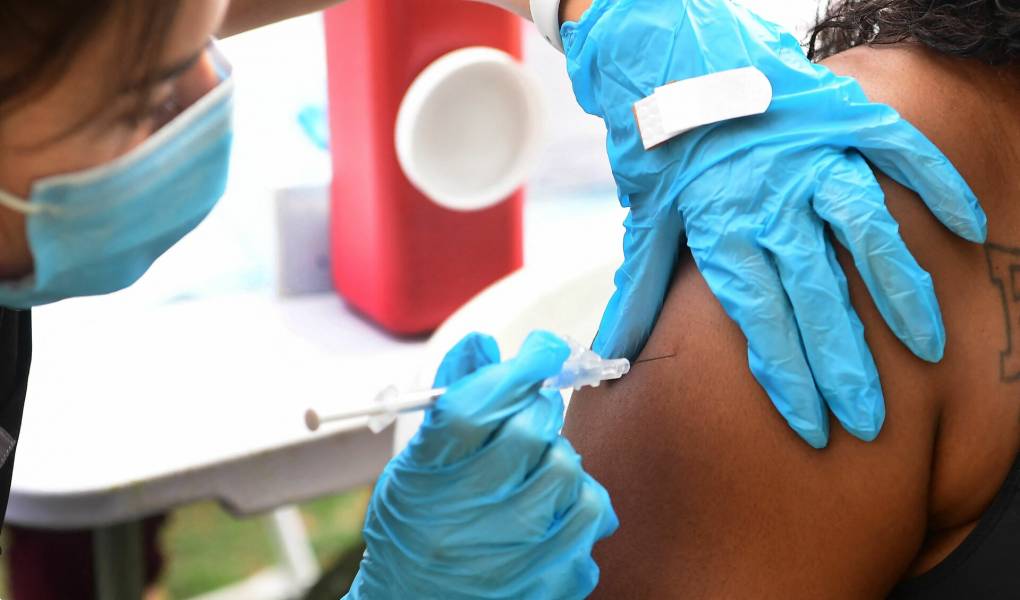
"caption": "The COVID-19 vaccine is administered at a Los Angeles vaccination clinic on Sept. 22, 2021, for people experiencing homelessness. ",
"description": null,
"title": "booster-covid-vaccine",
"credit": "Frederic J. Brown/AFP via Getty Images",
"status": "inherit",
"altTag": "A person in a mask holds someone's shoulder with one hand and inserts a needle with the other.",
"isLoading": false,
"fetchFailed": false
},
"news_11889790": {
"type": "attachments",
"id": "news_11889790",
"meta": {
"index": "attachments_1716263798",
"site": "news",
"id": "11889790",
"found": true
},
"parent": 11889784,
"imgSizes": {
"twentyfourteen-full-width": {
"file": "https://ww2.kqed.org/app/uploads/sites/10/2021/09/requiring_092321_final-1038x576.png",
"width": 1038,
"mimeType": "image/png",
"height": 576
},
"thumbnail": {
"file": "https://ww2.kqed.org/app/uploads/sites/10/2021/09/requiring_092321_final-160x119.png",
"width": 160,
"mimeType": "image/png",
"height": 119
},
"post-thumbnail": {
"file": "https://ww2.kqed.org/app/uploads/sites/10/2021/09/requiring_092321_final-672x372.png",
"width": 672,
"mimeType": "image/png",
"height": 372
},
"kqedFullSize": {
"file": "https://ww2.kqed.org/app/uploads/sites/10/2021/09/requiring_092321_final.png",
"width": 1920,
"height": 1431
},
"large": {
"file": "https://ww2.kqed.org/app/uploads/sites/10/2021/09/requiring_092321_final-1020x760.png",
"width": 1020,
"mimeType": "image/png",
"height": 760
},
"1536x1536": {
"file": "https://ww2.kqed.org/app/uploads/sites/10/2021/09/requiring_092321_final-1536x1145.png",
"width": 1536,
"mimeType": "image/png",
"height": 1145
},
"medium": {
"file": "https://ww2.kqed.org/app/uploads/sites/10/2021/09/requiring_092321_final-800x596.png",
"width": 800,
"mimeType": "image/png",
"height": 596
}
},
"publishDate": 1632438731,
"modified": 1632444848,
"caption": null,
"description": null,
"title": "requiring_092321_final",
"credit": null,
"status": "inherit",
"altTag": "Cartoon: a retro-looking poster with smiling school kids that reads, \"California, requiring vaccines to attend school since 1962.\"",
"isLoading": false,
"fetchFailed": false
},
"news_11889752": {
"type": "attachments",
"id": "news_11889752",
"meta": {
"index": "attachments_1716263798",
"site": "news",
"id": "11889752",
"found": true
},
"parent": 11889701,
"imgSizes": {
"twentyfourteen-full-width": {
"file": "https://ww2.kqed.org/app/uploads/sites/10/2021/09/CalMatters1-1-1038x576.jpg",
"width": 1038,
"mimeType": "image/jpeg",
"height": 576
},
"thumbnail": {
"file": "https://ww2.kqed.org/app/uploads/sites/10/2021/09/CalMatters1-1-160x105.jpg",
"width": 160,
"mimeType": "image/jpeg",
"height": 105
},
"post-thumbnail": {
"file": "https://ww2.kqed.org/app/uploads/sites/10/2021/09/CalMatters1-1-672x372.jpg",
"width": 672,
"mimeType": "image/jpeg",
"height": 372
},
"kqedFullSize": {
"file": "https://ww2.kqed.org/app/uploads/sites/10/2021/09/CalMatters1-1.jpg",
"width": 1920,
"height": 1258
},
"large": {
"file": "https://ww2.kqed.org/app/uploads/sites/10/2021/09/CalMatters1-1-1020x668.jpg",
"width": 1020,
"mimeType": "image/jpeg",
"height": 668
},
"1536x1536": {
"file": "https://ww2.kqed.org/app/uploads/sites/10/2021/09/CalMatters1-1-1536x1006.jpg",
"width": 1536,
"mimeType": "image/jpeg",
"height": 1006
},
"medium": {
"file": "https://ww2.kqed.org/app/uploads/sites/10/2021/09/CalMatters1-1-800x524.jpg",
"width": 800,
"mimeType": "image/jpeg",
"height": 524
}
},
"publishDate": 1632432440,
"modified": 1632509505,
"caption": "Martha Garrido, a domestic worker who lives in San Francisco, was unable to work for several weeks after breaking her hand but did not have access to paid sick leave.",
"description": "Martha Garrido, a domestic worker who lives in San Francisco, was unable to work for several weeks after breaking her hand but did not have access to paid sick leave.",
"title": "CalMatters1 (1)",
"credit": "Anne Wernikoff/CalMatters",
"status": "inherit",
"altTag": "A woman in a ponytail wearing a black \"California Domestic Workers Coalition\" T-shirt gazes at the camera.",
"isLoading": false,
"fetchFailed": false
},
"news_11864917": {
"type": "attachments",
"id": "news_11864917",
"meta": {
"index": "attachments_1716263798",
"site": "news",
"id": "11864917",
"found": true
},
"parent": 11864818,
"imgSizes": {
"twentyfourteen-full-width": {
"file": "https://ww2.kqed.org/app/uploads/sites/10/2021/03/RS47148_017_Oakland_SkylineHSFootballPractice_02032021-qut-1020x680-1-1020x576.jpeg",
"width": 1020,
"mimeType": "image/jpeg",
"height": 576
},
"thumbnail": {
"file": "https://ww2.kqed.org/app/uploads/sites/10/2021/03/RS47148_017_Oakland_SkylineHSFootballPractice_02032021-qut-1020x680-1-160x107.jpeg",
"width": 160,
"mimeType": "image/jpeg",
"height": 107
},
"post-thumbnail": {
"file": "https://ww2.kqed.org/app/uploads/sites/10/2021/03/RS47148_017_Oakland_SkylineHSFootballPractice_02032021-qut-1020x680-1-672x372.jpeg",
"width": 672,
"mimeType": "image/jpeg",
"height": 372
},
"kqedFullSize": {
"file": "https://ww2.kqed.org/app/uploads/sites/10/2021/03/RS47148_017_Oakland_SkylineHSFootballPractice_02032021-qut-1020x680-1.jpeg",
"width": 1020,
"height": 680
},
"medium": {
"file": "https://ww2.kqed.org/app/uploads/sites/10/2021/03/RS47148_017_Oakland_SkylineHSFootballPractice_02032021-qut-1020x680-1-800x533.jpeg",
"width": 800,
"mimeType": "image/jpeg",
"height": 533
}
},
"publishDate": 1615847421,
"modified": 1632443992,
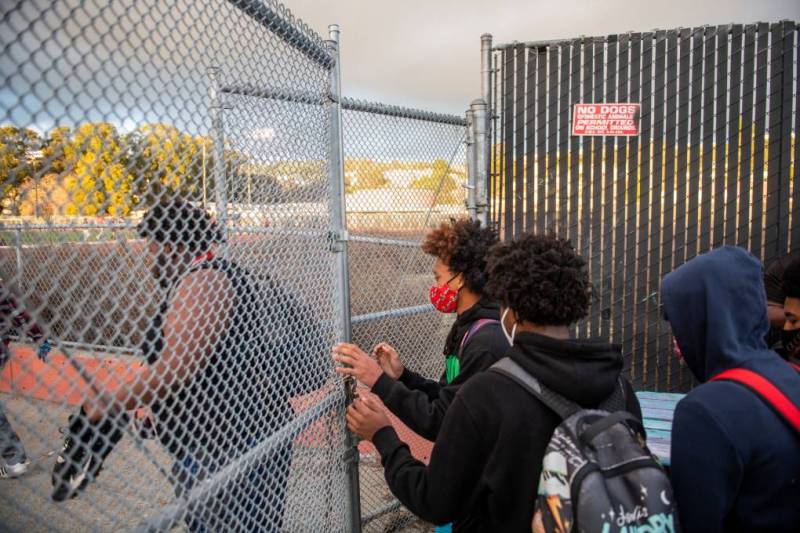
"caption": "Students enter Castlemont High School in Oakland, California, on Feb. 3, 2021, for football practice. ",
"description": "OUSD students entering Castlemont High School Oakland on Feb. 3, 2021 for football practice. ",
"title": "RS47148_017_Oakland_SkylineHSFootballPractice_02032021-qut-1020x680",
"credit": "Beth LaBerge/KQED",
"status": "inherit",
"altTag": "Students wearing masks and backpacks walk through a chain-link fence.",
"isLoading": false,
"fetchFailed": false
},
"news_11889661": {
"type": "attachments",
"id": "news_11889661",
"meta": {
"index": "attachments_1716263798",
"site": "news",
"id": "11889661",
"found": true
},
"parent": 11889660,
"imgSizes": {
"twentyfourteen-full-width": {
"file": "https://ww2.kqed.org/app/uploads/sites/10/2021/09/michigan_shot_gettyimages-1234850852-8f2a1402d5a0ab808313f55bdac52f950c8ad974-1038x576.jpg",
"width": 1038,
"mimeType": "image/jpeg",
"height": 576
},
"thumbnail": {
"file": "https://ww2.kqed.org/app/uploads/sites/10/2021/09/michigan_shot_gettyimages-1234850852-8f2a1402d5a0ab808313f55bdac52f950c8ad974-160x120.jpg",
"width": 160,
"mimeType": "image/jpeg",
"height": 120
},
"post-thumbnail": {
"file": "https://ww2.kqed.org/app/uploads/sites/10/2021/09/michigan_shot_gettyimages-1234850852-8f2a1402d5a0ab808313f55bdac52f950c8ad974-672x372.jpg",
"width": 672,
"mimeType": "image/jpeg",
"height": 372
},
"kqedFullSize": {
"file": "https://ww2.kqed.org/app/uploads/sites/10/2021/09/michigan_shot_gettyimages-1234850852-8f2a1402d5a0ab808313f55bdac52f950c8ad974-scaled-e1632414475184.jpg",
"width": 1920,
"height": 1440
},
"2048x2048": {
"file": "https://ww2.kqed.org/app/uploads/sites/10/2021/09/michigan_shot_gettyimages-1234850852-8f2a1402d5a0ab808313f55bdac52f950c8ad974-2048x1536.jpg",
"width": 2048,
"mimeType": "image/jpeg",
"height": 1536
},
"large": {
"file": "https://ww2.kqed.org/app/uploads/sites/10/2021/09/michigan_shot_gettyimages-1234850852-8f2a1402d5a0ab808313f55bdac52f950c8ad974-1020x765.jpg",
"width": 1020,
"mimeType": "image/jpeg",
"height": 765
},
"1536x1536": {
"file": "https://ww2.kqed.org/app/uploads/sites/10/2021/09/michigan_shot_gettyimages-1234850852-8f2a1402d5a0ab808313f55bdac52f950c8ad974-1536x1152.jpg",
"width": 1536,
"mimeType": "image/jpeg",
"height": 1152
},
"full-width": {
"file": "https://ww2.kqed.org/app/uploads/sites/10/2021/09/michigan_shot_gettyimages-1234850852-8f2a1402d5a0ab808313f55bdac52f950c8ad974-1920x1440.jpg",
"width": 1920,
"mimeType": "image/jpeg",
"height": 1440
},
"medium": {
"file": "https://ww2.kqed.org/app/uploads/sites/10/2021/09/michigan_shot_gettyimages-1234850852-8f2a1402d5a0ab808313f55bdac52f950c8ad974-800x600.jpg",
"width": 800,
"mimeType": "image/jpeg",
"height": 600
}
},
"publishDate": 1632413759,
"modified": 1632858374,
"caption": "Rufus Peoples receives his booster dose of the Pfizer-BioNTech coronavirus vaccine during an Oakland County Health Department vaccination clinic at the Southfield Pavilion on Aug. 24, 2021, in Southfield, Michigan. ",
"description": "Rufus Peoples receives his booster dose of the Pfizer-BioNTech coronavirus vaccine during an Oakland County Health Department vaccination clinic at the Southfield Pavilion on Aug. 24, 2021, in Southfield, Michigan. ",
"title": "Rufus Peoples receives a dose of the Pfizer-BioNTech COVID-19 vaccine at a vaccination clinic in Southfield, Mich., in August.",
"credit": "Emily Elconin/Getty Images",
"status": "inherit",
"altTag": "Blue-gloved hands administer a vaccine into a shoulder.",
"isLoading": false,
"fetchFailed": false
},
"news_11863696": {
"type": "attachments",
"id": "news_11863696",
"meta": {
"index": "attachments_1716263798",
"site": "news",
"id": "11863696",
"found": true
},
"parent": 11863474,
"imgSizes": {
"apple_news_ca_landscape_5_5": {
"file": "https://ww2.kqed.org/app/uploads/sites/10/2021/03/RS42264_006_KQED_Pittsburg_MaliaJohnson_03242020-qut-1044x783.jpg",
"width": 1044,
"mimeType": "image/jpeg",
"height": 783
},
"apple_news_ca_square_4_0": {
"file": "https://ww2.kqed.org/app/uploads/sites/10/2021/03/RS42264_006_KQED_Pittsburg_MaliaJohnson_03242020-qut-470x470.jpg",
"width": 470,
"mimeType": "image/jpeg",
"height": 470
},
"twentyfourteen-full-width": {
"file": "https://ww2.kqed.org/app/uploads/sites/10/2021/03/RS42264_006_KQED_Pittsburg_MaliaJohnson_03242020-qut-1038x576.jpg",
"width": 1038,
"mimeType": "image/jpeg",
"height": 576
},
"thumbnail": {
"file": "https://ww2.kqed.org/app/uploads/sites/10/2021/03/RS42264_006_KQED_Pittsburg_MaliaJohnson_03242020-qut-160x107.jpg",
"width": 160,
"mimeType": "image/jpeg",
"height": 107
},
"post-thumbnail": {
"file": "https://ww2.kqed.org/app/uploads/sites/10/2021/03/RS42264_006_KQED_Pittsburg_MaliaJohnson_03242020-qut-672x372.jpg",
"width": 672,
"mimeType": "image/jpeg",
"height": 372
},
"kqedFullSize": {
"file": "https://ww2.kqed.org/app/uploads/sites/10/2021/03/RS42264_006_KQED_Pittsburg_MaliaJohnson_03242020-qut.jpg",
"width": 1920,
"height": 1280
},
"apple_news_ca_landscape_4_7": {
"file": "https://ww2.kqed.org/app/uploads/sites/10/2021/03/RS42264_006_KQED_Pittsburg_MaliaJohnson_03242020-qut-632x474.jpg",
"width": 632,
"mimeType": "image/jpeg",
"height": 474
},
"large": {
"file": "https://ww2.kqed.org/app/uploads/sites/10/2021/03/RS42264_006_KQED_Pittsburg_MaliaJohnson_03242020-qut-1020x680.jpg",
"width": 1020,
"mimeType": "image/jpeg",
"height": 680
},
"apple_news_ca_landscape_4_0": {
"file": "https://ww2.kqed.org/app/uploads/sites/10/2021/03/RS42264_006_KQED_Pittsburg_MaliaJohnson_03242020-qut-536x402.jpg",
"width": 536,
"mimeType": "image/jpeg",
"height": 402
},
"apple_news_ca_portrait_12_9": {
"file": "https://ww2.kqed.org/app/uploads/sites/10/2021/03/RS42264_006_KQED_Pittsburg_MaliaJohnson_03242020-qut-1122x1280.jpg",
"width": 1122,
"mimeType": "image/jpeg",
"height": 1280
},
"medium": {
"file": "https://ww2.kqed.org/app/uploads/sites/10/2021/03/RS42264_006_KQED_Pittsburg_MaliaJohnson_03242020-qut-800x533.jpg",
"width": 800,
"mimeType": "image/jpeg",
"height": 533
},
"apple_news_ca_portrait_4_0": {
"file": "https://ww2.kqed.org/app/uploads/sites/10/2021/03/RS42264_006_KQED_Pittsburg_MaliaJohnson_03242020-qut-354x472.jpg",
"width": 354,
"mimeType": "image/jpeg",
"height": 472
},
"apple_news_ca_portrait_9_7": {
"file": "https://ww2.kqed.org/app/uploads/sites/10/2021/03/RS42264_006_KQED_Pittsburg_MaliaJohnson_03242020-qut-840x1120.jpg",
"width": 840,
"mimeType": "image/jpeg",
"height": 1120
},
"apple_news_ca_landscape_12_9": {
"file": "https://ww2.kqed.org/app/uploads/sites/10/2021/03/RS42264_006_KQED_Pittsburg_MaliaJohnson_03242020-qut-1832x1280.jpg",
"width": 1832,
"mimeType": "image/jpeg",
"height": 1280
},
"apple_news_ca_square_9_7": {
"file": "https://ww2.kqed.org/app/uploads/sites/10/2021/03/RS42264_006_KQED_Pittsburg_MaliaJohnson_03242020-qut-1104x1104.jpg",
"width": 1104,
"mimeType": "image/jpeg",
"height": 1104
},
"1536x1536": {
"file": "https://ww2.kqed.org/app/uploads/sites/10/2021/03/RS42264_006_KQED_Pittsburg_MaliaJohnson_03242020-qut-1536x1024.jpg",
"width": 1536,
"mimeType": "image/jpeg",
"height": 1024
},
"apple_news_ca_portrait_4_7": {
"file": "https://ww2.kqed.org/app/uploads/sites/10/2021/03/RS42264_006_KQED_Pittsburg_MaliaJohnson_03242020-qut-414x552.jpg",
"width": 414,
"mimeType": "image/jpeg",
"height": 552
},
"apple_news_ca_square_12_9": {
"file": "https://ww2.kqed.org/app/uploads/sites/10/2021/03/RS42264_006_KQED_Pittsburg_MaliaJohnson_03242020-qut-1472x1280.jpg",
"width": 1472,
"mimeType": "image/jpeg",
"height": 1280
},
"apple_news_ca_portrait_5_5": {
"file": "https://ww2.kqed.org/app/uploads/sites/10/2021/03/RS42264_006_KQED_Pittsburg_MaliaJohnson_03242020-qut-687x916.jpg",
"width": 687,
"mimeType": "image/jpeg",
"height": 916
},
"apple_news_ca_square_4_7": {
"file": "https://ww2.kqed.org/app/uploads/sites/10/2021/03/RS42264_006_KQED_Pittsburg_MaliaJohnson_03242020-qut-550x550.jpg",
"width": 550,
"mimeType": "image/jpeg",
"height": 550
},
"apple_news_ca_landscape_9_7": {
"file": "https://ww2.kqed.org/app/uploads/sites/10/2021/03/RS42264_006_KQED_Pittsburg_MaliaJohnson_03242020-qut-1376x1032.jpg",
"width": 1376,
"mimeType": "image/jpeg",
"height": 1032
},
"apple_news_ca_square_5_5": {
"file": "https://ww2.kqed.org/app/uploads/sites/10/2021/03/RS42264_006_KQED_Pittsburg_MaliaJohnson_03242020-qut-912x912.jpg",
"width": 912,
"mimeType": "image/jpeg",
"height": 912
}
},
"publishDate": 1615222508,
"modified": 1638758622,
"caption": "Fremont High School in Oakland on Mar. 24, 2020.",
"description": null,
"title": "Fremont High School in Oakland on Mar. 24, 2020.",
"credit": "Beth LaBerge/KQED",
"status": "inherit",
"altTag": "A multicolored school entrance.",
"isLoading": false,
"fetchFailed": false
},
"news_11889259": {
"type": "attachments",
"id": "news_11889259",
"meta": {
"index": "attachments_1716263798",
"site": "news",
"id": "11889259",
"found": true
},
"parent": 11889248,
"imgSizes": {
"twentyfourteen-full-width": {
"file": "https://ww2.kqed.org/app/uploads/sites/10/2021/09/GettyImages-1270318777-1024x576.jpg",
"width": 1024,
"mimeType": "image/jpeg",
"height": 576
},
"thumbnail": {
"file": "https://ww2.kqed.org/app/uploads/sites/10/2021/09/GettyImages-1270318777-160x105.jpg",
"width": 160,
"mimeType": "image/jpeg",
"height": 105
},
"post-thumbnail": {
"file": "https://ww2.kqed.org/app/uploads/sites/10/2021/09/GettyImages-1270318777-672x372.jpg",
"width": 672,
"mimeType": "image/jpeg",
"height": 372
},
"kqedFullSize": {
"file": "https://ww2.kqed.org/app/uploads/sites/10/2021/09/GettyImages-1270318777.jpg",
"width": 1024,
"height": 675
},
"large": {
"file": "https://ww2.kqed.org/app/uploads/sites/10/2021/09/GettyImages-1270318777-1020x672.jpg",
"width": 1020,
"mimeType": "image/jpeg",
"height": 672
},
"medium": {
"file": "https://ww2.kqed.org/app/uploads/sites/10/2021/09/GettyImages-1270318777-800x527.jpg",
"width": 800,
"mimeType": "image/jpeg",
"height": 527
}
},
"publishDate": 1632249341,
"modified": 1632249610,
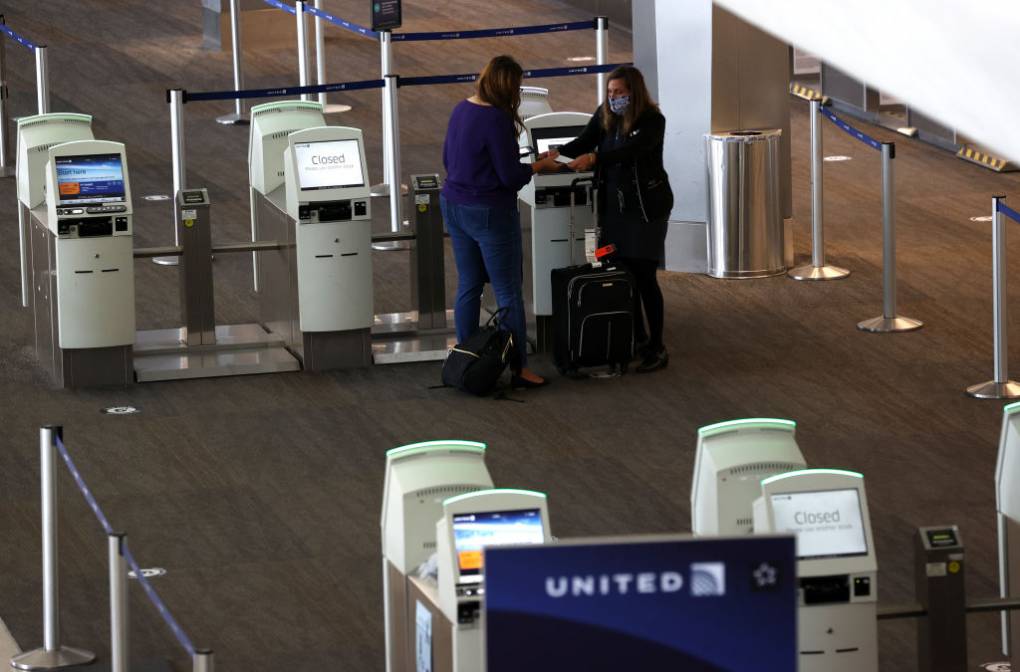
"caption": "A United Airlines ticket agent helps a passenger check in for a flight at San Francisco International Airport on Sept. 2, 2020. A year ago, the airport was still very sleepy.",
"description": null,
"title": "United Airlines To Furlough 16,000 Employees",
"credit": "Justin Sullivan/Getty Images",
"status": "inherit",
"altTag": null,
"isLoading": false,
"fetchFailed": false
},
"news_11889104": {
"type": "attachments",
"id": "news_11889104",
"meta": {
"index": "attachments_1716263798",
"site": "news",
"id": "11889104",
"found": true
},
"parent": 11889103,
"imgSizes": {
"twentyfourteen-full-width": {
"file": "https://ww2.kqed.org/app/uploads/sites/10/2021/09/ap_20356426057383_wide-98752bc8b567be49d890ab1dfe1683872a9d8a8f-1038x576.jpg",
"width": 1038,
"mimeType": "image/jpeg",
"height": 576
},
"thumbnail": {
"file": "https://ww2.kqed.org/app/uploads/sites/10/2021/09/ap_20356426057383_wide-98752bc8b567be49d890ab1dfe1683872a9d8a8f-160x90.jpg",
"width": 160,
"mimeType": "image/jpeg",
"height": 90
},
"post-thumbnail": {
"file": "https://ww2.kqed.org/app/uploads/sites/10/2021/09/ap_20356426057383_wide-98752bc8b567be49d890ab1dfe1683872a9d8a8f-672x372.jpg",
"width": 672,
"mimeType": "image/jpeg",
"height": 372
},
"kqedFullSize": {
"file": "https://ww2.kqed.org/app/uploads/sites/10/2021/09/ap_20356426057383_wide-98752bc8b567be49d890ab1dfe1683872a9d8a8f-scaled.jpg",
"width": 2560,
"height": 1440
},
"2048x2048": {
"file": "https://ww2.kqed.org/app/uploads/sites/10/2021/09/ap_20356426057383_wide-98752bc8b567be49d890ab1dfe1683872a9d8a8f-2048x1152.jpg",
"width": 2048,
"mimeType": "image/jpeg",
"height": 1152
},
"large": {
"file": "https://ww2.kqed.org/app/uploads/sites/10/2021/09/ap_20356426057383_wide-98752bc8b567be49d890ab1dfe1683872a9d8a8f-1020x574.jpg",
"width": 1020,
"mimeType": "image/jpeg",
"height": 574
},
"1536x1536": {
"file": "https://ww2.kqed.org/app/uploads/sites/10/2021/09/ap_20356426057383_wide-98752bc8b567be49d890ab1dfe1683872a9d8a8f-1536x864.jpg",
"width": 1536,
"mimeType": "image/jpeg",
"height": 864
},
"full-width": {
"file": "https://ww2.kqed.org/app/uploads/sites/10/2021/09/ap_20356426057383_wide-98752bc8b567be49d890ab1dfe1683872a9d8a8f-1920x1080.jpg",
"width": 1920,
"mimeType": "image/jpeg",
"height": 1080
},
"medium": {
"file": "https://ww2.kqed.org/app/uploads/sites/10/2021/09/ap_20356426057383_wide-98752bc8b567be49d890ab1dfe1683872a9d8a8f-800x450.jpg",
"width": 800,
"mimeType": "image/jpeg",
"height": 450
}
},
"publishDate": 1632155498,
"modified": 1632174499,
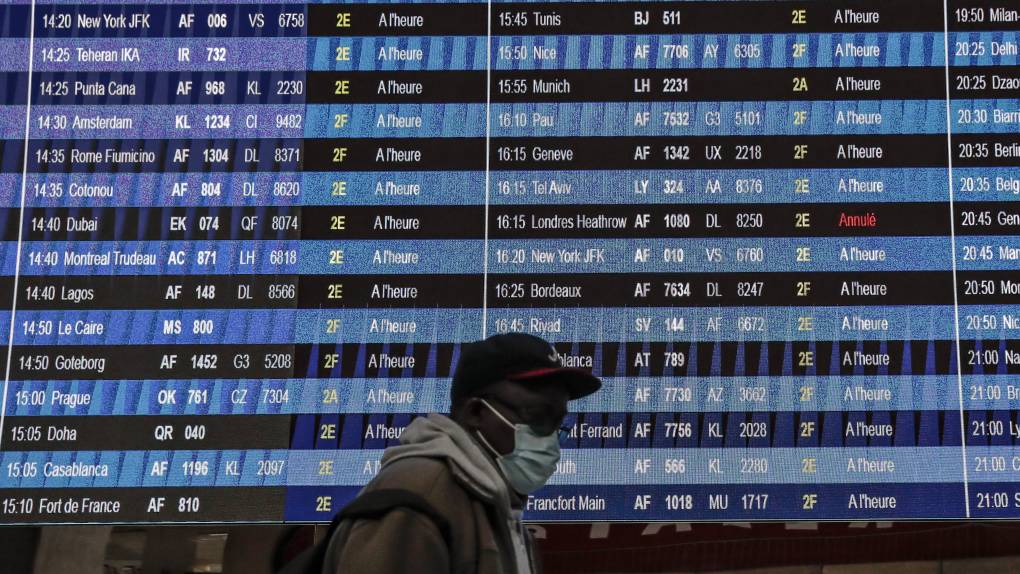
"caption": "A passenger wearing a face mask walks past a flight information board at Paris's Charles de Gaulle international airport in Roissy on Monday, Dec. 21, 2020. ",
"description": null,
"title": "Vaccinated travelers will be allowed to fly to the U.S. starting in early November",
"credit": "AP Photo/Lewis Joly",
"status": "inherit",
"altTag": "A person wearing a mask and a baseball cap walks in front of an airport departures board.",
"isLoading": false,
"fetchFailed": false
},
"news_11888869": {
"type": "attachments",
"id": "news_11888869",
"meta": {
"index": "attachments_1716263798",
"site": "news",
"id": "11888869",
"found": true
},
"parent": 11888843,
"imgSizes": {
"twentyfourteen-full-width": {
"file": "https://ww2.kqed.org/app/uploads/sites/10/2021/09/EDD-UNEMPLOYMENT-1038x576.jpg",
"width": 1038,
"mimeType": "image/jpeg",
"height": 576
},
"thumbnail": {
"file": "https://ww2.kqed.org/app/uploads/sites/10/2021/09/EDD-UNEMPLOYMENT-160x107.jpg",
"width": 160,
"mimeType": "image/jpeg",
"height": 107
},
"post-thumbnail": {
"file": "https://ww2.kqed.org/app/uploads/sites/10/2021/09/EDD-UNEMPLOYMENT-672x372.jpg",
"width": 672,
"mimeType": "image/jpeg",
"height": 372
},
"kqedFullSize": {
"file": "https://ww2.kqed.org/app/uploads/sites/10/2021/09/EDD-UNEMPLOYMENT.jpg",
"width": 1920,
"height": 1280
},
"large": {
"file": "https://ww2.kqed.org/app/uploads/sites/10/2021/09/EDD-UNEMPLOYMENT-1020x680.jpg",
"width": 1020,
"mimeType": "image/jpeg",
"height": 680
},
"1536x1536": {
"file": "https://ww2.kqed.org/app/uploads/sites/10/2021/09/EDD-UNEMPLOYMENT-1536x1024.jpg",
"width": 1536,
"mimeType": "image/jpeg",
"height": 1024
},
"medium": {
"file": "https://ww2.kqed.org/app/uploads/sites/10/2021/09/EDD-UNEMPLOYMENT-800x533.jpg",
"width": 800,
"mimeType": "image/jpeg",
"height": 533
}
},
"publishDate": 1631823306,
"modified": 1648841143,
"caption": "For renters and property owners who've applied for rent relief, there's still several important things to know about eviction protections.",
"description": null,
"title": "EDD-UNEMPLOYMENT",
"credit": "Liza Summer/Pexels",
"status": "inherit",
"altTag": "A woman in a green sweater sits on a couch using a laptop.",
"isLoading": false,
"fetchFailed": false
},
"news_11888089": {
"type": "attachments",
"id": "news_11888089",
"meta": {
"index": "attachments_1716263798",
"site": "news",
"id": "11888089",
"found": true
},
"parent": 11888075,
"imgSizes": {
"twentyfourteen-full-width": {
"file": "https://ww2.kqed.org/app/uploads/sites/10/2021/09/E128F416-A738-4E3D-B0CC-C80B8E388E9E-1038x576.jpeg",
"width": 1038,
"mimeType": "image/jpeg",
"height": 576
},
"thumbnail": {
"file": "https://ww2.kqed.org/app/uploads/sites/10/2021/09/E128F416-A738-4E3D-B0CC-C80B8E388E9E-160x120.jpeg",
"width": 160,
"mimeType": "image/jpeg",
"height": 120
},
"post-thumbnail": {
"file": "https://ww2.kqed.org/app/uploads/sites/10/2021/09/E128F416-A738-4E3D-B0CC-C80B8E388E9E-672x372.jpeg",
"width": 672,
"mimeType": "image/jpeg",
"height": 372
},
"kqedFullSize": {
"file": "https://ww2.kqed.org/app/uploads/sites/10/2021/09/E128F416-A738-4E3D-B0CC-C80B8E388E9E-scaled-e1631317967407.jpeg",
"width": 1920,
"height": 1440
},
"2048x2048": {
"file": "https://ww2.kqed.org/app/uploads/sites/10/2021/09/E128F416-A738-4E3D-B0CC-C80B8E388E9E-2048x1536.jpeg",
"width": 2048,
"mimeType": "image/jpeg",
"height": 1536
},
"large": {
"file": "https://ww2.kqed.org/app/uploads/sites/10/2021/09/E128F416-A738-4E3D-B0CC-C80B8E388E9E-1020x765.jpeg",
"width": 1020,
"mimeType": "image/jpeg",
"height": 765
},
"1536x1536": {
"file": "https://ww2.kqed.org/app/uploads/sites/10/2021/09/E128F416-A738-4E3D-B0CC-C80B8E388E9E-1536x1152.jpeg",
"width": 1536,
"mimeType": "image/jpeg",
"height": 1152
},
"full-width": {
"file": "https://ww2.kqed.org/app/uploads/sites/10/2021/09/E128F416-A738-4E3D-B0CC-C80B8E388E9E-1920x1440.jpeg",
"width": 1920,
"mimeType": "image/jpeg",
"height": 1440
},
"medium": {
"file": "https://ww2.kqed.org/app/uploads/sites/10/2021/09/E128F416-A738-4E3D-B0CC-C80B8E388E9E-800x600.jpeg",
"width": 800,
"mimeType": "image/jpeg",
"height": 600
}
},
"publishDate": 1631314465,
"modified": 1631568088,
"caption": "Rey Garnica (bottom right) with his girlfriend, Anna Deutsch, and their son, Rey Jr. Deutsch's older son and her mother stand behind them.",
"description": null,
"title": "E128F416-A738-4E3D-B0CC-C80B8E388E9E",
"credit": "Courtesy Rey Garnica",
"status": "inherit",
"altTag": "A man and a woman, a baby boy in the crook of the man's arm, sit on a couch beyond a kitchen. An adult woman and a child stand behind them.",
"isLoading": false,
"fetchFailed": false
}
},
"audioPlayerReducer": {
"postId": "stream_live",
"isPaused": true,
"isPlaying": false,
"pfsActive": false,
"pledgeModalIsOpen": true,
"playerDrawerIsOpen": false,
"liveAudioPlayStartedAt": 0,
"liveAudioPlayContext": ""
},
"authorsReducer": {
"byline_news_11890024": {
"type": "authors",
"id": "byline_news_11890024",
"meta": {
"override": true
},
"slug": "byline_news_11890024",
"name": "Kristen Hwang",
"isLoading": false
},
"byline_news_11889701": {
"type": "authors",
"id": "byline_news_11889701",
"meta": {
"override": true
},
"slug": "byline_news_11889701",
"name": "Sameea Kamal\u003cbr>CalMatters",
"isLoading": false
},
"byline_news_11889660": {
"type": "authors",
"id": "byline_news_11889660",
"meta": {
"override": true
},
"slug": "byline_news_11889660",
"name": "Scott Hensley",
"isLoading": false
},
"byline_news_11889103": {
"type": "authors",
"id": "byline_news_11889103",
"meta": {
"override": true
},
"slug": "byline_news_11889103",
"name": "Brian Naylor",
"isLoading": false
},
"matthewgreen": {
"type": "authors",
"id": "1263",
"meta": {
"index": "authors_1716337520",
"id": "1263",
"found": true
},
"name": "Matthew Green",
"firstName": "Matthew",
"lastName": "Green",
"slug": "matthewgreen",
"email": "mgreen@kqed.org",
"display_author_email": false,
"staff_mastheads": [],
"title": "KQED Editor/Reporter",
"bio": "Matthew Green is a digital media producer for KQED News. He previously produced \u003ca href=\"http://www.kqed.org/lowdown\">The Lowdown\u003c/a>, KQED’s multimedia news education blog. Matthew's written for numerous Bay Area publications, including the Oakland Tribune and San Francisco Chronicle. He also taught journalism classes at Fremont High School in East Oakland.\r\n\r\nEmail: mgreen@kqed.org; Twitter: @MGreenKQED",
"avatar": "https://secure.gravatar.com/avatar/3bf498d1267ca02c8494f33d8cfc575e?s=600&d=blank&r=g",
"twitter": "MGreenKQED",
"facebook": null,
"instagram": null,
"linkedin": null,
"sites": [
{
"site": "news",
"roles": []
},
{
"site": "lowdown",
"roles": []
},
{
"site": "science",
"roles": []
},
{
"site": "education",
"roles": []
},
{
"site": "quest",
"roles": []
},
{
"site": "liveblog",
"roles": []
}
],
"headData": {
"title": "Matthew Green | KQED",
"description": "KQED Editor/Reporter",
"ogImgSrc": "https://secure.gravatar.com/avatar/3bf498d1267ca02c8494f33d8cfc575e?s=600&d=blank&r=g",
"twImgSrc": "https://secure.gravatar.com/avatar/3bf498d1267ca02c8494f33d8cfc575e?s=600&d=blank&r=g"
},
"isLoading": false,
"link": "/author/matthewgreen"
},
"markfiore": {
"type": "authors",
"id": "3236",
"meta": {
"index": "authors_1716337520",
"id": "3236",
"found": true
},
"name": "Mark Fiore",
"firstName": "Mark",
"lastName": "Fiore",
"slug": "markfiore",
"email": "mark@markfiore.com",
"display_author_email": false,
"staff_mastheads": [
"news"
],
"title": "KQED News Cartoonist",
"bio": "\u003ca href=\"http://www.MarkFiore.com\">MarkFiore.com\u003c/a> | \u003ca href=\"https://twitter.com/markfiore\">Follow on Twitter\u003c/a> | \u003ca href=\"https://www.facebook.com/pages/Mark-Fiore-Animated-Political-Cartoons/94451707396?ref=bookmarks\">Facebook\u003c/a> | \u003ca href=\"mailto:mark@markfiore.com\">email\u003c/a>\r\n\r\nPulitzer Prize-winner, Mark Fiore, who the Wall Street Journal has called “the undisputed guru of the form,” creates animated political cartoons in San Francisco, where his work has been featured regularly on the San Francisco Chronicle’s web site, SFGate.com. His work has appeared on Newsweek.com, Slate.com, CBSNews.com, MotherJones.com, DailyKos.com and NPR’s web site. Fiore’s political animation has appeared on CNN, Frontline, Bill Moyers Journal, Salon.com and cable and broadcast outlets across the globe.\r\n\r\nBeginning his professional life by drawing traditional political cartoons for newspapers, Fiore’s work appeared in publications ranging from the Washington Post to the Los Angeles Times. In the late 1990s, he began to experiment with animating political cartoons and, after a short stint at the San Jose Mercury News as their staff cartoonist, Fiore devoted all his energies to animation.\r\nGrowing up in California, Fiore also spent a good portion of his life in the backwoods of Idaho. It was this combination that shaped him politically. Mark majored in political science at Colorado College, where, in a perfect send-off for a cartoonist, he received his diploma in 1991 as commencement speaker Dick Cheney smiled approvingly.\r\nMark Fiore was awarded the Pulitzer Prize for political cartooning in 2010, a Robert F. Kennedy Journalism Award in 2004 and has twice received an Online Journalism Award for commentary from the Online News Association (2002, 2008). Fiore has received two awards for his work in new media from the National Cartoonists Society (2001, 2002), and in 2006 received The James Madison Freedom of Information Award from The Society of Professional Journalists.",
"avatar": "https://secure.gravatar.com/avatar/fc4e2a612b15b67bad0c6f0e1db4ca9b?s=600&d=blank&r=g",
"twitter": "MarkFiore",
"facebook": null,
"instagram": "https://www.instagram.com/markfiore/?hl=en",
"linkedin": null,
"sites": [
{
"site": "arts",
"roles": [
"contributor"
]
},
{
"site": "news",
"roles": [
"editor"
]
},
{
"site": "futureofyou",
"roles": [
"editor"
]
},
{
"site": "science",
"roles": [
"editor"
]
}
],
"headData": {
"title": "Mark Fiore | KQED",
"description": "KQED News Cartoonist",
"ogImgSrc": "https://secure.gravatar.com/avatar/fc4e2a612b15b67bad0c6f0e1db4ca9b?s=600&d=blank&r=g",
"twImgSrc": "https://secure.gravatar.com/avatar/fc4e2a612b15b67bad0c6f0e1db4ca9b?s=600&d=blank&r=g"
},
"isLoading": false,
"link": "/author/markfiore"
},
"carlysevern": {
"type": "authors",
"id": "3243",
"meta": {
"index": "authors_1716337520",
"id": "3243",
"found": true
},
"name": "Carly Severn",
"firstName": "Carly",
"lastName": "Severn",
"slug": "carlysevern",
"email": "csevern@kqed.org",
"display_author_email": false,
"staff_mastheads": [
"news"
],
"title": "Senior Editor, Audience News ",
"bio": "Carly is KQED's Senior Editor of Audience News on the Digital News team, and has reported for the California Report Magazine, Bay Curious and KQED Arts. She's formerly the host of \u003ca href=\"http://ww2.kqed.org/pop/category/the-cooler/\" rel=\"noopener noreferrer\">The Cooler\u003c/a> podcast.",
"avatar": "https://secure.gravatar.com/avatar/54037bf5c128fe678f0ef26cec97a93f2e7f220a22d7285703328f12c42c1b1d?s=600&d=blank&r=g",
"twitter": "teacupinthebay",
"bluesky": null,
"facebook": null,
"instagram": null,
"linkedin": null,
"sites": [
{
"site": "",
"roles": [
"editor"
]
},
{
"site": "arts",
"roles": [
"editor"
]
},
{
"site": "news",
"roles": [
"administrator"
]
},
{
"site": "pop",
"roles": [
"editor"
]
},
{
"site": "futureofyou",
"roles": [
"editor"
]
},
{
"site": "about",
"roles": [
"administrator"
]
},
{
"site": "mindshift",
"roles": [
"editor"
]
},
{
"site": "bayareabites",
"roles": [
"editor"
]
},
{
"site": "stateofhealth",
"roles": [
"editor"
]
},
{
"site": "science",
"roles": [
"editor"
]
},
{
"site": "food",
"roles": [
"contributor"
]
},
{
"site": "forum",
"roles": [
"editor"
]
},
{
"site": "perspectives",
"roles": [
"administrator"
]
},
{
"site": "liveblog",
"roles": [
"editor"
]
}
],
"headData": {
"title": "Carly Severn | KQED",
"description": "Senior Editor, Audience News ",
"ogImgSrc": "https://secure.gravatar.com/avatar/54037bf5c128fe678f0ef26cec97a93f2e7f220a22d7285703328f12c42c1b1d?s=600&d=blank&r=g",
"twImgSrc": "https://secure.gravatar.com/avatar/54037bf5c128fe678f0ef26cec97a93f2e7f220a22d7285703328f12c42c1b1d?s=600&d=blank&r=g"
},
"isLoading": false,
"link": "/author/carlysevern"
},
"ecruzguevarra": {
"type": "authors",
"id": "8654",
"meta": {
"index": "authors_1716337520",
"id": "8654",
"found": true
},
"name": "Ericka Cruz Guevarra",
"firstName": "Ericka",
"lastName": "Cruz Guevarra",
"slug": "ecruzguevarra",
"email": "ecruzguevarra@kqed.org",
"display_author_email": true,
"staff_mastheads": [
"news"
],
"title": "Producer, The Bay Podcast",
"bio": "Ericka Cruz Guevarra is host of \u003ca href=\"https://www.kqed.org/podcasts/thebay\">\u003cem>The Bay\u003c/em>\u003c/a> podcast at KQED. Before host, she was the show’s producer. Her work in that capacity includes a three-part reported series on policing in Vallejo, which won a 2020 excellence in journalism award from the Society of Professional Journalists. Ericka has worked as a breaking news reporter at Oregon Public Broadcasting, helped produce the Code Switch podcast, and was KQED’s inaugural Raul Ramirez Diversity Fund intern. She’s also an alumna of NPR’s Next Generation Radio program. Send her an email if you have strong feelings about whether Fairfield and Suisun City are the Bay. Ericka is represented by SAG-AFTRA.",
"avatar": "https://secure.gravatar.com/avatar/accefc1de4bafc7e234b69bcb9b6f6536c130fd84709bc3069ef11a78787e1bb?s=600&d=blank&r=g",
"twitter": "NotoriousECG",
"bluesky": null,
"facebook": null,
"instagram": null,
"linkedin": null,
"sites": [
{
"site": "arts",
"roles": [
"subscriber"
]
},
{
"site": "news",
"roles": [
"editor",
"manage_categories"
]
},
{
"site": "futureofyou",
"roles": [
"subscriber"
]
},
{
"site": "stateofhealth",
"roles": [
"subscriber"
]
},
{
"site": "science",
"roles": [
"editor"
]
},
{
"site": "forum",
"roles": [
"subscriber"
]
}
],
"headData": {
"title": "Ericka Cruz Guevarra | KQED",
"description": "Producer, The Bay Podcast",
"ogImgSrc": "https://secure.gravatar.com/avatar/accefc1de4bafc7e234b69bcb9b6f6536c130fd84709bc3069ef11a78787e1bb?s=600&d=blank&r=g",
"twImgSrc": "https://secure.gravatar.com/avatar/accefc1de4bafc7e234b69bcb9b6f6536c130fd84709bc3069ef11a78787e1bb?s=600&d=blank&r=g"
},
"isLoading": false,
"link": "/author/ecruzguevarra"
},
"vrancano": {
"type": "authors",
"id": "11276",
"meta": {
"index": "authors_1716337520",
"id": "11276",
"found": true
},
"name": "Vanessa Rancaño",
"firstName": "Vanessa",
"lastName": "Rancaño",
"slug": "vrancano",
"email": "vrancano@kqed.org",
"display_author_email": false,
"staff_mastheads": [
"news"
],
"title": "Reporter",
"bio": "Vanessa Rancaño is a features reporter for KQED. She’s also covered homelessness and education for the station and reported from the Central Valley. Her work has aired across public radio, from flagship national news shows to longform narrative podcasts. Before taking up a mic, she worked as a freelance print journalist. She’s been recognized with a number of national and regional awards. Vanessa grew up in California's Central Valley. She's a former NPR Kroc Fellow, and a graduate of the UC Berkeley Graduate School of Journalism.",
"avatar": "https://secure.gravatar.com/avatar/b3a383dfb0e7ee1c17568f2cf067904ab654d6e3de9743fc661f3c788ade1bed?s=600&d=blank&r=g",
"twitter": "vanessarancano",
"bluesky": null,
"facebook": null,
"instagram": null,
"linkedin": null,
"sites": [
{
"site": "arts",
"roles": [
"editor"
]
},
{
"site": "news",
"roles": [
"editor"
]
},
{
"site": "liveblog",
"roles": [
"contributor"
]
}
],
"headData": {
"title": "Vanessa Rancaño | KQED",
"description": "Reporter",
"ogImgSrc": "https://secure.gravatar.com/avatar/b3a383dfb0e7ee1c17568f2cf067904ab654d6e3de9743fc661f3c788ade1bed?s=600&d=blank&r=g",
"twImgSrc": "https://secure.gravatar.com/avatar/b3a383dfb0e7ee1c17568f2cf067904ab654d6e3de9743fc661f3c788ade1bed?s=600&d=blank&r=g"
},
"isLoading": false,
"link": "/author/vrancano"
},
"mfharvin": {
"type": "authors",
"id": "11583",
"meta": {
"index": "authors_1716337520",
"id": "11583",
"found": true
},
"name": "Mary Franklin Harvin",
"firstName": "Mary Franklin",
"lastName": "Harvin",
"slug": "mfharvin",
"email": "mfharvin@KQED.org",
"display_author_email": false,
"staff_mastheads": [
"news"
],
"title": "KQED Contributor",
"bio": null,
"avatar": "https://secure.gravatar.com/avatar/0e53510a7d48cfbdebfc9b11357d845f?s=600&d=blank&r=g",
"twitter": "EmEffHarvin",
"facebook": null,
"instagram": null,
"linkedin": null,
"sites": [
{
"site": "news",
"roles": [
"author",
"edit_others_posts"
]
},
{
"site": "science",
"roles": [
"editor"
]
}
],
"headData": {
"title": "Mary Franklin Harvin | KQED",
"description": "KQED Contributor",
"ogImgSrc": "https://secure.gravatar.com/avatar/0e53510a7d48cfbdebfc9b11357d845f?s=600&d=blank&r=g",
"twImgSrc": "https://secure.gravatar.com/avatar/0e53510a7d48cfbdebfc9b11357d845f?s=600&d=blank&r=g"
},
"isLoading": false,
"link": "/author/mfharvin"
},
"amontecillo": {
"type": "authors",
"id": "11649",
"meta": {
"index": "authors_1716337520",
"id": "11649",
"found": true
},
"name": "Alan Montecillo",
"firstName": "Alan",
"lastName": "Montecillo",
"slug": "amontecillo",
"email": "amontecillo@kqed.org",
"display_author_email": false,
"staff_mastheads": [
"news"
],
"title": "KQED Contributor",
"bio": "Alan Montecillo is the senior editor of \u003cem>\u003ca href=\"http://kqed.org/thebay\">The Bay\u003c/a>, \u003c/em> KQED's local news podcast. Before moving to the Bay Area, he worked as a senior talk show producer for WILL in Champaign-Urbana, Illinois and at Oregon Public Broadcasting in Portland, Oregon. He has won journalism awards from the Society of Professional Journalists Northern California, the Public Media Journalists Association, The Signal Awards, and has also received a regional Edward R. Murrow award. Alan is a Filipino American from Hong Kong and a graduate of Reed College.",
"avatar": "https://secure.gravatar.com/avatar/268f53a2066899ea9efdd8a5900218b17c822d9862cbc9326cccec53ef41d349?s=600&d=blank&r=g",
"twitter": "alanmontecillo",
"bluesky": null,
"facebook": null,
"instagram": null,
"linkedin": null,
"sites": [
{
"site": "",
"roles": [
"editor"
]
},
{
"site": "news",
"roles": [
"editor",
"manage_categories"
]
}
],
"headData": {
"title": "Alan Montecillo | KQED",
"description": "KQED Contributor",
"ogImgSrc": "https://secure.gravatar.com/avatar/268f53a2066899ea9efdd8a5900218b17c822d9862cbc9326cccec53ef41d349?s=600&d=blank&r=g",
"twImgSrc": "https://secure.gravatar.com/avatar/268f53a2066899ea9efdd8a5900218b17c822d9862cbc9326cccec53ef41d349?s=600&d=blank&r=g"
},
"isLoading": false,
"link": "/author/amontecillo"
}
},
"pagesReducer": {
"news_tag_covid-19": {
"type": "terms",
"id": "news_27504",
"meta": {
"index": "terms_1716263798",
"site": "news",
"id": "27504",
"score": 8.558294
},
"featImg": null,
"name": "covid-19",
"description": null,
"taxonomy": "tag",
"headData": {
"twImgId": null,
"twTitle": null,
"ogTitle": null,
"ogImgId": null,
"twDescription": null,
"description": null,
"title": "covid-19 Archives | KQED News",
"ogDescription": null
},
"ttid": 27521,
"slug": "covid-19",
"isLoading": false,
"title": "covid-19",
"pageMeta": {
"site": "news",
"WpPageTemplate": "page-topic-editorial",
"currentPage": 13
},
"blocks": [
{
"blockName": "kqed/post-list",
"attrs": {
"layout": "cardArticle2",
"query": "posts/news?tag=covid-19",
"seeMore": false,
"paginated": true,
"page": 13
}
},
{
"blockName": "kqed/ad"
}
]
}
},
"pfsSessionReducer": {},
"postsReducer": {
"stream_live": {
"type": "live",
"id": "stream_live",
"audioUrl": "https://streams.kqed.org/kqedradio",
"title": "Live Stream",
"excerpt": "Live Stream information currently unavailable.",
"link": "/radio",
"featImg": "",
"label": {
"name": "KQED Live",
"link": "/"
}
},
"stream_kqedNewscast": {
"type": "posts",
"id": "stream_kqedNewscast",
"audioUrl": "https://www.kqed.org/.stream/anon/radio/RDnews/newscast.mp3?_=1",
"title": "KQED Newscast",
"featImg": "",
"label": {
"name": "88.5 FM",
"link": "/"
}
},
"news_11890078": {
"type": "posts",
"id": "news_11890078",
"meta": {
"index": "posts_1716263798",
"site": "news",
"id": "11890078",
"score": null,
"sort": [
1632785341000
]
},
"guestAuthors": [],
"slug": "demanding-supply",
"title": "Demanding Supply",
"publishDate": 1632785341,
"format": "aside",
"headTitle": "Demanding Supply | KQED",
"labelTerm": {
"term": 18515,
"site": "news"
},
"content": "\u003cp>\u003ca href=\"https://ww2.kqed.org/app/uploads/sites/10/2021/09/done_092721_final.png\">\u003cimg loading=\"lazy\" decoding=\"async\" class=\"alignnone size-full wp-image-11890097\" src=\"https://ww2.kqed.org/app/uploads/sites/10/2021/09/done_092721_final.png\" alt=\"Cartoon: shows a man with a moving box saying, "great! Think you'll be done by Friday?" as he stands next to a woman holding a box labeled, "eviction moratorium ending." They both look hopefully a construction crew promising 660,000 more housing units.\" width=\"1920\" height=\"1287\" srcset=\"https://cdn.kqed.org/wp-content/uploads/sites/10/2021/09/done_092721_final.png 1920w, https://cdn.kqed.org/wp-content/uploads/sites/10/2021/09/done_092721_final-800x536.png 800w, https://cdn.kqed.org/wp-content/uploads/sites/10/2021/09/done_092721_final-1020x684.png 1020w, https://cdn.kqed.org/wp-content/uploads/sites/10/2021/09/done_092721_final-160x107.png 160w, https://cdn.kqed.org/wp-content/uploads/sites/10/2021/09/done_092721_final-1536x1030.png 1536w\" sizes=\"(max-width: 1920px) 100vw, 1920px\">\u003c/a>\u003c/p>\n\u003cp>California’s eviction moratorium is set to expire Thursday, just a few weeks after \u003ca href=\"https://www.kqed.org/news/11889113/in-one-week-newsom-signed-three-major-housing-bills-heres-what-they-mean\">Gov. Gavin Newsom signed three groundbreaking housing bills\u003c/a>.\u003c/p>\n\u003cp>Here is \u003ca href=\"https://bit.ly/fiorecovidrentrelief\">KQED’s guide to COVID-19 rent relief\u003c/a>.\u003c/p>\n\u003cp>Unfortunately, the increase in housing stock from laws like \u003ca href=\"https://leginfo.legislature.ca.gov/faces/billNavClient.xhtml?bill_id=202120220SB9\">SB 9\u003c/a> and \u003ca href=\"https://leginfo.legislature.ca.gov/faces/billNavClient.xhtml?bill_id=202120220SB10\">SB 10\u003c/a> won’t be around in time for people who are facing eviction in the short term.\u003c/p>\n\u003cp>It’ll likely take several years for these laws to have any substantial impact on the state’s housing shortage.\u003c/p>\n\u003cp>With housing in short supply, prices skyrocketing and evictions looming, it’s time to start swinging those hammers.\u003c/p>\n\u003cp>[ad fullwidth]\u003c/p>\n\u003cp>\u003c/p>\n",
"blocks": [],
"excerpt": "Just a few weeks after Gov. Newsom signed three groundbreaking housing bills, California's eviction moratorium is set to expire.",
"status": "publish",
"parent": 0,
"modified": 1721130728,
"stats": {
"hasAudio": false,
"hasVideo": false,
"hasChartOrMap": false,
"iframeSrcs": [],
"hasGoogleForm": false,
"hasGallery": false,
"hasHearkenModule": false,
"hasPolis": false,
"paragraphCount": 8,
"wordCount": 108
},
"headData": {
"title": "Demanding Supply | KQED",
"description": "Just a few weeks after Gov. Newsom signed three groundbreaking housing bills, California's eviction moratorium is set to expire.",
"ogTitle": "",
"ogDescription": "",
"ogImgId": "",
"twTitle": "",
"twDescription": "",
"twImgId": "",
"schema": {
"@context": "https://schema.org",
"@type": "NewsArticle",
"headline": "Demanding Supply",
"datePublished": "2021-09-27T16:29:01-07:00",
"dateModified": "2024-07-16T04:52:08-07:00",
"image": "https://cdn.kqed.org/wp-content/uploads/2020/02/KQED-OG-Image@1x.png",
"isAccessibleForFree": "True",
"publisher": {
"@type": "NewsMediaOrganization",
"@id": "https://www.kqed.org/#organization",
"name": "KQED",
"logo": "https://cdn.kqed.org/wp-content/uploads/2020/02/KQED-OG-Image@1x.png",
"url": "https://www.kqed.org",
"sameAs": [
"https://www.facebook.com/KQED",
"https://twitter.com/KQED",
"https://www.instagram.com/kqed/",
"https://www.tiktok.com/@kqedofficial",
"https://www.linkedin.com/company/kqed",
"https://www.youtube.com/channel/UCeC0IOo7i1P_61zVUWbJ4nw"
]
}
}
},
"sticky": false,
"path": "/news/11890078/demanding-supply",
"audioTrackLength": null,
"parsedContent": [
{
"type": "contentString",
"content": "\u003cdiv class=\"post-body\">\u003cp>\u003cp>\u003ca href=\"https://ww2.kqed.org/app/uploads/sites/10/2021/09/done_092721_final.png\">\u003cimg loading=\"lazy\" decoding=\"async\" class=\"alignnone size-full wp-image-11890097\" src=\"https://ww2.kqed.org/app/uploads/sites/10/2021/09/done_092721_final.png\" alt=\"Cartoon: shows a man with a moving box saying, "great! Think you'll be done by Friday?" as he stands next to a woman holding a box labeled, "eviction moratorium ending." They both look hopefully a construction crew promising 660,000 more housing units.\" width=\"1920\" height=\"1287\" srcset=\"https://cdn.kqed.org/wp-content/uploads/sites/10/2021/09/done_092721_final.png 1920w, https://cdn.kqed.org/wp-content/uploads/sites/10/2021/09/done_092721_final-800x536.png 800w, https://cdn.kqed.org/wp-content/uploads/sites/10/2021/09/done_092721_final-1020x684.png 1020w, https://cdn.kqed.org/wp-content/uploads/sites/10/2021/09/done_092721_final-160x107.png 160w, https://cdn.kqed.org/wp-content/uploads/sites/10/2021/09/done_092721_final-1536x1030.png 1536w\" sizes=\"(max-width: 1920px) 100vw, 1920px\">\u003c/a>\u003c/p>\n\u003cp>California’s eviction moratorium is set to expire Thursday, just a few weeks after \u003ca href=\"https://www.kqed.org/news/11889113/in-one-week-newsom-signed-three-major-housing-bills-heres-what-they-mean\">Gov. Gavin Newsom signed three groundbreaking housing bills\u003c/a>.\u003c/p>\n\u003cp>Here is \u003ca href=\"https://bit.ly/fiorecovidrentrelief\">KQED’s guide to COVID-19 rent relief\u003c/a>.\u003c/p>\n\u003cp>Unfortunately, the increase in housing stock from laws like \u003ca href=\"https://leginfo.legislature.ca.gov/faces/billNavClient.xhtml?bill_id=202120220SB9\">SB 9\u003c/a> and \u003ca href=\"https://leginfo.legislature.ca.gov/faces/billNavClient.xhtml?bill_id=202120220SB10\">SB 10\u003c/a> won’t be around in time for people who are facing eviction in the short term.\u003c/p>\n\u003cp>It’ll likely take several years for these laws to have any substantial impact on the state’s housing shortage.\u003c/p>\n\u003cp>With housing in short supply, prices skyrocketing and evictions looming, it’s time to start swinging those hammers.\u003c/p>\n\u003cp>\u003c/p>\u003c/div>",
"attributes": {
"named": {},
"numeric": []
}
},
{
"type": "component",
"content": "",
"name": "ad",
"attributes": {
"named": {
"label": "fullwidth"
},
"numeric": [
"fullwidth"
]
}
},
{
"type": "contentString",
"content": "\u003cdiv class=\"post-body\">\u003cp>\u003c/p>\n\u003cp>\u003c/p>\n\u003c/div>\u003c/p>",
"attributes": {
"named": {},
"numeric": []
}
}
],
"link": "/news/11890078/demanding-supply",
"authors": [
"3236"
],
"series": [
"news_18515"
],
"categories": [
"news_6266",
"news_8",
"news_13"
],
"tags": [
"news_27350",
"news_27504",
"news_27701",
"news_18372",
"news_20949",
"news_27660",
"news_17968"
],
"featImg": "news_11890097",
"label": "news_18515"
},
"news_11890024": {
"type": "posts",
"id": "news_11890024",
"meta": {
"index": "posts_1716263798",
"site": "news",
"id": "11890024",
"score": null,
"sort": [
1632784280000
]
},
"guestAuthors": [],
"slug": "why-rapid-covid-tests-are-so-hard-to-find-right-now",
"title": "Why Rapid COVID Tests Are So Hard to Find Right Now",
"publishDate": 1632784280,
"format": "standard",
"headTitle": "Why Rapid COVID Tests Are So Hard to Find Right Now | KQED",
"labelTerm": {},
"content": "\u003cp>Sarah Voit likes to keep 10 to 15 rapid test kits on hand in case any of the residents of the Family Emergency Shelter Coalition in Hayward need to be tested for the coronavirus. They’ve had some infection scares, and the antigen tests — which return results in minutes — have been crucial to curbing the virus in the family shelter.\u003c/p>\n\u003cp>But in recent weeks, the staff has struggled to purchase enough rapid test kits: The local Walgreens and Costco have started limiting sales to one per customer.\u003c/p>\n\u003cp>“We ran into the same issue at the beginning of the pandemic when we were trying to buy Clorox wipes and hand sanitizer,” said Voit, the shelter’s program director.\u003c/p>\n\u003cp>Three weeks ago, a child living at the shelter was sent home from school after a classmate contracted the coronavirus. Voit’s team used the rapid tests on the whole family. They all came back positive.\u003c/p>\n\u003cp>“Because we had those kits on hand, we were able to send them immediately to the isolation and quarantine hotel the county runs,” she said. “Otherwise it could have taken three to five days to get those results and many more families could have gotten sick.”\u003c/p>\n\u003cp>[ad fullwidth]\u003c/p>\n\u003cp>A nearby clinic offers coronavirus tests, but only PCR tests, which usually take several days for results. Even a single day’s wait could fuel an outbreak among the shelter’s 23 adults and children.\u003c/p>\n\u003cp>“If a resident really needs a test, we can send them there,” Voit said, “but the three to five days is tough to wait.”\u003c/p>\n\u003cp>Voit managed to find an online supplier and ordered 70 kits for the shelter, but they aren’t coming anytime soon: The delivery date is a month out.\u003c/p>\n\u003cp>[pullquote size='medium' align='right' citation=\"Prof. Emeritus Dr. John Swartzberg, UC Berkeley\"]‘Those with the least resources have the greatest difficulty in finding a free test site or purchasing at-home testing.’[/pullquote]\u003c/p>\n\u003cp>Online and in stores, major retailers are sold out of the popular at-home tests, and medical supply vendors can’t find enough rapid test kits for schools, shelters, nursing homes, employers and other groups. Across the state, people in lower-income communities are being turned away as community groups and clinics are forced to ration their tests. Workers in need of regular screening for employment struggle to find them. Some parents are spending hundreds of dollars out of pocket to test their schoolkids. And nursing homes are told they may have to wait weeks for testing kits.\u003c/p>\n\u003cp>“The U.S. gets a D- when it comes to testing,” said Dr. John Swartzberg, an infectious disease expert and professor emeritus at UC Berkeley. “We’re not doing enough of it and it’s too difficult for people to get tests. Those with the least resources have the greatest difficulty in finding a free test site or purchasing at-home testing.”\u003c/p>\n\u003cp>Experts say quick and easy testing is vital to containing the spread of COVID-19. Without widespread access to tests, people don’t know they are infected and they need to quarantine, causing outbreaks that could have been prevented.\u003c/p>\n\u003cp>“There should be little stations where you can get rapid tests anywhere, anytime,” said Joe DeRisi, professor of biochemistry and biophysics at UC San Francisco.\u003c/p>\n\u003ch3>Rapid-test kit shortages abound\u003c/h3>\n\u003cp>It’s a mismatch of supply and demand. Although the state is reporting record-high testing numbers, Californians seeking same-day results and over-the-counter test kits for sniffling kids, employer verification or merely peace of mind say they are unavailable. The problem: Nearly all state-run testing facilities offer only laboratory-based PCR tests, and people want rapid ones instead.\u003c/p>\n\u003cp>When the delta variant reared its head, the shortage of rapid tests created the “perfect storm,” experts say. The surge coincided with schools reopening and employers requiring quick, routine testing. At the same time, local health departments scaled back their testing efforts, focusing on vaccinations instead. Manufacturers, seeing decreased summer demand, reportedly \u003ca href=\"https://www.reuters.com/world/us/us-covid-19-tests-again-short-supply-infections-soar-schools-reopen-2021-08-27/\">shuttered production lines and tossed unsold product\u003c/a>.\u003c/p>\n\u003cp>Fewer than 10% of testing locations across the state now offer rapid-result antigen tests, according to \u003ca href=\"https://covid-19-giscorps.hub.arcgis.com/apps/covid-19-testing-in-the-united-states/explore\">a database from Coders Against COVID and URISA GISCorps\u003c/a>.\u003c/p>\n\u003cp>The test shortage is so severe that the federal government has stepped in to increase production. On Sept. 9, the Biden administration announced a national \u003ca href=\"https://www.whitehouse.gov/covidplan/#testing-masking\">COVID-19 action plan\u003c/a> that includes the purchase of 280 million rapid point-of-care and over-the-counter tests by the federal government and a three-month deal with Walmart, Amazon and Kroger to sell the tests at cost.\u003c/p>\n\u003cp>The U.S. Department of Health and Human Services did not respond to requests inquiring how many rapid tests would be allocated to California.\u003c/p>\n\u003cp>\u003c!-- iframe plugin v.4.3 wordpress.org/plugins/iframe/ -->\u003cbr>\n\u003ciframe loading=\"lazy\" src=\"https://flo.uri.sh/visualisation/7355324/embed\" title=\"Interactive or visual content\" class=\"flourish-embed-iframe\" frameborder=\"0\" scrolling=\"no\" style=\"width:100%;height:600px;\" width=\"100%\" height=\"500\">\u003c/iframe>\u003c/p>\n\u003cp>Industry experts say manufacturers, including Abbott Laboratories, are picking up production, but adequate supplies have yet to hit the shelves for consumers — and could be weeks off.\u003c/p>\n\u003cp>“We have been told by this particular manufacturer that they’ve caught up, but clearly at the customer level we still see shortages, and of course customers are shifting to other brands, which cascade the shortage elsewhere,” said Nam Tran, professor of clinical pathology at UC Davis and a member of the state’s COVID-19 Testing Task Force.\u003c/p>\n\u003cp>Despite the slightly lower sensitivity of rapid tests compared to laboratory-based PCR ones, the ease of the at-home options make them ideal for community surveillance, DeRisi said. PCR tests can detect lower levels of virus and potentially catch an infection sooner, but the reality is the inconvenience of scheduling an appointment means people aren’t getting tested enough.\u003c/p>\n\u003cp>“I could get a PCR, but that’s just a snapshot in time,” Tran said. “If you want people to test every day, [PCR] is not feasible.”\u003c/p>\n\u003cp>[aside label=\"Related Stories\" tag=\"coronavirus-testing\"]\u003c/p>\n\u003cp>About 90% of all PCR test results are returned in two days, according to state data, although that time has steadily crept upward recently. The 15 minutes of wait for a home rapid test compared to 48 hours could mean the difference between an infectious person starting quarantine immediately versus spreading the virus for several days.\u003c/p>\n\u003cp>And it’s clear that rapid testing works.\u003c/p>\n\u003cp>The Mariposa skilled nursing facility that Katrina Anderson manages hasn’t had a single case of COVID-19 among its frail residents since the beginning of the pandemic.\u003c/p>\n\u003cp>In addition to other strict infection control policies, every person that enters the building is given a rapid test.\u003c/p>\n\u003cp>“If you come to work in our facility, you’re tested. If you come to fix something that’s broken in the facility, you’re tested,” Anderson said. “Nobody enters without getting a rapid test.”\u003c/p>\n\u003cp>Anderson received word from the state that tests were in short supply. She was able to secure enough kits for the next few weeks. But other organizations, like schools and community groups attempting to set up rapid testing through the California Department of Public Health, may not be so lucky. The Testing Task Force website warns that it will take six to eight weeks to receive the state’s rapid test kits.\u003c/p>\n\u003ch3>Schools desperate for test supplies\u003c/h3>\n\u003cp>In March, the state offered \u003ca href=\"https://www.latimes.com/california/story/2021-03-12/california-offers-covid-19-rapid-tests-to-reopening-schools\">5 million BinaxNOW tests\u003c/a> to schools as an optional incentive to reopen in the spring.\u003c/p>\n\u003cp>Rapid testing is a major strategy for schools eager to avoid kids’ time spent out of the classroom sick or in quarantine. But the state program has been swamped with orders, and some schools say PCR testing is their only reliable option right now.\u003c/p>\n\u003cp>State public health officials told Kern High School District in Bakersfield “that there is a nationwide shortage of antigen/rapid tests,” said Erin Briscoe-Clarke, a district spokesperson. So the school is using PCR tests instead despite the longer wait time for results.\u003c/p>\n\u003cp>DeRisi from UCSF said he heard that “hundreds of schools” signed up in September for the state tests, “right when the shortage occurred and right when the delta bump hit.”\u003c/p>\n\u003cp>The state Department of Public Health did not return requests for comment about its ability to fill schools’ orders.\u003c/p>\n\u003cfigure id=\"attachment_11890072\" class=\"wp-caption aligncenter\" style=\"max-width: 1029px\">\u003cimg loading=\"lazy\" decoding=\"async\" class=\"wp-image-11890072 size-full\" src=\"https://ww2.kqed.org/app/uploads/sites/10/2021/09/RS46093_001_KQED_SanFrancisco_COVIDTesting_11302020-qut-e1632780302268.jpg\" alt=\"A gloved hand holds up a small, white envelope with pink lettering: a rapid COVID-19 test.\" width=\"1029\" height=\"686\">\u003cfigcaption class=\"wp-caption-text\">A rapid COVID-19 test held by a health care professional at a Unidos En Salud testing site, a collaboration between UCSF and the Latino Task Force, during a post-holiday COVID-19 outreach event on 24th and Mission streets in San Francisco on Nov. 30, 2020. \u003ccite>(Beth LaBerge/KQED)\u003c/cite>\u003c/figcaption>\u003c/figure>\n\u003cp>Officials at the Clovis Unified School District northeast of Fresno said they have struggled to secure enough rapid tests for their 43,000 students. In addition to required masking and daily health screenings, the schools there routinely test students involved in extracurricular activities and are gearing up to \u003ca href=\"https://calmatters.org/education/2021/08/california-teacher-vaccines-mandate-newsom/\">begin testing faculty weekly\u003c/a>. The schools also shorten the 10-day quarantine period by three days if a student can prove they are COVID-negative.\u003c/p>\n\u003cp>But the Clovis district was notified earlier this month that the state may not be able to fill its test kit order, spokesperson Kelly Avants said.\u003c/p>\n\u003cp>[pullquote size='medium' align='right' citation=\"Spokesperson Kelly Avants, Clovis Unified School District\"]‘We got our order in and heard within a day or two that the state was no longer accepting additional orders because they were out.’[/pullquote]\u003c/p>\n\u003cp>“We got our order in and heard within a day or two that the state was no longer accepting additional orders because they were out,” Avants said.\u003c/p>\n\u003cp>Early this month, the Clovis district contacted more than 40 vendors in search of rapid test kits. Nobody had any in stock and wouldn’t until at least October, maybe even December. Eventually, the state was able to fulfill the district’s order.\u003c/p>\n\u003cp>“Like so many other supply chains right now, it is unpredictable,” Avants said.\u003c/p>\n\u003cp>The district has about a two-week supply of tests, and expects a delivery of 12,800 more from a private vendor soon.\u003c/p>\n\u003cp>Without rapid testing readily available publicly, some parents are spending hundreds of dollars to monitor their kids’ health.\u003c/p>\n\u003cp>Nayamin Martinez, a parent in Clovis Unified, received an email several weeks ago that a child in her daughter’s classroom tested positive for COVID-19.\u003c/p>\n\u003cp>It was a Friday afternoon, and the family’s local Kaiser testing clinic was closed. Even with insurance, Martinez couldn’t find a rapid test kit or same-day appointment anywhere. She also knew that results from a PCR test wouldn’t come until the following Monday or Tuesday and didn’t want to keep her daughter out of school needlessly.\u003c/p>\n\u003cp>Martinez wound up taking her to urgent care and paying $270 for the rapid test — and her peace of mind.\u003c/p>\n\u003ch3>Hundreds of testing sites shut down\u003c/h3>\n\u003cp>The California Department of Public Health says there’s a glut of PCR testing capacity. Thousands of same-day appointments for the tests are available through the state testing website, and more tests are processed daily now than during the winter surge. OptumServe, which manages the state’s testing efforts, works with the state to monitor demand and offer drive-through, mobile and fixed site options, health officials told CalMatters.\u003c/p>\n\u003cp>Yet many Californians complain that they can’t find an appointment or a rapid test. The issue: As government-run mass testing sites have closed, it’s not always clear to people where new locations have sprung up.\u003c/p>\n\u003cp>“You end up with barriers to access that have less to do with capacity and more to do with lack of information,” said Dr. Jorge Caballero, a physician and founder of Coders Against COVID, a volunteer group that crowdsources a directory of test sites nationally.\u003c/p>\n\u003cp>[pullquote size='medium' align='right' citation=\"Dr. Jorge Caballeros, Coders Against COVID\"]‘More of the testing has shifted from a government-based or public health service and become privatized.’[/pullquote]\u003c/p>\n\u003cp>“More of the testing has shifted from a government-based or public health service and become privatized. A lot has shifted to primary care physicians, health systems and to companies that are running these tests,” he said.\u003c/p>\n\u003cp>According to the Coders Against COVID database, 900 testing sites have closed in California since April 2020, and that’s likely an undercount.\u003c/p>\n\u003cp>Working-class and immigrant communities that often face technological or language barriers are struggling with the shifting test locations and longer turnaround times. Community organizations have been left to fill the gaps with what little supplies they have left.\u003c/p>\n\u003cp>“We’re still the only organization in Marin County that’s doing rapid testing for free, and I don’t understand why,” said Yolanda Oviedo, COVID-19 response manager at Canal Alliance. “It’s been really hard for us to maintain.”\u003c/p>\n\u003cp>Canal Alliance, which provides an array of services for the Latino community in Marin, offers rapid testing two days a week.\u003c/p>\n\u003cfigure id=\"attachment_11890084\" class=\"wp-caption aligncenter\" style=\"max-width: 1452px\">\u003cimg loading=\"lazy\" decoding=\"async\" class=\"wp-image-11890084 size-full\" src=\"https://ww2.kqed.org/app/uploads/sites/10/2021/09/092521_RapdiCovidTest_PG_sized_05.jpeg\" alt=\"A gloved hand rolls a swab inside the small white envelope of the rapid test.\" width=\"1452\" height=\"2000\" srcset=\"https://cdn.kqed.org/wp-content/uploads/sites/10/2021/09/092521_RapdiCovidTest_PG_sized_05.jpeg 1452w, https://cdn.kqed.org/wp-content/uploads/sites/10/2021/09/092521_RapdiCovidTest_PG_sized_05-800x1102.jpeg 800w, https://cdn.kqed.org/wp-content/uploads/sites/10/2021/09/092521_RapdiCovidTest_PG_sized_05-1020x1405.jpeg 1020w, https://cdn.kqed.org/wp-content/uploads/sites/10/2021/09/092521_RapdiCovidTest_PG_sized_05-160x220.jpeg 160w, https://cdn.kqed.org/wp-content/uploads/sites/10/2021/09/092521_RapdiCovidTest_PG_sized_05-1115x1536.jpeg 1115w\" sizes=\"(max-width: 1452px) 100vw, 1452px\">\u003cfigcaption class=\"wp-caption-text\">A rapid antigen test at the Canal Alliance COVID-19 testing site in San Rafael, California, on Sept. 25, 2021. \u003ccite>(Penni Gladstone/CalMatters)\u003c/cite>\u003c/figcaption>\u003c/figure>\n\u003cp>The pandemic hit the county’s Latino population hard. \u003ca href=\"https://abc7news.com/covid-cases-latino-california-coronavirus-marin-county/6329375/\">Latinos accounted for 80% of the county’s COVID-19 cases\u003c/a> last year despite making up less than 16% of the population. Most are essential workers with high risks of exposure.\u003c/p>\n\u003cp>Oviedo said the group received 5,000 test kits from the state in May and have used more than 3,000. Demand has grown since August, and they have resorted to limiting testing to 100 people per day in order to make supplies last as long as possible.\u003c/p>\n\u003cp>People seeking tests at the site are frequently turned away. It’s a tough decision, especially when they know community members are desperate, said Marina Palma, San Rafael City Schools board member and volunteer at Canal Alliance.\u003c/p>\n\u003cp>“We have people coming to test with us from Richmond, Petaluma, Novato, San Francisco,” Palma said.\u003c/p>\n\u003cp>Increasingly, employers, \u003ca href=\"https://www.nbcnews.com/business/business-news/here-are-companies-mandating-vaccines-all-or-some-employees-n1275808\">like Amtrak and Goldman Sachs\u003c/a>, are requiring proof of vaccination or negative test results, and many workers can’t afford to miss a day of work.\u003c/p>\n\u003cp>“When you go to other places, it takes two days for the results. Two days means a lot for those families who work labor,” Palma said. “If they don’t have that verification, they can’t support their families.”\u003c/p>\n\u003cp>It’s a similar story in the Central Valley, where Martinez, the Clovis parent, is the executive director of the Central California Environmental Justice Network. Her organization, which partnered with UC Davis, is the only place in Yolo, Stanislaus, Madera and Fresno Counties offering rapid tests.\u003c/p>\n\u003cp>Several weeks ago they, too, started capping the tests at 100 per day.\u003c/p>\n\u003cp>“When I heard we were capping [tests], I asked ‘Why don’t you order more?’ They said, ‘There’s no more to order. They’re on backlog,’” Martinez said.\u003c/p>\n\u003cp>Many of the people they test have Medi-Cal or are uninsured, and are unable to get appointments at local health clinics. Routine testing for employers isn’t necessarily covered by insurance.\u003c/p>\n\u003cp>Every day around 5 a.m., people start calling Martinez, desperately searching for a free test. “It’s bureaucracies after bureaucracies. It’s exhausting,” she said.\u003c/p>\n\u003cp>[ad floatright]\u003c/p>\n\u003cp>\u003cem>This article was originally published by \u003ca href=\"https://calmatters.org/health/coronavirus/2021/09/covid-california-tests/\">CalMatters\u003c/a>.\u003c/em>\u003c/p>\n\n",
"blocks": [],
"excerpt": "Californians seeking same-day coronavirus tests for sick kids, infection scares or employers are finding empty shelves and long delays, which could fuel outbreaks.",
"status": "publish",
"parent": 0,
"modified": 1721130715,
"stats": {
"hasAudio": false,
"hasVideo": false,
"hasChartOrMap": true,
"iframeSrcs": [
"https://flo.uri.sh/visualisation/7355324/embed"
],
"hasGoogleForm": false,
"hasGallery": false,
"hasHearkenModule": false,
"hasPolis": false,
"paragraphCount": 69,
"wordCount": 2625
},
"headData": {
"title": "Why Rapid COVID Tests Are So Hard to Find Right Now | KQED",
"description": "Californians seeking same-day coronavirus tests for sick kids, infection scares or employers are finding empty shelves and long delays, which could fuel outbreaks.",
"ogTitle": "",
"ogDescription": "",
"ogImgId": "",
"twTitle": "",
"twDescription": "",
"twImgId": "",
"schema": {
"@context": "https://schema.org",
"@type": "NewsArticle",
"headline": "Why Rapid COVID Tests Are So Hard to Find Right Now",
"datePublished": "2021-09-27T16:11:20-07:00",
"dateModified": "2024-07-16T04:51:55-07:00",
"image": "https://cdn.kqed.org/wp-content/uploads/2020/02/KQED-OG-Image@1x.png",
"isAccessibleForFree": "True",
"publisher": {
"@type": "NewsMediaOrganization",
"@id": "https://www.kqed.org/#organization",
"name": "KQED",
"logo": "https://cdn.kqed.org/wp-content/uploads/2020/02/KQED-OG-Image@1x.png",
"url": "https://www.kqed.org",
"sameAs": [
"https://www.facebook.com/KQED",
"https://twitter.com/KQED",
"https://www.instagram.com/kqed/",
"https://www.tiktok.com/@kqedofficial",
"https://www.linkedin.com/company/kqed",
"https://www.youtube.com/channel/UCeC0IOo7i1P_61zVUWbJ4nw"
]
}
}
},
"source": "CalMatters",
"sourceUrl": "https://calmatters.network/2021/09/27/rapid-covid-19-tests-in-short-supply-in-california/",
"sticky": false,
"nprByline": "Kristen Hwang",
"path": "/news/11890024/why-rapid-covid-tests-are-so-hard-to-find-right-now",
"audioTrackLength": null,
"parsedContent": [
{
"type": "contentString",
"content": "\u003cdiv class=\"post-body\">\u003cp>\u003cp>Sarah Voit likes to keep 10 to 15 rapid test kits on hand in case any of the residents of the Family Emergency Shelter Coalition in Hayward need to be tested for the coronavirus. They’ve had some infection scares, and the antigen tests — which return results in minutes — have been crucial to curbing the virus in the family shelter.\u003c/p>\n\u003cp>But in recent weeks, the staff has struggled to purchase enough rapid test kits: The local Walgreens and Costco have started limiting sales to one per customer.\u003c/p>\n\u003cp>“We ran into the same issue at the beginning of the pandemic when we were trying to buy Clorox wipes and hand sanitizer,” said Voit, the shelter’s program director.\u003c/p>\n\u003cp>Three weeks ago, a child living at the shelter was sent home from school after a classmate contracted the coronavirus. Voit’s team used the rapid tests on the whole family. They all came back positive.\u003c/p>\n\u003cp>“Because we had those kits on hand, we were able to send them immediately to the isolation and quarantine hotel the county runs,” she said. “Otherwise it could have taken three to five days to get those results and many more families could have gotten sick.”\u003c/p>\n\u003cp>\u003c/p>\u003c/div>",
"attributes": {
"named": {},
"numeric": []
}
},
{
"type": "component",
"content": "",
"name": "ad",
"attributes": {
"named": {
"label": "fullwidth"
},
"numeric": [
"fullwidth"
]
}
},
{
"type": "contentString",
"content": "\u003cdiv class=\"post-body\">\u003cp>\u003c/p>\n\u003cp>A nearby clinic offers coronavirus tests, but only PCR tests, which usually take several days for results. Even a single day’s wait could fuel an outbreak among the shelter’s 23 adults and children.\u003c/p>\n\u003cp>“If a resident really needs a test, we can send them there,” Voit said, “but the three to five days is tough to wait.”\u003c/p>\n\u003cp>Voit managed to find an online supplier and ordered 70 kits for the shelter, but they aren’t coming anytime soon: The delivery date is a month out.\u003c/p>\n\u003cp>\u003c/p>\u003c/div>",
"attributes": {
"named": {},
"numeric": []
}
},
{
"type": "component",
"content": "‘Those with the least resources have the greatest difficulty in finding a free test site or purchasing at-home testing.’",
"name": "pullquote",
"attributes": {
"named": {
"size": "medium",
"align": "right",
"citation": "Prof. Emeritus Dr. John Swartzberg, UC Berkeley",
"label": ""
},
"numeric": []
}
},
{
"type": "contentString",
"content": "\u003cdiv class=\"post-body\">\u003cp>\u003c/p>\n\u003cp>Online and in stores, major retailers are sold out of the popular at-home tests, and medical supply vendors can’t find enough rapid test kits for schools, shelters, nursing homes, employers and other groups. Across the state, people in lower-income communities are being turned away as community groups and clinics are forced to ration their tests. Workers in need of regular screening for employment struggle to find them. Some parents are spending hundreds of dollars out of pocket to test their schoolkids. And nursing homes are told they may have to wait weeks for testing kits.\u003c/p>\n\u003cp>“The U.S. gets a D- when it comes to testing,” said Dr. John Swartzberg, an infectious disease expert and professor emeritus at UC Berkeley. “We’re not doing enough of it and it’s too difficult for people to get tests. Those with the least resources have the greatest difficulty in finding a free test site or purchasing at-home testing.”\u003c/p>\n\u003cp>Experts say quick and easy testing is vital to containing the spread of COVID-19. Without widespread access to tests, people don’t know they are infected and they need to quarantine, causing outbreaks that could have been prevented.\u003c/p>\n\u003cp>“There should be little stations where you can get rapid tests anywhere, anytime,” said Joe DeRisi, professor of biochemistry and biophysics at UC San Francisco.\u003c/p>\n\u003ch3>Rapid-test kit shortages abound\u003c/h3>\n\u003cp>It’s a mismatch of supply and demand. Although the state is reporting record-high testing numbers, Californians seeking same-day results and over-the-counter test kits for sniffling kids, employer verification or merely peace of mind say they are unavailable. The problem: Nearly all state-run testing facilities offer only laboratory-based PCR tests, and people want rapid ones instead.\u003c/p>\n\u003cp>When the delta variant reared its head, the shortage of rapid tests created the “perfect storm,” experts say. The surge coincided with schools reopening and employers requiring quick, routine testing. At the same time, local health departments scaled back their testing efforts, focusing on vaccinations instead. Manufacturers, seeing decreased summer demand, reportedly \u003ca href=\"https://www.reuters.com/world/us/us-covid-19-tests-again-short-supply-infections-soar-schools-reopen-2021-08-27/\">shuttered production lines and tossed unsold product\u003c/a>.\u003c/p>\n\u003cp>Fewer than 10% of testing locations across the state now offer rapid-result antigen tests, according to \u003ca href=\"https://covid-19-giscorps.hub.arcgis.com/apps/covid-19-testing-in-the-united-states/explore\">a database from Coders Against COVID and URISA GISCorps\u003c/a>.\u003c/p>\n\u003cp>The test shortage is so severe that the federal government has stepped in to increase production. On Sept. 9, the Biden administration announced a national \u003ca href=\"https://www.whitehouse.gov/covidplan/#testing-masking\">COVID-19 action plan\u003c/a> that includes the purchase of 280 million rapid point-of-care and over-the-counter tests by the federal government and a three-month deal with Walmart, Amazon and Kroger to sell the tests at cost.\u003c/p>\n\u003cp>The U.S. Department of Health and Human Services did not respond to requests inquiring how many rapid tests would be allocated to California.\u003c/p>\n\u003cp>\u003c!-- iframe plugin v.4.3 wordpress.org/plugins/iframe/ -->\u003cbr>\n\u003ciframe loading=\"lazy\" src=\"https://flo.uri.sh/visualisation/7355324/embed\" title=\"Interactive or visual content\" class=\"flourish-embed-iframe\" frameborder=\"0\" scrolling=\"no\" style=\"width:100%;height:600px;\" width=\"100%\" height=\"500\">\u003c/iframe>\u003c/p>\n\u003cp>Industry experts say manufacturers, including Abbott Laboratories, are picking up production, but adequate supplies have yet to hit the shelves for consumers — and could be weeks off.\u003c/p>\n\u003cp>“We have been told by this particular manufacturer that they’ve caught up, but clearly at the customer level we still see shortages, and of course customers are shifting to other brands, which cascade the shortage elsewhere,” said Nam Tran, professor of clinical pathology at UC Davis and a member of the state’s COVID-19 Testing Task Force.\u003c/p>\n\u003cp>Despite the slightly lower sensitivity of rapid tests compared to laboratory-based PCR ones, the ease of the at-home options make them ideal for community surveillance, DeRisi said. PCR tests can detect lower levels of virus and potentially catch an infection sooner, but the reality is the inconvenience of scheduling an appointment means people aren’t getting tested enough.\u003c/p>\n\u003cp>“I could get a PCR, but that’s just a snapshot in time,” Tran said. “If you want people to test every day, [PCR] is not feasible.”\u003c/p>\n\u003cp>\u003c/p>\u003c/div>",
"attributes": {
"named": {},
"numeric": []
}
},
{
"type": "component",
"content": "",
"name": "aside",
"attributes": {
"named": {
"label": "Related Stories ",
"tag": "coronavirus-testing"
},
"numeric": []
}
},
{
"type": "contentString",
"content": "\u003cdiv class=\"post-body\">\u003cp>\u003c/p>\n\u003cp>About 90% of all PCR test results are returned in two days, according to state data, although that time has steadily crept upward recently. The 15 minutes of wait for a home rapid test compared to 48 hours could mean the difference between an infectious person starting quarantine immediately versus spreading the virus for several days.\u003c/p>\n\u003cp>And it’s clear that rapid testing works.\u003c/p>\n\u003cp>The Mariposa skilled nursing facility that Katrina Anderson manages hasn’t had a single case of COVID-19 among its frail residents since the beginning of the pandemic.\u003c/p>\n\u003cp>In addition to other strict infection control policies, every person that enters the building is given a rapid test.\u003c/p>\n\u003cp>“If you come to work in our facility, you’re tested. If you come to fix something that’s broken in the facility, you’re tested,” Anderson said. “Nobody enters without getting a rapid test.”\u003c/p>\n\u003cp>Anderson received word from the state that tests were in short supply. She was able to secure enough kits for the next few weeks. But other organizations, like schools and community groups attempting to set up rapid testing through the California Department of Public Health, may not be so lucky. The Testing Task Force website warns that it will take six to eight weeks to receive the state’s rapid test kits.\u003c/p>\n\u003ch3>Schools desperate for test supplies\u003c/h3>\n\u003cp>In March, the state offered \u003ca href=\"https://www.latimes.com/california/story/2021-03-12/california-offers-covid-19-rapid-tests-to-reopening-schools\">5 million BinaxNOW tests\u003c/a> to schools as an optional incentive to reopen in the spring.\u003c/p>\n\u003cp>Rapid testing is a major strategy for schools eager to avoid kids’ time spent out of the classroom sick or in quarantine. But the state program has been swamped with orders, and some schools say PCR testing is their only reliable option right now.\u003c/p>\n\u003cp>State public health officials told Kern High School District in Bakersfield “that there is a nationwide shortage of antigen/rapid tests,” said Erin Briscoe-Clarke, a district spokesperson. So the school is using PCR tests instead despite the longer wait time for results.\u003c/p>\n\u003cp>DeRisi from UCSF said he heard that “hundreds of schools” signed up in September for the state tests, “right when the shortage occurred and right when the delta bump hit.”\u003c/p>\n\u003cp>The state Department of Public Health did not return requests for comment about its ability to fill schools’ orders.\u003c/p>\n\u003cfigure id=\"attachment_11890072\" class=\"wp-caption aligncenter\" style=\"max-width: 1029px\">\u003cimg loading=\"lazy\" decoding=\"async\" class=\"wp-image-11890072 size-full\" src=\"https://ww2.kqed.org/app/uploads/sites/10/2021/09/RS46093_001_KQED_SanFrancisco_COVIDTesting_11302020-qut-e1632780302268.jpg\" alt=\"A gloved hand holds up a small, white envelope with pink lettering: a rapid COVID-19 test.\" width=\"1029\" height=\"686\">\u003cfigcaption class=\"wp-caption-text\">A rapid COVID-19 test held by a health care professional at a Unidos En Salud testing site, a collaboration between UCSF and the Latino Task Force, during a post-holiday COVID-19 outreach event on 24th and Mission streets in San Francisco on Nov. 30, 2020. \u003ccite>(Beth LaBerge/KQED)\u003c/cite>\u003c/figcaption>\u003c/figure>\n\u003cp>Officials at the Clovis Unified School District northeast of Fresno said they have struggled to secure enough rapid tests for their 43,000 students. In addition to required masking and daily health screenings, the schools there routinely test students involved in extracurricular activities and are gearing up to \u003ca href=\"https://calmatters.org/education/2021/08/california-teacher-vaccines-mandate-newsom/\">begin testing faculty weekly\u003c/a>. The schools also shorten the 10-day quarantine period by three days if a student can prove they are COVID-negative.\u003c/p>\n\u003cp>But the Clovis district was notified earlier this month that the state may not be able to fill its test kit order, spokesperson Kelly Avants said.\u003c/p>\n\u003cp>\u003c/p>\u003c/div>",
"attributes": {
"named": {},
"numeric": []
}
},
{
"type": "component",
"content": "‘We got our order in and heard within a day or two that the state was no longer accepting additional orders because they were out.’",
"name": "pullquote",
"attributes": {
"named": {
"size": "medium",
"align": "right",
"citation": "Spokesperson Kelly Avants, Clovis Unified School District",
"label": ""
},
"numeric": []
}
},
{
"type": "contentString",
"content": "\u003cdiv class=\"post-body\">\u003cp>\u003c/p>\n\u003cp>“We got our order in and heard within a day or two that the state was no longer accepting additional orders because they were out,” Avants said.\u003c/p>\n\u003cp>Early this month, the Clovis district contacted more than 40 vendors in search of rapid test kits. Nobody had any in stock and wouldn’t until at least October, maybe even December. Eventually, the state was able to fulfill the district’s order.\u003c/p>\n\u003cp>“Like so many other supply chains right now, it is unpredictable,” Avants said.\u003c/p>\n\u003cp>The district has about a two-week supply of tests, and expects a delivery of 12,800 more from a private vendor soon.\u003c/p>\n\u003cp>Without rapid testing readily available publicly, some parents are spending hundreds of dollars to monitor their kids’ health.\u003c/p>\n\u003cp>Nayamin Martinez, a parent in Clovis Unified, received an email several weeks ago that a child in her daughter’s classroom tested positive for COVID-19.\u003c/p>\n\u003cp>It was a Friday afternoon, and the family’s local Kaiser testing clinic was closed. Even with insurance, Martinez couldn’t find a rapid test kit or same-day appointment anywhere. She also knew that results from a PCR test wouldn’t come until the following Monday or Tuesday and didn’t want to keep her daughter out of school needlessly.\u003c/p>\n\u003cp>Martinez wound up taking her to urgent care and paying $270 for the rapid test — and her peace of mind.\u003c/p>\n\u003ch3>Hundreds of testing sites shut down\u003c/h3>\n\u003cp>The California Department of Public Health says there’s a glut of PCR testing capacity. Thousands of same-day appointments for the tests are available through the state testing website, and more tests are processed daily now than during the winter surge. OptumServe, which manages the state’s testing efforts, works with the state to monitor demand and offer drive-through, mobile and fixed site options, health officials told CalMatters.\u003c/p>\n\u003cp>Yet many Californians complain that they can’t find an appointment or a rapid test. The issue: As government-run mass testing sites have closed, it’s not always clear to people where new locations have sprung up.\u003c/p>\n\u003cp>“You end up with barriers to access that have less to do with capacity and more to do with lack of information,” said Dr. Jorge Caballero, a physician and founder of Coders Against COVID, a volunteer group that crowdsources a directory of test sites nationally.\u003c/p>\n\u003cp>\u003c/p>\u003c/div>",
"attributes": {
"named": {},
"numeric": []
}
},
{
"type": "component",
"content": "‘More of the testing has shifted from a government-based or public health service and become privatized.’",
"name": "pullquote",
"attributes": {
"named": {
"size": "medium",
"align": "right",
"citation": "Dr. Jorge Caballeros, Coders Against COVID",
"label": ""
},
"numeric": []
}
},
{
"type": "contentString",
"content": "\u003cdiv class=\"post-body\">\u003cp>\u003c/p>\n\u003cp>“More of the testing has shifted from a government-based or public health service and become privatized. A lot has shifted to primary care physicians, health systems and to companies that are running these tests,” he said.\u003c/p>\n\u003cp>According to the Coders Against COVID database, 900 testing sites have closed in California since April 2020, and that’s likely an undercount.\u003c/p>\n\u003cp>Working-class and immigrant communities that often face technological or language barriers are struggling with the shifting test locations and longer turnaround times. Community organizations have been left to fill the gaps with what little supplies they have left.\u003c/p>\n\u003cp>“We’re still the only organization in Marin County that’s doing rapid testing for free, and I don’t understand why,” said Yolanda Oviedo, COVID-19 response manager at Canal Alliance. “It’s been really hard for us to maintain.”\u003c/p>\n\u003cp>Canal Alliance, which provides an array of services for the Latino community in Marin, offers rapid testing two days a week.\u003c/p>\n\u003cfigure id=\"attachment_11890084\" class=\"wp-caption aligncenter\" style=\"max-width: 1452px\">\u003cimg loading=\"lazy\" decoding=\"async\" class=\"wp-image-11890084 size-full\" src=\"https://ww2.kqed.org/app/uploads/sites/10/2021/09/092521_RapdiCovidTest_PG_sized_05.jpeg\" alt=\"A gloved hand rolls a swab inside the small white envelope of the rapid test.\" width=\"1452\" height=\"2000\" srcset=\"https://cdn.kqed.org/wp-content/uploads/sites/10/2021/09/092521_RapdiCovidTest_PG_sized_05.jpeg 1452w, https://cdn.kqed.org/wp-content/uploads/sites/10/2021/09/092521_RapdiCovidTest_PG_sized_05-800x1102.jpeg 800w, https://cdn.kqed.org/wp-content/uploads/sites/10/2021/09/092521_RapdiCovidTest_PG_sized_05-1020x1405.jpeg 1020w, https://cdn.kqed.org/wp-content/uploads/sites/10/2021/09/092521_RapdiCovidTest_PG_sized_05-160x220.jpeg 160w, https://cdn.kqed.org/wp-content/uploads/sites/10/2021/09/092521_RapdiCovidTest_PG_sized_05-1115x1536.jpeg 1115w\" sizes=\"(max-width: 1452px) 100vw, 1452px\">\u003cfigcaption class=\"wp-caption-text\">A rapid antigen test at the Canal Alliance COVID-19 testing site in San Rafael, California, on Sept. 25, 2021. \u003ccite>(Penni Gladstone/CalMatters)\u003c/cite>\u003c/figcaption>\u003c/figure>\n\u003cp>The pandemic hit the county’s Latino population hard. \u003ca href=\"https://abc7news.com/covid-cases-latino-california-coronavirus-marin-county/6329375/\">Latinos accounted for 80% of the county’s COVID-19 cases\u003c/a> last year despite making up less than 16% of the population. Most are essential workers with high risks of exposure.\u003c/p>\n\u003cp>Oviedo said the group received 5,000 test kits from the state in May and have used more than 3,000. Demand has grown since August, and they have resorted to limiting testing to 100 people per day in order to make supplies last as long as possible.\u003c/p>\n\u003cp>People seeking tests at the site are frequently turned away. It’s a tough decision, especially when they know community members are desperate, said Marina Palma, San Rafael City Schools board member and volunteer at Canal Alliance.\u003c/p>\n\u003cp>“We have people coming to test with us from Richmond, Petaluma, Novato, San Francisco,” Palma said.\u003c/p>\n\u003cp>Increasingly, employers, \u003ca href=\"https://www.nbcnews.com/business/business-news/here-are-companies-mandating-vaccines-all-or-some-employees-n1275808\">like Amtrak and Goldman Sachs\u003c/a>, are requiring proof of vaccination or negative test results, and many workers can’t afford to miss a day of work.\u003c/p>\n\u003cp>“When you go to other places, it takes two days for the results. Two days means a lot for those families who work labor,” Palma said. “If they don’t have that verification, they can’t support their families.”\u003c/p>\n\u003cp>It’s a similar story in the Central Valley, where Martinez, the Clovis parent, is the executive director of the Central California Environmental Justice Network. Her organization, which partnered with UC Davis, is the only place in Yolo, Stanislaus, Madera and Fresno Counties offering rapid tests.\u003c/p>\n\u003cp>Several weeks ago they, too, started capping the tests at 100 per day.\u003c/p>\n\u003cp>“When I heard we were capping [tests], I asked ‘Why don’t you order more?’ They said, ‘There’s no more to order. They’re on backlog,’” Martinez said.\u003c/p>\n\u003cp>Many of the people they test have Medi-Cal or are uninsured, and are unable to get appointments at local health clinics. Routine testing for employers isn’t necessarily covered by insurance.\u003c/p>\n\u003cp>Every day around 5 a.m., people start calling Martinez, desperately searching for a free test. “It’s bureaucracies after bureaucracies. It’s exhausting,” she said.\u003c/p>\n\u003cp>\u003c/p>\u003c/div>",
"attributes": {
"named": {},
"numeric": []
}
},
{
"type": "component",
"content": "",
"name": "ad",
"attributes": {
"named": {
"label": "floatright"
},
"numeric": [
"floatright"
]
}
},
{
"type": "contentString",
"content": "\u003cdiv class=\"post-body\">\u003cp>\u003c/p>\n\u003cp>\u003cem>This article was originally published by \u003ca href=\"https://calmatters.org/health/coronavirus/2021/09/covid-california-tests/\">CalMatters\u003c/a>.\u003c/em>\u003c/p>\n\n\u003c/div>\u003c/p>",
"attributes": {
"named": {},
"numeric": []
}
}
],
"link": "/news/11890024/why-rapid-covid-tests-are-so-hard-to-find-right-now",
"authors": [
"byline_news_11890024"
],
"categories": [
"news_457",
"news_8"
],
"tags": [
"news_27350",
"news_27646",
"news_27504",
"news_29122"
],
"featImg": "news_11890081",
"label": "source_news_11890024"
},
"news_11888748": {
"type": "posts",
"id": "news_11888748",
"meta": {
"index": "posts_1716263798",
"site": "news",
"id": "11888748",
"score": null,
"sort": [
1632525766000
]
},
"parent": 0,
"labelTerm": {
"site": "news"
},
"blocks": [],
"publishDate": 1632525766,
"format": "image",
"disqusTitle": "COVID Vaccine Boosters for All Were Meant to Roll Out This Week. What Happened?",
"title": "COVID Vaccine Boosters for All Were Meant to Roll Out This Week. What Happened?",
"headTitle": "KQED News",
"content": "\u003cp>\u003cstrong>Note: Pfizer COVID vaccine booster shots are now available for certain eligible groups. \u003ca href=\"https://www.kqed.org/news/11890031/where-can-i-get-a-pfizer-covid-booster-shot-near-me-heres-whos-eligible\">Find out who can get a Pfizer booster shot, and how to make an appointment near you.\u003c/a>\u003c/strong>\u003c/p>\n\u003cp>You're not imagining it.\u003c/p>\n\u003cp>Back in mid-August, U.S. health officials announced \u003ca href=\"https://www.kqed.org/news/11885531/covid-booster-shots-to-roll-out-in-september-in-the-u-s-health-officials-say\">plans to offer COVID-19 booster shots to all Americans\u003c/a>, starting as early as this week (Sept. 20).\u003c/p>\n\u003cp>That hasn't happened.\u003c/p>\n\u003cp>And while the Food and Drug Administration has now \u003ca href=\"https://www.kqed.org/news/11889660/the-fda-oks-pfizer-biontech-booster-for-people-65-or-at-high-risk-for-severe-covid\">authorized a booster dose of the Pfizer-BioNTech coronavirus vaccine\u003c/a> for people age 65 and older and certain other groups, with \u003ca href=\"https://apnews.com/article/coronavirus-pandemic-business-science-health-coronavirus-vaccine-95b8d9a432b60fe0e9713adf75dde0ee\">endorsement from the CDC\u003c/a>, you could be forgiven for wondering: What happened to this previous timeline? When could we actually see booster shots roll out? And who might get them first?\u003c/p>\n\u003ch3>I thought booster shots for all were starting Sept. 20? What changed?\u003c/h3>\n\u003cp>\u003ca href=\"https://www.kqed.org/news/11885531/covid-booster-shots-to-roll-out-in-september-in-the-u-s-health-officials-say\">The original White House booster plan\u003c/a> for the general public, announced on Aug. 18, called for an extra dose eight months after getting the second shot of the Pfizer or Moderna vaccines. (\u003ca href=\"https://www.kqed.org/news/11888987/fda-advisers-vote-against-pfizer-covid-booster\">That time frame was since revised\u003c/a> to six months.) The one-shot Johnson & Johnson vaccine was not included in the plan.\u003c/p>\n\u003cp>But in the last several weeks since the Biden administration's announcement, a lot has changed. According to The New York Times, the projected September time frame \u003ca href=\"https://www.nytimes.com/2021/09/03/us/politics/coronavirus-booster-shots.html\">\"set off alarm bells\"\u003c/a> among officials in the FDA.\u003c/p>\n\u003cp>Earlier this month, \u003ca href=\"https://www.nytimes.com/2021/09/03/us/politics/coronavirus-booster-shots.html\">top federal health officials allegedly warned the White House\u003c/a> that it should scale back its booster-shot plan, the NY Times reported. Representatives from the FDA and the Centers for Disease Control and Prevention purportedly told the Biden administration they would need more time to review all the available data.\u003c/p>\n\u003cp>COVID-19 vaccine manufacturers have been conducting their own research into the efficacy of booster shots for their particular vaccines. The next stage on the road to booster-shot approval for any particular manufacturer is a review by an advisory panel of experts convened by the FDA. This panel is a part of the FDA's overall evaluation of the safety and effectiveness of a third dose, which is also being reviewed by a CDC advisory panel.\u003c/p>\n\u003cfigure id=\"attachment_11889483\" class=\"wp-caption aligncenter\" style=\"max-width: 1920px\">\u003cimg class=\"wp-image-11889483 size-full\" src=\"https://ww2.kqed.org/app/uploads/sites/10/2021/09/RS51555_GettyImages-1334915315-qut.jpg\" alt=\"President Biden speaks at a podium.\" width=\"1920\" height=\"1280\" srcset=\"https://ww2.kqed.org/app/uploads/sites/10/2021/09/RS51555_GettyImages-1334915315-qut.jpg 1920w, https://ww2.kqed.org/app/uploads/sites/10/2021/09/RS51555_GettyImages-1334915315-qut-800x533.jpg 800w, https://ww2.kqed.org/app/uploads/sites/10/2021/09/RS51555_GettyImages-1334915315-qut-1020x680.jpg 1020w, https://ww2.kqed.org/app/uploads/sites/10/2021/09/RS51555_GettyImages-1334915315-qut-160x107.jpg 160w, https://ww2.kqed.org/app/uploads/sites/10/2021/09/RS51555_GettyImages-1334915315-qut-1536x1024.jpg 1536w\" sizes=\"(max-width: 1920px) 100vw, 1920px\">\u003cfigcaption class=\"wp-caption-text\">On Aug. 18, 2021, U.S. President Biden announced a plan for Americans to receive a booster shot against COVID-19. \u003ccite>(Anna Moneymaker/Getty Images)\u003c/cite>\u003c/figcaption>\u003c/figure>\n\u003ch3>But now we have \u003cem>one\u003c/em> approved vaccine booster, right?\u003c/h3>\n\u003cp>Yes. On Sept. 22, \u003ca href=\"https://www.kqed.org/news/11889660/the-fda-oks-pfizer-biontech-booster-for-people-65-or-at-high-risk-for-severe-covid\">the FDA authorized a booster dose of the Pfizer COVID-19 vaccine.\u003c/a> But this booster shot only applies to people who have gotten the Pfizer vaccine for their first two shots, and who:\u003c/p>\n\u003cul>\n\u003cli>Are 65 and older\u003c/li>\n\u003cli>Are at high risk of experiencing severe COVID-19 symptoms\u003c/li>\n\u003cli>Have jobs or institutional exposure to the virus that puts them at high risk of contracting COVID-19\u003c/li>\n\u003c/ul>\n\u003cp>The FDA says that a third shot can be given at least six months after completion of a person's last Pfizer shot. On Sept. 24, \u003ca href=\"https://apnews.com/article/coronavirus-pandemic-business-science-health-coronavirus-vaccine-95b8d9a432b60fe0e9713adf75dde0ee\">the CDC formally signed off on the plan\u003c/a>.\u003c/p>\n\u003cp>This means these eligible groups will be able to get their Pfizer booster shot in California soon. The Western States Scientific Safety Review Workgroup — which represents California, Nevada, Washington and Oregon — will now independently review the FDA and CDC recommendations, and only then can any of the coronavirus vaccine boosters be distributed in California.\u003c/p>\n\u003cp>This FDA authorization comes after the organization's advisory panel met Sept. 17 and voted 16-2 \u003cem>against\u003c/em> a plan to use Pfizer boosters for people 16 and older. The same experts did, however, vote 18-0 in support of the FDA authorizing a booster for people 65 and older or at high risk of severe COVID-19. The FDA typically follows the advice of its advisory committees — although they're not required to.\u003c/p>\n\u003cp>On Sept. 23, the CDC's own advisory panel met to make specific recommendations about use of this Pfizer booster. \u003ca href=\"https://www.npr.org/sections/coronavirus-live-updates/2021/09/23/1040078971/cdc-covid-19-pfizer-boosters-adults-guidance\">The CDC panel aligned with the FDA authorization\u003c/a> in all respects, except for disagreeing with the FDA on the question of people whose jobs are more likely to expose them to COVID, such as health care workers and teachers.\u003c/p>\n\u003cp>The committee said that these people should \u003cem>not\u003c/em> yet be allowed to receive an extra Pfizer dose, but stressed that its recommendations could change if new evidence shows more people need a booster. But \u003ca href=\"https://apnews.com/article/coronavirus-pandemic-business-science-health-coronavirus-vaccine-95b8d9a432b60fe0e9713adf75dde0ee\">CDC Director Dr. Rochelle Walensky ultimately chose not to follow the advisory panel's judgement\u003c/a> on the issue of boosters and high-risk jobs.\u003c/p>\n\u003ch3>How did the thinking on booster shots change?\u003c/h3>\n\u003cp>Even before the FDA's advisory panel delivered their judgement on the Pfizer vaccine, \u003ca href=\"https://www.kqed.org/science/1976811/why-some-fda-scientists-are-arguing-against-covid-boosters\">the FDA's own scientists were expressing their skepticism\u003c/a> about the need for booster shots.\u003c/p>\n\u003cp>They said that \"data indicates that currently US-licensed or authorized COVID-19 vaccines still afford protection against severe COVID-19 disease and death in the United States.\" \u003ca href=\"https://www.kqed.org/science/1976811/why-some-fda-scientists-are-arguing-against-covid-boosters\">As Matthew Herper and Helen Branswell wrote for STAT\u003c/a>, an online publication covering health, medicine and scientific discovery news:\u003c/p>\n\u003cblockquote>\u003cp>\"On one side are drug companies and some researchers, who point to data showing the efficacy of the vaccines to protect all infections is waning and that a third shot will provide additional protection.\u003c/p>\n\u003cp>\"On the other are those who point out that these vaccines are still keeping people out of the hospital and preventing them from dying, indicating that a booster is not needed yet.\"\u003c/p>\u003c/blockquote>\n\u003cp>Remember, the FDA panel's vote specifically related to whether a third shot of the Pfizer vaccine is necessary for most people. In voting against the plan, the panel was not saying the vaccine itself is unsafe, and was certainly not trying to cast any doubt on the general efficacy of the vaccines.\u003c/p>\n\u003cp>To reiterate, yet again, the COVID-19 vaccines work! And while breakthrough cases in vaccinated people do happen, the vaccines vastly reduce the risk of hospitalization or death. If you haven't got your first shots yet, \u003ca href=\"https://www.kqed.org/news/11855623/where-can-i-get-a-covid-19-vaccine-in-the-bay-area-your-questions-answered\">here's how to find a COVID-19 vaccine near you\u003c/a>.\u003c/p>\n\u003cfigure id=\"attachment_11885536\" class=\"wp-caption aligncenter\" style=\"max-width: 1920px\">\u003cimg class=\"wp-image-11885536 size-full\" src=\"https://ww2.kqed.org/app/uploads/sites/10/2021/08/RS49573_007_PortofOakland_Vaccination_05272021-qut.jpg\" alt=\"A woman wearing purple gloves flicks a needle inserted upside-down into a vial.\" width=\"1920\" height=\"1280\" srcset=\"https://ww2.kqed.org/app/uploads/sites/10/2021/08/RS49573_007_PortofOakland_Vaccination_05272021-qut.jpg 1920w, https://ww2.kqed.org/app/uploads/sites/10/2021/08/RS49573_007_PortofOakland_Vaccination_05272021-qut-800x533.jpg 800w, https://ww2.kqed.org/app/uploads/sites/10/2021/08/RS49573_007_PortofOakland_Vaccination_05272021-qut-1020x680.jpg 1020w, https://ww2.kqed.org/app/uploads/sites/10/2021/08/RS49573_007_PortofOakland_Vaccination_05272021-qut-160x107.jpg 160w, https://ww2.kqed.org/app/uploads/sites/10/2021/08/RS49573_007_PortofOakland_Vaccination_05272021-qut-1536x1024.jpg 1536w\" sizes=\"(max-width: 1920px) 100vw, 1920px\">\u003cfigcaption class=\"wp-caption-text\">Medical assistant Martha Velasquez from the Alameda Health System prepares a dose of a COVID-19 vaccine. \u003ccite>(Beth LaBerge/KQED)\u003c/cite>\u003c/figcaption>\u003c/figure>\n\u003ch3>Does this mean boosters won't happen for the general public at all?\u003c/h3>\n\u003cp>We just don't know right now.\u003c/p>\n\u003cp>On Monday, \u003ca href=\"https://www.npr.org/2021/09/20/1038854813/fauci-on-the-disconnect-between-fda-panels-guidance-and-bidens-booster-plan\">the White House's chief medical adviser, Dr. Anthony Fauci, told NPR\u003c/a> that he expected more data to become available in the next few weeks that would \"actually modify and expand the recommendation\" for the use of boosters to more people. \"But for now we'll go with what the FDA advisory committee has recommended,\" Fauci said.\u003c/p>\n\u003cp>[aside label=\"more vaccine coverage\" tag=\"covid-19-vaccine\"]Fauci \u003ca href=\"https://www.washingtonpost.com/health/2021/09/19/fauci-says-data-moderna-johnson-johnson-boosters-few-weeks-away-fda-review/\">said last week\u003c/a> that an FDA review of the Moderna and J&J vaccines was \"a few weeks away.\"\u003c/p>\n\u003cp>One of the latest booster-related developments is \u003ca href=\"https://www.kqed.org/news/11889227/johnson-johnson-says-its-covid-19-booster-shot-increases-protection-but-health-officials-have-yet-to-approve\">the release of data from Johnson & Johnson on its own COVID-19 vaccine booster shot\u003c/a>. Trials show that people who receive a J&J booster shot are better protected against the coronavirus for a longer period of time than those who just get one shot, according to the company.\u003c/p>\n\u003cp>On Sept. 22, \u003ca href=\"https://apnews.com/article/science-health-coronavirus-pandemic-coronavirus-vaccine-203d8c288858e815175880753cbc9b8f\">a panel of advisers to the CDC met\u003c/a> to discuss the question of \u003cem>who \u003c/em>should be offered a COVID-19 booster. This panel, officially known as the CDC’s Advisory Committee on Immunization Practices (ACIP), considered implementing a more limited booster initiative specifically targeting older populations or people whose jobs put them at higher risk of catching or spreading the virus — like front-line health care workers.\u003c/p>\n\u003cp>Some members of the CDC panel also questioned whether the existing data sufficiently demonstrated the need for booster shots at all, and advocated for postponing any such booster plans until more evidence was available.\u003c/p>\n\u003ch3>How quickly might booster shots be more broadly available?\u003c/h3>\n\u003cp>Again, whether it's Pfizer, Moderna or J&J, any COVID-19 vaccine has to first be reviewed by the FDA's advisory panel and decide whether or not to authorize a booster. This is the process that has now resulted in \u003ca href=\"https://www.npr.org/2021/09/20/1038854813/fauci-on-the-disconnect-between-fda-panels-guidance-and-bidens-booster-plan\">the FDA's authorization of the Pfizer vaccine for certain groups.\u003c/a>\u003c/p>\n\u003cp>After that, and a similar CDC review process, the Western States Scientific Safety Review Workgroup — which represents California, Nevada, Washington and Oregon — independently reviews the agencies' recommendations. Only then can any of the COVID-19 vaccine boosters be distributed in California.\u003c/p>\n\u003cp>But even setting aside the time frame needed for the FDA and the CDC to review all the available data, be aware that scheduling a third shot could be more confounding, in certain ways, than the process of getting the initial ones.\u003c/p>\n\u003cp>Remember that the Biden administration's revised goal was to get booster shots in people's arms six months after receiving their last COVID-19 vaccinations. But because the COVID-19 vaccines rolled out at different times for different groups of people — in California and elsewhere — everyone would then have a different date for receiving their potential third shot based on when they got their previous one.\u003c/p>\n\u003cp>There's also the matter of which COVID-19 vaccine you originally got. As we're seeing, the process of Pfizer, Moderna and J&J releasing their own trial results — which are then \u003ca href=\"https://www.kqed.org/news/11888987/fda-advisers-vote-against-pfizer-covid-booster\">reviewed by FDA and CDC advisory panels \u003c/a>— is not a coordinated one. So there's the possibility that booster shots could be available for one type of COVID-19 vaccine well before another.\u003cbr>\n[ad fullwidth]\u003cbr>\nIn addition, the FDA's choice to follow its advisory panel's \u003ca href=\"https://www.kqed.org/news/11888987/fda-advisers-vote-against-pfizer-covid-booster\">endorsement of the Pfizer COVID-19 vaccine for people 65 and older\u003c/a>, or those at elevated risk — as opposed to the general public — is a strong indication we'll see a booster rollout that's staggered based on eligibility. And that will likely require complex logistical planning and accessibility considerations.\u003c/p>\n\u003cp>Even before the FDA panel's specific recommendation last week on eligibility, San Francisco Department of Public Health officials said they were already anticipating \"\u003ca href=\"https://www.kqed.org/news/11885531/covid-booster-shots-to-roll-out-in-september-in-the-u-s-health-officials-say\">a phased rollout\u003c/a> similar to how the vaccine was initially distributed: prioritizing the most vulnerable, in collaboration with our health care and pharmacy partners.\"\u003c/p>\n\u003cp>Amid all this is also the ethical issue of Americans getting third shots of the COVID-19 vaccine while so many other people around the world have been unable to access even their first one.\u003c/p>\n\u003cp>Top scientists at the World Health Organization met the White House's August announcement on booster shots with bitter objections. \u003ca href=\"https://www.kqed.org/news/11885531/covid-booster-shots-to-roll-out-in-september-in-the-u-s-health-officials-say\">\"We're planning to hand out extra life jackets to people who already have life jackets\u003c/a>, while we're leaving other people to drown without a single life jacket,\" said Dr. Michael Ryan, executive director of the WHO's emergencies program.\u003c/p>\n\u003cfigure id=\"attachment_11889098\" class=\"wp-caption aligncenter\" style=\"max-width: 2560px\">\u003cimg class=\"wp-image-11889098 size-full\" src=\"https://ww2.kqed.org/app/uploads/sites/10/2021/09/GettyImages-1234837929-scaled.jpg\" alt=\"A close-up of the label on a small glass vial, with a silver-colored cap, of the Pfizer-BioNTech vaccine.\" width=\"2560\" height=\"1704\" srcset=\"https://ww2.kqed.org/app/uploads/sites/10/2021/09/GettyImages-1234837929-scaled.jpg 2560w, https://ww2.kqed.org/app/uploads/sites/10/2021/09/GettyImages-1234837929-800x532.jpg 800w, https://ww2.kqed.org/app/uploads/sites/10/2021/09/GettyImages-1234837929-1020x679.jpg 1020w, https://ww2.kqed.org/app/uploads/sites/10/2021/09/GettyImages-1234837929-160x106.jpg 160w, https://ww2.kqed.org/app/uploads/sites/10/2021/09/GettyImages-1234837929-1536x1022.jpg 1536w, https://ww2.kqed.org/app/uploads/sites/10/2021/09/GettyImages-1234837929-2048x1363.jpg 2048w, https://ww2.kqed.org/app/uploads/sites/10/2021/09/GettyImages-1234837929-1920x1278.jpg 1920w\" sizes=\"(max-width: 2560px) 100vw, 2560px\">\u003cfigcaption class=\"wp-caption-text\">A vial of the Pfizer-BioNTech COVID-19 vaccine at a pop-up vaccine clinic in the Arleta neighborhood of Los Angeles. \u003ccite>(Robyn Beck/AFP/Getty Images)\u003c/cite>\u003c/figcaption>\u003c/figure>\n\u003ch3>Aren't third shots already available for some people?\u003c/h3>\n\u003cp>Immunocompromised people who already got two doses of the Pfizer or Moderna vaccine can now get a third shot to boost their protection from COVID-19. This is a separate initiative that predates the Biden administration's proposal on offering booster shots more broadly.\u003c/p>\n\u003cp>Right now, only a very small group of people with compromised immune systems qualify for this third dose — many serious conditions, like diabetes or heart disease, are not currently included. \u003ca href=\"https://www.cdc.gov/coronavirus/2019-ncov/vaccines/recommendations/immuno.html\">Read the CDC's list clarifying exactly who is eligible.\u003c/a>\u003c/p>\n\u003cp>If you \u003cem>do\u003c/em> qualify for a booster shot, we have \u003ca href=\"https://www.kqed.org/news/11855623/where-can-i-get-a-covid-19-vaccine-in-the-bay-area-your-questions-answered#where\">more information on how to make your appointment\u003c/a>, plus \u003ca href=\"https://www.kqed.org/news/11885225/immunocompromised-and-considering-a-3rd-covid-vaccine-6-things-to-know\">information that immunocompromised people considering the third shot may wish to consider\u003c/a>.\u003c/p>\n\u003cp>[ad floatright]\u003c/p>\n",
"disqusIdentifier": "11888748 https://ww2.kqed.org/news/?p=11888748",
"disqusUrl": "https://ww2.kqed.org/news/2021/09/24/covid-vaccine-boosters-were-meant-to-roll-out-this-week-what-happened/",
"stats": {
"hasVideo": false,
"hasChartOrMap": false,
"hasAudio": false,
"hasPolis": false,
"wordCount": 1941,
"hasGoogleForm": false,
"hasGallery": false,
"hasHearkenModule": false,
"iframeSrcs": [],
"paragraphCount": 39
},
"modified": 1633450989,
"excerpt": "COVID-19 vaccine booster shots were meant to roll out to the general public this week. We look at why this timeline changed — and how soon we might see those third shots after all.",
"headData": {
"twImgId": "",
"twTitle": "",
"ogTitle": "",
"ogImgId": "",
"twDescription": "",
"description": "COVID-19 vaccine booster shots were meant to roll out to the general public this week. We look at why this timeline changed — and how soon we might see those third shots after all.",
"title": "COVID Vaccine Boosters for All Were Meant to Roll Out This Week. What Happened? | KQED",
"ogDescription": "",
"schema": {
"@context": "https://schema.org",
"@type": "NewsArticle",
"headline": "COVID Vaccine Boosters for All Were Meant to Roll Out This Week. What Happened?",
"datePublished": "2021-09-24T16:22:46-07:00",
"dateModified": "2021-10-05T09:23:09-07:00",
"image": "https://cdn.kqed.org/wp-content/uploads/2020/02/KQED-OG-Image@1x.png",
"isAccessibleForFree": "True",
"publisher": {
"@type": "NewsMediaOrganization",
"@id": "https://www.kqed.org/#organization",
"name": "KQED",
"logo": "https://cdn.kqed.org/wp-content/uploads/2020/02/KQED-OG-Image@1x.png",
"url": "https://www.kqed.org",
"sameAs": [
"https://www.facebook.com/KQED",
"https://twitter.com/KQED",
"https://www.instagram.com/kqed/",
"https://www.tiktok.com/@kqedofficial",
"https://www.linkedin.com/company/kqed",
"https://www.youtube.com/channel/UCeC0IOo7i1P_61zVUWbJ4nw"
]
}
}
},
"guestAuthors": [],
"slug": "covid-vaccine-boosters-were-meant-to-roll-out-this-week-what-happened",
"status": "publish",
"path": "/news/11888748/covid-vaccine-boosters-were-meant-to-roll-out-this-week-what-happened",
"audioTrackLength": null,
"parsedContent": [
{
"type": "contentString",
"content": "\u003cdiv class=\"post-body\">\u003cp>\u003cp>\u003cstrong>Note: Pfizer COVID vaccine booster shots are now available for certain eligible groups. \u003ca href=\"https://www.kqed.org/news/11890031/where-can-i-get-a-pfizer-covid-booster-shot-near-me-heres-whos-eligible\">Find out who can get a Pfizer booster shot, and how to make an appointment near you.\u003c/a>\u003c/strong>\u003c/p>\n\u003cp>You're not imagining it.\u003c/p>\n\u003cp>Back in mid-August, U.S. health officials announced \u003ca href=\"https://www.kqed.org/news/11885531/covid-booster-shots-to-roll-out-in-september-in-the-u-s-health-officials-say\">plans to offer COVID-19 booster shots to all Americans\u003c/a>, starting as early as this week (Sept. 20).\u003c/p>\n\u003cp>That hasn't happened.\u003c/p>\n\u003cp>And while the Food and Drug Administration has now \u003ca href=\"https://www.kqed.org/news/11889660/the-fda-oks-pfizer-biontech-booster-for-people-65-or-at-high-risk-for-severe-covid\">authorized a booster dose of the Pfizer-BioNTech coronavirus vaccine\u003c/a> for people age 65 and older and certain other groups, with \u003ca href=\"https://apnews.com/article/coronavirus-pandemic-business-science-health-coronavirus-vaccine-95b8d9a432b60fe0e9713adf75dde0ee\">endorsement from the CDC\u003c/a>, you could be forgiven for wondering: What happened to this previous timeline? When could we actually see booster shots roll out? And who might get them first?\u003c/p>\n\u003ch3>I thought booster shots for all were starting Sept. 20? What changed?\u003c/h3>\n\u003cp>\u003ca href=\"https://www.kqed.org/news/11885531/covid-booster-shots-to-roll-out-in-september-in-the-u-s-health-officials-say\">The original White House booster plan\u003c/a> for the general public, announced on Aug. 18, called for an extra dose eight months after getting the second shot of the Pfizer or Moderna vaccines. (\u003ca href=\"https://www.kqed.org/news/11888987/fda-advisers-vote-against-pfizer-covid-booster\">That time frame was since revised\u003c/a> to six months.) The one-shot Johnson & Johnson vaccine was not included in the plan.\u003c/p>\n\u003cp>But in the last several weeks since the Biden administration's announcement, a lot has changed. According to The New York Times, the projected September time frame \u003ca href=\"https://www.nytimes.com/2021/09/03/us/politics/coronavirus-booster-shots.html\">\"set off alarm bells\"\u003c/a> among officials in the FDA.\u003c/p>\n\u003cp>Earlier this month, \u003ca href=\"https://www.nytimes.com/2021/09/03/us/politics/coronavirus-booster-shots.html\">top federal health officials allegedly warned the White House\u003c/a> that it should scale back its booster-shot plan, the NY Times reported. Representatives from the FDA and the Centers for Disease Control and Prevention purportedly told the Biden administration they would need more time to review all the available data.\u003c/p>\n\u003cp>COVID-19 vaccine manufacturers have been conducting their own research into the efficacy of booster shots for their particular vaccines. The next stage on the road to booster-shot approval for any particular manufacturer is a review by an advisory panel of experts convened by the FDA. This panel is a part of the FDA's overall evaluation of the safety and effectiveness of a third dose, which is also being reviewed by a CDC advisory panel.\u003c/p>\n\u003cfigure id=\"attachment_11889483\" class=\"wp-caption aligncenter\" style=\"max-width: 1920px\">\u003cimg class=\"wp-image-11889483 size-full\" src=\"https://ww2.kqed.org/app/uploads/sites/10/2021/09/RS51555_GettyImages-1334915315-qut.jpg\" alt=\"President Biden speaks at a podium.\" width=\"1920\" height=\"1280\" srcset=\"https://ww2.kqed.org/app/uploads/sites/10/2021/09/RS51555_GettyImages-1334915315-qut.jpg 1920w, https://ww2.kqed.org/app/uploads/sites/10/2021/09/RS51555_GettyImages-1334915315-qut-800x533.jpg 800w, https://ww2.kqed.org/app/uploads/sites/10/2021/09/RS51555_GettyImages-1334915315-qut-1020x680.jpg 1020w, https://ww2.kqed.org/app/uploads/sites/10/2021/09/RS51555_GettyImages-1334915315-qut-160x107.jpg 160w, https://ww2.kqed.org/app/uploads/sites/10/2021/09/RS51555_GettyImages-1334915315-qut-1536x1024.jpg 1536w\" sizes=\"(max-width: 1920px) 100vw, 1920px\">\u003cfigcaption class=\"wp-caption-text\">On Aug. 18, 2021, U.S. President Biden announced a plan for Americans to receive a booster shot against COVID-19. \u003ccite>(Anna Moneymaker/Getty Images)\u003c/cite>\u003c/figcaption>\u003c/figure>\n\u003ch3>But now we have \u003cem>one\u003c/em> approved vaccine booster, right?\u003c/h3>\n\u003cp>Yes. On Sept. 22, \u003ca href=\"https://www.kqed.org/news/11889660/the-fda-oks-pfizer-biontech-booster-for-people-65-or-at-high-risk-for-severe-covid\">the FDA authorized a booster dose of the Pfizer COVID-19 vaccine.\u003c/a> But this booster shot only applies to people who have gotten the Pfizer vaccine for their first two shots, and who:\u003c/p>\n\u003cul>\n\u003cli>Are 65 and older\u003c/li>\n\u003cli>Are at high risk of experiencing severe COVID-19 symptoms\u003c/li>\n\u003cli>Have jobs or institutional exposure to the virus that puts them at high risk of contracting COVID-19\u003c/li>\n\u003c/ul>\n\u003cp>The FDA says that a third shot can be given at least six months after completion of a person's last Pfizer shot. On Sept. 24, \u003ca href=\"https://apnews.com/article/coronavirus-pandemic-business-science-health-coronavirus-vaccine-95b8d9a432b60fe0e9713adf75dde0ee\">the CDC formally signed off on the plan\u003c/a>.\u003c/p>\n\u003cp>This means these eligible groups will be able to get their Pfizer booster shot in California soon. The Western States Scientific Safety Review Workgroup — which represents California, Nevada, Washington and Oregon — will now independently review the FDA and CDC recommendations, and only then can any of the coronavirus vaccine boosters be distributed in California.\u003c/p>\n\u003cp>This FDA authorization comes after the organization's advisory panel met Sept. 17 and voted 16-2 \u003cem>against\u003c/em> a plan to use Pfizer boosters for people 16 and older. The same experts did, however, vote 18-0 in support of the FDA authorizing a booster for people 65 and older or at high risk of severe COVID-19. The FDA typically follows the advice of its advisory committees — although they're not required to.\u003c/p>\n\u003cp>On Sept. 23, the CDC's own advisory panel met to make specific recommendations about use of this Pfizer booster. \u003ca href=\"https://www.npr.org/sections/coronavirus-live-updates/2021/09/23/1040078971/cdc-covid-19-pfizer-boosters-adults-guidance\">The CDC panel aligned with the FDA authorization\u003c/a> in all respects, except for disagreeing with the FDA on the question of people whose jobs are more likely to expose them to COVID, such as health care workers and teachers.\u003c/p>\n\u003cp>The committee said that these people should \u003cem>not\u003c/em> yet be allowed to receive an extra Pfizer dose, but stressed that its recommendations could change if new evidence shows more people need a booster. But \u003ca href=\"https://apnews.com/article/coronavirus-pandemic-business-science-health-coronavirus-vaccine-95b8d9a432b60fe0e9713adf75dde0ee\">CDC Director Dr. Rochelle Walensky ultimately chose not to follow the advisory panel's judgement\u003c/a> on the issue of boosters and high-risk jobs.\u003c/p>\n\u003ch3>How did the thinking on booster shots change?\u003c/h3>\n\u003cp>Even before the FDA's advisory panel delivered their judgement on the Pfizer vaccine, \u003ca href=\"https://www.kqed.org/science/1976811/why-some-fda-scientists-are-arguing-against-covid-boosters\">the FDA's own scientists were expressing their skepticism\u003c/a> about the need for booster shots.\u003c/p>\n\u003cp>They said that \"data indicates that currently US-licensed or authorized COVID-19 vaccines still afford protection against severe COVID-19 disease and death in the United States.\" \u003ca href=\"https://www.kqed.org/science/1976811/why-some-fda-scientists-are-arguing-against-covid-boosters\">As Matthew Herper and Helen Branswell wrote for STAT\u003c/a>, an online publication covering health, medicine and scientific discovery news:\u003c/p>\n\u003cblockquote>\u003cp>\"On one side are drug companies and some researchers, who point to data showing the efficacy of the vaccines to protect all infections is waning and that a third shot will provide additional protection.\u003c/p>\n\u003cp>\"On the other are those who point out that these vaccines are still keeping people out of the hospital and preventing them from dying, indicating that a booster is not needed yet.\"\u003c/p>\u003c/blockquote>\n\u003cp>Remember, the FDA panel's vote specifically related to whether a third shot of the Pfizer vaccine is necessary for most people. In voting against the plan, the panel was not saying the vaccine itself is unsafe, and was certainly not trying to cast any doubt on the general efficacy of the vaccines.\u003c/p>\n\u003cp>To reiterate, yet again, the COVID-19 vaccines work! And while breakthrough cases in vaccinated people do happen, the vaccines vastly reduce the risk of hospitalization or death. If you haven't got your first shots yet, \u003ca href=\"https://www.kqed.org/news/11855623/where-can-i-get-a-covid-19-vaccine-in-the-bay-area-your-questions-answered\">here's how to find a COVID-19 vaccine near you\u003c/a>.\u003c/p>\n\u003cfigure id=\"attachment_11885536\" class=\"wp-caption aligncenter\" style=\"max-width: 1920px\">\u003cimg class=\"wp-image-11885536 size-full\" src=\"https://ww2.kqed.org/app/uploads/sites/10/2021/08/RS49573_007_PortofOakland_Vaccination_05272021-qut.jpg\" alt=\"A woman wearing purple gloves flicks a needle inserted upside-down into a vial.\" width=\"1920\" height=\"1280\" srcset=\"https://ww2.kqed.org/app/uploads/sites/10/2021/08/RS49573_007_PortofOakland_Vaccination_05272021-qut.jpg 1920w, https://ww2.kqed.org/app/uploads/sites/10/2021/08/RS49573_007_PortofOakland_Vaccination_05272021-qut-800x533.jpg 800w, https://ww2.kqed.org/app/uploads/sites/10/2021/08/RS49573_007_PortofOakland_Vaccination_05272021-qut-1020x680.jpg 1020w, https://ww2.kqed.org/app/uploads/sites/10/2021/08/RS49573_007_PortofOakland_Vaccination_05272021-qut-160x107.jpg 160w, https://ww2.kqed.org/app/uploads/sites/10/2021/08/RS49573_007_PortofOakland_Vaccination_05272021-qut-1536x1024.jpg 1536w\" sizes=\"(max-width: 1920px) 100vw, 1920px\">\u003cfigcaption class=\"wp-caption-text\">Medical assistant Martha Velasquez from the Alameda Health System prepares a dose of a COVID-19 vaccine. \u003ccite>(Beth LaBerge/KQED)\u003c/cite>\u003c/figcaption>\u003c/figure>\n\u003ch3>Does this mean boosters won't happen for the general public at all?\u003c/h3>\n\u003cp>We just don't know right now.\u003c/p>\n\u003cp>On Monday, \u003ca href=\"https://www.npr.org/2021/09/20/1038854813/fauci-on-the-disconnect-between-fda-panels-guidance-and-bidens-booster-plan\">the White House's chief medical adviser, Dr. Anthony Fauci, told NPR\u003c/a> that he expected more data to become available in the next few weeks that would \"actually modify and expand the recommendation\" for the use of boosters to more people. \"But for now we'll go with what the FDA advisory committee has recommended,\" Fauci said.\u003c/p>\n\u003cp>\u003c/p>\u003c/div>",
"attributes": {
"named": {},
"numeric": []
}
},
{
"type": "component",
"content": "",
"name": "aside",
"attributes": {
"named": {
"label": "more vaccine coverage ",
"tag": "covid-19-vaccine"
},
"numeric": []
}
},
{
"type": "contentString",
"content": "\u003cdiv class=\"post-body\">\u003cp>Fauci \u003ca href=\"https://www.washingtonpost.com/health/2021/09/19/fauci-says-data-moderna-johnson-johnson-boosters-few-weeks-away-fda-review/\">said last week\u003c/a> that an FDA review of the Moderna and J&J vaccines was \"a few weeks away.\"\u003c/p>\n\u003cp>One of the latest booster-related developments is \u003ca href=\"https://www.kqed.org/news/11889227/johnson-johnson-says-its-covid-19-booster-shot-increases-protection-but-health-officials-have-yet-to-approve\">the release of data from Johnson & Johnson on its own COVID-19 vaccine booster shot\u003c/a>. Trials show that people who receive a J&J booster shot are better protected against the coronavirus for a longer period of time than those who just get one shot, according to the company.\u003c/p>\n\u003cp>On Sept. 22, \u003ca href=\"https://apnews.com/article/science-health-coronavirus-pandemic-coronavirus-vaccine-203d8c288858e815175880753cbc9b8f\">a panel of advisers to the CDC met\u003c/a> to discuss the question of \u003cem>who \u003c/em>should be offered a COVID-19 booster. This panel, officially known as the CDC’s Advisory Committee on Immunization Practices (ACIP), considered implementing a more limited booster initiative specifically targeting older populations or people whose jobs put them at higher risk of catching or spreading the virus — like front-line health care workers.\u003c/p>\n\u003cp>Some members of the CDC panel also questioned whether the existing data sufficiently demonstrated the need for booster shots at all, and advocated for postponing any such booster plans until more evidence was available.\u003c/p>\n\u003ch3>How quickly might booster shots be more broadly available?\u003c/h3>\n\u003cp>Again, whether it's Pfizer, Moderna or J&J, any COVID-19 vaccine has to first be reviewed by the FDA's advisory panel and decide whether or not to authorize a booster. This is the process that has now resulted in \u003ca href=\"https://www.npr.org/2021/09/20/1038854813/fauci-on-the-disconnect-between-fda-panels-guidance-and-bidens-booster-plan\">the FDA's authorization of the Pfizer vaccine for certain groups.\u003c/a>\u003c/p>\n\u003cp>After that, and a similar CDC review process, the Western States Scientific Safety Review Workgroup — which represents California, Nevada, Washington and Oregon — independently reviews the agencies' recommendations. Only then can any of the COVID-19 vaccine boosters be distributed in California.\u003c/p>\n\u003cp>But even setting aside the time frame needed for the FDA and the CDC to review all the available data, be aware that scheduling a third shot could be more confounding, in certain ways, than the process of getting the initial ones.\u003c/p>\n\u003cp>Remember that the Biden administration's revised goal was to get booster shots in people's arms six months after receiving their last COVID-19 vaccinations. But because the COVID-19 vaccines rolled out at different times for different groups of people — in California and elsewhere — everyone would then have a different date for receiving their potential third shot based on when they got their previous one.\u003c/p>\n\u003cp>There's also the matter of which COVID-19 vaccine you originally got. As we're seeing, the process of Pfizer, Moderna and J&J releasing their own trial results — which are then \u003ca href=\"https://www.kqed.org/news/11888987/fda-advisers-vote-against-pfizer-covid-booster\">reviewed by FDA and CDC advisory panels \u003c/a>— is not a coordinated one. So there's the possibility that booster shots could be available for one type of COVID-19 vaccine well before another.\u003cbr>\n\u003c/p>\u003c/div>",
"attributes": {
"named": {},
"numeric": []
}
},
{
"type": "component",
"content": "",
"name": "ad",
"attributes": {
"named": {
"label": "fullwidth"
},
"numeric": [
"fullwidth"
]
}
},
{
"type": "contentString",
"content": "\u003cdiv class=\"post-body\">\u003cp>\u003cbr>\nIn addition, the FDA's choice to follow its advisory panel's \u003ca href=\"https://www.kqed.org/news/11888987/fda-advisers-vote-against-pfizer-covid-booster\">endorsement of the Pfizer COVID-19 vaccine for people 65 and older\u003c/a>, or those at elevated risk — as opposed to the general public — is a strong indication we'll see a booster rollout that's staggered based on eligibility. And that will likely require complex logistical planning and accessibility considerations.\u003c/p>\n\u003cp>Even before the FDA panel's specific recommendation last week on eligibility, San Francisco Department of Public Health officials said they were already anticipating \"\u003ca href=\"https://www.kqed.org/news/11885531/covid-booster-shots-to-roll-out-in-september-in-the-u-s-health-officials-say\">a phased rollout\u003c/a> similar to how the vaccine was initially distributed: prioritizing the most vulnerable, in collaboration with our health care and pharmacy partners.\"\u003c/p>\n\u003cp>Amid all this is also the ethical issue of Americans getting third shots of the COVID-19 vaccine while so many other people around the world have been unable to access even their first one.\u003c/p>\n\u003cp>Top scientists at the World Health Organization met the White House's August announcement on booster shots with bitter objections. \u003ca href=\"https://www.kqed.org/news/11885531/covid-booster-shots-to-roll-out-in-september-in-the-u-s-health-officials-say\">\"We're planning to hand out extra life jackets to people who already have life jackets\u003c/a>, while we're leaving other people to drown without a single life jacket,\" said Dr. Michael Ryan, executive director of the WHO's emergencies program.\u003c/p>\n\u003cfigure id=\"attachment_11889098\" class=\"wp-caption aligncenter\" style=\"max-width: 2560px\">\u003cimg class=\"wp-image-11889098 size-full\" src=\"https://ww2.kqed.org/app/uploads/sites/10/2021/09/GettyImages-1234837929-scaled.jpg\" alt=\"A close-up of the label on a small glass vial, with a silver-colored cap, of the Pfizer-BioNTech vaccine.\" width=\"2560\" height=\"1704\" srcset=\"https://ww2.kqed.org/app/uploads/sites/10/2021/09/GettyImages-1234837929-scaled.jpg 2560w, https://ww2.kqed.org/app/uploads/sites/10/2021/09/GettyImages-1234837929-800x532.jpg 800w, https://ww2.kqed.org/app/uploads/sites/10/2021/09/GettyImages-1234837929-1020x679.jpg 1020w, https://ww2.kqed.org/app/uploads/sites/10/2021/09/GettyImages-1234837929-160x106.jpg 160w, https://ww2.kqed.org/app/uploads/sites/10/2021/09/GettyImages-1234837929-1536x1022.jpg 1536w, https://ww2.kqed.org/app/uploads/sites/10/2021/09/GettyImages-1234837929-2048x1363.jpg 2048w, https://ww2.kqed.org/app/uploads/sites/10/2021/09/GettyImages-1234837929-1920x1278.jpg 1920w\" sizes=\"(max-width: 2560px) 100vw, 2560px\">\u003cfigcaption class=\"wp-caption-text\">A vial of the Pfizer-BioNTech COVID-19 vaccine at a pop-up vaccine clinic in the Arleta neighborhood of Los Angeles. \u003ccite>(Robyn Beck/AFP/Getty Images)\u003c/cite>\u003c/figcaption>\u003c/figure>\n\u003ch3>Aren't third shots already available for some people?\u003c/h3>\n\u003cp>Immunocompromised people who already got two doses of the Pfizer or Moderna vaccine can now get a third shot to boost their protection from COVID-19. This is a separate initiative that predates the Biden administration's proposal on offering booster shots more broadly.\u003c/p>\n\u003cp>Right now, only a very small group of people with compromised immune systems qualify for this third dose — many serious conditions, like diabetes or heart disease, are not currently included. \u003ca href=\"https://www.cdc.gov/coronavirus/2019-ncov/vaccines/recommendations/immuno.html\">Read the CDC's list clarifying exactly who is eligible.\u003c/a>\u003c/p>\n\u003cp>If you \u003cem>do\u003c/em> qualify for a booster shot, we have \u003ca href=\"https://www.kqed.org/news/11855623/where-can-i-get-a-covid-19-vaccine-in-the-bay-area-your-questions-answered#where\">more information on how to make your appointment\u003c/a>, plus \u003ca href=\"https://www.kqed.org/news/11885225/immunocompromised-and-considering-a-3rd-covid-vaccine-6-things-to-know\">information that immunocompromised people considering the third shot may wish to consider\u003c/a>.\u003c/p>\n\u003cp>\u003c/p>\u003c/div>",
"attributes": {
"named": {},
"numeric": []
}
},
{
"type": "component",
"content": "",
"name": "ad",
"attributes": {
"named": {
"label": "floatright"
},
"numeric": [
"floatright"
]
}
},
{
"type": "contentString",
"content": "\u003cdiv class=\"post-body\">\u003cp>\u003c/p>\n\u003c/div>\u003c/p>",
"attributes": {
"named": {},
"numeric": []
}
}
],
"link": "/news/11888748/covid-vaccine-boosters-were-meant-to-roll-out-this-week-what-happened",
"authors": [
"3243"
],
"categories": [
"news_8"
],
"tags": [
"news_29914",
"news_27350",
"news_27989",
"news_27504",
"news_27626",
"news_981"
],
"featImg": "news_11889520",
"label": "news"
},
"news_11889784": {
"type": "posts",
"id": "news_11889784",
"meta": {
"index": "posts_1716263798",
"site": "news",
"id": "11889784",
"score": null,
"sort": [
1632440864000
]
},
"guestAuthors": [],
"slug": "chill-weve-been-here-before",
"title": "Chill, We've Been Here Before",
"publishDate": 1632440864,
"format": "aside",
"headTitle": "Chill, We’ve Been Here Before | KQED",
"labelTerm": {
"term": 18515,
"site": "news"
},
"content": "\u003cp>\u003ca href=\"https://ww2.kqed.org/app/uploads/sites/10/2021/09/requiring_092321_final.png\">\u003cimg loading=\"lazy\" decoding=\"async\" class=\"alignnone size-full wp-image-11889790\" src=\"https://ww2.kqed.org/app/uploads/sites/10/2021/09/requiring_092321_final.png\" alt='Cartoon: a retro-looking poster with smiling school kids that reads, \"California, requiring vaccines to attend school, since 1962.\"' width=\"1920\" height=\"1431\" srcset=\"https://cdn.kqed.org/wp-content/uploads/sites/10/2021/09/requiring_092321_final.png 1920w, https://cdn.kqed.org/wp-content/uploads/sites/10/2021/09/requiring_092321_final-800x596.png 800w, https://cdn.kqed.org/wp-content/uploads/sites/10/2021/09/requiring_092321_final-1020x760.png 1020w, https://cdn.kqed.org/wp-content/uploads/sites/10/2021/09/requiring_092321_final-160x119.png 160w, https://cdn.kqed.org/wp-content/uploads/sites/10/2021/09/requiring_092321_final-1536x1145.png 1536w\" sizes=\"auto, (max-width: 1920px) 100vw, 1920px\">\u003c/a>\u003c/p>\n\u003cp>Oakland Unified on Wednesday became \u003ca href=\"https://bit.ly/fioreousdvaccines\">the first school district in Northern California to require a COVID-19 vaccine for students\u003c/a> 12 and up.\u003c/p>\n\u003cp>California Health and Human Services Secretary Dr. Mark Ghaly left open the possibility that a statewide mandate may be on the way.\u003c/p>\n\u003cp>In the early 1960s, \u003ca href=\"https://cdn.kqed.org/wp-content/uploads/sites/10/2021/09/Polio.pdf\">legislators enacted a law that required a polio vaccine to attend school\u003c/a> in the state. They did so only after a campaign to incentivize students to voluntarily get the shot fell short.\u003c/p>\n\u003cp>Sound familiar?\u003c/p>\n\u003cp>\u003ca href=\"https://ww2.kqed.org/app/uploads/sites/10/2021/09/requiring_1889_092421_final.png\">\u003cimg loading=\"lazy\" decoding=\"async\" class=\"alignnone size-full wp-image-11889846\" src=\"https://ww2.kqed.org/app/uploads/sites/10/2021/09/requiring_1889_092421_final.png\" alt='Cartoon: an old-timey looking poster with smiling school kids that reads, \"California, requiring vaccines to attend school since 1889.\"' width=\"1920\" height=\"1431\" srcset=\"https://cdn.kqed.org/wp-content/uploads/sites/10/2021/09/requiring_1889_092421_final.png 1920w, https://cdn.kqed.org/wp-content/uploads/sites/10/2021/09/requiring_1889_092421_final-800x596.png 800w, https://cdn.kqed.org/wp-content/uploads/sites/10/2021/09/requiring_1889_092421_final-1020x760.png 1020w, https://cdn.kqed.org/wp-content/uploads/sites/10/2021/09/requiring_1889_092421_final-160x119.png 160w, https://cdn.kqed.org/wp-content/uploads/sites/10/2021/09/requiring_1889_092421_final-1536x1145.png 1536w\" sizes=\"auto, (max-width: 1920px) 100vw, 1920px\">\u003c/a>\u003c/p>\n\u003cp>Upon further research, I found that \u003ca href=\"https://pediatrics.aappublications.org/content/145/4/e20192551\">the very first California law that required a vaccine to attend school was way back in 1889\u003c/a>!\u003c/p>\n\u003cp>People battled over these early vaccine mandates in the courts for years, it wasn’t until the 1960s and the polio vaccine that the state mandates really took hold.\u003c/p>\n\u003cp>I guess that goes to show you just how effective vaccine mandates are that I forgot about a once prevalent horrible disease called smallpox.\u003c/p>\n\u003cp>[ad fullwidth]\u003c/p>\n\u003cp>\u003c/p>\n",
"blocks": [],
"excerpt": "Oakland Unified became the first school district in Northern California to require a COVID-19 vaccine for students 12 and up. California's health chief, Dr. Mark Ghaly, left open the possibility that a statewide mandate may be on the way.",
"status": "publish",
"parent": 0,
"modified": 1740699605,
"stats": {
"hasAudio": false,
"hasVideo": false,
"hasChartOrMap": false,
"iframeSrcs": [],
"hasGoogleForm": false,
"hasGallery": false,
"hasHearkenModule": false,
"hasPolis": false,
"paragraphCount": 11,
"wordCount": 163
},
"headData": {
"title": "Chill, We've Been Here Before | KQED",
"description": "Oakland Unified became the first school district in Northern California to require a COVID-19 vaccine for students 12 and up. California's health chief, Dr. Mark Ghaly, left open the possibility that a statewide mandate may be on the way.",
"ogTitle": "",
"ogDescription": "",
"ogImgId": "",
"twTitle": "",
"twDescription": "",
"twImgId": "",
"schema": {
"@context": "https://schema.org",
"@type": "NewsArticle",
"headline": "Chill, We've Been Here Before",
"datePublished": "2021-09-23T16:47:44-07:00",
"dateModified": "2025-02-27T15:40:05-08:00",
"image": "https://cdn.kqed.org/wp-content/uploads/2020/02/KQED-OG-Image@1x.png",
"isAccessibleForFree": "True",
"publisher": {
"@type": "NewsMediaOrganization",
"@id": "https://www.kqed.org/#organization",
"name": "KQED",
"logo": "https://cdn.kqed.org/wp-content/uploads/2020/02/KQED-OG-Image@1x.png",
"url": "https://www.kqed.org",
"sameAs": [
"https://www.facebook.com/KQED",
"https://twitter.com/KQED",
"https://www.instagram.com/kqed/",
"https://www.tiktok.com/@kqedofficial",
"https://www.linkedin.com/company/kqed",
"https://www.youtube.com/channel/UCeC0IOo7i1P_61zVUWbJ4nw"
]
}
}
},
"sticky": false,
"path": "/news/11889784/chill-weve-been-here-before",
"audioTrackLength": null,
"parsedContent": [
{
"type": "contentString",
"content": "\u003cdiv class=\"post-body\">\u003cp>\u003cp>\u003ca href=\"https://ww2.kqed.org/app/uploads/sites/10/2021/09/requiring_092321_final.png\">\u003cimg loading=\"lazy\" decoding=\"async\" class=\"alignnone size-full wp-image-11889790\" src=\"https://ww2.kqed.org/app/uploads/sites/10/2021/09/requiring_092321_final.png\" alt='Cartoon: a retro-looking poster with smiling school kids that reads, \"California, requiring vaccines to attend school, since 1962.\"' width=\"1920\" height=\"1431\" srcset=\"https://cdn.kqed.org/wp-content/uploads/sites/10/2021/09/requiring_092321_final.png 1920w, https://cdn.kqed.org/wp-content/uploads/sites/10/2021/09/requiring_092321_final-800x596.png 800w, https://cdn.kqed.org/wp-content/uploads/sites/10/2021/09/requiring_092321_final-1020x760.png 1020w, https://cdn.kqed.org/wp-content/uploads/sites/10/2021/09/requiring_092321_final-160x119.png 160w, https://cdn.kqed.org/wp-content/uploads/sites/10/2021/09/requiring_092321_final-1536x1145.png 1536w\" sizes=\"auto, (max-width: 1920px) 100vw, 1920px\">\u003c/a>\u003c/p>\n\u003cp>Oakland Unified on Wednesday became \u003ca href=\"https://bit.ly/fioreousdvaccines\">the first school district in Northern California to require a COVID-19 vaccine for students\u003c/a> 12 and up.\u003c/p>\n\u003cp>California Health and Human Services Secretary Dr. Mark Ghaly left open the possibility that a statewide mandate may be on the way.\u003c/p>\n\u003cp>In the early 1960s, \u003ca href=\"https://cdn.kqed.org/wp-content/uploads/sites/10/2021/09/Polio.pdf\">legislators enacted a law that required a polio vaccine to attend school\u003c/a> in the state. They did so only after a campaign to incentivize students to voluntarily get the shot fell short.\u003c/p>\n\u003cp>Sound familiar?\u003c/p>\n\u003cp>\u003ca href=\"https://ww2.kqed.org/app/uploads/sites/10/2021/09/requiring_1889_092421_final.png\">\u003cimg loading=\"lazy\" decoding=\"async\" class=\"alignnone size-full wp-image-11889846\" src=\"https://ww2.kqed.org/app/uploads/sites/10/2021/09/requiring_1889_092421_final.png\" alt='Cartoon: an old-timey looking poster with smiling school kids that reads, \"California, requiring vaccines to attend school since 1889.\"' width=\"1920\" height=\"1431\" srcset=\"https://cdn.kqed.org/wp-content/uploads/sites/10/2021/09/requiring_1889_092421_final.png 1920w, https://cdn.kqed.org/wp-content/uploads/sites/10/2021/09/requiring_1889_092421_final-800x596.png 800w, https://cdn.kqed.org/wp-content/uploads/sites/10/2021/09/requiring_1889_092421_final-1020x760.png 1020w, https://cdn.kqed.org/wp-content/uploads/sites/10/2021/09/requiring_1889_092421_final-160x119.png 160w, https://cdn.kqed.org/wp-content/uploads/sites/10/2021/09/requiring_1889_092421_final-1536x1145.png 1536w\" sizes=\"auto, (max-width: 1920px) 100vw, 1920px\">\u003c/a>\u003c/p>\n\u003cp>Upon further research, I found that \u003ca href=\"https://pediatrics.aappublications.org/content/145/4/e20192551\">the very first California law that required a vaccine to attend school was way back in 1889\u003c/a>!\u003c/p>\n\u003cp>People battled over these early vaccine mandates in the courts for years, it wasn’t until the 1960s and the polio vaccine that the state mandates really took hold.\u003c/p>\n\u003cp>I guess that goes to show you just how effective vaccine mandates are that I forgot about a once prevalent horrible disease called smallpox.\u003c/p>\n\u003cp>\u003c/p>\u003c/div>",
"attributes": {
"named": {},
"numeric": []
}
},
{
"type": "component",
"content": "",
"name": "ad",
"attributes": {
"named": {
"label": "fullwidth"
},
"numeric": [
"fullwidth"
]
}
},
{
"type": "contentString",
"content": "\u003cdiv class=\"post-body\">\u003cp>\u003c/p>\n\u003cp>\u003c/p>\n\u003c/div>\u003c/p>",
"attributes": {
"named": {},
"numeric": []
}
}
],
"link": "/news/11889784/chill-weve-been-here-before",
"authors": [
"3236"
],
"series": [
"news_18515"
],
"categories": [
"news_18540",
"news_457",
"news_6188",
"news_13"
],
"tags": [
"news_27350",
"news_28801",
"news_27504",
"news_20013",
"news_20949",
"news_27660",
"news_981"
],
"featImg": "news_11889790",
"label": "news_18515"
},
"news_11889701": {
"type": "posts",
"id": "news_11889701",
"meta": {
"index": "posts_1716263798",
"site": "news",
"id": "11889701",
"score": null,
"sort": [
1632439406000
]
},
"guestAuthors": [],
"slug": "a-crisis-for-working-families-how-the-end-of-californias-covid-sick-leave-could-burden-workers",
"title": "'A Crisis for Working Families': How the End of California's COVID Sick Leave Could Burden Workers",
"publishDate": 1632439406,
"format": "standard",
"headTitle": "‘A Crisis for Working Families’: How the End of California’s COVID Sick Leave Could Burden Workers | KQED",
"labelTerm": {
"site": "news"
},
"content": "\u003cp>California requires employers to provide at least three days of paid sick leave each year to full-time workers. But when the pandemic hit, that wasn’t enough to cover 14-day quarantine requirements. Many workers had to either come in sick or take time off without pay.\u003c/p>\n\u003cp>So in March 2021, Gov. Gavin \u003ca href=\"https://leginfo.legislature.ca.gov/faces/billNavClient.xhtml?bill_id=202120220SB95\">Newsom signed a new law\u003c/a> requiring companies with more than 25 employees to offer as much as 80 hours of\u003ca href=\"https://www.dir.ca.gov/covid/employer/covid-sick-leave.html\"> supplemental sick leave related to COVID-19\u003c/a>, either for quarantines or vaccine side effects.\u003c/p>\n\u003cp>On Sept. 30, the program is set to end. The state’s business lobby says it’s time, because many companies can’t afford the leave without a federal tax credit that offsets their costs, which is also expiring. It’s also a relief for \u003ca href=\"https://calmatters.org/newsletters/whatmatters/2021/09/california-jobs-unemplyment-rate/\">some business owners struggling to find workers\u003c/a>.\u003c/p>\n\u003cp>But even though California is currently reporting the lowest COVID-19 case rate in the country, some worker advocates say it’s too soon.\u003c/p>\n\u003cp>The \u003ca href=\"https://calmatters.org/education/k-12-education/2021/09/los-angeles-schools-vaccine-mandate/\">return of students to classrooms\u003c/a> means that ending the additional leave could be “a crisis for many working families,” said Katie Waters-Smith, political organizing director for the California Work & Family Coalition.\u003c/p>\n\u003cp>[ad fullwidth]\u003c/p>\n\u003cp>“Parents can’t leave small children at home, so paid sick leave is even more important than usual on two fronts — making sure parents don’t feel like they have to send sick children to school, and making sure that parents can stay home when their children are sent home because of exposure without losing their income or pay,” Waters-Smith said in an email.\u003c/p>\n\u003cfigure id=\"attachment_11889754\" class=\"wp-caption alignnone\" style=\"max-width: 1920px\">\u003cimg loading=\"lazy\" decoding=\"async\" class=\"wp-image-11889754 size-full\" src=\"https://ww2.kqed.org/app/uploads/sites/10/2021/09/CalMatters2-1.jpg\" alt='A family smiling and standing together in a parking lot beyond a couple of bikes. The kid wears a \"Tri 4 Kids\" T-shirt and a race bib.' width=\"1920\" height=\"2560\" srcset=\"https://cdn.kqed.org/wp-content/uploads/sites/10/2021/09/CalMatters2-1.jpg 1920w, https://cdn.kqed.org/wp-content/uploads/sites/10/2021/09/CalMatters2-1-800x1067.jpg 800w, https://cdn.kqed.org/wp-content/uploads/sites/10/2021/09/CalMatters2-1-1020x1360.jpg 1020w, https://cdn.kqed.org/wp-content/uploads/sites/10/2021/09/CalMatters2-1-160x213.jpg 160w, https://cdn.kqed.org/wp-content/uploads/sites/10/2021/09/CalMatters2-1-1152x1536.jpg 1152w, https://cdn.kqed.org/wp-content/uploads/sites/10/2021/09/CalMatters2-1-1536x2048.jpg 1536w\" sizes=\"(max-width: 1920px) 100vw, 1920px\">\u003cfigcaption class=\"wp-caption-text\">Alex Huth with his wife and son. \u003ccite>(Photo courtesy of the Huth family.)\u003c/cite>\u003c/figcaption>\u003c/figure>\n\u003cp>Alex Huth, whose 8-year-old son Leo had to stay home from a summer day camp after a COVID-19 exposure, said being able to take time off was a big help, with limited child care options in the Sacramento area where they live.\u003c/p>\n\u003cp>Leo’s after-school child care program is at his school, so if there’s a classroom exposure, the only option is to take more time off work. Huth said even for parents working from home, child care can be difficult to balance.\u003c/p>\n\u003cp>“We’re there, but we’re in another room with the door closed,” said Huth, an engineer for the California Air Resources Board. “It really wears on him, and it wears on us, and being able to just say, you know, for these three days I am a parent and I’m going to be available for my 8-year-old … it means a lot.”\u003c/p>\n\u003ch3>Failed efforts to extend leave\u003c/h3>\n\u003cp>\u003ca href=\"https://www.dir.ca.gov/dlse/Paid_Sick_Leave_Facts_and_Resources.pdf\">California’s sick leave law\u003c/a> took effect in 2015. Last year during the pandemic, an executive order \u003ca href=\"https://www.dir.ca.gov/dlse/FAQ-for-PSL.html\">gave food workers supplemental leave for COVID-related reasons\u003c/a>, and a state law later extended the leave to non-food employees at large companies. But those requirements expired at the end of 2020.\u003c/p>\n\u003cp>\u003ca href=\"https://www.dir.ca.gov/dlse/COVID19Resources/FAQ-for-SPSL-2021.html\">Under the supplemental leave program passed in March\u003c/a>, employees qualify if they are unable to work, even remotely, because they’re in quarantine or isolation, they’re caring for a family member who is, or they’re getting a vaccine or having side effects. Workers can receive as much as $511 a day, or a maximum of $5,110 total, with hours accrued retroactively to Jan. 1. Employers who provide the additional leave receive a federal tax credit equal to the worker’s paid time off, including any health care costs.\u003c/p>\n\u003cp>The state does not track how many employees have used the leave. Independent contractors and employees at smaller businesses that don’t opt in are not covered. Some cities and counties also have required supplemental sick leave for COVID-related reasons.\u003c/p>\n\u003cp>Newsom’s office said there are no efforts to extend the COVID sick leave. There were a few failed attempts to expand sick leave in the Legislature this past session. Assemblymember Evan Low, a Democrat from Silicon Valley, said draft legislation on sick leave due to the surging delta variant of the coronavirus wasn’t ready before the session ended on Sept. 10.\u003c/p>\n\u003cp>“I’m disappointed we don’t have a bill to extend paid leave to support workers during the pandemic,” Low tweeted. “But we will not stop trying.”\u003c/p>\n\u003cp>https://twitter.com/Evan_Low/status/1435661410973806595\u003c/p>\n\u003cp>\u003ca href=\"https://leginfo.legislature.ca.gov/faces/billNavClient.xhtml?bill_id=202120220AB995\">Assembly Bill 995\u003c/a>, authored by San Diego-area Assemblymember Lorena Gonzalez, sought to increase the 24 hours of paid sick leave to 40 hours.\u003c/p>\n\u003cp>“Encouraging workers to stay home when they feel sick has been particularly critical during the COVID-19 pandemic,” \u003ca href=\"https://leginfo.legislature.ca.gov/faces/billAnalysisClient.xhtml?bill_id=202120220AB995#\">the bill analysis said\u003c/a>. “Some of the worst workplace outbreaks of the virus have occurred in the food sector industry, where on a national level, more than half of its workers cannot take paid sick leave.”\u003c/p>\n\u003cp>Gonzalez pulled the bill in June.\u003c/p>\n\u003cp>In July, \u003ca href=\"https://www.dir.ca.gov/DIRNews/2021/2021-77.html\">three El Super grocery stores in Los Angeles and San Bernardino counties were fined more than $447,000\u003c/a> after a state investigation found sick workers were told to come to work until they received their test results, even when they had symptoms, according to the California Department of Industrial Relations. Other employees were denied time off to isolate, even if a household member tested positive.\u003c/p>\n\u003cp>“Given the ongoing COVID threat, it is premature to sunset the supplemental paid sick leave,” said William Dow, professor of health policy and management at the UC Berkeley School of Public Health.\u003c/p>\n\u003cp>“Unfortunately we know that in the absence of paid sick leave, too many employees will risk going to work and exposing others,” he said in an email. “Leave to care for others in COVID-19 quarantine or isolation is, of course, important as well.”\u003c/p>\n\u003cp>California should assume the cost of the federal tax credit for businesses as it expires, he said, or increase the minimum state requirement for paid leave to more than three days. “This would not be as effective because it would incentivize employers to discourage the use of sick leave, but it would be better than nothing,” he said.\u003cbr>\n[pullquote size=\"medium\" align=\"right\" citation=\"William Dow, professor of health policy and management at UC Berkeley School of Public Health\"]“Unfortunately we know that in the absence of paid sick leave, too many employees will risk going to work and exposing others.”[/pullquote]\u003c/p>\n\u003cp>Linda Centeno, a Los Angeles resident and program advocate for Legal Aid at Work, had a breakthrough case of COVID-19 with severe symptoms. The supplemental sick leave gave her the time she needed to recover, since she didn’t have enough sick time accrued otherwise.\u003c/p>\n\u003cp>“I needed desperately to have paid sick leave, and I hate to think that there’s someone out there with a similar amount of debilitating pain that has to worry about financial security and about paying rent,” she said.\u003c/p>\n\u003cp>But with the expiration of the federal tax credit, businesses in California say it’s time to let the program end.\u003c/p>\n\u003cp>In August, the California Chamber of Commerce implored the Legislature to avoid any extension of the new law, Senate Bill 95, citing concerns over affordability, as well as abuse of the leave since employers are banned from seeking medical documentation, according to Ashley Hoffman, policy advocate for the chamber.\u003c/p>\n\u003cp>In addition, Hoffman said, there are a number of other leave programs available instead of supplemental sick leave, including exclusion pay — which provides employees regular pay for 10 or more days if they are available to work but must quarantine due to a workplace exposure. They can also take as much as \u003ca href=\"https://calmatters.org/politics/2021/07/california-paid-family-leave/\">eight weeks of paid family leave or workers’ compensation\u003c/a>.\u003c/p>\n\u003cp>“A big part of it is, what can a business afford? We heard, for example, a small business that used to offer other kinds of benefits. But because of all the other paid leave and sick leave, they had to forgo some of the other benefits,” Hoffman said. “It can come at the cost of other things, whether it’s that or a business being able to afford other people to work.”\u003c/p>\n\u003cp>While the law exempts businesses that have 25 or fewer employees, smaller to mid-size firms are still trying to crawl out of the COVID recession they’ve been in for nearly two years, said John Kabateck, California director of the National Federation of Independent Business.\u003c/p>\n\u003cp>“Make no mistake, every worker should be afforded the ability and right to tend to health challenges and problems for themselves or their families,” he said. “But the problem we have with the supplemental leave bill is … this was being heaped on top of a pile of generous leave programs that employees are able to tap into as it relates to COVID. So this is just one more onerous cost on the fragile corner bookstore, restaurant or auto shop owner and more. And at the end of the day, where do those costs come from?”\u003c/p>\n\u003cp>[pullquote size=\"medium\" align=\"right\" citation=\"Ashley Hoffman, California Chamber of Commerce policy advocate\"]“A big part of it is, what can a business afford? It can come at the cost of other things, whether it’s that or a business being able to afford other people to work.”[/pullquote]\u003c/p>\n\u003ch3>The future of sick leave\u003c/h3>\n\u003cp>While the pandemic laid bare the health and economic impacts of sick leave policies for workers in different industries, gaps existed long before COVID for employees in small firms, domestic workers and others.\u003c/p>\n\u003cp>Between 6.8 million and 19.6 million private-sector workers were left without paid sick days because the \u003ca href=\"https://www.dol.gov/agencies/whd/pandemic/ffcra-employee-paid-leave\">federal coronavirus law exempted companies with fewer than 50 employees\u003c/a>,\u003ca href=\"https://www.epi.org/publication/black-workers-covid/\"> the Economic Policy Institute\u003c/a>, a pro-labor think tank in Washington, D.C., said in June 2020.\u003c/p>\n\u003cp>“Obviously, those loopholes need to be closed, and workers — regardless of race or ethnicity — also need a permanent fix to this basic labor standard,” the institute said.\u003c/p>\n\u003cp>Martha Garrido, a member of La Colectiva de Mujeres de San Francisco, works daily cleaning houses and caring for older adults. But as a domestic worker, she can’t take time off, Garrido said. If she doesn’t work, she doesn’t get paid.\u003c/p>\n\u003cp>“So what I have to do is save some money to take time off, either to be able to take care of a family member if they get sick in an emergency, or because I feel sick or have pain in my hands or body from the work we do without rest,” she said via a translated statement.\u003c/p>\n\u003cfigure id=\"attachment_11889758\" class=\"wp-caption alignnone\" style=\"max-width: 1920px\">\u003cimg loading=\"lazy\" decoding=\"async\" class=\"wp-image-11889758 size-full\" src=\"https://ww2.kqed.org/app/uploads/sites/10/2021/09/CalMatters3-1.jpg\" alt=\"A woman holds a T-shirt on a bed, beyond a plate glass window looking onto a cement patio.\" width=\"1920\" height=\"1284\" srcset=\"https://cdn.kqed.org/wp-content/uploads/sites/10/2021/09/CalMatters3-1.jpg 1920w, https://cdn.kqed.org/wp-content/uploads/sites/10/2021/09/CalMatters3-1-800x535.jpg 800w, https://cdn.kqed.org/wp-content/uploads/sites/10/2021/09/CalMatters3-1-1020x682.jpg 1020w, https://cdn.kqed.org/wp-content/uploads/sites/10/2021/09/CalMatters3-1-160x107.jpg 160w, https://cdn.kqed.org/wp-content/uploads/sites/10/2021/09/CalMatters3-1-1536x1027.jpg 1536w\" sizes=\"(max-width: 1920px) 100vw, 1920px\">\u003cfigcaption class=\"wp-caption-text\">Martha Garrido lays out a California Domestic Workers Coalition shirt on the bed at her San Francisco home. Garrido says she was able to avoid falling behind on rent after breaking her hand earlier this year because her landlord gave her a break while she was unable to work. \u003ccite>(Anne Wernikoff/CalMatters)\u003c/cite>\u003c/figcaption>\u003c/figure>\n\u003cp>In February, Garrido slipped while working and broke her hand. She had to have a cast on for seven weeks. She stayed home for about two weeks, but then she went back to work, cleaning houses with her cast on, she said.\u003c/p>\n\u003cp>Garrido is working with the California Domestic Workers Coalition to push for more equitable leave policies in San Francisco, including a system making it easier for those with multiple employers to accrue and use their leave.\u003c/p>\n\u003cp>[ad floatright]\u003c/p>\n\u003cp>“The COVID 19 pandemic has further exposed how domestic workers have no access to an economic safety net in times of great need. These failures have had devastating impacts on domestic workers in California,” the coalition wrote for the San Francisco campaign. “When these benefits are truly accessible, domestic workers will be closer to achieving the dignity and respect they deserve.”\u003c/p>\n\n",
"blocks": [],
"excerpt": "The state's business lobby is arguing for the end of extended sick leave because many companies can't afford the leave without a federal tax credit that offsets their costs, they say. ",
"status": "publish",
"parent": 0,
"modified": 1721156863,
"stats": {
"hasAudio": false,
"hasVideo": false,
"hasChartOrMap": false,
"iframeSrcs": [],
"hasGoogleForm": false,
"hasGallery": false,
"hasHearkenModule": false,
"hasPolis": false,
"paragraphCount": 40,
"wordCount": 2015
},
"headData": {
"title": "'A Crisis for Working Families': How the End of California's COVID Sick Leave Could Burden Workers | KQED",
"description": "The state's business lobby is arguing for the end of extended sick leave because many companies can't afford the leave without a federal tax credit that offsets their costs, they say. ",
"ogTitle": "",
"ogDescription": "",
"ogImgId": "",
"twTitle": "",
"twDescription": "",
"twImgId": "",
"schema": {
"@context": "https://schema.org",
"@type": "NewsArticle",
"headline": "'A Crisis for Working Families': How the End of California's COVID Sick Leave Could Burden Workers",
"datePublished": "2021-09-23T16:23:26-07:00",
"dateModified": "2024-07-16T12:07:43-07:00",
"image": "https://cdn.kqed.org/wp-content/uploads/2020/02/KQED-OG-Image@1x.png",
"isAccessibleForFree": "True",
"publisher": {
"@type": "NewsMediaOrganization",
"@id": "https://www.kqed.org/#organization",
"name": "KQED",
"logo": "https://cdn.kqed.org/wp-content/uploads/2020/02/KQED-OG-Image@1x.png",
"url": "https://www.kqed.org",
"sameAs": [
"https://www.facebook.com/KQED",
"https://twitter.com/KQED",
"https://www.instagram.com/kqed/",
"https://www.tiktok.com/@kqedofficial",
"https://www.linkedin.com/company/kqed",
"https://www.youtube.com/channel/UCeC0IOo7i1P_61zVUWbJ4nw"
]
}
}
},
"sticky": false,
"nprByline": "Sameea Kamal\u003cbr>CalMatters",
"path": "/news/11889701/a-crisis-for-working-families-how-the-end-of-californias-covid-sick-leave-could-burden-workers",
"audioTrackLength": null,
"parsedContent": [
{
"type": "contentString",
"content": "\u003cdiv class=\"post-body\">\u003cp>\u003cp>California requires employers to provide at least three days of paid sick leave each year to full-time workers. But when the pandemic hit, that wasn’t enough to cover 14-day quarantine requirements. Many workers had to either come in sick or take time off without pay.\u003c/p>\n\u003cp>So in March 2021, Gov. Gavin \u003ca href=\"https://leginfo.legislature.ca.gov/faces/billNavClient.xhtml?bill_id=202120220SB95\">Newsom signed a new law\u003c/a> requiring companies with more than 25 employees to offer as much as 80 hours of\u003ca href=\"https://www.dir.ca.gov/covid/employer/covid-sick-leave.html\"> supplemental sick leave related to COVID-19\u003c/a>, either for quarantines or vaccine side effects.\u003c/p>\n\u003cp>On Sept. 30, the program is set to end. The state’s business lobby says it’s time, because many companies can’t afford the leave without a federal tax credit that offsets their costs, which is also expiring. It’s also a relief for \u003ca href=\"https://calmatters.org/newsletters/whatmatters/2021/09/california-jobs-unemplyment-rate/\">some business owners struggling to find workers\u003c/a>.\u003c/p>\n\u003cp>But even though California is currently reporting the lowest COVID-19 case rate in the country, some worker advocates say it’s too soon.\u003c/p>\n\u003cp>The \u003ca href=\"https://calmatters.org/education/k-12-education/2021/09/los-angeles-schools-vaccine-mandate/\">return of students to classrooms\u003c/a> means that ending the additional leave could be “a crisis for many working families,” said Katie Waters-Smith, political organizing director for the California Work & Family Coalition.\u003c/p>\n\u003cp>\u003c/p>\u003c/div>",
"attributes": {
"named": {},
"numeric": []
}
},
{
"type": "component",
"content": "",
"name": "ad",
"attributes": {
"named": {
"label": "fullwidth"
},
"numeric": [
"fullwidth"
]
}
},
{
"type": "contentString",
"content": "\u003cdiv class=\"post-body\">\u003cp>\u003c/p>\n\u003cp>“Parents can’t leave small children at home, so paid sick leave is even more important than usual on two fronts — making sure parents don’t feel like they have to send sick children to school, and making sure that parents can stay home when their children are sent home because of exposure without losing their income or pay,” Waters-Smith said in an email.\u003c/p>\n\u003cfigure id=\"attachment_11889754\" class=\"wp-caption alignnone\" style=\"max-width: 1920px\">\u003cimg loading=\"lazy\" decoding=\"async\" class=\"wp-image-11889754 size-full\" src=\"https://ww2.kqed.org/app/uploads/sites/10/2021/09/CalMatters2-1.jpg\" alt='A family smiling and standing together in a parking lot beyond a couple of bikes. The kid wears a \"Tri 4 Kids\" T-shirt and a race bib.' width=\"1920\" height=\"2560\" srcset=\"https://cdn.kqed.org/wp-content/uploads/sites/10/2021/09/CalMatters2-1.jpg 1920w, https://cdn.kqed.org/wp-content/uploads/sites/10/2021/09/CalMatters2-1-800x1067.jpg 800w, https://cdn.kqed.org/wp-content/uploads/sites/10/2021/09/CalMatters2-1-1020x1360.jpg 1020w, https://cdn.kqed.org/wp-content/uploads/sites/10/2021/09/CalMatters2-1-160x213.jpg 160w, https://cdn.kqed.org/wp-content/uploads/sites/10/2021/09/CalMatters2-1-1152x1536.jpg 1152w, https://cdn.kqed.org/wp-content/uploads/sites/10/2021/09/CalMatters2-1-1536x2048.jpg 1536w\" sizes=\"(max-width: 1920px) 100vw, 1920px\">\u003cfigcaption class=\"wp-caption-text\">Alex Huth with his wife and son. \u003ccite>(Photo courtesy of the Huth family.)\u003c/cite>\u003c/figcaption>\u003c/figure>\n\u003cp>Alex Huth, whose 8-year-old son Leo had to stay home from a summer day camp after a COVID-19 exposure, said being able to take time off was a big help, with limited child care options in the Sacramento area where they live.\u003c/p>\n\u003cp>Leo’s after-school child care program is at his school, so if there’s a classroom exposure, the only option is to take more time off work. Huth said even for parents working from home, child care can be difficult to balance.\u003c/p>\n\u003cp>“We’re there, but we’re in another room with the door closed,” said Huth, an engineer for the California Air Resources Board. “It really wears on him, and it wears on us, and being able to just say, you know, for these three days I am a parent and I’m going to be available for my 8-year-old … it means a lot.”\u003c/p>\n\u003ch3>Failed efforts to extend leave\u003c/h3>\n\u003cp>\u003ca href=\"https://www.dir.ca.gov/dlse/Paid_Sick_Leave_Facts_and_Resources.pdf\">California’s sick leave law\u003c/a> took effect in 2015. Last year during the pandemic, an executive order \u003ca href=\"https://www.dir.ca.gov/dlse/FAQ-for-PSL.html\">gave food workers supplemental leave for COVID-related reasons\u003c/a>, and a state law later extended the leave to non-food employees at large companies. But those requirements expired at the end of 2020.\u003c/p>\n\u003cp>\u003ca href=\"https://www.dir.ca.gov/dlse/COVID19Resources/FAQ-for-SPSL-2021.html\">Under the supplemental leave program passed in March\u003c/a>, employees qualify if they are unable to work, even remotely, because they’re in quarantine or isolation, they’re caring for a family member who is, or they’re getting a vaccine or having side effects. Workers can receive as much as $511 a day, or a maximum of $5,110 total, with hours accrued retroactively to Jan. 1. Employers who provide the additional leave receive a federal tax credit equal to the worker’s paid time off, including any health care costs.\u003c/p>\n\u003cp>The state does not track how many employees have used the leave. Independent contractors and employees at smaller businesses that don’t opt in are not covered. Some cities and counties also have required supplemental sick leave for COVID-related reasons.\u003c/p>\n\u003cp>Newsom’s office said there are no efforts to extend the COVID sick leave. There were a few failed attempts to expand sick leave in the Legislature this past session. Assemblymember Evan Low, a Democrat from Silicon Valley, said draft legislation on sick leave due to the surging delta variant of the coronavirus wasn’t ready before the session ended on Sept. 10.\u003c/p>\n\u003cp>“I’m disappointed we don’t have a bill to extend paid leave to support workers during the pandemic,” Low tweeted. “But we will not stop trying.”\u003c/p>\u003c/p>\u003c/div>",
"attributes": {
"named": {},
"numeric": []
}
},
{
"type": "component",
"content": "",
"name": "singleTwitterStatus",
"attributes": {
"named": {
"id": "1435661410973806595"
},
"numeric": []
}
},
{
"type": "contentString",
"content": "\u003cdiv class=\"post-body\">\u003cp>\n\u003cp>\u003ca href=\"https://leginfo.legislature.ca.gov/faces/billNavClient.xhtml?bill_id=202120220AB995\">Assembly Bill 995\u003c/a>, authored by San Diego-area Assemblymember Lorena Gonzalez, sought to increase the 24 hours of paid sick leave to 40 hours.\u003c/p>\n\u003cp>“Encouraging workers to stay home when they feel sick has been particularly critical during the COVID-19 pandemic,” \u003ca href=\"https://leginfo.legislature.ca.gov/faces/billAnalysisClient.xhtml?bill_id=202120220AB995#\">the bill analysis said\u003c/a>. “Some of the worst workplace outbreaks of the virus have occurred in the food sector industry, where on a national level, more than half of its workers cannot take paid sick leave.”\u003c/p>\n\u003cp>Gonzalez pulled the bill in June.\u003c/p>\n\u003cp>In July, \u003ca href=\"https://www.dir.ca.gov/DIRNews/2021/2021-77.html\">three El Super grocery stores in Los Angeles and San Bernardino counties were fined more than $447,000\u003c/a> after a state investigation found sick workers were told to come to work until they received their test results, even when they had symptoms, according to the California Department of Industrial Relations. Other employees were denied time off to isolate, even if a household member tested positive.\u003c/p>\n\u003cp>“Given the ongoing COVID threat, it is premature to sunset the supplemental paid sick leave,” said William Dow, professor of health policy and management at the UC Berkeley School of Public Health.\u003c/p>\n\u003cp>“Unfortunately we know that in the absence of paid sick leave, too many employees will risk going to work and exposing others,” he said in an email. “Leave to care for others in COVID-19 quarantine or isolation is, of course, important as well.”\u003c/p>\n\u003cp>California should assume the cost of the federal tax credit for businesses as it expires, he said, or increase the minimum state requirement for paid leave to more than three days. “This would not be as effective because it would incentivize employers to discourage the use of sick leave, but it would be better than nothing,” he said.\u003cbr>\n\u003c/p>\u003c/div>",
"attributes": {
"named": {},
"numeric": []
}
},
{
"type": "component",
"content": "“Unfortunately we know that in the absence of paid sick leave, too many employees will risk going to work and exposing others.”",
"name": "pullquote",
"attributes": {
"named": {
"size": "medium",
"align": "right",
"citation": "William Dow, professor of health policy and management at UC Berkeley School of Public Health",
"label": ""
},
"numeric": []
}
},
{
"type": "contentString",
"content": "\u003cdiv class=\"post-body\">\u003cp>\u003c/p>\n\u003cp>Linda Centeno, a Los Angeles resident and program advocate for Legal Aid at Work, had a breakthrough case of COVID-19 with severe symptoms. The supplemental sick leave gave her the time she needed to recover, since she didn’t have enough sick time accrued otherwise.\u003c/p>\n\u003cp>“I needed desperately to have paid sick leave, and I hate to think that there’s someone out there with a similar amount of debilitating pain that has to worry about financial security and about paying rent,” she said.\u003c/p>\n\u003cp>But with the expiration of the federal tax credit, businesses in California say it’s time to let the program end.\u003c/p>\n\u003cp>In August, the California Chamber of Commerce implored the Legislature to avoid any extension of the new law, Senate Bill 95, citing concerns over affordability, as well as abuse of the leave since employers are banned from seeking medical documentation, according to Ashley Hoffman, policy advocate for the chamber.\u003c/p>\n\u003cp>In addition, Hoffman said, there are a number of other leave programs available instead of supplemental sick leave, including exclusion pay — which provides employees regular pay for 10 or more days if they are available to work but must quarantine due to a workplace exposure. They can also take as much as \u003ca href=\"https://calmatters.org/politics/2021/07/california-paid-family-leave/\">eight weeks of paid family leave or workers’ compensation\u003c/a>.\u003c/p>\n\u003cp>“A big part of it is, what can a business afford? We heard, for example, a small business that used to offer other kinds of benefits. But because of all the other paid leave and sick leave, they had to forgo some of the other benefits,” Hoffman said. “It can come at the cost of other things, whether it’s that or a business being able to afford other people to work.”\u003c/p>\n\u003cp>While the law exempts businesses that have 25 or fewer employees, smaller to mid-size firms are still trying to crawl out of the COVID recession they’ve been in for nearly two years, said John Kabateck, California director of the National Federation of Independent Business.\u003c/p>\n\u003cp>“Make no mistake, every worker should be afforded the ability and right to tend to health challenges and problems for themselves or their families,” he said. “But the problem we have with the supplemental leave bill is … this was being heaped on top of a pile of generous leave programs that employees are able to tap into as it relates to COVID. So this is just one more onerous cost on the fragile corner bookstore, restaurant or auto shop owner and more. And at the end of the day, where do those costs come from?”\u003c/p>\n\u003cp>\u003c/p>\u003c/div>",
"attributes": {
"named": {},
"numeric": []
}
},
{
"type": "component",
"content": "“A big part of it is, what can a business afford? It can come at the cost of other things, whether it’s that or a business being able to afford other people to work.”",
"name": "pullquote",
"attributes": {
"named": {
"size": "medium",
"align": "right",
"citation": "Ashley Hoffman, California Chamber of Commerce policy advocate",
"label": ""
},
"numeric": []
}
},
{
"type": "contentString",
"content": "\u003cdiv class=\"post-body\">\u003cp>\u003c/p>\n\u003ch3>The future of sick leave\u003c/h3>\n\u003cp>While the pandemic laid bare the health and economic impacts of sick leave policies for workers in different industries, gaps existed long before COVID for employees in small firms, domestic workers and others.\u003c/p>\n\u003cp>Between 6.8 million and 19.6 million private-sector workers were left without paid sick days because the \u003ca href=\"https://www.dol.gov/agencies/whd/pandemic/ffcra-employee-paid-leave\">federal coronavirus law exempted companies with fewer than 50 employees\u003c/a>,\u003ca href=\"https://www.epi.org/publication/black-workers-covid/\"> the Economic Policy Institute\u003c/a>, a pro-labor think tank in Washington, D.C., said in June 2020.\u003c/p>\n\u003cp>“Obviously, those loopholes need to be closed, and workers — regardless of race or ethnicity — also need a permanent fix to this basic labor standard,” the institute said.\u003c/p>\n\u003cp>Martha Garrido, a member of La Colectiva de Mujeres de San Francisco, works daily cleaning houses and caring for older adults. But as a domestic worker, she can’t take time off, Garrido said. If she doesn’t work, she doesn’t get paid.\u003c/p>\n\u003cp>“So what I have to do is save some money to take time off, either to be able to take care of a family member if they get sick in an emergency, or because I feel sick or have pain in my hands or body from the work we do without rest,” she said via a translated statement.\u003c/p>\n\u003cfigure id=\"attachment_11889758\" class=\"wp-caption alignnone\" style=\"max-width: 1920px\">\u003cimg loading=\"lazy\" decoding=\"async\" class=\"wp-image-11889758 size-full\" src=\"https://ww2.kqed.org/app/uploads/sites/10/2021/09/CalMatters3-1.jpg\" alt=\"A woman holds a T-shirt on a bed, beyond a plate glass window looking onto a cement patio.\" width=\"1920\" height=\"1284\" srcset=\"https://cdn.kqed.org/wp-content/uploads/sites/10/2021/09/CalMatters3-1.jpg 1920w, https://cdn.kqed.org/wp-content/uploads/sites/10/2021/09/CalMatters3-1-800x535.jpg 800w, https://cdn.kqed.org/wp-content/uploads/sites/10/2021/09/CalMatters3-1-1020x682.jpg 1020w, https://cdn.kqed.org/wp-content/uploads/sites/10/2021/09/CalMatters3-1-160x107.jpg 160w, https://cdn.kqed.org/wp-content/uploads/sites/10/2021/09/CalMatters3-1-1536x1027.jpg 1536w\" sizes=\"(max-width: 1920px) 100vw, 1920px\">\u003cfigcaption class=\"wp-caption-text\">Martha Garrido lays out a California Domestic Workers Coalition shirt on the bed at her San Francisco home. Garrido says she was able to avoid falling behind on rent after breaking her hand earlier this year because her landlord gave her a break while she was unable to work. \u003ccite>(Anne Wernikoff/CalMatters)\u003c/cite>\u003c/figcaption>\u003c/figure>\n\u003cp>In February, Garrido slipped while working and broke her hand. She had to have a cast on for seven weeks. She stayed home for about two weeks, but then she went back to work, cleaning houses with her cast on, she said.\u003c/p>\n\u003cp>Garrido is working with the California Domestic Workers Coalition to push for more equitable leave policies in San Francisco, including a system making it easier for those with multiple employers to accrue and use their leave.\u003c/p>\n\u003cp>\u003c/p>\u003c/div>",
"attributes": {
"named": {},
"numeric": []
}
},
{
"type": "component",
"content": "",
"name": "ad",
"attributes": {
"named": {
"label": "floatright"
},
"numeric": [
"floatright"
]
}
},
{
"type": "contentString",
"content": "\u003cdiv class=\"post-body\">\u003cp>\u003c/p>\n\u003cp>“The COVID 19 pandemic has further exposed how domestic workers have no access to an economic safety net in times of great need. These failures have had devastating impacts on domestic workers in California,” the coalition wrote for the San Francisco campaign. “When these benefits are truly accessible, domestic workers will be closer to achieving the dignity and respect they deserve.”\u003c/p>\n\n\u003c/div>\u003c/p>",
"attributes": {
"named": {},
"numeric": []
}
}
],
"link": "/news/11889701/a-crisis-for-working-families-how-the-end-of-californias-covid-sick-leave-could-burden-workers",
"authors": [
"byline_news_11889701"
],
"categories": [
"news_8"
],
"tags": [
"news_27504",
"news_19904",
"news_26062"
],
"featImg": "news_11889752",
"label": "news"
},
"news_11889665": {
"type": "posts",
"id": "news_11889665",
"meta": {
"index": "posts_1716263798",
"site": "news",
"id": "11889665",
"score": null,
"sort": [
1632415694000
]
},
"guestAuthors": [],
"slug": "oakland-to-require-covid-19-vaccine-for-students-12-and-up",
"title": "Oakland Unified to Require Coronavirus Vaccine for Students 12 and Up",
"publishDate": 1632415694,
"format": "standard",
"headTitle": "Oakland Unified to Require Coronavirus Vaccine for Students 12 and Up | KQED",
"labelTerm": {
"site": "news"
},
"content": "\u003cp>The Oakland Board of Education voted late Wednesday to require district students 12 and older to be vaccinated against the coronavirus as a prerequisite for attending in-person school.\u003c/p>\n\u003cp>The move makes Oakland Unified the first school district in Northern California to adopt a student vaccine requirement. It follows similar mandates imposed earlier this month by Los Angeles Unified, the state’s largest school district, and the smaller Southern California district of Culver City.\u003c/p>\n\u003cp>Several other school boards in the Bay Area are considering similar measures, including West Contra Costa County Unified and Berkeley Unified, as schools try to navigate in-person instruction amid ongoing concerns over the highly contagious delta variant.\u003c/p>\n\u003cp>[aside postID=news_11889297 hero='https://ww2.kqed.org/app/uploads/sites/10/2021/03/RS42264_006_KQED_Pittsburg_MaliaJohnson_03242020-qut-1020x680.jpg']The plan in Oakland, which serves about 50,000 students, will require all students age 12 and older to be fully vaccinated against COVID-19 unless they are granted medical or “personal belief” exemptions.\u003c/p>\n\u003cp>The resolution does not specify a timeline or say how students’ vaccination status will be tracked. It requires OUSD Superintendent Kyla Johnson-Trammell to “develop recommendations for enforcement of this vaccine requirement” and report them to the board by October.\u003c/p>\n\u003cp>Sam Davis, the school board vice president who \u003ca href=\"https://ousd.legistar.com/LegislationDetail.aspx?ID=5126010&GUID=8D190D58-237F-4085-8620-499EFCBB54FC&Options=&Search=\">introduced the vaccine resolution\u003c/a>, cited district data showing that 40% of the \u003ca href=\"https://dashboards.ousd.org/views/COVIDCaseDashboard/SchoolLevelData?%3Aembed=y\" target=\"_blank\" rel=\"noopener noreferrer\">positive cases \u003c/a>have involved students in middle and high schools, who are old enough to be vaccinated.\u003c/p>\n\u003cp>“We know that if more students were vaccinated, those numbers would go down really sharply,” he said. “That’s what’s creating the urgency around this.”\u003c/p>\n\u003cp>There is no data on how many students are already vaccinated in Oakland Unified, but in the city of Oakland, 54% of 12- to 17-year-olds are fully vaccinated, and 71% have received at least one dose, according to data cited in the school board’s proposal.\u003c/p>\n\u003cp>Davis says the district’s efforts to reach more high school students, including mobile vaccine clinics and free donuts, simply aren’t getting enough traction.\u003c/p>\n\u003cp>He says he sees the resolution as a starting point. “It just feels like this is an urgent conversation that we need to have,” he said. “And I know it’s a hard conversation, but I don’t want to shy away from it.”\u003c/p>\n\u003cp>Vocal critics of the vaccine mandate — including the school board president, Shanthi Gonzales — say the plan could easily backfire, exposing the district to major litigation and driving a significant number of students out of the classroom.\u003c/p>\n\u003cp>“It will push more students to distance learning, where we don’t have space for more students,” she said in a statement. “Or worse, to charters or other districts.”\u003c/p>\n\u003cp>School board member Mike Hutchinson, who also opposes the new requirement, says any such mandate should come from the state.\u003c/p>\n\u003cp>“We’re talking about potentially thousands of students being told that you can’t attend school until you get this vaccination,” said Hutchinson. “That makes me nervous that some families will respond by not attending school.”\u003c/p>\n\u003cp>Some education officials also have questioned the legality of mandating the coronavirus vaccine for students under 16 while it’s still under emergency use authorization. Currently, only the Pfizer-BioNTech vaccine has been granted full FDA authorization, and only for those 16 and older.\u003c/p>\n\u003cp>California currently requires public school staff to either be vaccinated or submit to weekly testing starting Oct. 15, but there is no similar statewide rule regarding students.\u003c/p>\n\u003cp>Asked at a Thursday media briefing if the state is considering requiring eligible schoolchildren to be vaccinated to attend in-person classes, Dr. Mark Ghaly, California’s secretary of health and human services, said there is “no definitive action or decision” right now. But he left open the possibility of such a mandate, noting that students have \u003ca href=\"https://www.shotsforschool.org/k-12/\">long been required\u003c/a> to receive vaccinations against other viruses — including polio, hepatitis B, measles and diphtheria — to attend school in person.[aside tag=\"education\" label=\"Related Coverage\"]“We’re watching the experience in Los Angeles, understanding what it means for students and families alike, staff as well, and watching as other counties consider the same,” he said. “So that conversation is happening.”\u003c/p>\n\u003cp>California State Superintendent of Public Instruction Tony Thurmond has \u003ca href=\"https://edsource.org/2021/culver-city-unified-mandates-covid-vaccine-for-students-possibly-the-states-first/659929\" target=\"_blank\" rel=\"noopener noreferrer\">expressed support\u003c/a> for mandatory student vaccination, \u003ca href=\"https://www.reuters.com/world/us/fauci-backs-covid-19-vaccine-mandate-us-school-children-2021-08-29/\" target=\"_blank\" rel=\"noopener noreferrer\">as has Dr. Anthony Fauci\u003c/a>. A \u003ca href=\"https://apnews.com/article/lifestyle-health-education-coronavirus-pandemic-only-on-ap-0440d83602da918c571d506a3de9f44b\" target=\"_blank\" rel=\"noopener noreferrer\">poll by the Associated Press\u003c/a> found that 6 out of 10 Americans support requiring vaccines for eligible students.\u003c/p>\n\u003cp>Still, Oakland’s new requirement is likely to face significant backlash among students and families who are already on the fence about the vaccine.\u003c/p>\n\u003cp>McClymonds High School student L’Shawna Fletcher, 14, says she thinks a vaccine mandate will keep more students out of class.\u003c/p>\n\u003cp>“Everybody’s just gonna choose to go home instead of getting the vaccine,” she said. “My mom don’t even want me with the vaccine. I would have to do distance learning.”\u003c/p>\n\u003cp>For parent advocate Lakisha Young, the resolution also raises equity concerns. “Looking at the data, our families would probably have the most challenges meeting the requirement,” said Young, who runs The Oakland REACH, an organization that helps support the needs of many of the district’s families.\u003c/p>\n\u003cp>California’s Black, Latino, and lower-income residents are \u003ca href=\"https://www.latimes.com/projects/california-coronavirus-cases-tracking-outbreak/covid-19-vaccines-distribution/\" target=\"_blank\" rel=\"noopener noreferrer\">significantly less likely\u003c/a> to be vaccinated than white residents, data shows.\u003c/p>\n\u003cp>“If I was a board member and I knew these communities were less likely to be vaccinated, I’d be going to them to say, ‘How does this impact you?'” she said. “Why not make sure that you understand and hear from them?”\u003c/p>\n\u003cp>\u003cem>This post includes additional reporting from the Associated Press.\u003c/em>\u003cbr>\n[ad fullwidth]\u003c/p>\n\u003cp>\u003c/p>\n",
"blocks": [],
"excerpt": "The move makes Oakland Unified the first school district in Northern California to adopt a vaccine requirement, on the heels of a similar decision by Los Angeles Unified.",
"status": "publish",
"parent": 0,
"modified": 1740699362,
"stats": {
"hasAudio": false,
"hasVideo": false,
"hasChartOrMap": false,
"iframeSrcs": [],
"hasGoogleForm": false,
"hasGallery": false,
"hasHearkenModule": false,
"hasPolis": false,
"paragraphCount": 26,
"wordCount": 995
},
"headData": {
"title": "Oakland Unified to Require Coronavirus Vaccine for Students 12 and Up | KQED",
"description": "The move makes Oakland Unified the first school district in Northern California to adopt a vaccine requirement, on the heels of a similar decision by Los Angeles Unified.",
"ogTitle": "",
"ogDescription": "",
"ogImgId": "",
"twTitle": "",
"twDescription": "",
"twImgId": "",
"schema": {
"@context": "https://schema.org",
"@type": "NewsArticle",
"headline": "Oakland Unified to Require Coronavirus Vaccine for Students 12 and Up",
"datePublished": "2021-09-23T09:48:14-07:00",
"dateModified": "2025-02-27T15:36:02-08:00",
"image": "https://cdn.kqed.org/wp-content/uploads/2020/02/KQED-OG-Image@1x.png",
"isAccessibleForFree": "True",
"publisher": {
"@type": "NewsMediaOrganization",
"@id": "https://www.kqed.org/#organization",
"name": "KQED",
"logo": "https://cdn.kqed.org/wp-content/uploads/2020/02/KQED-OG-Image@1x.png",
"url": "https://www.kqed.org",
"sameAs": [
"https://www.facebook.com/KQED",
"https://twitter.com/KQED",
"https://www.instagram.com/kqed/",
"https://www.tiktok.com/@kqedofficial",
"https://www.linkedin.com/company/kqed",
"https://www.youtube.com/channel/UCeC0IOo7i1P_61zVUWbJ4nw"
]
}
}
},
"sticky": false,
"path": "/news/11889665/oakland-to-require-covid-19-vaccine-for-students-12-and-up",
"audioTrackLength": null,
"parsedContent": [
{
"type": "contentString",
"content": "\u003cdiv class=\"post-body\">\u003cp>\u003cp>The Oakland Board of Education voted late Wednesday to require district students 12 and older to be vaccinated against the coronavirus as a prerequisite for attending in-person school.\u003c/p>\n\u003cp>The move makes Oakland Unified the first school district in Northern California to adopt a student vaccine requirement. It follows similar mandates imposed earlier this month by Los Angeles Unified, the state’s largest school district, and the smaller Southern California district of Culver City.\u003c/p>\n\u003cp>Several other school boards in the Bay Area are considering similar measures, including West Contra Costa County Unified and Berkeley Unified, as schools try to navigate in-person instruction amid ongoing concerns over the highly contagious delta variant.\u003c/p>\n\u003cp>\u003c/p>\u003c/div>",
"attributes": {
"named": {},
"numeric": []
}
},
{
"type": "component",
"content": "",
"name": "aside",
"attributes": {
"named": {
"postid": "news_11889297",
"hero": "https://ww2.kqed.org/app/uploads/sites/10/2021/03/RS42264_006_KQED_Pittsburg_MaliaJohnson_03242020-qut-1020x680.jpg",
"label": ""
},
"numeric": []
}
},
{
"type": "contentString",
"content": "\u003cdiv class=\"post-body\">\u003cp>The plan in Oakland, which serves about 50,000 students, will require all students age 12 and older to be fully vaccinated against COVID-19 unless they are granted medical or “personal belief” exemptions.\u003c/p>\n\u003cp>The resolution does not specify a timeline or say how students’ vaccination status will be tracked. It requires OUSD Superintendent Kyla Johnson-Trammell to “develop recommendations for enforcement of this vaccine requirement” and report them to the board by October.\u003c/p>\n\u003cp>Sam Davis, the school board vice president who \u003ca href=\"https://ousd.legistar.com/LegislationDetail.aspx?ID=5126010&GUID=8D190D58-237F-4085-8620-499EFCBB54FC&Options=&Search=\">introduced the vaccine resolution\u003c/a>, cited district data showing that 40% of the \u003ca href=\"https://dashboards.ousd.org/views/COVIDCaseDashboard/SchoolLevelData?%3Aembed=y\" target=\"_blank\" rel=\"noopener noreferrer\">positive cases \u003c/a>have involved students in middle and high schools, who are old enough to be vaccinated.\u003c/p>\n\u003cp>“We know that if more students were vaccinated, those numbers would go down really sharply,” he said. “That’s what’s creating the urgency around this.”\u003c/p>\n\u003cp>There is no data on how many students are already vaccinated in Oakland Unified, but in the city of Oakland, 54% of 12- to 17-year-olds are fully vaccinated, and 71% have received at least one dose, according to data cited in the school board’s proposal.\u003c/p>\n\u003cp>Davis says the district’s efforts to reach more high school students, including mobile vaccine clinics and free donuts, simply aren’t getting enough traction.\u003c/p>\n\u003cp>He says he sees the resolution as a starting point. “It just feels like this is an urgent conversation that we need to have,” he said. “And I know it’s a hard conversation, but I don’t want to shy away from it.”\u003c/p>\n\u003cp>Vocal critics of the vaccine mandate — including the school board president, Shanthi Gonzales — say the plan could easily backfire, exposing the district to major litigation and driving a significant number of students out of the classroom.\u003c/p>\n\u003cp>“It will push more students to distance learning, where we don’t have space for more students,” she said in a statement. “Or worse, to charters or other districts.”\u003c/p>\n\u003cp>School board member Mike Hutchinson, who also opposes the new requirement, says any such mandate should come from the state.\u003c/p>\n\u003cp>“We’re talking about potentially thousands of students being told that you can’t attend school until you get this vaccination,” said Hutchinson. “That makes me nervous that some families will respond by not attending school.”\u003c/p>\n\u003cp>Some education officials also have questioned the legality of mandating the coronavirus vaccine for students under 16 while it’s still under emergency use authorization. Currently, only the Pfizer-BioNTech vaccine has been granted full FDA authorization, and only for those 16 and older.\u003c/p>\n\u003cp>California currently requires public school staff to either be vaccinated or submit to weekly testing starting Oct. 15, but there is no similar statewide rule regarding students.\u003c/p>\n\u003cp>Asked at a Thursday media briefing if the state is considering requiring eligible schoolchildren to be vaccinated to attend in-person classes, Dr. Mark Ghaly, California’s secretary of health and human services, said there is “no definitive action or decision” right now. But he left open the possibility of such a mandate, noting that students have \u003ca href=\"https://www.shotsforschool.org/k-12/\">long been required\u003c/a> to receive vaccinations against other viruses — including polio, hepatitis B, measles and diphtheria — to attend school in person.\u003c/p>\u003c/div>",
"attributes": {
"named": {},
"numeric": []
}
},
{
"type": "component",
"content": "",
"name": "aside",
"attributes": {
"named": {
"tag": "education",
"label": "Related Coverage "
},
"numeric": []
}
},
{
"type": "contentString",
"content": "\u003cdiv class=\"post-body\">\u003cp>“We’re watching the experience in Los Angeles, understanding what it means for students and families alike, staff as well, and watching as other counties consider the same,” he said. “So that conversation is happening.”\u003c/p>\n\u003cp>California State Superintendent of Public Instruction Tony Thurmond has \u003ca href=\"https://edsource.org/2021/culver-city-unified-mandates-covid-vaccine-for-students-possibly-the-states-first/659929\" target=\"_blank\" rel=\"noopener noreferrer\">expressed support\u003c/a> for mandatory student vaccination, \u003ca href=\"https://www.reuters.com/world/us/fauci-backs-covid-19-vaccine-mandate-us-school-children-2021-08-29/\" target=\"_blank\" rel=\"noopener noreferrer\">as has Dr. Anthony Fauci\u003c/a>. A \u003ca href=\"https://apnews.com/article/lifestyle-health-education-coronavirus-pandemic-only-on-ap-0440d83602da918c571d506a3de9f44b\" target=\"_blank\" rel=\"noopener noreferrer\">poll by the Associated Press\u003c/a> found that 6 out of 10 Americans support requiring vaccines for eligible students.\u003c/p>\n\u003cp>Still, Oakland’s new requirement is likely to face significant backlash among students and families who are already on the fence about the vaccine.\u003c/p>\n\u003cp>McClymonds High School student L’Shawna Fletcher, 14, says she thinks a vaccine mandate will keep more students out of class.\u003c/p>\n\u003cp>“Everybody’s just gonna choose to go home instead of getting the vaccine,” she said. “My mom don’t even want me with the vaccine. I would have to do distance learning.”\u003c/p>\n\u003cp>For parent advocate Lakisha Young, the resolution also raises equity concerns. “Looking at the data, our families would probably have the most challenges meeting the requirement,” said Young, who runs The Oakland REACH, an organization that helps support the needs of many of the district’s families.\u003c/p>\n\u003cp>California’s Black, Latino, and lower-income residents are \u003ca href=\"https://www.latimes.com/projects/california-coronavirus-cases-tracking-outbreak/covid-19-vaccines-distribution/\" target=\"_blank\" rel=\"noopener noreferrer\">significantly less likely\u003c/a> to be vaccinated than white residents, data shows.\u003c/p>\n\u003cp>“If I was a board member and I knew these communities were less likely to be vaccinated, I’d be going to them to say, ‘How does this impact you?'” she said. “Why not make sure that you understand and hear from them?”\u003c/p>\n\u003cp>\u003cem>This post includes additional reporting from the Associated Press.\u003c/em>\u003cbr>\n\u003c/p>\u003c/div>",
"attributes": {
"named": {},
"numeric": []
}
},
{
"type": "component",
"content": "",
"name": "ad",
"attributes": {
"named": {
"label": "fullwidth"
},
"numeric": [
"fullwidth"
]
}
},
{
"type": "contentString",
"content": "\u003cdiv class=\"post-body\">\u003cp>\u003c/p>\n\u003cp>\u003c/p>\n\u003c/div>\u003c/p>",
"attributes": {
"named": {},
"numeric": []
}
}
],
"link": "/news/11889665/oakland-to-require-covid-19-vaccine-for-students-12-and-up",
"authors": [
"11276"
],
"categories": [
"news_18540",
"news_457",
"news_8"
],
"tags": [
"news_28801",
"news_27504",
"news_27626",
"news_18543",
"news_1826",
"news_981"
],
"featImg": "news_11864917",
"label": "news"
},
"news_11889660": {
"type": "posts",
"id": "news_11889660",
"meta": {
"index": "posts_1716263798",
"site": "news",
"id": "11889660",
"score": null,
"sort": [
1632414499000
]
},
"parent": 0,
"labelTerm": {},
"blocks": [],
"publishDate": 1632414499,
"format": "standard",
"disqusTitle": "FDA OKs Pfizer-BioNTech Booster for People 65+ or at High Risk for Severe COVID",
"title": "FDA OKs Pfizer-BioNTech Booster for People 65+ or at High Risk for Severe COVID",
"headTitle": "KQED News",
"content": "\u003cp>The U.S. Food and Drug Administration late Wednesday authorized a booster dose of the Pfizer-BioNTech coronavirus vaccine for people 65 and older and others at high risk of severe COVID-19.\u003c/p>\n\u003cp>The FDA says the vaccine also can be given to people age 18 to 64 whose jobs or institutional exposure to the coronavirus puts them at high risk of infection.\u003c/p>\n\u003cp>A \u003ca href=\"https://www.fda.gov/news-events/press-announcements/fda-authorizes-booster-dose-pfizer-biontech-covid-19-vaccine-certain-populations\">third shot of the vaccine can be given at least six months after completion of the two-dose regimen\u003c/a> of the Pfizer vaccine, according to the authorization.\u003c/p>\n\u003cp>\"After considering the totality of the available scientific evidence and the deliberations of our advisory committee of independent, external experts, the FDA amended the EUA [emergency use authorization] for the Pfizer-BioNTech COVID-19 vaccine to allow for a booster dose in certain populations such as health care workers, teachers and day care staff, grocery workers and those in homeless shelters or prisons, among others,\" said the FDA's acting commissioner, Dr. Janet Woodcock, in a statement.\u003c/p>\n\u003cp>\"This pandemic is dynamic and evolving, with new data about vaccine safety and effectiveness becoming available every day. As we learn more about the safety and effectiveness of COVID-19 vaccines, including the use of a booster dose, we will continue to evaluate the rapidly changing science and keep the public informed.\"\u003c/p>\n\u003cp>[ad fullwidth]\u003c/p>\n\u003cp>The decision follows a \u003ca href=\"https://www.npr.org/sections/coronavirus-live-updates/2021/09/17/1038374005/experts-advising-fda-vote-against-pfizer-covid-booster\">contentious meeting on Friday of an FDA advisory panel \u003c/a>who voted against broad approval of a Pfizer booster for people 16 and older.\u003c/p>\n\u003cp>The panel found the evidence of waning protection from the Pfizer vaccine to be clearest for older people. One factor that several panelists cited in their doubts about a broad approach to boosters right now was incomplete data on the risks of vaccination for younger people. Of particular concern, they said, is myocarditis, an inflammation of the heart that is a rare side effect of the Pfizer vaccine.\u003c/p>\n\u003cp>[aside label=\"related coverage\" tag=\"booster-shots\"]The expert panel's vote also supported the FDA authorizing a booster dose for people at high risk of contracting the disease or developing severe symptoms, a group that includes health care workers exposed to the virus on the job and people with underlying health conditions.\u003c/p>\n\u003cp>\"This first FDA authorization of a COVID-19 vaccine booster is a critical milestone in the ongoing fight against this disease,\" Pfizer CEO Albert Bourla said in a statement. \"We believe boosters have an important role to play in addressing the continued threat of this disease, alongside efforts to increase global access and uptake among the unvaccinated.\"\u003c/p>\n\u003cp>A separate panel of advisers to the Centers for Disease Control and Prevention is meeting to discuss COVID-19 boosters and make specific recommendations about use of the Pfizer booster. A vote by that panel is expected Thursday afternoon. If the CDC signs off on the details of a booster, it could be rolled out to eligible people later this week.\u003c/p>\n\u003cp>Moderna said at the beginning of September that \u003ca href=\"https://investors.modernatx.com/news-releases/news-release-details/moderna-announces-submission-initial-data-us-fda-its-covid-19\">it has submitted initial data on its booster to the FDA\u003c/a>. The company is developing a third dose that, compared to the original shots, contains half the amount of mRNA. Clinical testing showed this booster, when given six months after the completion of initial immunization, prompted a strong antibody response to the coronavirus, including the delta variant.\u003c/p>\n\u003cp>Johnson & Johnson, whose vaccine is given as a single shot, said in August that \u003ca href=\"https://www.npr.org/sections/coronavirus-live-updates/2021/08/25/1030909283/johnson-and-johnson-covid-vaccine-booster-six-months\">it has evidence that a booster shot prompts a strong immune response in people six months after their initial shot\u003c/a>.\u003c/p>\n\u003cp>On Tuesday, J&J released additional information on use of a booster dose, reporting that giving people a second shot two months after the first one boosted protection against moderate to severe disease from about 75% to as much as 100%.\u003c/p>\n\u003cp>In addition, the company said waiting to give that second shot until six months after the first shot boosts antibody levels substantially more than giving it after two months. The results suggest that waiting longer for that second shot provides stronger protection.\u003c/p>\n\u003cp>J&J said it has given the information to the FDA and plans to submit it to other regulators as well.\u003c/p>\n\u003cp>\u003c/p>\n\u003cp>Despite the FDA advisory committee's rejection of a broad booster rollout of the Pfizer vaccine, some public health officials suggest that this could change. Dr. Anthony Fauci, chief medical adviser to the president, told NPR's Morning Edition on Monday that \u003ca href=\"https://www.npr.org/2021/09/20/1038854813/fauci-on-the-disconnect-between-fda-panels-guidance-and-bidens-booster-plan\">he expects more data to become available in the next few weeks\u003c/a> and that it would \"actually modify and expand the recommendation\" for the use of boosters to more people. \"But for now we'll go with what the FDA advisory committee has recommended,\" he added.\u003c/p>\n\u003cdiv class=\"fullattribution\">Copyright 2021 NPR. To see more, visit npr.org.\u003cimg src=\"https://www.google-analytics.com/__utm.gif?utmac=UA-5828686-4&utmdt=The+FDA+OKs+Pfizer-BioNTech+Booster+For+People+65%2B+Or+At+High+Risk+For+Severe+COVID&utme=8(APIKey)9(MDAxOTAwOTE4MDEyMTkxMDAzNjczZDljZA004)\">\u003c/div>\n\n",
"disqusIdentifier": "11889660 https://ww2.kqed.org/news/?p=11889660",
"disqusUrl": "https://ww2.kqed.org/news/2021/09/23/the-fda-oks-pfizer-biontech-booster-for-people-65-or-at-high-risk-for-severe-covid/",
"stats": {
"hasVideo": false,
"hasChartOrMap": false,
"hasAudio": false,
"hasPolis": false,
"wordCount": 791,
"hasGoogleForm": false,
"hasGallery": false,
"hasHearkenModule": false,
"iframeSrcs": [],
"paragraphCount": 18
},
"modified": 1632440066,
"excerpt": "A third shot of the vaccine can be given at least six months after the two-dose regimen, according to the authorization. A booster rollout could begin this week.",
"headData": {
"twImgId": "",
"twTitle": "",
"ogTitle": "",
"ogImgId": "",
"twDescription": "",
"description": "A third shot of the vaccine can be given at least six months after the two-dose regimen, according to the authorization. A booster rollout could begin this week.",
"title": "FDA OKs Pfizer-BioNTech Booster for People 65+ or at High Risk for Severe COVID | KQED",
"ogDescription": "",
"schema": {
"@context": "https://schema.org",
"@type": "NewsArticle",
"headline": "FDA OKs Pfizer-BioNTech Booster for People 65+ or at High Risk for Severe COVID",
"datePublished": "2021-09-23T09:28:19-07:00",
"dateModified": "2021-09-23T16:34:26-07:00",
"image": "https://cdn.kqed.org/wp-content/uploads/2020/02/KQED-OG-Image@1x.png",
"isAccessibleForFree": "True",
"publisher": {
"@type": "NewsMediaOrganization",
"@id": "https://www.kqed.org/#organization",
"name": "KQED",
"logo": "https://cdn.kqed.org/wp-content/uploads/2020/02/KQED-OG-Image@1x.png",
"url": "https://www.kqed.org",
"sameAs": [
"https://www.facebook.com/KQED",
"https://twitter.com/KQED",
"https://www.instagram.com/kqed/",
"https://www.tiktok.com/@kqedofficial",
"https://www.linkedin.com/company/kqed",
"https://www.youtube.com/channel/UCeC0IOo7i1P_61zVUWbJ4nw"
]
}
}
},
"guestAuthors": [],
"slug": "the-fda-oks-pfizer-biontech-booster-for-people-65-or-at-high-risk-for-severe-covid",
"status": "publish",
"sourceUrl": "https://www.npr.org",
"nprApiLink": "http://api.npr.org/query?id=1039081823&apiKey=MDAxOTAwOTE4MDEyMTkxMDAzNjczZDljZA004",
"nprByline": "Scott Hensley",
"nprStoryDate": "Wed, 22 Sep 2021 19:52:00 -0400",
"nprLastModifiedDate": "Wed, 22 Sep 2021 21:02:25 -0400",
"nprHtmlLink": "https://www.npr.org/sections/coronavirus-live-updates/2021/09/22/1039081823/fda-oks-pfizer-biontech-booster-for-people-65-and-at-high-risk-for-severe-covid?ft=nprml&f=1039081823",
"nprImageAgency": "Getty Images",
"nprImageCredit": "Emily Elconin",
"source": "NPR",
"nprStoryId": "1039081823",
"nprRetrievedStory": "1",
"nprPubDate": "Wed, 22 Sep 2021 21:02:00 -0400",
"path": "/news/11889660/the-fda-oks-pfizer-biontech-booster-for-people-65-or-at-high-risk-for-severe-covid",
"audioTrackLength": null,
"parsedContent": [
{
"type": "contentString",
"content": "\u003cdiv class=\"post-body\">\u003cp>\u003cp>The U.S. Food and Drug Administration late Wednesday authorized a booster dose of the Pfizer-BioNTech coronavirus vaccine for people 65 and older and others at high risk of severe COVID-19.\u003c/p>\n\u003cp>The FDA says the vaccine also can be given to people age 18 to 64 whose jobs or institutional exposure to the coronavirus puts them at high risk of infection.\u003c/p>\n\u003cp>A \u003ca href=\"https://www.fda.gov/news-events/press-announcements/fda-authorizes-booster-dose-pfizer-biontech-covid-19-vaccine-certain-populations\">third shot of the vaccine can be given at least six months after completion of the two-dose regimen\u003c/a> of the Pfizer vaccine, according to the authorization.\u003c/p>\n\u003cp>\"After considering the totality of the available scientific evidence and the deliberations of our advisory committee of independent, external experts, the FDA amended the EUA [emergency use authorization] for the Pfizer-BioNTech COVID-19 vaccine to allow for a booster dose in certain populations such as health care workers, teachers and day care staff, grocery workers and those in homeless shelters or prisons, among others,\" said the FDA's acting commissioner, Dr. Janet Woodcock, in a statement.\u003c/p>\n\u003cp>\"This pandemic is dynamic and evolving, with new data about vaccine safety and effectiveness becoming available every day. As we learn more about the safety and effectiveness of COVID-19 vaccines, including the use of a booster dose, we will continue to evaluate the rapidly changing science and keep the public informed.\"\u003c/p>\n\u003cp>\u003c/p>\u003c/div>",
"attributes": {
"named": {},
"numeric": []
}
},
{
"type": "component",
"content": "",
"name": "ad",
"attributes": {
"named": {
"label": "fullwidth"
},
"numeric": [
"fullwidth"
]
}
},
{
"type": "contentString",
"content": "\u003cdiv class=\"post-body\">\u003cp>\u003c/p>\n\u003cp>The decision follows a \u003ca href=\"https://www.npr.org/sections/coronavirus-live-updates/2021/09/17/1038374005/experts-advising-fda-vote-against-pfizer-covid-booster\">contentious meeting on Friday of an FDA advisory panel \u003c/a>who voted against broad approval of a Pfizer booster for people 16 and older.\u003c/p>\n\u003cp>The panel found the evidence of waning protection from the Pfizer vaccine to be clearest for older people. One factor that several panelists cited in their doubts about a broad approach to boosters right now was incomplete data on the risks of vaccination for younger people. Of particular concern, they said, is myocarditis, an inflammation of the heart that is a rare side effect of the Pfizer vaccine.\u003c/p>\n\u003cp>\u003c/p>\u003c/div>",
"attributes": {
"named": {},
"numeric": []
}
},
{
"type": "component",
"content": "",
"name": "aside",
"attributes": {
"named": {
"label": "related coverage ",
"tag": "booster-shots"
},
"numeric": []
}
},
{
"type": "contentString",
"content": "\u003cdiv class=\"post-body\">\u003cp>The expert panel's vote also supported the FDA authorizing a booster dose for people at high risk of contracting the disease or developing severe symptoms, a group that includes health care workers exposed to the virus on the job and people with underlying health conditions.\u003c/p>\n\u003cp>\"This first FDA authorization of a COVID-19 vaccine booster is a critical milestone in the ongoing fight against this disease,\" Pfizer CEO Albert Bourla said in a statement. \"We believe boosters have an important role to play in addressing the continued threat of this disease, alongside efforts to increase global access and uptake among the unvaccinated.\"\u003c/p>\n\u003cp>A separate panel of advisers to the Centers for Disease Control and Prevention is meeting to discuss COVID-19 boosters and make specific recommendations about use of the Pfizer booster. A vote by that panel is expected Thursday afternoon. If the CDC signs off on the details of a booster, it could be rolled out to eligible people later this week.\u003c/p>\n\u003cp>Moderna said at the beginning of September that \u003ca href=\"https://investors.modernatx.com/news-releases/news-release-details/moderna-announces-submission-initial-data-us-fda-its-covid-19\">it has submitted initial data on its booster to the FDA\u003c/a>. The company is developing a third dose that, compared to the original shots, contains half the amount of mRNA. Clinical testing showed this booster, when given six months after the completion of initial immunization, prompted a strong antibody response to the coronavirus, including the delta variant.\u003c/p>\n\u003cp>Johnson & Johnson, whose vaccine is given as a single shot, said in August that \u003ca href=\"https://www.npr.org/sections/coronavirus-live-updates/2021/08/25/1030909283/johnson-and-johnson-covid-vaccine-booster-six-months\">it has evidence that a booster shot prompts a strong immune response in people six months after their initial shot\u003c/a>.\u003c/p>\n\u003cp>On Tuesday, J&J released additional information on use of a booster dose, reporting that giving people a second shot two months after the first one boosted protection against moderate to severe disease from about 75% to as much as 100%.\u003c/p>\n\u003cp>In addition, the company said waiting to give that second shot until six months after the first shot boosts antibody levels substantially more than giving it after two months. The results suggest that waiting longer for that second shot provides stronger protection.\u003c/p>\n\u003cp>J&J said it has given the information to the FDA and plans to submit it to other regulators as well.\u003c/p>\n\u003cp>\u003c/p>\n\u003cp>Despite the FDA advisory committee's rejection of a broad booster rollout of the Pfizer vaccine, some public health officials suggest that this could change. Dr. Anthony Fauci, chief medical adviser to the president, told NPR's Morning Edition on Monday that \u003ca href=\"https://www.npr.org/2021/09/20/1038854813/fauci-on-the-disconnect-between-fda-panels-guidance-and-bidens-booster-plan\">he expects more data to become available in the next few weeks\u003c/a> and that it would \"actually modify and expand the recommendation\" for the use of boosters to more people. \"But for now we'll go with what the FDA advisory committee has recommended,\" he added.\u003c/p>\n\u003cdiv class=\"fullattribution\">Copyright 2021 NPR. To see more, visit npr.org.\u003cimg src=\"https://www.google-analytics.com/__utm.gif?utmac=UA-5828686-4&utmdt=The+FDA+OKs+Pfizer-BioNTech+Booster+For+People+65%2B+Or+At+High+Risk+For+Severe+COVID&utme=8(APIKey)9(MDAxOTAwOTE4MDEyMTkxMDAzNjczZDljZA004)\">\u003c/div>\n\n\u003c/div>\u003c/p>",
"attributes": {
"named": {},
"numeric": []
}
}
],
"link": "/news/11889660/the-fda-oks-pfizer-biontech-booster-for-people-65-or-at-high-risk-for-severe-covid",
"authors": [
"byline_news_11889660"
],
"categories": [
"news_457",
"news_8"
],
"tags": [
"news_29914",
"news_27350",
"news_28801",
"news_27504",
"news_20402"
],
"featImg": "news_11889661",
"label": "source_news_11889660"
},
"news_11889297": {
"type": "posts",
"id": "news_11889297",
"meta": {
"index": "posts_1716263798",
"site": "news",
"id": "11889297",
"score": null,
"sort": [
1632304802000
]
},
"guestAuthors": [],
"slug": "will-oakland-require-covid-19-vaccinations-for-public-school-students",
"title": "Will Oakland Require COVID-19 Vaccinations for Public School Students?",
"publishDate": 1632304802,
"format": "audio",
"headTitle": "Will Oakland Require COVID-19 Vaccinations for Public School Students? | KQED",
"labelTerm": {},
"content": "\u003cp>Oakland Unified’s Board of Education is considering a proposal that would require all students 12 and older to get vaccinated against COVID-19. Some say it’s a necessary step to make schools safer, while others worry that it will create another barrier to in-person learning.\u003c/p>\n\u003cp>The resolution could be voted on as early as tonight, and if passed, OUSD would become the first district in Northern California to mandate vaccines for students.\u003c/p>\n\u003cp>\u003ca href=\"https://www.ousd.org/Page/15597\" target=\"_blank\" rel=\"noopener noreferrer\">OUSD’s Board of Education meeting today starts at 4 p.m.\u003c/a>\u003c/p>\n\u003cp>\u003cstrong>Guest\u003c/strong>: \u003ca href=\"http://twitter.com/vanessarancano\" target=\"_blank\" rel=\"noopener noreferrer\">Vanessa Rancaño\u003c/a>, KQED education reporter\u003c/p>\n\u003cp>\u003ca href=\"https://bit.ly/3CBwLKx\">Episode transcript\u003c/a>\u003c/p>\n\u003cp>[ad fullwidth]\u003c/p>\n\u003cp id=\"embed-code\" class=\"inconsolata\">\n\u003c!-- iframe plugin v.4.3 wordpress.org/plugins/iframe/ -->\u003cbr>\n\u003ciframe loading=\"lazy\" frameborder=\"0\" height=\"200\" scrolling=\"no\" src=\"https://playlist.megaphone.fm?e=KQINC3449707158&light=true\" width=\"100%\" class=\"iframe-class\">\u003c/iframe>\n\u003c/p>\n\u003cp>\u003ci>Follow \u003c/i>\u003ca href=\"https://www.kqed.org/news/tag/the-bay\">\u003ci>The Bay\u003c/i>\u003c/a>\u003ci> to hear more local Bay Area stories like this one. New episodes are released Monday, Wednesday and Friday at 3 a.m. Find The Bay on \u003c/i>\u003ca href=\"https://podcasts.apple.com/us/podcast/the-bay/id1350043452?mt=2\">\u003ci>Apple Podcasts\u003c/i>\u003c/a>\u003ci>, \u003c/i>\u003ca href=\"https://open.spotify.com/show/4BIKBKIujizLHlIlBNaAqQ\">\u003ci>Spotify\u003c/i>\u003c/a>\u003ci>, \u003c/i>\u003ca href=\"https://www.stitcher.com/podcast/kqed/the-bay\">\u003ci>Stitcher\u003c/i>\u003c/a>\u003ci>, NPR One or via \u003c/i>\u003ca href=\"https://www.amazon.com/KQED-The-Bay-Flash-Briefing/dp/B07H6YYV23\">\u003ci>Alexa\u003c/i>\u003c/a>.\u003c/p>\n\u003cp>\u003c/p>\n\u003cp> \u003c/p>\n\n",
"blocks": [],
"excerpt": null,
"status": "publish",
"parent": 0,
"modified": 1740613555,
"stats": {
"hasAudio": true,
"hasVideo": false,
"hasChartOrMap": false,
"iframeSrcs": [],
"hasGoogleForm": false,
"hasGallery": false,
"hasHearkenModule": false,
"hasPolis": false,
"paragraphCount": 8,
"wordCount": 142
},
"headData": {
"title": "Will Oakland Require COVID-19 Vaccinations for Public School Students? | KQED",
"description": "Oakland Unified’s Board of Education is considering a proposal that would require all students 12 and older to get vaccinated against COVID-19. Some say it’s a necessary step to make schools safer, while others worry that it will create another barrier to in-person learning. The resolution could be voted on as early as tonight, and if passed, OUSD would become the first district in Northern California to mandate vaccines for students. OUSD's Board of Education meeting today starts at 4 p.m. Guest: Vanessa Rancaño, KQED education reporter Episode transcript Follow The Bay to hear more local Bay Area stories like this",
"ogTitle": "",
"ogDescription": "",
"ogImgId": "",
"twTitle": "",
"twDescription": "",
"twImgId": "",
"schema": {
"@context": "https://schema.org",
"@type": "NewsArticle",
"headline": "Will Oakland Require COVID-19 Vaccinations for Public School Students?",
"datePublished": "2021-09-22T03:00:02-07:00",
"dateModified": "2025-02-26T15:45:55-08:00",
"image": "https://cdn.kqed.org/wp-content/uploads/2020/02/KQED-OG-Image@1x.png",
"isAccessibleForFree": "True",
"publisher": {
"@type": "NewsMediaOrganization",
"@id": "https://www.kqed.org/#organization",
"name": "KQED",
"logo": "https://cdn.kqed.org/wp-content/uploads/2020/02/KQED-OG-Image@1x.png",
"url": "https://www.kqed.org",
"sameAs": [
"https://www.facebook.com/KQED",
"https://twitter.com/KQED",
"https://www.instagram.com/kqed/",
"https://www.tiktok.com/@kqedofficial",
"https://www.linkedin.com/company/kqed",
"https://www.youtube.com/channel/UCeC0IOo7i1P_61zVUWbJ4nw"
]
}
}
},
"source": "The Bay",
"sourceUrl": "https://www.kqed.org/podcasts/thebay",
"audioUrl": "https://www.podtrac.com/pts/redirect.mp3/traffic.megaphone.fm/KQINC3449707158.mp3?updated=1632281388",
"sticky": false,
"path": "/news/11889297/will-oakland-require-covid-19-vaccinations-for-public-school-students",
"audioTrackLength": null,
"parsedContent": [
{
"type": "contentString",
"content": "\u003cdiv class=\"post-body\">\u003cp>\u003cp>Oakland Unified’s Board of Education is considering a proposal that would require all students 12 and older to get vaccinated against COVID-19. Some say it’s a necessary step to make schools safer, while others worry that it will create another barrier to in-person learning.\u003c/p>\n\u003cp>The resolution could be voted on as early as tonight, and if passed, OUSD would become the first district in Northern California to mandate vaccines for students.\u003c/p>\n\u003cp>\u003ca href=\"https://www.ousd.org/Page/15597\" target=\"_blank\" rel=\"noopener noreferrer\">OUSD’s Board of Education meeting today starts at 4 p.m.\u003c/a>\u003c/p>\n\u003cp>\u003cstrong>Guest\u003c/strong>: \u003ca href=\"http://twitter.com/vanessarancano\" target=\"_blank\" rel=\"noopener noreferrer\">Vanessa Rancaño\u003c/a>, KQED education reporter\u003c/p>\n\u003cp>\u003ca href=\"https://bit.ly/3CBwLKx\">Episode transcript\u003c/a>\u003c/p>\n\u003cp>\u003c/p>\u003c/div>",
"attributes": {
"named": {},
"numeric": []
}
},
{
"type": "component",
"content": "",
"name": "ad",
"attributes": {
"named": {
"label": "fullwidth"
},
"numeric": [
"fullwidth"
]
}
},
{
"type": "contentString",
"content": "\u003cdiv class=\"post-body\">\u003cp>\u003c/p>\n\u003cp id=\"embed-code\" class=\"inconsolata\">\n\u003c!-- iframe plugin v.4.3 wordpress.org/plugins/iframe/ -->\u003cbr>\n\u003ciframe loading=\"lazy\" frameborder=\"0\" height=\"200\" scrolling=\"no\" src=\"https://playlist.megaphone.fm?e=KQINC3449707158&light=true\" width=\"100%\" class=\"iframe-class\">\u003c/iframe>\n\u003c/p>\n\u003cp>\u003ci>Follow \u003c/i>\u003ca href=\"https://www.kqed.org/news/tag/the-bay\">\u003ci>The Bay\u003c/i>\u003c/a>\u003ci> to hear more local Bay Area stories like this one. New episodes are released Monday, Wednesday and Friday at 3 a.m. Find The Bay on \u003c/i>\u003ca href=\"https://podcasts.apple.com/us/podcast/the-bay/id1350043452?mt=2\">\u003ci>Apple Podcasts\u003c/i>\u003c/a>\u003ci>, \u003c/i>\u003ca href=\"https://open.spotify.com/show/4BIKBKIujizLHlIlBNaAqQ\">\u003ci>Spotify\u003c/i>\u003c/a>\u003ci>, \u003c/i>\u003ca href=\"https://www.stitcher.com/podcast/kqed/the-bay\">\u003ci>Stitcher\u003c/i>\u003c/a>\u003ci>, NPR One or via \u003c/i>\u003ca href=\"https://www.amazon.com/KQED-The-Bay-Flash-Briefing/dp/B07H6YYV23\">\u003ci>Alexa\u003c/i>\u003c/a>.\u003c/p>\n\u003cp>\u003c/p>\n\u003cp> \u003c/p>\n\n\u003c/div>\u003c/p>",
"attributes": {
"named": {},
"numeric": []
}
}
],
"link": "/news/11889297/will-oakland-require-covid-19-vaccinations-for-public-school-students",
"authors": [
"11649",
"11276",
"8654",
"11583"
],
"programs": [
"news_28779"
],
"categories": [
"news_18540",
"news_8",
"news_33520"
],
"tags": [
"news_27504",
"news_20013",
"news_22598",
"news_981"
],
"featImg": "news_11863696",
"label": "source_news_11889297"
},
"news_11889248": {
"type": "posts",
"id": "news_11889248",
"meta": {
"index": "posts_1716263798",
"site": "news",
"id": "11889248",
"score": null,
"sort": [
1632250689000
]
},
"guestAuthors": [],
"slug": "mayor-breed-announces-vaccine-mandate-for-all-sfo-workers",
"title": "SFO Becomes First Major U.S. Airport to Mandate COVID Vaccinations for All Workers",
"publishDate": 1632250689,
"format": "standard",
"headTitle": "SFO Becomes First Major U.S. Airport to Mandate COVID Vaccinations for All Workers | KQED",
"labelTerm": {
"site": "news"
},
"content": "\u003cp>All San Francisco International Airport workers are now required to be fully vaccinated against COVID-19, San Francisco Mayor London Breed announced Tuesday.\u003c/p>\n\u003cp>Under the new mandate, the first of its kind for a U.S. airport, SFO tenants and contractors must ensure that all of their on-site employees have received the vaccine. That includes everyone from Starbucks baristas and airline employees to on-site construction workers and security checkpoint screeners employed by private contractors. Any workers granted exemptions for medical disability or “sincerely held” religious beliefs, have to be tested weekly for COVID-19.\u003c/p>\n\u003cp>The new rule goes into effect immediately.\u003c/p>\n\u003cp>“We know that vaccines are the most effective way to prevent COVID-19 transmission and reduce hospitalizations and deaths,” Breed said in a statement. “This new requirement supports our aggressive measures to protect the health and safety of our region and our continued economic recovery.”\u003c/p>\n\u003cp>[aside label=\"related coverage\" tag=\"vaccine-requirements\"]Employers will also be required to submit reports to the airport on the vaccine status of their workforce. Failure to comply could result in fines, the mayor’s office said.\u003c/p>\n\u003cp>The airport, which offers free vaccines at its on-site medical clinic, has been considering the requirement for some time, said Doug Yakel, an SFO spokesperson.\u003c/p>\n\u003cp>“We are the first, but I doubt we’ll be the last,” he said. “We’ve really been watching what’s been going on in the air travel industry, and we’ve seen already airlines making it mandatory for their workforce. We see that continuing to grow.”\u003c/p>\n\u003cp>Some 46,000 people normally work at the airport, Yakel said, although he noted the number is lower now because of the ongoing pandemic. He said most employees have already been vaccinated.\u003c/p>\n\u003cp>In August 2020, SFO became the first U.S. airport to offer on-site rapid testing for the virus, and now administers tests to an average of 500 travelers a day.\u003c/p>\n\u003cp>“Really throughout the pandemic, we have been evolving our airport to keep employees and keep customers safe,” Yakel said.\u003c/p>\n\u003cp>The new mandate comes a day after the Biden administration \u003ca href=\"https://www.kqed.org/news/11889103/white-house-to-lift-travel-restrictions-into-u-s-for-vaccinated-foreign-nationals\">announced plans to ease travel restrictions\u003c/a> on foreign nationals flying to the U.S., who beginning in early November, will be allowed to enter the country after showing proof of vaccination and negative test results.\u003c/p>\n\u003cp>San Francisco is already requiring nearly all of its roughly 35,000 city workers \u003ca href=\"https://www.nytimes.com/2021/06/24/world/san-francisco-vaccine-mandate.html\">to be fully vaccinated\u003c/a>, or risk losing their jobs, a mandate it announced in June — among the first major U.S. cities to do so.\u003c/p>\n\u003cp>During the first year of the pandemic, SFO lost more passengers than any other major U.S. airport, according to an April \u003ca href=\"https://www.sfchronicle.com/local/article/Why-SFO-is-seeing-a-slower-recovery-than-other-16131017.php\">San Francisco Chronicle analysis\u003c/a> of Transportation Security Administration data. That drop was largely driven by a sharp decline in international travel, the analysis found. The data also showed the airport was still — in April — experiencing a slower-than-average recovery compared to other airports.\u003c/p>\n\u003cp>Unite Here Local 2, the union representing thousands of food-service workers at SFO — including concessions workers in the terminal and airline catering workers — welcomed Tuesday’s announcement.\u003c/p>\n\u003cp>“Our union was the single union most affected by lockdown layoffs. At one point, 98% of our members [nationally] were laid off,” said Ted Waechter, a Unite Here spokesperson. He added that nearly all members of the union are front-line workers in the tourism and hospitality industry, and the vast majority are vaccinated.\u003c/p>\n\u003cp>“As we fight to get back to work, to get people back on the job with their wages and health insurance, we really see a safe travel experience and a vaccination requirement as critical to making sure that we can come back stronger,” he said.\u003c/p>\n\u003cp>[ad fullwidth]\u003c/p>\n\u003cp>\u003c/p>\n",
"blocks": [],
"excerpt": "The mandate, which goes into effect immediately, applies to all on-site workers at the airport.",
"status": "publish",
"parent": 0,
"modified": 1726006216,
"stats": {
"hasAudio": false,
"hasVideo": false,
"hasChartOrMap": false,
"iframeSrcs": [],
"hasGoogleForm": false,
"hasGallery": false,
"hasHearkenModule": false,
"hasPolis": false,
"paragraphCount": 18,
"wordCount": 650
},
"headData": {
"title": "SFO Becomes First Major U.S. Airport to Mandate COVID Vaccinations for All Workers | KQED",
"description": "The mandate, which goes into effect immediately, applies to all on-site workers at the airport.",
"ogTitle": "",
"ogDescription": "",
"ogImgId": "",
"twTitle": "",
"twDescription": "",
"twImgId": "",
"schema": {
"@context": "https://schema.org",
"@type": "NewsArticle",
"headline": "SFO Becomes First Major U.S. Airport to Mandate COVID Vaccinations for All Workers",
"datePublished": "2021-09-21T11:58:09-07:00",
"dateModified": "2024-09-10T15:10:16-07:00",
"image": "https://cdn.kqed.org/wp-content/uploads/2020/02/KQED-OG-Image@1x.png",
"isAccessibleForFree": "True",
"publisher": {
"@type": "NewsMediaOrganization",
"@id": "https://www.kqed.org/#organization",
"name": "KQED",
"logo": "https://cdn.kqed.org/wp-content/uploads/2020/02/KQED-OG-Image@1x.png",
"url": "https://www.kqed.org",
"sameAs": [
"https://www.facebook.com/KQED",
"https://twitter.com/KQED",
"https://www.instagram.com/kqed/",
"https://www.tiktok.com/@kqedofficial",
"https://www.linkedin.com/company/kqed",
"https://www.youtube.com/channel/UCeC0IOo7i1P_61zVUWbJ4nw"
]
}
}
},
"sticky": false,
"path": "/news/11889248/mayor-breed-announces-vaccine-mandate-for-all-sfo-workers",
"audioTrackLength": null,
"parsedContent": [
{
"type": "contentString",
"content": "\u003cdiv class=\"post-body\">\u003cp>\u003cp>All San Francisco International Airport workers are now required to be fully vaccinated against COVID-19, San Francisco Mayor London Breed announced Tuesday.\u003c/p>\n\u003cp>Under the new mandate, the first of its kind for a U.S. airport, SFO tenants and contractors must ensure that all of their on-site employees have received the vaccine. That includes everyone from Starbucks baristas and airline employees to on-site construction workers and security checkpoint screeners employed by private contractors. Any workers granted exemptions for medical disability or “sincerely held” religious beliefs, have to be tested weekly for COVID-19.\u003c/p>\n\u003cp>The new rule goes into effect immediately.\u003c/p>\n\u003cp>“We know that vaccines are the most effective way to prevent COVID-19 transmission and reduce hospitalizations and deaths,” Breed said in a statement. “This new requirement supports our aggressive measures to protect the health and safety of our region and our continued economic recovery.”\u003c/p>\n\u003cp>\u003c/p>\u003c/div>",
"attributes": {
"named": {},
"numeric": []
}
},
{
"type": "component",
"content": "",
"name": "aside",
"attributes": {
"named": {
"label": "related coverage ",
"tag": "vaccine-requirements"
},
"numeric": []
}
},
{
"type": "contentString",
"content": "\u003cdiv class=\"post-body\">\u003cp>Employers will also be required to submit reports to the airport on the vaccine status of their workforce. Failure to comply could result in fines, the mayor’s office said.\u003c/p>\n\u003cp>The airport, which offers free vaccines at its on-site medical clinic, has been considering the requirement for some time, said Doug Yakel, an SFO spokesperson.\u003c/p>\n\u003cp>“We are the first, but I doubt we’ll be the last,” he said. “We’ve really been watching what’s been going on in the air travel industry, and we’ve seen already airlines making it mandatory for their workforce. We see that continuing to grow.”\u003c/p>\n\u003cp>Some 46,000 people normally work at the airport, Yakel said, although he noted the number is lower now because of the ongoing pandemic. He said most employees have already been vaccinated.\u003c/p>\n\u003cp>In August 2020, SFO became the first U.S. airport to offer on-site rapid testing for the virus, and now administers tests to an average of 500 travelers a day.\u003c/p>\n\u003cp>“Really throughout the pandemic, we have been evolving our airport to keep employees and keep customers safe,” Yakel said.\u003c/p>\n\u003cp>The new mandate comes a day after the Biden administration \u003ca href=\"https://www.kqed.org/news/11889103/white-house-to-lift-travel-restrictions-into-u-s-for-vaccinated-foreign-nationals\">announced plans to ease travel restrictions\u003c/a> on foreign nationals flying to the U.S., who beginning in early November, will be allowed to enter the country after showing proof of vaccination and negative test results.\u003c/p>\n\u003cp>San Francisco is already requiring nearly all of its roughly 35,000 city workers \u003ca href=\"https://www.nytimes.com/2021/06/24/world/san-francisco-vaccine-mandate.html\">to be fully vaccinated\u003c/a>, or risk losing their jobs, a mandate it announced in June — among the first major U.S. cities to do so.\u003c/p>\n\u003cp>During the first year of the pandemic, SFO lost more passengers than any other major U.S. airport, according to an April \u003ca href=\"https://www.sfchronicle.com/local/article/Why-SFO-is-seeing-a-slower-recovery-than-other-16131017.php\">San Francisco Chronicle analysis\u003c/a> of Transportation Security Administration data. That drop was largely driven by a sharp decline in international travel, the analysis found. The data also showed the airport was still — in April — experiencing a slower-than-average recovery compared to other airports.\u003c/p>\n\u003cp>Unite Here Local 2, the union representing thousands of food-service workers at SFO — including concessions workers in the terminal and airline catering workers — welcomed Tuesday’s announcement.\u003c/p>\n\u003cp>“Our union was the single union most affected by lockdown layoffs. At one point, 98% of our members [nationally] were laid off,” said Ted Waechter, a Unite Here spokesperson. He added that nearly all members of the union are front-line workers in the tourism and hospitality industry, and the vast majority are vaccinated.\u003c/p>\n\u003cp>“As we fight to get back to work, to get people back on the job with their wages and health insurance, we really see a safe travel experience and a vaccination requirement as critical to making sure that we can come back stronger,” he said.\u003c/p>\n\u003cp>\u003c/p>\u003c/div>",
"attributes": {
"named": {},
"numeric": []
}
},
{
"type": "component",
"content": "",
"name": "ad",
"attributes": {
"named": {
"label": "fullwidth"
},
"numeric": [
"fullwidth"
]
}
},
{
"type": "contentString",
"content": "\u003cdiv class=\"post-body\">\u003cp>\u003c/p>\n\u003cp>\u003c/p>\n\u003c/div>\u003c/p>",
"attributes": {
"named": {},
"numeric": []
}
}
],
"link": "/news/11889248/mayor-breed-announces-vaccine-mandate-for-all-sfo-workers",
"authors": [
"1263"
],
"categories": [
"news_457",
"news_8"
],
"tags": [
"news_27350",
"news_27504",
"news_27626",
"news_18543",
"news_38",
"news_2767",
"news_451"
],
"featImg": "news_11889259",
"label": "news"
},
"news_11889103": {
"type": "posts",
"id": "news_11889103",
"meta": {
"index": "posts_1716263798",
"site": "news",
"id": "11889103",
"score": null,
"sort": [
1632156494000
]
},
"guestAuthors": [],
"slug": "white-house-to-lift-travel-restrictions-into-u-s-for-vaccinated-foreign-nationals",
"title": "White House to Lift Travel Restrictions Into U.S. for Vaccinated Foreign Nationals",
"publishDate": 1632156494,
"format": "standard",
"headTitle": "White House to Lift Travel Restrictions Into U.S. for Vaccinated Foreign Nationals | KQED",
"labelTerm": {
"site": "news"
},
"content": "\u003cp>The Biden administration is easing restrictions on foreign nationals wishing to fly to the U.S.\u003c/p>\n\u003cp>Starting in early November, they will be allowed to enter this country if they can show proof they have been vaccinated for COVID-19, and that they have tested negatively for the virus within three days of their flight.\u003c/p>\n\u003cp>The new policy was announced Monday by Jeffrey Zients, Biden’s coronavirus response coordinator. It replaces a patchwork of \u003ca href=\"https://www.npr.org/sections/health-shots/2020/03/12/815146007/public-health-experts-question-trumps-ban-on-most-travelers-from-europe\">travel bans on travelers\u003c/a> from China, India, Europe and more put in place by the Trump administration.\u003c/p>\n\u003cp>This new loosening of restrictions does not, however, apply to ground travel from Canada and Mexico.\u003c/p>\n\u003cp>The travel bans, many in place for well over a year, separated families and negatively affected the tourism industry in the U.S., where international travel is a big part of business. A hashtag, #LoveIsNotTourism, took off on social media, with people advocating for an end to the travel bans at least for those who are fully vaccinated.\u003c/p>\n\u003cp>[ad fullwidth]\u003c/p>\n\u003cp>Zients said the Biden administration will be working with the airlines in the coming weeks on how to best implement the new procedures. He said travelers also will have to provide their phone numbers and email addresses to allow for enhanced contact tracing.\u003c/p>\n\u003cp>The new system, Zients said, “allows us to implement strict protocols to prevent the spread of COVID” from passengers flying to the U.S.\u003c/p>\n\u003cp>\u003c/p>\n\u003cp>Unvaccinated Americans will be allowed to travel back to the U.S. but will have to show proof of a negative COVID test within one day of their flight.\u003c/p>\n\u003cdiv class=\"fullattribution\">Copyright 2021 NPR. To see more, visit npr.org.\u003cimg decoding=\"async\" src=\"https://www.google-analytics.com/__utm.gif?utmac=UA-5828686-4&utmdt=White+House+Says+Vaccinated+Foreign+Nationals+Will+Be+Allowed+To+Fly+to+The+U.S.&utme=8(APIKey)9(MDAxOTAwOTE4MDEyMTkxMDAzNjczZDljZA004)\">\u003c/div>\n\n",
"blocks": [],
"excerpt": "An update on U.S. travel bans: Fully vaccinated international travelers will have to present proof of vaccination and get tested before flying, starting early November.",
"status": "publish",
"parent": 0,
"modified": 1740615460,
"stats": {
"hasAudio": false,
"hasVideo": false,
"hasChartOrMap": false,
"iframeSrcs": [],
"hasGoogleForm": false,
"hasGallery": false,
"hasHearkenModule": false,
"hasPolis": false,
"paragraphCount": 10,
"wordCount": 275
},
"headData": {
"title": "White House to Lift Travel Restrictions Into U.S. for Vaccinated Foreign Nationals | KQED",
"description": "An update on U.S. travel bans: Fully vaccinated international travelers will have to present proof of vaccination and get tested before flying, starting early November.",
"ogTitle": "",
"ogDescription": "",
"ogImgId": "",
"twTitle": "",
"twDescription": "",
"twImgId": "",
"schema": {
"@context": "https://schema.org",
"@type": "NewsArticle",
"headline": "White House to Lift Travel Restrictions Into U.S. for Vaccinated Foreign Nationals",
"datePublished": "2021-09-20T09:48:14-07:00",
"dateModified": "2025-02-26T16:17:40-08:00",
"image": "https://cdn.kqed.org/wp-content/uploads/2020/02/KQED-OG-Image@1x.png",
"isAccessibleForFree": "True",
"publisher": {
"@type": "NewsMediaOrganization",
"@id": "https://www.kqed.org/#organization",
"name": "KQED",
"logo": "https://cdn.kqed.org/wp-content/uploads/2020/02/KQED-OG-Image@1x.png",
"url": "https://www.kqed.org",
"sameAs": [
"https://www.facebook.com/KQED",
"https://twitter.com/KQED",
"https://www.instagram.com/kqed/",
"https://www.tiktok.com/@kqedofficial",
"https://www.linkedin.com/company/kqed",
"https://www.youtube.com/channel/UCeC0IOo7i1P_61zVUWbJ4nw"
]
}
}
},
"sticky": false,
"nprImageCredit": "Lewis Joly",
"nprByline": "Brian Naylor",
"nprImageAgency": "AP",
"nprStoryId": "1038912216",
"nprApiLink": "http://api.npr.org/query?id=1038912216&apiKey=MDAxOTAwOTE4MDEyMTkxMDAzNjczZDljZA004",
"nprHtmlLink": "https://www.npr.org/2021/09/20/1038912216/white-house-says-vaccinated-foreign-nationals-will-be-allowed-to-fly-to-the-u-s?ft=nprml&f=1038912216",
"nprRetrievedStory": "1",
"nprPubDate": "Mon, 20 Sep 2021 11:16:00 -0400",
"nprStoryDate": "Mon, 20 Sep 2021 11:15:32 -0400",
"nprLastModifiedDate": "Mon, 20 Sep 2021 11:16:07 -0400",
"path": "/news/11889103/white-house-to-lift-travel-restrictions-into-u-s-for-vaccinated-foreign-nationals",
"audioTrackLength": null,
"parsedContent": [
{
"type": "contentString",
"content": "\u003cdiv class=\"post-body\">\u003cp>\u003cp>The Biden administration is easing restrictions on foreign nationals wishing to fly to the U.S.\u003c/p>\n\u003cp>Starting in early November, they will be allowed to enter this country if they can show proof they have been vaccinated for COVID-19, and that they have tested negatively for the virus within three days of their flight.\u003c/p>\n\u003cp>The new policy was announced Monday by Jeffrey Zients, Biden’s coronavirus response coordinator. It replaces a patchwork of \u003ca href=\"https://www.npr.org/sections/health-shots/2020/03/12/815146007/public-health-experts-question-trumps-ban-on-most-travelers-from-europe\">travel bans on travelers\u003c/a> from China, India, Europe and more put in place by the Trump administration.\u003c/p>\n\u003cp>This new loosening of restrictions does not, however, apply to ground travel from Canada and Mexico.\u003c/p>\n\u003cp>The travel bans, many in place for well over a year, separated families and negatively affected the tourism industry in the U.S., where international travel is a big part of business. A hashtag, #LoveIsNotTourism, took off on social media, with people advocating for an end to the travel bans at least for those who are fully vaccinated.\u003c/p>\n\u003cp>\u003c/p>\u003c/div>",
"attributes": {
"named": {},
"numeric": []
}
},
{
"type": "component",
"content": "",
"name": "ad",
"attributes": {
"named": {
"label": "fullwidth"
},
"numeric": [
"fullwidth"
]
}
},
{
"type": "contentString",
"content": "\u003cdiv class=\"post-body\">\u003cp>\u003c/p>\n\u003cp>Zients said the Biden administration will be working with the airlines in the coming weeks on how to best implement the new procedures. He said travelers also will have to provide their phone numbers and email addresses to allow for enhanced contact tracing.\u003c/p>\n\u003cp>The new system, Zients said, “allows us to implement strict protocols to prevent the spread of COVID” from passengers flying to the U.S.\u003c/p>\n\u003cp>\u003c/p>\n\u003cp>Unvaccinated Americans will be allowed to travel back to the U.S. but will have to show proof of a negative COVID test within one day of their flight.\u003c/p>\n\u003cdiv class=\"fullattribution\">Copyright 2021 NPR. To see more, visit npr.org.\u003cimg decoding=\"async\" src=\"https://www.google-analytics.com/__utm.gif?utmac=UA-5828686-4&utmdt=White+House+Says+Vaccinated+Foreign+Nationals+Will+Be+Allowed+To+Fly+to+The+U.S.&utme=8(APIKey)9(MDAxOTAwOTE4MDEyMTkxMDAzNjczZDljZA004)\">\u003c/div>\n\n\u003c/div>\u003c/p>",
"attributes": {
"named": {},
"numeric": []
}
}
],
"link": "/news/11889103/white-house-to-lift-travel-restrictions-into-u-s-for-vaccinated-foreign-nationals",
"authors": [
"byline_news_11889103"
],
"categories": [
"news_8"
],
"tags": [
"news_27350",
"news_28801",
"news_27504",
"news_1855",
"news_20467"
],
"featImg": "news_11889104",
"label": "news"
},
"news_11888843": {
"type": "posts",
"id": "news_11888843",
"meta": {
"index": "posts_1716263798",
"site": "news",
"id": "11888843",
"score": null,
"sort": [
1631825062000
]
},
"parent": 0,
"labelTerm": {
"site": "news"
},
"blocks": [],
"publishDate": 1631825062,
"format": "standard",
"disqusTitle": "Claiming Unemployment in California: Your Options Now That Pandemic Federal Benefits Have Ended",
"title": "Claiming Unemployment in California: Your Options Now That Pandemic Federal Benefits Have Ended",
"headTitle": "KQED News",
"content": "\u003cul>\n\u003cli>\u003cstrong>Go straight to: \u003ca href=\"#help\">Where to find help if your pandemic federal benefits have ended\u003c/a>\u003c/strong>\u003c/li>\n\u003c/ul>\n\u003cp>Around Labor Day, up to 2.2 million \u003ca href=\"https://edd.ca.gov/About_EDD/pdf/news-21-53.pdf\">Californians lost federal benefits established to help get them through the pandemic\u003c/a>.\u003c/p>\n\u003cp>But \u003ca href=\"https://www.kqed.org/news/11888075/empty-savings-damaged-health-for-pandemic-unemployed-recovery-can-be-a-long-road\">plenty of people still haven’t found work\u003c/a>. Some also have circumstances that are keeping them out of the job market, like \u003ca href=\"https://www.kqed.org/news/11887707/chinatowns-communal-housing-residents-organize-to-keep-their-students-at-home\">not wanting to send their unvaccinated kids back to school\u003c/a>, or worrying about contracting COVID in the workplace.\u003c/p>\n\u003cp>If you're reading this because your pandemic federal benefits expired earlier this month, we should say up-front: there are not a \u003cem>huge\u003c/em> amount of options available to you right now.\u003c/p>\n\u003cp>But if you have worked at some point during the pandemic, there are a few things you can do to maximize the benefits you can claim. Not least because some Californians are still eligible for regular unemployment and should continue to certify for benefits, according to the Employment Development Department (EDD).\u003c/p>\n\u003cp>And if you haven’t, there are still \u003ca href=\"#help\">a number of state programs you may be entitled to, to help bridge certain gaps right now.\u003c/a>\u003c/p>\n\u003cp>Keep reading for our guide to help you figure the paths open to you.\u003c/p>\n\u003ch3>Which of my unemployment benefits have actually expired?\u003c/h3>\n\u003cp>Back on Sept. 4, the following federal unemployment benefits established by the CARES Act expired:\u003c/p>\n\u003cul>\n\u003cli>\u003cstrong>\u003ca href=\"https://edd.ca.gov/about_edd/coronavirus-2019/cares-act.htm#PUA\">Pandemic Unemployment Assistance\u003c/a>\u003c/strong> (PUA): The federal program that supported business owners, independent contractors and self-employed workers. (If you only got a 1099 tax form, this was likely the program you were on.)\u003c/li>\n\u003cli>\u003cstrong>\u003ca href=\"https://edd.ca.gov/about_edd/coronavirus-2019/cares-act.htm#PEUC\">Pandemic Emergency Unemployment Compensation\u003c/a>\u003c/strong> (PEUC): The federal program for people who were on regular unemployment but exhausted those funds.\u003c/li>\n\u003cli>\u003ca href=\"https://edd.ca.gov/about_edd/coronavirus-2019/cares-act.htm#PAC\">\u003cstrong>Pandemic Additional Compensation\u003c/strong> \u003c/a>(PAC) (also known as Federal Pandemic Unemployment Compensation, or FPUC): The program that paid $300 in federal unemployment compensation on top of a claimant's current weekly benefit amount for weeks of unemployment between December 27, 2020, and September 4, 2021.\u003c/li>\n\u003cli>\u003ca href=\"https://edd.ca.gov/about_edd/coronavirus-2019/cares-act.htm#MEUC\">\u003cstrong>Mixed Earner Unemployment Compensation\u003c/strong>\u003c/a> (MEUC): The program that paid an additional $100 per week in supplemental unemployment benefits to claimants who received regular unemployment or extension benefits and earned self-employment income in the year before their claim.\u003c/li>\n\u003c/ul>\n\u003cp>Also available was \u003ca href=\"https://www.edd.ca.gov/about_edd/coronavirus-2019/fed-ed.htm\">Federal-State Extended Duration \u003c/a>(FED-ED), the federal program for people who had exhausted both regular unemployment insurance and PEUC funds. Some people had remaining weeks of FED-ED eligibility, but these payments also expired Sept. 11.\u003c/p>\n\u003ch3>Why these federal benefits were created, and who's being left out, according to advocates\u003c/h3>\n\u003cp>These now-expired pandemic unemployment benefits were created as temporary emergency payments and extensions, and some of them were intended to bridge gaps for people who don’t \u003cem>qualify\u003c/em> for regular unemployment, like gig workers and the self-employed.\u003c/p>\n\u003cp>In the lead-up to their expiration, some advocates pointed out that the absence of preexisting unemployment support nets for these workers highlights glaring holes in the system that still need filling.\u003c/p>\n\u003cp>\"'Why is it OK for those folks to be excluded from the program when it's \u003cem>not\u003c/em> a pandemic?' is a question we need to ask ourselves,\" said Rebecca Dixon, executive director of the National Employment Law Project.\u003c/p>\n\u003cp>\"And if we can figure out how to make it work during a pandemic to cover them, we need to be covering them all the time.\"\u003c/p>\n\u003ch3>I'm on regular unemployment. Where do I stand?\u003c/h3>\n\u003cp>According to an EDD release from early September, \u003ca href=\"https://edd.ca.gov/About_EDD/pdf/news-21-53.pdf\">the agency estimates around 500,000 Californians are still on regular state unemployment insurance\u003c/a> — just without the $300 federal PAC supplement they used to get.\u003c/p>\n\u003cp>\u003ca href=\"https://www.edd.ca.gov/pdf_pub_ctr/de8714ab.pdf\">EDD uses what they call a 'base period' to calculate your benefits\u003c/a> and whether you are eligible for benefits in general. \u003ca href=\"https://www.edd.ca.gov/pdf_pub_ctr/de8714ab.pdf\">See the earning requirements for establishing a valid claim.\u003c/a>[pullquote size='medium' align='right']People who filed claims at the beginning of the pandemic but have not been back to work at all are not going to be eligible to file a new regular unemployment claim.[/pullquote]\u003c/p>\n\u003cp>An important note is that people who filed claims at the beginning of the pandemic but have not been back to work at all are not going to be eligible to file a new regular unemployment claim, says Daniela Urban, executive director of \u003ca href=\"https://www.every.org/rightscenter\">The Center for Workers’ Rights in Sacramento\u003c/a>.\u003c/p>\n\u003cp>It's \"[b]ecause they haven't had any new earnings, regardless of how far back they can go in their base period,\" she explained.\u003c/p>\n\u003cfigure id=\"attachment_11867225\" class=\"wp-caption alignnone\" style=\"max-width: 1920px\">\u003cimg class=\"wp-image-11867225 size-full\" src=\"https://ww2.kqed.org/app/uploads/sites/10/2021/03/pexels-cottonbro-5054213-scaled-e1617913983516.jpg\" alt=\"Two hands type on a laptop in front of a window.\" width=\"1920\" height=\"1280\">\u003cfigcaption class=\"wp-caption-text\">What should you do if your pandemic unemployment benefits have stopped? \u003ccite>(Cottonbro/Pexels)\u003c/cite>\u003c/figcaption>\u003c/figure>\n\u003ch3>If I'm eligible for a new claim, what do I need to know?\u003c/h3>\n\u003cp>\u003cstrong>Be strategic with your timing \u003c/strong>\u003c/p>\n\u003cp>If you have earned enough since your last claim to qualify for a new one, Urban recommends you think strategically about \u003cem>when\u003c/em> you file — to maximize the amount and length of your new round of benefits.\u003c/p>\n\u003cp>A big reason why you should do this? Urban says EDD will never include the quarter of earnings in which you file your claim when it calculates your claim amount.\u003c/p>\n\u003cp>Since many people may have gotten work in the summertime before the delta variant really took hold, there’s a good chance you may have earnings in the third quarter of 2021, which runs between July 1 and Sept. 30. So, if you file in October, at the start of the fourth quarter — instead of September — EDD will consider those \"Q3 earnings\" when it calculates your benefits.\u003c/p>\n\u003cp>\u003cstrong>Consider whether your earnings will count\u003c/strong>\u003c/p>\n\u003cp>\"The amount that you receive in unemployment is based on both your highest quarter of earnings as well as all of your earnings over the base period. So because many claimants didn't work for much of 2020, they might have a [higher] quarter of earnings recently like the most recent quarter or the quarter immediately preceding that,” Urban said.\u003c/p>\n\u003cp>People who’ve gotten back to work recently but then been laid off again should factor that into when they file, too, says Urban. That’s because, if you have just lost a new job, then your earnings from that quarter don't count.\u003c/p>\n\u003cp>\"So whenever we're at the end of a quarter, especially like we are right now, if you've recently lost work and most of your new job was just in that one quarter, they're only going to use the earnings from the quarter before that and maybe even two quarters before that, depending on what your other earnings were, in order to calculate your base period earnings,\" said Urban.\u003c/p>\n\u003cp>\u003cstrong>Remember there are no longer extensions\u003c/strong>\u003c/p>\n\u003cp>Waiting to file has other benefits on top of making it more likely that folks’ higher earnings will be considered, \"because now that there aren't extensions, the maximum you'll be able to get is the 26 weeks within a 52-week period,\" stressed Urban.\u003c/p>\n\u003cp>\"So by delaying the start of that, you push back the time period where you start getting benefits. But that extends the time period for which you're able to collect those benefits if you still remain unemployed,\" she said.\u003c/p>\n\u003cp>In short: When you're deciding to file, weigh how you can balance including the periods where you earned the most — and consider that the longer you wait to file, the more months (and, hopefully, closer to a fuller economic recovery) your benefits will run.\u003c/p>\n\u003cp>[ad fullwidth]\u003c/p>\n\u003ch3>\u003ca id=\"help\">\u003c/a>Where to find help if you've lost your pandemic unemployment benefits\u003c/h3>\n\u003cp>EDD has shared the following services for folks who need additional support during this transition.\u003c/p>\n\u003cp>Please note: Some unemployed folks have reported struggles securing public benefits if they had identity theft issues related to unemployment. Being unemployed can also interfere with the ability to file tax returns, which will impact stimulus payment access.\u003c/p>\n\u003cp>\u003cstrong>\u003ca href=\"https://www.getcalfresh.org/\">CalFresh \u003c/a>\u003c/strong>\u003c/p>\n\u003cp>California's food stamps (SNAP) program offers more than $200 a month in food support. \u003ca href=\"https://www.getcalfresh.org/\">Sign up for CalFresh online\u003c/a> or call (877) 847-3663.\u003c/p>\n\u003cp>\u003cstrong>\u003ca href=\"https://housing.ca.gov/\">Housing Is Key \u003c/a>\u003c/strong>\u003c/p>\n\u003cp>Information and support around rent and utilities from the state. \u003ca href=\"https://housing.ca.gov/\">Sign up through Housing Is Key online\u003c/a> or call (833) 430-2122.\u003c/p>\n\u003cp>\u003cstrong>\u003ca href=\"https://www.coveredca.com/\">Covered California or Medi-Cal \u003c/a>\u003c/strong>\u003c/p>\n\u003cp>EDD notes that \"Californians who received unemployment insurance in 2021 may be eligible for Covered California’s best coverage for $1 per month. Individuals already enrolled in Medi-Cal or a Covered California health plan should report any loss of unemployment benefits to Covered California because this will lower health coverage costs.\"\u003ca href=\"https://www.coveredca.com/\"> See more about Covered California or Medi-Cal online\u003c/a> or call (800) 300-1506.\u003c/p>\n\u003cp>\u003cstrong>\u003ca href=\"https://benefitscal.org/\">BenefitsCal\u003c/a>\u003c/strong>\u003c/p>\n\u003cp>BenefitsCal offers a way to apply for CalFresh, CalWORKs, Medi-Cal, CMSP (County Medical Services Program), Disaster CalFresh or GA/GR (General Assistance or General Relief). This site replaces C4Yourself, YourBenefitsNow and MyBenefits CalWIN. \u003ca href=\"https://benefitscal.org/\">Apply through BenefitsCal online.\u003c/a>\u003c/p>\n\u003cp>\u003cstrong>\u003ca href=\"https://www.ftb.ca.gov/about-ftb/newsroom/golden-state-stimulus/index.html\">Golden State Stimulus\u003c/a> \u003c/strong>\u003c/p>\n\u003cp>Eligible tax filers can \u003ca href=\"https://www.ftb.ca.gov/about-ftb/newsroom/golden-state-stimulus/index.html\">apply for the Golden State Stimulus. \u003c/a>\u003ca href=\"https://www.kqed.org/news/11862122/how-to-get-your-california-stimulus-check-and-other-tax-credits-youre-entitled-to\">Read more from KQED about the Golden State Stimulus.\u003c/a>\u003c/p>\n\u003cp>[ad floatright]\u003c/p>\n",
"disqusIdentifier": "11888843 https://ww2.kqed.org/news/?p=11888843",
"disqusUrl": "https://ww2.kqed.org/news/2021/09/16/claiming-unemployment-in-california-your-options-now-that-pandemic-federal-benefits-have-ended/",
"stats": {
"hasVideo": false,
"hasChartOrMap": false,
"hasAudio": false,
"hasPolis": false,
"wordCount": 1482,
"hasGoogleForm": false,
"hasGallery": false,
"hasHearkenModule": false,
"iframeSrcs": [],
"paragraphCount": 42
},
"modified": 1631916360,
"excerpt": "If you're claiming unemployment benefits in California through EDD, here's what to know if you're still out of work, now that the pandemic federal programs have stopped.",
"headData": {
"twImgId": "",
"twTitle": "",
"ogTitle": "",
"ogImgId": "",
"twDescription": "",
"description": "If you're claiming unemployment benefits in California through EDD, here's what to know if you're still out of work, now that the pandemic federal programs have stopped.",
"title": "Claiming Unemployment in California: Your Options Now That Pandemic Federal Benefits Have Ended | KQED",
"ogDescription": "",
"schema": {
"@context": "https://schema.org",
"@type": "NewsArticle",
"headline": "Claiming Unemployment in California: Your Options Now That Pandemic Federal Benefits Have Ended",
"datePublished": "2021-09-16T13:44:22-07:00",
"dateModified": "2021-09-17T15:06:00-07:00",
"image": "https://cdn.kqed.org/wp-content/uploads/2020/02/KQED-OG-Image@1x.png",
"isAccessibleForFree": "True",
"publisher": {
"@type": "NewsMediaOrganization",
"@id": "https://www.kqed.org/#organization",
"name": "KQED",
"logo": "https://cdn.kqed.org/wp-content/uploads/2020/02/KQED-OG-Image@1x.png",
"url": "https://www.kqed.org",
"sameAs": [
"https://www.facebook.com/KQED",
"https://twitter.com/KQED",
"https://www.instagram.com/kqed/",
"https://www.tiktok.com/@kqedofficial",
"https://www.linkedin.com/company/kqed",
"https://www.youtube.com/channel/UCeC0IOo7i1P_61zVUWbJ4nw"
]
}
}
},
"guestAuthors": [],
"slug": "claiming-unemployment-in-california-your-options-now-that-pandemic-federal-benefits-have-ended",
"status": "publish",
"path": "/news/11888843/claiming-unemployment-in-california-your-options-now-that-pandemic-federal-benefits-have-ended",
"audioTrackLength": null,
"parsedContent": [
{
"type": "contentString",
"content": "\u003cdiv class=\"post-body\">\u003cp>\u003cul>\n\u003cli>\u003cstrong>Go straight to: \u003ca href=\"#help\">Where to find help if your pandemic federal benefits have ended\u003c/a>\u003c/strong>\u003c/li>\n\u003c/ul>\n\u003cp>Around Labor Day, up to 2.2 million \u003ca href=\"https://edd.ca.gov/About_EDD/pdf/news-21-53.pdf\">Californians lost federal benefits established to help get them through the pandemic\u003c/a>.\u003c/p>\n\u003cp>But \u003ca href=\"https://www.kqed.org/news/11888075/empty-savings-damaged-health-for-pandemic-unemployed-recovery-can-be-a-long-road\">plenty of people still haven’t found work\u003c/a>. Some also have circumstances that are keeping them out of the job market, like \u003ca href=\"https://www.kqed.org/news/11887707/chinatowns-communal-housing-residents-organize-to-keep-their-students-at-home\">not wanting to send their unvaccinated kids back to school\u003c/a>, or worrying about contracting COVID in the workplace.\u003c/p>\n\u003cp>If you're reading this because your pandemic federal benefits expired earlier this month, we should say up-front: there are not a \u003cem>huge\u003c/em> amount of options available to you right now.\u003c/p>\n\u003cp>But if you have worked at some point during the pandemic, there are a few things you can do to maximize the benefits you can claim. Not least because some Californians are still eligible for regular unemployment and should continue to certify for benefits, according to the Employment Development Department (EDD).\u003c/p>\n\u003cp>And if you haven’t, there are still \u003ca href=\"#help\">a number of state programs you may be entitled to, to help bridge certain gaps right now.\u003c/a>\u003c/p>\n\u003cp>Keep reading for our guide to help you figure the paths open to you.\u003c/p>\n\u003ch3>Which of my unemployment benefits have actually expired?\u003c/h3>\n\u003cp>Back on Sept. 4, the following federal unemployment benefits established by the CARES Act expired:\u003c/p>\n\u003cul>\n\u003cli>\u003cstrong>\u003ca href=\"https://edd.ca.gov/about_edd/coronavirus-2019/cares-act.htm#PUA\">Pandemic Unemployment Assistance\u003c/a>\u003c/strong> (PUA): The federal program that supported business owners, independent contractors and self-employed workers. (If you only got a 1099 tax form, this was likely the program you were on.)\u003c/li>\n\u003cli>\u003cstrong>\u003ca href=\"https://edd.ca.gov/about_edd/coronavirus-2019/cares-act.htm#PEUC\">Pandemic Emergency Unemployment Compensation\u003c/a>\u003c/strong> (PEUC): The federal program for people who were on regular unemployment but exhausted those funds.\u003c/li>\n\u003cli>\u003ca href=\"https://edd.ca.gov/about_edd/coronavirus-2019/cares-act.htm#PAC\">\u003cstrong>Pandemic Additional Compensation\u003c/strong> \u003c/a>(PAC) (also known as Federal Pandemic Unemployment Compensation, or FPUC): The program that paid $300 in federal unemployment compensation on top of a claimant's current weekly benefit amount for weeks of unemployment between December 27, 2020, and September 4, 2021.\u003c/li>\n\u003cli>\u003ca href=\"https://edd.ca.gov/about_edd/coronavirus-2019/cares-act.htm#MEUC\">\u003cstrong>Mixed Earner Unemployment Compensation\u003c/strong>\u003c/a> (MEUC): The program that paid an additional $100 per week in supplemental unemployment benefits to claimants who received regular unemployment or extension benefits and earned self-employment income in the year before their claim.\u003c/li>\n\u003c/ul>\n\u003cp>Also available was \u003ca href=\"https://www.edd.ca.gov/about_edd/coronavirus-2019/fed-ed.htm\">Federal-State Extended Duration \u003c/a>(FED-ED), the federal program for people who had exhausted both regular unemployment insurance and PEUC funds. Some people had remaining weeks of FED-ED eligibility, but these payments also expired Sept. 11.\u003c/p>\n\u003ch3>Why these federal benefits were created, and who's being left out, according to advocates\u003c/h3>\n\u003cp>These now-expired pandemic unemployment benefits were created as temporary emergency payments and extensions, and some of them were intended to bridge gaps for people who don’t \u003cem>qualify\u003c/em> for regular unemployment, like gig workers and the self-employed.\u003c/p>\n\u003cp>In the lead-up to their expiration, some advocates pointed out that the absence of preexisting unemployment support nets for these workers highlights glaring holes in the system that still need filling.\u003c/p>\n\u003cp>\"'Why is it OK for those folks to be excluded from the program when it's \u003cem>not\u003c/em> a pandemic?' is a question we need to ask ourselves,\" said Rebecca Dixon, executive director of the National Employment Law Project.\u003c/p>\n\u003cp>\"And if we can figure out how to make it work during a pandemic to cover them, we need to be covering them all the time.\"\u003c/p>\n\u003ch3>I'm on regular unemployment. Where do I stand?\u003c/h3>\n\u003cp>According to an EDD release from early September, \u003ca href=\"https://edd.ca.gov/About_EDD/pdf/news-21-53.pdf\">the agency estimates around 500,000 Californians are still on regular state unemployment insurance\u003c/a> — just without the $300 federal PAC supplement they used to get.\u003c/p>\n\u003cp>\u003ca href=\"https://www.edd.ca.gov/pdf_pub_ctr/de8714ab.pdf\">EDD uses what they call a 'base period' to calculate your benefits\u003c/a> and whether you are eligible for benefits in general. \u003ca href=\"https://www.edd.ca.gov/pdf_pub_ctr/de8714ab.pdf\">See the earning requirements for establishing a valid claim.\u003c/a>\u003c/p>\u003c/div>",
"attributes": {
"named": {},
"numeric": []
}
},
{
"type": "component",
"content": "People who filed claims at the beginning of the pandemic but have not been back to work at all are not going to be eligible to file a new regular unemployment claim.",
"name": "pullquote",
"attributes": {
"named": {
"size": "medium",
"align": "right",
"label": ""
},
"numeric": []
}
},
{
"type": "contentString",
"content": "\u003cdiv class=\"post-body\">\u003cp>\u003c/p>\n\u003cp>An important note is that people who filed claims at the beginning of the pandemic but have not been back to work at all are not going to be eligible to file a new regular unemployment claim, says Daniela Urban, executive director of \u003ca href=\"https://www.every.org/rightscenter\">The Center for Workers’ Rights in Sacramento\u003c/a>.\u003c/p>\n\u003cp>It's \"[b]ecause they haven't had any new earnings, regardless of how far back they can go in their base period,\" she explained.\u003c/p>\n\u003cfigure id=\"attachment_11867225\" class=\"wp-caption alignnone\" style=\"max-width: 1920px\">\u003cimg class=\"wp-image-11867225 size-full\" src=\"https://ww2.kqed.org/app/uploads/sites/10/2021/03/pexels-cottonbro-5054213-scaled-e1617913983516.jpg\" alt=\"Two hands type on a laptop in front of a window.\" width=\"1920\" height=\"1280\">\u003cfigcaption class=\"wp-caption-text\">What should you do if your pandemic unemployment benefits have stopped? \u003ccite>(Cottonbro/Pexels)\u003c/cite>\u003c/figcaption>\u003c/figure>\n\u003ch3>If I'm eligible for a new claim, what do I need to know?\u003c/h3>\n\u003cp>\u003cstrong>Be strategic with your timing \u003c/strong>\u003c/p>\n\u003cp>If you have earned enough since your last claim to qualify for a new one, Urban recommends you think strategically about \u003cem>when\u003c/em> you file — to maximize the amount and length of your new round of benefits.\u003c/p>\n\u003cp>A big reason why you should do this? Urban says EDD will never include the quarter of earnings in which you file your claim when it calculates your claim amount.\u003c/p>\n\u003cp>Since many people may have gotten work in the summertime before the delta variant really took hold, there’s a good chance you may have earnings in the third quarter of 2021, which runs between July 1 and Sept. 30. So, if you file in October, at the start of the fourth quarter — instead of September — EDD will consider those \"Q3 earnings\" when it calculates your benefits.\u003c/p>\n\u003cp>\u003cstrong>Consider whether your earnings will count\u003c/strong>\u003c/p>\n\u003cp>\"The amount that you receive in unemployment is based on both your highest quarter of earnings as well as all of your earnings over the base period. So because many claimants didn't work for much of 2020, they might have a [higher] quarter of earnings recently like the most recent quarter or the quarter immediately preceding that,” Urban said.\u003c/p>\n\u003cp>People who’ve gotten back to work recently but then been laid off again should factor that into when they file, too, says Urban. That’s because, if you have just lost a new job, then your earnings from that quarter don't count.\u003c/p>\n\u003cp>\"So whenever we're at the end of a quarter, especially like we are right now, if you've recently lost work and most of your new job was just in that one quarter, they're only going to use the earnings from the quarter before that and maybe even two quarters before that, depending on what your other earnings were, in order to calculate your base period earnings,\" said Urban.\u003c/p>\n\u003cp>\u003cstrong>Remember there are no longer extensions\u003c/strong>\u003c/p>\n\u003cp>Waiting to file has other benefits on top of making it more likely that folks’ higher earnings will be considered, \"because now that there aren't extensions, the maximum you'll be able to get is the 26 weeks within a 52-week period,\" stressed Urban.\u003c/p>\n\u003cp>\"So by delaying the start of that, you push back the time period where you start getting benefits. But that extends the time period for which you're able to collect those benefits if you still remain unemployed,\" she said.\u003c/p>\n\u003cp>In short: When you're deciding to file, weigh how you can balance including the periods where you earned the most — and consider that the longer you wait to file, the more months (and, hopefully, closer to a fuller economic recovery) your benefits will run.\u003c/p>\n\u003cp>\u003c/p>\u003c/div>",
"attributes": {
"named": {},
"numeric": []
}
},
{
"type": "component",
"content": "",
"name": "ad",
"attributes": {
"named": {
"label": "fullwidth"
},
"numeric": [
"fullwidth"
]
}
},
{
"type": "contentString",
"content": "\u003cdiv class=\"post-body\">\u003cp>\u003c/p>\n\u003ch3>\u003ca id=\"help\">\u003c/a>Where to find help if you've lost your pandemic unemployment benefits\u003c/h3>\n\u003cp>EDD has shared the following services for folks who need additional support during this transition.\u003c/p>\n\u003cp>Please note: Some unemployed folks have reported struggles securing public benefits if they had identity theft issues related to unemployment. Being unemployed can also interfere with the ability to file tax returns, which will impact stimulus payment access.\u003c/p>\n\u003cp>\u003cstrong>\u003ca href=\"https://www.getcalfresh.org/\">CalFresh \u003c/a>\u003c/strong>\u003c/p>\n\u003cp>California's food stamps (SNAP) program offers more than $200 a month in food support. \u003ca href=\"https://www.getcalfresh.org/\">Sign up for CalFresh online\u003c/a> or call (877) 847-3663.\u003c/p>\n\u003cp>\u003cstrong>\u003ca href=\"https://housing.ca.gov/\">Housing Is Key \u003c/a>\u003c/strong>\u003c/p>\n\u003cp>Information and support around rent and utilities from the state. \u003ca href=\"https://housing.ca.gov/\">Sign up through Housing Is Key online\u003c/a> or call (833) 430-2122.\u003c/p>\n\u003cp>\u003cstrong>\u003ca href=\"https://www.coveredca.com/\">Covered California or Medi-Cal \u003c/a>\u003c/strong>\u003c/p>\n\u003cp>EDD notes that \"Californians who received unemployment insurance in 2021 may be eligible for Covered California’s best coverage for $1 per month. Individuals already enrolled in Medi-Cal or a Covered California health plan should report any loss of unemployment benefits to Covered California because this will lower health coverage costs.\"\u003ca href=\"https://www.coveredca.com/\"> See more about Covered California or Medi-Cal online\u003c/a> or call (800) 300-1506.\u003c/p>\n\u003cp>\u003cstrong>\u003ca href=\"https://benefitscal.org/\">BenefitsCal\u003c/a>\u003c/strong>\u003c/p>\n\u003cp>BenefitsCal offers a way to apply for CalFresh, CalWORKs, Medi-Cal, CMSP (County Medical Services Program), Disaster CalFresh or GA/GR (General Assistance or General Relief). This site replaces C4Yourself, YourBenefitsNow and MyBenefits CalWIN. \u003ca href=\"https://benefitscal.org/\">Apply through BenefitsCal online.\u003c/a>\u003c/p>\n\u003cp>\u003cstrong>\u003ca href=\"https://www.ftb.ca.gov/about-ftb/newsroom/golden-state-stimulus/index.html\">Golden State Stimulus\u003c/a> \u003c/strong>\u003c/p>\n\u003cp>Eligible tax filers can \u003ca href=\"https://www.ftb.ca.gov/about-ftb/newsroom/golden-state-stimulus/index.html\">apply for the Golden State Stimulus. \u003c/a>\u003ca href=\"https://www.kqed.org/news/11862122/how-to-get-your-california-stimulus-check-and-other-tax-credits-youre-entitled-to\">Read more from KQED about the Golden State Stimulus.\u003c/a>\u003c/p>\n\u003cp>\u003c/p>\u003c/div>",
"attributes": {
"named": {},
"numeric": []
}
},
{
"type": "component",
"content": "",
"name": "ad",
"attributes": {
"named": {
"label": "floatright"
},
"numeric": [
"floatright"
]
}
},
{
"type": "contentString",
"content": "\u003cdiv class=\"post-body\">\u003cp>\u003c/p>\n\u003c/div>\u003c/p>",
"attributes": {
"named": {},
"numeric": []
}
}
],
"link": "/news/11888843/claiming-unemployment-in-california-your-options-now-that-pandemic-federal-benefits-have-ended",
"authors": [
"11583"
],
"categories": [
"news_8"
],
"tags": [
"news_27504",
"news_28339",
"news_631"
],
"featImg": "news_11888869",
"label": "news"
},
"news_11888075": {
"type": "posts",
"id": "news_11888075",
"meta": {
"index": "posts_1716263798",
"site": "news",
"id": "11888075",
"score": null,
"sort": [
1631368804000
]
},
"parent": 0,
"labelTerm": {
"site": "news"
},
"blocks": [],
"publishDate": 1631368804,
"format": "standard",
"disqusTitle": "Empty Savings, Damaged Health: For Pandemic Unemployed, Recovery Can Be a Long Road",
"title": "Empty Savings, Damaged Health: For Pandemic Unemployed, Recovery Can Be a Long Road",
"headTitle": "KQED News",
"content": "\u003cp>When Rey Garnica got laid off from his job as a financial data analyst at the beginning of the pandemic, the Riverside County resident, who's a homeowner with an advanced degree, assumed he'd be in a better position than most to weather a stretch of unemployment.\u003c/p>\n\u003cp>“I have a bachelor's in engineering and a master's in business, so that makes it seem like, ‘Well, you have great value, Rey. Like people should be chomping at the bit to hire you,’” Garnica said. “But it doesn't, unfortunately.\"[pullquote align=\"right\" size=\"medium\" citation=\"Rey Garnica\"]'I have a bachelor's in engineering and a master's in business, so that makes it seem like ... people should be chomping at the bit to hire you. But it doesn't, unfortunately.'[/pullquote]Garnica has already paid two different consultants to rework his résumé, and said he would gladly take a lower-paying job. But despite all the applications he’s submitted, he’s only gotten two interviews since the start of the pandemic, neither of which has resulted in a job offer.\u003c/p>\n\u003cp>Garnica is one of as many as 2 million Californians whose federal unemployment benefits \u003ca href=\"https://edd.ca.gov/About_EDD/pdf/news-21-53.pdf\">expired over Labor Day weekend\u003c/a>. People who still haven’t found work are now trying to move forward with less support, but research from previous recessions suggests many \u003ca href=\"https://academic.oup.com/qje/article-abstract/124/3/1265/1905153?redirectedFrom=fulltext\">may never fully recover\u003c/a>.\u003c/p>\n\u003ch3>\u003cb>Making it work \u003c/b>\u003c/h3>\n\u003cp>While out of work, Garnica has tried to modify his life to stay afloat. He’s pulled money out of his 401(k) account to pay bills, borrowed from friends to cover his mortgage, and rented out rooms in his house, where he lives with his girlfriend and her older son, and the couple's newborn baby boy.\u003c/p>\n\u003cp>The most stressful time is the end of the month, he said.\u003c/p>\n\u003cfigure id=\"attachment_11888092\" class=\"wp-caption alignright\" style=\"max-width: 300px\">\u003ca href=\"https://ww2.kqed.org/app/uploads/sites/10/2021/09/Rey-in-suit-1.jpeg\">\u003cimg class=\"wp-image-11888092\" src=\"https://ww2.kqed.org/app/uploads/sites/10/2021/09/Rey-in-suit-1-160x240.jpeg\" alt=\"A clean-cut man in a suit and tie.\" width=\"300\" height=\"450\" srcset=\"https://ww2.kqed.org/app/uploads/sites/10/2021/09/Rey-in-suit-1-160x240.jpeg 160w, https://ww2.kqed.org/app/uploads/sites/10/2021/09/Rey-in-suit-1.jpeg 724w\" sizes=\"(max-width: 300px) 100vw, 300px\">\u003c/a>\u003cfigcaption class=\"wp-caption-text\">Reynaldo \"Rey\" Garnica worked as a financial data analyst before he was laid off in April 2020. \u003ccite>(Courtesy Rey Garnica)\u003c/cite>\u003c/figcaption>\u003c/figure>\n\u003cp>“All the bills start coming due and you're like, ‘OK, am I going to default on this bill?’ Is it more advantageous for me to pull money out of my 401(k)? If I pull money out of my bank, how does that affect my unemployment … if I am going to get unemployment?”\u003c/p>\n\u003cp>Because he initially felt confident he’d find another job quickly, Garnica didn’t immediately sign up for health insurance when his work coverage expired. In June 2020, after a little over a month without any coverage, he signed up for Covered California, the state’s health insurance marketplace, with his plan set to go into effect the following month.\u003c/p>\n\u003cp>Then, at the end of the month, Garnica had a heart attack — the day before his plan began.\u003c/p>\n\u003cp>“I didn't go to the hospital right away because my insurance didn't kick in until midnight. That was kind of like a crappy situation to be in, right?” said Garnica.\u003c/p>\n\u003ch3>\u003cb>Health issues 'tightly linked' to unemployment\u003c/b>\u003c/h3>\n\u003cp>Garnica is only 42 years old and, fortunately, recovered. It’s impossible to know the root cause of his heart attack, but there is \u003ca href=\"https://www.sciencedirect.com/science/article/abs/pii/S0033350605804366?via%3Dihub\">long-standing research\u003c/a> linking unemployment to major health issues, \u003ca href=\"https://jamanetwork.com/journals/jamainternalmedicine/fullarticle/1392492\">including heart attacks\u003c/a>.\u003c/p>\n\u003cp>“The population health issues that arise over the next years could very well be tightly linked to the unemployment that we've seen that's been spurred by the pandemic,” said Jennie Brand, a sociologist at UCLA and director of the California Center for Population Research.\u003c/p>\n\u003cp>Brand said unemployment can prompt stress and depression and even lead to alcohol or drug use disorder. It also often leads to people putting off getting health care, like Garnica did.\u003c/p>\n\u003cp>What’s more, in February, \u003ca href=\"https://ajph.aphapublications.org/doi/10.2105/AJPH.2020.306095\">researchers from UCSF\u003c/a> estimated that more than 30,000 Americans would die within the first year of the pandemic from unemployment-related health issues.\u003c/p>\n\u003cp>In light of the well-documented links between unemployment and diminished health, and the sheer number of Americans still looking for jobs, Brand and other researchers are \u003ca href=\"https://theconversation.com/why-widespread-health-woes-could-follow-from-pandemic-driven-job-losses-160224\">now warning of a potential new pending health crisis\u003c/a>.\u003c/p>\n\u003ch3>Struggling to start from scratch again\u003c/h3>\n\u003cp>On top of health struggles, economic woes will \u003ca href=\"https://twitter.com/CAPolicyLab/status/1410249110888742919\">hit harder\u003c/a> those who already are more marginalized, especially workers of color, said Rebecca Dixon, executive director of the National Employment Law Project.\u003c/p>\n\u003cp>[aside label=\"related coverage\" tag=\"unemployment\"]“You have this inequity that is inherent in the labor market in terms of who gets hired first or who has an easier time finding a job,” Dixon said. “And then you also have these same groups of folks who tend to work, you know, disproportionately in low-paid jobs and so don't have savings, say, to fall back on in these kinds of times.”\u003c/p>\n\u003cp>Before the pandemic, Stanislaus County resident Melyssa Huerta, 46, had savings put away and was able to support herself and her daughter through her in-home nail business.\u003c/p>\n\u003cp>“I used to have, I say, like at least 10, 12 clients and now I'm down to like two or three. I'm not making even a quarter of what I was making before,” she said.\u003c/p>\n\u003cp>Huerta’s financial struggles have been particularly tough because she also cares for her 19-year-old daughter, Mariah, who has special needs.\u003c/p>\n\u003cp>She and Mariah were living with Huerta’s mother, who was lending her money to get by. But it was difficult for her mom to continue to support her, so now she and Mariah have moved into a bedroom in a house about 45 minutes from Mariah’s school. The instability has been especially hard for her daughter, Huerta said.\u003c/p>\n\u003cp>[ad fullwidth]“I'm not able to take her out to go do fun things. I'm barely making ends meet. I don't have money barely for gas. Sometimes it's just, it's hard.”\u003cb>\u003ci> \u003c/i>\u003c/b>\u003c/p>\n\u003cp>On top of all this, Huerta said her unemployment benefits had been tied up for months due to an Employment Development Department (EDD) error — even after she won an appeal. EDD finally loaded a portion of the funds into her account just last week, but now she has to hand over 25% of it to the company she hired to help her access her locked benefits.\u003c/p>\n\u003cp>“I'm so piled in debt right now that, I mean, to catch up and then to get back to where I was prior to the pandemic, I don't see it happening,” Huerta said, “I'm still going to have to struggle to start from scratch again.”\u003c/p>\n\u003cp>When Huerta does get the remainder of her delayed benefits, they’ll be the last she’ll receive, since she doesn’t qualify for regular state unemployment.\u003c/p>\n\u003cp>[pullquote align=\"right\" size=\"medium\" citation=\"Melyssa Huerta\"]'I'm so piled in debt right now that, I mean, to catch up and then to get back to where I was prior to the pandemic, I don't see it happening. I'm still going to have to struggle to start from scratch again.'[/pullquote]And in the last few weeks, she said, her doctor found cysts on her lymph nodes, and now she’s waiting for an explanation of her bloodwork, but can’t get anyone at the medical clinic she’s using to call her back. The lower-income health care program she’s now on isn’t what she’s used to, she said.\u003c/p>\n\u003cp>A growing body of research suggests that Huerta and Garnica, who are considered “\u003ca href=\"https://www.marketplace.org/2021/05/20/why-long-term-unemployment-starts-27-weeks/\">long-term unemployed\u003c/a>” (without work for 27 weeks or more) are likely to suffer both health and economic consequences for years. A number of studies, including a \u003ca href=\"https://www.brookings.edu/wp-content/uploads/2016/07/2014a_Krueger.pdf\">2014 Brookings Institution analysis,\u003c/a> found the longer someone is out of work, the less likely they are to find a good job. According to the study, for people who lost their jobs following the Great Recession, the chances of getting a full-time, steady job went from 19% at the start of their unemployment to 11% after seven months being out of work. After two years of not working, that rate plummeted to 6%.\u003c/p>\n\u003cp>“A lot of people end up getting jobs, but never getting jobs that pay quite what they used to be paid,” said UC Berkeley economist Sylvia Allegretto. “Many people end up depleting some of their, if not all of their, regular savings.”\u003c/p>\n\u003cp>She said people often dip into their 401(k)s, as Rey Garnica did, which can be especially detrimental because it comes with steep tax penalties.\u003c/p>\n\u003cp>Trying to offset current debt created by unemployment with savings haunts people down the road, Allegretto said. “You're really taking a problem now and moving at least a large part of it into your future.”\u003c/p>\n\u003cp>At the end of this June, almost exactly a year after Garnica’s heart attack, he and his girlfriend had a baby: “He’s a junior,” said Garnica, who calls him “Baby Rey.” Like Huerta, Garnica’s unemployment benefits had also been tied up for months. They finally came through last month — but now he’s coping with debt he accrued waiting for them, and the huge new financial responsibility of caring for a newborn.\u003c/p>\n\u003cp>Garnica did have an interview recently with a start-up, but has yet to hear back and said, even if he gets an offer, he expects the salary will be half what he used to make.\u003c/p>\n\u003cp>“I’m 42, and I feel lost,” he said.\u003c/p>\n\u003cp>[ad floatright]\u003c/p>\n",
"disqusIdentifier": "11888075 https://ww2.kqed.org/news/?p=11888075",
"disqusUrl": "https://ww2.kqed.org/news/2021/09/11/empty-savings-damaged-health-for-pandemic-unemployed-recovery-can-be-a-long-road/",
"stats": {
"hasVideo": false,
"hasChartOrMap": false,
"hasAudio": false,
"hasPolis": false,
"wordCount": 1639,
"hasGoogleForm": false,
"hasGallery": false,
"hasHearkenModule": false,
"iframeSrcs": [],
"paragraphCount": 33
},
"modified": 1631568132,
"excerpt": "For as many as 2 million Californians, federal unemployment benefits expired over Labor Day weekend. Research from previous recessions suggests many may never fully recover.",
"headData": {
"twImgId": "",
"twTitle": "",
"ogTitle": "",
"ogImgId": "",
"twDescription": "",
"description": "For as many as 2 million Californians, federal unemployment benefits expired over Labor Day weekend. Research from previous recessions suggests many may never fully recover.",
"title": "Empty Savings, Damaged Health: For Pandemic Unemployed, Recovery Can Be a Long Road | KQED",
"ogDescription": "",
"schema": {
"@context": "https://schema.org",
"@type": "NewsArticle",
"headline": "Empty Savings, Damaged Health: For Pandemic Unemployed, Recovery Can Be a Long Road",
"datePublished": "2021-09-11T07:00:04-07:00",
"dateModified": "2021-09-13T14:22:12-07:00",
"image": "https://cdn.kqed.org/wp-content/uploads/2020/02/KQED-OG-Image@1x.png",
"isAccessibleForFree": "True",
"publisher": {
"@type": "NewsMediaOrganization",
"@id": "https://www.kqed.org/#organization",
"name": "KQED",
"logo": "https://cdn.kqed.org/wp-content/uploads/2020/02/KQED-OG-Image@1x.png",
"url": "https://www.kqed.org",
"sameAs": [
"https://www.facebook.com/KQED",
"https://twitter.com/KQED",
"https://www.instagram.com/kqed/",
"https://www.tiktok.com/@kqedofficial",
"https://www.linkedin.com/company/kqed",
"https://www.youtube.com/channel/UCeC0IOo7i1P_61zVUWbJ4nw"
]
}
}
},
"guestAuthors": [],
"slug": "empty-savings-damaged-health-for-pandemic-unemployed-recovery-can-be-a-long-road",
"status": "publish",
"audioUrl": "https://traffic.omny.fm/d/clips/0af137ef-751e-4b19-a055-aaef00d2d578/ffca7e9f-6831-41c5-bcaf-aaef00f5a073/51f4d344-492f-4b53-84a3-ad9c0115910e/audio.mp3",
"path": "/news/11888075/empty-savings-damaged-health-for-pandemic-unemployed-recovery-can-be-a-long-road",
"audioTrackLength": null,
"parsedContent": [
{
"type": "contentString",
"content": "\u003cdiv class=\"post-body\">\u003cp>\u003cp>When Rey Garnica got laid off from his job as a financial data analyst at the beginning of the pandemic, the Riverside County resident, who's a homeowner with an advanced degree, assumed he'd be in a better position than most to weather a stretch of unemployment.\u003c/p>\n\u003cp>“I have a bachelor's in engineering and a master's in business, so that makes it seem like, ‘Well, you have great value, Rey. Like people should be chomping at the bit to hire you,’” Garnica said. “But it doesn't, unfortunately.\"\u003c/p>\u003c/div>",
"attributes": {
"named": {},
"numeric": []
}
},
{
"type": "component",
"content": "'I have a bachelor's in engineering and a master's in business, so that makes it seem like ... people should be chomping at the bit to hire you. But it doesn't, unfortunately.'",
"name": "pullquote",
"attributes": {
"named": {
"align": "right",
"size": "medium",
"citation": "Rey Garnica",
"label": ""
},
"numeric": []
}
},
{
"type": "contentString",
"content": "\u003cdiv class=\"post-body\">\u003cp>Garnica has already paid two different consultants to rework his résumé, and said he would gladly take a lower-paying job. But despite all the applications he’s submitted, he’s only gotten two interviews since the start of the pandemic, neither of which has resulted in a job offer.\u003c/p>\n\u003cp>Garnica is one of as many as 2 million Californians whose federal unemployment benefits \u003ca href=\"https://edd.ca.gov/About_EDD/pdf/news-21-53.pdf\">expired over Labor Day weekend\u003c/a>. People who still haven’t found work are now trying to move forward with less support, but research from previous recessions suggests many \u003ca href=\"https://academic.oup.com/qje/article-abstract/124/3/1265/1905153?redirectedFrom=fulltext\">may never fully recover\u003c/a>.\u003c/p>\n\u003ch3>\u003cb>Making it work \u003c/b>\u003c/h3>\n\u003cp>While out of work, Garnica has tried to modify his life to stay afloat. He’s pulled money out of his 401(k) account to pay bills, borrowed from friends to cover his mortgage, and rented out rooms in his house, where he lives with his girlfriend and her older son, and the couple's newborn baby boy.\u003c/p>\n\u003cp>The most stressful time is the end of the month, he said.\u003c/p>\n\u003cfigure id=\"attachment_11888092\" class=\"wp-caption alignright\" style=\"max-width: 300px\">\u003ca href=\"https://ww2.kqed.org/app/uploads/sites/10/2021/09/Rey-in-suit-1.jpeg\">\u003cimg class=\"wp-image-11888092\" src=\"https://ww2.kqed.org/app/uploads/sites/10/2021/09/Rey-in-suit-1-160x240.jpeg\" alt=\"A clean-cut man in a suit and tie.\" width=\"300\" height=\"450\" srcset=\"https://ww2.kqed.org/app/uploads/sites/10/2021/09/Rey-in-suit-1-160x240.jpeg 160w, https://ww2.kqed.org/app/uploads/sites/10/2021/09/Rey-in-suit-1.jpeg 724w\" sizes=\"(max-width: 300px) 100vw, 300px\">\u003c/a>\u003cfigcaption class=\"wp-caption-text\">Reynaldo \"Rey\" Garnica worked as a financial data analyst before he was laid off in April 2020. \u003ccite>(Courtesy Rey Garnica)\u003c/cite>\u003c/figcaption>\u003c/figure>\n\u003cp>“All the bills start coming due and you're like, ‘OK, am I going to default on this bill?’ Is it more advantageous for me to pull money out of my 401(k)? If I pull money out of my bank, how does that affect my unemployment … if I am going to get unemployment?”\u003c/p>\n\u003cp>Because he initially felt confident he’d find another job quickly, Garnica didn’t immediately sign up for health insurance when his work coverage expired. In June 2020, after a little over a month without any coverage, he signed up for Covered California, the state’s health insurance marketplace, with his plan set to go into effect the following month.\u003c/p>\n\u003cp>Then, at the end of the month, Garnica had a heart attack — the day before his plan began.\u003c/p>\n\u003cp>“I didn't go to the hospital right away because my insurance didn't kick in until midnight. That was kind of like a crappy situation to be in, right?” said Garnica.\u003c/p>\n\u003ch3>\u003cb>Health issues 'tightly linked' to unemployment\u003c/b>\u003c/h3>\n\u003cp>Garnica is only 42 years old and, fortunately, recovered. It’s impossible to know the root cause of his heart attack, but there is \u003ca href=\"https://www.sciencedirect.com/science/article/abs/pii/S0033350605804366?via%3Dihub\">long-standing research\u003c/a> linking unemployment to major health issues, \u003ca href=\"https://jamanetwork.com/journals/jamainternalmedicine/fullarticle/1392492\">including heart attacks\u003c/a>.\u003c/p>\n\u003cp>“The population health issues that arise over the next years could very well be tightly linked to the unemployment that we've seen that's been spurred by the pandemic,” said Jennie Brand, a sociologist at UCLA and director of the California Center for Population Research.\u003c/p>\n\u003cp>Brand said unemployment can prompt stress and depression and even lead to alcohol or drug use disorder. It also often leads to people putting off getting health care, like Garnica did.\u003c/p>\n\u003cp>What’s more, in February, \u003ca href=\"https://ajph.aphapublications.org/doi/10.2105/AJPH.2020.306095\">researchers from UCSF\u003c/a> estimated that more than 30,000 Americans would die within the first year of the pandemic from unemployment-related health issues.\u003c/p>\n\u003cp>In light of the well-documented links between unemployment and diminished health, and the sheer number of Americans still looking for jobs, Brand and other researchers are \u003ca href=\"https://theconversation.com/why-widespread-health-woes-could-follow-from-pandemic-driven-job-losses-160224\">now warning of a potential new pending health crisis\u003c/a>.\u003c/p>\n\u003ch3>Struggling to start from scratch again\u003c/h3>\n\u003cp>On top of health struggles, economic woes will \u003ca href=\"https://twitter.com/CAPolicyLab/status/1410249110888742919\">hit harder\u003c/a> those who already are more marginalized, especially workers of color, said Rebecca Dixon, executive director of the National Employment Law Project.\u003c/p>\n\u003cp>\u003c/p>\u003c/div>",
"attributes": {
"named": {},
"numeric": []
}
},
{
"type": "component",
"content": "",
"name": "aside",
"attributes": {
"named": {
"label": "related coverage ",
"tag": "unemployment"
},
"numeric": []
}
},
{
"type": "contentString",
"content": "\u003cdiv class=\"post-body\">\u003cp>“You have this inequity that is inherent in the labor market in terms of who gets hired first or who has an easier time finding a job,” Dixon said. “And then you also have these same groups of folks who tend to work, you know, disproportionately in low-paid jobs and so don't have savings, say, to fall back on in these kinds of times.”\u003c/p>\n\u003cp>Before the pandemic, Stanislaus County resident Melyssa Huerta, 46, had savings put away and was able to support herself and her daughter through her in-home nail business.\u003c/p>\n\u003cp>“I used to have, I say, like at least 10, 12 clients and now I'm down to like two or three. I'm not making even a quarter of what I was making before,” she said.\u003c/p>\n\u003cp>Huerta’s financial struggles have been particularly tough because she also cares for her 19-year-old daughter, Mariah, who has special needs.\u003c/p>\n\u003cp>She and Mariah were living with Huerta’s mother, who was lending her money to get by. But it was difficult for her mom to continue to support her, so now she and Mariah have moved into a bedroom in a house about 45 minutes from Mariah’s school. The instability has been especially hard for her daughter, Huerta said.\u003c/p>\n\u003cp>\u003c/p>\u003c/div>",
"attributes": {
"named": {},
"numeric": []
}
},
{
"type": "component",
"content": "",
"name": "ad",
"attributes": {
"named": {
"label": "fullwidth"
},
"numeric": [
"fullwidth"
]
}
},
{
"type": "contentString",
"content": "\u003cdiv class=\"post-body\">\u003cp>“I'm not able to take her out to go do fun things. I'm barely making ends meet. I don't have money barely for gas. Sometimes it's just, it's hard.”\u003cb>\u003ci> \u003c/i>\u003c/b>\u003c/p>\n\u003cp>On top of all this, Huerta said her unemployment benefits had been tied up for months due to an Employment Development Department (EDD) error — even after she won an appeal. EDD finally loaded a portion of the funds into her account just last week, but now she has to hand over 25% of it to the company she hired to help her access her locked benefits.\u003c/p>\n\u003cp>“I'm so piled in debt right now that, I mean, to catch up and then to get back to where I was prior to the pandemic, I don't see it happening,” Huerta said, “I'm still going to have to struggle to start from scratch again.”\u003c/p>\n\u003cp>When Huerta does get the remainder of her delayed benefits, they’ll be the last she’ll receive, since she doesn’t qualify for regular state unemployment.\u003c/p>\n\u003cp>\u003c/p>\u003c/div>",
"attributes": {
"named": {},
"numeric": []
}
},
{
"type": "component",
"content": "'I'm so piled in debt right now that, I mean, to catch up and then to get back to where I was prior to the pandemic, I don't see it happening. I'm still going to have to struggle to start from scratch again.'",
"name": "pullquote",
"attributes": {
"named": {
"align": "right",
"size": "medium",
"citation": "Melyssa Huerta",
"label": ""
},
"numeric": []
}
},
{
"type": "contentString",
"content": "\u003cdiv class=\"post-body\">\u003cp>And in the last few weeks, she said, her doctor found cysts on her lymph nodes, and now she’s waiting for an explanation of her bloodwork, but can’t get anyone at the medical clinic she’s using to call her back. The lower-income health care program she’s now on isn’t what she’s used to, she said.\u003c/p>\n\u003cp>A growing body of research suggests that Huerta and Garnica, who are considered “\u003ca href=\"https://www.marketplace.org/2021/05/20/why-long-term-unemployment-starts-27-weeks/\">long-term unemployed\u003c/a>” (without work for 27 weeks or more) are likely to suffer both health and economic consequences for years. A number of studies, including a \u003ca href=\"https://www.brookings.edu/wp-content/uploads/2016/07/2014a_Krueger.pdf\">2014 Brookings Institution analysis,\u003c/a> found the longer someone is out of work, the less likely they are to find a good job. According to the study, for people who lost their jobs following the Great Recession, the chances of getting a full-time, steady job went from 19% at the start of their unemployment to 11% after seven months being out of work. After two years of not working, that rate plummeted to 6%.\u003c/p>\n\u003cp>“A lot of people end up getting jobs, but never getting jobs that pay quite what they used to be paid,” said UC Berkeley economist Sylvia Allegretto. “Many people end up depleting some of their, if not all of their, regular savings.”\u003c/p>\n\u003cp>She said people often dip into their 401(k)s, as Rey Garnica did, which can be especially detrimental because it comes with steep tax penalties.\u003c/p>\n\u003cp>Trying to offset current debt created by unemployment with savings haunts people down the road, Allegretto said. “You're really taking a problem now and moving at least a large part of it into your future.”\u003c/p>\n\u003cp>At the end of this June, almost exactly a year after Garnica’s heart attack, he and his girlfriend had a baby: “He’s a junior,” said Garnica, who calls him “Baby Rey.” Like Huerta, Garnica’s unemployment benefits had also been tied up for months. They finally came through last month — but now he’s coping with debt he accrued waiting for them, and the huge new financial responsibility of caring for a newborn.\u003c/p>\n\u003cp>Garnica did have an interview recently with a start-up, but has yet to hear back and said, even if he gets an offer, he expects the salary will be half what he used to make.\u003c/p>\n\u003cp>“I’m 42, and I feel lost,” he said.\u003c/p>\n\u003cp>\u003c/p>\u003c/div>",
"attributes": {
"named": {},
"numeric": []
}
},
{
"type": "component",
"content": "",
"name": "ad",
"attributes": {
"named": {
"label": "floatright"
},
"numeric": [
"floatright"
]
}
},
{
"type": "contentString",
"content": "\u003cdiv class=\"post-body\">\u003cp>\u003c/p>\n\u003c/div>\u003c/p>",
"attributes": {
"named": {},
"numeric": []
}
}
],
"link": "/news/11888075/empty-savings-damaged-health-for-pandemic-unemployed-recovery-can-be-a-long-road",
"authors": [
"11583"
],
"categories": [
"news_1758",
"news_8"
],
"tags": [
"news_27504",
"news_28339",
"news_27626",
"news_27660",
"news_631"
],
"featImg": "news_11888089",
"label": "news"
}
},
"podcastsReducer": {
"isFetching": false,
"fetchFailed": false,
"hasFetched": false,
"podcasts": {}
},
"radioProgramsReducer": {
"isFetching": false,
"fetchFailed": false,
"hasFetched": false,
"radioPrograms": {}
},
"radioSearchSegmentsReducer": {},
"programsReducer": {
"all-things-considered": {
"id": "all-things-considered",
"title": "All Things Considered",
"info": "Every weekday, \u003cem>All Things Considered\u003c/em> hosts Robert Siegel, Audie Cornish, Ari Shapiro, and Kelly McEvers present the program's trademark mix of news, interviews, commentaries, reviews, and offbeat features. Michel Martin hosts on the weekends.",
"airtime": "MON-FRI 1pm-2pm, 4:30pm-6:30pm\u003cbr />SAT-SUN 5pm-6pm",
"imageSrc": "https://cdn.kqed.org/wp-content/uploads/2024/04/All-Things-Considered-Podcast-Tile-360x360-1.jpg",
"officialWebsiteLink": "https://www.npr.org/programs/all-things-considered/",
"meta": {
"site": "news",
"source": "npr"
},
"link": "/radio/program/all-things-considered"
},
"american-suburb-podcast": {
"id": "american-suburb-podcast",
"title": "American Suburb: The Podcast",
"tagline": "The flip side of gentrification, told through one town",
"info": "Gentrification is changing cities across America, forcing people from neighborhoods they have long called home. Call them the displaced. Now those priced out of the Bay Area are looking for a better life in an unlikely place. American Suburb follows this migration to one California town along the Delta, 45 miles from San Francisco. But is this once sleepy suburb ready for them?",
"imageSrc": "https://cdn.kqed.org/wp-content/uploads/2024/04/American-Suburb-Podcast-Tile-703x703-1.jpg",
"officialWebsiteLink": "/news/series/american-suburb-podcast",
"meta": {
"site": "news",
"source": "kqed",
"order": 19
},
"link": "/news/series/american-suburb-podcast/",
"subscribe": {
"npr": "https://rpb3r.app.goo.gl/RBrW",
"apple": "https://itunes.apple.com/WebObjects/MZStore.woa/wa/viewPodcast?mt=2&id=1287748328",
"tuneIn": "https://tunein.com/radio/American-Suburb-p1086805/",
"rss": "https://ww2.kqed.org/news/series/american-suburb-podcast/feed/podcast",
"google": "https://podcasts.google.com/feed/aHR0cHM6Ly9mZWVkcy5tZWdhcGhvbmUuZm0vS1FJTkMzMDExODgxNjA5"
}
},
"baycurious": {
"id": "baycurious",
"title": "Bay Curious",
"tagline": "Exploring the Bay Area, one question at a time",
"info": "KQED’s new podcast, Bay Curious, gets to the bottom of the mysteries — both profound and peculiar — that give the Bay Area its unique identity. And we’ll do it with your help! You ask the questions. You decide what Bay Curious investigates. And you join us on the journey to find the answers.",
"imageSrc": "https://cdn.kqed.org/wp-content/uploads/2024/04/Bay-Curious-Podcast-Tile-703x703-1.jpg",
"imageAlt": "KQED Bay Curious",
"officialWebsiteLink": "/news/series/baycurious",
"meta": {
"site": "news",
"source": "kqed",
"order": 3
},
"link": "/podcasts/baycurious",
"subscribe": {
"apple": "https://podcasts.apple.com/us/podcast/bay-curious/id1172473406",
"npr": "https://www.npr.org/podcasts/500557090/bay-curious",
"rss": "https://ww2.kqed.org/news/category/bay-curious-podcast/feed/podcast",
"amazon": "https://music.amazon.com/podcasts/9a90d476-aa04-455d-9a4c-0871ed6216d4/bay-curious",
"stitcher": "https://www.stitcher.com/podcast/kqed/bay-curious",
"spotify": "https://open.spotify.com/show/6O76IdmhixfijmhTZLIJ8k"
}
},
"bbc-world-service": {
"id": "bbc-world-service",
"title": "BBC World Service",
"info": "The day's top stories from BBC News compiled twice daily in the week, once at weekends.",
"airtime": "MON-FRI 9pm-10pm, TUE-FRI 1am-2am",
"imageSrc": "https://cdn.kqed.org/wp-content/uploads/2024/04/BBC-World-Service-Podcast-Tile-360x360-1.jpg",
"officialWebsiteLink": "https://www.bbc.co.uk/sounds/play/live:bbc_world_service",
"meta": {
"site": "news",
"source": "BBC World Service"
},
"link": "/radio/program/bbc-world-service",
"subscribe": {
"apple": "https://itunes.apple.com/us/podcast/global-news-podcast/id135067274?mt=2",
"tuneIn": "https://tunein.com/radio/BBC-World-Service-p455581/",
"rss": "https://podcasts.files.bbci.co.uk/p02nq0gn.rss"
}
},
"californiareport": {
"id": "californiareport",
"title": "The California Report",
"tagline": "California, day by day",
"info": "KQED’s statewide radio news program providing daily coverage of issues, trends and public policy decisions.",
"imageSrc": "https://cdn.kqed.org/wp-content/uploads/2024/04/The-California-Report-Podcast-Tile-703x703-1.jpg",
"imageAlt": "KQED The California Report",
"officialWebsiteLink": "/californiareport",
"meta": {
"site": "news",
"source": "kqed",
"order": 8
},
"link": "/californiareport",
"subscribe": {
"apple": "https://podcasts.apple.com/us/podcast/kqeds-the-california-report/id79681292",
"amazon": "https://music.amazon.com/podcasts/26099305-72af-4542-9dde-ac1807fe36d5/kqed-s-the-california-report",
"npr": "https://www.npr.org/podcasts/432285393/the-california-report",
"stitcher": "https://www.stitcher.com/podcast/kqedfm-kqeds-the-california-report-podcast-8838",
"rss": "https://ww2.kqed.org/news/tag/tcram/feed/podcast"
}
},
"californiareportmagazine": {
"id": "californiareportmagazine",
"title": "The California Report Magazine",
"tagline": "Your state, your stories",
"info": "Every week, The California Report Magazine takes you on a road trip for the ears: to visit the places and meet the people who make California unique. The in-depth storytelling podcast from the California Report.",
"airtime": "FRI 4:30pm-5pm, 6:30pm-7pm, 11pm-11:30pm",
"imageSrc": "https://cdn.kqed.org/wp-content/uploads/2024/04/The-California-Report-Magazine-Podcast-Tile-703x703-1.jpg",
"imageAlt": "KQED The California Report Magazine",
"officialWebsiteLink": "/californiareportmagazine",
"meta": {
"site": "news",
"source": "kqed",
"order": 10
},
"link": "/californiareportmagazine",
"subscribe": {
"apple": "https://podcasts.apple.com/us/podcast/the-california-report-magazine/id1314750545",
"google": "https://podcasts.google.com/feed/aHR0cHM6Ly9mZWVkcy5tZWdhcGhvbmUuZm0vS1FJTkM3NjkwNjk1OTAz",
"npr": "https://www.npr.org/podcasts/564733126/the-california-report-magazine",
"stitcher": "https://www.stitcher.com/podcast/kqed/the-california-report-magazine",
"rss": "https://ww2.kqed.org/news/tag/tcrmag/feed/podcast"
}
},
"city-arts": {
"id": "city-arts",
"title": "City Arts & Lectures",
"info": "A one-hour radio program to hear celebrated writers, artists and thinkers address contemporary ideas and values, often discussing the creative process. Please note: tapes or transcripts are not available",
"imageSrc": "https://ww2.kqed.org/radio/wp-content/uploads/sites/50/2018/05/cityartsandlecture-300x300.jpg",
"officialWebsiteLink": "https://www.cityarts.net/",
"airtime": "SUN 1pm-2pm, TUE 10pm, WED 1am",
"meta": {
"site": "news",
"source": "City Arts & Lectures"
},
"link": "https://www.cityarts.net",
"subscribe": {
"tuneIn": "https://tunein.com/radio/City-Arts-and-Lectures-p692/",
"rss": "https://www.cityarts.net/feed/"
}
},
"closealltabs": {
"id": "closealltabs",
"title": "Close All Tabs",
"tagline": "Your irreverent guide to the trends redefining our world",
"info": "Close All Tabs breaks down how digital culture shapes our world through thoughtful insights and irreverent humor.",
"imageSrc": "https://cdn.kqed.org/wp-content/uploads/2025/02/CAT_2_Tile-scaled.jpg",
"imageAlt": "KQED Close All Tabs",
"officialWebsiteLink": "/podcasts/closealltabs",
"meta": {
"site": "news",
"source": "kqed",
"order": 1
},
"link": "/podcasts/closealltabs",
"subscribe": {
"apple": "https://podcasts.apple.com/us/podcast/close-all-tabs/id214663465",
"rss": "https://feeds.megaphone.fm/KQINC6993880386",
"amazon": "https://music.amazon.com/podcasts/92d9d4ac-67a3-4eed-b10a-fb45d45b1ef2/close-all-tabs",
"spotify": "https://open.spotify.com/show/6LAJFHnGK1pYXYzv6SIol6?si=deb0cae19813417c"
}
},
"code-switch-life-kit": {
"id": "code-switch-life-kit",
"title": "Code Switch / Life Kit",
"info": "\u003cem>Code Switch\u003c/em>, which listeners will hear in the first part of the hour, has fearless and much-needed conversations about race. Hosted by journalists of color, the show tackles the subject of race head-on, exploring how it impacts every part of society — from politics and pop culture to history, sports and more.\u003cbr />\u003cbr />\u003cem>Life Kit\u003c/em>, which will be in the second part of the hour, guides you through spaces and feelings no one prepares you for — from finances to mental health, from workplace microaggressions to imposter syndrome, from relationships to parenting. The show features experts with real world experience and shares their knowledge. Because everyone needs a little help being human.\u003cbr />\u003cbr />\u003ca href=\"https://www.npr.org/podcasts/510312/codeswitch\">\u003cem>Code Switch\u003c/em> offical site and podcast\u003c/a>\u003cbr />\u003ca href=\"https://www.npr.org/lifekit\">\u003cem>Life Kit\u003c/em> offical site and podcast\u003c/a>\u003cbr />",
"airtime": "SUN 9pm-10pm",
"imageSrc": "https://cdn.kqed.org/wp-content/uploads/2024/04/Code-Switch-Life-Kit-Podcast-Tile-360x360-1.jpg",
"meta": {
"site": "radio",
"source": "npr"
},
"link": "/radio/program/code-switch-life-kit",
"subscribe": {
"apple": "https://podcasts.apple.com/podcast/1112190608?mt=2&at=11l79Y&ct=nprdirectory",
"google": "https://podcasts.google.com/feed/aHR0cHM6Ly93d3cubnByLm9yZy9yc3MvcG9kY2FzdC5waHA_aWQ9NTEwMzEy",
"spotify": "https://open.spotify.com/show/3bExJ9JQpkwNhoHvaIIuyV",
"rss": "https://feeds.npr.org/510312/podcast.xml"
}
},
"commonwealth-club": {
"id": "commonwealth-club",
"title": "Commonwealth Club of California Podcast",
"info": "The Commonwealth Club of California is the nation's oldest and largest public affairs forum. As a non-partisan forum, The Club brings to the public airwaves diverse viewpoints on important topics. The Club's weekly radio broadcast - the oldest in the U.S., dating back to 1924 - is carried across the nation on public radio stations and is now podcasting. Our website archive features audio of our recent programs, as well as selected speeches from our long and distinguished history. This podcast feed is usually updated twice a week and is always un-edited.",
"airtime": "THU 10pm, FRI 1am",
"imageSrc": "https://cdn.kqed.org/wp-content/uploads/2024/04/Commonwealth-Club-Podcast-Tile-360x360-1.jpg",
"officialWebsiteLink": "https://www.commonwealthclub.org/podcasts",
"meta": {
"site": "news",
"source": "Commonwealth Club of California"
},
"link": "/radio/program/commonwealth-club",
"subscribe": {
"apple": "https://itunes.apple.com/us/podcast/commonwealth-club-of-california-podcast/id976334034?mt=2",
"google": "https://podcasts.google.com/feed/aHR0cDovL3d3dy5jb21tb253ZWFsdGhjbHViLm9yZy9hdWRpby9wb2RjYXN0L3dlZWtseS54bWw",
"tuneIn": "https://tunein.com/radio/Commonwealth-Club-of-California-p1060/"
}
},
"forum": {
"id": "forum",
"title": "Forum",
"tagline": "The conversation starts here",
"info": "KQED’s live call-in program discussing local, state, national and international issues, as well as in-depth interviews.",
"airtime": "MON-FRI 9am-11am, 10pm-11pm",
"imageSrc": "https://cdn.kqed.org/wp-content/uploads/2024/04/Forum-Podcast-Tile-703x703-1.jpg",
"imageAlt": "KQED Forum with Mina Kim and Alexis Madrigal",
"officialWebsiteLink": "/forum",
"meta": {
"site": "news",
"source": "kqed",
"order": 9
},
"link": "/forum",
"subscribe": {
"apple": "https://podcasts.apple.com/us/podcast/kqeds-forum/id73329719",
"google": "https://podcasts.google.com/feed/aHR0cHM6Ly9mZWVkcy5tZWdhcGhvbmUuZm0vS1FJTkM5NTU3MzgxNjMz",
"npr": "https://www.npr.org/podcasts/432307980/forum",
"stitcher": "https://www.stitcher.com/podcast/kqedfm-kqeds-forum-podcast",
"rss": "https://feeds.megaphone.fm/KQINC9557381633"
}
},
"freakonomics-radio": {
"id": "freakonomics-radio",
"title": "Freakonomics Radio",
"info": "Freakonomics Radio is a one-hour award-winning podcast and public-radio project hosted by Stephen Dubner, with co-author Steve Levitt as a regular guest. It is produced in partnership with WNYC.",
"imageSrc": "https://ww2.kqed.org/news/wp-content/uploads/sites/10/2018/05/freakonomicsRadio.png",
"officialWebsiteLink": "http://freakonomics.com/",
"airtime": "SUN 1am-2am, SAT 3pm-4pm",
"meta": {
"site": "radio",
"source": "WNYC"
},
"link": "/radio/program/freakonomics-radio",
"subscribe": {
"npr": "https://rpb3r.app.goo.gl/4s8b",
"apple": "https://itunes.apple.com/us/podcast/freakonomics-radio/id354668519",
"tuneIn": "https://tunein.com/podcasts/WNYC-Podcasts/Freakonomics-Radio-p272293/",
"rss": "https://feeds.feedburner.com/freakonomicsradio"
}
},
"fresh-air": {
"id": "fresh-air",
"title": "Fresh Air",
"info": "Hosted by Terry Gross, \u003cem>Fresh Air from WHYY\u003c/em> is the Peabody Award-winning weekday magazine of contemporary arts and issues. One of public radio's most popular programs, Fresh Air features intimate conversations with today's biggest luminaries.",
"airtime": "MON-FRI 7pm-8pm",
"imageSrc": "https://cdn.kqed.org/wp-content/uploads/2024/04/Fresh-Air-Podcast-Tile-360x360-1.jpg",
"officialWebsiteLink": "https://www.npr.org/programs/fresh-air/",
"meta": {
"site": "radio",
"source": "npr"
},
"link": "/radio/program/fresh-air",
"subscribe": {
"npr": "https://rpb3r.app.goo.gl/4s8b",
"apple": "https://itunes.apple.com/WebObjects/MZStore.woa/wa/viewPodcast?s=143441&mt=2&id=214089682&at=11l79Y&ct=nprdirectory",
"tuneIn": "https://tunein.com/radio/Fresh-Air-p17/",
"rss": "https://feeds.npr.org/381444908/podcast.xml"
}
},
"here-and-now": {
"id": "here-and-now",
"title": "Here & Now",
"info": "A live production of NPR and WBUR Boston, in collaboration with stations across the country, Here & Now reflects the fluid world of news as it's happening in the middle of the day, with timely, in-depth news, interviews and conversation. Hosted by Robin Young, Jeremy Hobson and Tonya Mosley.",
"airtime": "MON-THU 11am-12pm",
"imageSrc": "https://cdn.kqed.org/wp-content/uploads/2024/04/Here-And-Now-Podcast-Tile-360x360-1.jpg",
"officialWebsiteLink": "http://www.wbur.org/hereandnow",
"meta": {
"site": "news",
"source": "npr"
},
"link": "/radio/program/here-and-now",
"subsdcribe": {
"apple": "https://itunes.apple.com/WebObjects/MZStore.woa/wa/viewPodcast?mt=2&id=426698661",
"tuneIn": "https://tunein.com/radio/Here--Now-p211/",
"rss": "https://feeds.npr.org/510051/podcast.xml"
}
},
"hidden-brain": {
"id": "hidden-brain",
"title": "Hidden Brain",
"info": "Shankar Vedantam uses science and storytelling to reveal the unconscious patterns that drive human behavior, shape our choices and direct our relationships.",
"imageSrc": "https://ww2.kqed.org/radio/wp-content/uploads/sites/50/2018/05/hiddenbrain.jpg",
"officialWebsiteLink": "https://www.npr.org/series/423302056/hidden-brain",
"airtime": "SUN 7pm-8pm",
"meta": {
"site": "news",
"source": "NPR"
},
"link": "/radio/program/hidden-brain",
"subscribe": {
"apple": "https://itunes.apple.com/us/podcast/hidden-brain/id1028908750?mt=2",
"tuneIn": "https://tunein.com/podcasts/Science-Podcasts/Hidden-Brain-p787503/",
"rss": "https://feeds.npr.org/510308/podcast.xml"
}
},
"how-i-built-this": {
"id": "how-i-built-this",
"title": "How I Built This with Guy Raz",
"info": "Guy Raz dives into the stories behind some of the world's best known companies. How I Built This weaves a narrative journey about innovators, entrepreneurs and idealists—and the movements they built.",
"imageSrc": "https://ww2.kqed.org/news/wp-content/uploads/sites/10/2018/05/howIBuiltThis.png",
"officialWebsiteLink": "https://www.npr.org/podcasts/510313/how-i-built-this",
"airtime": "SUN 7:30pm-8pm",
"meta": {
"site": "news",
"source": "npr"
},
"link": "/radio/program/how-i-built-this",
"subscribe": {
"npr": "https://rpb3r.app.goo.gl/3zxy",
"apple": "https://itunes.apple.com/us/podcast/how-i-built-this-with-guy-raz/id1150510297?mt=2",
"tuneIn": "https://tunein.com/podcasts/Arts--Culture-Podcasts/How-I-Built-This-p910896/",
"rss": "https://feeds.npr.org/510313/podcast.xml"
}
},
"hyphenacion": {
"id": "hyphenacion",
"title": "Hyphenación",
"tagline": "Where conversation and cultura meet",
"info": "What kind of no sabo word is Hyphenación? For us, it’s about living within a hyphenation. Like being a third-gen Mexican-American from the Texas border now living that Bay Area Chicano life. Like Xorje! Each week we bring together a couple of hyphenated Latinos to talk all about personal life choices: family, careers, relationships, belonging … everything is on the table. ",
"imageSrc": "https://cdn.kqed.org/wp-content/uploads/2025/03/Hyphenacion_FinalAssets_PodcastTile.png",
"imageAlt": "KQED Hyphenación",
"officialWebsiteLink": "/podcasts/hyphenacion",
"meta": {
"site": "news",
"source": "kqed",
"order": 15
},
"link": "/podcasts/hyphenacion",
"subscribe": {
"apple": "https://podcasts.apple.com/us/podcast/hyphenaci%C3%B3n/id1191591838",
"spotify": "https://open.spotify.com/show/2p3Fifq96nw9BPcmFdIq0o?si=39209f7b25774f38",
"youtube": "https://www.youtube.com/c/kqedarts",
"amazon": "https://music.amazon.com/podcasts/6c3dd23c-93fb-4aab-97ba-1725fa6315f1/hyphenaci%C3%B3n",
"rss": "https://feeds.megaphone.fm/KQINC2275451163"
}
},
"jerrybrown": {
"id": "jerrybrown",
"title": "The Political Mind of Jerry Brown",
"tagline": "Lessons from a lifetime in politics",
"info": "The Political Mind of Jerry Brown brings listeners the wisdom of the former Governor, Mayor, and presidential candidate. Scott Shafer interviewed Brown for more than 40 hours, covering the former governor's life and half-century in the political game – and Brown has some lessons he'd like to share. ",
"imageSrc": "https://cdn.kqed.org/wp-content/uploads/2024/04/The-Political-Mind-of-Jerry-Brown-Podcast-Tile-703x703-1.jpg",
"imageAlt": "KQED The Political Mind of Jerry Brown",
"officialWebsiteLink": "/podcasts/jerrybrown",
"meta": {
"site": "news",
"source": "kqed",
"order": 18
},
"link": "/podcasts/jerrybrown",
"subscribe": {
"npr": "https://www.npr.org/podcasts/790253322/the-political-mind-of-jerry-brown",
"apple": "https://itunes.apple.com/us/podcast/id1492194549",
"rss": "https://ww2.kqed.org/news/series/jerrybrown/feed/podcast/",
"tuneIn": "http://tun.in/pjGcK",
"stitcher": "https://www.stitcher.com/podcast/kqed/the-political-mind-of-jerry-brown",
"spotify": "https://open.spotify.com/show/54C1dmuyFyKMFttY6X2j6r?si=K8SgRCoISNK6ZbjpXrX5-w",
"amazon": "https://music.amazon.com/podcasts/44420f75-3b0e-4301-ab3b-16da6b09e543/the-political-mind-of-jerry-brown"
}
},
"latino-usa": {
"id": "latino-usa",
"title": "Latino USA",
"airtime": "MON 1am-2am, SUN 6pm-7pm",
"info": "Latino USA, the radio journal of news and culture, is the only national, English-language radio program produced from a Latino perspective.",
"imageSrc": "https://ww2.kqed.org/radio/wp-content/uploads/sites/50/2018/04/latinoUsa.jpg",
"officialWebsiteLink": "http://latinousa.org/",
"meta": {
"site": "news",
"source": "npr"
},
"link": "/radio/program/latino-usa",
"subscribe": {
"npr": "https://rpb3r.app.goo.gl/xtTd",
"apple": "https://itunes.apple.com/WebObjects/MZStore.woa/wa/viewPodcast?s=143441&mt=2&id=79681317&at=11l79Y&ct=nprdirectory",
"tuneIn": "https://tunein.com/radio/Latino-USA-p621/",
"rss": "https://feeds.npr.org/510016/podcast.xml"
}
},
"marketplace": {
"id": "marketplace",
"title": "Marketplace",
"info": "Our flagship program, helmed by Kai Ryssdal, examines what the day in money delivered, through stories, conversations, newsworthy numbers and more. Updated Monday through Friday at about 3:30 p.m. PT.",
"airtime": "MON-FRI 4pm-4:30pm, MON-WED 6:30pm-7pm",
"imageSrc": "https://cdn.kqed.org/wp-content/uploads/2024/04/Marketplace-Podcast-Tile-360x360-1.jpg",
"officialWebsiteLink": "https://www.marketplace.org/",
"meta": {
"site": "news",
"source": "American Public Media"
},
"link": "/radio/program/marketplace",
"subscribe": {
"apple": "https://itunes.apple.com/WebObjects/MZStore.woa/wa/viewPodcast?s=143441&mt=2&id=201853034&at=11l79Y&ct=nprdirectory",
"tuneIn": "https://tunein.com/radio/APM-Marketplace-p88/",
"rss": "https://feeds.publicradio.org/public_feeds/marketplace-pm/rss/rss"
}
},
"masters-of-scale": {
"id": "masters-of-scale",
"title": "Masters of Scale",
"info": "Masters of Scale is an original podcast in which LinkedIn co-founder and Greylock Partner Reid Hoffman sets out to describe and prove theories that explain how great entrepreneurs take their companies from zero to a gazillion in ingenious fashion.",
"airtime": "Every other Wednesday June 12 through October 16 at 8pm (repeats Thursdays at 2am)",
"imageSrc": "https://cdn.kqed.org/wp-content/uploads/2024/04/Masters-of-Scale-Podcast-Tile-360x360-1.jpg",
"officialWebsiteLink": "https://mastersofscale.com/",
"meta": {
"site": "radio",
"source": "WaitWhat"
},
"link": "/radio/program/masters-of-scale",
"subscribe": {
"apple": "http://mastersofscale.app.link/",
"rss": "https://rss.art19.com/masters-of-scale"
}
},
"mindshift": {
"id": "mindshift",
"title": "MindShift",
"tagline": "A podcast about the future of learning and how we raise our kids",
"info": "The MindShift podcast explores the innovations in education that are shaping how kids learn. Hosts Ki Sung and Katrina Schwartz introduce listeners to educators, researchers, parents and students who are developing effective ways to improve how kids learn. We cover topics like how fed-up administrators are developing surprising tactics to deal with classroom disruptions; how listening to podcasts are helping kids develop reading skills; the consequences of overparenting; and why interdisciplinary learning can engage students on all ends of the traditional achievement spectrum. This podcast is part of the MindShift education site, a division of KQED News. KQED is an NPR/PBS member station based in San Francisco. You can also visit the MindShift website for episodes and supplemental blog posts or tweet us \u003ca href=\"https://twitter.com/MindShiftKQED\">@MindShiftKQED\u003c/a> or visit us at \u003ca href=\"/mindshift\">MindShift.KQED.org\u003c/a>",
"imageSrc": "https://cdn.kqed.org/wp-content/uploads/2024/04/Mindshift-Podcast-Tile-703x703-1.jpg",
"imageAlt": "KQED MindShift: How We Will Learn",
"officialWebsiteLink": "/mindshift/",
"meta": {
"site": "news",
"source": "kqed",
"order": 12
},
"link": "/podcasts/mindshift",
"subscribe": {
"apple": "https://podcasts.apple.com/us/podcast/mindshift-podcast/id1078765985",
"google": "https://podcasts.google.com/feed/aHR0cHM6Ly9mZWVkcy5tZWdhcGhvbmUuZm0vS1FJTkM1NzY0NjAwNDI5",
"npr": "https://www.npr.org/podcasts/464615685/mind-shift-podcast",
"stitcher": "https://www.stitcher.com/podcast/kqed/stories-teachers-share",
"spotify": "https://open.spotify.com/show/0MxSpNYZKNprFLCl7eEtyx"
}
},
"morning-edition": {
"id": "morning-edition",
"title": "Morning Edition",
"info": "\u003cem>Morning Edition\u003c/em> takes listeners around the country and the world with multi-faceted stories and commentaries every weekday. Hosts Steve Inskeep, David Greene and Rachel Martin bring you the latest breaking news and features to prepare you for the day.",
"airtime": "MON-FRI 3am-9am",
"imageSrc": "https://cdn.kqed.org/wp-content/uploads/2024/04/Morning-Edition-Podcast-Tile-360x360-1.jpg",
"officialWebsiteLink": "https://www.npr.org/programs/morning-edition/",
"meta": {
"site": "news",
"source": "npr"
},
"link": "/radio/program/morning-edition"
},
"onourwatch": {
"id": "onourwatch",
"title": "On Our Watch",
"tagline": "Deeply-reported investigative journalism",
"info": "For decades, the process for how police police themselves has been inconsistent – if not opaque. In some states, like California, these proceedings were completely hidden. After a new police transparency law unsealed scores of internal affairs files, our reporters set out to examine these cases and the shadow world of police discipline. On Our Watch brings listeners into the rooms where officers are questioned and witnesses are interrogated to find out who this system is really protecting. Is it the officers, or the public they've sworn to serve?",
"imageSrc": "https://cdn.kqed.org/wp-content/uploads/2024/04/On-Our-Watch-Podcast-Tile-703x703-1.jpg",
"imageAlt": "On Our Watch from NPR and KQED",
"officialWebsiteLink": "/podcasts/onourwatch",
"meta": {
"site": "news",
"source": "kqed",
"order": 11
},
"link": "/podcasts/onourwatch",
"subscribe": {
"apple": "https://podcasts.apple.com/podcast/id1567098962",
"google": "https://podcasts.google.com/feed/aHR0cHM6Ly9mZWVkcy5ucHIub3JnLzUxMDM2MC9wb2RjYXN0LnhtbD9zYz1nb29nbGVwb2RjYXN0cw",
"npr": "https://rpb3r.app.goo.gl/onourwatch",
"spotify": "https://open.spotify.com/show/0OLWoyizopu6tY1XiuX70x",
"tuneIn": "https://tunein.com/radio/On-Our-Watch-p1436229/",
"stitcher": "https://www.stitcher.com/show/on-our-watch",
"rss": "https://feeds.npr.org/510360/podcast.xml"
}
},
"on-the-media": {
"id": "on-the-media",
"title": "On The Media",
"info": "Our weekly podcast explores how the media 'sausage' is made, casts an incisive eye on fluctuations in the marketplace of ideas, and examines threats to the freedom of information and expression in America and abroad. For one hour a week, the show tries to lift the veil from the process of \"making media,\" especially news media, because it's through that lens that we see the world and the world sees us",
"airtime": "SUN 2pm-3pm, MON 12am-1am",
"imageSrc": "https://ww2.kqed.org/radio/wp-content/uploads/sites/50/2018/04/onTheMedia.png",
"officialWebsiteLink": "https://www.wnycstudios.org/shows/otm",
"meta": {
"site": "news",
"source": "wnyc"
},
"link": "/radio/program/on-the-media",
"subscribe": {
"apple": "https://itunes.apple.com/us/podcast/on-the-media/id73330715?mt=2",
"tuneIn": "https://tunein.com/radio/On-the-Media-p69/",
"rss": "http://feeds.wnyc.org/onthemedia"
}
},
"pbs-newshour": {
"id": "pbs-newshour",
"title": "PBS NewsHour",
"info": "Analysis, background reports and updates from the PBS NewsHour putting today's news in context.",
"airtime": "MON-FRI 3pm-4pm",
"imageSrc": "https://cdn.kqed.org/wp-content/uploads/2024/04/PBS-News-Hour-Podcast-Tile-360x360-1.jpg",
"officialWebsiteLink": "https://www.pbs.org/newshour/",
"meta": {
"site": "news",
"source": "pbs"
},
"link": "/radio/program/pbs-newshour",
"subscribe": {
"apple": "https://itunes.apple.com/us/podcast/pbs-newshour-full-show/id394432287?mt=2",
"tuneIn": "https://tunein.com/radio/PBS-NewsHour---Full-Show-p425698/",
"rss": "https://www.pbs.org/newshour/feeds/rss/podcasts/show"
}
},
"perspectives": {
"id": "perspectives",
"title": "Perspectives",
"tagline": "KQED's series of daily listener commentaries since 1991",
"info": "KQED's series of daily listener commentaries since 1991.",
"imageSrc": "https://cdn.kqed.org/wp-content/uploads/2025/01/Perspectives_Tile_Final.jpg",
"imageAlt": "KQED Perspectives",
"officialWebsiteLink": "/perspectives/",
"meta": {
"site": "radio",
"source": "kqed",
"order": 14
},
"link": "/perspectives",
"subscribe": {
"apple": "https://podcasts.apple.com/us/podcast/id73801135",
"npr": "https://www.npr.org/podcasts/432309616/perspectives",
"rss": "https://ww2.kqed.org/perspectives/category/perspectives/feed/",
"google": "https://podcasts.google.com/feed/aHR0cHM6Ly93dzIua3FlZC5vcmcvcGVyc3BlY3RpdmVzL2NhdGVnb3J5L3BlcnNwZWN0aXZlcy9mZWVkLw"
}
},
"planet-money": {
"id": "planet-money",
"title": "Planet Money",
"info": "The economy explained. Imagine you could call up a friend and say, Meet me at the bar and tell me what's going on with the economy. Now imagine that's actually a fun evening.",
"airtime": "SUN 3pm-4pm",
"imageSrc": "https://ww2.kqed.org/radio/wp-content/uploads/sites/50/2018/04/planetmoney.jpg",
"officialWebsiteLink": "https://www.npr.org/sections/money/",
"meta": {
"site": "news",
"source": "npr"
},
"link": "/radio/program/planet-money",
"subscribe": {
"npr": "https://rpb3r.app.goo.gl/M4f5",
"apple": "https://itunes.apple.com/us/podcast/planet-money/id290783428?mt=2",
"tuneIn": "https://tunein.com/podcasts/Business--Economics-Podcasts/Planet-Money-p164680/",
"rss": "https://feeds.npr.org/510289/podcast.xml"
}
},
"politicalbreakdown": {
"id": "politicalbreakdown",
"title": "Political Breakdown",
"tagline": "Politics from a personal perspective",
"info": "Political Breakdown is a new series that explores the political intersection of California and the nation. Each week hosts Scott Shafer and Marisa Lagos are joined with a new special guest to unpack politics -- with personality — and offer an insider’s glimpse at how politics happens.",
"airtime": "THU 6:30pm-7pm",
"imageSrc": "https://cdn.kqed.org/wp-content/uploads/2024/04/Political-Breakdown-2024-Podcast-Tile-703x703-1.jpg",
"imageAlt": "KQED Political Breakdown",
"officialWebsiteLink": "/podcasts/politicalbreakdown",
"meta": {
"site": "radio",
"source": "kqed",
"order": 5
},
"link": "/podcasts/politicalbreakdown",
"subscribe": {
"apple": "https://podcasts.apple.com/us/podcast/political-breakdown/id1327641087",
"amazon": "https://music.amazon.com/podcasts/e0c2d153-ad36-4c8d-901d-f1da6a724824/political-breakdown",
"npr": "https://www.npr.org/podcasts/572155894/political-breakdown",
"stitcher": "https://www.stitcher.com/podcast/kqed/political-breakdown",
"spotify": "https://open.spotify.com/show/07RVyIjIdk2WDuVehvBMoN",
"rss": "https://ww2.kqed.org/news/tag/political-breakdown/feed/podcast"
}
},
"possible": {
"id": "possible",
"title": "Possible",
"info": "Possible is hosted by entrepreneur Reid Hoffman and writer Aria Finger. Together in Possible, Hoffman and Finger lead enlightening discussions about building a brighter collective future. The show features interviews with visionary guests like Trevor Noah, Sam Altman and Janette Sadik-Khan. Possible paints an optimistic portrait of the world we can create through science, policy, business, art and our shared humanity. It asks: What if everything goes right for once? How can we get there? Each episode also includes a short fiction story generated by advanced AI GPT-4, serving as a thought-provoking springboard to speculate how humanity could leverage technology for good.",
"airtime": "SUN 2pm",
"imageSrc": "https://cdn.kqed.org/wp-content/uploads/2024/04/Possible-Podcast-Tile-360x360-1.jpg",
"officialWebsiteLink": "https://www.possible.fm/",
"meta": {
"site": "news",
"source": "Possible"
},
"link": "/radio/program/possible",
"subscribe": {
"apple": "https://podcasts.apple.com/us/podcast/possible/id1677184070",
"spotify": "https://open.spotify.com/show/730YpdUSNlMyPQwNnyjp4k"
}
},
"pri-the-world": {
"id": "pri-the-world",
"title": "PRI's The World: Latest Edition",
"info": "Each weekday, host Marco Werman and his team of producers bring you the world's most interesting stories in an hour of radio that reminds us just how small our planet really is.",
"airtime": "MON-FRI 2pm-3pm",
"imageSrc": "https://cdn.kqed.org/wp-content/uploads/2024/04/The-World-Podcast-Tile-360x360-1.jpg",
"officialWebsiteLink": "https://www.pri.org/programs/the-world",
"meta": {
"site": "news",
"source": "PRI"
},
"link": "/radio/program/pri-the-world",
"subscribe": {
"apple": "https://itunes.apple.com/us/podcast/pris-the-world-latest-edition/id278196007?mt=2",
"tuneIn": "https://tunein.com/podcasts/News--Politics-Podcasts/PRIs-The-World-p24/",
"rss": "http://feeds.feedburner.com/pri/theworld"
}
},
"radiolab": {
"id": "radiolab",
"title": "Radiolab",
"info": "A two-time Peabody Award-winner, Radiolab is an investigation told through sounds and stories, and centered around one big idea. In the Radiolab world, information sounds like music and science and culture collide. Hosted by Jad Abumrad and Robert Krulwich, the show is designed for listeners who demand skepticism, but appreciate wonder. WNYC Studios is the producer of other leading podcasts including Freakonomics Radio, Death, Sex & Money, On the Media and many more.",
"airtime": "SUN 12am-1am, SAT 2pm-3pm",
"imageSrc": "https://ww2.kqed.org/radio/wp-content/uploads/sites/50/2018/04/radiolab1400.png",
"officialWebsiteLink": "https://www.wnycstudios.org/shows/radiolab/",
"meta": {
"site": "science",
"source": "WNYC"
},
"link": "/radio/program/radiolab",
"subscribe": {
"apple": "https://itunes.apple.com/us/podcast/radiolab/id152249110?mt=2",
"tuneIn": "https://tunein.com/radio/RadioLab-p68032/",
"rss": "https://feeds.wnyc.org/radiolab"
}
},
"reveal": {
"id": "reveal",
"title": "Reveal",
"info": "Created by The Center for Investigative Reporting and PRX, Reveal is public radios first one-hour weekly radio show and podcast dedicated to investigative reporting. Credible, fact based and without a partisan agenda, Reveal combines the power and artistry of driveway moment storytelling with data-rich reporting on critically important issues. The result is stories that inform and inspire, arming our listeners with information to right injustices, hold the powerful accountable and improve lives.Reveal is hosted by Al Letson and showcases the award-winning work of CIR and newsrooms large and small across the nation. In a radio and podcast market crowded with choices, Reveal focuses on important and often surprising stories that illuminate the world for our listeners.",
"airtime": "SAT 4pm-5pm",
"imageSrc": "https://ww2.kqed.org/radio/wp-content/uploads/sites/50/2018/04/reveal300px.png",
"officialWebsiteLink": "https://www.revealnews.org/episodes/",
"meta": {
"site": "news",
"source": "npr"
},
"link": "/radio/program/reveal",
"subscribe": {
"apple": "https://itunes.apple.com/us/podcast/reveal/id886009669",
"tuneIn": "https://tunein.com/radio/Reveal-p679597/",
"rss": "http://feeds.revealradio.org/revealpodcast"
}
},
"rightnowish": {
"id": "rightnowish",
"title": "Rightnowish",
"tagline": "Art is where you find it",
"info": "Rightnowish digs into life in the Bay Area right now… ish. Journalist Pendarvis Harshaw takes us to galleries painted on the sides of liquor stores in West Oakland. We'll dance in warehouses in the Bayview, make smoothies with kids in South Berkeley, and listen to classical music in a 1984 Cutlass Supreme in Richmond. Every week, Pen talks to movers and shakers about how the Bay Area shapes what they create, and how they shape the place we call home.",
"imageSrc": "https://cdn.kqed.org/wp-content/uploads/2024/04/Rightnowish-Podcast-Tile-500x500-1.jpg",
"imageAlt": "KQED Rightnowish with Pendarvis Harshaw",
"officialWebsiteLink": "/podcasts/rightnowish",
"meta": {
"site": "arts",
"source": "kqed",
"order": 16
},
"link": "/podcasts/rightnowish",
"subscribe": {
"npr": "https://www.npr.org/podcasts/721590300/rightnowish",
"rss": "https://ww2.kqed.org/arts/programs/rightnowish/feed/podcast",
"apple": "https://podcasts.apple.com/us/podcast/rightnowish/id1482187648",
"stitcher": "https://www.stitcher.com/podcast/kqed/rightnowish",
"google": "https://podcasts.google.com/feed/aHR0cHM6Ly9mZWVkcy5tZWdhcGhvbmUuZm0vS1FJTkMxMjU5MTY3NDc4",
"spotify": "https://open.spotify.com/show/7kEJuafTzTVan7B78ttz1I"
}
},
"science-friday": {
"id": "science-friday",
"title": "Science Friday",
"info": "Science Friday is a weekly science talk show, broadcast live over public radio stations nationwide. Each week, the show focuses on science topics that are in the news and tries to bring an educated, balanced discussion to bear on the scientific issues at hand. Panels of expert guests join host Ira Flatow, a veteran science journalist, to discuss science and to take questions from listeners during the call-in portion of the program.",
"airtime": "FRI 11am-1pm",
"imageSrc": "https://cdn.kqed.org/wp-content/uploads/2024/04/Science-Friday-Podcast-Tile-360x360-1.jpg",
"officialWebsiteLink": "https://www.wnycstudios.org/shows/science-friday",
"meta": {
"site": "news",
"source": "npr"
},
"link": "/radio/program/science-friday",
"subscribe": {
"apple": "https://itunes.apple.com/WebObjects/MZStore.woa/wa/viewPodcast?s=143441&mt=2&id=73329284&at=11l79Y&ct=nprdirectory",
"tuneIn": "https://tunein.com/radio/Science-Friday-p394/",
"rss": "http://feeds.wnyc.org/science-friday"
}
},
"snap-judgment": {
"id": "snap-judgment",
"title": "Snap Judgment",
"tagline": "Real stories with killer beats",
"info": "The Snap Judgment radio show and podcast mixes real stories with killer beats to produce cinematic, dramatic radio. Snap's musical brand of storytelling dares listeners to see the world through the eyes of another. This is storytelling... with a BEAT!! Snap first aired on public radio stations nationwide in July 2010. Today, Snap Judgment airs on over 450 public radio stations and is brought to the airwaves by KQED & PRX.",
"airtime": "SAT 1pm-2pm, 9pm-10pm",
"imageSrc": "https://cdn.kqed.org/wp-content/uploads/2024/05/Snap-Judgment-Podcast-Tile-703x703-1.jpg",
"imageAlt": "KQED Snap Judgment",
"officialWebsiteLink": "https://snapjudgment.org",
"meta": {
"site": "arts",
"source": "kqed",
"order": 4
},
"link": "https://snapjudgment.org",
"subscribe": {
"apple": "https://podcasts.apple.com/us/podcast/snap-judgment/id283657561",
"npr": "https://www.npr.org/podcasts/449018144/snap-judgment",
"stitcher": "https://www.pandora.com/podcast/snap-judgment/PC:241?source=stitcher-sunset",
"spotify": "https://open.spotify.com/show/3Cct7ZWmxHNAtLgBTqjC5v",
"rss": "https://snap.feed.snapjudgment.org/"
}
},
"soldout": {
"id": "soldout",
"title": "SOLD OUT: Rethinking Housing in America",
"tagline": "A new future for housing",
"info": "Sold Out: Rethinking Housing in America",
"imageSrc": "https://cdn.kqed.org/wp-content/uploads/2024/04/Sold-Out-Podcast-Tile-703x703-1.jpg",
"imageAlt": "KQED Sold Out: Rethinking Housing in America",
"officialWebsiteLink": "/podcasts/soldout",
"meta": {
"site": "news",
"source": "kqed",
"order": 13
},
"link": "/podcasts/soldout",
"subscribe": {
"npr": "https://www.npr.org/podcasts/911586047/s-o-l-d-o-u-t-a-new-future-for-housing",
"apple": "https://podcasts.apple.com/us/podcast/introducing-sold-out-rethinking-housing-in-america/id1531354937",
"rss": "https://feeds.megaphone.fm/soldout",
"spotify": "https://open.spotify.com/show/38dTBSk2ISFoPiyYNoKn1X",
"stitcher": "https://www.stitcher.com/podcast/kqed/sold-out-rethinking-housing-in-america",
"tunein": "https://tunein.com/radio/SOLD-OUT-Rethinking-Housing-in-America-p1365871/"
}
},
"spooked": {
"id": "spooked",
"title": "Spooked",
"tagline": "True-life supernatural stories",
"info": "",
"imageSrc": "https://cdn.kqed.org/wp-content/uploads/2024/10/Spooked-Podcast-Tile-703x703-1.jpg",
"imageAlt": "KQED Spooked",
"officialWebsiteLink": "https://spookedpodcast.org/",
"meta": {
"site": "news",
"source": "kqed",
"order": 7
},
"link": "https://spookedpodcast.org/",
"subscribe": {
"apple": "https://podcasts.apple.com/us/podcast/spooked/id1279361017",
"npr": "https://www.npr.org/podcasts/549547848/snap-judgment-presents-spooked",
"spotify": "https://open.spotify.com/show/76571Rfl3m7PLJQZKQIGCT",
"rss": "https://feeds.simplecast.com/TBotaapn"
}
},
"tech-nation": {
"id": "tech-nation",
"title": "Tech Nation Radio Podcast",
"info": "Tech Nation is a weekly public radio program, hosted by Dr. Moira Gunn. Founded in 1993, it has grown from a simple interview show to a multi-faceted production, featuring conversations with noted technology and science leaders, and a weekly science and technology-related commentary.",
"airtime": "FRI 10pm",
"imageSrc": "https://cdn.kqed.org/wp-content/uploads/2024/04/Tech-Nation-Radio-Podcast-Tile-360x360-1.jpg",
"officialWebsiteLink": "http://technation.podomatic.com/",
"meta": {
"site": "science",
"source": "Tech Nation Media"
},
"link": "/radio/program/tech-nation",
"subscribe": {
"rss": "https://technation.podomatic.com/rss2.xml"
}
},
"ted-radio-hour": {
"id": "ted-radio-hour",
"title": "TED Radio Hour",
"info": "The TED Radio Hour is a journey through fascinating ideas, astonishing inventions, fresh approaches to old problems, and new ways to think and create.",
"airtime": "SUN 3pm-4pm, SAT 10pm-11pm",
"imageSrc": "https://ww2.kqed.org/radio/wp-content/uploads/sites/50/2018/04/tedRadioHour.jpg",
"officialWebsiteLink": "https://www.npr.org/programs/ted-radio-hour/?showDate=2018-06-22",
"meta": {
"site": "news",
"source": "npr"
},
"link": "/radio/program/ted-radio-hour",
"subscribe": {
"npr": "https://rpb3r.app.goo.gl/8vsS",
"apple": "https://itunes.apple.com/WebObjects/MZStore.woa/wa/viewPodcast?s=143441&mt=2&id=523121474&at=11l79Y&ct=nprdirectory",
"tuneIn": "https://tunein.com/radio/TED-Radio-Hour-p418021/",
"rss": "https://feeds.npr.org/510298/podcast.xml"
}
},
"thebay": {
"id": "thebay",
"title": "The Bay",
"tagline": "Local news to keep you rooted",
"info": "Host Devin Katayama walks you through the biggest story of the day with reporters and newsmakers.",
"imageSrc": "https://cdn.kqed.org/wp-content/uploads/2024/04/The-Bay-Podcast-Tile-703x703-1.jpg",
"imageAlt": "KQED The Bay",
"officialWebsiteLink": "/podcasts/thebay",
"meta": {
"site": "radio",
"source": "kqed",
"order": 2
},
"link": "/podcasts/thebay",
"subscribe": {
"apple": "https://podcasts.apple.com/us/podcast/the-bay/id1350043452",
"amazon": "https://music.amazon.com/podcasts/d800ea4c-7a2c-42f2-b861-edaf78a5db0b/the-bay",
"npr": "https://www.npr.org/podcasts/586725995/the-bay",
"stitcher": "https://www.stitcher.com/podcast/kqed/the-bay",
"spotify": "https://open.spotify.com/show/4BIKBKIujizLHlIlBNaAqQ",
"rss": "https://feeds.megaphone.fm/KQINC8259786327"
}
},
"thelatest": {
"id": "thelatest",
"title": "The Latest",
"tagline": "Trusted local news in real time",
"info": "",
"imageSrc": "https://cdn.kqed.org/wp-content/uploads/2025/05/The-Latest-2025-Podcast-Tile-703x703-1.jpg",
"imageAlt": "KQED The Latest",
"officialWebsiteLink": "/thelatest",
"meta": {
"site": "news",
"source": "kqed",
"order": 6
},
"link": "/thelatest",
"subscribe": {
"apple": "https://podcasts.apple.com/us/podcast/the-latest-from-kqed/id1197721799",
"npr": "https://www.npr.org/podcasts/1257949365/the-latest-from-k-q-e-d",
"spotify": "https://open.spotify.com/show/5KIIXMgM9GTi5AepwOYvIZ?si=bd3053fec7244dba",
"rss": "https://feeds.megaphone.fm/KQINC9137121918"
}
},
"theleap": {
"id": "theleap",
"title": "The Leap",
"tagline": "What if you closed your eyes, and jumped?",
"info": "Stories about people making dramatic, risky changes, told by award-winning public radio reporter Judy Campbell.",
"imageSrc": "https://cdn.kqed.org/wp-content/uploads/2024/04/The-Leap-Podcast-Tile-703x703-1.jpg",
"imageAlt": "KQED The Leap",
"officialWebsiteLink": "/podcasts/theleap",
"meta": {
"site": "news",
"source": "kqed",
"order": 17
},
"link": "/podcasts/theleap",
"subscribe": {
"apple": "https://podcasts.apple.com/us/podcast/the-leap/id1046668171",
"npr": "https://www.npr.org/podcasts/447248267/the-leap",
"stitcher": "https://www.stitcher.com/podcast/kqed/the-leap",
"spotify": "https://open.spotify.com/show/3sSlVHHzU0ytLwuGs1SD1U",
"rss": "https://ww2.kqed.org/news/programs/the-leap/feed/podcast"
}
},
"the-moth-radio-hour": {
"id": "the-moth-radio-hour",
"title": "The Moth Radio Hour",
"info": "Since its launch in 1997, The Moth has presented thousands of true stories, told live and without notes, to standing-room-only crowds worldwide. Moth storytellers stand alone, under a spotlight, with only a microphone and a roomful of strangers. The storyteller and the audience embark on a high-wire act of shared experience which is both terrifying and exhilarating. Since 2008, The Moth podcast has featured many of our favorite stories told live on Moth stages around the country. For information on all of our programs and live events, visit themoth.org.",
"airtime": "SAT 8pm-9pm and SUN 11am-12pm",
"imageSrc": "https://ww2.kqed.org/radio/wp-content/uploads/sites/50/2018/04/theMoth.jpg",
"officialWebsiteLink": "https://themoth.org/",
"meta": {
"site": "arts",
"source": "prx"
},
"link": "/radio/program/the-moth-radio-hour",
"subscribe": {
"apple": "https://itunes.apple.com/us/podcast/the-moth-podcast/id275699983?mt=2",
"tuneIn": "https://tunein.com/radio/The-Moth-p273888/",
"rss": "http://feeds.themoth.org/themothpodcast"
}
},
"the-new-yorker-radio-hour": {
"id": "the-new-yorker-radio-hour",
"title": "The New Yorker Radio Hour",
"info": "The New Yorker Radio Hour is a weekly program presented by the magazine's editor, David Remnick, and produced by WNYC Studios and The New Yorker. Each episode features a diverse mix of interviews, profiles, storytelling, and an occasional burst of humor inspired by the magazine, and shaped by its writers, artists, and editors. This isn't a radio version of a magazine, but something all its own, reflecting the rich possibilities of audio storytelling and conversation. Theme music for the show was composed and performed by Merrill Garbus of tUnE-YArDs.",
"airtime": "SAT 10am-11am",
"imageSrc": "https://cdn.kqed.org/wp-content/uploads/2024/04/The-New-Yorker-Podcast-Tile-360x360-1.jpg",
"officialWebsiteLink": "https://www.wnycstudios.org/shows/tnyradiohour",
"meta": {
"site": "arts",
"source": "WNYC"
},
"link": "/radio/program/the-new-yorker-radio-hour",
"subscribe": {
"apple": "https://itunes.apple.com/us/podcast/id1050430296",
"tuneIn": "https://tunein.com/podcasts/WNYC-Podcasts/New-Yorker-Radio-Hour-p803804/",
"rss": "https://feeds.feedburner.com/newyorkerradiohour"
}
},
"the-sam-sanders-show": {
"id": "the-sam-sanders-show",
"title": "The Sam Sanders Show",
"info": "One of public radio's most dynamic voices, Sam Sanders helped launch The NPR Politics Podcast and hosted NPR's hit show It's Been A Minute. Now, the award-winning host returns with something brand new, The Sam Sanders Show. Every week, Sam Sanders and friends dig into the culture that shapes our lives: what's driving the biggest trends, how artists really think, and even the memes you can't stop scrolling past. Sam is beloved for his way of unpacking the world and bringing you up close to fresh currents and engaging conversations. The Sam Sanders Show is smart, funny and always a good time.",
"airtime": "FRI 12-1pm AND SAT 11am-12pm",
"imageSrc": "https://cdn.kqed.org/wp-content/uploads/2025/11/The-Sam-Sanders-Show-Podcast-Tile-400x400-1.jpg",
"officialWebsiteLink": "https://www.kcrw.com/shows/the-sam-sanders-show/latest",
"meta": {
"site": "arts",
"source": "KCRW"
},
"link": "https://www.kcrw.com/shows/the-sam-sanders-show/latest",
"subscribe": {
"rss": "https://feed.cdnstream1.com/zjb/feed/download/ac/28/59/ac28594c-e1d0-4231-8728-61865cdc80e8.xml"
}
},
"the-splendid-table": {
"id": "the-splendid-table",
"title": "The Splendid Table",
"info": "\u003cem>The Splendid Table\u003c/em> hosts our nation's conversations about cooking, sustainability and food culture.",
"imageSrc": "https://cdn.kqed.org/wp-content/uploads/2024/04/The-Splendid-Table-Podcast-Tile-360x360-1.jpg",
"officialWebsiteLink": "https://www.splendidtable.org/",
"airtime": "SUN 10-11 pm",
"meta": {
"site": "radio",
"source": "npr"
},
"link": "/radio/program/the-splendid-table"
},
"this-american-life": {
"id": "this-american-life",
"title": "This American Life",
"info": "This American Life is a weekly public radio show, heard by 2.2 million people on more than 500 stations. Another 2.5 million people download the weekly podcast. It is hosted by Ira Glass, produced in collaboration with Chicago Public Media, delivered to stations by PRX The Public Radio Exchange, and has won all of the major broadcasting awards.",
"airtime": "SAT 12pm-1pm, 7pm-8pm",
"imageSrc": "https://ww2.kqed.org/radio/wp-content/uploads/sites/50/2018/04/thisAmericanLife.png",
"officialWebsiteLink": "https://www.thisamericanlife.org/",
"meta": {
"site": "news",
"source": "wbez"
},
"link": "/radio/program/this-american-life",
"subscribe": {
"apple": "https://itunes.apple.com/WebObjects/MZStore.woa/wa/viewPodcast?s=143441&mt=2&id=201671138&at=11l79Y&ct=nprdirectory",
"rss": "https://www.thisamericanlife.org/podcast/rss.xml"
}
},
"tinydeskradio": {
"id": "tinydeskradio",
"title": "Tiny Desk Radio",
"info": "We're bringing the best of Tiny Desk to the airwaves, only on public radio.",
"airtime": "SUN 8pm and SAT 9pm",
"imageSrc": "https://cdn.kqed.org/wp-content/uploads/2025/04/300x300-For-Member-Station-Logo-Tiny-Desk-Radio-@2x.png",
"officialWebsiteLink": "https://www.npr.org/series/g-s1-52030/tiny-desk-radio",
"meta": {
"site": "news",
"source": "npr"
},
"link": "/radio/program/tinydeskradio",
"subscribe": {
"rss": "https://feeds.npr.org/g-s1-52030/rss.xml"
}
},
"wait-wait-dont-tell-me": {
"id": "wait-wait-dont-tell-me",
"title": "Wait Wait... Don't Tell Me!",
"info": "Peter Sagal and Bill Kurtis host the weekly NPR News quiz show alongside some of the best and brightest news and entertainment personalities.",
"airtime": "SUN 10am-11am, SAT 11am-12pm, SAT 6pm-7pm",
"imageSrc": "https://cdn.kqed.org/wp-content/uploads/2024/04/Wait-Wait-Podcast-Tile-300x300-1.jpg",
"officialWebsiteLink": "https://www.npr.org/programs/wait-wait-dont-tell-me/",
"meta": {
"site": "news",
"source": "npr"
},
"link": "/radio/program/wait-wait-dont-tell-me",
"subscribe": {
"npr": "https://rpb3r.app.goo.gl/Xogv",
"apple": "https://itunes.apple.com/WebObjects/MZStore.woa/wa/viewPodcast?s=143441&mt=2&id=121493804&at=11l79Y&ct=nprdirectory",
"tuneIn": "https://tunein.com/radio/Wait-Wait-Dont-Tell-Me-p46/",
"rss": "https://feeds.npr.org/344098539/podcast.xml"
}
},
"weekend-edition-saturday": {
"id": "weekend-edition-saturday",
"title": "Weekend Edition Saturday",
"info": "Weekend Edition Saturday wraps up the week's news and offers a mix of analysis and features on a wide range of topics, including arts, sports, entertainment, and human interest stories. The two-hour program is hosted by NPR's Peabody Award-winning Scott Simon.",
"airtime": "SAT 5am-10am",
"imageSrc": "https://cdn.kqed.org/wp-content/uploads/2024/04/Weekend-Edition-Podcast-Tile-360x360-1.jpg",
"officialWebsiteLink": "https://www.npr.org/programs/weekend-edition-saturday/",
"meta": {
"site": "news",
"source": "npr"
},
"link": "/radio/program/weekend-edition-saturday"
},
"weekend-edition-sunday": {
"id": "weekend-edition-sunday",
"title": "Weekend Edition Sunday",
"info": "Weekend Edition Sunday features interviews with newsmakers, artists, scientists, politicians, musicians, writers, theologians and historians. The program has covered news events from Nelson Mandela's 1990 release from a South African prison to the capture of Saddam Hussein.",
"airtime": "SUN 5am-10am",
"imageSrc": "https://cdn.kqed.org/wp-content/uploads/2024/04/Weekend-Edition-Podcast-Tile-360x360-1.jpg",
"officialWebsiteLink": "https://www.npr.org/programs/weekend-edition-sunday/",
"meta": {
"site": "news",
"source": "npr"
},
"link": "/radio/program/weekend-edition-sunday"
}
},
"racesReducer": {},
"racesGenElectionReducer": {},
"racesGenElection2026Reducer": {},
"racesGenElection2026PresidentialReducer": {},
"radioSchedulesReducer": {},
"listsReducer": {
"posts/news?tag=covid-19": {
"isFetching": false,
"latestQuery": {
"from": 144,
"size": 12
},
"vitalsOnly": false,
"totalRequested": 12,
"isLoading": false,
"isLoadingMore": true,
"total": {
"value": 1100,
"relation": "eq"
},
"items": [
"news_11890078",
"news_11890024",
"news_11888748",
"news_11889784",
"news_11889701",
"news_11889665",
"news_11889660",
"news_11889297",
"news_11889248",
"news_11889103",
"news_11888843",
"news_11888075"
],
"complete": true
}
},
"recallGuideReducer": {
"intros": {},
"policy": {},
"candidates": {}
},
"savedArticleReducer": {
"articles": [],
"status": {}
},
"newslettersReducer": {
"isFetching": false,
"fetchFailed": false,
"hasFetched": false,
"newsletters": {},
"isSubscribing": false,
"isUnsubscribing": false,
"subscribedNewsletters": {}
},
"termsReducer": {
"about": {
"name": "About",
"type": "terms",
"id": "about",
"slug": "about",
"link": "/about",
"taxonomy": "site"
},
"arts": {
"name": "Arts & Culture",
"grouping": [
"arts",
"pop",
"trulyca"
],
"description": "KQED Arts provides daily in-depth coverage of the Bay Area's music, art, film, performing arts, literature and arts news, as well as cultural commentary and criticism.",
"type": "terms",
"id": "arts",
"slug": "arts",
"link": "/arts",
"taxonomy": "site"
},
"artschool": {
"name": "Art School",
"parent": "arts",
"type": "terms",
"id": "artschool",
"slug": "artschool",
"link": "/artschool",
"taxonomy": "site"
},
"bayareabites": {
"name": "KQED food",
"grouping": [
"food",
"bayareabites",
"checkplease"
],
"parent": "food",
"type": "terms",
"id": "bayareabites",
"slug": "bayareabites",
"link": "/food",
"taxonomy": "site"
},
"bayareahiphop": {
"name": "Bay Area Hiphop",
"type": "terms",
"id": "bayareahiphop",
"slug": "bayareahiphop",
"link": "/bayareahiphop",
"taxonomy": "site"
},
"campaign21": {
"name": "Campaign 21",
"type": "terms",
"id": "campaign21",
"slug": "campaign21",
"link": "/campaign21",
"taxonomy": "site"
},
"careers": {
"name": "Careers",
"type": "terms",
"id": "careers",
"slug": "careers",
"link": "/careers",
"taxonomy": "site"
},
"checkplease": {
"name": "KQED food",
"grouping": [
"food",
"bayareabites",
"checkplease"
],
"parent": "food",
"type": "terms",
"id": "checkplease",
"slug": "checkplease",
"link": "/food",
"taxonomy": "site"
},
"education": {
"name": "Education",
"grouping": [
"education"
],
"type": "terms",
"id": "education",
"slug": "education",
"link": "/education",
"taxonomy": "site"
},
"elections": {
"name": "Elections",
"type": "terms",
"id": "elections",
"slug": "elections",
"link": "/elections",
"taxonomy": "site"
},
"events": {
"name": "Events",
"type": "terms",
"id": "events",
"slug": "events",
"link": "/events",
"taxonomy": "site"
},
"event": {
"name": "Event",
"alias": "events",
"type": "terms",
"id": "event",
"slug": "event",
"link": "/event",
"taxonomy": "site"
},
"filmschoolshorts": {
"name": "Film School Shorts",
"type": "terms",
"id": "filmschoolshorts",
"slug": "filmschoolshorts",
"link": "/filmschoolshorts",
"taxonomy": "site"
},
"food": {
"name": "KQED food",
"grouping": [
"food",
"bayareabites",
"checkplease"
],
"type": "terms",
"id": "food",
"slug": "food",
"link": "/food",
"taxonomy": "site"
},
"forum": {
"name": "Forum",
"relatedContentQuery": "posts/forum?",
"parent": "news",
"type": "terms",
"id": "forum",
"slug": "forum",
"link": "/forum",
"taxonomy": "site"
},
"futureofyou": {
"name": "Future of You",
"grouping": [
"science",
"futureofyou"
],
"parent": "science",
"type": "terms",
"id": "futureofyou",
"slug": "futureofyou",
"link": "/futureofyou",
"taxonomy": "site"
},
"jpepinheart": {
"name": "KQED food",
"relatedContentQuery": "posts/food,bayareabites,checkplease",
"parent": "food",
"type": "terms",
"id": "jpepinheart",
"slug": "jpepinheart",
"link": "/food",
"taxonomy": "site"
},
"liveblog": {
"name": "Live Blog",
"type": "terms",
"id": "liveblog",
"slug": "liveblog",
"link": "/liveblog",
"taxonomy": "site"
},
"livetv": {
"name": "Live TV",
"parent": "tv",
"type": "terms",
"id": "livetv",
"slug": "livetv",
"link": "/livetv",
"taxonomy": "site"
},
"lowdown": {
"name": "The Lowdown",
"relatedContentQuery": "posts/lowdown?",
"parent": "news",
"type": "terms",
"id": "lowdown",
"slug": "lowdown",
"link": "/lowdown",
"taxonomy": "site"
},
"mindshift": {
"name": "Mindshift",
"parent": "news",
"description": "MindShift explores the future of education by highlighting the innovative – and sometimes counterintuitive – ways educators and parents are helping all children succeed.",
"type": "terms",
"id": "mindshift",
"slug": "mindshift",
"link": "/mindshift",
"taxonomy": "site"
},
"news": {
"name": "News",
"grouping": [
"news",
"forum"
],
"type": "terms",
"id": "news",
"slug": "news",
"link": "/news",
"taxonomy": "site"
},
"newsletters": {
"name": "newsletters",
"type": "terms",
"id": "newsletters",
"slug": "newsletters",
"link": "/newsletters",
"taxonomy": "site"
},
"perspectives": {
"name": "Perspectives",
"parent": "radio",
"type": "terms",
"id": "perspectives",
"slug": "perspectives",
"link": "/perspectives",
"taxonomy": "site"
},
"podcasts": {
"name": "Podcasts",
"type": "terms",
"id": "podcasts",
"slug": "podcasts",
"link": "/podcasts",
"taxonomy": "site"
},
"pop": {
"name": "Pop",
"parent": "arts",
"type": "terms",
"id": "pop",
"slug": "pop",
"link": "/pop",
"taxonomy": "site"
},
"pressroom": {
"name": "Pressroom",
"type": "terms",
"id": "pressroom",
"slug": "pressroom",
"link": "/pressroom",
"taxonomy": "site"
},
"quest": {
"name": "Quest",
"parent": "science",
"type": "terms",
"id": "quest",
"slug": "quest",
"link": "/quest",
"taxonomy": "site"
},
"radio": {
"name": "Radio",
"grouping": [
"forum",
"perspectives"
],
"description": "Listen to KQED Public Radio – home of Forum and The California Report – on 88.5 FM in San Francisco, 89.3 FM in Sacramento, 88.3 FM in Santa Rosa and 88.1 FM in Martinez.",
"type": "terms",
"id": "radio",
"slug": "radio",
"link": "/radio",
"taxonomy": "site"
},
"root": {
"name": "KQED",
"image": "https://ww2.kqed.org/app/uploads/2020/02/KQED-OG-Image@1x.png",
"imageWidth": 1200,
"imageHeight": 630,
"headData": {
"title": "KQED | News, Radio, Podcasts, TV | Public Media for Northern California",
"description": "KQED provides public radio, television, and independent reporting on issues that matter to the Bay Area. We’re the NPR and PBS member station for Northern California."
},
"type": "terms",
"id": "root",
"slug": "root",
"link": "/root",
"taxonomy": "site"
},
"science": {
"name": "Science",
"grouping": [
"science",
"futureofyou"
],
"description": "KQED Science brings you award-winning science and environment coverage from the Bay Area and beyond.",
"type": "terms",
"id": "science",
"slug": "science",
"link": "/science",
"taxonomy": "site"
},
"stateofhealth": {
"name": "State of Health",
"parent": "science",
"type": "terms",
"id": "stateofhealth",
"slug": "stateofhealth",
"link": "/stateofhealth",
"taxonomy": "site"
},
"support": {
"name": "Support",
"type": "terms",
"id": "support",
"slug": "support",
"link": "/support",
"taxonomy": "site"
},
"thedolist": {
"name": "The Do List",
"parent": "arts",
"type": "terms",
"id": "thedolist",
"slug": "thedolist",
"link": "/thedolist",
"taxonomy": "site"
},
"trulyca": {
"name": "Truly CA",
"grouping": [
"arts",
"pop",
"trulyca"
],
"parent": "arts",
"type": "terms",
"id": "trulyca",
"slug": "trulyca",
"link": "/trulyca",
"taxonomy": "site"
},
"tv": {
"name": "TV",
"type": "terms",
"id": "tv",
"slug": "tv",
"link": "/tv",
"taxonomy": "site"
},
"voterguide": {
"name": "Voter Guide",
"parent": "elections",
"alias": "elections",
"type": "terms",
"id": "voterguide",
"slug": "voterguide",
"link": "/voterguide",
"taxonomy": "site"
},
"guiaelectoral": {
"name": "Guia Electoral",
"parent": "elections",
"alias": "elections",
"type": "terms",
"id": "guiaelectoral",
"slug": "guiaelectoral",
"link": "/guiaelectoral",
"taxonomy": "site"
},
"news_tag_covid-19": {
"isLoading": true
},
"news_27504": {
"type": "terms",
"id": "news_27504",
"meta": {
"index": "terms_1716263798",
"site": "news",
"id": "27504",
"found": true
},
"relationships": {},
"featImg": null,
"name": "covid-19",
"description": null,
"taxonomy": "tag",
"headData": {
"twImgId": null,
"twTitle": null,
"ogTitle": null,
"ogImgId": null,
"twDescription": null,
"description": null,
"title": "covid-19 Archives | KQED News",
"ogDescription": null
},
"ttid": 27521,
"slug": "covid-19",
"isLoading": false,
"link": "/news/tag/covid-19"
},
"source_news_11890024": {
"type": "terms",
"id": "source_news_11890024",
"meta": {
"override": true
},
"name": "CalMatters",
"link": "https://calmatters.network/2021/09/27/rapid-covid-19-tests-in-short-supply-in-california/",
"isLoading": false
},
"source_news_11889660": {
"type": "terms",
"id": "source_news_11889660",
"meta": {
"override": true
},
"name": "NPR",
"link": "https://www.npr.org",
"isLoading": false
},
"source_news_11889297": {
"type": "terms",
"id": "source_news_11889297",
"meta": {
"override": true
},
"name": "The Bay",
"link": "https://www.kqed.org/podcasts/thebay",
"isLoading": false
},
"news_18515": {
"type": "terms",
"id": "news_18515",
"meta": {
"index": "terms_1716263798",
"site": "news",
"id": "18515",
"found": true
},
"relationships": {},
"featImg": "https://ww2.kqed.org/app/uploads/sites/10/2015/09/DrawnBayHeader.jpg",
"name": "Mark Fiore: Drawn to the Bay",
"description": "\"Mark Fiore: Drawn to the Bay\" is a look at the Bay Area through the eyes of a longtime local cartoonist. Sometimes current, sometimes quirky, always interesting and engaging, you can find Drawn to the Bay here and on KQED’s Facebook, Twitter and Instagram feeds Monday through Friday. Mark Fiore is a Pulitzer Prize-winning political animator and cartoonist who hatched in California before the Intertubes were even invented.\r\n",
"taxonomy": "series",
"headData": {
"twImgId": null,
"twTitle": null,
"ogTitle": null,
"ogImgId": null,
"twDescription": null,
"description": "\"Mark Fiore: Drawn to the Bay\" is a look at the Bay Area through the eyes of a longtime local cartoonist. Sometimes current, sometimes quirky, always interesting and engaging, you can find Drawn to the Bay here and on KQED’s Facebook, Twitter and Instagram feeds Monday through Friday. Mark Fiore is a Pulitzer Prize-winning political animator and cartoonist who hatched in California before the Intertubes were even invented.",
"title": "Mark Fiore: Drawn to the Bay Archives | KQED News",
"ogDescription": null
},
"ttid": 18549,
"slug": "mark-fiore-drawn-to-the-bay",
"isLoading": false,
"link": "/news/series/mark-fiore-drawn-to-the-bay"
},
"news_6266": {
"type": "terms",
"id": "news_6266",
"meta": {
"index": "terms_1716263798",
"site": "news",
"id": "6266",
"found": true
},
"relationships": {},
"featImg": null,
"name": "Housing",
"description": null,
"taxonomy": "category",
"headData": {
"twImgId": null,
"twTitle": null,
"ogTitle": null,
"ogImgId": null,
"twDescription": null,
"description": null,
"title": "Housing Archives | KQED News",
"ogDescription": null
},
"ttid": 6290,
"slug": "housing",
"isLoading": false,
"link": "/news/category/housing"
},
"news_8": {
"type": "terms",
"id": "news_8",
"meta": {
"index": "terms_1716263798",
"site": "news",
"id": "8",
"found": true
},
"relationships": {},
"featImg": null,
"name": "News",
"description": null,
"taxonomy": "category",
"headData": {
"twImgId": null,
"twTitle": null,
"ogTitle": null,
"ogImgId": null,
"twDescription": null,
"description": null,
"title": "News Archives | KQED News",
"ogDescription": null
},
"ttid": 8,
"slug": "news",
"isLoading": false,
"link": "/news/category/news"
},
"news_13": {
"type": "terms",
"id": "news_13",
"meta": {
"index": "terms_1716263798",
"site": "news",
"id": "13",
"found": true
},
"relationships": {},
"name": "Politics",
"slug": "politics",
"taxonomy": "category",
"description": null,
"featImg": null,
"headData": {
"title": "Politics | KQED News",
"description": null,
"ogTitle": null,
"ogDescription": null,
"ogImgId": null,
"twTitle": null,
"twDescription": null,
"twImgId": null
},
"ttid": 13,
"isLoading": false,
"link": "/news/category/politics"
},
"news_27350": {
"type": "terms",
"id": "news_27350",
"meta": {
"index": "terms_1716263798",
"site": "news",
"id": "27350",
"found": true
},
"relationships": {},
"featImg": null,
"name": "coronavirus",
"description": null,
"taxonomy": "tag",
"headData": {
"twImgId": null,
"twTitle": null,
"ogTitle": null,
"ogImgId": null,
"twDescription": null,
"description": null,
"title": "coronavirus Archives | KQED News",
"ogDescription": null
},
"ttid": 27367,
"slug": "coronavirus",
"isLoading": false,
"link": "/news/tag/coronavirus"
},
"news_27701": {
"type": "terms",
"id": "news_27701",
"meta": {
"index": "terms_1716263798",
"site": "news",
"id": "27701",
"found": true
},
"relationships": {},
"featImg": null,
"name": "eviction moratorium",
"description": null,
"taxonomy": "tag",
"headData": {
"twImgId": null,
"twTitle": null,
"ogTitle": null,
"ogImgId": null,
"twDescription": null,
"description": null,
"title": "eviction moratorium Archives | KQED News",
"ogDescription": null
},
"ttid": 27718,
"slug": "eviction-moratorium",
"isLoading": false,
"link": "/news/tag/eviction-moratorium"
},
"news_18372": {
"type": "terms",
"id": "news_18372",
"meta": {
"index": "terms_1716263798",
"site": "news",
"id": "18372",
"found": true
},
"relationships": {},
"featImg": null,
"name": "evictions",
"description": null,
"taxonomy": "tag",
"headData": {
"twImgId": null,
"twTitle": null,
"ogTitle": null,
"ogImgId": null,
"twDescription": null,
"description": null,
"title": "evictions Archives | KQED News",
"ogDescription": null
},
"ttid": 18406,
"slug": "evictions",
"isLoading": false,
"link": "/news/tag/evictions"
},
"news_20949": {
"type": "terms",
"id": "news_20949",
"meta": {
"index": "terms_1716263798",
"site": "news",
"id": "20949",
"found": true
},
"relationships": {},
"featImg": null,
"name": "mark-fiore-drawn-to-the-bay-featured",
"description": null,
"taxonomy": "tag",
"headData": {
"twImgId": null,
"twTitle": null,
"ogTitle": null,
"ogImgId": null,
"twDescription": null,
"description": null,
"title": "mark-fiore-drawn-to-the-bay-featured Archives | KQED News",
"ogDescription": null
},
"ttid": 20966,
"slug": "mark-fiore-drawn-to-the-bay-featured",
"isLoading": false,
"link": "/news/tag/mark-fiore-drawn-to-the-bay-featured"
},
"news_27660": {
"type": "terms",
"id": "news_27660",
"meta": {
"index": "terms_1716263798",
"site": "news",
"id": "27660",
"found": true
},
"relationships": {},
"featImg": null,
"name": "pandemic",
"description": null,
"taxonomy": "tag",
"headData": {
"twImgId": null,
"twTitle": null,
"ogTitle": null,
"ogImgId": null,
"twDescription": null,
"description": null,
"title": "pandemic Archives | KQED News",
"ogDescription": null
},
"ttid": 27677,
"slug": "pandemic",
"isLoading": false,
"link": "/news/tag/pandemic"
},
"news_17968": {
"type": "terms",
"id": "news_17968",
"meta": {
"index": "terms_1716263798",
"site": "news",
"id": "17968",
"found": true
},
"relationships": {},
"name": "Politics",
"slug": "politics",
"taxonomy": "tag",
"description": null,
"featImg": null,
"headData": {
"title": "Politics | KQED News",
"description": null,
"ogTitle": null,
"ogDescription": null,
"ogImgId": null,
"twTitle": null,
"twDescription": null,
"twImgId": null
},
"ttid": 18002,
"isLoading": false,
"link": "/news/tag/politics"
},
"news_457": {
"type": "terms",
"id": "news_457",
"meta": {
"index": "terms_1716263798",
"site": "news",
"id": "457",
"found": true
},
"relationships": {},
"featImg": null,
"name": "Health",
"description": null,
"taxonomy": "category",
"headData": {
"twImgId": null,
"twTitle": null,
"ogTitle": null,
"ogImgId": null,
"twDescription": null,
"description": null,
"title": "Health Archives | KQED News",
"ogDescription": null
},
"ttid": 16998,
"slug": "health",
"isLoading": false,
"link": "/news/category/health"
},
"news_27646": {
"type": "terms",
"id": "news_27646",
"meta": {
"index": "terms_1716263798",
"site": "news",
"id": "27646",
"found": true
},
"relationships": {},
"featImg": null,
"name": "coronavirus testing",
"description": null,
"taxonomy": "tag",
"headData": {
"twImgId": null,
"twTitle": null,
"ogTitle": null,
"ogImgId": null,
"twDescription": null,
"description": null,
"title": "coronavirus testing Archives | KQED News",
"ogDescription": null
},
"ttid": 27663,
"slug": "coronavirus-testing",
"isLoading": false,
"link": "/news/tag/coronavirus-testing"
},
"news_29122": {
"type": "terms",
"id": "news_29122",
"meta": {
"index": "terms_1716263798",
"site": "news",
"id": "29122",
"found": true
},
"relationships": {},
"featImg": null,
"name": "COVID-19 testing",
"description": null,
"taxonomy": "tag",
"headData": {
"twImgId": null,
"twTitle": null,
"ogTitle": null,
"ogImgId": null,
"twDescription": null,
"description": null,
"title": "COVID-19 testing Archives | KQED News",
"ogDescription": null
},
"ttid": 29139,
"slug": "covid-19-testing",
"isLoading": false,
"link": "/news/tag/covid-19-testing"
},
"news_29914": {
"type": "terms",
"id": "news_29914",
"meta": {
"index": "terms_1716263798",
"site": "news",
"id": "29914",
"found": true
},
"relationships": {},
"featImg": null,
"name": "booster shots",
"description": null,
"taxonomy": "tag",
"headData": {
"twImgId": null,
"twTitle": null,
"ogTitle": null,
"ogImgId": null,
"twDescription": null,
"description": null,
"title": "booster shots Archives | KQED News",
"ogDescription": null
},
"ttid": 29931,
"slug": "booster-shots",
"isLoading": false,
"link": "/news/tag/booster-shots"
},
"news_27989": {
"type": "terms",
"id": "news_27989",
"meta": {
"index": "terms_1716263798",
"site": "news",
"id": "27989",
"found": true
},
"relationships": {},
"featImg": null,
"name": "covid",
"description": null,
"taxonomy": "tag",
"headData": {
"twImgId": null,
"twTitle": null,
"ogTitle": null,
"ogImgId": null,
"twDescription": null,
"description": null,
"title": "covid Archives | KQED News",
"ogDescription": null
},
"ttid": 28006,
"slug": "covid",
"isLoading": false,
"link": "/news/tag/covid"
},
"news_27626": {
"type": "terms",
"id": "news_27626",
"meta": {
"index": "terms_1716263798",
"site": "news",
"id": "27626",
"found": true
},
"relationships": {},
"featImg": null,
"name": "featured-news",
"description": null,
"taxonomy": "tag",
"headData": {
"twImgId": null,
"twTitle": null,
"ogTitle": null,
"ogImgId": null,
"twDescription": null,
"description": null,
"title": "featured-news Archives | KQED News",
"ogDescription": null
},
"ttid": 27643,
"slug": "featured-news",
"isLoading": false,
"link": "/news/tag/featured-news"
},
"news_981": {
"type": "terms",
"id": "news_981",
"meta": {
"index": "terms_1716263798",
"site": "news",
"id": "981",
"found": true
},
"relationships": {},
"name": "Vaccines",
"slug": "vaccines",
"taxonomy": "tag",
"description": null,
"featImg": null,
"headData": {
"title": "Vaccines | KQED News",
"description": null,
"ogTitle": null,
"ogDescription": null,
"ogImgId": null,
"twTitle": null,
"twDescription": null,
"twImgId": null
},
"ttid": 991,
"isLoading": false,
"link": "/news/tag/vaccines"
},
"news_18540": {
"type": "terms",
"id": "news_18540",
"meta": {
"index": "terms_1716263798",
"site": "news",
"id": "18540",
"found": true
},
"relationships": {},
"featImg": null,
"name": "Education",
"description": null,
"taxonomy": "category",
"headData": {
"twImgId": null,
"twTitle": null,
"ogTitle": null,
"ogImgId": null,
"twDescription": null,
"description": null,
"title": "Education Archives | KQED News",
"ogDescription": null
},
"ttid": 2595,
"slug": "education",
"isLoading": false,
"link": "/news/category/education"
},
"news_6188": {
"type": "terms",
"id": "news_6188",
"meta": {
"index": "terms_1716263798",
"site": "news",
"id": "6188",
"found": true
},
"relationships": {},
"featImg": null,
"name": "Law and Justice",
"description": null,
"taxonomy": "category",
"headData": {
"twImgId": null,
"twTitle": null,
"ogTitle": null,
"ogImgId": null,
"twDescription": null,
"description": null,
"title": "Law and Justice Archives | KQED News",
"ogDescription": null
},
"ttid": 6212,
"slug": "law-and-justice",
"isLoading": false,
"link": "/news/category/law-and-justice"
},
"news_28801": {
"type": "terms",
"id": "news_28801",
"meta": {
"index": "terms_1716263798",
"site": "news",
"id": "28801",
"found": true
},
"relationships": {},
"name": "COVID vaccines",
"slug": "covid-vaccines",
"taxonomy": "tag",
"description": null,
"featImg": null,
"headData": {
"title": "COVID vaccines | KQED News",
"description": null,
"ogTitle": null,
"ogDescription": null,
"ogImgId": null,
"twTitle": null,
"twDescription": null,
"twImgId": null
},
"ttid": 28818,
"isLoading": false,
"link": "/news/tag/covid-vaccines"
},
"news_20013": {
"type": "terms",
"id": "news_20013",
"meta": {
"index": "terms_1716263798",
"site": "news",
"id": "20013",
"found": true
},
"relationships": {},
"featImg": null,
"name": "education",
"description": null,
"taxonomy": "tag",
"headData": {
"twImgId": null,
"twTitle": null,
"ogTitle": null,
"ogImgId": null,
"twDescription": null,
"description": null,
"title": "education Archives | KQED News",
"ogDescription": null
},
"ttid": 20030,
"slug": "education",
"isLoading": false,
"link": "/news/tag/education"
},
"news_19904": {
"type": "terms",
"id": "news_19904",
"meta": {
"index": "terms_1716263798",
"site": "news",
"id": "19904",
"found": true
},
"relationships": {},
"name": "Labor",
"slug": "labor",
"taxonomy": "tag",
"description": null,
"featImg": null,
"headData": {
"title": "Labor | KQED News",
"description": null,
"ogTitle": null,
"ogDescription": null,
"ogImgId": null,
"twTitle": null,
"twDescription": null,
"twImgId": null
},
"ttid": 19921,
"isLoading": false,
"link": "/news/tag/labor"
},
"news_26062": {
"type": "terms",
"id": "news_26062",
"meta": {
"index": "terms_1716263798",
"site": "news",
"id": "26062",
"found": true
},
"relationships": {},
"featImg": null,
"name": "lorena gonzalez",
"description": null,
"taxonomy": "tag",
"headData": {
"twImgId": null,
"twTitle": null,
"ogTitle": null,
"ogImgId": null,
"twDescription": null,
"description": null,
"title": "lorena gonzalez Archives | KQED News",
"ogDescription": null
},
"ttid": 26079,
"slug": "lorena-gonzalez",
"isLoading": false,
"link": "/news/tag/lorena-gonzalez"
},
"news_18543": {
"type": "terms",
"id": "news_18543",
"meta": {
"index": "terms_1716263798",
"site": "news",
"id": "18543",
"found": true
},
"relationships": {},
"featImg": null,
"name": "Health",
"description": null,
"taxonomy": "tag",
"headData": {
"twImgId": null,
"twTitle": null,
"ogTitle": null,
"ogImgId": null,
"twDescription": null,
"description": null,
"title": "Health Archives | KQED News",
"ogDescription": null
},
"ttid": 466,
"slug": "health",
"isLoading": false,
"link": "/news/tag/health"
},
"news_1826": {
"type": "terms",
"id": "news_1826",
"meta": {
"index": "terms_1716263798",
"site": "news",
"id": "1826",
"found": true
},
"relationships": {},
"featImg": null,
"name": "Oakland Unified School District",
"description": null,
"taxonomy": "tag",
"headData": {
"twImgId": null,
"twTitle": null,
"ogTitle": null,
"ogImgId": null,
"twDescription": null,
"description": null,
"title": "Oakland Unified School District Archives | KQED News",
"ogDescription": null
},
"ttid": 1841,
"slug": "oakland-unified-school-district",
"isLoading": false,
"link": "/news/tag/oakland-unified-school-district"
},
"news_20402": {
"type": "terms",
"id": "news_20402",
"meta": {
"index": "terms_1716263798",
"site": "news",
"id": "20402",
"found": true
},
"relationships": {},
"featImg": null,
"name": "FDA",
"description": null,
"taxonomy": "tag",
"headData": {
"twImgId": null,
"twTitle": null,
"ogTitle": null,
"ogImgId": null,
"twDescription": null,
"description": null,
"title": "FDA Archives | KQED News",
"ogDescription": null
},
"ttid": 20419,
"slug": "fda",
"isLoading": false,
"link": "/news/tag/fda"
},
"news_28779": {
"type": "terms",
"id": "news_28779",
"meta": {
"index": "terms_1716263798",
"site": "news",
"id": "28779",
"found": true
},
"relationships": {},
"featImg": null,
"name": "The Bay",
"description": null,
"taxonomy": "program",
"headData": {
"twImgId": null,
"twTitle": null,
"ogTitle": null,
"ogImgId": null,
"twDescription": null,
"description": "The Bay is a daily news and culture program from KQED that covers the latest headlines, trends, and stories that matter to the Bay Area.",
"title": "The Bay Area Archives | KQED",
"ogDescription": null
},
"ttid": 28796,
"slug": "the-bay",
"isLoading": false,
"link": "/news/program/the-bay"
},
"news_33520": {
"type": "terms",
"id": "news_33520",
"meta": {
"index": "terms_1716263798",
"site": "news",
"id": "33520",
"found": true
},
"relationships": {},
"featImg": null,
"name": "Podcast",
"description": null,
"taxonomy": "category",
"headData": {
"twImgId": null,
"twTitle": null,
"ogTitle": null,
"ogImgId": null,
"twDescription": null,
"description": null,
"title": "Podcast Archives | KQED News",
"ogDescription": null
},
"ttid": 33537,
"slug": "podcast",
"isLoading": false,
"link": "/news/category/podcast"
},
"news_22598": {
"type": "terms",
"id": "news_22598",
"meta": {
"index": "terms_1716263798",
"site": "news",
"id": "22598",
"found": true
},
"relationships": {},
"featImg": null,
"name": "The Bay",
"description": "\u003cimg class=\"alignnone size-medium wp-image-11638190\" src=\"https://ww2.kqed.org/news/wp-content/uploads/sites/10/2018/02/TheBay_1200x6301.png\" alt=\"\" />\r\n\u003cbr/>\r\n\r\nEvery good story starts local. So that’s where we start. \u003ci>The Bay\u003c/i> is storytelling for daily news. KQED host Devin Katayama talks with reporters to help us make sense of what’s happening in the Bay Area. One story. One conversation. One idea.\r\n\r\n\u003cstrong>Subscribe to The Bay:\u003c/strong>\r\n\r\n\u003ca href=\"https://itunes.apple.com/us/podcast/the-bay/id1350043452?mt=2\">\u003cimg src=\"https://ww2.kqed.org/news/wp-content/uploads/sites/10/2018/01/Listen_on_Apple_Podcasts_sRGB_US-e1515635079510.png\" />\u003c/a>",
"taxonomy": "tag",
"headData": {
"twImgId": null,
"twTitle": null,
"ogTitle": null,
"ogImgId": null,
"twDescription": null,
"description": "Every good story starts local. So that’s where we start. The Bay is storytelling for daily news. KQED host Devin Katayama talks with reporters to help us make sense of what’s happening in the Bay Area. One story. One conversation. One idea. Subscribe to The Bay:",
"title": "The Bay Archives | KQED News",
"ogDescription": null
},
"ttid": 22615,
"slug": "the-bay",
"isLoading": false,
"link": "/news/tag/the-bay"
},
"news_38": {
"type": "terms",
"id": "news_38",
"meta": {
"index": "terms_1716263798",
"site": "news",
"id": "38",
"found": true
},
"relationships": {},
"featImg": null,
"name": "San Francisco",
"description": null,
"taxonomy": "tag",
"headData": {
"twImgId": null,
"twTitle": null,
"ogTitle": null,
"ogImgId": null,
"twDescription": null,
"description": null,
"title": "San Francisco Archives | KQED News",
"ogDescription": null
},
"ttid": 58,
"slug": "san-francisco",
"isLoading": false,
"link": "/news/tag/san-francisco"
},
"news_2767": {
"type": "terms",
"id": "news_2767",
"meta": {
"index": "terms_1716263798",
"site": "news",
"id": "2767",
"found": true
},
"relationships": {},
"featImg": null,
"name": "San Francisco international Airport",
"description": null,
"taxonomy": "tag",
"headData": {
"twImgId": null,
"twTitle": null,
"ogTitle": null,
"ogImgId": null,
"twDescription": null,
"description": null,
"title": "San Francisco international Airport Archives | KQED News",
"ogDescription": null
},
"ttid": 2785,
"slug": "san-francisco-international-airport",
"isLoading": false,
"link": "/news/tag/san-francisco-international-airport"
},
"news_451": {
"type": "terms",
"id": "news_451",
"meta": {
"index": "terms_1716263798",
"site": "news",
"id": "451",
"found": true
},
"relationships": {},
"featImg": null,
"name": "SFO",
"description": null,
"taxonomy": "tag",
"headData": {
"twImgId": null,
"twTitle": null,
"ogTitle": null,
"ogImgId": null,
"twDescription": null,
"description": null,
"title": "SFO Archives | KQED News",
"ogDescription": null
},
"ttid": 460,
"slug": "sfo",
"isLoading": false,
"link": "/news/tag/sfo"
},
"news_1855": {
"type": "terms",
"id": "news_1855",
"meta": {
"index": "terms_1716263798",
"site": "news",
"id": "1855",
"found": true
},
"relationships": {},
"featImg": null,
"name": "travel",
"description": null,
"taxonomy": "tag",
"headData": {
"twImgId": null,
"twTitle": null,
"ogTitle": null,
"ogImgId": null,
"twDescription": null,
"description": null,
"title": "travel Archives | KQED News",
"ogDescription": null
},
"ttid": 1870,
"slug": "travel",
"isLoading": false,
"link": "/news/tag/travel"
},
"news_20467": {
"type": "terms",
"id": "news_20467",
"meta": {
"index": "terms_1716263798",
"site": "news",
"id": "20467",
"found": true
},
"relationships": {},
"featImg": null,
"name": "Travel Ban",
"description": null,
"taxonomy": "tag",
"headData": {
"twImgId": null,
"twTitle": null,
"ogTitle": null,
"ogImgId": null,
"twDescription": null,
"description": null,
"title": "Travel Ban Archives | KQED News",
"ogDescription": null
},
"ttid": 20484,
"slug": "travel-ban",
"isLoading": false,
"link": "/news/tag/travel-ban"
},
"news_28339": {
"type": "terms",
"id": "news_28339",
"meta": {
"index": "terms_1716263798",
"site": "news",
"id": "28339",
"found": true
},
"relationships": {},
"featImg": null,
"name": "EDD",
"description": null,
"taxonomy": "tag",
"headData": {
"twImgId": null,
"twTitle": null,
"ogTitle": null,
"ogImgId": null,
"twDescription": null,
"description": null,
"title": "EDD Archives | KQED News",
"ogDescription": null
},
"ttid": 28356,
"slug": "edd",
"isLoading": false,
"link": "/news/tag/edd"
},
"news_631": {
"type": "terms",
"id": "news_631",
"meta": {
"index": "terms_1716263798",
"site": "news",
"id": "631",
"found": true
},
"relationships": {},
"featImg": null,
"name": "unemployment",
"description": null,
"taxonomy": "tag",
"headData": {
"twImgId": null,
"twTitle": null,
"ogTitle": null,
"ogImgId": null,
"twDescription": null,
"description": null,
"title": "unemployment Archives | KQED News",
"ogDescription": null
},
"ttid": 640,
"slug": "unemployment",
"isLoading": false,
"link": "/news/tag/unemployment"
},
"news_1758": {
"type": "terms",
"id": "news_1758",
"meta": {
"index": "terms_1716263798",
"site": "news",
"id": "1758",
"found": true
},
"relationships": {},
"featImg": null,
"name": "Economy",
"description": null,
"taxonomy": "category",
"headData": {
"twImgId": null,
"twTitle": null,
"ogTitle": null,
"ogImgId": null,
"twDescription": null,
"description": "Full coverage of the economy",
"title": "Economy Archives | KQED News",
"ogDescription": null
},
"ttid": 2648,
"slug": "economy",
"isLoading": false,
"link": "/news/category/economy"
}
},
"userPermissionsReducer": {
"wpLoggedIn": false
},
"eventsReducer": {},
"fssReducer": {},
"tvDailyScheduleReducer": {},
"tvWeeklyScheduleReducer": {},
"tvPrimetimeScheduleReducer": {},
"tvMonthlyScheduleReducer": {},
"userAccountReducer": {
"user": {
"email": null,
"emailStatus": "EMAIL_UNVALIDATED",
"loggedStatus": "LOGGED_OUT",
"loggingChecked": false,
"articles": [],
"firstName": null,
"lastName": null,
"phoneNumber": null,
"fetchingMembership": false,
"membershipError": false,
"memberships": [
{
"id": null,
"startDate": null,
"firstName": null,
"lastName": null,
"familyNumber": null,
"memberNumber": null,
"memberSince": null,
"expirationDate": null,
"pfsEligible": false,
"isSustaining": false,
"membershipLevel": "Prospect",
"membershipStatus": "Non Member",
"lastGiftDate": null,
"renewalDate": null,
"lastDonationAmount": null
}
]
},
"authModal": {
"isOpen": false,
"view": "LANDING_VIEW"
},
"error": null
},
"youthMediaReducer": {},
"checkPleaseReducer": {
"filterData": {
"region": {
"key": "Restaurant Region",
"filters": [
"Any Region"
]
},
"cuisine": {
"key": "Restaurant Cuisine",
"filters": [
"Any Cuisine"
]
}
},
"restaurantDataById": {},
"restaurantIdsSorted": [],
"error": null
},
"userAgentReducer": {
"userAgent": "Mozilla/5.0 AppleWebKit/537.36 (KHTML, like Gecko; compatible; ClaudeBot/1.0; +claudebot@anthropic.com)",
"isBot": true
},
"requestOutcomesReducer": {
"notFound": []
}
}